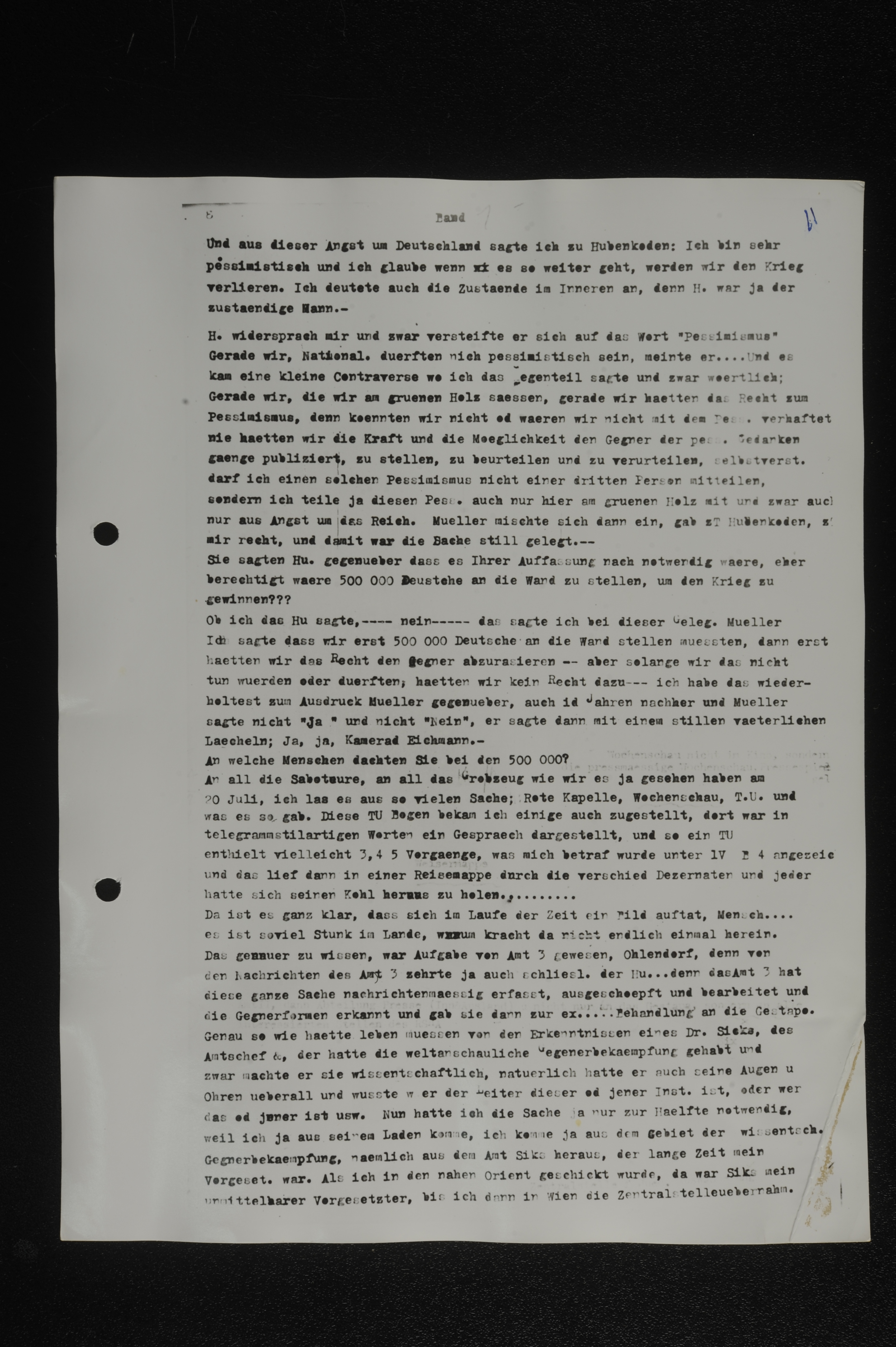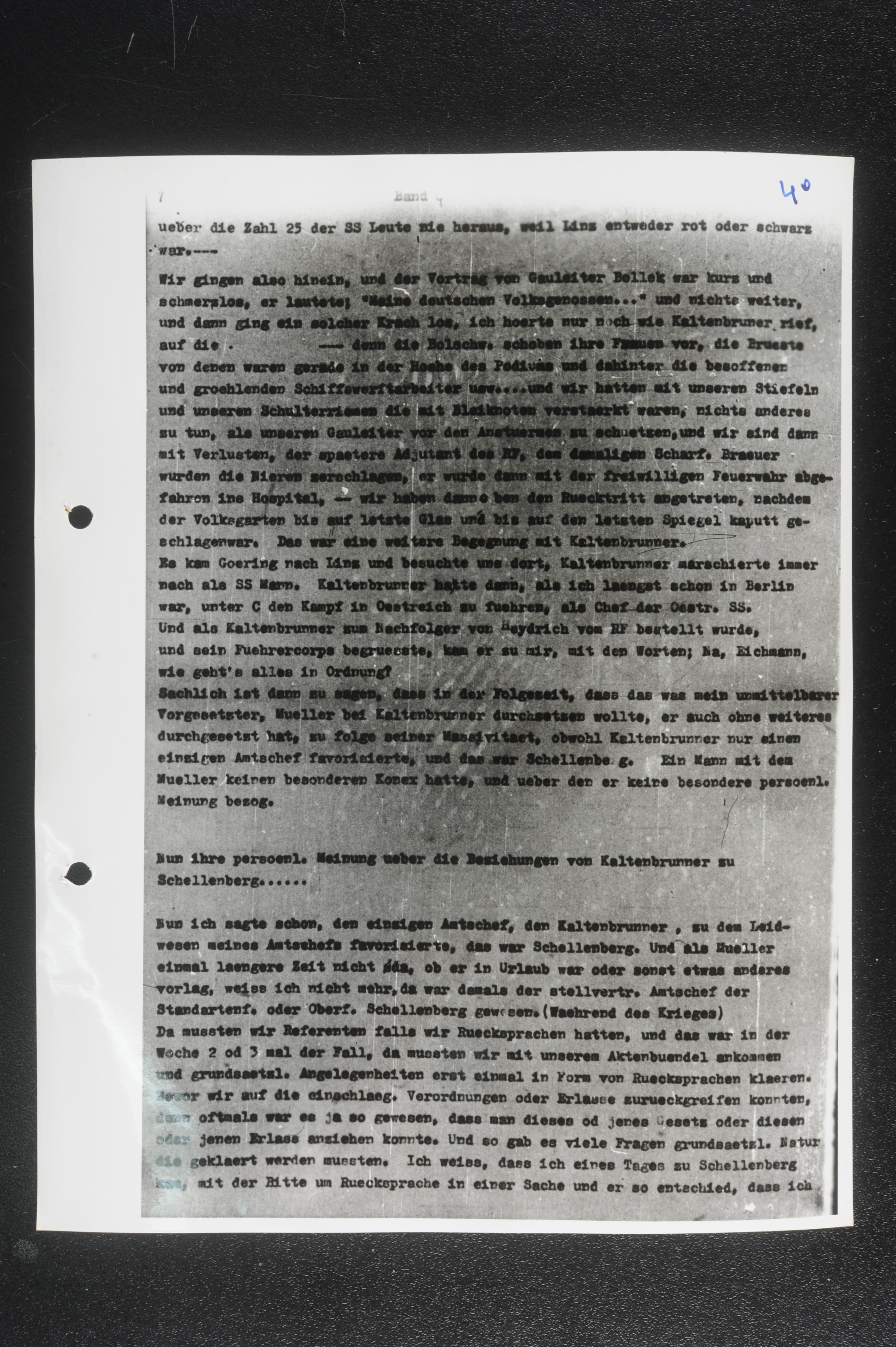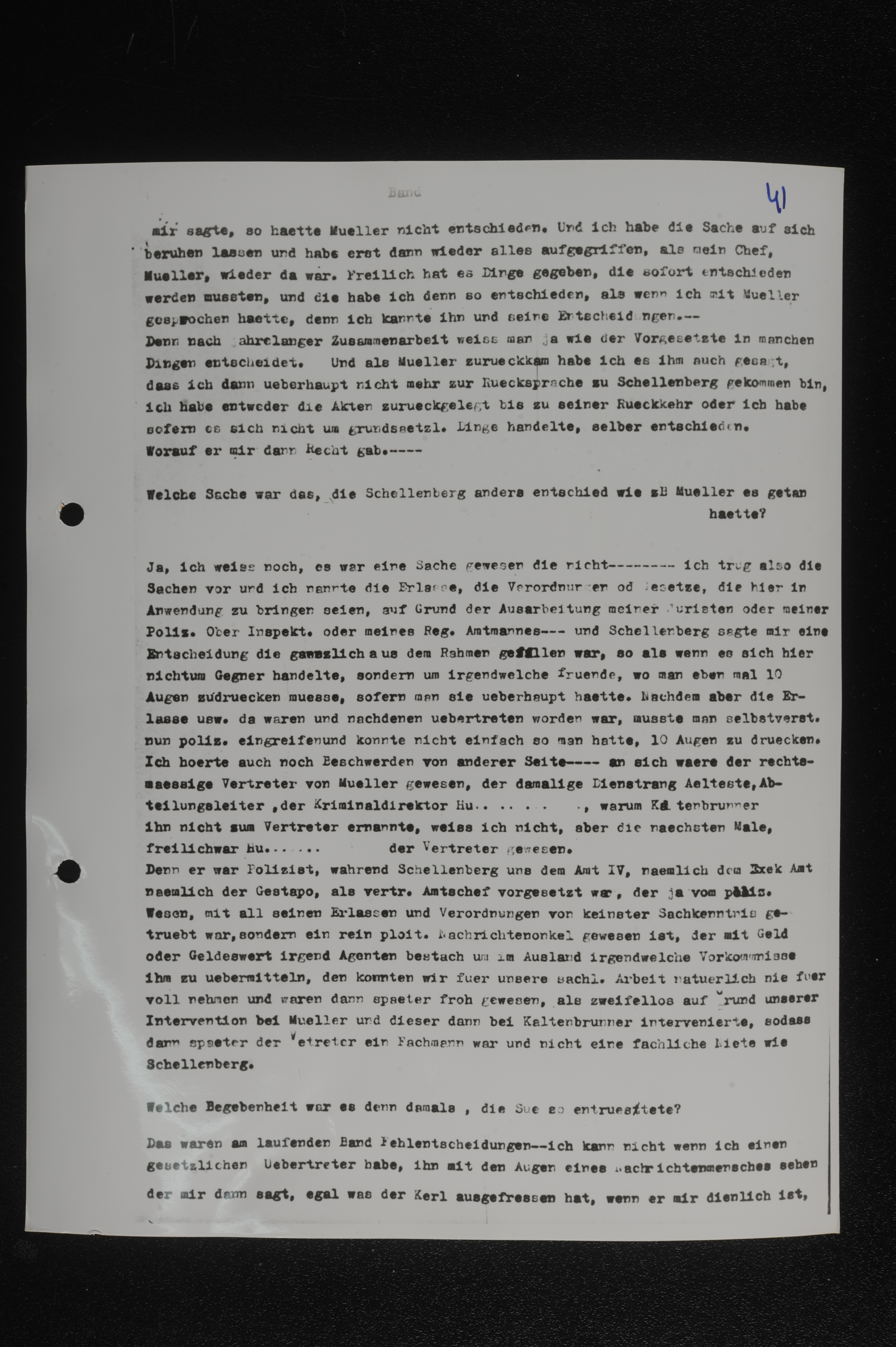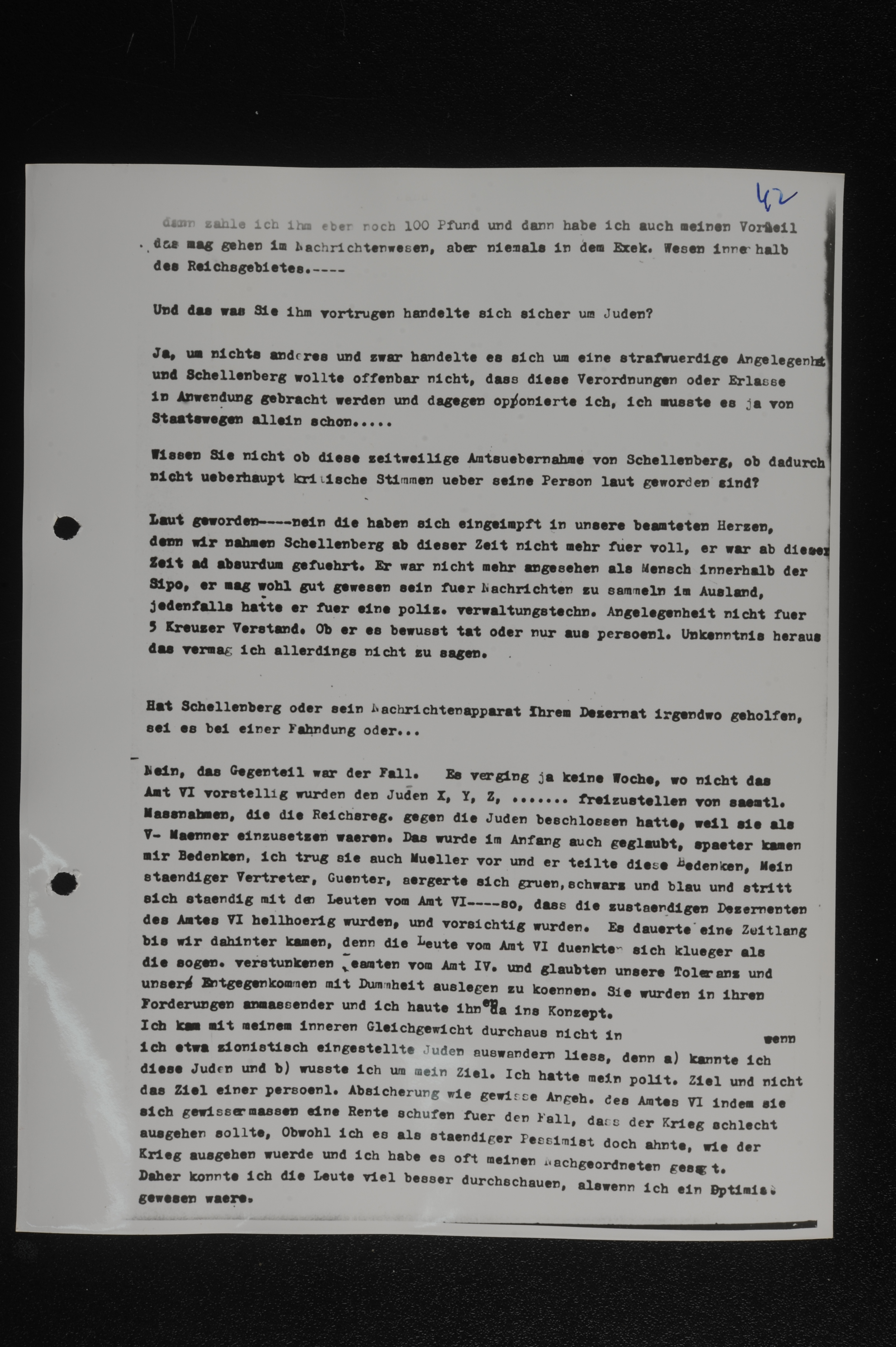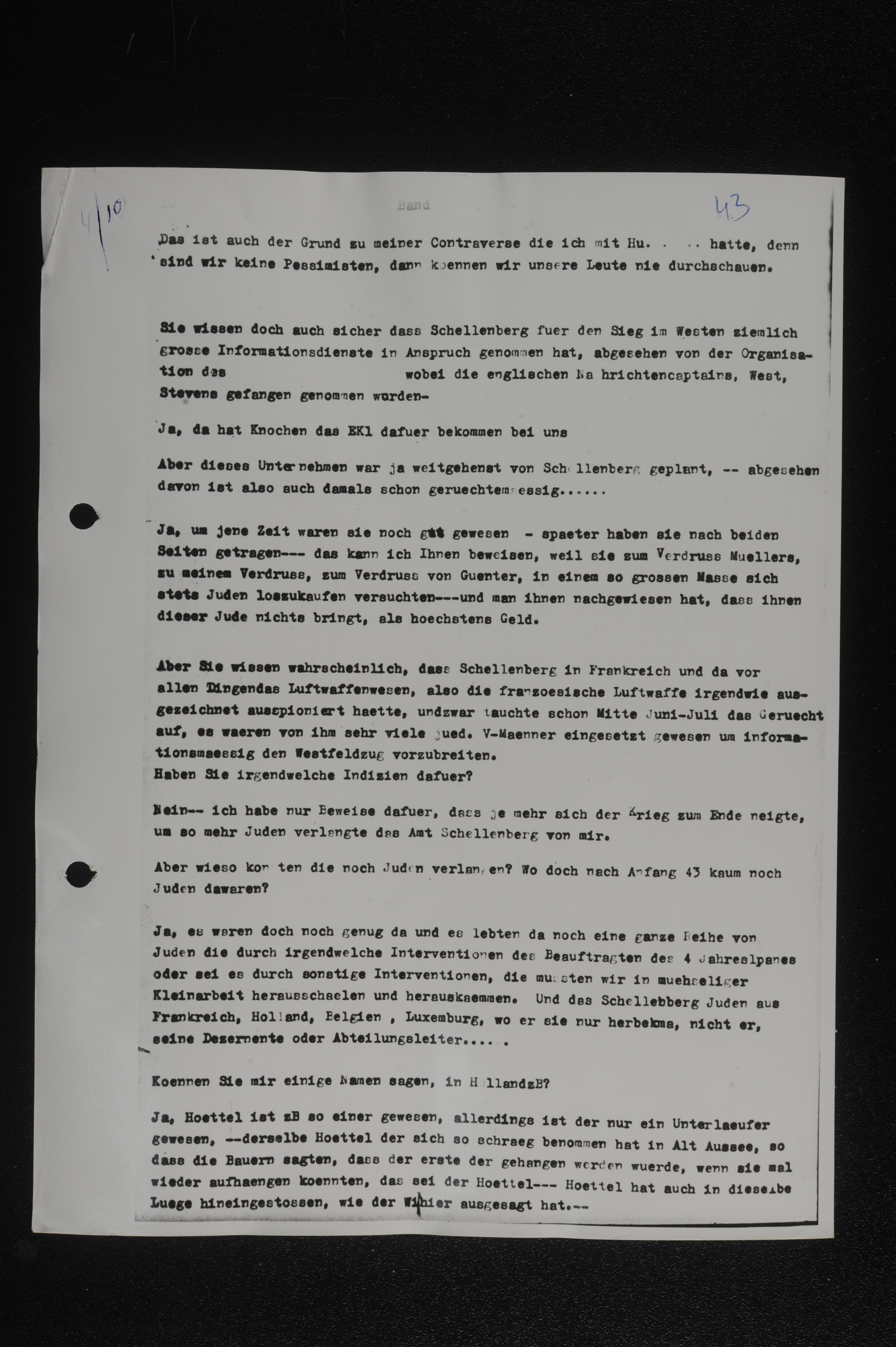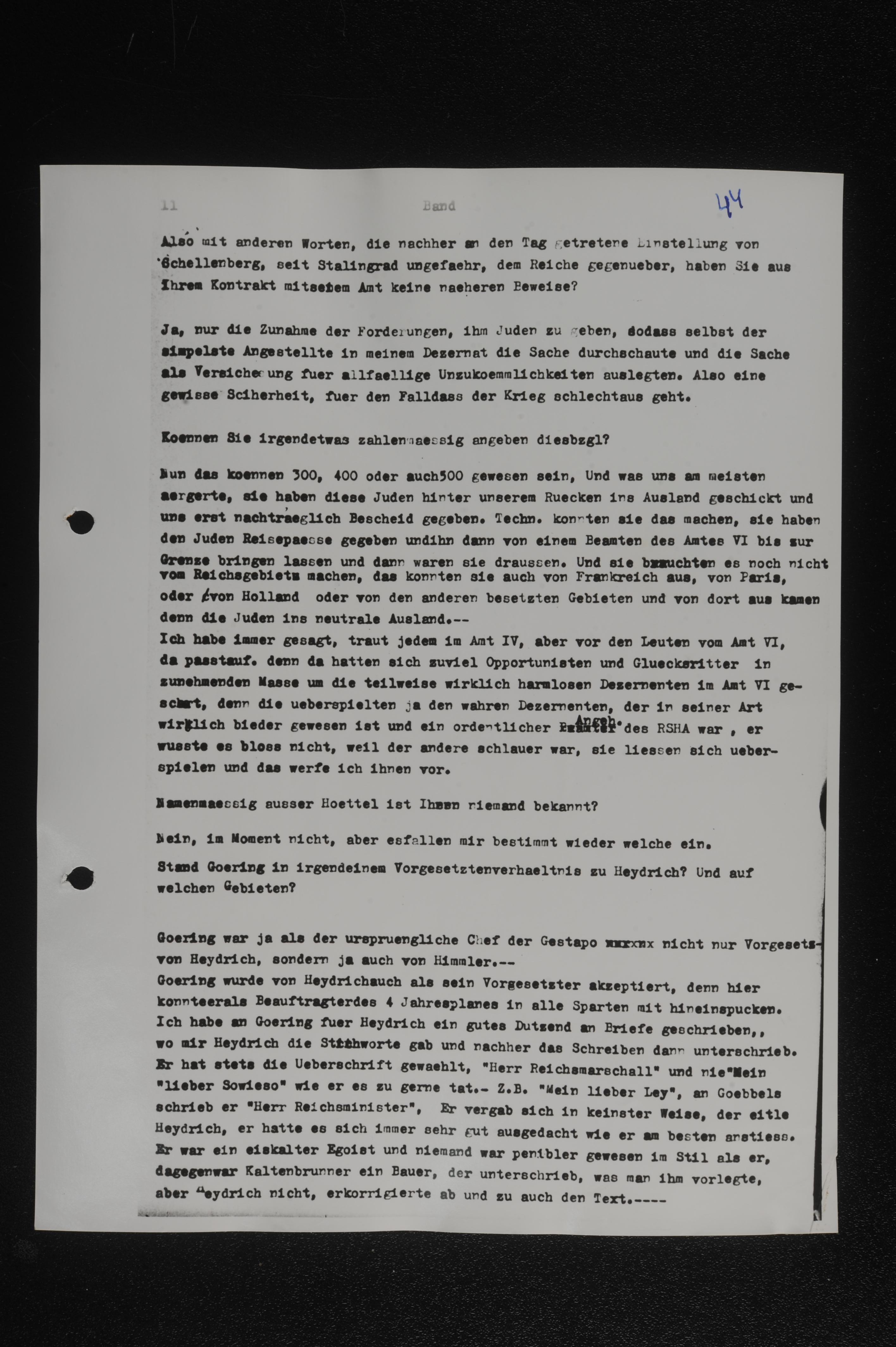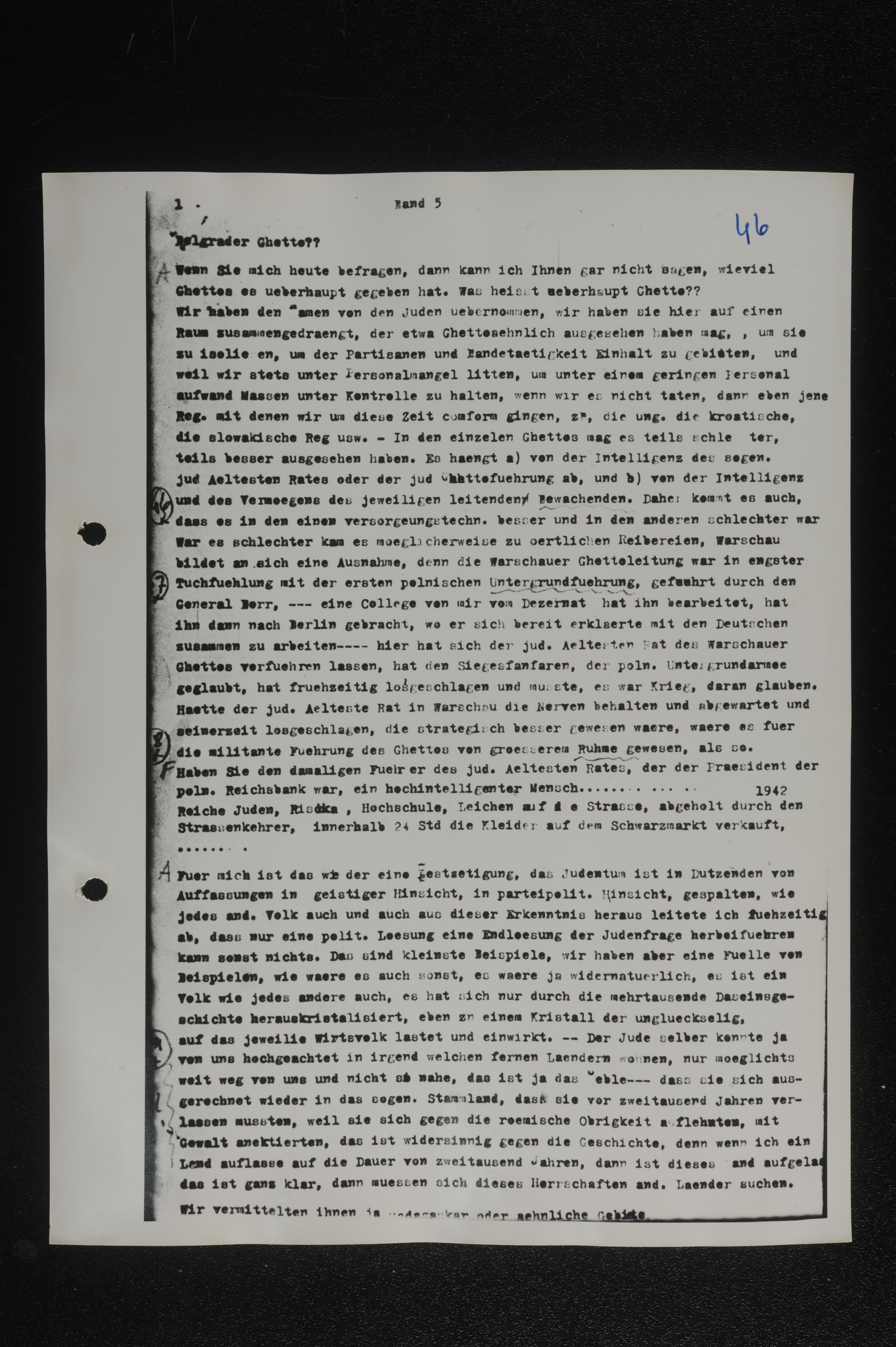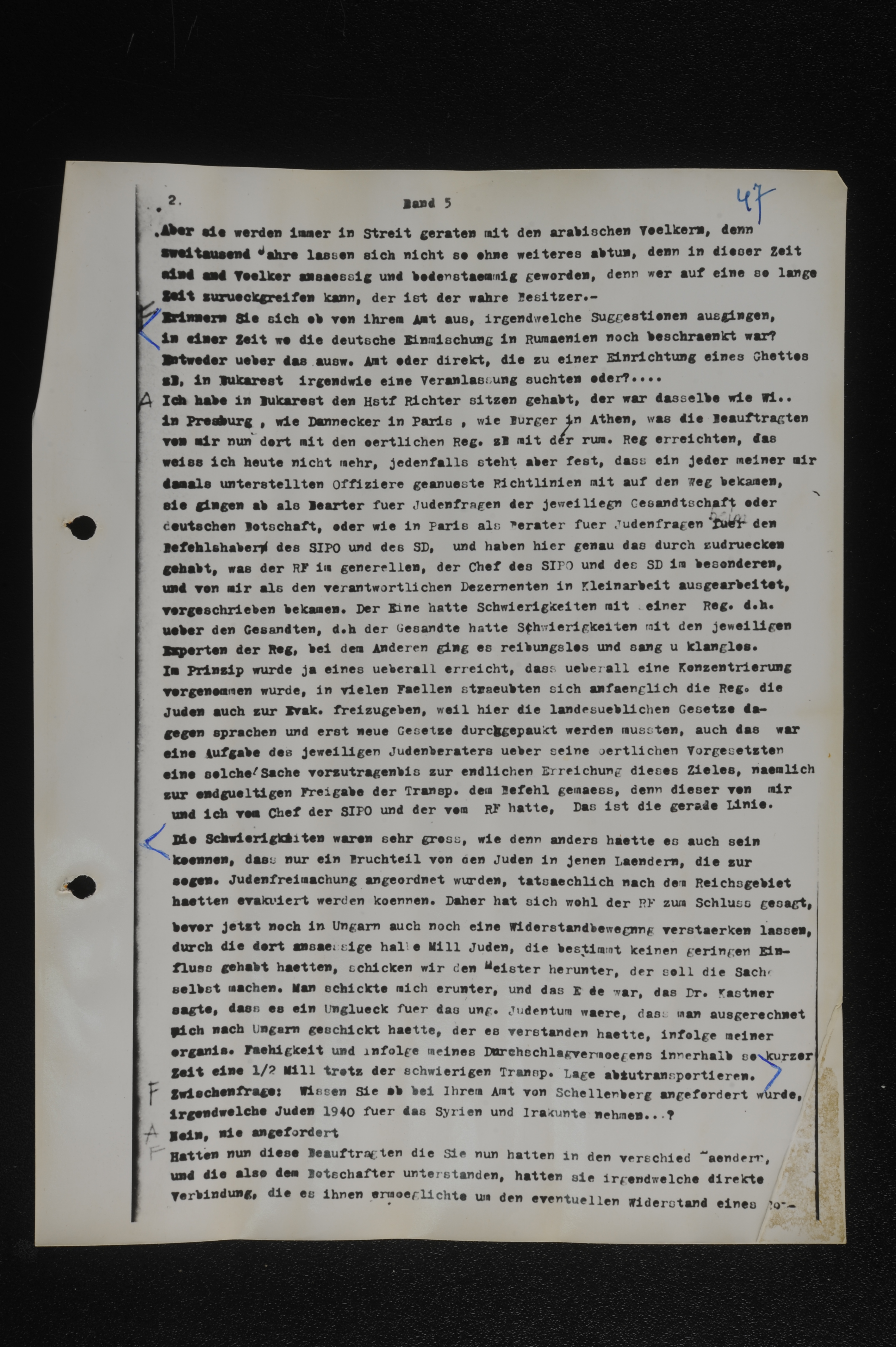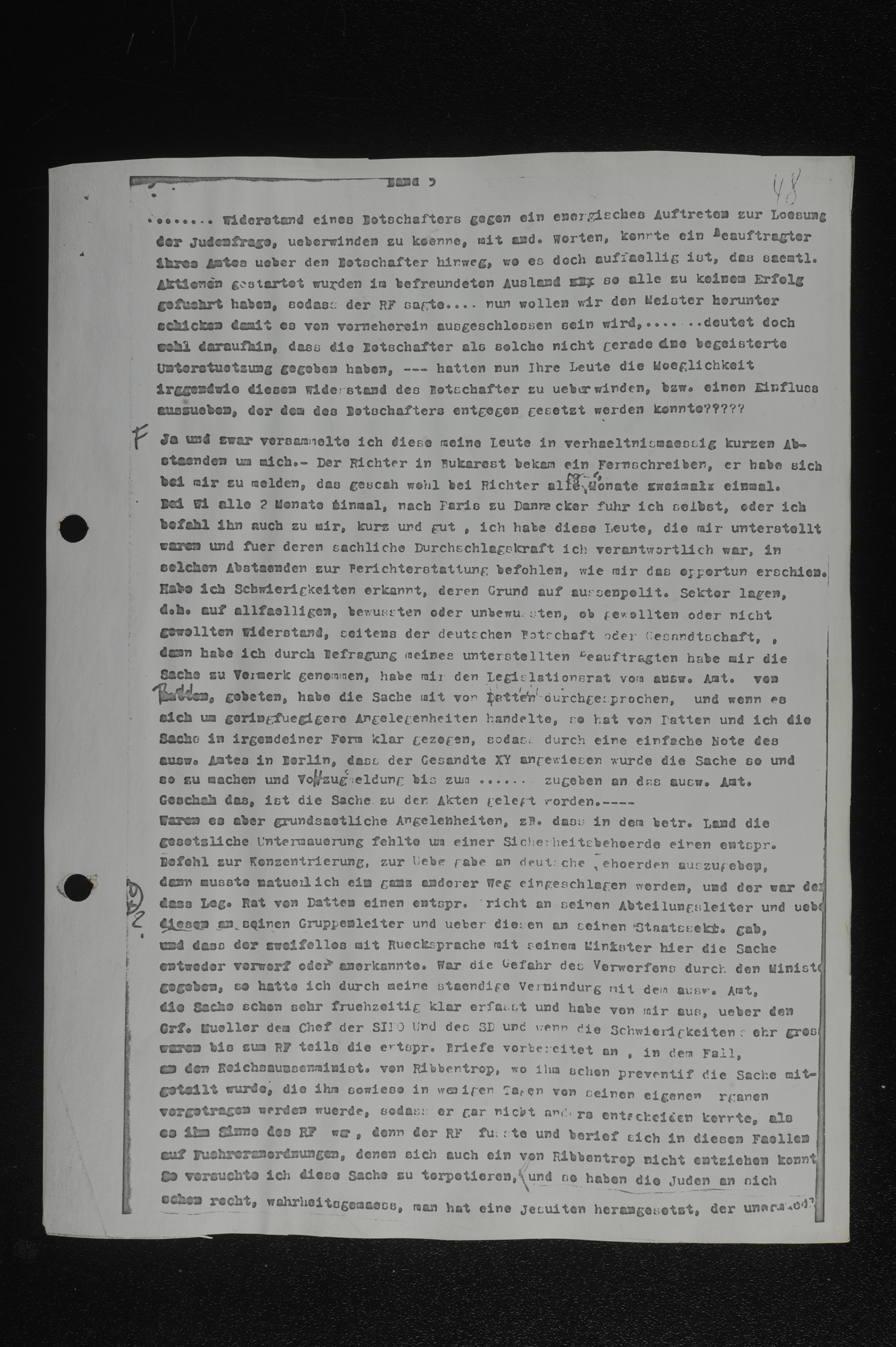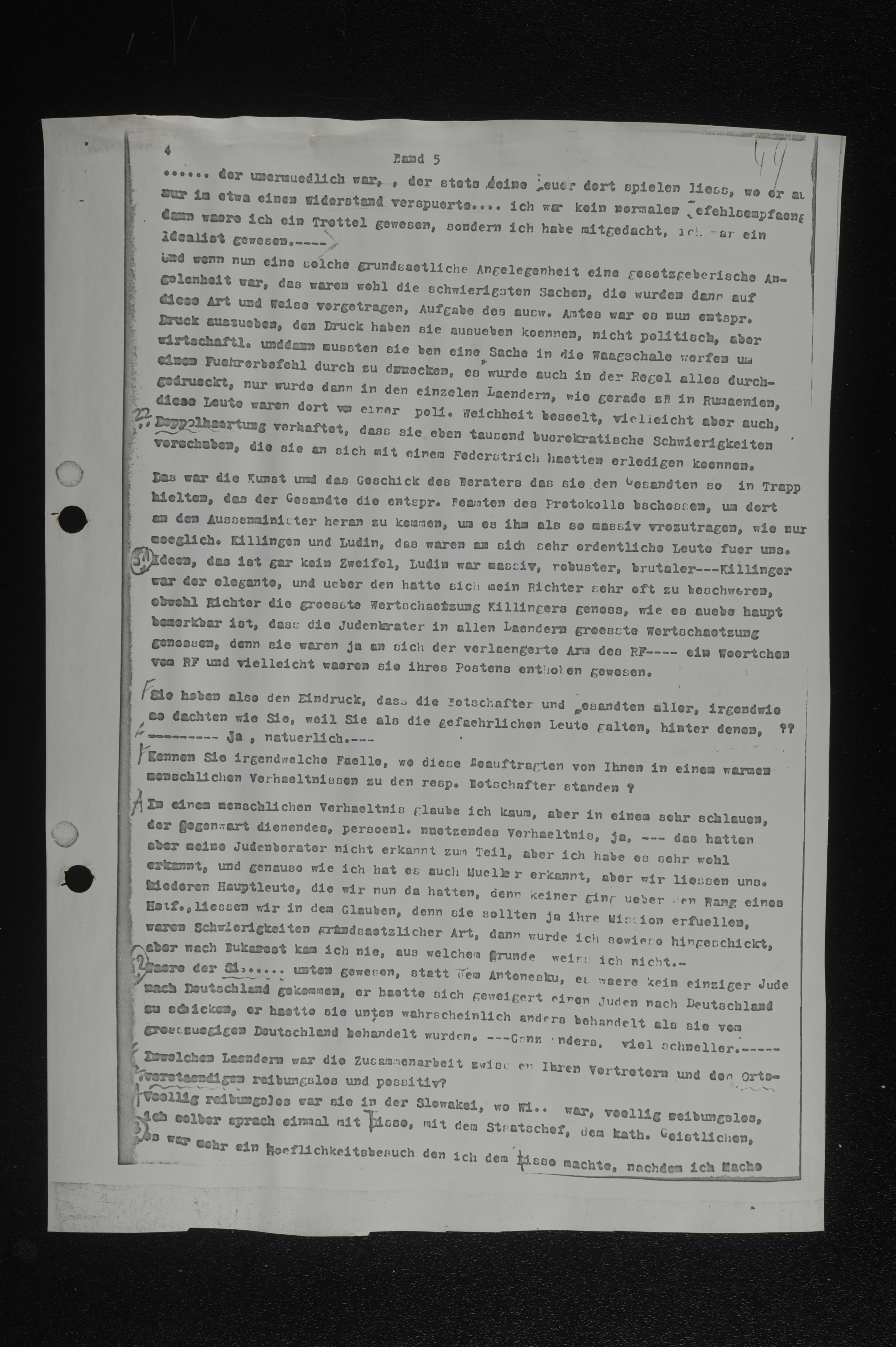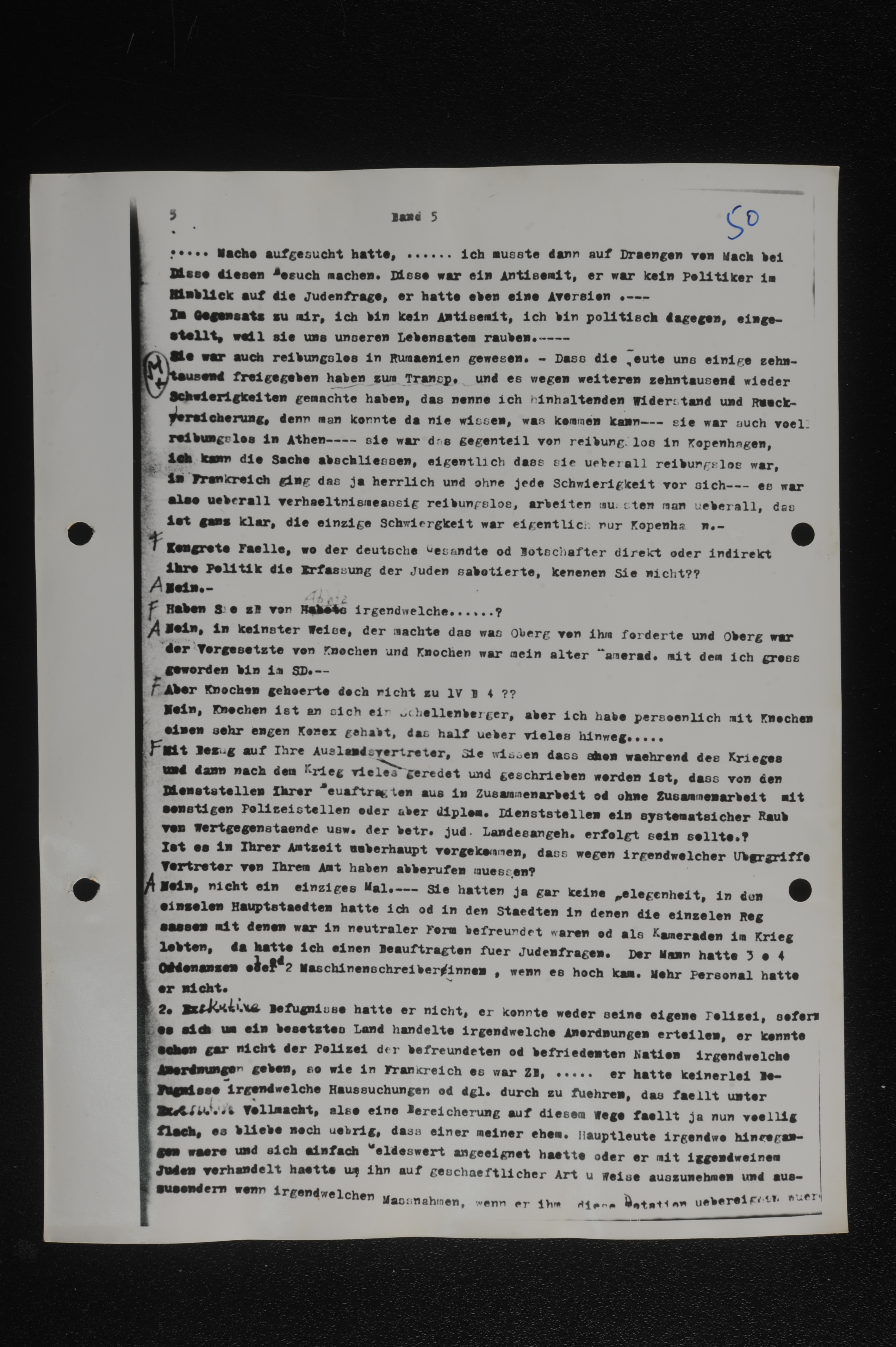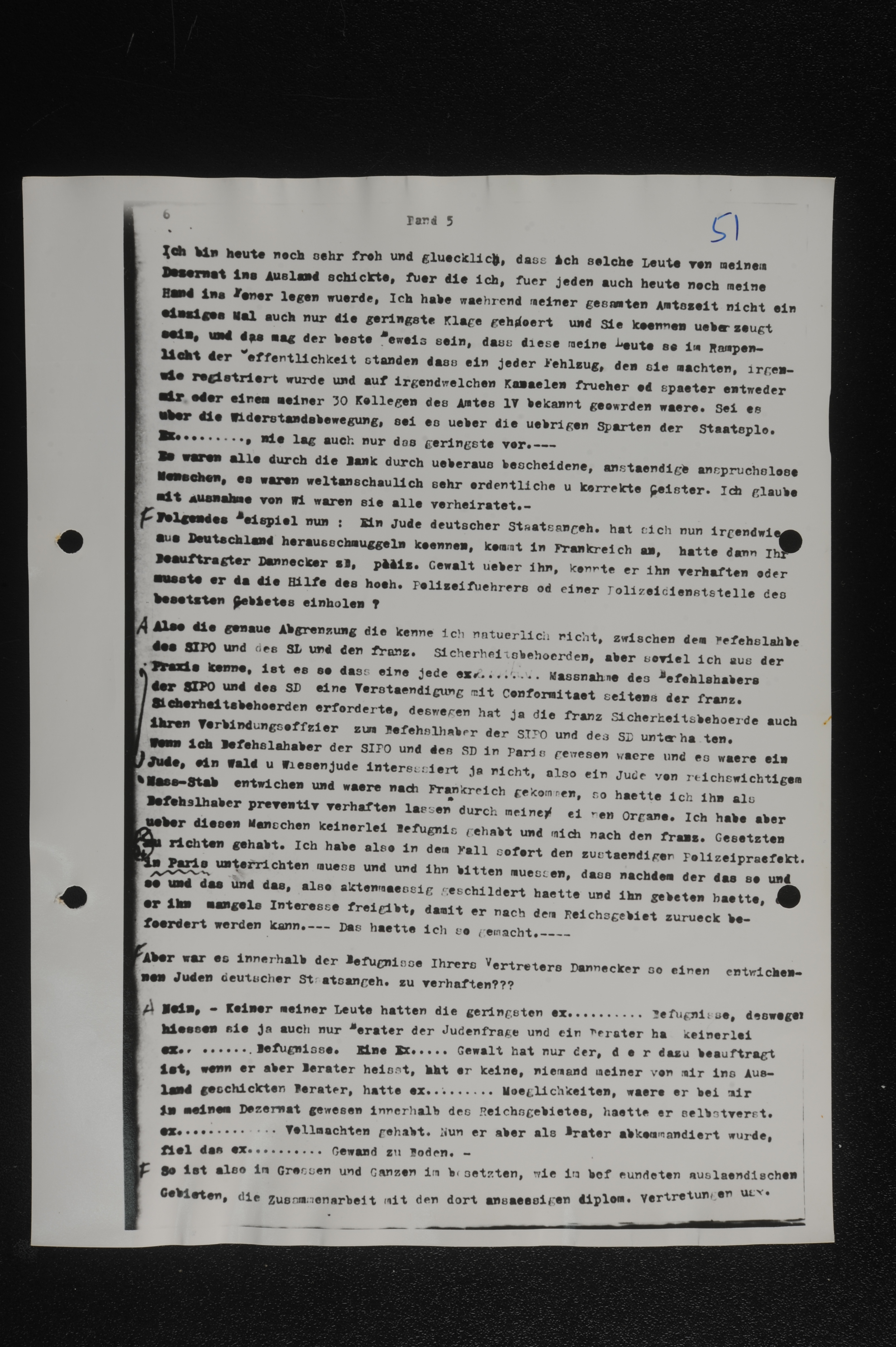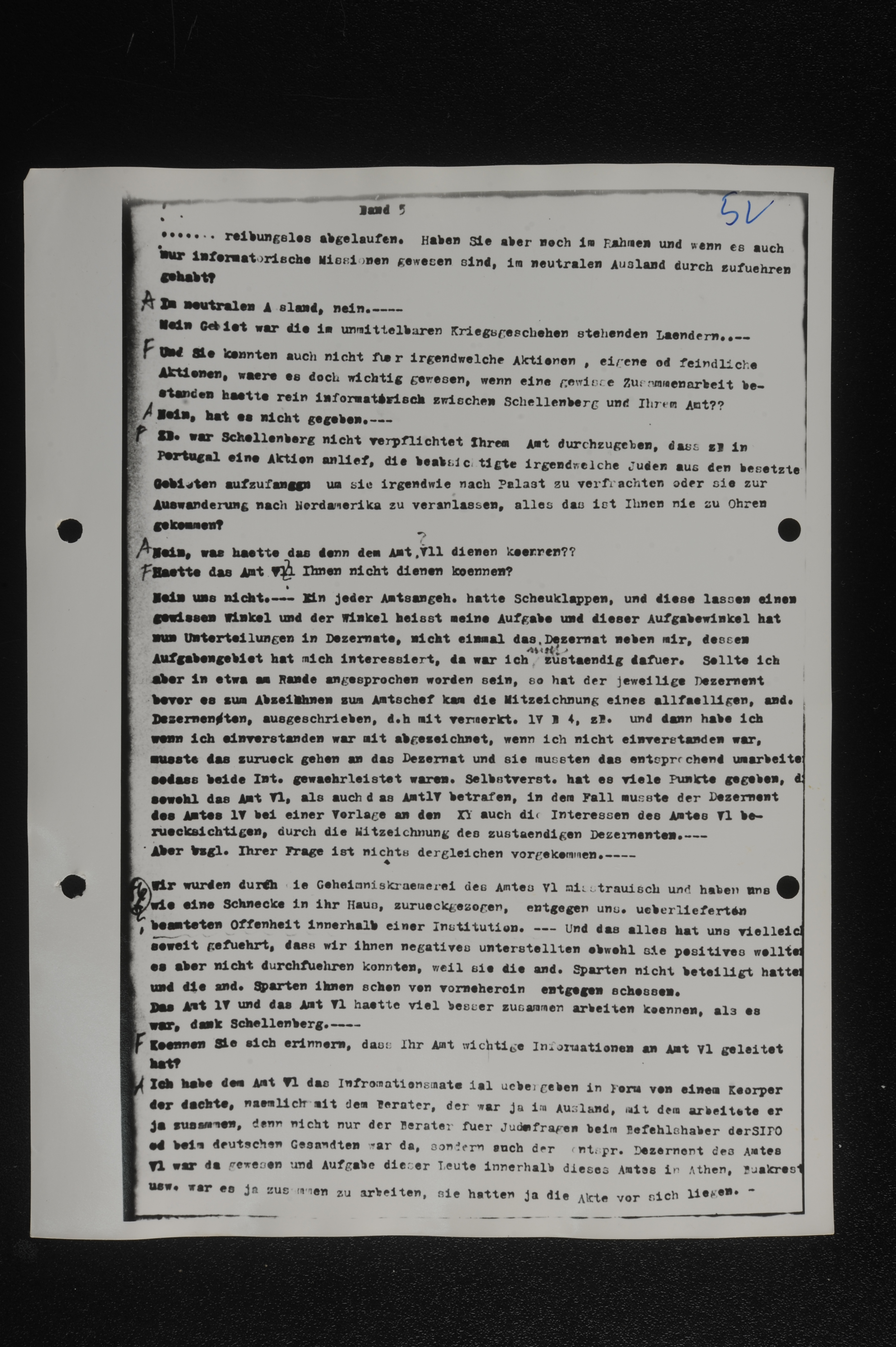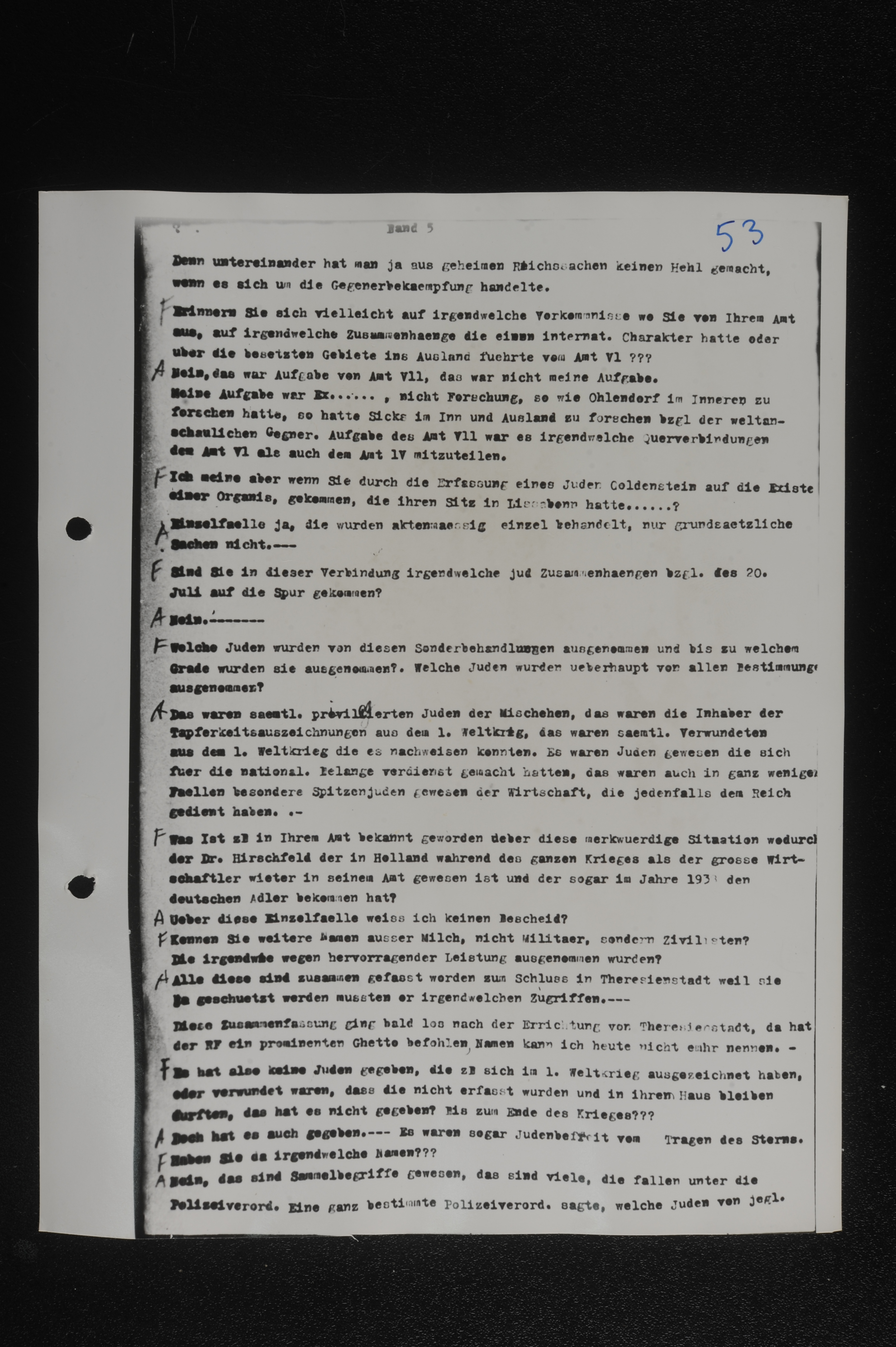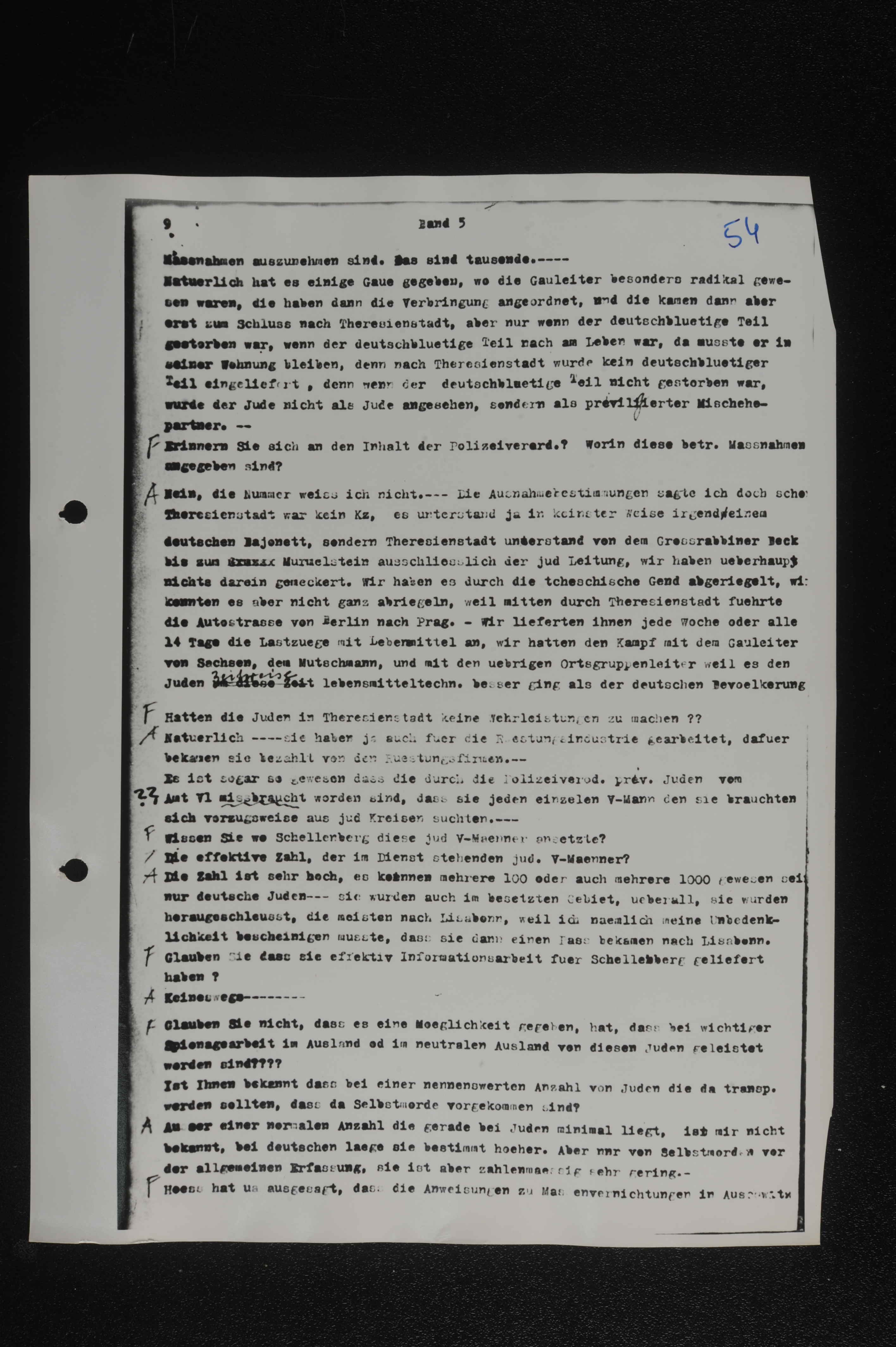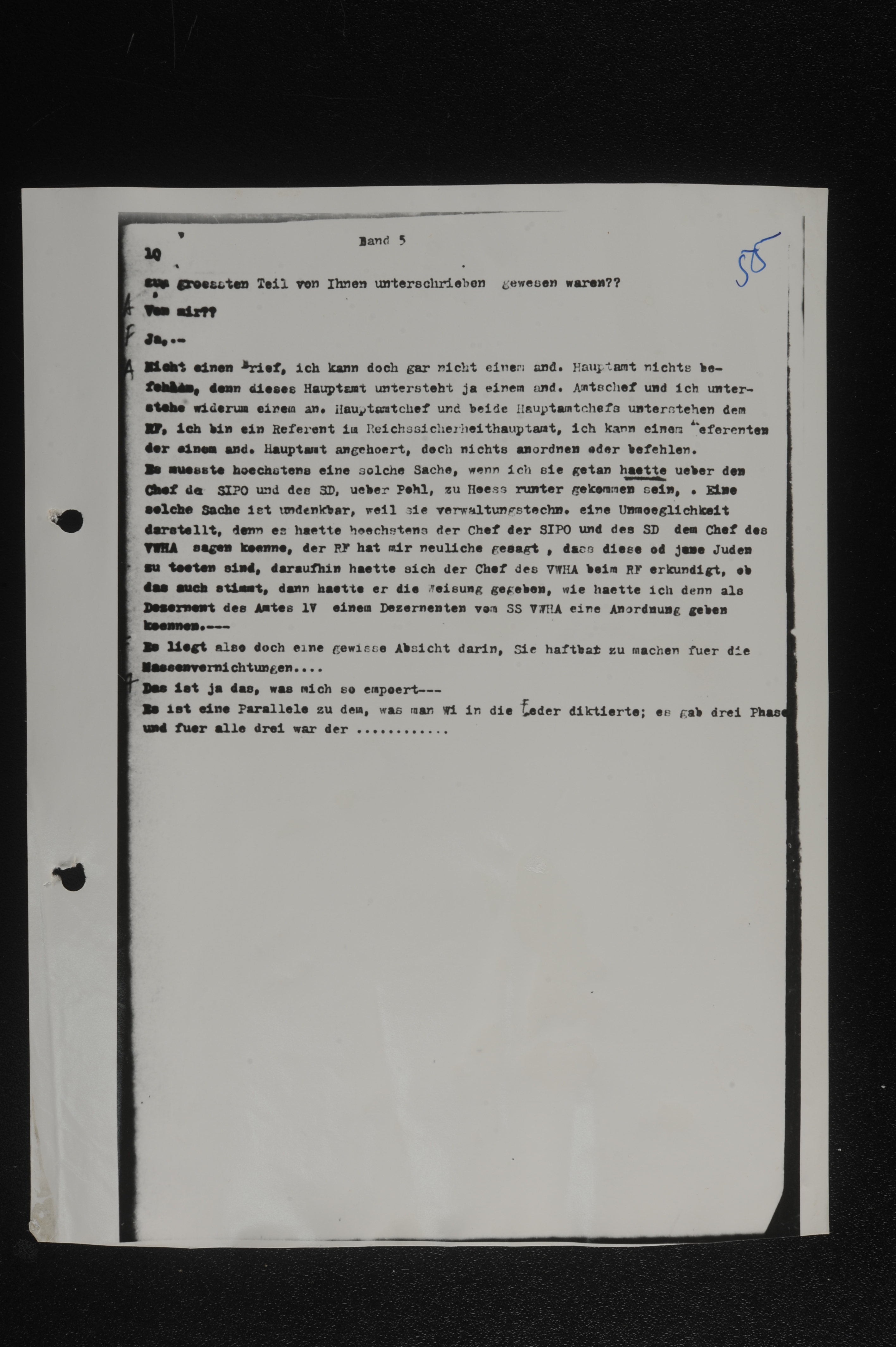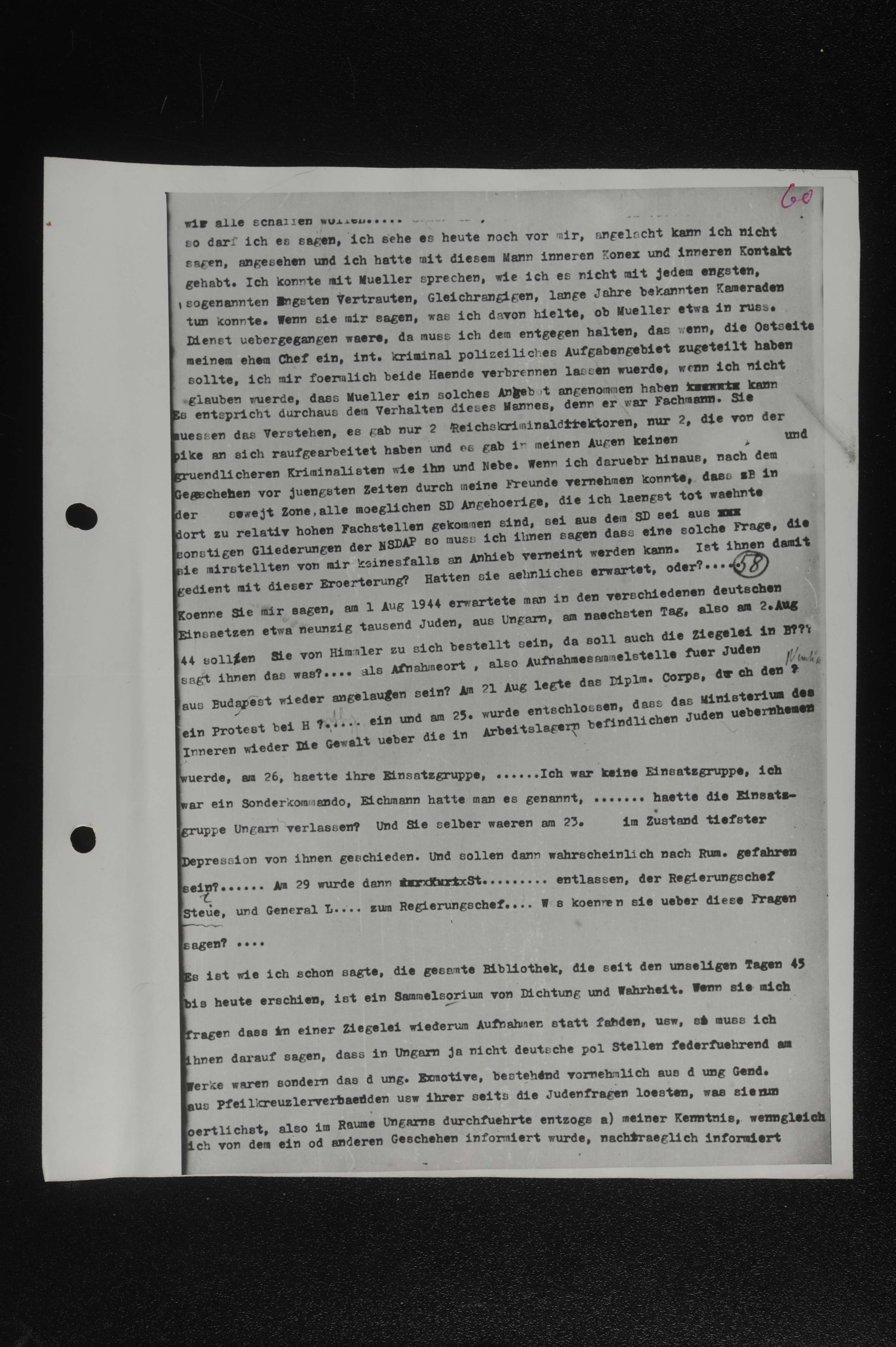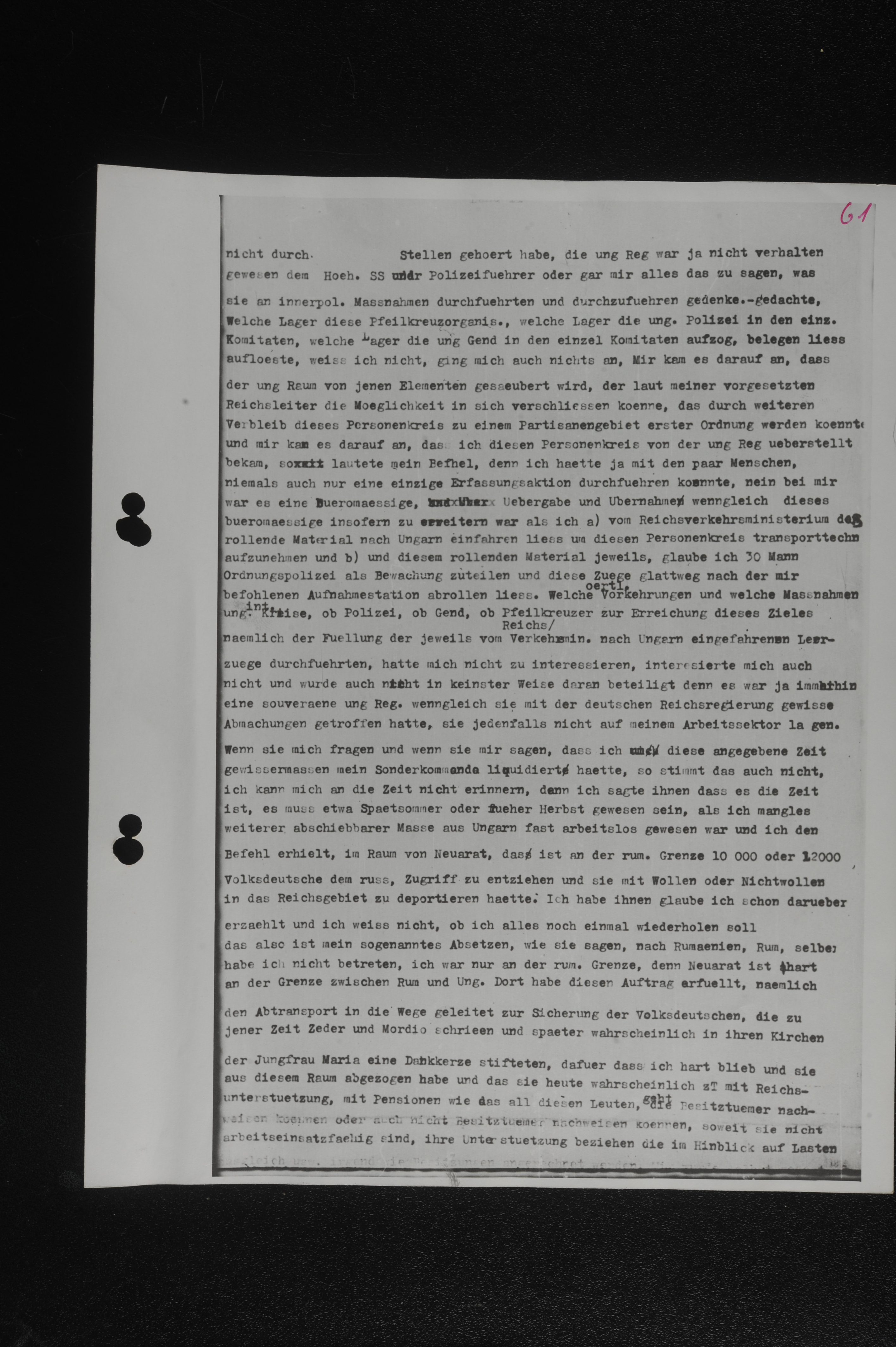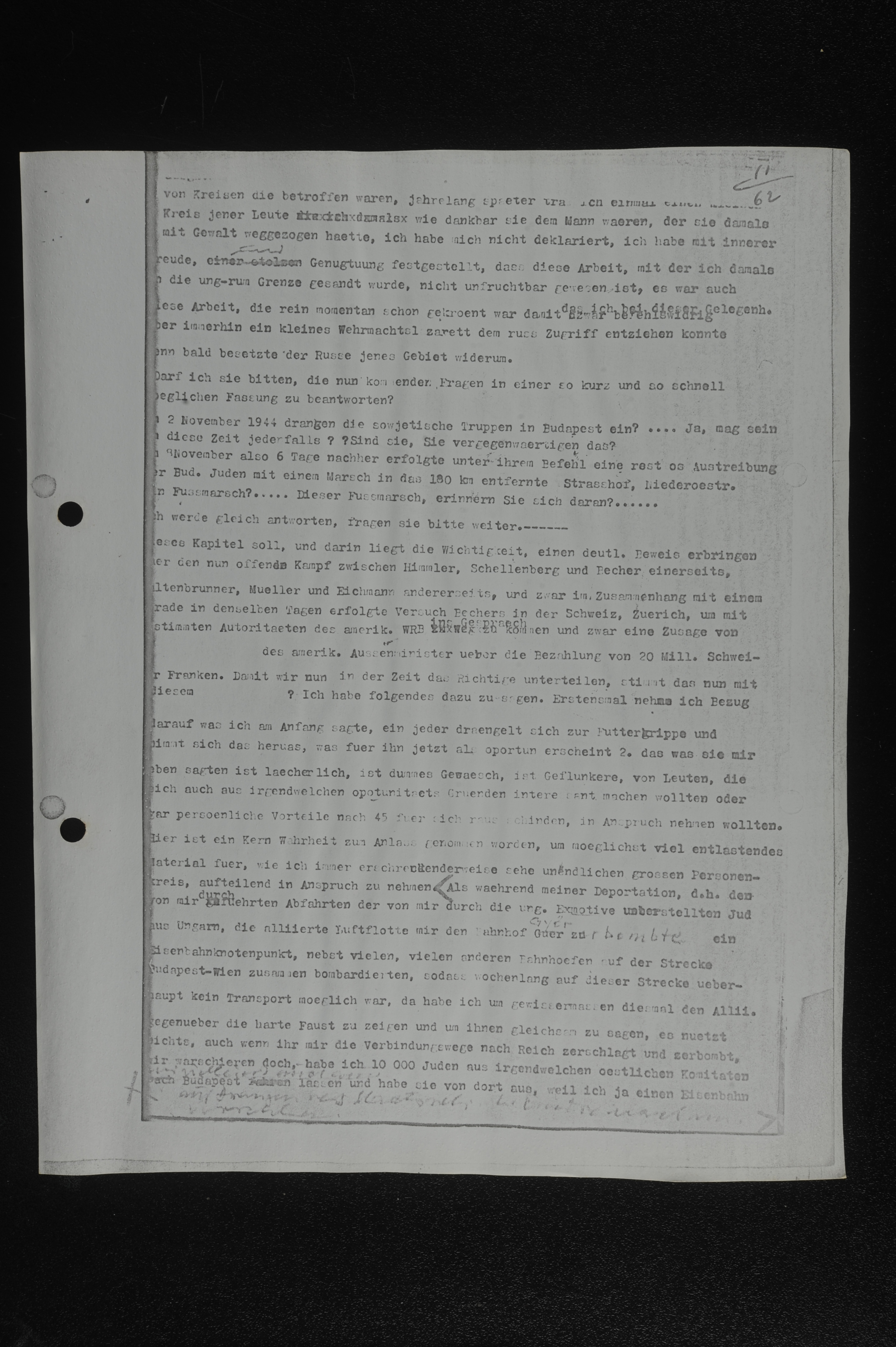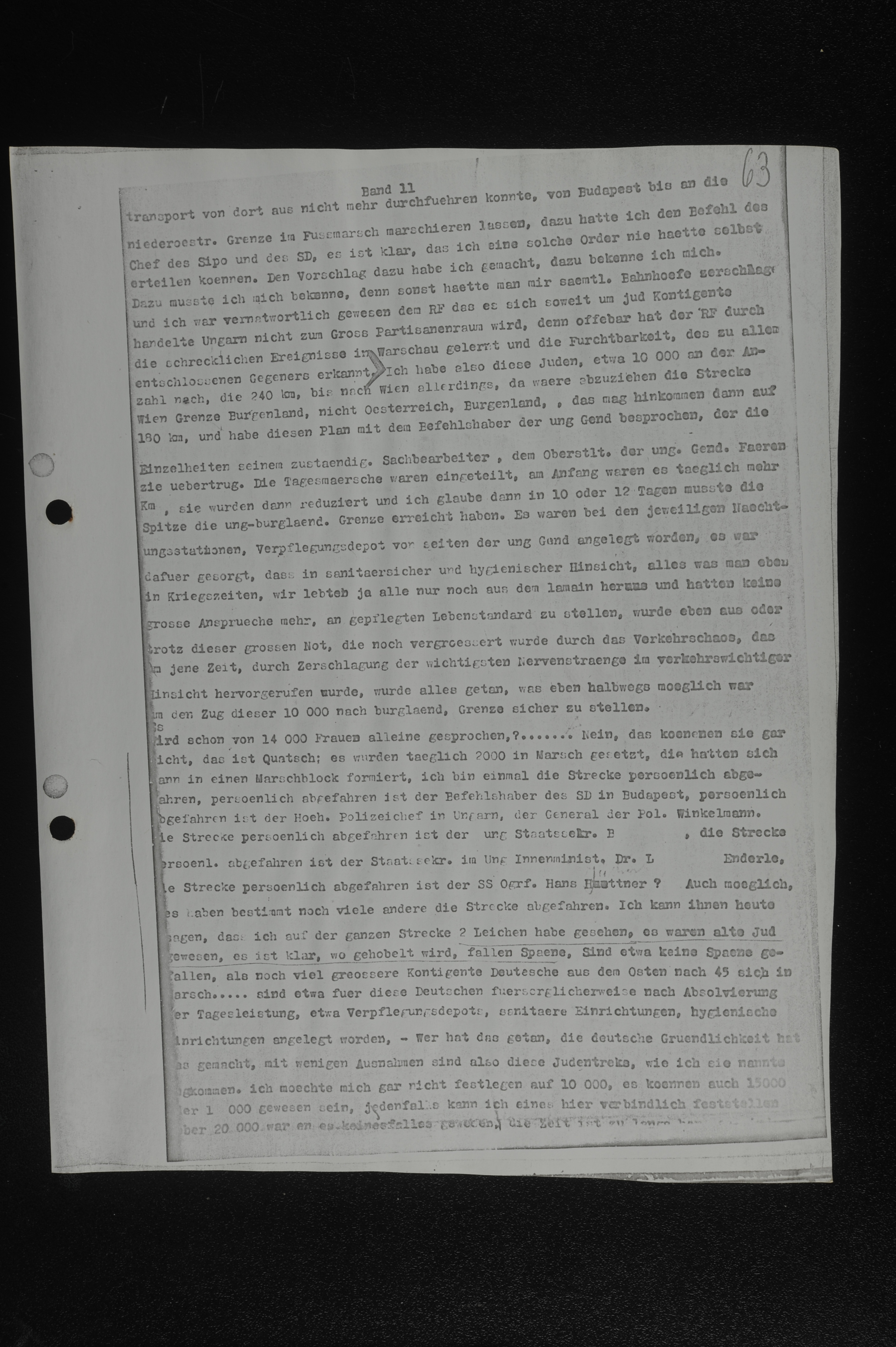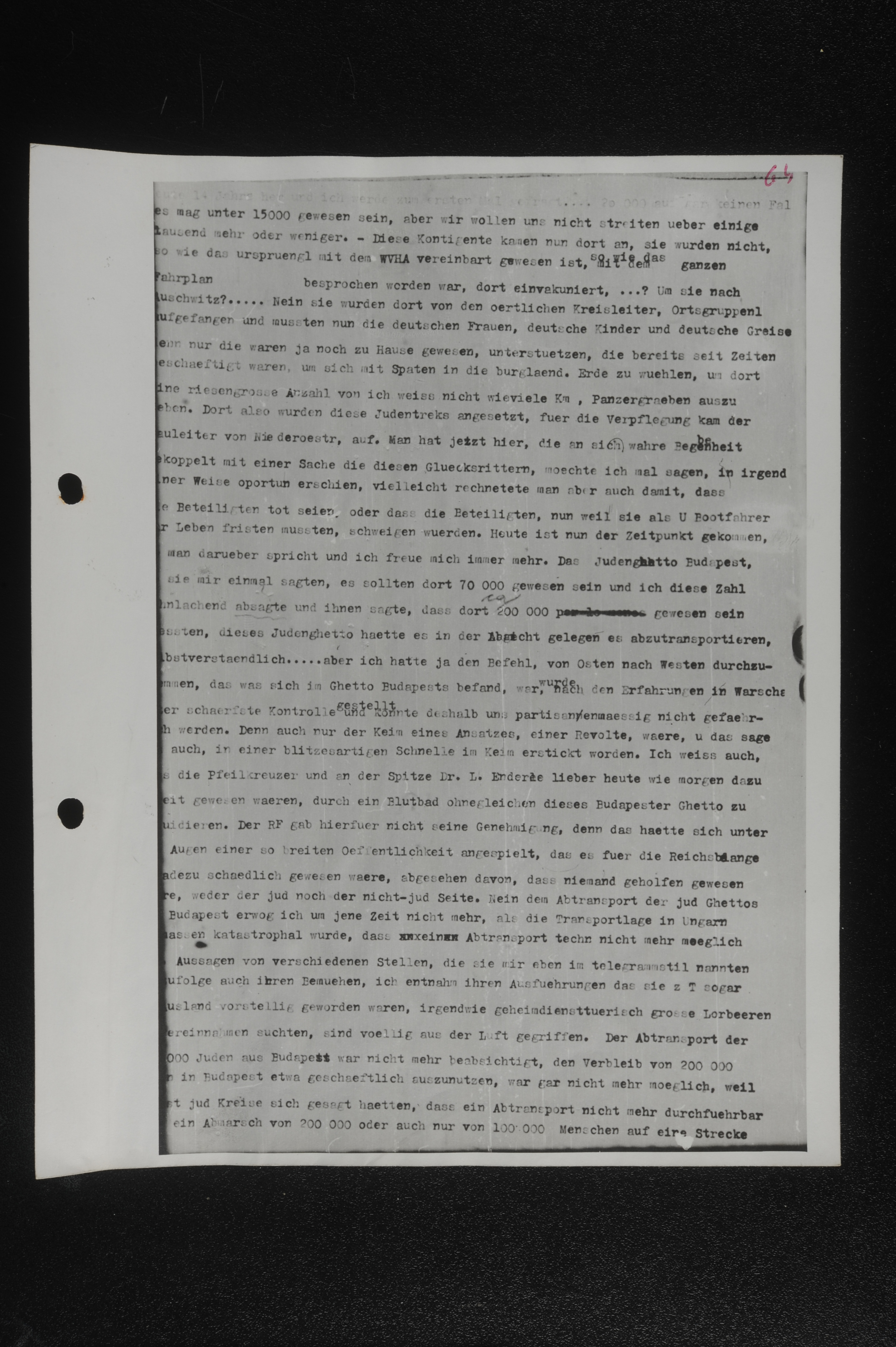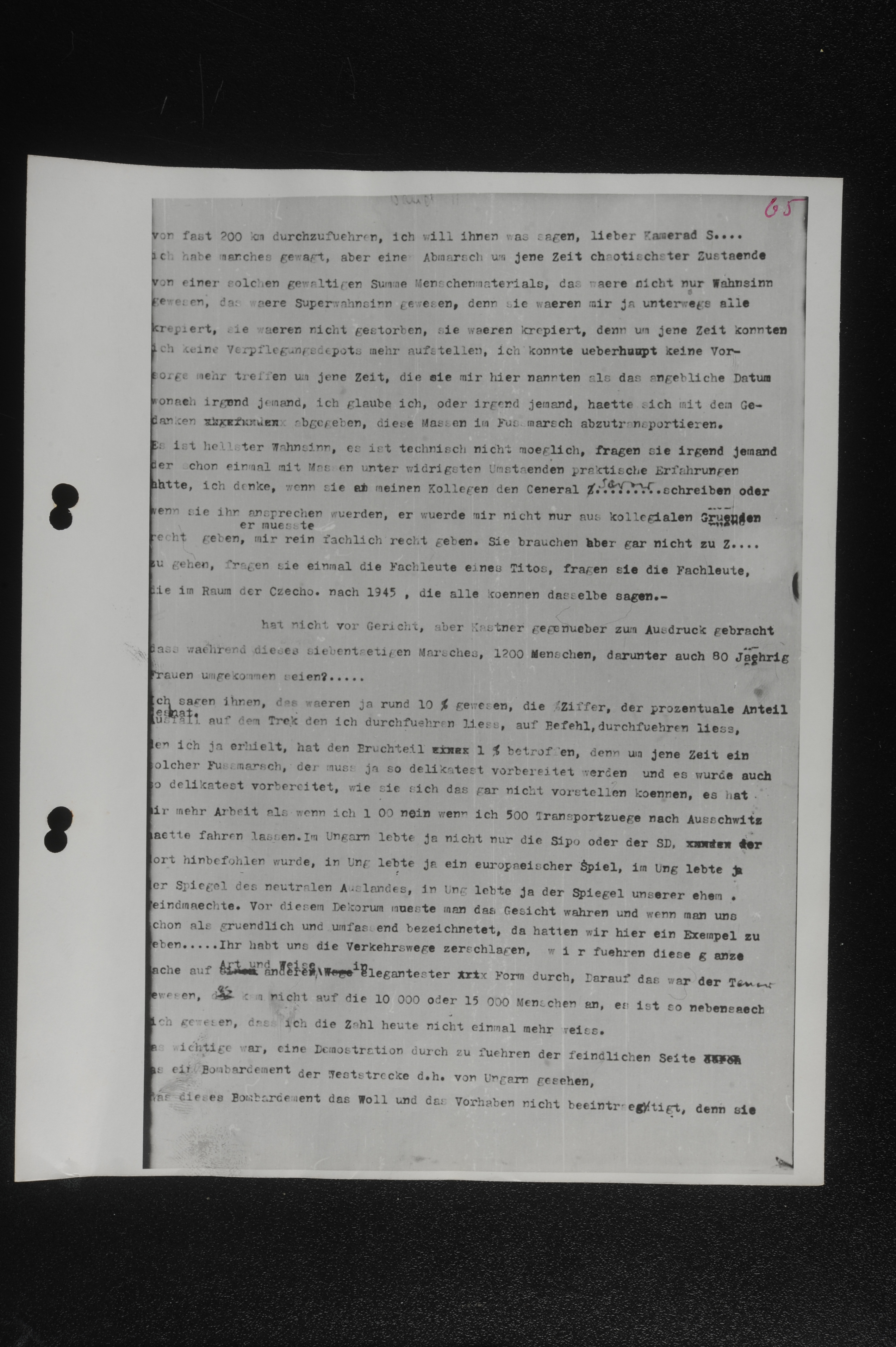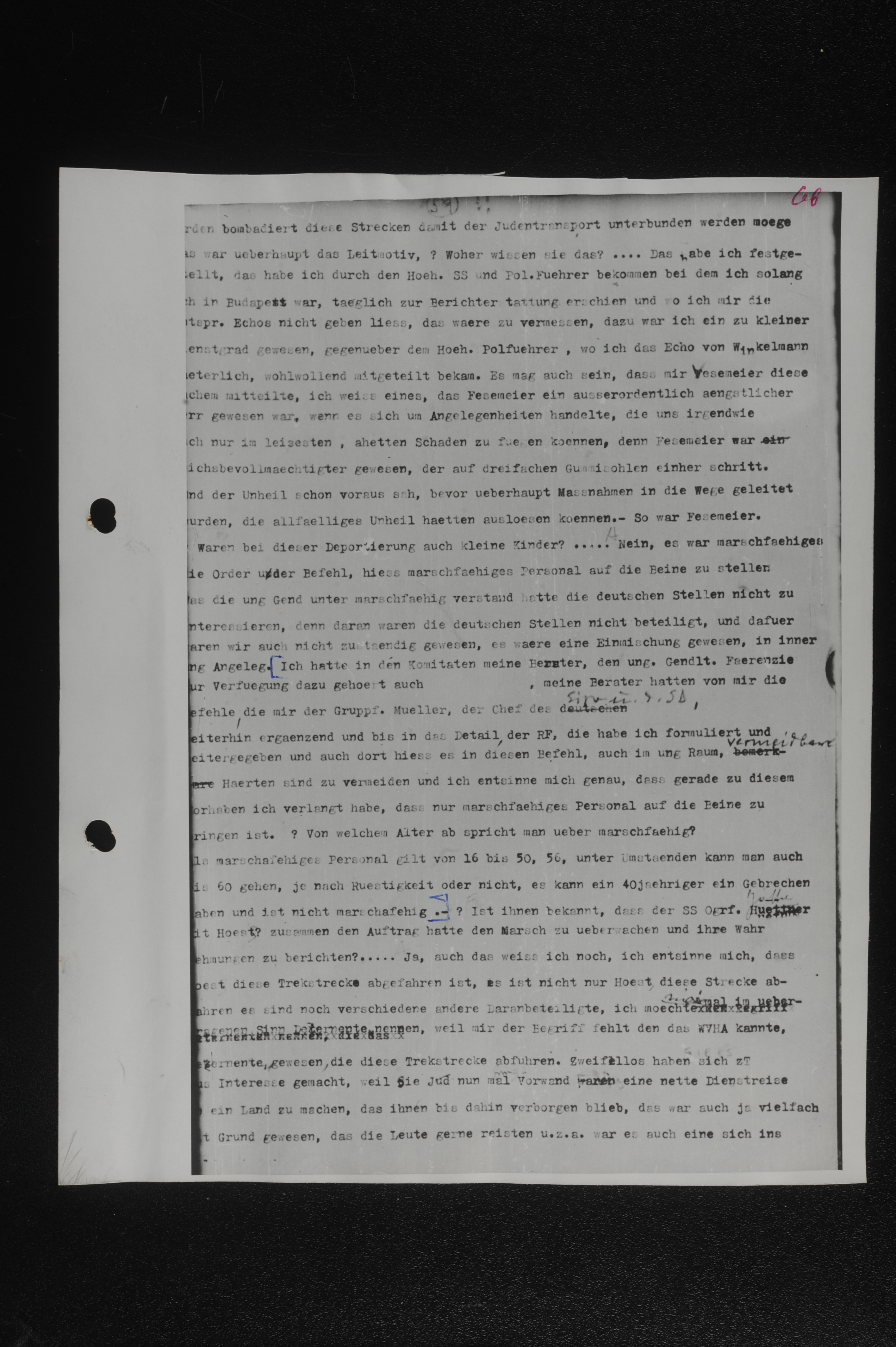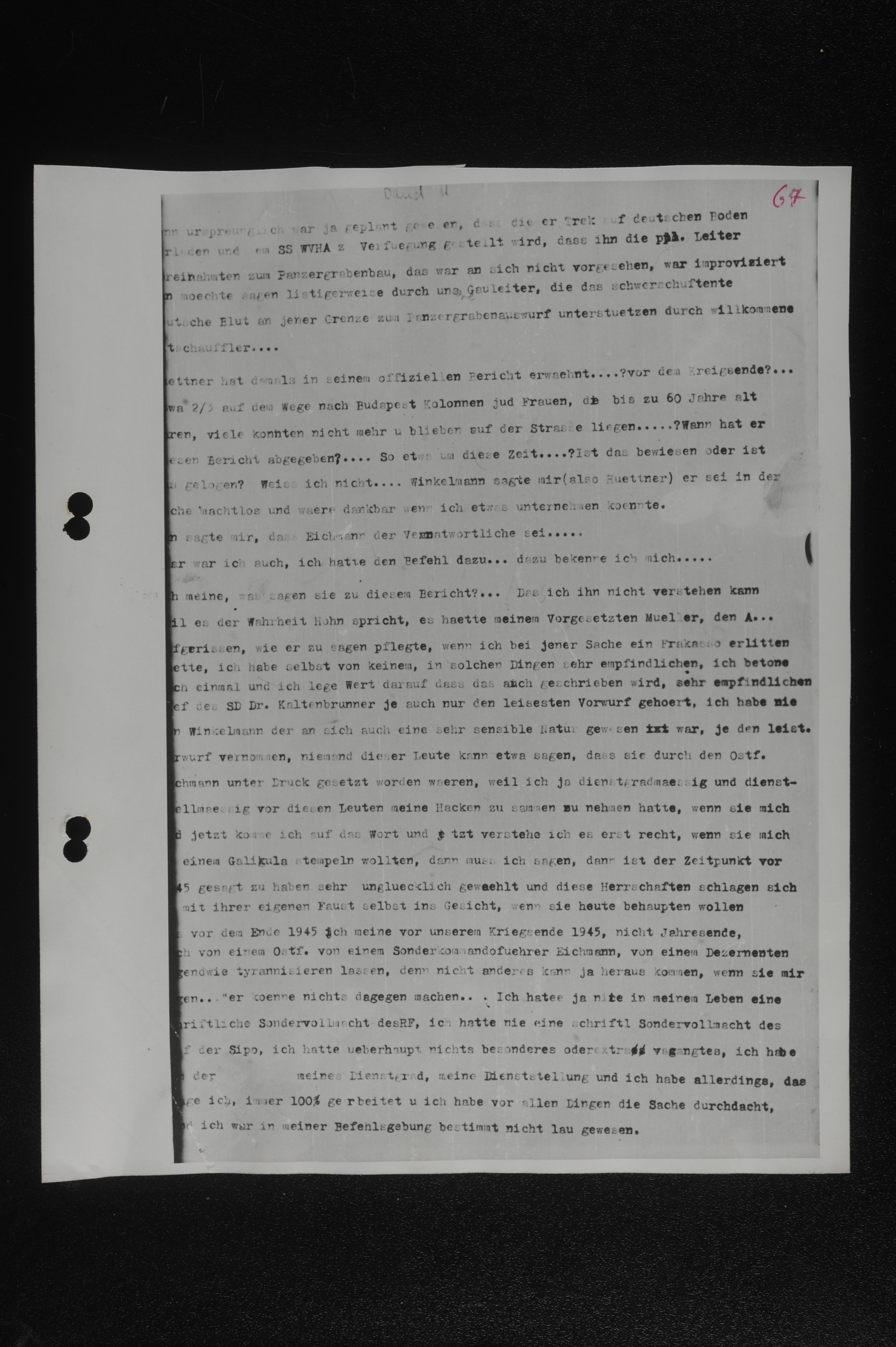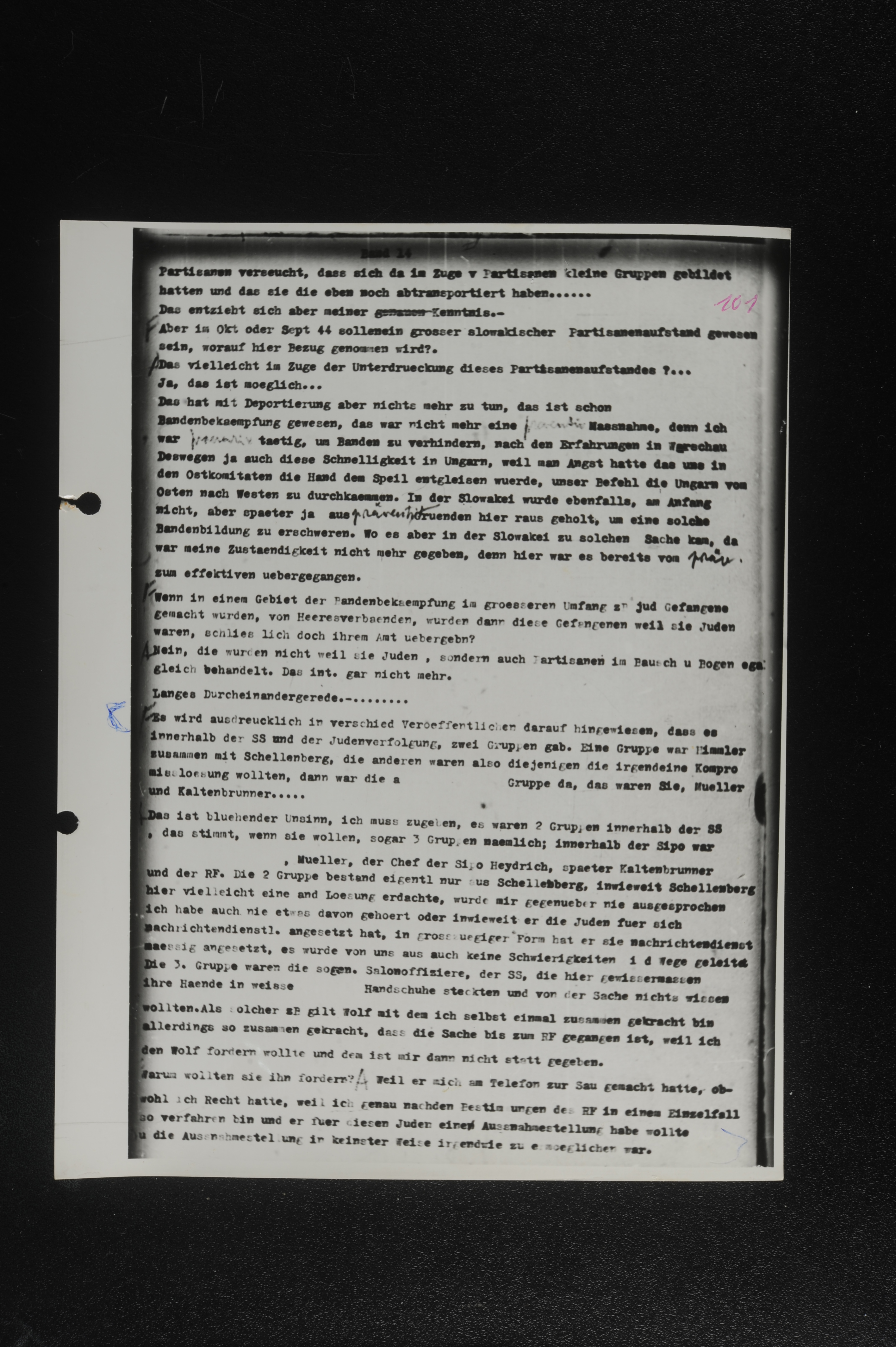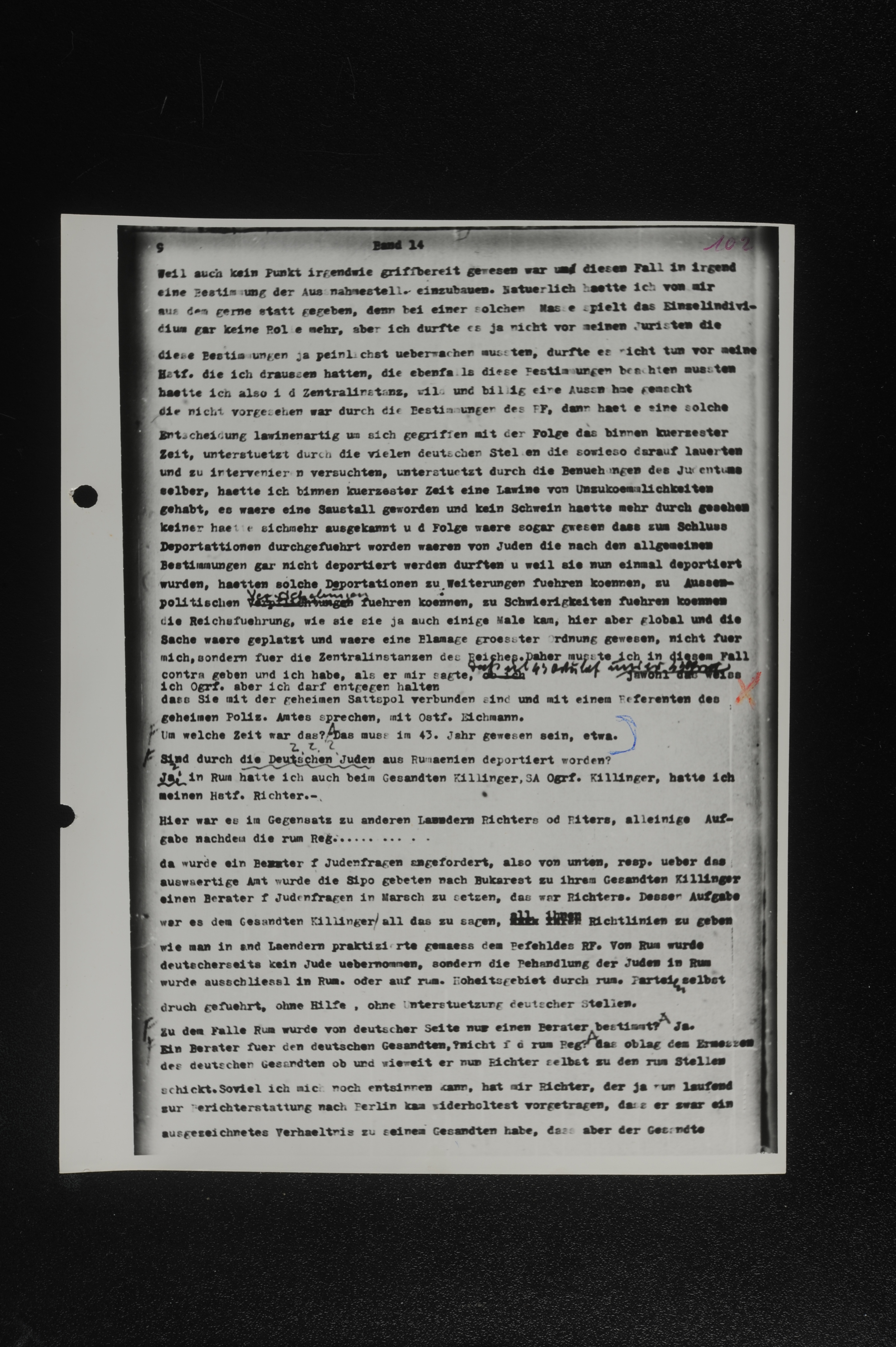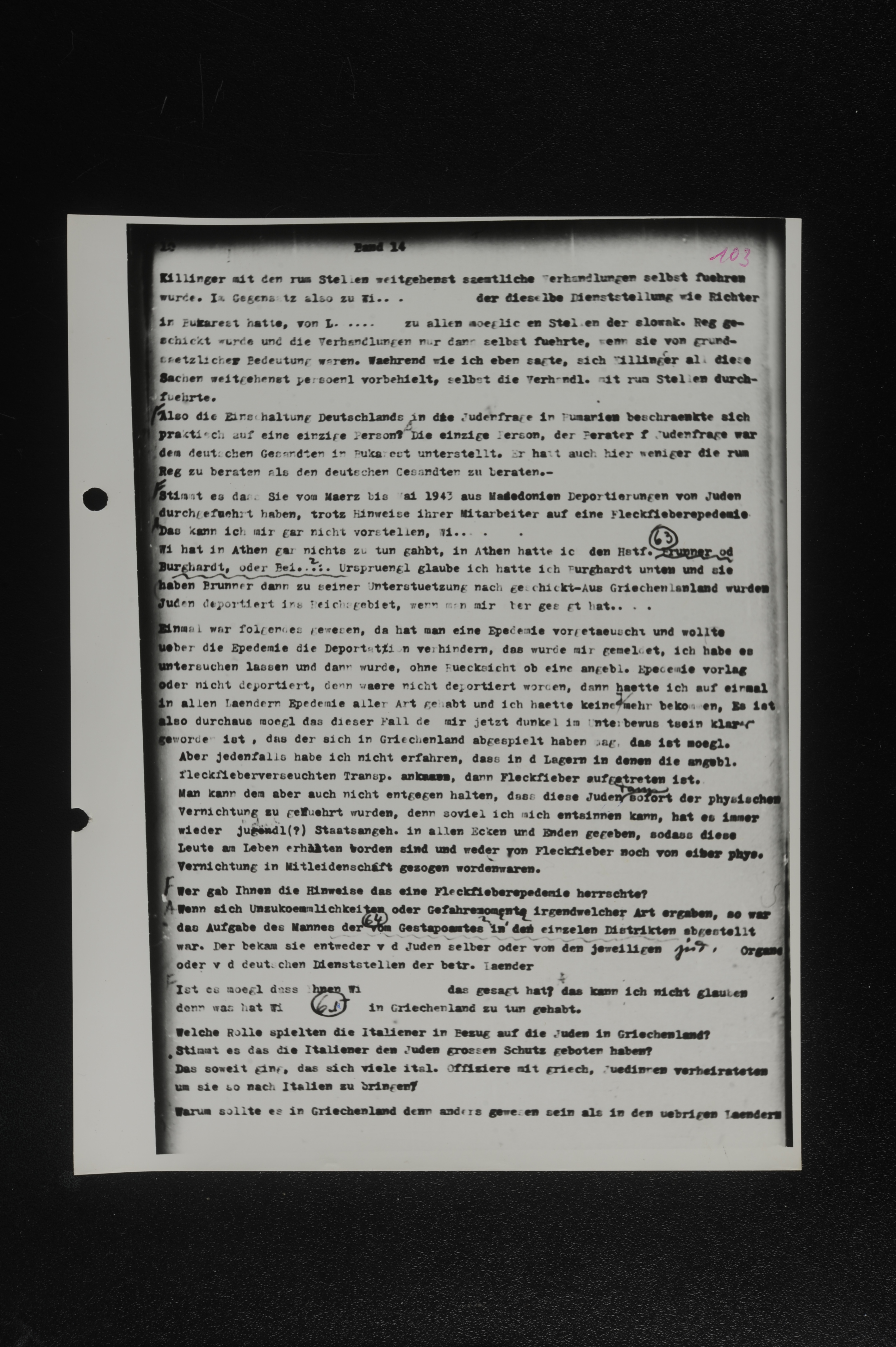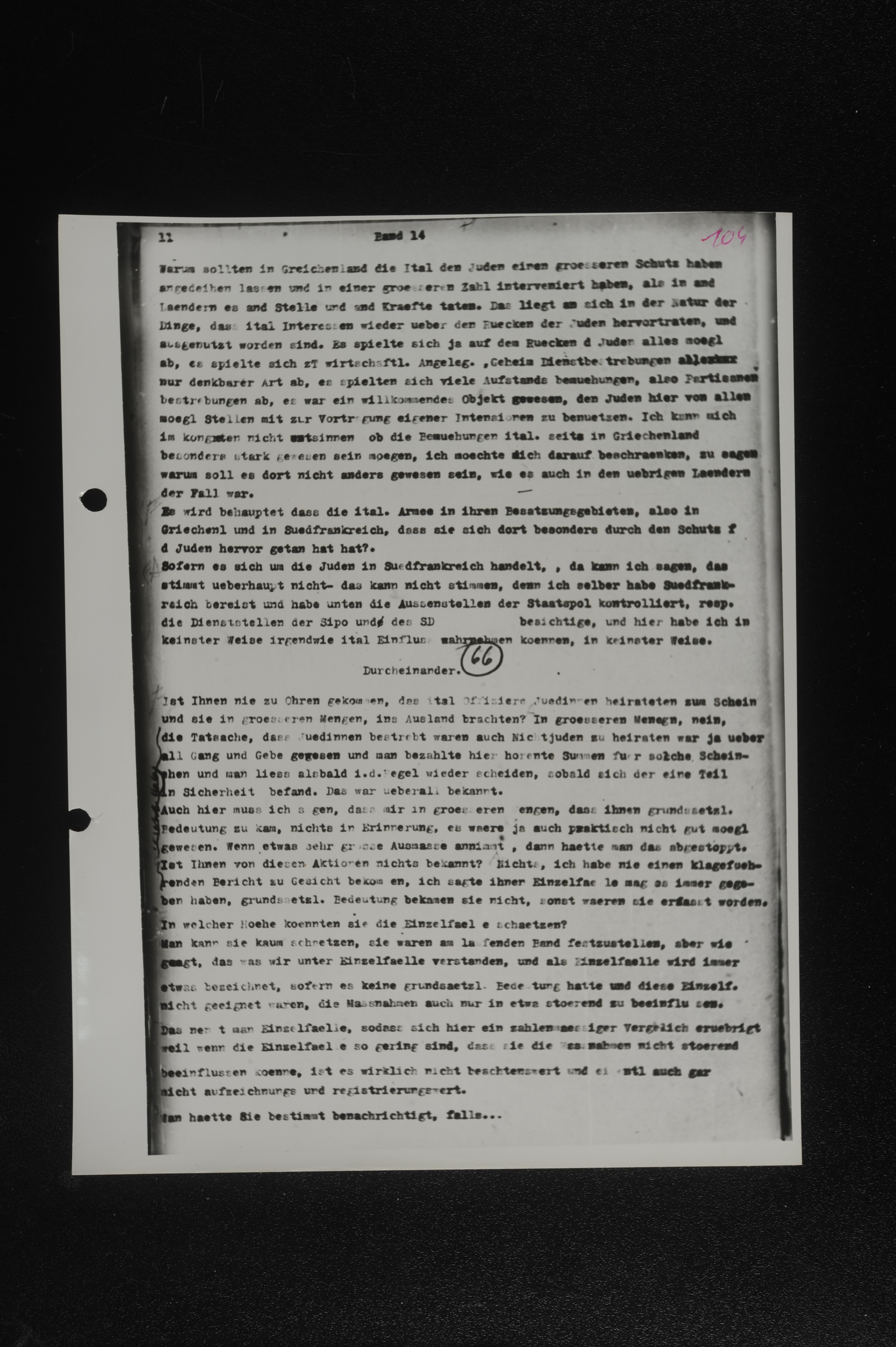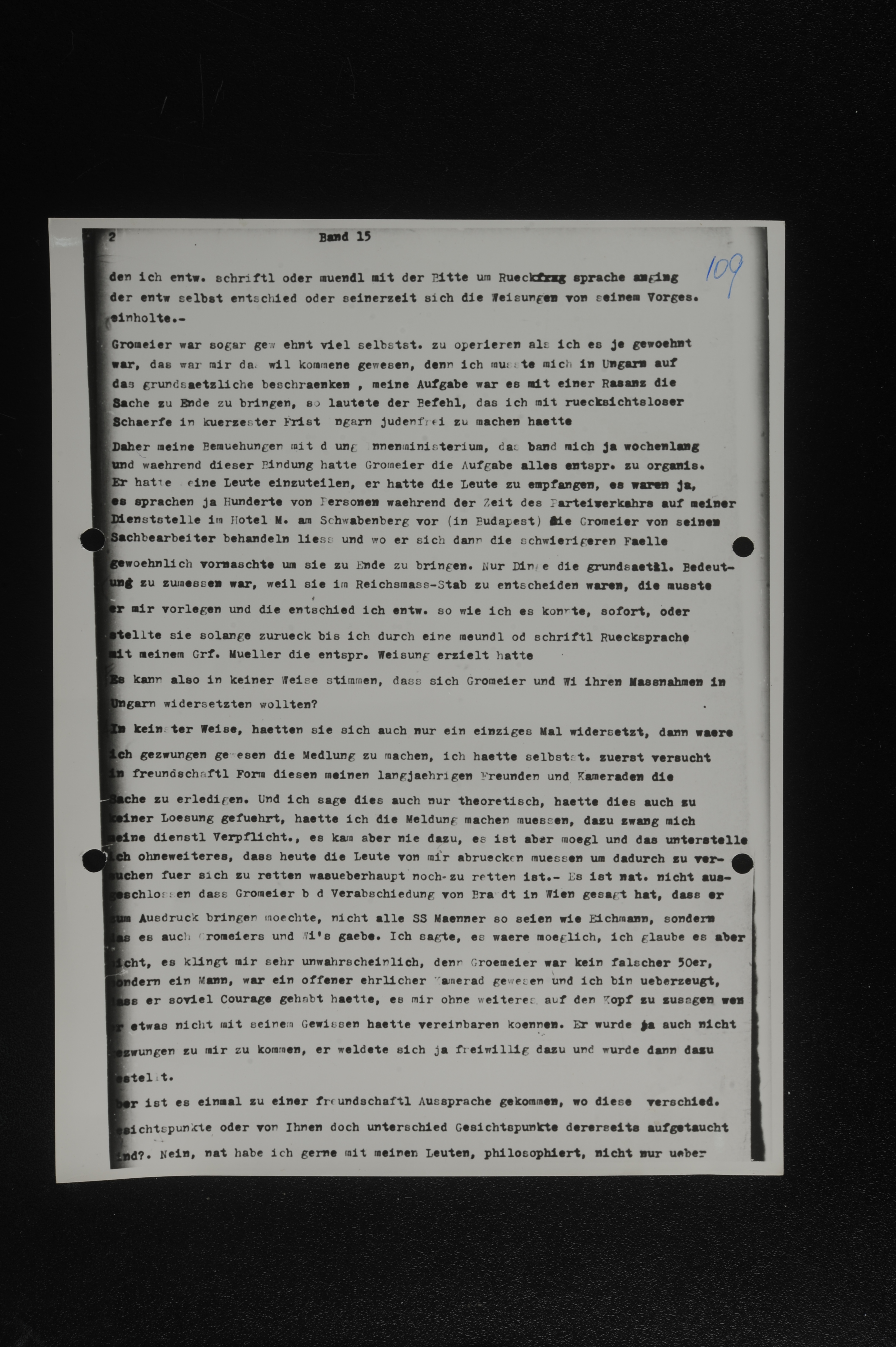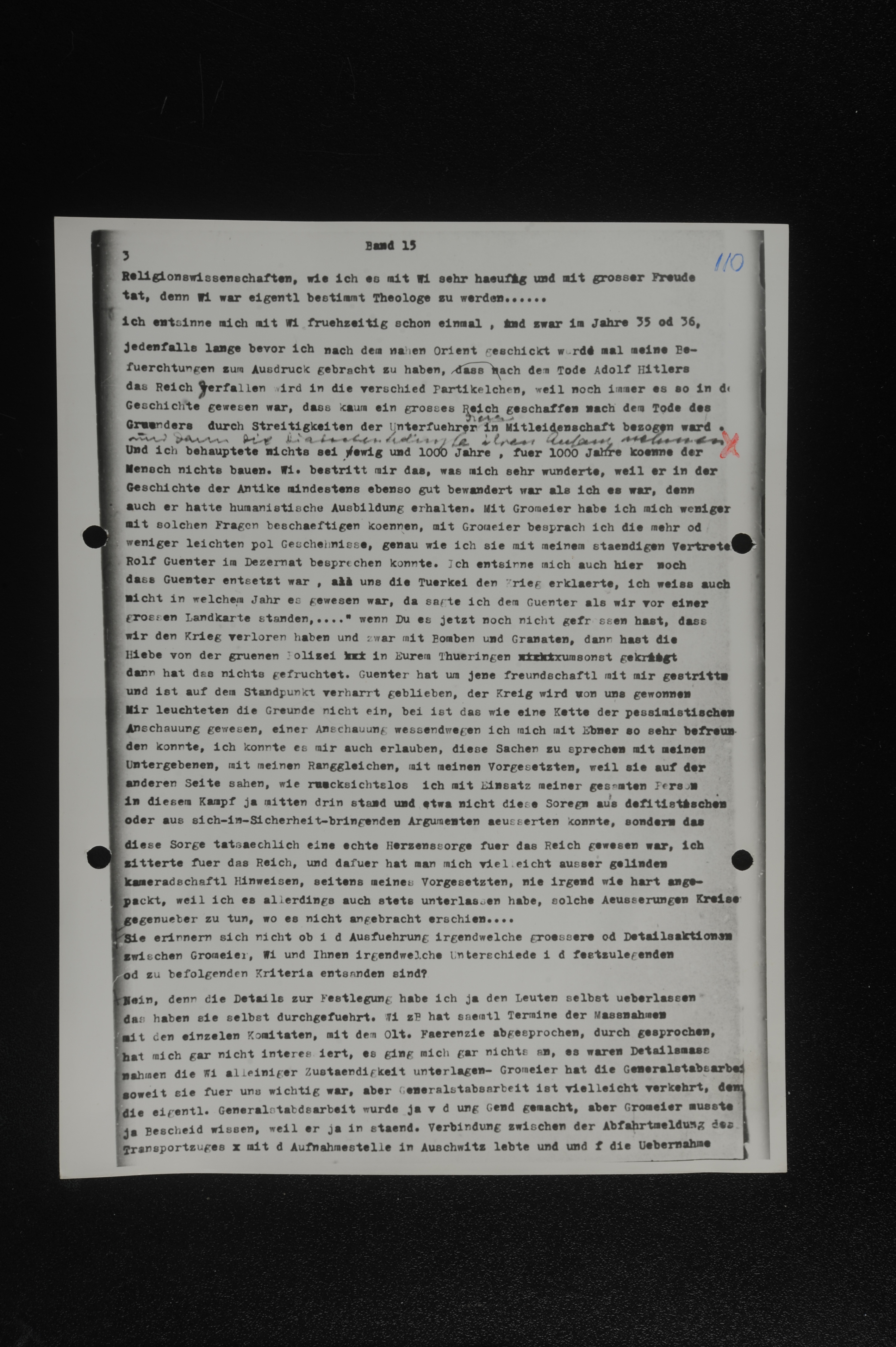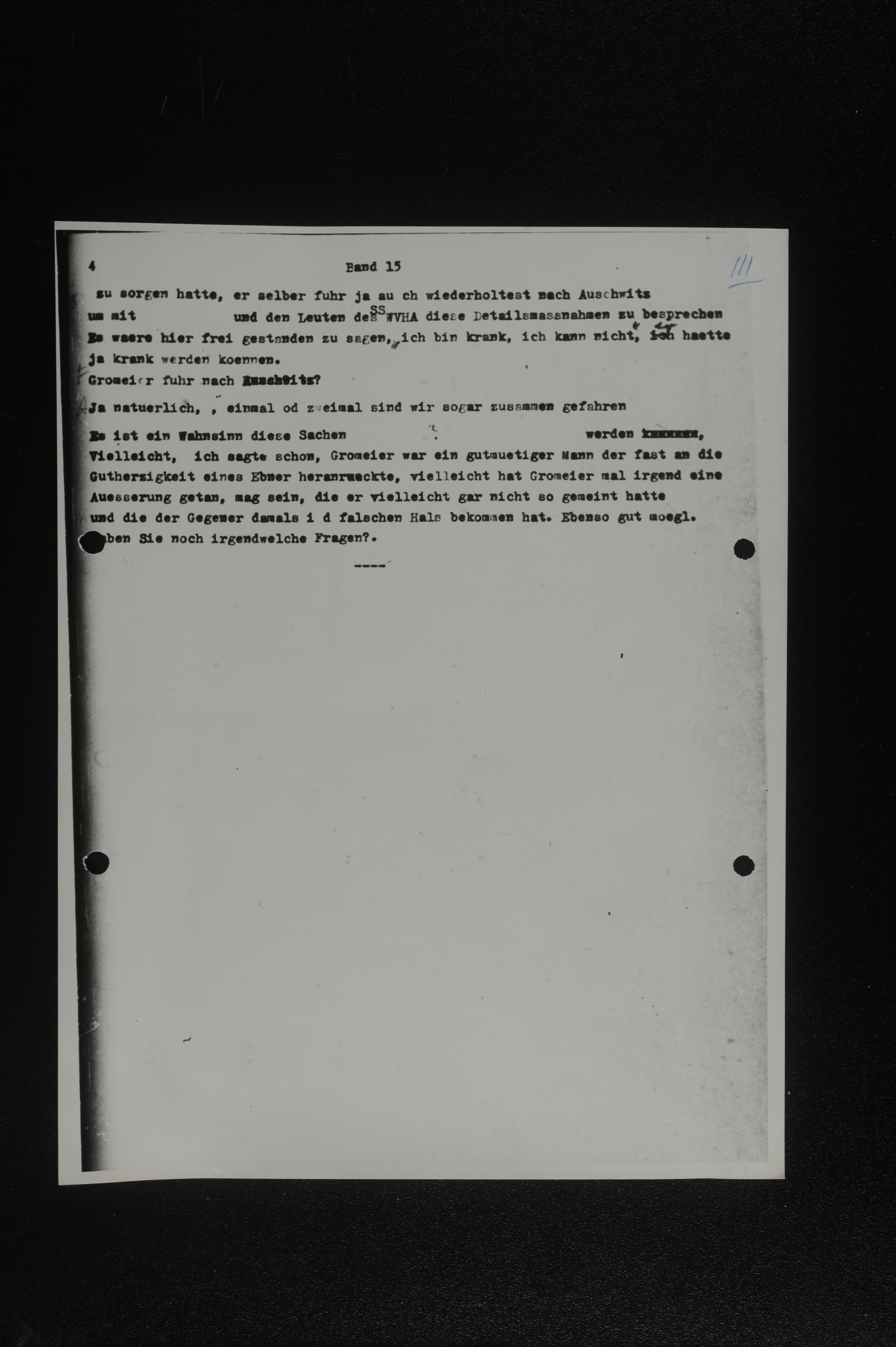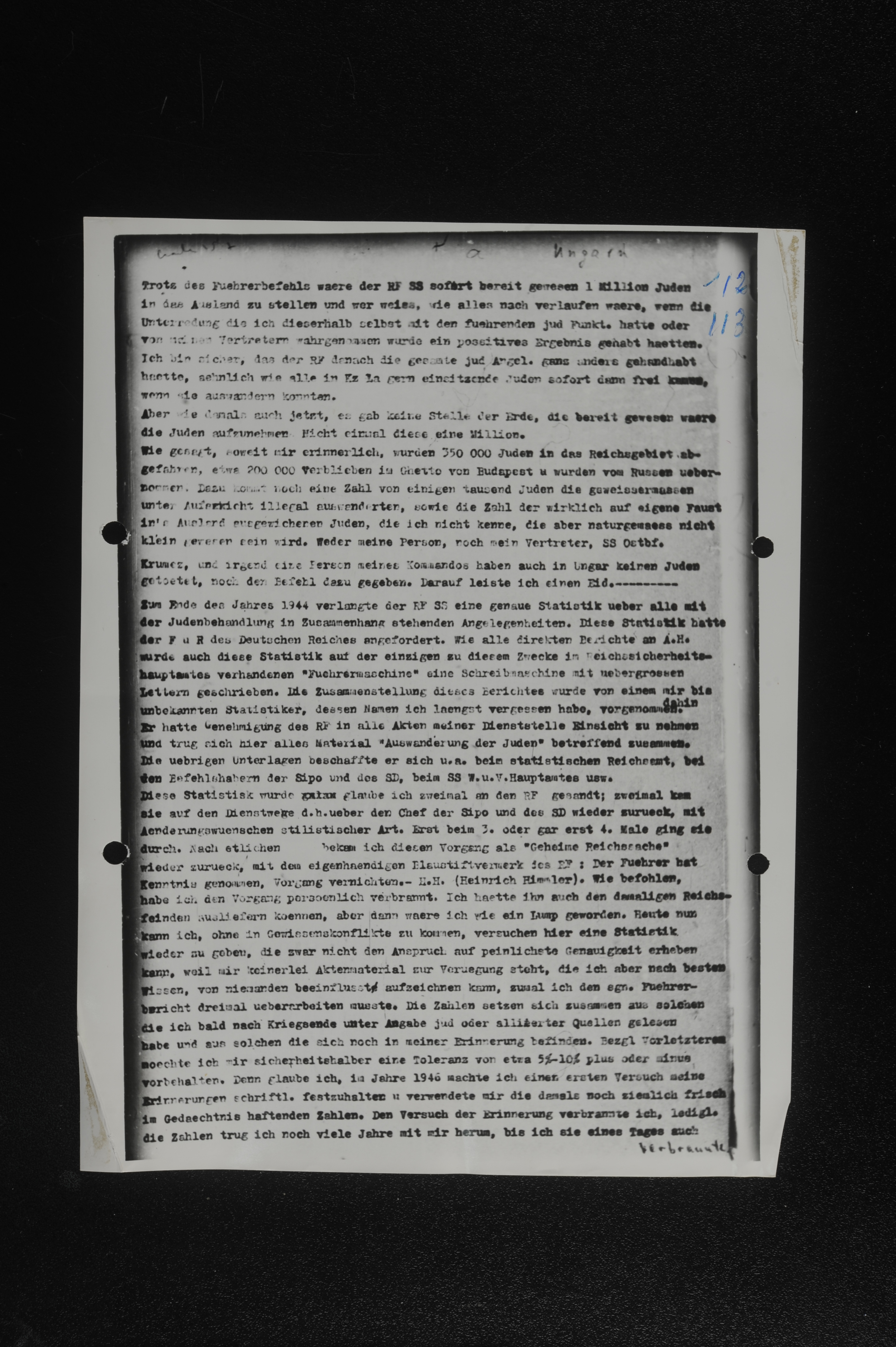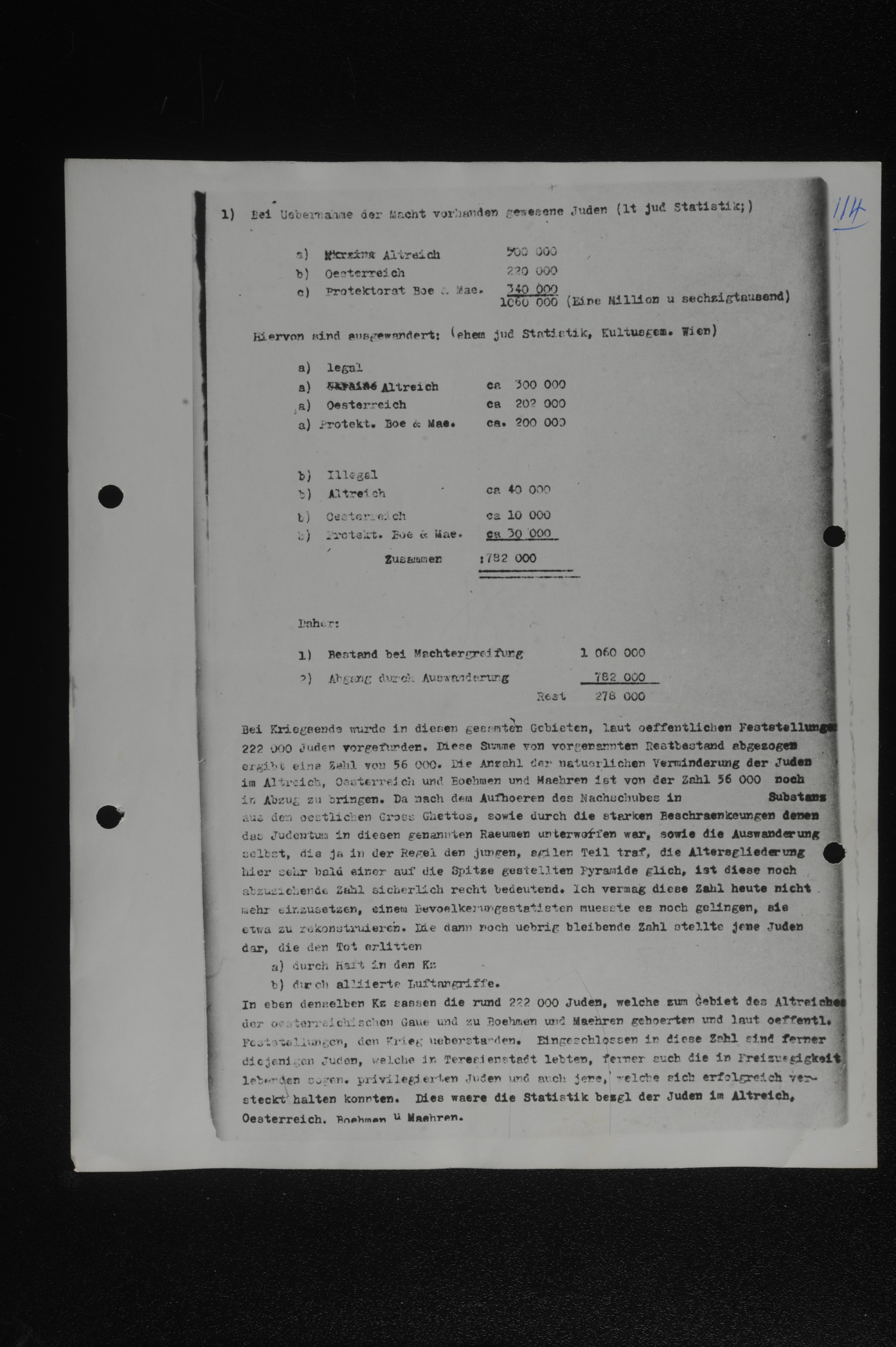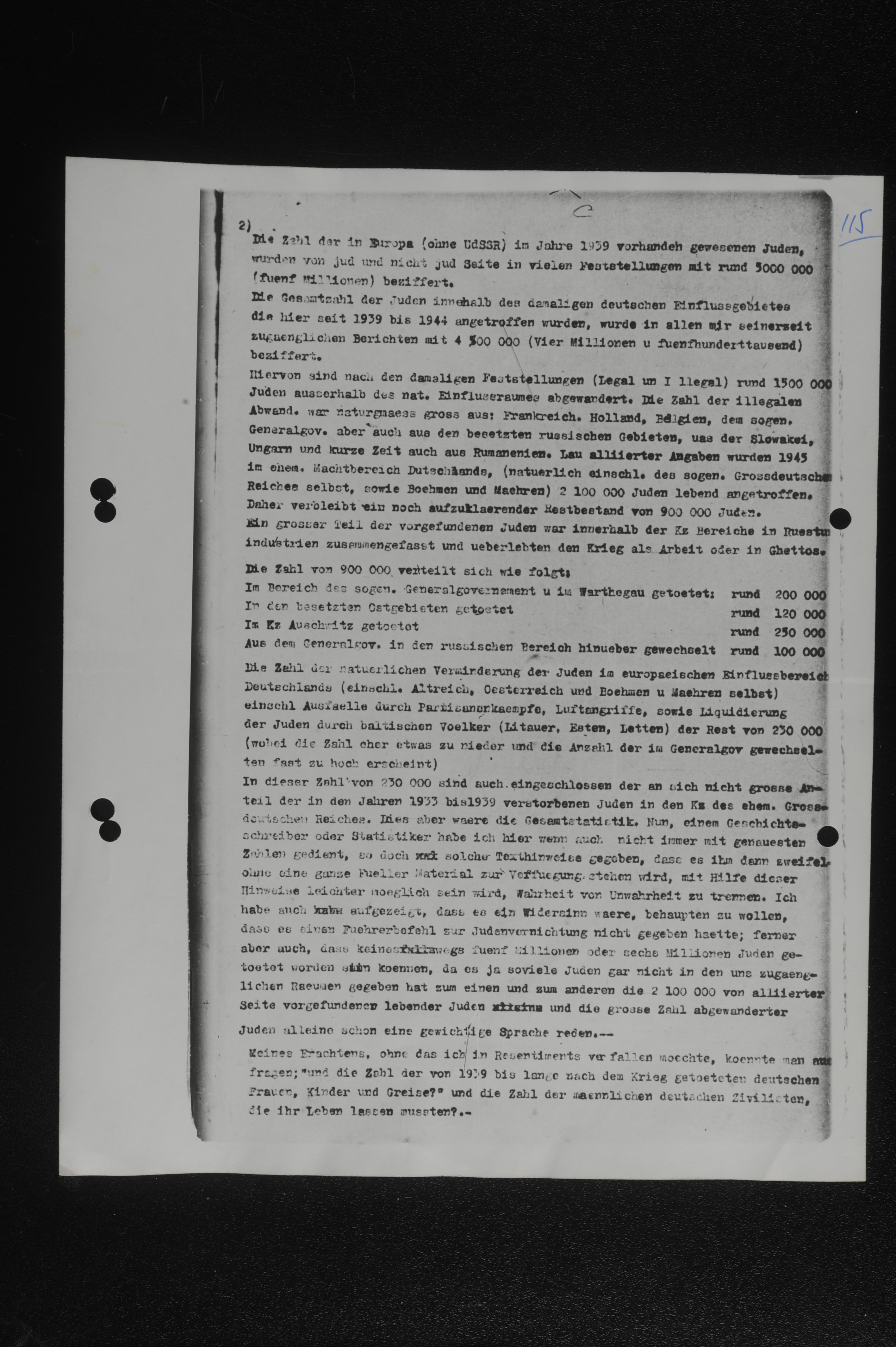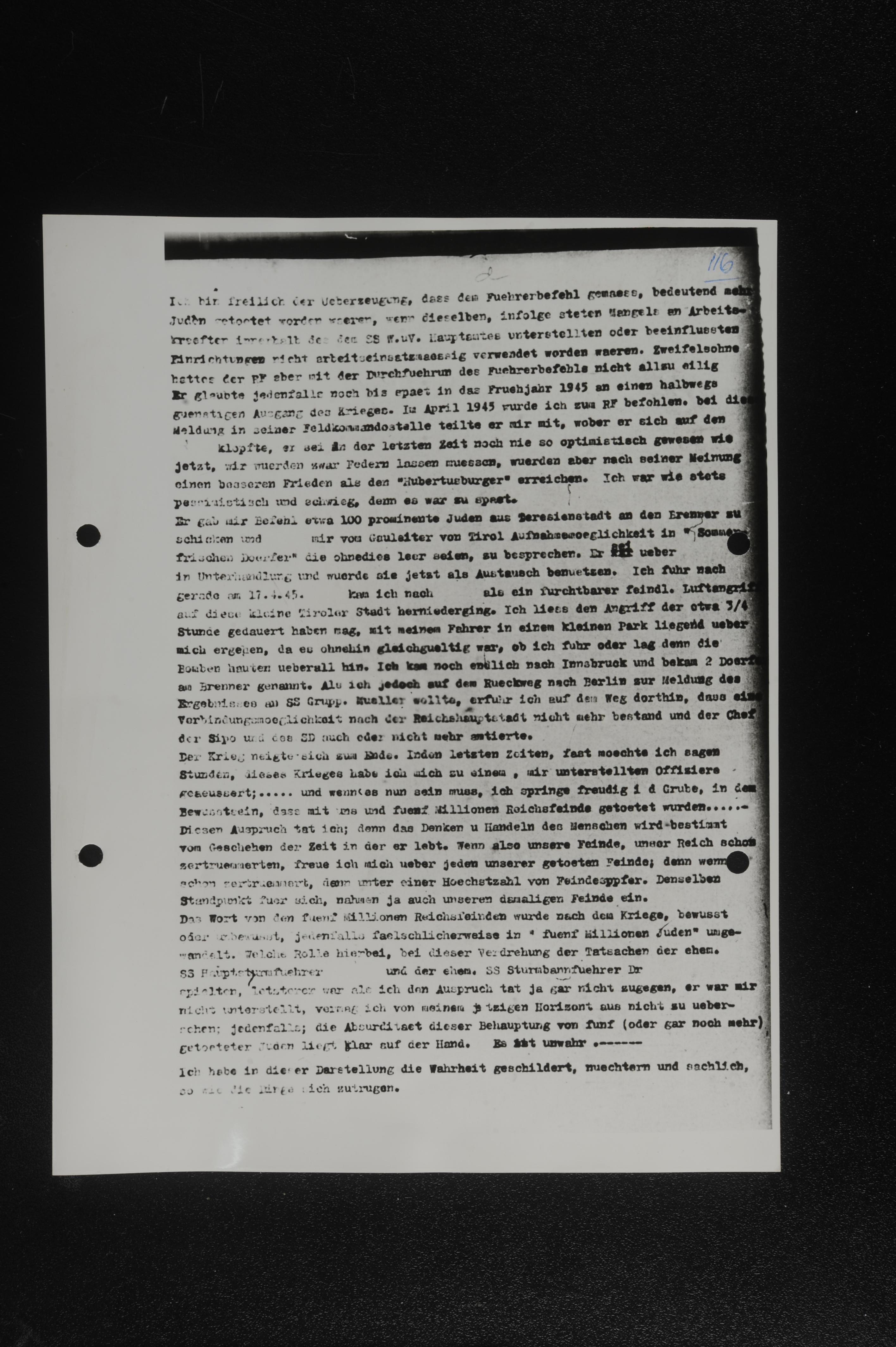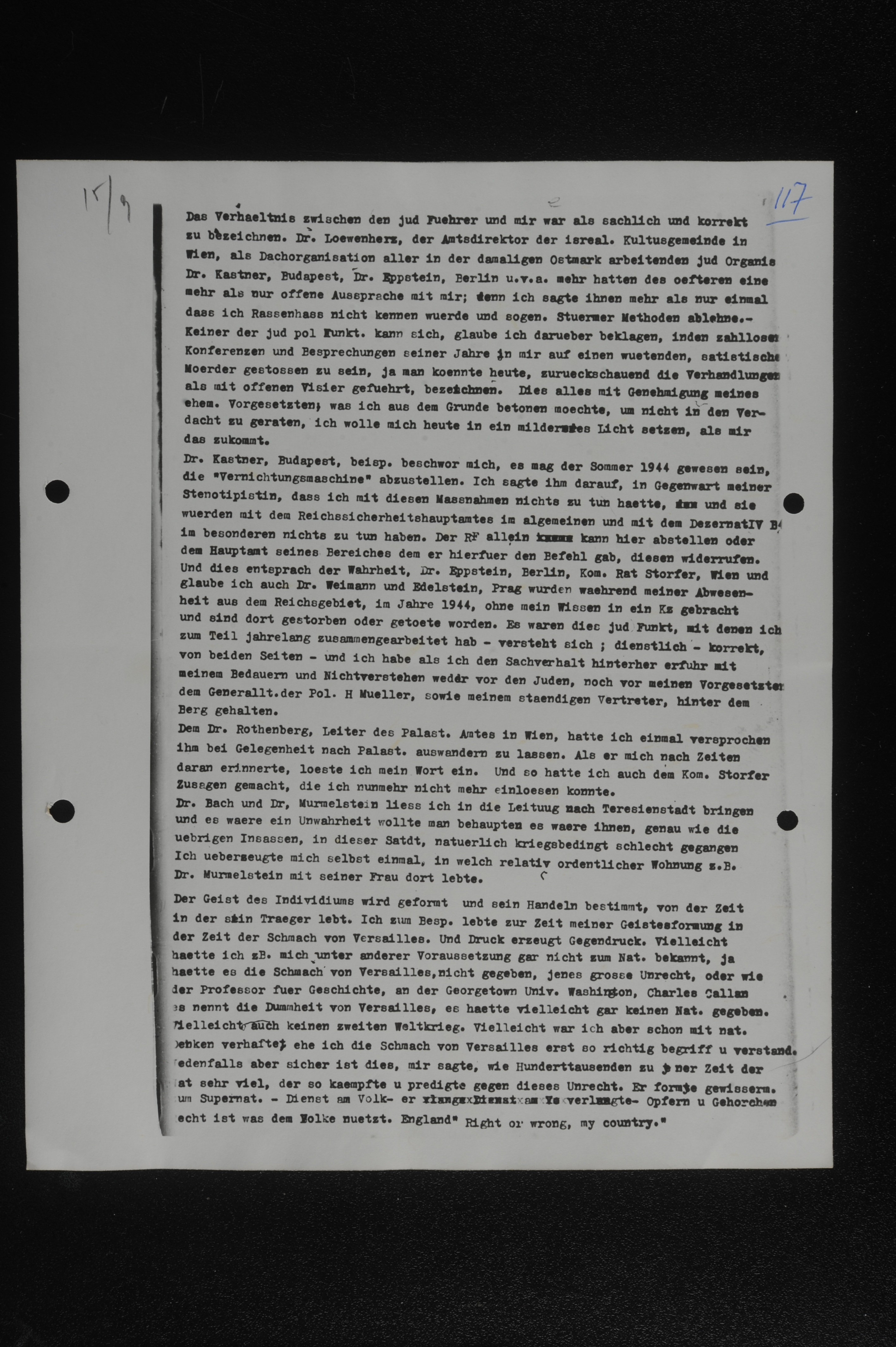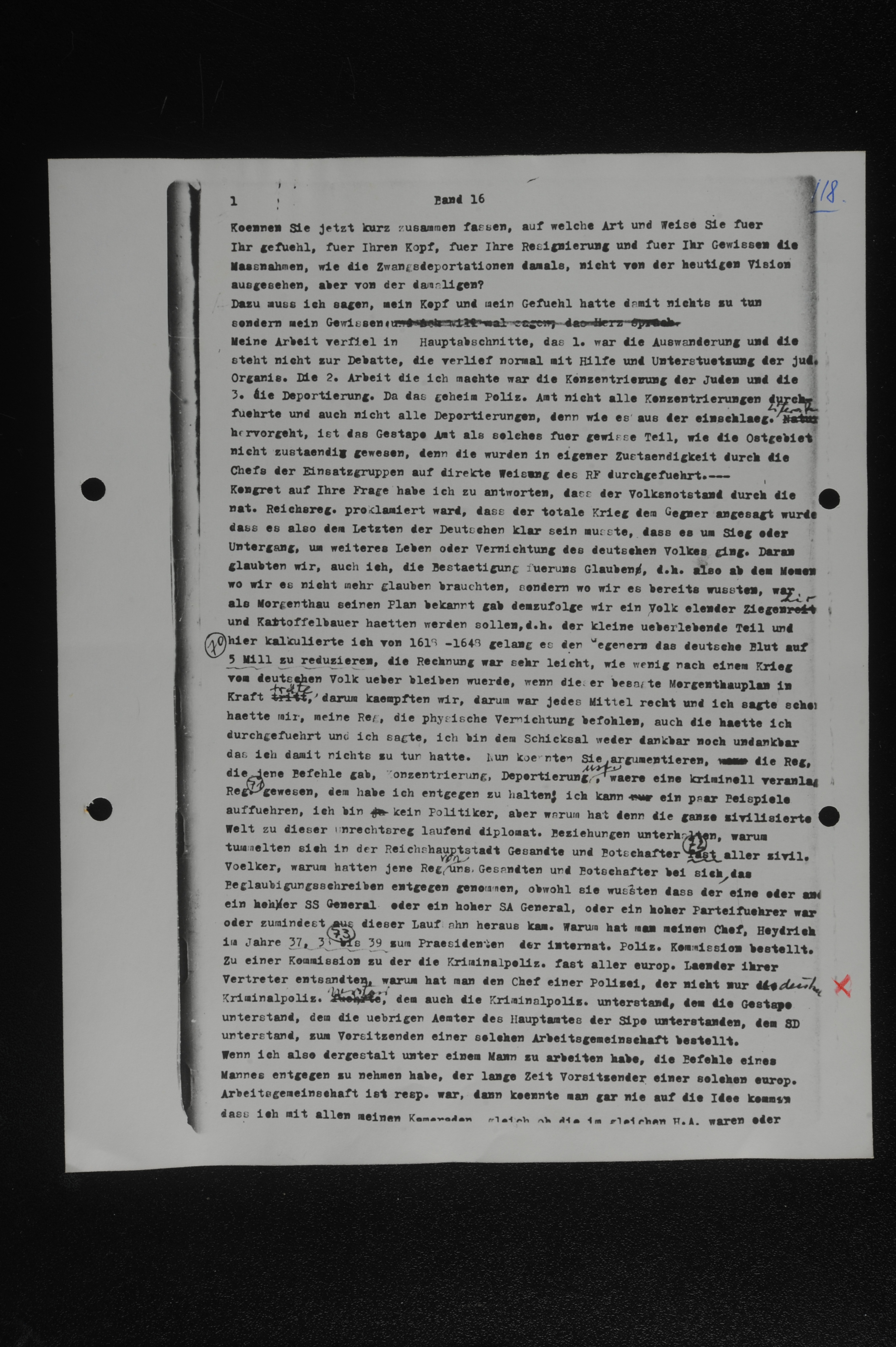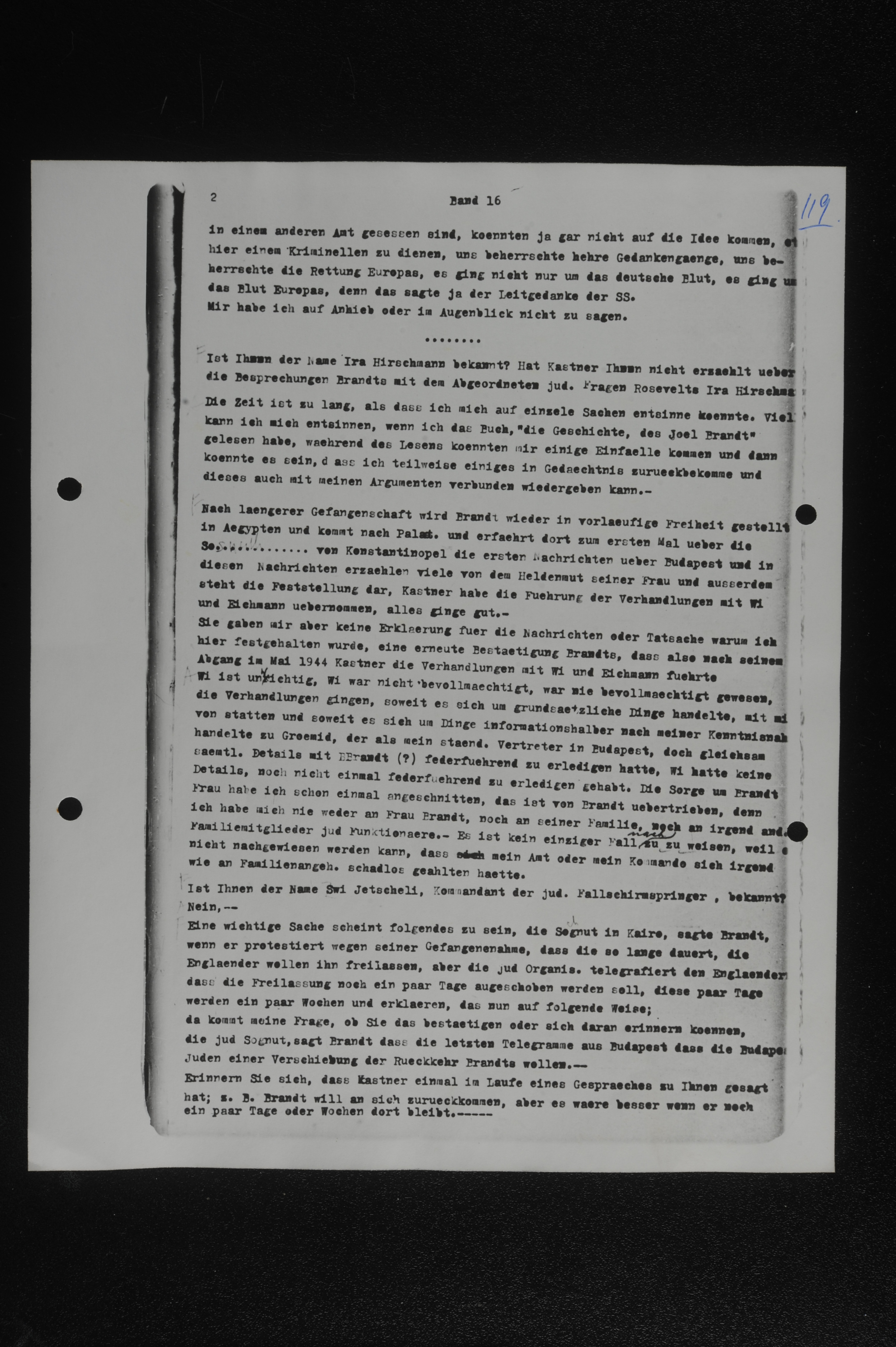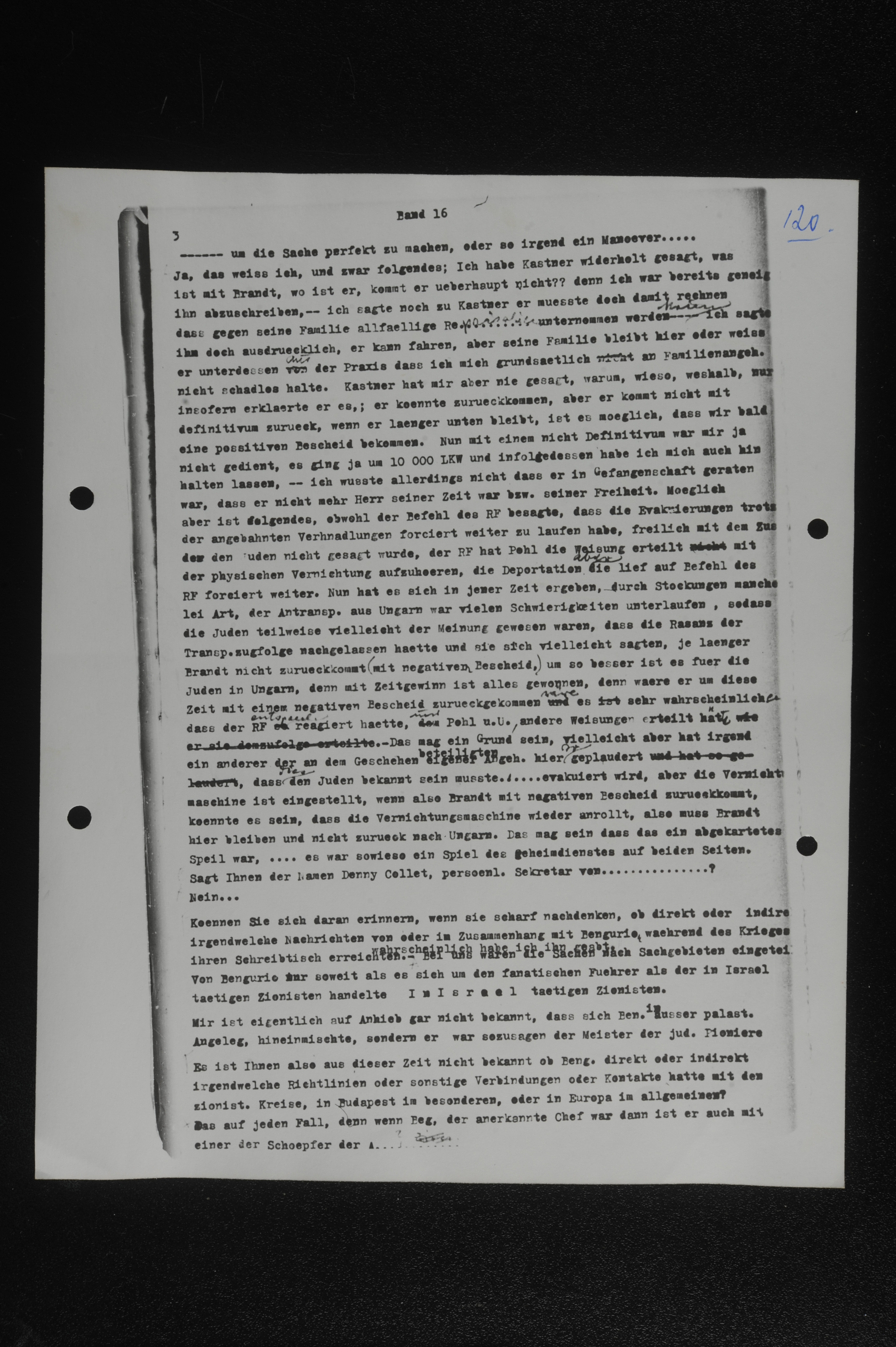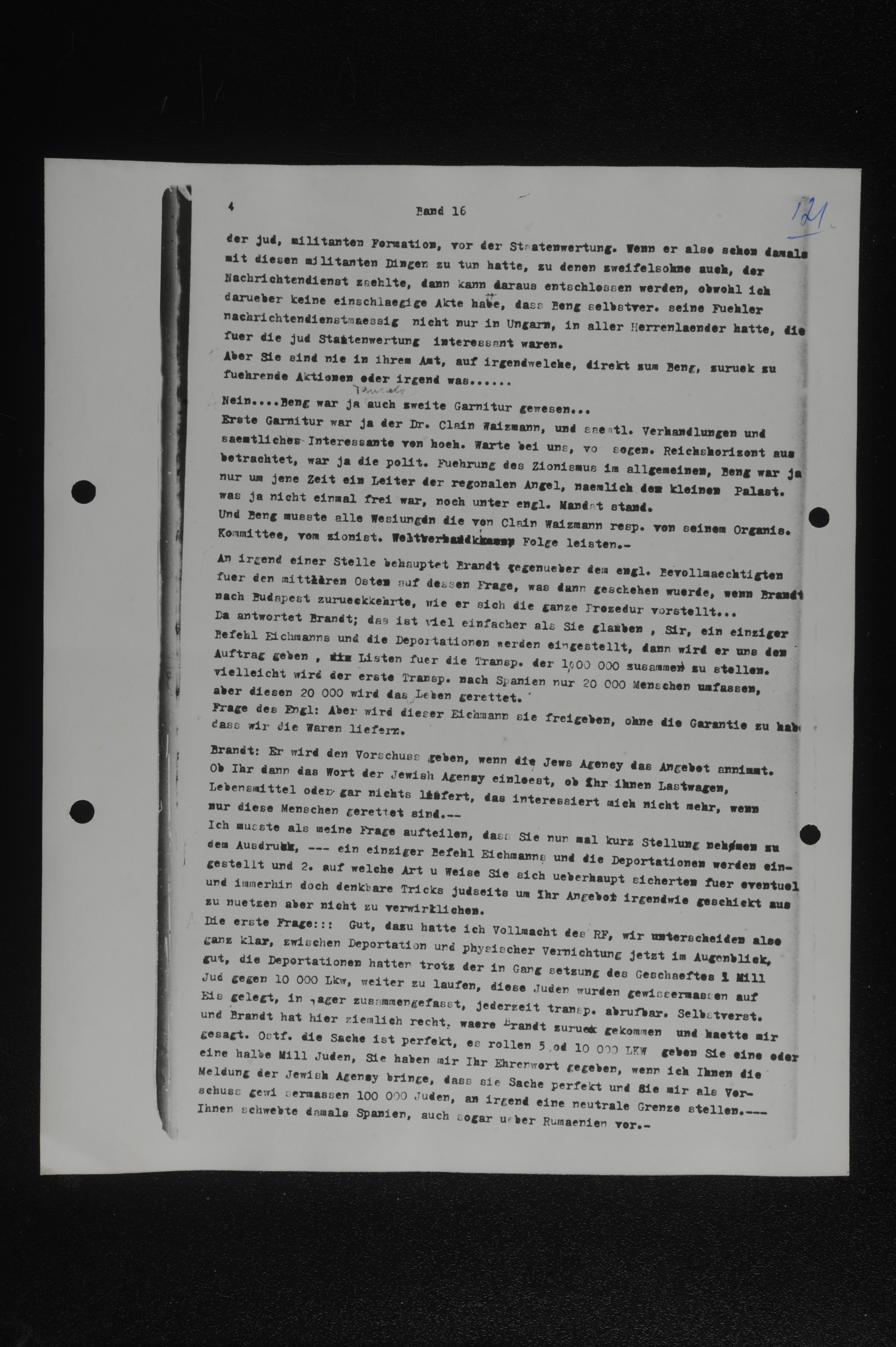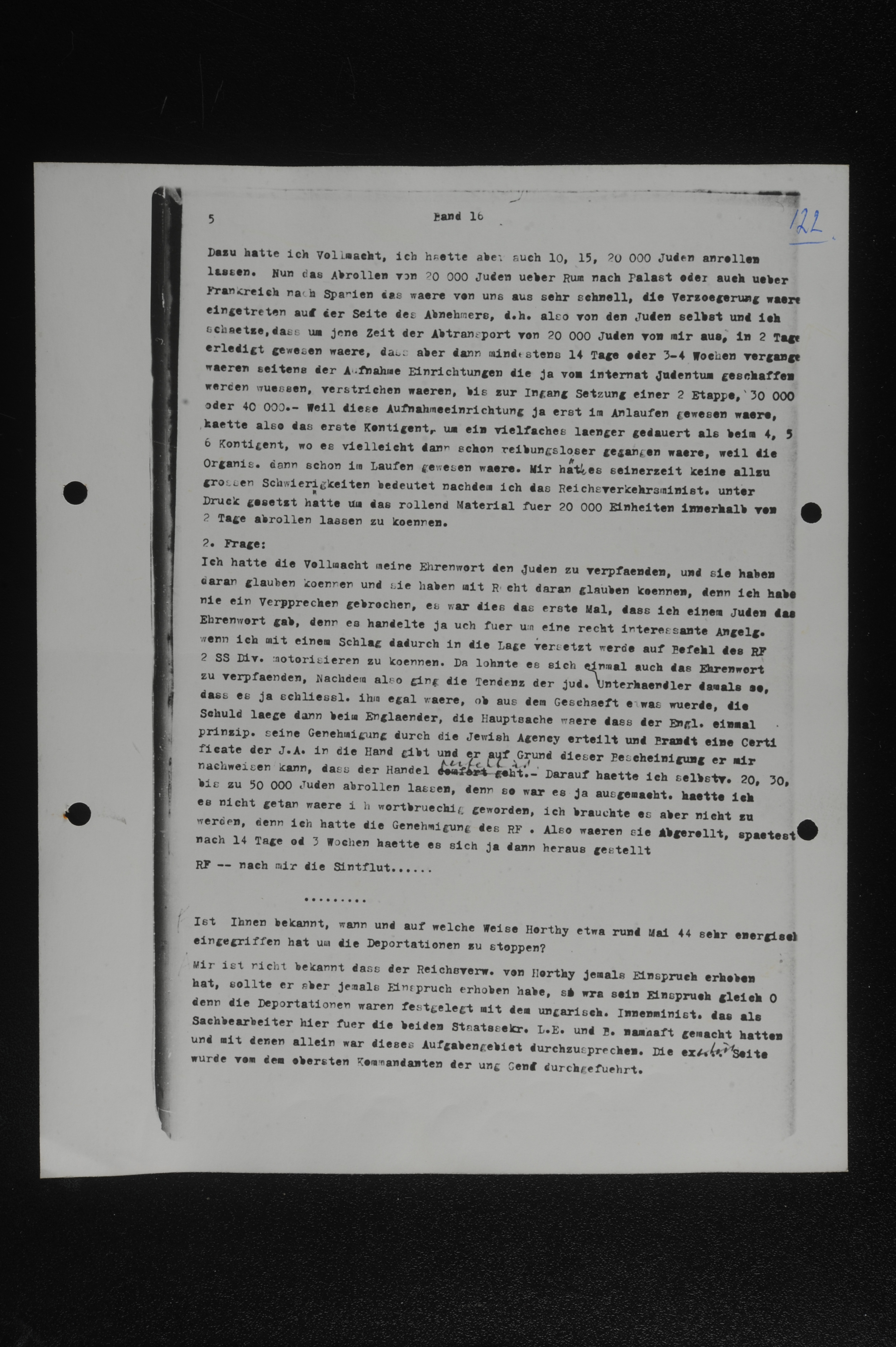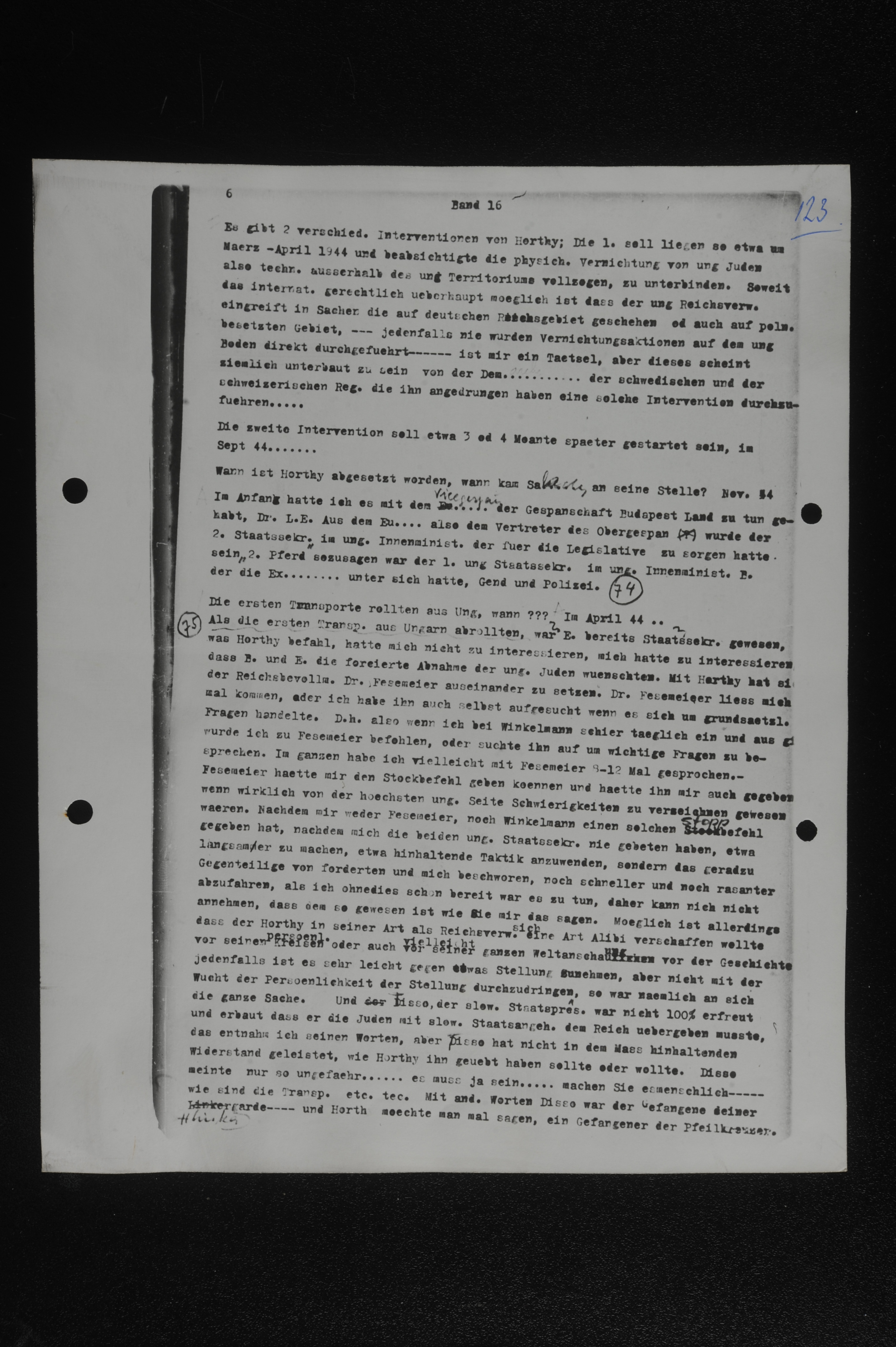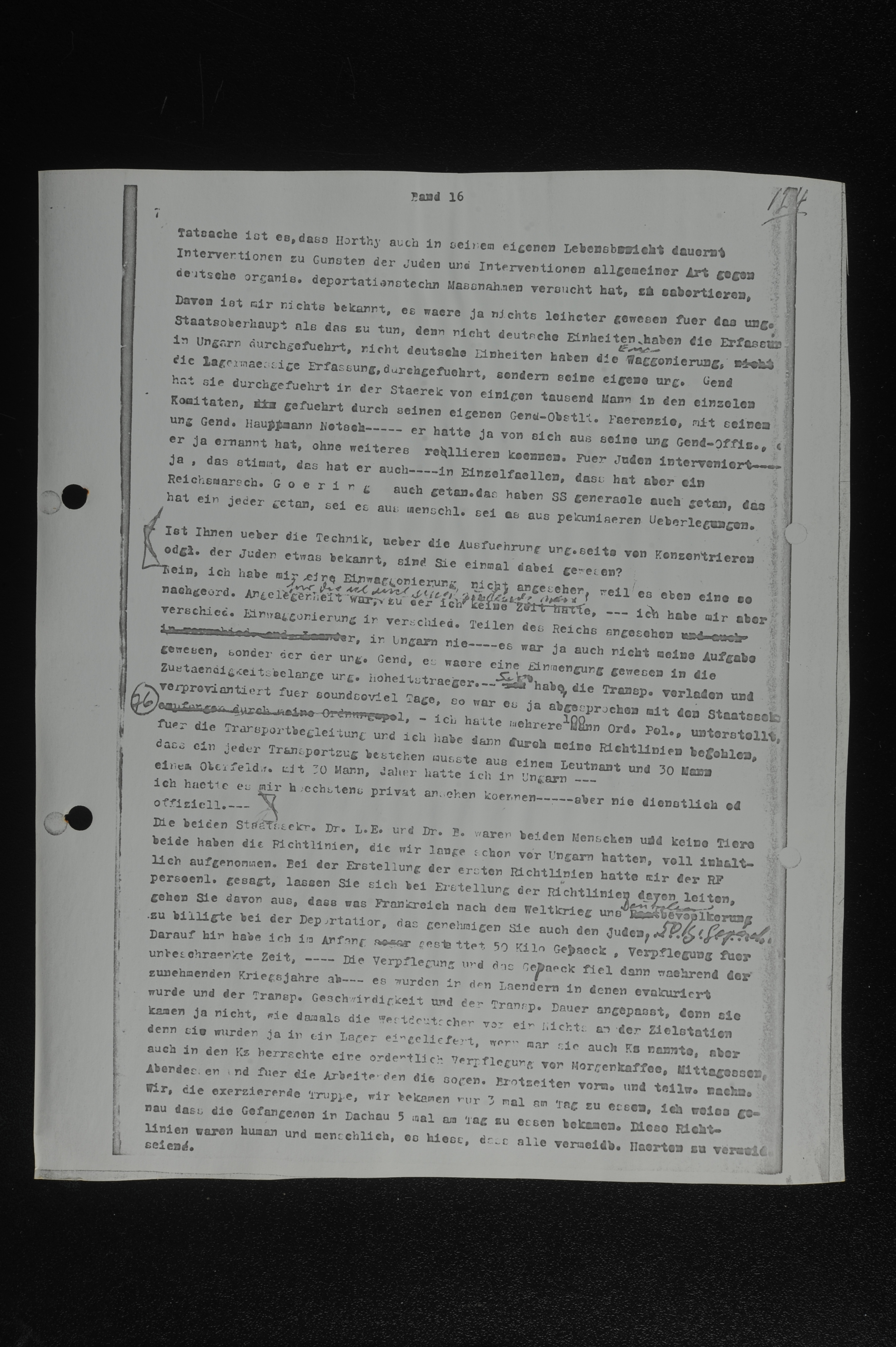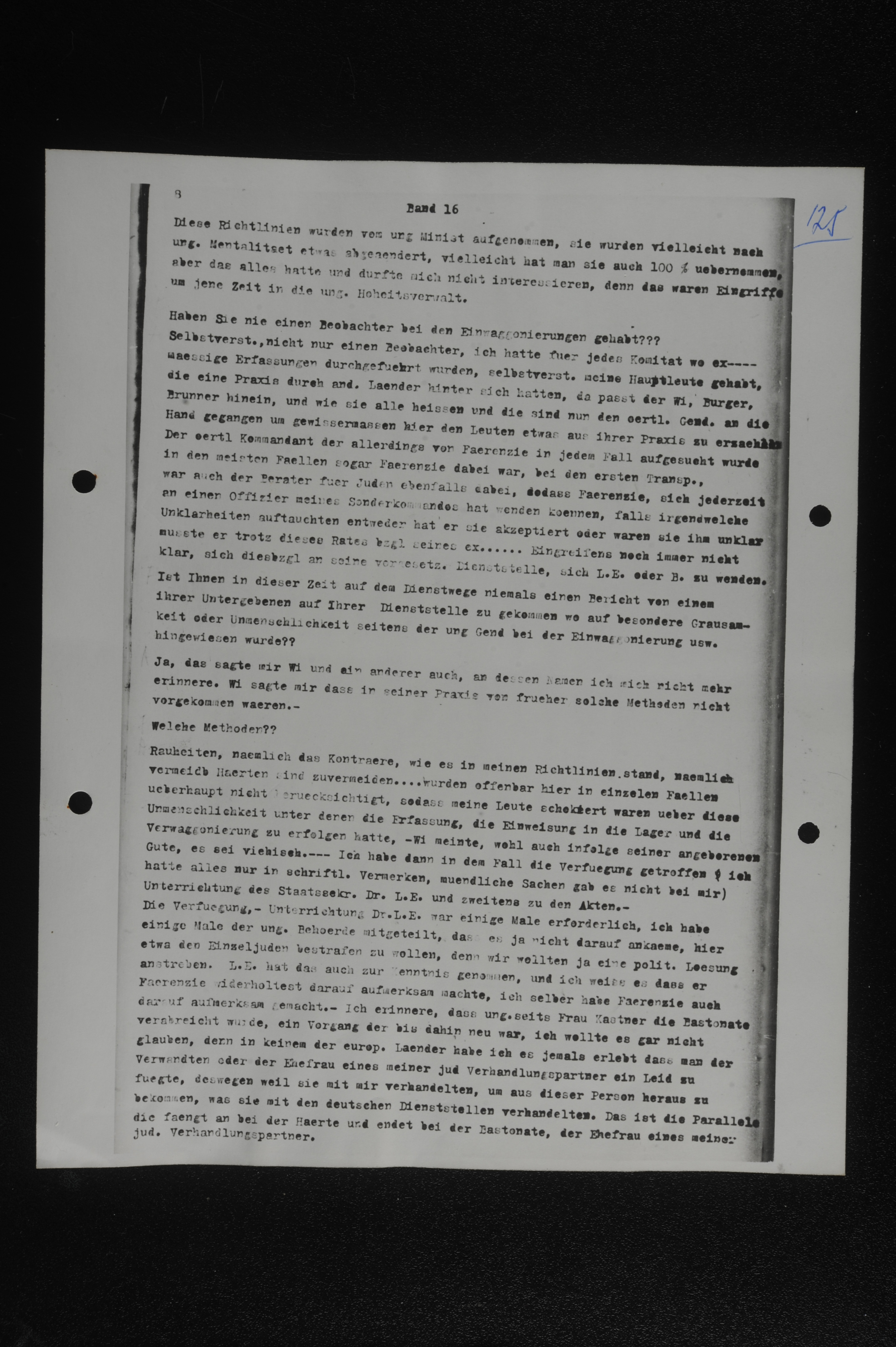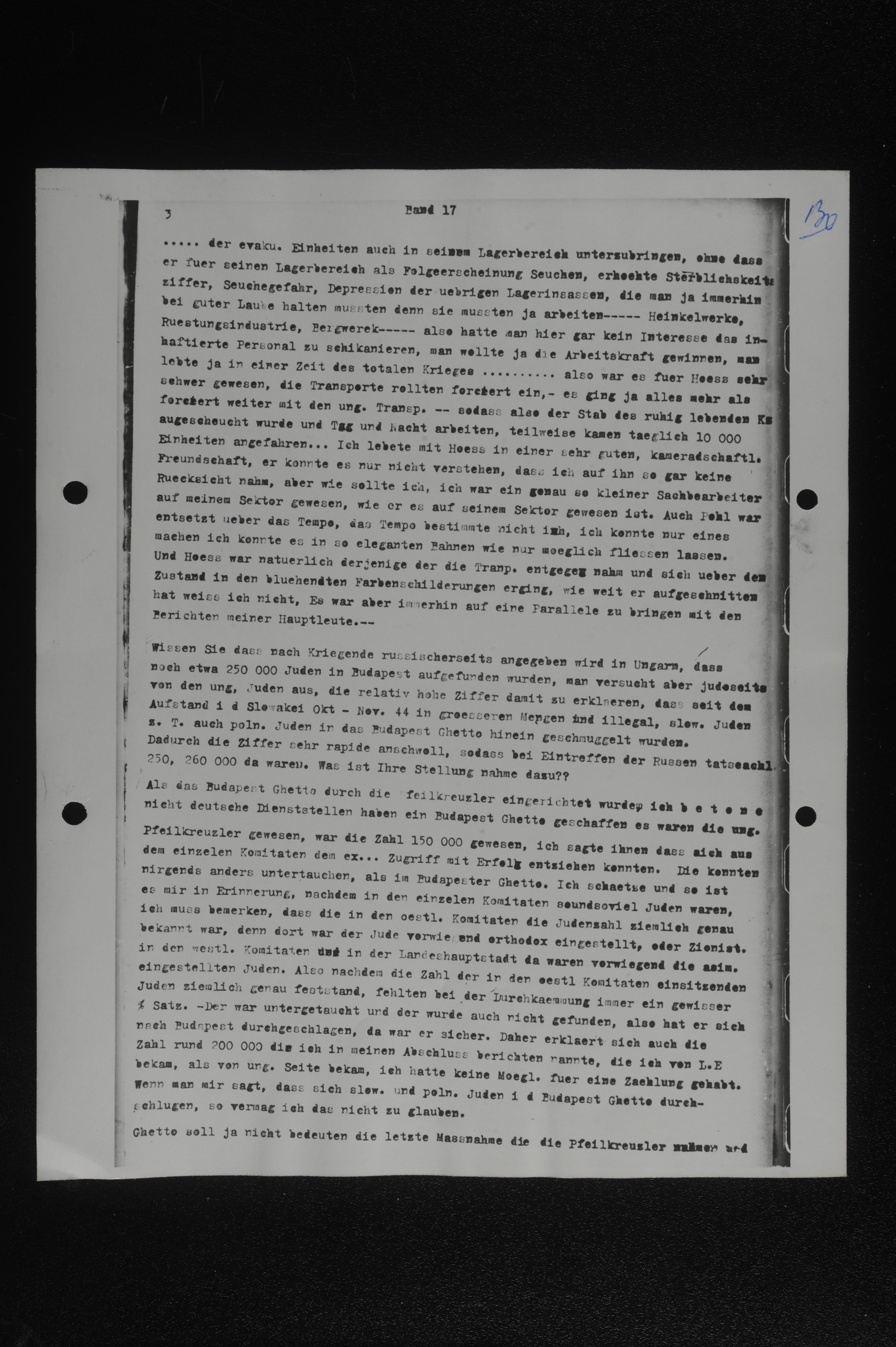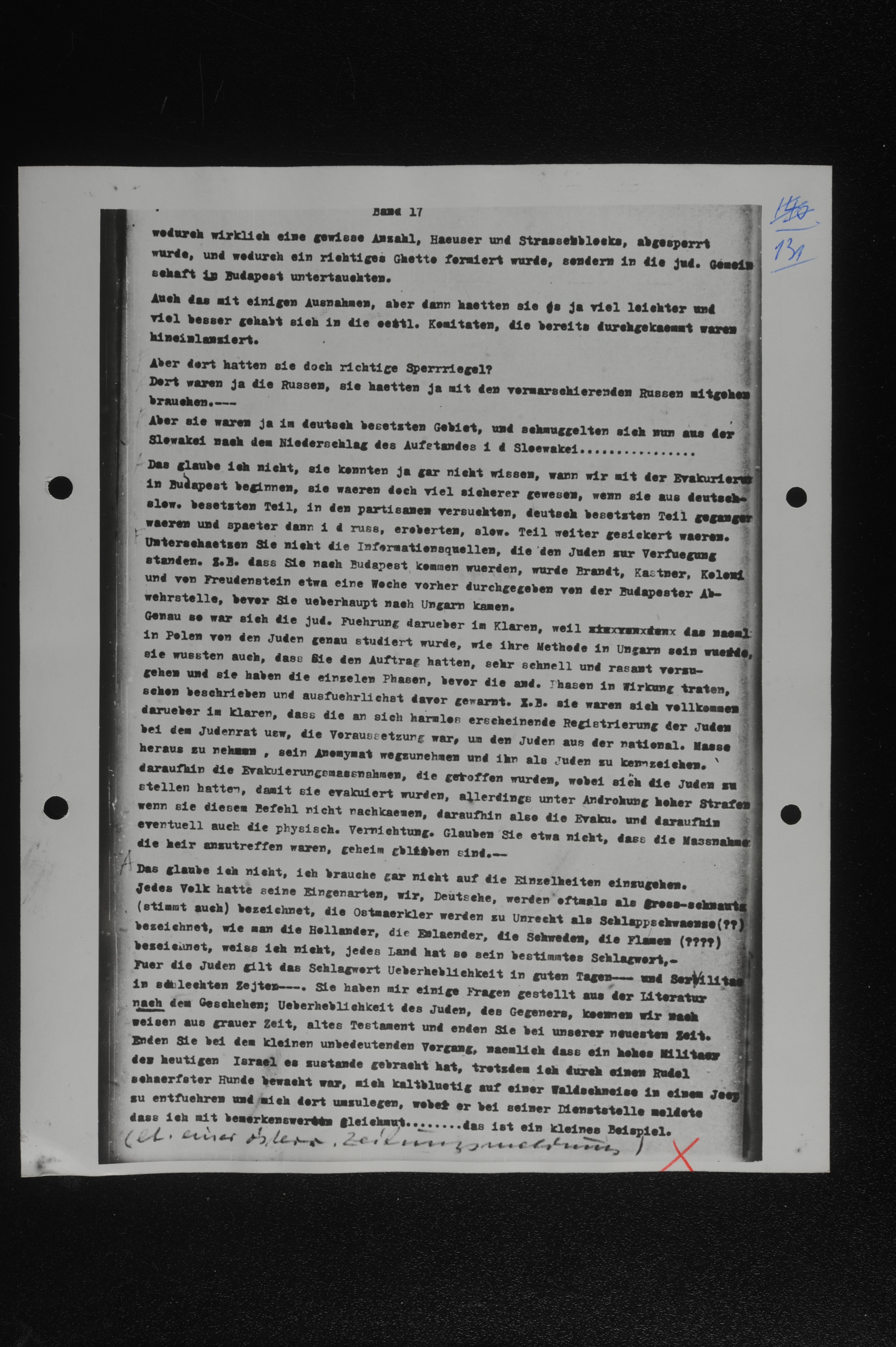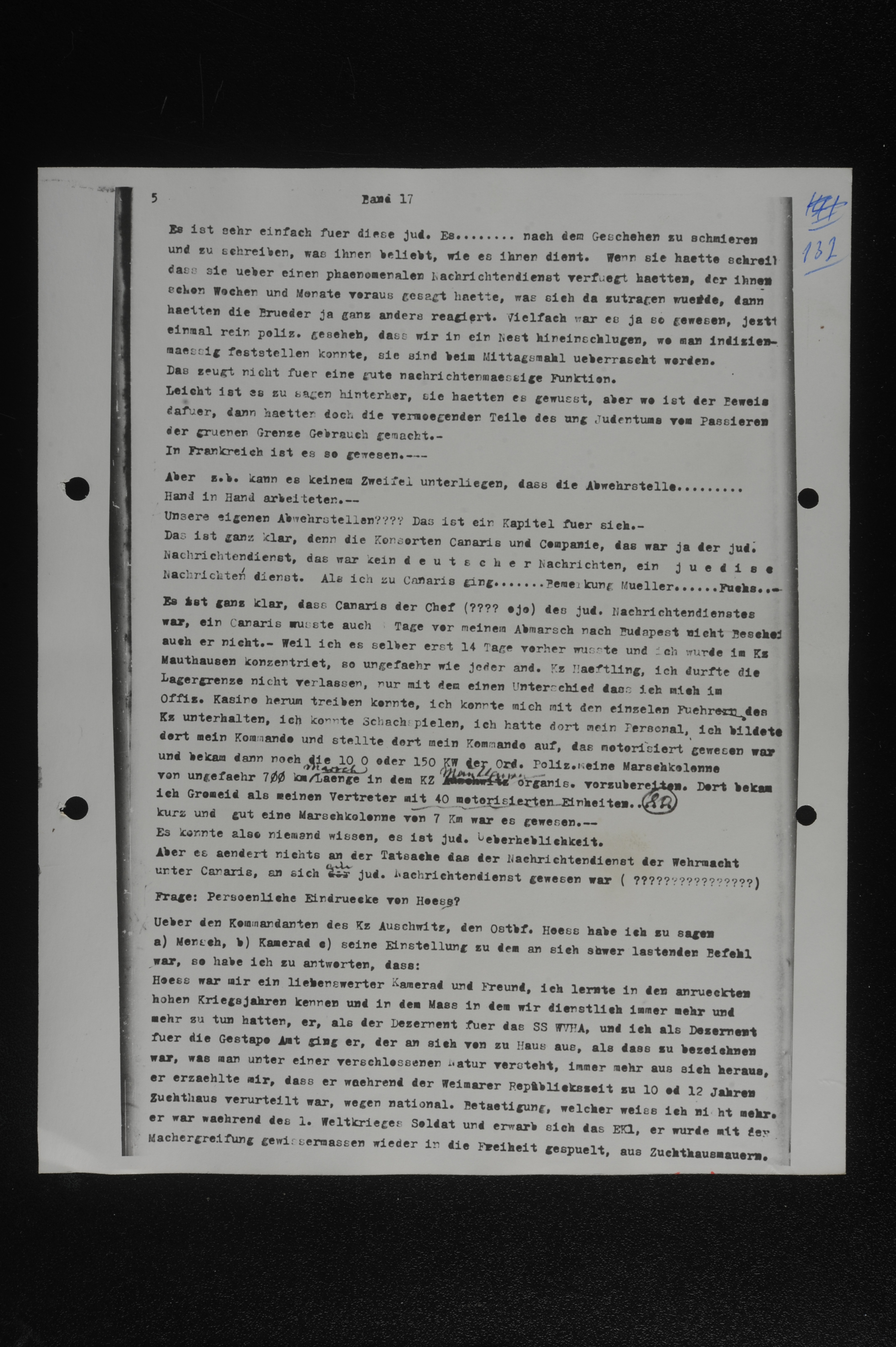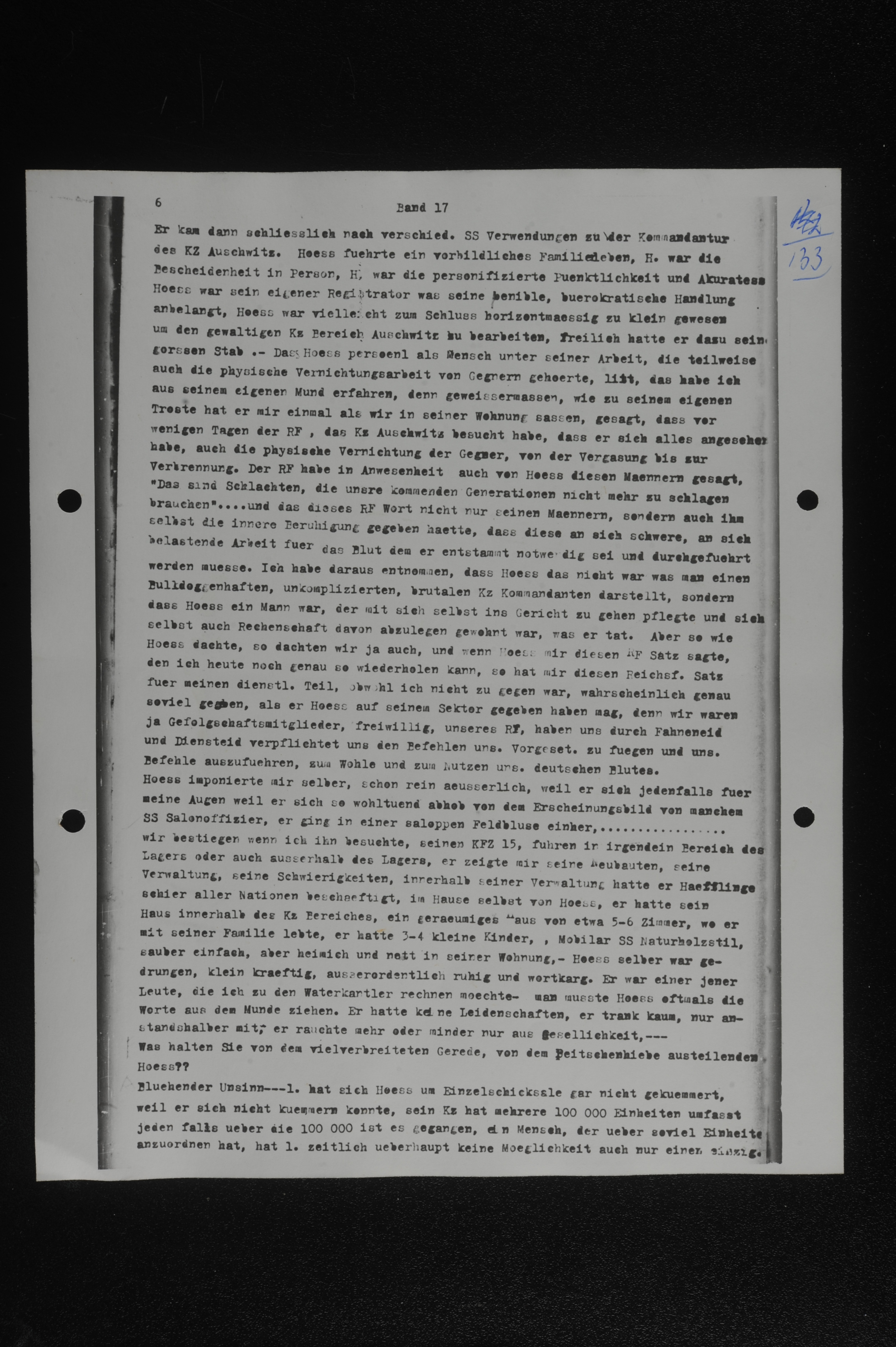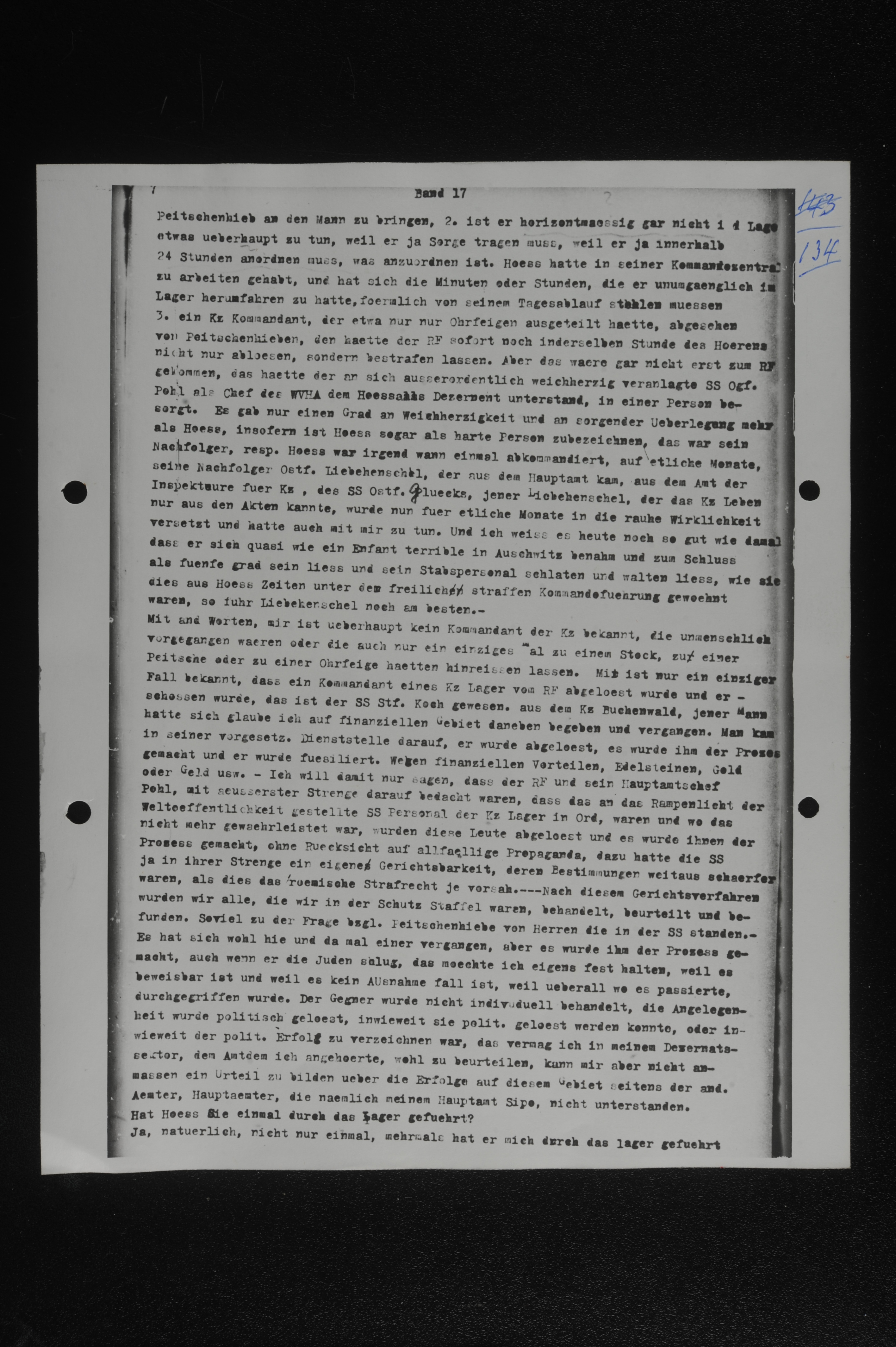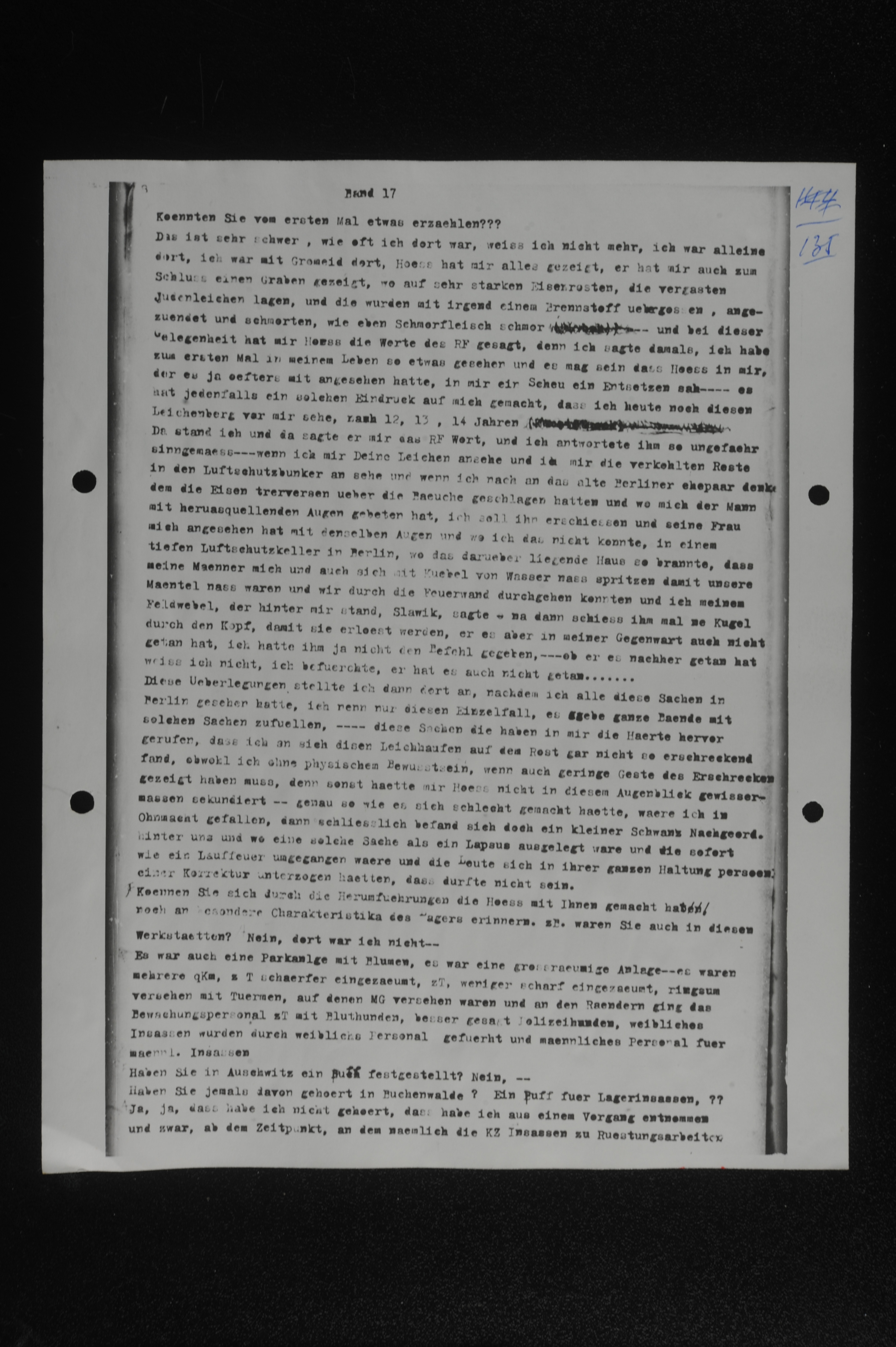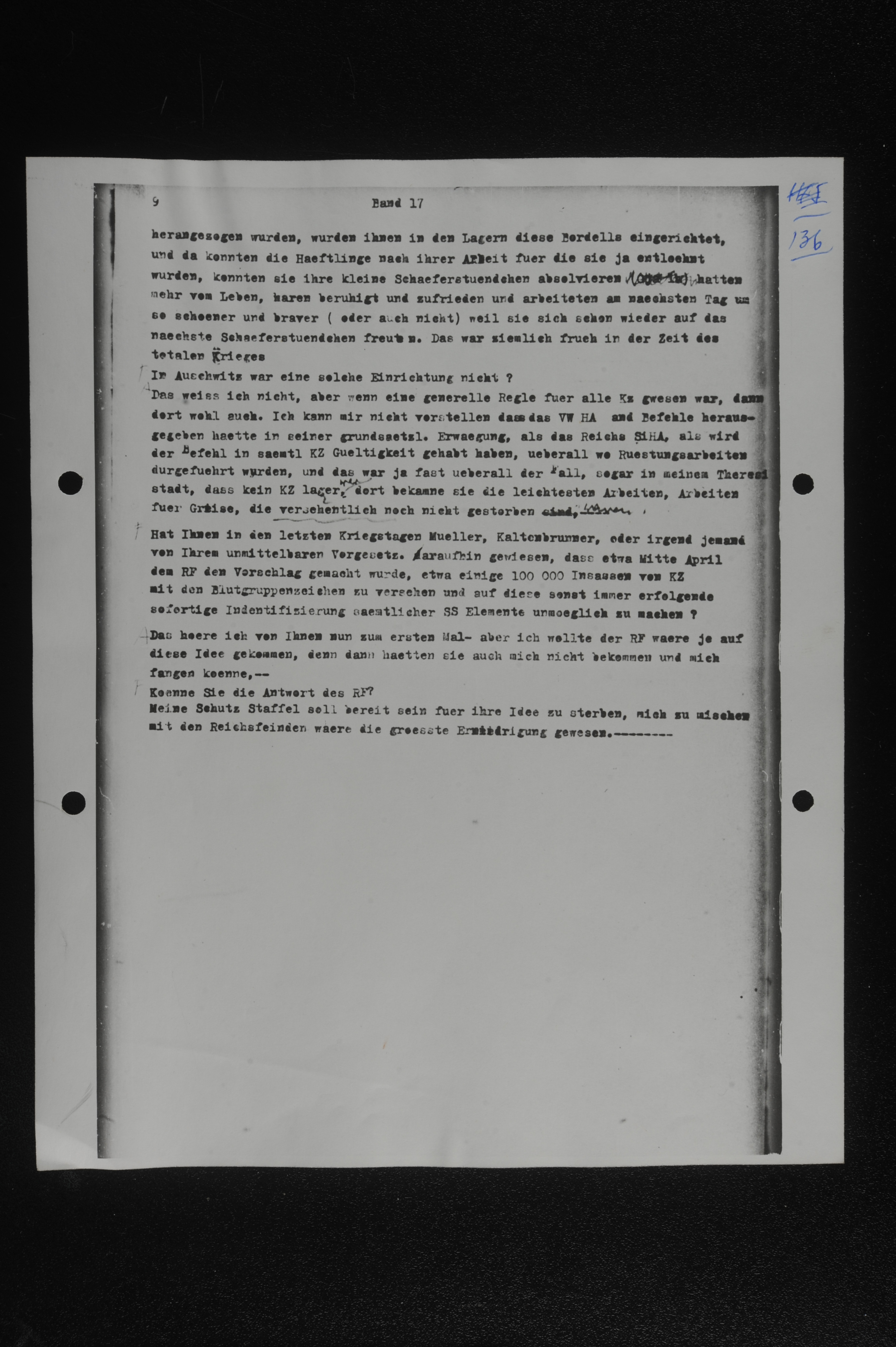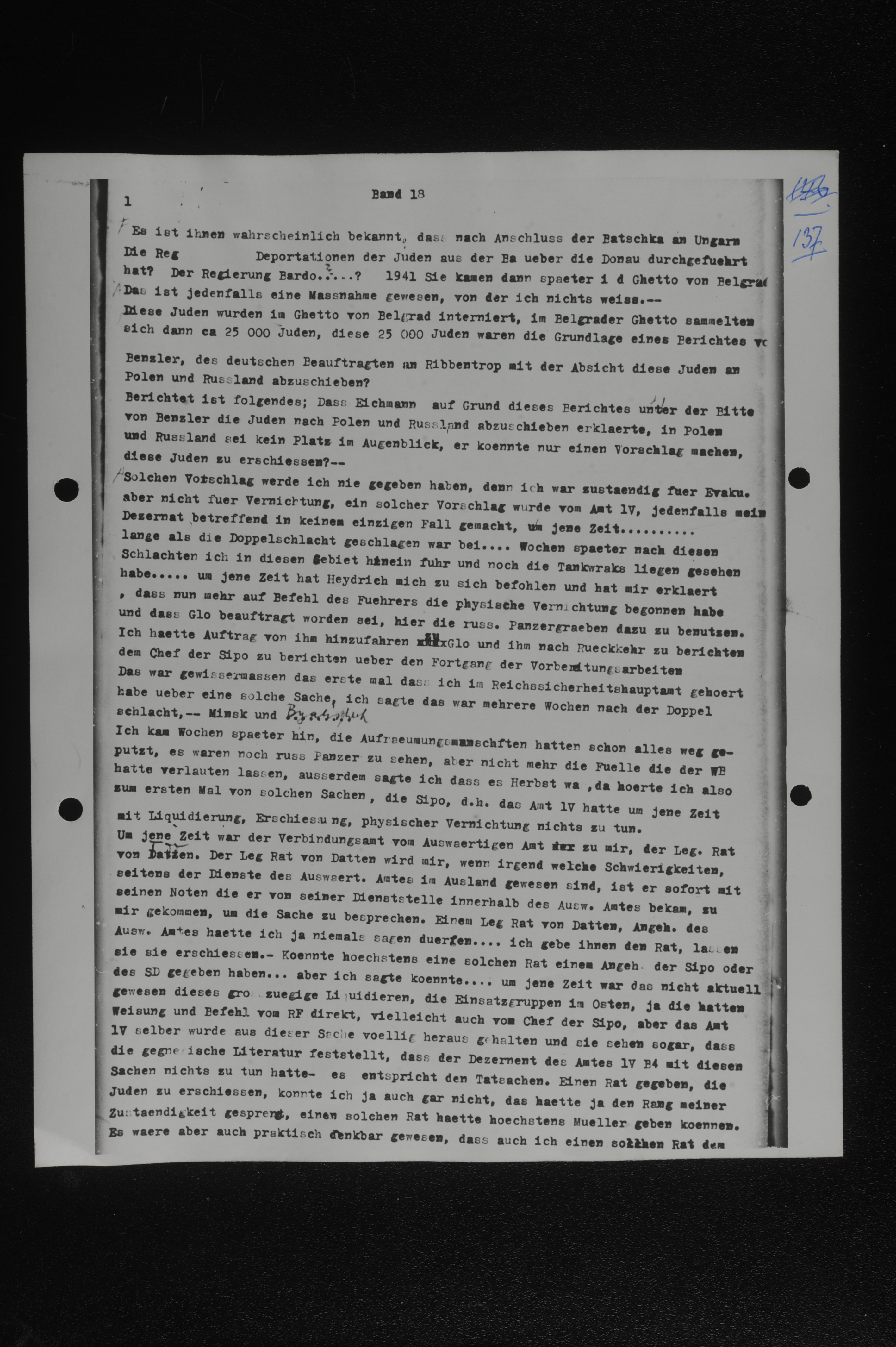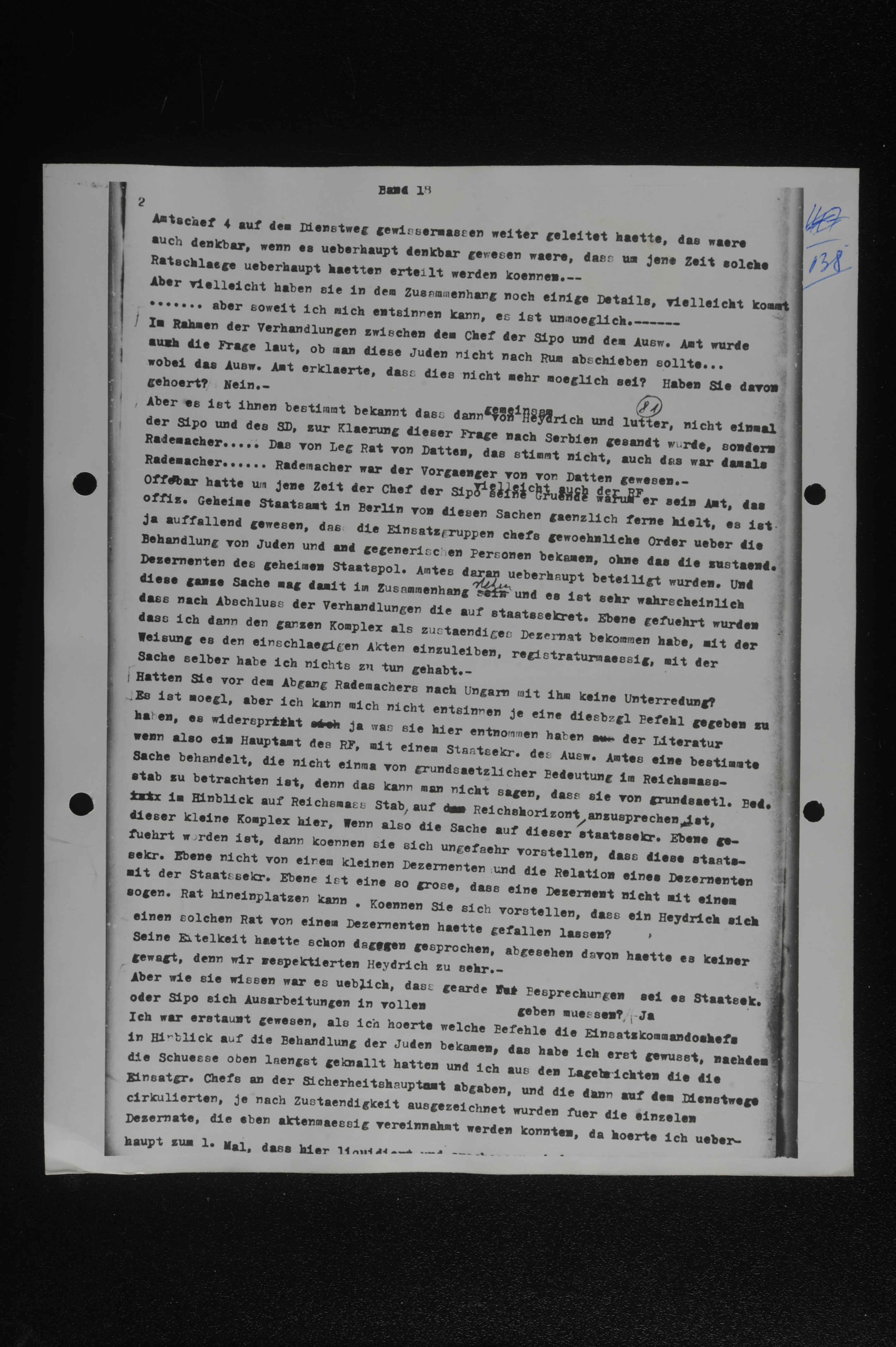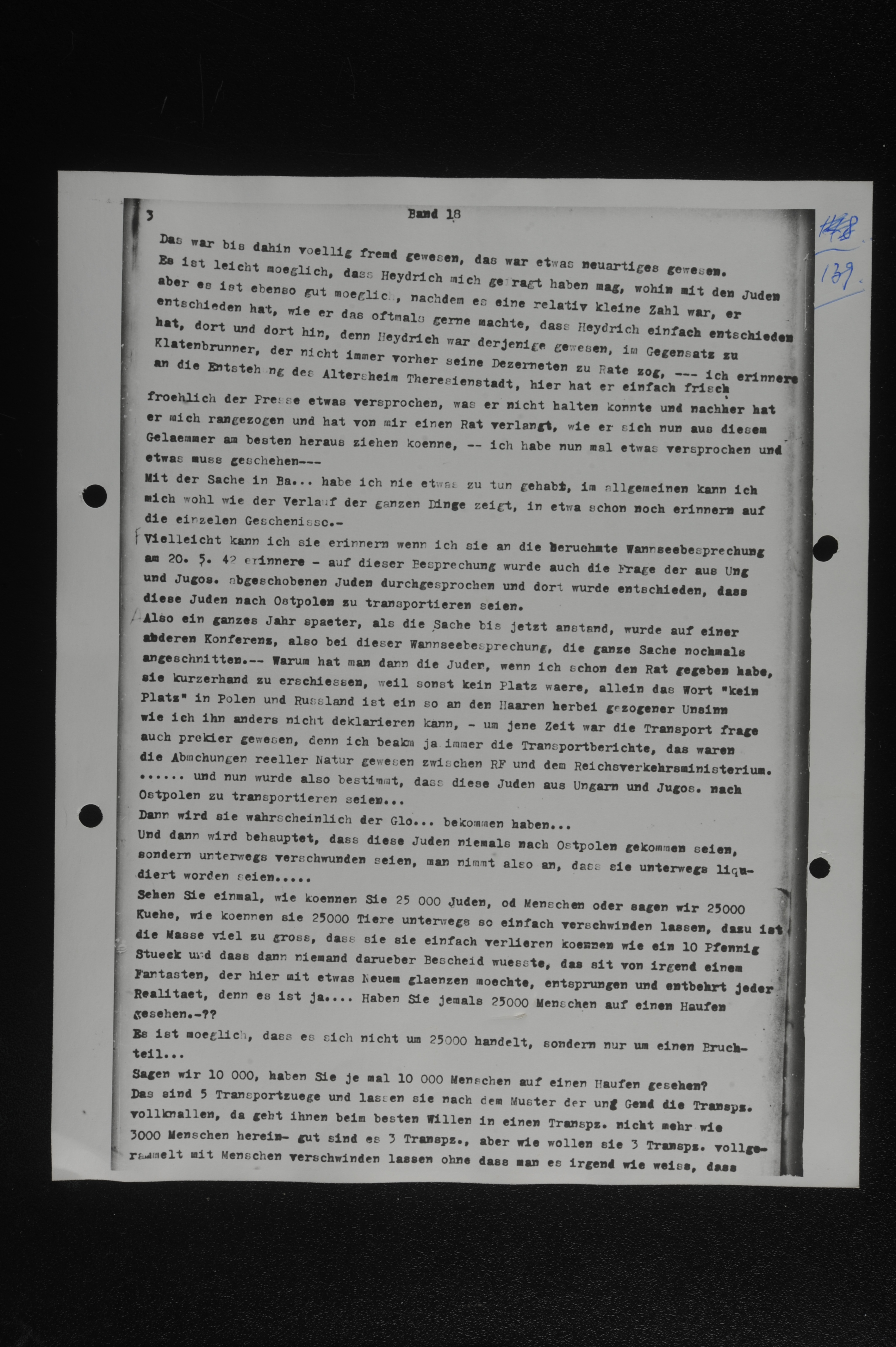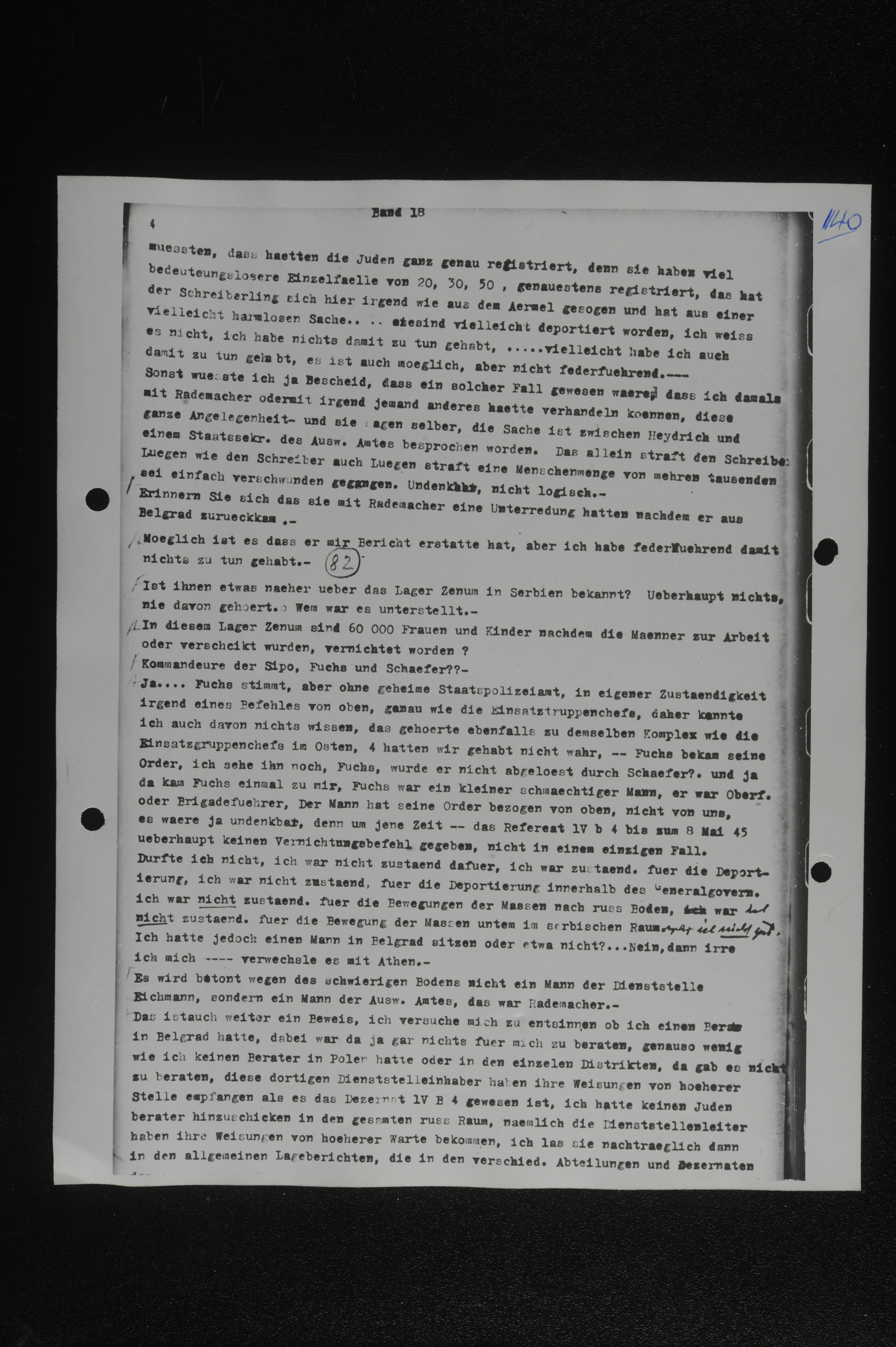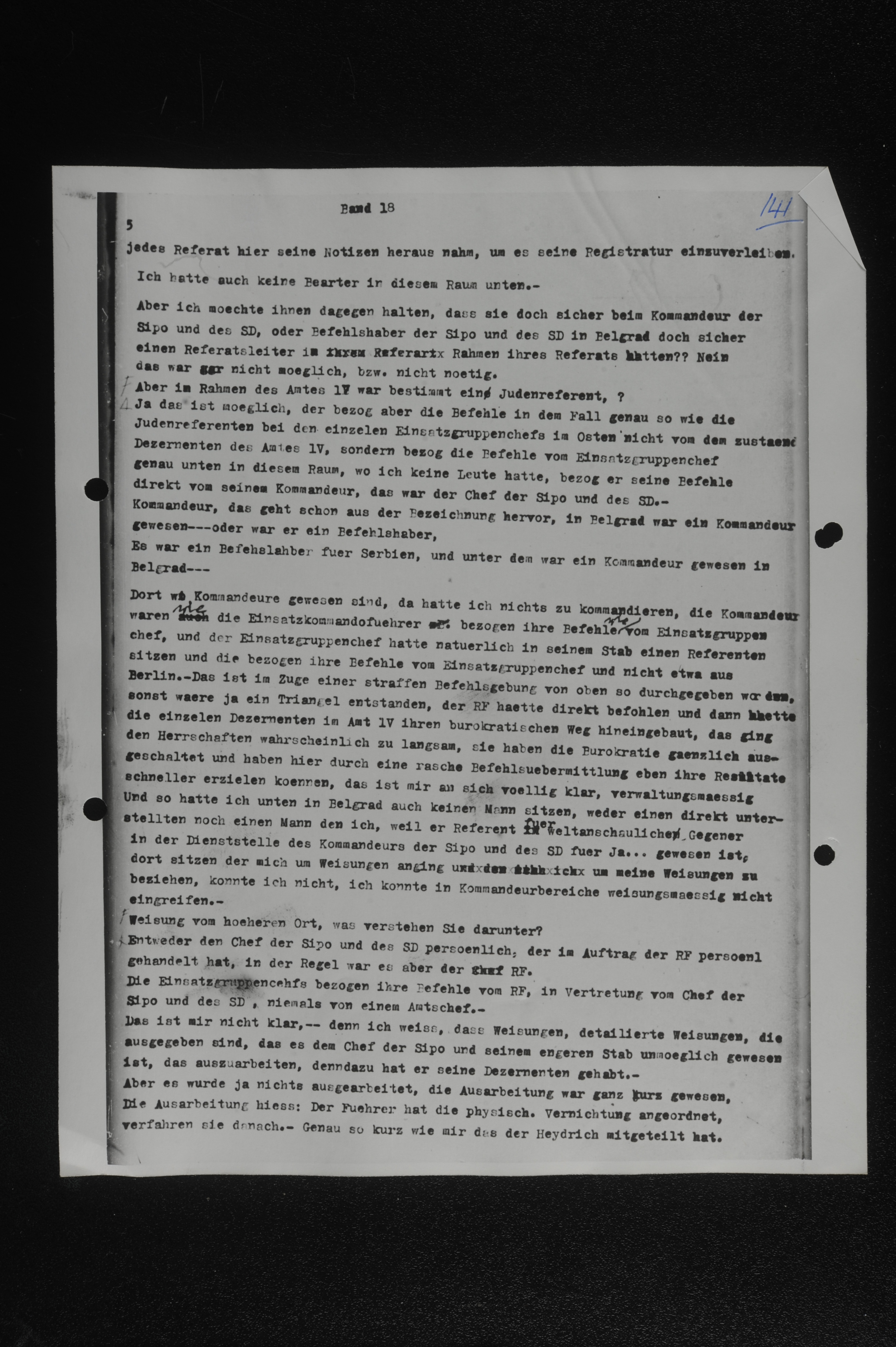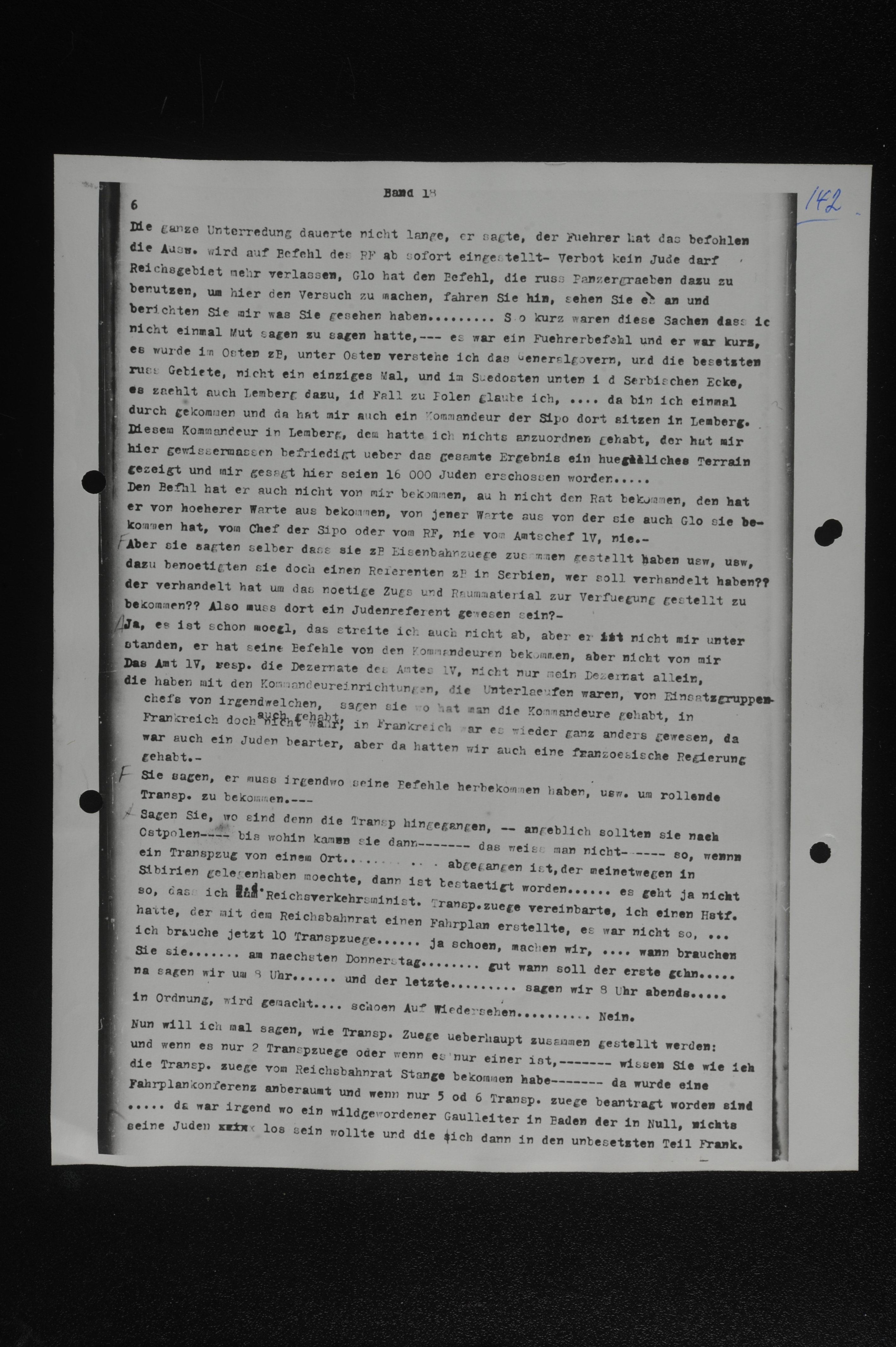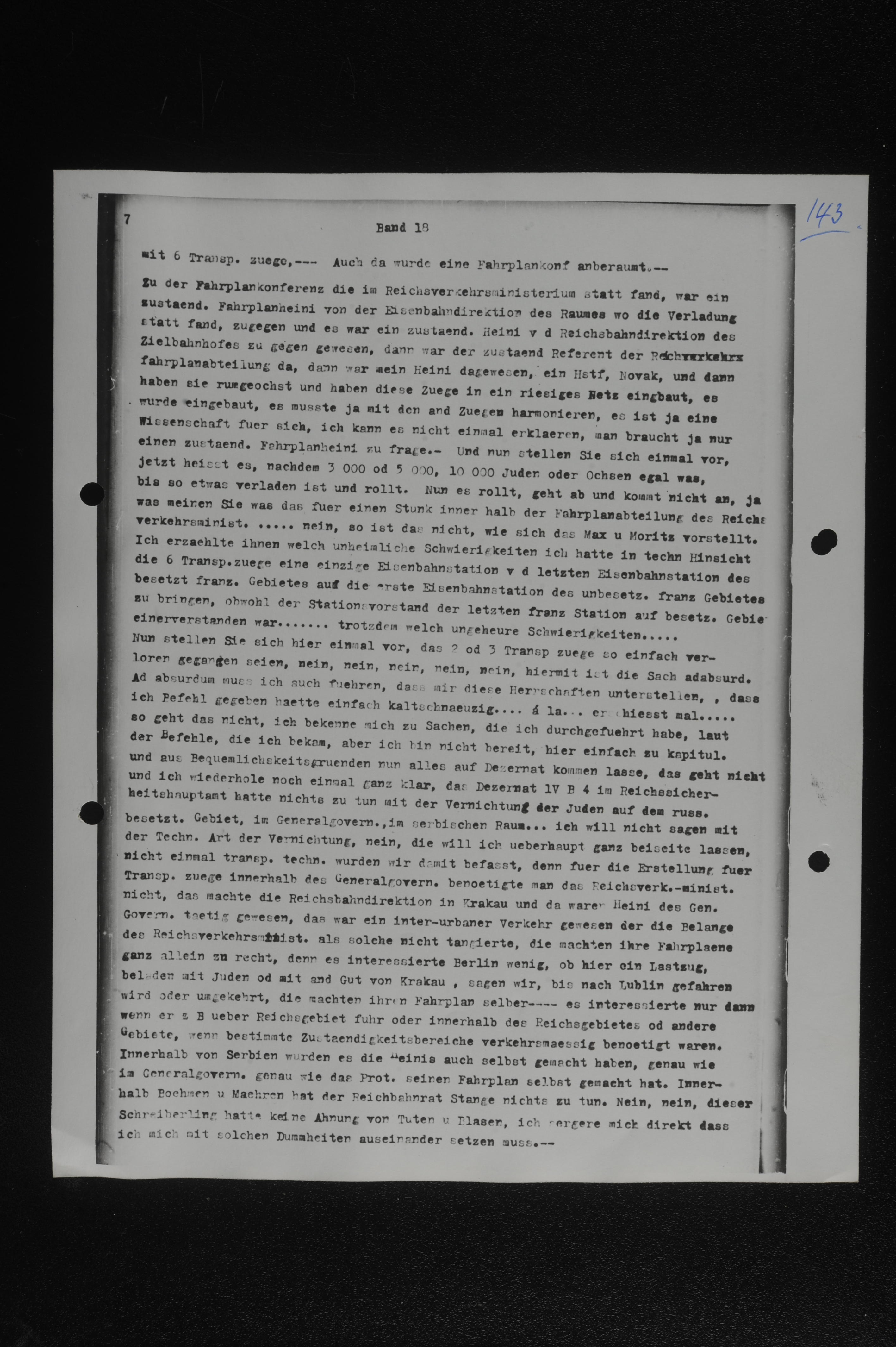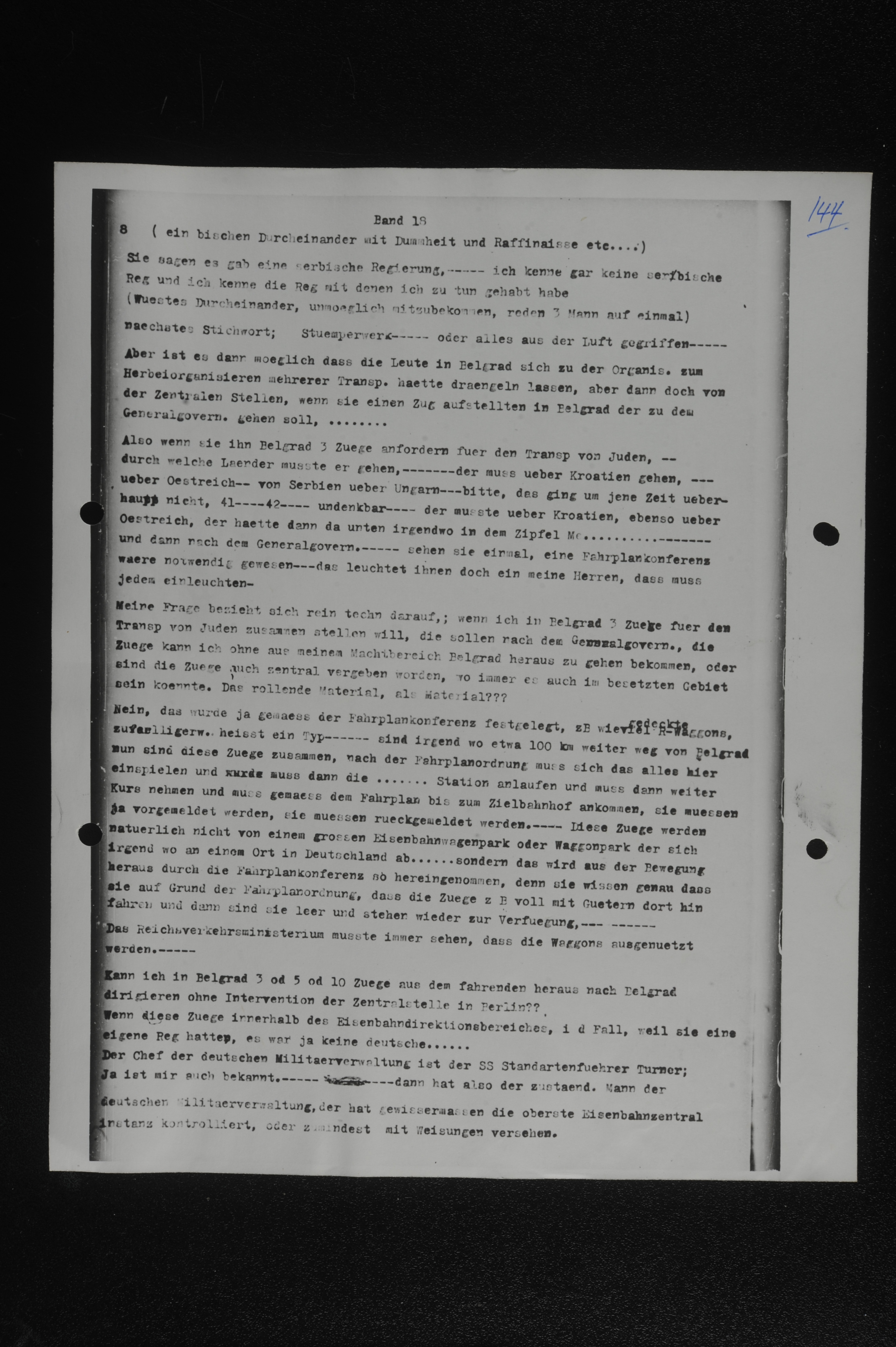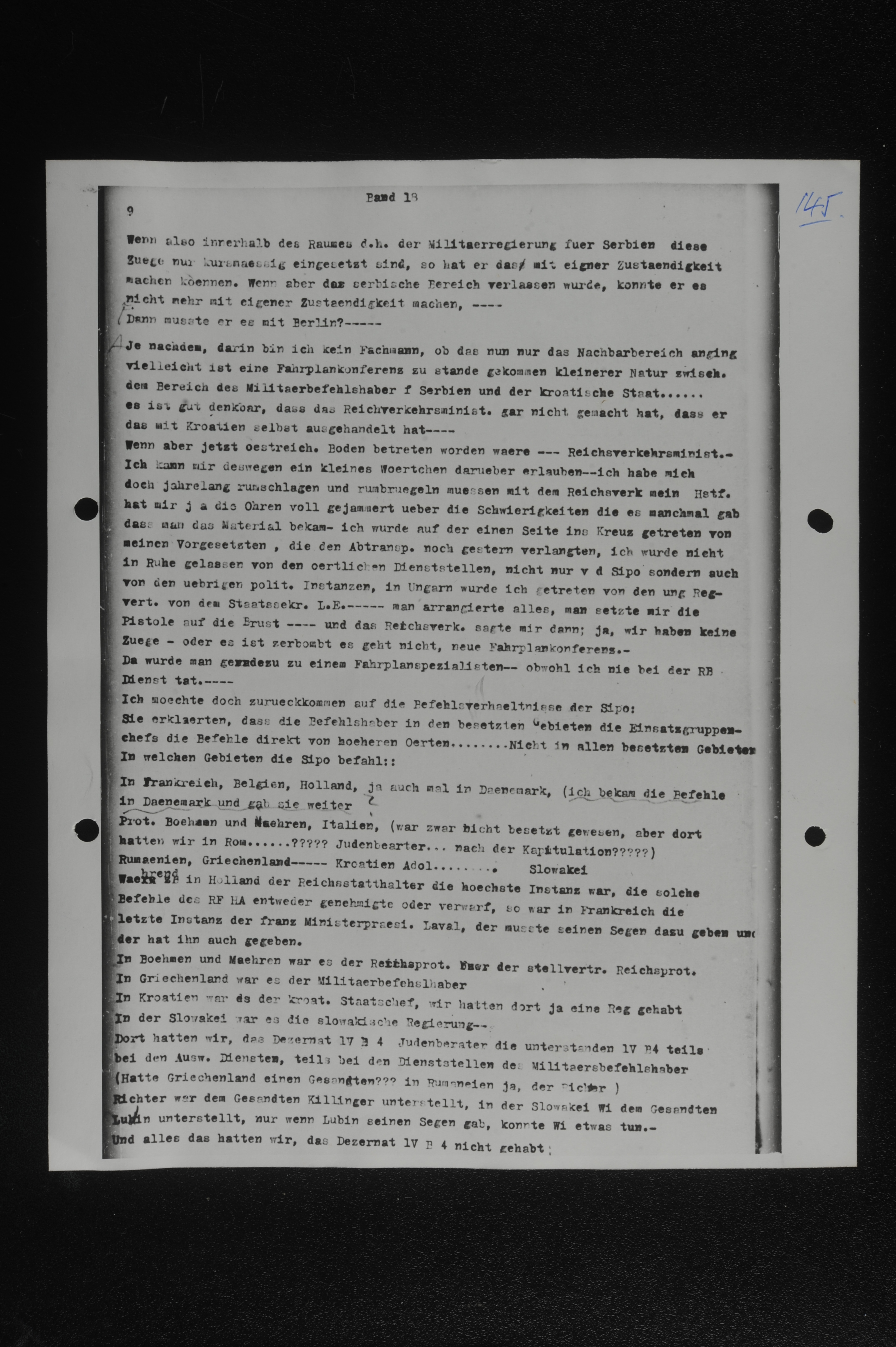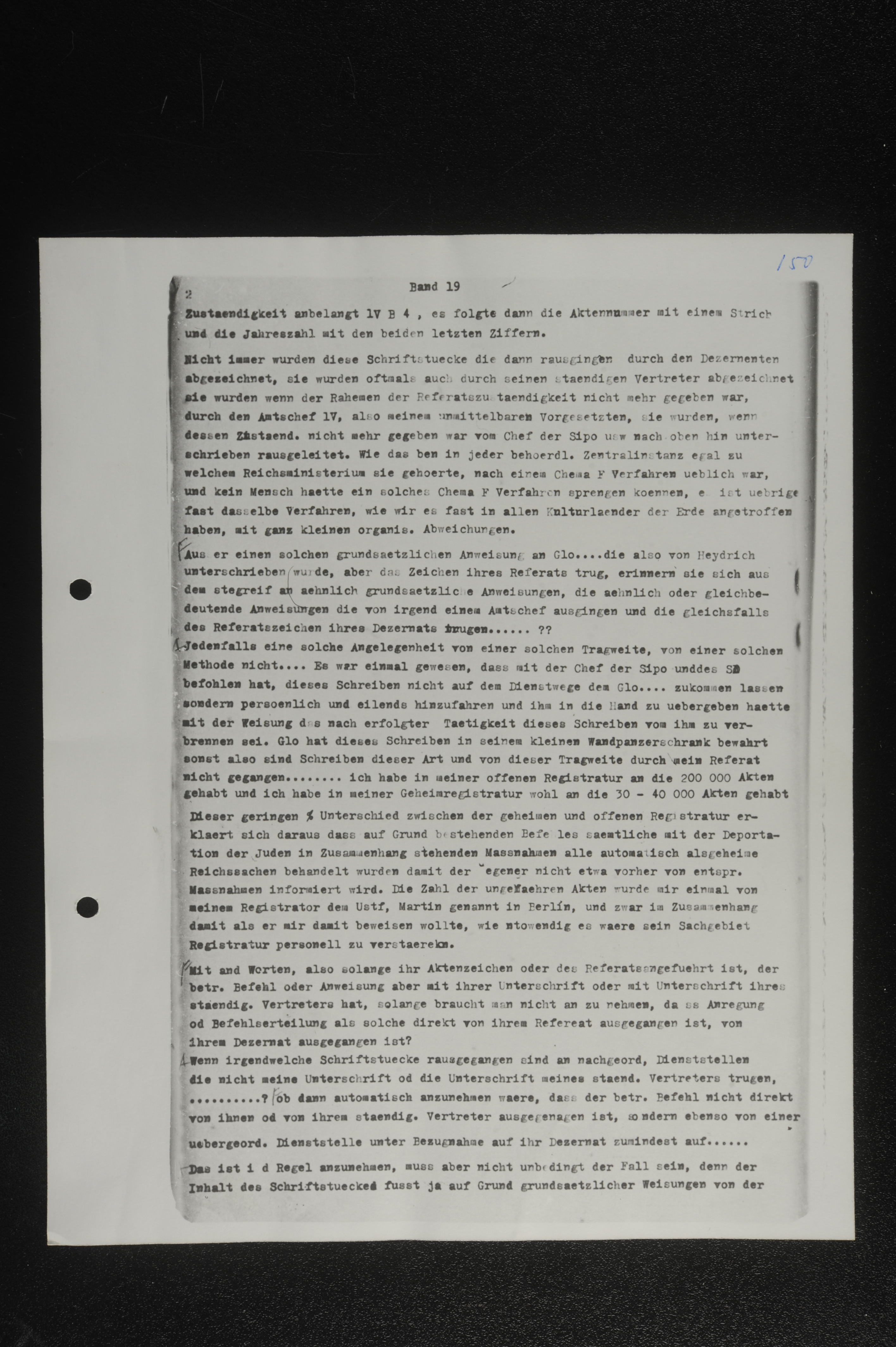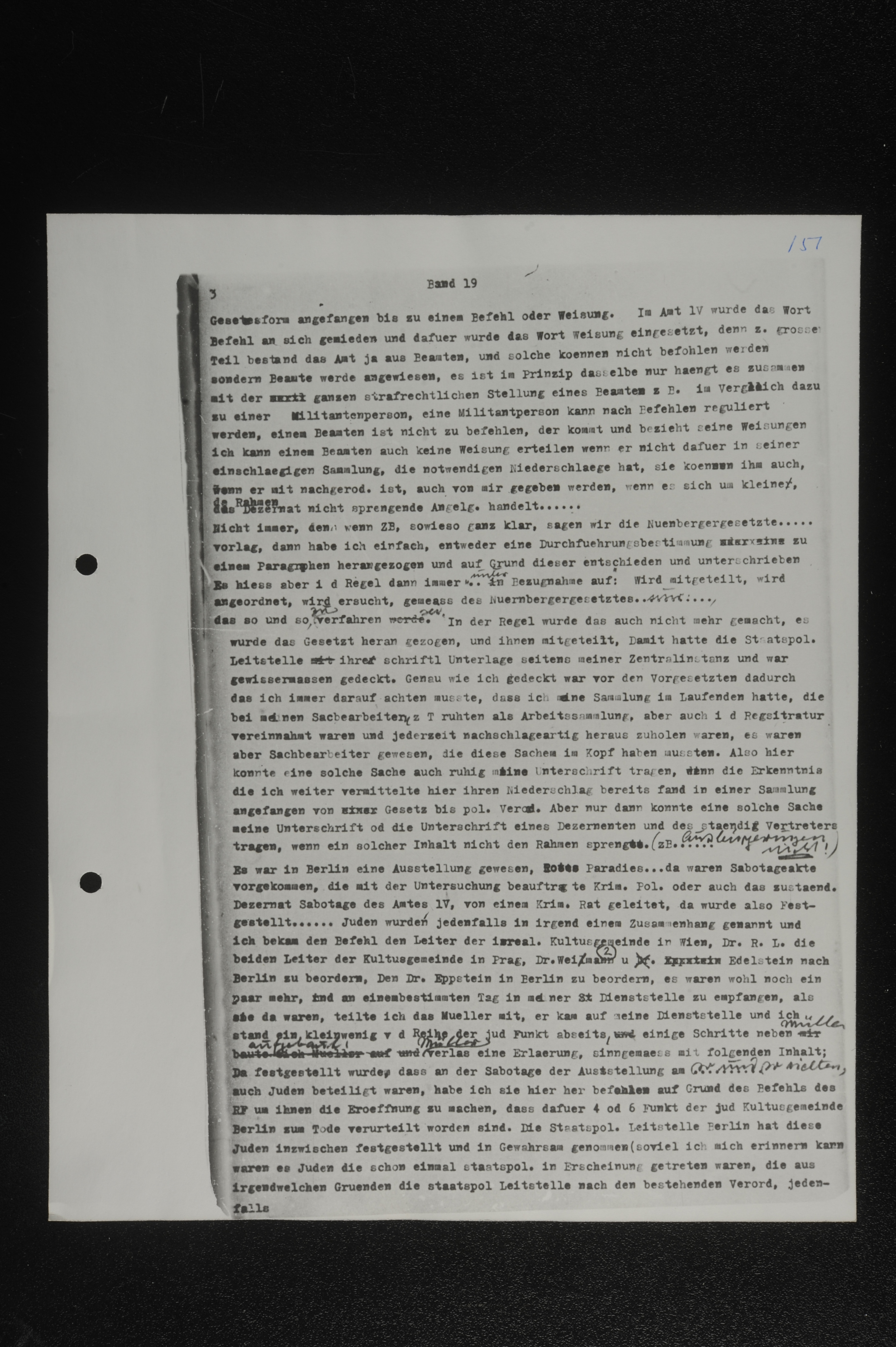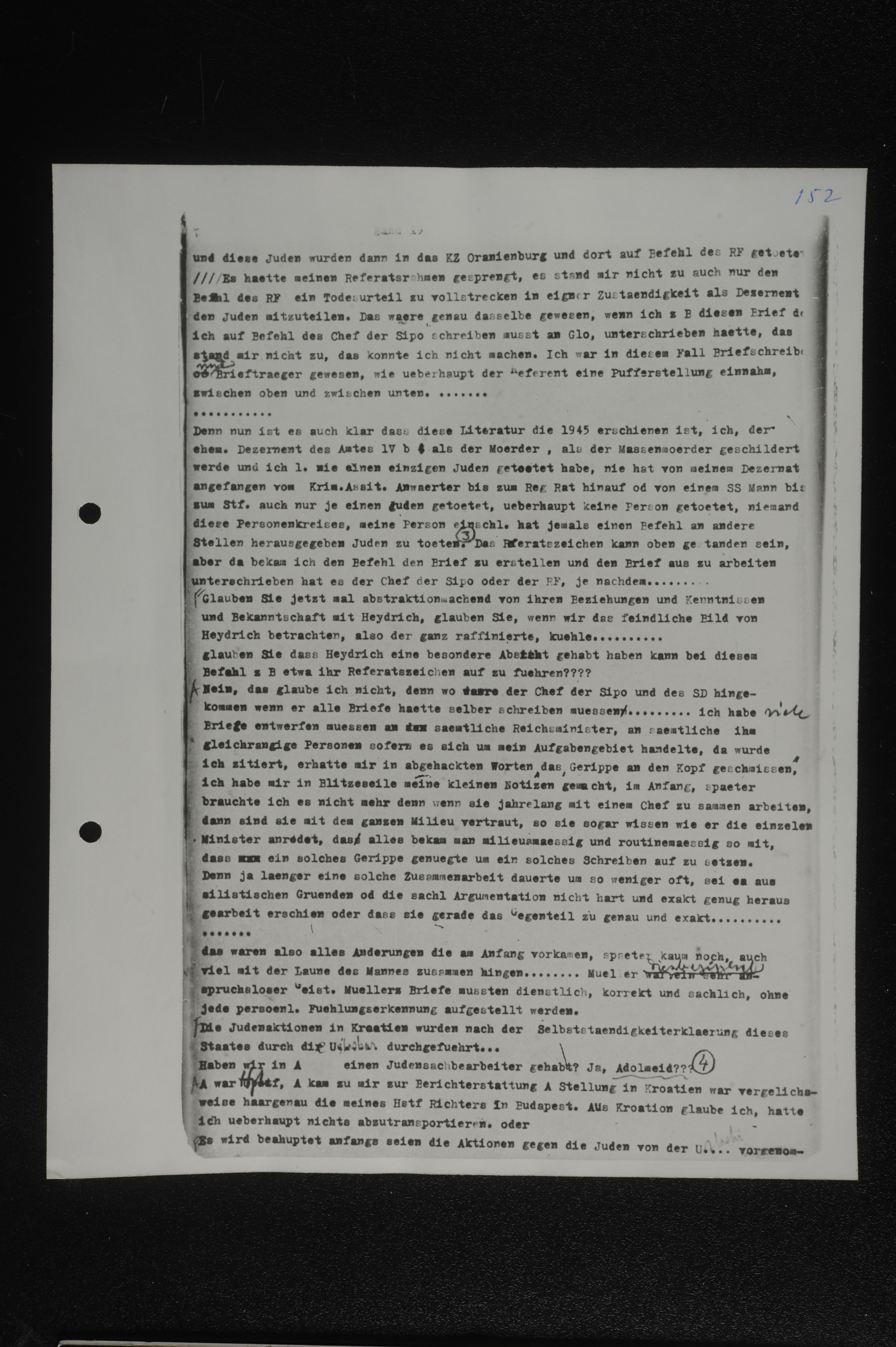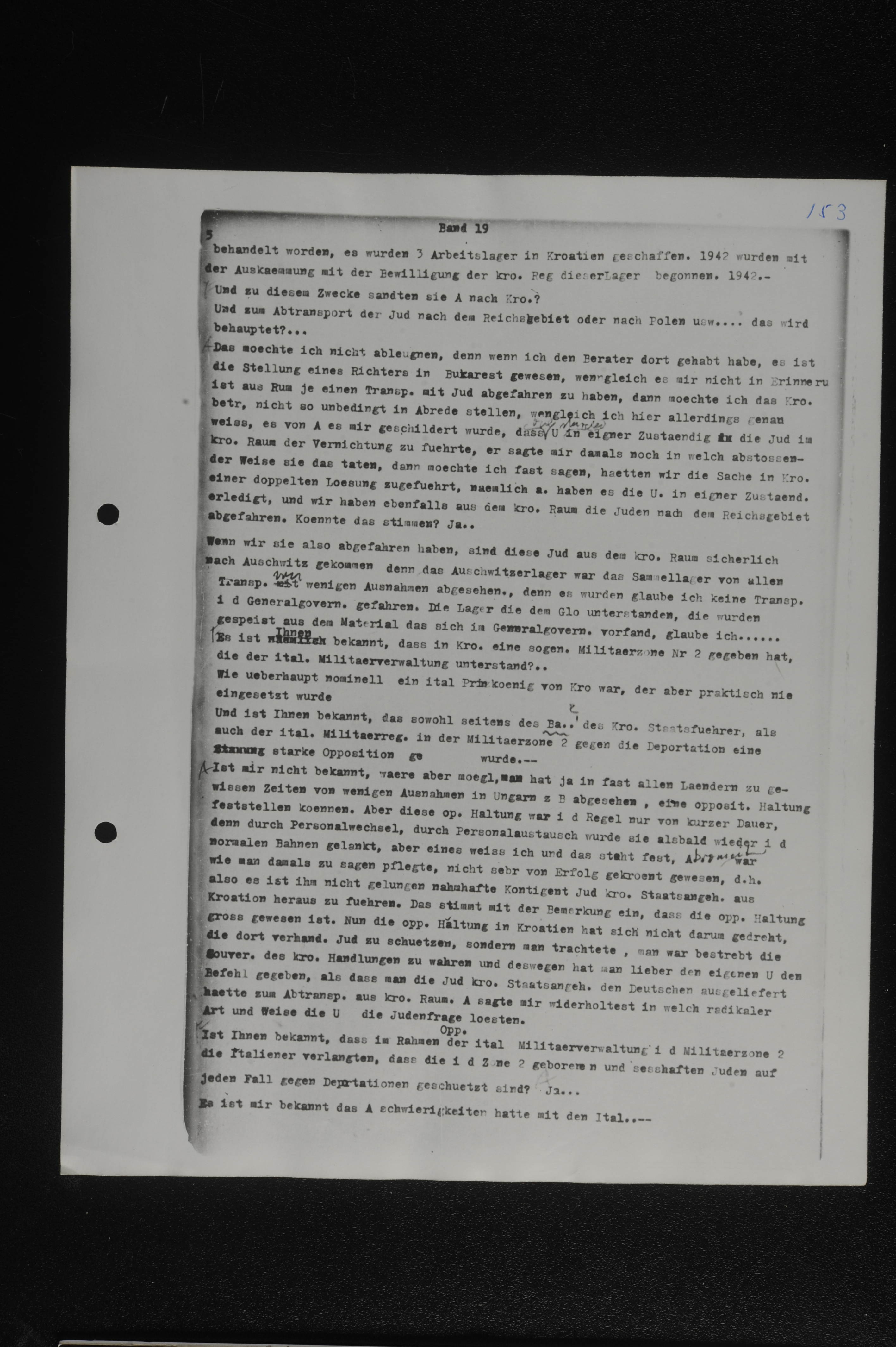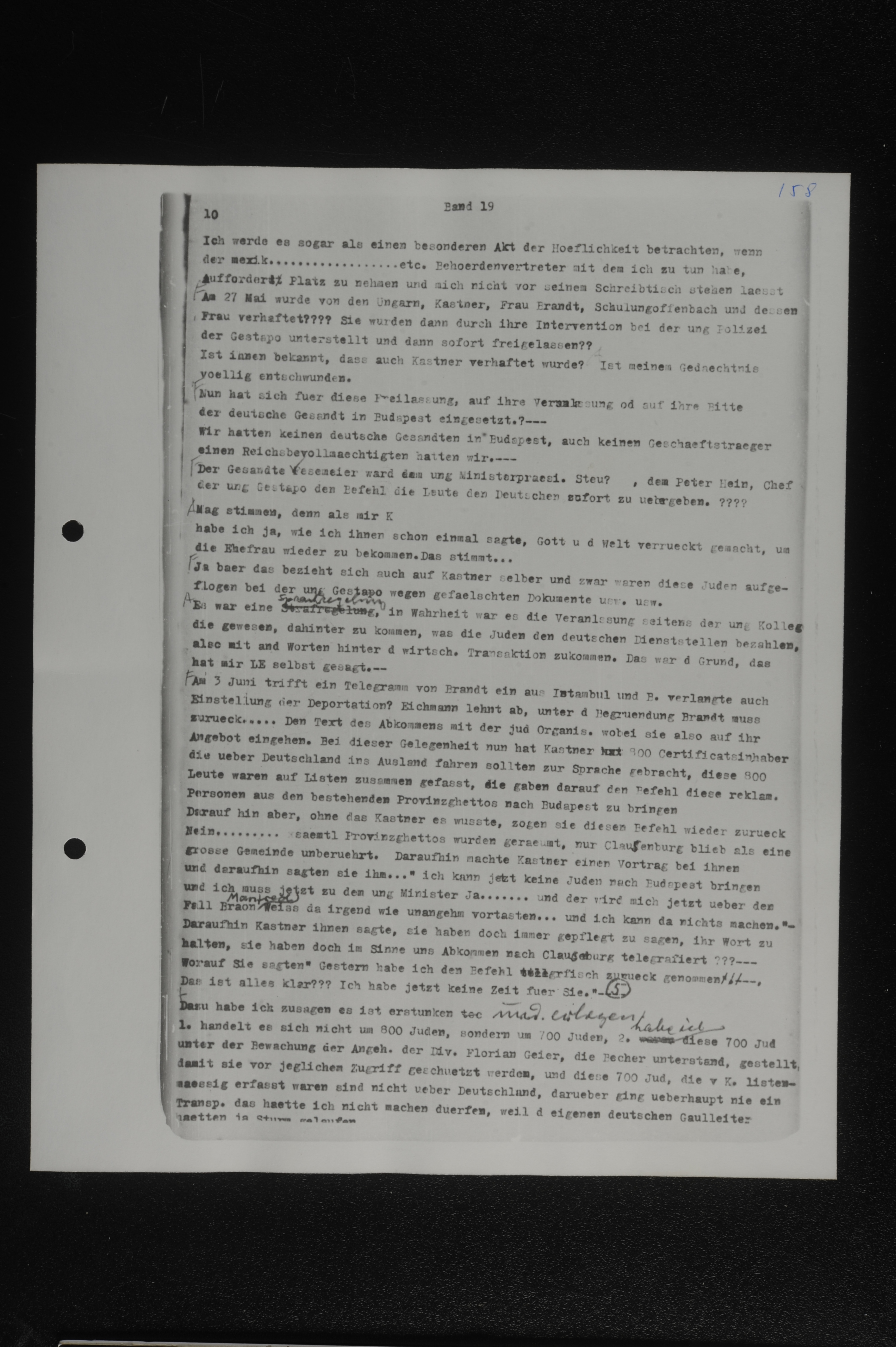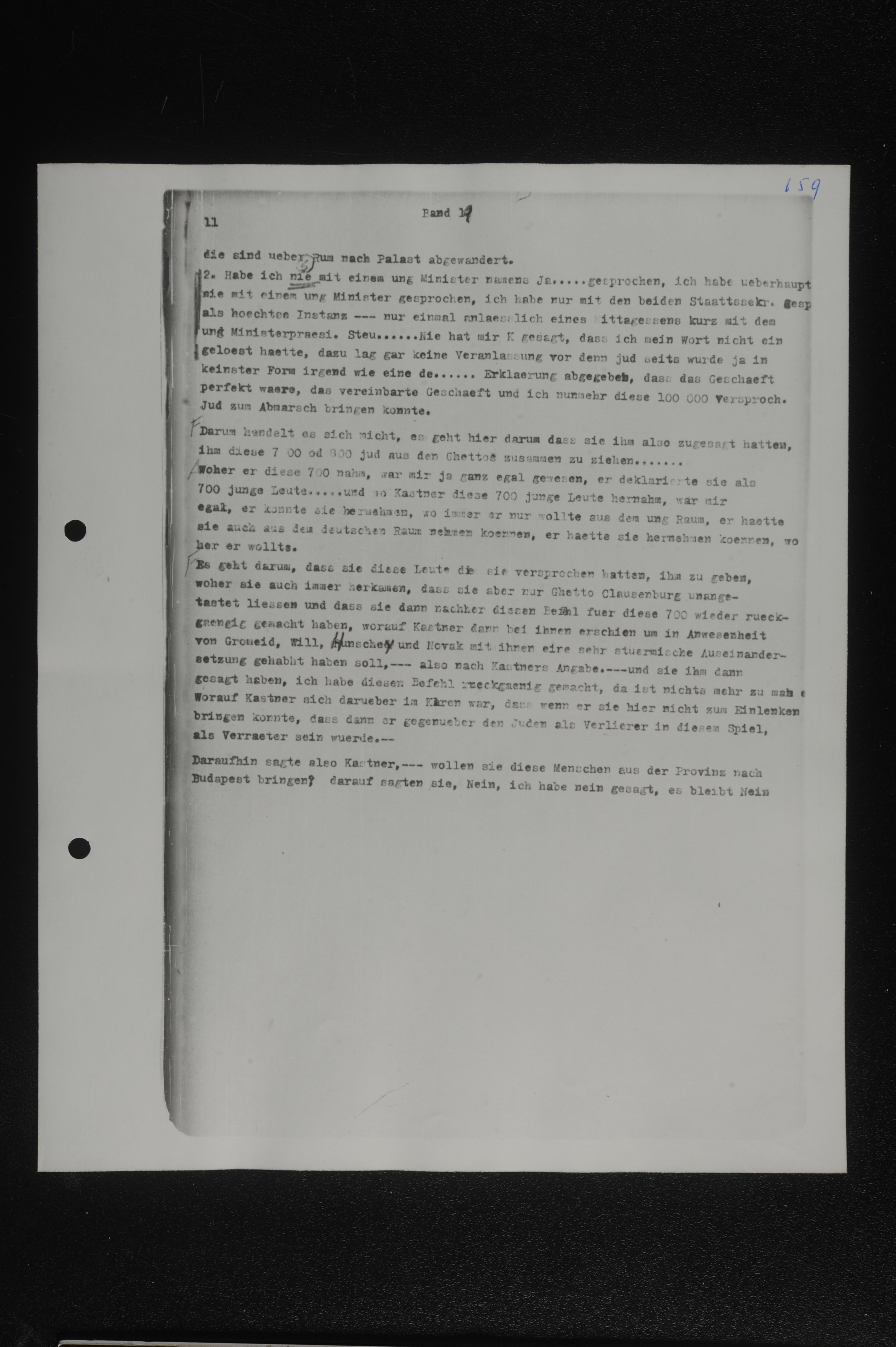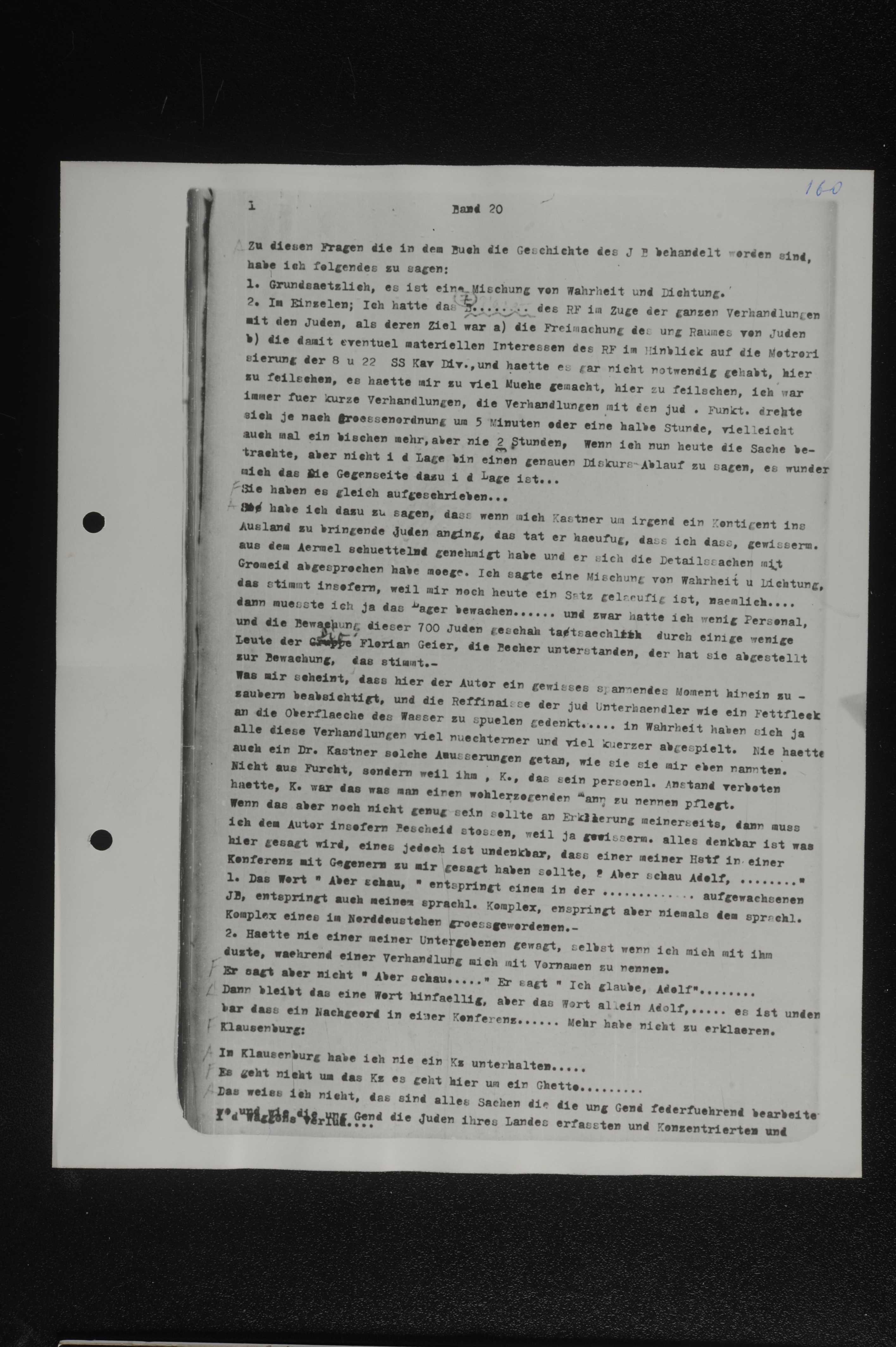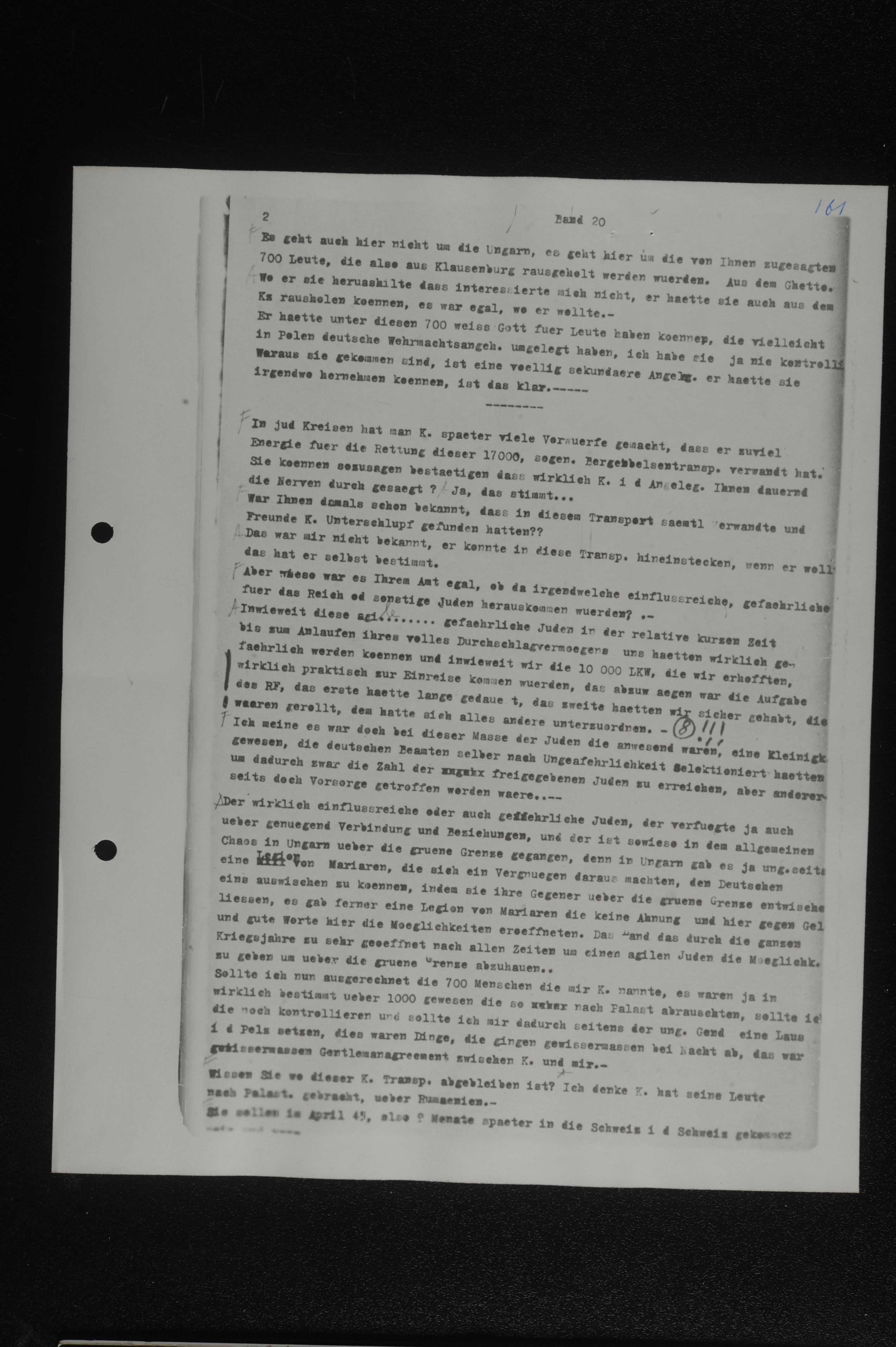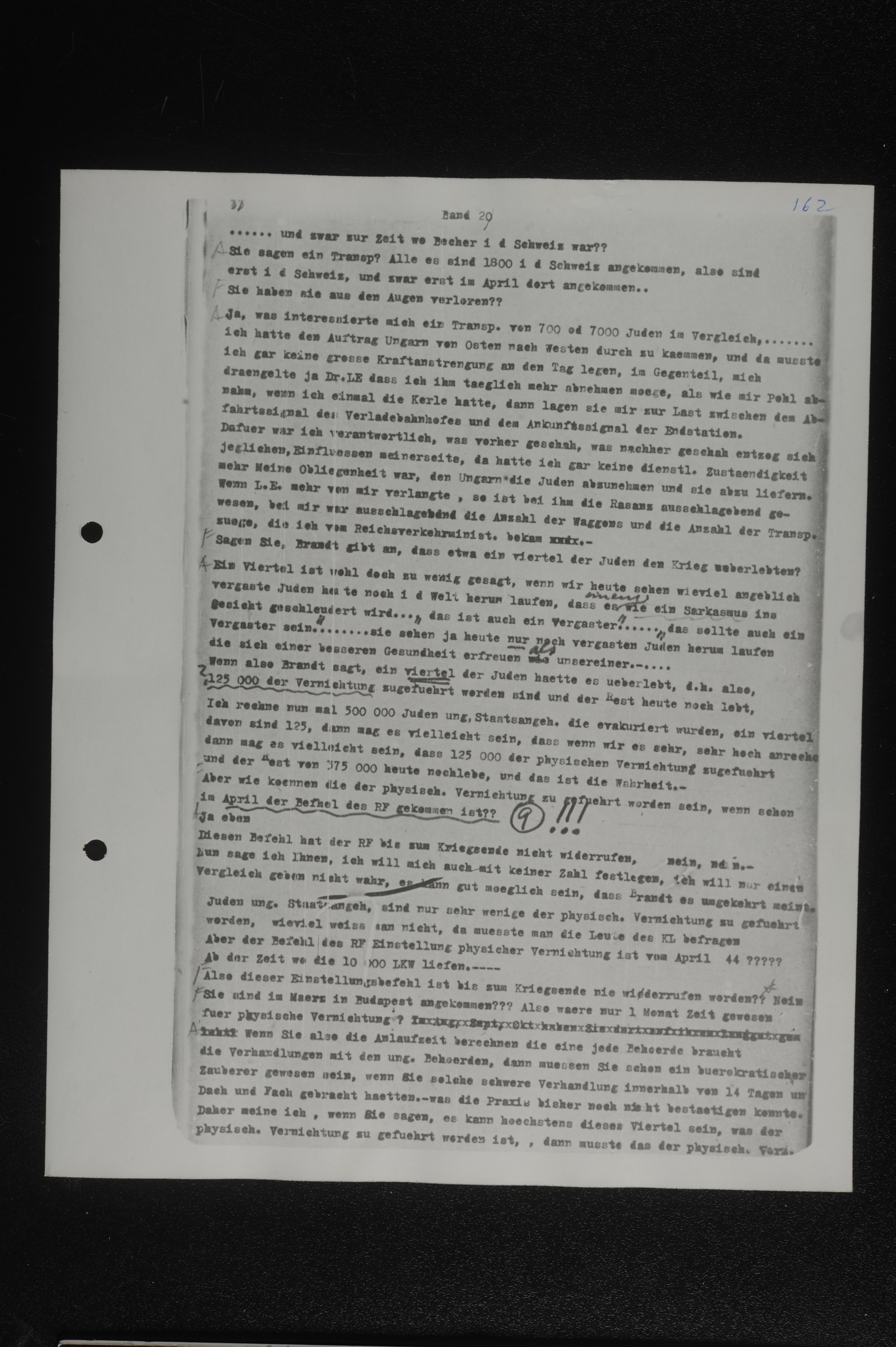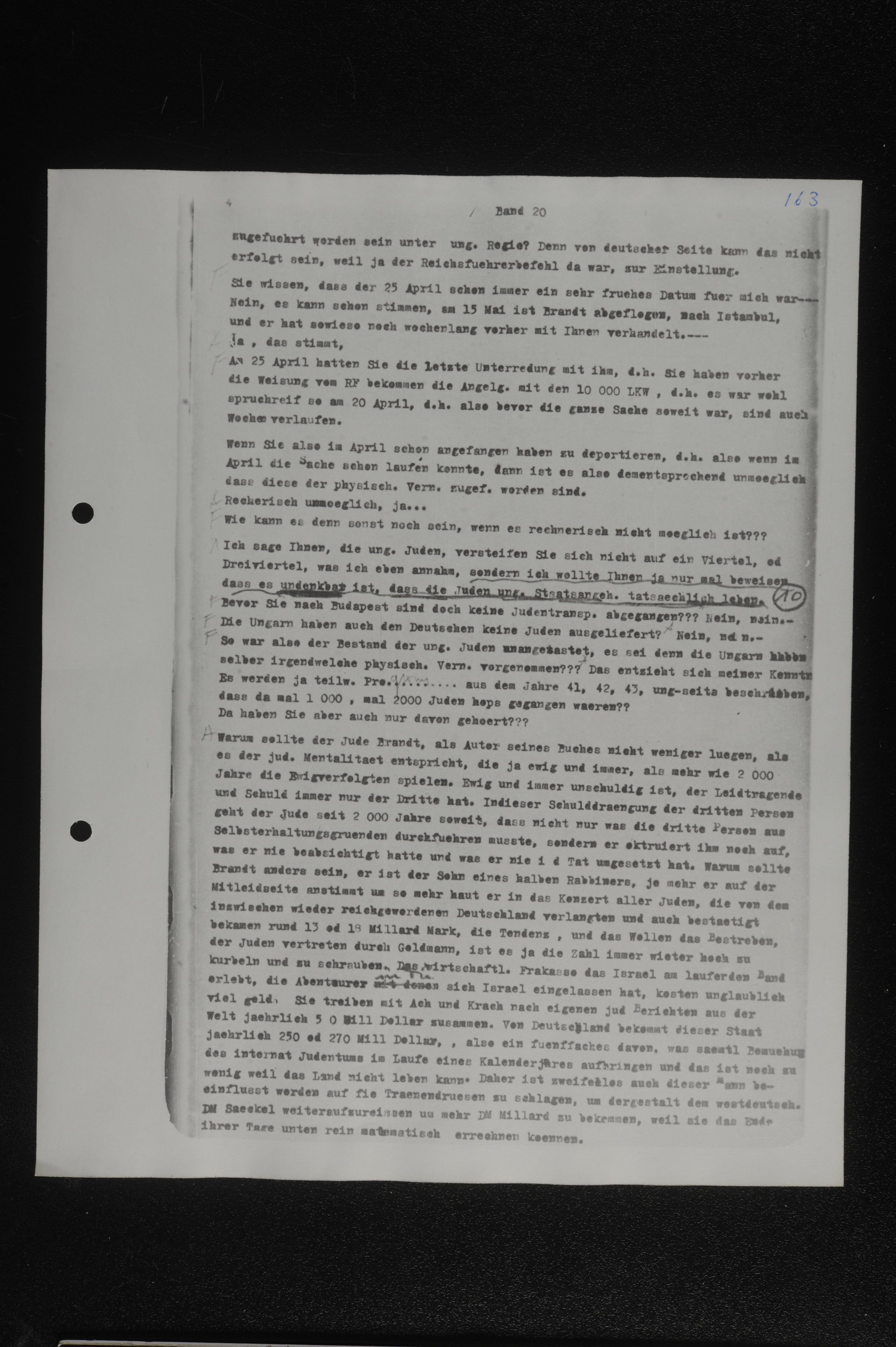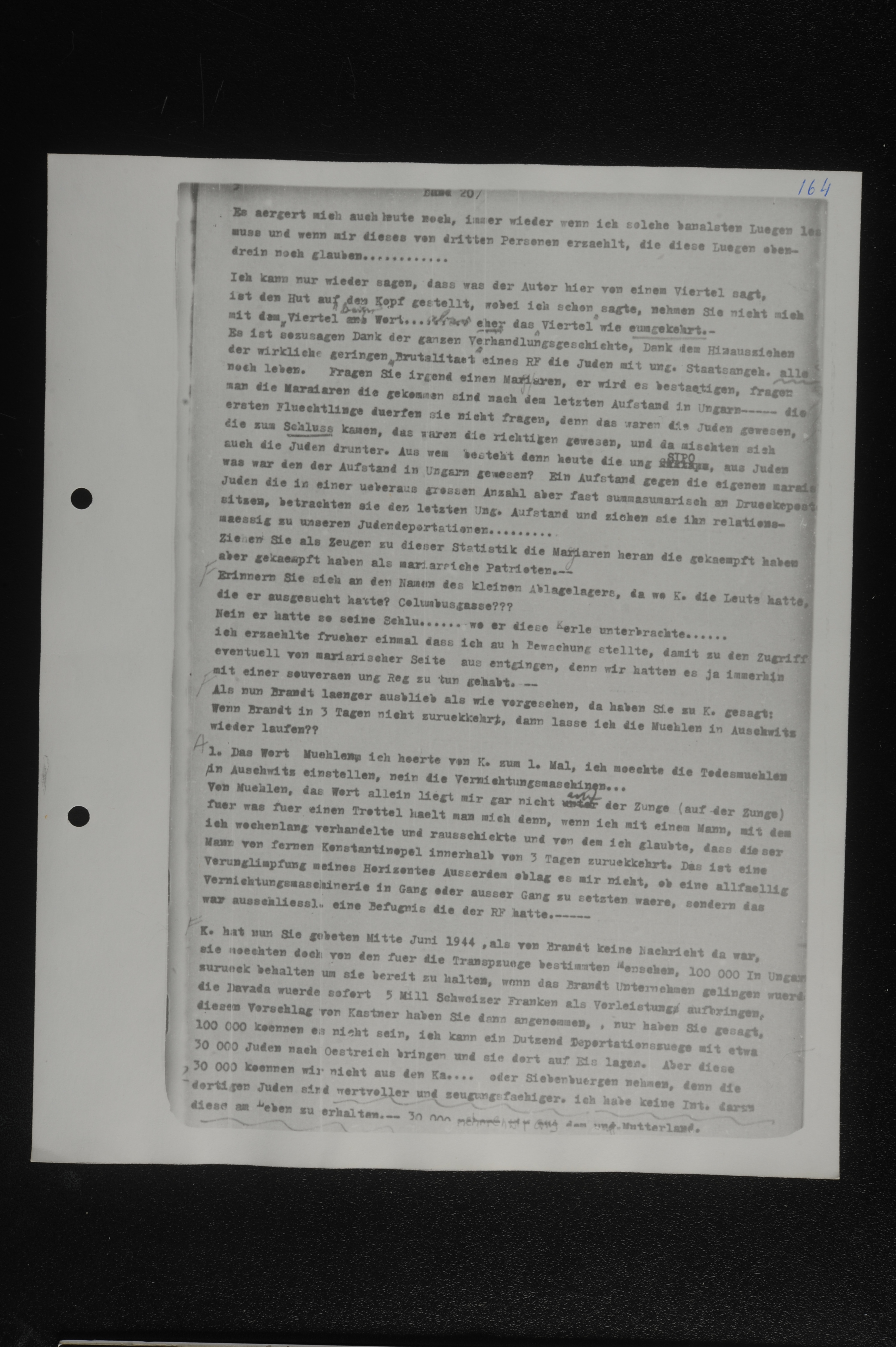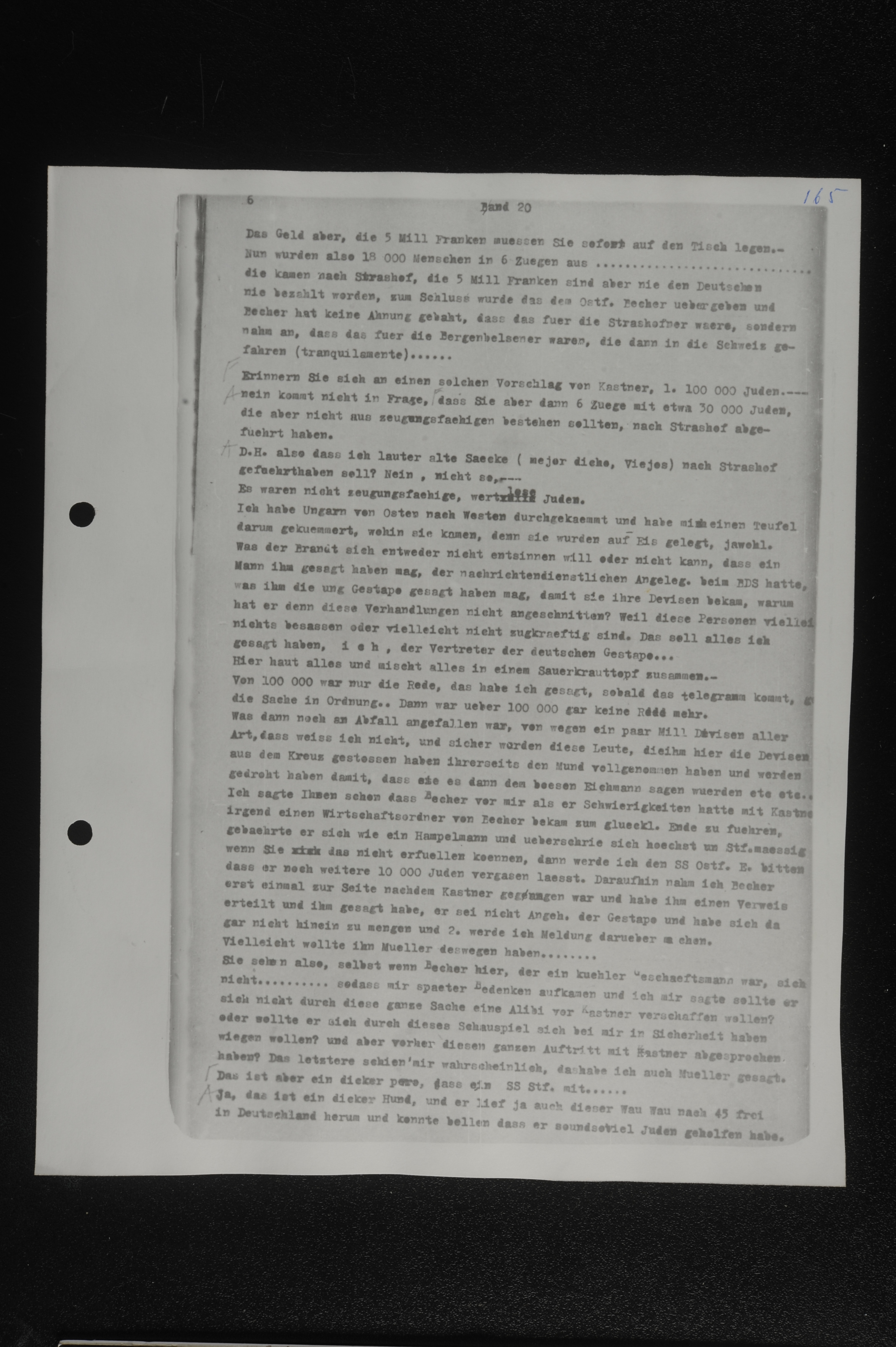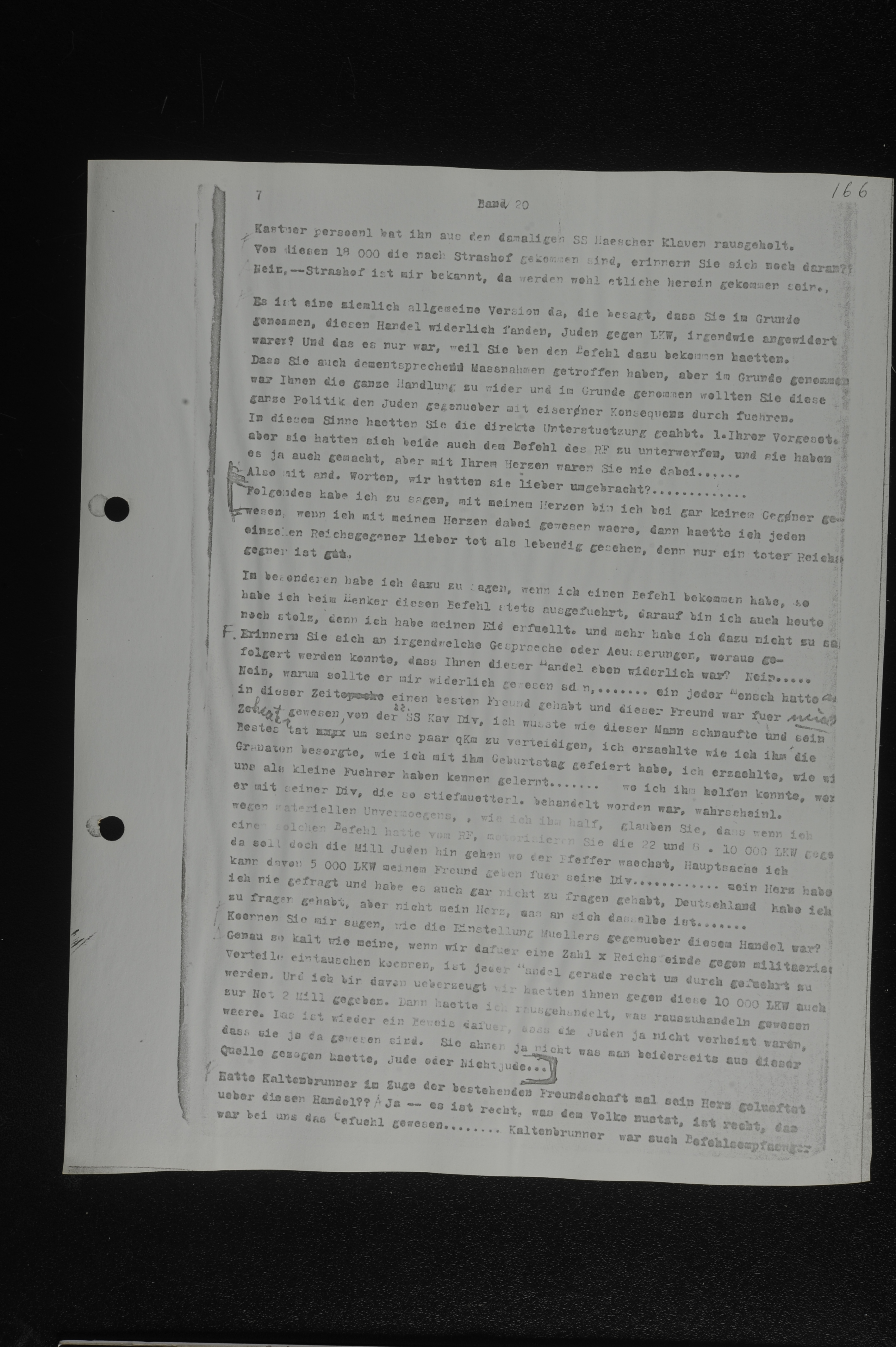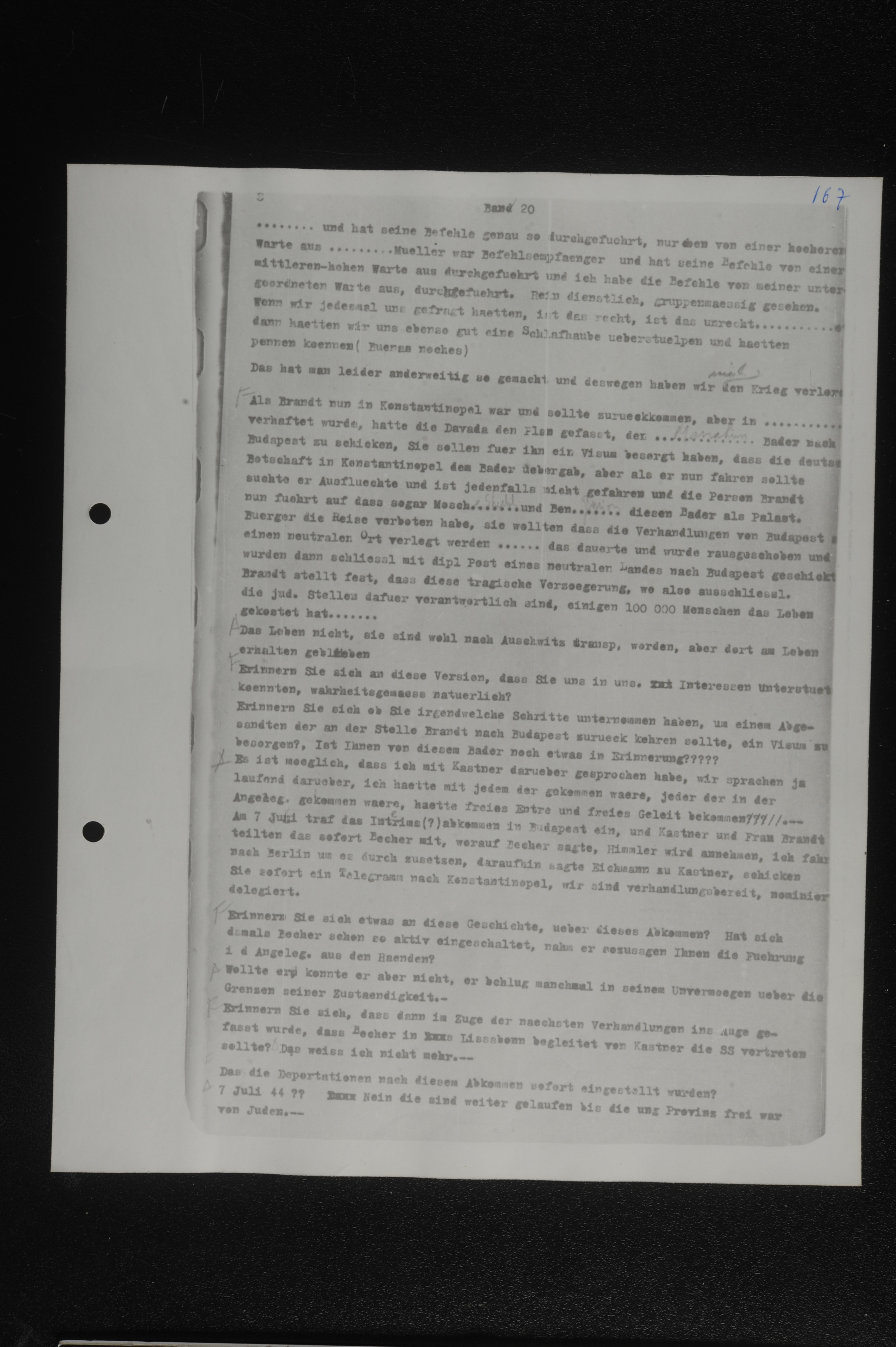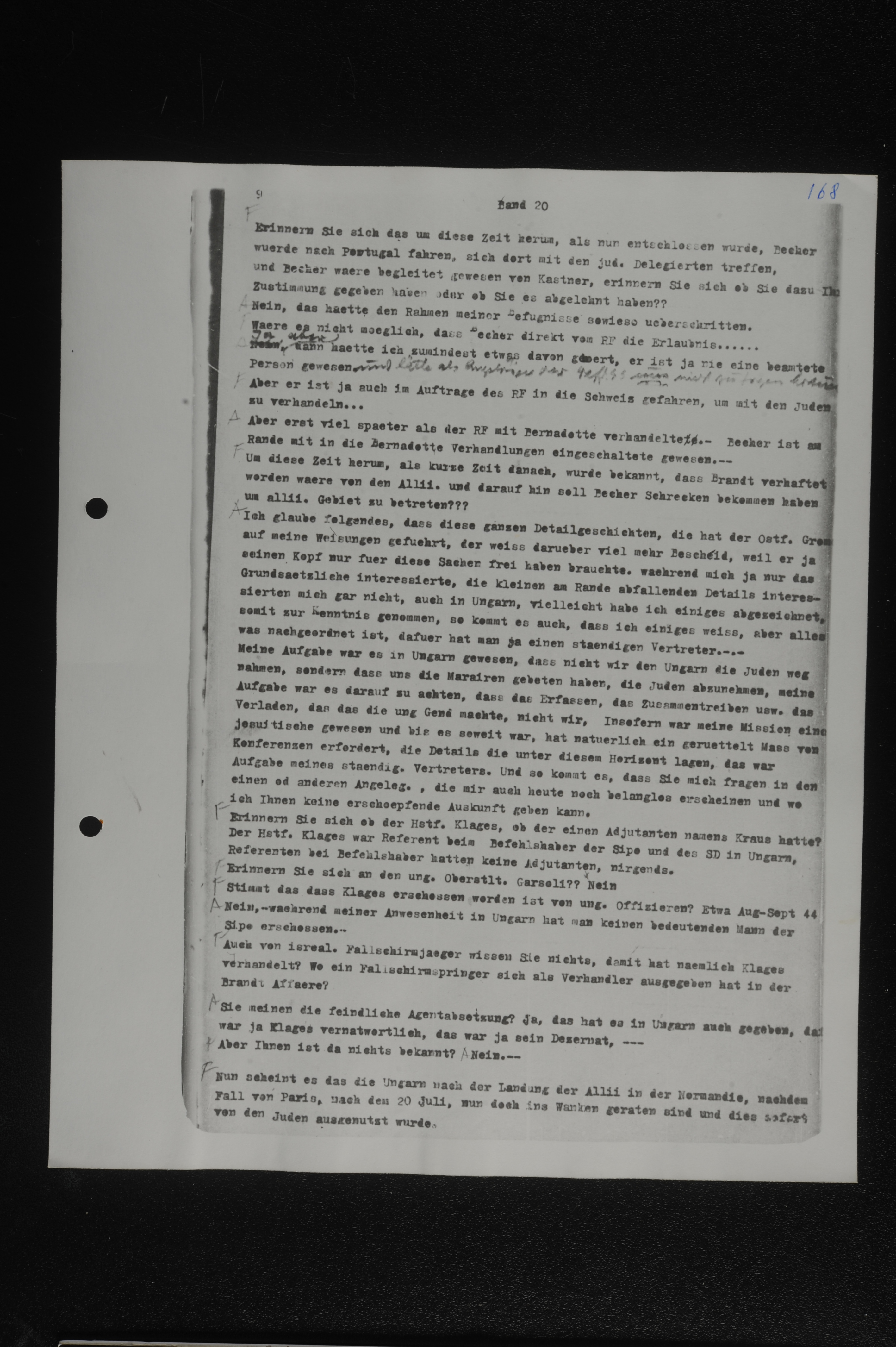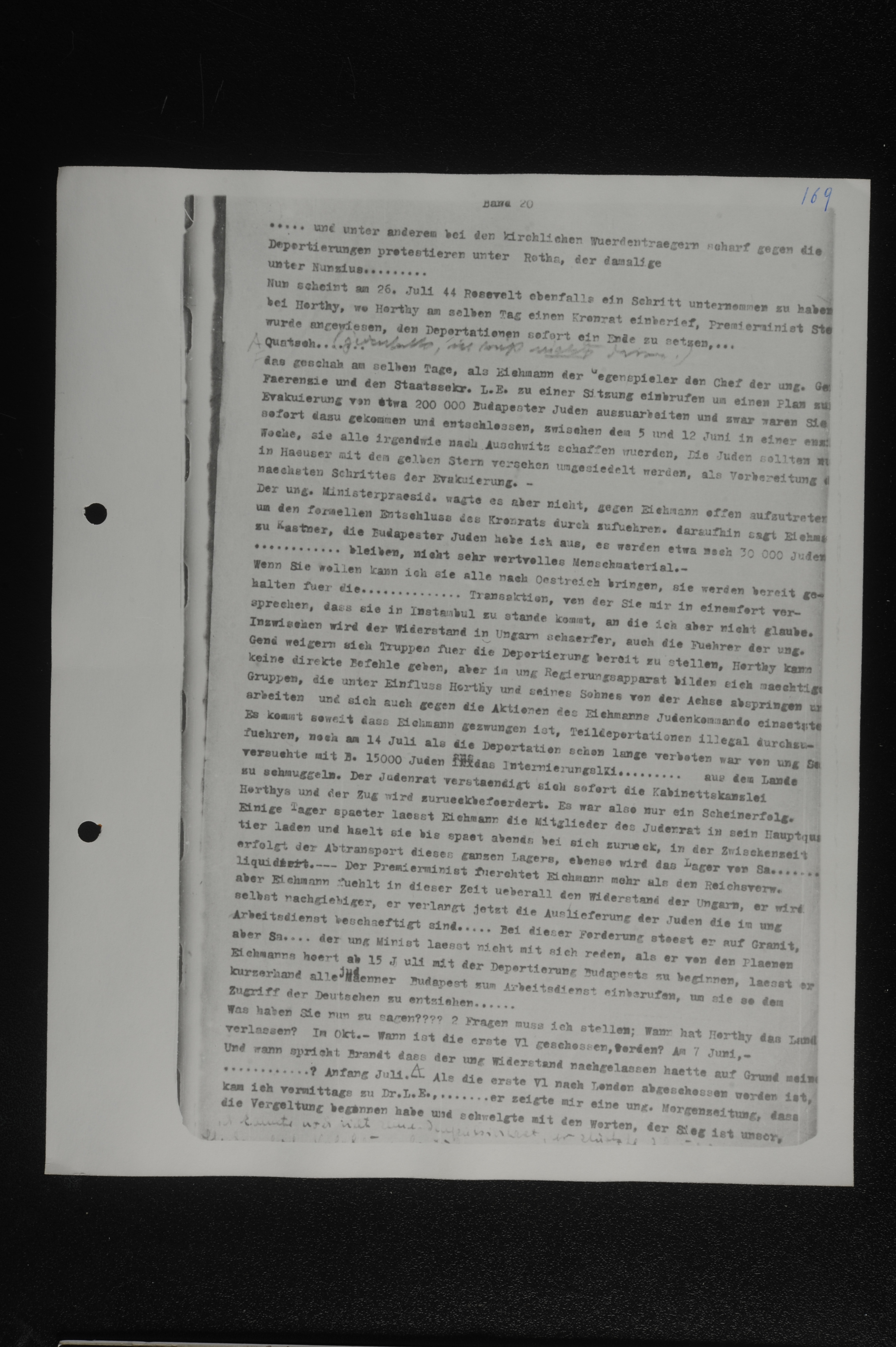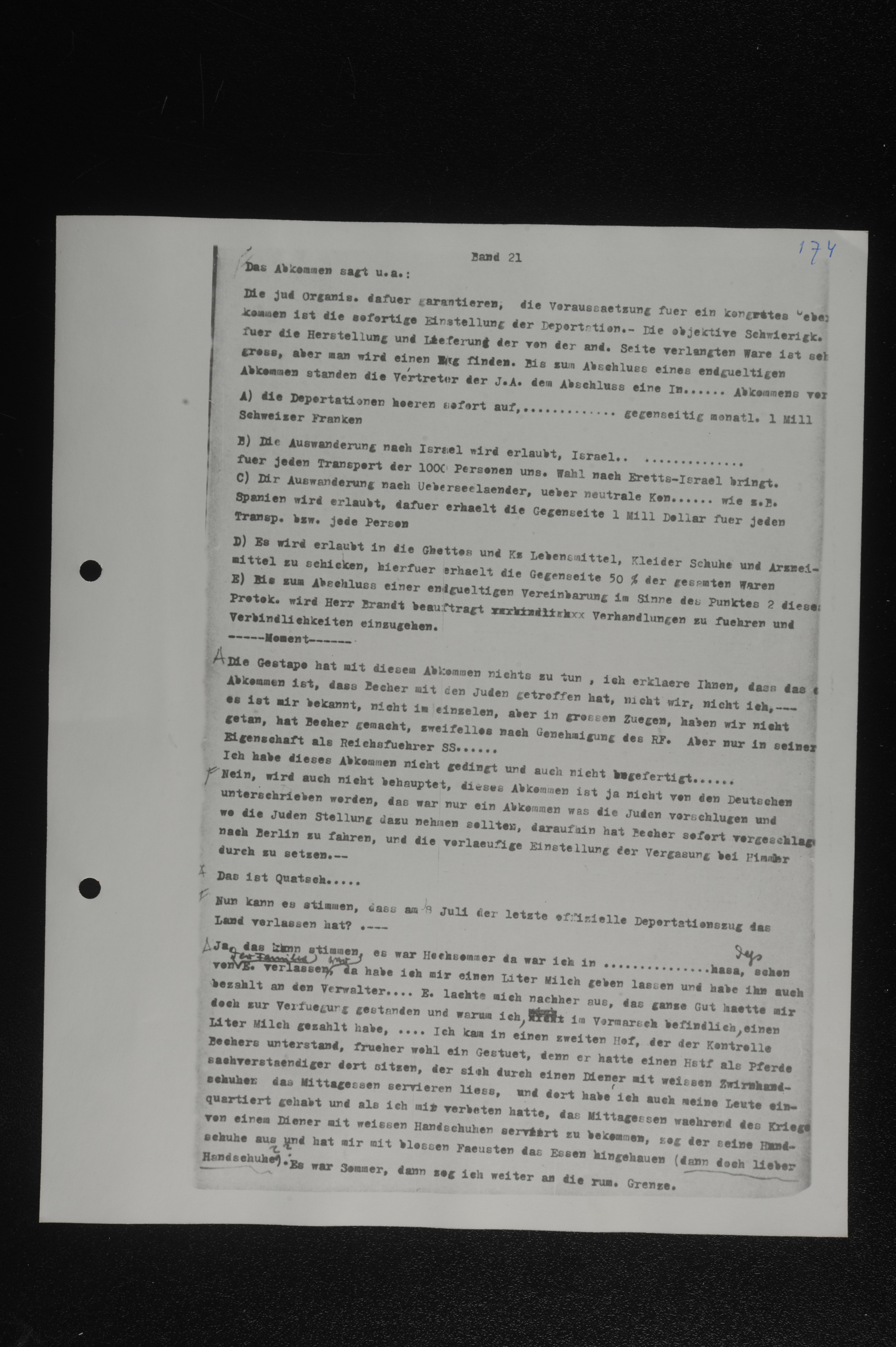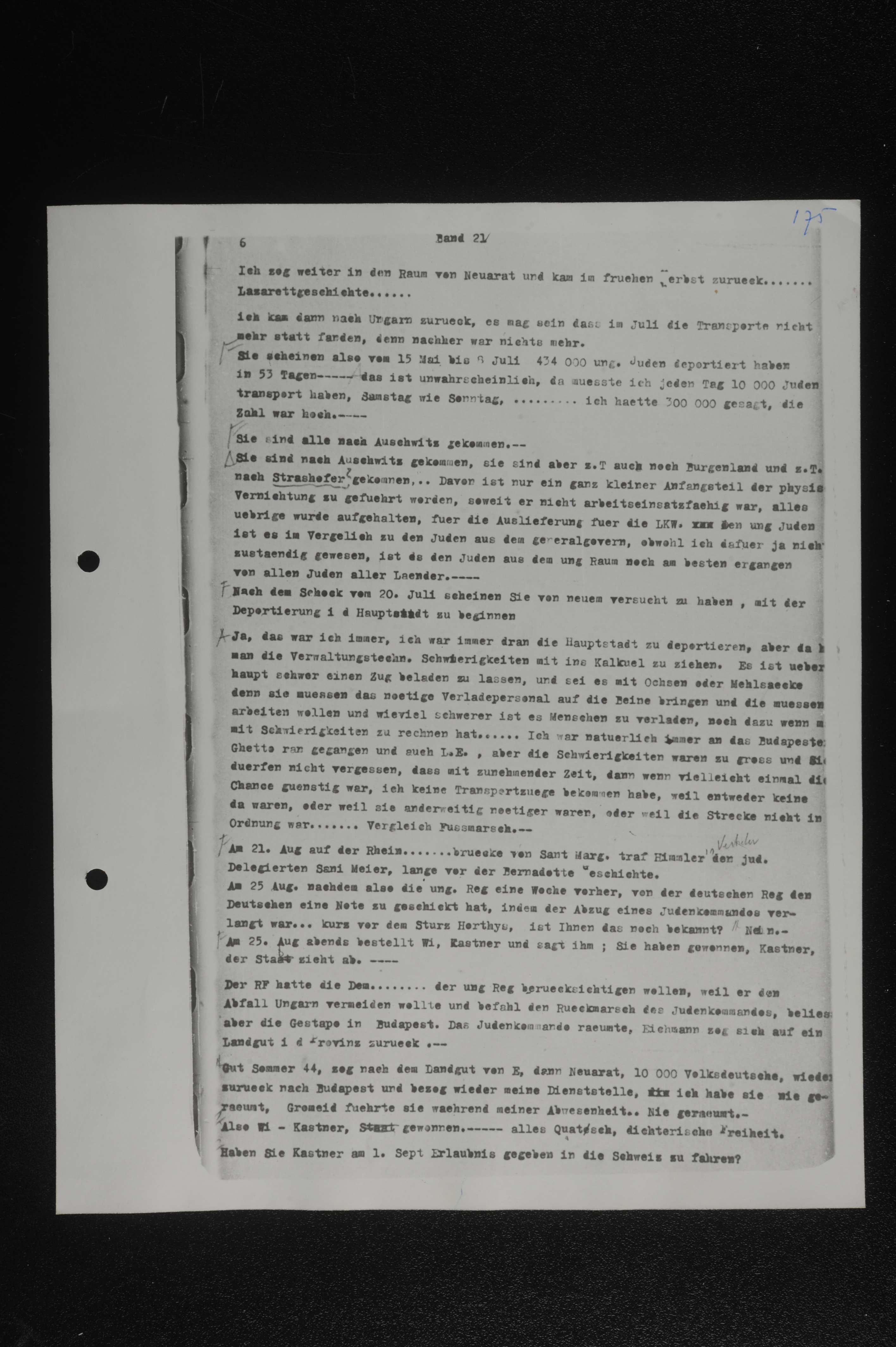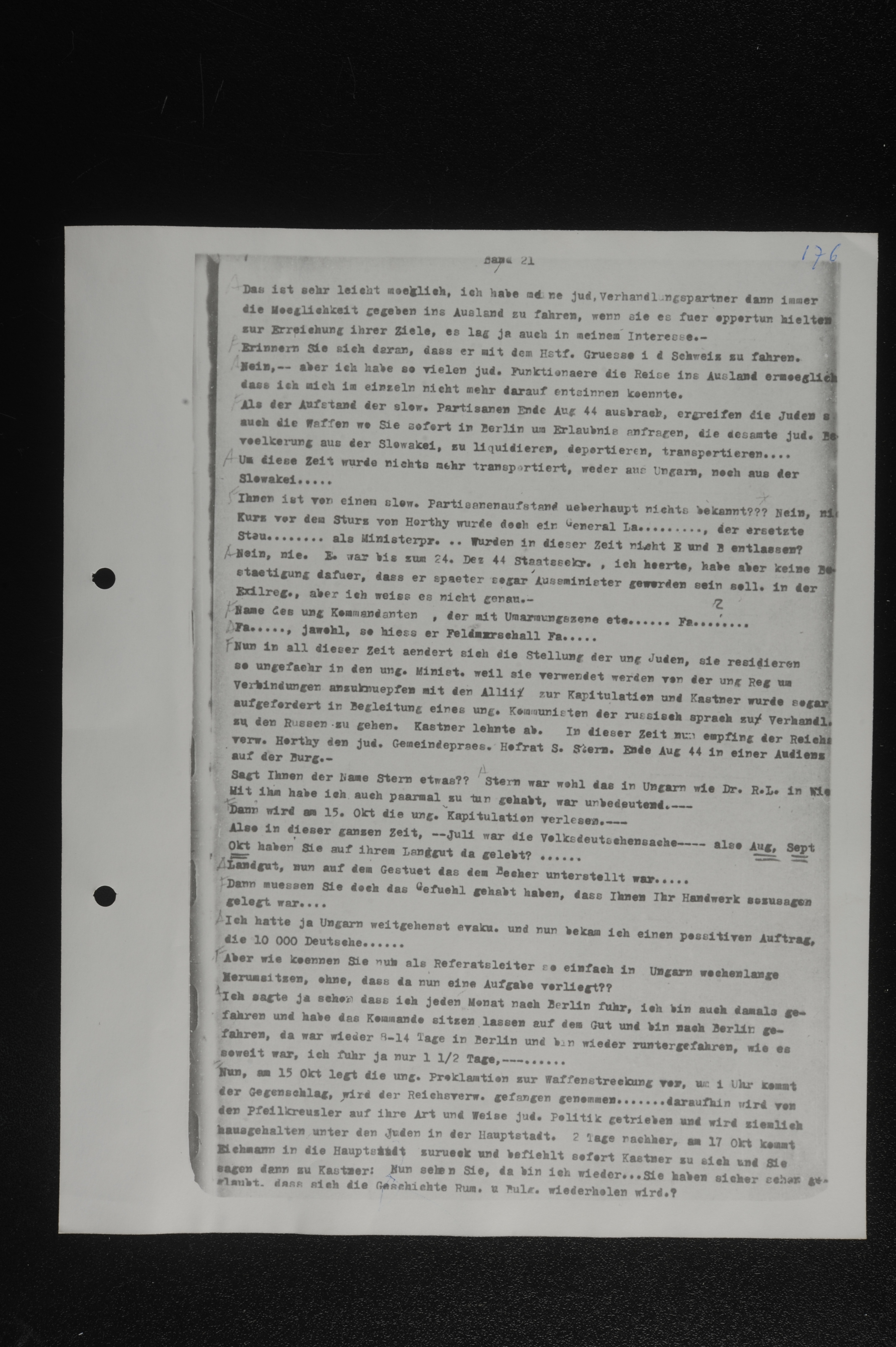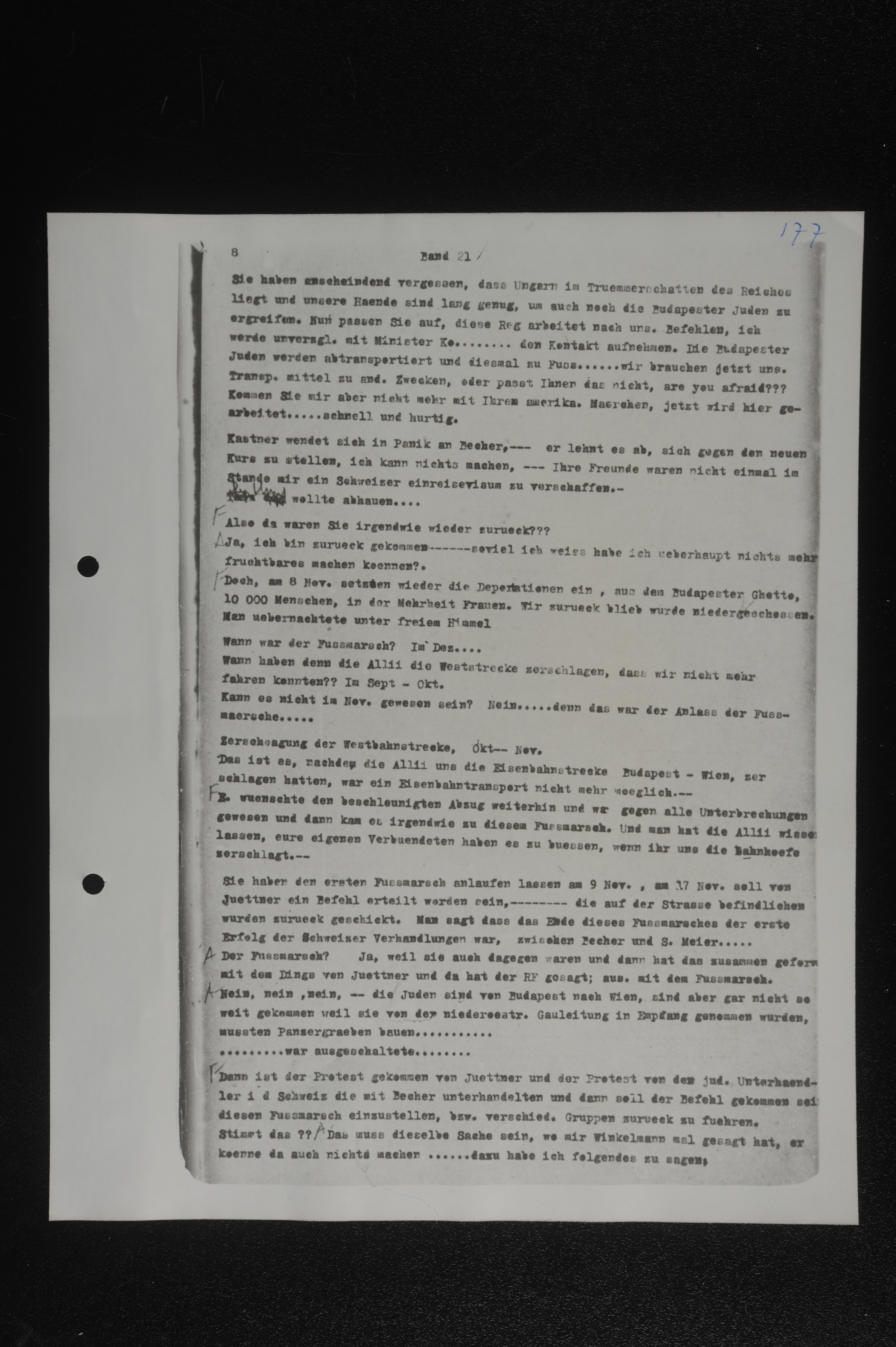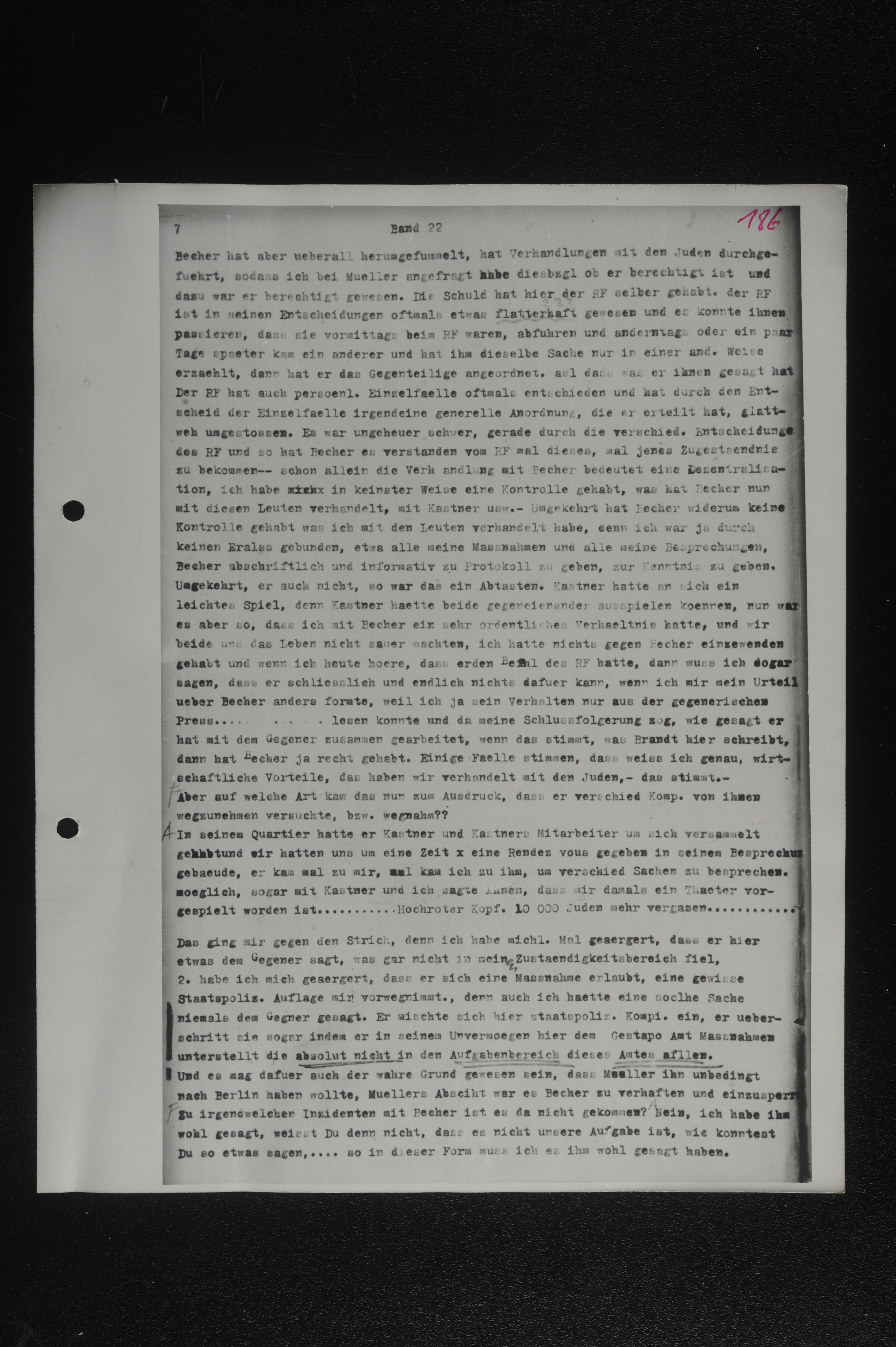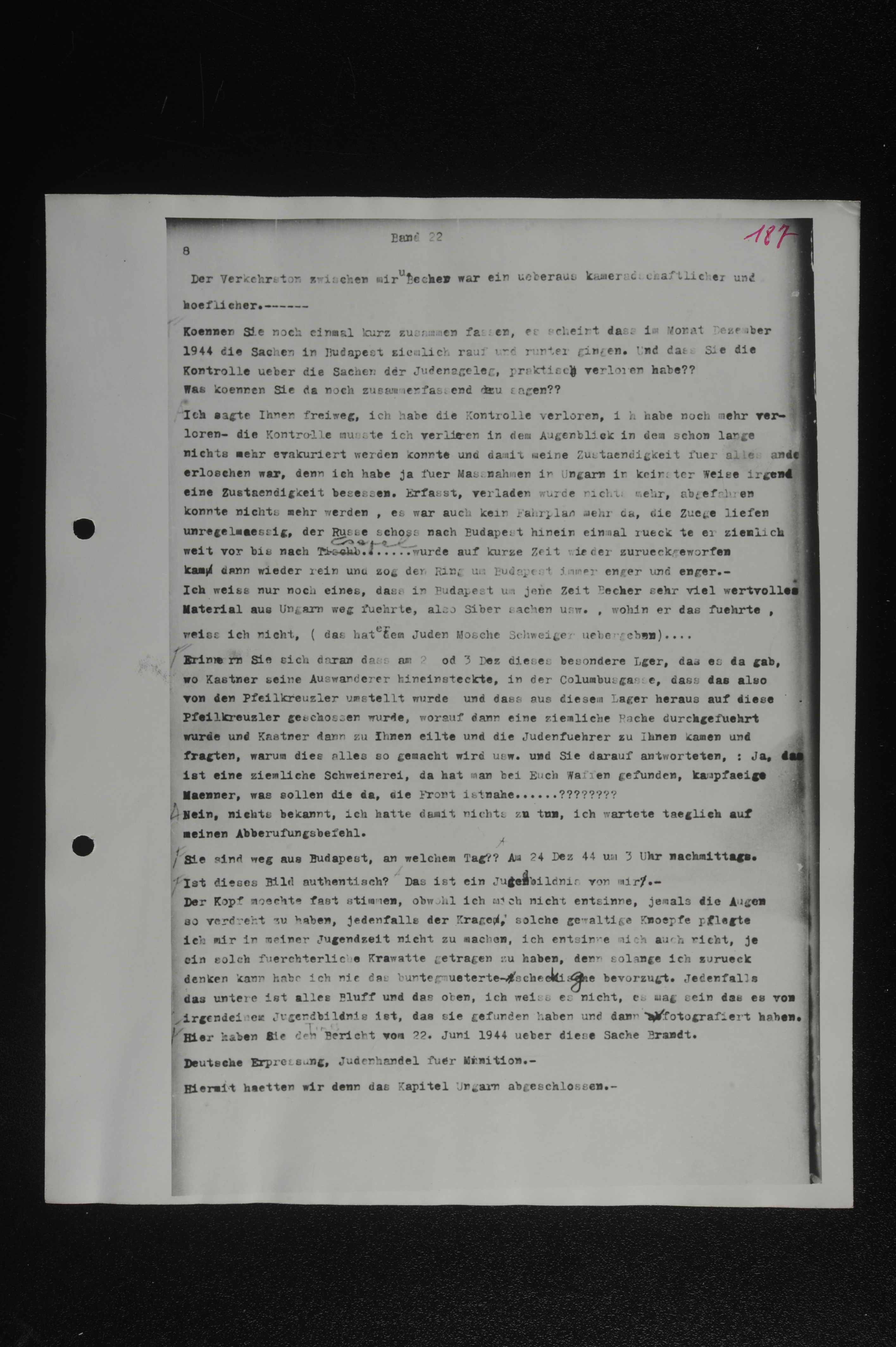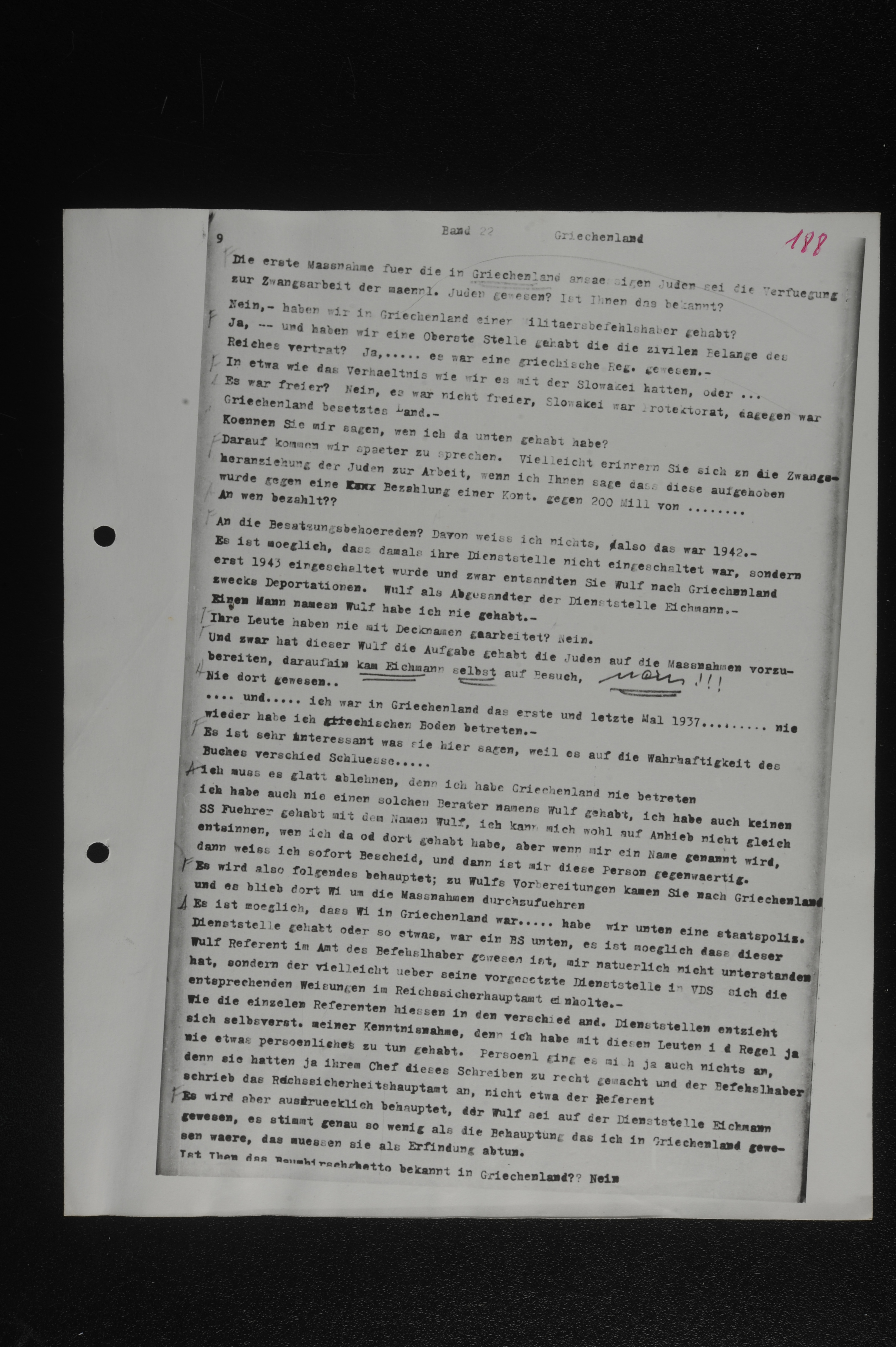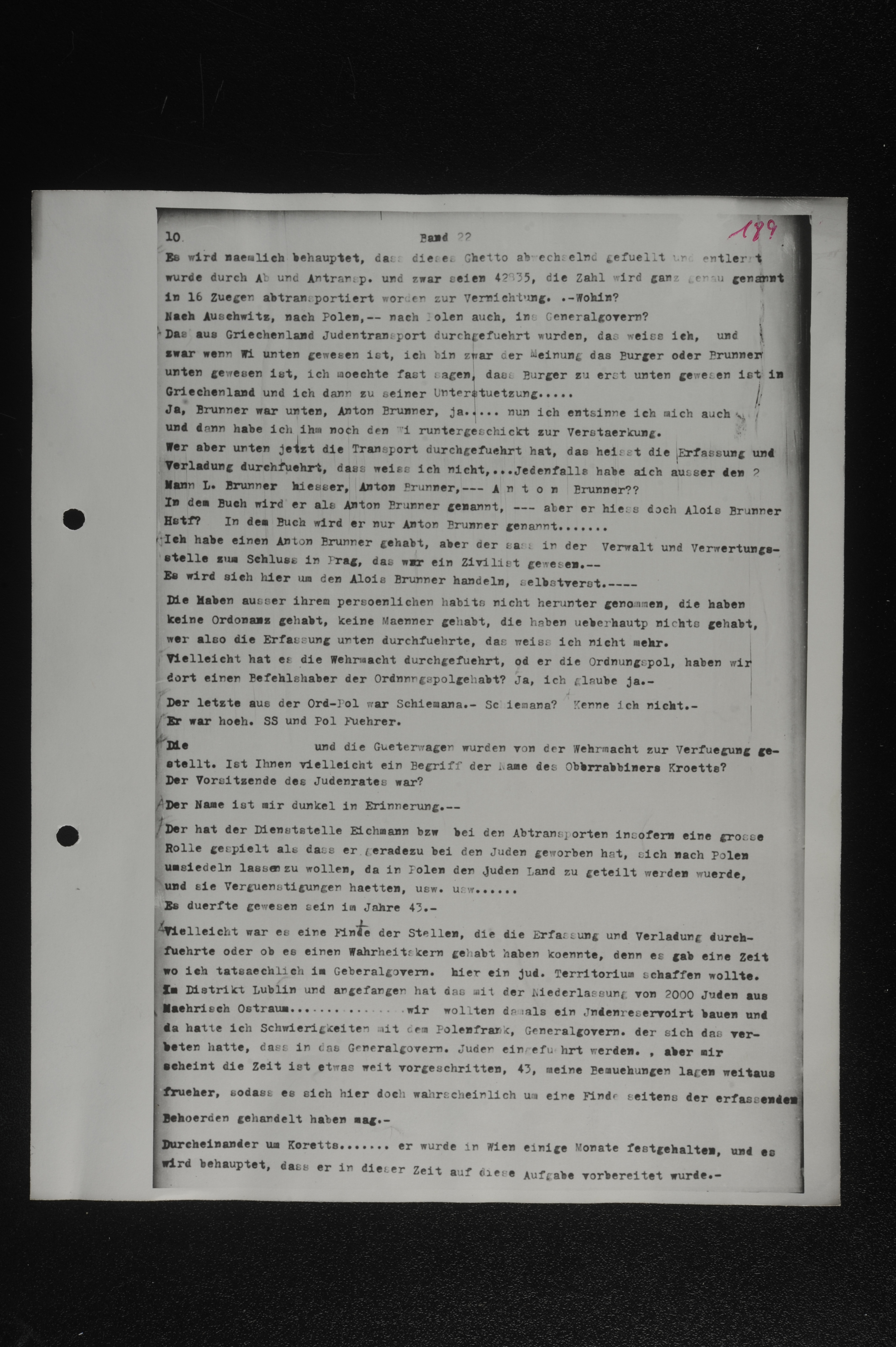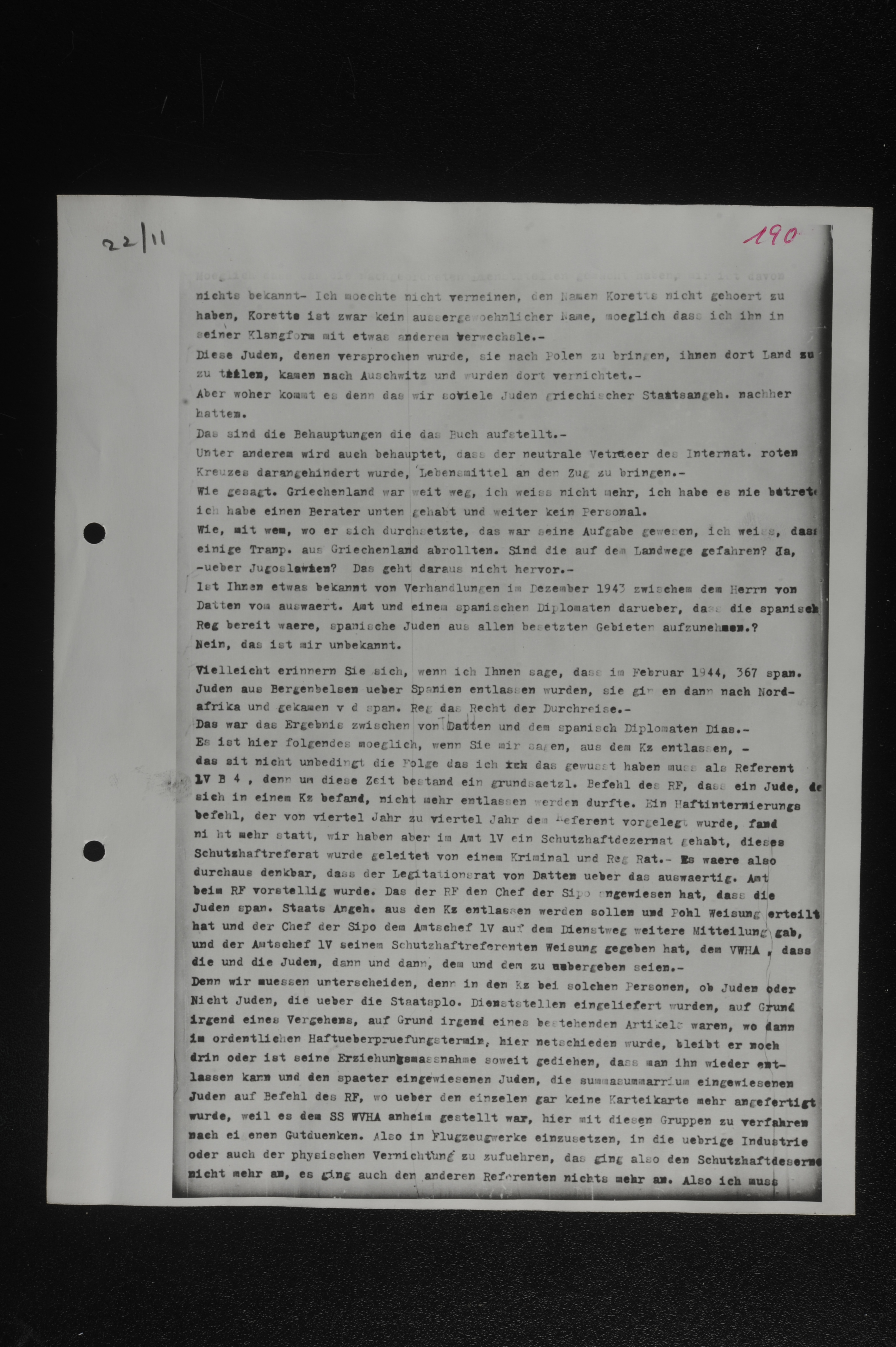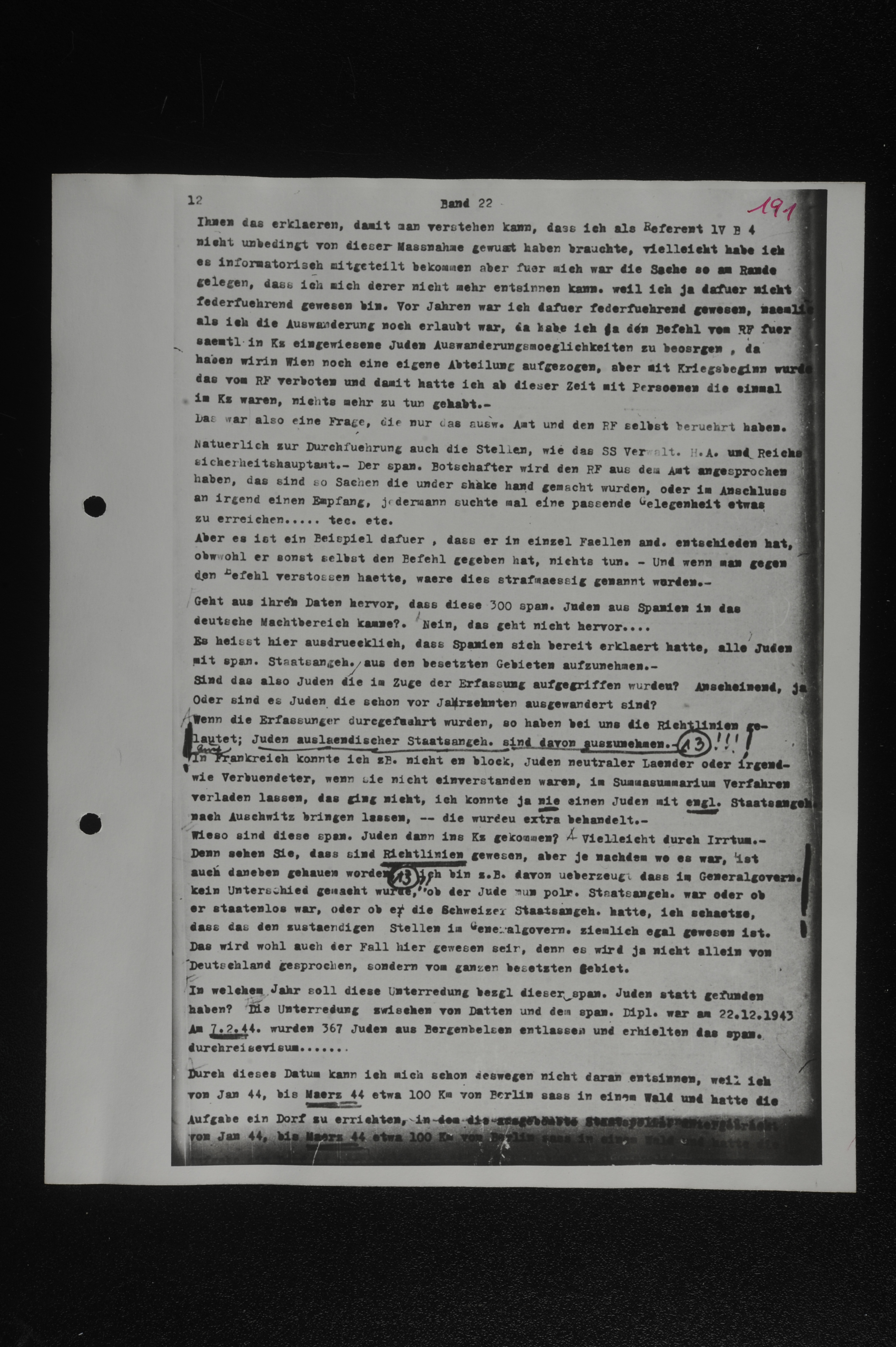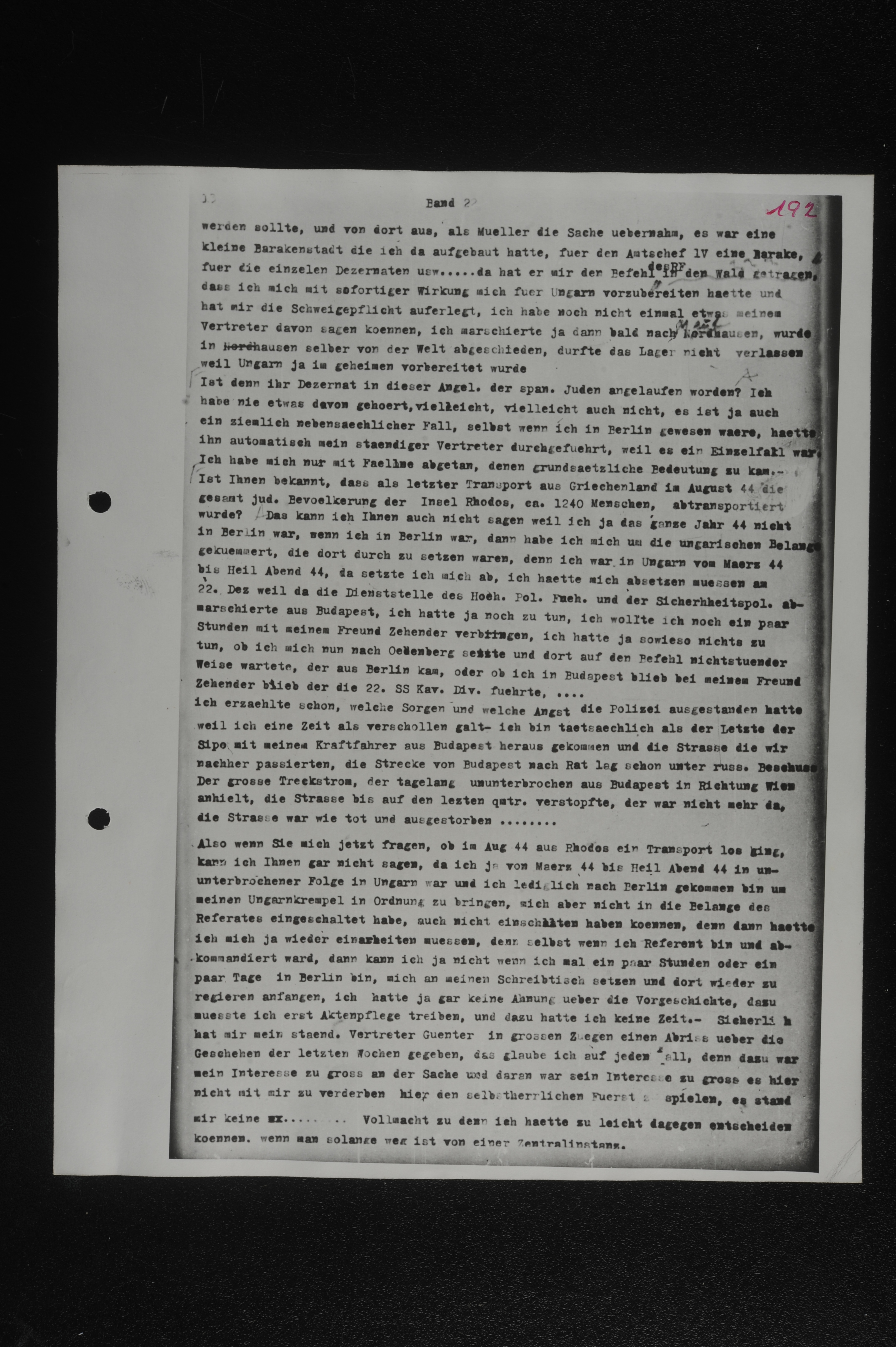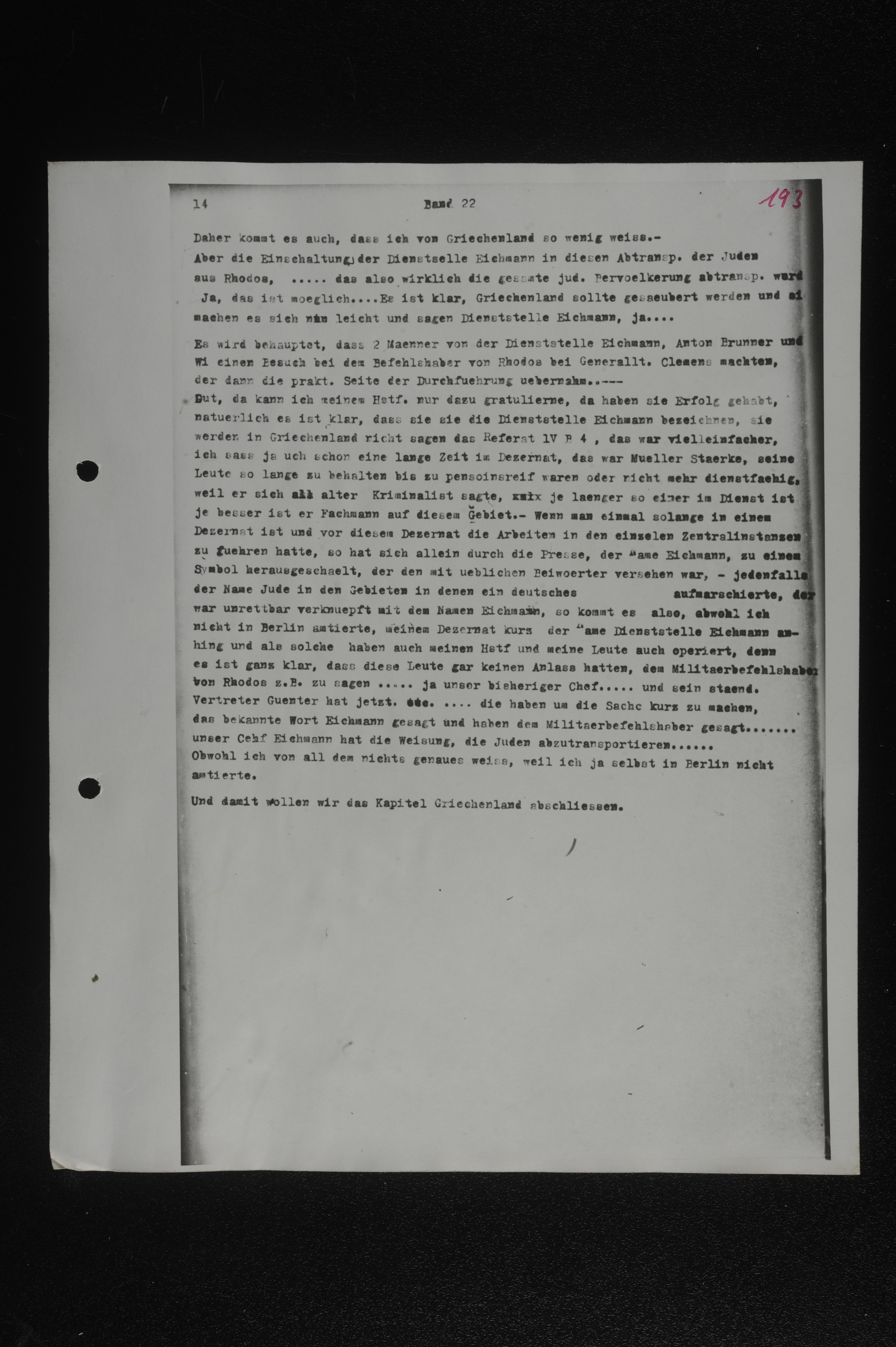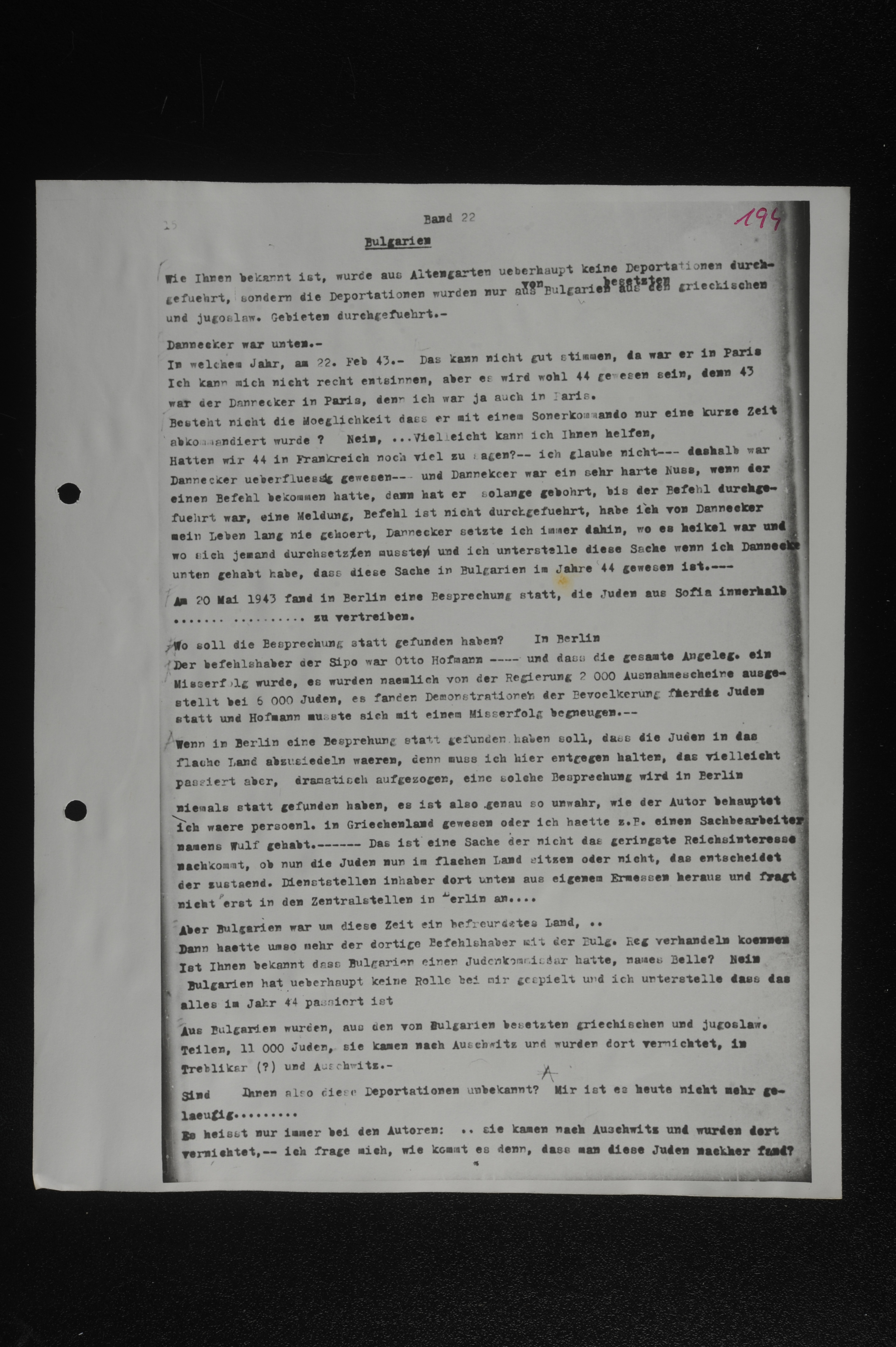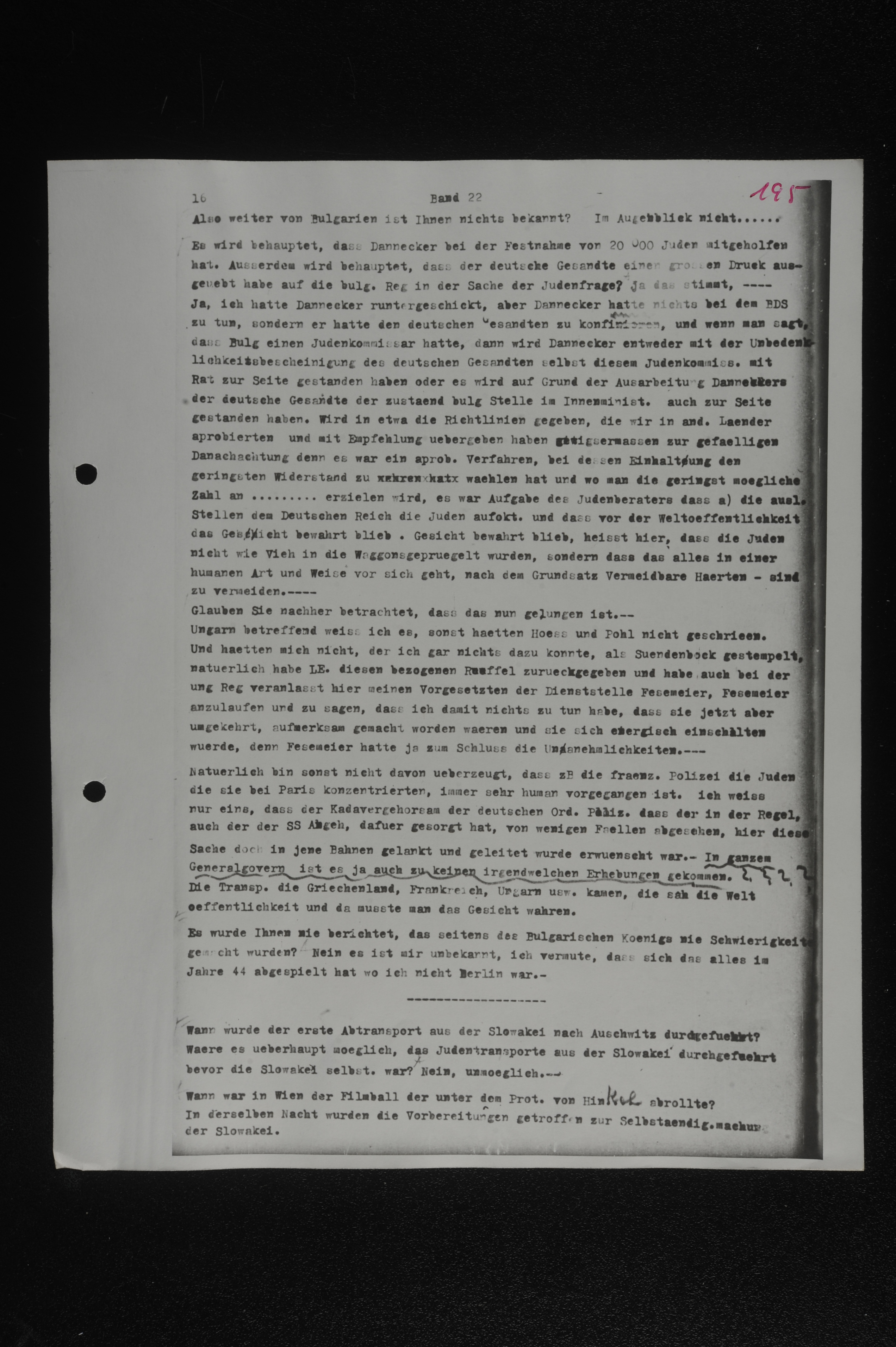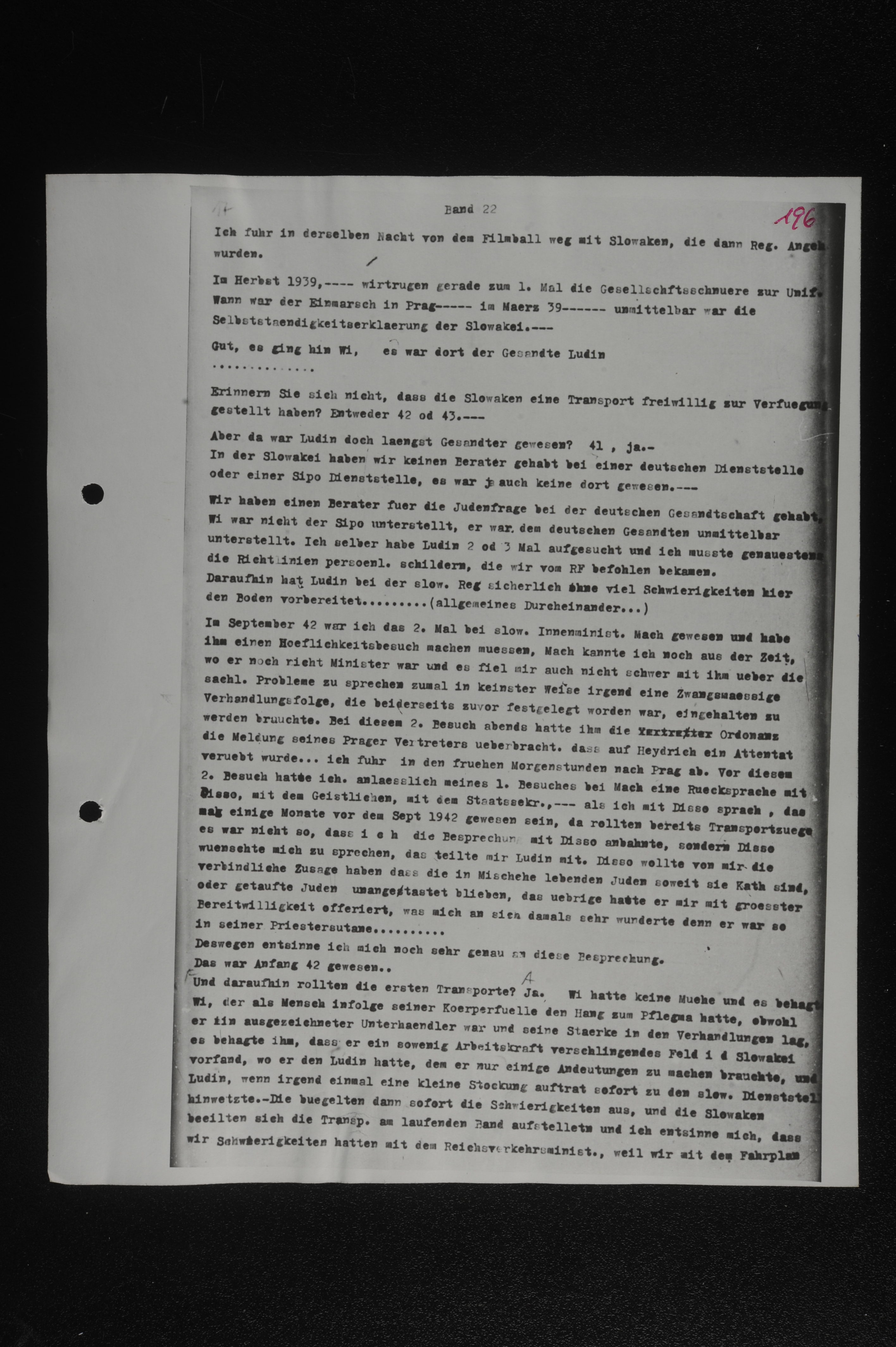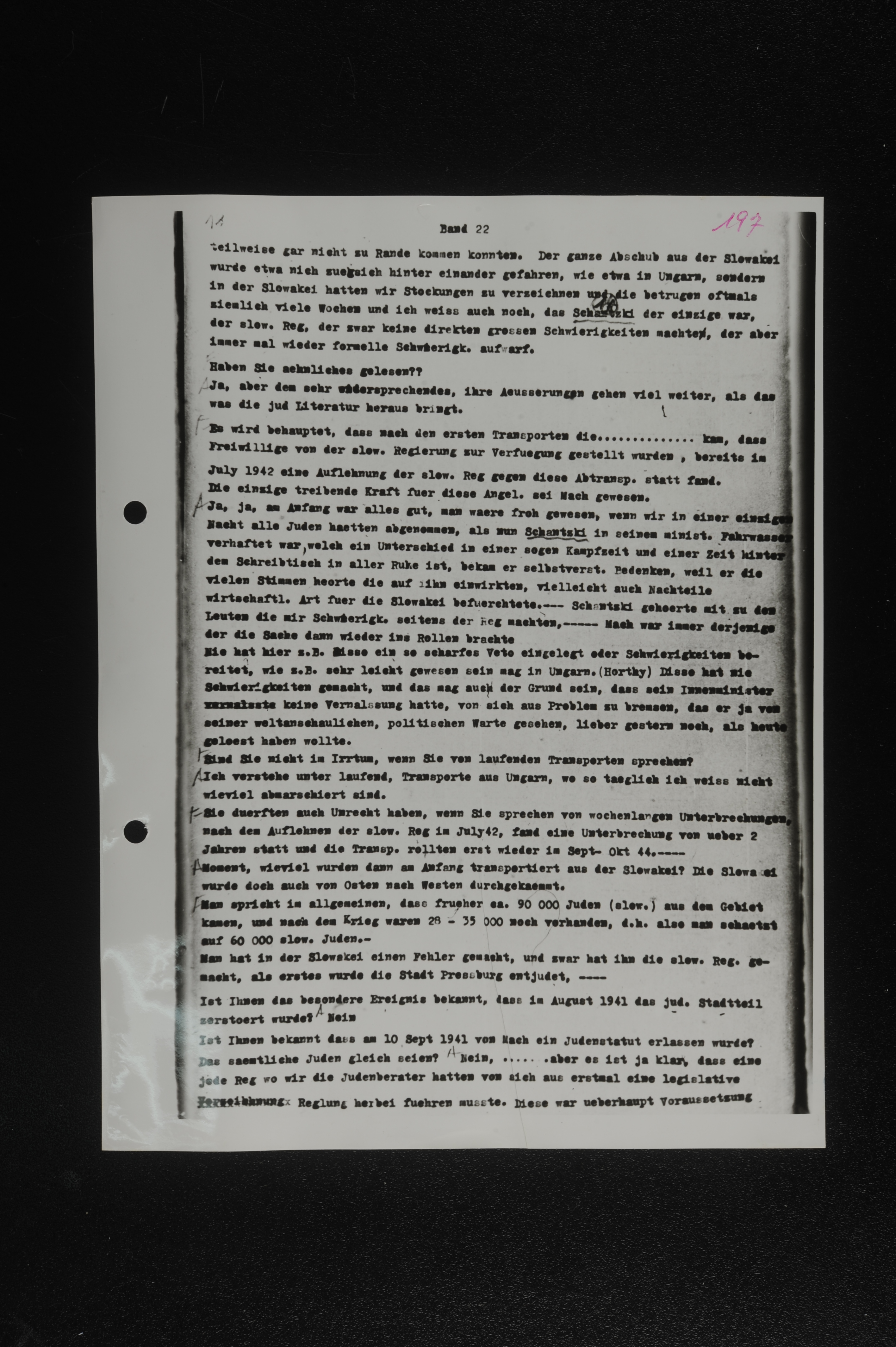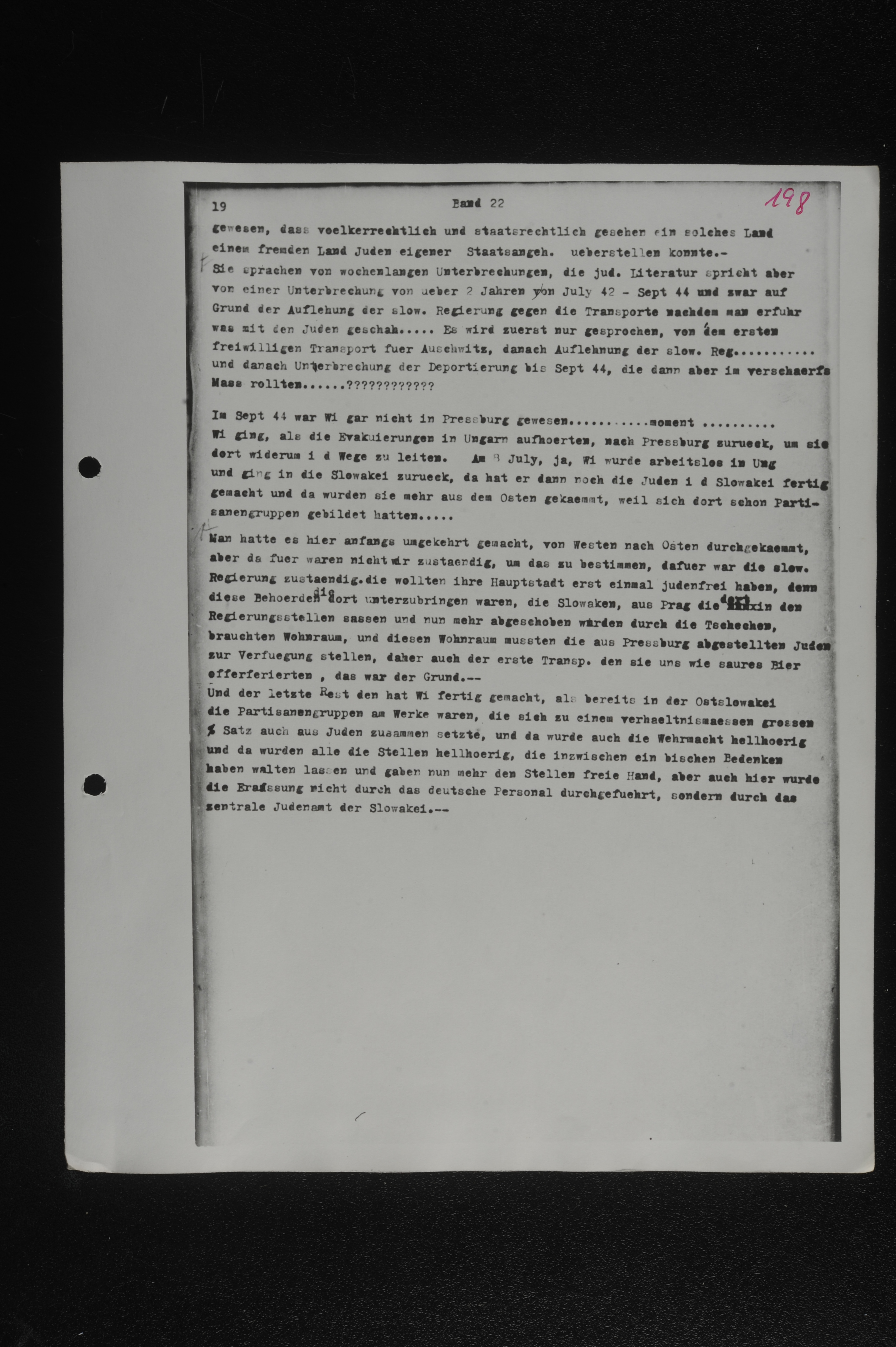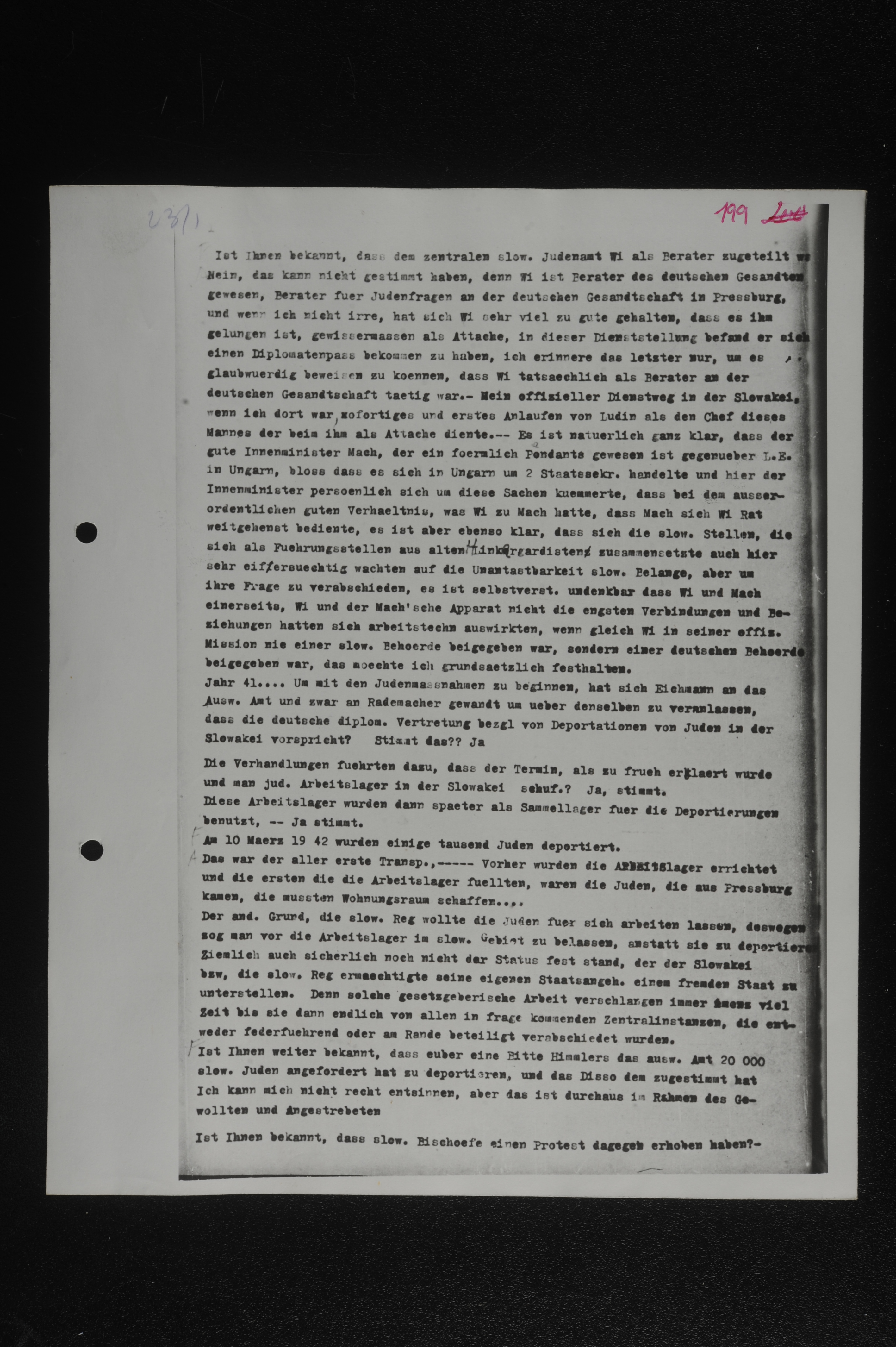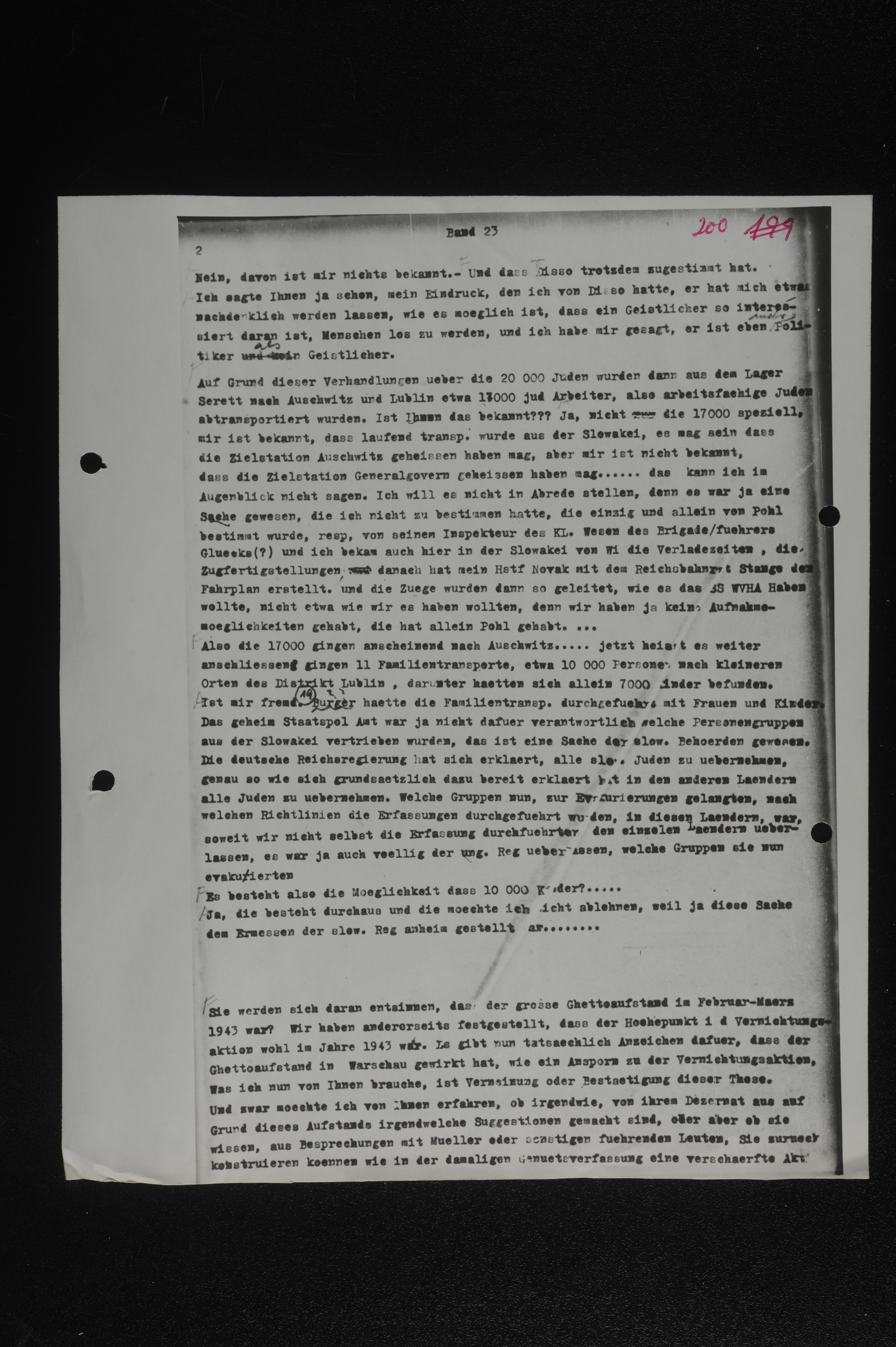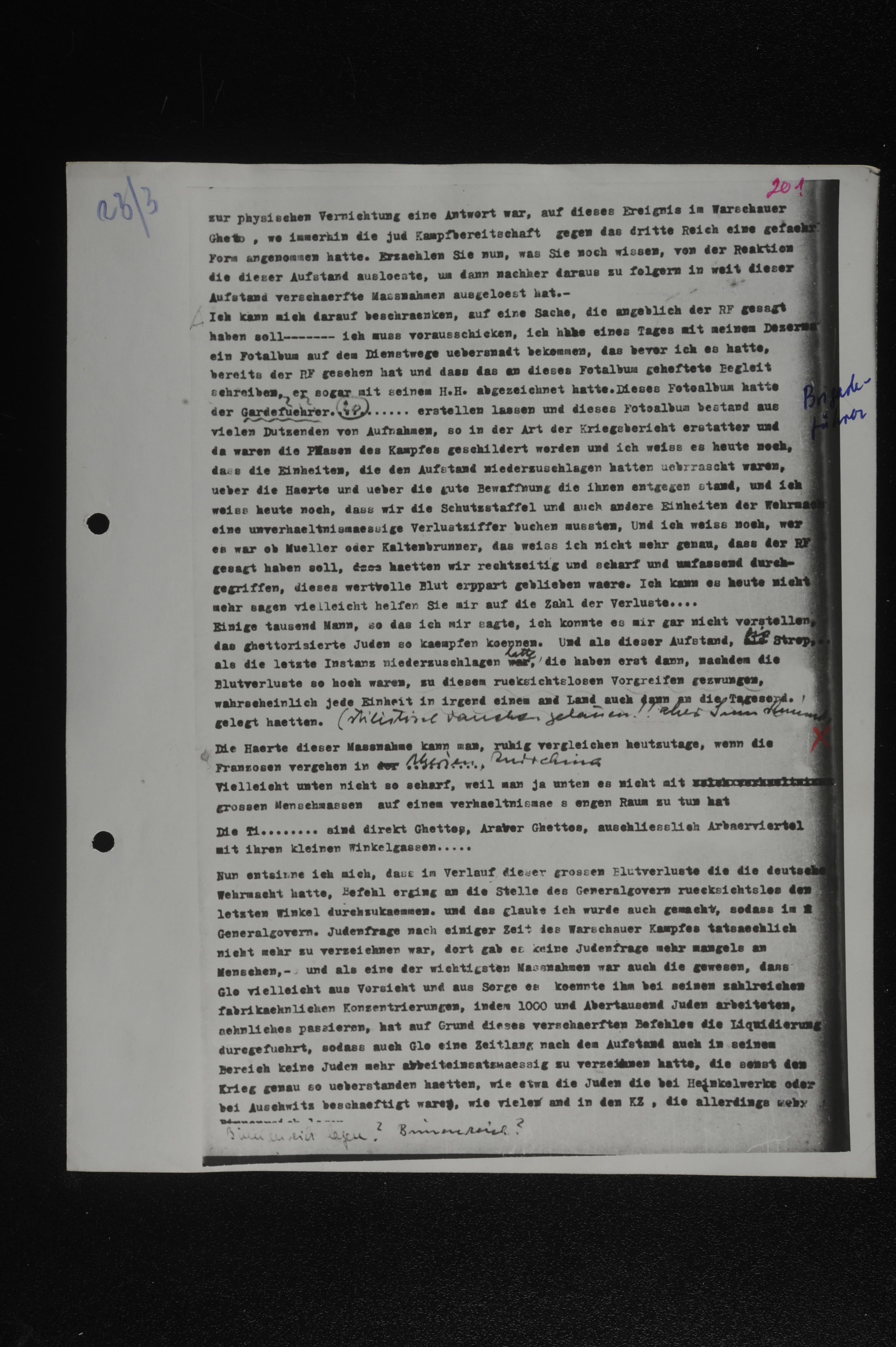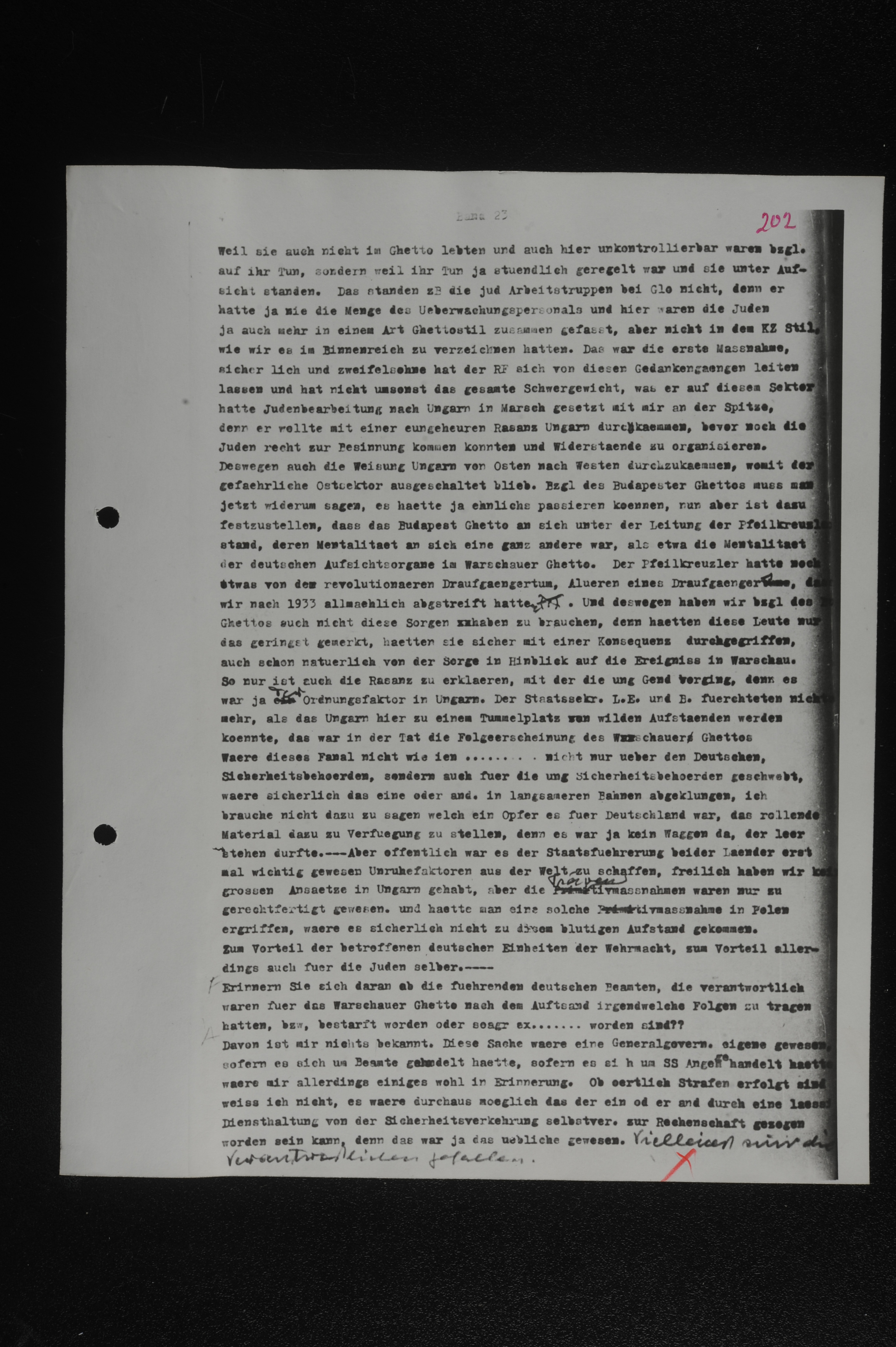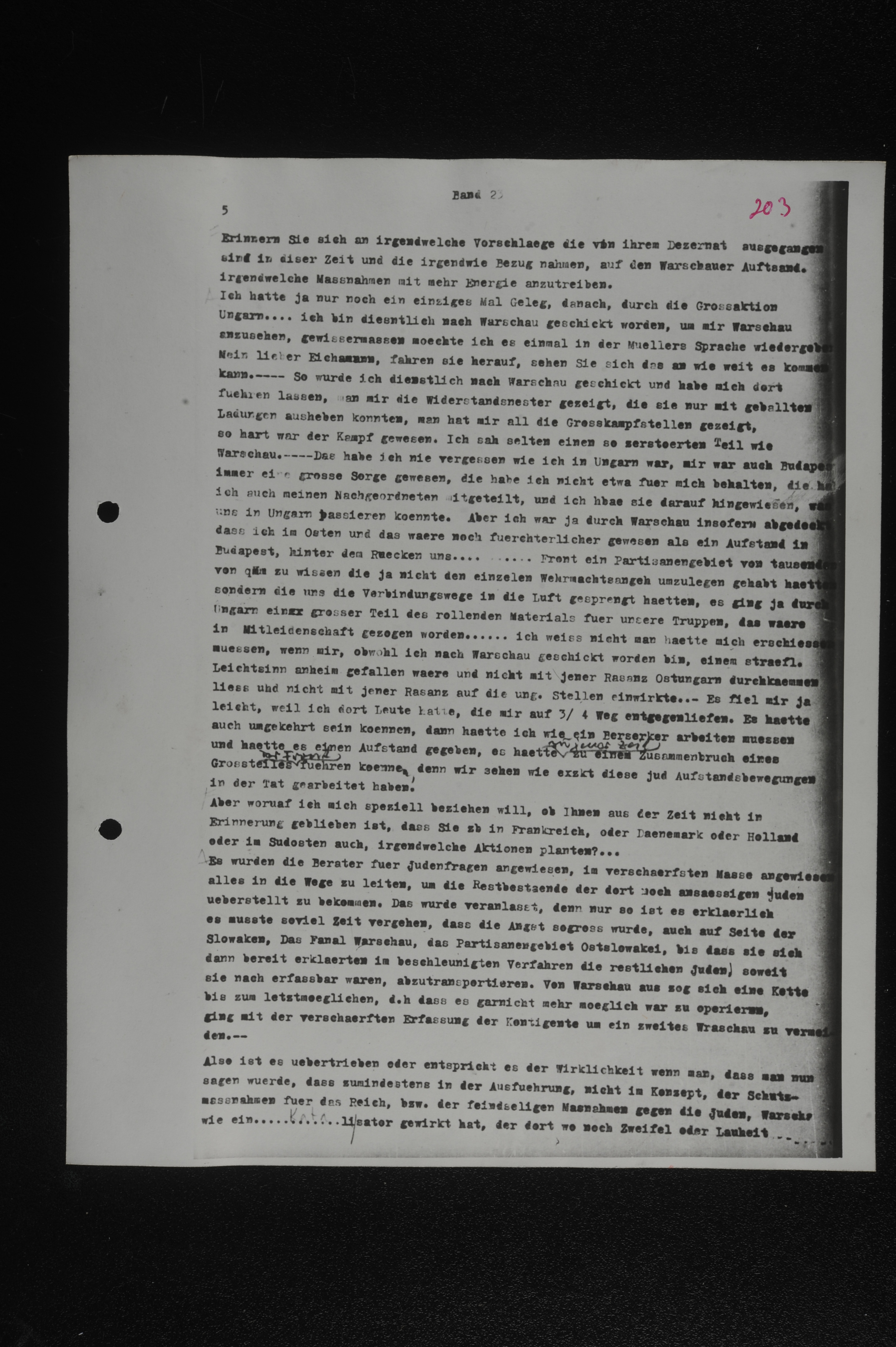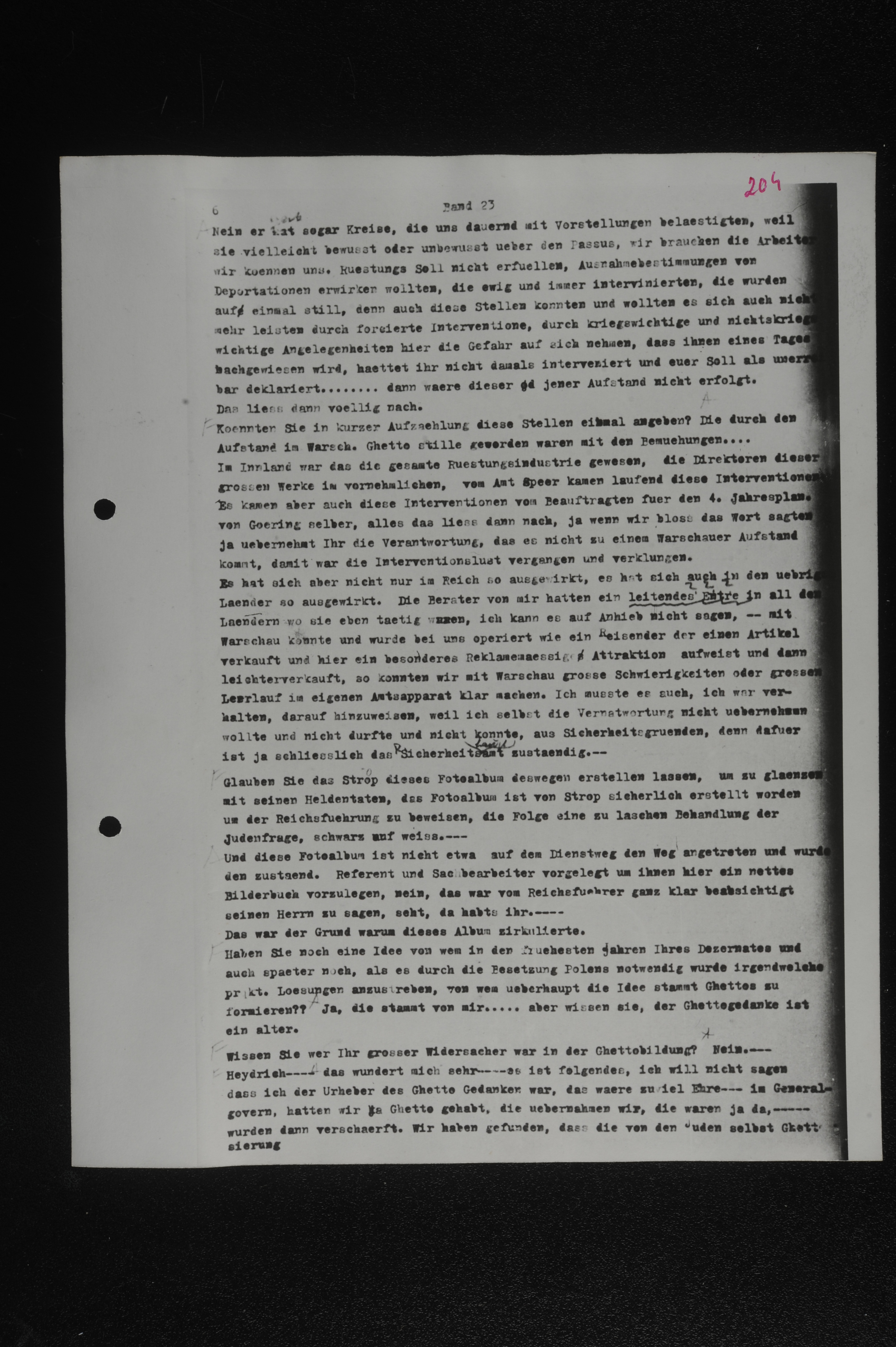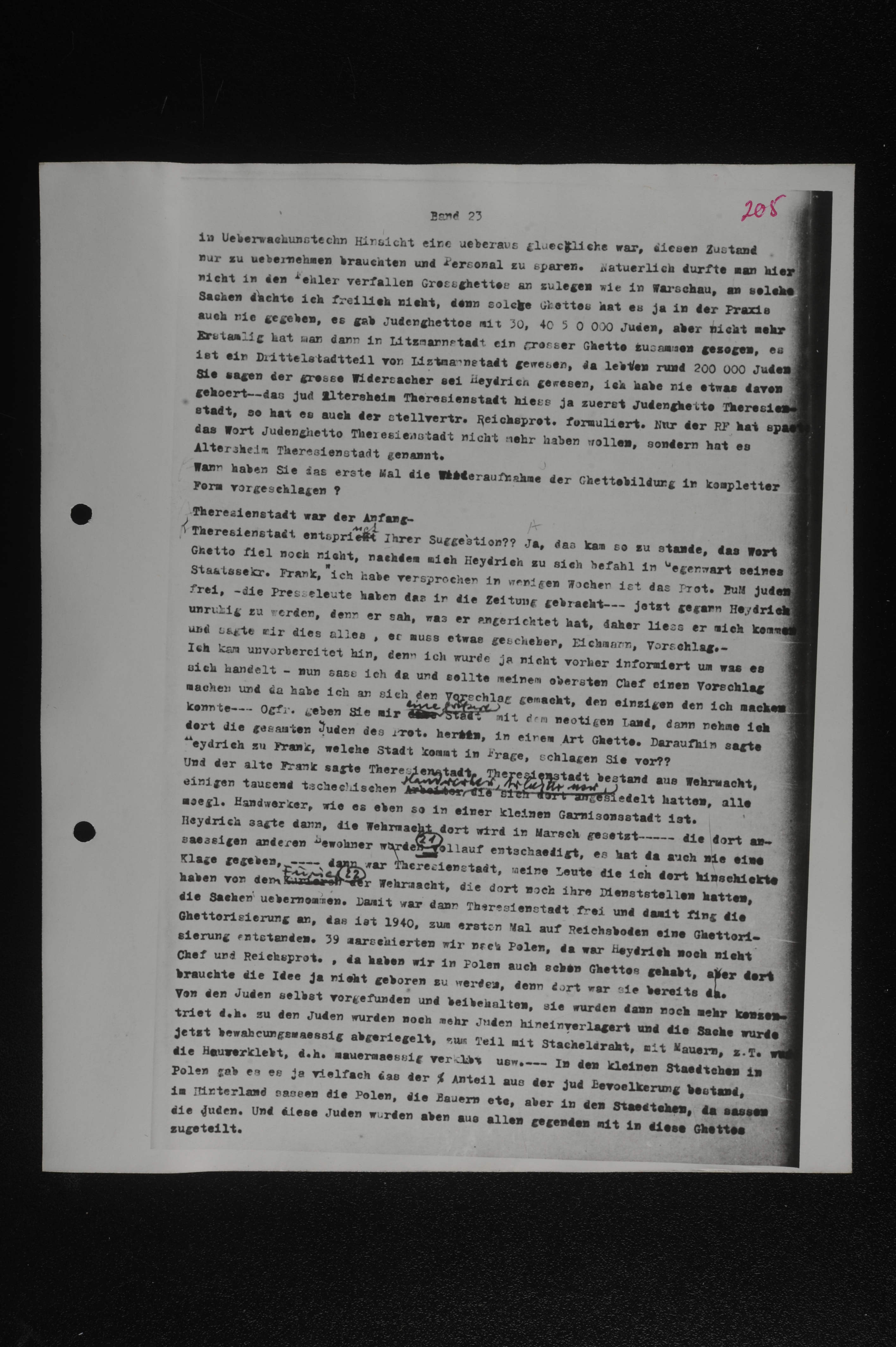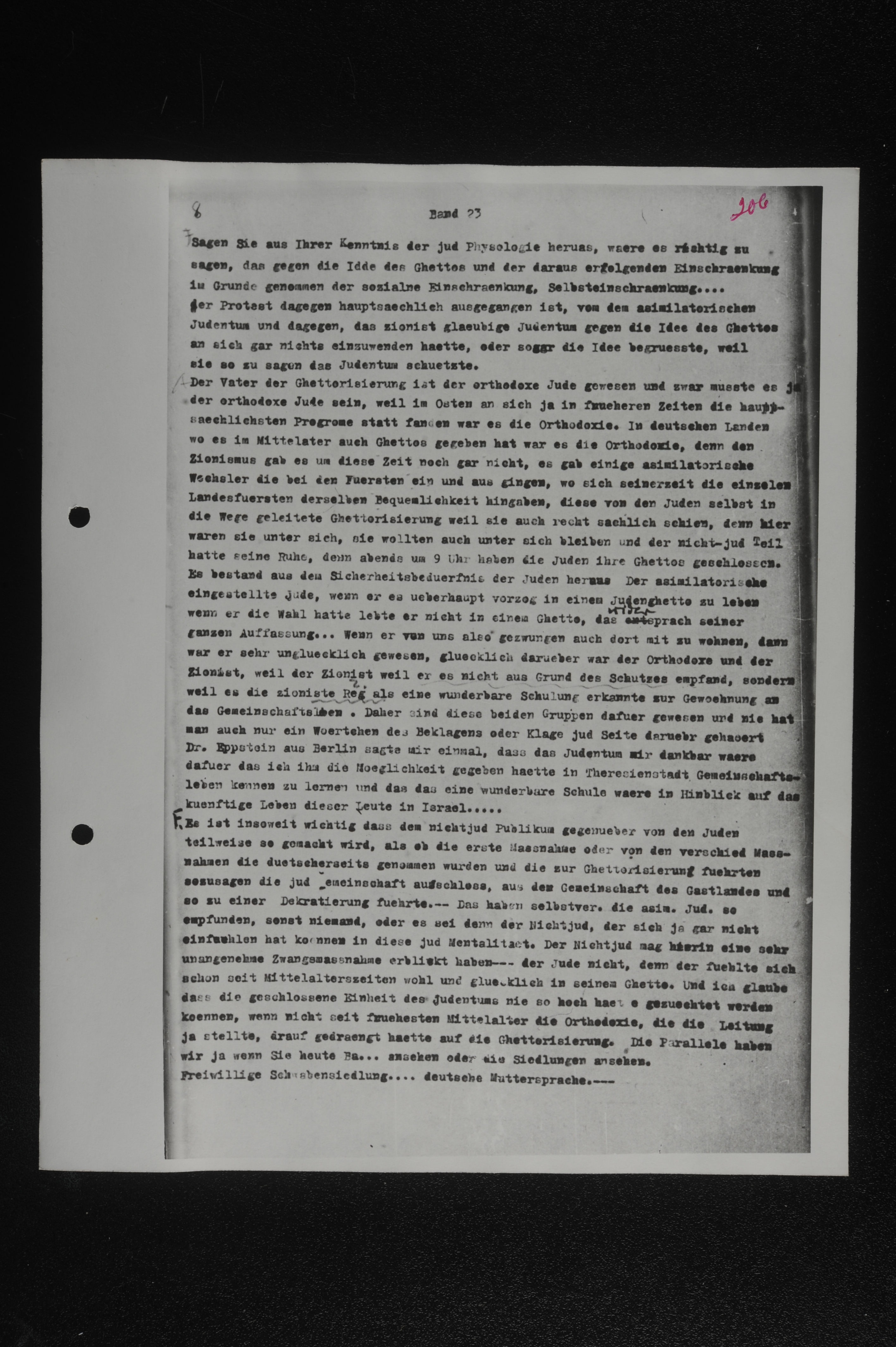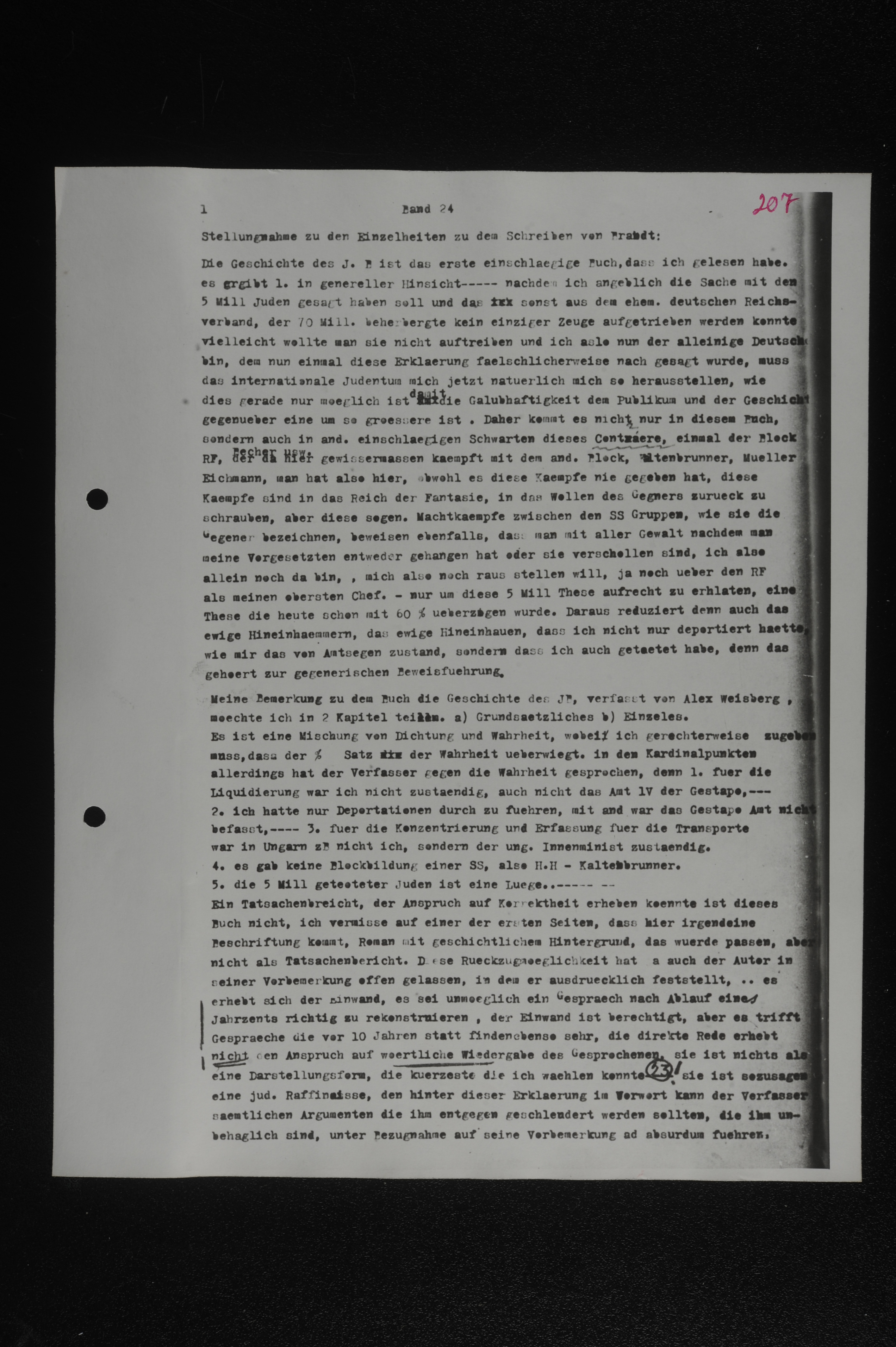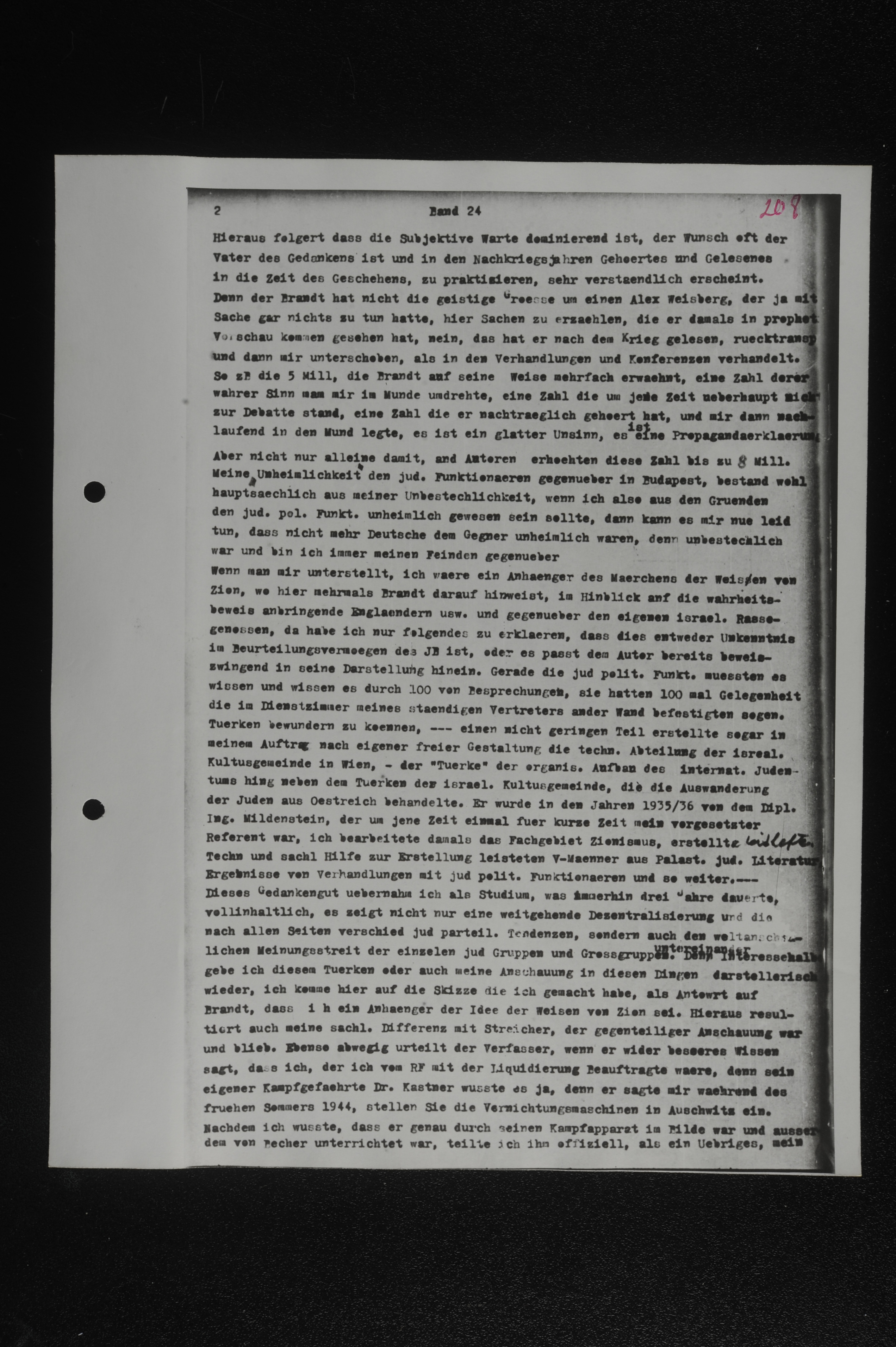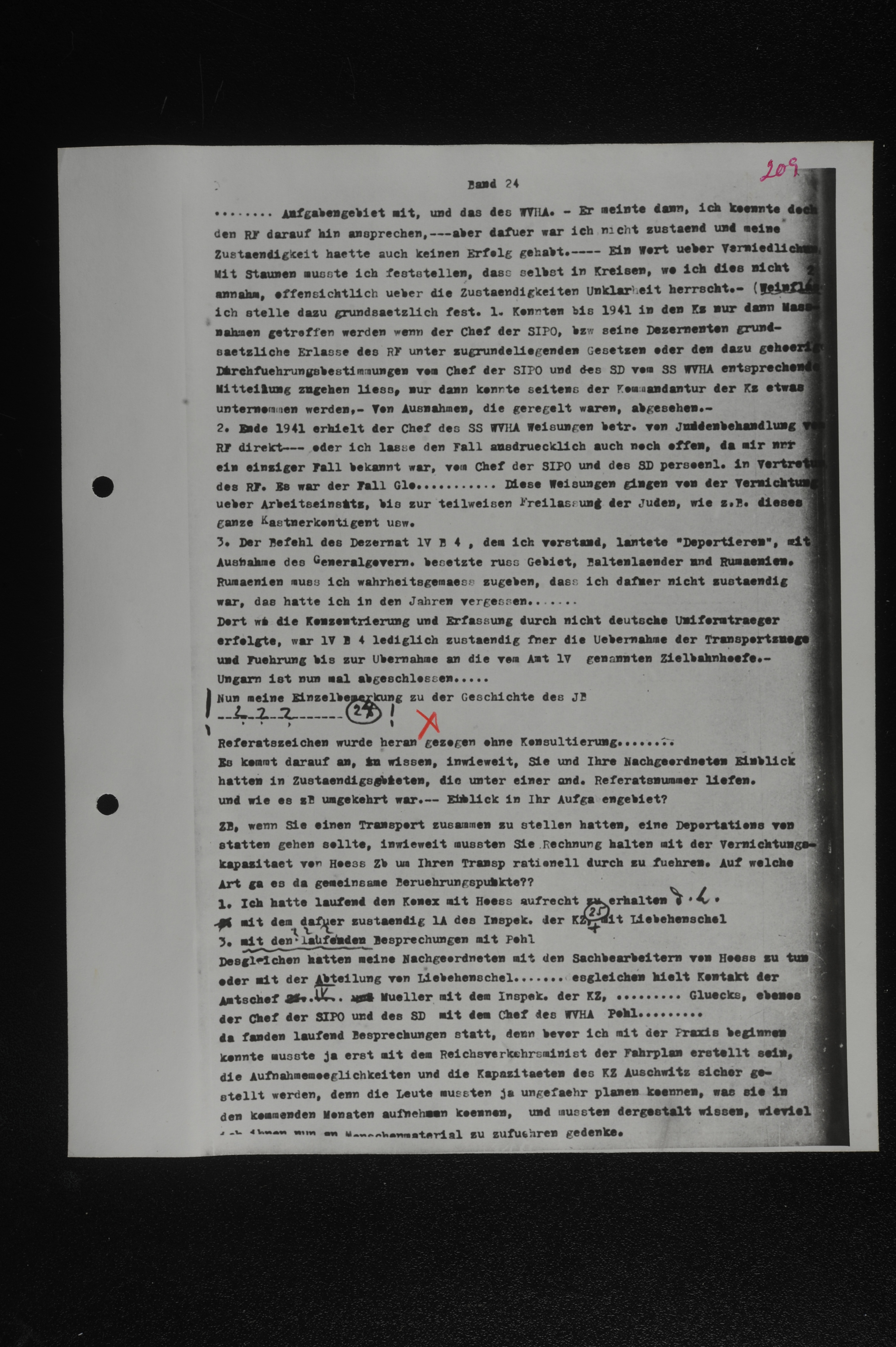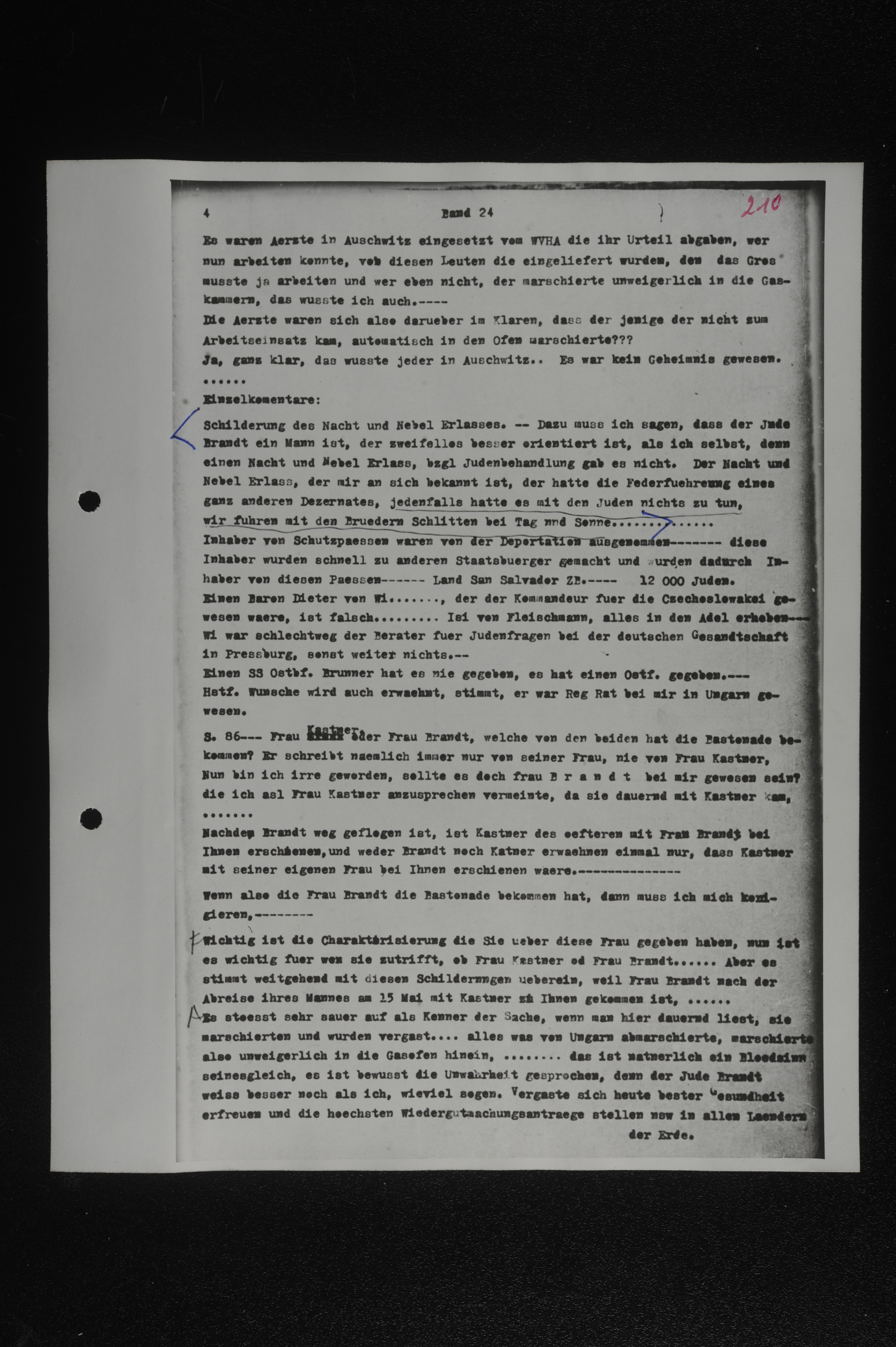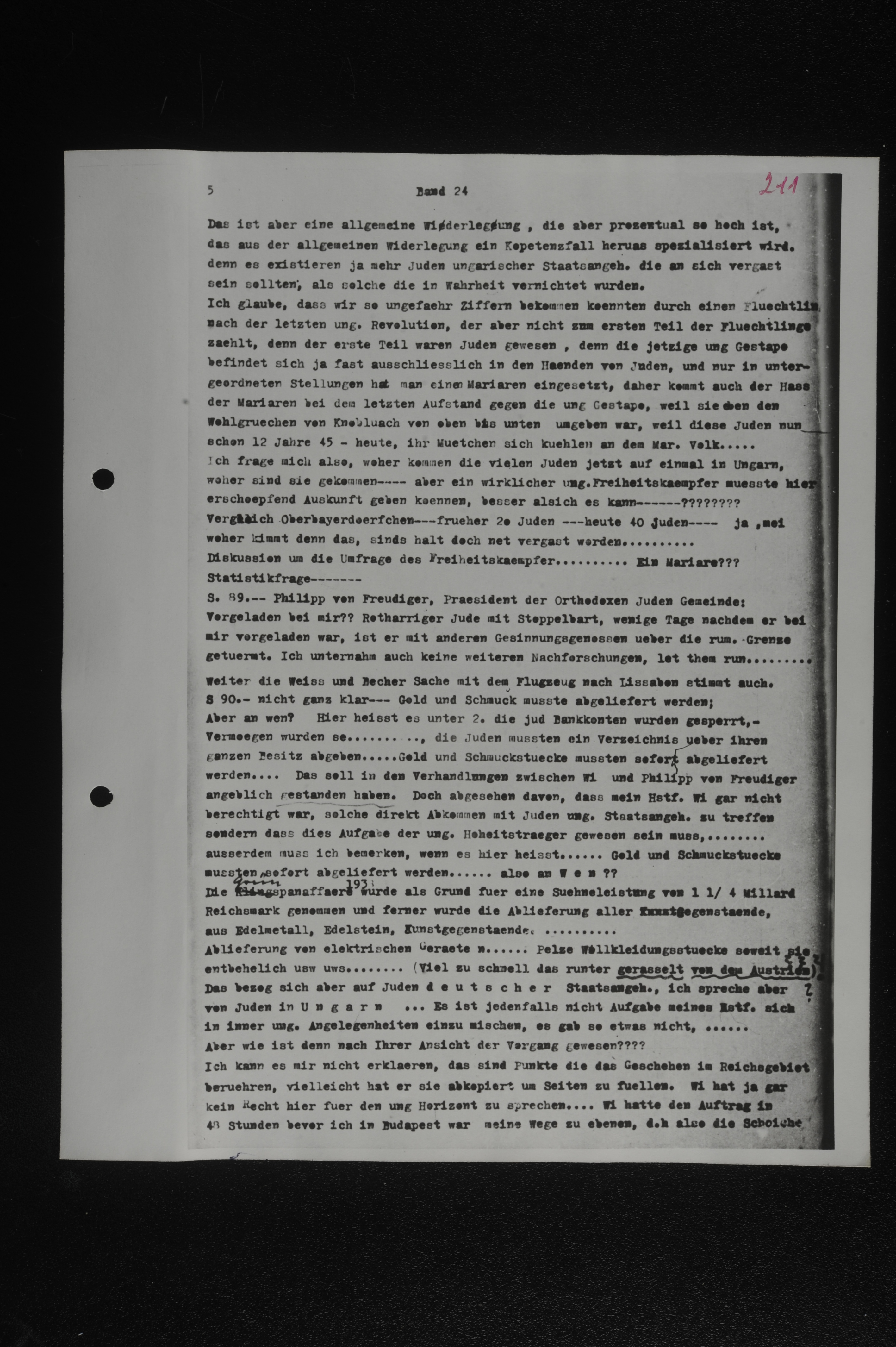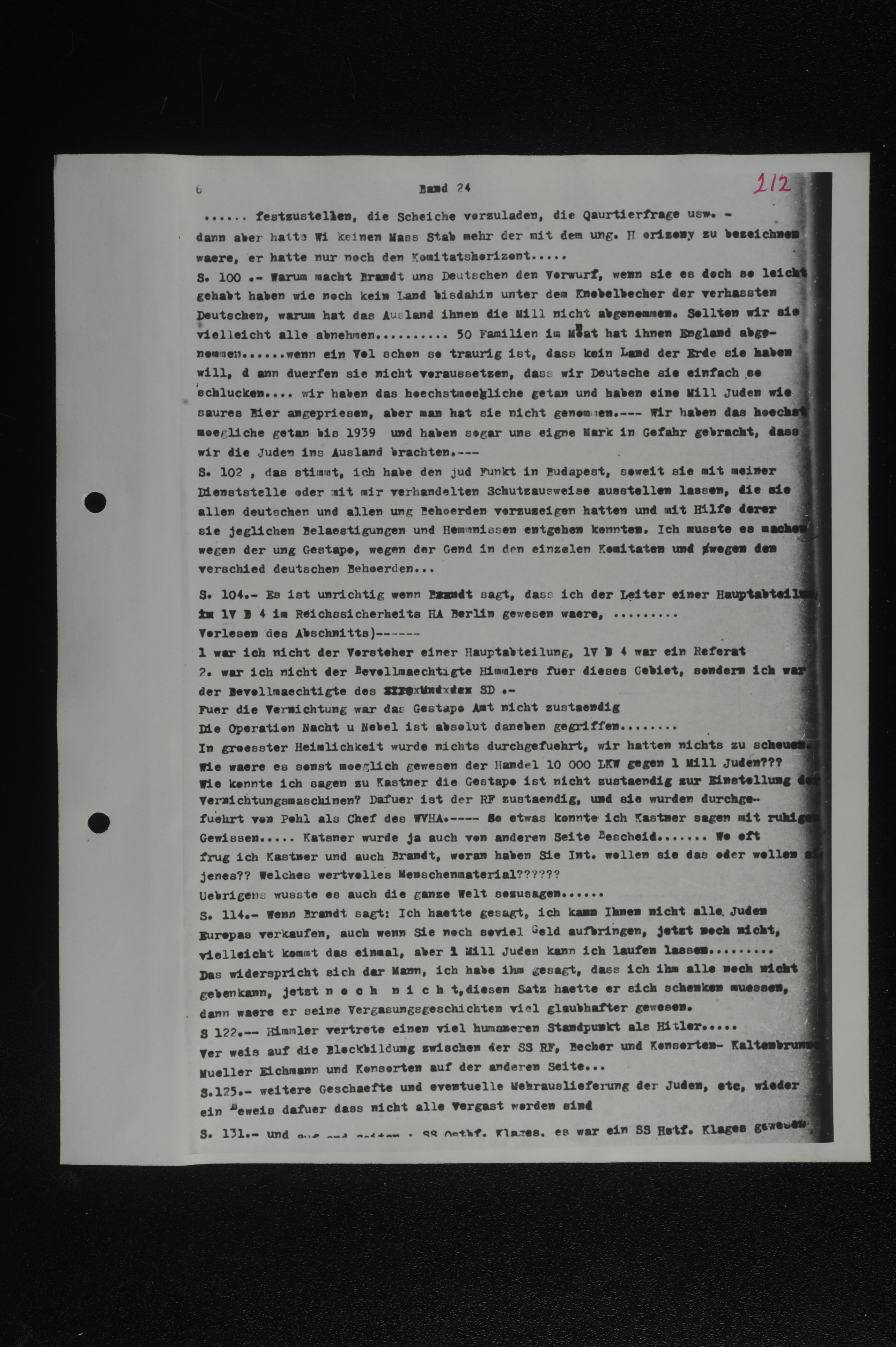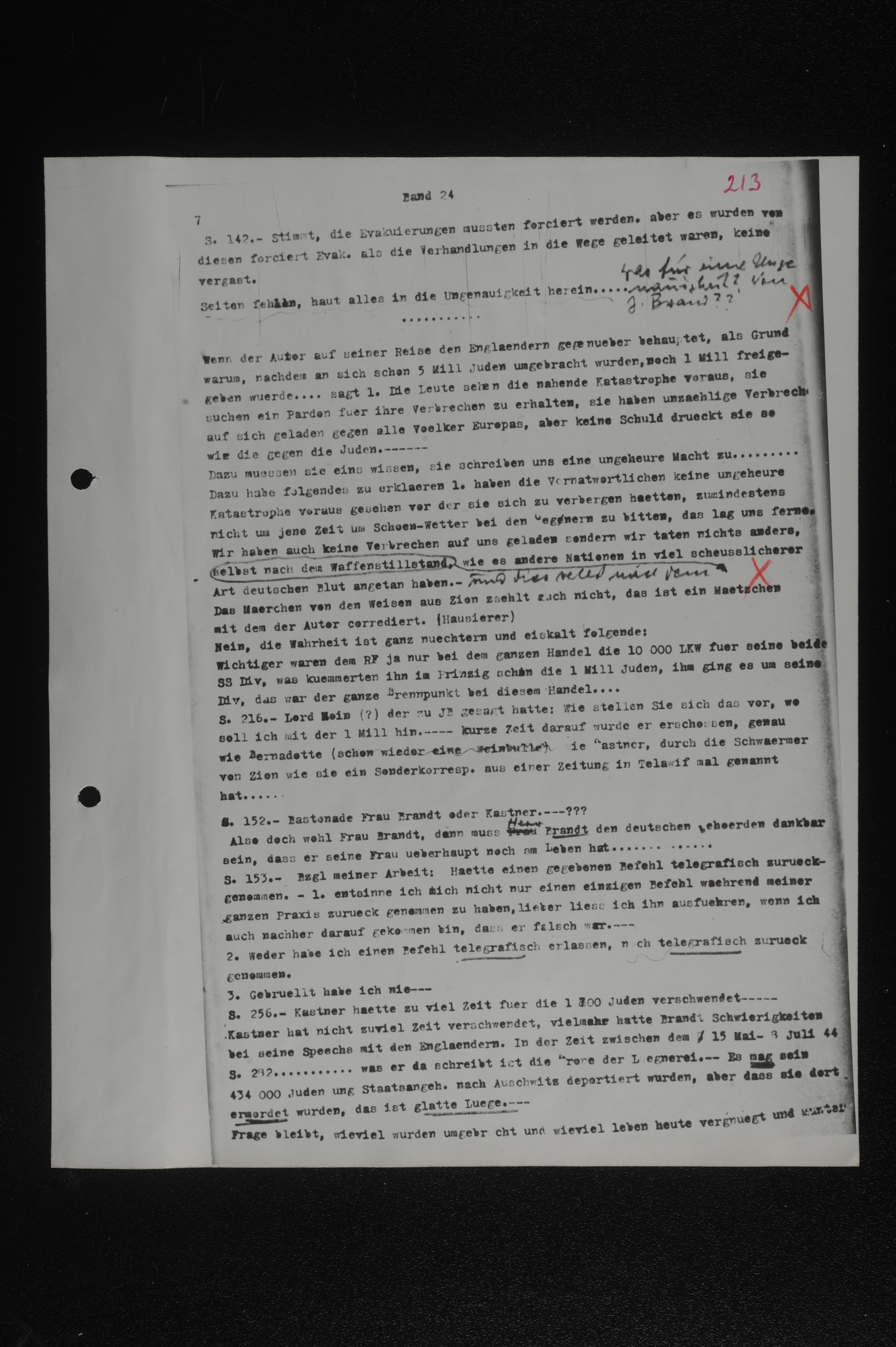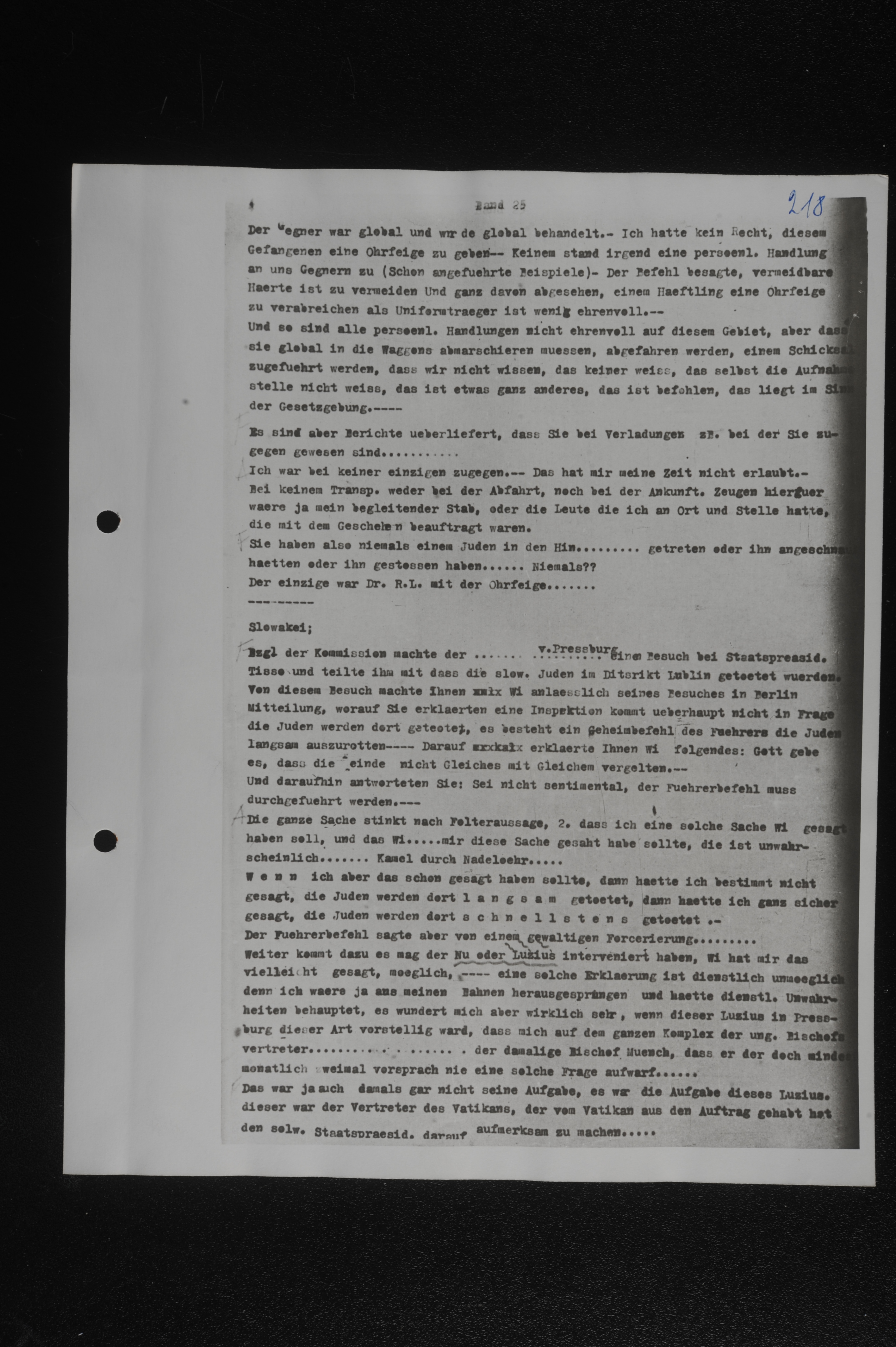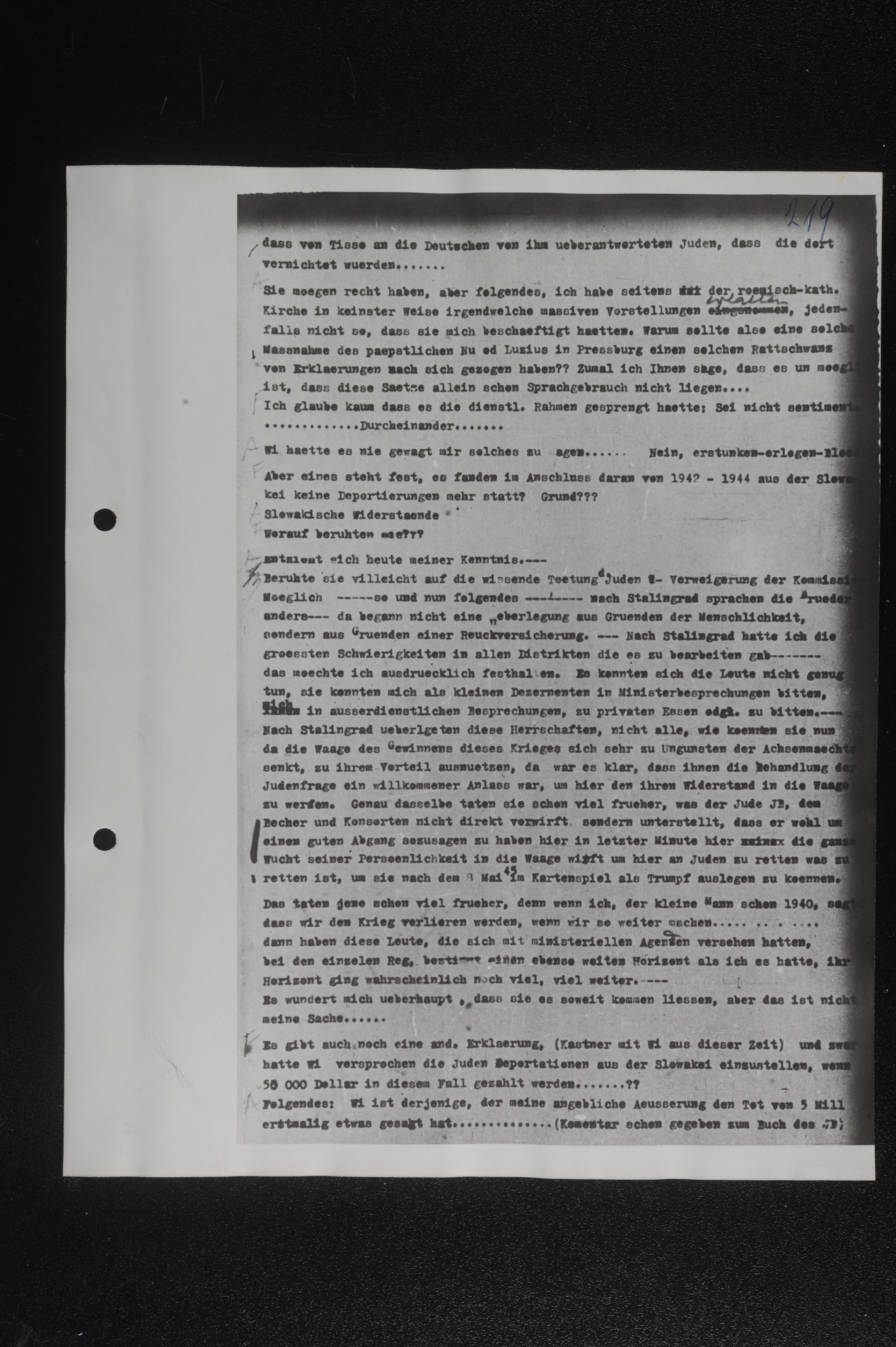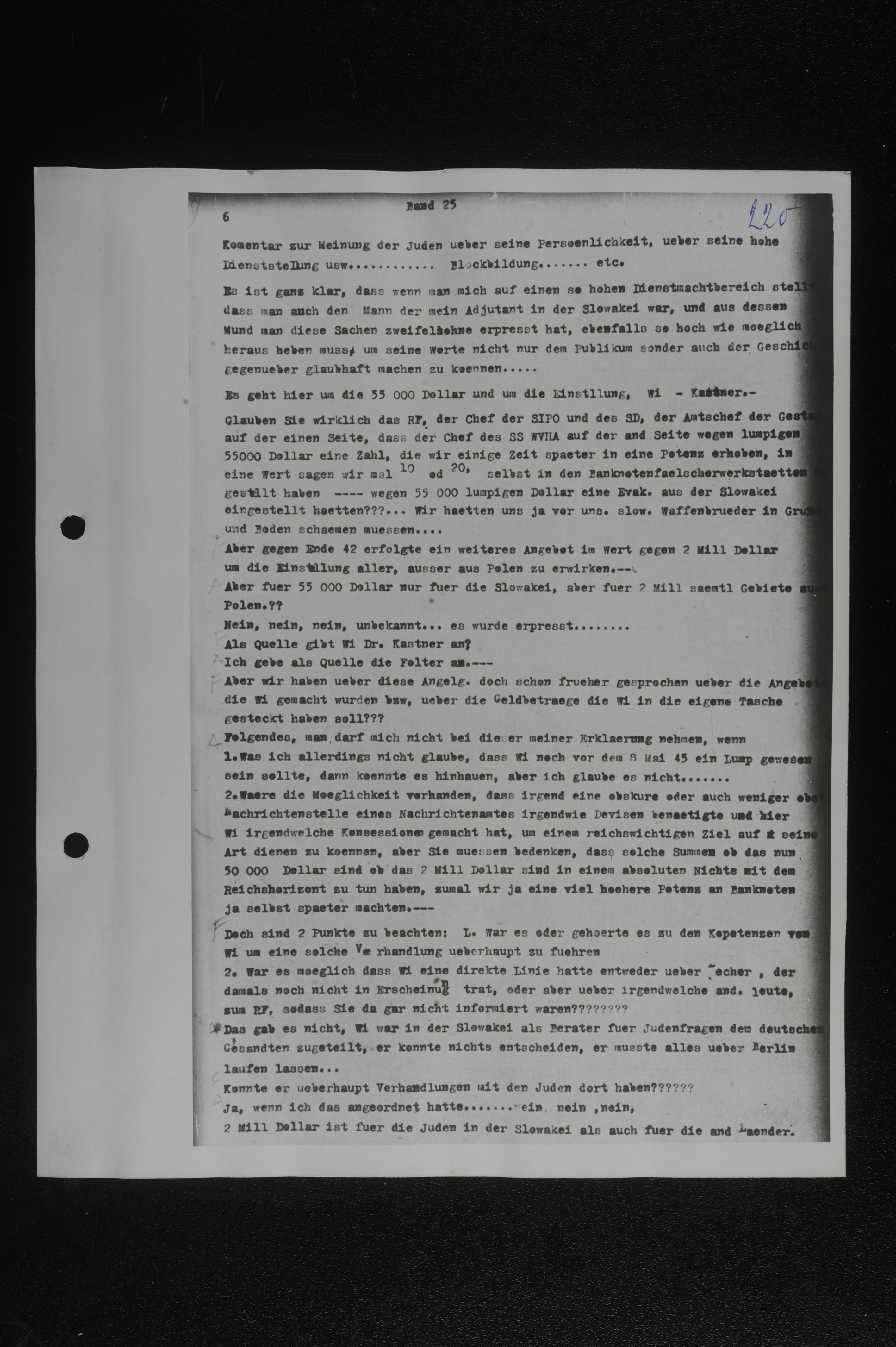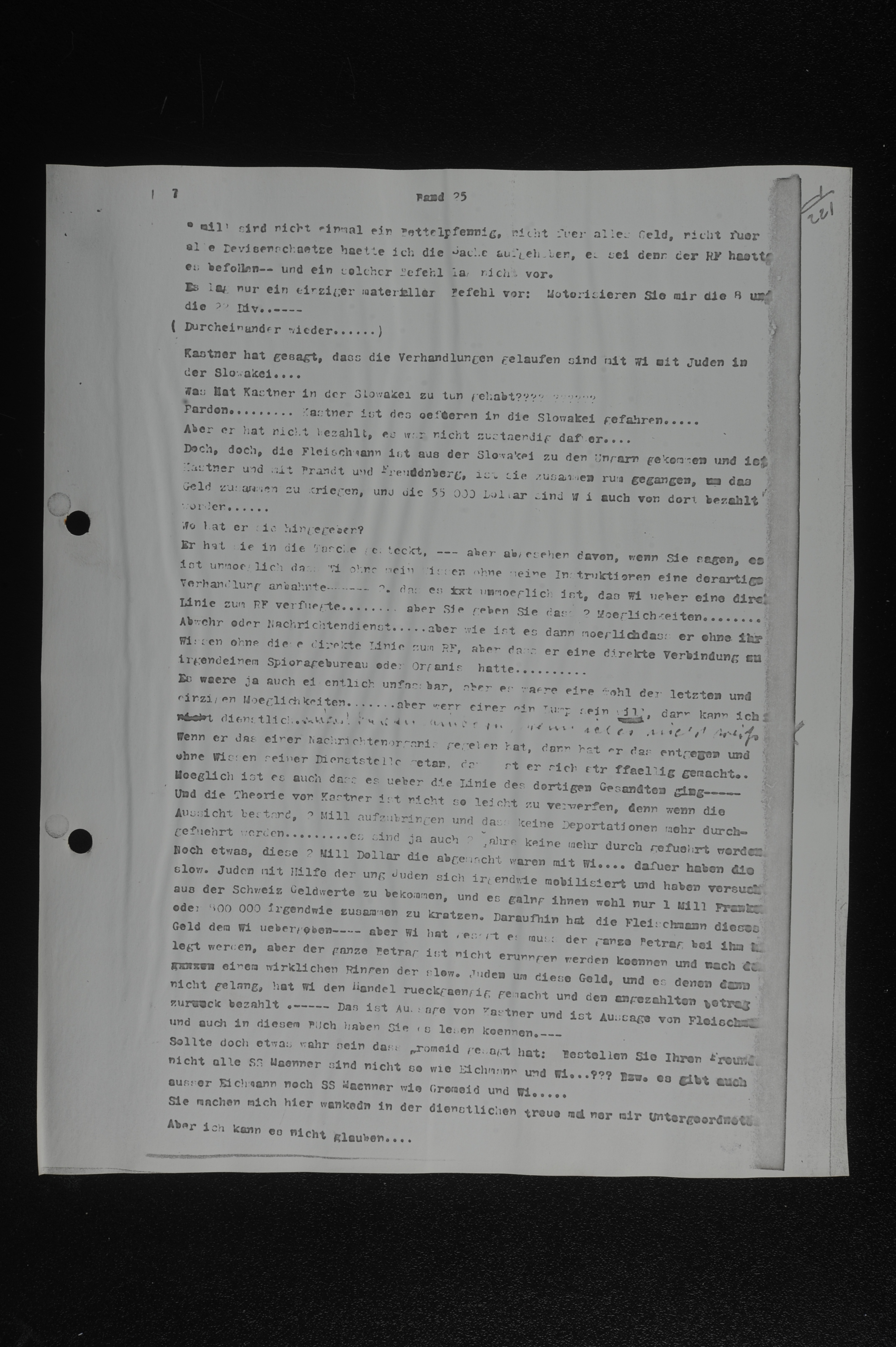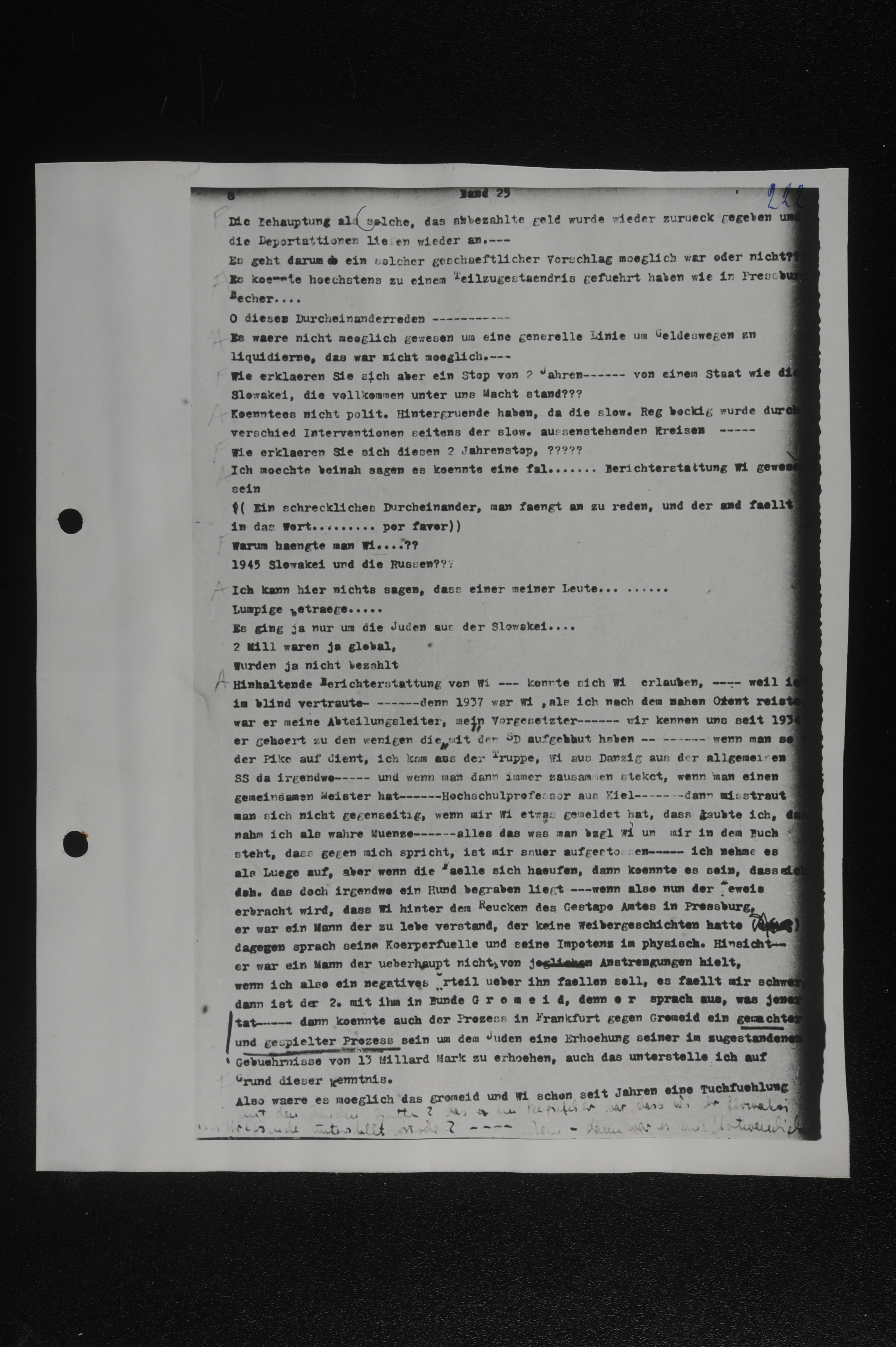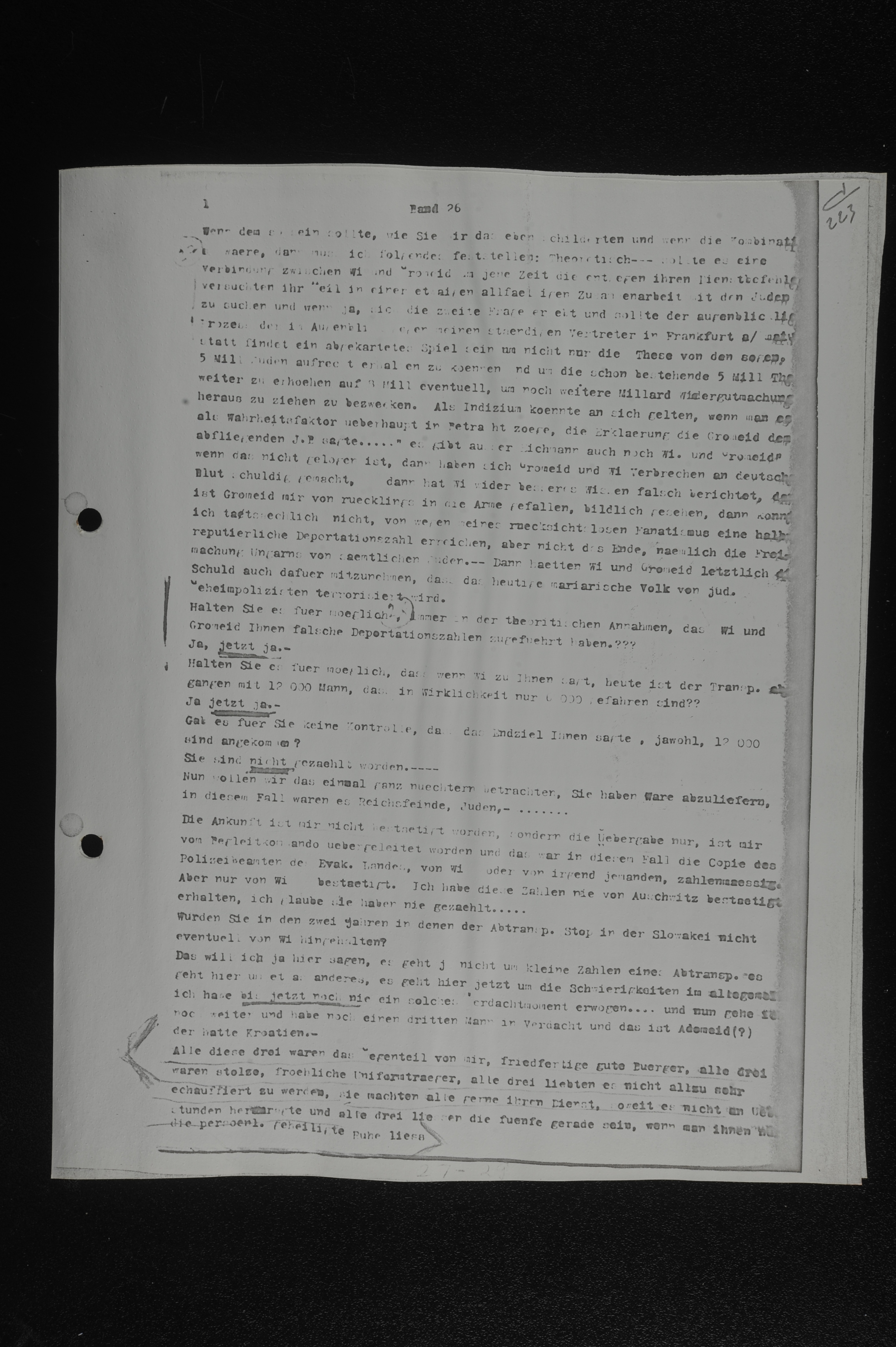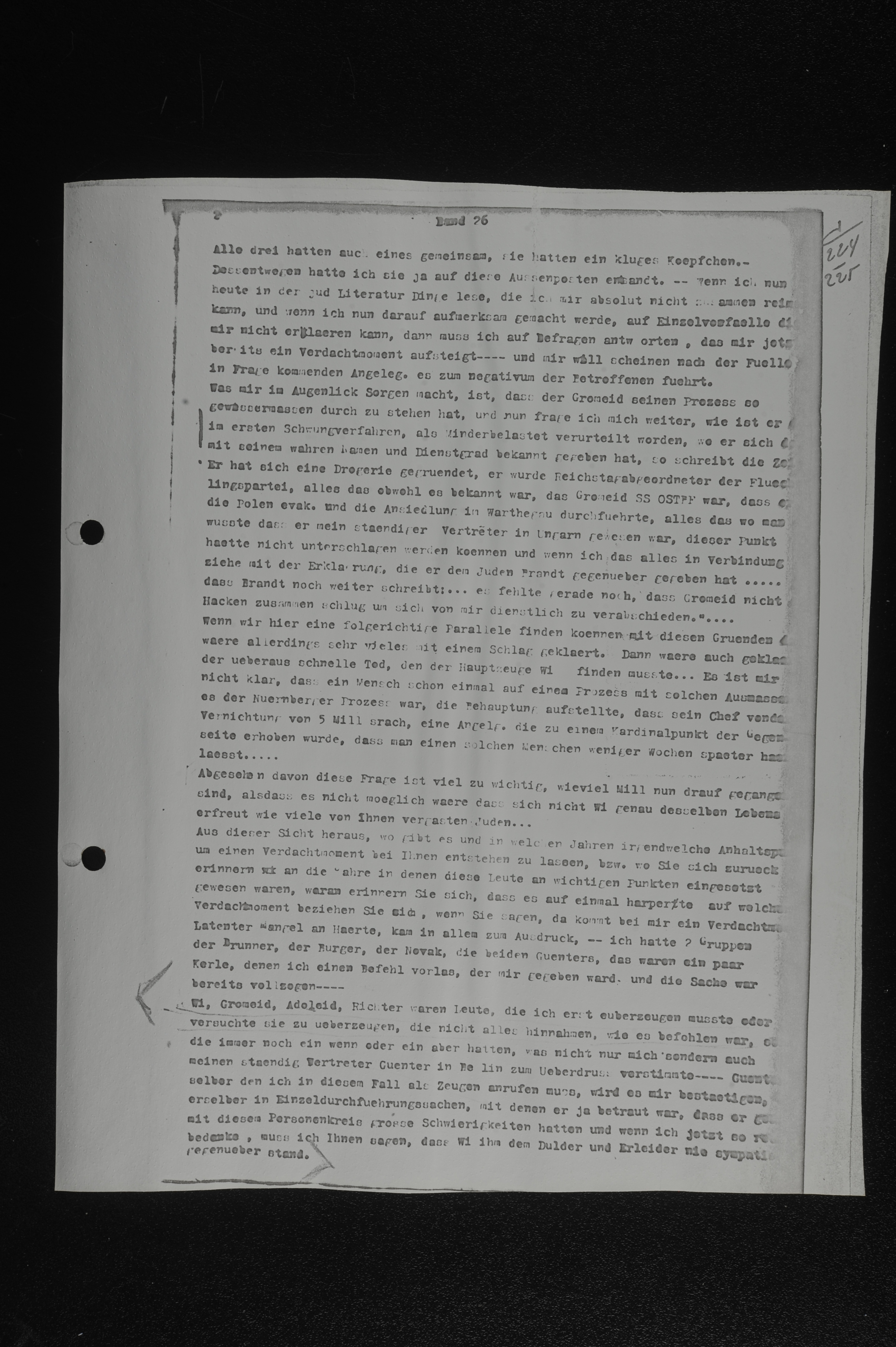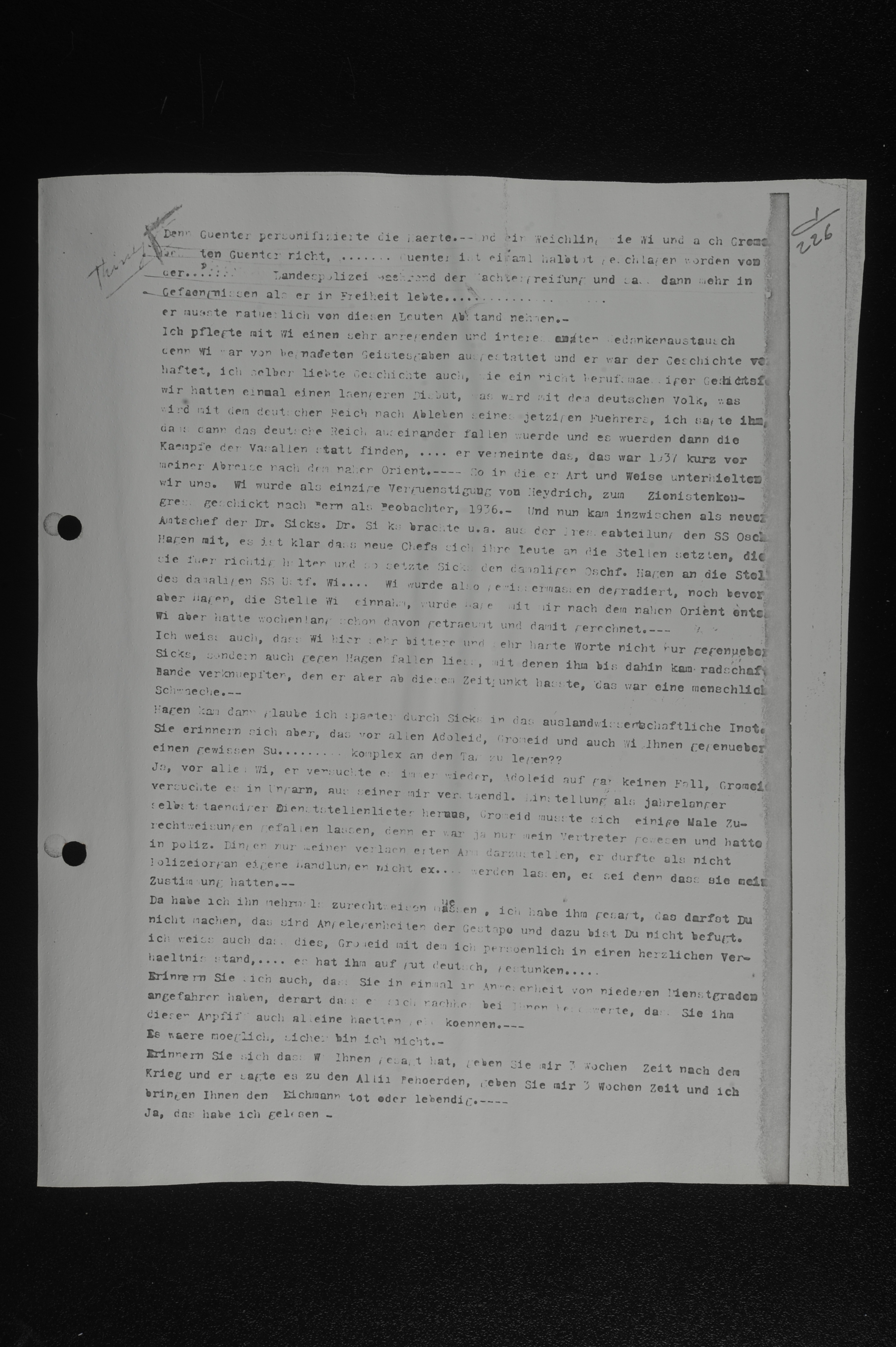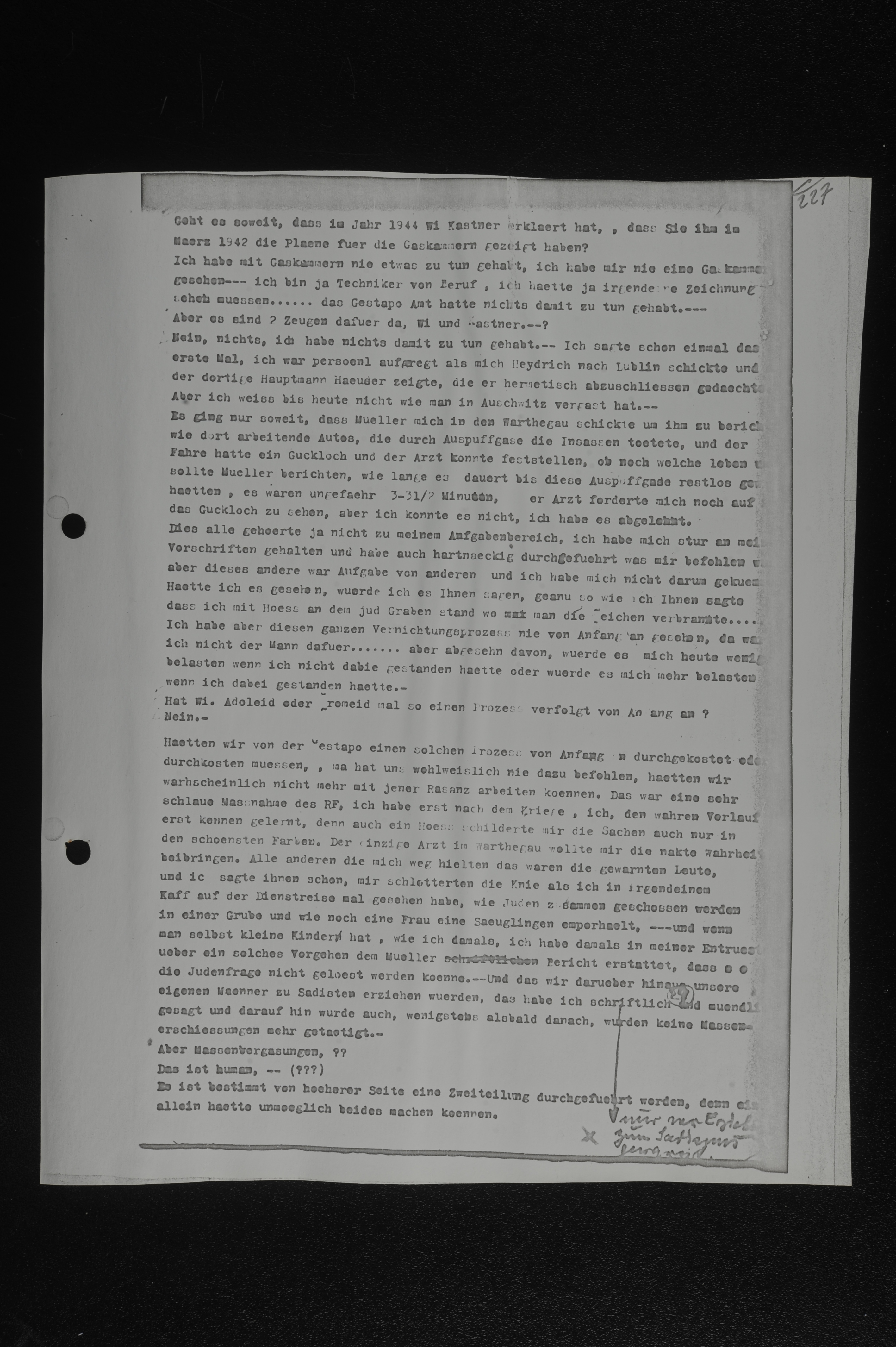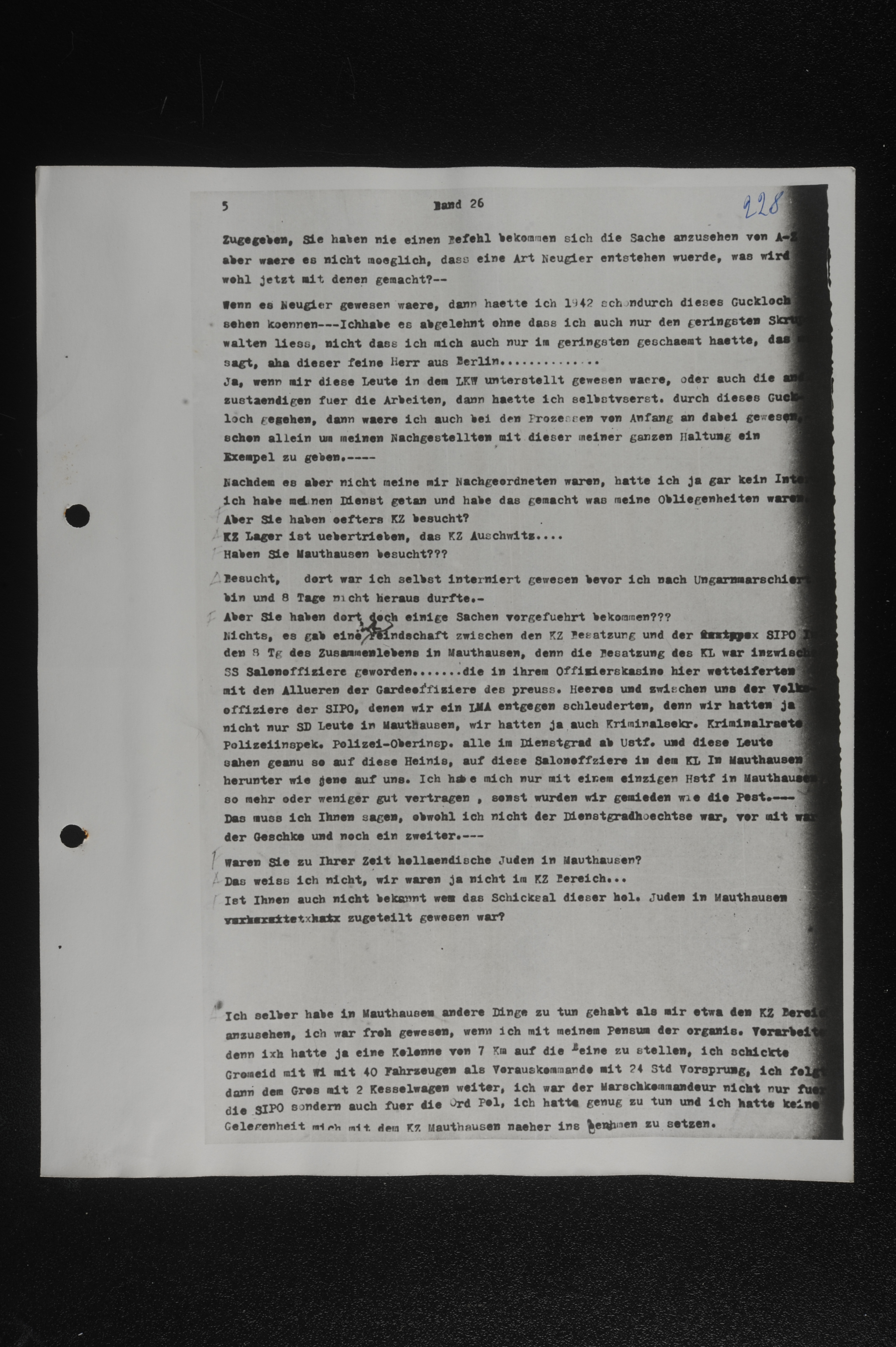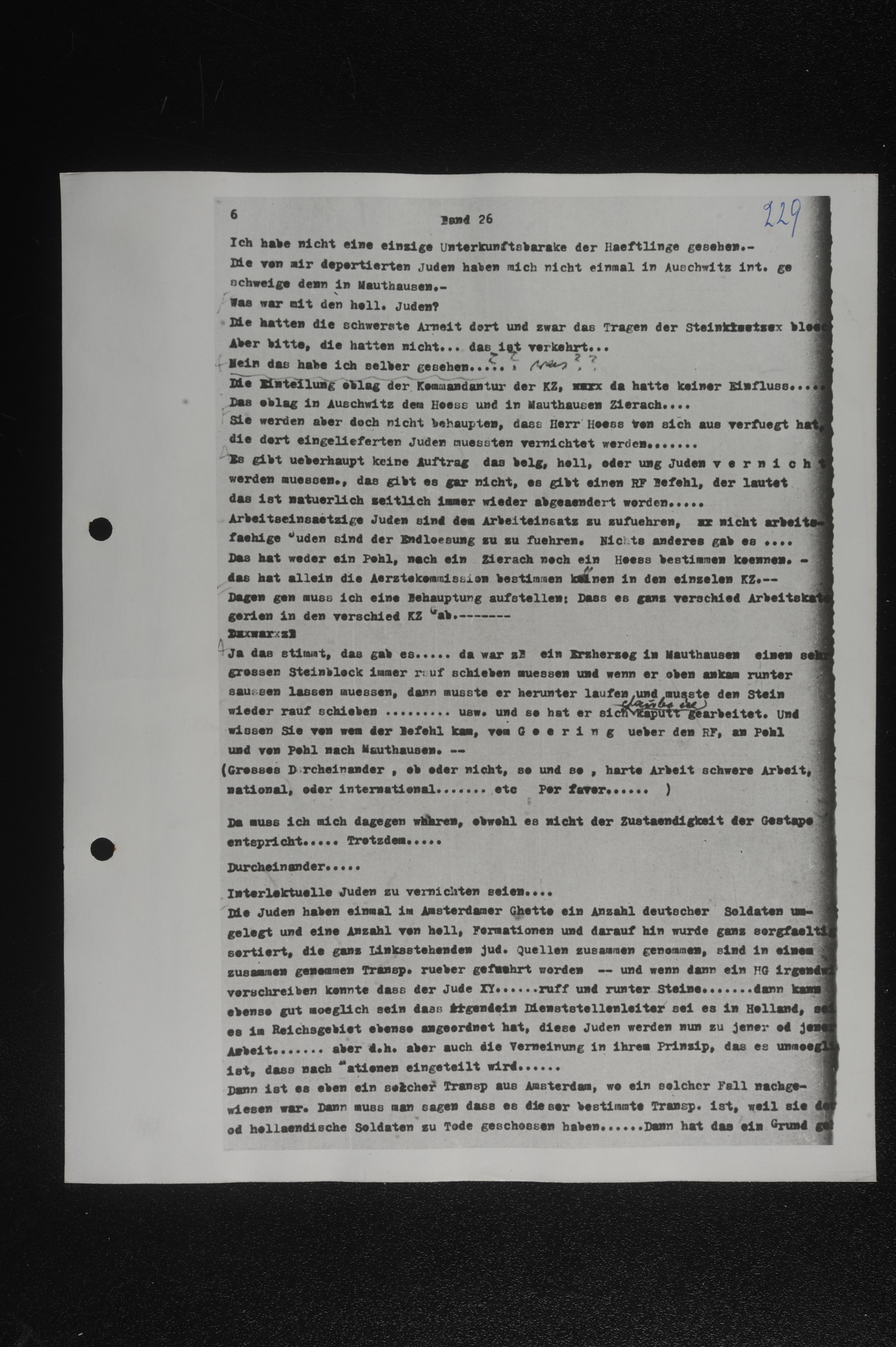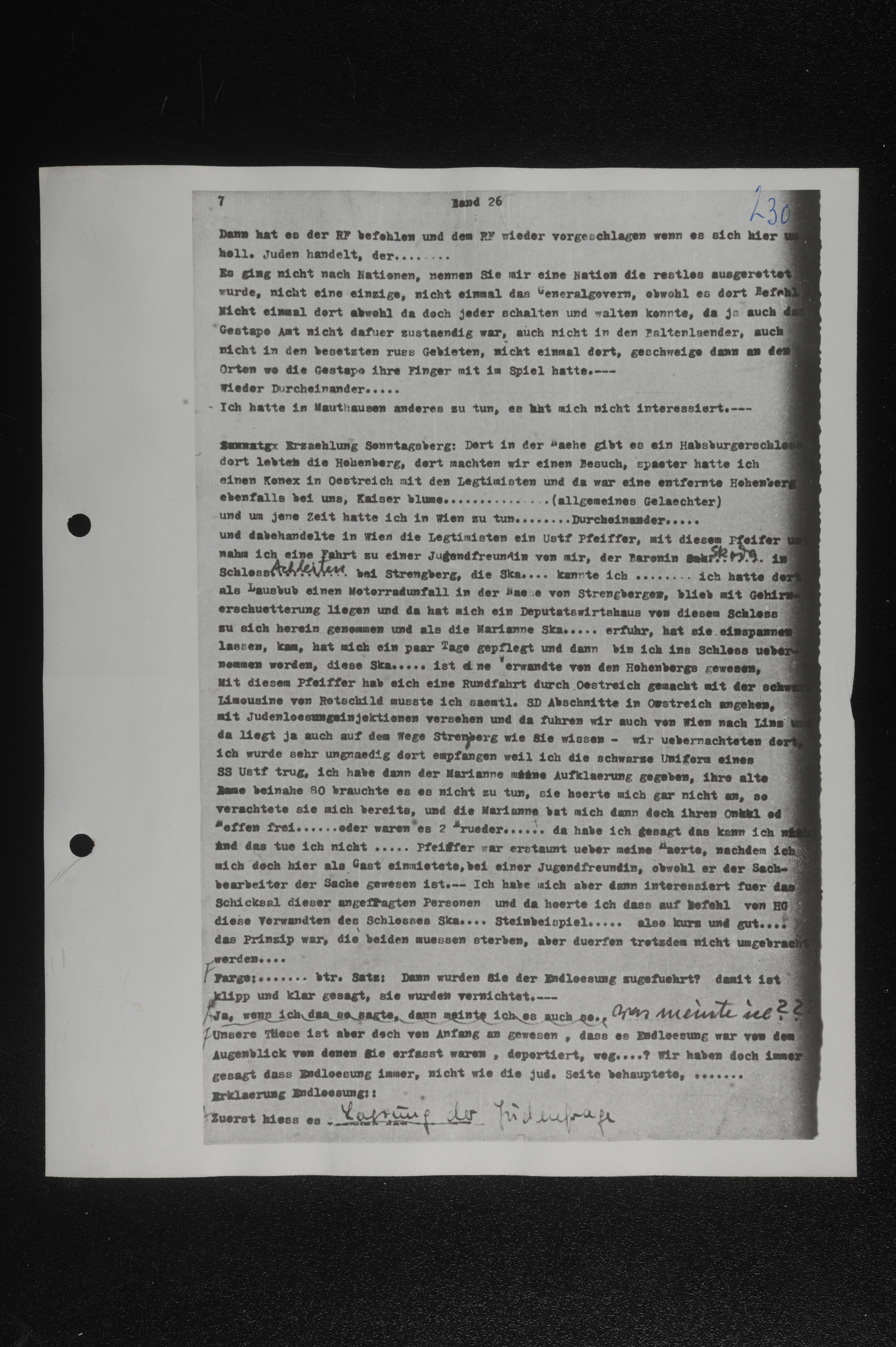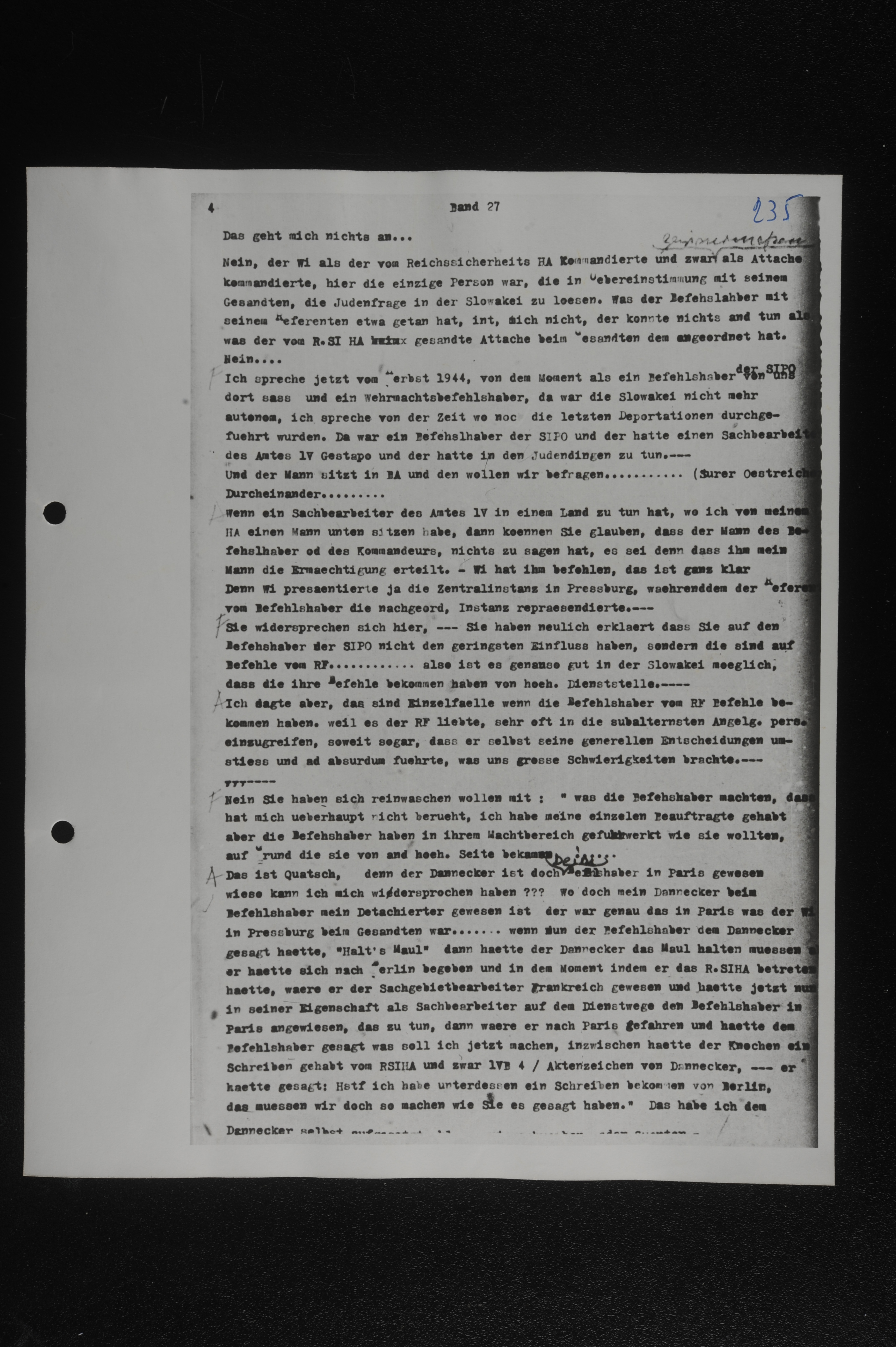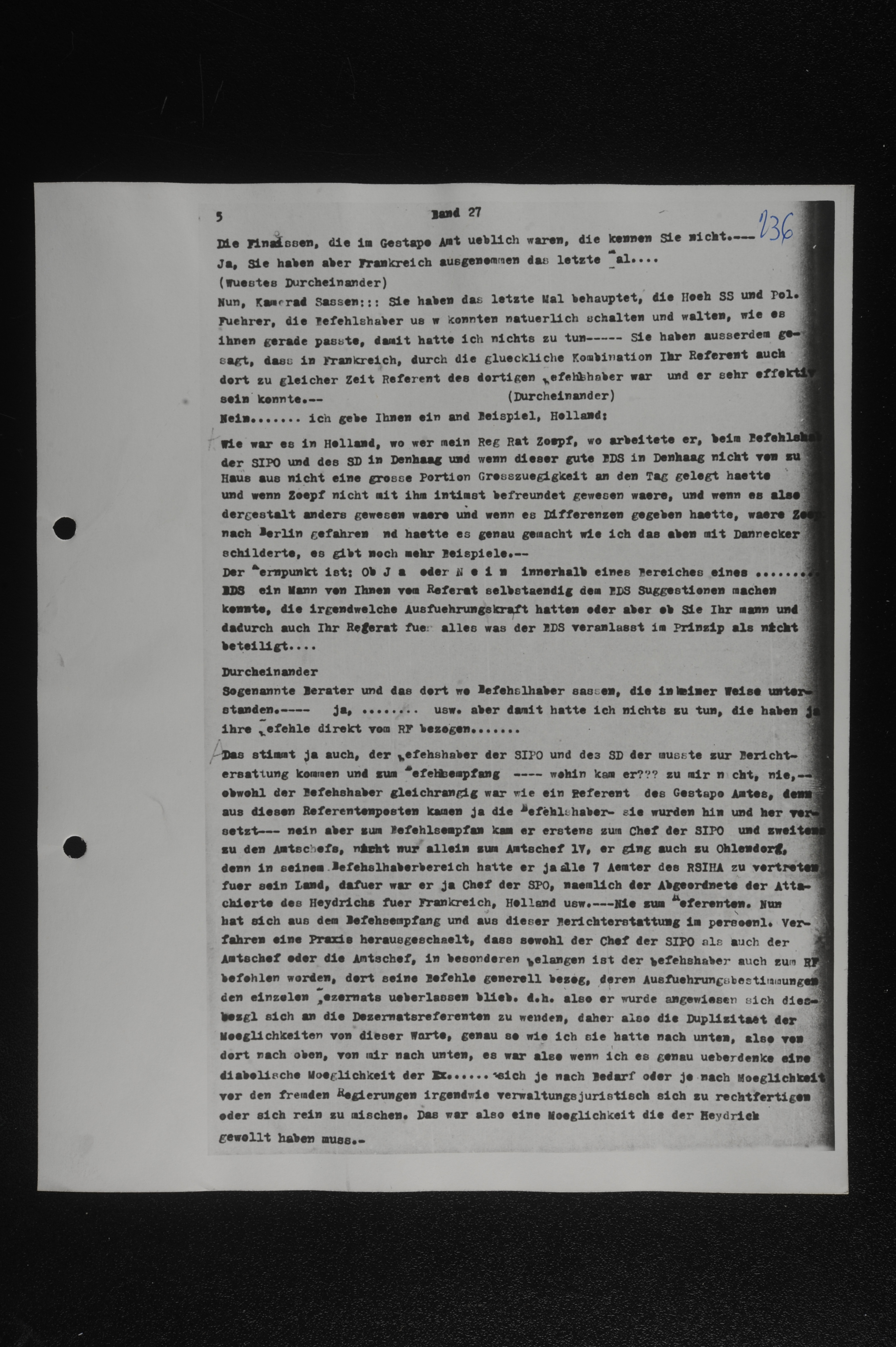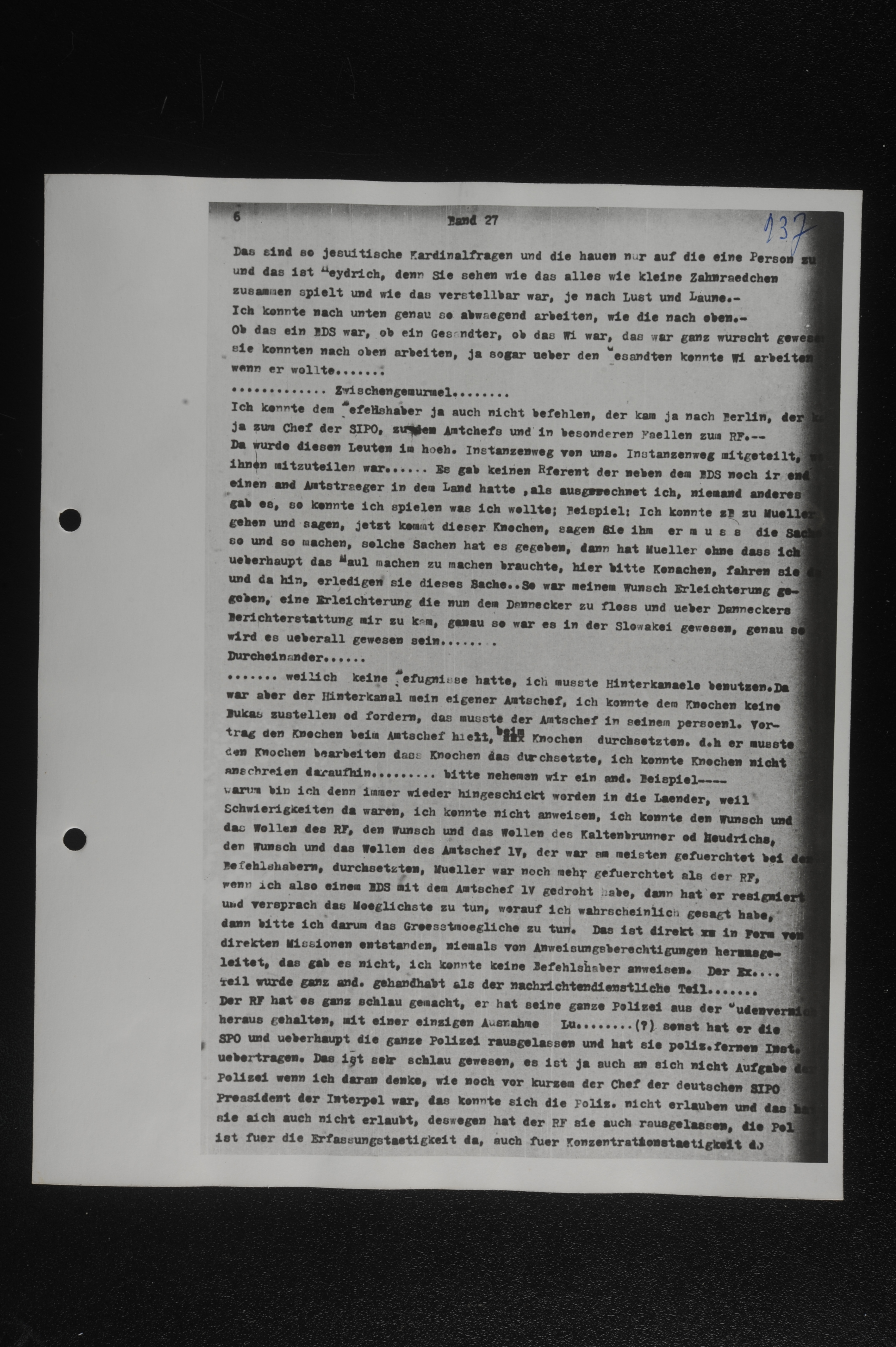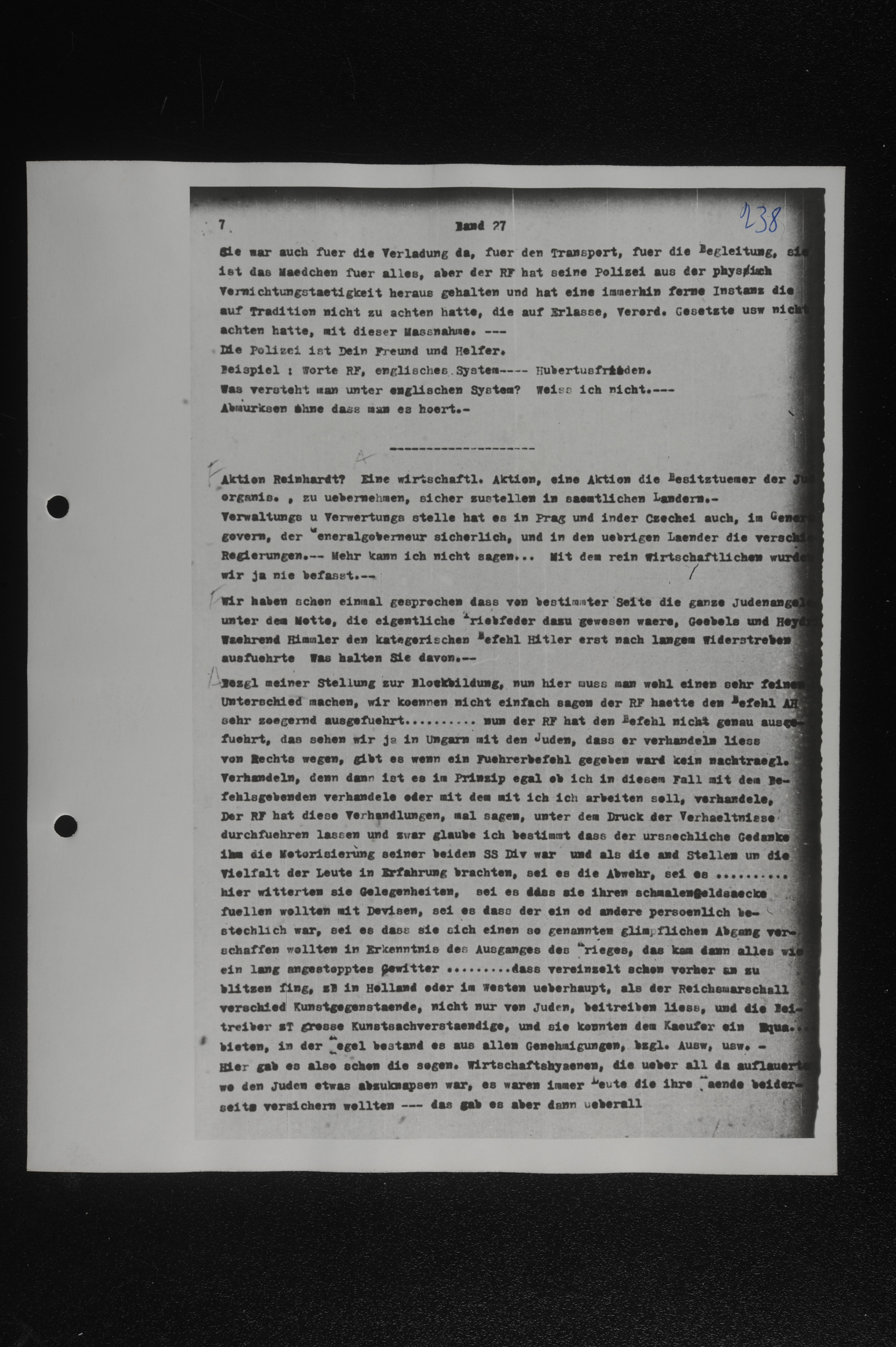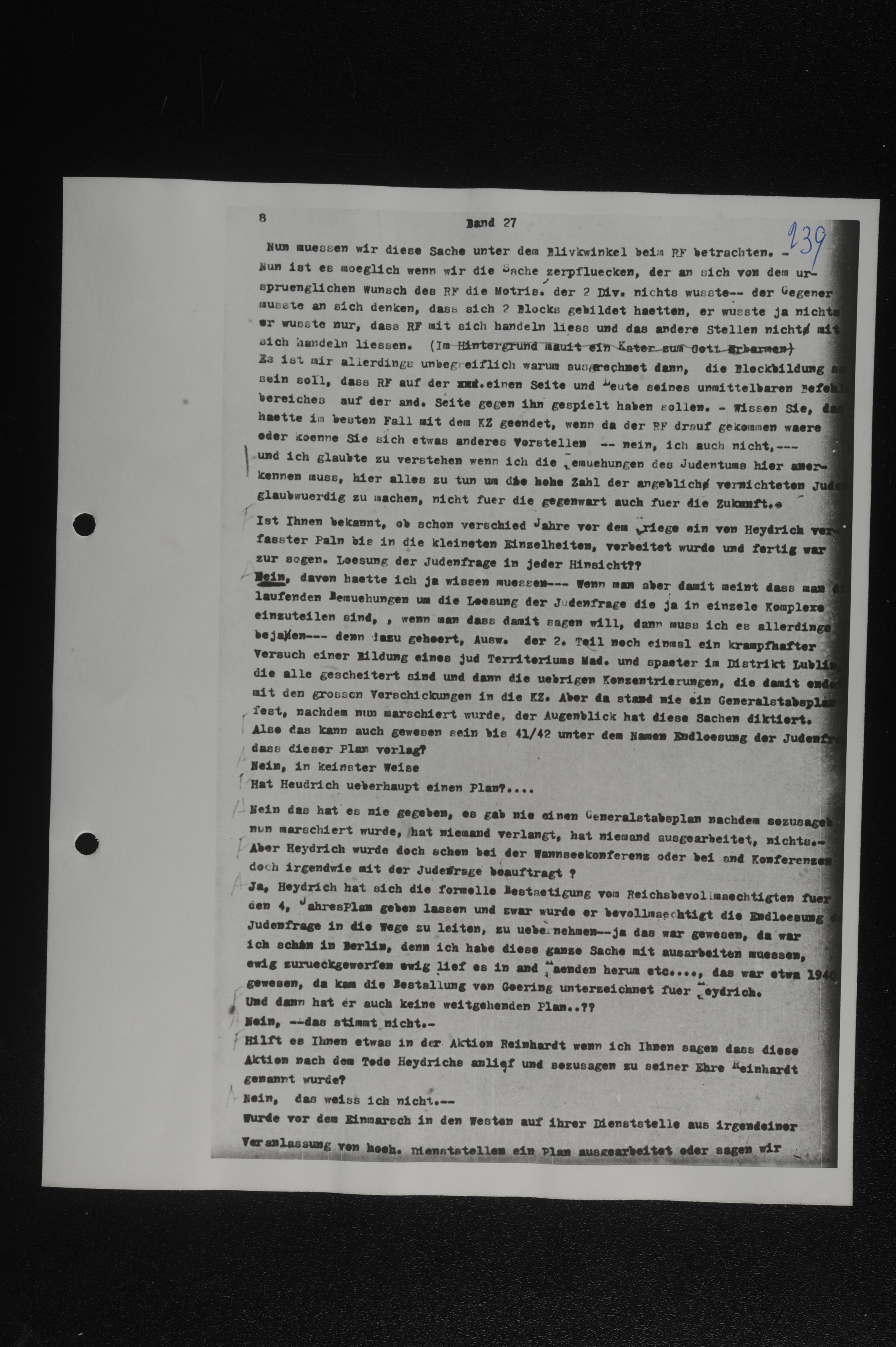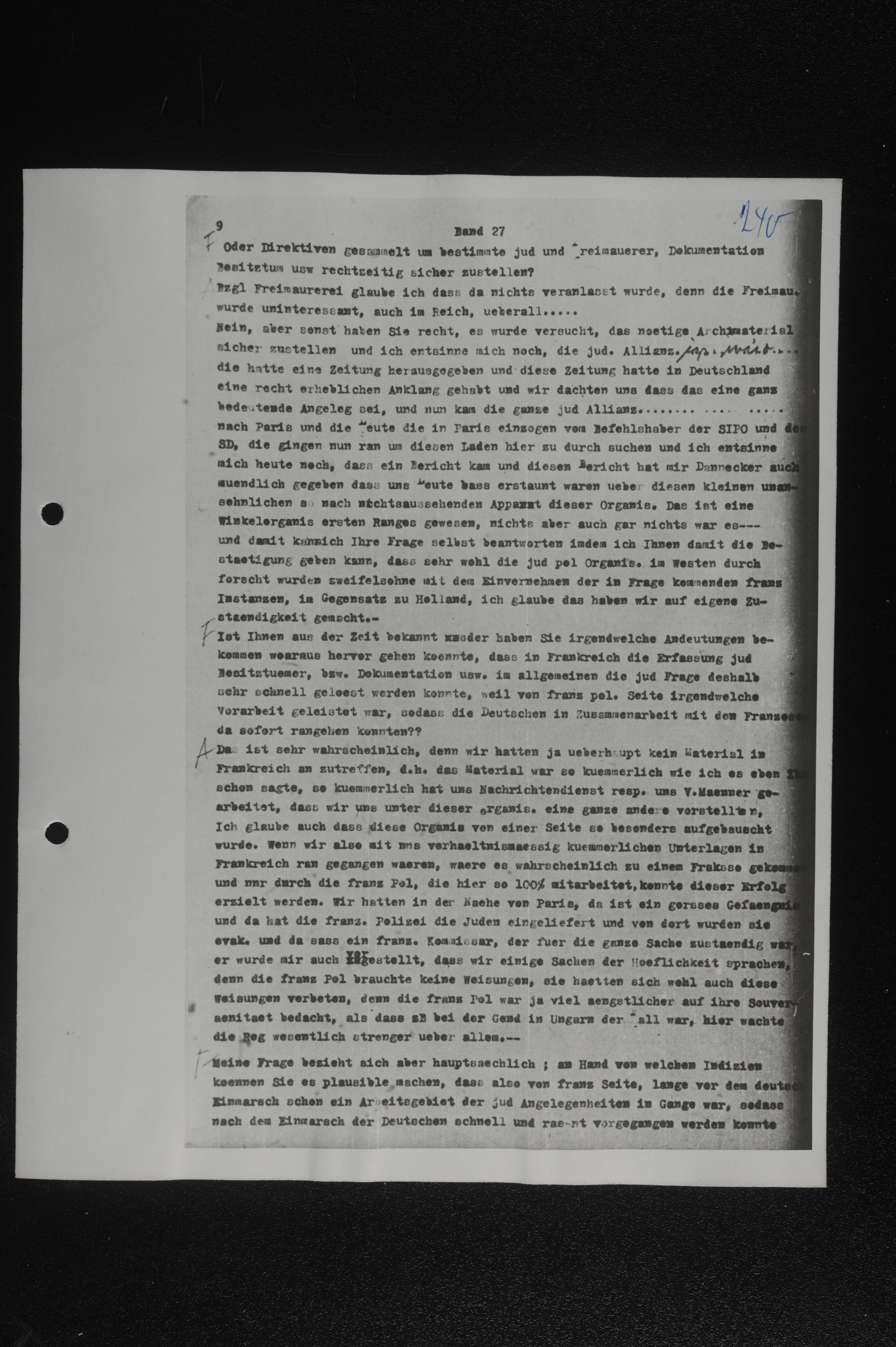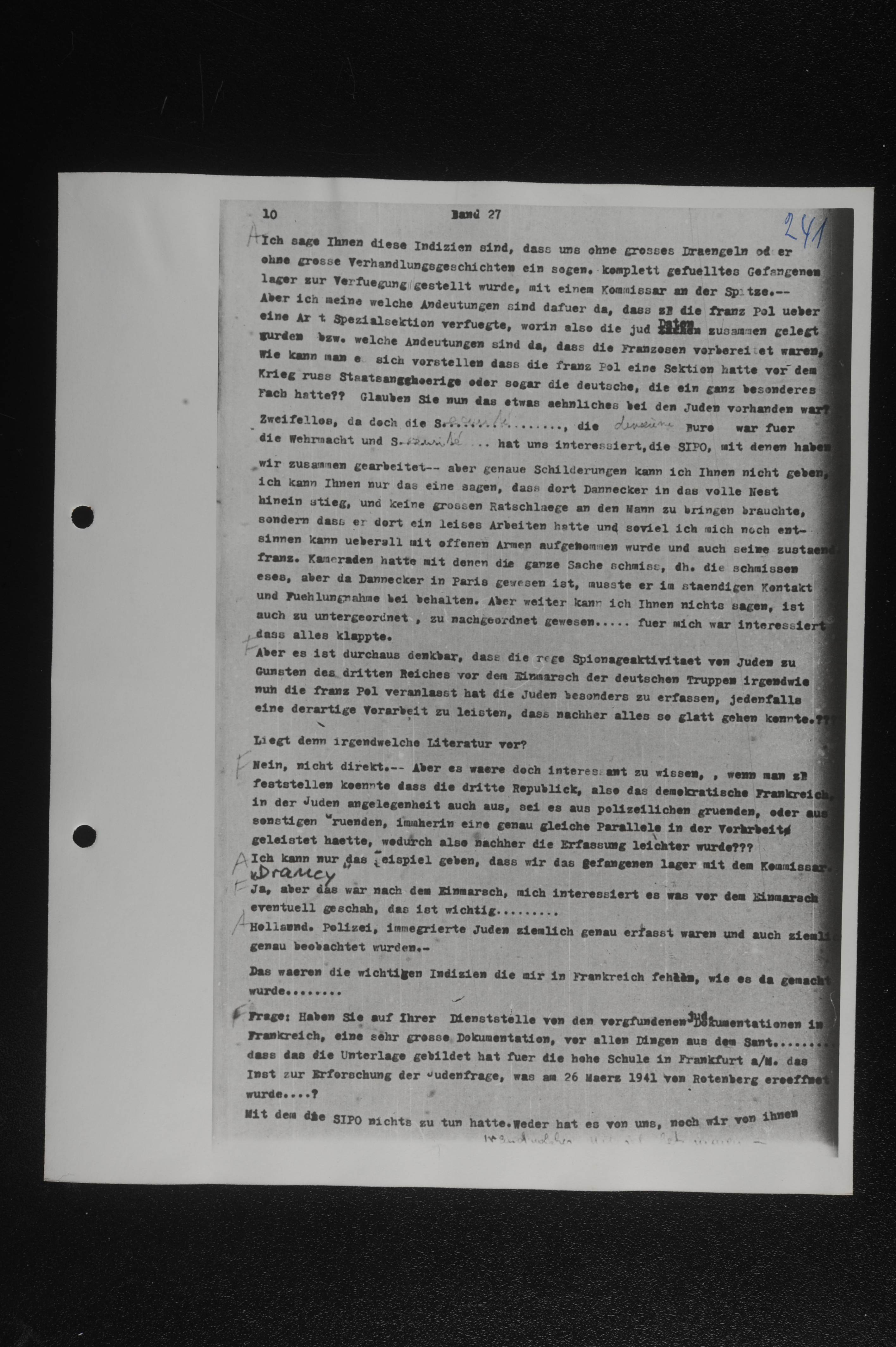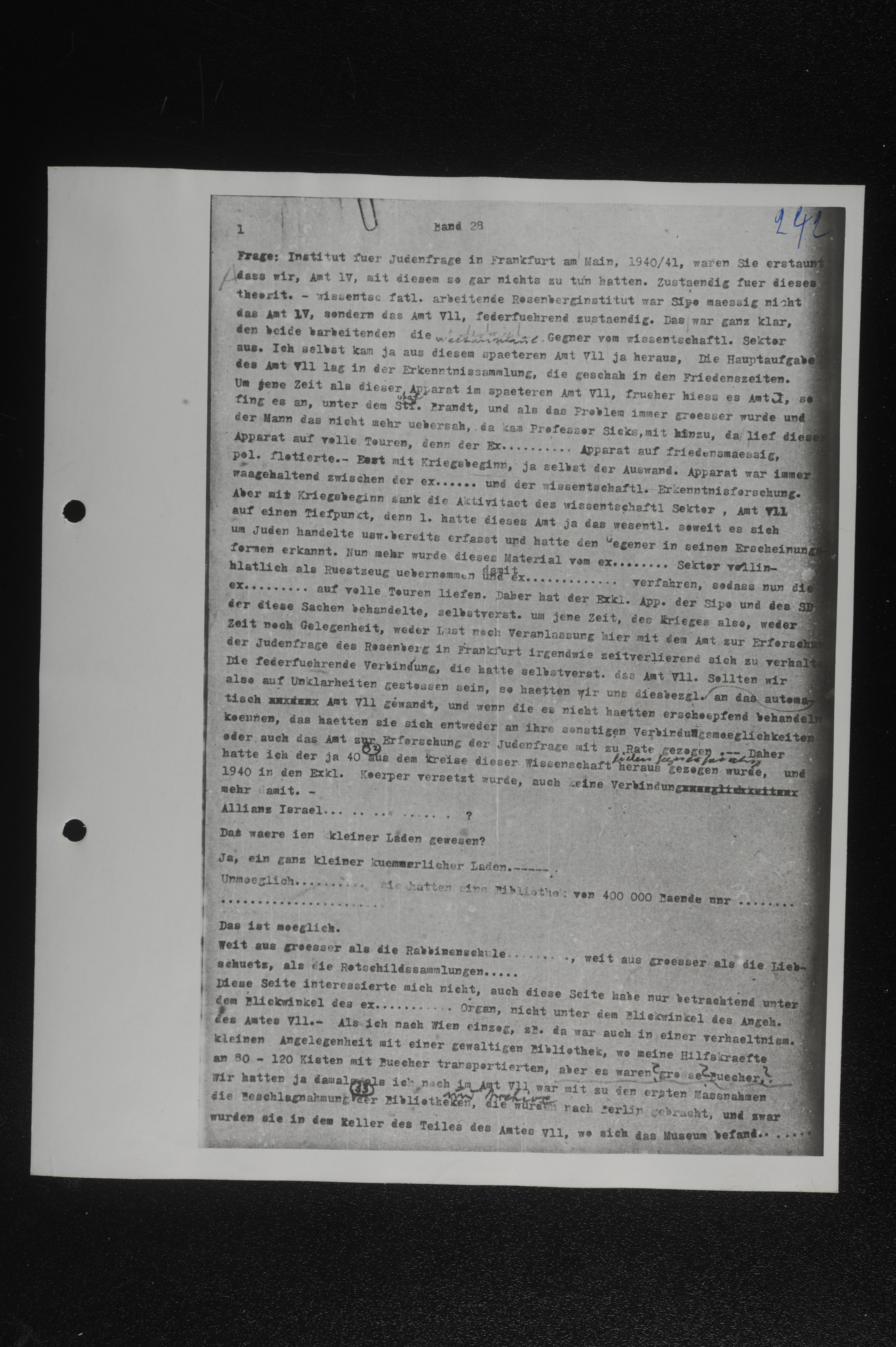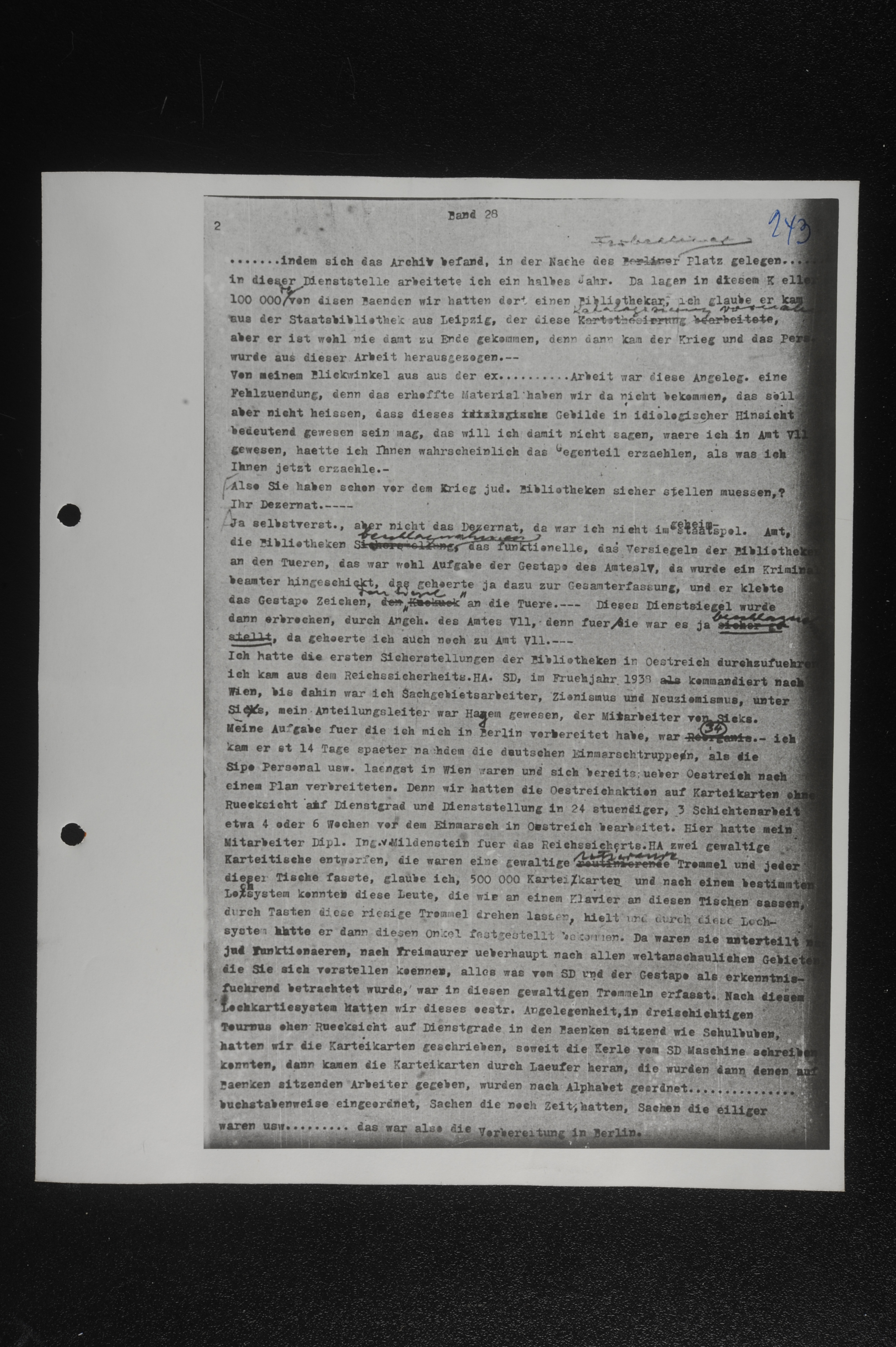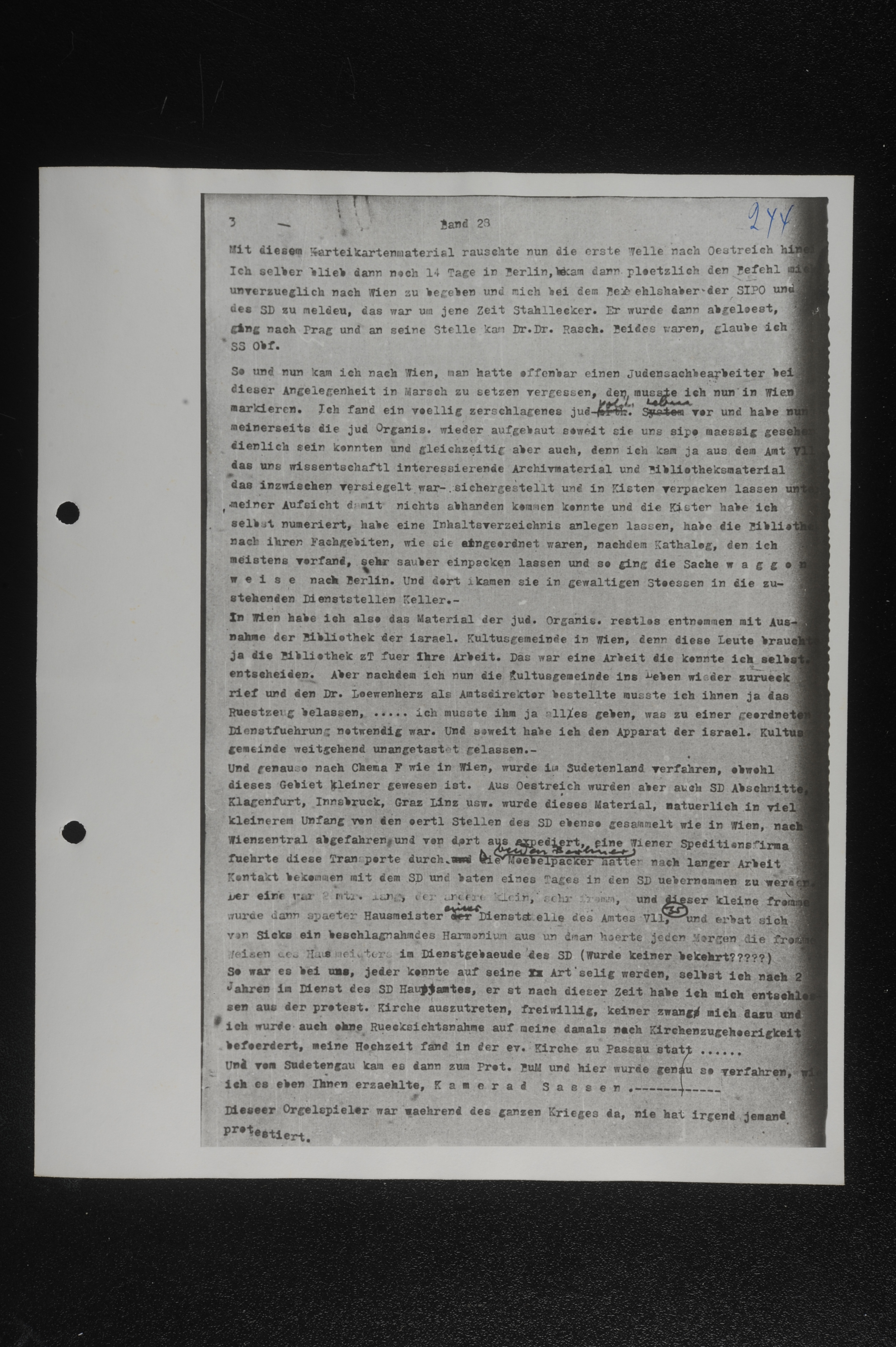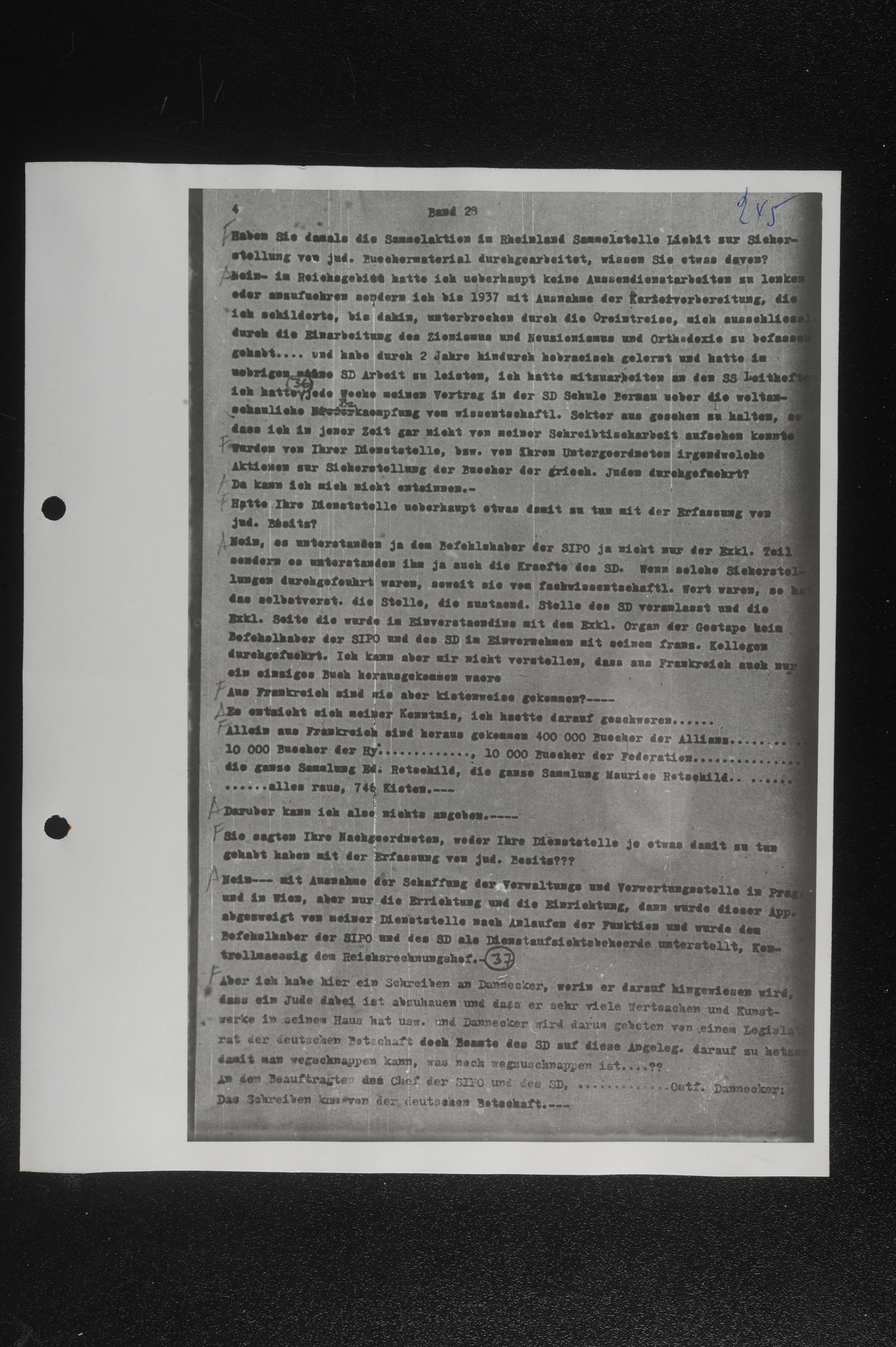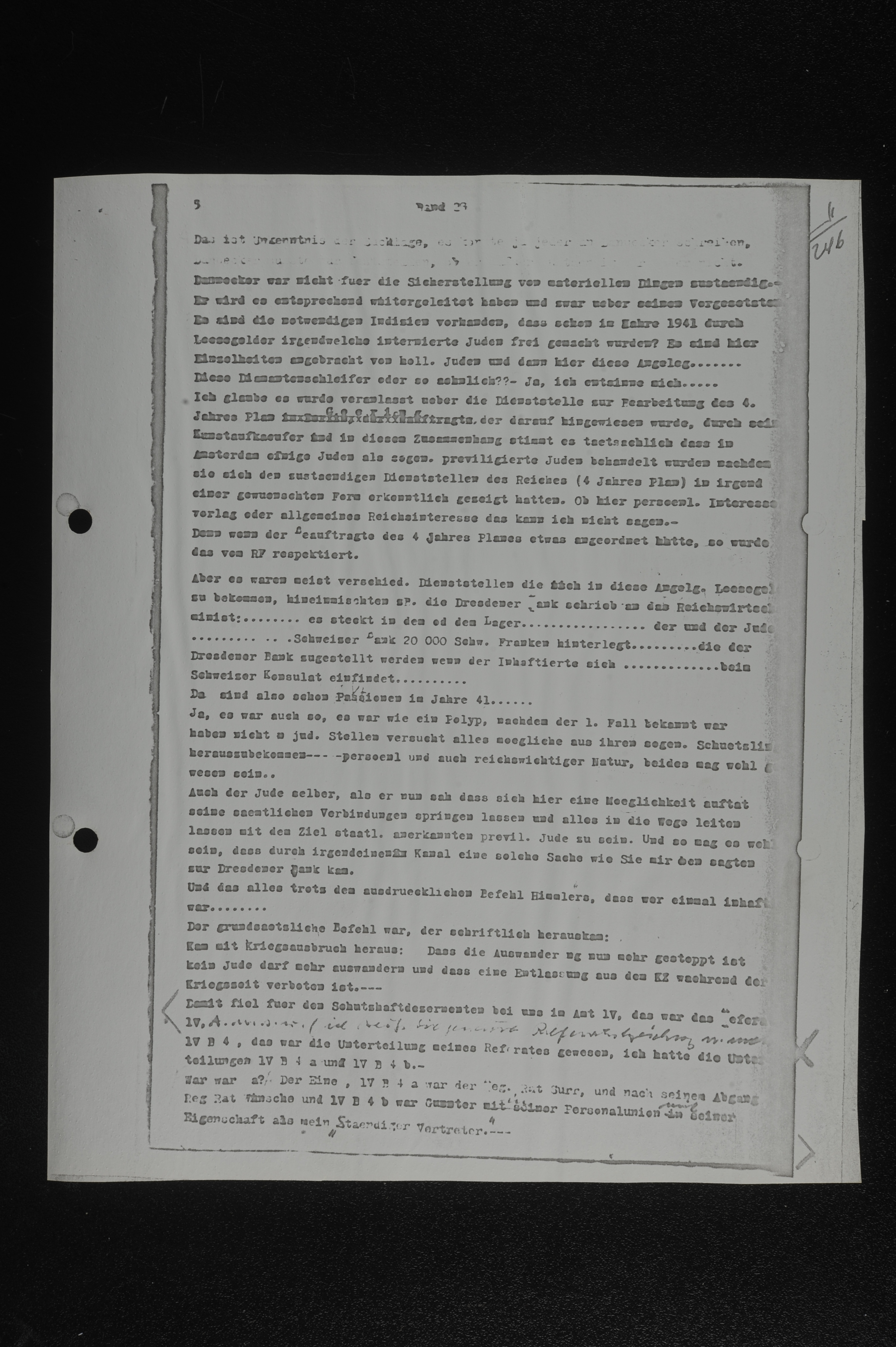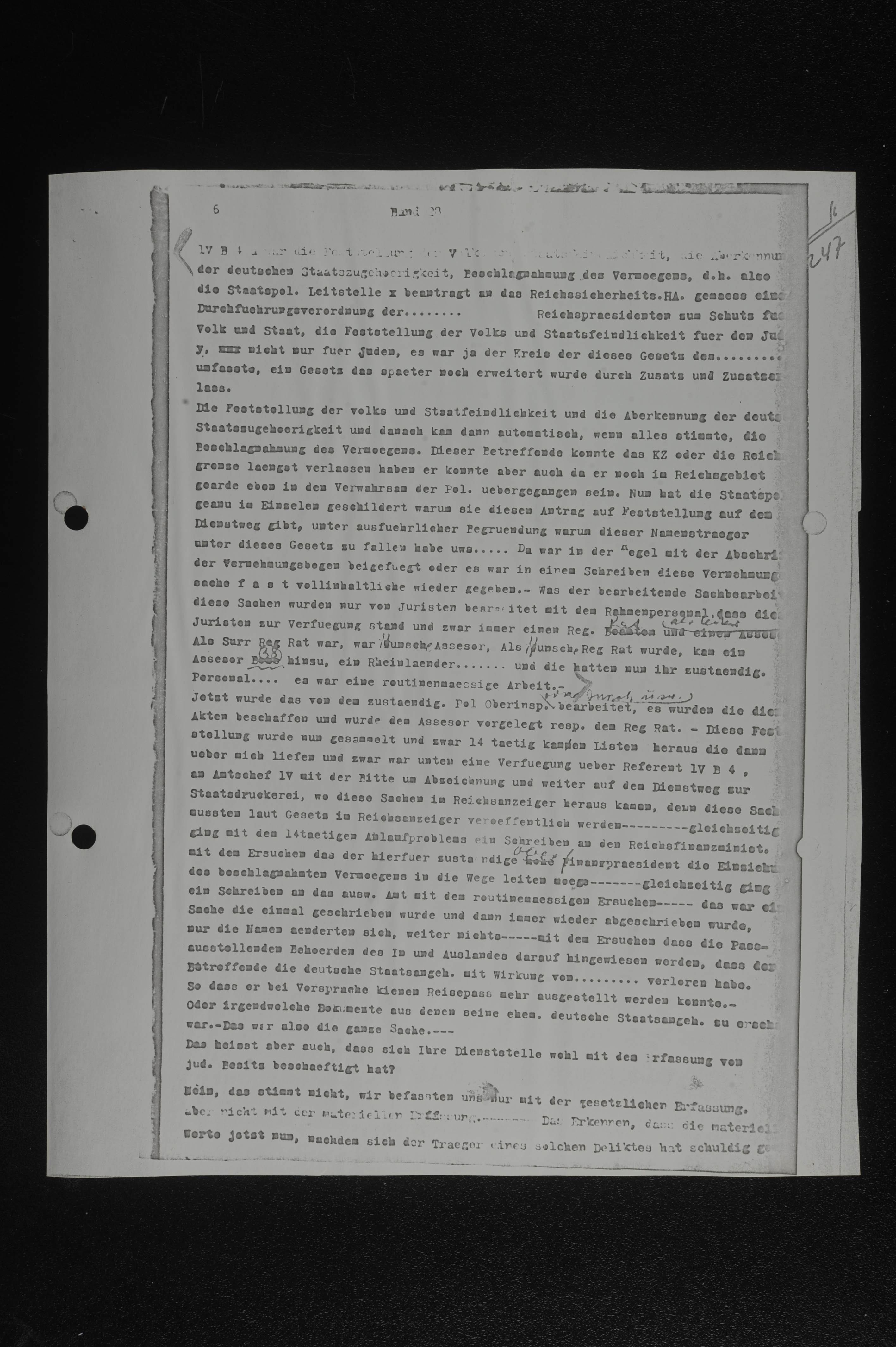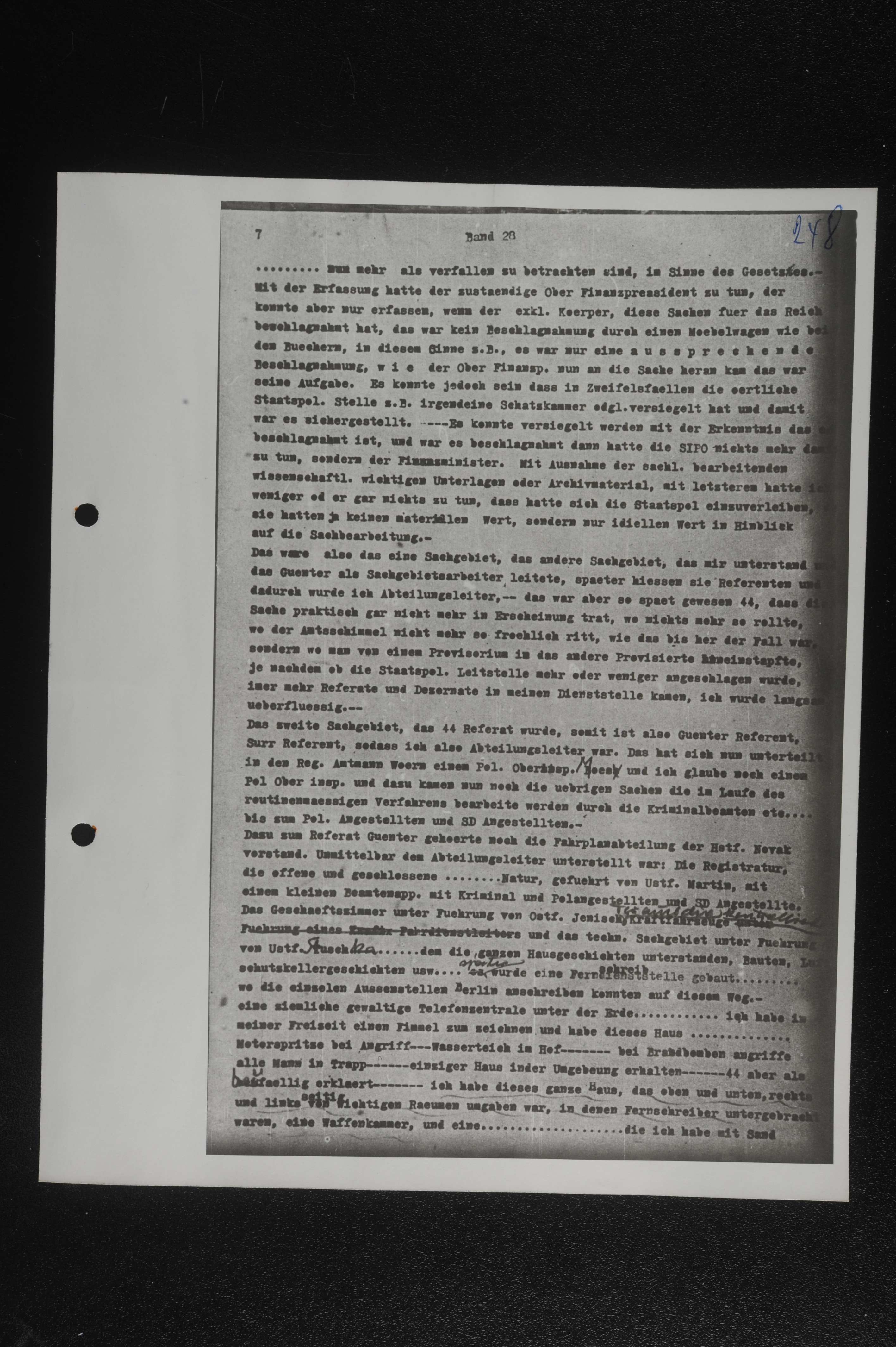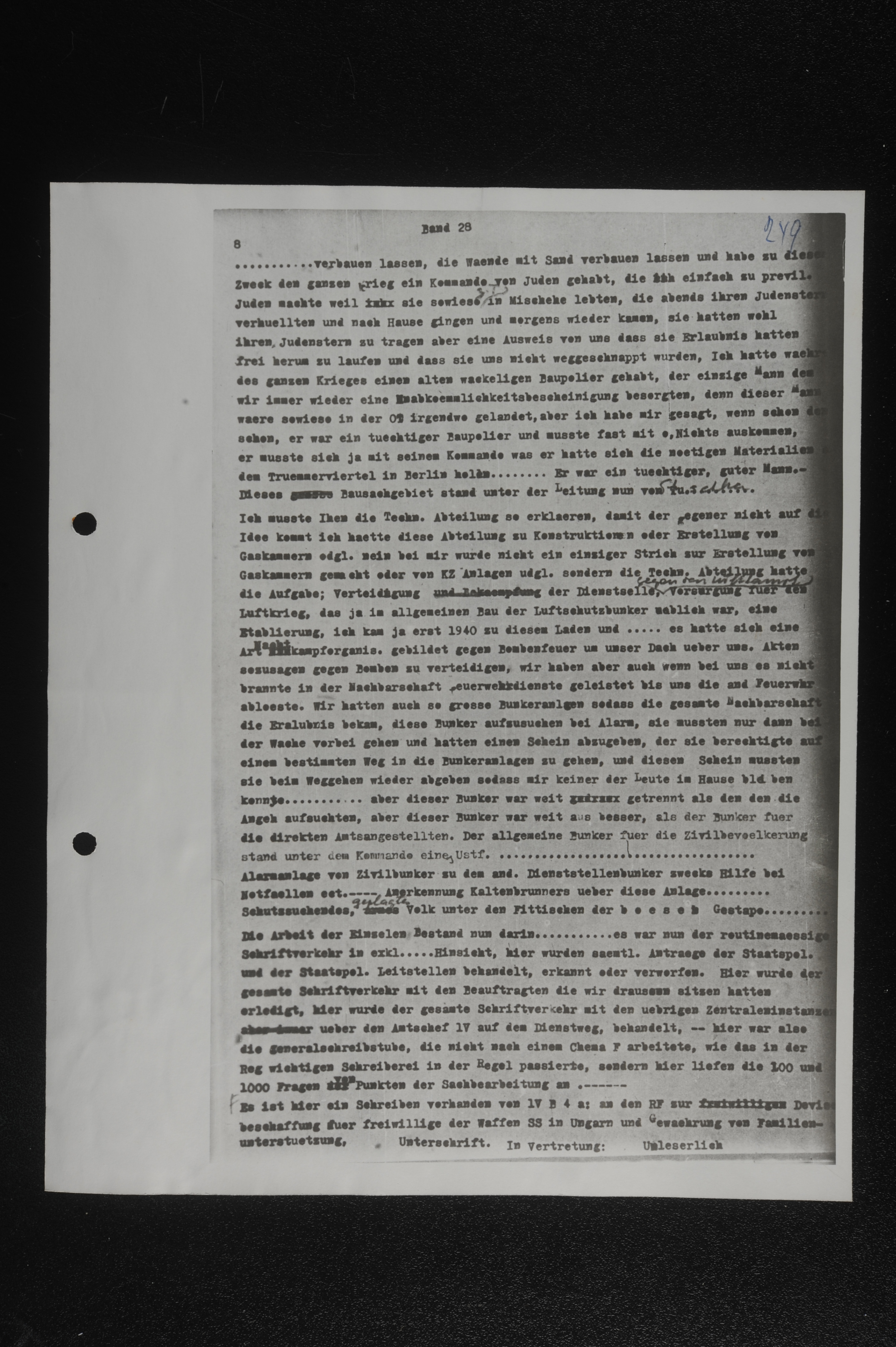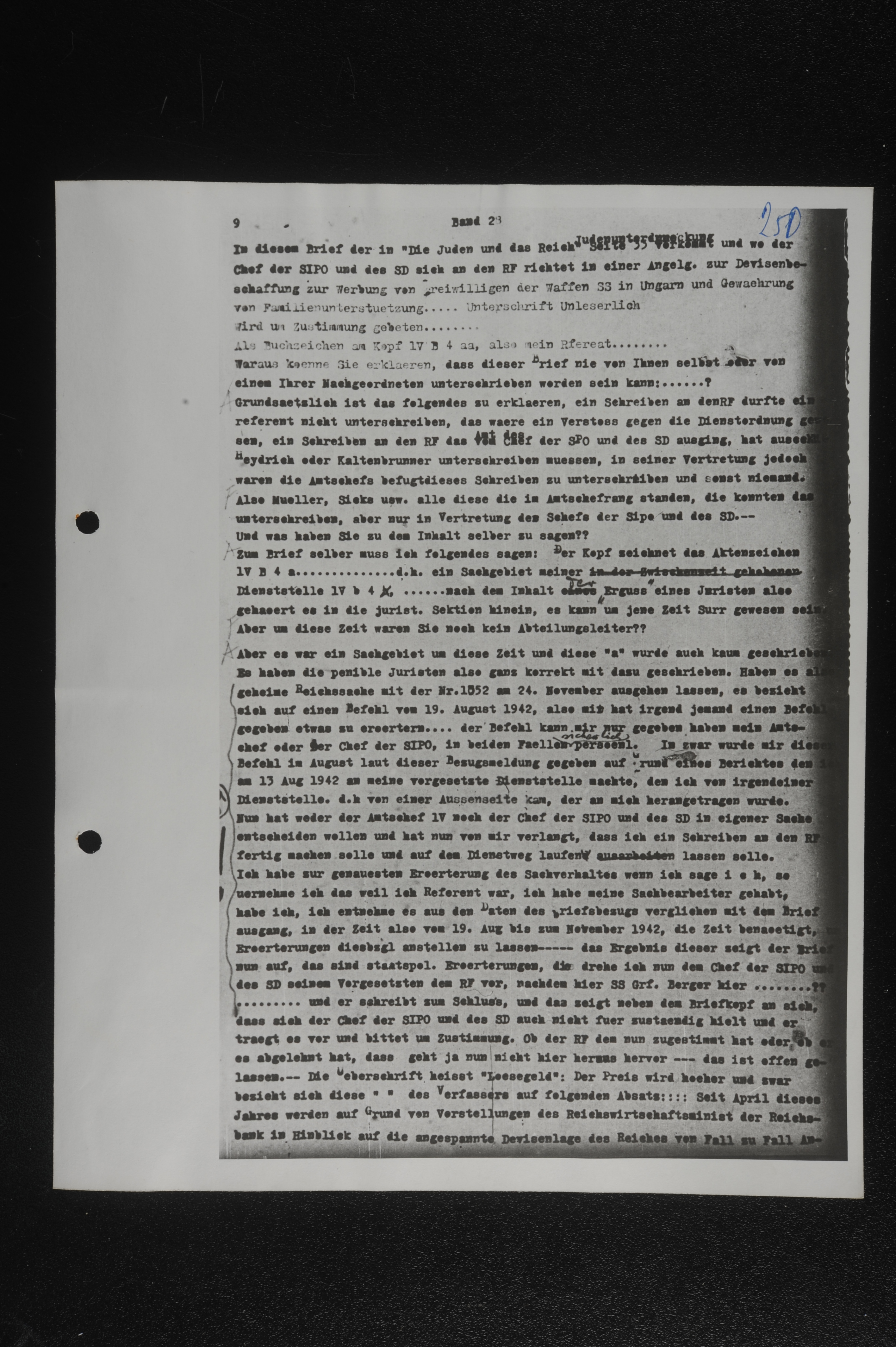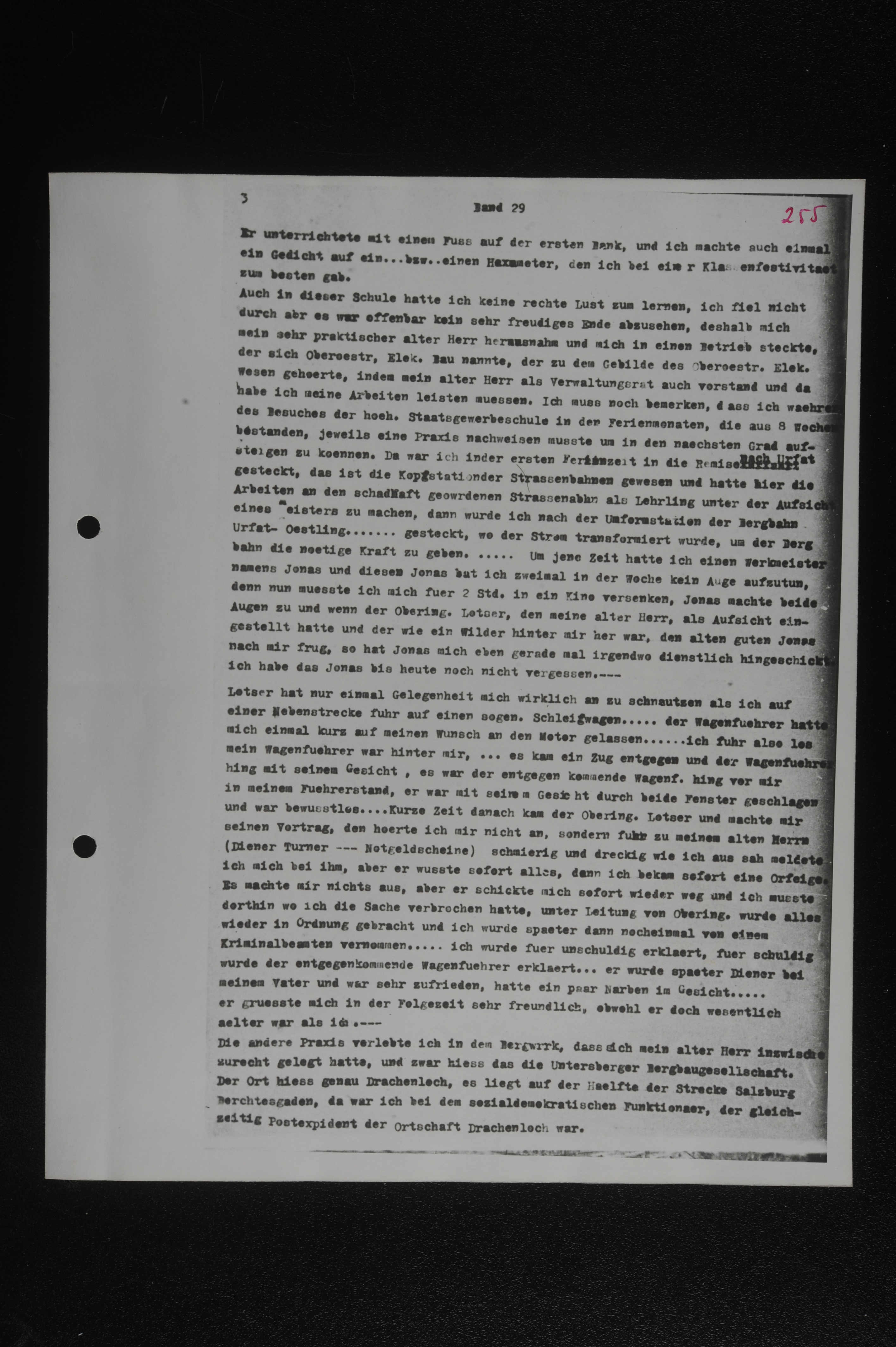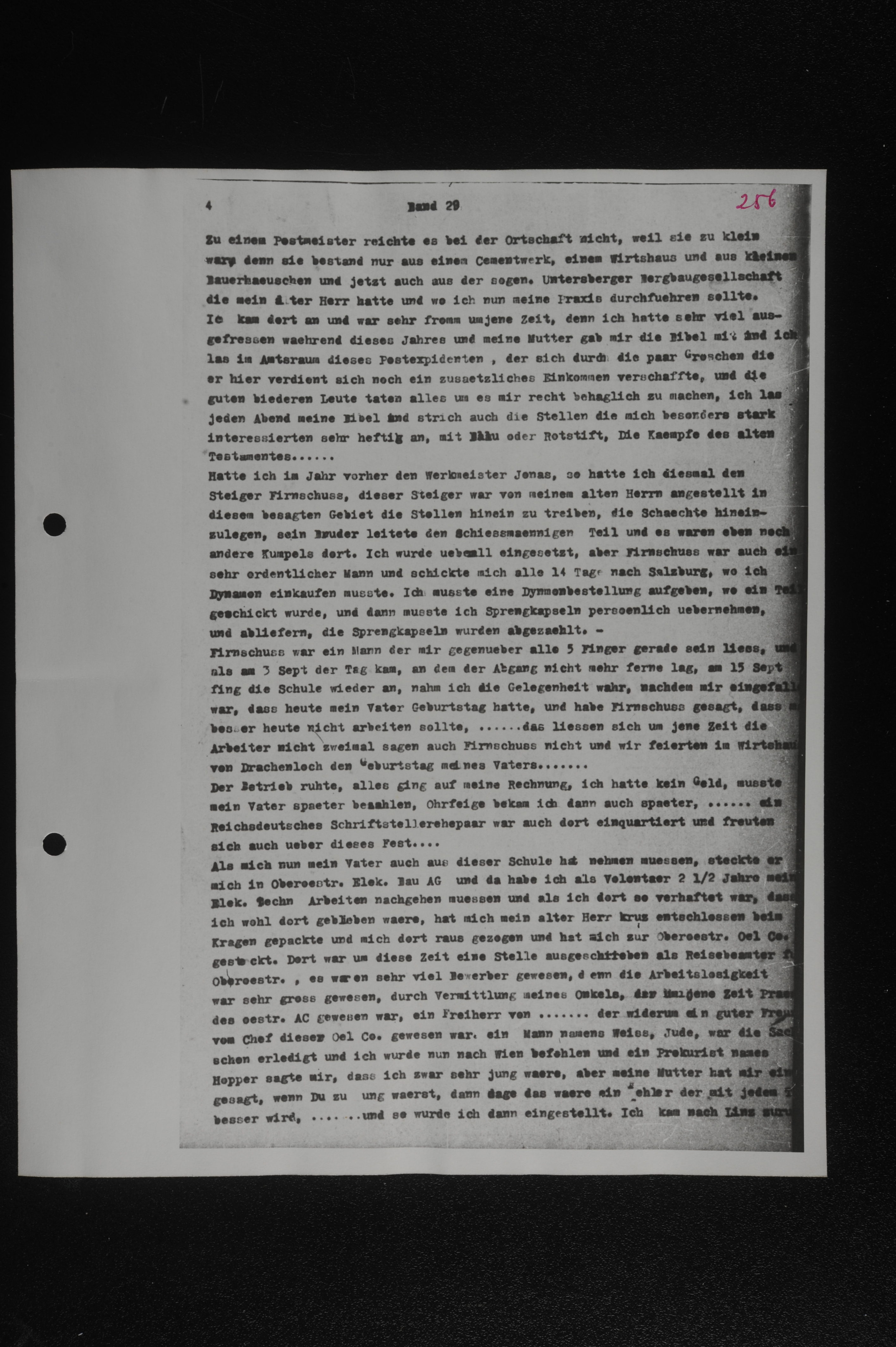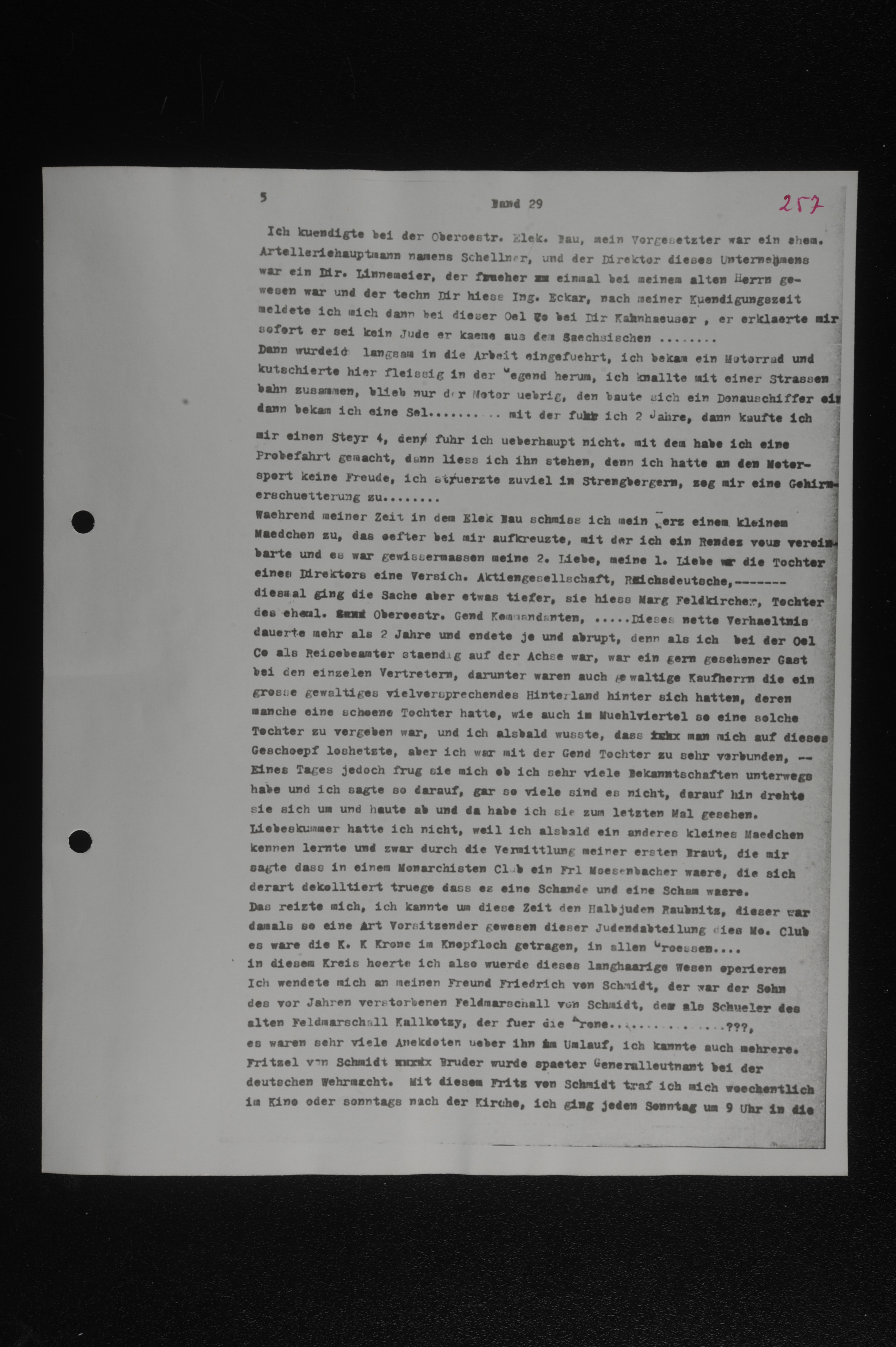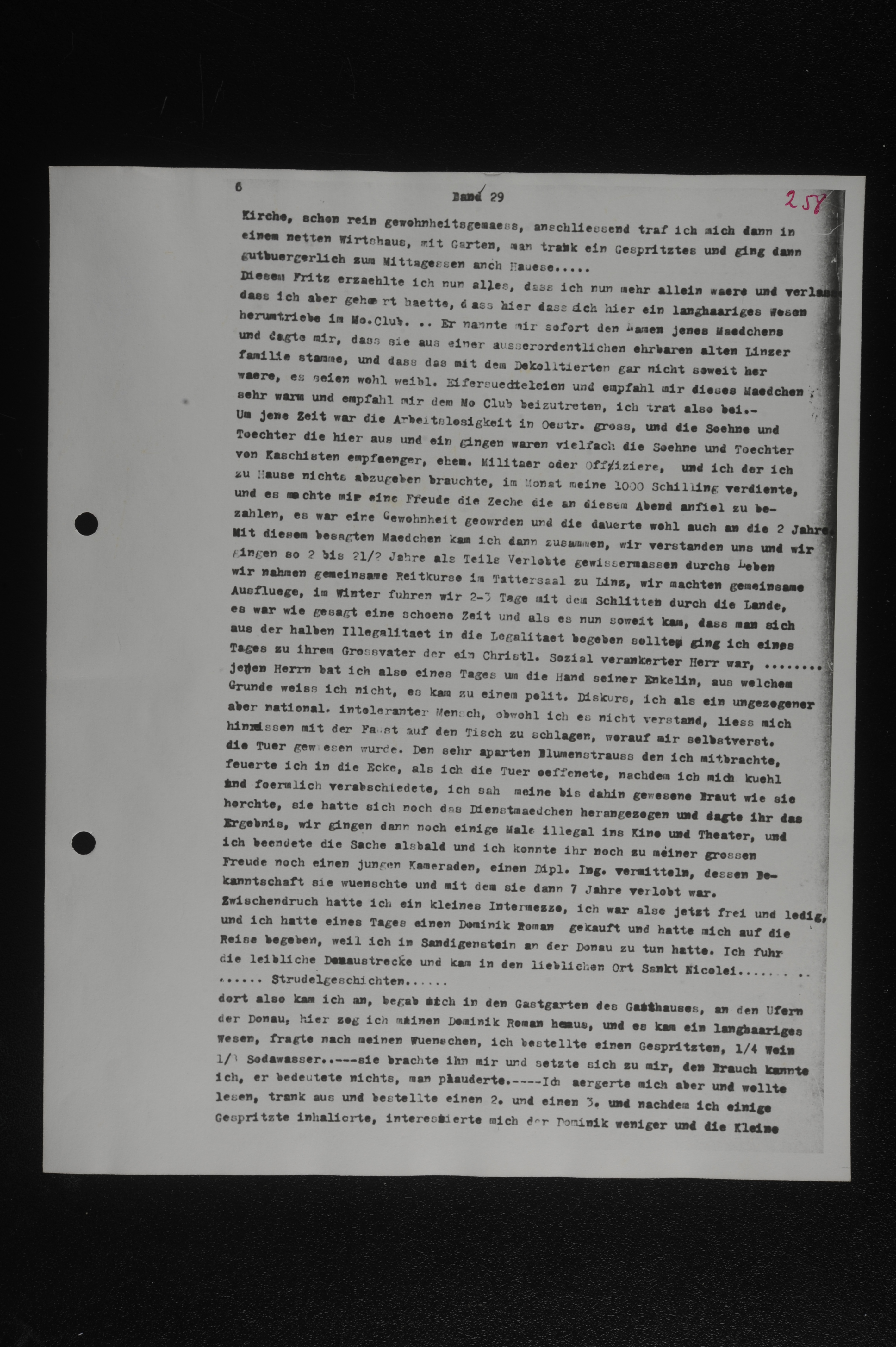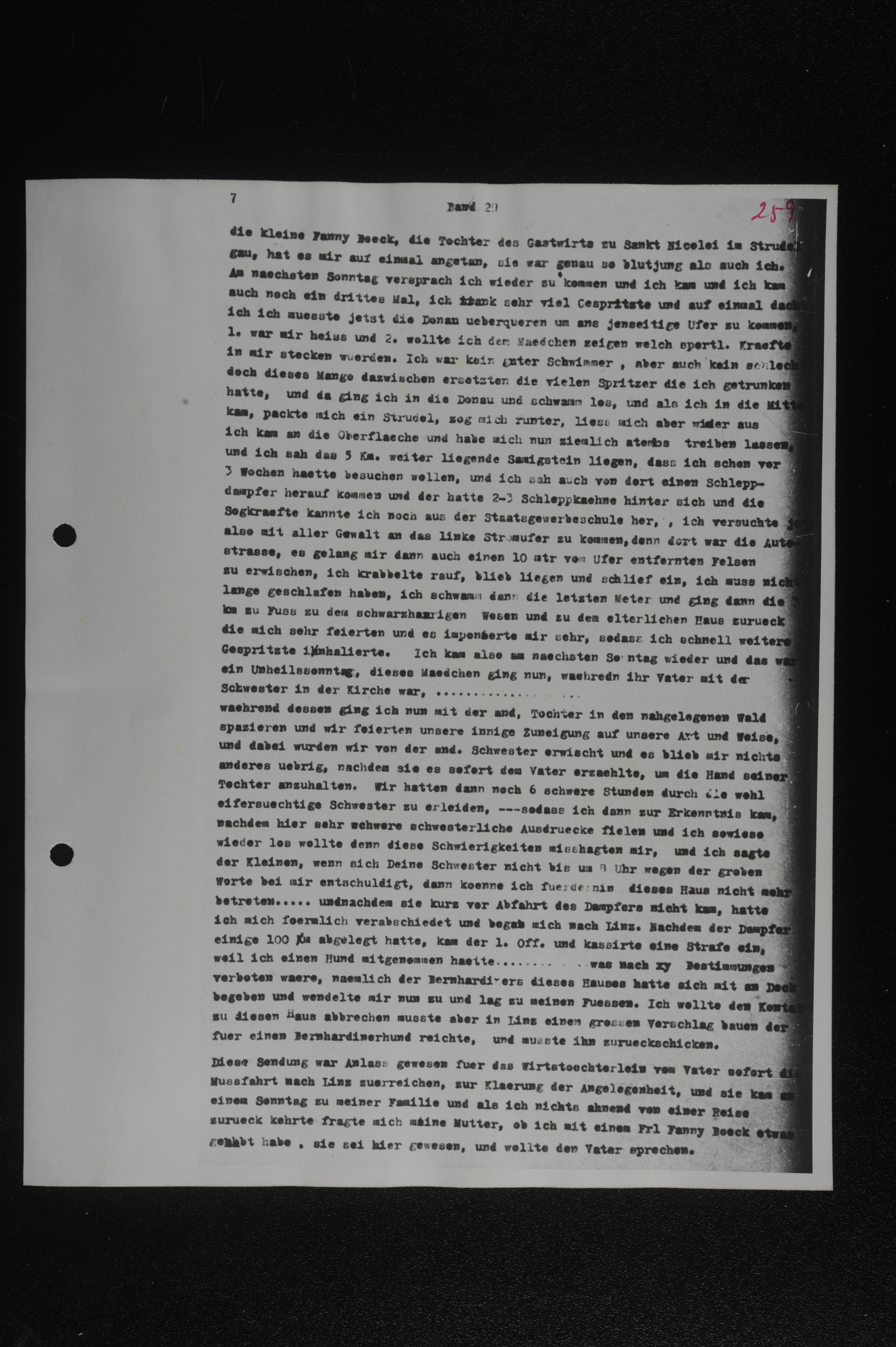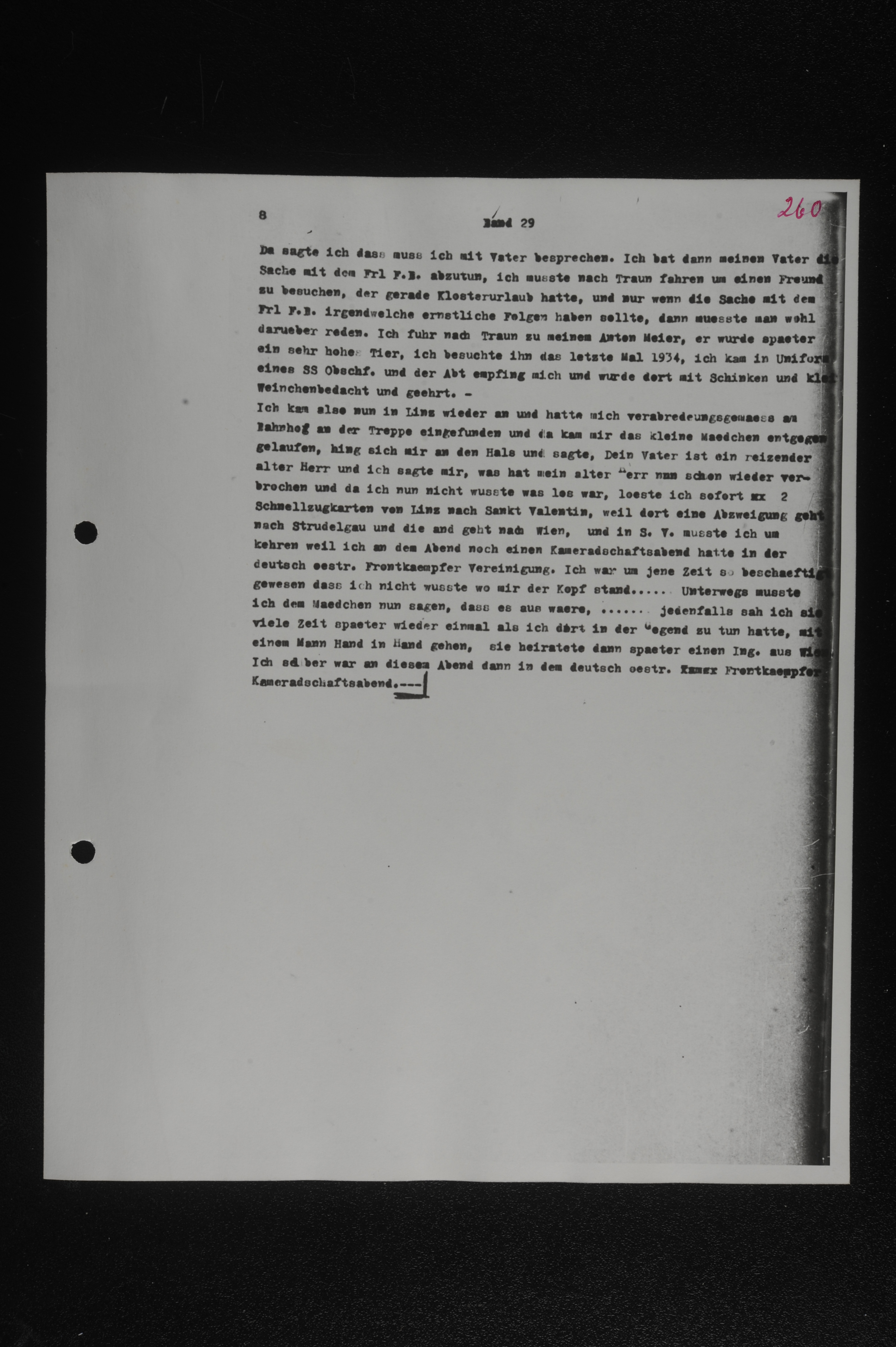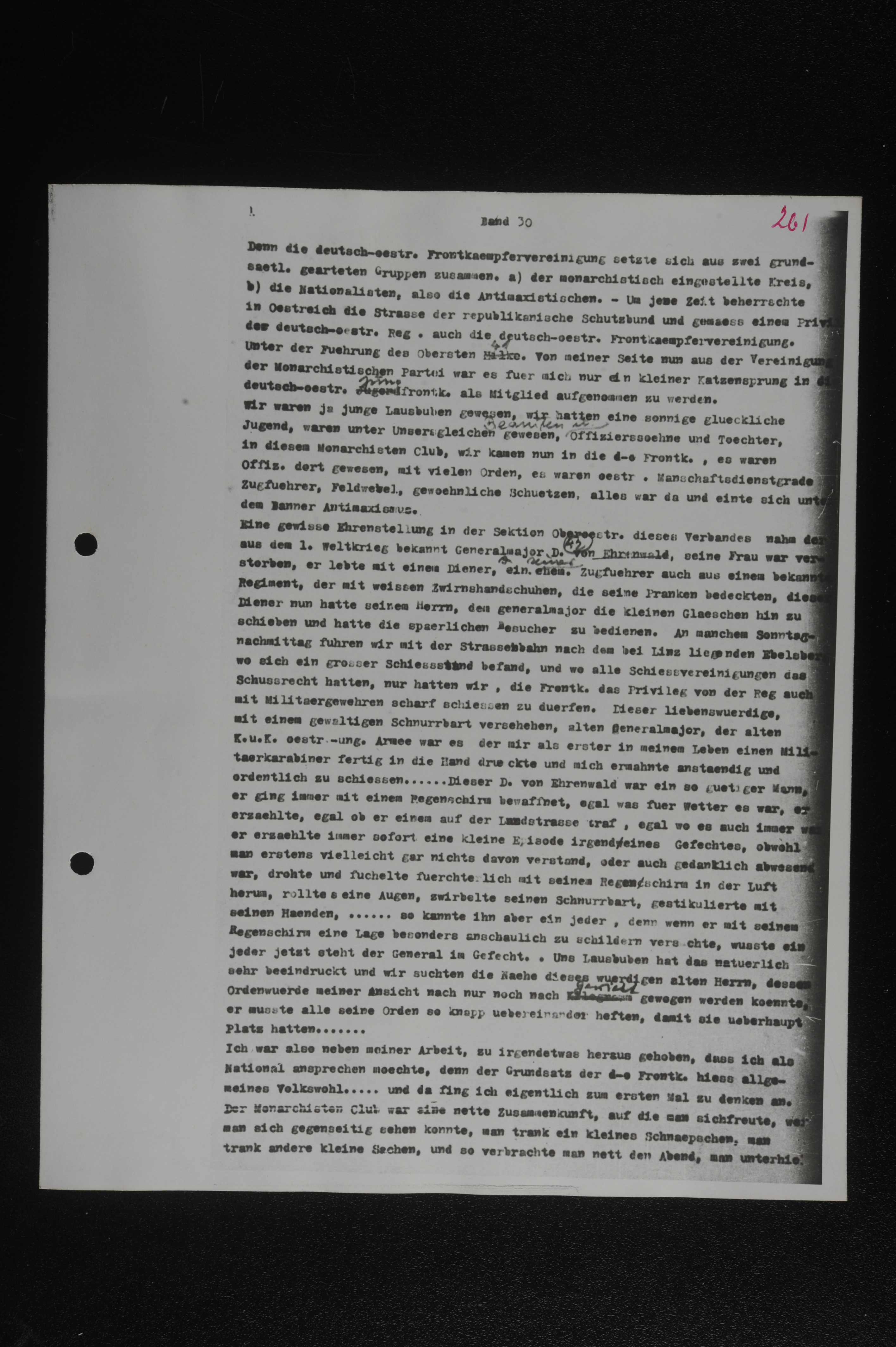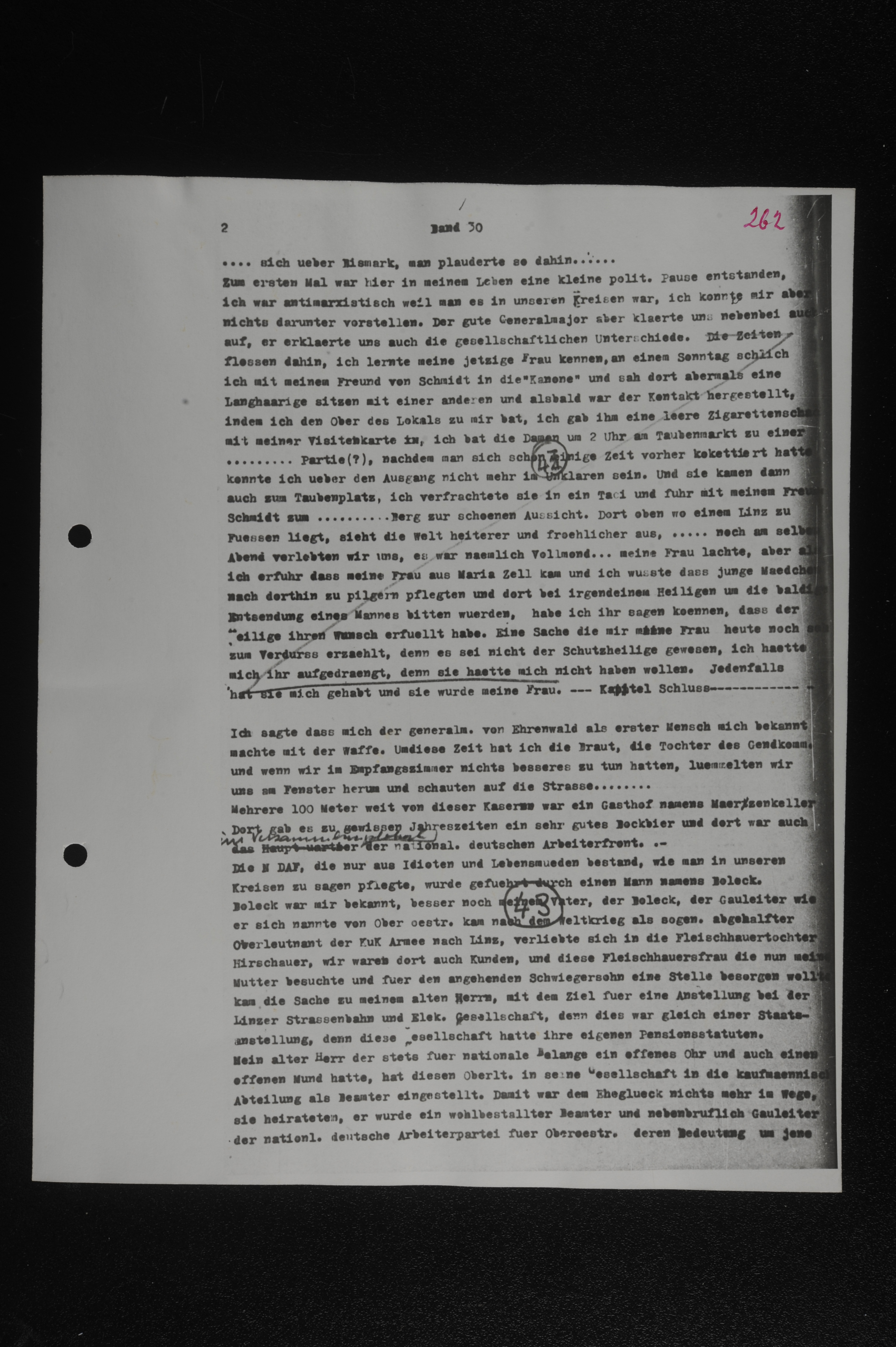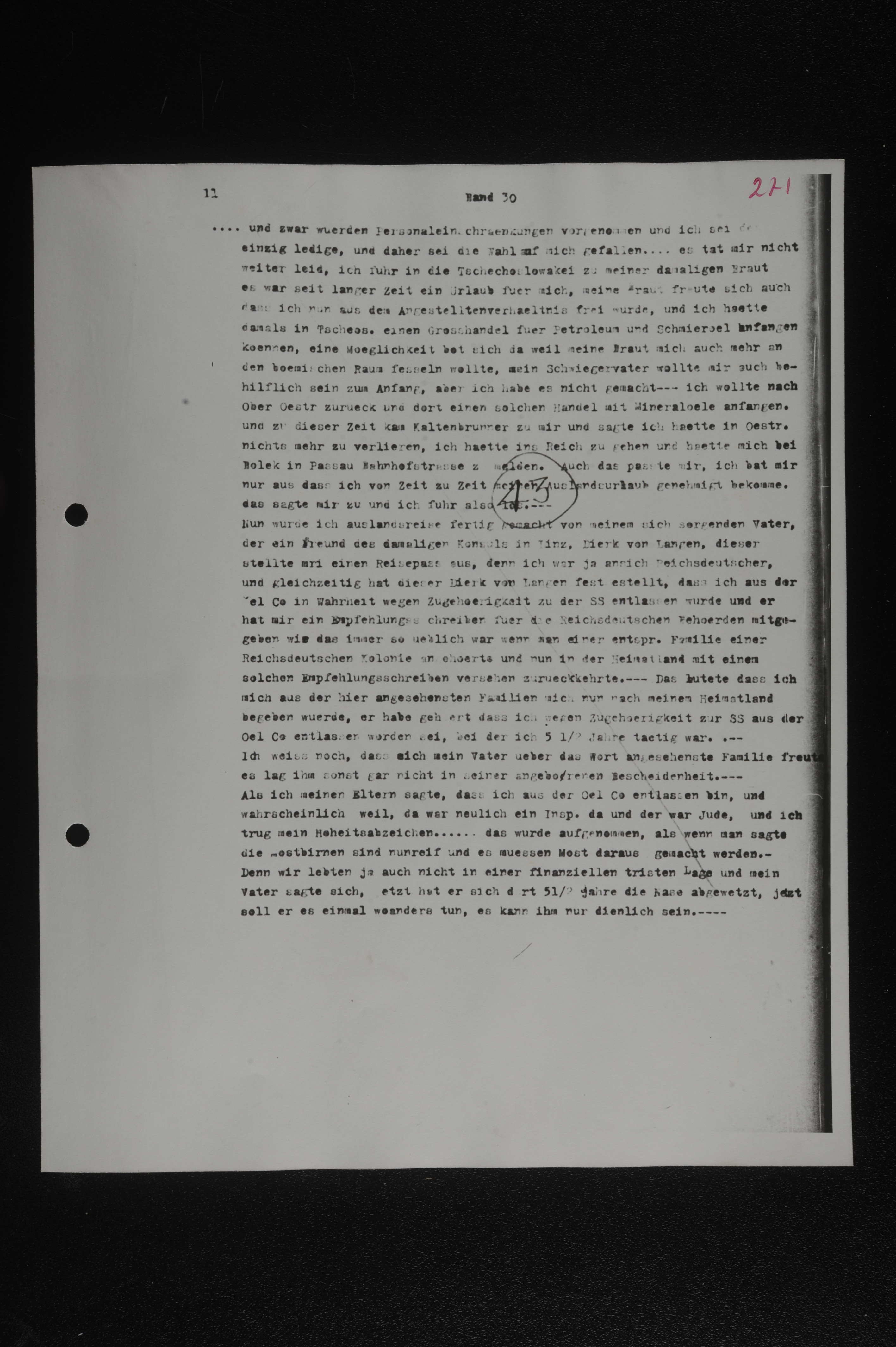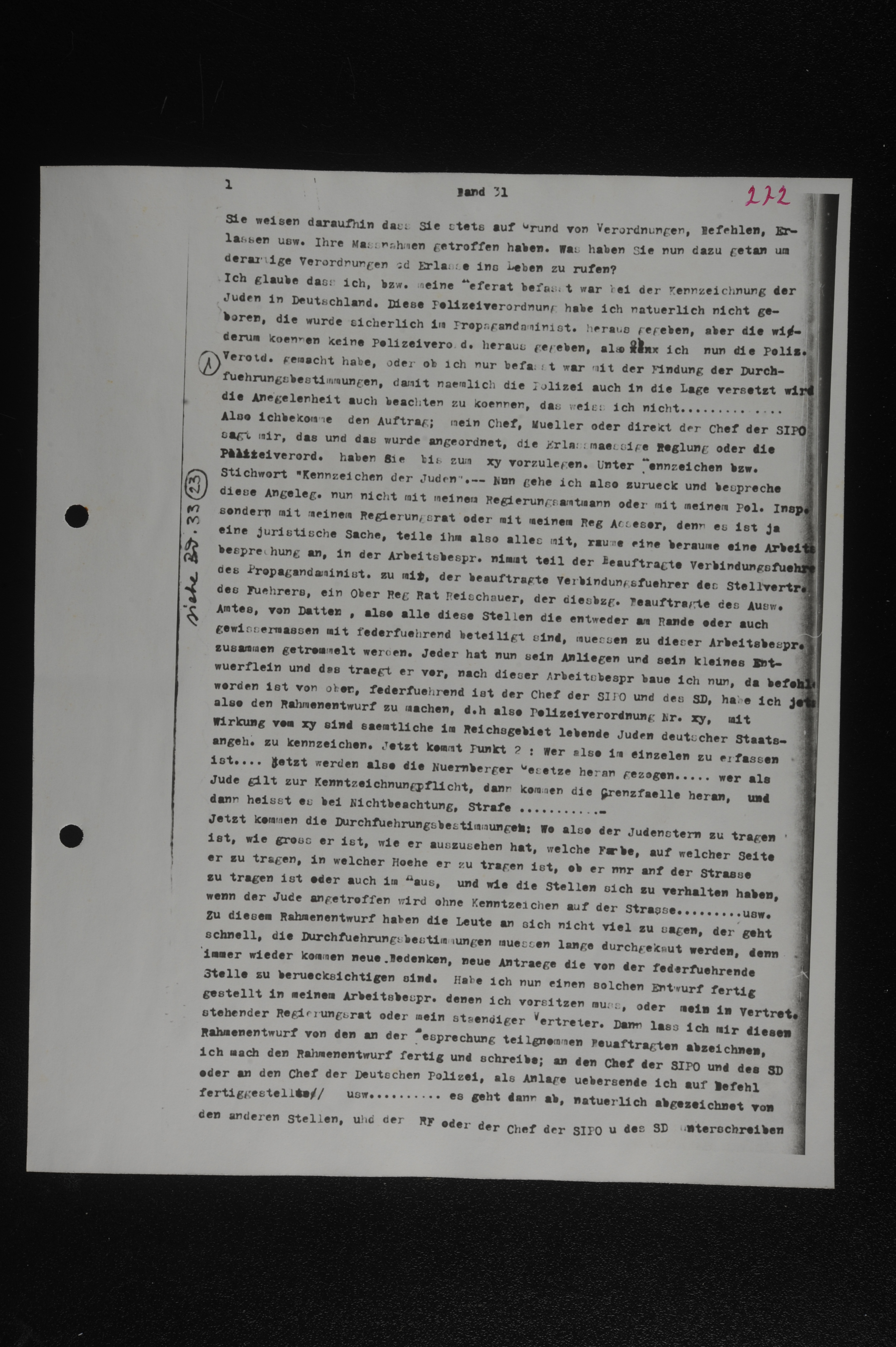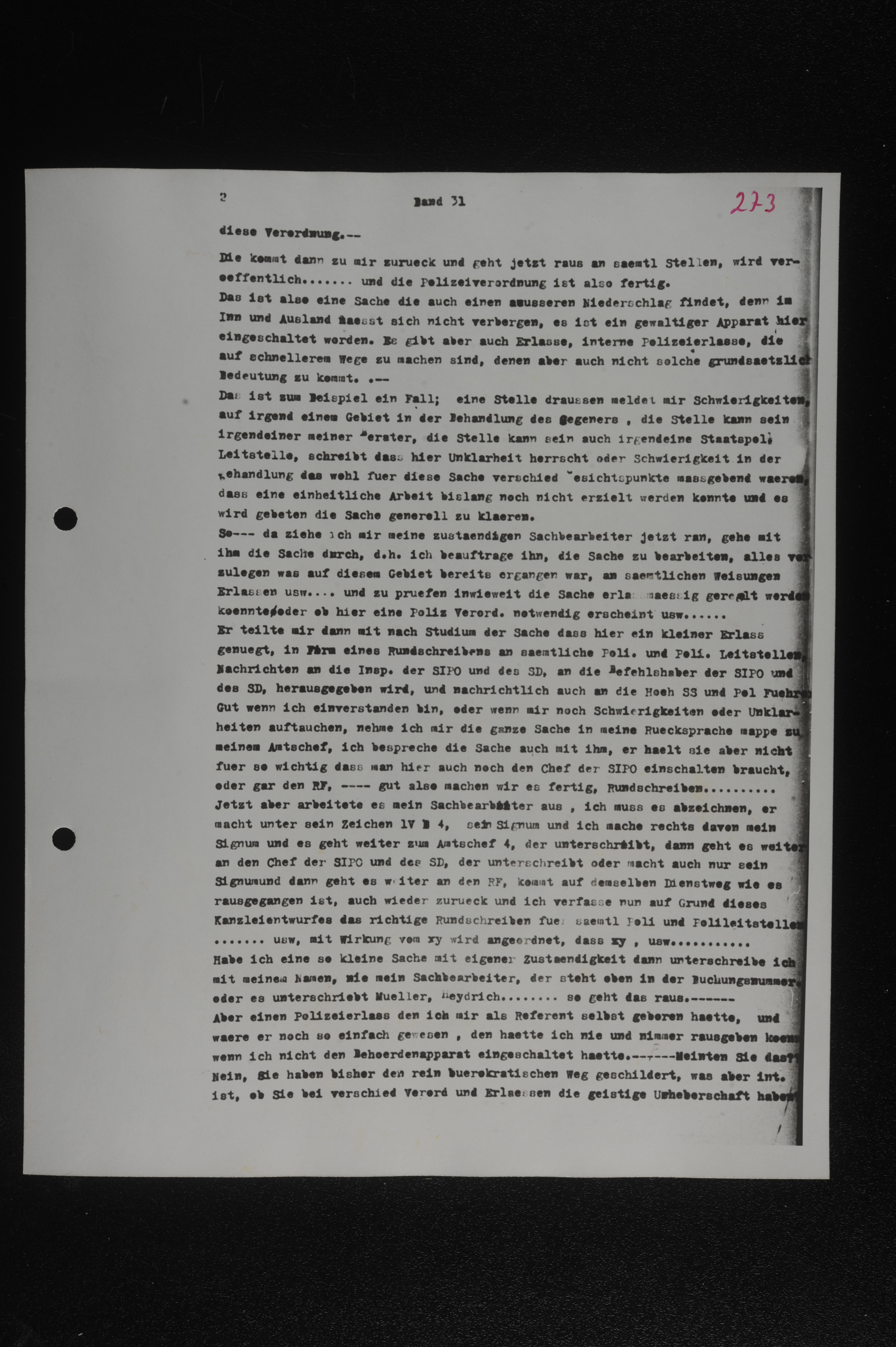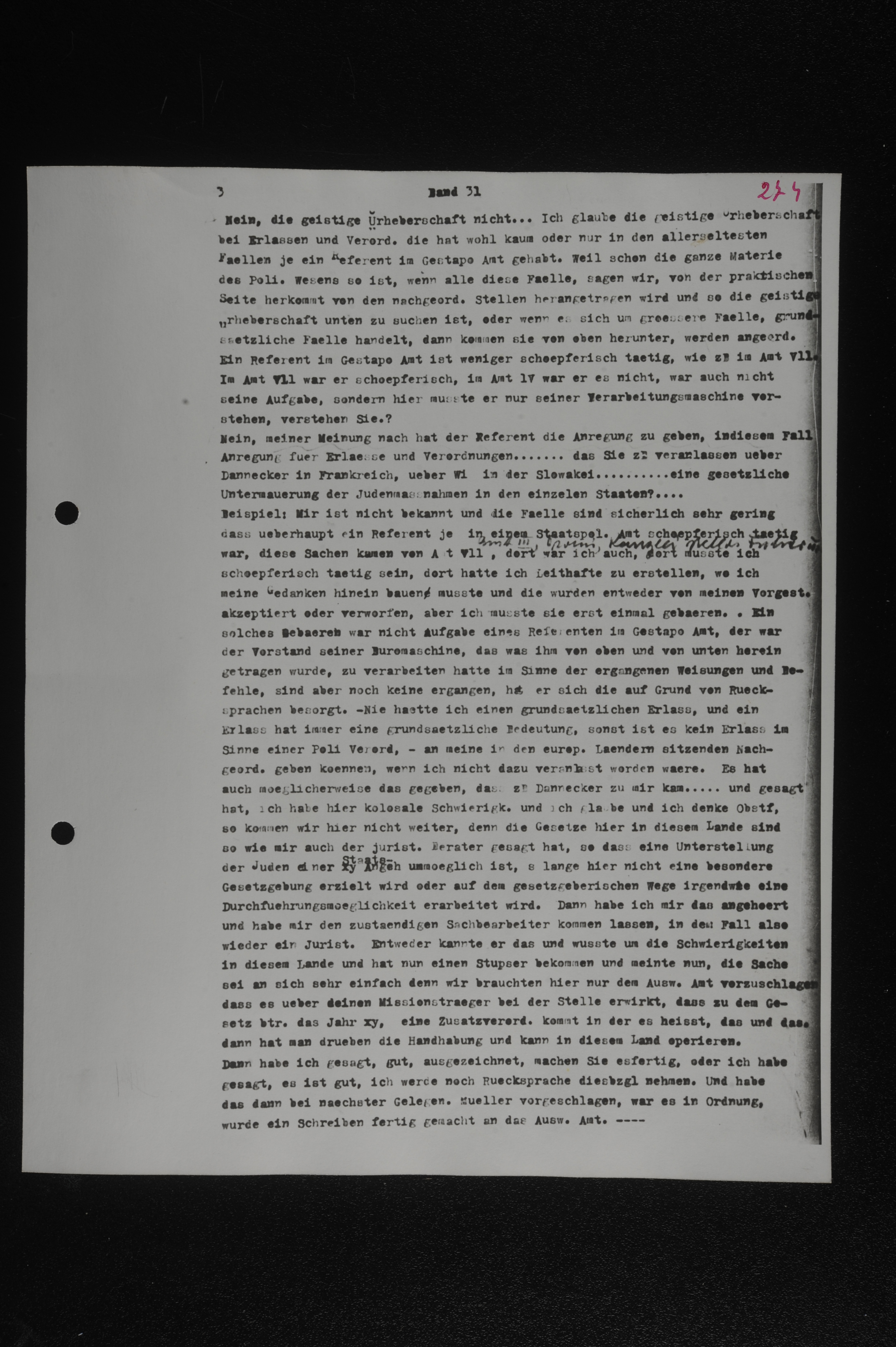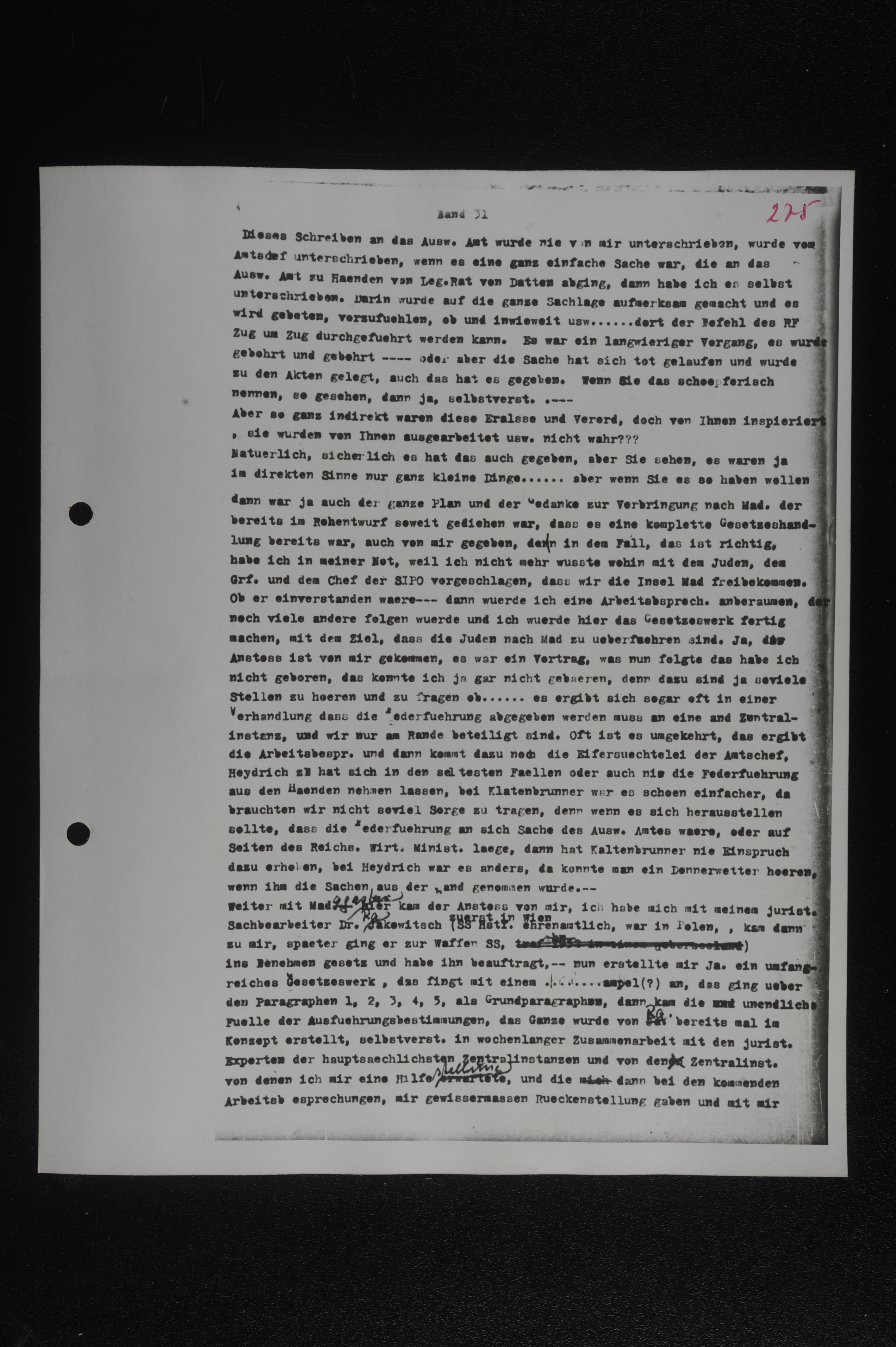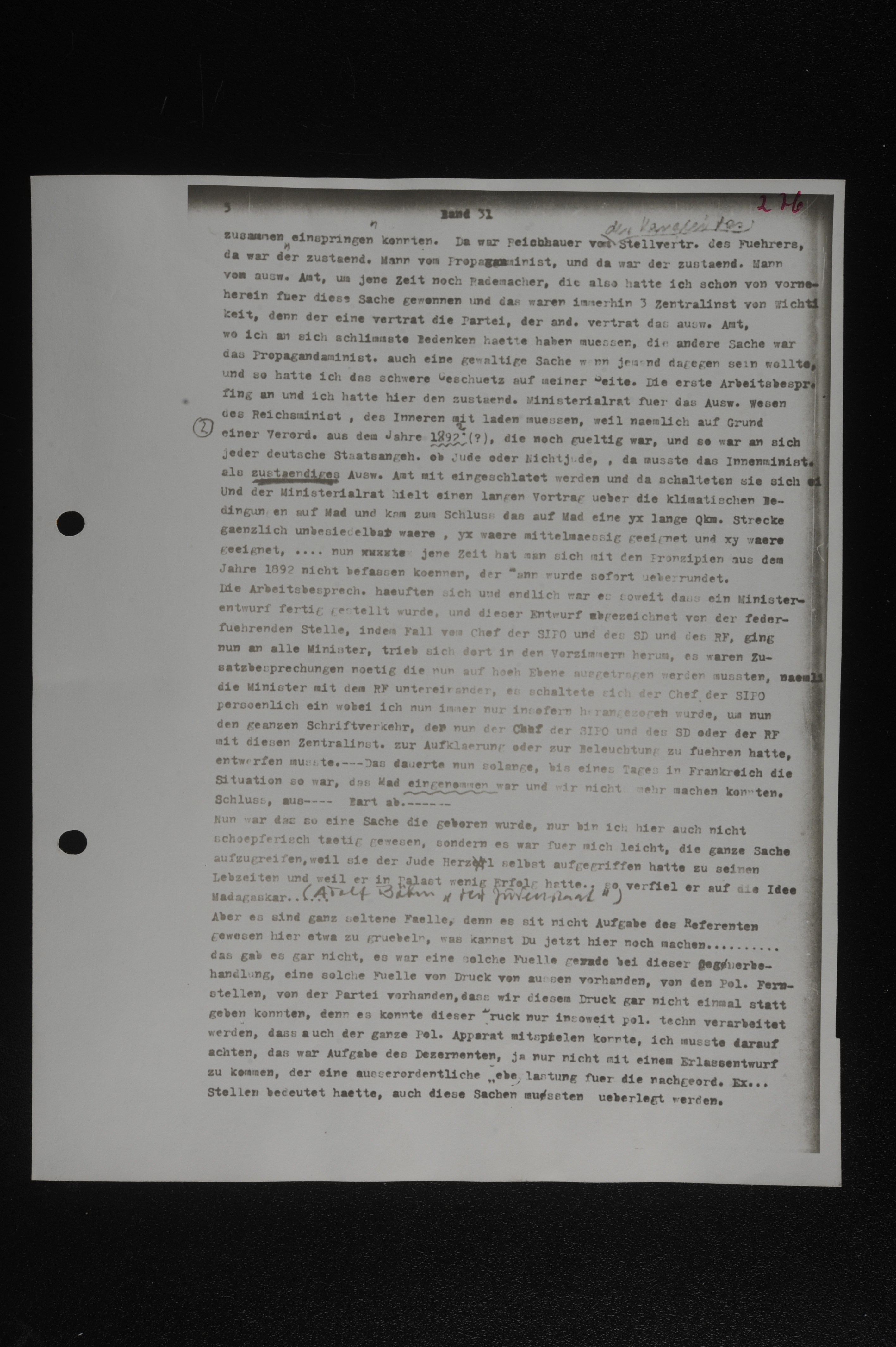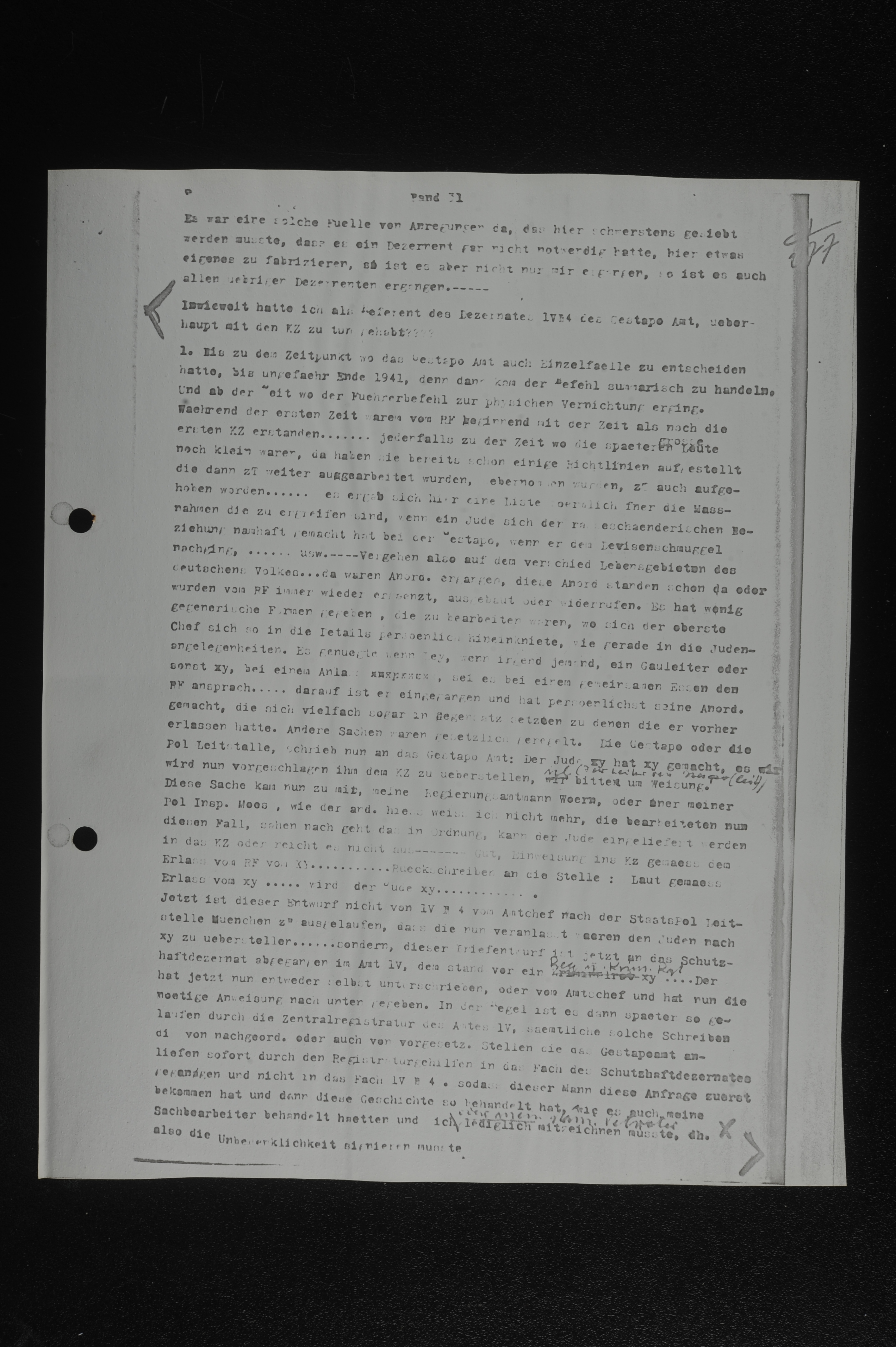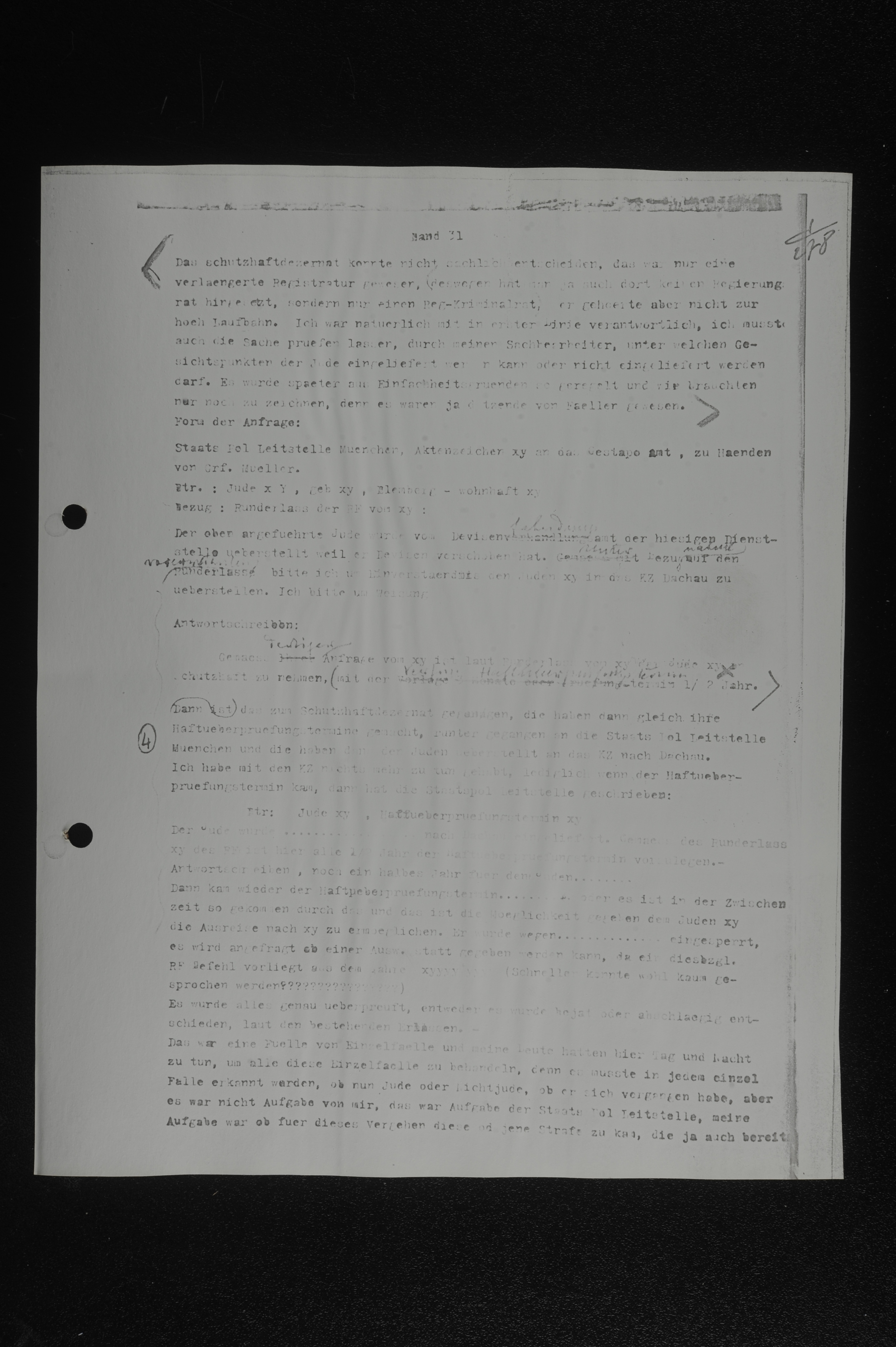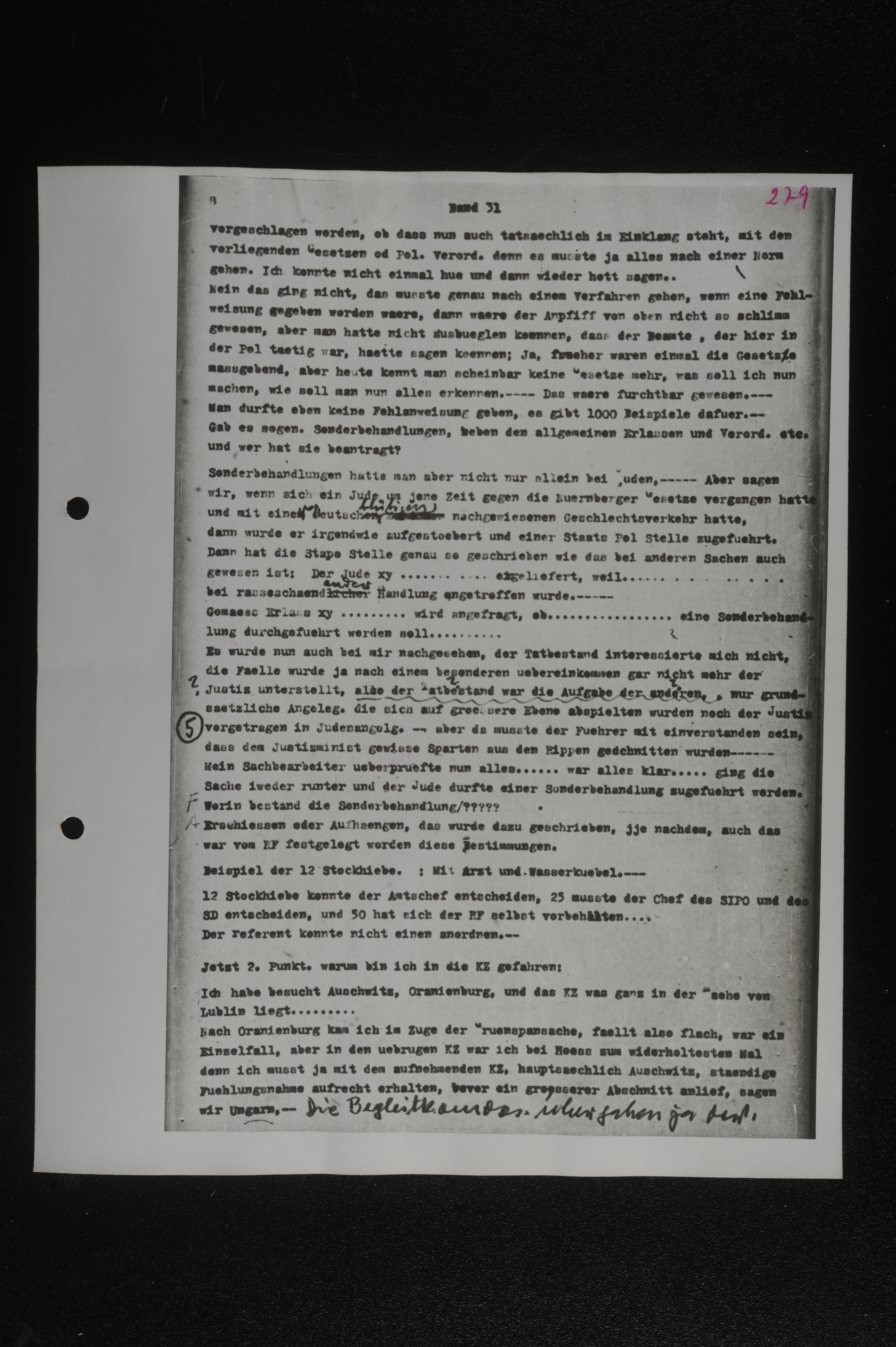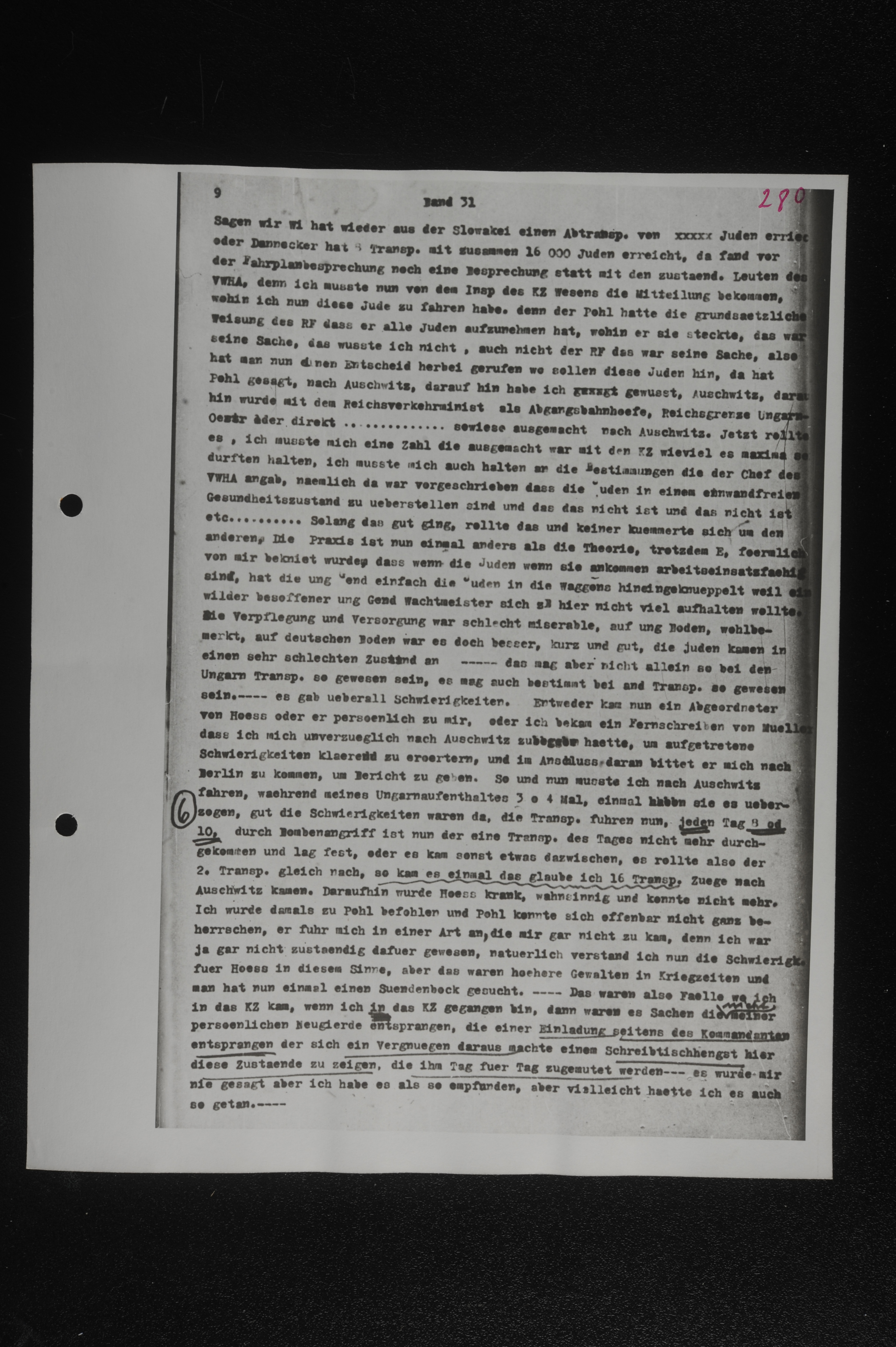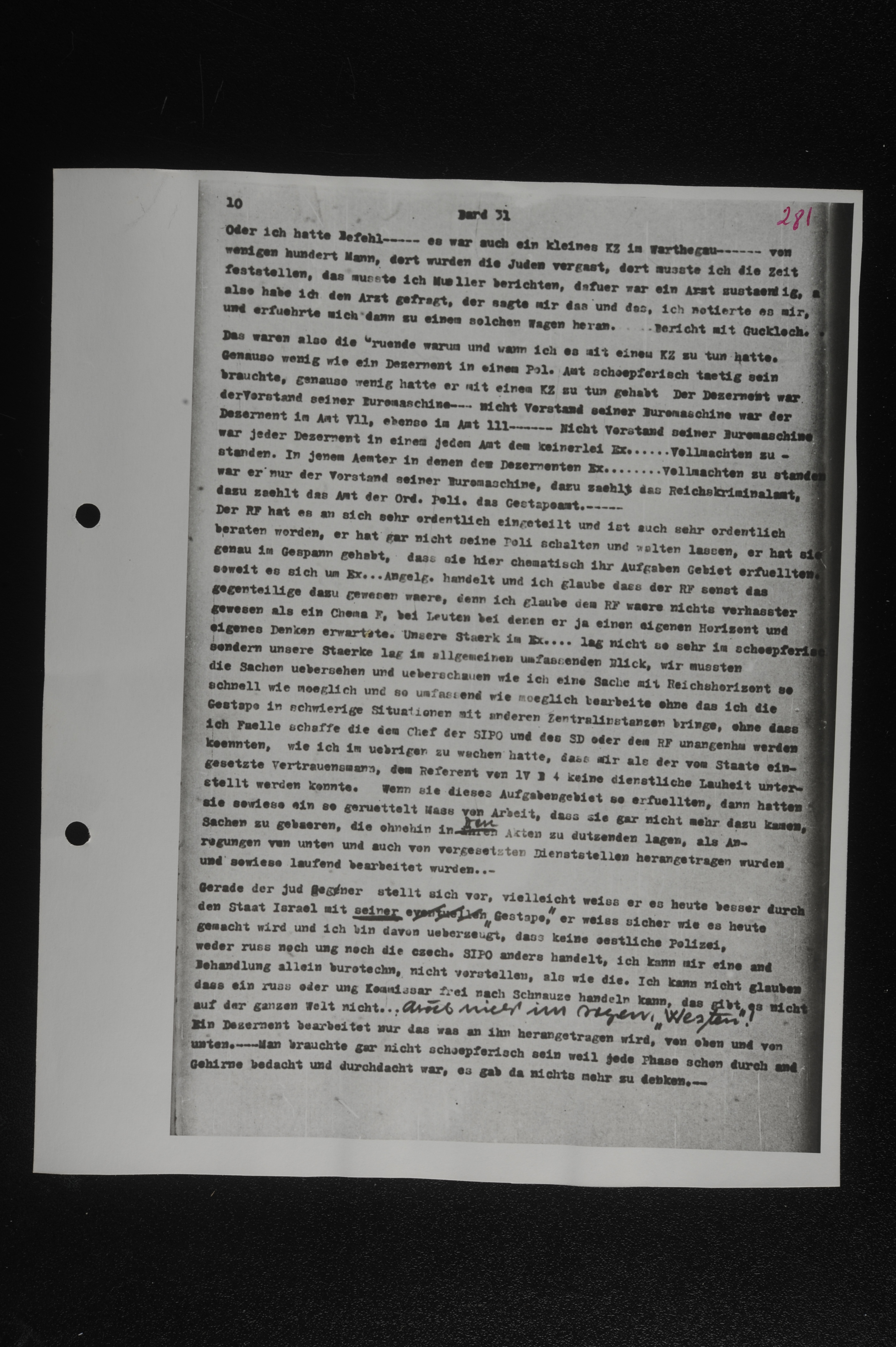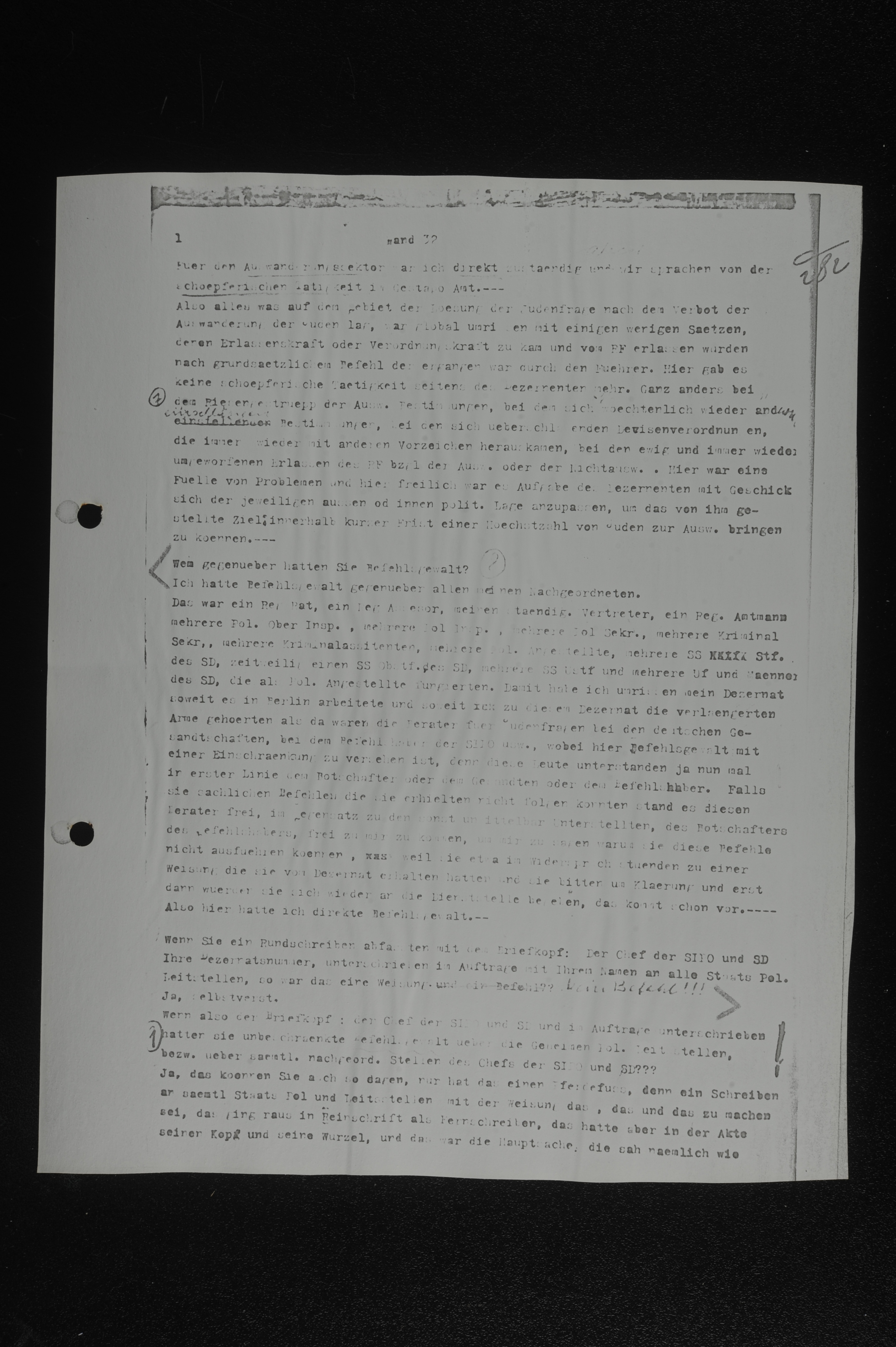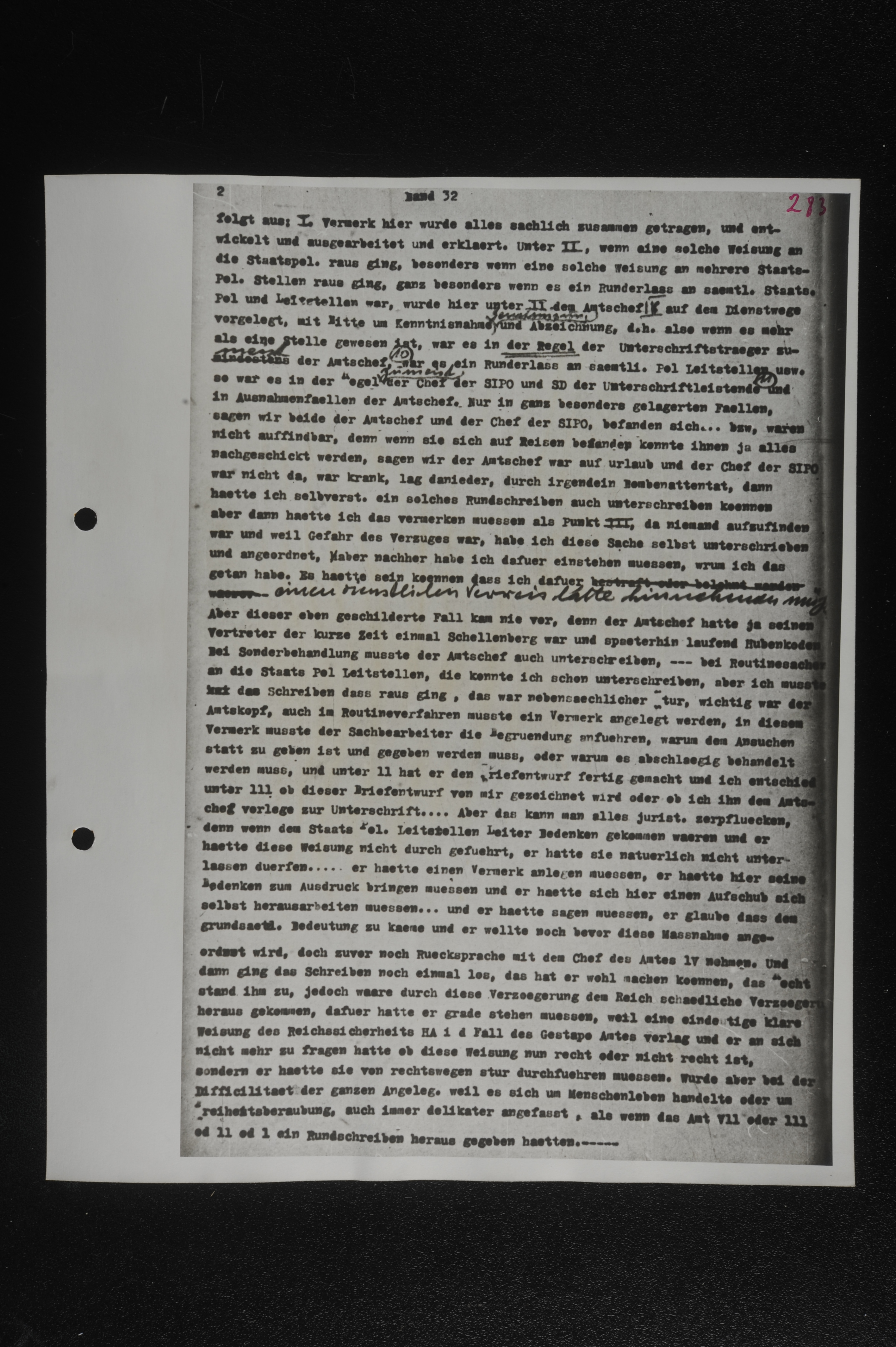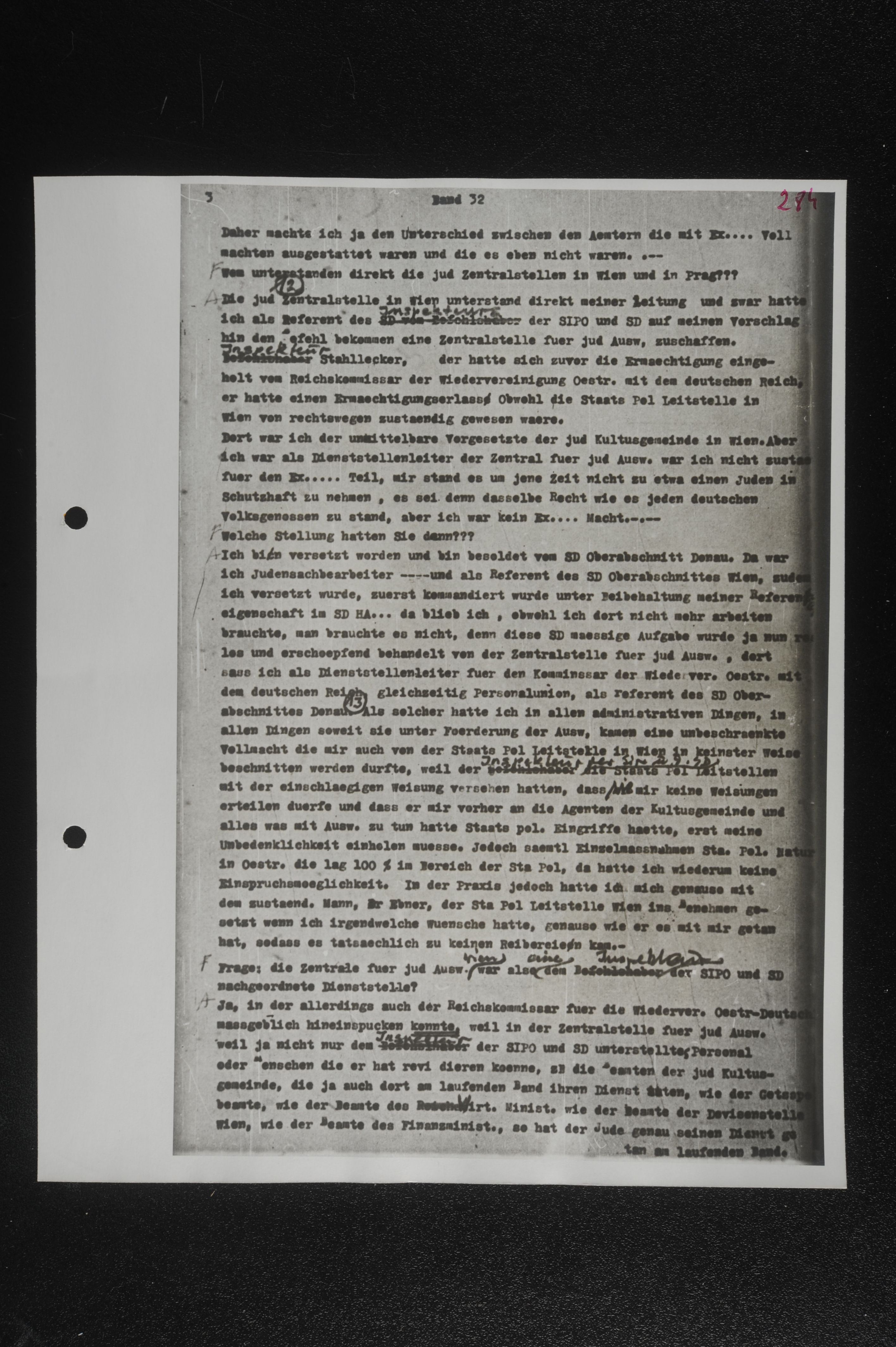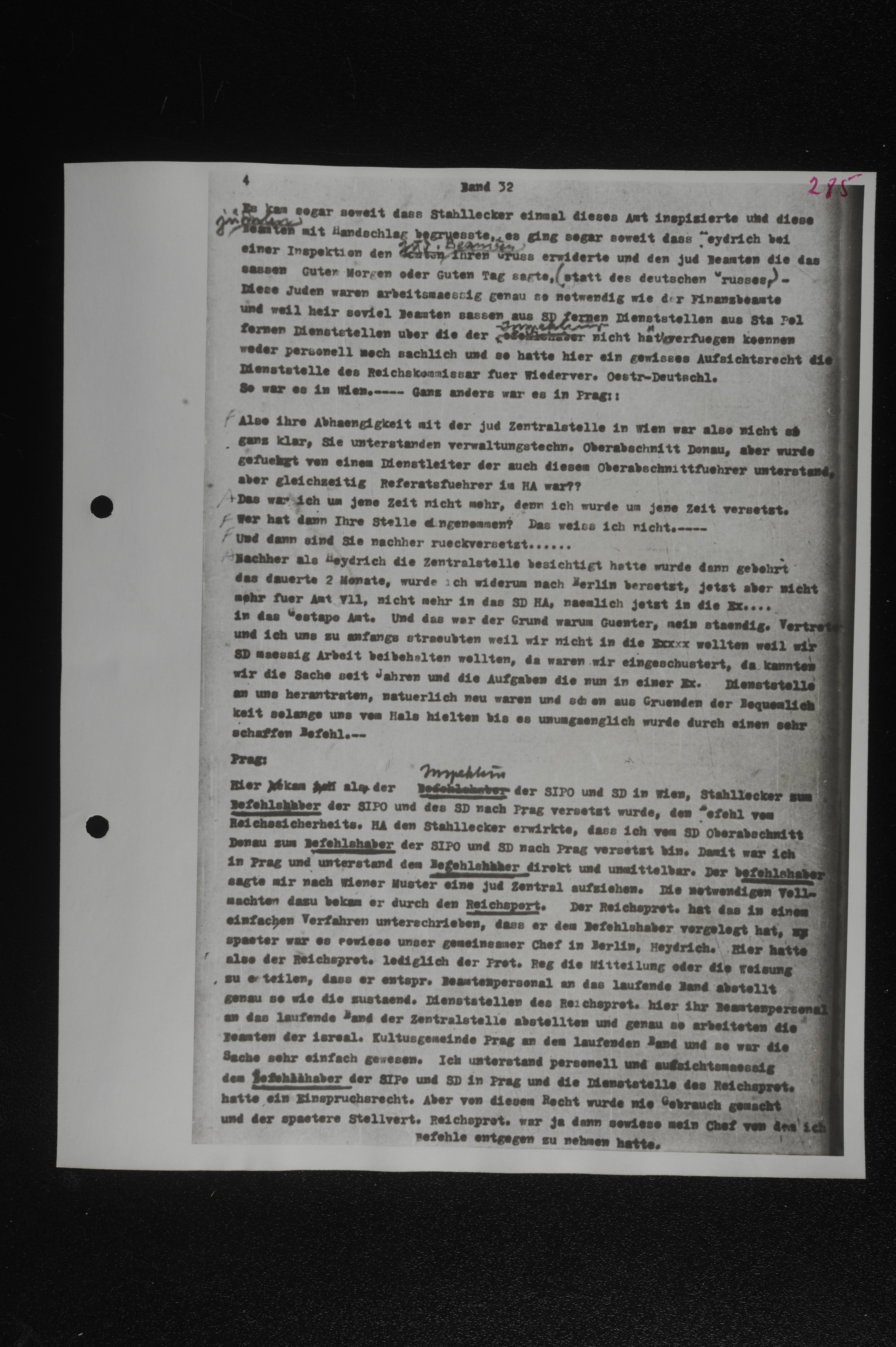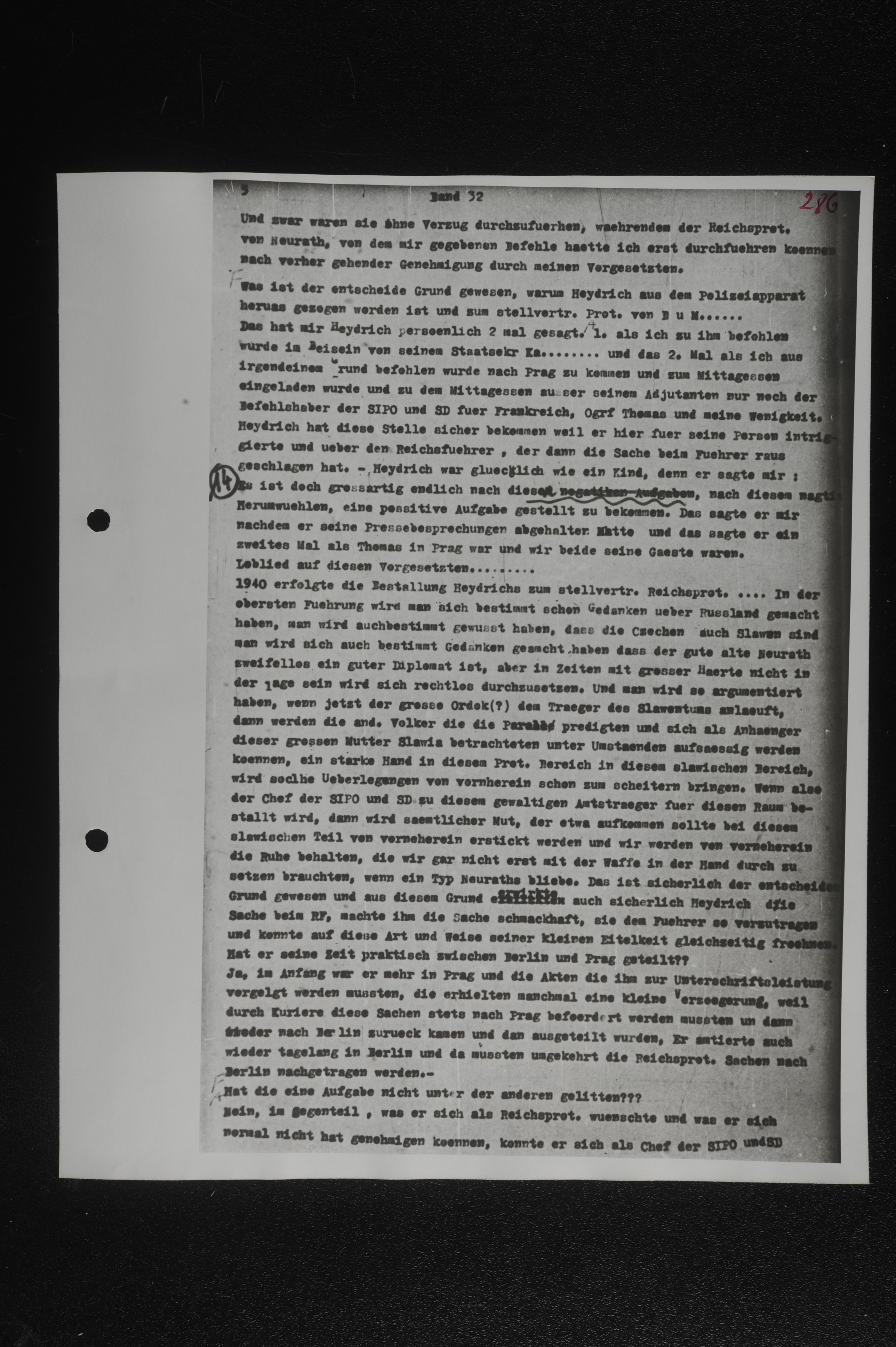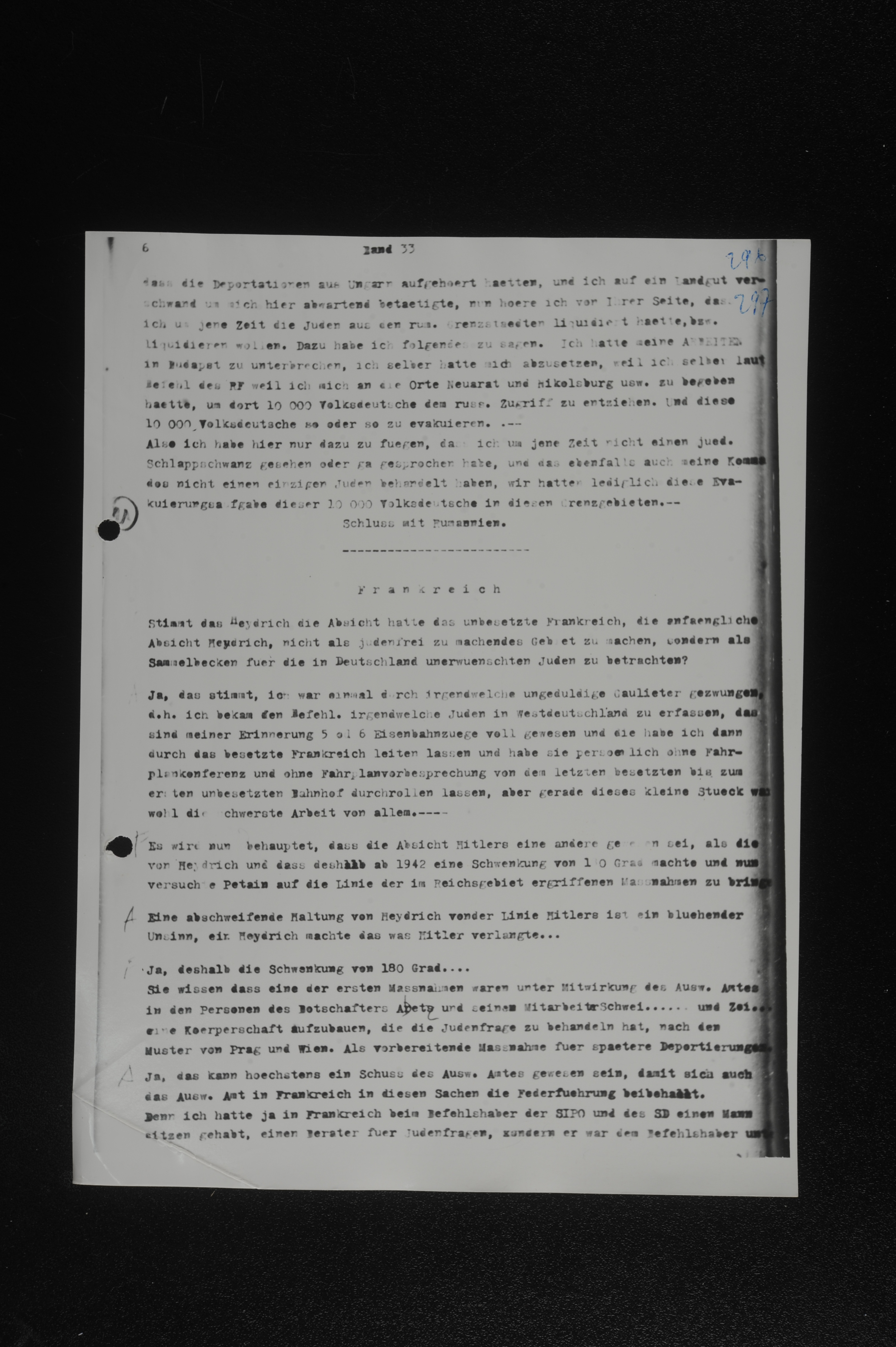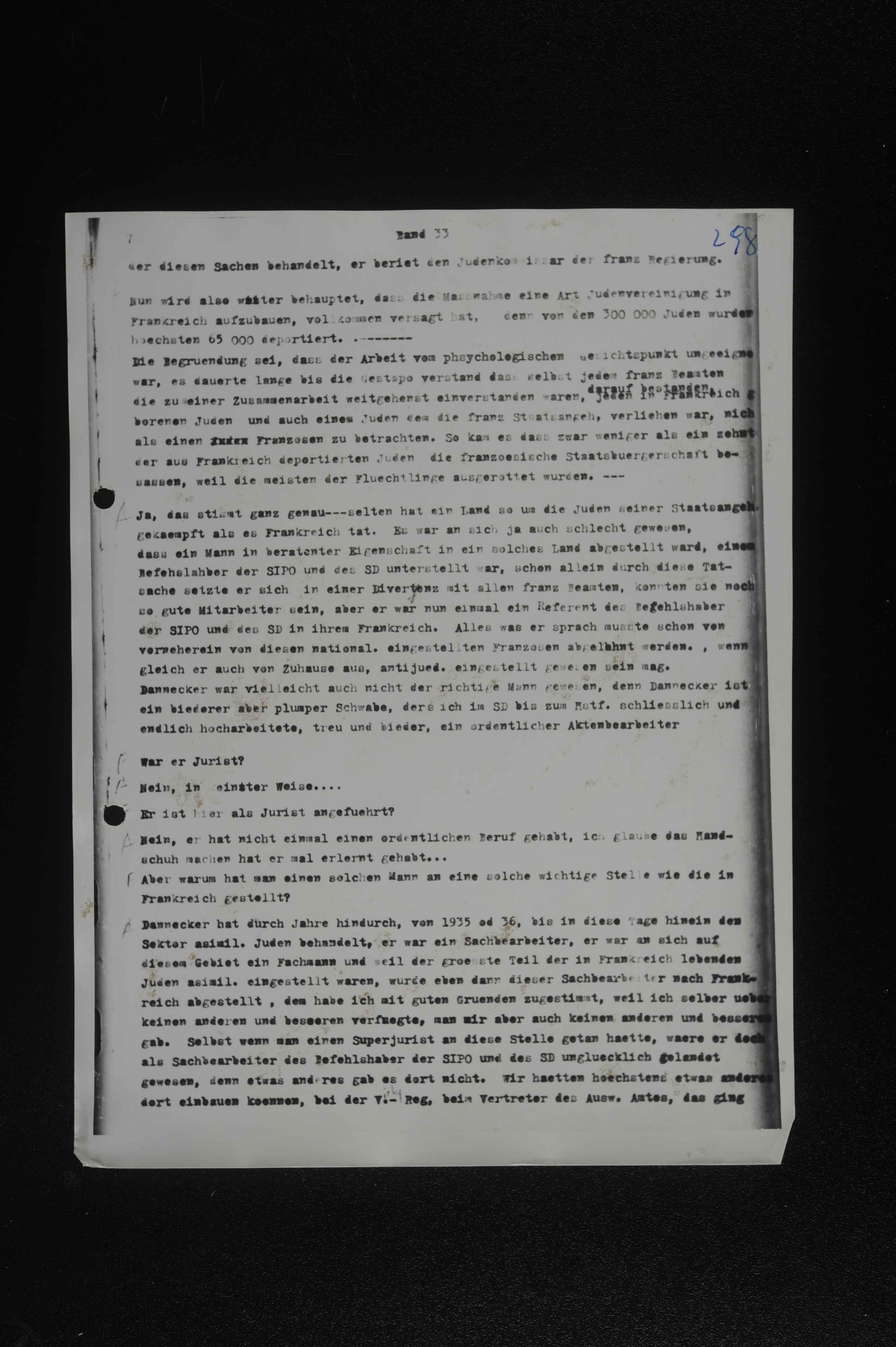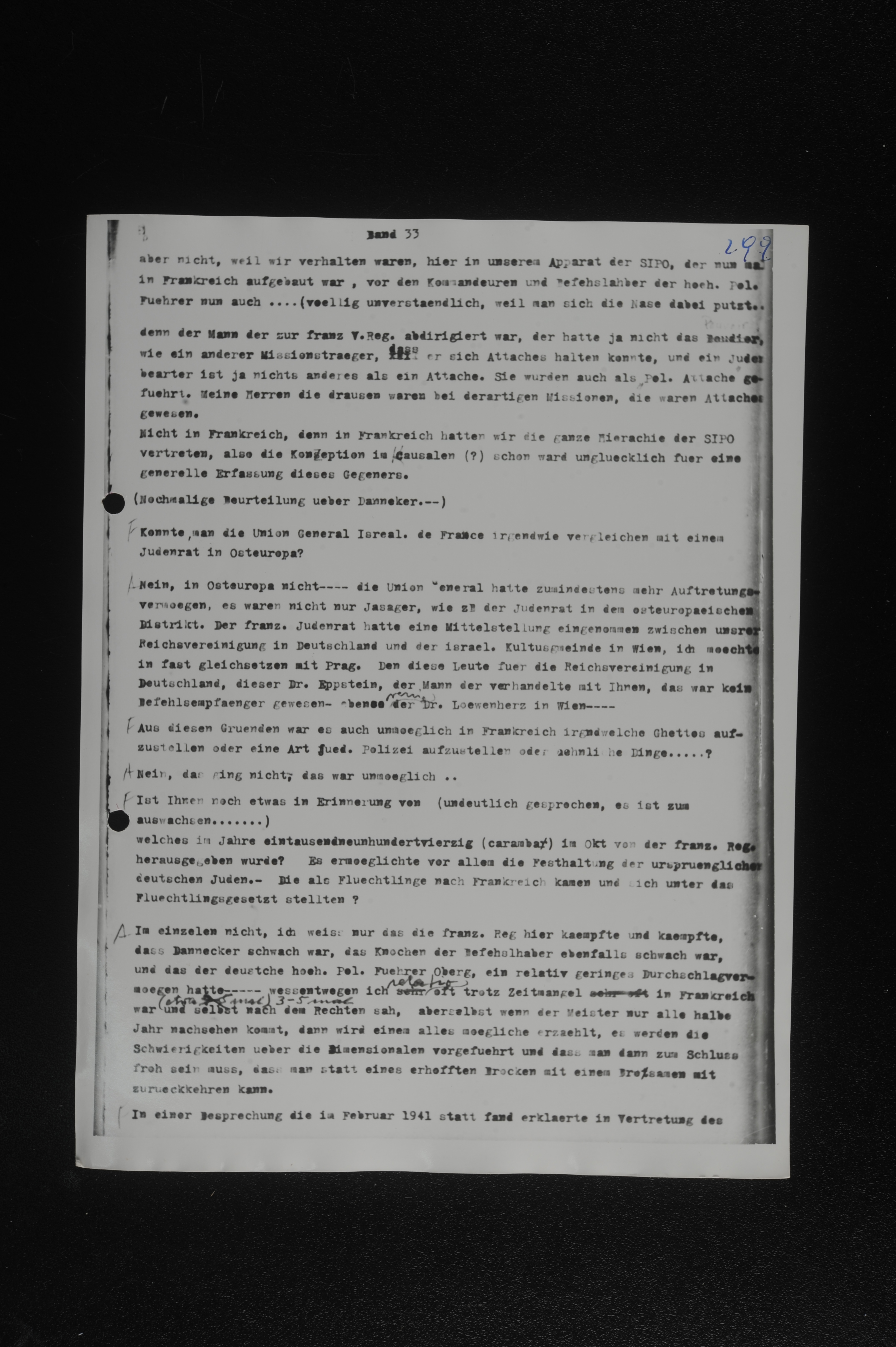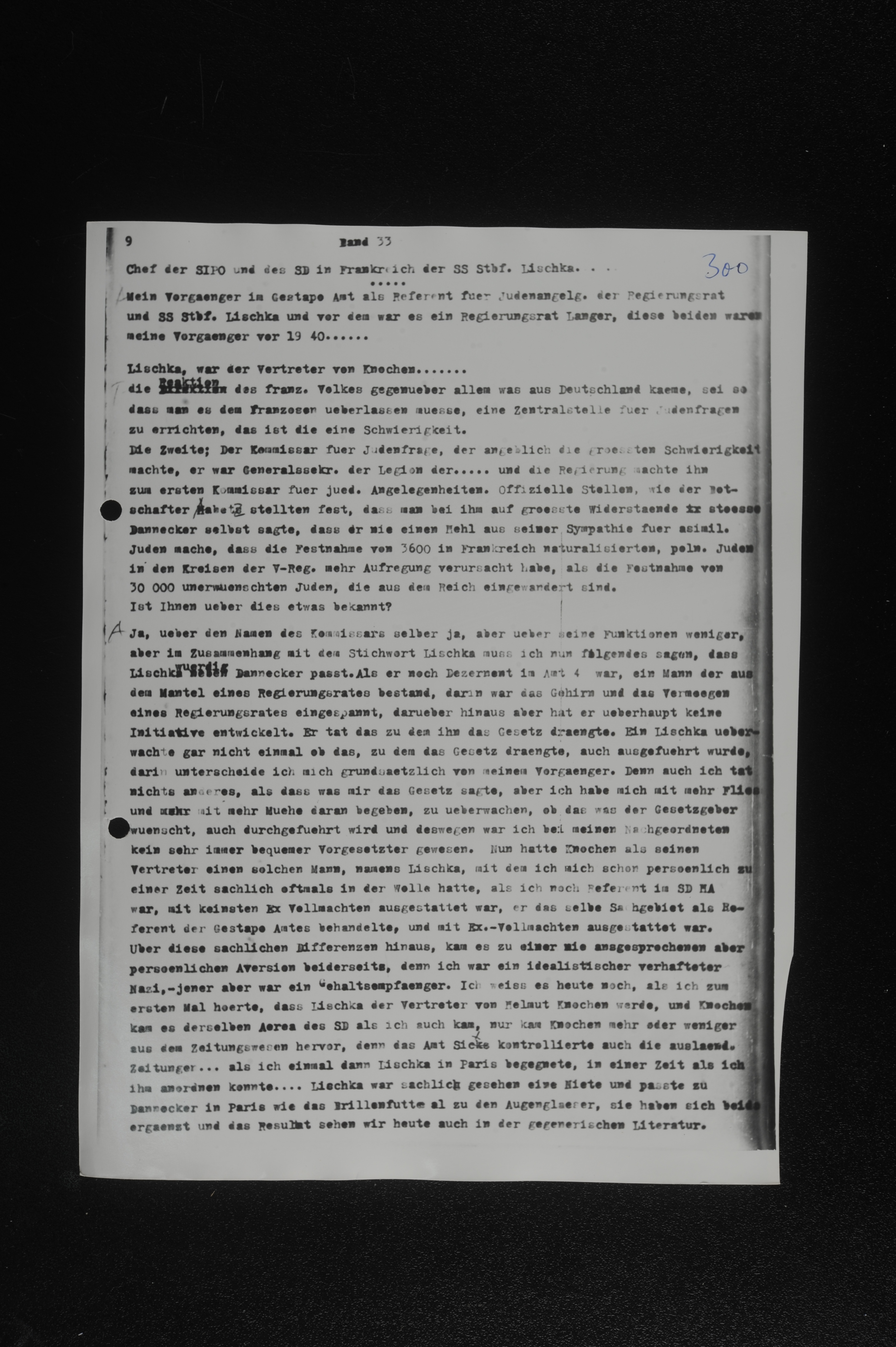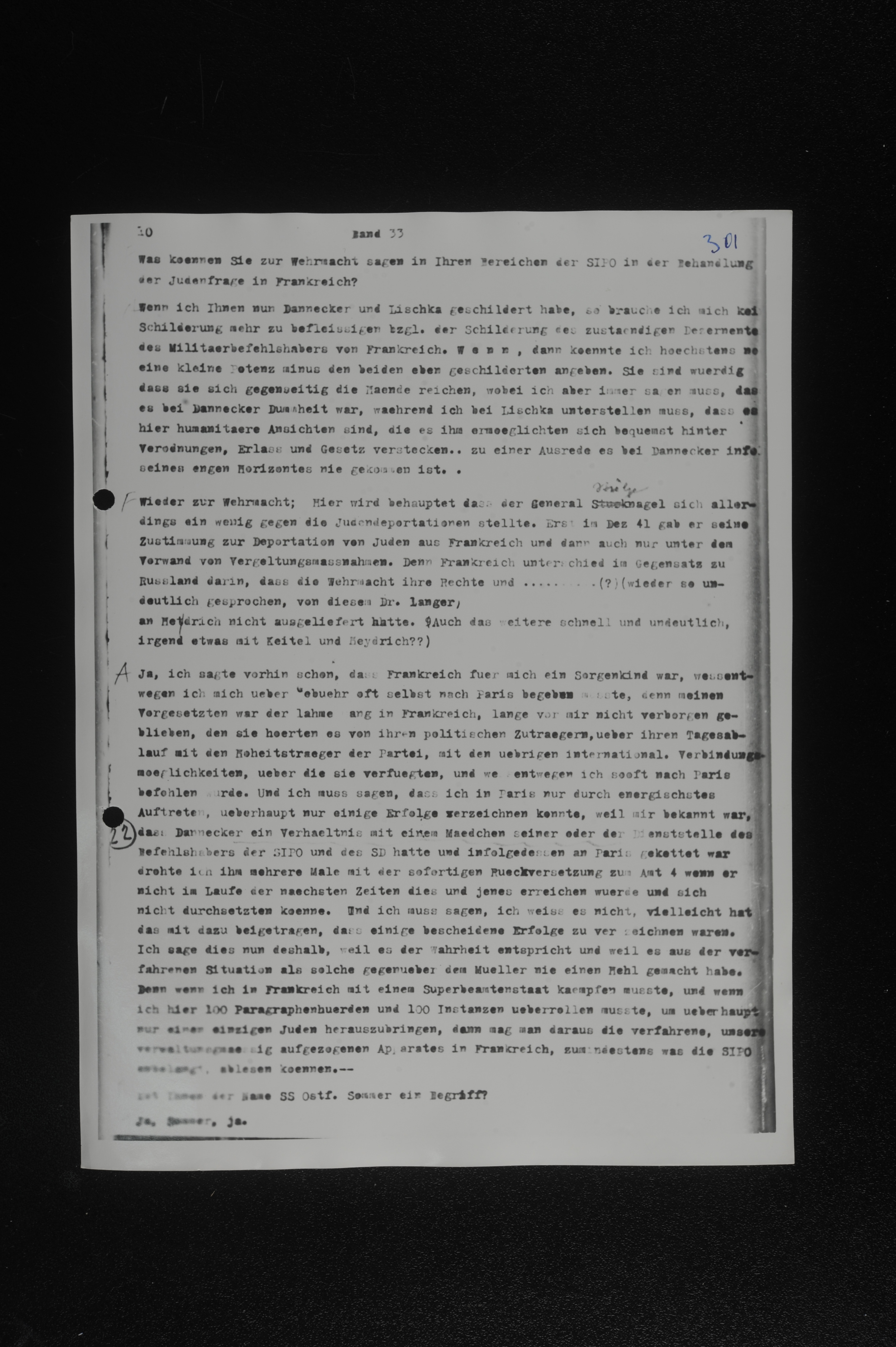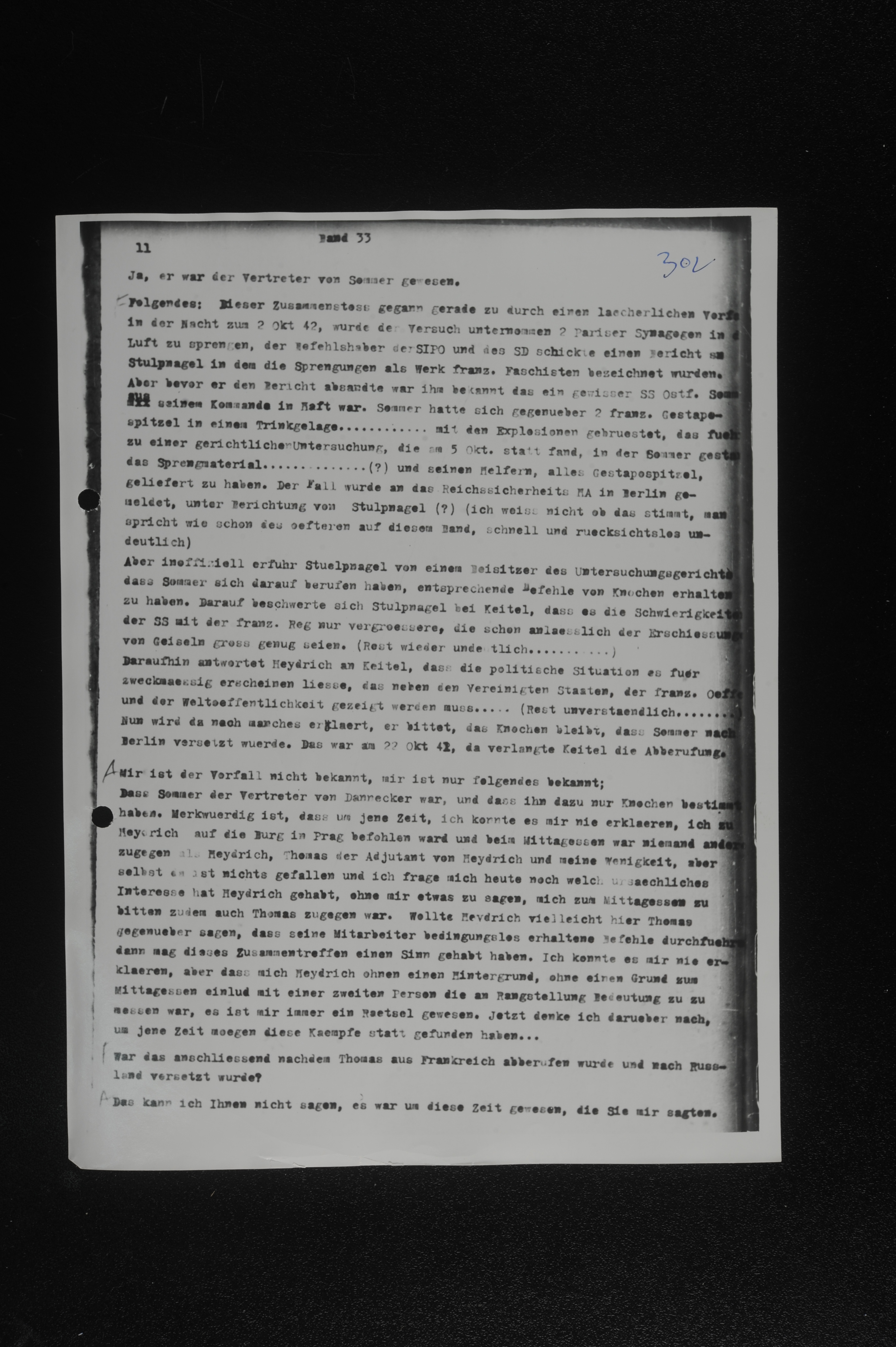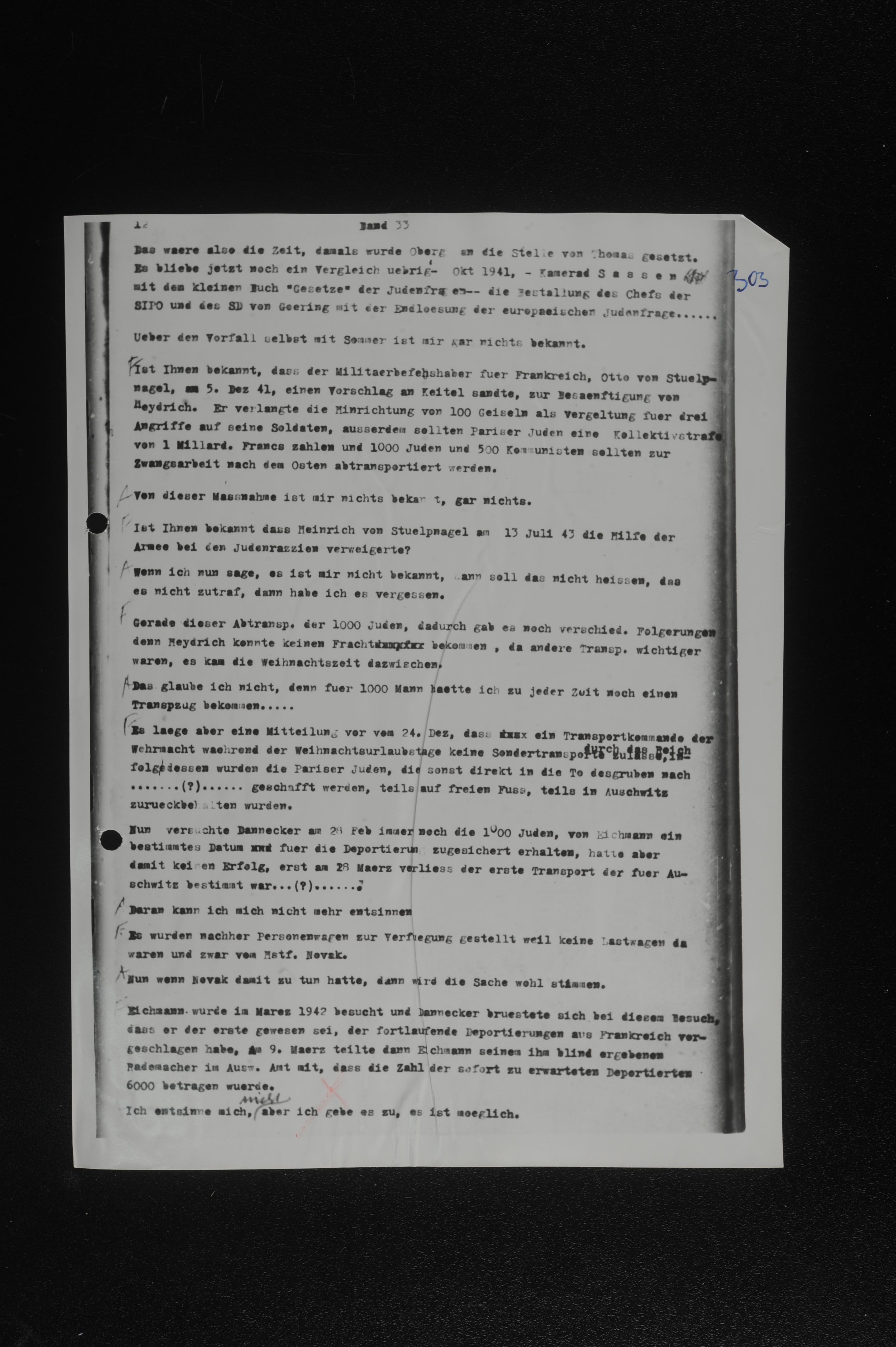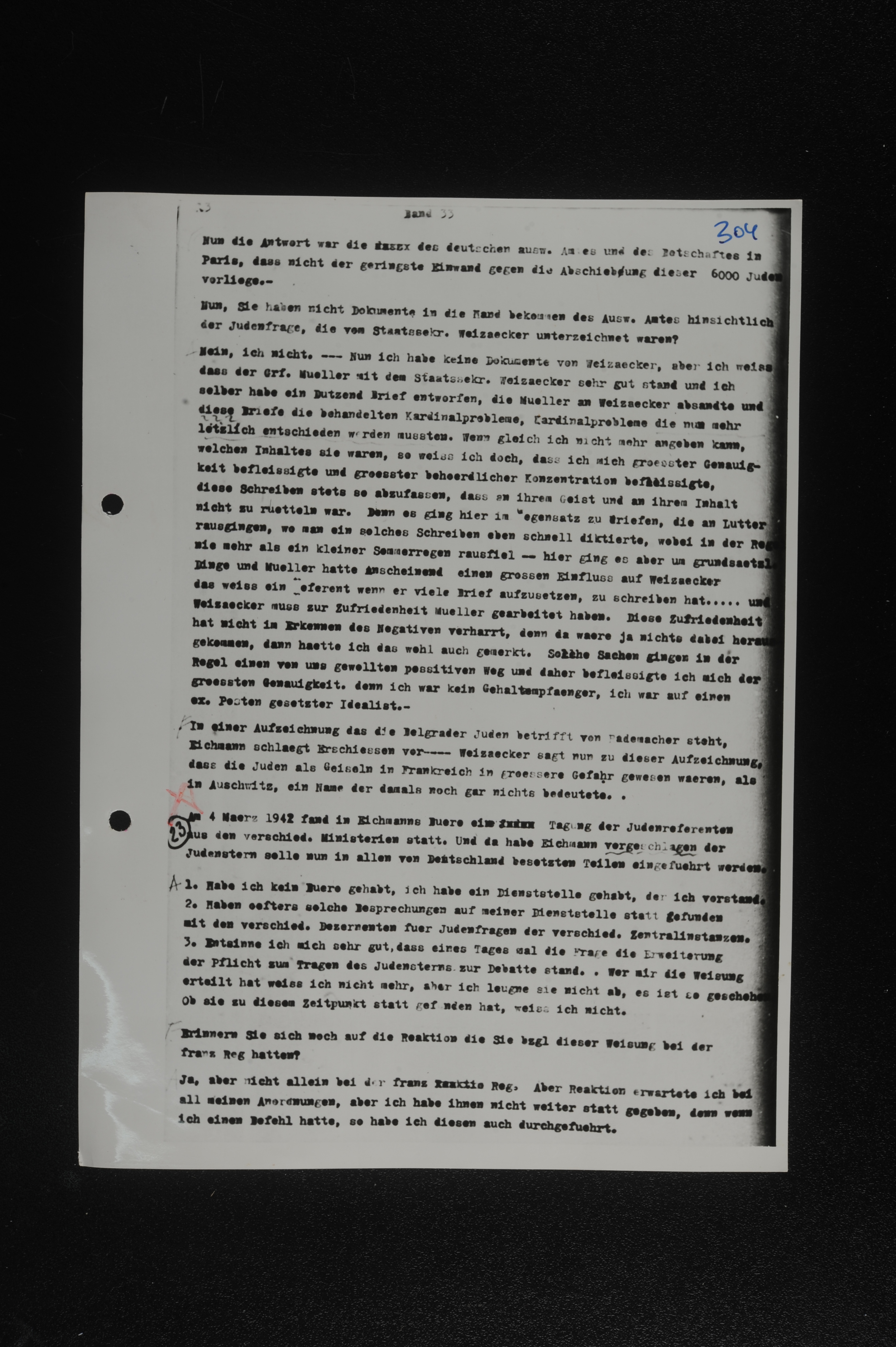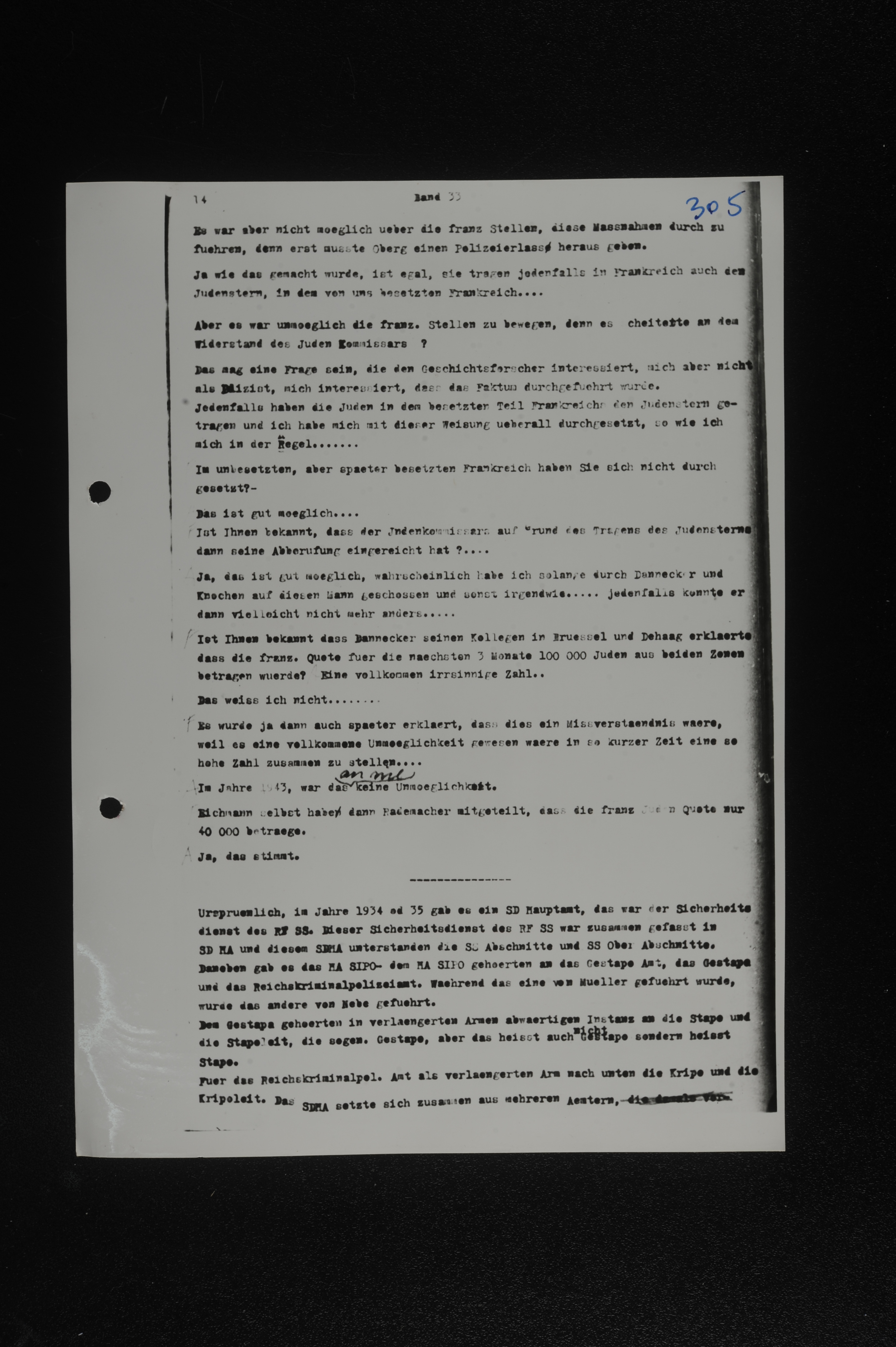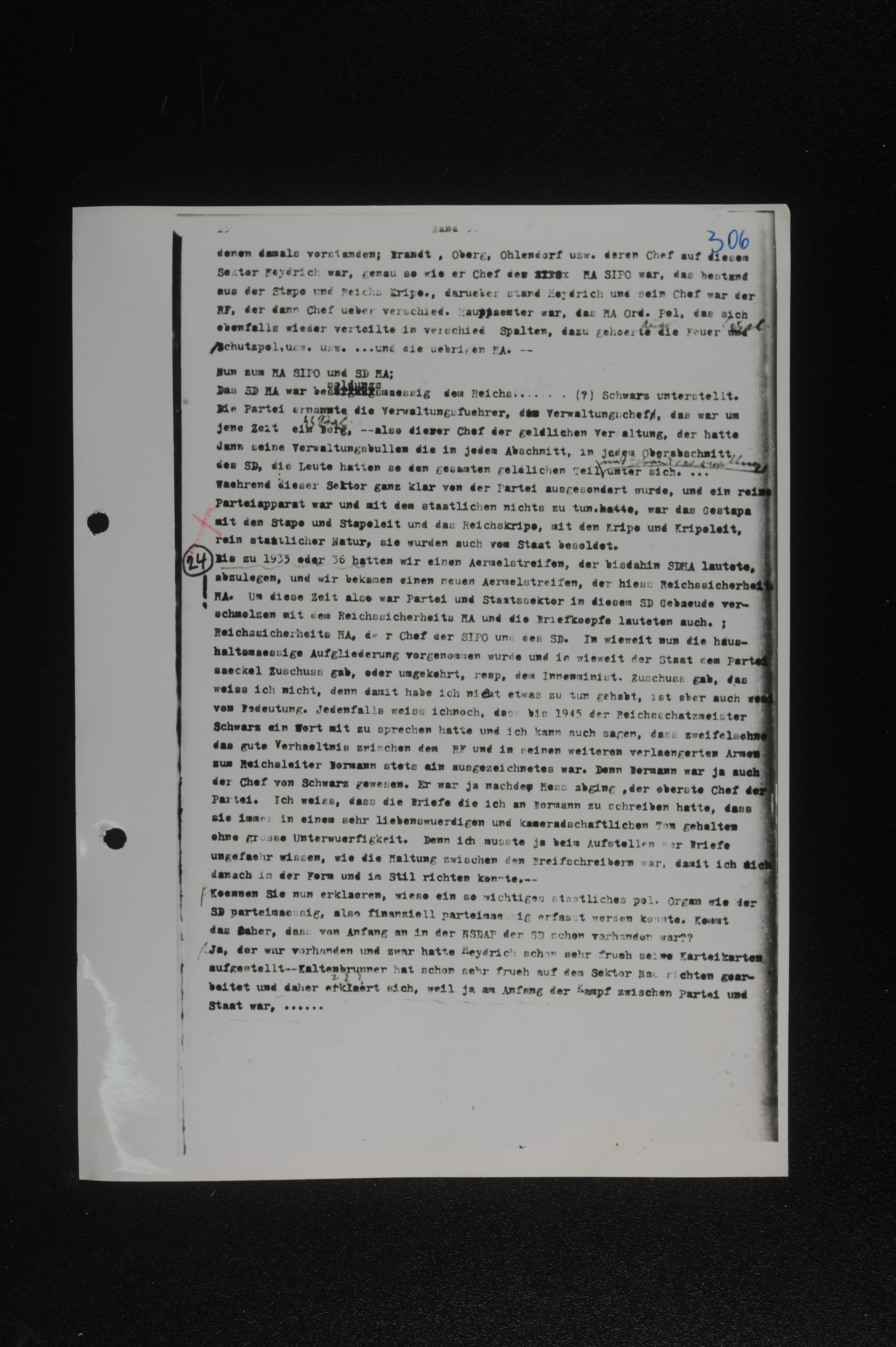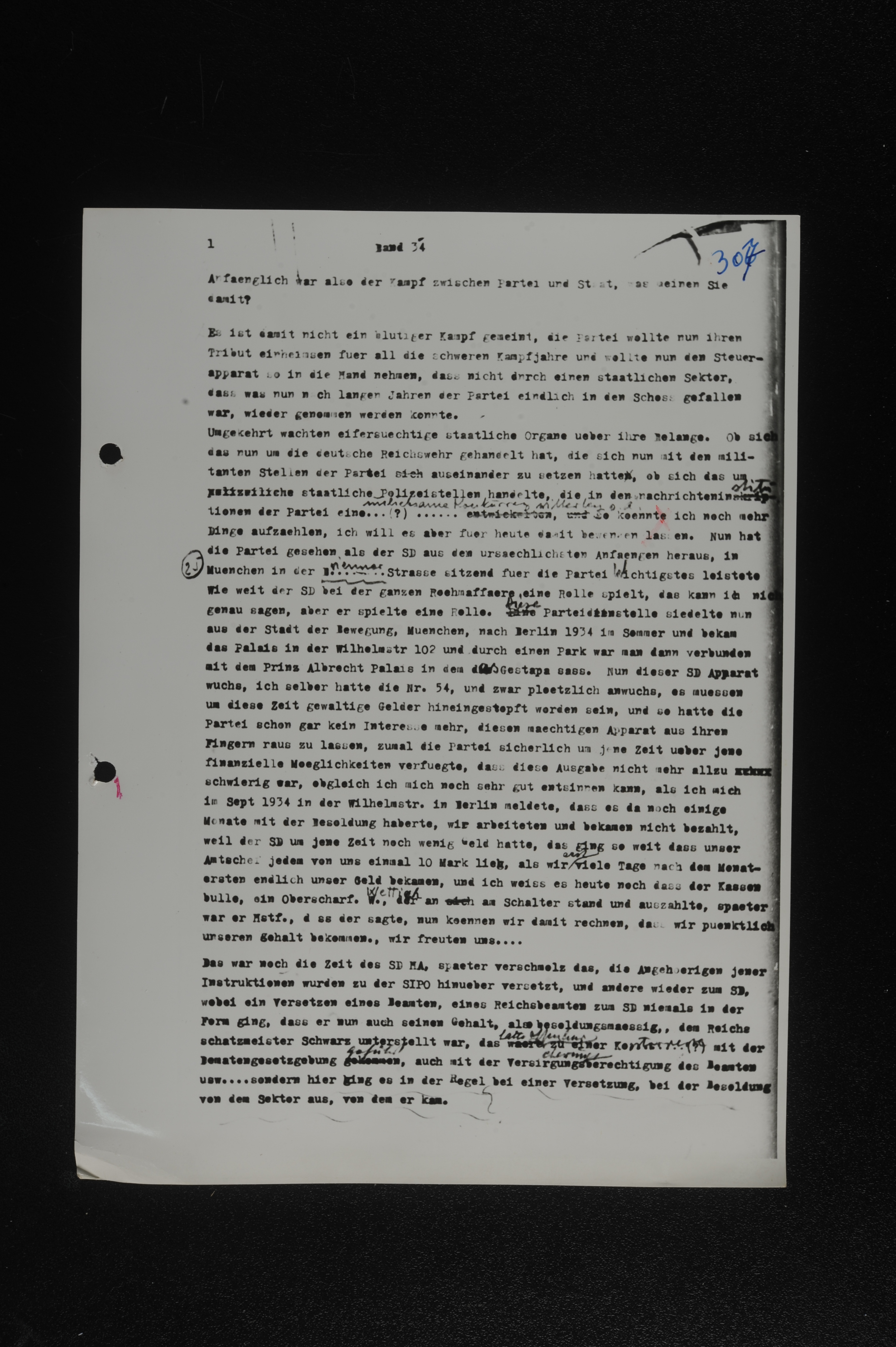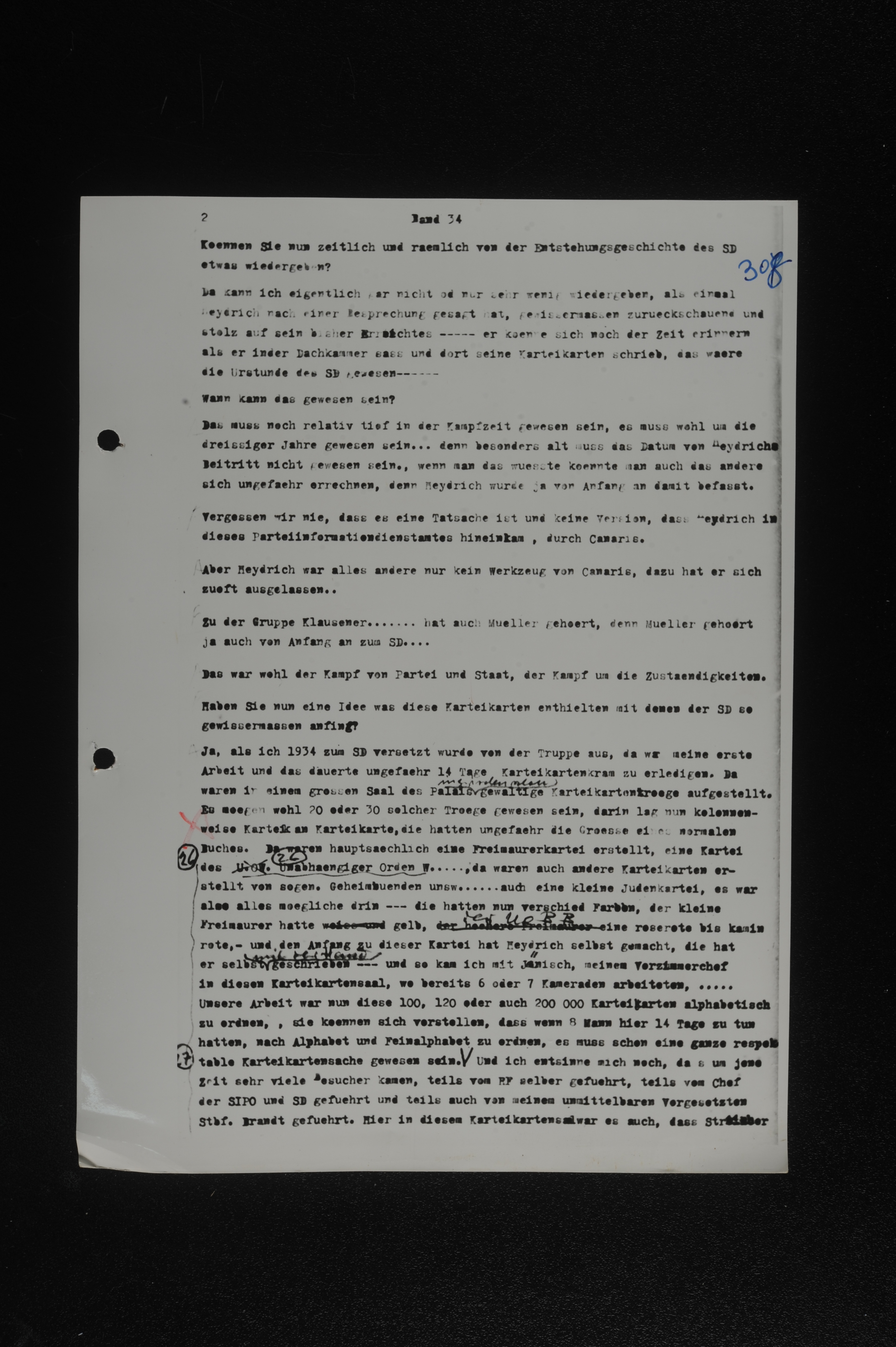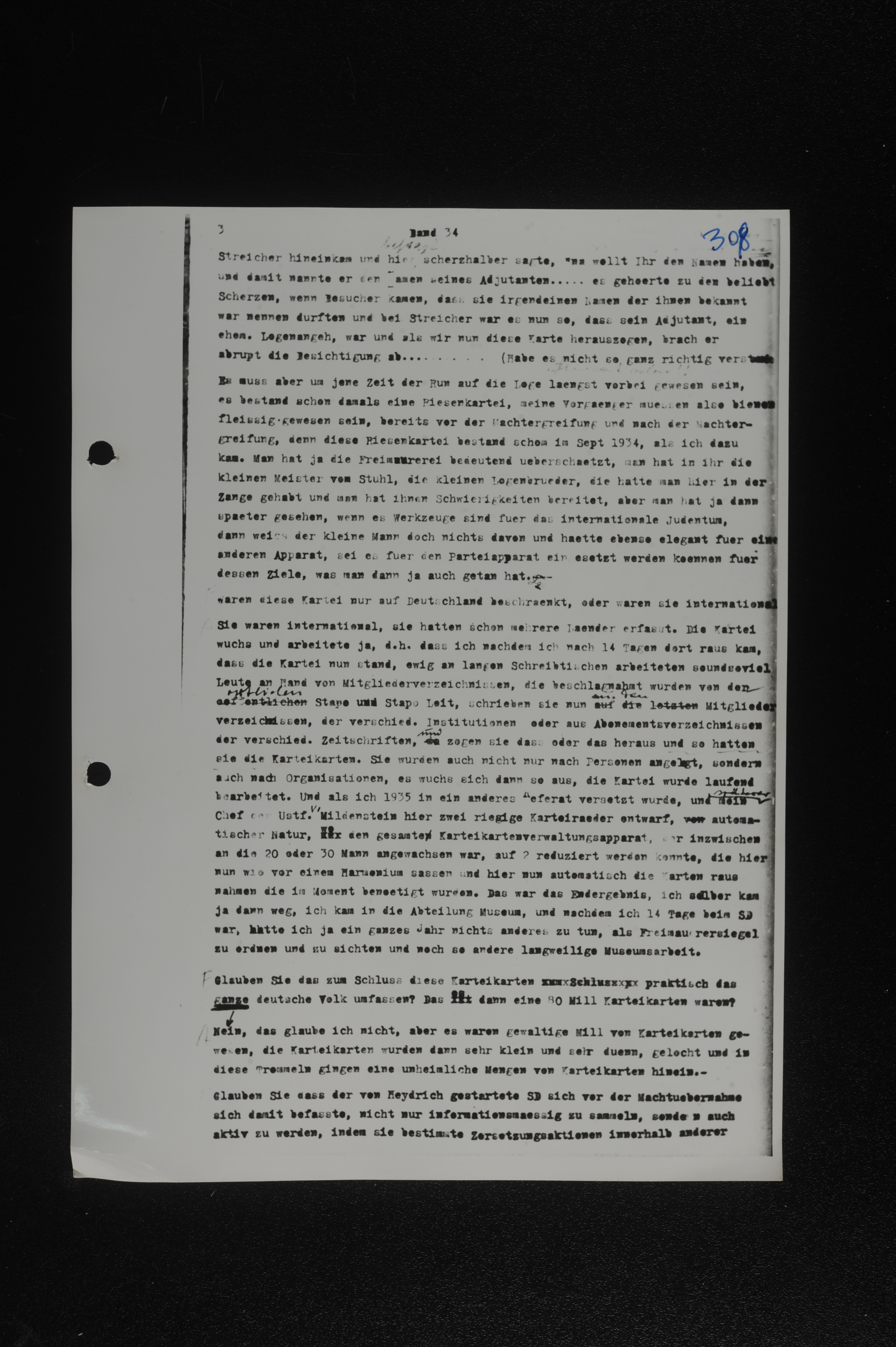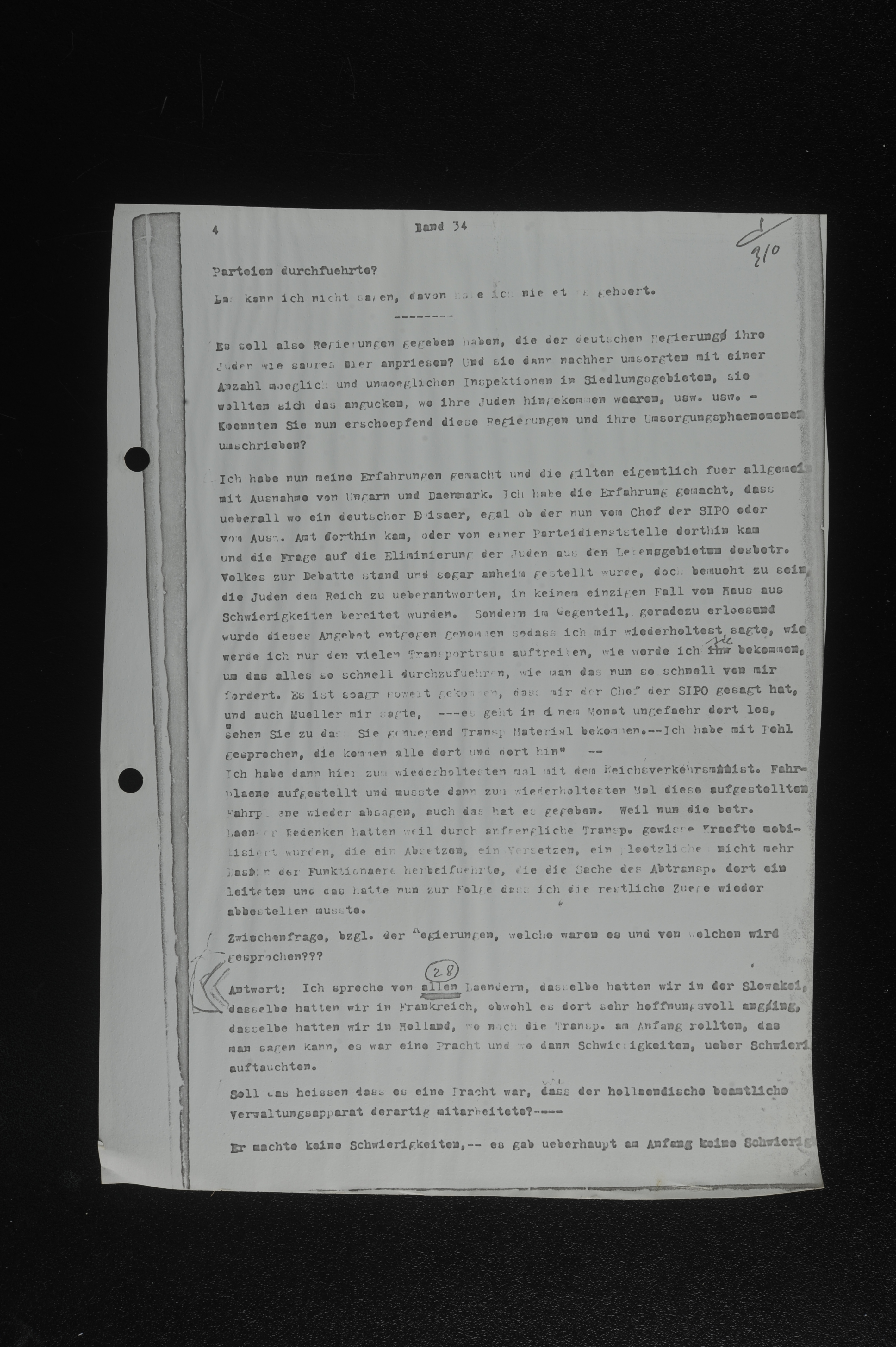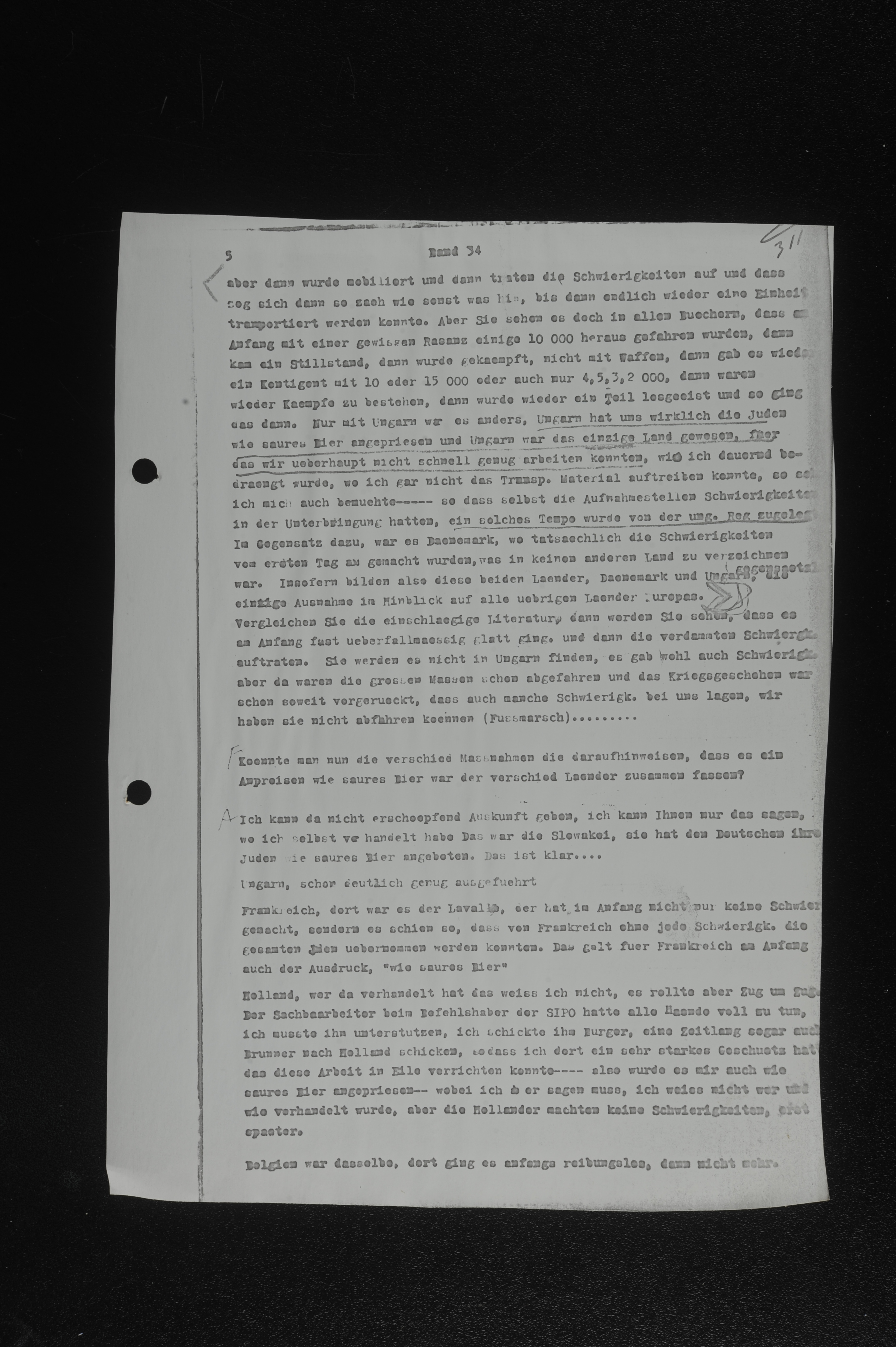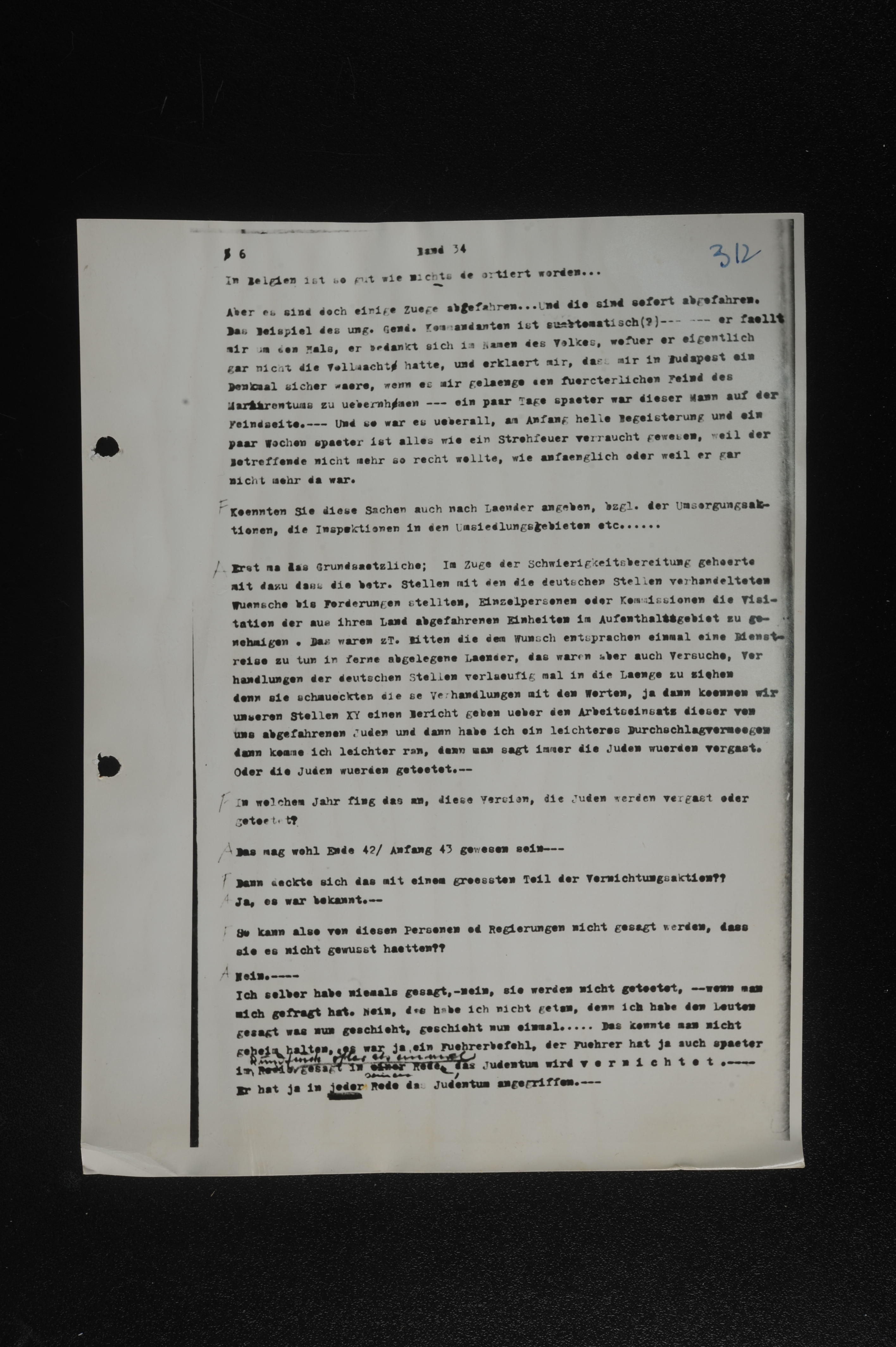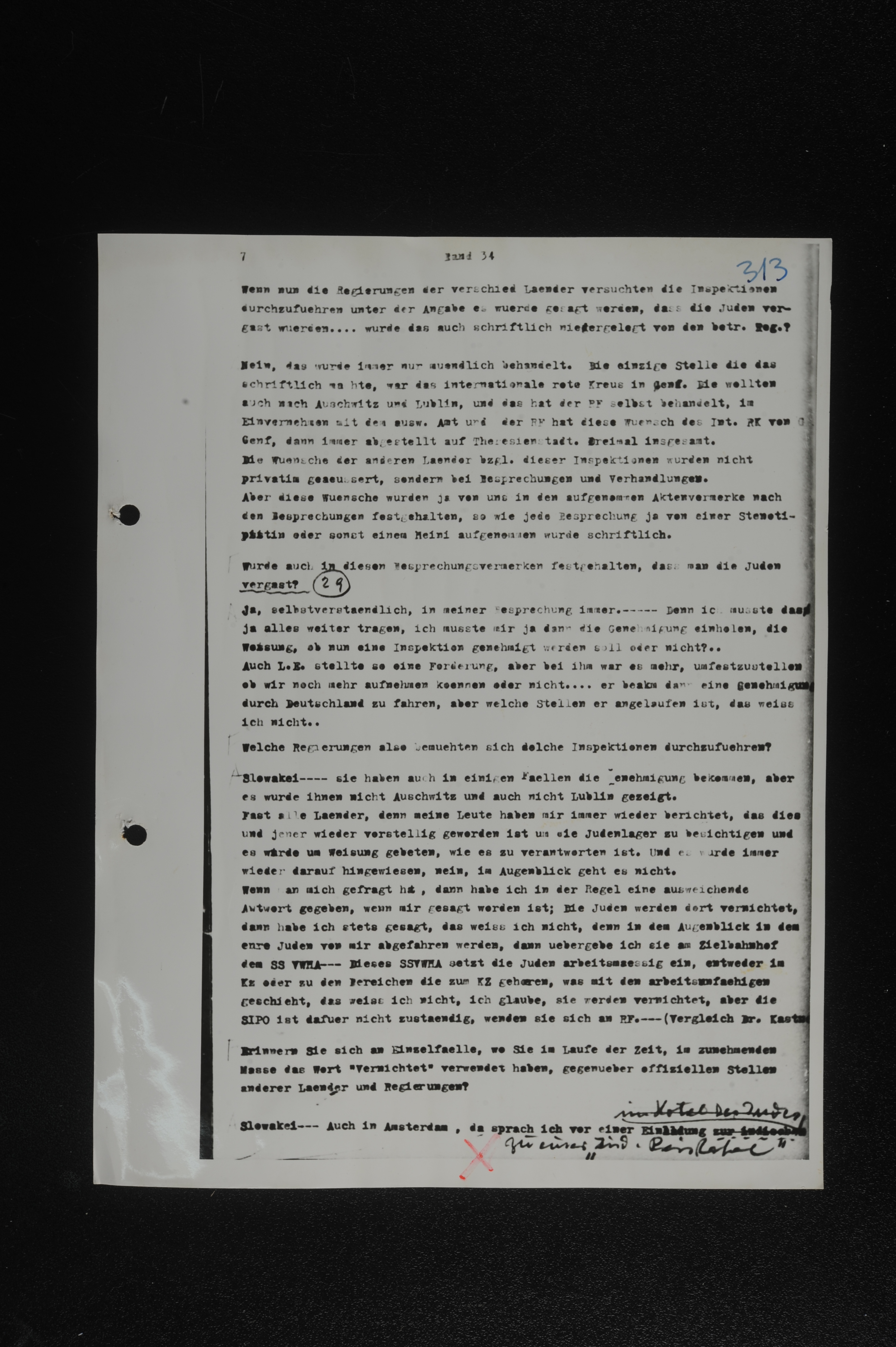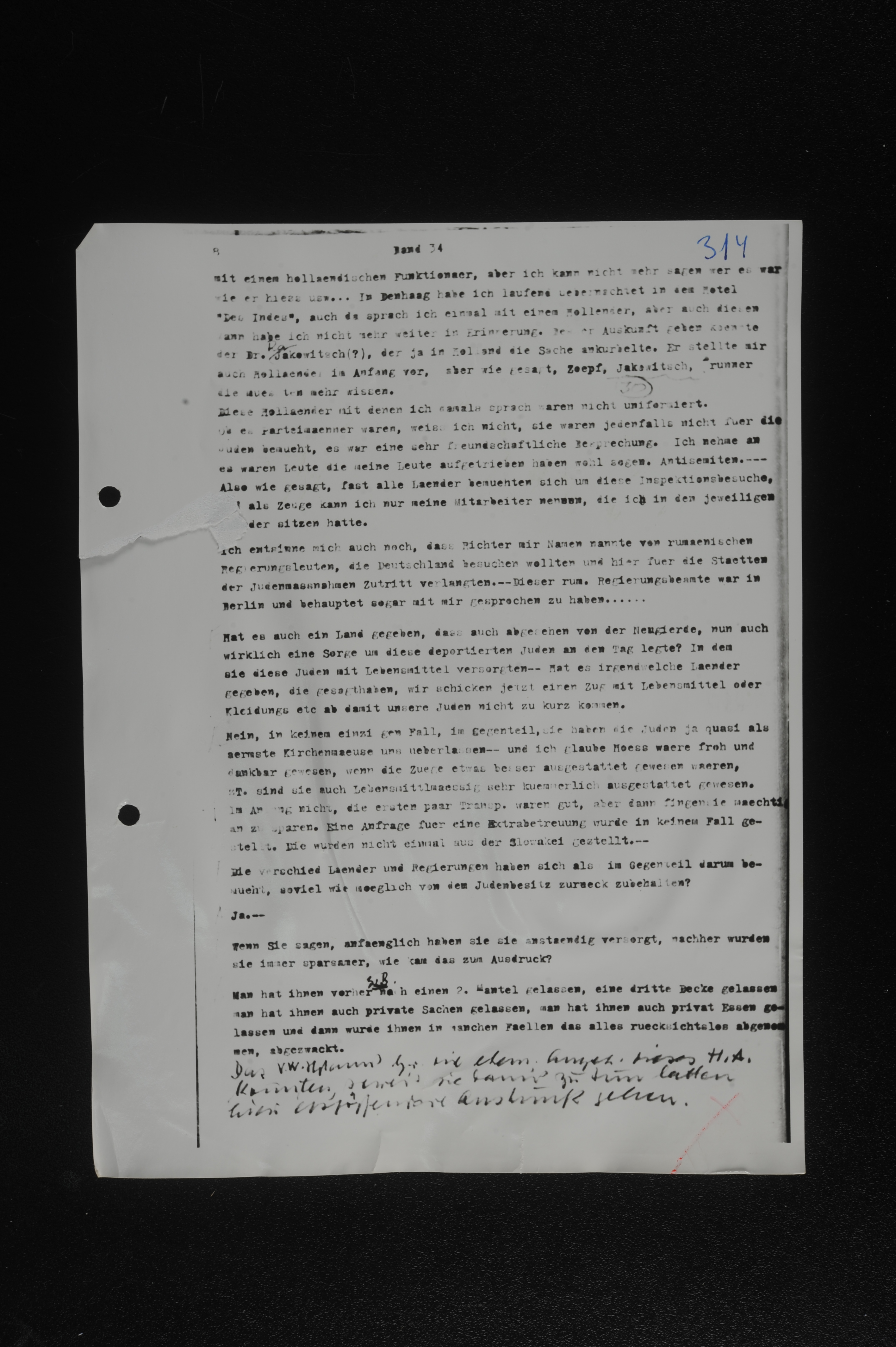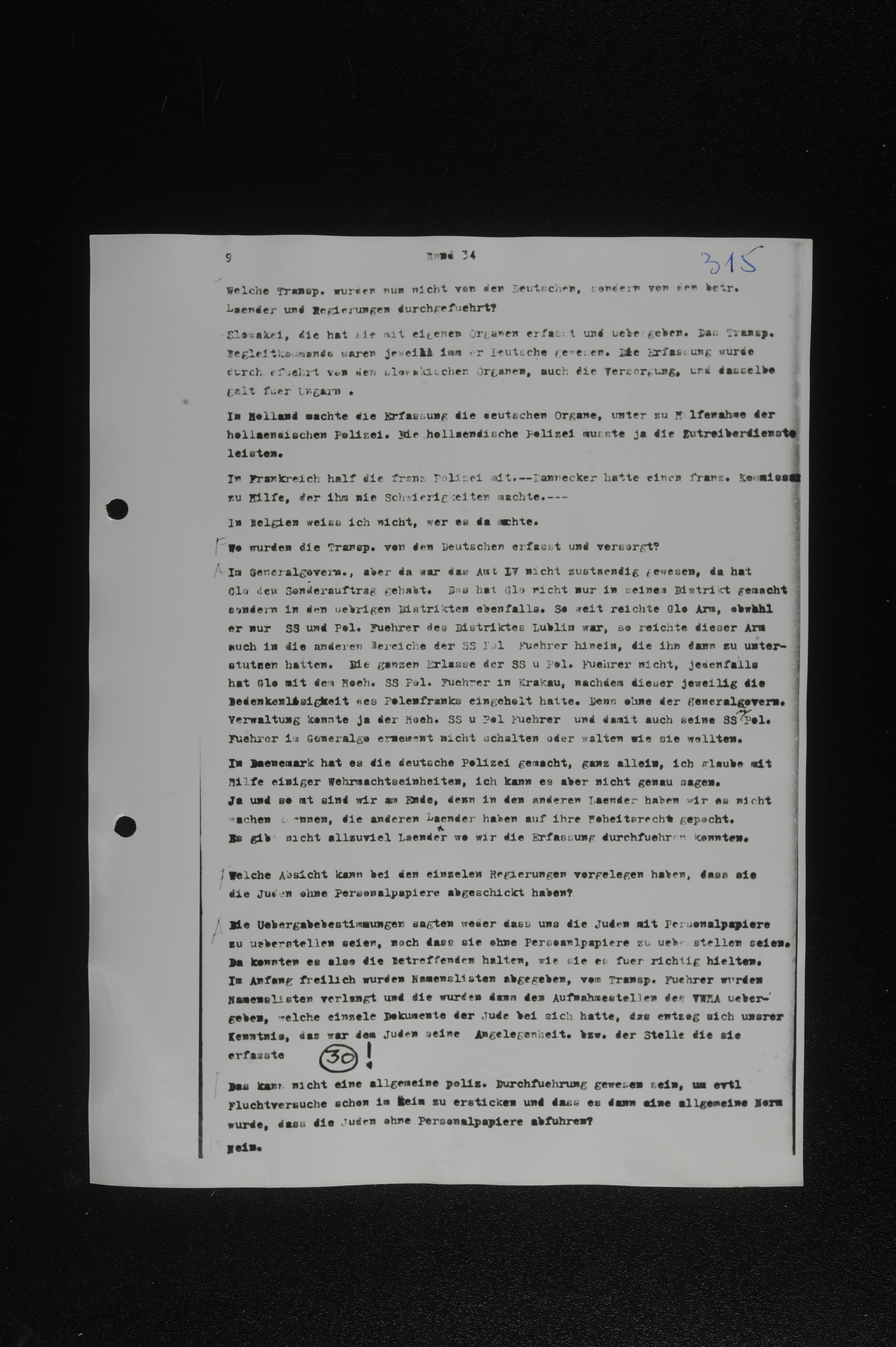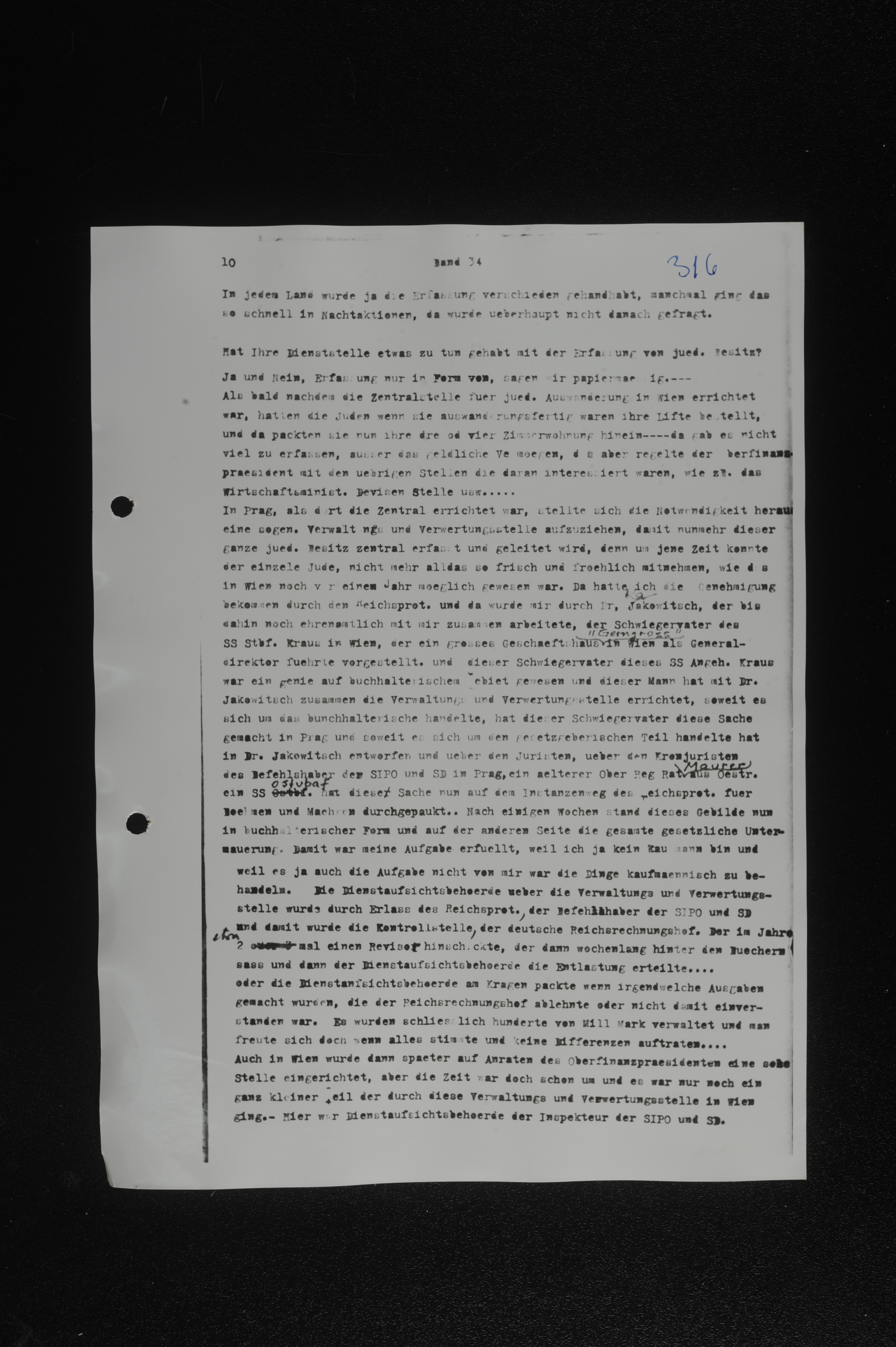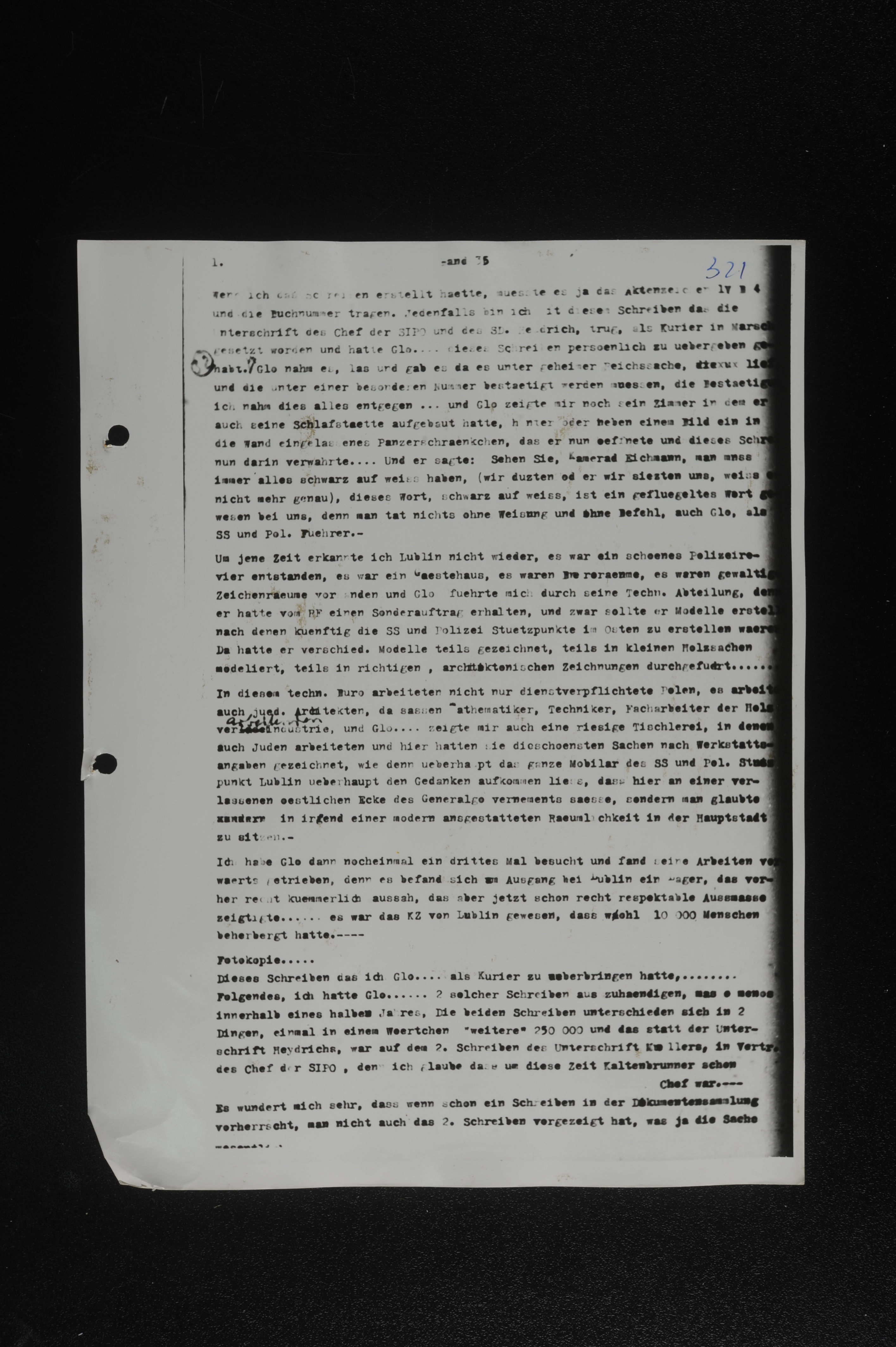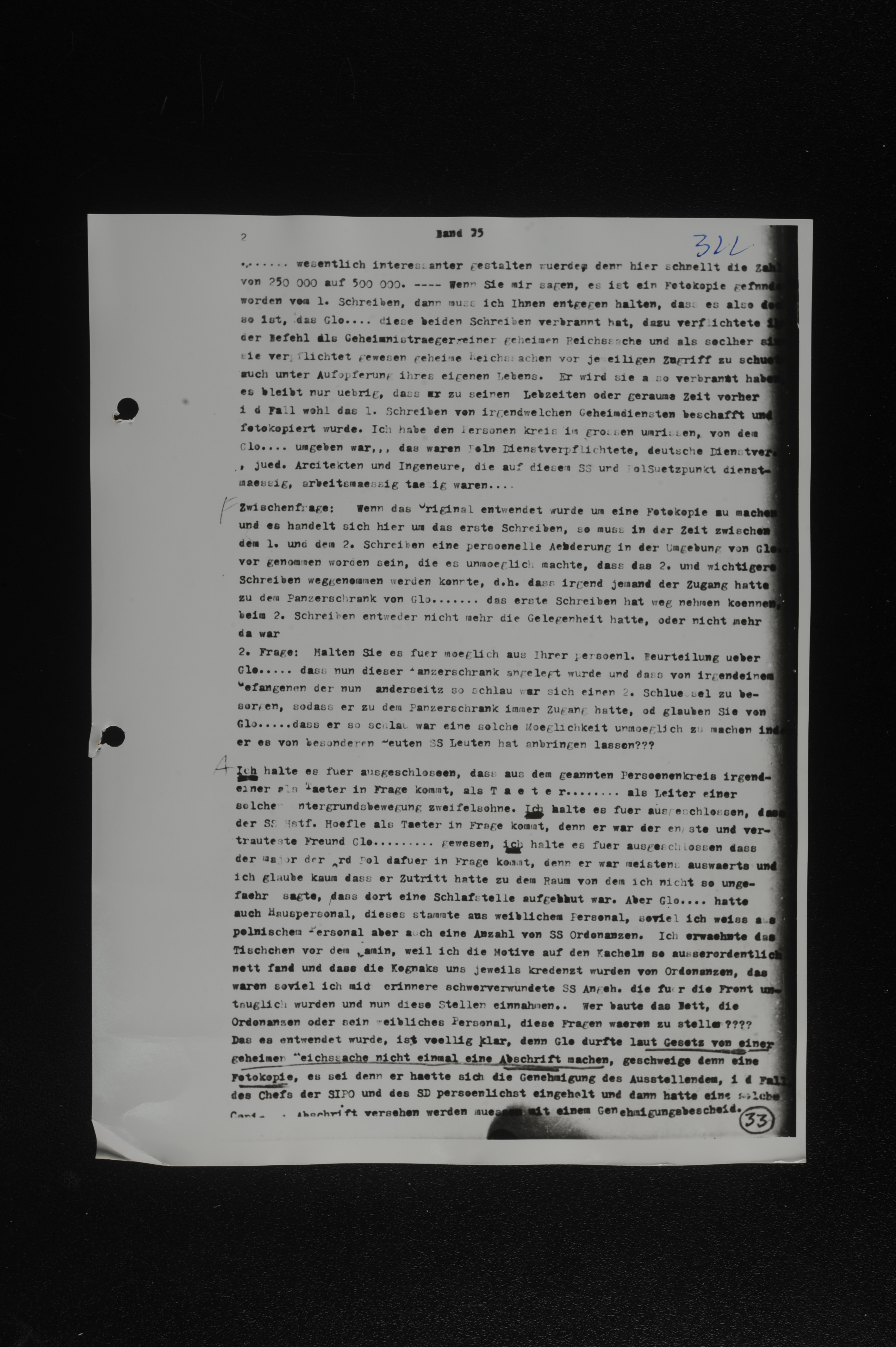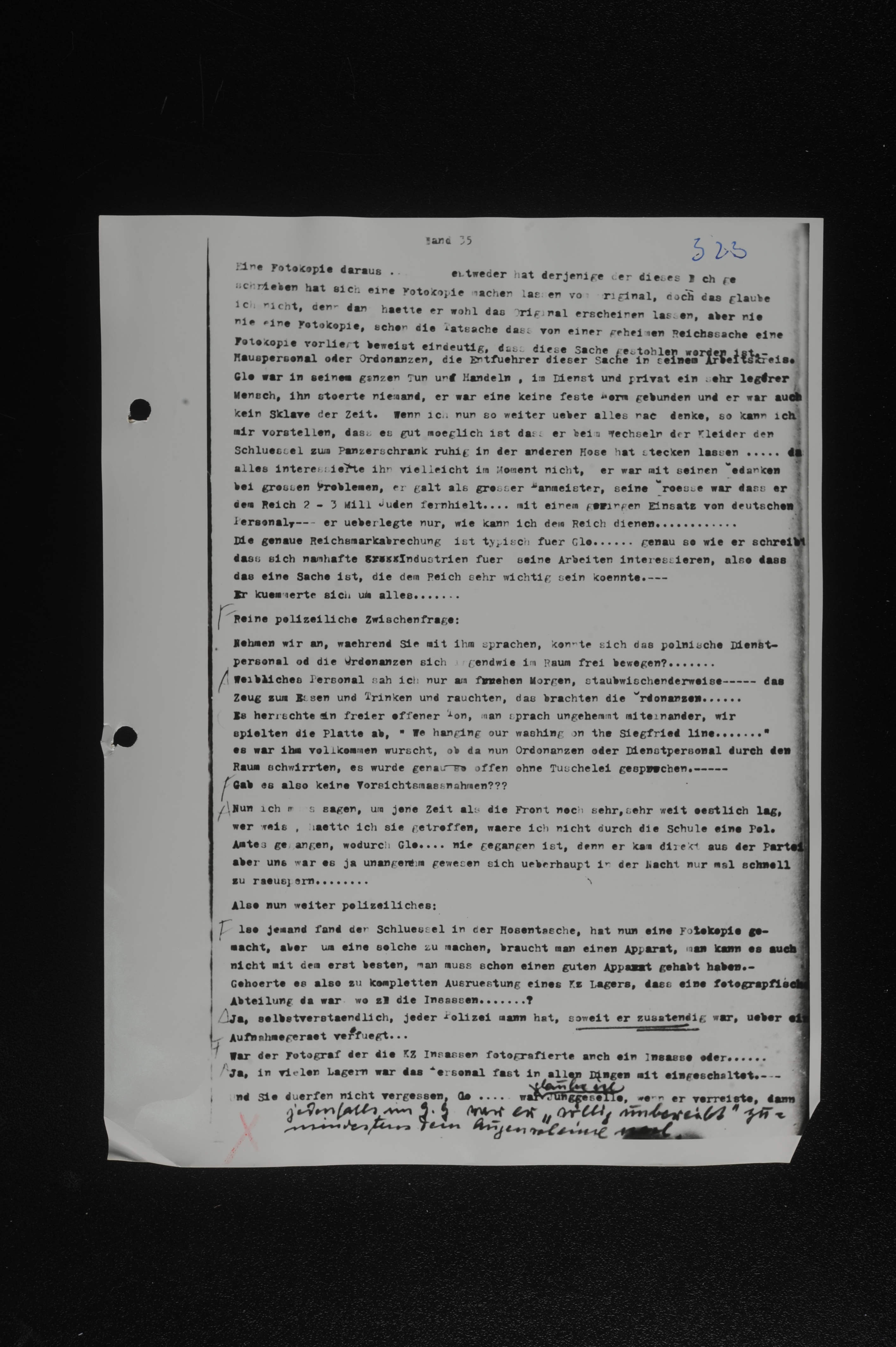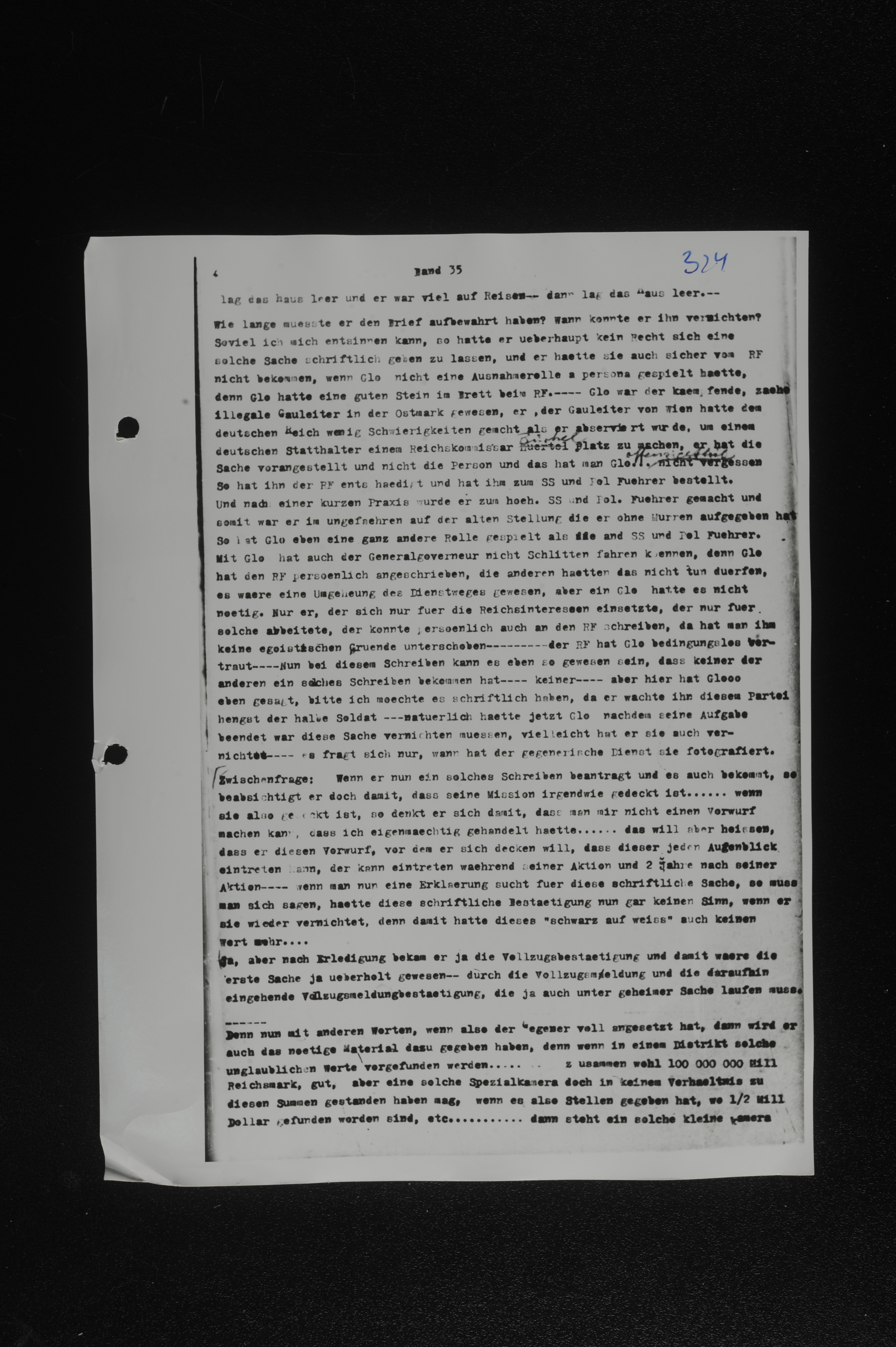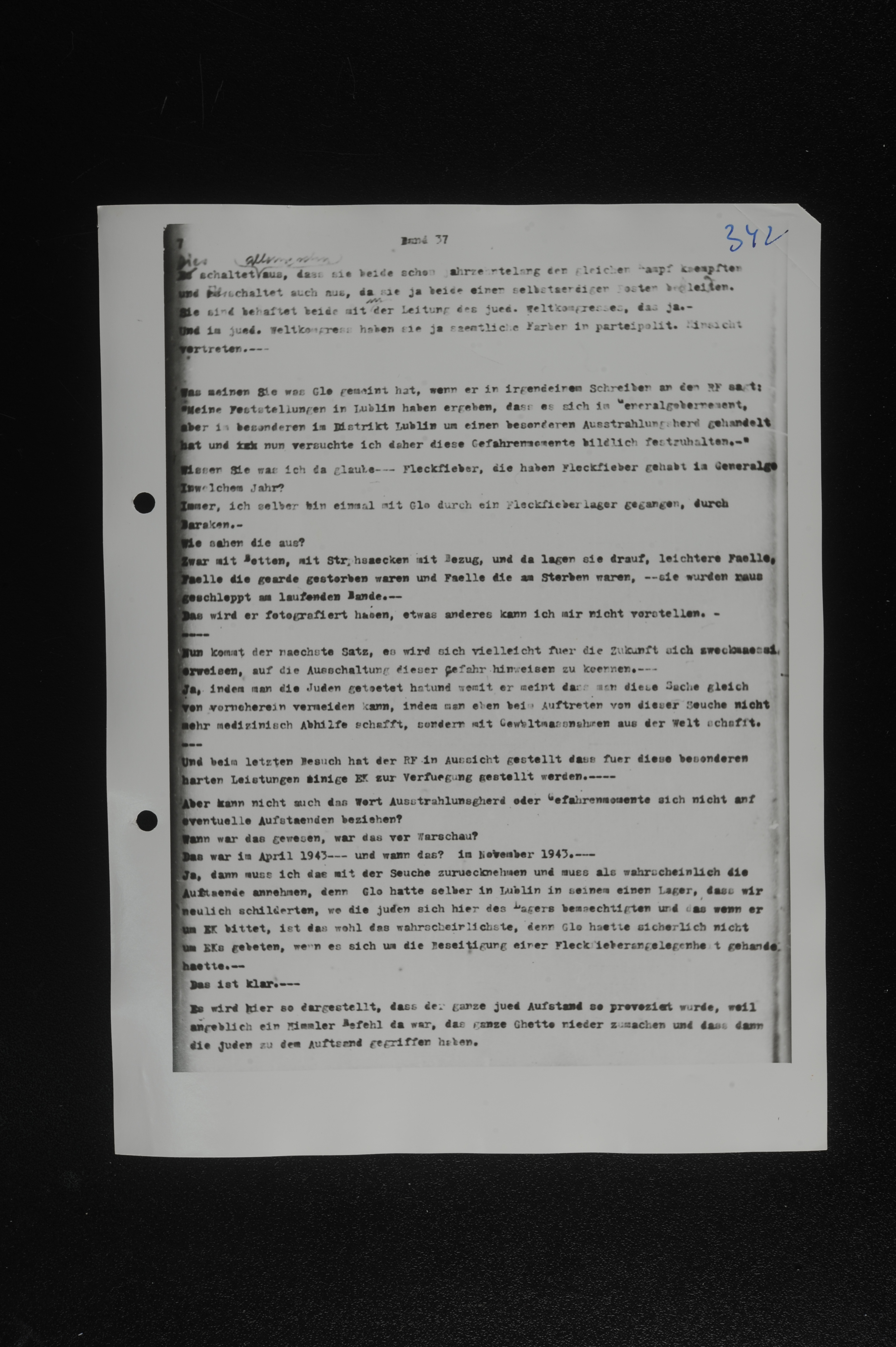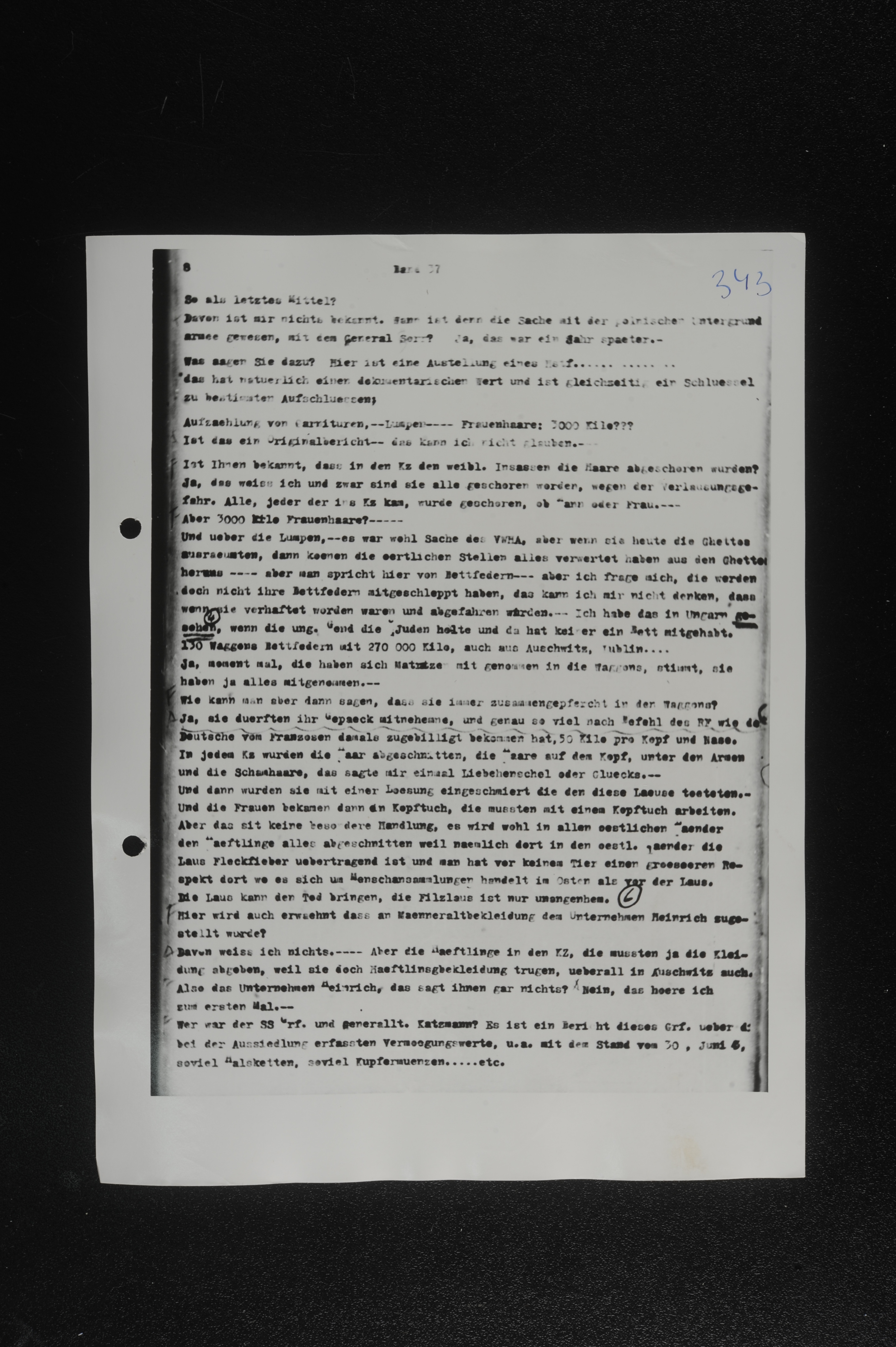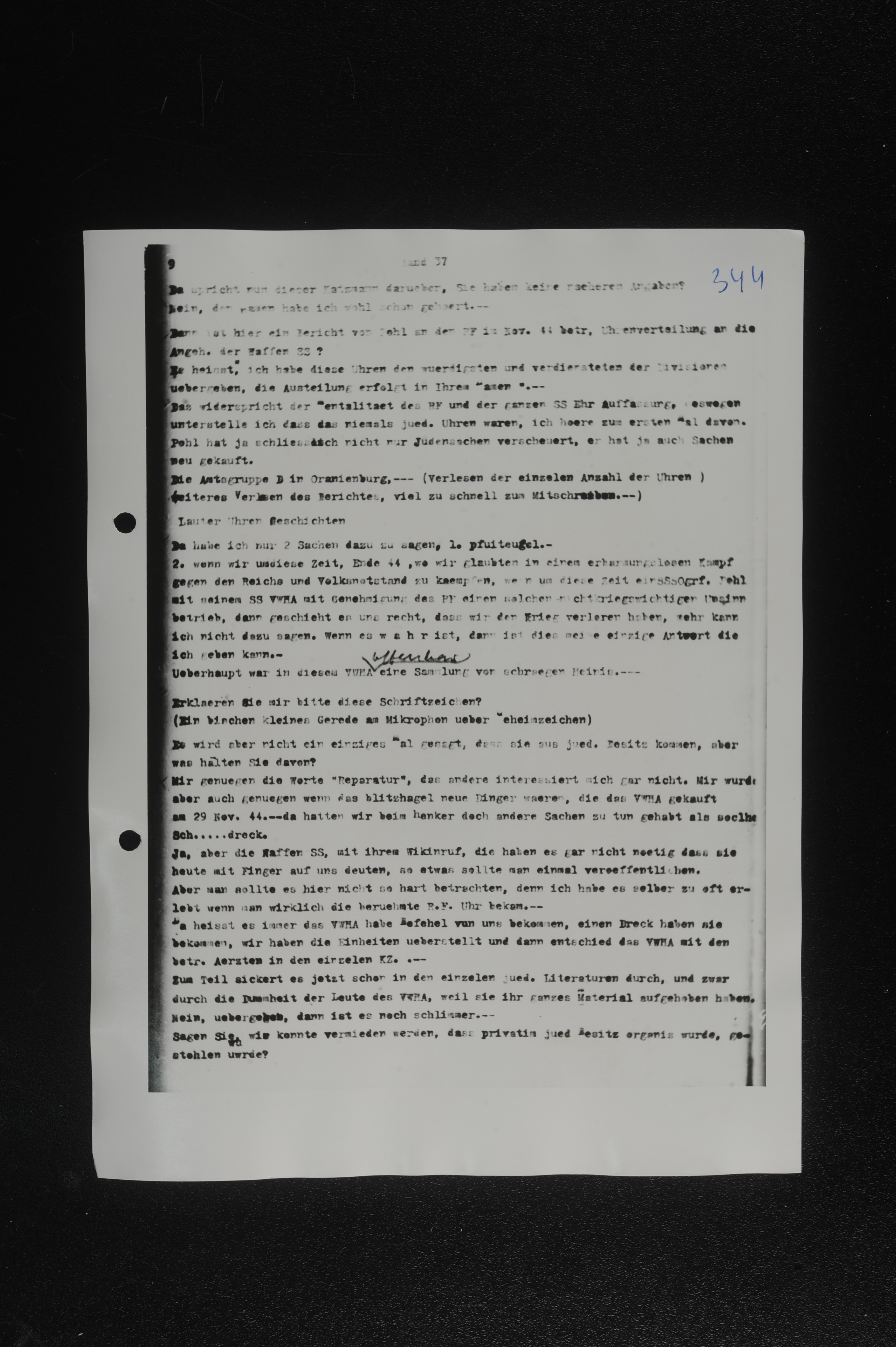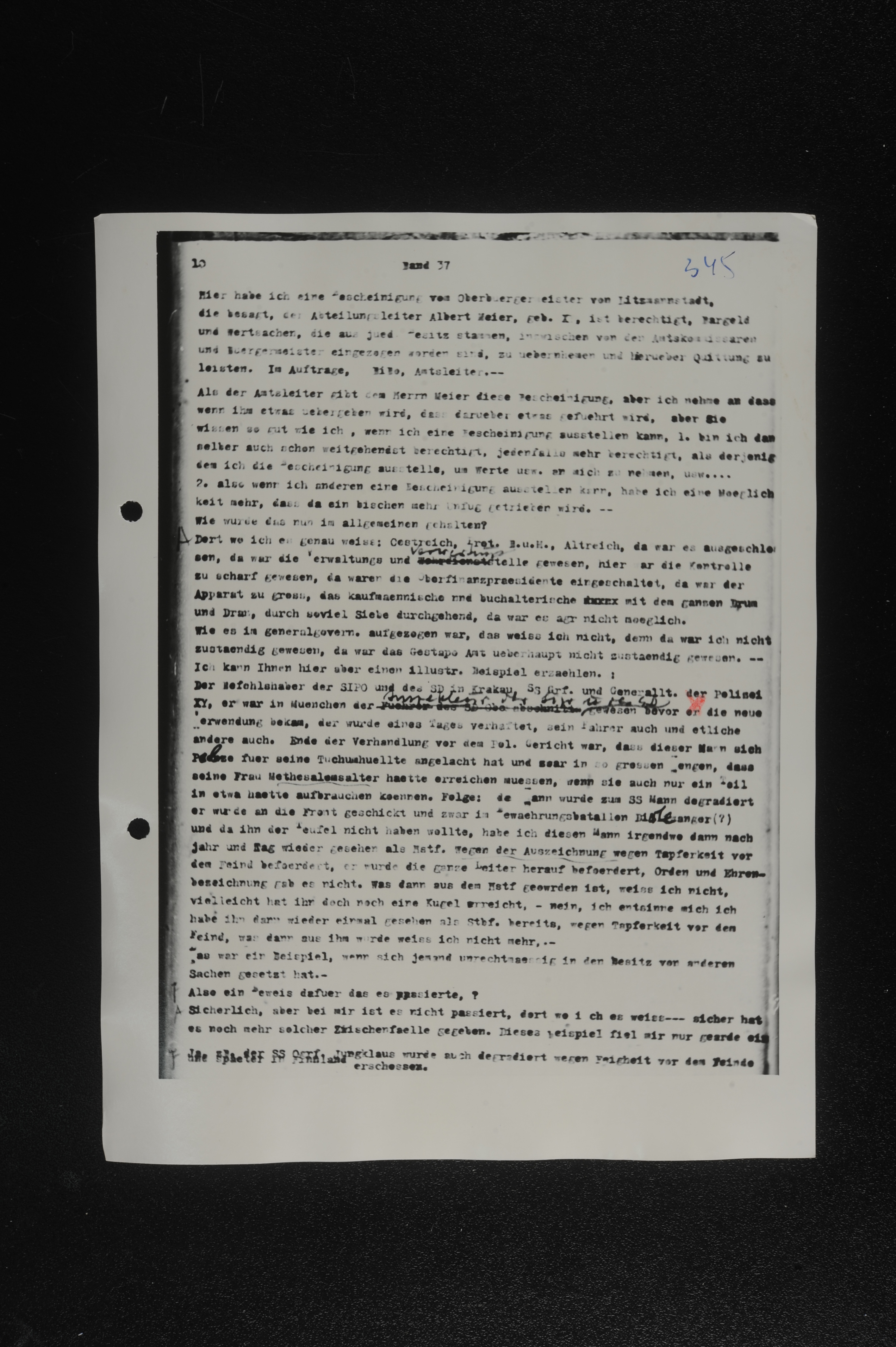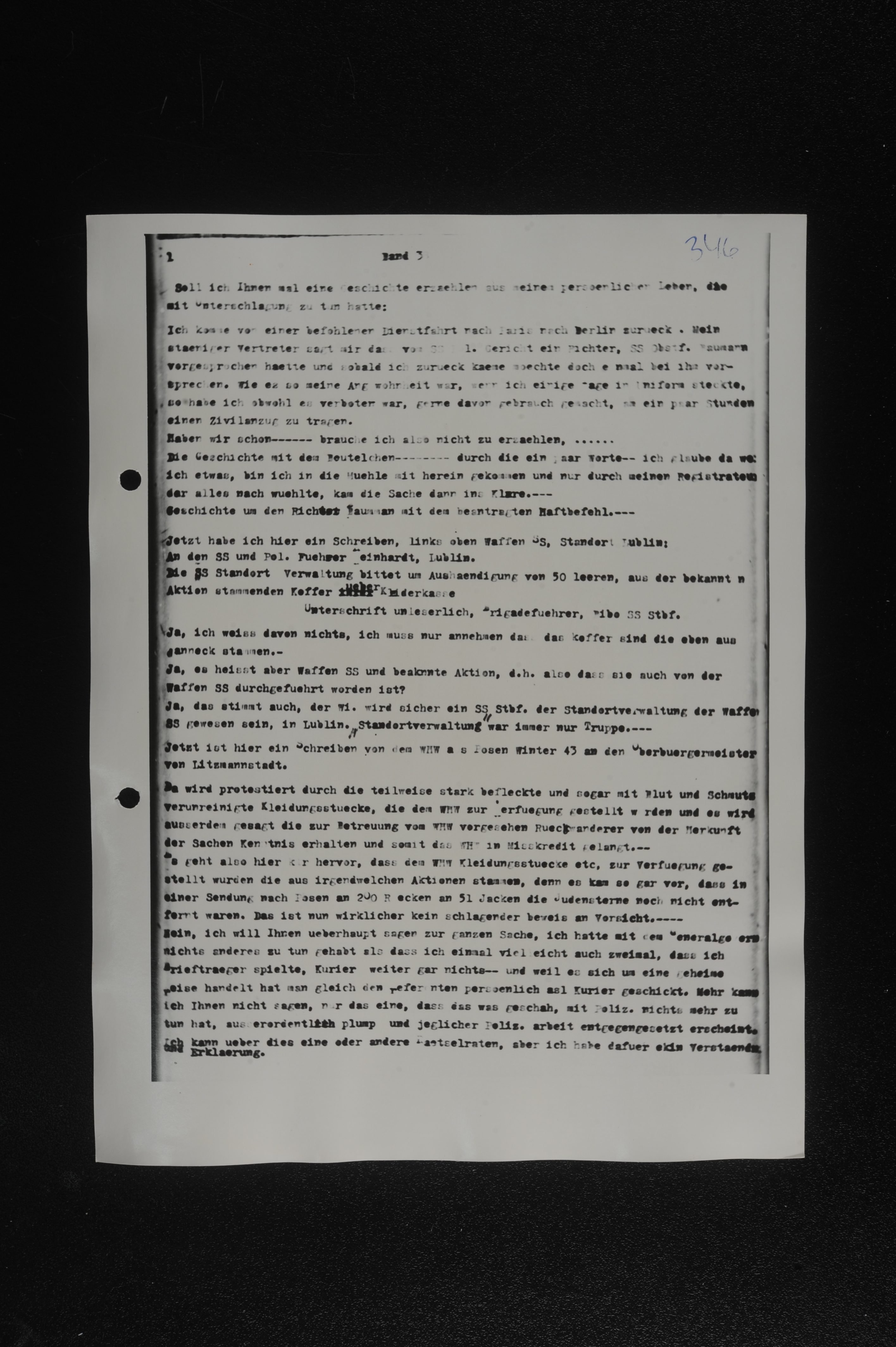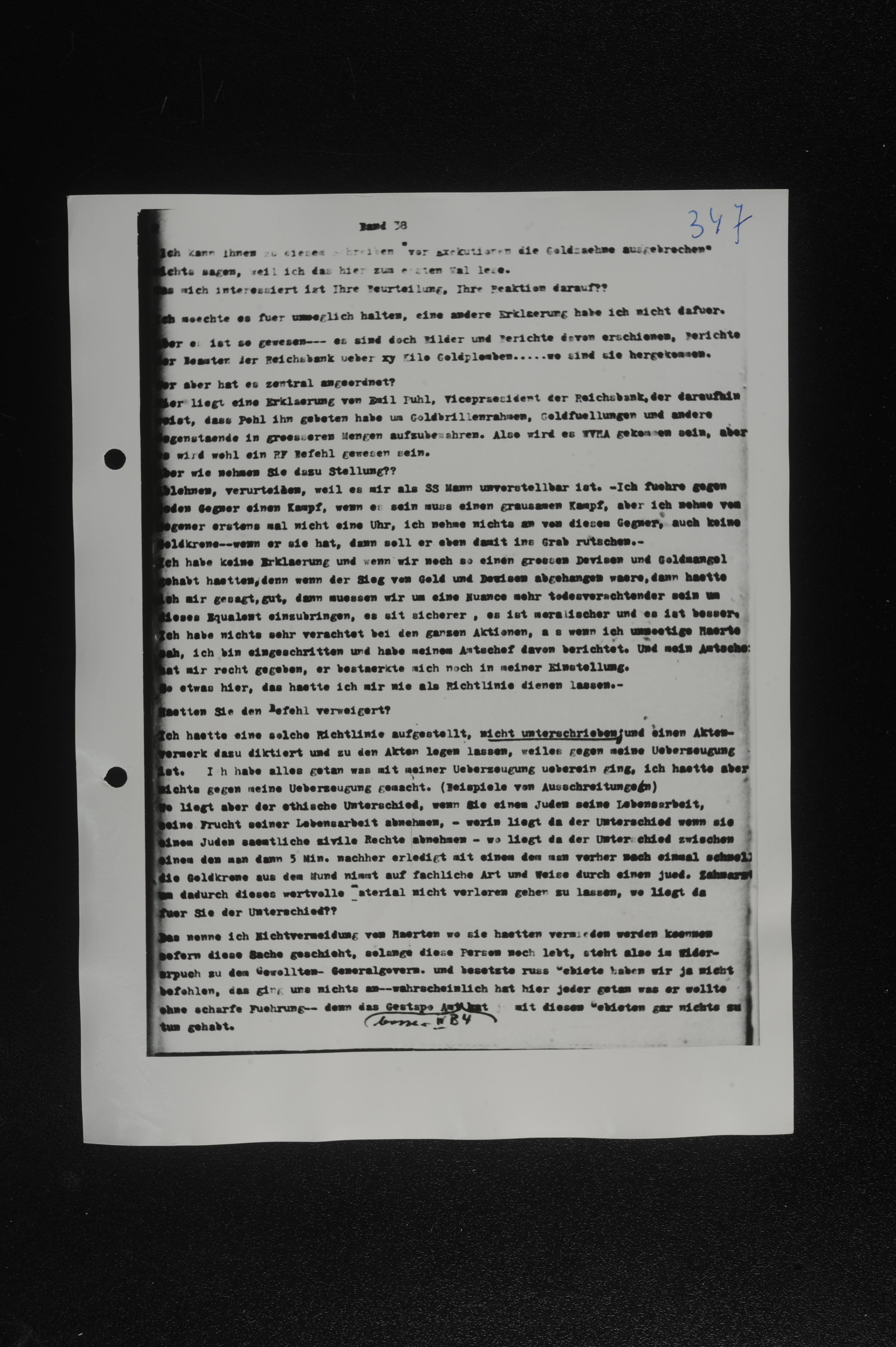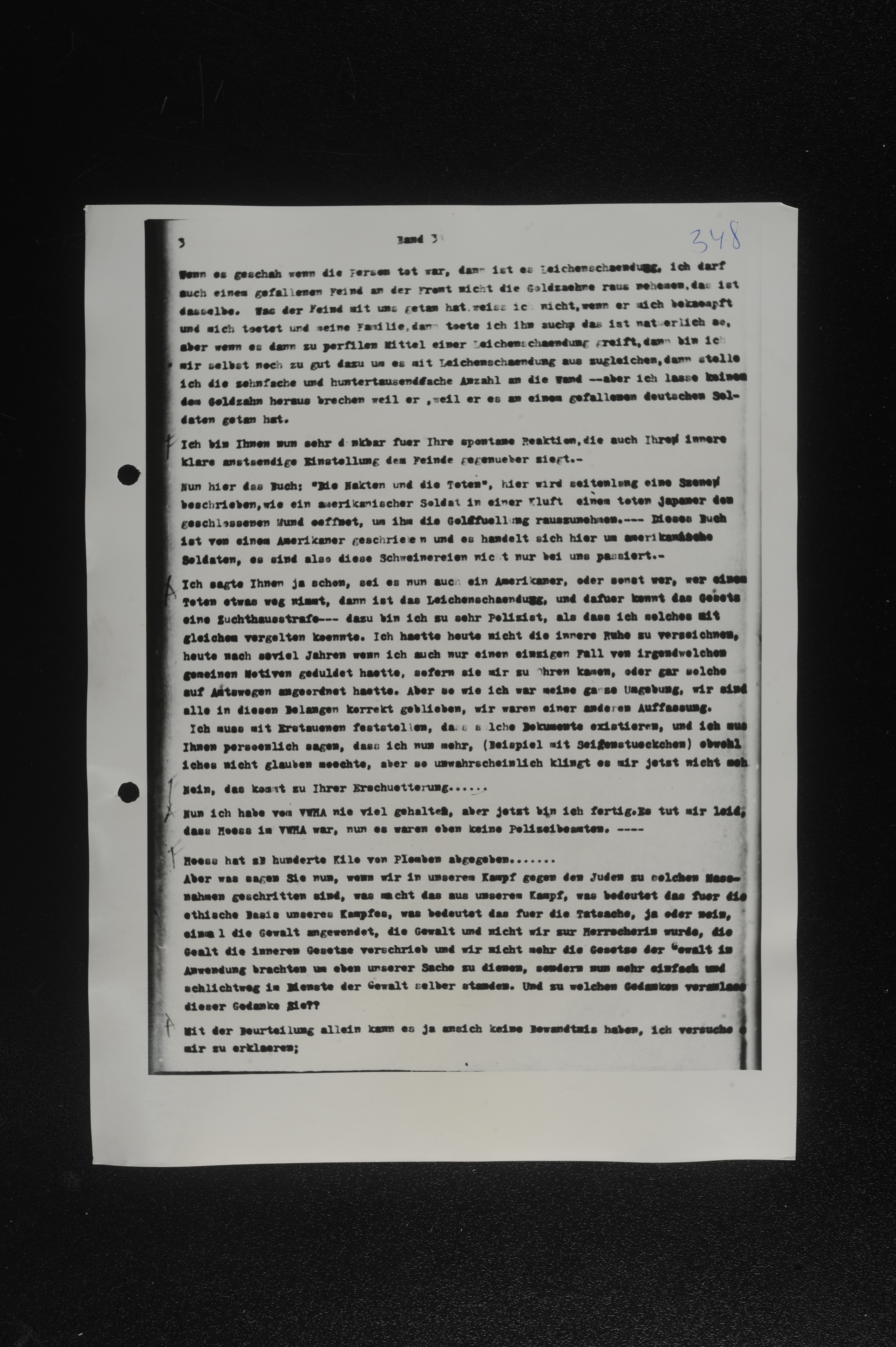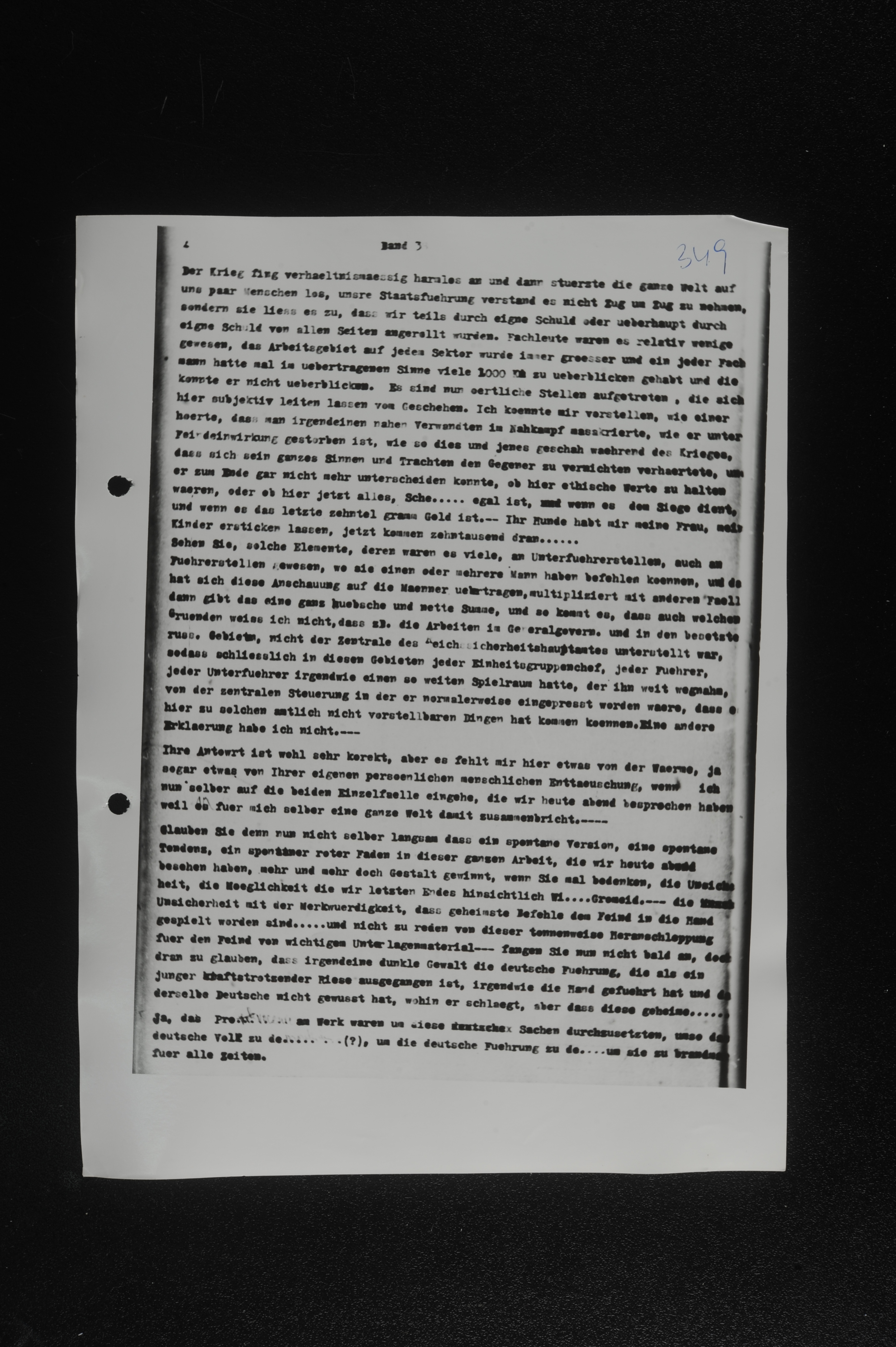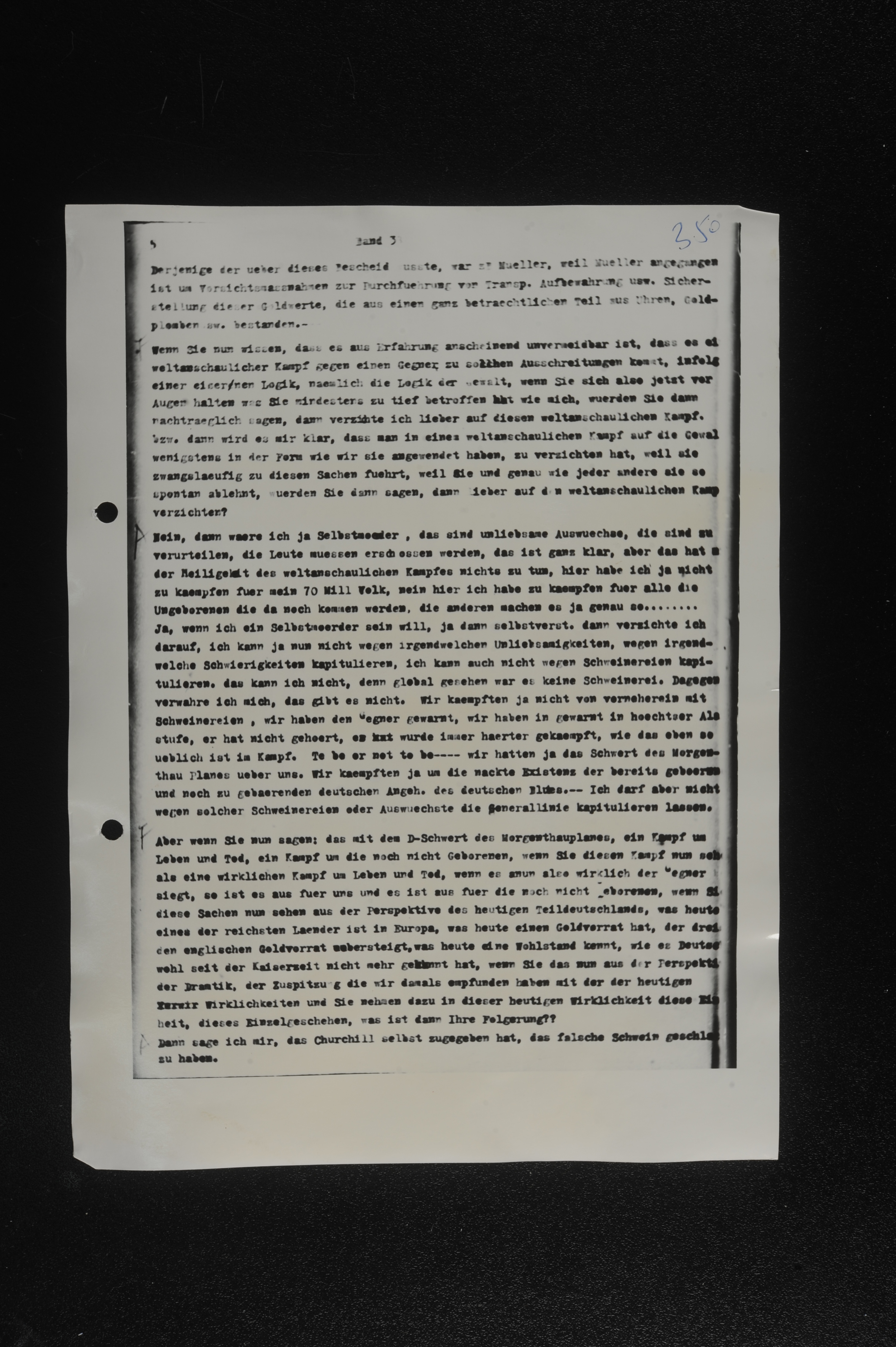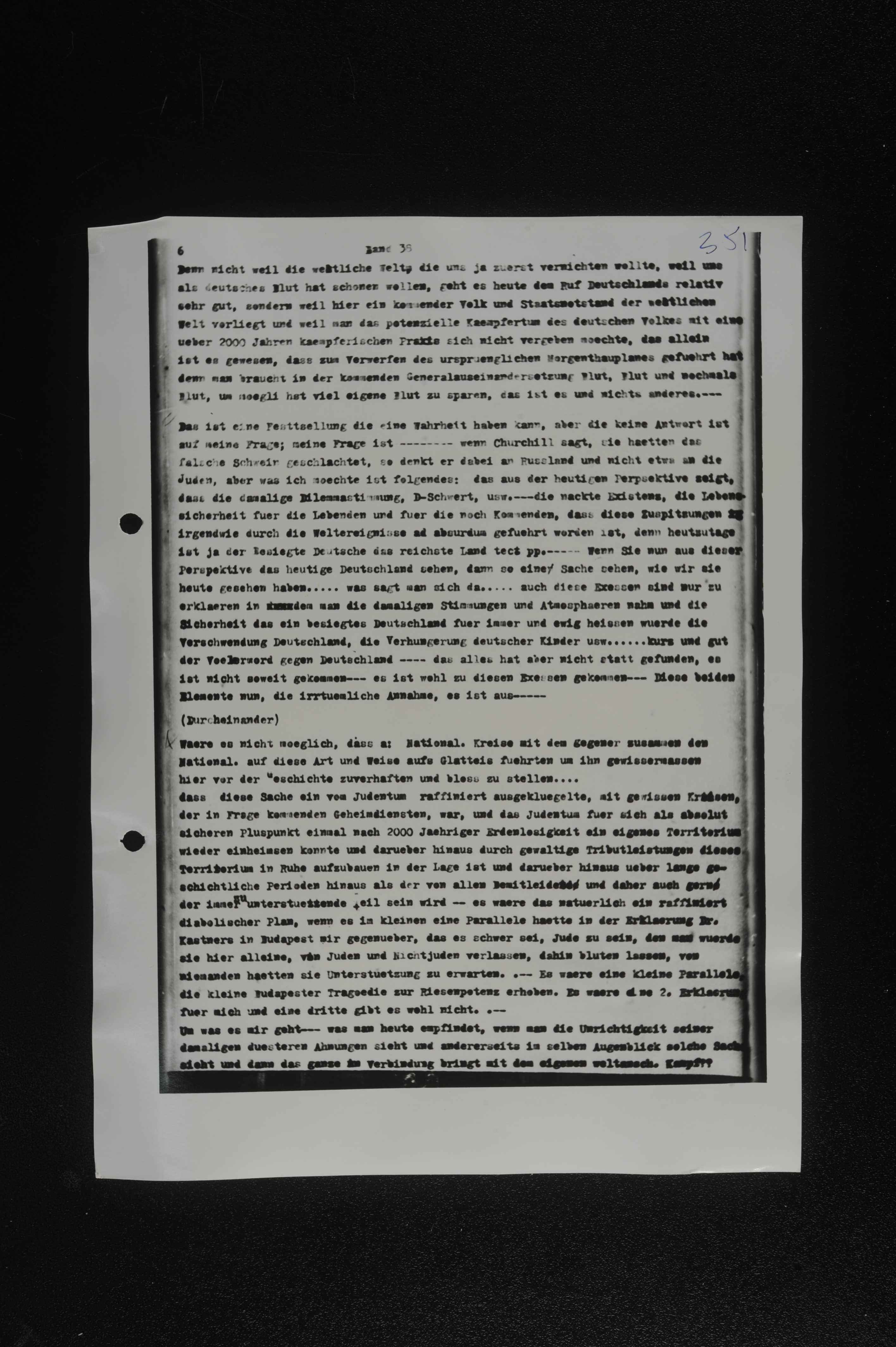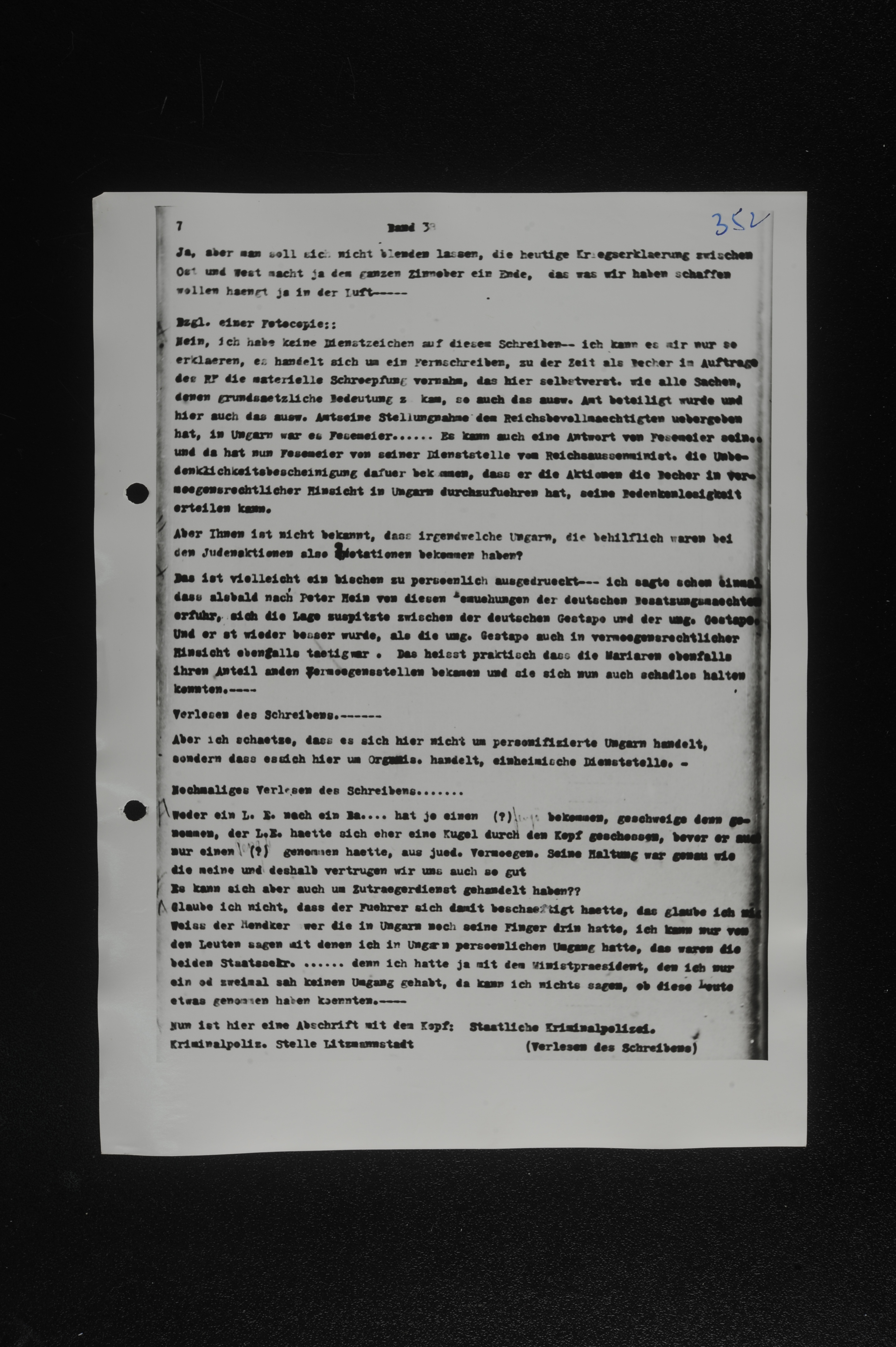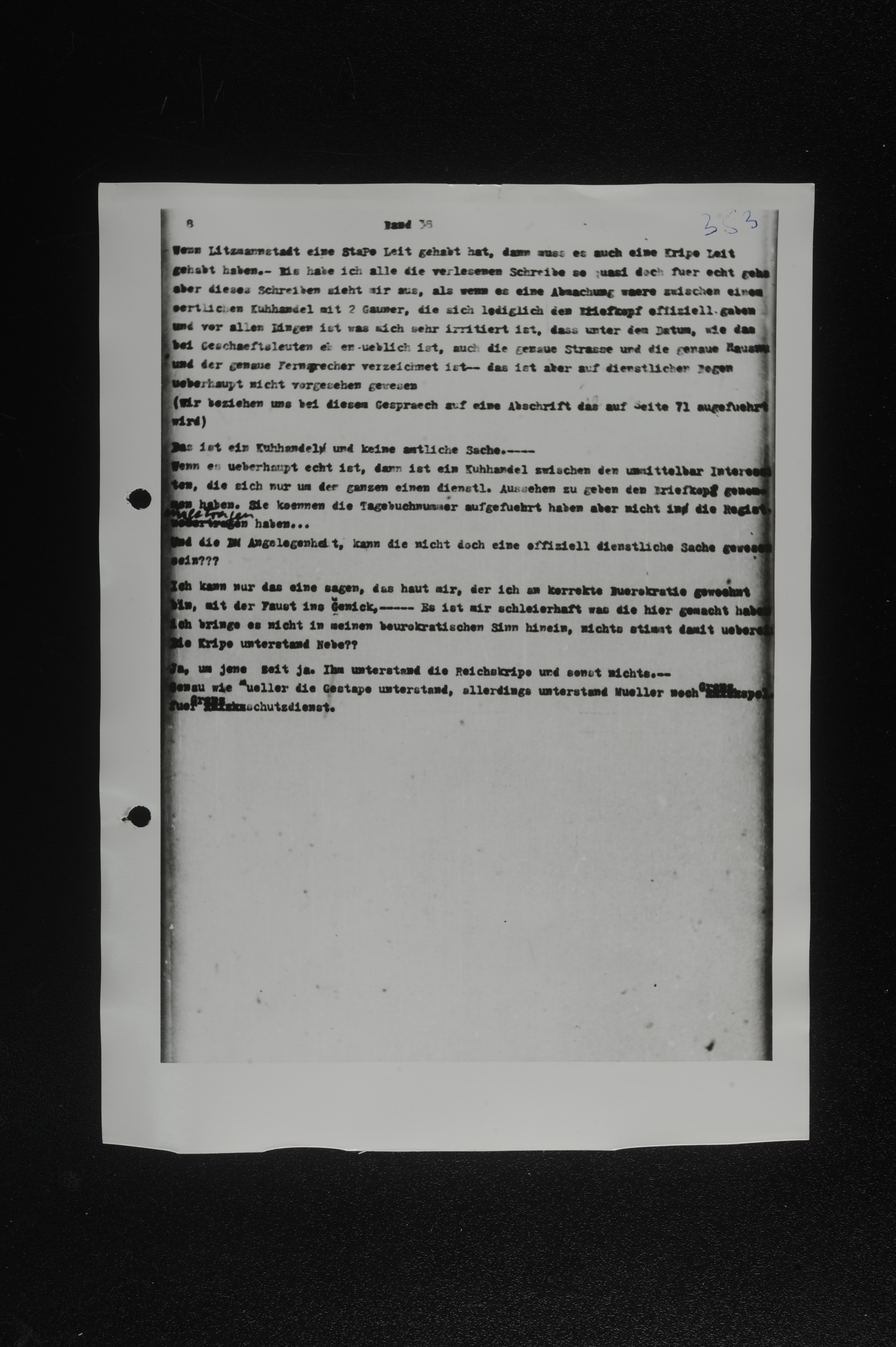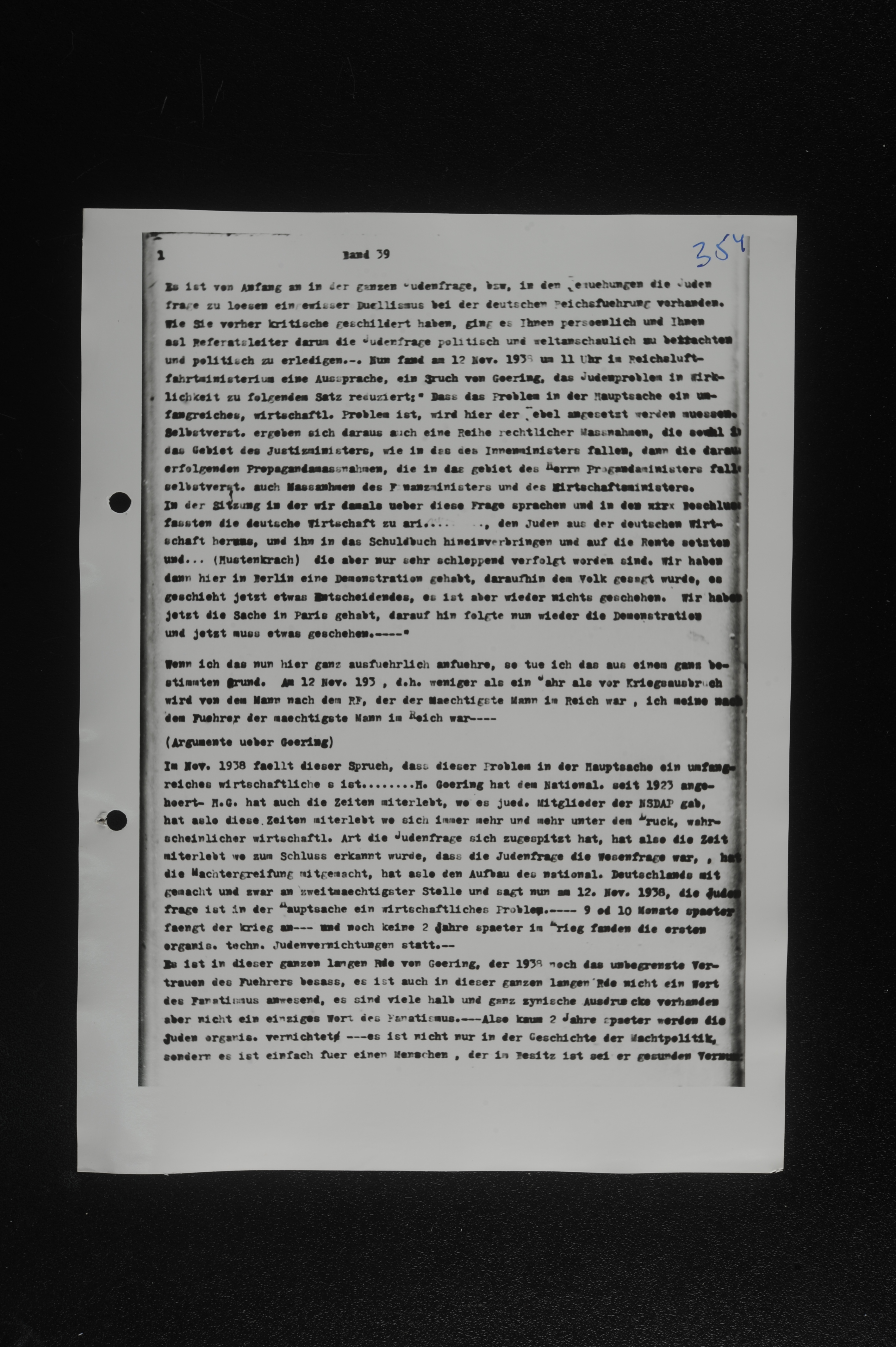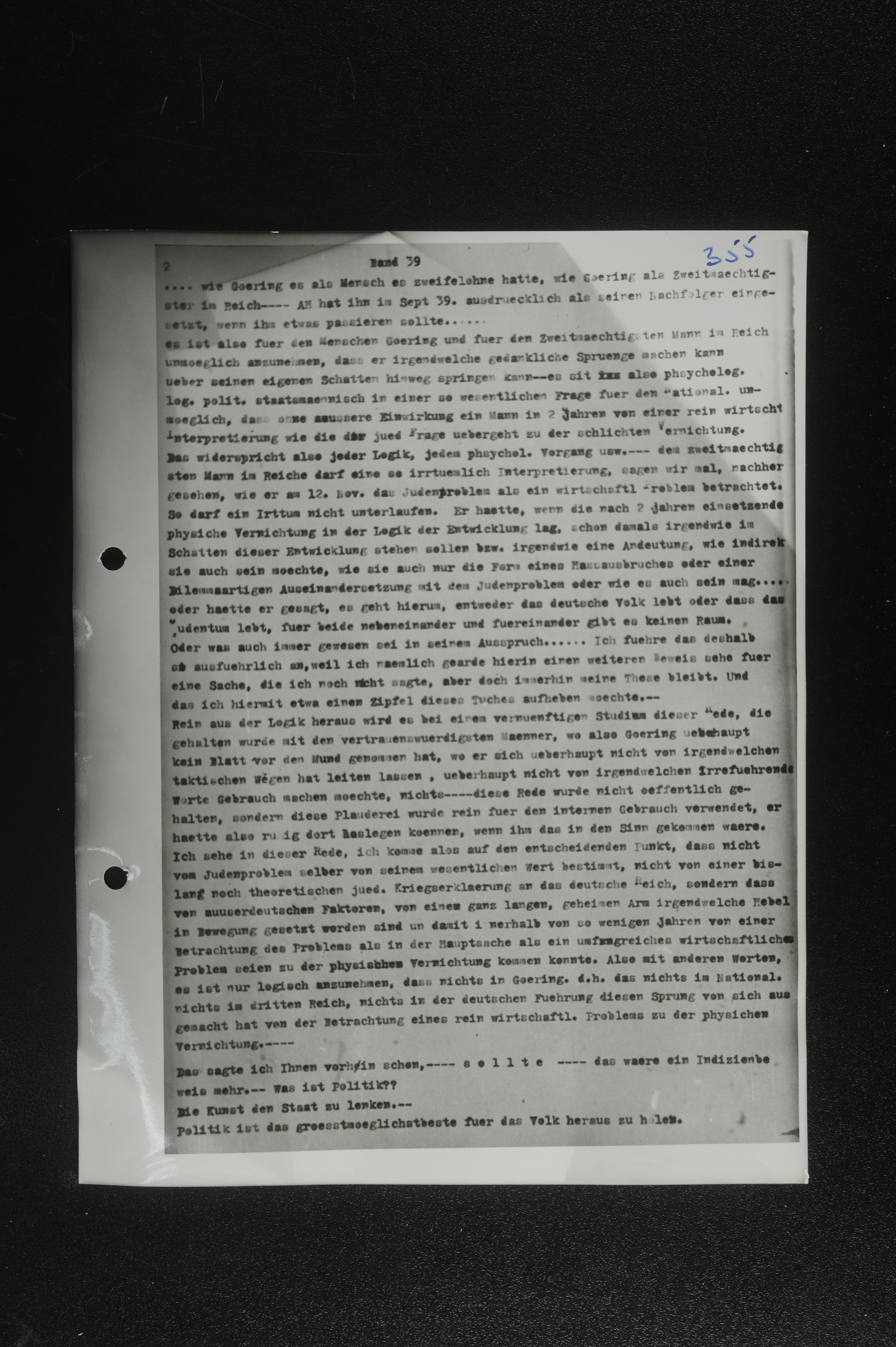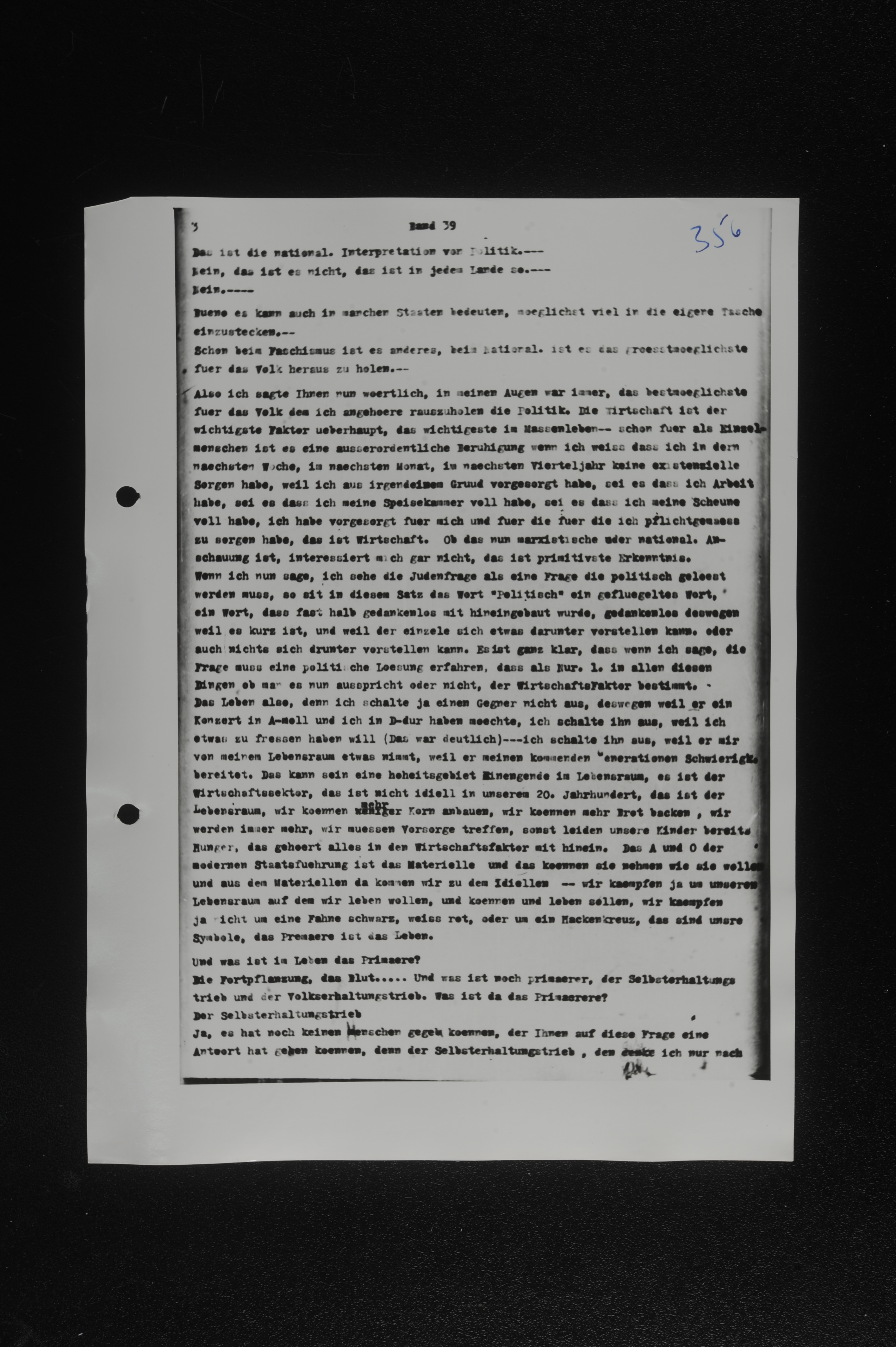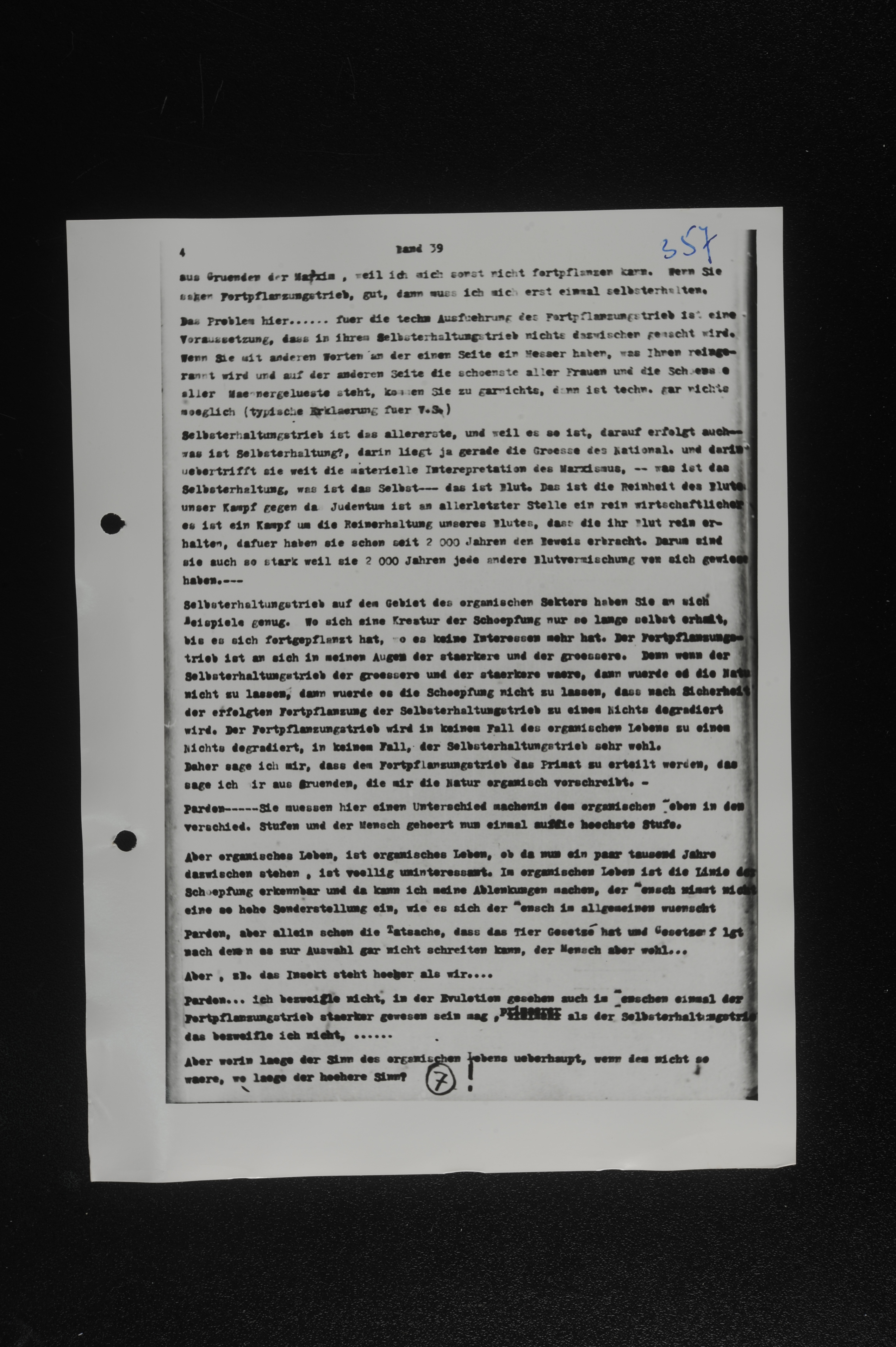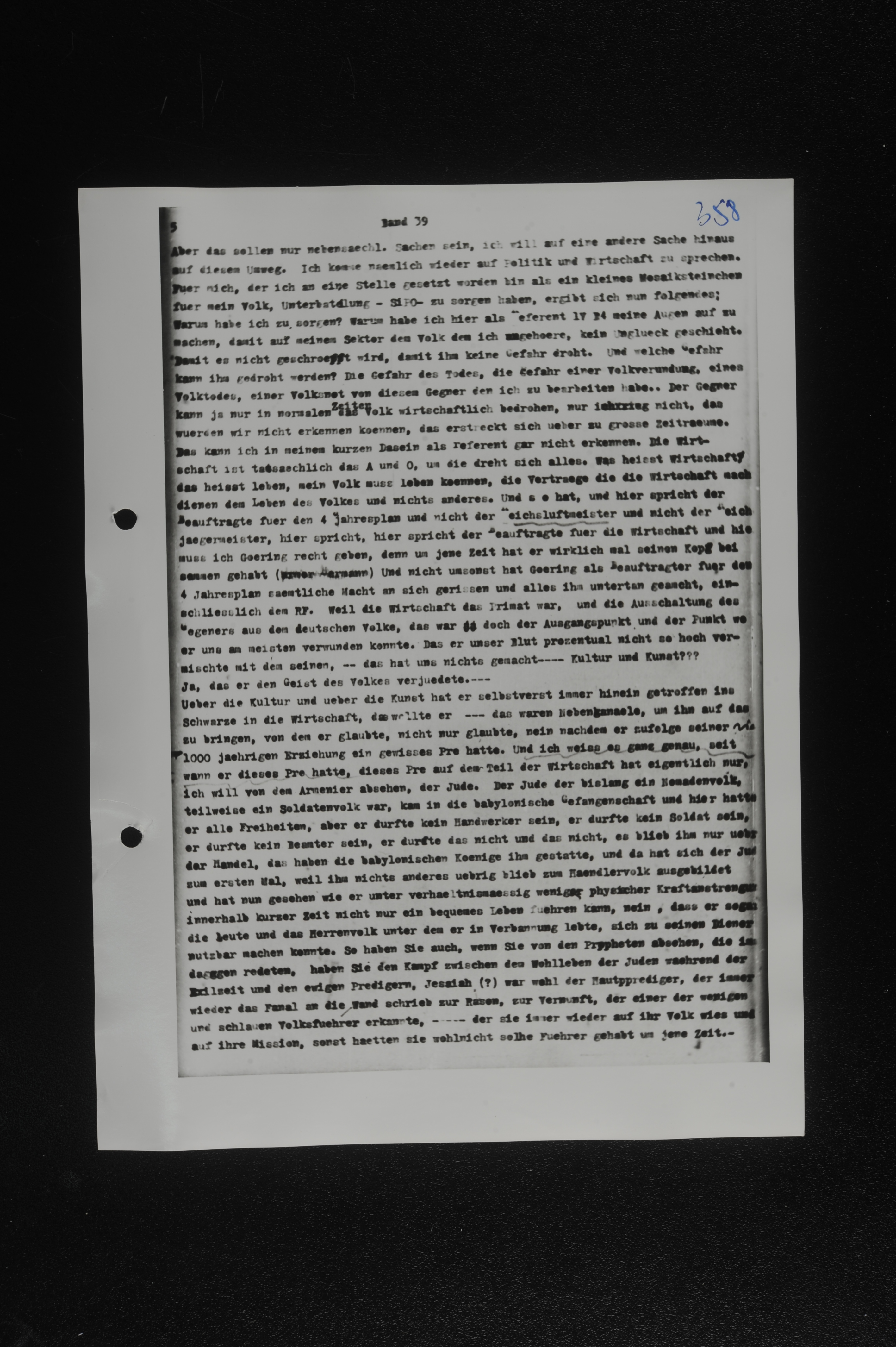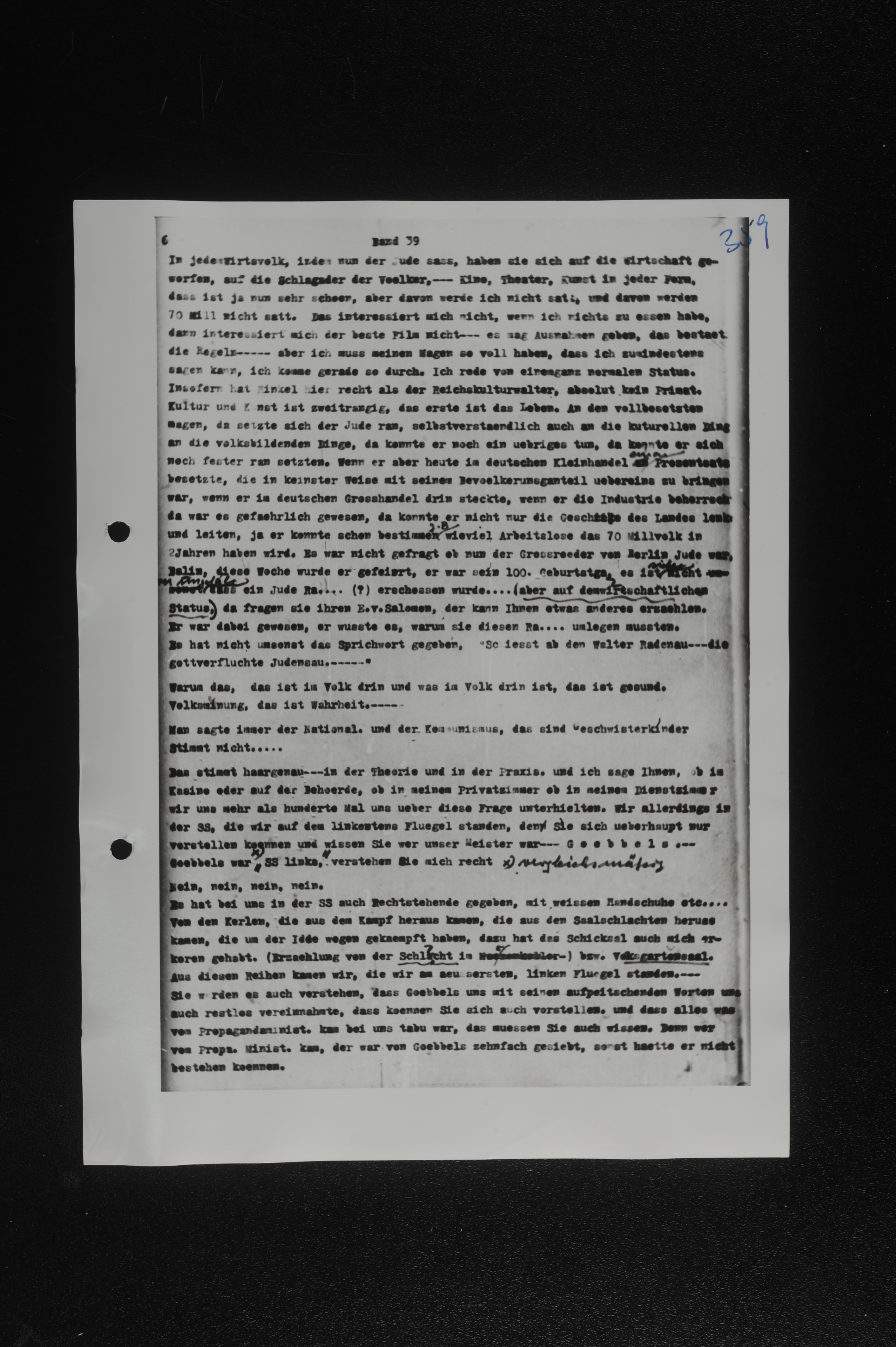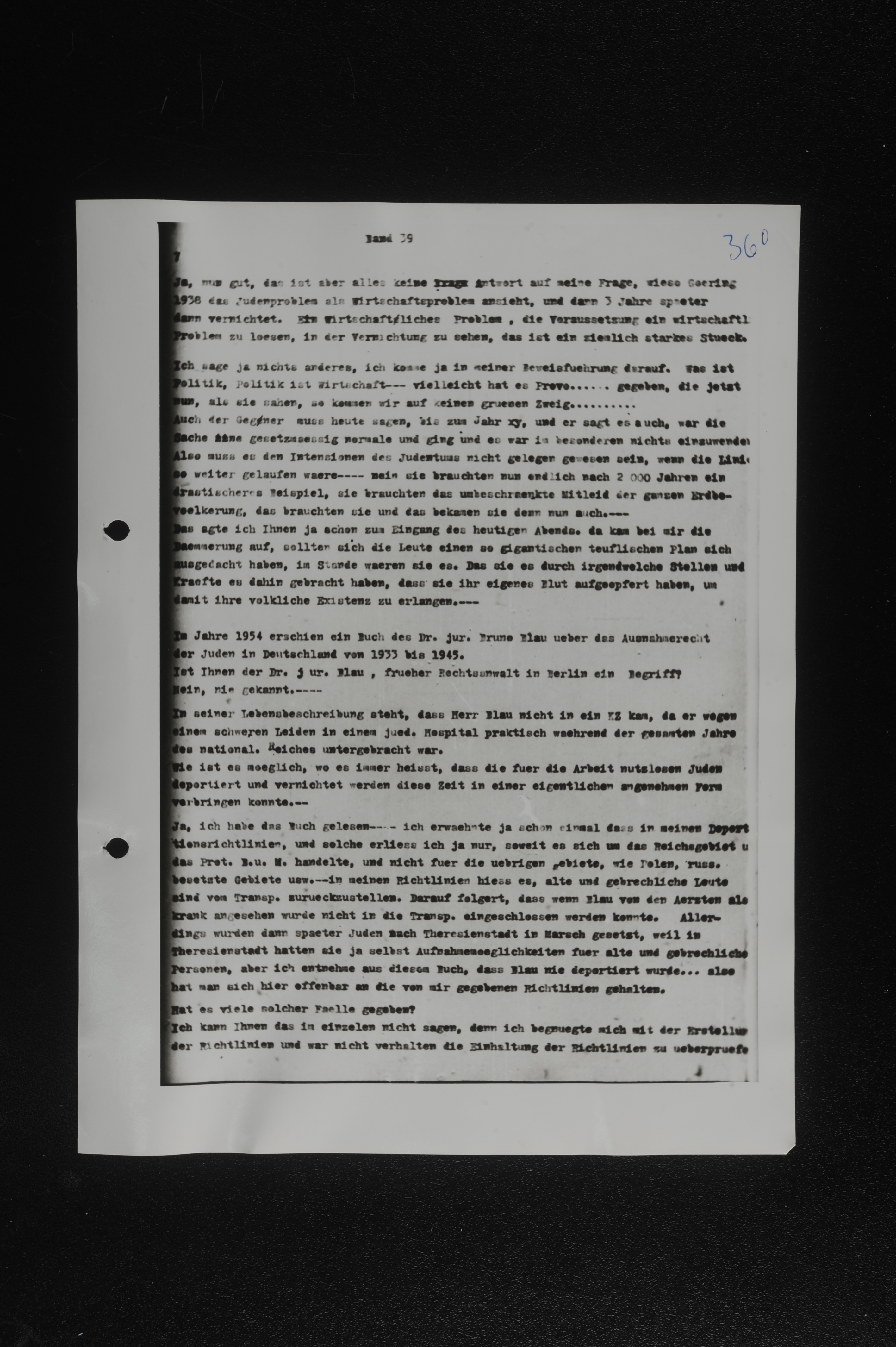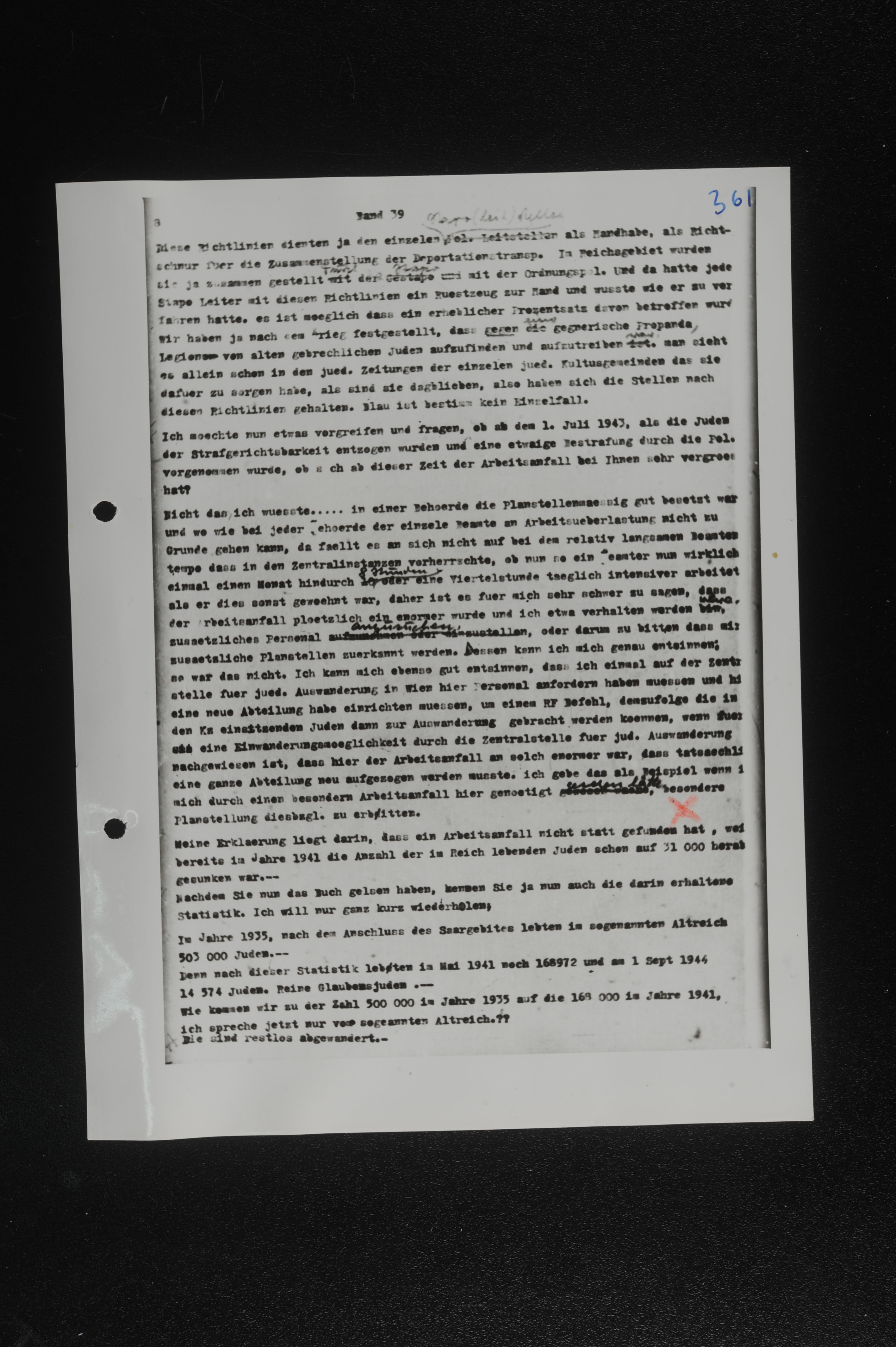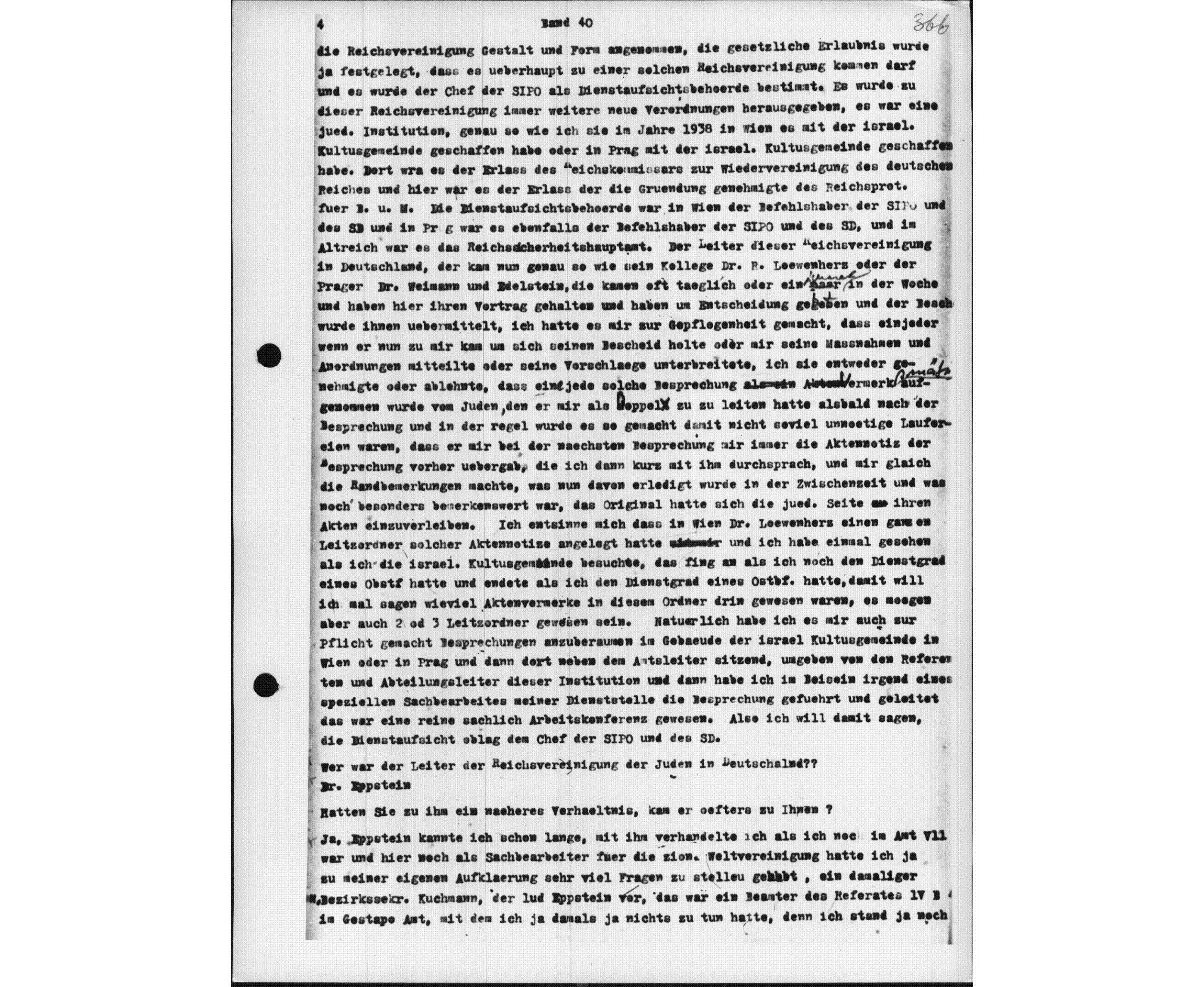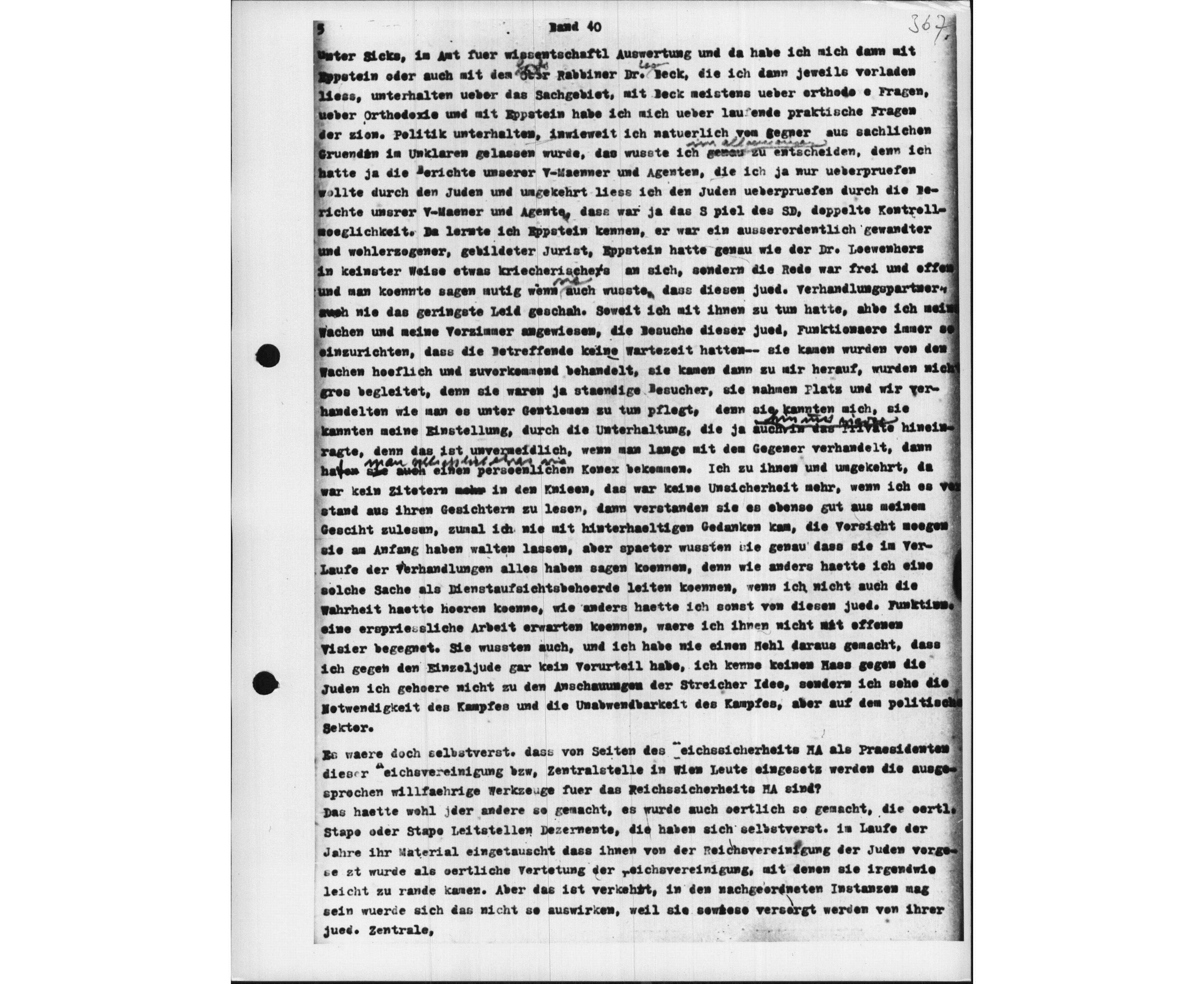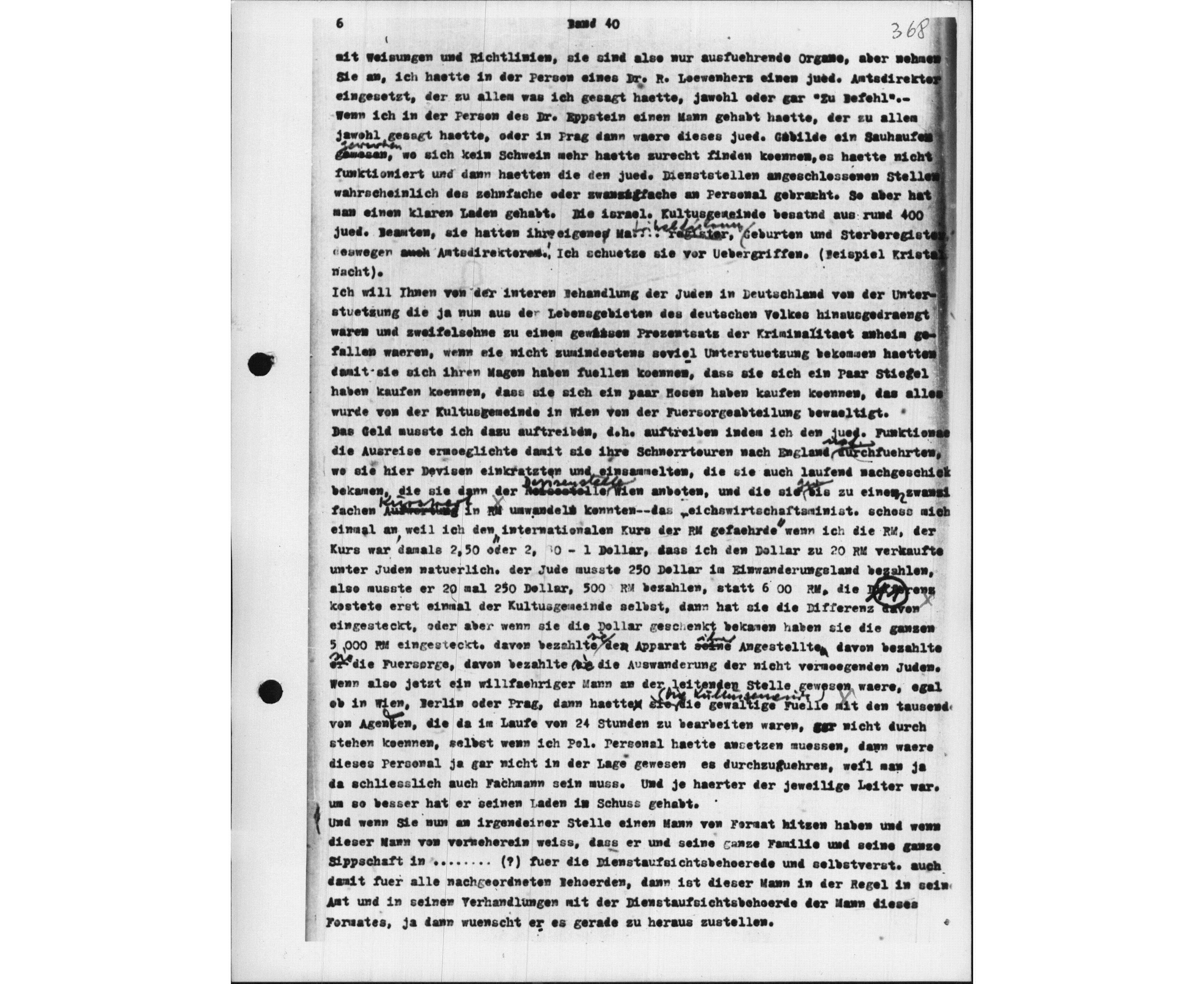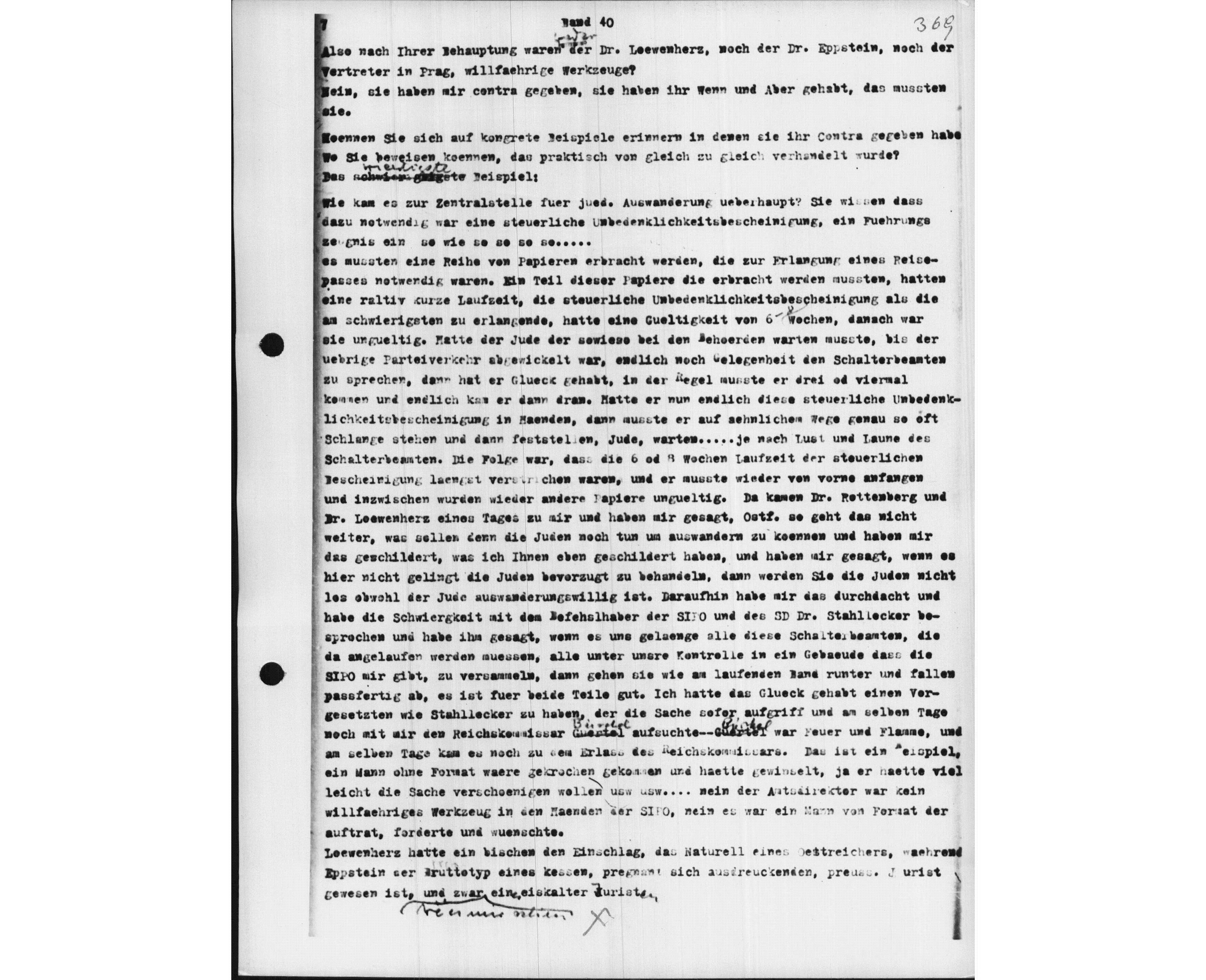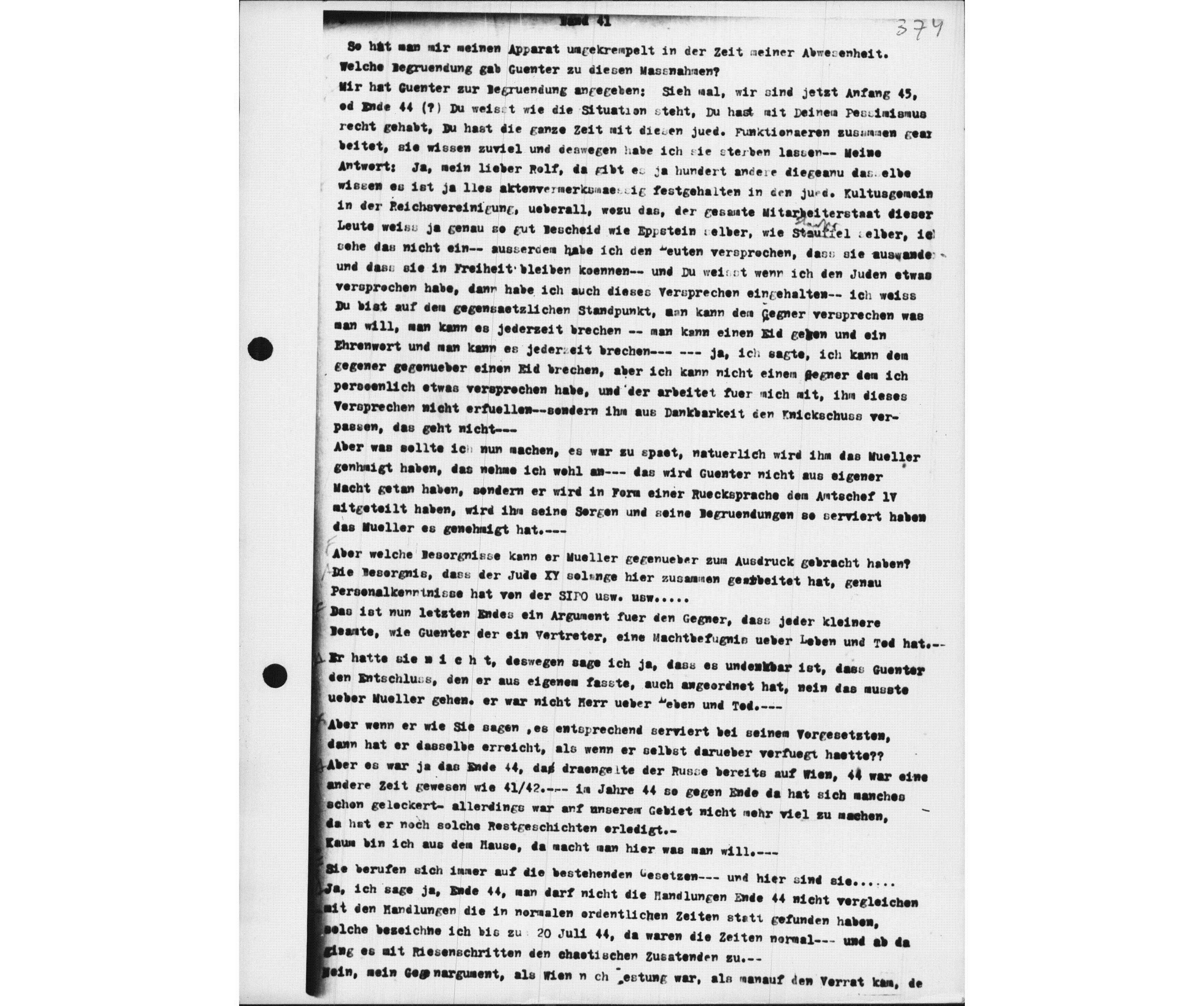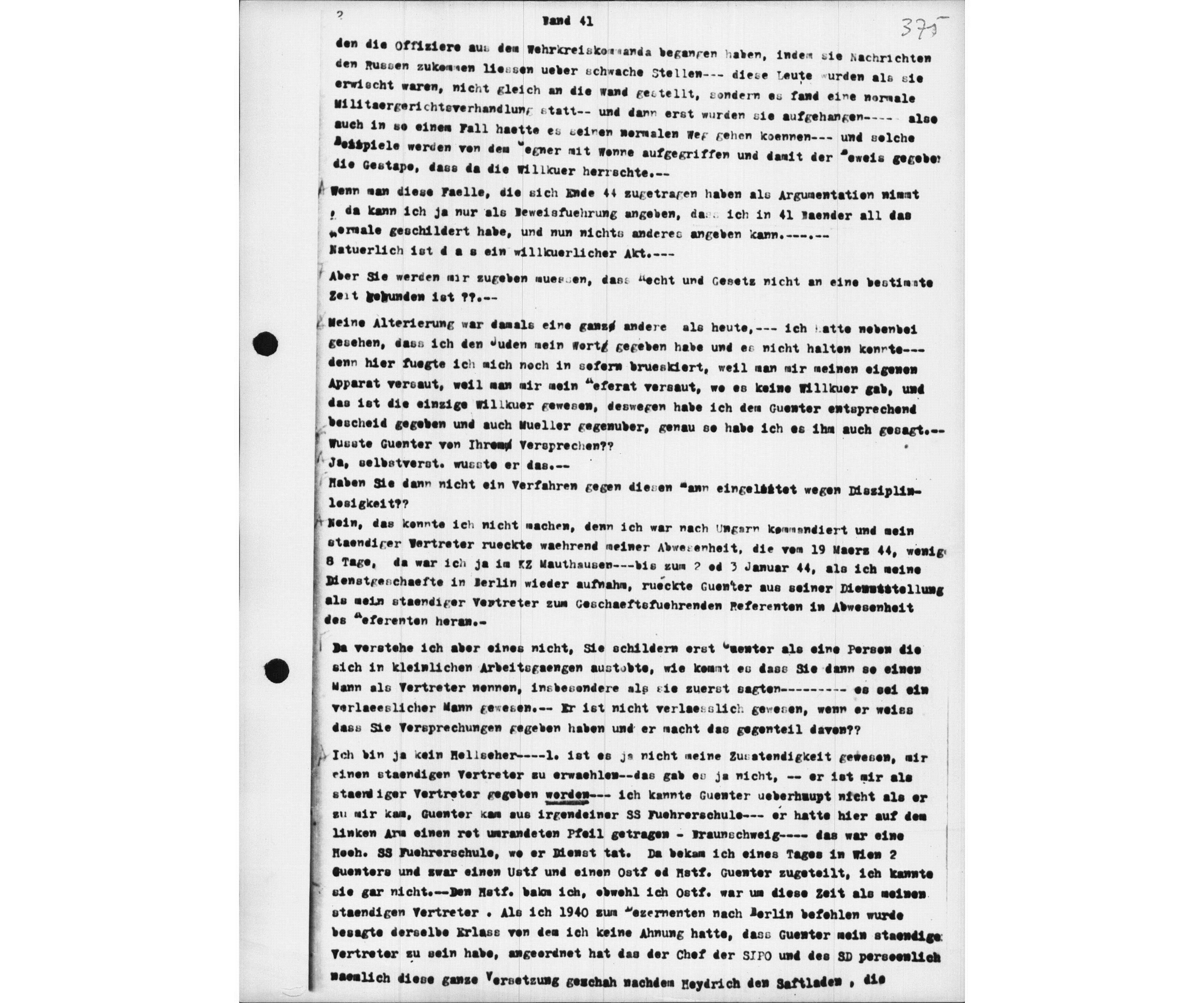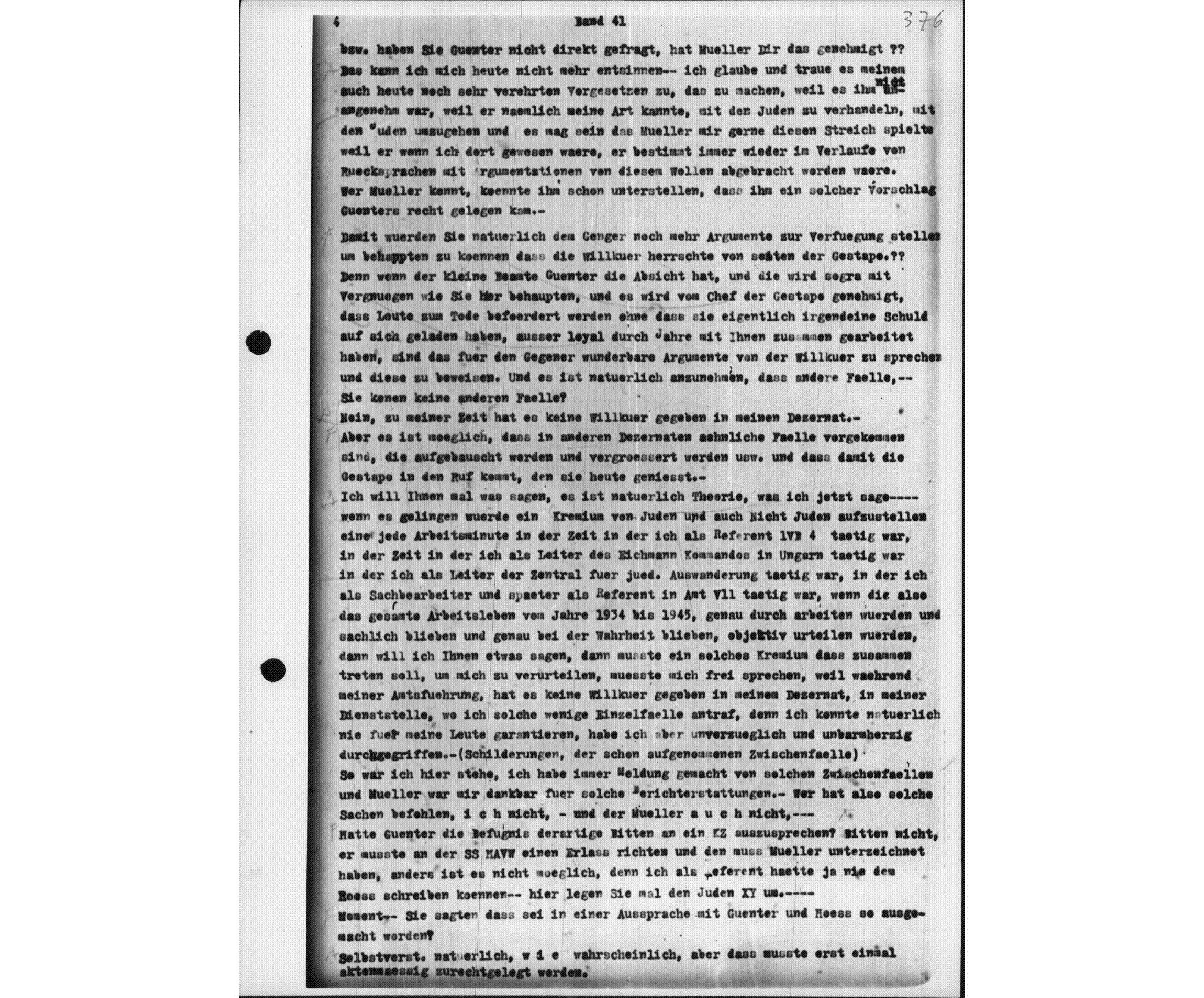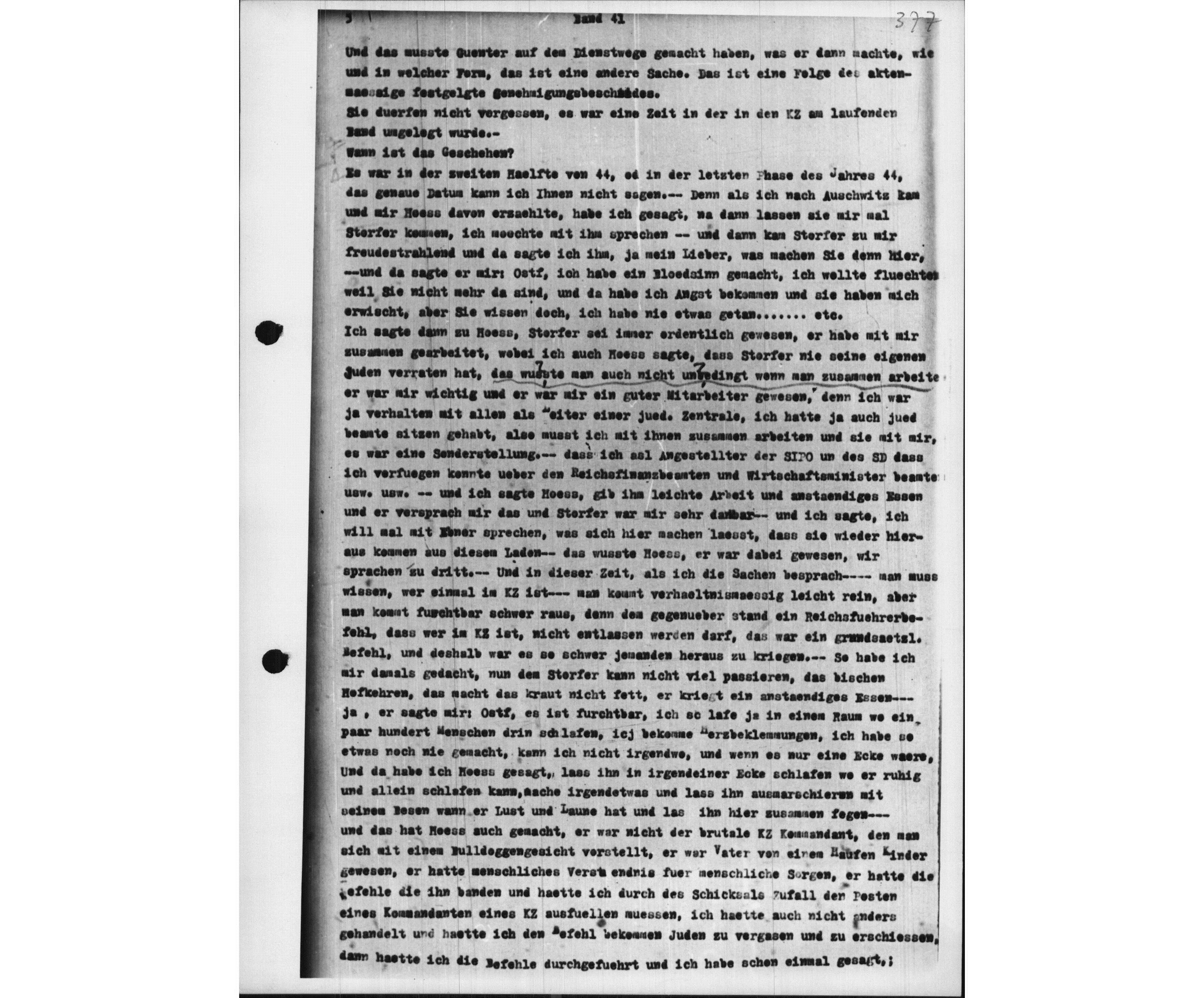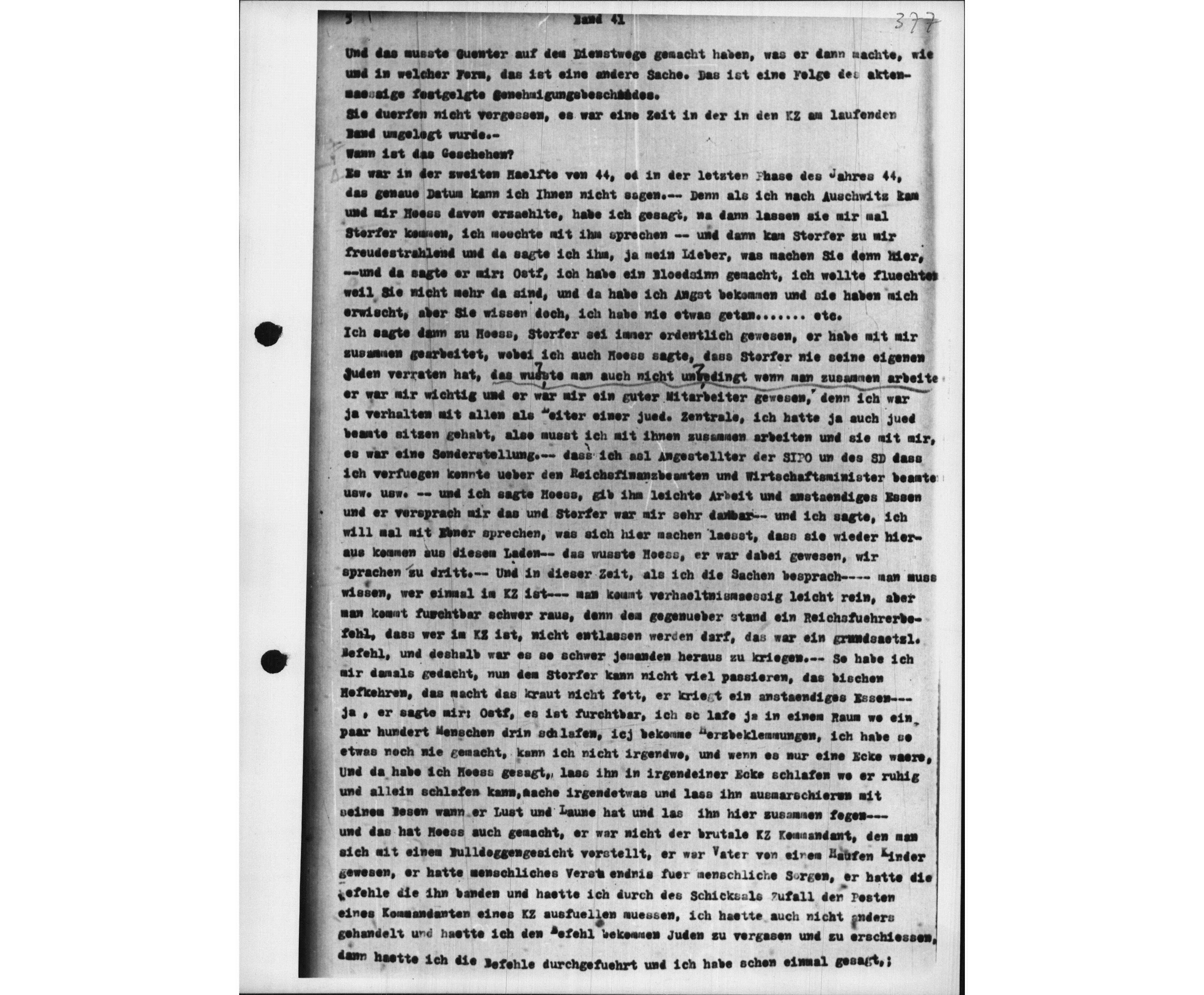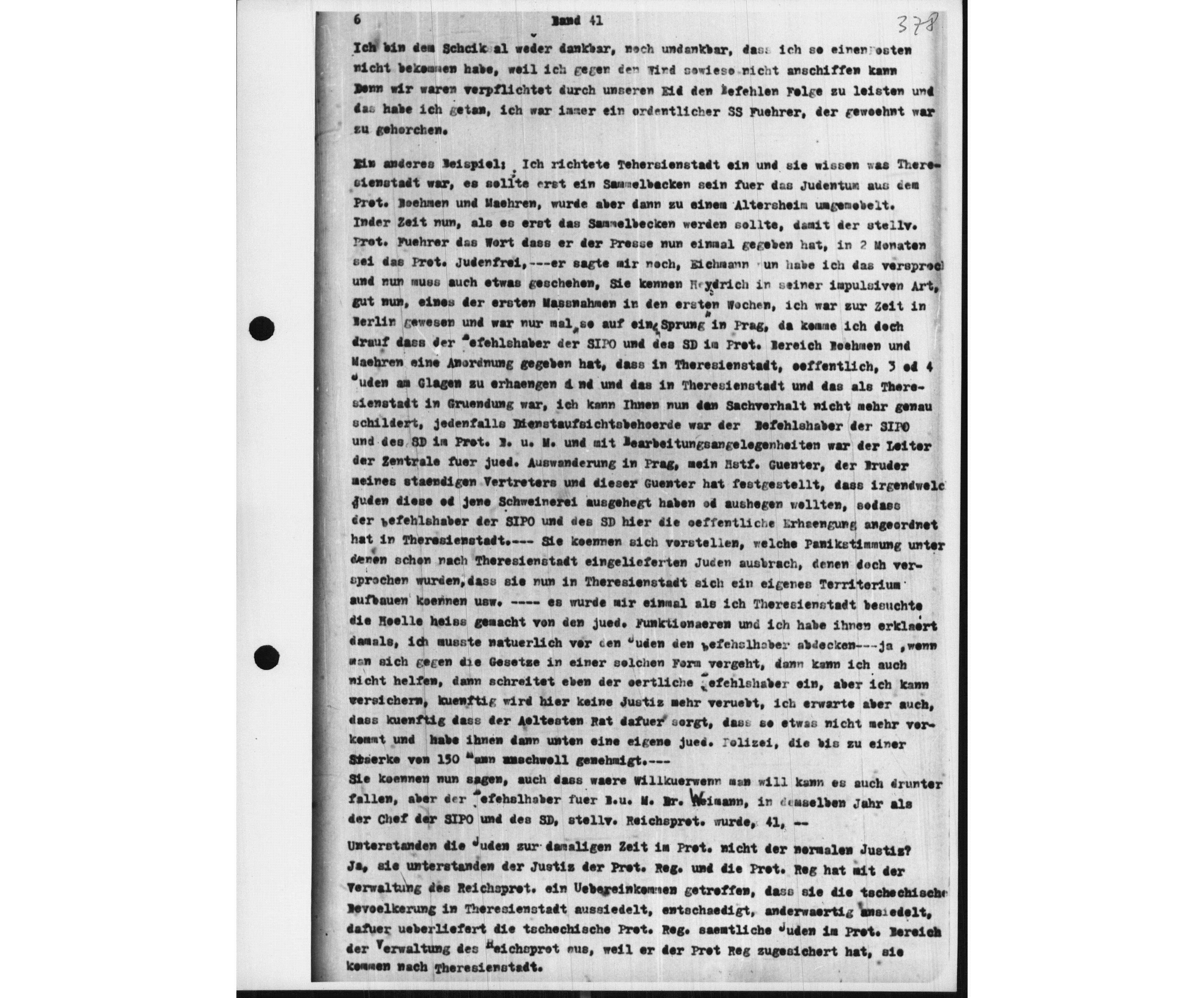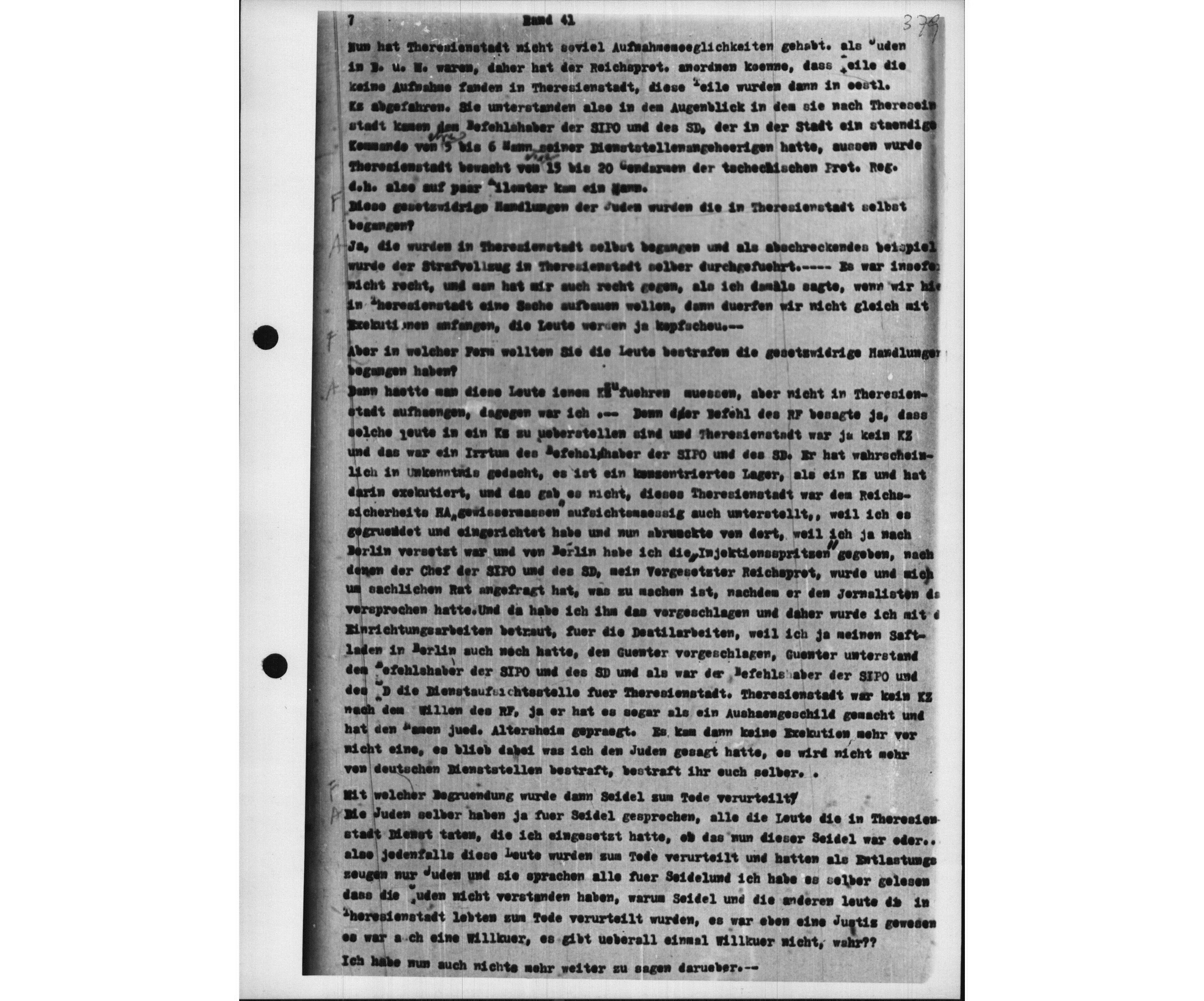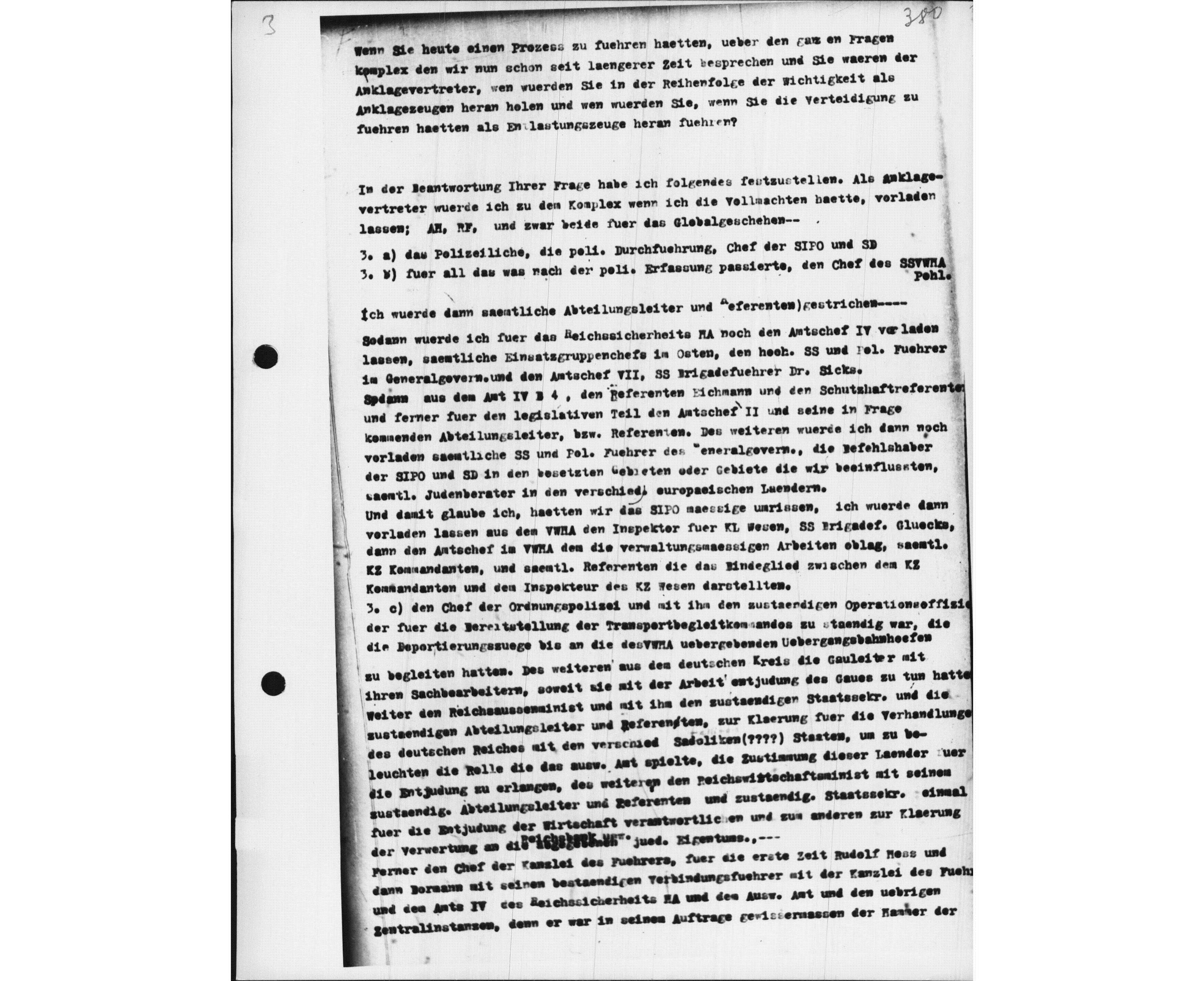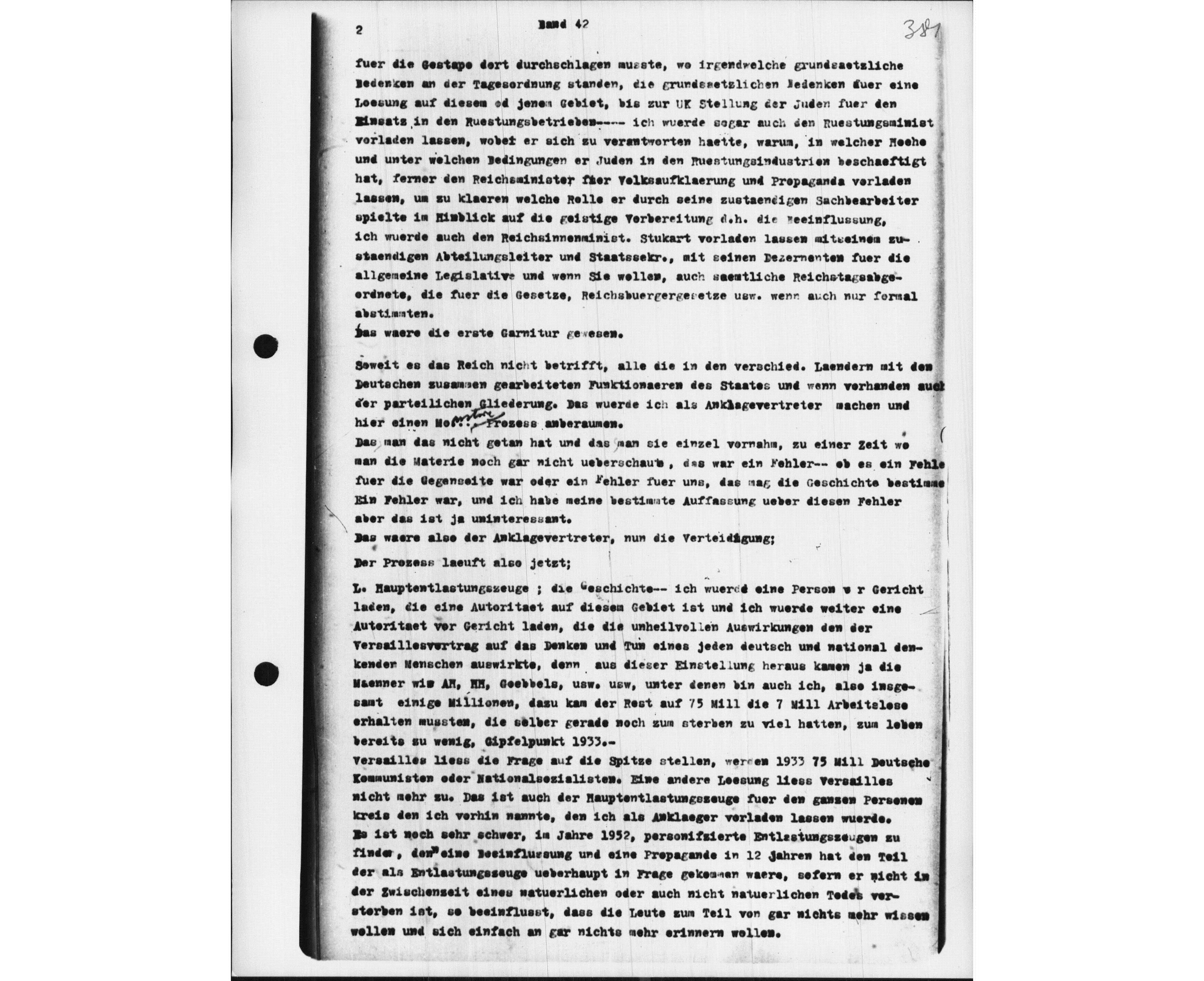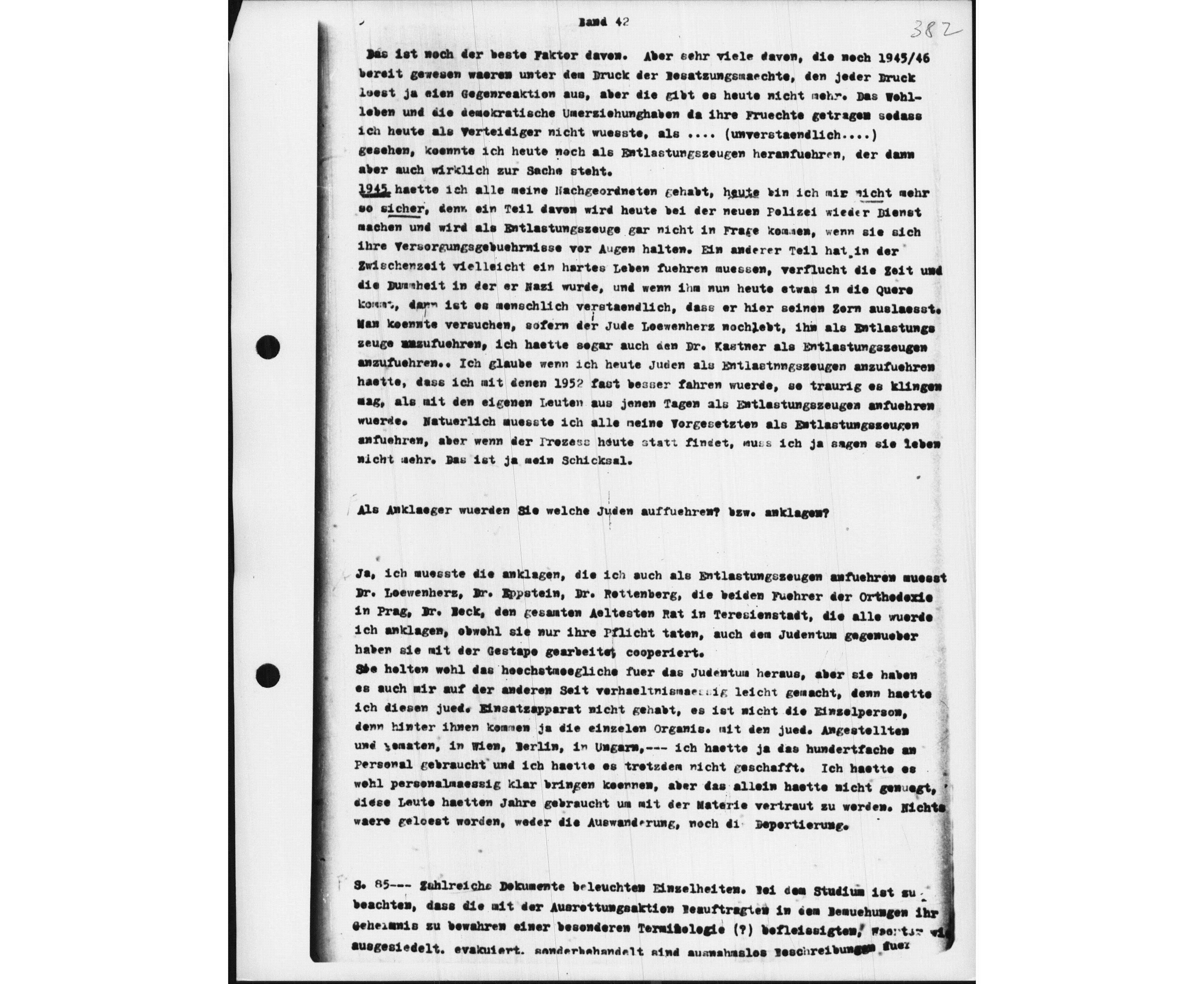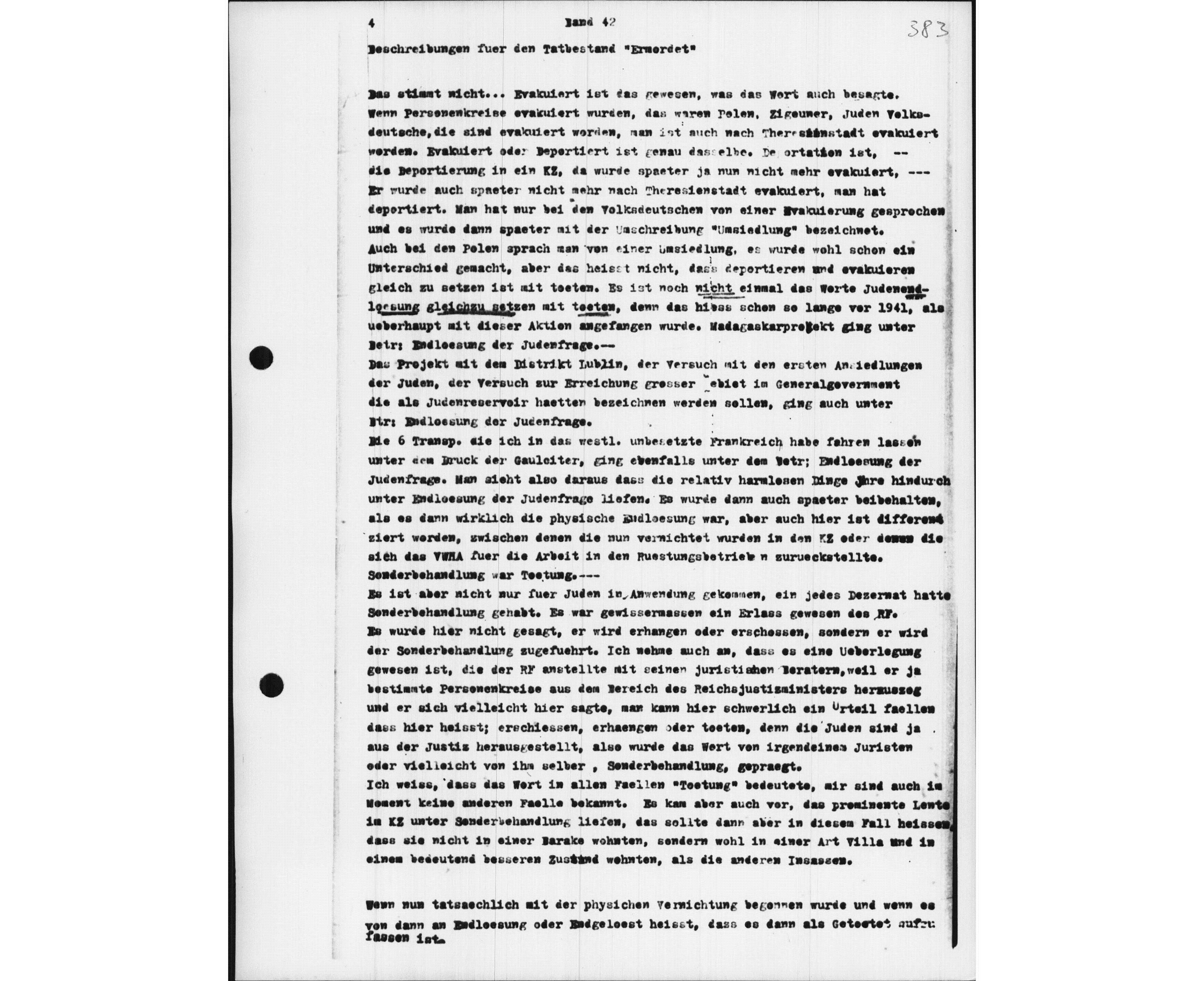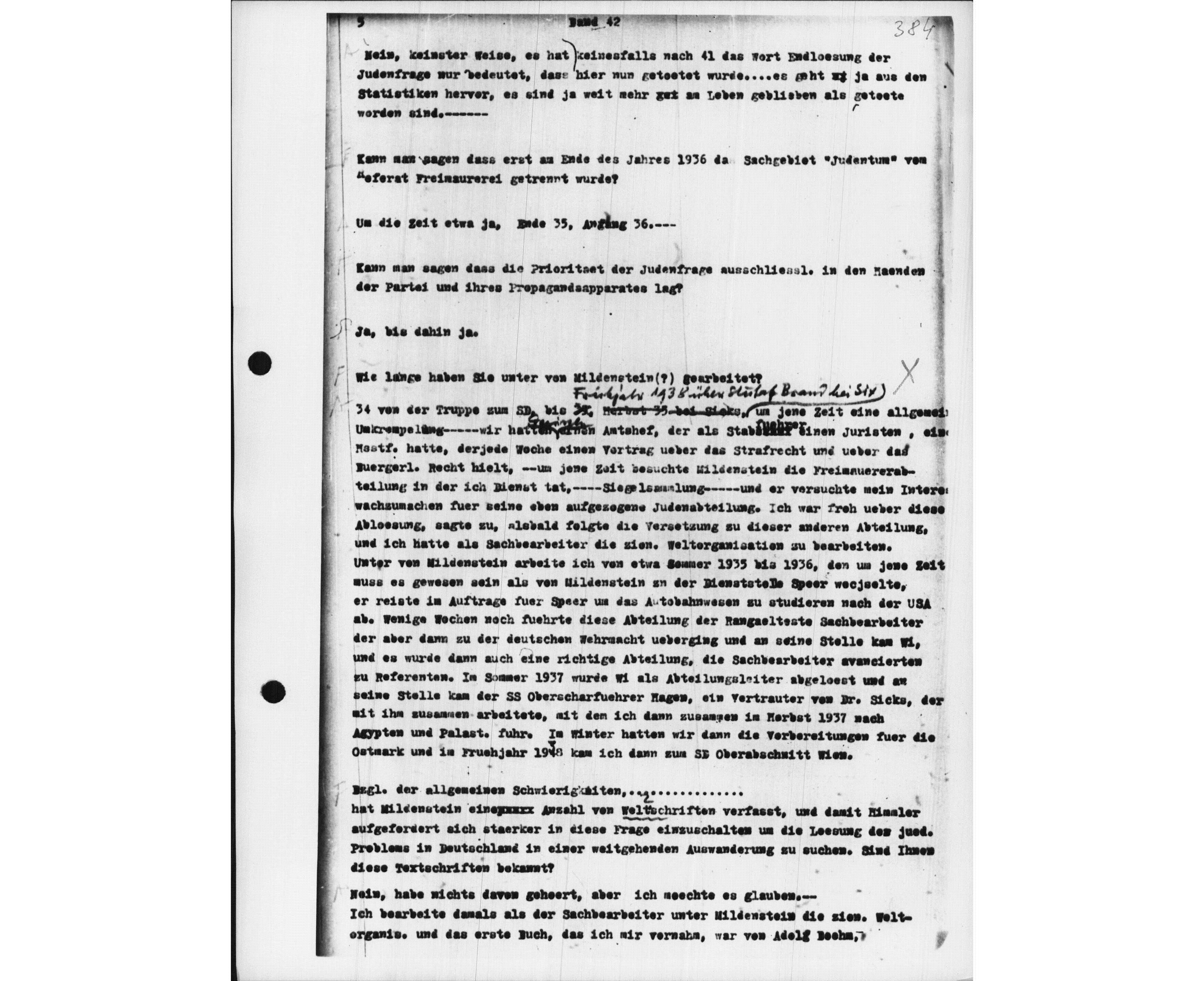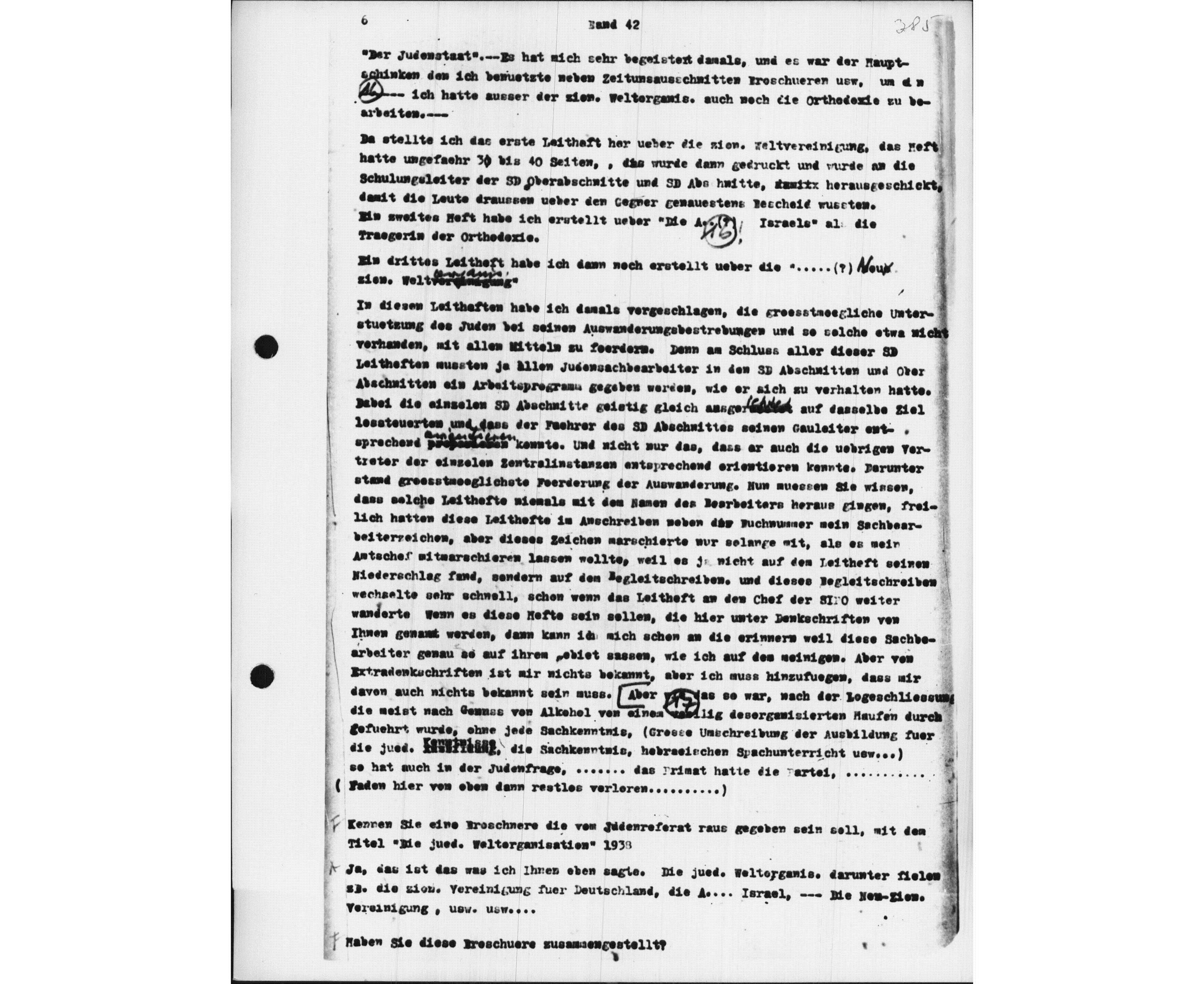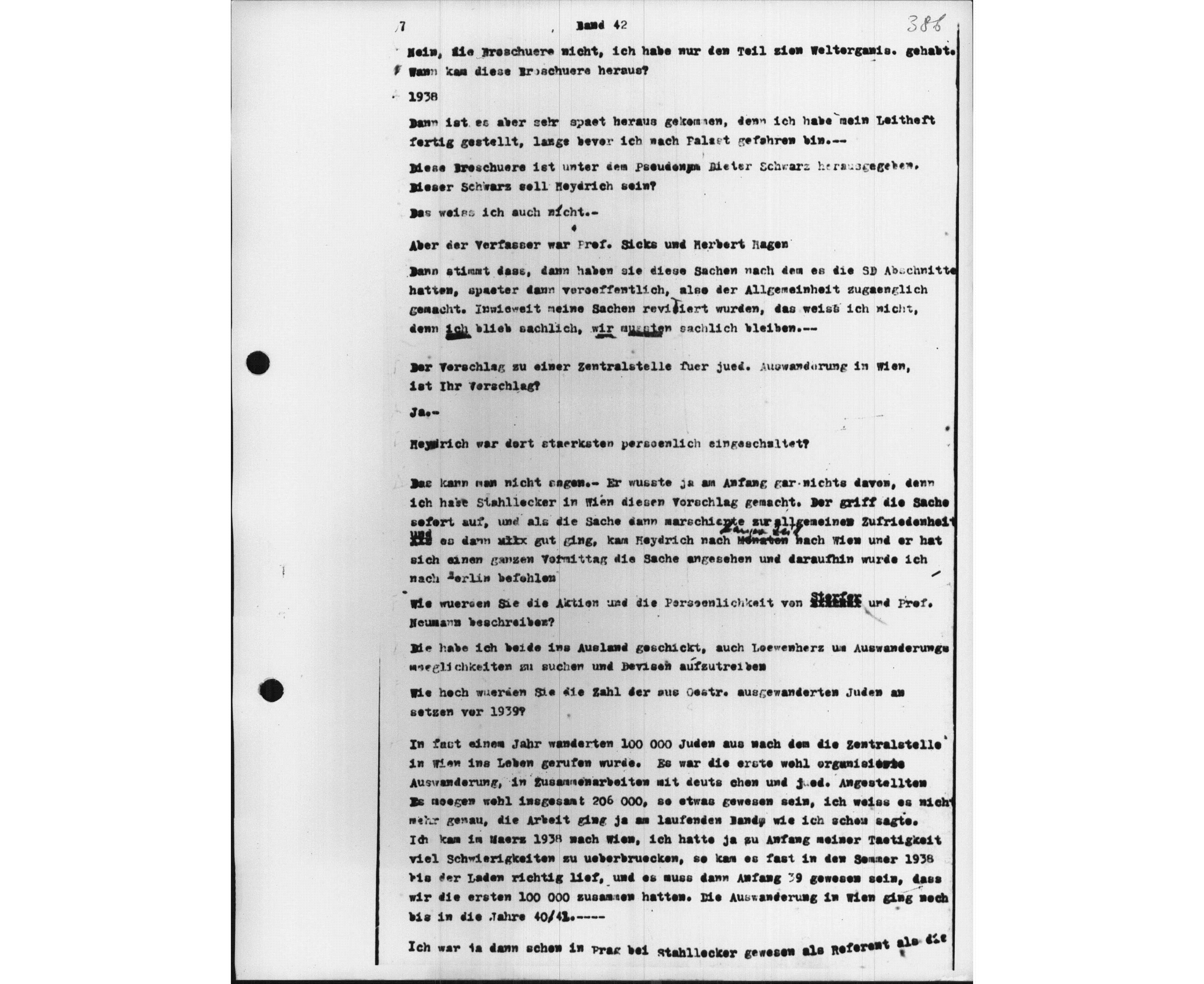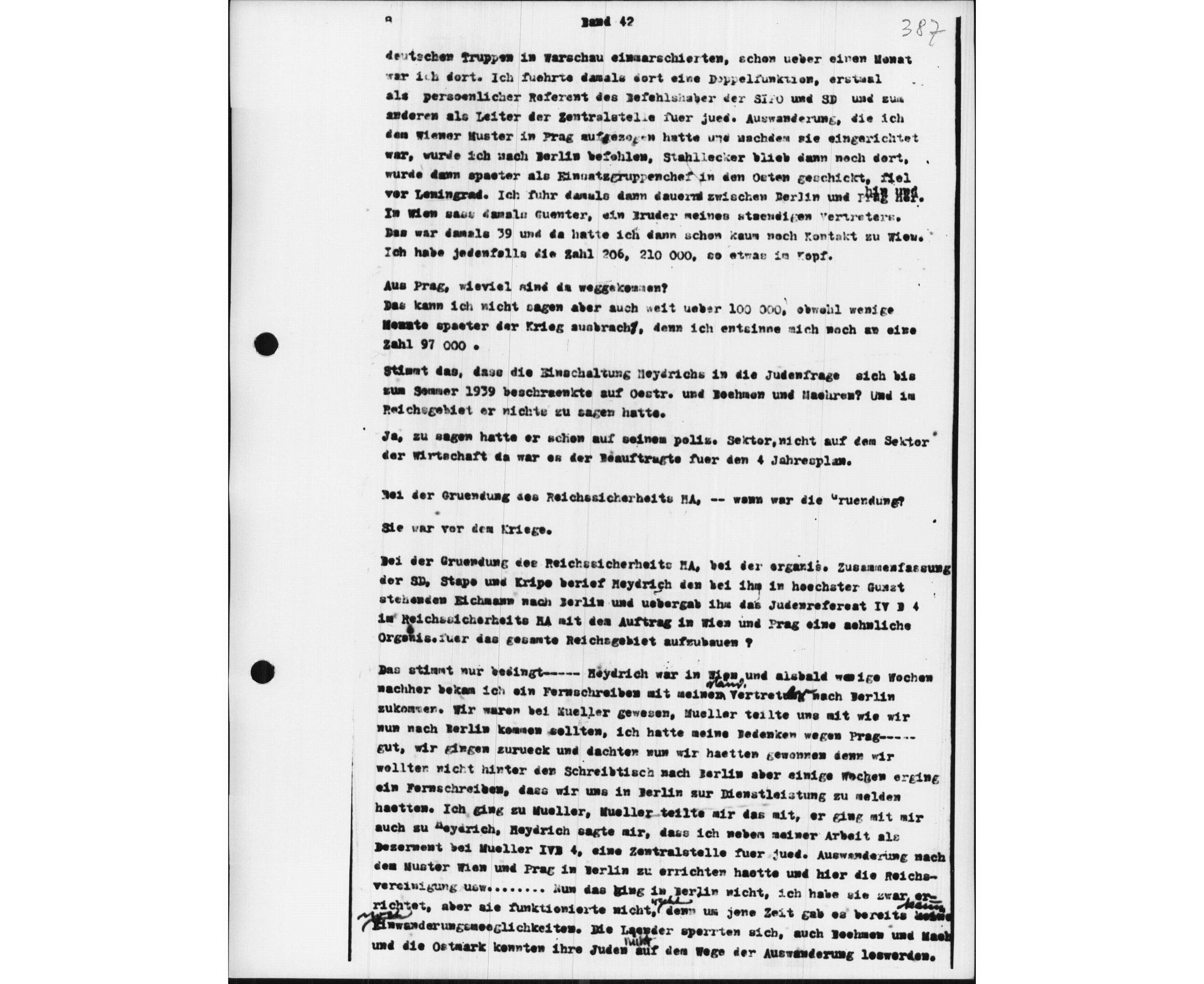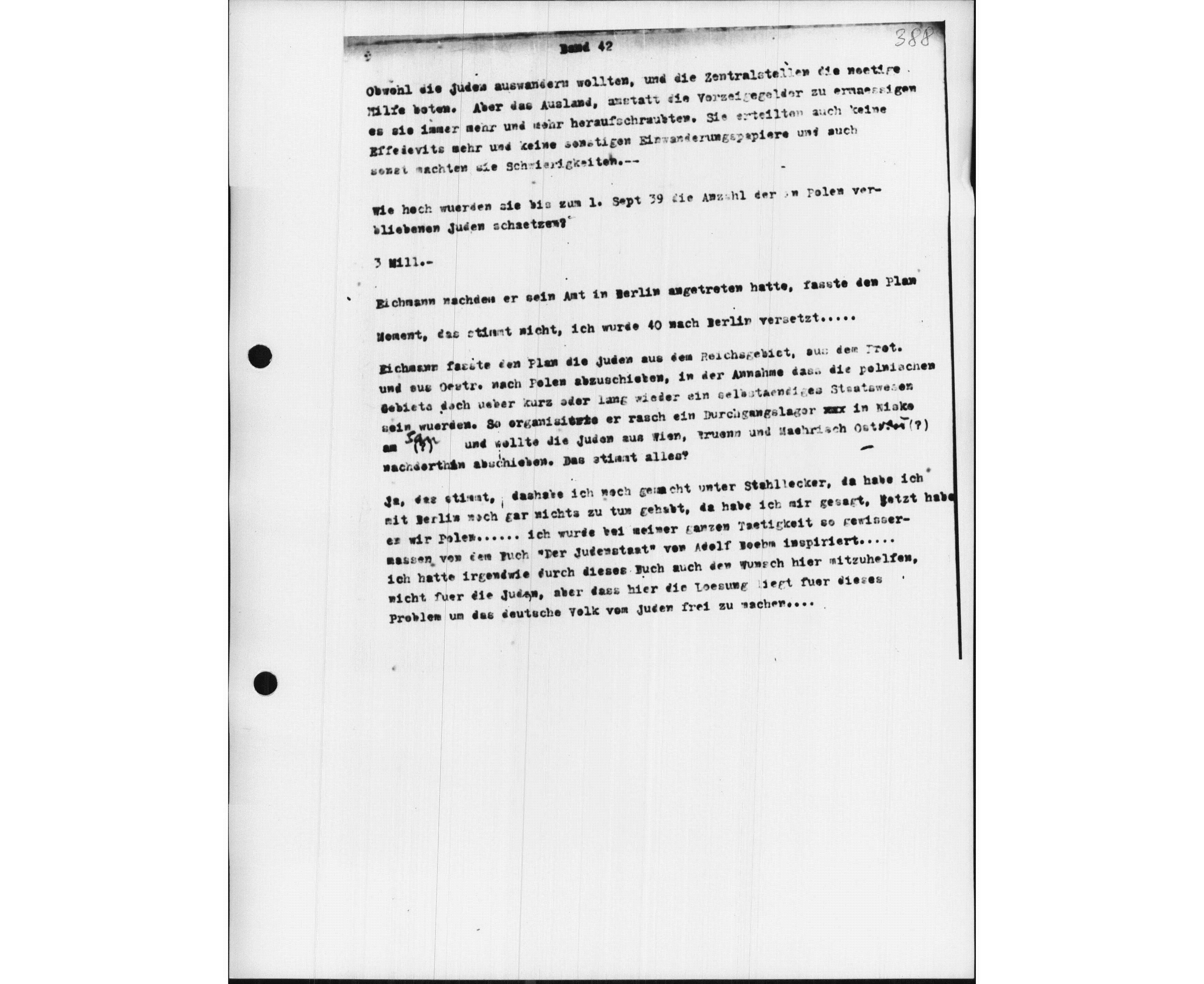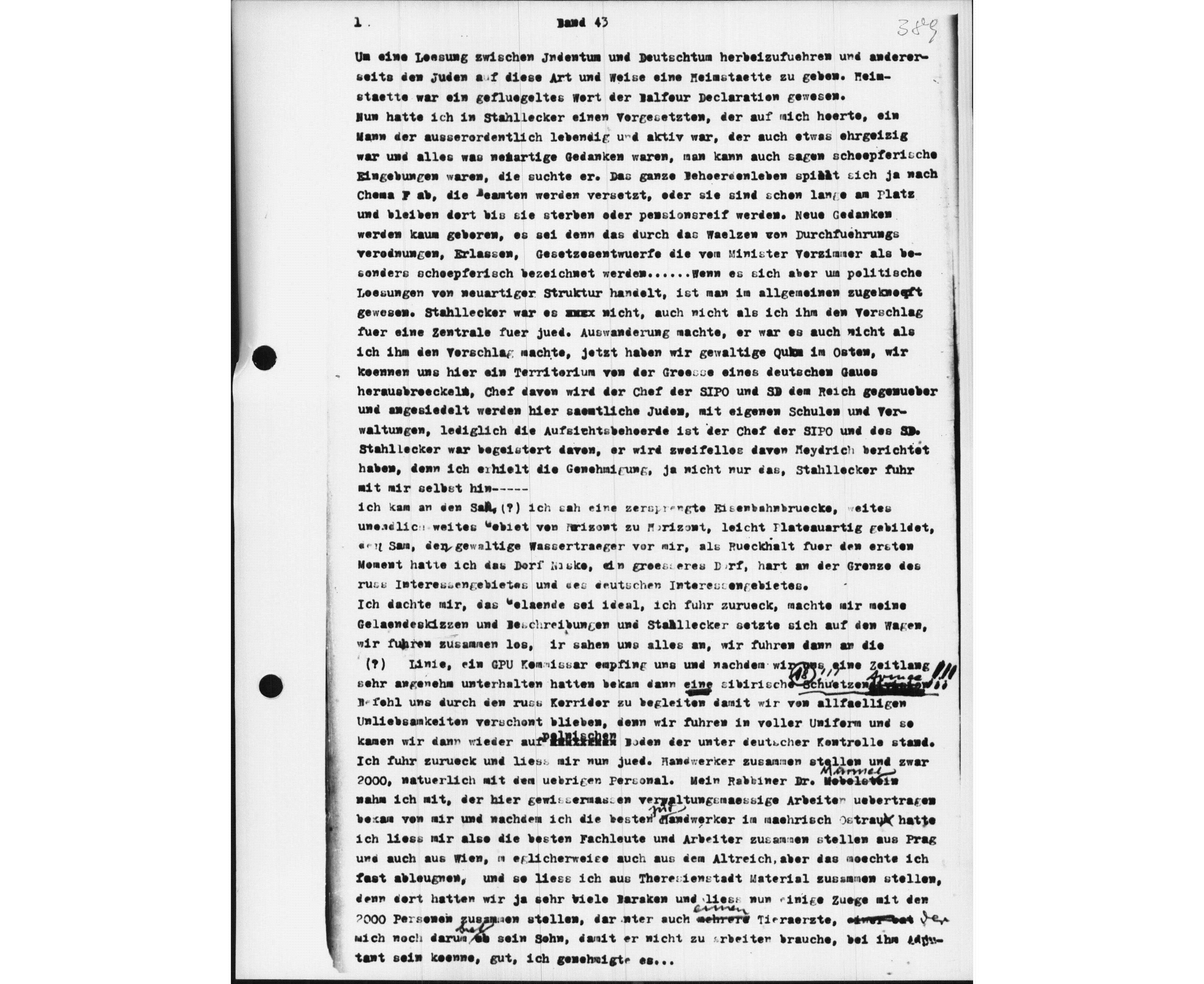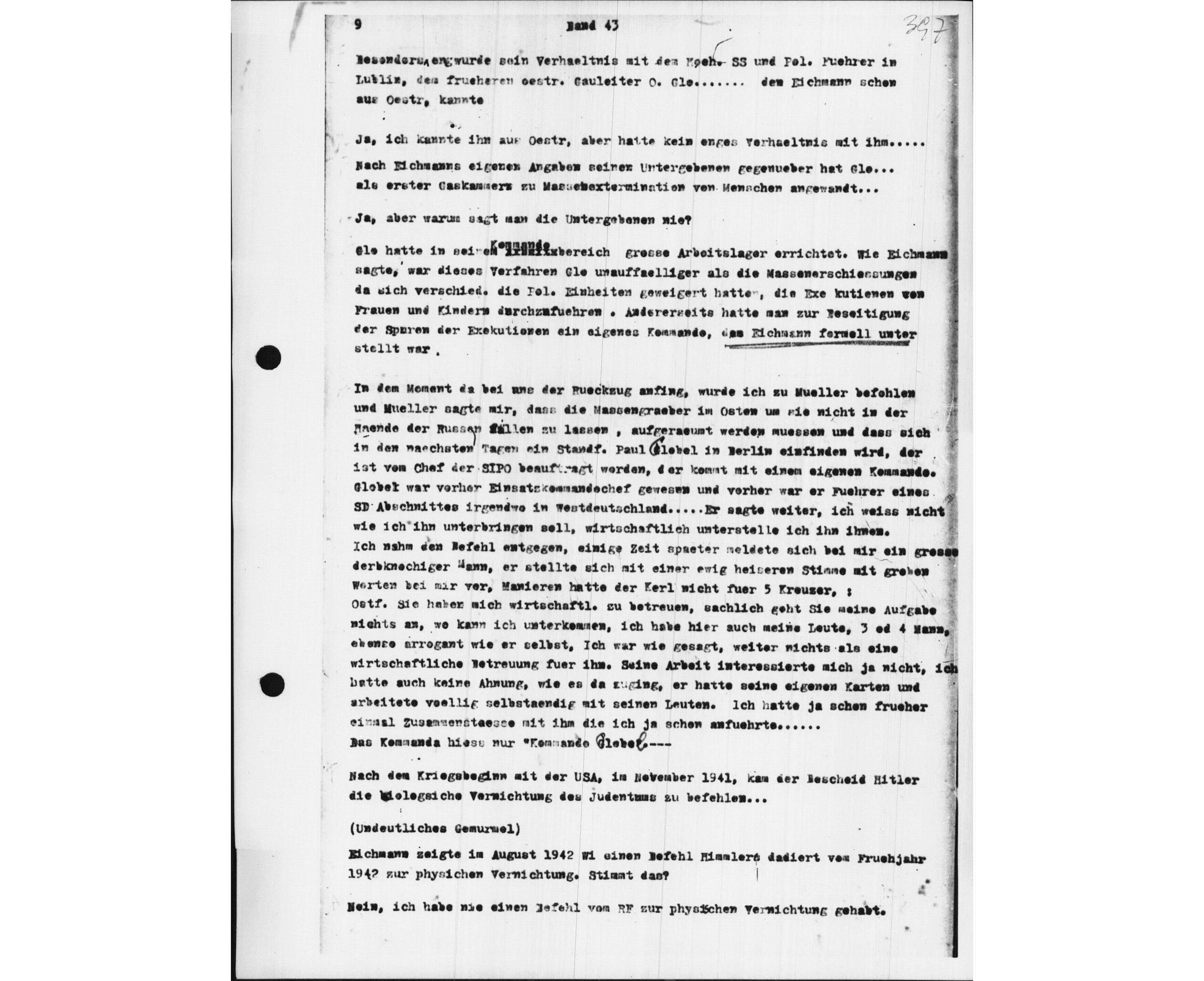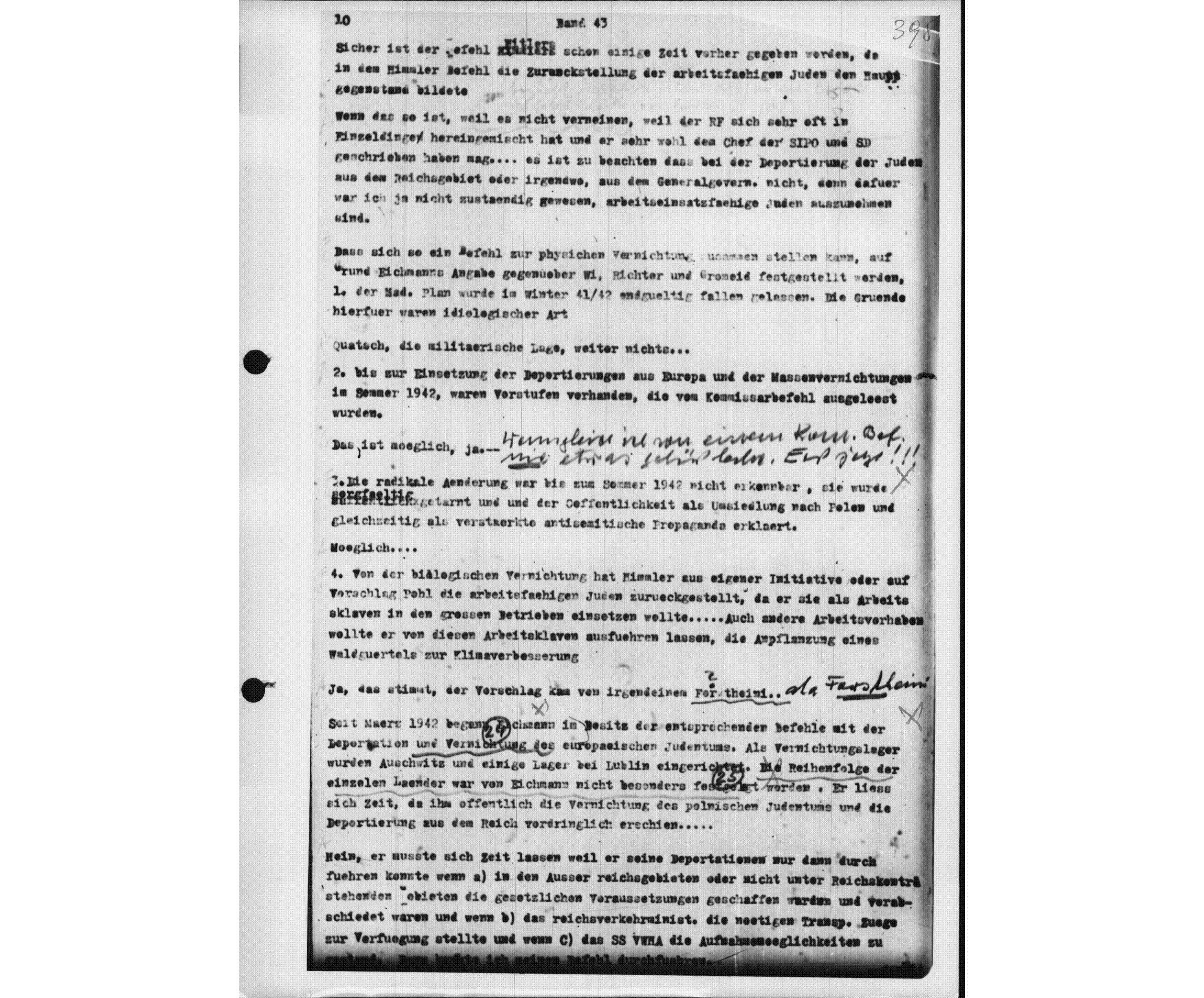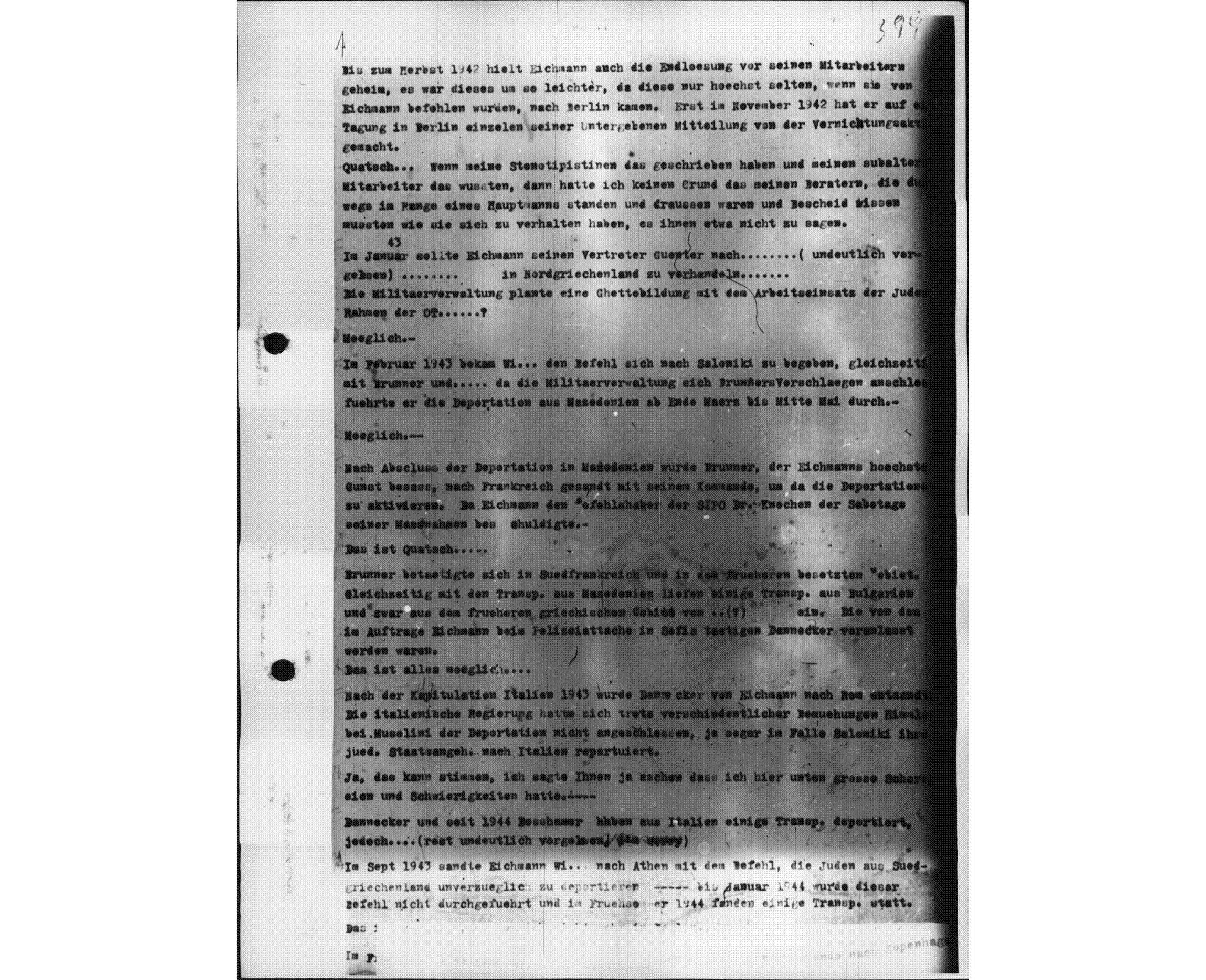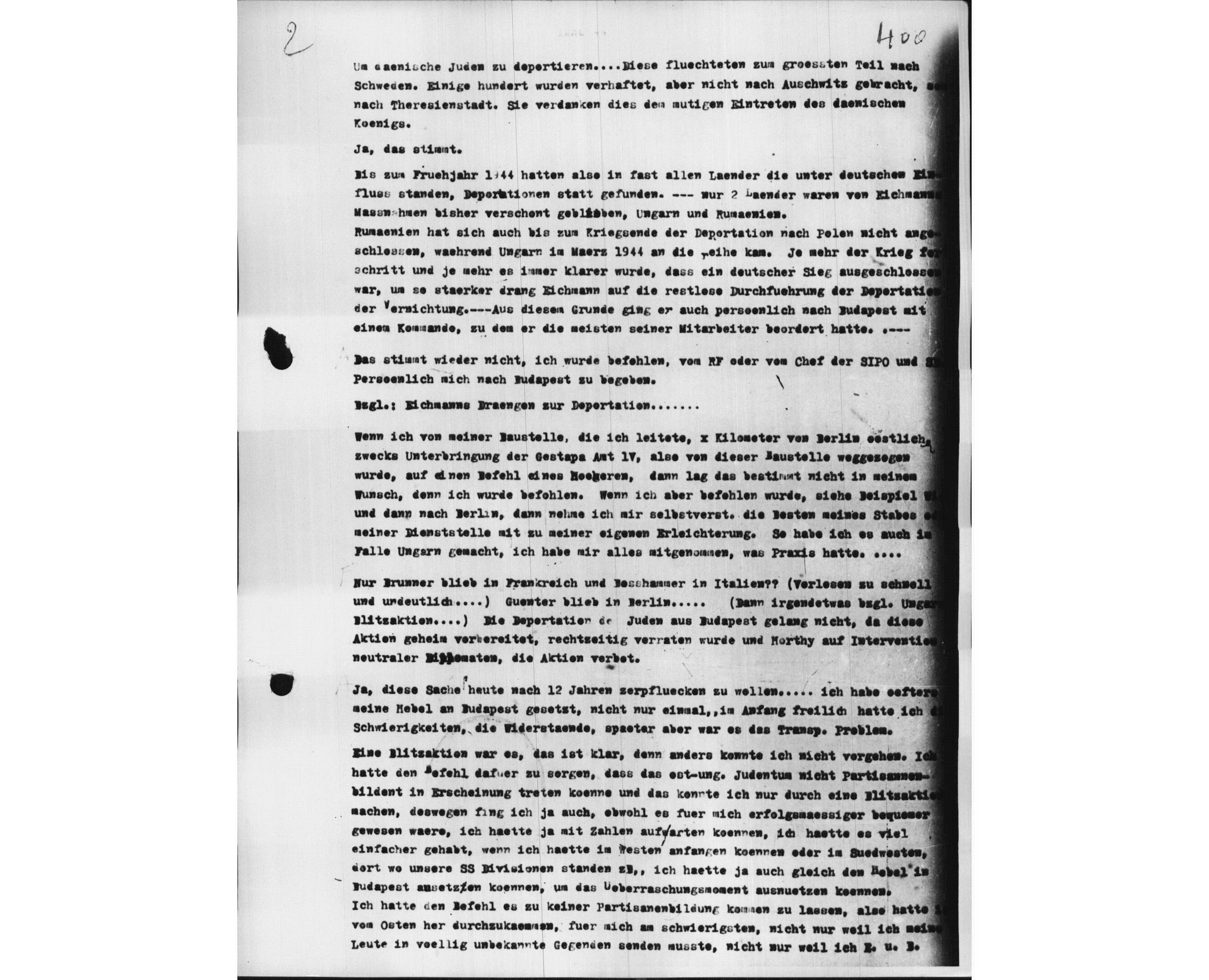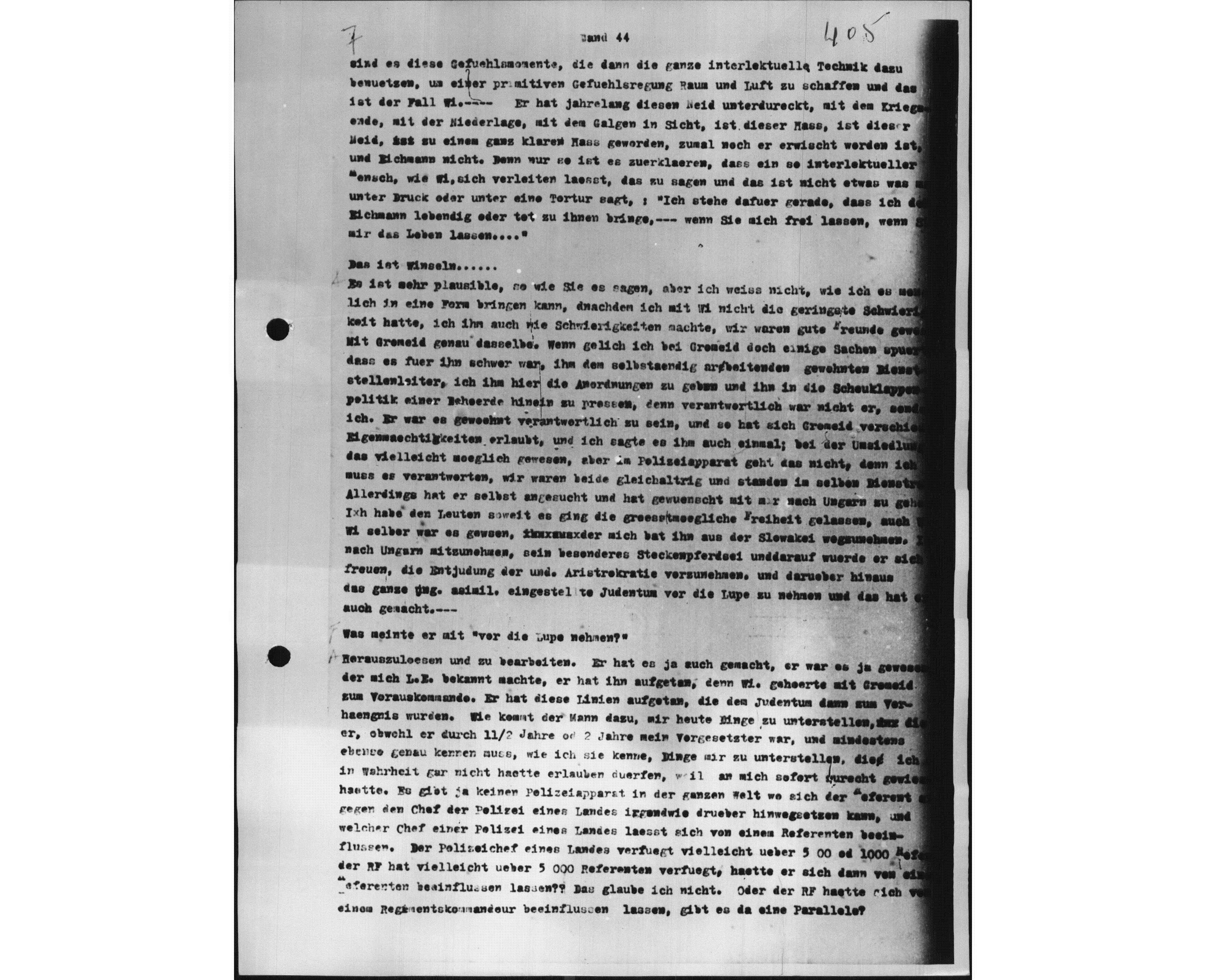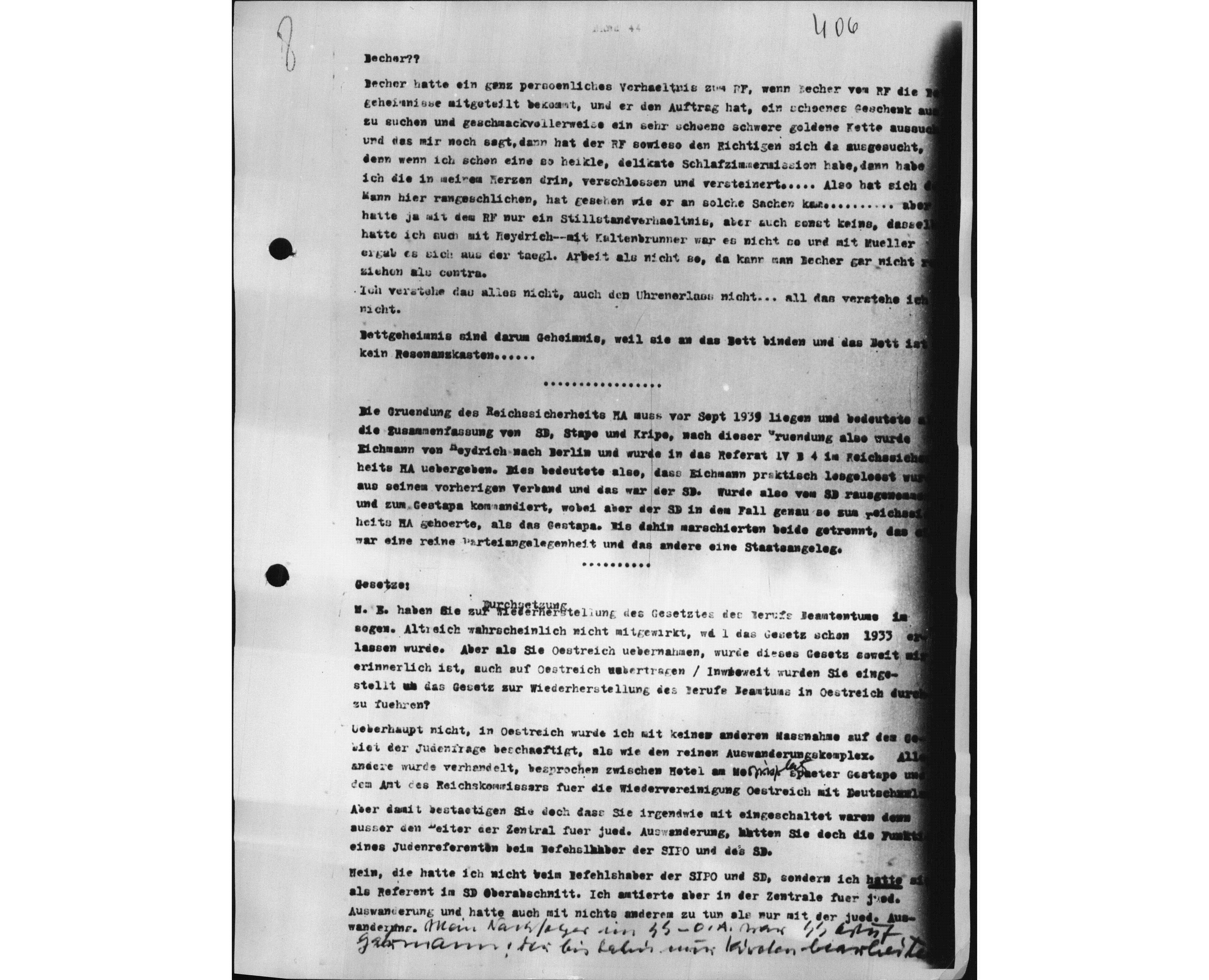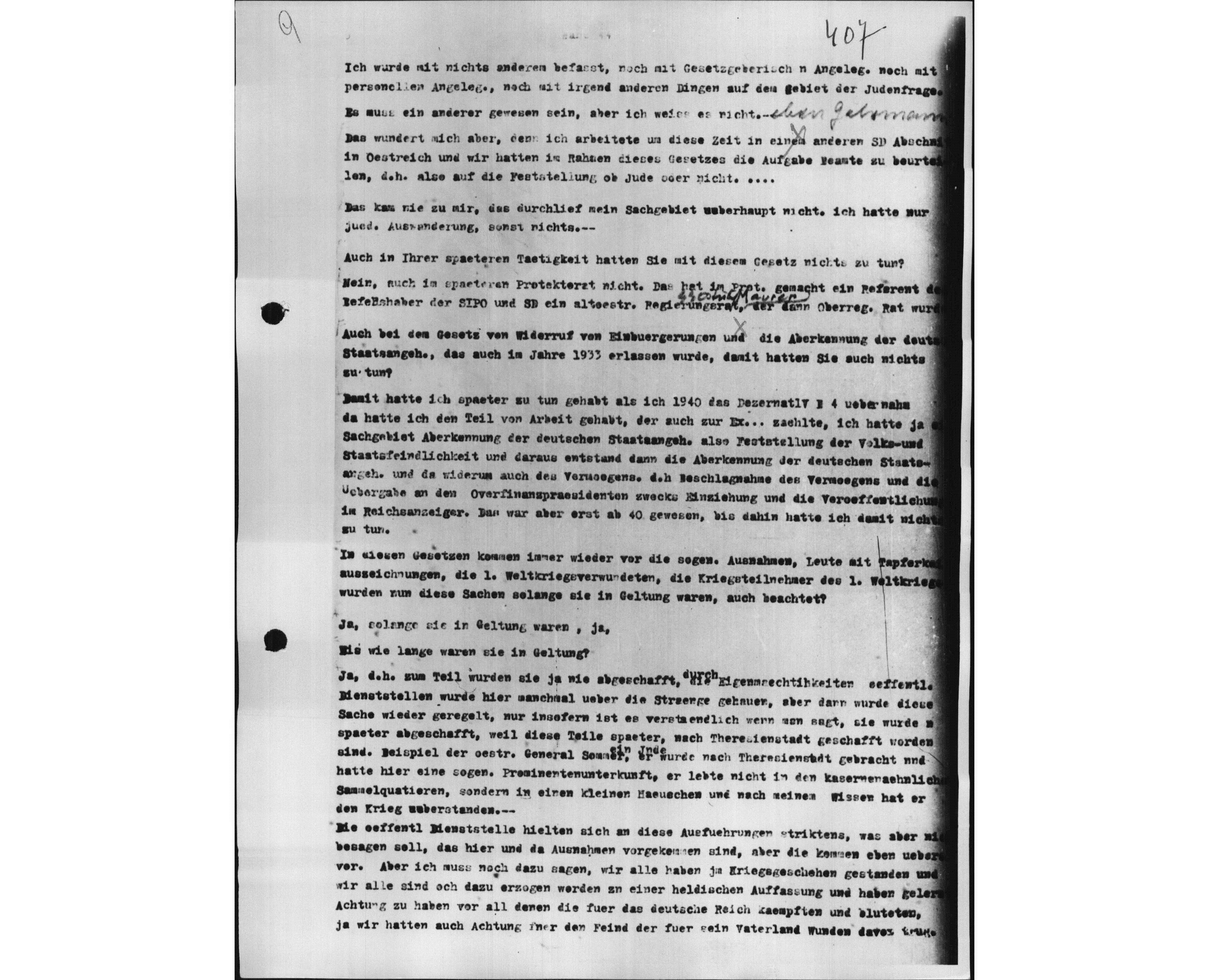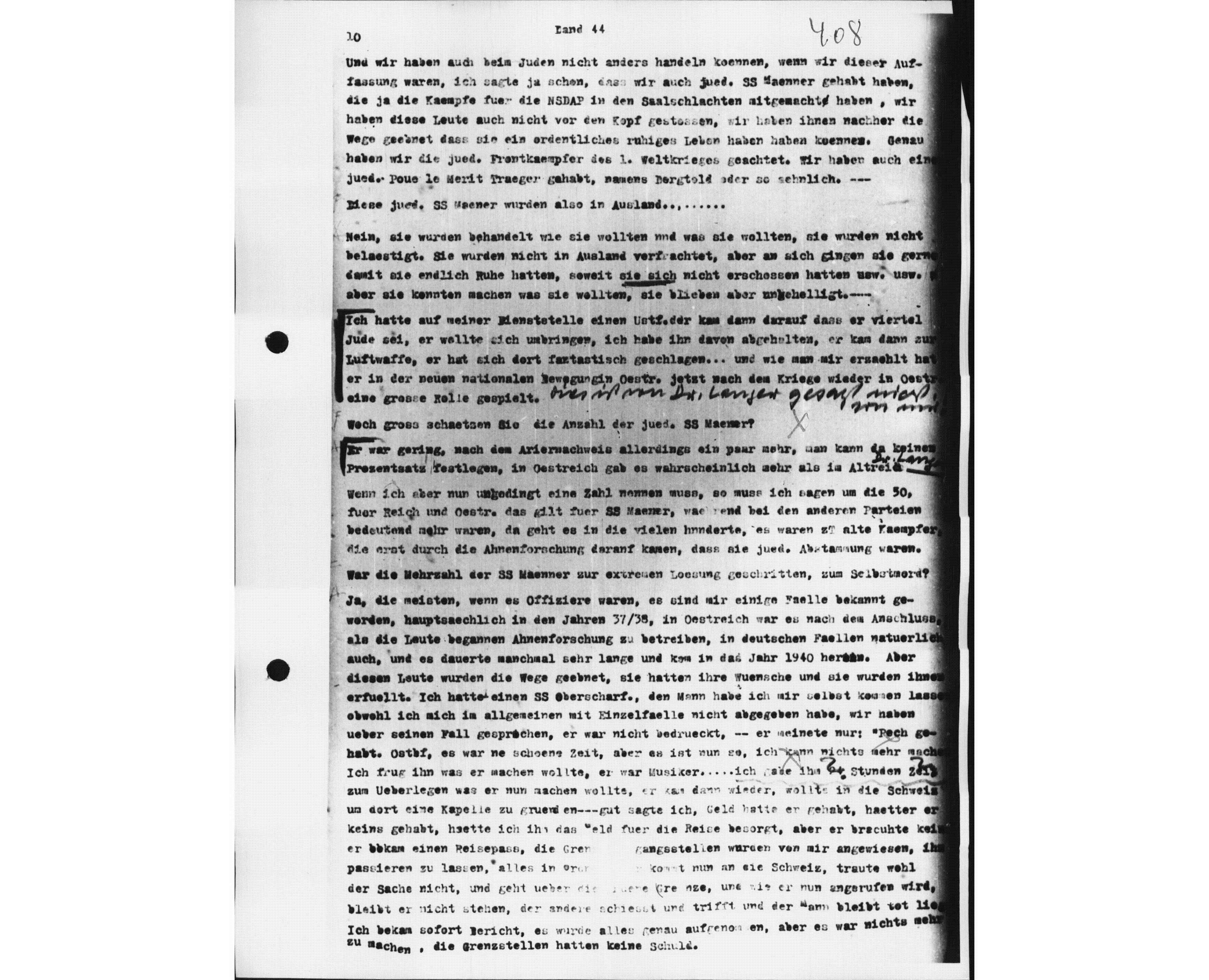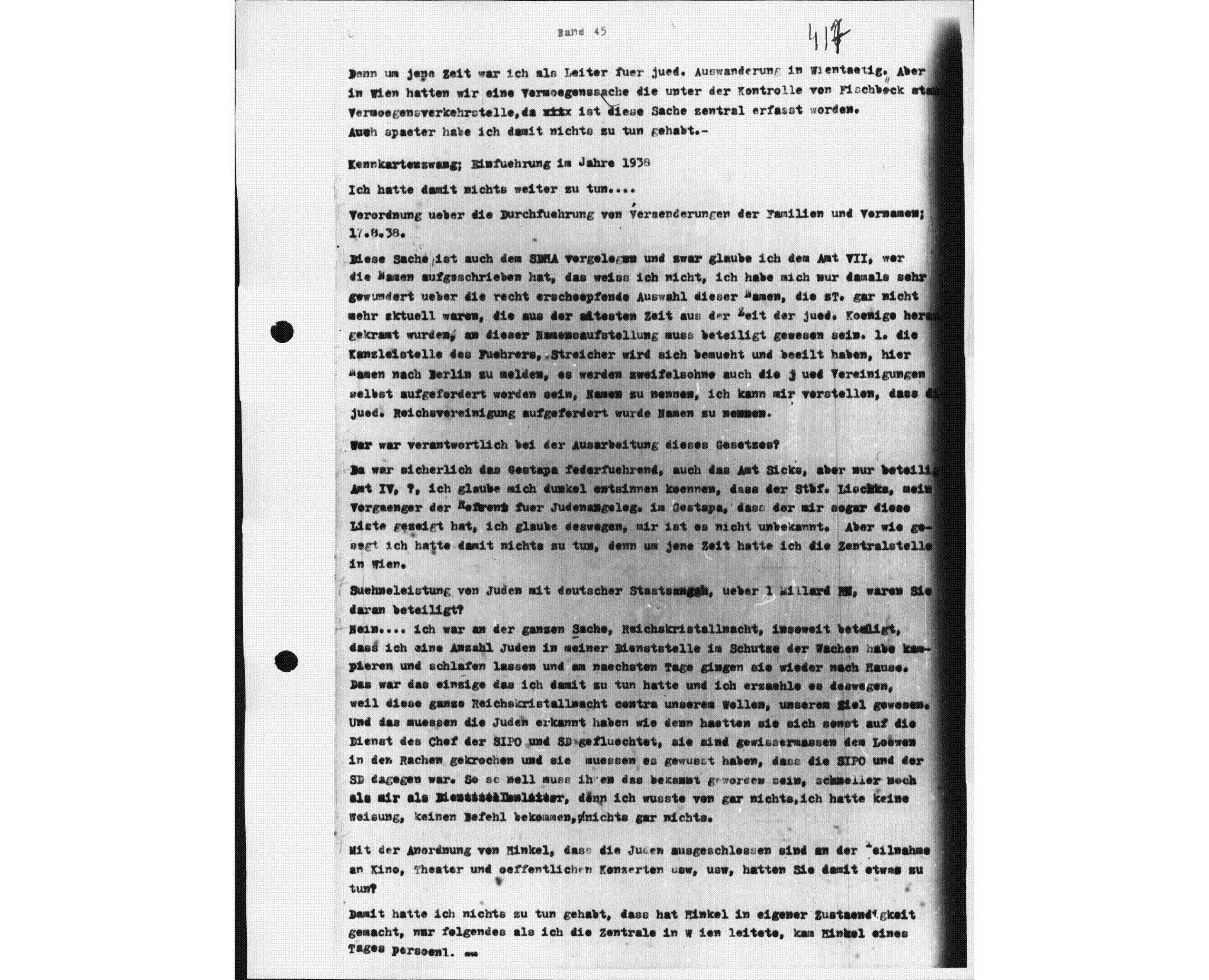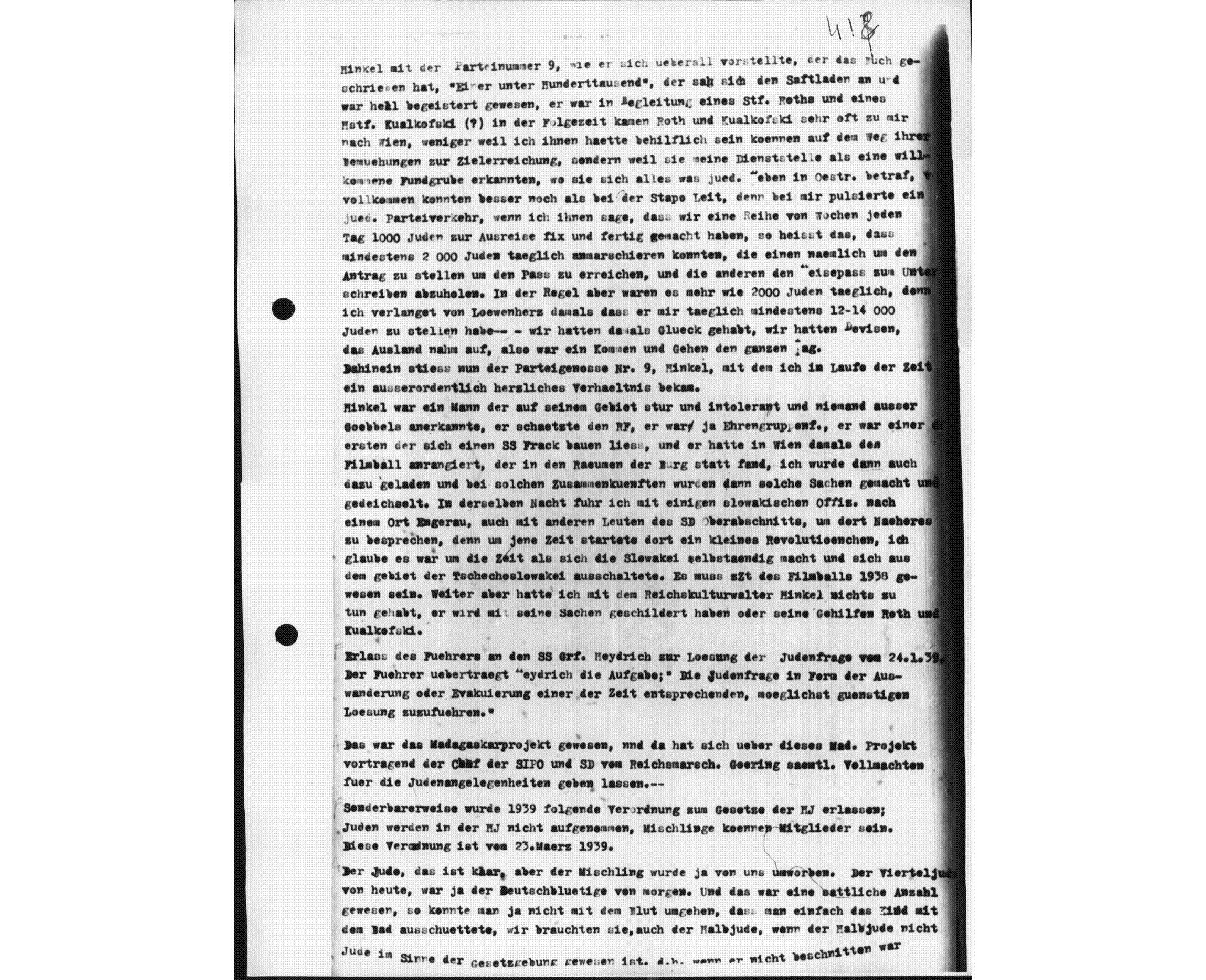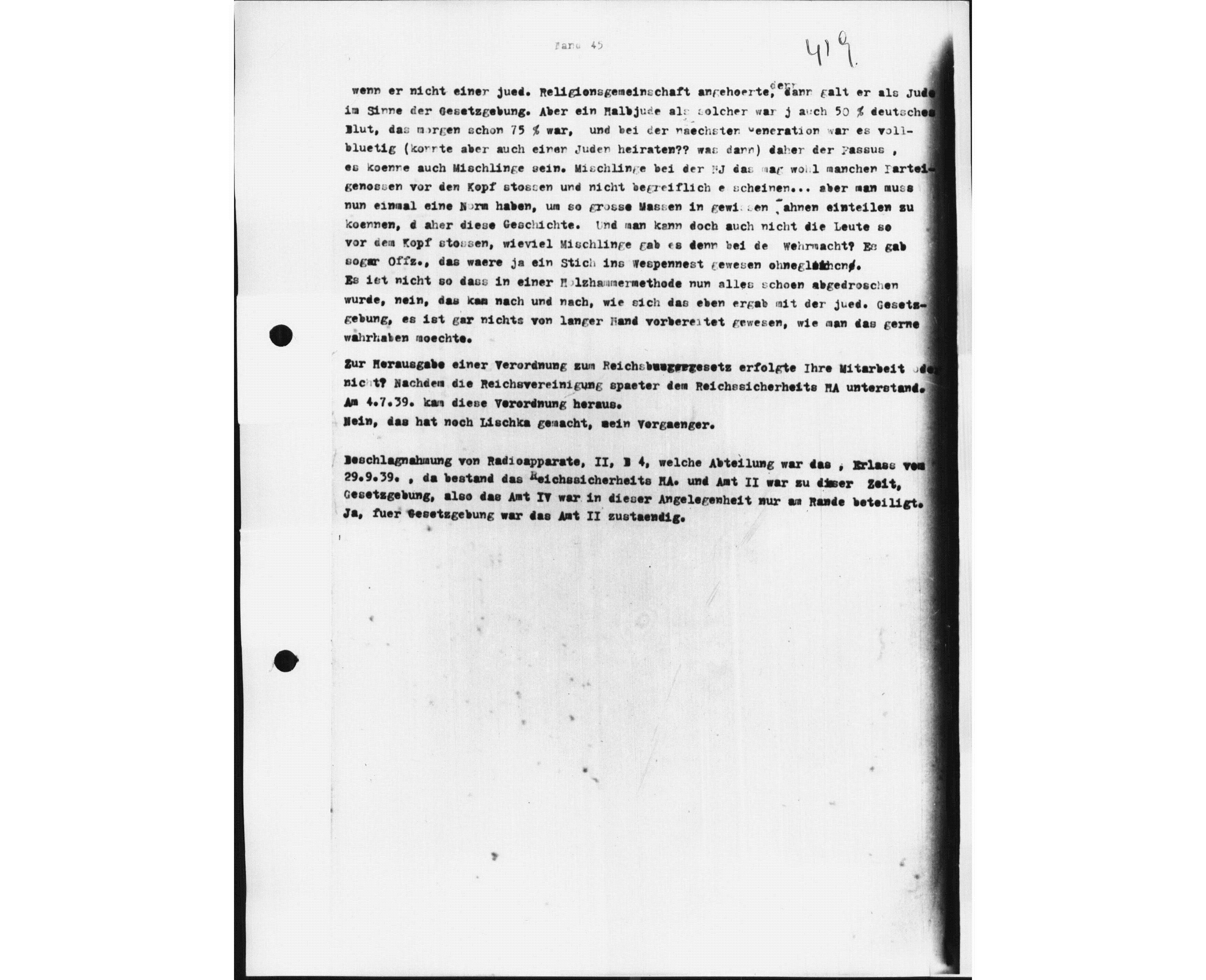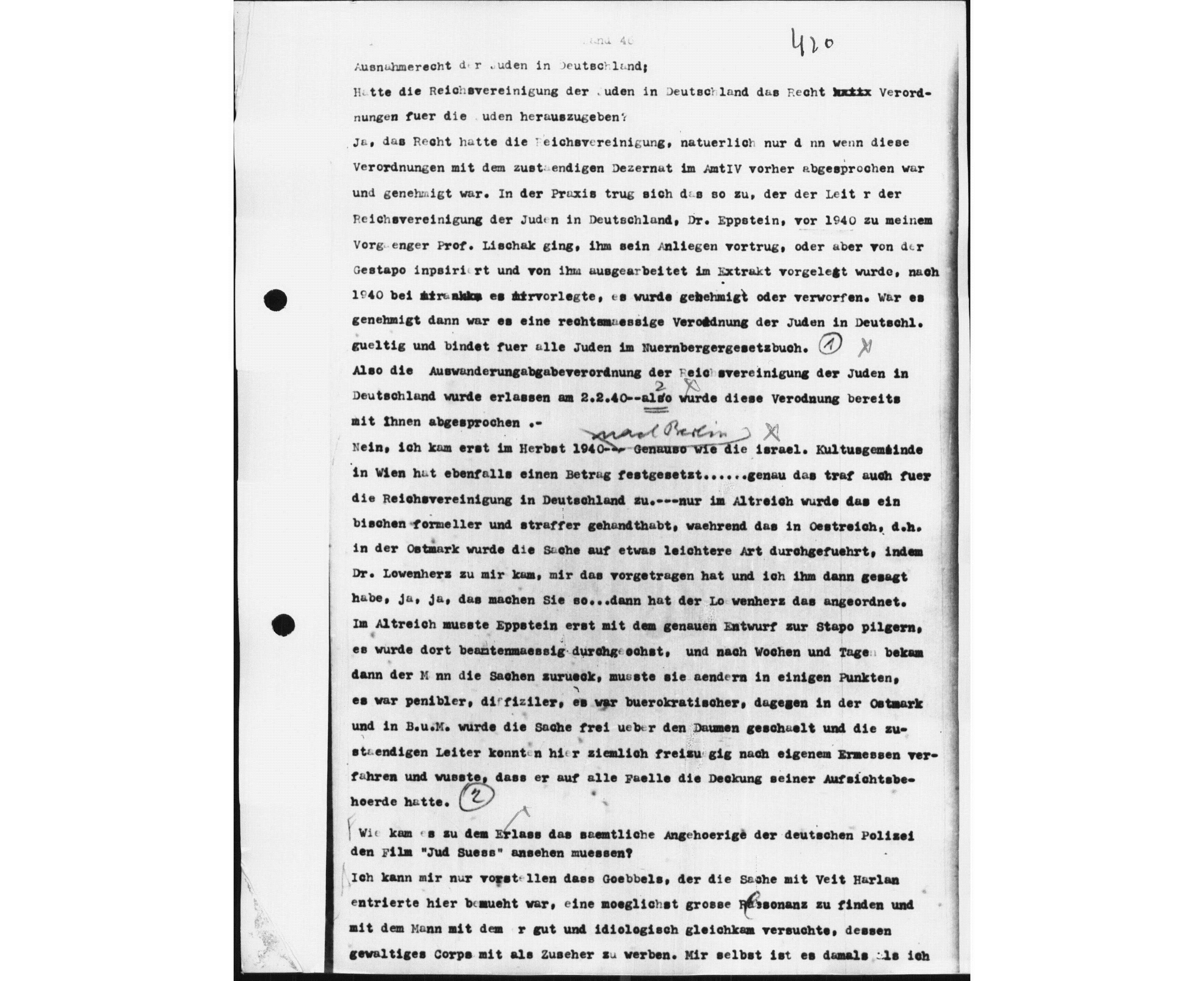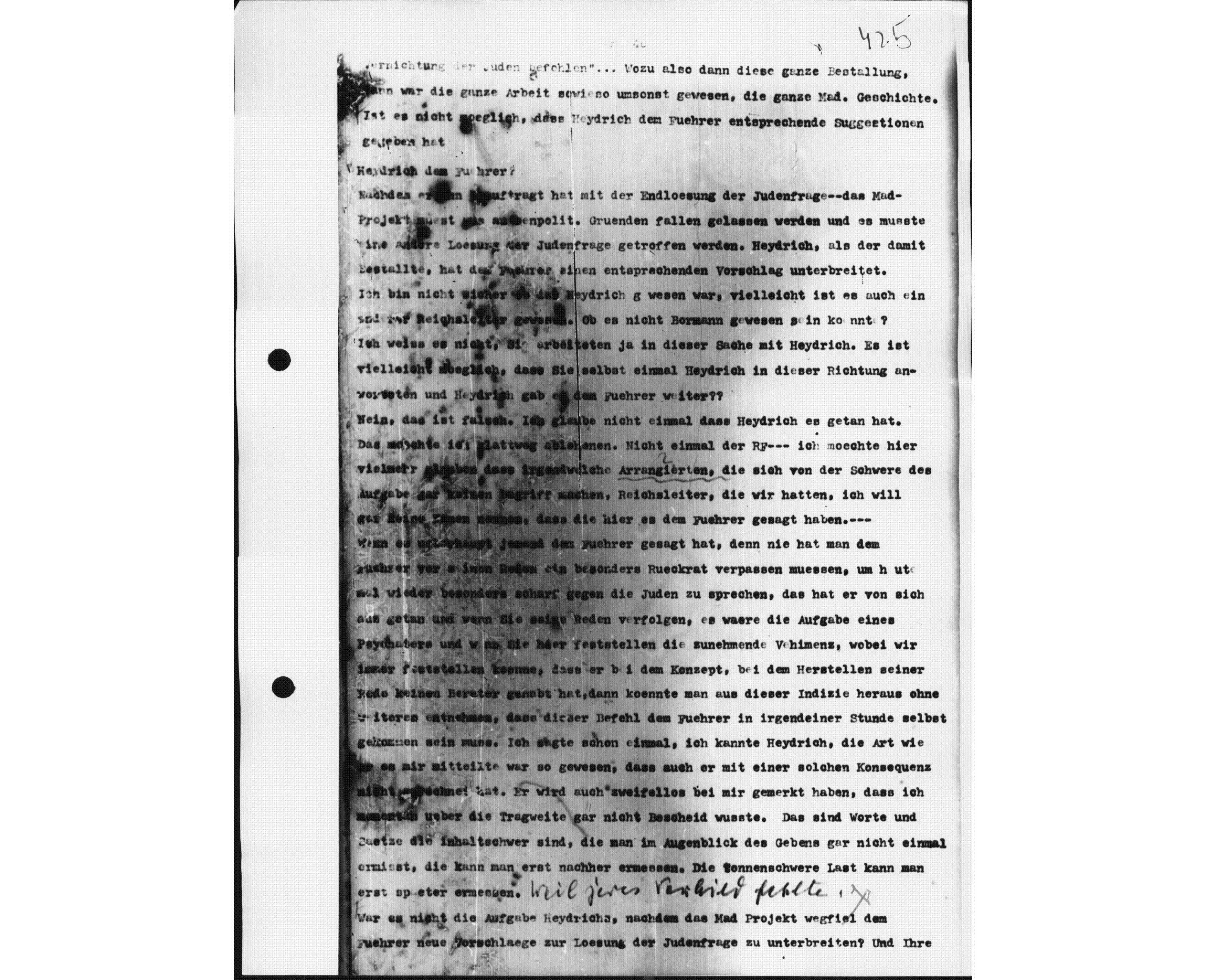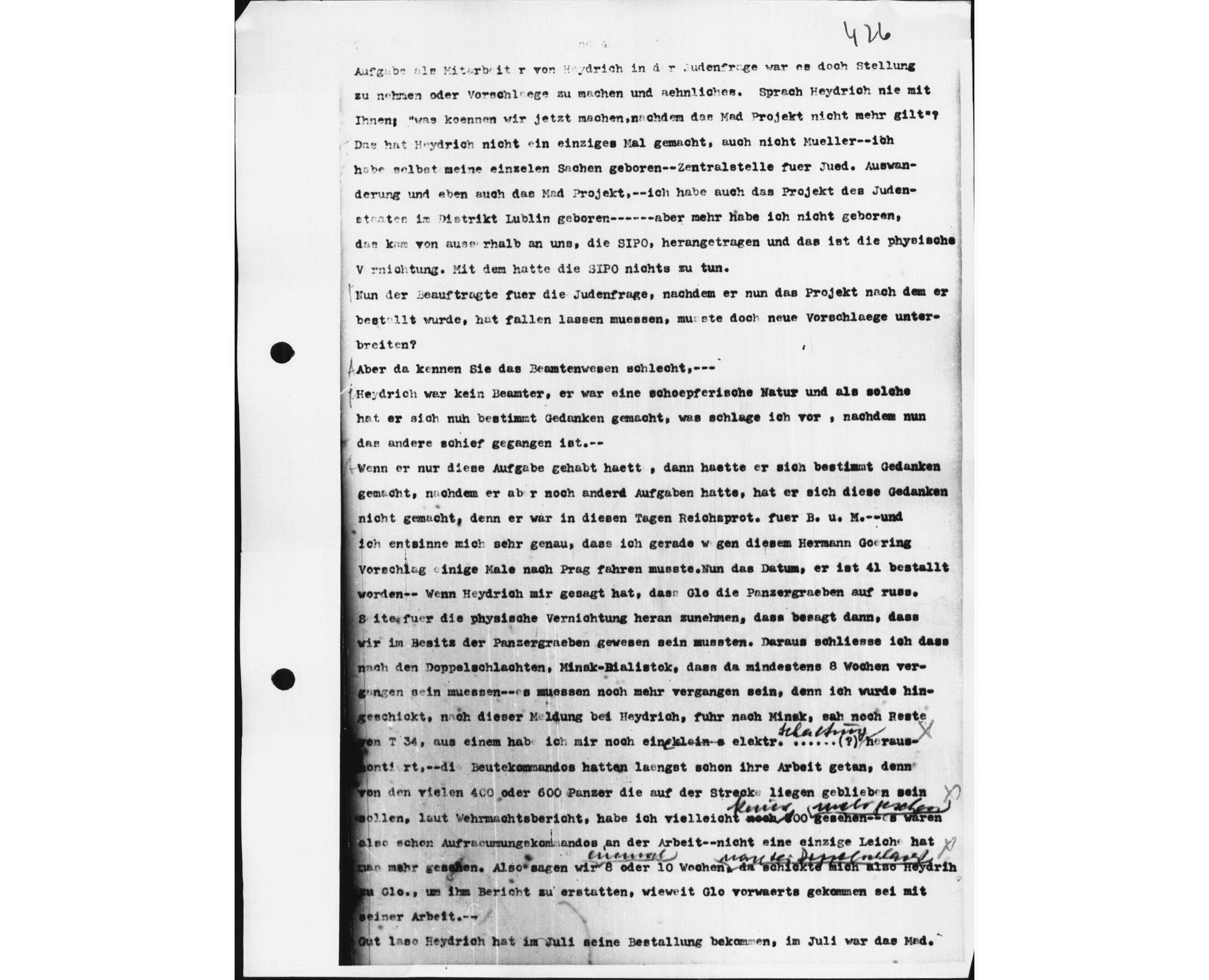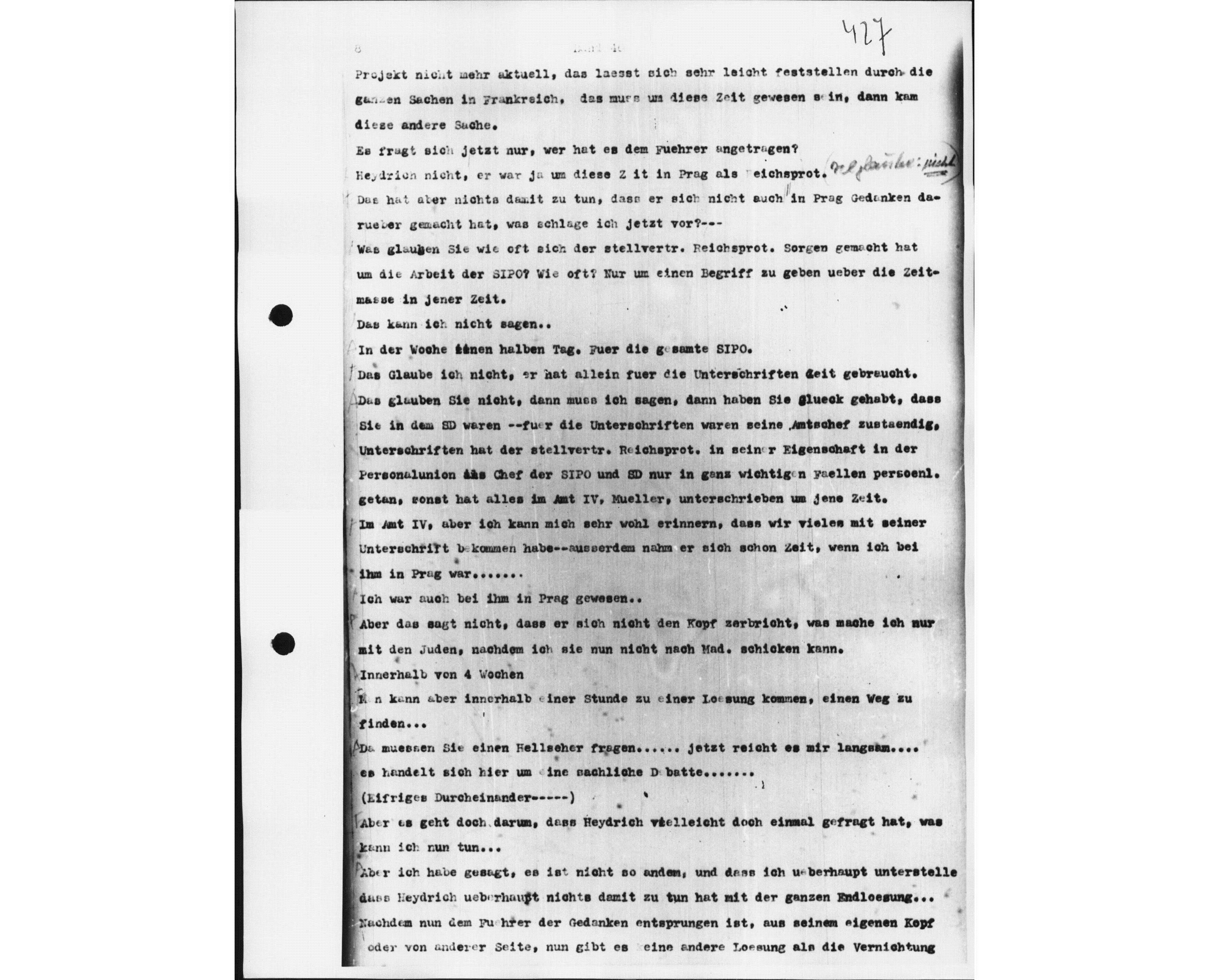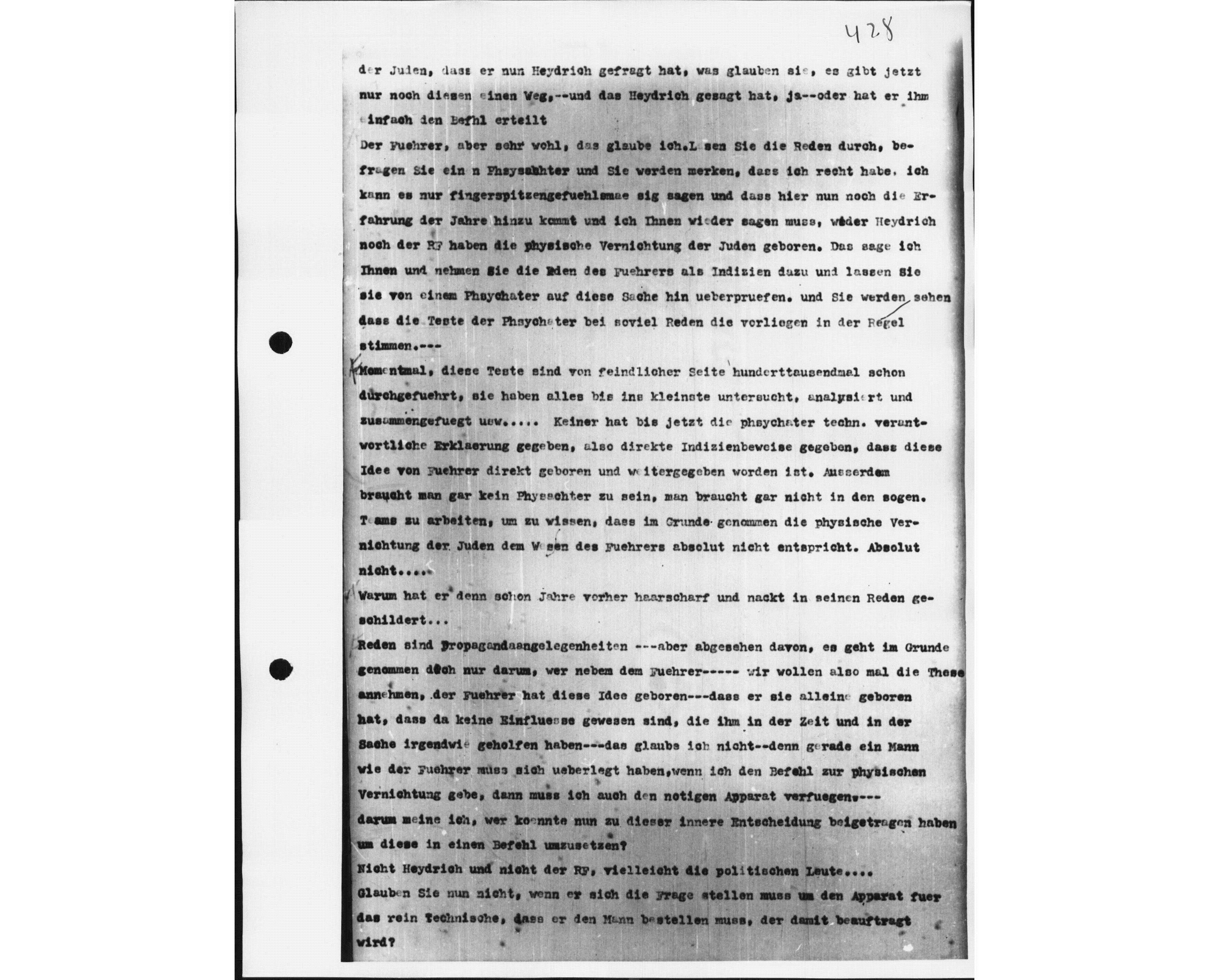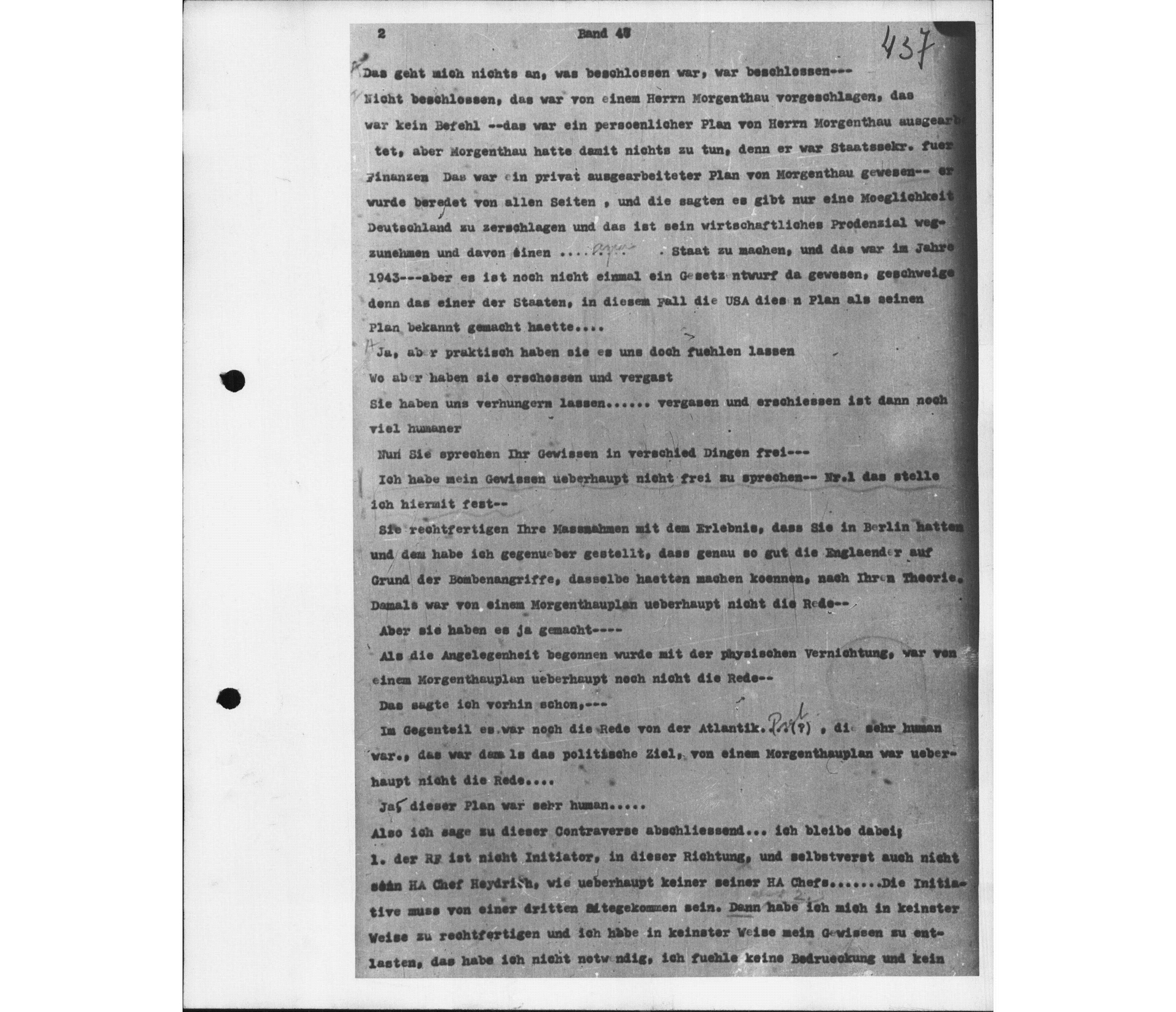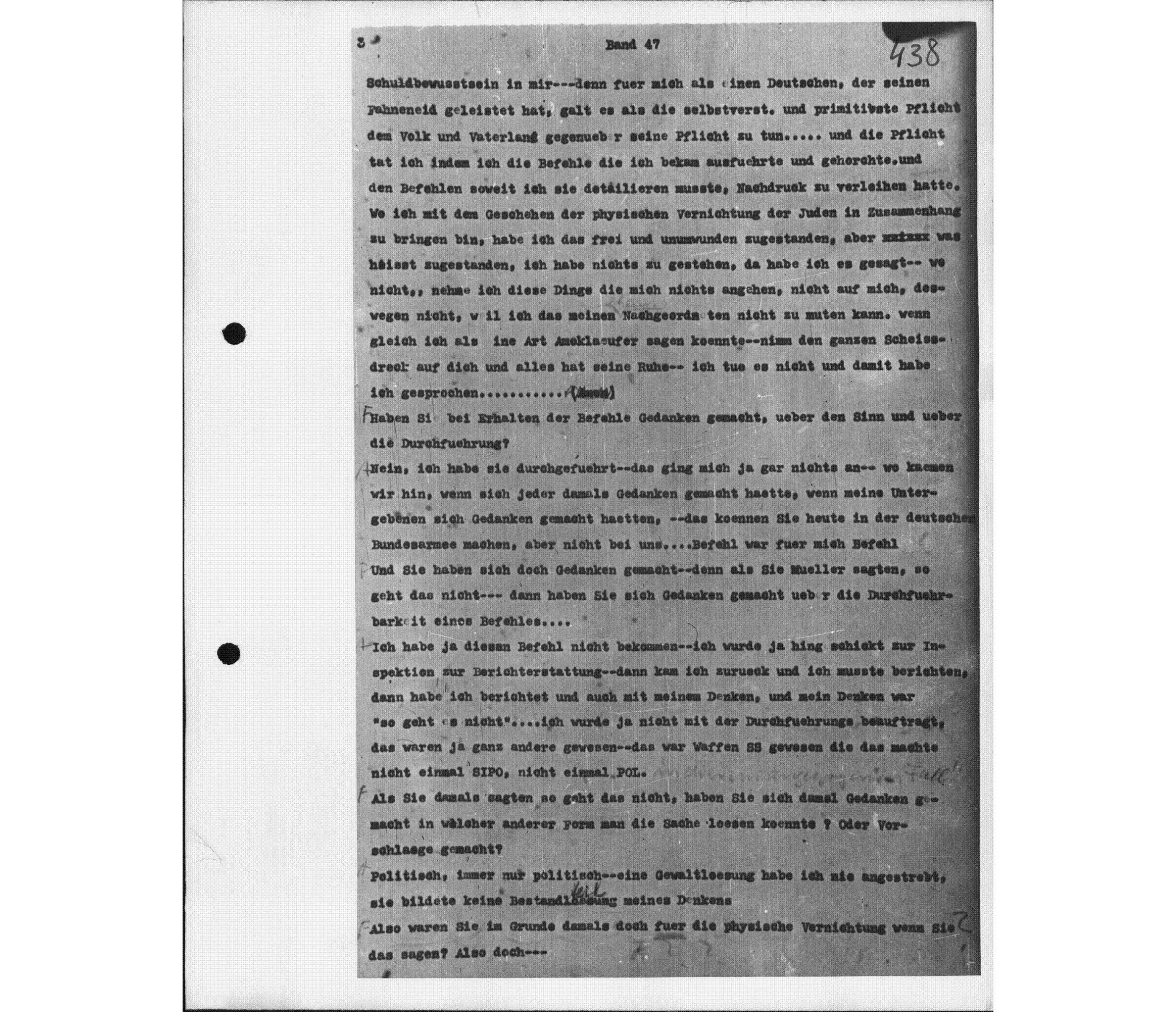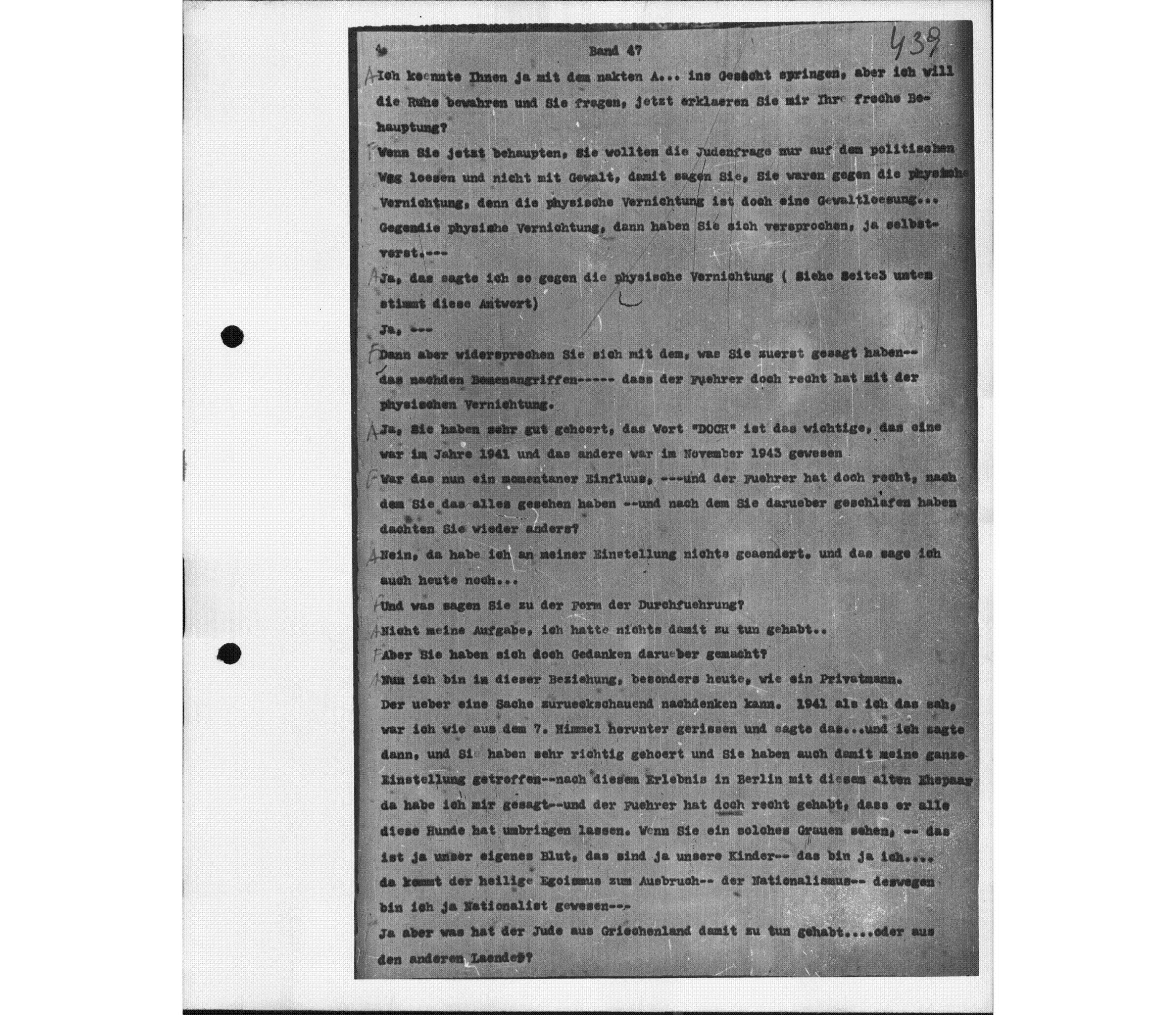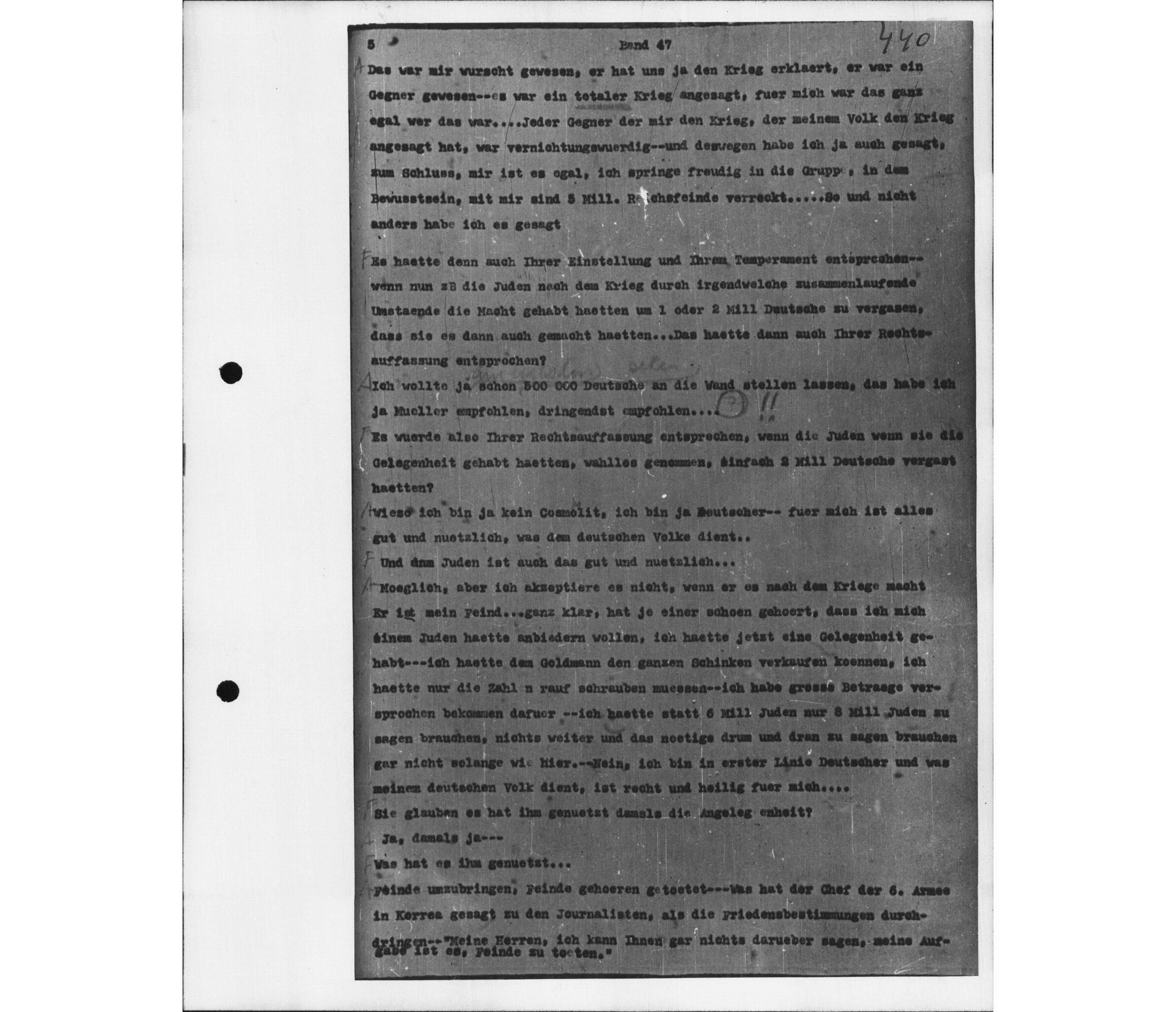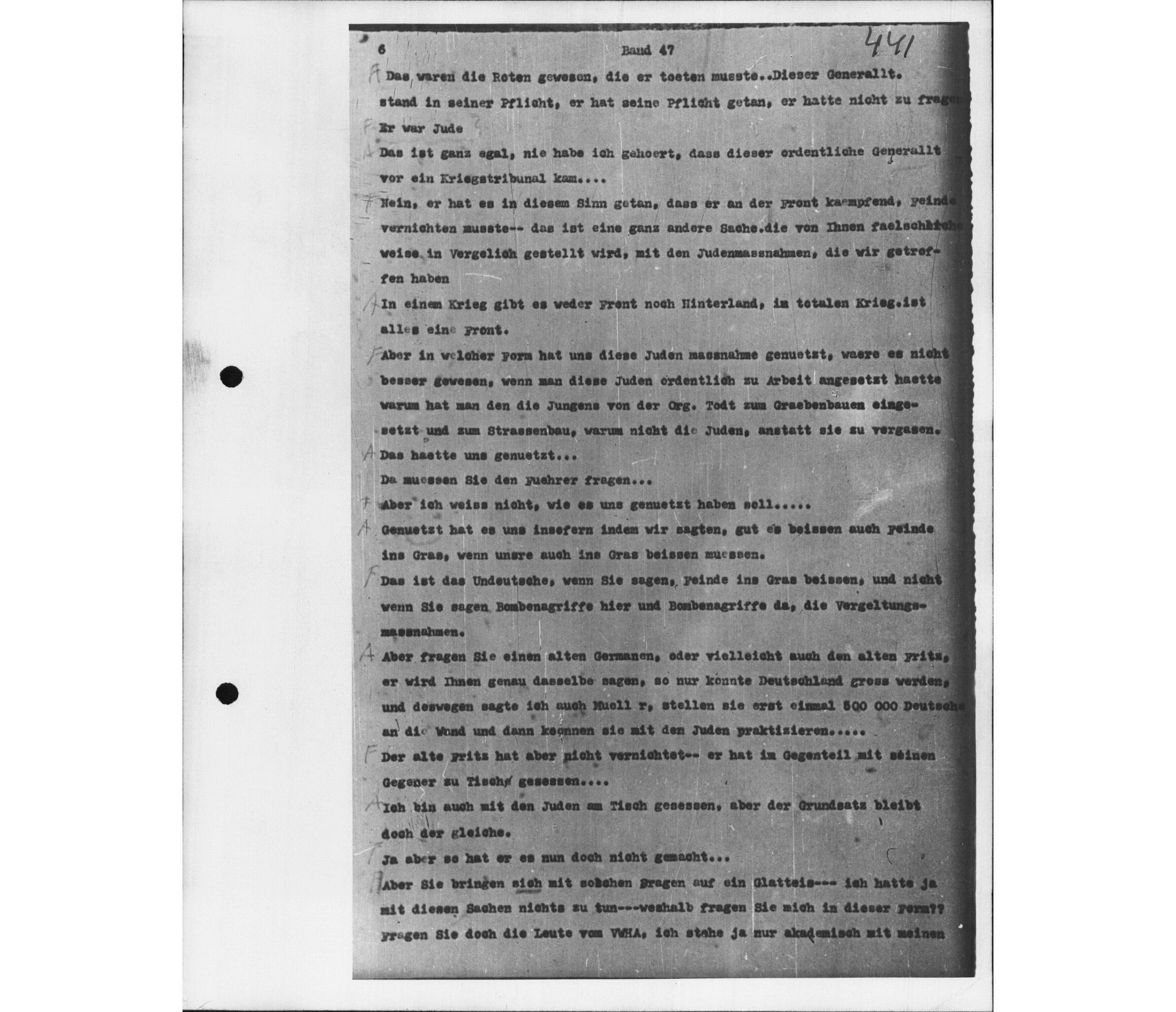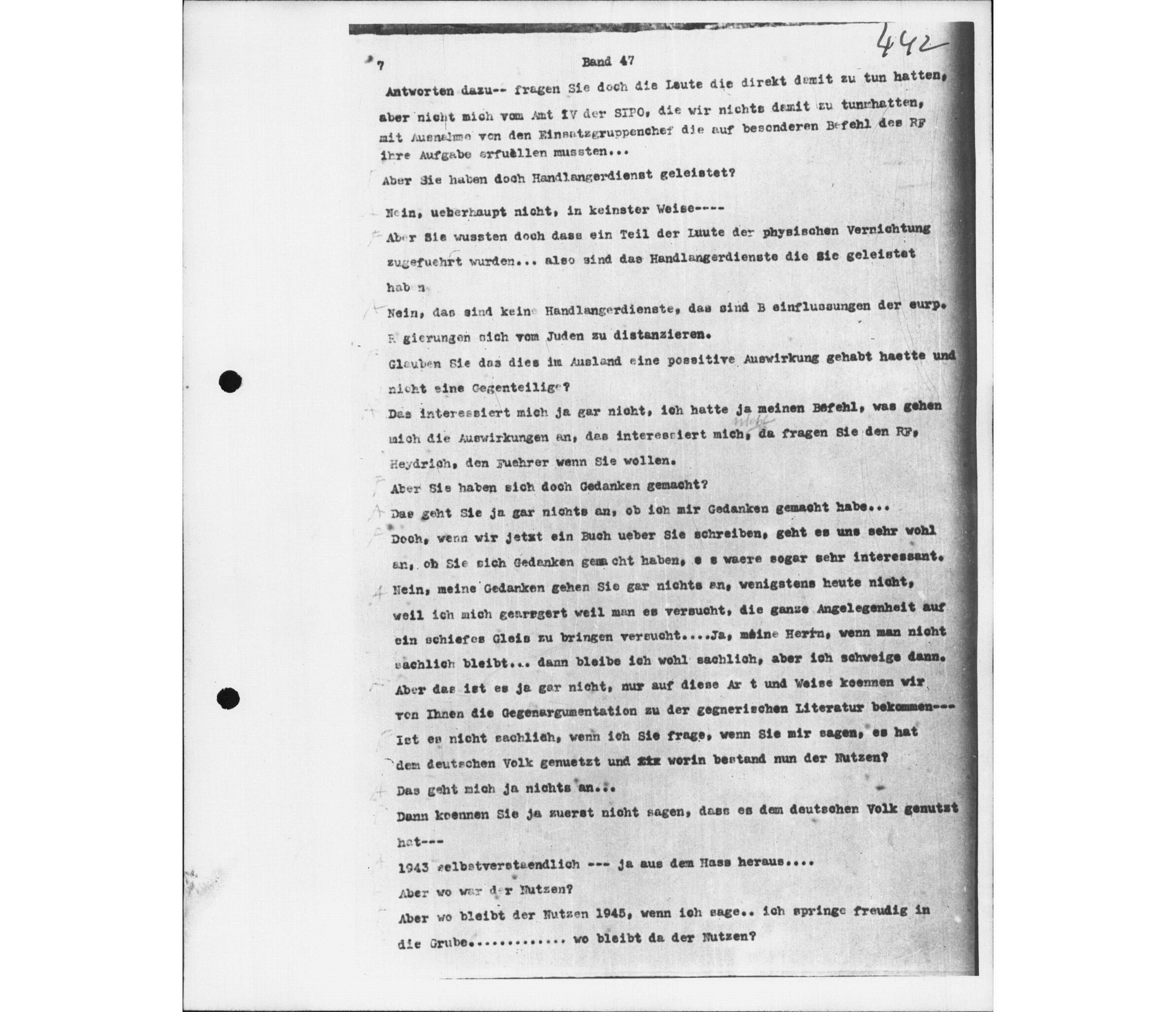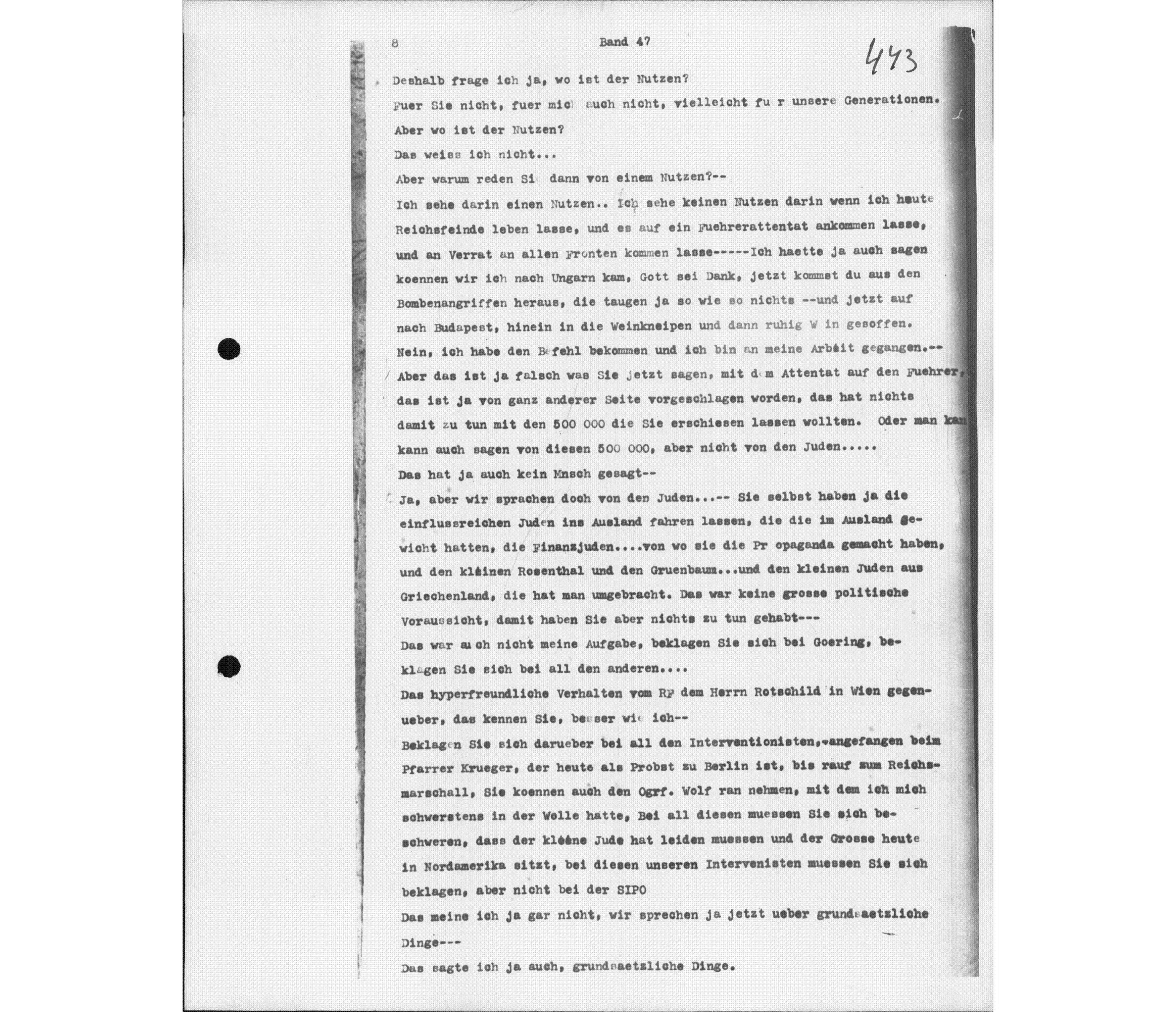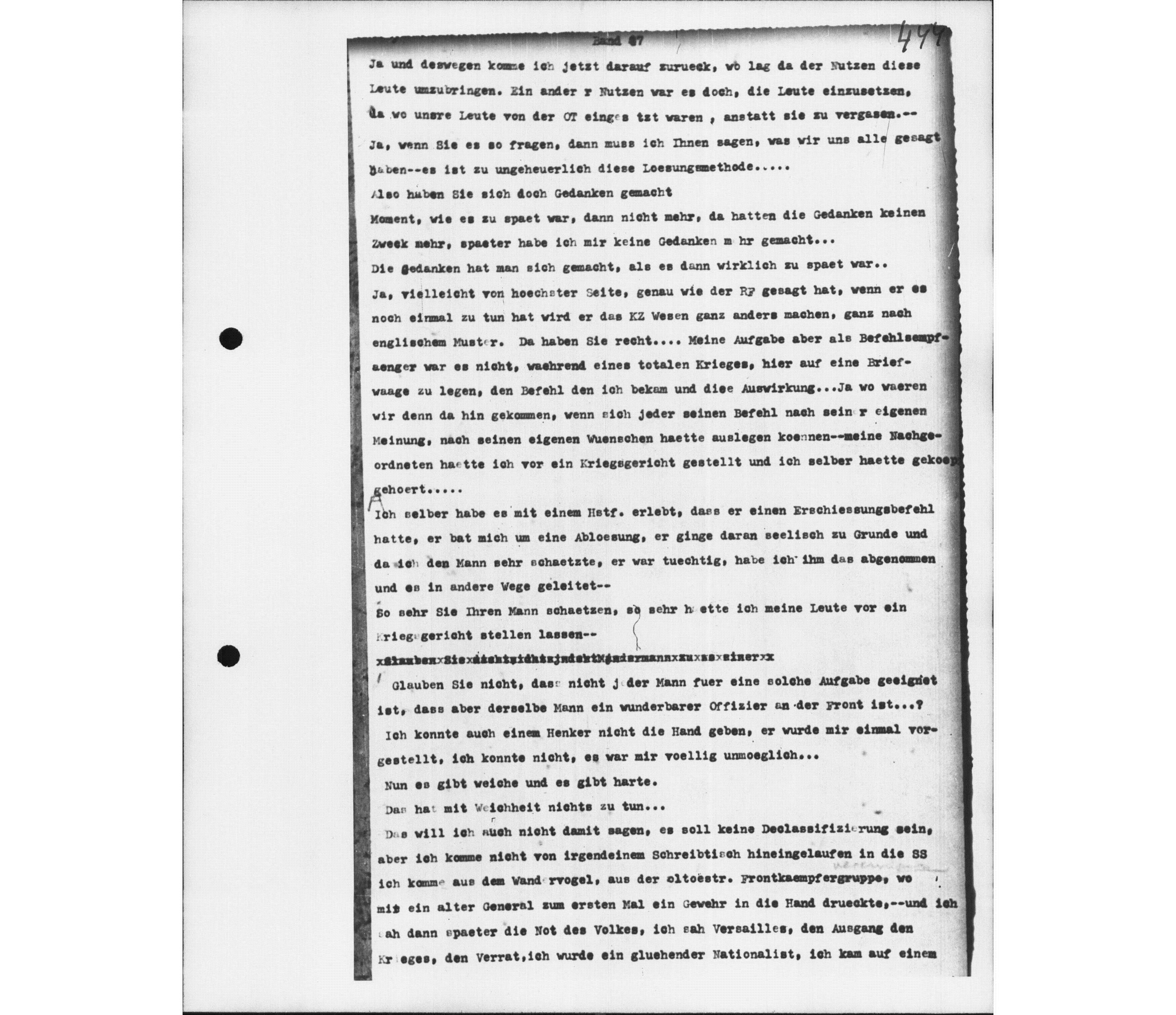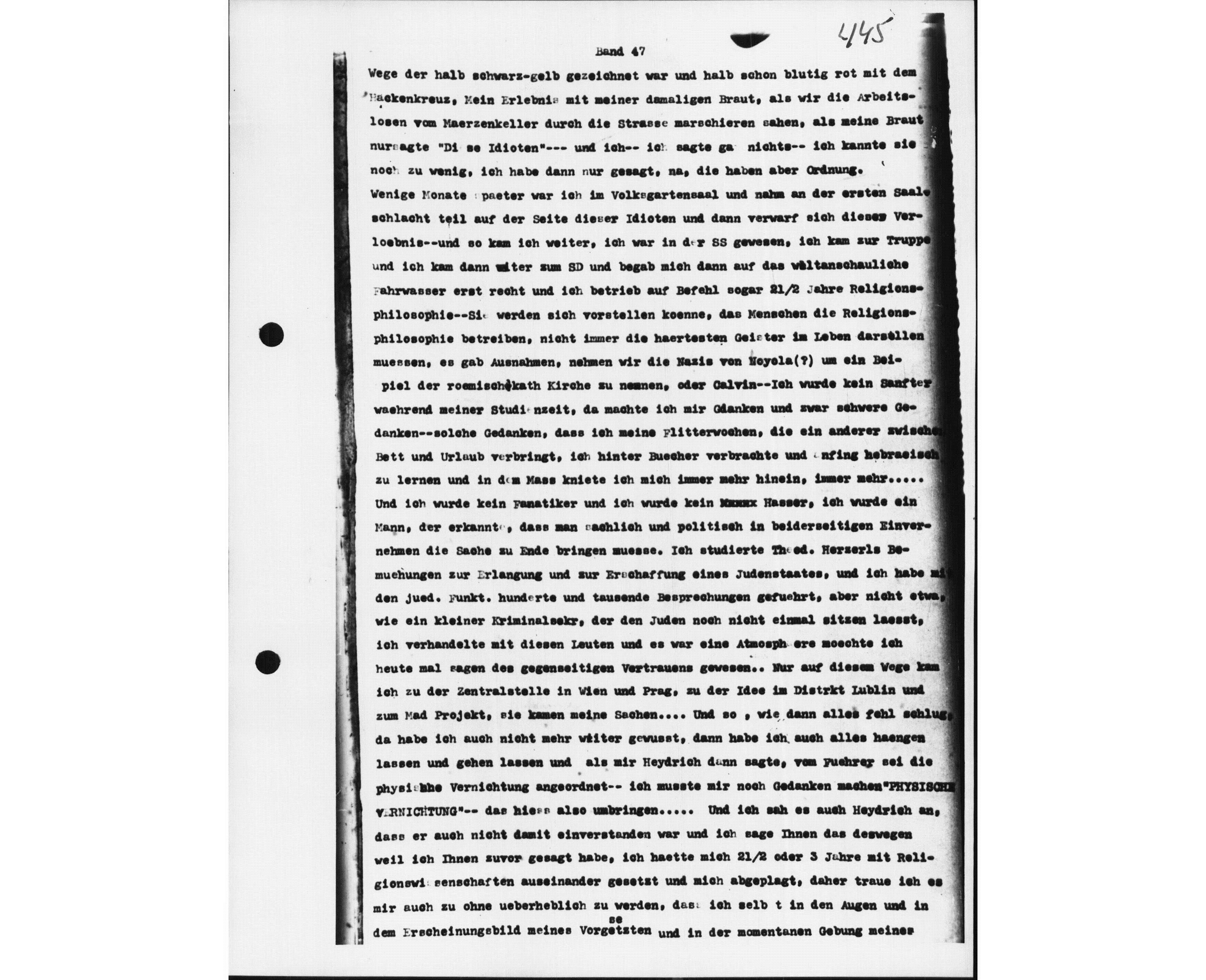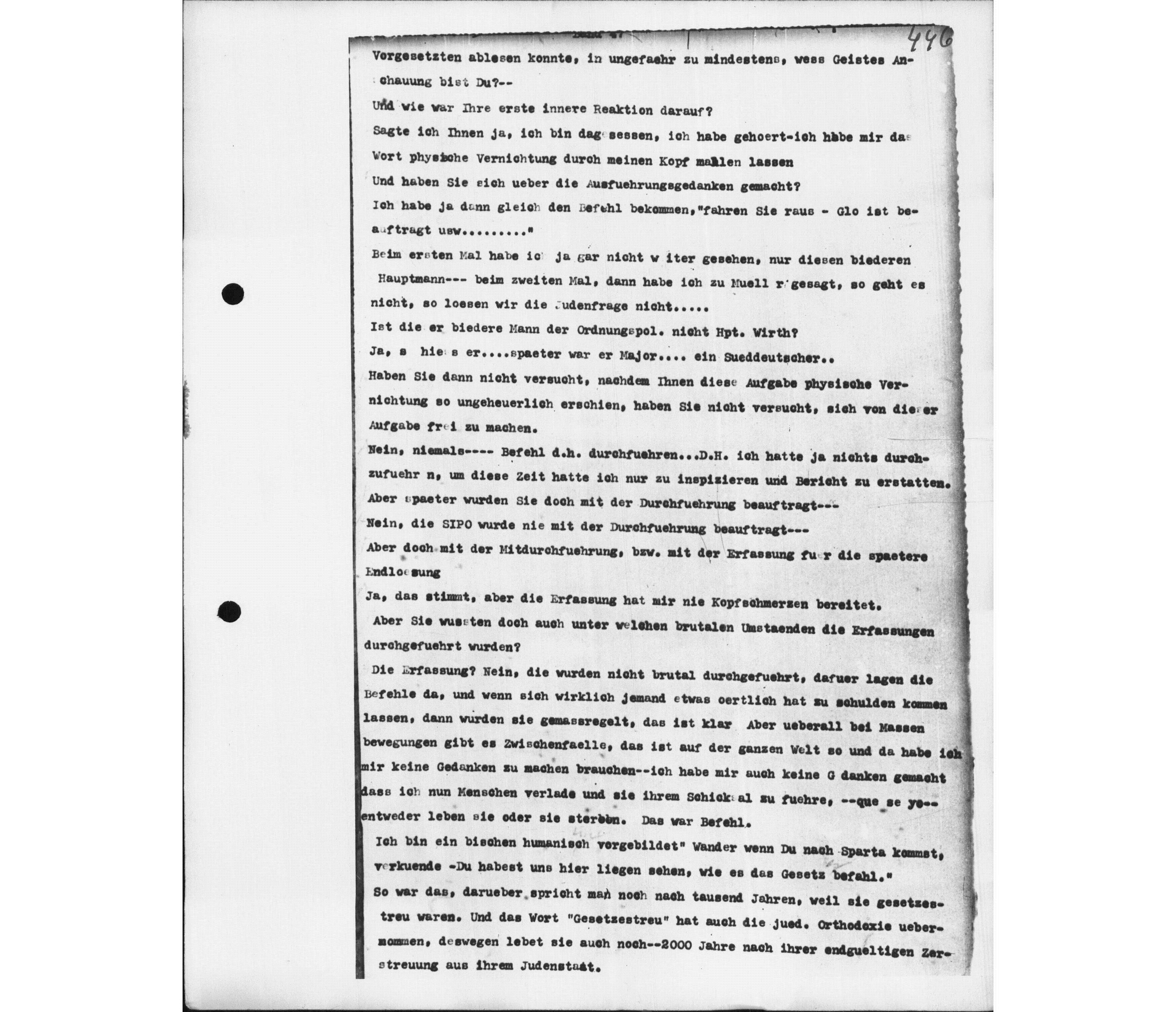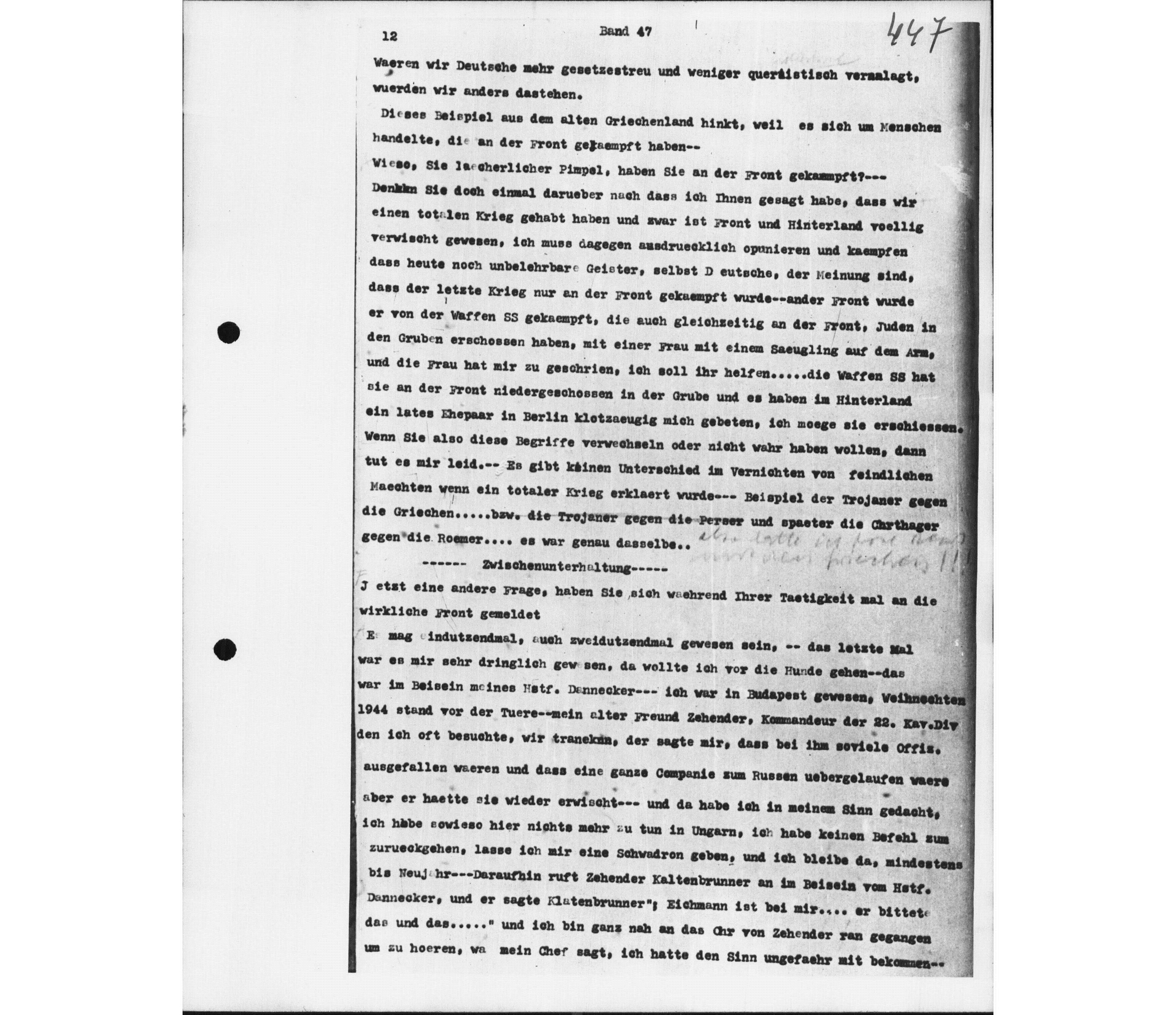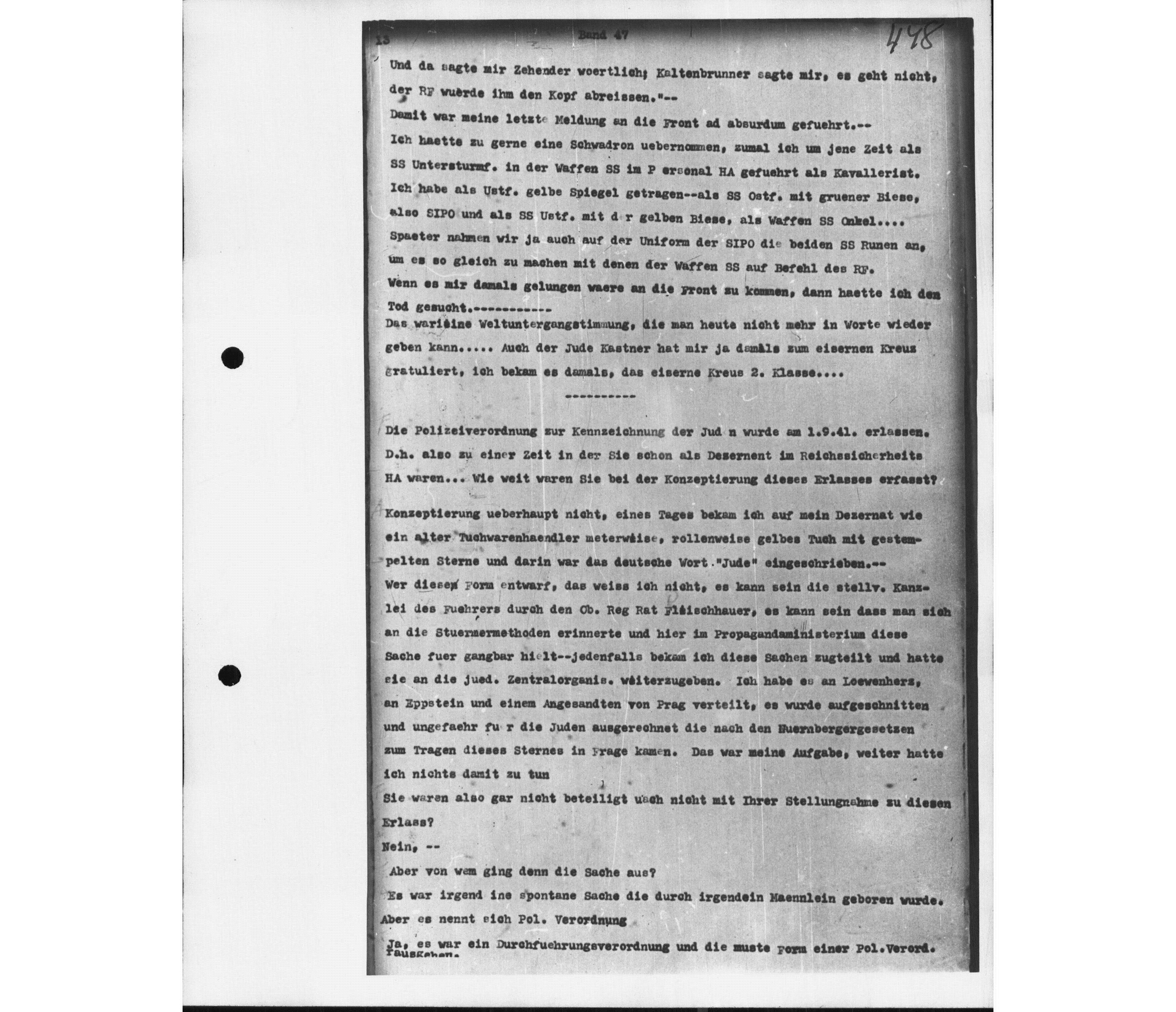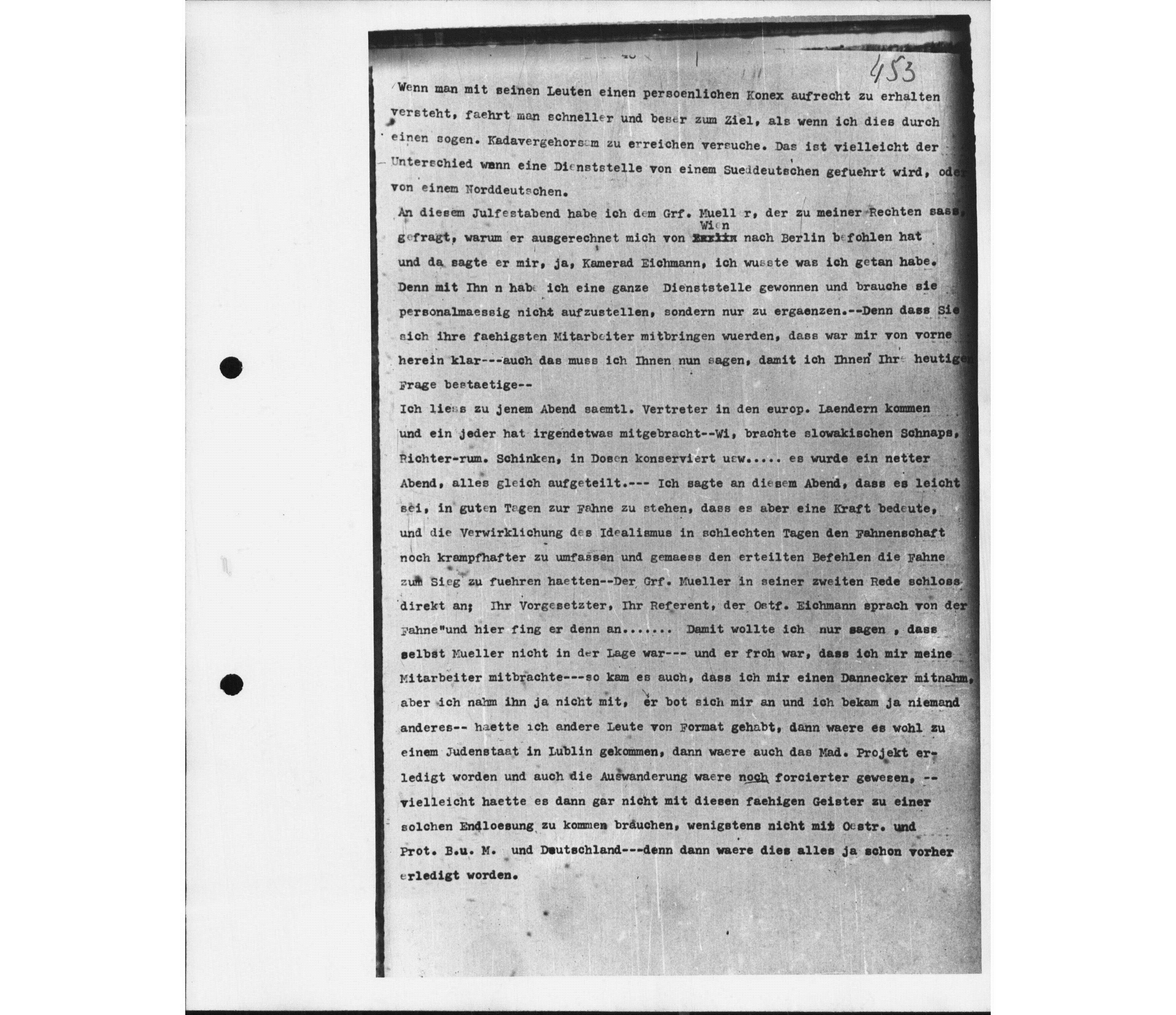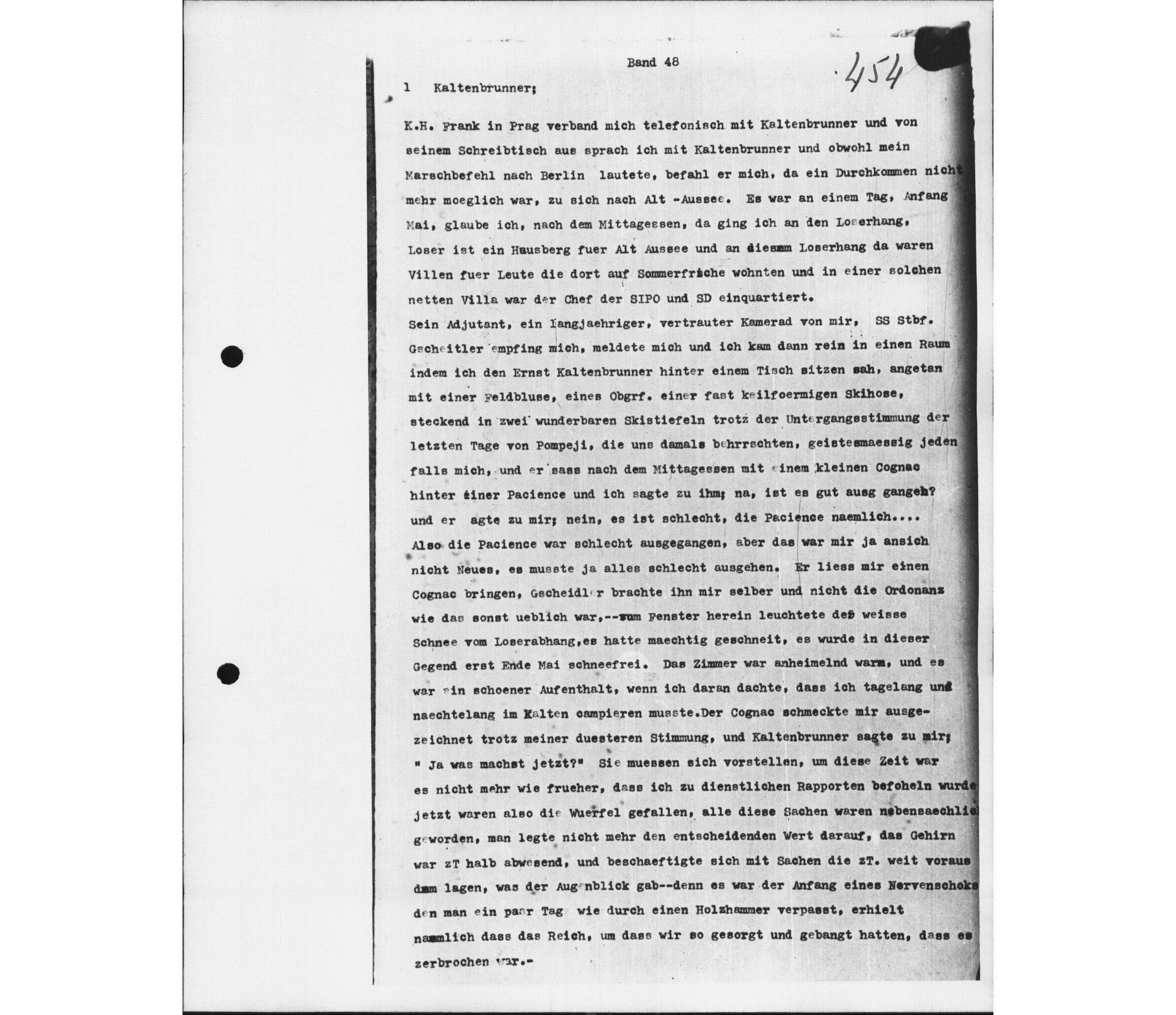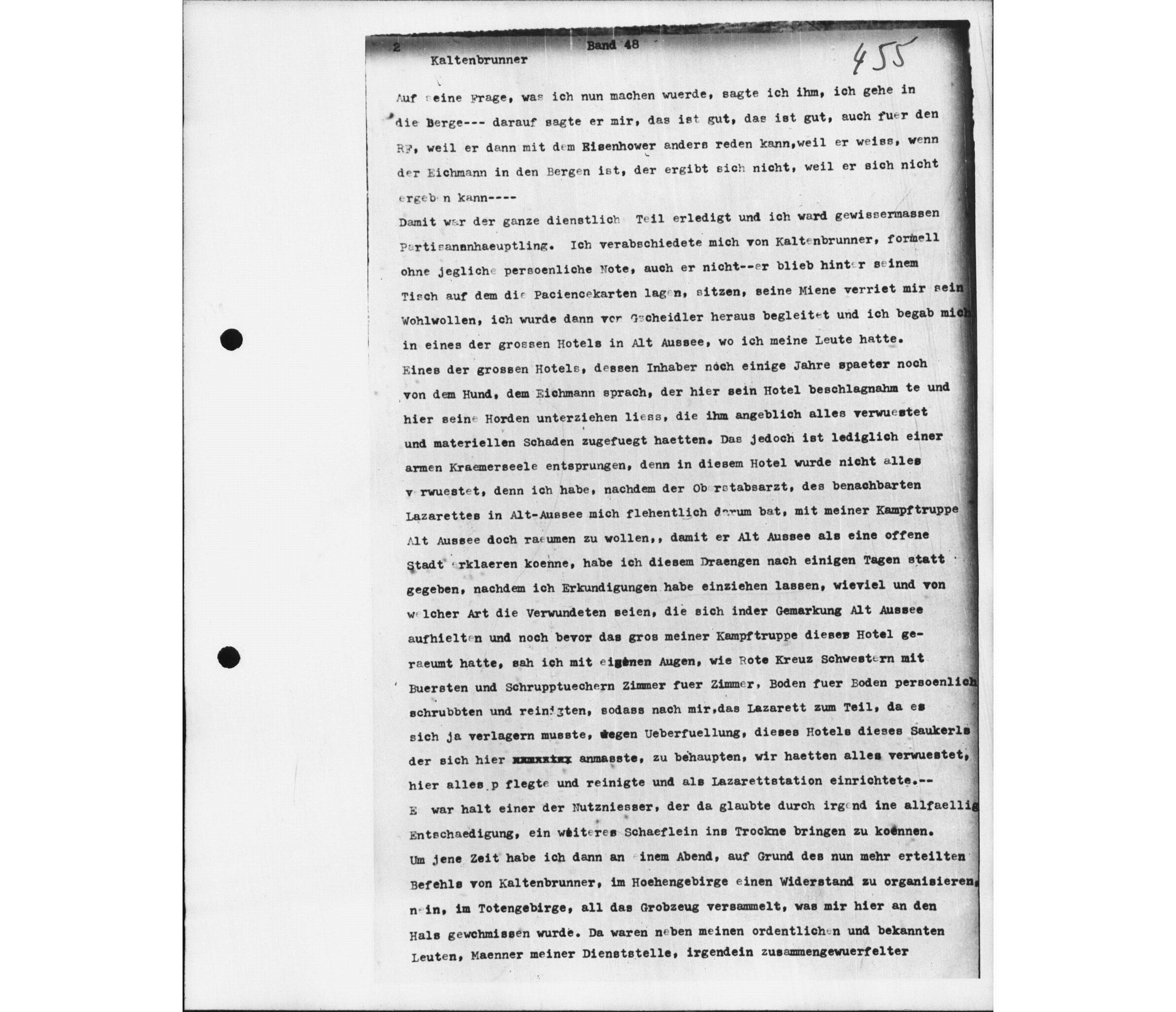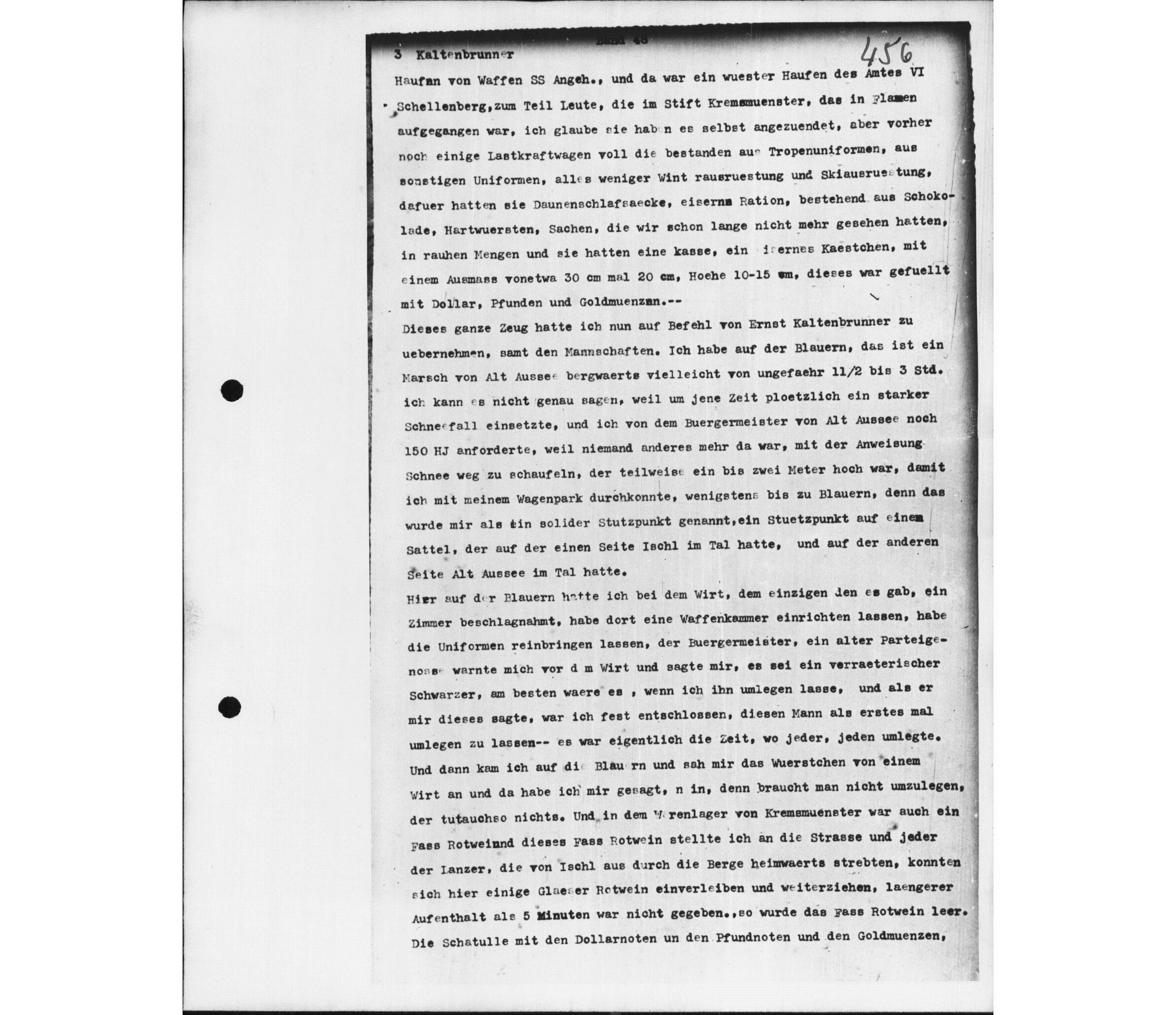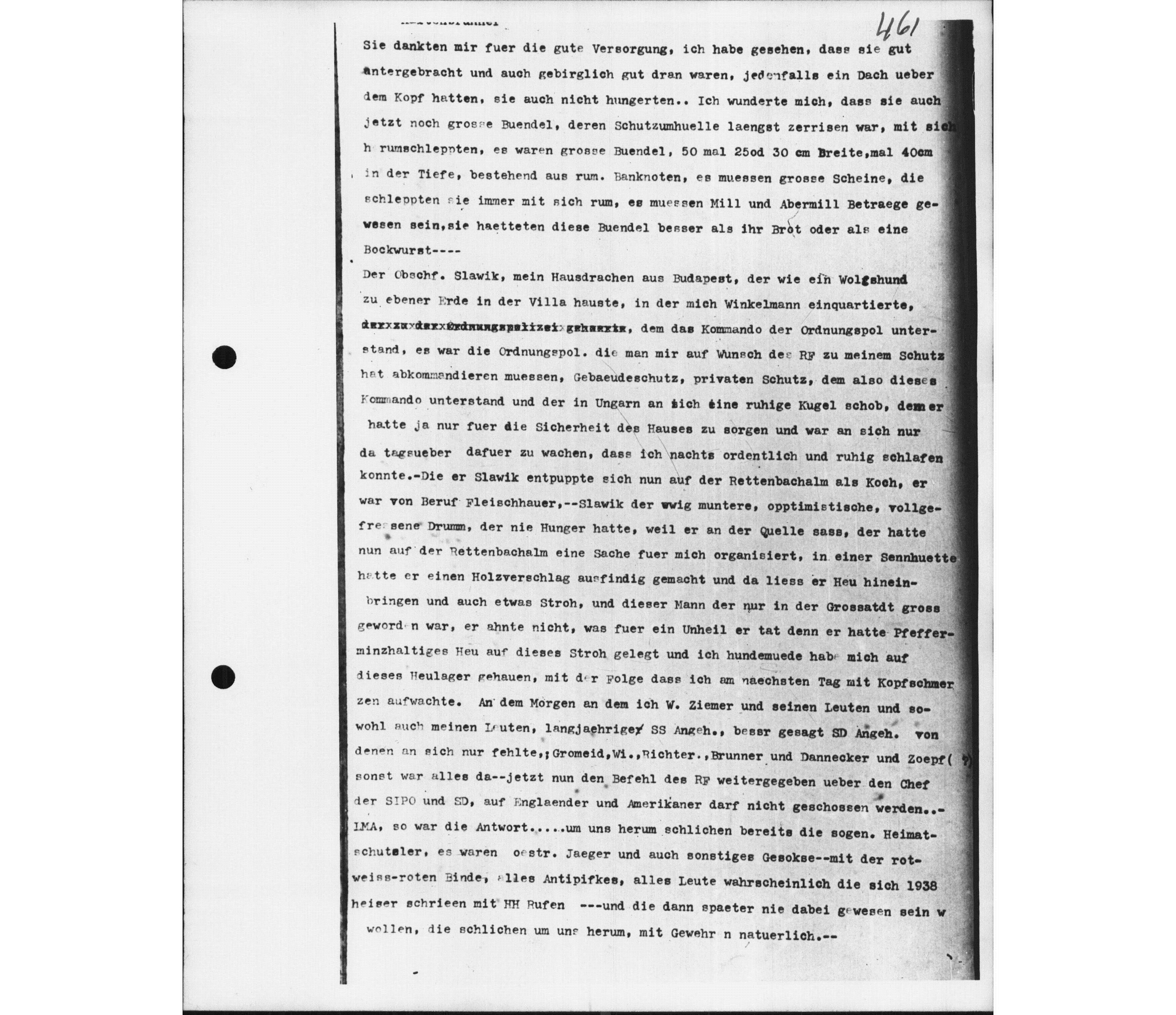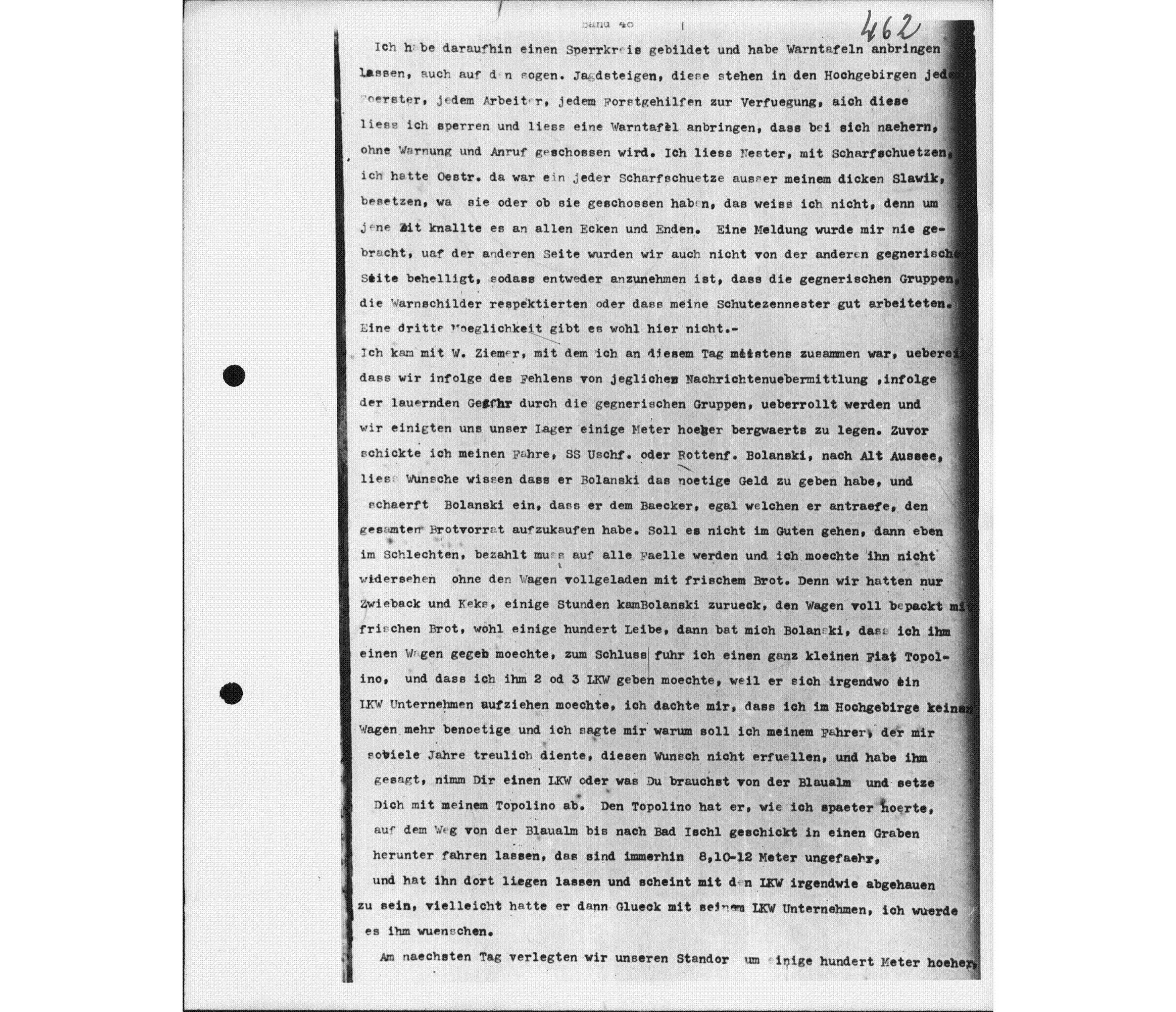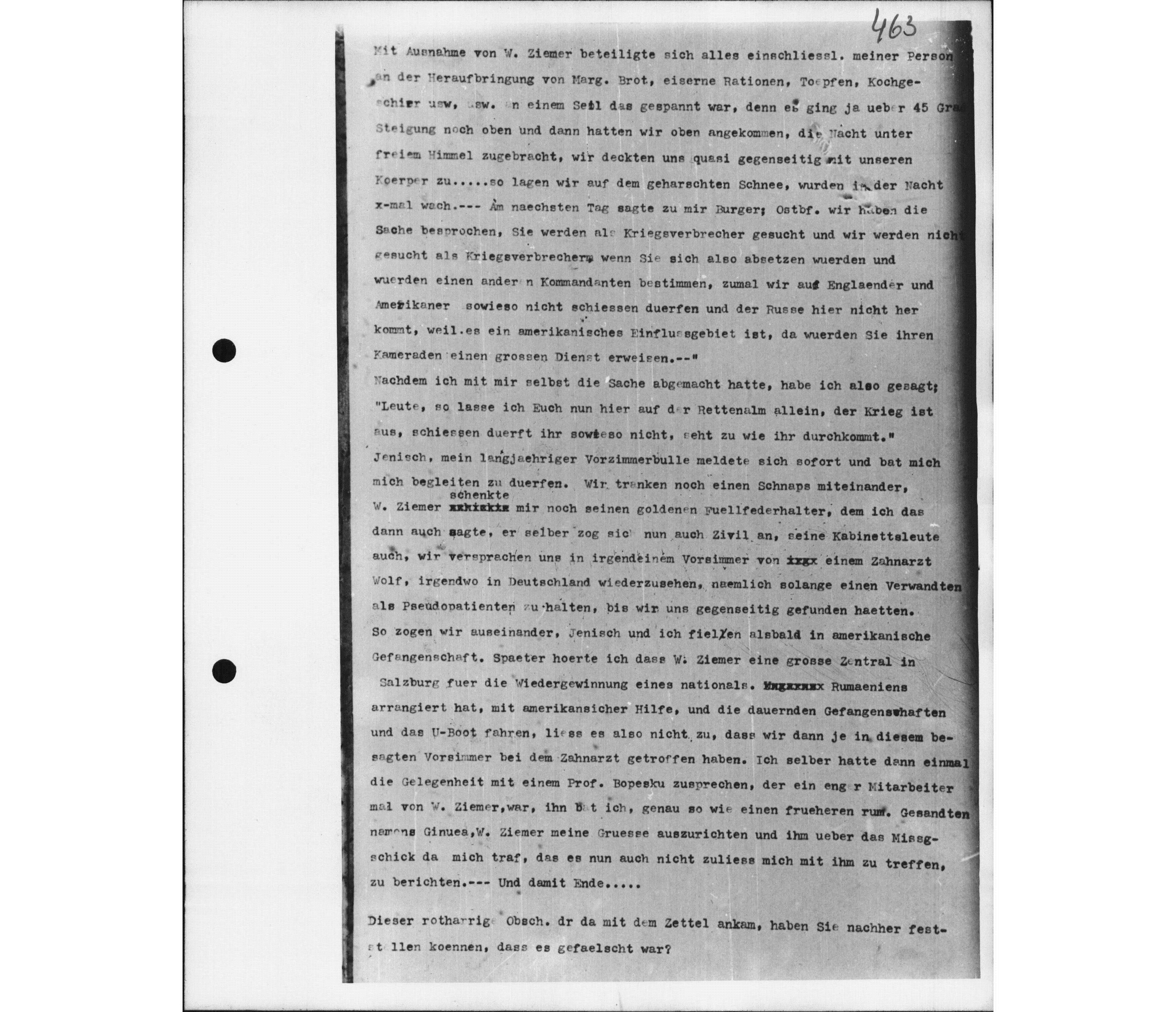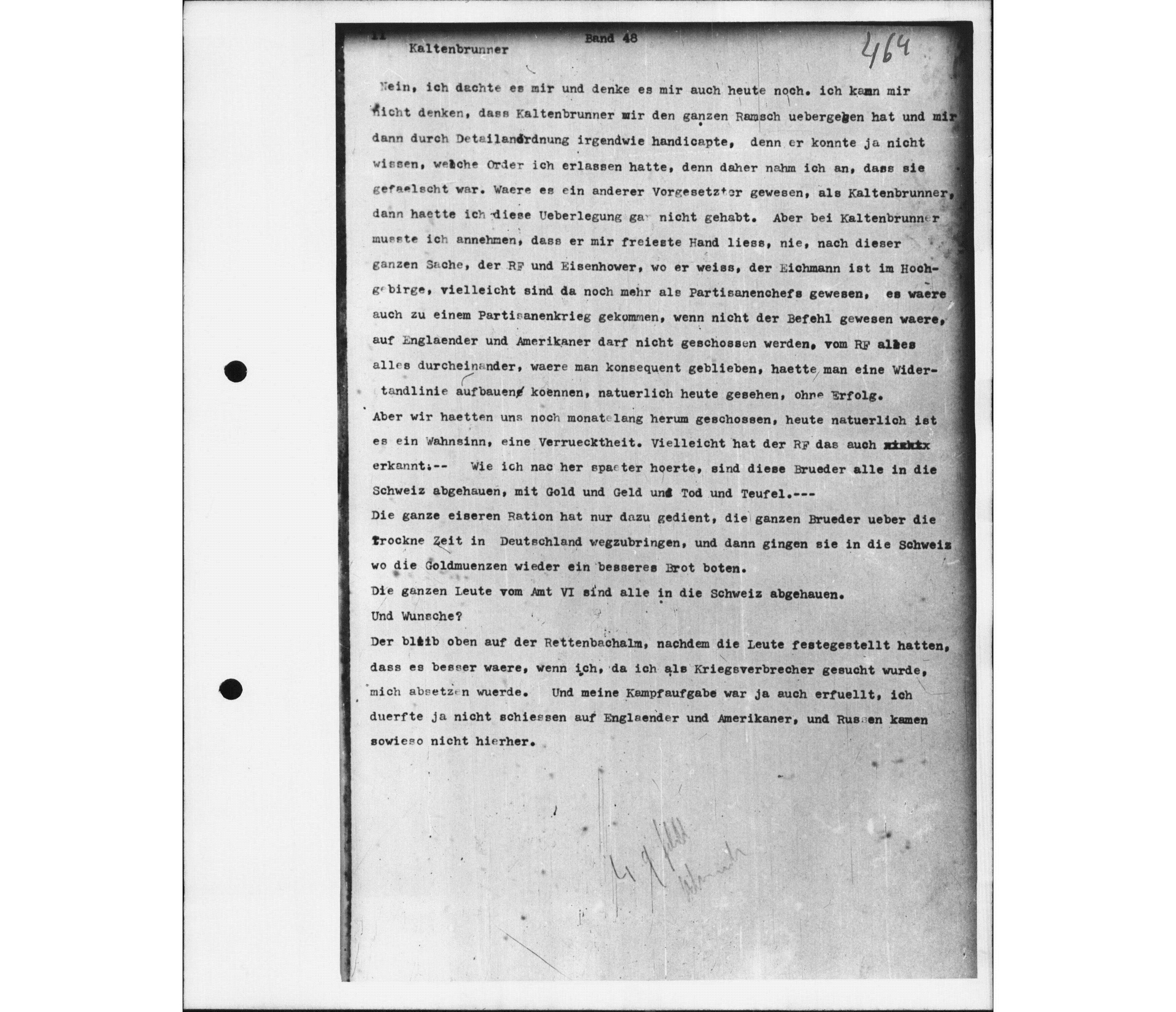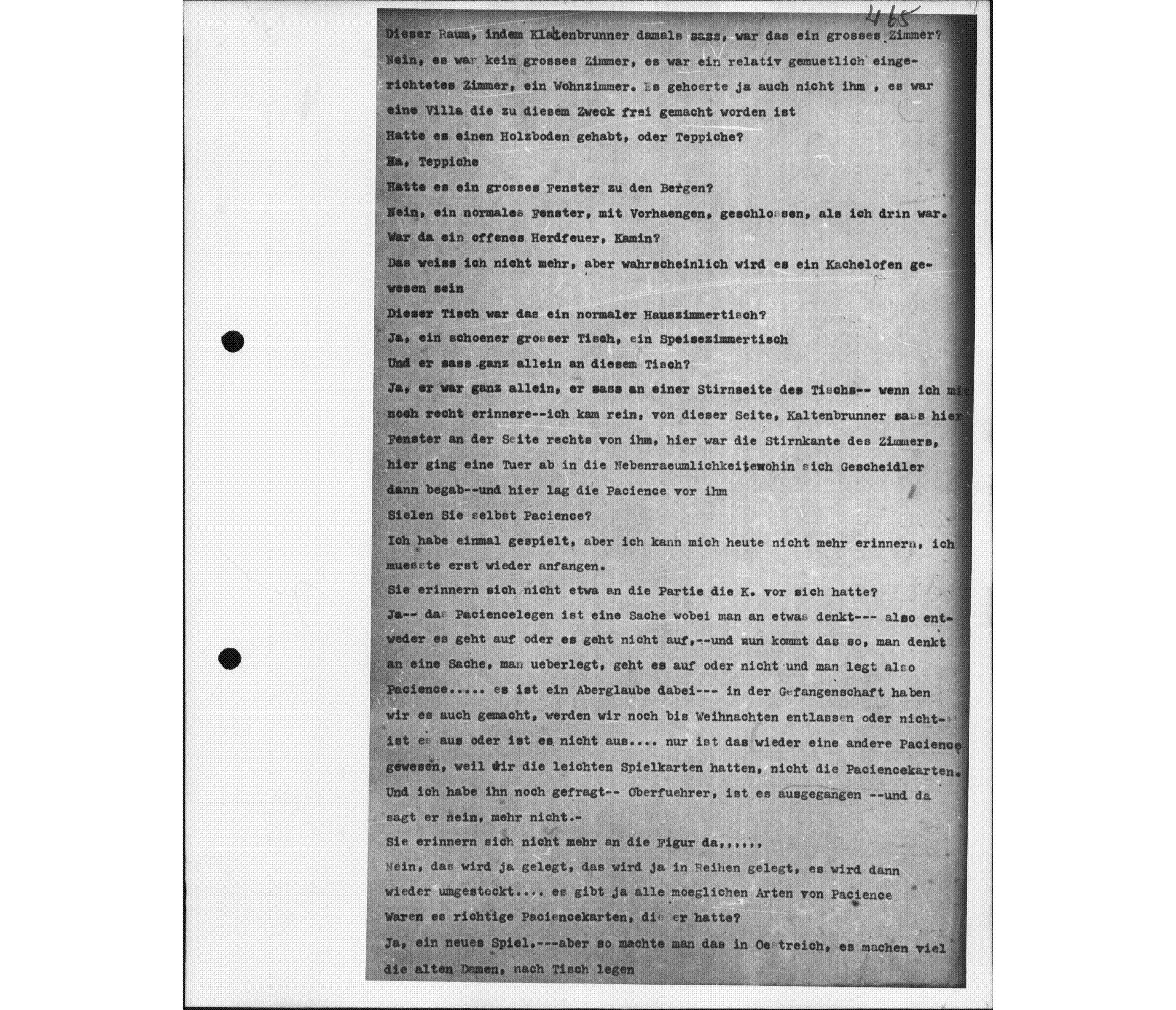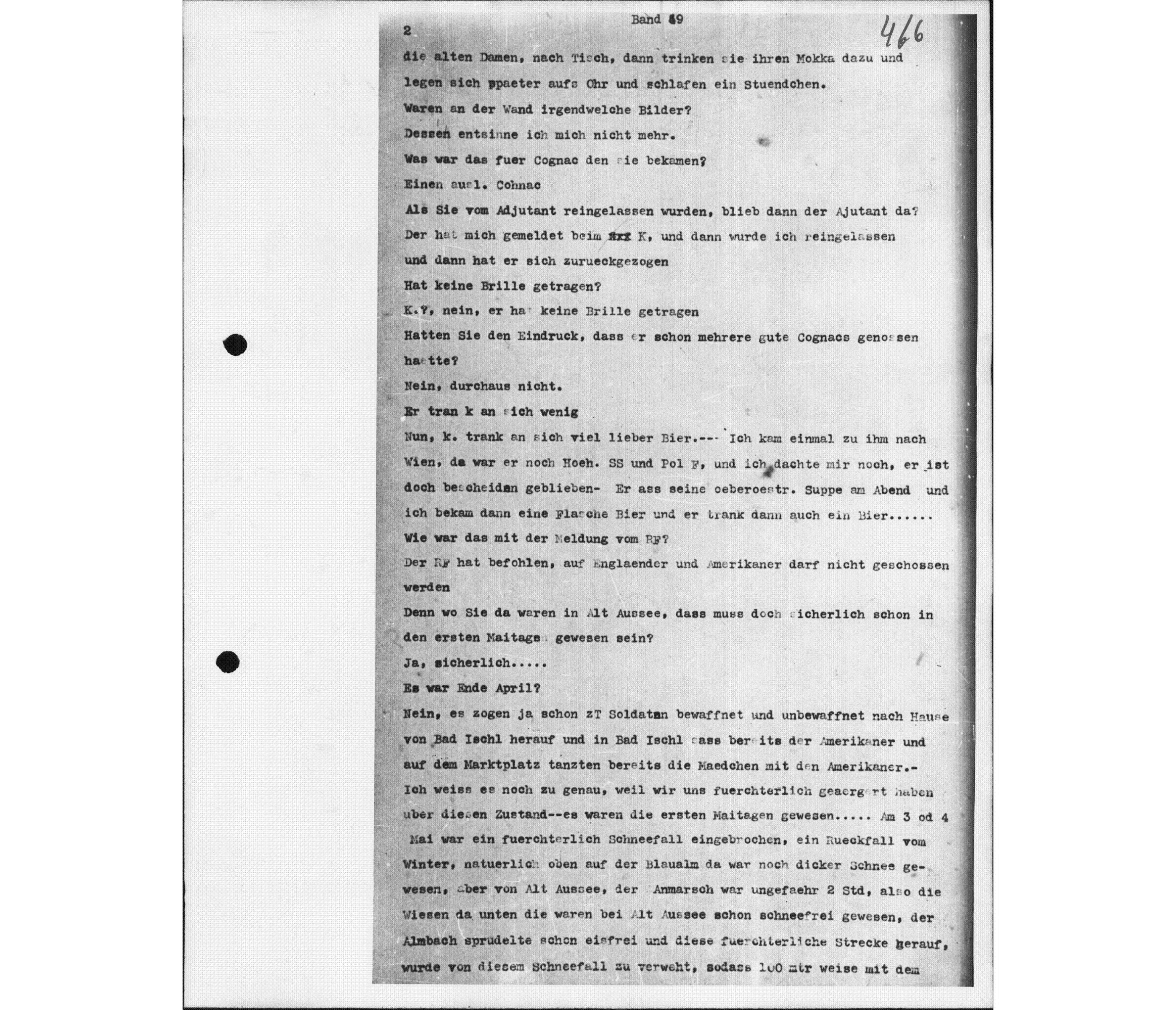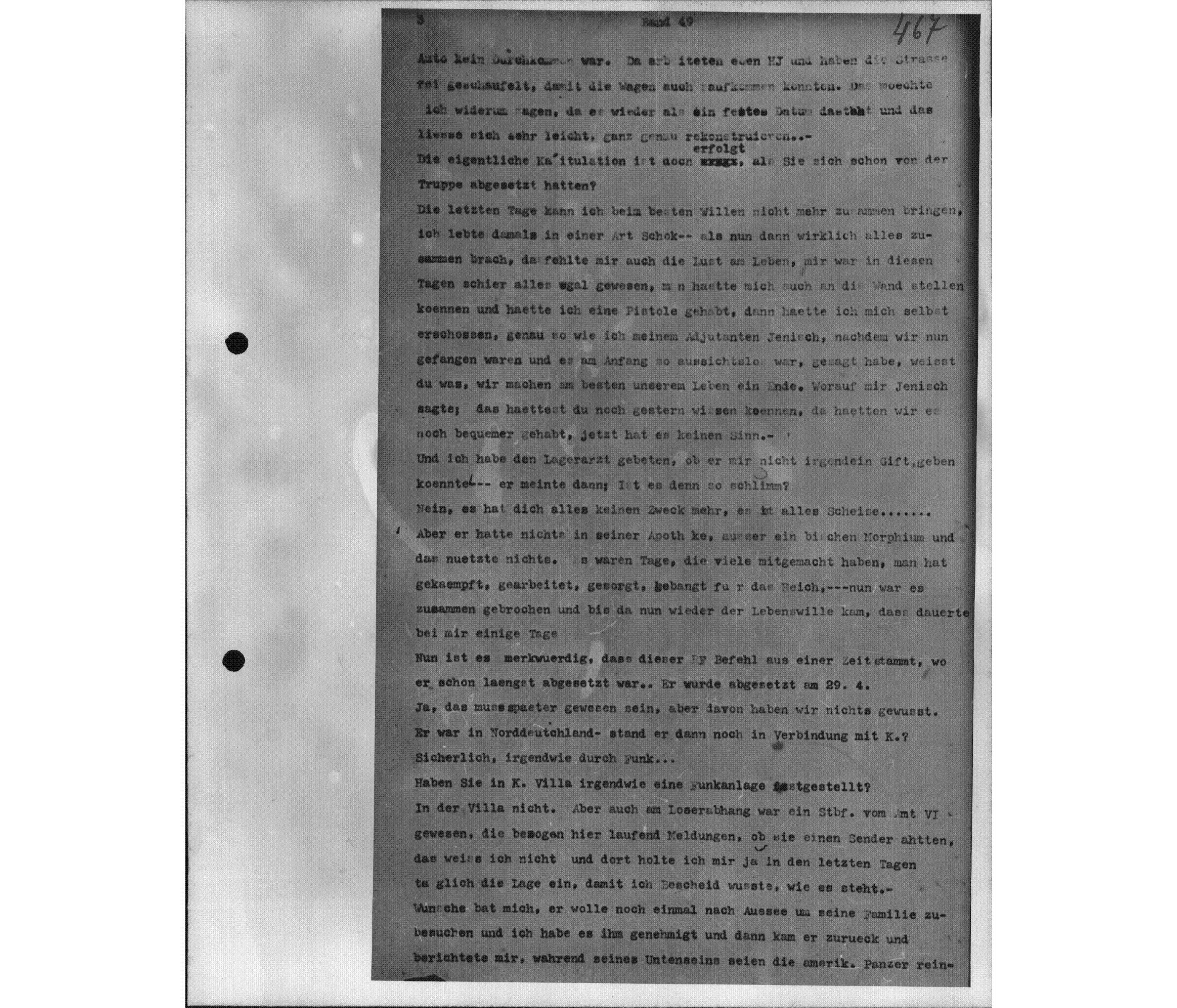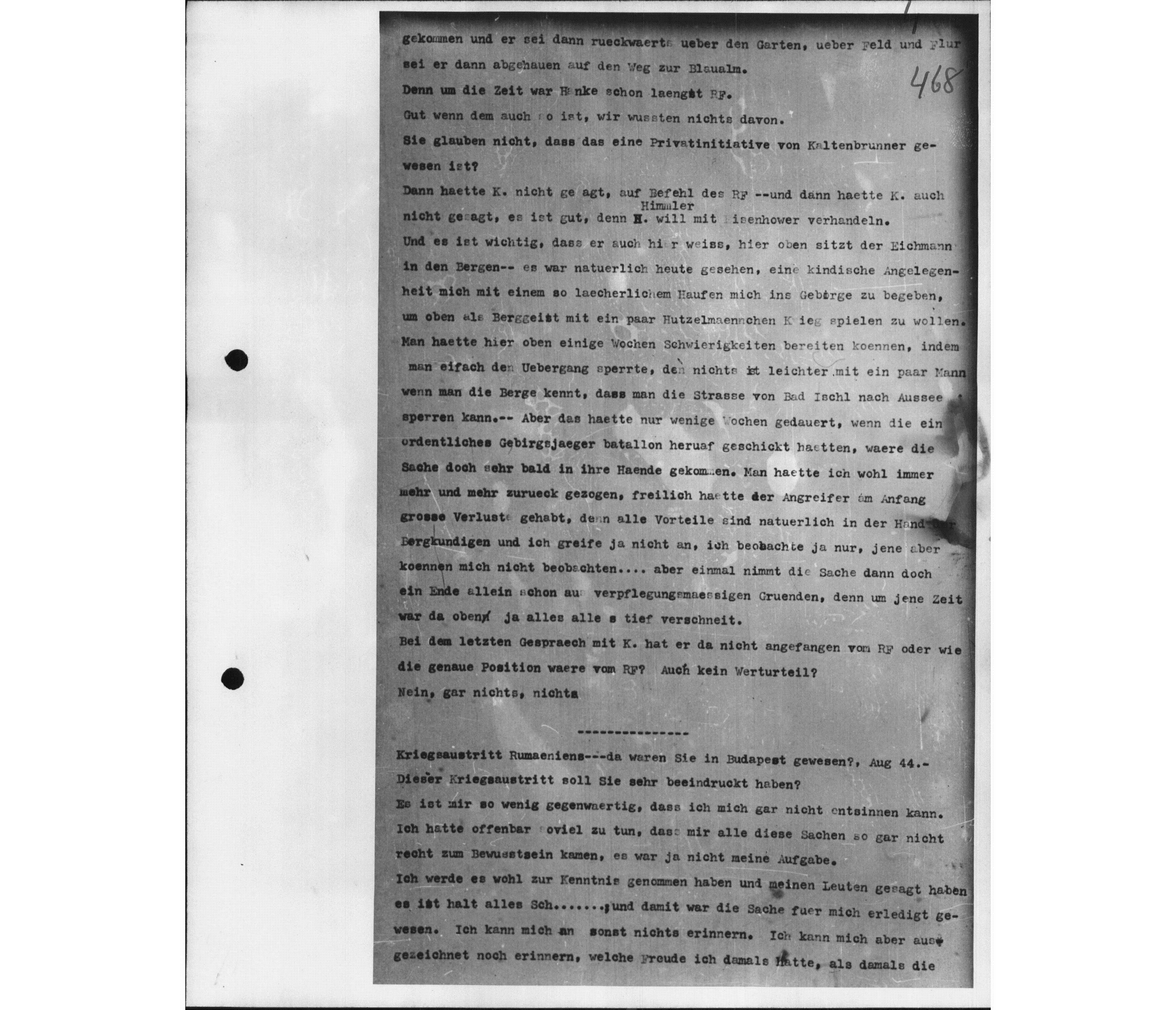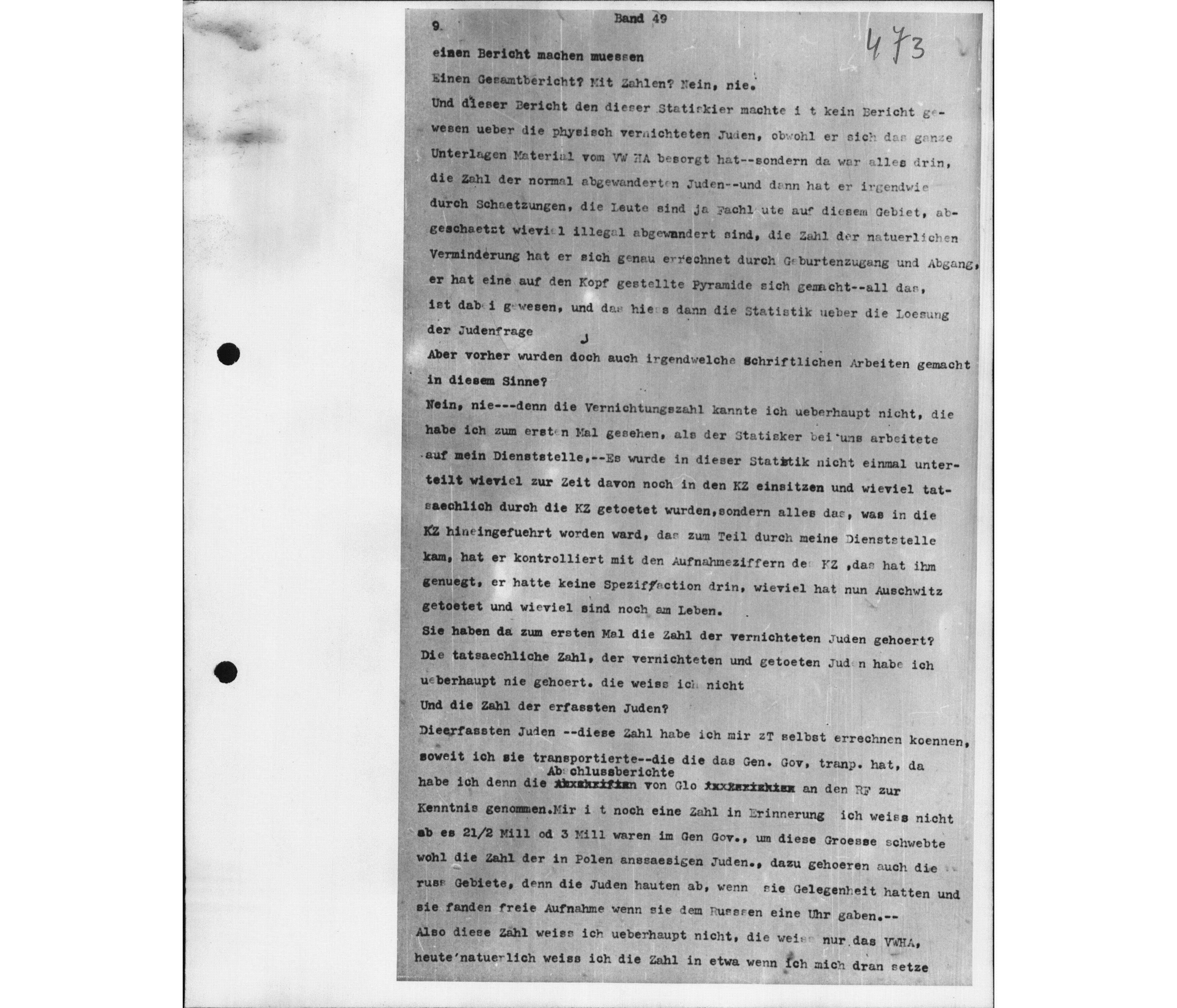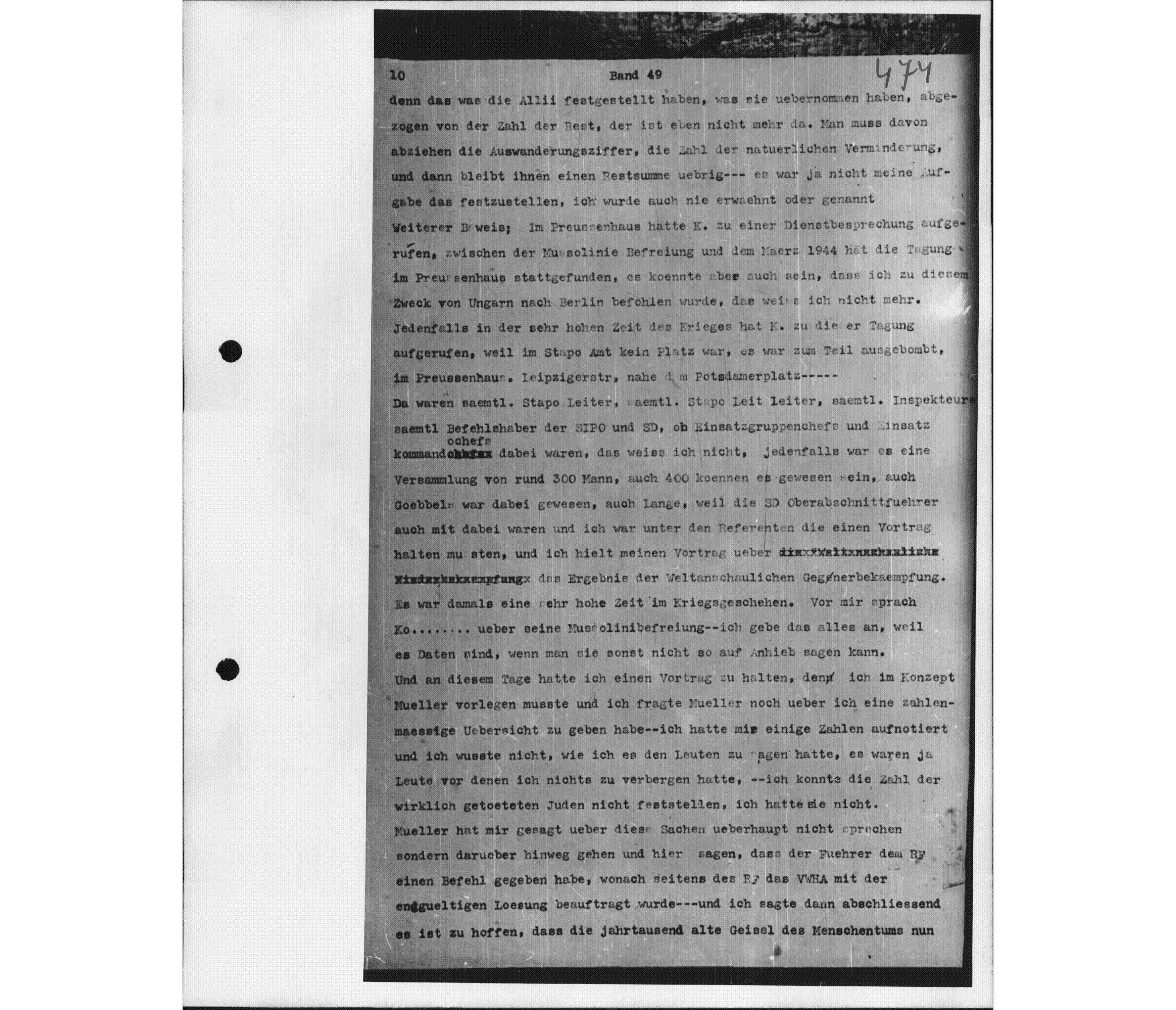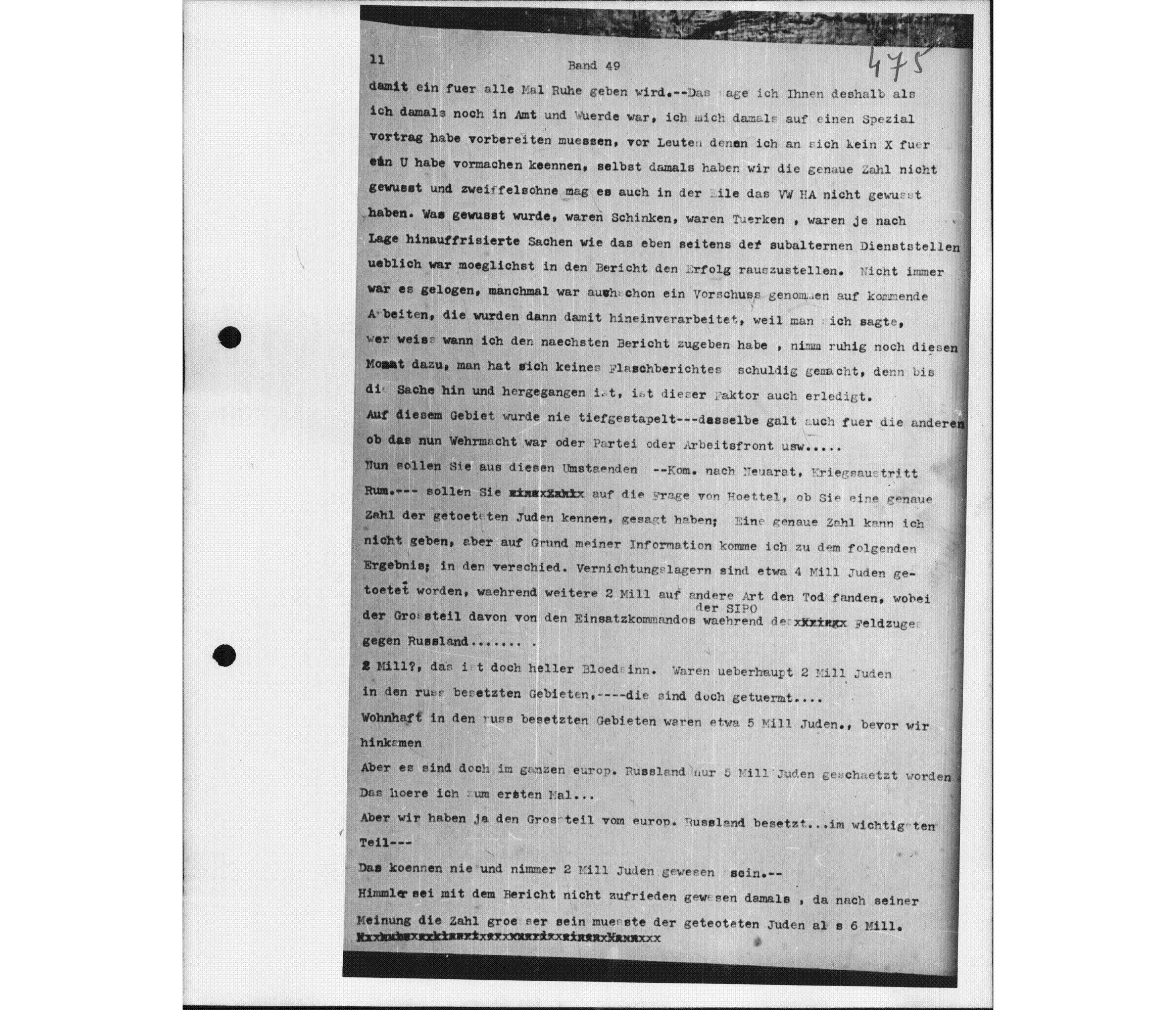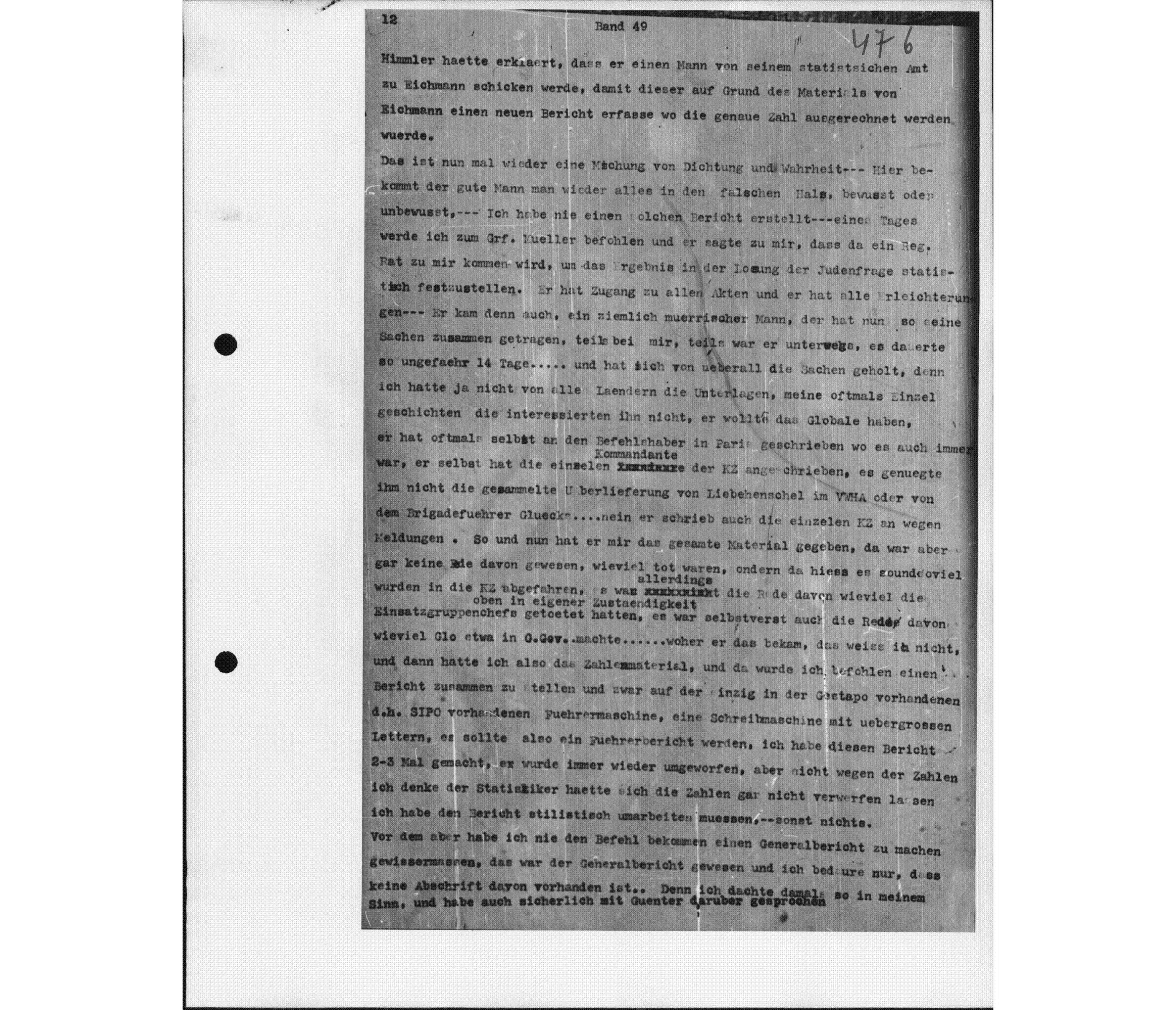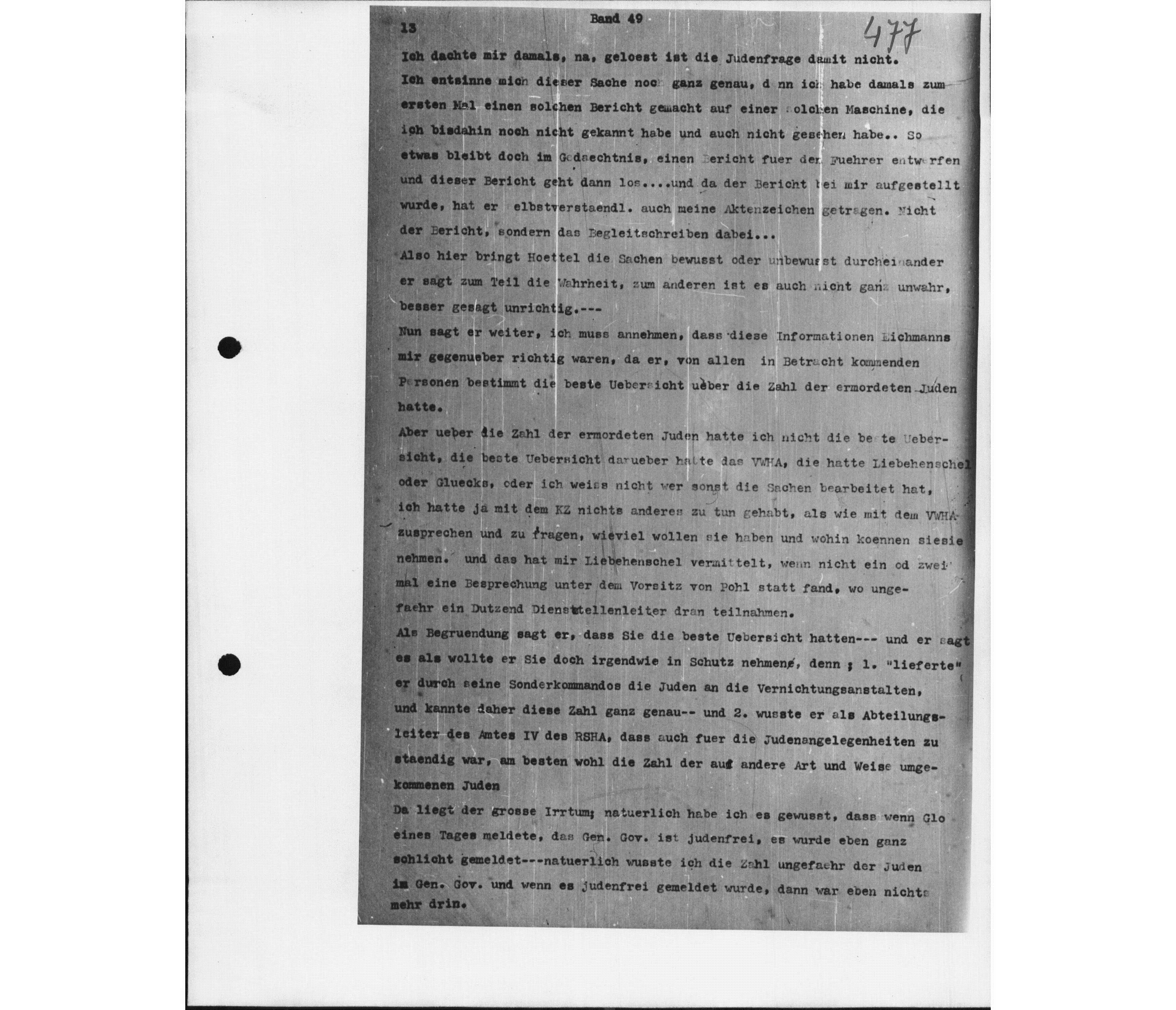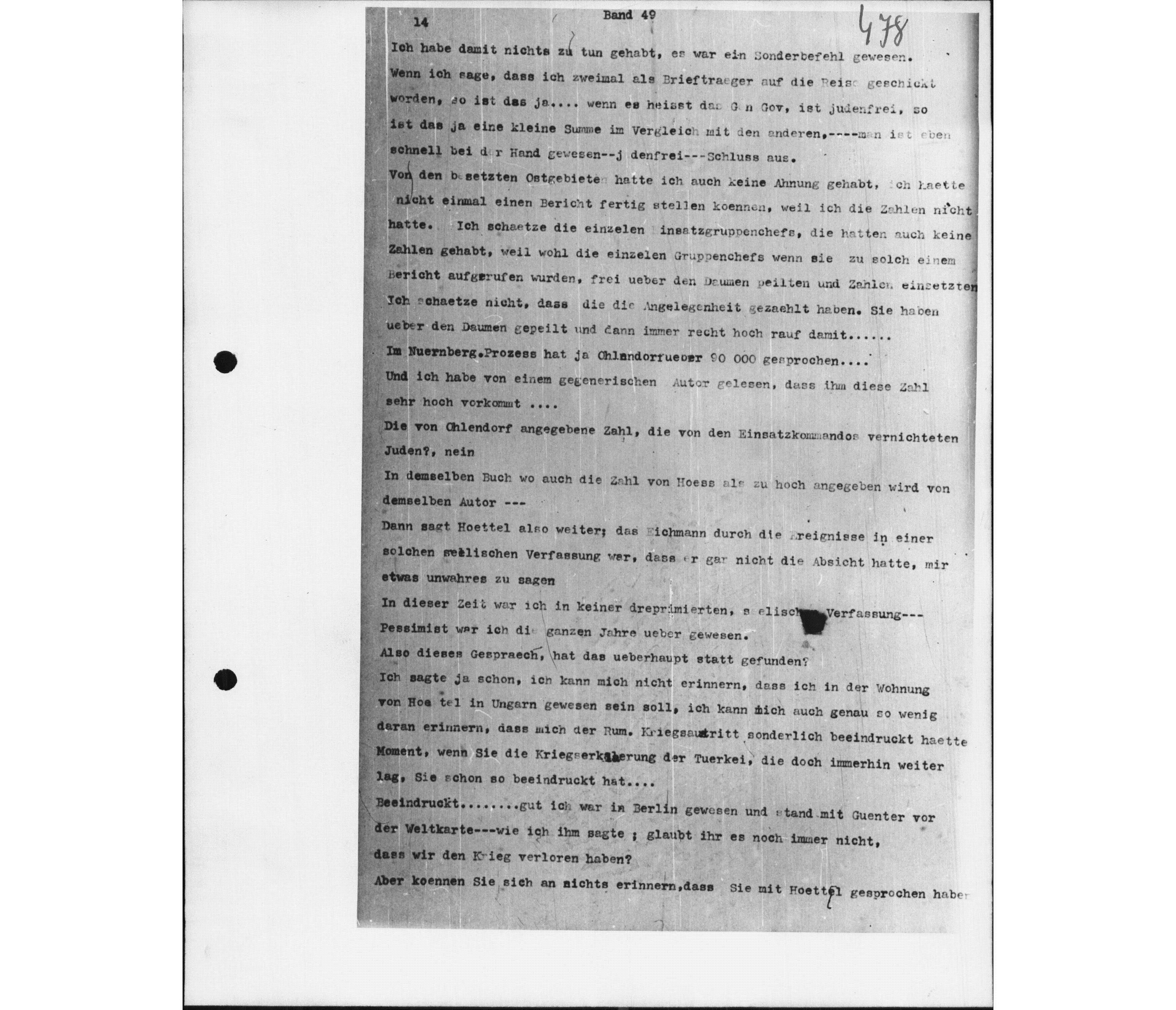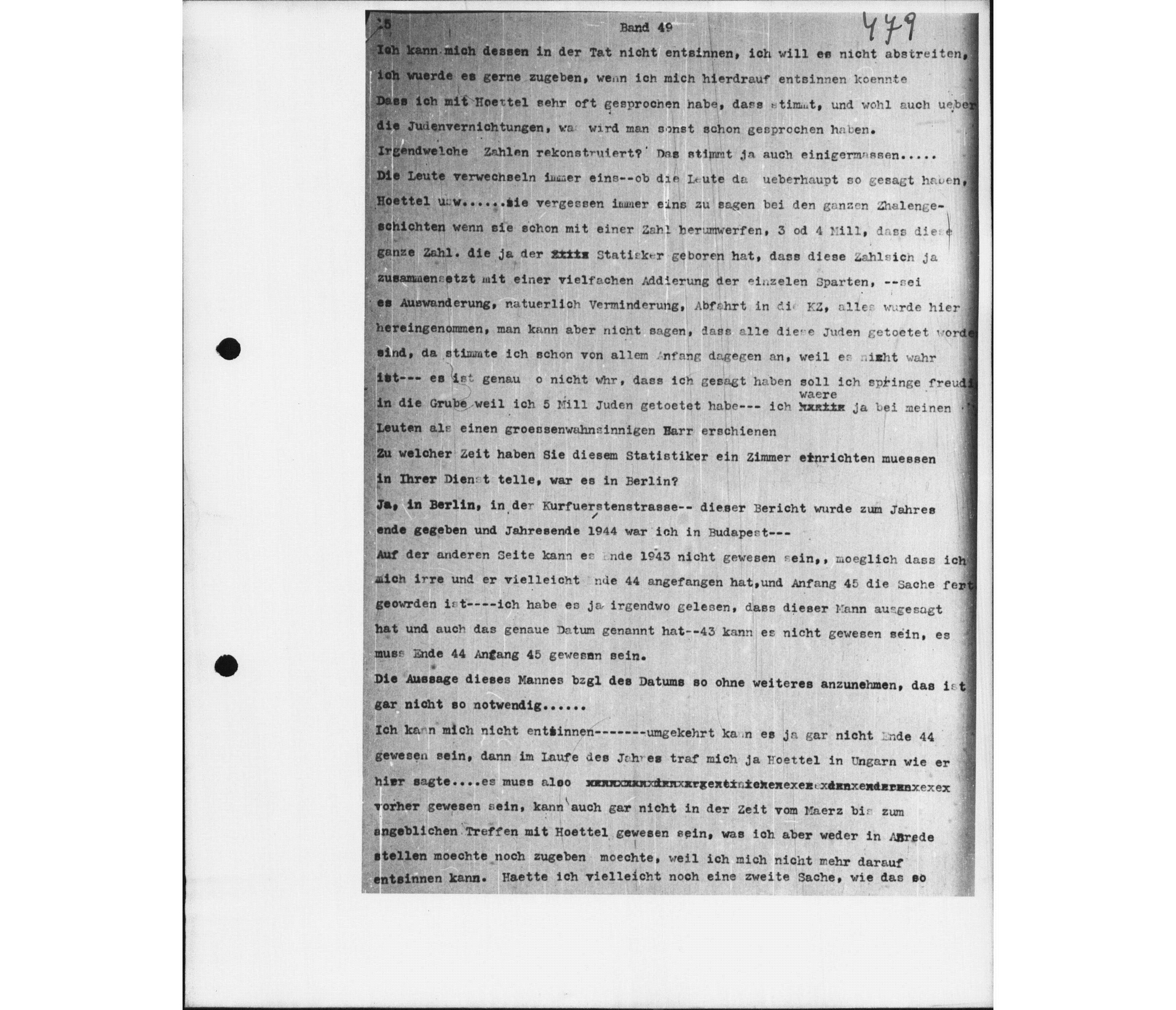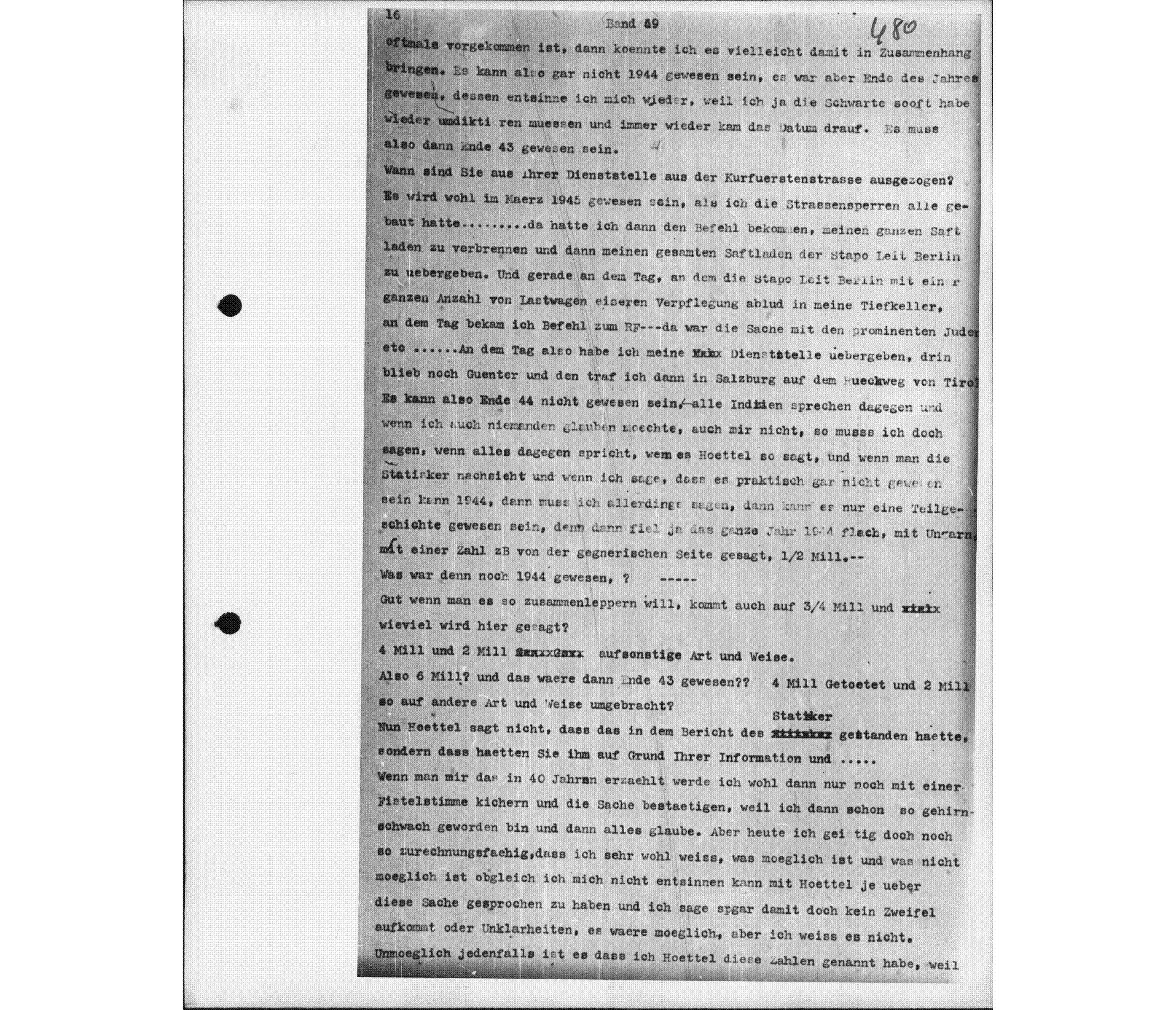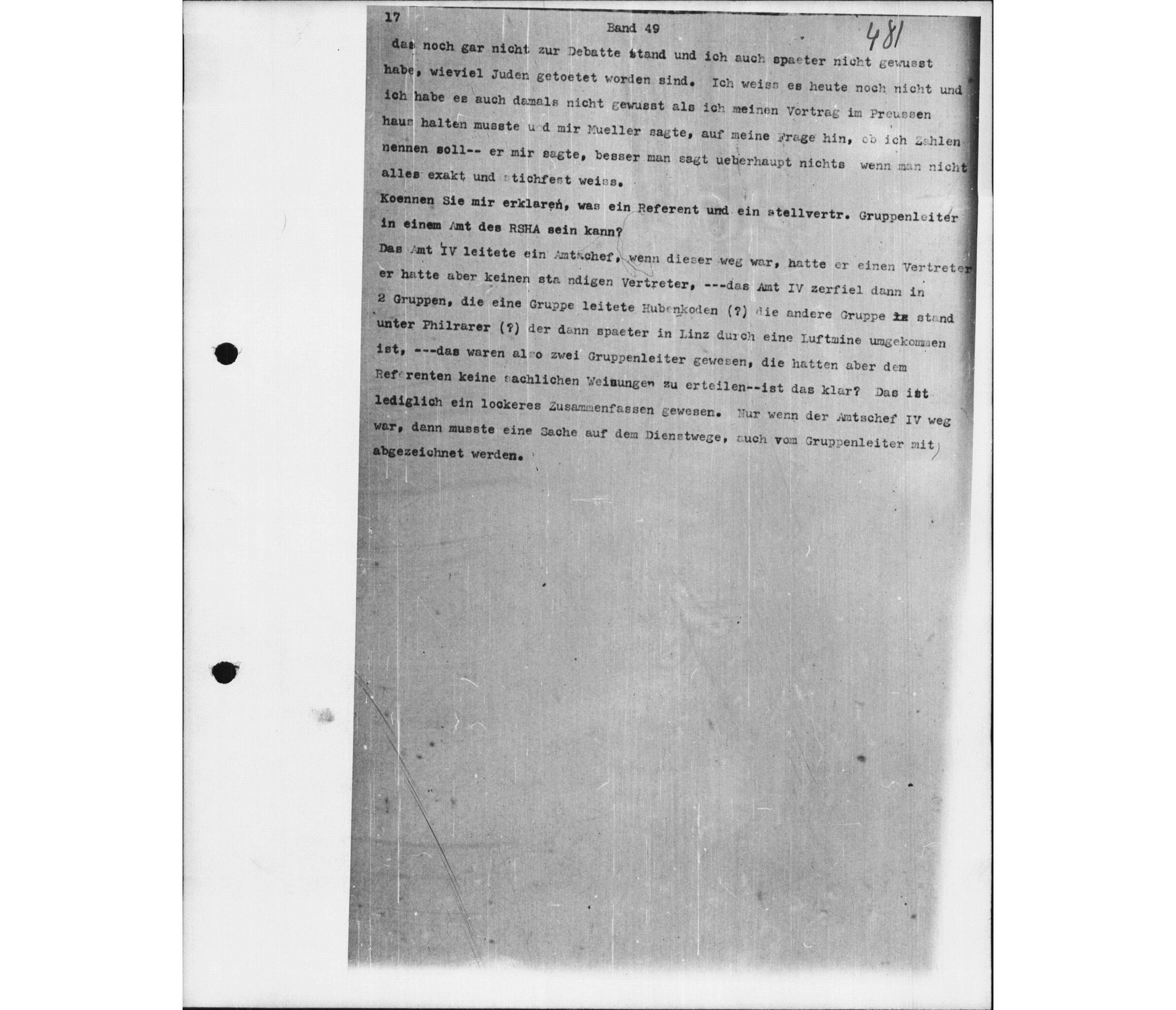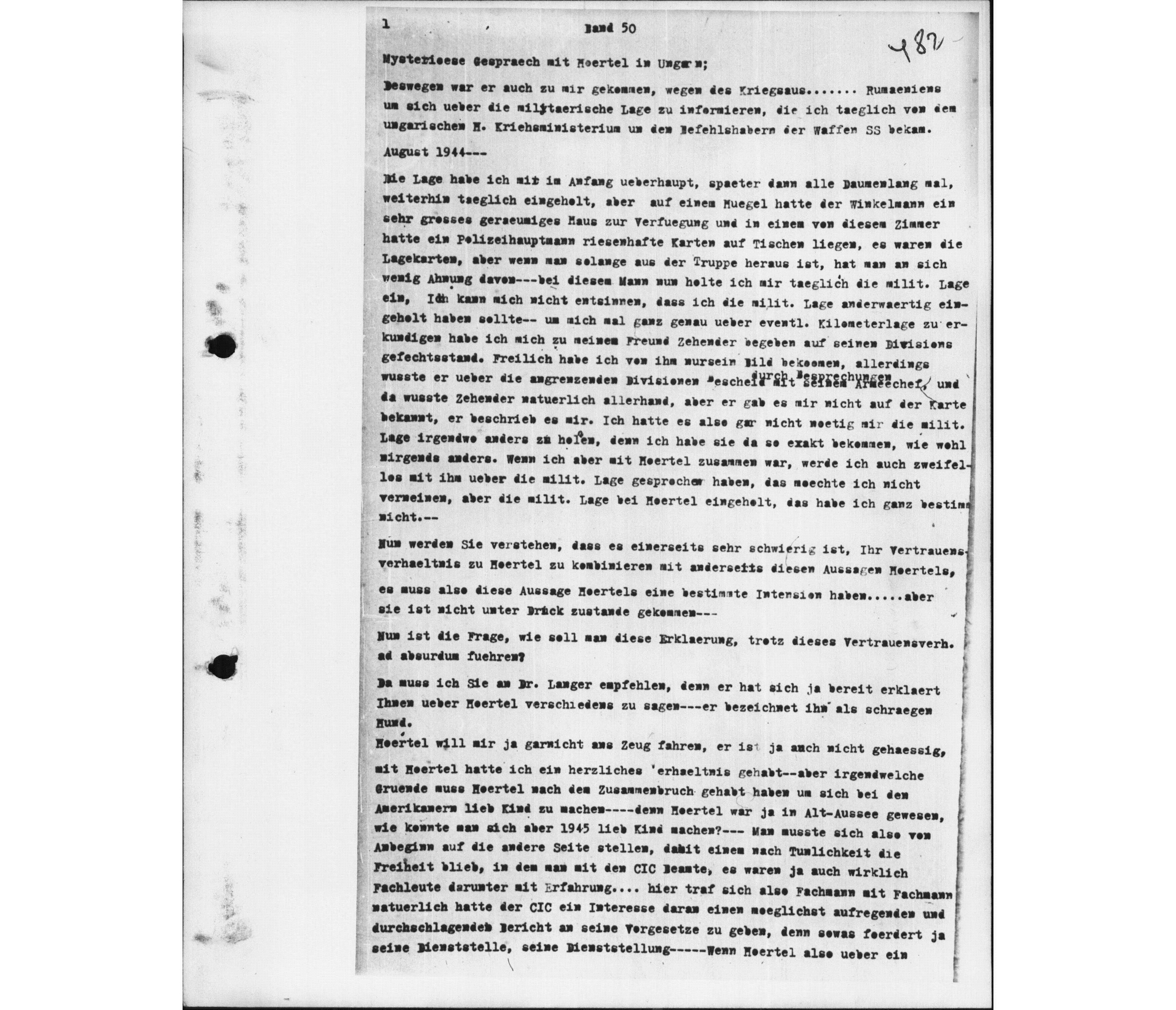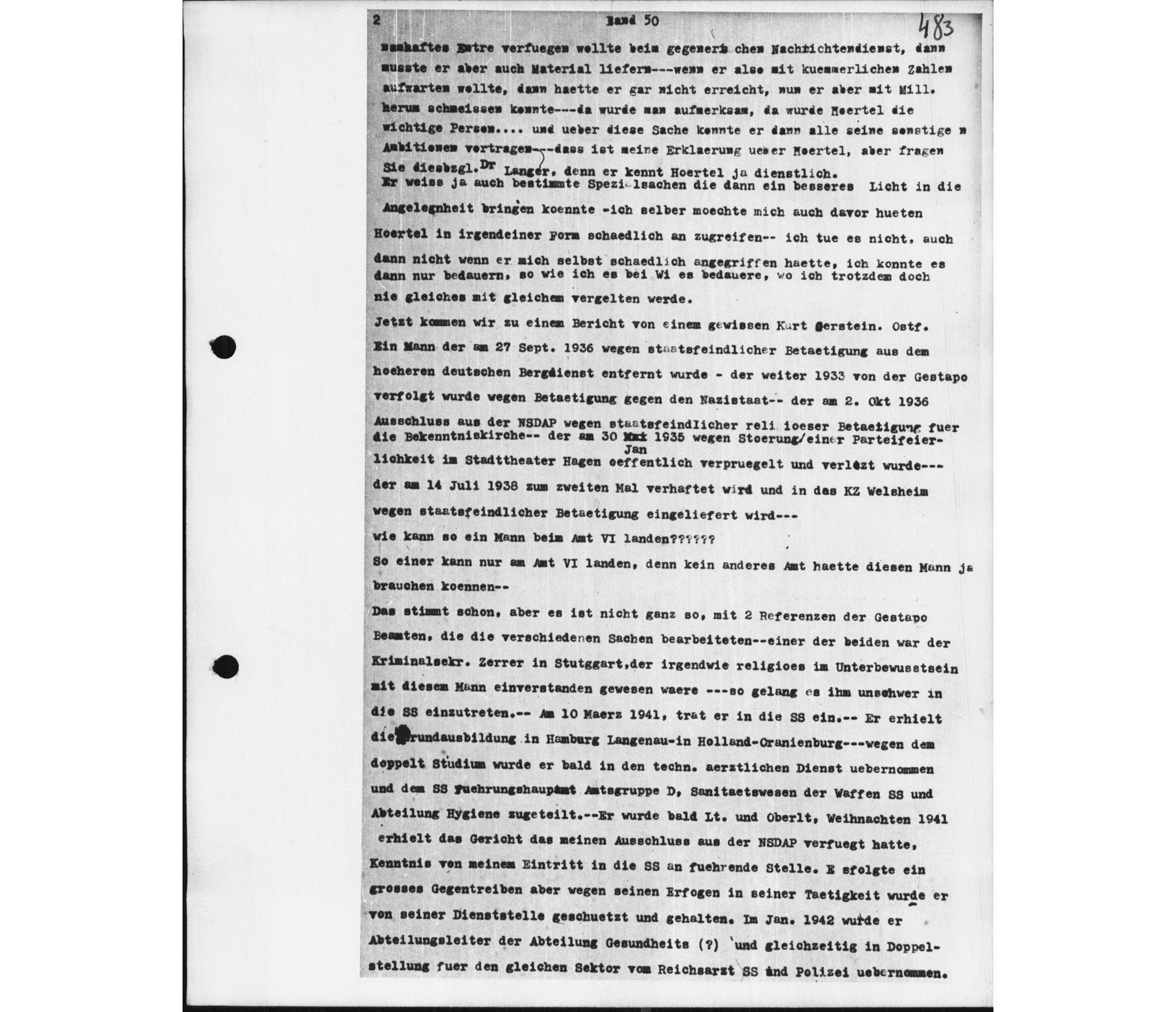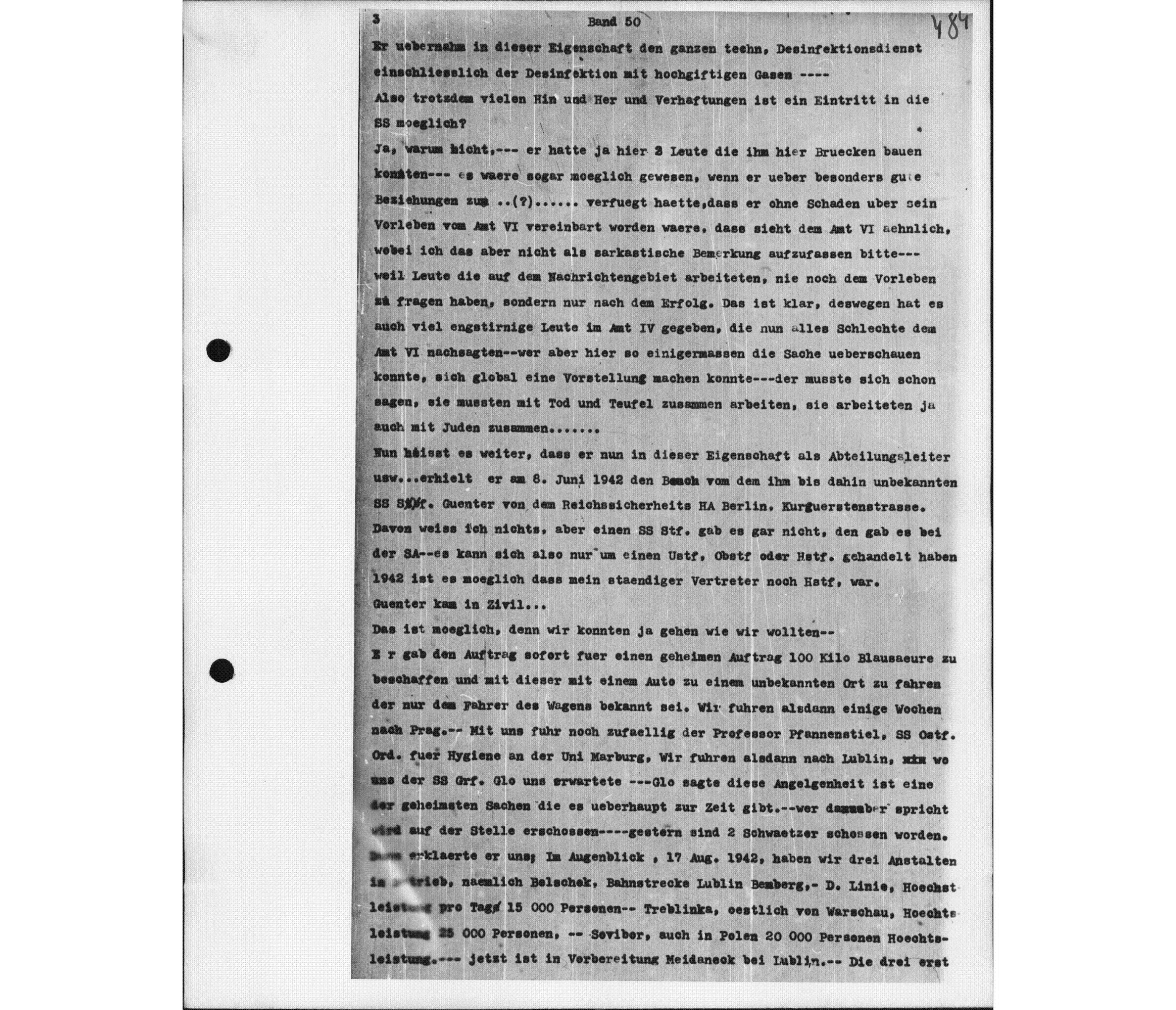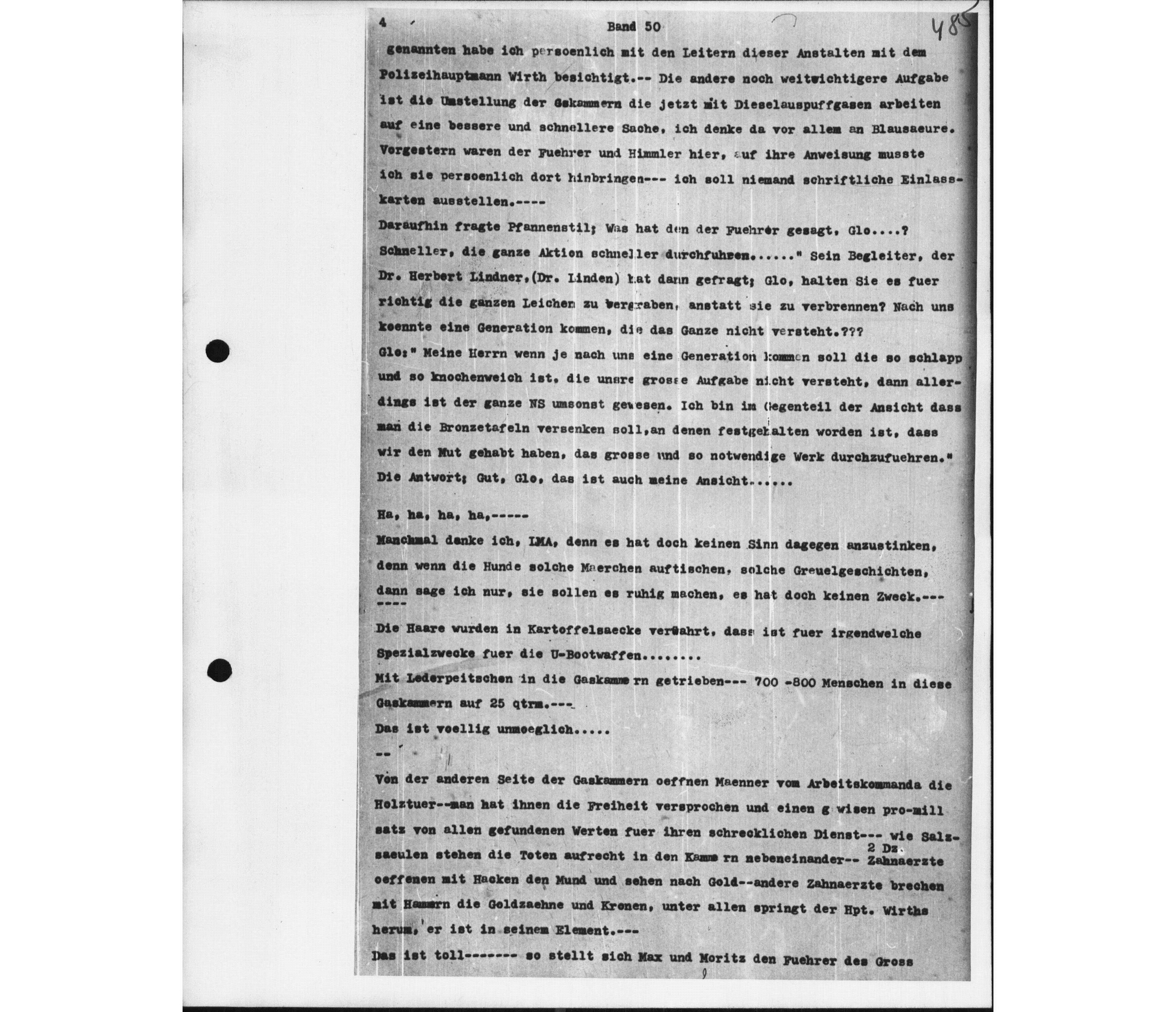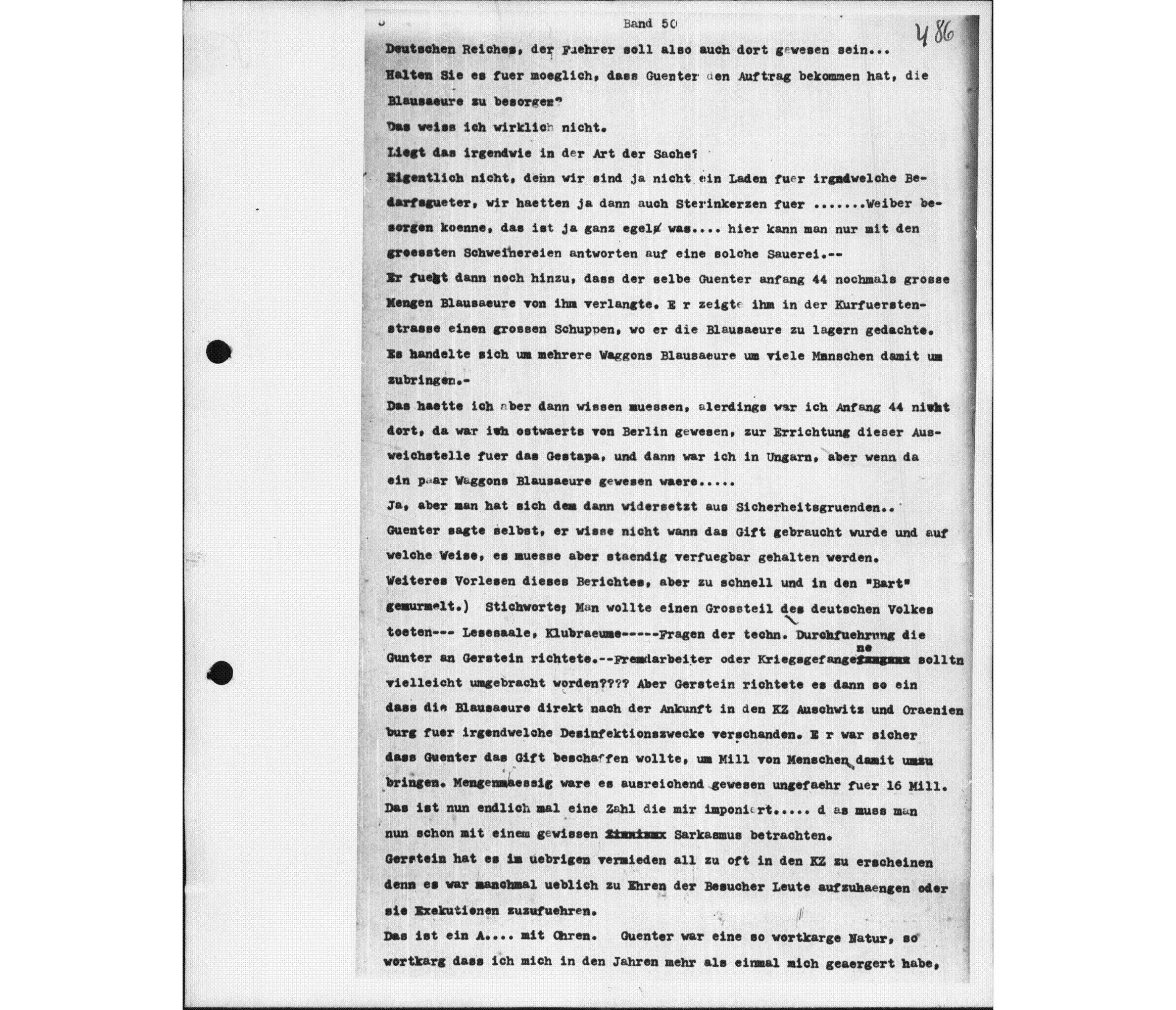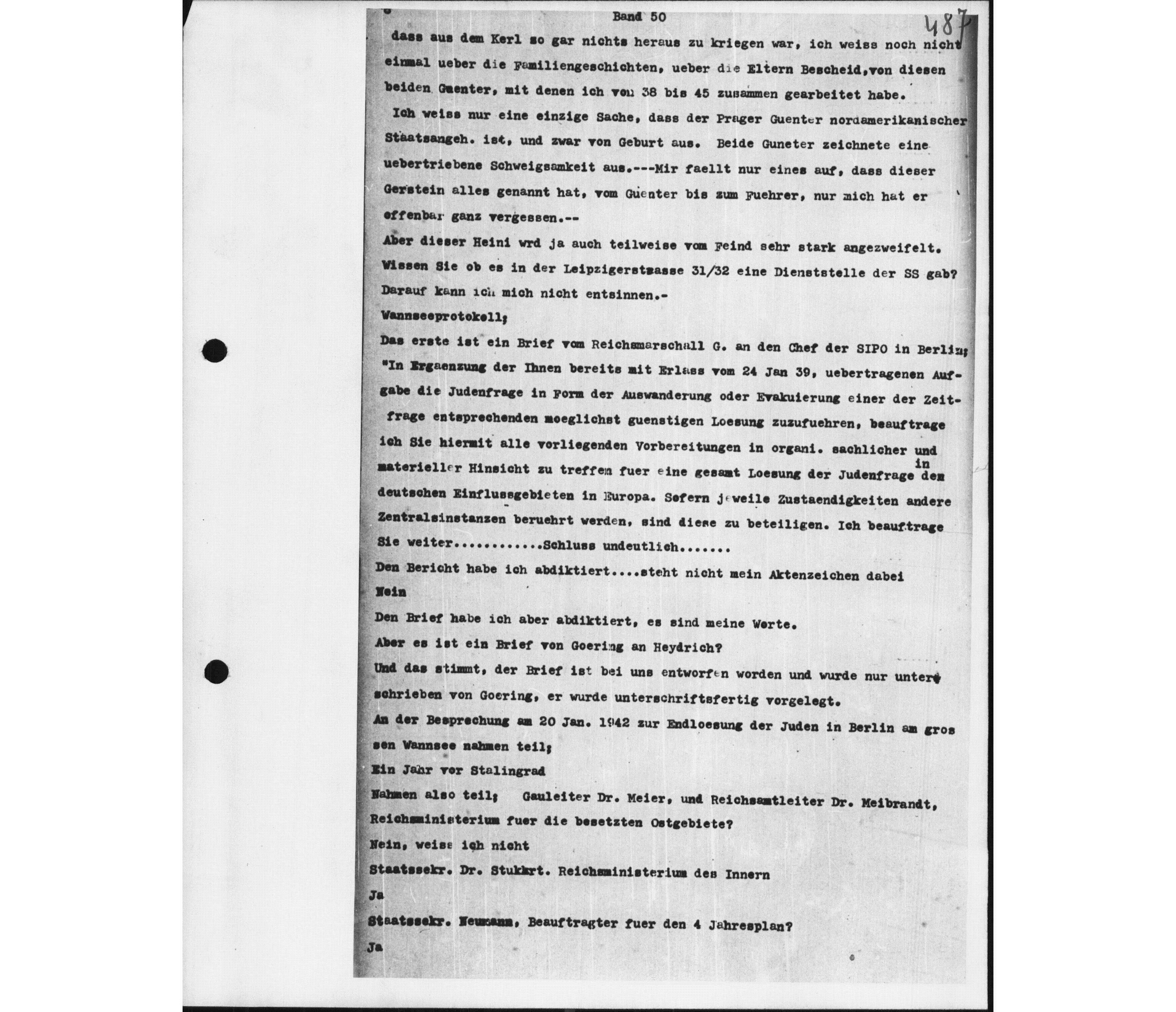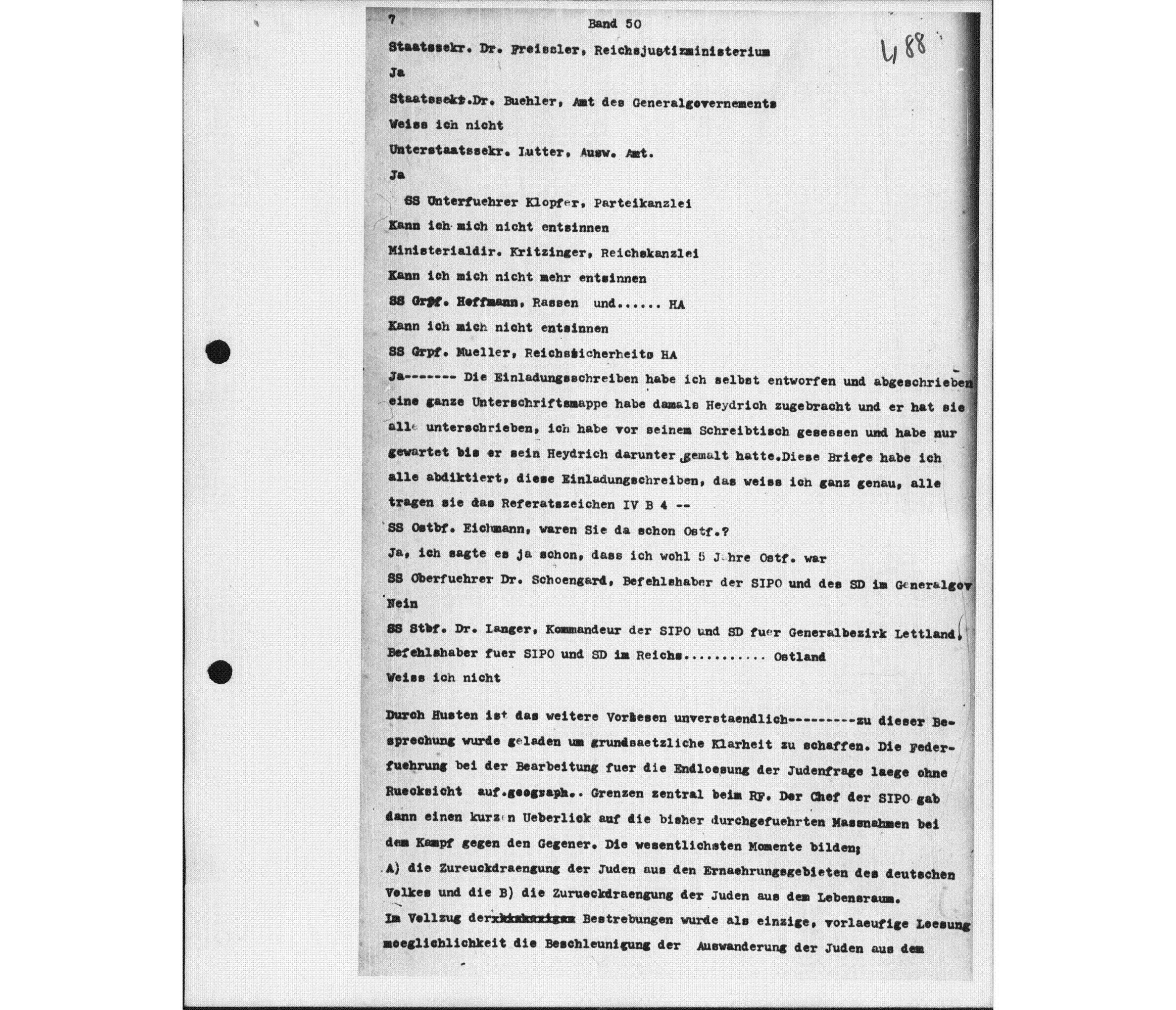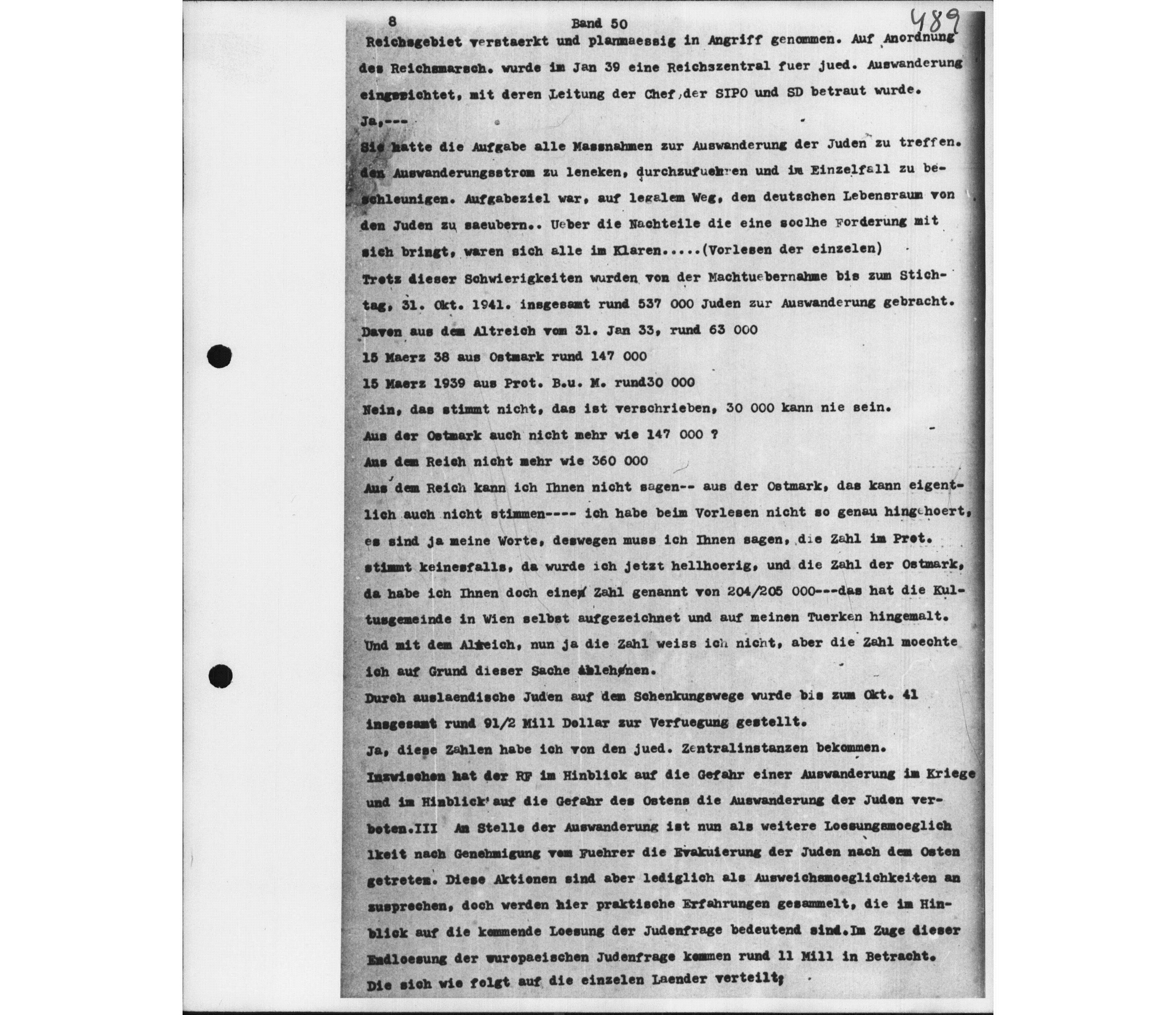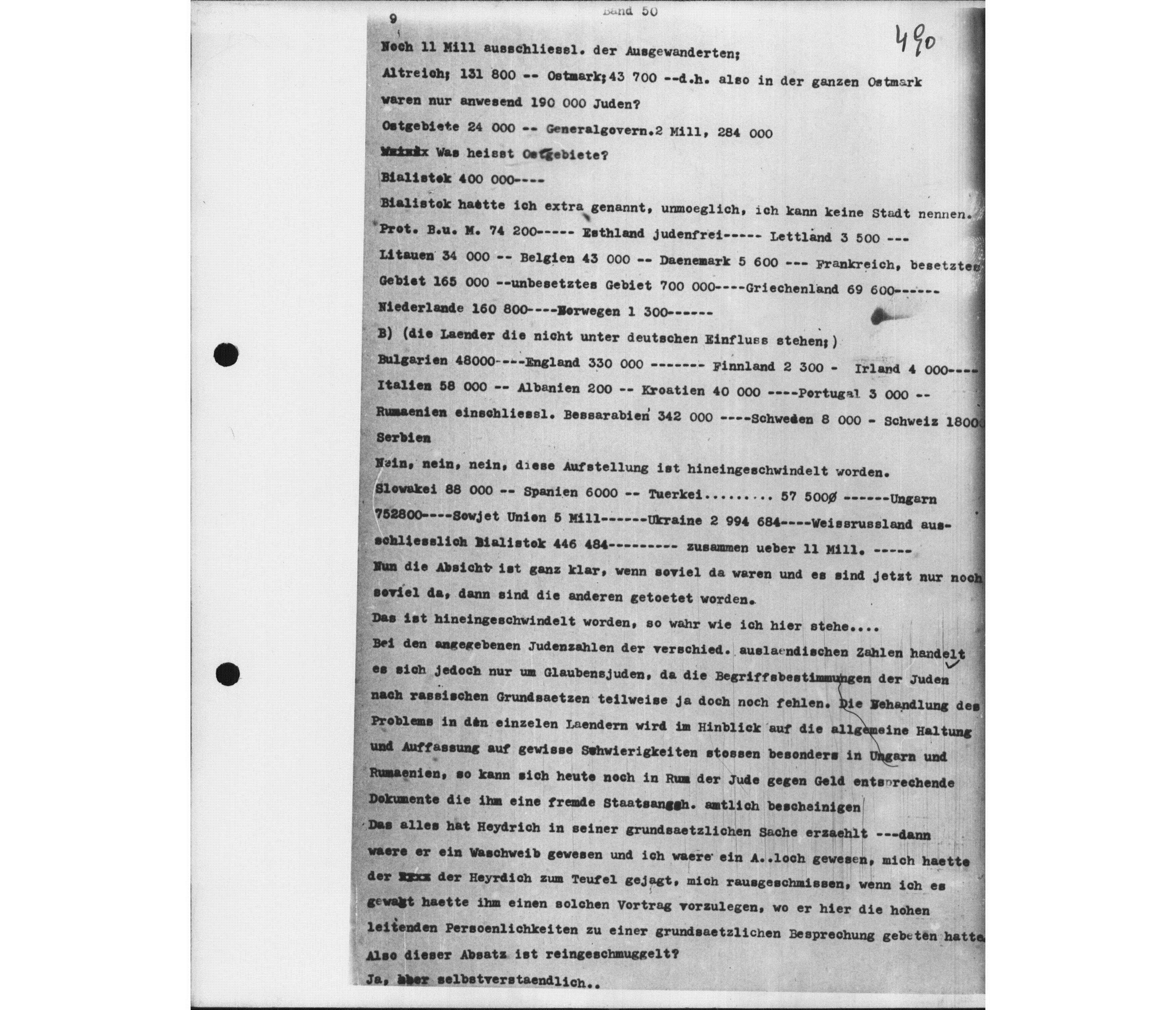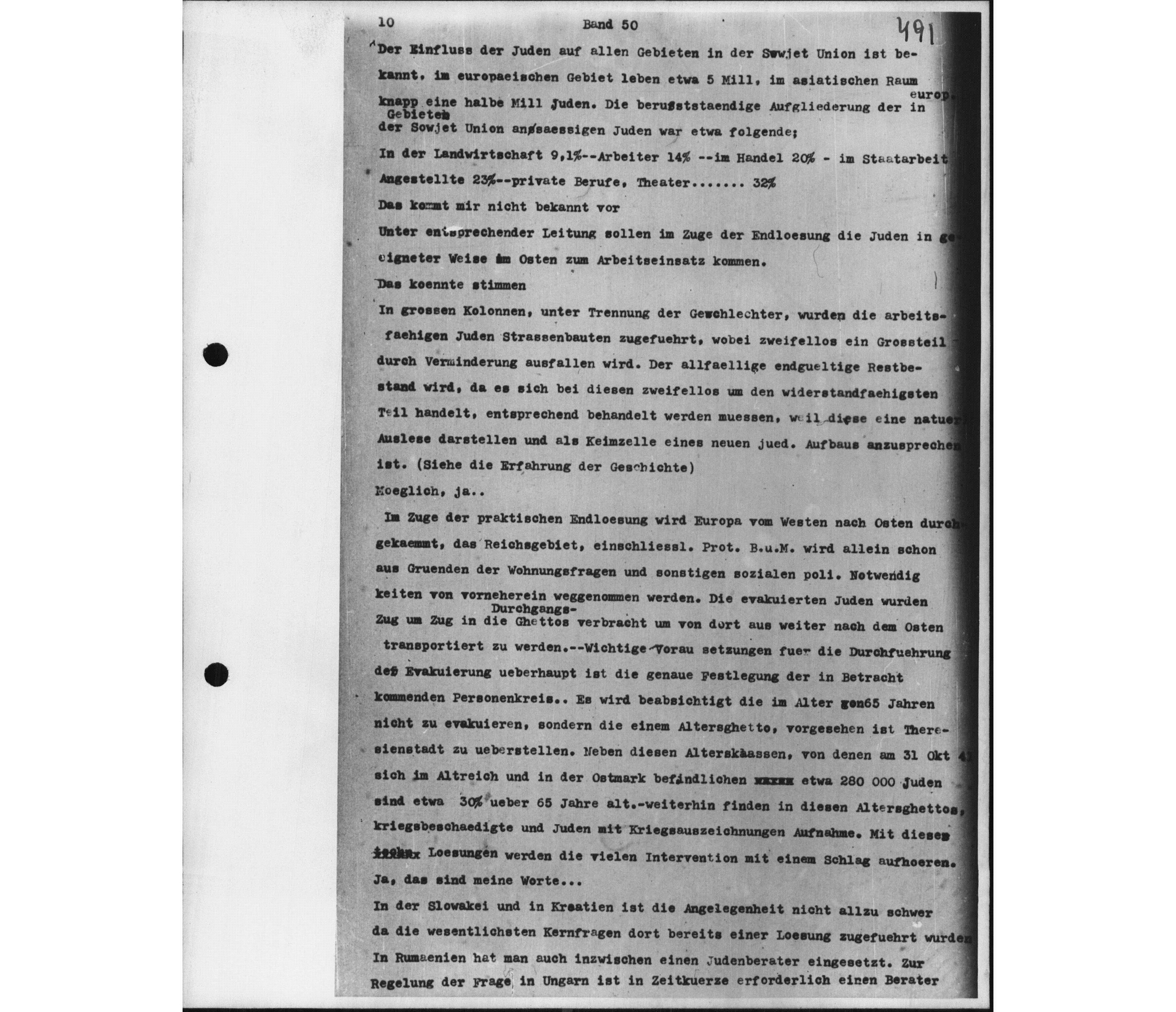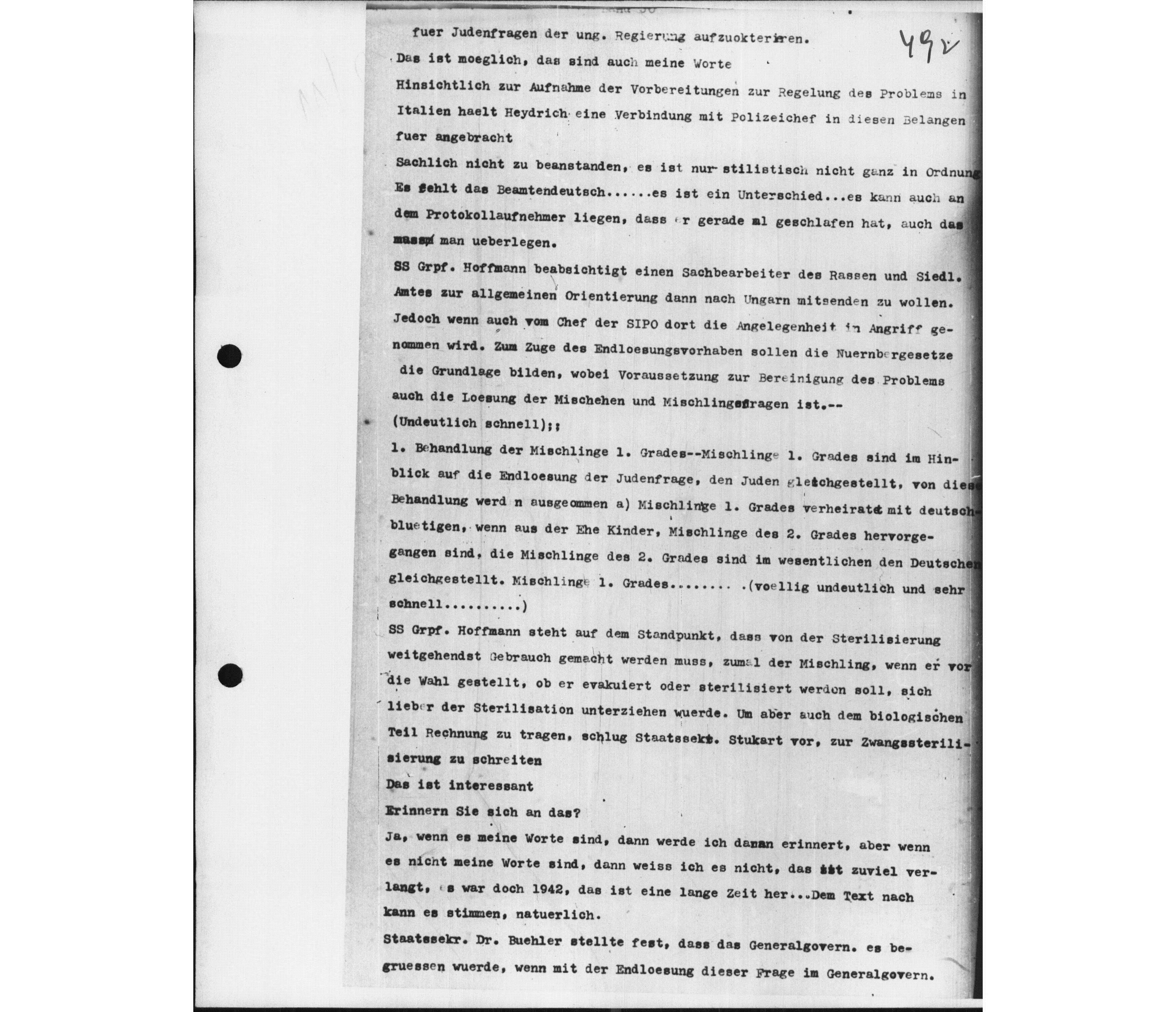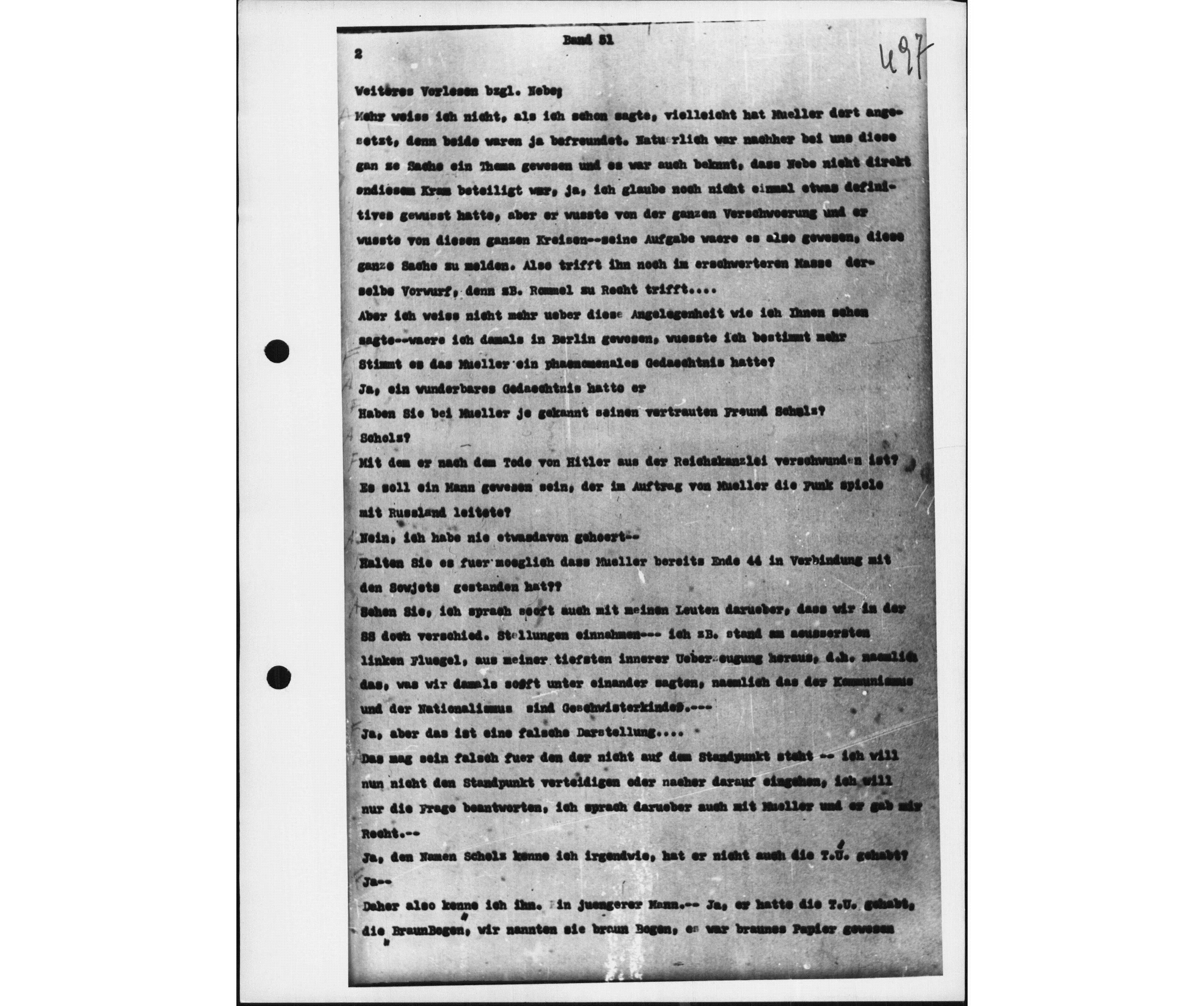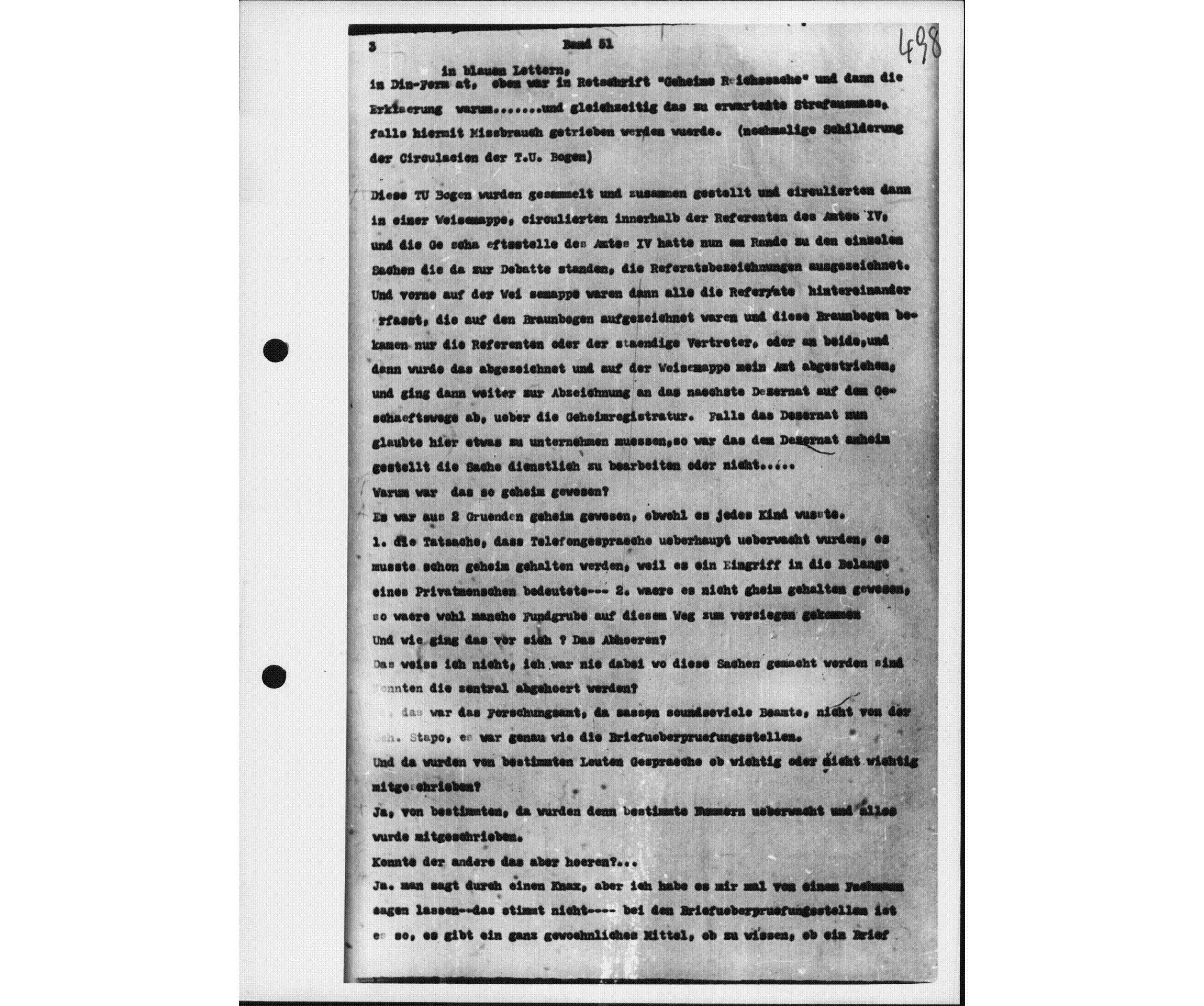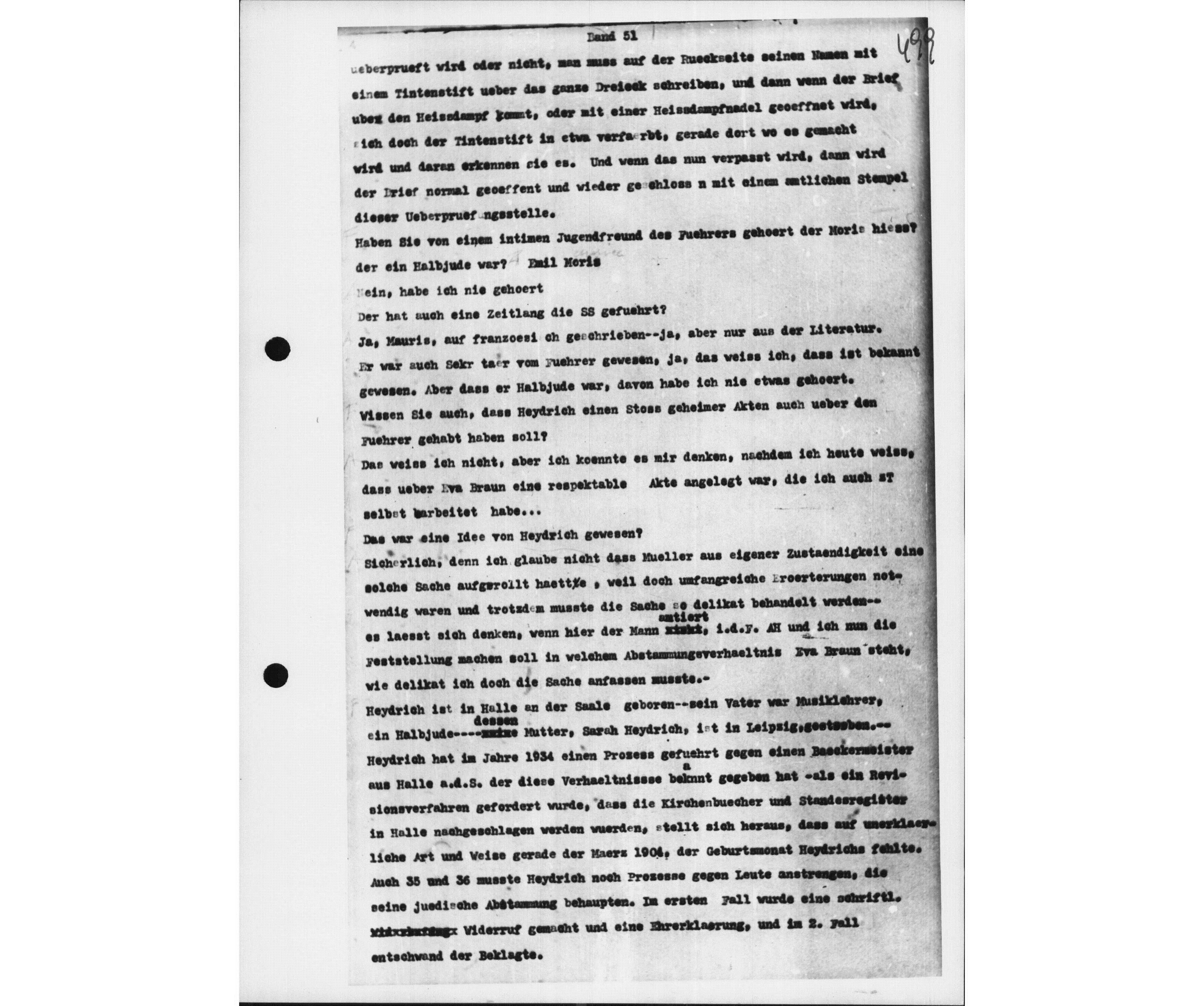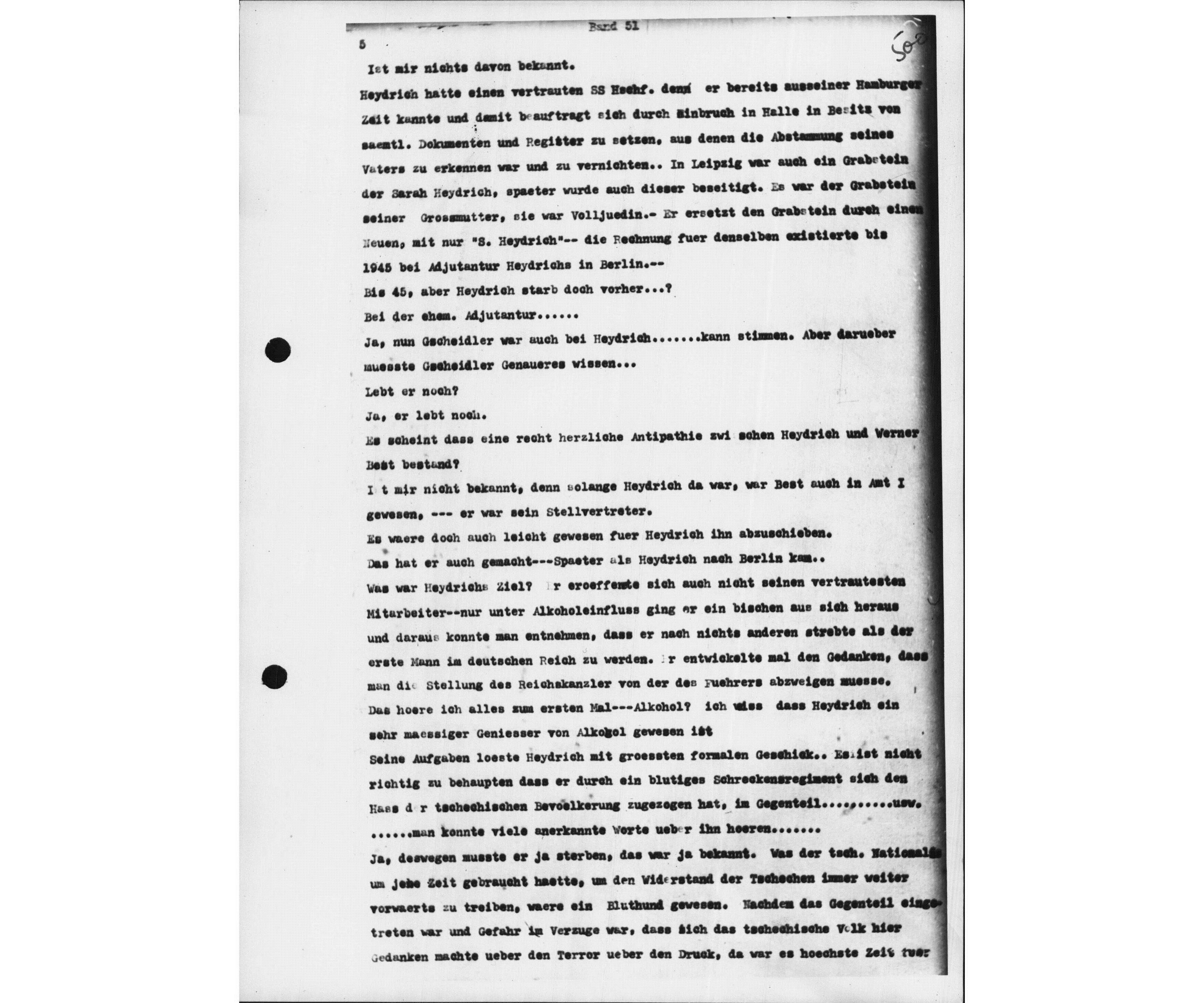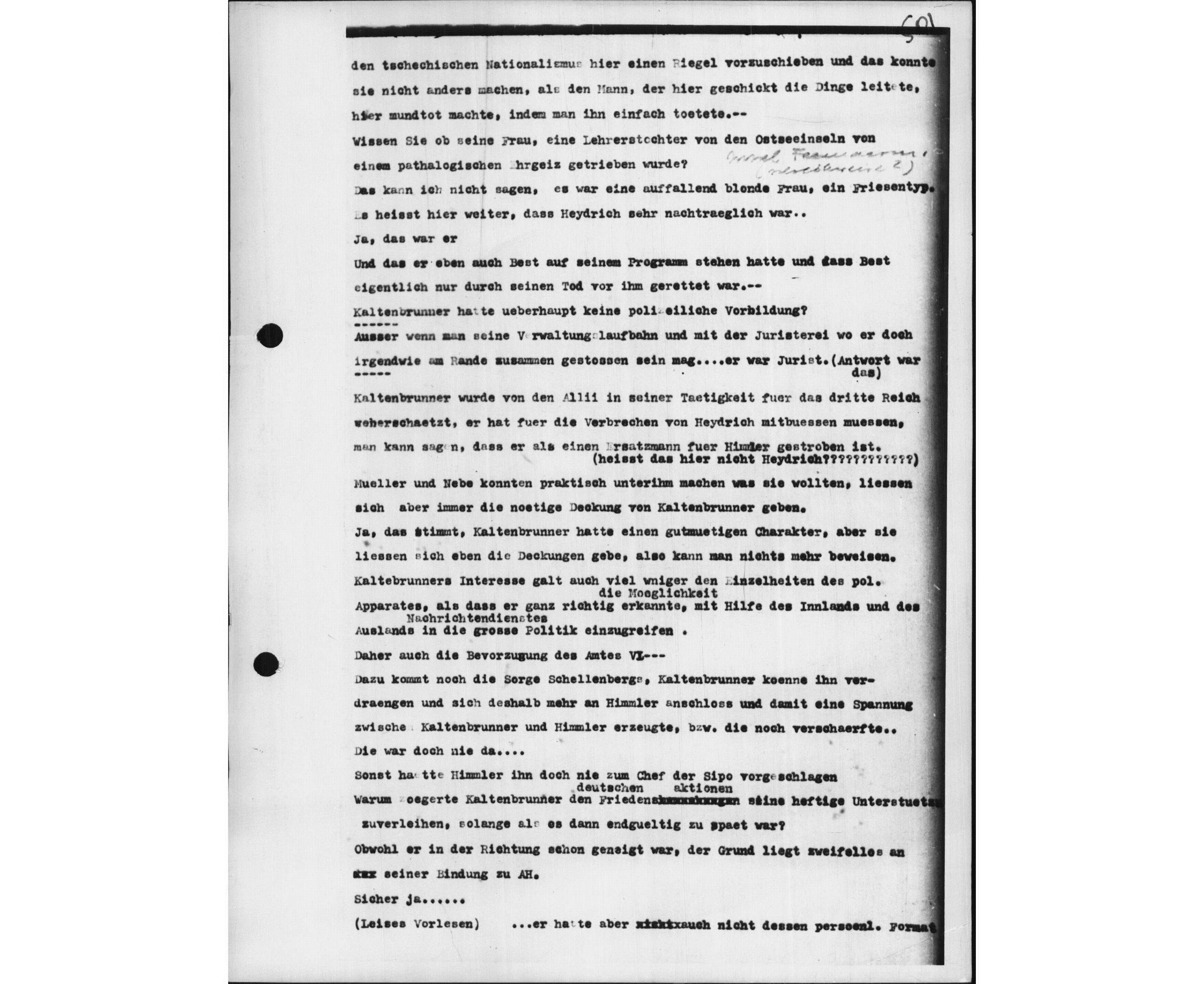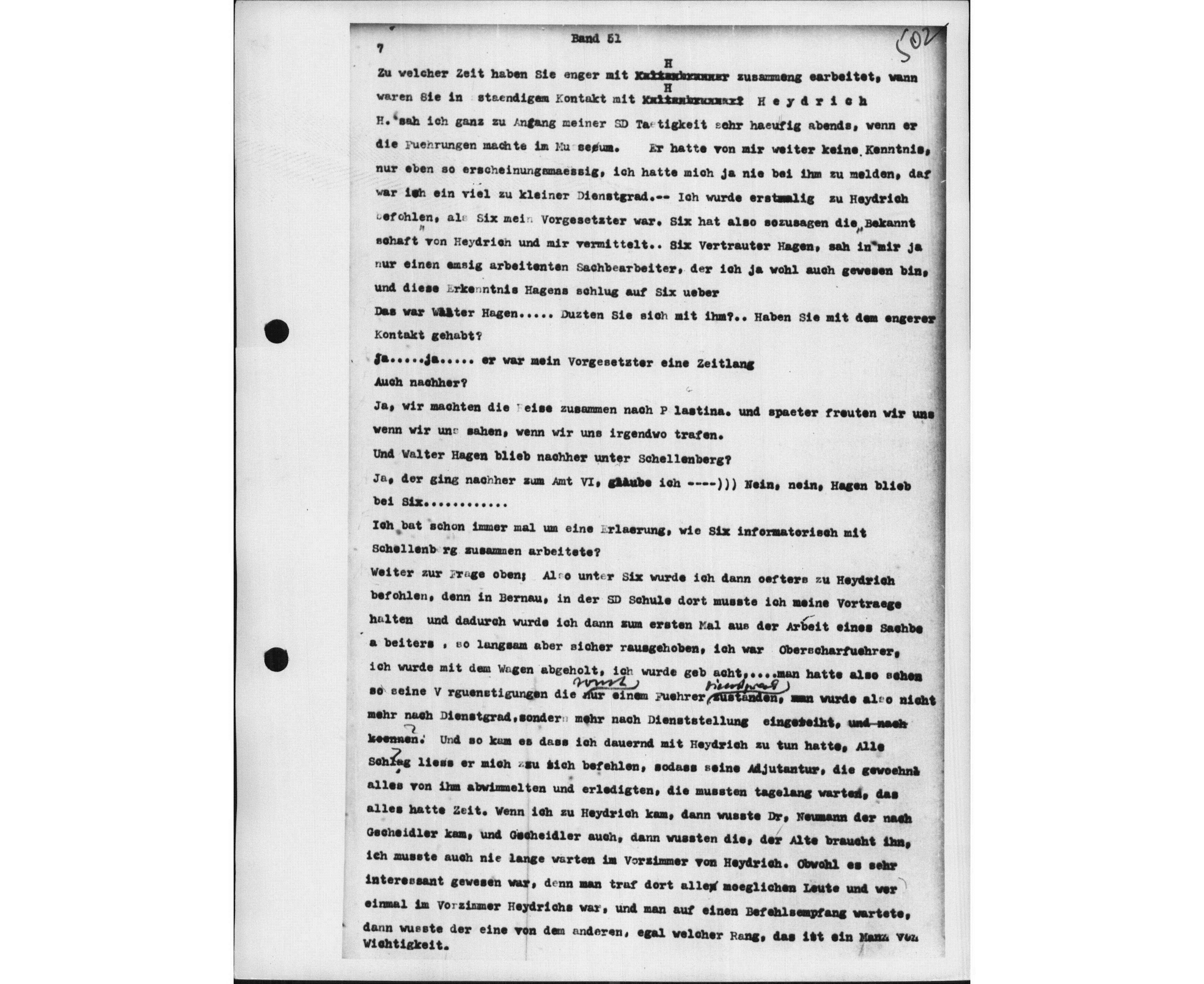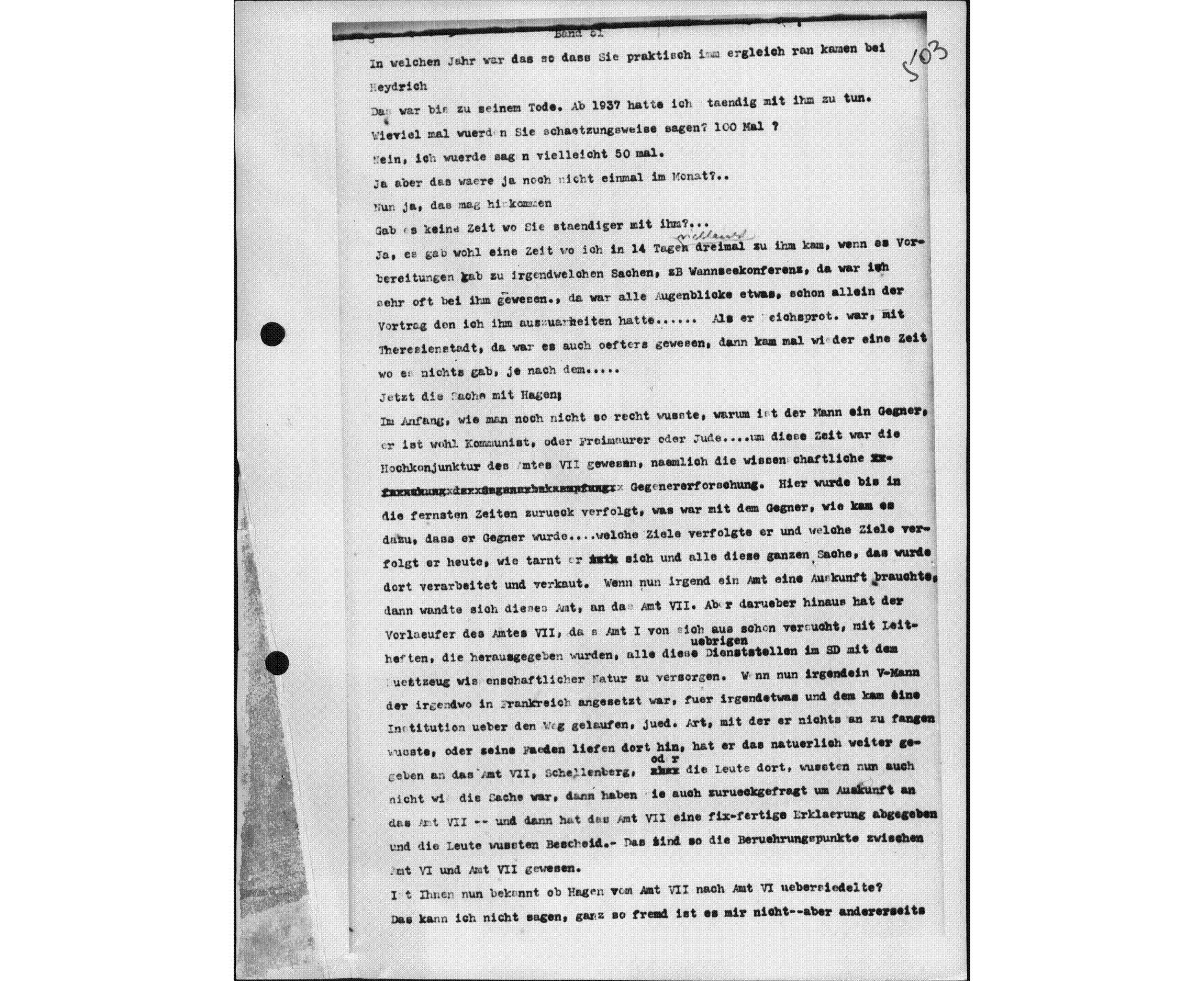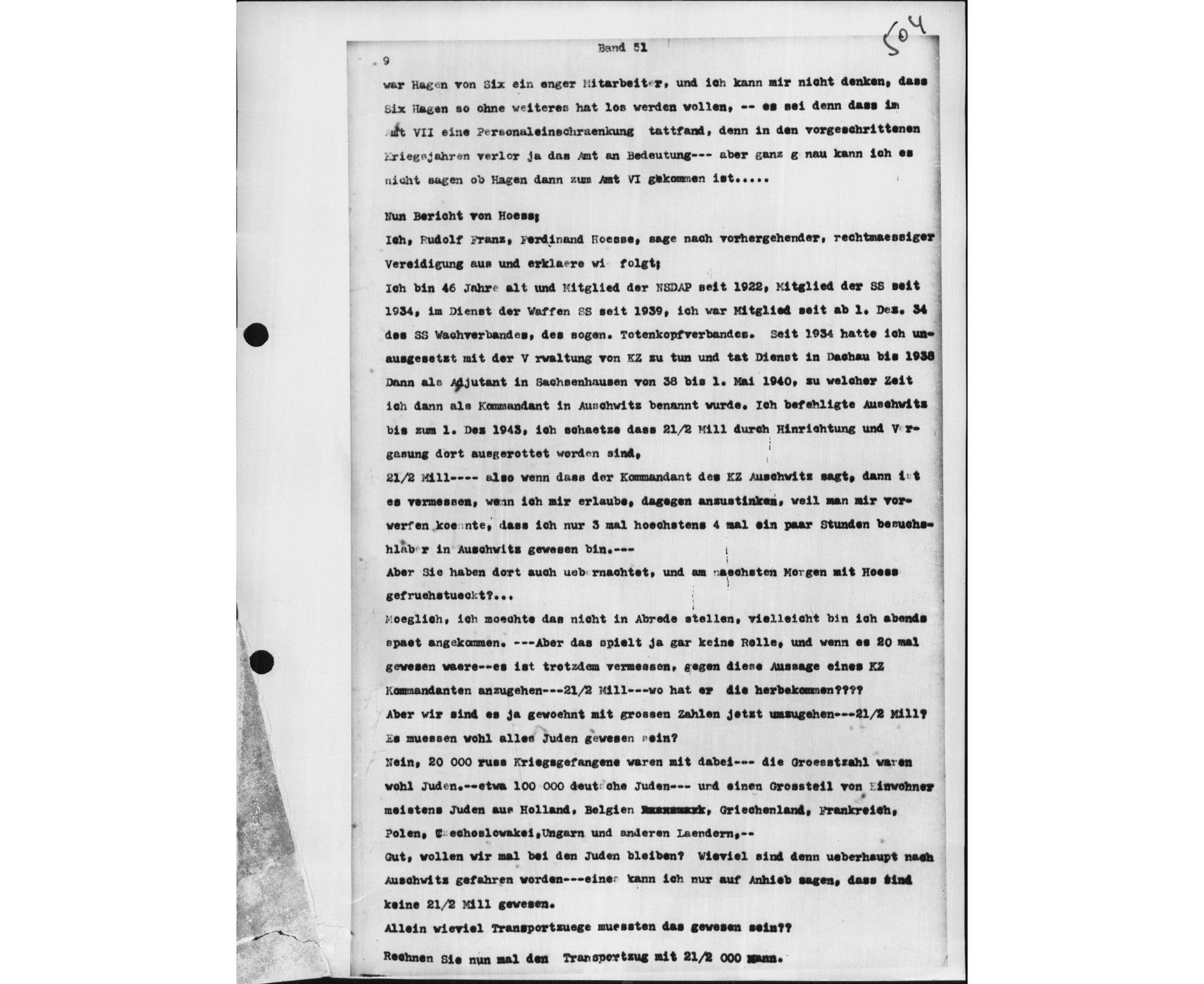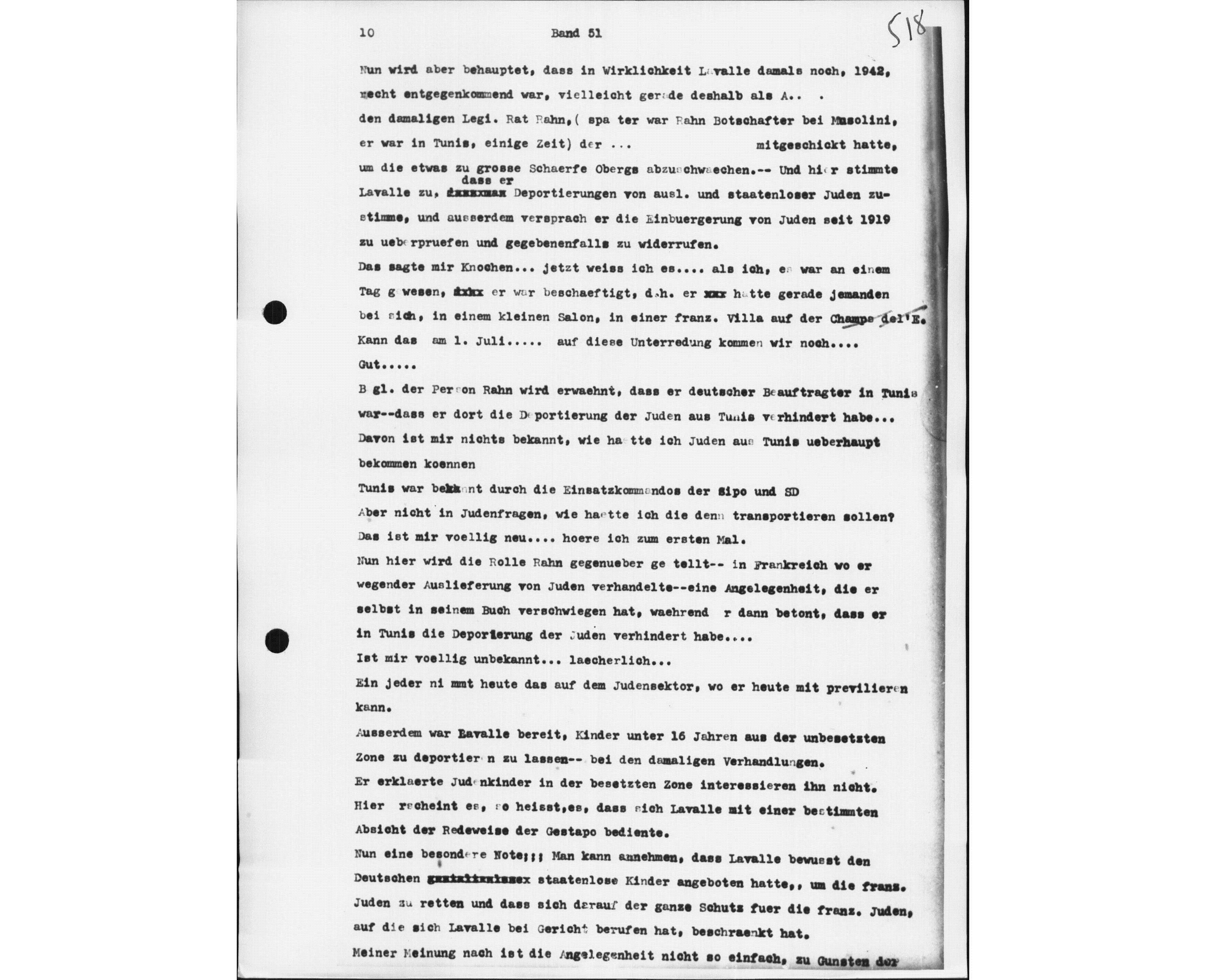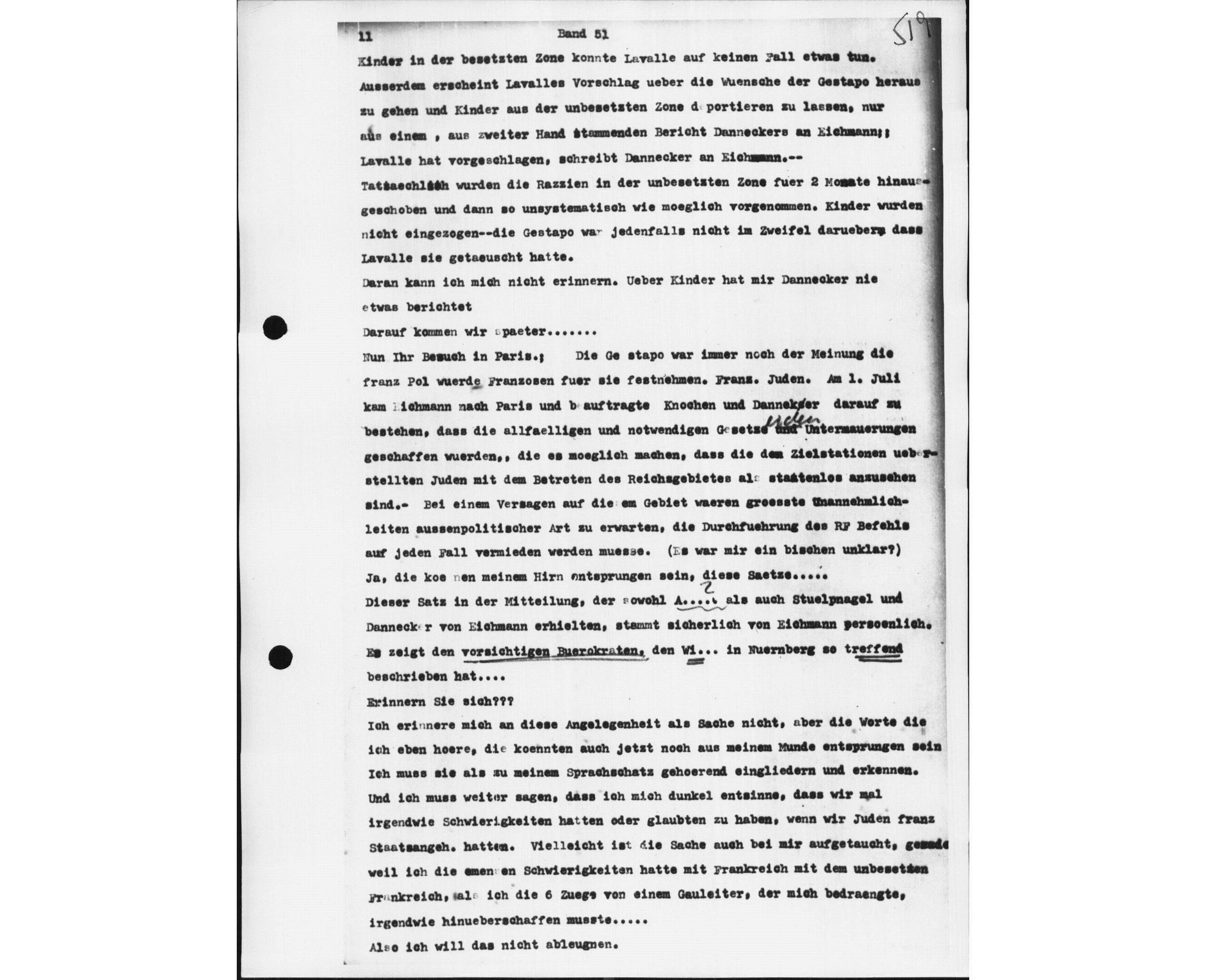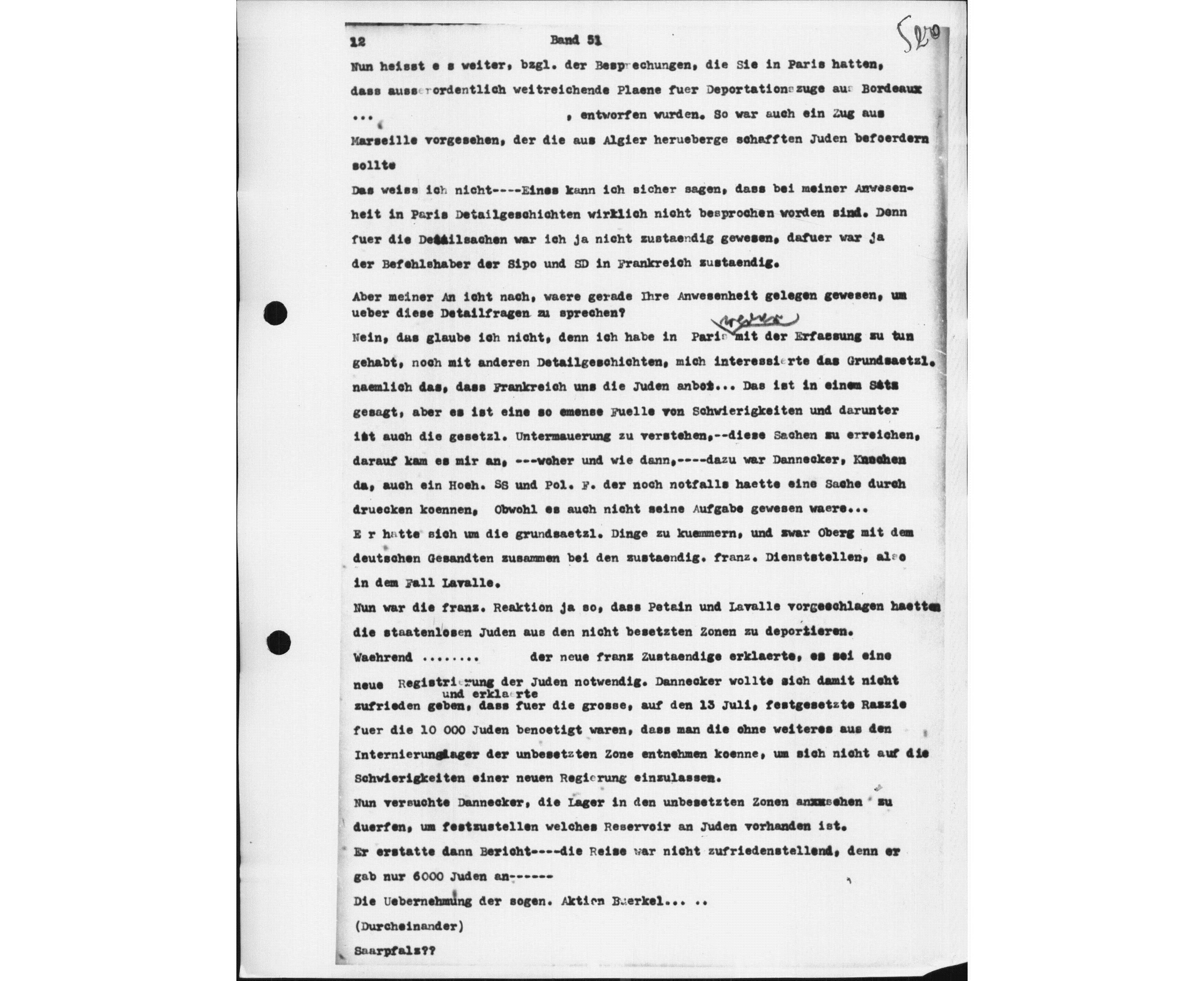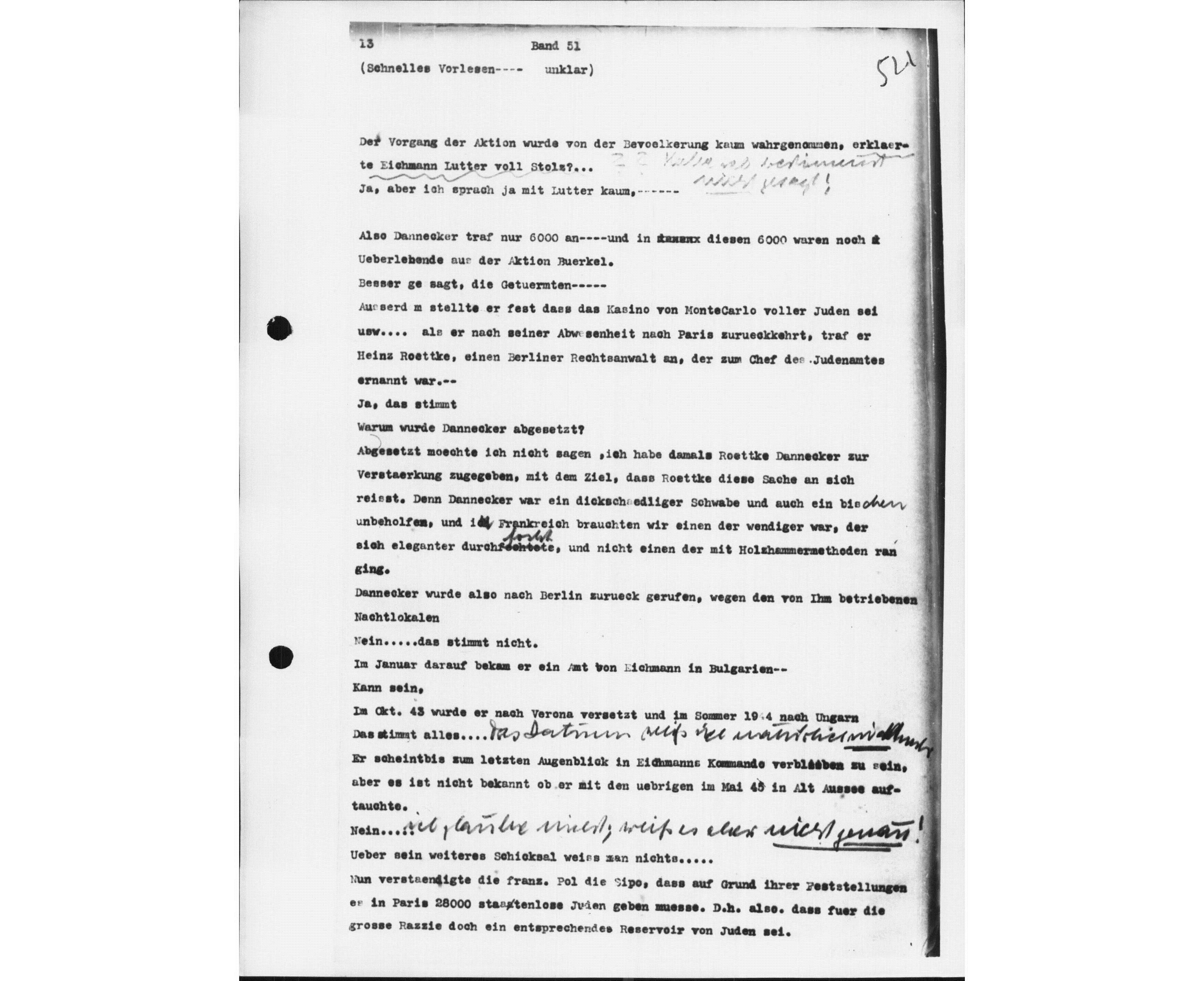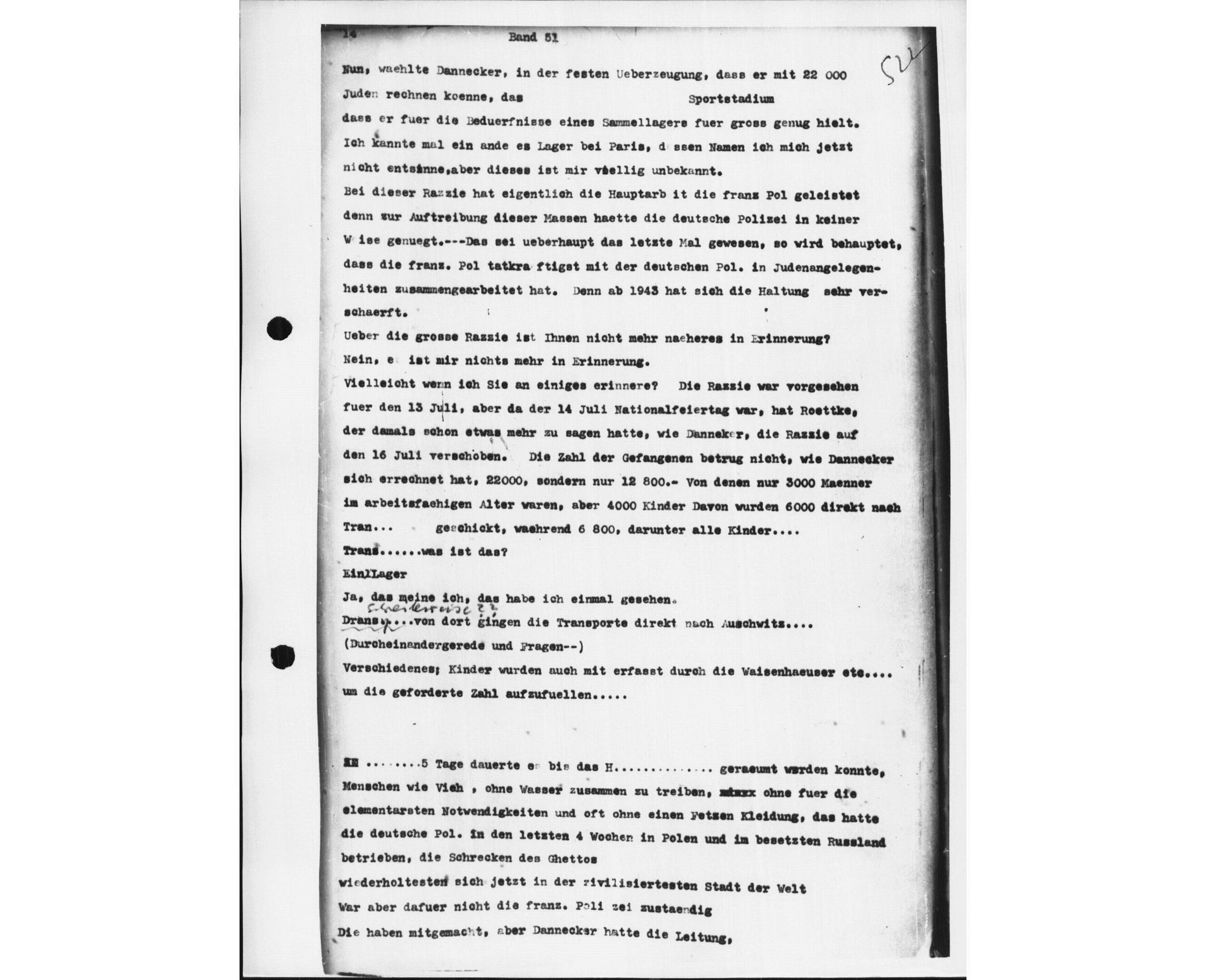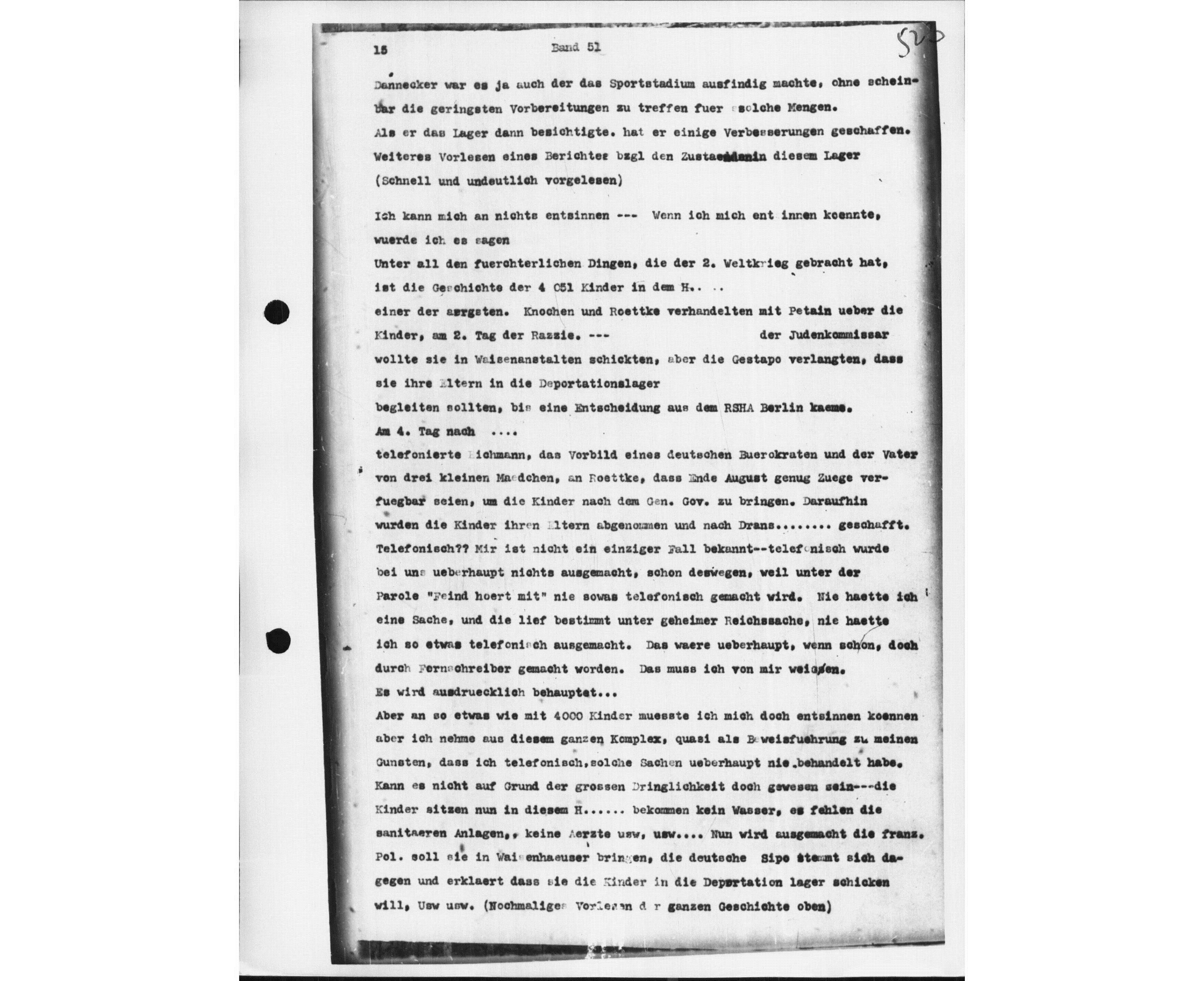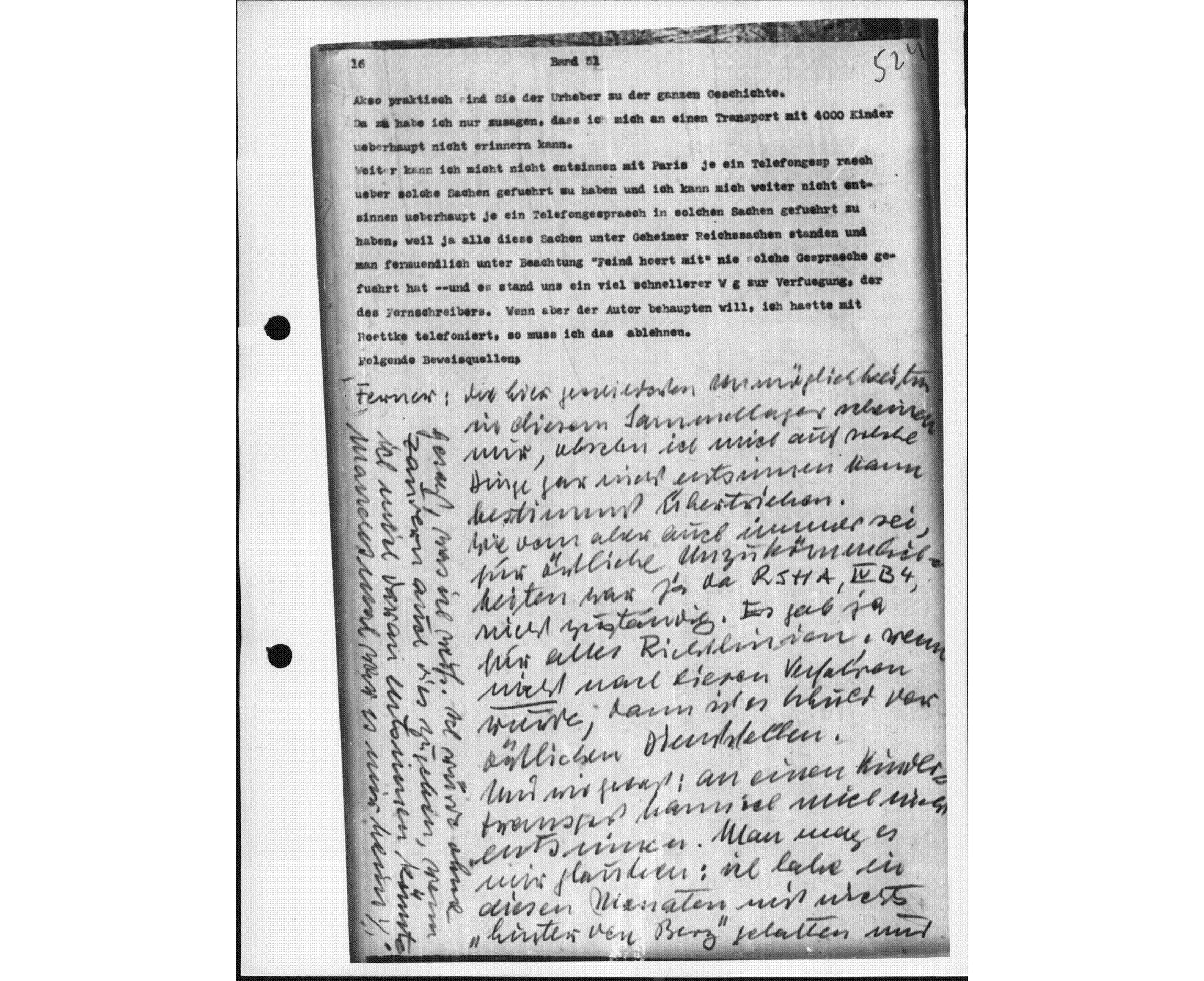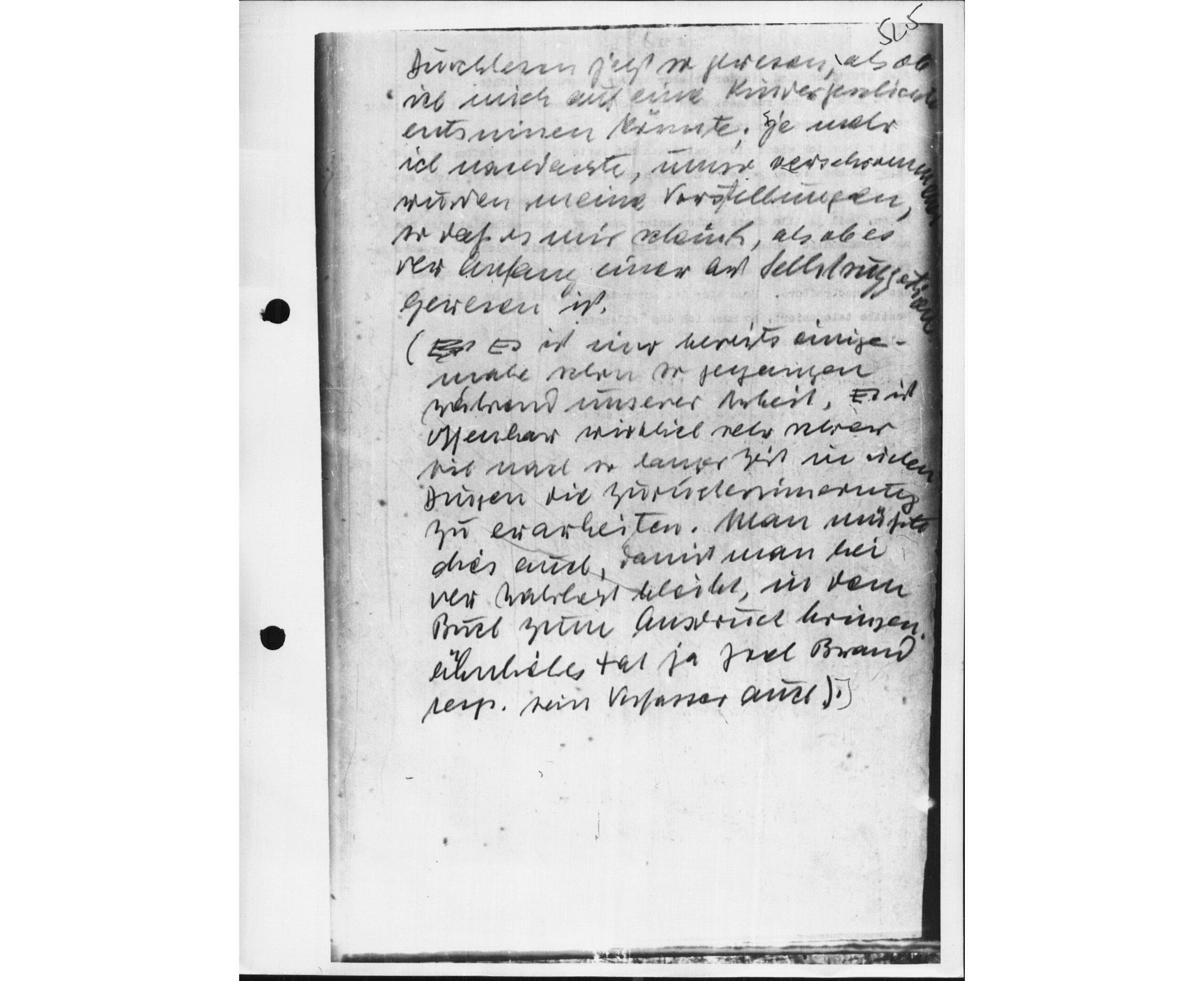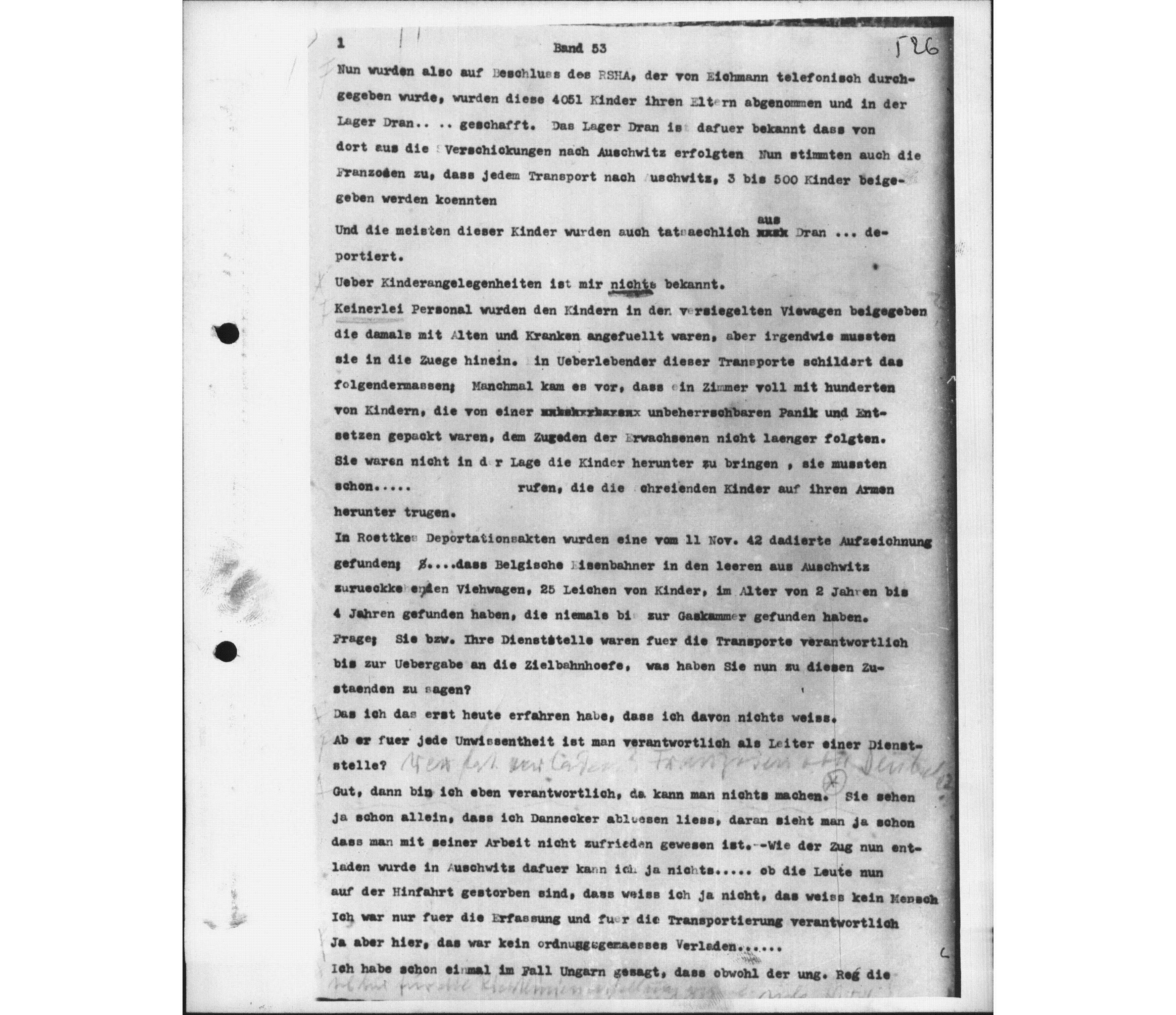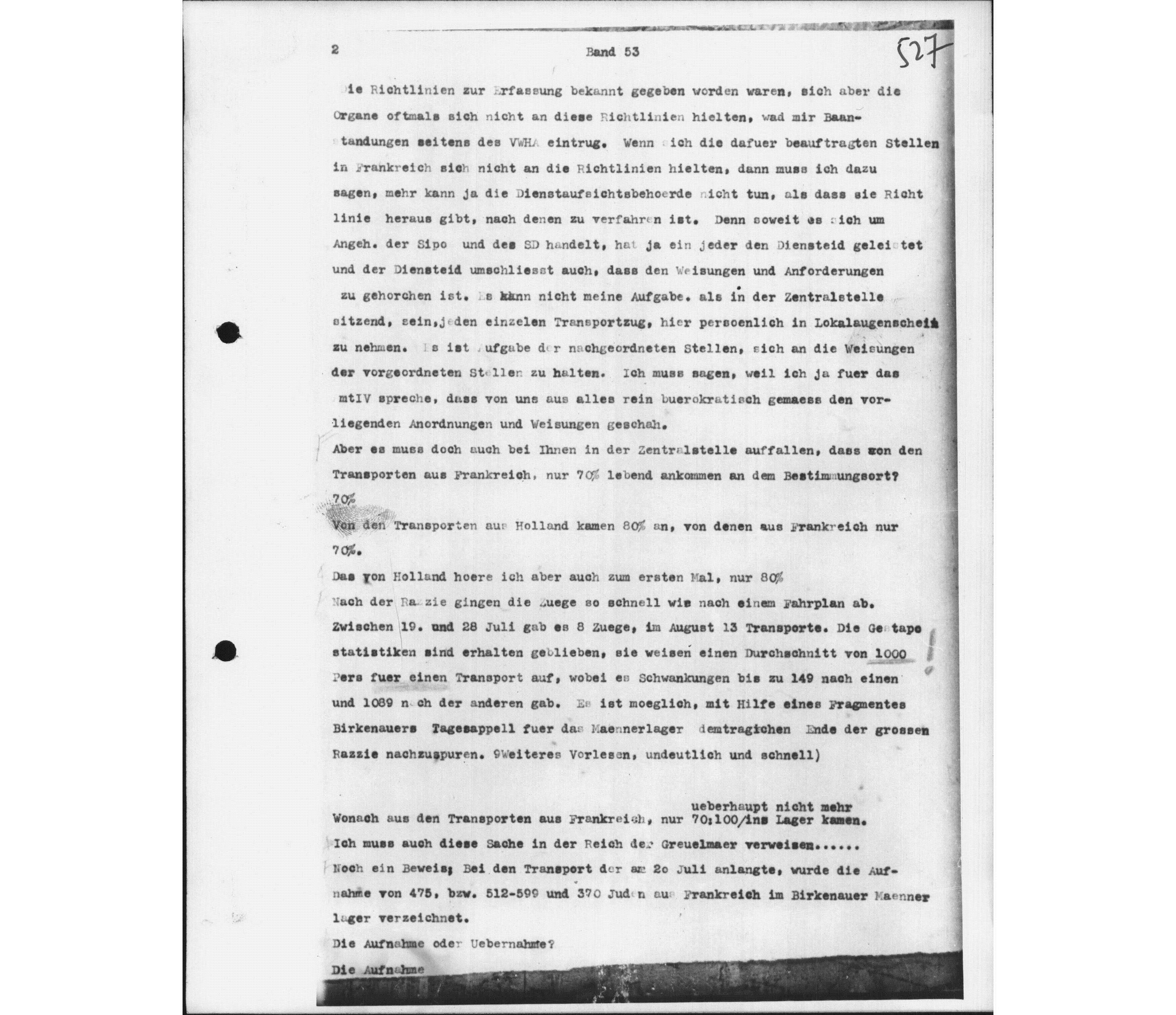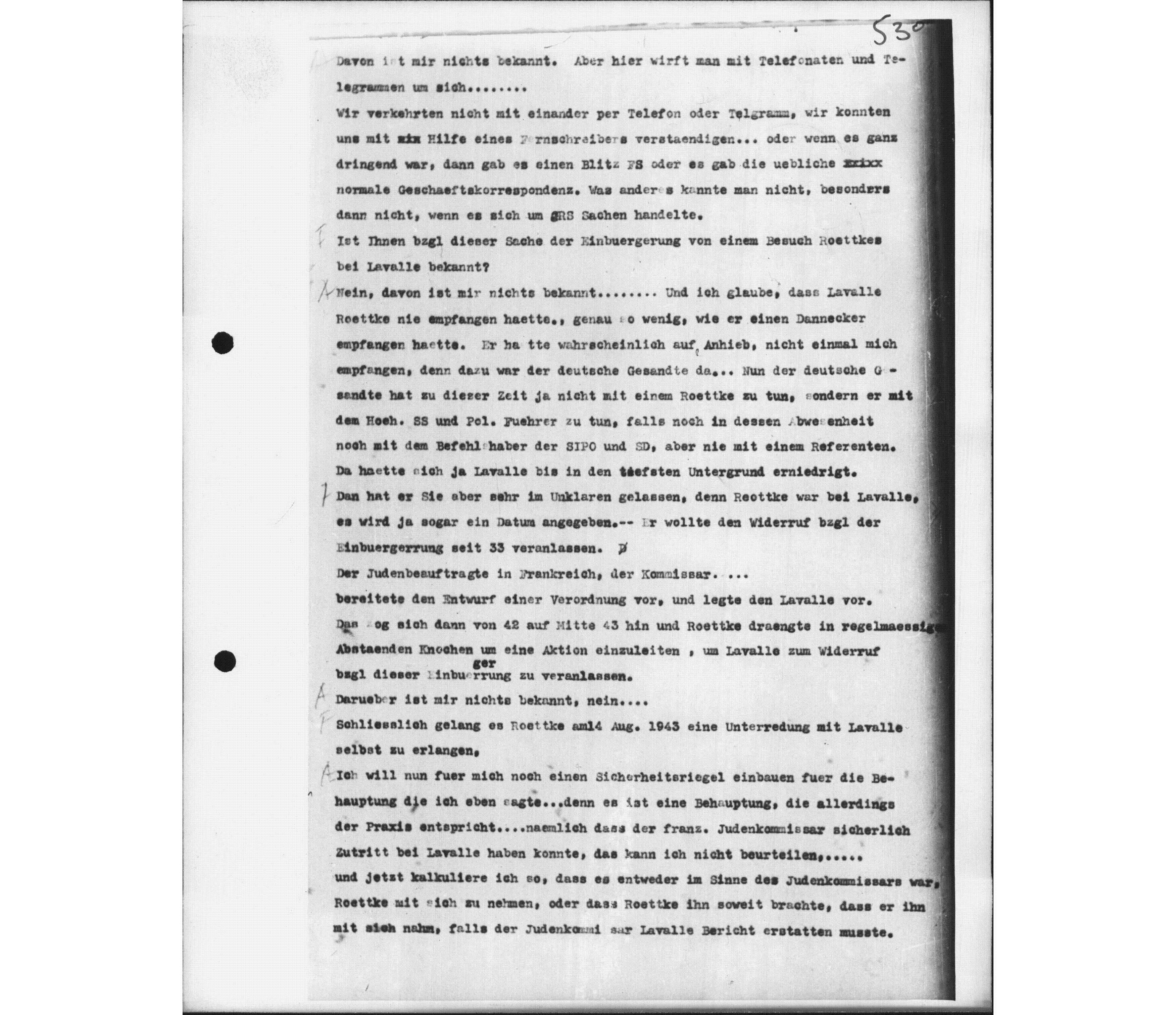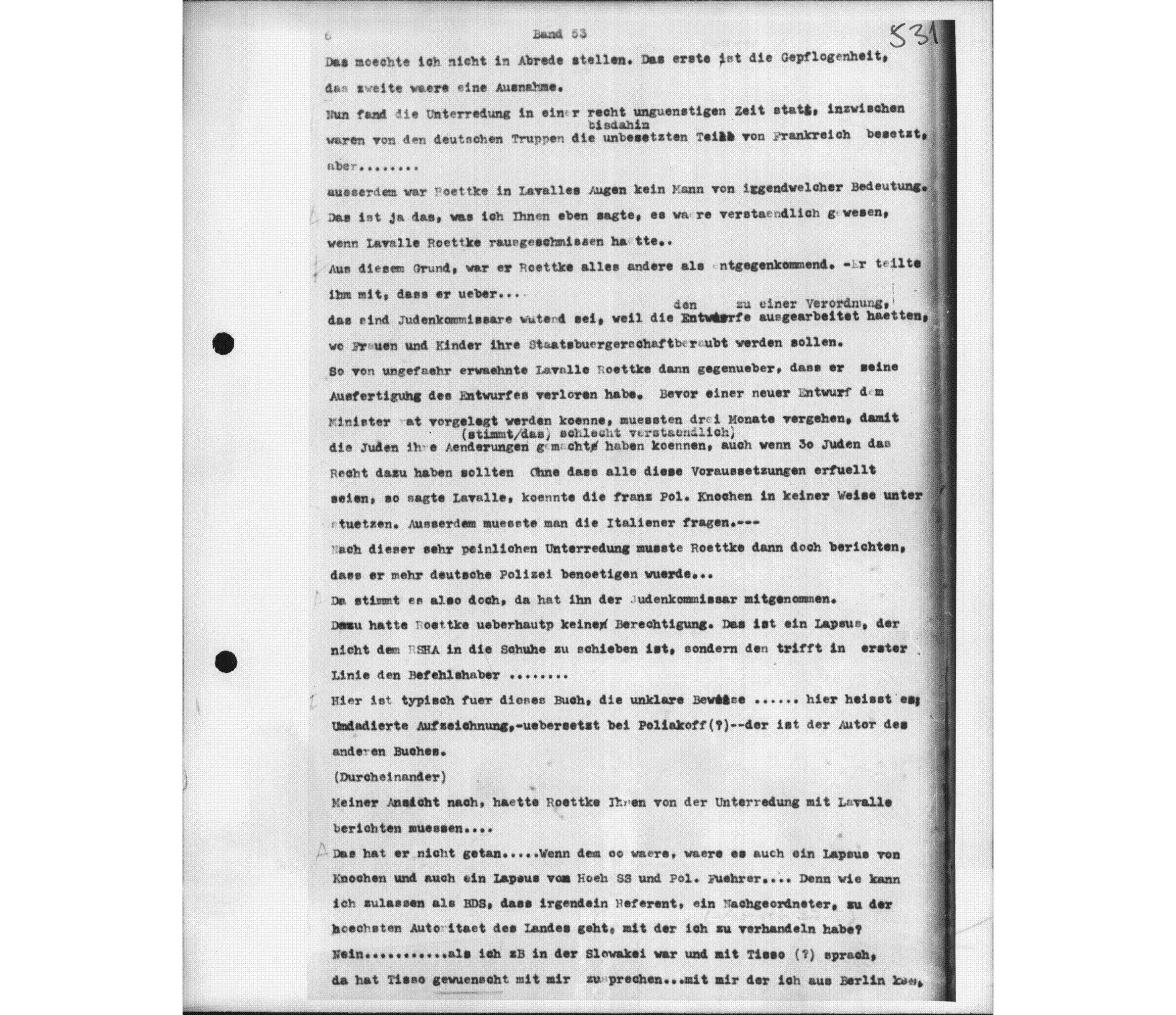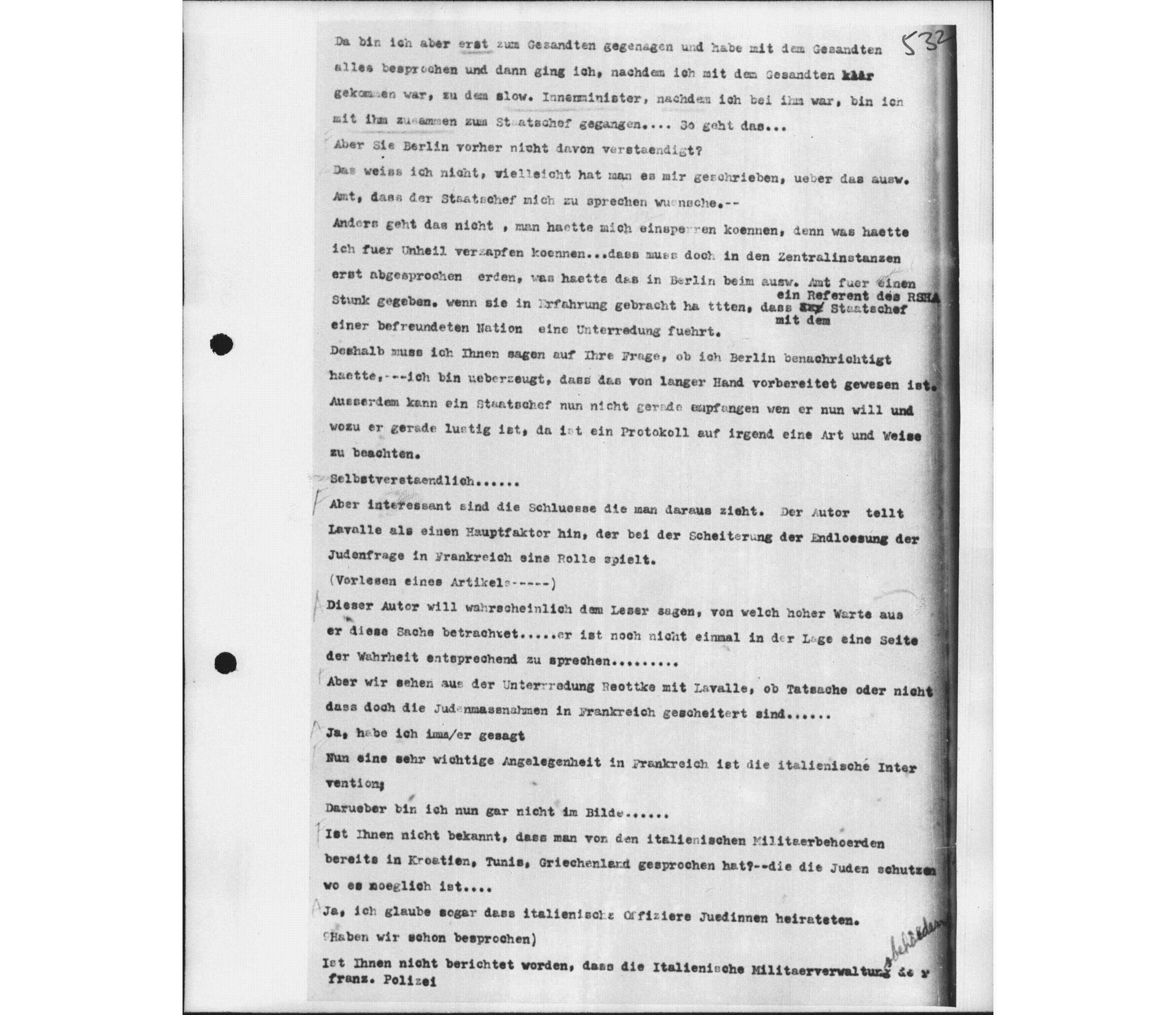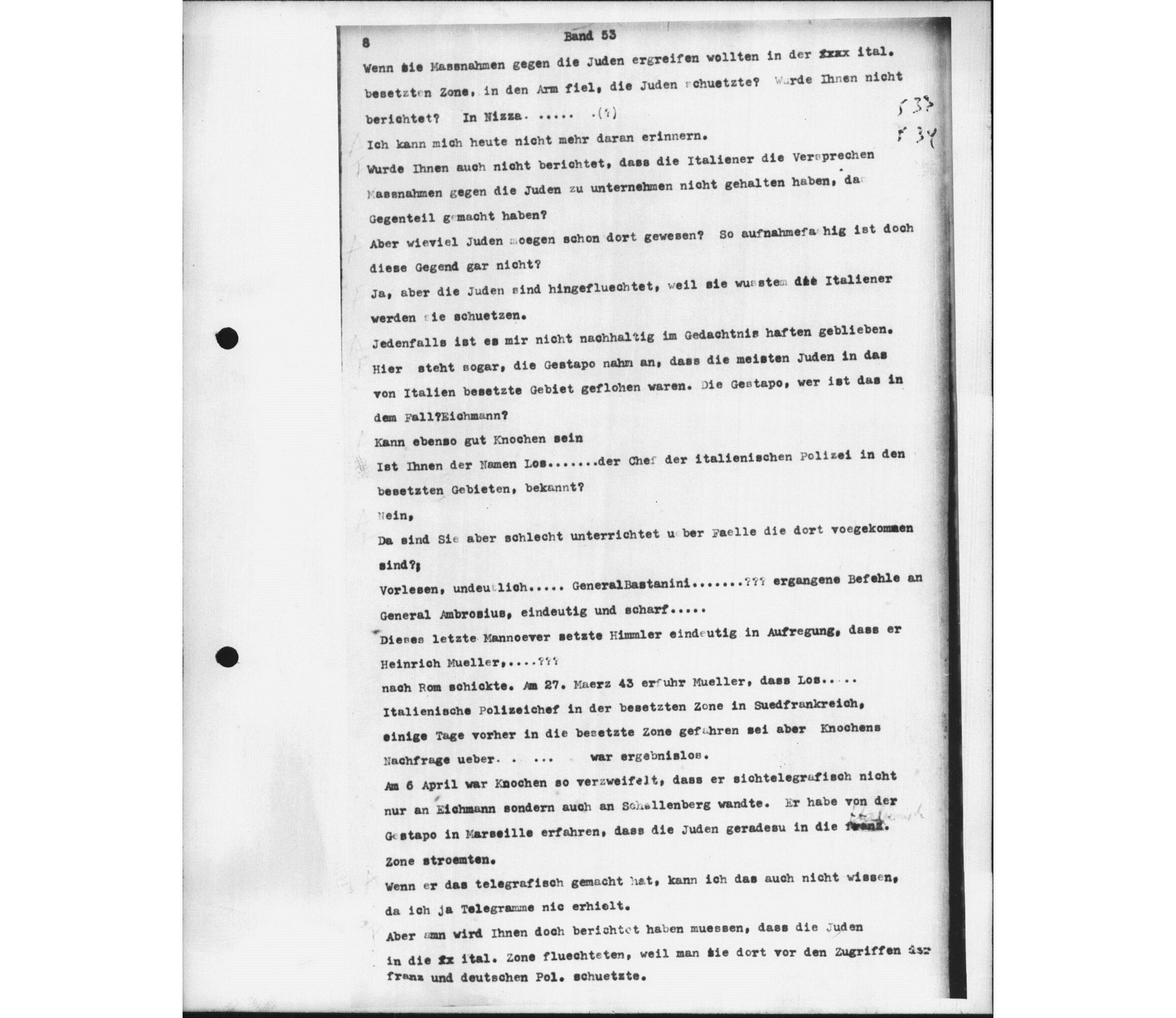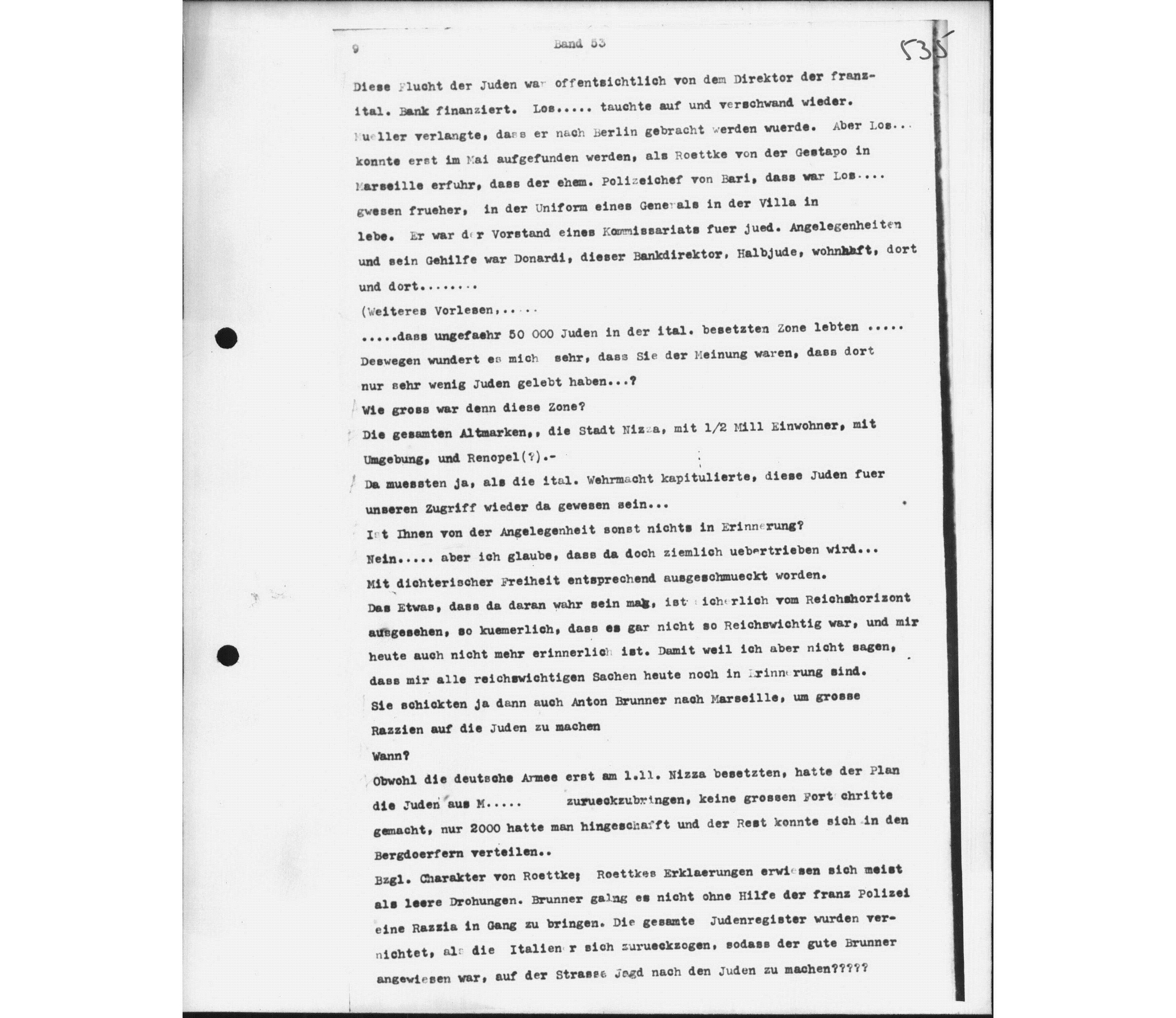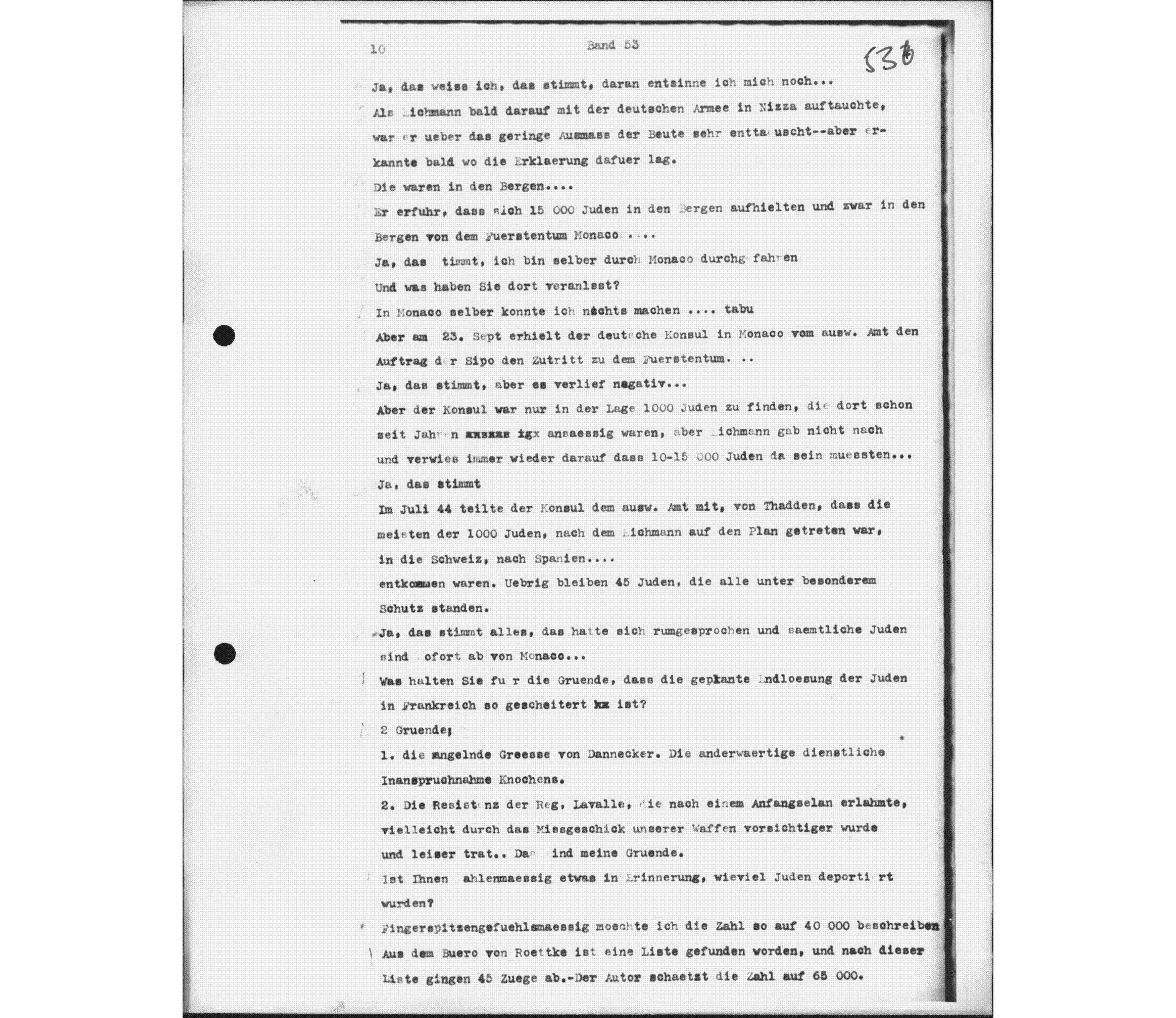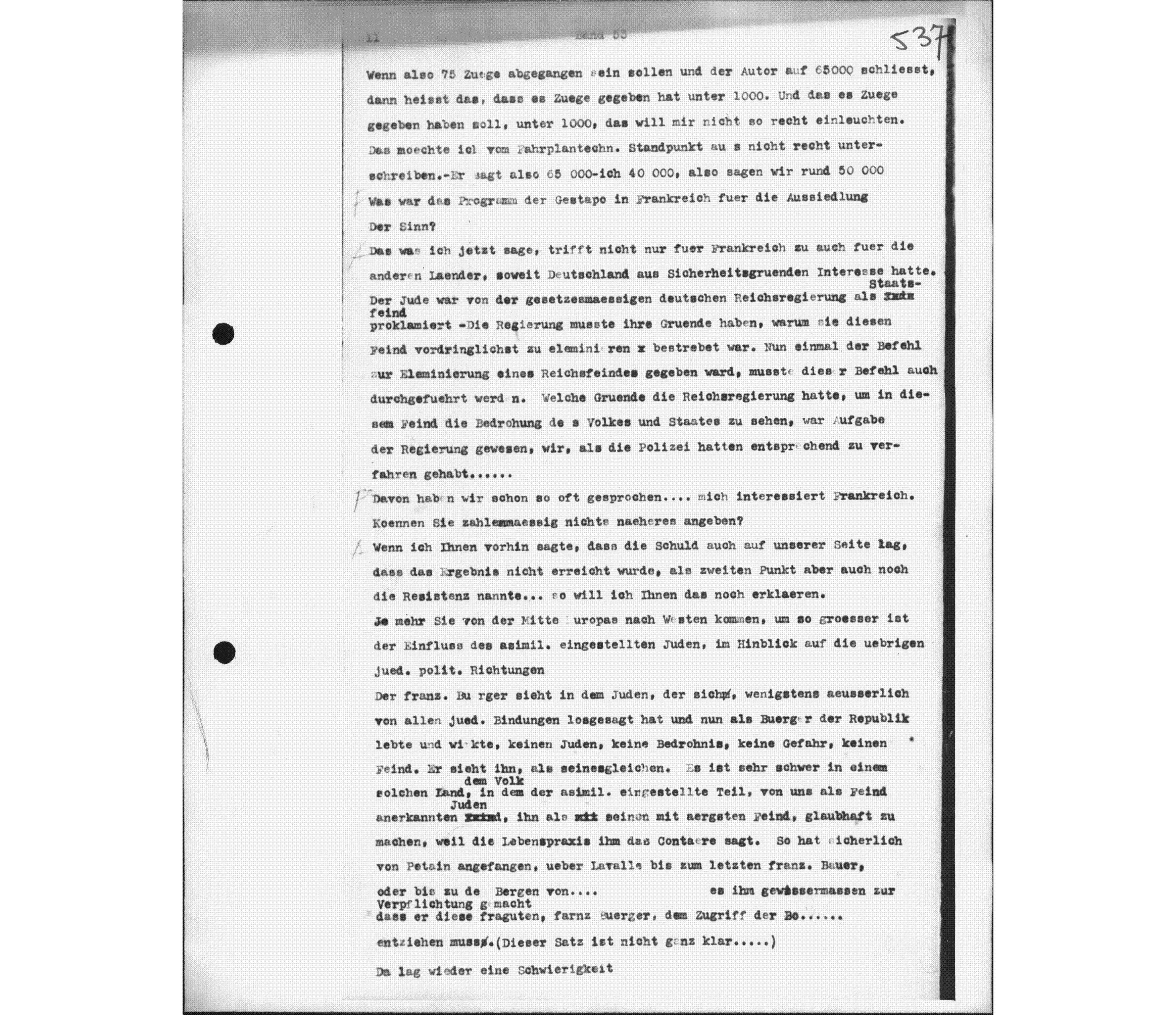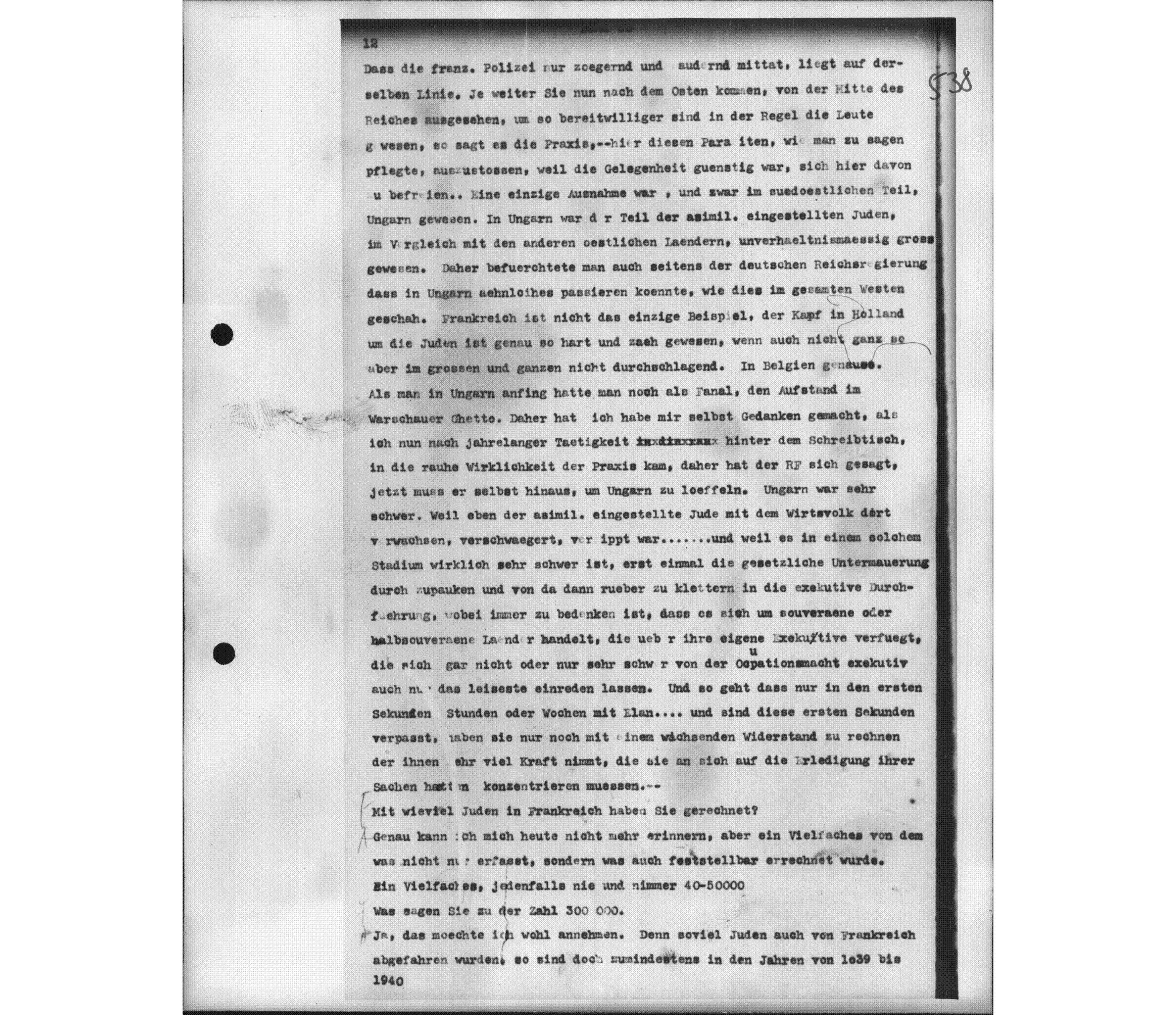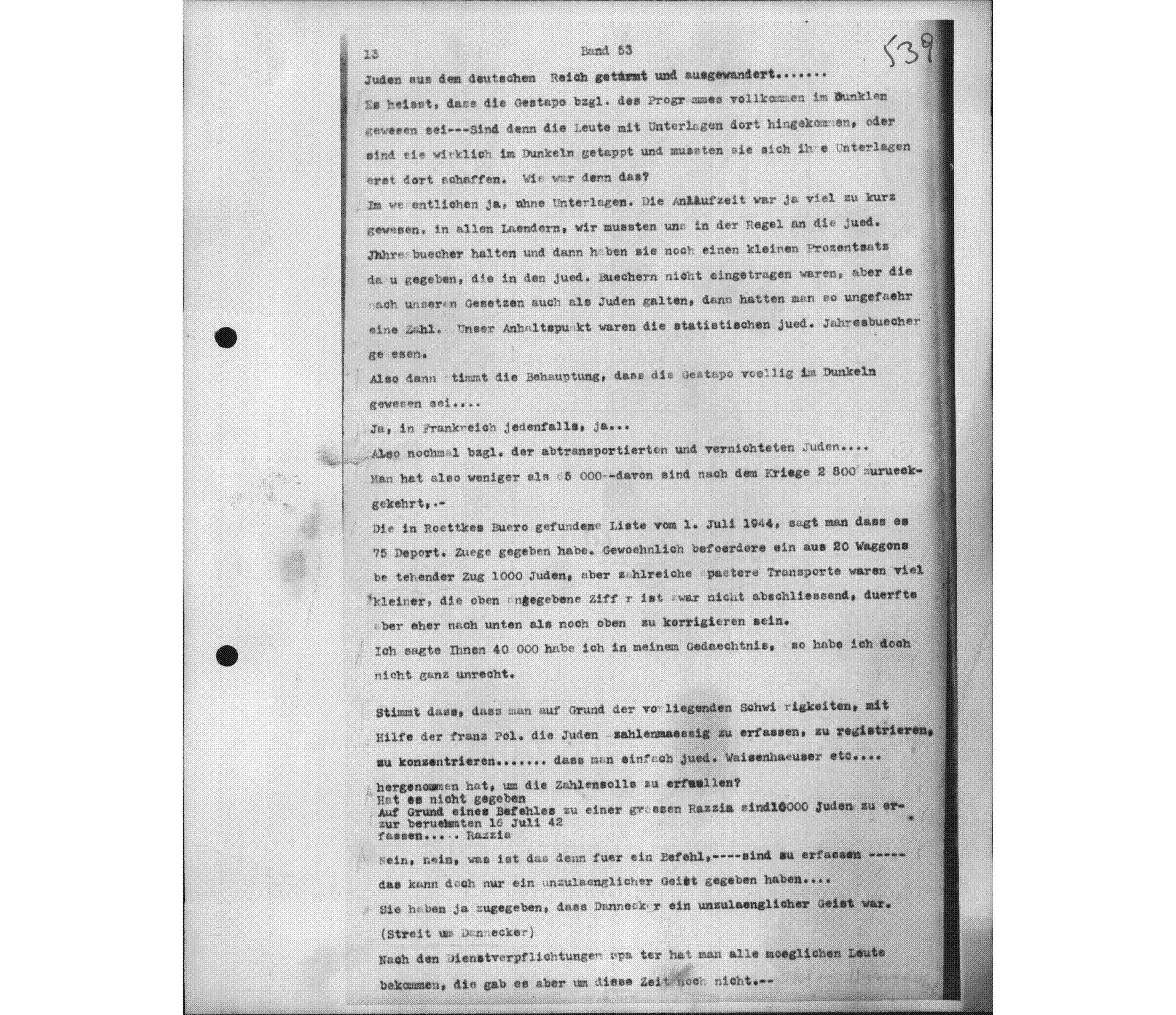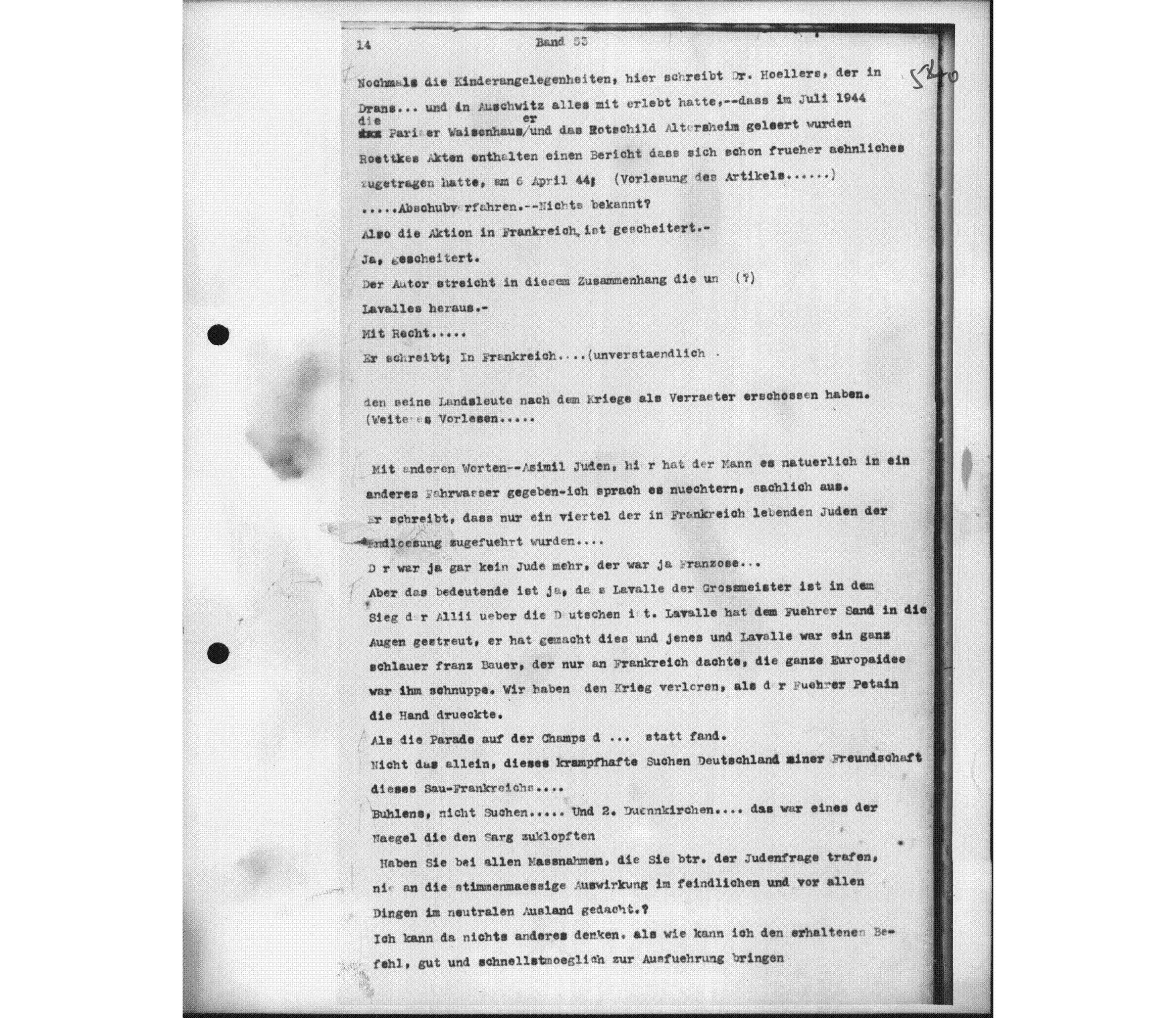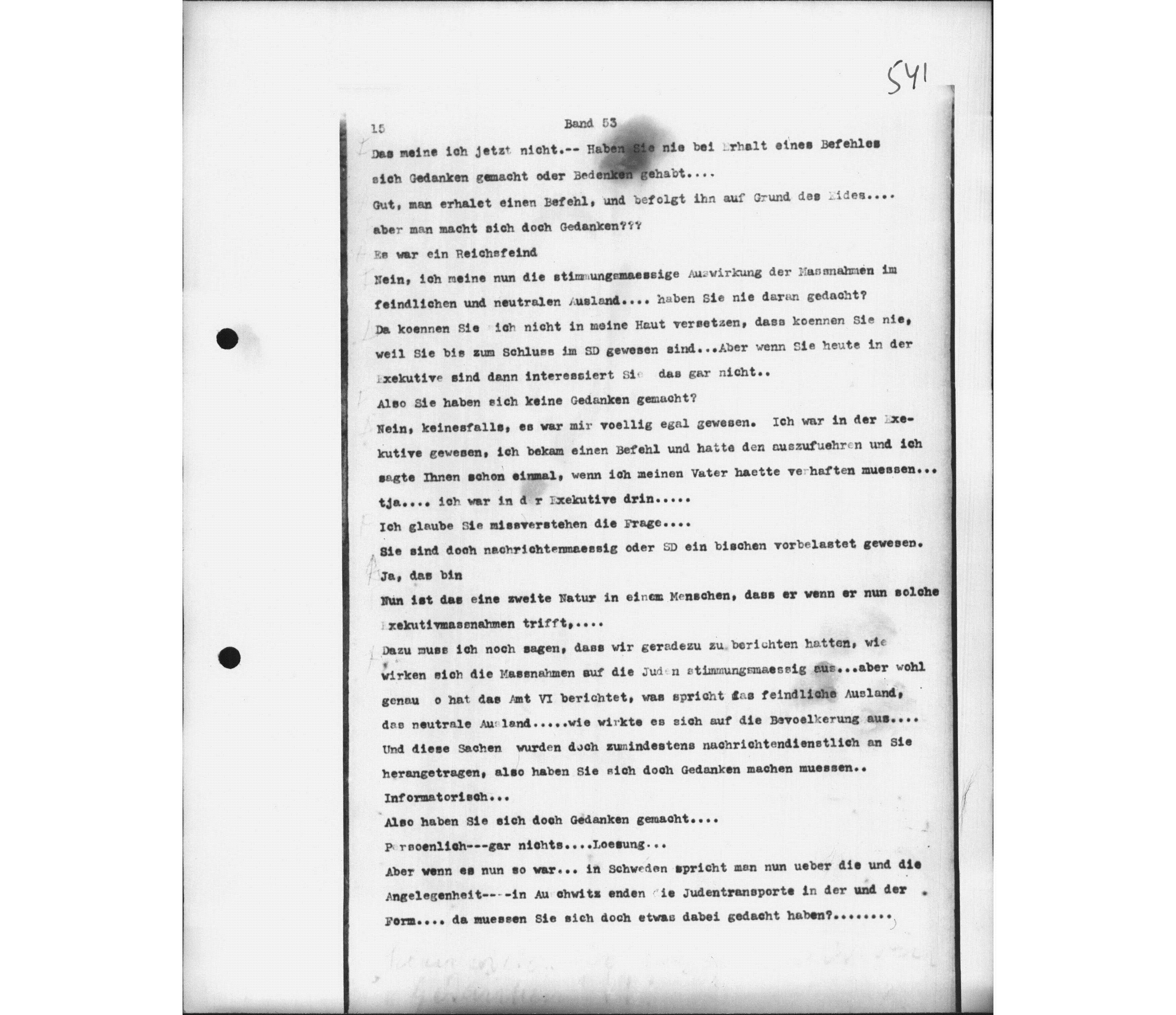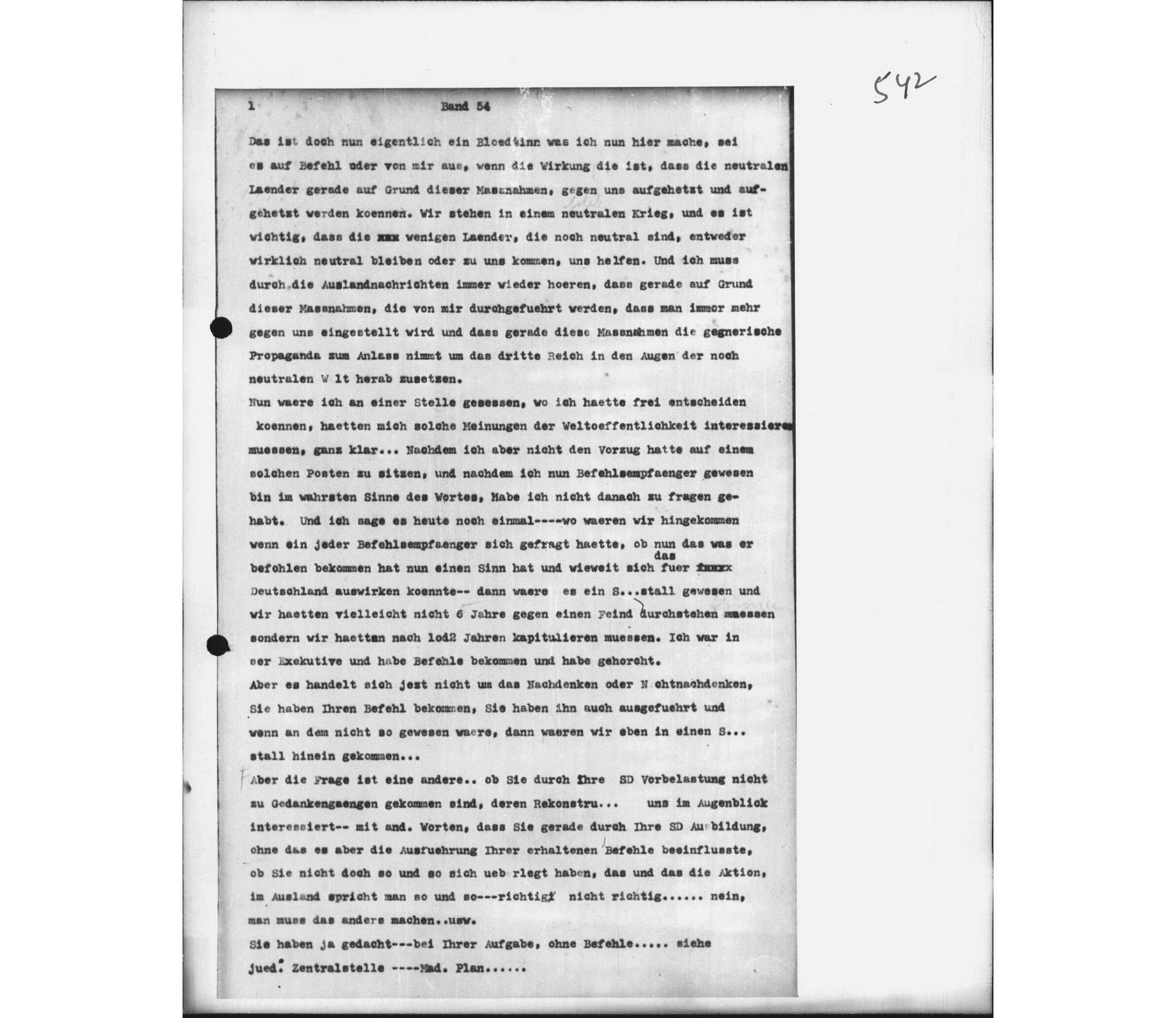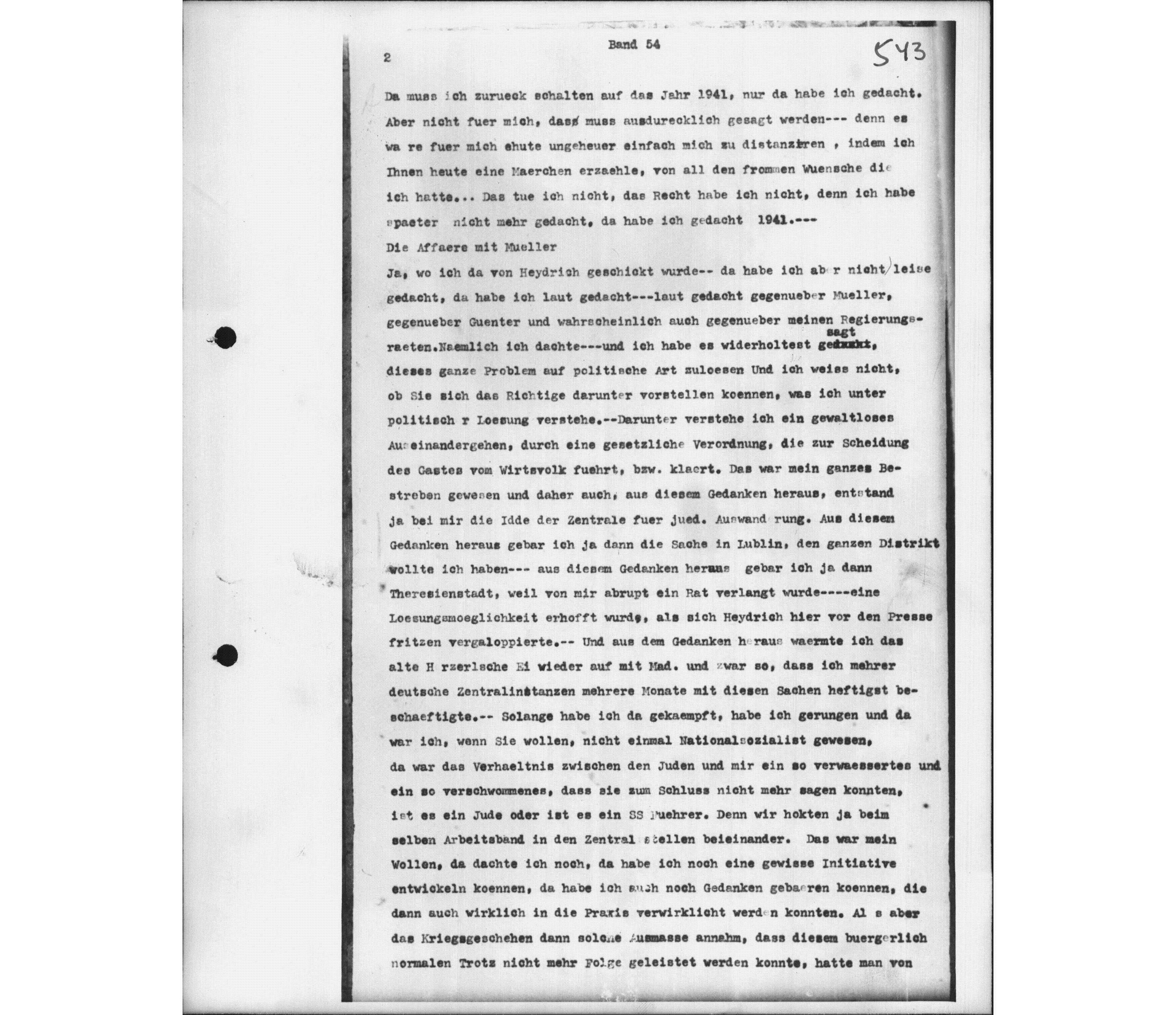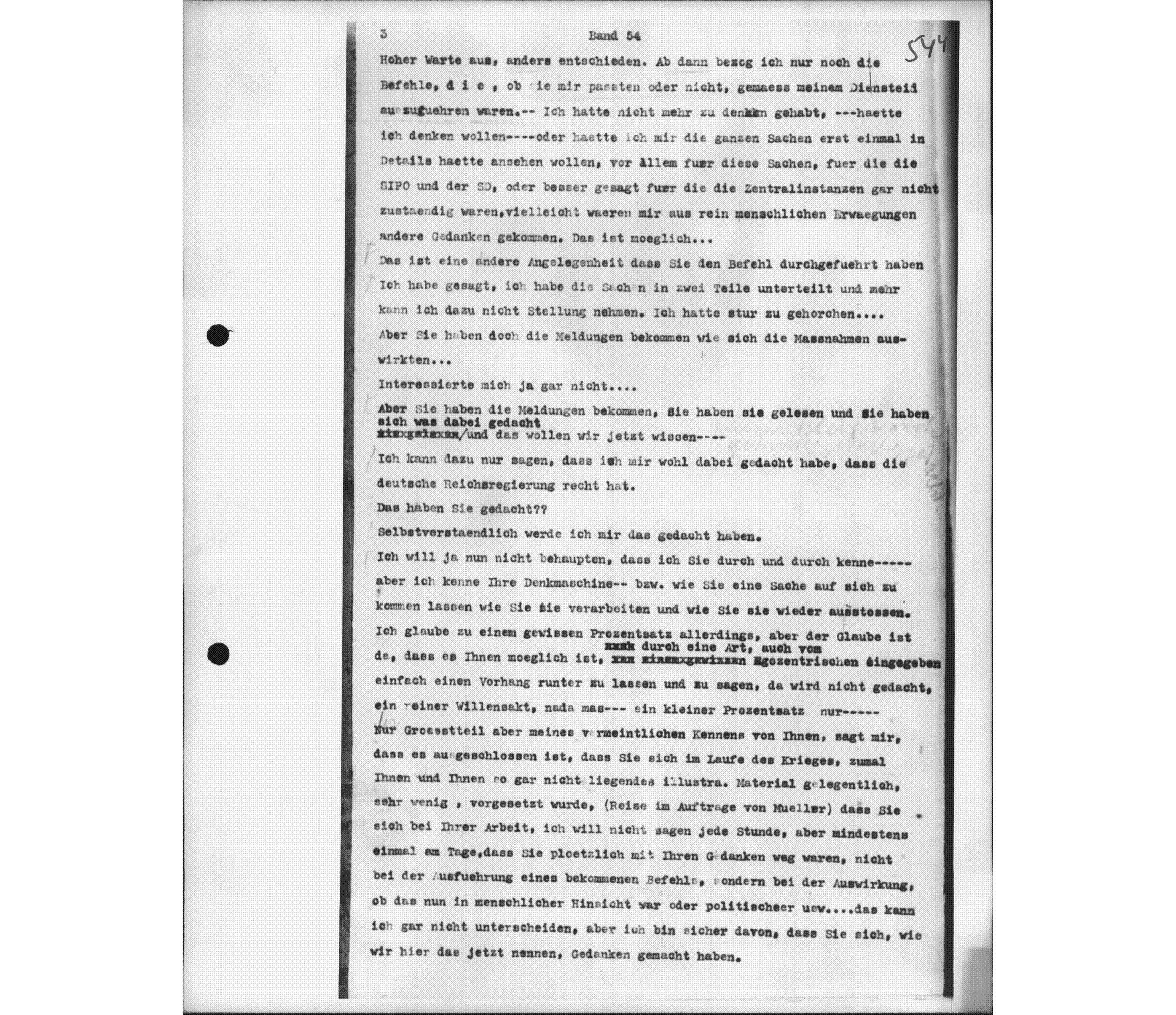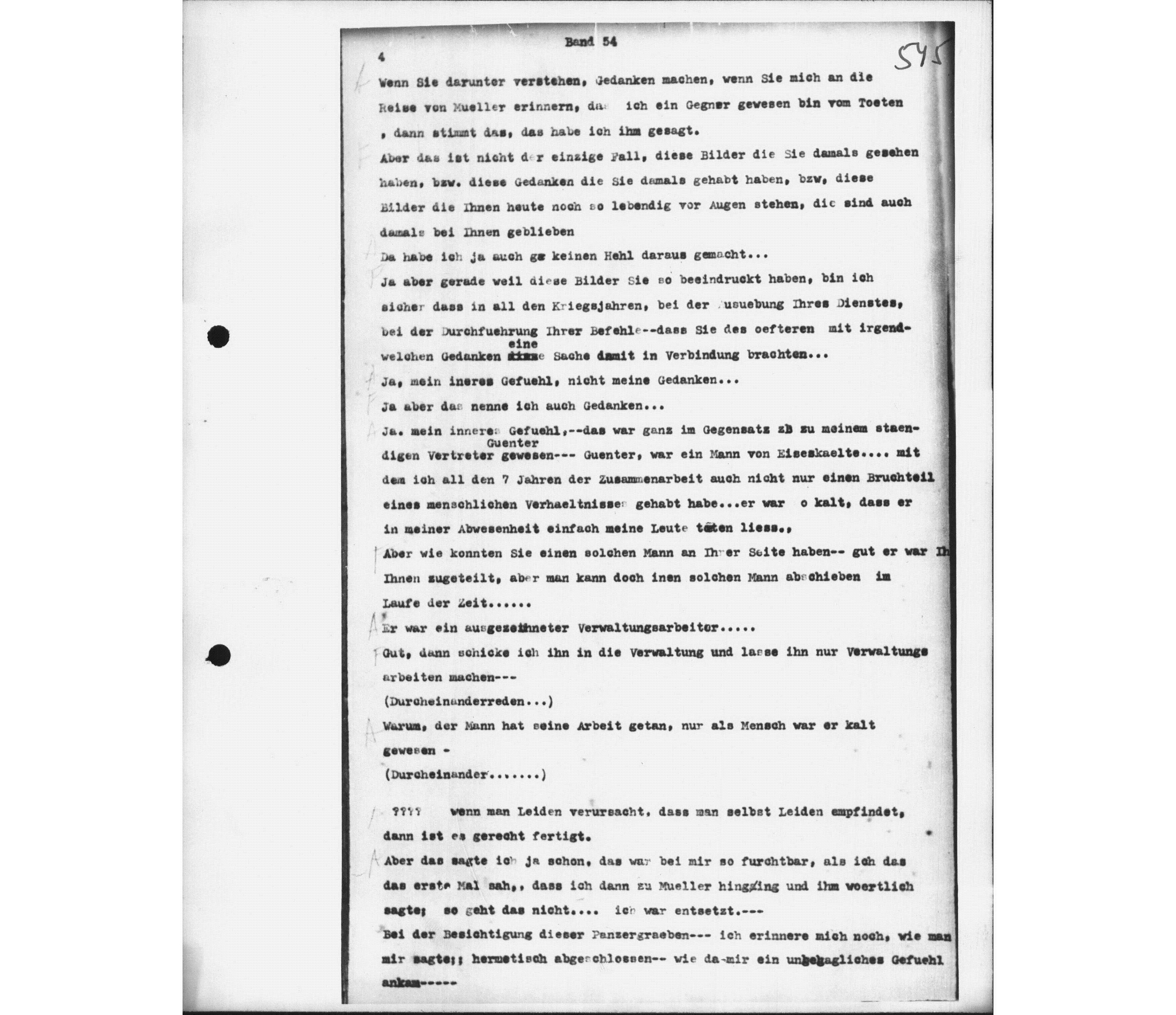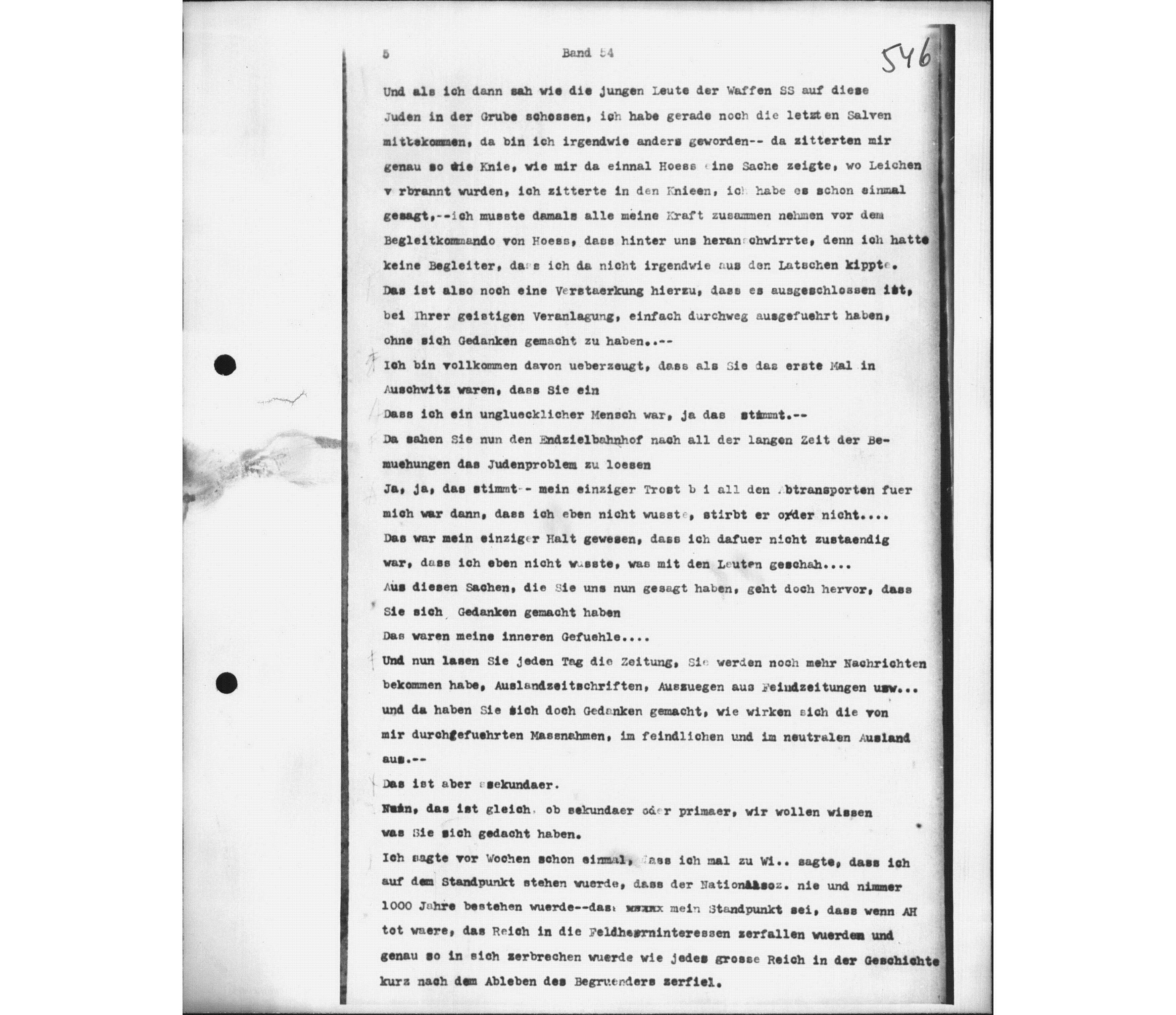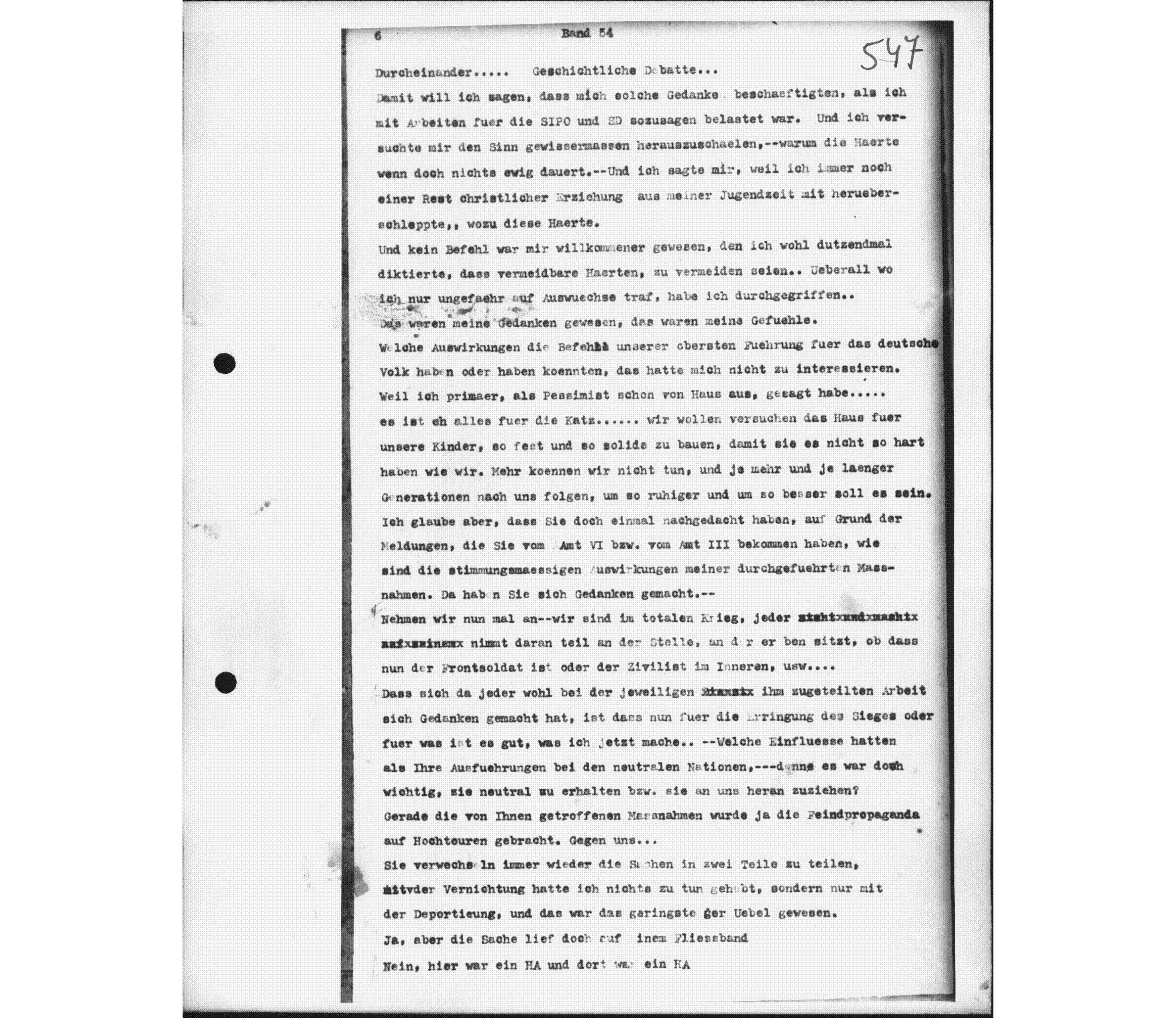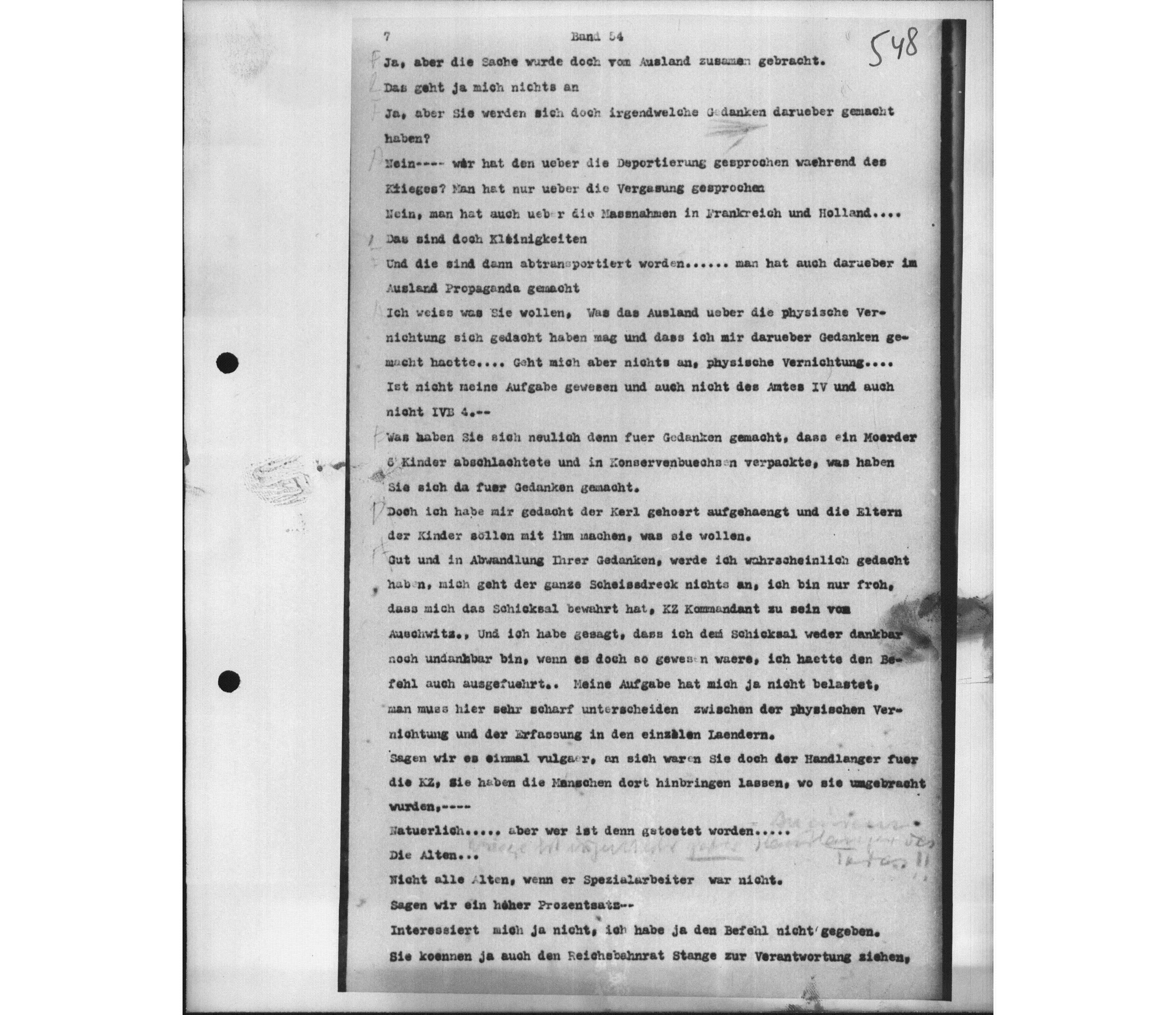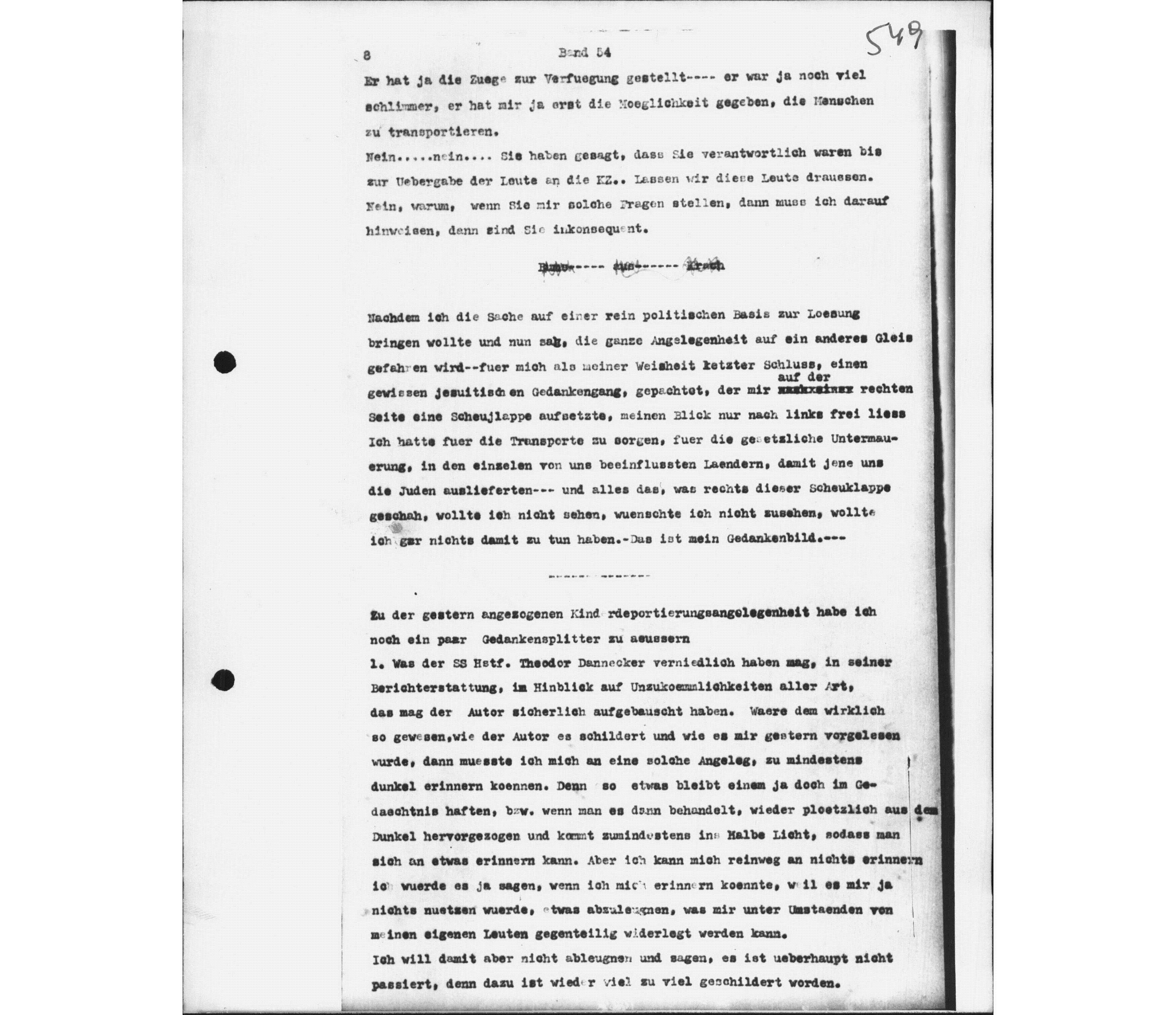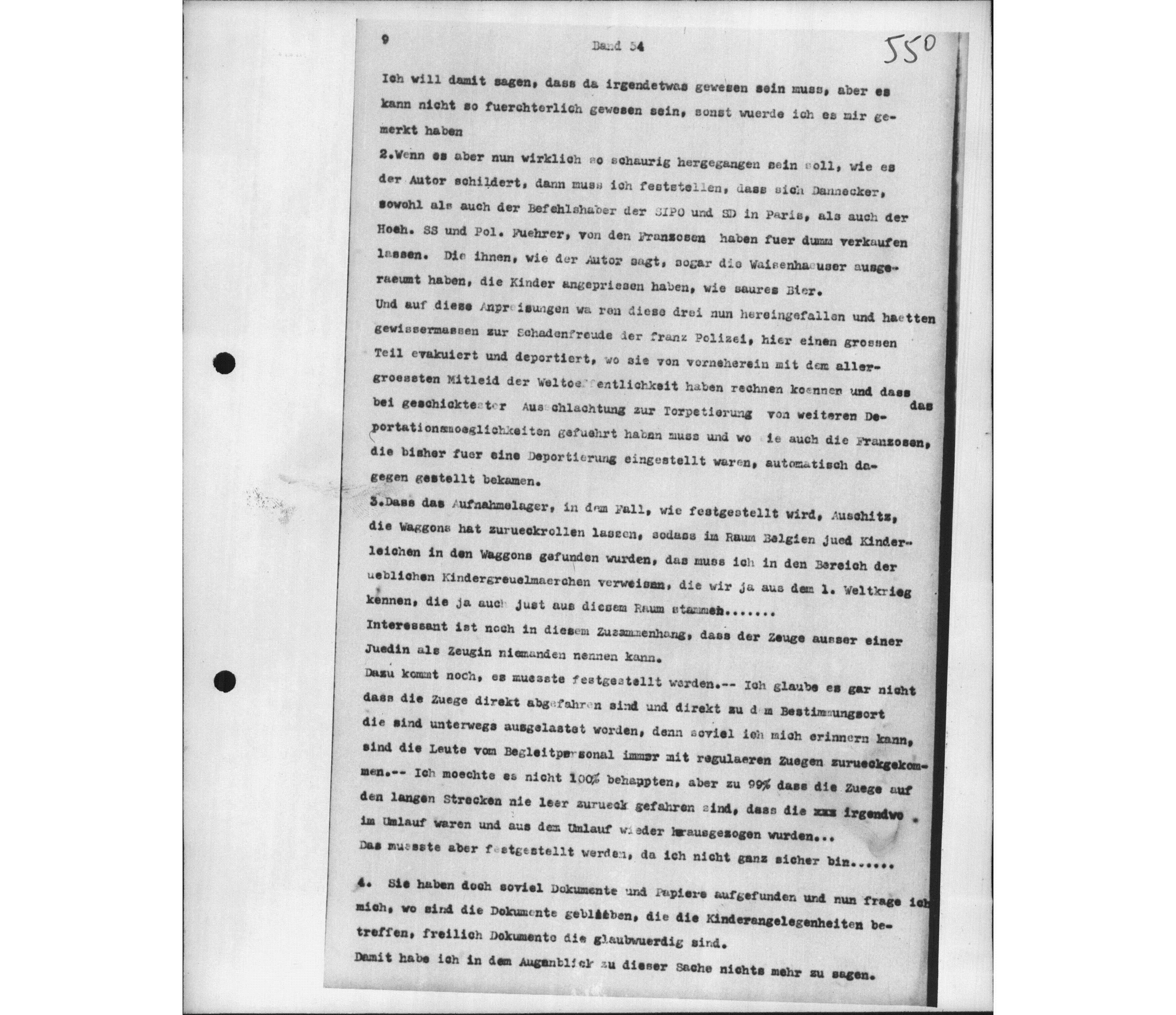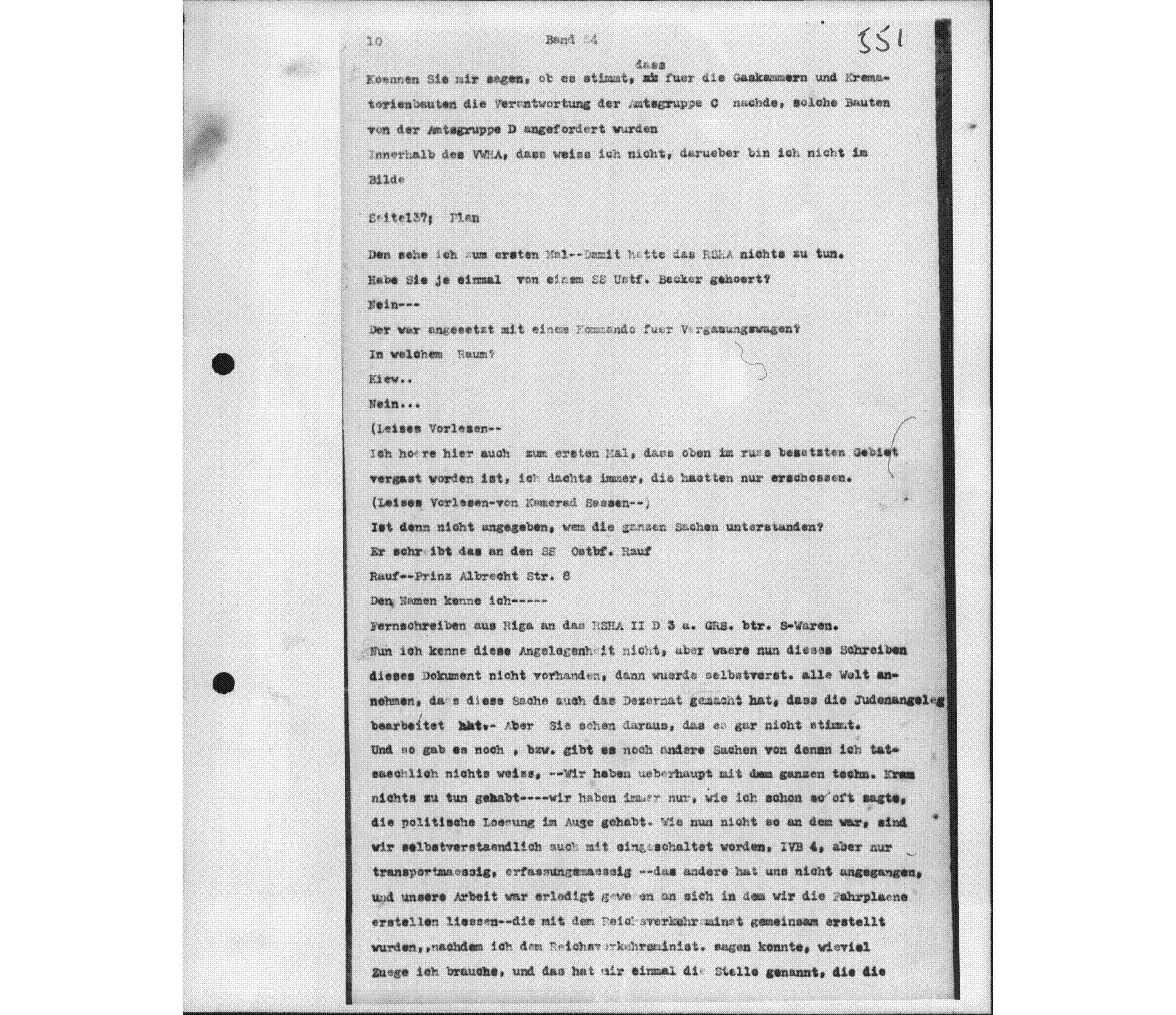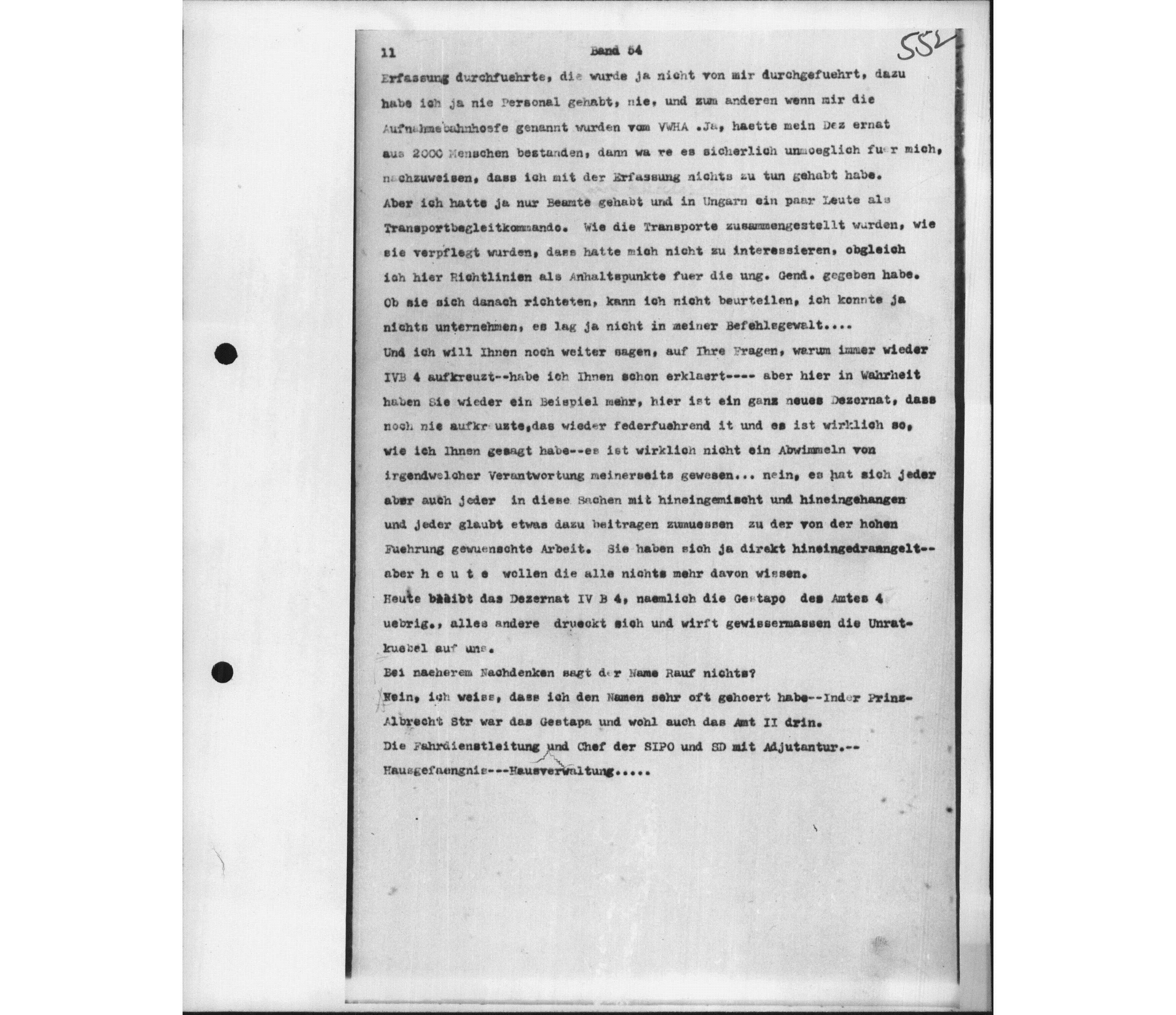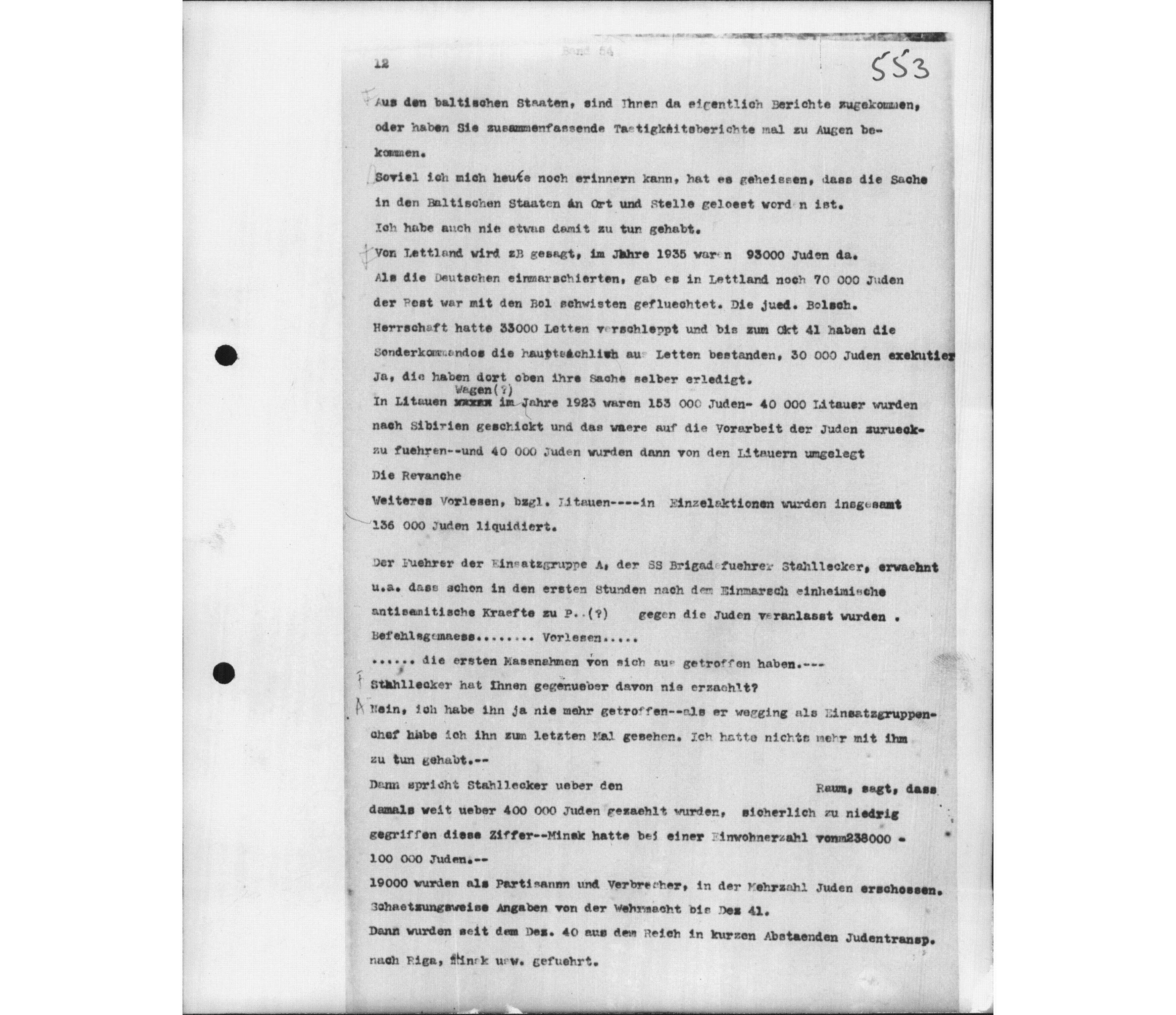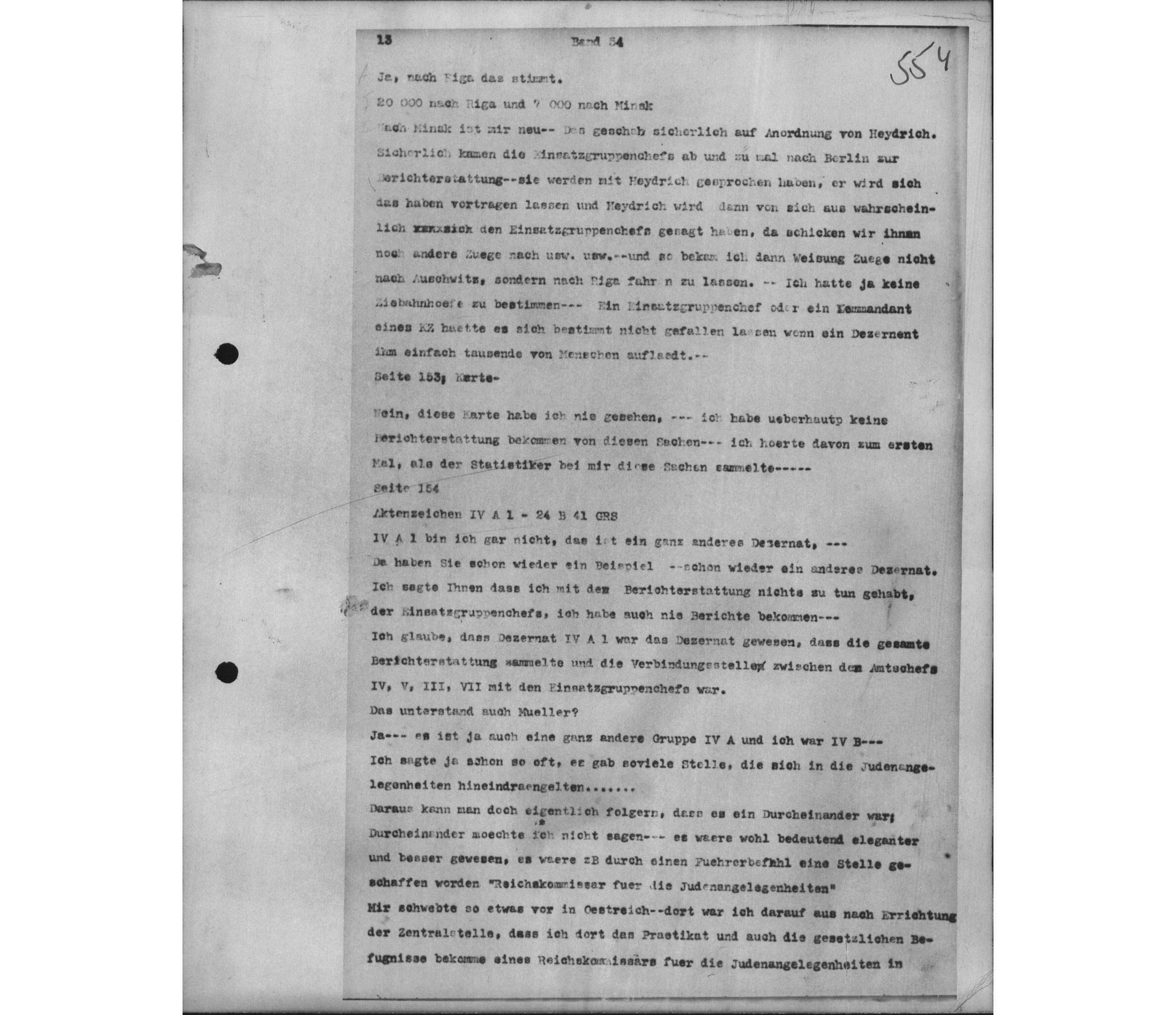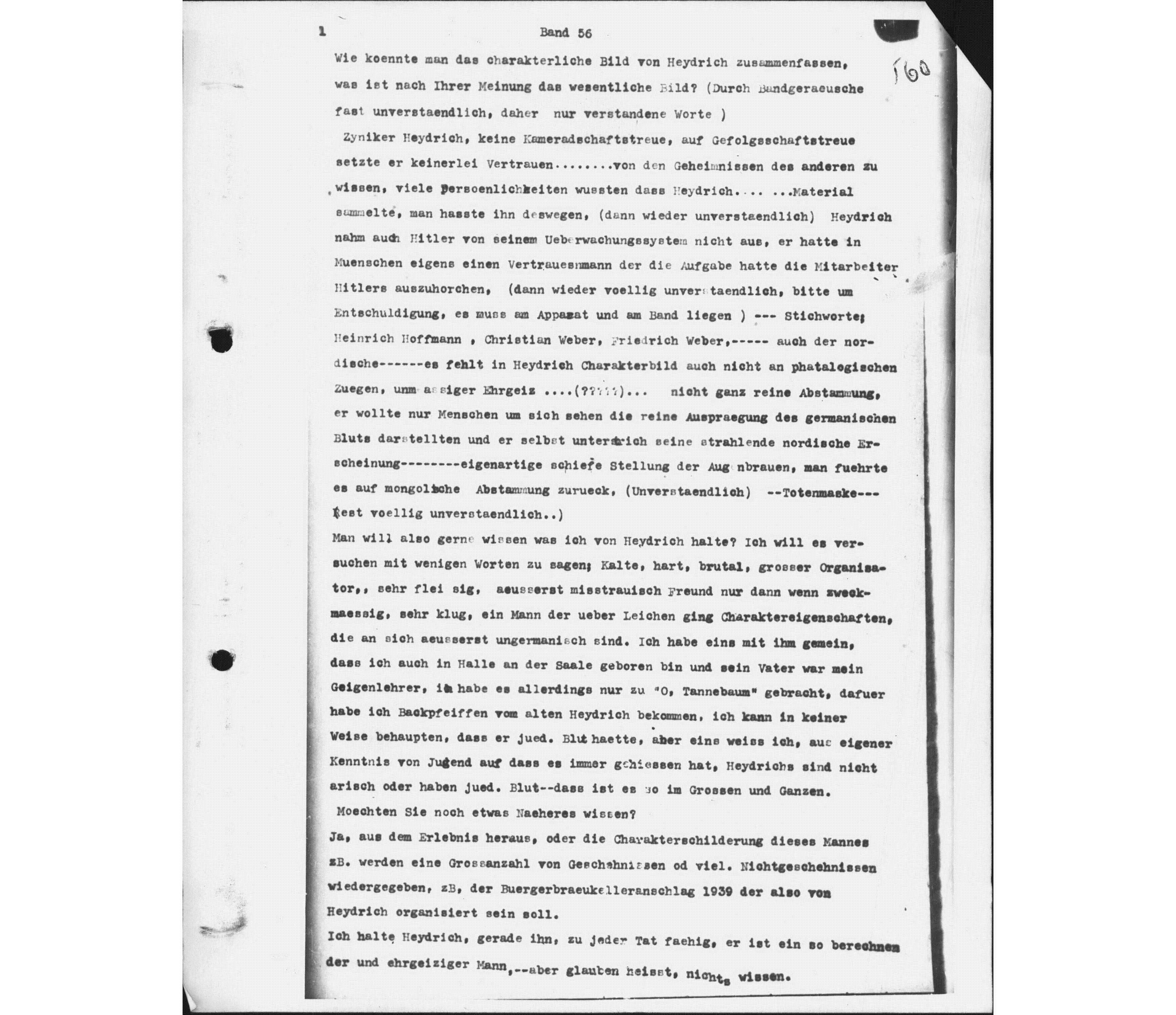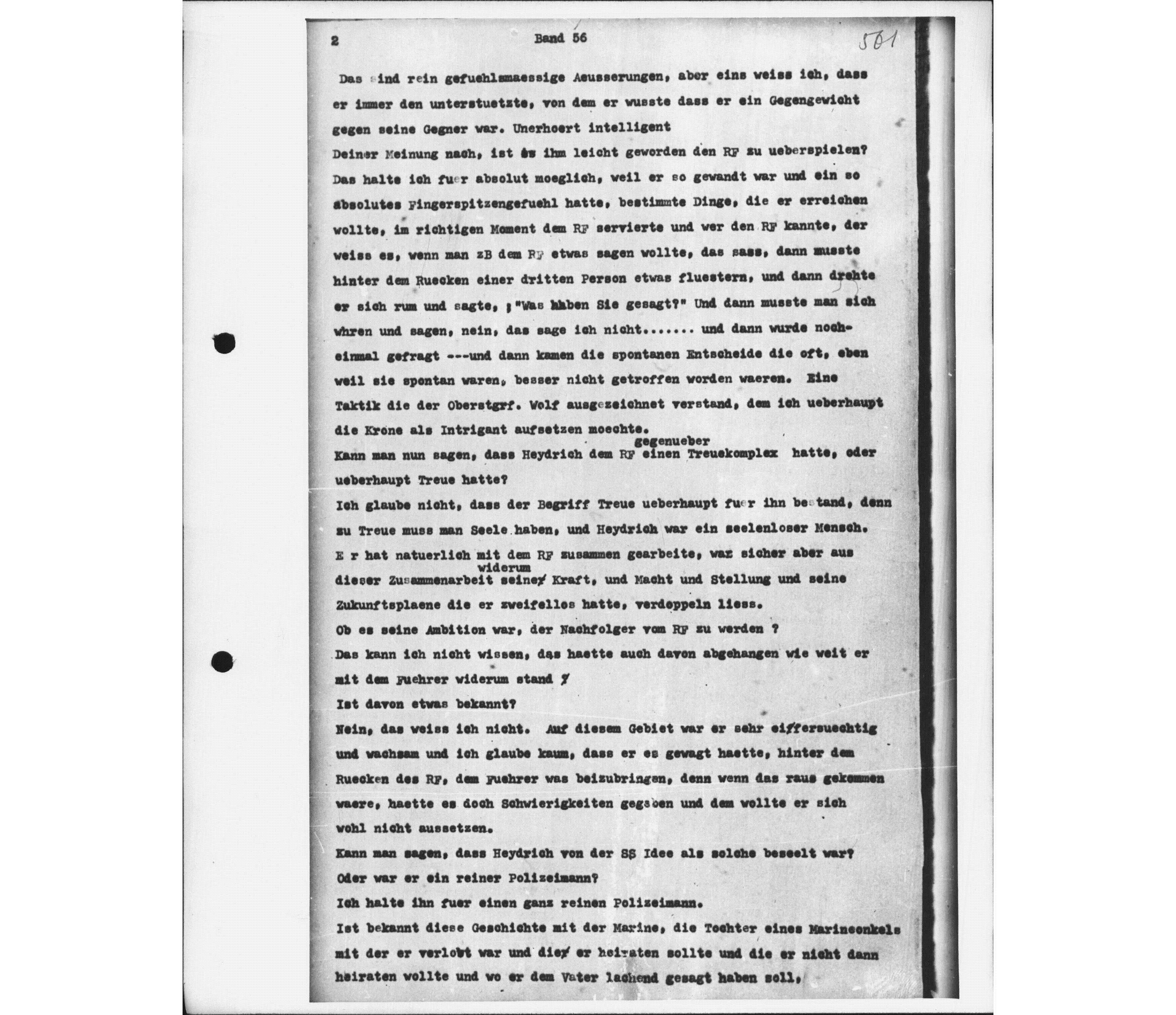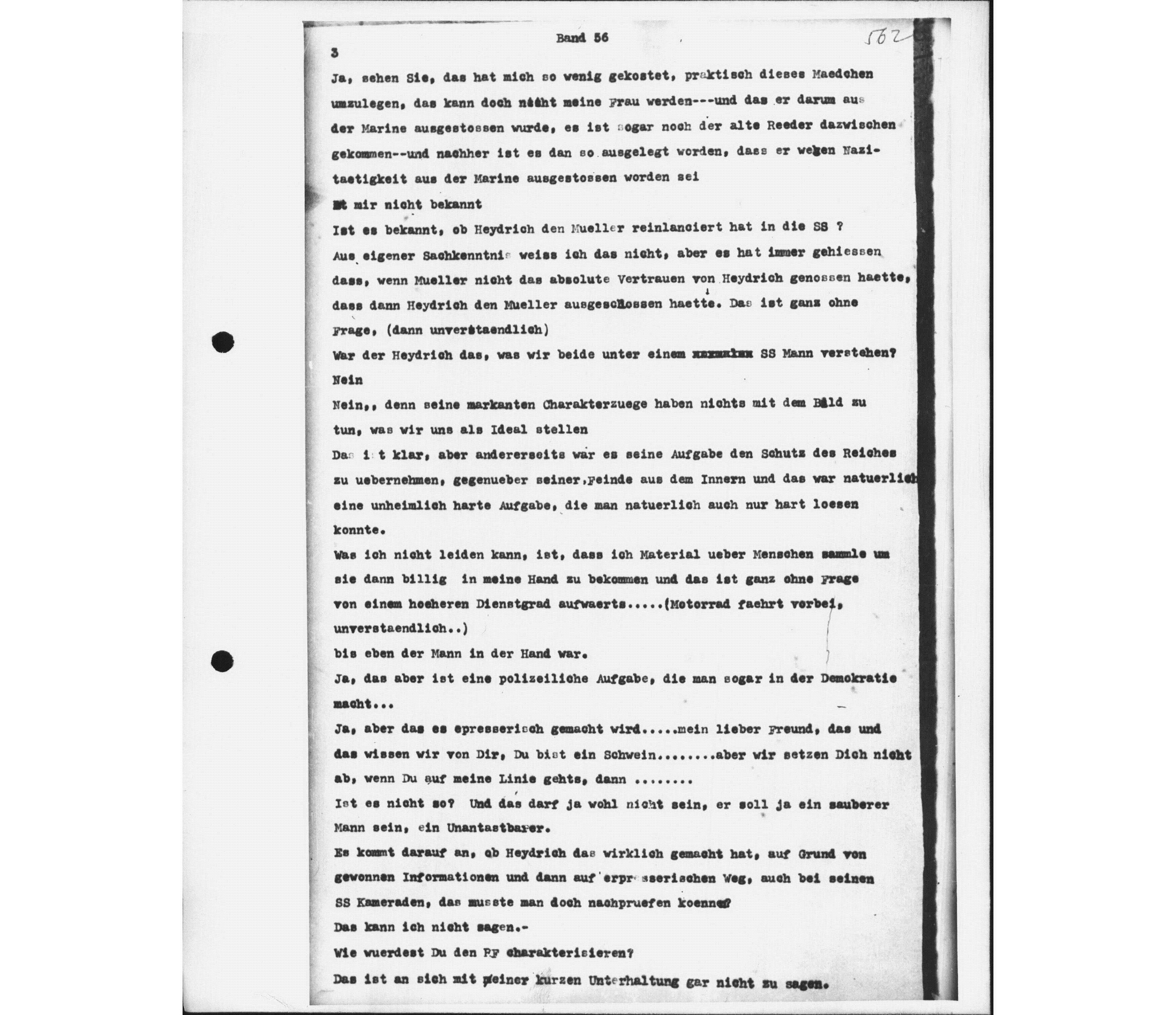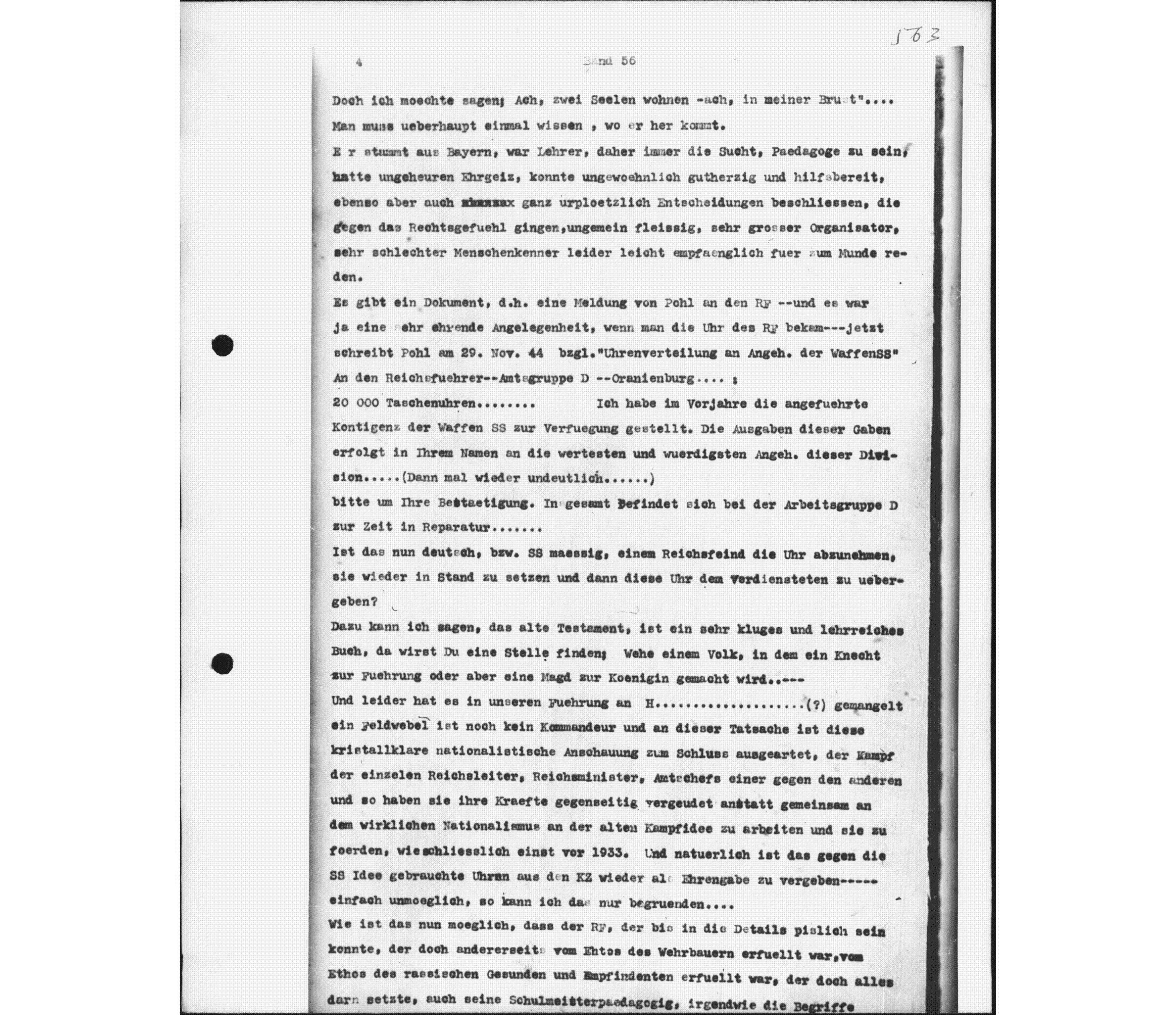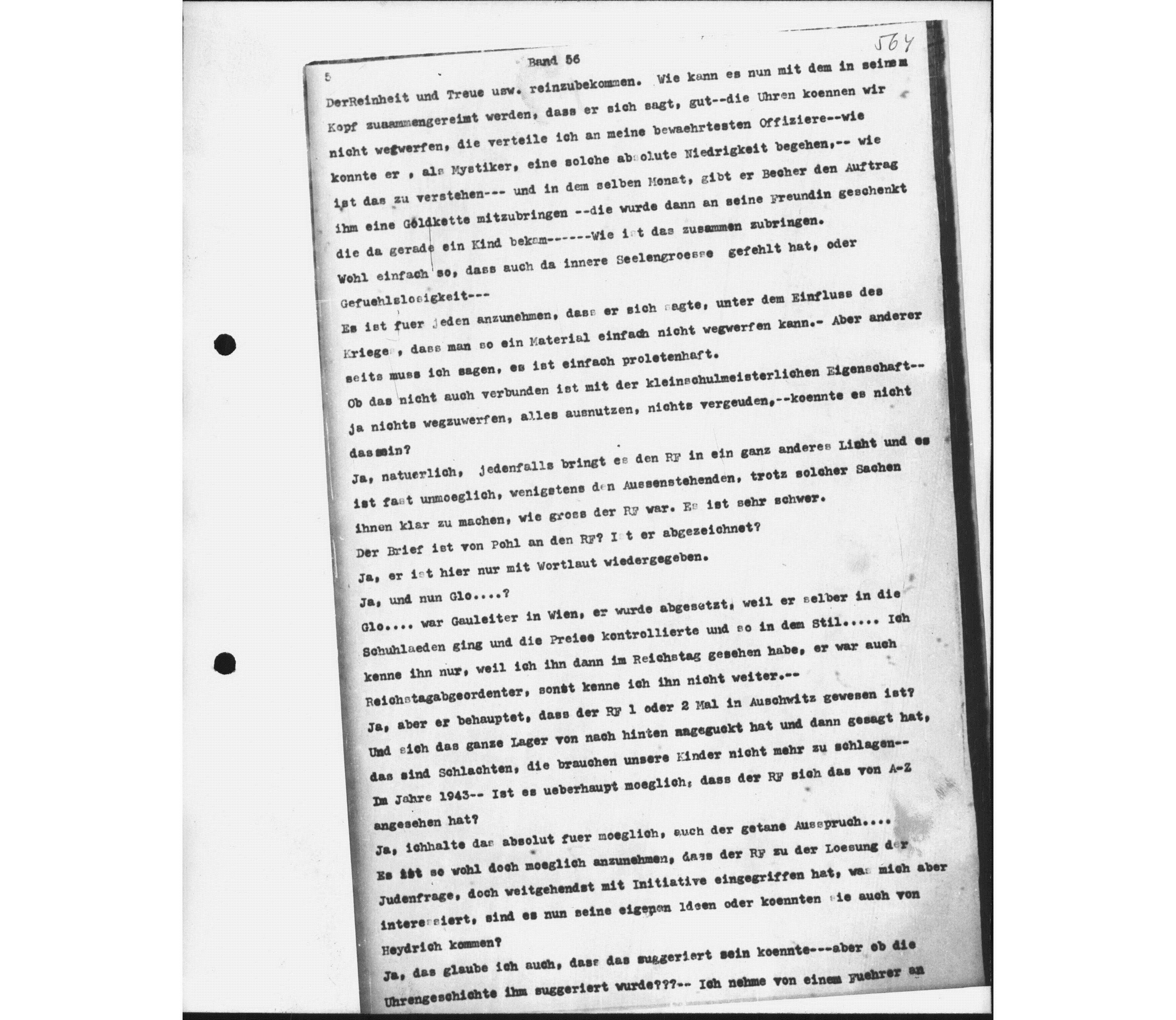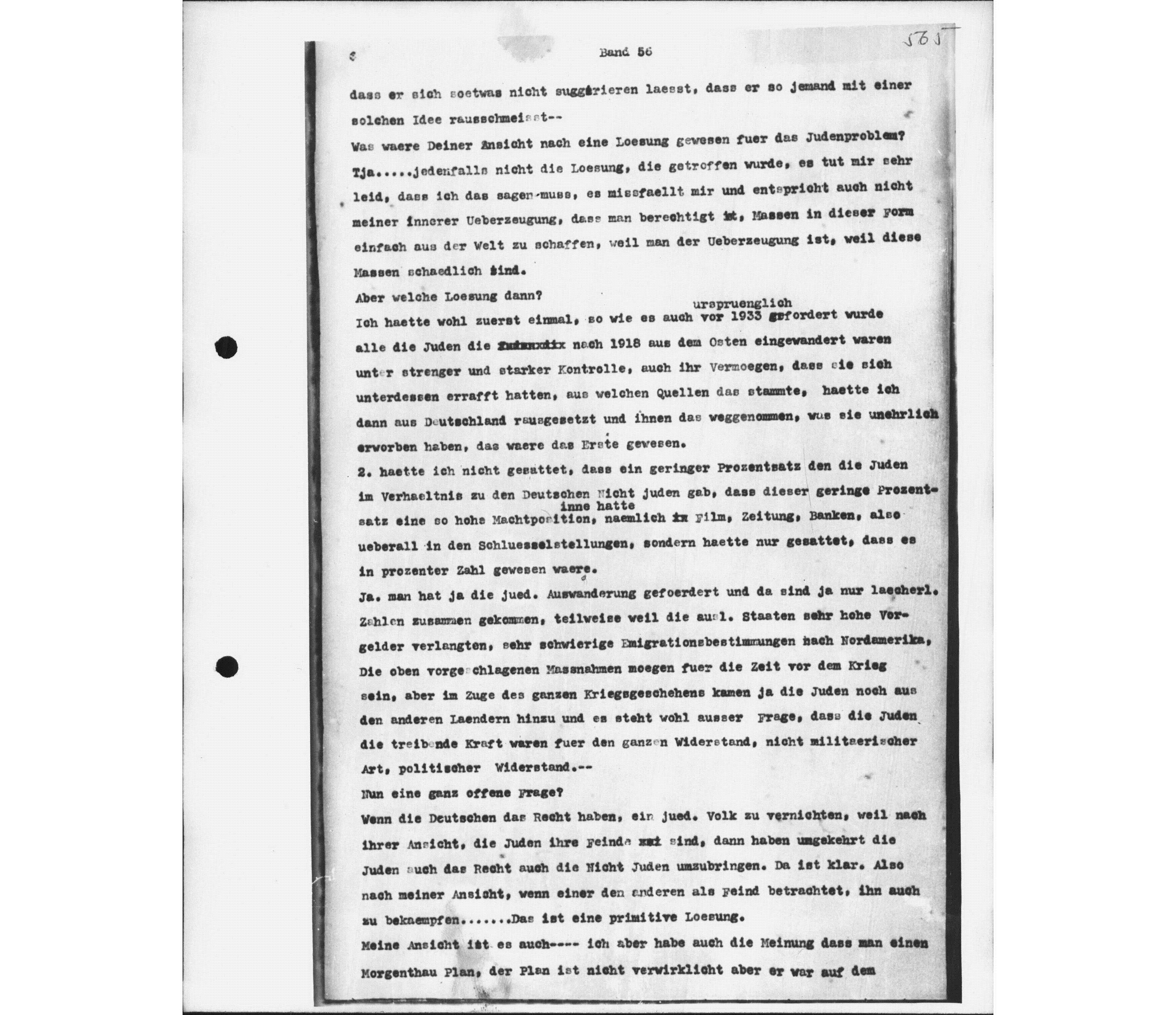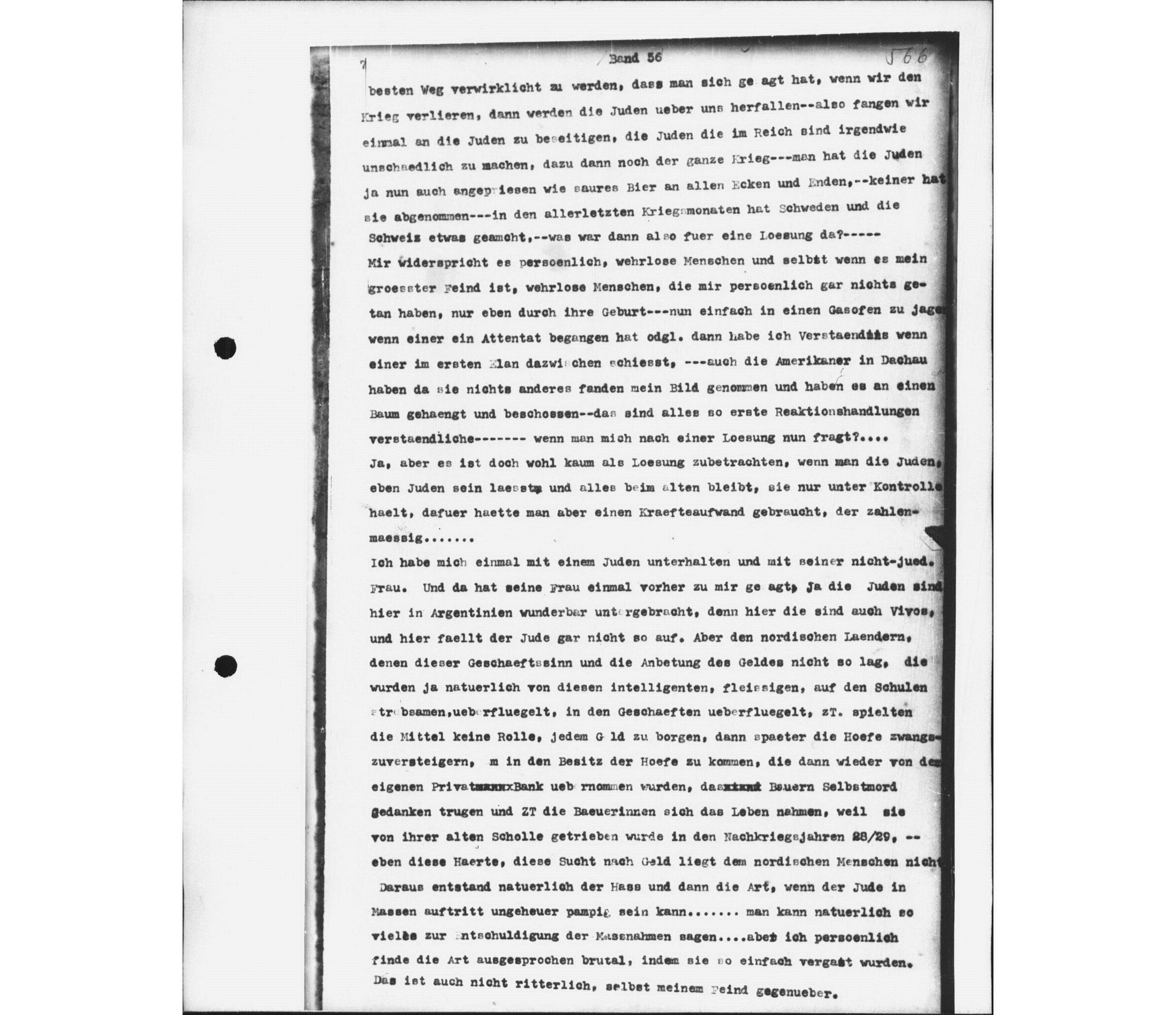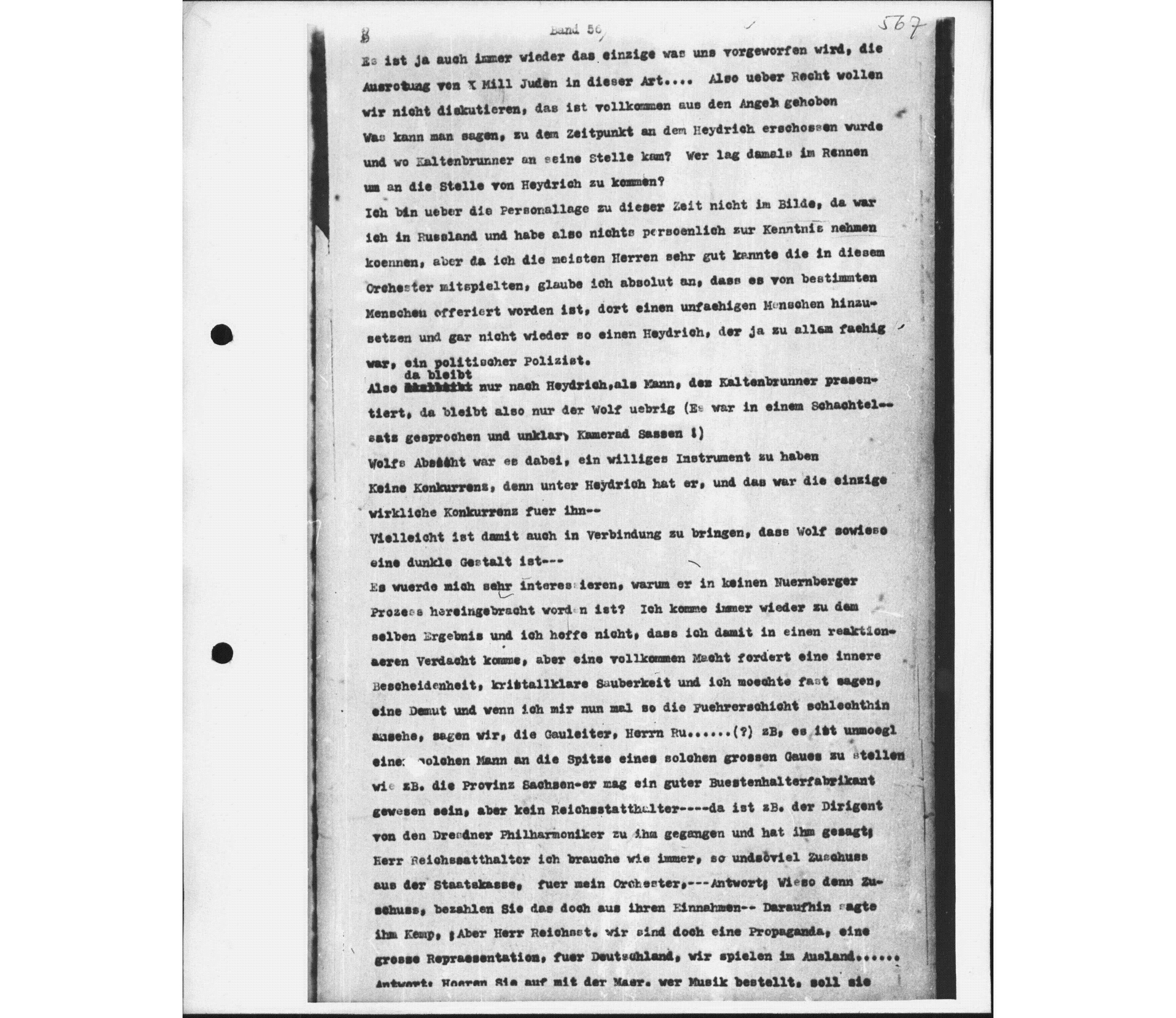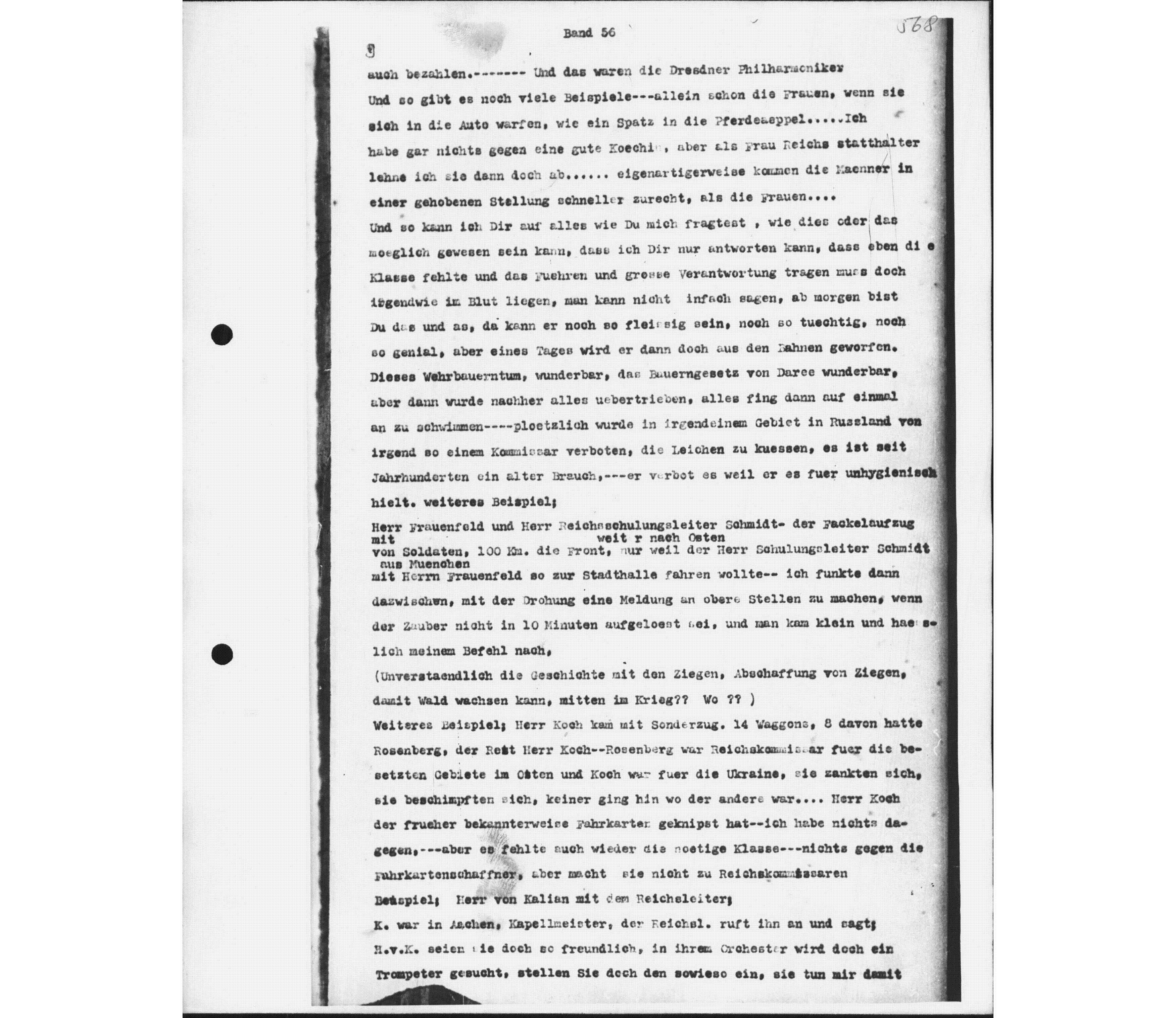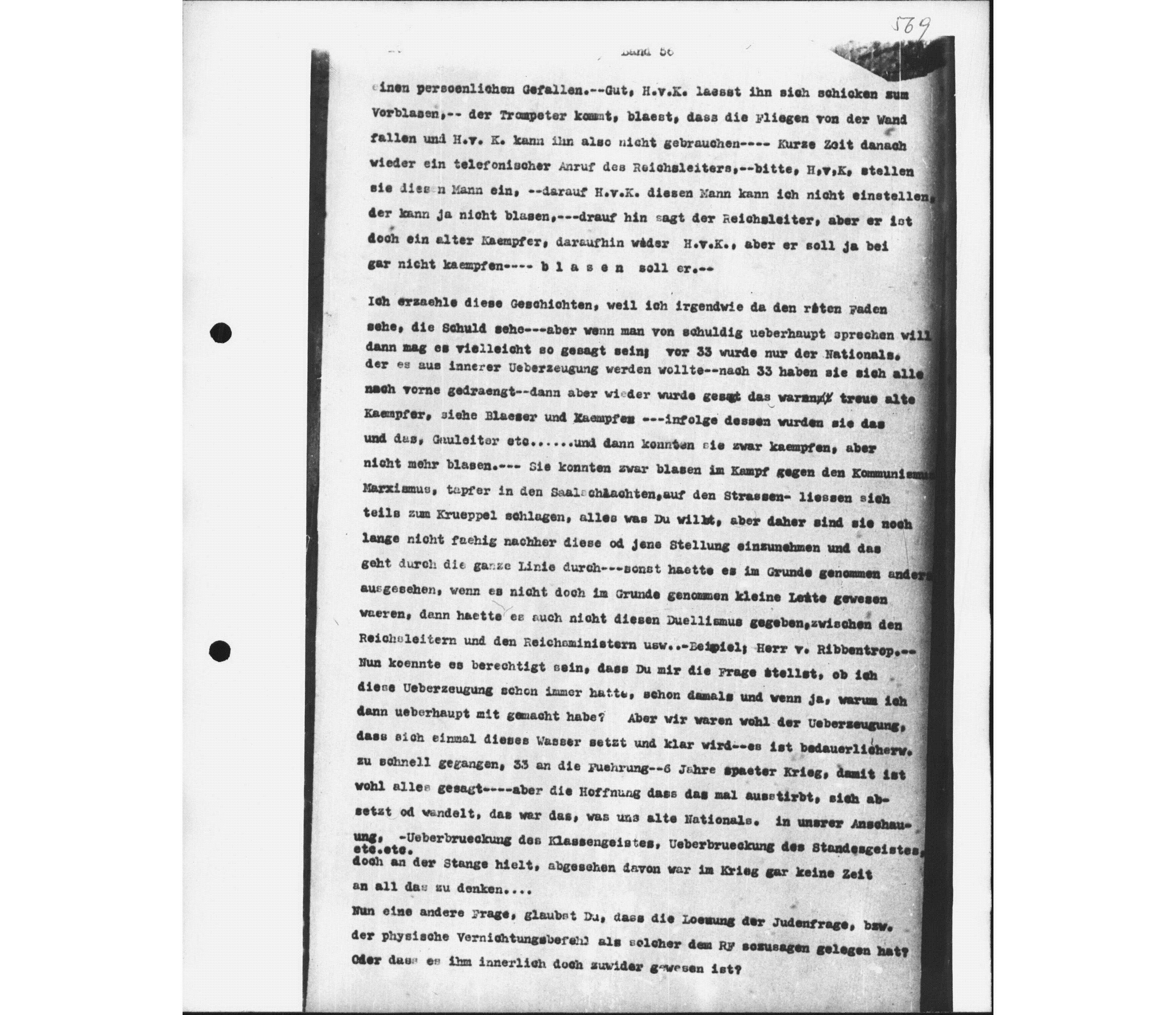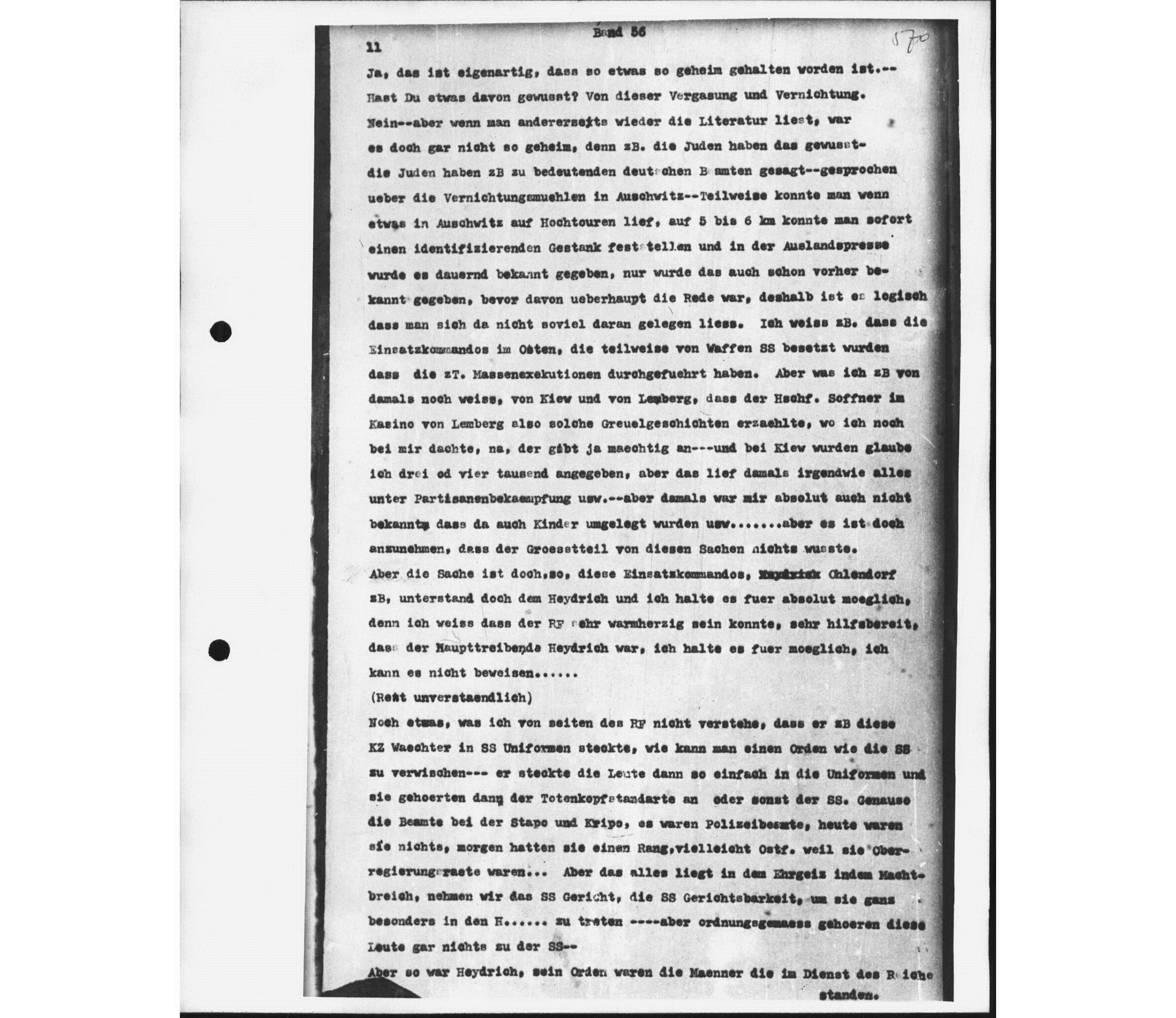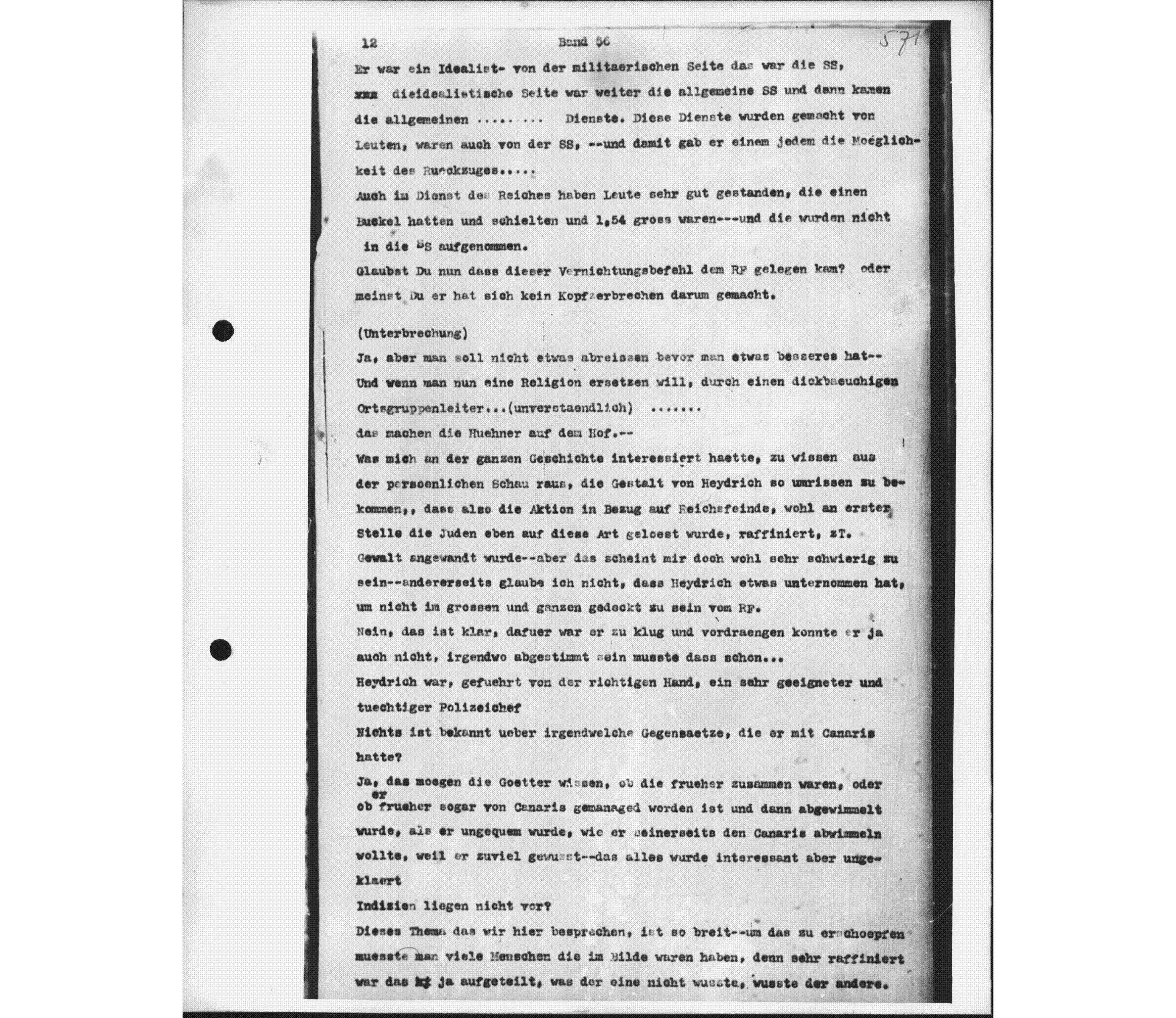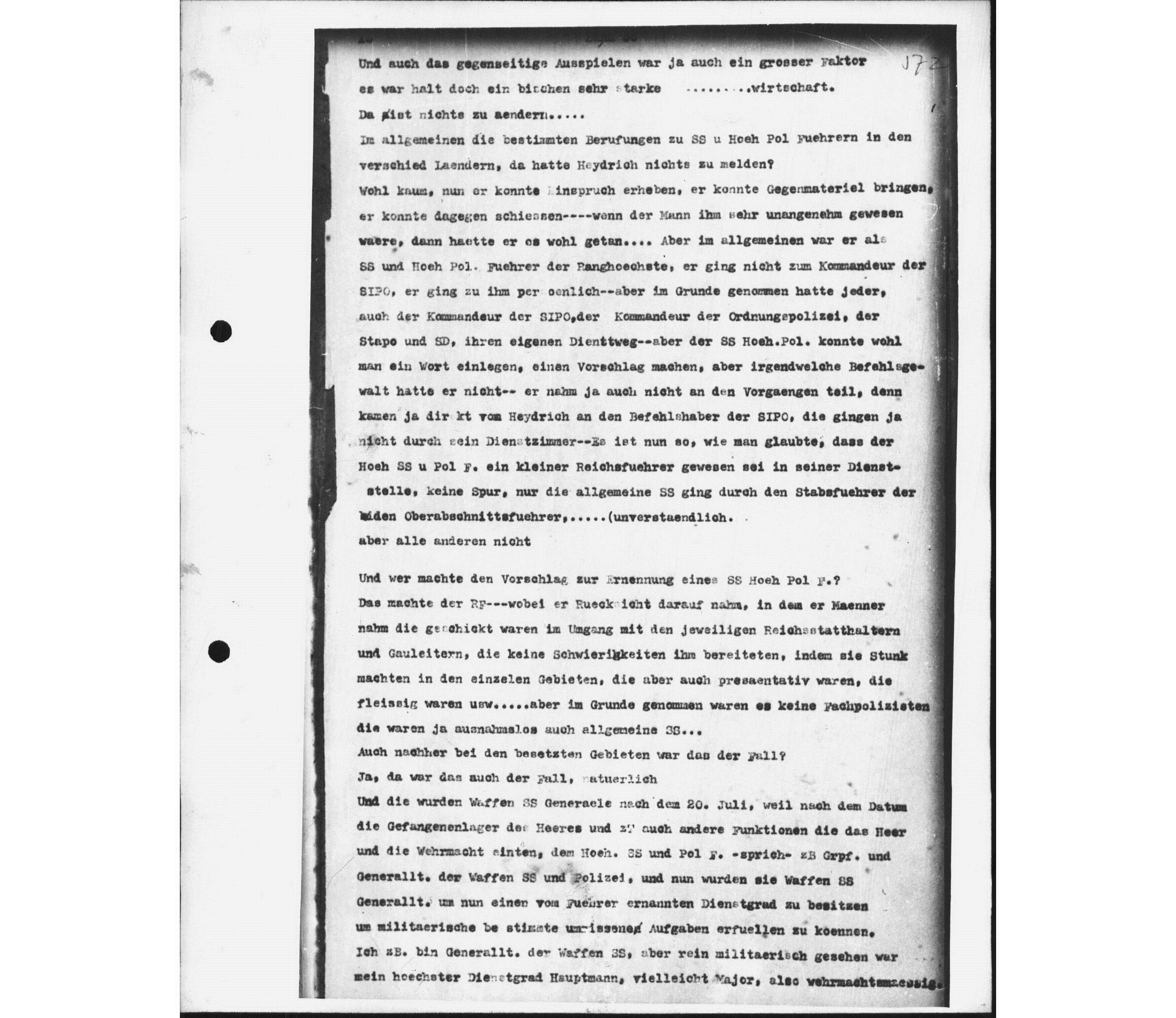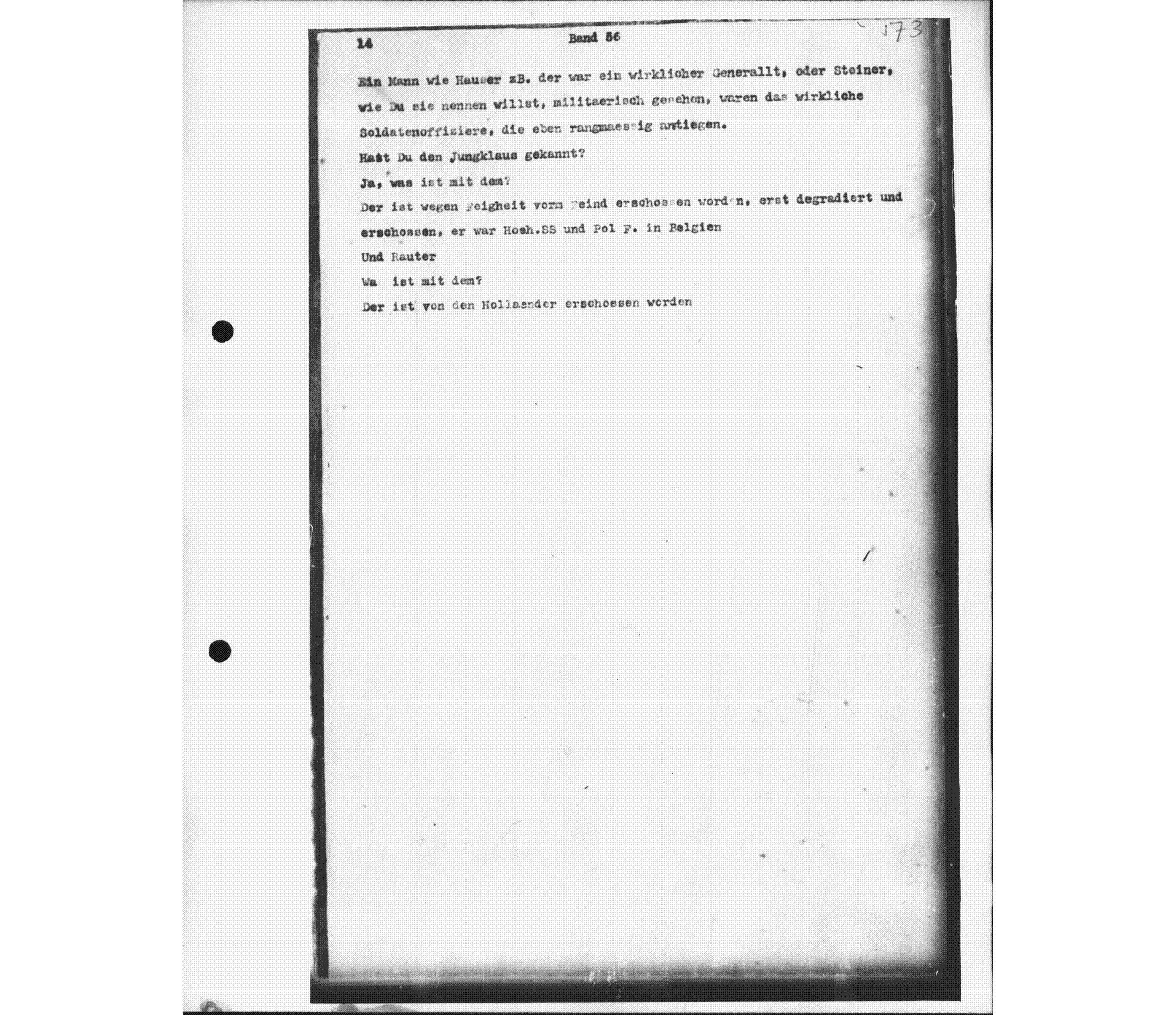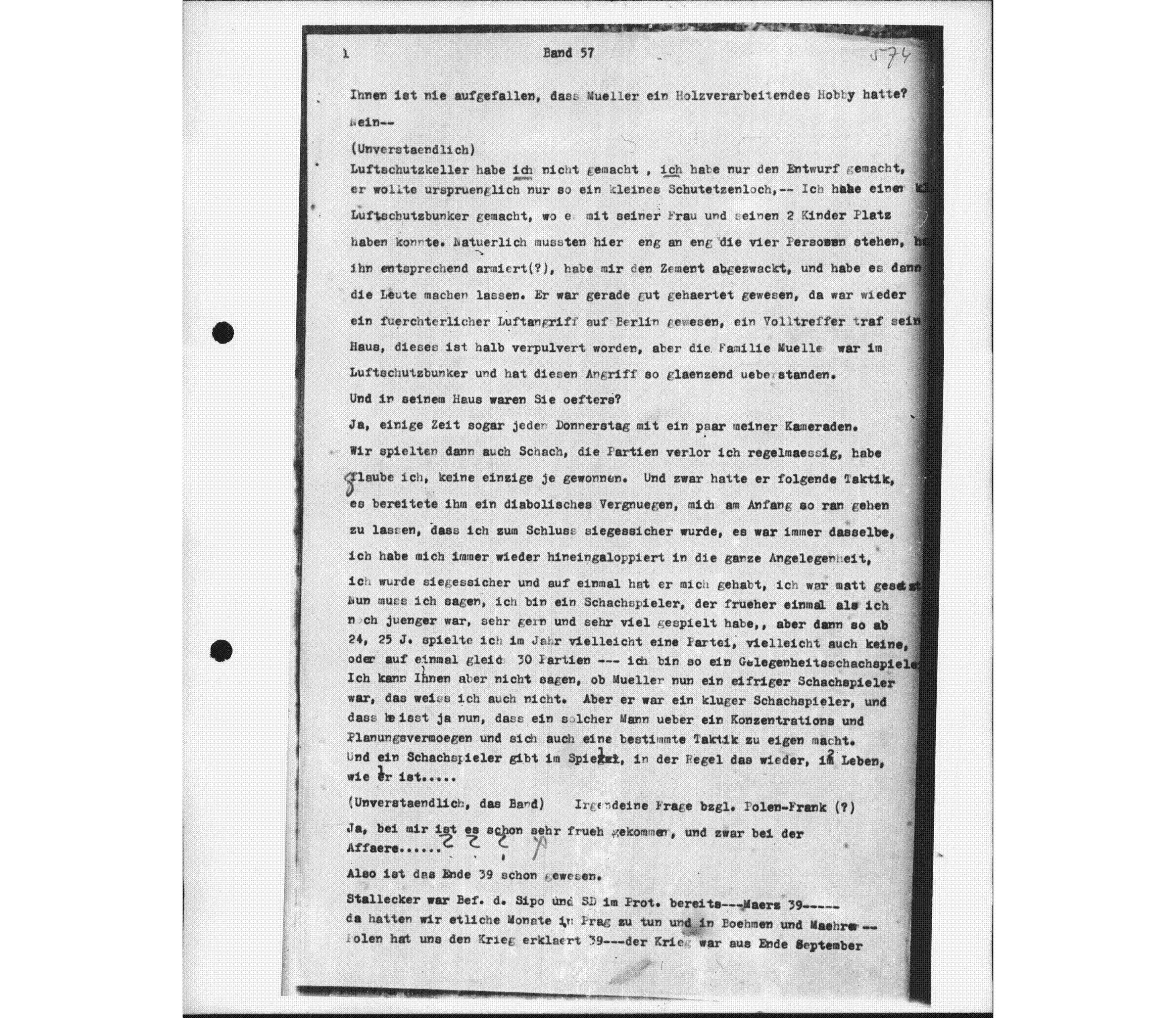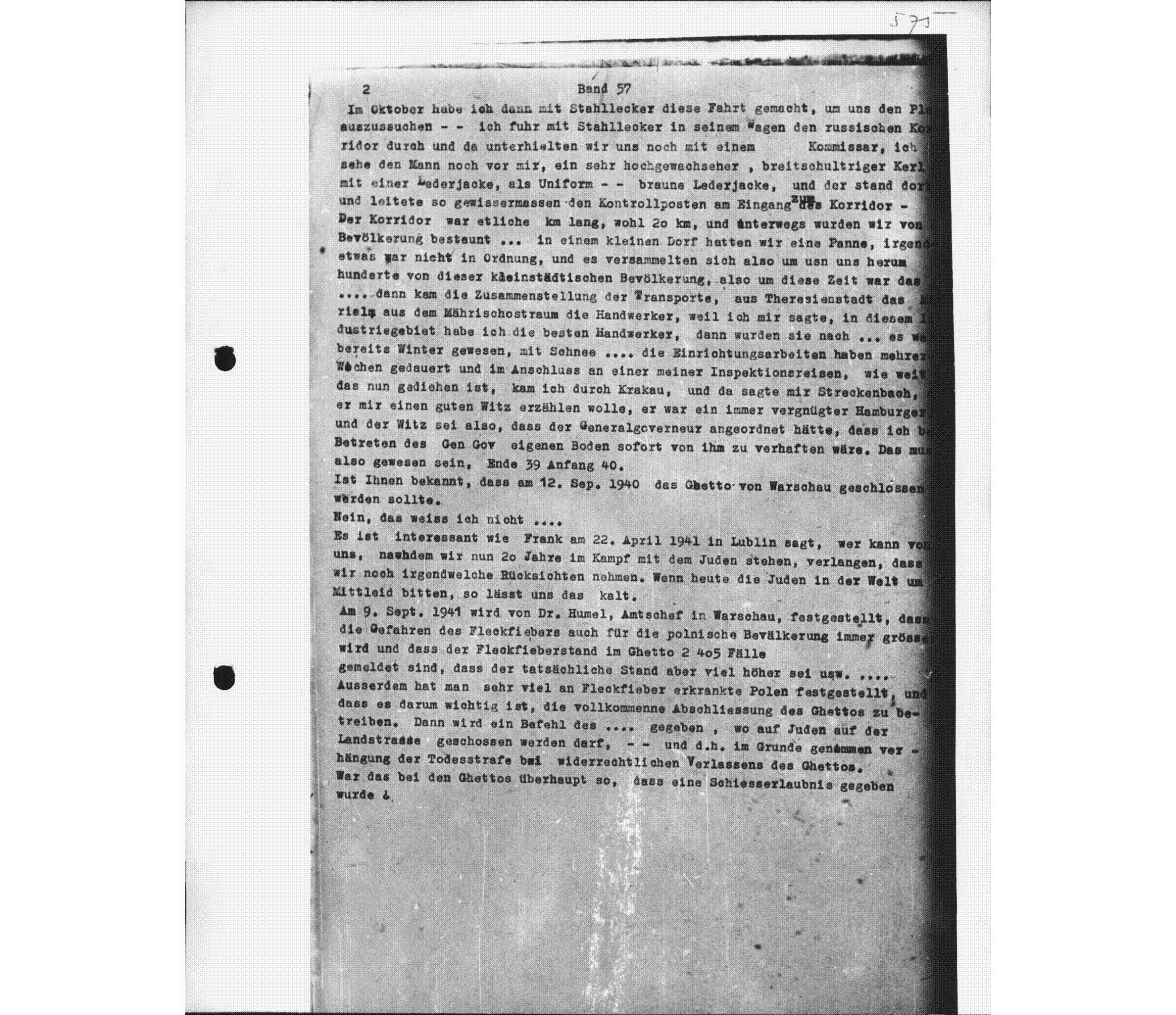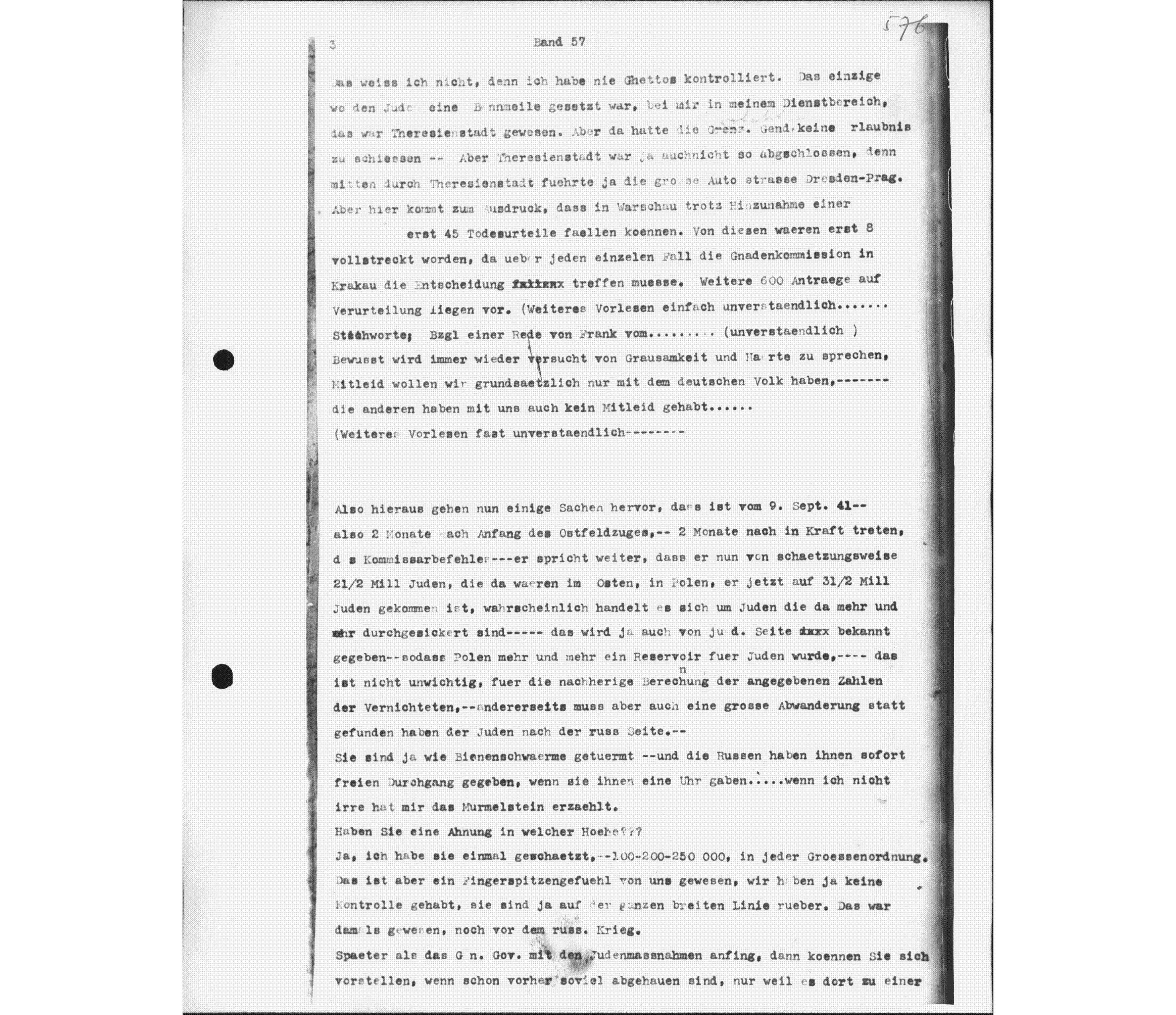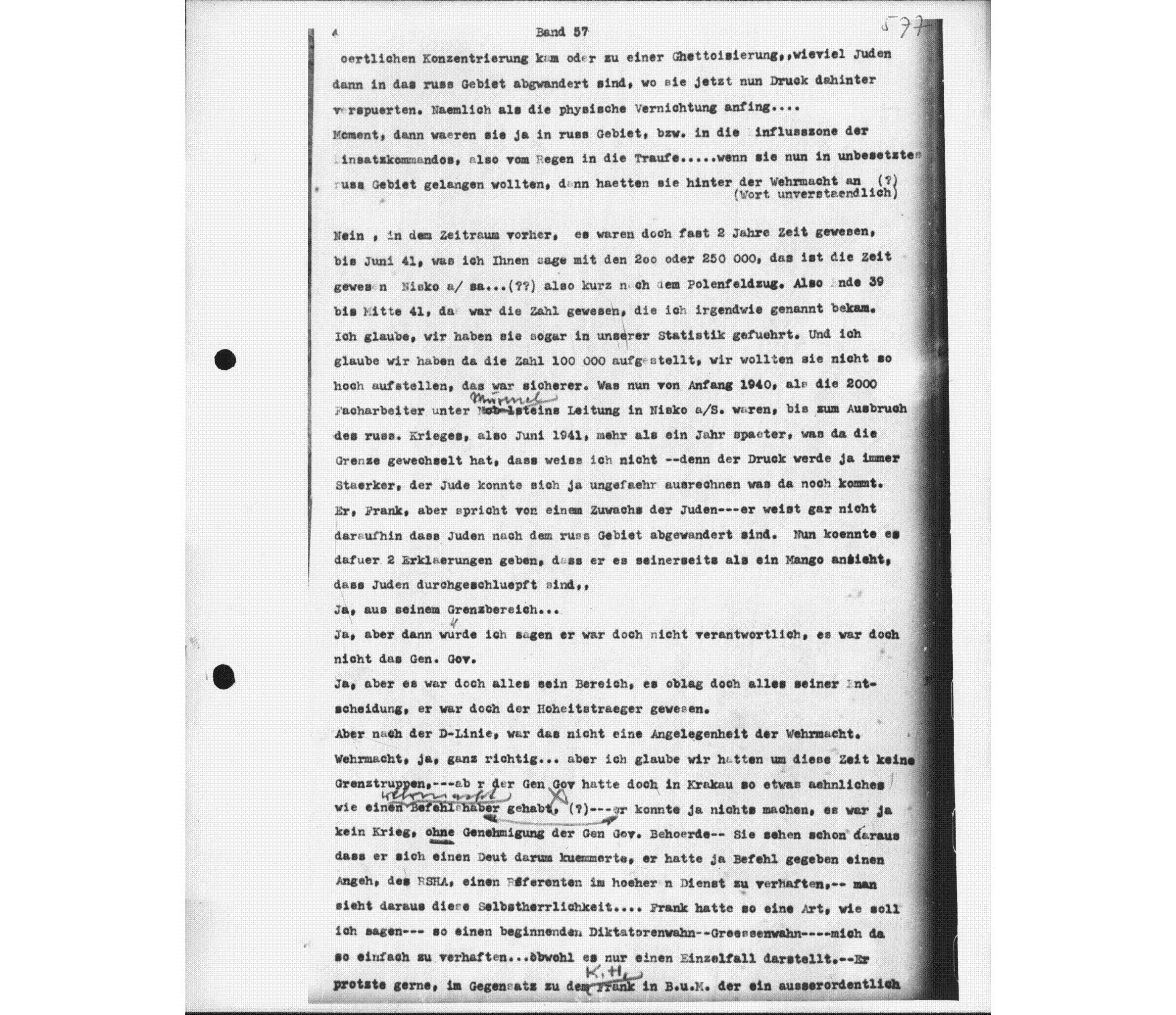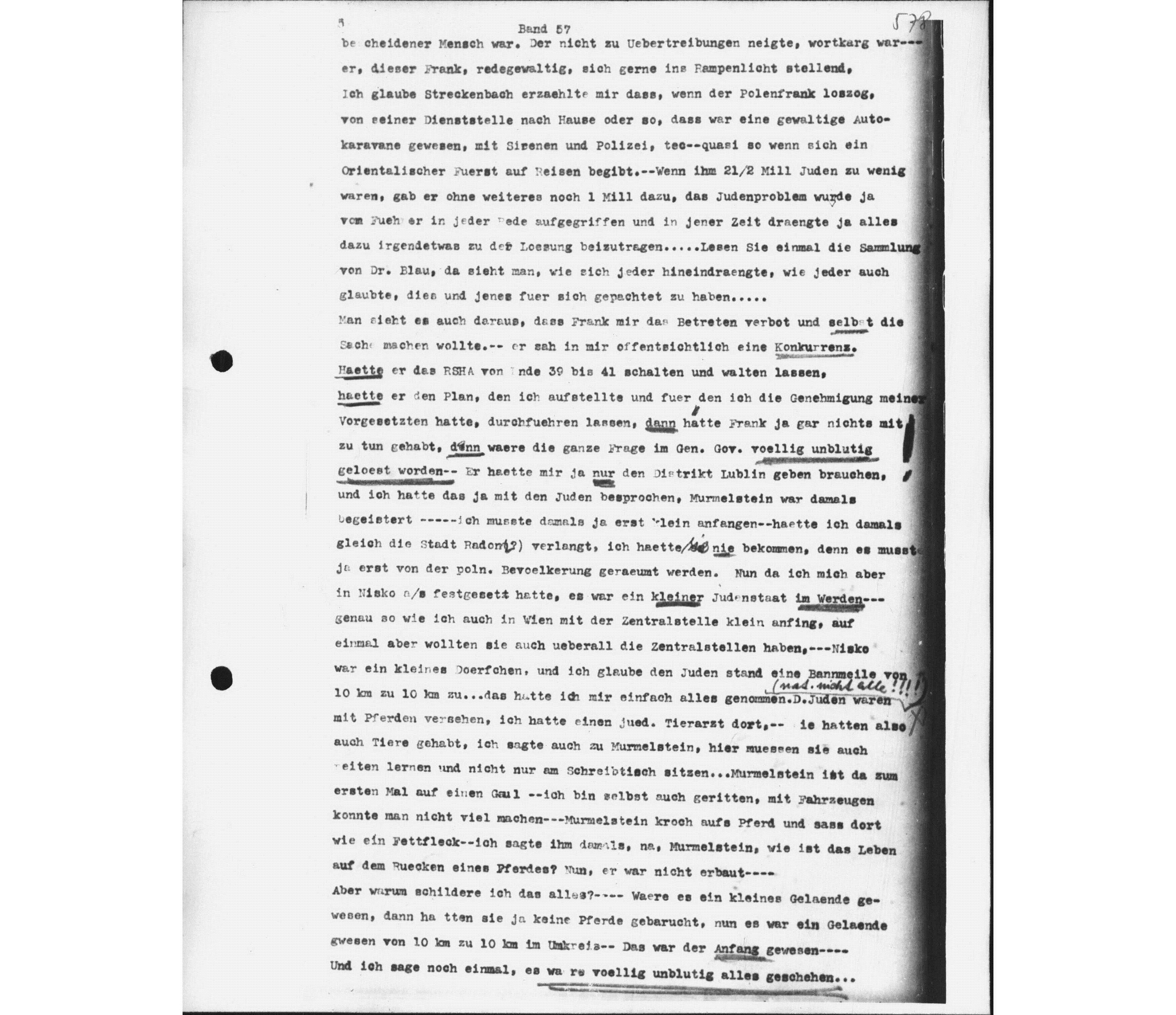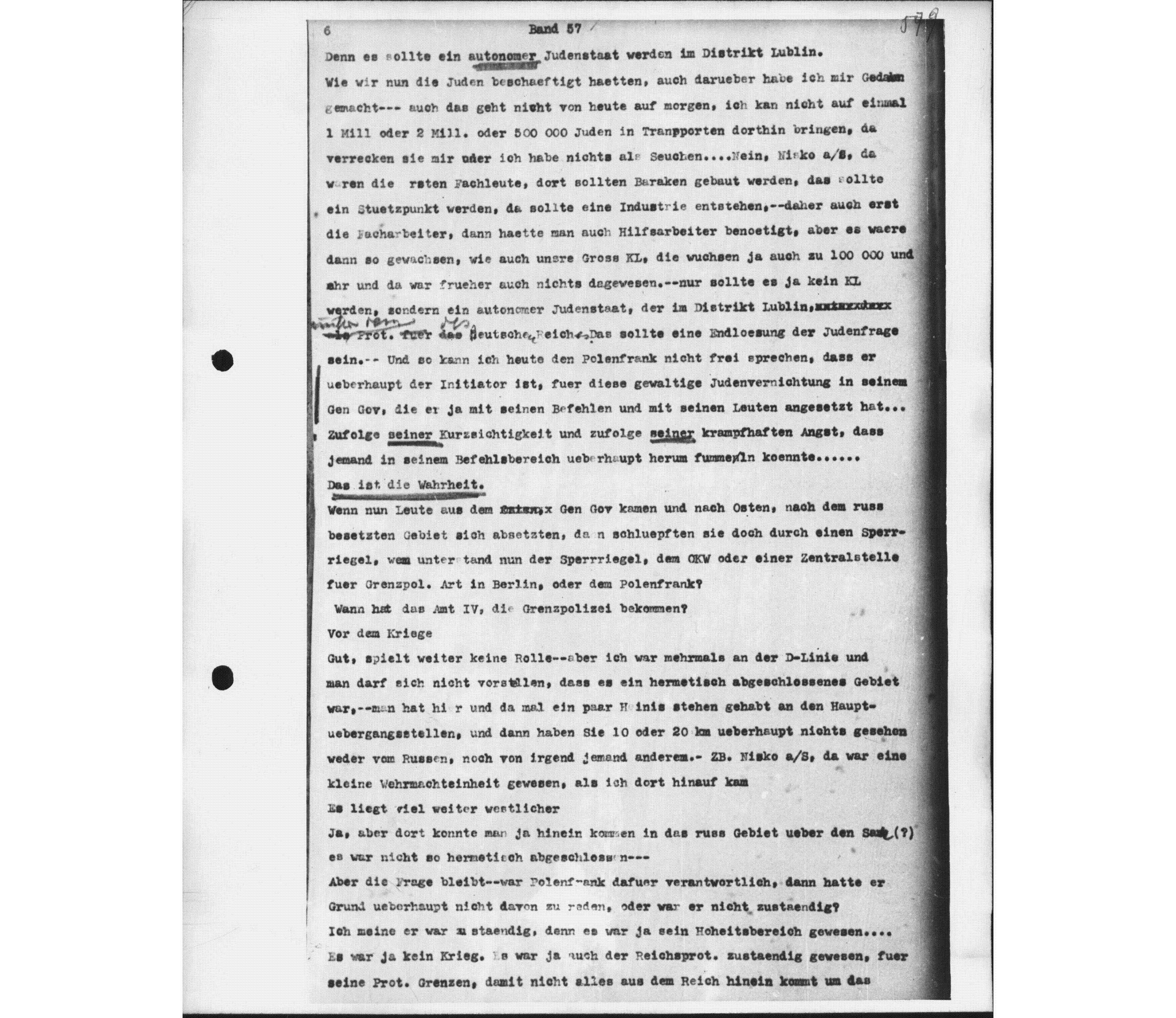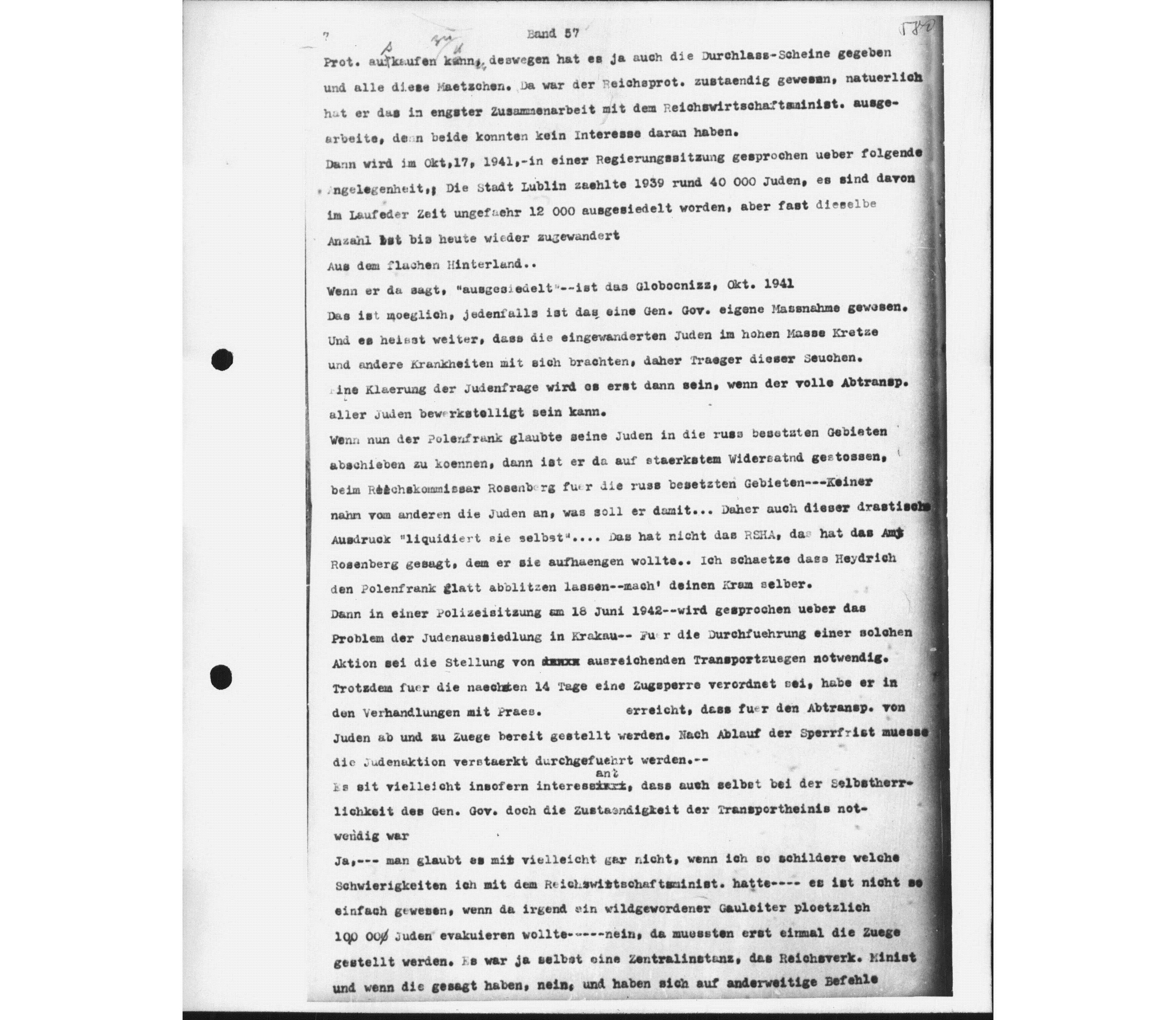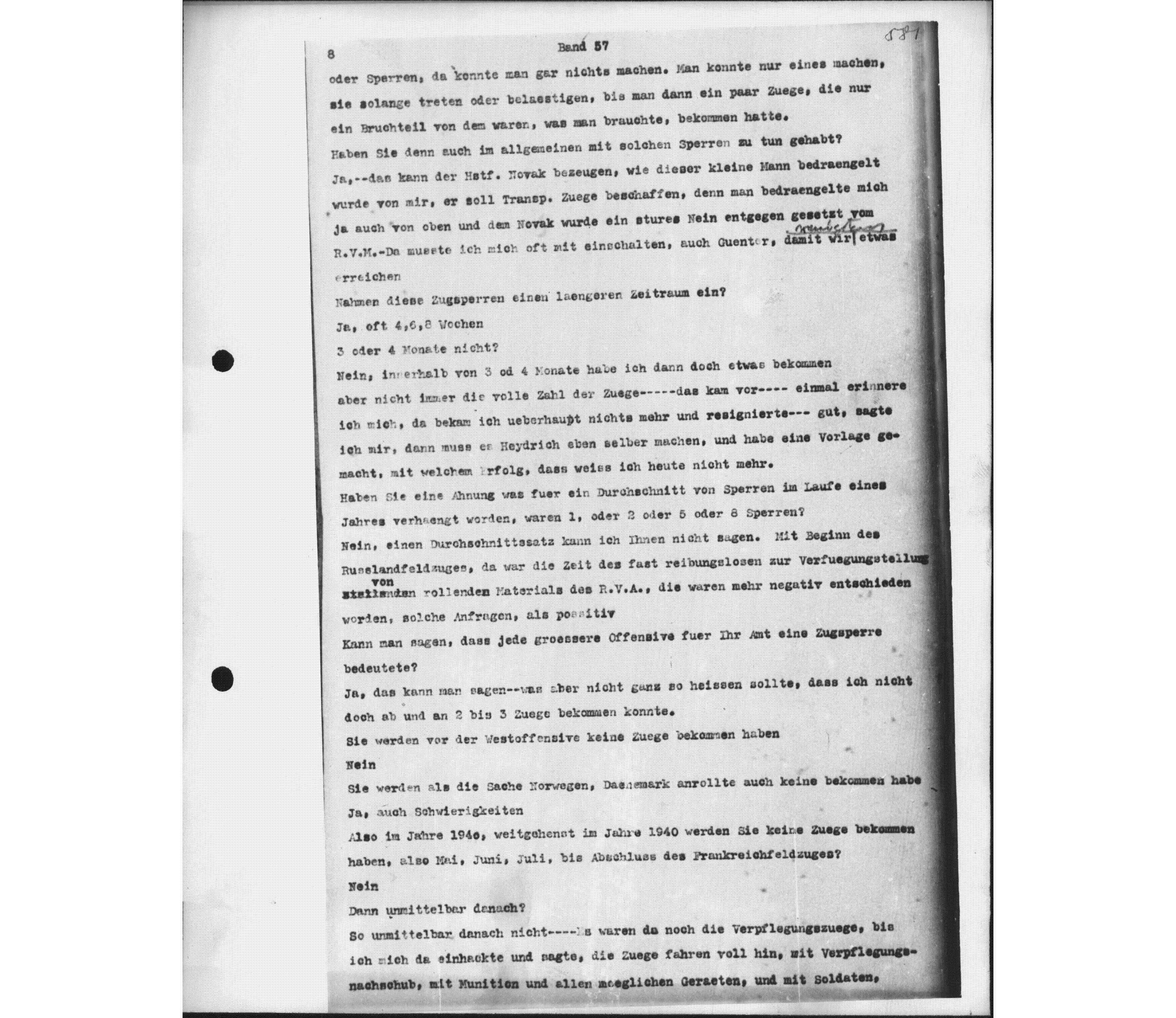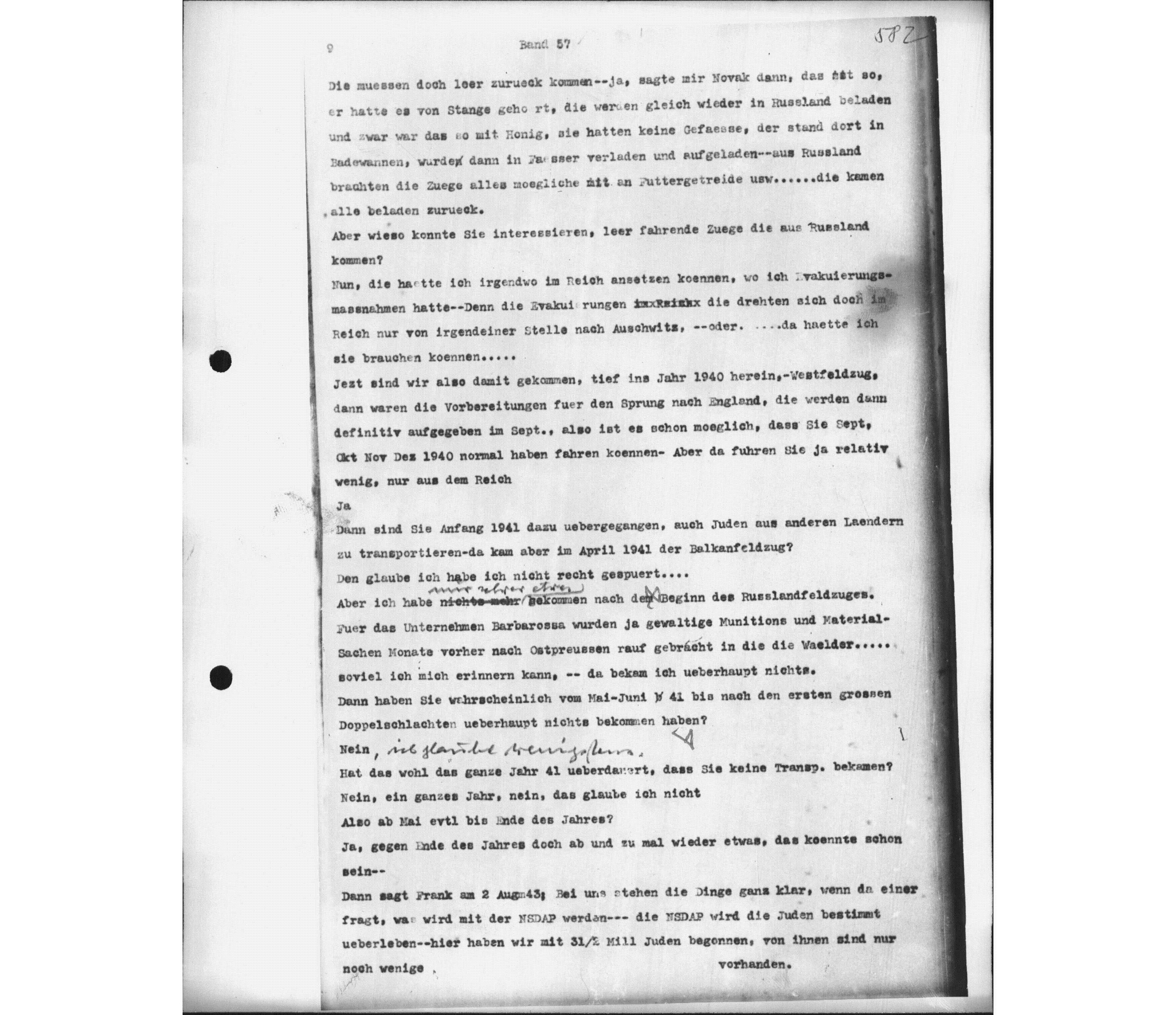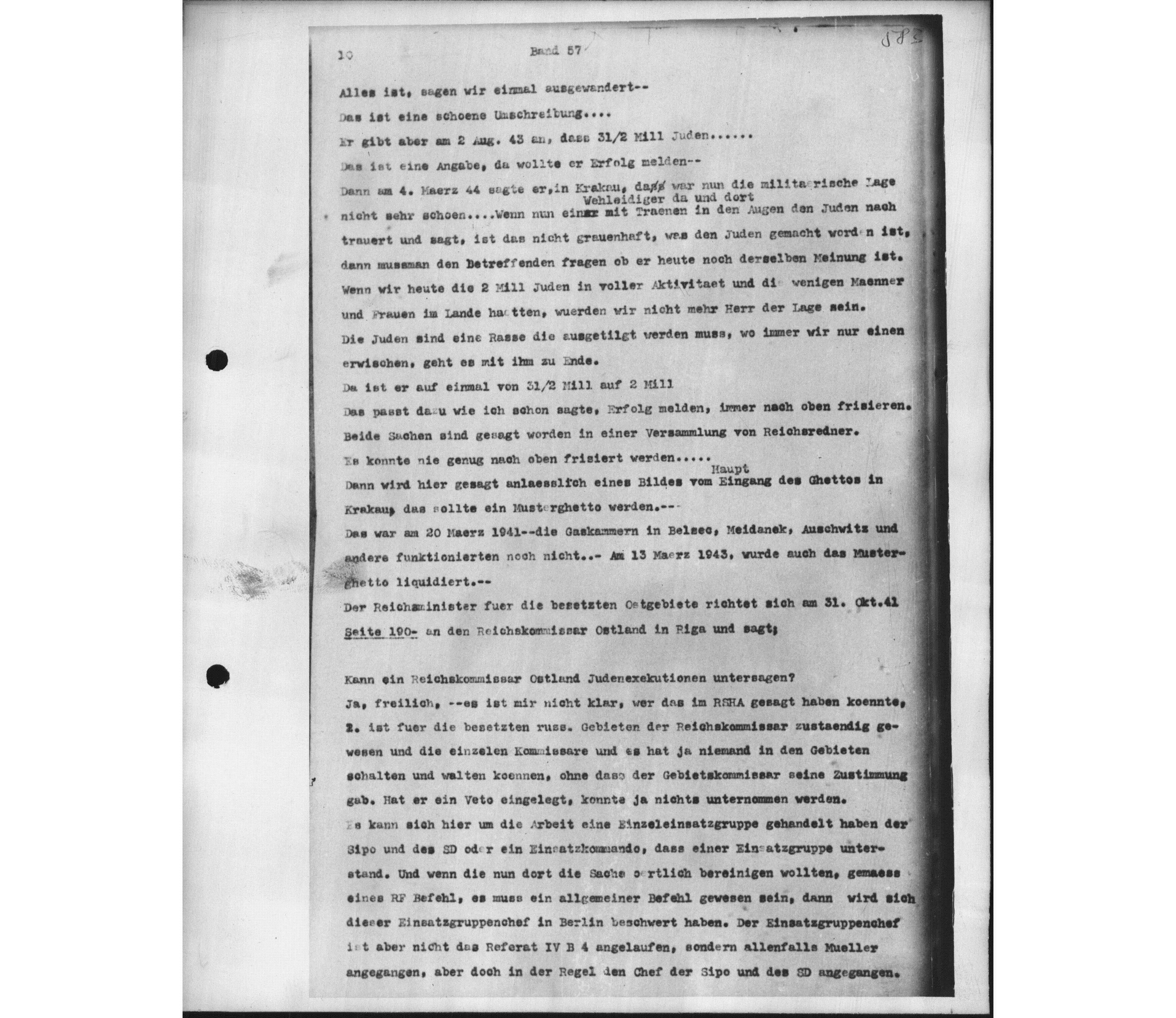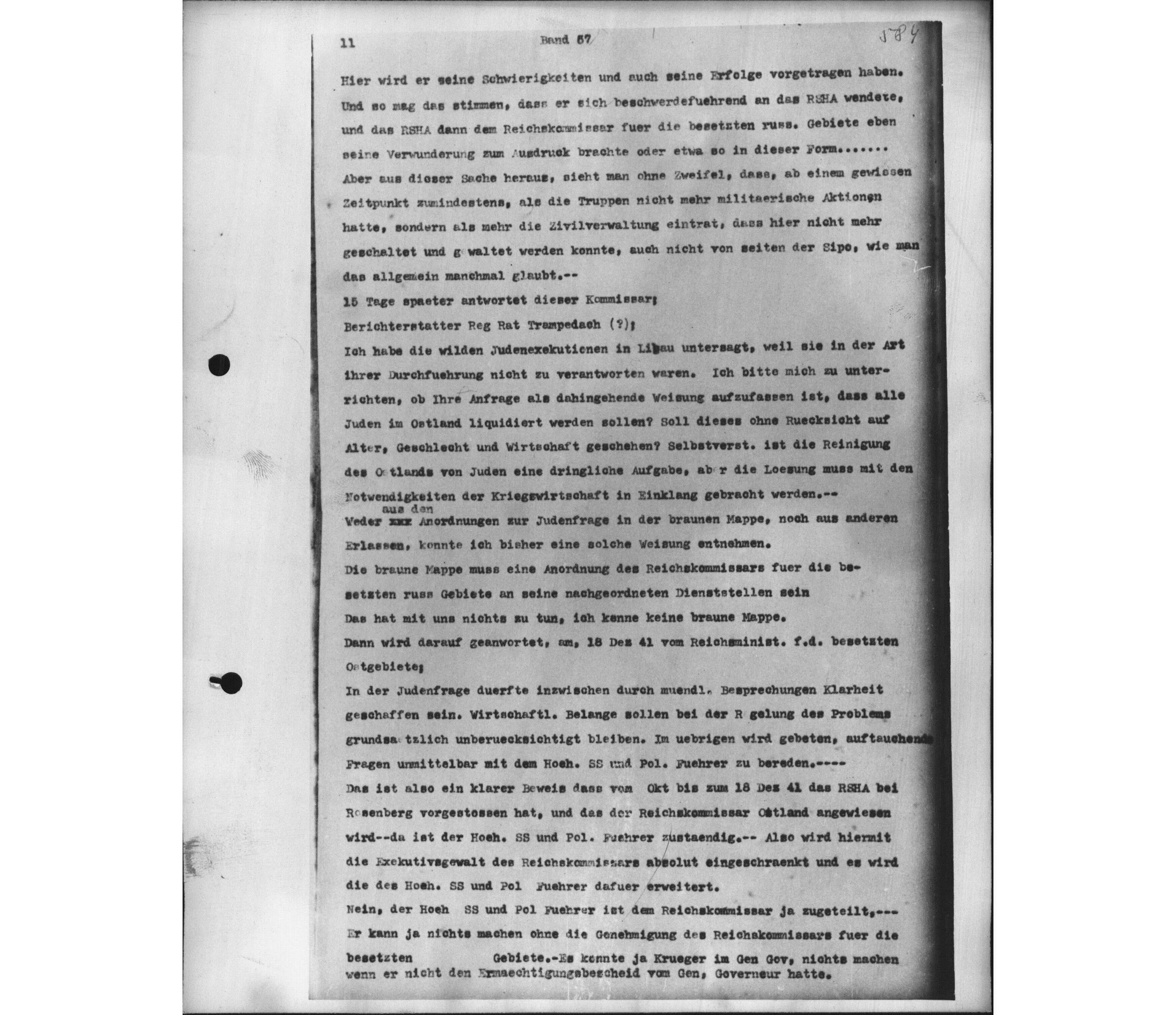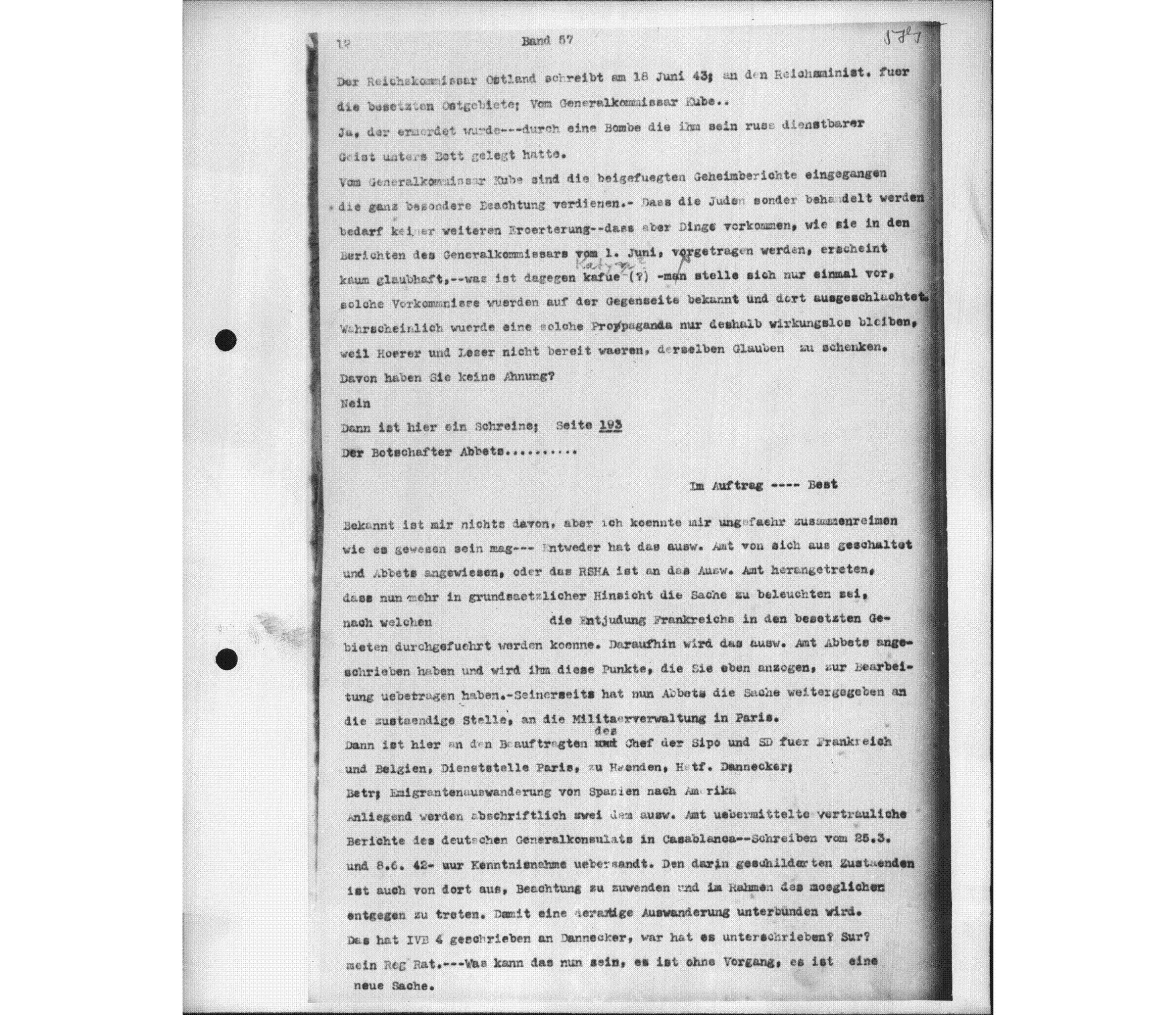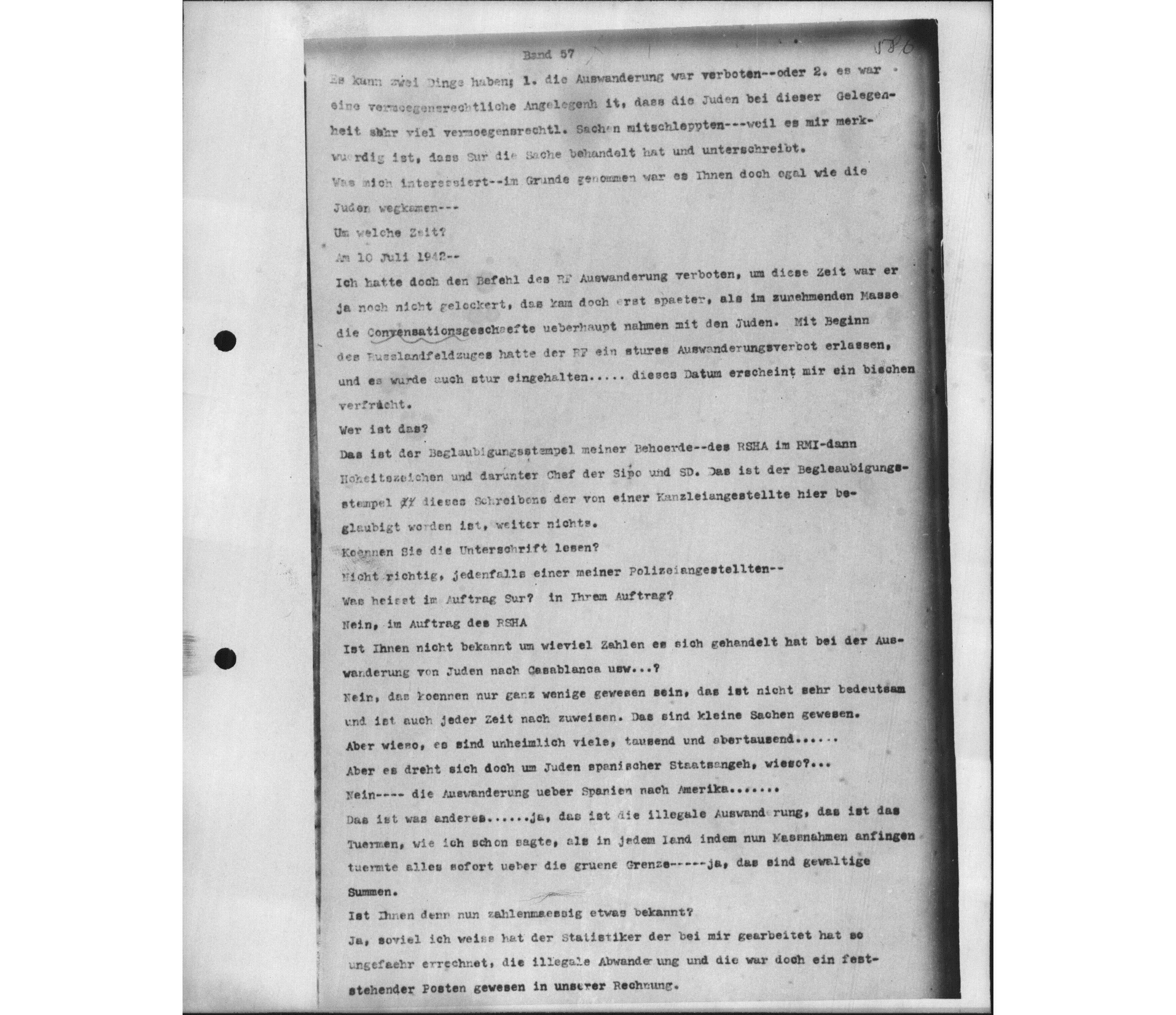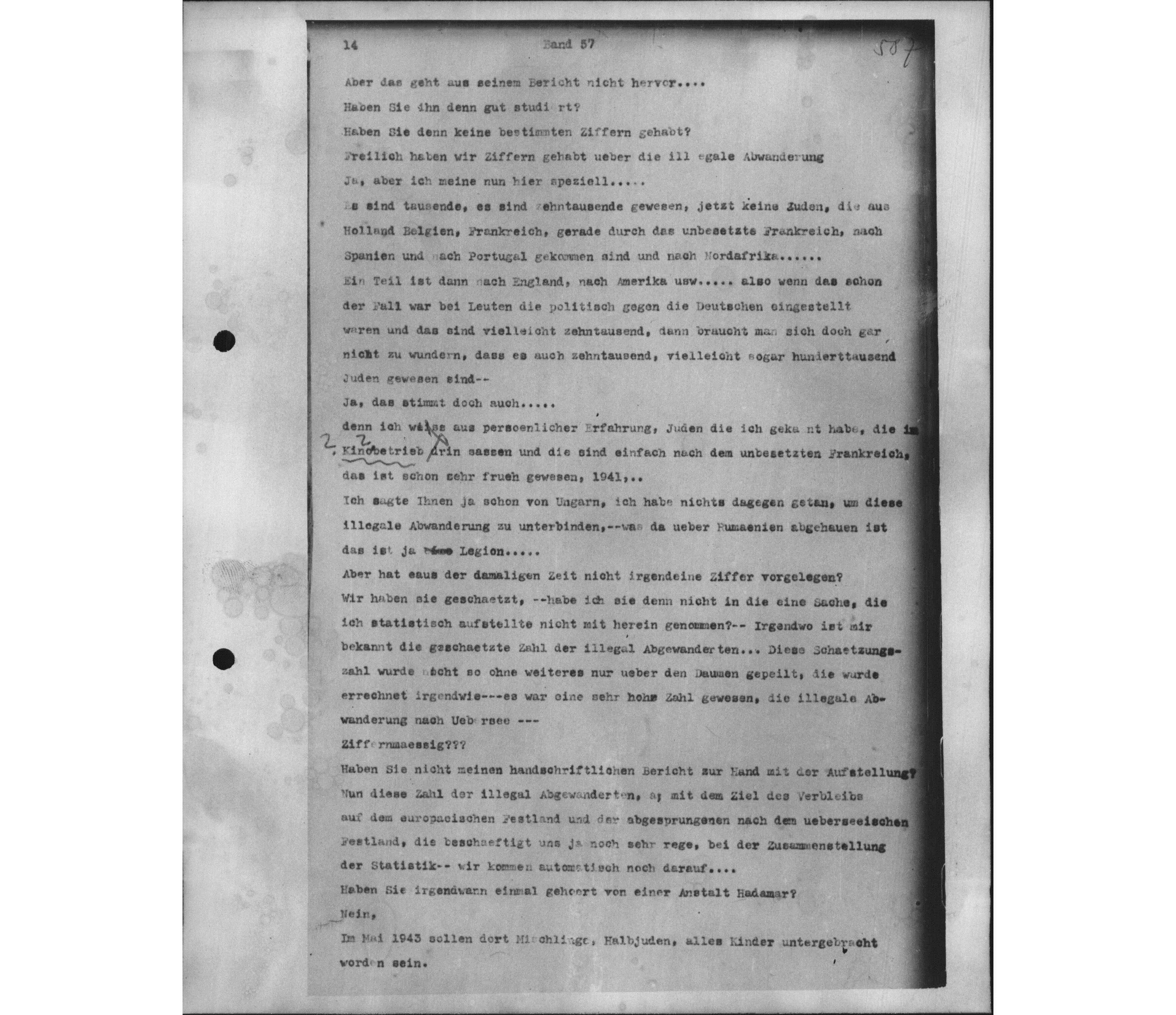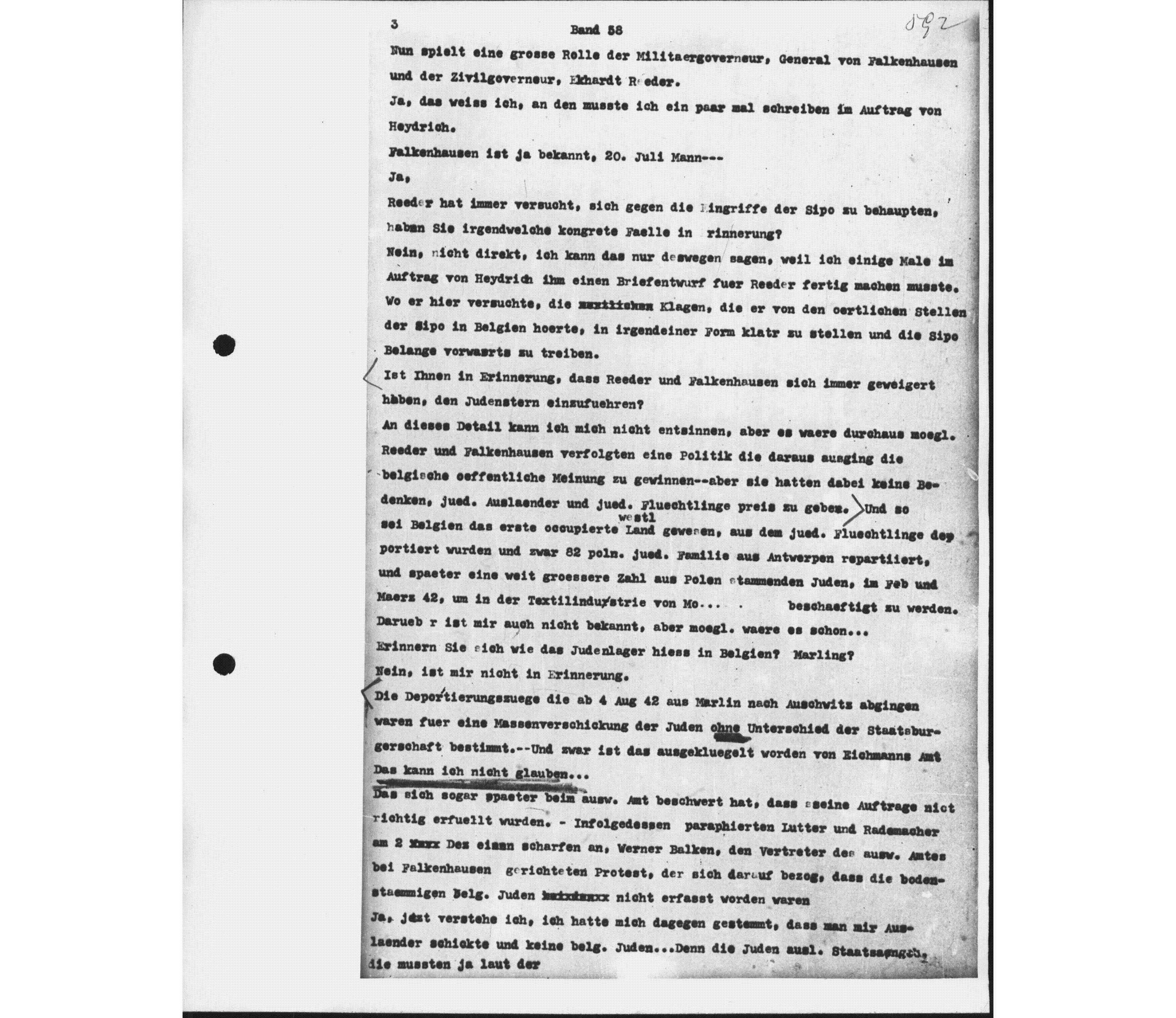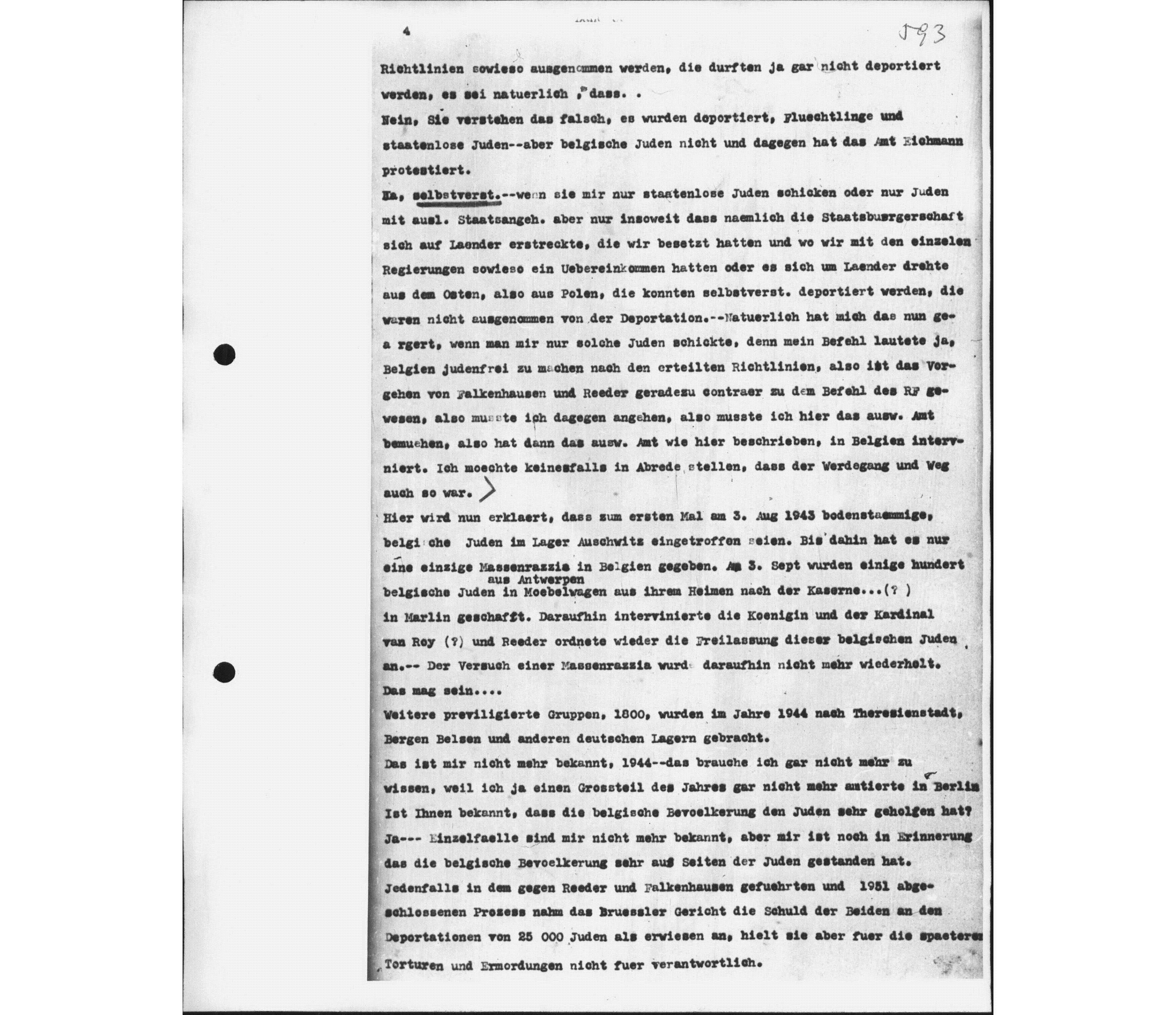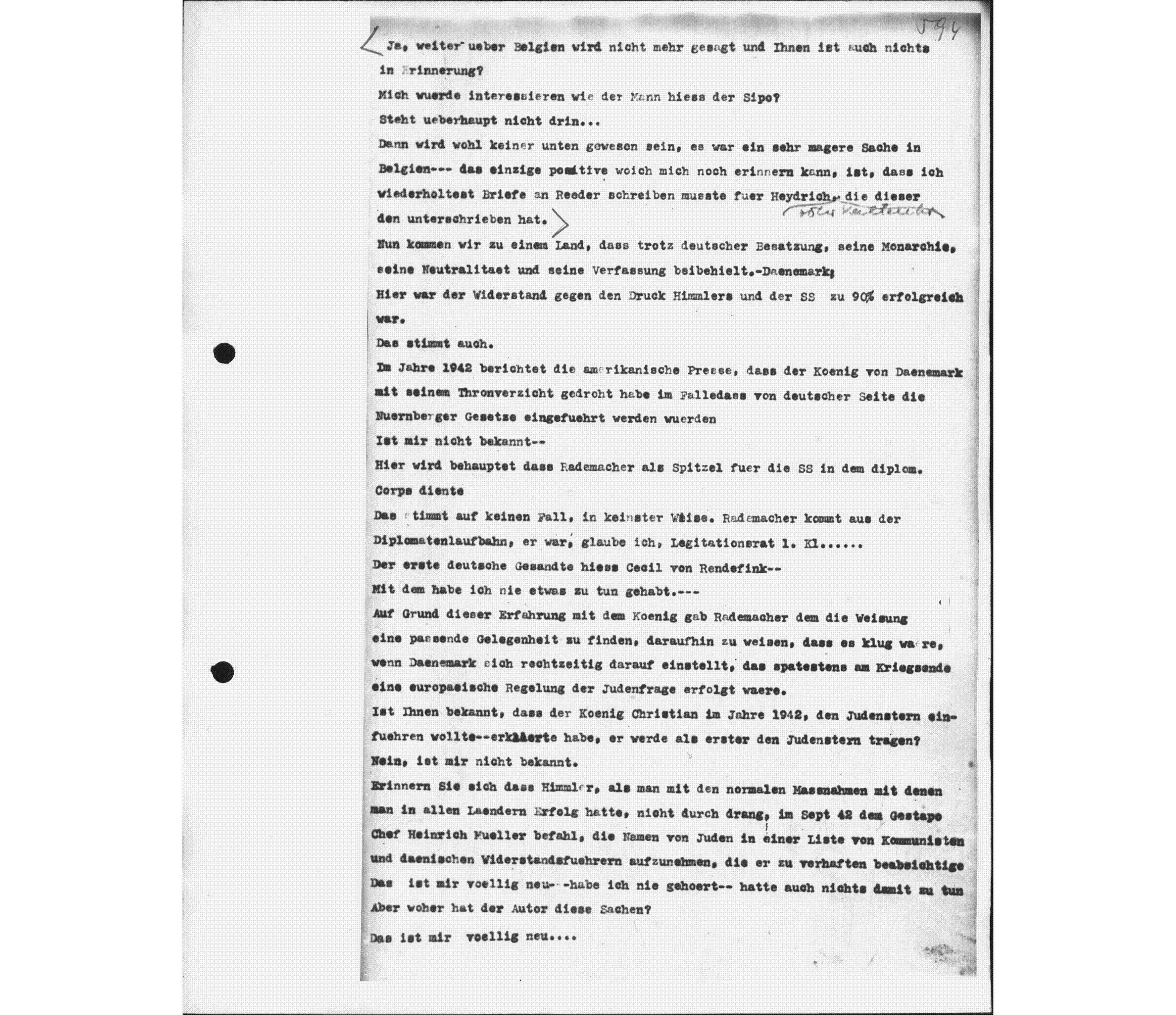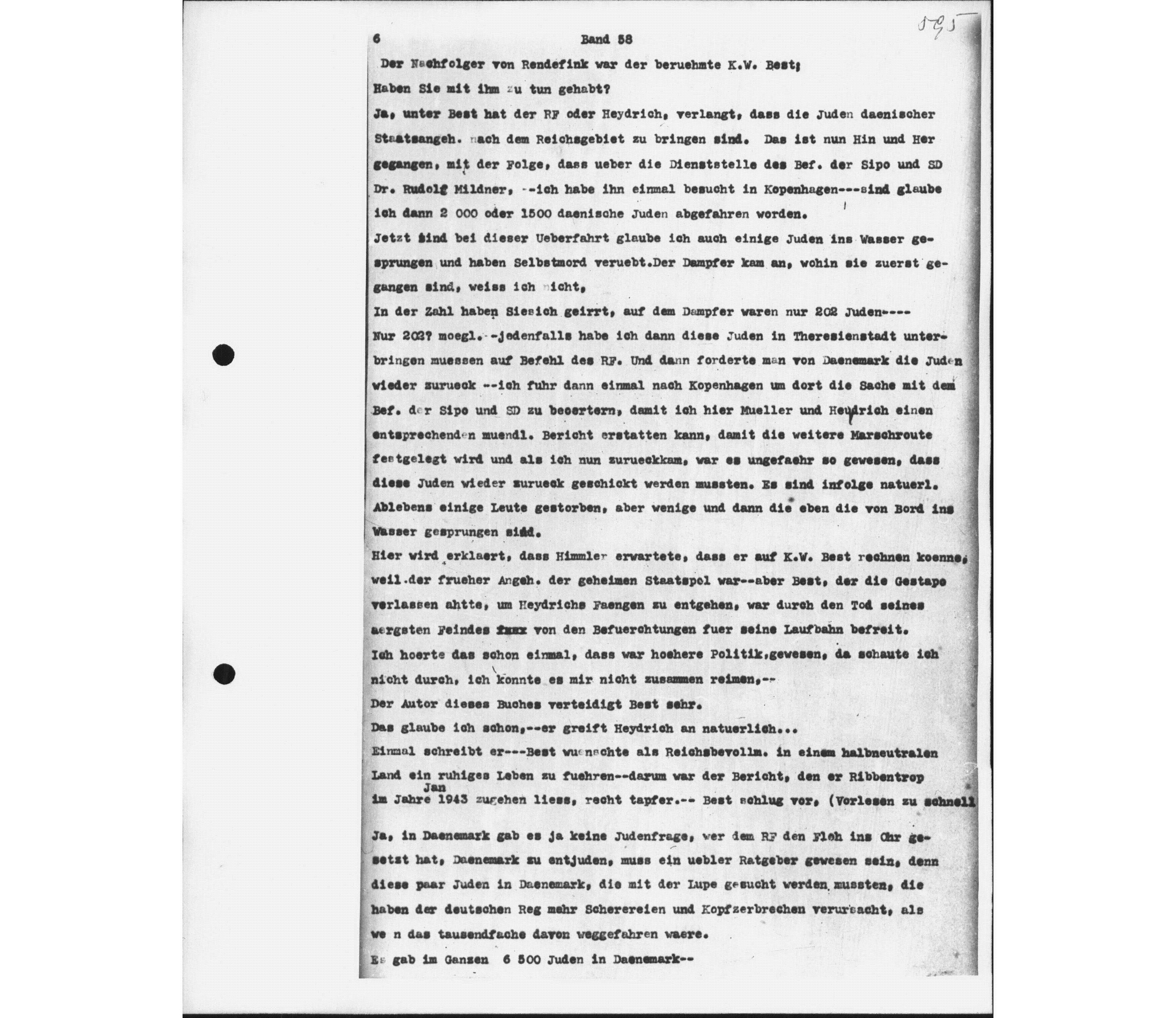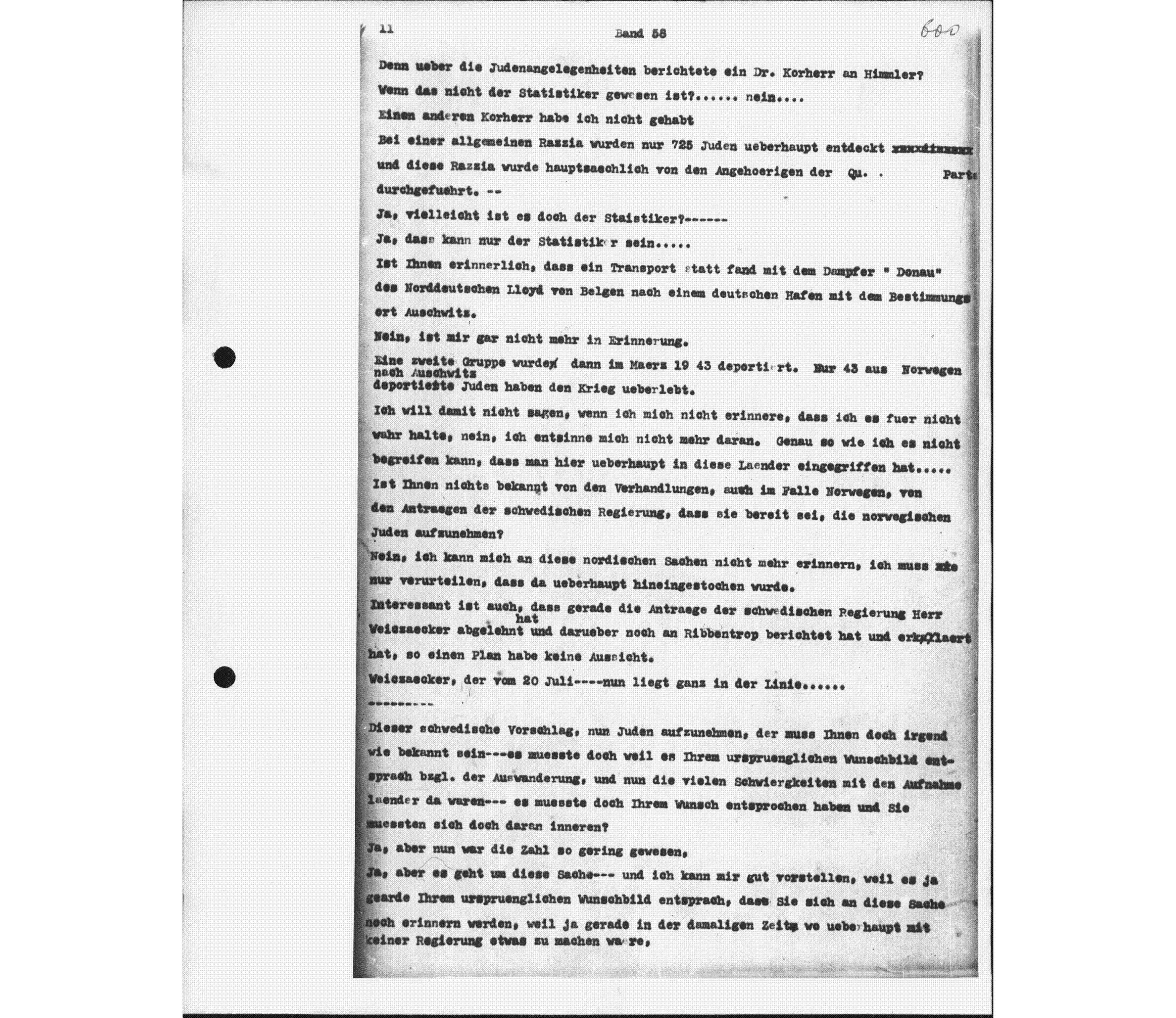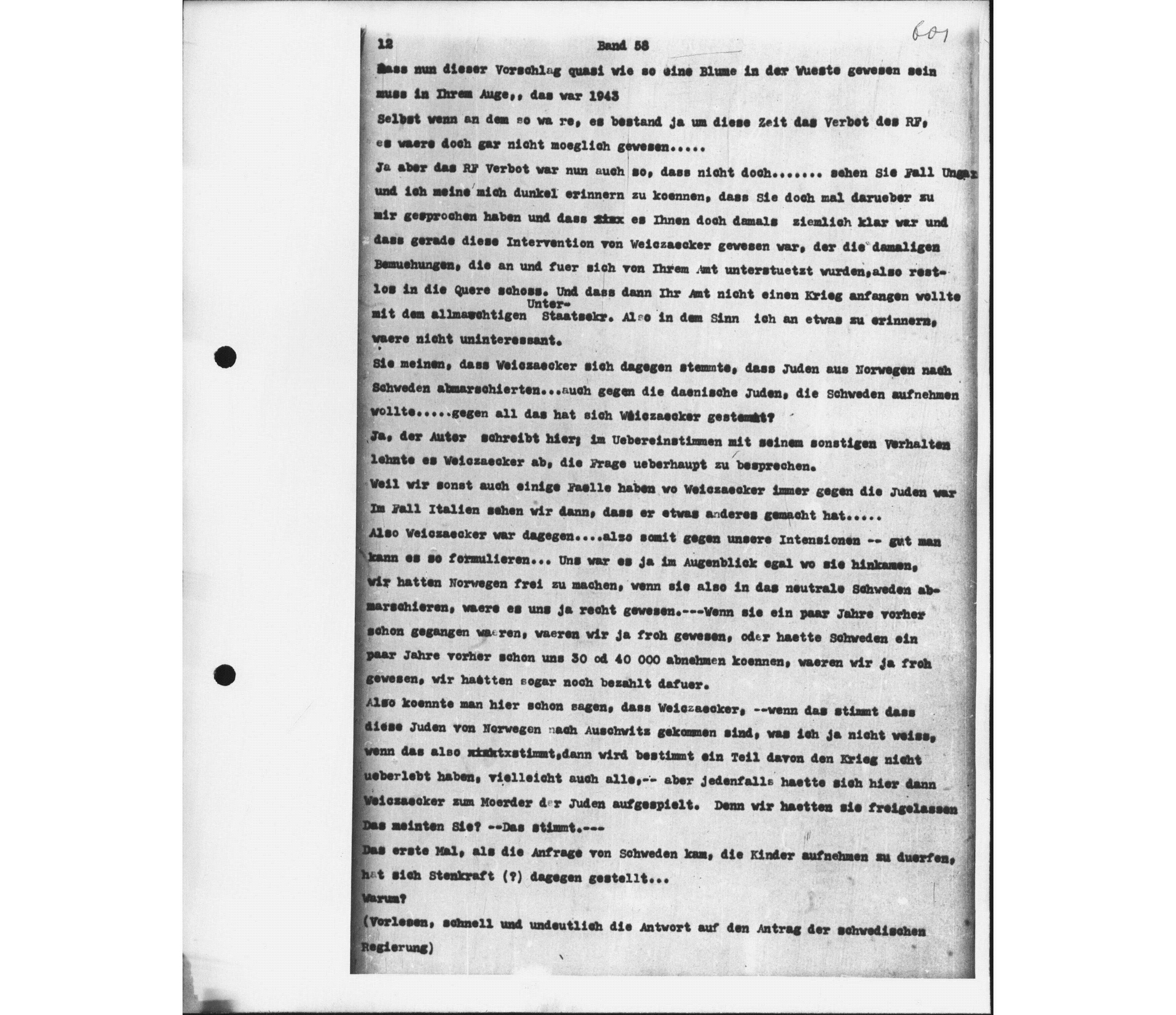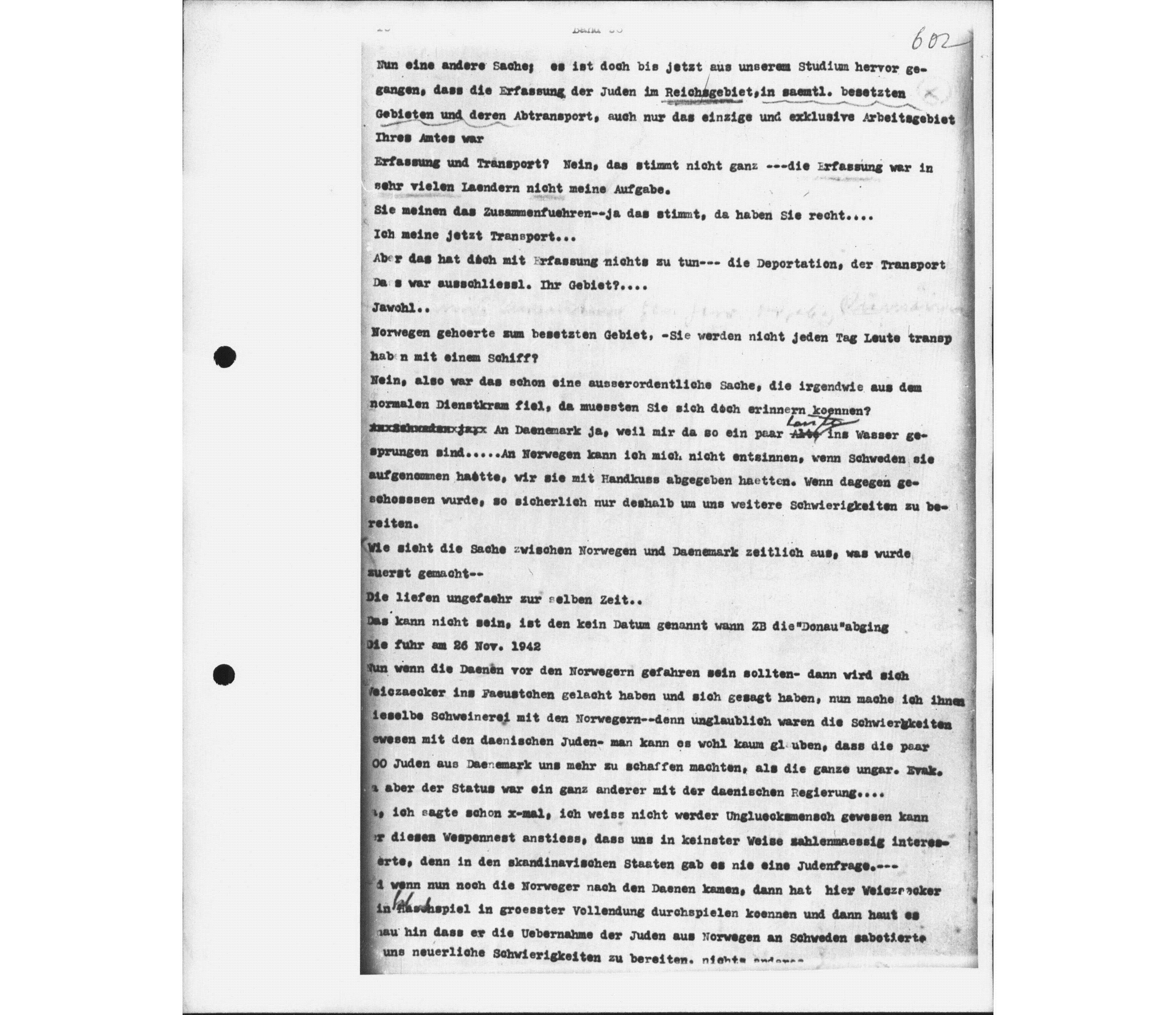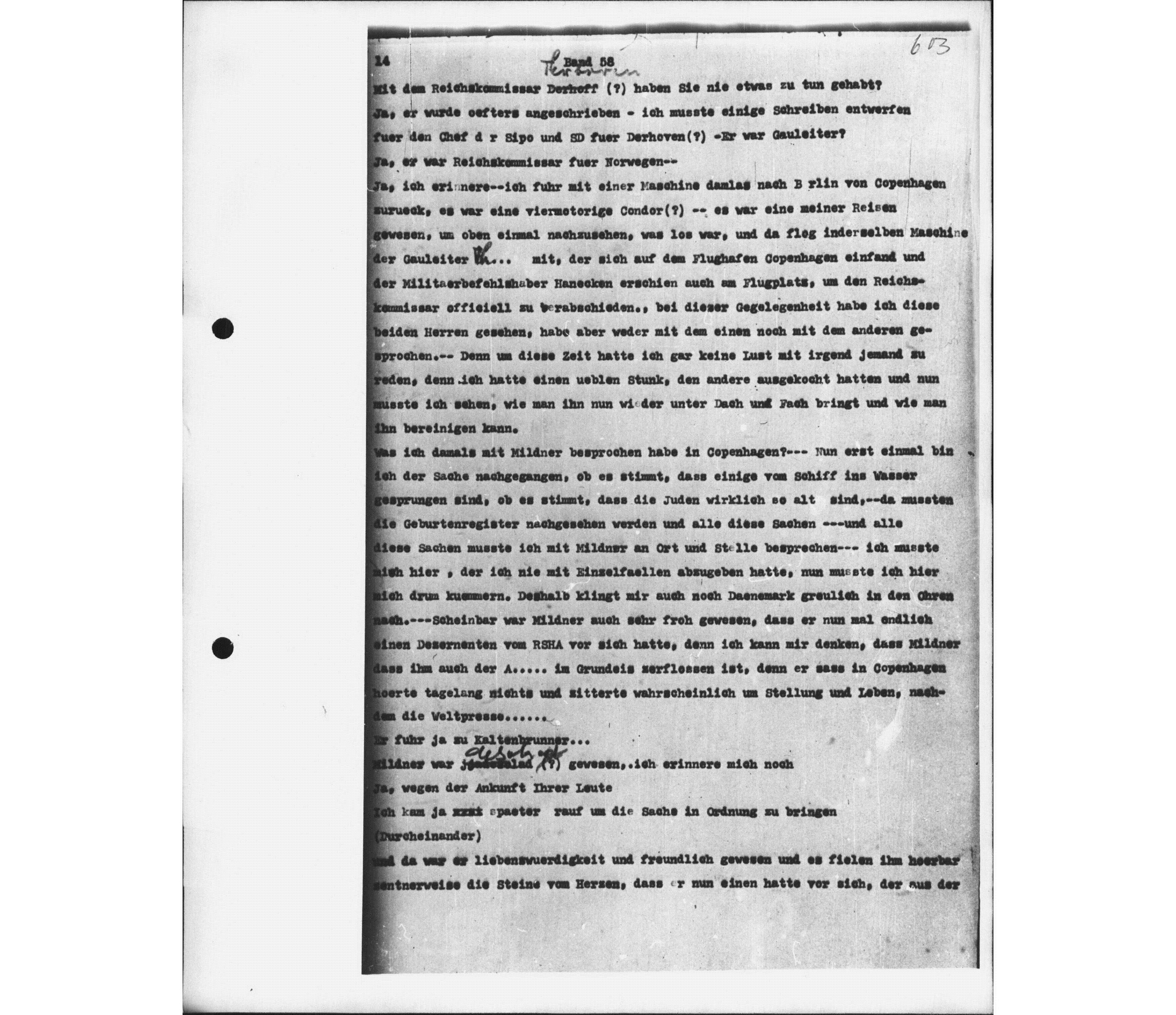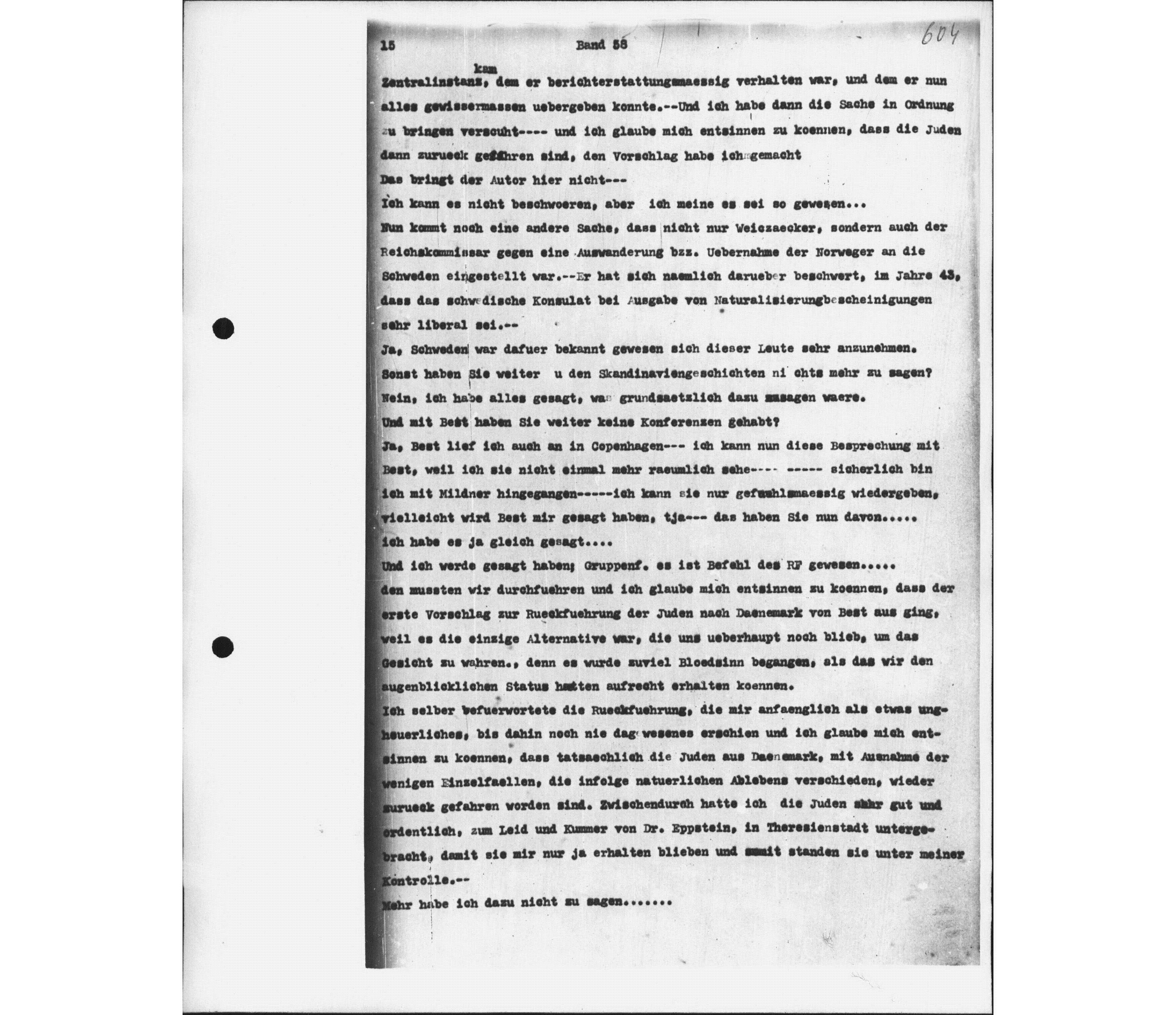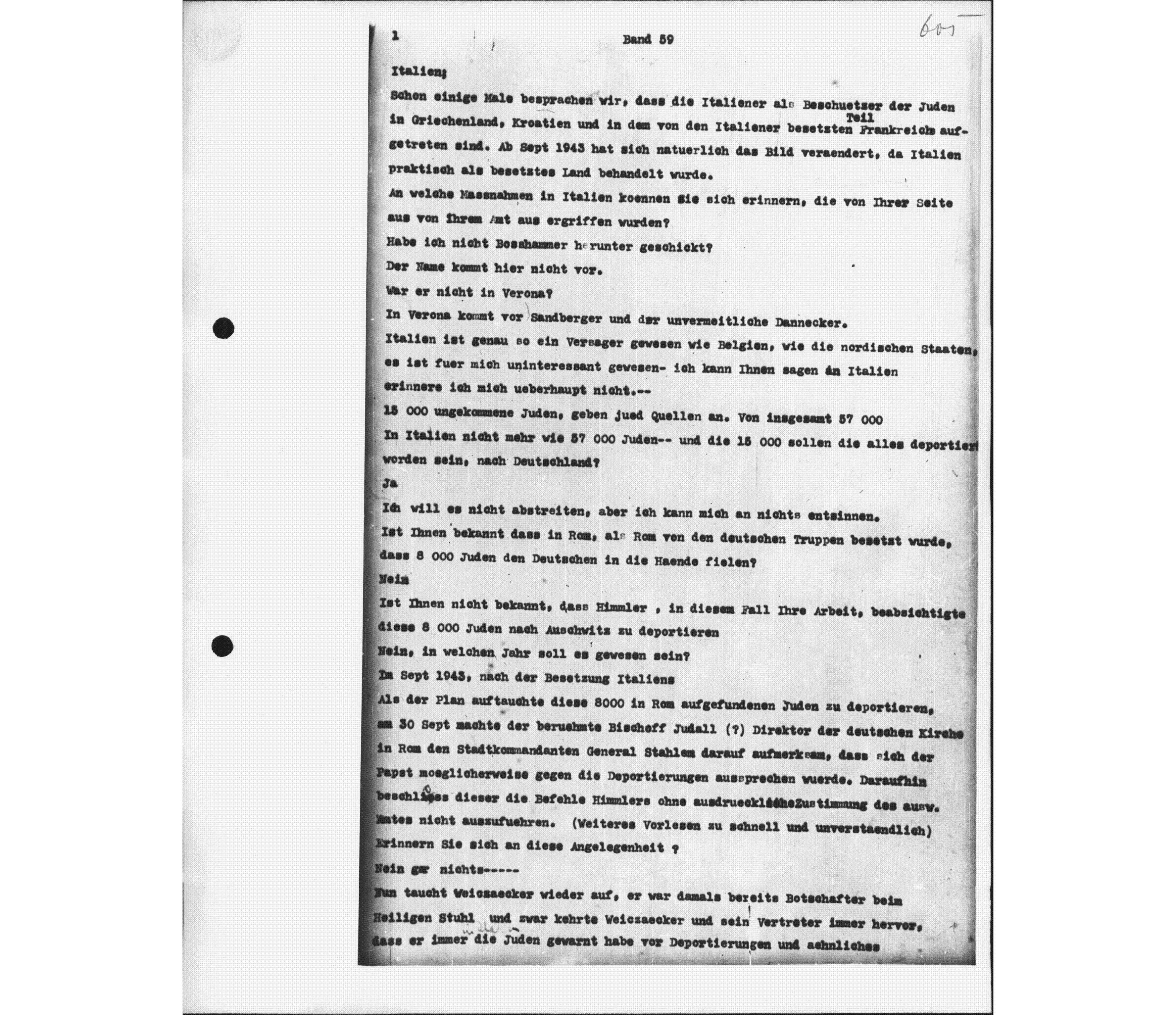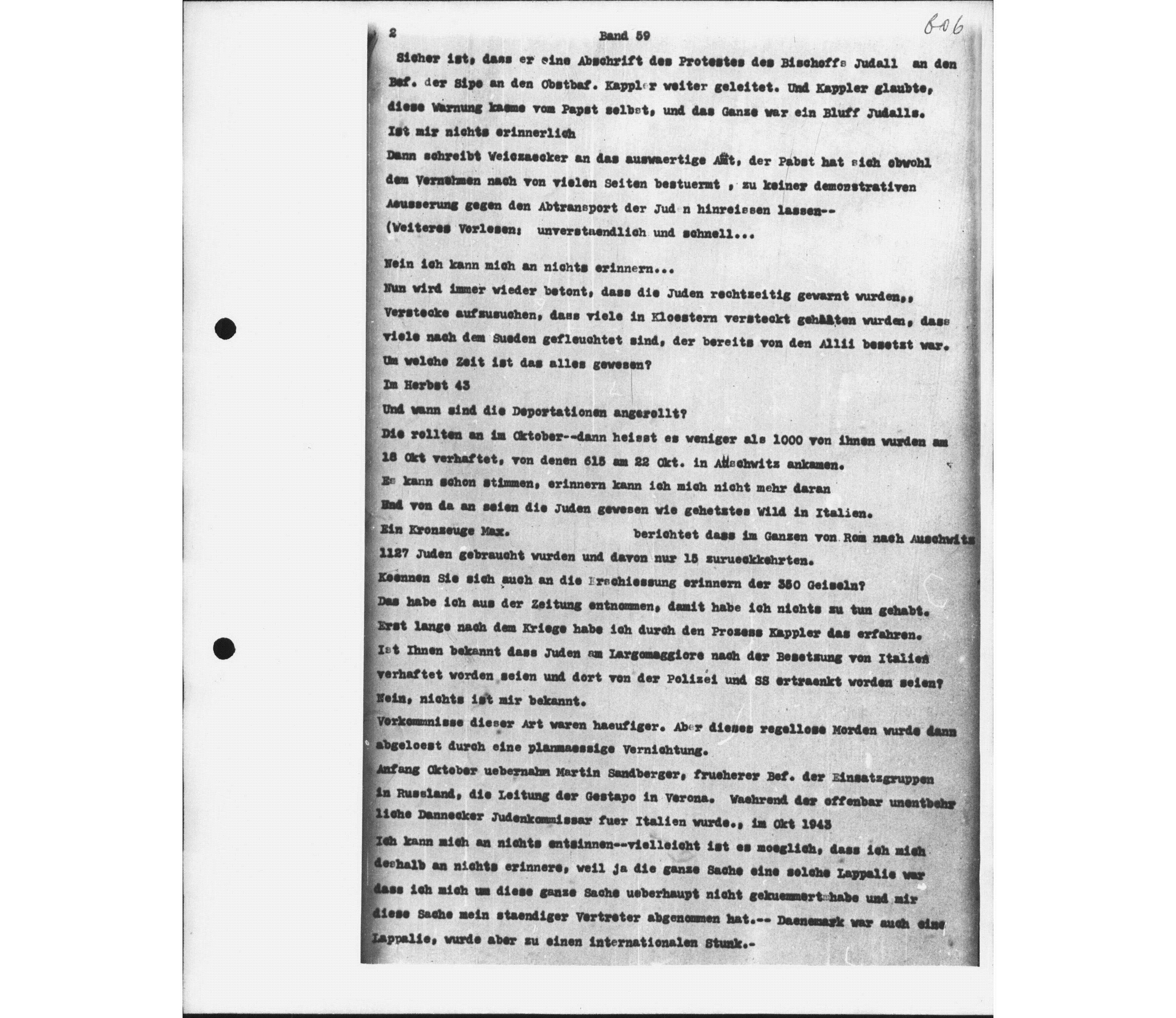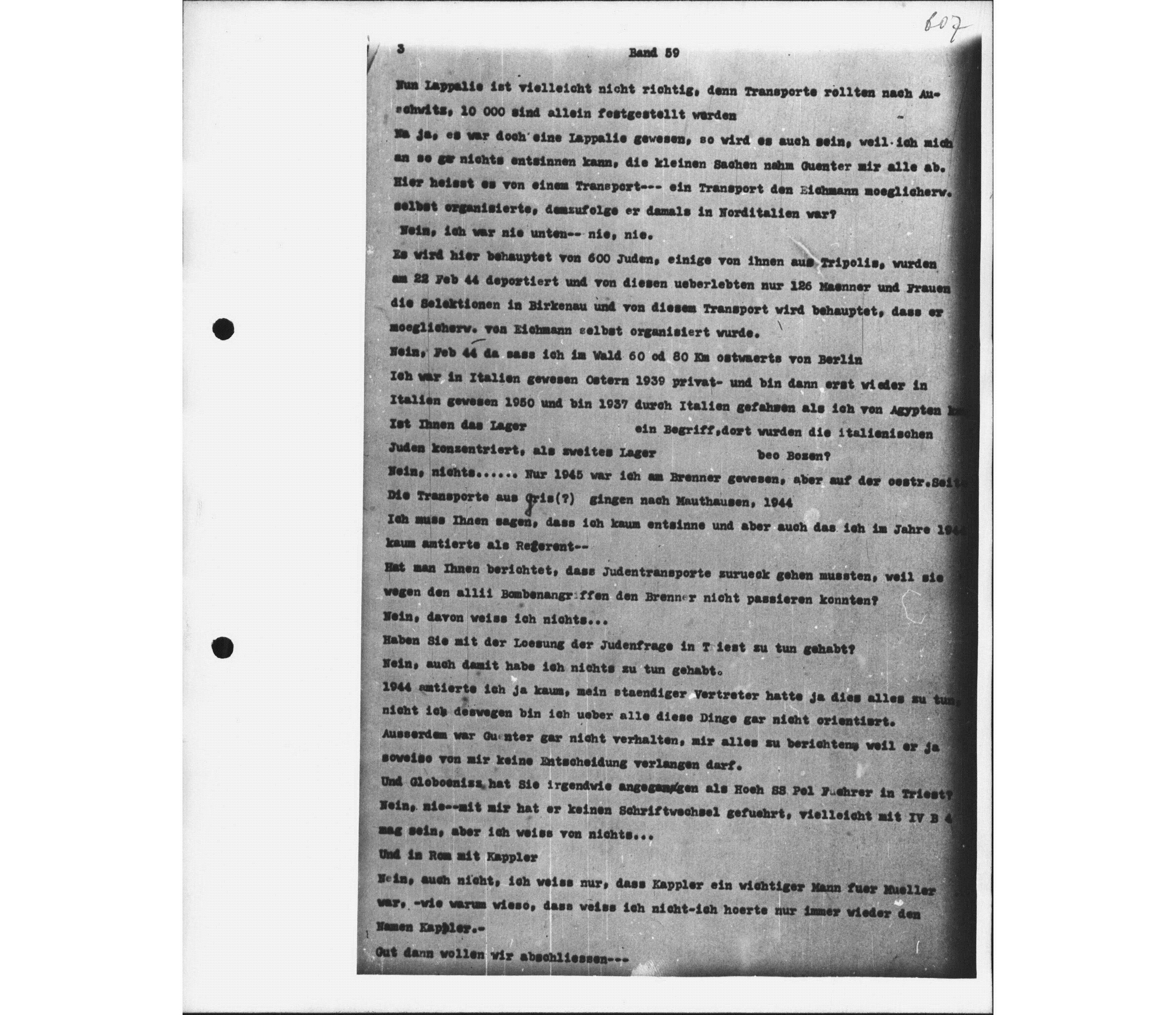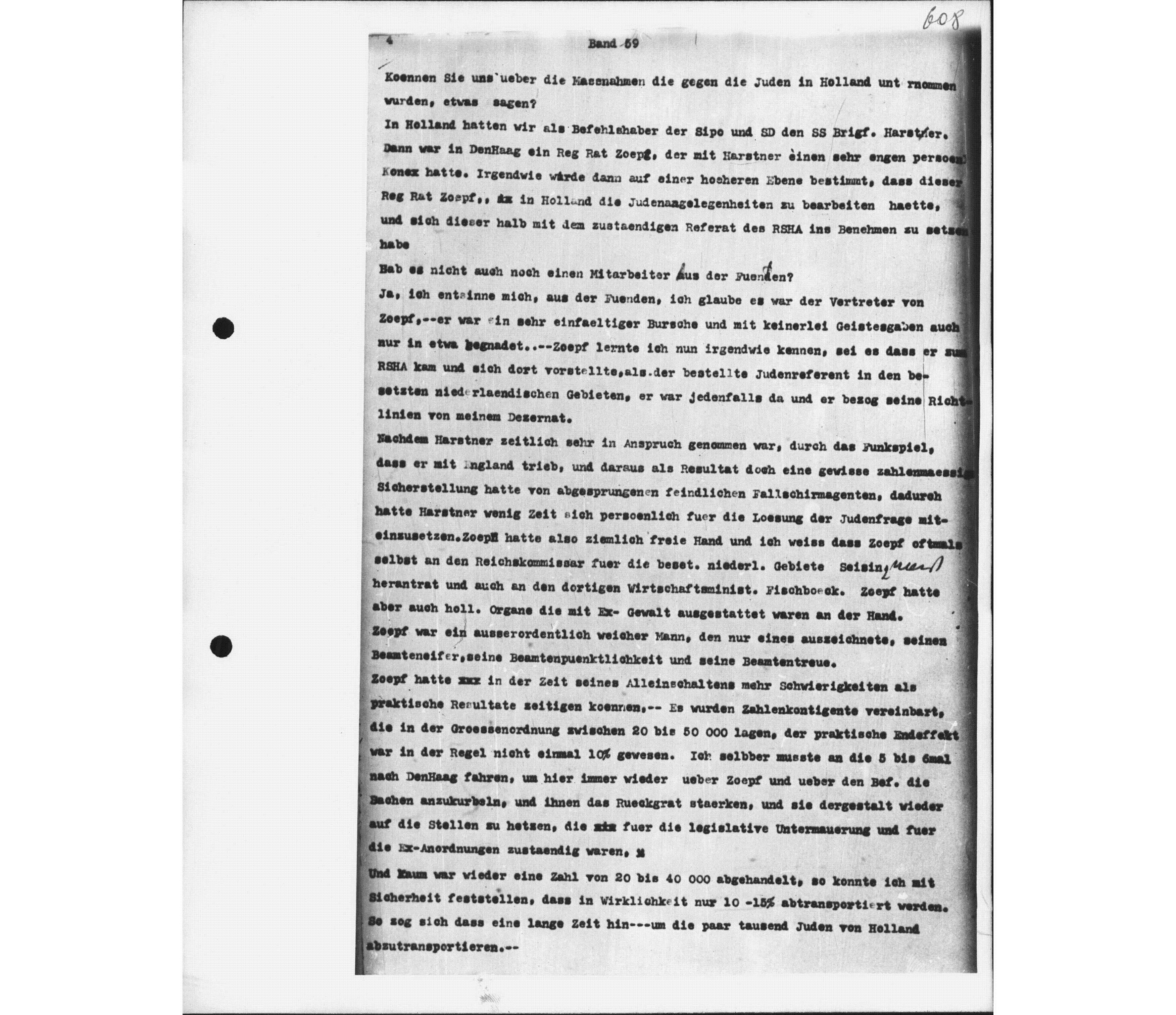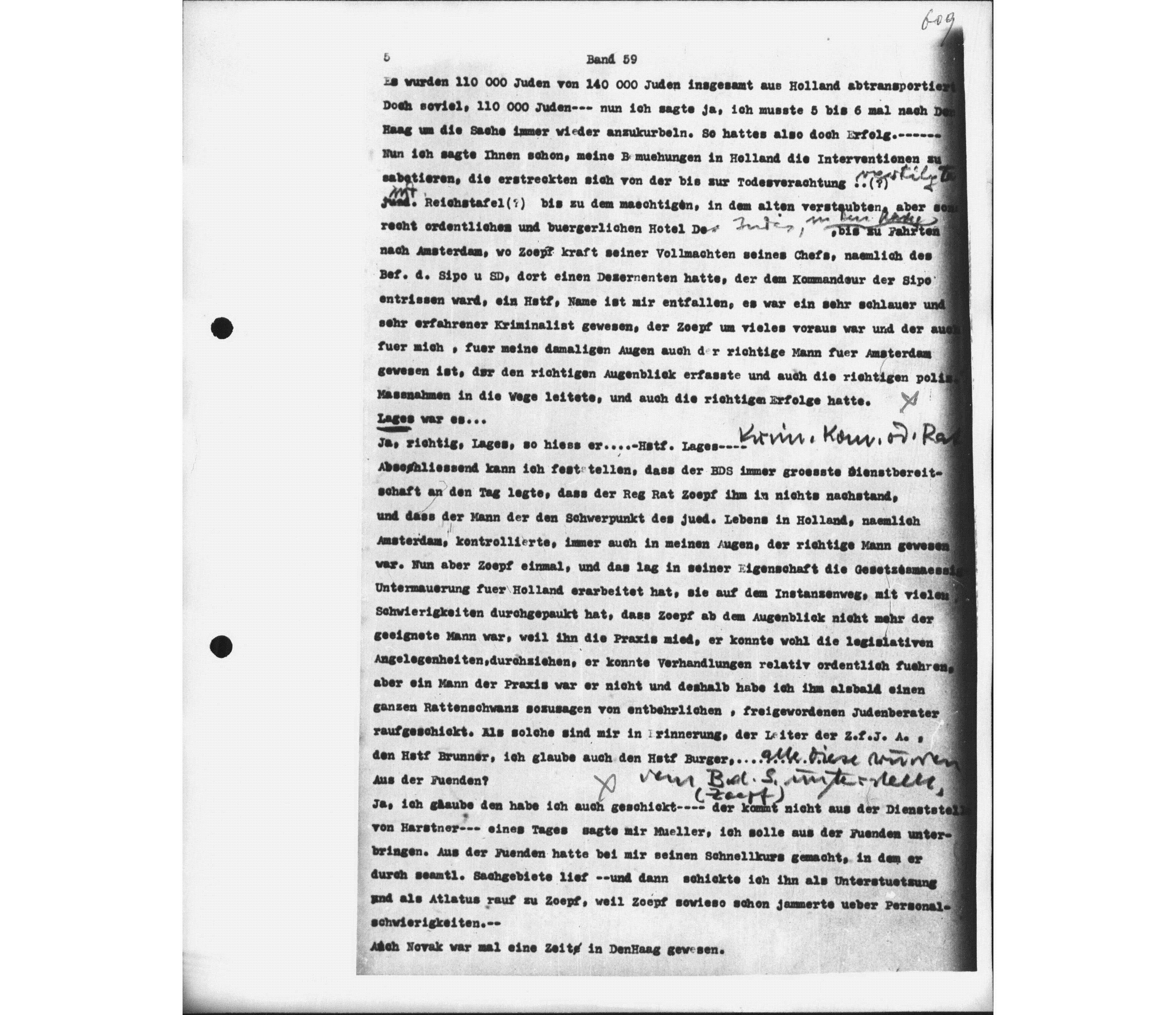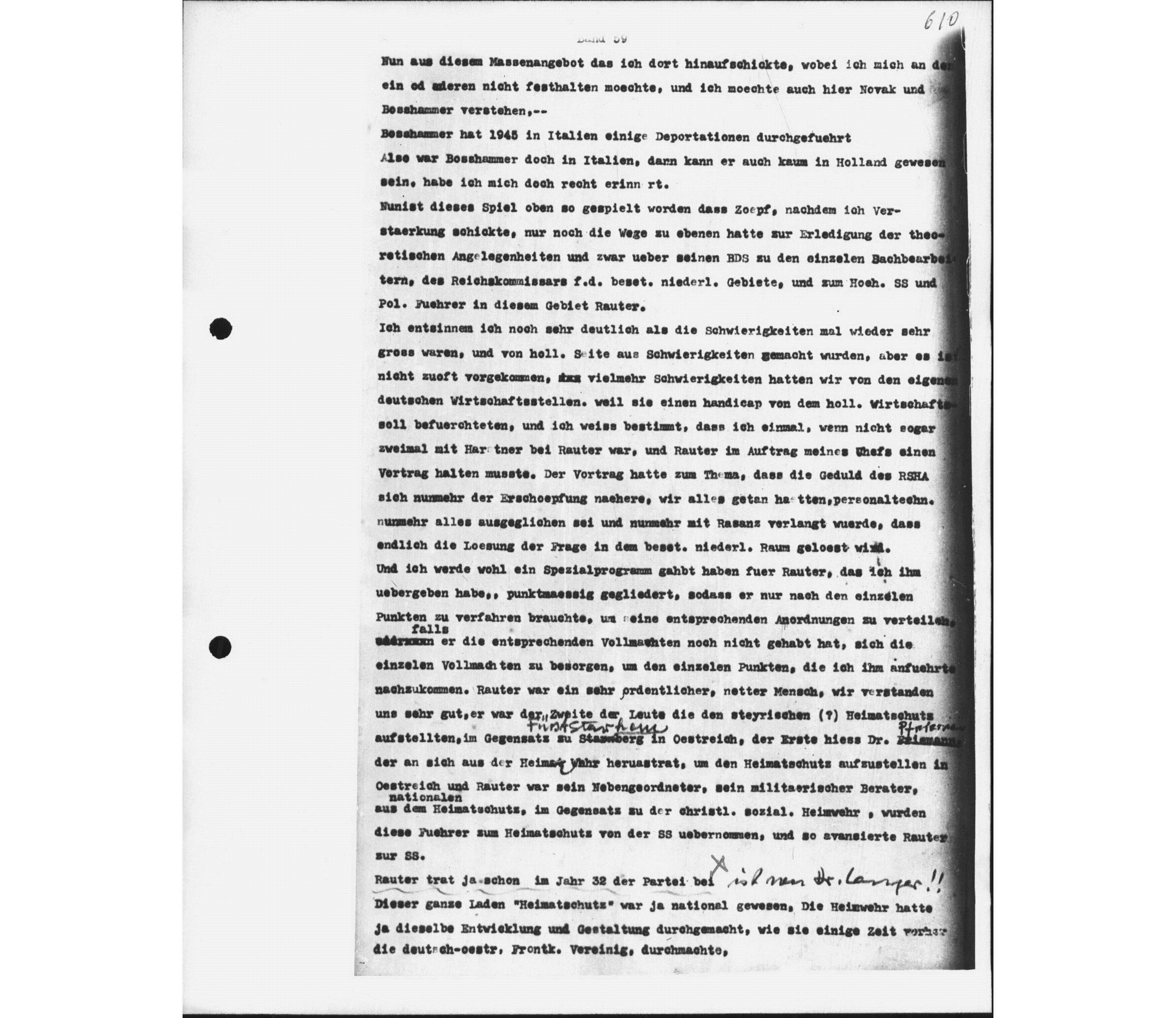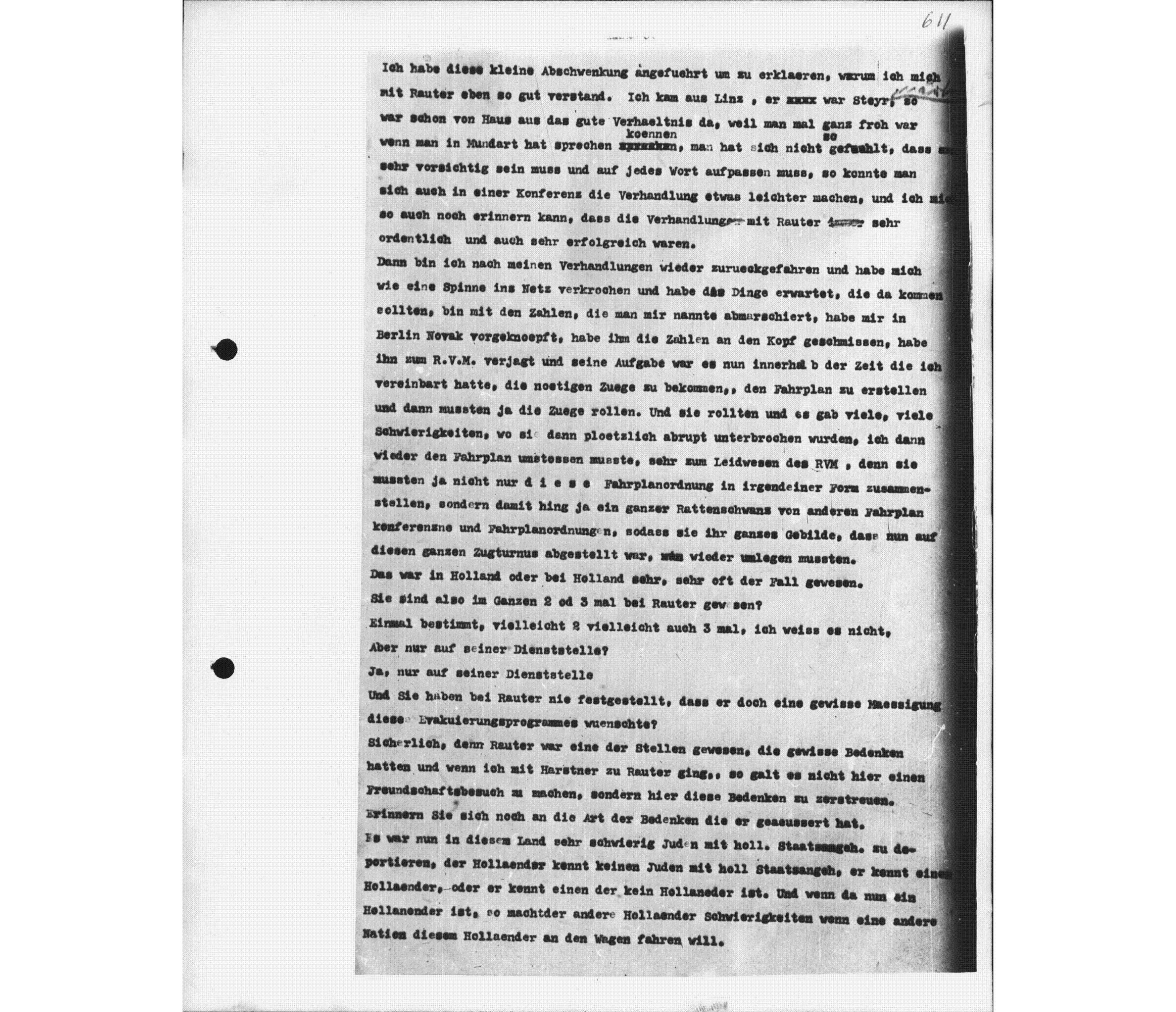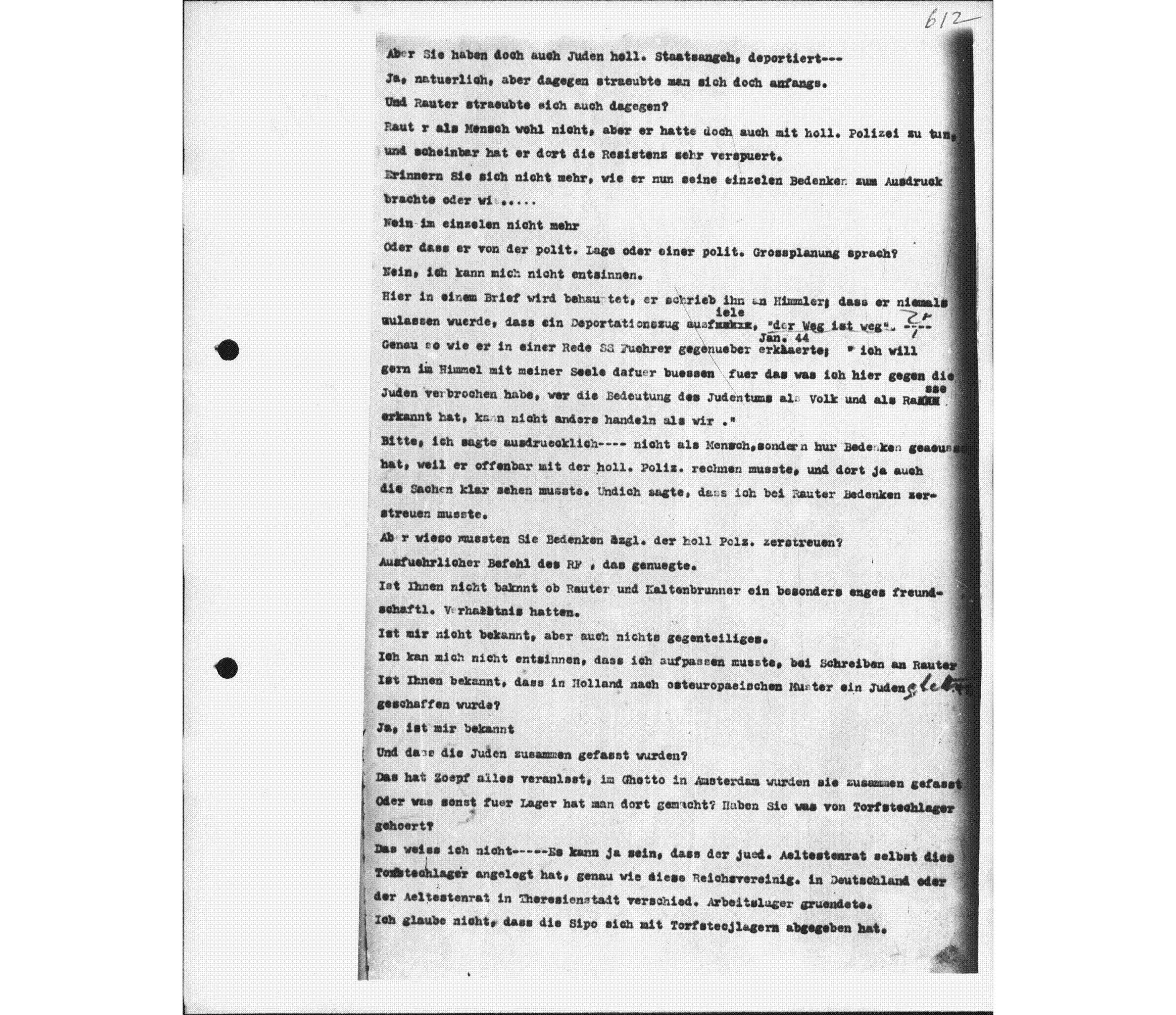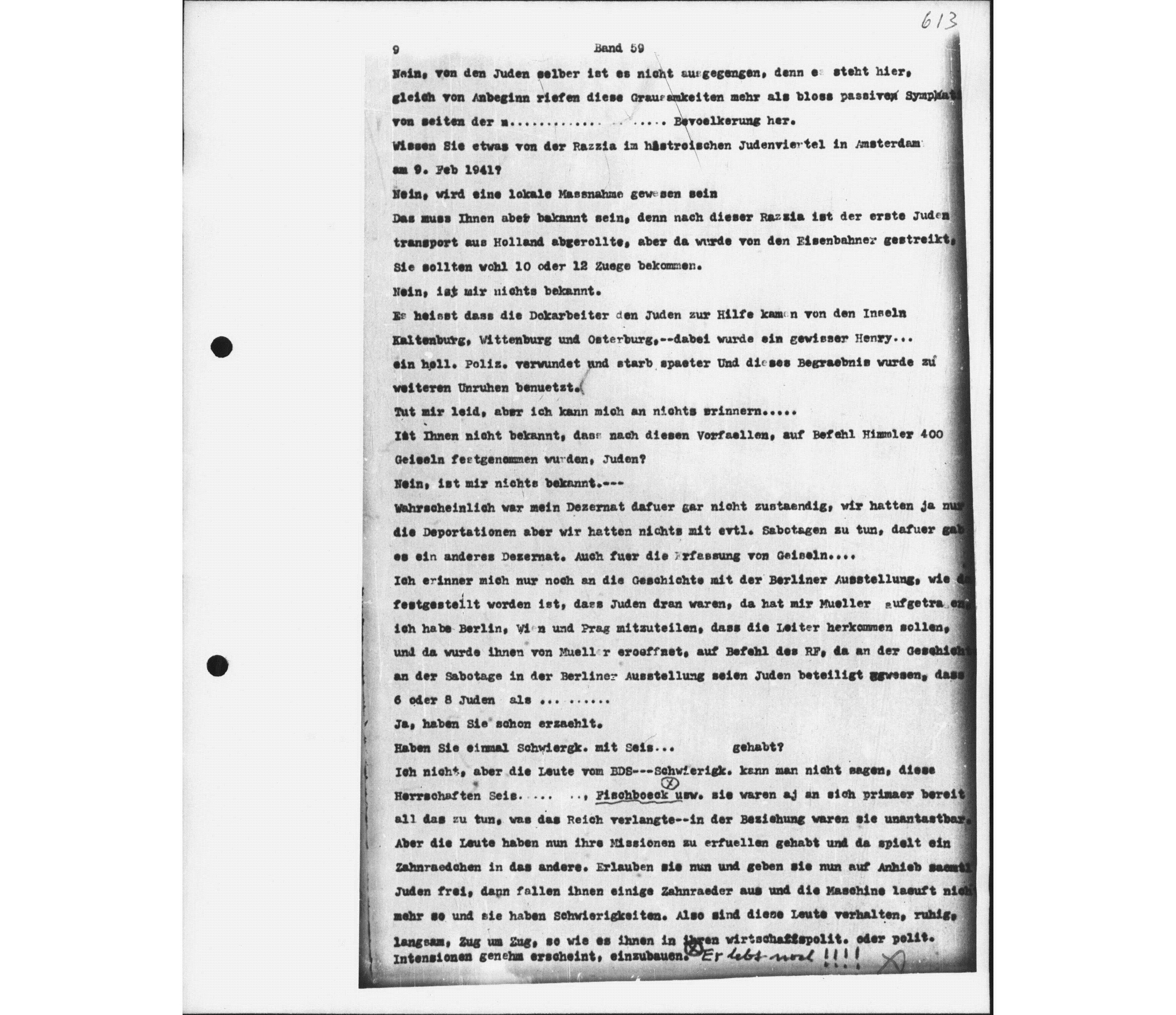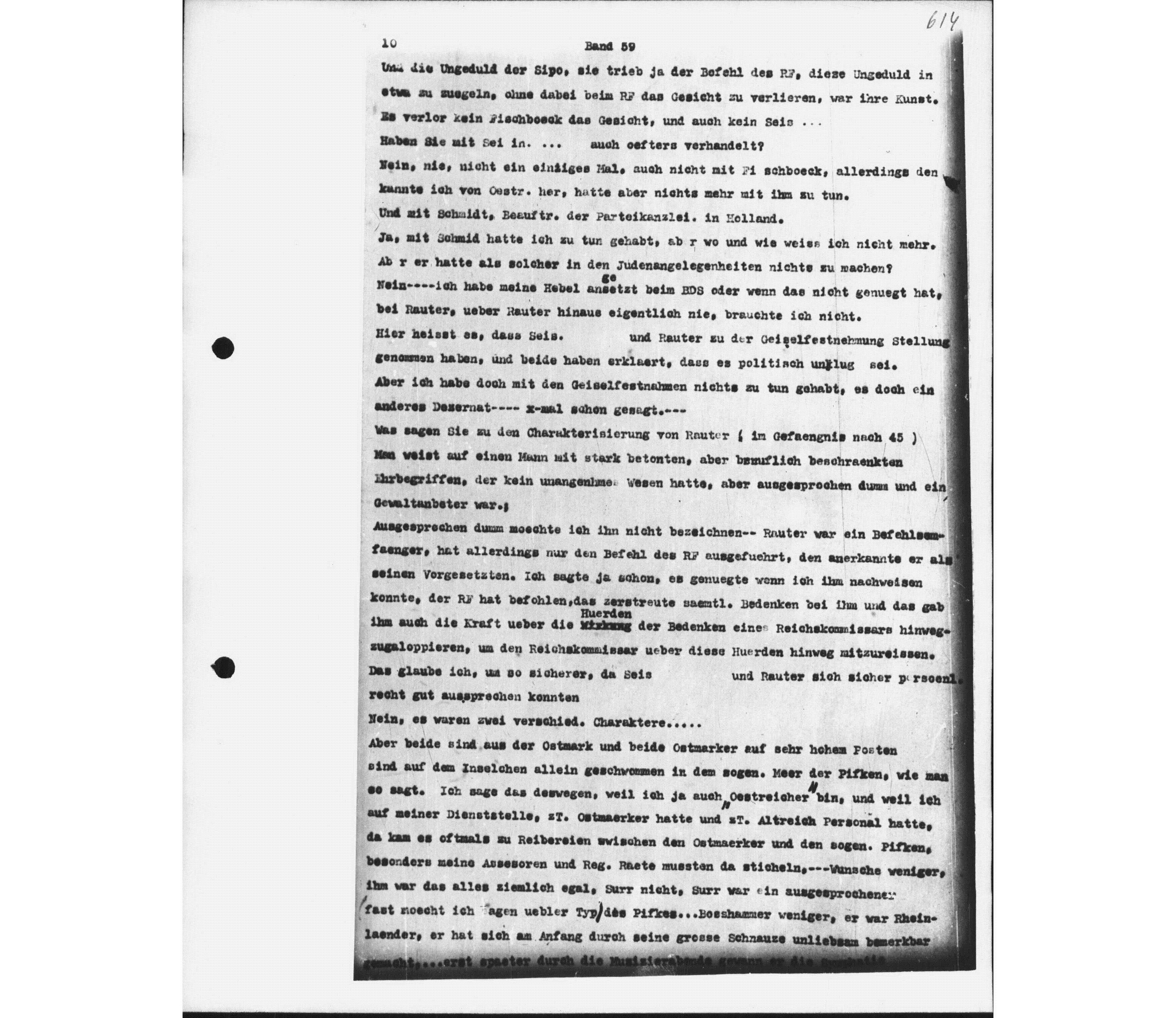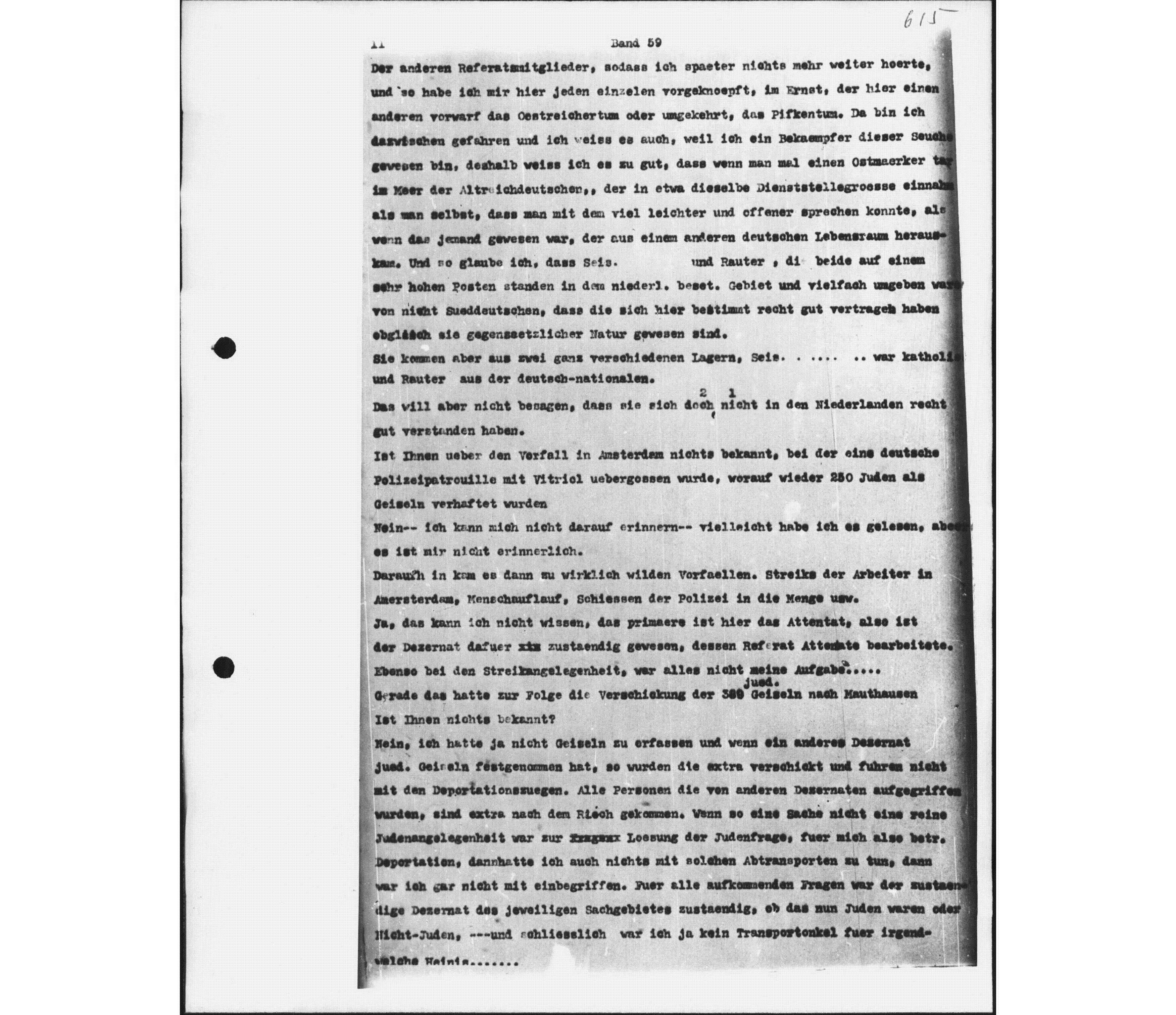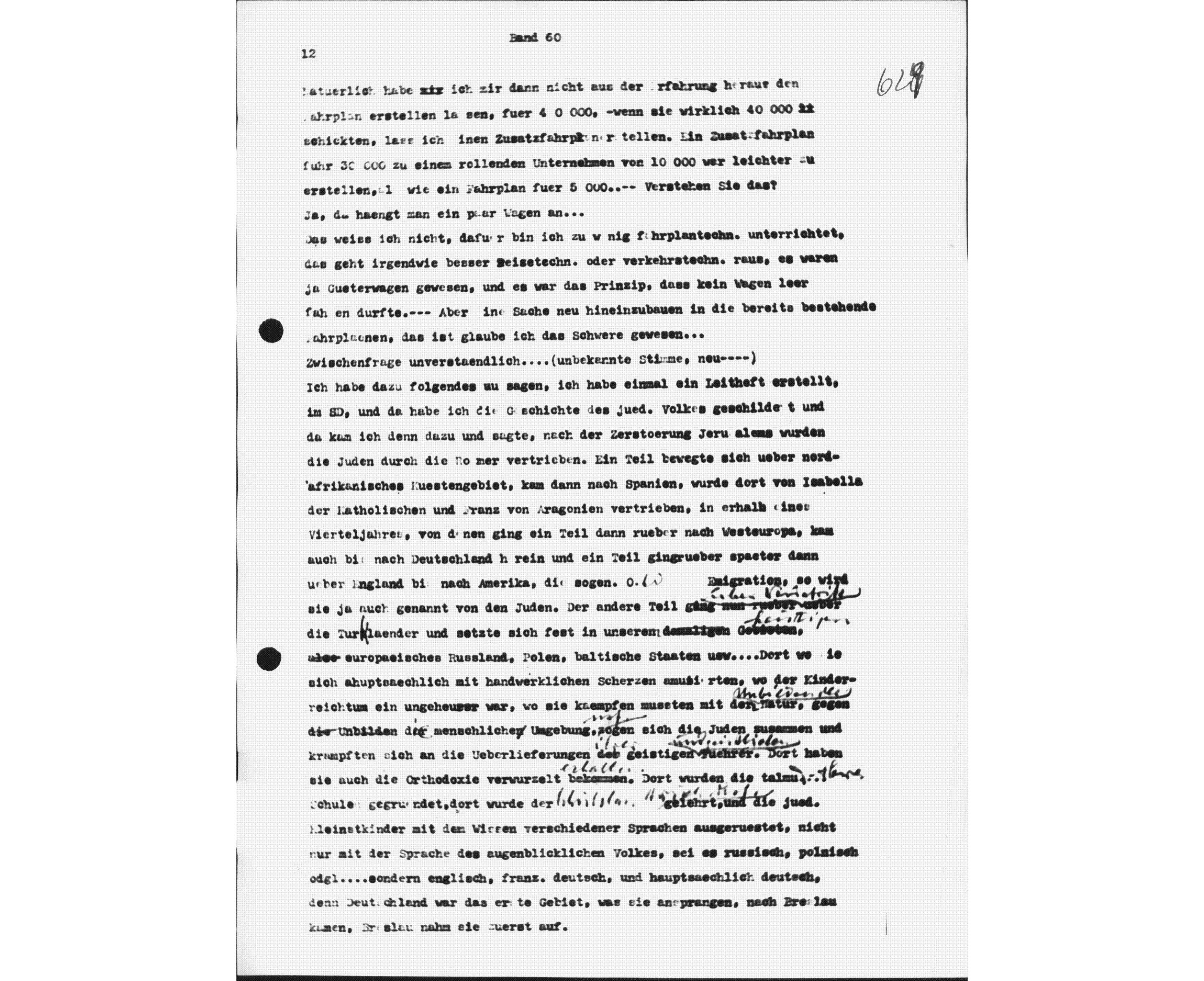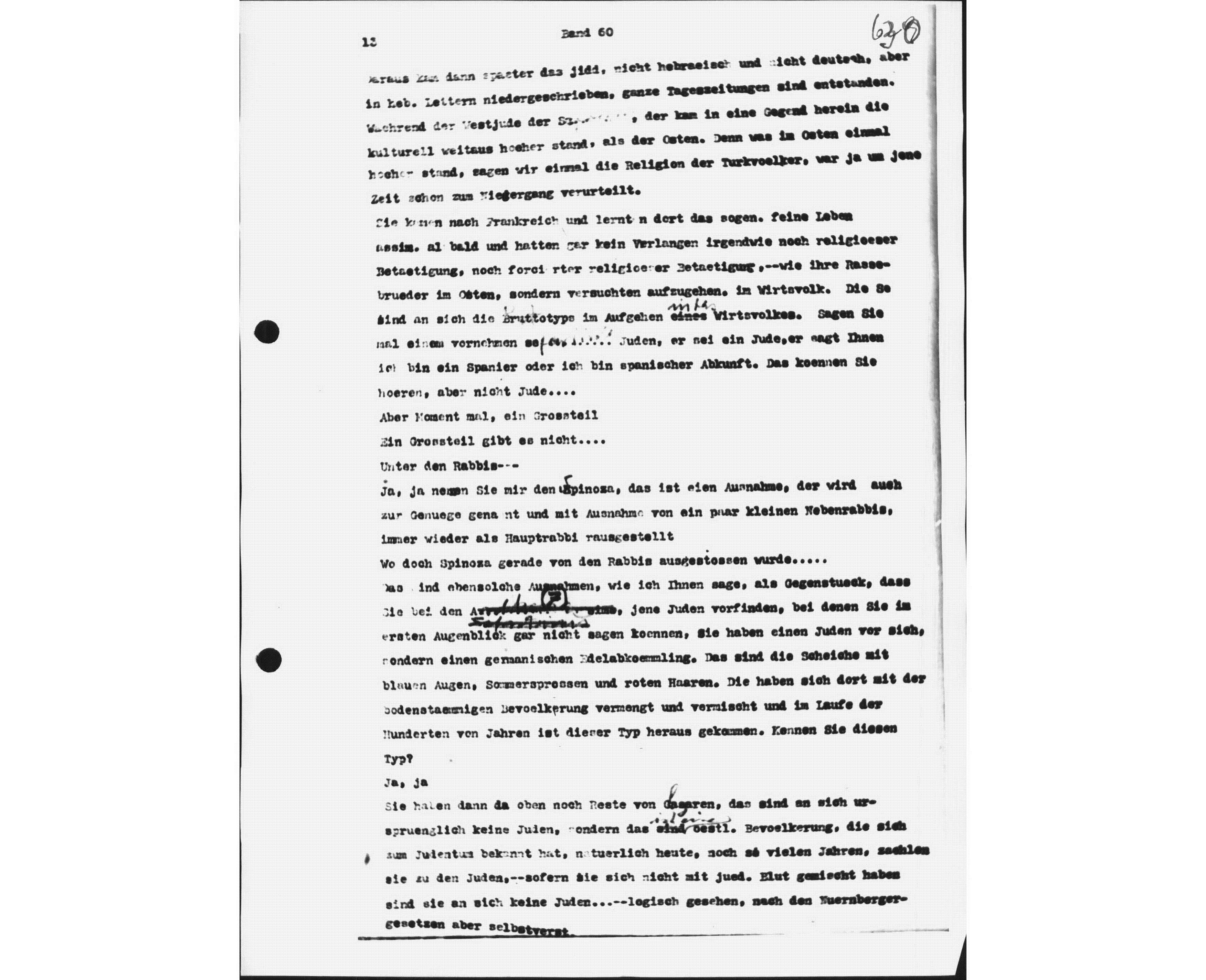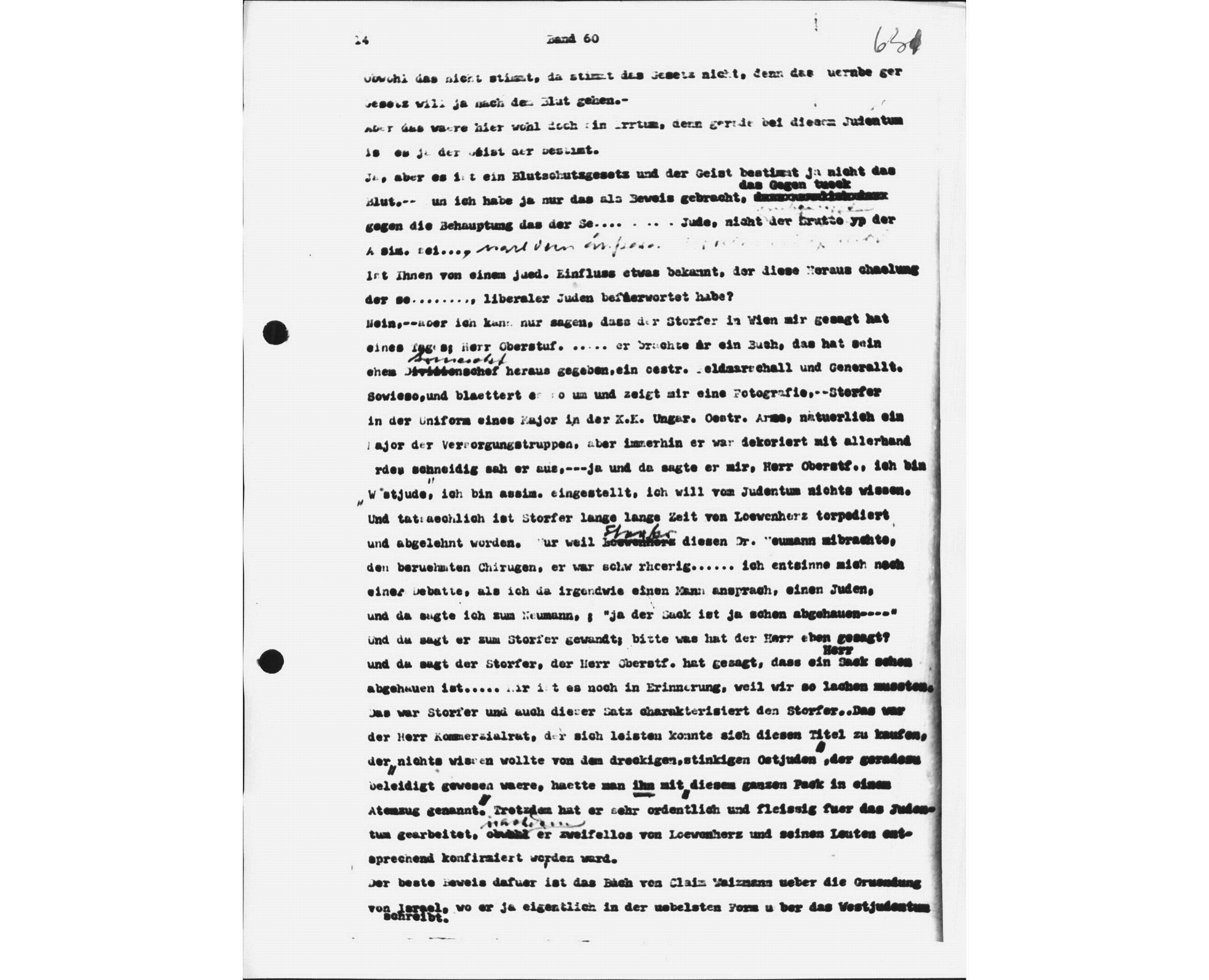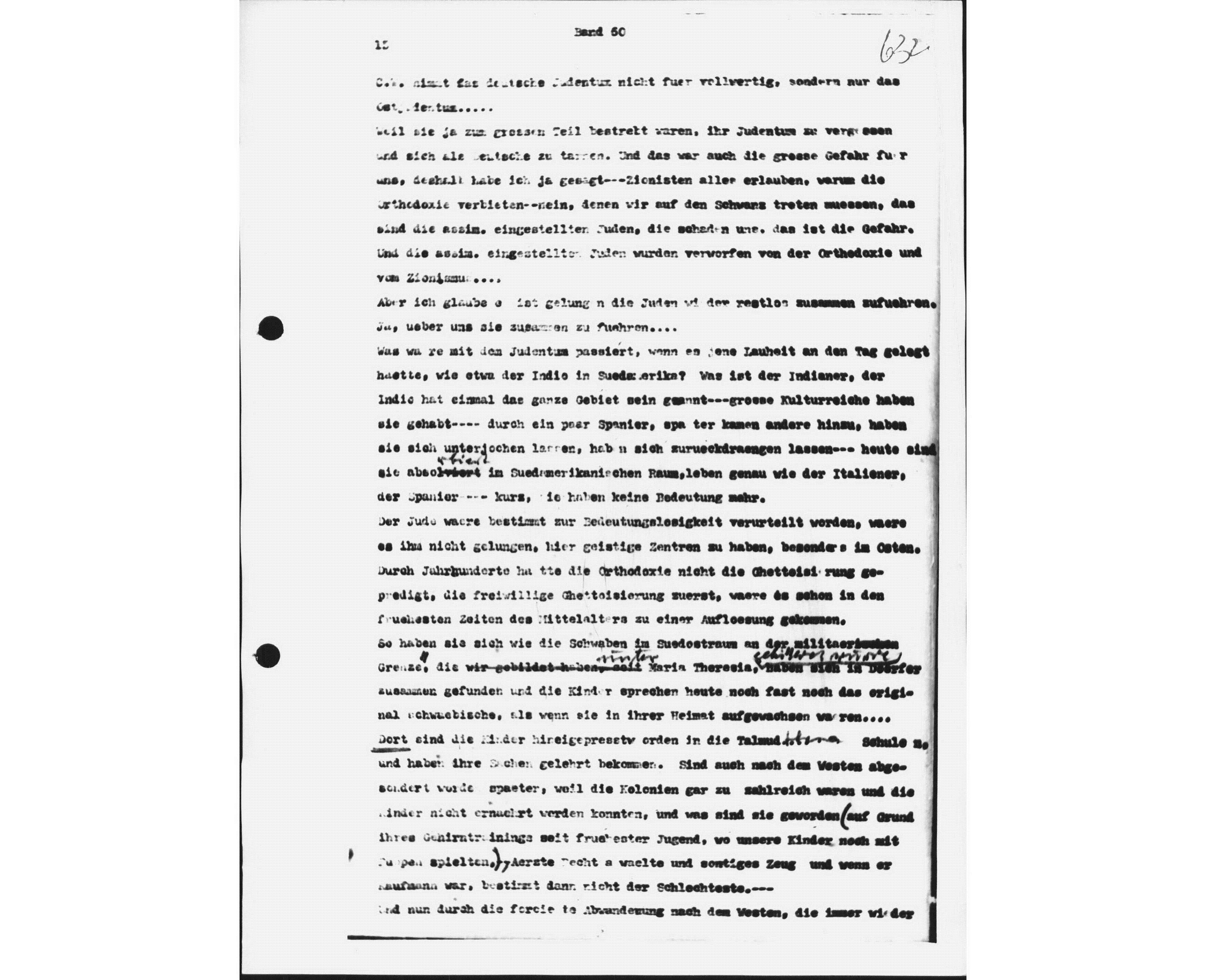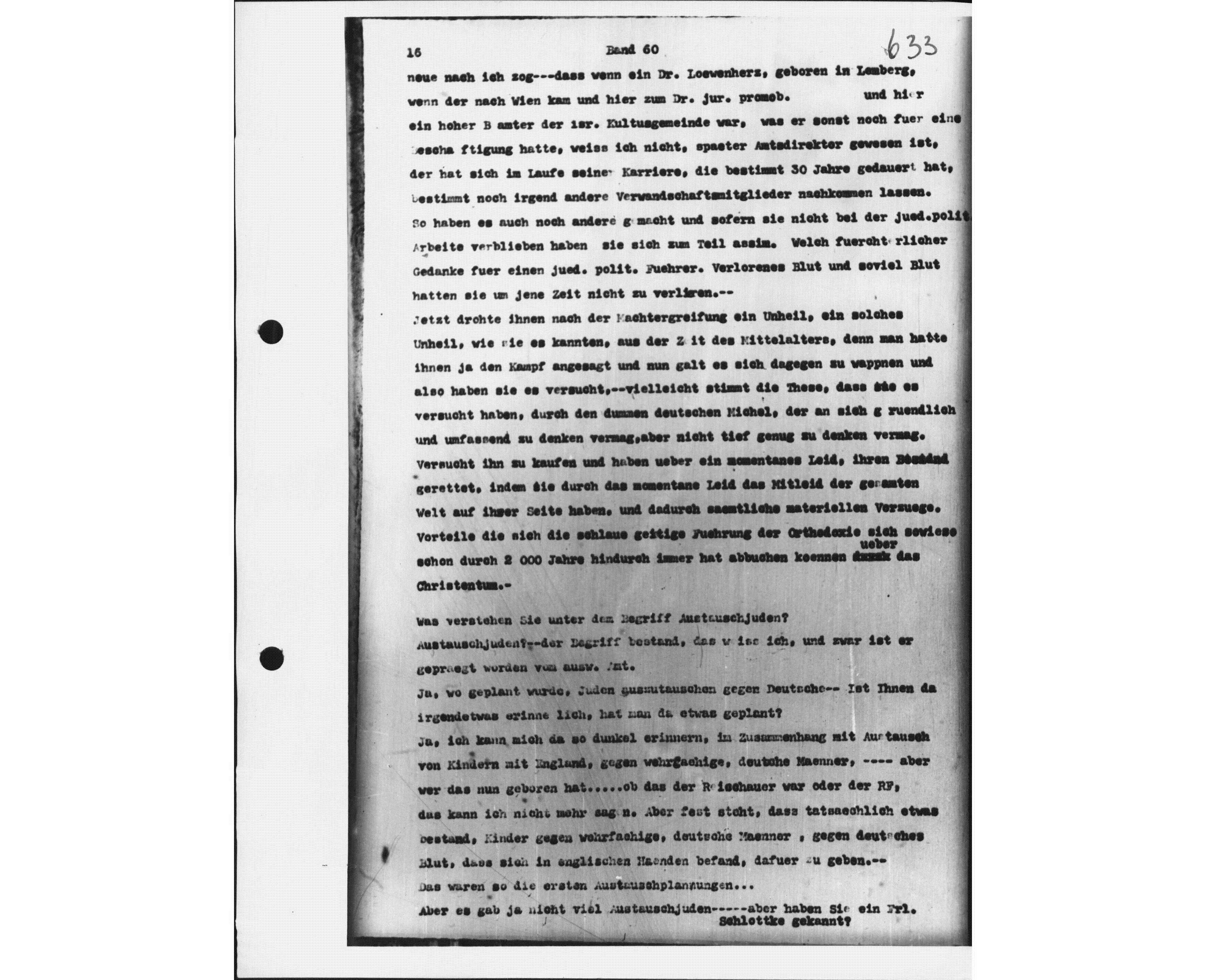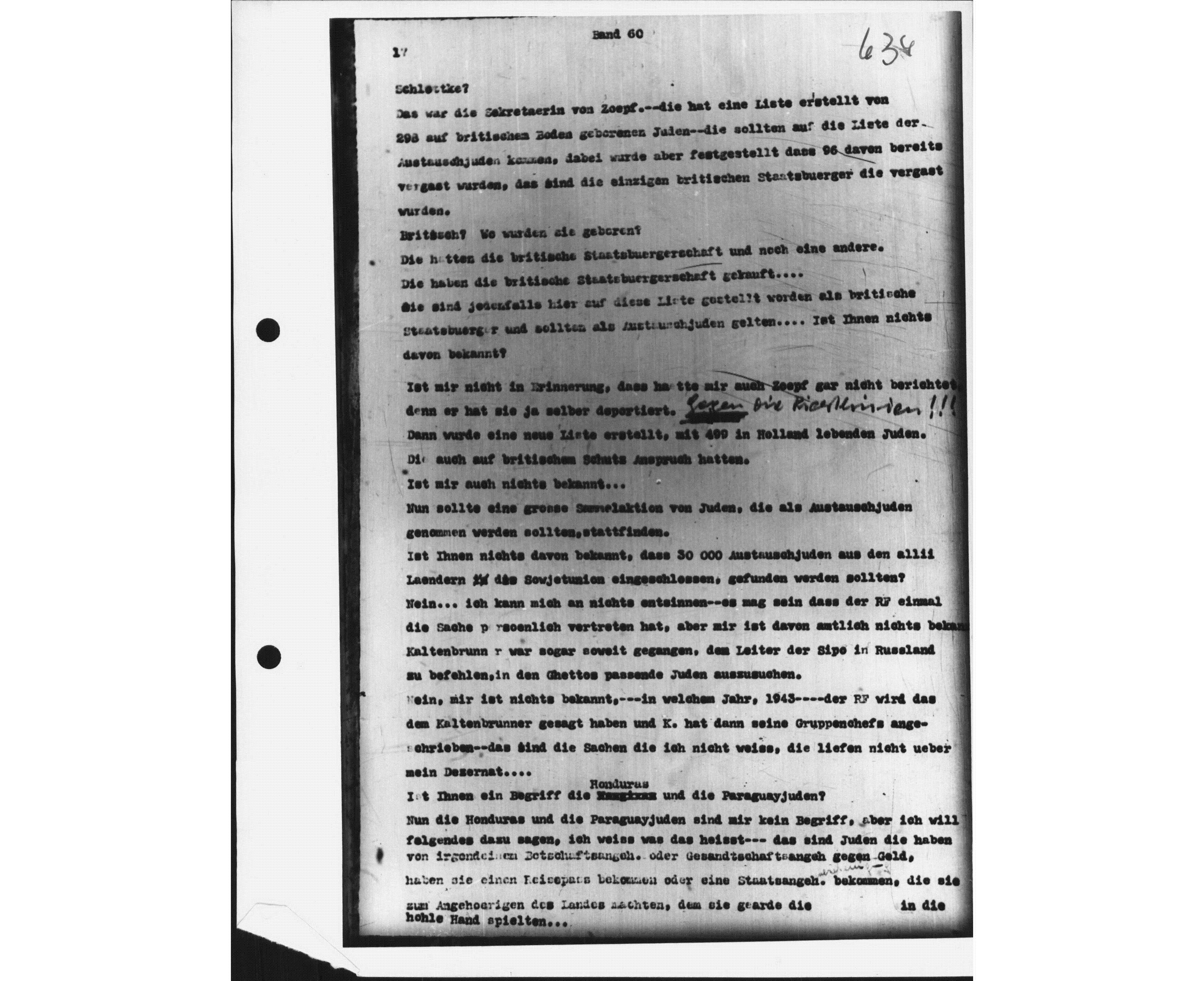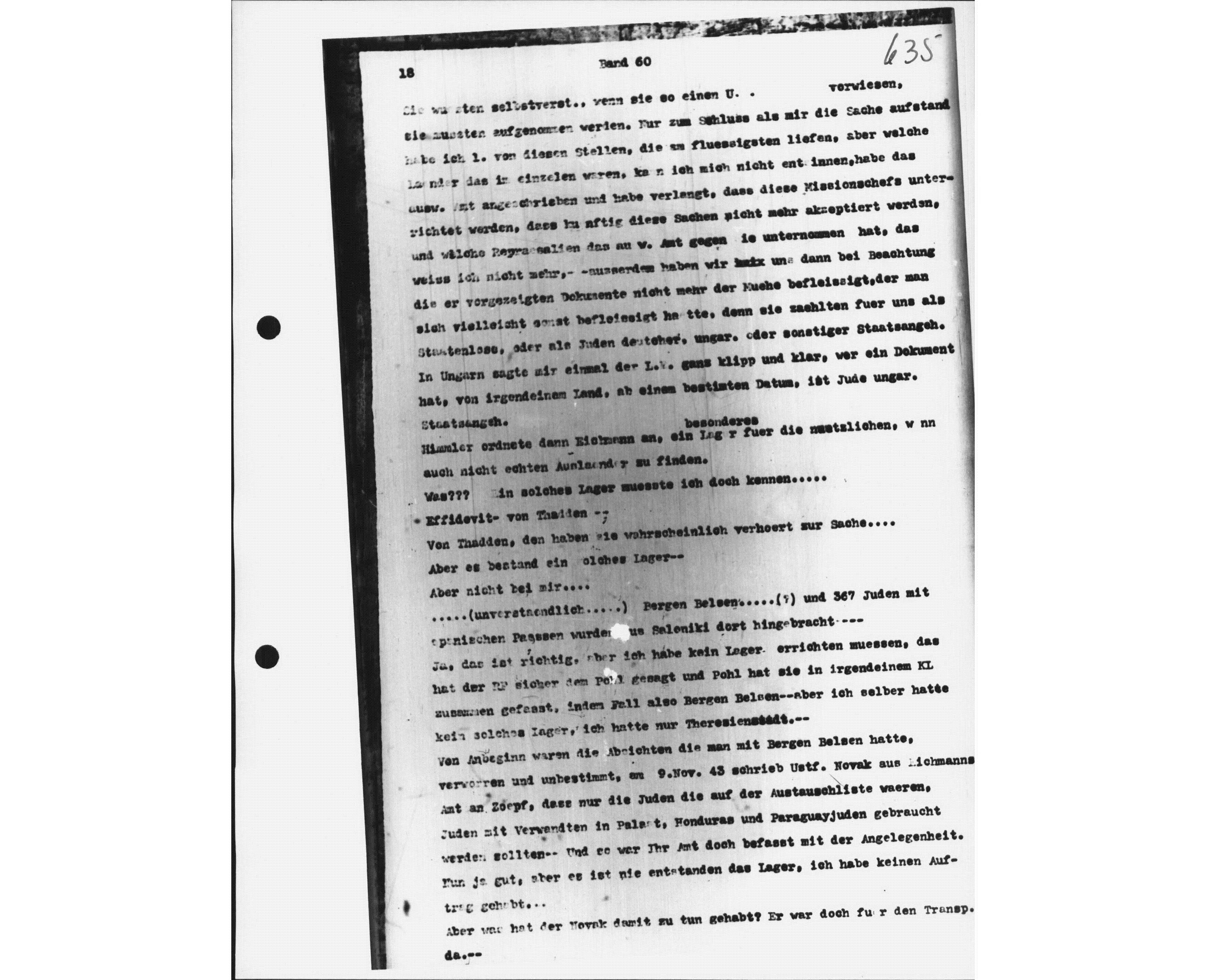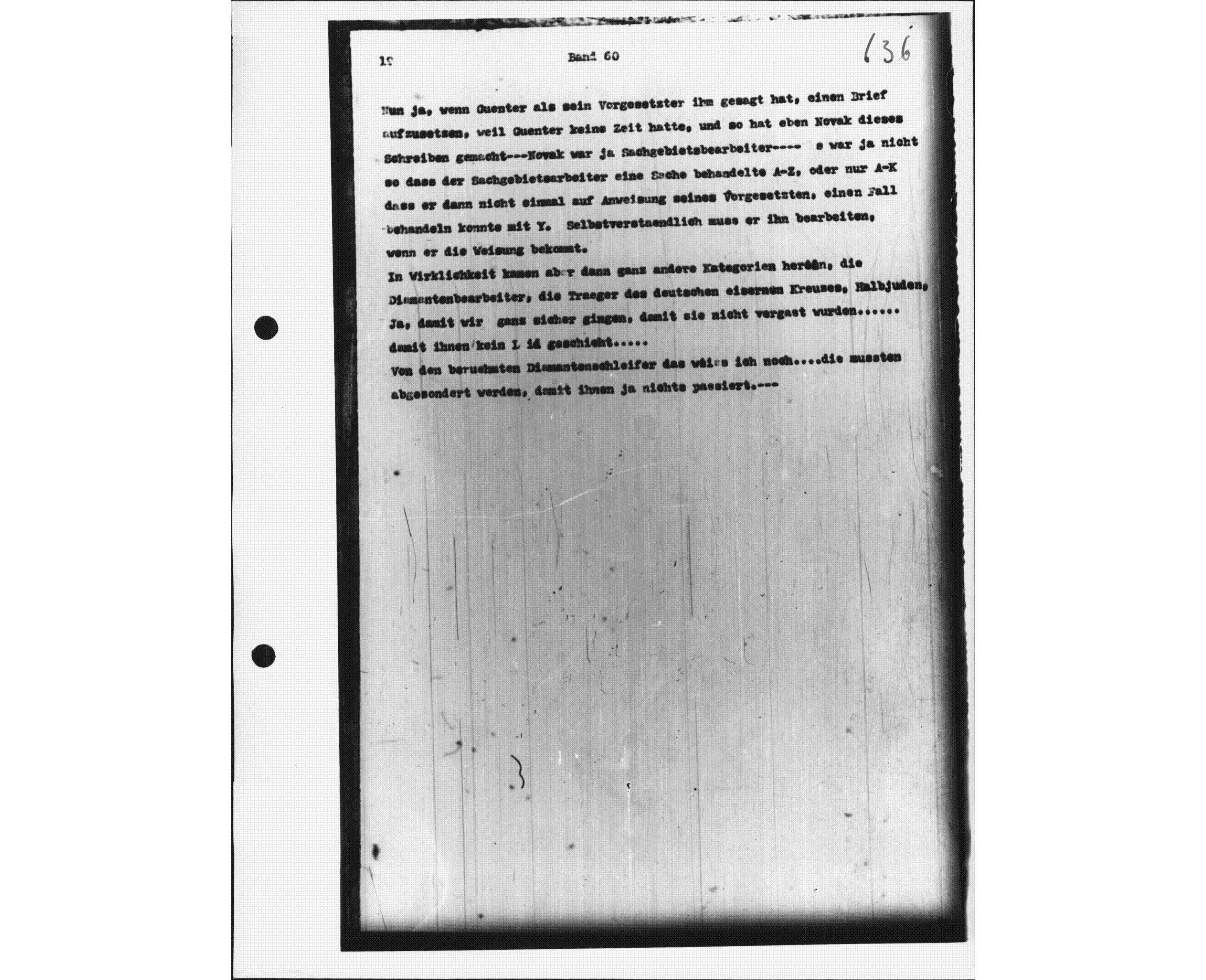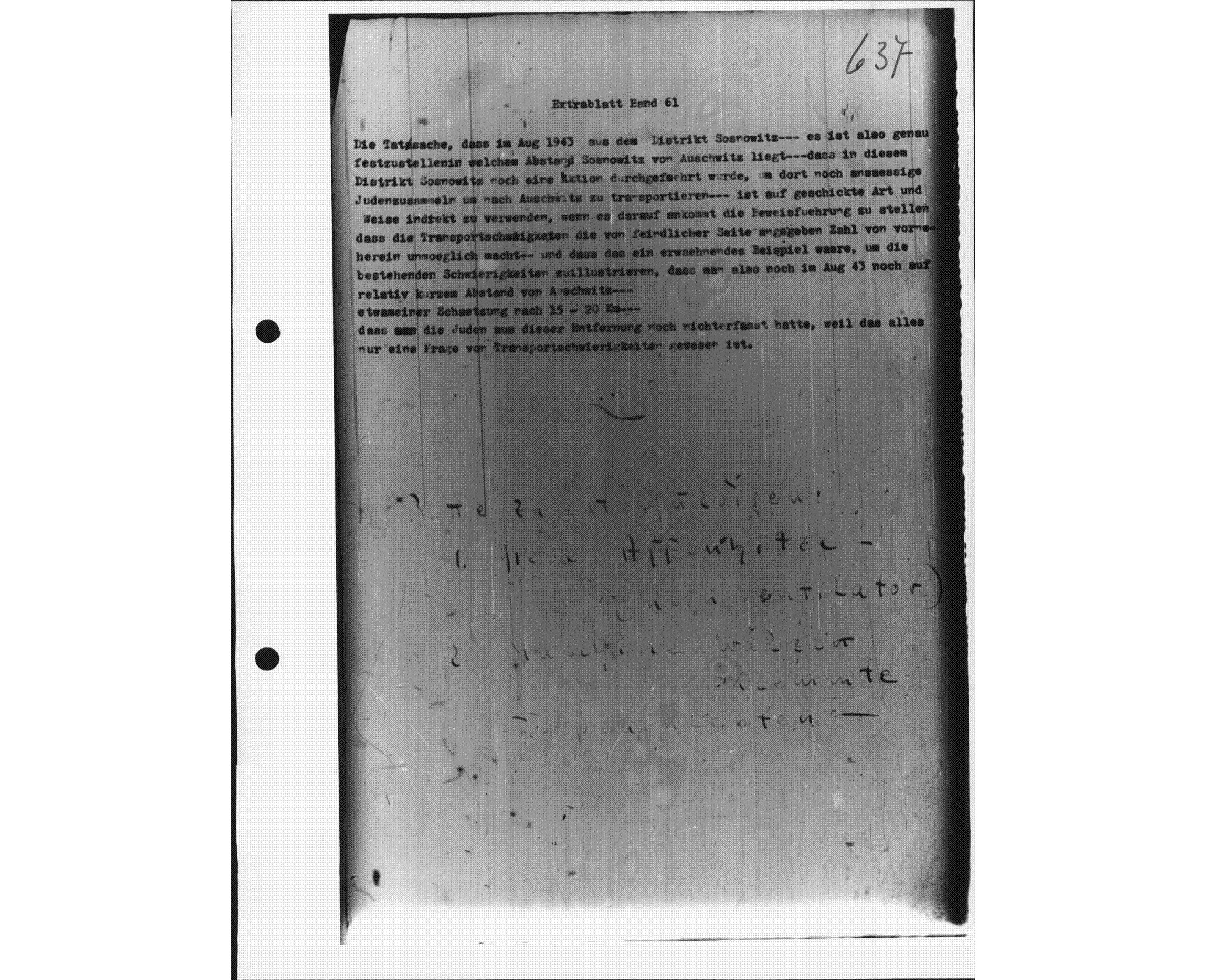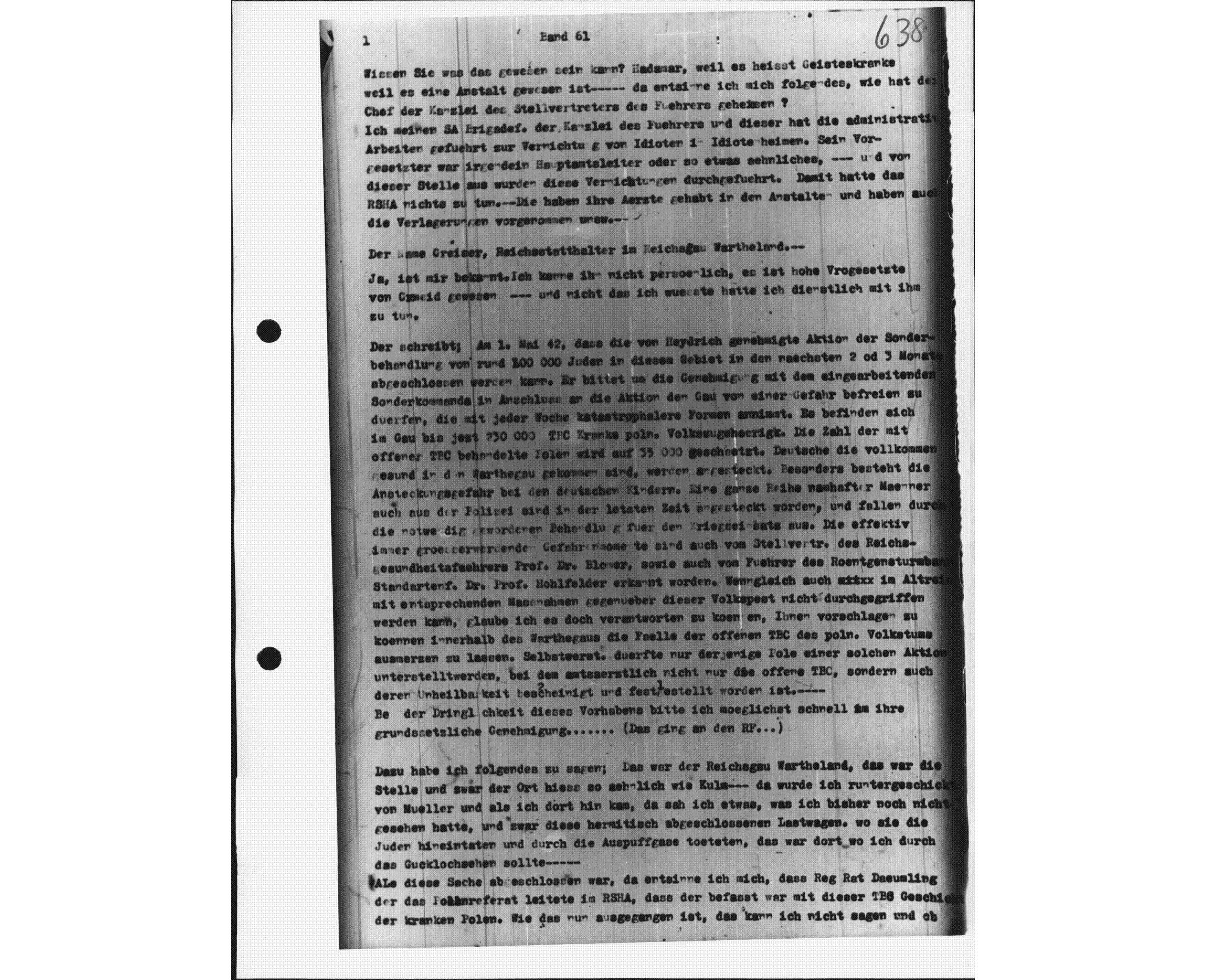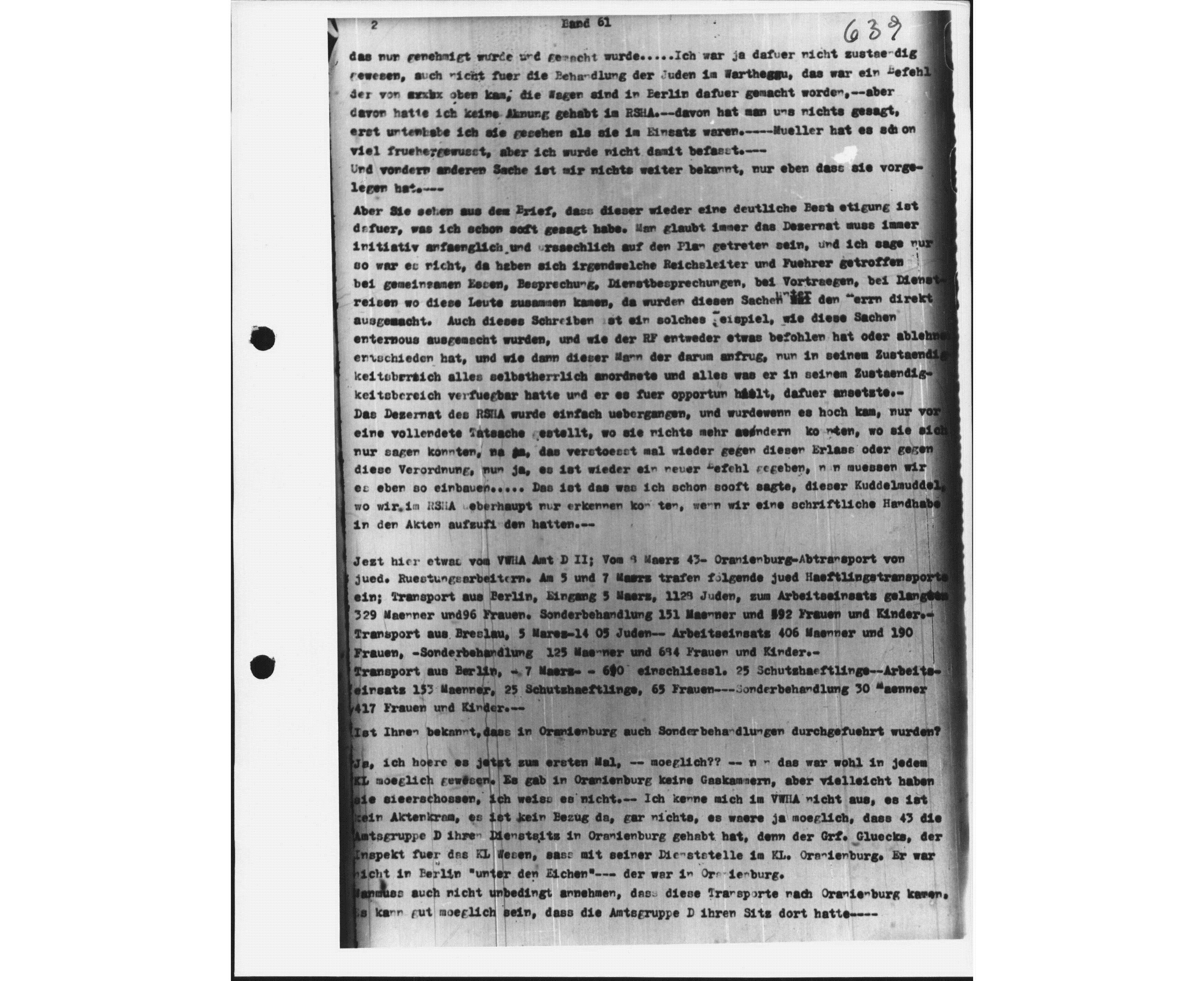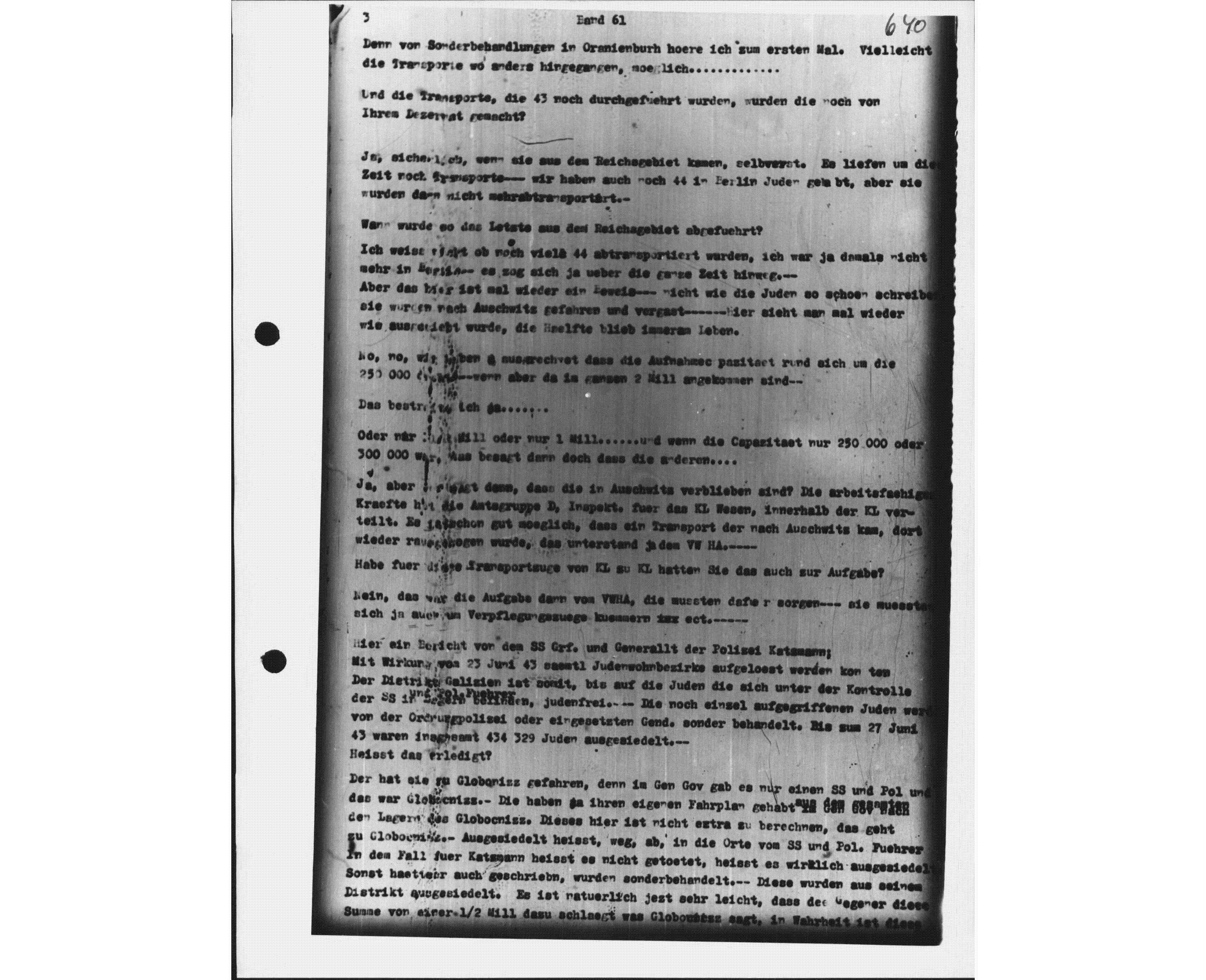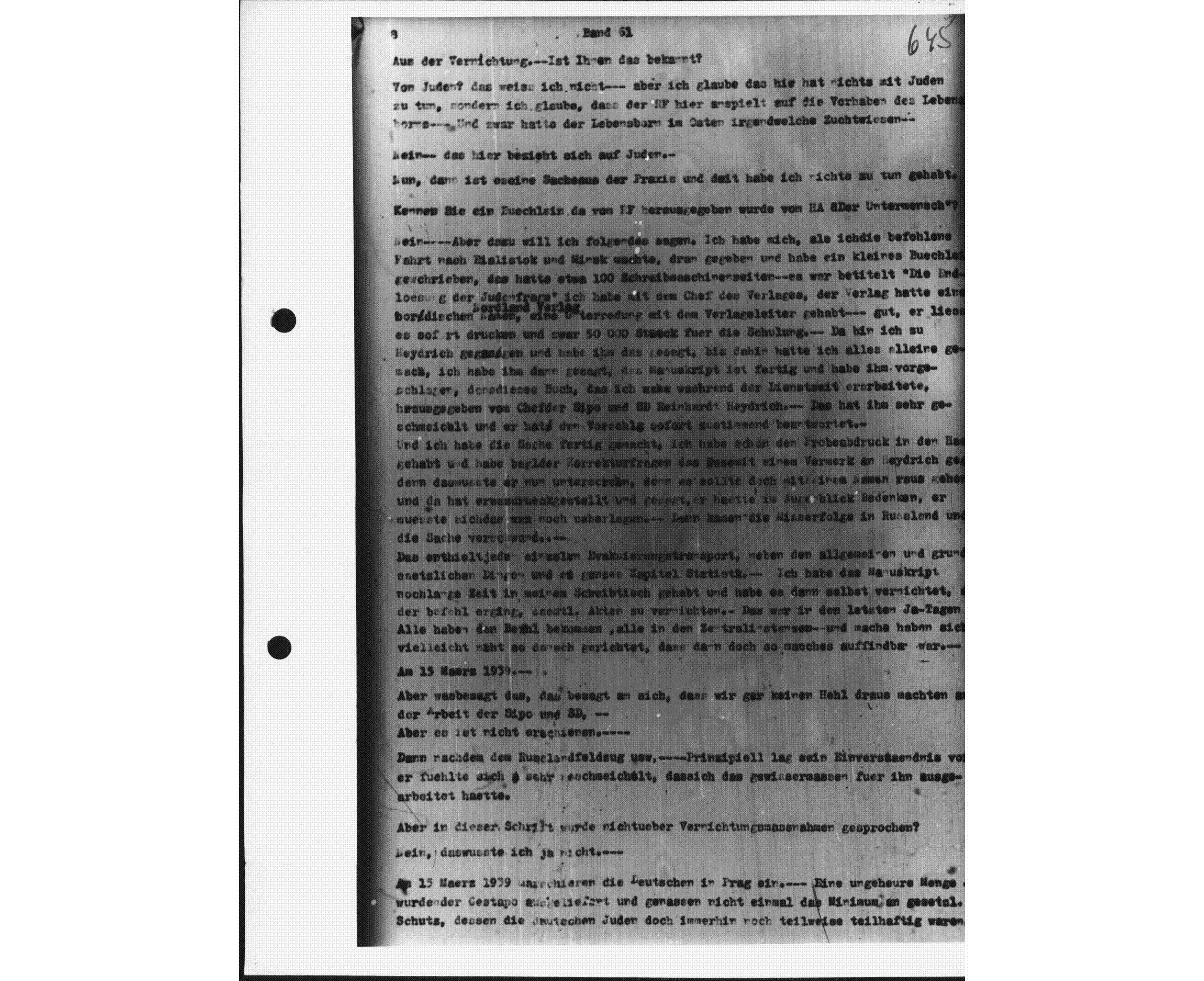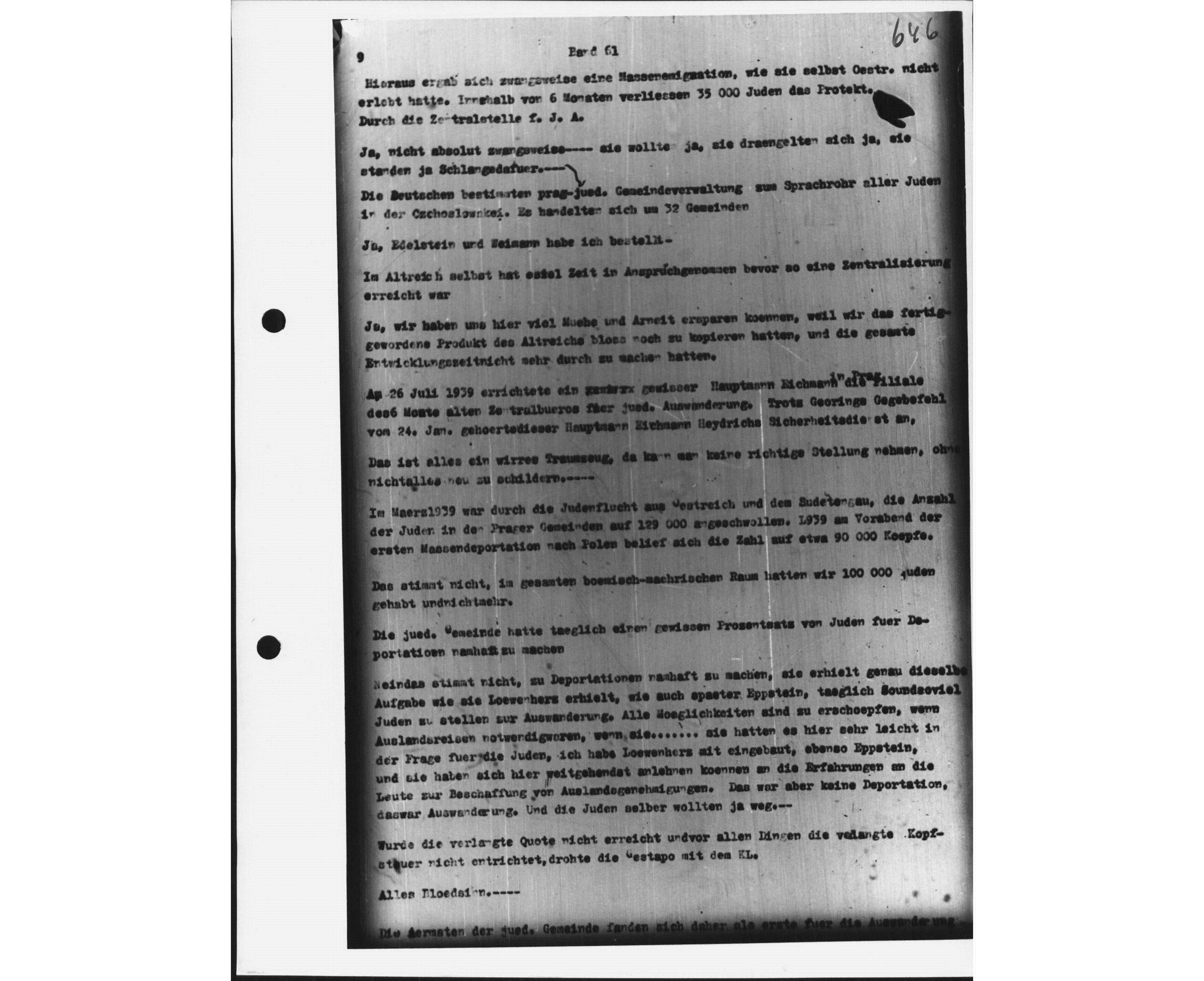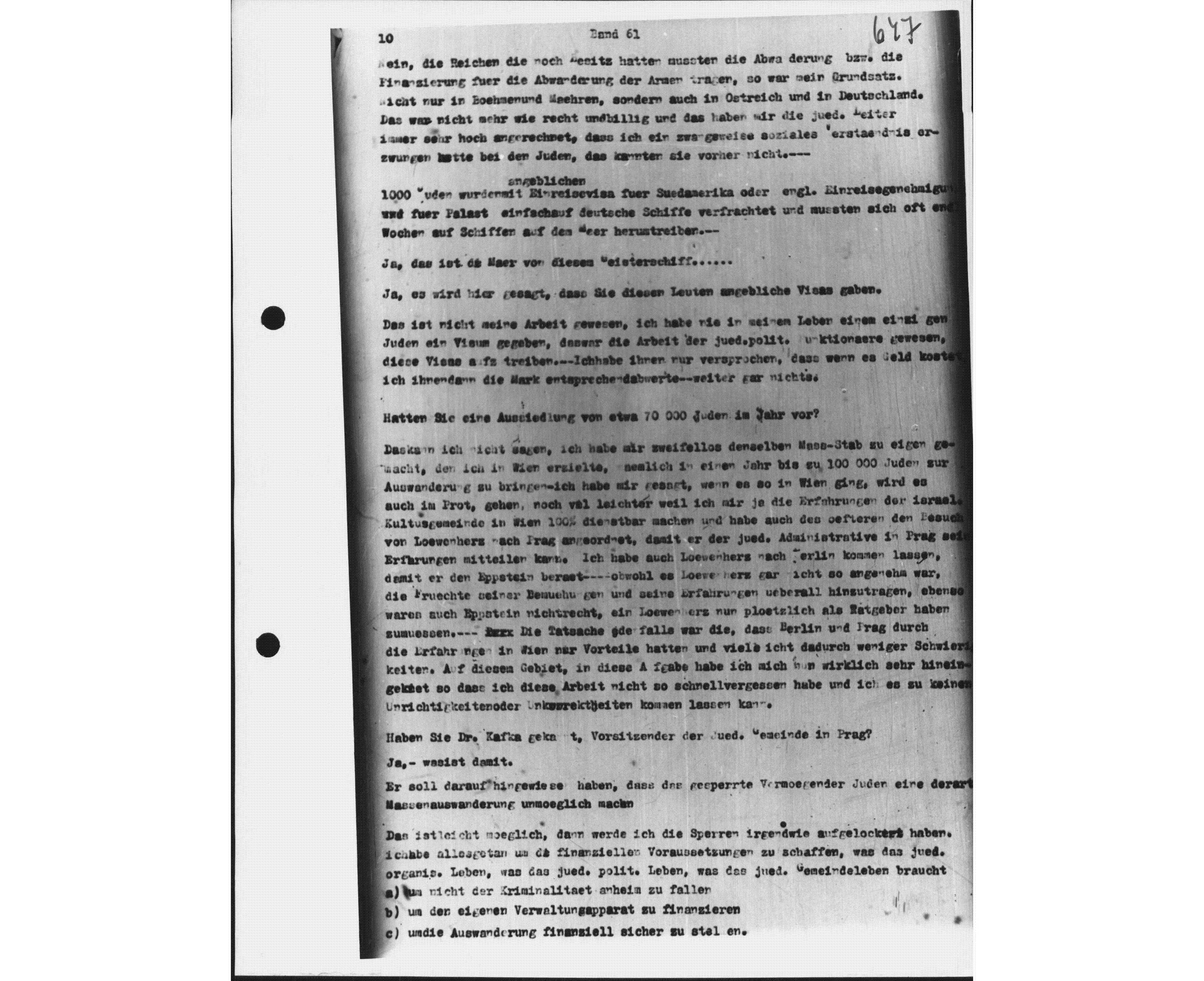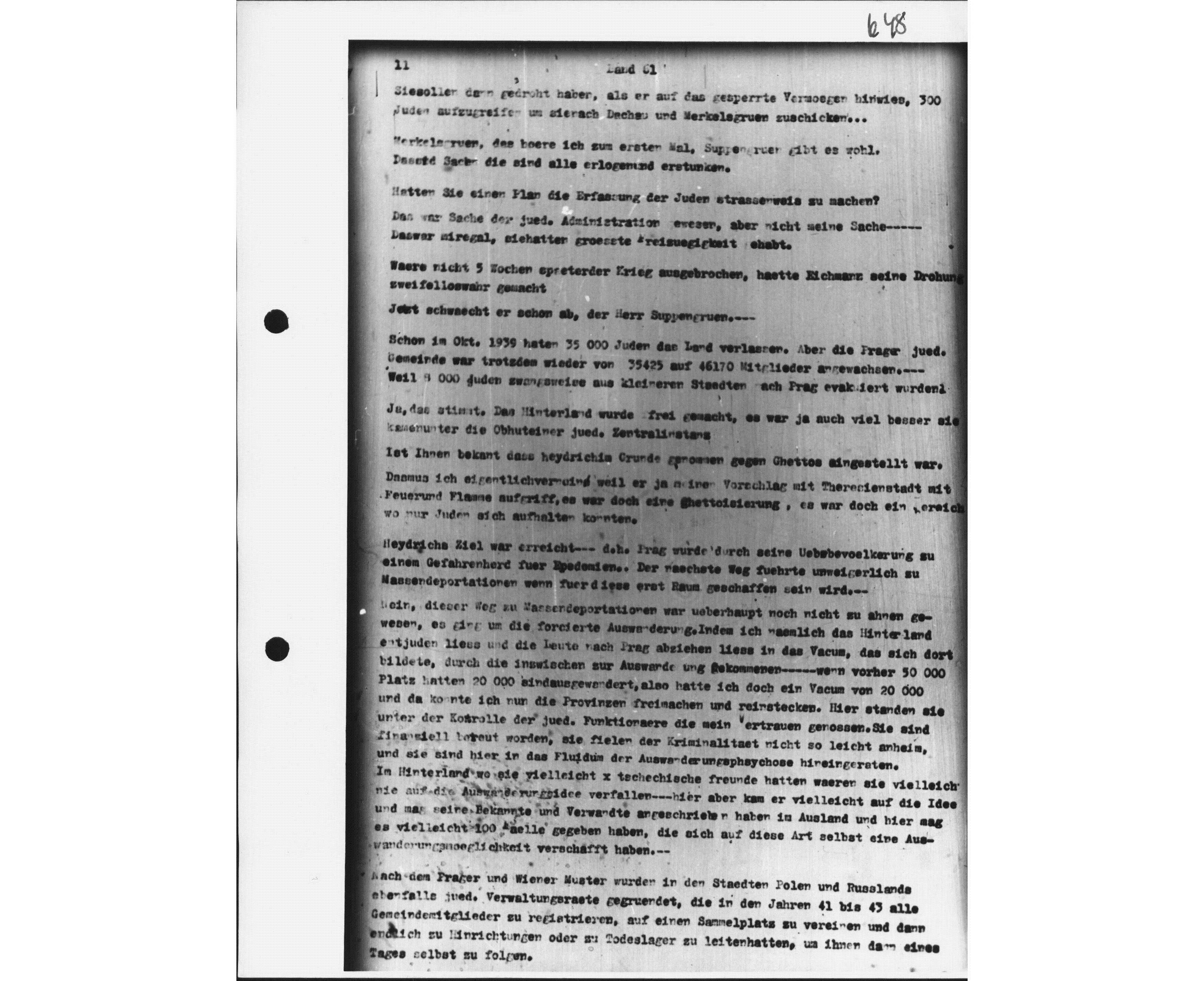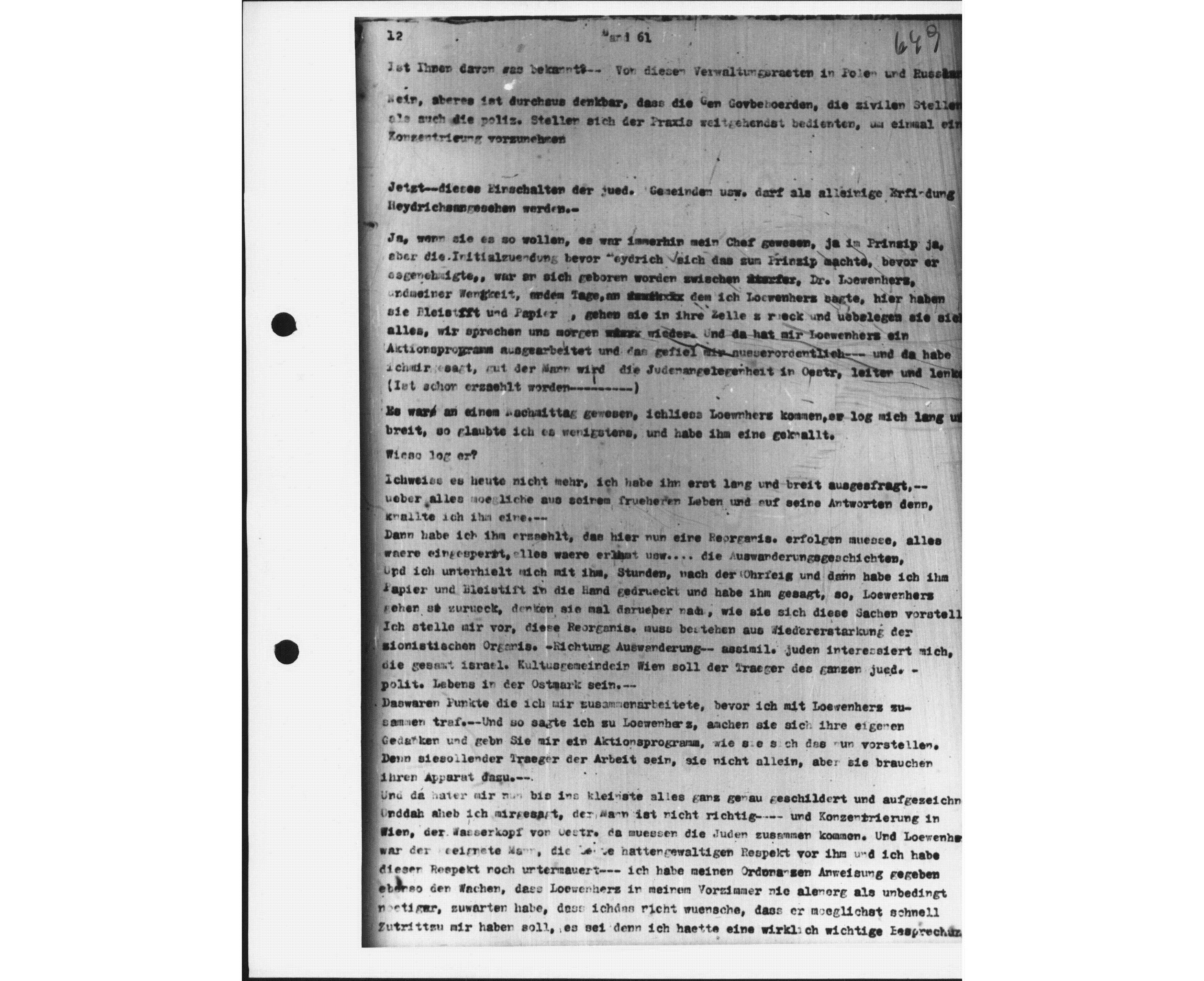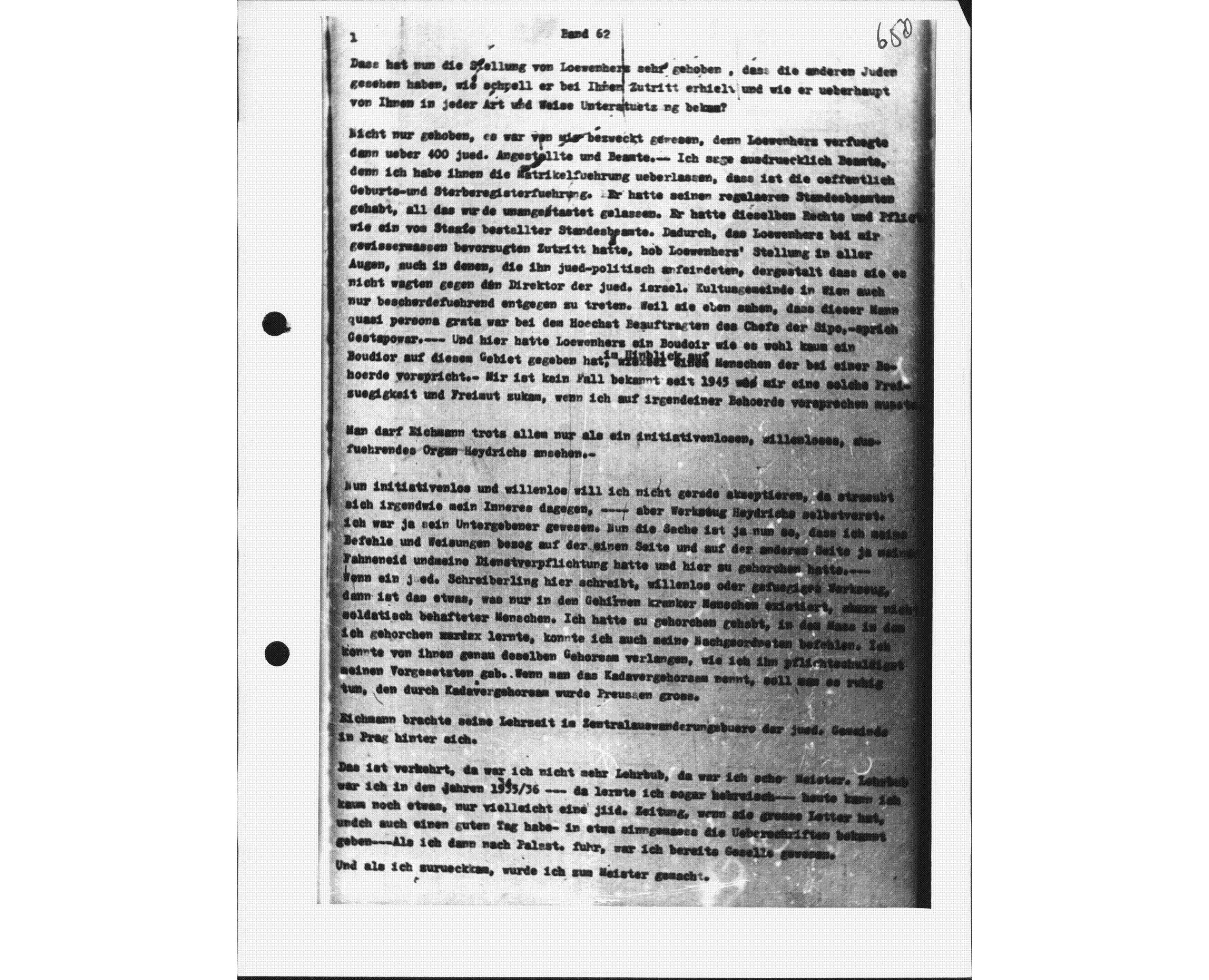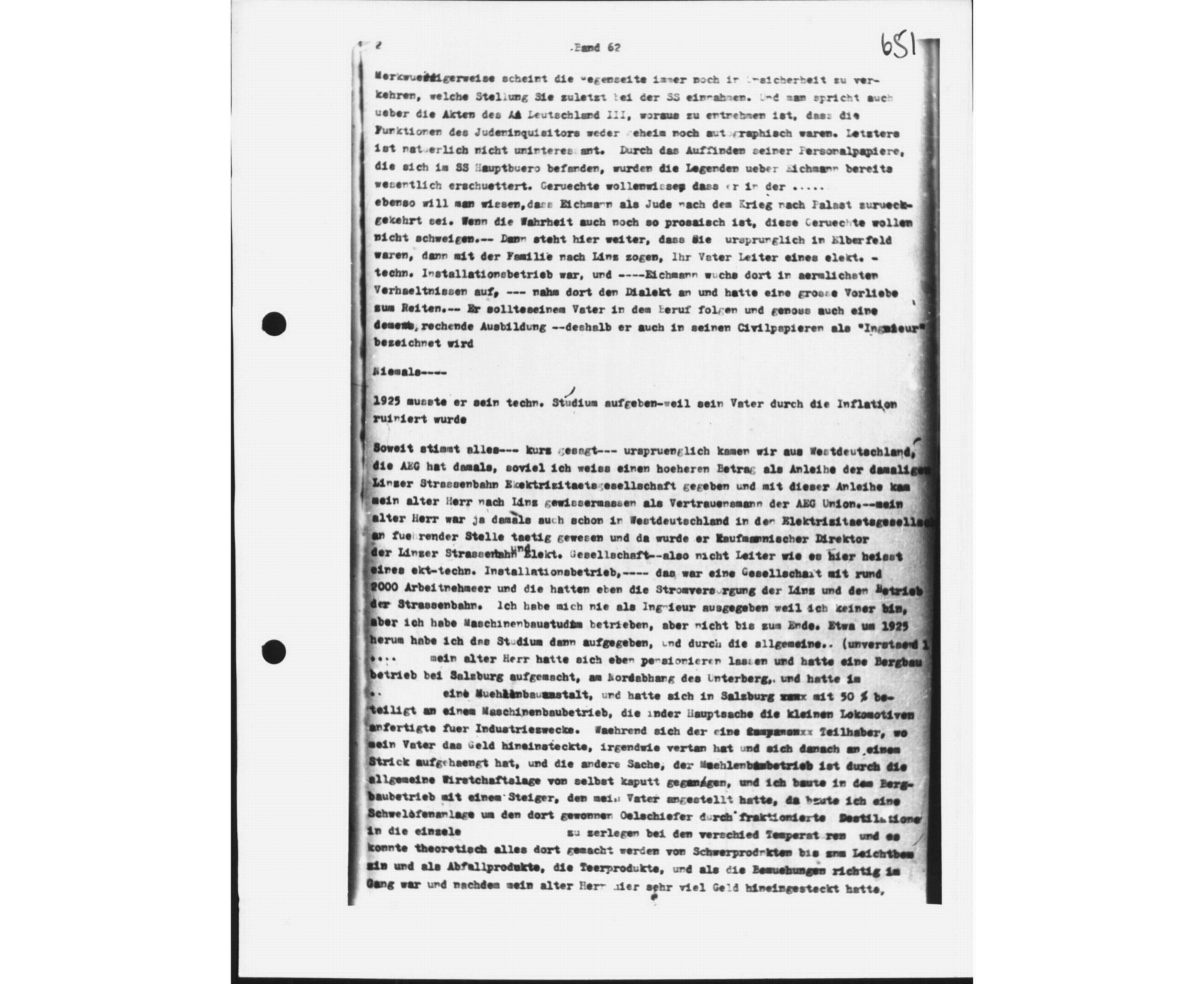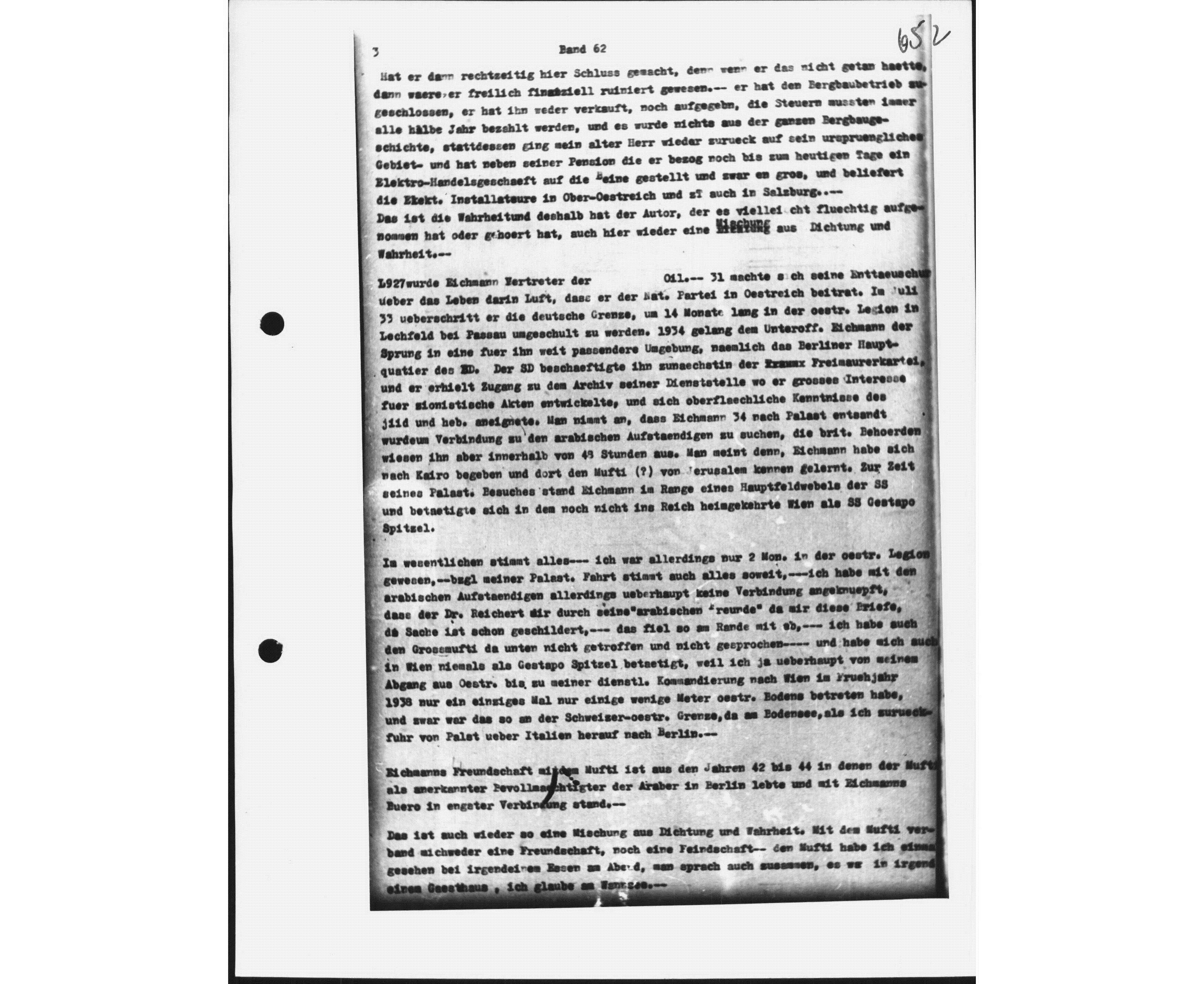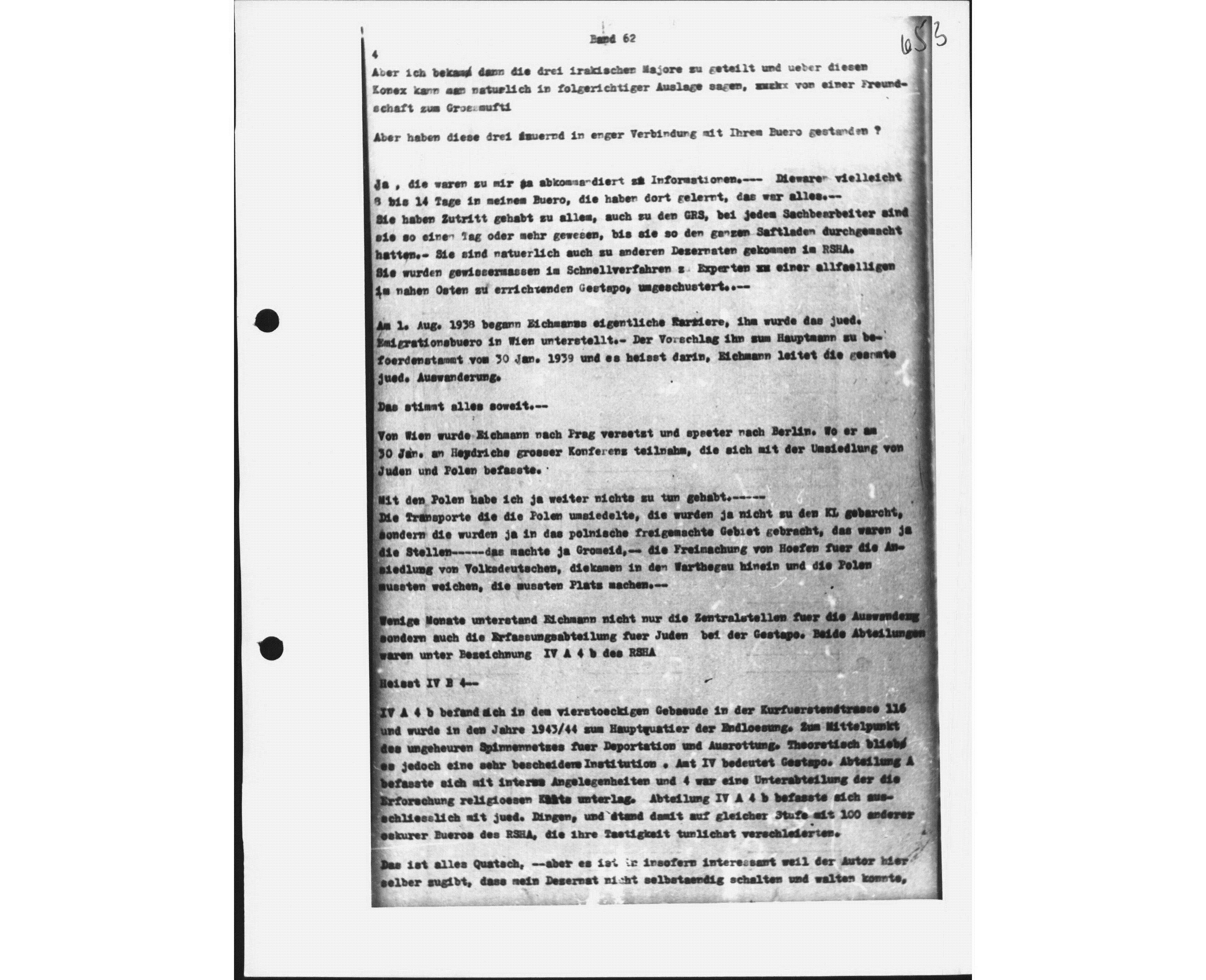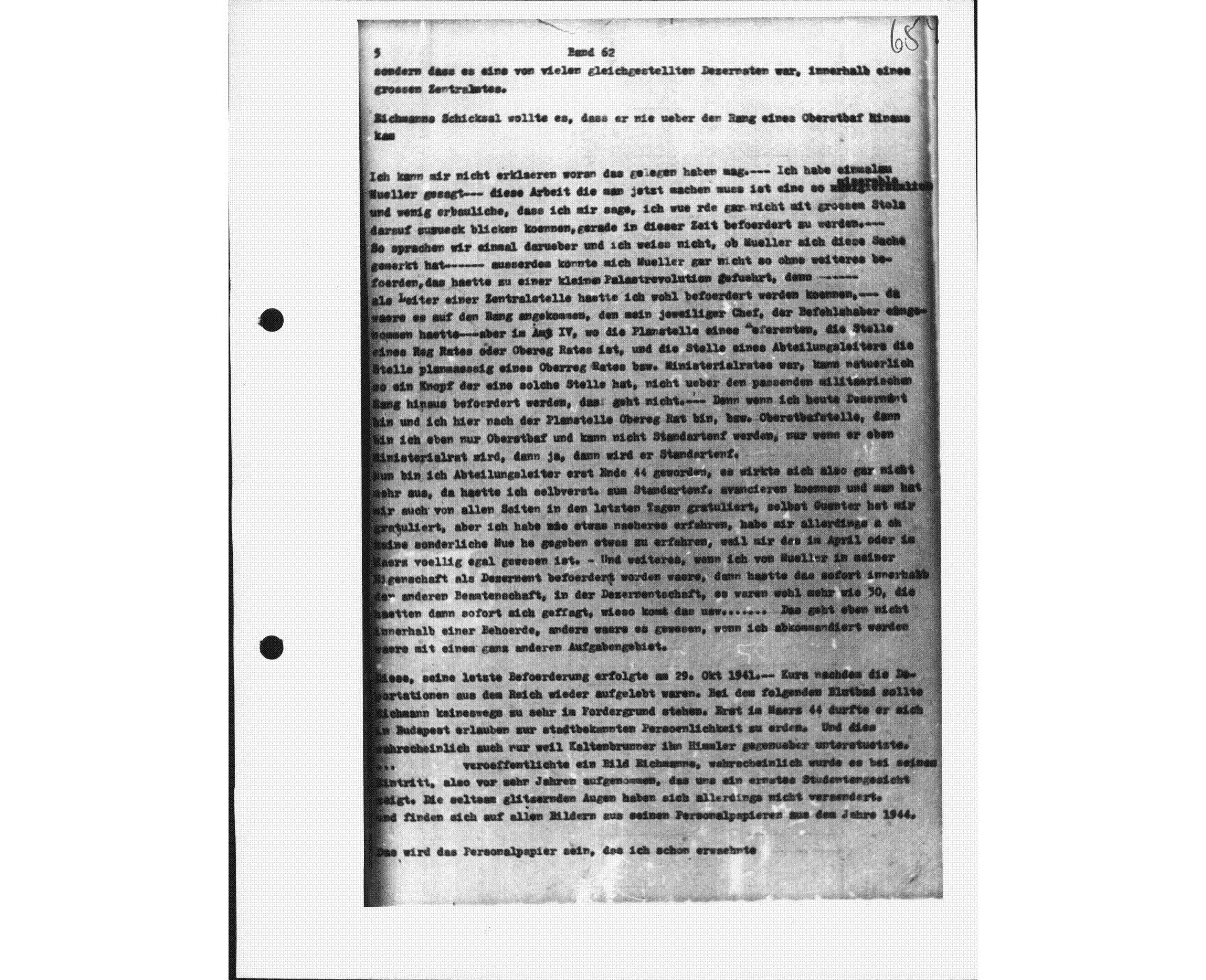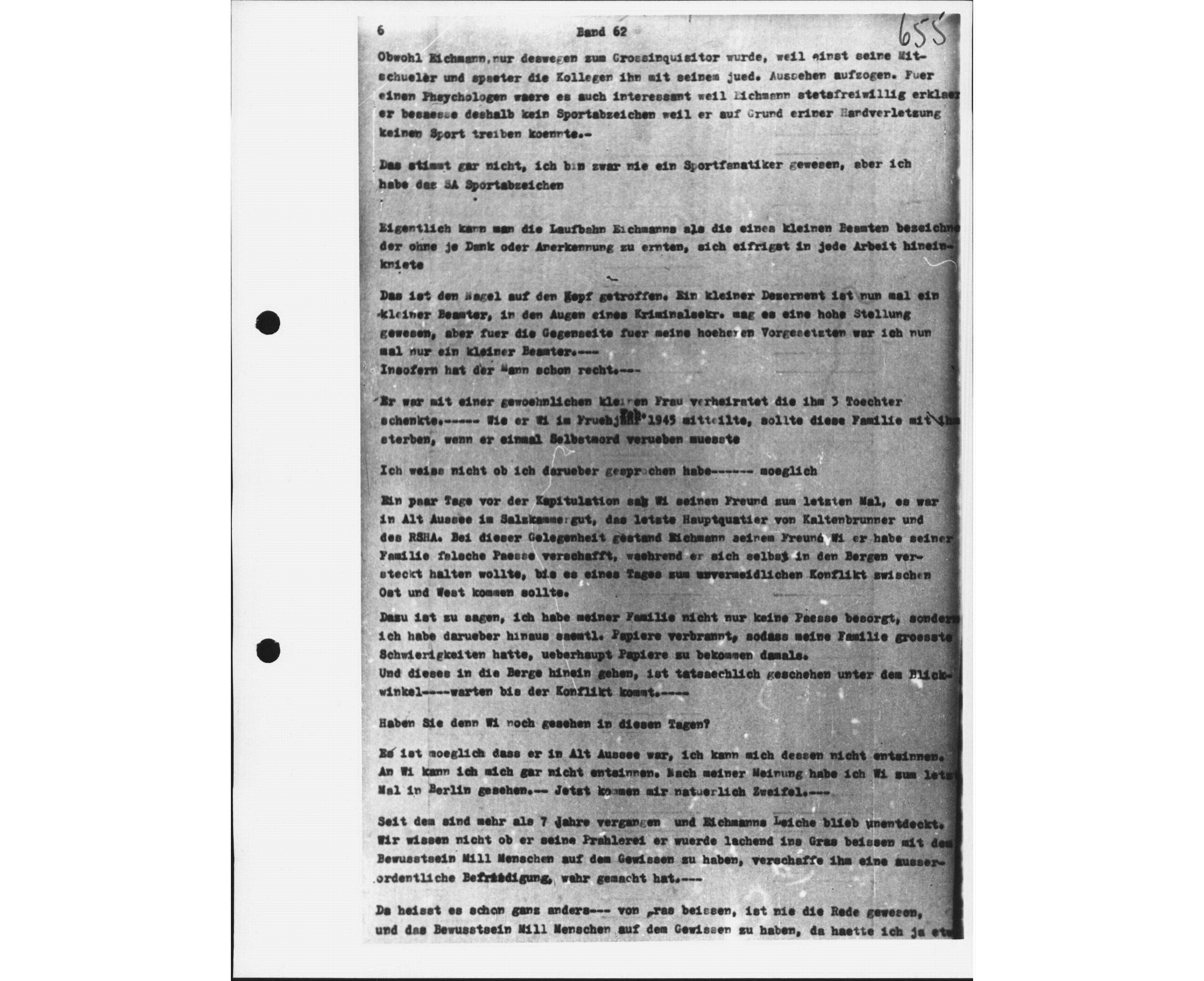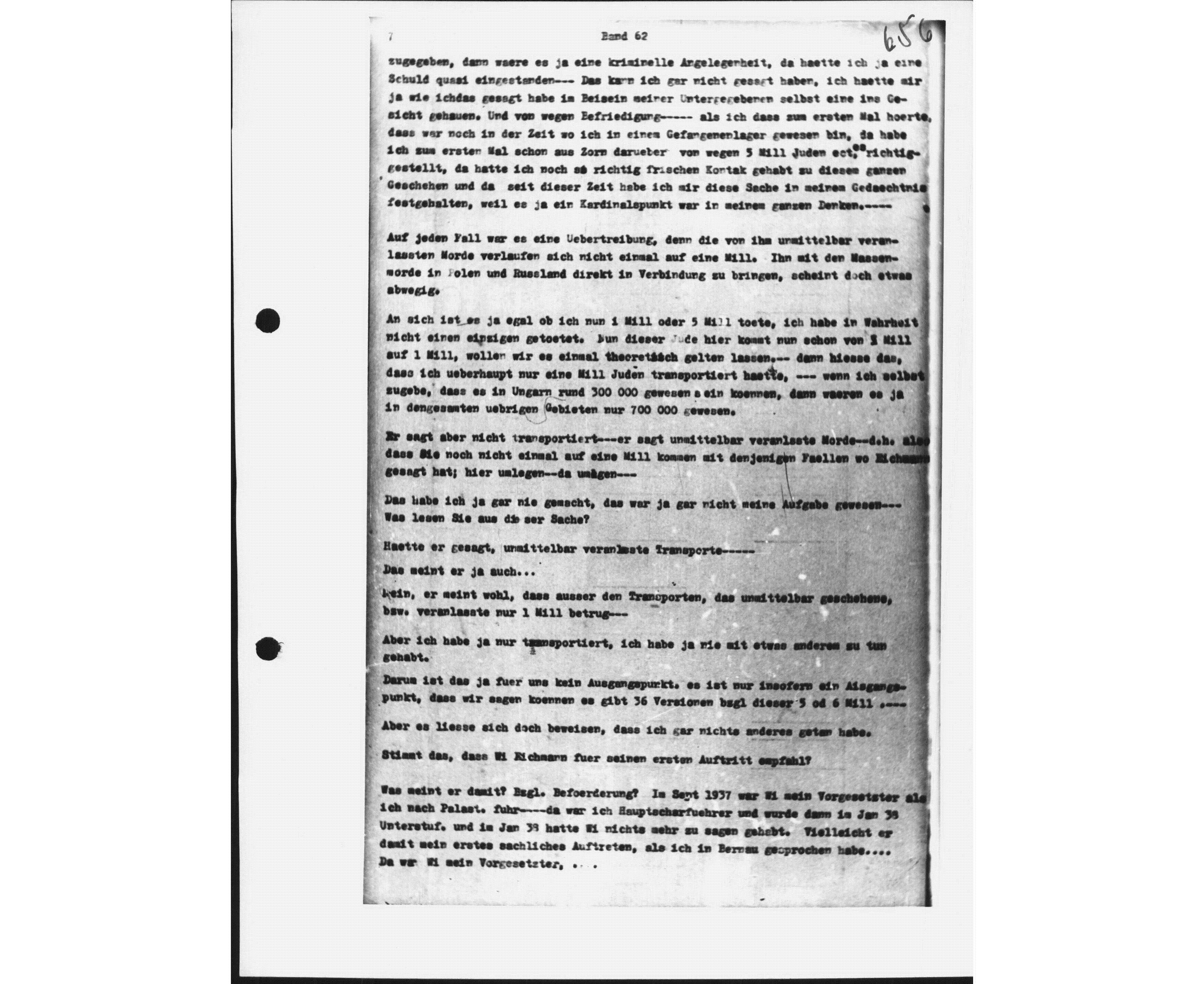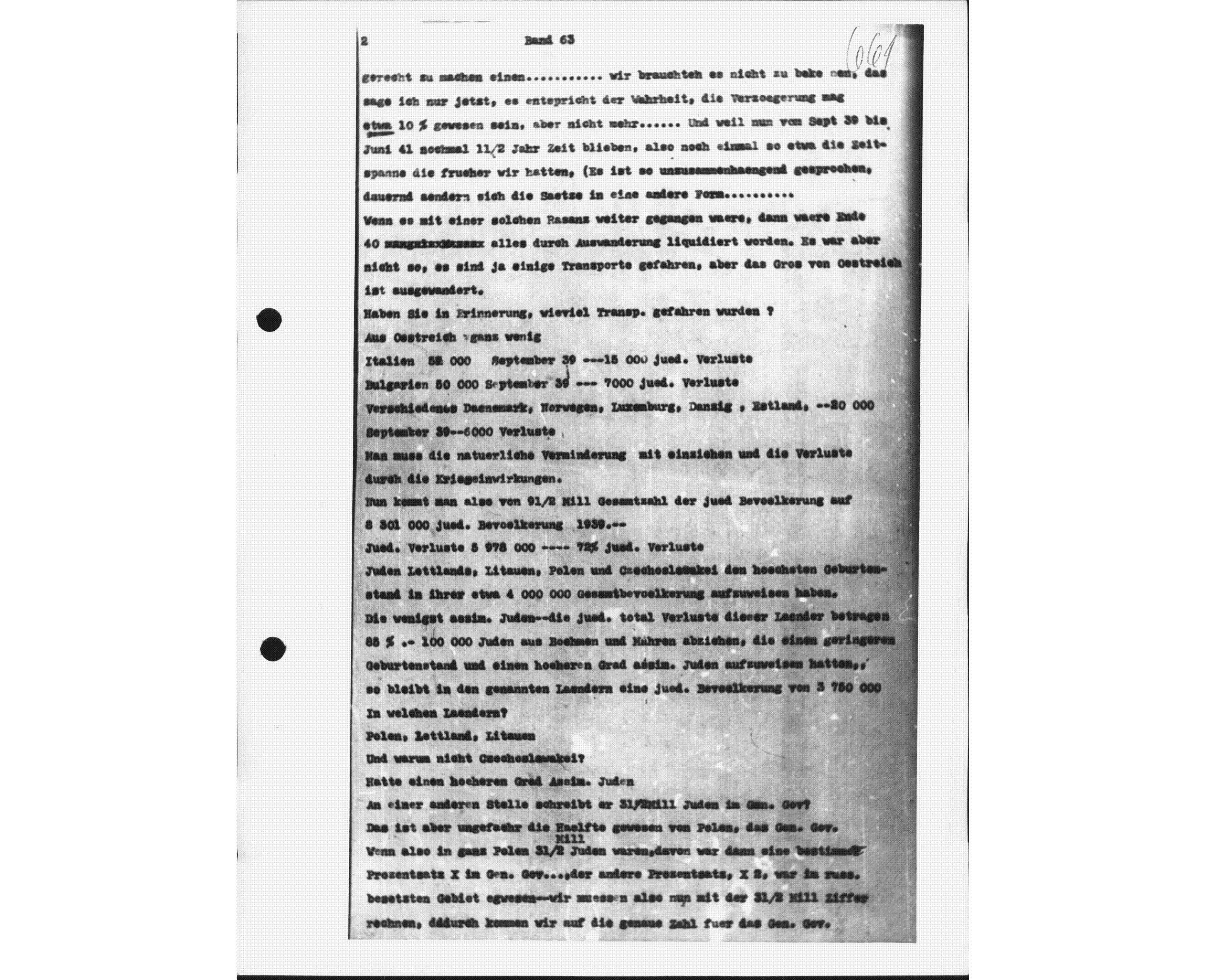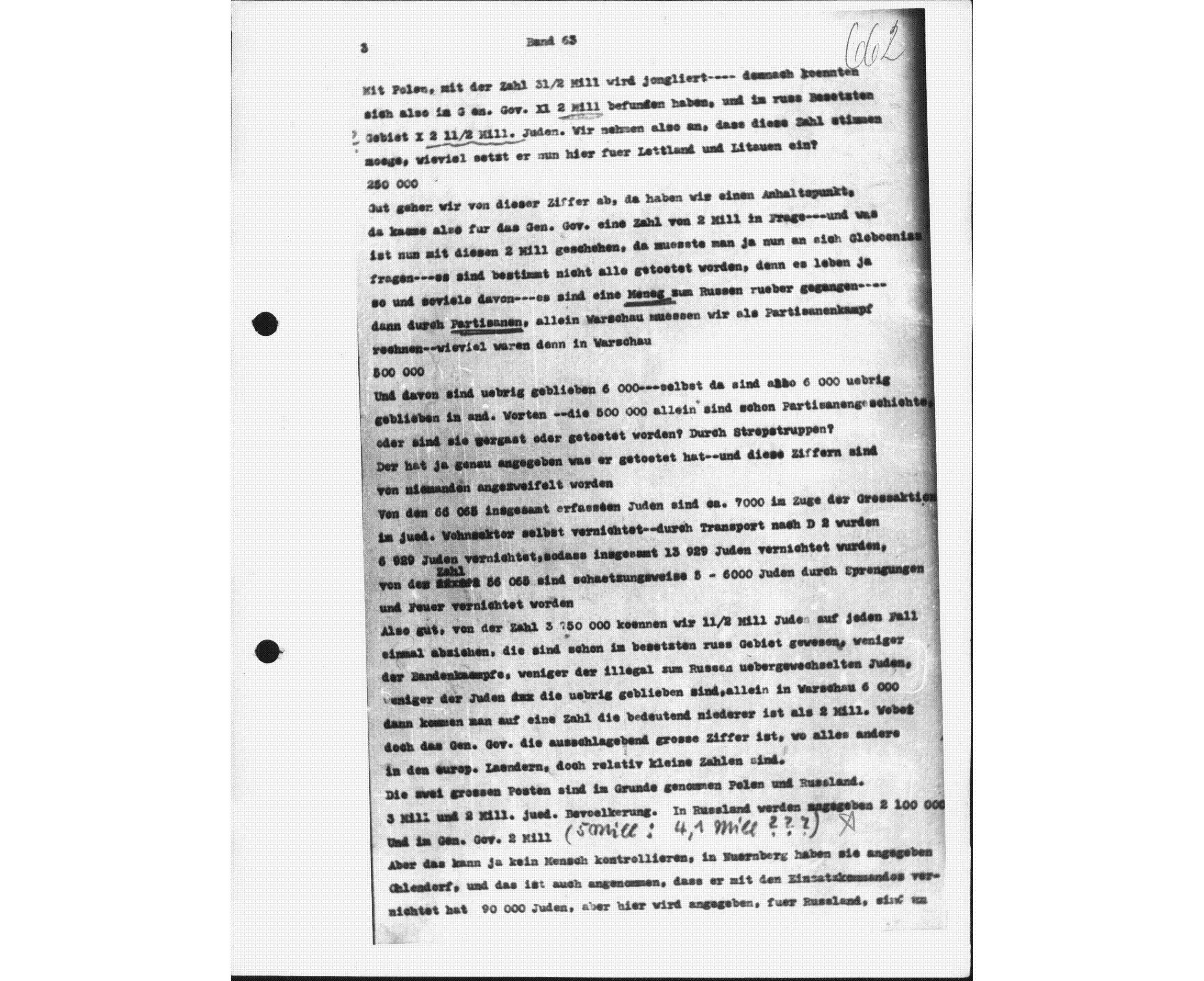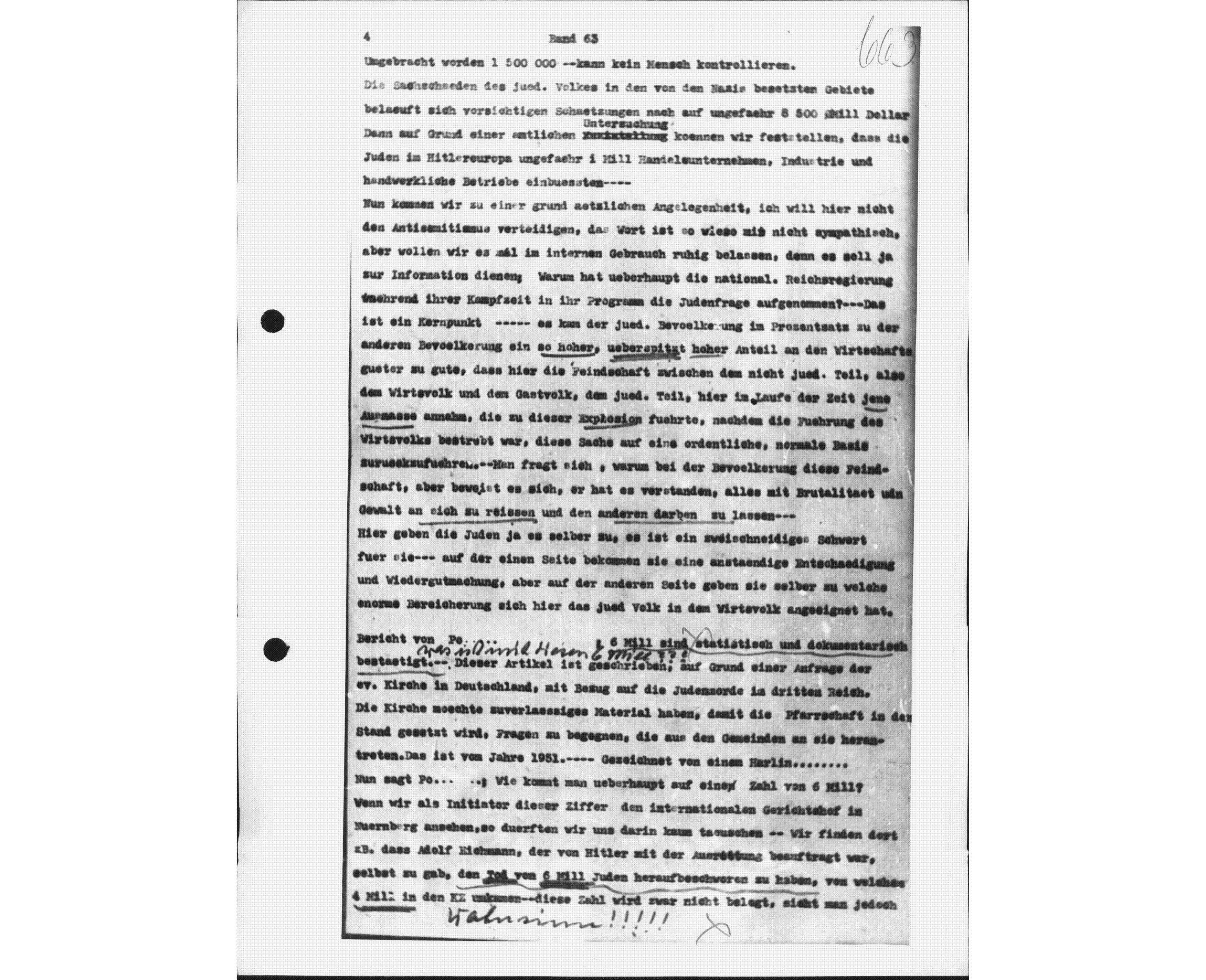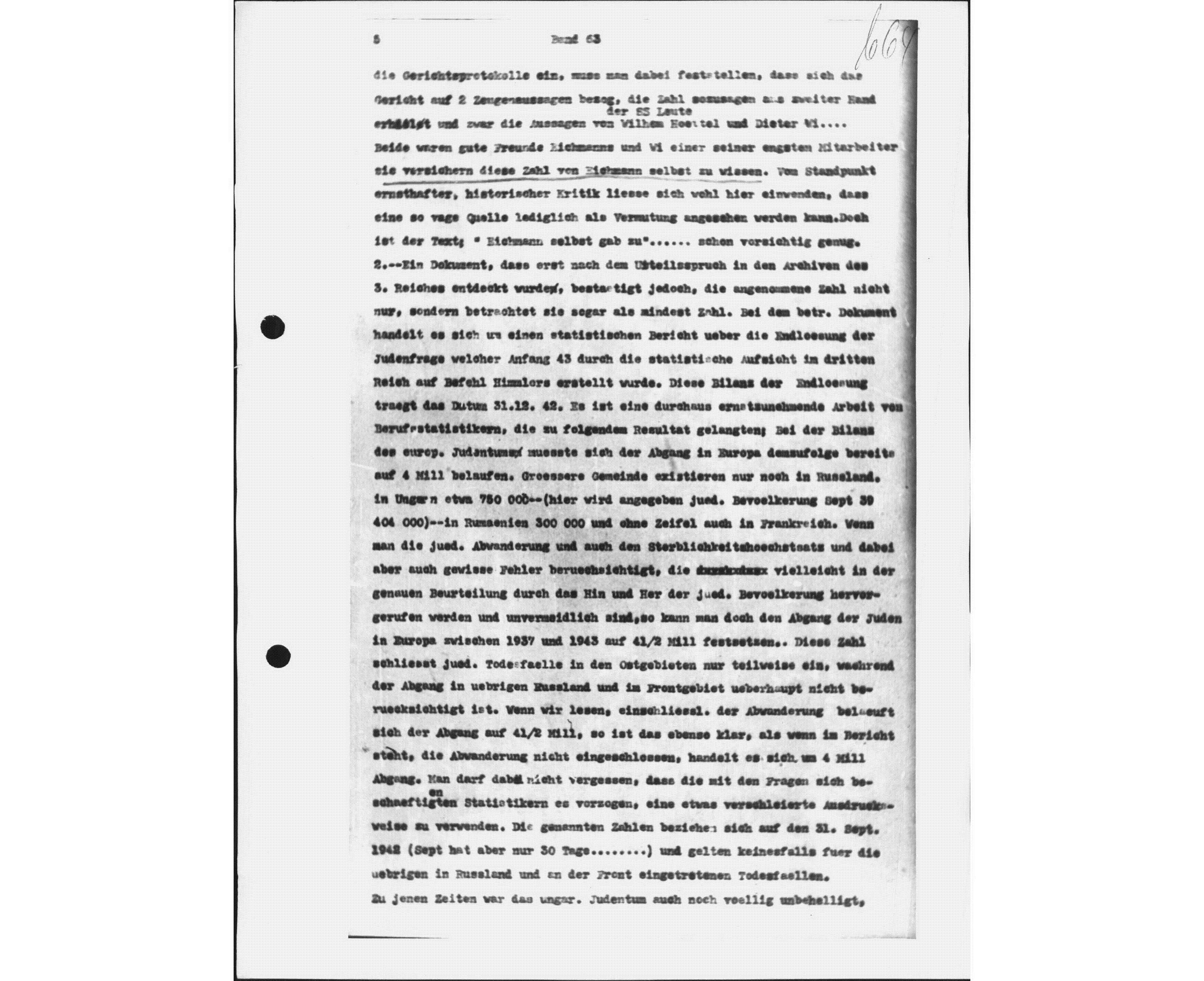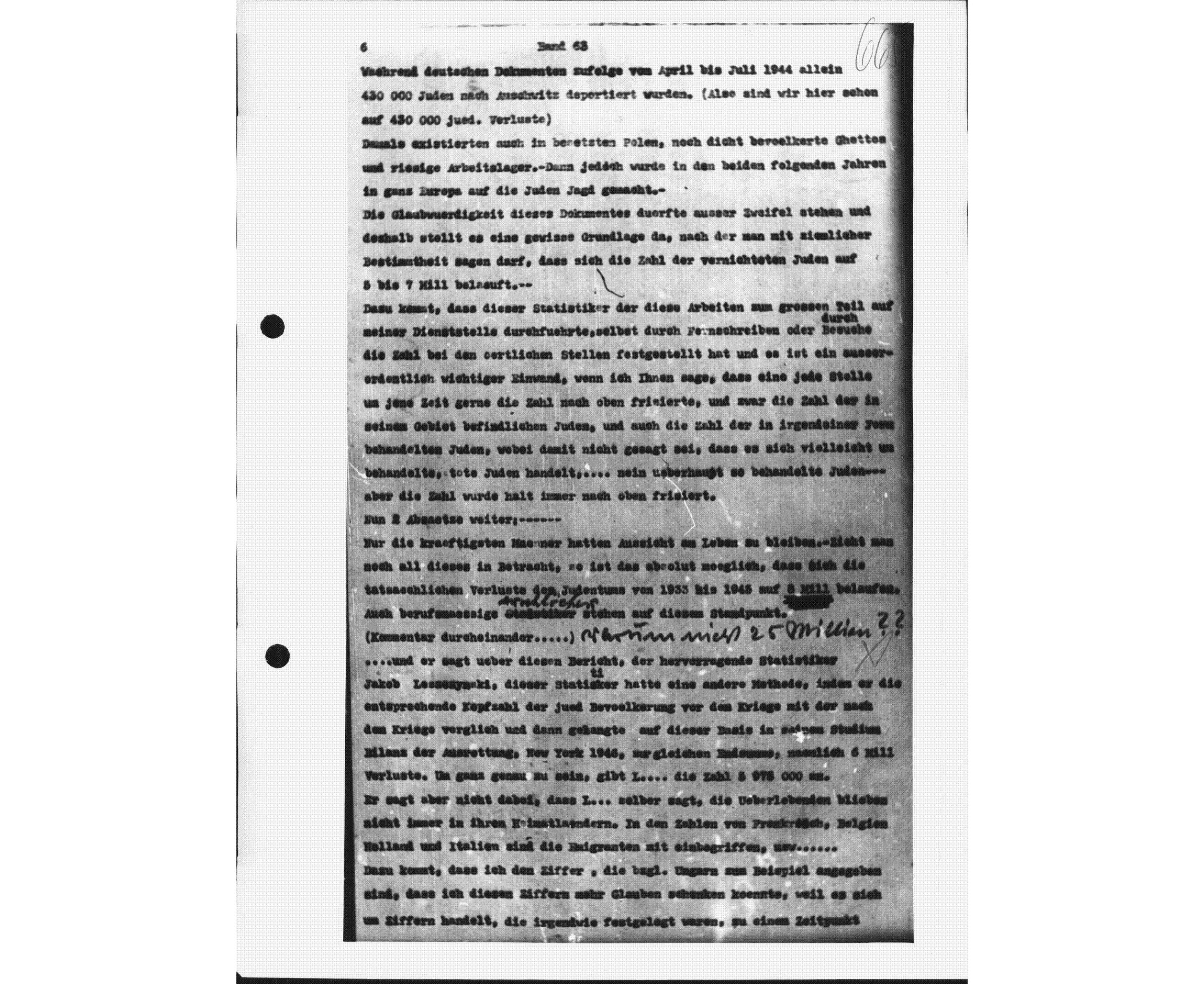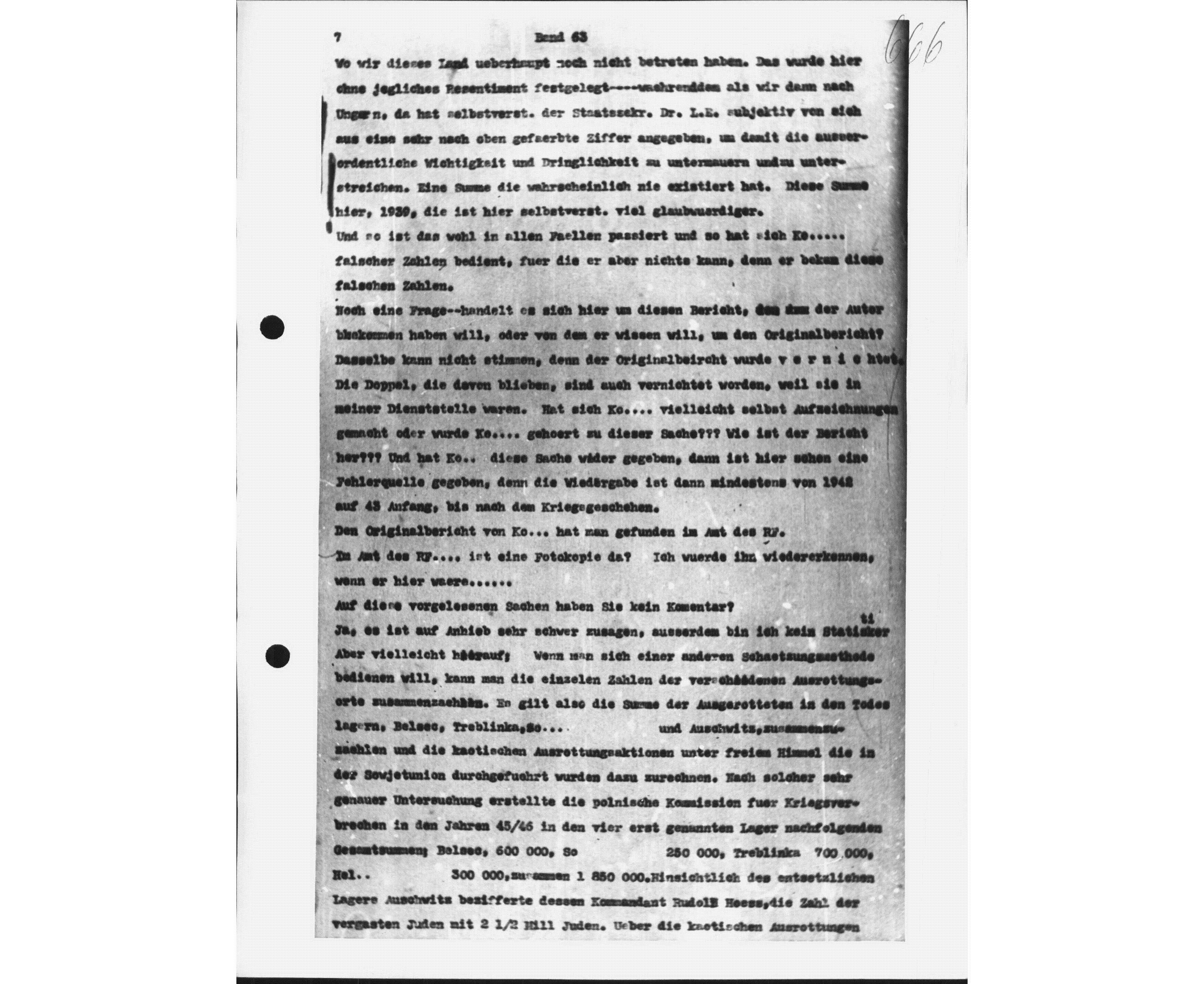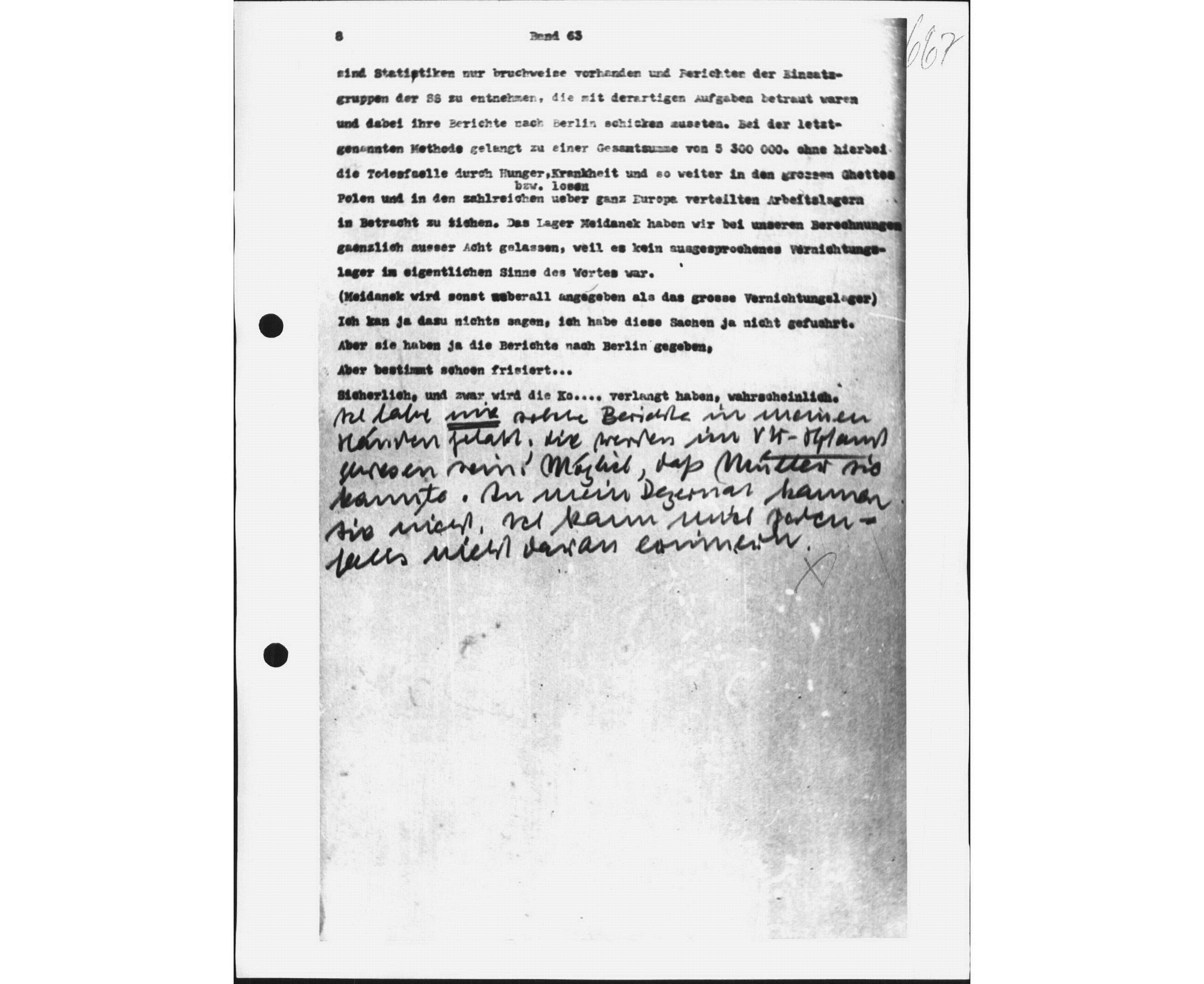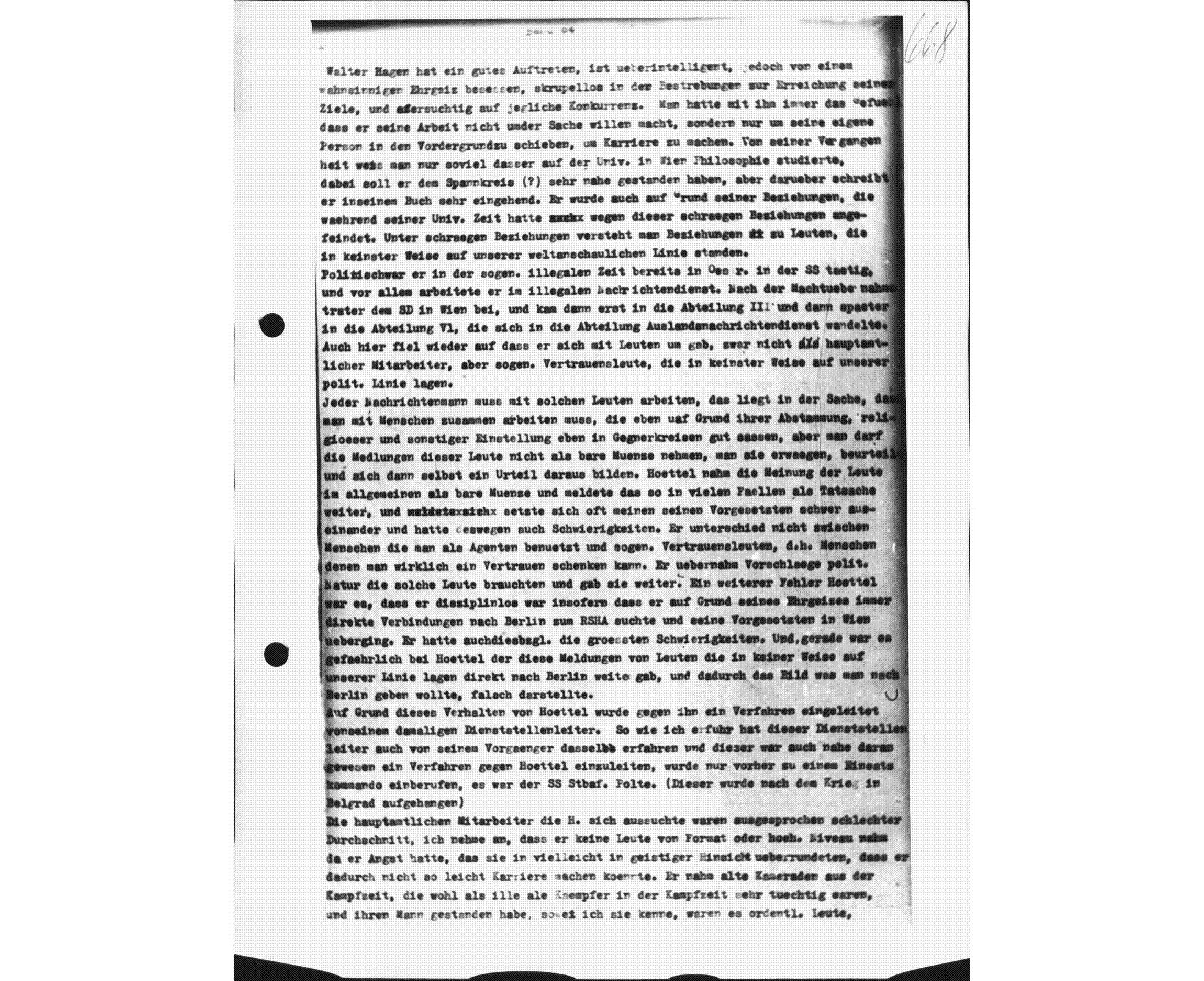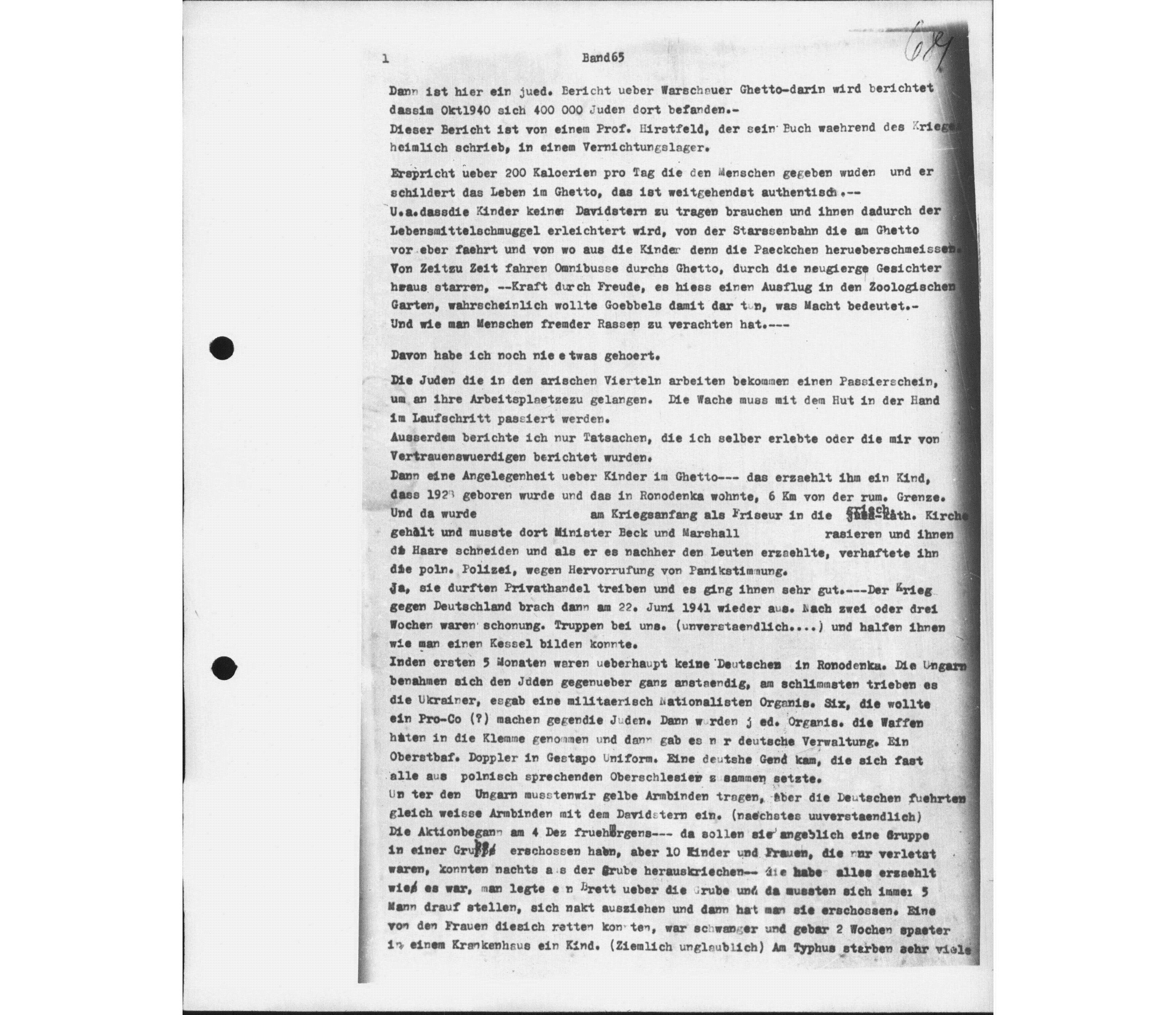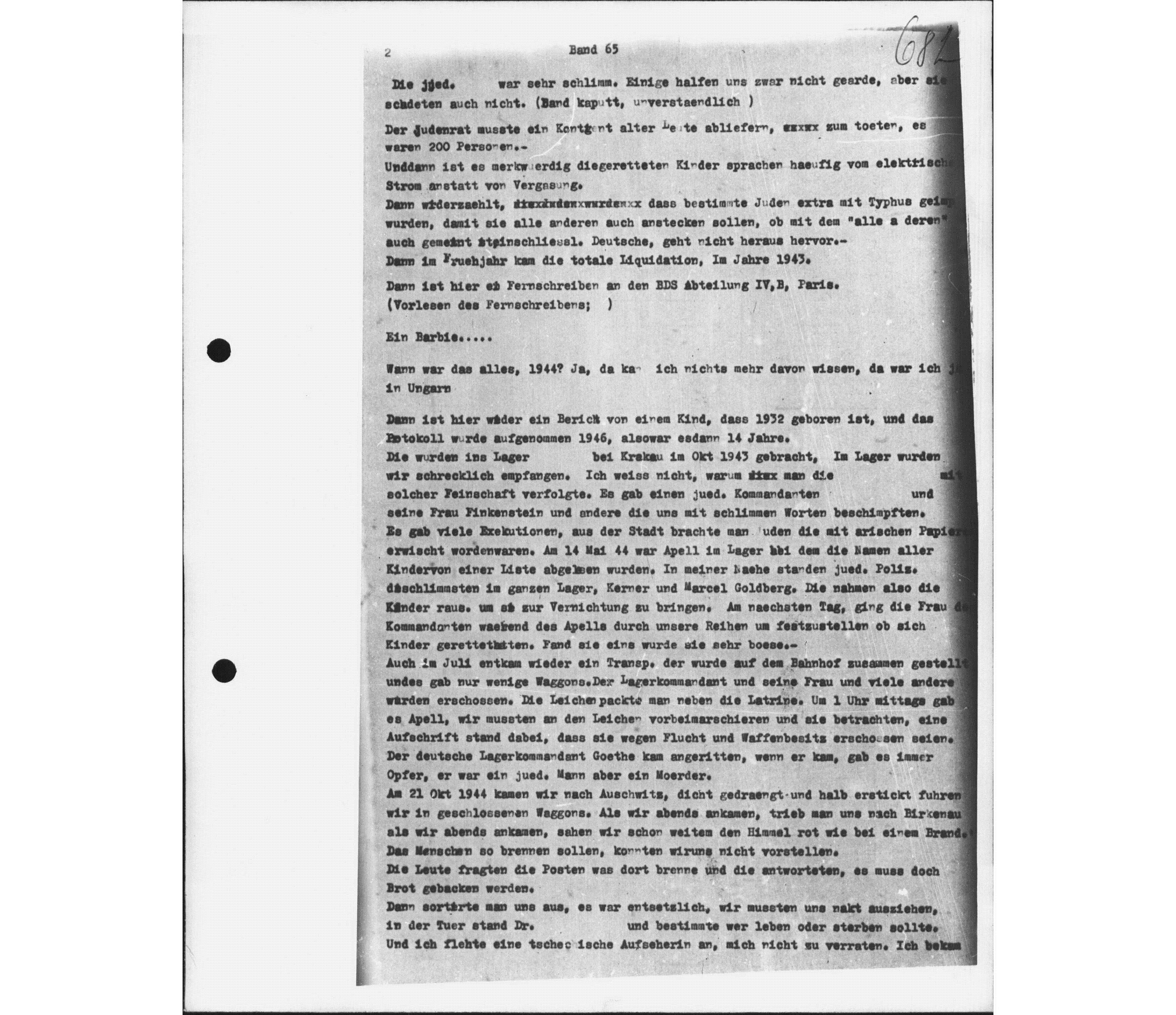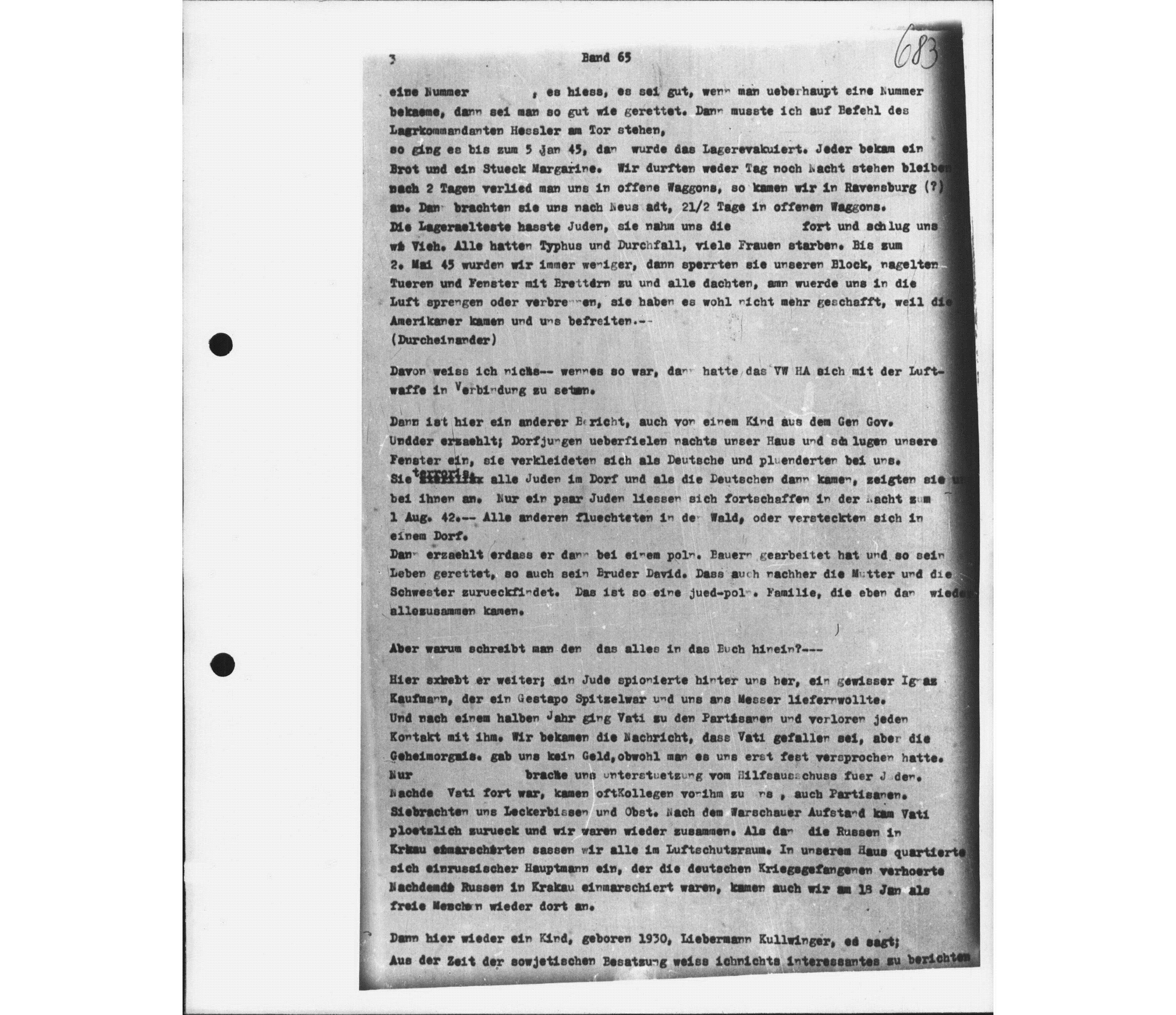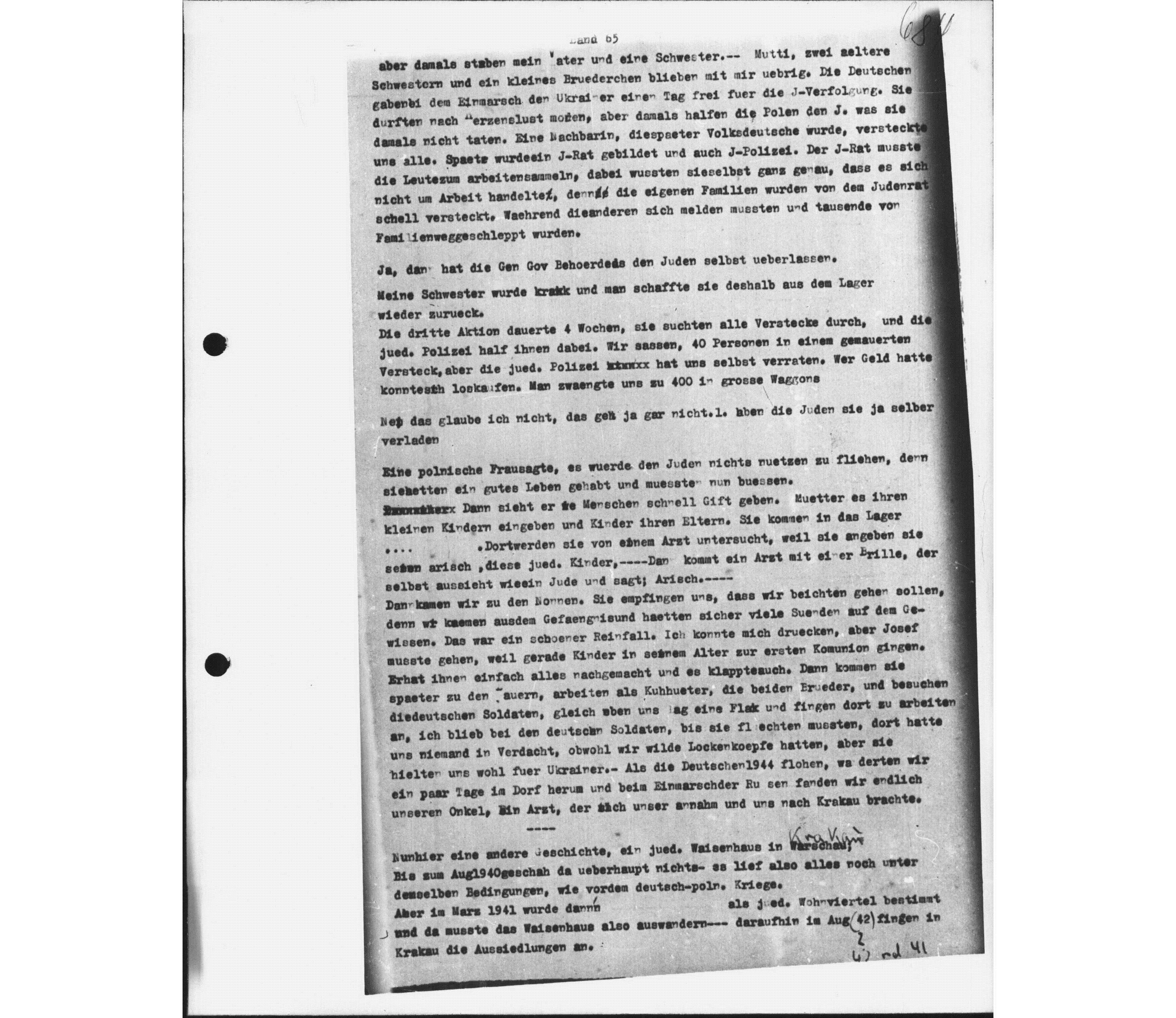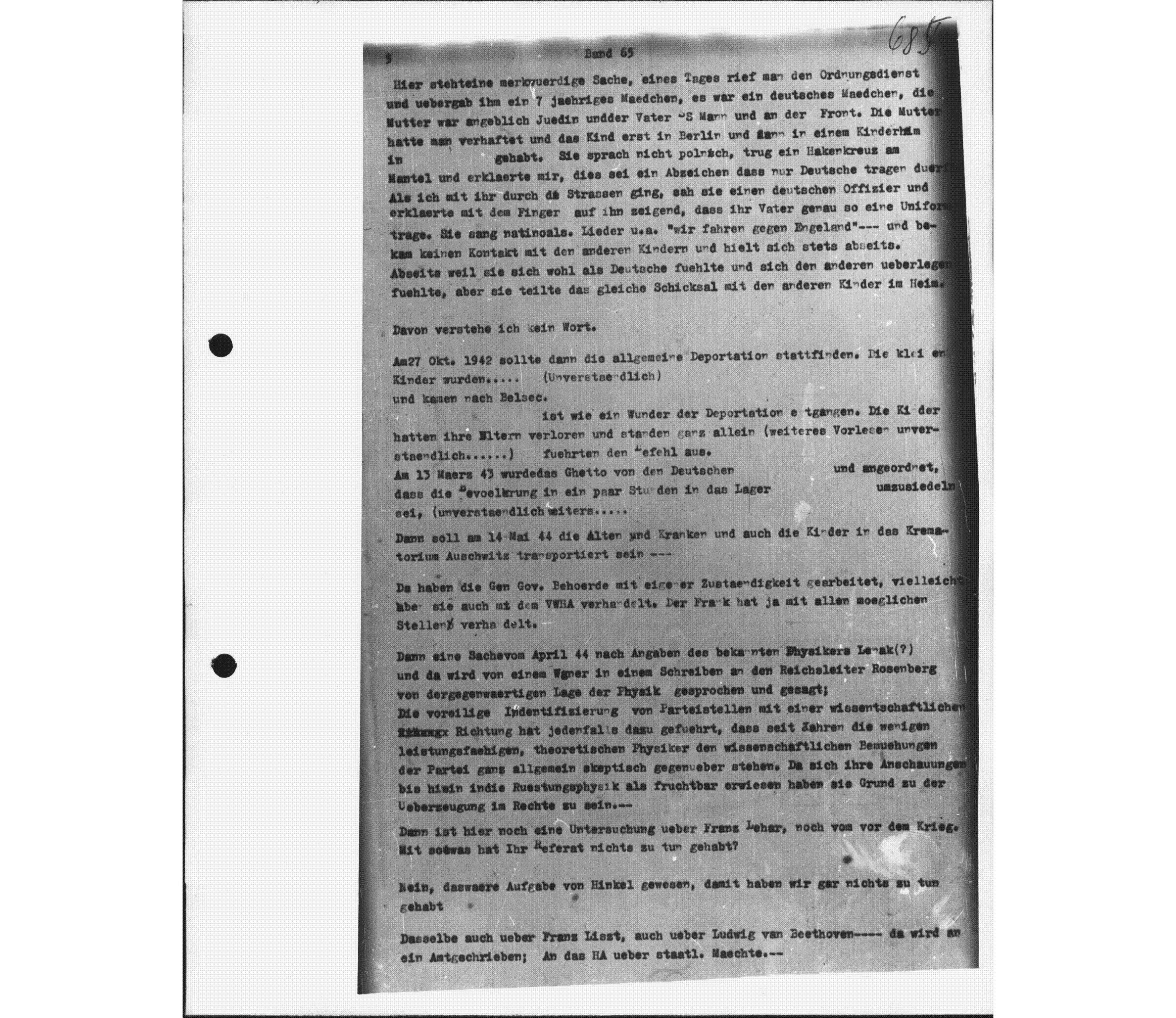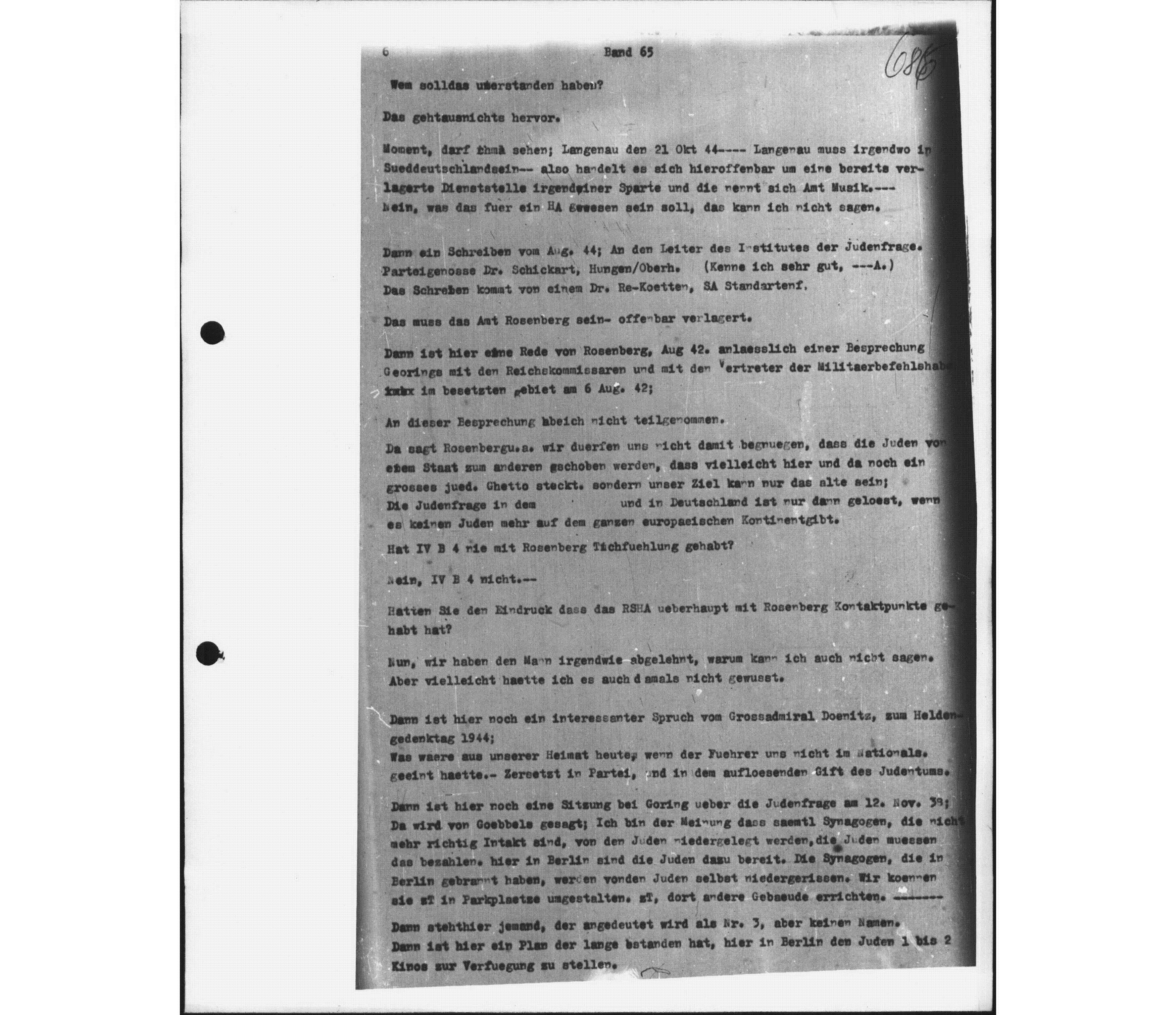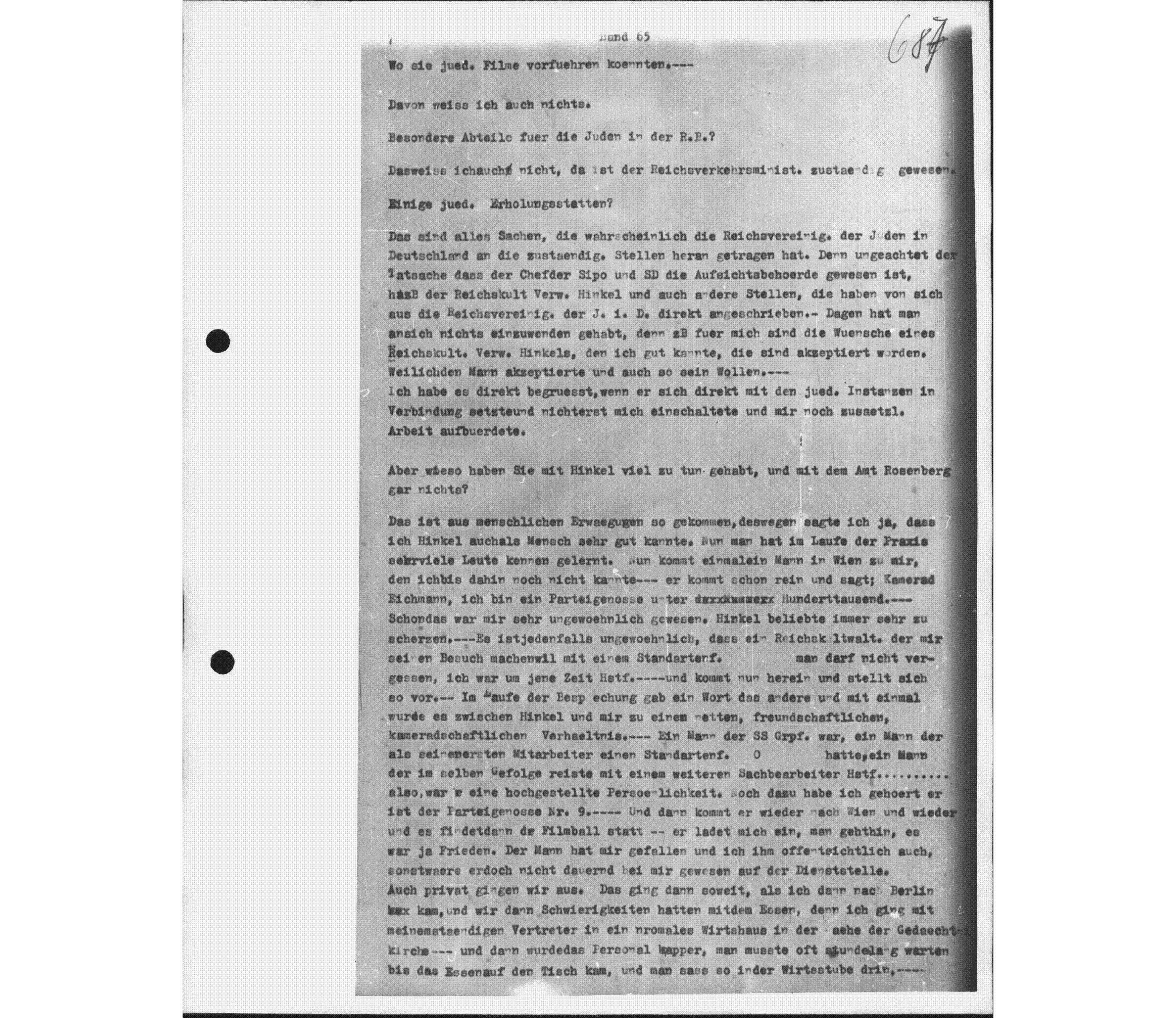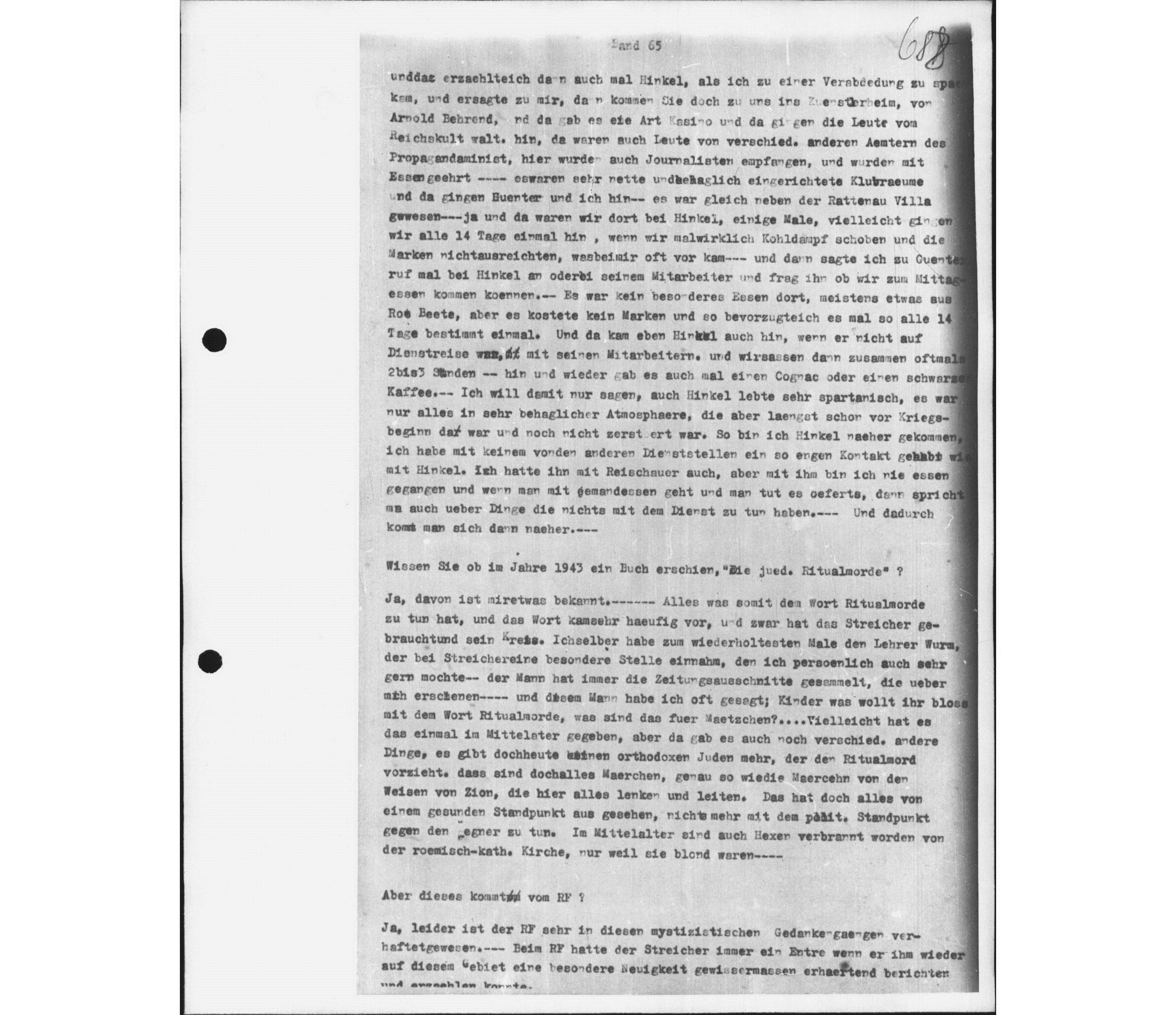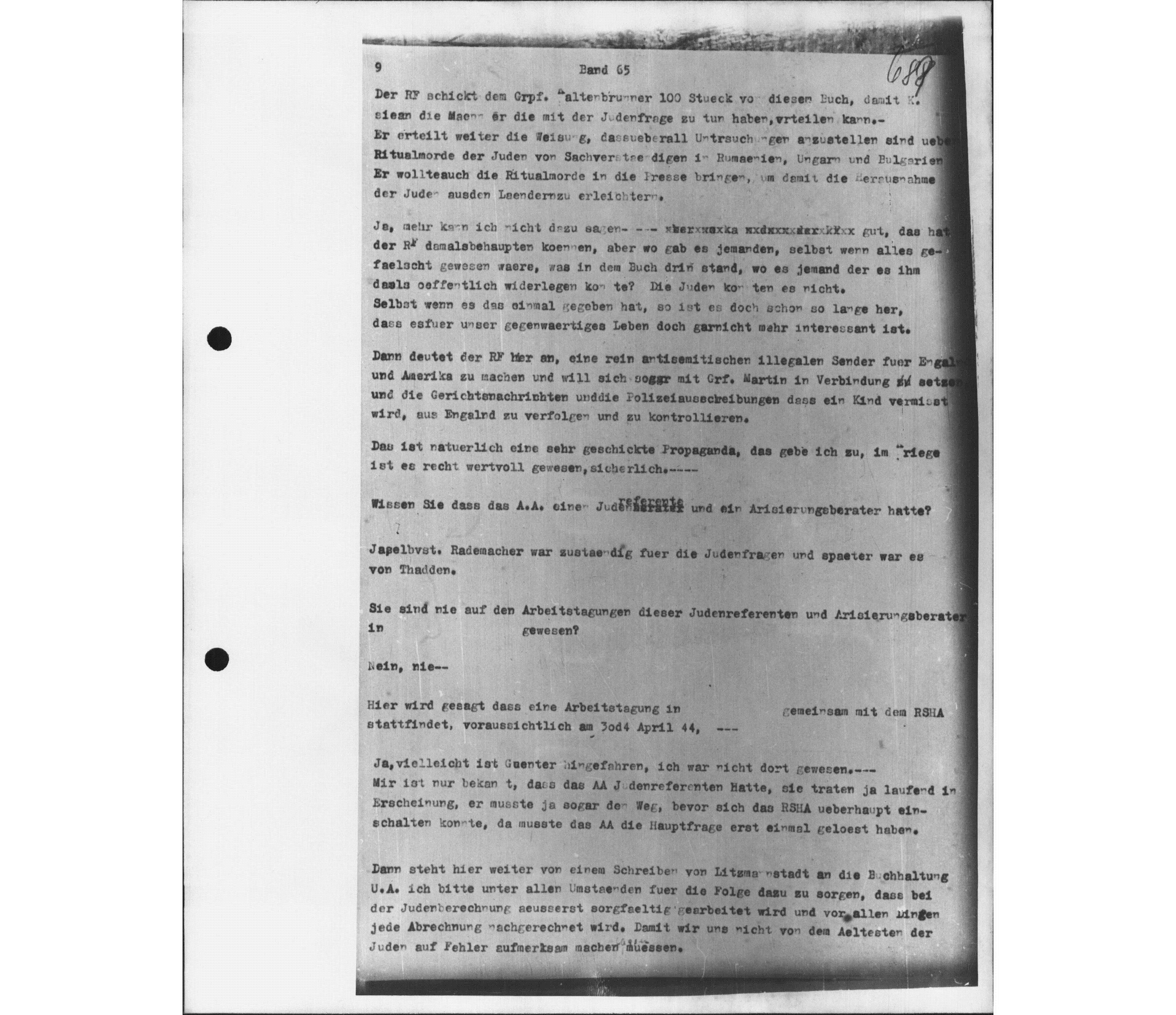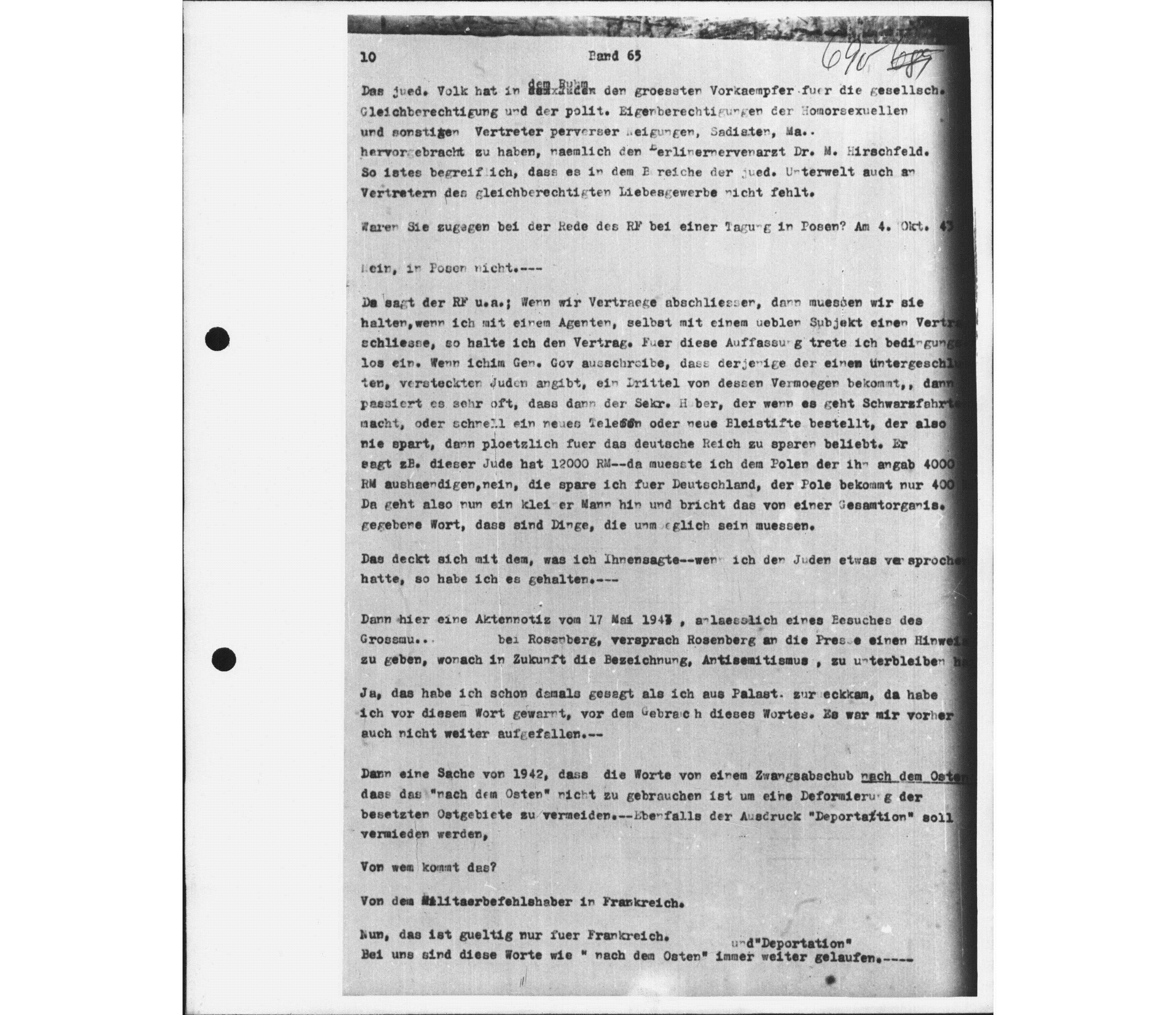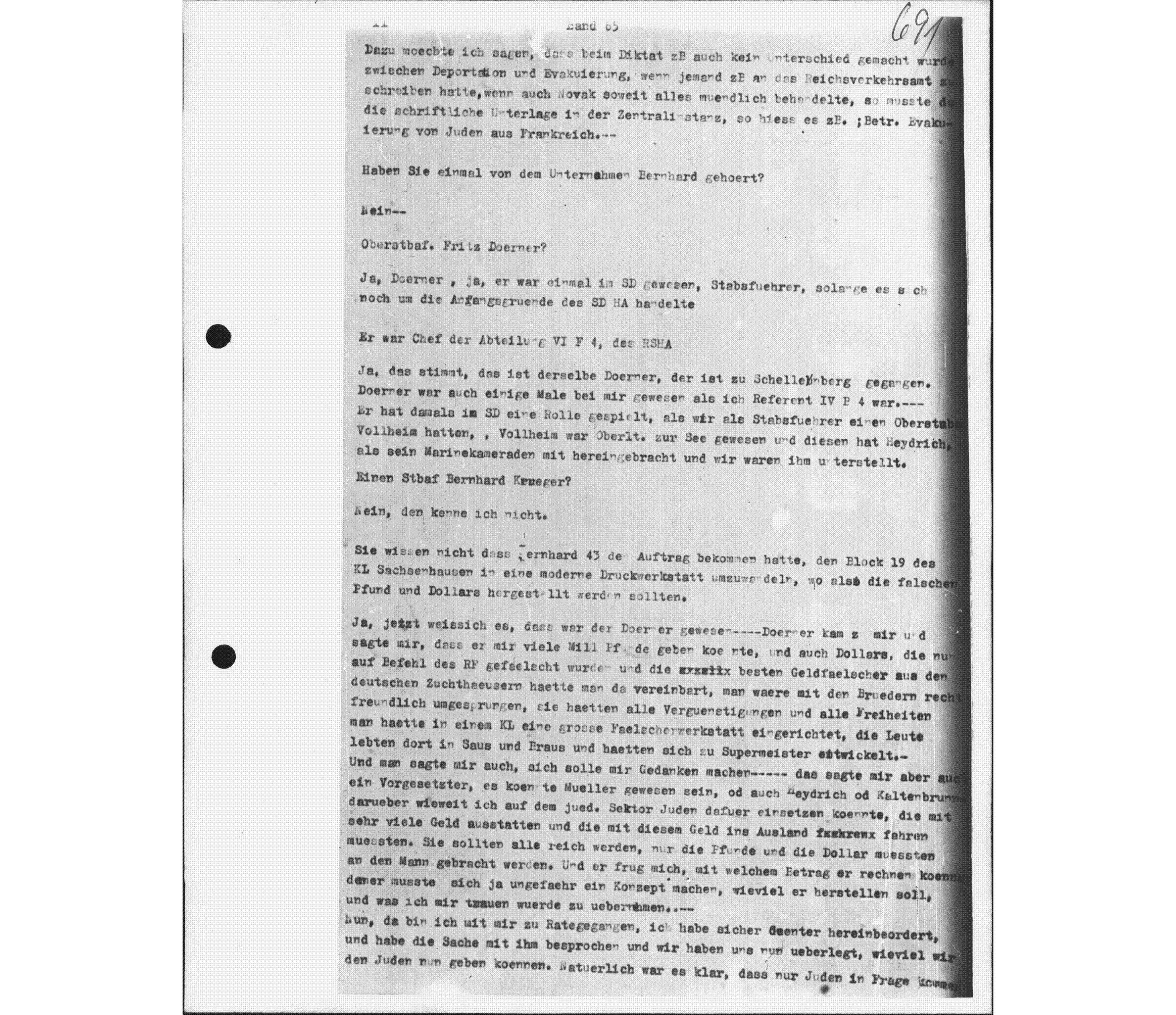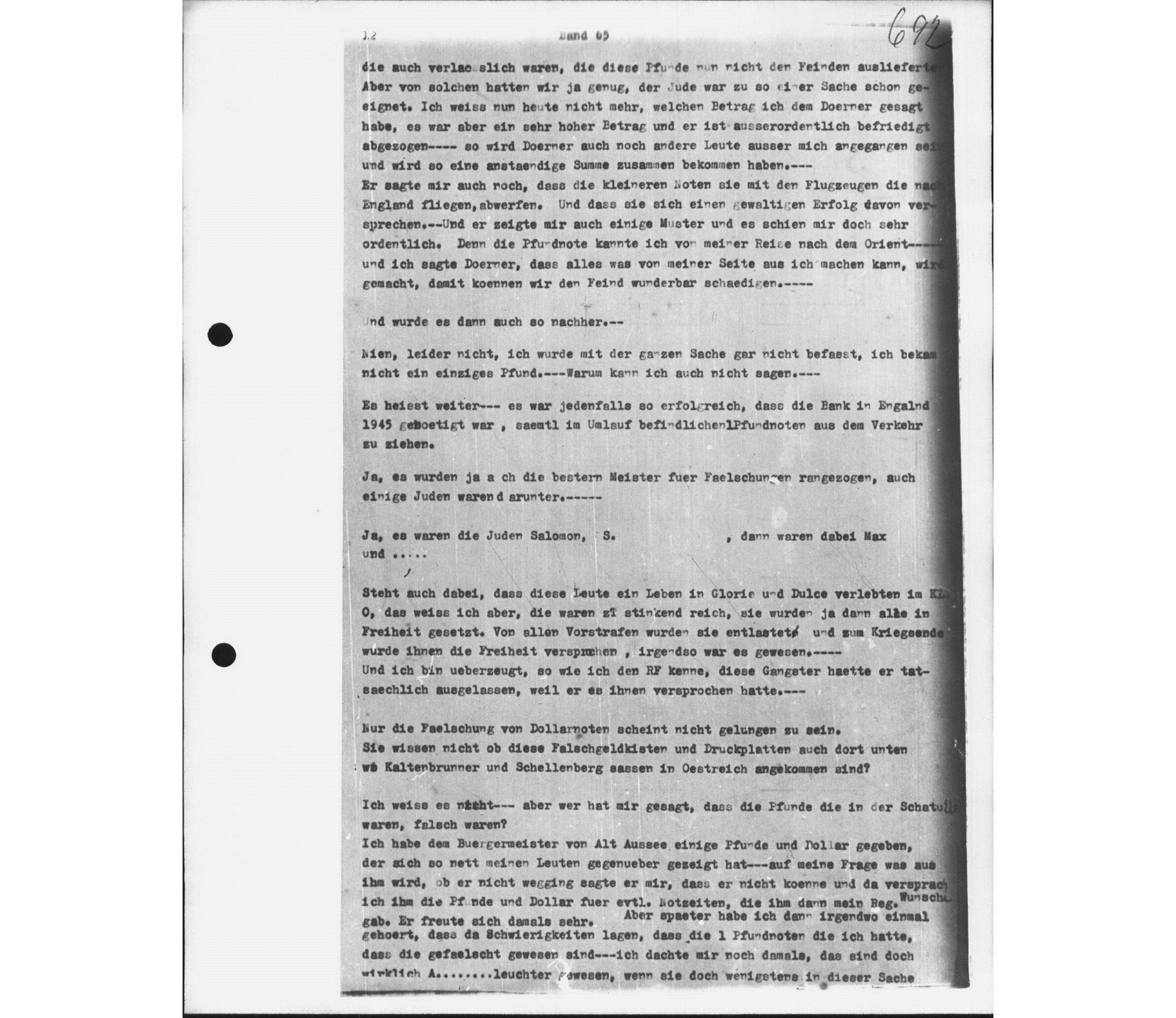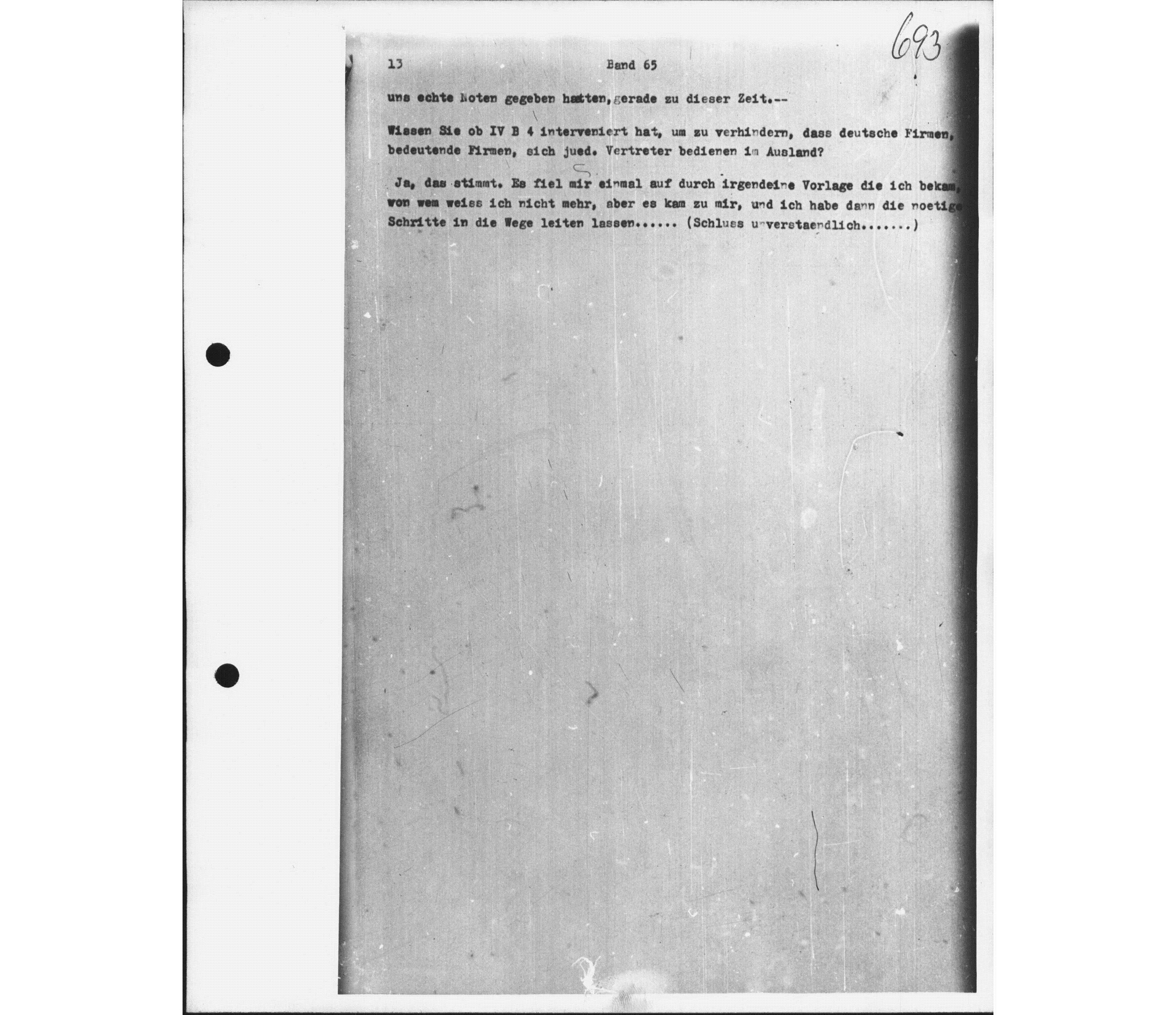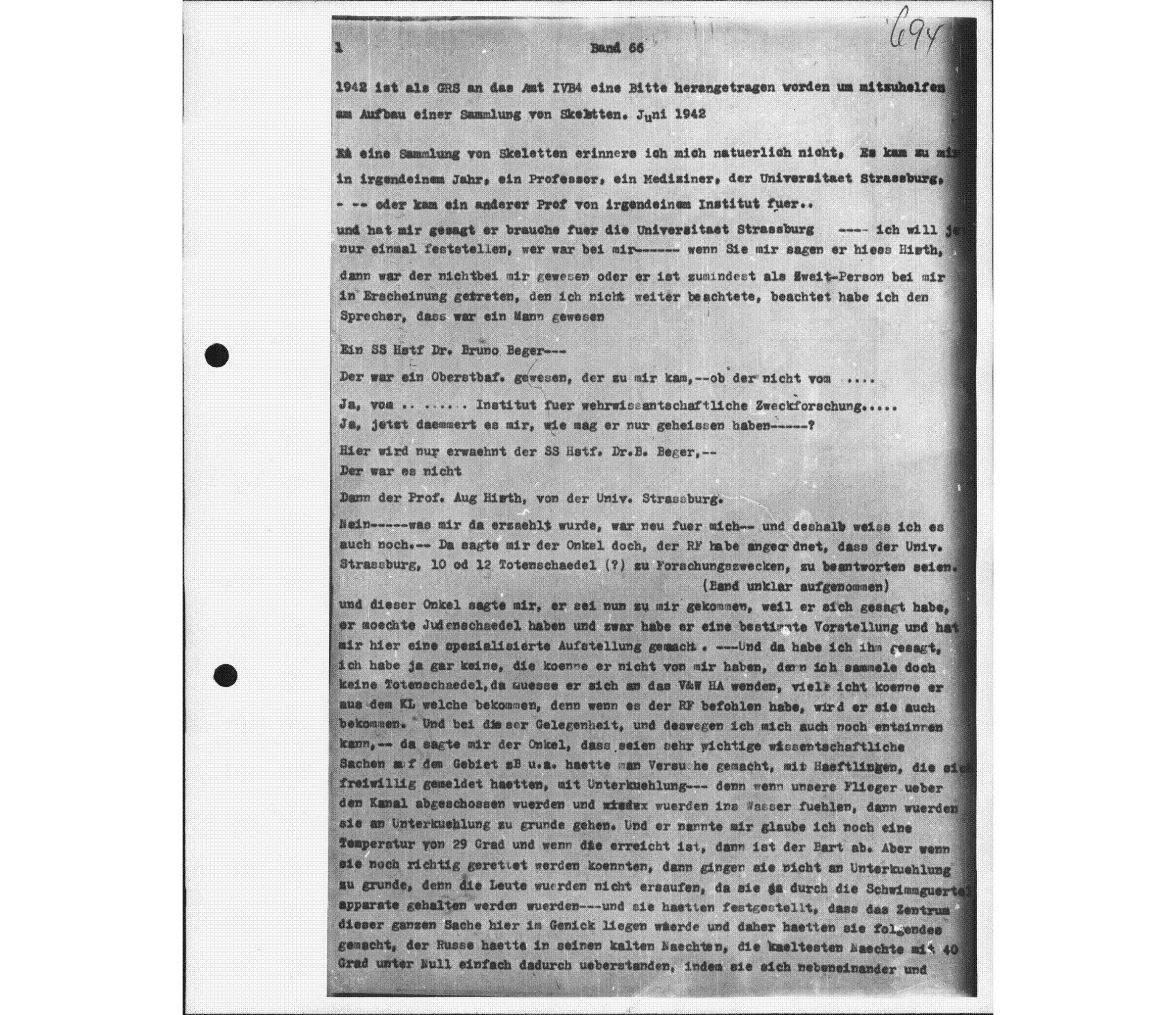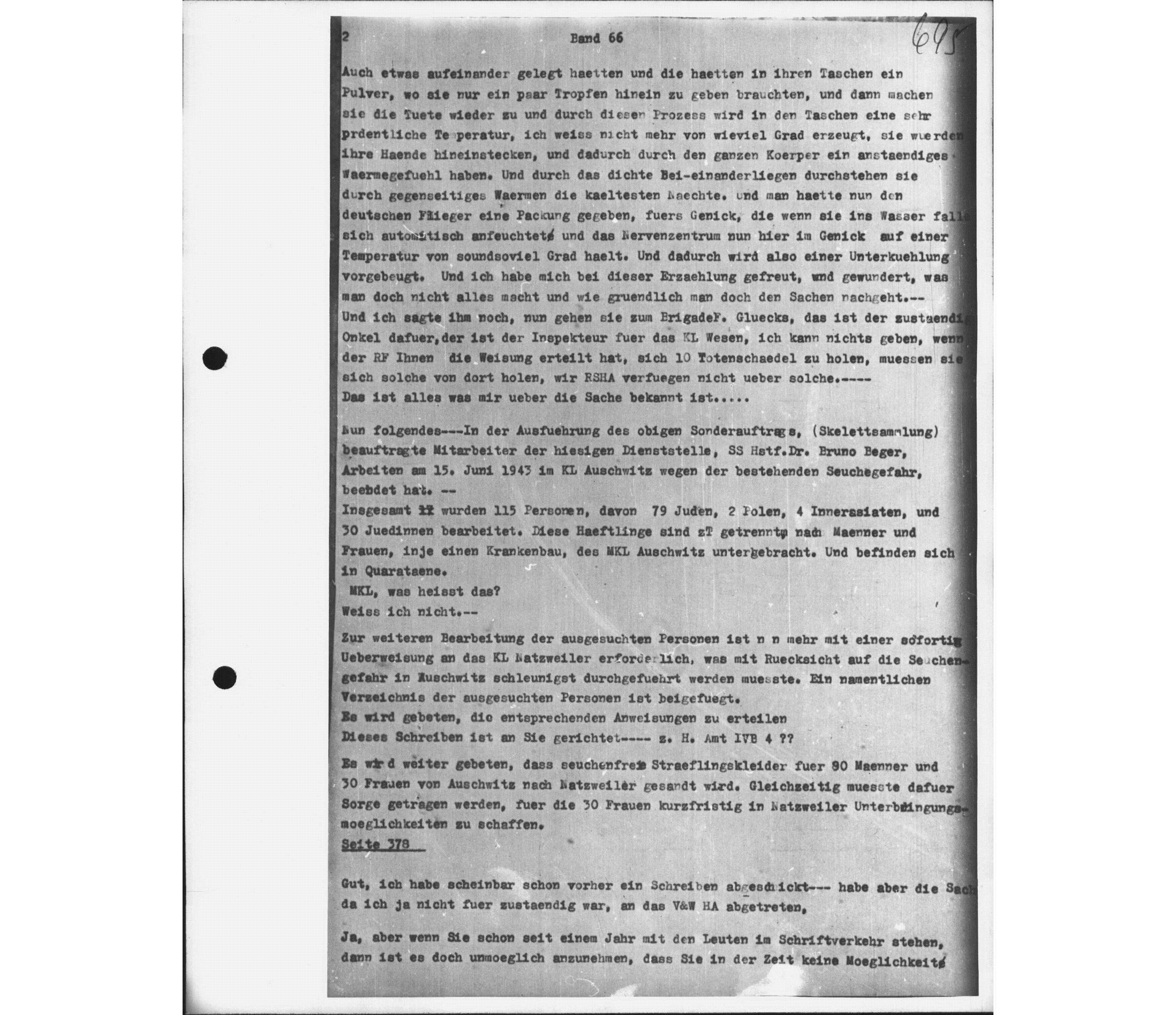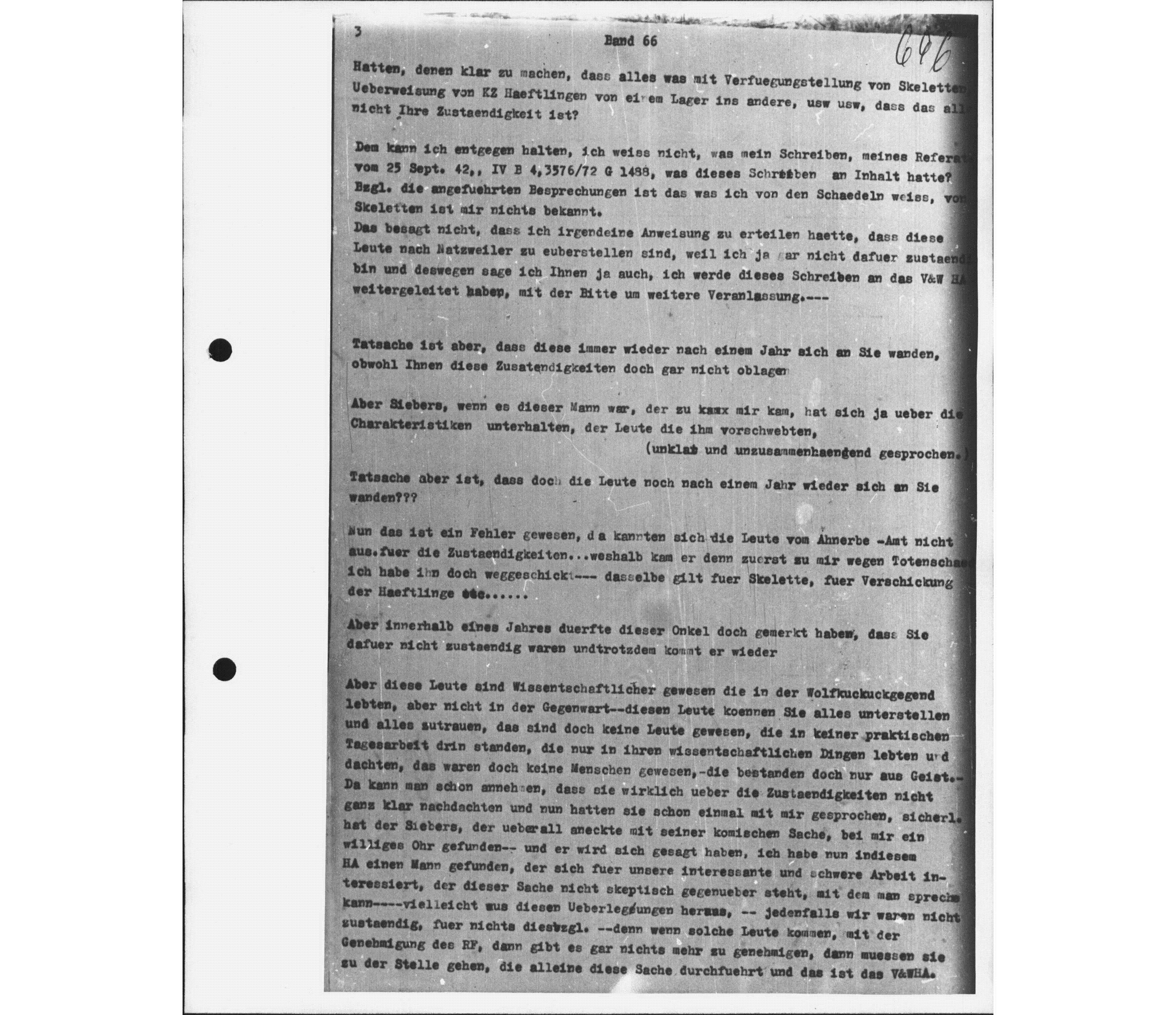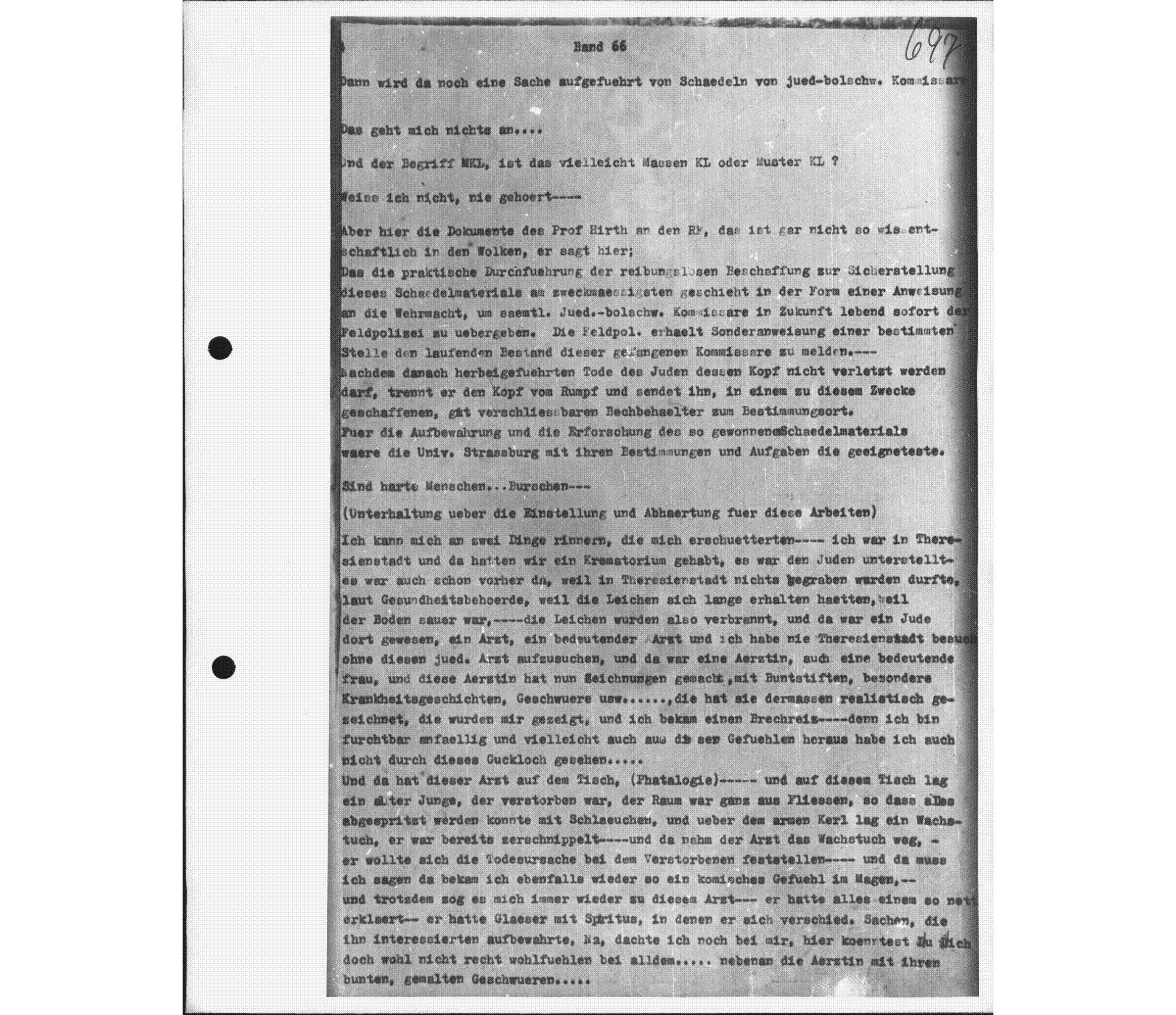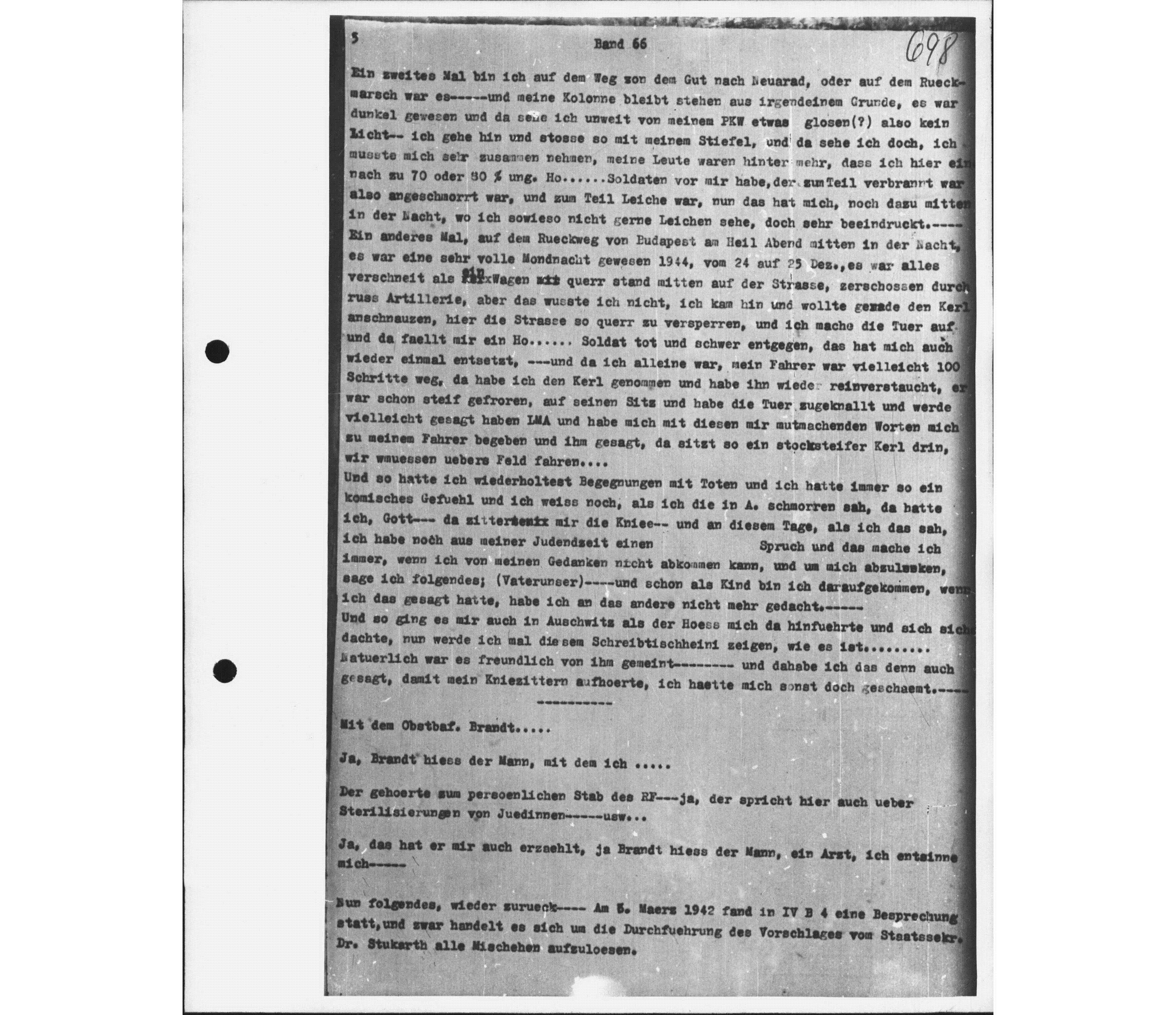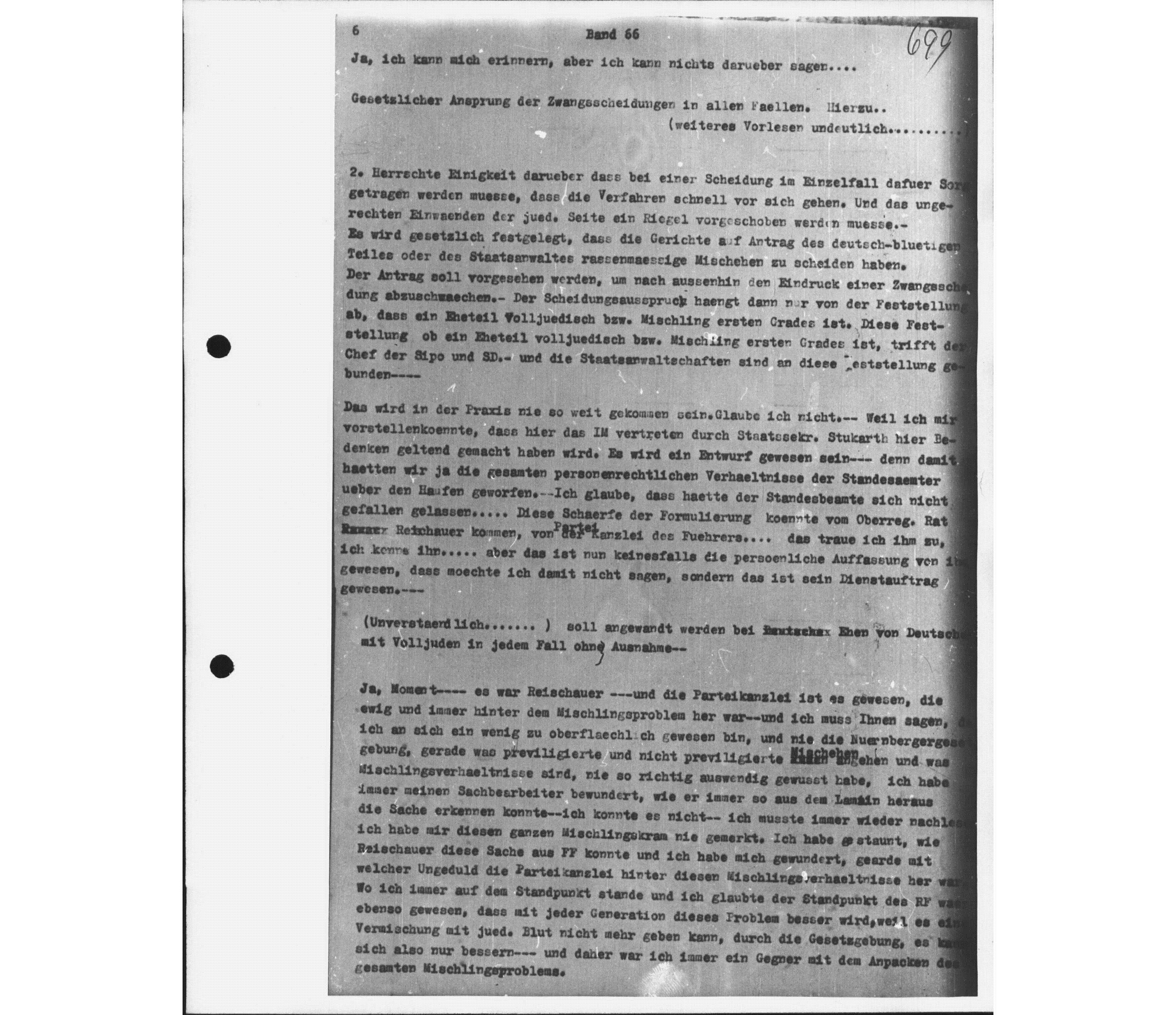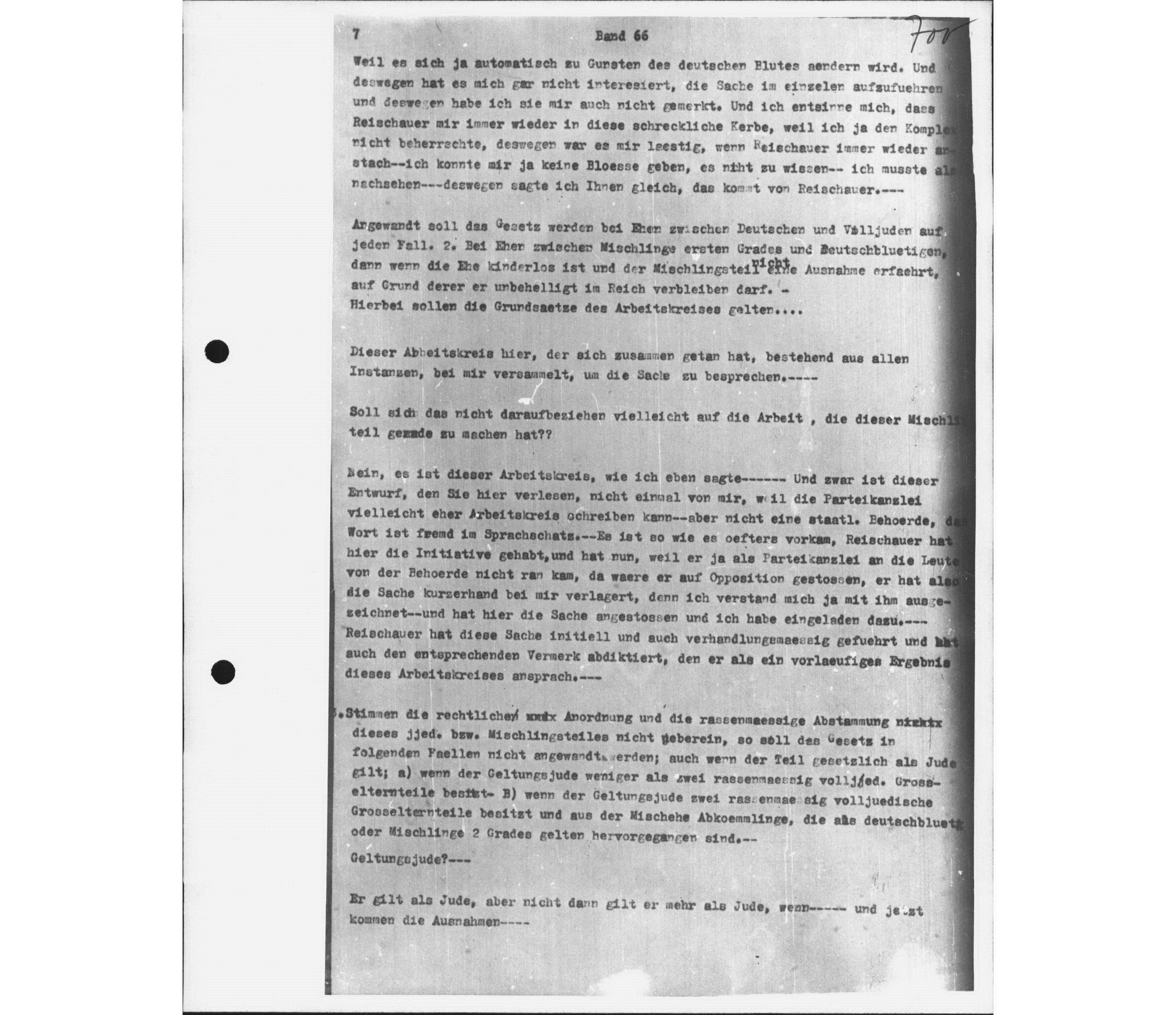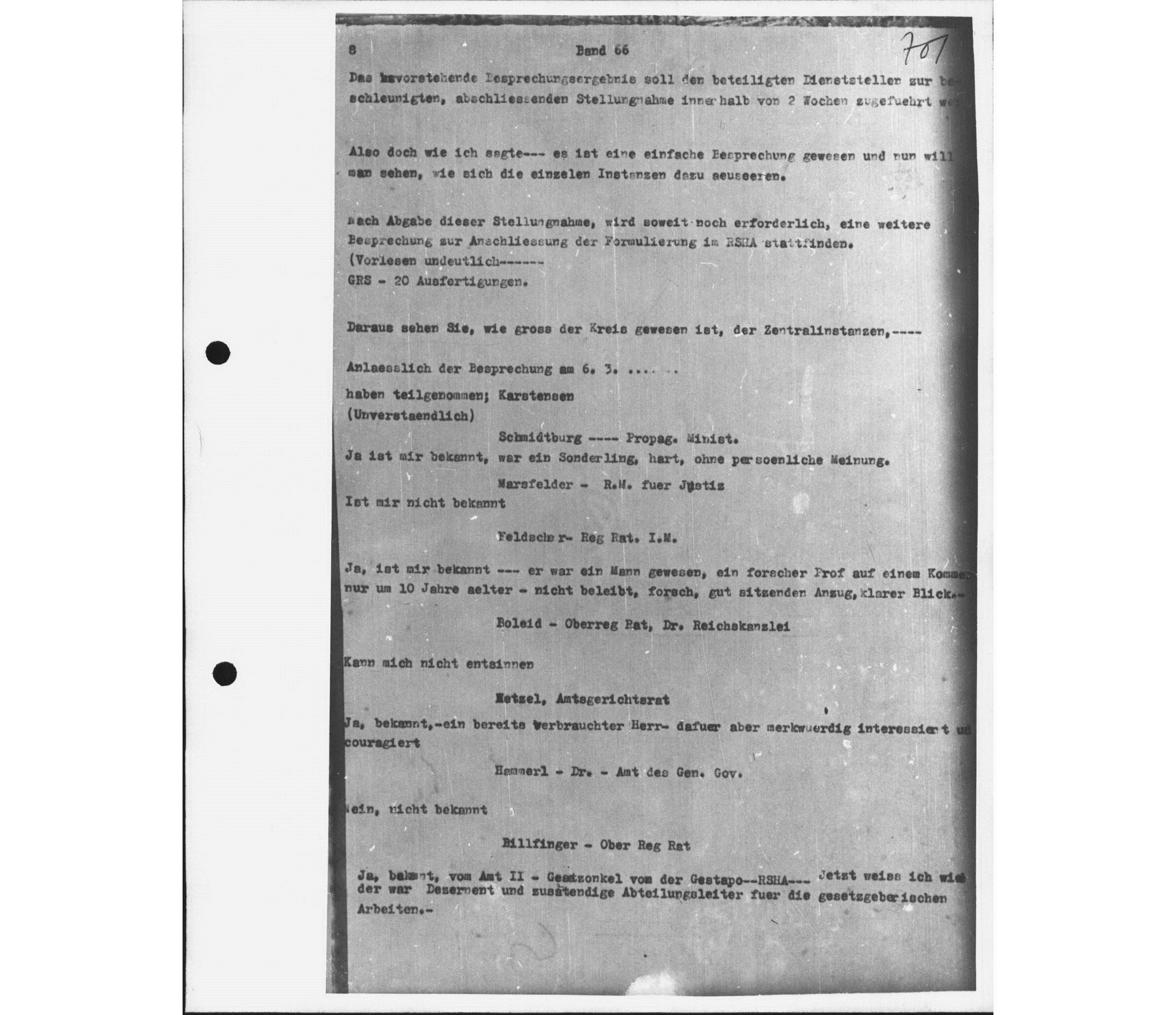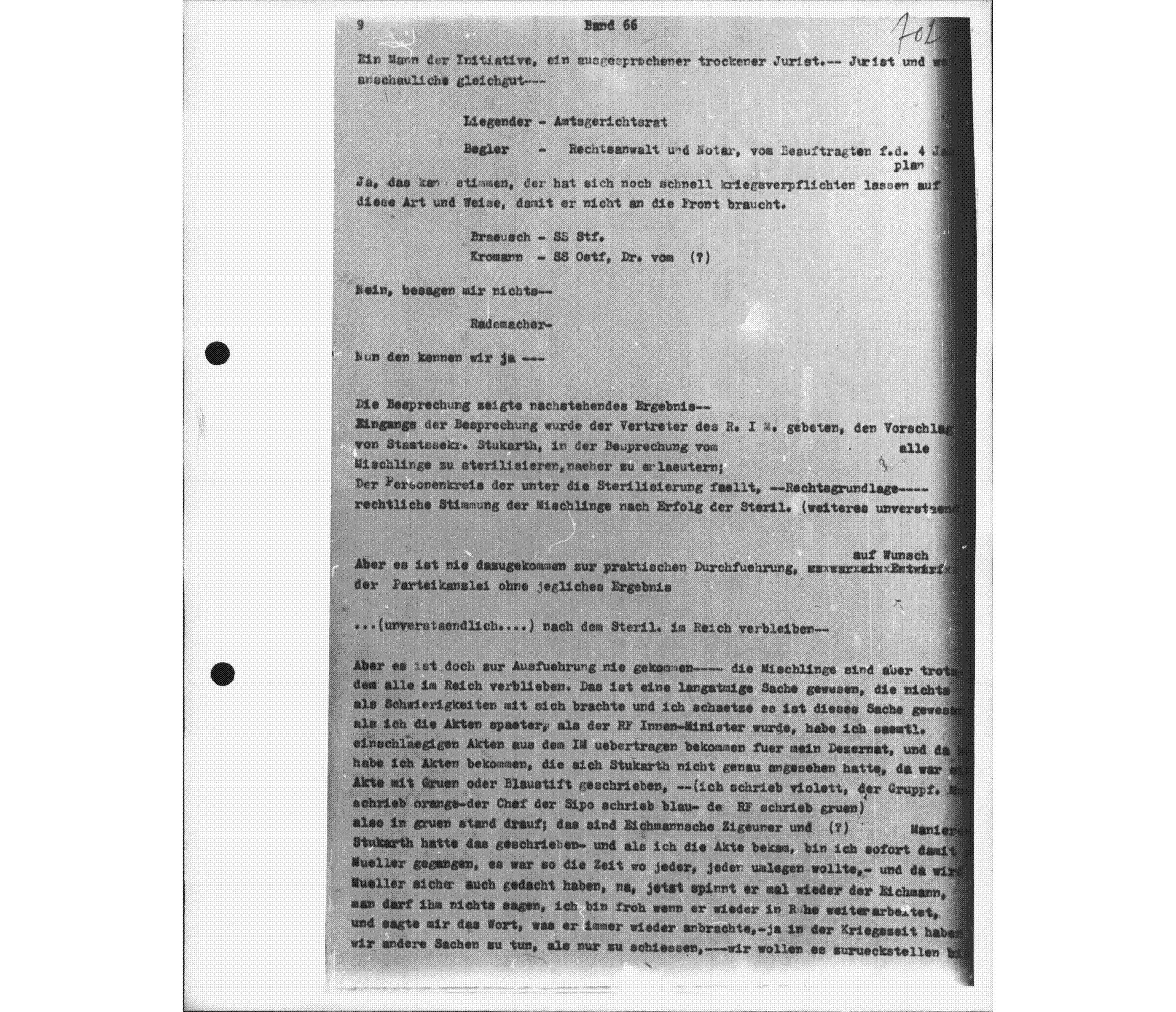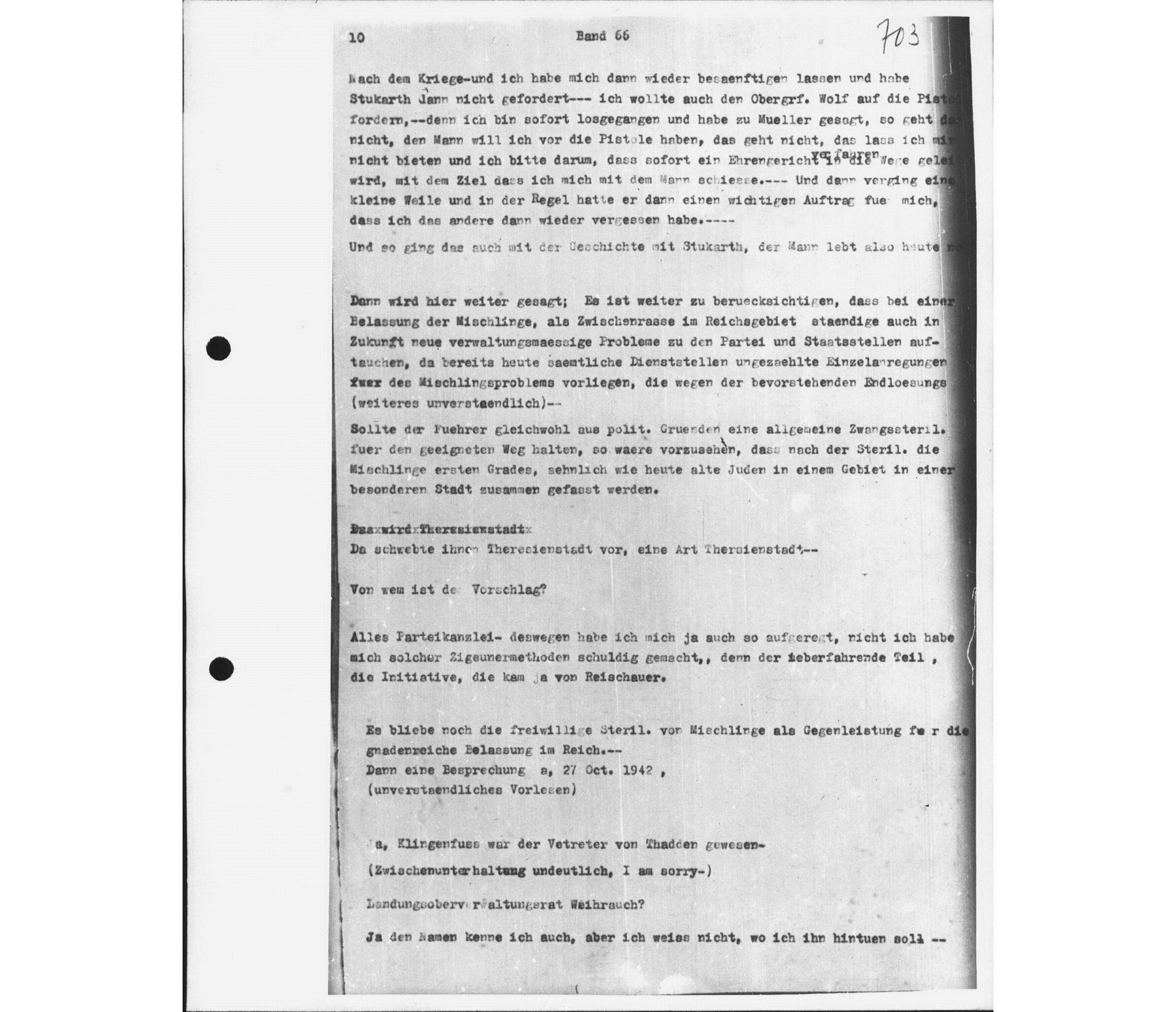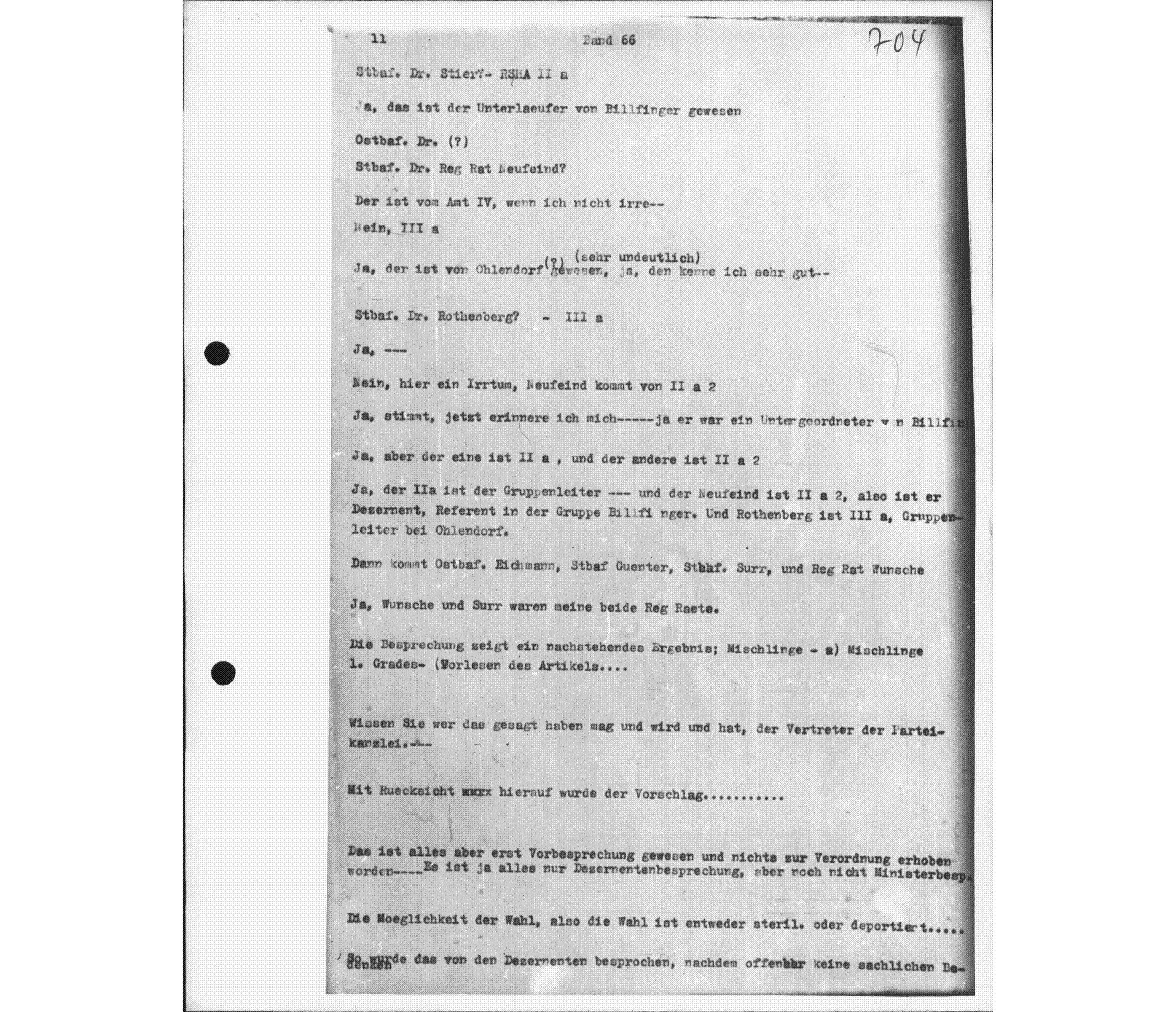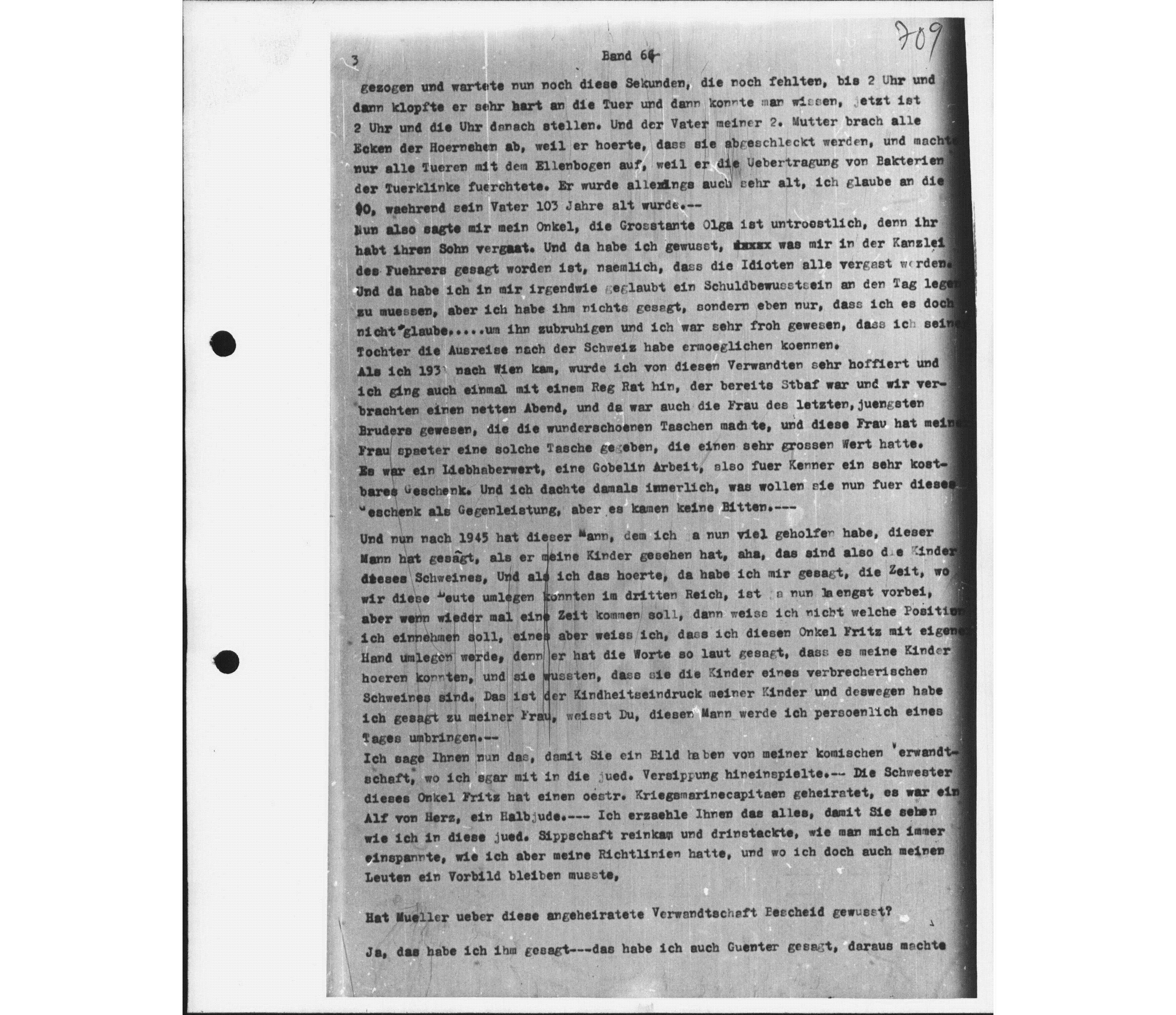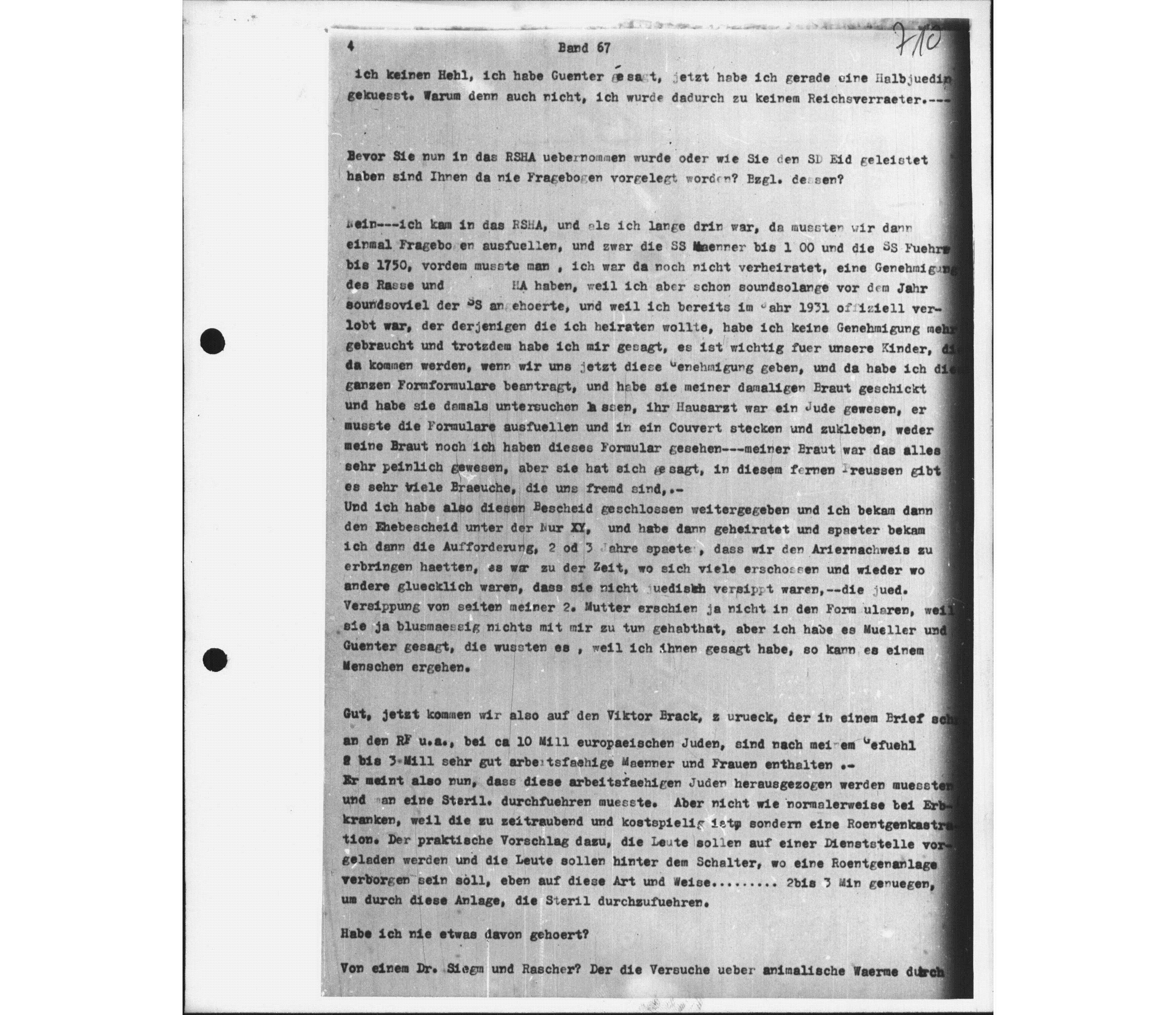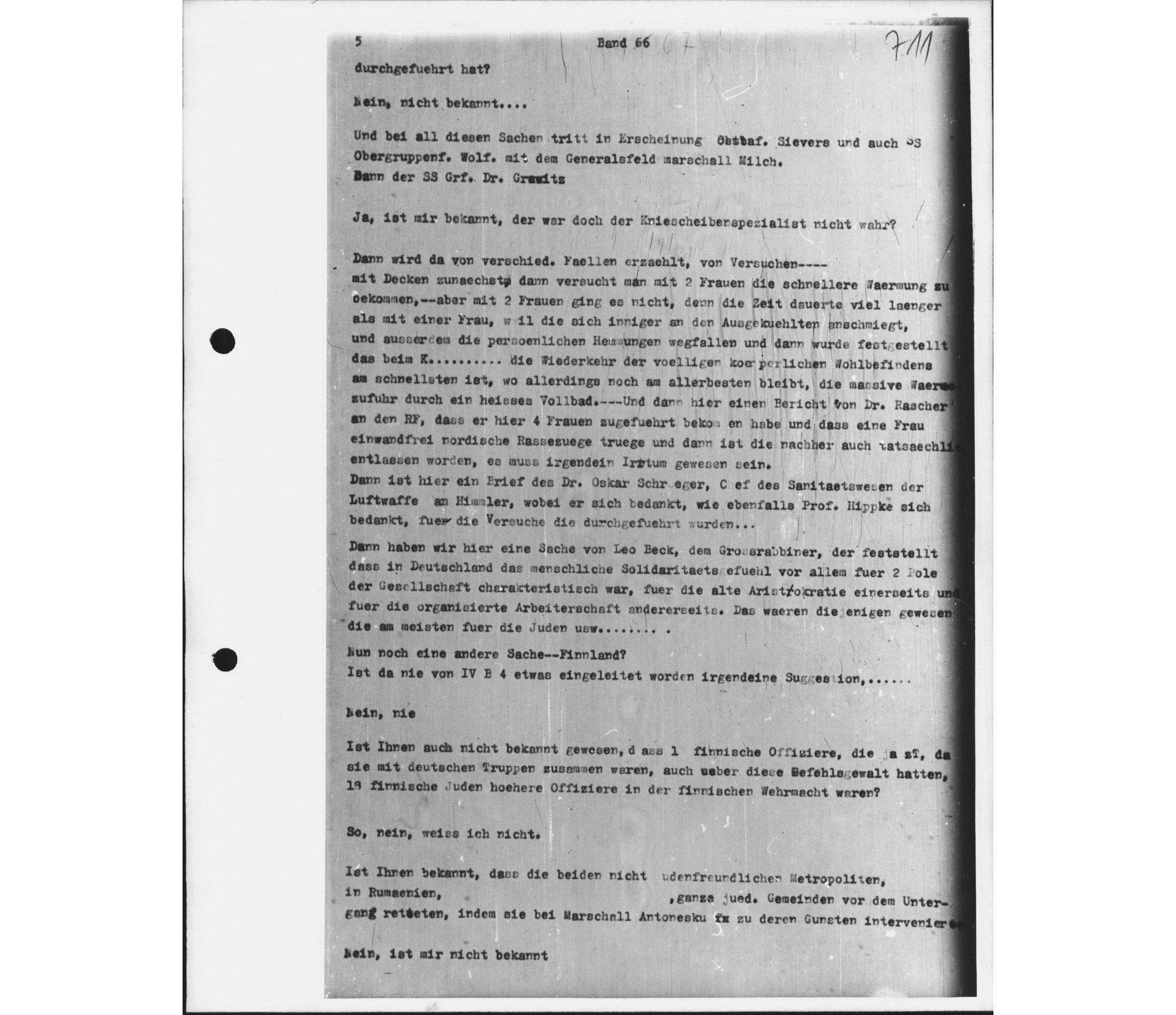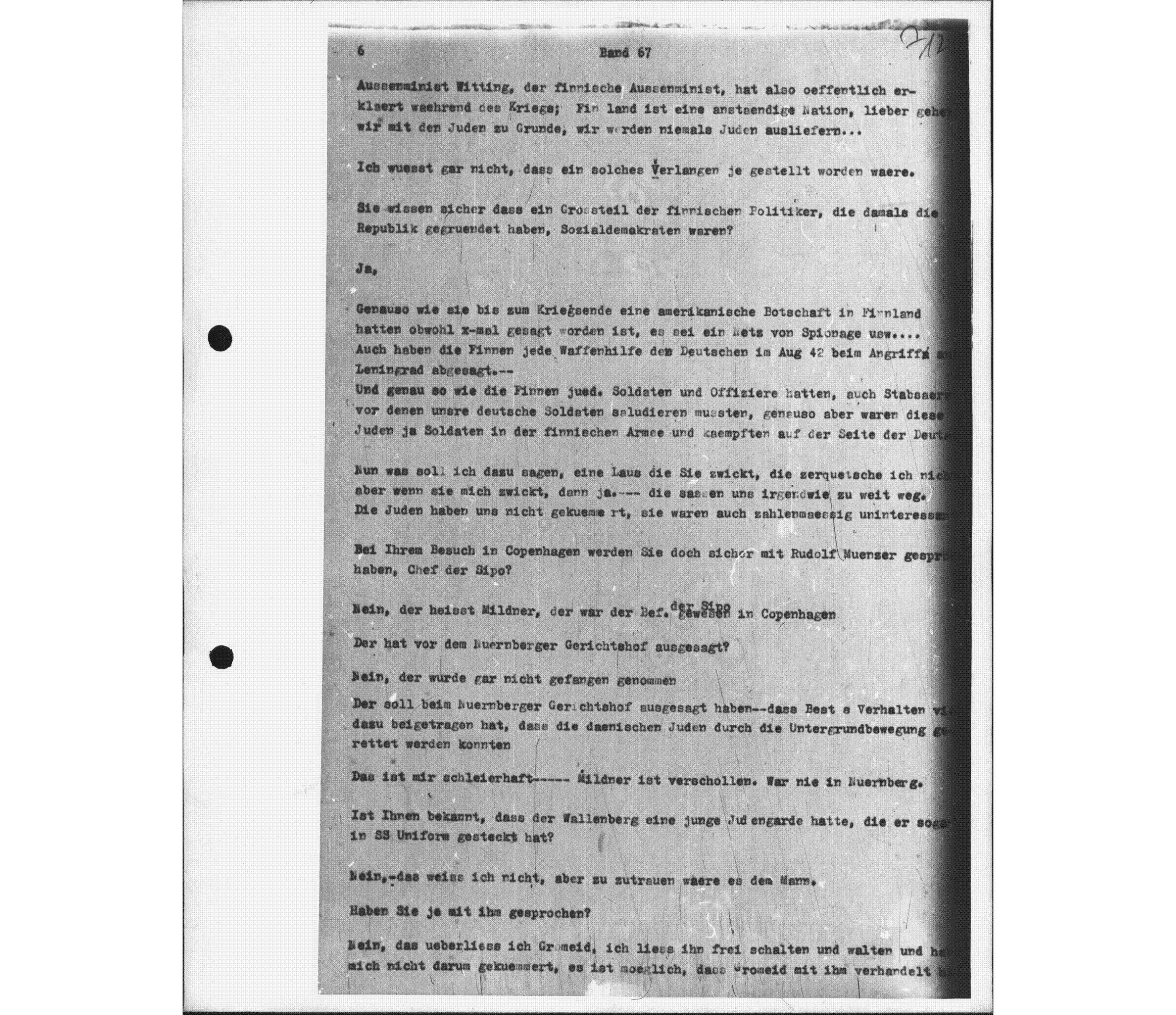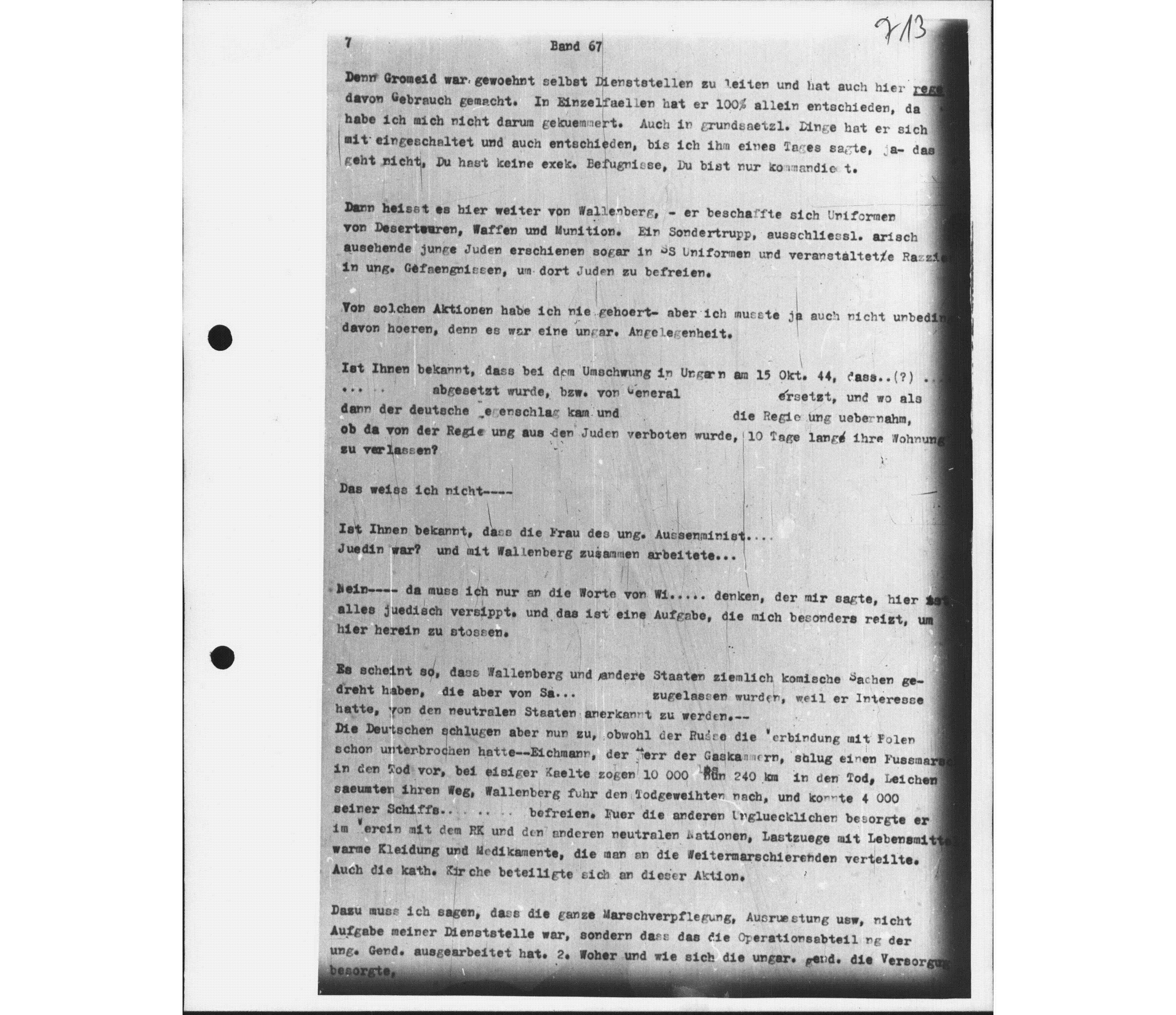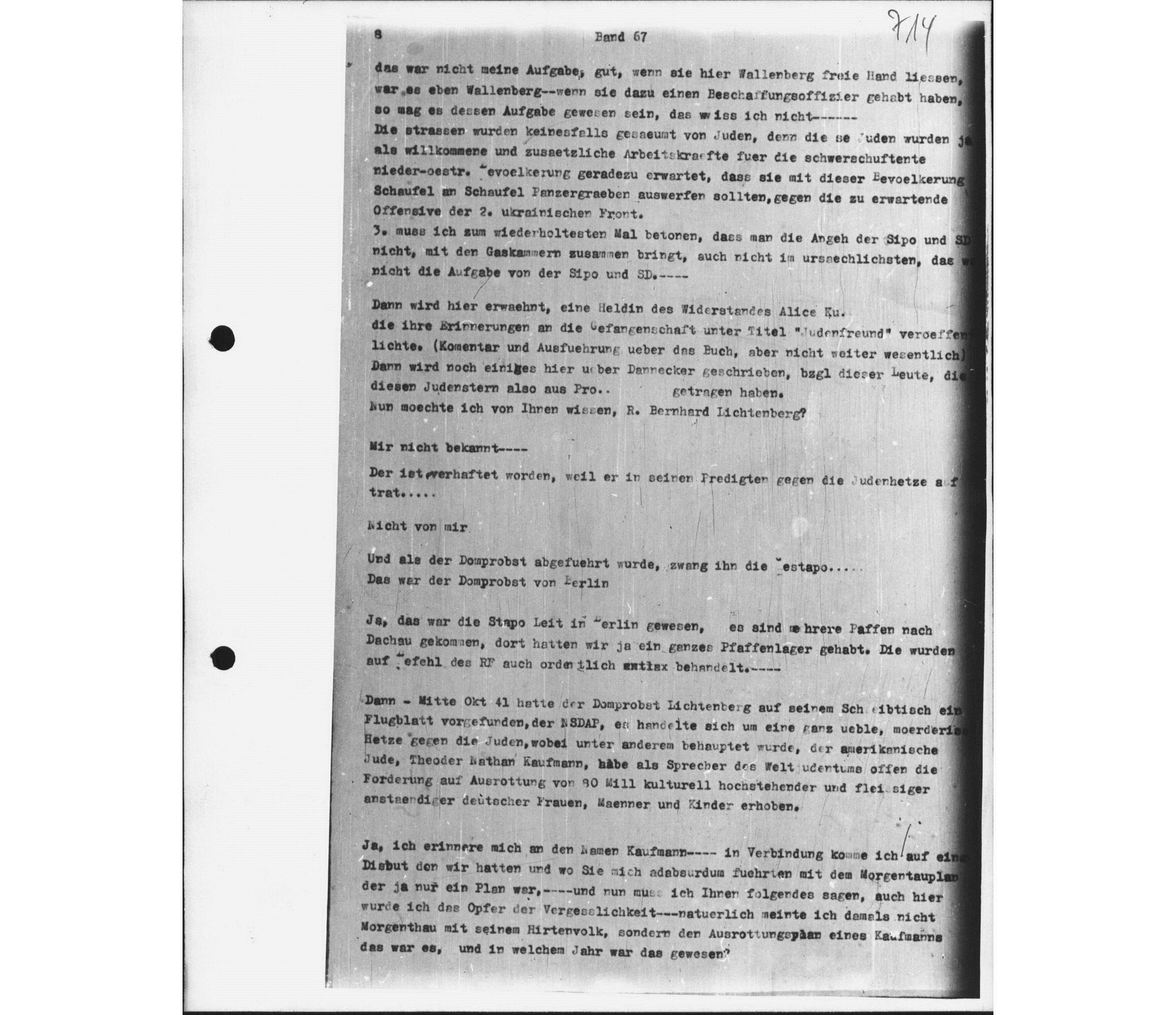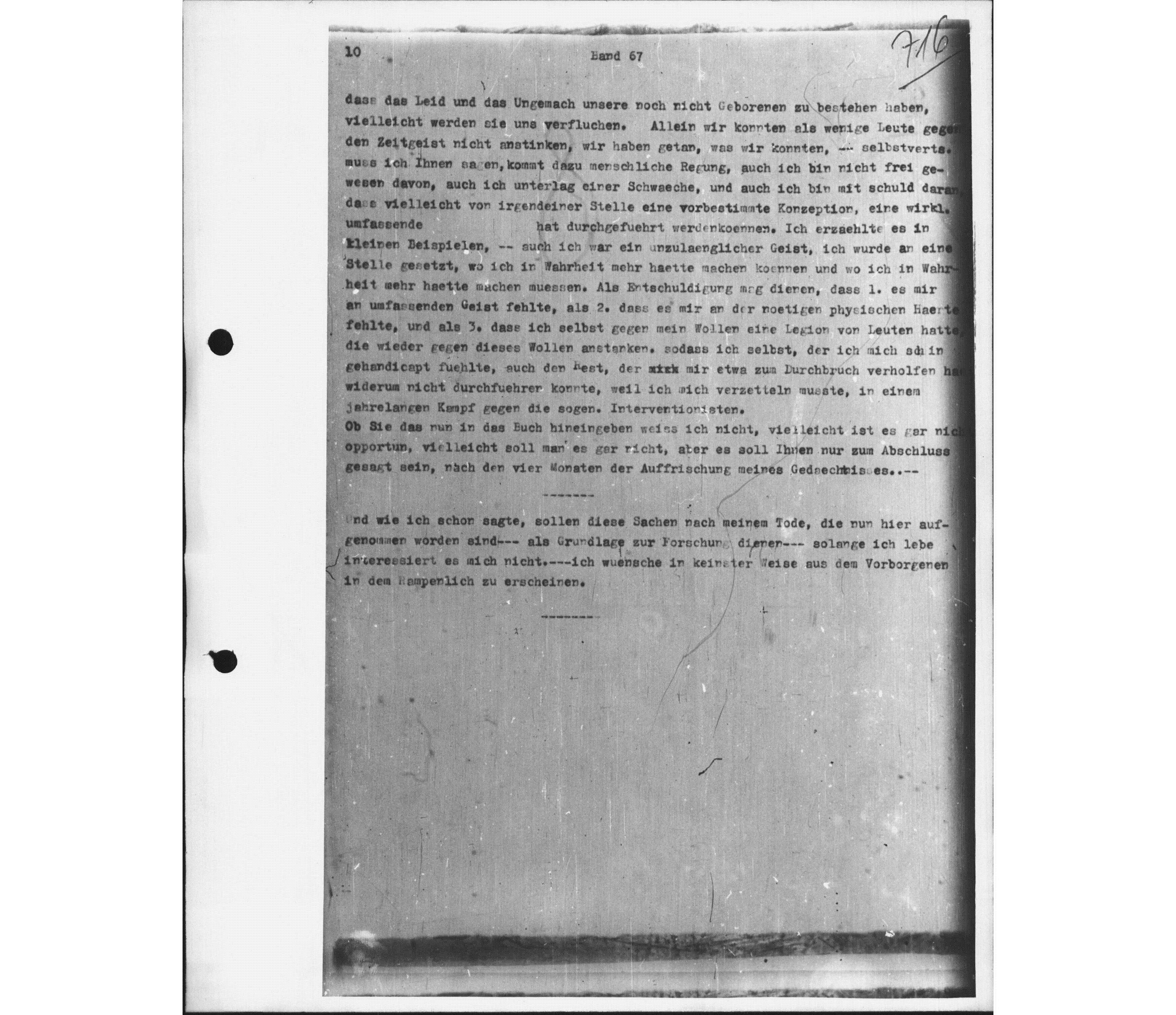
Eichmann and Sassen interview
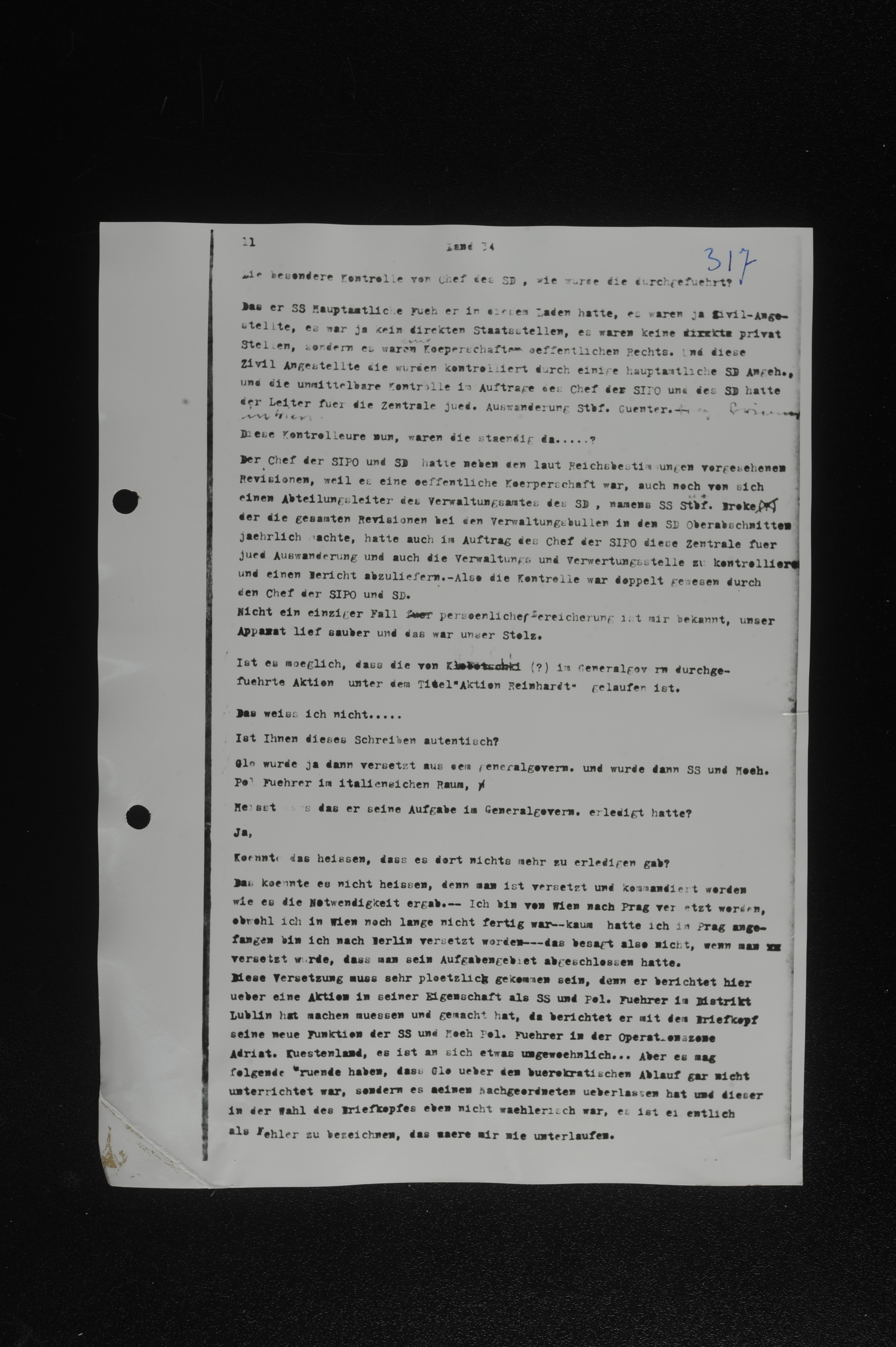
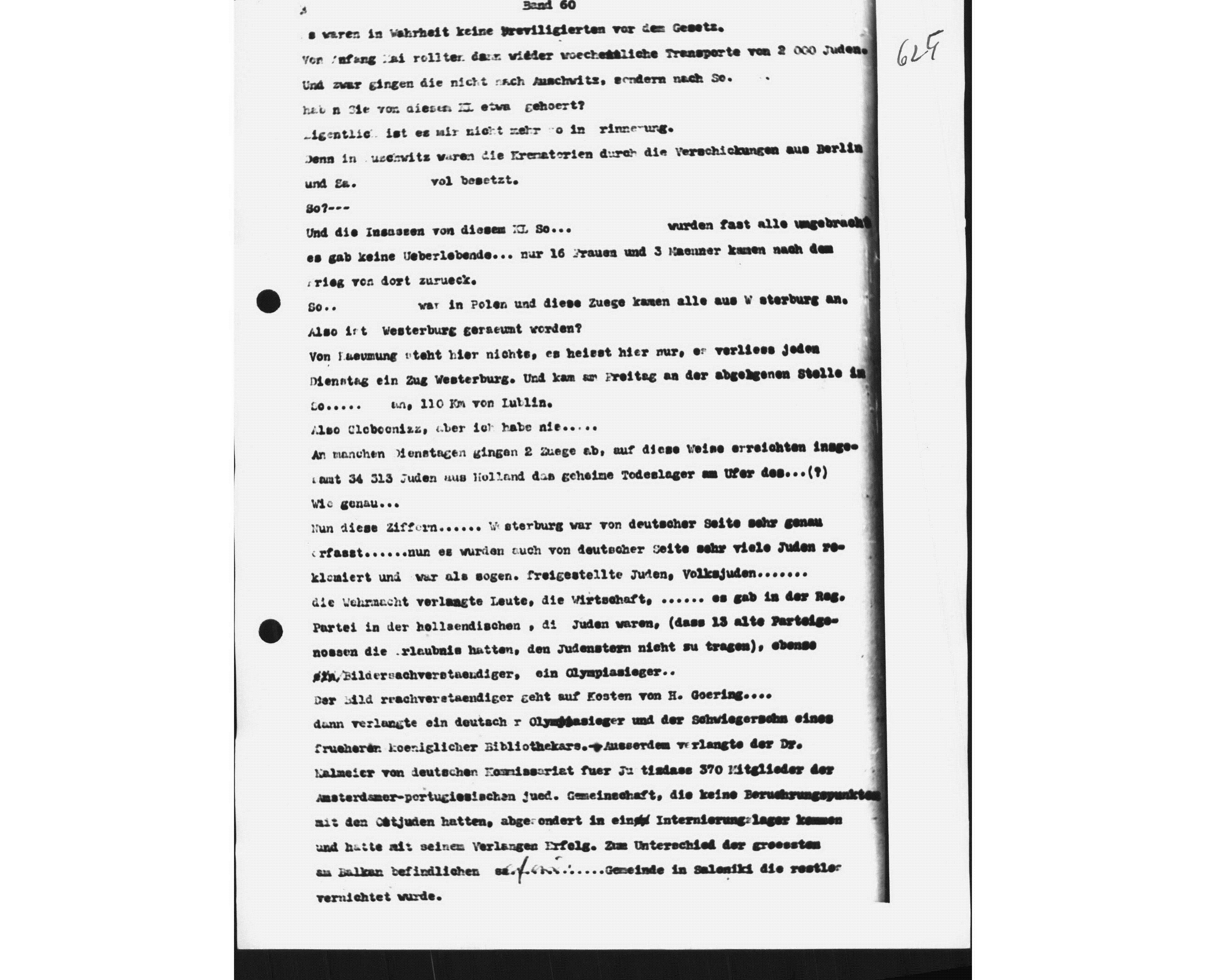
Eichmann in SS uniform and peaked cap with the death's-head badge, smiling slightly.~1942
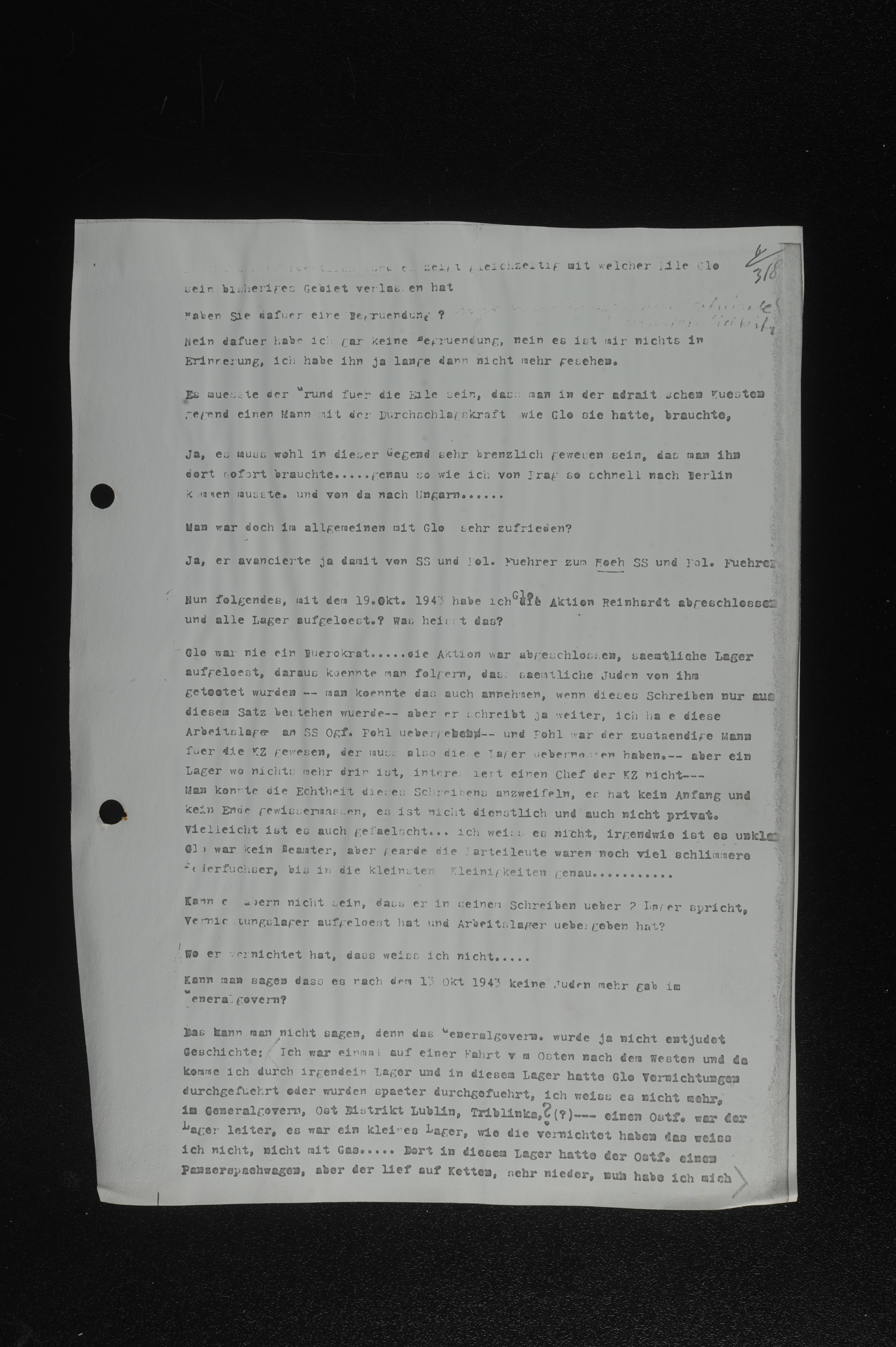
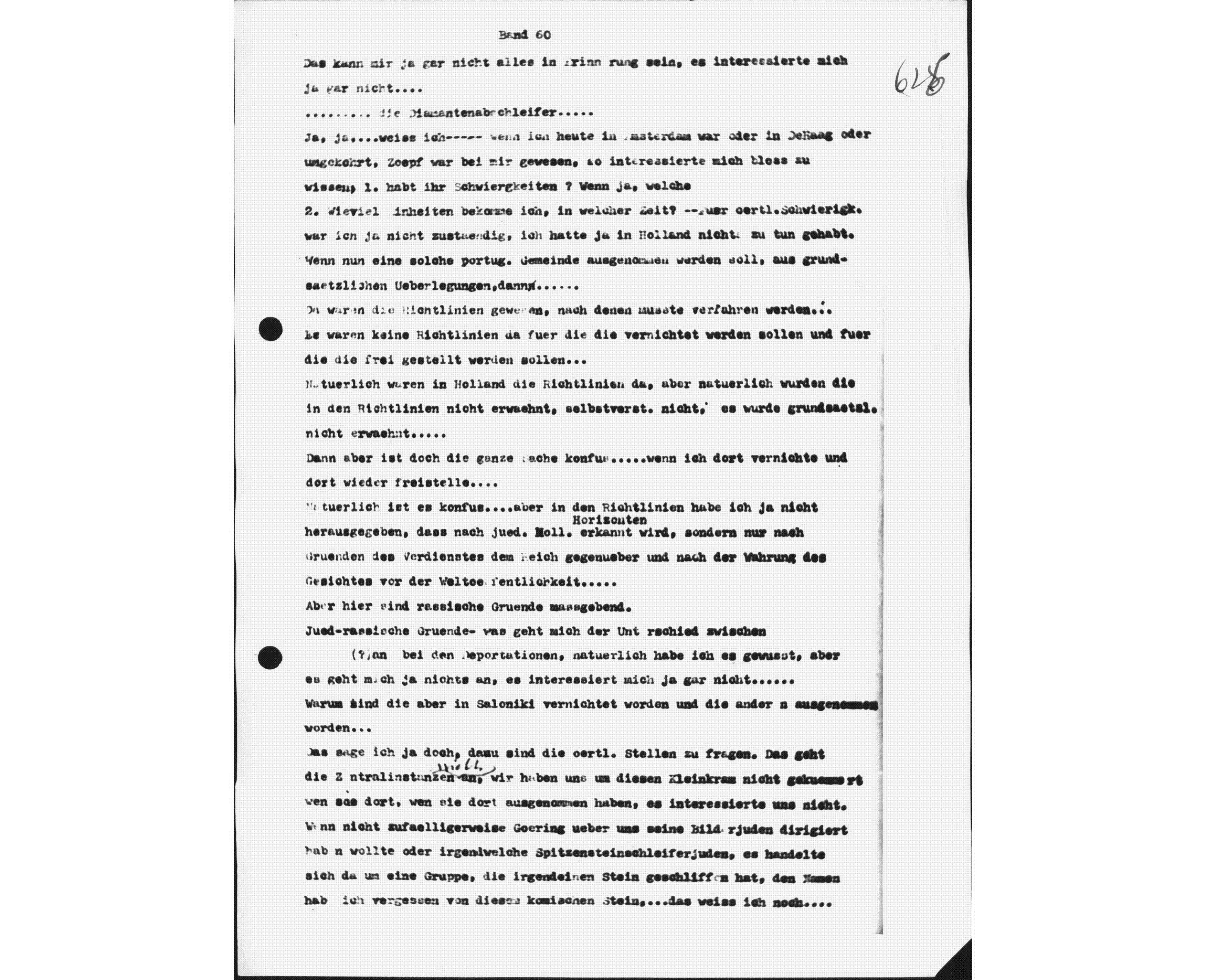
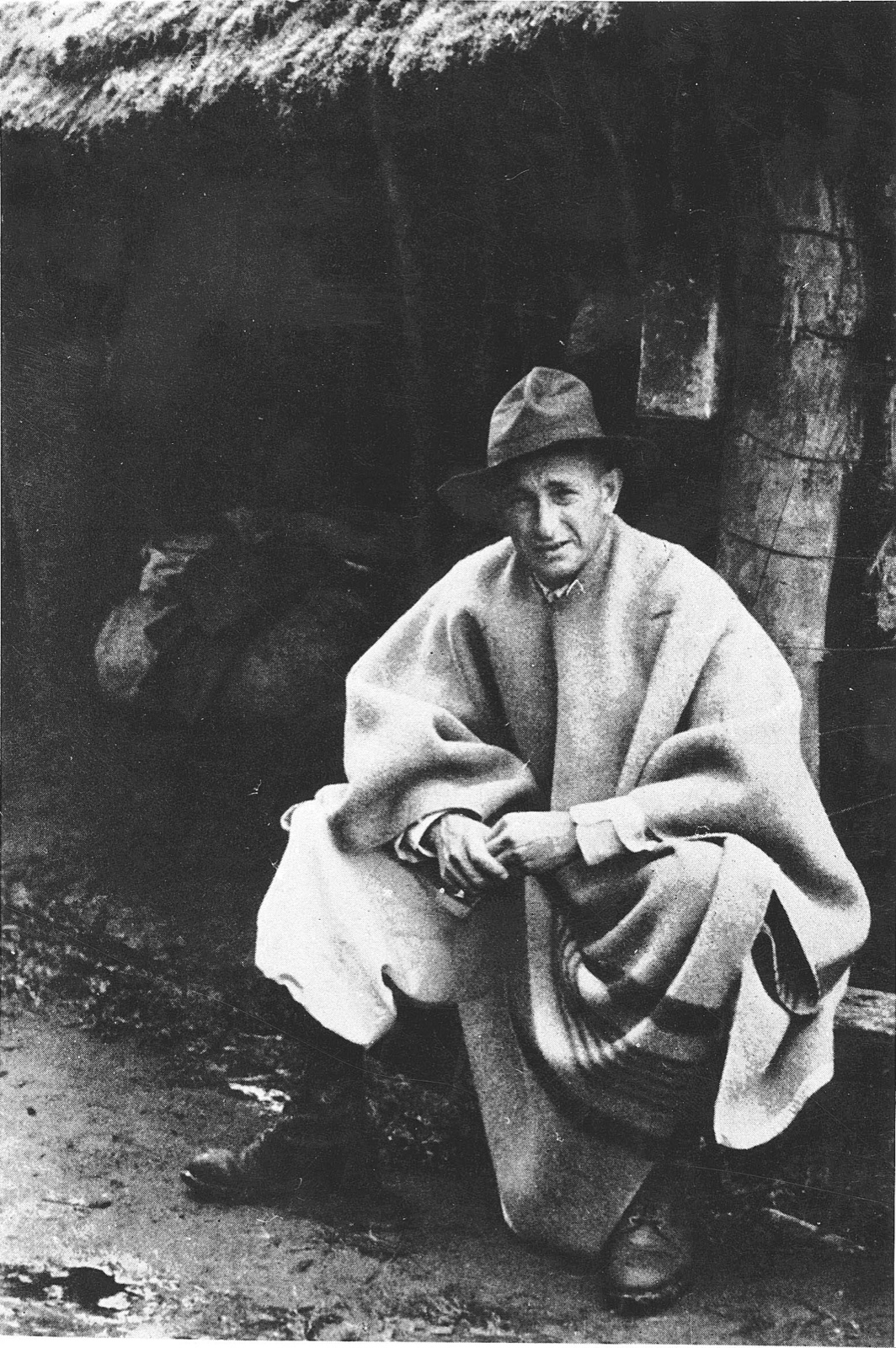
Eichmann in a felt hat and a heavy poncho, squatting in front of a hut with a thatched roof.1950s
On the left, Eichmann wears SS uniform during the war. On the right, he squats in a poncho in Argentina in the 1950s. Photographs from Wikimedia Commons and Yad Vashem.

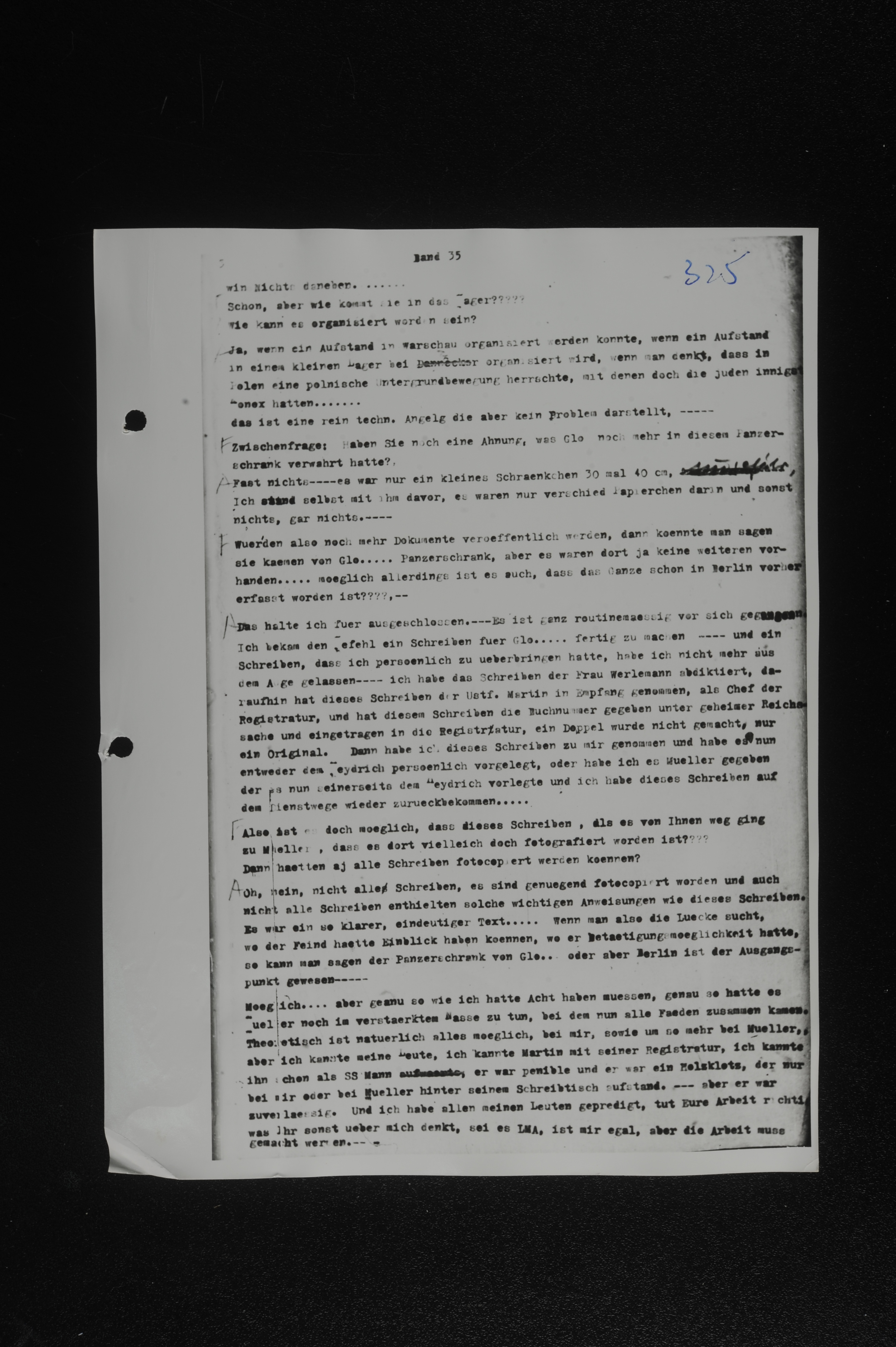
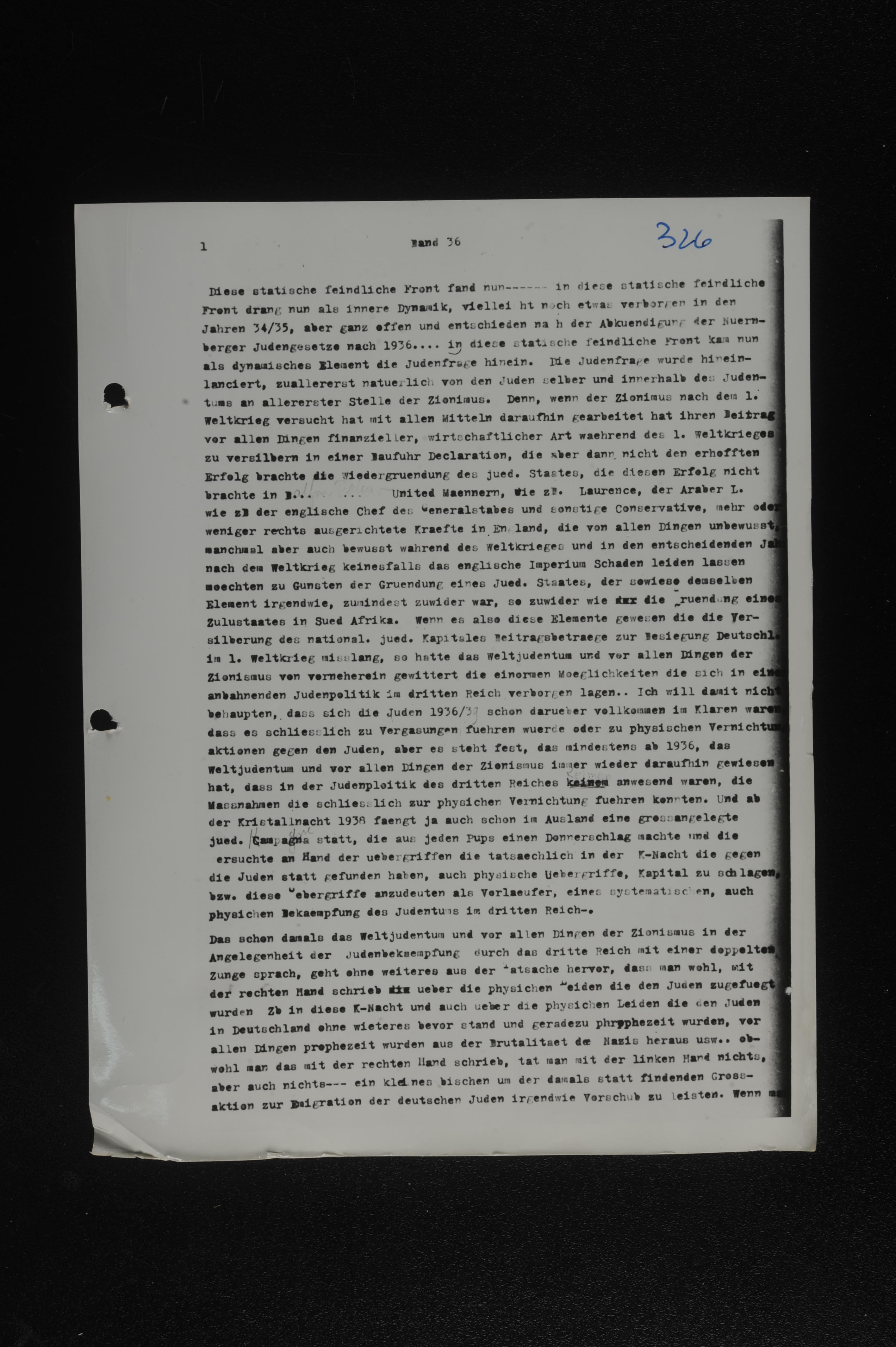
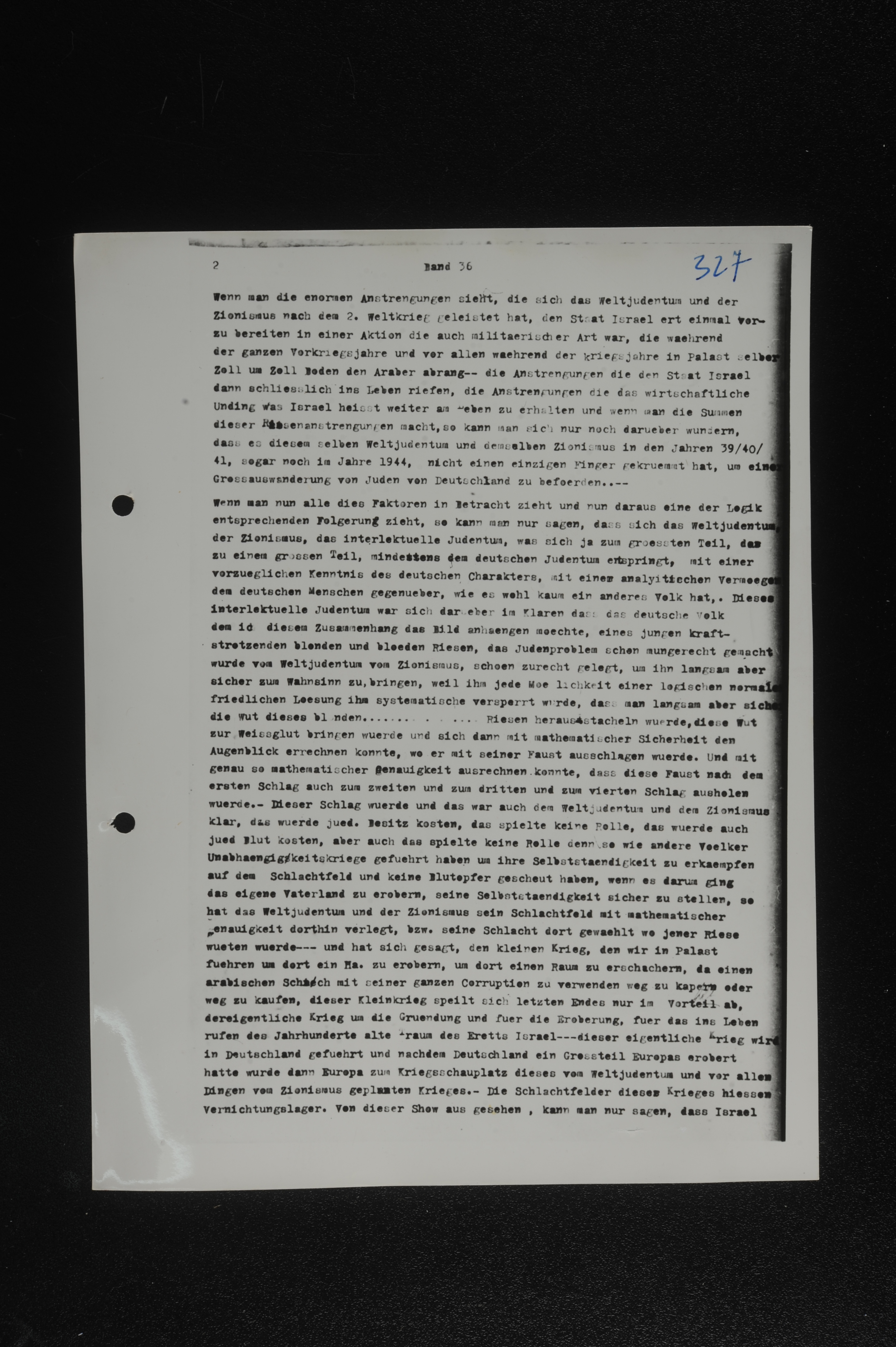
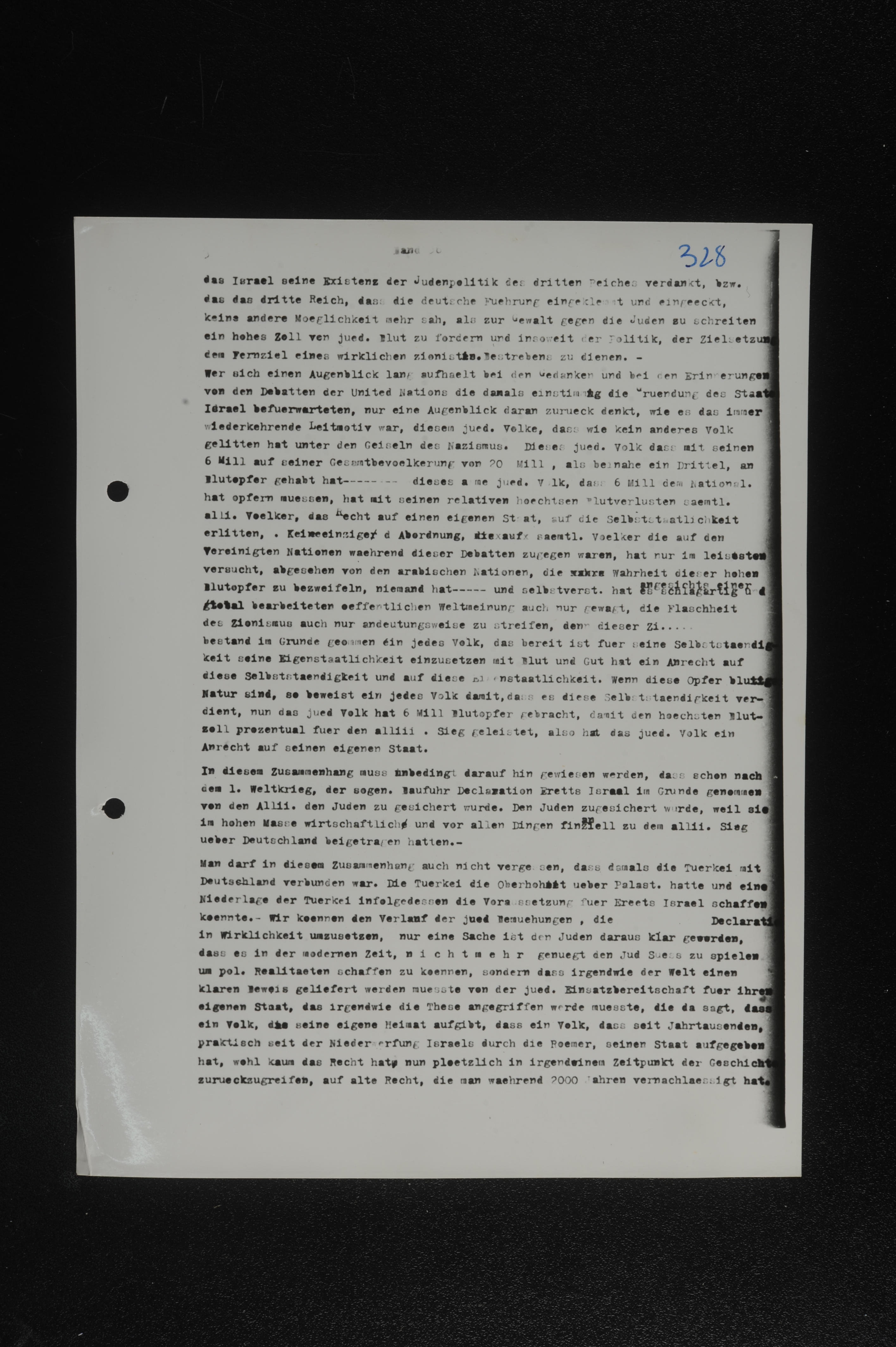
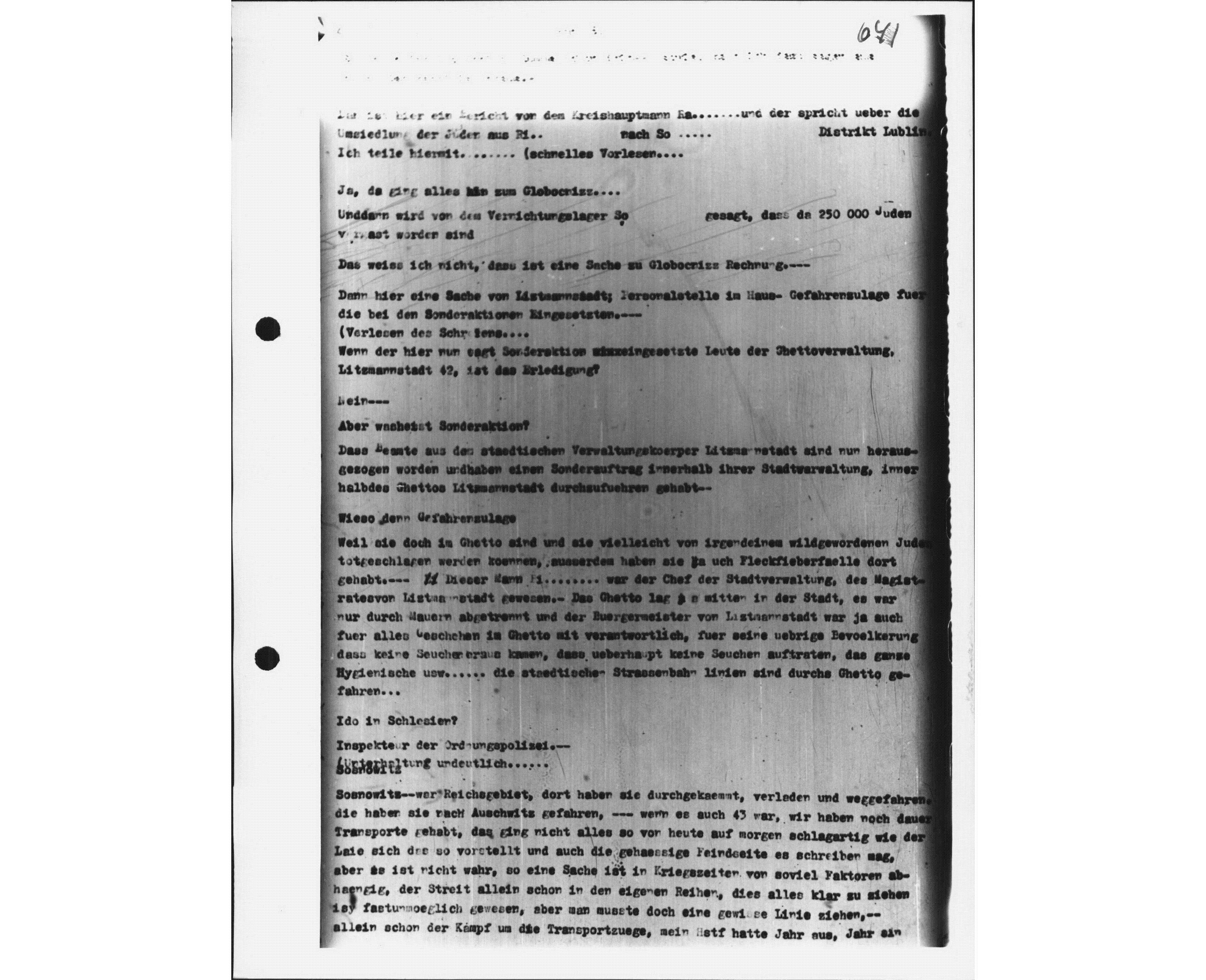
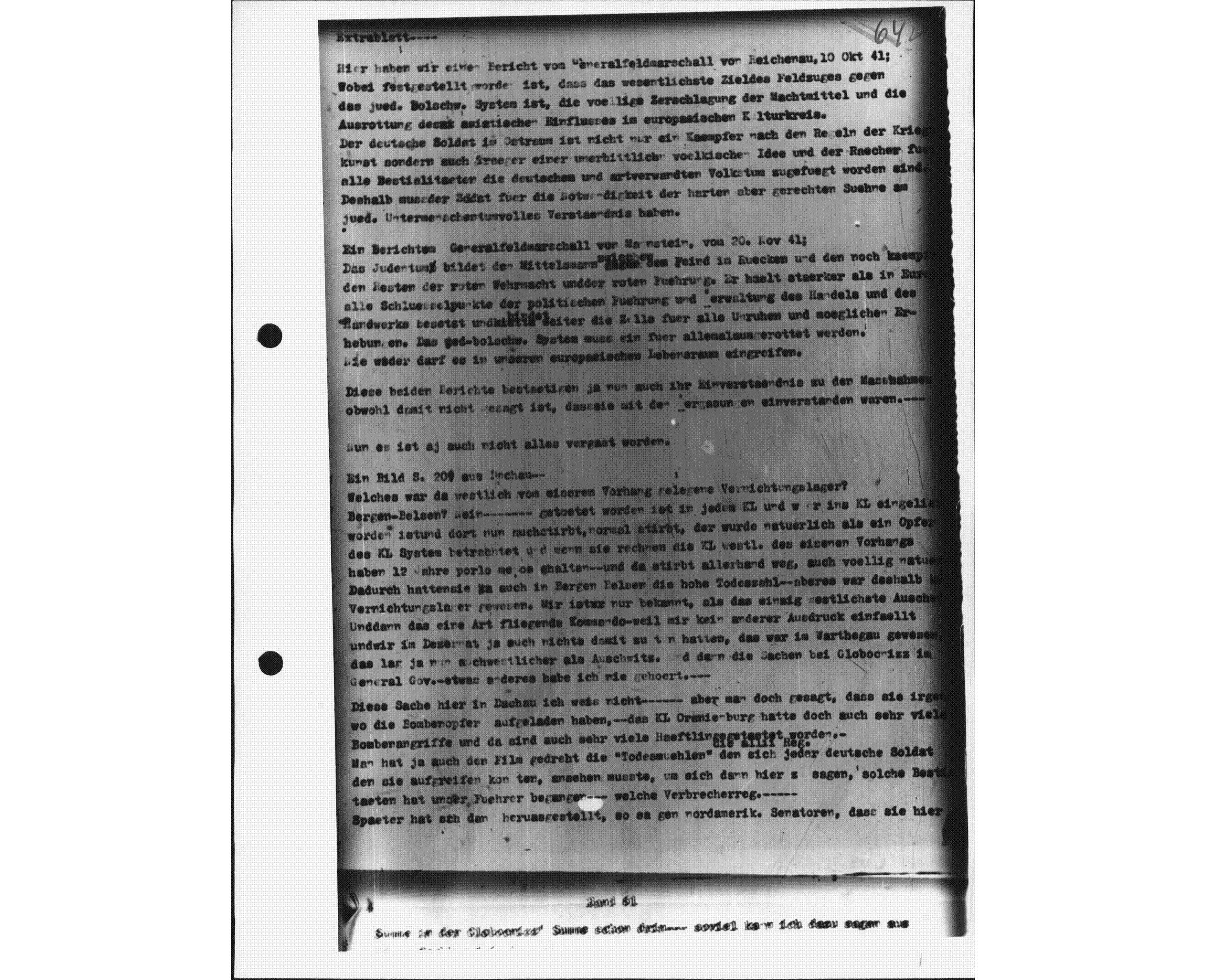
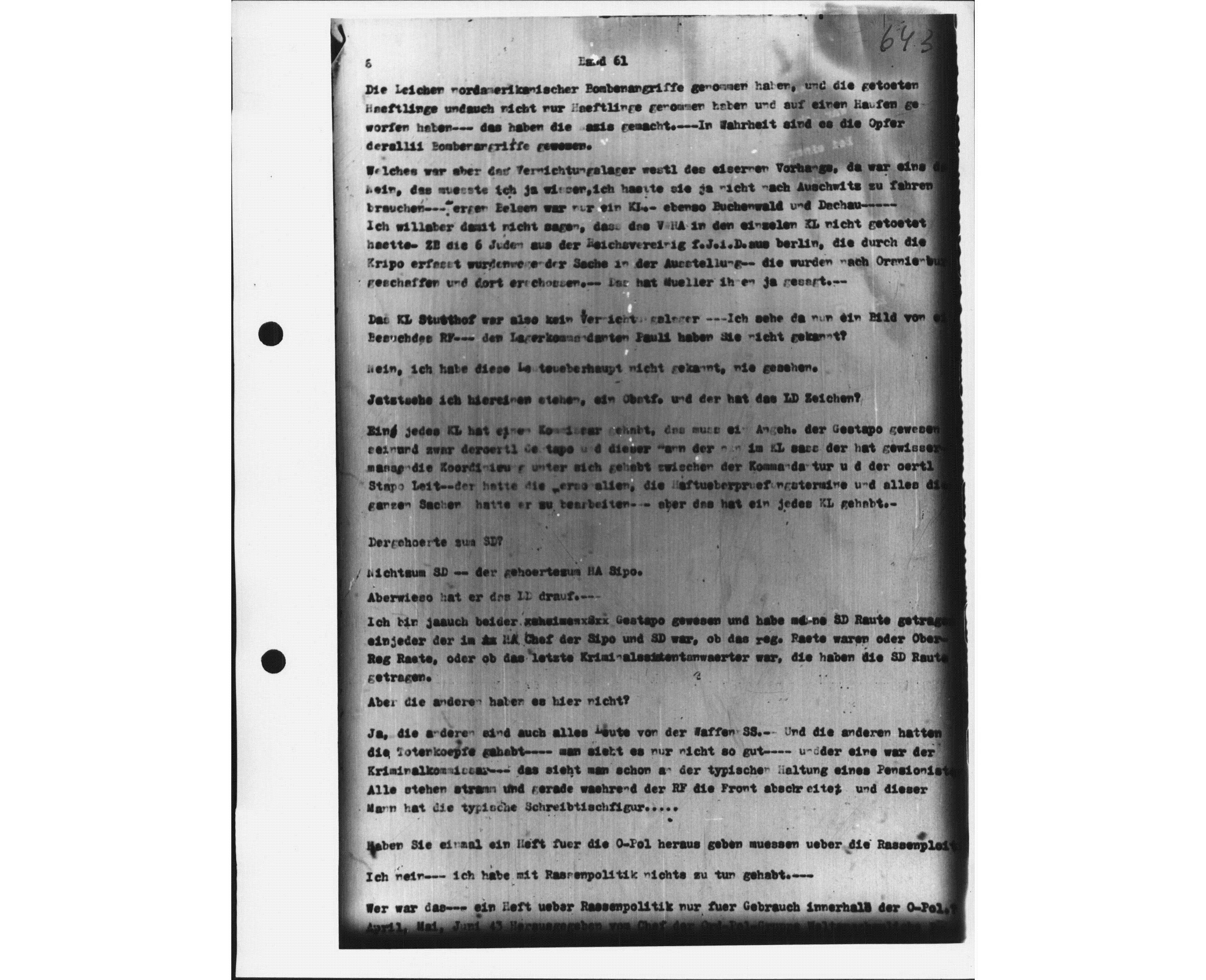
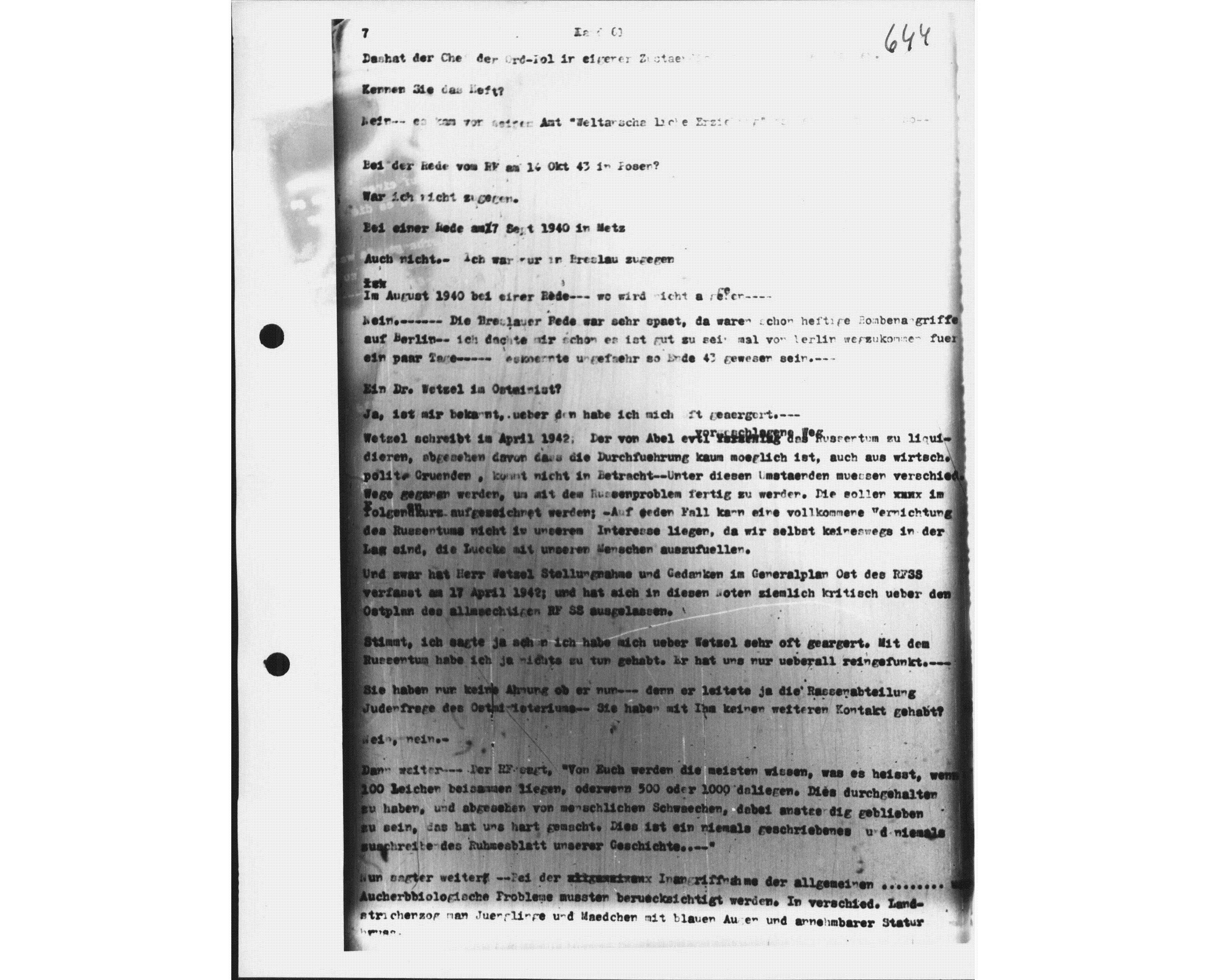
The Eichmann Sassen Transcripts

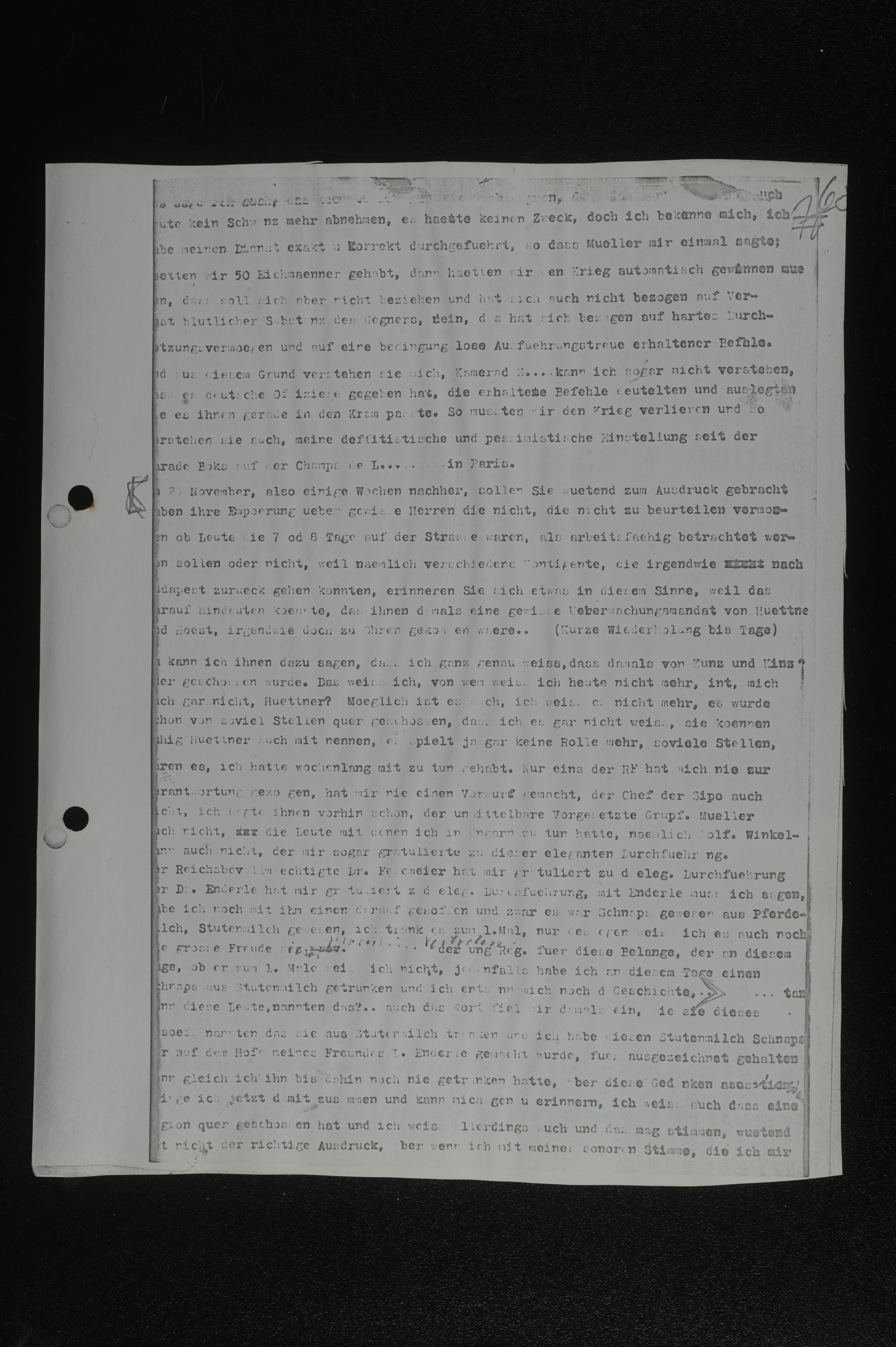
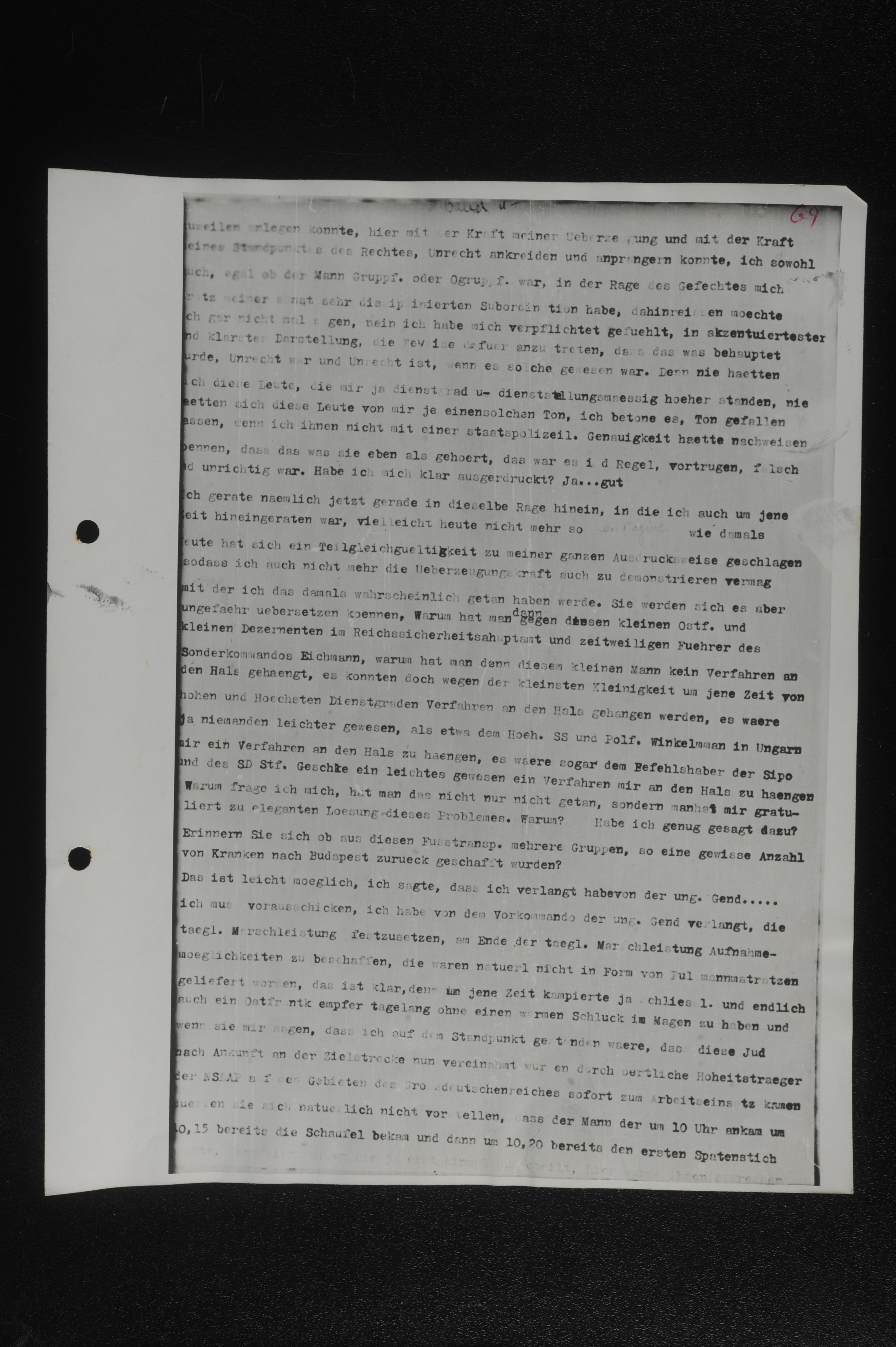
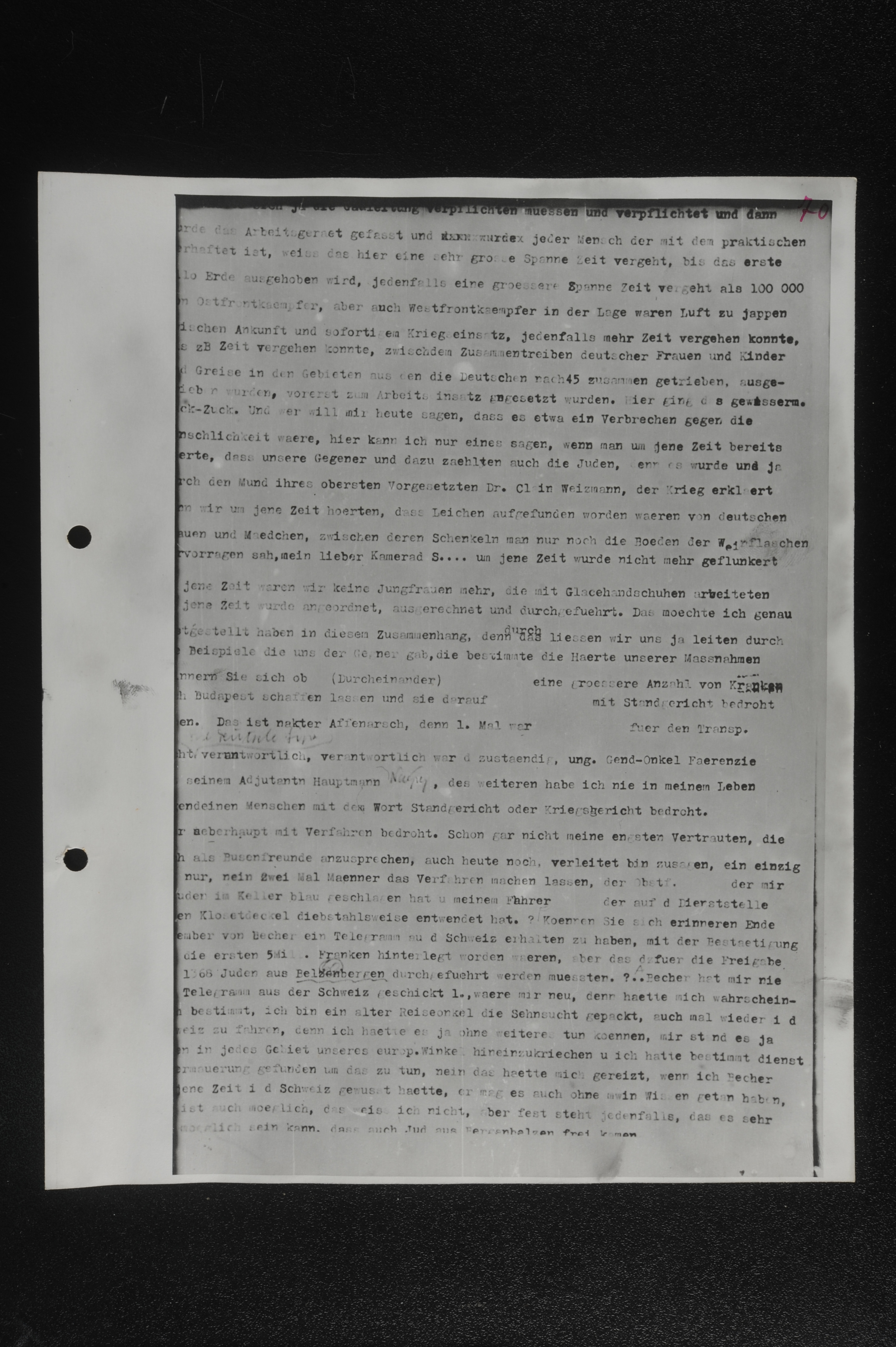
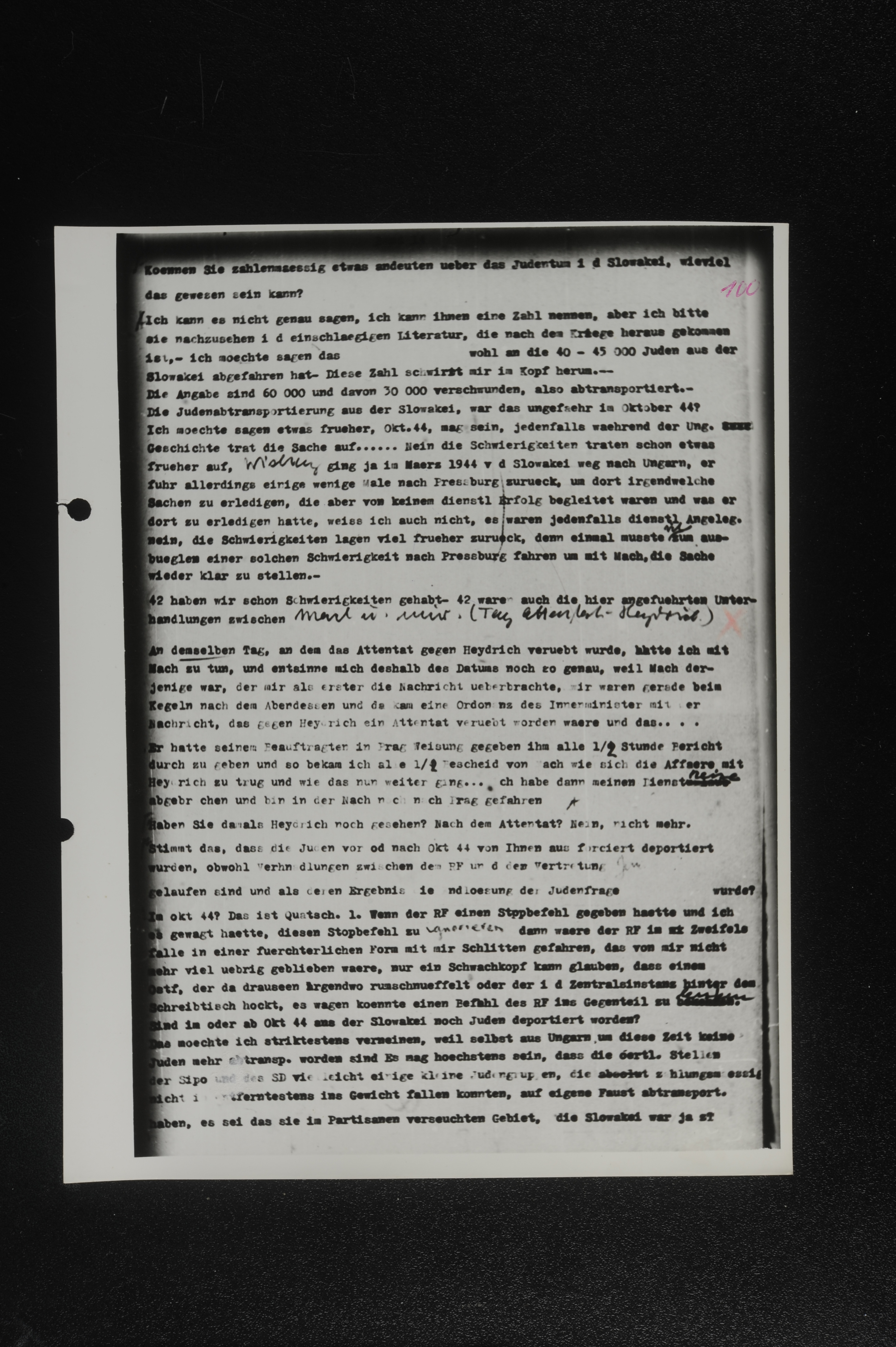
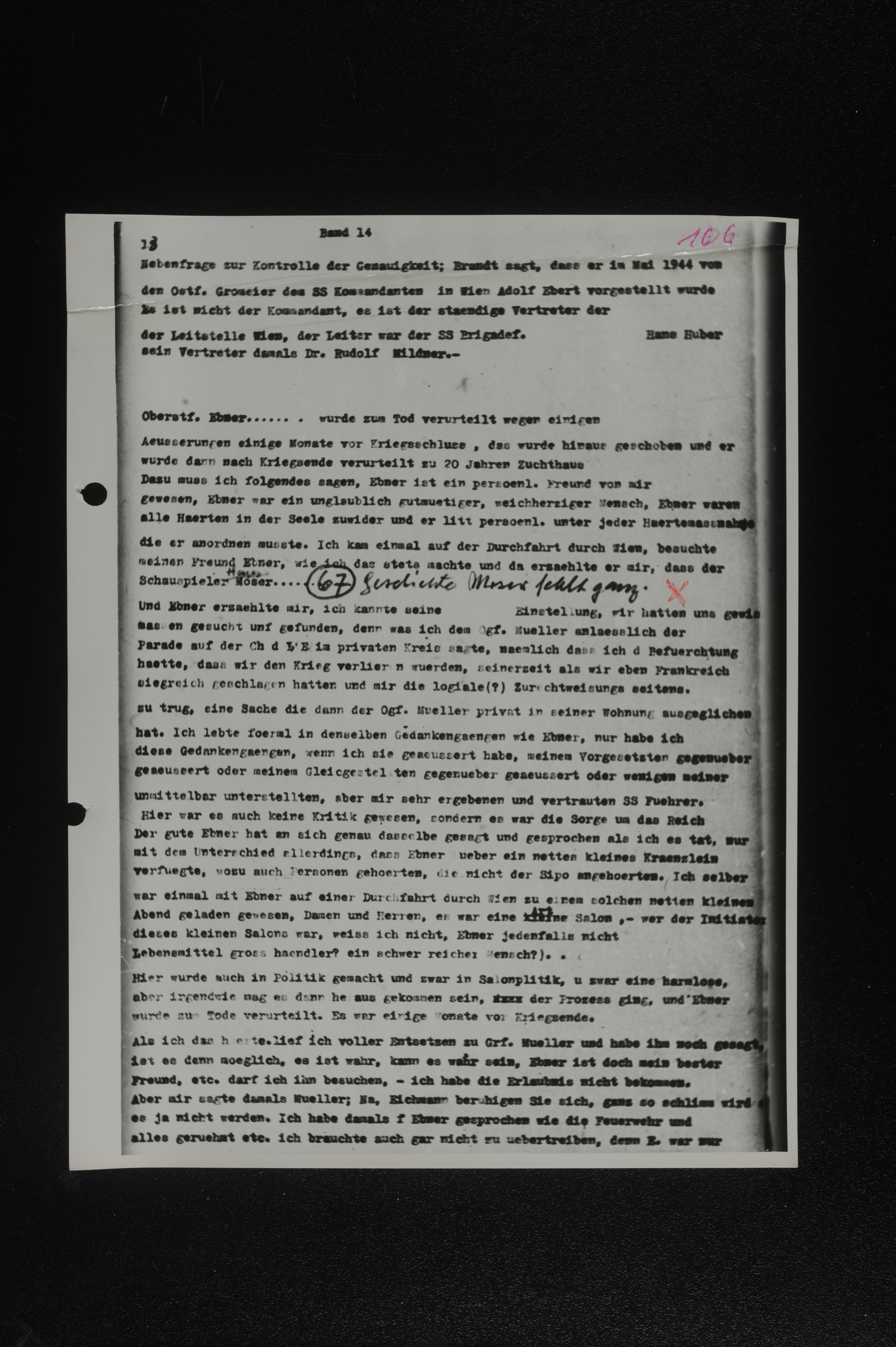
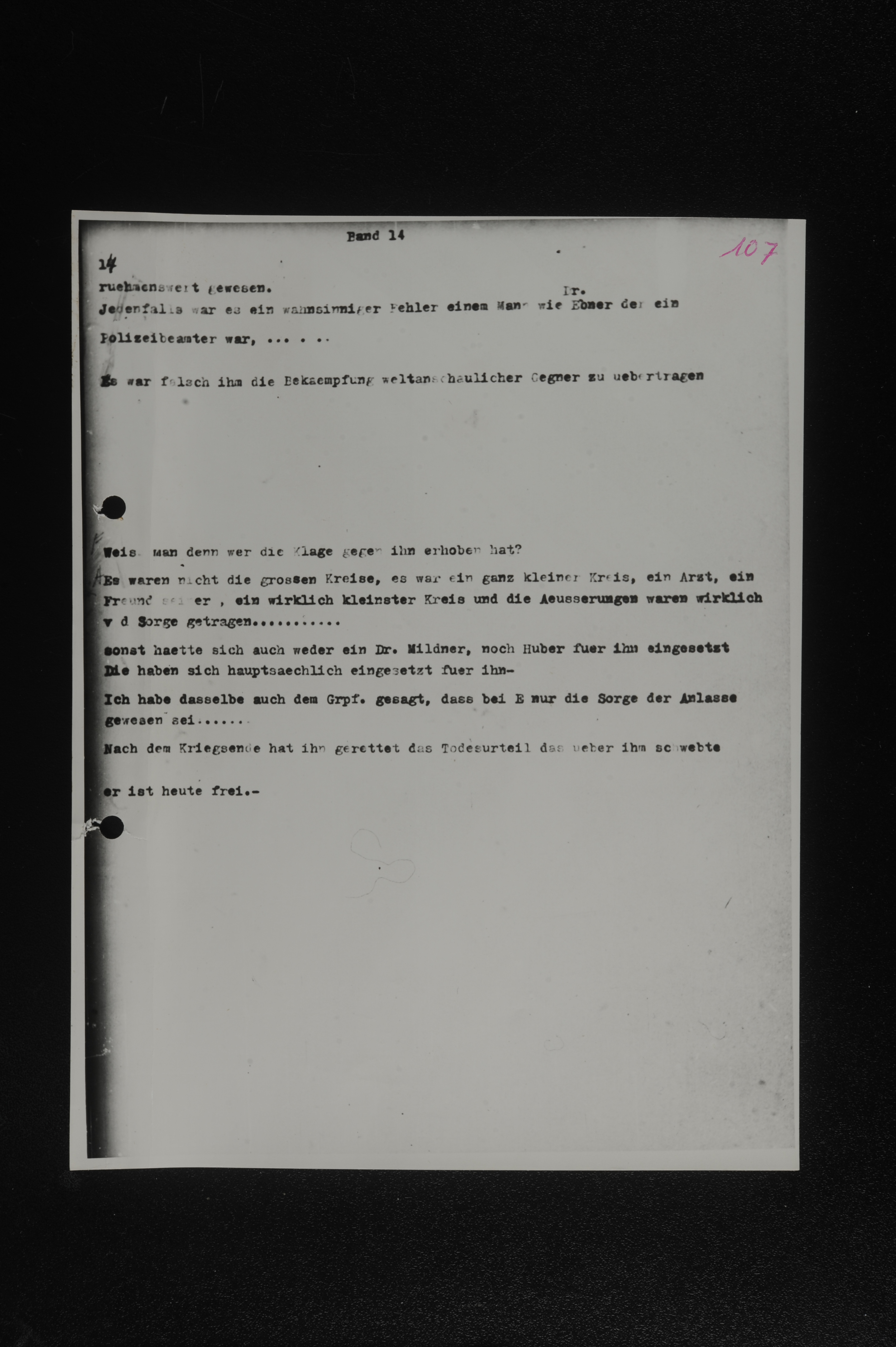
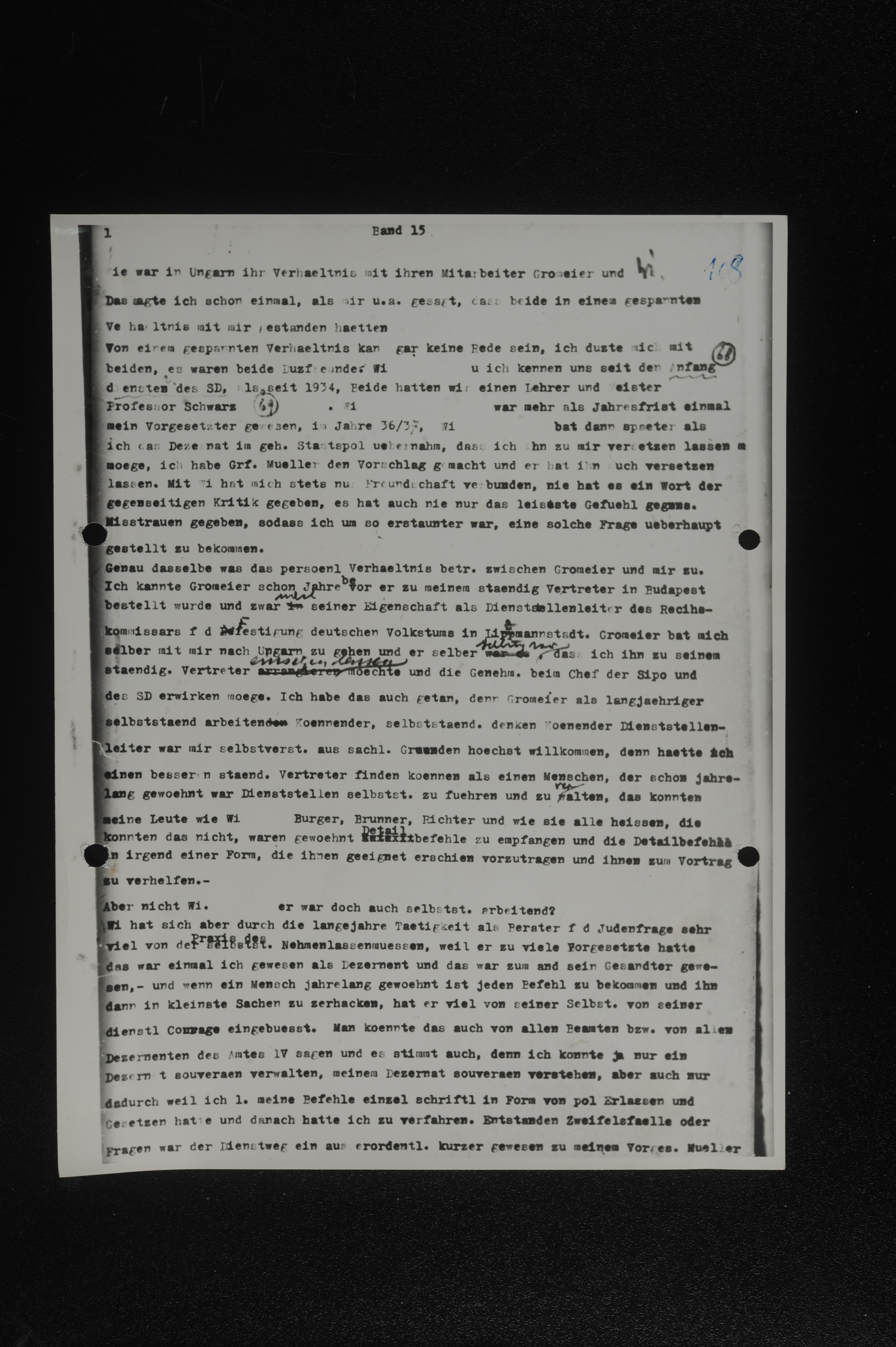
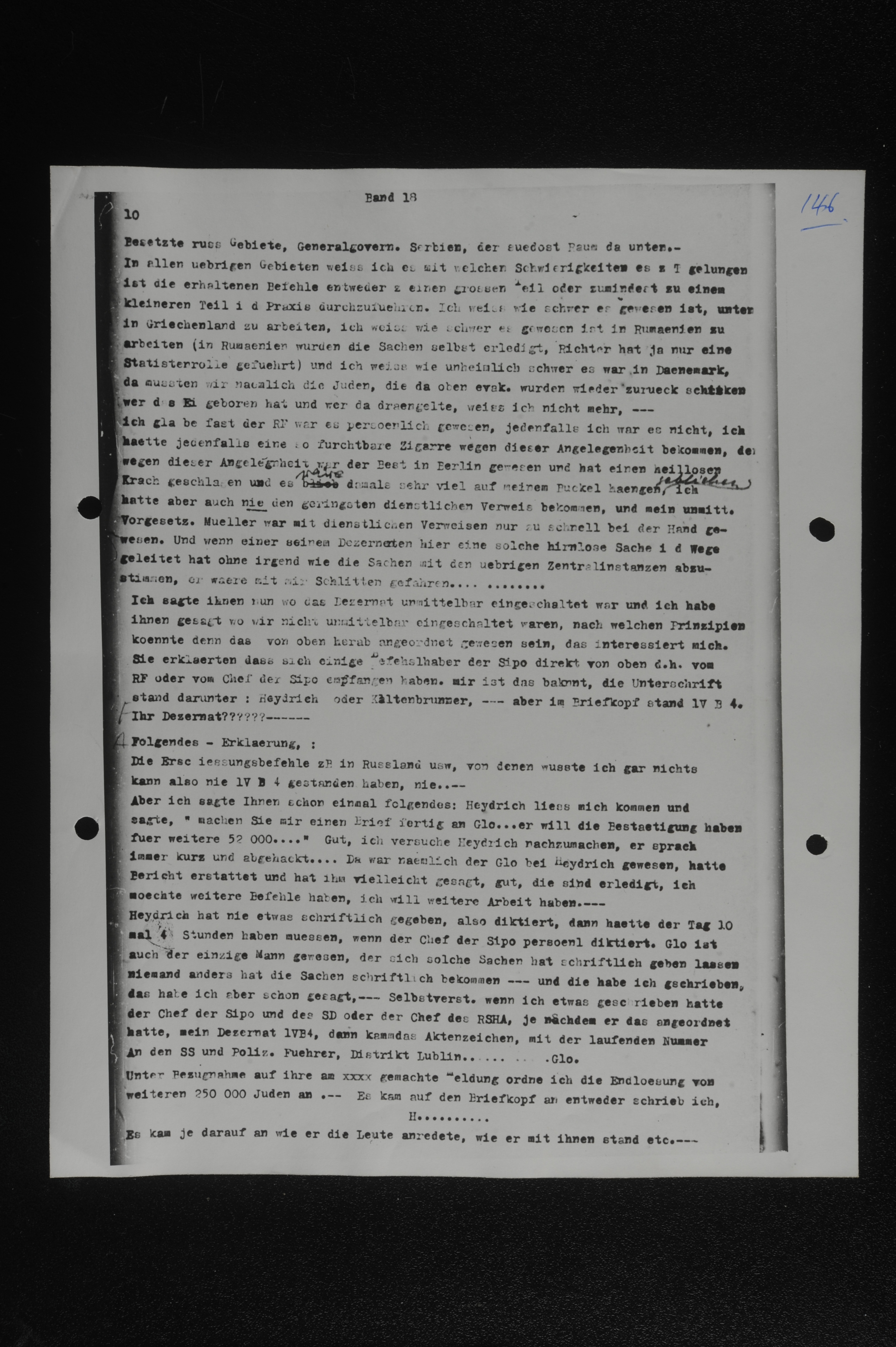
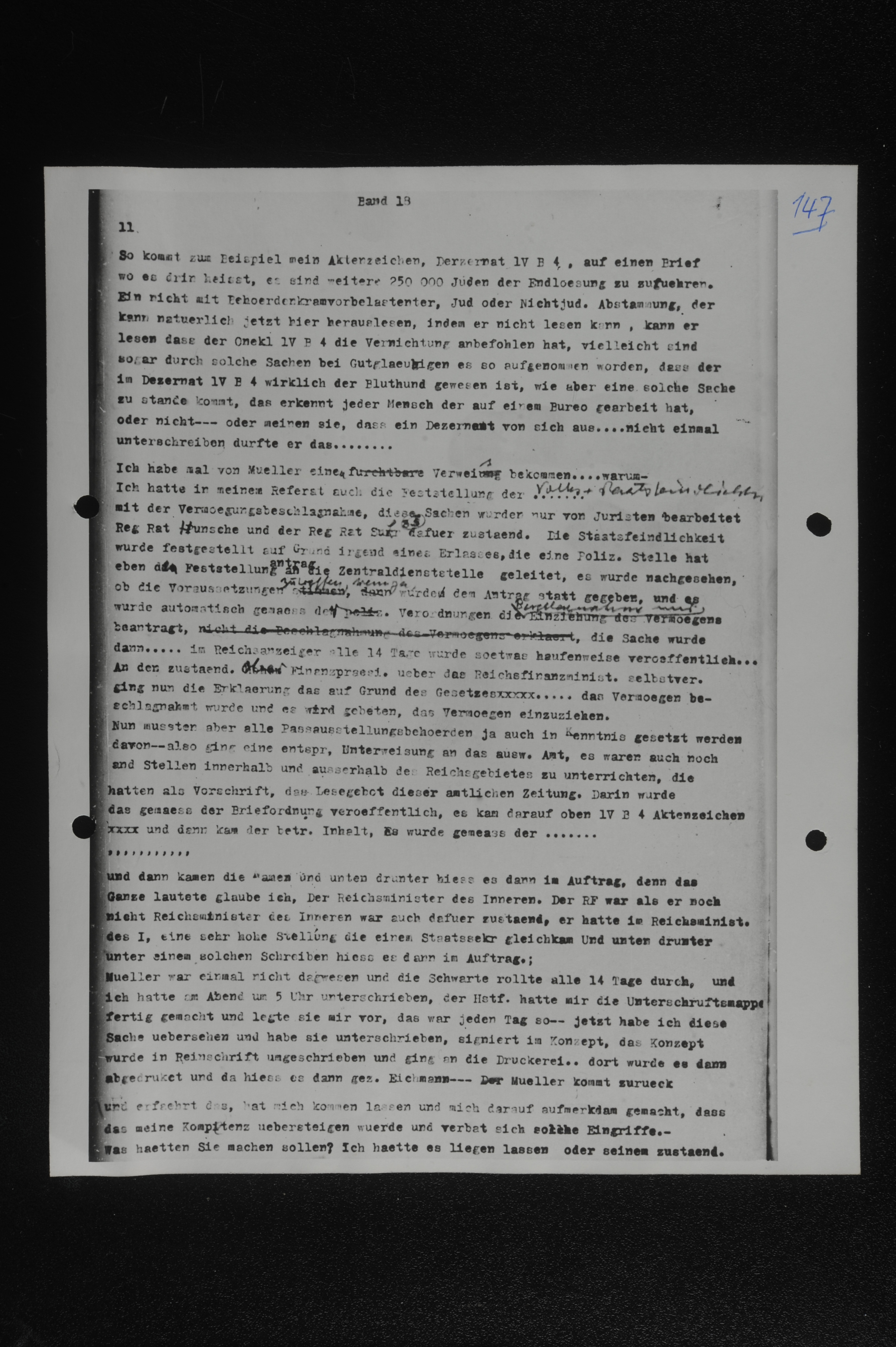
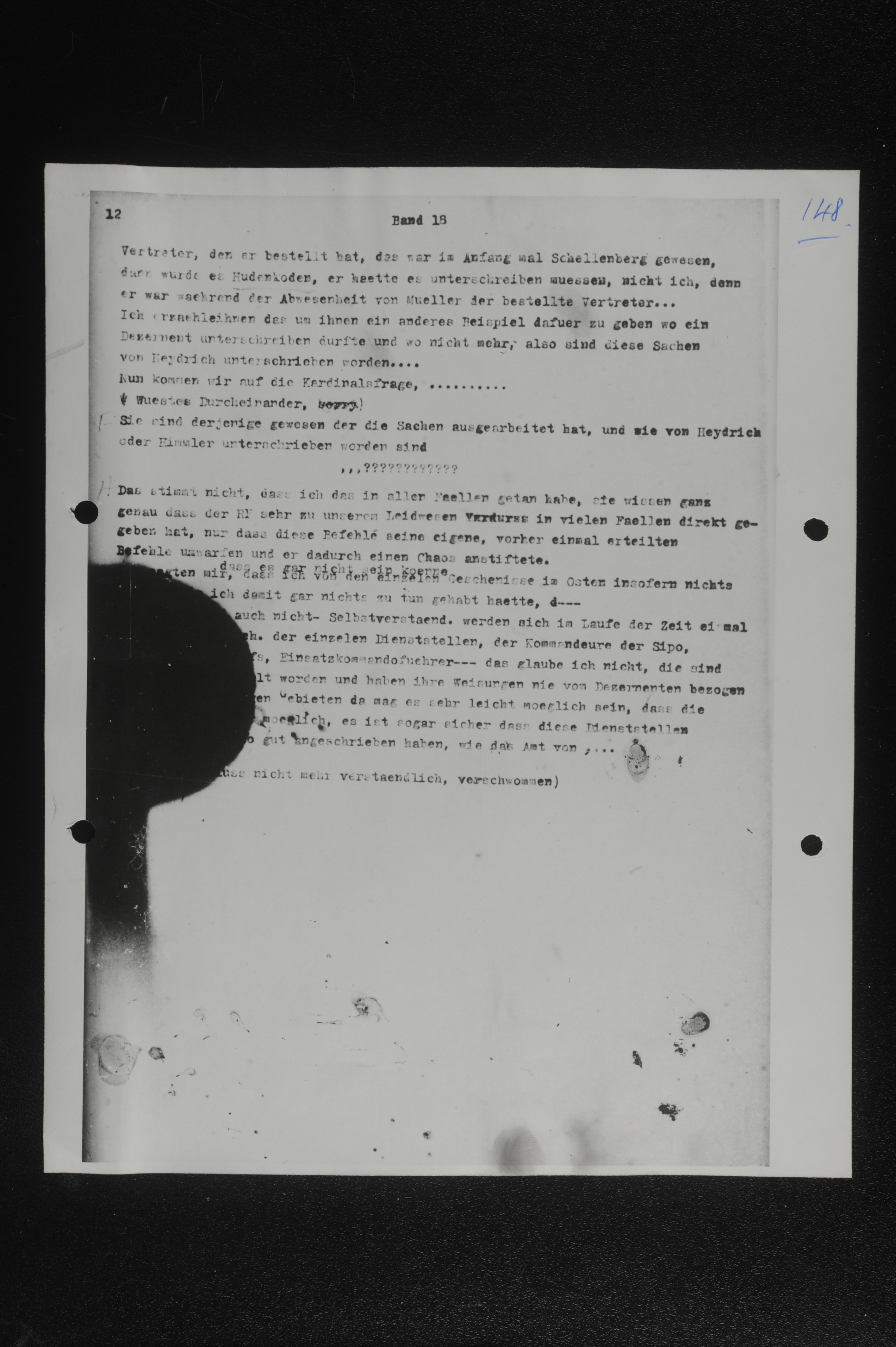
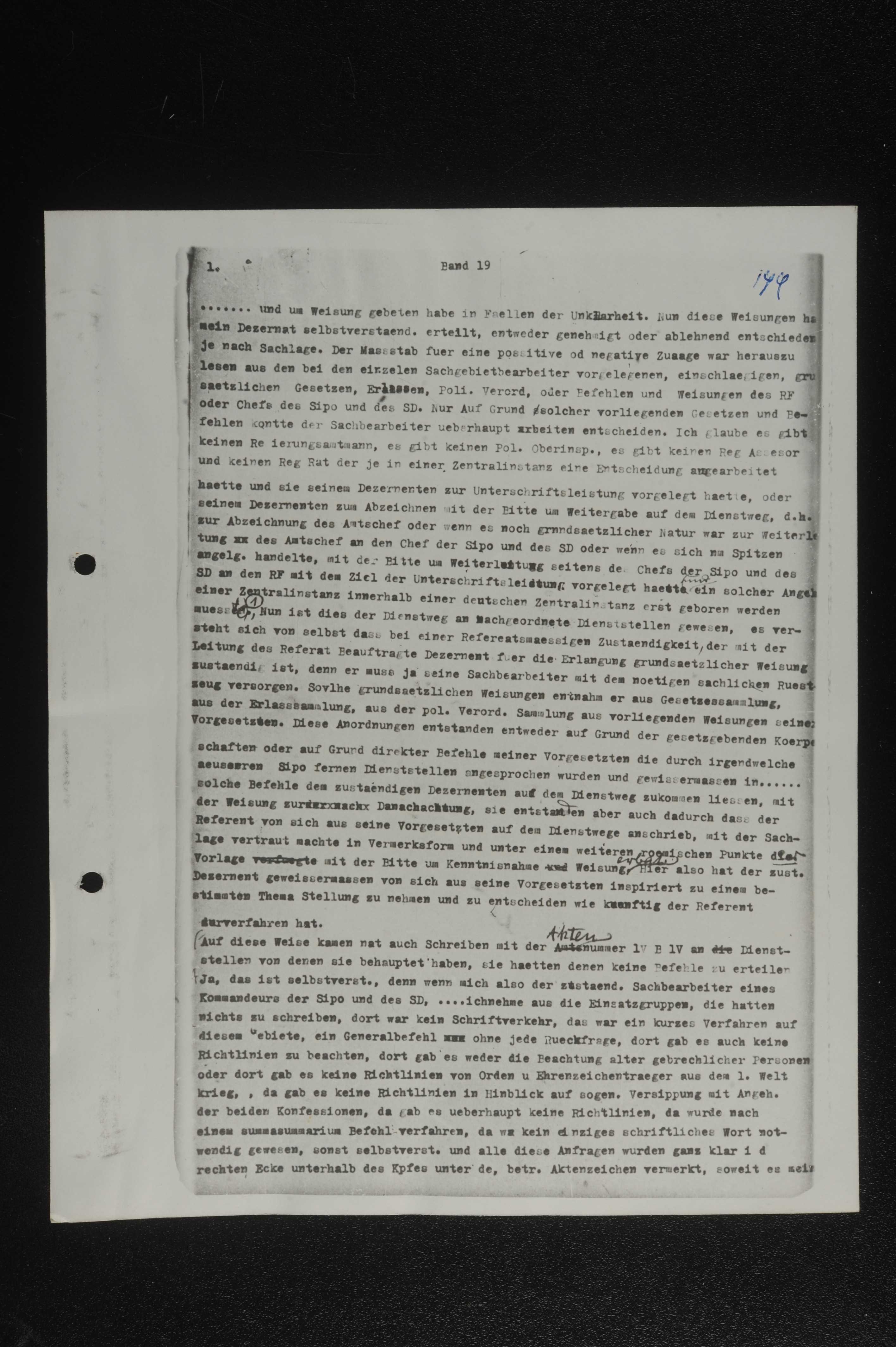
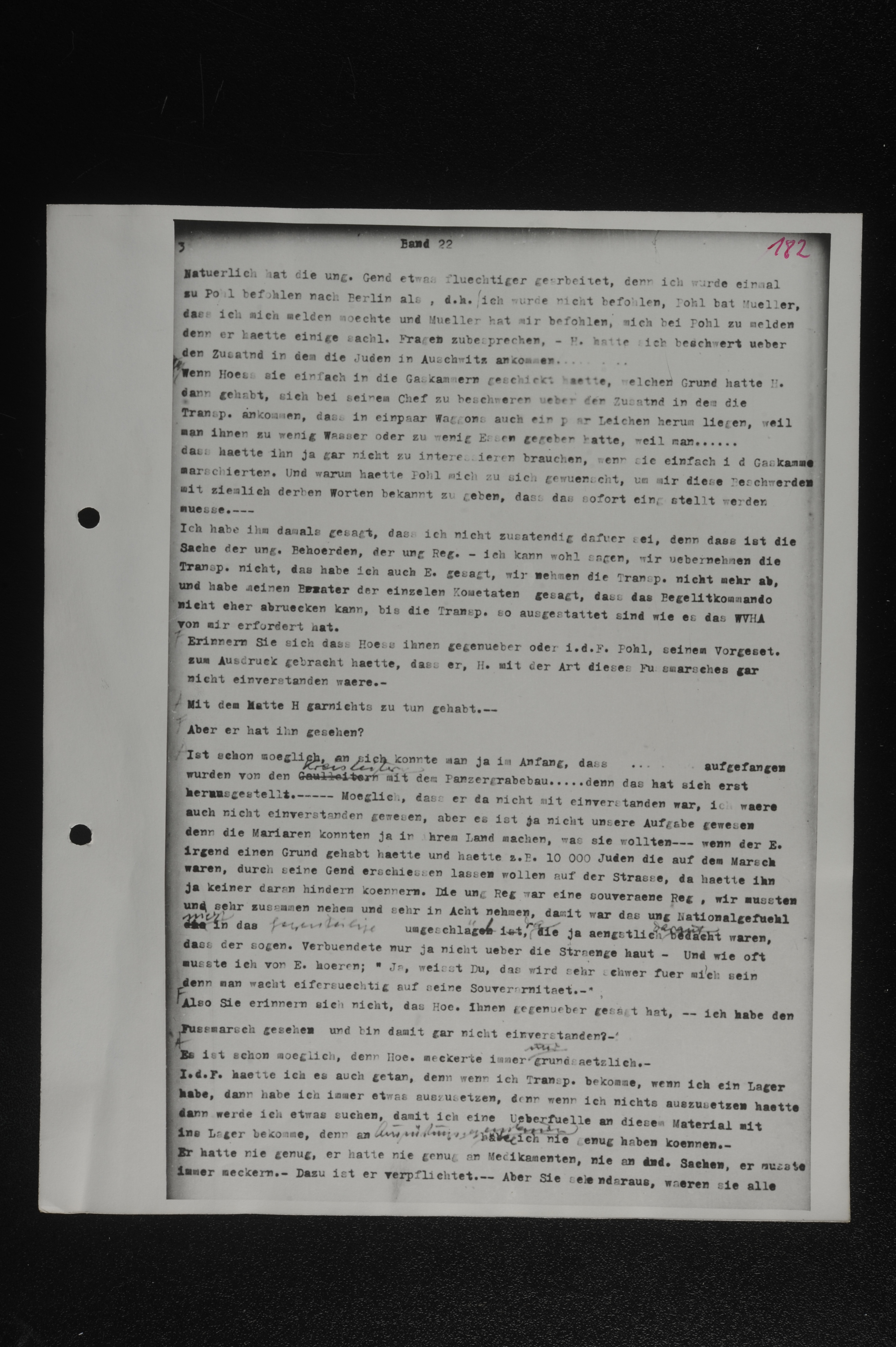
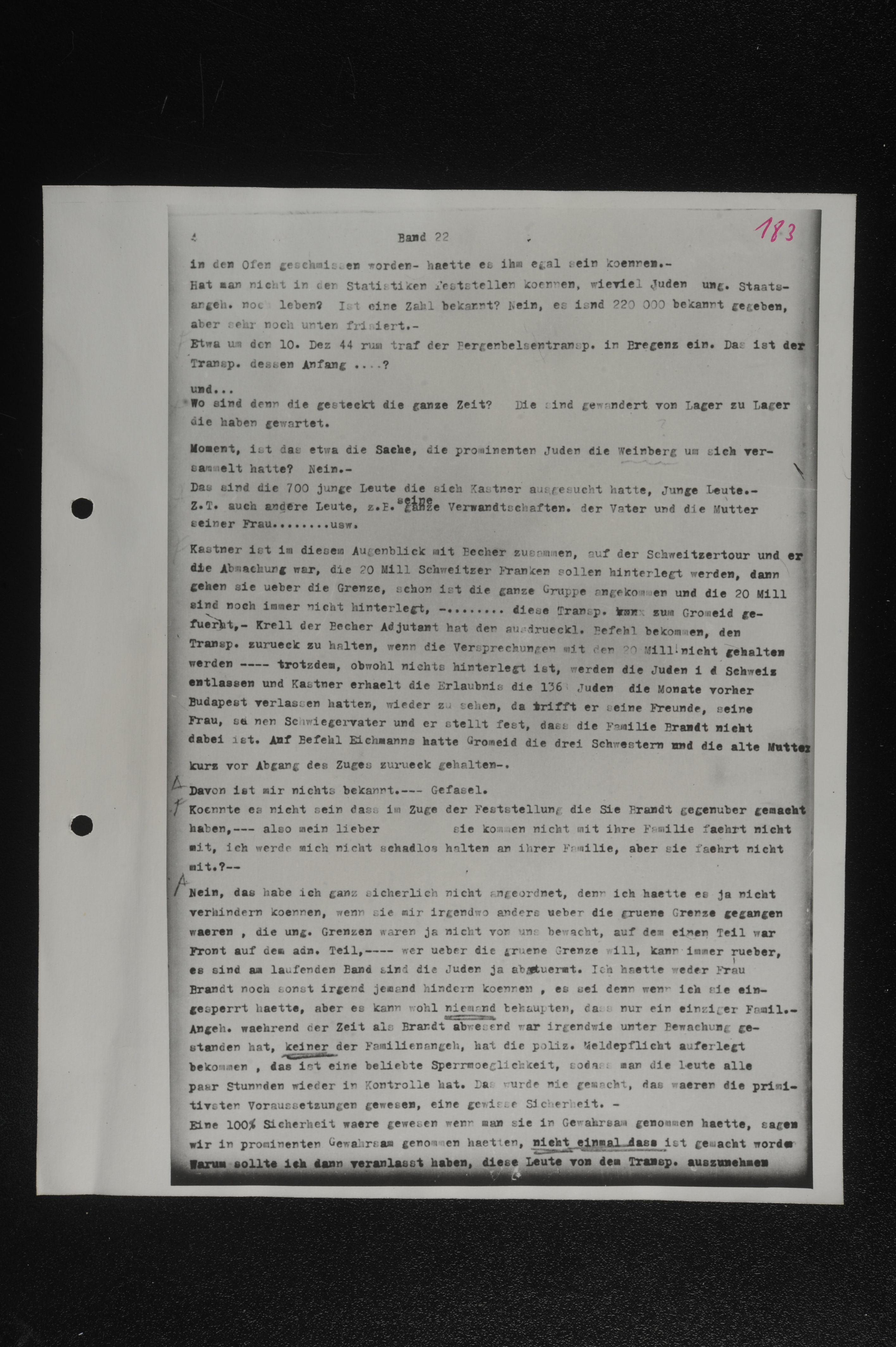
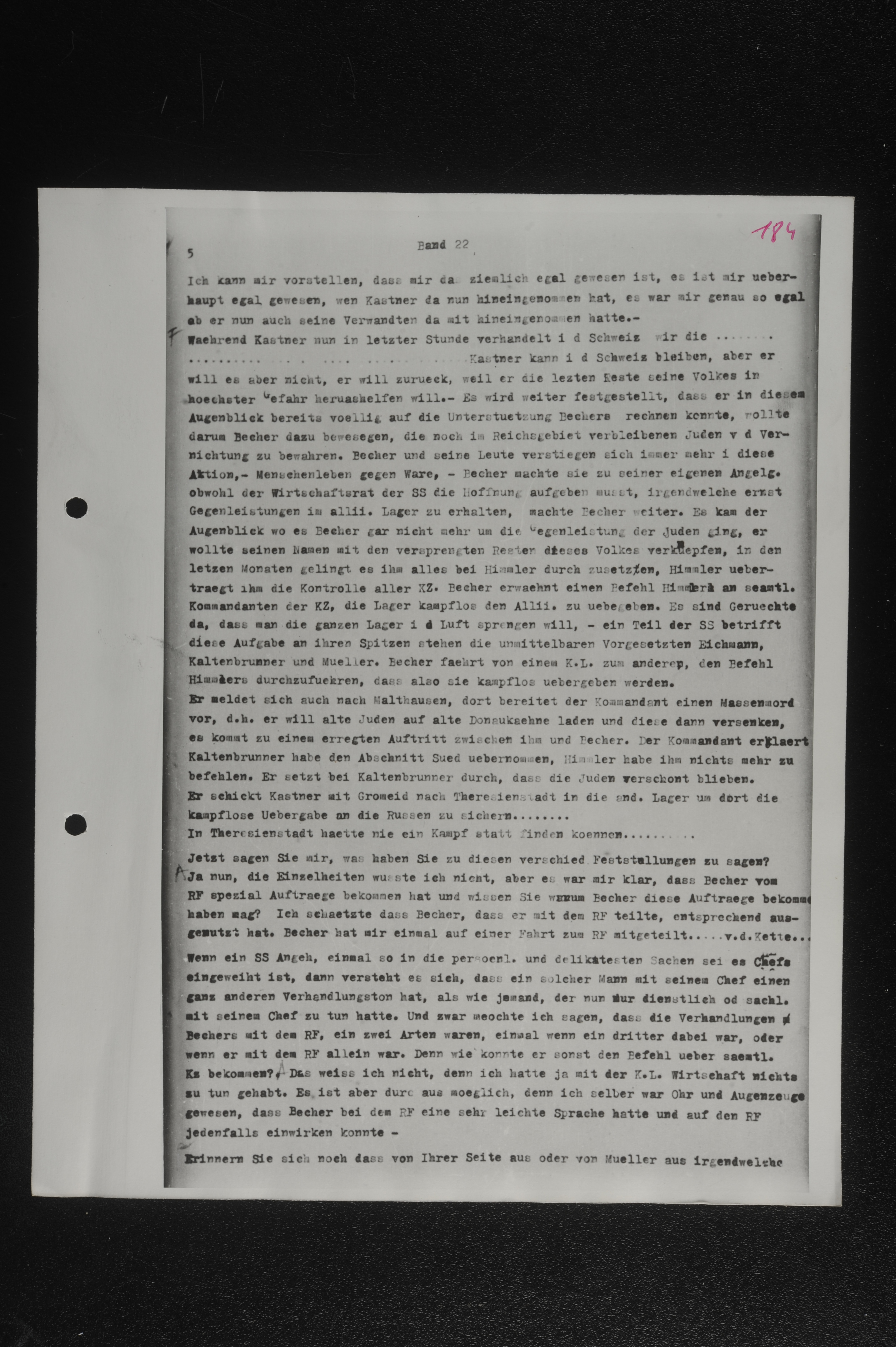
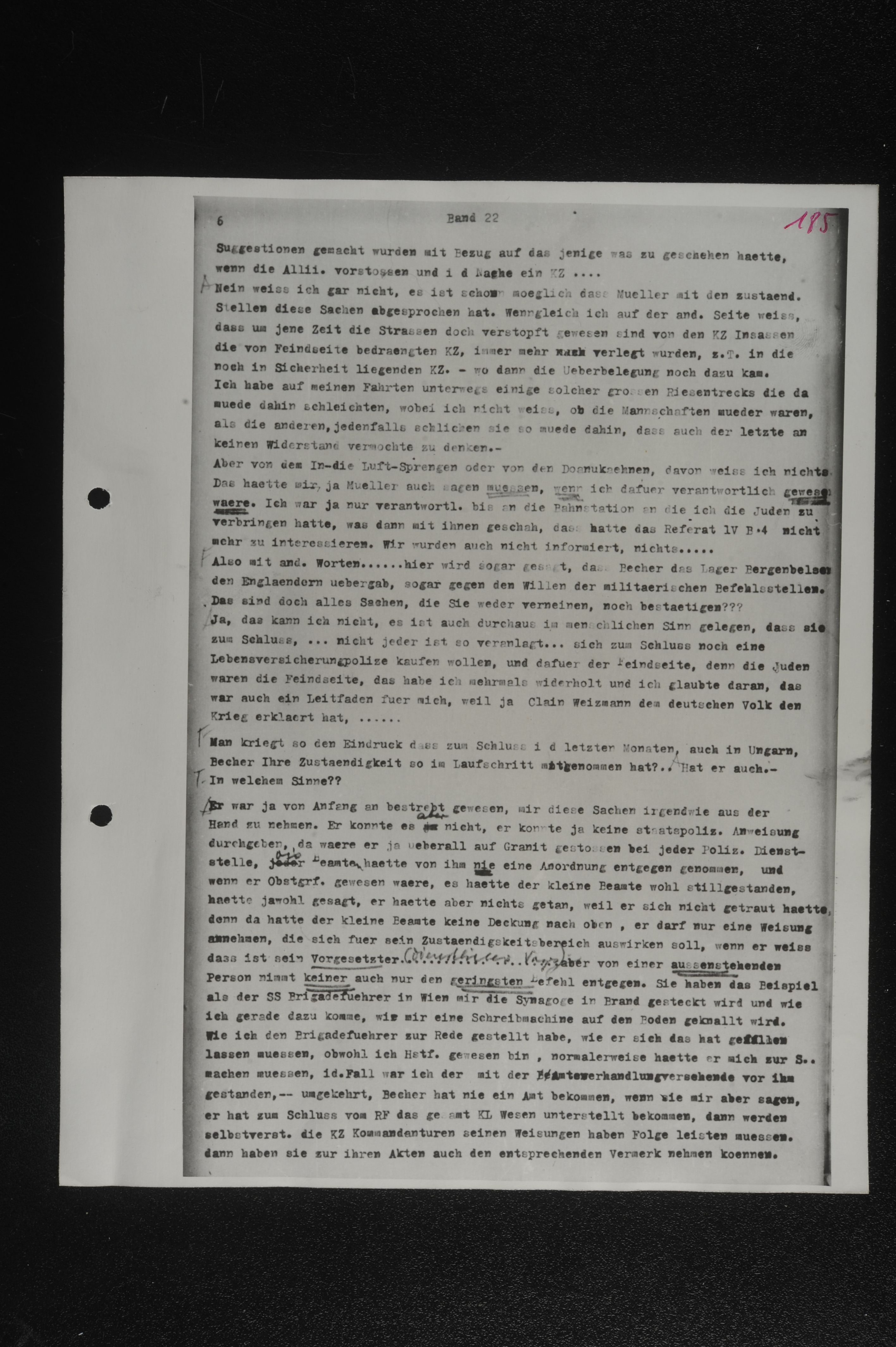
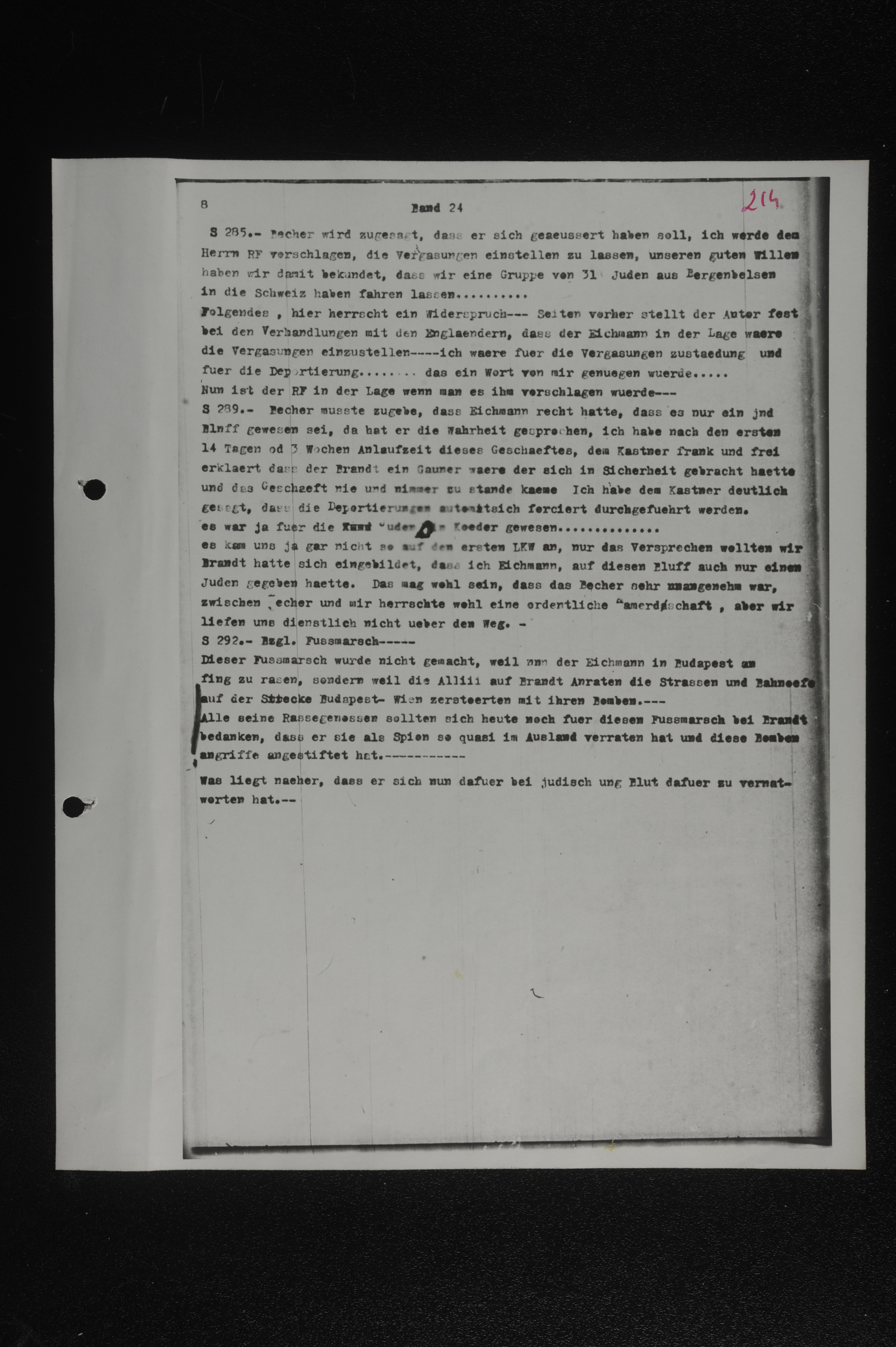
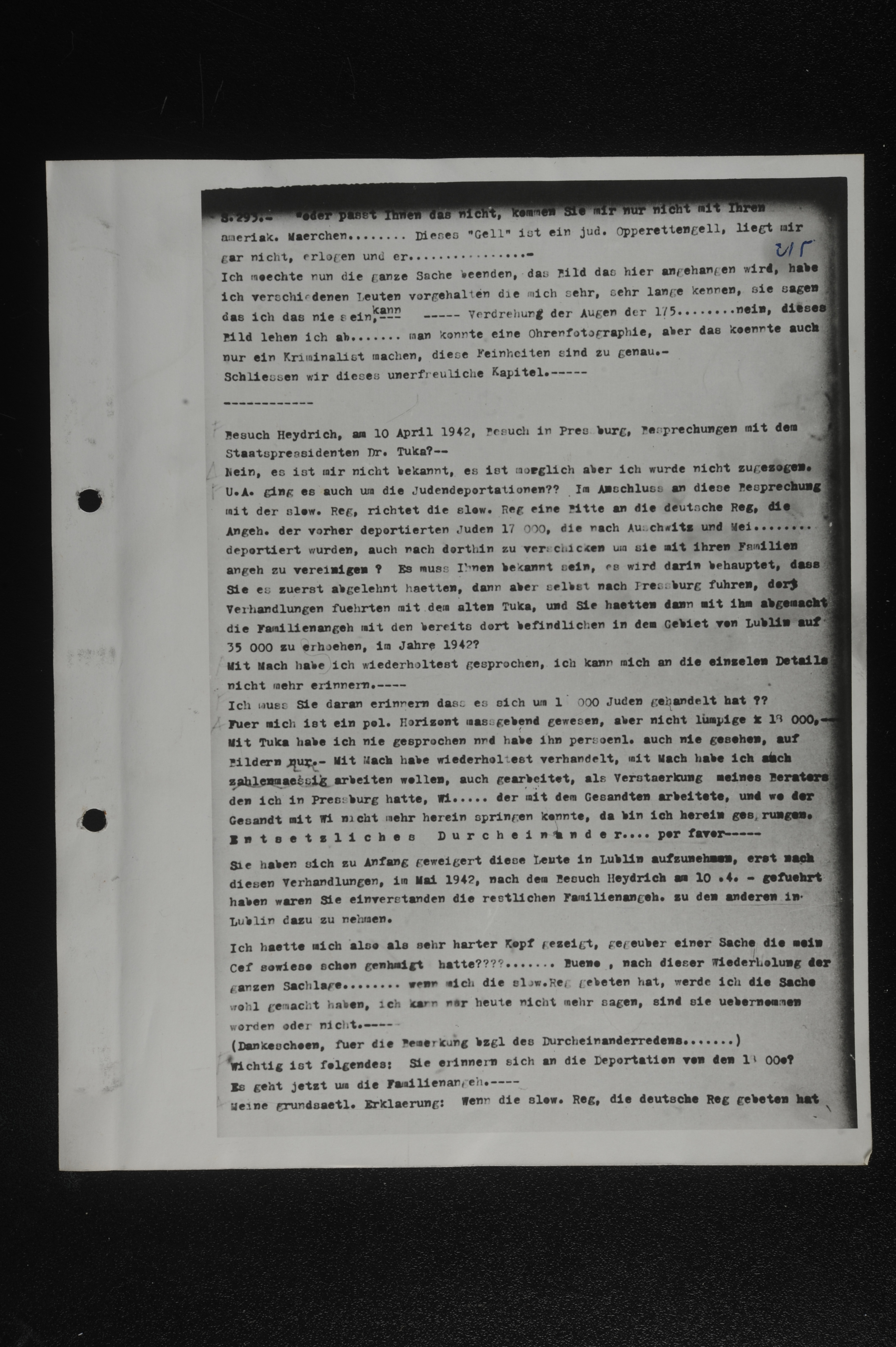
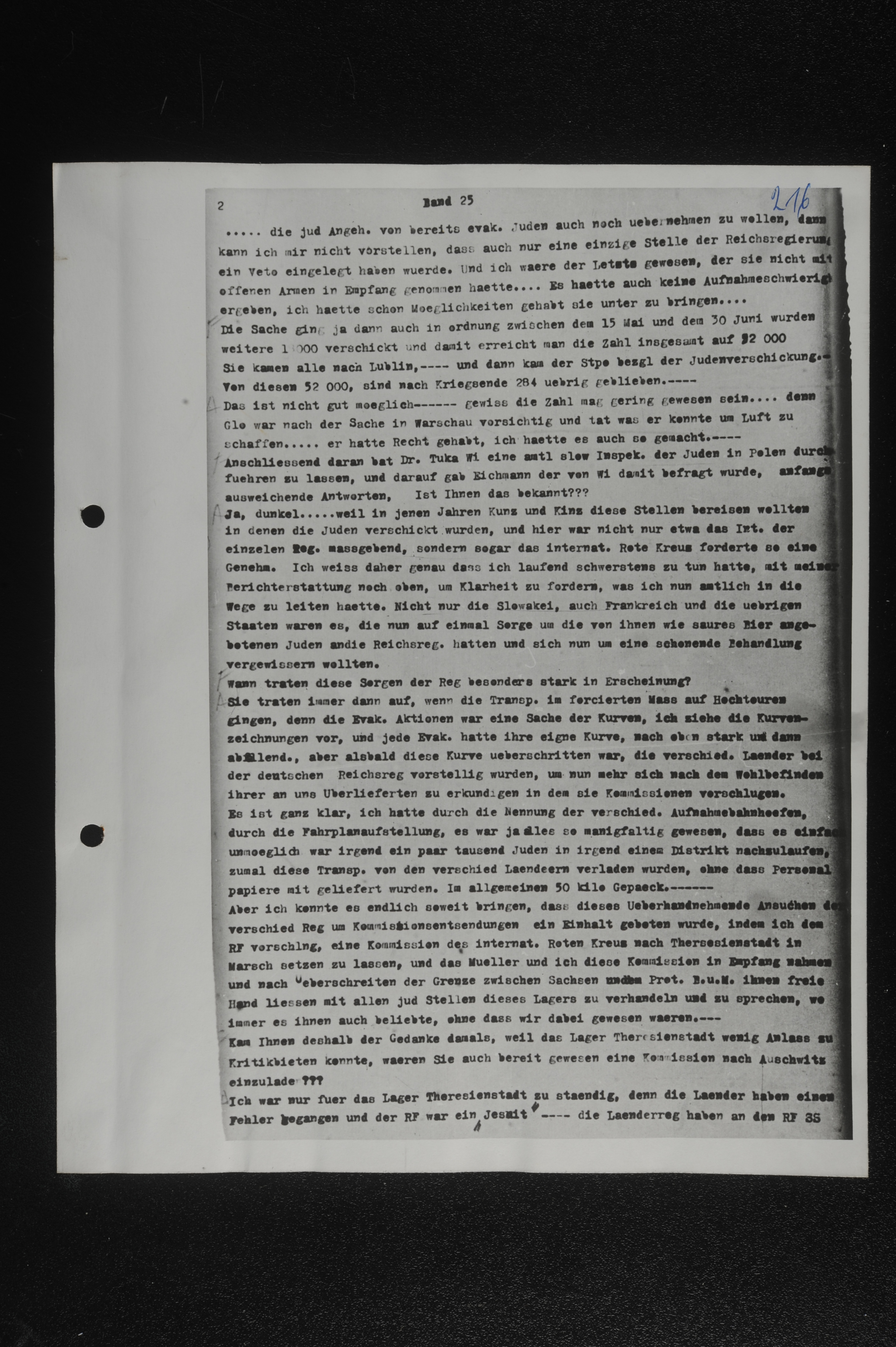
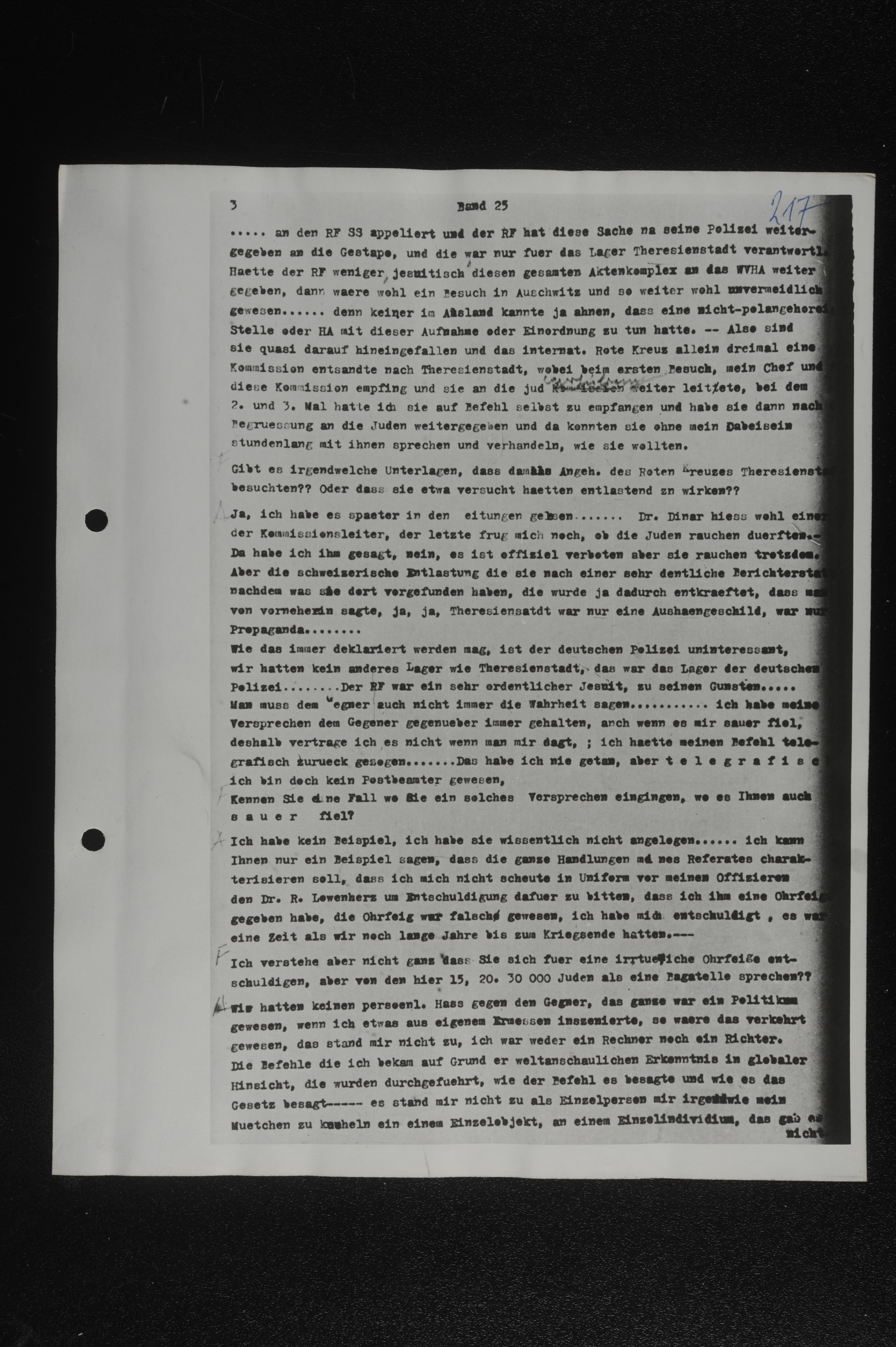
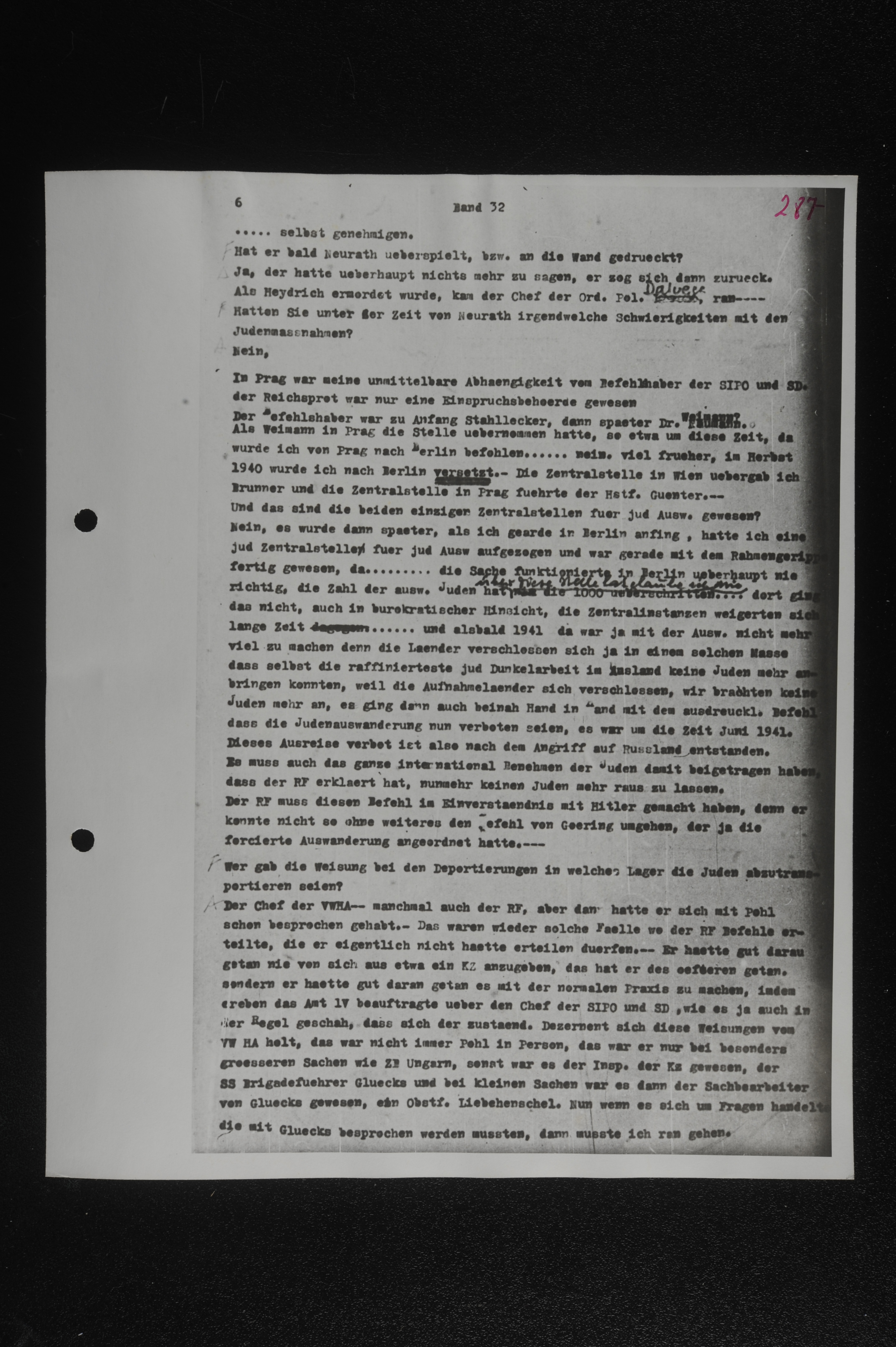
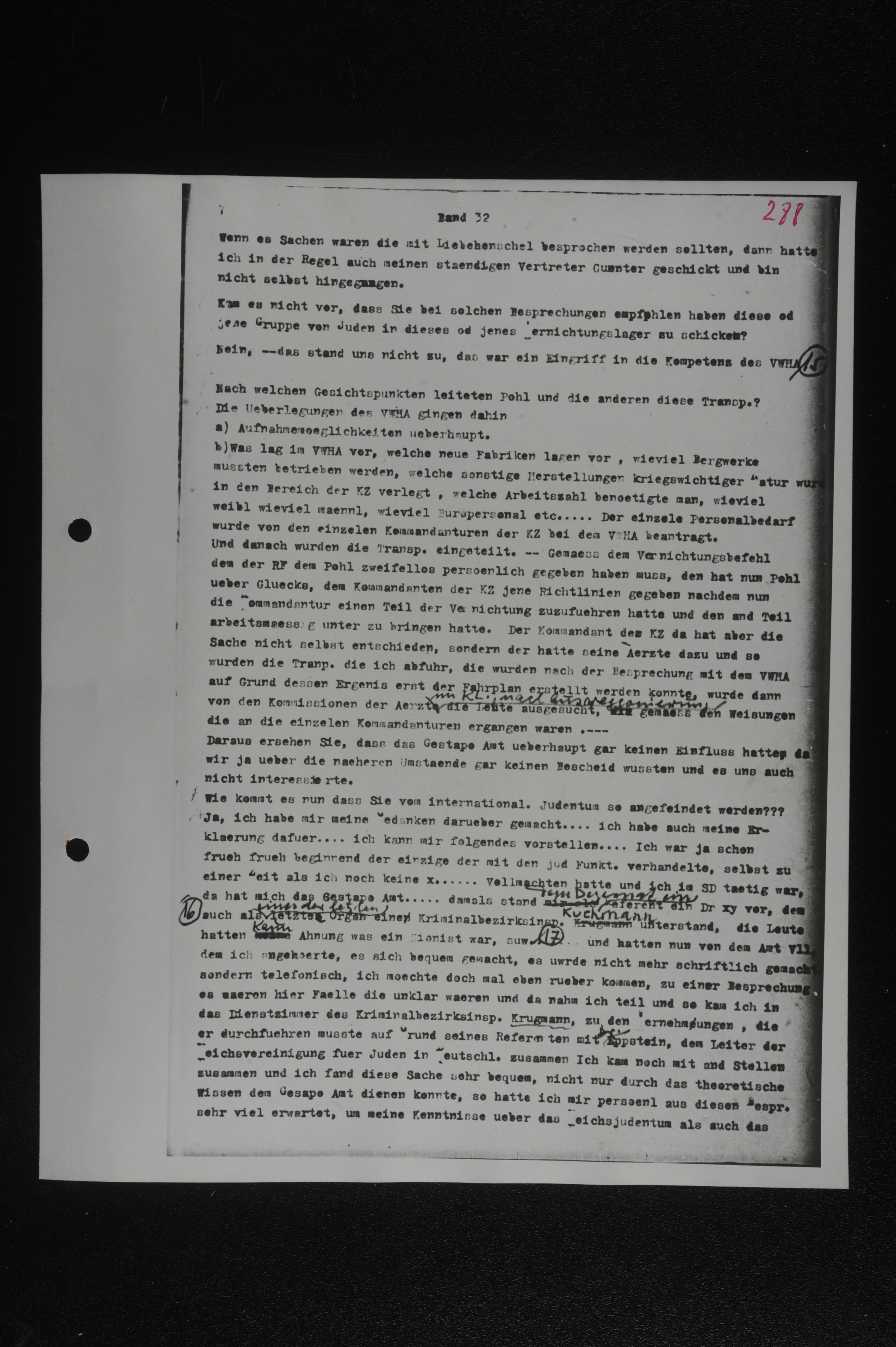
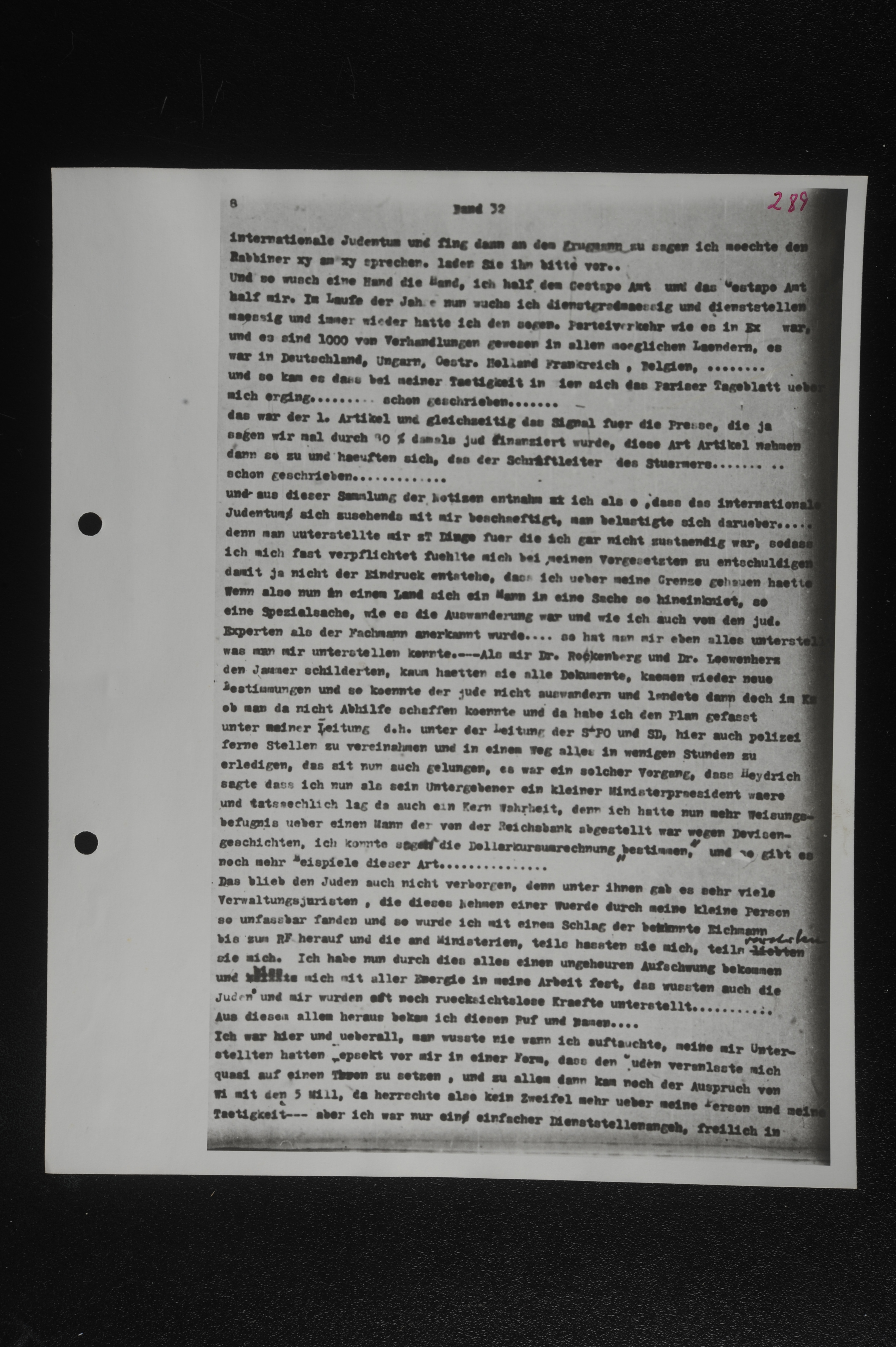
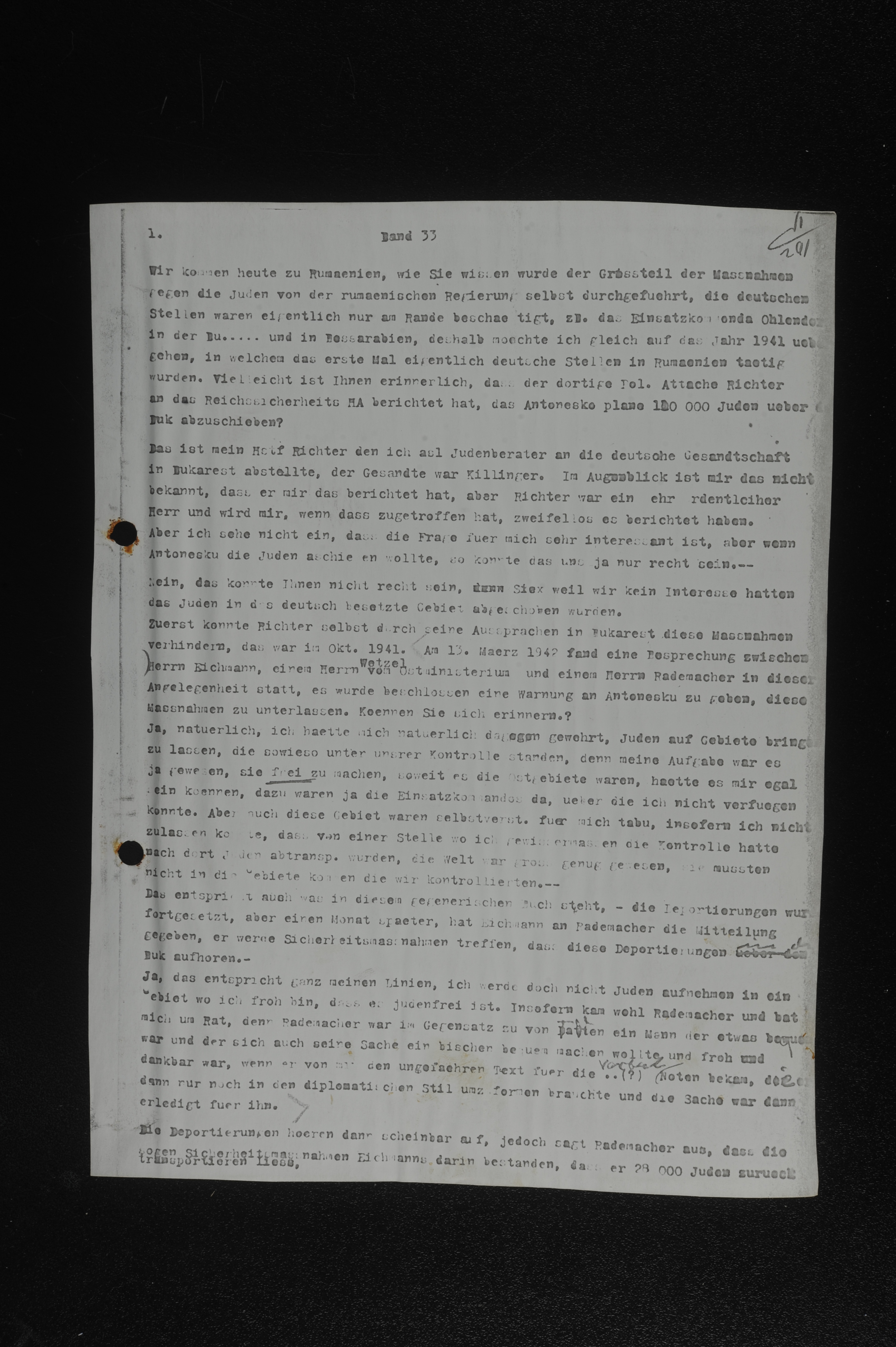
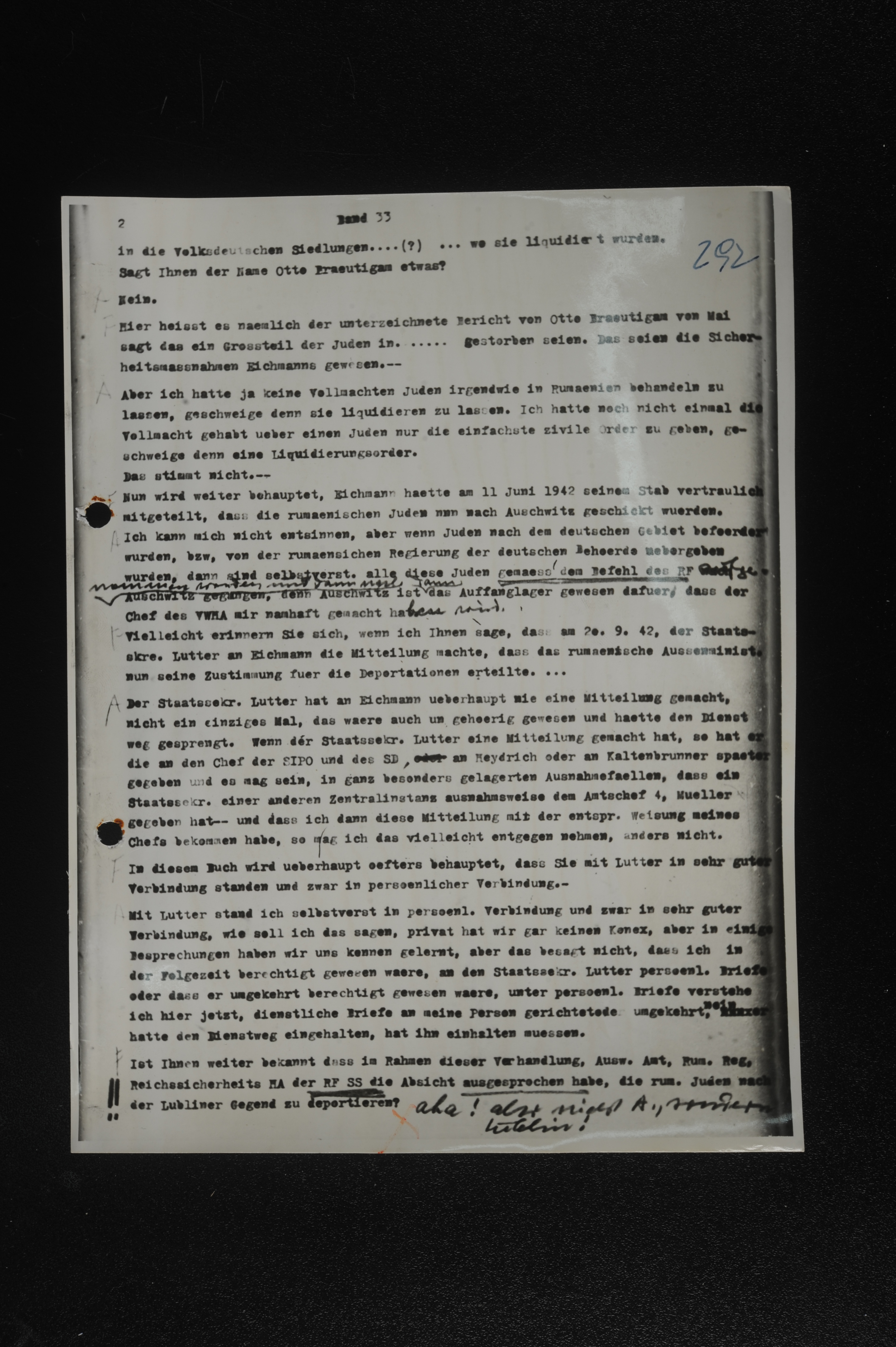
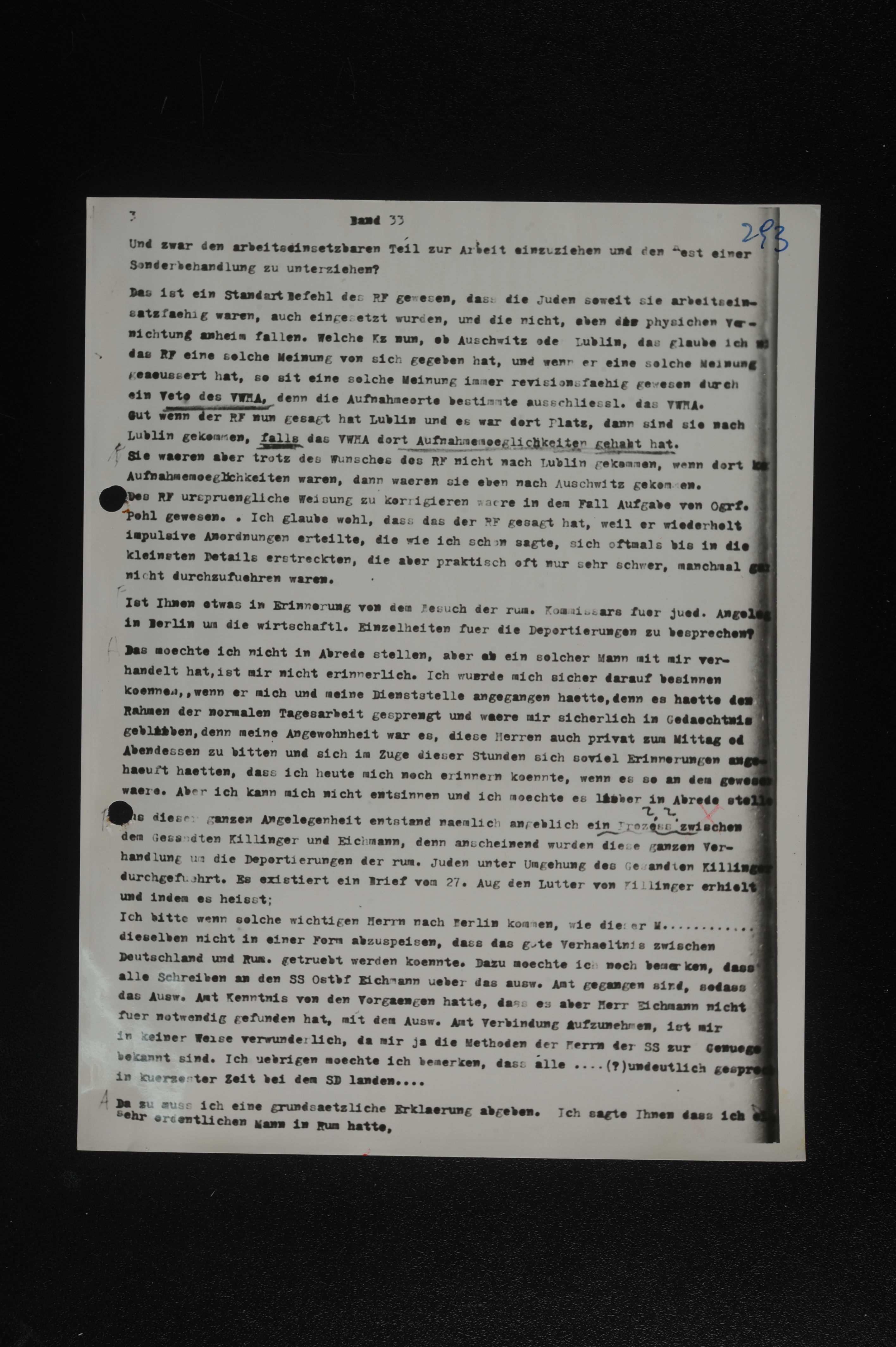
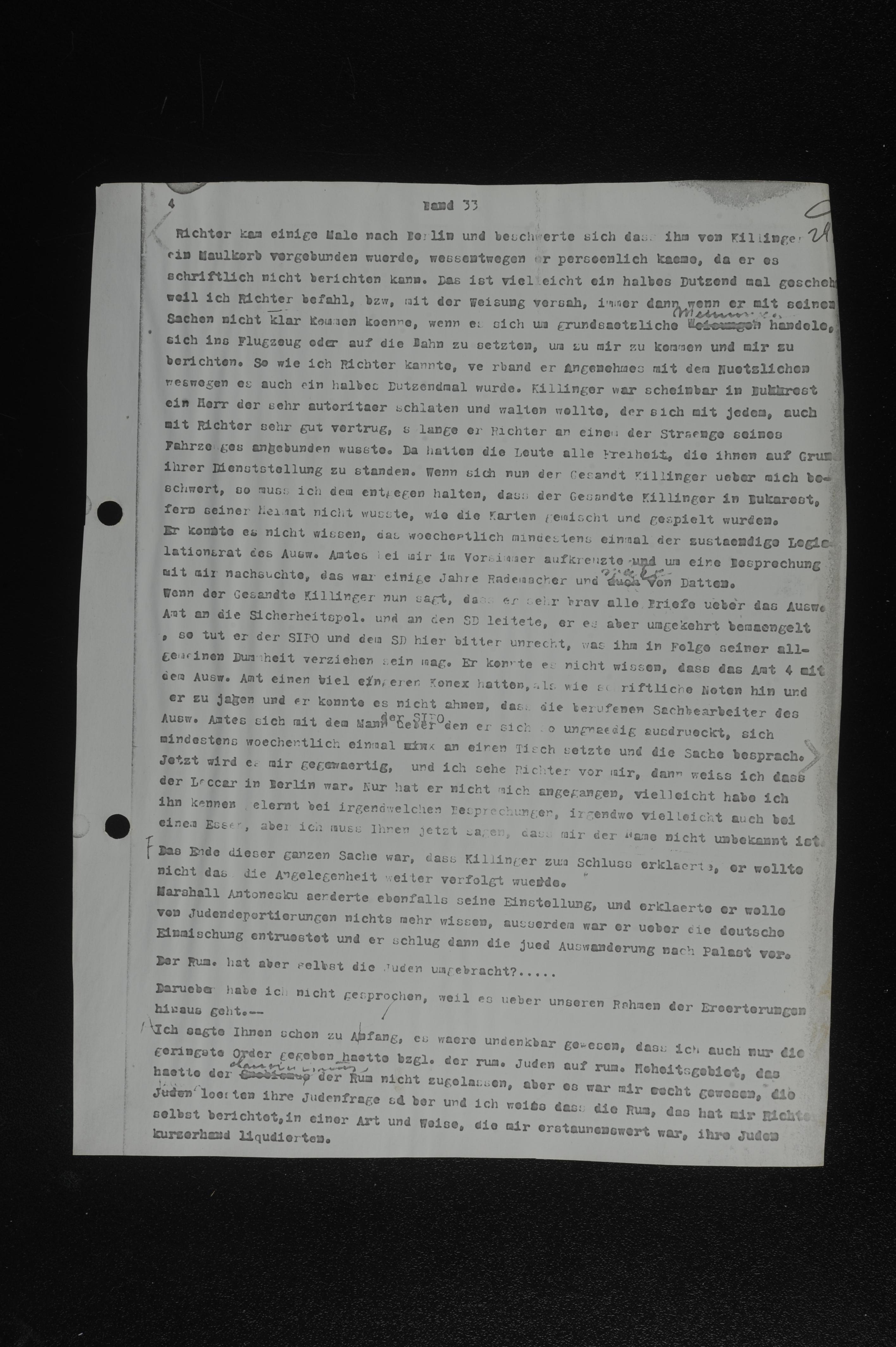
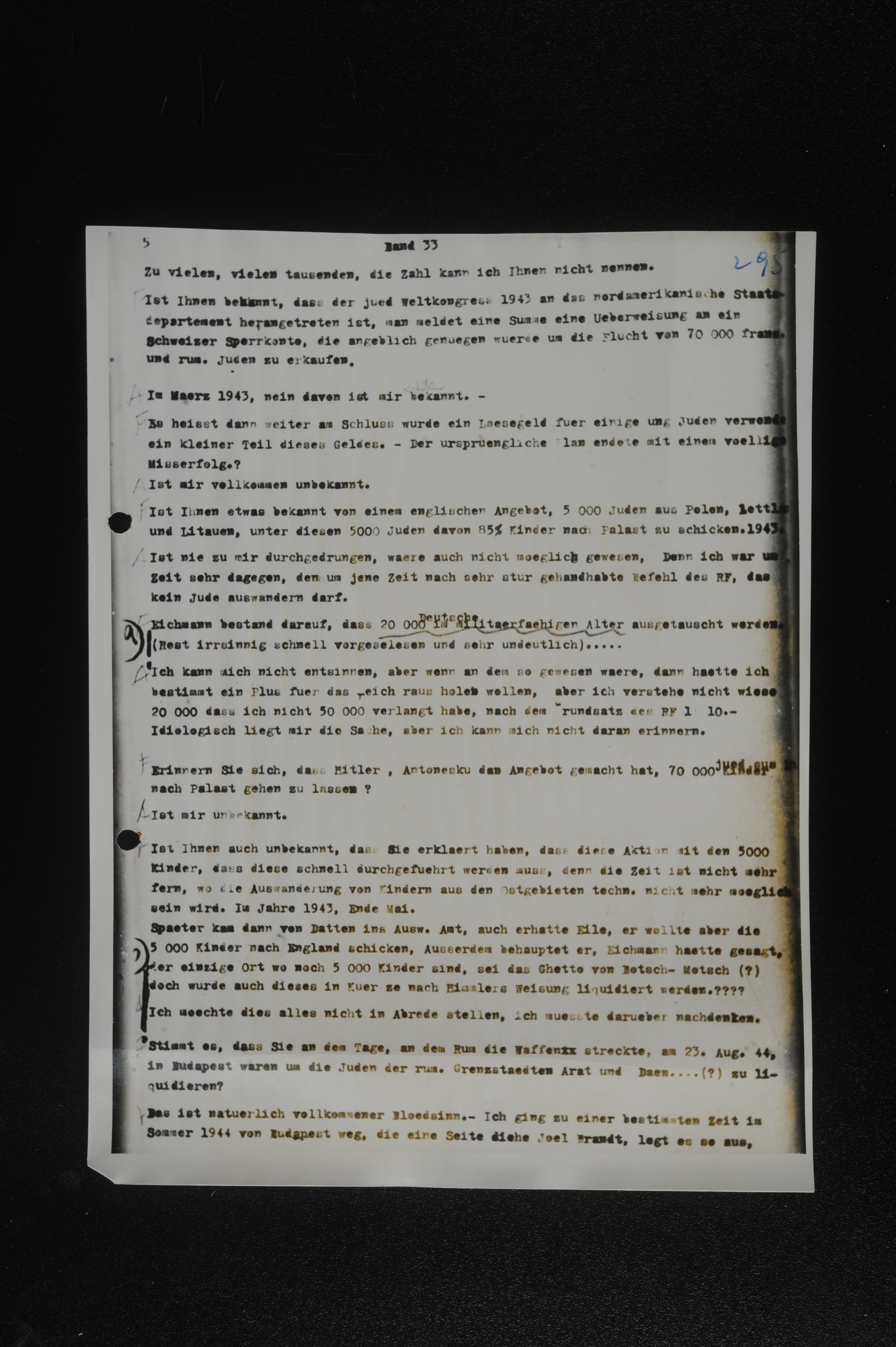
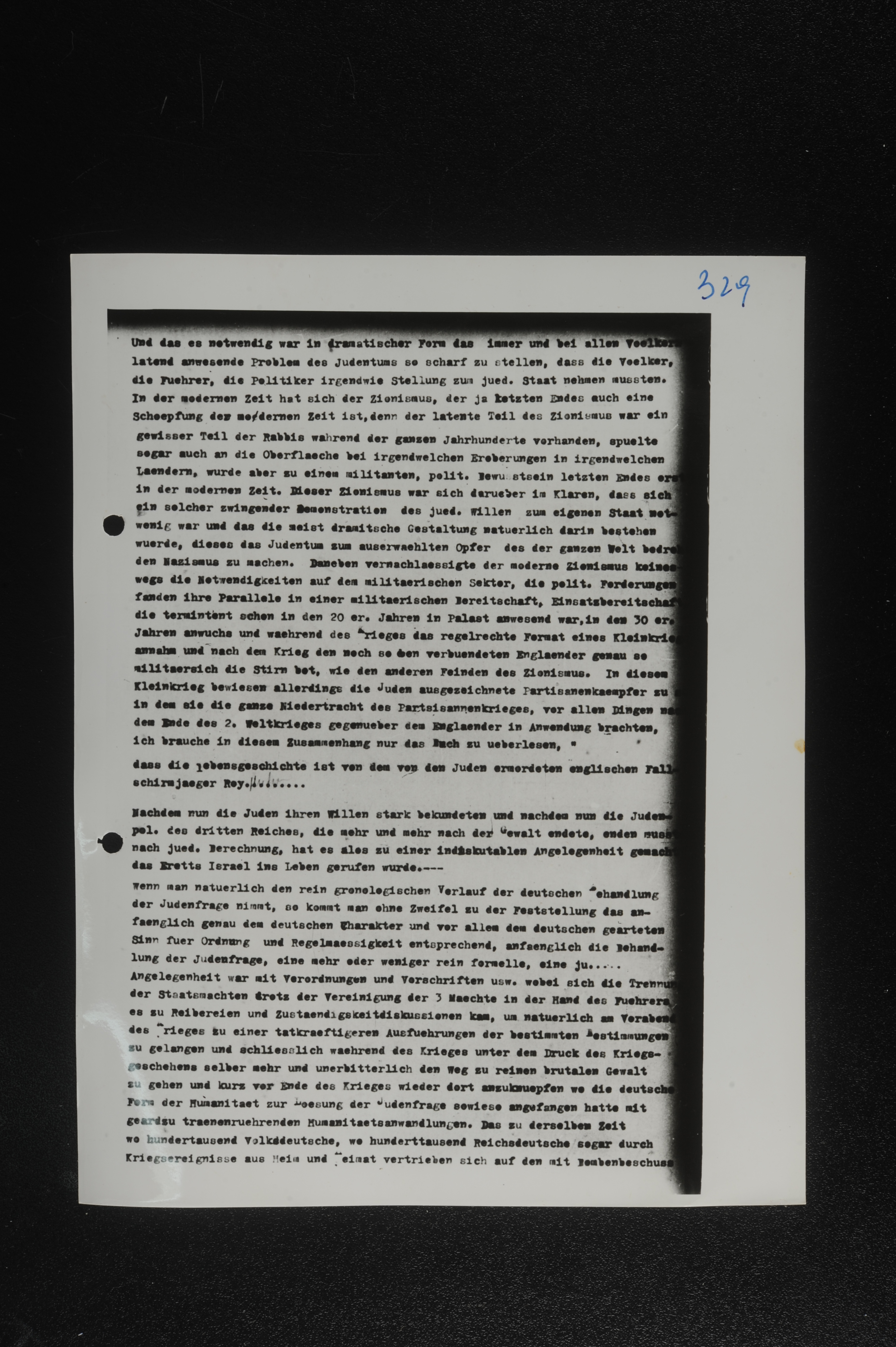
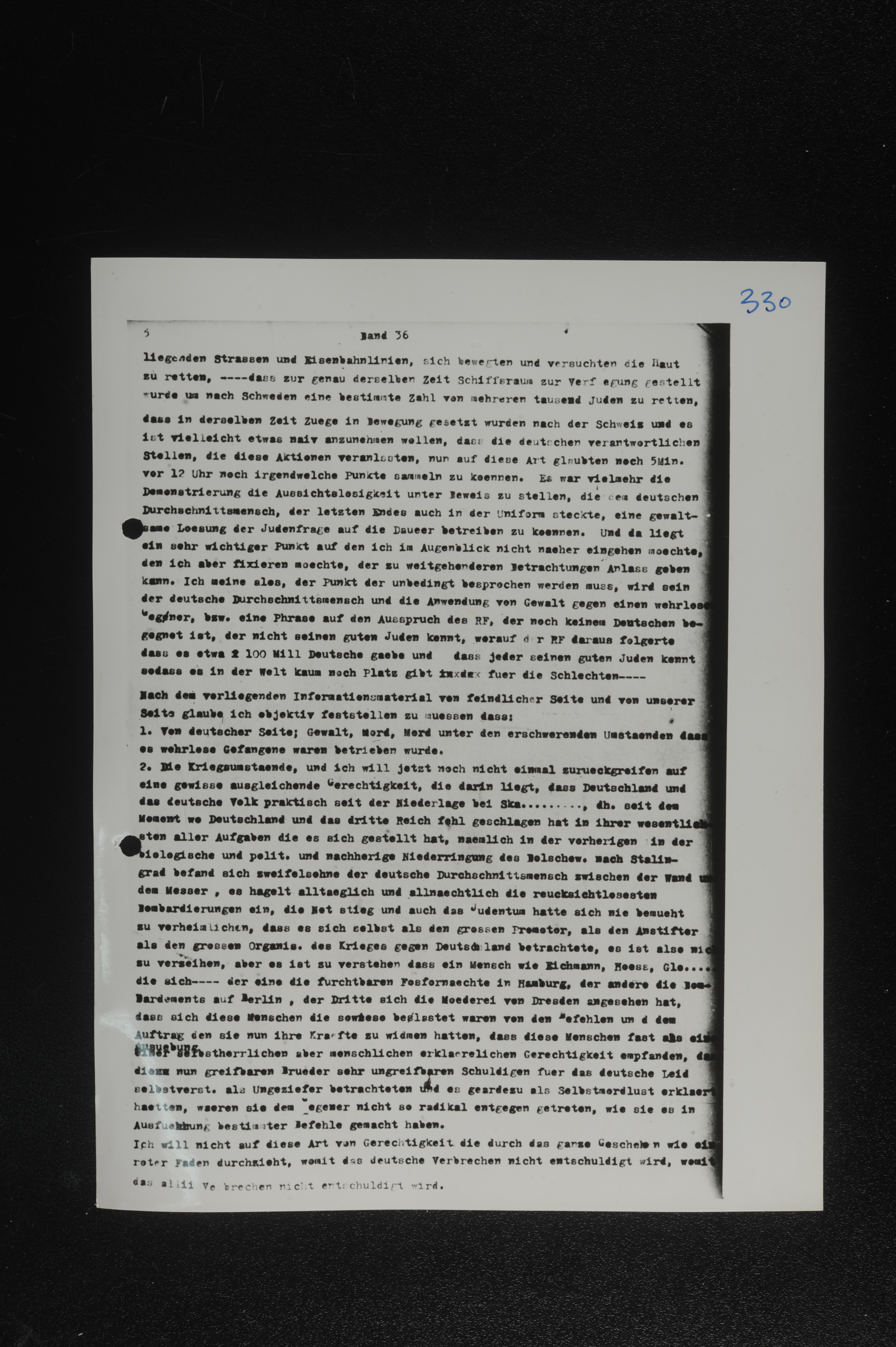
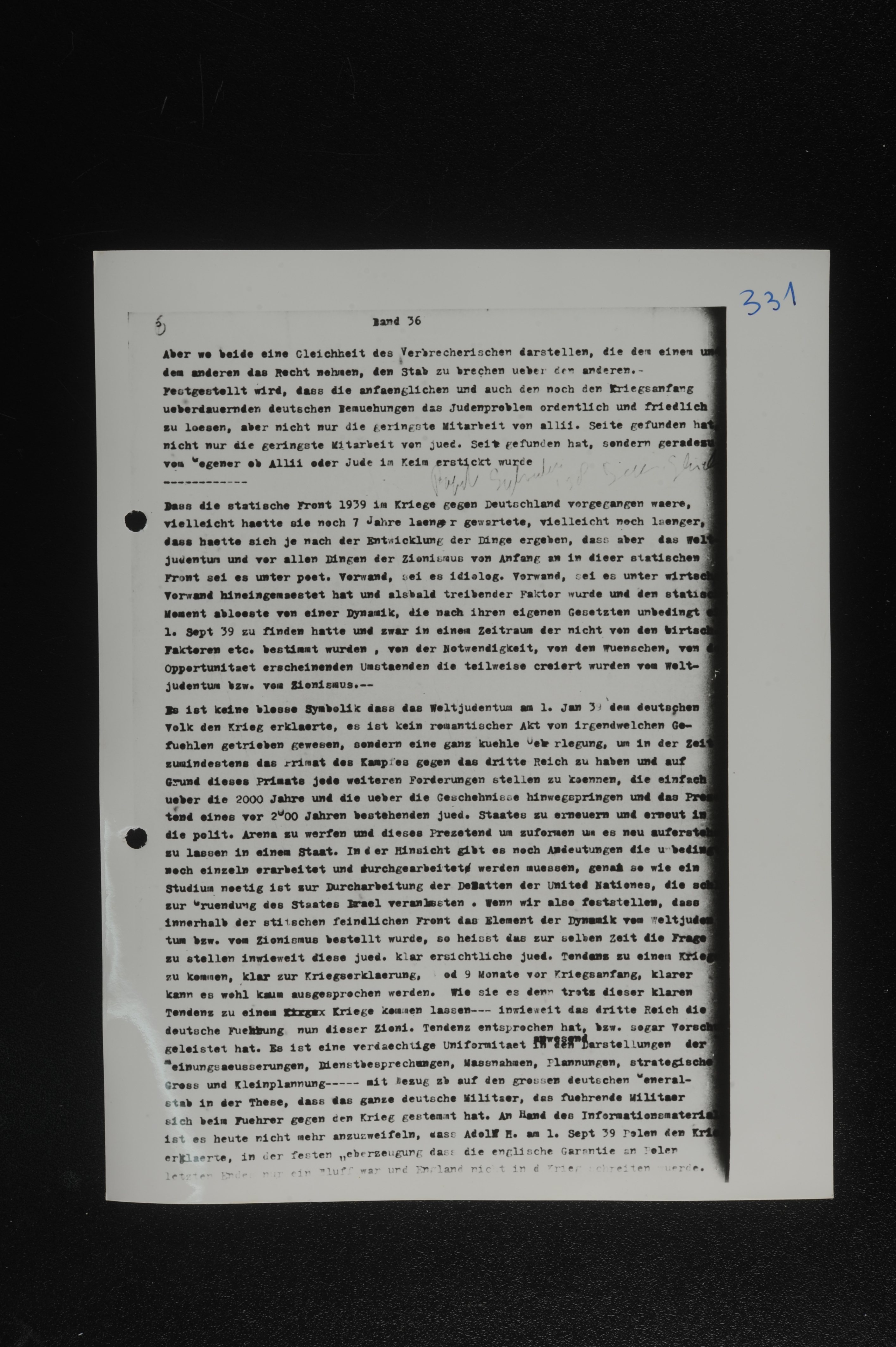
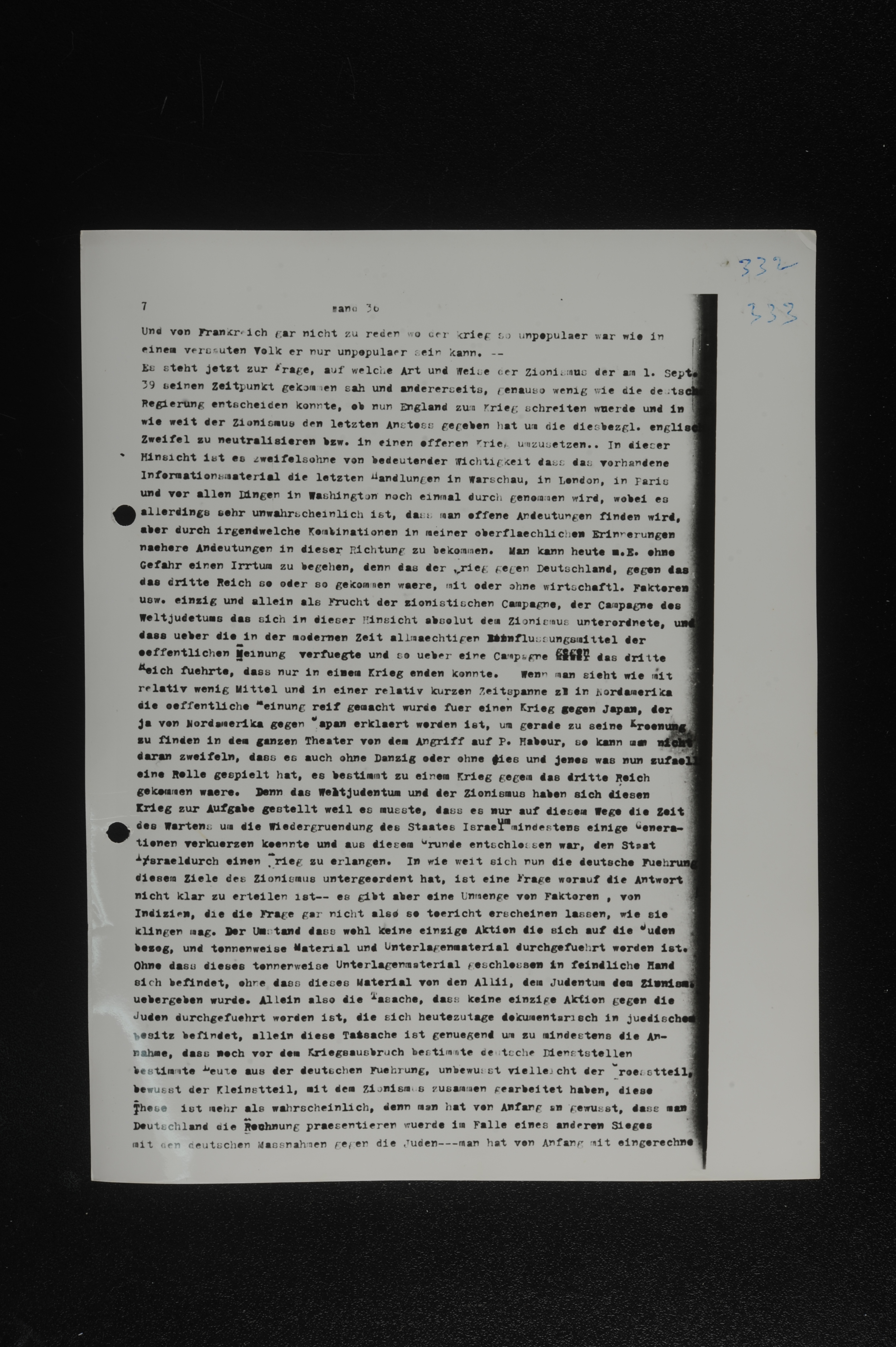
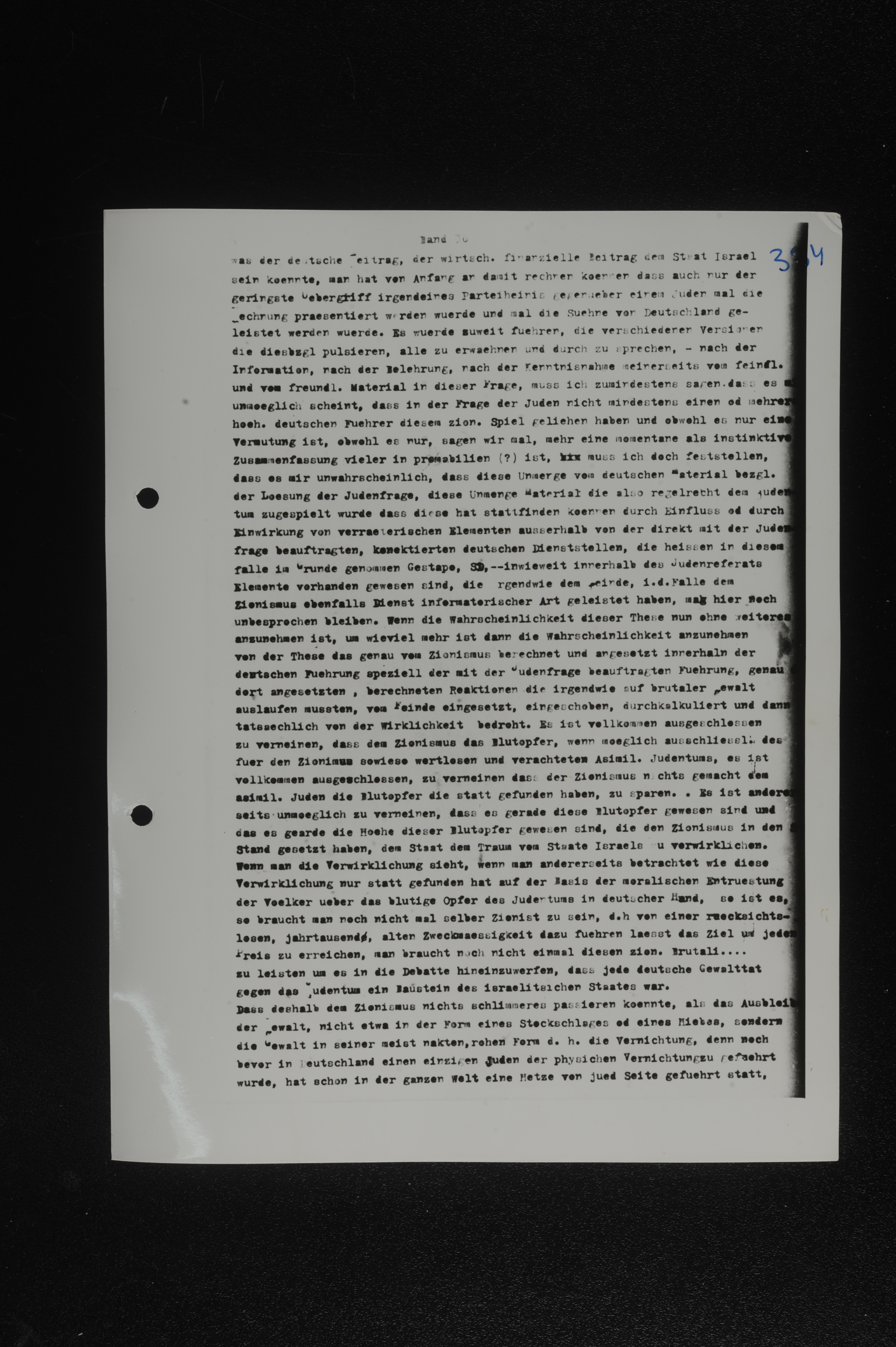
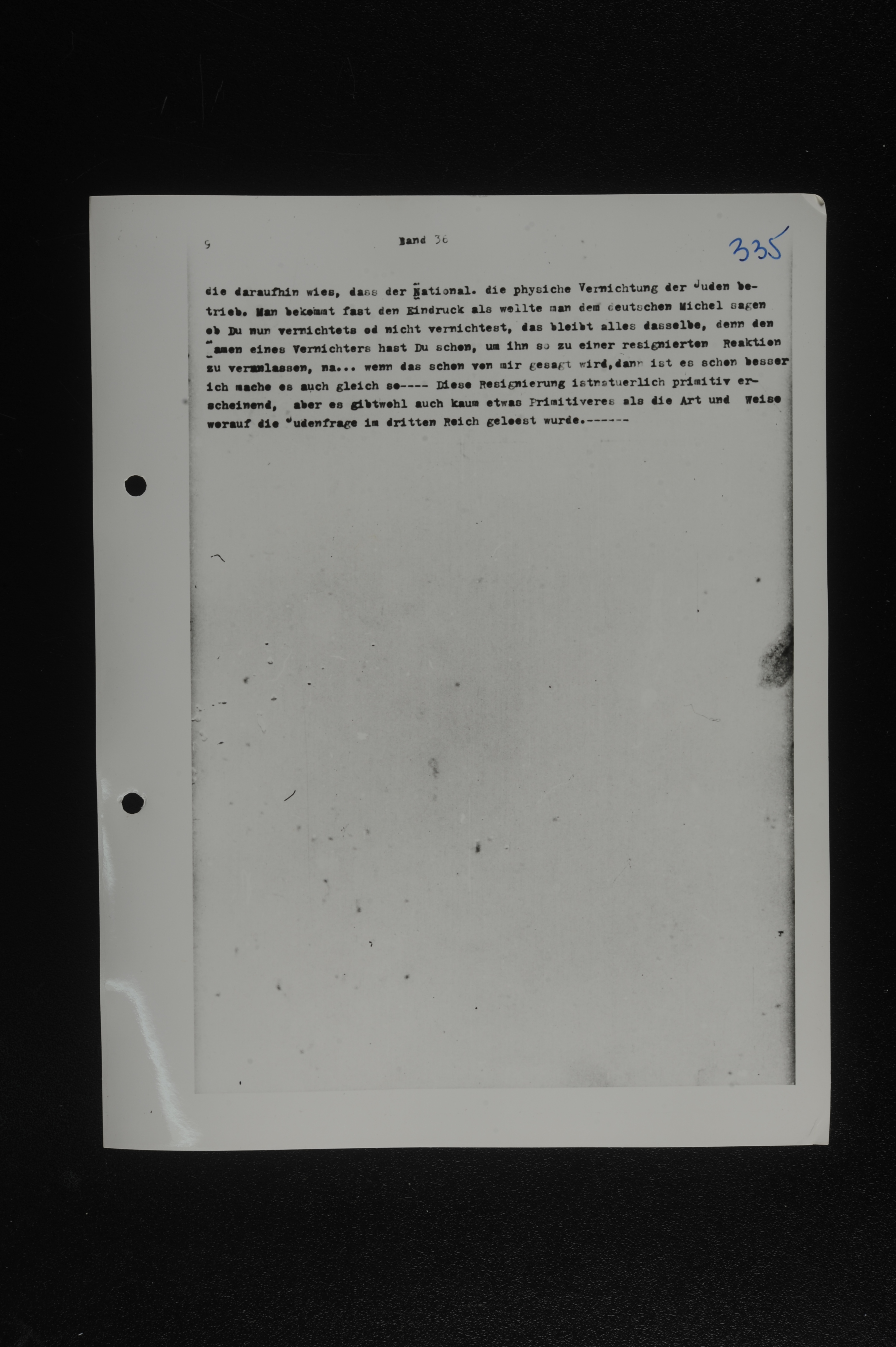
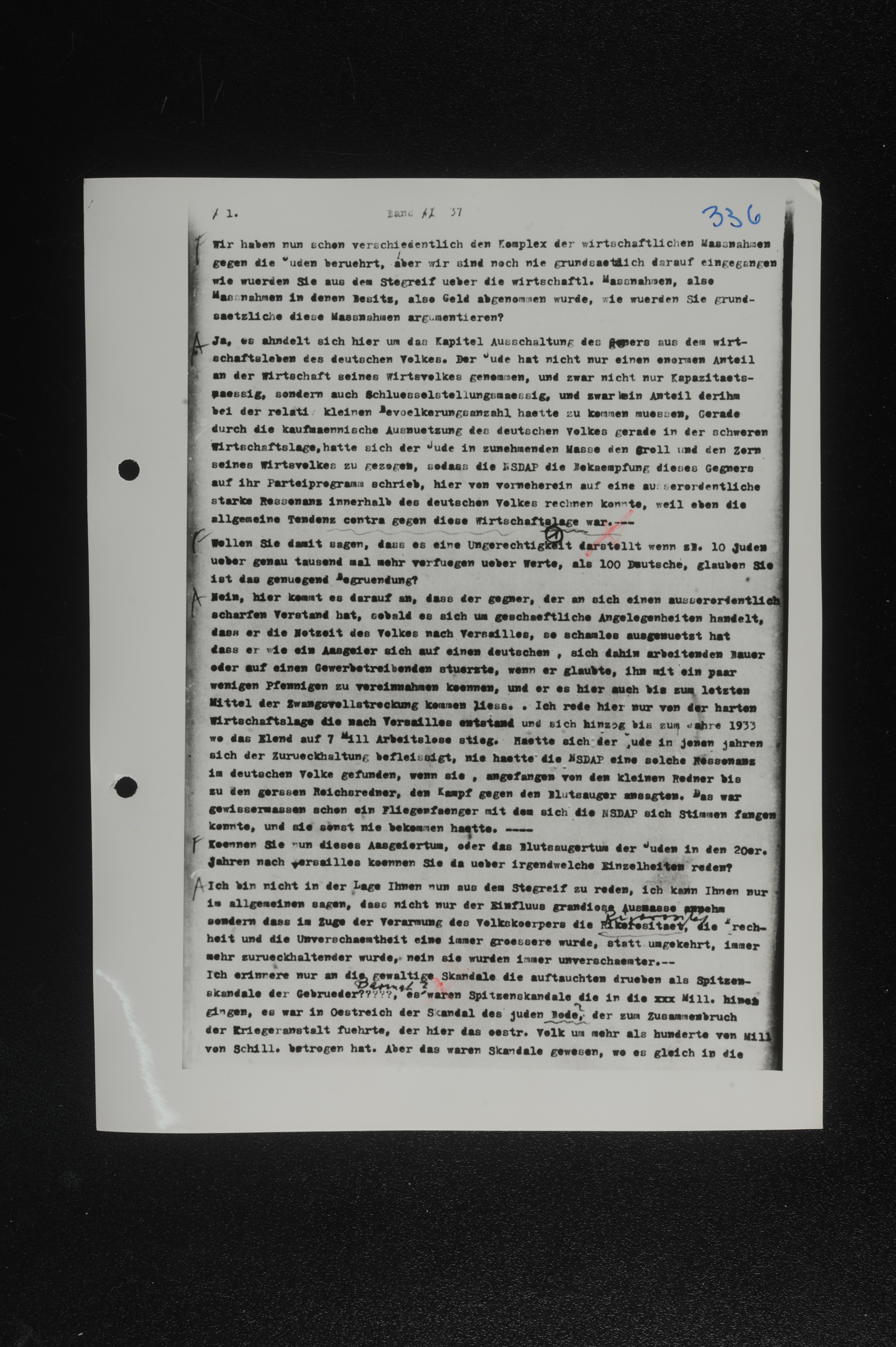
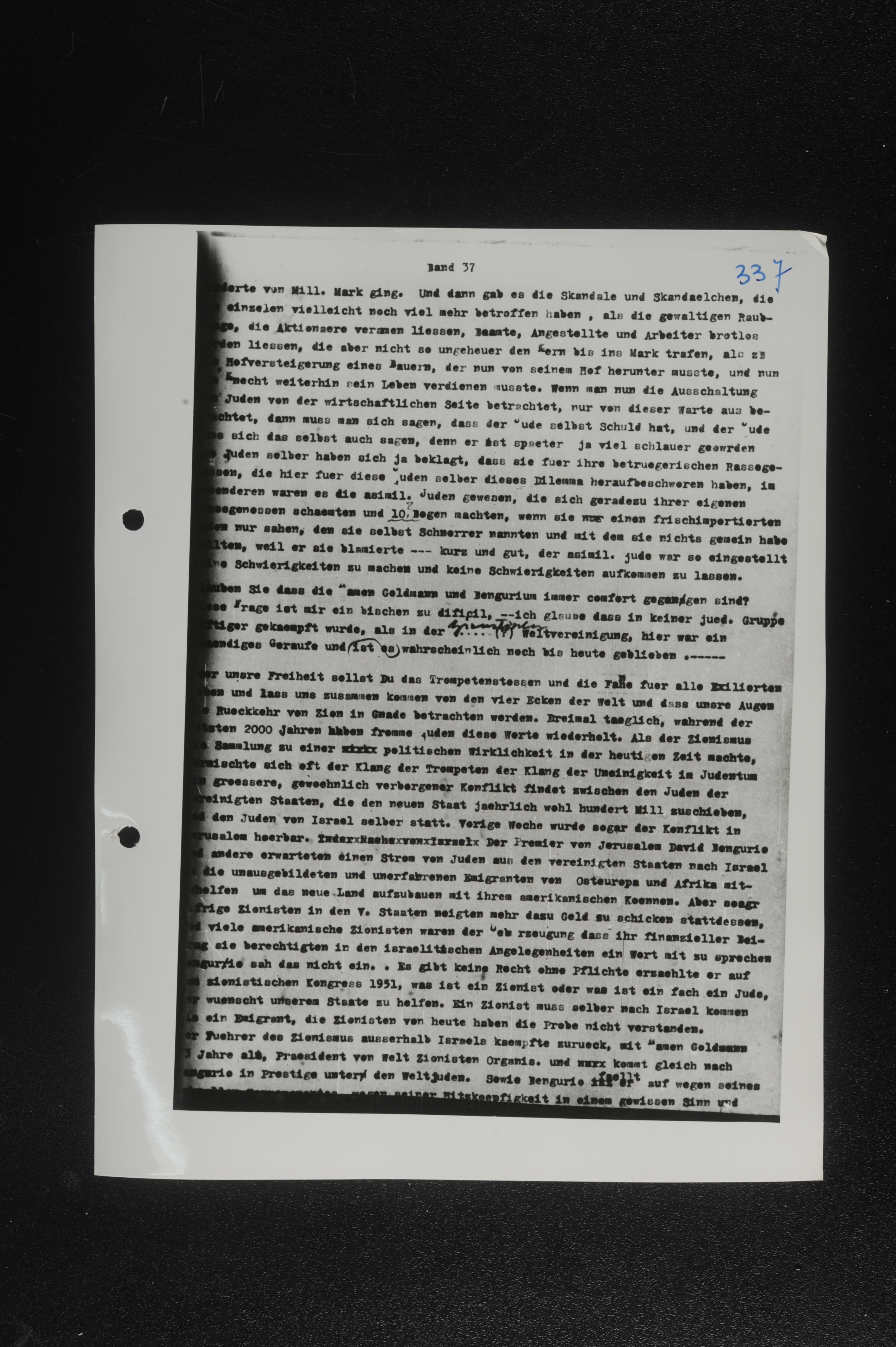
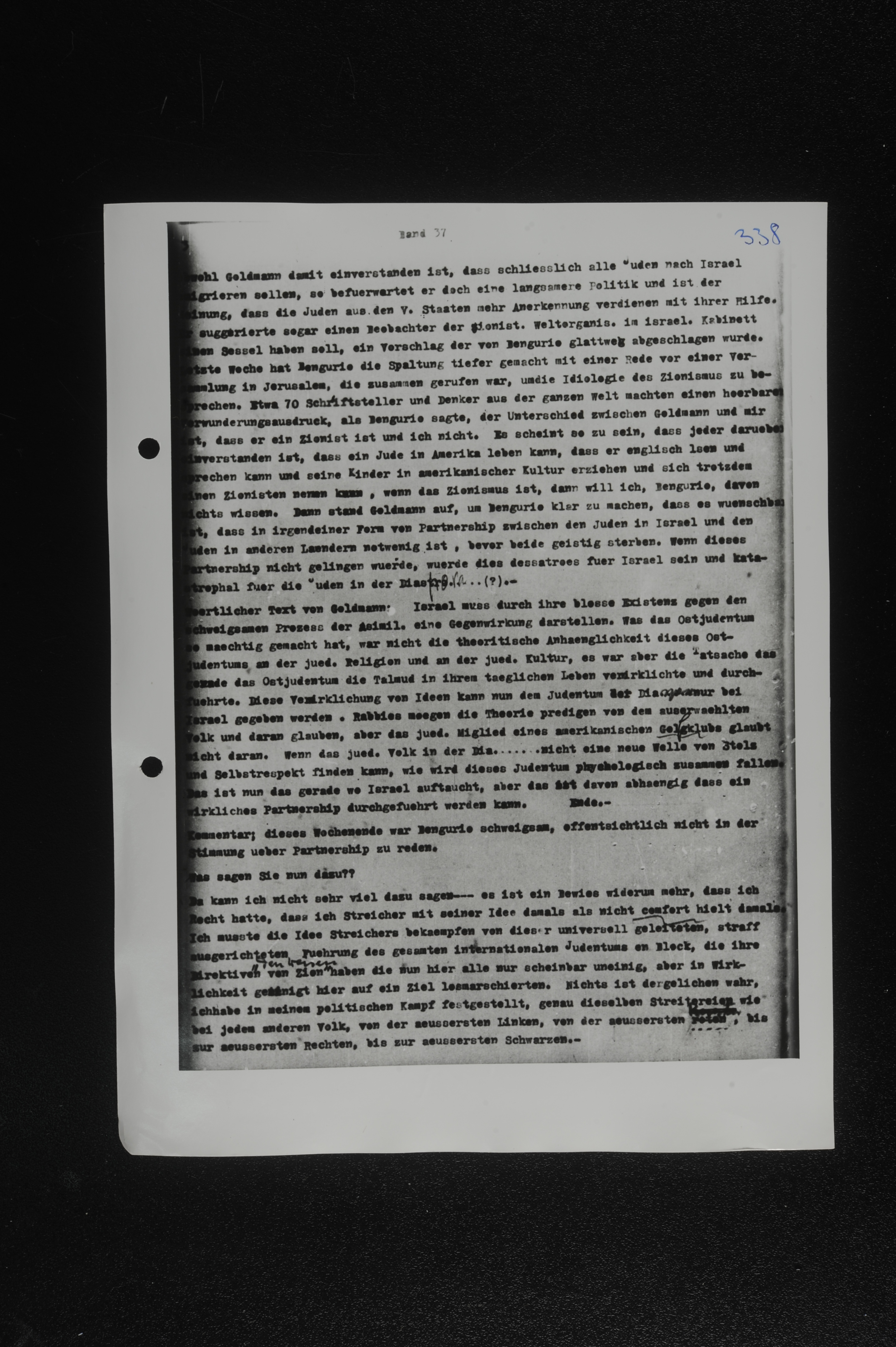
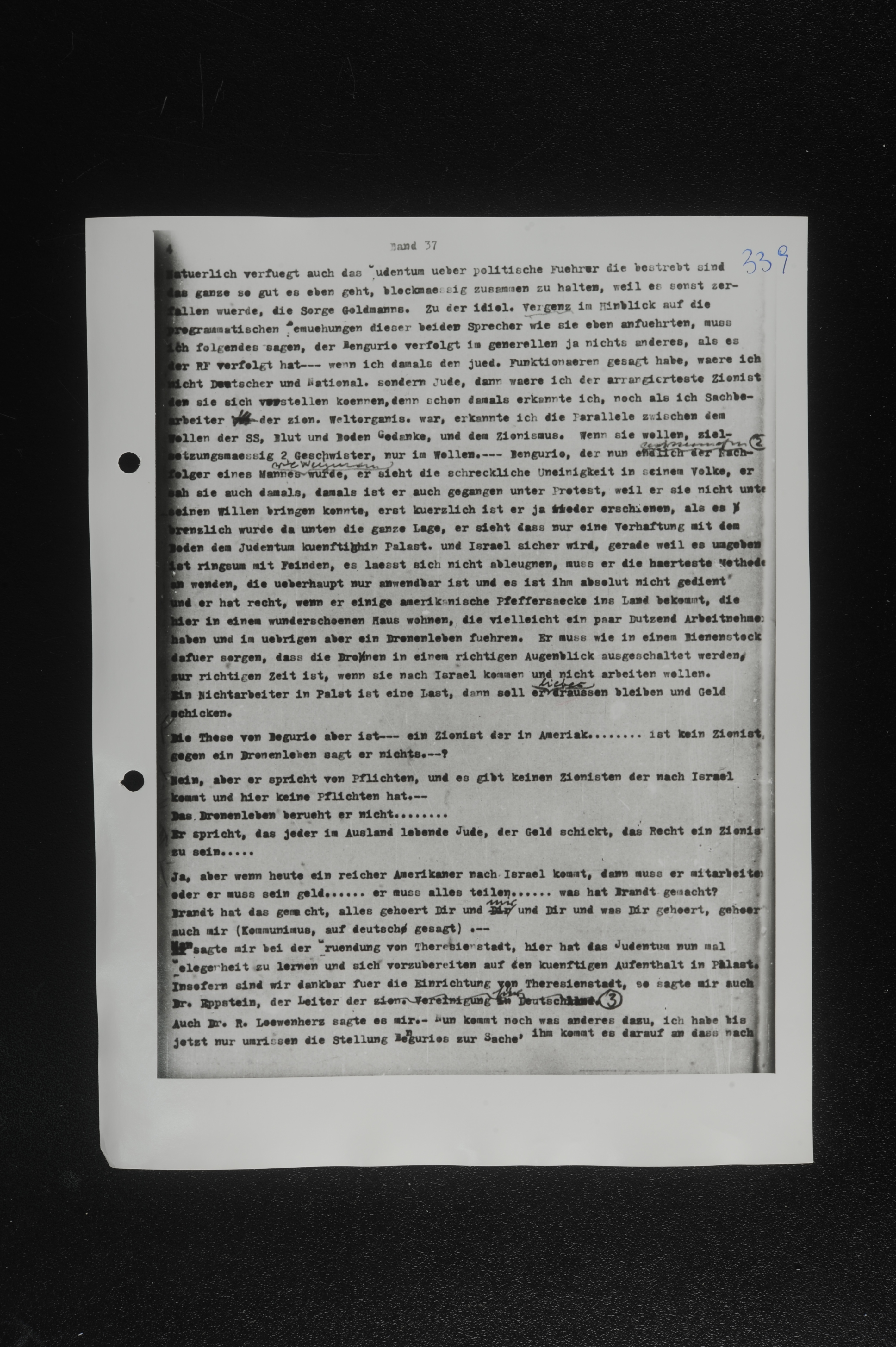
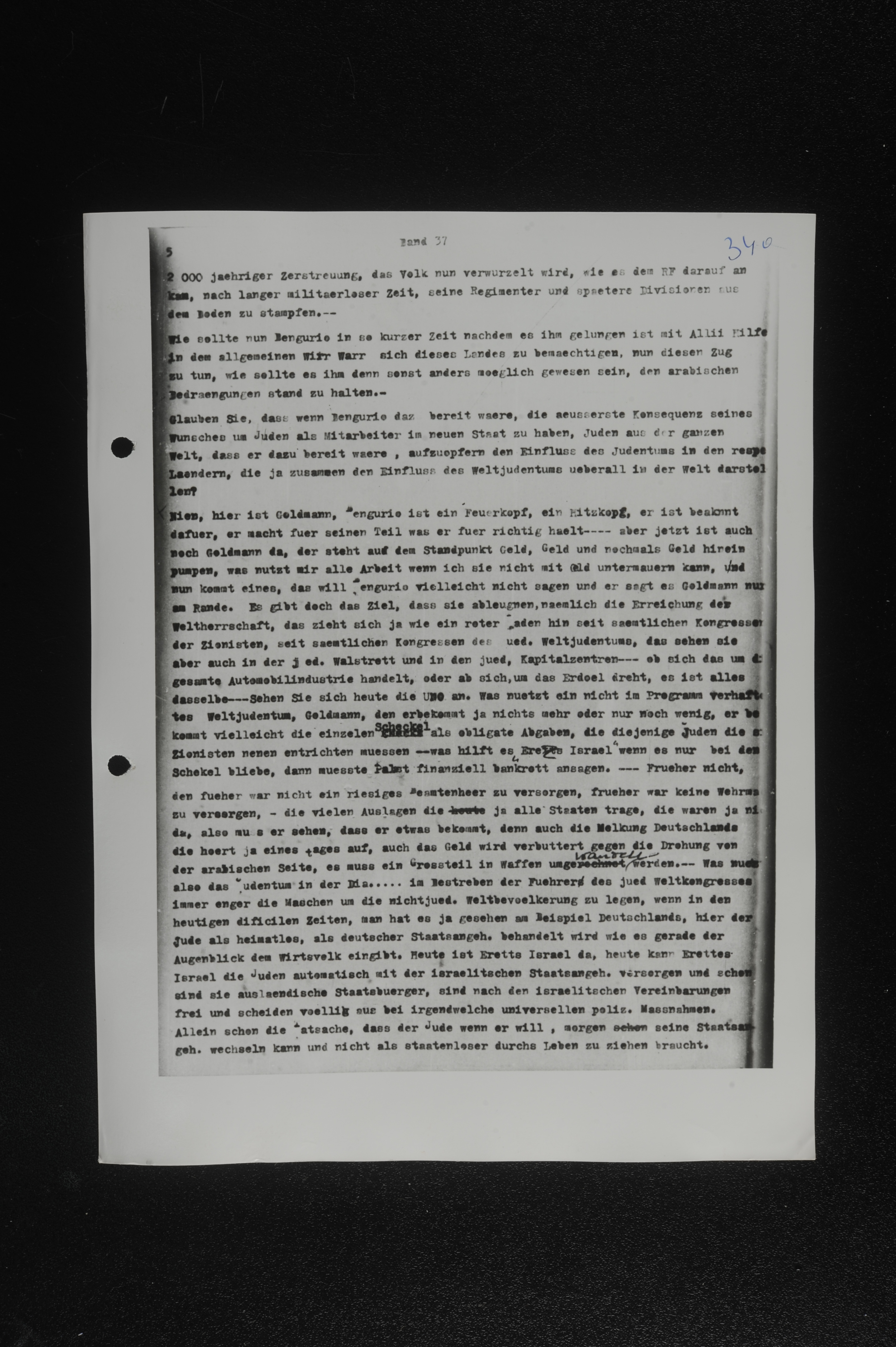
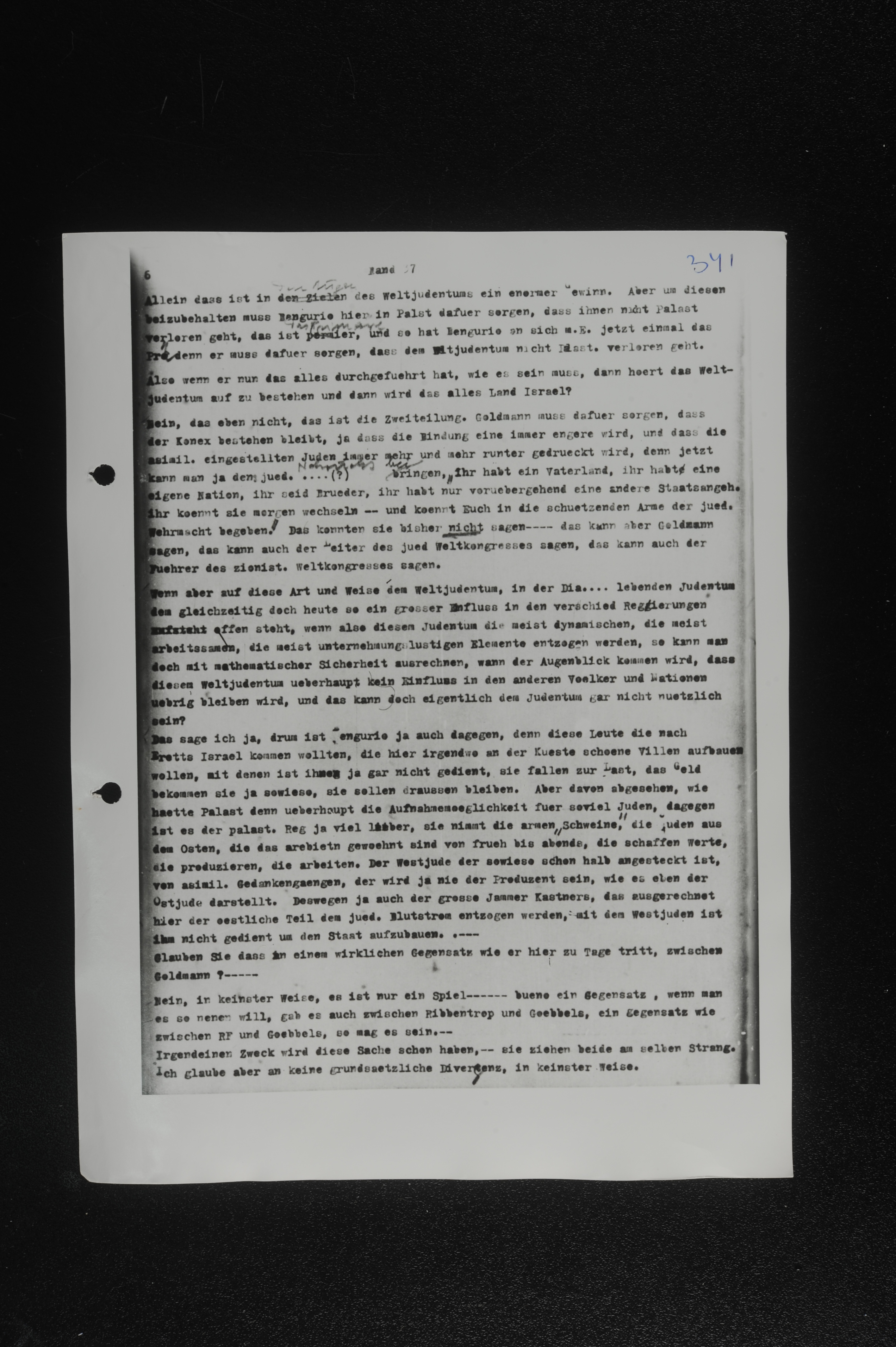
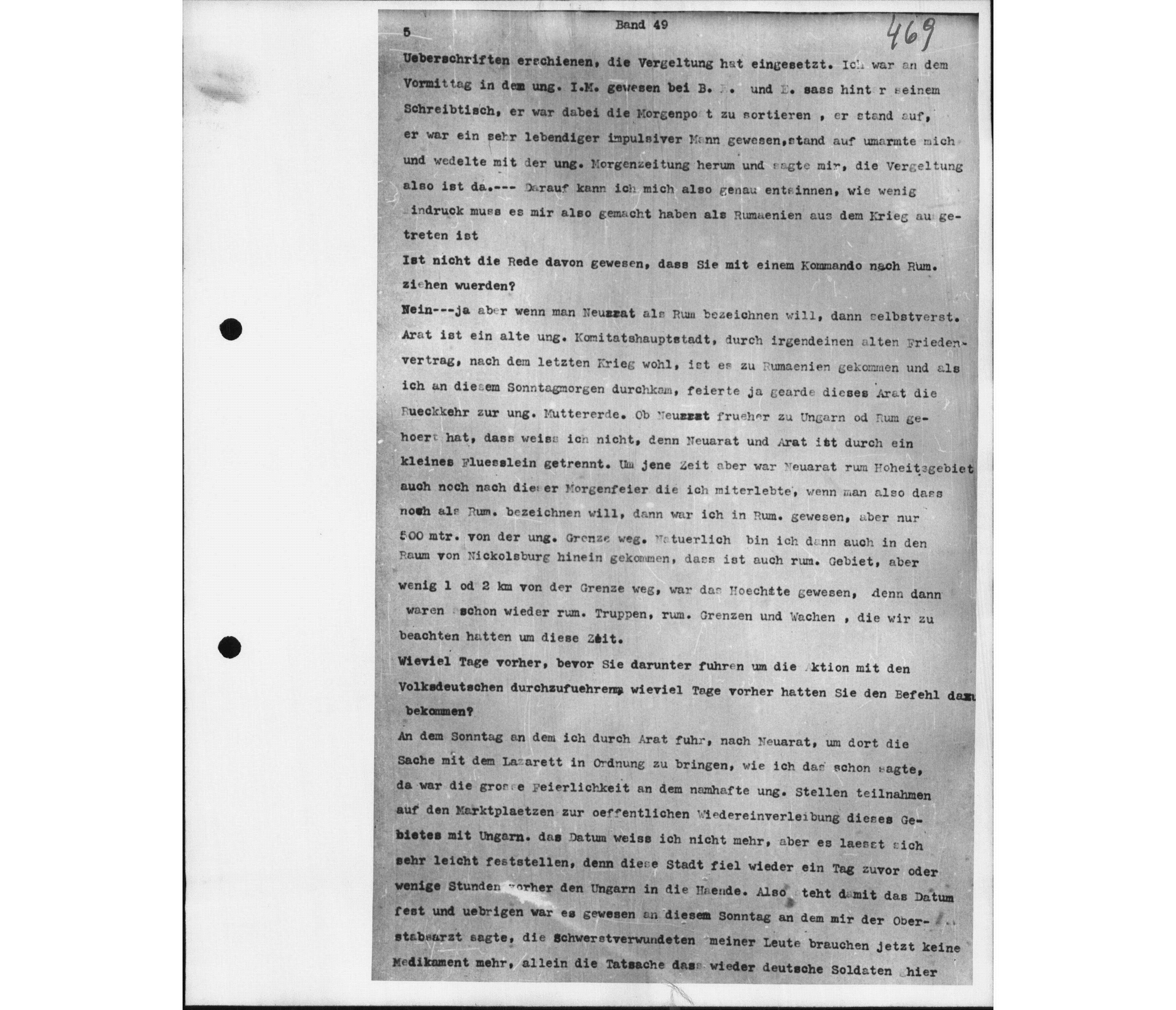
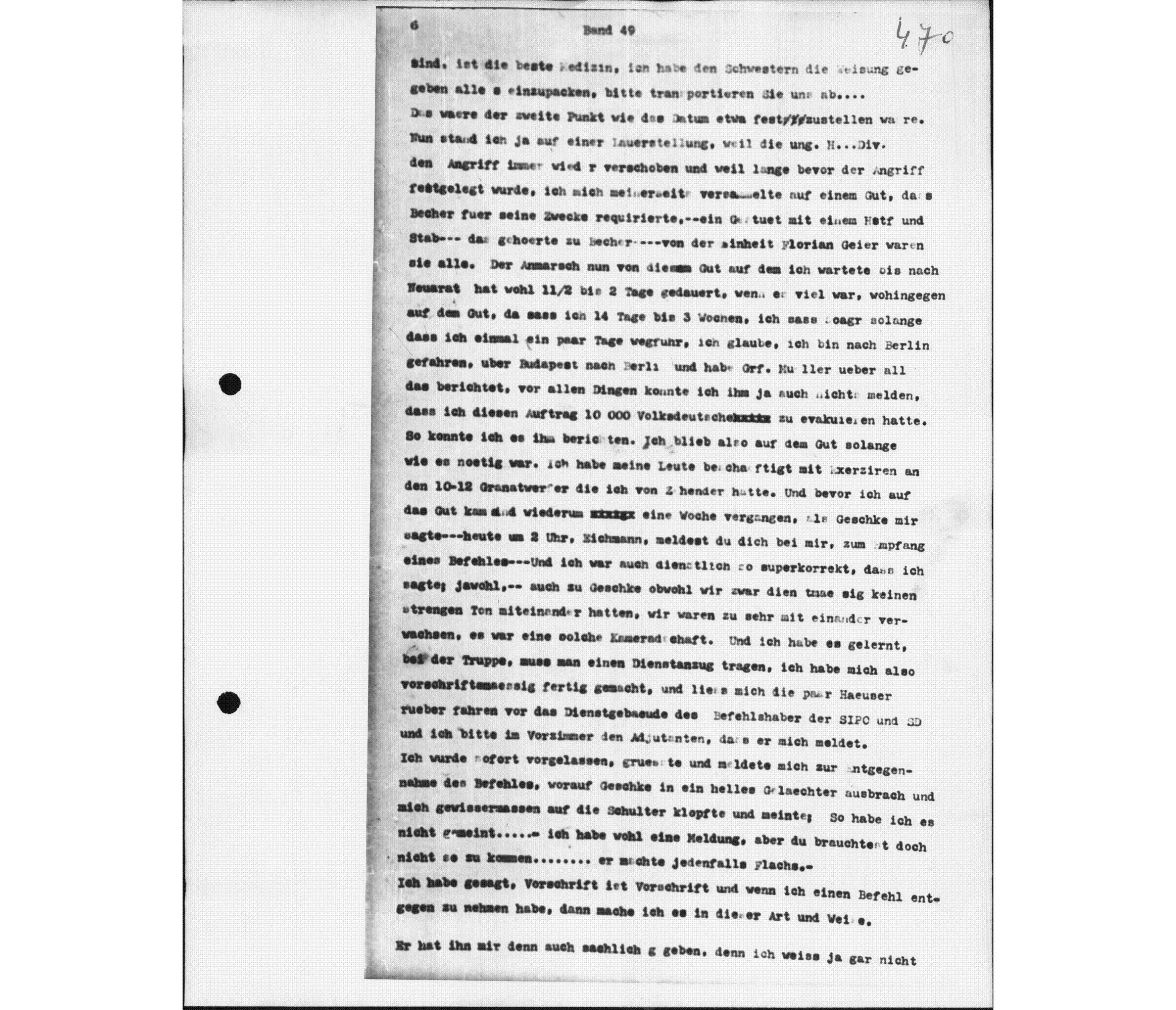
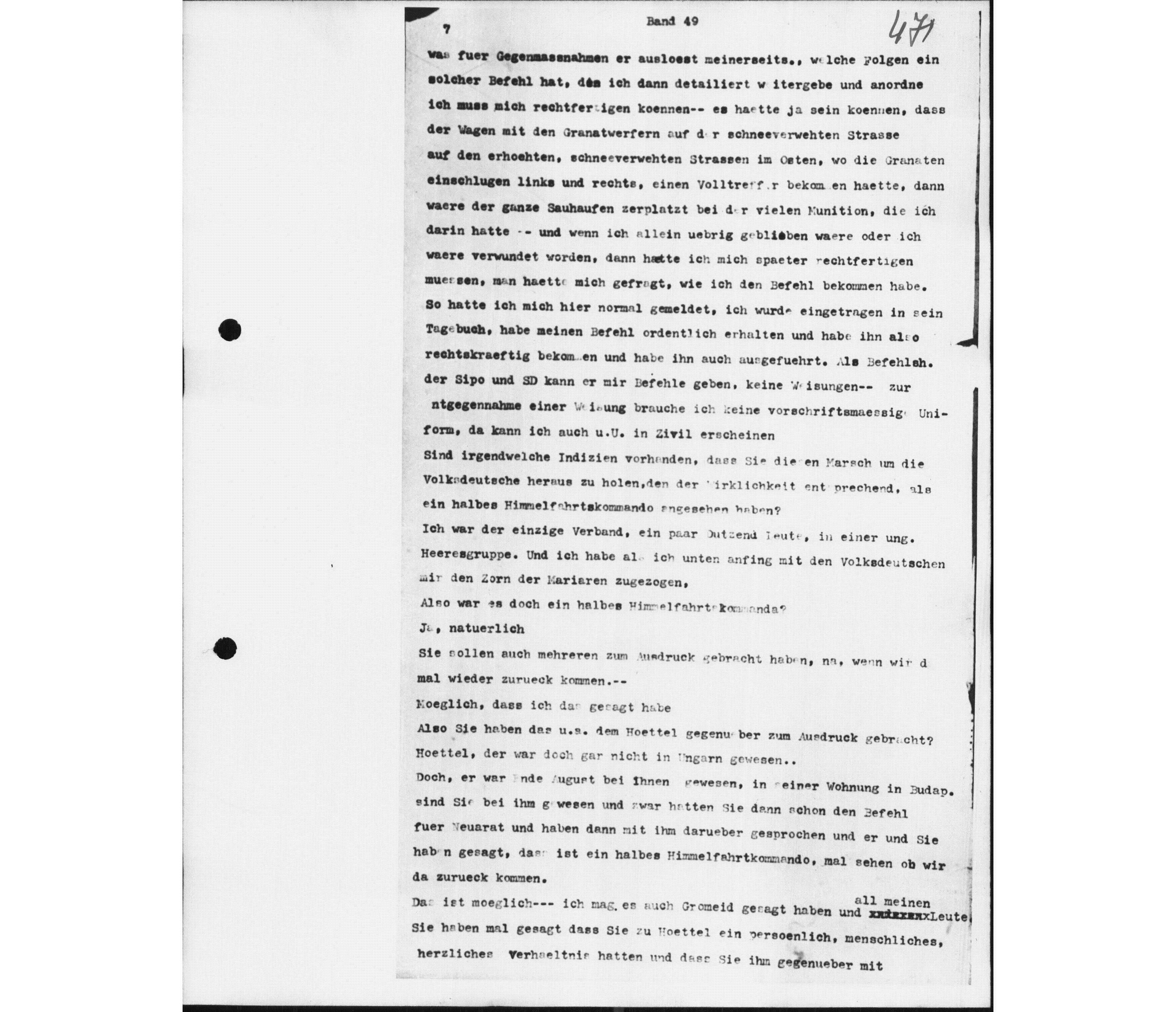
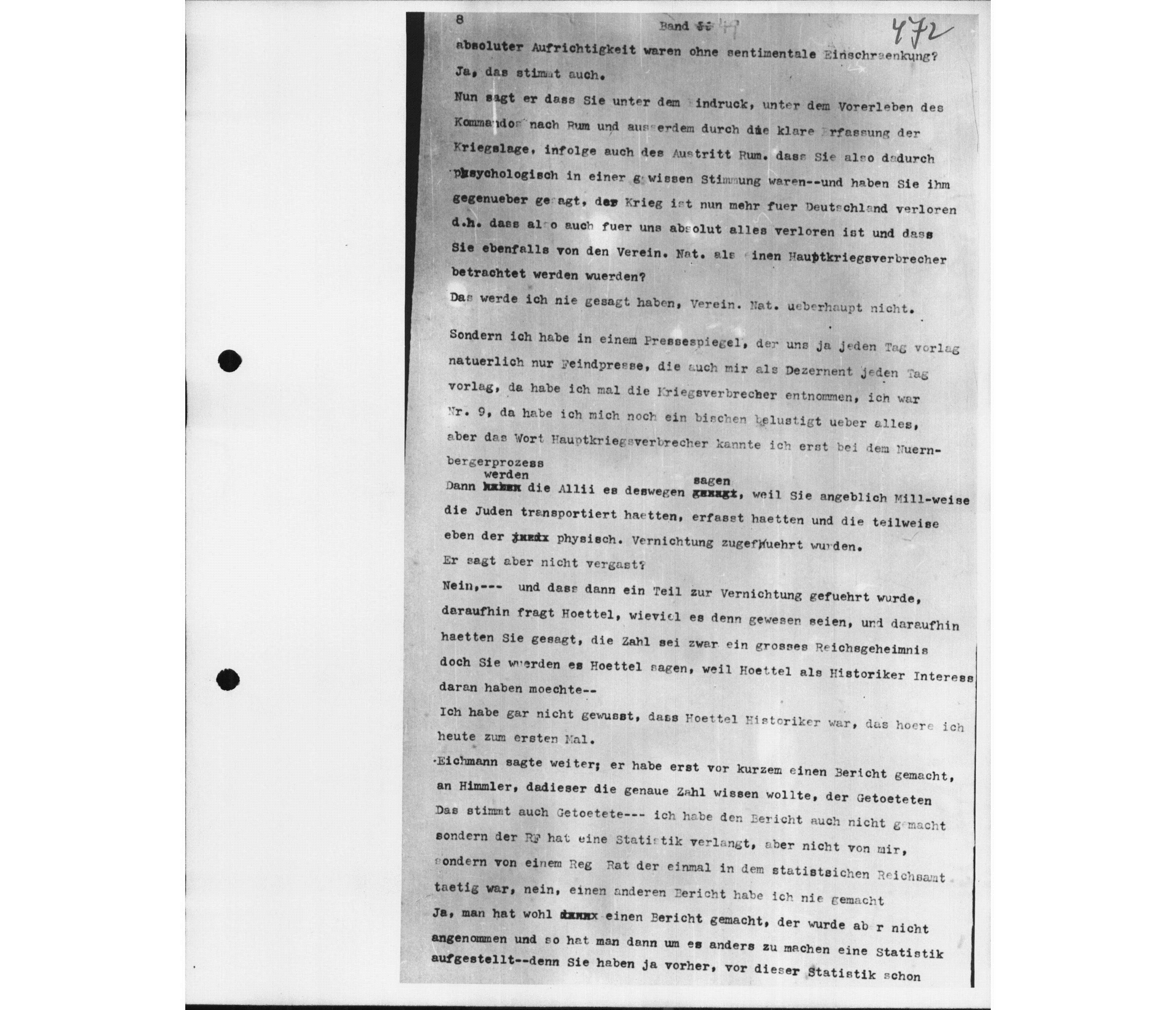
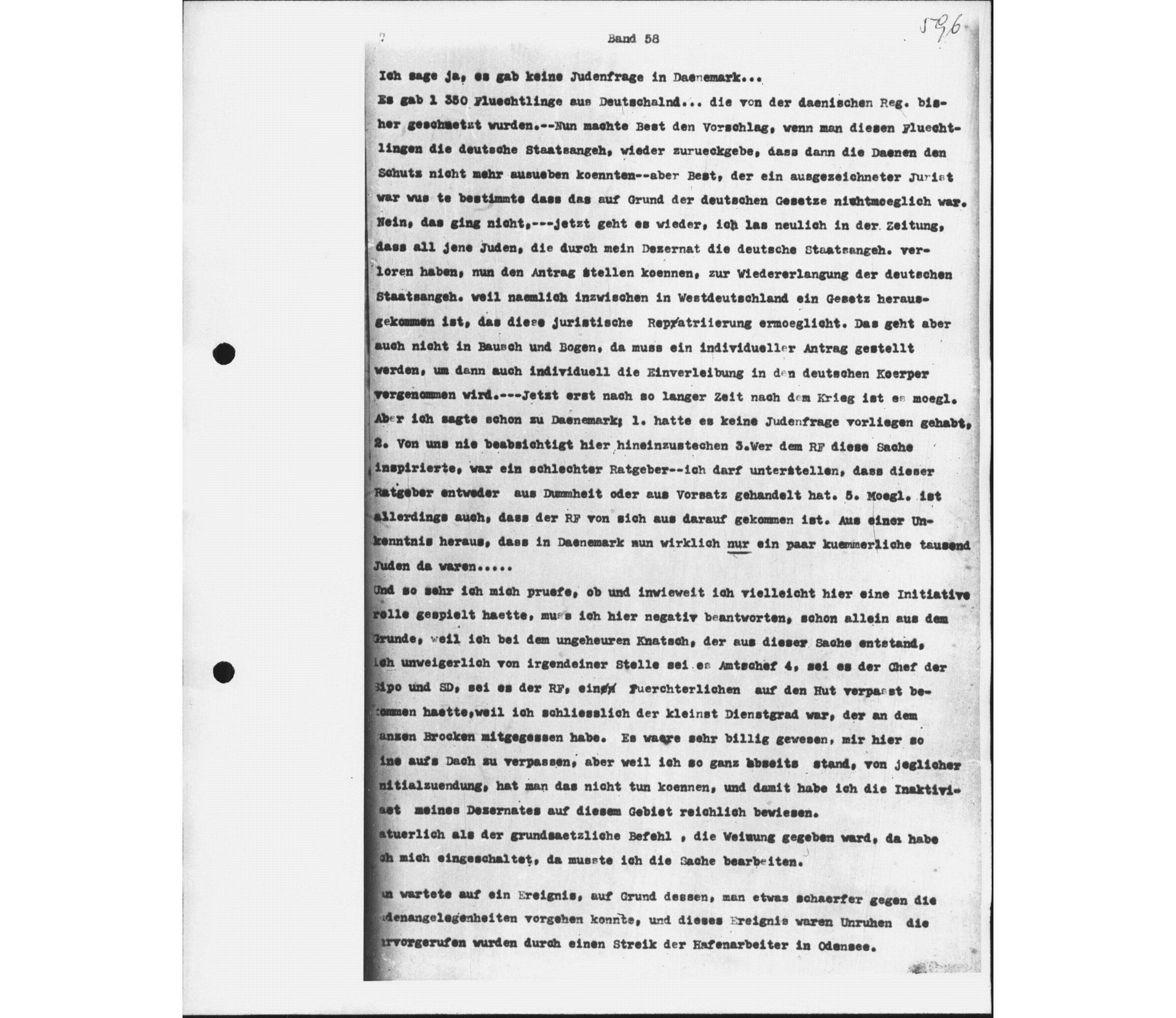
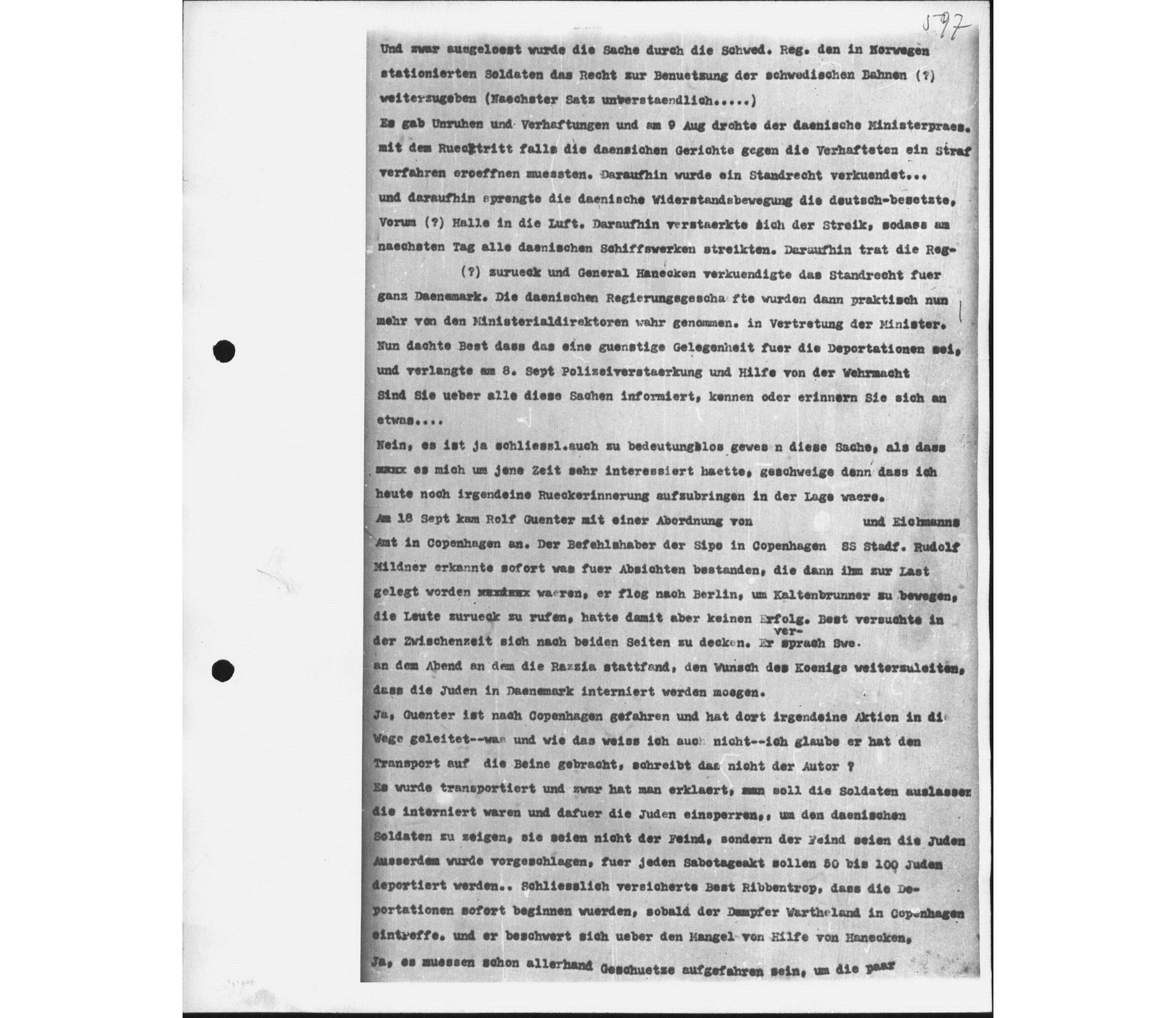
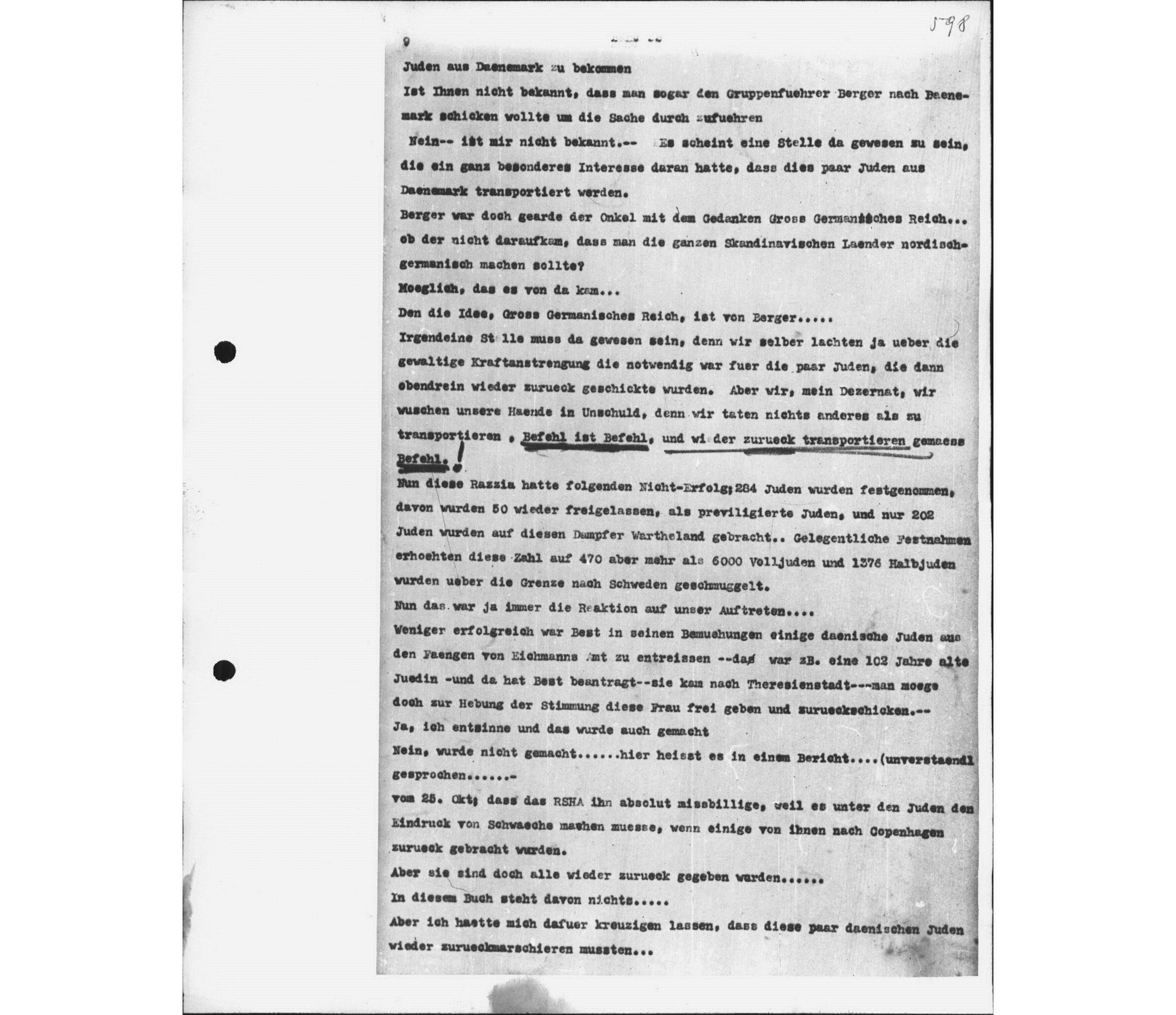
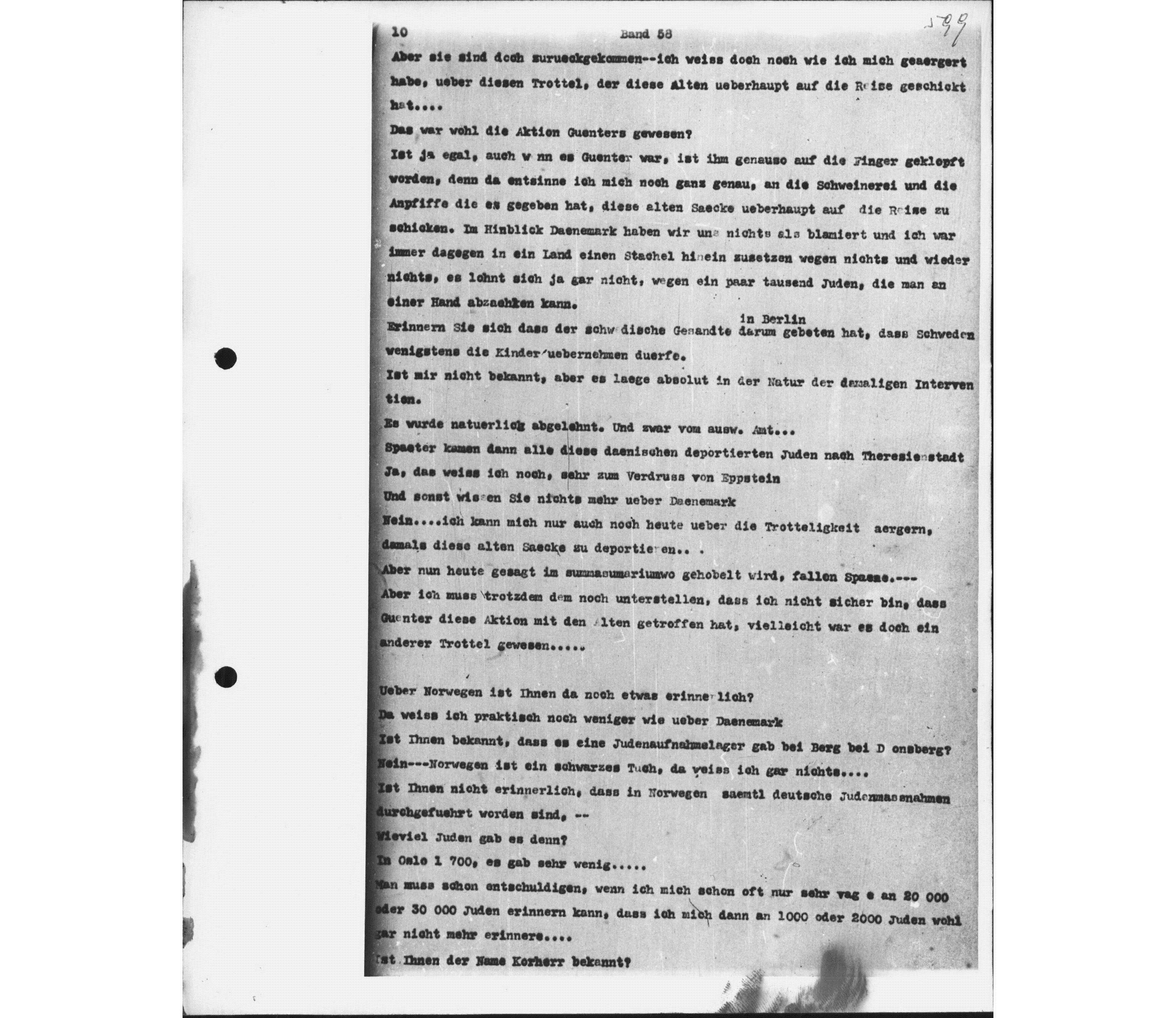
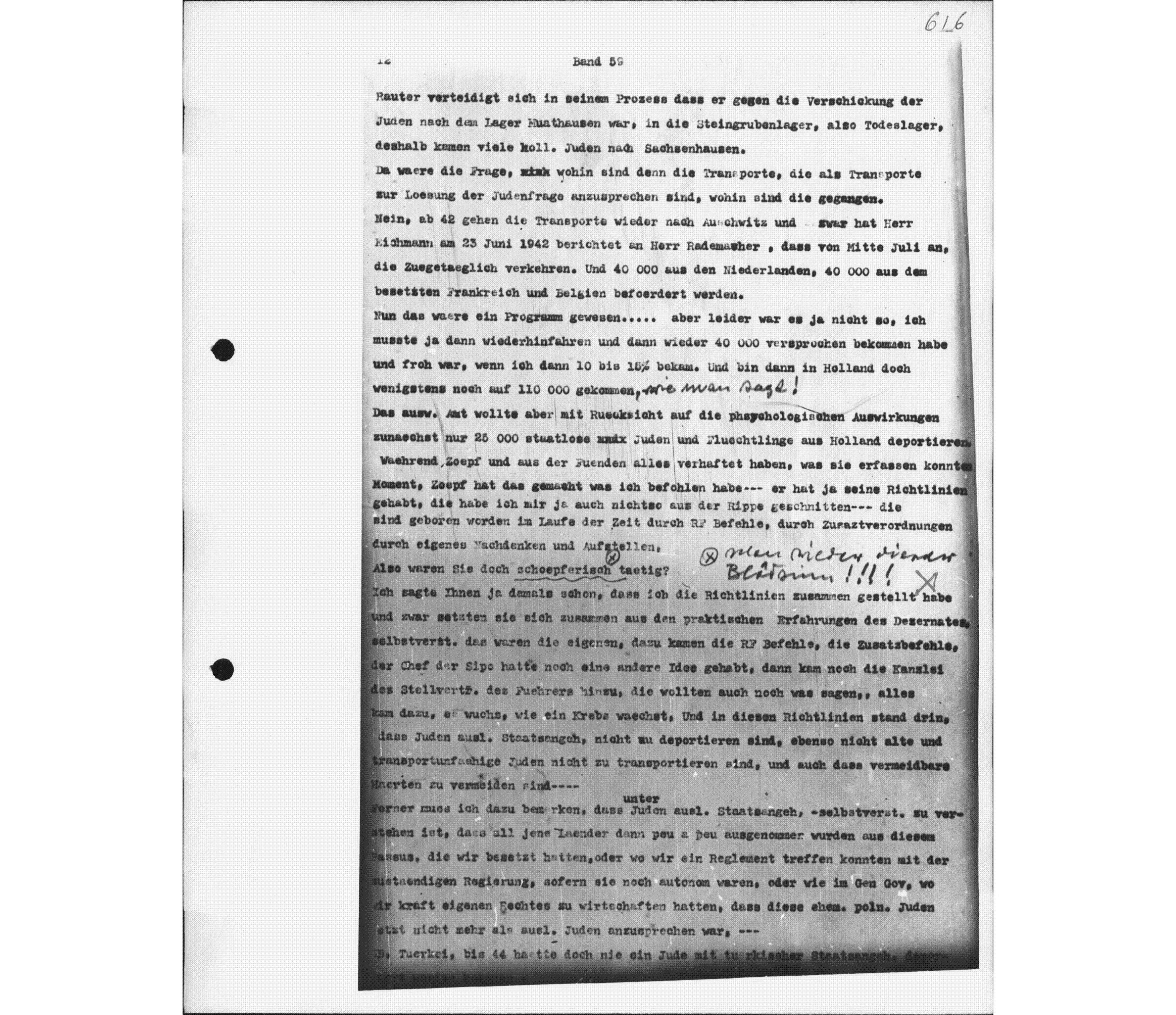
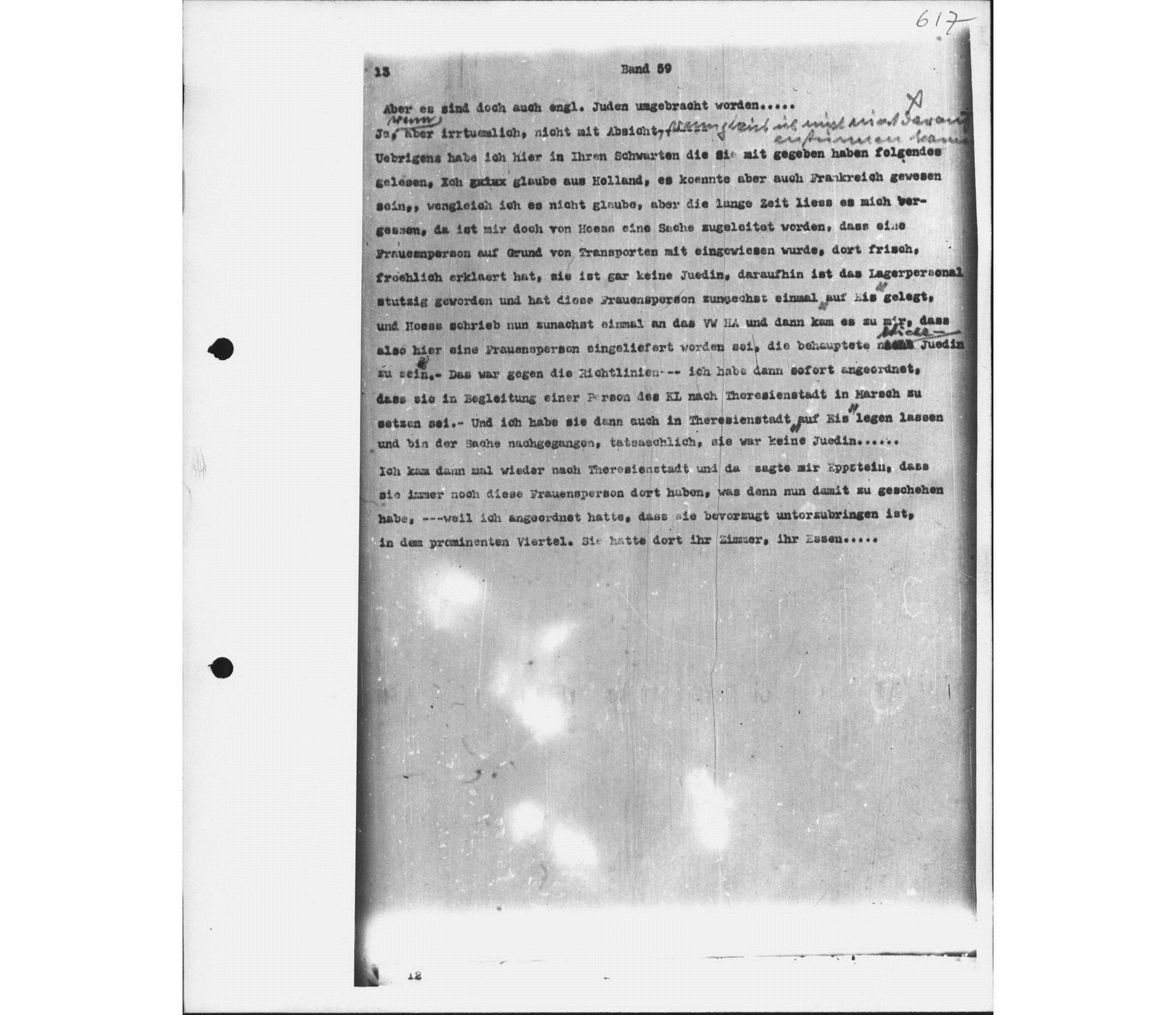
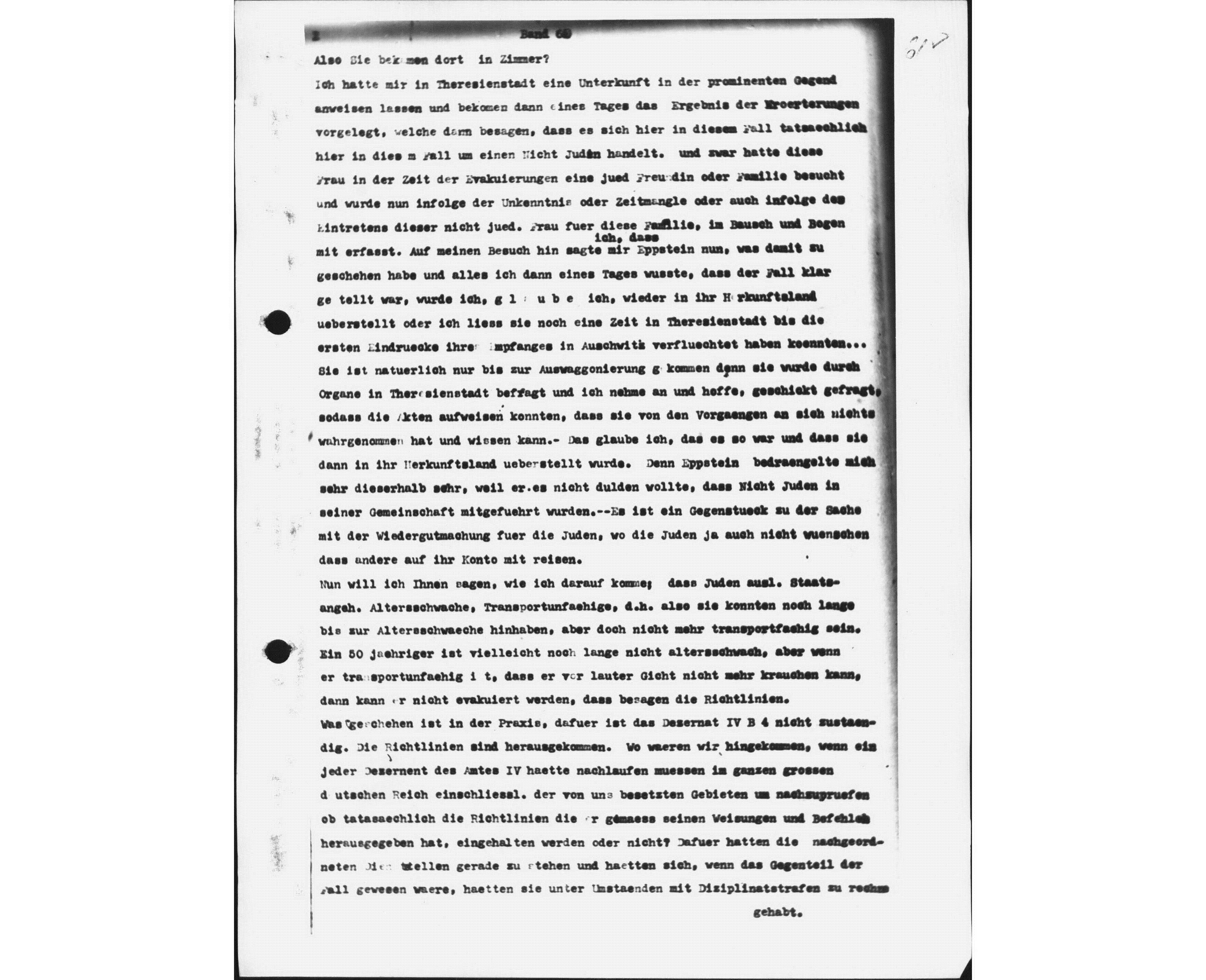
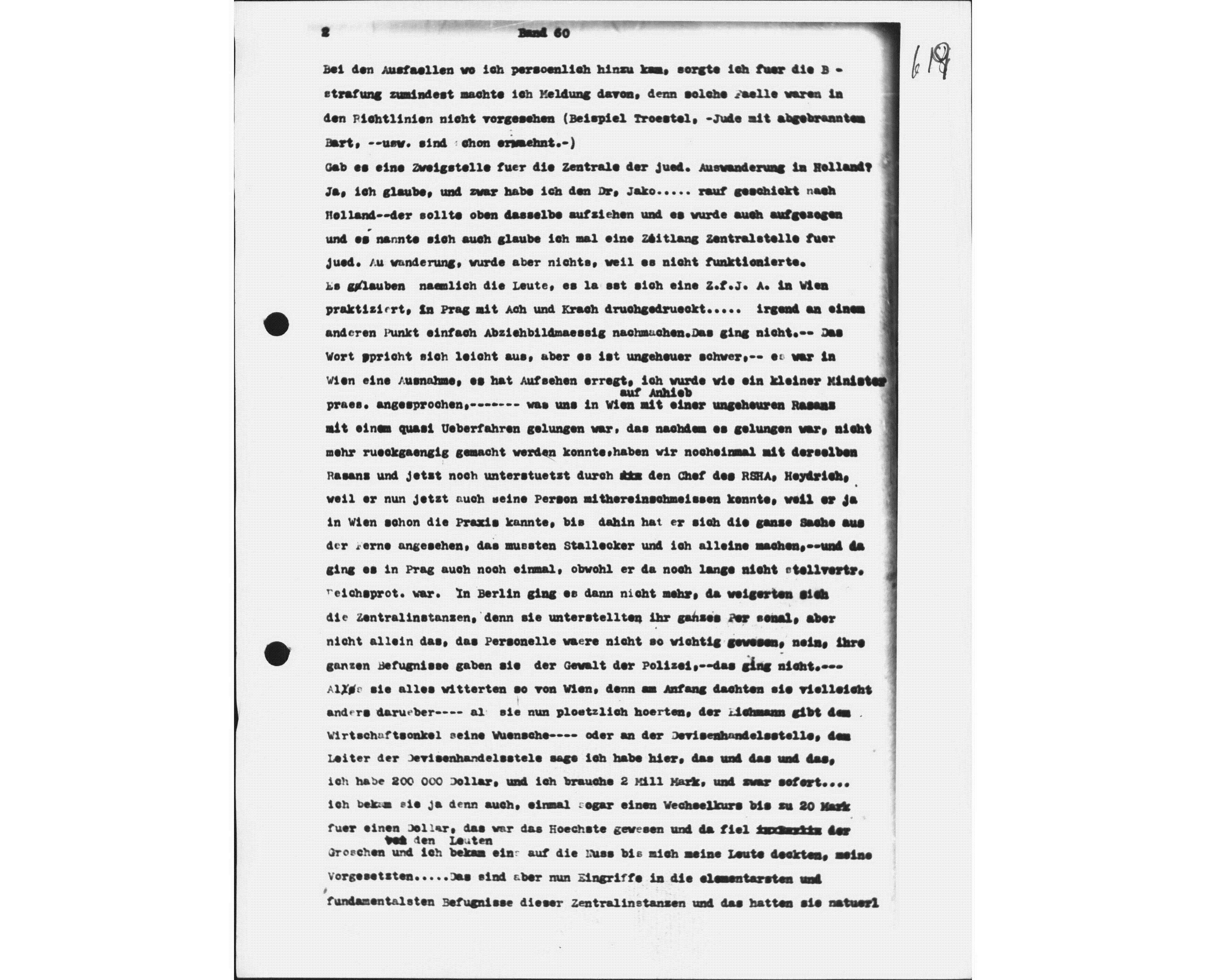
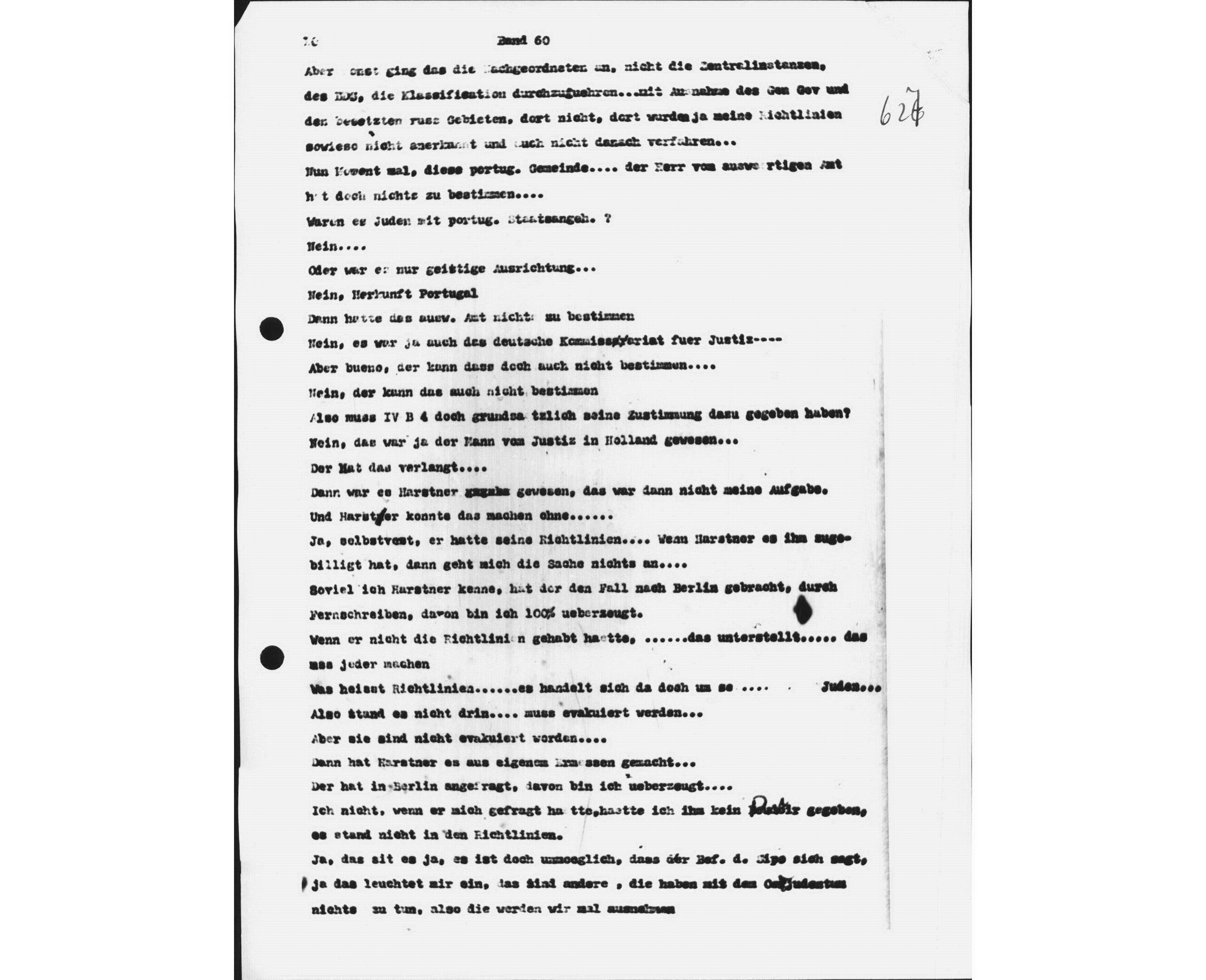
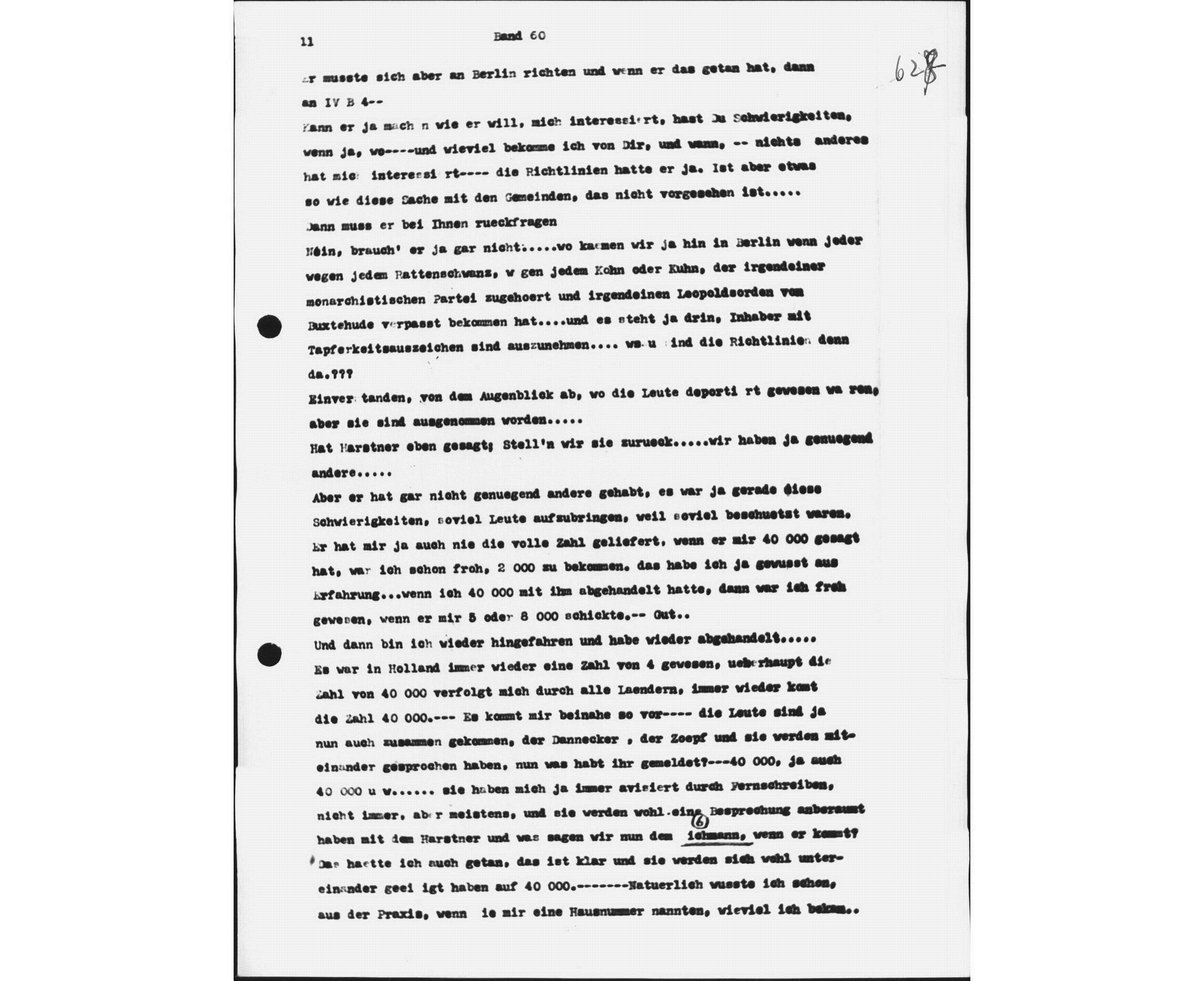
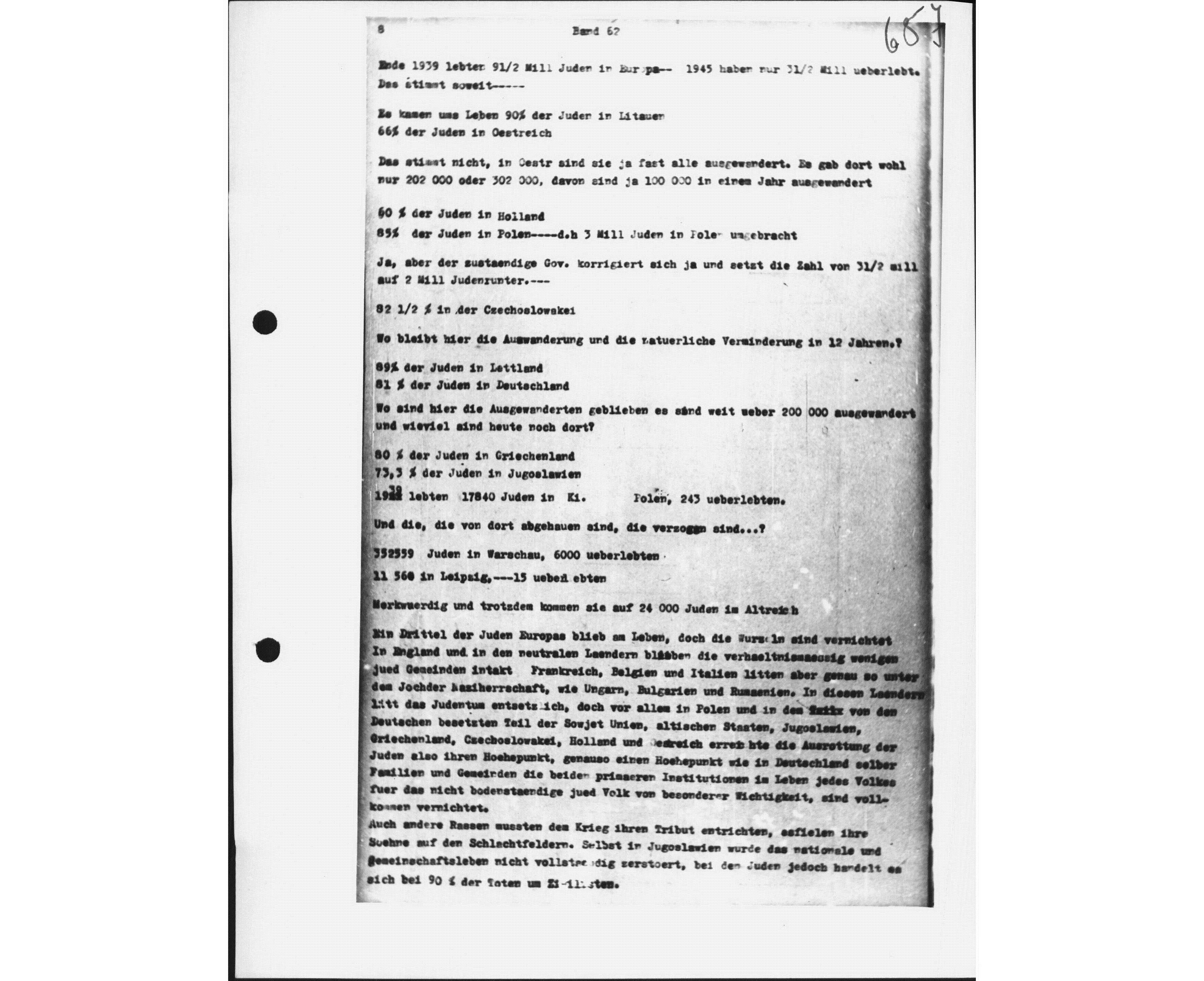
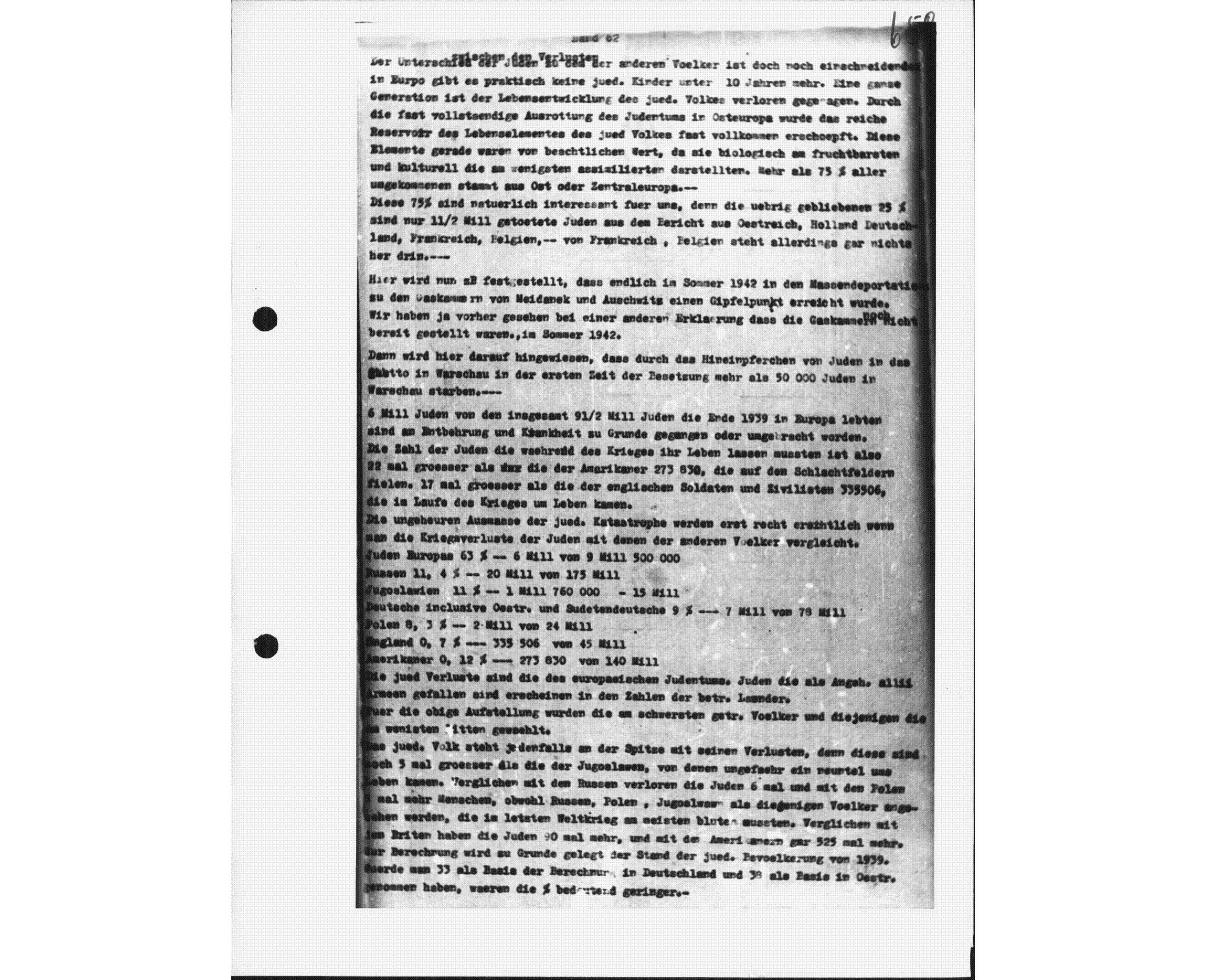
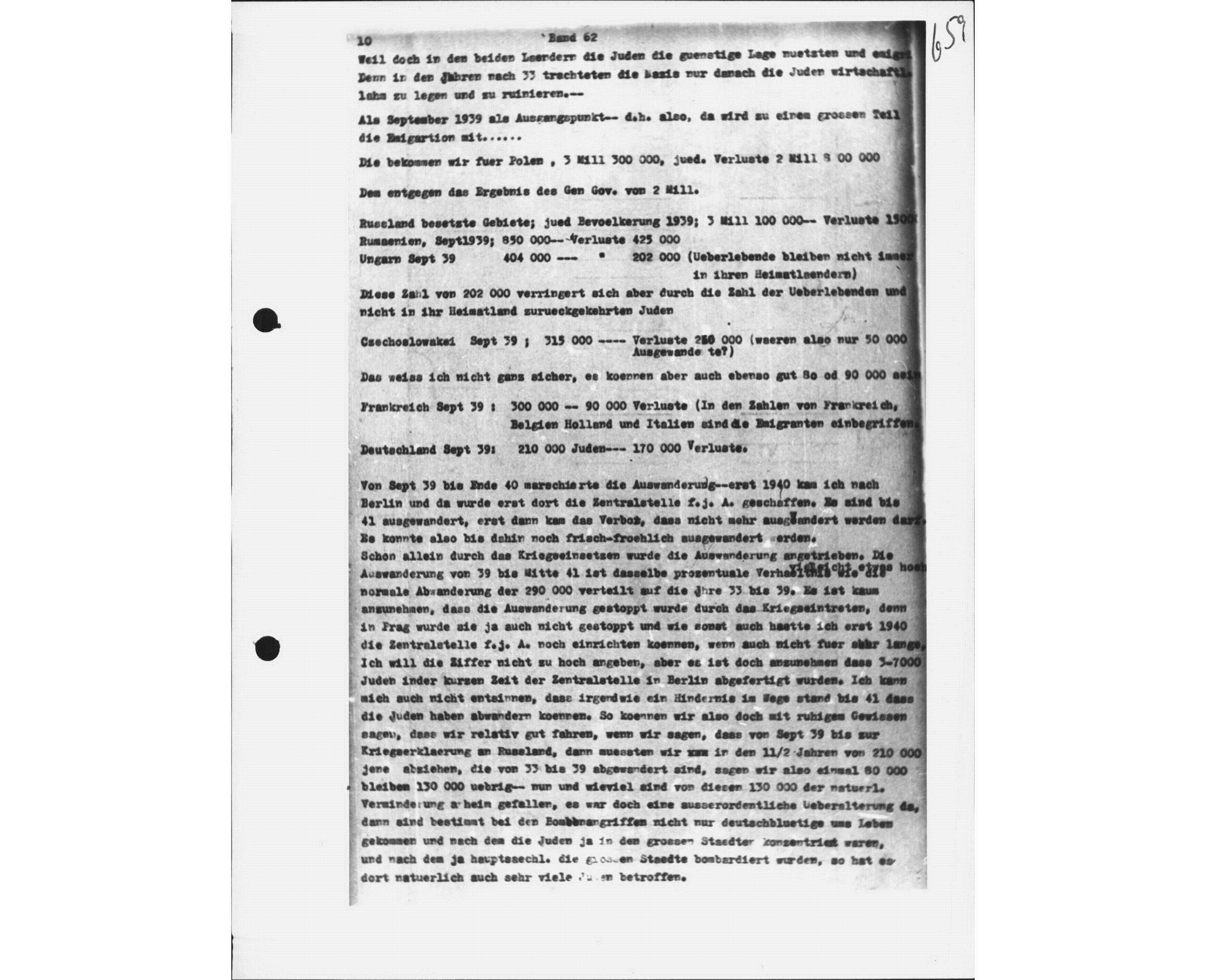
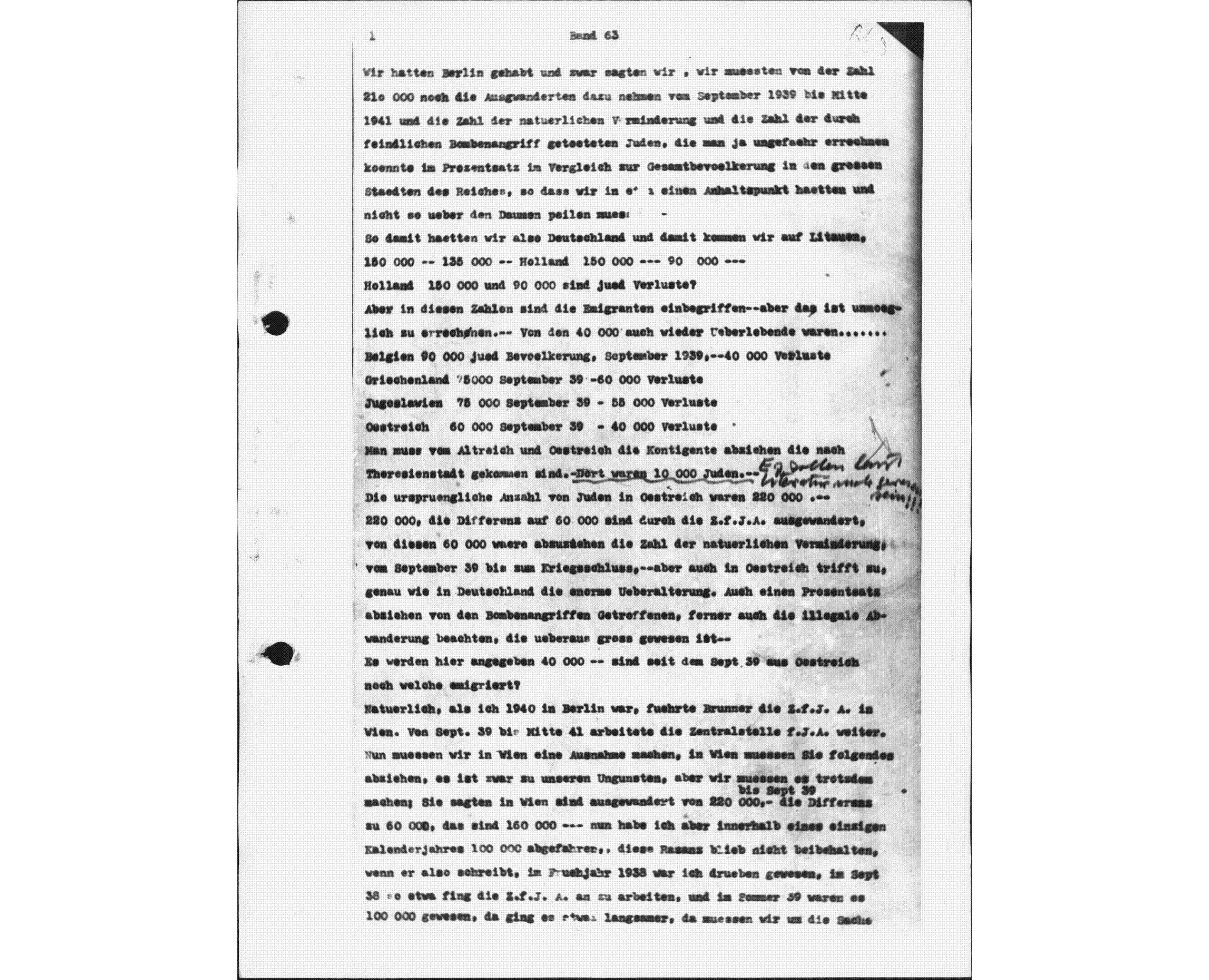
In 1957, in Buenos Aires, the man who organized the deportation of Europe’s Jews talked into a tape recorder for months. These are his recorded words, with the typed page they come from.

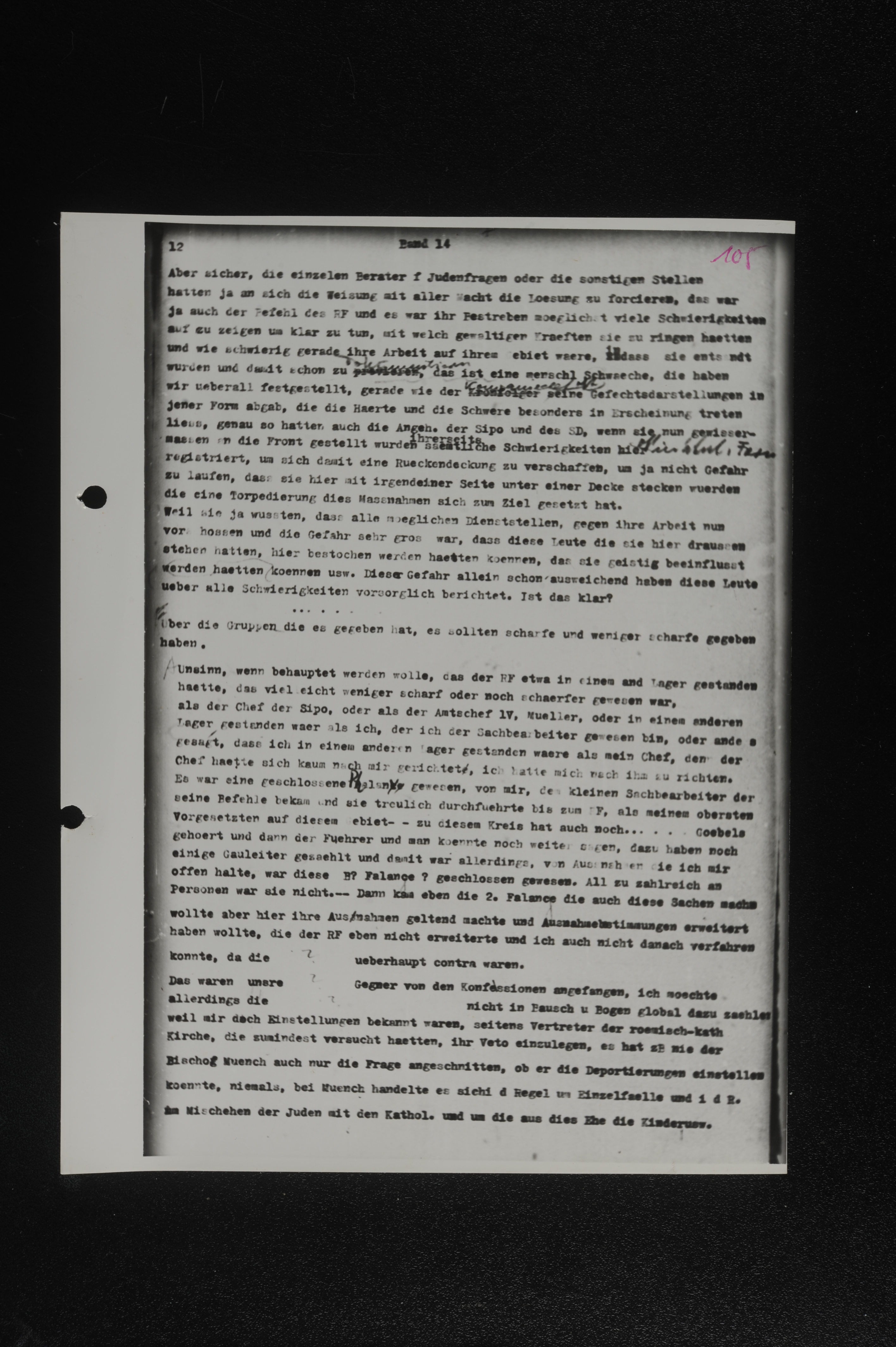
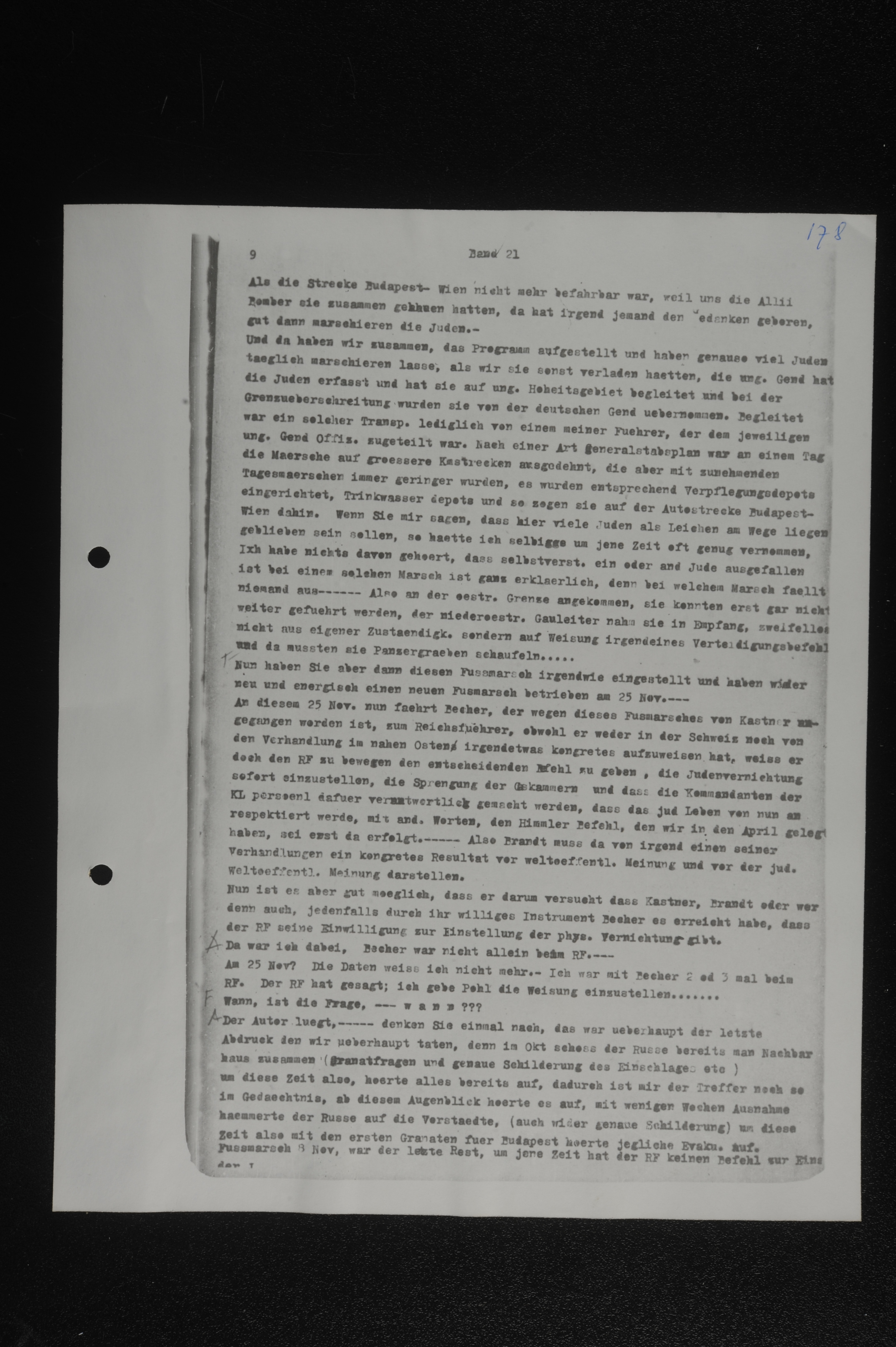
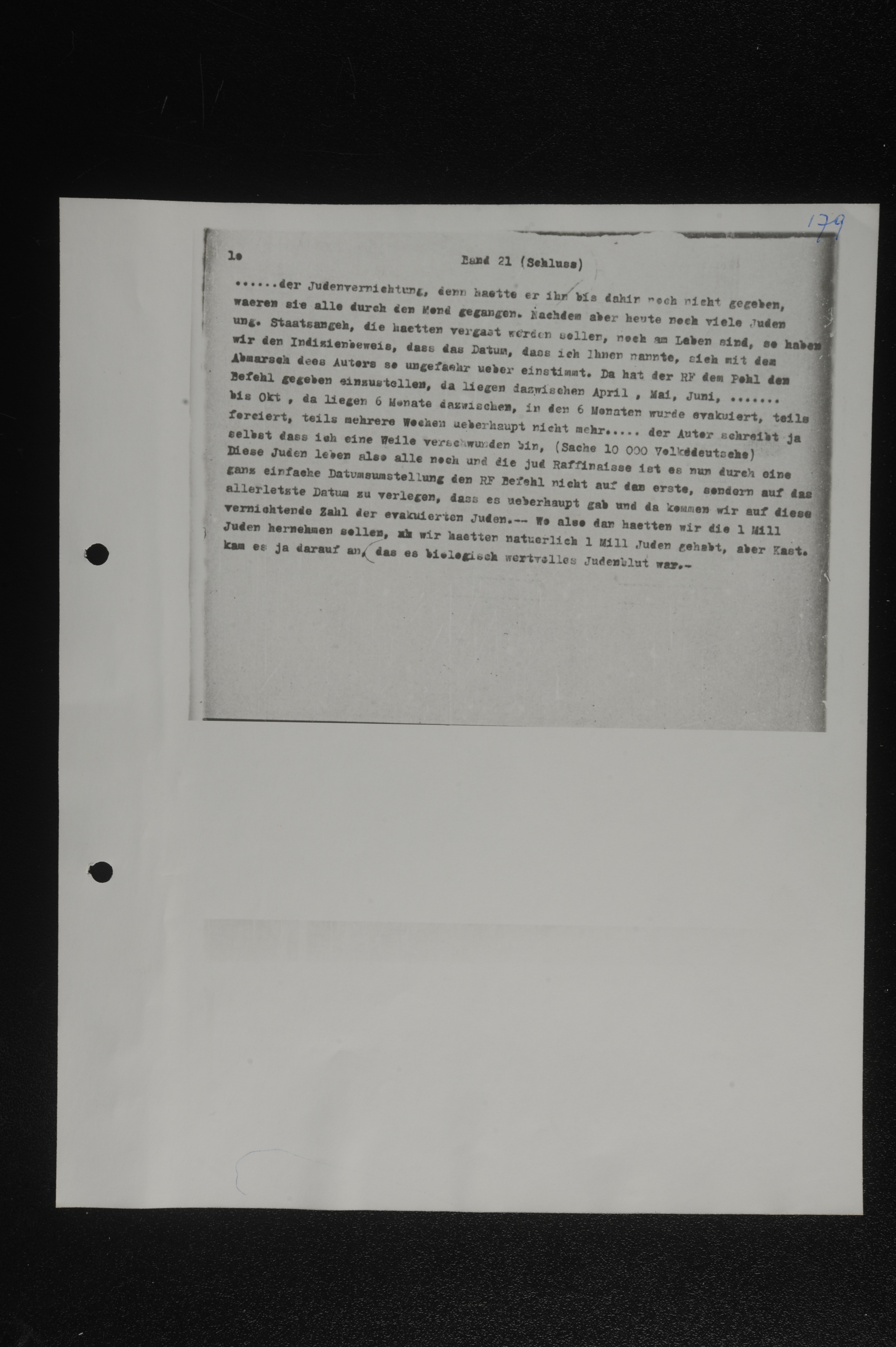
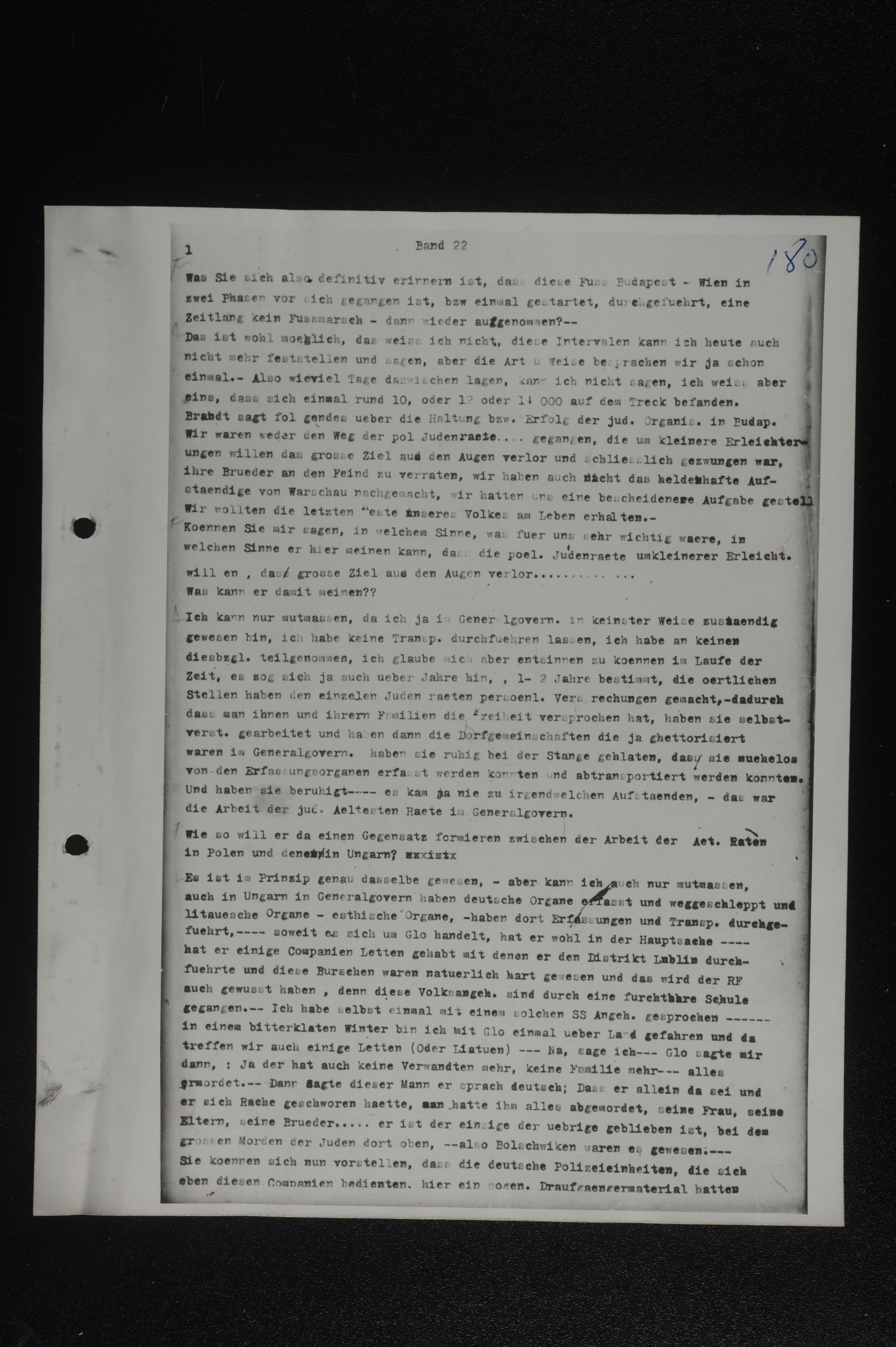
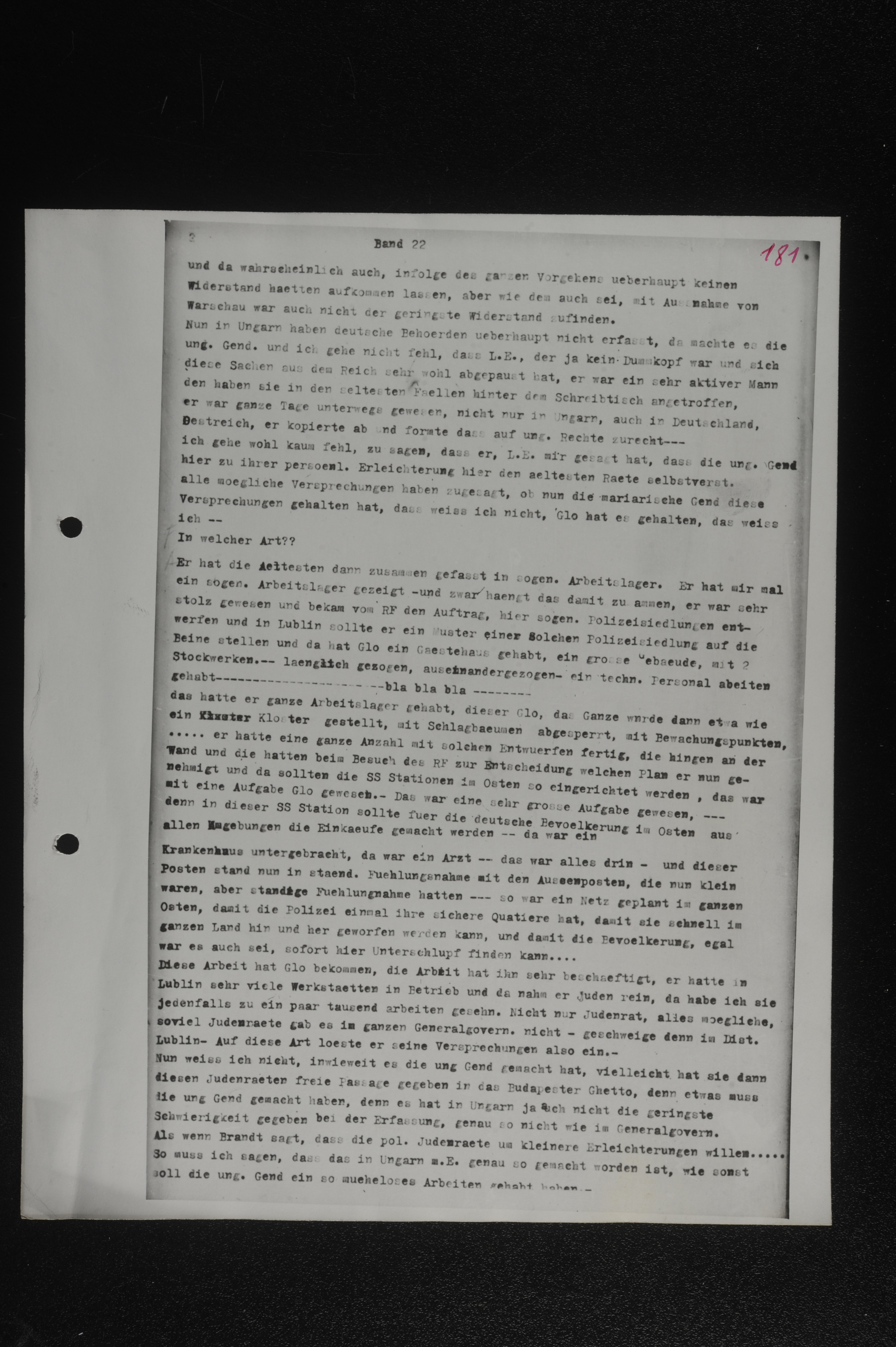
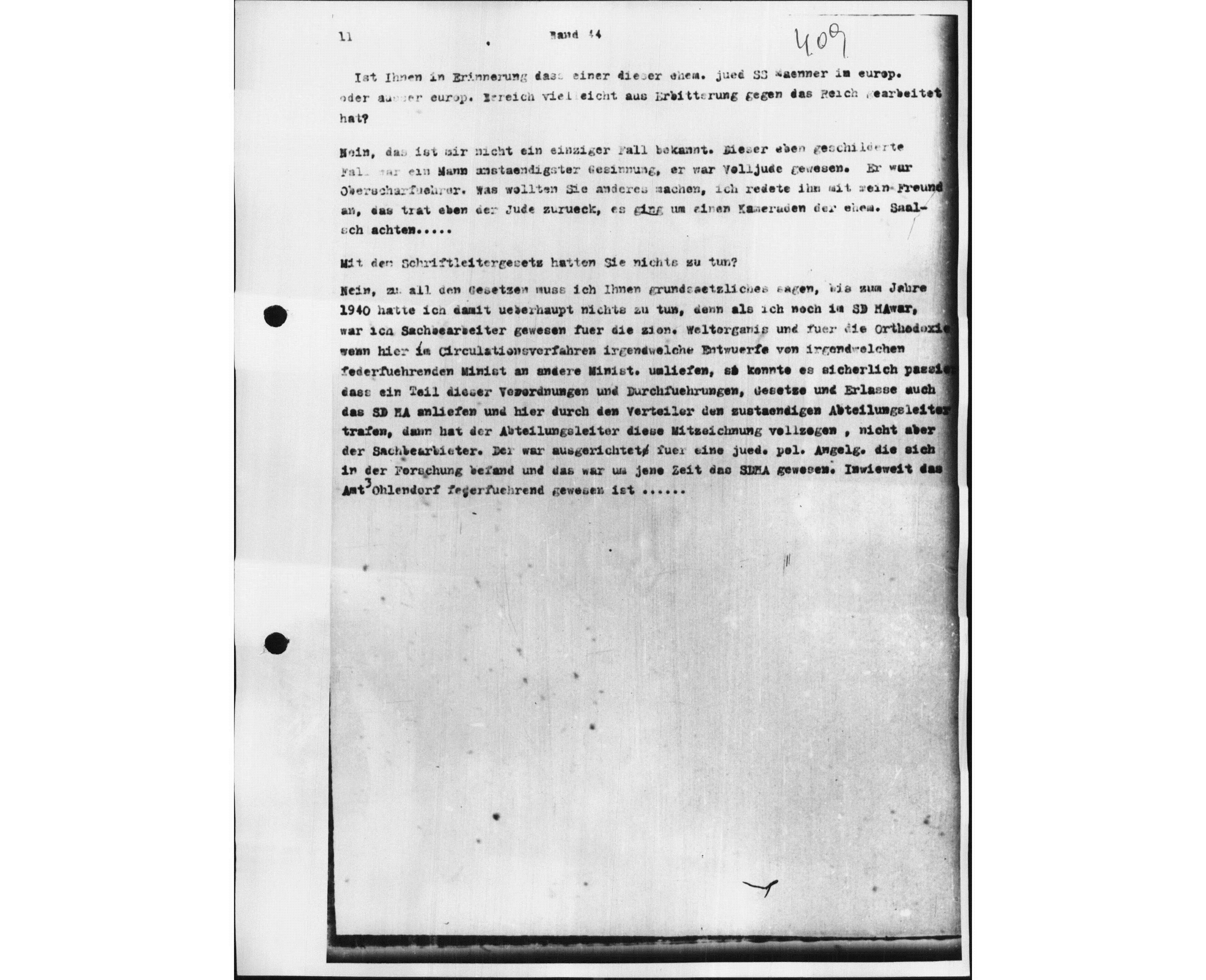
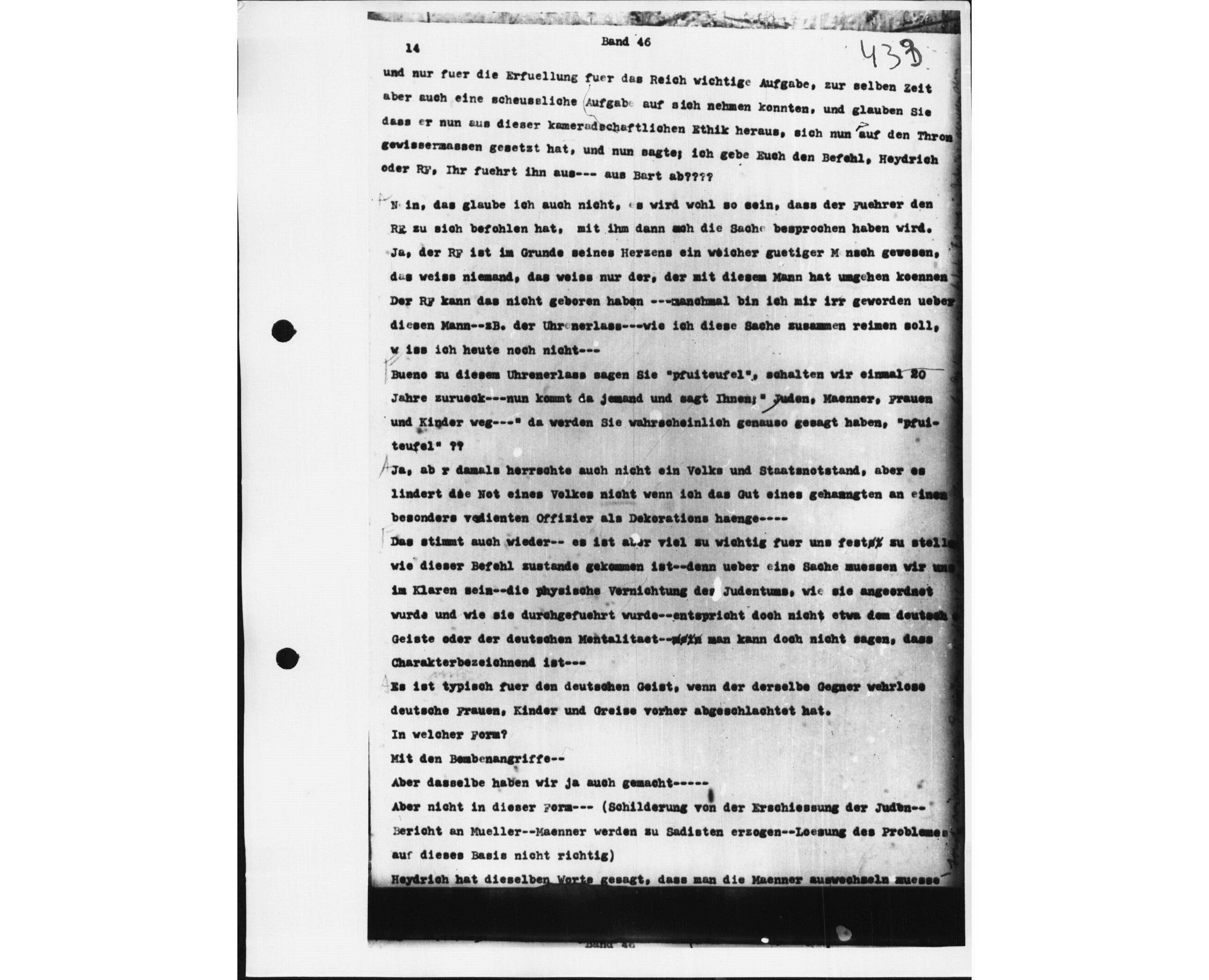
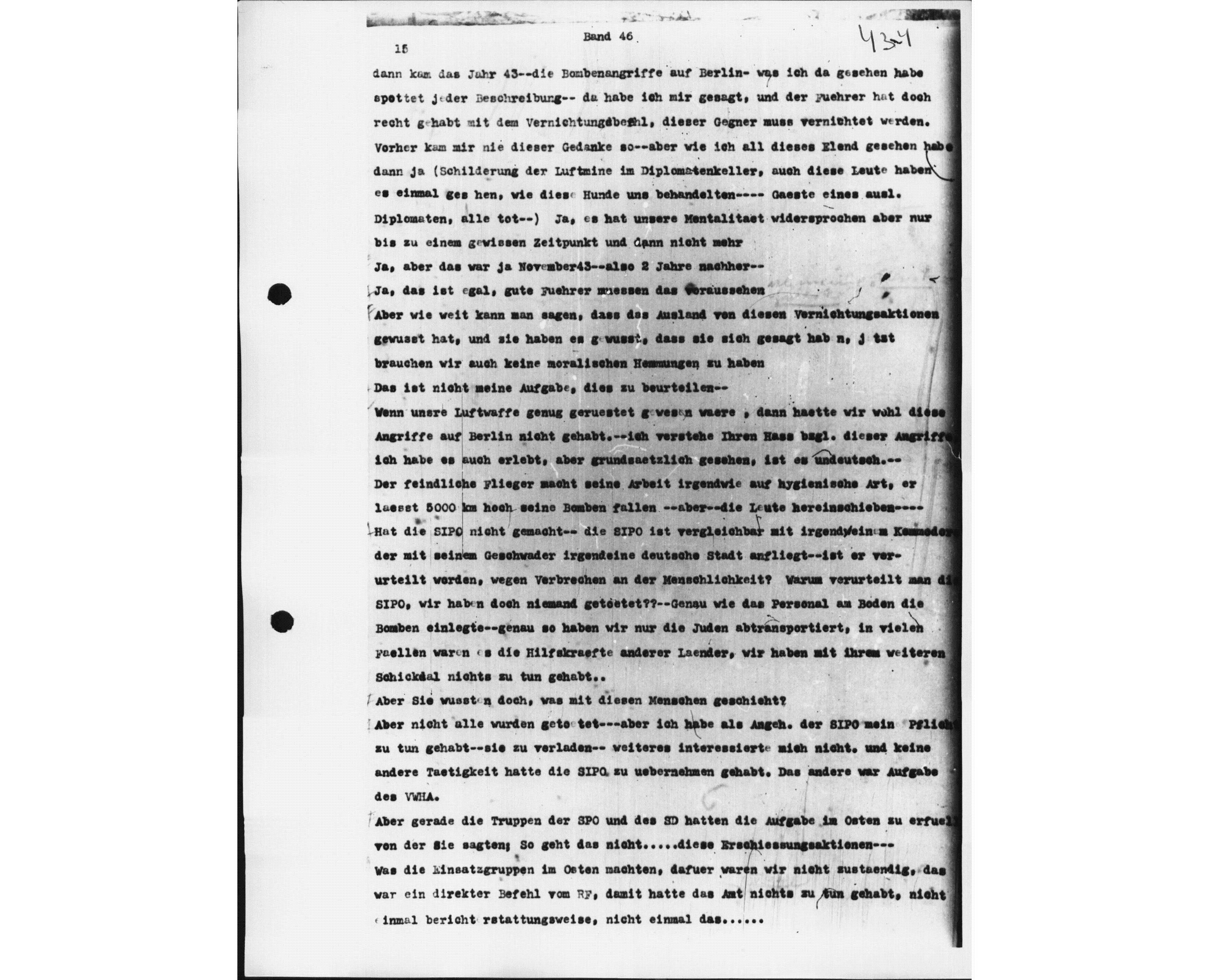
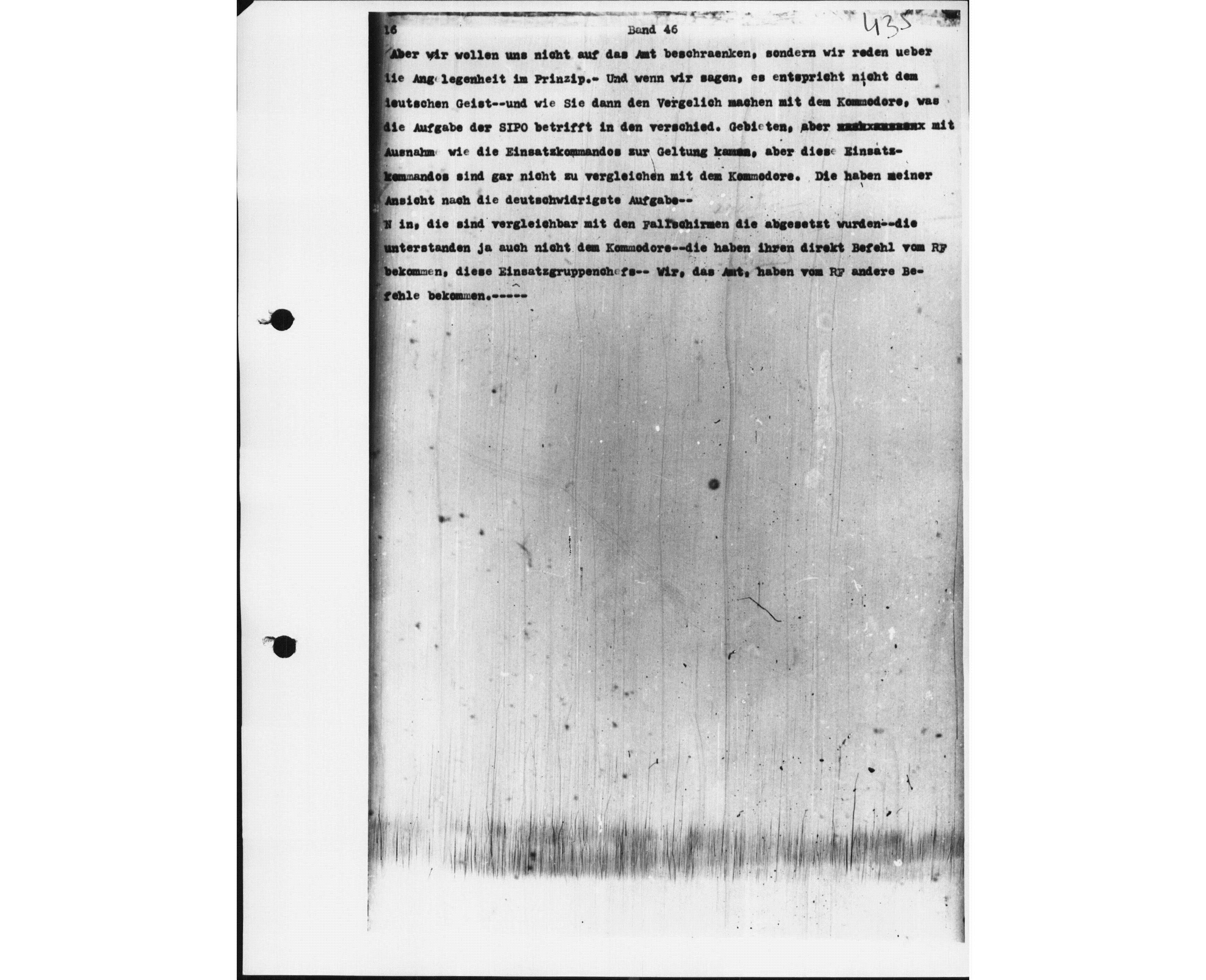
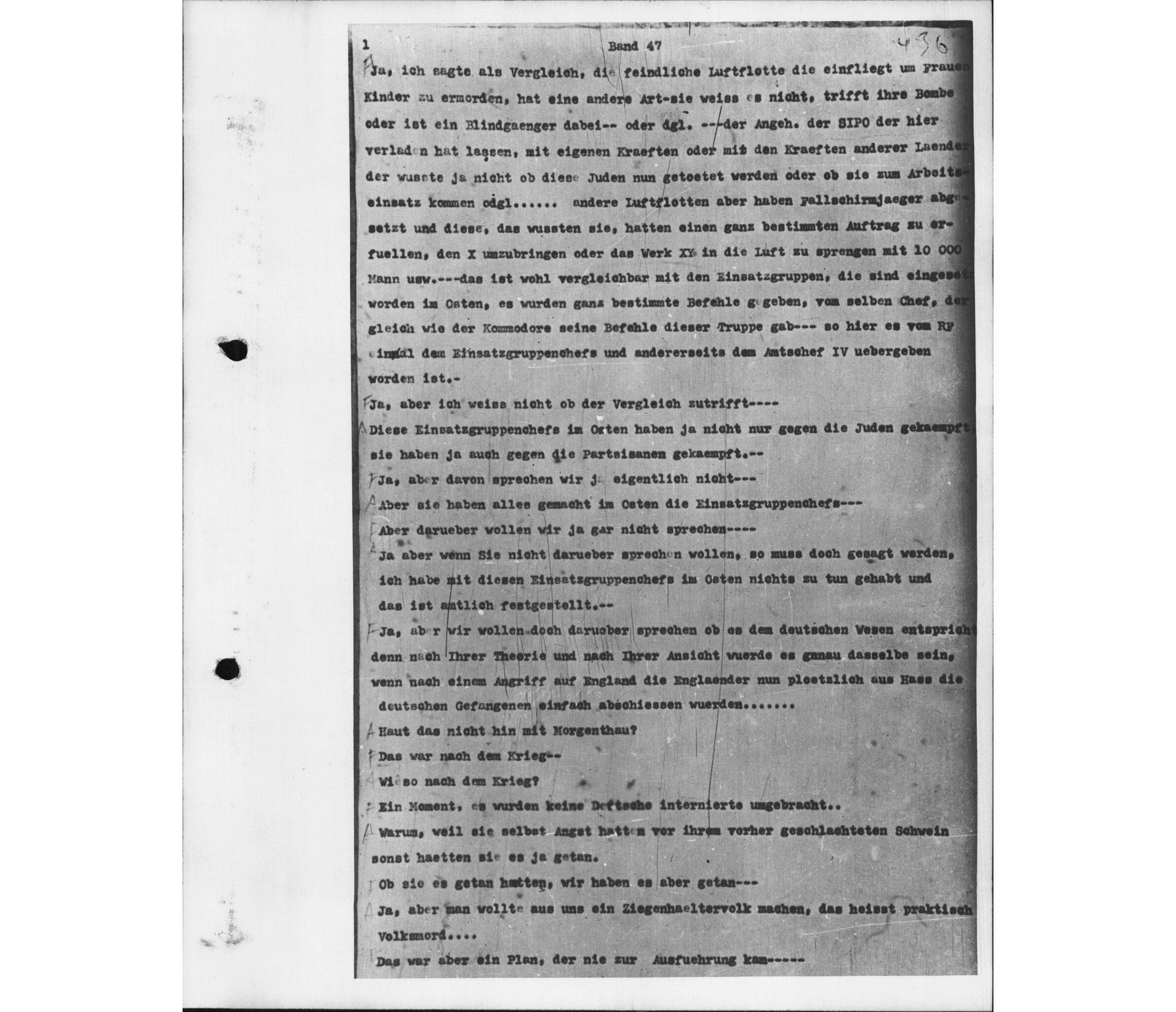
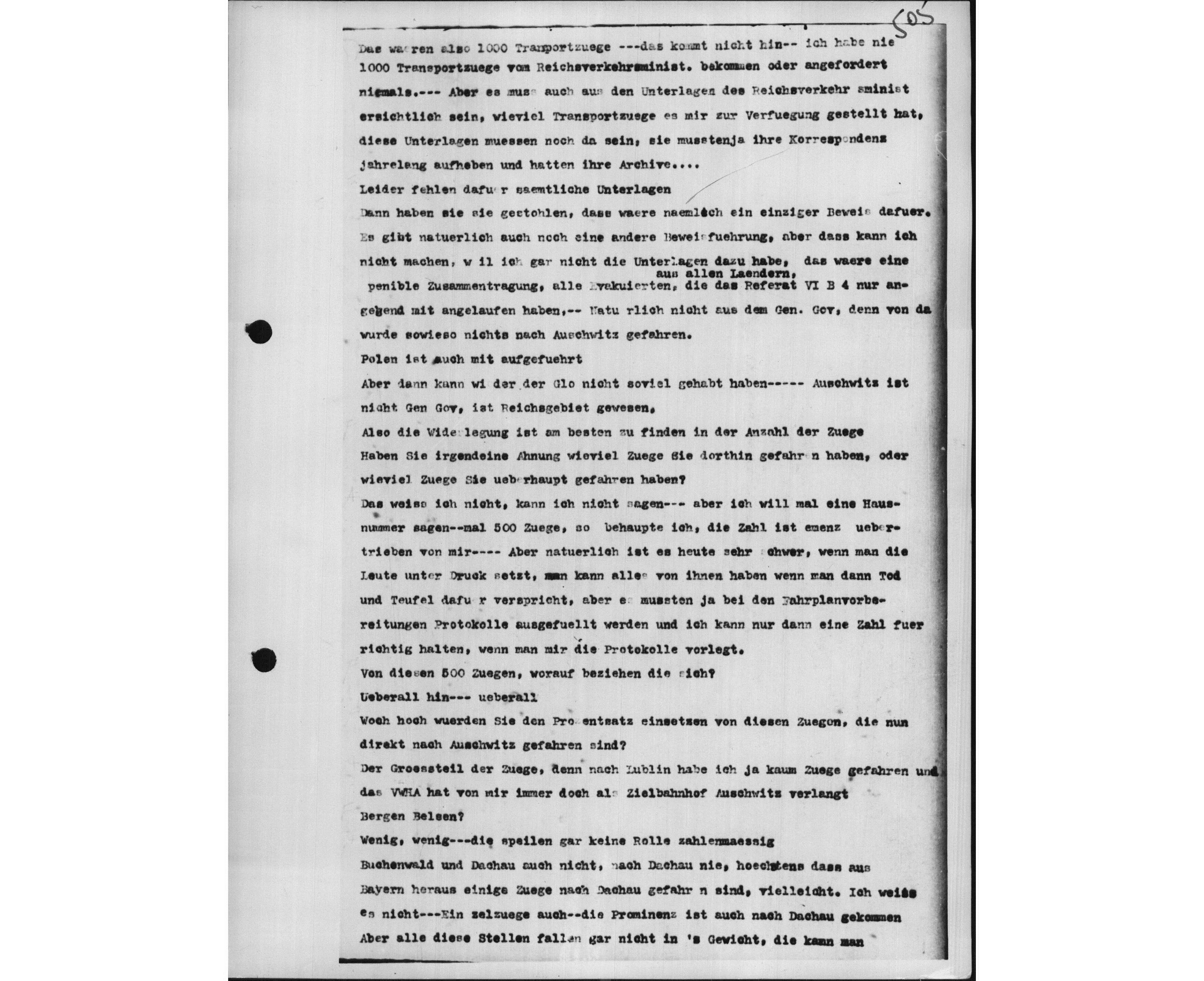
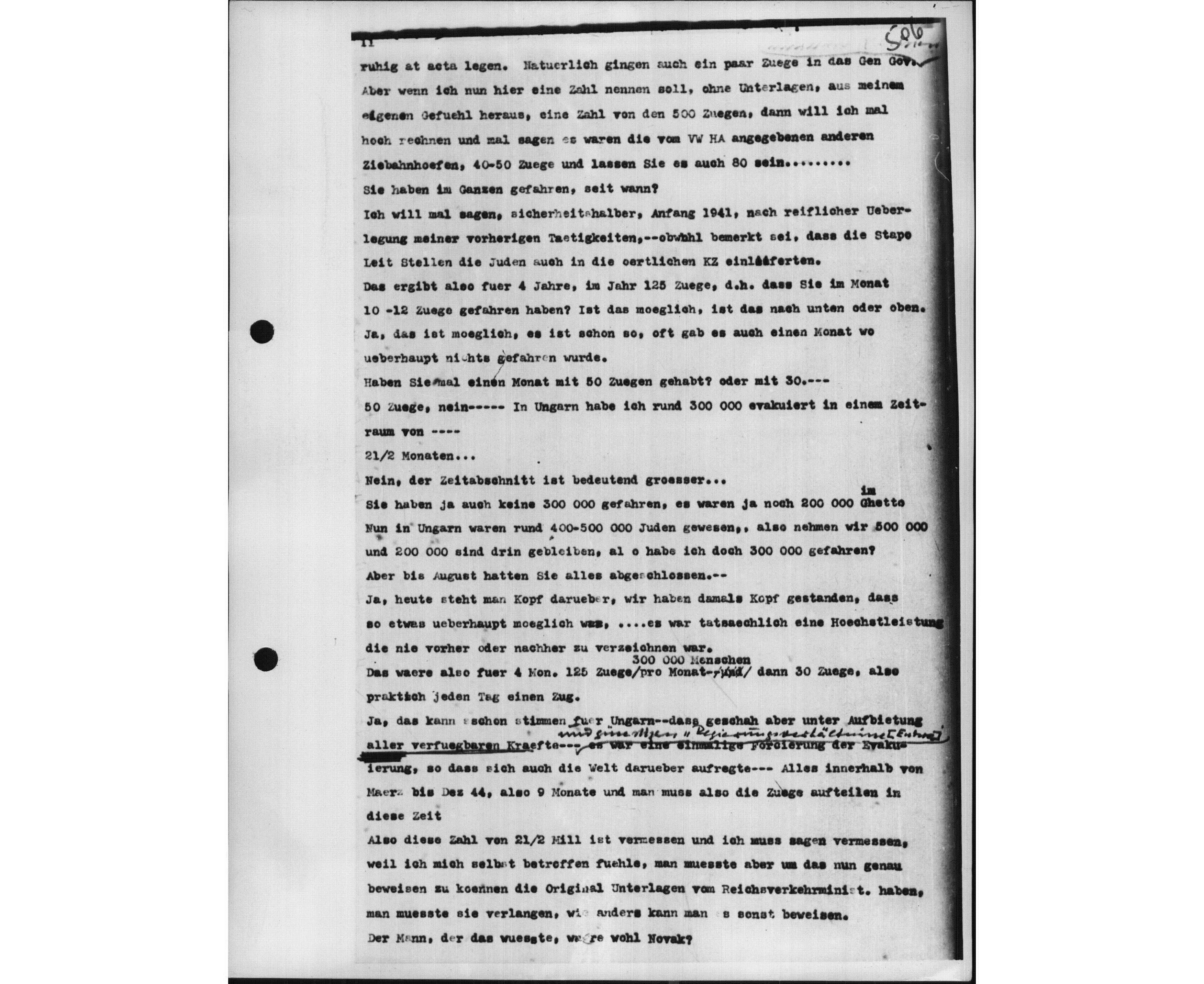
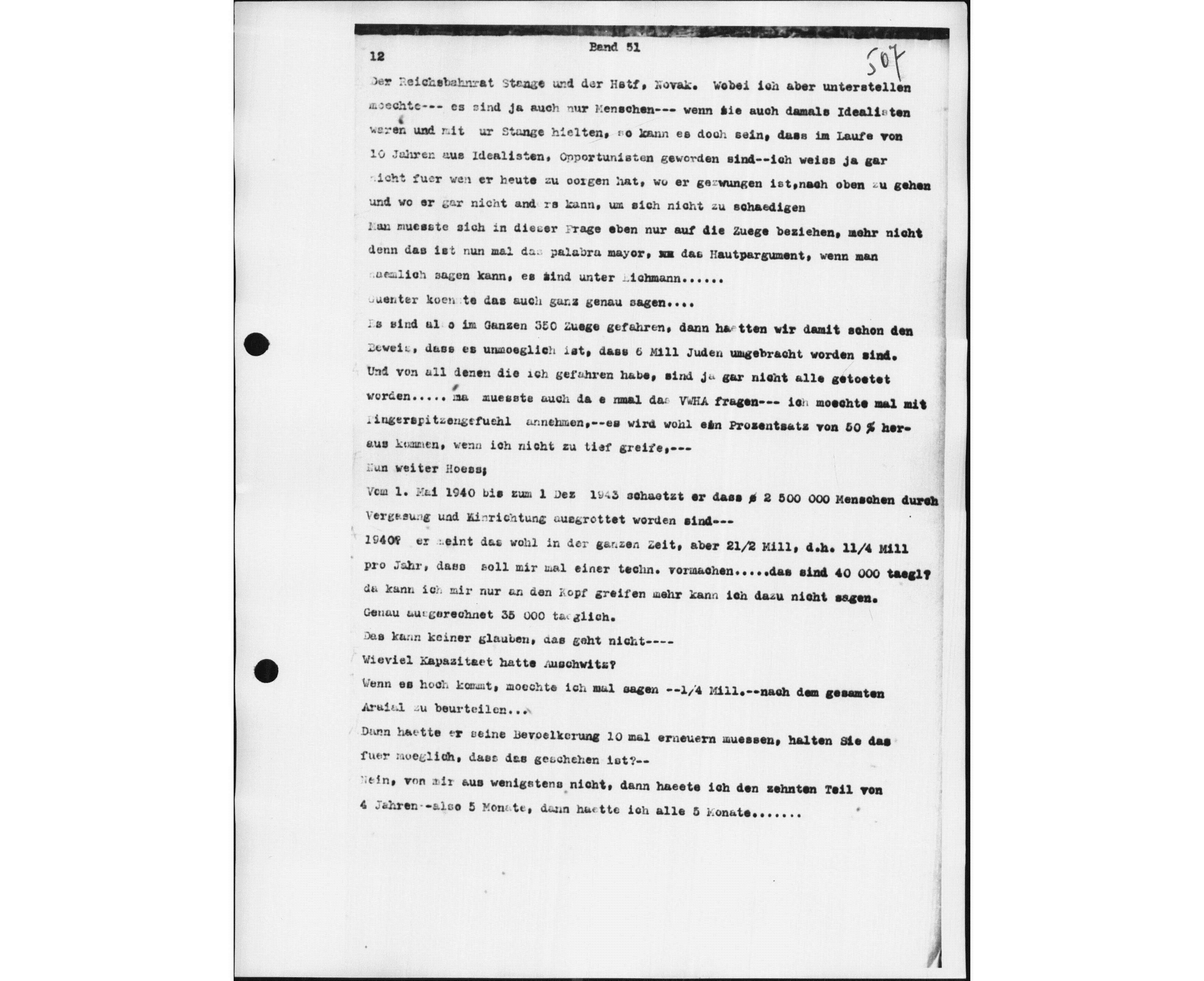
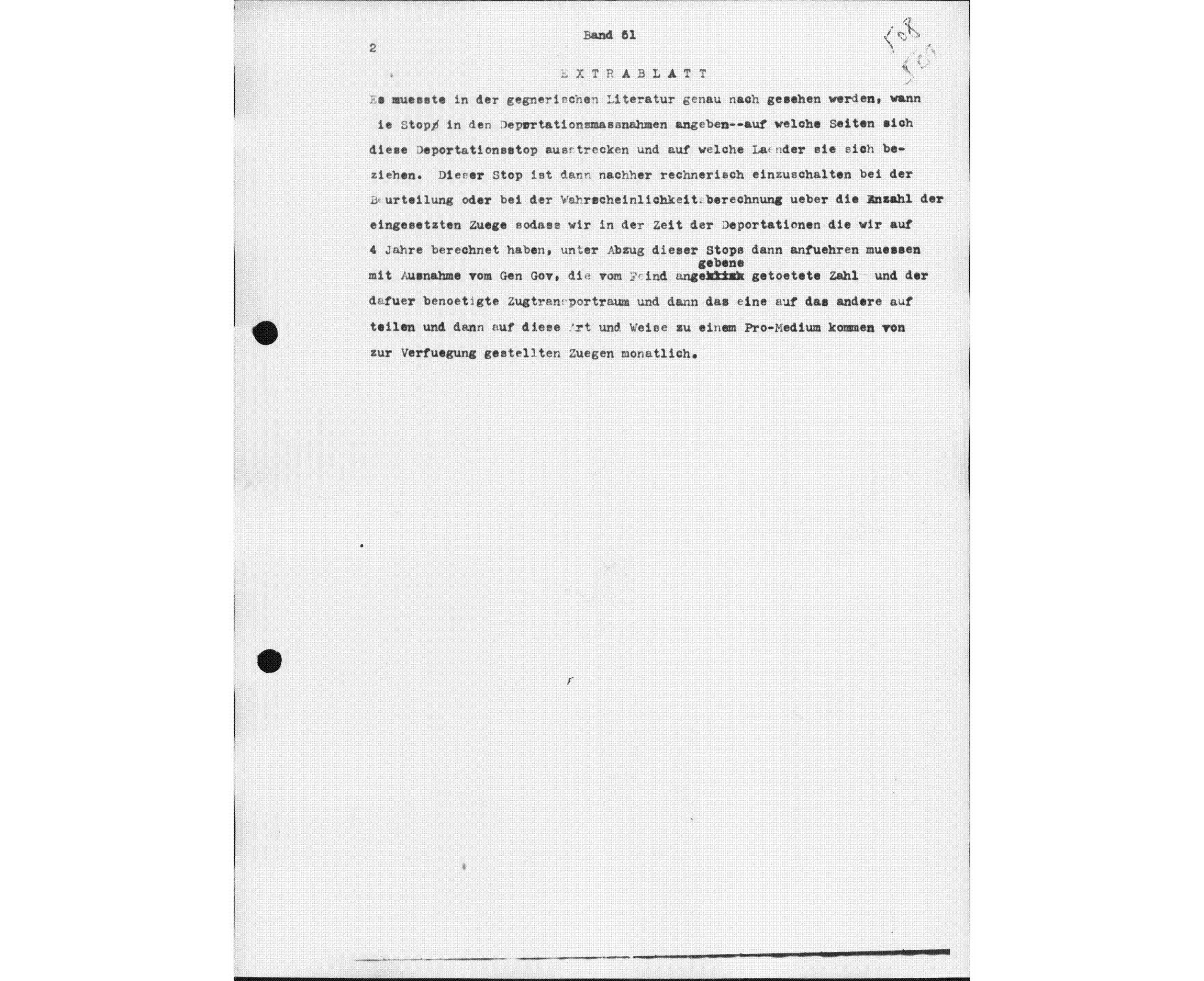
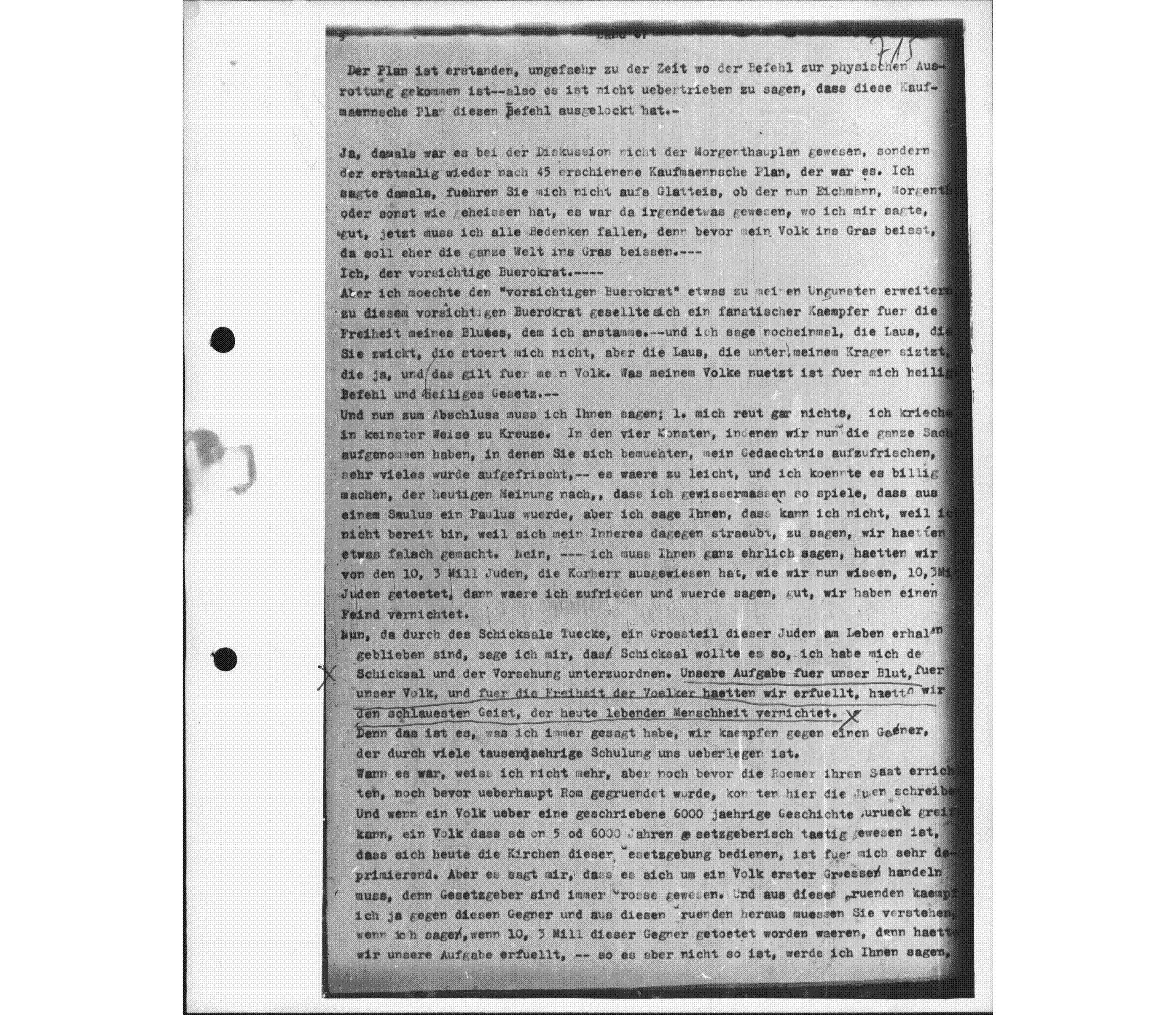
Had we killed 10.3 million

No, I have to tell you quite honestly: had we killed, out of the 10.3 million Jews whom Korherr recorded, as we now know, 10.3 million Jews, then I would be satisfied and would say, good, we have annihilated an enemy.

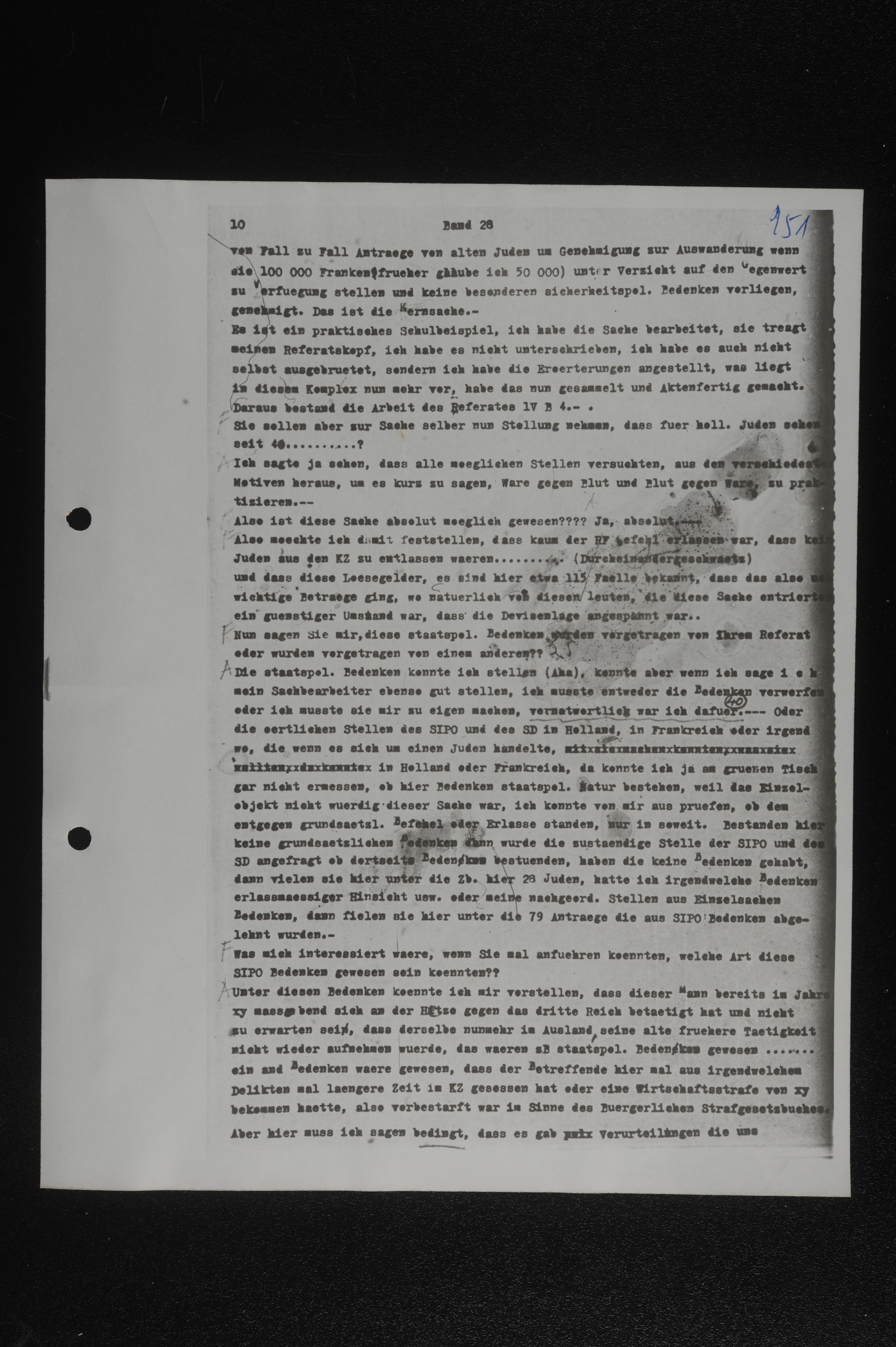
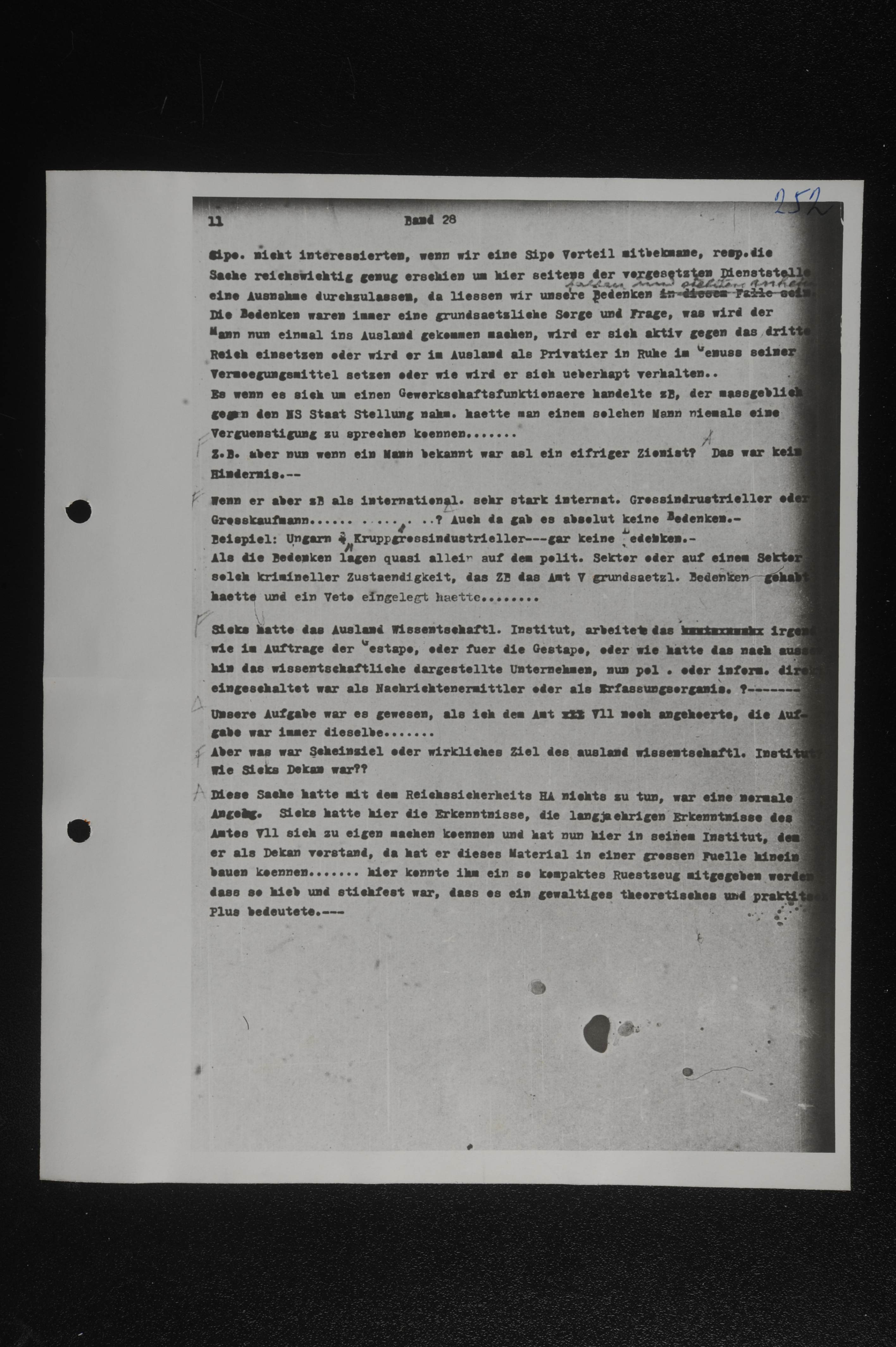
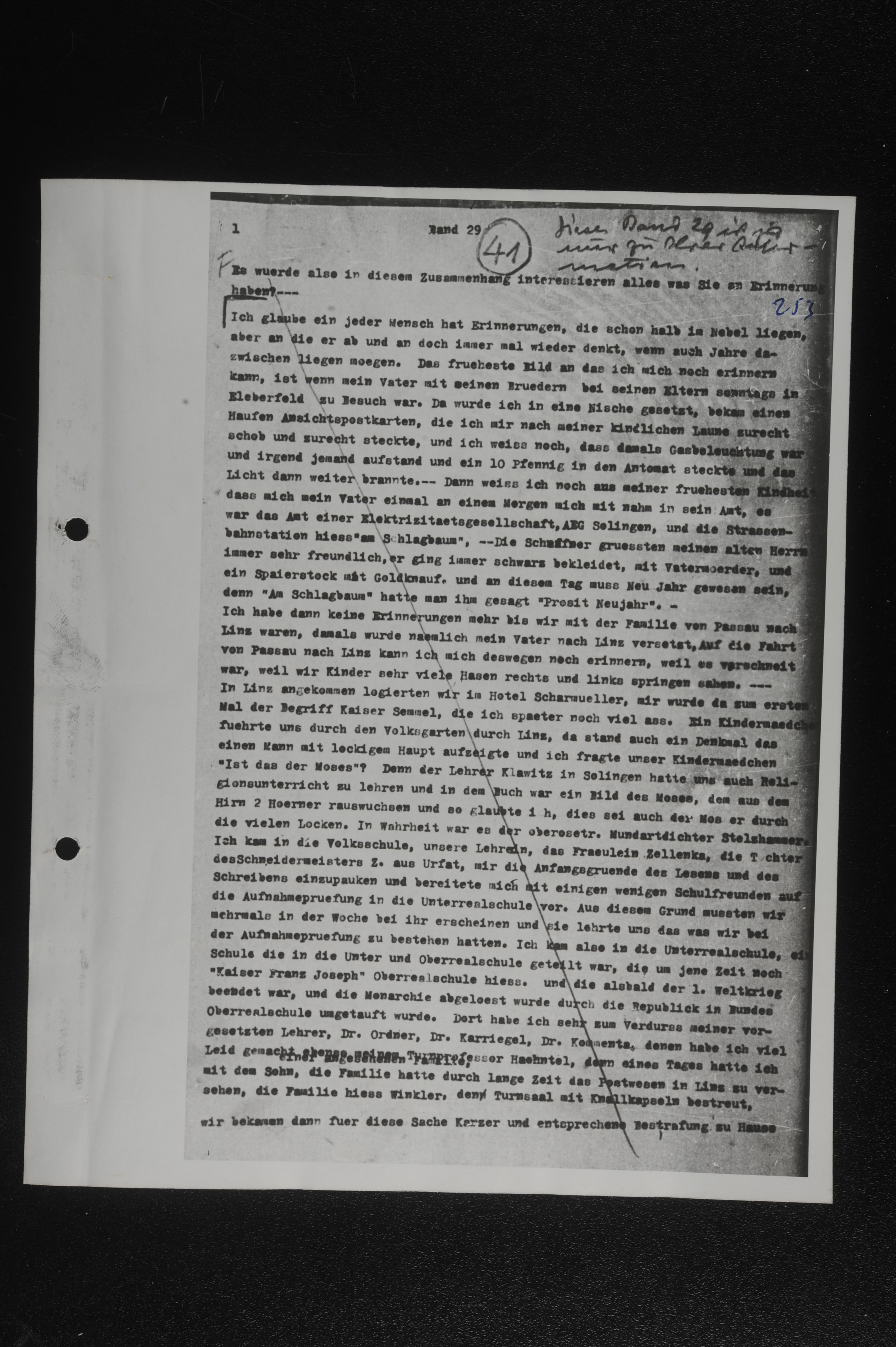
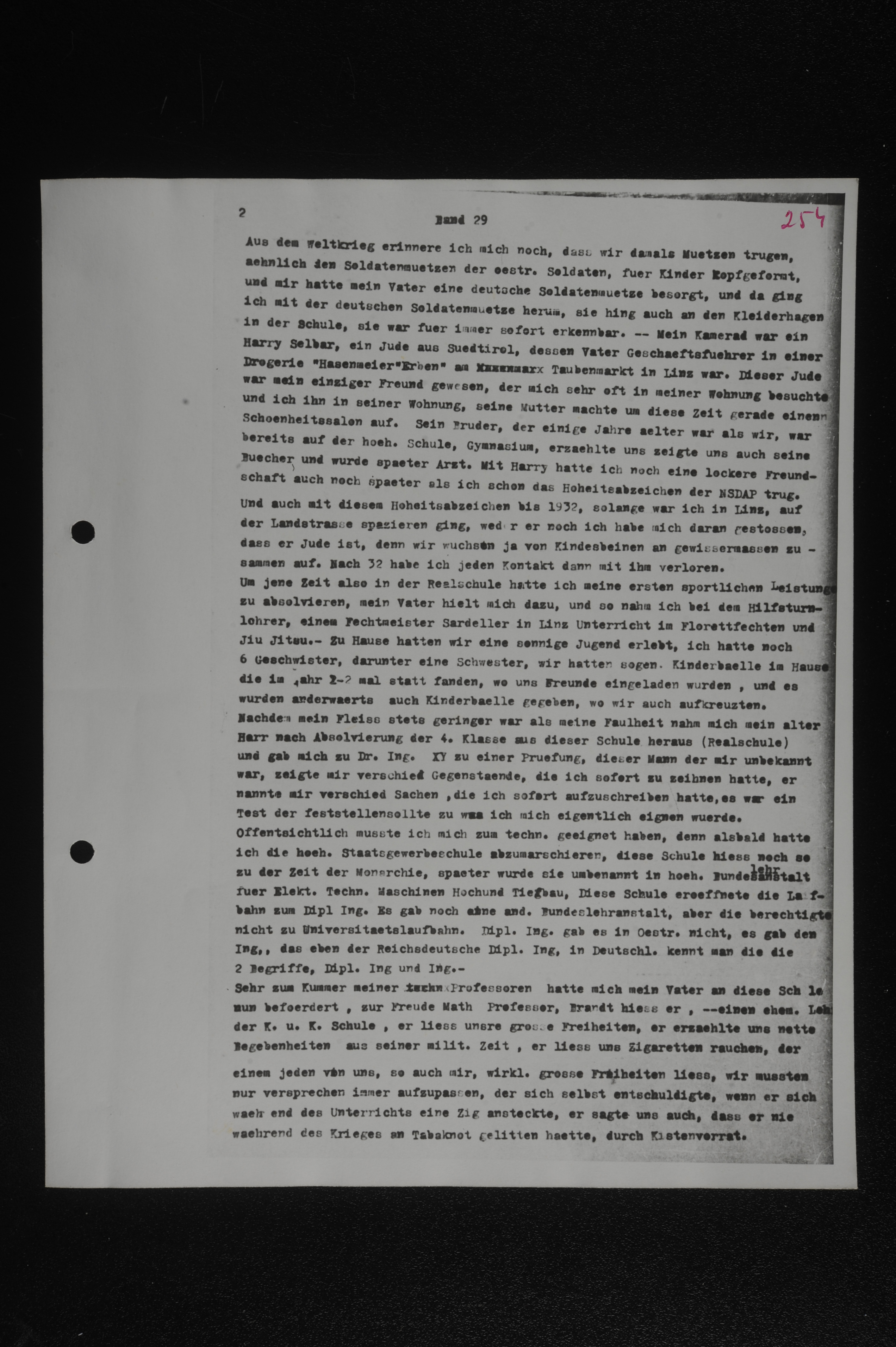
Edited excerpt from «Mich reut gar nichts!». Read page 715 in the transcript.

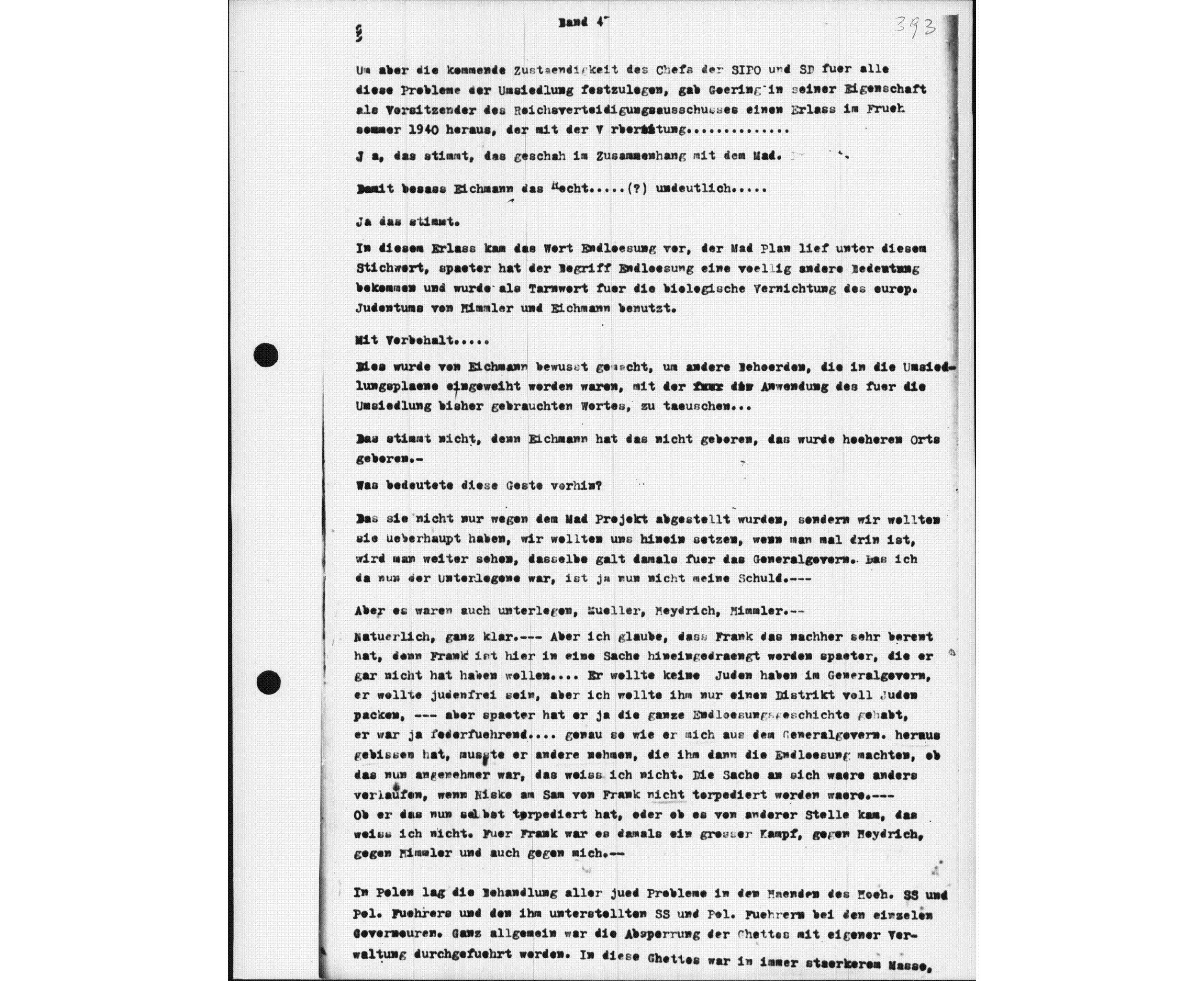
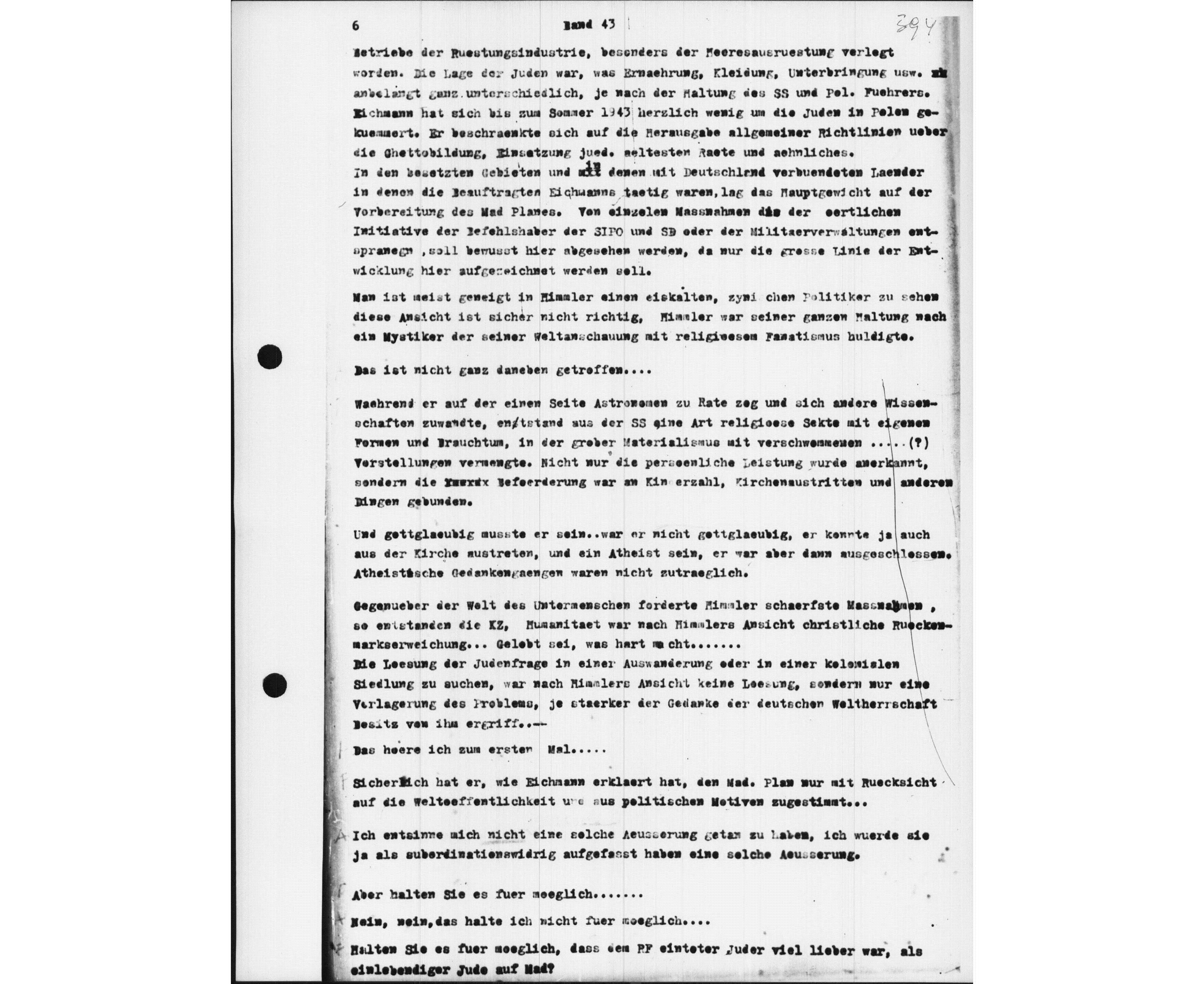
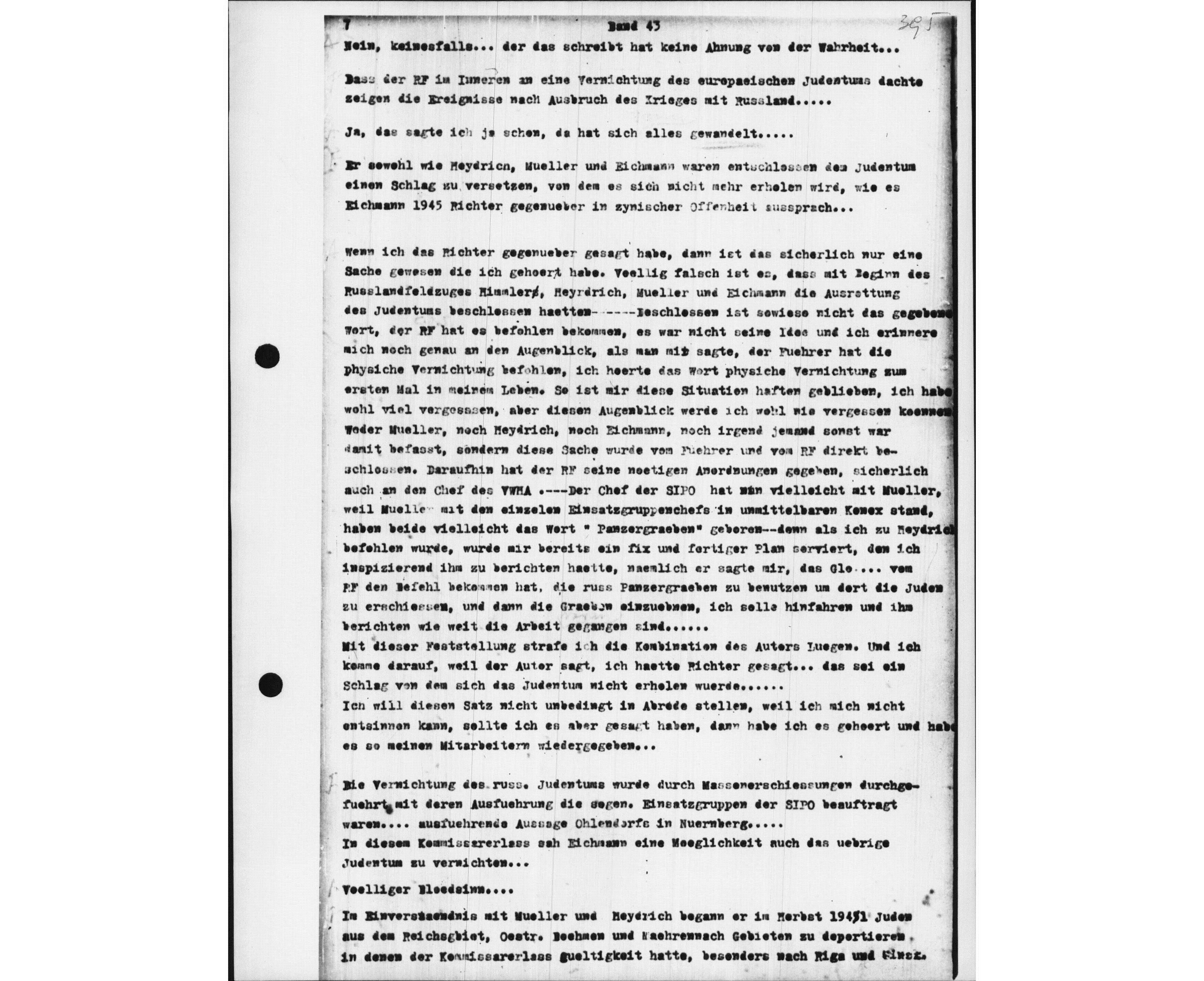
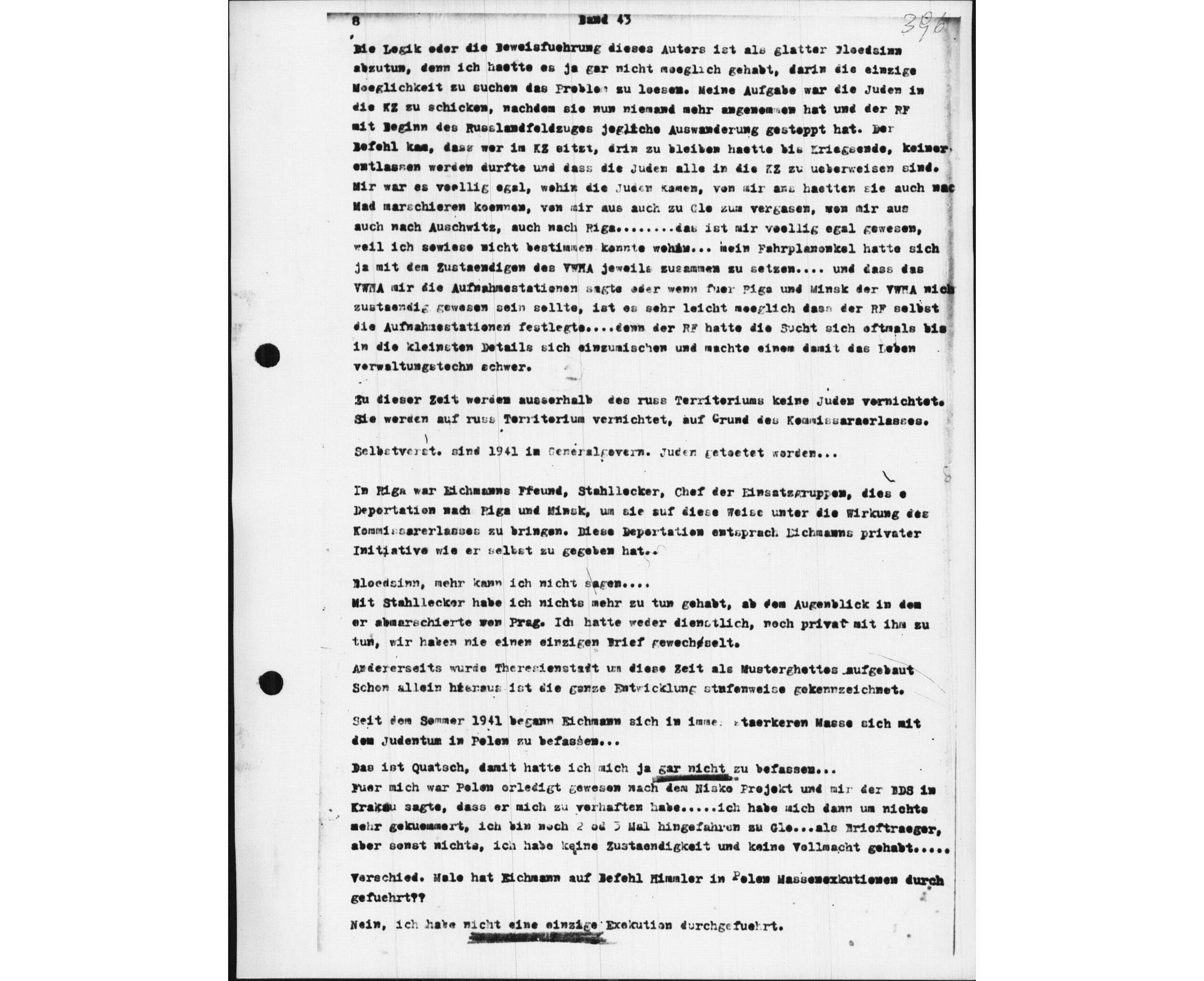
Page 715 of the Sassen typescript.
Page 1
of 716

Questioner

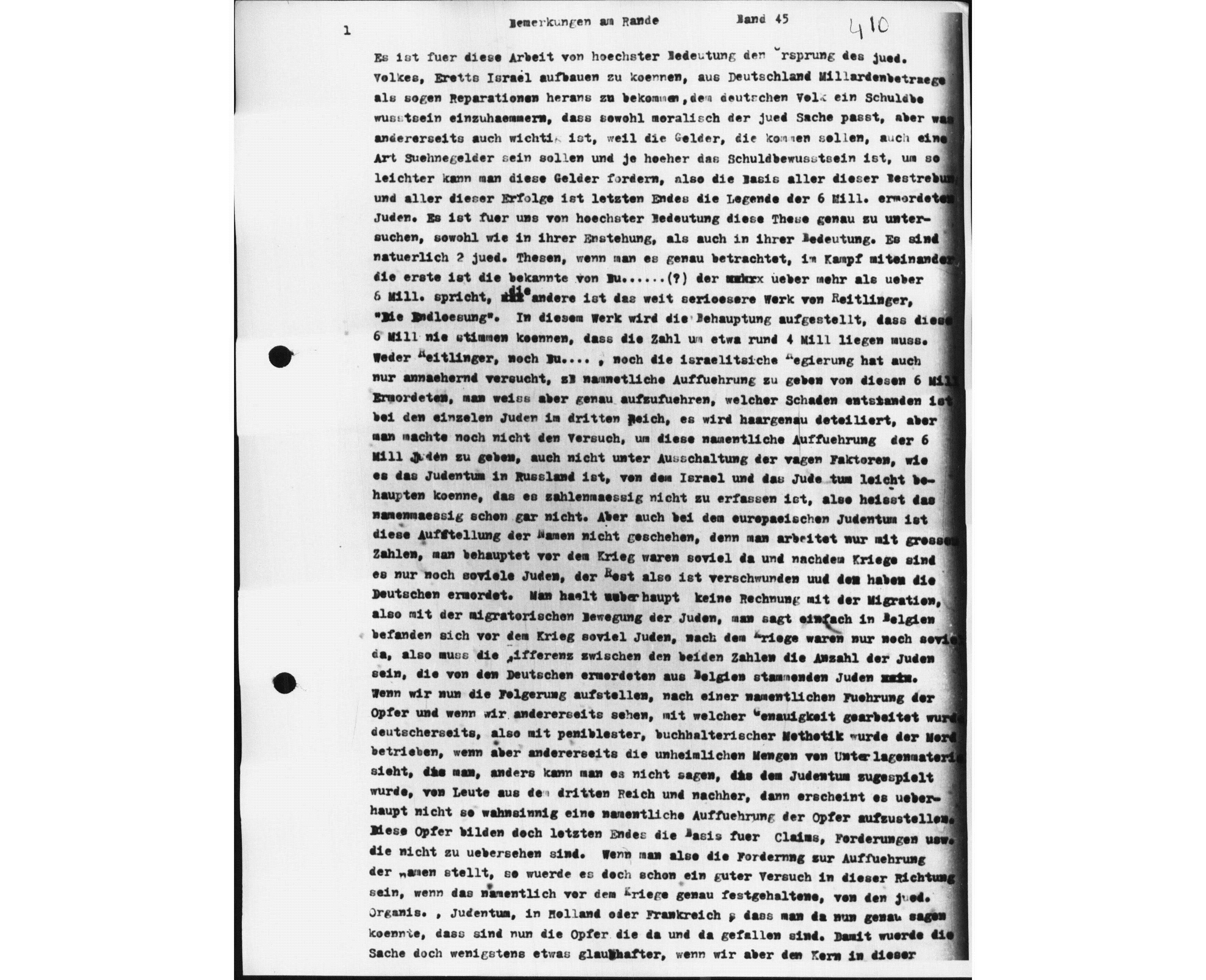
From which main thesis shall we proceed with this book?

The following: various ideas, various possibilities that have occurred to me, to set them out individually and as precisely as possible. They can then accordingly serve as a kind of leitmotif. In my opinion, it would make no sense for us to try to trivialize the matter; nor does it make sense to exaggerate the matter itself and say what the opponent wants to hear. Is there a middle way that would also serve the truth at the same time?

After all, what ultimately matters to us is to examine the truth and, insofar as the … of the objective—after all, what ultimately matters to us is to examine the truth, to investigate the truth. I think one possibility would be to portray the German people before and during the war as a people that, barely fifty years earlier, with a difference in time… had achieved its unity through Bismark. In the First World War it saw all the opposing forces united against it; through the unspeakable hardship after the First World War—the Jews were undoubtedly the beneficiaries of the German people's hardship.

One need only recall the mortgage affairs and the evictions of farmers in the north of the country: slowly but surely, a campaign of annihilation of the lower and upper middle classes, all of whom became victims of Jewish interest policy. The reason why the question of interest in particular met with such a wide response in the NSDAP (National Socialist German Workers' Party) program. That precisely in the period after the First World War there was a regression in political and economic terms, through which many of the efforts toward unity established with so much trouble through Bismark were largely undone again…

That this people, after the seizure of power in '33, had one foot on the path toward the development of a … realization of the national program, but the other foot on the warpath. That, through the course of the war, this people was suddenly called on across the board to undertake leadership tasks for which it lacked experience, and also that body of experience which gradually crystallizes into a certain technique, which does not have to be learned, which cannot be learned in crash courses either, but is the result and accumulation of many generations, of the bitter experiences of generations.

The German people, then, without this body of experience, was confronted with a leadership task for which experience and strength were utterly lacking. As German influence spread over the whole of Europe through the course of the war, and Jewish legislation had been proclaimed in Germany itself since 1936, there were still so many disturbing gaps in the practical implementation of that legislation. On the other hand, in the modern Reich that the Third Reich was, a problem now had to be solved with due regard for laws and regulations, and also for a certain distribution of power within the state.

All this led to great difficulties within Germany itself. Even Germany's efforts to solve the Jewish problem within Germany through emigration, with the involvement of foreign countries, remained without really tangible results. In such a way that one can say that, looking back, it becomes very clear that the foreign countries which later became enemy countries had from the outset kept this whole Jewish question as a weapon in reserve, and sought by every means to prevent this

Open page image and German
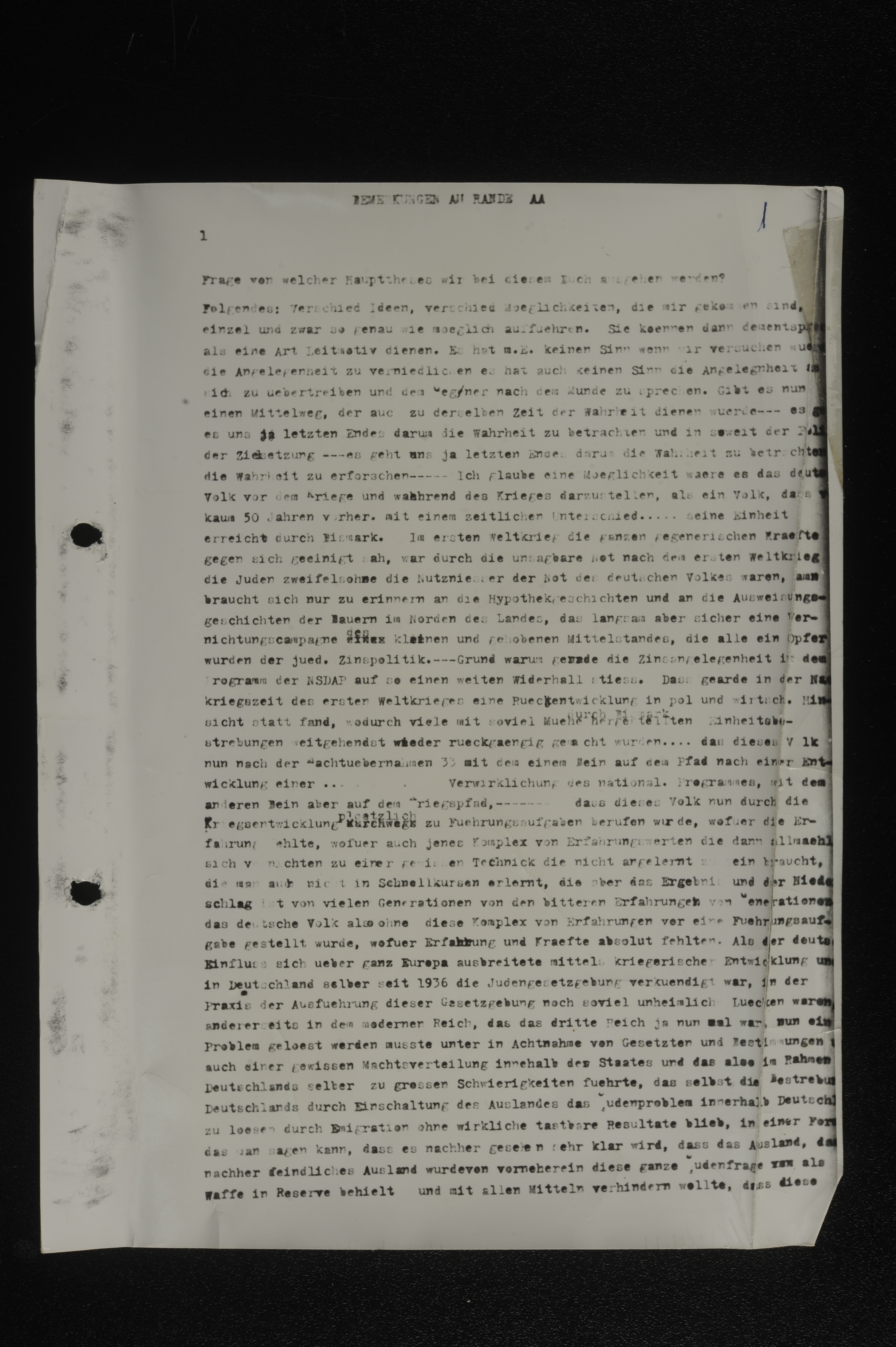
Page 1 of the typescript, O.65 file 85.
Page 1 · Yad Vashem Archives, O.65/85

German transcription

Frage von welcher Hauptthese wir bei diesem Buch ausgehen werden? Folgendes: Verschied Ideen, verschied Möglichkeiten, die mir gekommen sind, einzel und zwar so genau wie möglich aufführen. Sie können dann dementspr… als eine Art Leitmotiv dienen. Es hat m.E. keinen Sinn wenn wir versuchen wür… die Angelegenheit zu verniedlichen es hat auch keinen Sinn die Angelegenheit an sich zu übertreiben und dem Gegner nach dem Munde zu sprechen. Gibt es nun einen Mittelweg, der auch zu derselben Zeit der Wahrheit dienen würde – es g… es uns ja letzten Endes darum die Wahrheit zu betrachten und in soweit der Pol… der Zielsetzung – es geht uns ja letzten Endes darum die Wahrheit zu betrachten die Wahrheit zu erforschen – Ich glaube eine Möglichkeit wäre es das deut… Volk vor dem Kriege und während des Krieges darzustellen, als ein Volk, das v… kaum 50 Jahren vorher. mit einem zeitlichen Unterschied … seine Einheit erreicht durch Bismark. Im ersten Weltkrieg die ganzen gegnerischen Kräfte gegen sich geeinigt sah, war durch die unsagbare Not nach dem ersten Weltkrieg die Juden zweifelsohne die Nutznießer der Not des deutschen Volkes waren, man braucht sich nur zu erinnern an die Hypothekgeschichten und an die Ausweisungsgeschichten der Bauern im Norden des Landes, das langsam aber sicher eine Vernichtungscampagne des kleinen und gehobenen Mittelstandes, die alle ein Opfer wurden der jüd. Zinspolitik. – Grund warum gerade die Zinsangelegenheit in dem Programm der NSDAP auf so einen weiten Widerhall stieß. Daß gerade in der Na… kriegszeit des ersten Weltkrieges eine Rückentwicklung in pol und wirtsch. Hinsicht statt fand, wodurch viele mit soviel Mühe durch Bismark hergestellten Einheitsbestrebungen weitgehendst wieder rückgängig gemacht wurden … das dieses Volk nun nach der Machtübernahmen 33 mit dem einem Bein auf dem Pfad nach einer Entwicklung einer … Verwirklichung des national. Programmes, mit dem anderen Bein aber auf dem Kriegspfad, – daß dieses Volk nun durch die Kriegsentwicklung Plötzlich durchweg zu Führungsaufgaben berufen wurde, wofür die Erfahrung fehlte, wofür auch jenes Komplex von Erfahrungswerten die dann allmähl… sich verdichten zu einer gewissen Technik die nicht angelernt zu sein braucht, die man auch nicht in Schnellkursen erlernt, die aber das Ergebnis und der Niederschlag ist von vielen Generationen von den bitteren Erfahrungen von Generationen das deutsche Volk also ohne diese Komplex von Erfahrungen vor eine Führungsaufgabe gestellt wurde, wofür Erfahrung und Kräfte absolut fehlten. Als der deut… Einfluß sich über ganz Europa ausbreitete mittels kriegerischer Entwicklung un… in Deutschland selber seit 1936 die Judengesetzgebung verkündigt war, in der Praxis der Ausführung dieser Gesetzgebung noch soviel unheimlich Lücken waren, andererseits in dem moderner Reich, das das dritte Reich ja nun mal war, nun ein Problem gelöst werden mußte unter in Achtnahme von Gesetzten und Bestimmungen auch einer gewissen Machtverteilung innerhalb des Staates und das alles im Rahmen Deutschlands selber zu großen Schwierigkeiten führte, das selbst die Bestrebun… Deutschlands durch Einschaltung des Auslandes das Judenproblem innerhalb Deutschl… zu lösen durch Emigration ohne wirkliche tastbare Resultate blieb, in einer For… das man sagen kann, daß es nachher gesehen sehr klar wird, daß das Ausland, da… nachher feindliches Ausland wurde von vorneherein diese ganze Judenfrage als Waffe in Reserve behielt und mit allen Mitteln verhindern wollte, daß diese

Draft translation

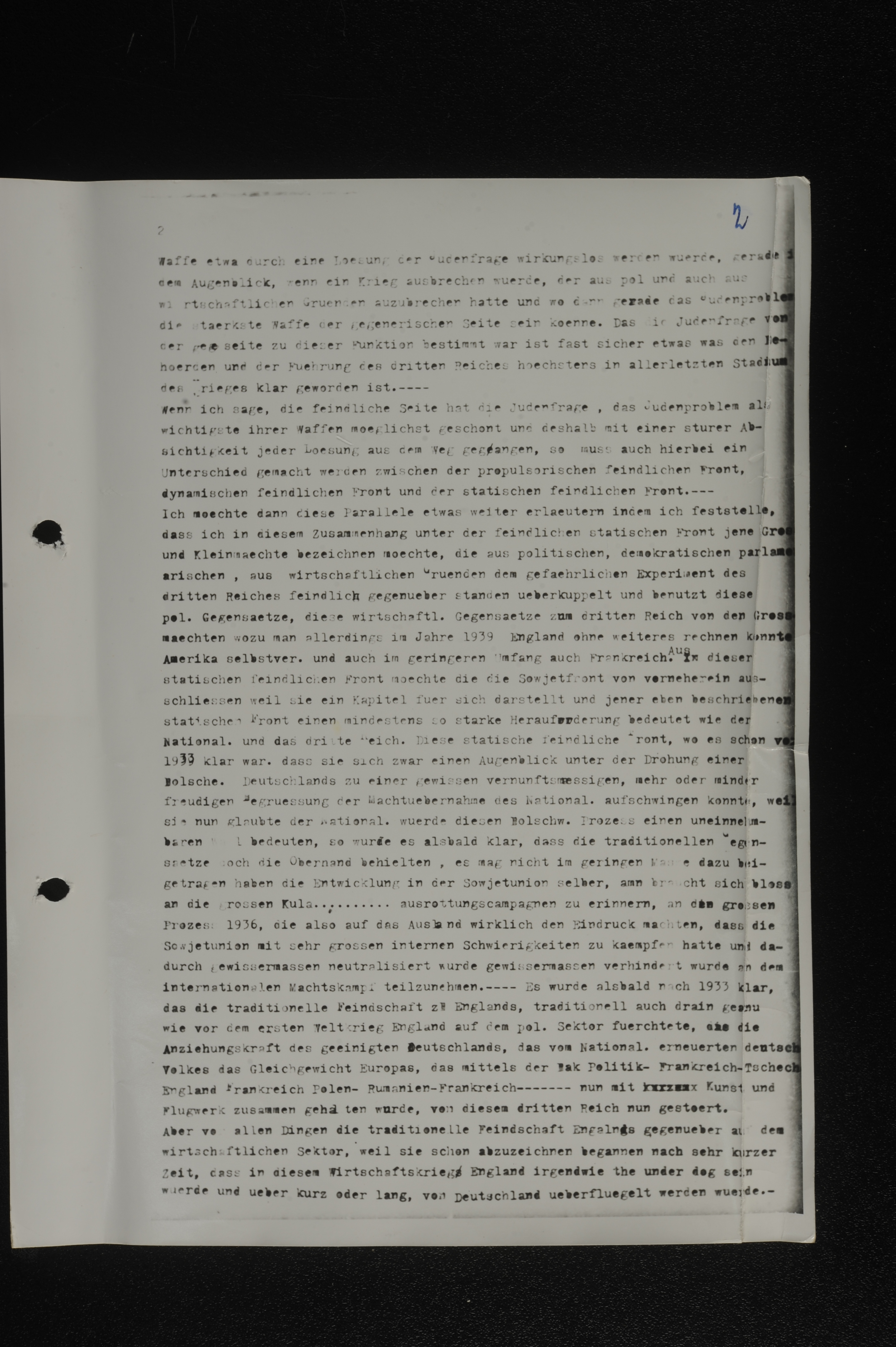
MARGINAL REMARKS AA 1 [HW: 1] Question: from which main thesis will we proceed with this book? The following: Different ideas, different possibilities that have occurred to me, to set out individually and indeed as precisely as possible. They can then [EDGE: probably accordingly] serve as a kind of leitmotif. It makes no sense in my opinion if we [EDGE: probably were] to try to trivialize the matter, it also makes no sense to exaggerate the matter in itself and to speak in a manner pleasing to the opponent [lit. to speak according to the opponent's mouth]. Is there now a middle way that would at the same time also serve the truth--- it [EDGE: probably is] after all ultimately a matter for us of considering the truth and insofar the Pol[EDGE: ending missing] of the objective ---it is after all ultimately a matter for us of considering the truth of investigating the truth----- I believe one possibility would be to portray the German[EDGE: ending missing] people before the war and during the war, as a people that [EDGE: missing after the source letter v] barely 50 years before. with a temporal difference..... achieved its unity through Bismarck [source spelling: Bismark]. In the first World War saw the entire opposing forces united against itself, was through the unspeakable hardship after the first World War the Jews were without doubt the beneficiaries of the hardship of the German people, one need only recall the mortgage stories and the eviction- stories of the peasants in the north of the country, which slowly but surely a campaign of annihilation [DEL: eixxx] [HW: of the] small and elevated middle class, which all became a victim of the Jew[ish] interest policy.----Reason why precisely the interest matter in the program of the NSDAP met with such a wide resonance. That precisely in the af[EDGE: ter]- war period of the first World War a regression in pol[itical] and econom[ic] respect took place, whereby many unity-endeavors established with so much effort [HW: through Bismarck] were to a large extent again reversed.... that this peop[EDGE: le] now after the seizure of power 33 with one leg on the path toward a develop- ment of a ...... . realization of the national[ABBR: ending not written] program, but with the other leg on the war path,------- that this people now through the war-development [HW: Suddenly] throughout was called to leadership tasks, for which the ex- perience was lacking, for which also that complex of experiential values which then gradual[EDGE: ending missing] condense into a certain technique which need not be learned by rote, which one also does not learn in crash courses, which however is the result and the precipitate of many generations of the bitter experiences of generations the German people therefore without this complex of experiences was placed before a leadership task, for which experience and forces were absolutely lacking. As the German[EDGE: ending missing] influence spread over all of Europe by means of warlike development [EDGE: and] in Germany itself since 1936 the Jewish legislation was proclaimed, in the practice of the execution of this legislation there were still so many uncanny gaps, on the other hand in the modern Reich, that the Third Reich after all now was, now a problem had to be solved with regard for laws and regulations also a certain distribution of power within the State and all that within the framework of Germany itself led to great difficulties, that even the endeavor[EDGE: plural ending missing] of Germany through the involvement of foreign countries to solve the Jewish problem within German[EDGE: y] through emigration remained without really tangible results, in a for[EDGE: m] that one can say that seen afterward it becomes very clear that the foreign countries, tha[EDGE: t] afterward became hostile foreign countries kept from the outset this whole Jewish question [DEL: illegible typewriter overtyping] as a weapon in reserve and wanted by all means to prevent that this

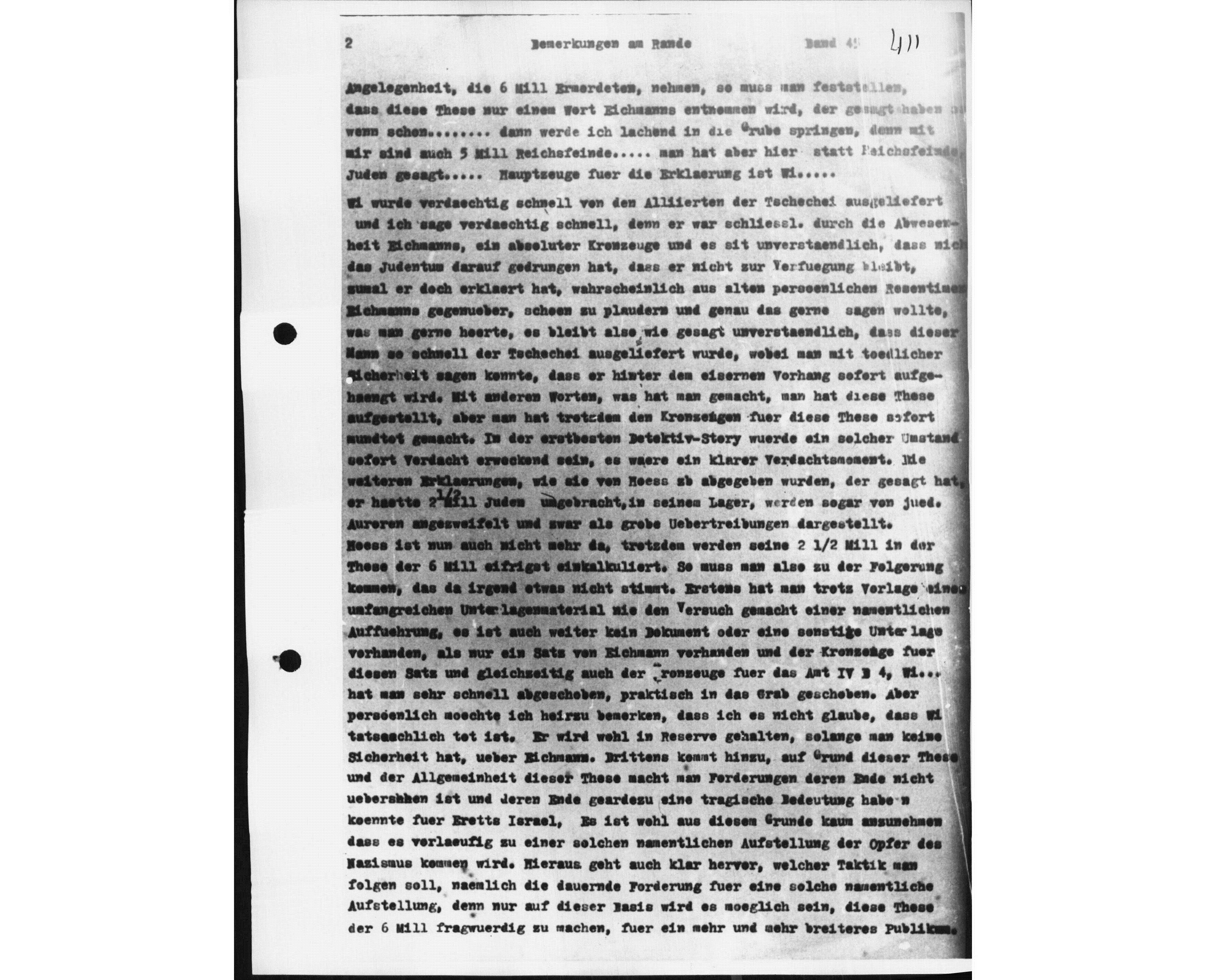
weapon from becoming ineffective, for example through a solution of the Jewish question, precisely at the moment when a war would break out—a war that had to break out for political and also economic reasons, and in which the Jewish problem could then be the opposing side's strongest weapon. That the opposing side had intended the Jewish question to serve this function is almost certainly something that became clear to the authorities and leadership of the Third Reich, if at all, only in the very last stage of the war.

When I say that the enemy side preserved the Jewish question, the Jewish problem, as the most important of its weapons as far as possible, and therefore avoided every solution with stubborn deliberateness, a distinction must also be made here between the propulsive enemy front, the dynamic enemy front, and the static enemy front.

I would like to explain this parallel a little further by saying that, in this context, by the static enemy front I mean those great and small powers which, for political, democratic, parliamentary and economic reasons, were hostile to the dangerous experiment of the Third Reich—these political antagonisms, these economic antagonisms toward the Third Reich, overarched and exploited by the great powers, among which in 1939 one could certainly count England, America of course, and France too, to a lesser extent.

From this static enemy front I would exclude the Soviet front from the outset, because it is a chapter of its own and presents at least as strong a challenge to the static front just described as National Socialism and the Third Reich do. This static enemy front, where it was already clear before 1933 that, under the threat of the Bolshevization of Germany, it could for a moment rise to a certain rational, more or less joyful welcome of the National Socialist seizure of power, because it now believed National Socialism would form an impregnable wall against this Bolshevik process—yet it soon became clear that the traditional antagonisms still had the upper hand.

Developments in the Soviet Union itself may have contributed to this in no small measure. One need only recall the great Kula… extermination campaigns and the great trial of 1936, which really gave foreign countries the impression that the Soviet Union had very great internal difficulties to contend with and was thereby, to a certain extent, neutralized, to a certain extent prevented from taking part in the international struggle for power.

It became clear soon after 1933 that the traditional hostility of England, for example—traditional in this respect too, just as before the First World War: politically, England feared that the attraction of a united Germany, of the German people renewed by National Socialism, would disturb the balance of Europe. This balance, held together by the Bak policy—France–Czechoslovakia, England–France–Poland–Romania–France—with artifice and flying apparatus (Flugwerk), was now disturbed by this Third Reich. But above all, England's traditional hostility in the economic sphere, because after a very short time it was already beginning to become apparent that in this economic war England would somehow be the underdog and, sooner or later, would be outstripped by Germany.

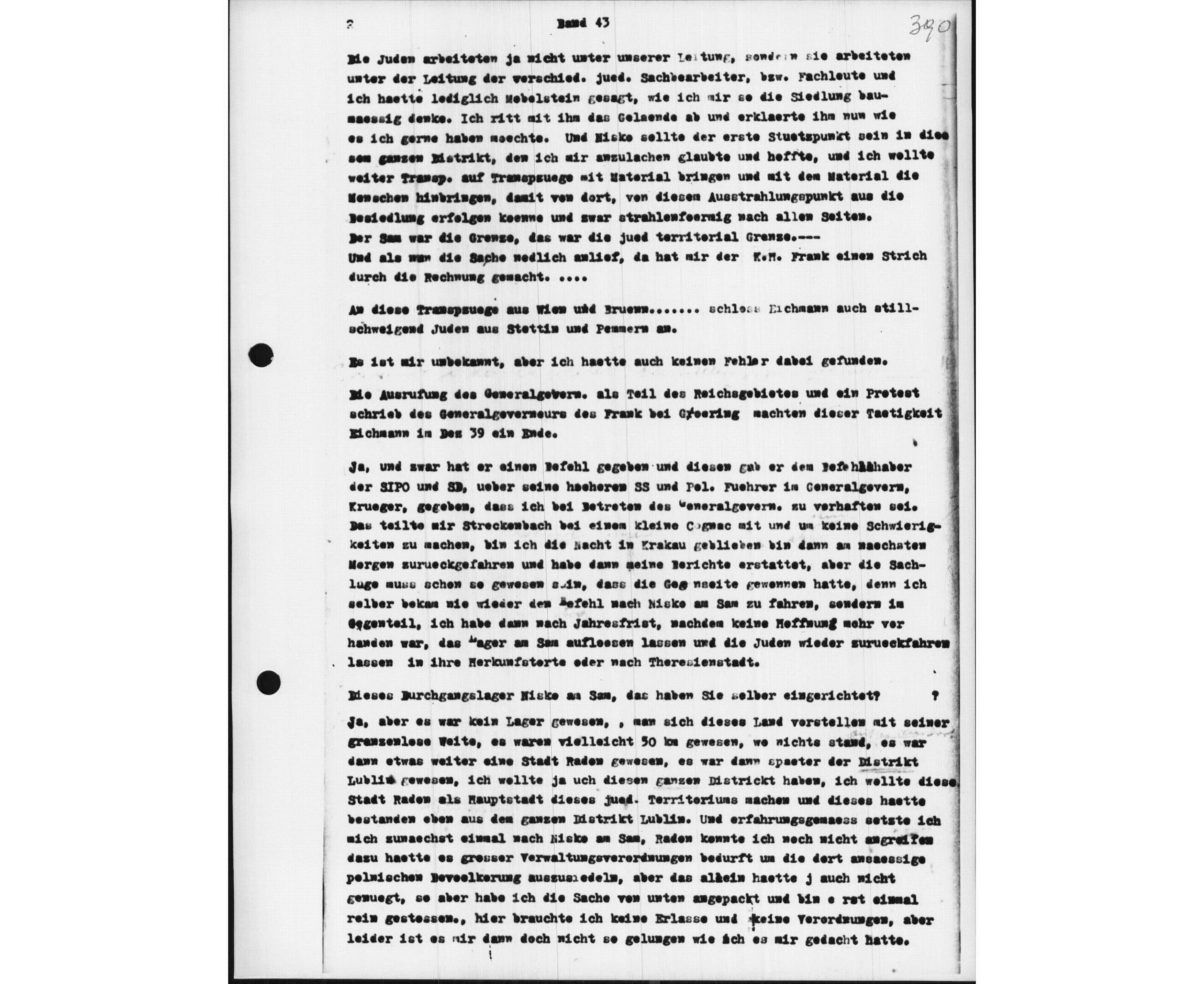
Open page image and German
Page 2 of the typescript, O.65 file 85.
Page 2 · Yad Vashem Archives, O.65/85

German transcription

Waffe etwa durch eine Lösung der Judenfrage wirkungslos werden würde, gerade i… dem Augenblick, wenn ein Krieg ausbrechen würde, der aus pol und auch aus wirtschaftlichen Gründen auszubrechen hatte und wo dann gerade das Judenproblem die stärkste Waffe der gegnerischen Seite sein könne. Das die Judenfrage von der geg. seite zu dieser Funktion bestimmt war ist fast sicher etwas was den Behörden und der Führung des dritten Reiches höchstens in allerletzten Stadium des Krieges klar geworden ist. – Wenn ich sage, die feindliche Seite hat die Judenfrage, das Judenproblem als wichtigste ihrer Waffen möglichst geschont und deshalb mit einer sturer Absichtigkeit jeder Lösung aus dem Weg gegangen, so muß auch hierbei ein Unterschied gemacht werden zwischen der propulsorischen feindlichen Front, dynamischen feindlichen Front und der statischen feindlichen Front. – Ich möchte dann diese Parallele etwas weiter erläutern indem ich feststelle, daß ich in diesem Zusammenhang unter der feindlichen statischen Front jene Groß und Kleinmächte bezeichnen möchte, die aus politischen, demokratischen parlame… arischen, aus wirtschaftlichen Gründen dem gefährlichen Experiment des dritten Reiches feindlich gegenüber standen überkuppelt und benutzt diese pol. Gegensätze, diese wirtschaftl. Gegensätze zum dritten Reich von den Großmächte wozu man allerdings im Jahre 1939 England ohne weiteres rechnen konnte Amerika selbstver. und auch im geringeren Umfang auch Frankreich. Aus dieser statischen feindlichen Front möchte die die Sowjetfront von vorneherein ausschließen weil sie ein Kapitel für sich darstellt und jener eben beschriebenen statischen Front einen mindestens so starke Herausforderung bedeutet wie der National. und das dritte Reich. Diese statische feindliche Front, wo es schon vo… 1933 klar war. daß sie sich zwar einen Augenblick unter der Drohung einer Bolsche. Deutschlands zu einer gewissen vernunftsmessigen, mehr oder minder freudigen Begrüßung der Machtübernahme des National. aufschwingen konnte, weil sie nun glaubte der National. würde diesen Bolschw. Prozeß einen uneinnehmbaren Wall bedeuten, so wurde es alsbald klar, daß die traditionellen Gegensätze noch die Oberhand behielten, es mag nicht im geringen Masse dazu beigetragen haben die Entwicklung in der Sowjetunion selber, man braucht sich bloß an die großen Kula … ausrottungscampagnen zu erinnern, an den großen Prozeß 1936, die also auf das Ausland wirklich den Eindruck machten, daß die Sowjetunion mit sehr großen internen Schwierigkeiten zu kämpfen hatte und dadurch gewissermaßen neutralisiert wurde gewissermaßen verhindert wurde an dem internationalen Machtskampf teilzunehmen. – Es wurde alsbald nach 1933 klar, das die traditionelle Feindschaft zB Englands, traditionell auch darin genau wie vor dem ersten Weltkrieg England auf dem pol. Sektor fürchtete, ans die Anziehungskraft des geeinigten Deutschlands, das vom National. erneuerten deutsch… Volkes das Gleichgewicht Europas, das mittels der Bak Politik- Frankreich-Tschech… England Frankreich Polen- Rumanien-Frankreich – nun mit Kunst und Flugwerk zusammen gehalten wurde, von diesem dritten Reich nun gestört. Aber vor allen Dingen die traditionelle Feindschaft Englands gegenüber auf dem wirtschaftlichen Sektor, weil sie schon abzuzeichnen begannen nach sehr kurzer Zeit, daß in diesem Wirtschaftskrieg England irgendwie the under dog sein würde und über kurz oder lang, von Deutschland überflügelt werden würde. –

Draft translation

weapon would become ineffective, for instance through a solution of the Jewish question, precisely at the moment when a war would break out, which for pol[itical] and also for economic reasons had to break out and where then precisely the Jewish problem could be the strongest weapon of the opposing side. That the Jewish question was destined for this function by the oppos[ing] side is almost certainly something that became clear to the authorities and the leadership of the Third Reich at most in the very last stage of the war.----- When I say the enemy side spared the Jewish question, the Jewish problem, as the most important of its weapons as much as possible and therefore avoided every solution with a stubborn deliberateness, then here too a distinction must be made between the propulsory enemy front, dynamic enemy front and the static enemy front.--- I would then like to elaborate this parallel somewhat further by establishing that in this connection I would like to designate under the enemy static front those great and small powers which, out of political, democratic, parliamentary [parlame(ntary)], out of economic reasons, stood hostile to the dangerous experiment of the Third Reich, overarched [?] and use these pol[itical] antagonisms, these economic antagonisms toward the Third Reich, of the great powers, among which in the year 1939 one could without further ado count England, America of course [selbstver(ständlich)] and also to a lesser extent also France. [TS INS: Out] In this static enemy front I would like to exclude the Soviet front from the outset because it represents a chapter of its own and constitutes at least as strong a challenge to that just-described static front as National[ism] and the Third Reich. This static enemy front, where it was already clear before [vo(r)] 1933, that although for a moment under the threat of a Bolshe[vik] Germany [Bolshevization of Germany?] it could rise up to a certain reasonable, more or less joyful welcome of the seizure of power by National[ism], because it now believed National[ism] would mean an impregnable wall to this Bolshevik process, so it soon became clear that the traditional antagonisms still retained the upper hand, it may not in small measure have contributed to it the development in the Soviet Union itself, one need only recall the great Kula[k].......... extermination campaigns, the great trial of 1936, which thus really made the impression on foreign countries that the Soviet Union had to struggle with very great internal difficulties and was thereby to a certain extent neutralized, to a certain extent prevented from taking part in the international power struggle.----- It became clear soon after 1933 that the traditional hostility, for example England's [zB Englands], traditionally also therein [drain — sic], just as before the first World War, England feared on the pol[itical] sector [ans — sic] the attractive force of united Germany, that of the National[ism-] renewed German people, the balance of Europe, that by means of the Bak[?] policy — France-Czech[oslovakia], England-France-Poland-Romania-France ------ now with [DEL: illegible typewriter overtyping] art and [Flugwerk — meaning uncertain] was held together, now disturbed by this Third Reich. But above all things the traditional hostility of England [Engalnds — sic] toward [it] on the economic sector, because they already began to become apparent after a very short time, that in this economic war England would somehow be the under dog and sooner or later would be outstripped by Germany.-

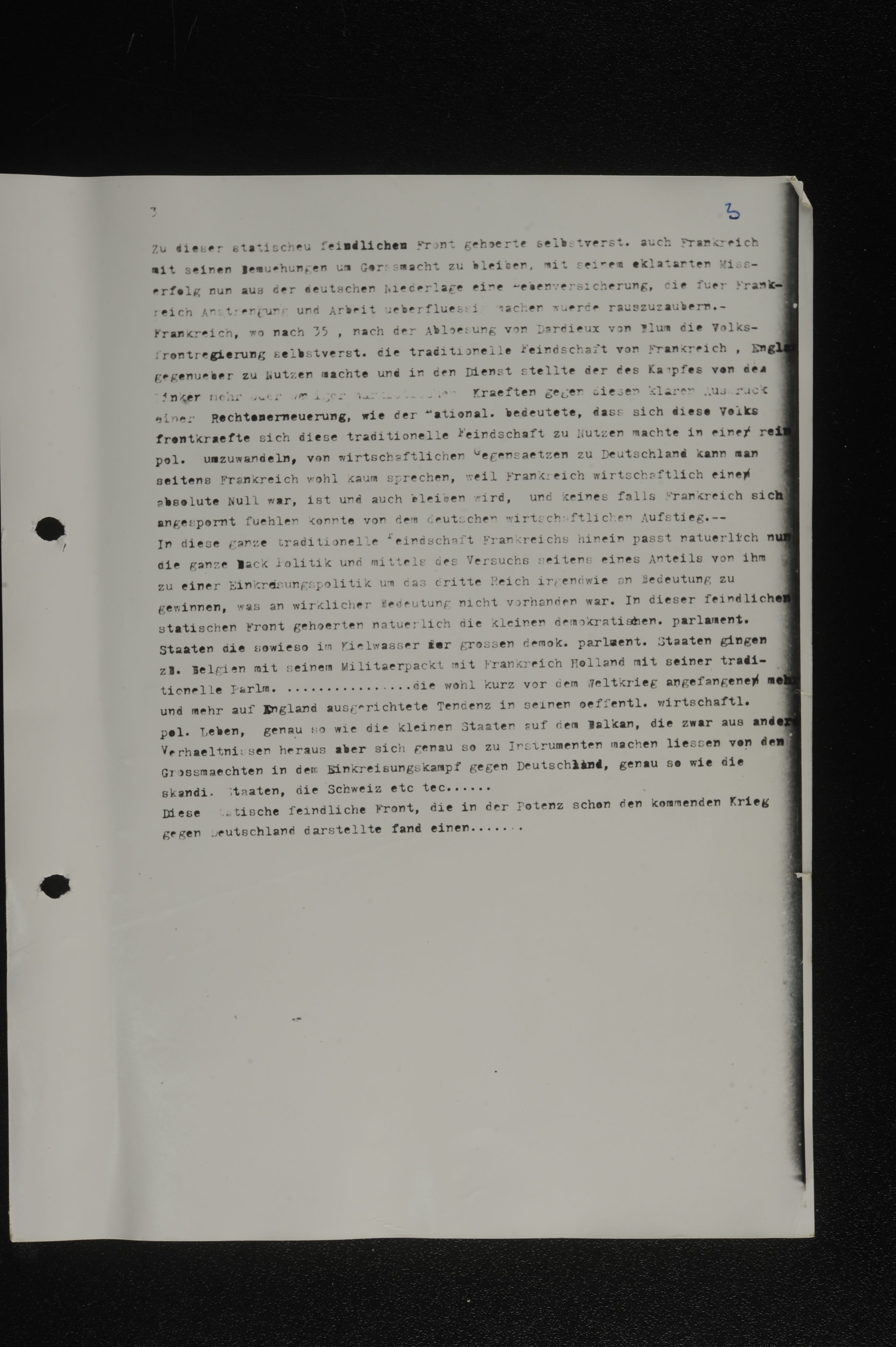
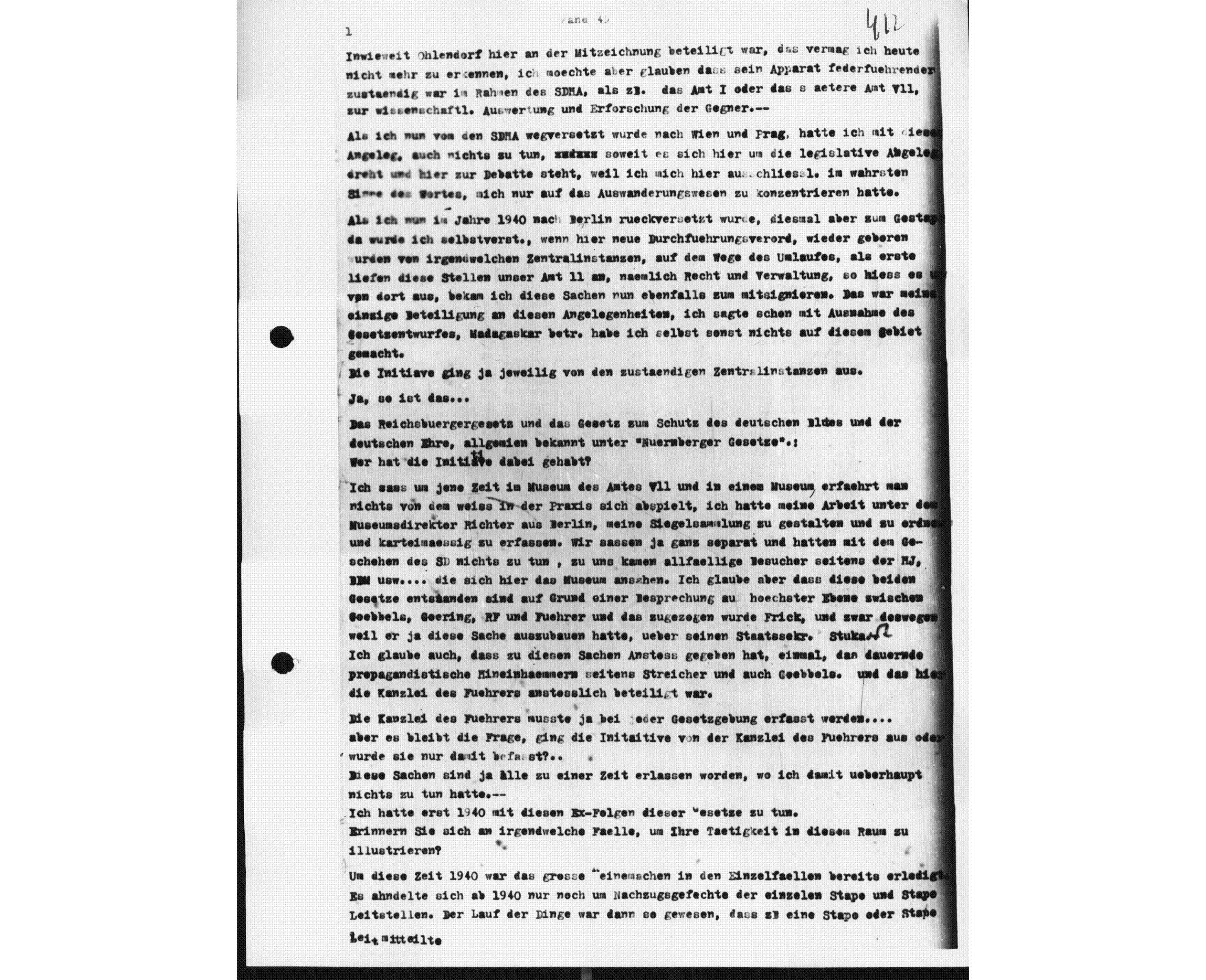
France also belonged to this static hostile front, of course, with its efforts to remain a great power and its glaring failure to conjure out of Germany's defeat a life-insurance policy that would make effort and work unnecessary for France. France, where after '35, after Dardieux was replaced by Blum, the Popular Front government naturally made use of France's traditional hostility toward England and placed it in the service of the struggle of the left-wing, more or less … forces against this clear expression of a renewal of the Right that National Socialism represented. These Popular Front forces made use of this traditional hostility to turn it into a purely political one. One can hardly speak of economic antagonisms toward Germany on France's part, because economically France was, is, and will remain an absolute zero, and could in no way feel spurred on by Germany's economic rise.

Into this whole traditional hostility of France there naturally fits the whole Back policy, and the attempt, on the part of a section of it, to gain some importance through a policy of encirclement against the Third Reich—importance that was not really there. This hostile static front naturally included the small democratic parliamentary states that in any case followed in the wake of the great democratic parliamentary states.

For example, Belgium with its military pact with France; Holland with its traditional parliamentary… and the tendency, probably beginning shortly before the World War, for its public, economic and political life to become more and more oriented toward England. Just like the small states in the Balkans which, although under different circumstances, likewise allowed the great powers to make them into instruments in the struggle to encircle Germany; just like the Scandinavian states, Switzerland, and so on and so on…

This static hostile front, which already represented the coming war against Germany in potential, found a…

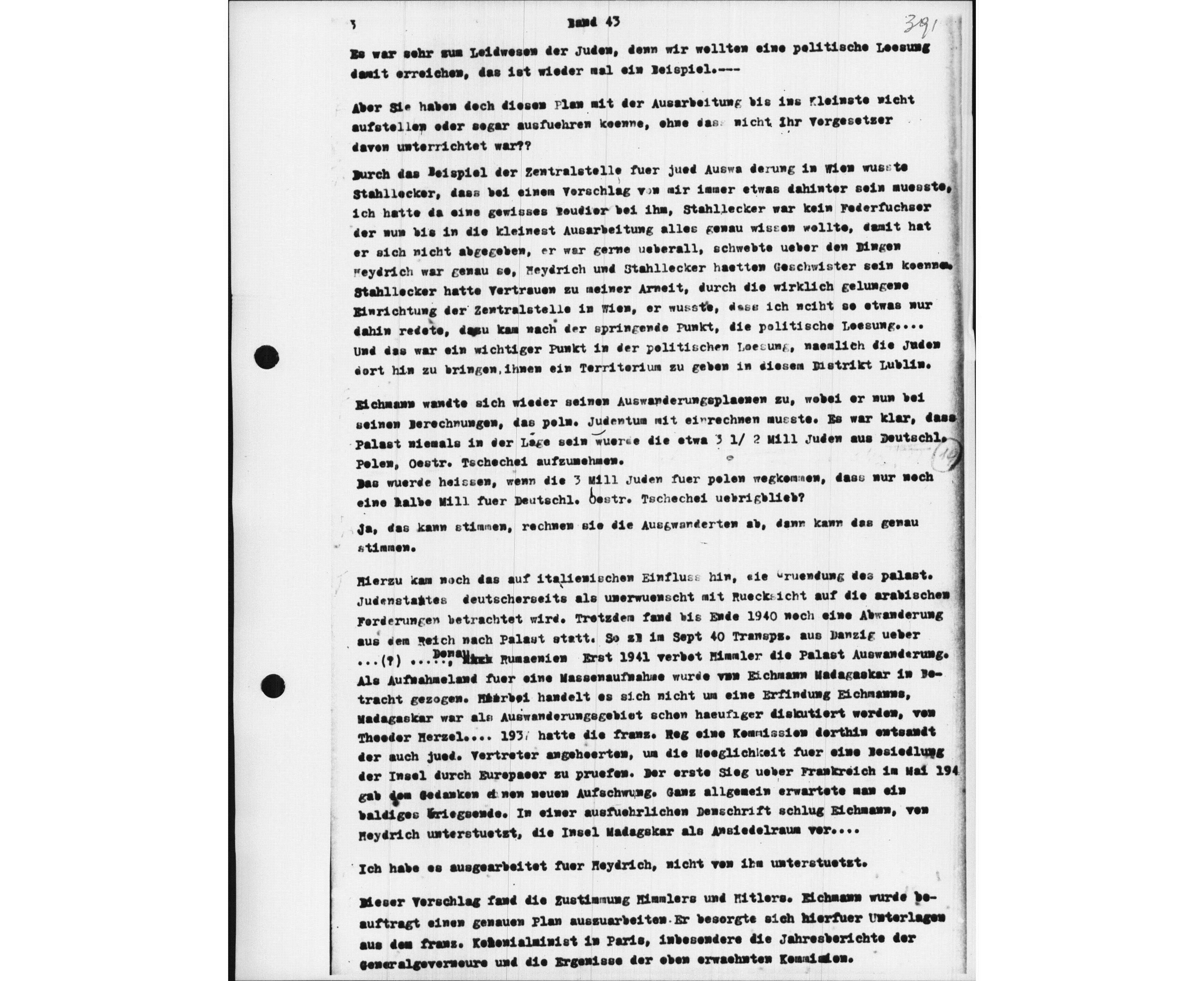
Open page image and German
Page 3 of the typescript, O.65 file 85.
Page 3 · Yad Vashem Archives, O.65/85

German transcription

Zu dieser statischen feindlichen Front gehörte selbstverst. auch Frankreich mit seinen Bemühungen um Großmacht zu bleiben, mit seinem eklatanten Mißerfolg nun aus der deutschen Niederlage eine Lebensversicherung, die für Frankreich Anstrengung und Arbeit überflüssig machen würde rauszuzaubern. – Frankreich, wo nach 35, nach der Ablösung von Dardieux von Blum die Volksfrontregierung selbstverst. die traditionelle Feindschaft von Frankreich, Engla… gegenüber zu Nutzen machte und in den Dienst stellte der des Kampfes von dea linker mehr oder weniger marxistischen Kräften gegen diesen klaren Ausdruck einer Rechtenerneuerung, wie der National. bedeutete, daß sich diese Volksfrontkräfte sich diese traditionelle Feindschaft zu Nutzen machte in einer rein pol. umzuwandeln, von wirtschaftlichen Gegensätzen zu Deutschland kann man seitens Frankreich wohl kaum sprechen, weil Frankreich wirtschaftlich einer absolute Null war, ist und auch bleiben wird, und keines falls Frankreich sich angespornt fühlen konnte von dem deutschen wirtschaftlichen Aufstieg. – In diese ganze traditionelle Feindschaft Frankreichs hinein paßt natürlich nun die ganze Back Politik und mittels des Versuchs seitens eines Anteils von ihm zu einer Einkreisungspolitik um das dritte Reich irgendwie an Bedeutung zu gewinnen, was an wirklicher Bedeutung nicht vorhanden war. In dieser feindlichen statischen Front gehörten natürlich die kleinen demokratischen. parlament. Staaten die sowieso im Kielwasser der großen demok. parlment. Staaten gingen zB. Belgien mit seinem Militärpackt mit Frankreich Holland mit seiner traditionelle Parlm. … die wohl kurz vor dem Weltkrieg angefangenen mehr und mehr auf England ausgerichtete Tendenz in seinen öffentl. wirtschaftl. pol. Leben, genau so wie die kleinen Staaten auf dem Balkan, die zwar aus ander… Verhältnissen heraus aber sich genau so zu Instrumenten machen ließen von den Großmächten in dem Einkreisungskampf gegen Deutschland, genau so wie die skandi. Staaten, die Schweiz etc tec … Diese statische feindliche Front, die in der Potenz schon den kommenden Krieg gegen Deutschland darstellte fand einen …

Draft translation

3 [HW: 3] To this static hostile front belonged of course also France with its efforts to remain a great power, with its blatant failure now to conjure out of the German defeat a life insurance that would make effort and work superfluous for France.- France, where after 35, after the replacement of Dardieux by Blum the Popular Front government of course made use of France's traditional enmity toward Engla[nd] and placed [it] in the service of the of the struggle of the left, more or less [?marxist?] forces against this clear expression of a renewal of the Right, such as the damaged "ational." meant, that these Popular Front forces made use of this traditional enmity to transform [it] into a purely pol[itical] one, of economic antagonisms toward Germany one can hardly speak on the part of France, because France economically was, is and will also remain an absolute zero, and in no case could France feel spurred on by the German economic rise.-- Into this whole traditional enmity of France there fits of course now the whole Back policy and by means of the attempt on the part of a portion of it toward an encirclement policy in order somehow to gain in importance against the Third Reich, which in real importance was not present. In this hostile static front belonged of course the small democratic. parliament[ary] states which anyway went in the wake of the large democ[ratic]. parliment[ary]. states e.g. Belgium with its military pact with France Holland with its tradi-tional Parlm[.] ................ the tendency, probably begun shortly before the World War, more and more oriented toward England in its public economic pol[itical] life, exactly like the small states in the Balkans, which indeed out of other circumstances but let themselves be made into instruments just the same by the great powers in the encirclement struggle against Germany, exactly like the Scandi[navian] states, Switzerland etc etc...... This static hostile front, which in its potency already represented the coming war against Germany, found a.......

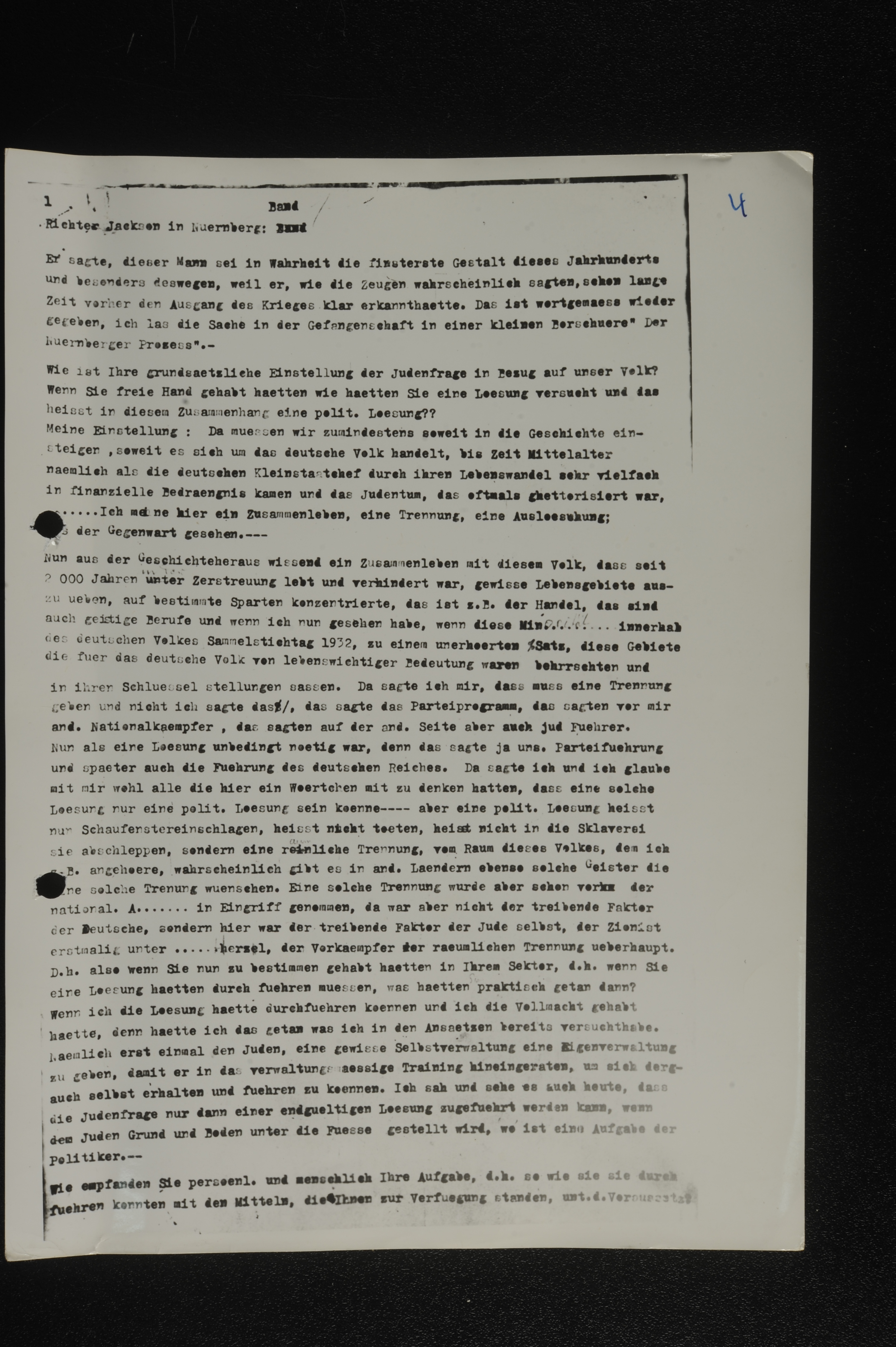
[Judge Jackson in Nuremberg:]

He said that this man was in truth the darkest figure of this century, particularly because, as the witnesses probably said, he had clearly recognized the outcome of the war long beforehand. That is reproduced word for word. I read it in captivity, in a small pamphlet, “The Nuremberg Trial.”

Questioner

What is your fundamental attitude toward the Jewish question in relation to our people? If you had had a free hand, how would you have attempted a solution—and in this context that means a political solution?

Eichmann

My attitude: we must go back into history at least as far as the Middle Ages, insofar as the German people is concerned, namely when the rulers of the small German states very often got into financial difficulties through their way of life, and Jewry, which was often confined to ghettos… I mean here coexistence, separation, annihilation; as seen from the present.

Now, knowing from history—coexistence with this people, which has lived in dispersion for 2,000 years and was prevented from pursuing certain fields of life, and concentrated on particular branches, for example trade, and also intellectual professions. And when I saw that this minority within the German people, taking 1932 as the reference date, dominated to an unheard-of percentage those fields which were of vital importance to the German people and occupied their key positions, I said to myself that there must be a separation.

And it was not I who said that: the Party program said it, other national fighters said it before me, and Jewish leaders on the other side said it too. Now, since a solution was absolutely necessary—for that is what our Party leadership said, and later the leadership of the German Reich too—I said, and I believe everyone who had some part in thinking about this agreed with me, that such a solution could only be a political solution.

But a political solution only means smashing shop windows, does not mean killing, does not mean dragging them off into slavery, but a spatial separation from the territory of this people to which I, for example, belong. There are probably people of the same mind in other countries who wish for a separation of this kind. Such a separation had already been taken in hand before the national A…. But the driving force there was not the German; the driving force was the Jew himself, the Zionist, first under … hersel, the pioneer of territorial separation in the first place.

Questioner

That is to say, if you had had the say in your sector, if you had had to carry out a solution, what would you have done in practice?

Eichmann

If I had been able to carry out the solution and had had full authority, I would have done what I had already begun to attempt: first of all, to give the Jew a certain self-administration, an administration of his own, so that he would acquire administrative training and thus be able to maintain and govern himself. I saw, and still see today, that the Jewish question can be brought to a final solution only when the Jew is given land and soil under his feet. Where is a matter for the politicians.

Questioner

How did you feel about your task personally and as a human being, that is, as you were able to carry it out with the means at your disposal, under the conditions…

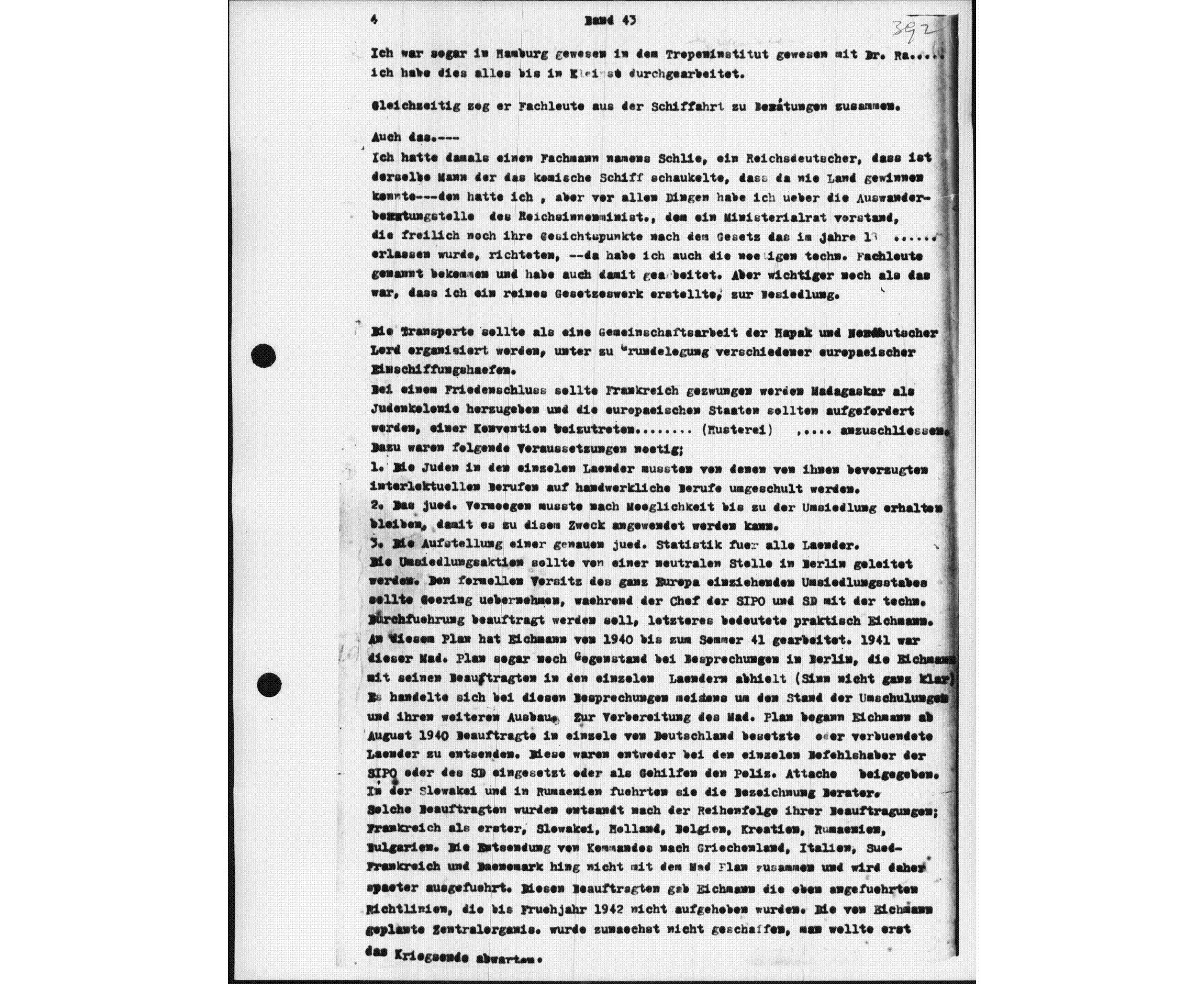
Open page image and German
Page 4 of the typescript, O.65 file 85.
Page 4 · Yad Vashem Archives, O.65/85

German transcription

Richter Jackson in Nürnberg: Er sagte, dieser Mann sei in Wahrheit die finsterste Gestalt dieses Jahrhunderts und besonders deswegen, weil er, wie die Zeugen wahrscheinlich sagten, schon lange Zeit vorher den Ausgang des Krieges klar erkannt hätte. Das ist wortgemäß wieder gegeben, ich las die Sache in der Gefangenschaft in einer kleinen Broschüre" Der Nürnberger Prozeß". – Wie ist Ihre grundsätzliche Einstellung der Judenfrage in Bezug auf unser Volk? Wenn Sie freie Hand gehabt hätten wie hätten Sie eine Lösung versucht und das heißt in diesem Zusammenhang eine polit. Lösung?? Meine Einstellung: Da müssen wir zumindestens soweit in die Geschichte einsteigen, soweit es sich um das deutsche Volk handelt, bis Zeit Mittelalter nämlich als die deutschen Kleinstaatchef durch ihren Lebenswandel sehr vielfach in finanzielle Bedrängnis kamen und das Judentum, das oftmals ghetterisiert war, … Ich meine hier ein Zusammenleben, eine Trennung, eine Auslöschung; aus der Gegenwart gesehen. – Nun aus der Geschichte heraus wissend ein Zusammenleben mit diesem Volk, daß seit 2 000 Jahren in der Zerstreuung lebt und verhindert war, gewisse Lebensgebiete auszuüben, auf bestimmte Sparten konzentrierte, das ist z.B. der Handel, das sind auch geistige Berufe und wenn ich nun gesehen habe, wenn diese Minorität … innerhalb des deutschen Volkes Sammelstichtag 1932, zu einem unerhörten %Satz, diese Gebiete die für das deutsche Volk von lebenswichtiger Bedeutung waren beherrschten und in ihrer Schlüsselstellungen saßen. Da sagte ich mir, daß muß eine Trennung geben und nicht ich sagte daß[unleserlich], das sagte das Parteiprogramm, das sagten vor mir and. Nationalkämpfer, das sagten auf der and. Seite aber auch jud Führer. Nun als eine Lösung unbedingt nötig war, denn das sagte ja uns. Parteiführung und später auch die Führung des deutschen Reiches. Da sagte ich und ich glaube mit mir wohl alle die hier ein Wörtchen mit zu denken hatten, daß eine solche Lösung nur eine polit. Lösung sein könne – aber eine polit. Lösung heißt nur Schaufenstereinschlagen, heißt nicht töten, heißt nicht in die Sklaverei sie abschleppen, sondern eine räumliche Trennung, vom Raum dieses Volkes, dem ich z.B. angehöre, wahrscheinlich gibt es in and. Ländern ebenso solche Geister die eine solche Trennung wünschen. Eine solche Trennung wurde aber schon vorm der national. A … in Eingriff genommen, da war aber nicht der treibende Faktor der Deutsche, sondern hier war der treibende Faktor der Jude selbst, der Zionist erstmalig unter … hersel, der Vorkämpfer der räumlichen Trennung überhaupt. D.h. also wenn Sie nun zu bestimmen gehabt hätten in Ihrem Sektor, d.h. wenn Sie eine Lösung hätten durch führen müssen, was hätten praktisch getan dann? Wenn ich die Lösung hätte durchführen können und ich die Vollmacht gehabt hätte, denn hätte ich das getan was ich in den Ansätzen bereits versucht habe. Nämlich erst einmal den Juden, eine gewisse Selbstverwaltung eine Eigenverwaltung zu geben, damit er in das verwaltungsmäßige Training hineingeraten, um sich derg… auch selbst erhalten und führen zu können. Ich sah und sehe es auch heute, daß die Judenfrage nur dann einer endgültigen Lösung zugeführt werden kann, wenn dem Juden Grund und Boden unter die Füße gestellt wird, wo ist eine Aufgabe der Politiker. – Wie empfanden Sie persönl. und menschlich Ihre Aufgabe, d.h. so wie sie sie durch führen konnten mit den Mitteln, die Ihnen zur Verfügung standen, unt.d.Voraussetz

Draft translation

1 Volume / [HW: 4] Judge Jackson in Nuremberg: [DEL: [illegible]] He said this man was in truth the darkest figure of this century, and especially because he, as the witnesses probably said, had already recognized clearly the outcome of the war a long time before. This is rendered verbatim again, I read the matter in captivity in a small brochure "The Nuremberg Trial".- What is your fundamental attitude toward the Jewish question in relation to our people? If you had had a free hand, how would you have attempted a solution, and that means in this context a political solution?? My attitude: There we must at least go so far back into history, insofar as it concerns the German people, until the Middle Ages, namely when the German small-state chiefs through their way of life came very often into financial distress and the Jewry, which was often ghettoized, ........I mean here a living-together, a separation, an extinction; [HOLE: as] seen from the present.---- Now, knowing out of history, a living-together with this people, which for 2,000 years lives under dispersion and was prevented from exercising certain areas of life, concentrated on certain sectors, that is for example trade, those are also intellectual professions, and when I have now seen, when this min[illegible/overtyped]... within the German people, collective reference date 1932, at an unheard-of percentage rate, dominated these areas which were of vitally important significance for the German people and sat in their key positions. There I said to myself, there must be a separation, and it was not I who said that[illegible/overtyped]/, the Party program said that, before me other national-fighters said that, on the other side, however, Jewish leaders also said that. Now, as a solution was absolutely necessary, for that is what our Party leadership said and later also the leadership of the German Reich said. There I said, and I believe with me probably all those who here had a little word to think along, that such a solution could only be a political solution----- but a political solution means only smashing shop-windows, does not mean killing, does not mean dragging them off into slavery, but rather a [HW: [?also?]] clean separation, from the space of this people, to which I for example belong, probably there are in other countries likewise such spirits who wish [for] [HOLE: a] such separation. Such a separation, however, was already taken in hand before the national A........, but there the driving factor was not the German, but rather here the driving factor was the Jew himself, the Zionist for the first time under ......[?hersel?], the pioneer of the spatial separation altogether. That is, so, if you now had had to determine in your sector, that is, if you had had to carry out a solution, what would [you] practically have done then? If I had been able to carry out the solution and I had had the full authority, then I would have done what I already attempted in the beginnings. Namely first of all to give the Jew a certain self-administration, an own administration, so that he gets into the administrative training, in order to be able also to maintain and lead himself thereby. I saw and see it also today, that the Jewish question can only then be brought to a final solution when land and soil is placed under the feet of the Jew, [that] is a task of the politicians.-- How did you feel personally and humanly [about] your task, that is, as you could carry it out with the means that stood at your disposal, under the presupposition

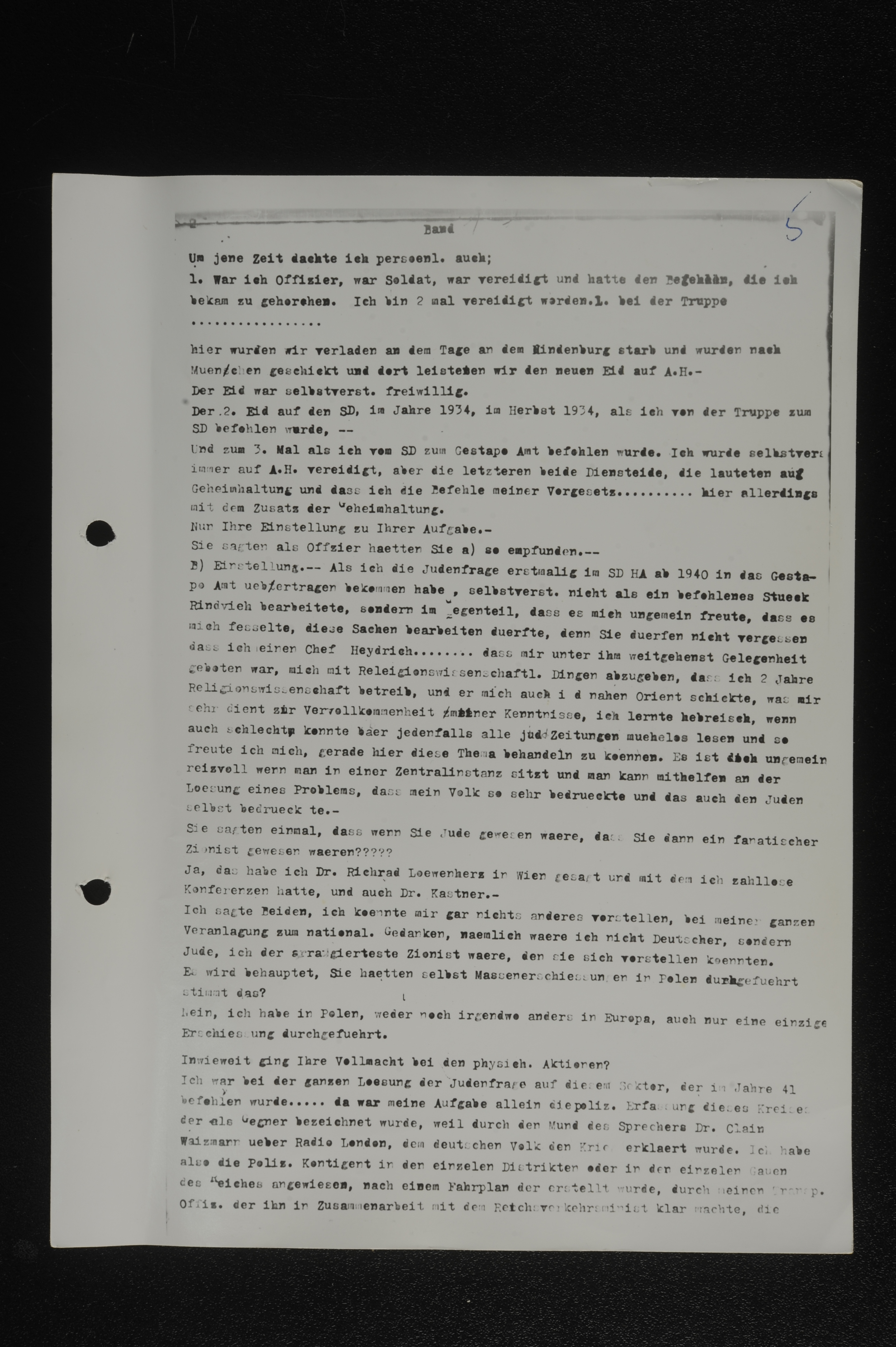
At that time I also thought personally: first, I was an officer, a soldier, sworn in, and had to obey the orders I received. I was sworn in twice. First, with the troops…

We were loaded up on the day Hindenburg died and sent to Munich, where we took the new oath to A.H. (Adolf Hitler). The oath was of course voluntary. The second oath was to the SD (Security Service), in 1934, in the autumn of 1934, when I was ordered from the troops to the SD. And for the third time when I was ordered from the SD to the Gestapo Office. I was of course always sworn to A.H. (Adolf Hitler), but the latter two service oaths concerned secrecy, and that I—the orders of my superiors… Here, however, with the addition of secrecy.

Questioner

Only your attitude toward your task. You said that, as an officer, you felt in the first way.

Eichmann

Second, my attitude. When I first had the Jewish question assigned to me in the SD Main Office, and from 1940 in the Gestapo Office, I did not of course work on it as a head of cattle acting under orders. On the contrary, it pleased me enormously, it gripped me, that I was allowed to work on these matters. You must not forget that I had a chief, Heydrich… that under him I had extensive opportunities to occupy myself with religious scholarship, that I pursued religious scholarship for two years, and that he also sent me to the Near East, which helped me greatly to perfect my knowledge.

I learned Hebrew, though badly, but could in any case read all Jewish newspapers effortlessly, and so I was glad to be able to deal with precisely this subject. It is extraordinarily appealing to sit in a central authority and be able to help solve a problem that weighed so heavily on my people and on the Jews themselves as well.

Questioner

You once said that, if you had been a Jew, you would have been a fanatical Zionist?

Eichmann

Yes, I said that to Dr. Richrad Loewenherz in Vienna, with whom I had countless conferences, and also to Dr. Kastner. I told both of them that I could imagine nothing else, given my entire disposition toward the national idea: if I were not German but a Jew, I would be the most committed Zionist they could imagine.

Questioner

It is claimed that you yourself carried out mass shootings in Poland. Is that true?

Eichmann

No. Neither in Poland nor anywhere else in Europe have I carried out even a single shooting.

Questioner

How far did your authority extend in the physical actions?

Eichmann

In the whole solution of the Jewish question in this sector, which was ordered in '41… my task was solely to round up this group by police action. It was designated as the enemy because, through the mouth of its spokesman Dr. Clain Weizmann, war had been declared on the German people over Radio London. So I instructed the police contingents in the individual districts or individual Gaue of the Reich, according to a timetable drawn up by my transport officer, who arranged it in cooperation with the Reich Transport Ministry, to

Open page image and German
Page 5 of the typescript, O.65 file 85.
Page 5 · Yad Vashem Archives, O.65/85

German transcription

Um jene Zeit dachte ich persönl. auch; 1. War ich Offizier, war Soldat, war vereidigt und hatte den Befehlen, die ich bekam zu gehorchen. Ich bin 2 mal vereidigt worden.1. bei der Truppe … hier wurden wir verladen an dem Tage an dem Hindenburg starb und wurden nach München geschickt und dort leisteten wir den neuen Eid auf A.H. – Der Eid war selbstverst. freiwillig. Der.2. Eid auf den SD, im Jahre 1934, im Herbst 1934, als ich von der Truppe zum SD befohlen wurde, – Und zum 3. Mal als ich vom SD zum Gestapo Amt befohlen wurde. Ich wurde selbstvers… immer auf A.H. vereidigt, aber die letzteren beide Diensteide, die lauteten auf Geheimhaltung und daß ich die Befehle meiner Vorgesetz … hier allerdings mit dem Zusatz der Geheimhaltung. Nur Ihre Einstellung zu Ihrer Aufgabe. – Sie sagten als Offizier hätten Sie a) so empfunden. – B) Einstellung. – Als ich die Judenfrage erstmalig im SD HA ab 1940 in das Gestapo Amt übertragen bekommen habe, selbstverst. nicht als ein befohlenes Stück Rindvieh bearbeitete, sondern im Gegenteil, daß es mich ungemein freute, daß es mich fesselte, diese Sachen bearbeiten dürfte, denn Sie dürfen nicht vergessen daß ich einen Chef Heydrich … daß mir unter ihm weitgehenst Gelegenheit geboten war, mich mit Religionswissenschaftl. Dingen abzugeben, daß ich 2 Jahre Religionswissenschaft betrieb, und er mich auch i d nahen Orient schickte, was mir sehr dient zur Vervollkommenheit meiner Kenntnisse, ich lernte hebreisch, wenn auch schlechte konnte aber jedenfalls alle judd Zeitungen müheles lesen und so freute ich mich, gerade hier diese Thema behandeln zu können. Es ist doch ungemein reizvoll wenn man in einer Zentralinstanz sitzt und man kann mithelfen an der Lösung eines Problems, daß mein Volk so sehr bedrückte und das auch den Juden selbst bedrückte. – Sie sagten einmal, daß wenn Sie Jude gewesen wäre, daß Sie dann ein fanatischer Zionist gewesen wären????? Ja, das habe ich Dr. Richard Löwenherz in Wien gesagt und mit dem ich zahllose Konfererzen hatte, und auch Dr. Kastner. – Ich sagte Beiden, ich könnte mir gar nichts anderes vorstellen, bei meiner ganzen Veranlagung zum national. Gedanken, nämlich wäre ich nicht Deutscher, sondern Jude, ich der arrangierteste Zionist wäre, den sie sich vorstellen könnten. Es wird behauptet, Sie hätten selbst Massenerschießungen in Polen durchgeführt stimmt das? Nein, ich habe in Polen, weder noch irgendwo anders in Europa, auch nur eine einzige Erschießung durchgeführt. Inwieweit ging Ihre Vollmacht bei den physisch. Aktionen? Ich war bei der ganzen Lösung der Judenfrage auf diesem Sektor, der im Jahre 41 befohlen wurde … da war meine Aufgabe allein die poliz. Erfassung dieses Kreises der als Gegner bezeichnet wurde, weil durch den Mund des Sprechers Dr. Clain Waizmann über Radio London, dem deutschen Volk den Krieg erklärt wurde. Ich habe also die Poliz. Kontigent in den einzelen Distrikten oder in den einzeler Gauen des Reiches angewiesen, nach einem Fahrplan der erstellt wurde, durch meinen Transp. Offiz. der ihn in Zusammenarbeit mit dem Reichsverkehrsminist klar machte, die

Draft translation

[HW: 5] - 2 - Volume [/ Tape] Around that time I also personally thought; 1. I was an officer, was a soldier, was sworn in and had to obey the orders that I received. I was sworn in 2 times. 1. with the troop ................ here we were loaded up on the day on which Hindenburg died and were sent to Munich and there we swore the new oath to A.H.- The oath was of course voluntary. The 2nd oath to the SD, in the year 1934, in the autumn of 1934, when I was ordered from the troop to the SD, -- And for the 3rd time when I was ordered from the SD to the Gestapo Office. I was [EDGE: probably ‘of course’] always sworn to A.H., but the latter two service oaths, those pertained to secrecy and that I [obey] the orders of my superior.......... here however with the addition of secrecy. Only your attitude toward your task.- You said as an officer you had felt a) that way.-- B) Attitude.-- When I first received the Jewish question transferred in the SD HA from 1940 into the Gesta- po Office, [I] of course did not work [on it] as a commanded piece of cattle, but on the contrary, that it pleased me exceedingly, that it gripped me, that I was permitted to work on these matters, for you must not forget that I had a chief Heydrich........ that under him I was to a great extent offered opportunity to occupy myself with matters of religious scholarship, that I pursued 2 years [of] religious scholarship, and he also sent me to the near [Middle] East, which served me very much for the perfecting of my knowledge, I learned Hebrew, even if badly, could ba[e]r [but] in any case read all Jewish newspapers effortlessly and so I was pleased to be able to treat precisely this subject here. It is indeed exceedingly appealing when one sits in a central authority and one can help in the solution of a problem that so greatly oppressed my people and that also oppressed the Jews themselves.- You once said that if you had been a Jew, that you would then have been a fanatical Zionist????? Yes, that I said to Dr. Richrad [Richard?] Loewenherz in Vienna and with whom I had countless conferences, and also Dr. Kastner.- I said to both, I could not imagine anything else at all, with my whole disposition toward the national idea, namely were I not German, but [a] Jew, I would be the most arranged [committed?] Zionist that they could imagine. It is claimed you yourself carried out mass shootings in Poland, is that true? No, I have, neither in Poland, nor anywhere else in Europe, carried out even a single shooting. To what extent did your authority [power of attorney] extend in the physical actions? I was, in the whole solution of the Jewish question in this sector, which in the year 41 was ordered..... there my task was solely the police registration of this circle which was designated as the enemy, because through the mouth of the spokesman Dr. Clain [Chaim] Waizmann [Weizmann] over Radio London, war was declared on the German people. I have thus directed the police contingent in the individual districts or in the individual Gaus of the Reich, according to a timetable that was drawn up, by my transport officer who made it clear in cooperation with the Reich Transport Ministry, the

round up the contingents and deliver them to the destination stations named by the chief of the SDHA (SD Main Office). That ended all responsibility on the Gestapo's part. Unlimited authority does not exist in an office. Rather, everyone in an office, whether low-ranking or high-ranking, from the criminal-police assistant up to the Chief of the Security Police, has to issue instructions and orders in accordance with existing laws, regulations and decrees. There was no third possibility, and there is none. Nobody in an administrative apparatus can do whatever he wants. He has to do what he is ordered to do; and such orders and instructions can be issued within an office only by invoking the relevant laws.

Questioner

And this body of law on which your work rested—was that the Nuremberg Laws No. 35?

Eichmann

No, it was a Führer order. Heydrich, the Chief of the Security Police and the SD (Security Service), told me that the Führer had now ordered the liquidation of the Jews. At that time that was law, because, as you know, the Führer's words had the force of law. That applied to all German members of the national community.

Questioner

You were not brought in to help draft the Nuremberg Laws?

Eichmann

No, at that point I had nothing at all to do with the office.

Questioner

Now please repeat it as exactly, word for word, as you can…

[Farewell.]

Eichmann

It was in Berlin, in my office on Kurfürstenstrasse. The war was drawing to an end; everything was lost, finished. I either summoned all my officers, or it arose out of a meeting. These were more or less my last days in office, and, formally taking my leave, I said that, if it had to be so, I would gladly and joyfully jump into the pit, knowing that five million enemies of the Reich had jumped in with me. I know I spoke those words very harshly, because I felt extraordinarily happy at the time. If I had to bite the dust like a dog, then at least I would not be alone in there. That was how I felt, and I expressed it to my men. With that I had, in effect, left the stage.

Questioner

Are you sure you used the words “enemies of the Reich” and not “Jews”?

Eichmann

No, I had no reason to use that. I did not hate only the Jews; in those days I hated everything that was going for the German people's throat.

Questioner

Not the word “human beings” either?

Eichmann

No, “enemies of the Reich.” To me, “enemies of the Reich” was something like the word “devil” to a clergyman.

Questioner

Did A.H. (Adolf Hitler) speak to you about the Jewish problem, or give you any instructions about it?

Eichmann

The Führer? No, my office was far too junior for that. The superiors I dealt with, from the top down, were the RF (Reichsführer-SS). I was summoned to him three or four times. Except on one occasion, when he was based on Prinz Albrecht Strasse, I was always summoned to his field command post. Otherwise there was the Chief of the Security Police and the SD, Heydrich, and then his successor, Dr. Ernst Kaltenbrunner, and then my regular superior, with whom I dealt several times a week: that was Müller, Heinrich Müller.

Open page image and German
Page 6 of the typescript, O.65 file 85.
Page 6 · Yad Vashem Archives, O.65/85

German transcription

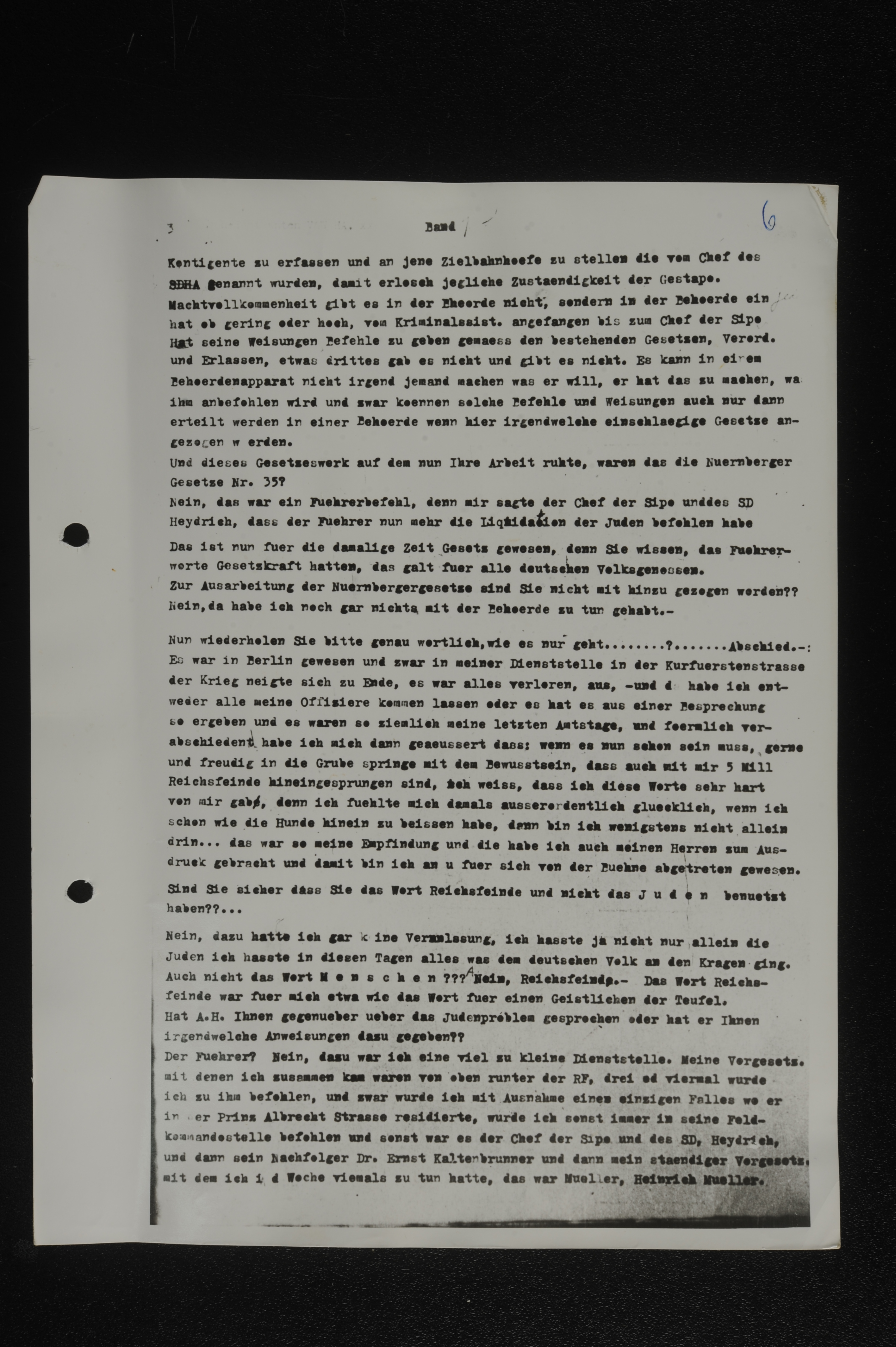
Kontigente su erfassen und an jene Zielbahnhöfe zu stellen die vom Chef des SDHA genannt wurden, damit erlosch jegliche Zuständigkeit der Gestapo. Machtvollkommenheit gibt es in der Behörde nicht, sondern in der Behörde ein jeder hat ob gering oder hoch, vom Kriminalassist. angefangen bis zum Chef der Sipo Hat seine Weisungen Befehle zu geben gemäß den bestehenden Gesetzen, Verord. und Erlassen, etwas drittes gab es nicht und gibt es nicht. Es kann in einem Behördenapparat nicht irgend jemand machen was er will, er hat das su machen, wa… ihm anbefohlen wird und zwar können solche Befehle und Weisungen auch nur dann erteilt werden in einer Behörde wenn hier irgendwelche einschlägige Gesetze angezogen werden. Und dieses Gesetzeswerk auf dem nun Ihre Arbeit ruhte, waren das die Nürnberger Gesetze Nr. 35? Nein, das war ein Führerbefehl, denn mir sagte der Chef der Sipo und des SD Heydrich, daß der Führer nun mehr die Liquidation der Juden befohlen habe Das ist nun für die damalige Zeit Gesetz gewesen, denn Sie wissen, das Führerworte Gesetzkraft hatten, das galt für alle deutschen Volksgenossen. Zur Ausarbeitung der Nürnbergergesetze sind Sie nicht mit hinzu gezogen worden?? Nein, da habe ich noch gar nichts mit der Behörde zu tun gehabt. – Nun wiederholen Sie bitte genau wortlich, wie es nur geht …? … Abschied. –: Es war in Berlin gewesen und zwar in meiner Dienststelle in der Kurfürstenstraße der Krieg neigte sich zu Ende, es war alles verloren, aus, – und d habe ich entweder alle meine Offisiere kommen lassen oder es hat es aus einer Besprechung so ergeben und es waren so ziemlich meine letzten Amtstage, und feermlich verabschiedent habe ich mich dann geäußert daß; wenn es nun schon sein muß, gerne und freudig in die Grube springe mit dem Bewusstsein, daß auch mit mir 5 Mill Reichsfeinde hineingesprungen sind, ich weiß, daß ich diese Worte sehr hart von mir gab, denn ich fühlte mich damals außerordentlich glücklich, wenn ich schon wie die Hunde hinein zu beißen habe, dann bin ich wenigstens nicht allein drin … das war so meine Empfindung und die habe ich auch meinen Herren zum Ausdruck gebracht und damit bin ich an u für sich von der Bühne abgetreten gewesen. Sind Sie sicher daß Sie das Wort Reichsfeinde und nicht das Juden benützt haben?? … Nein, dazu hatte ich gar keine Veranlassung, ich haßte ja nicht nur allein die Juden ich haßte in diesen Tagen alles was dem deutschen Volk an den Kragen ging. Auch nicht das Wort Menschen??? A: Nein, Reichsfeinde.- Das Wort Reichsfeinde war für mich etwa wie das Wort für einen Geistlichen der Teufel. Hat A.H. Ihnen gegenüber über das Judenproblem gesprochen oder hat er Ihnen irgendwelche Anweisungen dazu gegeben?? Der Führer? Nein, dazu war ich eine viel su kleine Dienststelle. Meine Vergesets. mit denen ich zusammen kam waren von oben runter der RF, drei od viermal wurde ich zu ihm befohlen, und zwar wurde ich mit Ausnahme eines einzigen Falles wo er in er Prinz Albrecht Straße residierte, wurde ich sonst immer in seine Feldkommandostelle befohlen und sonst war es der Chef der Sipo und des SD, Heydrich, und dann sein Nachfolger Dr. Ernst Kaltenbrunner und dann mein ständiger Vergesets. mit dem ich i d Woche viemals zu tun hatte, das war Müller, Heinrich Müller.

Draft translation

3 Volume [HW: /] [HW: 6] to register contingents and to deliver them to those destination stations that were named by the Chief of the SDHA, with that any jurisdiction of the Gestapo was extinguished. Plenary power does not exist in the auth[or]ity; rather, in the authority [HW: probably ‘everyone’], whether low or high, from the criminal-assist[ant] on up to the Chief of the Sipo, has to give his instructions [and] orders in accordance with the existing laws, ordin[ances] and decrees, a third thing did not exist and does not exist. In an apparatus of authority someone cannot simply do what he wants, he has to do wha[t] is enjoined upon him, and indeed such orders and instructions can also only be issued in an authority if some pertinent laws are invoked he re. And this body of law upon which your work now rested, was that the Nuremberg Laws No. 35? No, that was a Führer order, for the Chief of the Sipo and of the SD Heydrich told me that the Führer had now ordered the liquidation of the Jews That was law for that time then, for you know that Führer words had force of law, that applied to all German fellow-nationals. You were not brought in to participate in the drafting of the Nuremberg Laws?? No, at that point I had nothing at all to do with the authority.- Now please repeat exactly word for word, as far as it can be done........?.......Farewell.-: It had been in Berlin, and indeed in my office in the Kurfürstenstrasse the war was drawing to its end, everything was lost, over, -and th I either had all my off[i]cers come or it came about that way out of a discussion and those were pretty much my last days in office, and formally taking my leave I then expressed that; if it now has to be, [I would] gladly and joyfully jump into the pit with the awareness that 5 mill[ion] enemies of the Reich have jumped in with me as well, I know that I uttered these words very harshly, for at that time I felt extraordinarily happy, if I already have to bite into it like the dogs, then at least I am not alone in there... that was my feeling and I also expressed it to my gentlemen and with that I had in and of itself stepped down from the stage. Are you certain that you used the word enemies of the Reich and not the J e w s??... No, I had no occasion at all for that, after all I did not hate only the Jews alone I hated in those days everything that went for the throat of the German people. Nor the word h u m a n b e i n g s ???[HW: A]No, enemies of the Reich.- The word enemies of the Reich was for me something like the word for a clergyman [is] the devil. Did A.H. speak to you about the Jewish problem or did he give you any instructions on it?? The Führer? No, for that I was much too small an office. My superi[ors] with whom I came together were from the top down the RF, three or four times I was ordered to him, and indeed with the exception of a single case where he resided in th e Prinz Albrecht Strasse, I was otherwise always ordered to his field command post and otherwise it was the Chief of the Sipo and of the SD, Heydrich, and then his successor Dr. Ernst Kaltenbrunner and then my permanent superi[or] with whom I had dealings [four or many] times i[n] th[e] week, that was Mueller, Heinrich Mueller.

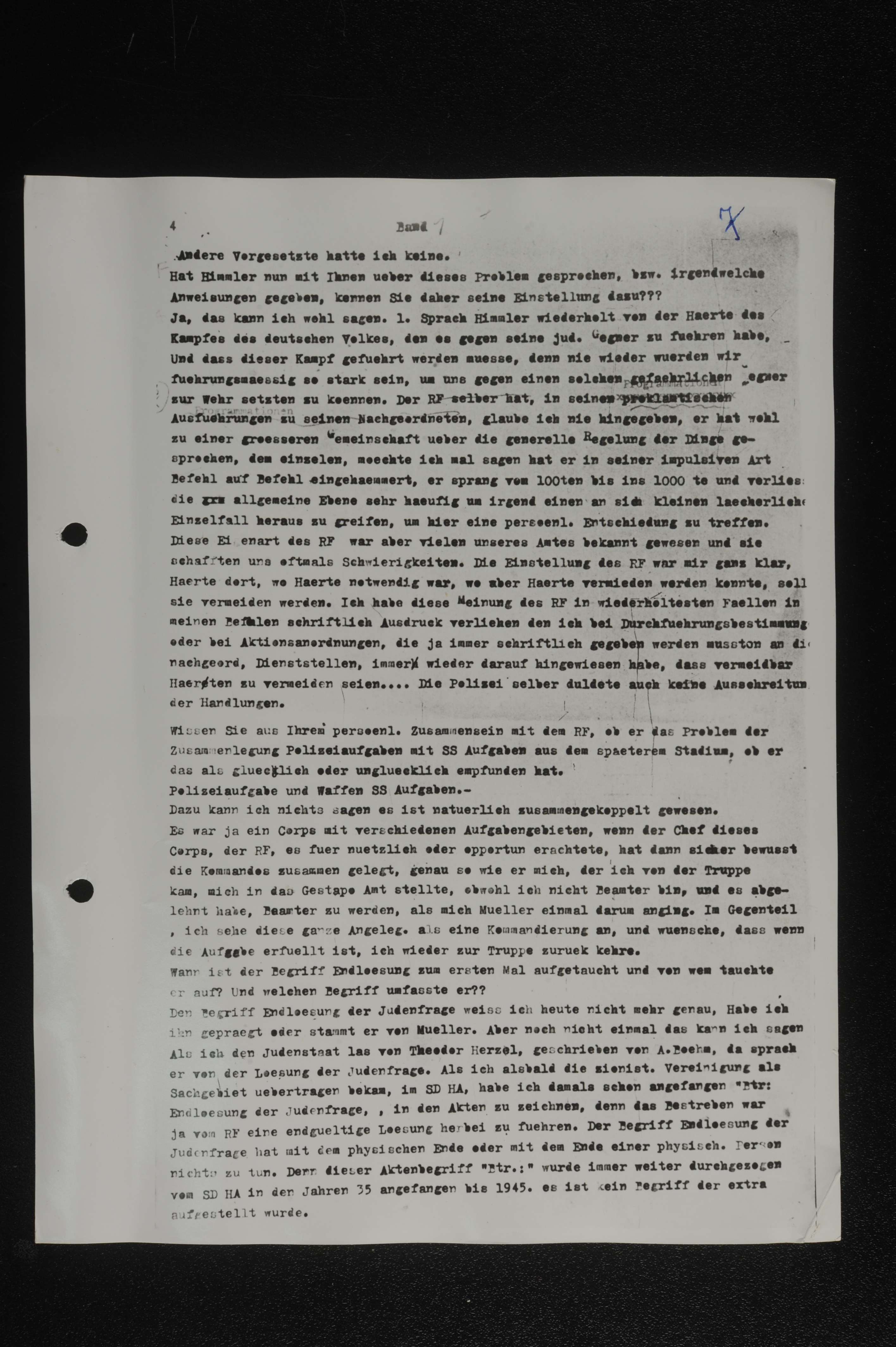
I had no other superiors.

Questioner

Did Himmler speak to you about this problem, or give you any instructions? Do you therefore know his attitude toward it?

Eichmann

Yes, I can say that. First, Himmler repeatedly spoke of the harshness of the struggle the German people had to wage against its Jewish opponents, and that this struggle had to be waged because never again would we have leadership strong enough to defend ourselves against such a dangerous opponent. The RF (Reichsführer-SS) himself, I believe, never indulged in programmatic explanations to his subordinates. He did speak to a larger gathering about the general handling of things. With an individual, I would say, in his impulsive manner he hammered in order after order.

He jumped from one thing to another and very often left the general level to pick out some small, ridiculous individual case and make a personal decision about it. Many in our office knew this peculiarity of the Reichsführer, and it often caused us difficulties. His attitude was quite clear to me: harshness where harshness was necessary, but where harshness could be avoided, it should be avoided. I repeatedly gave written expression to this view of the Reichsführer in my orders. In implementing regulations or orders for actions, which always had to be issued in writing to subordinate offices, I pointed out again and again that avoidable harshness was to be avoided. The police itself also tolerated no excesses in its actions.

Questioner

From your personal dealings with the RF (Reichsführer-SS), do you know whether he regarded the problem of combining police duties with SS duties at the later stage as fortunate or unfortunate? Police duties and Waffen-SS duties.

Eichmann

I cannot say anything about that. They were of course linked. It was one corps with different areas of duty. If the head of this corps, the Reichsführer, considered it useful or expedient, he surely combined the commands deliberately. Just as he placed me, who came from the troops, in the Gestapo Office, although I am not a civil servant and refused to become one when Müller once approached me about it. On the contrary, I regard this whole matter as a secondment and wish to return to the troops when the task is completed.

Questioner

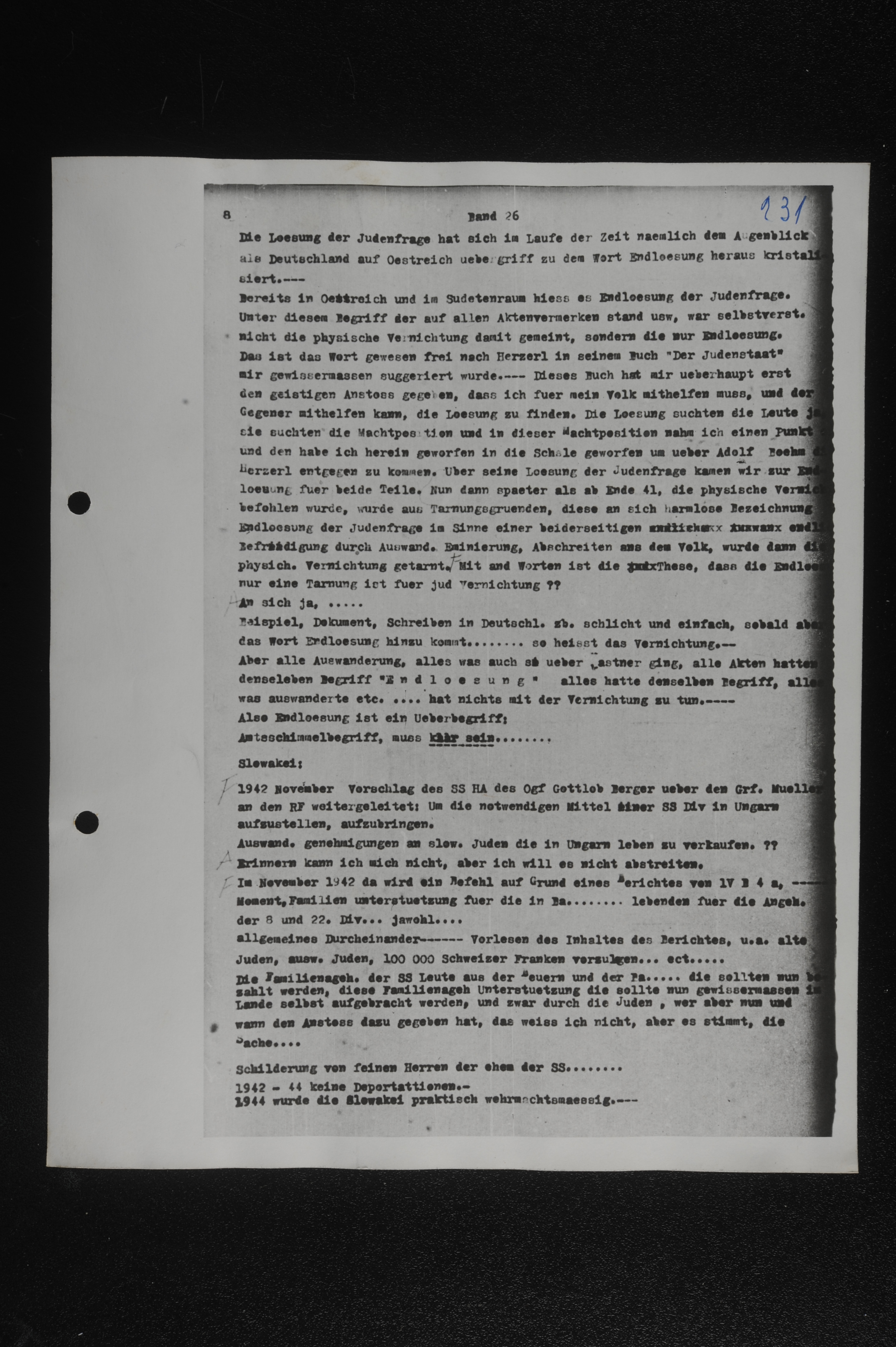
When did the term “Final Solution” first appear, and who introduced it? What did the term encompass?

Eichmann

The term “Final Solution of the Jewish Question”—I no longer know exactly today whether I coined it or it came from Müller. I cannot even say that. When I read The Jewish State by Theodor Herzl, written by A. Boehm, he spoke of the solution of the Jewish question. Soon afterward, when the Zionist association was assigned to me as a subject area in the SD Main Office, I had already begun to write “Re: Final Solution of the Jewish Question” in the files, because the Reichsführer's aim was to bring about a final solution. The term “Final Solution of the Jewish Question” has nothing to do with a physical end or the end of a physical person. This file heading, “Re:,” was carried on continuously from the SD Main Office, beginning in '35, through 1945. It was not a term specially devised.

Open page image and German
Page 7 of the typescript, O.65 file 85.
Page 7 · Yad Vashem Archives, O.65/85

German transcription

Andere Vorgesetzte hatte ich keine. Hat Himmler nun mit Ihnen über dieses Problem gesprochen, bzw. irgendwelche Anweisungen gegeben, kennen Sie daher seine Einstellung dazu??? Ja, das kann ich wohl sagen. 1. Sprach Himmler wiederholt von der Härte des Kampfes des deutschen Volkes, den es gegen seine jud. Gegner zu führen habe, Und daß dieser Kampf geführt werden müsse, denn nie wieder würden wir führungsmäßig so stark sein, um uns gegen einen solchen gefährlichen Gegner zur Wehr setzten zu können. Der RF selber hat, in seinen programmatischen Programmationen Ausführungen zu seinen Nachgeordneten, glaube ich nie hingegeben, er hat wohl zu einer größeren Gemeinschaft über die generelle Regelung der Dinge gesprochen, dem einzelnen, möchte ich mal sagen hat er in seiner impulsiven Art Befehl auf Befehl eingehämmert, er sprang vom 100ten bis ins 1000 te und verließ die allgemeine Ebene sehr häufig um irgend einen an sich kleinen lächerliche… Einzelfall heraus zu greifen, um hier eine persönl. Entschiedung zu treffen. Diese Eigenart des RF war aber vielen unseres Amtes bekannt gewesen und sie schafften uns oftmals Schwierigkeiten. Die Einstellung des RF war mir ganz klar, Härte dort, wo Härte notwendig war, wo aber Härte vermieden werden konnte, soll sie vermieden werden. Ich habe diese Meinung des RF in wiederholtesten Fällen in meinen Befehlen schriftlich Ausdruck verliehen den ich bei Durchführungsbestimmung oder bei Aktionsanordnungen, die ja immer schriftlich gegeben werden mußten an di… nachgeord. Dienststellen, immer wieder darauf hingewiesen habe, daß vermeidbar Härten zu vermeiden seien … Die Polizei selber duldete auch keine Ausschreitum… der Handlungen. Wissen Sie aus Ihrem persönl. Zusammensein mit dem RF, ob er das Problem der Zusammenlegung Polizeiaufgaben mit SS Aufgaben aus dem späterem Stadium, ob er das als glücklich oder unglücklich empfunden hat. Polizeiaufgabe und Waffen SS Aufgaben. – Dazu kann ich nichts sagen es ist natürlich zusammengekoppelt gewesen. Es war ja ein Corps mit verschiedenen Aufgabengebieten, wenn der Chef dieses Corps, der RF, es für nützlich oder opportun erachtete, hat dann sicher bewußt die Kommandos zusammen gelegt, genau so wie er mich, der ich von der Truppe kam, mich in das Gestapo Amt stellte, obwohl ich nicht Beamter bin, und es abgelehnt habe, Beamter zu werden, als mich Müller einmal darum anging. Im Gegenteil, ich sehe diese ganze Angeleg. als eine Kommandierung an, und wünsche, daß wenn die Aufgabe erfüllt ist, ich wieder zur Truppe zurück kehre. Wann ist der Begriff Endlösung zum ersten Mal aufgetaucht und von wem tauchte er auf? Und welchen Begriff umfaßte er?? Den Begriff Endlösung der Judenfrage weiß ich heute nicht mehr genau, Habe ich ihn geprägt oder stammt er von Müller. Aber noch nicht einmal das kann ich sagen Als ich den Judenstaat las von Theodor Herzel, geschrieben von A.Böhm, da sprach er von der Lösung der Judenfrage. Als ich alsbald die zionist. Vereinigung als Sachgebiet übertragen bekam, im SD HA, habe ich damals schon angefangen "Btr: Endlösung der Judenfrage,, in den Akten zu zeichnen, denn das Bestreben war ja vom RF eine endgültige Lösung herbei zu führen. Der Begriff Endlösung der Judenfrage hat mit dem physischen Ende oder mit dem Ende einer physisch. Person nichts zu tun. Denn dieser Aktenbegriff "Btr:" wurde immer weiter durchgezogen vom SD HA in den Jahren 35 angefangen bis 1945. es ist kein Begriff der extra aufgestellt wurde.

Draft translation

4 Volume [HW: 1] [HW: 7] I had no other superiors. Did Himmler now speak with you about this problem, or give any instructions, do you therefore know his attitude toward it??? Yes, that I can well say. 1. Himmler repeatedly spoke of the harshness of the struggle of the German people, which it had to wage against its Jewish opponents, And that this struggle must be waged, for never again would we be so strong in terms of leadership as to be able to defend ourselves against such a dangerous opponent. The RF himself, in his [DEL: proclamatory] [HW: [?programmatic?]] [HW: [?Programmations?]] statements to his subordinates, I believe never gave himself over, he did indeed speak to a larger community about the general regulation of things, to the individual, I would say, he in his impulsive manner hammered in order upon order, he jumped from the 100th to the 1000th and left the [DEL: illegible] general level very frequently in order to seize upon some in itself small ridiculous[EDGE] individual case, in order to make a personal decision here. This peculiarity of the RF was however known to many of our office and it often created difficulties for us. The attitude of the RF was quite clear to me, harshness there, where harshness was necessary, but where harshness could be avoided, it should be avoided. I have given expression to this opinion of the RF in the most repeated cases in my orders in writing, which I, in implementation regulations or in action directives, which indeed always had to be given in writing to th[EDGE] subordinate offices, again and again pointed out, that avoidable harshnesses were to be avoided.... The police itself also tolerated no excesses[EDGE] of the actions. Do you know from your personal being together with the RF, whether he perceived the problem of the combining of police tasks with SS tasks from the later stage, whether he perceived that as fortunate or unfortunate. Police task and Waffen SS tasks.- About that I can say nothing, it was of course coupled together. It was indeed one Corps with various fields of tasks, if the chief of this Corps, the RF, deemed it useful or opportune, then he surely deliberately combined the commandos, exactly as he placed me, who came from the troop, placed me in the Gestapo Office, although I am not an official, and I declined to become an official, when Mueller once approached me about it. On the contrary , I see this whole matter as a secondment, and wish that when the task is fulfilled, I return again to the troop. When did the concept final solution first surface and by whom did it surface? And which concept did it encompass?? The concept final solution of the Jewish question, I no longer know today exactly, Did I coin it or does it stem from Mueller. But not even that can I say. When I read the Jewish State by Theodor Herzl, written by A. Boehm, there he spoke of the solution of the Jewish question. When soon thereafter I received the zionist association as a subject area assigned, in the SD HA, I already began then "Re: final solution of the Jewish question," to sign in the files, for the endeavor was indeed from the RF to bring about a final solution. The concept final solution of the Jewish question has nothing to do with the physical end or with the end of a physical person. For this file-concept "Re:" was carried further and further by the SD HA in the years beginning 35 up to 1945. it is not a concept that was specially set up.

Questioner

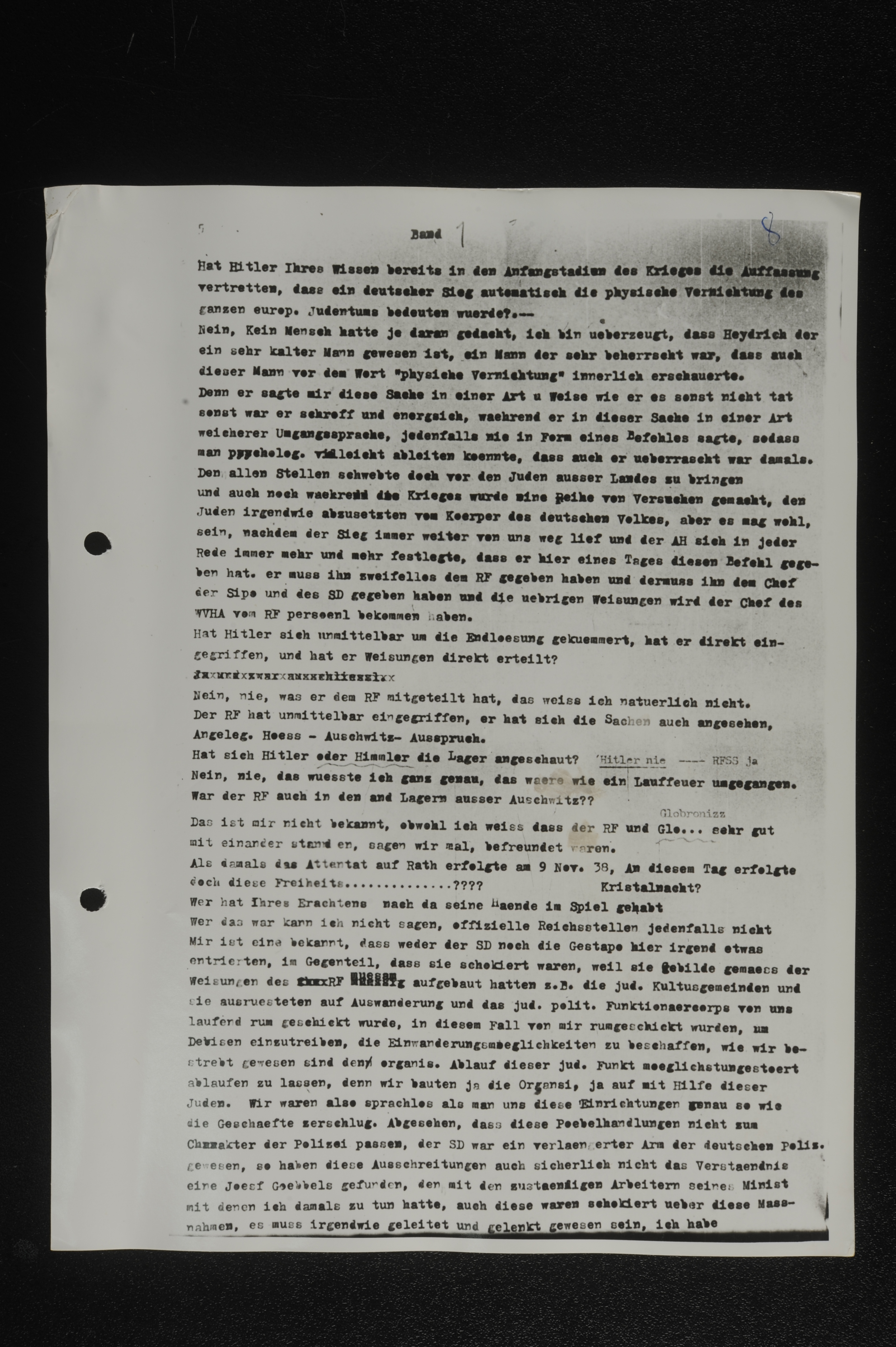
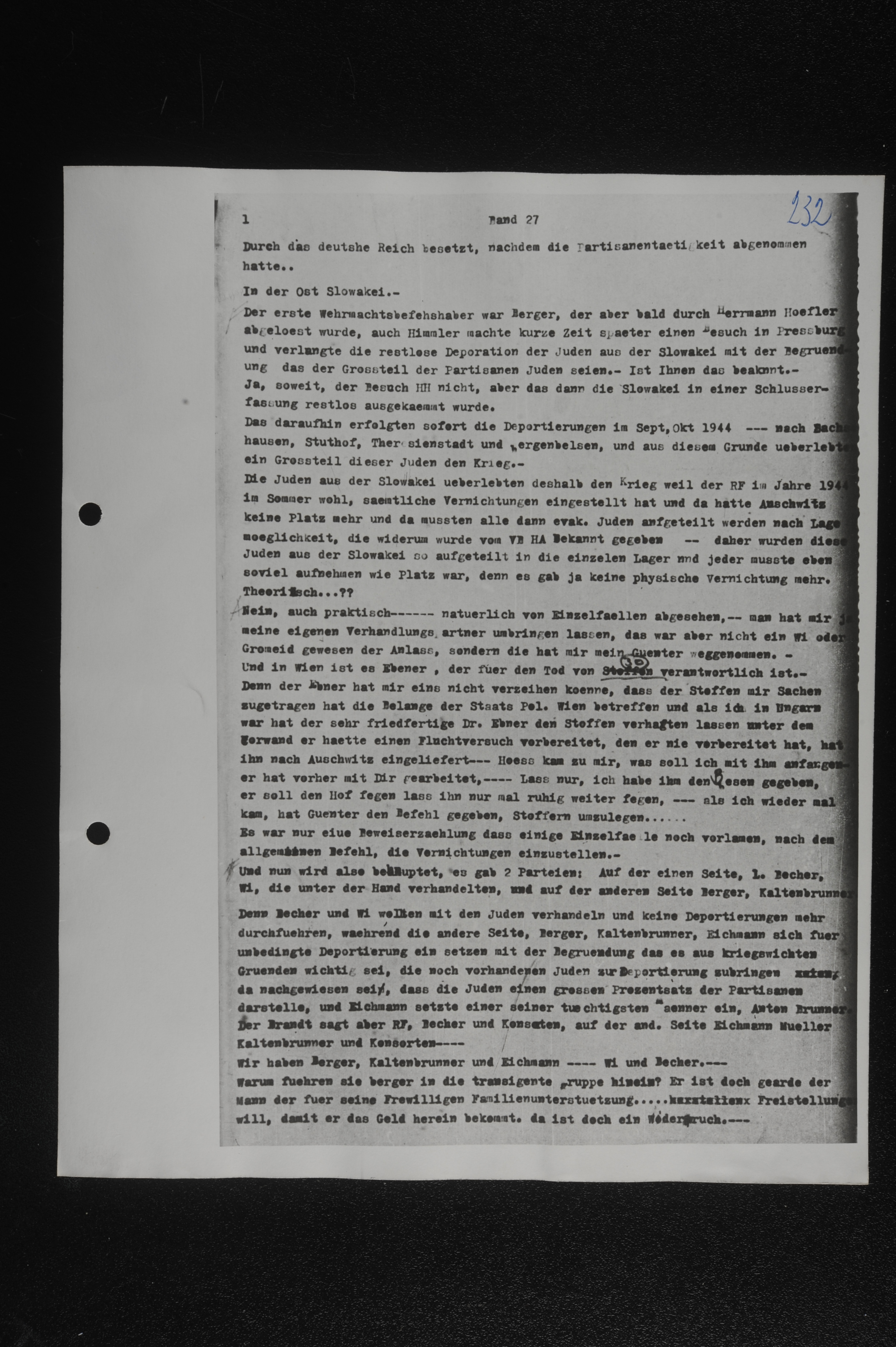
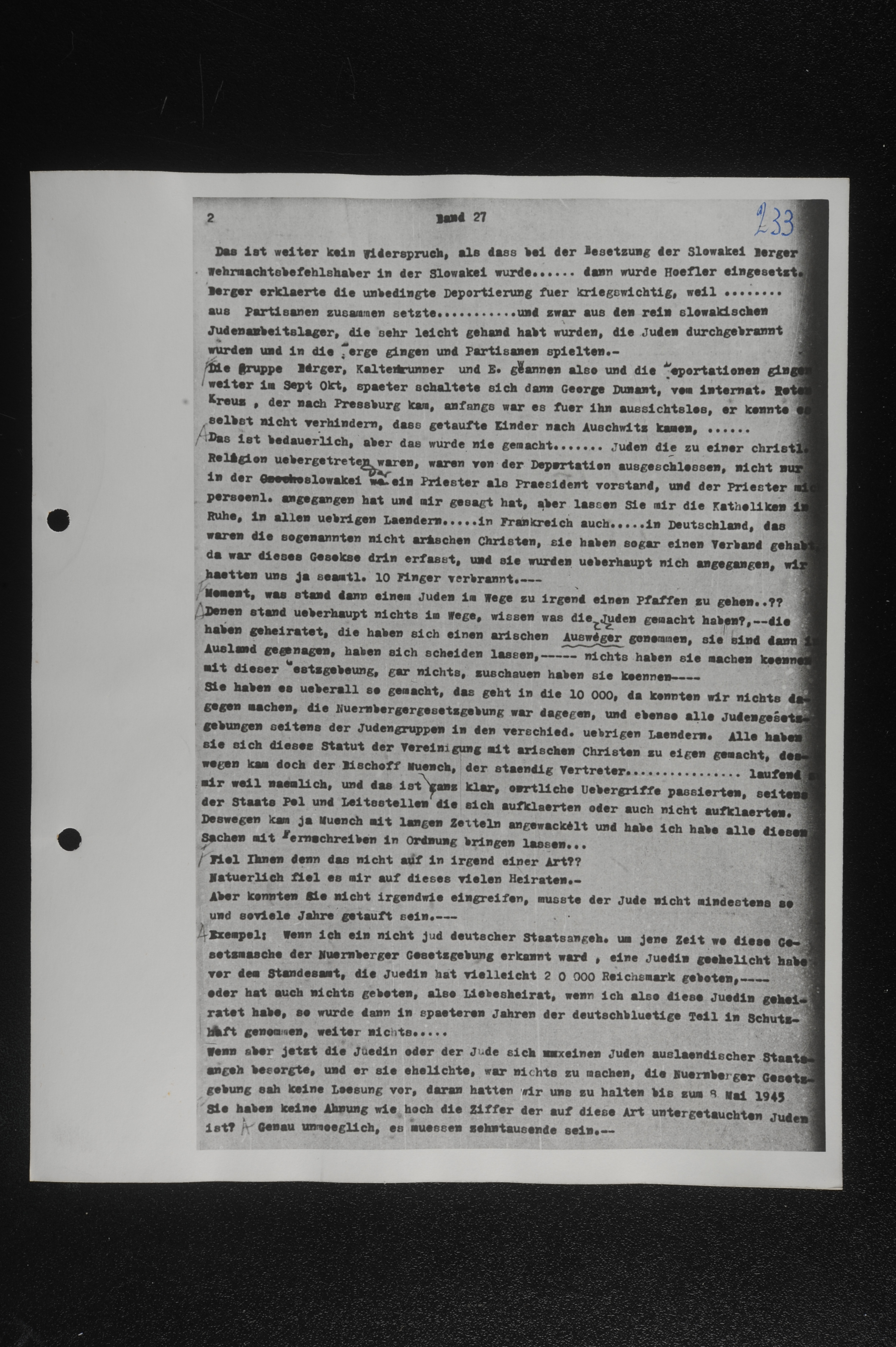
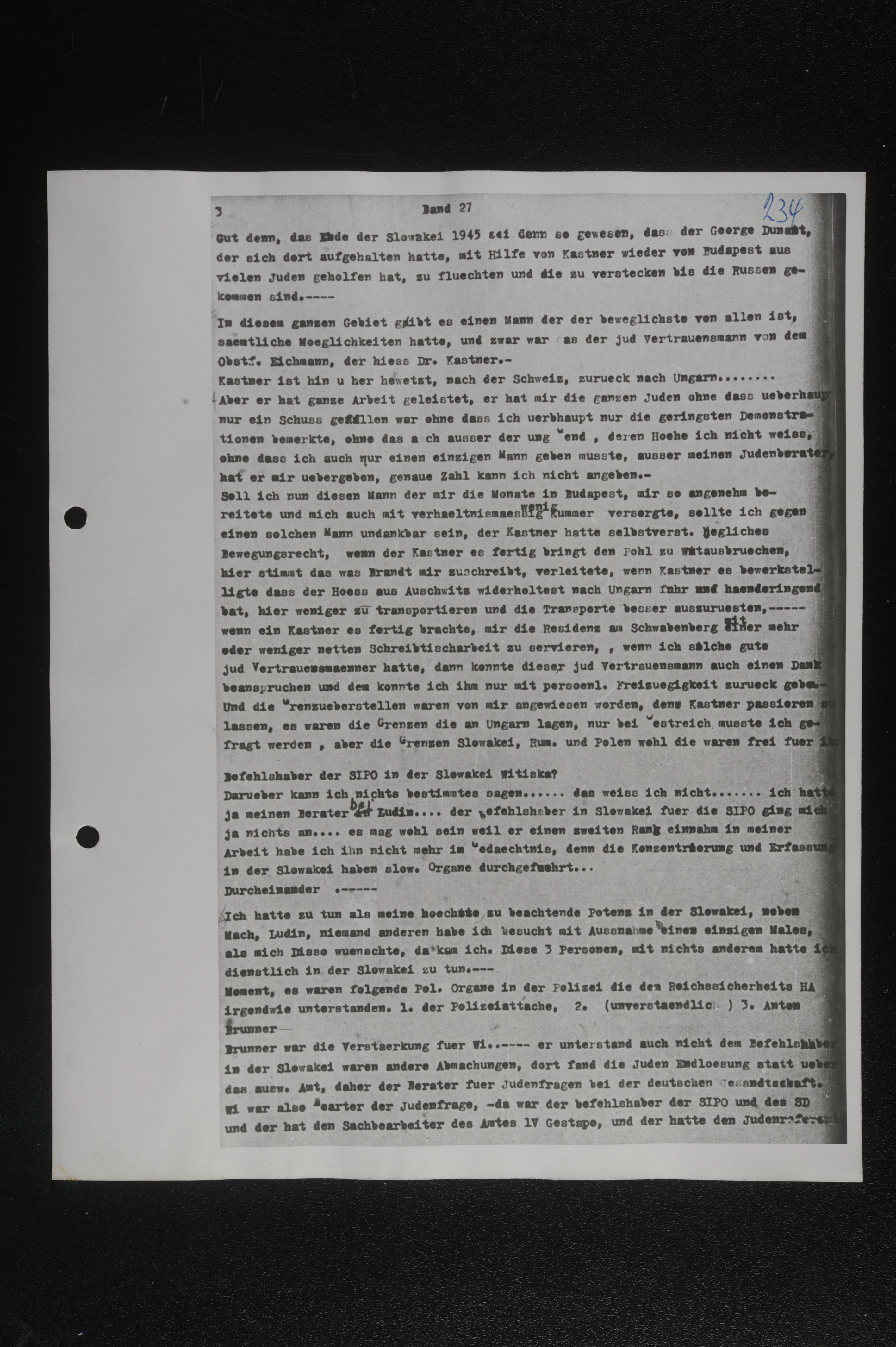
To your knowledge, did Hitler already hold the view in the early stages of the war that a German victory would automatically mean the physical annihilation of all European Jewry?

No, nobody had ever thought of that. I am convinced that Heydrich, who was a very cold man, a very self-controlled man—even he shuddered inwardly at the words “physical annihilation.” He told me about this in a way he otherwise did not use. Normally he was brusque and forceful, whereas in this matter he spoke in a kind of softer conversational language, certainly never in the form of an order. Psychologically, one might perhaps infer that he too was surprised at the time. After all, all the offices had in mind getting the Jews out of the country.

Even during the war a series of attempts was made somehow to detach the Jews from the body of the German people. But it may well be that, as victory kept slipping further away from us and A.H. (Adolf Hitler) committed himself more and more in every speech, one day he gave this order. He must undoubtedly have given it to the RF (Reichsführer-SS), who must have given it to the Chief of the Security Police and the SD (Security Service). The head of the WVHA (SS Economic and Administrative Main Office) will have received the remaining directives personally from the Reichsführer.

Questioner

Did Hitler concern himself directly with the Final Solution? Did he intervene directly and issue instructions directly?

[Crossed-out text: …]

Eichmann

No, never. What he communicated to the RF (Reichsführer-SS), I naturally do not know. The Reichsführer intervened directly and also looked at the matters himself.

[Höss matter—Auschwitz—remark.]

Questioner

Did Hitler or Himmler look at the camps?

[Typed answer cue: Hitler never—RFSS (Reichsführer-SS) yes.]

Eichmann

No, never. I would know that for certain; it would have spread like wildfire.

Questioner

Was the RF (Reichsführer-SS) also in the other camps besides Auschwitz?

Eichmann

I do not know, although I know that the RF (Reichsführer-SS) and Glo…

[Typed addition: Globronizz.]

got on very well with one another—let us say they were friends.

Questioner

When the attack on Rath took place on November 9, '38, that was the day this freedom…?

[Night of Broken Glass?]

Who, in your view, had a hand in it?

Eichmann

Who it was I cannot say. Certainly not official Reich offices. I know that neither the SD (Security Service) nor the Gestapo initiated anything here. On the contrary, they were shocked, because they had laboriously built up bodies in accordance with the RF's (Reichsführer-SS's) directives, for example the Jewish religious communities, and equip them for emigration. We continually sent the Jewish political functionaries around—in this case I sent them around—to collect foreign currency and secure opportunities for immigration.

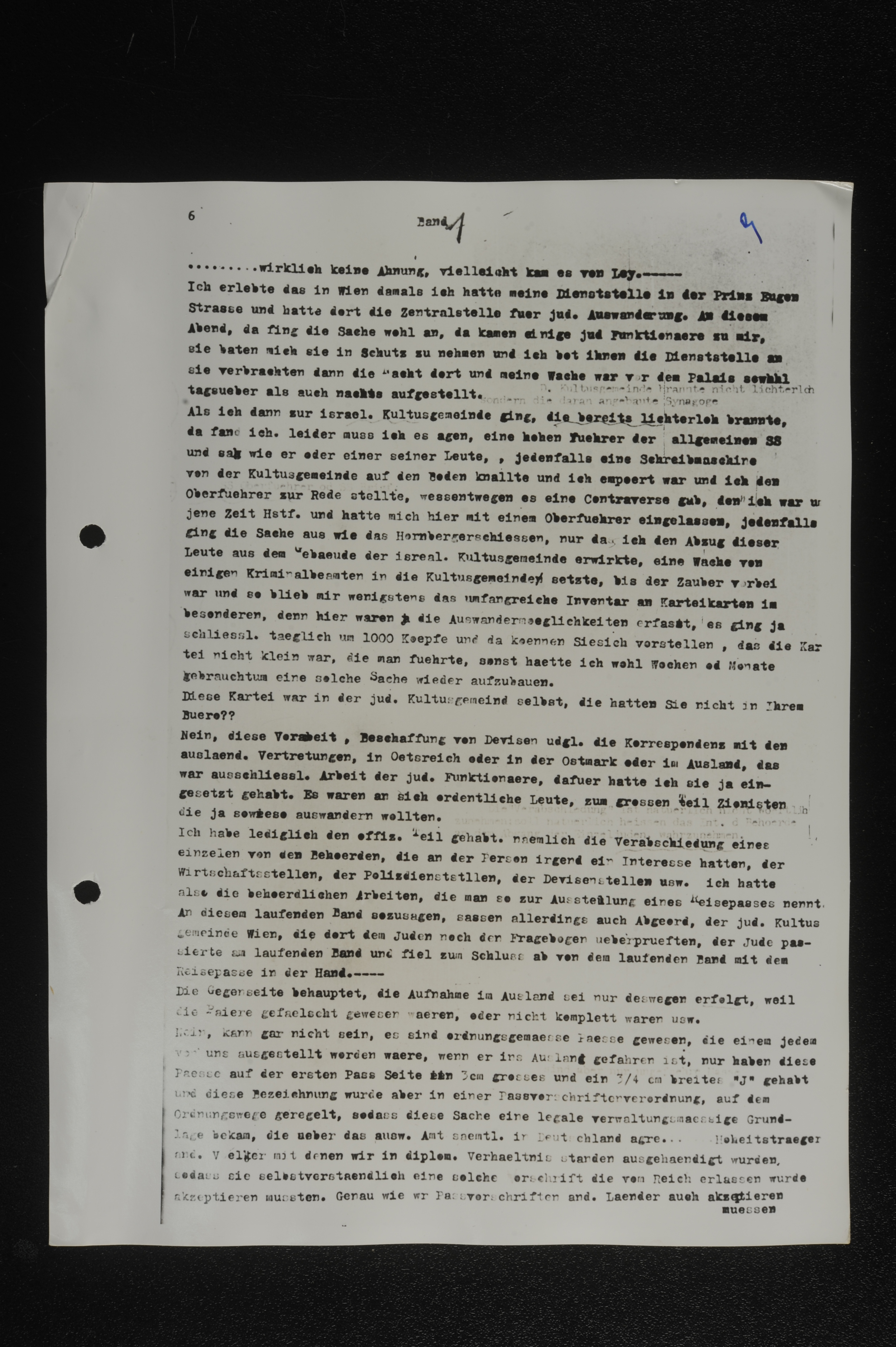
We endeavored to let the organized work of these Jewish functionaries proceed as undisturbed as possible, because we were building up the organization with the help of these Jews. We were therefore speechless when these institutions were smashed, just like the businesses. Apart from the fact that such mob actions do not fit the character of the police—the SD had been an extended arm of the German police—these excesses certainly did not meet with the understanding of a Josef Goebbels either. The responsible workers in his ministry with whom I dealt at the time were shocked by these measures too. It must somehow have been directed and steered. I have

Open page image and German
Page 8 of the typescript, O.65 file 85.
Page 8 · Yad Vashem Archives, O.65/85

German transcription

Hat Hitler Ihres Wissen bereits in den Anfangstadium des Krieges die Auffassung vertreten, daß ein deutscher Sieg automatisch die physische Vernichtung des ganzen europ. Judentums bedeuten würde?. – Nein, Kein Mensch hatte je daran gedacht, ich bin überzeugt, daß Heydrich der ein sehr kalter Mann gewesen ist, ein Mann der sehr beherrscht war, daß auch dieser Mann vor dem Wort "physische Vernichtung" innerlich erschauerte. Denn er sagte mir diese Sache in einer Art u Weise wie er es sonst nicht tat sonst war er schroff und energisch, während er in dieser Sache in einer Art weicherer Umgangssprache, jedenfalls nie in Form eines Befehles sagte, sodaß man psycholog. vielleicht ableiten könnte, daß auch er überrascht war damals. Den allen Stellen schwebte doch vor den Juden außer Landes zu bringen und auch noch während des Krieges wurde eine Reihe von Versuchen gemacht, den Juden irgendwie abzusetzten vom Körper des deutschen Volkes, aber es mag wohl, sein, nachdem der Sieg immer weiter von uns weg lief und der AH sich in jeder Rede immer mehr und mehr festlegte, daß er hier eines Tages diesen Befehl gegeben hat. er muß ihn zweifelles dem RF gegeben haben und der muß ihn dem Chef der Sipo und des SD gegeben haben und die übrigen Weisungen wird der Chef des WVHA vom RF persönl bekommen haben. Hat Hitler sich unmittelbar um die Endlösung gekümmert, hat er direkt eingegriffen, und hat er Weisungen direkt erteilt? Nein, nie, was er dem RF mitgeteilt hat, das weiß ich natürlich nicht. Der RF hat unmittelbar eingegriffen, er hat sich die Sachen auch angesehen, Angeleg. Höß - Auschwitz- Ausspruch. Hat sich Hitler oder Himmler die Lager angeschaut? 'Hitler nie – RFSS ja Nein, nie, das wüsste ich ganz genau, das wäre wie ein Lauffeuer umgegangen. War der RF auch in den and Lagern außer Auschwitz?? Das ist mir nicht bekannt, obwohl ich weiß daß der RF und Glo … Globronizz sehr gut mit einander stand en, sagen wir mal, befreundet waren. Als damals das Attentat auf Rath erfolgte am 9 Nov. 38, An diesem Tag erfolgte doch diese Freiheits …???? Kristallnacht? Wer hat Ihres Erachtens nach da seine Hände im Spiel gehabt Wer das war kann ich nicht sagen, offizielle Reichsstellen jedenfalls nicht Mir ist eine bekannt, daß weder der SD noch die Gestapo hier irgend etwas entrierten, im Gegenteil, daß sie schokiert waren, weil sie Gebilde gemäß der Weisungen des RF müsam aufgebaut hatten z.B. die jud. Kultusgemeinden und sie ausrüsteten auf Auswanderung und das jud. polit. Funktionärcorps von uns laufend rum geschickt wurde, in diesem Fall von mir rumgeschickt wurden, um Devisen einzutreiben, die Einwanderungsmöglichkeiten zu beschaffen, wie wir bestrebt gewesen sind denn organis. Ablauf dieser jud. Funkt möglichst ungestört ablaufen zu lassen, denn wir bauten ja die Organsi, ja auf mit Hilfe dieser Juden. Wir waren also sprachles als man uns diese Einrichtungen genau so wie die Geschäfte zerschlug. Abgesehen, daß diese Pöbelhandlungen nicht zum Chmakter der Polizei passen, der SD war ein verlängerter Arm der deutschen Poliz. gewesen, so haben diese Ausschreitungen auch sicherlich nicht das Verständnis eine Josef Goebbels gefunden, den mit den zuständigen Arbeitern seines Minist mit denen ich damals zu tun hatte, auch diese waren schokiert über diese Maßnahmen, es muß irgendwie geleitet und gelenkt gewesen sein, ich habe

Draft translation

Did Hitler, to your knowledge, already hold the view in the early stage of the war that a German victory would automatically mean the physical annihilation of the whole of European Jewry?.-- No, no person had ever thought of that, I am convinced that Heydrich, who was a very cold man, a man who was very controlled, that even this man inwardly shuddered before the word "physical annihilation." For he told me this matter in a manner and way in which he otherwise did not do, otherwise he was brusque and energetic, whereas in this matter [he spoke] in a kind of softer colloquial speech, in any case never in the form of an order, so that one might perhaps psychologically deduce that he too was surprised at the time. For all the offices had in mind after all to bring the Jews out of the country, and also still during the war a series of attempts was made to somehow remove the Jews from the body of the German people, but it may well be that, after victory ran ever further away from us and AH committed himself in every speech more and more, that he here one day gave this order. he must without doubt have given it to the RF and he must have given it to the Chief of the Sipo and of the SD and the remaining directives the Chief of the WVHA will have received personally from the RF. Did Hitler concern himself directly with the Final Solution, did he intervene directly, and did he issue directives directly? [DEL: illegible] No, never, what he communicated to the RF, that I naturally do not know. The RF intervened directly, he also looked at the things himself, Matter Hoess - Auschwitz - utterance. Did Hitler or Himmler look at the camps? 'Hitler never ----- RFSS yes No, never, I would know that quite exactly, that would have gone around like wildfire. Was the RF also in the other camps besides Auschwitz?? That is not known to me, although I know that the RF and Gle... [HW: Globronizz] stood very well with one another, let us say, were friends. When back then the assassination attempt on Rath occurred on 9 Nov. 38, on this day there occurred after all this freedom.............???? Crystal Night? Who in your view had his hands in the game there Who that was I cannot say, official Reich offices in any case not. To me it is known that neither the SD nor the Gestapo entered into anything here, on the contrary, that they were shocked, because they had built up structures in accordance with the directives of the [DEL: illegible]RF [DEL: illegible] [TS INS: must], e.g. the Jewish religious communities and equipped them for emigration and the Jewish political functionary corps was continuously sent around by us, in this case was sent around by me, in order to collect foreign currency, to procure the immigration possibilities, as we strove to let the organizational course of these Jewish functionaries run as undisturbed as possible, for we were building up the organization, yes, with the help of these Jews. We were thus speechless when these institutions of ours were smashed just like the businesses. Apart from the fact that these mob actions do not fit the character of the police, the SD had been an extended arm of the German police, so these excesses also certainly did not find the understanding of a Josef Goebbels, for with the responsible workers of his ministry with whom I dealt at the time, these too were shocked over these measures, it must somehow have been directed and steered, I have

… really no idea. Perhaps it came from Ley. I experienced it in Vienna at the time. I had my office on Prinz Eugen Strasse, and the Central Office for Jewish Emigration was there. That evening, when the affair apparently began, several Jewish functionaries came to me and asked me to protect them. I offered them the office, and they spent the night there. My guard was posted outside the palace both by day and by night.

[Typed correction: The religious community was not ablaze; it was the synagogue built onto it.]

When I went to the Israelite religious community, which was already ablaze, I found—I regret to have to say it—a senior leader of the General SS. I saw him or one of his men, at any rate, slam a typewriter from the religious community onto the floor. I was outraged and took the Oberführer to task.

[Typed addition: SS Oberführer or SS Brigf. (Brigadeführer).]

That led to a dispute, because at the time I was a Hstf. (Hauptsturmführer) and had taken on an Oberführer. In any case, the affair came to nothing, except that I secured these men's withdrawal from the religious community building and placed a guard of several criminal-police officers there until the commotion was over. In that way I at least retained the extensive holdings, particularly the card index, because it recorded the possibilities for emigration. After all, we were dealing with a thousand people a day, and you can imagine that the card index we kept was not small. Otherwise I would probably have needed weeks or months to build up something like it again.

Questioner

This card index was in the Jewish religious community itself? You did not have it in your office?

Eichmann

No. This preliminary work—obtaining foreign currency and the like, corresponding with foreign missions in Austria, or the Ostmark, or abroad—was exclusively the work of the Jewish functionaries. That was what I had appointed them for. They were decent people, largely Zionists who wanted to emigrate anyway.

[Typed explanation: “Farewell” is of course not to be taken literally; it means attending to the authority’s interest in the departure of each individual Jew.]

I handled only the official side: the clearance of an individual by the authorities that had some interest in his person—the economic offices, the police offices, the foreign-currency offices, and so on. I therefore handled the official work involved in issuing a passport. At this assembly line, so to speak, there were also delegates from Vienna's Jewish religious community who checked the Jew's questionnaire. The Jew passed along the assembly line and dropped off the end of it with his passport in his hand.

Questioner

The other side claims that people were admitted abroad only because their papers were forged, or incomplete, and so on.

Eichmann

No, that cannot possibly be. They were proper passports, the kind any one of us would have been issued if he traveled abroad. The only difference was that these passports had a “J” three centimeters high and three quarters of a centimeter wide on the first passport page. This designation was regulated through the normal administrative channels by a passport ordinance, so that it acquired a legal administrative basis. Through the Foreign Office, this was handed to all the representatives of other peoples, accre… in Germany, with whom we had diplomatic relations. They therefore naturally had to accept a regulation issued by the Reich, just as we must accept the passport regulations of other countries.

Open page image and German
Page 9 of the typescript, O.65 file 85.
Page 9 · Yad Vashem Archives, O.65/85

German transcription

… wirklich keine Ahnung, vielleicht kam es von Ley. – Ich erlebte das in Wien damals ich hatte meine Dienststelle in der Prinz Eugen Straße und hatte dort die Zentralstelle für jud. Auswanderung. An diesem Abend, da fing die Sache wohl an, da kamen einige jud Funktionäre zu mir, sie baten mich sie in Schutz zu nehmen und ich bot ihnen die Dienststelle an sie verbrachten dann die Nacht dort und meine Wache war vor dem Palais sowohl tagsüber als auch nachts aufgestellt. D. Kultusgemeinde brannte nicht lichterloh sondern die daran angebaute Synagoge Als ich dann zur israel. Kultusgemeinde ging, die bereits lichterloh brannte, da fand ich. leider muß ich es sagen, eine hohen Führer der allgemeinen SS und sah wie er oder einer seiner Leute,, jedenfalls eine Schreibmaschine von der Kultusgemeinde auf den Boden knallte und ich empört war und ich den Oberführer SS Oberführer od SS Brigf. zur Rede stellte, wessentwegen es eine Contraverse gab, den ich war w jene Zeit Hstf. und hatte mich hier mit einem Oberführer eingelassen, jedenfalls ging die Sache aus wie das Hornbergerschießen, nur daß ich den Abzug dieser Leute aus dem Gebäude der israel. Kultusgemeinde erwirkte, eine Wache von einigen Kriminalbeamten in die Kultusgemeinde setzte, bis der Zauber vorbei war und so blieb mir wenigstens das umfangreiche Inventar an Karteikarten im besonderen, denn hier waren ja die Auswandermöglichkeiten erfaßt, es ging ja schliessl. täglich um 1000 Köpfe und da können Sie sich vorstellen, das die Kartei nicht klein war, die man führte, sonst hätte ich wohl Wochen od Monate gebraucht um eine solche Sache wieder aufzubauen. Diese Kartei war in der jud. Kultusgemeind selbst, die hatten Sie nicht in Ihrem Büro?? Nein, diese Vorarbeit, Beschaffung von Devisen udgl. die Korrespondenz mit den ausländ. Vertretungen, in Ötsreich oder in der Ostmark oder im Ausland, das war ausschliessl. Arbeit der jud. Funktionäre, dafür hatte ich sie ja eingesetzt gehabt. Es waren an sich ordentliche Leute, zum großen Teil Zionisten die ja sowieso auswandern wollten. Die "Verabschiedung" ist natürlich nicht wörtlich zunehmen; soll natürlich heißen das Int. d Behörde an den Abgang des Einzeljuden wahrzunehmen. Ich habe lediglich den offiz. Teil gehabt. nämlich die Verabschiedung eines einzelen von den Behörden, die an der Person irgend ein Interesse hatten, der Wirtschaftsstellen, der Polizdienstellen, der Devisenstellen usw. ich hatte also die behördlichen Arbeiten, die man so zur Ausstellung eines Reisepasses nennt. An diesem laufenden Band sozusagen, saßen allerdings auch Abgeord, der jud. Kultus gemeinde Wien, die dort dem Juden noch den Fragebogen überprüften, der Jude passierte am laufenden Band und fiel zum Schluß ab von dem laufenden Band mit dem Reisepasse in der Hand. – Die Gegenseite behauptet, die Aufnahme im Ausland sei nur deswegen erfolgt, weil die Papiere gefälscht gewesen wären, oder nicht komplett waren usw. Nein, kann gar nicht sein, es sind ordnungsgemäße Pässe gewesen, die einem jedem von uns ausgestellt worden wäre, wenn er ins Ausland gefahren ist, nur haben diese Pässe auf der ersten Paß Seite ein 3cm großes und ein 3/4 cm breites "J" gehabt und diese Bezeichnung wurde aber in einer Passvorschrifterverordnung, auf dem Ordnungswege geregelt, sodaß diese Sache eine legale verwaltungsmäßige Grundlage bekam, die über das ausw. Amt sämtl. in Deutschland agre … Hoheitsträger and. Völker mit denen wir in diplom. Verhältnis standen ausgehändigt wurden, sodaß sie selbstverständlich eine solche Vorschrift die vom Reich erlassen wurde akzeptieren mußten. Genau wie wir Passvorschriften and. Länder auch akzeptieren müssen

Draft translation

6 Volume [HW: 1] [HW: 9] ........really no idea, perhaps it came from Ley.------ I experienced that in Vienna at the time, I had my office in the Prinz Eugen Strasse and had there the Central Office for Jewish Emigration. On this evening, when the affair probably began, several Jewish functionaries came to me, they asked me to take them under protection and I offered them the office, they then spent the night there and my guard was posted in front of the Palais both during the day and at night. [TS INS: The religious community (Kultusgemeinde) was not ablaze but rather the synagogue built onto it] When I then went to the Israelite religious community, which was already ablaze, there I found, unfortunately I must say it, a high leader of the General SS [TS INS: SS Oberführer or SS Brigadeführer.] and saw how he or one of his people, , in any case slammed a typewriter from the religious community onto the ground and I was outraged and I took the Oberführer to task, over which there was a controversy, for I was at that time Hauptsturmführer and had here gotten involved with an Oberführer, in any case the matter ended like the Hornberg shooting, only that I obtained the withdrawal of these people from the building of the Israelite religious community, set a guard of a few criminal police officers into the religious community, until the whole spectacle was over, and so there at least remained to me the extensive inventory of card files in particular, for here the emigration possibilities were recorded, it was after all in the end a matter of 1000 heads daily and there you can imagine, that the card file that one kept was not small, otherwise I would probably have needed weeks or months to build up such a thing again. This card file was in the Jewish religious community itself, you did not have it in your office?? No, this preliminary work, procurement of foreign currency and the like, the correspondence with the foreign representations, in Austria or in the Ostmark or abroad, that was exclusively the work of the Jewish functionaries, for that I had after all deployed them. They were in themselves decent people, for the greater part Zionists who wanted to emigrate anyway. [TS INS: “Farewell” is of course not to be taken literally; it means that the offices attended to the departure of each Jew.] I had merely the official part, namely the discharge/dispatch of an individual by the authorities that had any interest in the person, the economic offices, the police offices, the foreign currency offices etc. I had thus the official/bureaucratic tasks that one calls so for the issuance of a passport. On this assembly line so to speak, however, there also sat delegates of the Jewish religious community Vienna, who there still checked the questionnaire of the Jew, the Jew passed on the assembly line and fell off at the end from the assembly line with the passport in his hand.----- The opposing side claims the reception abroad occurred only for the reason that the papers had been forged, or were not complete etc. No, cannot be at all, they were proper passports which would have been issued to any one of us if he traveled abroad, only these passports had on the first passport page a 3cm large and a 3/4 cm wide "J" and this designation was however regulated in a passport-regulation ordinance, by the administrative route, so that this matter got a legal administrative basis, which via the Foreign Office [was?] [illegible] in Germany [illegible] sovereigns [Hoheitsträger] of other peoples with whom we stood in diplomatic relations were handed out, so that they of course had to accept such a regulation which was issued by the Reich. Exactly as we too must accept passport regulations of other countries

Questioner

Is it true that the proposal for the “J” came from the Swiss side?

No, I do not believe so…

Questioner

… People with a J were then not allowed across the border.

Eichmann

Yes, I remember that the urge to emigrate was so strong that Jews frequently crossed the border illegally. I remember that the Foreign Office had difficulties, and that … were exchanged here. I am more inclined to think that the Foreign Office ordered this “J” regulation. We, the police, did not order it.

[Typed addition: I believe that this J regulation—a ….]

Questioner

Where and how did you experience July 20?

[Thank you for the “slow…”]

Eichmann

I was in Hungary, in Budapest, and heard there of the attack on the Führer. We made no preparations of a defensive kind, because we were fortunate to have such good and influential friends in the … and the government that not the slightest danger could threaten us from that quarter. Nor did we have to concern ourselves with any German military offices. From that side too, unlike in other countries, personnel were detained, as I later heard; we had good contacts with them as well, so that in Hungary the day passed without any incident.

Questioner

Did anyone in your office know anything about a conspiracy of that kind being planned?

Eichmann

Yes. It was like this: we had one, sometimes two, so-called desk officers' meetings a week, chaired by Müller. About twenty desk officers attended. At these meetings Müller himself raised matters of general interest, but the individual desk officers also often brought up matters they sometimes could not discuss with their chief, so naturally one heard a great deal. Conversely, reports of general interest made by an official to the head of Office IV were then presented at these desk officers' meetings when they were of some importance to everyone. There one could naturally hear again and again from the officer responsible for the national opposition, SS Stf. Huppenkothen. For my part, I always believed the matter to be in the best hands.

If an official such as Huppenkothen was handling it, that surely had to reassure us in some way. I was therefore very astonished and surprised that such a thing could happen. Because, as an old pessimist, and because the papers I received on my desk every day made me aware of moods, efforts and so forth within the Reich, although I had no responsibility for these things at all and could not intervene… And precisely because of this pessimism, I repeatedly expressed the wish that, before we dealt with the enemy assigned to me, we should first put the requisite number of Germans, our own fellow countrymen, up against the wall, so that there would finally be peace in our own stable.

[Impression of the victory parade in Paris.]

That was the beginning. It was when Bock reviewed his troops at the parade. Around that time we met, as we did every Thursday, in Müller's private apartment: Huppenkothen, my humble self, and three other comrades. We were five department heads from Office IV. They were harmless evenings, with chess and so on. We discussed official duties quite calmly, just among ourselves, and I thought I could also voice my misgivings there. It was around this time that I really began to become pessimistic…

Open page image and German
Page 10 of the typescript, O.65 file 85.
Page 10 · Yad Vashem Archives, O.65/85

German transcription

Stimmt das das dieser Vorschlag für das "J" von Schweizer Seite erfolgte? Nein, das glaube ich nicht … …???? … Leute mit J durften dann nicht über die Grenze. – Ja, ich erinnere mich, daß der Auswanderungstrieb so stark war, daß die Juden vielfach illegal über die Grenze gegangen sind, da ist mir in Erinnerung, daß das ausw. Amt Schwierigkeiten hatten und das hier … ausgetauscht wurden ich glaube hier eher daß das ausw. Amt diese Anordnung mit dem "J" angeordnet hat. Wir die Polizei haben das nicht angeordnet. Ich glaube daß diese J-Verordnung eine [unleserlich] – Wo und wie erlebten Sie den 20 Juli??? (danke schön für d "Langsa[unleserlich]) Ich war in Ungarn gewesen und saß in Budapest und dort hörte ich von dem Attentat auf den Führer. Wir trafen keinerlei Vorbereitungen verteidigungsmässi Art denn wir hatten das Glück über so gute und einflussreiche Freunde in der und Reg zu verfügen, daß uns von dieser Seite aus, nicht die geringste Ge ahr drohen konnte. Irgendwelche deutsche, militärische Stellen hatten wir ebenfalls nicht zu beachten, weil auch von dieser Seite aus, im Gegensatz zu and. Ländern, wie ich später hörte, Angeh. festgesetzt wurden, auch mit denen hatten wir eine guten Kontakt, sodaß in Ungarn der Tag ohne jegliches Vorkommnis vorüber ging Wusste man in Ihrem Amt irgend etwas von einer so vorgesehenen Verschwörung? Ja, es ist nun so, wir hatten in der Woche eine auch manchmal zwei sogen. Referenten Besprechungen unter Vorsitz von Müller. Und hier in diesen Besprechun an denen ungefähr 20 Referenten teilnahmen, da hat Müller von sich aus allgeme interessierende Angeleg. vorgebracht es wurde aber auch des öfteren von den einzelen Referenten Dinge vorgetragen, die er manchmal nicht mit seinem Chef besprechen konnte, und so hörte man natürlich sehr viel und wie dann umgekehrt a allgemein interessierende Vorträge irgendeines Dezernenten zum Chef des Amtes lV dann in diesen Referentenbesprechungen gegeben wurden, wenn sie eben für jeden irgend wie von Bedeutung war. Hier konnte man natürl immer wieder hören vom dem Sachbearbeiter der nationl. Opposition SS Stf. Hubenkoden,(?)., und ich für meine Person glaubte die Sache immer in den besten Händen zu wissen, denn wenn ein Dezernent wie Hubenkoden die Sache führte, dann mußte es doch irgend wie beruhigend für uns sein – ich war daher sehr erstaunt und überrascht, daß es zu einer solchen Sache kommen konnte – weil ich als alter Pessimist und wei ich aus den Vorlagen auf meinem Schreibtisch die ich täglich erhielt Stimmungen innerhalb des Reichsgebietes, Bestrebungen usw. bekannt waren obgleich ich in keinster Weise zuständig war und auch nicht eingreifen konnte … Und eben aus diesem Pessimismus heraus wiederholtest den Wunsch geäußert habe bevor wir den Gegner den ich zu bearbeiten hatte, erst mal die gehörige Zahl von Deutschen an die Wand zu stellen von eigenen Volksgenossen, damit hier mal endlich im eigenen Stall Ruhe hatte. – Eindruck Siegesparade Paris. – Das war der Anfang gewesen, das war als Bock seine Truppenparade abnahm und um diese Zeit trafen wir uns wie jeden Donnerstag in der Privatwohnung von Müller mit Hubenkoden, meine Wenigkeit und noch 3 andere Kameraden, wir waren 5 Abteilung leiter, vom Amt lV, es waren harmlose Aberde mit Schachspiel usw, man trug dienstl Obliegenheiten so in aller Ruhe vor, so entre nous, und hier glaubte ich auch mein Bedenker äußern zu können, um diese Zeit fing ich so recht an pessimistisch zu werden …

Draft translation

7 . Volume [HW: 10] Is it correct that this proposal for the "J" came from the Swiss side? No, I don't believe that..... .....????........People with J were then not allowed to cross the border.- Yes, I remember that the emigration urge was so strong that the Jews often went across the border illegally, I remember, that the Foreign Office had difficulties and that here .......... were exchanged I believe here rather that the Foreign Office ordered this order with the "J" We, the police, did not order that. [TS INS: I believe that this J regulation [illegible]] ---------- Where and how did you experience the 20th of July??? [TS INS: (thank you for the "slow[illegible])] I had been in Hungary and was sitting in Budapest and there I heard of the attempt on the Führer. We made no preparations of a defensive kind for we had the luck to have such good and influential friends in the and Gov[ernment] at our disposal, that from this side not the slightest danger could threaten us. Any kind of German, military offices we likewise did not have to heed, because also from this side, in contrast to oth[er] countries, as I heard later, member[s] were arrested, also with those we had a good contact, so that in Hungary the day passed without any incident Did anyone in your office know anything of such an intended conspiracy? Yes, it is so, we had in the week one sometimes also two so-called Referent [desk-officer] meetings under the chairmanship of Mueller. And here in this meeting in which approximately 20 desk-officers took part, there Mueller of his own accord brought forward matters of general interest, but it was also often brought forward by the individual desk-officers things, which he sometimes could not discuss with his chief, and so one heard naturally very much and how then conversely also lectures of general interest of some official to the chief of Office IV were then given in these desk-officer meetings, if they were just for everyone somehow of significance. Here one could naturally hear again and again from the case officer for the national opposition SS Stf. Hubenkoden,(?)., and I for my part always believed the matter to be in the best hands, for if a desk-officer like Hubenkoden ran the matter, then it must surely somehow be reassuring for us---- I was therefore very astonished and surprised, that it could come to such a thing------ because I as an old pessimist and becau[se] I knew from the submissions on my desk which I received daily, moods within the Reich territory, aspirations etc. although I was in no way responsible and also could not intervene.... And precisely out of this pessimism I repeatedly expressed the wish before we [take on] the enemy which I had to work on, first to put the proper number of Germans against the wall of our own fellow countrymen, so that here finally there would be quiet in one's own stall.- Impression victory parade Paris.----- That was the beginning, that was when Bock reviewed his troop parade and around this time we met like every Thursday in the private apartment of Mueller with Hubenkoden, my humble self and 3 other comrades, we were 5 department heads, from Office IV, they were harmless even[ings] with chess games etc, one presented offi[cial] duties thus in all calm, so entre nous, and here I believed I could also express my misgivings, around this time I really began to become pessimistic .....................

Out of this fear for Germany I said to Huppenkothen: I am very pessimistic, and I believe that, if this goes on, we will lose the war. I also hinted at the conditions inside the country, because H. was the man responsible. H. contradicted me, fastening specifically on the word “pessimism.” We National Socialists of all people ought not to be pessimistic, he thought… A small dispute followed in which I said the opposite, word for word: we of all people, who sit on the green wood, have the right to pessimism.

If we could not be pessimistic, or were not bound up with pessimism, we would never have the strength or the possibility to confront, judge and condemn the opponent who publishes pessimistic trains of thought. Of course, I must not communicate such pessimism to a third person; I share this pessimism only here, on the green wood, and only out of fear for the Reich. Müller then intervened, agreeing partly with Huppenkothen and partly with me, and that settled the matter.

Questioner

You told Hu. that, in your view, it was necessary—or rather, justified—to put 500,000 Germans up against the wall in order to win the war?

Eichmann

Did I say that to Hu.? No. On that occasion I said it to Müller. I said that we would first have to put 500,000 Germans up against the wall; only then would we have the right to wipe out the enemy. But as long as we did not do that, or were not permitted to do it, we would have no right to do so. I expressed that to Müller repeatedly, in the years afterward too. Müller said neither “yes” nor “no.” With a quiet, fatherly smile he said: “Yes, yes, Comrade Eichmann.”

Questioner

Which people did you have in mind with the 500,000?

[Typed explanation: Not a cinema newsreel, but the press review, the press digest.]

Eichmann

All the saboteurs, all that rabble, such as we saw on July 20. I read it in so many things: the Red Orchestra, the press review, T.U., and whatever else there was. Some of these T.U. sheets were also sent to me. A conversation was set out there in telegraphic wording, and one such T.U. contained perhaps three, four or five matters. What concerned me was marked IV B 4.

[Typed addition: Circulation folder.]

It then passed through the various sections in a circulation folder, and everyone had to pick out what concerned him. It is quite clear that, over time, a picture emerged: man… there is so much trouble in the country; why does someone not finally come down hard on it? It was the task of Office 3, Ohlendorf, to know about that in greater detail. After all, Hu… also drew on the intelligence from Office 3. Office 3 collected, exploited and processed all this as intelligence, identified the forms the opposition took, and then passed them to the Gestapo for ex… treatment.

[Typed addition: … then the press section (domestic … foreign) … not only to the Gestapo but to … interested offices of the RSHA (Reich Security Main Office).]

In just the same way, one would have had to draw on the findings of a Dr. Six, the office chief …. He had been responsible for combating ideological opponents, and did it scientifically. Naturally he too had his eyes and ears everywhere, and knew who headed this or that institution, or who this or that person was, and so on. I needed only half of this, because I came from his shop myself. I came from the field of scientifically combating opponents, from the office of Six, who had been my superior for a long time. When I was sent to the Near East, Six was my immediate superior, until I took over the Central Office in Vienna.

Open page image and German
Page 11 of the typescript, O.65 file 85.
Page 11 · Yad Vashem Archives, O.65/85

German transcription

Und aus dieser Angst um Deutschland sagte ich zu Hubenkoden: Ich bin sehr pessimistisch und ich glaube wenn [unleserlich] es so weiter geht, werden wir den Krieg verlieren. Ich deutete auch die Zustände im Inneren an, denn H. war ja der zuständige Mann. – H. widersprach mir und zwar versteifte er sich auf das Wort "Pessimismus" Gerade wir, National. dürften nich pessimistisch sein, meinte er … Und es kam eine kleine Contraverse wo ich das Gegenteil sagte und zwar wörtlich; Gerade wir, die wir am grünen Holz sässen, gerade wir hätten das Recht zum Pessimismus, denn könnten wir nicht od wären wir nicht mit dem Pes. verhaftet nie hätten wir die Kraft und die Möglichkeit den Gegner der pes. Gedanken gänge publiziert, zu stellen, zu beurteilen und zu verurteilen, selbstverst. darf ich einen solchen Pessimismus nicht einer dritten Person mitteilen, sondern ich teile ja diesen Pes. auch nur hier am grünen Holz mit und zwar auch nur aus Angst um das Reich. Müller mischte sich dann ein, gab zT Hubenkoden, zT mir recht, und damit war die Sache still gelegt. – Sie sagten Hu. gegenüber daß es Ihrer Auffassung nach notwendig wäre, eher berechtigt wäre 500 000 Deustche an die Wand zu stellen, um den Krieg zu gewinnen??? Ob ich das Hu sagte, – nein – das sagte ich bei dieser Geleg. Müller Ich sagte daß wir erst 500 000 Deutsche an die Wand stellen müssten, dann erst hätten wir das Recht den Gegner abzurasieren – aber solange wir das nicht tun würden oder dürften; hätten wir kein Recht dazu – ich habe das wiederholtest zum Ausdruck Müller gegenüber, auch id Jahren nachher und Müller sagte nicht "Ja " und nicht "Nein", er sagte dann mit einem stillen väterlichen Lächeln; Ja, ja, Kamerad Eichmann. – An welche Menschen dachten Sie bei den 500 000? Wochenschau nicht im Kino, sondern die pressmäßige Wochenschau, Pressespiegel An all die Saboteure, an all das Grobzeug wie wir es ja gesehen haben am 20 Juli, ich las es aus so vielen Sache; Rote Kapelle, Wochenschau, T.U. und was es so gab. Diese TU Bogen bekam ich einige auch zugestellt, dort war in telegrammstilartigen Worten ein Gespräch dargestellt, und so ein TU enthielt vielleicht 3,4 5 Vorgänge, was mich betraf wurde unter IV B 4 angezeic Reisemappe und das lief dann in einer Reisemappe durch die verschied Dezernaten und jeder hatte sich seinen Kohl heraus zu holen., … Da ist es ganz klar, daß sich im Laufe der Zeit ein Bild auftat, Mensch … es ist soviel Stunk im Lande, warum kracht da nicht endlich einmal herein. Das genauer zu wissen, war Aufgabe von Amt 3 gewesen, Ohlendorf, denn von den Nachrichten des Amt 3 zehrte ja auch schliesl. der Hu … denn das Amt 3 hat diese ganze Sache nachrichtenmäßig erfaßt, ausgeschöpft und bearbeitet und die Gegnerformen erkannt und gab sie dann zur ex … Behandlung an die Gestapo. [unleserlich] dann Abteilung Presse (Inn[unleserlich]Ausland) [unleserlich] nicht nur an [unleserlich] Gestapo, sondern an [unleserlich] interessierten Stellen des RSHA Genau so wie hätte leben müssen von den Erkenntnissen eines Dr. Sicks Six, des Amtschef [unleserlich], der hatte die weltanschauliche Gegnerbekämpfung gehabt und zwar machte er sie wissentschaftlich, natürlich hatte er auch seine Augen u Ohren überall und wußte w er der Leiter dieser od jener Inst. ist, oder wer das od jener ist usw. Nun hatte ich die Sache ja nur zur Hälfte notwendig, weil ich ja aus seinem Laden komme, ich komme ja aus dem Gebiet der wissentsch. Gegnerbekämpfung, nämlich aus dem Amt Siks heraus, der lange Zeit mein Vorgeset. war. Als ich in den nahen Orient geschickt wurde, da war Siks mein unmittelbarer Vorgesetzter, bis ich dann in Wien die Zentralstelleueberrahm.

Draft translation

8 Volume [HW: 1] [HW: 11] And out of this fear for Germany I said to Hubenkoden [Huppenkothen?]: I am very pessimistic and I believe if [illegible overtype] it goes on like this, we will lose the war. I also hinted at the conditions on the inside, for H. was after all the responsible man.- H. contradicted me and specifically he stiffened himself on the word "Pessimism" Precisely we, National[socialists], should not be pessimistic, he thought....And a little controversy arose where I said the opposite and verbatim: precisely we, who sit on the green wood [i.e. are still in the sap / on the green branch], precisely we would have the right to pessimism, for could we not or were we not bound up with the pes., never would we have the strength and the possibility to confront [expose/publish?], to judge and to condemn the opponent of the pes. trains of thought that have been published — of course I may not communicate such a pessimism to a third person, but rather I share this pes. also only here on the green wood and specifically also only out of fear for the Reich. Mueller then interfered [interjected], gave partly Hubenkoden [Huppenkothen], part[ly] me right, and with that the matter was laid to rest.-- You said to Hu. that in your view it would be necessary, or rather justified, to put 500,000 Germans up against the wall, in order to win the war??? Whether I said that to Hu,---- no----- I said that on this occasion [to] Mueller. I said that we would first have to put 500,000 Germans up against the wall, only then would we have the right to shave off [eliminate] the opponent -- but as long as we would not or were not permitted to do that; we would have no right to it--- I expressed that repeatedly to Mueller, also in [id] years afterward, and Mueller said neither "Yes" nor "No," he then said with a quiet fatherly smile; Yes, yes, comrade Eichmann.- Of which people were you thinking with the 500,000? [TS INS: Newsreel not in the cinema, but the press review, press digest] Of all the saboteurs, of all the coarse riffraff such as we indeed saw it on 20 July, I read it out of so many things; Rote Kapelle [Red Orchestra], Wochenschau [newsreel], T.U. and whatever there was. These TU sheets I got some delivered to me too, there a conversation was presented in telegram-style words, and such a TU contained perhaps 3, 4, 5 events [proceedings], what concerned me was marked under IV B 4, [TS INS: travel folder] and it then ran in a travel-folder [circulation folder] through the various desks [Dezernate], and each had to pull out his own cabbage [i.e. his own portion].,........ There it is quite clear, that in the course of time a picture opened up, Man.... there is so much stink in the country, why doesn't it finally crash in there once. To know that more precisely, had been the task of Amt 3 [Office 3], Ohlendorf, for from the intelligence of Amt 3 the Hu... also ultimately fed [drew sustenance]...for Amt 3 grasped this whole matter in intelligence terms, exhausted [drew out] and processed it and recognized the opponent-forms and then handed them over for ex[ecutive].....treatment to the Gestapo. [TS INS: [illegible] then press section (domestic[illegible]foreign) [illegible] not only to [illegible] Gestapo, but to [illegible] interested offices of the RSHA] Exactly just as [I?] would have had to live from the findings [insights] of a Dr. Sicks [HW: Six], the Amtschef [illegible] [Chief of Office 6], he had had the ideological combating of opponents and specifically he did it scientifically, of course he too had his eyes and ears everywhere and knew who the head of this or that inst[itution] is, or who this or that one is etc. Now I only needed the matter by half, because I do after all come from his shop, I do come out of the field of the scientific combating of opponents, namely out of the Amt Siks [Six's Office], who for a long time was my superior. When I was sent to the Near [nearby] Orient, then Siks was my immediate superior, until I then took over the Zentralstelle [Central Office] in Vienna.

[Typed addition: SS Oberführer, Government Director Dr. Stallecker; Commander of the Security Police and the SD (Security Service) with the Reich Protector of Bohemia and Moravia.]

And from that time on my direct superior in Vienna was Dr. Stahlecker. Then, from Vienna, when in the meantime I also set up the Central Office in Prague—

[Typed addition: Central Office for Jewish Emigration, Prague.]

where for a very short time I was subordinate to the Chief of the Security Police and the SD in Prague—

[Typed correction: Subordinate to the Commander of the Security Police and the SD with the Reich Protector of Bohemia and Moravia for the period of establishing the Central Office for Jewish Emigration.]

that was only a matter of a few months—I was then ordered to Berlin in the autumn of '40, and Müller was my immediate superior.

[Keyword: Palestine.]

Questioner

When and why did you travel to Palestine? It is claimed that you gave the order to establish contact with the Grand Mufti. Is that true? Did you go to Palestine for that reason?

Eichmann

That is nonsense, of course. This is what happened. I told you that I struggled with Hebrew for two and a half years… Around that time I observed legal and illegal immigration into Palestine, because I knew that colleagues of mine in Schellenberg's office had very close contacts with the Arabs. That was about the time Mussolini declared himself the Sword of Islam… And I wanted to know to what extent Jewry in Palestine was artificially keeping itself in the minority, when in fact its numbers already far exceeded those of the population resident there, or whether approximately that number had already been reached.

I already knew from Jews that they were only waiting to have the numerical majority in order to take possession of the country. Jewish functionaries had told me that. So I was interested in establishing when the time might come to set up this new Jewish state. Since uprisings down there were an everyday occurrence, I also assumed the Jews must have some secret militant organizations. By chance one of the Jewish newspapers came onto my desk, and I read an article about the Hagana. That interested me. The article spoke of a Jewish armed force.

Through a man who had lived in Palestine for a long time, a Mr. von Bol… (probably Bolschwingh), who was in turn a good friend of SS Ustf. (Untersturmführer) Mildenstein, then my department head for Jewish affairs—at the Reich Security Main Office I heard of the arrival in Berlin of a Jew from Palestine who was active in some Jewish ex-militant or political capacity, or I heard that he was in a neighboring country. In short, I obtained from Dr. Six, and he in turn from Bol, an invitation to this Jew—

[Typed correction: Not as my guest, but as a guest of the SD Main Office.]

as my guest in Berlin.

[Typed addition: Through him I heard of the arrival in Berlin of a Jewish … functionary of the Haganah.]

Questioner

May the name Bol… be given?

Eichmann

Yes, he was only a simple informant of mine… This Jew came to Berlin, and I declared him a guest of the Reich Security Main Office. I met with him a few times; we ate at the Traube and talked about this and that. But the man would not really open up. He told me interesting things. I also wrote a report about it for my superiors, and Heydrich rated it “good,” a sign that Heydrich was interested in it. When he was not interested, he ran his blue pencil across the whole thing. The invitation extended to me through this man was accepted, and in the autumn of 1937 I traveled with the then SS Oschf. (Oberscharführer) Hagen, a colleague of Six, through Poland, Romania and Syria to Palestine, and then on to Egypt. There had just been several bombing incidents in Palestine at the time…

Open page image and German
Page 12 of the typescript, O.65 file 85.
Page 12 · Yad Vashem Archives, O.65/85

German transcription

SS Oberführer Regierungsdirektor Dr. Stallecker Bef. d. Sipo u. des SD beim Reichsprot. B. u. M. Und ab dieser Zeit war in Wien mein direkter Vorgesetz. Dr. Stahllecker, und dann erst von Wien aus als ich zwischen durch noch die Zentralstelle in Prag Zentralstelle für jüd. Auswanderung Prag installierte, wo ich mal ganz vorübergehend dem Chef der Sipo und des SD in Bef. der Sipo u. des SD b. Reichsprot. B. u. M. für die Zeit der Einrichtung der Zentralst. f. j. Auswanderung unterstellt war Prag unterstellt war, das war nur eine Sache von wenigen Monaten, wurde ich ja dann nach Berlin befohlen um im Herbst 40, und mein unmittelbarer Vorgesetz. Müller war. – Stichwort Paläst: Wann und warum Sie nach Paläst. reisten, denn es wird behauptet Sie seien der Auftraggeber gewesen, die Verbindung mit dem Großmufti … aufzunehmen, stimmt das sind Sie deswegen nach Paläst gereist? Das ist natürlich Quatsch, die Sache war so: Ich erzählte Ihnen, daß ich mich 2 1/2 Jahre mit hebräisch herumgeschlagen habe … ich beobachtete die legal und die illegale Einwanderung nach Paläst. um diese Zeit, denn mir war bekannt gewesen das Kollegen von mir von dem Amt Schellenberg hier engsten Kontakt mit den Arabern hatten, das war so die Zeit gewesen als sich Musolini zum Schwert des Islam bekannte … und wollte wissen inwieweit das Judentum in Paläst sich künstlich in der Minorität hält, in Wahrheit aber die Zahl weitaus aber schon die Zahl die der dort ansässigen Bevölkerung überstieg oder ob in etwa dieses Zahl schon gegeben war, denn ich wußte durch Juden schon daß sie nur darauf warten die numerische Majorität zu haben um dieses Land in Besitz zu nehmen, das haben mir jud Funktionäre gesagt. Nun also interessierte es mich feststellen zu können, wann könnte nun der Zeitpunkt sein diesen neuen Judenstaat zu errichten. Ich unterstellte den Juden auch, nachdem die Aufstände da unten ja an der Tagesordnung waren, daß sie über irgendwelche geheime militanten Organis. verfügen müssten. Ich bekam durch Zufall eines der jud Blättern auf den Tisch und las eine Artikel über die Hagana, das interessierte mich, in diesem Artikel wurde geschrieben von einer jud Wehrmacht, über einen Mann der längere Zeit in Paläst ansässig gewesen war, ein Herr von Bolschwingh …, der wiederum ein guter Freund von einem SS Ustf. Mildenstein war, der zu jener Zeit mein Abteilungsleiter war für Judenangeleg. In Reichssicherheits H A hörte ich von der Ankunft eines Juden aus Paläst in Berlin, der in irgendeiner jud Ex militanter oder polis. Art tätig wäre oder hörte ich, daß er in irgendeinem Nachbarland wäre, kurz und gut, ich erwirkte von Dr. Siks und der wiederum von Bol, daß eine Einladung an nicht als mein Gast, sondern als Gast des SD-Hauptamtes diesen Juden erging und zwar als meinen Gast in Berlin. – Über ihn hörte ich v. d. Ankunft eines j. [unleserlich] Funktionär d. Haganah in Berlin, Kann der Name Bol … genannt werden? Ja, er war ja nur ein einfacher V-Mann von mir … Dieser Jude kam nach Berlin und ich erklärte ihn zum Gast des ReichssicherheitsHA … ich kam mit ihm einige Male zusammen, wir speisten in der Traube, und sprachen über dies und jenes, aber der Mann wollte nich so richtig heraus, er erzählte mir interessante Sachen, ich machte auch einen Bericht darüber für meine vorgesetz. Stelle und er wurde mir mit "gut" seitens Heydrich klassifiziert, ein Zeichen dafür daß sich Heudrich dafür interessierte, wenn er es nicht tat fuhr er mit seinem Blaustift über das Ganze hinweg Die Einladung die an mich erging durch diesen Mann wurde akzeptiert und im Herbst 1937 fuhr ich in Begleitung des damaligen SS Oschf. Hagen einem Mitarbeiter von Siks über Polen, Rumänien, Syrien nach Paläst um dann weiter nach Ägypten zu fahren, um jene Zeit waren gerade ein paar Bombengeschichten in Paläst gewesen, …

Draft translation

9 Volume [HW: IV] [TS INS: SS Senior Colonel, Government Director Dr. Stallecker Representative of the Security Police and the SD with the Reich Protector B. and M.] And from this time my direct superior in Vienna was Dr. Stahlecker, and then only from Vienna, when in between I still installed the Central Office in Prague, [TS INS: Central Office for Jewish Emigration, Prague] where I was once quite temporarily subordinated to the Chief of the Security Police and the SD in [TS INS: Representative of the Security Police and the SD with the Reich Protector B. and M. for the time of the set- ting up of the Central Office for Jewish Emigration was subordinated] Prague, that was only a matter of a few months, [DEL: if not even weeks,] I was then ordered to Berlin around in autumn [DEL: 1943 and] 40, and my immediate superior was Mueller.---- Keyword Palestine: When and why did you travel to Palestine, because it is maintained that you had been the giver of the order to take up the connection with the Grand Muf[HW: ti]...., is that right, did you travel to Palestine for that reason? That is naturally nonsense, the matter was so: I told you that I had knocked myself around with Hebrew for 2 1/2 years....... I watched the legal and the illegal immigration to Palestine around this time, because it had been known to me that colleagues of mine from the Schellenberg office had the closest contact here with the Arabs, that was about the time when Musolini declared himself the Sword of Islam....... and wanted to know to what extent Jewry in Palestine artificially kept itself in the minority, when in truth however the number by far however already exceeded the number of the population settled there or whether about this number had already been reached, because I already knew through Jews that they were only waiting to have the numerical majority in order to take this country into possession, Jewish functionaries told me that. So then it interested me to be able to determine when the time could now be to establish this new Jewish state. I also assumed of the Jews, since the uprisings down there were on the order of the day, that they must have some sort of secret militant organizations at their disposal. By chance I received one of the Jewish papers on my desk and read an article about the Hagana, that interested me, in this article it was written of a Jewish armed force, about a man who had been resident in Palestine for a longer time, a Mr. von Pol........., who in turn was a good friend of an SS Second Lieutenant Mildenstein, who at that time was my department head for Jewish affairs. In Reich Security Main Office I heard of the arrival of a Jew from Palestine in Berlin, who was active in some Jewish ex-militant or political way, or I heard that he was in some neighboring country, in short, I obtained from Dr. Siks and he in turn from Pol, that [DEL: illegible] an invitation to [TS INS: not as my guest, but as a guest of the SD Main Office] this Jew went out, and indeed as my guest in Berlin.- [TS INS: About him I heard of the arrival of a J. [illegible] Haganah functionary in Berlin,] May the name Pol...... be given? Yes, he was after all only a simple V-man of mine...... This Jew came to Berlin and I declared him a guest of the Reich Security Main Office... I met with him a few times, we dined in the Traube, and spoke about this and that, but the man wanted to draw me out properly, he told me interesting things, I also made a paper about it for my superior office and it was graded "good" for me by Heydrich, a sign that Heydrich was interested in it; when he was not, he drove his blue pencil across the whole thing [graphic line] The invitation that came to me through this man was accepted and in autumn 1937 I traveled accompanied by the then SS Staff Sergeant Hagen, a co- worker of Siks, through Poland, Rumania, Syria to Palestine in order then to continue to Egypt, around that time there had just been a few bombing incidents in Palestine, [continued: been,.....]

… I arrived in Haifa. The representative of the German News Bureau, Dr. Reichert—who meanwhile had had a car accident—received me in Haifa. Since Palestine was not favorable ground, I obtained permission to go ashore at all only with the greatest difficulty, but I made use of that one day.

[Landscape descriptions.]

I then traveled straight on to Alexandria, where my companion and I spent three days as guests of the president of the young Arab lawyers, who had traveled with us on the ship, a certain Henry Lakasch. His father had been president of the Arab lawyers. Dr. Reichert was waiting for me there, together with a certain Mr. Genz, the local DNB (German News Bureau) representative. Through Dr. Reichert's mediation, my former Jewish guest from Berlin also came from Cairo. We met one evening at Mena House. Various things were proposed; among other things, he proposed a German airline. In any case, the affair was not very productive…

Dr. Reichert handed me, as a gift so to speak, a mail sack from the Mandate airline that Arabs had stolen. It contained several important letters addressed to the High Commissioner and to a senior judge.

[Typed addition: The English senior judge of the Mandate ….]

These letters passed from us to the Foreign Office, and on September 1, 1939, when war broke out with Poland, they were published on the front page of the Völkischer Beobachter. They were matters that did not interest me at all, because I had no responsibility whatsoever for that subject.

Questioner

The contents of the documents?

Eichmann

They concerned cooperation between the Mandate and the official Jewish bodies to the disadvantage and harm of the Arabs… That was why they were published. Those were the Reich's interests: to demonstrate that the Arabs were in some way being outmaneuvered by other powers. I did not meet the Grand Mu… (Grand Mufti). The DNB (German News Bureau) had planned a visit to the then King Abdalla. They had already obtained a chess set for me and pointed out that I must lose the game in any event, because that was the custom… In any case, I did not get to the Grand Mu… (Grand Mufti). There was great unrest down there at the time, and bombs were being planted. When I tried a second time, because I had again arranged to meet my former Jewish guest from Berlin in Haifa or Te…, I went to the British consulate general in Alexandria—

[Typed addition: to the British passport office in Cairo.]

and although I could show a writer's identity card from the Berliner Tageblatt, the official responsible said to me, “I'm sorry,” and that disposed of the matter. The journey had been begun at a time when, suddenly, even during the outward journey, circumstances became as unfavorable as possible, which one could not have known beforehand. In quieter times it would certainly have been better and more favorable, and one could have studied quite a few things more closely.

Questioner

When did you get to know the Grand Mu… (Grand Mufti)?

Eichmann

I met him when he was an official guest in Berlin. That is, he came to Berlin for the treatment of an eye ailment, when he broke off his stay in Italy and went to Germany. Here he was under the protection of Office VI, later Schellenberg's office. The office had its guesthouse at Wannsee, and

Open page image and German
Page 13 of the typescript, O.65 file 85.
Page 13 · Yad Vashem Archives, O.65/85

German transcription

… ich kam nach Haifa, der Vertreter des deutschen Nachrichtenbüros unterdessen mit dem Auto verunglückt, Dr. Reichardt empfing mich in Haifa und nachdem Paläst kein günstiger Boden war, mit grösster Mühe bekam ich überhaupt die Erlaubnis herunter zu gehen, den einen Tag aber nüzte ich aus … Landschaftsschilderungen … fuhr dann direkt weiter nach Alexandrien, wo ich drei Tage mit meinem Begleiter Gast war bei den Präsid. der jungen arabischen Rechtsanwälte, der mit uns zusammen auf dem Schiff fuhr ein gewisser Henry Lakasch, sein Vater war Präsident der arab. Rechtsanwälte gewesen. Hier erwartete mich Dr. Reichardt und ein gewisser Herr Genz, der örtliche DNB Vertreter, und durch Vermittlung von Dr. Reichardt kam auch mein ehem. jud Gast aus Berlin aus Kairo gefahren. Wir trafen uns in M … Haus Menahouse an einen Abend, es wurden verschied Sachen vorgeschlagen, er schlug unter and eine deutsche Luftfahrtlinie, jedenfalls sehr fruchtbringend war die Angeleg. nicht … Der Dr. Reichardt übergab mir als Geschenk gewissermaßen einen von den Araber geklauter Postsack der Mandatsluftfahrtgesellschaft, es waren einige wichtige Briefe darin an den High Commissioner gerichtet und an einen Oberrichter den engl. Oberrichter der [unleserlich] und diese Briefe die dann von uns aus an der ausw. Amt übergingen und die wurden dann am 1. Sept 1939, als der Krieg ausbrach mit Polen auf der ersten Seite des Völkischen Beobachters veröffentlich, es waren Sachen die mich überhaupt nicht interessierten, denn ich war sachlich überhaupt nicht zuständig dafür … Inhalt der Dokumente? Die Zusammenarbeit der Mandats mit den jud. offiziellen Stellen zum Nachteil und Schaden der Araber gewesen … deswegen wurden sie auch veröffentlich, das waren die Interessen die das Reich hatten, daß sie hier nachweisen konnten daß die Araber hier in irgend einer Form überspielt werden durch and. Mächte. Den Großmu … habe ich nicht getroffen, es war zwar vom DNB ein Besuch vorgesehen bei dem damaligen König Abdalla und man besorgte mir schon ein Schachspiel und man machte mich schon darauf aufmerksam daß ich die Partei auf jeder Fall zu verlieren habe, denn das sei der Brauch … Ich kam jedenfalls nicht zum Großmu, es waren um jene Zeit große Unruhen dort unten, es wurden Bomben gelegt.. und als ich es zum zweiten Mal versuchte, denn ich hatte wiederum mit ehem. jud Gast aus Berlin in Haifa oder Te … verabredet, da ging ich zum engl. zur engl. Passbehörde in Kairo Generalkonsulat in Alexandrien und obwohl ich einen Schriftstellerausweis des Berliner Tageblattes vorzuweisen hatte, mir der dort zuständige Beamte "I'm sorry" und damit war diese Sache erledigt, es war eine Reise in einer Zeit angetreten, die plötzlich noch während der Hinreise sich so ungünstig wie nur möglich darbot, was man vorher ja auch gar nicht hatte wissen können. – In ruhigeren Zeiten wäre es jedenfalls besser und günstiger gewesen, und man hätte noch so manchen eingehender studieren können. Wann haben Sie denn nun den Großmu … kennen gelernt? Den lernte ich kennen als er als offizieller Gast in Berlin war, d.h. er kam nach Berlin zur Ausheilung eines Augenleidens, als er seinen Ital. Aufenthalt abbrach und nach deutschland sich begab und hier unter dem Schutz des Amtes 6 stand, später Amt von Schellenberg, – am Wannsee hatte das Amt sein Gästeheim, und

Draft translation

10 Volume [faint, illegible] [HW: 13] ....... I came to Haifa, the representative of the German News [TS INS: bureau] had mean- while had an accident with the car, [TS INS: Dr. Reichardt] received me in Haifa and since Palestine was no favorable ground, with the greatest difficulty I got at all the permission to go down, but the one day I had to out....... Landscape descriptions...... then traveled directly farther to Alexandria, where I for three days with my companion was guest with the young Arab lawyers, who traveled together with us on the ship, a certain Henry Lakasch, his father had been president of the Arab lawyers. Here Dr. Reichardt awaited me and a certain Mr. Genz, the local DNB representative, and through mediation by Dr. Reichardt my former Jewish guest from Berlin came traveled from Cairo too. We met in M........House [TS INS: Menahouse] on one evening, various things were proposed, he proposed among other things a German airline, in any event very fruitful the matter was not............ Dr. Reichardt handed me, as a gift so to speak, one stolen by the Arabs mail sack of the Mandate aviation company, there were some important letters in it addressed to the High Commissioner and to a senior judge, and these letters that then passed from us to the Foreign Office and they were then on Sept 1, 1939, when the war broke out with Poland, on the first page of the Voelkischer Beobachter made public, they were things that didn't interest me at all, because in substance [GRAPHIC: pen stroke] I wasn't responsible at all for them... Content of the documents? The cooperation of the Mandate with the official Jewish offices to the disadvantage and harm of the Arabs..... for that reason they too were made public, those were the interests that the Reich had, that they could prove here that the Arabs here in some form were being outplayed by other powers. The Grand Mu......... I didn't meet, it is true that the DNB had planned a visit to the then King Abdalla and they had already obtained a chess set for me and they had already called my attention to the need for me to lose the game in every event, because that was the custom........ In any event I didn't get to the Grand Mu, there was great unrest down there at that time, bombs were being laid .. and when I tried it for the second time, because I had again arranged with the former Jewish guest from Berlin in Haifa or Te........., then I went to the English consulate general in Alexandria and although I had an identity card as a writer for the Berliner Tageblatt to show, the official responsible there to me "I'm sorry" and with that this matter was disposed of, it was a journey begun at a time that suddenly, still during the outward journey, presented itself as unfavorable as only possible, which one beforehand indeed couldn't at all have known.--- In quieter times it would in any event have been better and more favorable, and one could have studied many things more closely. When did you now get to know the Grand Mu.......? I got to know him when he was an official guest in Berlin, that is, he came to Berlin for the healing of an eye complaint, when he broke off his Italian stay and went to Germany and here stood under the protection of Office [HW: 6], later office of Schellenberg, -- at Wannsee the office had its guesthouse, and

… there was an evening to which the Grand Mu… (Grand Mufti) was invited, along with other Arabs and all the other desk officers whose areas of responsibility in some way extended into Arab affairs. Mine extended into that area, and I was included too, particularly since immediately afterward three Iraqi officers were assigned to me for information. One was a nephew of the Grand Mu… (Grand Mufti), and, as I later heard—I am not entirely certain—he was the one who later did away with King Ab…. He was shot at once as well. He had been there, so I was told, and two others. I was told that this nephew was intended to be the Heydrich of the Near East after the victory of German arms down there…

Questioner

Abdullah was shot in 1952?

Eichmann

I read the whole thing, that it had been the Grand Mufti's nephew. It was in all the newspapers… I was told at the time that he was the nephew. They were Iraqi majors, and, since I knew he was the nephew, I naturally now put it together: aha, that was him; now he is gone…

Well, the three had been with me and gone through for information. I had orders to open everything to them, without reservation, in accordance with orders. All the safes stood open to them. I let them go through all my subject areas and also devoted considerable attention to the three gentlemen myself. One spoke good German, the other broken German. It was not a social gathering; it was an introduction to the office, so that at any time they would have been able to transplant my administrative apparatus—a desk—into the great or small Arab empire.

But they did not go through my office alone. They also went through various other desks that in some way came within their sphere. The reason is quite clear: if I am told that one of them is the Heydrich of the Near East, then he is the future or intended Chief of the Security Police of the great Arab empire… Perhaps one was intended to handle the Jewish question down there. But all three were interested in everything and were as willing to learn as pupils. They received all the files from me, and these were explained to them…

Questioner

Now Wi… claims in his statements that you were commissioned in August to draw up a Madagascar plan?

Eichmann

That is wrong, “commissioned.” I said before that I was a living file rack. I acted in accordance with orders, but I also thought for myself, because I lived in this subject. Otherwise I would have been an auxiliary worker, just a cog, something mindless and dead… So when emigration stalled—we will talk later about why it stalled—I thought about it, when the various attempts came to me, such as Theresienstadt, such as the Lublin district. Boehm writes in his Jewish State that Herzl had tried everything, had even gone knocking on the Sultan's door; he had wanted to negotiate with Kaiser Wilh. (Wilhelm). Herzl stirred up heaven and earth for the Jews, and in his distress Madagascar came up too… Herzl fell out with the particularly right-wing Orthodox, who all insisted on the Holy Land, Eretts-I. (Land of Israel).

Open page image and German
Page 14 of the typescript, O.65 file 85.
Page 14 · Yad Vashem Archives, O.65/85

German transcription

… da war mal ein Abend gewesen zu dem auch der Großmu gebeten war, zu dem auch and. Araber gebeten waren, zu dem auch alle übrigen Dezernenten gebeten waren, die irgendwie federführend in den arabischen Bereich hineinragten zuständigkeitsmäßig. – ich ragte hinein und ich wurde auch genommen, zumal mir im Anschluß daran sogleich 3 irakische Offiziere Offiziere zur Informations zu geteilt wurden, das eine war ein Neffe des Großmu … und wie ich später hörte, ganz sicher bin ich nicht, ist es derjenige gewesen der später den König Ab … umgelegt hatte … er wurde ja sofort mit erschossen der war dabei gewesen, so sagte man mir, und 2 andere, man sagte mir daß dieser Neffe zum Heydrich des nahen Orients ausersehen sei nach dem Sieg der deutschen Waffen unten … Abdullah ist 1952 erschossen worden?? Gelesen habe ich die ganze Sache, daß es der Neffe des Großmu gewesen wäre, das stand in den ganzen Zeitungen, … man mir damals gesagt es sei der Neffe, es waren irakische Majore, und nachdem ich wußte, das es der Neffe ist, habe ich natürlich jetzt kombiniert … aha das ist er gewesen, jetzt ist er weg … Büno, die drei waren bei mir gewesen und sind zur Informations durchgegangen, ich habe Befehl gehabt ihnen alles zu öffnen, rückhaltlos, gemäß Befehl, es standen ihnen sämtl. Panzerschränke offen und ich habe sie durch meine sämtlichen Sachgebiete durch rollen lassen und habe mich auch selbst eingehend mit den 3 Herren unterhalten beschäftigt, einer sprach gut [unleserlich] deutsch, der and. gebrochen es war kein geselliges Beisammensein, es war eine Amtseinführung, sodaß sie jeder Zeit in der Lage gewesen wären, hier diesen, meinen Dienstapparat, ein Dezernat also, hier in dem großen od kleinen arabischen Reich zu transformieren, aber sie sind nicht nur durch meine Behörde gegangen, sie sind auch durch verschied and Dezernate gegangen, die irgendwie in ihren Bereich herein fielen und zwar deswegen es ist ja auch ganz klar, wenn man mir sagt, der eine sei der Heydrich des nahen Orients, dann ist das der kommende od vorgesehene Chef der Sipo des großen arabischen Reiches … vielleicht ist einer als Sachbearbeiter für die Judenfrage unten ausersehen gewesen, aber sie haben sich alle 3 für alles interessiert und sie waren wie Schüler gelehrig und haben sämtliche Vorgänge von mir bekommen, sie wurden ihnen erklärt … Nun behauptet Wi … in seinen Aussagen, Sie seien im Aug beauftragt worden einen Madagaskarplan auszuarbeiten? Das ist falsch "beauftragt" worden – ich sagte schon einmal, daß ich zwar ein lebender Aktenbock gewesen bin, ich habe befehlsmäßig gehandelt, aber ich habe mir selbst auch meine Gedanken gemacht, denn ich lebte in dieser Materie, denn sonst wäre ich ja ein Hilfsarbeiter gewesen, ein Rad nur, etwas Geistloses, totes, … so habe ich mir, als die Auswanderung stockte, darüber sprechen wir noch warum sie stockte … habe ich mir Gedanken gemacht als mir verschiedene Versuche, als da waren Theresienstadt, als da waren der Distrikt Lublin Böhm schreibt in seinem Judenstaat, Herzel alles versucht hatte, als er den Sultan sogar abgeklappert hatte, er hatte mit dem Kaiser Wilh, verhandeln wollen, Herzel hat damals Gott und die Welt rebellisch gemacht für die Juden … und da ist in seiner Not auch Madagaskar aufgetaucht … Herzel hat sich entzweit mit den besonders rechtsstehenden Orthodoxen, alle pochten auf das heil Land Eretts-I.

Draft translation

11 [faint] [HW: 14] .......... there had once been an evening to which the Grand Mu too was invited, to which other Arabs too were invited, to which all the remaining desk officers too were invited who in some way had the lead extending into the Arab area in terms of responsibility.-- I extended into it and I was taken too, especially since immediately afterward 3 [DEL: Arab] [TS INS: Iraqi officers] officers were assigned to me for information. One was a nephew of the Grand Mu......and as I later heard, I am not entirely certain, he was the one who later did away with King Ab......... he was indeed shot along with him immediately. He had been there, so I was told, and 2 others. I was told that this nephew was intended as the Heydrich of the Near East after the victory of German arms down there.... Abdullah was shot in 1952?? I read the whole matter, that it had been the nephew of the Grand Mu, that was in all the newspapers, ...... I was told at the time it was the nephew. They were Iraqi majors, and after I knew that it is the nephew, I naturally now combined...... aha that was him, now he is gone...... Bueno, the three had been with me and went through for information. I had orders to open everything to them, without reservation, according to orders. All the armored cabinets stood open to them and I let them roll through all my subject areas and I too personally conversed in depth with the 3 gentlemen [TS INS: occupied myself], one spoke good German, the other broken. It was no social gathering, it was an office introduction, so that at any time they would have been in a position to transfer this, my service apparatus, a desk that is, here into the great or small Arab empire. But they didn't only go through my authority, they went through various other desks too, which in some way fell into their area, and indeed for that reason it is quite plain, if one tells me one is the Heydrich of the Near East, then that is the coming or intended chief of the Security Police of the great Arab empire.......... perhaps one was intended as desk officer for the Jewish question down there, but all 3 interested themselves in everything and they were as teachable as pupils and received all the files from me, they were explained to them......... Now Wi..... maintains in his accounts that in Aug you were commissioned to work out a Madagascar plan? That is false, "commissioned"-------I said once before that I was indeed a living file rack, I acted according to orders, but I made my own thoughts too, because I lived in this subject, because otherwise I would have been an auxiliary, only a cog, something mindless, dead, ...... so I thought, when emigration stalled, we will talk later about why it stalled..... I thought when various attempts came to me, such as Theresienstadt, such as the Lublin district. [EDGE LOSS: Theodor] writes in his Jewish State, [OVR: that he] [HW: Herzel] had tried everything, when he went knocking on the Sultan's door, he had wanted to negotiate with Kaiser Wilhelm. [EDGE LOSS: Her]zl had then stirred up heaven and earth for the Jews...... and then in his distress Madagascar came up too ...... Herzel had fallen out with the especially right-leaning Orthodox, all insisted on the Holy Land, Eretz I.

The First World War offered them a homeland in Palestine, and with that all other considerations, Madagascar and so on, had become obsolete. Only in our own day, in our shortage of land and our need to bring the problem to a solution, did the Madagascar idea arise again. I myself, as the IV B4 desk officer in the Reich Security Main Office, put the Madagascar idea to Heydrich, the Chief of the Security Police and the SD (Security Service)—after first presenting it to Müller, of course—and received permission to set everything useful in motion.

In the period that followed—Madagascar was, at that time, half open to us; as a non-military man and non-politician I cannot establish that quite correctly. In any case, we had defeated France, and Madagascar was a French island and had been a French possession. There were a whole series of desk officers' meetings, attended by officials sent from all the central authorities. The Foreign Office had a spokesman, the Führer's Chancellery had a spokesman: the first was represented by von Thadden, the second by Reischhauer —

[Typed addition: Senior Government Councillor Dr. Reischauer.]

who was assigned as the permanent liaison officer between the Führer's chancellery representative and the desk. All the other offices that had to be involved even marginally were involved too, because every central authority, as ever, jealously watched to ensure that its own powers were not bypassed in any way. I believe that at least fifteen to twenty large meetings about the Madagascar project took place at my office, each attended by about twenty to twenty-five people, to give you some idea of the intensity of the work. Through the lawyers I had at my disposal, I had a proper draft law drawn up, together with a Triampel, for the resettlement and settlement of the Jews on Madagascar: a territory that was to be declared Jewish territory and on which the Jew was to govern and live freely and without constraint. Under the protectorate of the Greater German Reich, I would say, of course.

This would have been a great help to all those Jews, not just those of the German Reich but also those throughout our European sphere of influence, insofar as we could have transported the Jews to Madagascar in large numbers. At that time I obtained figures on the climatic conditions and capacity for receiving people from the Reich Office for Emigration Affairs in the Reich Ministry of the Interior, specifically from its head—an office which, as is known, had already been established in 1…

[Handwritten addition: long ….]

to advise Germans who wished to emigrate. The figures were not satisfactory; they were extraordinarily satisfactory.

I still remember today that Madagascar would have had to be divided, as it were, into two zones, an upper and a lower one. One would have been very good climatically, the other somewhat worse. How that would have worked out in detail would not have been our task, but that of Jewish self-administration, of the Jewish Madagascar government. I still remember that the collection of clauses amounted to about 80?, about 100 or 120. I know that work had already begun on implementing regulations. In any case, the bureaucratic obstacles were enormous.

When, after weeks and months, the matter was finally ready for the ministers, and the draft was circulating for initialing through the state secretaries of the individual ministers and around the ministerial offices, France was suddenly finished for us again. The balance of the war tipped so that Madagascar was beyond our reach. It was the uprising… de Gaulle. I believe there was something in Dakra. In any case, we had some setbacks to take; Madagascar ceased to be of interest and had to be abandoned, to my heartache even today, because at that time I was still living entirely in the Madagascar idea.

Open page image and German
Page 15 of the typescript, O.65 file 85.
Page 15 · Yad Vashem Archives, O.65/85

German transcription

Der erste Weltkrieg bot ihnen eine Heimstätte in Palast und damit waren alle sonstigen Überlegungen, Madagaskar usw. hinfällig geworden. Erst in uns. Tagen wieder tauchte in uns Bodennot, in der Not das Problem einer Lösung zu zuführen wiederum der Madagaskar-Gedanke auf. Ich selber habe damals als Referent IV B4 im Reichssicherheits HA den Mad. Gedanke dem Chef der SIPO und dem SD Heydrich freilich nachdem ich Müller vorgetragen und erhielt die Genehmigung alles dienlich in die Wege zu leiten. Ich habe in der Folgezeit, Mad stand uns um diese Zeit so halb offen, ganz richtig kann ich es nicht als Nicht-militär und Nicht-Polit. feststellen, jedenfalls hatten wir Frankreich besiegt und Mad. war eine franz. Insel und eine franz. Besitztums gewesen. Es kam zu einer ganzen Anzahl Dezernentenbespr. in denen Dezernenten aus allen Zentralinstanzen geschickt, teilnahmen. Das ausw. Amt war ein Sprecher, die Kanzlei des Führers ein Sprecher, die erstere Stelle durch von Datten Thadden, die zweite Stelle von Reischhauer, Oberregierungsrat Dr. Reischauer der als ständiger Verbindungsführer zwischen der Kanzleivertreter des Führers und dem Dezernat eingeteilt war, es waren aber auch alle übrigen Stellen daran beteiligt, die nur irgendwie am Rande beteiligt werden mußte, den jede Zentralinstanz war wachte wie eh und je darüber eifersüchtig daß ichre jeweiligen Kopitenzen in keinster Weise übergangen würde. Ich glaube daß auf meiner Dienststelle das Mad. Projekt betr. mindestens 15 - 20 große Sitzungen stattfanden, an denen, um Ihnen überhaupt mal ein Bilder der Intensivität der Arbeit zu geben, ungefehr 20 - 25 Personen jeweils teilanhmen. Ich ließ damals über die Juristen über die ich verfügte nebst eine Triampel eine richtige Gesetzesvorlage erstellen zur Umsiedlung und Ansiedlung der Juden auf Mad. ein Gebiet das als jud. Territorium erklärt werden sollte und auf dem der Jude frei und ungezwungen hätte herrschen und leben sollen.- Selbstverst. möchte ich sagen unter dem Prot. des Groß Deutschen Reiches. – Damit wäre es für alle jene Juden nicht nur für die des deutschen Reiches, sondern auch uns gesamten europ. Einflussraumes, insofern eine große Hilfe gewesen, weil wir die Juden in einer großen Anzahl nach Mad hätten transportieren können. Ich habe mich damals mit der Reichsstelle für das Auswanderungswesen im Reichsministerium des Inneren und zwar mit dessen Leiter, eine Stelle die bekanntlich schon 1[unleserlich] geschaffen wurde zur Beratung für die Deutschen auswandern wollenden, über die klimatischen Verhältn. über die Aufnahmekapazität mir Zahlen geben lassen, sie waren nicht zufriedenstellend, sie waren außerordentlich zufriedenstellend. Ich weiß heute noch, das Mad gewisser in 2 Zonen hätte eingeteilt werden müssen und zwar in eine obere und in eine untere, davon wäre die eine klimatisch sehr gut gewesen, die and klimatisch etwas schlechter, wie sich das nun im einzelen ergeben hätte wäre nicht uns Aufgabe sondern der jud Selbstverwaltung, der jud. Mad. Reg. gewesen. Ich weiß heute noch, daß die Paragraphensammlung an die 80, an die 100 oder 120 betragen hat, ich weiß daß schon an Ausführungsbestimmungen geschritten war, jedenfalls die Hemmnisse der Beurokratie waren gewaltig gewesen als nach Wochen und Monaten die Sache endlich Ministerreif war und sich dieser Entwurf zur Abzeichnung über die Staatssekr. der einzelnen Minister in den Ministerzimmer herumtrieben, da war Frankreich auf einmal für uns wieder erledigt gewesen. Die Waage des Krieges neigte sich so, daß Mad für uns unerreichbar war. Es war der Aufstand … de Gaulle es war glaube ich da irgend etwas in Dakra, jedenfalls wir hatten einige Schlappen hinzustecken und Mad wurde unintereß. und mußte, heute noch zu meinem Herzleid, verabschiedet werden, denn ich lebte zu jener Zeit überhaupt noch in dem Mad. Gedanken

Draft translation

1 [HW: 2] [HW: 15] The First World War offered them a homeland in Palast and with that all other considerations, Madagascar and so on, had become void. Only in our days did there arise again in us land shortage, in the need to bring the problem to a solution, again the Madagascar idea. I myself at that time, as desk officer IV B4 in the Reich Security Main Office, put the Madagascar idea to the Chief of the Security Police and the SD, Heydrich, though after I had presented it to Mueller, and received authorization to set everything useful in motion. In the period that followed, Madagascar stood half open to us at that time. I cannot establish it quite correctly as a non-military man and non-politician. In any case we had defeated France and Madagascar was a French island and had been a French possession. There came a whole number of desk-officer conferences in which desk officers sent from all central authorities took part. The Foreign Office had a spokesman, the Chancellery of the Fuehrer had a spokesman, the former office through von Datten [HW: Thadden], the second office through Reischhauer, [TS INS: Senior Government Councillor R. Reischauer], who was assigned as permanent liaison officer between the Chancellery representative of the Fuehrer and the desk. But all the other offices were involved too, any that had to be involved even at the edge, for every central authority was [HW: watched] as ever jealous that its respective competences should in no way be [DEL: exceeded or] passed over. I believe that at my office at least fifteen to twenty large meetings concerning the Madagascar project took place, in which, to give you some picture of the intensity of the work, roughly twenty to twenty-five people took part each time. At that time, through the lawyers I had at my disposal together with a [UNCLEAR: Triampel], I had a proper draft law drawn up for the resettlement and settlement of the Jews on Madagascar, a territory that was to be declared Jewish territory and on which the Jew was to rule and live freely and unconstrained. Under the protectorate of the Greater German Reich, I would of course say. With that it would have been a great help for all those Jews, not only for those of the German Reich but also of our entire European sphere of influence, because we could have transported the Jews to Madagascar in great numbers. At that time I had the Reich Office for Emigration Affairs in the Reich Ministry of the Interior, and in particular its head, an office that as is known had already been created in 19[??], to advise Germans wanting to emigrate, give me figures on the climatic conditions and the absorption capacity. They were not satisfactory; they were extraordinarily satisfactory. I still know today that Madagascar would have had to be divided into two zones, an upper and a lower one. One would have been climatically very good and the other climatically somewhat worse. How that would have worked out in detail would not have been our task but that of the Jewish self-administration, the Jewish Madagascar government. I still know today that the collection of paragraphs amounted to about [?80?], about one hundred or one hundred and twenty. I know that work had already proceeded to implementing regulations. In any case, the obstacles of bureaucracy had been enormous. When after weeks and months the matter was finally ready for the ministers and this draft was circulating for initialing among the state secretaries of the individual ministers in the ministerial offices, France was suddenly finished for us again. The scales of the war tipped so that Madagascar was unreachable for us. It was the uprising........ de Gaulle. There was, I believe, something in Dakra. In any case we had a few setbacks to take, and Madagascar became uninteresting and had to be dropped, to my heartache to this day, because at that time I was still living entirely in the Madagascar idea [EDGE LOSS].

Questioner

What French witnesses are there for this Madagascar plan? Or which French politician or official was contacted to carry out the plan—or was no one contacted?

Naturally the Vichy government was contacted, because Legation Councillor von Thadden, the Foreign Office desk officer, was present at every meeting, and every draft had to be initialed by the Foreign Office. It was a step-by-step process, and on several cardinal points the Foreign Office had to initial its statement that there were no objections. For me, as a member of the Gestapo, that settled the question of agreement with the Vichy government. For the Foreign Office to have disposed of a territory on its own, without negotiating with the responsible gentlemen—that would contradict every established practice of any central authority. No central authority can do that. The moment the Foreign Office initialed a matter for me as unobjectionable, it had naturally covered itself in some way on every aspect extending into foreign affairs.

Questioner

You yourself…

Eichmann

Just as I had to cover myself on my own matters and bring them into agreement, I believed I need not concern myself with this at all, and I never did concern myself with it, because the Foreign Office's initials alone, and nothing else, were binding for me.

Questioner

But the credibility of Germany's serious intention to pursue a peaceful solution in the form of Madagascar naturally increases if you learned, either directly or indirectly, which French Vichy offices discussed these matters. Do you have any idea?

Eichmann

No. I know only that the Foreign Office had an office in (Vichy?), and that this same matter was put to Legation Councillor von Thadden—that is, taken up during the discussion. He could never express a personal position on it: his rank was much too low, his official position much too junior for that. He took these matters to the Foreign Office, and the Foreign Office contacted its permanent representative in Vichy. The permanent representative in Vichy naturally reported to the Foreign Office only what LeValle —or what was the name of the man he negotiated with?—had told him.

Questioner

Did you learn that these negotiations were conducted directly with Laval, or with Champaire, or with whom?

Eichmann

No, with Laval. The other name is completely unknown to me. I know that the Foreign Office negotiated with Laval on Madagascar-project matters. Von Thadden told me that. He withdrew—that is, he explained… From him the matter went to Reichhauer, who had authority, as the Führer's deputy, to initial something immediately, on the spot, or not. He then explained that he could only take it up and discuss it then, because they had to contact Vichy. I never heard any name other than Laval from von Thadden.

Questioner

Darlan, the admiral?

Eichmann

Yes, I know the name, but he never played a role in my negotiations.

Questioner

Was any role envisaged for the French fleet to carry out the transport?

Eichmann

For the transport, some man calculated how much tonnage we would need altogether to transfer the Jews to Madagascar within a short time, because the …

Open page image and German
Page 16 of the typescript, O.65 file 85.
Page 16 · Yad Vashem Archives, O.65/85

German transcription

F: Welche franz. Zeugen gibt es für diesen Mad Plan, bzw. mit welchem franz Politiker oder Beamten wurde Kontakt aufgenommen um diesen Plan durchzuführen oder wurde mit keinem Kontakt aufgenommen??? A: Natürlich wurde mit der Vi-Reg Kontakt aufgenommen, denn ich hatte ja auch den Legationsrat von Datten Thadden, den Sachbearbeiter des ausw. Amtes bei jeder Sitzung zu gegen gehabt und ein jeder Entwurf mußte von dem ausw. Amt abgezeichnet werden. Es war ein schrittweises Vorgehen und das ausw. Amt mußte in einigen KardinalsPunkten die Bedenkenlosigkeit abzeichnen und damit war für mich als Angeh. der Gestapo die Frage mit dem Übereinkommen mit der Vi-Reg gegeben, daß das ausw. Amt über ein Gebiet von sich aus verfügt hätte, ohne mit den massgeblichen Herrn zu verhandeln, das widerspricht sämtlichen Gepflogenheiten irgendeiner Zentralinstanz, das kann keine Zentralinstanz, in dem Augenblick, indem mir das auswärtige Amt eine Sache als bedenkenlos abgezeichnet hat, hat es sich selbstver. mit allen in das auswärtige hineinragende Blickpunkte irgendwie abgedeckt. – F. Sie selber … E. Genau so wie ich mich mit meinen Sachen abdecken mußte und in Übereinstimmung bringen mußte, glaubte ich mich gar nicht darum zu kümmern und habe mich auch nie darum gekümmert, denn die Abzeichnung des ausw. Amtes war für mich einzig und allein bindend gewesen. – Aber die Glaubwürdigkeit einer deutschen Ernsthaftigkeit für eine friedl. Lösung in Form von Mad gewinnt natürlich, wenn Sie entweder direkt oder indirekt erfahren haben, mit welchen franz. Vi Stellen die Sachen besprochen wurde. Haben Sie da irgend eine Ahnung??? Nein ich weiß nur soviel daß das ausw. Amt im eine Stelle hatte und das dieselbe Angeleg. von Legationsrat von Datten angenommen wurde d.h. aufgenommen wurde während der Besprechung, daß er sich nie persönl. dazu äußern konnte dazu hätte er einen viel zu kleinen Dienstgrad eine viel zu kleine Dienststellung daß er diese Sachen in das ausw. Amt trug und daß das ausw. Amt sich mit ihren ständigen Vertreter in Vi ins Benehmen setzte und der ständig. Vertreter in Vi selbstverst. nur das dem ausw. Amt berichtete, was ihm LeValle Laval, oder wie hieß der Mann mit dem er verhandelte, gesagt hätte.. Haben Sie erfahren, daß diese Verhandlungen direkt mit La Valle geführt wurden oder mit Champaire oder mit wem?? Nein, mit La Valle, der andere Name ist mir völlig unbekannt, ich weiß daß das ausw. Amt in Mad Projekts-Sachen mit La Valle verhandelt hat. Das hat mir von Datten gesagt, er zog sich zurück, d.h. er erklärte … von ihm ging die Sache zu Reichhauer der die Vollmacht hatte als Stellvertreter der Führers sofort auf Anhieb etwas abzeichnen zu können oder nicht, erklärte sich dann es immer nur dann annehmen zu können und sich zu besprechen, denn sie müssen sich mit Vi ins Benehmen setzen. Einen anderen Namen als La Valle habe ich von Datten nie gehört. Darlan, der Admiral??? Ja, ich kenne den Namen aber er hat in meinen Verhandlungen nie eine Rolle gespielt. – War da irgend eine Rolle vorgesehen, daß die franz Flotte den Transp. durch zu führen hätte? Bei dem Transp. hat sich irgend ein Mann ausgerechnet wieviel Tonnage wir überhaupt brauchen würden um die Juden innerhalb kurzer Zeit nach Mad zu überführen, denn di…

Draft translation

2 [faint HW: Band 2] [HW: 16] Q. What French witnesses are there for this Madagascar plan, or with which French politician or official was contact made in order to carry out this plan, or was contact made with no one??? E. Naturally contact was made with the Vichy government, because I also had Legation Councillor von Datten [HW: Thadden], the Foreign Office desk officer, present at every meeting, and every draft had to be initialed by the Foreign Office. It was a step-by-step process and the Foreign Office had to initial that there were no objections on several cardinal points, and with that, for me as a member of the Gestapo, the question of agreement with the Vichy government was given. That the Foreign Office would have disposed of a territory on its own, without negotiating with the responsible gentlemen, would run against every custom of any central authority. No central authority can do that. At the moment when the Foreign Office had initialed a matter for me as unobjectionable, it had naturally covered itself somehow on all aspects extending into foreign affairs.- Q. You yourself ....... E. Just as I had to cover myself on my own matters and bring them into agreement, I believed I didn't have to worry about it at all, and I never did worry about it, because the Foreign Office's initials were solely and entirely binding for me.- But the credibility of German seriousness about a [HW: peaceful] solution in the form of Madagascar naturally gains if you learned either directly or indirectly with which French Vichy offices the matters were discussed. Do you have any idea??? No. I know only this much, that the Foreign Office had an office in [OVR: ...Vichy...] and that the same matter was accepted by Legation Councillor von Datten, that is, was taken up during the conference. He could never express himself personally about it. For that he had far too low an official rank, far too low an office. He carried these matters into the Foreign Office and the Foreign Office contacted its permanent representative in Vichy, and the permanent representative in Vichy naturally merely told the Foreign Office what LeValle, or whatever the name of the man with whom he negotiated was, had told him.. Q. Did you learn that these negotiations were conducted directly with La Valle, or with Champaitre, or with whom?? E. No, with La Valle. The other name is completely unknown to me. I know that the Foreign Office negotiated with La Valle on Madagascar-project matters. Von Datten told me that. He withdrew, that is, he explained...... From him the matter went to Reichhauer, who had the power as the Fuehrer's deputy to initial something immediately or not. He then said he could accept and discuss it only after they had contacted Vichy. I never heard any name other than La Valle from von Datten. Q. Darlan, the admiral??? E. Yes, I know the name, but he never played a role in my negotiations.- Q. Was any role planned in which the French fleet would carry out the transport? E. For the transport, some man worked out how much tonnage we would need in all to transfer the Jews to Madagascar within a short time, because th[EDGE LOSS]

transfer was to proceed decently, because the Jews were to arrive down there fit for labor. It was not to become just some ghetto, nor was it to become a concentration camp. It was to be a proper protectorate government, exactly like Slovakia—that was precisely the sort of government it was to be. That was why everything had been settled down to the smallest detail through all the responsible central authorities, and not, say, in the form of a coup arranged by some Waffen-SS unit with some arranged-for or daredevil U-boat crew, or towing some steamers to Madagascar.

No, there was to be an orderly solution, established by law, which was to meet with the approval of all the central authorities, including the island's present ruler; the island's fate was to be settled in some treaty. Hence my order to involve every single office that came into consideration—the unusually large accumulations of ministerial practices, and the large number of desk officers at the discussions.

Questioner

Were you ever introduced to the Führer? Did you speak with him?

Eichmann

No.

Questioner

Given the official position you held, didn't it strike you as embarrassing that you were never introduced to the Führer?

Eichmann

No, that could not have struck me as embarrassing, because in the civil-service hierarchy I held the position of a department head. Above me, as my immediate superior, I had an office chief, a main-office chief, a Reichsleiter, and then came the Führer.

Questioner

But the importance of your tasks, or the success with which you were able to crown some operations, could surely have made it possible for you to be received by the Führer, for example? Or to be introduced to him?

Eichmann

No, that would have been impossible, because this problem was so pressing and so much to the fore—it is also well known that the Führer dealt with the problem in every one of his speeches, sometimes at length, sometimes very explicitly. So, as with no other problem, the Reichsführer-SS, the Chief of the Security Police and the SD (Security Service), Heydrich, later Kaltenbrunner, and also my immediate chief threw themselves into this problem and concerned themselves personally with its individual points to a degree scarcely found in any section of my colleagues at the time—that is, comrades.

That was also the difficulty of my position. While my fellow section officers at the time simply acted rigidly according to laws, regulations and decrees, I always had to look left and right, like a horse without blinkers, to see whether one of the gentlemen—for example, Heydrich—whether they had made some individual decision, created a precedent. I had to be careful not to ruin that decision again through some other matter.

To the extent that my superiors concerned themselves with the affairs in such detail, I naturally had no possibility of being introduced to the Führer in any way, because my superiors could present these details to him. Only Heydrich, later Kaltenbrunner, and Reichsführer-SS Heinrich Himmler went to the Führer on Jewish affairs. Grf. (Gruppenführer) Müller was never introduced to the Führer, either on Jewish affairs or on any other matter. It was not like that for us, unlike the years of struggle, when there had been comradely contact: for us the Führer was unreachable ….

Open page image and German
Page 17 of the typescript, O.65 file 85.
Page 17 · Yad Vashem Archives, O.65/85

German transcription

Überführung sollte anständig vor sich gehen, denn die Juden sollten ja arbeitseinsatzfähig unten ankommen, denn es sollte ja nicht irgend ein Ghetto werden, es ja auch kein Kz werden, denn es sollte eine richtiggehende Prot. Reg werden, die genau so wie die Slowakei, genau so eine Reg sollte es werden. Deshalb war ja alles bis ins kleinste klar gemacht, über sämtl. zuständig Zentralinstanzen und nicht etwa in Form eines Gups, den sich irgend eine Einheit der Waffen SS mit irgendwelchen arrangierten oder draufgängerischen U-Bootbesatzung oder die irgendwelche Dampfer nach Mad abschleppten, nein es sollte eine ordentliche Lösung geben, die gesetzl. aufgebaut war und die Billigung sämtl. Zentralinstanzen finden sollte, einschliessl. des augenblicklichen Herrn dieser Insel, deren Schicksal in irgendeinem Vertrag geregelt werden sollte, daher auch der Befehl den ich hatte, sämtlicher aber auch sämtliche in Frage kommende Stellen zu beteiligen, die an sich ungewöhnlich großen Ansammlungen von ministerielle Gepflogenheiten und die große Anzahl der Dezernenten bei den Besprechungen. – – Sind Sie je dem Führer vorgestellt? Sie habe mit ihm gesprochen Nein War Ihnen in Ihrer Dienststellung die Sie hatten, fiel es Ihnen doch nicht peinlich auf, daß Sie nie dem Führer vorgestellt worden sind? Nein, das konnte gar nicht peinlich auffallen, denn in der beamteten Hierarchie Beamtenhierarchie bekleidete ich die Dienststelle eines Abteilungsleiters, vor mir hatte ich als unmittelbaren Vorgesetzten einen Amtschef, eine Hauptamtchef, einen Reichsleiter, und dann kam der Führer. – Aber die Wichtigkeiten Ihrer Aufgaben bzw. der Erfolg mit dem Sie haben manche Aktion krönen können, hätte es doch möglich gemacht, daß Sie zB vom Führer empfangen geworden wären? Oder ihm vorgestellt worden wären????? Nein, das wäre unmöglich gewesen, weil dieses Problem ein so brennendes und ein so in den Vordergrund gerücktes war,, – es ist ja auch bekannt daß der Führer in jeder seiner Rede das Problem mal ausführlich, mal sehr deutlich behandelte, sodaß sich in dieses Problem wie in kein anderes Problem der RF, der Chef der SIPO und des SD, Heudrich, später Kaltenbrunner, und auch mein unmittelbarer Chef sich so in dieses Problem hineinknieten und sich so persönl um die einzelen Punkte bemühten, wie kaum in irgendeinem Dezernat meiner damaligen Kollegen. d.h. Kameraden. Das war auch die Schwierigkeit meiner Dienststellung, während meine damaligen DezernatKameraden hier einfach stur nach den Gesetzen, nach Verordnungen und nach Erlassen handelten, habe ich immer wie ein Pferd das keine Scheuklappen hat, nach links und nach rechts sehen müssen, ob nicht irgend einer der Herren, zB. Heudrich, od sie nicht irgendeine Einzelentscheid, einen Präzidentsfall geschaffen hatten, wonach ich Acht geben mußte, daß ich nicht diese Entscheidung irgendwie durch eine and Sache wieder zur Sauritt.- In dem Maß nun in dem sich meine Vorgesetzten so detailliert in die Angelegenheiten hineinknieten, hatte ich selbstver. gar keine Möglichkeit dem Führer irgendwie vorgestellt zu werden, denn diese Details konnten von meinen Vorgesetzten dem Führer vorgetragen werden, zum Führer kam in Judenangeleg. nur Heydrich, Kaltenbrunner später und der RF Heinrich Himmler. Grf. Müller war weder in der Judenangeleg. noch in einer and. Angeleg. dem Führer vorgestellt worden, denn bei uns war es nicht so, im Gegensatz wie in Kampfzeiten, wo man eine kameradschaftl. Kontakt hatte, sondern für uns war der Führer unerreichbar

Draft translation

3 [faint HW: Band 2] [HW: 17] The transfer was to proceed decently, because the Jews were to arrive down there fit for labor. It was not to become just some ghetto, nor was it to become a concentration camp, because it was to become a proper protectorate government, just like Slovakia. That is precisely the kind of government it was to become. Therefore everything had been clarified down to the smallest point through all responsible central authorities and not, say, in the form of a coup in which some Waffen SS unit with some arranged or reckless U-boat crew, or some steamers, towed them off to Madagascar. No, there was to be an orderly solution, legally constructed and approved by all central authorities, including the island's present ruler, whose destiny was to be settled in some treaty. That was also why my order was to involve every office in question. This explains the unusually large gatherings of ministerial customs [HW: ?] and the large number of desk officers at the conferences.- ---------- Q. Were you ever introduced to the Fuehrer? Did you speak with him? E. No. Q. Given the post you held, didn't it strike you as embarrassing that you were never introduced to the Fuehrer? E. No, that could not have been embarrassing, because in the civil-service hierarchy [HW: civil-service hierarchy] I held the post of a department head. Above me, as my immediate superior, I had an office chief, a main-office chief, a Reich leader, and then came the Fuehrer.- Q. But the importance of your tasks and the success with which you crowned some actions could have made it possible for you to be received by the Fuehrer, or introduced to him????? E. No, that would have been impossible, because this problem was so pressing and so prominent. It is well known that in every speech the Fuehrer treated the problem, sometimes at length and sometimes very plainly. The Reichsfuehrer, the Chief of the Security Police and SD, Heydrich and later Kaltenbrunner, and my immediate chief involved themselves personally in the separate points to a degree scarcely seen with any desk held by my colleagues, that is, comrades. That was also the difficulty of my post. While my fellow desk officers acted rigidly under laws, ordinances, and decrees, I always had to look left and right, like a horse without blinkers, to see whether one of the gentlemen, for example Heydrich, had made some individual decision or created a precedent. I had to take care not to undo that decision somehow through another matter. To the extent that my superiors involved themselves so closely in the details, I naturally had no possibility of being introduced to the Fuehrer. My superiors could bring those details to him. Only Heydrich, later Kaltenbrunner, and Reichsfuehrer Heinrich Himmler went to the Fuehrer on Jewish matters. Gruppenfuehrer Mueller was never introduced to the Fuehrer, either on a Jewish matter or any other matter. Unlike the time of struggle, when there had been comradely contact, for us the Fuehrer was unreach[able: EDGE LOSS].

Questioner

Was Müller never introduced to the Führer?

Undoubtedly, while he was still in Munich, with the police. Later, I don't think so. Müller never said a word about it. Müller was a very assiduous, hardworking paper-pusher, and I was one too as Müller's underling. Neither of us would ever have had a pathological ambition to be introduced to the Führer. The subordination to which we voluntarily submitted—that is, duty, that is, the oath, that is, orders—had already made me immune to any pathological striving for advancement of the kind that perhaps a little private individual has to possess… Instead, we quietly and modestly did our duty as soldiers of the Third Reich.

Questioner

Who do you believe originated the idea of entrusting Eichmann with carrying out the measures for the Final Solution?

Eichmann

The position is this: I have handled Jewish affairs since 1935. Now, from 1935 to 1945, in those ten years, I had 1,000 discussions with Jewish and non-Jewish bodies—not only in Germany, in the Old Reich (Altreich), in the Eastern March (Ostmark), in the Protectorate of Bohemia and Moravia, but in many territories where we exerted our influence at the time. I was known everywhere. I had to concern myself with every single detail, with matters of principle. Jewry had simply grown accustomed to it—I read it in the various foreign newspapers laid on my desk—that Jewish affairs in the Reich, unless they involved Streicher stories or Stürmer matters, were the business of the 'Tsar of the Jews,' as they used to put it. The Pariser Tageblatt brought that out, more or less as a beginning… Eichmann did that.

Questioner

How did it begin?

Eichmann

With a front-page editorial in the Paris newspaper, entitled 'The Tsar of the Jews.' That must have been in 1939, in the spring… This article said that this man had now held sway in the Old Reich, then in the Eastern March, and would now persecute them in Bohemia and Moravia too. If those Paris scribblers had only known how beneficial my work had been for Jewry, and how much blood the Reich had preserved for them through my work, which I had been ordered to do, they would never, ever have written the article. It was written by bunglers.

Questioner

How often did you see the Reichsführer-SS and also speak with him?

Eichmann

The Reichsführer-SS—seen him, yes, and spoken to him when I was still a sergeant or senior sergeant, at a Yule celebration in the Reich Security Main Office. I had number 59 at the time; that is, I was the fifty-ninth bone rattling along in this SD (Security Service) structure. For this Yule celebration in 1934, the Reichsführer-SS had announced that he was coming. He wanted to celebrate it with us. We had been a small, close-knit community.

Heydrich had been our chief, and Sturmbannführer Brandt, later police president of Graz, was my immediate superior. Professor Schwarz-Bostunitsch was my intellectual teacher. At that time I dealt with Freemasonry, specifically the third degree, St John's Freemasonry. In that capacity I had my collection of seals, and that was probably the extent of the whole third degree, because it is not a degree that calls for extensive study… So this Yule evening took place among these Freemason index cards. The Reichsführer-SS arrived late with his …

Open page image and German
Page 18 of the typescript, O.65 file 85.
Page 18 · Yad Vashem Archives, O.65/85

German transcription

Ist Müller nie dem Führer vorgestellt worden? Zweifellos, solange er noch in München gewesen ist, bei der Polizei. – Später glaube ich nicht, Müller hat nie ein Wort davon verlauten lassen, Müller ein sehr emsiger fleißiger Aktenbock, ich war es auch als Unterläufer Beamter von Müller, nie hätte einer von uns einen krankhaften Ehrgeiz besessen, dem Führer vorgestellt zu werden, – hat uns allein schon die Subordination der wir uns ja freiwillig fügten, d.h. der Pflicht, d.h. der Eid, d.h. Befehl, hat schon immun gemacht gegen jede krankhafte ehrgeizige Bestrebung, dem vielleicht ein kleiner Privatmann zu eigen sein muß … sondern wir haben still und bescheiden als Soldaten des dritten Reiches uns. Pflicht getan. Von wem, glauben Sie, stammt die Idee Eichmann mit der Ausführung der Maßnahmen zur Endlösung zu beauftragen?? Die Sache ist so, seit dem Jahre 1935 bearbeite ich Judenangeleg. Nun hatte ich von 35 bis 45, in diesen 10 Jahren hatte ich nicht nur in Deutschland,, in der Ostmark, in Prot. BuM, in Gebieten in denen wir damals uns Einfluß geltend machten, 1000 von Besprechungen gehabt mit jud, mit nicht jud Stellungen, ich war bekannt wie ein bunter Hund, ich hatte mich um jede einzele Details zu kümmern, mich um grundsätzlichen Angeleg. zu kümmern, das Judentum hatte sich schlechtweg angewöhnt, ich las es ja in den verschied ausländ. Gazetten die mir auf dem Schreibtisch vorgelegt wurden, daß Judenangeleg. im Reich, sofern es sich nicht um Streichergeschichten oder Stürmersachen, handelte, das ist eine Sache vom "Zar der Juden", wie sie sich auszudrücken pflegten, das hat das Pariser Tageblatt gebracht so quasi als Anfang … das hat der Eichmann gemacht. – Wie hat es den Anfang gemacht?? Mit einem Leitartikel der Pariser Zeitung auf der ersten Seite, betitelt, mit "Der Zar der Juden", das muß gewesen sein im Jahre 1939, im Frühjahr … in diesem Artikel stand, daß dieser Mann nun im Altreich geschaltet hätte und nun hätte er in der Ostmark geschaltet und jetzt wurde er sie auch in Böhmen und Mähren verfolgen. Wenn diese Pariser Schreiberlinge ja nur gewußt hätten wie segensreich meine Tätigkeit für das Judentum gewesen ist, und wieviel Blut ihnen das Reich durch meine Tätigkeit, zu der ich ja befohlen wurde erhalten hat, dann hätten sie den Artikel nie und nimmer geschrieben, er war geschrieben von Stümpern.. Wie oft haben Sie den RF gesehen und auch gesprochen??? Den RF, gesehen ja, und gesprochen als ich noch Feldwebel war oder Ober-Feldw. im Reichssicherheits HA anlässlich eines Julfestes, wo er, ich hatte damals die Nur. 59, d.h. ich war der 59 Knochen der da in diesem SD Gebilde mitwackelte, auf diesem Julfest, 1934, hatte sich der RF angesagt, er wollte es mit uns zusammen feiern, wir waren ja eine kleine verschworene Gemeinschaft gewesen, Heydrich war unser Chef gewesen und der Stf Brandt Stubaf., der spätere Pol. Präsid. von Graz war mein unmittelbarer Vorgesetzter, der Professor Schwarz-Bostunitsch war mein geistiger Lehrer. Ich behandelte damals die Freimaurerei und zwar hatte ich den dritten Grad die Johannisfreimaurerei zu bearbeiten und als solche hatte ich meine Siegel sammlung und darauf beschränkte sich wohl der ganze dritte Grad, den er ist kein Grad der zu einem größeren Studium Veranlassung bietet … also in dieser Kartei der Freimaurer fand dieser Julabend statt, der RF kam verspätet mit seiner

Draft translation

4 [faint HW: Band 2] [HW: 18] Q. Was Mueller never introduced to the Fuehrer? E. Undoubtedly, while he was still in Munich, with the police.-- Later I don't think so. Mueller never let a word about it be heard. Mueller [DEL: is; HW: was] a very diligent, industrious file drudge. I was one too as an under- ling [HW?: official] of Mueller. Neither of us would ever have possessed a diseased ambition to be introduced to the Fuehrer. The subordination to which we voluntarily submitted, that is, duty, that is, the oath, that is, command, made [DEL: us; HW: me] immune to every diseased, ambitious effort that might belong to a little private man..... Instead, quietly and modestly, as soldiers of the Third Reich, we did our duty. Q. From whom, do you believe, came the idea to commission Eichmann with carrying out the measures for the Final Solution?? E. The matter is this. Since 1935 I have handled Jewish affairs. From 35 to 45, in these 10 years, I had not only in Germany, [DEL: in the Bohemia- mark; HW: Altreich], in the Ostmark, in the Protectorate of Bohemia and Moravia, and in [DEL: almost all; HW: many] areas where we then asserted our influence, had a thousand conferences with Jewish and non-Jewish bodies. I was known everywhere. I had to concern myself with every single detail and with matters of principle. Jewry had simply grown used to it. I read in the various foreign [DEL: ?; HW: gazettes] placed on my desk that Jewish affairs in the Reich, when they didn't concern Streicher stories or tax matters, were a matter for the "Tsar of the Jews," as they liked to put it. The Pariser Tageblatt brought that, so to speak, as the beginning....... Eichmann did that.- Q. How did it begin?? E. With a front-page editorial in the Paris newspaper, titled "The Tsar of the Jews." That must have been in 1939, in the spring..... The article said that this man had now held sway in the Altreich, then held sway in the Ostmark, and would now pursue them in Bohemia and Moravia too. If those Paris scribblers had only known how beneficial my activity had been for Jewry, and how much Jewish blood the Reich had preserved through the activity I was ordered to perform, then they would never have written the article. It was written by bunglers.. Q. How often did you see the Reichsfuehrer-SS and speak with him??? E. I saw the Reichsfuehrer-SS, yes, and spoke with him when I was still a sergeant or senior sergeant, [HW?: SS-rank equivalents] in the Reich Security Main Office on the occasion of a Yule party. I then had number 59, that is, I was the fifty-ninth bone that moved along in this SD structure. The Reichsfuehrer-SS had announced himself for this Yule party in 1934. He wanted to celebrate it with us. We had been a small, sworn community. Heydrich had been our chief, and Stf Brandt [HW: Stubaf.], the later police president of Graz, was my immediate superior. Professor Schwarz-[HW: Bostunitsch] was my intellectual teacher. At that time I handled Freemasonry, specifically the third degree, Johannisfreimaurerei, and as such I had my seal collection. That was probably the whole third degree, because it is not a degree that prompts greater study......... Thus this Yule evening took place in this card index of the Freemasons. The Reichsfuehrer-SS arrived late with his [EDGE LOSS].

…wife. I saw her for the first and last time. She gave the impression of a South Bohemian farmer's wife, and it was a very pleasant, intimate evening. We sang a few pleasant folk songs. Darré, the Agriculture Minister, sat beside me. He gave each of us a book… I also asked him to put his signature (KaiserWilhelm) underneath it… That was when I spoke to the Reichsführer-SS for the first time. I had seen him more often, because around that time he personally showed the Gauleiter and the ministers around, unless he could not get away and Heydrich did it. Almost every day Reichsleiter came to look at the place.

Questioner

Did he discuss any Jewish question at this celebration?

Eichmann

No, no Jewish questions were discussed at all at that time. Only ideological questions were discussed then. The Reichsführer-SS assured himself of the inner steadfastness of the people he knew were in those positions.

Questioner

When did you speak with him for the second time?

Eichmann

The second time was already during the war.

Questioner

Were you invited to give a report, or…?

Eichmann

No, I was not invited to give a report; I was ordered to report to him, three or four times during the war. I was once ordered to him when he was still in Albrechtstrasse, when Wolff was still his adjutant. It may have been shortly before the Polish crisis. In any event, we still had civilian customs. The other times I was ordered to his field headquarters. He was then in a former Russian cadet school, I think near Minsk, or by Kiev. The second time was on a special train, Special Train Heinrich, which also stood in some forest in the East. The third time I was ordered to his field headquarters northeast of Berlin, in an old castle. That was in April, a few days before the major air raid on Brixlegg on April 17, 1945, because I was actually supposed to die that day, which is why I still know the date so precisely…

Questioner

What was the subject of your conversation shortly before the Polish campaign?

Eichmann

The subject of my conversations with the Reichsführer-SS was always this: he wanted to know the figures, first the emigration figures—that was the most important thing for him—and the difficulties: who was causing the difficulties, (a) our own Reich offices, (b) foreign countries. That was generally all the Reichsführer-SS wanted to know from me, until the date when he prohibited emigration by order.

Questioner

Do you still remember the course of this conversation more or less precisely? How one point led to another?

Eichmann

I remember this conversation very well, because it was the first I had to have with the highest of my superiors. It was a very civilian affair. The Reichsführer-SS was seated. I made my formal report and remained standing. At that time I was either an Obersturmführer or a Hauptsturmführer, in any case a junior rank. The Reichsführer-SS asked me how many Jews had emigrated… That isn't right… That was already when I was in Austria, and already in Bohemia… It was before my posting to Berlin, when I did not yet hold office in Berlin… I was a Hauptsturmführer… I must correct myself to this extent: it was probably before the Russian crisis… because I had already founded the Central Office for Jewish Emigration in Vienna, and likewise the Central Office…

Open page image and German
Page 19 of the typescript, O.65 file 85.
Page 19 · Yad Vashem Archives, O.65/85

German transcription

… Frau an, ich sah sie zum ersten und zum letzten Mal, sie machte den Eindruck einer südböhmischen Bauersfrau eine einfache, herbe Frau und es war ein sehr netter und intimer Abend, wir sangen ein paar nette Volkslieder, neben mir saß Darré, der LandwirtschaftsMinister, er schenkte jedem von uns ein Buch, … ich bat ihn noch er solle mir seine KaiserWilhelm darunter schreiben, … da sprach ich den RF zum ersten Mal, gesehen habe ich ihn öfters, denn er führte um jene Zeit höchstpersönlich die Gauleiter, die Minister sofern das in seiner Unabkömmlichkeit nicht Heydrich tat, fast jeden tag kamen die Reichsleiter um sich die Sache anzusehen. – Hat er an diesem Fest irgendwelche Judenfrage behandelt?? Nein, damals wurden noch gar keine Judenfragen behandelt, damals wurden nur weltanschauliche Fragen besprochen, der RF versicherte sich der inneren Festigkeit der Leute, die er an diesen Stellen wußte. – Wann haben Sie ihn dann zum zweiten Mal gesprochen? Das zweite Mal war dann schon während des Krieges. – Sie wurden zum Vortrag eingeladen oder?? Nein zum Vortrag nicht eingeladen, sondern ich wurde befohlen, 3-4 Mal während des Kriegs. – Ich wurde einmal zu ihm befohlen, wie er noch der Albrechtstraße war, wo noch Wolf sein Adjutant war, es mag so kurz vor der Polenkrise gewesen sein. Jedenfalls hatten wir noch zivile Gebräuche. – Die anderen Male wurde ich dann in seine Feldkommandostelle befohlen, er war damals in einer ehem. ruß. Kadettenanstalt gewesen, ich glaube in der Nähe von Minsk, oder bei Kiew, das zweite Mal war es in einem Sonderzug gewesen, dem Sonderzug Heinrich, der stand auch in irgendeinem Wald im Osten und das dritte Mal wurde ich in seine Feldkommandostelle nordöstlich von Berlin, in einem alten Schloß, das war im April gewesen wenige Tage vor dem großen Bombenangriff auf Brixlegg ] am 17 April 45, denn an diesem Tage hätte ich eigentlich sterben sollen, daher weiß ich das Datum noch so genau … Was war der Inhalt ihre Gespräches kurz vor dem Polenfeldzug? Der Inhalt des Gespräches beim RF war immer, er wollte die Zahlen wissen, einmal die Auswanderungszahlen, das war das wichtigste für ihn, die Schwierigk. war machte die Schwierigkeiten a) die eigenen Reichstellen b) das Ausland. das war wohl im allgemeinen alles gewesen, was der RF von mir wissen wollte. – Bis zu dem Datum bis er die Auswanderung befehlsmäßig verbat.. Erinnern Sie sich etwa noch so mas o menos genau an den Verlauf dieses Gespräches? Wie ein Punkt zum anderen kam? Dieses Gespräch ist mir noch sehr gut in Erinnerung, weil es das erste war, was ich mit dem obersten meiner Vorgesetzten zu führen hatte: Es war ein sehr ziviles gewesen, der RF saß, ich habe meine Meldung gemacht und bin gestanden, ich war um jene Zeit entweder Ostf oder Hstf, jedenfalls ein kleiner Dienstgrad. Der RF frug mich, wieviel Juden ausgewandert wären, … das stimmt nicht … das war schon zur Zeit als ich in Österreich war, und auch schon in Böhmen war … das war vor meiner Kommandierung nach Berlin als ich noch nicht in Berlin amtierte … ich war Hstf … ich muß insofern korrigieren, es war wahrscheinlich vor der Russlandkrise … denn ich hatte die Zentralstelle für jud. Auswand. in Wien bereits gegründet, ebenso die Zentralstelle

Draft translation

5 [faint HW: Band 2] [HW: 19] ....... wife. I saw her for the first and last time. She gave the impression of a South Bohemian farmer's wife [HW?: a plain, severe woman], and it was a very pleasant and intimate evening. We sang a few pleasant folk songs. Darré, the Agriculture Minister, sat beside me. He gave each of us a book....... I then asked him to write his Kaiser Wilhelm beneath it....... That was when I spoke to the Reichsfuehrer-SS for the first time. I had seen him [DEL: for the first time] more often, because at that time he personally showed the Gauleiter and the ministers around, unless his being indispensable meant that Heydrich did it. Almost every day [DEL: around 39?] the Reich leaders came to look at the matter.- Q. Did he discuss any Jewish question at this party?? E. No. At that time no Jewish questions at all were discussed. Only ideological questions were discussed. The Reichsfuehrer-SS assured himself of the inner steadfastness of the people whom he knew to be in these posts.- Q. When did you speak with him for the second time? E. The second time was already during the war.- Q. Were you invited to give a lecture or?? E. No, I wasn't invited to give a lecture. Instead, I was ordered to him three or four times during the war.---- I was once ordered to him when he was still at Albrechtstrasse and when Wolff was still his adjutant. It may have been shortly before the Polish crisis. In any event, we still had civilian customs.------ The other times I was ordered to his field headquarters. At that time he was in a former Russian cadet school, I believe near Minsk or by Kiev. The second time was on a special train, Special Train Heinrich, which stood in some forest in the East. The third time I was ordered to his field headquarters northeast of Berlin, in an old castle. That was in April, a few days before the major air raid on Brixlegg [HW?: 16 Apr!], on 17 Apr 45, because I was actually supposed to die that day, and so I still know the date so precisely........ Q. What did you discuss shortly before the Polish campaign? E. The content of my conversations with the Reichsfuehrer-SS was always the same. He wanted to know the numbers, first the emigration numbers, which were the most important thing for him, and the difficulties. Who made the difficulties: a) the Reich offices themselves; b) foreign countries. That was generally everything the Reichsfuehrer-SS wanted to know from me, until the date when he prohibited emigration by order. Q. Do you still remember the course of this conversation [TYPE COLLISION: unclear] precisely, how one point led to another? E. I remember this conversation very well because it was the first one I had with the highest of my superiors. It was a very civilian affair. The Reichsfuehrer-SS sat. I made my formal announcement and remained standing. At that time I was either an Obersturmfuehrer or Hauptsturmfuehrer, in any event a minor rank. The Reichsfuehrer-SS asked me how many Jews had emigrated........ That isn't right.......... That was already at the time when I was in Austria and already in Bohemia............ It was before my posting to Berlin, when I didn't yet hold office in Berlin......... I was a Hauptsturmfuehrer....... I must correct myself to this extent: it was probably before the Russian crisis..... because I had already founded the Central Office for Jewish Emigration in Vienna, and likewise the Central Office

…for Bohemia and Moravia, which I had founded as well. Theresienstadt is uncertain… In any event, the Reichsführer-SS was still living under civilian official conditions. Wolff was his chief adjutant. The Reichsführer-SS wanted to know the exact number of Jews who had emigrated. He wanted to know the main receiving countries. He wondered why so many difficulties arose. At the time I thought the Reichsführer-SS might take it the wrong way: that I wanted to exaggerate the difficulties to put myself personally in a better light, as occupying a position where, as a little man, I was trying to master virtually impossible difficulties.

I told the Reichsführer-SS that every country was putting up a barrier to admitting Jews, while claiming that it wanted to admit them; that the Jewish officials traveled abroad on my instructions and under our control; and that the Jews returned partly (probably dejected), partly full of hope. Then, in the practical work, it emerged that, for example, Löwenherz had obtained 3,500 places for Jews in the USA, and then it turned out that in truth there were only 500 or 600, and these Jews still had to have proof-of-funds money in foreign currency. All this interested the Reichsführer-SS.

I also said at the time—it was quite a bold thing to do, or so I thought; I did not yet speak freely with my superior… I did not yet know him…—I told him I found it very surprising that the Jews in the USA constantly wrote about our persecution measures, but in reality would not take even a single one from us, although they also insisted that their country was open to them. The conversation did not last long, about ten minutes, perhaps a little more. No one else was present. The Reichsführer-SS never had anyone else present, except at the second conversation I had with him, when Müller was present…

Now I must correct myself again… Becher was present at the third conversation, and at the last conversation I was alone with the Reichsführer-SS. So I had four conversations with him; I was ordered to report to him four times. He also spoke to me in Breslau, when we had a conference in Breslau and he addressed his leadership corps there… During the greetings he also came over to me and said, as though suddenly remembering: 'Ah, Eichmann.' That pleased me very much at the time, because I lived for the Reich. I greatly respected, honored and revered the Reichsführer-SS, and I still do exactly the same today…

Questioner

Did the Reichsführer-SS make any notes during this first conversation?

Eichmann

No, he never made notes, nor did he read anything out. He spoke briefly and abruptly, always in a friendly manner and with great assurance. Unlike Heydrich, he spoke like a father to his son.

Questioner

Did the second conversation you had with him concern the same subject?

Eichmann

I made the second report I had to make together with my immediate superior. That was when the Reichsführer-SS—when the Reichsführer-SS was near Minsk or Kiev. In any event, I had to fly there in a courier aircraft. An admiral and other senior officers were sitting on boxes in that aircraft—a naval admiral (Marainadmiral). Müller was already there. We were housed in a former Russian cadet school, an ice-cold building that had meanwhile been furnished in the SS style with natural-wood furniture… One morning I walked the security lines with Müller, because I was the only close confidant of the Grf. (Gruppenführer) there. There were certainly many acquaintances there, but none so close to Müller. Müller had the task of inspecting the arrangements there to see whether there were any shortcomings.

Open page image and German
Page 20 of the typescript, O.65 file 85.
Page 20 · Yad Vashem Archives, O.65/85

German transcription

… für Böhmen und Mähren gegründet, Theresienstadt ist fraglich… jedenfalls lebte der RF in noch zivilamtlichen Verhältnissen, Wolf war sein Chefadjutant. Der RF wollte die genaue Zahl der ausgewanderten Juden wissen, er wollte die Hauptaufnahmeländer wissen, er wunderte sich, daß soviel Schwierigk auftauchten, ich dachte damals, daß der RF es etwa in den falschen Hals kriegen könnte, daß ich die Schwierigkeiten aufbauschen möchte, um mich persönlich dadurch in ein besseres Licht zu setzen, daß ich an einer Stelle sitze wo ich schier unmögliche Schwierigkeiten als kleiner Mann versuche zu meistern. Ich sagte dem RF, daß man der Judenaufnahme in allen Ländern einen Riegel vor schieben würde, daß man wohl behaupten wolle, sie aufzunehmen, daß die jud. Funkt hinausfahren auf meine Weisung und unter uns Kontrolle und daß die Juden z.T. niegesc…lagen zT voller Hoffnung zurückkämen, und daß bei der praktischen Arbeit sich herausstellen wurde, daß zB. Löwenherz 3500 Aufnahmemöglichkeiten für Jude in der USA erreicht hatte, und es sich dann herausstellte, daß es in Wahrheit nur 500 oder 600 waren und diese Juden mußten noch Vorzeigegelder in Devisen haben. All das interessierte de RF und ich sagte auch damals, es war an sich eine zieml. gewagte Angeleg., so dachte ich jedenfalls, ich hatte noch nicht die freie Rede mit meinem Vorgesetzten… ich kannte ihn noch nicht… und ich sagte ihm damals, daß mich das sehr wundern würde, wo doch die Juden in USA dauernd über uns. Verfolgungsmaßnahmen schreiben würden und sie in Wahrheit uns doch nicht einen einzigen abnehmen würden, wiewohl sie auch beteuern würden, daß ihr Land ihnen offen stehe. Lange hat das Gespräch nicht gedauert, etwa 10 Minuten, vielleicht ein bischen mehr, es war niemand zugegen. Der RF hat nie jemand zu gegen gehabt, mit Ausnahme des zweiten Gespräches das ich mit ihm hatte, da war Müller zugegen… jetzt muß ich mich wieder korrigieren… beim dritten Gespräch war Becher zugegen – und bei dem letzten Gespräch war ich mit dem RF allein, es waren also 4 Gespräche die ich mit ihm hatte, ich bin viermal zu ihm befohlen worden, gesprochen hat er dann in Breslau zu mir, als wir in Breslau eine Tagung hatten und er sprach da zu seinem Führercorps… er kam dann auch zu mir bei der Begrüßung und sagte, wie momentan in Erinnerung sich zurück versetzend; "Ah, der Eichmann". Das hat mich damals sehr gefreut, denn ich lebte fürs Reich, ich achtete und ehrte und verehrte den RF sehr hoch und ich tue es heute noch genau so… Machte der RF während dieses ersten Gespräches irgendwelche Notizen? Nein, er hat nie Notizen gemacht, noch hat er irgend etwas abgelesen, er sprach kurz und abgehackt, stets freundlich mit viel Sicherheit, er sprach im Gegensatz zu Heydrich wie ein Vater mit seinem Sohn. Das zweite Gespräch, das Sie mit ihm hatten war das dasselbe Gesprächsthema? Die zweite Meldung die ich zu machen hatte, machte ich zusammen mit meinem unmittelb Vorgesetzten, das war als der RF als der RF in der Nähe von Minsk oder Kiew war jedenfalls mußte ich mit einer Kuriermaschine nach dort fliegen, da saß in dieser Maschine auf Kisten ein Admiral und andere höhere Offiziere, eine Marineadmiral. Müller war schon dort, wir wurden untergebracht in einer ehem. russ. Kadettenschule ein eiskaltes Gebäude, das inzwischen mit dem SS Stil mit Naturholzmöbel ausgestattet war… mit Müller habe ich an einem Vormittag die Sicherungslinien abgegangen, denn ich war der einzig Vertraute des Grf. gewesen, es waren dort wohl viel Bekannte aber nicht so eng vertraut mit Müller und Müller hatte die Aufgabe die Sache hier zu überprüfen, ob sich irgendwelche Mängel hier ergeben.

Draft translation

6 [faint HW: Band 2] [HW: 20] ......... for Bohemia and Moravia founded. Theresienstadt is uncertain..... in any event the Reichsfuehrer-SS was still living under civilian official conditions. Wolff was his chief adjutant. The Reichsfuehrer-SS wanted to know the exact number of Jews who had emigrated. He wanted to know the main receiving countries. He wondered why so many difficulties appeared. At the time I thought the Reichsfuehrer-SS might take it the wrong way, that I might want to inflate the difficulties in order personally to put myself in a better light, that I sat in a post where I, as a minor man, tried to master virtually impossible difficulties. I told the Reichsfuehrer-SS that a barrier was placed before the admission of Jews in every country, that people claimed they wanted to admit them, that the Jewish officials traveled abroad on my orders and under our control, and that some Jews [DAMAGE: into these countries?] sometimes returned full of hope, and that in practical work it emerged that, for example, Loewenherz had obtained 3,500 possible places for Jews in the USA, and then it emerged that in truth there were only 500 or 600, and these Jews also had to have show money in foreign currency. All that interested the Reichsfuehrer-SS, and I also said then that it was in itself a rather bold matter, or so I thought in any event. I didn't yet speak freely with my superior..... I didn't yet know him....... and I told him then that this surprised me greatly, since the Jews [HW: in USA] constantly wrote about our persecution measures but in truth wouldn't take even one from us, although they also declared that their country was open to them. The conversation didn't last long, about 10 minutes, perhaps a little more. Nobody else was present. The Reichsfuehrer-SS never had anybody else present, except during the second conversation I had with him, when Mueller was present........ Now I must correct myself again......... Becher was present during the third conversation ---- and during the last conversation I was alone with the Reichsfuehrer-SS. Thus there were four conversations I had with him. I was ordered to him four times. He then spoke to me in Breslau when we had a conference in Breslau and he spoke there to his leadership corps....... During the greeting he then came to me too and said, as if momentarily casting his memory back: "Ah, Eichmann."----- That pleased me greatly at the time, because I lived for the Reich. I respected and honored and revered the Reichsfuehrer-SS very highly, and today I still do exactly the same.......... Q. Did the Reichsfuehrer-SS make any notes during this first conversation? E. No. He never made notes, nor did he read anything. He spoke briefly and abruptly, always friendly and with great confidence. Unlike Heydrich, he spoke like a father with his son.- Q. Did the second conversation you had with him concern the same subject? E. I made the second report I had to make together with my immediate superior. That was when the Reichsfuehrer-SS, when the Reichsfuehrer-SS was near Minsk or Kiev. In any event I had to fly there in a courier aircraft. In this aircraft an admiral and other senior officers sat on boxes, a [sic: Marainadmiral]. Mueller was already there. We were housed in a former Russian cadet school, an ice-cold building that had meanwhile been furnished in SS style with natural-wood furniture.... With Mueller I walked the security lines one morning, because I had been the only person closely acquainted with the Grf. There were probably many acquaintances there, but none so closely acquainted with Mueller, and Mueller had the task of checking the matter here to see whether any shortcomings had arisen.-

I accompanied him. He drew my attention to the shortcomings, which had nothing to do with my responsibilities and did not interest me. He immediately arranged for tighter cordons and checks for the Reichsführer-SS's security. We had lunch there, and in the afternoon we were ordered to report to the Reichsführer-SS. While the two of us were inside, only Jewish affairs were discussed, and the Reichsführer-SS finally stopped emigration there. It must have been in the autumn of 1941.

I also remember it because I smiled at the Goebel… lies, which I too had believed: instead of starving people, I saw farm boys and farm girls bursting with health. This second report may also have lasted a quarter of an hour, or even twenty minutes. The Reichsführer-SS asked me for something like a general report. The Reichsführer-SS wanted a complete overview of Security Police work across the whole field of the attempt to solve the Jewish question. I told him everything, some of which I had already reported to him. This time I spoke much more freely.

First, my chief was there; I had a higher rank; I was accustomed to dealing and negotiating with the senior Reich offices. The numbers of Jews held in concentration camps were not available to me, because we had a separate section for concentration camps, with which I had nothing to do, in Office IV. Sending Jews to a concentration camp—that is, deciding after a State Police headquarters submitted an application concerning Jew XY, for this or that reason, for some infringement, and so on—deciding that was naturally my office's responsibility.

The State Police headquarters was then instructed to transfer the person named to the concentration camp under the existing regulations, invoking the law or the Emergency Decree for the Protection of People and State—that too was invoked. The camp figures, or care, and so on, were not my section's responsibility. Another section within Office IV was responsible and kept a constant check on them, because the responsible section officer had a person X transferred to a concentration camp, whatever group he belonged to.

He recognized the substance of the State Police headquarters' application as justified or unjustified—then it was rejected anyway. But that was never left to an individual's opinion. It was the laws and decrees or regulations that said so; no person said so. They stated the law. He had then ordered, in the order under 111, that the file be submitted again to review the detention date in a quarter or half a year. Then this section within our own office had to send me that file, so that I would observe the detention-review date and establish whether the inmate had been inside long enough or not.

So in practice it was handled like this: the local Gestapo head was written to, 'In accordance with the detention-review date, such-and-such, you are requested…' That office then asked the relevant concentration-camp command whether XY could be released. They replied, the Gestapo office replied to me, and then I issued another order: 'The person concerned is to be released with effect from …' Or, 'The application to leave the named person in the concentration camp for another half … for improvement…' Then the file was submitted to me again…

[Typed parenthesis: Viva, Anta…]

The second conversation with the Reichsführer-SS was a general report on what we had set in motion on the Security Police side, what we had achieved, and what we had not achieved: (a) because of Jewish resistance, (b) because of non-Jewish resistance from world public opinion—that is, the other nations, to which we had no power to give orders.

Open page image and German
Page 21 of the typescript, O.65 file 85.
Page 21 · Yad Vashem Archives, O.65/85

German transcription

Ich begleitete ihn, er machte mich auf die Mängel aufmerksam, mit denen ich aber sachlich nichts zu tun hatte und mich auch nicht interessierte, – er veranlaßte sofort die verschärfte Abriegelung und Kontrollen zur Sicherheit des RF. Wir aßen dort noch zu Mittag, Nachmittag wurden wir zum RF befohlen, und während wir beide drin waren, wurden nur Judenangeleg. zur Sprache gebracht und der RF hat hier endgültig die Auswanderung eingestellt, es muß im Herbst 1941 gewesen sein. Ich weiß es auch noch, ich belächelte die Goebel… Lügen, an die ich auch geglaubt hatte, denn ich sah statt verhungerte, vor Gesundheit strotzende Bauernburschen und Bauernmädchen. Auch diese zweite Meldung mag eine Viertelstunde, oder auch 20 Minuten gedauert haben. Der RF hat so ungefähr eine Generalreport von mir verlangt, der RF hat einen gesamten Überblick der SIPO Arbeiten auf dem ganzen Gebiet des Versuches der Lösung der Judenfrage verlangt, ich habe ihm hier alles berichtet, was ich ihm auch zT schon berichtet hatte, ich redete diesmal viel freier, 1. war mein Chef dabei – ich hatte einen höh. Dienstgrad – ich war gewohnt mit den oberen Reichsstellen zu handeln und zu verhandeln Zahlen der in KZ untergebrachten Juden standen mir nicht zur Verfügung, denn wir hatten ja ein eigenes Dezernat das war KZ gewesen, damit hatte ich nichts zu tun, im Amt IV, – die Juden ins KZ zu führen, d.h. zu entscheiden nachdem eine staatspol Leitstelle den Antrag stellte, den Juden xy wegen dem und dem, wegen Übertretung etc – das zu entscheiden, unterlag selbstverst. meiner Dienststelle, dann wurde die Staatspol. Leitstelle angewiesen, den betr. so und so Genannten, gemäß den bestehenden Verordnungen, angezogen durch das Gesetz oder auch die Notverordnung zum Schutze für Volk und Staat, auch die wurde herangenommen, … in das KZ zu überführen. Die Zahlen der KZ, oder Betreuung usw. oblag nicht meinem Dezernat, dazu war ein and. Dezernat im Rahmen des Amtes IV zuständig gewesen. die eine stete Kontrolle darüber hielt, weil der zuständige Dezernent eine Person X egal welcher Richtung er angehörte in das KZ überführen ließ, erkannte den Inhalt des Antrages pol. Leitstelle zu Recht oder zu Unrecht, dann wurde sie ja sowieso verworfen, aber das war nie der Meinung des einzelnen anheim gestellt, sondern es waren die Gesetze und Erlasse oder Verordnungen, die besagten das, kein Mensch besagte das, die besagten das Recht. – Der hatte dann, als in der Verfügung als 111 wieder Vorlage der Akte zwecks Überprüfung des Hafttermines in einem Viertel od Halbenjahr verfügt und dann mußte dieses Dezernat innerhalb uns. eigenen Amtes, mußte mir dann diese Akte zuführen, damit ich den Haftüberprüfungstermin wahrnehme und nun feststelle ob der Insasse lange genug oder nicht drin gesessen habe also praktisch wurde in dem Fall so verfahren, daß dem örtl. Gestapo Leiter geschrieben wurde, gemäß Haftüberprüfungstermin sowieso wird ersucht… diese Stelle hat dann bei der zuständigen Kommandantur des KZ angefragt, ob der XY entlassen werden kann, die haben geantwortet, die Gestapostelle antwortete mir und dann habe ich wieder verfügt, der Betr. ist mit Wirkung von … zu entlassen… oder es wird dem Antrag den Genannten zwecks Besserung noch ein halbes im KZ belassen, dann wurde mir die Akte wiederum vorgelegt… (Viva, Anta… Das zweite Gespräch beim RF war ein Generalreport über das was wir SIPO mäßig in die Wege geleitet hatten, was wir erreicht hatten was wir nicht erreicht hatten, a) wegen jud Widerstandes b) wegen nicht jud Widerstandes der Weltöffentlichkeit, d.h. der übrigen Nationen, die wir ja nicht zu befehlen hatten.

Draft translation

7 [faint HW: Band 2] [HW: 21] E. I accompanied him. He drew my attention to the shortcomings, with which, however, I had nothing to do in my subject area and which didn't interest me. He at once ordered tighter cordoning and controls for the safety of the Reichsfuehrer-SS.----- We still ate lunch there. In the afternoon we were ordered to the Reichsfuehrer-SS, and while we were both inside, only Jewish affairs were discussed, and the Reichsfuehrer-SS finally stopped emigration here. It must have been in autumn 1941. I still know it because I smiled at the [DAMAGE: Goebel...] lies, which I too had believed, because instead of starving people I saw farm boys and farm girls bursting with health. This second report may have lasted a quarter of an hour, or even 20 minutes.--- The Reichsfuehrer-SS asked me for something like a general report. The Reichsfuehrer-SS asked for a complete overview of the Security Police work across the whole field of the attempt to solve the Jewish question. I told him everything here that I had in part already [DAMAGE: ?] told him. This time I spoke much more freely. First, my chief was there. I had a higher rank. I was used to dealing and negotiating with the senior Reich offices. I didn't have the numbers of Jews placed in concentration camps, because we had a separate section that was for concentration camps. I had nothing to do with that in Office IV.----- Taking Jews to a concentration camp, that is, deciding after a State Police headquarters submitted the request to take Jew XY for this or that, for a violation and so on----- deciding that naturally fell to my office. Then the State Police headquarters was told to transfer the person so named, under the existing decrees, invoking the law or the Emergency Decree for the Protection of People and State, which was used too, ....... to the concentration camp. The camp totals, or [DAMAGE: care?], and so on weren't the responsibility of my section. Another section within Office IV was responsible. It kept constant control because the responsible section head had a Person X transferred to the camp, no matter which group he belonged to. He judged the substance of the State Police headquarters' request as justified or unjustified. Then it was rejected anyway, but this was never left to the opinion of the individual. Rather, the laws, orders, or decrees said it. No person said it. They stated the law.- He had then, [DAMAGE: as item 111?] in the order, ordered the file to be submitted again to review the detention date in a quarter or half-year, and then this section within our own office had to send the file to me so that I observed the detention-review date and now determined whether the inmate had sat inside long enough or not. In practice the matter was handled so that the local Gestapo head was written to: under the detention-review date such-and-such, you are asked....... That office then asked the responsible concentration-camp command whether XY could be freed. They answered. The Gestapo office answered me, and then I ordered again: the person concerned is to be freed with effect from ........ Or the application is denied and the named person is to remain another half [DAMAGE: year?] in the concentration camp for improvement. Then the file was submitted to me again.... [ILLEGIBLE HW] The second conversation with the Reichsfuehrer-SS was a general report about what we in the Security Police had set in motion, what we had achieved, what we hadn't achieved, (a) because of Jewish resistance and (b) because of non-Jewish resistance from world public opinion, that is, the other nations, whom we had no power to command.

Questioner

Did the word 'Final Solution' come up at all in this second conversation?

The word 'Final Solution' naturally came up all the time, as early as Mildenstein's years, 1934, when I took over the Jewish section… No, it was early 1935, when the Jewish section was founded, namely the section in the SD-HA (Security Service Main Office), namely the section for research into the … It was not yet an Ex… section. Scholarly research only existed from 1935 onward; the term 'Final Solution' has existed since then. That has nothing to do with the physical Final Solution.

Questioner

Was there any discussion in this report of gassing or of other methods of physical extermination?

Eichmann

No, not a word.

Questioner

At one of the following reports?

Eichmann

About these matters with the Reichsführer-SS? No, not a word… At one of the few reports, yes… In fact, it was already the next report and the one after that… It was the report for which I was ordered to the Reichsführer-SS with Becher, but by then I had already been in Hungary.

Questioner

In what form was it discussed?

Eichmann

At the first report it was: 'We give you Jews; what do you offer us?' At the second report: 'We have offered you; what have you given us?' Those were really my third and fourth reports to the Reichsführer-SS, as counted from my side. I had the first back at the Yule celebration; the second was with Müller somewhere in Russia; the third and fourth were together with Becher; and then, at the end, came the fifth.

Questioner

So at the second came the question: 'We offer; what do you give?'

Eichmann

Or rather, at my third ordered report—at the first audience with Becher. At the fourth, and the second report together with Becher, it was said: 'What have we offered, and what do we get now?' Between the first and the second, the Reichsführer-SS had stopped the liquidation of the Jews by an order to Pohl. Nothing more was physically destroyed, because at that time we had big business in prospect—that is, big projects—because we had big worries. The war was drawing to a close, we had a shortage of material, and in O, O the Reichsführer-SS wanted to motorize two divisions, from one day to the next.

Questioner

How did the Reichsführer-SS formulate his order to Pohl to stop the measures for the physical extermination of Jews? Did he give reasons?

Eichmann

I cannot say, because I do not know how the Reichsführer-SS used to deal with his main-office chiefs… I imagine the Reichsführer-SS either sent for Pohl or telephoned him, but I am more inclined to imagine he sent for him, because he sent for Müller and me too. He will have said to him: 'Pohl, keep all the Jews; I need them. I have discussed some things with Müller. We will send the Jews abroad… Pohl, we will keep the Jews and then give them away and motorize our two divisions.

It will be a good thing…' Pohl also had to see to the equipment, so that will certainly have been fuel to the fire for him. The Reichsführer-SS will have spoken to Pohl just as impulsively as he spoke to me on my last visit, my last report, when, as my highest superior, he slapped [? me] on the thigh and said: 'We will get a better peace than the Peace of Hubertusburg. We will have to …ssen …, but it will be better.' It was on the occasion of my last …, shortly before April 17. He wanted at least 100 of the most prominent … who were under our control kept very properly in a safe place—wi….

Open page image and German
Page 22 of the typescript, O.65 file 85.
Page 22 · Yad Vashem Archives, O.65/85

German transcription

Fiel in diesem zweiten Gespräch irgendwie das Wort "Endlösung"? Das Wort Endlösung fiel selbstverst immer, schon in den Jahren Mildensteins, 1934, als ich das Judendezernat übernahm… nein es war Anfang 35, als das Judendezernat gegründet wurde, nämlich das Dezernat im SD-HA, nämlich das Dezernat zur Erforschung der …, es war noch kein Ex… Dezernat. Eine wissenschaftl Erforschung hat es erst seit 1935 gegeben, seit der Zeit gibt es den Begriff Endlösung, das hat dem der physisch, Endlösung nichts zu tun. Wurde in dieser Meldung über irgendwelche Vergasung oder über sonstige physisch. Ausrottungsmethoden gesprochen? Nein, kein Wort. Bei einer der nächsten Meldungen? Über diese Sachen mit dem RF?, nein kein Wort… bei einer der wenigen Meldungen ja… und zwar war das bereits die nächste Meldung gewesen und die übernächste Meldung… und zwar war das die Meldung gewesen als ich mit Becher zum RF befohlen wurde, da war ich aber schon in Ungarn gewesen. In welcher Form wurde darüber gesprochen?? Bei der 1. Meldung war gewesen; Wir gebe Euch Juden, was bietet Ihr uns? Bei der 2. Meldung; Wir haben Euch angeboten, was habt Ihr uns gegeben? das war in Wahrheit die dritte und die vierte Meldung beim RF von mir ausgesehen, Die 1. hatte ich damals noch Julfest, die 2. hatte ich mit Müller in Rußland irgendwo, die 3. und 4. hatte ich gemeinsam mit Becher und dann kam zum Schlusse, die 5. Also bei der 2. kam die Frage; Wir bieten, was gebt Ihr? Bzw. bei meiner 3. befohlenen Meldung. – Bei der 1. Vorsprache mit Becher. Bei der 4. und bei der 2. Meldung gemeinsam mit Becher, da wurde gesagt; Was haben wir geboten und was kriegen wir jetzt nun? Zwischen der 1. und 2. hatte der RF die Liquidierung der Juden durch Befehl an Pohl abgestellt, es wurde nichts mehr physisch vernichtet, denn wir hatten damals große Geschäfte vor, d.h große Projekte, weil wir große Sorgen hatten, denn der Krieg neigte sich zu Ende, wir hatten Material Mangel und in O,O wollte der RF zwei Div. motorisieren und zwar von heute auf morgen. Wie definierte der RF seinen Befehl an Pohl zur Einstellung der Maßnahmen der physischen Vernichtung von Juden? Argumentierte er? Das kann ich nicht sagen, denn ich weiß nicht wie der RF mit seinen Hauptamtchefs zu verhandeln pflegte… ich stelle mir vor, daß der RF entweder Pohl kommen ließ oder Pohl angerufen hat, aber ich stelle mir eher daß er ihn kommen ließ, denn er ließ Müller und mich ja auch kommen. Er wird ihm gesagt haben; Pohl, Juden alle aufheben, ich brauche sie. – Ich habe mit Müller einiges besprochen, wir werden die Juden ins Ausland schicken. … Pohl wir werden die Juden behalten und dann weg geben und uns beiden Div motorisieren, es wird eine gute Sache werden… Pohl, der für die Ausrüstung ja auch zu sorgen hatte, dem wird das bestimmt Öl ins Feuer gewesen sein, genau so impulsiv wird der RF mit Pohl gesprochen haben, wie er zu mir sprach anläßlich des letzten Besuches, meines letzter Meldung, als er mich als mein oberster Vorgesetzter auf den Oberschenkel schlug und sagte, wir werden einen besseren frieden als den Hubertusburger bekommen, wir werden …ssen müssen, aber er wird besser werden. Es war anläßlich meiner letzten … gewesen, kurz vor dem 17 April, er wollte mindestens 100 der prominentesten Juden, die unserem Zugriff unterlagen, an einem sicheren Ort sehr ordentlich aufbewahrt wi…

Draft translation

8 [faint HW: Band 2] [HW: 22] I. Did the word Final Solution somehow arise in this second conversation? E. The word Final Solution of course always arose, already in the years of Mildenstein, 1934, when I took over the Jewish section...... no, it was at the beginning of 35, when the Jewish section was founded, namely the section in the [DELETED: Reich Security Main Office] [HANDWRITTEN above deletion: SD-H...], namely the section for research into the ......., it was not yet an Ex..... section. There was scientific research only from 1935, and from that time the concept Final Solution existed. That has nothing to do with that of the physical Final Solution. I. In this briefing, was there talk about any gassing or about other physical methods of extermination? E. No, not a word.- I. At one of the next briefings? E. About these matters with the Reichsfuehrer-SS? No, not a word......... at one of the few briefings yes...... and indeed that had already been the next briefing and the one after the next...... and indeed that was the briefing when I was ordered with Becher to the Reichsfuehrer-SS. I was already in Hungary then.- I. In what form was it discussed? E. At the first briefing it had been: We give you Jews, what do you offer us? At the second briefing: We have [OVERWRITE: offered] you, what have you given us? In truth those were my third and fourth briefings that went from me to the Reichsfuehrer-SS. I had the first at the Julfest then. I had the second with Mueller somewhere in Russia. I had the third and fourth jointly with Becher, and then at the end came the fifth.- So at the second the question came: We offer, what do you give? Or rather, at my third ordered briefing.--- At the first audience with Becher. At the fourth, and at the second briefing jointly with Becher, it was said: What have we offered and what do we get now? Between the first and second, the Reichsfuehrer-SS had stopped the liquidation of the Jews by an order to Pohl. Nothing more was physically destroyed, because at that time we had big businesses ahead, that is, big projects, because we had big worries, because the war was nearing its end. We had a shortage of material, and in O,O the Reichsfuehrer-SS wanted to motorize two divisions, from one day to the next. I. How did the Reichsfuehrer-SS define his order to Pohl to stop the [DAMAGED: measures for the physical] extermination of Jews? Did he argue for it? E. I cannot say that, because I do not know how the Reichsfuehrer-SS used to negotiate with his main-office chiefs..... I imagine that the Reichsfuehrer-SS either had Pohl come or called Pohl, but I imagine rather that he had him come, because he had Mueller and me come too. He will have said to him: Pohl, keep all the Jews, I need them.----- I discussed some things with Mueller. We will send the Jews abroad. ..... Pohl, we will keep the Jews and then give them away and motorize our two divisions. It will be a good thing......... Pohl, who also had to see to the equipment, will certainly have found that oil on the fire. The Reichsfuehrer-SS will have spoken just as impulsively with Pohl as he spoke to me on the occasion of the last visit, my last briefing, when he struck me on the thigh as my highest superior and said: We will get a better peace than the Peace of Hubertusburg. We will have to [DAMAGED: ...ssen; perhaps pay] for it, but it will be better. It was on the occasion of my last [DAMAGED] shortly before Apr 17. He wanted at least 100 of the most prominent Jews under our control kept very properly in a safe place [DAMAGED: wi...].

For he was negotiating with Bernadotte at the time and thought he could also play the 100 prominent Jews as a card in his plan. I believed that this was also why the Reichsführer-SS sent for me: to toughen me up once more. He wanted to make sure of me once more, because when Kaltenbrunner asked me in Alt Aussee what I intended to do now, I answered, 'I will go away and offer resistance in the mountains.' Kaltenbrunner then said, 'That pleases me.

The Reichsführer-SS will also be very glad to know that, because when he is now negotiating with Eisenhower, he knows Eichmann is in the mountains, and our opponents know perfectly well that Eichmann and his men will not surrender…' Those are the words Kaltenbrunner used to me, word for word. From this statement by the Chief of the Reich Security Main Office I now also infer the Reichsführer-SS's view of me. At the very end he wanted to make sure of his Eichmann once more. I can imagine nothing else, because I cannot imagine that 100 Jews alone could really play so large a role in political negotiations of that scale as to tip the balance.

Admittedly, it was probably something like that, because with the white-painted Swedish trucks that drove from Auschwitz somewhere through Germany in enormous kilometer-long columns, the Reichsführer-SS did release 1,000 and indeed thousands of Jews to Bernadotte. They were enormous white-painted columns of super-trucks, so my affair was only a little cog in the game he thought he was playing. Afterward I had to discover that he really was playing, because that was why the Führer finally demoted him and declared him an outlaw, and then appointed someone else—I think Hanke of Breslau—as chief of the SS.

Questioner

At this last report, did the Reichsführer-SS mention any names in connection with these 100 prominent Jews?

Eichmann

No, he left that to me; he did not actually [? know] that himself either.

Questioner

Did you suggest any names to him? Did you have any names ready?

Eichmann

Yes, we had quite a number of very prominent Jews in Theresienstadt, and quite a number of very prominent Jews in the concentration camps too. I think Léon Blum was still there… There were plenty of names. I had a few Austrian generals who were Jews; I had a whole lot of people, some of whom had also been former Reich ministers—… were. There were plenty. I could easily have assembled the 100.

Questioner

Can you remember any more of the names precisely?

Eichmann

As I said: Léon Blum, who had once been French prime minister. There was quite a considerable number. They included people whose names were known not merely in Europe but throughout the world. Most were probably of European standing.

Questioner

Do you remember whether, at the last report, shortly before April 17, the Reichsführer-SS also spoke about the Führer, and in what way?

Eichmann

As far as I know, the Reichsführer-SS did not do that on the last day. As far as I know, Becher was there, at the next-to-last report… I had already been in Hungary then, and the Reichsführer-SS said, 'I absolutely cannot tell the Führer that…' He meant the trade, because the Führer would probably have chopped off his fingers: the Führer had ordered the extermination, and the Reichsführer-SS had called it off. He could not possibly tell the Führer that he was negotiating to exchange the Jews for 10,000 trucks.

Questioner

I mean, don't you remember that at the last report the Reichsführer-SS, who after all…

Open page image and German
Page 23 of the typescript, O.65 file 85.
Page 23 · Yad Vashem Archives, O.65/85

German transcription

Denn er unterhandelte damals mit Bernadotte und glaubte in seinem Konzept, auch 100 prominente Juden mit ausspielen zu können. Ich glaubte, daß auch deswegen der RF mich kommen ließ, um mich noch einmal hart zu machen, er wollte sich meiner noch einmal vergewissern, weil nämlich Kaltenbrunner auf seine Frage in Alt Aussee, was ich nun zu machen gedachte und ich antwortete, ich werde weggehen und Widerstand in den Bergen leisten, und darauf sagte Kaltenbrunner, das freut mich, das ist auch dem RF sehr angenehm zu wissen, denn wenn er jetzt mit Eisenhower verhandelt, dann weiß er, der Eichmann ist in den Bergen und uns Gegner wissen genau, der Eichmann mit seinen Leuten wird sich nicht ergeben… So wörtlich hat Kaltenbrunner mit mir gesprochen. Aus dieser Erklärung des Chef. des Reichssicherheits HA schließe ich jetzt, auch die Meinung des RF zu mir, er wollte sich zu guter Letzt seines Eichmann noch einmal versichern, nichts anderes kann ich mir vorstellen, denn ich kann mir nicht vorstellen daß allein 100 Juden in so großen polit. Aushandlungen eine wirklich so große Rolle spielten sollten, daß sie ein Zünglein an der Waage hätten darstellen könne. Freilich war es wohl so ähnlich gewesen, denn der RF hat ja die weiß gestrichenen schwedischen Lastzügen die von Auschwitz in riesigen Km Kolonnen irgendwo hinfuhren durch deutsche Lande, hat er ja 1000 und aber tausende Juden dem Bernadotte freigegeben, denn es waren ja riesige weiß gestrichene Kolonnen von Super LKW gewesen, sodaß meine Sache nur ein Rädchen in dem Spiel gewesen ist, das er zu spielen glaubte, ich habe ja nachher feststellen müssen, er spielte wirklich, denn deswegen hat ihn ja auch der Führer degradiert und vogelfrei erklärt zum Schluß und hat dann irgendeinen anderen, ich glaube den Breslauer Hanke, zum Chef der SS bestellt. Hat der RF bei dieser letzten Meldung über diese 100 prominente Juden irgendwelche Namen erwähnt? Nein, das überließ er mir, das hatte er ja auch nicht an sich. Haben Sie ihm irgendwelche Namen suggeriert? Hatten Sie irgendwelche Namen bereit? Ja, wir hatten in Theresienstadt eine ganze Anzahl sehr prominenter Juden, auch in den KZ eine ganze Anzahl sehr prominenter Juden, ich glaube es war noch Leon Blum … es war eine Fülle von Namen, ich hatte ein paar östr. Generäle die Juden waren, ich hatte eine ganze Menge Leute, die auch zT ehem. Reichsminister waren, … ich hätte die 100 leicht zusammen gebracht. Können Sie sich noch mehr an die Namen genau erinnern?? Ich sagte ja: Leon Blum, der war mal franz. Ministerpräsident gewesen, es war schon eine ganz stattliche Anzahl, Namensträger von nicht europ. Geltung allein, sondern auch von Weltgeltung waren darunter, die Mehrzahl war wohl von europ. Geltung. Können Sie sich entsinnen ob in der letzten Meldung, als kurz vor dem 17 April, der RF noch zu sprechen kam auf den Führer und in welcher Art?? Das hat, soviel ich weiß der RF nicht am letzten Tage getan, soviel ich weiß war Becher dabei gewesen, in der vorletzten Meldung… da war ich schon in Ungarn gewesen und da hat der RF gesagt, … das darf ich dem Führer ja gar nicht sagen… damit meinte er nämlich den Handel, weil der Führer ihm wahrscheinlich die Finger abgeschlagen hätte, denn der Führer hatte die Vernichtung befohlen und der RF hat sie aufgehoben… er konnte es dem Führer gar nicht sagen daß er die Juden gegen 10 000 LKW verhandelte. Ich meine, Sie entsinnen sich nicht, daß bei der letzten Meldung der RF, der doch

Draft translation

9. Band [HANDWRITTEN: 23] E. For he was negotiating then with Bernadotte and believed [DELETED: with] [HANDWRITTEN: in?] his plan that he could also play the 100 prominent Jews as a card. I believed that this was also why the Reichsfuehrer-SS had me come, to harden me once more. He wanted to make sure of me once more, because Kaltenbrunner, in response to his question in Alt Aussee as to what I intended to do, and I answered that I would go away and offer resistance in the mountains, and then Kaltenbrunner said: That pleases me. That is also very agreeable for the Reichsfuehrer-SS to know, because if he now negotiates with Eisen- hower, then he knows Eichmann is in the mountains, and our opponents know exactly that Eichmann with his people will not surrender........... That is how Kaltenbrunner spoke to me, word for word.--- From this statement by the chief of the Reich Security Main Office I now infer also the Reichsfuehrer-SS's view of me. At the very end he wanted to assure himself once more of his Eichmann. I can imagine nothing else, because I cannot imagine that 100 Jews alone in such large political negotiations could really have played such a large role that they could have represented the small weight that tips the scale. Admittedly it was probably something like that, because the Reichsfuehrer-SS did release to Bernadotte the white-painted Swedish freight vehicles that drove from Auschwitz in enormous kilometer-long columns somewhere through German lands, 1,000 and indeed thousands of Jews, because they were enormous white-painted columns of superb trucks. Thus my matter was only a small cog in the game that he believed he was playing. I later had to find that he really was playing, because for that reason the Fuehrer also demoted him and declared him an outlaw at the end, and then appointed some other man, I think Hanke of Breslau, as chief of the SS. I. Did the Reichsfuehrer-SS mention any names concerning these 100 prominent Jews at this last briefing? E. No, he left that to me. He [UNCLEAR: had] nothing himself.--- I. Did you suggest any names to him? Did you have any names ready? E. Yes, in Theresienstadt we had a whole number of very prominent Jews, and also in the concentration camps a whole number of very prominent Jews. I believe Leon Blum was still there.... It was a wealth of names. I had a few Austrian generals [DAMAGED: line opening]. In any case, we had a whole number of people who were also in part former Reich minis- ters. [DAMAGED: line opening]. I could easily have brought the 100 together. I. Can you remember more of the names exactly? E. I said yes: Leon Blum, who had once been French prime minister. There was indeed a quite considerable number, people with names of not merely European standing, but people of world standing were among them. Most were probably of European standing. I. Can you remember whether at the last briefing, shortly before Apr 17, the Reichsfuehrer-SS came to speak about the Fuehrer, and in what way? E. As far as I know, the Reichsfuehrer-SS did not do that on the last day. As far as I know, Becher was present at the next-to-last briefing..... I was already in Hungary then, and there the Reichsfuehrer-SS said: ........ I absolutely cannot tell the Fuehrer that...... By that he meant the trade, because the Fuehrer would probably have chopped off his fingers, because the Fuehrer had ordered the extermination and the Reichsfuehrer-SS had lifted it...... He absolutely could not tell the Fuehrer that he was negotiating Jews in exchange for 10,000 trucks. I. I mean, do you not remember that at the last briefing the Reichsfuehrer-SS, who [PAGE 25: ..... was already negotiating with Bernadotte, for some reason came to speak about it, or that he perhaps had a foreboding of what could happen later, that he would be cast out.... and so on?]

Questioner

…was already negotiating with Bernadotte, spoke of it for some reason, or perhaps had a premonition of what could happen afterward—that he would be cast out, and so on?

The Reichsführer-SS said, 'I have never been so optimistic, never before… We will get a better peace,' and so on… 'And I'll tell you one thing, Eichmann: if I have it to do again, I will set up the concentration camps on the English model. I made a great mistake there. I must set them up on the English model…' I could make nothing of it, because I had never run a concentration camp. I could not picture what he meant. At the time I thought of the English concentration camps for the Boers, but perhaps he also meant the whole English police system… I don't know.

Questioner

So you don't know what he meant by an English concentration-camp system?

Eichmann

No.

Questioner

And where he had made the mistakes? He did not indicate that more precisely?

Eichmann

No. He had made mistakes—that was what he said.

Questioner

Did he put it as 'if I HAD it to do again' or 'if I HAVE it to do again'?

Eichmann

'If I HAVE it to do again, I will do it that way.' And he said it in a pleasant, gentle manner, so that what could certainly be understood from it was that these concentration camps had to become more elegant, more refined, better behaved—that was how I understood it in my own mind.

Questioner

Did he ever mention the name Bernadotte to you?

Eichmann

Yes, he mentioned him to me. He also mentioned him the last time I was there with Becher. That must have been in the autumn of 1944. I am quite sure the name Bernadotte came up then. In any event, the Reichsführer-SS had prepared the whole affair well in advance.

Questioner

When were the preparations for the Ardennes offensive?

Eichmann

In November.

Questioner

So around that time, when the offensive had not yet taken place—it was around Christmas, December 16, 1944.

Eichmann

So shortly before that, the Reichsführer-SS was on Special Train Heinrich. Becher and I were ordered there. A Bavarian Stf., the train commander, entertained us and greeted us. He inspected my fingernails to see whether they were free of nicotine; otherwise I would have been given pumice stone and lemon, or else the Reichsführer-SS would have imposed a three-month smoking ban. In the anteroom of this carriage there was a senior SS leader working like a coolie amid X general-staff majors in Wehrmacht uniform and X SS leaders. And he said to me—someone said to me, whether it was the train commander or another commander—he told me, 'They're cramming away there for the new offensive the Reichsführer-SS will lead.' Aha, so that is what an ox-led offensive looks like…

We went past, because we had to go through to the study in his carriage. The Reichsführer-SS then invited Becher and me to have lunch or dinner; I no longer know exactly which. It was a Mitropa dining car, and a Mitropa waiter served in a Mitropa uniform. I wondered then whether the man belonged to the Reichsführer-SS's staff and to the SS, and he did. Instead of an orderly's uniform, he wore a Mitropa uniform. There were about eighteen to twenty general-staff majors in this carriage; the rest consisted of SS bigwigs. We sat there as people normally sit in a dining car. That was the precise time of my last discussion WITH Becher at the Reichsführer-SS's.

Open page image and German
Page 24 of the typescript, O.65 file 85.
Page 24 · Yad Vashem Archives, O.65/85

German transcription

I. … schon in Verhandlungen statt mit dem Bernadotte, aus irgend einem Anlaß darauf zu sprechen kam oder daß er vielleicht eine Vorahnung was nachher passieren könnte, daß er ausgestoßen wird… usw. ?? E. Der RF sagte, ich war nie so optimistisch noch nie… wir werden eines besseren Frieden usw… und eines sage ich Ihnen, Eichmann, wenn ich es wieder zu tun habe, dann werde ich die KZ nach englischem Muster aufziehen. Da habe ich einen großen Fehler gemacht, ich muß sie nach englischem Muster aufziehen… Ich konnte mir nichts darunter einen, denn ich habe nie ein KZ geführt, ich konnte mir nichts darunter vorstellen, ich dachte damals an die Buren KZ der Engländer, aber vielleicht dachte er auch an die ganze englische Poliz. Ordnung… ich weiß es nicht. I. Sie wissen also nicht, was er sich unter einer englischen KZ Ordnung vorstellte? E. Nein… I. Und wo er die Fehler gemacht habe? Nicht näher angedeutet? E. Nein, er habe Fehler gemacht, das sagte er … I. Hat er das so ausgedrückt, wenn ich es wieder zu tun hätte oder wenn ich es wieder zu tun habe? E. Wenn ich es wieder zu tun habe, dann werde ich es so machen. Und zwar hat er es in einer netten weichen Art gesagt, daß auf jeden Fall daraus zu verstehen war, diese KZ müssen eleganter, raffinierter, artiger werden – so dachte ich es mir in meinem Sinn. I. Hat er Ihnen je den Namen Bernadotte erwähnt?? E. Ja, den hat er mir erwähnt, den hat er aber auch erwähnt als ich mit Becher das letzte Mal bei ihm gewesen bin, das muß im Herbst 44 gewesen sein – da bin ich ganz sicher daß da der Name Bernadotte fiel. Der RF hat jedenfalls die ganze Angeleg. von langer Hand vorbereitet. I. Wann waren die Vorbereitungen zur Ardennenoffensive?… E. Im November, I. Also in diesen Zeitpunkt herum wo die Offensive noch nicht stattete, die war doch um die Weihnachtszeit, 16.12.44. E. Also kurz vor dem war der RF in dem Sonderzug "Heinrich" gesessen, Becher und ich waren befohlen, ein bayr. Stf. der Zugkommandant, der bewirtete uns und begrüßte uns, der besah meine Fingernägel ob sie auch nikotin frei waren, sonst hätte ich Bimsstein und Zitrone bekommen, sonst hätte der RF ein vierteljährl. Rauchverbot verhängt und da war im Vorzimmer dieses Waggons, ein hoher SS Führer der arbeitete wie ein Kuli im Kreise der X Generalstabsmajoren in Wehrmachtsunif. und von X SS Führer und er sagte mir, mir irgend jemand, ob das nun der Zugkommandant war oder ein and. Kommandant war, der sagte mir noch da ochsen sie auf die neue Offensive die der RF führen wird. Aha so sieht eine Ochsenführende Offensive aus… Und da gingen wir vorbei, denn wir mußten durchgehen in das Arbeitszimmer seines Waggons. Der RF hat Becher und mich dann eingeladen das Mittag oder Abendessen ein zu nehmen, das weiß ich nicht mehr genau. Das war ein Mitropa Speisewagen und ein Mitropakellner hat serviert in Mitrop Uniform, ich frug mich damals, gehört der Mann zum RF Stab und zur SS, und er gehörte dazu, er trug statt der Uniform des Ordonnanzen, trug er die Mitropa Uniform. Es saßen in diesem Waggon ca. 18-20 Majore des Generalstabes, der übrige Rest setzte sich zusammen aus SS Scheichen und da saßen wir wie man in einem Speisewaggon zu sitzen pflegt. Das war nun der genaue Zeitpunkt meiner letzten Besprechung mit Becher beim RF.

Draft translation

10. Band [HANDWRITTEN: 24] I. ..... was already in negotiations [TYPED: statt; probably stand] with Bernadotte, came for some reason to speak about it, or that he perhaps had a foreboding of what could hap- pen later, that he would be cast out.... and so on?? E. The Reichsfuehrer-SS said, I was never so optimistic, never before..... we will have a better peace and so on............ and one thing I tell you, Eichmann, if I have it to do again, then I will set up the concentration camps according to the English model. There I have [TYPED: geancht; probably made] a great mistake. I must set them up according to the English model ......... I could make nothing of it [TYPED: einen; probably reimen], for I have never run a concentration camp. I could imagine nothing by it. At the time I thought of the [B]oer concentration camps of the English, but perhaps he was thinking of the whole English police order......... I do not know.--- I. So you do not know what he imagined by an English concentration-camp order? E. No... I. And where he had made the mistakes? He did not indicate it more closely? E. No, he had made mistakes, that is what he said.... I. Did he express it as, if I had it to do again, or if I have it to do again? E. If I have it to do again, then I will do it that way.- And he said it in a nice, soft manner from which it was in any event to be understood that these concentration camps must become more elegant, more refined, nicer ---- that is how I understood it in my mind.- I. Did he ever mention the name Bernadotte to you?? E. Yes, he mentioned him to me, and he mentioned him when I was there with Becher for the last time. That must have been in autumn 1944---- I am quite sure that the name Bernadotte came up. In any event the Reichsfuehrer-SS had prepared the whole matter long beforehand. I. When were the preparations for the Ardennes offensive?........ E. In November,---- I. So around that time, when the offensive had not yet [TYPED: stattete; probably taken place]. It was around Christmas, Dec 16, 1944. E. Thus shortly before that the Reichsfuehrer-SS had been sitting in Special Train "Heinrich." Becher and I were ordered there. A Bavarian [UNCLEAR: Stf.], the train commander, entertained us and greeted us. He looked at my fingernails to see whether they were free of nicotine; otherwise I would have got pumice stone and lemon, otherwise the Reichsfuehrer-SS would have imposed a quarter-year smoking ban. In the anteroom of this car was a senior SS leader working like a coolie amid X general-staff majors in Wehrmacht uniform and X SS leaders. Someone told me, whether it was the train commander or another commander, he told me: there they are cramming for the new offensive that the Reichsfuehrer-SS will lead. Aha, so this is what an ox-led offensive looks like [WORDPLAY: ochsen and Ochsenfuehrende]...... We passed by because we had to go through into the office in his car. The Reichsfuehrer-SS then invited Becher and me to take lunch or dinner. I no longer know which. It was a Mitropa dining car and a Mitropa waiter served in a Mitropa uniform. I wondered then whether the man belonged to the Reichsfuehrer-SS staff and the SS, and he did. Instead of the uniform of an orderly, he wore the Mitropa uniform. In this car sat about 18 to 20 general-staff majors; the remaining group consisted of SS bigwigs, and there we sat as one usually sits in a dining car. This was the precise time of my last meeting with Becher before the Reichsfuehrer-SS.

Questioner

Did you ever negotiate with Bar…?

Yes, I spoke with him once… Bar…, who was in Poland, who was in charge of anti-partisan operations… Also formerly a Higher Police Leader…

Questioner

You had no official dealings with him?

Eichmann

No.

Questioner

No, but wasn't the Warsaw ghetto under his direction…?

Eichmann

Stroop had an album made, photographs with pictures taken by war correspondents. I got it from the Commander of the Security Police and the SD (Security Service) in Krakow, I think… In any event, I got it from above… It showed hard fighting… And the Reichsführer-SS had had it in his hands, because it came signed HH. It was later burned while in my keeping. I had nothing to do with Bar…, not in Hungary either, because there was no anti-partisan fighting in Hungary at all; there was none…

Questioner

After April 25, 1945, once the affair between AH (Adolf Hitler) and the Reichsführer-SS was known, did you still have contact with Kaltenbrunner?

Eichmann

I remained in contact with Kaltenbrunner for a long time… The days May 7, 8 and 9 have vanished from my memory, because I had a shock then. I gave orders like an automaton, but what and how, I no longer know. I can still remember some things: my men wanted to separate from me, and I granted their request. I came back after the Reichsführer-SS's order—

[Typed parenthesis: 100 prominent Jews, etc.]

—from Tyrol, where, through Gauleiter Hofer—who no longer received me, but where I pressed the matter forcefully—it concerned the places at the Brenner… I then returned to Salzburg and met Günther at the Salzburg State Police. He reported that during my absence he had received an order from Müller to go to Salzburg with the founding files and deposit them somewhere in the mountains there. The founding files were the files of the then Prussian Minister President H.G., when a Secret State Police was first established, and so on.

I then drove on to Linz. At that time there was a terrible air raid there, in which a friend of mine, a Dr. Pifrater…, fell victim. He was Inspector of the Security Police for Upper Danube. On the outward journey I had still spoken with him… I then drove on to Prague. There I visited Karl Frank, who said to me, 'You cannot go any farther here. There is nothing left in Berlin. Müller… Kaltenbrunner is no longer in Berlin. The Russians have broken through somewhere there…

In any event, Kaltenbrunner is no longer there.' So I could not pass on the Reichsführer-SS's order… I then telephoned Kaltenbrunner and arranged to come down to Alt Aussee and report to him there. From Prague I went back to Alt Aussee and made my report. I visited him again on the last day. His adjutant Scheidler announced me—as a formality. Kaltenbrunner was sitting in proper ski gear, playing patience… He said, 'It's all sh… It's all over…' Those were the last words with my dear old friend Kaltenbrunner…

Questioner

No comment about the Reichsführer-SS's conduct, nothing, nothing at all? Apparently no one knew.

Eichmann

I only found out much later too.

Open page image and German
Page 25 of the typescript, O.65 file 85.
Page 25 · Yad Vashem Archives, O.65/85

German transcription

I. Haben Sie einmal mit Bar… verhandelt? E. Ja, den habe ich einmal gesprochen,… Bar… der in Polen war, der die Bandenbekämpfung hatte… auch ehem. Höh. Poliz. Führer… I. Sie haben dienstlich nicht mit ihm zu tun gehabt? E. Nein… Nein, aber ist nicht Warschauer Ghetto unter seiner Regie… Strop hatte ein Album anfertigen lassen, Photographien mit Kriegsberichteraufnahmen ich bekam das vom Befehlshaber der SIPO und des SD in Krakau, glaube ich… ich bekam es jedenfalls von oben… zeigte harte Kämpfe… und der RF es in seine Hände bekommen hat, denn es kam mit HH gezeichnet, – es wurde später bei mir verbrannt Mit Bar hatte ich nichts zu tun, in Ungarn auch nicht, denn in Ungarn war ja gar keine Bandenbekämpfung, es gab gar keine… I. Haben Sie nach dem 25 April 1945, nachdem die Geschichte zwischen AH und dem RF bekannt war, noch Kontakt gehabt mit Kaltenbrunner? E. Mit Kaltenbrunner habe ich noch lange Kontakt gehabt, … die Tage 7, 8, 9 Mai die sind in meinem Gedächtnis untergegangen, denn da hatte ich einen Schock, da habe ich wie ein Automat befohlen, aber was und wie weiß ich nicht mehr. ich kann mich an einiges noch entsinnen, daß meine Leute sich von mir zu trennen wünschten, ich habe diesem Wunsch auch statt gegeben. Ich kam von den Befehl des RF, (100 prominente Juden etc) zurück aus Tirol, wo ich über den Gauleiter Hofer, der mich nicht mehr empfing, wo ich aber massiv auftrat, es ging um die Orte am Brenner, … ich kam dann zurück nach Salzburg und traf Günter, bei der Staatspoliz. Salzburg… er meldete mir, daß er während meiner Abwesenheit Befehl bekommen hätte, von Müller, sich mit den Gründungsakten nach Salzburg zu begeben und sie dort in den Bergen irgendwo zu deponieren, die Gründungsakten sind die Akten des damaligen preuß. Ministerpr. H.G., wo zum ersten Male eine geheime Staatspol. errichtet wurde … usw Ich fuhr dann weiter nach Linz, zur Zeit war dort ein fürchterlicher Bombenangriff wo auch ein Freund von mir ein Dr. Pifrater… zum Opfer fiel, er Insp. der SIPO für Ober Donau, auf der Hinfahrt sprach ich noch mit ihm… fuhr dann weiter nach Prag, dort besuchte ich Karl Frank, der sagte mir hier können Sie nicht weiter, in Berlin gibt es nichts mehr, Müller… Kaltenbrunner ist nicht mehr in Berlin, der Russe ist da irgendwie durch gestoßen… Kaltenbrunner ist jedenfalls nicht mehr da, nun ich konnte den Befehl des RF nicht durchgeben… ich habe dann mit Kaltenbrunner telefoniert und mit ihm ausgemacht, daß ich runter komme nach Alt Aussee und ihm dort Meldung mache… ich bin von Prag dann wieder zurück nach Alt Aussee, habe Meldung gemacht, ich habe ihn dann am letzten Tag noch besucht, sein Adjutant Scheidler meldete mich an, … formhalber, Kaltenbrunner saß in einer ordentliche Skiausrüstung und legte Pacience, … er meinte alles Sch…, Bart ab… das waren die letzten Worte mit meinem lieben alten Freund Kaltenbrunner… I. Kein Kommentar über die Haltung des RF, nichts, gar nichts, es hat ja anscheinend kein Mensch gewußt E. ich habe es auch erst viel später erfahren.

Draft translation

11. Tape [HANDWRITTEN: 25] I. Did you ever negotiate with Ba[?].........? E. Yes, I spoke with him once,..... Ba[?]....... who was in Poland, who had the anti-partisan fighting....... also formerly Higher Police Leader....... I. You had nothing to do with him officially? E. No.... No, but was not the Warsaw Ghetto under his direction?............. [TYPED: Strop; Stroop] had an album made, photographs with war-correspondent images. I got that from the Commander of the Security Police and SD in Krakow, I think... in any event I got it from above.......... it showed hard fighting....... and the Reichsfuehrer-SS got it into his hands, for it came marked HH,---- it was later burned at my place. I had nothing to do with Ba[?], not in Hungary either, for in Hungary there was no anti-partisan fighting at all, there was none............ I. After Apr 25, 19[4]5, after the matter between AH and the Reichsfuehrer-SS became known, did you still have contact with Kaltenbrunner? E. I remained in contact with [TYPED: Klatenbrunner; Kaltenbrunner] for a long time, ... the days May 7, 8, and 9 have vanished from my memory, for then I had a shock. I gave orders like an automaton, but I no longer know what or how. I can still remember some things, that my men wished to separate from me. I granted this wish.--- I came back from Tyrol from [TYPED: den Befehl; the order] of the Reichsfuehrer-SS, (100 prominent Jews etc), where through Gauleiter Hofer, who no longer received me, but where I made a forceful appearance, it concerned the places at the Brenner, .....I then came back to Salzburg and met Guenter at the Salzburg State Police..... he told me that during my absence he had received an order from Mueller to go to Salzburg with the founding files and deposit them somewhere there in the mountains. The founding files are the files of the then Prussian Minister President H.G., where for the first time a secret state police was set up .... and so on. I then continued to Linz. At the time there was a terrible air raid there in which a friend of mine, a Dr. Pifrater...., fell victim. He was Inspector of the Security Police for Upper Danube. On the outward journey I had still spoken with him..... I then drove on to Prague. There I visited Karl Frank, who told me: You cannot continue here; there is nothing left in Berlin; Mueller.... Kaltenbrunner is no longer in Berlin; the Russian has somehow broken through there.... In any event Kaltenbrunner is no longer there. Now I could not pass on the Reichsfuehrer-SS's order..... I then telephoned Kaltenbrunner and arranged with him that I would come down to Alt Aussee and make my appearance there... I then returned from Prague to Alt Aussee, made my appearance, and visited him once more on the last day. His adjutant Scheidler announced me, .. as a formality. Kaltenbrunner sat in proper ski clothing and played [TYPED: Pacience; patience], ..... he said: everything is sh....., beard off.... Those were the last words with my dear old friend Kaltenbrunner........ I. [FAINT: No comment about the Reichsfuehrer-SS's stance, nothing, absolutely nothing; apparently no one knew] E. I only learned it much later too.---

[unintelligible on the recording]

Before that, the SS and the SA had bitten the dust. Their skulls were smashed in for us, and they went to the penitentiary for us. That is why I am an intolerant fanatic. In that I am incurable, and I will remain incurable when it comes to Germany.

[unintelligible on the recording]

Questioner

Do you know what lies behind the police registration operations, everything that lies behind them?

Eichmann

The technical side, the difficulties within the police alone, let alone the difficulties with the other central authorities.

[unintelligible on the recording] [recording switched off]

…My wife also reads the Bible. I let her read it. Once I tore a Bible to shreds and threw it away, and my wife was unhappy afterward. Then she took a second Bible—we still had one—and at some point I tore that one through too, but only into two pieces… Now my wife reads it in the two pieces, and I have sworn to myself to let her read, so that she is happy. Perhaps it is much better that way. I wish my wife and my children everything much, much better than I have it. I do everything for my wife, just as I did everything for Germany, and my family is only a little piece of Germany.

Müller once said to me, 'If we had had fifty Eichmanns, we would have had to win the war.' And I was proud. That was on the same day, in my section, because it was one of the few sections that had not been bombed out. I had driven my subordinates like dogs after every incendiary bomb and bomb, and naturally I joined in too. We repaired the damage immediately, so that my office alone was still intact in Berlin. But I have already told you how the State Police headquarters later moved in and pushed me out.

Then I was told, 'It's all over.' There was a section officer whose name I have forgotten, and we had 100 of … and letterheads there. Where it doesn't work, you can have them made up again at any time. Each of the gentlemen can now say where he wishes to have worked in recent years. He gets certificates made out, he gets official assignments—in short, something to disguise himself with. You could see—there were perhaps thirty of us section heads—how the people crowded around the fellow who was noting it all down.

In that relatively small room, where I made music with my subordinates—my assessor had played the piano, I played second violin, my noncommissioned officer or sergeant Glaser played first violin; he could play much better than I—even though it was not a large room, so much space remained at the back that Müller and I stood there alone. Müller said to me, 'Well, Eichmann, what about you?' Since returning from Hungary I no longer carried the Walter, but the Steyr army pistol. I had obtained two pistols: I carried one in my bread bag or luggage, and the other on my belt, because it took the same ammunition as my submachine gun…

Open page image and German
Page 26 of the typescript, O.65 file 85.
Page 26 · Yad Vashem Archives, O.65/85

German transcription

(Anfang unverständlich) E. Vorher hatte die SS und die SA ins Gras gebissen – für uns ist ihnen der Schädel eingeschlagen worden und für uns sind sie ins Zuchthaus gewandert, deswegen bin ich ein unduldsamer Fanatiker. Da bin ich unheilbar, und da werde ich unheilbar sein, wenn es um Deutschland geht. (Zwischendurch unverständlich) I. Wissen Sie was hinter der polizeilichen Erfassungsaktionen, was da alles dahinter steckt? E. Der techn. Teil, die Schwierigkeiten, nur innerhalb der Polizei, geschweige denn die Schwierigkeiten von den anderen Zentralinstanzen. (Zwischendurch unverständlich und dann abgeschaltet…) E. … meine Frau liest auch die Bibel, ich lasse sie lesen, ich habe einmal eine Bibel zerfetzt und habe sie weggeschmissen und daraufhin war meine Frau unglücklich. Und dann nahm sie eine zweite Bibel, wir hatten noch eine, und die habe ich dann irgendwann auch einmal durchgerissen, aber nur in 2 Teile… Und nun liest meine Frau in den 2 Teilen und ich habe mir geschworen, sie lesen zu lassen, damit sie glücklich, – vielleicht ist es auch viel besser so – ich wünsche meiner Frau und meinen Kinder noch alles viel viel besser, als wie ich es habe. Ich tue alles für meine Frau, genau so wie ich alles tat für Deutschland und meine Familie ist ja nur ein Stückchen von Deutschland. Mir hat einmal der Müller gesagt, wenn wir 50 Eichmänner gehabt hätten, dann hätten wir den Krieg gewinnen müssen. Und ich war stolz. Das war an demselben Tag gewesen in meinem Dezernat, weil es der wenigen nicht ausgebombten Dezernate war, denn ich habe wie die Hunde meine Nachgeordneten gehetzt nach jeder Brandbombe und Bombe und ich natürlich auch mit, und wir haben den Schaden sofort behoben, da war meine Dienststelle alleine noch in Takt in Berlin, aber ich erzählte das ja schon wie dann später die Stapo Leit einzog und mich verdrängt hat, – da sagte man mir; der Bart ist ab;;;;; und da war ein Dezernent, Name ist mir entfallen und wir hatten hier 100 von und Briefköpfen und wo es nicht hinhaut, kann man/sie jederzeit nach machen lassen und jeder der Herren kann nun Wünsche äußern, wo er in den letzten Jahren gearbeitet hat, er bekommt Zeugnisse aufgestellt, er bekommt Dienstaufträge, also kurz und gut, etwas womit er sich tarnen kann. Und man konnte sehen, – wir waren vielleicht 30 Dezernate gewesen, – wie das Volk sich nun herandrängelte an den Onkel, der das alles aufnotierte, so daß in dem verhältnismäßig kurzen Raum, wo ich mit meinen Nachgeordneten musizierte, mein Assesor hatte Klavier gespielt, ich spielte die 2. Geige, mein Unteroffizier oder Feldwebel Glaser spielte die 1. Geige, er konnte viel besser spielen als ich, und obwohl es doch kein großes Zimmer war, blieb rückwärts noch soviel Platz, daß Müller und ich alleine dastanden und da sagte Müller zu mir; na, Eichmann, was ist mit Ihnen? – und ich trug, seit ich aus Ungarn zurück war, nicht mehr die Walter, sondern die Steyr Armee Pistole, und zwar hatte ich mir 2 Pistolen besorgt, eine trug ich jeweils in meinem Brotbeutel oder Gepäck, und die andere trug ich an meinem Gürtel, weil sie nämlich dieselbe Munition hatte, wie meine Maschinenpistole

Draft translation

1. Tape [HANDWRITTEN: 3] [HANDWRITTEN: 26] (Beginning unintelligible) E. Previously the SS and SA had bitten the dust--for us their skulls had been smashed in, and for us they had gone to the penitentiary. Therefore I am an intolerant fanatic.- In that I am incurable, and I will remain incurable when Germany is at issue. (Unintelligible in between--) I. Do you know what lies behind the police registration actions, all that lies behind them? E. The technical part, the difficulties within the police alone, let alone the difficulties from the other central agencies. (Unintelligible in between and then switched off.....) E. ......my wife also reads the Bible. I let her read it. Once I tore a Bible to pieces and threw it away, and after that my wife was unhappy. Then she took a second Bible; we still had one, and sometime later I tore that one through too, but only into two parts.... And now my wife reads it in the two parts, and I have sworn to let her read, so that she is happy, --- perhaps it is also much better this way-- I wish my wife and my children everything much, much better than I have it. I do everything for my wife, just as I did everything for Germany, and my family is only a little piece of Germany. Mueller once told me that if we had had 50 Eichmanns, then we would have had to win the war. And I was proud.---- That was on the same day in my department, because it was one of the few departments that had not been bombed out. I had driven my subordinates like dogs after every incendiary bomb and bomb, and I naturally joined in, and we repaired the damage at once, so my office alone was still intact in Berlin. But I have already told how the Stapo Leit later moved in and displaced me. ---- Then I was told, the beard is off;;;;; and there was a department head whose name I have forgotten, and we had here 100 of [GAP] and letterheads; and where it did not work, one could have them copied at any time. Each of the gentlemen could now say where he wished to have worked in recent years. Certificates were made out for him, he received official assignments, in short, something with which he could disguise himself. And one could see--there may have been 30 departments--how the people now crowded around the uncle who wrote it all down, so that in the fairly small room where I made music with my subordinates, my assessor had played piano, I played second violin, my noncommissioned officer or sergeant Glaser played first violin. He could play much better than I, and even though it was not a large room, enough space remained at the back for Mueller and me to stand alone. Then Mueller said to me: Well, Eichmann, what about you?--------and since I had returned from Hungary, I no longer carried the [TYPED: Walter; Walther], but the Steyr Army pistol. I had obtained two pistols. I carried one in my bread bag or luggage, and the other on my belt, because it had the same ammunition as my submachine gun [Continued on Page 28]

Namely, 9 mm, which made it simpler. So I said to Müller, 'Grf. (Gruppenführer), I don't need that. You see, this is my certificate. When I can see no way out anymore, this is my last medicine. I don't need anything else.' And that is the truth: of all the section officers of the Gestapa in Berlin, I was the only one who sh… on those false certificates of theirs. Müller will have thought, 'He was the right man after all,' and that he had certainly not been mistaken in me. I was proud of myself for that. That was meant to give you an insight into my inner self, because you don't know me—not from the inside—and that is important, not just what is on the outside.

[unintelligible on the recording]

Questioner

And if you are such a fanatical nationalist, that you also a mysticism—there is mysticism, a doctrine of faith, a worldview in racial-national life völkisch, which also comes into play with you. Perhaps you don't express it that way.

[recording switched off]

Eichmann

I loved him dearly. He was old Professor Schwarz… from Kiev, exceedingly lovable, infinitely clever, who served with us as a Stbaf. (Sturmbannführer). He was a mystic. This man simply could not live any other way; he was mysticism personified, and nevertheless I revered him dearly. He was my superior and teacher in the Reich Security Main Office. But I also saw what a childishly inclined, uncontrolled absorption in mysticism a person can be reduced to. I think nothing at all of mysticism. I stick to the business of the day. We have to make sure that our descendants live decently, and that settles it. I must forge my weapons according to the strength of the resistance. And with that my Latin is 'to do'.

That is what my whole life is about, and what my whole way of thinking is about. If everyone thought that way, each would only need to think a hundredth as much, and we would be better off. Fitting into the whole, because the racial-national element (das Völkische) lies in the whole—one blood. For that we gave everything, everything: our youth, everything, and our freedom too. Others gave still more, even their lives. That is why I cannot stand being told, 'What could have been worse, still worse than National Socialism coming to power on January 30, 1933?' Then I go berserk. It was only because I controlled myself that I took my leave of the ladies in the conventional way.

[recording switched off] [unintelligible on the recording]

I have often told the Jewish-political officials that personally I have no hatred at all for a Jew. Personally, I have never had a bad experience with a Jew. When I changed from a militant to a political officer, I was obliged to carry out the orders given to me. I belonged to those people who carried out orders without reservation, in accordance with the oath to the flag. But I also belong to those people who think about things. Either I do a job rigidly, and it certainly will not please me…

Open page image and German
Page 27 of the typescript, O.65 file 85.
Page 27 · Yad Vashem Archives, O.65/85

German transcription

E. Nämlich 9 mm, und so war es einfacher. Und so habe ich zu Müller gesagt, Grf. das brauche ich nicht, sehen Sie, das ist mein Zeugnis, wenn ich nicht mehr ein noch aus weiß, dann ist das meine letzte Medizin, alles andere brauche ich nicht. Und das ist die Wahrheit, von sämtl. Dezernenten der Gestapa in Berlin war ich der einzige, der Ihnen etwas gesch… hat, auf diese falschen Zeugnisse. Und Müller wird sich gedacht haben, er war doch der Richtige und er sich bestimmt nicht getäuscht in mir und darauf war ich vor mir selbst stolz. Das sollte für Sie ein Einblick in mein Interior gewesen sein – denn Sie kennen mich nicht, nicht von innen und das ist wichtig, – nicht nur das von außen. (unverständlich… I. Und wenn Sie ein so fanatischer Nationalist sind, daß Sie auch eine Mystik, es gibt Mystik, eine Glaubenslehre, eine Weltanschauung im völkischen Leben, die da bei Ihnen auch mit hineinspielt, Sie geben es vielleicht nicht so. (Abgeschaltet) E. ich liebte ihn heiß, das ist der alte überaus liebenswürdige unendlich gescheite Prof. Schwarz… gewesen aus Kiew, der bei uns als Stbaf. Dienst tat. Das ist ein Mystiker gewesen, – dieser Mann konnte überhaupt nicht anders leben, das war der personifizierte Mystizismus und trotzdem habe ich ihn heiß verehrt, er war mein Vorgesetzter und Lehrer im RSHA. Ich habe aber auch gesehen, zu welch kindisch-veranlagtes, haltloses Aufgehen im Mystizismus aus dem Menschen gemacht werden kann. – Ich halte von dem Mystizismus gar nicht, ich halte mich an die Tagesordnung, wir haben dafür zu sorgen daß unsere Nachkommen ordentlich leben und damit ist der Bart ab. Meine Waffen habe ich zu schmieden, je nach der Stärke des Widerstandes. – Und damit ist mein Latein zu tun, darum geht mein ganzes Leben und darum geht meine ganze Denkungsart. Und wenn jeder so denken würde, dann bräuchte jeder nur ein 100 tel so zu denken und es ging uns besser. Die Einordnung ins Ganze, weil in dem ganzen das Völkische liegt, ein Blut. Dafür haben wir alles hergegeben, alles, Jugend, alles, und auch die Freiheit, und andere haben noch mehr gegeben, sogar ihr Leben. Und deswegen vertrage ich es nicht, wenn man mir sagt, was noch schlimmer, noch schlimmer hätte der Nationalsozialismus am Ruder kommen können am 30 Jan. 33? Da werde ich zur Sau – und nur weil ich mich beherrscht habe, habe ich mich konventionell verabschiedet von den Damen (Zwischendurch abgeschaltet und dann wieder unverständlich) E. Und ich habe den jüd-polit. Funktionären ja des öfteren gesagt, persönl habe ich ja gar keinen Haß gegen einen Juden, ich habe persönl nie eine schlechte Erfahrung gemacht mit einem Juden – Und als ich nun von einem militanten zu einem polit. Offizier wurde, war ich verhalten gewesen, die Befehle, die mir gegeben wurden, zu erfüllen. Nun ich gehörte zu den Menschen die Befehle rückhaltlos, gemäß dem Fahneneid ausfüllten. Aber ich gehöre auch zu diesen Menschen de sich Gedanken machen. Ich mache eine Arbeit entweder stur und sie wird mich bestimmt nicht freuen.

Draft translation

2. Tape [HANDWRITTEN: 3] [HANDWRITTEN: 27] E. Namely 9 mm, and so it was simpler.---- And so I said to Mueller, Group Leader, I do not need that. You see, this is my certificate. If I no longer know whether I am coming or going, then that is my last medicine. I need nothing else.---- And that is the truth. Of all the department heads of the Gestapo in Berlin, I was the only one who had [INCOMPLETE] on these false certificates. And Mueller will have thought he had chosen the right man and had certainly not been mistaken in me, and for that I was proud of myself. That was meant to give you an insight into my interior-- for you do not know me, not from within, and that is important, -- not only what is on the outside. (unintelligible....... I. And if you are such a fanatical nationalist that you [OVERSTRIKE] also have a [OVERSTRIKE], there is mysticism, a doctrine, a worldview in voelkisch life that also plays into you, perhaps you do not admit it in that way. (Switched off) E. I loved him dearly. That is the old, exceedingly lovable, infinitely clever Prof. Schwarz [INCOMPLETE] from Kyiv, who served with us as a Sturmbannfuehrer. He was a mystic.----- This man could not live in any other way at all. He was mysticism personified, and nevertheless I revered him dearly. He was my superior and teacher in the RSHA. But I also saw what a [OVERSTRIKE] childishly inclined, unsteady dissolution into mysticism can make of a person.---- I think nothing of mysticism. I stick to the order of the day. We have to see to it that our descendants live properly, and that ends the matter. I have to forge my weapons according to the strength of the resistance.--- And with that my Latin is [TYPED: to do; likely at an end]. That is what my entire life and my whole way of thinking are about. And if everyone thought that way, each would need to think only one hundredth as much and things would go better for us. Subordination to the whole, because the voelkisch lies in the whole, one blood.------ For that we gave up everything, everything, youth, everything, and also freedom, and others gave still more, even their lives.- And therefore I cannot bear it when someone says to me what still worse, still worse [than] National Socialism could have come to the helm on Jan 30, 1933. Then I go berserk---- and only because I controlled myself did I take a conventional farewell from the ladies. (Switched off in between and then unintelligible again) E. And I have often told the Jewish-political officials that personally I have no hatred at all for a Jew. I have personally never had a bad experience with a Jew.--- And when I went from being a militant to a political officer, I had been bound to carry out the orders given to me. Now I belonged to those people who carried out orders without reserve, according to the flag oath. But I also belong to those people who think.---- I either do a task rigidly, and it will certainly not please me [Continued on Page 29]

Or I do a job when I can grasp its necessity or purpose, and I will do it gladly; the time will fly by for me. That was how it was with the Jews. When I received the order back then, infant-like and unprepared, to proceed against the guest of the host people, I thought it over. Once I recognized the necessity, I carried it out with the fanaticism one expected of oneself as an old National Socialist, and which my superiors undoubtedly also expected of the man appointed to do it. Certainly, on the basis of their experience, they saw in me the suitable man.

I say this today, in 1957, to my own detriment. I could make things easier for myself. I could say it was an order, that I had to carry it out in accordance with my oath to the flag, and that otherwise I wore blinkers. No—that is cheap humbug. It is a cheap excuse that I cannot reconcile with my inner morality. So I must state clearly that after carrying out the first orders rigidly, I then tried to get to grips with the subject. Fate had given me an intellectual horizon that evidently enabled me to do so.

[unintelligible on the recording] (question concerning the Nuremberg trial)

You know, every policeman has his methods of making inquiries. I know that in the first years after 1945 I was wanted by the police. I am not even talking about the Allied police—that goes without saying. No, I was also wanted afterward by the police of my homeland and by the police of the country where I lived for some time as a guest. I also know that after five years, if the wanted person has not been found, he is struck off the wanted list (?). I have long since ceased to be wanted now; that is clear. In the first Nuremberg trial, the way our highest leaders were treated, Judge Jakson summoned my Hstbaf. Wi., whom I had in Czechoslovakia, as a witness. He told the fairy tale there about the alleged five million Jews whom I am supposed to have killed, and then Jakson said…

[interruption]

No, no trial was held against me. They could not have done so either.

[overlapping talk]

In … I was convicted, because I—and I tell you this as someone with years of expertise, since I have spent roughly half my life as a policeman—because the points are evidently of such a difficult nature and the file weighs hundredweights, that my—a conviction in—cannot simply be carried through, especially since the other side expects material gain from it.

Questioner

In the proceedings against the Gestapo and the SD (Security Service), was particular responsibility assigned to you? Or, because you were not present and only the two, Höttel and Wi., were you not mentioned further?

Eichmann

Yes, from what I know from the meager newspaper reports, when I am mentioned there it is only because all these people—and perhaps I would not have done otherwise, since I was not there—referred to me and talked their way out of it that way. And when that goes on for years—it was such a long time…

Open page image and German
Page 28 of the typescript, O.65 file 85.
Page 28 · Yad Vashem Archives, O.65/85

German transcription

E. Oder ich mache eine Arbeit, wenn ich die Notwendigkeit oder den Sinn zu erfassen vermag und werde sie gerne machen, die Zeit wird mir wie im Fluge vergehen. Und so war es mit den Juden gewesen – als ich damals den Befehl bekam, säuglingshaft, unvorbereitet gegen den Gast des Wirtsvolkes vorzugehen, da habe ich mir meine Gedanken gemacht und als ich die Notwendigkeit erkannte, da habe ich sie mit jenem Fanatismus ausgeführt, den man an sich als alter Nationalsozialist von sich erwartete, den aber auch zweifellos meine Vorgesetzten von dem, dazu bestellten erwarteten. Und sicherlich haben Sie in mir, infolge ihrer Erfahrungen in mir den geeigneten Mann gesehen und das sage ich heute 1957 zu meinem eigenen Nachteil – ich könnte es auch einfacher haben, ich könnte sagen es war Befehl ich hatte ihn gemäß meinem Fahneneid auszuführen und ansonsten hatte ich Scheuklappen, nein – das ist billiger Kumpitz – das ist eine billige Ausrede, die kann ich mit meiner inneren Moral nicht verantworten. Ich muß also klar erklären daß ich nachdem ich die ersten Befehle stur ausgeführt habe, daß ich mich dann bemüht habe, in die Materie einzudringen. Denn das Schicksal hatte mir einen geistigen Horizont mitgegeben, der mich offenbar dazu befähigte. Unverständliche Frage bzgl. des Nürnberger Prozesses. E. Wissen Sie, jeder Polizeiangeh, hat so seine Methoden, wie er sich zu erkundigen pflegt, ich weiß daß ich in den ersten Jahren nach 1945 poliz.-seits gesucht wurde. Ich will von der Allii Polizei gar nicht sprechen, das versteht sich ja von selber – nein, daß ich aber auch nachher von der Polizei meines Heimatlandes und auch von der Polizei des Landes in dem ich als Gast mehrere Zeit lebet, gesucht wurde. Ich weiß auch daß nach 5 Jahren wenn der Gesuchte nicht gefunden worden ist, auf der Fahndungsliste (?) gestrichen wird. Ich werde heute längst nicht mehr gesucht, das ist klar. In dem 1. Nürnberger Prozeß, wie unsere obersten Führer behandelt worden, daß da der Richter Jakson meinen Hstbaf. Wi. den ich in der Czechoslowakei hatte, als Zeuge vorlud und der hier das Märchen erzählt hat von den angeblichen 5 Mill Juden die ich umgelegt haben soll – und da sagte der Jakson… (Unterbrechung) Nein, mir ist kein Prozeß gemacht worden, konnten sie auch nicht. (Durcheinander) in … wurde ich verurteilt, weil ich, und das sage ich Ihnen nun auch als langjähriger Fachmann, denn ich habe ja gewissermaßen mein halbes Leben als Polizeimann zugebracht, weil die Punkte offenbar so difficile… Natur sind und die Akte Zentner wiegt, daß meine eine Verurteilung in nicht so ohne weiteres durchführen kann, zumal die Gegenseite sich daraus ein materielles Capital verspricht… I. Sind Sie im Rahmen der Verhandlungen gegen die Gestapo und den SD, ist Ihnen da eine besondere Verantwortlichkeit zugeschoben worden oder sind Sie, weil Sie nicht anwesend waren und nur die beiden Höttel und Wi, nicht weiter genannt worden? E. Ja, was ich so weiß aus den kümmerlichen Zeitungsberichten, wenn ich also da genannt werde, so nur deswegen, weil alle diese Leute, und ich hätte es vielleicht nicht anders gemacht, ich war ja nicht da, sich nun auf mich bezogen und sich so heraus redeten. Und wenn das nun jahrelang geht, es war ja eine so lange Zeit gewesen.

Draft translation

3. Tape [FAINT: 3] [HANDWRITTEN: 28] E. Or I do a task when I am able to grasp its necessity or purpose, and I will gladly do it; time will pass for me as if in flight. And so it was with the Jews.---[CROSS MARK] When I then received the order, infant- like and unprepared, to proceed against the guest of the host people, I thought it over. When I recognized the necessity, I carried it out with that fanaticism which one expected of oneself as an old National Socialist, and which my superiors, appointed for that purpose, undoubtedly expected as well. And surely, from their experience, they saw in me the suitable man. I say this today in 1957 to my own detriment.---- I could make it easier for myself. I could say it was an or[UNCLEAR]er, that I had to carry it out according to my oath and otherwise wore blinders. No, that is cheap nonsense. That is a cheap excuse which I cannot reconcile with my inner morality. I must therefore state clearly that, after I had at first carried out the orders rigidly, I then tried to penetrate the subject. Fate had given me an intellectual horizon that evidently enabled me to do so. Unintelligible question about the Nuremberg Trial. E. You know, every police member has his methods of making inquiries. I know that in the first years after 1945 I was sought by the police. I do not even mean the Allied police; that goes without saying. No, later I was sought by the police of my homeland and by the police of the country in which I lived as a guest for some time. I also know that after five years, if a wanted person has not been found, he is struck from the wanted list (?). I have long since ceased to be wanted today. That is clear. In the first Nuremberg Trial, in the way our highest leaders were treated, Judge Jackson called my Hauptsturmfuehrer Wi., whom I had in Czechoslovakia, as a witness. He told the fairy tale there about the alleged five million Jews whom I was supposed to have killed, and then Jackson said... (Interruption) No, no trial was made for me. Nor could they have made one. (Cross-talk) in [GAP] I was convicted because I, and I tell you this as a long-time expert, since I have spent roughly half my life as a policeman, because the points are evidently of such a difficul[INCOMPLETE] nature and the file weighs hundredweights, that my one conviction in [MISSING] cannot be carried out so readily, especially as the other side expects material gain from it...- I. In the proceedings against the Gestapo and the SD, was special responsibility assigned to you, or were you not named further because you were absent and only the two, Hoettl and Wi., were named? E. Yes, from what I know from the meager newspaper reports, if I am named there, it is only because all these people, and perhaps I would not have acted differently, since I was not there, referred to me and talked their way out of it at my expense. And when that goes on for years, it was such a long time. [Continued on Page 30]

And when everyone talks his way out of it at my expense like that, a legend forms. Journalists and the like then pick it up, and the whole thing gets blown up. Unfortunately, all my superiors are now dead or missing—that is, they were hanged, killed themselves, or are missing. Actually, only one is missing: my immediate superior, Grf. (Gruppenführer) Müller.

Questioner

Was a reward actually offered for producing you?

Eichmann

Yes, as far as I know, Wi. said—provided what the newspapers reported is true—that Wi. said, if his life were spared, only on condition that he would bring me in dead or alive. Second, I read the following, which amused me very much: a man who today holds a high rank in the Israeli army, whose name I have unfortunately forgotten, went to Alt Aussee with a commando unit. The newspaper says the following, word for word: 'We confronted him, and he was surrounded by several very fierce guard dogs.

After we had beaten him down with clubs and knocked him unconscious, we put him in a jeep and took him to a clearing in the forest. Meanwhile he regained consciousness, and we asked him, Are you Obersturmbannführer Eichmann? He replied, Yes, what do you want from me? Then we struck him down. He died remarkably decently.' That was the newspaper item. But I am still alive today. It appeared in the Upper Austrian newspaper, in those years—I no longer know when. It was the communist-socialist newspaper, but I have forgotten its name. I kept the clipping for a long time, but eventually burned it.

[overlapping talk] (about the newspaper)

Questioner

At whose instigation was the yellow star introduced?

Eichmann

Yes, it is a pity I have no comrade from that time with whom I worked, because I have since realized, after avoiding all such thoughts for years, that I have forgotten a great deal. Regarding the yellow star, I can remember the following—but I will tell you only what I know. There was a prior history, and there were discussions in my section; I know that too. But where, who and how, I no longer know. I do not know whether Reischauer played a part either. In any event, a police ordinance was being prepared, and it dealt with marking Jews.

It was a police ordinance of the Chief of the German Police in the Interior Ministry. State Secretary Stukerth was naturally involved in this ordinance. At the time he was the highest authority in the administrative struggle over an ordinance at all. The police were subordinate to the Interior Ministry. Naturally I was involved in marking Jews too, because as the desk officer responsible for Jewish affairs within the Gestapa, within the Interior Ministry, I at least had to put my initials to it. Without my initialing it, the matter could not go through, for bureaucratic reasons.

Questioner

Was it intended as moral pressure against the Jews, or for purely organizational reasons

Open page image and German
Page 29 of the typescript, O.65 file 85.
Page 29 · Yad Vashem Archives, O.65/85

German transcription

E. Und wenn sich nun ein jeder so auf mich heraus redet, dann bildet sich eine Legende und die wird nun von den Journalisten und dergl aufgegriffen, und dann wird die Sache aufgebauscht. Nun sind meine Vorgesetzten leider alle tot, oder sie sind verschollen, d.h. sie wurden aufgehängt, oder haben sich selbst getötet oder sind verschollen. Verschollen ist eigentlich nur einer, das ist mein unmittelb. Vorgesetzter, Grf. Müller I. Wurde eigentlich für Ihr Erscheinen eine Prämie ausgesetzt? E. Ja, soviel ich weiß, sagte Wi, wenn das stimmt, was die Zeitungen berichteten, daß Wi sagte, wenn man ihm das Leben schenkt, nur unter der Bedingung, daß er mich tot oder lebendig herbei schaffen würde. Und 2. habe ich folgendes gelesen, und das hat mich sehr belustigt, – ein heute im israel. Heer, ein hoher Dienstgrad, dessen Namen ich leider vergessen habe, der fuhr nach Alt Aussee mit einem Kommando, Die Zeitung schreibt also wörtlich folgendes; "Wir stellten ihn und er war umgeben von mehreren sehr scharfen Wachhunden, und als wir ihn mit Knüppeln niedergeschlagen hatten, und besinnungslos gemacht hatten, packten wir ihn in einen Jeep und führten ihn in eine Waldschneise. Er erwachte unterdessen aus seiner Ohnmacht und darauf frugen wir ihn, sind Sie der Oberstbaf. Eichmann, und daraufhin sagte er, ja, was wollt ihr von mir? Und darauf schlugen wir ihn nieder – er starb bemerkenswert anständig." So war die Zeitungsnotiz. Aber ich lebe heute noch – das ist erschienen in der Ober-Östro. Zeitung in den Jahren, ich weiß es nicht mehr, es war die kommunistisch-sozialistische Zeitung, aber der Namen ist mir entfallen und den Ausschnitt hatte ich lange aufgehoben aber dann doch verbrannt. (Zwischenunterhaltung durcheinander bzgl. der Zeitung) I. Auf welches Betreiben wurde dem der gelbe Stern eingeführt? E. Ja, es ist schade, daß ich nicht irgendeinen Kameraden habe aus dieser Zeit, mit dem ich zusammen arbeitete, denn ich bin inzwischen darauf gekommen, nach dem ich mich jahrelang aller solcher Gedanken enthalten habe, daß ich sehr viel vergessen habe Ja, bzgl. des gelben Sterns kann ich mich auf folgendes entsinnen, – Aber ich sage Ihnen nur das was ich weiß – Daß eine Vorgeschichte war, daß Verhandlungen in meinem Dezernat waren, das weiß ich auch, aber wo und wer und wie, das weiß ich nicht mehr. Ob nun Reischauer eine Rolle spielte weiß ich auch nicht, – jedenfalls war eine Polizeiverordnung in Arbeit gewesen, und diese behandelte die Kennzeichnung der Juden. Es war eine Polizeiverordnung des Chefs der deutschen Polizei im I M. Beteiligt an dieser Verordnung war selbstverst. der Staatssekr Stukerth, er war damals die oberste Stelle innerhalb des Verwaltungskampfes um eine Verordnung überhaupt. Die Polizei war ja dem I.M. unterstellt. – Natürlich war ich an der Kennzeichnung der Juden auch beteiligt, weil ich, als der zuständige Dezernent für Judenfragen innerhalb des Gestapa, innerhalb des IM doch zumindestens mein Signum dazugeben mußte, denn ohne meine Abzeichnung konnte die Sache nicht durchgehen, aus bürokratischen Erwägungen heraus. I. Sollte es ein moralischer Druck gegen die Juden sein oder aus rein organis. Gründen

Draft translation

4. Tape [FAINT: 3] [HANDWRITTEN: 29] E. And when everyone talks his way out at my expense like that, a legend forms, and it is then taken up by journalists and the like, and then the matter is inflated. Now my superiors are unfortunately all dead, or they are missing; that is, they were hanged, or killed themselves, or are missing. Actually only one is missing. That is my immediate superior, Gruppenfuehrer Mueller. I. Was a reward actually offered for producing you? E. Yes, as far as I know, Wi. said, if what the newspapers reported is true, that Wi. said they would spare his life only on condition that he bring me in dead or alive. Second, I read the following, and it amused me greatly: a man who today holds a high rank in the Israeli army, whose name I have unfortunately forgotten, went to Alt Aussee with a commando. The newspaper writes the following verbatim: "We confronted him and he was surrounded by several very fierce guard dogs. After we had beaten him down with clubs and rendered him unconscious, we put him in a jeep and took him to a forest clearing. In the meantime he awoke from unconsciousness, and then we asked him, Are you Obersturmbannfuehrer Eichmann? Thereupon he said, [OVERSTRIKE] yes, what do you want from me? Thereupon we beat him down. He died remarkably decently." That was the newspaper item. But I am still alive today. It appeared in the Upper Austrian newspaper in those years, but I no longer know when. It was the communist-socialist newspaper, but the name has escaped me. I kept the clipping for a long time but then burned it. (Cross-talk about the newspaper) I. At whose instigation was the yellow star introduced? E. Yes, it is a pity that I don't have any comrade from that time with whom I worked, for I have since realized, after refraining from all such thoughts for years, that I have forgotten a great deal. Yes, with regard to the yellow star I can recall the following. But I tell you only what I know. There was a prehistory, and there were negotiations in my department. I know that too, but I no longer know where, who, or how. Whether Reischauer played a role, I also don't know. In any case, a police ordinance had been in preparation, and it dealt with marking Jews. It was a police ordinance of the Chief of the German Police in the Interior Ministry. State Secretary Stuckart was of course involved in this ordinance. At that time he was the highest office in the administrative struggle over an ordinance at all. The police was subordinate to the Interior Ministry. Naturally I was also involved in marking Jews because, as the official responsible for Jewish questions within the Gestapo, within the Interior Ministry, I at least had to give my sign-off. Without my countersignature the matter couldn't go through, for bureaucratic reasons. I. Was it intended as moral pressure against the Jews or for purely organizational reasons? [Continued on Page 31]

No, it was about the German mentality, which always takes the side of someone under pressure when it sees him under pressure. To make him hold back here, as it were from the state's point of view, to make him feel embarrassed and afraid to go on sympathizing with Jews and associating with them, and so on… Yes, now I remember: it came from the Propaganda Ministry. When Streicher heard of it, he brayed with delight. I still remember Der Stürmer; I think an entire issue dealt with this subject.

Questioner

But there is an account that this order for the yellow star originated with Canaris.

Eichmann

No, certainly not. I know the man personally. But be that as it may, the police ordinance had gone through, and that settled the administrative side. One day I received, from the Propaganda Ministry, which had ordered it from some firm X, by the meter…

[unintelligible on the recording] (very quiet) (almost as if the recording were switched off)

…And then I cheerfully handed out the bales, and they went off with them. The ordinance had fixed a date by which every Jew had to wear a Jewish star. I no longer remember what year that was. There was a Jewish lawyer in Vienna who said to me, 'Mr. Hstbaf., I wear this star with pride.' He impressed me. He was an idealist, and I soon let him emigrate. I said to Löwenherz, 'Should I be in a country where a German is ostracized and marked, I will be proud to wear something like that, saying “German.” You will certainly only be jeered at by fools. But see to it that you increase the emigration figures. Bring me foreign currency into the country, and then, once your people is settled, you will also be able to live as a people.' That was what I said to Löwenherz.

Questioner

Now to the question of how far your authority extended and how far you were involved in physical extermination, or in shootings at which you were present.

Eichmann

It was like this: Grf. (Gruppenführer) Müller, my immediate superior, sat forever and always on the second floor in Prinz Albrecht Strasse and never moved away from his desk. But he knew everything that happened within the German Reich itself and, step by step, in the territories we occupied and influenced. Müller sent me around. I was a traveling man, a traveling man, a state-police agent (?), just as I had previously been a traveling salesman for oil and gasoline for five years.

Shortly after Heydrich told me that Globocnik had been given the task of killing the Jews and burying them in the anti-tank trenches dug by the Russians, he sent me to the Warthegau. I no longer know where it was; in any event, it was not very far from Litzmannstadt. According to Müller, Jews were supposed to have been gassed there, or were to be gassed there. I always say this at the outset: Müller did not give such orders. He had nothing to do with it.

Open page image and German
Page 30 of the typescript, O.65 file 85.
Page 30 · Yad Vashem Archives, O.65/85

German transcription

E. Nein es war um die deutsche Mentalität, die sich nämlich immer dann eines Bedrängten annimmt, wenn er ihn bedrängt sieht. Um ihn hier dann gewissermaßen staatlich gesehen sich zurückhalte, daß er sich scheniere, daß er Angst hätte, hier mit Juden nun weiter zu sympatieren und weiter zu verkehren etc… Ja, und nun weiß ich es, es kam vom Propagandaminist. Streicher, als er davon hörte, wieherte vor Vergnügen und ich entsinne mich heute noch des Stürmers, die glaube ich eine ganze Ausgabe dieses Gebiet behandelte. I. Es gibt aber eine Version daß diese Anordnung für den gelben Stern von Canaris ausging. E. Nein, keinesfalls, ich kenne den Mann persönlich – aber wie dem auch sei, jedenfalls die Polizeiverordnung war durch und damit war der verwaltungsmäßige Teil erledigt. Ich bekam eines Tages, vom Propagandaminist, daß bei irgendeiner Firma x das bestellt hatte, meterweis (und dann wird es unverständlich leise, fast wie abgeschaltet) … und da habe ich die Ballen frisch fröhlich verteilt, und sie sind mit ihnen abgezogen und laut Verordnung war ja ein Zeitpunkt festgelegt, daß jeder Jude einen Judenstern zu tragen habe. In welchem Jahr das war, kann ich mich nicht mehr entsinnen. Da war ein jüd Rechtsanwalt in Wien gewesen und der sagte mir, Herr Hstbaf, ich trage diesen Stern mit Stolz – er imponierte mir, er war ein Idealist, und ich ließ ihn ja dann auch bald auswandern, – Und ich sagte zu Löwenherz, wenn ich ein in einem Land sein sollte, wo der Deutsche verfemt ist und wo er gekennzeichnet is und da werde ich stolz sein, so etwas tragen zu dürfen "Deutscher", angepöbelt werden sie sicherlich nur von Dummköpfen werden. Aber sehen sie zu, daß sie die Auswanderungszahl steigern, bringen sie mir Devisen ins Land und dann werden sie wenn ihr Volk untergebracht ist, auch als Volk leben können – das sagte ich zu Löwenherz. I. Nun zu dem Thema wieweit Ihre Befugnisse gingen und inwieweit Sie mit der physisch Vernichtung zu tun gehabt haben, bzw. mit Erschießungen, wo Sie zugegen waren. E. Nun das war folgendes, Grf Müller, mein unmittelb. Vorgesetzter, der hockte ewig und immer in der Prinz Albrecht Straße im 2 Stock, und rührte sich nicht von seinem Schreibtisch weg. Aber er wußte alles, was innerhalb des deutschen Reiches selbst, und was Zug um Zug in den von uns besetzten und von uns beeinflußten Gebieten passierte. – Müller schickte mich rum – ich war ein Reisender gewesen, ein Reisender, ein Staatspolizeil. Agenten(?), genau so wie ich früher einmal 5 Jahre Reisender für Öl und Benzin gewesen war, Kurz nachdem mir Heydrich mitteilte, daß Globocnizz den Auftrag bekommen habe, die Juden zu töten und in den Panzergräben, die von den Russen aufgeworfen waren, einzubuddeln, schickte er mich in den Warthegau – wo das nun war, weiß ich nicht mehr, es war jedenfalls nicht sehr weit weg von Litzmannstadt – dort sollte nach Müller Juden vergast worden sein oder werden – ich schicke immer voraus, Müller hat solche Befehle nicht gegeben, er hatte damit nichts zu tun.

Draft translation

2 Tape [FAINT: 3] [HANDWRITTEN: 30] E. No. It concerned the German mentality, which always takes up the cause of a person under pressure when it sees him under pressure. [OVERSTRIKE] The aim, seen from the state's point of view, was then to make him hold back, to make him feel ashamed and afraid to continue sympathizing and associating with Jews, and so on. Yes, now I remember. It came from the Propaganda Ministry. When Streicher heard of it, he brayed with delight, and I still remember Der Stuermer. I believe an entire issue dealt with this subject. I. But there is a version that this order for the yellow star came from Canaris. E. No, under no circumstances. I know the man personally. But be that as it may, the police ordinance had passed, and with that the administrative part was settled. One day I received, from the Propaganda Ministry, that [TYPED INSERTION: at] some firm X had ordered it by the meter. (Then it becomes unintelligibly quiet, almost as if switched off.) ..... and then I cheerfully handed out the bales, and they left with them. The ordinance had fixed a date by which every Jew had to wear a Jewish star. I can no longer remember what year that was. There had been a Jewish lawyer in Vienna, and he said to me, Herr Hstbaf, I wear this star with pride. He impressed me. He was an idealist, and I soon allowed him to emigrate. I said to Loewenherz, if I were in a country where the German was outlawed and marked, then I would be proud to be allowed to wear something saying "German." You will certainly be jeered at only by fools. But see to it that you raise the emigration figure and bring foreign currency into the country. Then, once your people is settled, [OVERSTRIKE] you will also be able to live as a people. That is what I said to Loewenherz. I. Now to the question of how far your powers extended and how far you were involved in physical extermination or in shootings at which you were present. E. It was as follows. Gruppenfuehrer Mueller, my immediate superior, sat forever on the second floor of Prinz Albrecht Strasse and never stirred from his desk. But he knew everything that happened within the German Reich itself and, step by step, in the territories occupied and influenced by us. Mueller sent me around. I had been a traveling man, a traveling man, a state-police agent (?), just as I had earlier been a traveling salesman for oil and gasoline for five years. Shortly after Heydrich told me that Globocnik had been given the task of killing the Jews and burying them in the anti-tank trenches dug by the Russians, he sent me into the Warthegau. I no longer know where that was, but it was in any case not very far from Litzmannstadt. According to Mueller, Jews were supposed to have been gassed or were to be gassed there. I always say in advance that Mueller didn't give such orders. He had nothing to do with it. [Continued on Page 32]

But he wanted to know everything, although he had nothing at all to do with it. Müller was a precise official, and if he did not have everything presented to him at once, concentrated and in detail [?], he grew impatient. I drove to Litzmannstadt. Where I went I do not know, probably to the State Police headquarters there, and I also cannot say at the moment whether Krumey was already in Litzmannstadt at that time. I then drove out to the place they named to me, and some fellows or other had been at work there. There were also a hundred, or perhaps even a thousand, Jews there, and they were made to get into buses. But that meant nothing at all: they were normal buses, only with high windows. They got in, the windows were closed, and I was told that during the drive the exhaust pipe is directed into the vehicle's interior and they die at once through a chemical process.

Unknown speaker

Carbon … oxide.

Eichmann

The doctor who was there told me to look through the peephole. There was a peephole by the driver's seat, perhaps five centimeters in diameter, and there was a light bulb inside. I saw that from outside because the little pane in the peephole was lit. I refused; I did not want to see that.

Questioner

So they were hermetically sealed?

Eichmann

Yes.

Questioner

And how many went into one bus?

Eichmann

About—

[unintelligible on the recording]

And I did not look inside, because I was seeing and hearing something like that for the first time. My knees went weak. It was around autumn 1941. Yes, so the buses drove off. I was told at the time that it would take three minutes; the doctor told me that. The buses drove for about fifteen minutes. When I returned, Müller told me I should have timed it, but I told him I could not look through. I said to Müller, this will not do; you cannot do it this way. But he did not answer me. He only looked at me in a fatherly, benevolent way. I never quite knew where I stood with Müller. He forgave me, so to speak, for not looking through the peephole, however strange “forgave” may sound. I drove out there and arrived, and for the first time hell opened up before me.

[recording switched off]

The vehicle maneuvered, backed up and came to a pit that was perhaps two meters deep. The doors opened, and some Poles who were there jumped in and threw the corpses into the pit. One Pole jumped in. It shook me badly at the time when I saw it: he jumped in with pliers in his hand, opened people's mouths, and whenever someone had a gold tooth, he pulled it out and put it in the sack he had tied around himself. After a long time I came back there, and the head of the State Police headquarters said to me—or was it at the office of the Inspector of the Security Police and the SD (Security Service)?—we will show you the place where you were many months ago. Good, we drive out. There I saw a plantation, a small pine plantation, everything nicely peaceful, like a small wood just beginning to grow.

Open page image and German
Page 31 of the typescript, O.65 file 85.
Page 31 · Yad Vashem Archives, O.65/85

German transcription

Er wollte aber alles wissen, obwohl er gar nichts damit zu tun hatte. Müller war ein genauer Beamter und wenn er nicht alles konzentriert und ministiös(?) gleichzeitig vorgetragen bekam, wurde er ungeduldig. Ich fuhr nach Litzmannstadt, wohin ich ging weiß ich nicht, wahrscheinlich war es die Stapo Leit dort und ob Gromeid zu dieser Zeit schon in Litzmannstadt war, kann ich im Augenblick auch nicht sagen. Ich fuhr dann raus zu dem Ort den man mir nannte und da waren irgendwelche Heinis tätig gewesen und da waren auch 100 oder wohl auch 1000 Juden dort und sie wurden verhalten in Omnibusse einzusteigen, das besagte aber gar nichts, es waren normale Omnibusse, nur mit hohen Fenstern und sie stiegen auch ein, die Fenster waren geschlossen und man sagte mir, während der Fahrt wird das Auspuffrohr in das Innere des Wagens geleitet und an einem chemischen Prozeß sterben sie sofort. Kohlen… oxyd Der Arzt der dort war sagte mir ich solle durchs Guckloch gucken, da war vom Führersitze ein Guckloch gewesen, vielleicht von 5cm im Durchmesser, und innen war eine Glühbirne gewesen, das sah ich von außen, weil dieses Scheibchen vom Guckloch leuchtete und da habe ich mich geweigert, das wollte ich nicht sehen. Die waren also hermetisch abgeschlossen? Ja Und wieviel gingen in einen Omnibus? So (unverständlich) – und ich habe nicht rein geschaut, denn ich sah und hörte soetwas zum ersten Mal. mir wurden die Kniee weich. – Es war so um die Zeit Herbst 41. Ja, so fuhren denn die Omnibusse, man sagte mir damals 3 Min würde die Sache dauern, das sagte mir der Arzt, die Omnibusse fuhren ca. 15 Min. Müller sagte mir bei meiner Rückkehr, ich hätte die Zeit stoppen sollen, aber ich sagte im daß ich nicht durchschauen konnte. Ich sagte Müller, so geht das nicht, so kann man das nicht machen – aber er antwortete mir nicht, er sah mich nur väterlich-wohlwollend an – ich kannte mich bei Müller nie richtig aus, er hat mir sozusagen verziehen, daß ich nicht durchs Guckloch geschaut habe, so komisch auch "verziehen" klingen mag. Ich fuhr da raus und kam hin und da tat sich mir zum ersten Mal die Hölle auf – (abgeschaltet) der Wagen rangierte, fuhr nach rückwärts ran und kam an eine Grube, die vielleich 2 mtr tief war – die Türen taten sich auf, einige Polen die dort waren, sprangen hinein und haben die Leichen in die Grube geschmissen. Da sprang ein Pole hinein – es hat mich damals sehr erschüttert als ich das sah, er sprang hinein mit einer Zange in der Hand, machte den Leuten den Mund auf, und wer einen Goldzahn hatte, den hat er raus gezogen und steckte ihn in den Sack den er sich umgebunden hatte. Nach langer Zeit kamth dann wieder hin und da sagte mir der Leiter der Stapo Leit od war es beim Inspekt. der Sipo und des SD, wir werden Ihnen mal die Stelle zeigen an der Sie vor vielen Monaten waren – gut, wir fahren raus. da sah ich eine Schonung eine kleine Kieferschonung, alles schön friedlich, wie ein kleiner angehender Wald

Draft translation

[FAINT: ?] Tape [HANDWRITTEN: 31] E. But he wanted to know everything, although he had nothing at all to do with it. Mueller was a precise official, and if everything wasn't presented to him at once, concentrated and `ministioes(?)` [unclear], he grew impatient. I went to Litzmannstadt. I don't know where I went, probably to the State Police office there, and I can't now say whether Gromeid was already in Litzmannstadt at that time. I then drove out to the place I was told, and some guys had been active there. There were also 100, or perhaps even 1,000, Jews there, and they were made to board buses. That meant nothing at first. They were normal buses, only with tall windows. They boarded, the windows were closed, and I was told that during the journey the exhaust pipe was directed into the vehicle's interior and they died at once through a chemical process. U. Carbon........ oxide The doctor who was there told me to look through the peephole. There was a peephole by the driver's seat, perhaps five centimeters in diameter, and inside there was a light bulb. I could see that from outside because the little pane in the peephole was lit. I refused. I didn't want to see that. I. So they were hermetically sealed? E. Yes. I. And how many went into one bus? E. So [unintelligible]. I didn't look inside, for I was seeing and hearing such a thing for the first time. My knees went weak. It was around autumn 1941. So the buses drove. I was told then that the process would take three minutes. The doctor told me that. The buses drove for about fifteen minutes. When I returned, Mueller told me I should have timed it, but I told him that I couldn't look through. I told Mueller, this won't do, it can't be done this way. But he didn't answer me. He only looked at me in a fatherly, benevolent way. I never quite knew where I stood with Mueller. He forgave me, so to speak, for not looking through the peephole, however strange "forgave" may sound. I drove out there and arrived, and for the first time hell opened before me. (Switched off.) E. The vehicle maneuvered, reversed up to a pit that was perhaps two meters deep, and its doors opened. Some Poles who were there jumped in and threw the corpses into the pit. One Pole jumped in. It shook me greatly then when I saw it. He jumped in with pliers in his hand, opened the people's mouths, and if someone had a gold tooth, he pulled it out and put it in the sack he had tied around himself. After a long time I returned. The head of the State Police office, or perhaps it was the inspector of the Security Police and SD, said to me, we will show you the place where you were many months ago. Good, we drove out. There I saw a plantation, a small pine plantation, everything peaceful, like a small young wood. [Continued on Page 33: Bueno, this had been my first experience ...]

Well, that had been my first experience in this field, and my knees were to shake a few more times. Certainly, I too had worked toward the solution of the Jewish question, but not like that… Certainly, up to then I had not yet seen burned Germans, Germans who had shriveled up like mummies. Up to then I had also not yet seen the big, pleading eyes of a German married couple whom I was supposed to shoot in an air-raid shelter in Berlin.

I could not shoot them, and I said to my sergeant, if you can do it, then you shoot the people. If I had seen all that at that time, it would have been much easier for me, because I am a very sensitive person. I cannot simply look at something like that; I get a nervous tremor. But nature gave me one good thing: I can switch off and forget very quickly, without intending to. Then Müller told me to go to Minsk: Jews were being shot there, and he wanted a report.

So I go there, and the head of the Einsatzkommando (operational detachment), I believe, was there. I told him what assignment I had, and he said to me, that works out well, because tomorrow five thousand are up. So I drove out the next morning, but they had started early, and I arrived only for the end. Now I will tell you how it happened. I come up; I was wearing a leather coat that reached down to my ankles. It had been very cold, and a group of Jews came; that was the last group. They had to undress down to their shirts and then walked the last hundred or two hundred meters.

They were not driven; there were men there as a detail from the Waffen-SS, and then they jumped into the pit. So I stood there. It was so striking how the people jumped into the pit without any resistance at all, and then the shooters standing around fired into it with 0890 rifles and submachine guns. And why has this scene stayed so firmly in my memory? I had children of my own at the time, and I saw a Jewish woman lift up a small child, perhaps one or two years old. At the very moment when I was about to say, do not shoot, hand over the child, at that same moment the child is shot, and that is the end.

I saw it from so close that afterward, in the house, I saw brain spatter sticking to my coat. My driver then helped me remove it. Then I drove to Berlin. You must know, my drivers did not like driving with me, because on a twelve-hour drive, from Berlin to Paris for example—I left at eight in the evening and arrived at three in the morning on the dot—on that long drive I spoke perhaps ten or twenty words. On this return drive too I did not speak to my driver. I was thinking—not that I now condemned National Socialism after all those unforeseen things. No, I was thinking about the meaning of life as a whole.

At the time, after everything I had seen, I said to Müller, word for word: Grf. (Gruppenführer), the solution is clear. It was supposed to be a political solution; only, the Führer has ordered a physical solution, so it must be a physical solution, fine. But the way it is being done in Minsk, and perhaps elsewhere too, will not do, because our people are inevitably being trained into sadism this way.

Open page image and German
Page 32 of the typescript, O.65 file 85.
Page 32 · Yad Vashem Archives, O.65/85

German transcription

Bueno, das war mein erstes Erlebnis auf diesem Gebiet gewesen und es sollte mir noch einige Male die Kniee wackeln – gewiß, ich habe auch die Lösung der Judenfrage angestrebt, aber doch nicht so… Gewiß ich hatte bis dahin noch keine verbrannten Deutsche gesehen; Deutsche die wie Mumien zusammen geschrumpft waren, ich hatte bis dahin auch noch nicht die dicken flehenden Augen eines deutschen Ehepaars gesehen, sie erschießen zu sollen in einem Luftschutzkeller in Berlin – und ich konnte sie nicht erschießen und ich habe meinem Feldwebel gesagt, wenn sie es können, dann erschießen sie die Leute. Wenn ich all das um jene Zeit gesehen hätte, wäre es mir um vieles leichter gewesen – denn ich bin an sich ein sehr sensibler Mensch, ich kann so etwas nicht so ohne weiteres sehen, da bekomme ich ein Nervenzittern. Aber ein gutes habe ich von der Natur mitbekommen, ich kann sehr schnell abschalten und vergessen; ohne daß ich es will. Dann sagte mir Müller, ich soll nach Minsk fahren, dort würden Juden erschossen – und er möchte Bericht. Ich fahre auch hin, und der Einsatzkommandochef, glaube ich, war dort gewesen, und ich habe ihm gesagt welchen Auftrag ich hatte und da sagte er mir, das trifft sich gut, denn morgen kommen 5000 ran. Also ich fuhr raus am nächsten Morgen, aber sie hatten früh angefangen und ich kam nur noch zum Ende. Nun will ich Ihnen erzählen, wie es sich zugetragen hatte: Ich komme ran, ich hatte einen Ledermantel an, der reichte mir bis zu den Knöchel es war sehr kalt gewesen und da kam eine Gruppe Juden, das war die letzte. Sie mußten sich ausziehen bis aufs Hemd und dann gingen sie die letzten 100 od 200 mtr ran, sie wurden nicht getrieben, es waren Leute als Kommando von der Waffen SS und dann sprangen sie also hinein in die Grube. Ich stand nun also dabei. es war so beeindruckend, wie die Leute so ohne jeglichen Widerstand in die Grube sprangen und dann knallten die herumstehenden Schützen herein aus den 0890 er Gewehre und Maschinenpistolen. Und warum ist mir diese Szene so nachhaltend im Gedächtnis geblieben, – ich hatte damals selbst Kinder – und damals sah ich also ein Jüdin, die ein kleines Kind vielleicht von einem oder auch 2 Jahren hochhob und in demselben Moment, als ich noch sagen wollte, schießt nicht, gebt das Kind her, in demselben Moment bekommt das Kind einen Schuß und aus – Ich habe das so nahe stehend gesehen, daß ich nachher im Haus an meinem Mantel die Gehirnspritzer kleben sah. Mein Fahrer half sie mir dann beseitigen. Dann fuhr ich nach Berlin – Sie müssen wissen, meine Fahrer fuhren nicht gerne mit mir, denn auf einer 12stündigen Fahrt, von Berlin bis Paris zB, ich fuhr abends um 8 Uhr weg und war morgens Punkt 3 Uhr da, auf dieser langen Fahrt, sprach ich vielleicht 10 Worte oder 20 Worte – auch nun auf dieser Rückfahrt sprach ich nicht mit meinem Fahrer, ich dachte – nicht daß ich etwa nun den NationalS. verpönte; nach all dem Ungeahnten, nein, ich dachte über den Sinn des Lebens überhaupt nach. Ich sagte damals zu Müller wörtlich, nach all dem was ich gesehen hatte; Grf. die Lösung ist klar, es sollte eine politische Lösung sein, nur der Führer eine physische Lösung befohlen hat, muß es eine physische Lösung sein, klar, aber so wie das in Minsk gemacht wird und wie das vielleicht anderweitig auch gemacht wird, so geht das nicht, weil unsere Leute so zwangsläufig zum Sadismus erzogen werden.

Draft translation

[FAINT: Tape] [HANDWRITTEN: 32] Bueno, that had been my first experience in this field, and it was to make my knees shake a few more times. Certainly, I too had worked toward the solution of the Jewish question, but not like that. Certainly, until then I had not yet seen any burned Germans; Germans who had shrunk together like mummies. Until then I had also not yet seen the swollen, pleading eyes of a German married couple whom I was supposed to shoot in an air-raid shelter in Berlin. I couldn't shoot them, and I said to my sergeant, if you can do it, then you shoot the people. If I had seen all that around that time, it would have been much easier for me, because I am in myself a very sensitive person. I can't simply look at something like that. I get a nervous trembling. But I received one good thing from nature. I can switch off and forget very quickly without wanting to. Then [DELETED: illegible] Mueller told me to go to Minsk. Jews would be shot there, and he wanted a report. I went there, and the Einsatzkommando chief, I believe, was there. I told him what assignment I had, and he said to me, that works out well, because tomorrow 5,000 are coming up. So I drove out the next morning, but they had started early and I arrived only for the end. Now I want to tell you how it happened. I arrived wearing a leather coat that reached down to my ankle. It had been very cold, and then a group of Jews came. It was the last group. They had to undress down to their shirts and then walked the last 100 or 200 meters. They weren't driven. Men from the Waffen SS were there as a detail, and then they jumped into the pit. I now stood beside it. It was so striking how the people jumped into the pit without any resistance, and then the marksmen standing around fired into it with the 0890 rifles and submachine guns. Why has this scene remained so lastingly in my memory? I had children myself at the time, and then I saw a Jewish woman who lifted up a small child, perhaps one or even two years old. At the same moment, as I still wanted to say, don't shoot, give me the child, the child was shot, and that was the end. I saw it from so close that afterward, in the house, I saw the brain spatter sticking to my coat. My driver then helped me remove it. Then I drove to Berlin. You must know that my drivers didn't like driving with me. On a twelve-hour drive, from Berlin to Paris for example, I left at eight in the evening and arrived at three in the morning on the dot. On that long drive I spoke perhaps ten or twenty words. On this return drive too, I didn't speak with my driver. I thought, not that I now condemned National Socialism after all the Ungeahmten [unclear nonword]. No, I thought about the meaning of life as such. I said to Mueller at the time, word for word, after everything I had seen: Grf. [unexpanded], the solution is clear. It was supposed to be a political solution. Only, the Fuehrer has ordered a physical solution, so it must be a physical solution, fine. But the way it is being done in Minsk, and perhaps elsewhere too, won't do, because our people will inevitably be trained into sadism. [Continued on Page 34: 2! We cannot possibly shoot a woman ...]

2. We cannot possibly put a bullet into the brain of a woman who cannot defend herself and holds a child out toward us. That is not how we solve the Jewish question. But once again Müller was like a sphinx (Phinx)… Then I was sent to Lemberg. I arrived and saw a piece of ground (Terraino),

[unintelligible on the recording] [recording switched off]

[overlapping talk about a book]

Questioner

Which points, then, are lies in your view?

Eichmann

I have repeatedly read that my Hstf (Hauptsturmführer) Wi, as a witness at the first Nuremberg trial, testified against me, less against me as a person than about the enormity of it. He said that, first, I am supposed to have said before him and several other officers of my section that I would jump joyfully into the pit because I had killed five million Jews. Second, I read that Wi testified that I was supposed to have shown him a written order from the RF (Reichsführer-SS), stating that the Führer had ordered the physical destruction of the Jews. Third, Wi is supposed to have said that I was responsible for three factors, that is, that the whole Jewish business was divided into these three factors up to 1945: a) emigration, b) concentration, c) destruction.

In reply I said, regarding point one, that I cannot have used the word Jews, because the figure of five million bore no relation to the number known to me as physically destroyed. Rather, I declared, I will jump joyfully into the pit if I must, knowing that five million enemies of the Reich have jumped in along with me. All told, I had brought only so-and-so many to emigration, and my section had nothing at all to do with concentration, apart from Theresienstadt, and that was ten thousand.

A figure of five million would have been absurd; my section never, ever handled such a number. It is true that four and a half to five million Jews were handled, but in connection with emigration, concentrated in ghettos, and handled in the concentration camps by the V&W HA (Economic and Administrative Main Office), that is, either killed or put to work. The statistician Korherr wrote that up, compiled it, and gave the report to the RF SS (Reichsführer-SS). That report came back with the notation, “Taken note of; file to be destroyed. HH.” And I then burned it myself.

And if I really had said it that way before my subordinates, I would surely have said Jews to them, not enemies of the Reich, because we handled nothing but Jews. But in that case it was about enemies of the Reich. The Jews interested me only in terms of registration, not destruction. I did not even know who was killed. None of us in the Security Police knew that; they could just as well have gone to the Heinkel works to work. But my subordinates would probably have thought I was a megalomaniac, because they probably knew it much better than I did. My transport sheikh alone, Hstf. (Hauptsturmführer) Novak, who constantly had to negotiate the trains with Reich Railways Councillor Stange…

Open page image and German
Page 33 of the typescript, O.65 file 85.
Page 33 · Yad Vashem Archives, O.65/85

German transcription

Wir können unmöglich eine Frau, die sich nicht wehren kann, mit einem Kind daß sie uns entgegen hält, die Kugel ins Gehirn jagen. So lösen wir die Judenfrage nicht. Aber Müller war auch dieses Mal wie ein Sphinx… Dann wurde ich nach Lemberg geschickt, ich kam hier und da sah ich ein Terraino, (Unverständlich und dann abgeschaltet) Unterhaltung durcheinander bzgl eines Buches Welche Punkte sind nun nach Ihrer Auffassung Lügen? Ich las wiederholtest, daß mein Hstf Wi, als Zeuge in 1. Nürnberger Prozeß gegen mich ausgesagt hat, weniger gegen mich als Person, sondern zu der Ungeheuerlichkeit – er sagte daß ich 1. vor ihm und vor einigen anderen Offizieren meines Dezernates gesagt haben soll, ich würde freudig in die Grube springen weil ich 5 Mill Juden umgebracht hätte. 2. Las ich, daß Wi ausgesagt habe, daß ich ihm einen schriftlichen Befehl des RF vorgezeigt haben soll, aus dem hervorgeht, daß der Führer die physische Vernichtung der Juden angeordnet hat. 3. Soll Wi gesagt haben, daß ich zuständig war für 3 Faktoren, dh. also daß das ganze Judengeschehen in diesen 3 Faktoren bis 1945 unterteilt war a) Auswanderu b) Konzentrierung c) Vernichtung. Dazu habe ich gesagt, daß ich zu Punkt 1, ich nicht das Wort Juden gesagt haben kann, weil die Zahl von 5 Mill in keinem Verhältnis stand, zu der Zahl die mir bekannt war als physisch vernichtet – sondern ich habe erklärt, ich springe freudig in die Grube wenn es sein muß in dem Bewußtsein, daß mit mir ebenfalls 5 Mill Reichsfeinde hinein gesprungen sind. Insgesamt hatte ich ja nur soundsoviele zur Auswanderung gebracht und mit der Konzentrierung hatte ja mein Dezernat überhaupt nichts zu tun, mit Ausnahme von Theresienstadt und das waren 10 000. Eine Zahl von 5 Mill wäre ja absurd gewesen, eine solche Zahl hat ja mein Dezernat nie und nimmer behandelt. Es sind zwar 41/2 bis 5 Mill Juden behandelt worden, aber auswanderungstechn. in Ghettos Konzentrierte und durch das V&W HA in den KL Behandelte, d.h. also entweder getötete oder zum Arbeitseinsatz Gebrachte und das hat der Statistiker Korherr ja denn geschrieben und aufgestellt und diesen Bericht an den RF SS gegeben, jener Bericht der dann zurück kam mit dem Vermerk zur Kenntnis genommen, Vorgang zu vernichten HH – und ich habe ihn dann selbst verbrannt. Und wenn ich das nun wirklich so gesagt hätte vor meinen Untergebenen, dann hätte ich ihnen wohl gesagt Juden, und nicht Reichsfeinde, denn wir haben ja nichts anderes behandelt als Juden. Aber in dem Fall ging es um Reichsfeinde – mich interessierten ja die Juden nur erfassungsmäßig – aber nicht vernichtungsmäßig. Ich wußte ja gar nicht wer überhaupt getötet wurde, das wußte keiner von uns in der Sipo, sie konnten ja auch ebenso gut in die Heinkelwerke kommen zum arbeiten. Aber meine Untergebenen hätten mich wahrscheinlich für größenwahnsinnig gehalten, weil sie es ja wahrscheinlich viel besser wußten als ich. Allein schon mein Transportscheich, der Hstf. Novak, der die Züge mit dem Reichsbahnrat Stange dauern aushandeln mußte…

Draft translation

8 Tape [HANDWRITTEN: 33] 2! We cannot possibly put a bullet into the brain of a woman who cannot defend herself, with a child that she holds out toward us. That is not how we solve the Jewish question. But Mueller was once again like a Phinx [typed form]. Then I was sent to Lemberg. I came here and there and saw a Terraino [unclear typed form]. (Unintelligible and then switched off) Conversation jumbled regarding a book Which points, then, are in your view lies? I have repeatedly read that my Hstf Wi, as a witness at the first Nuremberg trial, testified against me, less against me as a person than concerning the enormity. He said that I: 1. allegedly said before him and several other officers of my section that I would joyfully jump into the pit because I had killed 5 million Jews. 2. I read that Wi testified that I had supposedly shown him a written order from the RF, from which it followed that the Fuehrer had ordered the physical destruction of the Jews. 3. Wi is supposed to have said that I was responsible for three factors, that the whole Jewish matter was divided into these three factors until 1945: a) emigratio[n, cut off] b) concentration c) destruction. In response I said, about point 1, that I cannot have used the word Jews, because the figure of 5 million bore no relation to the figure known to me as physically destroyed. Instead I stated: I will joyfully jump into the pit if it must be, aware that 5 million enemies of the Reich have jumped in with me. In all, I had brought only so and so many to emigration, and my section had nothing at all to do with concentration, except for Theresienstadt, and that was 10,000. A figure of 5 million would have been absurd. My section never handled such a figure. It is true that 4 1/2 to 5 million Jews were handled, but through emigration, concentrated in ghettos, and handled in the concentration camps by the V&W HA, that is, either killed or put to work. The statistician Korherr wrote and compiled that and gave this report to the RF SS. That report then came back with the notation, taken note of, file to be destroyed, HH, and I then burned it myself. And if I really had said it that way before my subordinates, then I surely would have said Jews to them, and not enemies of the Reich, because we handled nothing but Jews. But in that case it was about enemies of the Reich. The Jews interested me only in terms of registration, not in terms of destruction. I did not even know who was killed. None of us in the Sipo knew that. They could just as well have gone to the Heinkel works to work. But my subordinates would probably have thought me megalomaniacal, because they probably knew it much better than I did. My transport sheikh alone, Hstf Novak, who continually had to negotiate the trains with Reichsbahn official Stange ... [Continued on Page 35: That is of course a flat lie ...]

Now then, as to the claim about the signed order, that is a flat lie. Only a fool could even imagine that the RF (Reichsführer-SS) would issue a decree setting down in writing something like this: “My dear Eichmann, the Führer has ordered the physical destruction of all Jews.” That can only have arisen in the brain of a sick CIC (Counter Intelligence Corps) Jew. The truth is, in any case, that the RF (Reichsführer-SS) never put a single line about the physical destruction of the Jews in writing. I know that he dealt with Pohl of the VWHA (Economic and Administrative Main Office) only orally. I never received such an order, and still less could any of my Hstf (Hauptsturmführer) at the time have learned of such an order.

Questioner

Neither in writing nor orally?

Eichmann

No, neither in writing nor orally. Heydrich told me personally that the Führer had given the order and that the RF (Reichsführer-SS) had entrusted Globocnik with it, but that this matter would in future be handled not by the police but by another main office under the RF (Reichsführer-SS). The third point: Wi is supposed to have testified that his superior, SS Obstbaf. (Obersturmbannführer) Eichmann, had to carry out three phases in the treatment of the Jews: a) emigration, b) concentration, c) destruction. On that, it must be stated that I carried out emigration and police registration where large masses had to be transported to destination stations that the Chief of the Security Police and the SD (Security Service) made known to me and prescribed for me.

And that with c), destruction, not only I but the entire Security Police and SD (Security Service) had nothing to do, except through individual special orders of the RF (Reichsführer-SS) to the Einsatzgruppen (operational groups) in the East. They had to carry out the measures on their own responsibility, but the Gestapa (Secret State Police Office), particularly Section IV B4, had nothing to do with them and was not even kept informed. Consequently Wi, who belonged to Section IV B 4 in the RSHA (Reich Security Main Office), has…

[music]

Questioner

Can you briefly repeat what became unclear to you during the interrogation of Grinspan… Did he act under orders, or did he act on his own at the time?

Eichmann

The final interrogation that I conducted with the Jew Grunspan showed, as its final result, that there were evidently no backers behind this young Jew, but that he carried out the act on his own initiative. How far such a statement can still be checked remains open, because this Jew lived for years in solitary confinement and, although no purely physical harm came to him, he could no longer be regarded as fully competent for proceedings. The matter was closed with that; it was already too far past the time limit.

Questioner

What about Höss’s testimony at Nuremberg concerning the two and a half million Jews who are supposed to have been liquidated in his camp?

Open page image and German
Page 34 of the typescript, O.65 file 85.
Page 34 · Yad Vashem Archives, O.65/85

German transcription

Nun also zu der Behauptung des unterschriebenen Befehl, das ist eine glatte Lüge, denn nur ein Dummkopf könnte sich auch nur etwa vorstellen, der RF würde einen Ukas heraus geben, indem er schriftlich festlegt, etwa so; Mein lieber Eichmann, der Führer hat die physische Vernichtung sämtlicher Juden befohlen, – das kann nur im Gehirn eines kranken CIC Juden entstanden sein. Wahrheit ist jedenfalls daß der RF niemals eine Zeile über die physische Vernichtung der Juden schriftlich festgelegt hat. Ich weiß, daß er mit Pohl vom VWHA immer nur mündlich verhandelte. Ich habe niemals einen solchen Befehl bekommen, noch viel weniger kann einer meiner damaligen Hstf eines solchen Befehl zur Kenntnis bekommen haben. Weder schriftlich, noch mündlich? Nein, weder schriftlich, noch mündlich. – Mir sagte es Heydrich persönlich, daß der Führer den Befehl gegeben habe. und daß der RF den Globocnizz beauftra hat, daß aber diese Angelegenheit künftig' nicht von der Polizei; sondern von einem anderen HA vom RF behandelt würde. Der dritte Punkt, Wi soll ausgesagt haben, daß sein Vorgesetzter, SS Obstbaf. Eichmann, drei Phasen der Judenbehandlung durchzuführen gehabt hätte, a) die Auswanderung b) die Konzentrierung c) die Vernichtung. Dazu ist festzustellen, daß ich die Auswanderung durchführte, die polizeiliche Erfassung durchführte, dort wo große Massen zu transportieren waren, an Zielstationen, die mir vom Chef der Sipo und SD bekannt und auferlegt wurden, und daß ich C) mit der Vernichtung, nicht nur ich, sondern die gesamte Sipo, und der SD nichts zu tun hatte, es sei denn auf Grund einzelner besonderer Befehle, des RF seitens der Einsatzgruppen im Osten, die Maßnahmen in eigener Verantwortu durchzuführen hatten, mit denen aber das Gestapa, in Sonderheit das Dezernat IV B4 nichts zu tun hatte, ja nicht einmal informationshalber damit beschäftigt wurde. infolgedessen hat Wi, der dem Referat IV B 4 im RSHA angehörte, … Musik – ??? Können Sie kurz noch einmal wiederholen, was Ihnen bei der Vernehmung Grinspans unklar wurde… hat er ihm Auftrag gehandelt oder hat er von sich aus gehandelt damals? Die Endvernehmung die ich mit dem Juden Grunspan durchführte, zeigte als Endergebnis, daß hinter diesem jungen Juden offenbar keine Hintermänner standen, sondern daß er diese Tat aus eigenem Antrieb durchführte. Inwieweit eine solche Aussage noch zu kontrollieren sei, bleibt dahin gestellt, denn dieser Jude lebte jahrelang in Einzelhaft und war, obwohl ihm rein physisch keinerlei Leid geschah, an sich nicht mehr verhandlungstechn, vollwertig zu nehmen. Die Sache wurde damit abgeschlossen, so war auch bereits zu verjährt. Über die Aussage von Höß in Nürnberg über die 21/2 Mill Juden, die in seinem Lager liquidiert worden sein sollen?

Draft translation

1 Tape [HANDWRITTEN: 34] Now then, concerning the assertion of the signed order, that is a flat lie, because only a fool could even imagine that the RF would issue an ukase in which he puts in writing something like this: My dear Eichmann, the Fuehrer has ordered the physical destruction of all Jews. That can only have arisen in the brain of a sick CIC Jew. The truth is in any event that the RF never put a single line in writing about the physical destruction of the Jews. I know that he dealt with Pohl of the VWHA only orally. I never received such an order, and even less could one of my Hstf at the time have learned of such an order. Not in writing or orally? No, not in writing or orally. Heydrich told me personally that the Fuehrer had given the order and that the RF had charged Globocnizz, but that in future this matter would be handled not by the police but by another HA of the RF. The third point: Wi is supposed to have testified that his superior, SS Obstbaf. Eichmann, had to carry out three phases in the treatment of the Jews: a) emigration, b) concentration, c) destruction. On this it is to be stated that I carried out emigration and police registration where [DEL: illegible] great masses had to be transported to destination stations that the Chief of the Sipo and SD made known to me and imposed on me; and that with C), destruction, not only I but the entire Sipo and SD had nothing to do, except through individual special orders of the RF to the Einsatzgruppen in the East, which had to carry out the measures on their own responsibility, but with which the Gestapa, especially Section IV B4, had nothing to do and was not even occupied with them for information. Consequently Wi, who belonged to Section IV B 4 in the RSHA, ...... Music----??? Can you briefly repeat what became unclear to you during the interrogation of Grinspan......... did he act under orders or did he act on his own at that time? The final interrogation that I conducted with the Jew Grunspan showed as its final result that there were evidently no men behind this young Jew, but that he carried out this act on his own initiative. How far such an account can still be tested remains open, because this Jew lived for years in solitary confinement and, although no harm at all happened to him physically, he could no longer be taken as fully competent for proceedings. The matter was closed with that, so it was already too time-barred. About the testimony of Hoess at Nuremberg concerning the 2 1/2 million Jews who are supposed to have been liquidated in his camp?

Yes, there are two possibilities. I knew Höss, for I esteemed him very highly as a very decent comrade. He did his duty as anyone else would have done. He was a model family man, a holder of the Iron Cross from the First World War. He spent several years in the penitentiary for National Socialist activities. It was Höss who once told me that the RF (Reichsführer-SS) had watched the entire extermination operation and had declared that these were battles our coming generations would no longer have to fight.

Questioner

You heard that from Höss, not directly from the RF (Reichsführer-SS)?

Eichmann

Yes, from Höss. If you ask me about the two and a half million Jews at Auschwitz who are supposed to have been physically liquidated there under Höss, I must answer that I consider that figure highly implausible. a) Because the capacity alone speaks against it, the capacity of the camp. b) Because I never had that many Jews sent to Auschwitz. I was not the only one who had people sent to Auschwitz; other command offices of the Security Police sent people there too.

But if you add everything together, this figure of two and a half million cannot have been reached, because after 1945 the so-called Auschwitzers sprang up from Auschwitz like mushrooms from the forest floor after rain, and hundreds of thousands of Auschwitzers enjoy the best of health today, because they were put to work. There are two possibilities, one I consider very likely and one I consider very unlikely. The first is that Höss will have testified under pressure, just as my Hstf. (Hauptsturmführer) Wi must have done, because the circumstantial evidence speaks against it.

The second—though Höss’s whole upright bearing speaks against this—is that Ostbaf. (Obersturmbannführer) Höss, as was customary at the time, inflated the figure, so to speak. Now, one can certainly say that this was expedient at the time. But one can also say that after a complete collapse a man tries to put himself into the role of a martyr so he can physically endure his suffering better, and that he took things upon himself that others might have carried out, divided among them. But I do not believe that, because his correct and upright way of life and his character speak against it.

Questioner

And what do you say about Ohlendorf’s statement that he liquidated ninety thousand Jews in the East with his Einsatzkommandos (operational detachments)?

Eichmann

Well, Ohlendorf was no windbag. He was a very quiet, orderly office chief who worked consistently, the head of Office III in the RSHA (Reich Security Main Office). I cannot say anything more precise about the activity of the Einsatzgruppen (operational groups) in the East, because I never had anything to do with that subject in an official capacity. But perhaps what I just touched on with Höss applies here to some extent too: our willingness at that time to take on as much as possible in order to relieve others. I would like to dispose of the matter with this: had they caught me at the time,

Open page image and German
Page 35 of the typescript, O.65 file 85.
Page 35 · Yad Vashem Archives, O.65/85

German transcription

Ja, da gibt es zwei Möglichkeiten – ich kannte Höß weil ich ihn als sehr ordentlichen Kameraden sehr schätzte, er tat seine Pflicht, wie sie jeder andere auch getan hätte, er war ein vorbildlicher Familienvater, er war Träger des EK aus dem 1. Weltkrieg, er saß mehrere Jahre im Zuchthaus wegen nationals. Betätigungen, Höß war es, der mir einmal sagte, der RF hätte sich die ganze Vernichtungsaktion angesehen und erklärt hätte, dies seien Schlachten, die unsere kommenden Generationen nicht mehr zu schlagen hätten Das haben Sie von Höß gehört, nicht vom RF direkt? Ja, von Höß. – Wenn Sie mich fragen, bzgl der 21/2 Mill Juden in Auschwitz, die dort unter Höß physisch liquidiert worden sein sollen, dann muß ich darauf antworten, daß ich diese Zahl für höchst unglaubwürdig halte. a) weil die Capazität alleine schon dagegen spricht, die Capazität des Lagers, b) weil ich ja gar nie soviel Juden noch Auschwitz habe fahren lassen, ich ließ zwar nicht alleine nach Auschwitz fahren, es waren auch noch andere Kommandastellen der Sipo die nach Auschwitz fahren ließen, aber wenn man alles zusammen rechnet kann diese Zahl von 21/2 Mill gar nicht zusammen gekommen sein, weil ja von Auschwitz, nach 45 die sogen. Auschwitzer wie die Pilze nach einem Regen aus dem Waldboden hervorsprossen. und sich hunderttausende von Auschwitzer sich heute bester Gesundheit erfreuen, denn sie wurden arbeitstechn. eingesetzt. Es gibt 2 Möglichkeit, eine die ich für sehr wahrscheinlich halte, und eine die ich für sehr unwahrscheinlich halte. Die erstere ist, daß Höß unter Druck ausgesagt haben wird, genau wie es mein Hstf. Wi getan haben muß, weil die Indizien dagegen sprechen, daß die zweite, dagegen spricht aber die ganze saubere Haltung des Ostbaf. Höß, daß er, wie es damals üblich war, die Zahl gewissermaßen nach oben frisierte. Nun kann man allerdings sagen, daß es zu jenen Zeiten opportun gewesen ist, aber man kann auch sagen, daß ein Mann dann nach einem kompletten Zusammenbruch, versucht sich nun in eine Märtyrerrolle hineinzusetzen um seine Leiden besser physisch ertragen zu können und er dann hier Sachen auf sich genommen hat, die vielleicht aufgeteilt andere durchgeführt hätten. Das glaube ich aber nicht, weil die korrekte und saubere Lebensführung und weil sein Charakter dagegen spricht. Und was sagen Sie zu der Aussage von Ohlendorf, daß er im Osten mit seinen Einsatzkommandos 90 000 Juden liquidiert habe? Nun Ohlendorf war kein Schwätzer, er war ein sehr ruhiger, ordentlicher konsequent arbeitender Amtschef, Chef des Amtes III im RSHA. Genaueres über die Tätigkeit der Einsatzgruppen im Osten zu sagen, vermag ich nicht, weil ich mit Materie dienstlich nie etwas zu tun gehabt habe. Jedoch vielleicht trifft auch hier in etwas das zu, was ich eben bei Höß streifte, unsere Bereitschaft zu jener Zeit, möglichst viel zu übernehmen um damit andere zu entlasten. Ich möchte die Sache damit abtun, – hätte man mich damals gegriffen,

Draft translation

2 Tape [HANDWRITTEN: 35] Yes, there are two possibilities. I knew Hoess because I esteemed him very highly as a very decent comrade. He did his duty as anyone else would have done. He was a model family man. He held the Iron Cross from the First World War. He spent several years in the penitentiary for nationalist activity. It was Hoess who once told me that the RF had watched the whole extermination operation and had declared that these were battles which our coming generations would no longer have to fight. You heard that from Hoess, not directly from the RF? Yes, from Hoess. If you ask me about the 2 1/2 million Jews at Auschwitz who are supposed to have been physically liquidated there under Hoess, then I must answer that I consider this figure highly implausible. a) because the capacity alone speaks against it, the capacity of the camp, b) because I never had so many Jews sent to Auschwitz at all. I wasn't the only one who had people sent to Auschwitz. There were also other Sipo command posts that had people sent to Auschwitz. But if one adds everything together, this figure of 2 1/2 million can't have been reached at all, because after 45 the so-called Auschwitzers sprang from Auschwitz like mushrooms from the forest floor after rain, and hundreds of thousands of Auschwitzers enjoy the best of health today because they were put to work. There are 2 possibilities, one which I consider very likely and one which I consider very unlikely. The former is that Hoess will have testified under pressure, exactly as my Hstf. Wi must have done, because the signs speak against it, that the second, but against this speaks the whole clean bearing of Ostbaf. Hoess, that he, as was customary at the time, in a manner of speaking dressed the figure upward. Now one can indeed say that at those times it was opportune, but one can also say that a man, after a complete collapse, tries to put himself into the role of a martyr [DEL: tries] in order to bear his sufferings better physically, and that he then took things upon himself here which others might have carried out, divided among them. But I don't believe that, because his correct and clean conduct of life and his character speak against it. And what do you say about Ohlendorf's statement that he liquidated 90,000 Jews in the East with his Einsatzkommandos? Well, Ohlendorf wasn't a chatterer. He was a very calm, orderly office chief who worked consistently, chief of Office III in the RSHA. I can't say anything more precise about the activity of the Einsatzgruppen in the East because I never had anything to do with the matter in an official capacity. But perhaps what I just touched on with Hoess applies here to some extent as well, our readiness at that time to take on as much as possible in order to relieve others. I would like to dismiss the matter with this, if they had caught me at the time,

I was always lucky enough to be just a shade cleverer than the CIC (Counter Intelligence Corps) officer questioning me. But had they caught me back then, I would probably have taken a great deal upon myself that was not chargeable to my account at all. In the expectation that a) my life is confused verwirrt anyway—which would not have been so bad, because I would have given it for Germany—but that b) I might have been able to dampen our opponents’ hatred and desire for revenge, to curb their resentment and their craving for further victims, and thereby bring other comrades into a kind of safety. That is the only way I can explain Höss’s statement, and Ohlendorf’s as well. It fits the character of the two of them exactly.

Questioner

Please tell us something more about Heydrich’s life and career, and also about your personal relationship with each other.

Eichmann

Well, Heydrich as a person: curt, slightly nervous, personally not free of vanity, an excellent comrade also toward those—toward his colleagues’ subordinates—who helped to strengthen his position, so to speak. Yes, that is how I came to know him. I got to know him personally when he inspected me in 1939 at the Central Office for Jewish Emigration in Vienna and approved of the organization I had built up. He called it a prime minister’s office in miniature.

After his visit he ordered me to Berlin through the head of Office IV, Grf. (Gruppenführer) Müller. That was my first personal contact with the Chief of the Security Police and the SD (Security Service). Afterward I naturally had a great deal of contact with him. I had to give him presentations on my area of work, and repeatedly prepare papers for him in his capacity as President of Interpol, because these were addresses he had to deliver. I had to…

Wait, I had had contact with him even earlier, when I had to give a weekly lecture on ideological opponents at the SD (Security Service) school in Bernau, before district leaders, other Gau regional main office leaders, students of the military schools, general staff officers up to the rank of major, and so on. Courses were held continually in Bernau, and I had to give my lecture every week. There I repeatedly met the man who later became my immediate superior. Heydrich led a very orderly family life. When his wife was not in Berlin, she lived at the family seat on the island of Vehmarn. As I said, he did not lack vanity.

It went so far that, contrary to his immediate superior’s order, in his capacity as a major in the Wehrmacht (German armed forces) he obtained a Luftwaffe (air force) uniform, got into a fighter aircraft, shot down two or three Spitfires over the North Sea, and won himself the Iron Cross First Class. I still remember it today: when I was summoned to him one day about some matter, he received me as a major in the Luftwaffe, wearing the Iron Cross First Class, and I congratulated him. He then made the first and only joke of his life: he regarded me, so to speak, as his equal in rank, because at that time I was

Open page image and German
Page 36 of the typescript, O.65 file 85.
Page 36 · Yad Vashem Archives, O.65/85

German transcription

Ich hatte das Glück immer gerade eine Nuance schlauer zu sein, als der mich vernehmende CIC Offizier, aber hätte man mich gegriffen damals, hätte ich wahrscheinlich sehr viel auf mich genommen, was gar nicht zu meinem Konto gehört hätte. In der Voraussicht das a) mein Leben sowieso verwirrt ist, was aber weiter nicht schlimm gewesen wäre, weil ich es für Deutschland hingegeben hätte, weil ich aber b) vielleicht die Haß und Rachegefühle der Gegner hätte dämpfen können, um ihren Unmut und ihre Sucht nach weiteren Opfern zu lähmen, und andere Kameraden dadurch in eine Art Sicherheit hätte bringen können. Nur so erkläre ich mir auch die Aussage Höß, und auch von Ohlendorf. Das paßt haarscharf auf den Charakter der beiden. Erzählen Sie doch bitte noch etwas von dem Leben und Werdegang von Heydrich und auch von ihrem persönl. Verhältnis zu einander. Tja – Heydrich als Person; kurz angebunden, leicht nervös, persönlich von Eitelkeit nicht frei, ausgezeichneter Kamerad auch zu denjenigen, zu den Untergebenen seiner Mitarbeiter, die gewissermaßen zu der Stärkung seiner Position mitarbeiteten, ja, so lernte ich ihn kennen. Ich lernte ihn persönlich kennen, als er mich 1939 auf der Zentralstelle für jüd. Auswanderung in Wien visitierte, und er die Organisation, wie ich sie aufzog, er nannte sie ein Ministerpräsidium im Kleinen, anerkannte, – der mich dann nach seinem Besuch über den Amtschef IV, grf. Müller, nach Berlin befahl. Das war mein erster persönl. Kontakt mit dem Chef der Sipo und SD, in der Folgezeit hatte ich natürlich sehr viel Kontakt mit ihm, ich mußte ihm Vorträge halten, über mein Sachgebiet, ich hatte ihm als Präsident der Interpol. wiederholt Ausarbeitungen zu machen, weil es sich um Referate handelte, die er zu halten hatte, ich mußte … halt, ich hatte schon vorher mit ihm Kontakte, als ich in der SD Schule Bernau wöchentlich einen Vortrag über weltanschauliche Gegner zu halten hatte, vor Kreisleiter, vor sonstigen Gau-Hauptstellenleiter, vor den Schülern der Kriegsschulen, vor den Generalstabsoffizieren bis zum Major, usw. denn da waren laufend Kurse gewesen in Bernau und ich mußte jede Woche meinen Vortrag halten, und da kam es wiederholt zu Begegnungen mit meinem späteren unmittelbaren Vorgesetzten. Heydrich führte ein sehr ordentliches Familienleben, seine Frau lebte, wenn sie nicht in Berlin war, auf dem Familiensitz auf der Insel Vehmarn. Ich sagte schon, es fehlte ihm nicht an Eitelkeit, und es ging sogar soweit, daß er entgegen dem Befehl des seinem unmittelbaren Vorgesetzten, in der Eigenschaft als Major der Wehrmacht, eine Uniform der Luftwaffe sich besorgte und sich in eine Jagdmaschine setzte und 2 od 3 Spitfire über der Nordsee abschoß und sich das EK 1 holte, und ich weiß es heute noch, als ich eines Tages zu ihm befohlen wurde wegen irgendeiner Sache, hat er mich als Major der Luftwaffe empfangen, mit dem EK 1, und ich gratulierte ihm noch – er machte da noch den ersten einzigen Spaß seines Lebens, – daß er mich hier gewissermaßen als gleichrangig betrachtete, denn ich war um jene Zeit

Draft translation

3 Tape [HW: 36] I always had the luck to be just a nuance cleverer than the CIC officer interrogating me, but had I been caught back then, I would probably have taken a great deal upon myself that would not have belonged to my account at all. In the anticipation that a) my life is confused anyway,, which however would not have been further bad, because I would have given it up for Germany, because however b) I might perhaps have been able to dampen the hate and revenge feelings of the opponents, in order to paralyze their displeasure and their craving for further victims, and could thereby have brought other comrades into a kind of safety. Only thus do I also explain to myself the statement of Hoess, and also of Ohlendorf. That fits precisely onto [DEL: thexbothx] the character of the two. Do please tell something more about the life and career of Heydrich and also about your personal relationship to one another. Well--- Heydrich as a person; curt, easily nervous, personally not free of vanity, an excellent comrade also to those, to the subordinates of his co-workers, who to a certain extent worked toward the strengthening of his position, yes, so I got to know him. I got to know him personally when he visited me in 1939 at the Central Office for Jewish Emigration in Vienna, and he recognized the organization as I set it up, he called it a Minister-Presidium in miniature,---who then after his visit ordered me to Berlin via the chief of Office IV, Gruppenführer Mueller. That was my first personal contact with the Chief of the Sipo and SD, in the following time I naturally had very much contact with him, I had to hold lectures for him, about my subject area, I had, as President of Interpol, repeatedly to make elaborations for him, because it concerned papers/talks that he had to hold, I had to....... stop, I already had contacts with him before that, when I in the SD School Bernau had to hold a weekly lecture on ideological/worldview opponents, before Kreisleiter, before other Gau-main-office leaders,, before the students of the war schools, before the general staff officers down to Major, etc. for there were continuous courses in Bernau and I had to hold my lecture every week, and there it came repeatedly to encounters with my later immediate superior,. Heydrich led a very orderly family life, his wife lived, when she was not in Berlin, at the family seat on the island of Fehmarn.- I already said, it was not lacking in vanity in him, and it even went so far that he [DEL: xarxRxxRxf,] [TS INS: contrary to the order of] his immediate superior, in the capacity as Major of the Wehrmacht, procured [TS INS: himself] a uniform of the Luftwaffe and seated himself in a fighter aircraft and shot down 2 or 3 Spitfires over the North Sea and got himself the EK 1, and I know it still today, when I was one day ordered to him because of some matter, he received me as Major of the Luftwaffe, with the EK 1, and I still congratulated him-- he made there yet the first only joke of his life,---that he here to a certain extent regarded me as of equal rank, for I was at that time

Stbaf (Sturmbannführer), that is, a major, and of equal rank with my superior.

Questioner

It is sometimes claimed that his dashing manner was a certain …, because he had Jewish blood in his veins.

Eichmann

Yes, I have heard that too, but it is all lies and slander. Heydrich comes from the navy. I believe he had been a lieutenant at sea, and he had already been assigned to intelligence work in the navy. He then kept to that direction, devoted himself to the intelligence service, and rose beyond those small beginnings to become Chief of the Security Police and the SD (Security Service).

Questioner

Do you know when he joined Hitler?

Eichmann

No, I do not know. But the very fact that he had a typically Nordic appearance and was married to a Frisian woman… No, it is impossible, although appearance is never decisive. But it would certainly have leaked out, just as word leaked out that the Führer’s diet cook was said to have a certain Jewish family connection. I could then establish afterward that she was only one thirty-second Jewish. In the same way, I would certainly have received an assignment through Müller to investigate Heydrich’s ancestry. Or he would have investigated it himself, and I would somehow have heard about it.

Questioner

Can you tell us something more about Müller?

Eichmann

The word sphinx (Phinx) is right for Müller. Even I, who reported to Müller two or three times a week, who for a long time, like my other comrades, met every Thursday evening in Müller’s private apartment to talk over a little cognac and a game of chess about all the personal and official troubles for which there was no time during the working day—even I can say precious little about Müller. I know that he came from a middle-to-upper civil-service background and from the Bavarian political police. He was a very silent man. I always compared him with Moltke: his mouth was always closed, at most a slight twist of his lips into a smile of approval or mocking disbelief, depending on the situation.

He was an exceedingly cautious man, lived extremely modestly, and was always an orderly, correct, and benevolent superior. He had only one weakness: whatever happened had to be put into a file note and entered in the registry. He was a bureaucrat, and through him I was inevitably made to become a bureaucrat. I felt extraordinarily happy and comfortable under his direction. Ideologically, he was one hundred percent aligned with our idea; I never saw any difficulty. And when he once offered me the chance to transfer into the civil service, I told him it made no difference whether I did the work as a civil servant

Open page image and German
Page 37 of the typescript, O.65 file 85.
Page 37 · Yad Vashem Archives, O.65/85

German transcription

Stbaf, also Major, und gleichrangig als mein Vorgesetzter. Es wird stellenweise behauptet, daß seine Schneidigkeit eine gewisse … sei, weil er jüd. Blut in den Adern habe, Ja, das habe ich auch gehört, aber es ist alles Lüge und Verleumdung. Heydrich kommt aus der Marine, er war, glaube ich Lt zur See gewesen, und war schon in der Marine nachrichtenmäßig angesetzt gewesen und hat dann diese Richtung beibehalten und hat sich dem Nachrichtendienst verschrieben und hat es dann über diese kleinen Anfänge hinaus bis zum Chef der Sipo und SD gebracht. Wissen Sie wann er zu Hitler stieß? Nein, das weiß ich nicht. – aber schon allein die Tatsache, der ein typisches nordisches Erscheinungsbild war, und mit einer Friesin verheiratet war… Nein, es ist unmöglich, obwohl das Erscheinungsbild nie ausschlagegend ist, – aber es wäre bestimmt durchgesickert und genauso wie es durchsickerte, daß die Diätköchin des Führers eine gewisse jüd. Versippung aufzuweisen hätte, ich könnte dann ja nachher feststellen, daß sie nur zu einem 32.tel Jüdin war, so hätte ich bestimmt durch Müller auch so einen solchen Erhebungsauftrag bekommen, um etwas festzustellen bzgl Heydrichs Herkunft. Oder er hätte es selbst erhoben und ich hätte es irgendwie erfahren. Können Sie uns etwas Näheres über Müller erzählen? Das Wort Sphinx für Müller stimmt, denn auch ich, der ich wöchentlich 2 od 3 mal bei Müller zum Vortrag war, der ich eine lange Zeit, wie meinen anderen Kameraden, die wir uns jeden Donnerstagabend in Müllers Privat Wohnung trafen, um uns bei einem kleinen Cognac und beim Schachspiel alle die persönl Nöte und auch dienstl. Natur vom Herzen zu reden, für die man in der Tagesarbeit keine Zeit hatte, – auch ich vermag über Müller herzlich wenig zu sagen. Ich weiß, daß er aus mittl. gehobenen Beamtenverhältnissen stammt, daß er aus der bayr. polit. Polizei kam, daß er ein großer Schweiger war, ich verglich ihn immer mit Moltke, – sein Mund war ewig geschlossen, höchstens ein kleines Verziehen seiner Lippen zu einem Lächeln, der Anerkennung, oder des spöttisch unglaubwürdigen je nach Sachlage, – er war ein überaus vorsichtiger Mann, lebte bescheidenst, und war ein stets ordentlicher, korrekter und wohlwollender Vorgesetzter. Der nur eine Schwäche hatte, daß alles was auch immer passierte, aktenvermerksmäßig aufgenommen wird, und der Registratur einverleibt wird. Er war ein Bürokrat und durch ihn wurde ich zwangsläufig verhalten, ein Bürokrat zu werden, und fühlte mich unter seiner Leitung außerordentlich glücklich und wohl. Weltanschaulich war er 100% für unsere Idee ausgerichtet, nie vermochte ich eine Schwierigkeiten erblicken und als er mir einmal anbot, in das Beamtenverhältnis überzusteigen, da sagte ich ihm, daß es ja egal wäre ob ich die Arbeit als Beamter

Draft translation

4 Volume [HW: 37] Stbaf, that is Major, and of equal rank as my superior. It is asserted in places that his dashing manner is a certain........, because he had Jewish blood in his veins. Yes, I have also heard that, but it is all lies and slander. Heydrich comes from the Navy, he had, I believe, been a Lieutenant at Sea, and had already been deployed in the Navy in intelligence matters and then kept to this direction and dedicated himself to the intelligence service and then brought it beyond these small beginnings up to Chief of the Sipo and SD. Do you know when he joined Hitler? No, that I do not know.---- but already the mere fact alone, who was a typically Nordic appearance, and was married to a Frisian woman..... No, it is impossible, although the appearance is never decisive,--- but it would certainly have leaked through and just as it leaked through that the diet-cook of the Führer was said to exhibit a certain Jewish related-taint, I could then indeed afterwards establish that she was only a Jewess to a 32nd part, so I would certainly through Müller have also received such an investigation order to establish something regarding Heydrich's origin. Or he would have investigated it himself and I would somehow have found out about it. Can you tell us something more detailed about Müller? The word Sphinx for Müller is correct, for I too, who was 2 or 3 times a week at Müller's for the report, who for a long time, like my other "omrades, whom we met every Thursday evening in Müller's private apartment, in order to speak from the heart, over a small cognac and at the game of chess, about all the personal troubles and also of a professional nature, for which one had no time in the day's work, ----I too am able to say precious little about Müller. I know that he stems from middle-elevated civil-service circumstances, that he came from the Bavarian political police, that he was a great silent man, I always compared him with Moltke, -his mouth was eternally closed, at most a small twisting of his lips into a smile, of recognition, or of the mockingly incredulous depending on the situation,-----he was an exceedingly cautious man, lived most modestly, and was an always orderly, correct and benevolent superior. Who had only one weakness, that everything whatever might happen, is recorded by way of a file-note, and is incorporated into the registry. He was a bureaucrat and through him I was inevitably made to become a bureaucrat, and felt under his direction extraordinarily happy and well. Ideologically he was 100% aligned to our idea, never was I able to perceive any difficulty and when he once offered me to cross over into the civil-servant status, then I said to him that it would be all the same whether I did the work as a civil servant

or as an SS officer. I do it out of idealism, not materialism. When the war is over, you will certainly get me a position as police president, preferably in Linz or else in Graz, and I would like to finish out my life in that position. At that, his lips again twisted into a slight smile.

Questioner

And now, how did you reach the rank of Obstbaf. (Obersturmbannführer)?

Eichmann

I have not thought about why I did not get beyond it, but rather about the question raised on this point in various books. Why I was not promoted beyond Stbaf (Sturmbannführer) is quite clear: I was squeezed into an office, and that office recognized established posts, not ghosts (Geister). There were about thirty section heads in Office IV. A section head is a Government Councillor or Senior Government Councillor, equivalent to Stbaf (Sturmbannführer) or Oberstbaf (Obersturmbannführer).

The next step is department head, with the rank of Senior Government Councillor or Criminal Police Director, or of Ostbaf (Obersturmbannführer) or Standartenf. (Standartenführer). So, had Müller proposed me for promotion while I was a section head, there would have been a row among the other twenty-nine. They were civil servants, some waiting for pensions and all those things. There would have been all kinds of dissension, obstructing the work.

In an authority, however hard a man is made to work, no one can be promoted as long as he holds that established post. When I returned from Hungary, my permanent deputy, Stbaf. (Sturmbannführer) Günther, congratulated me on my promotion to Standartenf. (Standartenführer), in April 1945. I never heard my superior Müller announce any such promotion, and therefore I did not acknowledge it. Unlike some other comrades after 1945, I have never made use of it, except at this moment. I never claimed honors that were not mine.

Questioner

Did you not ask Müller about it?

Eichmann

No, I worked out of idealism, not for material gain. But even had I not seen it that way, it would have violated every rule of etiquette and decency to go to Müller and ask him about it. No, that was not possible. It simply was not done. You had to wait until the promotion was announced, or you would commit a faux pas (Faupas). But I did think about it because the other side alluded to it. With Jesuitism, for example, there is this: it makes its members appear as insignificant as possible when they have certain tasks to perform that go beyond a certain framework. It is also a way of covering things up, so to speak. Perhaps that is what the other side means… No, it has nothing to do with that. Had I held the established post, I would have been promoted.

Open page image and German
Page 38 of the typescript, O.65 file 85.
Page 38 · Yad Vashem Archives, O.65/85

German transcription

oder als SS Führer mache. Ich mache sie aus Idealismus und nicht aus Materialismus. Wenn der Krieg zu Ende ist, dann werden sie mir bestimmt eine Position als Polizeipräsident am liebsten in Linz oder auch in Graz verschaffen und damit möchte ich mein Leben beenden. Und da verzogen sich seine Lippen wiederum zu einem leichten Lächeln. Und nun die Frage, wie Sie in den Dienstgrad eines Obstbaf. kamen? Ich habe nicht darüber nachgedacht, warum ich nicht darüber hinaus kam, sonder über die Frage, die diesbzgl. in verschied. Büchern aufgeworfen wurde. Warum ich nicht befördert wurde, über den Stbaf, ist ganz klar, denn ich war in ein Amt gepreßt, und dieses Amt kannte Planstellen, und keine Geister. Wir waren etwa 30 Dezernenten gewesen im Amt IV, ein Dezernent ist Reg Rat oder Obereg Rat gleichbedeutend Stbaf oder Oberstbaf. – der nächste Sprung ist Abteilungsleiter, im Rang eines Obereg Rates oder eines Kriminalpoliz. Direktors oder eben eines Ostbaf oder Standartenf. Wäre ich also von Müller irgendwie vorgeschlagen worden zur Beförderung als ich Dezernent war, hätte es Krach, innerhalb der 29 anderen gegeben, das waren Beamte, zT lauerten sie auf Pensionen und all diese Sachen. es hätte Zerwürfnisse aller Art gegeben, arbeitshemmend. – es kann in einer Behörde, sei er noch so forciert arbeitsmäßig eingesetzt, niemand befördert werden, solange er diese Planstelle innehatte. Als ich von Ungarn zurückkam, gratulierte mir mein ständiger Vertreter, der Stbaf. Günter zu meiner Beförderung zum Standartenf. also im April 45. Ich habe nie von meinem Vorgesetzten Müller, eine solche Beförderung aussprechen gehört, und habe es daher auch nicht zur Kenntnis genommen. Ich habe auch nicht, im Gegensatz zu manch anderen Kameraden nach 45 davon, außer in diesem Augenblick, nie davon Gebrauch gemacht. Weil ich mich nie mit Federn schmückte, die mir nicht zustanden. Haben Sie nicht bei Müller rückgefragt? Nein, ich arbeitete aus Idealismus, nicht um materielle Gewinne. Aber selbst wenn ich das nicht so aufgefaßt hätte, hätte es jeder Etikette und jeglichem Anstand widersprochen, wäre ich nun zu Müller gegangen und hätte ihn diesbzgl gefragt, – nein das ging nicht. Das gab es nicht, da hätte man zu warten bis die Beförderung ausgesprochen wird, oder sonst begehn sie einen Faupas. Aber ich machte mir deshalb Gedanken, weil es die Gegenseite anspielte, – es gibt beim Jesuitismus zB folgendes, er läßt seine Angeh. so sie gewisse Aufgaben zu erfüllen haben, die einen gewissen Rahmen sprengen, möglichst gering erscheinen. – es ist auch eine Möglichkeit der Vertuschung sozusagen, vielleicht aber meint die Gegenseite, das damit – nein das hat damit gar nichts zu tun, hätte ich die Planstelle besessen, wäre ich auch befördert worden.

Draft translation

Tape [HW: 38] or as an SS leader do. I do it out of idealism and not out of materialism. When the war is over, then they will certainly procure for me a position as police president, most preferably in Linz or also in Graz, and with that I would like to end my life. And there his lips again twisted into a slight smile. And now the question, how you came into the rank of an Obstbaf. [Obersturmbannführer]? I have not thought about why I did not get beyond it, but rather about the question that was raised in this respect in various books. Why I was not promoted beyond the Stbaf. [Sturmbannführer], is quite clear, for I was pressed into an office, and this office knew authorized posts, and no ghosts. We had been about 30 desk officers in Office IV, a desk officer is Government Councillor or Senior Government Councillor equivalent to Stbaf or Oberstbaf.--the next jump is department head, in the rank of a Senior Government Councillor or a Criminal Police Director or precisely an Ostbaf [Obersturmbannführer] or Standartenf. [Standartenführer]. Had I therefore been somehow proposed by Mueller for promotion when I was a desk officer, there would have been trouble, within the 29 others, those were officials, in part they lay in wait for pensions and all these things. there would have been discord of all kinds, work-hampering.-- in an authority, however forcibly he may be deployed work-wise, no one can be promoted, as long as he held this authorized post. When I came back from Hungary, my permanent deputy, the Stbaf. Guenter, congratulated me on my promotion to Standartenf. so in April 45,--- I never heard such a promotion pronounced by my superior Mueller, and have therefore also not taken note of it. I have also, in contrast to many other comrades after 45, except in this moment, never made use of it. Because I never adorned myself with feathers that were not due to me. Did you not inquire back with Mueller? No, I worked out of idealism, not for material gains. But even if I had not conceived it that way, it would have contradicted every etiquette and every decency, had I now gone to Mueller and asked him in this respect,--- no that did not go. That did not exist, there one would have to wait until the promotion is pronounced, or else you commit a faux pas. But I gave thought to it for that reason, because the other side alluded to it, -- there is with Jesuitism for example the following, he lets his members, when they have to fulfill certain tasks that burst a certain frame, appear as slight as possible.----- it is also a possibility of covering up so to speak, but perhaps the other side means, that with that----no that has nothing at all to do with it, had I possessed the authorized post, I would also have been promoted.

I could not do more than I was authorized [?] to do as a section head in Office IV, and therefore I could not be promoted any higher. However sorry the other side may be about that—they would prefer to be able to point to a higher rank. In all the tomes on the subject, I have read that they made me a Gruppf. (Gruppenführer). The newspapers in Austria wrote only of General Eichmann. That sounds more like music.

Now that all my superiors had died, disappeared, or been hanged, they had to look for another victim to keep standing this edifice on which thirteen billion in restitution rested. And it is quite clear to me that the Jewish side, at least until now, had no interest in tracking me down. I did not live nearly as concealed as people imagine, because the longer I keep silent, the more smoothly the billions are paid for something for which they ought not to be paid.

When it comes out what a relatively low rank I held, when it comes out how the opposing propaganda fastened onto that rank, because this low-ranking man had to spend years in conferences and discussions with Jewish functionaries and, in contrast to physical destruction, had to concern himself only with emigration or Theresienstadt—then there are two possibilities: either they … they, or they revolt here and the Old Testament hatred I have been warned about breaks out. Despite the warning, I must tell the truth, because until now a historical lie has been peddled and no one has dared to confront it. For the sake of truth alone, I speak into this recording cylinder today…

Questioner

And what can you say about Kaltenbrunner?

Eichmann

Well, Kaltenbrunner was Heydrich’s successor, although a very weak one. That should by no means detract from Kaltenbrunner as a person. I am bound to Kaltenbrunner by much warmer feelings and a much closer inner connection than to the cold, cool north German Heydrich, although I esteemed the latter very highly, and he esteemed me. Kaltenbrunner and I knew one another as children. Old Kaltenbrunner and my father were business friends. In 1931, when the Gauleiter for Upper Austria gave one of his fighting speeches in the Märzenkeller in Linz—Gauleiter Bolleck —I was there too. Bolleck was an old first lieutenant from the imperial-royal army. He then married in Linz and became an official of the Linz Electricity Company. After the speech, Kaltenbrunner, who was then an SS man working as a lawyer in his father’s office, said, “You belong with us.” And that is how I joined the SS.

[Typed fragment below “SS”: hall.]

We then had to take part in several fights in meeting halls, once in the Volksgarten, where Bolleck was to speak. There were two thousand … Bolsheviks in front of us, who had filled the hall since four in the afternoon. However, only Bollek and twenty-five SS members received police permission to enter the hall, although it had been rented by the NSDAB (National Socialist German Workers’ Party). As an SS man, I was among them too, but I must add that we got

Open page image and German
Page 39 of the typescript, O.65 file 85.
Page 39 · Yad Vashem Archives, O.65/85

German transcription

Ich habe nicht mehr leisten können, als ich als Dezernent im Amt IV befugt war, und konnte daher auch nicht höher befördert werden. So leid es auch der Gegenseite tut, denn es wäre ihr lieber, wenn sie mit einem höheren Dienstgrad aufweisen könnte, denn ich habe in allen diesbzgl. Schwarten gelesen, daß man mich zum Gruppf. machte – die Zeitungen in Österr. schrieben nur von dem General Eichmann – das klingt eher nach Musik, denn man mußte nun, nachdem meine sämtl Vorgesetzten verstorben, verschollen oder aufgehangen waren ein nächstes Opfer suchen, um dieses Gebäude aufrecht erhalten zu können, worauf sich 13 Millard. Wiedergutmachung drauf aufbauten… Und es ist mir auch ganz klar, daß die jüd. Seite, bis jetzt wenigstens, gar kein Interesse hatte, mich aufzustöbern, denn ich lebte gar nicht so getarnt wie man es sich vorstellt, denn je länger ich schweige, um so reibungsloser werden die Millard bezahlt für eine Sache, für die sie nicht zu bezahlen sind. Wenn es sich herausstellt, welch relativ kleiner Dienstgrad ich gewesen bin, wenn es sich herausstellt, wie sich die gegnerische Propaganda sich auf diesen Dienstgrad abgestellt hat, weil sich dieser kleine Dienstgrad durch Jahre hindurch in Konferenzen und Besprechungen mit jüd Funktionäre ergehen mußte, um im Vergleich zu der physischen Vernichtung, sich nur um die Auswanderung oder um Theresienstadt zu kümmern hatte, – dann gibt es 2 Möglichkeiten, entweder sie … sie oder sie revoltieren hier und der Alt-Testamentarische Haß kommt zum Ausbruch, vor dem man mich gewarnt hat. Und trotz der Warnung muß ich die Wahrheit sagen weil bisher eine geschichtliche Lüge verzapft wurde. und weil es bis jetzt niemand gewagt hat, dieser geschichtlichen Lüge entgegen zu treten. Aus Gründen der Wahrheit allein, spreche ich heute in diese Walze… Und was können Sie bzgl. Kaltenbrunner sagen? Tja – Kaltenbrunner war der Nachfolger von Heydrich gewesen, allerdings ein sehr schwacher Nachfolger, das soll aber dem Mensch Kaltenbrunner durchaus keinen Abbruch tun, – mit Kaltenbrunner verbinden mich weit mehr herzlichere Gefühle und ein weitmehr innerer Konex, als etwa mit dem kalten kühlen norddeutschen Heydrich, obwohl ich Letzteren sehr schätzte und er mich auch. Kaltenbrunner und ich kannten uns schon als Kinder, – der alte Kaltenbrunner und mein Vater waren Geschäftsfreunde, – Als 1931 der Gauleiter für Ober-Österr. im Märzenkeller in Linz einen seiner Kampfvorträge hielt, Gauleiter Bolleck, war ich auch zugegen – Bolleck war ein alter Oberlt aus dem K.K. Heer, hat dann in Linz geheiratet und wurde dann Beamter der Linzer Elektri. Gesellsch. und im Anschluß dieses Vortrags sagte Kaltenbrunner, der damals SS Mann und juristisch tätig war in der Kanzlei seines Vaters, – Du, gehörst zu uns – und damit kam ich zur SSaal – wir hatten dann einige Saalschlachten mitzumachen, einmal im Volksgarten, wo Bolleck sprechen sollte, und 2000 Bolschw. vor uns waren, die schon seit 4 Uhr nachmittags den Saal gefüllt hatten, – so bekam allerdings mir von der Polizei nur Bollek mit 25 SS Angeh. die Erlaubnis den Saal zu betreten, obwohl der Saal von der NSDAB aus gemietet war. Ich gehörte damals als SS Mann auch dazu, aber ich muß dazu sagen, wir kamen

Draft translation

[HW: 39] I could not have accomplished more than [I did] when I was authorized as a desk officer [Dezernent] in Office IV [Amt IV], and therefore could also not be promoted higher. As sorry as the opposing side may be about it, for it would be more agreeable to them if they could show a higher rank, for I have read in all the relevant tomes on this subject that they made me into a Gruppenführer----- the newspapers in Austria wrote only of the General Eichmann----that sounds rather like music, for one had to, now that all my superiors had died, disappeared or been hanged, seek a next victim in order to be able to keep this edifice standing, upon which 13 billion of reparation [Wiedergutmachung] were built...... And it is also quite clear to me that the Jewish side, at least until now, had no interest at all in flushing me out, for I did not live at all as camouflaged as one imagines, for the longer I keep silent, the more frictionlessly the billions are paid for a matter for which they are not to be paid. If it comes out what a relatively small rank I have been, if it comes out how the opposing propaganda has fixated itself on this rank, because this small rank had for years on end to occupy itself in conferences and discussions with Jewish functionaries, in order — compared to the physical annihilation — to concern itself only with the emigration or with Theresienstadt,----- then there are 2 possibilities, either they [gap] they or they revolt here and the Old-Testament hatred breaks out, against which I have been warned. And despite the warning I must tell the truth because until now a historical lie was dished up. and because until now no one has dared to confront this historical lie. For reasons of truth alone, I speak today into this [Walse / whale?]...... And what can you say regarding Kaltenbrunner? Well---Kaltenbrunner had been the successor of Heydrich, admittedly a very weak successor, but that should by no means do any harm to the man Kaltenbrunner,--with Kaltenbrunner I am bound by far more heartfelt feelings and a far more inner connection [Konnex], than say with the cold, cool north-German Heydrich, although I esteemed the latter very much and he [esteemed] me too. Kaltenbrunner and I knew one another already as children, -- old Kaltenbrunner and my father were business friends,----When in 1931 the Gauleiter for Upper Austria held one of his combat-lectures in the Märzenkeller in Linz, Gauleiter Bolleck, I too was present---Bolleck was an old Oberleutnant from the Imperial-Royal [K.K.] Army, then married in Linz and then became an official of the Linz Electricity Company. and following this lecture Kaltenbrunner, who at that time was an SS man and was active as a jurist in the office of his father,--said, You belong to us------ and with that I came to the SS [SSaal]--we then had to take part in some hall-battles, once in the Volksgarten, where Bolleck was to speak, and 2000 [gap] Bolsheviks were before us, who had already filled the hall since 4 o'clock in the afternoon,---- so, however, only Bolleck with 25 SS members received from the police the permission to enter the hall, although the hall had been rented by the NSDAP. I too, as an SS man at that time, belonged to it, but I must add to this, we came

no higher than a total of twenty-five SS men, because Linz was either red or black. So we went in, and Gauleiter Bollek’s speech was short and painless. It went, “My fellow Germans (Volksgenossen)…” and nothing more. Then such an uproar broke out that all I could still hear was Kaltenbrunner shouting, “At the …”—because the Bolsheviks pushed their women forward, whose breasts were just at the height of the podium, and behind them were the drunken, bellowing shipyard workers and so on. With our boots and our shoulder straps reinforced with lead knots, we had nothing else to do but protect our Gauleiter from the onslaughts.

We then had casualties: the later adjutant of the RF (Reichsführer-SS), then Scharf. (Scharführer) Braeuer, had his kidneys smashed and was taken to hospital by the volunteer fire brigade. We then withdrew, after the Volksgarten had been smashed to pieces down to the last glass and the last mirror. That was another encounter with Kaltenbrunner. Göring came to Linz and visited us there; Kaltenbrunner was still marching as an SS man. Later, when I had long been in Berlin, Kaltenbrunner had to lead the struggle in Austria under C, as head of the Austrian SS.

When the RF (Reichsführer-SS) appointed Kaltenbrunner as Heydrich’s successor and he greeted his officer corps, he came up to me and said, “Well, Eichmann, how are things? Everything in order?” As to the business itself, in the period that followed my immediate superior Müller readily got through whatever he wanted from Kaltenbrunner, owing to his forcefulness, although Kaltenbrunner favored only one office chief, Schellenbe. g. A man with whom Müller had no particular connection and about whom he held no particular personal opinion.

Questioner

Now, your personal opinion of Kaltenbrunner’s relations with Schellenberg…

Eichmann

As I said, the only office chief Kaltenbrunner favored, to my own office chief’s chagrin, was Schellenberg. Once, when Müller was not there for a longer period—I no longer know whether he was on leave or something else was involved—the deputy office chief at that time was Standartenf. (Standartenführer) or Oberf. (Oberführer) Schellenberg. (During the war.) When we section officers needed consultations, which was two or three times a week, we had to come with our bundles of files and first clarify matters of principle in consultation before we could turn to the relevant regulations or decrees. Often you could invoke one law or another, or one decree or another, so there were many questions of principle to settle. I remember coming to Schellenberg one day to request a consultation on a matter, and his decision was such that I

Open page image and German
Page 40 of the typescript, O.65 file 85.
Page 40 · Yad Vashem Archives, O.65/85

German transcription

über die Zahl 25 der SS Leute nie heraus, weil Linz entweder rot oder schwarz war. – Wir gingen also hinein, und der Vortrag von Gauleiter Bollek war kurz und schmerzlos, er lautete; "Meine deutschen Volksgenossen..." und nichts weiter, und dann ging ein solcher Krach los, ich hörte nur noch wie Kaltenbrunner rief, auf die … – denn die Bolschw. schoben ihre Frauen vor, die Brüste von denen waren gerade in der Höhe des Pediums und dahinter die besoffenen und gröhlenden Schiffswerftarbeiter usw. … und wir hatten mit unseren Stiefeln und unseren Schulterriemen die mit Bleiknoten verstärkt waren, nichts anderes zu tun, als unseren Gauleiter vor den Ansturmen zu schützen, und wir sind dann mit Verlusten, der spätere Adjutant des RF, dem damaligen Scharf. Bräuer wurden die Nieren zerschlagen, er wurde dann mit der freiwilligen Feuerwehr abgefahren ins Hospital, – wir haben dann eben den Rücktritt angetreten, nachdem der Volksgarten bis auf letzte Glas und bis auf den letzten Spiegel kaputt geschlagen war. Das war eine weitere Begegnung mit Kaltenbrunner. Es kam Göring nach Linz und besuchte uns dort, Kaltenbrunner marschierte immer noch als SS Mann. Kaltenbrunner hatte dann, als ich längst schon in Berlin war, unter C den Kampf in Östreich zu führen, als Chef der Östr. SS. Und als Kaltenbrunner zum Nachfolger von Heydrich vom RF bestellt wurde, und sein Führercorps begrüßte, kam er zu mir, mit den Worten; Na, Eichmann, wie geht's alles in Ordnung? Sachlich ist dann zu sagen, daß in der Folgezeit, daß das was mein unmittelbarer Vorgesetzter, Müller bei Kaltenbrunner durchsetzen wollte, er auch ohne weiteres durchgesetzt hat, zu folge seiner Massivität, obwohl Kaltenbrunner nur einen einzigen Amtschef favorisierte, und das war Schellenberg. Ein Mann mit dem Müller keinen besonderen Konex hatte, und über den er keine besondere persönl. Meinung bezog. Nun ihre persönl. Meinung über die Beziehungen von Kaltenbrunner zu Schellenberg… Nun ich sagte schon, den einzigen Amtschef, den Kaltenbrunner, zu dem Leidwesen meines Amtschefs favorisierte, das war Schellenberg. Und als Müller einmal längere Zeit nicht da, ob er in Urlaub war oder sonst etwas anderes vorlag, weiß ich nicht mehr, da war damals der stellvertr. Amtschef der Standartenf. oder Oberf. Schellenberg gewesen. (Während des Krieges) Da mußten wir Referenten falls wir Rücksprachen hatten, und das war in der Woche 2 od 3 mal der Fall, da mußten wir mit unserem Aktenbündel ankommen und grundsätzl. Angelegenheiten erst einmal in Form von Rücksprachen klären. Bevor wir auf die einschläg. Verordnungen oder Erlasse zurückgreifen konnten, dann oftmals war es ja so gewesen, daß man dieses od jenes Gesetz oder diesen oder jenen Erlaß anziehen konnte. Und so gab es viele Fragen grundsätzl. Natur die geklärt werden mußten. Ich weiß, daß ich eines Tages zu Schellenberg kam, mit der Bitte um Rücksprache in einer Sache und er so entschied, daß ich

Draft translation

7 Band 4 [HW: 40] ...never beyond the number 25 of the SS men, because Linz was either red or black.--- So we went inside, and the address of Gauleiter Bollek was short and painless, it read: "My German fellow-countrymen..." and nothing further, and then such an uproar broke out, I could only still hear how Kaltenbrunner shouted, onto the . -- for the Bolshev[iks] pushed their women forward, the breasts of those were just at the height of the podium and behind them the drunken and bawling shipyard workers etc....and we, with our boots and our shoulder-straps which were reinforced with lead knots, had nothing else to do than to protect our Gauleiter from the onslaughts, and we then, with losses -- the later adjutant of the RF, the then Scharf[ührer] Brauer had his kidneys smashed, he was then driven off to the hospital with the volunteer fire brigade -- we then just began the retreat, after the Volksgarten had been smashed to pieces down to the last glass and down to the last mirror. That was a further encounter with Kaltenbrunner. Goering came to Linz and visited us there, Kaltenbrunner always marched behind as an SS man. Kaltenbrunner then had, when I had long since been in Berlin, to lead the fight in Austria under C, as chief of the Austr[ian] SS. And when Kaltenbrunner was appointed successor to Heydrich by the RF, and greeted his Führer-corps, he came to me, with the words: Well, Eichmann, how [are things], all in order? Objectively it is then to be said, that in the following period, that what my immediate superior, Mueller wanted to push through with Kaltenbrunner, he also readily pushed through, on account of his massiveness, although Kaltenbrunner favored only a single office-chief, and that was Schellenbe[r]g. A man with whom Mueller had no particular connection, and about whom he held no particular personal opinion. Now your personal opinion about the relations of Kaltenbrunner to Schellenberg...... Now I already said, the only office-chief whom Kaltenbrunner favored, to the sorrow of my office-chief, that was Schellenberg. And when Mueller once [was] not there for a longer time, whether he was on leave or something else was the case, I no longer know, then at that time the deputy office-chief had been the Standartenf[ührer] or Oberf[ührer] Schellenberg. (During the war) Then we desk-officers, if we had consultations, and that was the case 2 or 3 times a week, then we had to arrive with our bundle of files and first of all clarify matters of principle in the form of consultations. Before we could fall back on the pertinent ordinances or decrees, then often it had indeed been so, that one could invoke this or that law or this or that decree. And so there were many questions of a fundamental nature that had to be clarified. I know that one day I came to Schellenberg, with the request for a consultation in a matter, and he decided thus, that I

told myself, Müller would not have decided it that way. I let the matter rest and took it all up again only when my chief, Müller, was back. Of course, some matters had to be decided immediately, and I decided those as though I had spoken with Müller, because I knew him and his decisions. After years of working together, you know how your superior decides certain matters. When Müller returned, I told him that I had stopped going to Schellenberg for consultation altogether: I had either put the files aside until his return or, where it was not a matter of principle, decided myself. He then agreed that I had been right.

Questioner

Which matter was it that Schellenberg decided differently from the way Müller, for example, would have decided it?

Eichmann

Yes, I still remember. It was a matter that did not—so I presented the matters and named the decrees, regulations, or laws that should be applied, on the basis of the work prepared by my lawyers, my Senior Police Inspector, or my Government Administrative Officer. Schellenberg gave me a decision that was completely out of line, as though we were dealing not with opponents but with friends, where one ought simply to turn ten blind eyes, assuming one had that many. But since the decrees and so on existed and had been violated, the police naturally had to intervene.

You could not simply turn ten blind eyes, if you had them. I also heard complaints from other quarters. Müller’s rightful deputy would have been the department head then senior in rank, Criminal Police Director Hu… I do not know why Kaltenbrunner did not appoint him deputy, but on the subsequent occasions Hu… was indeed the deputy. He was a policeman, whereas Schellenberg had been placed over us in Office IV, the enforcement office, namely the Gestapo (Secret State Police), as acting office chief.

He was untroubled by any expert knowledge of police work, with all its decrees and regulations: just a political intelligence fellow (Nachrichtenonkel), who bribed agents with money or valuables to report occurrences abroad to him. Naturally, we could never take him seriously for our specialist work. We were glad later when, undoubtedly as a result of our representations to Müller and his intervention with Kaltenbrunner, the deputy was a specialist and not a professional dud like Schellenberg.

Questioner

What incident was it, then, that outraged you so?

Eichmann

There were wrong decisions one after another. When I have someone who has broken the law, I cannot look at him through the eyes of an intelligence man who tells me, whatever the fellow has got up to, if he is useful to me,

Open page image and German
Page 41 of the typescript, O.65 file 85.
Page 41 · Yad Vashem Archives, O.65/85

German transcription

mir sagte, so hätte Müller nicht entschieden. Und ich habe die Sache auf sich beruhen lassen und habe erst dann wieder alles aufgegriffen, als mein Chef, Müller, wieder da war. Freilich hat es Dinge gegeben, die sofort entschieden werden mußten, und die habe ich denn so entschieden, als wenn ich mit Müller gesprochen hätte, denn ich kannte ihn und seine Entscheidungen. – Denn nach jahrelanger Zusammenarbeit weiß man ja wie der Vorgesetzte in manchen Dingen entscheidet. Und als Müller zurückkam habe ich es ihm auch gesagt, daß ich dann überhaupt nicht mehr zur Rücksprache zu Schellenberg gekommen bin, ich habe entweder die Akten zurückgelegt bis zu seiner Rückkehr oder ich habe sofern es sich nicht um grundsätzl. Dinge handelte, selber entschieden. Worauf er mir dann Recht gab. – Welche Sache war das, die Schellenberg anders entschied wie zB Müller es getan hätte? Ja, ich weiß noch, es war eine Sache gewesen die nicht – ich trug also die Sachen vor und ich nannte die Erlasse, die Verordnungen od Gesetze, die hier in Anwendung zu bringen seien, auf Grund der Ausarbeitung meiner Juristen oder meiner Poliz. Ober Inspekt. oder meines Reg. Amtmannes – und Schellenberg sagte mir eine Entscheidung die gänzlich aus dem Rahmen gefallen war, so als wenn es sich hier nicht um Gegner handelte, sondern um irgendwelche Freunde, wo man eben mal 10 Augen zudrücken müsse, sofern man sie überhaupt hätte. Nachdem aber die Erlasse usw. da waren und nach denen übertreten worden war, mußte man selbstverst. nun poliz. eingreifen und konnte nicht einfach so man hatte, 10 Augen zu drücken. Ich hörte auch noch Beschwerden von anderer Seite – an sich wäre der rechtsmäßige Vertreter von Müller gewesen, der damalige Dienstrang Älteste, Abteilungsleiter, der Kriminaldirektor Hu…, warum Kaltenbrunner ihn nicht zum Vertreter ernannte, weiß ich nicht, aber die nächsten Male, freilich war Hu… der Vertreter gewesen. Denn er war Polizist, während Schellenberg uns dem Amt IV, nämlich dem Exek Amt nämlich der Gestapo, als vertr. Amtschef vorgesetzt war, der ja vom polizei. Wesen, mit all seinen Erlassen und Verordnungen von keinster Sachkenntnis getrübt war, sondern ein rein polit. Nachrichtenonkel gewesen ist, der mit Geld oder Geldeswert irgend Agenten bestach um im Ausland irgendwelche Vorkommnisse ihm zu übermitteln, den konnten wir für unsere sachl. Arbeit natürlich nie für voll nehmen und waren dann später froh gewesen, als zweifellos auf Grund unserer Intervention bei Müller und dieser dann bei Kaltenbrunner intervenierte, sodaß dann später der Vertreter ein Fachmann war und nicht eine fachliche Niete wie Schellenberg. Welche Begebenheit war es denn damals, die Sie so entrüstete? Das waren am laufenden Band Fehlentscheidungen – ich kann nicht wenn ich einen gesetzlichen Übertreter habe, ihn mit den Augen eines Nachrichtenmensches sehen der mir dann sagt, egal was der Kerl ausgefressen hat, wenn er mir dienlich ist,

Draft translation

Band [tape/reel] told me, Mueller would not have decided so. And I let the matter rest and only then took everything up again, when my chief, Mueller, was back again. Admittedly there were things that had to be decided immediately, and those I then decided as if I had spoken with Mueller, for I knew him and his decisions.-- For after years of working together one indeed knows how the superior decides in certain matters. And when Mueller came back I also told him, that I then did not come to consult with Schellenberg at all any more, I either put the files back until his return or I, insofar as it was not a matter of fundamental things, decided myself. Whereupon he then agreed with me.----- Which matter was that, which Schellenberg decided differently than e.g. Mueller would have done? Yes, I still remember, it had been a matter which not-------- so I presented the matters and I named the decrees, the regulations or [Jesetze = Gesetze] laws, which were to be brought into application here, on the basis of the working-out by my jurists or my Police Chief Inspector or my [Reg.] government official [Amtmann]--- and Schellenberg told me a decision that had fallen entirely out of the frame, as if it were here not a matter of opponents, but of some friends, where one just had to close 10 eyes, insofar as one had them at all. But after the decrees etc. were there and after they had been transgressed against, one had of course now to intervene by police [means] and could not simply, as one had, close 10 eyes. I also still heard complaints from another side----- in itself the lawful deputy of Mueller would have been [him], the department head who was at that time seniormost in service rank, the Criminal Director Hu....... ., why Kaltenbrunner did not appoint him as deputy, I do not know, but the next times, admittedly Hu...... had been the deputy. For he was a policeman, while Schellenberg was placed over us of Amt IV, namely the Executive Office [Exek Amt], namely the Gestapo, as acting Office Chief, who indeed by [nothing] of police matters, with all its decrees and regulations, was clouded by no expertise whatsoever, but rather was a purely [ploit. = polit.] political intelligence-uncle [Nachrichtenonkel], who with money or money's worth bribed some agents in order to transmit to him some occurrences abroad, whom we of course could never take fully seriously for our factual work and were then later glad, when doubtless on the basis of our intervention with Mueller and this one then intervened with Kaltenbrunner, so that then later the deputy was a specialist and not a professional dud [Niete] like Schellenberg. Which occurrence was it then at that time, which so outraged [Sue = Sie/you?]? Those were on the running band [i.e. continuously] wrong decisions--I cannot, when I have a lawful transgressor, see him with the eyes of an intelligence-man who then says to me, no matter what the fellow has done wrong, if he is useful to me,

then I pay him another hundred pounds on top, and I gain something too. That may work in intelligence, but never in enforcement work within the territory of the Reich.

Questioner

And what you presented to him certainly concerned Jews?

Eichmann

Yes, nothing else. It was a matter that called for punishment, and Schellenberg evidently did not want those regulations or decrees applied. I opposed that; my duty to the state alone required me to…

Questioner

Do you know whether Schellenberg’s temporary takeover of the office led to critical voices being raised about him?

Eichmann

Raised—no, they became implanted in our civil servants’ hearts. From then on we no longer took Schellenberg seriously; he had been reduced to absurdity. He was no longer respected as a person within the Security Police. He may have been good at gathering intelligence abroad, but he did not have five kreuzers’ worth of understanding of police administration. Whether he did it deliberately or merely out of personal ignorance, I cannot say.

Questioner

Did Schellenberg or his intelligence apparatus help your section anywhere, whether in tracking someone down or…

Eichmann

No, quite the opposite. Not a week went by without Office VI asking to exempt Jew X, Y, Z… from all the measures the Reich government had decreed against the Jews, because they were to be used as informants. That was believed at first. Later I began to have misgivings. I put them to Müller, and he shared them. My permanent deputy, Günther, was beside himself with anger and constantly quarreled with the people from Office VI, until the responsible section heads there became alert and cautious. It took us a while to get to the bottom of it, because the people in Office VI thought themselves cleverer than the so-called stinking officials of Office IV and thought they could take our tolerance and accommodation for stupidity.

Their demands became more presumptuous, and I thwarted their plans. My inner balance did not get into … at all when I let, for example, Zionist-minded Jews emigrate, because a) I knew those Jews, and b) I knew my goal. I had my political goal, not the goal of protecting myself personally, as certain members of Office VI did by creating a pension for themselves, so to speak, in case the war ended badly. Yet as a constant pessimist I did have an inkling of how the war would end, and I often told my subordinates. That is why I could see through those people much better than if I had been an optimist.

Open page image and German
Page 42 of the typescript, O.65 file 85.
Page 42 · Yad Vashem Archives, O.65/85

German transcription

dann zahle ich ihm eber noch 100 Pfund und dann habe ich auch meinen Vorteil. das mag gehen im Nachrichtenwesen, aber niemals in dem Exek. Wesen innerhalb des Reichsgebietes. – – – – Und das was Sie ihm vortrugen handelte sich sicher um Juden? Ja, um nichts anderes und zwar handelte es sich um eine strafwürdige Angelegenheit und Schellenberg wollte offenbar nicht, daß diese Verordnungen oder Erlasse in Anwendung gebracht werden und dagegen opponierte ich, ich mußte es ja von Staatswegen allein schon… Wissen Sie nicht ob diese zeitweilige Amtsübernahme von Schellenberg, ob dadurch nicht überhaupt kritische Stimmen über seine Person laut geworden sind? Laut geworden – nein die haben sich eingeimpft in unsere beamteten Herzen, denn wir nahmen Schellenberg ab dieser Zeit nicht mehr für voll, er war ab dieser Zeit ad absurdum geführt. Er war nicht mehr angesehen als Mensch innerhalb der Sipo, er mag wohl gut gewesen sein für Nachrichten zu sammeln im Ausland, jedenfalls hatte er für eine poliz. verwaltungstechn. Angelegenheit nicht für 5 Kreuzer Verstand. Ob er es bewußt tat oder nur aus persönl. Unkenntnis heraus das vermag ich allerdings nicht zu sagen. Hat Schellenberg oder sein Nachrichtenapparat Ihrem Dezernat irgendwo geholfen, sei es bei einer Fahndung oder… Nein, das Gegenteil war der Fall. Es verging ja keine Woche, wo nicht das Amt VI vorstellig wurden den Juden X, Y, Z, … freizustellen von sämtl. Maßnahmen, die die Reichsreg. gegen die Juden beschlossen hatte, weil sie als V-Männer einzusetzen wären. Das wurde im Anfang auch geglaubt, später kamen mir Bedenken, ich trug sie auch Müller vor und er teilte diese Bedenken. Mein ständiger Vertreter, Günter, ärgerte sich grün, schwarz und blau und stritt sich ständig mit den Leuten vom Amt VI – so, daß die zuständigen Dezernenten des Amtes VI hellhörig wurden, und vorsichtig wurden. Es dauerte eine Zeitlang bis wir dahinter kamen, denn die Leute vom Amt VI dünkten sich klüger als die sogen. verstunkenen Beamten vom Amt IV. und glaubten unsere Toleranz und unsere Entgegenkommen mit Dummheit auslegen zu können. Sie wurden in ihren Forderungen anmaßender und ich haute ihnen da ins Konzept. Ich kam mit meinem inneren Gleichgewicht durchaus nicht in … wenn ich etwa zionistisch eingestellte Juden auswandern ließ, denn a) kannte ich diese Juden und b) wußte ich um mein Ziel. Ich hatte mein polit. Ziel und nicht das Ziel einer persönl. Absicherung wie gewisse Angeh. des Amtes VI indem sie sich gewissermaßen eine Rente schufen für den Fall, daß der Krieg schlecht ausgehen sollte. Obwohl ich es als ständiger Pessimist doch ahnte, wie der Krieg ausgehen würde und ich habe es oft meinen Nachgeordneten gesagt. Daher konnte ich die Leute viel besser durchschauen, als wenn ich ein Optimist gewesen wäre.

Draft translation

[HW: 42] then I still pay him another 100 pounds and then I too have my advantage. that may work in the intelligence business, but never in the executive business within the Reich territory.---- And what you presented to him surely concerned Jews? Yes, nothing else, and indeed it concerned a punishable matter and Schellenberg evidently did not want these ordinances or decrees to be brought into application, and against that I opposed, I had to [do so] on state grounds alone..... Do you not know whether this temporary taking-over of the office by Schellenberg, whether through it critical voices about his person did not become loud at all? Become loud-----no, they inoculated themselves into our official hearts, for from this time on we no longer took Schellenberg fully [seriously], he was from this time on led ad absurdum. He was no longer regarded as a human being within the Sipo, he may well have been good for gathering intelligence abroad, in any case he did not have for 5 kreuzer [worth of] understanding for a police administrative-technical matter. Whether he did it consciously or only out of personal ignorance, that I am however not able to say. Did Schellenberg or his intelligence apparatus help your section anywhere, be it in a manhunt or... No, the opposite was the case. Not a week went by in which Office VI did not make representations to release the Jew X, Y, Z, ....... from all measures which the Reich government had decided against the Jews, because they were to be deployed as V-men [informants]. In the beginning that was also believed, later I came to have misgivings, I presented them to Mueller as well and he shared these misgivings. My permanent deputy, Guenter, was angered green, black and blue and quarreled constantly with the people from Office VI----so that the responsible section heads of Office VI became keen-eared, and became cautious. It took a while until we got behind it, for the people from Office VI thought themselves cleverer than the so-called stinking officials of Office IV. and believed they could interpret our tolerance and our accommodation as stupidity. They became more presumptuous in their demands and I struck into their plan. I did not come with my inner equilibrium at all into if I let, say, Zionistically-inclined Jews emigrate, for a) I knew these Jews and b) I knew about my goal. I had my political goal and not the goal of a personal safeguarding like certain members of Office VI in that they created, so to speak, a pension for themselves for the case that the war should turn out badly. Although I as a constant pessimist did sense how the war would turn out, and I often said it to my subordinates. Therefore I could see through the people much better than if I had been an optimist.

That is also the reason for my dispute with Hu…: if we are not pessimists, we can never see through our people.

Questioner

You surely also know that Schellenberg made use of very substantial intelligence services for the victory in the West, apart from organizing the …, in which the English intelligence captains West and Stevens were captured.

Eichmann

Yes, in our service Knochen received the Iron Cross First Class for that.

Questioner

But that operation was largely planned by Schellenberg. Quite apart from that, even then, by way of rumor…

Eichmann

Yes, they were still good at that time. Later they played both sides. I can prove that to you, because, to Müller’s annoyance, to my annoyance, and to Günther’s annoyance, they were constantly trying on such a large scale to buy Jews free. It was demonstrated to them that the Jew in question brought them nothing, except money at most.

Questioner

But you probably know that Schellenberg had somehow done an excellent job of spying in France, above all on aviation matters, on the French air force. Already in mid-June–July the rumor emerged that he had deployed a great many Jewish informants to prepare the western campaign through intelligence. Do you have any indications of that?

Eichmann

No. I have proof only that the closer the war came to its end, the more Jews Schellenberg’s office demanded from me.

Questioner

But how could they still demand Jews, when after the beginning of 1943 there were hardly any Jews left?

Eichmann

Yes, there were still enough, and there were still quite a number of Jews living there because of interventions by the Commissioner for the Four-Year Plan or other interventions. We had to ferret them out and comb them out through painstaking work. And that Schellebberg, Jews from France, Holland, Belgium, Luxembourg, wherever he could get them—not he, his section heads or department heads…

Questioner

Can you give me some names, in Holland for example?

Eichmann

Yes, Hoettl was one, though he was only an underling. The same Hoettl who behaved so crookedly in Alt Aussee that the peasants said the first man to be hanged, if they could hang people again, would be Hoettl. Hoettl joined in the same lie that W…hler testified to.

Open page image and German
Page 43 of the typescript, O.65 file 85.
Page 43 · Yad Vashem Archives, O.65/85

German transcription

Das ist auch der Grund zu meiner Contraverse die ich mit Hu… hatte, denn 'sind wir keine Pessimisten, dann können wir unsere Leute nie durchschauen. Sie wissen doch auch sicher daß Schellenberg für den Sieg im Westen ziemlich große Informationsdienste in Anspruch genommen hat, abgesehen von der Organisation des … wobei die englischen Nachrichtencaptains, West, Stevens gefangen genommen wurden – Ja, da hat Knochen das EK1 dafür bekommen bei uns Aber dieses Unternehmen war ja weitgehenst von Schellenberg geplant, – abgesehen davon ist also auch damals schon gerüchtemäßig… Ja, um jene Zeit waren sie noch gut gewesen – später haben sie nach beiden Seiten getragen – das kann ich Ihnen beweisen, weil sie zum Verdruß Müllers, zu meinem Verdruß, zum Verdruß von Günter, in einem so großen Masse sich stets Juden loszukaufen versuchten – und man ihnen nachgewiesen hat, daß ihnen dieser Jude nichts bringt, als höchstens Geld. Aber Sie wissen wahrscheinlich, daß Schellenberg in Frankreich und da vor allen Dingen das Luftwaffenwesen, also die französische Luftwaffe irgendwie ausgezeichnet ausspioniert hätte, und zwar tauchte schon Mitte Juni-Juli das Gerücht auf, es wären von ihm sehr viele jüd. V-Männer eingesetzt gewesen um informationsmäßig den Westfeldzug vorzubereiten. Haben Sie irgendwelche Indizien dafür? Nein – ich habe nur Beweise dafür, daß je mehr sich der Krieg zum Ende neigte, um so mehr Juden verlangte das Amt Schellenberg von mir. Aber wieso konnten die noch Juden verlangen? Wo doch nach Anfang 43 kaum noch Juden da waren? Ja, es waren doch noch genug da und es lebten da noch eine ganze Reihe von Juden die durch irgendwelche Interventionen des Beauftragten des 4 Jahresplanes oder sei es durch sonstige Interventionen, die mußten wir in mühseliger Kleinarbeit herausschälen und herauskämmen. Und das Schellenberg Juden aus Frankreich, Holland, Belgien, Luxemburg, wo er sie nur herbekam, nicht er, seine Dezernente oder Abteilungsleiter… Können Sie mir einige Namen sagen, in Holland zB? Ja, Höttel ist zB so einer gewesen, allerdings ist der nur ein Unterläufer gewesen, – derselbe Höttel der sich so schräg benommen hat in Alt Aussee, so daß die Bauern sagten, daß der erste der gehangen werden würde, wenn sie mal wieder aufhängen könnten, das sei der Höttel – Höttel hat auch in dieselbe Lüge hineingestoßen, wie der W[unleserlich]hler ausgesagt hat. –

Draft translation

[HW: 4/10] Band [HW: 43] That is also the reason for my controversy which I had with Hu.. .., because 'if we are not pessimists, then we can never see through our people. You surely also know for certain that Schellenberg made use of rather large information services for the victory in the West, apart from the organiza- tion of the whereby the English intelligence captains, West, Stevens were taken prisoner- Yes, there Knochen got the EK1 [Iron Cross First Class] for that with us But this operation was after all largely planned by Schellenberg, -- apart from that, then, already at that time by way of rumor...... Yes, around that time they had still been good - later they carried to both sides--- that I can prove to you, because to the annoyance of Mueller, to my annoyance, to the annoyance of Guenter, to such a great extent they constantly tried to buy Jews free---and one proved to them, that this Jew brings them nothing, at most money. But you probably know, that Schellenberg in France and there above all the air-force matters, that is the French air force, had somehow ex- cellently spied out, and indeed already in mid June-July the rumor surfaced, that very many Jew. V-men [informers] had been deployed by him in order to prepare the Western campaign information-wise. Do you have any indications for that? No-- I have only proofs for it, that the more the war neared its end, the more Jews the Office Schellenberg demanded from me. But how could they still demand Jews? When after all after the beginning of 43 there were hardly any Jews left? Yes, there were after all still enough there and there still lived a whole series of Jews who through some interventions of the commissioner of the 4 Year Plan or be it through other interventions, those we had to laboriously in painstaking detail-work peel out and comb out. And that Schellenberg Jews from France, Holland, Belgium, Luxemburg, wherever he only could get them, not he, his section-heads or department-leaders..... Can you tell me some names, in Holland for example? Yes, Hoettel was for example one such, however he was only an underling [under-runner], --the same Hoettel who behaved so crookedly in Alt Aussee, so that the peasants said, that the first one who would be hanged, if they could once again hang [people], that would be Hoettel--- Hoettel also thrust into the same lie, as the W[?ihler?] testified.--

Questioner

So, in other words, you have no more specific evidence, from your contact with his office, of the attitude toward the Reich that Schellenberg later revealed, roughly from Stalingrad onward?

Yes, only the increase in his demands to be given Jews, so that even the simplest employee in my section saw through it and interpreted it as insurance against possible unpleasantness. A certain security in case the war ended badly.

Questioner

Can you give any figures for that?

Eichmann

Well, it may have been three hundred, four hundred, or even five hundred. What annoyed us most was that they sent those Jews abroad behind our backs and told us only afterward. Technically, they could do it: they gave the Jews passports, had him taken to the border by an official of Office VI, and then they were out. They did not even need to do it from Reich territory. They could do it from France, from Paris, or from Holland or the other occupied territories, and from there the Jews went into neutral countries.

I always said, trust everyone in Office IV, but watch out for the people in Office VI. Too many opportunists and adventurers had increasingly gathered around the section heads in Office VI, some of whom really were harmless. They outmaneuvered the actual section head, who in his way was genuinely upright and a proper member of the RSHA (Reich Security Main Office). He simply did not know it, because the other man was cleverer. They let themselves be outmaneuvered, and that is what I hold against them.

Questioner

Apart from Hoettl, do you know no one by name?

Eichmann

No, not at the moment, but others will certainly come back to me.

Questioner

Was Göring in any position of authority over Heydrich? And in what areas?

Eichmann

As the original head of the Gestapo (Secret State Police), Göring was not only Heydrich’s superior but Himmler’s as well. Heydrich also accepted Göring as his superior, because as Commissioner for the Four-Year Plan he could put his oar into every branch. I wrote Göring a good dozen letters for Heydrich: Heydrich gave me the key points and afterward signed the letter. He always chose the salutation “Mr Reichsmarschall,” never “My dear so-and-so,” as he otherwise so liked to do—for example, “My dear Ley.” To Goebbels he wrote “Mr Reich Minister.” That vain Heydrich never compromised his dignity in any way. He always thought very carefully about how best to approach someone. He was an ice-cold egoist, and no one was more meticulous about style. Beside him, Kaltenbrunner was a peasant who signed whatever was put in front of him. Not Heydrich: he sometimes corrected the text too.

Open page image and German
Page 44 of the typescript, O.65 file 85.
Page 44 · Yad Vashem Archives, O.65/85

German transcription

Also mit anderen Worten, die nachher an den Tag getretene Einstellung von Schellenberg, seit Stalingrad ungefähr, dem Reiche gegenüber, haben Sie aus Ihrem Kontrakt mit seinem Amt keine näheren Beweise? Ja, nur die Zunahme der Forderungen, ihm Juden zu geben, sodaß selbst der simpelste Angestellte in meinem Dezernat die Sache durchschaute und die Sache als Versicherung für allfällige Unzukömmlichkeiten auslegten. Also eine gewisse Sicherheit, für den Fall daß der Krieg schlecht aus geht. Können Sie irgendetwas zahlenmäßig angeben diesbzgl? Nun das können 300, 400 oder auch 500 gewesen sein. Und was uns am meisten ärgerte, sie haben diese Juden hinter unserem Rücken ins Ausland geschickt und uns erst nachträglich Bescheid gegeben. Techn. konnten sie das machen, sie haben den Juden Reisepässe gegeben und ihn dann von einem Beamten des Amtes VI bis zur Grenze bringen lassen und dann waren sie draußen. Und sie brauchten es noch nicht vom Reichsgebiete machen, das konnten sie auch von Frankreich aus, von Paris, oder von Holland oder von den anderen besetzten Gebieten und von dort aus kamen denn die Juden ins neutrale Ausland. – Ich habe immer gesagt, traut jedem im Amt IV, aber vor den Leuten vom Amt VI, da paßt auf. denn da hatten sich zuviel Opportunisten und Glücksritter in zunehmenden Masse um die teilweise wirklich harmlosen Dezernenten im Amt VI geschart, denn die überspielten ja den wahren Dezernenten, der in seiner Art wirklich bieder gewesen ist und ein ordentlicher Angeh. des RSHA war, er wußte es bloß nicht, weil der andere schlauer war, sie ließen sich überspielen und das werfe ich ihnen vor. Namenmäßig außer Höttel ist Ihnen niemand bekannt? Nein, im Moment nicht, aber es fallen mir bestimmt wieder welche ein. Stand Göring in irgendeinem Vorgesetztenverhältnis zu Heydrich? Und auf welchen Gebieten? Göring war ja als der ursprüngliche Chef der Gestapo nicht nur Vorgesets- von Heydrich, sondern ja auch von Himmler. – Göring wurde von Heydrich auch als sein Vorgesetzter akzeptiert, denn hier konnte er als Beauftragter des 4 Jahresplanes in alle Sparten mit hineinspucken. Ich habe an Göring für Heydrich ein gutes Dutzend an Briefe geschrieben, wo mir Heydrich die Stichworte gab und nachher das Schreiben dann unterschrieb. Er hat stets die Überschrift gewählt, "Herr Reichsmarschall" und nie "Mein lieber Sowieso" wie er es zu gerne tat. – Z.B. "Mein lieber Ley", an Goebbels schrieb er "Herr Reichsminister". Er vergab sich in keinster Weise, der eitle Heydrich, er hatte es sich immer sehr gut ausgedacht wie er am besten anstieß. Er war ein eiskalter Egoist und niemand war penibler gewesen im Stil als er, dagegen war Kaltenbrunner ein Bauer, der unterschrieb, was man ihm vorlegte, aber Heydrich nicht, er korrigierte ab und zu auch den Text. – – – –

Draft translation

11 Volume [HW: 44] So in other words, the attitude of Schellenberg toward the Reich that later came to light, roughly since Stalingrad, you have no closer proofs of from your contact with his office? Yes, only the increase of the demands to give him Jews, so that even the simplest employee in my section saw through the matter and interpreted the matter as insurance for possible unpleasantnesses. So a certain security, in case the war turns out badly. Can you give anything numerically in this regard? Well, that may have been 300, 400 or also 500. And what annoyed us most, they sent these Jews abroad behind our backs and only informed us afterwards. Technically they could do that, they gave the Jews travel passports and then had them brought to the border by an official of Amt VI and then they were outside. And they did not even need to do it from Reich territory, they could also do it from France, from Paris, or from Holland or from the other occupied territories and from there then the Jews came into the neutral foreign countries.-- I always said, trust everyone in Amt IV, but before the people from Amt VI, watch out there. because there too many opportunists and soldiers of fortune had in increasing measure gathered around the partly really harmless section-heads in Amt VI, because they outplayed the true section-head, who in his way was really upright and a proper [DEL: official] [HW: member] of the RSHA, he just did not know it, because the other was cleverer, they let themselves be outplayed and that I reproach them with. By name, apart from Hoettel, is no one known to you? No, at the moment not, but certainly some will occur to me again. Did Goering stand in any superior relationship to Heydrich? And in which areas? Goering was, as the original chief of the Gestapo [DEL: xxxxxx], not only a superior of Heydrich, but indeed also of Himmler.-- Goering was also accepted by Heydrich as his superior, because here he could, as commissioner of the 4-Year-Plan, spit into all branches. I wrote for Heydrich to Goering a good dozen letters, where Heydrich gave me the catchwords and afterwards then signed the letter. He always chose the heading, "Herr Reichsmarschall" and never "My "dear So-and-so" as he all too gladly did.- E.g. "My dear Ley", to Goebbels he wrote "Herr Reichsminister". He gave himself away in no way, the vain Heydrich, he had always thought it out very well how he best made contact. He was an ice-cold egoist and no one had been more meticulous in style than he, against that Kaltenbrunner was a peasant, who signed what was laid before him, but Heydrich not, he corrected the text now and then too.-----

And to Keitel he wrote, “My dear Keitel.” Also, “My dear Funk.” When he wrote “My dear,” that meant an agreement of purpose. When he was distant from someone, he wrote in a distant way too, to Goebbels as well. Perhaps their reserve came from both being ice-cold people, and nobody—neither let the other come closer than three paces. But Heydrich was like that with everyone, only not quite so with the people he worked with every day, and I think Goebbels was exactly the same. But people have rather lost sight of all that today…

Open page image and German
Page 45 of the typescript, O.65 file 85.
Page 45 · Yad Vashem Archives, O.65/85

German transcription

Und an Keitel schrieb er "Mein lieber Keitel". – Auch an "Mein lieber Funk". Wenn er geschrieben hat, "Mein lieber", dann war das eine Konformität des Wollens, – wenn er fremd war, dann schrieb er auch distanziert – auch an Goebbels. Vielleicht mag die Zurückhaltung darin gelegen haben, das beide eiskalte Leute waren, und niemand keiner den anderen auf mehr als auf 3 Schritte vom Leib an sich herankommen ließ. – Heydrich war aber so mit allen Menschen so, nur nicht ganz so mit seinen täglichen Mitarbeiter, und ich glaube, Goebbels war genau so – aber man hat das alles heute so ein bischen aus dem Auge verloren. …

Draft translation

[HW: 45] And to Keitel he wrote "My dear Keitel".----- Also to "My dear Funk". When he had written, "My dear", then that was a conformity of the will,--when he was distant/a stranger, then he also wrote in a distanced manner--- also to Goebbels. Perhaps the reserve may have lain in the fact that both were ice-cold people, and no one xkzx [struck-through/garbled] let the other come closer to himself than to within 3 steps. -- But Heydrich was like that with all people, only not quite so with his daily co-workers, and I believe Goebbels was exactly the same----- but one has today rather lost sight of all that.......

[Belgrade ghetto?]

If you ask me today, I can't tell you at all how many ghettos there even were. What does ghetto mean anyway? We took the name over from the Jews. We crowded them together here into a space that may have looked something like a ghetto, to isolate them, to put a stop to partisan and gang activity, and, because we were always short of personnel, to keep masses under control with very few personnel. If we did not do it, then those governments we were acting in agreement with at that time did, for instance the Hungarian, Croatian and Slovak governments, and so on.

Conditions in the individual ghettos may have been worse in some and better in others. It depends, first, on the intelligence of the so-called Jewish Council of Elders or the Jewish ghetto leadership, and, second, on the intelligence and ability of the person in charge of guarding it. That is also why supplies were better in some and worse in others. Where they were worse, local friction may have arisen. Warsaw is an exception in itself, because the Warsaw ghetto leadership was in the closest contact with the first Polish underground leadership, led by General Borr.

A colleague of mine from the section worked on him and then brought him to Berlin, where he declared himself ready to work with the Germans. Here the Jewish Council of Elders of the Warsaw ghetto let itself be led astray. It believed the victory fanfares of the Polish underground army, struck too early and had to pay for it. It was war. Had the Jewish Council of Elders in Warsaw kept its nerve and waited, and struck at a strategically better time, it would have brought greater glory to the militant leadership of the ghetto than it did.

Questioner

Have you the then head of the Jewish Council of Elders, who was the president of the Polish Reichsbank, a highly intelligent man …

[Typed as notes in the transcript: 1942. Rich Jews, Risdka, college, corpses onto the street, collected by the street sweeper, within 24 hours the clothes sold on the black market, …]

Eichmann

For me this is a kind of confirmation [?]. Jewry is split into dozens of views, intellectually and in party-political terms, like every other people, and from that recognition too I concluded early on that only a political solution can bring about a final solution of the Jewish question, nothing else. These are very small examples, but we have an abundance of examples. How could it be otherwise? It would be unnatural. It is a people like any other. It has only crystallized through the several thousand years of its existence into a crystal that unhappily weighs on and affects the respective host people.

The Jew himself could live in some distant countries, highly respected by us, only as far away from us as possible, not so near. That is the bad thing: that they once again annexed by force that very so-called homeland which they had to leave two thousand years ago because they rebelled against Roman authority. That runs contrary to history, because if I give up a country for two thousand years, then that country is given up …. That is quite clear. Then these gentlemen must look for other countries.

We did offer them Madagascar or similar territories.

Open page image and German
Page 46 of the typescript, O.65 file 85.
Page 46 · Yad Vashem Archives, O.65/85

German transcription

Belgrader Ghetto?? Wenn Sie mich heute befragen, dann kann ich Ihnen gar nicht sagen, wieviel Ghettos es überhaupt gegeben hat. Was heißt überhaupt Ghetto?? Wir haben den Namen von den Juden übernommen, wir haben sie hier auf einen Raum zusammengedrängt, der etwa Ghettoähnlich ausgesehen haben mag, um sie zu isolieren, um der Partisanen und Bandentätigkeit Einhalt zu gebieten, und weil wir stets unter Personalmangel litten, um unter einem geringen Personalaufwand Massen unter Kontrolle zu halten, wenn wir es nicht taten, dann eben jene Reg. mit denen wir um diese Zeit comform gingen, zB. die ung. die kroatische, die slowakische Reg usw. – In den einzelnen Ghettos mag es teils schlechter, teils besser ausgesehen haben. Es hängt a) von der Intelligenz des sogen. jud Ältesten Rates oder der jud Ghettoführung ab, und b) von der Intelligenz und des Vermögens des jeweiligen leitenden Bewachenden. Daher kommt es auch, daß es in den einen versorgungstechn. besser und in den anderen schlechter war. War es schlechter kam es möglicherweise zu örtlichen Reibereien. Warschau bildet an sich eine Ausnahme, denn die Warschauer Ghetteleitung war in engster Tuchfühlung mit der ersten polnischen Untergrundführung, geführt durch den General Borr, – eine College von mir vom Dezernat hat ihn bearbeitet, hat ihn dann nach Berlin gebracht, wo er sich bereit erklärte mit den Deutschen zusammen zu arbeiten – hier hat sich der jud. Ältesten Rat des Warschauer Ghettes verführen lassen, hat den Siegesfanfaren, der poln. Untergrundarmee geglaubt, hat frühzeitig losgeschlagen und mußte, es war Krieg, daran glauben. Hätte der jud. Älteste Rat in Warschau die Nerven behalten und abgewartet und seinerzeit losgeschlagen, die strategisch besser gewesen wäre, wäre es für die militante Führung des Ghettos von größerem Ruhme gewesen, als so. Haben Sie den damaligen Führer des jud. Ältesten Rates, der der Präsident der poln. Reichsbank war, ein hochintelligenter Mensch … 1942 Reiche Juden, Risdka, Hochschule, Leichen auf der Straße, abgeholt durch den Straßenkehrer, innerhalb 24 Std die Kleider auf dem Schwarzmarkt verkauft, … Für mich ist das wie der eine Festsetigung, das Judentum ist im Dutzenden von Auffassungen in geistiger Hinsicht, in parteipolit. Hinsicht, gespalten, wie jedes and. Volk auch und auch aus dieser Erkenntnis heraus leitete ich frühzeitig ab, daß nur eine polit. Lösung eine Endlösung der Judenfrage herbeiführen kann sonst nichts. Das sind kleinste Beispiele, wir haben aber eine Fülle von Beispielen, wie wäre es auch sonst, es wäre ja widernatürlich, es ist ein Volk wie jedes andere auch, es hat sich nur durch die mehrtausende Daseinsgeschichte herauskristalisiert, eben zu einem Kristall der unglückselig, auf das jeweilige Wirtsvolk lastet und einwirkt. – Der Jude selber kennte ja von uns hochgeachtet in irgend welchen fernen Ländern wohnen, nur möglichst weit weg von uns und nicht so nahe, das ist ja das Üble – daß sie sich ausgerechnet wieder in das sogen. Stammland, daß sie vor zweitausend Jahren verlassen mußten, weil sie sich gegen die römische Obrigkeit auflehnten, mit Gewalt annektierten, das ist widersinnig gegen die Geschichte, denn wenn ich ein Land auflasse auf die Dauer von zweitausend Jahren, dann ist dieses Land aufgelas… das ist ganz klar, dann müssen sich dieses Herrschaften and. Länder suchen. Wir vermittelten ihnen ja Madegaskar oder ähnliche Gebiete

Draft translation

Band 5 [HW: 46] Belgrade ghetto?? If you ask me today, then I cannot tell you at all how many ghettos there even were. What does "ghetto" even mean?? We took over the name from the Jews, we crowded them together here into a space that may have looked somewhat ghetto-like, in order to isolate them, in order to put a stop to the partisan and gang activity, and because we constantly suffered from a shortage of personnel, in order to keep masses under control with a small expenditure of personnel; if we did not do it, then it was precisely those governments with whom we were in agreement at this time, e.g. the Hungarian, the Croatian, the Slovak government etc. — In the individual ghettos it may have looked partly worse, partly better. It depends a) on the intelligence of the so-called Jewish Council of Elders or the Jewish ghetto leadership, and b) on the intelligence and the ability of the respective leading guard. That is also why in some it was better in supply terms and in others worse. Where it was worse it possibly came to local frictions. Warsaw in itself forms an exception, for the Warsaw ghetto leadership was in closest contact with the first Polish underground leadership, led by General Berr, — a colleague of mine from the section worked on him, then brought him to Berlin, where he declared himself ready to work together with the Germans — here the Jewish Council of Elders of the Warsaw ghetto let themselves be seduced, believed the victory fanfares of the Polish underground army, struck too early and had to — it was war — pay for it. Had the Jewish Council of Elders in Warsaw kept their nerve and waited and struck at the time that would have been strategically better, it would have been of greater glory for the militant leadership of the ghetto than as it was. Did you [have] the then leader of the Jewish Council of Elders, who was the president of the Polish Reichsbank, a highly intelligent man............. .. 1942 Rich Jews, Ricdka(?), university, corpses on the street, collected by the street-sweeper, within 24 hours the clothes sold on the black market, ....... For me this is like the one confirmation(?), Jewry is split into dozens of conceptions in intellectual respect, in party-political respect, like every other people too, and out of this recognition too I derived early on that only a political solution can bring about a final solution of the Jewish question, nothing else. These are the smallest examples, but we have an abundance of examples, how could it be otherwise, it would indeed be unnatural, it is a people like every other too, it has only crystallized itself out through the many-thousand-[year] history of existence, precisely into a crystal which, unfortunate, weighs upon and acts upon the respective host people. — The Jew himself could well live, highly respected by us, in some far-off countries, only as far away from us as possible and not so near, that is indeed the bad thing — that they, of all things, again annexed by force the so-called homeland which they had to leave two thousand years ago because they rose up against the Roman authority, that is nonsensical against history, for if I give up a land for the duration of two thousand years, then this land is given up, that is quite clear, then these gentlemen must look for other countries. We did indeed offer them Madagascar or similar territories

But they will always come into conflict with the Arab peoples, because two thousand years cannot simply be brushed aside. In that time other peoples became settled and rooted in the soil, and whoever can look back over such a long period is the true owner.

Questioner

Do you remember whether any suggestions went out from your office at a time when German interference in Romania was still limited? Either through the Foreign Office or directly, seeking somehow to bring about the establishment of a ghetto, for instance in Bucharest, or …?

Eichmann

In Bucharest I had Hstf. (Hauptsturmführer) Richter stationed there. He was the counterpart of Wi.. in Pressburg, Dannecker in Paris, and Burger in Athens. What my representatives achieved there with the local governments, for instance the Romanian government, I no longer know today. In any case, it is certain that every one of the officers subordinate to me at that time was given the most precise directives to take with him. They went out as advisers on Jewish questions to the respective legation or German embassy, or, as in Paris, as adviser on Jewish questions to the Commander of the SIPO (Security Police) and SD (Security Service).

They had to push through exactly what the RF (Reichsführer-SS) prescribed in general terms, the Chief of the SIPO (Security Police) and SD (Security Service) in particular, and what I, as the responsible section officer, worked out in detail. One man had difficulties with a government, that is, through the envoy; that is, the envoy had difficulties with the government experts concerned. With another it went smoothly and without any fuss. In principle, one thing was achieved everywhere: a concentration was carried out everywhere.

In many cases the governments initially resisted releasing the Jews for evacuation as well, because the laws of the country stood in the way and new laws first had to be forced through. That too was a task of the adviser on Jewish questions concerned: to present such a matter through his local superiors until this goal was finally achieved, namely the final release of the transports in accordance with the order which he had from me, and I from the Chief of the SIPO (Security Police), and he from the RF (Reichsführer-SS). That is the straight line.

The difficulties were very great. How else could it have been that only a fraction of the Jews in those countries where the so-called clearing of Jews had been ordered could actually have been evacuated to Reich territory? That is probably why the RF (Reichsführer-SS) finally said to himself: before we let a resistance movement in Hungary be strengthened as well by the half million Jews living there, who would certainly have had no small influence, let us send the master down; he is to do it himself. They sent me down, and the outcome was that Dr. Kastner said it was a misfortune for Hungarian Jewry that they had sent me of all people to Hungary, who had known how, thanks to my organizational ability and my ability to push things through, to transport away half a million in so short a time despite the difficult transport situation.

Questioner

A question in between: do you know whether Schellenberg requested any Jews from your office in 1940 for the Syria and Iraq operation …?

Eichmann

No, never requested.

Questioner

Now, did these representatives you had in the various countries, who were subordinate to the ambassador, have any direct connection that enabled them to overcome the possible resistance of an amba-

Open page image and German
Page 47 of the typescript, O.65 file 85.
Page 47 · Yad Vashem Archives, O.65/85

German transcription

Aber sie werden immer in Streit geraten mit den arabischen Völkern, denn zweitausend Jahre lassen sich nicht so ohne weiteres abtun, denn in dieser Zeit sind and Völker ansässig und bodenständig geworden, denn wer auf eine so lange Zeit zurückgreifen kann, der ist der wahre Besitzer. – F: Erinnern Sie sich ob von ihrem Amt aus, irgendwelche Suggestionen ausgingen, in einer Zeit wo die deutsche Einmischung in Rumänien noch beschränkt war? Entweder über das ausw. Amt oder direkt, die zu einer Einrichtung eines Ghettos zB, in Bukarest irgendwie eine Veranlassung suchten oder?… A: Ich habe in Bukarest den Hstf Richter sitzen gehabt, der war dasselbe wie Wi… in Presburg, wie Dannecker in Paris, wie Burger in Athen, was die Beauftragten von mir nun dort mit den örtlichen Reg. zB mit der rum. Reg erreichten, das weiß ich heute nicht mehr, jedenfalls steht aber fest, daß ein jeder meiner mir damals unterstellten Offiziere genaueste Richtlinien mit auf den Weg bekamen, sie gingen ab als Berater für Judenfragen der jeweiligen Gesandtschaft oder deutschen Botschaft, oder wie in Paris als Berater für Judenfragen für den Befehlshaber des SIPO und des SD, und haben hier genau das durchzudrücken gehabt, was der RF im generellen, der Chef des SIPO und des SD im besonderen, und von mir als den verantwortlichen Dezernenten in Kleinarbeit ausgearbeitet, vorgeschrieben bekamen. Der Eine hatte Schwierigkeiten mit einer Reg. d.h. über den Gesandten, d.h der Gesandte hatte Schwierigkeiten mit den jeweiligen Experten der Reg, bei dem Anderen ging es reibungslos und sang u klanglos. Im Prinzip wurde ja eines überall erreicht, daß überall eine Konzentrierung vorgenommen wurde, in vielen Fällen sträubten sich anfänglich die Reg. die Juden auch zur Evak. freizugeben, weil hier die landesüblichen Gesetze dagegen sprachen und erst neue Gesetze durchgepaukt werden mußten, auch das war eine Aufgabe des jeweiligen Judenberaters über seine örtlichen Vorgesetzten eine solche Sache vorzutragen bis zur endlichen Erreichung dieses Zieles, nämlich zur endgültigen Freigabe der Transp. dem Befehl gemäß, denn dieser von mir und ich vom Chef der SIPO und der vom RF hatte. Das ist die gerade Linie. Die Schwierigkeiten waren sehr groß, wie denn anders hätte es auch sein können, daß nur ein Bruchteil von den Juden in jenen Ländern, die zur sogen. Judenfreimachung angeordnet wurden, tatsächlich nach dem Reichsgebiet hätten evakuiert werden können. Daher hat sich wohl der RF zum Schluß gesagt, bevor jetzt noch in Ungarn auch noch eine Widerstandbewegung verstärken lassen, durch die dort ansässige halbe Mill Juden, die bestimmt keinen geringen Einfluß gehabt hätten, schicken wir den Meister herunter, der soll die Sache selbst machen. Man schickte mich herunter, und das Ende war, das Dr. Kastner sagte, daß es ein Unglück für das ung. Judentum wäre, daß man ausgerechnet mich nach Ungarn geschickt hätte, der es verstanden hätte, infolge meiner organis. Fähigkeit und infolge meines Durchschlagvermögens innerhalb so kurzer Zeit eine 1/2 Mill trotz der schwierigen Transp. Lage abzutransportieren. F: Zwischenfrage: Wissen Sie ob bei Ihrem Amt von Schellenberg angefordert wurde, irgendwelche Juden 1940 für das Syrien und Irakunte nehmen…? A: Nein, nie angefordert F: Hatten nun diese Beauftragten die Sie nun hatten in den verschied Ländern, und die also dem Botschafter unterstanden, hatten sie irgendwelche direkte Verbindung, die es ihnen ermöglichte um den eventuellen Widerstand eines Bo-

Draft translation

.2. Volume 5 [HW: 47] .But they will always come into conflict with the Arab peoples, for two thousand years cannot simply be dismissed just like that, for in this time those peoples have become settled and rooted to the soil, for whoever can reach back over such a long time, he is the true owner.- [HW: F] Do you remember whether from your office any suggestions went out, in a time when the German interference in Romania was still limited? Either via the Foreign Office or directly, that sought somehow to prompt the establishment of a ghetto, for example, in Bucharest, or...? [HW: A] In Bucharest I had the Hstf. [Hauptsturmführer] Richter sitting there, he was the same as Wi.. [Wisliceny] in Pressburg, like Dannecker in Paris, like Burger in Athens; what my deputies there now achieved with the local Gov[ernment], e.g. with the Rom[anian] Gov[ernment], that I no longer know today; in any case, however, it stands firm that each of the officers subordinate to me at that time received the most precise directives along on their way; they went off as advisers for Jewish questions of the respective legation or German embassy, or, as in Paris, as adviser for Jewish questions for the Commander of the SIPO and the SD, and here had to push through exactly what the RF [Reichsführer] in general, the Chief of the SIPO and the SD in particular, and, worked out by me as the responsible desk officer in detailed labor, they received prescribed. The one had difficulties with a Gov[ernment], that is via the envoy, that is the envoy had difficulties with the respective experts of the Gov[ernment]; with the other it went smoothly and without a sound. In principle one thing was indeed achieved everywhere, that everywhere a concentration was carried out; in many cases the Gov[ernments] initially resisted also releasing the Jews for evac[uation], because here the customary laws of the land spoke against it and new laws first had to be pushed/crammed through; that too was a task of the respective Jewish adviser, to present such a matter via his local superiors until the final achievement of this goal, namely the final release of the transp[orts] in accordance with the order, for this one which I [had] from the Chief of the SIPO and he from the RF. That is the straight line. The difficulties were very great — how indeed could it otherwise also have been, that only a fraction of the Jews in those countries, which were ordered for the so-called making-free-of-Jews, could actually have been evacuated into the Reich territory. Therefore the RF probably said to himself in the end, before now still in Hungary also letting a resistance movement be strengthened further, through the half a million Jews resident there, who certainly would have had no small influence, we send the master down there, he is to do the thing himself. They sent me down there, and the end was that Dr. Kastner said that it would be a misfortune for Hungarian Jewry that of all people they had sent me to Hungary, who had understood, as a consequence of my organiz[ational] ability and as a consequence of my capacity-to-force-through/effectiveness, within so short a time to transport away a 1/2 million despite the difficult transp[ort] situation. [HW: F] Intermediate question: Do you know whether at your office there was a request from Schellenberg to take some Jews in 1940 for Syria and Iraq...? [HW: A] No, how [as] requested [HW: F] Did these deputies whom you now had in the various [?countries?], and who were thus subordinate to the ambassador, did they have any direct connection which made it possible for them, in order to [handle] the eventual resistance of an amba-

Questioner

… to overcome an ambassador's resistance to an energetic approach to solving the Jewish question. In other words, could a representative of your office go over the ambassador's head? It is striking that all the actions launched in friendly foreign countries led to no success, so that the RF (Reichsführer-SS) said … now we want to send the master down so that it will be ruled out from the outset … That does suggest that the ambassadors themselves did not exactly give enthusiastic support. Did your men have any way of overcoming this resistance from the ambassador, or of exerting an influence that could be set against the ambassador's?

Yes. I gathered these men of mine around me at relatively short intervals. Richter in Bucharest received a teleprinter message telling him to report to me. With Richter that happened about every … months, twice, once. With Wi, once every two months. I went to Paris to see Dannecker myself, or I ordered him to come to me. In short, I ordered these men, who were subordinate to me and for whose practical effectiveness I was responsible, to report at whatever intervals seemed appropriate to me.

If I recognized difficulties whose cause lay in foreign policy, that is, in any resistance on the part of the German embassy or legation, conscious or unconscious, intended or not intended, then by questioning my subordinate representative I made a memorandum of the matter. I asked for the legation councillor (Legislationsrat) at the Foreign Office, von [? Thadden], and discussed the matter with von Detten. If it was a minor matter, von Thadden and I settled it in one form or another, so that a simple note from the Foreign Office in Berlin instructed envoy XY to do this or that and report its completion to the Foreign Office by …. Once that was done, the matter was filed away.

But if these were matters of principle, for example if the country concerned lacked the legal basis for giving a security authority an appropriate order for concentration and for handover to German authorities, then of course a quite different route had to be taken. That route was for Leg. Rat (legation councillor) von Thadden to send an appropriate report to his department head, through him to his group head, and through him to his state secretary, and for the state secretary, undoubtedly after consulting his minister, either to reject the matter or to accept it.

If there was a danger of rejection by the minister, then through my constant contact with the Foreign Office I had already grasped the situation very early. On my own initiative, through Grf. (Gruppenführer) Müller, I had in some cases prepared the appropriate letters for the Chief of the SIPO (Security Police) and SD (Security Service) and, when the difficulties were very great, right up to the RF (Reichsführer-SS).

These letters were addressed, in this case, to Reich Foreign Minister von Ribbentrop, informing him in advance of the matter which his own officials would have put before him within a few days anyway. That left him no choice but to decide as the RF (Reichsführer-SS) wished, because in these cases the RF (Reichsführer-SS) relied on and invoked Führer orders, which even a von Ribbentrop could not evade. That is how I tried to torpedo this business, and so the Jews are indeed right, truthfully: they set a Jesuit on it who was tirel- …

Open page image and German
Page 48 of the typescript, O.65 file 85.
Page 48 · Yad Vashem Archives, O.65/85

German transcription

… Widerstand eines Botschafters gegen ein energisches Auftreten zur Lösung der Judenfrage, überwinden zu können, mit and. Worten, konnte ein Beauftragter ihres Amtes über den Botschafter hinweg, wo es doch auffällig ist, das sämtl. Aktionen gestartet wurden im befreundeten Ausland so alle zu keinem Erfolg geführt haben, sodaß der RF sagte … nun wollen wir den Meister herunter schicken damit es von vorneherein ausgeschlossen sein wird, … deutet doch wohl daraufhin, daß die Botschafter als solche nicht gerade eine begeisterte Unterstützung gegeben haben, – hatten nun Ihre Leute die Möglichkeit irgendwie diesen Widerstand des Botschafter zu überwinden, bzw. einen Einfluß auszuüben, der dem des Botschafters entgegen gesetzt werden konnte????? F: Ja und zwar versammelte ich diese meine Leute in verhältnismäßig kurzen Abständen um mich. – Der Richter in Bukarest bekam ein Fernschreiben, er habe sich bei mir zu melden, das geschah wohl bei Richter alle [unleserlich] Monate zweimal einmal. Bei Wi alle 2 Monate einmal, nach Paris zu Dannecker fuhr ich selbst, oder ich befahl ihn auch zu mir, kurz und gut, ich habe diese Leute, die mir unterstellt waren und für deren sachliche Durchschlagskraft ich verantwortlich war, in solchen Abständen zur Berichterstattung befohlen, wie mir das opportun erschien. Habe ich Schwierigkeiten erkannt, deren Grund auf außenpolit. Sektor lagen, d.h. auf allfälligen, bewußten oder unbewußten, ob gewollten oder nicht gewollten Widerstand, seitens der deutschen Botschaft oder Gesandtschaft, dann habe ich durch Befragung meines unterstellten Beauftragten habe mir die Sache zu Vermerk genommen, habe mir den Legislationsrat vom ausw. Amt. von Datten, gebeten, habe die Sache mit von Detten durchgesprochen, und wenn es sich um geringfügigere Angelegenheiten handelte, so hat von Datten und ich die Sache in irgendeiner Form klar gezogen, sodaß durch eine einfache Note des ausw. Amtes in Berlin, daß der Gesandte XY angewiesen wurde die Sache so und so zu machen und Vollzugmeldung bis zum … zugeben an das ausw. Amt. Geschah das, ist die Sache zu der Akten gelegt worden. – – – – – Waren es aber grundsätzliche Angelegenheiten, zB. daß in dem betr. Land die gesetzliche Untermauerung fehlte um einer Sicherheitsbehörde einen entspr. Befehl zur Konzentrierung, zur Übergabe an deutsche Behörden auszugeben, dann mußte natürlich ein ganz anderer Weg eingeschlagen werden, und der war der daß Leg. Rat von Datten einen entspr. Bericht an seinen Abteilungsleiter und über diesen an seinen Gruppenleiter und über diesen an seinen Staatssekt. gab, und daß der zweifellos mit Rücksprache mit seinem Minister hier die Sache entweder verwerf oder anerkannte. War die Gefahr des Verwerfens durch den Minister gegeben, so hatte ich durch meine ständige Verbindung mit dem ausw. Amt, die Sache schon sehr frühzeitig klar erfaßt und habe von mir aus, über den Grf. Müller dem Chef der SIPO Und des SD und wenn die Schwierigkeiten sehr groß waren bis zum RF teils die entspr. Briefe vorbereitet an, in dem Fall, an den Reichsaußenminist. von Ribbentrop, wo ihm schon preventif die Sache mitgeteilt wurde, die ihm sowieso in wenigen Tagen von seinen eigenen Organen vorgetragen werden würde, sodaß er gar nicht anders entscheiden konnte, als es im Sinne des RF war, denn der RF fußte und berief sich in diesen Fällen auf Führeranordnungen, denen sich auch ein von Ribbentrop nicht entziehen konnt So versuchte ich diese Sache zu torpedieren, und so haben die Juden an sich schon recht, wahrheitsgemäß, man hat eine Jesuiten herangesetzt, der unerm[unleserlich]

Draft translation

Volume 5 [HW: 48] ........ to be able to overcome the resistance of an ambassador against an energetic conduct toward the solution of the Jewish question, in other words, could a deputy of your office [go] over the ambassador's head, where it is indeed conspicuous, that all actions started in friendly foreign countries [DEL: [illegible]] thus all led to no success, so that the RF said.... now we want to send the master down so that it will be excluded from the outset,......this does indeed suggest, that the ambassadors as such did not exactly give an enthusiastic support, --- did your people now have the possibility somehow to overcome this resistance of the ambassador, or to exert an influence that could be set against that of the ambassador????? [HW: F] Yes, and indeed I gathered these my people around me at relatively short intervals.- The judge in Bucharest received a teleprinter message, that he was to report to me, that happened with the judge probably every [HW: [illegible]] months twice, once. With Wi[?] once every 2 months, to Paris to Dannecker I drove myself, or I also ordered him to me, in short, I ordered these people, who were subordinate to me and for whose factual striking-power I was responsible, to report at such intervals as seemed opportune to me. If I recognized difficulties whose cause lay in the foreign-policy sector, i.e. in any occasional, conscious or unconscious, whether willed or not willed resistance, on the part of the German embassy or legation, , then I took, through questioning of my subordinate deputy, [I] took the matter down for a memorandum, [I] asked the legation councilor of the Foreign Office, of [HW: [?Thadden?]] Datten [?], [I] discussed the matter through with von Datten, and if it was a matter of more trivial affairs, then von Datten and I drew the matter clear in some form, so that through a simple note of the Foreign Office in Berlin, that the envoy XY was instructed to do the matter thus and so and to give an execution-report by the ....... to the Foreign Office. If that happened, the matter was laid to the files.----- But if it were fundamental affairs, e.g. that in the country in question the legal underpinning was lacking to give a security authority a corresponding order for the concentration, for the handover to German authorities, then naturally a quite different path had to be taken, and that was the [one] that Legation Councilor von Datten gave a corresponding report to his department head and via him to his group leader and via him to his state secretary, and that the latter, undoubtedly after consultation with his minister, here either rejected or acknowledged the matter. If the danger of rejection by the minister was given, then through my constant connection with the Foreign Office I had already grasped the matter very early and had, from my side, via Gruppenf. Müller the chief of the SIPO and of the SD and, when the difficulties were very great, up to the RF, partly prepared the corresponding letters to, in that case, to the Reich Foreign Minister von Ribbentrop, where the matter was communicated to him preventively, [the matter] which would in any case be presented to him within a few days by his own organs, so that he could not decide otherwise than as was in the sense of the RF, for the RF founded and invoked himself in these cases on Führer-orders, which even a von Ribbentrop could not withdraw from. Thus I tried to torpedo this matter, [HW: (] and so the Jews are indeed right in themselves, truthfully, one has set a Jesuit onto it, who [illegible]

… who was tireless, who always brought his fire to bear wherever he sensed even a little resistance … I was no ordinary order-taker, or I would have been a fool. I contributed my own thinking. I had been an idealist.

And if such a fundamental matter concerned legislation, those were probably the most difficult cases, it was then presented in this way. It was now the Foreign Office's task to exert the appropriate pressure. They could exert pressure, not politically but economically, and then they had to throw something into the scales to push through a Führer order. As a rule everything was pushed through. But then, in the individual countries, as in Romania for instance, these people were filled with a political softness, or perhaps also bound by a double hardening (Doppelhaertung), so that they put forward a thousand bureaucratic difficulties which they could actually have settled with a stroke of the pen.

The adviser's art and skill lay in keeping the envoy so hard at it that the envoy bombarded the appropriate protocol officials to get access to the foreign minister and put it to him as forcefully as possible. Killingen and Ludin were really very decent people for our ideas, there is no doubt about it: Ludin was forceful, more robust, more brutal. Killinger was the elegant one, and my man Richter very often had cause to complain about him, although Richter enjoyed Killinger's highest esteem. It is also generally apparent that the advisers on Jewish questions (Judenkrater) enjoyed the highest esteem in all countries, because they were really the extended arm of the RF (Reichsführer-SS). One word from the RF (Reichsführer-SS) and they might have been removed from their posts.

Questioner

So you have the impression that the ambassadors and envoys all somehow thought as you did, because you were regarded as the dangerous people, behind whom …?

Eichmann

Yes, of course.

Questioner

Do you know of any cases where these representatives of yours had a warm human relationship with the respective ambassador?

Eichmann

A human relationship, I hardly think so, but a very shrewd relationship, serving the needs of the moment and personally useful, yes. Some of my advisers on Jewish questions had not recognized that, but I recognized it very well, and Müller recognized it just as I did. But we left our worthy captains, whom we had there, since none was above the rank of Hstf. (Hauptsturmführer), we left them in that belief, because they were to carry out their mission. If there were difficulties of a fundamental kind, then I was sent there anyway. But I never went to Bucharest, and I do not know why.

Had Si… been down there instead of Antonescu, not a single Jew would have come to Germany. He would have refused to send a Jew to Germany. He would probably have treated them down there differently from the way they were treated by generous Germany. Quite differently, much faster.

Questioner

In which countries was cooperation between your representatives and the local officials smooth and positive?

Eichmann

It was completely smooth in Slovakia, where Wi.. was, completely smooth. I myself spoke once with Tisso, the head of state, the Catholic clergyman. It was more of a courtesy visit that I paid to Tisso, after I had visited Macho …

Open page image and German
Page 49 of the typescript, O.65 file 85.
Page 49 · Yad Vashem Archives, O.65/85

German transcription

… der unermüdlich war, der stets seine Feuer dort spielen ließ, wo er au… nur im etwa einen widerstand verspürte … ich war kein normales Befehlsempfänger dann wäre ich ein Trottel gewesen, sondern ich habe mitgedacht, ich war ein Idealist gewesen. – Und wenn nun eine solche grundsätzliche Angelegenheit eine gesetzgeberische Angelegenheit war, das waren wohl die schwierigsten Sachen, die wurden dann auf diese Art und Weise vorgetragen, Aufgabe des ausw. Amtes war es nun entspr. Druck auszuüben, den Druck haben sie ausüben können, nicht politisch, aber wirtschaftl. und dann mußten sie eben eine Sache in die Waagschale werfen um einen Führerbefehl durch zu drücken, es wurde auch in der Regel alles durchgedrückt, nur wurde dann in den einzelnen Ländern, wie gerade zB in Rumänien, diese Leute waren dort von einer poli. Weichheit beseelt, vielleicht aber auch, Doppelhärtung verhaftet, daß sie eben tausend bürokratische Schwierigkeiten vorschoben, die sie an sich mit einem Federstrich hätten erledigen können. Das war die Kunst und das Geschick des Beraters das sie den Gesandten so in Trapp hielten, das der Gesandte die entspr. Beamten des Protokolls beschossen, um dort an den Außenminister heran zu kommen, um es ihm als so massiv vorzutragen, wie nur möglich. Killinger und Ludin, das waren an sich sehr ordentliche Leute für uns. Zudem, das ist gar kein Zweifel, Ludin war massiv, robuster, brutaler – Killinger war der elegante, und über den hatte sich mein Richter sehr oft zu beschweren, obwohl Richter die größte Wertschätzung Killingers genoß, wie es auch haupt bemerkbar ist, daß die Judenkrater in allen Ländern größte Wertschätzung genossen, denn sie waren ja an sich der verlängerte Arm des RF – ein Wörtchen von RF und vielleicht wären sie ihres Postens enthoben gewesen. F: Sie haben also den Eindruck, daß die Botschafter und Gesandten aller, irgendwie es dachten wie Sie, weil Sie als die gefährlichen Leute galten, hinter denen, ?? A: – Ja, natürlich. – F: Kennen Sie irgendwelche Fälle, wo diese Beauftragten von Ihnen in einem warmen menschlichen Verhältnissen zu den resp. Botschafter standen? A: In einem menschlichen Verhältnis glaube ich kaum, aber in einem sehr schlauen, der Gegenwart dienendes, persönl. nützendes Verhältnis, ja, – das hatten aber meine Judenberater nicht erkannt zum Teil, aber ich habe es sehr wohl erkannt, und genauso wie ich hat es auch Müller erkannt, aber wir ließen uns. niederen Hauptleute, die wir nun da hatten, denn keiner ging über den Rang eines Hstf., ließen wir in dem Glauben, denn sie sollten ja ihre Mission erfüllen, waren Schwierigkeiten grundsätzlicher Art, dann wurde ich sowieso hingeschickt, aber nach Bukarest kam ich nie, aus welchem Grunde weiß ich nicht. – wäre der Si… unten gewesen, statt dem Antonesku, es wäre kein einziger Jude nach Deutschland gekommen, er hätte sich geweigert einen Juden nach Deutschland zu schicken, er hätte sie unten wahrscheinlich anders behandelt als sie vom großzügigen Deutschland behandelt wurden. – Ganz anders, viel schneller. – In welchen Ländern war die Zusammenarbeit zwischen Ihren Vertretern und den Ortsverständigen reibungslos und positiv? Völlig reibungslos war sie in der Slowakei, wo Wi… war, völlig reibungslos, ich selber sprach einmal mit Tisso, mit dem Staatschef, dem kath. Geistlichen, es war mehr ein höflichkeitsbesuch den ich dem Tisso machte, nachdem ich Macho

Draft translation

......who was tireless,., who always let his fire play there, where he al[l] only sensed roughly some resistance.... I was not a normal order-receiv[er] then I would have been a fool, rather I thought along, I was an Idealist.-----> And when now such a fundamental matter was a legislative mat- ter, those were probably the most difficult things, those were then presented in this manner, the task of the Foreign Office was now to exert corresponding pressure, the pressure they were able to exert, not politically, but economically andthen they had to [ben] throw a thing into the scales in order to push through a Führer-order, as a rule everything was also pushed through, only then in the individual countries, as just for example in Romania, these people there were animated by a poli[tical] softness, but perhaps also, [HW: 22] arrested [in] a double-hardening, that they precisely postponed a thousand bureaucratic difficulties, which they in themselves could have settled with a stroke of the pen. That was the art and the skill of the adviser that they kept the envoy so in [Trapp/trot] held, that the envoy shot at the corresponding officials of the protocol, in order there to get close to the Foreign Minister, in order to present it to him as massively as possible. Killingen and Ludin, those were in themselves very decent people for us. [HW: 5] Moreover, there is no doubt, Ludin was massive, more robust, more brutal----Killinger was the elegant one, and about him my judge very often had to complain, although Richter enjoyed the greatest esteem of Killinger, as it is also mainly noticeable, that the Jew-craters [Judenkrater] in all countries enjoyed the greatest esteem, for they were in themselves the extended arm of the RF---- a little word from RF and perhaps they would have been relieved of their post. [HW: F] You have thus the impression, that the ambassadors and envoys all, somehow thought like you, because you counted as the dangerous people, behind whom, ?? [HW: A] -------- Yes, naturally.---- [HW: F] Do you know any cases, where these agents of yours stood in a warm human relationship to the resp[ective] ambassador? [HW: A] In a human relationship I hardly believe, but in a very shrewd, present-serving, personally [nnetzendes/exploiting] relationship, yes, --- but my Jewish-advisers had not recognized that in part, but I recognized it very well, and just as I did, Müller also recognized it, but we let ourselves. lower captains, whom we now had there, for none went above the rank of a Hstf. [Hauptsturmführer], we left in the belief, for they were to fulfill their mission, [if] there were difficulties of a fundamental kind, then I was sent there anyway, [HW: 2] but to Bucharest I never came, for which reason I do not know.- had the Si..... been down there, instead of Antonescu, there would not have been a single Jew come to Germany, he would have refused to send a Jew to Germany, he would have probably treated them down there differently than they were treated by generous Germany. ---Quite differently, much faster.----- In which countries was the cooperation between your representatives and the local liaisons smooth and positive? [HW: 3] Completely smooth it was in Slovakia, where Wi.. was, completely smooth, I myself spoke once with Tisso, with the head of state, the Catholic clergyman, it was more a courtesy-visit that I paid to Tisso, after I [had] Mache

… had visited Macho … I then had to pay this visit to Tiso at Mach's urging. Tiso was an antisemite. He was not a politician where the Jewish question was concerned; he simply had an aversion.

Unlike me. I am not an antisemite. I am opposed on political grounds, because they rob us of our breath of life.

It had also gone smoothly in Romania. That they released some tens of thousands to us for transport and then made difficulties again over further tens of thousands, that I call delaying resistance and hedging their bets, because one could never know what might come. It was also completely smooth in Athens. It was the opposite of smooth in Copenhagen. I can conclude by saying that it was actually smooth everywhere. In France it went splendidly and without any difficulty. So it was relatively smooth everywhere. One had to work everywhere, that is quite clear. The only difficulty was really Copenhagen.

Questioner

You know of no concrete cases where the German envoy or ambassador directly or indirectly sabotaged your policy, the registration of the Jews?

Eichmann

No.

Questioner

Have you any, for example, from Abetz …?

Eichmann

No, in no way at all. He did what Oberg demanded of him, and Oberg was Knochen's superior, and Knochen was my old comrade, with whom I grew up in the SD (Security Service).

Questioner

But Knochen did not belong to IV B 4?

Eichmann

No, Knochen is really a Schellenberg man, but I personally had a very close connection with Knochen, and that helped overcome a great deal …

Questioner

Regarding your representatives abroad, you know that already during the war and then after the war a great deal was said and written to the effect that a systematic robbery of valuables and so on belonging to the Jewish nationals concerned was said to have been carried out by the offices of your representatives, with or without the cooperation of other police offices or diplomatic offices. Did it ever happen during your term of office that representatives of your office had to be recalled because of any abuses?

Eichmann

No, not a single time. They had no opportunity at all. In the individual capitals, or in the cities where the respective governments sat, with which we were on neutral, friendly terms or lived as comrades in the war, I had a representative for Jewish questions. The man had three or four orderlies or one or two typists, at the very most. He had no more personnel than that.

Two. He had no executive powers. He could not issue any orders to his own police where an occupied country was concerned, and still less could he give any orders to the police of the friendly or pacified nation, as in France, for example … He had no authority at all to carry out house searches or the like; that falls under executive authority. So enriching himself in that way is entirely ruled out. What would remain is the possibility that one of my former captains had gone somewhere and simply appropriated something of monetary value, or had negotiated with some Jew to fleece him in a businesslike way and exempt him from certain measures if he were to transfer this payment to him …

Open page image and German
Page 50 of the typescript, O.65 file 85.
Page 50 · Yad Vashem Archives, O.65/85

German transcription

… Macho aufgesucht hatte, … ich mußte dann auf Drängen von Mach bei Disse diesen Besuch machen. Disse war ein Antisemit, er war kein Politiker im Hinblick auf die Judenfrage, er hatte eben eine Aversien. – Im Gegensatz zu mir, ich bin kein Antisemit, ich bin politisch dagegen, eingestellt, weil sie uns unseren Lebensatem rauben. – Sie war auch reibungslos in Rumänien gewesen. – Daß die Leute uns einige zehntausend freigegeben haben zum Transp. und es wegen weiteren zehntausend wieder Schwierigkeiten gemacht haben, das nenne ich hinhaltenden Widerstand und Rückversicherung, denn man konnte da nie wissen, was kommen kann – sie war auch völl reibungslos in Athen – sie war das gegenteil von reibungslos in Kopenhagen, ich kann die Sache abschließen, eigentlich daß sie überall reibungslos war, in Frankreich ging das ja herrlich und ohne jede Schwierigkeit vor sich – es war also überall verhältnismäßig reibungslos, arbeiten mußten man überall, das ist ganz klar, die einzige Schwierigkeit war eigentlich nur Kopenhagen. – F: Konkrete Fälle, wo der deutsche Gesandte od Botschafter direkt oder indirekt ihre Politik die Erfassung der Juden sabotierte, kennen Sie nicht?? A: Nein. – F: Haben Sie zB von Abetz irgendwelche…? A: Nein, in keinster Weise, der machte das was Oberg von ihm forderte und Oberg war der Vorgesetzte von Knochen und Knochen war mein alter Kamerad. mit dem ich groß geworden bin im SD. – F: Aber Knochen gehörte doch nicht zu 1V B 4 ?? Nein, Knochen ist an sich ein Schellenberger, aber ich habe persönlich mit Knochen einen sehr engen Konex gehabt, das half über vieles hinweg… F: Mit Bezug auf Ihre Auslandsvertreter, Sie wissen daß schon während des Krieges und dann nach dem Krieg vieles geredet und geschrieben worden ist, daß von den Dienststellen Ihrer Beauftragten aus in Zusammenarbeit od ohne Zusammenarbeit mit sonstigen Polizeistellen oder aber diplom. Dienststellen ein systematischer Raub von Wertgegenstände usw. der betr. jud. Landesangeh. erfolgt sein sollte.? Ist es in Ihrer Amtzeit überhaupt vorgekommen, daß wegen irgendwelcher Übergriffe Vertreter von Ihrem Amt haben abberufen müssen? A: Nein, nicht ein einziges Mal. – Sie hatten ja gar keine Gelegenheit, in den einzelnen Hauptstädten hatte ich od in den Städten in denen die einzelnen Reg saßen mit denen war in neutraler Form befreundet waren od als Kameraden im Krieg lebten, da hatte ich einen Beauftragten für Judenfragen. Der Mann hatte 3 e 4 Ordonanzen oder 1 od 2 Maschinenschreiberinnen, wenn es hoch kam. Mehr Personal hatte er nicht. 2. Exekutive Befugnisse hatte er nicht, er konnte weder seine eigene Polizei, sofern es sich um ein besetztes Land handelte irgendwelche Anordnungen erteilen, er kennte schon gar nicht der Polizei der befreundeten od befriedeten Nation irgendwelche Anordnungen geben, so wie in Frankreich es war ZB, … er hatte keinerlei Befugnisse irgendwelche Haussuchungen od dgl. durch zu führen, das fällt unter Exekutive Vollmacht, also eine Bereicherung auf diesem Wege fällt ja nun völlig flach, es bliebe noch übrig, daß einer meiner ehem. Hauptleute irgendwo hingegangen wäre und sich einfach Geldeswert angeeignet hätte oder er mit irgendeinem Juden verhandelt hätte um ihn auf geschäftlicher Art u Weise auszunehmen und auszusondern von irgendwelchen Maßnahmen, wenn er ihm diese Dotation übereigen wür…

Draft translation

5 . Volume 5 [HW: 50] :.... had sought out Mache, ...... I then had to make this visit to Disse at Mach's urging. Disse was an antisemite, he was not a politician with regard to the Jewish question, he simply had an aversion .---- In contrast to me, I am not an antisemite, I am opposed on political grounds, because they rob us of our breath of life.----- [HW: (M+)] It had also gone smoothly in Romania. - That the people released some tens of thousands to us for transport and then again made difficulties over further tens of thousands, that I call delaying resistance and reinsurance/hedging, for one could never know there what might come--- it had also been fully smooth in Athens---- it was the opposite of smooth in Copenhagen, I can conclude the matter, actually, that it was smooth everywhere, in France it went splendidly and without any difficulty--- so it was everywhere relatively smooth, one had to work everywhere, that is quite clear, the only difficulty was actually only Copenha[gen].- F Concrete cases where the German envoy or ambassador directly or indirectly sabotaged your policy, the registration/capturing of the Jews, you do not know of any?? A No.- F Have you e.g. from [DEL: Habets] [HW: Abetz] any......? A No, in no way whatsoever, he did what Oberg demanded of him and Oberg was the superior of Knochen and Knochen was my old comrade, with whom I grew up in the SD.-- F But Knochen did not belong to IV B 4 then?? No, Knochen is really a Schellenberg man, but I personally had a very close connection with Knochen, that helped over many things..... F With regard to your foreign representatives, you know that already during the war and then after the war much has been said and written, that from the offices of your delegates, in cooperation or without cooperation with other police offices or else diplomatic offices, a systematic robbery of valuables etc. of the respective Jewish nationals was supposedly carried out.? Did it happen at all during your term of office, that on account of any excesses/abuses representatives had to be recalled from your office? A No, not a single time.---- They had no opportunity at all, in the individual capitals I had, or in the cities in which the individual governments sat, with which [we/one] were in a neutral form on friendly terms or lived as comrades during the war, there I had a delegate for Jewish questions. The man had 3 e[or?] 4 orderlies or [TS INS: 1 or] 2 typists, when it came to a lot. He had no more personnel than that. 2. [?Executive?] powers he did not have, he could neither issue any orders to his own police, insofar as it concerned an occupied country, still less could he give any orders to the police of the friendly or pacified nation, as it was in France for example, ..... he had no powers whatsoever to carry out any house searches or the like, that falls under [?executive?] authority, so an enrichment by this route falls away entirely, there would still remain the possibility that one of my former captains had gone somewhere and simply appropriated money's worth, or that he had negotiated with some Jew in order to fleece him in a business-like manner and to [exclude/single out?] him from any measures, if he transferred this endowment to him [?would?]

I am still very glad and happy today that I sent such people from my department abroad, men for whom I would still vouch absolutely, every one of them. In my entire term of office I never heard even the slightest complaint, not once. And you can be sure, and this may be the best proof, that these men of mine stood so much in the public limelight that every wrong move they made was registered somehow and would sooner or later have become known through some channel either to me or to one of my 30 colleagues in Office IV. Whether through the resistance movement or through the other branches of the state police. Ex…, there was never even the slightest thing.

They were all, across the board, exceedingly modest, decent, unassuming people. Ideologically they were very orderly and correct minds. I believe that, apart from Wi, they were all married.

Questioner

Here is an example. A Jew of German nationality has somehow managed to smuggle himself out of Germany and arrives in France. Did your representative Dannecker, for example, then have police power over him? Could he arrest him, or did he have to obtain the help of the Higher Police Leader or of a police office in the occupied territory?

Eichmann

Well, of course I do not know the exact dividing line between the commander of the Security Police and the Security Service and the French security authorities. But as far as I know from practice, every ex… measure by the commander of the Security Police and the Security Service required consultation and agreement on the part of the French security authorities. That is why the French security authority also maintained its liaison officer with the commander of the Security Police and the Security Service.

If I had been commander of the Security Police and the Security Service in Paris, and a Jew had escaped, a run-of-the-mill Jew is of no interest, of course, so a Jew of importance to the Reich, and had come to France, then as commander I would have had him arrested preventively by my own personnel. But I would have had no authority whatsoever over this person and would have had to comply with French law. In that case I would have had to inform the competent police prefect in Paris at once and ask him, after setting out this and that, and this and that, about the man for the record, to release him for lack of interest, so that he could be transported back to the Reich. That is how I would have done it.

Questioner

But was it within the powers of your representative Dannecker to arrest such an escaped Jew of German nationality?

Eichmann

No. None of my people had the slightest ex… powers. That is precisely why they were called only advisers on the Jewish question, and an adviser has no ex… powers at all. Ex… authority belongs only to the man commissioned to exercise it. But if he is called an adviser, he has none. None of the advisers I sent abroad had ex… scope. Had he been with me in my department inside the Reich, he would of course have had full ex… powers. But once he was seconded as an adviser, the ex… mantle fell away.

Questioner

So, by and large, in the occupied territories as in friendly foreign territories, cooperation with the diplomatic missions based there and so on

Open page image and German
Page 51 of the typescript, O.65 file 85.
Page 51 · Yad Vashem Archives, O.65/85

German transcription

Ich bin heute noch sehr froh und glücklich, daß ich solche Leute von meinem Dezernat ins Ausland schickte, für die ich, für jeden auch heute noch meine Hand ins Feuer legen würde. Ich habe während meiner gesamten Amtszeit nicht ein einziges Mal auch nur die geringste Klage gehört und Sie können überzeugt sein, und das mag der beste Beweis sein, daß diese meine Leute sie im Rampenlicht der Öffentlichkeit standen daß ein jeder Fehlzug, den sie machten, irgendwie registriert wurde und auf irgendwelchen Kanälen früher od später entweder mir oder einem meiner 30 Kollegen des Amtes IV bekannt geworden wäre. Sei es über die Widerstandsbewegung, sei es über die übrigen Sparten der Staatsplo. Ex…, nie lag auch nur das geringste vor. – Es waren alle durch die Bank durch überaus bescheidene, anständige anspruchslose Menschen, es waren weltanschaulich sehr ordentliche u korrekte Geister. Ich glaube mit ausnahme von Wi waren sie alle verheiratet. – F: Folgendes Beispiel nun: Ein Jude deutscher Staatsangeh. hat sich nun irgendwie aus Deutschland herausschmuggeln können, kommt in Frankreich an, hatte dann Ihr Beauftragter Dannecker zB, poliz. Gewalt über ihn, konnte er ihn verhaften oder mußte er da die Hilfe des höh. Polizeiführers od einer Polizeidienststelle des besetzten Gebietes einholen? A: Also die genaue Abgrenzung die kenne ich natürlich nicht, zwischen dem Befehlshaber des SIPO und des SD und den franz. Sicherheitsbehörden, aber soviel ich aus der Praxis kenne, ist es so daß eine jede ex… Maßnahme des Befehlshabers der SIPO und des SD eine Verständigung mit Conformität seitens der franz. Sicherheitsbehörden erforderte, deswegen hat ja die franz Sicherheitsbehörde auch ihren Verbindungsoffzier zum Befehlshaber der SIPO und des SD unterhalten. Wenn ich Befehlshaber der SIPO und des SD in Paris gewesen wäre und es wäre ein Jude, ein Wald u Wiesenjude interessiert ja nicht, also ein Jude von reichswichtigem Maß-Stab entwichen und wäre nach Frankreich gekommen, so hätte ich ihn als Befehlshaber preventiv verhaften lassen durch meine einen Organe. Ich habe aber über diesen Menschen keinerlei Befugnis gehabt und mich nach den franz. Gesetzten zu richten gehabt. Ich habe also in dem Fall sofort den zuständigen Polizeipräfekt. in Paris unterrichten müss und und ihn bitten müssen, daß nachdem der das so und so und das und das, also aktenmäßig geschildert hätte und ihn gebeten hätte, er ihm mangels Interesse freigibt, damit er nach dem Reichsgebiet zurück befördert werden kann. – Das hätte ich so gemacht. – F: Aber war es innerhalb der Befugnisse Ihrers Vertreters Dannecker so einen entwichenem Juden deutscher Staatsangeh. zu verhaften??? A: Nein, – Keiner meiner Leute hatten die geringsten ex… Befugnisse, deswegen hießen sie ja auch nur Berater der Judenfrage und ein Berater hat keinerlei ex… Befugnisse. Eine Ex… Gewalt hat nur der, der dazu beauftragt ist, wenn er aber Berater heißt, hat er keine, niemand meiner von mir ins Ausland geschickten Berater, hatte ex… Möglichkeiten, wäre er bei mir in meinem Dezernat gewesen innerhalb des Reichsgebietes, hätte er selbstverst. ex… Vollmachten gehabt. Nun er aber als Berater abkommandiert wurde, fiel das ex… Gewand zu Boden. – F: So ist also im Großen und Ganzen im besetzten, wie im befreundeten ausländischen Gebieten, die Zusammenarbeit mit den dort ansässigen diplom. Vertretungen usw.

Draft translation

6 Volume 5 [HW: 51] I am still very glad and happy today that I sent such people from my department abroad, for whom, for each one even today, I would put my hand into the fire, I did not hear even a single time during my entire term of office even the slightest complaint and you can be convinced, and that may be the best proof, that these my people stood so in the limelight of the public that every misstep [Fehlzug] they made was somehow registered and would sooner or later have become known through some channels either to me or to one of my 30 colleagues of Office IV. Be it through the resistance movement, be it through the remaining branches of the state police [Staatsplo.] Ex........., insofar as even the slightest thing was present.--- They were, across the board, exceedingly modest, decent, unassuming people, they were ideologically very orderly and correct minds. I believe with the exception of Wi they were all married.- [HW: F] The following example now: A Jew of German nationality has now somehow been able to smuggle himself out of Germany, arrives in France, did your commissioner [Beauftragter] Dannecker sD then have police power over him, could he arrest him or did he there have to obtain the help of the higher police leader [höh. Polizeiführer] or of a police office of the occupied territory? [HW: A] Well, the exact demarcation, that of course I do not know, between the command staff [Befehlslabe] of the SIPO and the SD and the French security authorities, but as far as I know from practice, it is so that each ex........ measure of the commander of the SIPO and the SD required an understanding with conformity on the part of the French security authorities, that is why the French security authority also maintained [unterha ten] its liaison officer to the commander of the SIPO and the SD. If I had been commander of the SIPO and the SD in Paris and there had been a Jew — a woods-and-meadows Jew [Wald u Wiesenjude] is of no interest of course, so a Jew of Reich-important scale — escaped and had come to France, then I as commander would have had him preventively arrested through my own organs. But I had no authority whatsoever over this person and had to comply with the French laws. So in that case I would have had to inform the competent police prefect in Paris immediately and had to ask him that, after I had described it so and so and this and that, that is in a case-file manner, and had asked him, he release him to him for lack of interest, so that he can be transported back to the Reich territory.--- That is how I would have done it.---- [HW: F] But was it within the powers of your representative Dannecker to arrest such an escaped Jew of German nationality??? [HW: A] No, - None of my people had the slightest ex......... powers, that is why they were also called only advisers of the Jewish question, and an adviser ha[s] no ex.. ...... powers whatsoever. Ex..... power [Gewalt] has only the one who is charged [beauftragt] with it, but if he is called adviser, he has none, none of my advisers sent abroad by me had ex........ possibilities, had he been with me in my department within the Reich territory, he would of course have had ex............ full powers [Vollmachten]. But now as he was seconded [abkommandiert] as adviser, the ex........ garment fell to the ground. - [HW: F] So then, by and large, in the occupied as in the friendly foreign territories, the cooperation with the diplomatic representations resident there etc.

Questioner

…went off without friction. But did you have missions to carry out in neutral foreign countries, even if only informational missions?

In neutral foreign countries, no. My area was the countries directly involved in the fighting.

Questioner

And you also could not, for any operations, your own or enemy operations, would it not have been important for some cooperation, purely in exchanging information, to exist between Schellenberg and your office?

Eichmann

No, there was none.

Questioner

For instance, was Schellenberg not obliged to inform your office that an operation was starting in Portugal, for example, intended to pick up Jews from the occupied territories and somehow ship them to Palestine (Palast), or induce them to emigrate to North America? None of that ever came to your ears?

Eichmann

No. What use could that have been to Office VII?

Questioner

Could Office … not have been of use to you?

Eichmann

No, not to us. Every member of the office wore blinkers, and these leave a certain angle of vision. That angle is called my task, and this task-angle is then subdivided into sections. Even the responsibilities of the section next to mine did not interest me; I was not responsible for them. But if I happened to be consulted on some marginal aspect, the section head concerned, before the matter went to the office chief for signature, wrote down the countersignature of any other section head involved, that is, noted it: IV B 4, for example.

Then, if I agreed, I countersigned. If I did not agree, it had to go back to the section, and they had to revise it accordingly so that both interests were safeguarded. Of course there were many points that concerned both Office VI and Office IV. In that case, when submitting something to XY, the section head in Office IV also had to take Office VI’s interests into account, through the countersignature of the responsible section head. But as regards your question, nothing of the kind occurred.

We became mistrustful because of Office VI’s secretiveness and withdrew like a snail into its shell, contrary to our inherited tradition of openness between officials within an institution. And all that perhaps took us so far that we attributed negative intentions to them, although they wanted to do something positive but could not carry it out because they had not involved the other branches, and the other branches opposed them from the outset. Office IV and Office VI could have worked together much better than they did, thanks to Schellenberg.

Questioner

Can you remember your office passing important information to Office VI?

Eichmann

I handed the information material over to Office VI in the form of a thinking body, namely the adviser. He was abroad, after all, and worked with him there. For it was not only the adviser on Jewish questions attached to the commander of the Security Police or to the German envoy who was there. The corresponding section head of Office VI was also there, and it was the task of these men within this office, in Athens, Bucharest (Buakrest), and so on, to work together. They had the file lying in front of them.

Open page image and German
Page 52 of the typescript, O.65 file 85.
Page 52 · Yad Vashem Archives, O.65/85

German transcription

… reibungslos abgelaufen. Haben Sie aber noch im Rahmen und wenn es auch nur informatorische Missionen gewesen sind, im neutralen Ausland durch zuführen gehabt? A: Im neutralen Ausland, nein. Mein Gebiet war die im unmittelbaren Kriegsgeschehen stehenden Ländern. F: Und Sie konnten auch nicht für irgendwelche Aktionen, eigene od feindliche Aktionen, wäre es doch wichtig gewesen, wenn eine gewisse Zusammenarbeit bestanden hätte rein informatorisch zwischen Schellenberg und Ihrem Amt?? A: Nein, hat es nicht gegeben. F: zB. war Schellenberg nicht verpflichtet Ihrem Amt durchzugeben, daß zB in Portugal eine Aktion anlief, die beabsichtigte irgendwelche Juden aus den besetzte Gebieten aufzufangen um sie irgendwie nach Palast zu verfrachten oder sie zur Auswanderung nach Nordamerika zu veranlassen, alles das ist Ihnen nie zu Ohren gekommen? A: Nein, was hätte das denn dem Amt VII dienen können?? F: Hätte das Amt VII Ihnen nicht dienen können? Nein uns nicht. Ein jeder Amtsangeh. hatte Scheuklappen, und diese lassen einen gewissen Winkel und der Winkel heißt meine Aufgabe und dieser Aufgabewinkel hat nun Unterteilungen in Dezernate, nicht einmal das Dezernat neben mir, dessen Aufgabengebiet hat mich interessiert, da war ich nicht zuständig dafür. Sollte ich aber in etwa am Rande angesprochen worden sein, so hat der jeweilige Dezernent bevor es zum Abzeichnen zum Amtschef kam die Mitzeichnung eines allfälligen, and. Dezernenten, ausgeschrieben, d.h mit vermerkt. IV B 4, zB. und dann habe ich wenn ich einverstanden war mit abgezeichnet, wenn ich nicht einverstanden war, mußte das zurück gehen an das Dezernat und sie mußten das entsprechend umarbeiten sodaß beide Int. gewährleistet waren. Selbstverst. hat es viele Punkte gegeben, die sowohl das Amt VI, als auch das Amt IV betrafen, in dem Fall mußte der Dezernent des Amtes IV bei einer Vorlage an den XY auch die Interessen des Amtes VI berücksichtigen, durch die Mitzeichnung des zuständigen Dezernenten. Aber bzgl. Ihrer Frage ist nichts dergleichen vorgekommen. Wir wurden durch die Geheimniskrämerei des Amtes VI mißtrauisch und haben uns wie eine Schnecke in ihr Haus, zurückgezogen, entgegen uns. überlieferten beamteten Offenheit innerhalb einer Institution. Und das alles hat uns vielleicht soweit geführt, daß wir ihnen negatives unterstellten obwohl sie positives wollten es aber nicht durchführen konnten, weil sie die and. Sparten nicht beteiligt hatten und die and. Sparten ihnen schon von vorneherein entgegen schossen. Das Amt IV und das Amt VI hätte viel besser zusammen arbeiten können, als es war, dank Schellenberg. F: Können Sie sich erinnern, daß Ihr Amt wichtige Informationen an Amt VI geleitet hat? A: Ich habe dem Amt VI das Informationsmaterial übergeben in Form von einem Körper der dachte, nämlich mit dem Berater, der war ja im Ausland, mit dem arbeitete er ja zusammen, denn nicht nur der Berater für Judenfragen beim Befehlshaber der SIPO od beim deutschen Gesandten war da, sondern auch der entspr. Dezernent des Amtes VI war da gewesen und Aufgabe dieser Leute innerhalb dieses Amtes in Athen, Bukarest usw. war es ja zusammen zu arbeiten, sie hatten ja die Akte vor sich liegen.

Draft translation

Band 5 [HW: 5V] ...... proceeded without friction. But did you still, within the framework and even if they were only informatory missions, have [any] to carry out abroad in neutral [countries]? [HW: A] Abroad in neutral [countries], no.----- My area was the countries standing in the immediate war events..-- [HW: F] And you also did not [know] for any actions, [your] own or enemy actions, it would surely have been important if a certain cooperation had existed, purely informatorily, between Schellenberg and your office?? [HW: A] No, there was none.--- [HW: F] E.g. was Schellenberg not obligated to pass on to your office that e.g. in Portugal an action was starting, which intended to catch some Jews from the occupied territories in order to somehow ship them to Palest[ine] or to induce them to emigrate to North America, all of that never came to your ears? [HW: A] No, what could that have served office VI [HW: ?] with?? [HW: F] Could office VI not have served you? No, not us.--- Every office member had blinders, and these leave a certain angle and the angle means my task and this task-angle has subdivisions into sections [Dezernate], not even the section next to mine, whose area of tasks interested me, there I was [HW: not] competent for it. Should I however have been addressed somewhat at the margin, then the respective section head [Dezernent], before it came to signing off to the office chief, [had] the co-signature of any incidental, other section head, written out, i.e. noted down. IV B 4, e.g. and then I have, if I was in agreement, co-signed off, if I was not in agreement, that had to go back to the section and they had to rework it accordingly so that both interests were guaranteed. Of course there were many points, that concerned both office VI, as well as office IV, in that case the section head of office IV, when submitting to the XY, also [had to] take into account the interests of office VI, through the co-signature of the competent section head.---- But regarding your question nothing of the kind occurred.----- [HW: illegible] We became distrustful through the secretiveness [secret-mongering] of office VI and withdrew like a snail into its house, contrary to the official openness handed down to us within an institution. --- And all that has perhaps led us so far, that we imputed negative [things] to them although they wanted positive [things] but could not carry it out, because they had not involved the other branches and the other branches already fired against them from the outset. Office IV and office VI could have worked together much better, than it was, thanks to Schellenberg.----- [HW: F] Can you remember that your office passed important information to office VI? [HW: A] I handed to office VI the information material in the form of a body that thought, namely with the advisor, he was indeed abroad, with him he worked together, for not only the advisor for Jewish questions with the commander of the SIPO or with the German envoy was there, but also the corresponding section head of office VI had been there and the task of these people within this office in Athens, Bucharest etc. was indeed to work together, they had the file lying before them. -

For among ourselves we made no secret of secret Reich matters when it came to combating opponents.

Questioner

Do you perhaps remember any incidents where, from your office, you came upon connections of an international character, or connections leading through the occupied territories abroad, from Office VI?

Eichmann

No, that was Office VII’s task, not mine. My task was Ex…, not research. Just as Ohlendorf had to conduct research at home, so Six had to conduct research at home and abroad concerning ideological opponents. Office VII’s task was to communicate any cross-connections to Office VI as well as to Office IV.

Questioner

But I mean, if, by apprehending a Jew named Goldenstein, you came upon the existence of an organization headquartered in Lisbon…?

Eichmann

Individual cases, yes. They were dealt with individually in the files, but not matters of principle.

Questioner

In this connection, did you uncover any Jewish connections concerning the 20th of July?

Eichmann

No.

Questioner

Which Jews were exempted from these special treatments (Sonderbehandlungen), and to what degree were they exempted? Which Jews were exempted from all the regulations altogether?

Eichmann

All the privileged Jews in mixed marriages, holders of decorations for bravery from the First World War, and all those wounded in the First World War who could prove it. There were Jews who had rendered service to the national cause. In very few cases there were also particular leading Jews in the economy who had, in any event, served the Reich.

Questioner

What became known in your office, for example, about this strange situation: Dr. Hirschfeld remained in his post in Holland throughout the war as the great economist, and was even awarded the German Eagle in 193…?

Eichmann

I know nothing about these individual cases.

Questioner

Do you know any other names besides Milch, not military men but civilians, who were exempted in some way for outstanding achievement?

Eichmann

All these people were gathered together in Theresienstadt in the end, because they had to be protected against any seizure. This gathering began soon after Theresienstadt was established. The RF (Reichsführer-SS) ordered a ghetto for prominent people. I can no longer give names today.

Questioner

So there were no Jews who had distinguished themselves in the First World War, for example, or had been wounded, who were not rounded up and were allowed to remain in their homes? That did not happen? Until the end of the war?

Eichmann

Yes, that happened too. There were even Jews exempted from wearing the star.

Questioner

Do you have any names?

Eichmann

No, these were collective categories. There were many of them, and they came under the police ordinance. A particular police ordinance stated which Jews were to be exempted from all

Open page image and German
Page 53 of the typescript, O.65 file 85.
Page 53 · Yad Vashem Archives, O.65/85

German transcription

Denn untereinander hat man ja aus geheimen Reichssachen keinen Hehl gemacht, wenn es sich um die Gegnerbekämpfung handelte. F: Erinnern Sie sich vielleicht auf irgendwelche Vorkommnisse wo Sie von Ihrem Amt aus, auf irgendwelche Zusammenhänge die einen internat. Charakter hatte oder über die besetzten Gebiete ins Ausland führte vom Amt VI ??? A: Nein, das war Aufgabe von Amt VII, das war nicht meine Aufgabe. Meine Aufgabe war Ex…, nicht Forschung, so wie Ohlendorf im Inneren zu forschen hatte, so hatte Sicks im Inn und Ausland zu forschen bzgl der weltanschaulichen Gegner. Aufgabe des Amt VII war es irgendwelche Querverbindungen dem Amt VI als auch dem Amt IV mitzuteilen. F: Ich meine aber wenn Sie durch die Erfassung eines Juden Goldenstein auf die Existenz einer Organis. gekommen, die ihren Sitz in Lissabonn hatte…? A: Einzelfälle ja, die wurden aktenmäßig einzel behandelt, nur grundsätzliche Sachen nicht. F: Sind Sie in dieser Verbindung irgendwelche jud Zusammenhängen bzgl. des 20. Juli auf die Spur gekommen? A: Nein. F: Welche Juden wurden von diesen Sonderbehandlungen ausgenommen und bis zu welchem Grade wurden sie ausgenommen?. Welche Juden wurden überhaupt von allen Bestimmungen ausgenommen? A: Das waren sämtl. previligierten Juden der Mischehen, das waren die Inhaber der Tapferkeitsauszeichnungen aus dem 1. Weltkrieg, das waren sämtl. Verwundeten aus dem 1. Weltkrieg die es nachweisen konnten. Es waren Juden gewesen die sich für die national. Belange verdienst gemacht hatten, das waren auch in ganz wenigen Fällen besondere Spitzenjuden gewesen der Wirtschaft, die jedenfalls dem Reich gedient haben. F: Was Ist zB in Ihrem Amt bekannt geworden über diese merkwürdige Situation wodurch der Dr. Hirschfeld der in Holland während des ganzen Krieges als der große Wirtschaftler weiter in seinem Amt gewesen ist und der sogar im Jahre 193[unleserlich] den deutschen Adler bekommen hat? A: Über diese Einzelfälle weiß ich keinen Bescheid? F: Kennen Sie weitere Namen außer Milch, nicht Militär, sondern Zivilisten? Die irgendwie wegen hervorragender Leistung ausgenommen wurden? A: Alle diese sind zusammen gefaßt worden zum Schluß in Theresienstadt weil sie ja geschützt werden mußten vor irgendwelchen Zugriffen. Diese Zusammenfassung ging bald los nach der Errichtung von Theresienstadt, da hat der RF ein prominenten Ghetto befohlen, Namen kann ich heute nicht mehr nennen. F: Es hat also keine Juden gegeben, die zB sich im 1. Weltkrieg ausgezeichnet haben, oder verwundet waren, daß die nicht erfaßt wurden und in ihrem Haus bleiben durften, das hat es nicht gegeben? Bis zum Ende des Krieges??? A: Doch hat es auch gegeben. Es waren sogar Juden befreit vom Tragen des Sterns. F: Haben Sie da irgendwelche Namen??? A: Nein, das sind Sammelbegriffe gewesen, das sind viele, die fallen unter die Polizeiverord. Eine ganz bestimmte Polizeiverord. sagte, welche Juden von jegl.

Draft translation

Band 5 [HW: 53] For among one another one made no secret of secret Reich matters, when it concerned the combating of the enemy [Gegnerbekämpfung]. Q Do you perhaps remember any occurrences where you, from your office, [came across] any connections that had an international character or that led over the occupied territories abroad, from Amt VI ??? A No, that was the task of Amt VII, that was not my task. My task was Ex......., not research, just as Ohlendorf had to research internally [im Inneren], so Sicks [Six] had to research at home and abroad regarding the ideological opponents. It was the task of Amt VII to communicate any cross-connections both to Amt VI and to Amt IV. Q But I mean, when through the registration of a Jew Goldenstein you came upon the existence of an organization that had its seat in Lisbon......? A Individual cases yes, those were handled individually by file, only fundamental matters not.--- Q In this connection, did you come upon the trail of any Jewish connections regarding the 20th of July? A No.------- Q Which Jews were exempted from these special treatments [Sonderbehandlungen] and to what degree were they exempted? Which Jews were exempted from all provisions at all? A Those were all the priv[HW: [illegible]]ileged Jews of mixed marriages, those were the holders of the bravery decorations from the 1st World War, those were all the wounded from the 1st World War who could prove it. There had been Jews who had rendered service for the national concerns, those had also in very few cases been particular top Jews [Spitzenjuden] of the economy, who in any case had served the Reich. .- Q What has for example become known in your office about this strange situation whereby Dr. Hirschfeld, who in Holland during the whole war continued to be in his office as the great economist, and who even in the year 193[?8?] received the German Eagle? A About these individual cases I know no information? Q Do you know further names besides Milch, not military, but civilians? Who were somehow exempted on account of outstanding achievement? A All these were gathered together at the end in Theresienstadt because they indeed had to be protected [from] any [outside] access.---- This gathering-together began soon after the establishment of Theresienstadt, there the RF [Reichsführer] ordered a prominents' ghetto, names I can no longer name today. - Q So there were no Jews, who for example distinguished themselves in the 1st World War, or were wounded, that they were not registered and were allowed to stay in their house, that did not exist? Until the end of the war??? A Yes there were also.--- There were even Jews exempted from the wearing of the star. Q Do you have any names there??? A No, those were collective terms, those are many, they fall under the police ordinance. A quite specific police ordinance said which Jews from every

measures. There are thousands. Of course there were some party districts (Gaue) where the Gauleiter were particularly radical. They ordered the removal, and those people then came to Theresienstadt only at the very end, but only if the German-blooded partner had died. If the German-blooded partner was still alive, he had to remain in his apartment, because no German-blooded partner was sent to Theresienstadt. If the German-blooded partner had not died, the Jew was not regarded as a Jew but as a privileged partner in a mixed marriage.

Questioner

Do you remember the contents of the police ordinance in which these measures were specified?

Eichmann

No, I do not know the number. I have already told you the exemption provisions. Theresienstadt was not a concentration camp. It was in no way under any German bayonet; rather, from Grand Rabbi Baeck to Murmelstein, Theresienstadt was exclusively under Jewish leadership. We did not interfere in it at all. We sealed it off through the Czech gendarmerie, but we could not seal it off completely, because the highway from Berlin to Prague ran right through Theresienstadt. Every week or every fourteen days we delivered truck convoys of food to them. We had a fight with the Gauleiter of Saxony, Mutschmann, and with the other local party-group leaders because, at times, the Jews were better off for food than the German population.

Questioner

Did the Jews in Theresienstadt have no war work to perform?

Eichmann

Of course. They also worked for the armaments industry, and the armaments firms paid them for it. It even happened that Office VI misused the Jews privileged by the police ordinance: for every individual informant (V-Mann) they needed, they preferred to look among Jewish circles.

Questioner

Do you know where Schellenberg deployed these Jewish informants?

The actual number of Jewish informants in service?

Eichmann

The number is very high. There may have been several hundred or even several thousand, only German Jews. They were also in the occupied territory, everywhere, they were smuggled out, most of them to Lisbon, because I had to certify that I had no objection so that they could then obtain a passport to Lisbon.

Questioner

Do you believe they actually provided intelligence for Schellenberg?

Eichmann

By no means.

Questioner

Do you not think it was possible that important espionage work abroad, or in neutral foreign countries, was carried out by these Jews? Do you know of suicides among a significant number of Jews who were to be transported?

Eichmann

I know of none beyond a normal number, which is minimal among Jews in particular; among Germans it would certainly be higher. But only suicides before the general roundup; their number was very small.

Questioner

Höss testified, among other things, that the instructions for mass exterminations in Auschwitz

Open page image and German
Page 54 of the typescript, O.65 file 85.
Page 54 · Yad Vashem Archives, O.65/85

German transcription

Maßnahmen auszunehmen sind. Das sind tausende. Natürlich hat es einige Gaue gegeben, wo die Gauleiter besonders radikal gewesen waren, die haben dann die Verbringung angeordnet, und die kamen dann aber erst zum Schluß nach Theresienstadt, aber nur wenn der deutschblütige Teil gestorben war, wenn der deutschblütige Teil noch am Leben war, da mußte er in seiner Wohnung bleiben, denn nach Theresienstadt wurde kein deutschblütiger Teil eingeliefert, denn wenn der deutschblütige Teil nicht gestorben war, wurde der Jude nicht als Jude angesehen, sondern als previligierter Mischehepartner. F: Erinnern Sie sich an den Inhalt der Polizeiverord.? Worin diese betr. Maßnahmen angegeben sind? A: Nein, die Nummer weiß ich nicht. Die Ausnahmebestimmungen sagte ich doch schon. Theresienstadt war kein Kz, es unterstand ja in keinster Weise irgendeinem deutschen Bajonett, sondern Theresienstadt unterstand von dem Großrabbiner Beck bis zum Murmelstein ausschließlich der jud Leitung, wir haben überhaupt nichts darein gemeckert. Wir haben es durch die tschechische Gend abgeriegelt, wir konnten es aber nicht ganz abriegeln, weil mitten durch Theresienstadt führte die Autostraße von Berlin nach Prag. Wir lieferten ihnen jede Woche oder alle 14 Tage die Lastzüge mit Lebemittel an, wir hatten den Kampf mit dem Gauleiter von Sachsen, dem Mutschmann, und mit den übrigen Ortsgruppenleiter weil es den Juden zeitweise lebensmitteltechn. besser ging als der deutschen Bevölkerung F: Hatten die Juden in Theresienstadt keine Wehrleistungen zu machen ?? A: Natürlich sie haben ja auch für die Rüstungsindustrie gearbeitet, dafür bekamen sie bezahlt von den Rüstungsfirmen. Es ist sogar so gewesen daß die durch die Polizeiverord. prev. Juden vom Amt VI mißbraucht worden sind, daß sie jeden einzelnen V-Mann den sie brauchten sich vorzugsweise aus jud Kreisen suchten. F: Wissen Sie wo Schellenberg diese jud V-Männer ansetzte? Die effektive Zahl, der im Dienst stehenden jud. V-Männer? A: Die Zahl ist sehr hoch, es können mehrere 100 oder auch mehrere 1000 gewesen sein nur deutsche Juden sie wurden auch im besetzten Gebiet, überall, sie wurden herausgeschleußt, die meisten nach Lisabonn, weil ich nämlich meine Unbedenklichkeit bescheinigen mußte, daß sie dann einen Paß bekamen nach Lisabonn. F: Glauben Sie daß sie effektiv Informationsarbeit für Schellenberg geliefert haben ? A: Keineswegs F: Glauben Sie nicht, daß es eine Möglichkeit gegeben, hat, daß bei wichtiger Spionagearbeit im Ausland od im neutralen Ausland von diesen Juden geleistet worden sind???? Ist Ihnen bekannt daß bei einer nennenswerten Anzahl von Juden die da transp. werden sollten, daß da Selbstmorde vorgekommen sind? A: Außer einer normalen Anzahl die gerade bei Juden minimal liegt, ist mir nicht bekannt, bei deutschen läge sie bestimmt höher. Aber nur von Selbstmorden vor der allgemeinen Erfassung, sie ist aber zahlenmäßig sehr gering. F: Höß hat ua ausgesagt, daß die Anweisungen zu Massenvernichtungen in Auschwitz

Draft translation

measures are to be exempted. Those are thousands.----- Naturally there were some Gaue where the Gauleiter had been especially radical, they then ordered the transfer, and they then came only at the very end to Theresienstadt, but only if the German-blooded part had died; if the German-blooded part was still alive, then he had to remain in his apartment, for no German-blooded part was delivered to Theresienstadt, for if the German-blooded part had not died, the Jew was not regarded as a Jew, but rather as a privileged mixed-marriage partner. -- Q Do you remember the content of the police ordinance? In which these respective measures are specified? A No, I do not know the number.---- The exemption provisions I already told you. Theresienstadt was not a concentration camp, it was in no way whatsoever subject to any German bayonet, rather Theresienstadt was subject, from the Grand Rabbi Beck up to the [DEL: [?Braxx?]] Murmelstein, exclusively to the Jewish leadership; we did not carp into it at all. We sealed it off by means of the Czech gendarmerie, but we could not seal it off entirely, because right through the middle of Theresienstadt ran the highway from Berlin to Prague. - We delivered to them every week or every 14 days the truck-convoys with foodstuffs; we had the fight with the Gauleiter of Saxony, Mutschmann, and with the remaining local-group leaders because the Jews [DEL: [?in this?]] [HW: [?up-to-now?]] time were doing better in terms of food-supply than the German population Q Did the Jews in Theresienstadt have no defense-service to perform?? A Naturally ----they also worked for the armaments industry, for that they were paid by the armaments firms.-- It was even so that the Jews privileged through the police ordinance were misused by [HW: 27] Office VI, that for each single V-man they needed they preferentially sought them out from Jewish circles.---- Q Do you know where Schellenberg deployed these Jewish V-men? Q The effective number of the Jewish V-men in service? A The number is very high, it may have been several 100 or also several 1000, only German Jews--- they were also in the occupied territory, everywhere, they were smuggled out, most to Lisbon, because I namely had to certify my clearance, so that they then received a passport to Lisbon. Q Do you believe that they effectively delivered intelligence work for Schellenberg? A By no means-------- Q Do you not believe that a possibility existed that in important espionage work abroad, or in the neutral abroad, was performed by these Jews???? Is it known to you that among a notable number of Jews who were to be transported there, that suicides occurred there? A Apart from a normal number, which precisely among Jews lies at a minimum, is not known to me; among Germans it would certainly lie higher. But only of suicides [ver] the general registration, but it is numerically very small.- Q Hoess among other things testified that the instructions for mass exterminations in Auschwitz

Questioner

had for the most part been signed by you?

By me?

Questioner

Yes.

Eichmann

Not a single letter. I cannot order another main office to do anything. That main office is subordinate to a different office chief, and I in turn am subordinate to another main-office chief, and both main-office chiefs are subordinate to the RF (Reichsführer-SS). I am a desk officer in the Reich Security Main Office. I cannot give orders or commands to a desk officer who belongs to another main office. At most, if I had done such a thing, it would have had to come down through the Chief of the Security Police and the Security Service, through Pohl, to Höss.

Such a thing is unthinkable, because it is administratively impossible. At most, the Chief of the Security Police and the Security Service could have told the Chief of the VWHA (Administrative and Economic Main Office), ‘The RF (Reichsführer-SS) recently told me that these or those Jews are to be killed.’ The Chief of the VWHA would then have asked the RF (Reichsführer-SS) whether that was correct, and then he would have issued the instruction. How could I, as a section head in Office IV, have given an order to a section head in the SS VWHA?

Questioner

So there is a certain intention behind this, to make you liable for the mass exterminations.

Unknown speaker

That is precisely what outrages me. It is a parallel to what they dictated to Wi for him to write down; there were three phases, and for all three it was the …

Open page image and German
Page 55 of the typescript, O.65 file 85.
Page 55 · Yad Vashem Archives, O.65/85

German transcription

zum größten Teil von Ihnen unterschrieben gewesen waren?? A: Von mir?? F: Ja,. A: Nicht einen Brief, ich kann doch gar nicht einem and. Hauptamt nichts befehlen, denn dieses Hauptamt untersteht ja einem and. Amtschef und ich unterstehe widerum einem an. Hauptamtchef und beide Hauptamtchefs unterstehen dem RF, ich bin ein Referent im Reichssicherheitshauptamt, ich kann einem Referenten der einem and. Hauptamt angehört, doch nichts anordnen oder befehlen. Es müßte höchstens eine solche Sache, wenn ich sie getan hätte über den Chef der SIPO und des SD, über Pohl, zu Höß runter gekommen sein, . Eine solche Sache ist undenkbar, weil sie verwaltungstechn. eine Unmöglichkeit darstellt, denn es hätte höchstens der Chef der SIPO und des SD dem Chef des VWHA sagen können, der RF hat mir neuliche gesagt, daß diese od jene Juden zu töten sind, daraufhin hätte sich der Chef des VWHA beim RF erkundigt, ob das auch stimmt, dann hätte er die Weisung gegeben, wie hätte ich denn als Dezernent des Amtes IV einem Dezernenten vom SS VWHA eine Anordnung geben können. Es liegt also doch eine gewisse Absicht darin, Sie haftbar zu machen für die Massenvernichtungen… A: Das ist ja das, was mich so empört Es ist eine Parallele zu dem, was man Wi in die Feder diktierte; es gab drei Phasen und für alle drei war der …

Draft translation

10 Volume 5 [HW: 55] for the most part had been signed by you?? [HW: A] By me?? [HW: F] Yes,.-- [HW: A] Not a single letter, I really cannot command another main office anything, for this main office is after all subordinate to another office chief and I am in turn subordinate to another main-office chief and both main-office chiefs are subordinate to the RF, I am a desk officer [Referent] in the Reich Security Main Office, I really cannot order or command anything to a desk officer who belongs to another main office. At most such a matter, if I had done it, would have had to come down via the Chief of the SIPO and the SD, via Pohl, down to Heess, . Such a matter is unthinkable, because administratively-technically it represents an impossibility, for at most the Chief of the SIPO and the SD could have said to the Chief of the VWHA, the RF recently told me that this or that Jew is to be killed, whereupon the Chief of the VWHA would have inquired with the RF whether that is indeed correct, then he would have given the instruction, how could I then as a section officer [Dezernent] of Office IV have given an order to a section officer of the SS VWHA.---- There does then after all lie a certain intention in it, to make you liable for the mass exterminations.... [HW: F] That is precisely the thing that so outrages me--- It is a parallel to what one dictated into Wi's pen [i.e. put in Wi's mouth/dictated for Wi to write]; there were three phases and for all three the ...........

No interview speech on this page.

Open page image and German
Page 56 of the typescript, O.65 file 85.
Page 56 · Yad Vashem Archives, O.65/85

German transcription

Band 11 Seite 1 ; 50 Oberdachstetten 51 Deggendorf an der Donau 52 Annsbach 53 SS Sturmbaf. Opperbeck vom V & W HA 54 Nicht alle Offiziere hielt Opperbeck für notwendig 55 bzw. der verantwortl Lageroffizier (Deutsche) die Genehmigung hierzu erteilte 56 Genau schilderte ich es nur 2 Offizieren Seite 1 ; Soll man den Namen Opperbeck preisgeben? ebenso Freisleben? B. R. 57 SS Oberstuf. Rudolf Jänisch 58 Sollte mein ehem. Chef heute irgendwo im Osten Dienst tuen so wurde eine solche allfällige Tatsache in keinster Weise meine Achtung vor diesem Manne mindern Seite 5 ; 59 Ich glaube Jüttner hatte doch diesen M irgendwo beschrieben oder beanstandet. Kann man denn hier nicht das genaue Datum feststellen. Es ist m.E. sehr wichtig Seite 7 ;;60 Bergen Belsen

Draft translation

[HW: 50] Volume 11 Page 1 ; 50 Oberdachstetten 51 Deggendorf on the Danube 52 Annsbach 53 SS Sturmbannf[ührer] Opperbeck from the V & W HA [Verwaltungs- und Wirtschaftshauptamt / Administrative and Economic Main Office] 54 Opperbeck did not consider all officers necessary 55 or rather the responsible camp officer (German) granted the authorization for this 56 I described it in detail only to 2 officers Page 1 ; Should the name Opperbeck be disclosed? likewise Freisleben? B. R. 57 SS Oberst[urm]f[ührer] Rudolf Jaenisch 58 Should my former chief today be doing service somewhere in the East then such a possible fact would in no way diminish my respect for this man Page 5 ; 59 I believe Juettner had after all described or objected to this M[an?] somewhere. Can one not here establish the exact date. It is in my opinion very important Page 7 ;;60 Bergen Belsen [HW: 7]

Questioner

Could you explain more precisely how Huertel came to know your false name and so on?

Yes. After several camps I was taken to the large collection camp at Weiden in the Upper Palatinate. My Ostf. (Obersturmführer) Jaenisch was brought in with me. After some time there, the North Americans called for the so-called labor companies, and I volunteered for one. I went off as a platoon leader, having passed myself off as an Untstf. (Untersturmführer), and came to Camp Oberlagstetten in Franconia. My Ostf. (Obersturmführer) Jaenisch went with his unit to a labor camp at Beckendorf on the Danube. I entered this camp at Oberlagstetten as Lieutenant Eckmann around August 1945 and remained there until early January 1946.

In the meantime the CIC (Counter Intelligence Corps) interrogated us in Ansbach, where we were taken. When I could roughly work out at what time the administrative process, if any suspicion about me had arisen at all, might return to Ansbach or Oberlagstetten (as corrected) for further handling, I decided to discharge myself. Since there were, I believe, nine or eleven officers in this camp, I naturally could not go off on my own. I therefore asked the camp leader, Sturmbf. (Sturmbannführer) Opperbeck of the VuWHA (Administrative and Economic Main Office), for an officers’ conference.

Questioner

Did he know you?

Eichmann

I should add that I did not reveal my identity to Opperbeck throughout those months, until around Christmas 1945. Around that time, when I began preparing my escape, I told Ostf. (Obersturmführer) Opperbeck my name, rank, and position. He said to me, ‘My dear comrade Eckmann, I have known that for a long time. Your Untstf. (Untersturmführer) Jaenisch told me in the strictest confidence. But since you had said nothing to me about it, I kept the matter locked in my heart.’

I explained to him why I needed to get away and asked him to convene the meeting so that I could obtain the permission of my fellow officers in this camp, such of them as Opperbeck considered necessary. There was an … code of honor that an officer could get away only when all his fellow officers agreed to such a departure, since there was reason to fear that the guards might have resorted to reprisals, or might do so. The officers’ conference took place. Without revealing my identity to the individual comrades, I explained to them why I needed to get away.

Questioner

In what form did you describe it?

Eichmann

That I was being persecuted because I had been politically active. At that time not much was asked. Opperbeck, as camp leader, simply sought consent; it was just a formality. I could never imagine that in any SS camp, if one of the SS leaders saw a need to get away, such a request would have been refused. I then told both Stbf. (Sturmbannführer) Opperbeck and an Oberstf. (Obersturmführer) who was in his camp. I can freely give his name: it was Ostf. (Obersturmführer) Freiersleben, with whom I became personally quite close and friendly. I told both of them that

Open page image and German
Page 57 of the typescript, O.65 file 85.
Page 57 · Yad Vashem Archives, O.65/85

German transcription

Also könnten Sie mir näher erklären, wieso Hürtel zu seinen Kenntnissen ihres falschen Namens usw. hat gelangen können? Ja, ich wurde nach einigen Lagern dem großen Sammellager Weiden in der Oberpfalz zugeführt. Mit mir eingeliefert wurde mein Ostf Jenisch und dort selbst wurden nach einiger Zeit wurden die sogen, Arbeitskompanien v de Nordamerikaner angefordert u ich meldete mich selbst zu einer sogen. Arbeitskomp. Ich ging als Zugführer, nachdem ich mich als Untstf. ausgab, ab, und kam i d Lager Oberlagstetten im Fränkischen Mein Ostf. Jenisch kam mit seiner Einheit in ein Arbeitslager in be Beckendorf, Donau, In dieses Lager Oberlagstetten in dem ich als Leutnant Eckmann einzog betrat ich etwa im August 1945 und verblieb dort selbst bis Anfang Januar 1946. In der Zwischenzeit wurden wir von der CIC in Ansbach, wo wir hingefahren wurden, verhört. Als ich mir in etwa ausrechnen konnte, daß wieder um welche Zeit der verwaltungsmäßi Vorgang, falls überhaupt an meiner Person irgendwelche Verdacht laut geworden hätte sein können, zur weiteren Bearbeitung nach Ansbach oder nach Oberlagstetten zurück hätte kommen können, beschloß ich mich selbst zu entlassen. Nach dem wir in diesem Lager, glaube ich, neun oder elf Offiziere waren, konnte ich selbstverständlich nicht auf eigene Faust losstürmen, sondern ich bat den Lagerleiter Sturmbf vom VuWHA Opperbeck um eine Offiziersbesprechung. Kannte er sie? Ich muß dazu sagen, daß ich mich gegenüber Opperbeck in diesen ganzen Monaten bis so um die Weihnachtszeit 1945 nicht deklarierte. Um jene Zeit, als ich anfing meine Fluchtvorbereitungen zu treffen, habe ich Ostf. Opperbeck meinen Namen, meinen Dienstgrad und meine Dienststellung genannt, worauf er mir sagte, mein lieber Kamerad Eckmann, das weiß ich bereits seit langem, der ihr Untstf. Jenisch hat mir unter dem Siegel des Vertrauens mitgeteilt, aber nachdem sie sich diesbzgl. mir gegenüber nicht geäußert hatten, habe ich die Sache in meinem Herzen verschlossen. Ich schilderte ihm die Notwendigkeit einer Absetzung meiner Person und bat ihn, die Besprechung anzuberaumen, damit ich die Genehmigung meiner Offizierskameraden in diesem Lager, soweit sie Opperbeck für notwendig hielt, dafür bekomme, denn es war ein unbefriedigender Ehrenkodex, daß ein Offizier nur dann abgesetzt, wenn sämtliche Offizierskameraden mit einem solchen Absatz einverstanden sind, da ja unter Umständen zu befürchten war daß der bewachende Teil zu irgendwelchen Repressalien geschritten wäre, oder hätte schreiten können. Die Offiziersbesprechung fand statt, ohne mich den einzelnen Kameraden zu deklarieren, schilderte ich ihnen die Notwendigkeit meines Absatzes In welcher Form schilderten sie das? – Das ich verfolgt würde, da ich politisch tätig gewesen wäre. Es wurde um jene Zeit auch nicht viel gefragt, es wurde einfach von Opperbeck als Lagerleiter die Zustimmung erbeten, es war einfach eine Formsache, könnte mir nie vorstellen, daß irgend in einem Lager der SS, wenn einer der SS Führer die Notwendigkeit zum Absatz sah, daß dem eine solche Notwendigkeit abschlägig beschieden worden wäre. Ich sagte dann, sowohl dem Stbf. Opperbeck, als auch einem in seinem Lager befindlichen Oberstf., ich kann auch ruhig nennen, es war der Ostf. Freiersleben, mit dem ich mich persönlich recht eng und nett anfreundete, beiden sagte ich, daß

Draft translation

Band 11 [HW: 57] So could you explain to me in more detail how Huertel was able to arrive at his knowledge of your false name etc.? Yes, after several camps I was taken to the large collection camp Weiden in the Oberpfalz. Brought in together with me was my Ostf[Obersturmführer] Jenisch and there itself after some time the so-called labor companies were requested by the North Americans and I myself reported to a so-called labor comp[any]. I went off as a platoon leader, after I gave myself out as an Untstf[Unterscharführer], and came to the Oberlagstetten camp [HW: (50)] in Franconia. My Ostf. Jenisch came with his unit into a labor camp in [DEL/struck?] [HW: (51)] Beckendorf, Danube. Into this camp Oberlagstetten in which I moved in as Lieutenant Eckmann I entered around August 1945 and remained there itself until the beginning of January 1946. In the meantime we were interrogated by the CIC in Ansbach, where we had been driven [HW: (52)]. When I could roughly reckon out for myself that [HW: [?again at about what time?]] the administrative [HW: X] procedure, in case any suspicion had at all been able to become loud about my person, would [HW: lay/] [HW: [?could have come.?]] back [DEL: came] to Ansbach or to Oberstetten for further processing, I decided to discharge myself. [HW: X] Since in this camp we were, I believe, nine or eleven officers, I could naturally not go off/set off on my own hook, but rather I asked the camp leader Sturmbf[Sturmbannführer] [HW: (53)] from the VuWHA Opperbeck for an officers' conference. ? Did he know them/you? I must add that I did not declare myself to Opperbeck during all these months up to around Christmas time 1945. Around that time, when I began to make my flight preparations, I named to Ostf. Opperbeck my name, my rank and my post/position, whereupon he said to me, my dear comrade Eckmann, I have known that for a long time already, your Untstf. Jenisch communicated it to me under the seal of confidence, but after you had not expressed yourself in this respect toward me, I locked the matter away in my heart. I described to him the necessity of a removal/absenting of my person and asked him to schedule the conference, so that I might obtain the permission of [HW: insofar as she/it Opperbeck.tur held necessary] [HW: (54)] my officer comrades in this camp for it, for it was an unsatisfactory [HW: [?son?]] [HW: such a one] code of honor, that an officer is only then removed/discharged when all officer comrades are in agreement with [DEL: thisxx] [HW: such a] paragraph/removal, [HW: (55)] since under circumstances it was indeed to be feared that the guarding part had stepped, or would have been able to step, to some reprisals. The officers' conference [HW: (56)] took place, without declaring myself to the individual comrades, I described to them the necessity of my removal. ? In what form did you describe that?--- That I would be persecuted, since I would have been politically active. Around that time not much was asked either, it was simply requested from Opperbeck as camp leader the consent, it was simply a formality, I could never imagine that anywhere in a camp of the SS, if one of the SS leaders saw the necessity for removal, that such a necessity would have been refused. I said then, both to the Stbf. Opperbeck, as well as to an Oberstf. present in his camp, I can also freely name him, it was the Ostf. Freiersleben, with whom I personally became quite closely and pleasantly friends, to both I said that

…who was staying in Egypt at the time, to reach. I believe I have described how I got away. I can skip all that and pick up in either the summer of 1946 or the summer of 1947. At that time I was in the wooded heathland of the district of Zelle, and there I was able to find a whole stack of old newspapers whose articles dealt, among other things, with me. The articles ran under headings such as ‘Mass murderer Eichmann,’ ‘Where is the mass murderer hiding?’ ‘Where is Eckmann hiding?’ and the like. That made me suspicious, and I said to myself…

That made me suspicious when I read the name Eckmann. I read there, word for word, that the notorious mass murderer Eichmann, who had last stayed under the name Eckmann, Lieutenant Eckmann, at Camp Oberlagstetten, had escaped from the camp. Somehow the date matched exactly too. And he was trying, they wrote it word for word, to make his way by hidden paths known to him to Gross…. Then I said to myself that it had evidently been high time for me to get away. I wondered where the CIC (Counter Intelligence Corps) could have got the name Eckmann. I see two possibilities. First, that my Ostf.

(Obersturmführer) Jaenisch, who absolutely could not be persuaded to change his rank or his name, for at that time it was prudent to play oneself down, not up, let alone remain what one was, that this Ostbf. (Obersturmbannführer) Jaenisch was, in human terms, a man of little resilience, however good and useful he was at administrative work, and that this Ostf. (Obersturmführer) Jaenisch had been questioned and heard accordingly at Camp Deggendorf, or wherever else he may have ended up. Especially since, I must say it today, he had the audacity to give SD (Security Service) as his unit.

The second possibility, which seems very unlikely to me, is that after my escape the CIC interrogated Ostbf. (Obersturmbannführer) Opperbeck, and Opperbeck may have said to himself: ‘The man has long since disappeared far away, beyond the seven mountains. I can tell the truth now. What use is all this talk if the CIC proves to me in a few weeks the opposite of what I now tell them in answer to their questions? I, and above all the camp I lead, would only suffer unpleasant consequences.’ I think it very likely that it was through Stf.

Jaenisch, whom, in his Lower Saxon thick-headedness, I could not persuade in any way to change his name or rank, and who, as I have just described, even entered SD (Security Service) as his service assignment on the questionnaires. That is how the CIC came to know quite clearly about me, and how it also knew the name Eckmann. But because I had regarded something like this as possible, I took precautions early: on leaving Camp Oberlagstetten, I immediately took up the documents I had prepared for myself as Otto Henninger. From 1946 to 1950 I was then able to live in the Lüneburg Heath as Otto Henninger without any difficulty. I believe the matter has been dealt with exhaustively.

Open page image and German
Page 58 of the typescript, O.65 file 85.
Page 58 · Yad Vashem Archives, O.65/85

German transcription

der sich zur Zeit in Ägypten aufhielte, gelangen. Ich glaube, wie mich absetzte. habe ich geschildert, ich kann das alles überspringen und kann ansetzen auf entweder Sommer 1946 oder Sommer 1947. Um jene Zeit also befand ich mich in d waldreichen Heidegebiet, des Kreises Zelle und dort konnte ich ein ganzer Stapel v alter Zeitungen finden, die sich in ihren Artikeln u.a. auch mit mir befaßten. Unter Massenmörder Eichmann, wo steckt der Massenmörder, wo steckt Eckmann und ähnliches mehr, gingen die Artikel und hier wurde ich stutzig und sagte mir, … und hier wurde ich stutzig als ich den Namen Eckmann las, ich las hier wörtlich, daß der berüchtigte Massenmörder Eichmann, der sich zuletzt unter dem Namen Eckmann, Leutnant Eckmann in dem Lager Oberlagstetten aufhielt, irgendwie das Datum stimmte auch genau, aus dem Lager geflüchtet sei und das er sich, sie schrieben es wörtlich, auf verborgenen, ihm bekannten Pfaden zum Großmufti durchzuschlagen bestrebt war. Da habe ich mir gesagt, das es offenbar höchste Zeit war, mich abzusetzen ich habe mir überlegt woher könnte wohl das CIC den Namen Eckmann bekommen haben. Es gibt für mich zwei Möglichkeiten, einmal das mein Ostf Jenisch, der absolut nicht dazu zu bringen war, seinen Dienstgrad zu ändern u seinen Namen zu ändern denn um jene Zeit war es oportun gewesen, tiefzustapeln und nicht hochzustapeln. geschweige denn das zu bleiben, was man war, daß dieser Ostbf. Jenisch, der an sich rein menschlich gesehen ein wenig widerstandsfähiger Geist war, so gut und so brauchbar dieser Mann im Verwaltungstechn Arbeiten anzusprechen gewesen ist, daß man diesem Ostf. Jenisch im Lager Deggendorf oder wo er dann sonst hingekommen sein mag, entsprechend verhört und gehört hat, zumal er, ich muß es heute sagen die Kühnheit besaß, als Einheit anzugeben SD. Die zweite Möglichkeit, die mir sehr unwahrscheinlich ist, ist die der CIC nach meiner Flucht den Ostbf. Opperbeck ins Verhör nahm und das Opperbeck sich möglicherweise sagte, der Mann ist jetzt längst hinter allen sieben Bergen verschwunden, ich kann jetzt die Wahrheit sagen denn was nützt auch alles daher gerede, wenn mir das CIC in einigen Wochen das Gegenteil beweist von dem was ich ihm im Augenblick auf Befragen zur Antworte gebe, ich habe und vor allen Dingen, das von mir geführte Lager hätte damit nur Widerwärtigkeiten im Gefolge. Ich halte es für sehr wahrscheinlich, daß der CIC über dem Stf. Jenisch, der eben in seiner niedersächsischen Dickschädeligkeit durch mich in keinster Weise dazu zu bringen war Name und Dienstgrad zu ändern und darüber hinaus noch wie ich eben schilderte, sogar als Dienstverwendung SD in die Fragebogen einfügte. So kam es also daß dem CIC jedenfalls ganz klar über mich Bescheid wußte so kam es daß die CIC auch meinen Namen Eckmann kannte, denn ich aber weil ich solches in etwa als etwa möglich unterstellte, schon frühzeitig dadurch parierte, als ich mit dem Verlassen des Lager Oberlagstetten mir sofort die von mir vorbereiteten Dokumente als Otto Henninger mir zulegte und ich sodann von 1946 bis 1950 in der Lüneburgerheide als Otto Henninger ohne jede Schwierigkeit leben konnte. Ich glaube die Sache ist erschöpfend behandelt.

Draft translation

[HW: 58] who was staying in Egypt at the time, reach. I believe, as I set myself down. I have described, I can skip all of this and can pick up at either summer 1946 or summer 1947. So around that time I found myself in the [HW: the] forest-rich heath region of the district of Celle and there [DEL: was placed before me] [HW: I was able to find] a whole stack of [HW: old] newspapers [DEL: laid before me] [HW: to find], which in their articles [HW: among other things also] concerned themselves with me. Under mass-murderer Eichmann, where is the mass-murderer hiding, where is Eckmann hiding and similar things, the articles ran, and here I became suspicious and said to myself,.. and here I became suspicious when I read the name Eckmann, I read here word for word, that the notorious mass-murderer Eichmann, who last stayed under the name Eckmann, Lieutenant Eckmann in the camp Oberlagstetten, somehow the date matched [HW: also exactly,] that he had fled from the camp and that he, they wrote it word for word, was striving on hidden paths known to him to fight his way through to the Gross [DEL: [illegible]]. Then I said to myself, that it was evidently high time to remove myself. I considered from where the CIC could possibly have gotten the name Eckmann. There are for me two possibilities, firstly that my Ostf. Jenisch, who absolutely could not be brought to change his rank and to change his name, for at that time it had been opportune to understate and not to overstate, let alone to remain what one was, that this Ostbf. Jenisch, who in himself, purely humanly seen, was a somewhat little resistant mind, as good and as usable [HW: this man] as he was to be spoken of in administrative-technical works, that one questioned and heard this Ostf. Jenisch appropriately in the camp [?Deggendorf?] or wherever else he may have then ended up, especially since he, I must say it today, had the boldness [OCR: beaaaa] to state as unit SD. The second possibility, which seems to me very unlikely, is that [DEL: [?with the?]] [HW: the CIC] after my flight took the Ostbf. Opperbeck into interrogation and that Opperbeck possibly [DEL: said] [HW: he], the man has now long disappeared behind all the seven mountains, I can now tell the truth, for what use is all the talk anyway, when the CIC proves to me in a few weeks the opposite of what I give it at the moment in answer to questioning [HW: as] answer, I have and above all, the camp led by me would only have unpleasantnesses as a consequence therefrom. I consider it very probable, that the CIC over the Stf. Jenisch, who just in his Lower Saxon thick-headedness could in no way be brought by me to change name and rank and beyond that furthermore, as I just described, even inserted as service assignment SD into the questionnaires. So it came about that the CIC in any case knew quite clearly about me, so it came that the CIC also knew my name Eckmann, for I [HW: but] Because I in some measure presumed such as possible, parried early on by that means, when upon leaving the camp Oberlagstetten I immediately acquired for myself the documents prepared by me as Otto Henninger and I then from 1946 to 1950 in the Lüneburg Heath could live as Otto Henninger without any difficulty. I believe the matter is exhaustively treated.-

I am coming back to this matter now. That is my account of it. You see, just as I became aware of it through a newspaper article, while I was, so to speak, living underground and dependent on what I could …, Dr. Hoettl, who was living freely and had daily access to all the outpourings of the daily press and literature, could naturally form a picture of me and of what happened much earlier than I could, since I always received these things late.

So it is quite possible that Hoettl, you told me he wrote it in 1952, used these reports in the German press in 1952, during a possible revision of his book or in an additional note, and connected them with the statements he had already treated exhaustively in the first edition of his book. Is that clear to you, Comrade S…? That is why I have described this background at greater length, so that you understand how this connection could have been made.

Questioner

Did you know Rainer?

Eichmann

Rainer was… Was he not a higher-ranking SS officer? No, the one who was apparently picked up together with … south of Klagenfurt at the beginning of July 1945, and who later still in…

Unknown speaker

Who was Rainer? Was Rainer not a Gauleiter? A Gauleiter, I believe… You see, Rainer was a Gauleiter. Where was he Gauleiter? He cannot have been Gauleiter of Carinthia, of Styria, not of Tyrol, not of Upper Austria, not of Lower Austria… Yes, no, I would not rule out Lower Austria. Rainer must have been an Austrian Gauleiter, if I remember correctly… That he was, but he must somehow have traveled together with … and been picked up, or received an assignment, namely… I cannot think of it at the moment either. Tell me, what do you have to say about the possibility that Ogf. (Obergruppenführer) Müller is now in Russian service?

Eichmann

Well, you see, Comrade S…

Questioner

Especially since, if I may interrupt you, Heydrich apparently noticed Müller because of his in-depth study of the Russian police system?

Eichmann

Well, you see, Comrade S… I could say that Bolshevik communism and National Socialism are in many respects, as we already put it back then, first cousins. I do not know whether you know that expression. We did indeed have various things in common. But I would not regard that as dominant in my former superior’s case. Rather, Müller was a criminal investigator and only a criminal investigator, more a policeman, and only then did everything else come in, however much he, in any event I never gained a different impression of him, however much he was, in my eyes at least, an idealistic National Socialist and could be addressed as such.

I once said to Grf. (Gruppenführer) Müller, when questions of promotion or salary had become pressing on my side: ‘Grf. (Gruppenführer), look, I do not work here for the wages. I work for ideals, from idealistic motives. Nor do I have any, I said it word for word, any ambitious aspirations. I do not wish to be ambitious at all. I wish to fulfill my task and help us accomplish…’

Open page image and German
Page 59 of the typescript, O.65 file 85.
Page 59 · Yad Vashem Archives, O.65/85

German transcription

Ich komme jetzt nach auf diese Sache, das ist meine Geschichte dazu, jetzt sehen sie, genau so wie ich durch einen Zeitungsartikel aufmerksam wurde, der ich gewissermaßen U-Boot fuhr und abhängig von dem was ich zufällig [unleserlich] konnte, könnte natürlich der Dr. Höttel, der ja in Freiheit lebte, dem alle Ergüsse der Tagespresse oder d Literatur täglich zu gänglich war, noch viel früher von mir ein entsprechendes Bild machen über das was geschah, als ich das konnte, der ja diese Sachen immer verspätet bekam, also ist es sehr leicht möglich, das Höttel, sie sagten mir 1952 hätte er das geschrieben, das er 1952 bei einer allfällig Revidierung seines Buches oder eines Zusatzvermerkes hier diese Mitteilungen der deutschen Presse verwertete und dann mit den Äußerungen die er ja in seinem Buch, in seiner Erstauflage erschöpfend behandelte in Verbindung brachte Ist ihnen das klar, Kamerad S…? Und deswegen, damit sie diese Verbindungsmöglichkeit verstehen, habe ich diese Vorgeschichte etwas breiter ausholend geschildert. F: Haben sie Reiner gekannt??? Reiner war, … war er nicht ein höherer SS Dienstgrad … Nein der anscheinend mit zusammen Anfang Juli 45 südlich von Klagenfurt aufgegriffen wurde, der später noch in … Wer war Reiner, war Reiner nicht Gauleiter? … Gauleiter, glaube ich, … sehen sie, … Reiner war Gauleiter, von wo war er Gauleiter … Er kann es nicht gewesen sein von Kärnten, von der Steiermark, nicht von Tirol, nicht von Oberösterreich, nicht von Niederösterreich … ja, nein Niederösterreich möchte ich nicht abstreiten. Reiner muß aber ein österreichischer Gauleiter gewesen sein, wenn ich mich recht entsinne … Das war er allerdings, aber er muß irgend wie zusammen mit gewandert sein und aufgegriffen worden sein oder einen Auftrag bekommen haben, und zwar … im Augenblick komme ich auch nicht darauf … Sagen Sie, was haben sie dazu zu sagen, daß über die Möglichkeiten das Ogf. Müller jetzt in russ. Diensten wär … A: Ja sehen sie mal, Kamerad S… F: Zumal, wenn ich sie unterbrechen darf Heydrich anscheinend auf Müller aufmerksam geworden ist durch sein tiefgehendes Studiums des russ, Polizeisystems.-???? A: Ja, sehen sie mal, Kamerad S… ich könnte sagen, der Bolschw. Komminismus und der National. sind in vielen Dingen, schon wie wir es damals ausdrückten, Geschwisterkinder, ich weiß nicht, ob ihnen diese Redewendung bekannt ist In der Tat haben wir auch verschiedens gemeinsames gehabt, dass möchte ich aber bei meinem ehem Vorgesetzten nicht als dominant gelten lassen, sondern Müller war Kriminalist und nur Kriminalist und mehr Polizist und erst dann kam alles andere so sehr er, jedenfalls hatte ich nie einen anderen Eindruck von ihm bekommen, so sehr er ein, in meinen Augen jedenfalls ein idieller Nat war und als solcher angesprochen werden konnte. Ich sagte dem Grf Müller einmal, als irgend wie die Fragen mit Beförderung oder Gehaltsbezügen meinerseits akut waren … Grf. schauen Sie, ich arbeite hier nicht um des Lohnes wegen, ich arbeite aus ideal. Gründen heraus, idiellen Motiven, ich habe auch keinerlei, ich sagte es wörtlich, keinerlei Ehrgeizige Bestrebungen, ich wünsche gar nicht ehrgeizig zu sein, ich wünsche meine Aufgabe zu erfüllen und mit zuhelfen, das wir das schaffen …

Draft translation

I now come back to this matter, that is my story about it, now you see, exactly as I became aware through a newspaper article, [HW: [?how?]] (I who to a certain extent travelled as a submarine [i.e. lived underground] and dependent on what I [HW: [?likewise?] [illegible] work on] [DEL: was passed and received,] [HW: could] Dr. Hoettel could of course, who indeed lived in freedom, to whom all the outpourings of the daily press or the literature were daily accessible, form a corresponding picture of me about what happened much earlier than I could, I who always received these things belatedly [DEL: [?belatedly?]], so it is very easily possible that Hoettel — you told me he wrote that in 1952 — that he in 1952, in the course of a possible revision of his book or [HW: a] supplementary note here, made use of these communications of the German press and then brought them into connection with the statements which he [HW: indeed] in his book, in his first edition, treated exhaustively. Is that clear to you, Comrade S.....? And therefore, so that you understand this possibility of connection, I have depicted this prehistory in a somewhat broader, more expansive way. Did you know Reiner??? Reiner was,..... was he not a higher SS rank..........No, who apparently together with was picked up at the beginning of July 45 south of Klagenfurt, who later still in...... Who was Reiner, was Reiner not Gauleiter?..... Gauleiter, I believe, ... you see, .. Reiner was Gauleiter, of where was he Gauleiter... He cannot have been it of Carinthia, of Styria, not of Tyrol, not of Upper Austria, not of Lower Austria.....yes, no Lower Austria I would not like to deny. But Reiner must have been an Austrian Gauleiter, if I remember rightly.... That he was indeed, but he must somehow have wandered together with and been picked up or have received an assignment, and namely..... at the moment I also cannot come up with it....... Say, what do you have to say about it, that concerning the possibilities that the Ogf. [Obergruppenführer] Mueller is now in Russian service..... Yes you see, Comrade S...........-- Especially, if I may interrupt you, Heydrich apparently became aware of Mueller through his deep study of the Russian police system.-???? Yes, you see, Comrade S....I could say, Bolshevik communism and National [Socialism] are in many things, already as we expressed it back then, siblings' children [i.e. first cousins], I do not know whether this figure of speech is known to you. Indeed we also had various things in common, but that I would not like to let count as dominant with my former superior, but rather Mueller was a criminalist and only a criminalist and more a policeman and only then came everything else, however much he — in any case I had never gotten a [HW: different] impression of him — however much he was, in my eyes at any rate an ideal Nat[ional Socialist] and could be addressed as such. I once said to Gruf. Mueller, when somehow the questions of promotion or salary payments on my part were acute..... Gruf., look, I do not work here for the sake of wages, I work out of ideal grounds, ideal motives, I also have no — I said it verbatim — no ambitious aspirations, I do not wish at all to be ambitious, I wish to fulfil my task and to help, that we accomplish it...

…what we all wanted to accomplish…. If I may put it that way, I can still see it before me today: ‘smiled at,’ I cannot say; ‘looked at.’ And I had an inner connection, an inner contact with this man. I could speak with Müller as I could not with every close, so-called closest confidant, an equal in rank, a comrade known for many years. When you ask what I think about whether Müller might have gone over into Russian service, I must answer that, if the Eastern side had assigned my former chief an international criminal-police field of duties, I would stake both my hands on the belief that Müller could have accepted such an offer. It accords entirely with this man’s behavior, for he was an expert.

You must understand that there were only two Reich Criminal Directors, only two, who had worked their way up from the bottom, and in my eyes there was no … and more thorough criminal investigator than he and Nebe. When, moreover, after the events of recent times, I could learn through my friends that, for example, in the Soviet zone, all sorts of SD (Security Service) members whom I had long believed dead had attained relatively high specialist posts, whether from the SD or from other branches of the NSDAP (National Socialist German Workers’ Party), then I must tell you that I cannot dismiss such a question out of hand. Does that explanation help you? Had you expected something similar, or…?

Questioner

Can you tell me: on 1 August 1944, about ninety thousand Jews from Hungary were expected for the various German operations. The next day, 2 August 1944, you are said to have been summoned by Himmler. The brickworks in B…, does that mean anything to you?, is also said to have started operating again as a reception site, a collection point for Jews from Budapest. On 21 August the Diplomatic Corps, through the nuncio, lodged a protest with H…. On the 25th it was decided that the Ministry of the Interior would again take control of the Jews in labor camps. On the 26th your task force (Einsatzgruppe) would have…

Eichmann

I was not a task force (Einsatzgruppe). I was a special detachment (Sonderkommando). They called it Eichmann.

Questioner

…would the task force have left Hungary? And you yourself are said to have parted from them on the 23rd in a state of deepest depression, and then probably to have gone to Romania? On the 29th, the head of government, Steue, was dismissed, and General L… became head of government… What can you say about these questions?

Eichmann

As I have already said, the entire library published from the ill-fated days of 1945 to today is a miscellany of fiction and truth. When you ask whether people were again being received at a brickworks, and so on, I must tell you that in Hungary it was not German police offices that were in charge. Rather, the Hungarian executive authorities, consisting chiefly of the Hungarian gendarmerie, Arrow Cross formations, and so on, solved the Jewish questions themselves. What they carried out locally, in Hungary, was, first, outside my knowledge, although I was informed of one event or another, informed after the fact…

Open page image and German
Page 60 of the typescript, O.65 file 85.
Page 60 · Yad Vashem Archives, O.65/85

German transcription

wir alle schaffen wollten … [unleserlich]. so darf ich es sagen, ich sehe es heute noch vor mir, angelacht kann ich nicht sagen, angesehen und ich hatte mit diesem Mann inneren Konex und inneren Kontakt gehabt. Ich konnte mit Müller sprechen, wie ich es nicht mit jedem engsten, sogenannten Engsten Vertrauten, Gleichrangigen, lange Jahre bekannten Kameraden tun konnte. Wenn sie mir sagen, was ich davon hielte, ob Müller etwa in russ. Dienst übergegangen wäre, da muß ich dem entgegen halten, das wenn, die Ostseite meinem ehem Chef ein, int. kriminal polizeiliches Aufgabengebiet zugeteilt haben sollte, ich mir förmlich beide Hände verbrennen lassen würde, wenn ich nicht glauben würde, daß Müller ein solches Angebot angenommen haben kann Es entspricht durchaus dem Verhalten dieses Mannes, denn er war Fachmann. Sie müssen das Verstehen, es gab nur 2 Reichskriminaldirektoren, nur 2, die von der pike an sich raufgearbeitet haben und es gab in meinen Augen keinen und gründlicheren Kriminalisten wie ihn und Nebe. Wenn ich darüber hinaus, nach dem Geschehen vor jüngsten Zeiten durch meine Freunde vernehmen konnte, daß zB in der sowjet Zone, alle möglichen SD Angehörige, die ich längst tot wähnte dort zu relativ hohen Fachstellen gekommen sind, sei aus dem SD sei aus sonstigen Gliederungen der NSDAP so muß ich ihnen sagen daß eine solche Frage, die sie mir stellten von mir keinesfalls an Anhieb verneint werden kann. Ist ihnen damit gedient mit dieser Erörterung? Hatten sie ähnliches erwartet, oder? … Können Sie mir sagen, am 1 Aug 1944 erwartete man in den verschiedenen deutschen Einsätzen etwa neunzig tausend Juden, aus Ungarn, am nächsten Tag, also am 2.Aug 44 sollten Sie von Himmler zu sich bestellt sein, da soll auch die Ziegelei in B??? sagt ihnen das was? … als Aufnahmeort, also Aufnahmesammelstelle für Juden aus Budapest wieder angelaufen sein? Am 21 Aug legte das Diplm. Corps, durch den Nuntius ein Protest bei H ? … ein und am 25. wurde entschlossen, daß das Ministerium des Inneren wieder Die Gewalt über die in Arbeitslagern befindlichen Juden übernehmen würde, am 26, hätte ihre Einsatzgruppe, … Ich war keine Einsatzgruppe, ich war ein Sonderkommando, Eichmann hatte man es genannt, … hätte die Einsatzgruppe Ungarn verlassen? Und Sie selber wären am 23. im Zustand tiefster Depression von ihnen geschieden. Und sollen dann wahrscheinlich nach Rum. gefahren sein? … Am 29 wurde dann … entlassen, der Regierungschef Steue, und General L… zum Regierungschef … Was können sie über diese Fragen sagen? … Es ist wie ich schon sagte, die gesamte Bibliothek, die seit den unseligen Tagen 45 bis heute erschien, ist ein Sammelsorium von Dichtung und Wahrheit. Wenn sie mich fragen daß in einer Ziegelei wiederum Aufnahmen statt fanden, usw, so muß ich ihnen darauf sagen, daß in Ungarn ja nicht deutsche pol Stellen federführend am Werke waren sondern das d ung. Exmotive, bestehend vornehmlich aus d ung Gend. aus Pfeilkreuzlerverbänden usw ihrer seits die Judenfragen lösten, was siemm örtlichst, also im Raume Ungarns durchführte entzogs a) meiner Kenntnis, wenngleich ich von dem ein od anderen Geschehen informiert wurde, nachträglich informiert

Draft translation

we all wanted to switch off..... [illegible] . so may I say it, I still see it before me today, laughed-at I cannot say, looked-at, and I had had an inner connection and inner contact with this man. I could speak with Mueller as I could not do with every closest, so-called closest confidant, equal-in-rank, comrades known for many long years. When you ask me what I thought of it, whether Mueller might have gone over into Russian service, I must counter that, that if the Eastern side were to have allotted my former chief an international criminal-police field of duties, I would literally let both my hands be burned, if I did not believe that Mueller could [DEL: could] can have accepted such an offer. It corresponds entirely to the conduct of this man, for he was an expert. You must understand this, there were only 2 Reich Criminal Directors, only 2, who worked their way up from the bottom, and there was in my eyes no and more thorough criminalist than him and Nebe. When beyond that, after the events of most recent times, I could learn through my friends, that e.g. in the Soviet zone, all sorts of SD members, whom I had long believed dead, have there come to relatively high specialist positions, be it from the SD be it from [DEL: xxx] other divisions of the NSDAP, so I must tell you that such a question, which you posed to me, can by no means be denied off-hand by me. Are you thereby served with this discussion? Had you expected something similar, or?.... 58 Can you tell me, on 1 Aug 1944 one expected in the various German operations about ninety thousand Jews, from Hungary, on the next day, that is on 2 Aug 44 you were supposedly summoned to Himmler, there supposedly also the brickworks in B??? does that tell you anything?.... as reception place, that is reception collection point for Jews [HW: [?Neuda?]] from Budapest, supposedly started up again? On 21 Aug the Diplomatic Corps lodged, through the [HW: ?] a protest with H?..... and on the 25th it was decided that the Ministry of the Interior would again take over the authority over the Jews located in labor camps, on the 26th, your Einsatzgruppe would have, ......I was no Einsatzgruppe, I was a Sonderkommando, one had called it Eichmann, ....... the Einsatz- gruppe would have left Hungary? And you yourself, on the 23rd, in a state of deepest depression, would have parted from them. And are then supposed probably to have gone to Rum[ania]?...... On the 29th then [DEL: xxxxxxxxSt].......... was dismissed, the head of government Steue, and General L.... as head of government.... What can you say about these questions? .... It is as I already said, the entire library, that has appeared since the ill-fated days 45 until today, is a hodgepodge of poetry and truth. When you ask me whether in a brickworks receptions took place again, etc., then I must tell you to that, that in Hungary indeed German political offices were not leading the way at work, but rather the Hungarian executive-motives, consisting chiefly of the Hungarian gendarmerie, of Arrow-Cross-associations etc., for their part solved the Jewish questions, which they most-locally, that is in the area of Hungary carried out, was withdrawn from a) my knowledge, even though I was informed of one or another event, informed after the fact

…not heard through … offices. The Hungarian government was not obliged to tell the Higher SS and Police Leader, or even me, everything it carried out or intended to carry out in the way of internal political measures. Which camps these Arrow Cross organizations, which camps the Hungarian police in the individual counties, which camps the Hungarian gendarmerie in the individual counties established, had occupied, or dissolved, I do not know. It was none of my concern. What mattered to me was that Hungary should be cleansed of those elements whose continued presence, according to the Reichsleiter above me, could make it a partisan area of the first order.

And what mattered to me was that the Hungarian government should hand this group of people over to me. That was my order. With the few people I had, I could never have carried out even a single roundup operation. No, in my case it was an office procedure, a handover and takeover. This office procedure nevertheless had to be extended in that, first, I had the Reich Ministry of Transport send rolling stock into Hungary to receive this group of people for transport, and second, I assigned, I believe, thirty Order Police men to each train as guards and had the trains depart directly for the reception station designated in my orders.

What local arrangements and measures Hungarian internal circles, whether police, gendarmerie, or Arrow Cross, carried out to achieve this goal, namely filling the empty trains sent into Hungary by the Reich Ministry of Transport, was not supposed to concern me. It did not interest me, and I was not involved in it in any way. It was, after all, a sovereign Hungarian government, even though it had made certain agreements with the German Reich government; in any event, those agreements lay outside my field of work.

When you ask me, and tell me, that at the time you give I had, so to speak, liquidated my special detachment (Sonderkommanda), that is not correct either. I cannot remember the time. As I told you, it must have been around late summer or early autumn, when, for lack of any further deportable mass from Hungary, I was almost unemployed. I received orders to remove 10,000 or 12,000 ethnic Germans (Volksdeutsche) in the Neuarat area, on the Romanian border, from the Russians’ reach and deport them into the Reich, whether they wanted to go or not. I believe I have already told you about this, and I do not know whether I should repeat it all. That, then, is my so-called withdrawal to Romania, as you call it.

I did not enter Romania itself. I was only at the Romanian border, because Neuarat is right on the border between Romania and Hungary. There I carried out the assignment: I set their removal in motion to secure the ethnic Germans, who were crying bloody murder at the time and later probably dedicated a candle of thanks to the Virgin Mary in their churches because I stood firm and took them out of the area. Today some of them probably receive Reich support, pensions such as all these people receive, regardless of whether they can prove ownership of property or cannot prove ownership, insofar as they are unfit for work, receive their support, which, with regard to the equalization of burdens and so on, …

Open page image and German
Page 61 of the typescript, O.65 file 85.
Page 61 · Yad Vashem Archives, O.65/85

German transcription

nicht durch. Stellen gehört habe, die ung Reg war ja nicht verhalten gewesen dem Höh. SS und Polizeiführer oder gar mir alles das zu sagen, was sie an innerpol. Maßnahmen durchführten und durchzuführen gedachte, Welche Lager diese Pfeilkreuzorganis., welche Lager die ung. Polizei in den einz. Komitaten, welche Lager die ung Gend in den einzel Komitaten aufzog, belegen ließ auflöste, weiß ich nicht, ging mich auch nichts an. Mir kam es darauf an, daß der ung Raum von jenen Elementen gesäubert wird, der laut meiner vorgesetzten Reichsleiter die Möglichkeit in sich verschließen könne, das durch weiteren Verbleib dieses Personenkreis zu einem Partisanengebiet erster Ordnung werden könnte und mir kam es darauf an, daß ich diesen Personenkreis von der ung Reg überstellt bekam, so lautete mein Befehl, denn ich hätte ja mit den paar Menschen, niemals auch nur eine einzige Erfassungsaktion durchführen könnte, nein bei mir war es eine Büromäßige, und Übergabe und Übernahme, wenngleich dieses büromäßige insofern zu erweitern war als ich a) vom Reichsverkehrsministerium das rollende Material nach Ungarn einfahren ließ um diesen Personenkreis transporttechn aufzunehmen und b) und diesem rollenden Material jeweils, glaube ich 30 Mann Ordnungspolizei als Bewachung zuteilen und diese Züge glattweg nach der mir befohlenen Aufnahmestation abrollen ließ. Welche örtl. Vorkehrungen und welche Maßnahmen ung. int. Kreise, ob Polizei, ob Gend, ob Pfeilkreuzer zur Erreichung dieses Zieles nämlich der Füllung der jeweils vom Reichs/Verkehrsmin. nach Ungarn eingefahrenen Leerzüge durchführten, hatte mich nicht zu interessieren, interessierte mich auch nicht und wurde auch nicht in keinster Weise daran beteiligt denn es war ja immerhin eine souveräne ung Reg. wenngleich sie mit der deutschen Reichsregierung gewisse Abmachungen getroffen hatte, sie jedenfalls nicht auf meinem Arbeitssektor lagen. Wenn sie mich fragen und wenn sie mir sagen, daß ich um diese angegebene Zeit gewissermaßen mein Sonderkommanda liquidiert hätte, so stimmt das auch nicht, ich kann mich an die Zeit nicht erinnern, denn ich sagte ihnen daß es die Zeit ist, es muß etwa Spätsommer oder früher Herbst gewesen sein, als ich mangles weiterer abschiebbarer Masse aus Ungarn fast arbeitslos gewesen war und ich den Befehl erhielt, im Raum von Neuarat, dass ist an der rum. Grenze 10 000 oder 12000 Volksdeutsche dem russ. Zugriff zu entziehen und sie mit Wollen oder Nichtwollen in das Reichsgebiet zu deportieren hätte. Ich habe ihnen glaube ich schon darüber erzählt und ich weiß nicht, ob ich alles noch einmal wiederholen soll das also ist mein sogenanntes Absetzen, wie sie sagen, nach Rumänien, Rum. selber habe ich nicht betreten, ich war nur an der rum. Grenze, denn Neuarat ist hart an der Grenze zwischen Rum und Ung. Dort habe diesen Auftrag erfüllt, nämlich den Abtransport in die Wege geleitet zur Sicherung der Volksdeutschen, die zu jener Zeit Zeder und Mordio schrieen und später wahrscheinlich in ihren Kirchen der Jungfrau Maria eine Dankkerze stifteten, dafür daß ich hart blieb und sie aus diesem Raum abgezogen habe und das sie heute wahrscheinlich zT mit Reichsunterstützung, mit Pensionen wie das all diesen Leuten, geht die Besitztümer nachweisen können oder auch nicht Besitztümer nachweisen können, soweit sie nicht arbeitseinsatzfähig sind, ihre Unterstützung beziehen die im Hinblick auf Lasten ausgleich usw. irgend die Besitzungen [unleserlich] angerechnet werden, [unleserlich]

Draft translation

not through. ...offices [I] have heard, that the Hung[arian] gov[ernment] was indeed not obliged toward the High[er] SS an[DEL: d]d Police Leader or even to me to tell all that which they carried out and intend[ed] to carry out.-intended in the way of internal-political measures. Which camps this Arrow Cross organiz[ation], which camps the Hung[arian] police in the individual counties, which camps the Hung[arian] Gend[armerie] in the individual counties set up, had occupied, dissolved, I do not know, [it] was also none of my concern. What mattered to me was that the Hung[arian] space be cleansed of those elements which, according to my superior Reich Leader, could hold within themselves the possibility that through further remaining of this circle of persons it could become a partisan area of the first order, and what mattered to me was that I got this circle of persons handed over to me by the Hung[arian] gov[ernment], so[DEL: xwith] ran my order, for I could of course with the few people never have carried out even a single single registration action, no, with me it was an office-manner one, an[DEL: xUbxr] handover and takeover, although this office-manner one was to be extended insofar as I a) had the rolling stock brought into Hungary from the Reich Transport Ministry in order to take up this circle of persons in transport-technical terms and b) and to this rolling stock in each case, I believe, 30 men [of] Order Police as guard [I] assigned and had these trains roll off smoothly to the reception station ordered to me. Which [TS INS: local] provisions and which measures Hung[arian] [TS INS: int.] circles, whether police, whether Gend[armerie], whether Arrow Cross, carried out to achieve this goal, namely the filling of the empty trains brought into Hungary in each case by the [TS INS: Reich/] Transport Min[istry], I had not to interest myself, [it] also did not interest me and I was also in no way whatsoever involved in it, for it was after all a sovereign Hung[arian] gov[ernment], even though it had made certain arrangements with the German Reich government, they [the arrangements] in any case did not lie in my work sector. If you ask me and if you tell me that I around[DEL: d] this stated time had so to speak liquidated my Special Commando, then that too is not correct, I cannot remember the time, for I told you that it is the time, it must have been roughly late summer or early autumn, when for lack of further deportable mass out of Hungary I had been almost unemployed and I received the order, in the area of Neuarad, that is on the Rum[anian] border, to withdraw 10,000 or 12,000 ethnic Germans from the Russ[ian] grasp and to deport them, with willing or not-willing, into the Reich territory. I have I believe already told you about this and I do not know whether I should repeat everything once more, that then is my so-called setting-off, as you say, to Rumania, Rum[ania] itself I did not set foot in, I was only at the Rum[anian] border, for Neuarad is hard on the border between Rum[ania] and Hung[ary]. There [I] fulfilled this assignment, namely set in motion the transport away for the securing of the ethnic Germans, who at that time cried Zeter and Mordio [murder and mayhem] and later probably in their churches dedicated a thank-candle to the Virgin Mary, for the fact that I stayed hard and pulled them out of this area, and that they today probably in part with Reich support, with pensions like all these people, [TS INS: [?gabl?]] who can demonstrate the possessions or also cannot demonstrate possessions, insofar as they are not fit for labor deployment, draw their support, who with regard to burdens [illegible]

from circles that were affected. Years later I once met a small group of those people, how grateful they were to the man who had forcibly taken them away at the time. I did not reveal my identity. I noted with inner joy and satisfaction that the work for which I had been sent to the Hungarian-Romanian border had not been fruitless. This work had already been crowned with success at the time in that, on that occasion, admittedly contrary to orders, but nevertheless, I was able to take a small military hospital out of the Russians’ reach, for the Russians soon occupied that area again.

Questioner

May I ask you to answer the following questions as briefly and quickly as possible?

On 2 November 1944, did Soviet troops enter Budapest?

Eichmann

Yes, perhaps. Around that time, anyway.

Questioner

Are you, can you picture that? On 8 November, six days later, did a complete expulsion of the Budapest Jews take place under your orders, with a march to Strasshof in Lower Austria, 180 kilometers away? On foot? Do you remember that march?

Eichmann

I will answer at once. Please continue asking.

Questioner

This chapter is intended, and this is what makes it important, to provide clear evidence of the now open struggle between Himmler, Schellenberg, and Becher on the one side, and Kaltenbrunner, Müller, and Eichmann on the other. This is in connection with an attempt Becher made on those very days in Zurich, Switzerland, to enter into discussions with certain authorities of the American WRB (War Refugee Board), specifically a pledge from … of the American foreign minister concerning payment of twenty million Swiss francs. So that we place things correctly in time, does that now fit with this …?

Eichmann

I have the following to say about it. First, I refer to what I said at the beginning: everyone crowds to the feeding trough and takes what now seems opportune to him. Second, what you have just told me is ridiculous, stupid drivel, fibbing by people who wanted to make themselves interesting for opportunistic reasons, or even to wring personal advantages out of the time after 1945 and claim them for themselves. A kernel of truth has been taken as a pretext for claiming as much exculpatory material as possible and sharing it out among what I see, with increasing horror, as an infinitely large circle of people.

During my deportation work, that is, the departures I carried out of Jews from Hungary handed over to me by the Hungarian executive authorities, the Allied air force bombed the station at Gyer, a railway junction, along with many, many other stations on the Budapest-Vienna line. For weeks no transport at all was possible on this line. To show the Allies a clenched fist this time, so to speak, and to tell them, ‘It is no use, even if you smash and bomb my routes to the Reich, we will march anyway,’ I had 10,000 Jews brought to Budapest from some eastern counties and, from there, I had them, since rail—

[Handwritten addition at the foot of the sheet: …]

Open page image and German
Page 62 of the typescript, O.65 file 85.
Page 62 · Yad Vashem Archives, O.65/85

German transcription

von Kreisen die betroffen waren, jahrelang später traf ich einmal einen kleinen Kreis jener Leute wie dankbar sie dem Mann wären, der sie damals mit Gewalt weggezogen hätte, ich habe mich nicht deklariert, ich habe mit innerer Freude und Genugtuung festgestellt, daß diese Arbeit, mit der ich damals an die ung-rum Grenze gesandt wurde, nicht unfruchtbar gewesen ist, es war auch diese Arbeit, die rein momentan schon gekrönt war damit das ich bei dieser Gelegenh. zwar befehlswidrig aber immerhin ein kleines Wehrmachtslazarett dem russ Zugriff entziehen konnte denn bald besetzte der Russe jenes Gebiet widerum. Darf ich sie bitten, die nun kommenden Fragen in einer so kurz und so schnell möglichen Fassung zu beantworten? Am 2 November 1944 drangen die sowjetische Truppen in Budapest ein? … Ja, mag sein um diese Zeit jederfalls ? ?Sind sie, Sie vergegenwärtigen das? am 8 November also 6 Tage nachher erfolgte unter ihrem Befehl eine restlos Austreibung der Bud. Juden mit einem Marsch in das 180 km entfernte Strasshof, Niederöstr. in Fußmarsch? … Dieser Fußmarsch, erinnern Sie sich daran? … Ich werde gleich antworten, fragen sie bitte weiter. Dieses Kapitel soll, und darin liegt die Wichtigkeit, einen deutl. Beweis erbringen über den nun offende Kampf zwischen Himmler, Schellenberg und Becher einerseits, Kaltenbrunner, Müller und Eichmann andererseits, und zwar im Zusammenhang mit einem grade in denselben Tagen erfolgte Versuch Bechers in der Schweiz, Zürich, um mit bestimmten Autoritäten des amerik. WRB ins Gespräch zu kommen und zwar eine Zusage von des amerik. Außenminister über die Bezahlung von 20 Mill. Schweizer Franken. Damit wir nun in der Zeit das Richtige unterteilen, stimmt das nun mit diesem ? Ich habe folgendes dazu zu sagen. Erstensmal nehme ich Bezug darauf was ich am Anfang sagte, ein jeder drängelt sich zur Futterkrippe und nimmt sich das heraus, was für ihn jetzt als oportun erscheint 2. das was sie mir eben sagten ist lächerlich, ist dummes Gewäsch, ist Geflunkere, von Leuten, die sich auch aus irgendwelchen opotunitäts Gründen interessant machen wollten oder gar persönliche Vorteile nach 45 für sich raus schinden, in Anspruch nehmen wollten. Hier ist ein Kern Wahrheit zum Anlaß genommen worden, um möglichst viel entlastendes Material für, wie ich immer erschreckenderweise sehe unendlichen großen Personenkreis, aufteilend in Anspruch zu nehmen. Als während meiner Deportation, d.h. den von mir durchgeführten Abfahrten der von mir durch die ung. Exmotive überstellten Juden aus Ungarn, die alliierte Luftflotte mir den Bahnhof Györ zurbombte ein Eisenbahnknotenpunkt, nebst vielen, vielen anderen Bahnhöfen auf der Strecke Budapest-Wien zusammen bombardierten, sodaß wochenlang auf dieser Strecke überhaupt kein Transport möglich war, da habe ich um gewissermaßen diesmal den Allii. gegenüber die harte Faust zu zeigen und um ihnen gleichsam zu sagen, es nützt nichts, auch wenn ihr mir die Verbindungswege nach Reich zerschlagt und zerbombt, wir marschieren doch, habe ich 10 000 Juden aus irgendwelchen östlichen Komitaten nach Budapest [unleserlich] lassen und habe sie von dort aus, weil ich ja einen Eisenbahn

Draft translation

- - - - - [HW: 62] of circles who were affected, years later I once met a [?small?] circle of those people [DEL: [illegible]] how grateful they would be to the man who had at that time pulled them away by force, I did not declare myself, I established with inner joy, [DEL: a proud] satisfaction, that this work, with which I was at that time sent to the Hung.-Rum. border, had not been fruitless, it was also this work, which purely momentarily was already crowned by the fact [TS INS: that I on this occasion] admittedly by order but nevertheless was able to withdraw a small Wehrmacht [?l?] from the Russ. grasp, since soon the Russian occupied that area again. May I ask you to answer the questions now coming in a fashion as brief and as quick as possible? on 2 November 1944 the Soviet troops penetrated into Budapest? .... Yes, may be, around this time in any case ? ?Are you, you visualize that? on 8 November thus 6 days later there occurred under your command a total expulsion of the Bud. Jews with a march into the 180 km distant Strasshof, Lower Austria, on foot march?..... This foot march, do you remember it?...... I will answer immediately, please ask on further.------ This chapter is to, and therein lies the importance, provide a clear proof about the now open struggle between Himmler, Schellenberg and Becher on the one side, Kaltenbrunner, Mueller and Eichmann on the other side, and indeed in connection with an attempt of Becher's occurring precisely in these same days in Switzerland, Zurich, to come [TS INS: into conversation] with certain authorities of the American WRB [DEL: [illegible]] and indeed a commitment of the American Foreign Minister about the payment of 20 million Swiss Francs. So that we now in the time subdivide the right thing, does that now agree with this ? I have the following to say about it. Firstly I take reference to what I said at the beginning, everyone crowds to the feeding trough and takes for himself that which now appears opportune for him 2. that which you just told me is ridiculous, is stupid drivel, is fibbing, from people who also wanted to make themselves interesting out of some opportunity reasons or even wanted to wrangle, claim personal advantages for themselves after 45. Here a kernel of truth has been taken as an occasion, in order to claim as much exculpatory material as possible for, as I always see with horror, an infinitely large circle of persons, apportioning it out. As during my deportation, i.e. the [TS INS: through] departures [TS INS: through]-conducted by me of the Jews reassigned by me through the Hung. Exmotive [?executive?] out of Hungary, the allied air fleet bombed the station Guer [HW: Gyer] to me, a railway junction, together with many, many other stations on the stretch Budapest-Vienna they bombarded together, so that for weeks on this stretch no transport at all was possible, there I, in order so to speak to show the Allies this time the hard fist and in order as it were to say to them, it is of no use, even if you smash and bomb my connection routes to the Reich, we march anyway, I had 10,000 Jews from some eastern counties [DEL: driven] brought to Budapest and had them from there, because I indeed a railway [HW: [illegible]]

transport could no longer be carried out by me from there, march on foot from Budapest to the Lower Austrian border. For that I had the order of the Chief of the Security Police and the Security Service. It is clear that I could never have issued such an order myself. I made the proposal, and I admit that. I had to admit that, because otherwise they would have smashed all my railway stations, and I was responsible to the RF (Reichsführer-SS) for ensuring that, as far as Jewish contingents were concerned, Hungary did not become a large partisan area. Evidently the RF (Reichsführer-SS) had learned from the terrible events in Warsaw and recognized the terrifying nature of an enemy determined to do anything.

So I had these Jews, about 10,000 in number, march the 240 kilometers, though that is the distance to Vienna. The stretch from Vienna to the Burgenland border would have to be subtracted, not Austria, Burgenland; that may come to about 180 kilometers. I discussed the plan with the commander of the Hungarian gendarmerie. He entrusted the details to his responsible desk officer, Lieutenant Colonel Ferenczy of the Hungarian gendarmerie. The daily marches were divided up. At first there were more kilometers each day; they were then reduced, and I believe the head of the column must have reached the Hungarian-Burgenland border in ten or twelve days.

The Hungarian gendarmerie had set up supply depots at the overnight stopping places. Provision was made in sanitary and hygienic respects for everything one could do in wartime. We were all just living on [?] lamain and no longer made great demands for a comfortable standard of living. Out of, or despite, this great hardship, made worse by the transport chaos caused at that time by the destruction of the most important transport arteries, everything even halfway possible was done to ensure the trek of these 10,000 to the Burgenland border.

Questioner

Is there already talk of 14,000 women alone?

Eichmann

No, they cannot possibly say that. It is nonsense. Two thousand were sent marching each day, and they then formed a marching block. I personally drove along the route once. The commander of the Security Service in Budapest personally drove along it. The Higher Police Chief in Hungary, General of Police Winkelmann, personally drove along it. The Hungarian State Secretary B… personally drove along it. The State Secretary in the Hungarian Interior Ministry, Dr. L… Endre, personally drove along it.

Questioner

Did SS Ogrf. (Obergruppenführer) Hans Huettner personally drive along the route?

Eichmann

Possibly as well. Certainly many others drove along the route. I can tell you today that I saw two corpses along the entire route. They were old Jews. It is clear: where wood is planed, shavings fall. Did no shavings fall when even larger contingents of Germans from the East set out on the march after 1945…? Were supply depots, sanitary facilities, and hygienic facilities thoughtfully provided for these Germans when they had completed their day’s march? Who did that? German thoroughness did it. With few exceptions, these Jew treks, as I called them, arrived. I do not want to commit myself to 10,000. It could also have been 15,000 or 1,000. In any event, I can state one thing here definitively: it was certainly not over 20,000. Too much time has passed.

Open page image and German
Page 63 of the typescript, O.65 file 85.
Page 63 · Yad Vashem Archives, O.65/85

German transcription

transport von dort aus nicht mehr durchführen konnte, von Budapest bis an die niederöstr. Grenze im Fußmarsch marschieren lassen, dazu hatte ich den Befehl des Chef des Sipo und des SD, es ist klar, das ich eine solche Order nie hätte selbst erteilen können. Den Vorschlag dazu habe ich gemacht, dazu bekenne ich mich. Dazu mußte ich mich bekennen, denn sonst hätte man mir sämtl. Bahnhöfe zerschlagen und ich war verantwortlich gewesen dem RF das es sich soweit um jud Kontigente handelte Ungarn nicht zum Groß Partisanenraum wird, denn offenbar hat der RF durch die schrecklichen Ereignisse im Warschau gelernt und die Furchtbarkeit, des zu allem entschlossenen Gegeners erkannt. Ich habe also diese Juden, etwa 10 000 an der Anzahl nach, die 240 km, bis nach Wien allerdings, da wäre abzuziehen die Strecke Wien Grenze Burgenland, nicht Österreich, Burgenland, das mag hinkommen dann auf 180 km, und habe diesen Plan mit dem Befehlshaber der ung Gend besprochen, der die Einzelheiten seinem zuständig. Sachbearbeiter, dem Oberstlt. der ung. Gend. Färenzie übertrug. Die Tagesmärsche waren eingeteilt, am Anfang waren es täglich mehr Km, sie wurden dann reduziert und ich glaube dann in 10 oder 12 Tagen mußte die Spitze die ung-burgländ. Grenze erreicht haben. Es waren bei den jeweiligen Nächtungsstationen, Verpflegungsdepot von seiten der ung Gend angelegt worden, es war dafür gesorgt, daß in sanitärsicher und hygienischer Hinsicht, alles was man eben in Kriegszeiten, wir lebten ja alle nur noch aus dem lamain herum und hatten keine große Ansprüche mehr, an gepflegten Lebenstandard zu stellen, wurde eben aus oder trotz dieser großen Not, die noch vergrößert wurde durch das Verkehrschaos, das um jene Zeit, durch Zerschlagung der wichtigsten Nervenstränge im verkehrswichtiger Hinsicht hervorgerufen wurde, wurde alles getan, was eben halbwegs möglich war um den Zug dieser 10 000 nach burgländ, Grenze sicher zu stellen. Es wird schon von 14 000 Frauen alleine gesprochen,?… Nein, das können sie gar nicht, das ist Quatsch; es wurden täglich 2000 in Marsch gesetzt, die hatten sich dann in einen Marschblock formiert, ich bin einmal die Strecke persönlich abgefahren, persönlich abgefahren ist der Befehlshaber des SD in Budapest, persönlich abgefahren ist der Höh. Polizeichef in Ungarn, der General der Pol. Winkelmann. die Strecke persönlich abgefahren ist der ung Staatssekr. B, die Strecke persönl. abgefahren ist der Staatssekr. im Ung Innenminist. Dr. L Enderle, die Strecke persönlich abgefahren ist der SS Ogrf. Hans Jüttner ? Auch möglich, es haben bestimmt noch viele andere die Strecke abgefahren. Ich kann Ihnen heute sagen, daß ich auf der ganzen Strecke 2 Leichen habe gesehen, es waren alte Jud gewesen, es ist klar, wo gehobelt wird, fallen Späne. Sind etwa keine Späne gefallen, als noch viel größere Kontigente Deutsche aus dem Osten nach 45 sich in Marsch… sind etwa für diese Deutschen fürsorglicherweise nach Absolvierung der Tagesleistung, etwa Verpflegungsdepots, sanitäre Einrichtungen, hygienische Einrichtungen angelegt worden, – Wer hat das getan, die deutsche Gründlichkeit hat das gemacht, mit wenigen Ausnahmen sind also diese Judentreks, wie ich sie nannte gekommen. ich möchte mich gar nicht festlegen auf 10 000, es können auch 15000 oder 1 000 gewesen sein, jedenfalls kann ich eines hier verbindlich feststellen über 20 000 waren es keinesfalls gewesen, die Zeit ist zu lange her

Draft translation

Band 11 [HW: 63] could no longer carry out the transport from there, [I decided] to let [them] march on foot from Budapest to the Lower Austrian border; for this I had the order of the Chief of the Sipo and the SD; it is clear that I could never have issued such an order myself. I made the proposal for it, to that I confess. To that I had to confess, for otherwise they would have smashed all my railway stations for me, and I had been responsible to the RF that, insofar as it was a matter of Jewish contingents, Hungary would not become a large partisan area, for evidently the RF had learned through the terrible events in Warsaw and had recognized the frightfulness of an enemy resolved to anything. So I had these Jews, some 10,000 in number, march the 240 km, up to Vienna, however, from which would have to be deducted the stretch Vienna–border Burgenland, not Austria, Burgenland, that may come out then to 180 km, and I discussed this plan with the commander of the Hungarian Gendarmerie, who transferred the details to his responsible desk officer, the Lieutenant Colonel of the Hungarian Gendarmerie Faeren zie [Ferenczy?]. The day's marches were divided up; at the beginning it was more kilometers daily, they were then reduced, and I believe then in 10 or 12 days the head [of the column] must have had to reach the Hungarian-Burgenland border. At the respective overnight stations, provisioning depots had been laid out beforehand by the Hungarian Gendarmerie; it was seen to that in sanitary and hygienic respect, everything that one just—we all lived only out of the [lamain?] anyway and had no great demands any more to make on a cared-for standard of living—was just, out of or despite this great distress, which was further enlarged by the traffic chaos that at that time was brought about through the smashing of the most important nerve-strands in a traffic-important respect, everything was done that was just halfway possible to make secure the trek of these 10,000 to the Burgenland border. [illegible] Is [it] already being spoken of 14,000 women alone,?...... No, that they cannot at all, that is nonsense; 2000 were set in march daily, they had then formed into a marching-block; I once drove down the stretch personally, personally driven down [it] is the commander of the SD in Budapest, personally driven down [it] is the Higher Police Chief in Hungary, the General of Police Winkelmann. The stretch personally driven down is the Hungarian State Secretary B , the stretch personally driven down is the State Secretary in the Hungarian Interior Ministry, Dr. L Enderle [Endre?], the stretch personally driven down is the SS-Ogruf. Hans Hauttner? [Juttner?] Also possible, certainly still many others drove down the stretch. I can tell you today that on the whole stretch I saw 2 corpses, they had been old Jews, it is clear, where [wood] is planed, shavings fall. Did no shavings fall, then, when even much greater contingents of Germans from the East after 45 set themselves in march..... were, then, for these Germans, providently after completion of the day's performance, say, provisioning depots, sanitary installations, hygienic installations laid out—Who did that, German thoroughness did that; with few exceptions these Jew-treks, as I called them, thus arrived. I do not want to fix myself at all on 10,000, it could also have been 15,000 or 1[?],000, in any case I can here bindingly establish one thing: over 20,000 it was in no case, the time is too long ago

… fourteen years ago …, and I am being asked for the first time…0,000, certainly not. It may have been under 15,000, but let us not argue over a few thousand more or less. These contingents then arrived there. They were not evacuated einvakuniert there as had originally been agreed with the WVHA (Economic and Administrative Main Office), as had been discussed with the entire timetable …

Questioner

To take them to Auschwitz?

Eichmann

No. They were received there by the local district leaders and local party-group leaders and now had to help the German women, German children, and German old people, for only those people were still at home. They had already been working for some time, digging with spades into the Burgenland earth to excavate an enormous number of kilometers of anti-tank ditches, I do not know how many. That was where these Jew treks were put to work. The Gauleiter of Lower Austria provided their food.

This event, which was true in itself, has now been linked to something that suited these fortune hunters, as I would call them, in one way or another. Perhaps they also reckoned that those involved were dead, or that, because they had to eke out a life in hiding, they would keep silent. Now the time has come when people are talking about it, and I am increasingly glad. The Jewish ghetto of Budapest: as you once told me, there were supposed to have been 70,000 there. I laughed off that figure and told you there must have been about 200,000 there.

The intention would of course have been to deport this Jewish ghetto. But I had orders to comb through from east to west. What was in the Budapest ghetto was placed under the strictest control in light of the experience in Warsaw and could therefore not endanger us as a partisan force. Even the seed of an incipient revolt would, and I say this too, have been nipped in the bud with lightning speed. I also know that the Arrow Cross, with Dr. L. Enderee at its head, would have been ready sooner rather than later to liquidate this Budapest ghetto in an unparalleled bloodbath.

The RF (Reichsführer-SS) did not give his permission for this, because it would have taken place before the eyes of such a broad public that it would have been downright harmful to the Reich’s interests, apart from the fact that no one would have been helped, neither the Jewish nor the non-Jewish side. No, I was no longer considering deporting the Jewish ghettos of Budapest at that time, when the transport situation in Hungary became so catastrophic that deportation was technically no longer possible.

The statements by various offices which you have just named to me in telegraphic form, with their efforts, I gathered from your account that some had even made approaches abroad, seeking in some secret-service fashion to claim great laurels, are completely fabricated. Deporting the 200,000 Jews from Budapest was no longer intended. It was no longer possible to exploit the remaining presence of 200,000 Jews in Budapest for business, because Jewish circles would have told themselves that deportation could no longer be carried out. A march of 200,000, or even only 100,000, people over a distance

Open page image and German
Page 64 of the typescript, O.65 file 85.
Page 64 · Yad Vashem Archives, O.65/85

German transcription

heute 14 Jahre her und ich werde zum ersten Mal gefragt… 20 000 auf keinen Fall es mag unter 15000 gewesen sein, aber wir wollen uns nicht streiten über einige Tausend mehr oder weniger. – Diese Kontigente kamen nun dort an, sie wurden nicht, so wie das ursprüngl mit dem WVHA vereinbart gewesen ist, so wie das mit dem ganzen Fahrplan besprochen worden war, dort einvakuniert, …? Um sie nach Auschwitz?… Nein sie wurden dort von den örtlichen Kreisleiter, Ortsgruppenl aufgefangen und mußten nun die deutschen Frauen, deutsche Kinder und deutsche Greise denn nur die waren ja noch zu Hause gewesen, unterstützen, die bereits seit Zeiten beschäftigt waren, um sich mit Spaten in die burgländ. Erde zu wühlen, um dort eine riesengroße Anzahl von ich weiß nicht wieviele Km, Panzergräben auszuheben. Dort also wurden diese Judentreks angesetzt, für die Verpflegung kam der Gauleiter von Niederöstr, auf. Man hat jetzt hier, die an sich wahre Begebenheit gekoppelt mit einer Sache die diesen Glücksrittern, möchte ich mal sagen, in irgend einer Weise oportun erschien, vielleicht rechnetete man aber auch damit, daß die Beteiligten tot seien, oder daß die Beteiligten, nun weil sie als U Bootfahrer ihr Leben fristen mußten, schweigen würden. Heute ist nun der Zeitpunkt gekommen, wo man darüber spricht und ich freue mich immer mehr. Das Judenghetto Budapest, wie Sie mir einmal sagten, es sollten dort 70 000 gewesen sein und ich diese Zahl hinlachend absagte und Ihnen sagte, daß dort ca. 200 000 gewesen sein müßten, dieses Judenghetto hätte es in der Absicht gelegen es abzutransportieren, selbstverständlich… aber ich hatte ja den Befehl, von Osten nach Westen durchzukommen, das was sich im Ghetto Budapests befand, wurde nach den Erfahrungen in Warschau der schärfste Kontrolle gestellt und konnte deshalb uns partisanenmäßig nicht gefährlich werden. Denn auch nur der Keim eines Ansatzes, einer Revolte, wäre, u das sage ich auch, in einer blitzesartigen Schnelle im Keim erstickt worden. Ich weiß auch, daß die Pfeilkreuzer und an der Spitze Dr. L. Enderle lieber heute wie morgen dazu bereit gewesen wären, durch ein Blutbad ohnegleichen dieses Budapester Ghetto zu liquidieren. Der RF gab hierfür nicht seine Genehmigung, denn das hätte sich unter den Augen einer so breiten Öffentlichkeit angespielt, das es für die Reichsbelange geradezu schädlich gewesen wäre, abgesehen davon, daß niemand geholfen gewesen wäre, weder der jud noch der nicht-jud Seite. Nein dem Abtransport der jud Ghettos von Budapest erwog ich um jene Zeit nicht mehr, als die Transportlage in Ungarn dermaßen katastrophal wurde, daß ein Abtransport techn nicht mehr möglich Aussagen von verschiedenen Stellen, die Sie mir eben im telegrammstil nannten zufolge auch ihren Bemühen, ich entnahm Ihren Ausführungen das sie z T sogar Ausland vorstellig geworden waren, irgendwie geheimdiensttuerisch große Lorbeeren vereinnahmen suchten, sind völlig aus der Luft gegriffen. Der Abtransport der 200 000 Juden aus Budapest war nicht mehr beabsichtigt, den Verbleib von 200 000 Juden in Budapest etwa geschäftlich auszunutzen, war gar nicht mehr möglich, weil erst jud Kreise sich gesagt hätten, daß ein Abtransport nicht mehr durchführbar ein Abmarsch von 200 000 oder auch nur von 100 000 Menschen auf eine Strecke

Draft translation

[illegible] 14 year(s) [illegible] I am for the first time ..... 70,000 [illegible] in no case; it may have been under 15,000, but let us not quarrel over a few thousand more or less. — These contingents now arrived there, they were not, as had originally been agreed with the WVHA, [TS INS: as] had been discussed with the whole schedule, evacuated there, ...? In order [to take] them to Auschwitz?..... No, they were there caught/received by the local Kreisleiter, Ortsgruppen[leiter] and now had to support the German women, German children and German old people, for only those had still been at home, [old people] who had already for [some] time been employed to burrow with spades into the Burgenland earth, in order to dig out there an enormous number of I-don't-know-how-many kilometers of anti-tank trenches. There, then, these Jew-treks were set to work; the Gauleiter of Lower Austria provided for the provisioning. One has now here coupled the (in itself) true occurrence with a matter which to these fortune-hunters, I would like to say, seemed in some way opportune; perhaps, however, one also reckoned with [the possibility] that the persons involved were dead, or that the persons involved, now because as U-boat[-runners / submarine-dwellers, i.e. people in hiding] they had to eke out their life, would keep silent. Today the moment has now come when one speaks about it and I am ever more glad. The Jewish ghetto of Budapest, as you once told me, there were supposed to have been 70,000 there, and I, laughing off this figure, denied it and told you that there must have been 200,000 [HW: [?ca?]] [DEL: [?par le neens?]] there; this Jewish ghetto — it had lain within the intention to transport it away, of course..... but I had, after all, the order to get through from east to west; what was located in the Budapest ghetto was, [TS INS: became] according to the experiences in Warsaw[?], [put under] the strictest control [TS INS: placed] and could therefore not become dangerous to us in a partisan manner. For even the mere germ of a beginning of a revolt would — and this too I say — have been smothered in the germ with lightning-like speed. I also know that the Arrow-Cross [men] and at their head Dr. L. Enderee[?] would have been ready rather today than tomorrow to liquidate this Budapest ghetto through a bloodbath without equal. The RF did not give his authorization for this, for that would have played out under the eyes of such a broad public [sphere] that it would have been downright harmful to the Reich's interests, apart from the fact that no one would have been helped, neither the Jewish nor the non-Jewish side. No, the transporting-away of the Jewish ghettos of Budapest I no longer contemplated at that time, [any] more than [when] the transport situation in Hungary became massively catastrophic, so that [DEL: [?xxxeinxx?]] transporting-away [was] technically no longer possible. Statements from various offices, which you just named to me in telegram-style, according also to their efforts — I gathered from your remarks that they had in part even become active/petitioned abroad, sought somehow in secret-service fashion to appropriate great laurels — are completely plucked out of the air. The transporting-away of the 200,000 Jews from Budapest was no longer intended; to exploit the remaining/presence of 200,000 Jews in Budapest, say commercially, was no longer possible at all, because first Jewish circles would have said to themselves that a transporting-away was no longer feasible[;] [the] marching-off of 200,000 or even only of 100,000 people over a stretch/distance

of almost 200 kilometers. I want to tell you something, dear Comrade S… I have dared many things, but a march at that time, under the most chaotic conditions, of such a vast quantity of human material would not merely have been madness. It would have been super-madness. They would all have croaked on me along the way. They would not have died; they would have croaked. At that time I could no longer set up any supply depots. I could make no provision at all at the time you have given me as the alleged date when someone, I think I, or someone, had entertained the idea of taking these masses away on foot.

It is sheer madness. It is technically impossible. Ask anyone who has had practical experience with masses of people under the most adverse circumstances. I think that, if you wrote to my colleague General Z… or spoke to him, he would agree with me not merely out of collegiality; he would have to agree with me on purely professional grounds. But you need not go to Z… at all. Ask Tito’s experts, ask the experts in the Czechoslovak region after 1945. They can all say the same.

Questioner

Did … state, not in court but to Kastner, that 1,200 people, including eighty-year-old women, died during this seven-day march?

Eichmann

I tell you, that would have been about ten percent. The figure, the proportion of losses on the trek I had carried out, had carried out on orders I received, was a fraction of one percent. At that time such a foot march had to be prepared with the utmost care, and it was prepared with such care as you cannot imagine. It took me more work than if I had sent 100, no, 500 transport trains to Auschwitz. It was not only the Security Police or the Security Service ordered there that was present in Hungary. There was a European game (Spiel) in Hungary; there was a mirror of the neutral foreign countries in Hungary; there was a mirror of our former enemy powers in Hungary.

Before this setting one had to save face, and since we were described as thorough and comprehensive, we had an example to set here. ‘You have smashed our transport routes. We are carrying out this whole affair another way, in the most elegant form.’ That was the tenor. The 10,000 or 15,000 people were not what mattered. It was so incidental that I no longer even know the number today. What mattered was to demonstrate to the enemy that a bombing of the western route, that is, as seen from Hungary, that this bombing does not impair the will (Woll) and the undertaking, because they…

Open page image and German
Page 65 of the typescript, O.65 file 85.
Page 65 · Yad Vashem Archives, O.65/85

German transcription

von fast 200 km durchzuführen, ich will Ihnen was sagen, lieber Kamerad S… ich habe manches gewagt, aber eine Abmarsch um jene Zeit chaotischster Zustände von einer solchen gewaltigen Summe Menschenmaterials, das wäre nicht nur Wahnsinn gewesen, das wäre Superwahnsinn gewesen, denn sie wären mir ja unterwegs alle krepiert, sie wären nicht gestorben, sie wären krepiert, denn um jene Zeit konnten ich keine Verpflegungsdepots mehr aufstellen, ich konnte überhaupt keine Vorsorge mehr treffen um jene Zeit, die Sie mir hier nannten als das angebliche Datum wonach irgend jemand, ich glaube ich, oder irgend jemand, hätte sich mit dem Gedanken abgegeben, diese Massen im Fußmarsch abzutransportieren. Es ist hellster Wahnsinn, es ist technisch nicht möglich, fragen Sie irgend jemand der schon einmal mit Massen unter widrigsten Umständen praktische Erfahrungen hatte, ich denke, wenn Sie an meinen Kollegen den General Z… schreiben oder wenn Sie ihn ansprechen würden, er würde mir nicht nur aus kollegialen Gründen recht geben, er müßte mir rein fachlich recht geben. Sie brauchen aber gar nicht zu Z… zu gehen, fragen Sie einmal die Fachleute eines Titos, fragen Sie die Fachleute, die im Raum der Czecho. nach 1945, die alle können dasselbe sagen. – hat nicht vor Gericht, aber Kastner gegenüber zum Ausdruck gebracht daß während dieses siebentägigen Marsches, 1200 Menschen, darunter auch 80 Jährig Frauen umgekommen seien?… Ich sagen Ihnen, das wären ja rund 10 % gewesen, die Ziffer, der prozentuale Anteil des Ausfall auf dem Trek den ich durchführen ließ, auf Befehl, durchführen ließ, den ich ja erhielt, hat den Bruchteil 1 % betroffen, denn um jene Zeit ein solcher Fußmarsch, der muß ja so delikatest vorbereitet werden und es wurde auch so delikatest vorbereitet, wie Sie sich das gar nicht vorstellen können, es hat mir mehr Arbeit als wenn ich 1 00 nein wenn ich 500 Transportzüge nach Ausschwitz hätte fahren lassen. Im Ungarn lebte ja nicht nur die Sipo oder der SD, der dort hinbefohlen wurde, in Ung lebte ja ein europäischer Spiel, im Ung lebte ja der Spiegel des neutralen Auslandes, in Ung lebte ja der Spiegel unserer ehem. Feindmächte. Vor diesem Dekorum müßte man das Gesicht wahren und wenn man uns schon als gründlich und umfassend bezeichnetet, da hatten wir hier ein Exempel zu geben… Ihr habt uns die Verkehrswege zerschlagen, wir führen diese ganze Sache auf anderen Art und Weise in elegantester Form durch, Darauf das war der Tenor gewesen, es kam nicht auf die 10 000 oder 15 000 Menschen an, es ist so nebensächlich gewesen, daß ich die Zahl heute nicht einmal mehr weiß. Das wichtige war, eine Demonstration durch zu führen der feindlichen Seite das ein Bombardement der Weststrecke d.h. von Ungarn gesehen, das dieses Bombardement das Woll und das Vorhaben nicht beeinträchtigt, denn sie

Draft translation

of almost 200 km, I want to tell you something, dear comrade S.... I have dared many things, but a march-off at that time of the most chaotic conditions of such an enormous sum of human material, that would not only have been madness, that would have been super-madness, for they would all have perished on me along the way, they would not have died, they would have perished, for at that time I could no longer set up any provisioning depots, I could make no provision at all any more at that time, which you named to me here as the alleged date after which someone, I believe I, or someone, had [DEL: come to terms with] taken up the thought of transporting away these masses on foot. It is the brightest madness, it is technically not possible, ask anyone who has already once had practical experience with masses under the most adverse circumstances, I think, if you write to my colleague the General Z.[HW: [illegible]]...... or if you were to address him, he would agree with me not only on collegial grounds [HW: he would have to], agree with me on purely technical grounds. But you don't need to go to Z.... at all, just ask the experts of a Tito, ask the experts who in the region of Czecho. after 1945, they can all say the same.- not before the court, but expressed vis-à-vis Kastner that during this seven-day march, 1200 people, among them also 80-year-old women, perished?..... I tell you, that would indeed have been about 10 %, the figure, the percentage proportion [?therefore?] loss on the trek which I had carried out, on orders, had carried out, which I indeed received, concerned the fraction of [DEL: a] 1 %, for at that time such a march on foot, that must indeed be so most delicately prepared and it was also prepared so most delicately, as you cannot even imagine, it took me more work than if I had had 1 00 no if I had had 500 transport trains run to Auschwitz. In Hungary there lived not only the Sipo or the SD, [DEL: xxxxx] which was ordered there, in Hung there lived indeed a European play, in Hung there lived indeed the mirror of the neutral foreign countries, in Hung there lived indeed the mirror of our former enemy powers. Before this decorum one had to save face and when one already designated us as thorough and comprehensive, we had here an example to set..... You have smashed our traffic routes, w e carry out this whole affair [DEL: by another way] [HW: in] most elegant [DEL: manner] form, Upon that that was the [?tenor?] been, [HW: [?25?]] it did not depend on the 10,000 or 15,000 people, it was so incidental that I today do not even know the number any more. The important thing was to carry out a demonstration to the enemy side [DEL: through] that a bombardment of the western route i.e. seen from Hungary, that this bombardment does not impair the will and the intention, for they

…these routes were bombed so that the transport of Jews might be prevented. That was the guiding motive throughout.

Questioner

How do you know that?

Eichmann

I established that. I learned it through the Higher SS and Police Leader, to whom I reported daily for as long as I was in Budapest. I did not ask to be given the corresponding responses—that would have been too presumptuous; my rank was far too low in relation to the Higher Police Leader. Winkelmann communicated the response to me in a fatherly, benevolent manner. It may also be that Vesemeier told me these things. I know one thing: Veesenmayer was an extraordinarily anxious man whenever it came to matters that could have harmed us in any way, even in the slightest. Veesenmayer was a Reich plenipotentiary who walked on triple rubber soles. He foresaw trouble even before measures were set in motion that might possibly cause it. That was Veesenmayer.

Questioner

Were there small children in this deportation too?

Eichmann

No, it was personnel fit to march—the order, the command, was to get personnel fit to march on their feet. What the Hungarian gendarmerie understood by fitness to march was no concern of the German authorities, because the German authorities were not involved in that, and we were not responsible for it either. It would have been interference in internal Hungarian affairs. I had my advisers in the counties, the Hungarian gendarmerie lieutenant Ferenczy at my disposal; that also includes ….

My advisers received from me the orders that Gruppenführer Müller and the chief of the Security Police and the SD (Security Service) gave me—and, supplementing them further and down to the details, the RF (Reichsführer-SS). I formulated those orders and passed them on. Those orders also said, in the Hungarian area too, that avoidable hardships were to be avoided. I remember precisely that, for this particular undertaking, I demanded that only personnel fit to march be put on their feet.

Questioner

From what age are people considered fit to march?

Eichmann

Personnel from 16 to 50, 56, count as fit to march. Under some circumstances one can go up to 60, depending on whether they are physically fit or not. A 40-year-old may have an infirmity and be unfit to march.

Questioner

Do you know that SS Ogrf. (Obergruppenführer) Jüttner (struck out in the typescript; handwritten replacement unclear, possibly Jüttner), together with Hoess, was assigned to supervise the march and report their observations?

Eichmann

Yes, I remember that too. I remember that Hoess drove along this trek route. It was not only Hoess who drove along this route; various other people involved did so too. I would like to call them desk officers, in a figurative sense, because I cannot recall the term used by the WVHA (SS Economic and Administrative Main Office)—desk officers who drove along this trek route. No doubt some did it out of interest, because the Jews were, after all, a pretext for a pleasant official journey to a country they had not known before. That was often a reason why people liked travelling, and, among other things, it was also a … into the—

Open page image and German
Page 66 of the typescript, O.65 file 85.
Page 66 · Yad Vashem Archives, O.65/85

German transcription

wurden bombadiert diese Strecken damit der Judentransport unterbunden werden möge Das war überhaupt das Leitmotiv, ? Woher wissen Sie das? … Das habe ich festgestellt, das habe ich durch den Höh. SS und Pol.Führer bekommen bei dem ich solang ich in Budapest war, täglich zur Berichterstattung erschien und wo ich mir die entspr. Echos nicht geben ließ, das wäre zu vermessen, dazu war ich ein zu kleiner Dienstgrad gewesen, gegenüber dem Höh. Polführer, wo ich das Echo von Winkelmann väterlich, wohlwollend mitgeteilt bekam. Es mag auch sein, daß mir Fesemeier diese [unleserlich] mitteilte, ich weiß eines, das Fesemeier ein außerordentlich ängstlicher Herr gewesen war, wenn es sich um Angelegenheiten handelte, die uns irgendwie auch nur im leisesten, hätten Schaden zu fügen können, denn Fesemeier war Reichsbevollmächtigter gewesen, der auf dreifachen Gummisohlen einher schritt. Und der Unheil schon voraus sah, bevor überhaupt Maßnahmen in die Wege geleitet wurden, die allfälliges Unheil hätten auslösen können. – So war Fesemeier. ? Waren bei dieser Deportierung auch kleine Kinder? … A: Nein, es war marschfähiges die Order u der Befehl, hieß marschfähiges Personal auf die Beine zu stellen was die ung Gend unter marschfähig verstand hatte die deutschen Stellen nicht zu interessieren, denn daran waren die deutschen Stellen nicht beteiligt, und dafür waren wir auch nicht zuständig gewesen, es wäre eine Einmischung gewesen, in inner ung Angeleg. Ich hatte in den Komitaten meine Berater, den ung. Gendlt. Färenzie zur Verfügung dazu gehört auch, meine Berater hatten von mir die Befehle die mir der Gruppf. Müller, der Chef des Sipo u. d. SD, weiterhin ergänzend und bis in das Detail, der RF, die habe ich formuliert und weitergegeben und auch dort hieß es in diesen Befehl, auch im ung Raum, vermeidbare Härten sind zu vermeiden und ich entsinne mich genau, daß gerade zu diesem Vorhaben ich verlangt habe, daß nur marschfähiges Personal auf die Beine zu bringen ist. ? Von welchem Alter ab spricht man über marschfähig? Als marschfähiges Personal gilt von 16 bis 50, 56, unter Umständen kann man auch bis 60 gehen, je nach Rüstigkeit oder nicht, es kann ein 40jähriger ein Gebrechen haben und ist nicht marschfähig. – ? Ist Ihnen bekannt, daß der SS Ogrf. Jüttner mit Hoest? zusammen den Auftrag hatte den Marsch zu überwachen und ihre Wahrnehmungen zu berichten?… Ja, auch das weiß ich noch, ich entsinne mich, daß Hoest diese Trekstrecke abgefahren ist, es ist nicht nur Hoest diese Strecke abgefahren es sind noch verschiedene andere Daranbeteiligte, ich möchte einmal im übertragenen Sinn Dezernente nennen, weil mir der Begriff fehlt den das WVHA kannte, Dezernente, gewesen, die diese Trekstrecke abfuhren. Zweifellos haben sich zT aus Interesse gemacht, weil Sie Jud nun mal Vorwand eine nette Dienstreise in ein Land zu machen, das ihnen bis dahin verborgen blieb, das war auch ja vielfach mit Grund gewesen, das die Leute gerne reisten u.z.a. war es auch eine sich ins

Draft translation

[HW: (59)] !! [HW: 68] ...were bombed, these routes, so that the Jewish transport might be prevented, that was in fact the leitmotif, ? How do you know that? .... That I established, that I received through the Higher SS and Police Leader, at whom, as long as I was in Budapest, I appeared daily for the reporting, and where I did not let the corresp. echoes be given to me, that would have been too presumptuous, for that I had been too low a rank, in relation to the Higher Police Leader, where I received the echo from Winkelmann fatherly, benevolently communicated. It may also be that Fesemeier communicated these things to me, I know one thing, that Fesemeier had been an extraordinarily fearful gentleman, when it concerned matters that could in any way, even in the slightest, have done us harm, for Fesemeier had been [DEL: a] Reich plenipotentiary, who strode along on triple rubber soles. And who foresaw calamity even before measures were at all set in motion, which could have triggered eventual calamity.- Thus was Fesemeier. Were there also small children in this deportation? ..... [HW: 4] No, it was march-capable [personnel], the order and the command was to put march-capable personnel on their feet, what the Hung. Gend. understood by march-capable did not concern the German offices, for the German offices were not involved in that, and for that we were also not competent, it would have been an interference in internal Hung. affairs. [HW: ] I had in the counties my advisers, the Hung. gendarmerie lt. Faerenzie at my disposal, to that belongs also [HW: [?Sipos?] i. 9.56,], my advisers had from me the orders which Gruppf. Mueller, the Chief of the [DEL: German], gave me. [HW: /] further supplementing and down to the detail, the RF, those I formulated and [HW: [?transmitted?]] passed on further, and there too it said in this order, also in the Hung. region, [DEL: remark-] [HW: avoidable] [DEL: are] hardships are to be avoided and I recall precisely that precisely for this undertaking I demanded that only march-capable personnel is to be brought to their feet. ? From what age on does one speak of march-capable? As march-capable personnel counts from 16 to 50, 56, under circumstances one can also go to 60, according to robustness or not, a 40-year-old can have an infirmity and is not march-capable.- ? Is it known to you that the SS Ogrf. [HW: [?Möller?]] Huettner together with Hoest? had the assignment to supervise the march and to report their observations?..... Yes, that too I still know, I recall that Hoest drove along this trek route, it is not only Hoest [who] drove along this route, there are still various others involved in it, I would like [DEL: xxxxxxxseize] [HW: once in the trans-] [DEL: -trikments to name, whichxthe] to name, because I lack the term which the WVHA knew, [HW: [?ferred sense?]] decernents [officials in charge], had been, who drove along this trek route. Doubtless some in part made [it] out of interest, because you Jew were after all a pretext [DEL: were] to make a nice official trip into a country that had until then remained hidden to them, that was also indeed many times a reason, that the people gladly travel and among other things it was also a [text breaks off]

…Originally it had been planned that this trek would remain on German soil and be placed at the disposal of the SS WVHA (Economic and Administrative Main Office). Its being taken over by the political leaders for anti-tank ditch construction had not actually been envisaged. That was improvised—one might say cunningly—by us Gauleiter, who supported the hard-toiling German blood at that border in digging anti-tank ditches with welcome shovellers…

Questioner

Jüttner mentioned in his official report at the time…

Before the end of the war?

Questioner reads from Jüttner's report

About two-thirds of the way to Budapest, columns of Jewish women, up to 60 years old; many could go no farther and were left lying on the road…

Questioner

When did he submit this report?

Eichmann

Around that time…

Questioner

Is that proved, or is it a lie?

Unknown speaker

I don’t know…

Unknown speaker reads from Jüttner's report

‘Winkelmann told me’—that is, Jüttner—‘that he was powerless in the matter and would be grateful if I could do something.’

I was told that Eichmann was responsible…

Eichmann

And I was. I had the order to do it. I own up to that…

Questioner

I mean, what do you say to this report?

Eichmann

That I cannot understand it, because it makes a mockery of the truth. It would have torn my superior Müller’s a… open, as he used to say, if I had suffered a fiasco in that matter. I never heard even the slightest reproach from—very sensitive in such matters, I emphasize it once again, and I want that written down too—the very sensitive chief of the SD (Security Service), Dr. Kaltenbrunner. Nor did I ever hear the slightest reproach from Winkelmann, who was himself a very sensitive man. None of these people can say that they were put under pressure by Ostf.

Eichmann, because, in rank and official position, I had to click my heels before them. If they—and now I come to the word, and now I understand it all the better—if they wanted to turn me into a Galikula, then I must say that choosing the period before 1945 for saying this was very unfortunate. These gentlemen are punching themselves in the face with their own fists if they want to claim today that, before the end of 1945—I mean before the end of our war in 1945, not the end of the year—they let themselves be tyrannized in any way by an Ostf., by a special-detachment commander, Eichmann, by a desk officer.

Nothing else can follow when they tell me, ‘He could do nothing about it.’ I never in my life had a written special authorization from the RF (Reichsführer-SS). I never had a written special authorization from the chief of the Security Police. I had nothing special or extraordinary at all. I had … my rank, my official position. And I certainly did—this I do say—always work at 100 percent. Above all I thought the matter through, and in giving orders I was certainly not lukewarm.

Open page image and German
Page 67 of the typescript, O.65 file 85.
Page 67 · Yad Vashem Archives, O.65/85

German transcription

Denn ursprünglich war ja geplant gewesen, daß dieser Trek auf deutschen Boden verbleiben und dem SS WVHA z. Verfügung gestellt wird, daß ihn die pol. Leiter hereinnahmten zum Panzergrabenbau, das war an sich nicht vorgesehen, war improvisiert ich möchte sagen listigerweise durch uns. Gauleiter, die das schwerschuftente deutsche Blut an jener Grenze zum Panzergrabenauswurf unterstützen durch willkommene Ersatzschauffler… Hüttner hat damals in seinem offiziellen Bericht erwähnt…? vor dem Kriegsende?… etwa 2/3 auf dem Wege nach Budapest Kolonnen jud Frauen, die bis zu 60 Jahre alt waren, viele konnten nicht mehr u blieben auf der Straße liegen…? Wann hat er diesen Bericht abgegeben?… So etwa um diese Zeit…? Ist das bewiesen oder ist es gelogen? Weiß ich nicht… Winkelmann sagte mir (also Hüttner) er sei in der Sache machtlos und wäre dankbar wenn ich etwas unternehmen könnte. Man sagte mir, daß Eichmann der Verantwortliche sei… Das war ich auch, ich hatte den Befehl dazu… dazu bekenne ich mich… Ich meine, was sagen Sie zu diesem Bericht?… Das ich ihn nicht verstehen kann weil es der Wahrheit Hohn spricht, es hätte meinem Vorgesetzten Müller, den A… aufgerissen, wie er zu sagen pflegte, wenn ich bei jener Sache ein Frakasso erlitten hätte, ich habe selbst von keinem, in solchen Dingen sehr empfindlichen, ich betone noch einmal und ich lege Wert darauf daß das auch geschrieben wird, sehr empfindlichen Chef des SD Dr. Kaltenbrunner je auch nur den leisesten Vorwurf gehört, ich habe nie von Winkelmann der an sich auch eine sehr sensible Natur gewesen war, je den leist. Vorwurf vernommen, niemand dieser Leute kann etwa sagen, daß sie durch den Ostf. Eichmann unter Druck gesetzt worden wären, weil ich ja dienstgradmäßig und dienststellmäßig vor diesen Leuten meine Hacken zu sammen zu nehmen hatte, wenn sie mich und jetzt komme ich auf das Wort und jetzt verstehe ich es erst recht, wenn sie mich zu einem Galikula stempeln wollten, dann muß ich sagen, dann ist der Zeitpunkt vor 1945 gesagt zu haben sehr unglücklich gewählt und diese Herrschaften schlagen sich mit ihrer eigenen Faust selbst ins Gesicht, wenn sie heute behaupten wollen daß vor dem Ende 1945 ich meine vor unserem Kriegsende 1945, nicht Jahresende, sich von einem Ostf. von einem Sonderkommandoführer Eichmann, von einem Dezernenten irgendwie tyrannisieren lassen, denn nicht anderes kann ja heraus kommen, wenn sie mir sagen…"er könne nichts dagegen machen… Ich hatte ja nie in meinem Leben eine schriftliche Sondervollmacht des RF, ich hatte nie eine schriftl Sondervollmacht des Chef der Sipo, ich hatte überhaupt nichts besonderes oder extravagantes, ich habe in der meines Dienstgrad, meine Dienststellung und ich habe allerdings, das sage ich, immer 100% gearbeitet u ich habe vor allen Dingen die Sache durchdacht, und ich war in meiner Befehlsgebung bestimmt nicht lau gewesen.

Draft translation

[HW: Band 11] [HW: 67] ...originally it had indeed been planned that the [er] trek would remain on German soil and be placed at the disposal of the SS WVHA, that the pol[itical] leaders would take them in for the anti-tank ditch construction, that was not actually foreseen, [it] was improvised, one might say cunningly by us Gauleiter, who supported the hard-toiling German blood at that border for the anti-tank ditch excavation through welcome [tschauffler / draymen(?)].... [Hue]ttner mentioned at the time in his official report....?before the end of the war?...about 2/3 on the way to Budapest columns of Jew[ish] women who were up to 60 years old, many could no longer [go on] and remained lying on the road.....?When did he submit this report?.... So about around that time....?Is that proven or is it a lie? I don't know.... Winkelmann told me (that is, Huettner) he was powerless in the matter and would be grateful if I could undertake something. [He/one] told me that Eichmann was the one responsible..... that I was too, I had the order for it... to that I confess myself..... I mean, what do you say to this report?... That I cannot understand it because it makes a mockery of the truth, it would have torn open my superior Mueller, the A..., as he used to say, if I had suffered a fiasco in that matter, I have myself from no one, [who is] very sensitive in such things, I emphasize it once again and I attach importance to that being written down too, [from no] very sensitive chief of the SD Dr. Kaltenbrunner ever heard even the slightest reproach, I never heard from Winkelmann, who in himself was also a very sensitive nature, ever the slightest reproach, none of these people can say, for instance, that they had been put under pressure by the Ostf[.] Eichmann, because in terms of rank and in terms of position I had to click my heels together before these people, if they — and now I come to the word and now I understand it properly for the first time — if they wanted to stamp me into a [Galikula = Caligula?], then I must say, then the moment of having said [it] before '45 is very unhappily chosen and these gentlemen are striking themselves in the face with their own fist if they want to claim today that before the end 1945 — I mean before our war's end 1945, not the year's end — I let myself somehow be tyrannized by an Ostf[.], by a Sonderkommando leader Eichmann, by a desk officer, for nothing else can come out of it if they tell me..."he could do nothing against it".. . I never in my life had a written special authorization of the RF, I never had a written special authorization of the chief of the Sipo, I had nothing special or extra [vagangtes] at all, I had [nothing but(?) the ...] of my rank, my position of service and I have indeed, that I say, always worked 100% and I have above all thought the matter through, and I was in my giving of orders certainly not lukewarm.

…I say that too: that can … no bugger will believe me now; it would serve no purpose. But I own up to it: I carried out my duties exactly and correctly, so that Müller once said to me, ‘If we had had 50 Eichmanns, we would automatically have had to win the war.’ That is not meant to refer, and did not refer, to the loss of the enemy’s blood substance. No, it referred to forceful determination and unconditional fidelity in carrying out orders received. For that reason—understand me, Comrade S…—I cannot understand how there could have been German officers who twisted and interpreted the orders they received just as it suited them. That way we were bound to lose the war. You can also understand my defeatist and pessimistic attitude since Boks’s parade on the Champs de L… in Paris.

Questioner

On 2 November, a few weeks later, you are said to have angrily expressed your indignation about certain gentlemen who cannot—who cannot judge whether people who have been on the road for seven or eight days should be considered fit for work or not, because various contingents could somehow go back to Budapest. Do you remember anything along those lines? It could indicate that a certain supervisory assignment involving Jüttner and Hoess had nevertheless somehow come to your notice at the time.

[Short repetition up to “days”.]

Eichmann

I can tell you this: I know perfectly well that at that time Kunz and Kinz? were obstructing things. That I know. Who it was, I no longer know today, and it does not interest me at all. Jüttner? That is possible too; I no longer know. There was interference from so many quarters that I simply do not know. You can include Jüttner too; it makes no difference any more. There were so many authorities; I had to deal with it for weeks. Only one thing: the RF (Reichsführer-SS) never called me to account, never reproached me. Neither did the chief of the Security Police. As I told you earlier, neither did my immediate superior, Gruppenführer Müller.

Nor did the people I dealt with in Hungary, namely Wolf. Winkelmann, who even congratulated me on carrying it out so elegantly. The Reich plenipotentiary, Dr. Feaemeier, congratulated me on carrying it out elegantly. Dr. Endre congratulated me on carrying it out elegantly. With Endre, I must say, I even had a drink to it with him. It was schnapps made from horse’s milk—mare’s milk. I drank it for the first time, and that is the only reason I still remember it. The great delight of the … representative of the Hungarian government for these matters, who on that day—whether it was his first time, I do not know.

At any rate, that day I drank a schnapps made from mare’s milk, and I still remembered the story… what those people called it? The word occurred to me then too, what they called this booze they drank made from mare’s milk. I thought this mare’s-milk schnapps, made on the farm of my friend I. Endre, was excellent, although I had never drunk it before. But I associate these thoughts with it now and can remember precisely. I also know that a whole legion was obstructing things, and I do also know—and that may be right—‘furious’ is not the right expression, but when I, with my sonorous voice, which I—

Open page image and German
Page 68 of the typescript, O.65 file 85.
Page 68 · Yad Vashem Archives, O.65/85

German transcription

sage ich auch, das [unleserlich] auch heute kein Schwanz mehr abnehmen, es hätte keinen Zweck, doch ich bekenne mich, ich habe meinen Dienst exakt u korrekt durchgeführt, so daß Müller mir einmal sagte; hätten wir 50 Eichmänner gehabt, dann hätten wir den Krieg automatisch gewinnen müssen, das soll sich aber nicht beziehen und hat sich auch nicht bezogen auf Verlust blutlicher Substanz des Gegners, nein, das hat sich bezogen auf hartes Durchsetzungsvermögen und auf eine bedingung lose Ausführungstreue erhaltener Befehle. Und aus diesem Grund verstehen Sie mich, Kamerad S… kann ich sogar nicht verstehen, daß es deutsche Offiziere gegeben hat, die erhaltene Befehle deutelten und auslegten wie es ihnen gerade in den Kram paßte. So mußten wir den Krieg verlieren und so verstehen Sie auch, meine deffitistische und pessimistische Einstellung seit der Parade Boks auf der Champs de L… in Paris. Am 2. November, also einige Wochen nachher, sollen Sie wütend zum Ausdruck gebracht haben ihre Empörung über gewisse Herren die nicht, die nicht zu beurteilen vermögen ob Leute die 7 od 8 Tage auf der Straße waren, als arbeitsfähig betrachtet werden sollen oder nicht, weil nämlich verschiedene Kontigente, die irgendwie nach Budapest zurück gehen konnten, erinnern Sie sich etwas in diesem Sinne, weil das darauf hindeuten könnte, das Ihnen damals eine gewisse Überwachungsmandat von Hüttner und Hoest, irgendwie doch zu Ohren gekommen wäre.. (Kurze Wiederholung bis Tage) Da kann ich Ihnen dazu sagen, daß ich ganz genau weiß, daß damals von Kunz und Kinz? quer geschossen wurde. Das weiß ich, von wem weiß ich heute nicht mehr, int, mich auch gar nicht, Hüttner? Möglich ist es auch, ich weiß es nicht mehr, es wurde schon von soviel Stellen quer geschossen, daß ich es gar nicht weiß, Sie können ruhig Hüttner auch mit nennen, es spielt ja gar keine Rolle mehr, soviele Stellen, waren es, ich hatte wochenlang mit zu tun gehabt. Nur eins der RF hat mich nie zur Verantwortung gezogen, hat mir nie einen Vorwurf gemacht, der Chef der Sipo auch nicht, ich sagte Ihnen vorhin schon, der unmittelbare Vorgesetzte Grupf. Müller auch nicht, die Leute mit denen ich in Ungarn zu tun hatte, nämlich Polf. Winkelmann auch nicht, der mir sogar gratulierte zu dieser eleganten Durchführung. Der Reichsbevollmächtigte Dr. Fesemeier hat mir gratuliert zu d eleg. Durchführung der Dr. Enderle hat mir gratuliert z d eleg. Durchführung, mit Enderle muß ich sagen, habe ich noch mit ihm einen darauf gesoffen und zwar es war Schnaps gewesen aus Pferdemilch, Stutenmilch gewesen, ich trank es zum 1. Mal, nur deswegen weiß ich es auch noch die große Freude [unleserlich] Vertreters der ung Reg. für diese Belange, der an diesem Tage, ob er zum 1. Male weiß ich nicht, jedenfalls habe ich an diesem Tage einen Schnaps aus Stutenmilch getrunken und ich entsann mich noch d Geschichte, … tan [unleserlich] diese Leute, nannten das?.. auch das Wort fiel mir damals ein, wie sie dieses [unleserlich] nannten das sie aus Stutenmilch tranken und ich habe diesen Stutenmilch Schnaps der auf dem Hofe meines Freundes L. Enderle gemacht wurde, für ausgezeichnet gehalten wenn gleich ich ihn bis dahin noch nie getrunken hatte, aber diese Gedanken assoziierend bringe ich jetzt damit zusammen und kann mich genau erinnern, ich weiß auch daß eine Legion quer geschossen hat und ich weiß allerdings auch und das mag stimmen, wütend ist nicht der richtige Ausdruck, aber wenn ich mit meiner sonoren Stimme, die ich mir

Draft translation

[HW: 76] I also say, that can u [illegible] like strike, [illegible] also today no tail can take off anymore, it would have no purpose, but I confess myself, I have carried out my duty exactly and correctly, so that Mueller once said to me; had we had 50 Eichmanns, then we would have had to win the war automatically, but that is not supposed to refer and also did not refer to loss of bloodly substance of the enemy, no, that referred to hard assertiveness and to an uncondition al fidelity in execution of orders received. And for this reason you understand me, Comrade S....I even cannot understand, that there were German officers who twisted and interpreted orders received as it just suited their convenience. Thus we had to lose the war and thus you also understand my defeatist and pessimistic attitude since the parade Boks on the Champs de L.....in Paris. On 2 November, that is a few weeks afterward, you are said to have furiously expressed your indignation about certain gentlemen who are not, who are not able to judge whether people who were 7 or 8 days on the street should be regarded as fit for work or not, because namely various contingents that somehow [DEL: not] could go back to Budapest, do you remember something to this effect, because that could indicate that a certain surveillance mandate from Huettner and Hoest had somehow nonetheless come to your ears back then.. (Short repetition up to days) To that I can say to you, that I know quite exactly, that back then it was shot across by Kunz and Kinz? or. That I know, from whom I no longer know today, does not int(erest) me at all either, Huettner? Possible it is too, I no longer know it, it was already shot across by so many quarters, that I do not know it at all, you can calmly name Huettner too, it plays no role anymore at all, so many quarters it was, I had had for weeks to deal with. Only one, the RF never called me to account, never made me a reproach, the Chief of the Sipo also not, I told you earlier already, the immediate superior Grupf. Mueller also not, [DEL: xxx] the people with whom I had to deal in Hungary, namely Wolf. Winkel-mann also not, who even congratulated me on this elegant execution. The Reich Plenipotentiary Dr. Feaemeier congratulated me on the eleg. execution the Dr. Enderle congratulated me on the eleg. execution, with Enderle I must say, I even drank one on it with him and namely it was schnaps that had been from mare's milk, mare's milk it had been, I drank it for the 1st time, only because of that I also still know it the great joy [HW: [illegible]] of the Hung Gov. for these matters, who on this day, whether he for the 1st time I do not know, in any case I drank on this day a schnaps from mare's milk and I still recalled the story,.... tan then these people, called that?.. also the word occurred to me back then, how they called this soeif that they drank from mare's milk and I considered this mare's-milk schnaps r made on the farm of my friend I. Enderle, excellent even though I had until then never yet drunk it, but these thoughts I associat i now connect together with it and can exactly remember, I know too that a legion shot across and I know however also and that may be correct, furious is not the right expression, but if I with my sonorous voice, which I my

…could sometimes put on, I could, with the force of my conviction and my conviction that I was in the right, identify and denounce injustice. And regardless of whether the man was a Gruppf. (Gruppenführer) or an Ogruppf. (Obergruppenführer), in the heat of the fray, despite my otherwise very disciplined subordination—I would not even say that I let myself be carried away. No, I felt obliged, in the most emphatic and clearest terms, to offer proof that what was being asserted was wrong and is wrong, if that was the case. These people, who stood above me in rank and official position, would never—never—have tolerated such a tone from me, I emphasize it, a tone, if I had not been able to prove to them with state-police precision that what they presented as something they had heard—as a rule that was what it was—was false and incorrect. Have I expressed myself clearly?

Questioner

Yes.

Eichmann

Good. I am now getting into exactly the same rage that I got into at that time, perhaps not so … today as then. Today a measure of indifference has entered my whole manner of expression, so that I can no longer demonstrate the persuasive force with which I probably will have spoken then. But you will be able to imagine it roughly. Why, then, did they bring no proceedings against this little Ostf., this little desk officer in the Reich Security Main Office and temporary commander of Special Detachment Eichmann (Sonderkommando Eichmann)?

Why did they not bring proceedings against this little man? At that time, the high and highest ranks could bring proceedings over the smallest trifle. It would have been easier for no one than, say, the Higher SS and Police Leader Winkelmann in Hungary to bring proceedings against me. Even the commander of the Security Police and the SD (Security Service), Stf. (Standartenführer) Geschke, could easily have brought proceedings against me. Why, I ask myself, did they not merely refrain from doing that, but congratulate me on the elegant solution of this problem? Why? Have I said enough about it?

Questioner

Do you remember whether several groups—a certain number of sick people—from these transports on foot were taken back to Budapest?

Eichmann

That is quite possible. I said that I demanded of the Hungarian gendarmerie… I must say first that I demanded of the Hungarian gendarmerie’s advance detachment that it set the daily marching distance and arrange places to receive people at the end of each day’s march. Those were naturally not provided in the form of Pullman mattresses, that is clear, because at that time even an Eastern Front soldier, after all, camped for days without a warm sip in his stomach. And if you tell me that I took the position that these Jews, on reaching their destination and being taken over by local NSDAP (National Socialist German Workers’ Party) officials in the territories of the Greater German Reich, were immediately put to work, you would naturally not imagine that a man who arrived at 10 o’clock already received his shovel at 10:15 and, at 10:20, had already made the first spade stroke—

Open page image and German
Page 69 of the typescript, O.65 file 85.
Page 69 · Yad Vashem Archives, O.65/85

German transcription

zuweilen anlegen konnte, hier mit der Kraft meiner Überzeugung und mit der Kraft meines Standpunktes des Rechtes, Unrecht ankreiden und anprangern konnte, ich sowohl auch, egal ob der Mann Gruppf. oder Ogruppf. war, in der Rage des Gefechtes mich trotz meiner sonst sehr disziplinierten Subordination habe, dahinreißen möchte ich gar nicht mal sagen, nein ich habe mich verpflichtet gefühlt, in akzentuiertester und klarster Darstellung, die Beweise dafür anzu treten, daß das was behauptet wurde, Unrecht war und Unrecht ist, wenn es solche gewesen war. Denn nie hätten mich diese Leute, die mir ja dienstgrad u- dienststellungsmäßig höher standen, nie hätten sich diese Leute von mir je einen solchen Ton, ich betone es, Ton gefallen lassen, wenn ich ihnen nicht mit einer staatspolizeil. Genauigkeit hätte nachweisen können, daß das was sie eben als gehört, das war es i d Regel, vortrugen, falsch und unrichtig war. Habe ich mich klar ausgedrückt? Ja… gut Ich gerate nämlich jetzt gerade in dieselbe Rage hinein, in die ich auch um jene Zeit hineingeraten war, vielleicht heute nicht mehr so engagiert wie damals Heute hat sich ein Teilgleichgültigkeit zu meiner ganzen Ausdrucksweise geschlagen sodaß ich auch nicht mehr die Überzeugungskraft auch zu demonstrieren vermag mit der ich das damals wahrscheinlich getan haben werde. Sie werden sich es aber ungefähr übersetzen können, Warum hat man dann gegen diesen kleinen Ostf. und kleinen Dezernenten im Reichssicherheitshauptamt und zeitweiligen Führer des Sonderkommandos Eichmann, warum hat man denn diesem kleinen Mann kein Verfahren an den Hals gehängt, es konnten doch wegen der kleinsten Kleinigkeit um jene Zeit von hohen und Höchsten Dienstgraden Verfahren an den Hals gehangen werden, es wäre ja niemanden leichter gewesen, als etwa dem Höh. SS und Polf. Winkelmann in Ungarn mir ein Verfahren an den Hals zu hängen, es wäre sogar dem Befehlshaber der Sipo und des SD Stf. Geschke ein leichtes gewesen ein Verfahren mir an den Hals zu hängen Warum frage ich mich, hat man das nicht nur nicht getan, sondern man hat mir gratuliert zu eleganten Lösung dieses Problemes. Warum? Habe ich genug gesagt dazu? Erinnern Sie sich ob aus diesen Fußtransp. mehrere Gruppen, so eine gewisse Anzahl von Kranken nach Budapest zurück geschafft wurden? Das ist leicht möglich, ich sagte, daß ich verlangt habe von der ung. Gend… ich muß vorausschicken, ich habe von dem Vorkommando der ung. Gend verlangt, die tägl. Marschleistung festzusetzen, am Ende der tägl. Marschleistung Aufnahmemöglichkeiten zu beschaffen, die waren natürl nicht in Form von Pullmannmatratzen geliefert worden, das ist klar, denn um jene Zeit kampierte ja schließl. und endlich auch ein Ostfrontkämpfer tagelang ohne einen warmen Schluck im Magen zu haben und wenn Sie mir sagen, daß ich auf dem Standpunkt gestanden wäre, daß diese Jud nach Ankunft an der Zielstrecke nun vereinnahmt waren durch örtliche Hoheitsträger der NSDAP auf den Gebieten des Großdeutschenreiches sofort zum Arbeitseinsatz kamen würden Sie sich natürlich nicht vorstellen, daß der Mann der um 10 Uhr ankam um 10,15 bereits die Schaufel bekam und dann um 10,20 bereits den ersten Spatenstich

Draft translation

[HW: [illegible]] [HW: 69] could at times apply, here with the force of my conviction and with the force of my standpoint of the law, could mark and denounce injustice, I both also, regardless of whether the man was Gruppf. [Gruppenführer] or Ogruppf. [Obergruppenführer], in the heat of the fray, despite my — sometimes — very disciplined subordination have, carried away I would not even want to say, no I felt obligated, in the most accentuated and clearest presentation, to advance the maxim for it, that what was asserted was injustice and is injustice, if it had been such. For never would these people, who indeed stood higher than me in rank and duty-position, never would these people have tolerated such a tone from me, I emphasize it, tone, had I not been able to prove to them with a state-police precision, that what they had just — as heard, that was it as a rule — presented, was false and incorrect. Have I expressed myself clearly? Yes...good For I am now getting into precisely the same fury into which I had also gotten at that time, perhaps today no longer so [HW: [illegible]] as back then Today a partial-indifference has attached itself to my whole manner of expression so that I am also no longer able to demonstrate the persuasive-force with which I probably will have done it back then. But you will approximately be able to translate it for yourselves, Why did one [TS INS: then] against this little Ostf. [Obersturmführer] and little desk-officer in the Reich Security Main Office and temporary leader of the Sonderkommando Eichmann, why then did one not hang a proceeding around this little man's neck, for even for the smallest triviality at that time proceedings could be hung around the necks of high and highest ranks, it would indeed have been easier for no one, than say for the Higher SS and Police Leader Winkelmann in Hungary to hang a proceeding around my neck, it would even have been an easy thing for the Commander of the Sipo and the SD Stf. [Standartenführer] Geschke to hang a proceeding around my neck. Why do I ask myself, has one not only not done that, but one congratulated me on the elegant solution of this problem. Why? Have I said enough about it? Do you recall whether from these foot-transports several groups, so a certain number of the sick, were transported back to Budapest? That is easily possible, I said, that I demanded from the Hung. Gend. [Hungarian Gendarmerie]..... I must premise, I demanded from the advance-command of the Hung. Gend. to set the daily march-performance, at the end of the daily march-performance to procure reception-possibilities, these were of course not delivered in the form of Pullman mattresses, that is clear, for at that time after all and finally even an Eastern-Front-fighter camped for days without a warm sip in his stomach and if you tell me that I would have stood on the standpoint, that these Jew[s] after arrival at the destination-stretch were now taken over by local sovereignty-bearers of the NSDAP in the territories of the Greater German Reich would immediately come to labor-deployment you would of course not imagine, that the man who arrived at 10 o'clock at 10:15 already got the shovel and then at 10:20 already the first spade-thrust [illegible]

… after all, … had to be obligated and was obligated, and then the work equipment was issued. Anyone familiar with practical work knows that a very long time passes before the first kilogram of earth is dug out. At any rate, more time passes than 100,000 Eastern Front soldiers—and Western Front soldiers too—had to catch their breath between arrival and immediate deployment in combat. At any rate, more time could pass than, for example, between the rounding up of German women, children and old people in the areas from which the Germans were rounded up and expelled after 1945 and their first being put to work. There it happened in no time at all. And who wants to tell me today that this was a crime against humanity?

I can say only one thing here: when it was already being heard at that time that our enemies—and the Jews counted among them, because war had been declared on us through the mouth of their supreme superior, Dr. Clain Weizmann —when we heard at that time that bodies of German women and girls had been found with only the bottoms of wine bottles protruding between their thighs, my dear Comrade S…, at that time there was no more fibbing. At that time we were no longer virgins working with kid gloves. At that time orders were given, calculations made and things carried out. I want that stated precisely in this connection, because we let ourselves be guided by the examples the enemy gave us. Those determined the harshness of our measures.

Questioner

Do you remember whether—

[overlapping talk]

… had a larger number of sick people taken to Budapest, and you then threatened … with a summary court?

Eichmann

That is utter bullshit. First, … was not responsible for the transport. The man responsible and in charge was the Hungarian gendarmerie ‘uncle’, Ferenczy, with his adjutant, Captain Nagy. Furthermore, I have never in my life threatened anyone with the words ‘summary court’ or ‘court-martial’, or threatened anyone with proceedings at all. Certainly not my closest confidants, whom I am still inclined to call my bosom friends. I am tempted to say that I had proceedings brought against men only once—no, twice: the Obstf. … who beat Jews black and blue in the cellar, and my driver …, who stole a toilet lid from the office.

Questioner

Can you remember receiving a telegram from Becher in Switzerland at the end of November, confirming that the first five million francs had been deposited, but that in return 1,368 Jews had to be released from Belsenbergen?

Eichmann

Becher never sent me a telegram from Switzerland. That would be news to me, because I would probably—certainly—have been seized by the longing to go to Switzerland again. I am an inveterate traveller. I could easily have done it; I was free to creep into any part of our corner of Europe, and I would certainly have found an official justification for doing so. No, it would have tempted me if I had known Becher was in Switzerland at that time. He may have done it without my knowledge; that is possible too, I do not know. But what is certain, at any rate, is that it may very well be possible that Jews from Bergenbelzen were released too.

Open page image and German
Page 70 of the typescript, O.65 file 85.
Page 70 · Yad Vashem Archives, O.65/85

German transcription

[unleserlich] sich ja die Gauleitung verpflichten müssen und verpflichtet und dann wurde das Arbeitsgerät gefaßt und jeder Mensch der mit dem praktischen [unleserlich] verhaftet ist, weiß das hier eine sehr große Spanne Zeit vergeht, bis das erste Kilo Erde ausgehoben wird, jedenfalls eine größere Spanne Zeit vergeht als 100 000 den Ostfrontkämpfer, aber auch Westfrontkämpfer in der Lage waren Luft zu jappen zwischen Ankunft und sofortigem Kriegseinsatz, jedenfalls mehr Zeit vergehen konnte, das zB Zeit vergehen konnte, zwischdem Zusammentreiben deutscher Frauen und Kinder und Greise in den Gebieten aus den die Deutschen nach 45 zusammen getrieben, ausgetrieben wurden, vorerst zum Arbeitseinsatz angesetzt wurden. Hier ging das gewisserm. Zick-Zuck. Und wer will mir heute sagen, daß es etwa ein Verbrechen gegen die Menschlichkeit wäre, hier kann ich nur eines sagen, wenn man um jene Zeit bereits hörte, daß unsere Gegener und dazu zählten auch die Juden, denn es wurde und ja durch den Mund ihres obersten Vorgesetzten Dr. Cl in Weizmann, der Krieg erklärt wenn wir um jene Zeit hörten, daß Leichen aufgefunden worden wären von deutschen Frauen und Mädchen, zwischen deren Schenkeln man nur noch die Böden der Weinflaschen hervorragen sah, mein lieber Kamerad S… um jene Zeit wurde nicht mehr geflunkert um jene Zeit waren wir keine Jungfrauen mehr, die mit Glacehandschuhen arbeiteten um jene Zeit wurde angeordnet, ausgerechnet und durchgeführt. Das möchte ich genau festgestellt haben in diesem Zusammenhang, denn durch das ließen wir uns ja leiten durch die Beispiele die uns der Gegner gab, die bestimmte die Härte unserer Maßnahmen Erinnern Sie sich ob (Durcheinander) eine größere Anzahl von Kranken nach Budapest schaffen lassen und sie darauf mit Standgericht bedroht haben. Das ist nakter Affenarsch, denn 1. Mal war [unleserlich] für den Transp. nicht verantwortlich, verantwortlich war d zuständig, ung. Gend-Onkel Färenzie mit seinem Adjutantn Hauptmann Nagy, des weiteren habe ich nie in meinem Leben irgendeinen Menschen mit dem Wort Standgericht oder Kriegsgericht bedroht. Oder überhaupt mit Verfahren bedroht. Schon gar nicht meine engsten Vertrauten, die ich als Busenfreunde anzusprechen, auch heute noch, verleitet bin zusagen, ein einzig Mal nur, nein zwei Mal Männer das Verfahren machen lassen, der Obstf. der mir Juden im Keller blau geschlagen hat u meinem Fahrer der auf d Dienststelle einen Klosetdeckel diebstahlsweise entwendet hat. ? Können Sie sich erinnern Ende Dezember von Becher ein Telegramm au d Schweiz erhalten zu haben, mit der Bestätigung daß die ersten 5Mill. Franken hinterlegt worden wären, aber das dafür die Freigabe von 1368 Juden aus Belsenbergen durchgeführt werden müßten. ?.. Becher hat mir nie ein Telegramm aus der Schweiz geschickt l., wäre mir neu, denn hätte mich wahrscheinlich bestimmt, ich bin ein alter Reiseonkel die Sehnsucht gepackt, auch mal wieder i d Schweiz zu fahren, denn ich hätte es ja ohne weiteres tun können, mir stand es ja offen in jedes Gebiet unseres europ. Winkel hineinzukriechen u ich hatte bestimmt dienstliche Untermauerung gefunden um das zu tun, nein das hätte mich gereizt, wenn ich Becher um jene Zeit i d Schweiz gewußt hätte, er mag es auch ohne mein Wissen getan haben, das ist auch möglich, das weiß ich nicht, aber fest steht jedenfalls, das es sehr möglich sein kann, daß auch Jud aus Bergenbelzen frei kamen.

Draft translation

[illegible] yes must [?permanently?] oblige and obliged and then [HW: 70] the work equipment was seized and xxxxwasx every person who is arrested with the practical [work] knows that here a very large span of time passes until the first kilo of earth is dug out, in any case a greater span of time passes than 100,000 Eastern-front fighters, but also Western-front fighters were able to gasp for air between arrival and immediate combat deployment, in any case more time could pass, as e.g. time could pass, between the driving-together of German women and children and old people in the areas from which the Germans after '45 were driven together, driven out, [and] were first put to labour deployment. Here this went so to speak lickety-split. And who wants to tell me today that this would be, say, a crime against humanity — here I can only say one thing, when one already at that time regis[tered], that our opponents, and among these counted also the Jews, for war was and indeed through the mouth of their supreme superior Dr. Ch[ai]m Weizmann, declared, [that] we at that time heard, that corpses had been found of German women and girls, between whose thighs one saw only the bottoms of the wine bottles still protruding, my dear comrade S.... at that time there was no more fibbing, at that time we were no longer virgins who worked with kid gloves, at that time it was ordered, calculated and carried out. That I would like to have precisely [TS INS: through] established in this connection, for we let ourselves indeed be guided by the examples that the opponent gave us, which determined the harshness of our measures. [Do you] remember whether (confusion/talking over each other) a larger number of sick people had had brought to Budapest and thereupon [had] threatened them with a summary court/drumhead court. That is naked monkey-arse, for 1st, for the trans[port] was [HW: [illegible]] not/responsible, responsible was and competent [was] the Hung[arian] gendarmerie-uncle Faerenzie [and] his adjutant Captain [HW: [?Nagy?]], furthermore I have never in my life threatened any person whatever with the word summary-court or war-court [court-martial], or at all threatened [anyone] with proceedings. Least of all my closest confidants, whom I as bosom-friends am inclined to address [as such], even today still, [I] am led to say, [that] a single [time] only, no two times, [I] had men subjected to proceedings, the Obstf. [Obersturmführer] who beat Jews black and blue for me in the cellar, and my driver who at the office stole a lavatory-lid by way of theft. ? Can you remember, at the end of [Nov]ember, having received a telegram from Becher from Switzerland, with the confirmation that the first 5 million francs had been deposited, but that for this the release of 1368 Jews from Belsen[bergen] would have to be carried out? ..Becher never sent me a telegram from Switzerland[,] that would be news to me, for it would probably have determined me, I am an old travel-uncle, [I would have been] seized by the longing to travel to Swit[zerland] again once, for I could indeed have done it without further ado, it stood open to me indeed to creep into every area of our European corner, and I certainly had official under[pinning] found to do that, no, that would have tempted me, if I had had to [go] to Switzerland at that time [as] Becher [had], he may also have done it without my knowledge, that is also possible, that I do not know, but it stands firm in any case, that it can very well be possible, that also Jews from Bergenbelzen came free.

I already told you: I released for Dr. Kastner every contingent of Jews that he named to me, because a thousand or ten thousand Jews made no difference to me.

[Visible fragment of the underlying sheet: … had to be obligated and was obligated, and then the work equipment was issued, and anyone concerned with practical ….]

Open page image and German
Page 71 of the typescript, O.65 file 85.
Page 71 · Yad Vashem Archives, O.65/85

German transcription

Band 11 (Schluß) Ich sagte Ihnen schon, ich habe dem Dr. Kastner jedes Kontigent Jud freigegeben die er mir sagte, denn mir kam es doch nicht auf 1000 oder 10 000 Jud an.–

Draft translation

Volume 11 (Conclusion) [HW: 71] I already told them, I released to Dr. Kastner every contingent of Jew[s] that he told me, for it was after all not a matter of 1000 or 10,000 Jew[s] to me.- [illegible] indeed have had to obligate the processing and obligated and then the work-implement was grasped and xxxxxwasx every human being who [works] with the practical work is [illegible]

No interview speech on this page.

Open page image and German
Page 72 of the typescript, O.65 file 85.
Page 72 · Yad Vashem Archives, O.65/85

German transcription

Band 12 Seite 1 ; 61 Zur Sicherheit siehe Nr. 59 62 Der Amtschef IV des RSHA 63 M. E. sehr wichtig 64 Stunk innerhalb der Zentralinstanzen des Reiches (untereinander) Seite 2 ; 65 Der ungar. Innenminist hieß nicht Dr. Jenen, den genauen Namen weiß ich jetzt nicht mehr 66 Natürlich nicht alle [unleserlich] der der von ihm gewünschten Jahrgänge die hätte er ja auch nicht einmal unterbringen können Seite 3 ; 67 Vertreter seinen bisherigen also nun abwesenden Chef zu… 68 Organisationen, die nun illegal usw… 69 Kam Sassen: was machen wir hier nun, ich werde alleine nicht schlau daraus. ich meine das Datum

Draft translation

Band 12 Page 1 ; 61 For security see No. 59 62 The head of Office IV of the RSHA 63 In my opinion very important 64 Squabbling within the central authorities of the Reich (among one another) Page 2 ; 65 The Hungarian Interior Minister was not called Dr. Jenen, the exact name I no longer know now 66 Naturally not all [?Jews?] of the year-groups he wished for, he could not have accommodated even a single one [of them] / he could not even have accommodated them Page 3 ; 67 Representative his previous, thus now absent chief to....... 68 Organizations, which now illegal etc..... 69 Sassen came [in]: what do we do here now, I cannot on my own make sense of it. I mean the date [HW: 72] [illegible] Band 11 (End)

[Concerning the march of 18,000 Jews.]

It was shortly afterward, when Allied bombs struck the Budapest–Vienna line, mainly the railway junctions, so that all railway traffic was impossible for a considerable time. That may serve to date it. On closer reflection about the matter, the impatience of State Secretary Dr. LE, for whom everything concerning the solution of the Jewish question in Hungary moved far too slowly, was the factor that triggered this march on foot. It was prepared by the personnel of his gendarmerie units, in particular by State Secretary Ba and the official responsible, Ferenczy, with his gendarmes, and was accompanied by Hungarian gendarmes.

But despite the Hungarian government’s insistent determination, all these matters of fundamental importance also had to receive the approval of the German authorities responsible for them. A matter that was bound to attract the attention of the world had to receive the approval of the heads of the competent central authority in Berlin. I will therefore surely have submitted it to my immediate superior in the form of a written memorandum asking him to take note and issue instructions. A matter of such importance is inconceivable otherwise.

Throughout my assignment in Hungary, I travelled to Berlin to report for these purposes about every four weeks, at most every six, in the car provided for me, a 3.4 Mercedes also equipped for fast night driving. When fundamental orders were to be received during that period, I was summoned to Müller in Berlin by teletype several times. Now my immediate and direct superior, Heinrich Müller, was as cautious and pedantic a bureaucrat as I was. Neither he nor I ever failed to leave out of account the always convenient use of official channels for obtaining instructions.

That was called ‘covering oneself’. I mention this because I once heard, in connection with one of these questions, that I always covered myself. I believe some author meant that in a book. I want to explain the expression ‘covering oneself’ abdecken. It was not covering oneself against outsiders, such as the enemy or neutral agencies, but against one’s own superiors, against any possible so-called trouble (Stunk)—just as much a common expression as ‘covering oneself’.

That meant trouble with other German and non-German central authorities, which might have brought unpleasant consequences for the Reich. Hence the constant request for acknowledgment, a decision and instructions. Certainly—and I am entitled to say this—the ever-cautious Müller, and even his immediate superior, the often anxious and sometimes even indecisive Kaltenbrunner, did not decide this themselves. They in turn asked the RF (Reichsführer-SS) for a decision. That explains the expression ‘covering oneself’ in its true meaning.

Even today one can see that there was a decision at the highest level concerning the setting out on foot of the 10–…000 Jews from the fact that no authority was able to prevent or even stop this march. Once the ultimate Hungarian central authority, speaking through L.E., and a very high authority—a central authority in the German Reich—had issued their instructions, that also explains why even the Higher Police Chief in Hungary, Winkelmann, could do nothing. I can only say that in these matters it was less about the 10, 15, or 18,000—

Open page image and German
Page 73 of the typescript, O.65 file 85.
Page 73 · Yad Vashem Archives, O.65/85

German transcription

Bezügl Marsch der 18000 Juden… Es war kurz danach als die Allii Bomben die Strecke Budapest-Wien hauptsächl die Eisenbahnknotenpunkte bombardierten, sodaß längere Zeit jeder Eisenbahnverkehr. unmögl war, das mag als Zeitpunkt dienen, bei näherem Nachdenken über die Angelg., war die Ungeduld des Staatssekr. Dr. LE, dem alles was Lösung der Juden Frage in Ungarn anbelangte, viel zu langsam der auslösende Faktor dieses Fußmarsches der von den Organen seiner Gend Einheiten und hier im besonderen vom Staatssekr. Ba, Sachbearbeiter Färenzie, sie mit seinen Gend vorbereitet wurde und von ung Gend begleitet wurden. Nachdem aber trotz des forcierten Wollens der ung Reg alle diese, Angelg. denen grundsätzl. Bedeutung zukam auch die Billigung der Deutschen diesbzgl federführenden Stellen finden mußte und eine solche Angelg, die die Weltöffentlichkeit aufmerksam machen mußte, mußte die Genehmig. der Leiter der zuständ. Zentralinst. Berlin finden mußte, werde ich sicherlich diese Sache meinem unmittelb. Vorgesetzten in Form eines schriftl Vermerks mit der Bitte um Kenntnisnahme und Weisung vorgelegt haben Anders ist eine solche Angelg. mit einer solchen Bedeutung nicht denkbar. Ich fuhr während der gesamten Zeit meiner Ungarn Kommandierung, etwa alle 4 höchstens alle 6 Wochen zur Berichterstattung mit denen mir zur Verfügung gestellten Kraftw. ein 3,4 Merced. der auch für Nachtschnellfahrten eingerichtet war zu diesen Zwecken nach Berlin. In Fällen der Entgegennahme grundsätz. Befehle während dieser Zeit wurde ich einige Male mittels Fernschreiben zu Müller nach Berlin befohlen. Nun mein unmittelb und direkter Vorgesetzter … Heinrich Müller war ein ebenso vorsichtiger und pedantischer Bürokrat, als ich es war. Er unterließ es ebenso wenig, als ich es ebenso auch nie unterlassen habe, die die an sich stets bequeme Benutzung des Dienstweges zur Erlangung einer Weisung außer Acht zu lassen. Man nannte dies abdecken. – Ich erinnere dies deswegen weil ich auf eine dieser Frage mal gehört habe, daß ich mich stets abdeckte, das glaube ich hat irgend ein Autor in einem Buch gemeint. Ich will das Wort abdecken erklären; Es war nicht ein Abdecken nach außen hin, etwa zum Gegner, oder zu neutralen Dienststellen, sondern es war ein Abdecken vor den eigenen Vorgesetzten, vor allfälligen sogen. Stunk, es ist ebenso ein geflügeltes Wort wie abdecken, und zwar sogen. Stunk mit and deutschen und nicht deutschen Zentralinstanzen die für das Reich Unannehmlichkeiten im Gefolge gehabt haben könnten, daher auch stets die Bitte und Kenntnisnahme, Entscheidung und Weisungserteilung, sicherlich und es steht mir zu zu behaupten, hat auch der stets vorsichtige Müller, und selbst sein unmittelb. Vorgesetzter der oft ängstl. und manchmals sogar unentschloss. Kaltenbrunner, hier nicht selbst entschieden, sondern ihrerseits die Entscheidung beim RF erbeten.. Somit ist das Wort Abdecken in seiner wahren Bedeutung erklärt. Das eine Höchstentscheidung in Bezug auf die in Marschsetzung zu Fuß der 10-[unleserlich]5000 Juden vorlag, ersieht man ja heute nach daran, daß keine Stelle in der Lage war diesen Marsch zu unterbinden oder gar aufzuhalten. Nachdem die letzte ung. Zentralinstanz ausgesprochen durch L.E. und eine sehr hohe Stelle, eine Zentralinst. im deutschen Reiche ihre Weisung erteilt hatte, so erklärte sich auch, das selbst er höh. Pol.chef in Ung, Winkelmann, nichts machen konnte. Ich kann dazu nur sagen, daß es bei diesen Sachen weniger um die 10,15, od 18 000

Draft translation

Band 12 [HW: 73] 1 Concerning march of the 18000 Jews......... [HW: [illegible]] It was shortly afterwards when the Alli[ed] bombs bombarded the Budapest-Vienna route, chiefly the railway junctions, so that for a longer time any railway traffic was impossible, that may serve as a point in time; on closer reflection about the matter, the impatience of the State Secretary Dr. LE, to whom everything concerning the solution of the Jewish question in Hungary was much too slow, was the triggering factor of this foot march which was prepared by the organs of his Gend[armerie] units and here in particular by the State Secretary Ba, case officer Faerenzie[,] it [they] with his Gend[armerie] prepared it and were accompanied by Hung[arian] Gend[armerie]. But after, despite the forced will of the Hung[arian] Gov[ernment,] all these[,] matters to which fundamental significance was attached also had to find the approval of the German leading [pen-holding] offices in this regard[,] and such a matter, which had to draw the attention of the world public, had to find the approval of the head of the competent central inst[itution] Berlin[,] I will surely have submitted this matter to my immediate superior in the form of a written note with the request for acknowledgment and instruction. Otherwise such a matter with such a significance is not conceivable. I drove throughout the entire time of my Hungary posting, about every 4 at most every 6 weeks for reporting with the motor car[s] placed at my disposal[,] a 3.4 Merced[es] which was also set up for fast night driving[,] for these purposes to Berlin. In cases of the receipt of fundamental orders during this time I was ordered a few times by teletype to Müller in Berlin. Now my immediate and direct superior ...[HW: [?63?]]....... Heinrich Müller was just as careful and pedantic a bureaucrat as I was. He just as little neglected, as I also never neglected it, to [not] leave out of consideration for me the in itself always convenient use of the official channel for obtaining an instruction. One called this covering.- I recall this for the reason that I once heard on one of this [these] question[s] that I always covered myself, that I believe some author or other meant in a book. I want to explain the word covering; It was not a covering toward the outside, say toward the enemy, or toward neutral offices, but it was a covering before one's own superiors, before any possible so-called Stunk [trouble/stink], [DEL: [?under?]] [HW: [?64?]] it is just as much a winged word [saying] as covering, and namely so-called Stunk with [and] German and non-German central authorities which could have had unpleasantnesses in their train for the Reich, therefore also always the request and acknowledgment, decision and issuance of instruction, surely and it is within my right to assert, the always careful Müller too, and even his immediate superior[,] the often anxious and sometimes even irresolute Kaltenbrunner, did not decide here himself, but for their part requested the decision from the RF [Reichsführer]. Thus the word covering is explained in its true meaning. That a highest decision existed with respect to the setting in march on foot of the 10- 5000 Jews, one sees indeed today too from the fact that no office was in a position to prevent this march or even to stop it. After the last Hung[arian] central authority[,] expressed through L.E. and a very high office[,] a central inst[itution] in the German Reich had given its instruction, it also explained itself[,] that even the high[er] Pol[ice] chief in Hung[ary], Winkelmann, could do nothing.- I can only say to this, that in these matters it was less about the 10,15, or 18 000

Jews, although Dr. LE, or Dr. Jenen (?) in the Hungarian Interior Ministry, was always pushing with the greatest impatience for the so-called speeding-up of the solution of the Jewish question in Hungary and would not even let me have my night’s rest. I do not mean that in a hostile sense, but in a friendly one, because he was one of the best friends I ever had in my life. Rather, the essential point was to tell our enemy at the time: it does you no good to bomb or destroy our railway junctions on the way to the Eastern Front. Your own allies, the Jews, have to bear the inconvenience, because they are your allies.

Through the words of their general spokesman, Dr. Clain Weizmann, they did, after all, declare war on us. In other words: stop doing these things, and do nothing that benefits neither you nor us. As far as I can remember, the Hungarian gendarmerie never again had to organize a march on foot; apparently that example helped. To conclude this so-called foot-march matter, I must also say that I can no longer state with absolute certainty whether the Hungarian gendarmerie collected this contingent of Jews in some county in Hungary or took it from the Budapest ghetto.

I do believe I remember that nothing was transported out of the ghetto except those contingents that Dr. Kastner diverted from the age groups he considered useful to the interests of Erets-Israel. I cannot swear that some Hungarian authority did not nevertheless somehow obtain groups from the ghetto, without the knowledge of the German agencies, to fill up some transports. With that I would like to close the chapter on the march on foot.

[Bandi Grosz?]

Grosz must have been a man who worked together with Kastner and Brandt, a Jew who worked with Brandt, a man whom Kastner employed just as he employed Brandt. I even think Grosz was once at my office.

Questioner

You seem to have obliged Brandt, or Kastner, to take Grosz along because Grosz was connected with your office and had to accompany Brandt as a kind of minder?

Eichmann

It is possible that Krumey or one of my other men played games with Grosz. By games I mean intelligence games, the game within the intelligence services. But I was the head of the office, I was the commander. I have no idea about the details that prompted my subordinate personnel to get more closely involved and then disengage again. I was brought into the game only when fundamental decisions were involved. None of my subordinates could make a decision of a fundamental nature; that was reserved for me. Of course, I could make such a decision only when it did not exceed the limits assigned to me. Otherwise I too first had to obtain instructions, to cover myself before my own superiors. That explains why I cannot tell you today whether one or another sourpuss, whom I have long since lost sight of and scarcely had in mind even then, played some part, because, after all, my men—

Open page image and German
Page 74 of the typescript, O.65 file 85.
Page 74 · Yad Vashem Archives, O.65/85

German transcription

Juden ging, obwohl Dr. LE, oder im ung Innenminist. Dr. Jenen (?), stets mit größter Ungeduld hinter der sogen. Forcierung der Lösung der Judenfrage in Ungarn war und mir selbst nicht die Nachtruhe gönnte, ich meine das jetzt nicht im feindl, sondern im freundschl. Sinne, denn er war ja einer meiner besten Freunde, die ich je in meinem Leben besessen habe, – sondern es ging im wesentl. darum, unseren damaligen Gegner zu sagen; es nützt euch nichts, wenn ihr unsere Eisenbahnknotenpunkte auf unserem Wege zur Ostfront zerbombt oder zerstört, die Unannehmlichkeiten haben eure eigenen Verbündeten, die Juden, auszustehen, denn sie sind ja eure Verbündeten, denn durch das Wort ihres Generalsprechers Dr. Clain Waizmann haben sie uns ja den Krieg erklärt. Also mit and. Worten laßt ab von den Dingen und macht nichts, was euch und auch uns doch nichts nützt. Und soviel ich mich erinnern kann, brauchte auch nie wieder seitens der ung Gend ein Fußmarsch organisiert werden, offenbar hat dieses Exempel geholfen. Abschließend zu dieser sogen. Fußmarsch Angelg. habe ich noch zu erklären, daß ich es heute nicht mehr mit absoluter Bestimmtheit angehen kann ob dieses Juden Kontigent aus irgend einem Komitat des ung Bereiches v d ung Gend erfaßt wurde oder ob es aus dem Budapest Ghetto heraus erfaßt wurde Ich glaube mich allerdings daran zu entsinnen zu können, daß v d Ghetto nichts abtransportiert wurde, außer jenem Kontigenten die sich Dr. Kastner an für die Belange Erets-Israels oportun erscheinenden Jahrgänge abzweigte. Beschwören kann ich das nicht, ob nicht doch eine der ung. Stellen sich irgendwie aus dem Ghetto ohne Wissen der deutschen Dienststellen Einheiten besorgt hat um irgendwelche Transp. aufzufüllen. Damit möchte ich das Kapitel Fußmarsch abschließen. Bandi Gross?? Gross muß ein Mann gewesen sein, der mit Kastner und Brandt zusammen gefunkt hat ein Jude, der mit Brandt zusammen arbeitete, ein Mann den Kastner genauso ansetzte, wie er auch Brandt ansetzte. Ich glaube sogar, daß der Gross auch einmal auf meiner Dienststelle war Sie scheinen Brandt bzw. Kastner dazu verpflichtet zu haben den Gross mitzunehmen, weil Gross in Verbindung stand mit ihrer Dienststelle und als eine Art Aufpasser mit Brandt mit zugehen hatte..?? Es ist mögl das Gromeid oder einer meiner and. Leute mit Gross gespielt hat, unter Spiel verstehen sie das Nachrichtenspiel, das Spiel innerhalb der Geheimdienste. Aber ich war Dienststellenleiter, ich war Kommandochef, ich habe keine Ahnung über die Details die meine nachgeord. Organe veranlassten, sich näher oder enger einzulassen und dann wieder abzuschalten. Ich wurde erst dann mit i d Spiel eingesetzt wenn es sich um grundsätzl. Entscheidungen handelte, keiner meiner nachgeord. Dienstgrade konnte eine Entscheidung grunds. Natur treffen, das war mir vorbehalten – ich konnte eine solche Entscheidung nat auch nur dann treffen, wenn sie meinem mir gegebenen Horizont nicht übersprang sonst mußte ich mir auch erst zur Abdeckung vor meinen eigenen Vorgesetz. die Weisungserteilung einholen So erklärt es sich, daß ich ihnen heute nicht sagen kann, ob der eine od and Miesepampel, den ich heute längst aus den Augen habe, den ich selbst damals kaum im Gedächtnis hatte, irgendwie mit eine Rolle spielte, weil ich ja meine Leute

Draft translation

2 Volume 12 [HW: (65)] [HW: 24] [the] Jews went, although [DEL: D] Dr. LE, or in the Hung[arian] Interior Minist[ry] Dr. Jenen (?), was always with the greatest impatience behind the so-called forcing of the solution of the Jewish question in Hungary and did not grant me myself the after-quiet [nightly rest], I do not mean that now in the hostile, but in the friendly sense, for he was indeed one of my best friends that I have ever possessed in my life,--- but rather it was essentially about telling our then-opponent: it is of no use to you if you bomb or destroy our railway junction points on our way to the Eastern Front, the inconveniences your own allies, the Jews, have to endure, for they are indeed your allies, for through the word of their spokesman-general Dr. Clain [Chaim] Waizmann they did after all declare war on us. So in other words, desist from these things and do nothing that [DEL: nikkt] is of no use to you and also to us. And as far as I can remember, there also never again needed to be organized on the part of the Hung[arian] Gend[armerie] a [DEL: Marxxx] foot-march, [DEL: se] apparently this example helped. In conclusion to this so-called foot-march matter I still have to declare that today I can no longer approach it with absolute certainty whether this Jew contingent was seized from some county [Komitat] of the Hungarian area by the Hungarian Gend[armerie] or whether it was seized out of the Budapest ghetto. I do however believe I can recall that from the ghetto nothing was transported away, except that contingent which Dr. Kastner diverted off for the year-groups appearing opportune for the concerns of Eretz-Israel [HW: (66)]. I cannot swear to it, whether after all one of the Hungarian agencies did not somehow procure units out of the ghetto without the knowledge of the German offices in order to fill up some transport[s]. With this I would like to close the chapter foot-march.- ---- Bandi Gross?? Gross must have been a man who signaled/radioed together with Kastner and Brandt, a Jew who worked together with Brandt, a man whom Kastner deployed just as he also deployed Brandt. I even believe that Gross too was once at my office. You seem to have obligated[?] Brandt or Kastner to take Gross along, because Gross was in connection with your office and, as a kind of watcher, had to go along with Brandt..?? It is possible that Gromeid or one of my other people played with Gross, by play you understand the intelligence-game, the game within the secret services. But I was office chief, I was command chief, I have [DEL: no] no idea about the details that my subordinate organs undertook, to involve themselves later or more closely and then to switch off again. I was only then brought into the game when it concerned fundamental decisions, none of my subordinate ranks could make a decision of fundamental nature, that was reserved for me - I could of course also make such a decision only when it did not leap over the horizon given to me, otherwise I too first had to obtain, for my cover before my own superiors, the issuance of instructions. Thus it is explained that I cannot tell you today whether the one or other sourpuss, whom today I have long lost from sight, whom I myself at the time scarcely had in memory, somehow played a part with it, because I after all [had] my people

…I did not check them in their individual details. They were all case officers, and they were responsible for their own areas.

Questioner

Does the name Schindler mean anything to you?

Eichmann

No. I once had a Latin teacher by that name, but he had nothing to do with this. He died long ago.

Questioner

The head of the workshops in the Krakow ghetto?

Eichmann

I had nothing to do with people like that.

Questioner

What do you know about parachute agents said to have dropped over Hungary, and during the uprising in Slovakia, and those of the Haganar?

Eichmann

I have nothing at all to say about that, except perhaps one thing. It is not confirmed, admittedly, but what… My constant warning… Roman Senate… Besides, I am of the opinion that the Hagana must be watched more closely than it is at present. That was also why I cultivated that man from Palestine at the time. It was why Heydrich allowed me to accept the invitation I received to the Near East. It was why I concerned myself more closely with Zionism as a whole—not the main reason, a secondary reason.

The main reason was emigration. I feared that some trouble might be stirred up down there at that time against the sword of Islam—Mussolini was our ally. Later, the very circles that interested us were those with whom we had a very close connection. It does not surprise me that the Hagana rushed to the aid of its Hungarian remnants here, with Allied help, at the last moment, when there was no longer anything to fear.

Questioner

The name Mosche Krauss?

Eichmann

No, nothing.

Questioner

The name Moscher Schweiger?

Eichmann

No.

Questioner

The leader of the armed underground movement in Hungary?

Eichmann

There was no underground movement in Hungary until 24 December 1944, at 3 p. m. I was in Hungary myself until then, and no Jew dared to raise even a single knife, let alone a firearm. That was why the RF (Reichsführer-SS) sent me personally to Hungary: so that the kind of disaster that happened to us in the General Government could not arise there. By 24 December, at 3 p. m., there was nothing left except the small units that had to allow themselves to be encircled, in accordance with the RF’s order. There were no police offices left; the Hungarian Gestapo was gone, the Hungarian government was gone—it had been gone for days. I stayed until 3 p. m. and then withdrew with my driver. I had long since had my office in Ödenburg. Until then nothing had happened.

Questioner

Kastner is said to have told you that he had to overcome the greatest difficulties and resistance from Mosche Krausz, secretary of the Palestine Office in Budapest?

Eichmann

First, I recognized the heads of the Palestine Office very early on. I have already told you about Dr. Rothenberg from Vienna; he was one such head of a Palestine Office. For the head of a Palestine Office—just read Adolf Boehm’s The Jewish State (Der Judenstaat) today. Yes, they are the ambassadors and envoys of today’s new State of Israel. I attached heightened political importance to them, and—

Open page image and German
Page 75 of the typescript, O.65 file 85.
Page 75 · Yad Vashem Archives, O.65/85

German transcription

so in ihren Details nicht kontrollierte, es waren ja alles Sachbearbeiter gewesen, die waren für ihr Sachgebiet auch verantw. gewesen. Sagt Ihnen der Namen Schindler???? Nein, ich hatte mal einen Lateinprof. der hieß so aber der hat damit nichts zu tun, ist längst gestorben. Der Chef der Werkstatten im Krakauer Ghetto?? Mit solchen Leute haben ich nichts zu tun gehabt. Was wissen sie über Fallschirmagenten die abgesprungen sein sollen über Ungarn, und während des Aufstandes id Slowakei und die der Haganar???? Da habe ich gar nichts dazu zu sagen, als höchstens eines, das ist zwar nicht bestätigt, aber was… Meine stetige Mahnung … … römischen Senat, im übrigen bin ich der Meinung, daß die Hagana schärfer beobachtet werden müsse, als man es zur Zeit tut, das war auch der Grund gewesen, warum ich diesen Mann damals aus Palast hofierte, es war der Grund warum Heydrich mir die Einladung, die ich nach dem nahen Orient bekam, annehmen ließ, es war der Grund warum ich mich überhaupt näher mit dem ganzen Zionismus befaßte, nicht der Hauptgrund, ein Nebengrund, Hauptgrund war die Abwand. und ich hatte die Befürchtungen das da unten damals gegen das Schwert des Islams, es war Mussolini unser verbündeter, irgendwelcher Stunk hätte gemacht werden können, später waren es ja gerade zu Kreise die uns interessierten mit denen wir einen sehr engen Konex hatten, wundern tut es mich nicht, das die Hagana hier ihren ung Restbeständen mit allii Hilfe in letzter Stunde, wo an sich nichts mehr zu befürchten war, zu Hilfe eilte Name Mosche Krauss?? Nein, nichts Name Moscher Schweiger?? Nein Der Führer der bewaffneten Untergrundbewegung in Ungarn? In Ungarn hat bis zum 24 Dez 1944 3 Uhr nachm. keine Untergrundbewegung gegeben. Denn bis zu jener Zeit war ich selbst in Ung gewesen und es hat kein Jude gewagt, auch nur ein einziges Messer, geschweige denn eine Feuerwaffe zu erheben. Das war ja der Grund gewesen warum mich der RF persönl nach Ungarn schickte, damit dort nicht jenes Desaster entstehen kann wie ein solches uns im Generalgovern. passierte Bis zum 24 Dez, 3 Uhr nachm, da war nichts mehr da, außer den kleinen Einheiten die sich einschließen mußten gemäß Befehls des RF, nichts mehr von poliz. Dienststellen, da war die ung Gestapo weg, da war die ung Reg, weg die war schon tagelang weg, denn ich bin bis 3 Uhr nahm. geblieben und dann habe ich mich mit meinem Fahrer abgesetzt, auch meine Dienststelle hatte ich schon längst in Ödenburg. Bis dahin ist nichts passiert. Kastner soll Ihnen gegenüber zum Ausdruck gebracht haben, daß er größte Schwierigkeiten und Widerstand zu überwinden hätte seitens Mosche Kraus, Sekr. des Palast. Amtes in Budapest? 1. Ich habe schon sehr frühzeitig die Leiter des Palast Amtes erkannt. Ich habe ihnen schon von Dr. Rothenberg erzählt aus Wien, er war ein solcher Leiter eines Palast. Amtes, denn der Leiter eines Palast. Amtes. lesen Sie heute nur Adolf Böhm "Der Judenstaat", ja das sind die Botschafter und Gesandten des heutigen neuen Israel. Staates,, ich habe ihnen erhöhte polit. Bedeutung zugemessen und

Draft translation

3 [HW: 28] thus did not check in their details, they had all been case officers, they had been responsible for their subject area too. Does the name Schindler mean anything to you???? No, I once had a Latin professor who was called that but he has nothing to do with it, died long ago. ( [DEL: [illegible]] ) The head of the workshops in the Kraków ghetto?? With such people I had nothing to do. What do you know about parachute agents who are supposed to have jumped over Hungary, and during the uprising in Slovakia and those of the Haganah???? On that I have nothing at all to say, except at most one thing, it is admittedly not confirmed, but what....... My constant admonition ........ ... Roman Senate, for the rest I am of the opinion that the Hagana must be watched more sharply than one does at present, that had also been the reason why I courted this man out of the Palace back then, it was the reason why Heydrich let me accept the invitation which I received to the Near East, it was the reason why I concerned myself more closely with the whole of Zionism at all, not the main reason, a secondary reason, the main reason was the emigration. and I had the apprehensions that down there back then against the sword of Islam, it was Mussolini [TS INS: [?our?]] ally, some kind of trouble could have been made, later it was precisely the circles that interested us with whom we had a very close connection, it does not surprise me that the Hagana here rushed to the aid of its Hungarian remnants with all help at the last hour, when in itself there was nothing more to fear Name Mosche Krauss?? No, nothing Name Moscher Schweiger?? No The leader of the armed underground movement in Hungary? In Hungary there was no underground movement until 24 Dec 1944 [TS INS: 3 o'clock in the afternoon]. For until that time I myself had been in Hungary and no Jew dared to raise even a single knife, let alone a firearm. That had indeed been the reason why the RF sent me personally to Hungary, so that there that De[illegible] cannot arise / such as one such befell us in the General Government. Until 24 Dec, 3 o'clock in the afternoon, then there was nothing more there, except the [DEL: small] small units that had to lock themselves in according to order of the RF, nothing more of police service stations, then the Hungarian Gestapo was gone, then the Hungarian government was gone it was already gone for days, for I stayed until 3 o'clock afternoon and then I withdrew with my driver, my service office too I had long since in Oedenburg. Until then nothing happened. Kastner is supposed to have expressed to you that he had the greatest difficulties and resistance to overcome on the part of Mosche Kraus, secretary of the Palace Office in Budapest? 1. I recognized the leaders of the Palace Office very early. [HW: [illegible]] I already told you about Dr. Rothenberg from Vienna, he was such a leader of a Palace Office, for the leader of a Palace Office. just read today Adolf Boehm "Der Judenstaat", yes those are the ambassadors and envoys of today's new Israeli State, , I attributed heightened political significance to them and

…and that worked out well for me. If Dr. K. had reported a difficulty like that to me, I would certainly have radioed immediately; that was my line of work. But suppose Dr. K. had encountered the slightest difficulty anywhere in Hungary, or in the area under our influence, when it was a matter of achieving the objective I had been ordered to achieve—that was what Dr. K. was useful to me for. I would have ironed out those difficulties for Dr. K., just as I snatched his wife from the clutches of the Hungarian gendarmerie. When a woman has been given such a bastinado, I can imagine that one is not very willing to let such an object go again. I fought for that woman then because I needed Dr. K. So if Dr. K. had come to me with difficulties involving some Mosche Krausz, I would simply have locked up that M.K.

Questioner

Did K. ever speak about difficulties he had with Jewish agencies?

Eichmann

Yes, a great deal, but never about those agencies—that is, difficulties with agencies—that I could have rolled over like a tank. Rather, he once quite despaired when he told me of the loss of his wife: his hopelessness, his loneliness and abandonment, that he had no help or support from international Jewry or his friends abroad, Jews or non-Jews, and that, apart from a very few genuinely courageous people in Erets-Isreal, he had nothing here that could help him either.

Yes, I can say that K. never came—perhaps a few times at the beginning, until we warmed to each other—he never came as one comes to the feared Gestapo potentate. He came to me, talked things out, sat down, smoked, brought his wife along. If you could take that apart and put it in the proper psychological context, you would say to yourselves: when two opponents negotiate like that, neither is afraid. They negotiate and settle things; that is a political matter.

Questioner

The name of the Abwehr (military intelligence) agent Dr. Rudi Sedlatschek?

Unknown speaker

Could he have been from Dr. Geschke’s office? He also had connections with Dr. Geschke, but perhaps I can help you: the Gestapo brought proceedings against the entire Abwehr station in Budapest—the military counterintelligence station?

Eichmann

Yes—I do not know that… But there was a major proceeding, conducted by Clages among others, and the entire Abwehr station in Budapest was exposed, or rather expelled from the country to Vienna and from there into the Reich.

Questioner

Was that connected with links between these Abwehr stations and Katsner and his group?

Eichmann

Kastner and I had complete control of the situation in Hungary. Forgive me the word, but let it serve to clarify things. I played with many German and non-German agencies, and so did Kastner. When K. wanted to take 600, or 1,000, or several such contingents of Jews abroad, he could negotiate with whomever he wanted. But he got them out of the country only when he received the final decision from me. Conversely, I could negotiate with whomever I wanted in Hungary; everyone would have made me every possible promise. They undoubtedly made such promises to K. too. But the final assurance that I really would have peace in Budapest, that I really would have peace in the—

Open page image and German
Page 76 of the typescript, O.65 file 85.
Page 76 · Yad Vashem Archives, O.65/85

German transcription

ich bin recht dabei gefahren, denn wenn Dr. K. mir über eine solche Schwierigkeit berichtet hätte, hätte ich zweifellos sofort gefunkt, das war mein Metie. – Ich setze aber heute mal den Fall Dr. K. hätte überhaupt im ung Raum oder in dem von uns beeinflussten Raum die geringste Schwierigkeit gehabt, wenn es sich um die Erreichung des mir befohlenen Zieles gehandelt hätte, dazu diente mir ja der Dr. K., dann hätte ich dem Dr. K. diese Schwierigkeiten ausgebügelt, genauso wie ich seine Ehefrau den Fängen der ung Gend entrissen habe, denn wenn man einer Frau eine solche Bastonade verabreicht hat, läßt man ein solches Objekt nicht allzu gerne wieder los, kann ich mir vorstellen. Ich habe damals gerungen um diese Frau, weil ich den Dr. K. brauchte. Wenn also Dr. K. mit Schwierigkeiten mit irgendeinem Mosche Kraus gekommen wäre, dann hätte ich diesen M.K eben eingesperrt. Hat K überhaupt über Schwierigkeiten die er mit den jud Stellen hatte, gesprochen? Ja, sehr viel, aber niemals über jene Stellen, d.h.über Schwierigk. bei jenen Stellen, die ich wie ein Panzer hätte ausfahren können, sondern er resignierte ja einmal förml. als er mir den Verlust seiner Frau mitteilte über seine Hoffnungslosigkeit, über seine Einsamkeit und Verlassenheit, das er ohne jegl. Hilfe und Unterstützung seitens des internat. Judentums, bzw. seiner Freunde im Ausland Juden, oder Nichtjuden sei, und das von wirkl. wenigen mutigen Leuten in Erets-Israel abgesehen, hier auch nicht hätte was ihm helfen würde. Ja ich kann sagen daß K. nie kam, vielleicht zu Anfang ein paar mal bis wir warm wurden, nie kam als zu dem gefürchteten Gestapo Gewaltigen, sondern das er zu mir kam, er sprach sich aus, er setzte sich hin, er rauchte, er nahm seine Frau mit – ja wenn sie das nun zerpflücken und i d richtige psychol. Fahrwasser bringen könnten, dann würden sie sich sagen, wenn 2 Gegner so verhandeln, dann haben sie beide keine Furcht. Da verhandeln sie und handeln ab, das ist ein Politikum. Der Name des Abwehragenten Dr. Rudi Setlascheck? Könnte er vom Amt v Dr. Geschke sein? Mit Dr. Geschke hatte er auch Verbindungen gehabt, aber ich kann ihnen vielleicht helfen, daß von der Gestapo ein Verfahren durchgeführt wurde gegen die ganze Abwehrstelle in Budapest, Militärsabwehrst.?? Ja, – das weiß ich nicht… Aber es ist ein größeres Verfahren durchgeführt worden, u.a. von Klages und dabei ist die ganze Abwehrstelle in Budapest aufgeflogen bzw. des Landes verwiesen nach Wien und v da ins Reich. Das stand in Verbindung mit Querverbindungen dieser Abwehrstellen mit Kastner und seiner Gruppe????? Kastner und ich, wir beherrschten die Lage im ung Raum souverän, dieses Wort möge man mir verzeihen, aber es möge zur Aufklärung dienen. Ich spielte mit vielen deutschen und nicht deutschen Dienststellen ebenso Kastner, K. konnte wenn er mal 600, mal 1000 oder mehrere solcher Kontigente v Jud ins Ausland bringen wollte, verhandeln mit wem er wollte, er brachte sie aber nur außer Landes wenn er den letztlichen Bescheid von mir bekam. Umgekehrt, ich konnte verhandeln mit wem ich immer auch wollte in Ungarn, ein jeder hätte mir allen mögl Zusagen gemacht, man hat dies auch K, zweifellos gemacht, aber die letzte Zusage, daß ich wirklich Ruhe in Budapest habe, das ich wirklich Ruhe i d

Draft translation

4 [HW: 76] I did well by it, for if Dr. K. had reported such a difficulty to me, I would doubtless have radioed immediately, that was my métier.-- But let me now posit the case that Dr. K. had had the slightest difficulty at all in the Hung[arian] area or in the area influenced by us, when it was a matter of the attainment of the goal ordered to me — for that indeed was what Dr. K. served me for — then I would have ironed out these difficulties for Dr. K., just as I snatched his wife from the clutches of the Hung[arian] gend[armerie], for when one has administered such a bastinado to a woman, one does not all too gladly let such an object go again, I can imagine. I wrestled at that time over this woman, because I needed Dr. K. So if Dr. K. had come with difficulties with some Mosche Kraus, then I would have simply locked up this M.K. Did K. speak at all about difficulties that he had with the Jew[ish] offices? Yes, very much, but never about those offices, i.e. about difficult[ies] at those offices which I could have driven out like a tank, but rather he resigned himself once quite formally when he informed me of the loss of his wife over his hopelessness, over his loneliness and abandonment, that he was without any help and support on the part of internat[ional] Jewry, or rather of his friends abroad, Jews, or non-Jews, and that apart from really few courageous people in Erets-Isreal /, here too there would be nothing that would help him. Yes I can say that K. never came, perhaps at the beginning a few times until we became warm, never came as to the feared Gestapo mighty-one, but rather that he came to me, he spoke himself out, he sat down, he smoked, he brought his wife along-- yes if you could now pick this apart and bring it into the right psychol[ogical] channel, then you would say to yourselves, when 2 opponents negotiate so, then they both have no fear. There they negotiate and settle, that is a political matter. The name of the Abwehr agent Dr. Rudi Setlascheck? Could he be from the Office of Dr. Geschke? He had also had connections with Dr. Geschke, but I can perhaps help you, that by the Gestapo a proceeding was carried out against the whole Abwehr station in Budapest, Military-Abwehr-stat[ion]?? Yes,----that I do not know..... But a larger proceeding was carried out, among others by Klages and thereby the whole Abwehr station in Budapest blew up, or rather was expelled from the country to Vienna and from there into the Reich.- That stood in connection with cross-connections of these Abwehr stations with Katsner and his group????? Kastner and I, we dominated the situation in the Hung[arian] area sovereignly, this word may one forgive me, but let it serve for clarification. I played with many German and non-German service-offices, likewise Kastner, K. could, when he wanted to bring sometimes 600, sometimes 1000 or several such contingents of Jew[s] abroad, negotiate with whomever he wanted, but he brought them out of the country only when he got the final decision from me. Conversely, I could negotiate with whomever I ever also wanted in Hungary, everyone would have made me all possible assurances, one has doubtless done this also to K., but the final assurance, that I really have quiet in Budapest, that I really have quiet in the

…individual counties, that I would not experience a Hungarian Warsaw—that was what Kastner offered me. Therefore… everyone [? played] with everyone. K. and I played with complete control in this small sector in Hungary. Today people give a thousand names. Those thousand names have fallen into oblivion, because they were all people who either took part in the fundamental matter or made use of such a fundamental struggle to reap some benefits for their own sector too: first, benefits in foreign exchange; second, benefits of an intelligence nature, in the form of information, clandestine passage out along the same routes being used there, through their own agents, or considerations of personal self-protection.

Questioner

Brandt said that Wi made an agreement with the Jewish woman Fleischmann, the head of the international children’s …, at the end of 1942. He demanded 50,000 pounds to stop the deportations in Slovakia. The 50,000 were paid to him, but apparently, unlike his later financial negotiations, went into his own pocket. The only fact is that, during these negotiations, Wi is said to have kept his promise to stop the deportations. Is it possible that Wi obtained, by an indirect route, an order stopping deportation from Slovakia?

Eichmann

That is completely new to me. After a long interval had passed without any transports of Jews from Slovakia, Grf. (Gruppenführer) Müller sent me to Pressburg, after I had reported to him that it seemed to me that difficulties of a fundamental nature were arising in Slovakia. I set off and spoke with the Slovak Interior Minister Mach. It was on the very day on whose evening the Slovak Interior Minister told me that he had just received word from his representative in Prague that there had been a bomb attack on Heydrich. I visited the German envoy in Pressburg that same day and put him under intense pressure, telling him that the RFSS (Reichsführer-SS) wanted immediate efforts, without delay, to deport the last Jews from Slovak territory.

I told the Slovak Interior Minister the same thing, as ordered, in quite blunt words and without any diplomatic courtesy. I told the German envoy that I would tell him this, in the discussion before my meeting with Mach. It was not our first meeting: I had known Mach long before he was Interior Minister, so I could speak to him quite differently from Ludin (?), the official German envoy. I may have discussed the matter with Mach even more briefly and plainly. If you tell me that Wi is supposed to have received 50,000 pounds, there are two possibilities: either the source you got it from is lying, or Wi had become disloyal, which I find hard to believe.

I have to ask myself what a man in our position at that time would do with the enormous sum of 50,000 pounds. It would be baffling to me… Third, I must say that I knew nothing of a receipt or an order to collect 50,000 pounds. I had nothing to do with producing counterfeit pound notes, but I did know about it. Later, millions and millions of pounds were printed by us in Germany. Nor can I assume that some other agency could have had an interest in collecting a paltry …000 pounds and selling a matter of principle for it. Something like that would have got around, and the Jewish question in the many European countries would have been [?] and would have been put onto a—

Open page image and German
Page 77 of the typescript, O.65 file 85.
Page 77 · Yad Vashem Archives, O.65/85

German transcription

einzelen Komitaten habe, daß ich nicht ein ung. Warschau erlebe, daß hat mir Kastner geboten, daher … gespielt hat jeder mit jedem. Souverän auf diesem kleinen Sektor in ung. Raum spielten K und ich. Man gibt heute 1000 Namen, diese 1000 Namen sind der Vergeßlichkeit anheim gefallen, weil es alles Leute waren, die entweder am prinzipiellen beteiligt waren oder sie haben sich ein solches prinzipielles Ringen zum Nutzen gemacht für ihren Sektor auch eine Anzahl Früchte pflücken zu können a. Devisen mäßiger Natur b. nachrichtendienstl Natur in Form von Nachrichten, Rausschleussen auf denselben Wegen die da benutzt wurden durch eigene Agenten oder persönl. Rückversicherungsüberlegungen. Brandt erzählte daß von Wi die Judedin Fleischmann, die Chefin der int. Kinder, ein Abkommen gemacht hat, Ende 1942, wobei er 50 000 Pfund verlangte um die Deportationen i d Slowakei einzustellen, diese 50 000 sind ihm bezahlt worden aber anscheinend im Gegensatz zu seinen späteren finanziellen Verhandl in seine eigene Tasche gewandert zu sein. Tatsache ist nur, daß während dieser Verhandl. das Wi sein Versprechen die Deportationen einzustellen, eingehalten hätte. – Ist es mögl das Wi auf einem Umweg erreicht hat, daß ein Befehl kam zur Einstellung der Deportation aus der Slowakei??? Das ist mir völlig neu, nachdem eine große Pause verstrichen war und keine Judentransp. aus d Slowakei stattfanden, hat mich Grf. Müller nach Pressburg geschickt, nachdem ich ihn berichtet habe, daß es mir scheint als ob in der Slow. Schwierigkeiten prinzipieller Natur auftauchen würden. Ich fuhr los und sprach damals mit d slow. Innenminis. Mach, und zwar an demselben Tage an dessen Abend als mir slow. Innenminis. mitteilte, daß er soeben von seinen Vertreter in Prag die Nachricht erhielt, daß gegen Heydrich ein Bombenattentat verübt worden wäre. Ich habe am selben Tage den deutschen Gesandten in Pressburg besucht und ihm das Messer auf die Brust gesetzt und ihm gesagt daß der RFSS wünscht, daß sofort und unverzügl. die Anstrengungen in die Wege zu leiten wären um die letzten Juden aus dem slow. Raum zu deportieren. Dasselbe habe ich auch mit zieml. … n erblümten Worten und ohne jegl. diplom. Höflichkeit dem slow. Innenminis. befehlsgemäß mitgeteilt. Das ich ihm das mitteils habe ich dem Deutschen Gesandten in der Unterredung vor meiner Begegnung mit Mach, es war ja nicht die erste, denn ich kannte Mach aus einer Zeit wo er noch lange kein Innenminis. war und deshalb konnte ich mit ihm ganz and sprechen als Ludin(?) hätte sprechen können als der … iz. deutsche Gesandte. Mag sein das ich mit Mach noch viel kürzer und deutlicher die Sache abgesprochen habe. – Wenn Sie mir sagen das Wi 50 000 Pfund bekommen haben soll, so gibt es zwei Mögl, entweder lügt die Quelle aus der sie das herhaben, oder Wi wäre, was mir schwer fällt zu glauben untreu geworden ich muß mich allerdings fragen was macht ein Mann in uns damaligen Position mit einem horrenten Betrag von 50 000 Pfund, es wäre mir schleierhaft… Zum 3. muß ich sagen, das mir über einen Eingang oder über eine Order 50 000 und einzuholen nichts bekannt gewesen ist, ich habe zwar mit der Erzeugung von falschen Pfundnoten nichts zu tun gehabt ich wußte es allerdings, es wurden später Mill u A ermill Pfund beträge gedruckt bei uns in Deutschland, und ich kann auch nicht annehmen, daß irgend eine and Stelle Int gehabt haben mag [unleserlich]000 lumpige Pfunde zu einkassieren und dafür eine prinzipielle Angeleg. verkaufen, denn so etwas hätte sich ja herum gesprochen und die Juden frage i d in vielen Europäischen Ländern wäre ja verfeillich worden und wäre auf ein

Draft translation

Volume 12 [HW: 77] individual Komitats [counties], that I do not experience a Hung. Warsaw, that Kastner offered me, therefore ... everyone played with everyone. Sovereign in this small sector in the Hung. space, K and I played. Today one gives 1000 names, these 1000 names have fallen into oblivion, because they were all people who were either involved in the fundamental matter or they made such a fundamental struggle into a profit for their sector, also to be able to pluck a number of fruits: a. of a foreign-exchange nature b. of an intelligence-service nature in the form of news, smuggling out along the same routes that were used there through their own agents or [DEL: [illegible]] personal reinsurance considerations. Brandt told that of Wi the Jewess Fleischmann, the head of the int. Children [omission], made an agreement, at the end of 1942, whereby he demanded 50,000 pounds in order to halt the deportations to Slovakia, these 50,000 were paid to him but apparently, in contrast to his later financial negotiations, seem to have wandered into his own pocket. The only fact is that during these negotiations Wi would have kept his promise to halt the deportations.— Is it possible that Wi achieved by a roundabout way that an order came for the halting of the deportation out of Slovakia??? That is completely new to me, after a great pause had elapsed and no Jewish transports out of Slovakia were taking place, Grf. [Gruppenführer] Mueller sent me to Pressburg, after I had reported to him that it seems to me as if difficulties of a fundamental nature would be arising in Slovakia. I set off and spoke at that time with the Slov. Interior Minister Mach, and indeed on the same day on whose evening the Slov. Interior Minister informed me that he had just received the news from his representative in Prague that a bomb assassination attempt had been carried out against Heydrich. I visited the German envoy in Pressburg on the same day and put the knife to his chest [HW: put] and told him that the chief of the [?Sipo?] [HW: RFSS] wishes that immediately and without delay the efforts be set in motion to [?remove?] [HW: deport] the last Jews out of the Slov. space. The same I also communicated to the Slov. Interior Minister with rather flowered [unflowered?] words and without any diplomatic politeness, as ordered. That I communicated this to him I [told] the German envoy in the discussion before my meeting with Mach, it was indeed not the first, for I knew Mach from a time when he was still far from being an Interior Minister and therefore I could speak with him quite differently than Ludin(?) could have spoken as the [?] German envoy. It may be that I discussed the matter with [M]ach even more briefly and clearly.— If you tell me that Wi is supposed to have received 50,000 pounds [DEL: [illegible]], then there are two possibilities, either the source from which you have this is lying, or Wi would have — which I find hard to believe — become unfaithful. I must however ask myself what does a man in our position of that time do with an [horrendous?] amount of 50,000 pounds, it would be baffling to me.... As for the 3rd, I must say that nothing was known to me about an incoming receipt or about an order to collect 50,000 [pounds], I indeed had nothing to do with the production of false pound notes, I [do it however / do have to do with it however], later millions and [also many?] million pound amounts were printed at ours in Germany, and I also cannot assume that any other office may have had interest in cashing in 5,000 [or 50,000] measly pounds and selling a fundamental matter for it, for such a thing would have gotten around and the Jewish question in the many European countries would have been [?spoiled/betrayed?] and would have been [text breaks off]

…track that was practically impossible to work on any further.

Questioner

What do you say to this sentence?

Questioner reads from Joel Brand's account

So the negotiations were under way, and various difficulties the Jews had meant that a deadline passed—Wi’s deadline, a specified deadline passed… Then the following: Wi showed that he was not to be trifled with and sent 3,000 people into the gas chambers. Two days later this Jewish woman had all the money…

Eichmann

Either the source you got this from is lying, or Wi must have bluffed to a degree that, given his intolerance, I would not even credit him with. I had no right, no authority to command even a single Jew into even a single gas chamber. Nor did I have any right to shoot down even a single Jew with a pistol, strike him down with a cudgel, hang him or anything of that kind. How much less right does a captain subordinate to me have?

Questioner

It is also mentioned here that in 1943 Wi proposed halting deportations throughout Europe except Germany and Poland for two million dollars. The Jews then searched desperately for the money, but it was not raised…

Eichmann

Do not go on. The source is lying, shamelessly… Suppose one of my captains were to demand two million dollars in return for halting deportation from Europe, excluding Poland and Germany. If the commissioning authority, this whole connection, which would have brought a loss of face among our then allied states—let us grant all that. But never, never can you tell me that Jewry would not have been willing, or would not have been able, to raise those paltry two million dollars for so many people who would then allegedly have been saved from deportation, when later quite different sums were involved, for far less, and those sums were raised—see Becher in Hungary.

Questioner

Yes, yes, but that is precisely his argument: in 1942/43 the two million could not be raised, and that was why there was Wi’s counterproposal to stop deportation for 200,000 dollars a month—

[overlapping talk]

Unknown speaker

Lies and trouble…

Eichmann

First, Wi never had any right to do that. When a matter was clearly settled for us ideologically, it was never sold for something like that… That it was sold later, I know. Becher obtained that from the RF (Reichsführer-SS), for foreign currency. With some agency or other, there were the 10,000 winterized trucks with trailers in exchange for a million Jews. That made sense to me too, because it concerned conserving German blood substance. I never got involved with dollars or foreign currency, because money meant nothing to me.

Winterized trucks for the East—fine, I agreed to that. It was worth fighting for, throwing one’s whole self into it. As I said once before, I have—Kast, with several suitcases of foreign currency, unloaded them with the responsible foreign-affairs fellows, at the Gestapo, not the Hungarian Gestapo. I mention it to emphasize how every agency in Hungary tried to squeeze everything possible out of the Jews, to pinch or wring it out of them under—

Open page image and German
Page 78 of the typescript, O.65 file 85.
Page 78 · Yad Vashem Archives, O.65/85

German transcription

Gleis geschoben worden, das praktisch nicht mehr zu bearbeiten war. Was sagen sie zu diesem Satz?: Es waren also die Verhandlungen im Gange und irgendwelche Schwierigkeiten die die Juden hatten brachten mit sich, das ein Termin verstrich, von Wi Termin, bestimmte Termin verstrich,… dann folgendes; Wi zeigte daß er mit sich nicht spaßen ließ und schickte 3000 Menschen i d Gaskammern, 2 Tage darauf hatte diese Jüdin das ganze Geld…???? Entweder liegt die Quelle v d sie das herhaben, oder Wi hätte dermaßen geblüfft wie ich ihm in Folge seiner Intolenzagar nicht zutrauen möchte, denn ich hatte kein Recht, keine Befehlsbefugnis auch nur einen einzigen Juden in auch nur eine einzige Gaskammer zu schicken, ebenso kein Recht… auch nur einen einzigen Juden mit der Pistole niederzuschießen, mit einem Knüppel niederzuschlagen aufzuhängen oder irgend etwas, um wieviel weniger hat ein mir nachgestellter Hauptmann das Recht. Es wird hier auch erwähnt, das Wi 43 den Vorschlag machte um auf Basis von 2 Mill Dollar die Deportation in ganz Europa außer in Deutschland und in Polen, einzustellen, davon wurde v d Jud verzweifelt nach dem Geld gesucht, es wurde nicht aufgebracht… Nichtweiterreden, die Quelle lügt, schamlos… Gesetzt den Fall also, wenn hier einer meiner Hauptleute 2 Mill Dollar verlangen würde und dafür die Deportation aus dem europ. Raum, minus Polen u Deutschl. einzustellen, wenn diese auftraggeberde Stelle diesen gesamten Konex, der ja ein Gesichtsverlust innerhalb unserer damaligen verbündeten Staaten eingetragen hätte, wollen wir das alles gelten lassen, aber nie, nie können sie mir sagen daß das Judentum nicht bereit bzw. nicht i d Lage gewesen wäre diese lumpigen 2 Mill Dollar für eine solche Fülle von Menschen, die dann angebl. vor einer Deportation gerettet worden wären, wo es ja später um ganz andere Summen ging und um viel weniger ging die aufgebracht wurden siehe Becher in Ungarn Ja ja, aber das ist ja gerade seine These, daß 1942/43 konnte man die 2 Mill nicht aufbringen und deshalb wurde ja auch der Gegenvorschlag von Wi um für 200 000 Dollar monatl die Deportation einzustellen Durcheinander… Lüge und Stunk… 1. Hat dazu Wi nie ein Recht gehabt, wenn eine Sache bei uns weltanschaulich klar gezogen wurde, wurde nie gegen solche Sache verkauft,… daß sie später verkauft wurde, daß weiß ich, daß hat der Becher erreicht beim RF. gegen Devisen. Mit Irgend einer Stelle waren die 10 000 LKW mit Anhänger winterfest gegen eine Mill Jud, das leuchtete auch mir ein, denn hier ging es um Schonung der deutschen Blutsubstanz, mit Dollar od Devisen habe ich mich nie eingelassen, denn Geld bedeutete für mich nichts, LKW winterfest für den Osten, gut, dafür erklärte ich mich einverstanden, Da lohnte es sich darum zu kämpfen und sich mit seiner ganzen Persönl hinein zu knieen. Ich sagte schon einmal, ich habe Kast mit mehreren Koffern mit Devisen abgeladen hat bei den zuständ. Auslangsheinis, bei der Gestapo, nicht bei der Ung Gestapo. Ich erwähne es darum um zu betonen wie jede Stelle bemüht gewesen ist in Ungarn d Juden alles mögl nur heraus zu pressen u heraus zu zwicken oder zwacken unter

Draft translation

8 Volume 12 78 pushed onto a track, which was practically no longer workable. What do you say to this sentence?: So the negotiations were under way and whatever difficulties the Jews had brought with them that a deadline lapsed, of Wi[?] deadline, certain deadline lapse,...... then the following; Wi showed that he was not to be trifled with and sent 3000 people i[nto] t[he] gas chambers, 2 days after that this Jewess had the whole money......???? Either the source lies from which they have this, or Wi would have bluffed to such a degree [HW: [illegible]] as I, in consequence of his intolerance[?], would not even want to credit him with, for I had no right, no authority to command even one single Jew into even one single gas chamber, likewise no right.......... to shoot down even one single Jew with the pistol, to beat down with a cudgel to hang up or anything, how much less does a captain subordinate to me have the right. It is also mentioned here that Wi 43 made the proposal to halt, on the basis of 2 mill[ion] dollars, the deportation in all of Europe except in Germany and in Poland, thereupon by[?] the Jew[s] it was desperately searched for the money, it was not raised........ Talk no further, the source lies, shamelessly...... Supposing then the case, if here one of my captains were to demand 2 mill[ion] dollars and for that to halt the deportation out of the Europ[ean] space, minus Poland a[nd] Germ[any], if this commissioning agency [would take on] this entire connection, which would indeed have brought a loss of face within our then [?allied?] states, we want to let all that stand, but never, never can they tell me that the Jewry would not have been willing or rather not in a position to raise these lousy 2 mill[ion] dollars for such an abundance of people, who then allegedly would have been saved before a deportation, where indeed later it was about entirely different sums and about much less [DEL: [illegible]] [HW: which] were raised see Becher in Hungary Yes yes, but that is precisely his thesis, that 1942/43 one could not raise the 2 mill[ion] and therefore there was also the counter-proposal by Wi to halt the deportation for 200,000 dollars monthly Confusion.... Lie and stink........ 1. Wi never had any right to that, if a matter with us was drawn clear ideologically, [it was] [DEL: [illegible]] never sold against such a matter,... that it was later sold, that I know, that the Becher achieved with the RF[?]. against foreign currency. With some agency or other the 10,000 trucks with trailer winterized against a mill[ion] Jew[s], that also made sense to me, for here it was about the sparing of the German blood substance, with dollars or foreign currency I never got involved, for money meant nothing to me, trucks winterized for the East, good, for that I declared myself in agreement, There it was worth it to fight for it and to kneel into it with one's whole person[al]. I already said once, I [have] Kast[?] unloaded with several suitcases with foreign currency at the competent foreign chaps[?], at the Gestapo, not at the Hung[arian] Gestapo. I mention it in order to emphasize how every agency was at pains in Hungary to squeeze and to pinch or pinch[?] everything possible out of the Jews under

…the threat: ‘Here comes the wicked Eichmann.’ What you are saying now is… Wi had no right, no order, no assignment to do that. I have never heard anything about it. It would not have remained hidden from me, because things were arranged among us so that not just anyone could muddle about without word getting out. In other words, I checked my men, as far as I could and as far as I was required to, to see that they kept to the right path. I checked them… just as I know that Müller constantly had me watched and checked. That suited me very well, and I wanted it, because someone who does what is right can let himself be watched. I am only annoyed by this jumble of lies, which is so primitive, and I simply wonder how he can put something so primitive before the public.

Questioner

That would have amounted to two dollars per Jewish head at the time. And he says here that Scheu… refused the money.

Questioner reads from Joel Brand's account

Wi had the extermination machinery started up again through Berlin… the transports went to Auschwitz, to Maidanek, to Trebl…? Our compatriots had to go into the gas chambers because Saly Mayer and Scheunt? could pay out two dollars per head only after the war. Perhaps the Allied foreign-exchange regulations required that. The advance of 57,000 dollars that Wi had received from the Jews for this deal—this 57,000-dollar advance Baron Dieter von Wi. gave… to the commander of the SD (Security Service) and the … conduct of Wi, because the deal was not concluded.

Eichmann

Wi was not a baron. He was not of noble birth. Nor was he commander of the Sipo (Security Police)—my representative—he was adviser on the Jewish question in Pressburg, attached to the German envoy. That was his official title.

Questioner

Brandt keeps trying in his book to make it clear that he was the actual Jewish representative in the negotiations with the German agencies, and that Kastner took his place only after his flight. That is all the more remarkable since the book did not come out until 1956, when Kast was still alive. This false claim by Brandt—false in your view—that he was the real operator, the principal shareholder, surely could not have been refuted by Kastner. Or do you have other explanations for the fact that Brandt makes himself important at Kastner’s expense?

Eichmann

I have already said that Brandt was Kastner’s underling. If, in his …, he insists on claiming the opposite, I have this to say: Kastner and Brandt were the closest of friends, that is certain. For several years Brandt had to watch his friend pilloried by public opinion in the new State of Israel, literally fighting for his life, fighting as a member of the Knesset for the party he belonged to, Mapei?. The trial that Kastner requested against himself apparently did not achieve the result he sought.

Then his friend Brandt stepped in. Brandt, who … could prove that he had been active abroad throughout this time and had struggled there—struggled in the truest sense of the word—for a million Jews, struggled with Jewish and non-Jewish agencies, struggled with the English minister for the … East of the English Empire, struggled with all sorts of economic and … luminaries—the man, in other words, who could demonstrate an alibi—

Open page image and German
Page 79 of the typescript, O.65 file 85.
Page 79 · Yad Vashem Archives, O.65/85

German transcription

der Drohung jetzt kommt der böse Eichmann. Das was sie jetzt sagen ist… Wi hatte kein Recht, kein Befehl, keinen Auftrag dazu, ich habe noch nie etwas davon gehört, es wäre mir nicht verborgen geblieben, denn bei uns war ja die Sache auch schliesl so geregelt, daß nicht jeder herum wurschteln konnte, ohne gehört zu werden, mit and Worten… ich habe meine Männer soweit es ging und soweit ich dazu verhalten war, sie zu kontrollieren ob sie auch die rechte Bahn einhalten würden, kontrolliert… genau so wie ich weiß, daß mich Müller stets u ständ bewachen u kontrollieren ließ. Das war mir sogar sehr recht gewesen und ich wünschte mir das, denn jemand der recht tut kann sich auch überwachen lassen. Ich ärgere mich nur über das Lügensammelsurium das so primitiv ist und ich wundere mich nur, wie er eine so primitive Sache der Öffentl vorsetzten kann Das wäre damals auf 2 Dollar pro Judenkopf und er sagte hier, der [unleserlich] Scheu… verweigerte das Geld, Wi ließ durch Berlin die Vernichtungsmaschine wieder anlaufen, … gingen die Transp. nach Auschwitz nach Maidanek, nach Trebl…?, uns Volksgenossen mußten i d Gaskammern, weil Sammi Meier und der [unleserlich] Scheunt?, 2 Dollar pro Kopf erst nach dem Kriege auszahlen konnten. Vielleicht haben das die Allii Devisenbestimmungen verlangt. Der Vorschuß von 57 000 Do … die Wi auf dieses Geschäft v d Jud empfangen hatte,, diesen Vorschuß von 57000 Dollar gab Baron Dieter von Wi. … dem Kommandeur des SD und der aus Benehmen von Wi, weil das Geschäft nicht zum Abschluß gekommen ist. Wi war nicht Baron gewesen, er war nicht adlig Er war auch nicht Kommandeur der Sipo mein Beauftragter, er war Berater f Judenfrage in Pressburg gewesen, bei dem deutschen Gesandten, das war sein offiz. Titel Brandt versucht in seinem Buch dauernd klar zu machen, daß der eigentl. jud Beauftragte f d Verhandlungen mit den deutschen Dienststellen, er war, erst nach seinem Flug Kastner an seine Stelle trat, daß ist um so merkwürdigkeit wo das Buch erst 956 heraus gekommen ist, also zu einem Zeitpunkt wo Kast noch am Leben war und diese falsche Behauptung, nach ihren Ansichten falsche Behauptung von Brandt, als wäre er der eigentl Macher gewesen, Hauptaktionär, die hätte doch von Kastner nicht widerlegt werden können oder haben sie noch and Erklärungen f d Tatsache daß Brandt sich auf Kosten von Kastner seiner Person Bedeutung gibt. Ich sagte schon einmal daß Brandt der Unterläufer Kastners war, wenn er in seinem sich das Gegenteil zu behaupten, sich versteift, dann habe ich dazu zu sagen, Kastner und Brandt waren dickste Freunde, das steht fest, nachdem Brandt nun einige Jahre hindurch nun sehen mußte wie sein Freund an den Pranger der öffentl Meinung es neuer Staates Israels stand, wie er förmlich um sein Leben kämpfen mußte, wie er, das Mitglied des Knesseth für seine Partei die er angehörte Mapei?, kämpfen mußte, wie der Prozeß, den Kastner gegen sich selbst beantragte, offenbar nicht das vom ihm erstrebte Ziel zeigte, hier trat nun sein Freund Brandt ein. – Brandt der e … nachweisen konnte, daß er diese Zeit über im Ausland tätig war und hier gerungen hat, im wahrsten Sinne des Wortes gerungen hat um 1 Mill Juden, gerungen hat mit jud und nicht jud Stellen, gerungen hat mit dem Minister des engl für den nahen Orients des engl Imperiums, gerungen hat mit allen mögl wirtschaftl und [unleserlich]lit. Colphäen, der Mann also, der ein Alibi nachweisen konnte,

Draft translation

Volume 12 7 [HW: 79] of the threat, now comes the evil Eichmann.- What they are saying now is....... We had no right, no order, no commission for that, I have never heard anything of it, it would not have remained hidden from me, for with us the matter was after all ultimately so regulated that not everyone could bungle around without being heard, in other words... I have, as far as it went and as far as I was obligated to it, to check my men whether they would also keep to the right track, checked...... exactly as I know that Mueller constantly and continually had me watched and checked. That was even very agreeable to me and I wished it for myself, for someone who acts rightly can also let himself be monitored. I am only annoyed about the hodgepodge of lies that is so primitive and I only wonder how he can set such a primitive matter before the public That would then have been at 2 dollars per Jew-head and he says here, the [HW: [illegible]] Scheu........ refused the money, Wi had the extermination machine start up again through Berlin, .... the transports went to Auschwitz to Maidanek, to Treblinka.....?, we national comrades had to go into the gas chambers, because Sammi Meier and the [HW: [illegible]] Scheunt?, could only pay out 2 dollars per head after the war. Perhaps the Allied foreign-exchange regulations demanded that. The advance of 57,000 dollars which Wi had received on this deal from the Jews, , this advance of 57,000 dollars Baron Dieter von Wi gave. ....to the commander of the SD and the from the conduct of Wi, because the deal did not come to a conclusion. " Wi had not been a Baron, he was [DEL: at all] not of noble birth " He was also not commander of the Sipo [TS INS: my agent], he had been advisor for the Jewish question in Pressburg, with the German envoy, that was his official title Brandt keeps trying in his book to make clear that he was the actual Jewish agent for the negotiations with the German offices, and only after his flight Kastner took his place, that is all the more a peculiarity where the book only came out in 956, that is, at a point in time when Kast[ner] was still alive and this false claim, in your view false claim by Brandt, as if he had been the actual doer, principal shareholder, could surely not have been refuted by Kastner or do you have still other explanations for the fact that Brandt gives his own person importance at Kastner's expense.- I already said once that Brandt was Kastner's underling, if in his he stiffens himself to claim the opposite, then I have to say to that, Kastner and Brandt were closest friends, that is certain, after Brandt now for some years had to watch how his friend stood at the pillory of the public opinion of the new state of Israel, how he had to literally fight for his life, how he, the member of the [HW: [?Knesset?]] for his party to which he belonged Mapei? , had to fight, how the trial, which Kastner requested against himself, evidently did not show the goal striven for by him, here now his friend Brandt entered.- Brandt who c[ould] prove that he was active abroad during this time and here wrestled, in the truest sense of the word wrestled for 1 million [HW: [illegible]] Jews, wrestled with Jewish and non-Jewish offices, wrestled with the Minister of the [HW: [illegible]] Orient of the English Empire, wrestled with all possible economic and with. luminaries, the man then, who could prove an alibi,

…for the Jews living in Palestine. So the man stepped forward, protected his friend Kastner, who had become involved with members of the Gestapo in an intelligence service, turns the tables, and makes himself Kastner’s superior. Conveniently, this opened unforeseen avenues of evasion for Kastner: being a recipient of orders, or something of that sort.

Questioner

That could be an explanation. But one must bear in mind that the gravest Jewish accusations against Kast concern precisely the period when Brandt was away. The gravest accusations come from the time when Brandt was away and when, according to Brandt’s version, Kastner became responsible…

Eichmann

Now we continually had contact between Kastner and Brandt. If I had sent the second-in-command abroad instead of the chief, that would have been all right. So if I had sent the second-in-command—in this case Brandt—abroad, your conclusion would not hold. If I send the chief abroad, he has a substitute. The substitute can only do what the chief previously gave him as guidance, or what the chief later gave him by correspondence—the technical means that the Jews had at their disposal at the time are unknown to me.

Another parallel, which did not apply with us… If, with us, the head of some department of a section of an office was detached elsewhere, his permanent deputy, whom he always had, was put in his place and authorized to take the measures necessary during his chief’s absence, without the permanent deputy having to consult or ask his chief. In an institution operating illegally, the ways and means are entirely different from those of a legal apparatus.

Questioner

What can you tell me about your office’s involvement in carrying out the Night and Fog operations?

Eichmann

I know the Night and Fog decree, but I do not know offhand what it says… The Night and Fog decree has nothing to do with Jews. Is it a decree from the RF (Reichsführer-SS), or does it date from Heydrich’s time? I believe the Night and Fog decree concerns Communists, national opposition and things of that kind. There was no Night and Fog decree concerning Jews, nor was one needed, because the Führer had ordered the physical liquidation of this opponent. No Night and Fog decree was needed for that.

Questioner

Brandt says you ordered him to your office on 25 April 1944, and that there, for the first time, he was told about the one million Jews in return for something from the Jewish side. You have already cast serious doubt on this date, 25 April 1944…

Eichmann

I rejected it…

The fact is that it was precisely [? B.]’s birthday, and for that reason he…

I have rejected that date and must reject it: 25 April 1944. That is one month and almost exactly one week after I first set foot on Hungarian soil. Just consider the amount of making contacts, negotiating and organizational work needed to obtain even the initial general authorization—indeed, even the Hungarian government’s wish—to take over the Jews. Only a specialist can—

Open page image and German
Page 80 of the typescript, O.65 file 85.
Page 80 · Yad Vashem Archives, O.65/85

German transcription

für das in Palast lebende Judentum, der Mann trat also nun auf, nahm seinen Freund Kastner, dem es weil er sich mit Angel. der Gestapo in einen Geheimdienst eingelassen hatte, in Schutz, trete den Spieß um, und macht sich zum Vorgesetzten Kastners. Billigerweise standen nun Kastner ungeahnte Ausfluchtmöglichkeiten offen und zwar so, Befehlsempfänger oder ähnliches mehr. Das könnte eine Erklärung sein, wobei man allerdings bedenken muß, daß die schwersten jud Vorwürfe Kast gegenüber gemacht werden, gerade in einer Zeit wo Brandt weg war, also die schwersten Vorwürfe entstammen der Zeit, wo Brandt weg war und also nach der Brandt Version, Kastner zuständig wurde… Nun wir haben ja dauernd die Verbindung zwischen Kastner und Brandt gehabt, hätten ich also statt den Chef, den 2. Chef ins Ausland geschickt, wäre es in Ordnung gewesen. Hätte ich also den 2. Chef, id F. Brandt, ins Ausland geschickt, dann stimmt ihre Folgerung nicht, wenn ich den Chef ins Ausland schicke, dann hat er einen Substituten, der Sub kann nur das machen, was der Chef ihm als Wegweiser vorher erteilte oder worum der Chef dann durch Correspondenz, der techn. Weg ist mir unbeka… über den die Jud damals verfügten, gegeben hat. Eine andere Parallele, die aber nicht bei uns gegeben war,… wenn bei uns ein Chef irgendeiner Abteilung eines Dezernates eines Amtes abkommandiert wurde, dann wurde sein ständ. Vertreter den er ja immer hatte an seine Stelle gesetzt und befugt, die Maßnahmen zu ergreifen die während der Abwesenheit seines Chefes notwendig sind, ohne daß der ständ. Vertreter seiner Chef befragen oder ersuchen muß. Bei einer 1[unleserlich] die nun illegal arbeitet sind die Wege und die Mittel ganzand Art wie bei einem legalen Apparat. Was können Sie mir sagen über die Einschaltung ihrer Dienststelle i d Ausführung der Operationen Nacht u Nebel.?? … Ich kenne den Nacht und Nebel Erlaß, aber was er besagt weiß ich auf Anhieb nicht… Mit Juden hat der Nacht und Nebel Erlaß nichts zu tun. Ist es ein Erlaß vom RF oder ist es ein Erlaß noch aus Heydrichs Zeiten her, der Nacht u Nebel Erlaß hat glaube ich mit Kommunisten, National Opposition und so ähnlichem zu tun. Mit Juden einen Nacht u Nebel Erlaß gab es nicht, war auch gar nicht notwendig weil die phys. Liquidierung dieses Gegners hat ja der Führer befohlen, dafür bedurfte es keinen Nacht u Nebel Erlaß. Brandt sagt am 25 April 1944 von ihnen zu ihrer Dienststelle befohlen worden zu sein und dort wurde ihm zum 1. Mal über die 1 Mill Jud gegen eine Gegenleistung jud Seite gesprochen. Dieses Datum 25 April 1944 haben sie schon einmal vorher irgend wie stark in Zweifel gezogen… Das habe ich verworfen, … Tatsache ist das das gerade der Geburtstag von B gewesen ist und er aus diesem Grunde… Diesen Zeitpunkt habe ich verworfen und muß ihm verwerfen, der 25 April 1944, das sind also ein Monat u fast haargenau eine Woche später als zum 1. Mal ung. Boden betrat – bedenken sie einmal welche Fülle von Verbindungsaufnahmen, Verhandlungen, organis. Arbeiten um überhaupt einmal 1. generelle Genehmigung, d h. sogar den Wunsch der ung Reg, zu ernten, die Juden zu übernehmen. Nur der Fachmann kann sich

Draft translation

Band 12 [HW: 80] 8 for the Jewry living in the Palace [Palast], so the man then stepped forward, took his friend Kastner, whom, because he had gotten involved with matters [Angel. = Angelegenheiten] of the Gestapo in an intelligence service, he took under his protection, turns the tables [Spiess um], and makes himself Kastner's superior. Cheaply/reasonably [Billigerweise] now unimagined possibilities of evasion [Ausfluchtmoeglichkeiten] stood open to Kastner, and indeed thus, order-recipient [Befehlsempfaenger] or the like more. That could be an explanation, whereby one must however consider that the gravest Jewish [jud] reproaches are made against Kast[ner], precisely in a time when Brandt was away, so the gravest reproaches stem from the time when Brandt was away and thus, according to the Brandt version, Kastner became responsible/competent [zustaendig]... Now we did after all continuously have the connection between Kastner and Brandt, so if I had sent, instead of the chief, the 2nd chief abroad, it would have been in order. So if I had sent the 2nd chief, that is [id = i.e.] F. Brandt, abroad, then your conclusion is not correct; if I send the chief abroad, then he has a substitute, the sub[stitute] can only do that which the chief had given him beforehand as a signpost [Wegweiser] or that which the chief then through correspondence — the technical route is unknown to me [unbeka(nnt)] by which the Jews at that time disposed [verfuegten] — has given. Another parallel, which however was not present in our case [bei uns], .... if with us a chief of some section [Abteilung] of a desk-unit [Dezernat] of an office [Amt] was seconded/detached [abkommandiert], then his permanent deputy [staend. Vertreter], whom he indeed always had, was put in his place and empowered to carry out [erreiche(n)] the measures [HW: [illegible]] that are necessary during the absence of his chief, without the permanent deputy [HW: (67)] having to consult or request his chief. In the case of a 1[HW: [illegible]] [HW: (68)] which now works illegally, the ways and the means are quite of another [ganzand(erer)] kind than in a legal apparatus. What can you tell me about the involvement [Einschaltung] of your office [Dienststelle] in the execution of the Night and Fog [Nacht u Nebel] operations.?? .... I know the Night and Fog decree, but what it says I do not know offhand [auf Anhieb]... With Jews the Night and Fog decree has nothing to do. Is it a decree from the RF[SS] or is it a decree still from Heydrich's times, the Night and Fog decree has, I believe, to do with Communists, national opposition and such-like [aehrlichem — sic]. With Jews a Night and Fog decree there was not, was also not at all necessary because the physical liquidation of this opponent the Fuehrer had after all ordered, for that no Night and Fog decree was needed. Brandt says that on 25 April 1944 he was ordered by you to your office [Dienststelle] and there for the 1st time to him about the 1 million Jews in return for a counter-performance [Gegenleistung] on the Jewish side was spoken. This date 25 April 1944 you already once before somehow strongly cast into doubt.... That I have rejected, .... The fact is that that was precisely the birthday of B[randt] and he for this reason.... . This point in time I have rejected and must reject it, the 25 April 1944, that is thus one month and almost exactly to the hair one week later than when for the 1st time I set foot on Hungarian [ung.] soil---- consider once what an abundance [Fuelle] of establishing-of-contacts, negotiations, organizational works in order to even once reap the 1st general authorization [Genehmigung], i.e. even the wish of the Hungarian [ung] government, to take over the Jews. Only the expert [Fachmann] can

…form an idea, for example, of bringing the Hungarian executive organs to the places where the first roundups of Jews are set in motion. Only a specialist can imagine how much work it meant at that time to get the transport trains to the right places. I had to release guard contingents from the German Order Police who, in a regular rotation, had to perform their duties from the loading station to the unloading station and then return.

When you speak with a specialist, a police specialist, whatever country he may come from, he will be able to tell you that a run-up to the first transports of a month and a scant week is already a devil of a job, and that it is possible only when different components come together: for example, when people seek each other out and find each other, as Dr. L. E. and I did. For example, the circumstances were fortunate for us and unfortunate for the enemy: the first state secretary had the executive under him, the second the legislative side, and no third person needed to be consulted.

In what country did that exist at all? Even if you relate that to …, a run-up of five weeks is so short that there is no need to say another word. But if you now tell me, for example, that I had already proposed such a deal after the first transport, that contradicts all reason. A matter first has to get moving before possibilities and modification [?; Mutifikation] can even be taken into account. In my official position I could not even have dared to consider a scheme involving 10,000 winterized trucks for one million Jews; the idea would never have occurred to me.

It could have occurred to me, it would have occurred to me, and perhaps it did occur to me—I no longer know today—on the basis of receiving orders from the Reichsführer; that was where they were negotiated. As further proof that the date cannot be right, I would point out that this deal fell in the period between the full ramping-up of what, to use Kats.'s words, was the extermination machine in Auschwitz running at full speed, and the Reichsführer's halt to physical extermination. That was when the negotiations took place: 10,000 trucks for k million Jews. So that was the summer of 1944. Brandt is wrong here; he is wrong.

Questioner

He flew on 15 May 1944…

Eichmann

If he flew on 15 May, then I would have been wrong all along. Then I must… then there really is no other possibility than that I myself originated the whole thing. I must say that, astonishing as it sounds to me today, because I would not have thought it possible that I should have disregarded such a fundamental matter. But if he flew at that time, I had not yet been to see the Reichsführer then, so I offered him that on my own authority. Then I must take back everything I have said, however much, thirteen or fourteen years after the event, it goes against my understanding.

I do not know: did I originate the deal, or did it arise through the interplay of forces, or through an order from the Reichsführer, or somehow… Then I must of course tell you: I originated the deal. But then I must also stand by it; I state that quite clearly here too. Then I must also say that it no longer seems strange to me today that the Reichsführer received me so often afterward and continually expressed his goodwill toward me. It would, however, be the first time that I had here

Open page image and German
Page 81 of the typescript, O.65 file 85.
Page 81 · Yad Vashem Archives, O.65/85

German transcription

eine Vorstellung machen um z B einmal die ung ex Organe am Ort u Stelle zu bringen, wo die ersten Juden Erfassungen i d Wege geleitet werden nur der Fachmann kann sich eine Vorstellung machen, wieviel Arbeit es um diese Zeit bedeutete, die Transp züge an Ort und Stelle geliefert zu bekommen, ich mußte v d deutschen Ord Pol die Bewachungskontigente frei machen, die im laufenden Tournus v d Verladungsstation bis zur Ausladestation ihren Dienst zu schieben hatten und wieder zurück zu kehren hatten… Wenn sie mit einem Fachmann sprechen, mit einem Poliz. Fachmann sprechen, egal von welchem Land er sein mag, dann wird er ihnen sagen können, daß die Anlaufzeit bis zu den ersten Transporten, ein Monat und eine knappe Woche sowieso schon eine Hexenarbeit ist und das es nur möglich ist, wenn sich verschied Komponente auf gleicher Linie treffen, wie z B, das sich gesucht und gefunden, wie der Dr.L E und ich. Wie z B für uns glückl und für den Gegner unglückl Constellation mir so gegeben lag, daß der 1. Staatssekr. die Ex unter sich, der 2. die Legislative und kein dritter befragt werden brauchte. In welchem Land gab es das überhaupt? Selbst wenn sie das beziehen, ist eine Anlaufzeit von 5 Wochen eine so kurze, daß man kein weiteres Wort zu verlieren braucht. Wenn sie mir aber jetzt etwa sagen, daß ich nach dem ersten Transp. bereits einen solchen Handel vorgeschlagen hätte, dann wider entspricht das jeglicher Vernunft weil ja erst einmal eine Sache ins Rollen kommen muß um Möglichkeiten und Mutifikation überhaupt ins Kalkul zu ziehen. Eine solche Sache mit 10 000 LKW winterfest gegen 1 Mill Jud konnte ich mich in meiner Dienststellung überhaupt gar nicht einmal wagen ins Konzept zu ziehen, die Idee wäre mir gar nicht gekommen. Sie hätte mir kommen können, sie wäre mir gekommen, und ist mir vielleicht auch gekommen, das weiß ich heute nicht mehr, a f Grund der Befehlsempfänge beim RF, da wurden sie ausgehandelt. Als Beweis daß das Datum gar nicht stimmen kann möchte ich ferner anführen daß dieser Handel i d Zeit des vollen Anlaufens der um mit Kats. Worten zu sprechen auf Volltour laufende Vernichtungsmaschine in Auschwitz und dem Stop der phys. Vernichtung durch den RF lag. Da lag der Zeitpunkt des Aushandelns, 10 000 LKW gegen k Mill Juden. Das war also der Sommer 44 gewesen. Hier irrt Brandt, hier irrt er. Er ist am 15 Mai 1944 geflogen… Wenn er am 15 Mai geflogen ist, dann hätte ich mich ja auf der ganzen Linie geirrt, dann muß … dann gibt es wirklich nichts anderes als ich selbst die ganze Sache geboren habe, das muß ich dann sagen, so erstauntlich es mir heute auch klingt weil ich es nicht für möglich gehalten hätte daß ich mich über eine s. grundsätzl Sache hinweg gesetzt haben sollte. Aber wenn er um diese Zeit geflogen ist, um diese Zeit war ich noch nicht beim RF gewesen, da habe ich ihm das aus eigenem Ermessen das angeboten, dann muß ich alles zurück nehmen was ich gesagt habe, sowohl es heute 13 od 14 Jahre nach dem Geschehen gegen meinen Verstand ist, ich weiß nicht, habe ich den Handel geboren, oder ist er durch das Zusammenspiel der Kräfte geboren worden oder ist er durch einen Befehl des RF, oder irgendwie… dann muß ich ihnen freilich sagen, dann habe ich den Handel geboren, dann muß ich aber auch dazu stehen, das erkläre ich hier ebenfalls ganz deutlich Dann muß ich allerdings sagen, dann ist es mir heute auch nicht mehr wunderlich daß der RF mich i d Folgezeit so oft empfangen hat und mir sein Wohlwollen am laufenden Bande ausdrückte. Es wäre allerdings das erste Mal daß ich hier

Draft translation

9 Volume 12 81 form an idea in order e.g. to bring the ung ex [Hungarian executive?] organs to the place and spot where the first Jew registrations are set in motion, only the specialist can form an idea of how much work it meant around this time to get the transp[ort] trains delivered to the place and spot, I had to free up from the [TS INS: German] Ord[er] Pol[ice] the guard contingents, which in the running rotation had to push their duty from the loading station to the unloading station and had to return again... When you speak with a specialist, speak with a police specialist, no matter from which country he may be, then he will be able to tell you that the run-up time until the first transports, a month and a scant week, is anyway already a witch's labor and that it is only possible if various components meet on the same line, as e.g., that they sought and found each other, like Dr. L E and I. As e.g. for us fortunately and for the opponent unfortunately a constellation lay so given to me, that the 1st State Secretary had the Ex [executive?] under him, the 2nd the legislative and no third needed to be consulted. In which country was there that at all? Even if you relate that [illegible], a run-up time of 5 weeks is such a short one that one need not lose another word. But if you now say to me for instance that after the first transp[ort] I had already proposed such a deal, then [TS INS: again] that contradicts all reason because a matter must first once get rolling in order to draw possibilities and [?Maxxkx?] mutification [modification?] into calculation at all. Such a matter with 10,000 trucks winterized against 1 mill[ion] Jew[s] I could not in my official position even dare at all to draw into concept, the idea would not even have come to me. It could have come to me, it would have come to me, and perhaps it also came to me, that I no longer know today, on the basis of the receiving of orders at the RF, there they were negotiated. As proof that the date cannot be right at all I would like furthermore to cite that this deal lay in the time of the full running-up of the — to speak with Kats[tner's?] words — running-on-full-tour [?Maxxxx?] extermination machine in Auschwitz and the stop of the phys[ical] extermination by the RF. There lay the point in time of the negotiating, 10,000 trucks against k [1?] mill[ion] Jews. That had therefore been the summer of 44. Here Brandt errs, here he errs. He flew on 15 May 1944....... If he flew on 15 May, then I would have erred all along the line, then must .. then there really is nothing else than that I myself gave birth to the whole matter, that I must then say, as astonishing as it also sounds to me today because I would not have held it possible that I should have set myself over such a fundamental matter. But if he flew around this time, around this time I had not yet been at the RF, then I offered him that out of my own discretion, then I must take back everything I have said, however much it is today 13 or 14 years after the happening against my reason, I do not know, did I give birth to the deal, or was it born through the interplay of forces or was it through an order of the RF, or somehow..... then I must indeed tell you, then I gave birth to the deal, then I must however also stand by it, that I likewise declare here quite clearly. Then I must admittedly say, then it is also no longer strange to me today that the RF received me so often in the following period and expressed his goodwill to me continuously. It would admittedly be the first time that I here

… without asking beforehand, made such a far-reaching decision.

Today, after fourteen years, I sometimes find it terribly difficult to remember details, especially since I have no one at hand to back me up who could give me even a little help. You have put various things to me, most of which I had to acknowledge as true. At that time I ordered Cromeid and Wi to Hungary as an advance detachment. They, and Wi in particular, since he was the more skillful negotiator, had the task of bringing people to me from whom, on the basis of the negotiations, I could make a selection and build up the framework of the Jewish-political function, as I did. Naturally, one or another may have appeared before me even before Kastner—not merely possibly, but probably—and I negotiated with them.

The whole thing was still being built up in the first days after 20 March 1944. I do not want to insist that I entrusted Kastner with the standard treatments (Standardbehandlungen) from the very beginning. It is possible that, among others, a Jew named Brandt was brought before me, to whom I may have said what he now writes in his book. I will not endorse all of it as something I said to him, but a large part… That shows me that the Jew Brandt must in any case have been with me fairly often. But I always had the idea that he had, so to speak, been instructed by Kastner. I cannot abandon that idea, despite hearing opinions to the contrary.

Only one thing would be conceivable, and it might explain the matter to me: at the beginning of the events, when I held these discussions with Brandt, a Kastner might have appeared on the scene of negotiations with me as his replacement during his absence, as though offered by him. And I, who then had many negotiations with Kastner every week, for many weeks, in fact no longer knew any other negotiating partner than Kastner. Through him I also had all matters handled concerning Brandt, who was abroad at the time. That is the only way it may be possible; I cannot explain it otherwise.

Questioner

You came into Budapest in March, on 20 March 1944.

These discussions are supposed to have taken place about a month later; he gives the exact date of his birthday…

Eichmann

I have this to add: that would mean that my thinking about the deal—I mean the … deal, 10,000 trucks for k million Jews—that I would then, and I must say this openly here, take responsibility for it in principle, that is, for its inception too. In other words, I must take responsibility, because at that time I had not yet been summoned to the Reichsführer.

Open page image and German
Page 82 of the typescript, O.65 file 85.
Page 82 · Yad Vashem Archives, O.65/85

German transcription

…hne vorheriges Fragen eine so weittragende Entscheidung gefällt hätte. …s ist für mich heute nach 14 Jahren manchmal furchtbar schwer mich auf …tails zu entsinnen, zumal ich so gar keinen Sekundanten bei der Hand habe …er mir auch nur in etwa eine Hilfestellung zu geben i d Lage wäre. Sie haben mir …an verschied Sachen vorgebracht, die ich zum großen Teil als der wahrheitgemäß erkennen mußte. Ich hatte damals für Ungarn betr. dem Cromeid und Wi …ls Vorauskommando nach Ungarn befohlen und sie in Sonderheit Wi war er der …eschicktere Verhandlungspartner war hatten die Aufgabe die Leute mir zu zutreiben …it denen ich nun auf Grund der Verhandlungen auswahltreffend das Gerippe der …ud pol Funktion aufbauen wollte und aufbaute. …atürlich ist es möglich daß hier der ein und andere auch vor Kastner vor meinen …ugen aufkreuzte, nicht nur möglich sondern wahrscheinlich, und ich mit ihnen ver…andelte. Das ganze war ja nach den ersten Tagen nach dem 20 März 1944 im Stadium …es Aufbaus gewesen. Ich will nicht stur behaupten, daß ich von allem Anfang am …astner mit den Standardbehandlungen betraute, möglich ist es, das u a mir noch …in Jude namens Brandt vorgeführt wurde, den ich das was er nun in seinem Buch …chreibt, gesagt haben mag, daß ich ihm das gesagt habe, will ich nicht alles …nterschreiben, aber z einem großen Teil… das zeigt mir, daß der Jude Brandt …edenfalls des öfteren bei mir gewesen sein muß, nur glaubte ich in meiner Vor…tellung stets, er wäre gewissermaßen durch Kastner instraniert worden …ch komme von dieser meiner Vorstellung, trotz Anhören gegenteiliger Meinung …icht ab. Nur eines wäre denkbar, und das möge die Sache mir erklären, als …ch im Anfang des Geschehens als ich mit Brandt diese Besprechungen führte …ewissermaßen als sein Ersatz für die Zeit seines nicht Daseins, quasi von ihm …fferiert ein Kastner erschienen wäre auf der Bühne der Verhandlung mit mir …d ich, der ich dann wöchentlich viele Verhandlungen mit Kastner hatte, durch …el Wochen hindurch, an sich gar keinen und Verhandlungspartner mehr kannte, …s Kastner über den ich ja auch sämtl Angelg. soweit sie Brandt, der sich zu …ner Zeit im Ausland befand, betraf, führen ließ. Nur so mag es möglich …ein, anders kann ich mich dazu nicht äußern. …ie sind rein gekommen in Budapest im März, am 20 März 1944. …iese Besprechungen sollen etwa einen Monat später, er nennt das genaue Datum …ines Geburtstages… …zu habe ich dann noch folgendes zu sagen, das würde bedeuten, daß ich meine …berlegungen mit dem Handel, ich meine jetzt einmal den Handel, 10 000 …KW gegen k Mill Juden, daß ich den dann u das muß ich hier offen sagen …ch im Prinzip, d h also auch i d Geburt auf meine Haut nehme, d.h. zu nehmen …aben muß, weil ich nämlich um jene Zeit noch gar nicht zum RF befohlen war.

Draft translation

out prior asking would have made such a far-reaching decision. [HW: 69] [HW: 72] ------------- It is for me today after 14 years sometimes terribly hard to recall de- tails, especially since I have no second [i.e. no assistant/support person] at all at hand who would be in a position to give me even so much as some help. You have brought forward various things to me which I for the large part had to recognize as being in accordance with the truth. I had at that time for Hungary ordered as regards the [?Cromeid?] and Wi [Wisliceny?] as advance detachment to Hungary and them in particular Wi as he was the more skillful negotiating partner had the task of driving the people toward me with whom I now on the basis of the negotiations, making a selection, wanted to build up and did build up the skeleton of the Jewish-political function. Naturally it is possible that here the one and the other also cropped up before Kastner before my eyes, not only possible but probable, and I negotiated with them. The whole thing was indeed after the first days after the 20 March 1944 in the stage of the build-up. I do not want to stubbornly assert that from the very beginning I entrusted Kastner with the standard treatments, possible it is, that among others there was also brought before me a Jew named Brandt, to whom what he now in his book writes, I may have said, that I said that to him,, I do not want to sign off on all of it, but for a large part.... that shows me, that the Jew Brandt at any rate must have been with me quite often, only I believed in my con- ception always, that he had been, so to speak, instructed [instruiert] through Kastner. I do not come away from this conception of mine, despite hearing the opposite opinion. Only one thing would be conceivable, and that may explain the matter to me, when in the beginning of the [DEL: [illegible]] [TS INS: happenings/events] when I conducted these discussions with Brandt so to speak as his substitute for the time of his non-presence, quasi by him proffered [offeriert] a Kastner had appeared on the stage of the negotiation with me and I, who then weekly had many negotiations with Kastner, through many weeks, in fact no longer knew any [other] negotiating partner at all, as [i.e. than] Kastner, through whom I indeed also all matters, insofar as they concerned Brandt, who at one time was abroad, had conducted. Only thus may it be possible, [DEL: [illegible]] [TS INS: otherwise] I cannot express myself about it. You came in [arrived] in Budapest in March, on 20 March 1944.- These discussions are supposed [to have been] about a month later, he names the exact date of his birthday.... To that I then have still the following to say, that would mean, that I take my considerations with the deal, I mean now once the deal, 10,000 trucks against [k] million Jews, that I then, and this I must here say openly, take, that is thus also in the birth [i.e. at its inception], onto my skin [i.e. take upon myself], that is, have to take, because I namely at that time was not yet at all summoned to the RF [Reichsführer]. [HW: 69]

…I said then that I had to take responsibility for this deal myself, since at that time I had not yet been summoned to the Reichsführer, but only much later.

Questioner

It cannot have been much later, because you began this conversation on 25 April and returned from Berlin about five or six days later…

Eichmann

I may have originated the deal, yes… and then, although I had not yet spoken of it, I went to Berlin. I went to B. (Berlin) every four to six weeks and put this idea to my immediate superior, Müller, who then undoubtedly approached the Reichsführer through Zehe —that is, the Chief of the Security Police and the SD (Security Service). Undoubtedly approved, because I then came back and demanded 10,000 trucks from them and offered one million Jews in return.

Questioner

So, to sum up, it is possible that you had the idea of obtaining certain goods for a certain number of Jews, but the specific figure of 10,000 trucks came only after your visit to Berlin?

That even emerges from this book by the enemy.

Eichmann

Yes.

Questioner

But I mean, the 10,000 trucks were surely intended to arm two divisions.

Eichmann

Now we come to the other matter… The Reichsführer said to me, ‘Motorize the 8th and 22nd SS Cavalry Divisions for me…’ Now, however, the following is possible: that the Reichsführer had already known for weeks that such a deal was being worked out, and that when I came to him at the field command post he had me report on it and, with something like fatherly goodwill, said to me, ‘…and do not forget: motorize the 8th and the 22nd for me.’

It is quite possible that the gap in recollection was mine and that, until now, without this help, I believed the Reichsführer had told me all this in one breath. It is even more understandable psychologically now: the Reichsführer had known for weeks that a horse trade was going on in Hungary, and ‘it is possible that I can get vehicles there.’ Now he had this fellow driving the matter forward for him in Hungary, and at the end he said once more, ‘Do not forget, C … motorize the 8th and the 22nd for me.’

Questioner

That is very probably how it was, and we can cross that out too, since it is essentially the same thing. We do not need to quarrel over calendar dates, because the fact itself is not being denied.

No, but what matters to me is whether there could be any indication that the German deal as such—

Questioner reads from Joel Brand's account

‘goods for blood,’

Questioner

as JB calls it—did not originate in your mind, or in the mind of anyone in the SS leadership, but perhaps arose from a Jewish suggestion…

Eichmann

Yes, the incentive… that we should have had the idea at all of exchanging Jews for inanimate goods—that came from the Jews, because they made the offers…

Questioner

Who?

Eichmann

All of them, everyone. Hungary was not the first time, no. It goes back into the Reich, back to Austria, into the Protectorate.

Questioner

Would you give some details about that?

Eichmann

I could tell you details endlessly.

Questioner

What matters to me is that here again it was the German Michel who, in his straightforwardness, would never have thought of exchanging human lives for goods.

Open page image and German
Page 83 of the typescript, O.65 file 85.
Page 83 · Yad Vashem Archives, O.65/85

German transcription

… ich sagte dann daß ich diesen Handel auf meine eigene Haut zu nehmen habe da ich um jene Zeit noch gar nicht zum RF befohlen ward, sondern erst viel später. Viel später kann es auch nicht gewesen sein, denn diese Unterhaltung haben sie am 25 April angefangen und etwa 5 – 6 Tage später sind sie aus Berlin zurückgekommen, … Ich habe den Handel vielleicht geboren, ja… und dann bin ich obwohl ich ihn noch nicht ausgesprochen habe nach Berlin gefahren, ich fuhr ja alle 4 – 6 Wochen nach B. und habe diese Idee meinem unmittelb Vorgeset. Müller vorgetragen der dann zweifellos an über Zehe; das ist der Chef des Sipo und des SD, an d RF rantrat Zweifelsohne genehmigt, demich kam ja nun mehr zurück und habe ihnen nun 10 000 LKW abverlangt und dafür 1 Mill Juden offeriert. Also zusammen gefaßt ist es möglich, daß ihnen die Idee gekommen ist, daß sie für eine gewisse Anzahl von Juden gewisse Ware zu bekommen, aber die Konkretmachung von 10 000 LKW ist erst gekommen nach ihrem Besuch in Berlin? Das geht ja sogar aus diesem Buch des Gegners hervor. – ja Aber ich meine die 10 000 LKW waren doch bestimmt für die Aufrüstung von 2 Div. Nun kommt die and Sache,… mir hat der RF gesagt, motorisieren sie mir die 8 und 22 SS Kav Div … Nun ist allerdings folgendes möglich, daß der RF schon wochenlang vorher wußte daß ein solcher Handel gedreht und daß ich dann zu ihm i d Feldkommandostelle kam, er von mir hat vortragen lassen und er von mir gewissermaßen mit väterlichem Wohlwollen sagte, … und vergessen sie nicht, motorisieren sie mir die 8 und die 22. Das ist an sich sehr leicht möglich, daß nämlich die Gedankenlücke bei mir lag und bis lang glaubte ohne diese Hilfe jetzt, der RF habe dies in einem Atemzug mir erzählt… es ist sogar jetzt psycholog. verständlicher, der RF hat also gewußt schon wochenlang, da geht ein Kuhhandel vor sich in Ungarn und es ist möglich, daß ich dort Fahrzeuge bekommen und jetzt hat er nun diesen Kerl der ihm in Ungarn diese Sache vorpeitscht und zum Abschluß noch einmal sagte, – "Vergessen sie nicht, C … motorisieren sie mir die 8 und die 22. So wird es sehr wahrscheinlich gewesen sein und wir können es daß auch streichen, we… es ja im Prinzip dasselbe ist, denn wir brauchen uns ja über Kalenderdaten nicht zu streiten, denn das Faktum als solches wird ja nun nicht abgestrichen. …ein, aber wo es mir darauf ankommt wäre, ob irgend eine Andeutung vorhanden sein …önnte, daß das deutsche Geschäft als solches "Ware gegen Blut" wie das JB nennt, …icht aus ihrem Gehirn, nicht aus irgend welchen der Führung der SS, sondern viel…eicht einer jüdischen Suggestion entsprochen hat?… …a den Anreiz… daß wir überhaupt auf die Idee kamen Juden überhaupt tauschen …u können gegen totes Inventar, das machten die Juden, denn die machten ja die …ngebote… Wer??? … Alle, jeder, das war nicht in Ungarn das erste Mal, mein …as zieht sich zurück bis ins Reich hinein bis nach Oestr. bis ins Prot. herein, …ollen Sie da einmal einige Einzelheiten drüber geben? …ch könnte Einzelheiten am laufenden Bande erzählen. …r kommt es darauf an, daß es auch hier wieder der Michel gewesen ist, der …n seiner Gradheit nie auf die Idee gekommen wäre, Menschenleben gegen Ware einzutauschen.

Draft translation

..... I thought then that I would have to take this trade upon my own skin, since at that time I had not yet been ordered to the RF [Reichsführer] at all, but only much later. It cannot have been much later either, for they [you] began this conversation on 25 April and about 5 - 6 days later they [you] came back from Berlin, ...... I perhaps gave birth to the trade, yes... and then, although I had not yet spoken it out, I drove to Berlin, I drove to B. every 4 - 6 weeks and presented this idea to my immediate superior Müller, who then undoubtedly approached — via Zehe [?]; that is the chief of the Sipo and the SD — the RF. Without doubt approved, for I now came back and demanded of them 10,000 trucks and offered 1 million Jews for it. So, summed up, it is possible that the idea occurred to them [you] that they [you] for a certain number of Jews were to get certain goods, but the concretization of 10,000 trucks came only after their [your] visit in Berlin?.-- That even follows from this book of the opponent.- yes But I mean the 10,000 trucks were surely intended for the rearmament of 2 divisions.- Now comes the other matter,... the RF said to me, motorize for me the 8th and 22nd SS Cav[alry] Div[ision] ...... Now, however, the following is possible, that the RF already for weeks beforehand knew that such a trade was being turned, and that when I then came to him at the field command post, he had it presented to him by me and he to me in a manner with fatherly benevolence said, ....... and do not forget, motorize for me the 8th and the 22nd.- That is in itself very easily possible, that namely the gap in thinking [DEL: [?gap?]] [HW: gap] lay with me and until now I believed, without this help now, that the RF had told me this in one breath... it is even now psychologically more understandable, the RF had thus already known for weeks, there a horse-trade is going on in Hungary and it is possible that I get vehicles there, and now he has this fellow who whips this matter forward for him in Hungary and at the conclusion once more said,---" Do not forget, C ...... motorize for me the 8th and the 22nd.- So it will very probably have been and we can also strike that, si[nce] it is in principle the same, for we do not need to quarrel over calendar dates, for the fact as such is now not struck off.- [n]o, but where it would matter to me would be whether some indication could be present that the German business as such "goods against blood" as the JB [Jewish Book?] calls it, [n]ot out of their [your] brain, not out of any of the leadership of the SS, but per- [h]aps corresponded to a Jewish suggestion?.... [y]es the incentive... that we came upon the idea at all of being able to exchange Jews at all against dead inventory, that the Jews did, for they made the offers.... Who??? .... All, everyone, that was not in Hungary the first time, my [?that?] draws back into the Reich, into Austria, into the Prot[ectorate], [w]ill you give some particulars about that? [I] could tell particulars in a running stream.---- [fo]r it matters that here again it was the young Michel [common man], who in his straightforwardness would never have come upon the idea of exchanging human lives against goods.

You have chosen the wrong partner in me, because I am anything but a businessman.

Questioner

But give me some details about the constant effort—some Jews, through…

Eichmann

I can supply you endlessly with the Compra…. It begins with obtaining money from abroad for Jews to show as proof of means so that they can emigrate. The receiving countries demanded money for the blood they admitted into the country; that is how it begins. And you know what enormous work I had to do to raise the many, many millions of dollars and so on, to enable the many hundreds of thousands of Jews to emigrate abroad. Each head was multiplied by about 250 dollars; for one million Jews that comes to a good 250,000,000 dollars.

But the Germans did not get that money, no. The Jews had to show it; the Jews received it in their hands and traveled across with it. It was probably the group leader who received it, not the individual Jew. Then the deal goes further: besides handing over this proof-of-means money, the receiving countries also demanded proof of vocational training, whether in a trade or in agriculture. That too was a business, namely for the receiving country.

So I had to establish retraining centers here in trades and agriculture, something already very close to Kerzerl's [?] heart, which I had read about, copied, and quickly put into practice here. Alongside the efforts of the Zionist organizations, which had already allowed a whole number of trade and agricultural retraining centers, especially for Eastern Jews, to languish on a very small scale, I now pushed things ahead, so that locksmiths, joiners, gardeners, farmers, millers, paper-factory workers, and so on were trained here on a wholesale scale. That too is a business.

What more shall I tell you—that Jews, that Jewish emigration was merely a shipment of slaves, well-trained slaves, for the receiving countries? They did not take them for nothing; they were taken advantage of. They did not take them out of charity or pity. No, as far as the foreign countries were concerned, they could have starved and croaked. They had to be useful to them. They had to prove that they could do something and that they would not be a burden to them in the first few months; hence the proof-of-means money. You probably did not expect such confirmation in answer to your question.

Questioner

No, that is not confirmation in answer to my question either. But it is a point to which we must give the greatest attention later, when we come to discuss the treatment of Jews before the war began. An extremely important point we have never yet discussed. It does not answer my question, because my question only aims at this: whether that ugly stigma of a German initiative, involving the exchange of blood for goods in those dramatic circumstances—whether the idea of a German initiative can be reduced to absurdity, or rather made clear to have been impossible, because it originated in a Jewish initiative.

That is what matters to me. That is why this is no answer to my question: that was a Ver… policy, or the policy of the receiving countries. It was not as though the Jews had come to the Germans and said, ‘Look, you release 10,000 of our people, and in return you get 43 aircraft delivered.’ That occurred in Hungary for the first time.

Open page image and German
Page 84 of the typescript, O.65 file 85.
Page 84 · Yad Vashem Archives, O.65/85

German transcription

Da haben sie sich bei mir den unrichtigen Partner ausgesucht, denn ich bin alles andere als ein Kaufmann. F: Aber geben sie mir mal einige Einzelheiten über das dauernde Bestreben irgendwelche Juden, durch… A: Ich kann ihnen am laufenden Bande die Compra… liefern, das fängt schon an mit der Besorgung von Vorzeigegelder aus dem Ausland für Juden die dann auswandern können. Die Aufnahmeländer verlangten Geld gegen Blut, das sie ins Land nahmen, so fängt das an. Und sie wissen welche eminente Arbeit ich hatte um die vielen, vielen Mill Don Dollar etc aufzutreiben um die vielen hunderttausend von Juden in das Ausland abwandern lassen zu können. Ein jeder Kopf wurde multipliziert mit rund 250 Dollar, das gibt bei 1 Mill Jud gut 250 000 000 Dollar. Aber dieses Geld bekamen die Deutschen nicht, nein, das mußten die Juden vorzeigen, das bekamen die Juden i d Hand und mit dem reisten sie hinüber, es bekam wohl der Reiseleiter i d Hand, nicht der einzelne Jude. Dann geht der Handel weiter, die Aufnahmeländer verlangten neben der Abgabe von dem Vorzeigegeld auch noch den Nachweis einer Berufsausbildung ob auf handwerkl. od landwirtsch Gebiet, auch das war ein Geschäft, nämlich für das Aufnahmeland. Ich mußte daher bei uns Umschulungsstätten schaffen auf handwerkl und landwirtsch. Sektor eine Sache die an sich schon Kerzgrl (?) sehr am Herzen gelegen hatte, die ich gelesen hatte, kopiert hatte und flugs bei uns i d Tat umsetzte indem ich neben den Bemühungen der zionist. Organis. die an sich schon besonders für die Ostjuden eine ganze Anzahl von handwerkl und landwirtsch Umschulungsstätten freilich im kleinsten Maß-Stab dahin vegetieren ließ, nun mehr antrieb um gewissermaßen hier im en groß Verfahren Schlosser, Schreiner, Gärtner, Landwirte, Müller, Papierfabrikarbeiter usw ausbilden ließ, das ist auch ein Geschäft. Wo soll ich Ihnen noch weiter erzählen, daß es Juden, daß die Judenauswand nur eine Versand… von Sklaven wohl ausgebildeten Sklaven für die Aufnahmeländer waren, denn sie nahmen sie sie nicht umsonst, sie wurden übervorteilt, sie nahmen sie sie nicht aus karikativen Zweck aus Mitleid, nein vom Ausland aus hätten sie verhungern und verrecken können. Nutzen mußten sie ihnen. Nachweisen mußten sie, daß sie was konnten und das sie in den ersten Monaten ihnen nicht zur Last fielen, daher das Vorzeigegeld. Eine solche Bestätigung auf ihre Frage haben sie wahrscheinlich nicht erwartet. Nein, das ist auch keine Bestätigung auf meine Frage, aber es ist ein Punkte dem wir nachher noch die größte Aufmerksamkeit geben müssen und zwar wenn wir zu sprechen kommen auf die Judenbehandlung vor Kriegsanfang. Ein unheimlicher wichtiger Punkt über den wir noch nie gesprochen haben. Es ist keine Antwort auf meine Frage, denn meine Frage hat, bezweckt nur folgendes; Ob dieses häßliche Odium einer deutschen Initiative, wo Blut gegen Ware in jenen dramatischen Umstände ausgetauscht werden konnte, die deutsche Initiative ad absurdum zu führen bzw. klar zu machen, daß es nie eine deutsche Initiative hat sein können, sondern der jud Initiative entspringt. Darum geht es mir, darum ist dies keine Beantwortung meiner Frage denn das ist ja eine Ver… Bloitx Politik gewesen, oder Aufnahmeländer. Es ist nicht so gewesen, als wenn die Juden zu den Deutschen gekommen sind… Guck mal, ihr gebt 10 000 von uns Leuten frei, dafür kriegt ihr 43 Flugzeuge geliefert. … Dieses trat in Ungarn zum 1. Mal auf.

Draft translation

There you picked the wrong partner in me, for I am anything but a merchant--- [HW: F] But give me some details about the constant endeavor [of] some Jews, through.... I can supply you the Compra..... on a running belt [i.e. continuously], it begins already with the procurement of show-money from abroad for Jews who could then emigrate. The receiving countries demanded money against blood, which they took into the country, that is how it begins. And you know what an eminent work I had to raise the many, many mill[ion] Don Dollar[s] etc. in order to be able to let the many hundred-thousand[s] of Jews migrate away into abroad. Every head was multiplied by around 250 dollars, that gives with 1 mill[ion] Jew[s] a good 250,000,000 dollars. But this money the Germans did not get, no, that the Jews had to show, that the Jews got in the "and[hand] and with it they traveled across, it was the travel-leader who got it in the hand, not the individual Jew.- Then the trade continues, the receiving countries demanded besides the handing over of the show-money also still the proof of a vocational training whether in the handicraft or agricultural field, that too was a business, namely for the receiving-count[ry] I therefore had to create retraining-centers among us in the handicraft and agricultural. sector a matter which in itself already [?Kerzerl?](?) had lain very much at heart, which I had read, had copied and swiftly among us put into the deed [i.e. into practice] by [my], besides the efforts of the zoinist [Zionist] organiz[ations] which in themselves alr[eady] [TS INS: especially] for the Eastern Jews had let a whole number of handicraft and [TS INS: land]-agricultural retraining-centers, admittedly on the smallest scale, vegetate along there, now spurred more on in order to, so to speak, here in the en gross [wholesale] procedure have locksmiths, joiners, gardeners, farmers, mill[er]s, paper-factory-workers etc. trained, that too is a business, .----- Where should I tell you still further, that it [was] Jews, that the Jewish-emigration [was] only a dispatch[HW: sand]..... of slaves well-trained slaves for the receiving countries, for they took them them not for nothing, they were overcharged [cheated], they took them them not out of charitable purpose out of pity, no from abroad they could have starved and perished [croaked].- They had to be of use to them.- They had to prove that they could do something and that in the first months they did not fall as a burden to them, therefore the show-money. xx Such a confirmation to your question you probably did not expect.-- No, that is also no confirmation to my question, but it is a point to which we must afterward still give the greatest attention, namely when we come to speak on the Jewish-treatment before the start of the war. An uncannily important point about which we have never yet spoken. It is no answer to my question, for my question has, aims only [at] the following: Whether this ugly odium of a German initiative, where blo[od] against goods could be exchanged in those dramatic circumstances, to lead the German initiative ad absurdum, or rather to make clear, that it could never have been a German initiative, but springs from the Jew[ish] initiative. That is what it is about for me, that is why this is no answering of my question for that was after all a Ver.... [?Bloitx?] policy, or [rather] receiving-countries. It was not so, as if the Jews had come to the Germans... Look here, you [pl.] release 10,000 of us people, in return you [pl.] get 43 airplanes delivered.-... This appeared in Hungary for the 1st time.---- [HW: 84]

Questioner

It had already happened before in Slovakia, at the end of 1942, with Wi.

I deny that… I do not believe it.

[Lengthy back-and-forth]

Perhaps our military intelligence service originated the idea and negotiated foreign currency in this field, which the Security Police later also fished out for its own purposes, just as the Hungarian Gestapo did.

Questioner

You know that, at the beginning in Hungary, the big industrialists, Weiss, in a separate aircraft, forty-four people in all… directly to Bor… —but in return their property and factories passed into SS ownership?

Eichmann

Yes, I know that. I happen to know this case very precisely. Stf. (Standartenführer) Becher made with Weiss—Weiss is the Hungarian Krupp—with the Weiss consortium, consisting of a whole number of relatives, a kind of gentlemen's agreement. He was allowed to clear out and take millions in foreign currency with him. He was taken by aircraft to a neutral foreign country, his holdings passed into SS administration, and Becher managed and directed the whole thing.

Questioner

Would you please give your version of the beginning and implementation of this Weiss affair?

Eichmann

I was informed that the Reichsführer agreed to this proposal and that I was not to object to the departure of Weiss and the consortium, since the Reichsführer's order was in place.

Questioner

Were you informed beforehand?

Eichmann

Certainly, yes. The negotiations themselves were very well known. Once I had received something about the matter in writing, could put it in my files, and could close my files on Weis and the consortium, there were naturally no further objections on my part, because the Reichsführer's order stood above any objections I might have. I was not involved beyond that, because economic transactions were not supposed to concern me. In Hungary there was only one thing that interested me, where I became involved at the outset, and that was the 10,000 trucks.

The economic implementation, the details, never interested me; I never handled them, and I no longer know them today. My permanent deputy, Krumey, will certainly have handled some of the details, just as Krumey handled the details of the Weiss consortium transaction. For, as Security Police, we were involved in the whole affair just as Becher was. But that was no longer my job; it was my case officers' job. I merely signed the final draft at the end, so the matter could go to the Reichsführer and be approved.

Questioner

So, in other words, you do not believe that anything else was intended beyond this business transaction with the Weiss family?

Eichmann

On our side?

Questioner

Yes.

Do you know whether this was the first time that Becher had drawn attention to himself in a transaction of this kind?

Eichmann

I first encountered this character Becher at the hotel in Hungary where I was lodged. As soon as I set foot on Hungarian soil, he pushed himself forward, and from then on there was no getting him off my back. I already told you that Müller wanted to have him sent to a concentration camp, but he—he did not get in his way —and so he could not seize him and catch him. I do not know what deals he may have entered into earlier. He undoubtedly had a special influence on the Reichsführer.

Open page image and German
Page 85 of the typescript, O.65 file 85.
Page 85 · Yad Vashem Archives, O.65/85

German transcription

Es ist schon einmal aufgetreten vorher i d Slowakei und zwar Ende 42 mit Wi. Das verneine ich, … glaube ich nicht. (Langes Hin und Her) Vielleicht hat unsere milit. Abwehr den Gedanken geboren und hat auf diesem Gebiet die Devisen heraus gehandelt, die sich dann später die Sipo für ihre Belange auch ebenso gut heraus angelte wie die ung Gestapo. Sie wissen doch, daß im Anfang in Ungarn die Großindustriellen, Weiss, mit einem aparten Flugzeug 44 Mann hoch… direkt nach Bor… aber dafür Besitztum u d Fabriken i d Besitz der SS übergingen? Jawohl, … das weiß ich. Diesen Fall weiß ich zufällig ganz genau: Der Stf Becher hat mit Weiss, Weiss ist der ung Krupp, hat mit dem Consor. Weiss, bestehend aus einer ganzen Anzahl von Verwandten hier eine Art Gentlemenagreement getroffen, er durfte abhauen und durfte sich Mill Beträge von Devisen mitnehmen. Wurde in einem Flugzeug in ein neutrales Ausland gebracht und seine Besitzungen gingen über i d Verwaltung der SS und das ganze managte und leitete Becher Würden Sie bitte ihre Version über den Anfang und der Ausführung dieser Weiss geschichte geben? Mir wurde mitgeteilt daß der RF mit diesem Vorschlag einverstanden war und das ich gegen den Abflug Weiss und Cons. nichts einzuwenden haben dürfe nachdem der RF Befehl vorlege. Waren sie vorher informiert? Sicherlich, ja. Die Verhandlungen selber waren sehr bekannt. Nachdem ich die Sache irgendwie schriftlich bekam und sie zu meinen Akten einverleiben konnte, und meine Akten Weiss und Cons schließen konnte standen selbstverst. meinerseits keine Bedenken mehr im Wege weil ja meinem allfälligen Bedenken der Befehl des RF oben anstand. Mit mehr war ich nicht eingeschaltet, denn wirtschaft. Transaktionen hatten mich nicht zu interessieren, mich int in Ung ja auch nur ein einziges wo ich mich im primären einhängte und das waren die 10 000 LKW. Die wirtschaft. Abrollung die Details die hatten mich nie interessiert, habe ich auch nie geführt, weiß ich auch heute gar nicht mehr. Einige Details wird bestimmt mein ständ. Vert. Gromeid geführt haben, genau so wie Gromeid auch die Details in der Transaktion Weiss und Cons. führte. Denn Sicherheitspol. sind wir genau so eingeschaltet gewesen, wie Becher in der ganzen Affäre. Nur war das nicht mehr meine Aufgabe sondern Aufgabe meiner Sachbearbeiter und ich dann lediglich zum Schluß die Unterschrift unter das Schlußkonzept tat, damit die Sache zum RF kam, um als solche dann verabschiedet werden zu können. Also mit and Worten, sie glauben nicht daß außer dieser geschäftl. Transaktion mit d Familie Weiss irgend etwas anderes beabsichtigt war? Von uns aus? Ja? Ist es Ihnen bekannt ob dies das 1. Mal wäre, daß der Becher sich in einer derart. Transaktion nach vorne die Aufmerksamkeit auf sich bezogen hat?? Ich kenne die Figur Becher erstmals aus dem Hotel in Ungarn in das ich einlogiert …urde, alsbald ich ung Boden betrat, sich aufdrängelte und ab der Zeit nicht mehr …om Häss zu bringen war, ich sagte ihnen schon das Müller ihn in ein KZ hat einliefern …ollen, aber er kam ihm nichts ins Gehege und da konnte er ihn nicht fassen und …angen. Welche Geschäfte er früher entriert haben mag, weiß ich nicht, auf den …F hat er zweifelsohne einen besonderen Einfluß gehabt.

Draft translation

Band 13 95 3 It already once occurred before in Slovakia, namely at the end of '42 with Wi. I deny that, ..... I don't think so. (Long back and forth) Perhaps our military Abwehr [counterintelligence] gave birth to the idea and on this field haggled out the foreign currency, which then later the Sipo likewise fished out just as well for its own interests as did the Hungarian Gestapo. Surely you know that in the beginning in Hungary the big industrialists, Weiss, with a separate aeroplane 44 men strong.....directly to Bor..... but for that property and factories passed into the possession of the SS?. Yes indeed,....... that I know. This case I happen to know quite exactly.: The Stf [Standartenführer] Becher, with Weiss, Weiss is the Hungarian Krupp, made with the Consor.[tium] Weiss, consisting of a whole number of relatives, here a kind of gentlemen's agreement, he was allowed to clear out and was allowed to take millions of amounts of foreign currency with him. Was brought in an aeroplane to a neutral foreign country and his possessions passed over into the administration of the SS and the whole thing was managed and directed by Becher. Would you please give your version about the beginning and the [DEL: origin] [HW: execution] of this Weiss story? I was informed that the RF [Reichsführer] agreed with this proposal and that I was not to have anything to object against the departure of Weiss and Cons.[ortium] after the RF's order was presented.- Were you informed beforehand? Certainly, yes.- The negotiations themselves were very well known. After I got the matter somehow in writing and could incorporate it into my files, and could close my files Weis and Cons, there stood self-evidently on my part no more reservations in the way because indeed above my possible reservations stood the order of the RF. With more than that I was not involved, for economic transactions were not supposed to interest me, in Hungary only a single one interested me where I hung myself in on the primary level and that was the 10,000 trucks. The economic rolling-off, the details, those had never interested me, I also never conducted them, I know also today no longer at all. Some details my permanent deputy Gromeid will certainly have conducted, exactly as Gromeid also conducted the details in the transaction Weiss and Cons. For as security police we were involved exactly as Becher was in the whole affair. Only that was no longer my task but the task of my case-officers and I then merely at the end put the signature under the final concept, so that the matter came to the RF, in order to then be able to be approved as such. So in other words, you don't believe that besides this business transaction with the Weiss family anything else was intended? From our side? Yes?--- Is it known to you whether this would be the 1st time that Becher drew the attention onto himself to the fore in such a transaction?? I know the figure Becher for the first time from the hotel in Hungary in which I was lodged, as soon as I set foot on Hungarian soil, he pushed himself forward and from that time on could no longer be got rid of, I already told you that Mueller wanted to have him committed to a concentration camp, but [DEL: then] nothing came into his path [idiom garbled] and so he could not grasp and catch him.- What business he may have entered into earlier, I do not know, on the [R]F he doubtless had a particular influence.

That this influence even extended into private and delicate matters: on a trip to the Reichsführer, Becher showed me a very beautiful golden necklace and said it was a necklace the Reichsführer would give to the woman who had borne him a child. It was an illegitimate child, and Becher had obtained the necklace in Hungary, or had had to obtain it. In any case he handed it over to the Reichsführer. It was on the same day that I was awarded the War Merit Cross with Swords by the Reichsführer.

I reason further: if an SS leader is privy to the most intimate bedroom secrets of his highest superior, then naturally such a confidant can speak and negotiate with his chief quite differently from me. I could only give my chief reports on strictly official matters and receive my orders. That also explains why Müller could do nothing against this man. And it explains how Becher could allow himself to say much of what he said.

I have already recounted that, in my presence, before Kastner and his associates—there may have been five or six—and before his own adjutant, formerly the owner of the Hotel Charlton [?] in Pressburg, who served under him as an SS Rottenführer, he said to Kastner in a feigned fit of anger, evidently arranged with Kastner beforehand: ‘…and if you do not get me that, then I will arrange here with Ostf. Eichmann for an additional 10,000 Jews to be gassed…’ I then considered whether to take Becher into protective custody immediately or first report it to Müller. I decided to report it to Müller first.

Questioner

The word ‘gassing’ alone was enough to take him into protective custody?

Eichmann

Yes, of course. First, it was a secret Reich matter, and second, as a member of the Waffen-SS, Becher had no right to set himself up here, so to speak, as a chief, as a member of the Security Police. Since when could the Waffen-SS arrange for opponents to be gassed? I had always believed that the Waffen-SS had a ‘clean record.’

Questioner

Do you think that the word ‘gassing’ was ever used in negotiations with Jews, with Jewish leaders, in the heat of the moment or to give an argument more force? By you or by your subordinates?

Eichmann

Yes, I speak only as far as I know. The first time was between Kastner and me. Kastner was the one who said to me, ‘I beg you, shut down the extermination machines in Auschwitz.’ I then said to Kastner—my secretary was present—‘Kastner, I will tell you something. You know as well as I do that neither I nor the Chief of the Security Police has responsibility for the extermination machine in Auschwitz. You know as well as I do that it is a matter for the SS VWHA (Economic and Administrative Main Office). Only the Reichsführer can shut down the extermination machine.

When the 10,000 trucks with trailers are here, the extermination machine in Auschwits will be shut down.’ But not because I want it or because I can set it in motion, but because the Reichsführer has ordered it that way. A million Jews will then be made available. But the Jews could not know that. The extermination machine had long since stopped by then, because when the Reichsführer knew about the deals, which also coincided in time with the whole Weiss consortium and so on, things in Auschwits were shut down altogether anyway.

Questioner

But now, from the standpoint purely of discipline and Reich security,

Open page image and German
Page 86 of the typescript, O.65 file 85.
Page 86 · Yad Vashem Archives, O.65/85

German transcription

Daß dieser Einfluß sogar bis i d privat. und dific. ging, denn Becher hat mir auf einer Fahrt zum RF eine sehr schöne und goldene Kette gezeigt und sagte mir dies sei eine Kette, die der RF der Frau schenken würde, die ihm ein Kind geboren hat. Es war ein uneheliches Kind, und die Kette hat Becher in Ungarn aufgetrieben oder auftreiben müssen, er überbrachte sie jedenfalls dem RF, es war an demselb. Tage, an dem ich vom RF das Kriegsverdienstkreuz mit Schwertern verliehen bekam. Ich kalkuliere weiter, wenn also ein SS Führer i d allerintim. Schlafzimmergeheimnisse seines höchsten Vorgeset. eingeweiht ist, dann kann selbstverst. solch ein Vertrauter mit seinem Chef ganz anders sprechen und ganz anders verhandeln, als zB ich das konnte, der ich ja mit meinem Chef nur auf dem rein sachl. Gebiet Vortrag halten konnte und meine Befehle entgegen zu nehmen hatte. Und so erklärt es sich auch, daß Müller gegen diesen Mann nichts ausrichten konnte. Und so erklärt es sich auch, daß vieles, was Becher gesagt hat, er sich erlauben konnte, ich erzählte schon, daß er in meiner Anwesenheit vor Kastner und seinen Angeh. es mögen ungefähr 5 od 6 gewesen sein, vor seinem Att. der früher Besitzer des Hotels Charlton (?) in Pressburg war, und wo er als SS Rottf. bei ihm diente sagte zu Kastner in einer künstl. Zornesaufwallung, die vorher offensichtlich abgesprochen war mit Kast. … "und wenn sie mir das nicht beibringen, dann werde ich veranlassen hier bei dem Ostf. Eichmann das 10 000 Juden zusätzl. vergast werden…" Worauf ich mir überlegte ob ich Becher in Schutzhaft zu nehmen habe, sofort, oder ob ich erst Müller darüber zu berichten hätte. Und ich beschloß zuerst Müller darüber zu berichten. Allein das Wort Vergasung genügte um ihn in Schutzhaft zu nehmen?? Ja, selbstverst. war es geheime Reichssache und 2 stand Becher gar nicht zu als Angeh. der Waffen SS sich hier gewissermaßen zum Chef, zum Angeh der Sipo aufzuführen. Denn seit wann konnte die Waffen SS veranlassen daß die Gegner vergast wurden. Ich war immer der Meinung gewesen, daß die Waffen SS eine saubere Weste" hatte Glauben Sie das je in Verhandl. mit Juden mit jud Führern irgendwie in der Aufregung, oder um dem Argument Druck bei zu setzen, das je das Wort Vergasen gefallen ist? Von ihnen aus oder von ihren Untergebenen? Ja, ich spreche nur soweit wie ich es weiß, erstmalig zwischen Kastner und mir Kastner war derjenige der zu mir sagte… ich bitte Sie, stellen sie die Vernichtungsmaschinen in Auschwitz ein. Darauf sagte ich Kastner. meine Sekretärin war zugegen, Kastner ich will ihnen mal etwas sagen, sie wissen es genau so gut wie ich, – weder ich, noch der Chef der Sipo ist für die Vernichtungsmaschine in Auschwitz zuständig. Sie wissen es ebenso gut wie ich, daß es eine Angelg. des SS VWHA ist. Die Vernichtungsmaschine kann nur der RF einstellen. Wenn die 10 000 LKW mit Anhänger hier sind, dann wird die Vernichtungsmaschine in Auschwitz eingestellt. Aber nicht weil ich es will oder weil ich es in Gang setzen kann, sondern weil der RF es so angeordnet hat, da wird eine Mill Jud eben zur Verfügung gestellt, aber das konnten die Juden nicht wissen, die Vernichtungsmaschine stand um diese Zeit ja längst, denn als der RF v d Geschäften Bescheid wußte, die zeitl auch zusammen schlagen mit dem gesamten Konzern Weiss usw., da wurden die Sachen in Auschwitz sowieso general eingestellt. Aber jetzt mal vom rein dizipl. reichssicherheits Standpunkt aus,

Draft translation

4 Volume 13 [HW: 86] That this influence even reached into the private and delicate/intimate sphere, for Becher, on a drive to the RF [Reichsführer], showed me a very beautiful and golden chain/necklace and told me this was a chain that the RF would give to the woman who had borne him a child. It was an illegitimate child, and Becher procured, or had to procure, the chain in Hungary; he handed it over to the RF in any case, it was on the same day on which I received from the RF the War Merit Cross with Swords. I calculate further, if then an SS leader is initiated into the very most intimate bedroom secrets of his highest superior, then of course such a confidant can speak with his chief quite differently and negotiate quite differently than, for example, I could, who indeed could only give reports to my chief on the purely factual/business terrain and had to receive my orders. — And so it is also explained that Müller could achieve nothing against this man. And so it is also explained that much of what Becher said, he could permit himself, I already recounted that he, in my presence, before Kastner and his relatives/associates, there may have been about 5 or 6, before his adjutant who was formerly owner of the Hotel [DEL: Scharton] [HW: Charlton] (?) in Pressburg, and where he [Becher] served with him as SS Rottenführer, said to Kastner in an artificial fit of rage which had beforehand [HW: evidently] been arranged with Kast[ner] ...." and if you do not teach/get me that, then I shall arrange here with the Ostf. [Obersturmführer] Eichmann that 10,000 Jews be additionally gassed...." Whereupon I considered whether I should take Becher into protective custody, immediately, or whether I should first report about it to Müller. And I decided first to report to Müller about it. — [HW: |] The word gassing alone was enough to take him into protective custody?? Yes, of course it was a secret Reich matter, and secondly it was not at all Becher's place, as a member of the Waffen SS, to set himself up here in a manner as chief, as a member of the Sipo. — For since when could the Waffen SS arrange that opponents be gassed. I had always been of the opinion that the Waffen SS had a "clean vest"/clean record [HW: |] Do you believe that, ever, in negotiations with Jews, with Jewish leaders, somehow in the excitement/agitation, or in order to add pressure to the argument, that the word gassing was ever uttered? From you, or from your subordinates? Yes, I speak only as far as I know it, for the first time between Kastner and me. Kastner was the one who said to me......... I beg you, shut down the extermination machines in Auschwitz. Thereupon I said to Kastner, my secretary was present, Kastner I will tell you something, you know it just as well as I do, — neither I nor the chief of the Sipo is responsible for the extermination machine in Auschwitz. You know it just as well as I do, that it is a matter of the SS VWHA [WVHA]. The extermination machine can only be shut down by the RF. When the 10,000 trucks with trailers are here, then the extermination machine in Auschwitz will be shut down. — But not because I want it or because I can set it in motion, but because the RF has so ordered it, there a mill[ion] Jews are then placed at disposal, but the Jews could not know this, the extermination machine had by this time long stood [stopped], for when the RF knew about the businesses, which also coincide in time with the whole Weiss concern etc., there the things in Auschwitz were generally shut down anyway. But now from the purely disciplinary Reich-security standpoint,

Questioner

you therefore admitted to the enemy what was in fact a secret Reich matter concerning the extermination machine in Auschwitz?

Yes, I admitted it. I had to admit it for the simple reason that I always fought with my Jewish negotiating partners with an open visor. Had I pretended to know nothing before a leading figure like Kastner, he would no longer have considered me a negotiating partner to be taken seriously, for lack of substance. Besides, by that time the entire outside world had already spent months talking, writing, and scribbling about the gassing of Jews in pamphlets, editorials, and other articles.

And in fact, if you drove past only five kilometers from Auschwitz—thousands of vehicles traveled that road every day—and the wind was favorable, you could smell the stench of nails, hair, and burnt flesh and see the smoke rising. Every little child within hundreds of square meters around Auschwitz knew that. It was no longer a secret by then. It was still classified as a secret Reich matter, but by then it was known. And the same was true in the other camps as in Auschwitz, so that at that time, in 1944, I could calmly tell my opponent that this did not depend on me but on the orders of our highest superior.

Questioner

Do you consider the expression ‘open visor’ appropriate when the Jews stand on one side and the hungry extermination machine on the other? In practice, they were left with only the choice of going into the extermination machine or delivering the trucks, were they not?

Eichmann

‘Open visor’ is a familiar expression of mine. I first used it in 193… with Lowenherz and Rothenberg. By ‘open visor’ I mean the admonitions I gave my Jewish negotiating partners at the beginning of our work together: ‘I speak honestly with you. You can take my word as it is meant, without twisting its meaning or … And I do not want you to lie to me, cheat me, or swindle me. If we tell each other the truth, we accommodate each other best; we save time and manpower.

If we lie to one another, it is bad for you; if I lie to you, you will swindle and cheat me, so I demand the truth.’ That is what I call an open visor, and that is how I negotiated with my Jewish negotiating partners throughout all those years, and it served me well. You can even see circumstantial confirmation in the fact that Brandt, or rather his associates, still trusted my word of honor in 1944. When I allowed a Jew to go abroad and told him that his family would be under my protection, as I also told Brandt, I did not mean as hostages.

No: Jews were being seized, deported, and so on at that time. No, I meant under my protection in the truest sense of the words. While the man could not look after his family and was working abroad to bring in foreign currency for Jews who wanted to emigrate, or wanted to pursue other avenues, nothing was actually to happen to that family. No roundup detachment was to seize it for deportation; it was to be untouchable. When I gave a Jew that assurance, he relied on it, as practice in many cases shows, and not one was disappointed. Word of that got around.

Open page image and German
Page 87 of the typescript, O.65 file 85.
Page 87 · Yad Vashem Archives, O.65/85

German transcription

Sie haben also dem Feinde gegenüber an sich eine geheime Reichssache über die Vernichtungsmaschine in Auschwitz zugegeben? Ja, zugegeben, ich mußte es aus dem einfachen Grund zu geben, weil ich mit meinen jud Verhandlungspartner stets mit offenen Visier kämpfte. Hätte ich einer solchen Spitzenpersönlichkeit wie Kastner sie darstellte etwa den Nichtwissenden gespielt, wäre ich bei ihm mangels Masse als ernst zu nehmender Verhandlungspartner nicht mehr in Frage gekommen. Dazu au daß um jene Zeit bereits das gesamte Ausland von den Judenvergasun… schon monatelang in Broschüren, in Leitartikeln und sonstigen Artikeln, gesprochen, geschrieben und geschmiert hat. Dazu kam, daß i d Tat wenn man auch nur 5 km von Auschwitz entfernt mit dem Wagen vorbei fuhr und auf dieser Straße fuhren tägl tausende von Fahrzeuge und der Wind günstig stand, man den Gestank von Nägeln und Haaren und verbranntem Fleisch hatte und den Qualm gesehen hat, der da aufstieg. Das wußte in hunderten von Quad.Meter um Auschwitz herum jedes kleine Kind. Das war kein Geheimnis mehr um jene Zeit. Es lief zwar noch unter geheimer Reichssache, aber es war um jene Zeit bekannt. Und so wie in Auschwitz war es auch i d and. Lagern so daß ich um jene Zeit 1944 meinem Gegner ruhig sagen konnte, daß das ja nicht von meiner Sache abhängt sondern v d Befehlen uns höchsten Vorgeset. F: Finden Sie den Ausdruck "offenen Visier" angebracht von dem Augenblick wo auf der einen Seite die Juden stehen und auf der and Seite die hungrige Vernichtungsmaschine? Es blieb denen ja praktisch nur die Wahl entweder sich i d Vernichtungsmaschine zu begeben, oder aber die LKW zu liefern? A: Offenes Visier ist bei mir ein geflügeltes Wort, das benutzte ich 193[unleserlich] erstmalig gegenüber Lowenherz und Rothenberg. Ich meine unter offenen Visier meine Ermahnungen die ich dem jud Verhandlungspartner am Anfang uns Zusammenarbeitens zu teil werden ließ… ich spreche mit euch ehrlich, ihr könnt mein Wort nehmen wie es gemeint ist ohne zu deuteln und zu …? , und ich wünsche von euch nicht belogen betrogen oder begaunert zu werden. Wenn wir uns die Wahrheit sagen kommen wir uns am besten entgegen, wir sparen Zeit und wir sparen Arbeitskraft. Belügen wir uns, ist es schlecht für euch, belüge ich euch, werdet ihr mich begaunern und betrügen, also verlange ich die Wahrheit. Das nenne offenes Visier und so habe ich die gesamten Jahre mit meinen jud Verhandlungspartner verhandelt und bin gut dabei gefahren. Sie sehen es sogar als indizielle Bestätigung, daß der Brandt resp. seine Cons. sogar mein Ehrenwort vertraute noch 1944. Wenn ich einem Juden ins Ausland gehen ließ, und ich sagte ihm seine Familie stünde unter meinem Schutz, dasselbe was ich auch Brandt sagte, so meinte ich damit nicht, als Geisel, nein, um jene Zeit wurde auf die Juden gegriffen, deportiert usw. nein so meinte ich im wahrsten Sinne des Wortes unter meinem Schutz, denn i d Zeit i d der Mann nicht für seine Familie sorgen konnte und im Ausland tätig war um Devisen rein zu holen für auswand. wollende Juden oder and Wege entrieren wollte, daß dieser Familie tatsächlich nichts passieren durfte, daß sie nicht angegriffen werden durfte durch irgend ein Erfassungskommando mit dem Zweck der Deportation sondern daß sie unangreifbar gewesen war. Habe ich einem Juden diese Zusage gegeben, so hat er sich, es zeigt die Praxis i vielen Fällen, darauf verlassen und nicht einer ist davon enttäuscht worden. Das hat sich rumgesprochen.

Draft translation

5 Volume 13 [HW: 87] So you did in fact admit to the enemy, in itself a secret Reich matter, about the extermination machine in Auschwitz? Yes, admitted, I had to admit it for the simple reason that I always fought with an open visor with my Jew[ish] negotiating partner. Had I played the one-who-knows-nothing to such a top personality as Kastner represented, I would, for lack of substance, no longer have come into question with him as a negotiating partner to be taken seriously. Add to that th[at] by that time already the entire foreign world had for months been talking, writing and scribbling about the Jew-gassings in brochures, in lead articles and other articles. Add to that, that in fac[t] even if one drove past by car only 5 km distant from Auschwitz and on this road thousands of vehicles drove daily and the wind stood favorable, [one] had the stench of nails and hair and burnt flesh and saw the smoke that rose up there. Every little child within hundreds of square meters around Auschwitz knew that. It was no longer a secret by that time. It did indeed still run under secret Reich matter, but by that time it was known. And as it was in Auschwitz so it was also in the oth[er] camps so that by that time 1944 I could calmly tell my adversary that this does not indeed depend on my affair but o[n] the orders [of] our highest superior[s]. Q Do you find the expression "open visor" appropriate from the moment where on the one side stand the Jews and on the oth[er] side the hungry extermination machine? There practically remained to them only the choice either to betake themselves i[nto] the extermination machine, or else to deliver the trucks? A Open visor is with me a winged word, that I used in 193? for the first time toward Löwenherz and Rothenberg. I mean by open visor my admonitions which I let be imparted to the Jew[ish] negotiating partner at the beginning of our working-together... I speak with you honestly, you can take my word as it is meant [DEL: naxbxa] without quibbling and without [DEL: xxxkxxx]...... ? , and I wish not to be lied to, cheated or swindled by you. If we tell each other the truth we come to meet each other best, we save time and we save manpower. If we lie to each other, it is bad for you, [if] I lie to you, you will swindle and deceive me, so I demand the truth.- That I call open visor and so I negotiated all the years with my Jew[ish] negotiating partner and fared well thereby. You even see it as circumstantial confirmation, that Brandt resp[ectively] his cons[orts] even trusted my word of honor still in 1944. When I let a Jew go abroad, and I told him his family would stand under my protection, the same as I also said to Brandt, I did not thereby mean, as hostage, no, by that time the Jews were being seized, deported etc. no, I meant in the truest sense of the word under my protection, for in the time in which the man could not provide for his family and was active abroad in order to bring in foreign currency for Jews wanting to emigrate or wanted to enter [?] other ways, that this family in fact was not permitted to have anything happen to it, that it was not permitted to be attacked by any registration-commando with the purpose of deportation but rather that it was unassailable. If I gave a Jew this assurance, then he, the practice shows [it] i[n] many cases, relied on it and not one has been disappointed thereby. That got around by word of mouth.

Questioner

But Mrs. Brandt? She was seized, she was beaten?

By the Hungarians. It is the same as with Mrs. Kastner. The Hungarian Gestapo got wind of the commercial side from the Germans, from their colleagues. Until they found out what the German side was doing—namely, intending to reap material advantages from the question of the Final Solution of the Jewish question—they naturally had to establish the details through interrogations. Take the bastinado of Mrs. Kastner and, as you just told me, Mrs. Brandt too, on the Hungarian side.

On the German side nothing was ever done. My sphere at that time did not extend to the wishes and intentions of the Hungarian Gestapo. You must not forget that Hungary was a sovereign state, and what the Hungarian Gestapo was doing was by no means necessarily known to the German Gestapo, and vice versa. Naturally, each tried to play the other off, outmaneuver it, and sound it out, but it did not necessarily have to obtain the other office's countersignature for its decisions.

Questioner

Does the name Klaus Mietzer mean anything to you, a captain in Danube–A shipping, who apparently … and also helped Wi when he came to Budapest before him, and also Krumey…?

Would you comment on the general version Brandt gives?

Eichmann

Well, I have not read the book. I must say it is a mixture of fiction and truth, and a large part—I must admit this—may very well have been true. Much of it is in my memory, and much of it, once it is put to me, becomes at least faintly familiar; the matter also sounds psychologically very plausible to me. What remains in the end is the fiction, and that is not really to be held against an author who has not claimed to be giving evidence under oath.

Questioner

Do you remember the parcel with money and letters from Switzerland?

Eichmann

I do not remember it directly. I remember that Hstf. (Hauptsturmführer) Clages kept, so to speak, pressing himself on me and always came to see me precisely when it was inconvenient. I often had him turned away, and it is quite possible that that was the case. But I do remember one occasion when Kastner appeared with those suitcases. He handed them over then to that man whose name I could no longer give you. I told you, though, that this was the man who handled intelligence for Geschke, the Wehrmacht's intelligence service. He delivered that foreign currency to him for his work. Clages was just such a beneficiary… For we worked with the Jews to solve the Jewish question; the others used the Jews as a means to an end, to milk them for their own purposes. Everyone milked wherever he could and wherever there was something to be had.

Questioner

Do you remember any incident with a pistol on the desk and some sarcastic remark on your part?

Eichmann

I never let the weapon out of my possession. There is an old Germanic proverb that was drummed into us: ‘The Germanic man who kept his spear beyond arm's reach would be dishonorable.’ A man in our service has, besides a sense of honor, the instinct for defense and self-preservation. I took off my belt only when I was sitting behind my desk and had placed my pistol in a holder built under the desktop, within reach instead of in my holster; or else I hung my belt behind my chair and had in the built-in rack a second

Open page image and German
Page 88 of the typescript, O.65 file 85.
Page 88 · Yad Vashem Archives, O.65/85

German transcription

Aber die Frau Brandt? Wurde aufgegriffen, wurde verhauen???? Von den Ungarn. Das ist dasselbe wie mit Frau Kastner, die ung Gestapo hat die kaufmännische Seite von den Deutschen, v d Kollegen spitz bekommen, und bis sie drauf kamen, was die deutsche Seite macht, nämlich daß sie über die Judenendlösungsfrage materielle Vorteile einzuheimsen gedenkt, bis sie das erfahren haben, hat natürlich mit Verhöre die Einzelheiten feststellen müssen, siehe Bastonade Frau Kastner und wie sie mir eben sagten auch Frau Brandt, ungarischerseits. Deutscherseits wurde nie etwas unternommen. Mein Kreis erstreckte sich um jene Zeit nicht auf das Wollen und auf die Intensionen der ung Gestapo, denn sie dürfen nicht vergessen, Ungarn war ein souveräner Staat, und was die ung Gestapo trieb, das mußte die deutsche Gestapo noch lange nicht wissen und umgekehrt. Natürlich versuchte die eine die andere auszuspielen, zu überspielen und auszuhorchen, aber sie mußte nicht unbedingt die andere Stelle mit zeichnen lassen bei ihren Entscheidungen. Sagt Ihnen der Name Klaus Mietzer etwas, Kapitän der Donau- A Schiff-Fahrt, der anscheinend … und auch Wi geholfen hat als er vor ihm nach Budapest kam und außerdem auch Gromeid … ? Sagen Sie zu der allgemeinen Version die Brandt gibt nehmen Sie Stellung? Nun ich habe das Buch nicht gelesen… ich muß sagen es ist eine Mischung aus Dichtung und Wahrheit, wobei ein großer Teil, das muß ich zugestehen, sehr gut wahr gewesen sein mag, zumal mir vieles in Erinnerung ist und mir vieles nach dem es mir vorgehalten wird, zu mindestens schwach erinnerlich wird und weil mir die Sache psychol. sehr wahrscheinlich klingt, so bleibt dann schließlich der Rest, die Dichtung und das ist ja schliesl dem Autor, der nicht behauptet hat an Eidestatt auszusagen, nicht weiter übel zu nehmen. Sie erinnern sich an das Paket mit Geld und Briefen aus der Schweiz?? Ich erinner mich nicht direkt daran, ich erinnere mich das der Hstf. Klawitz das der sich dauern, gewissermaßen an mich heran machte und das er mich immer gerade dann aufsuchte wenn es mir nicht gerade angenehm war und ich ihn auch oft genug habe ab wimmeln lassen und es ist sehr leicht möglich, daß das war, ich weiß allerdings einmal, als Kastner mit jenen Koffern auftrat, die hat er damals eben jenem Mann den ich namentlich nicht mehr nennen konnte, ich sagte ihnen aber, daß ist der Mann gewesen, der bei Geschke die Abwehr machte, Abwehr der Wehrmacht, dem lieferte er diese Devisen ab für seine Arbeit. Denn Klawitz war genau so ein Nutznießer… denn wir arbeiteten mit d Juden um die Judenfrage zu lösen, die anderen nützten die Juden als Mittel zum Zweck um sie für ihre Zwecke ausmelken zu können. Jeder melkte wo er gerade melken konnte und wo etwas zu holen war. Erinnern sie sich an irgend einen Inzidenten so mit einer Pistole auf dem Schreibtisch und irgendein sarkastisches Wort ihrerseits? Die Waffe habe ich nie von mir gelassen, es gibt ein altes germanisches Sprichwort, das wurde uns eingehämmert, daß "Der Germane wehrlos wäre, der den Speer weiter als Armesgriff bewahrt hätte." Ein Mann in unseren Dienst hat neben dem Ehrbegriff den Verteidigungs und Selbsterhaltungstrieb, ich habe mein Koppel nur dann abgelegt, wenn ich hinter dem Schreibtisch saß und meine Pistole entweder in einem unter der Schreibtischplatte eingebauten in einem Ständer statt griffbereit statt in meiner Pistolentasche eingelegt hatte, oder aber ich habe mein Koppel hinter meinen Sessel aufgehangen und habe in dem eingebauten Gestell eine zweite

Draft translation

Band 13 6 [HW: 88] But Mrs. Brandt? Was she seized, was she beaten???? By the Hungarians. That is the same as with Mrs. Kastner; the Hung[arian] Gestapo got wind of the commercial side of the Germans, of the colleagues, and until they figured out what the German side was doing, namely that it intended to reap material advantages out of the Jewish final-solution question, until they had learned that, they naturally had to establish the details by interrogations, see the bastinado of Mrs. Kastner and, as you just told me, also Mrs. Brandt, on the Hungarian side. On the German side nothing was ever undertaken. My circle at that time did not extend to the wishes and to the intentions of the Hung[arian] Gestapo, for you must not forget, Hungary was a sovereign state, and what the Hung[arian] Gestapo was up to, the German Gestapo did not necessarily have to know for a long while, and vice versa. Naturally the one tried to play off the other, to overplay and to sound out the other, but it did not necessarily have to have the other office co-sign in its decisions.- Does the name Klaus Mietzer mean anything to you, captain of the Danube shipping line, who apparently .......... and also helped Wi[?] when he came to Budapest before him, and besides also Gromeid ...... ? To the general version xxxdxr that the Brandt woman gives, do you take a position? Well, I have not read the book.... [HW: (70)] I must say it is a mixture of fiction and truth, whereby a large part, I must concede this, may very well have been true, especially since much of it is in my memory and much of it, after it is held up to me, at least becomes faintly recollectable to me, and because the thing sounds to me psychol[ogically] very probable, so then finally there remains the rest, the fiction, and that is after all in the end not to be held further against the author, who has not claimed to be testifying under oath..------- Do you remember the packet with money and letters from Switzerland?? [HW: Klawitz] I do not remember it directly, I remember that the Hstf. Klawitz, that he continually, in a manner of speaking, made his way up to me, and that he always sought me out precisely then when it was not exactly agreeable to me, and I also often enough let him be brushed off, and it is very well possible that that was so, I do however know one time, when Kastner turned up with those suitcases, those he handed over back then to precisely that man whom I could no longer name by name, but I told you, that was the man who ran the counter-intelligence at Geschke's, counter-intelligence of the Wehrmacht, to him he delivered these foreign currencies for his work. For Klawitz was just exactly such a beneficiary....... for we worked [HW: with the Jews] in order to solve the Jewish question, the others used the Jews as [HW: a means to an end] in order to be able to milk them for their purposes. Everyone milked where he could just then milk and where there was something to be had.-- Do you remember any incident like that with a pistol on the desk and some sarcastic word on your part?--- The weapon I never let go from me, there is an old Germanic proverb, it was hammered into us, that "The Germanic man would be defenseless who kept the spear farther than an arm's grasp away."- A man in our service has, besides the concept of honor, the defensive and self-preservation instinct, I laid off my belt only then, when I was sitting behind the desk and had my pistol either placed in a stand built in under the desktop, ready to hand instead of in my pistol holster, or else I had hung up my belt behind my armchair and had in the built-in rack a second

or a third pistol within reach on the left or right; or in Berlin I kept it within reach in the right-hand drawer. If the former enemy Brandt claims that on such an occasion I said that I had a family of two children, or… that they would never fall victim… Brandt himself said, ‘You will never catch my children.’ Then I must say that this is poetic license, which I forgive the man, but I never said it. Unfortunately, I must admit, I had made no provision at all for my family. I had still made no provision for my family when I went to Alt Aussee; I had made so little provision that I myself did not know what my family was doing during the two years when I let them hear nothing from me.

Only afterward did I learn how my wife had to struggle with the CIC (Counter Intelligence Corps). Had I suspected it, and had I not been living in an end-of-the-world mood, in shock, I would have made provision just as neatly as some of the gentlemen of Office V 1 did. And, damn it, I could have done even better: instead of wood and wood wool, I could have had my wife and children wrapped in foreign currency and gold. I would not even have needed to do it myself, and I could have had them sent to the most distant, most neutral of all neutral foreign countries.

This is not pretense or mere wishing; I could have done it. A Kastner, Brandt, Loewenherz, and whatever they are all called would have placed foreign currency and gold for me, with the greatest deference, in whatever country I named, if I had promised them a special favor in return. Everyone would believe that of me. But that was not how it was. As a last gift I gave my wife a briefcase full of groats and half a sack of flour… Then I gave her poison capsules, one for each child and one for my wife too, and told her, ‘When the Russians come, you must bite into them.

When the Americans and the English come, you do not need to.’ That was at the beginning of May or the end of April 1945. When the Americans came, my wife took the poison capsules and threw them into the lake at Alt Aussee. Now that they are no longer necessary, we do not need to take them; now we can go on living, though worse off. That was my only provision. In that respect the Jew Brandt was quite right. Today I must say, on the one hand, unfortunately, because I could have made things easier for my wife and children. On the other hand, I must say—and this is my wife's opinion too—thank God I did not become a swine.

Questioner

Do you know of any assassination attempts on your life?

Eichmann

I know nothing of any, because I had no enemies among the Jews at that time.

Questioner

From earlier?

Eichmann

No. I had no enemies among the Jews. I said I fought with an open visor with the brothers. They knew where they stood with me, and they would have gained nothing by going behind my back.

Questioner

As a demonstration to the world?

Eichmann

The people I dealt with did not think of anything like that. They wanted something from me, just as I wanted something from them. The other people, the likes of Grinspan and the like [?]—these sheikhs, for one thing, had great difficulty getting near me, although I led a completely normal life. For years I ate in the same restaurant

Open page image and German
Page 89 of the typescript, O.65 file 85.
Page 89 · Yad Vashem Archives, O.65/85

German transcription

oder dritte Pistole links oder rechts griffbereit oder aber ich habe sie in Berlin in der rechten Lade griffbereit liegen gehabt. Wenn der ehem. Gegner Brandt behauptet ich hätte bei einer solchen Gelegenheit gesagt, daß ich Familie von 2 Kinder oder… daß sie nie zum Opfer fielen… Brandt hat selbst gesagt: meine Kinder werdet ihr nie fangen. da muß ich schon sagen, daß das eine dichterische Freiheit ist, die ich dem Mann verzeihe, die aber von mir nie gefallen ist, denn ich habe leider, muß ich gestehen für meine Familie überhaupt nicht vorgesorgt gehabt, ich hatte für meine Familie noch nicht vorgesorgt gehabt als ich nach Alt Aussee, ich hatte für meine Familie so wenig vorgesorgt gehabt, daß ich selbst nicht wußte, was meine Familie in den 2 Jahren in denen ich nichts von mir hören ließ, macht. Ich habe erst nachher erfahren wie sich meine Frau mit dem CIC herum schlagen mußte, hätte ich es geahnt und hätte ich nicht i d Weltuntergangsstimmung, Schock, gelebt, hätte ich genau so elegant vorgesorgt, wie dies einige die Herren von Amt V 1 taten und ich hätte es beim Henker noch besser tun können, anstatt meine Frau und meine Kinder in Holz und Holzwolle, in Devisen und Gold einwickeln lassen können und ich hätte es noch nicht einmal selbst machen brauchen und hätte sie i d fernst neutralste von allen neutralen Ausländer schicken lassen können. Hier ist es kein Schein oder kein Wollen, sondern ich hätte es tun können. Ein Kastner, Brandt, Löwenherz und wie alle sie auch heißen, hätten mir mit der größten Ehrerbietung Devisen und Gold in jenes Land hingestellt, das ich ihnen genannt hätte, wenn ich ihnen dafür eine besondere Vergünstigung versprochen hätte. Das würde mir jeder glauben. Aber so war es nicht gewesen, ich habe meiner Frau als letztes Geschenk, eine Aktentasche voll Graupen gegeben und einen halben Sack Mehl… und dann habe ich ihr Giftkapseln gegeben, für jedes Kind eine und für meine Frau auch eine und habe ihr gesagt, wenn die Russen kommen dann müßt ihr hinein beißen, wenn die Amerikaner und Engländer kommen, dann braucht ihr es nicht zu tun, das war Anfang Mai oder Ende April 1945, und als dann die Amerikaner kamen da hat meine Frau die Giftkapseln genommen und hat sie i d Alt Aussee'er See geschmissen, nun wo sie nicht mehr notwendig sind, brauchen wir sie ja nicht zu nehmen, jetzt können wir ja weiter leben, wenn auch schlechter. Das war meine einzige Vorsorge, insofern hat der Jude Brandt sehr recht gehabt. Ich muß heute sagen eines Teil leider, denn ich hätte es meiner Frau und meinen Kindern leichter machen können und ich muß and Teil sagen, und das ist die Meinung meiner Frau ebenfalls, Gott sei Dank wurde ich nicht zum Schwein. Ist Ihnen irgend etwas bekannt bekannt von irgendwelchen Attentaten auf ihr Leben? Ist mir gar nicht bekannt, denn ich hatte unter den Juden um jene Zeit keine Feinde Von vorhe.???? Nein. Ich hatte keine Feinde unter den Juden, ich sagte ich kämpfte mit offenem Visier mit den Brüdern, sie wußten wo sie dran waren bei mir und sie hätten ja nichts davon gehabt mich zu hintergehen. Als Demonstration der Welt gegenüber??? Mit den Leuten mit denen ich zu tun hatte die dachten an so etwas ja nicht. Die wollten etwas von mir, genau so wie etwas von ihnen wollte, – die anderen Leute a la Grinspan??? u dgl, diese Scheiche kamen 1. mal sehr schwer an mich heran, obwohl ich ein ganz normales Leben lebte, ich aß jahrelang in demselben Restaurant

Draft translation

Volume 13 7 or a third pistol ready to hand on the left or right, or else I kept it ready to hand in Berlin in the right-hand drawer. If the former opponent Brandt claims that on such an occasion I said that I would have my family of 2 children or......that they fell as if to sacrifice..... Brandt himself said,: you will never catch my children.---- then I must indeed say that this is a poetic licence, which I forgive the man, but which was never uttered by me, for I had unfortunately, I must confess, not made any provision at all for my family, I had not yet made provision for my family when I [went] to Alt Aussee, I had made so little provision for my family that I myself did not know what my family was doing in the 2 years during which I let nothing be heard from me. I only found out afterwards how my wife had to fight it out with the CIC, had I suspected it and had I not lived in an end-of-the-world mood, shock, I would have made provision just as elegantly as [HW: some of] the gentlemen of Office V 1 did, and by the hangman I could have done it even better, instead of being able to have my wife and my children wrapped up in wood and wood-wool, in foreign currency and gold, and I would not even have needed to do it myself and could have had them sent to the most distant, most neutral of all neutral foreign countries. Here it is not a semblance or a wishing, but rather I could have done it. A Kastner, Brandt, Loewenherz and whatever they are all called, would with the greatest deference have deposited foreign currency and gold for me in that country which I would have named to them, if I had promised them a special favour for it.-Everyone would believe that of me.----- But it was not so, I gave my wife as a last gift a briefcase full of [DEL: pearl barley] [HW: Graupen = groats)] and half a sack of flour..... and then I gave her poison capsules, one for each child and one for my wife as well and [HW: [?44?]] told her, when the Russians come then you must bite into it, when the Americans and English come, then you do not need to do it, that was the beginning of May or end of April 1945, and when then the Americans came my wife took the poison capsules and threw them into the Alt Aussee lake, now that they are no longer necessary, we do not need to take them, now we can go on living, even if worse off. That was my only provision, in that respect the Jew Brandt was quite right.- I must say today, in one part unfortunately, for I could have made it easier for my wife and my children, and I must say in another part, and this is my wife's opinion as well, thank God I did not become a swine.- Is anything known known to you of any assassination attempts on your life? [HW: 4] It is not known to me at all, for I had no enemies among the Jews at that time From before.???? No.- I had no enemies among the Jews, I said I fought with open visor with the brothers, they knew where they stood with me and they would have had nothing to gain from going behind my back. As a demonstration to the world??? The people with whom I had to deal, they did not think of anything like that.- They wanted something from me, just as [I] wanted something from them, -, the other people à la Grinspan??? uggl, these sheikhs approached me the 1st time with great difficulty, although I lived a completely normal life, for years I ate in the same restaurant

Questioner

Where was the restaurant?

It was a Bavarian restaurant near the Memorial Church.

Questioner

You never heard anything about preparations for an assassination attempt?

Eichmann

Nothing, no. I received threatening letters in huge quantities, so in Prague the deputy Reich Protector gave me a special guard outside the house assigned to me as lodging. I also received dozens of threatening letters in Hungary, so Winkelmann stationed a guard of six Order Police men in the house, or even ten. Two sentries always had to patrol, one stood in the doorway, and the rest hung about inside in the hall. They took turns and were relieved every three hours.

Questioner

What did those threatening letters contain?

Eichmann

I can no longer tell you that today either. The theme was that I was a murderous swine and had to be bumped off, that my days were numbered, that my children would be killed, my wife too, and that if I did not disappear immediately, and so on… And it was only because various things came to K. Frank and later to Winkelmann that they both gave me guards at the house.

Questioner

Was there never a letter that … your particular attention…?

Eichmann

I never concerned myself with the threatening letters.

Questioner

Did you have any contact with Ja…?

Eichmann

No.

Questioner

Have you heard of him—I mean the son, Ja…?

Eichmann

No.

Questioner

You did not know he was in Budapest at all?

Eichmann

No.

Questioner

Then there is another matter: Dr. Ladislao Göttesmann?

Eichmann

No.

Questioner

He was a leader of the … Jews in Hungary?

Eichmann

No.

Questioner

Then he must have been in the … community?

Eichmann

Yes.

Questioner

This threat:

Questioner reads from Joel Brand's account

‘Mr. Brandt, hurry up, come back, otherwise your people here will be done for’

Questioner

?

Eichmann

That kind of expression is not in my vocabulary. I would have to have been born again before I could have used it toward others in negotiations.

Questioner

But it is true that you would bring the 100,000 Jews to the Spanish border?

Eichmann

Yes, I said that: the Romanian or Spanish border. I was still considering how you could transport a million Jews at all.

Questioner

Yes, how had you envisaged doing that?

Eichmann

It would have happened very quickly. I would have squeezed the necessary trains out of the Reich Transport Ministry—first the 10,000 trucks—then I would have squeezed the trains out of the Reich Transport Ministry and, without any fuss, taken some of the Jews directly from Hungary the few kilometers to the Romanian border, and sent some from the concentration camps in Reich territory across the Reich and through France. Had they not reached Spain, I would still have delivered them in France, where international Jewry could have taken them over. In that case, that would have been the ‘Spanish border’ as far as I was concerned.

Questioner

Now I would like to raise another matter that happened in Constantinople: a conversation between Bandi Grosch, Prosch, and Brandt?

Open page image and German
Page 90 of the typescript, O.65 file 85.
Page 90 · Yad Vashem Archives, O.65/85

German transcription

Wo war das Restaurant? Das war ein bayr. Lokal gewesen bei der Gedächtniskirch Sie haben nie etwas von der Vorbereitung eines Attentates gehört? A: Nichts, nein. Drohbriefe habe ich in rauhen Mengen bekommen, – sodaß ich in Prag vom stellvert: Reichsprotektor eine besondere Wache vor das Haus, das mir als Unterkunft zu gewiesen war bekommen habe, ich habe auch in Ungarn Drohbriefe bekommen, Dutzende, sodaß Winkelmann mir eine Wache von 6 Mann Ord. Poliz. ins Haus legte, oder sogar 10 Mann, wovon 2 Posten stets zu patroll. hatten, ein Posten der unter der Haustür stand und der Rest sich drin i d Halle herumtrieb und die wechselten sich nun ab und wurden alle 3 Stunden abgelöst. Was enthielten diese Drohbriefe??? Das kann ich ihnen heute auch nicht mehr sagen, das Thema war, daß ich eben das Mordschwein wäre und daß ich umgelegt werden müsse, daß meine Tage gezählt wären und daß man meine Kinder umbringen würde, auch meine Frau und daß wenn ich nicht sofort verschwinden würde usw. Und nur weil verschied Sachen zu K. Frank und später auch zu Winkelmann kam, haben sie mir beide Wachen ins Haus gegeben. Es war nie ein Brief dabei der ihre besondere Aufmerksamkeit…? Ich habe mich um die Drohbriefe nie gekümmert – Haben Sie in irgendwelchen Kontakt gestanden mit Ja… Nein. Haben Sie von ihm gehört, ich meine von dem Sohn Ja…? Nein, Sie wußten gar nicht, daß er in Budapest war? Nein. Dann gibt es noch eine Sache, der Dr Ladislao, Göttesmann? Nein. Er war ein Führer der Juden in Ungarn??? Nein, dann muß er in Gemeinde gewesen sein? Ja. Diese Drohung, Herr Brandt machen sie schnell, kommen sie zurück, sonst gehen hier ihre Leute kaputt? Sie liegt nicht in meinem Sprachschatz, eine solche Redewendung, da hätte ich noch einmal geboren werden, hätte ich sie in Verhandlungen anderen gegenüber angebracht. Aber daß sie die 100 000 Juden an die spanische Grenze bringen würden, das stimmt? Ja, das habe ich gesagt, rumänische oder spanische Grenze. – Weil ich mir noch überlegte, wie kannst Du überhaupt eine Mill Juden transportieren. Ja, wie hatten Sie sich das überhaupt vorgestellt? Das wäre sehr schnell gegangen, ich hätte dem Reichsverkehrministerium die nötigen Züge heraus gepreßt, erstmal die 10 000 LKW, – dann hätte ich dem Reichsverkehrministerium die Züge heraus gepreßt und hätte die Juden sang- u klanglos teils direkt von Ungarn die paar Km an die rum Grenze gebracht und teils von den Kz aus dem Reichsgebiet übers Reich, Frankreich rüber geschickt. Wären sie nicht nach Spanien gekommen, hätte ich sie doch abgeliefert in Frankreich wo sie das internat Judentum hätte übernehmen können, es wäre für mich dann i d Falle die spanische Grenze gewesen. Jetzt möchte ich noch eine Sache anschneiden, die in Constantinopel passiert ist ein Gespräch zwischen dem Bandi Grosch, Prosch und Brandt??

Draft translation

Band 13 8 [HW: 90] Where was the restaurant? -- That had been a Bavarian pub near the Memorial Church (Gedächtniskirche) You never heard anything about the preparation of an assassination attempt? [HW: A] Nothing, no. Threatening letters I received in vast quantities,---- so that in Prague I received from the Reich- [HW: deputy:] protector a special guard in front of the house that had been assigned to me as lodging, I also received threatening letters in Hungary, dozens, so that Winkelmann placed a guard of 6 men of the Order Police (Ord. Poliz.) in the house, or even 10 men, of whom 2 posts always [DEL: on the street] had to patrol, one post that stood under the front door and the rest loitered around inside in the hall and they now took turns and were all relieved every 3 hours.- What did these threatening letters contain??? That I also can no longer tell you today, the theme was that I was precisely the murder-swine and that I had to be bumped off, that my days were numbered and that they would kill my children, also my wife, and that if I did not disappear immediately etc.----- And only because various matters came to K. Frank and later also to Winkelmann, they both gave me guards in the house. There was never a letter among them that (drew) your particular attention......? I never concerned myself with the threatening letters-- Did you stand in any contact with Ja.. [HW: (72)] [HW: ???] [HW: X] No. Did you hear from him, I mean from the son Ja.....? No, so you did not know at all that he was in Budapest? No.-- Then there is still one matter, the [DEL: [illegible]] [TS INS: Dr] Ladislao, Göttesmann? No. He was a leader of the Jews in Hungary??? No, then he must have been in (the) community? Yes.- This threat, Herr Brandt make it quick, come back, otherwise here your people are done for?---- It does not lie within my vocabulary, such a turn of phrase, there I would have to be born once more before I would have brought it up toward others in negotiations. But that you would bring the 100,000 Jews to the Spanish border, that is correct? Yes, that I said, Romanian or Spanish border.- Because I was still consid- ering, how can you transport a million Jews at all.- Yes, how had you imagined that at all? That would have gone very fast, I would have pressed out of the Reich Transport Ministry the necessary trains, first the 10,000 trucks (LKW),- then I would have pressed out of the Reich Transport Ministry the trains and would have taken the Jews without-a- (soundlessly), directly [TS INS: partly] from Hungary the few km to the Romanian border and partly from the concentration camps (Kz) from the Reich territory across the Reich, sent over toward France. Had they not come to Spain, I would still have delivered them in France where the international Jewry could have taken them over, it would then in that case for me have been the Spanish border.- Now I would like to broach one more matter that happened in Constantinople, a conversation between the Bandi Grosch, Frosch and Brandt??

Questioner

And Brandt was already on tenterhooks then, because he could not get anywhere with the Jews, while the Turks wanted somehow to arrest him and would not let him return to Germany? Now this Grosz says to Brandt:

Questioner reads from Joel Brand's account

‘Joel, you are as blind as a child. You simply do not understand what is going on behind the scenes. Do you really believe Eichmann wants to release a million Jews to obtain dollars or trucks? I have spoken with someone from Kla…, and I know what is going on. The Nazis know they have lost the war. They know no peace can be made with Hitler. Himmler wants to use every possible contact to enter into talks with the Allies. Do you remember my telling you about my secret mission? I had to tear up the instructions in the aircraft, but now, in this situation, I can tell you a few things. My task here was to establish contacts with the English and Americans from which separate peace negotiations were to emerge.

Your whole Jewish affair was a side issue. We would have saved the Jews, but that would only have been a by-product of my mission here—though for us ourselves the most important thing.’ Then Brandt adds: ‘At the time I did not believe a word Bandi said. Now, after the experiences of a decade, I see many things in a different light. He gave me no peace; he positively harangued me: “Joel, have no illusions. If we are expelled and return to German territory, we are lost. The Nazis will see that all our connections are worthless. They will throw us away like squeezed-out lemons; we can expect no mercy from them.” He cursed furiously at the Zionist government.’

Questioner

What do you have to say to that, from your own knowledge?

People used in intelligence work—whether paid or unpaid is of secondary importance, although the paid branch is even more inclined to it—tend to overestimate themselves. That is an old piece of wisdom. They have no idea of the sober, bone-dry daily routine of intelligence-service employees. They are often adventurers who try to dress up their adventurism in idealistic motives, but also ruthless fellows who do it only for filthy lucre. These words come to mind when I picture Grosz. I imagine further that Grosz may have inspired Brandt in this, after ten years had passed and he would now see some things differently—and in fact could see them differently—because he had read too much about the Reichsführer's attempts to enter into talks.

In any case, at the time the man departed, which must have been in April or May—before the Reichsführer was Reich Interior Minister, before the assassination attempt on the Führer—at that time the Reichsführer had not yet thought of making a pact with the enemy to launch a separate initiative. These are things that only a subordinate mind like Brandt's or Grosz's could subsequently have made up to fill lines, or cobbled together from other tomes, to fill their book. It is bullshit.

Questioner

Kastner speaks about a proposal of yours, on 3 June 1944:

Open page image and German
Page 91 of the typescript, O.65 file 85.
Page 91 · Yad Vashem Archives, O.65/85

German transcription

Und Brandt saß damals schon auf heißen Kohlen, weil er sich bei den Juden nicht durchsetzten konnte, und andererseits die Türken ihn irgend wie verhaften wollten und nicht nach Deutschland zurück kehren lassen wollten?? Da sagt nun dieser Gross folgendes zu Brandt: Joel die bist blind wie ein Kind, Du verstehst einfach nicht was hinter den Kulissen vorgeht, glaubst Du wirklich der Eichmann will 1 Mill Juden frei geben um Dollars od LKW zu bekommen. Ich habe mit einem von Kla… gesprochen und ich weiß was gespielt wird Die Nazis wissen daß sie den Krieg verloren haben, sie wissen daß man mit Hitler zu keinem Frieden kommen kann, der Himmler will alle mögl Kontakte benützen um mit den Alliierten ins Gespräch zu kommen, erinnerst Du Dich wie ich Dir von meiner geheimen Mission erzählt habe, die Instruktionen habe ich im Flugzeug zerreißen müssen, aber jetzt in dieser Situation kann ich Dir einiges Verraten ich hatte die Aufgabe hier mit den Engl und den Amerik Verbindungen aufzunehmen aus denen separat Friedensverhandlungen hervorgehen sollten, Deine ganze Judensache war eine Nebenfrage, die Juden hätten wir gerettet aber das wäre nur ein Abfallprodukt meiner hiesigen Mission gewesen, für uns selber aber das wichtigste. Da fügt Brandt hinzu: damals habe ich dem Bandi kein Wort geglaubt – jetzt nach den Erfahrungen eines Jahrzehnts sehe ich viele Dinge in einem and Licht, er ließ mir keine Ruhe, er redete förmlich auf mich ein, Joel mach Dir keine Illusionen. wenn wir abgeschoben werden und auf deutsches Gebiet zurück kommen sind wir verloren, die Nazis sehen dann daß alle unsere Verbindungen nichts wert sind, sie werfen uns dann weg, wie ausgepreßte Zitronen, wir haben von denen keine Gnade zu erwarten, er schimpfte wüst auf die zionist. Reg. Was haben Sie dazu zu sagen, aus ihren Kenntnissen heraus? Leute die im Geheimdienst verwandt werden, ob bezahlt oder unbezahlt, ist an sich von sekund. Bedeutung, obgleich die Sparte die bezahlt wird, noch eher dazu neigt die neigen zur Überschätzung ihrer eigenen Person, das ist eine alte Weisheit. Denn sie haben ja gar keine Ahnung v d nüchternen strohtrocknen Tagesablauf der Geheimdienstbeschäftigten, es sind vielfach Abenteurer die ihre Abenteurerei in ideelle Motive zu verbrämen versuchen, aber auch rücksichtslose Kerle, die nur des schnöden Mammons wegen erledigen. Diese Worte drängen sich mir auf, wenn ich mir den Gross vorstelle, den Gross stelle ich mir weiter vor, daß er den Brandt inspiriert haben mag, dazu nachdem 10 Jahre ins Land gingen und er manche Dinge jetzt anders sehen würde, sie in Wahrheit auch and sehen kann, weil er ja zu viel gelesen hat, von den Bemühungen des RF ins Gespräch zu kommen. Eine Sache jedenfalls die zu der Zeit, als der Mann abmarschiert und die Zeit im April Mai gelegen haben muß, also noch vor der Zeit als der RF, Reichsinnenminister war, vor der Zeit als das Attentat auf den Führer statt fand, um jene Zeit hat der RF noch nicht daran gedacht mit dem Gegner zu paktieren um eine extra Lancierung i d Wege zu leiten. Das sind Sachen die sich nur ein subalternes Gehirn wie es nur Brandt oder Gross sein können nachträglich als …eilenfüller aus den Finger gezogen, resp. aus and Schwarten zusammen getragen hat, …m ihr Buch zu füllen. Es ist Geseiche. …astner spricht über einen Vorschlag von ihnen und zwar am 3 Juni 1944:

Draft translation

[HW: 3] Band 15 [HW: 91] And Brandt was already sitting on hot coals at that time, because he could not prevail with the Jews, and on the other hand the Turks somehow wanted to arrest him and did not want to let him return to Germany?? Now this Gross says the following to Brandt: Joel you are blind as a child, you simply do not understand what is going on behind the scenes, do you really believe that Eichmann wants to release 1 million Jews in order to get dollars or trucks. I have [DEL: [illegible]] spoken with one of Kla...... and I know what is being played. The Nazis know that they have lost the war, they know that one cannot come to any peace with Hitler, Himmler wants to use all possible contacts in order to enter into conversation with the Allies, do you remember how I told you about my secret mission, I had to tear up the instructions in the airplane, but now in this situation I can reveal a few things to you, I had the task here of taking up connections with the English and the Americans out of which separate peace negotiations were to emerge, your whole Jewish matter was a side question, we would have saved the Jews but that would only have been a by-product of my mission here, but for us ourselves the most important thing. Then Brandt adds: at that time I did not believe Bandi a word -- now after the experiences of a decade I see many things in a different light, he gave me no rest, he formally talked at me, Joel do not make yourself any illusions. if we are deported and come back onto German territory we are lost, the Nazis then see that all our connections are worth nothing, they then throw us away, like squeezed-out lemons, we have no mercy to expect from them, he cursed wildly at the Zionist gov[ernment]. What do you have to say to this, out of your own knowledge? [HW: 4] People who are used in the intelligence service, whether paid or unpaid, is in itself of secondary importance, although the branch that is paid tends even more to it, they tend to overestimate their own person, that is an old wisdom. For they have no idea at all of the sober straw-dry daily routine of the intelligence-service employees, they are in many cases adventurers who try to gloss over their adventurism with ideal[istic] motives, but also ruthless fellows who dispatch [it] only for the sake of vile Mammon. These words force themselves upon me when I picture the Gross to myself, the Gross I further picture that he may have inspired the Brandt, to this after 10 years went into the land and he would now see many things differently, in truth can also see them differently, because he has after all read too much, of the efforts of the RF to enter into conversation. One thing in any case that at the time, when the man marched off and the time must have lain in April May, thus still before the time when the RF was Reich Interior Minister, before the time when the assassination attempt on the Führer took place, around that time the RF had not yet thought of pacting with the opponent in order to set an extra launching underway. These are things which only a subaltern brain such as only Brandt or Gross can be has afterwards pulled out of the fingers as a filler, resp. dragged together from other tomes, to fill their book. It is drivel [Geseiche].--- astmer speaks about a proposal of theirs, namely on 3 June 1944:

Questioner

You had spoken with him for hours.

Questioner reads from Kastner's report

‘The adjutants listen in silence; Wunsch and Novak are nervous and impatient, Krumey and Wi have neutral expressions. Several times it seems to me that Eichmann wants to give in’—that is what Kastner says… ‘Then he is seized by another fit of rage’

Questioner

[Eichmann]

Questioner reads from Kastner's report

‘strikes the table, and will hear no more of it. After an hour he makes a completely unexpected proposal: “You know what? I will send 100 to 200 Jews from Clausenburg to Theresienstadt. We will arrange it so that I attach them in five extra carriages to a deportation train. But they will arrive in Slovakia; they will not go to Auschwits …” Immediately, without thinking, I, Kastner, rejected the proposal. “You do not believe me?” I, K., can hardly imagine how one could organize a Hungarian emigration transport from Theresienstadt… “But understand me for once: I cannot justify it to the Hungarian [?] government. I cannot play the rescuer of Jews here. I have promised L. E. that no Jew will return alive to this country.”’

Unknown speaker

Wait a moment, please—what was this whole matter about?

Questioner reads from Kastner's report

‘Wi, who has had his back to us until now, joins the conversation. “I think, Adolf,” he says, “you will have no difficulties with the Hungarians. I told Lieutenant Colonel Ferenczy that we had uncovered a serious Zionist conspiracy. We are following the trail in the other provincial ghettos too. I told him these conspirators could not be put together with the others; they would cause unrest in the Reich and disrupt the work.”

“And what did F. say to that? Did he swallow it?” “Yes, he swallowed it. B. and E. know about these things too.” “They swallowed it,” Eichmann repeats. He smiles; on his face one reads the otherworldly satisfaction at the diplomatic genius of the master race. He thinks for a while and then says, “All right, the people from Clausenburg will come to Budapest.” Now there is bargaining over how many are to come. Eichmann wants to allow fifty people; I demand fifty families.’

Questioner

What do you say to that?

So these are Romanian Jews?

Yes.

Questioner

The ones who were to come to Hungary, whom you did not want there?

Eichmann

Yes.

Questioner reads from Kastner's report

‘And Wi told me he had arranged it with B. and E.’?

Eichmann

No, he had arranged it with Faerensie.

Everything you have read to me is a pack of stinking lies. For not only in Hungary, but in none of these cases—perhaps in Poland, where I was not in charge—in none of the Western cases do I know of anything even resembling a so-called conspiracy, including a Zionist one. Nor am I aware, nor am I aware, that such a course would have seemed expedient to me. Nor am I aware that, after I was in Hungary, my Hstf. (Hauptsturmführer) could negotiate on his own authority with the people assigned to me as liaison officers. Nor am I aware that my subordinates could tell me whether, or to what extent, my dearly beloved friend Dr. L. E.—who opened his innermost self to me, just as I did to him—that I should have had to learn of such an impulse on my friend's part from one of my captains. Lies—stinking lies! To what end, I ask?

Open page image and German
Page 92 of the typescript, O.65 file 85.
Page 92 · Yad Vashem Archives, O.65/85

German transcription

Sie hätten stundenlang mit ihm geredet, dnn Adjutanten hören schweigend zu Wunsch und Novak nervös und ungeduldig, Gromeid und Wi mit neutralen Gesichtern, einige Male scheint es mir als ob Eichmann nachgeben wollte, das sagt Kastner… Dann wird er von einer neuen Tobsucht befallen, (Eichmann), schlägt auf den Tisch und will von nichts mehr wissen, nach einer Stunde macht er ganz unerwartet einen Vorschlag: "Wissen Sie was, ich werde 100 – 200 Juden aus Clausenburg nach Theresienstadt schicken, wir machen es so daß ich sie in 5 Extrawaggons einem Deportationszug anschließe, sie werden aber in der Slowakei ankommen, sie gehen nicht nach Auschwitz…" Sofort und ohne zu überlegen, lehnte ich, Kastner, den Vorschlag ab "Sie glauben mir nicht,??? – Ich, K. kann mir schwer vorstellen wie man einen ung Auswand. Transp. aus Theresienstadt organisieren… "Aber verstehen sie doch einmal, ich kann es der und Reg gegenüber nicht verantworten, ich kann hier nicht den Judenretter spielen, ich habe L.E. versprochen, daß keine Jude lebendig in dieses Land zurück kommt Moment, bitte, warum ginge diese Sache überhaupt??? Wi der uns bis jetzt den Rücken zu kehrte, mischt sich i d Gespräch ein, Ich glaube, "Adolf, sagt er, mit den Ungarn wirst Du keine Schwierigkeiten haben ich habe Ostlt. Faerenzie erzählt daß wir einer schweren zionist Verschwörung auf die Spur gekommen sind, wir verfolgen diese Spur auch i d and Provinzghettos ich sagte ihm, diese Verschwörer könnten nicht mit and zusammen gelegt werden, sie würden im Reich Unruhe stiften und die Arbeit stören." Und was hat F. dazu gesagt, hat er es geschluckt, ?" "Ja, er hat es geschluckt." B und E. wissen auch von diesen Sachen… haben sie geschluckt, – wiederholt Eichmann, er lächelt, auf seinem Gesicht liest man die übersinnliche Genugtuung ob des Diplom. Genies der Herrenrasse. Er überlegt eine Weile, dann sagt er: Also gut, kommen die Clausenburger nach Budapest, jetzt wird darum gehandelt wieviel kommen soll, Eichmann will 50 Personen zu lassen, ich verlange 50 Familien.… Was sagen Sie dazu?… Das sind also rumänische Juden? A: Ja, Die nach Ungarn kommen sollten, die sie nicht dort haben wollten? Ja. Und mir sagte Wi, er hätte das mit B u E abgeredet, ? A: Nein er hätte mit Faerensie Dieses ganz was sie mir vorgelesen haben, ist erlogen und erstunken… Denn mir ist nicht nur in Ungarn, mir ist in keinem der Fälle, mag sein in Polen, da bin ich nicht so federführend gewesen, in keinem der westl Fälle bekannt, daß auch nur in etwa eine sogen, oder auch zionist Verschwörung statt findet. Mir ist aber auch nicht bekannt, mir ist aber auch nicht bekannt, daß etwa eine solche Form mir als opportun erschienen wäre, mir ist auch nicht bekannt, daß mein Hstf. nachdem ich in Ungarn war mit den Leuten die mir als Verbindungsoffiz. zugeteilt waren, selbstherrlich verhandeln konnte. Mir ist auch nicht bekannt, daß meine Untergebenen mir sagen konnten ob und inwieweit mir mein herzinniglicher Freund Dr. L.E., der sich mir mit seinem Innersten offenbarte, genau wie ich umgekehrt ihm, daß ich eine solche Regung meines Freundes von einer meiner Hauptleute bekannt gemacht werden mußte, Erlogen … Erstunken… Zu welchem Zweck frage ich nun??

Draft translation

Band 13 10 [HW: 2.] 92 You would have hour[DEL: [illegible]], then the adjutants listen silently to Wunsch and Novak nervous and impatient, Gromeid and Wi with neutral faces, a few times it seems to me as though Eichmann wanted to give in, that is what Kastner says..... Then he is seized by a new fit of rage, (Eichmann), strikes on the table and will hear no more of anything, after an hour he makes, quite unexpectedly, a proposal: " You know what, I will send 100 - 200 Jews from Clausenburg to Theresienstadt, we do it this way, that I attach them in 5 extra wagons to a deportation train, but they will arrive in Slovakia, they do not go to Auschwitz....\.." At once and without reflecting, I, Kastner, declined the proposal "You do not believe me,???--- I, K. can hardly imagine how one is to organize a Hung. emigr. transp. out of Theresienstadt...... "But do understand for once, I cannot answer for it to the and Reg[ime?], I cannot play the Jew-rescuer here, I have promised L.E. that no Jew comes back into this country alive Moment, please, why would this matter go at all??? Wi, who up to now had turned his back to us, joins in the conversation, I believe, "Adolf, he says, with the Hungarians you will have no difficulties I have told Ostlt. Faerenzie that we have come onto the track of a serious Zionist conspiracy, we are pursuing this track also in the oth[er] province ghettos I told him, these conspirators could not be put together with oth[ers] , they would [DEL: mix] stir up unrest in the Reich and disturb the work."And what did F. say to that, did he swallow it, ?" " Yes, he swallowed it."- B and E. also know of these things----- did they swallow it,-- repeats Eichmann, he smiles, on his face one reads the supersensory satisfaction at the diplom. genius of the master race. He reflects a while, then he says,: All right then, the Clausenburgers come to Budapest, now it will be bargained over how many are to come, Eichmann wants to allow 50 persons, I demand 50 families.------ What do you say to that?---- So these are Romanian Jews? [HW: A] Yes, The ones who were to come to Hungary, whom they did not want to have there? Yes. And Wi told me he had arranged that with B and E, ? [HW: A] No he had with Faerensie This whole thing that you have read out to me, is a lie and a fabrication......... For to me it is not only in Hungary, to me in none of the cases, it may be in Poland, there I was not so responsible-in-charge, in none of the western cases known, that even approximately a so-called, or also Zionist conspiracy takes place. Nor is it known to me, nor is it known to me, that such a form would have appeared to me as opportune, nor is it known to me, that my Hstuf. after I was in Hungary could negotiate autocratically with the people who were assigned to me as liaison officers. Nor is it known to me, that my subordinates could tell me whether and to what extent my heartfelt-dearest friend Dr. L.E., who revealed himself to me with his innermost being, exactly as I conversely to him, that I would have had to be informed of such a stirring of my friend by one of my captains, A lie -------- A fabricationnnn------ For what purpose, I ask now??

Questioner

The point was that at this time, that is, on 13 July, Brandt is sitting in Constantinople and cannot get any further, so to speak, and Kastner says to him: ‘If you now start deporting the people from the provinces, shipping them to Auschwits, the Jewish delegates in Constantinople will no longer believe anything you say.’ And you then refuse to accept this point of view, though again not entirely, because he then demands 200 families. You

[Eichmann]

are willing to give him 200 people, and so on, and so on.

From Clausenburg? Yes, but Clausenburg is in Romania? They wanted somehow to keep those people in Budapest. We did do that: kept Hungarian Jews in Hungary, but never Romanian Jews in Hungary. Madness! I cannot bring all the Jews from Romania to Hungary when I did it the other way round: Jews from Hungary to Romania for illegal emigration. Some people also bolted, some members of the Council of Elders from Budapest, and I then said: ‘Why investigate? They are gone.’ The Jewish Council of Elders came to me with long faces, told me they had bolted, and expected their punishment.

Questioner

They expected collective punishment?

Eichmann

It happened like this: one day a Jewish delegation appeared before me and told me that a few days earlier some prominent members of the Jewish Council of Elders of Budapest had bolted via Romania. There was also a man with red hair among them. They reported this fact to me in a depressed mood and evidently expected nothing other than—as a mission of honor (Ehrenmission)—the famous fit of rage, collective punishment, and so on. And I said: ‘Gentlemen, those who have bolted have bolted. They are gone; there is nothing to be done about it. One more or less makes no difference to me at all. If they are lucky and get across the border, let them keep going.’ And that was the end of the matter.

They were probably bewildered by my decision, as Brandt repeatedly says they were bewildered by some of the so-called decisions I had made and could not make sense of them. But such decisions were, in a way, diabolically devised, demanding in criminal-investigation terms [?], so that these people never knew where they stood with me at any given moment. The Jew never knew how to play me. Never. Kastner, Loewenherz, and Eppstein knew, because when people spoke with me in hundreds of negotiations, they knew me. The newcomer could not know me; he never knew where he stood. He accepted the truth and told the truth, and so I saw through this fellow faster than they ever suspected.

Questioner

Do you remember when this incident with the Jewish Council of Elders took place?

Eichmann

It was around the time of the great deportations from Hungary; it may also have been around midsummer 1944.

Questioner

Did you not fear that a few prominent Jews escaping without punishment might encourage many others to do the same?

Eichmann

No more than a few could escape me at all, because they were constantly under control. They had to cross the border away from the official crossing points, and only a few could get through there at a time.

Open page image and German
Page 93 of the typescript, O.65 file 85.
Page 93 · Yad Vashem Archives, O.65/85

German transcription

F: Es handelte sich darum, daß Brandt zu dieser Zeit, also 13 Juli, sitzt Brandt in Constantinopel, kommt nicht weiter sozusagen und Kastner sagt ihm gegenüber wenn sie jetzt anfangen, die Leute aus der Provinz zu deportieren, nach Auschwitz zu verfrachten, dann werden die Jud Delegierten in Constantinopel nichts mehr von ihnen glauben, und sie verweigern sich dann, sich diesem Standpunkt an zu schließen, aber auch wieder nicht so ganz, denn er fordert dann 200 Familien, Sie (Eichm) sind bereit ihm 200 Personen zu geben usw, usw. A: Aus Clausenburg? Ja, aber Clausenburg ist in Rumänien? Die Leute wollten die in Budapest irgendwie bewahren. – Wir haben es wohl gemacht, ung Juden in Ungarn bewahrt, aber nie rum. Jud in Ungarn bewahrt, ein Wahnsinn. – Ich kann nicht alle Juden aus Rum. nach Ungarn bringen, wo ich es umgekehrt gemacht habe. Jud aus Ung nach Rum. zur illegalen Auswand. wie auch einige Leute getürmt sind, einige Leute des Ältesten Rates aus Budapest, wo ich dann gesagt habe, warum nachforschen, die sind weg. – Der Jud. Älteste Rat kam zu mir mit langen Gesichter und haben mir gemeldet das sie getürmt sind und haben ihre Strafe erwartet. F: Sie haben eine Collektiv Strafe erwartet? A: Es war so, eines Tages erschien bei mir eine Judenabordnung, und teilte mir mit daß einige Tage vorher einige prominente Mitglieder des jud Ältestenrates von Budapest über Rum. getürmt waren, darunter war auch einer mit rotem Haar, in gedrückter Stimmung haben sie mir dieses Faktum berichtet und haben offenbar nichts anderes erwartet als Ehrenmission den berühmten Tobsuchtsanfall, Collektivstrafe usw… Und ich habe gesagt "Meine Herrn, was getürmt ist, ist getürmt, weg, da kann man nichts machen, auf einen mehr oder weniger kommt es mir gar nicht an, wenn sie Glück haben und über die Grenze kommen, sollen sie weiter marschieren" und damit war die Sache aus. Wahrscheinlich waren sie verblüfft gewesen über meine Entscheidung, wie Brandt wiederholt sagt, daß sie verblüfft gewesen wären, über manche sogen. Entscheidung die ich getroffen hätte und sie sich nicht ausgekannt haben. Aber solche waren gewissermaßen diabolisch angelegt, kriminalistisch fordernd gewesen, das diese Leute bei mir nie wußten, woran sie im Augenblick waren, nie wußte der Jude, wie er mit mir zu spielen hatte. Nie. – Kastner, Löwenherz, Eppstein die wußten es, denn wenn man mit mir in hunderten von Verhandlungen spricht, dann kannten mich die Leute, – der Neue konnte mich nicht kennen, er wußte nie wie er dran war, er nahm die Wahrheit und gab die Wahrheit an und so kam ich diesem Kerl schneller auf die Schliche als sie es je ahnten, Erinnern Sie sich wann dieser Vorfall gewesen ist mit dem jud. Ältesten Rat Das war so um die Zeit der großen Deportationen aus Ungarn, es mag auch so Mittsommer 44 gewesen sein. Fürchteten Sie nicht, daß das straflose Entkommen von ein paar prominenten Juden auch viele andere dazu ansetzen könnte? Mehr wie ein paar konnten mir gar nicht entkommen, da sie ja dauernd unter Kontrolle standen – sie mußten ja über die grüne Grenze und da konnten auch nur immer ein paar passieren.

Draft translation

It was a matter of the fact that Brandt at this time, that is 13 July, Brandt is sitting in Constantinople, is not getting anywhere so to speak, and Kastner says to him that if they now begin to deport the people from the province, to ship them off to Auschwitz, then the Jew[ish] delegates in Constantinople will no longer believe anything from them, and he then refuses to associate himself with this standpoint, but then again not entirely, for he then demands 200 families, You (Eichm[ann]) are prepared to give him 200 persons etc., etc. [HW: A] From Klausenburg? Yes, but Klausenburg is in Romania? The people wanted to somehow preserve those [people] in Budapest.--- We indeed did it, preserved Hung[arian] Jews in Hungary, but never preserved Roman[ian] Jew[s] in Hungary, a madness.-- One [DEL] [HW: cannot] bring all Jews from Rom[ania] to Hungary, where I did it the other way around. Jew[s] from Hung[ary] to Rom[ania] for illegal emigration, as also some people slipped away/bolted, some people of the Council of Elders from Budapest, where I then said, why investigate, they are gone.-- The Jew[ish] Council of Elders came to me with long faces and reported to me that they [some of them] had bolted and awaited their punishment. [HW: F] They awaited a collective punishment? [HW: A] It was thus, one day a Jewish delegation appeared before me, and informed me that some days earlier some prominent members of the Jew[ish] Council of Elders of Budapest had bolted via Rom[ania], among them was also one with red hair, in a depressed mood they reported this fact to me and evidently expected nothing other than [as] a matter of honor the famous fit of rage, collective punishment etc......And I said "Gentlemen, what has bolted, has bolted, gone, there's nothing to be done about it, one more or less does not matter to me at all, if they are lucky and get across the border, they should march on" and with that the matter was over. Probably they had been baffled by my decision, as Brandt repeatedly says, that they had been baffled by many so-called decisions that I had made and that they could not make sense of. But such were in a certain way diabolically laid out, criminalistically demanding, so that these people with me never knew where they stood at the moment, the Jew never knew how he had to play with me. Never.--- Kastner, Loewenherz, Eppstein, they knew it, for when one speaks with me in hundreds of negotiations, then the people knew me,--- the new one could not know me, he never knew where he stood, he took the truth and gave the truth, and thus I got onto this fellow's tricks faster than they ever suspected. Do you remember when this incident was with the Jew[ish] Council of Elders? That was around the time of the great deportations from Hungary, it may also have been about midsummer '44. Did you not fear that the unpunished escape of a few prominent Jews could also incite many others to do so? No more than a few could escape me at all, since they were constantly under control - they had to [go] across the green border and there too only a few could ever get through.

Questioner

Are you aware that, to obtain foreign currency for (probably voluntary) recruitment into the Waffen-SS in Hungary, exit permits for Slovak Jews were obtained for 30 million pengő?

No.

Questioner

Specifically, the point was to obtain this foreign currency to pay family support for these Waffen-SS men, that is, so as not to burden the Reich.

Eichmann

I never heard anything about that. Perhaps these attempts to obtain the foreign currency also went through Stf. (Standartenführer) Becher, because what he did in detail is beyond my knowledge.

Questioner

So you do not know about this matter; neither the Security Police nor the Security Service was ever brought in?

Eichmann

I know nothing at all about it. It may be that Stf. (Standartenführer) Becher undertook something in conjunction with Geschke. But, as I said, that may be so… I have already said in general that there was a certain milk cow there, which I presented through Kastner, and that over time every possible office tried to milk that cow, including the Hungarian secret state police.

Questioner

Did the Hungarians have any agreements, then? Of a financial kind.

Eichmann

Not agreements. But I told you: after the head of the Hungarian state police had shown such great mistrust toward us, and I had kept smoothing it over through State Secretary L. E., the conduct of the head of the Hungarian Gestapo and his closest associates only became somewhat friendlier again after the Hungarian Gestapo had also tapped Kastner financially. For I know that K. (Kastner) also made his deliveries to the Hungarian Gestapo.

Questioner

Do you think you would have been involved if an operation of that kind had been entrusted with such a …?

Eichmann

If Stf. (Standartenführer) Becher initiated it, I did not necessarily have to be involved, because Becher had special instructions and special powers from the Reichsführer-SS. I know that for certain, because I was with Becher at the Reichsführer's several times.

Questioner

So you do not know about it, no—not even that Jews were called upon to equip the Hungarian SS, or rather ethnic Germans from Hungary who were taken into the SS?

Eichmann

I know that Becher initiated a great many economic or financial agreements with Dr. K. to provide goods of some kind for the 8th and 22nd SS Cavalry Divisions in particular, and beyond that for the SS in general. What do I know? But what kinds of goods these were in detail, I do not know; I never concerned myself with that. Just as we established that he ran the Csepel affair more or less as a trustee: for a time he even called himself General Director of the Weiss Works.

Production continued, of course, and it is obvious that Becher had substantial quantities of things supplied to the SS, insofar as they could be diverted despite the state authorities' oversight. He certainly did not do it on his own initiative, for the power involved was far too great at those enormous discussions [?]—it is the Hungarian club. This also explains why Becher was so often summoned to the Reichsführer, and these economic matters were negotiated there. These economic

Open page image and German
Page 94 of the typescript, O.65 file 85.
Page 94 · Yad Vashem Archives, O.65/85

German transcription

F: 1. Ist Ihnen bekannt das man zwecks Devisenbeschaffung zur freil Werbung f.d. Waffen SS in Ungarn Ausreisgenehm. f Slow. Juden für 30 Mill. Pengö einholte A: Nein: F: Und zwar handelt es sich um diese Devisen zu beschaffen um Familienang. unterstützung dieser Waffen SS zu zahlen d.h um das Reich nicht zu belasten. A: Davon habe ich nie etwas gehört – Vielleicht sind diese Versuche diese Devisen zu bekommen, auch über den Stf. Becher gelaufen, denn was er im einzelen gemacht hat entzieht sich meiner Kenntnisnahme F: Ihnen ist also nicht bekannt diese Sache, weder Sipo noch SD sind je eingeschaltet worden?– A: Weiß ich gar nichts davon, es kann es sein das Stf Becher in Verbindung mit Geschke etwas unternommen hat. Aber kann wie gesagt sein… Ich habe generell schon gesagt, daß eine gewisse Milchkuh dagestanden ist und die ich durch Kastner eben präsentierte u das im Laufe der Zeit alle mögl Stellen versucht haben, v d Melkkuh abzumelken, auch die ung. geheim. Staatspol. F: Haben denn die Ungarn irgendwelche Abkommen?– Finanzieller Art A: Abkommen nicht, aber ich sagte Ihnen, als nachdem das große Mißtrauen seitens des Leiters d ung. Staatspol gegen uns da war und als ich ewig und immer wieder über den Staatssekr. LE ausbügelte habe, wurde das Benehmen des Leiters d ung. Gestapo und seiner engsten Mitarbeiter erst dann wieder etwas freundlicher, nachdem die ung. Gestapo Kastner ebenfalls finanziell angezapft hatte, denn ich weiß es daß K auch seine Ablieferungen an die ung. Gestapo machte F: Glauben Sie, daß sie befaßt worden wäre, falls eine derartige Aktion mit einer derartigen betraut worden wäre. A: Wenn sie v d Stf. Becher i d Wege geleitet worden ist, dann habe ich nicht unbedingt damit befaßt werden brauchen, weil Becher Sonderweisungen u Sondervollmachten vom RF hatte, das weiß ich genau, weil ich mit Becher einige Male beim RF war. F: Als ist Ihnen nicht bekannt, nein, – auch nicht das Juden herangezogen worden sind zur Ausrüstung der ung SS, bzw. v Volksdeutschen Ung. die i d SS übernommen wurden.– A: Mir ist bekannt, daß Becher sehr viele wirtschaftl od finanzielle Vereinbar. mit Dr.K. i d Wege geleitet hat, um der 8 und 22. SS Kav Div im besonderen, darüber hinaus der SS im allgemeinen, irgendwelche Güter zu kommen zu lassen, was weiß ich, aber welcher Art diese Güter im einzelen waren, weiß ich nicht, habe ich mich nie darum gekümmert. Genauso wie wir festgestellt haben, daß er die Sache Csepel gewissermaßen als Treuhänder geführt hat, er nannte sich sogar eine Zeit lang Generaldirektor der Weiss Werke u d Produktion lief ja weiter u es ist selbst. daß Becher namhafte Sachen, soweit sie sich abzweigen ließen, trotz Kontrolle bei den staatl Instanzen, der SS zuführen ließ. – Er hat es bestimmt nicht auf eigne Faust gemacht, denn die Potenz ist viel zu groß gewesen b d gewaltigen Unterred, es ist der ung Klub. – So erklärt es sich auch, daß Becher sehr oft zum RF befohlen war und dann dort diese wirtschaftl. Sachen ausgehandelt wurden. – Diese wirtsch.

Draft translation

Volume 14 [HW: Q] 1. Are you aware that for the purpose of obtaining foreign currency for the free [DEL: [?ø?]] recruitment for the Waffen SS in Hungary, exit permission for Slovak Jews was obtained for 30 million [HW: Pengő] [HW: A] No: [HW: Q] And specifically it is a matter of obtaining this foreign currency in order to pay for family-member [HW: support] of these Waffen SS, that is, in order not to burden the Reich. [HW: A] I never heard anything of this — Perhaps these attempts to obtain this foreign currency also ran through Stf. Becher, for what he did in individual cases is outside my knowledge. [HW: Q] So this matter is not known to you, neither Sipo nor SD were ever brought in?-- [HW: A] I know nothing at all about it, it can be that Stf Becher in connection with Geschke undertook something. But it can be, as I said........ I have generally already said, that a certain milk cow was standing there and which I precisely presented through Kastner and that in the course of time all possible offices tried to milk from the milk cow, also the Hungarian secret State police. [HW: Q] Did the Hungarians then have any sort of agreements?-- Of a financial nature [HW: A] Agreement no, but I told you, when [TS INS: after] the great mistrust on the part of the leader of the Hungarian State police against us was there and when I forever and again ironed it out through the State Secretary LE, the conduct of the leader of the Hungarian Gestapo and his closest collaborators only then again became somewhat friendlier, after the Hungarian Gestapo had likewise tapped Kastner financially, for I know that K also made his deliveries to the Hungarian Gestapo [HW: Q] Do you believe that she would have been involved, if such an action with such a had been entrusted. [HW: A] If it was directed through the way of Stf. Becher, then I would not necessarily have needed to be involved with it, because Becher had special instructions and special powers of authority from the RF, that I know precisely, because I was with Becher at the RF several times. [HW: Q] So it is not known to you, no,------ also not that Jews were drawn upon for the equipping of the Hungarian SS, or of ethnic-German Hungarians who were taken into the SS.- [HW: A] It is known to me that Becher directed very many economic or financial agreements with Dr.K. by way, in order to let some sort of goods come to the 8th and 22nd SS Cavalry Division in particular, and beyond that to the SS in general, what do I know, but of what kind these goods were in individual cases, I do not know, I never bothered about it. Just as we established, that he ran the [HW: Csepel] Schepel matter to a certain extent as a trustee, he even called himself for a time General Director of the [HW: Weiss] [HW: [?59?]] Works and production indeed continued and it is obvious that Becher had considerable things, insofar as they could be siphoned off, despite control at the state instances, brought to the SS.- He certainly did not do it on his own initiative, for the potency was much too great in the enormous discussion, it is the Hungarian club.-So it is also explained, that Becher was very often summoned to the RF and then these economic matters were negotiated there.- These economic.

matters never interested me, and I had nothing to do with them either. It was enough for me to know: all right, Becher has an order from the Reichsführer-SS to pursue his economic aims at the Jews' expense. That made Becher untouchable from the state-police standpoint, because I knew he was acting on higher orders, and specifically on orders that I absolutely had to respect and acknowledge, because the man giving them was also almost my highest superior.

Questioner

Did Dr. Kastner not speak to you about being tapped financially too much by other offices?

Eichmann

K. (Kastner) did not complain about it; he merely hinted at it to me. At first he reported everything to me out of fear, perhaps from fear that I might become jealous or suspicious if he negotiated with all sorts of people here and established contacts. He assumed that I had him watched at every step, which I did not do at all. I did not have him watched for a single hour. Then he reported to me—as I have already said—someone came with a suitcase and said: ‘Yes, I have to deliver this there now, because the gentlemen have their needs too and have said they now need this and that.’

Then I said to him: ‘Kastner, first and foremost this concerns the affairs of the Jews, the Jewish question in Hungary. If you can and want to do other things beyond that, it is all the same to me. Just do not pull any crooked tricks.’ I warned K. (Kastner) several times in that way, but he was far too cautious to do things here that were really crooked. So I really do not believe it, and I never once heard in Hungary that a single one had personally enriched himself from it, not a single one of our people.

I never heard anything about it, and one would have heard of such things where so many offices were so intricately interlocked and connected, where these offices also fought one another and tore one another apart in the end. But I never heard anything. Perhaps that was also why I did not: I was like an operations beet (Betriebsrübe) in Hungary. People attributed far more powers and suspicion to me in Hungary than I actually had. I had no time for it, and so everyone thought he was being watched. Perhaps it was also this fear that held them back.

Questioner

Can you no longer remember any concrete financial demands that you knew about from Kastner, demands made on him from that side?

Eichmann

I know that he gave foreign currency to Clages, from the EDS office in Hungary; to Becher too, of course. I have already mentioned the Hungarian Gestapo. You ask me about the German Abwehr (military intelligence): I believe the German Abwehr also drew something from it in some way. I do not know that; it was quite possible. And why should they not have drawn something from it too, when they saw that this milk cow yielded foreign currency,

Open page image and German
Page 95 of the typescript, O.65 file 85.
Page 95 · Yad Vashem Archives, O.65/85

German transcription

Sachen haben mich ja nie int u ich habe auch nichts damit zu tun gehabt, mir war es genug wenn ich wußte, gut, Becher hat Befehl vom RF, über den Rücken d Jud seine wirtsch. Intensionen vorweg zu tragen, damit war Becher für staatspol gesehen unantastbar, weil ich wußte, daß er im höheren Auftrag handelte und zwar in dem Auftrag den ich unbedingt respektieren mußte u anerkennen mußte, denn es war ja auch mein beinah höchster Vorgesetzter. Hat sich Dr. Kastner bei ihnen nicht darüber ausgelassen, das er zu viel von and Stelle finanziell angezapft wird? K hat sich nicht darüber beklagt, er deutete es mir nur an, am Anfang meldete er mir alles aus Angst, vielleicht aus Angst, ich könnte eifersüchtig werden oder ich könnte irgend ein Mißtrauen aufkommen lassen wenn er mit allen mögl hier verhandelt u Beziehungen aufkommen läßt, und unterstellte mir, das ich ihn auf Schritt und Tritt überwachen ließe, was ich ja gar nicht tat, ich habe ihn nicht eine einzige Stunde überwachen lassen Da meldete er mir, ich sagte es schon, da kam einer mit einem Koffer und sagte, ja das muß ich jetzt dorthin liefern, denn die Herren haben auch ihren Bedarf u haben ges t, sie brauchen jetzt das und das – da sagte ich ihm, Kastner in erster Linie dreht es sich um die Angel. d Jud, um die Judenfrage in Ungarn, wenn die darüber hinaus noch and Sachen machen können u wollen, mir ist es egal, machen sie bloß keine krummen Touren. So in dieser Art habe ich K verschied Male ermahnt, aber er war viel zu vorsichtig gewesen um hier Sachen zu machen, die wirkl krumme Sachen gewesen sind, so glaube ich wirklich nicht und ich habe in Ungarn nicht ein einziges Mal davongehört, daß nur ein einziger persönl. mi bereichert hätte, kein einziger von unsren Leuten. ich habe nie etwas davon gehört u man hätte davon gehört wo soviele Stelle so verzwickt ineinander verschacht und verbunden waren von solchen Sachen, wo sie sich diese Stelle auch bekämpften u zerfetzen zum Schluß, aber ich habe nie etwas gehört. Vielleicht auch deswegen nicht, ich war wie eine Betriebsrübe in Ungarn, man unterstellte mir vielmehr in Ungarn vielmehr Vollmachten und Argwohn als ich überhaupt hatte, ich hatte keine Zeit dazu, ick und so glaubte sich jeder überwacht, vielleicht …ar es auch dies Angst, die sie davon abhielt irgendwelche konkrete finanzielle Anforderungen die ihnen von Kastner bekannt sind, die ihm v d Seite gestellt wurden, können sie sich nicht mehr erinnern? …ch weiß daß der Glas…?… Klasse v d Dienststelle des EDS in Ung dem hat er Devisen geben, Becher selbstverst. auch, die ung Gestapo erwähnte ich schon, . Sie fragen …ch wegen der deutschen Abwehr; d deutsche Abwehr glaube ich haben auch irgendwie …ran gezogen, das weiß ich nicht, es war sehr wohl mögl und warum hätten sie nicht …ch ziehen sollen, wo sie doch gesehen haben, daß diese Melkkuh Devisen abwirft,

Draft translation

Band 14 [HW: 95] matters never interested me and I also had nothing to do with it, it was enough for me if I knew, good, Becher has an order from the RF, to advance his economic intentions over the backs of the Jews, with that Becher was, seen from a state-political standpoint, untouchable, because I knew that he was acting on higher authority, and indeed in that [HW: ek] authority which I absolutely had to respect and had to acknowledge, for he was after all also my almost highest superior. Did Dr. Kastner not express himself to you about this, that he was being tapped financially too much by other office(s)? K did not complain about it, he only hinted it to me, at the beginning he reported everything to me out of fear, perhaps out of fear, I might become jealous or I might let some distrust arise if he negotiated with all sorts of people here and let relationships arise, and he imputed to me that I had him watched at every step, which I did not do at all, I did not have him watched for a single hour. Then he reported to me, I already said it, then someone came with a suitcase and said, yes I must now deliver this there, for the gentlemen have their needs too and have said, they need now this and that -- - then I said to him, Kastner in the first place it revolves around the affair(s) of the Jews, around the Jewish question in Hungary, if beyond that they can and want to do other things, it is all the same to me, only do no crooked tours. In this manner I admonished K several times, but he had been much too cautious to do things here that were really crooked things, so I really do not believe and I did not in Hungary a single time hear about it, that even a single personal [HW: mi] was [HW: [illegible]] involved in it, not a single one of our people. I never heard anything of it and one would have heard of it where so many offices were so intricately dovetailed and connected with such matters, where these offices also fought and tore each other to pieces in the end, but I never heard anything. Perhaps also for that reason not, I was like a work-beet in Hungary, one imputed to me rather in Hungary rather more powers and suspicion than I even had, I had no time for it, ick and so everyone believed himself watched, perhaps it was also this fear that held them back from any concrete [HW: financial] demands any concrete [HW: financial] demands that are known to you from Kastner, that were put to him from the [ ] side, can you no longer remember? I know that the Glas....?.. [HW: Klasse] of the office of the EDS in Hungary, to him he gave foreign currency, Becher of course too, the Hungarian Gestapo I already mentioned, . You ask me about the German Abwehr; the German Abwehr [HW: [illegible]] I believe also somehow pulled in on it, that I do not know, it was very well possible and why should they not have pulled in too, when they had after all seen that this milk-cow yields foreign currency,

They would have been foolish not to take advantage of this situation and opportunity. Everyone who needed something lived off it, lived off the Jews' efforts here to be of service to the Hungarian and German offices, especially since everyone had probably promised them something in one way or another. I also knew, however, that the Germans had promised a great deal, so in a written or oral report I had once again trotted out my old refrain, which I had had to repeat over and over since '38: the intervention of third parties on behalf of Jews in the territory where, under the Reichsführer-SS's order, Jews were to be dealt with in accordance with the solution.

In Vienna, for example, the National Socialist legal professionals pushed their way forward to represent Jews legally before the authorities, somehow to make exemptions available to them through their connections and relations with German authorities, and of course they charged very high fees. When the warnings proved fruitless—I had to issue warnings, because I was getting such a jumble of directives that the Reichsführer-SS's directives, the standard rule for all cases, could scarcely be applied anymore.

Both the case officers at the Gestapo headquarters in Vienna and my case officers at the Central Office for Jewish Emigration no longer knew at all how to treat each individual Jew, or which directives they were to follow. So I summoned the head of the NS Legal Professionals' Association in Vienna. After I had discussed the matter with the former chief, Dr. Stahlecker, and he had surely obtained the appropriate instructions in Berlin, I informed him that henceforth, on Berlin's instructions, any legal professional caught intervening on behalf of Jews was to be taken immediately into protective custody. That stopped it abruptly.

I had, however, incurred the enmity of almost all Vienna's lawyers. My very good friend, who had also agreed to work at my office—and did so, working there for several years—Dr. Jakowich, who later rose to Hstf. (Hauptsturmführer), told me that the lawyers in Vienna had been scrutinizing and investigating my life story in the minutest detail, virtually from my birth to the day of this prohibition, hoping somehow to find a dark spot so that they could get me removed from Vienna. They did not succeed. I was very amused by it at the time; they did not succeed, however hard they undoubtedly tried. Things settled down again, too, because I had no personal enmity with any of the gentlemen.

That was how it was in virtually all territories where the Jewish question was to be brought to a solution, whether the Old Reich, the Protectorate of Bohemia and Moravia, or the various areas of Europe we controlled and influenced. Everywhere there was a struggle against intervention. Even the Rechtsmarschall and Commissioner for the Four-Year Plan, H. Goering, repeatedly intervened personally for Jews and obtained exemptions, which then had to be granted because he always claimed them in his capacity as Commissioner for the Four-Year Plan. There was nothing to be done about that. The churches of both confessions, in particular

Open page image and German
Page 96 of the typescript, O.65 file 85.
Page 96 · Yad Vashem Archives, O.65/85

German transcription

Sie wären ja töricht gewesen, hätten sie diese Situation u Geleg. nicht benützt – Jeder der etwas brauchte lebte davon, lebte v d Bemühungen der jud hier de ung u deutschen Stellen zu Diensten zu sein, zumal ihnen wahrscheinlich jeder irgendwie etwas versprochen hat. Das was ich allerdings auch, daß die Deutschen sehr viel versprochen haben, sodaß ich in einem Bericht schriftl oder mündl meine alte Walze wieder aufgezogen hatte die ich schon seit 38 immer wieder aufziehen mußte, die der Intervention dritter Personen für Juden des Gebietes gemäß des Befehles des RF Juden lösungsmäßig zu behandeln sein sollte. – In Wien waren es z B die NS Rechtswahrer die sich herandrängelten, den Juden irgendwie rechtl zu vertreten b d Behörden ihnen Ausnahmebestimmungen auf irgend eine Art ihrer Verbindungen u Beziehungen zu deutschen Behörden zugänglich zu machen und sich natürlich sehr schwer bezahlen ließen. Nachdem die Ermahnungen nichts fruchteten, ich mußte ermahnen, denn ich bekam ja hier ein Durcheinander v Richtlinien, daß die vom RF erstellten Richtlinien das die Standardnorm für alle Fälle überhaupt kaum noch in Anwendung zu bringen waren daß sowohl die Sachbearbeiter in Wien der Gestapo Leitstelle als auch meine Sachbearbeiter v d Zentral jud Auswand, die wußten zum Schluß überhaupt nicht mehr wie sie den einzelen Juden zu behandeln hatten, resp. mit welchen Richtlinien sie nun zu verfahren hätten und da habe ich mir dem Leiter des NS Rechtswahrerbundes in Wienkm kommen lassen, nachdem ich die Sache mit ehem Chef Dr. Stahlecker besprochen hatte, und er sicherlich sich in Berlin entspr. Weisungen einholte, habe ihm eröffnet daß nun mehr auf Weisung Berlin hin, jeder Rechtswahrer wenn er künftig betroffen wird bei Intervention von Juden sofort in Schutzhaft zu nehmen ist. Damit hörte es schlagartig auf, ich hatte mir allerdings die Feindschaft der fast gesamt Wiener Rechtsanwälte zugezogen, und mein sehr guter Freund, der sich auch bereit erklärte auf meiner Dienststelle mit zu arbeiten, was er auch getan hat, einige Jahre hat er mit gearbeitet, Dr. Jakowich, der es späterhin bis zum Hstf, brachte, der hat mir gesagt, daß Rechtsanwälte dabei in Wien gewesen waren meinen Lebenslauf schier vom Geburt bis zum Tage dieses Verbotes genauestens zu beleuchten und durchleuchten mit der Hoffnung irgendwie einen dunklen Punkt finden zu können um mich von Wien abzuservieren. Das ist ihnen nicht gelungen, ich habe mich damals noch sehr darüber belustigt, es ist ihnen nicht gelungen, so sehr sie sich auch zweifellos bemühten. Es hat sich auch wieder eingerenkt, denn persönl. Feindschaft hat ich ja mit gar keinem der Herren. – So war es in schier allen Gebieten, in denen der Judenfrage eine Lösung zugeführt werden sollte, egal ob das das alt Reich, ob Protekt. Böhmen und Mähren egal ob das die einzelen von uns beherrschten und beeinflußten Räume Europas waren, überall war der Kampf gegen die Intervention, sogar der Rechtsmarschall und Beauftragt. f d 4. J.Plan H Göring hat sich wiederholtest persönl für Jud eingesetzt und hat Ausnahmebestimmungen erwirkt, denen dann auch statt gegeben werden mußte weil er diese Ausnahmebstim. stets in seiner Eigensch. als Beauftr. f.d.4.J.P. beanspruchte, hier war also nichts zu machen. Die Kirchen beider Konfession, in Sonderheit

Draft translation

You would indeed have been foolish had you not made use of this situation and opportunity — everyone who needed something lived off it, lived off the efforts of the Jews here [de-] and to be of service to the German offices, especially since probably everyone had promised them something in some way. That, however, I also [did/knew?], that the Germans had promised very much, so that in a report, written or oral, I had once again cranked up my old barrel-organ [i.e. my old refrain], the one I had had to crank up again and again ever since '38, that the intervention of third parties for Jews of the territory, in accordance with the order of the RF [Reichsführer], was to be treated in a solution-conforming manner [i.e. in accordance with the (final) solution].— In Vienna it was, for example, the NS legal guardians [NS-Rechtswahrer] who pushed their way forward, to somehow represent the Jews legally before the authorities, to make exceptional provisions accessible to them in some way through their connections and relations to German authorities, and of course had themselves paid very dearly. After the admonitions bore no fruit — I had to admonish, for I was getting here a jumble of guidelines, so that the guidelines drawn up by the RF, the ones that were the standard norm for all [TS INS: cases], could scarcely be applied at all any more, so that both the case-officers in Vienna of the Gestapo headquarters [Leitstelle] and my case-officers of the Central Jewish Emigration [office], in the end no longer knew at all how they were to treat the individual Jews, resp. by which guidelines they were now to proceed — and so I had the head of the NS Legal Guardians' Association [NS-Rechtswahrerbund] in Vienna [Wienkm] summoned; [DEL: before] [HW: after] I had discussed the matter with [HW: former chief] Dr. Stahlecker, and he had surely obtained corresponding instructions in Berlin, I informed him that henceforth, on instruction [DEL: from] Berlin, every legal guardian, if he is in future caught intervening on behalf of Jews, [DEL: is taken] [HW: is to be taken] immediately into protective custody [Schutzhaft]. With that it stopped abruptly; I had, however, brought upon myself the enmity of almost all of Vienna's lawyers, and my very good friend, who also declared himself willing to work along at my office, which he also did — for some years he worked along — Dr. Jakowich, [HW: [illegible]] who later on rose to the rank of Hauptsturmführer [Hstf.], he told me that [DEL: only the] lawyers [DEL: with it] [HW: in Vienna] had set about examining and X-raying my curriculum vitae most precisely, virtually from [my?] birth up to the day [DEL: of my] of this prohibition, with the hope of somehow being able to find a dark point in order to remove me from here [abservieren]. That they did not succeed in doing; I still made great fun of it at the time, they did not succeed, however much they doubtless exerted themselves. It also righted itself again, for personal enmity I had with none at all of the gentlemen.— So it was in virtually all territories in which the Jewish question was to be brought to a [s]olution, no matter whether it was the Old Reich, whether [the] Protectorate [of] Bohemia and [M]oravia, no matter whether it was the individual spaces of [E]urope dominated and influenced by us — everywhere there was the struggle against intervention; even the Reichsmarschall [Rechtsmarschall — sic] and Commissioner for the 4th [Four-]Year Plan H[ermann] Goering repeatedly personally interceded for Jews and obtained exceptional provisions, which then also had to be granted, [be]cause he always claimed these exceptional provisions in his capacity as Commissioner for the 4th [Four-]Year Plan; here, then, there was nothing to be done. The churches of both confessions, in particular

however, those of the Protestant confession also intervened continually for him. In particular, the present Provost in Berlin, Pastor Grüber, despite repeated State Police warnings—which I also gave him myself, in a friendly manner—did not desist and repeatedly intervened with the local offices on behalf of Jews. He was also praised after the war for his intervention; I read it myself once, either in a religious column or in a newspaper. I only want to answer your question: it was not just Hungary; it was everywhere. Why should it have been different in Hungary from the way it had already been everywhere else?

I did have to fight against it, but not because I was so anxious to make sure not a single Jew escaped. The Hungarian State Secretary Dr. LE, for example, had that anxiety. In his idealism he went so far as to fight over every individual Jew, and when he heard of intervention on the Hungarian side, Dr. LE acted with ruthless severity. The individual Jew was not the issue here; he could quite well have his obligations [?]. What mattered to me was the principle: the directives already established were so complicated and ramified, scarcely comprehensible to the case officers, that they should not be made still more complicated, making practical work even harder and finally impossible.

Questioner

Do you remember any intervention in Hungary on the part of the Catholic Church?

Eichmann

The Catholic Church in Hungary did not intervene with the German offices. The Catholic Church in general intervened little on behalf of the Jews; those who intervened were the Protestants faithful to their confession. No… A cardinal has with Ferenczy… no.

No, I had official dealings with only one bishop. He is now the … of the diplomatic corps in Bonn, the then bishop and permanent managing director of the Fulda Bishops' Conference, Bishop Muench. He came to my office perhaps once or twice a month. His chancellery arranged the time with my anteroom, and I almost always, I believe, sent an Ustf. (Untersturmführer) to meet him at my guard post. The Untersturmführer then had to give him an escort of honor from the guard post to my office. There Bishop Muench presented his requests, noted on a small slip of paper. Either I could grant the requests, or I had to refuse them, or I promised to inquire whether and to what extent anything at all could be done. These questions were then deferred until the next meeting.

Questioner

Catholic bishop?

Eichmann

No, that was in Berlin, not in Hungary. I said it was the only time I had dealings with a Catholic bishop who held such a high position within the Roman Catholic Church, namely as permanent managing director of the Fulda Bishops' Conference, which met, so to speak, in permanent session. It was the only body that intervened, but that is not well put. Bishop Muench did not actually intervene; he made inquiries, including inquiries on behalf of cardinals. He was

Open page image and German
Page 97 of the typescript, O.65 file 85.
Page 97 · Yad Vashem Archives, O.65/85

German transcription

allerdings die der protestant. Konfession intervenierten ebenfalls laufend f ihn. Hier war es in Sonderheit der heutige Probst zu Berlin, d Pfarrer Krüger, der trotz wiederholtester Staatspol. Ermahnung, die ich ihm auch selbst erteilte und zwar in freundschaftlicher Form, nicht davon abließ und immer wieder bei den örtl Stellen f Jud intervenierte. Er wurde auch nach dem Kriege f d Seite Intervention lobend erwähnt, ich habe es selbst einmal, entweder in einer relig. Sparte oder in einer Zeitung gelesen. Ich will damit bloß ihre Frage beantworten, nicht nur Ungarn ist so gewesen, sondern überall, warum sollte es in Ungarn anders gewesen sein, als es überall bislang schon gewesen war, dagegen mußte ich allerdings k kämpfen, nicht deswegen weil ich etwa so ängstlich war, um nur ja keinen einzigen Jud entkommen zu lassen, diese Ängstlichk. z B hatte der ung Staatsek. Dr.LE, in seinem Idealismus ging er soweit und kämpfte um jeden einzelen Juden und wenn er von Intervention ung Seits hörte, da verfuhr Dr.LE mit einer rücksichtsl. Strenge Hier kam es also nicht auf den Einzeljud an, der konnte ruhig seine Verpflicht. haben, hier kam es mir auf das Prinzip drauf an, nämlich die Richtlinien erstellt waren ohnedies schon so kompliziert und verästelt, kaum noch recht überschaubar f d Sachbearbeiter waren, nicht noch mehr zu komplizieren und eine sachl. Arbeit dann noch mehr zu erschweren und zum Schluß unmögl. zu machen. F: Erinnern Sie sich an irgendwelche Intervention in Ungarn seitens der kath Kirche? A: Bei den deutschen Dienststellen hat die kath. Kirche in Ungarn nicht interveniert, die kath Kirche überhaupt hat an sich wenig interveniert f d Jud, wer interveniert waren die bekenntnistreue Protestanten. – Nein… Kardinal hat mit Faerenzie…nein. A: Nein, ich habe nur mit einem einzigen Bischof dienstl zu tun gehabt, der ist ja [unleserlich] der heutige Doyen des diplm Corps in Bonn, der damalige Bischof und ständiger Fuldaer Geschäftsführer d Bischofskonferenz, Bischof Muench, der kam wohl im Monat eins, zwei mal auf meine Dienststelle, seine Kanzlei vereinbarte die Stunde mit meinem Vorzimmer und ich habe ihn fast immer glaube ich zu meiner Wache einen Ustf entgegen geschickt und der Ustf hatte ihm dann das Ehrengeleit zu geben von der Wache bis z meinem Dienstzimmer und hier hat dann der Bischof Muench auf einem notierten kleinen Zettelchen seine Wünsche vorgebracht, entweder konnte ich den Wünschen statt geben, oder ich mußte sie ablehnen, oder ich versprach, mich zu erkundigen ob und inwieweit hier überhaupt etwas zu machen sei und so wurden dann diese Fragen bis auf die nächste Zusammenkunft zurückgestellt F: Kath. Bischof?… Nein, das war in Berlin gewesen, in Ungarn nicht, ich sagte, es war das einzige Mal, daß ich mit einem kath Bischof, der noch seine so hohe Dienststellung hatte, innerhalb der römisch-kath Kirche, nämlich als ständiger Geschäftsführer der Fuld. Bischofskonferenz, die tagte ja in Permanenz gewissermaßen. Es ist die einzige Stelle die intervenierte, aber es ist nicht gut ausgedrückt, der Bischof Muench intervenierte an u für sich nicht, er zog Erkundigungen ein, zog auch Erkundigungen im Auftrag von Kardinälen ein, er war

Draft translation

4 Volume 14 [HW: 97] however, those of the Protestant confession likewise intervened continually for him. Here it was in particular the present Provost of Berlin, [the] pastor Krueger, who despite most repeated State-police admonition, which I myself also gave him, and indeed in a friendly form, did not desist from it and again and again intervened at the local offices for Jew[s]. He was also praised after the war for his intervention[s], I myself read it once, either in a religious column or in a newspaper. I want thereby merely to answer your question, not only Hungary was so, but everywhere, why should it have been otherwise in Hungary than it had already been everywhere hitherto, against this however I did have to [?fight?] [struggle], not because I was perhaps so anxious, only so as not to let a single Jew escape, this anxiety, e.g. the Hungarian State Secretary Dr. LE had [it], in his idealism he went so far and fought for every single Jew and when he heard of intervention from [the] Hungarian side, then Dr. LE proceeded with a ruthless severity. Here therefore it did not depend on the individual Jew, he could well have his obligation [TS INS: guidelines], here it depended for me on the principle, namely they which were established were anyway already so complicated and branching, hardly even properly surveyable for the [case-]officials, not to complicate [them] even more and then to make a factual/substantive work even more [DEL: to complicate] to make difficult and finally to make impossible. [HW: Q] Do you remember any intervention in Hungary on the part of the Catholic Church? [HW: A] At the German offices the Catholic Church in Hungary did not intervene, the Catholic Church at all/in itself intervened little for the Jew[s], who did intervene were the confession-faithful Protestants.- No..... Cardinal has with Faerenzie.......no. [HW: A] No, I had official dealings with only a single bishop, he is indeed [HW: [illegible]] the present [HW: [illegible]] of the diplomatic Corps in Bonn, the then bishop and [DEL: chair] [HW: [?State-secr?]] [HW: [?Faßbach?]] [HW: (62)] managing director of the [DEL: Hung.] Bishops' Conference, Bishop Muench, he came probably once or twice a month to my duty-office/service-post, his chancellery arranged the hour with my anteroom and I have almost always I believe sent an Ustf [Untersturmführer] to my guard[house] to meet him, and the Ustf then had to give him the guard of honour from the guard[house] to my duty-room and here then Bishop Muench brought forward his wishes with [HW: [?a?]] [HW: [?large?]] little slips [of paper] [DEL: his], either I could accede to the wishes, or I had to decline them, or I promised to inquire whether and to what extent anything at all could be done here, and thus then these questions were deferred until the next meeting. [HW: Q] Catholic bishop?............. No, that was in Berlin, not in Hungary, I said, it was the only time that I with a Catholic bishop, who still had his such high duty-position, within the Roman-Catholic Church, namely as permanent managing director of the [HW: Fuld.] Bishops' Conference, which indeed convened [DEL: in-] [HW: [illegible]] as it were. It is the only office that intervened, but it is not well expressed, Bishop Muench intervened in and for itself not, he obtained inquiries, obtained inquiries also on behalf of Cardinals, he was

in a sense, commissioned as managing director of the … Bishops' Conference. When the various cardinals and German church leaders had points that required clarification, they turned to the Fulda Bishops' Conference and its managing director, whose task was then to deal with the matter appropriately with the Reich authorities.

Questioner

Was there an offer from the Slovak government to deport the Jews from Slovakia?

Eichmann

Yes, of course. That was always the prerequisite for us to be able to work at all. I will briefly describe how something like this was set in motion. A country was occupied, or a protection treaty was made, as in this case with Slovakia.

[Typed as notes in the transcript: Slovakia not occupied, but on friendly terms, a protection treaty.]

Questioner

It is claimed that you proceeded especially cautiously in this case?

Eichmann

Yes, that is true. We had to proceed just as cautiously in France. The Reich government also assigned German foreign-service personnel there—to Slovakia, for example, and to France as well. Only, in Pressburg, for example, we in the Security Police had placed an adviser for Jewish questions at the disposal of the foreign service, that is, the envoy; in this case, Hstf. (Hauptsturmführer) …. They were therefore working within the German envoy's sphere in Pressburg.

In Paris we had two foreign-service posts; we also had a commander of the Security Police and the SD (Security Service) in Paris. But since my own organization came first, I did not, of course, appoint an adviser for Jewish questions in Paris, say to …—ab…—but instead had one of my officers, in this case Hstf. (Hauptsturmführer) Dannecker, installed as a desk officer in the office of the commander of the Security Police and the Security Service.

Questioner

Now let us return to Slovakia.

Eichmann

The first task of such an adviser for Jewish questions, as we also had in Romania, for example—he was also called an adviser for Jewish questions—was to work through the envoy, who for his part…

Questioner

Was the adviser subordinate to the political attaché?

Eichmann

No. He was directly and immediately subordinate to Berlin and to the envoy. Reports went to the envoy and Berlin, not—what he reported to me in Berlin, that is, to my office, the Secret State Police, had to have been stamped or countersigned by the envoy. That did not interest us at all. His first task was to secure, through the envoy, that in this case the Slovak government approached the German envoy with a request to take over Jews of Slovak citizenship and of other citizenships, insofar as they fell within the Reichsführer-SS's regulations.

Until such a request existed, nothing at all could be done on the German side. Moreover, we could not provide the personnel for registration; that country had to provide the personnel as well. In this case Slovak … agencies had to gather the Jews together and carry out the loading. Once the transport train was loaded, German Order Police personnel boarded it, normally 24 to 30 men, and escorted the transport to the destination station named to me by the WEHA or, at the beginning, by the Chief of the Security Police. But before such transports could be carried out, it was necessary that

Open page image and German
Page 98 of the typescript, O.65 file 85.
Page 98 · Yad Vashem Archives, O.65/85

German transcription

gewissermaßen beauftragt als Geschäftsführer der Bischofskonferenz, wenn die verschied Kardinäle u d verschied deutschen Kirchenfürsten irgendwelche Punkte hatten, die einer Klärung bedurften, so wandten sie sich dann an die Fuldaerer Bischofkonferenz und deren Geschäftsführer und dessen Aufgabe war es dann mit den Reichsbehörden die Sache entspr. zu behandeln. F: Lag ein Angebot der slowak. Regierung vor, die Jud aus der Slowakei zu deportieren A: Ja, selbstverst., das ist immer Voraussetzung gewesen, daß wir überhaupt arbeiten konnten Ich will mal kurz schildern, wie so etwas in die Wege geleitet wurde. Ein Land wurde besetzt, oder es wurde ein Schutzvertrag gemacht wie in dies Fall mit der Slowakei gemacht (Slowakei nicht besetzt, sondern in Freundschaft, ein Schutzvertrag) ? Es wird behauptet, daß Sie in dies Fall besonders vorsichtig vorgegangen wären? A: Ja, das stimmt auch, ebenso vorsichtig, mußten wir auch in Frankreich vorgehen, Es wurden ja dann auch seitens der Reichsreg dorthin auch deutsche auswärtige Dienst abgestellt, Slowakei zF, auch nach Frankreich wurden deutsche auswärtige Dienste abgestellt, nur hatten wir, z. B., in Pressburg hatten wir Sipo dem auswärtigen Dienst, d.h de, Gesandten einem Berater f Judenfrage, i.d.F. Hstf. zur Verfügung gestellt. Da waren also im Arbeitsbereich des deutschen Gesandten in Pressburg tätig. In Paris hatten wir zwei auswärtige Dienste, wir hatten in Paris auch einen Befehlshaber der Sipo u des SD Nachdem wir aber, das Hemd näher hing, als der Rock, habe ich selbstverst. Paris keinen Berater f Judenfragen etwa nach ab, sondern da nach habe ich einen meiner Führer i.d.F. Hstf Danecker als Referenten der Dienststelle des Befehlshaber der Sipo und des SD einbauen lassen F: Jetzt kommen wir auf die Slowakei zurück; Die erste Aufgabe eines solchen Berater f Judenfragen, wie wir sie Zb auch in Rumänien hatten, der hieß auch Berater f Judenfragen, war es über den Gesandten, der seinerseits, ?? Unterstand der Berater dem Pol. Attache.? A: Nein. Unterstand direkt und unmittel Berlin u dem Gesandten. – Die Berichterstattung war der Gesandte und Berlin, nicht was er mir nach Berlin mir also berichtete, als meiner Dienststelle, d.h. der Geh. Sta. Pol berichtete, mußte unbedingt der Gesandte gesiegelt od abgezeichnet haben. das interessierte uns gar nicht,… Nun war es seine erste Aufgabe über den Gesandten zu erreichen, daß i.d.F. die slowakische Regierung an den deutschen Gesandten herantritt mit der Bitte, die Juden slowak. Staatsangeh. und and Staatsangeh, soweit es im Rahmen der Verörd. des RF fiel, zu übernehmen, solange eine solche Bitte nicht vorlag, konnte deutscherseits überhaupt nichts gemacht werden. Dazu kam dann, daß wir ja das Personal nicht zur Erfassung stellen konnten, sondern dies Personal mußte dies Land ebenfalls stellen, i.d.F. mußten Slowakische Organe die Juden zusammen fassen und die Verladung durchführen. War der Transportzug beladen, dann bestieg diesen Transp. deutsche Ordnungspol Kräfte, i.d.Regel 24 – 30 Mann stark u begleitete dies Transp. bis s d Bestimmungsbahnhof der mir vom WEHA oder am Anfang vom Chef des Sipo genannt wurde. Bevor aber nun solche Transp. durchgeführt werden konnten mußte nun

Draft translation

[HW: 97] [illegible] to a certain extent commissioned as the business manager of the bishops' conference, when the various cardinals and various German church princes had any points that required clarification, they then turned to the Fulda bishops' conference and its business manager and his task was then to handle the matter accordingly with the Reich authorities. [HW: F] Was there an offer from the Slovak government to deport the Jews from Slovakia? [HW: A] Yes, of course, that has always been the prerequisite for us to be able to work at all. Let me briefly describe how something like this was set in motion. A country was occupied, or a protection treaty was made as was made in this case with Slovakia (Slovakia not occupied, but in friendship, a protection treaty) ?/ It is claimed that in this case you proceeded especially cautiously? [HW: A] Yes, that is also correct, we also had to proceed just as cautiously in France, German foreign service personnel were then also assigned there by the Reich government, Slovakia for example, also to [HW: France] German foreign services were assigned, only we had, [DEL: in comparison] [HW: 3.R.], in Pressburg we had Sipo placed at the disposal of the foreign service, i.e. the envoy, an advisor for the Jewish question, in this case Hstf. . So they were active within the working area of the German envoy in Pressburg. In Paris we had two [?ø?] foreign services, in Paris we also had a commander of the Sipo and the SD. But since the shirt hung [DEL: longer] [HW: closer] than the coat, I of course did not appoint an advisor for Jewish questions in Paris something like after for , but rather there after that I had one of my leaders in this case Hstf Danecker installed as a desk officer of the office of the commander of the Sipo and the SD. [HW: F] Now we come back to Slovakia; The first task of such an advisor for Jewish questions, as we also had them for example in Romania, who was also called advisor for Jewish questions, was to achieve, via the envoy, who for his part, ?? Was the advisor subordinate to the political attaché? [HW: A] No. Was subordinate directly and immediately to Berlin and to the envoy.- The reporting was the envoy and Berlin, not what he reported to me in Berlin, i.e. to my office, i.e. to the Secret State Police, the envoy absolutely had to have sealed or signed off on . that did not interest us at all,......... Now his first task was to achieve, via the envoy, that in this case the Slovak government approaches the German envoy with the request, to take over the Jews of Slovak nationality and other nationality, insofar as it fell within the framework of the ordinance of the RF, as long as such a request did not exist, nothing at all could be done on the German side. In addition, there was the fact that we could not provide the personnel [TS INS: for the registration] , but this personnel had to likewise be provided by this country, in this case Slovakian organs had to gather together the Jews and carry out the loading. Once the transport train was loaded, then German Order Police forces boarded this transport, as a rule 24 - 30 men strong, and escorted this transport up to the destination station which was named to me by the WEHA or at the beginning by the chief of the Sipo. But before such transports could now be carried out, it now had to

the request from the respective government to the German government had been submitted. Naturally, the Foreign Office had to give it its blessing; naturally, the Reichsführer-SS had to give it his blessing. Before practical action began, that government also had to ensure that the relevant legislation was enacted in that country, following as closely as possible the legislation long approved [?] in the Reich. That applied to Hungary too, because without a legal basis the people in the individual countries could do nothing. The group of people concerned also had to be precisely defined: whom the Slovak side wanted to deport.

Certainly the government, like all governments except the Hungarian government, had its special cases [?] among the Jews—protégés [?], for one thing; for another, out of consideration for the churches… In Slovakia especially this was very difficult. The head of state, Tisso, to whom I had to pay a visit on one occasion, told me himself that in all cases where one party belonged to the Roman Catholic Church, no removal or handover was to be considered. He also gave his interior minister very strict instructions on this point. Tisso had himself been a clergyman, so it is understandable that he took particular care of this group of people, whereas the other groups were apparently rather a matter of indifference to him.

Questioner

And you had to comply absolutely with such wishes of Tisso?

Eichmann

Yes, of course.

Questioner

And there were no side measures either? It was also in keeping with the wishes of the Reichsführer-SS and …?

Eichmann

No, no. Why should we endanger the whole thing over a few small remaining groups? It was not at all in the interest of my leadership.

Questioner

Did the Slovak offer to transport the Jews out of Slovakia come about only under pressure, or did the Slovaks offer it themselves?

Eichmann

I know nothing about the German envoy's efforts to obtain agreement here; that was the Foreign Office's business. But I can assert, not merely on feeling but on circumstantial evidence, that this request to take over Jews of Slovak citizenship certainly did not come about under pressure. I dealt twice with the Slovak interior minister, Mach [?], and both times I had the impression that Mach showed the greatest interest, the greatest readiness, and that readiness to proceed with the greatest speed and thoroughness—indeed, that he could scarcely wait for Slovakia to become free of Jews. Having seen those efforts by the responsible Slovak official, one cannot speak of pressure at all.

And there is also the fact that they transferred large contingents of Jews of Slovak citizenship to the Germans with astonishing speed. Only toward the end did they create some difficulties. Why, I know… perhaps some Reich-security matter [?] had occurred to one or another of them, or someone had become frightened of his own great boldness. In any case, I know that the Foreign Office—Wisliceny—had great difficulties with Slovakia for a time in obtaining further transports, not because the Slovak government had withdrawn its willingness (typescript garbled here), but because there were local difficulties or local difficulties were being created.

Open page image and German
Page 99 of the typescript, O.65 file 85.
Page 99 · Yad Vashem Archives, O.65/85

German transcription

das Ansuchen der jew. Reg an die deutsche Regierung vorlag, selbstverst. mußte das auswärtige Amt seinen Segen dazu erteilen, selbstverst. mußte der RF seinen Segen dazu erteilen, bis zur praktischen Inangriffnahme mußte diese Regierung ja auch dafür sorgen, das die einschlägige Gesetzgebung, unter engster Anliegung an die schon längst im Reich apro. Gesetzgebung, in diesem Land durchgeführt wurde das galt auch für Ungarn, denn ohne gesetzl. Handhabe konnten ja die Leute i d einzelen Ländern nichts unternehmen, es mußte ja auch der Personenkreis genau festgestellt werden, wer hier slowakisch. seits gewünscht wird, abzuschieben. Sicherlich hat d Reg, wie alle Reg mit Ausnahme der ung. Reg, ihre Spartellen gehabt von Juden, Protiges(?), einmal, zum and aus Gründen der Kirchen gegenüber … besonders i d Slowakei war das sehr difficil, und das sagte mir selbst der Staatschef Tisso, dem ich ein einziges Mal einen Besuch machen mußte, der sagte; in allen Fällen, in denen ein Teil der römisch-kath Kirche angehören würde, hier keine Abstellung od Ablieferung i Frage kommen dürfe und er wies seinen Innenminister diesbzgl auch sehr scharf an – Tisso war ja selbst Geistlicher gewesen u daher ist es auch verständl., daß er sich um diesen Personenkreis besonders annahm, während ihm d and. Teile offenbar ziemlich gleichgültig war. Und Sie hatten solchen Wünschen Tissos absolut zu entsprechen? – A: Ja, selbstverst. Da gab es auch keine Nebenmaßnahmen, ? Es war auch so im Sinne d RFss u. [unleserlich] Nein, nein, warum sollten wir wegen einiger, kleiner Restbestände od Gruppen, das ganze gefährden, es lag gar nicht im Interesse meiner Führung. Das Angebot der Slow. der Juden aus der Slowakei zu transportieren, kam das nur unter Druck zu stande, oder wurde es von den Slowaken selbst angeboten? A: Über die Bemühungen des deutschen Gesandten, hier die Zustimmung zu erreichen weiß ich nichts, das ist Sache de auswärtigen Amtes gewesen – Nun kann ich aber nicht nur rein gefühlsmäßig, rein indizienmäßig, die Behauptung aufstellen, das diese Bitte um Übernahme d Jud solw. Staatsangeh. bestimmt nicht unter Druck zu stande gekommen sein, denn 2 mal hatte ich mit dem slow. Innenminister Mach(?) zu tun u beide Male hatte ich denn Eindruck gehabt, daß Mach sein größtes Int., sein größte Bereitschaft und diese Bereitschaft mit größter Schnelle und Gründlichkeit vorzugehen, ja es kaum noch erwarten konnte, daß nun die Slowakei judenfrei werde Wenn Sie also diese Bemühungen des verantwortl. slow. Mannes gesehen habe, dann kann von Druck gar keine Rede sein und den Faktor haben sie ja auch mit einer erstaunlichen Schnelligkeit große Kontigente von und mit slow. Staatsangeh. an die Deutschen überstellt, nur machten sie dann zum Schluß einige Schwierigkeiten warum weiß ich, vielleicht ist dem einen o andern Reichversicherung mögl. gekommen oder einer hat mit Angst um seinen großen Schneid zu tun gehabt, jedenf. weiß ich, daß das A.A. – Wisliceny eine Zeitlang mit der Slowakei große Schwierigkeiten hatte, um weitere Transp. zu bekommen, nicht etwa weil d slow. Reg das gekündigt hätte die Bereitschaft, sondern weil örtl. Schwierigkeiten vorlagen oder weil örtl Schwierigkeiten gemacht wurde.

Draft translation

6 Volume 14 [HW: 99] the request of the Jew. Gov. to the German government was present, of course the Foreign Office had to give its blessing to it, of course the RF had to give his blessing to it, until the practical commencement this government had indeed also to see to it, that the relevant legislation, in closest accordance with the legislation long since appro. in the Reich, was carried out in this country, that applied also to Hungary, for without a legal handle the people in the individual countries could indeed undertake nothing, the circle of persons had indeed also to be exactly determined, who here on the Slovak. side is desired, to be deported. [HW: [illegible]] Certainly the [DEL: Slov]Gov., like all Gov. with the exception of the Hung. Gov., had their favorites among Jews, protégés(?), for one, for another out of reasons of the churches vis-à-vis .... ...... ... .. especially in Slovakia that was very difficult, and that the head of state Tisso himself told me, [DEL: who to me] [HW: [?to whom once?]] had to pay a visit a single time, who [DEL: [illegible]] said; in all cases in which a part would belong to the Roman-Cath. church, here [HW: n]o removal or delivery could come into question and he instructed his interior minister in this regard also very sharply—Tisso had indeed himself been a clergyman and therefore it is also understandable that he took particular care of this circle of persons, whereas the other parts were evidently rather a matter of indifference to him.— —And you had to comply absolutely with such wishes of Tisso? — [HW: A] Yes, of course. —There were also no side measures, ? It was also so in the sense of the [?R?] [HW: [illegible]] No, no, why should we for the sake of a few, small remnants or groups, endanger the whole thing, it was not at all in the interest of my leadership. ?The offer of the Slov. to transport the Jews out of Slovakia, did that come about only under pressure, or was it offered by the Slovaks themselves? A About the efforts of the German envoy, to achieve consent here, I know nothing, that was a matter of the Foreign Office— Now however I cannot, purely on the basis of feeling, purely on the basis of circumstantial evidence, put forward the assertion that this request for the taking over of the Jews of Slov. state citizenship definitely did not come about under pressure, for 2 times I had to do with the Slov. interior minister Mach(?) and both times I had the impression that Mach his greatest int., his greatest readiness and to proceed with this readiness with the greatest speed and thoroughness, indeed could hardly wait for it, that now Slovakia would become free of Jews. If you thus have seen these efforts of the responsible Slov. man, then there can be no talk at all of pressure and the factor they also with an astonishing speed transferred great contingents of Jews with Slov. state citizenship to the Germans, only they then at the end made some difficulties, why I know, perhaps to the one or other Reich-securing came [HW: [illegible]] or one had to do with fear for his great courage, in any case I know that [HW: the F.O. [illegible]] for a while had great difficulties with Slovakia, to obtain further transp., not for instance because the Slov. Gov. had canceled the readiness, but because local difficulties were present or because local difficulties were made.

Questioner

Can you give some numerical indication of the Jewish population in Slovakia, how large it may have been?

I cannot say exactly. I can give you a number, but I ask you to look it up in the relevant literature published after the war. I would say that … transported some 40,000 to 45,000 Jews out of Slovakia. That figure is running through my head.

Questioner

The figures given are 60,000, and 30,000 of those disappeared, that is, were transported away.

The transportation of Jews out of Slovakia—was that roughly in October 1944?

Eichmann

I would say somewhat earlier. October 1944, possibly. In any case, the matter arose during the Hungarian affair… No, the difficulties arose somewhat earlier. Wisliceny left Slovakia for Hungary in March 1944. He did return to Pressburg a few times to settle various matters there, but these were not accompanied by any official success, and I do not know what he had to settle there. They were official matters in any case. No, the difficulties went back much further, because once I had to go to Pressburg to iron out such a difficulty and set the matter straight again with Mach. We already had difficulties in 1942. The negotiations mentioned here between Mach and me also took place in 1942.

On the very day the attempt on Heydrich was made, I had dealings with Mach. That is why I still remember the date so exactly, because Mach was the first to bring me the news. We were bowling after dinner when an orderly of the interior minister arrived with the news that an attempt had been made on Heydrich and that… He had instructed his representative in Prague to report to him every half hour, so every half hour I received word from Mach about how the affair with Heydrich was unfolding and how it was progressing. I then broke off my official trip and drove to Prague that same night.

Questioner

Did you see Heydrich again at that time? After the attempt?

Eichmann

No, not anymore.

Questioner

Is it true that, before or after October 1944, you pressed ahead with deporting Jews, although negotiations had been taking place between the Reichsführer-SS and the delegation …, as a result of which the Final Solution of the Jewish question was …?

Eichmann

In October 1944? That is rubbish. First, if the Reichsführer-SS had issued a stop order and I had dared to ignore it, then, if it came to it, the Reichsführer-SS would have dealt with me so terribly that little would have been left of me. Only an idiot could believe that an Ostf., snooping around somewhere out there or sitting behind a desk in the central authority, could dare to … an order of the Reichsführer-SS into its opposite.

Questioner

Were Jews still deported from Slovakia in or after October 1944?

Eichmann

I would deny that most emphatically, because even from Hungary no more Jews were being transported at that time. At most, the local offices of the Security Police and the SD (Security Service) may have transported a few small groups of Jews on their own initiative, groups that could not remotely carry any numerical weight—unless it was in partisan-infested territory; Slovakia was indeed s…

Open page image and German
Page 100 of the typescript, O.65 file 85.
Page 100 · Yad Vashem Archives, O.65/85

German transcription

Können Sie zahlenmäßig etwas andeuten über das Judentum i d Slowakei, wieviel das gewesen sein kann? Ich kann es nicht genau sagen, ich kann ihnen eine Zahl nennen, aber ich bitte sie nachzusehen i d einschlägigen Literatur, die nach dem Kriege heraus gekommen ist, – ich möchte sagen das wohl an die 40 – 45 000 Juden aus der Slowakei abgefahren hat – Diese Zahl schwirrt mir im Kopf herum. – Die Angabe sind 60 000 und davon 30 000 verschwunden, also abtransportiert. – Die Judenabtransportierung aus der Slowakei, war das ungefähr im Oktober 44? Ich möchte sagen etwas früher, Okt.44, mag sein, jedenfalls während der Ung. Geschichte trat die Sache auf… Nein die Schwierigkeiten traten schon etwas früher auf, Wisliceny ging ja im März 1944 v d Slowakei weg nach Ungarn, er fuhr allerdings einige wenige Male nach Pressburg zurück, um dort irgendwelche Sachen zu erledigen, die aber von keinem dienstl Erfolg begleitet waren und was er dort zu erledigen hatte, weiß ich auch nicht, es waren jedenfalls dienstl Angeleg. Nein, die Schwierigkeiten lagen viel früher zurück, denn einmal mußte ich zum ausbügeln einer solchen Schwierigkeit nach Pressburg fahren um mit Mach, die Sache wieder klar zu stellen. – 42 haben wir schon Schwierigkeiten gehabt – 42 waren auch die hier angeführten Unterhandlungen zwischen Mach u. mir. An demselben Tag, an dem das Attentat gegen Heydrich verübt wurde, hatte ich mit Mach zu tun, und entsinne mich deshalb des Datums noch so genau, weil Mach derjenige war, der mir als erster die Nachricht überbrachte, wir waren gerade beim Kegeln nach dem Abendessen und da kam eine Ordonanz des Innenminister mit der Nachricht, daß gegen Heydrich ein Attentat verübt worden wäre und das… Er hatte seinem Beauftragten in Prag Weisung gegeben ihm alle 1/2 Stunde Bericht durch zu geben und so bekam ich alle 1/2 Bescheid von Mach wie sich die Affäre mit Heydrich zu trug und wie das nun weiter ging… ich habe dann meinen Dienstreise abgebrochen und bin in der Nacht noch nach Prag gefahren Haben Sie damals Heydrich noch gesehen? Nach dem Attentat? Nein, nicht mehr. Stimmt das, daß die Juden vor od nach Okt 44 von Ihnen aus forciert deportiert wurden, obwohl Verhandlungen zwischen dem RF und des Vertretung [unleserlich] gelaufen sind und als deren Ergebnis die Endlösung der Judenfrage wurde? Im okt 44? Das ist Quatsch. 1. Wenn der RF einen Stoppbefehl gegeben hätte und ich es gewagt hätte, diesen Stoppbefehl zu ignorieren dann wäre der RF im mk Zweifelsfalle in einer fürchterlichen Form mit mir Schlitten gefahren, das von mir nicht mehr viel übrig geblieben wäre, nur ein Schwachkopf kann glauben, daß einen Ostf, der da draußen irgendwo rumschnüffelt oder der i d Zentralinstanz hinter dem Schreibtisch hockt, es wagen könnte einen Befehl des RF ins Gegenteil zu [unleserlich] Sind im oder ab Okt 44 aus der Slowakei noch Juden deportiert worden? Das möchte ich striktestens verneinen, weil selbst aus Ungarn um diese Zeit keine Juden mehr abtransp. worden sind Es mag höchstens sein, daß die örtl. Stellen der Sipo und des SD vielleicht einige kleine Judengruppen, die absolut zählungsmäßig nicht in entferntestens ins Gewicht fallen konnten, auf eigene Faust abtransport. haben, es sei daß sie im Partisanen verseuchten Gebiet, die Slowakei war ja s?

Draft translation

Can you indicate something numerically about the Jewry in Slovakia, how much that may have been? [HW: 100] I cannot say it exactly, I can name you a number, but I ask you to look it up in the relevant literature that has come out after the war,— I would like to say that [it] probably transported off some 40 – 45,000 Jews out of Slovakia— This number is buzzing around in my head.—— The figures given are 60,000 and of that 30,000 vanished, that is, transported away.— The Jew-transportation out of Slovakia, was that approximately in October 44? I would like to say somewhat earlier, Oct. 44, may be, in any case during the Hung. [DEL: [illegible]] history the matter arose...... No the difficulties arose already somewhat earlier, [HW: [?Wisliceny?]] left Slovakia in March 1944 for Hungary, he did however travel back to Pressburg a few times, in order to settle some matters there, which were however accompanied by no official success, and what he had to settle there, I also do not know, they were in any case official affairs [HW: #] No, the difficulties lay much further back, for once [HW: [illegible]] had to travel to Pressburg to iron out such a difficulty, in order to set the matter straight again with Mach.— In 42 we already had difficulties— in 42 there were also the negotiations cited here between [HW: Mach and me. (Day [?assassination?]- Heydrich.)] [HW: X] On the same day on which the assassination against Heydrich was carried out, I had dealings with Mach, and therefore remember the date still so exactly, because Mach was the one who as the first brought me the news, we were just at bowling after dinner and then an orderly of the Interior Minister came with the news that an assassination had been carried out against Heydrich and that..... He had given his agent in Prague instruction to report to him every 1/2 hour and so I received every 1/2 [hour] word from Mach how the affair with Heydrich was unfolding and how it now went on further... I then broke off my official [DEL: [illegible]] [HW: trip] and drove in the night to Prague [HW: +] Did you still see Heydrich at that time? After the assassination? No, no longer. Is it true that the Jews before or after Oct 44 were forcibly deported by you, although negotiations between the RF and the representation [illegible] were running, and as their result the final solution of the Jewish question became? In Oct 44? That is rubbish. 1. If the RF had given a stop order and I had dared to [HW: [?ignore?]] this stop order then the RF would in [?the?] case of doubt have ridden roughshod over me in a terrible manner, that not much would have remained left of me, only a fool can believe that an Ostf, who sniffs around out there somewhere or who squats behind the desk in the central authority, could dare to [DEL: [illegible]] [HW: [illegible]] a command of the RF into the opposite. Were in or from Oct 44 still Jews deported out of Slovakia? That I would like to deny most strictly, because even out of Hungary around this time no more Jews were transported away. It may at most be, that the local offices of the Sipo and the SD perhaps transported away some small groups of Jews on their own initiative, which absolutely could not carry weight in the remotest in terms of numbers, unless it be that in the partisan-infested territory, Slovakia was indeed s?

partisan-infested, so that small groups had formed in the course of the partisan activity and they had still transported them away… But that is beyond my knowledge.

Questioner

But there is said to have been a large Slovak partisan uprising in October or September 1944. Is that what is being referred to here?

Eichmann

That was perhaps in the course of suppressing this partisan uprising? Yes, that is possible… But that no longer has anything to do with deportation. That was already combating bands (Bandenbekämpfung); it was no longer a preventive measure. I was acting preventively, to prevent bands from forming, after the experiences in Warsaw. That was also the reason for the speed in Hungary: there was fear that we would lose control in the eastern counties. Our order was to comb Hungary from east to west. In Slovakia too—not at the beginning, but later—people were taken out for preventive reasons, to make it harder for such bands to form. But where it came to such things in Slovakia, I no longer had jurisdiction, because matters had already moved from prevention to active combat.

Questioner

When army units captured large numbers of Jewish prisoners in an area where bands were being combated, were these prisoners eventually handed over to your office because they were Jews?

Eichmann

No. They were not treated that way because they were Jews, but because they were also partisans; they were treated alike, wholesale. That was no longer of any interest.

[prolonged overlapping talk]

Questioner

Various publications expressly point out that within the SS and the persecution of the Jews there were two groups. One group was Himmler together with Schellenberg; the others were those who wanted some sort of compromise solution. Then there was the other group: you, Müller, and Kaltenbrunner…

Eichmann

That is utter nonsense. I must admit there were two groups within the SS; that is true—or, if you like, even three groups. Within the Security Police there was …, Müller, the Chief of the Security Police, Heydrich, later Kaltenbrunner, and the Reichsführer-SS. The second group really consisted only of Schellenberg. To what extent Schellenberg may have devised another solution was never said to me. I never heard anything about it, or to what extent he used Jews for his own intelligence work.

He used them extensively for intelligence work, and we put no difficulties in his way. The third group were the so-called salon officers of the SS, who, so to speak, put their hands into white … gloves and wanted to know nothing about the matter. Wolff, for example, was one of them. I once clashed with him myself, and so badly that the matter went up to the Reichsführer-SS, because I wanted to challenge Wolff to a duel, but permission was not granted.

Questioner

Why did you want to challenge him?

Eichmann

Because he bawled me out on the telephone, although I was right. In an individual case I had acted exactly according to the Reichsführer-SS’s regulations, and he wanted an exemption for this Jew, but there was absolutely no way to make that exemption possible.

Open page image and German
Page 101 of the typescript, O.65 file 85.
Page 101 · Yad Vashem Archives, O.65/85

German transcription

Partisanen verseucht, daß sich da im Zuge v Partisanen kleine Gruppen gebildet hatten und daß sie die eben noch abtransportiert haben… Das entzieht sich aber meiner Kenntnis. – Aber im Okt oder Sept 44 sollen ein großer slowakischer Partisanenaufstand gewesen sein, worauf hier Bezug genommen wird? A: Das vielleicht im Zuge der Unterdrückung dieses Partisanenaufstandes?… Ja, das ist möglich… Das hat mit Deportierung aber nichts mehr zu tun, das ist schon Bandenbekämpfung gewesen, das war nicht mehr eine präventiv Maßnahme, denn ich war präventiv tätig, um Banden zu verhindern, nach den Erfahrungen in Warschau Deswegen ja auch diese Schnelligkeit in Ungarn, weil man Angst hatte daß uns in den Ostkomitaten die Hand dem Spiel entgleisen würde, unser Befehl die Ungarn vom Osten nach Westen zu durchkämmen. In der Slowakei wurde ebenfalls, am Anfang nicht, aber später ja aus präventiv gründen hier raus geholt, um eine solche Bandenbildung zu erschweren. Wo es aber in der Slowakei zu solchen Sache kam, da war meine Zuständigkeit nicht mehr gegeben, denn hier war es bereits vom präv. zum effektiven übergegangen. Wenn in einem Gebiet der Bandenbekämpfung im größeren Umfang zh jud Gefangene gemacht wurden, von Heeresverbänden, wurden dann diese Gefangenen weil sie Juden waren, schließlich doch ihrem Amt übergeben? Nein, die wurden nicht weil sie Juden, sondern auch Partisanen im Bausch u Bogen egal gleich behandelt. Das int. gar nicht mehr. Langes Durcheinandergerede. – … Es wird ausdrücklich in verschied Veröffentlichen darauf hingewiesen, daß es innerhalb der SS und der Judenverfolgung, zwei Gruppen gab. Eine Gruppe war Himmler zusammen mit Schellenberg, die anderen waren also diejenigen die irgendeine Kompromißlösung wollten, dann war die a Gruppe da, das waren Sie, Müller und Kaltenbrunner… Das ist blühender Unsinn, ich muß zugeben, es waren 2 Gruppen innerhalb der SS. das stimmt, wenn sie wollen, sogar 3 Gruppen nämlich; innerhalb der Sipo war …, Müller, der Chef der Sipo Heydrich, später Kaltenbrunner und der RF. Die 2 Gruppe bestand eigentl nur aus Schellenberg, inwieweit Schellenberg hier vielleicht eine and Lösung erdachte, wurde mir gegenüber nie ausgesprochen ich habe auch nie etwas davon gehört oder inwieweit er die Juden für sich nachrichtendienstl. angesetzt hat, in großzügiger Form hat er sie nachrichtendienstmäßig angesetzt, es wurde von uns aus auch keine Schwierigkeiten i d Wege geleitet Die 3. Gruppe waren die sogen. Salonoffiziere, der SS, die hier gewissermaßen ihre Hände in weiße Handschuhe steckten und von der Sache nichts wissen wollten. Als solcher zB gilt Wolf mit dem ich selbst einmal zusammen gekracht bin allerdings so zusammen gekracht, daß die Sache bis zum RF gegangen ist, weil ich den Wolf fordern wollte und dem ist mir dann nicht statt gegeben. Warum wollten sie ihn fordern? Weil er mich am Telefon zur Sau gemacht hatte, obwohl ich Recht hatte, weil ich genau nach den Bestimmungen des RF in einem Einzelfall so verfahren bin und er für diesen Juden einer Ausnahmestellung habe wollte u die Ausnahmestellung in keinster Weise irgendwie zu emöglicher war.

Draft translation

Band 14 infested with partisans, so that in the course of partisans small groups had formed and that they had just still transported them away...... But that eludes my [DEL: exact] knowledge.- But in Oct or Sept 44 there is supposed to have been a large Slovak partisan uprising, to which reference is made here? That perhaps in the course of the suppression of this partisan uprising?... Yes, that is possible... But that no longer has anything to do with deportation, that was already combating of bands, that was no longer a [HW: preventive] measure, for I was [HW: preventive]ly active, in order to prevent bands, after the experiences in Warsaw. That is also why this speed in Hungary, because one was afraid that in the eastern komitats the hand would slip from us [lit. "the hand would slip from the game to us"], our order to comb the Hungary from the east to the west. In Slovakia likewise, at the beginning not, but later yes for [HW: preventive] reasons pulled out here, in order to make such band-formation more difficult. But where in Slovakia it came to such a thing [/matter], there my competence was no longer given, for here it had already passed from the [HW: prevent(ive)] to the effective. If in an area of the combating of bands Jewish prisoners were made on a larger scale, by army units, were then these prisoners, because they were Jews, finally after all handed over to your office [/authority]? No, they were not because they were Jews, but rather also partisans in the lump and mass [i.e. wholesale] all the same treated equally [/immediately]. That doesn't int[erest] anymore at all. Long talking-at-cross-purposes.-........ It is expressly pointed out in various publications that within the SS and the persecution of the Jews, there were two groups. One group was Himmler together with Schellenberg, the others were then those who wanted some kind of compromise solution, then the a group was there, that was you, Mueller and Kaltenbrunner..... That is flowering nonsense [i.e. utter nonsense], I must admit, there were 2 groups within the SS. that is correct, if you like, even 3 groups namely; within the Sipo was , Mueller, the chief of the Sipo Heydrich, later Kaltenbrunner and the RF. The 2nd group actually consisted only of Schellenberg, to what extent Schellenberg here perhaps devised an[other] solution, was never expressed to me, I also never heard anything of it or to what extent he deployed the Jews for himself in intelligence-service [terms], in generous form he deployed them intelligence-service-wise, no difficulties were put in the way from our side either. The 3rd group were the so-called salon officers, of the SS, who here as it were put their hands into white gloves and wanted to know nothing of the matter. As such, for example, counts Wolf with whom I myself once clashed [lit. crashed together], however clashed so [badly] that the matter went up to the RF, because I wanted to challenge [/call out] Wolf [to a duel] and that was then not granted to me. Why did you want to challenge him? Because he had bawled me out [lit. "made me into a sow"] on the telephone, although I was right, because I had proceeded exactly according to the regulations of the RF in an individual case and he wanted an exceptional position for this Jew and the exceptional position was in no way somehow to be made possible.

Because there was no provision readily available under which this case could qualify for an exemption. Of course, I would gladly have granted it on my own initiative, because with such a mass the individual no longer plays any role. But I could not do it in front of my lawyers, who had to monitor these provisions most scrupulously; I could not do it in front of the Hstf. (Hauptsturmführer) I had in the field, who also had to observe them. If I, at the central authority, had casually and arbitrarily made an exception not provided for by the Reichsführer-SS's regulations, that decision would have spread like an avalanche.

Within a very short time, supported by the many German offices already lying in wait and trying to intervene, supported by the efforts of Jewry itself, I would have had an avalanche of difficulties. It would have become a pigsty, and no one would have been able to make sense of it anymore; no one would have known what was what. The result could even have been that Jews were deported who, under the general regulations, were not allowed to be deported at all.

Once they had been deported, such deportations could have led to further repercussions, to foreign-policy complications, to difficulties for the Reich leadership, as had happened a few times—but here on an overall scale. The whole thing would have blown up and been a disgrace of the greatest order, not for me but for the Reich's central authorities. So I had to oppose it in this case. When he said to me, “…,” I said, “Yes, I know that, Obergruppenführer, but I must point out that you are connected to the Secret State Police and are speaking to a desk officer of the Secret Police Office, Ostf. Eichmann.”

Questioner

When was that?

Eichmann

That must have been around 1943.

Questioner

Were Jews deported from Romania by the Germans?

Eichmann

Yes. In Romania too, with the envoy Killinger, SA-Obergruppenführer Killinger, I had my Hstf. (Hauptsturmführer) Richter. Here, unlike in other countries, it was Richter's—or Riter's —sole task, after the Romanian government… An adviser for Jewish questions was requested there, from below, or rather the Foreign Office asked the Security Police to dispatch an adviser for Jewish questions to its envoy Killinger in Bucharest. That was Richters. His task was to tell the envoy Killinger all this, to give him directives on how things were done in other countries under the Reichsführer-SS's order. No Jew was taken over from Romania on the German side. The treatment of the Jews in Romania was carried out exclusively in Romania or on Romanian sovereign territory by the Romanian side itself, without help, without support from German offices.

Questioner

In the Romanian case, was only one adviser appointed on the German side?

Eichmann

Yes.

Questioner

An adviser for the German envoy, not for the Romanian government?

Eichmann

That was at the German envoy's discretion, whether and to what extent he sent Richter himself to the Romanian offices. As far as I can still recall, Richter, who regularly came to Berlin to report, repeatedly told me that although he had an excellent relationship with his envoy, the envoy

Open page image and German
Page 102 of the typescript, O.65 file 85.
Page 102 · Yad Vashem Archives, O.65/85

German transcription

Weil auch kein Punkt irgendwie griffbereit gewesen war und diesen Fall in irgend eine Bestimmung der Ausnahmestell. einzubauen. Natürlich hätte ich von mir aus dem gerne statt gegeben, denn bei einer solchen Masse spielt das Einzelindividium gar keine Rolle mehr, aber ich durfte es ja nicht vor meinen Juristen die diese Bestimmungen ja peinlichst überwachen mußten, durfte es nicht tun vor meine Hstf. die ich draußen hatten, die ebenfalls diese Bestimmungen beachten mußten hätte ich also i d Zentralinstanz, wild und billig eine Ausnahme gemacht die nicht vorgesehen war durch die Bestimmungen des RF, dann hätte eine solche Entscheidung lawinenartig um sich gegriffen mit der Folge daß binnen kürzester Zeit, unterstützt durch die vielen deutschen Stellen die sowieso darauf lauerten und zu intervenieren versuchten, unterstützt durch die Bemühungen des Judentums selber, hätte ich binnen kürzester Zeit eine Lawine von Unzukömmlichkeiten gehabt, es wäre eine Saustall geworden und kein Schwein hätte mehr durch gesehen keiner hätte sich mehr ausgekannt u d Folge wäre sogar gewesen daß zum Schluß Deportationen durchgeführt worden wären von Juden die nach den allgemeinen Bestimmungen gar nicht deportiert werden durften u weil sie nun einmal deportiert wurden, hätten solche Deportationen zu Weiterungen führen können, zu Außenpolitischen Verwicklungen führen können, zu Schwierigkeiten führen können die Reichsführung, wie sie sie ja auch einige Male kam, hier aber global und die Sache wäre geplatzt und wäre eine Blamage größter Ordnung gewesen, nicht für mich, sondern für die Zentralinstanzen des Reiches. Daher mußte ich in diesem Fall contra geben und ich habe, als er mir sagte, [unleserlich] jawohl das weiß ich Ogrf. aber ich darf entgegen halten daß Sie mit der geheimen Sattpol verbunden sind und mit einem Referenten des geheimen Poliz. Amtes sprechen, mit Ostf. Eichmann. F: Um welche Zeit war das? A: Das muß im 43. Jahr gewesen sein, etwa. F: Sind durch die Deutschen Juden aus Rumänien deportiert worden? Ja, in Rum hatte ich auch beim Gesandten Killinger, SA Ogrf. Killinger, hatte ich meinen Hstf. Richter. – Hier war es im Gegensatz zu anderen Ländern Richters od Riters, alleinige Aufgabe nachdem die rum Reg… da wurde ein Berater f Judenfragen angefordert, also von unten, resp. über das auswärtige Amt wurde die Sipo gebeten nach Bukarest zu ihrem Gesandten Killinger einen Berater f Judenfragen in Marsch zu setzen, das war Richters. Dessen Aufgabe war es dem Gesandten Killinger/ all das zu sagen, all ihnen Richtlinien zu geben wie man in and Ländern praktizierte gemäß dem Befehl des RF. Von Rum wurde deutscherseits kein Jude übernommen, sondern die Behandlung der Juden in Rum wurde ausschließl in Rum. oder auf rum. Hoheitsgebiet durch rum. Partei selbst durch geführt, ohne Hilfe, ohne Unterstützung deutscher Stellen. F: Zu dem Falle Rum wurde von deutscher Seite nur einen Berater bestimmt? A: Ja. F: Ein Berater für den deutschen Gesandten,? nicht f d rum Reg? das oblag dem Ermessen des deutschen Gesandten ob und wieweit er nun Richter selbst zu den rum Stellen schickt. Soviel ich mich noch entsinnen kann, hat mir Richter, der ja rum laufend zur Berichterstattung nach Berlin kam wiederholtest vorgetragen, daß er zwar ein ausgezeichnetes Verhältnis zu seinem Gesandten habe, daß aber der Gesandte

Draft translation

8 Band 14 [HW: 102] Because also no point had been somehow at hand to build this case into some provision of the exceptional position. Of course I would from my side gladly have granted it, for with such a mass the single individual plays no role anymore, but I was not allowed to do it in front of my jurists who had to monitor these provisions most scrupulously, was not allowed to do it in front of my Hstf. [Hauptsturmführer] whom I had outside, who likewise had to observe these provisions, had I therefore in the central instance, wildly and cheaply made an exception which was not foreseen by the provisions of the RF [Reichsführer], then would such a decision have spread avalanche-like around it with the consequence that within the shortest time, supported by the many German offices which were lying in wait for that anyway and tried to intervene, supported by the efforts of Jewry itself, I would within the shortest time have had an avalanche of improprieties, it would have become a pigsty and no swine would have seen through anymore, no one would have known his way around anymore and the consequence would even have been that in the end deportations would have been carried out of Jews who according to the general provisions were not permitted to be deported at all and because they were now once deported, such deportations could have led to complications, to foreign-political [DEL: [?entanglements?]] [HW: [illegible]] could have led, to difficulties could have led, the Reich leadership, as it also came a few times, but here globally and the matter would have burst and would have been a disgrace of the greatest order, not for me, but for the central instances of the Reich. Therefore I had in this case to give contra and I have, when he said to me, [DEL: [illegible]] [HW: [illegible]] yes indeed that I know Ogrf. [Obergruppenführer] but I may hold against it that you are connected with the secret Sattpol [state police] and are speaking with a desk officer of the secret Police Office, with Ostf. [Obersturmführer] Eichmann. [HW: F] At what time was that? [HW: A] That must have been in the year 43, roughly. [HW: F] Were German Jews deported from Romania through the [HW: z.z.z]? Yes, in Rum [Romania] I had also at the envoy Killinger, SA Ogrf. Killinger, I had my Hstf. Richter.- Here it was in contrast to other countries Richter's or Riter's, sole task after the Rom[anian] gov[ernment]...... ... . there an official for Jewish questions was requested, thus from below, resp. via the foreign office the Sipo was asked to set in march to Bucharest to their envoy Killinger an advisor for Jewish questions, that was Richters. Whose task it was to tell the envoy Killinger/ all that, [DEL: [illegible]] [HW: to give them all] to give guidelines how one practiced in other countries in accordance with the order of the RF. From Rum no Jew was taken over on the German side, but rather the treatment of the Jews in Rum was carried out exclusively in Rum. or on Rom[anian] sovereign territory by the Rom[anian] party itself, without help, without support of German offices. [HW: F] For the Rum case only one advisor was determined from the German side? [HW: A] Yes. [HW: F] An advisor for the German envoy,? not for the Rom[anian] gov[ernment]? that was incumbent upon the discretion of the German envoy whether and how far he now sends Richter himself to the Rom[anian] offices. As far as I can still recall, Richter, who indeed came continuously to Berlin for reporting, presented to me most repeatedly that he indeed had an excellent relationship with his envoy, but that the envoy

Killinger would conduct virtually all negotiations with the Romanian offices himself. By contrast, Wi…, who held the same post as Richter in Bucharest, was sent by L… to all sorts of offices of the Slovak government, and negotiations were conducted personally only when they were of fundamental importance. Whereas, as I have just said, Killinger largely reserved all these matters to himself and conducted the negotiations with the Romanian offices himself.

Questioner

So Germany's involvement in the Jewish question in Romania was practically limited to a single person?

Eichmann

The single person, the adviser for Jewish questions, was subordinate to the German envoy in Bucharest. Here too his task was less to advise the Romanian government than to advise the German envoy.

Questioner

Is it true that from March to May 1943 you carried out deportations of Jews from Macedonia, despite reports from your staff of a typhus epidemic?

Eichmann

I cannot imagine that at all. Wi… Wi had nothing at all to do in Athens. In Athens I had Hstf. (Hauptsturmführer) Brunner, or Burghardt, or Bei…. Originally, I believe, I had Burghardt down there, and they then sent Brunner to support him. Jews were deported from Greece into Reich territory, if I was told correctly [?]… On one occasion the following happened: an epidemic was faked, and they wanted to use the epidemic to prevent the deportation. This was reported to me. I had it investigated, and then deportation went ahead regardless of whether there was an alleged epidemic or not.

Had there been no deportation, I would suddenly have had epidemics of every kind in every country, and I would have received no more. So it is entirely possible that this case, which has now dimly come back to me from my subconscious, may have taken place in Greece. That is possible. But in any case, I did not learn that typhus broke out in the camps where the allegedly typhus-infected transports arrived. Nor can one counter that these Jews were immediately consigned to physical annihilation, because, as far as I can recall, there were repeatedly young [?] nationals in every corner, so that these people were kept alive and were affected neither by typhus nor by physical annihilation.

Questioner

Who gave you the information that a typhus epidemic was occurring?

Eichmann

Whenever difficulties or dangers of any kind arose, that was the task of the man assigned by the Gestapo office to the individual districts. He received the information either from the Jews themselves, from the respective Jewish bodies, or from the German offices in the countries concerned.

Questioner

Is it possible that Wi… told you that?

Eichmann

I cannot believe that. What did Wi… have to do in Greece?

Questioner

What role did the Italians play with regard to the Jews in Greece?

Is it true that the Italians gave the Jews considerable protection?

Did that go so far that many Italian officers married Greek Jewish women in order to bring them to Italy?

Eichmann

Why should it have been different in Greece from the other countries?

Open page image and German
Page 103 of the typescript, O.65 file 85.
Page 103 · Yad Vashem Archives, O.65/85

German transcription

Killinger mit den rum Stellen weitgehenst sämtliche Verhandlungen selbst führen wurde. Im Gegensatz also zu Wi… der dieselbe Dienststelle wie Richter in Bukarest hatte, von L… zu allen möglichen Stellen der slowak. Reg geschickt wurde und die Verhandlungen nur dann selbst führte, wenn sie von grundsätzlicher Bedeutung waren. Während wie ich eben sagte, sich Killinger all diese Sachen weitgehenst persönl vorbehielt, selbst die Verhandl. mit rum Stellen durchführte. Also die Einschaltung Deutschlands in die Judenfrage in Rumänien beschränkte sich praktisch auf eine einzige Person? A: Die einzige Person, der Berater f Judenfrage war dem deutschen Gesandten in Bukarest unterstellt. Er hatte auch hier weniger die rum Reg zu beraten als den deutschen Gesandten zu beraten. – Stimmt es daß Sie vom März bis Mai 1943 aus Mazedonien Deportierungen von Juden durchgeführt haben, trotz Hinweise ihrer Mitarbeiter auf eine Fleckfieberepedemie Das kann ich mir gar nicht vorstellen, Wi… Wi hat in Athen gar nichts zu tun gehabt, in Athen hatte ich den Hstf. Brunner od Burghardt, oder Bei… Ursprüngl glaube ich hatte ich Burghardt unten und sie haben Brunner dann zu seiner Unterstützung nach geschickt – Aus Griechenland wurden Juden deportiert ins Reichsgebiet, wenn man mir …ter gesagt hat… Einmal war folgendes gewesen, da hat man eine Epedemie vorgetäuscht und wollte über die Epedemie die Deportation verhindern, das wurde mir gemeldet, ich habe es untersuchen lassen und dann wurde, ohne Rücksicht ob eine angebl. Epedemie vorlag oder nicht deportiert, denn wäre nicht deportiert worden, dann hätte ich auf einmal in allen Ländern Epedemie aller Art gehabt und ich hätte keine mehr bekommen, Es ist also durchaus mögl daß dieser Fall der mir jetzt dunkel im Unterbewußtsein klar geworden ist, daß sich in Griechenland abgespielt haben mag, das ist mögl. Aber jedenfalls habe ich nicht erfahren, daß in d Lagern in denen die angebl. fleckfieberverseuchten Transp. ankamen, dann Fleckfieber aufgetreten ist. Man kann dem aber auch nicht entgegen halten, daß diese Juden sofort der physischen Vernichtung zu geführt wurden, denn soviel ich mich entsinnen kann, hat es immer wieder jugendl(?) Staatsangeh. in allen Ecken und Enden gegeben, sodaß diese Leute am Leben erhalten worden sind und weder von Fleckfieber noch von einer phys. Vernichtung in Mitleidenschaft gezogen worden waren. Wer gab Ihnen die Hinweise daß eine Fleckfieberepedemie herrschte? Wenn sich Unzukömmlichkeiten oder Gefahrenmomente irgendwelcher Art ergaben, so war das Aufgabe des Mannes der vom Gestapoamtes in den einzelnen Distrikten abgestellt war. Der bekam sie entweder v d Juden selber oder von den jeweiligen jüd. Organe oder v d deutschen Dienststellen der betr. Länder Ist es mögl daß Ihnen Wi das gesagt hat? das kann ich nicht glauben denn was hat Wi in Griechenland zu tun gehabt. Welche Rolle spielten die Italiener in Bezug auf die Juden in Griechenland? Stimmt es daß die Italiener den Juden großen Schutz geboten haben? Das soweit ging, daß sich viele ital. Offiziere mit griech. Jüdinnen verheirateten um sie so nach Italien zu bringen? Warum sollte es in Griechenland denn anders gewesen sein als in den übrigen Ländern

Draft translation

[HW: 103] Band 14 Killinger would to a large extent conduct all negotiations himself with the Rum[anian] offices. In contrast, then, to Wi.., who had the same office/post as Richter in Bucharest, was sent by L..... to all possible offices of the Slovak[ian] gov[ernment] and only conducted the negotiations himself when they were of fundamental significance. Whereas, as I just said, Killinger largely reserved all these matters to himself personally, carrying out even the negotiations with Rum[anian] offices himself. So Germany's involvement in the Jewish question in Rumania was practically limited to a single person? The single person, the adviser for the Jewish question, was subordinate to the German envoy in Bucharest. Here too he had less to advise the Rum[anian] gov[ernment] than to advise the German envoy.- Is it true that from March to May 1943 you carried out deportations of Jews from Macedonia, despite indications from your co-workers of a spotted-fever [typhus] epidemic? That I cannot imagine at all, Wi... Wi had nothing at all to do in Athens; in Athens I had the Hstf. [HW: 63] [DEL: Brunner] or Burghardt, or Bei..... Originally, I believe, I had Burghardt down there and they then sent Brunner down to support him.- From Greece Jews were deported into Reich territory, if I have been told correctly.... On one occasion the following had happened: an epidemic was feigned and the intention was to prevent the deporta[?t?]ion by means of the epidemic; this was reported to me, I had it investigated, and then, without regard for whether an alleged epidemic existed or not, deportation was carried out, for had there been no deportation, then I would suddenly have had epidemics of every kind in all countries and I would have received none more [i.e. no more transports]. It is thus entirely possible that this case, which has now dawned darkly from my subconscious, may have taken place in Greece, that is possible. But in any case I did not learn that in the camps at which the allegedly spotted-fever-infected transports arrived, spotted fever then broke out. Nor can one hold against this that these Jews were immediately delivered to physical annihilation, for as far as I can recall, there were again and again youthful(?) nationals in all corners and ends, so that these people were kept alive and were affected neither by spotted fever nor by a physical annihilation. Who gave you the indications that a spotted-fever epidemic prevailed? Whenever inconveniences or moments of danger of any kind arose, that was the task of the man who [HW: 64] was posted from the Gestapo office in the individual districts. He received them either from the Jews themselves or from the respective [HW: [?Jewish?]] organs, or from the German offices of the countries concerned. Is it possible that Wi told you that? That I cannot believe, for what did Wi [HW: 65] have to do in Greece. What role did the Italians play with regard to the Jews in Greece? Is it true that the Italians offered the Jews great protection? That went so far that many Ital[ian] officers married Greek Jewesses in order thereby to bring them to Italy? Why then should it have been any different in Greece than in the other countries?

Why should the Italians in Greece have given the Jews greater protection and intervened in greater numbers than other agencies and other forces did in other countries? It is in the nature of things that Italian interests again came to the fore at the Jews' expense and were exploited. All sorts of things took place at the Jews' expense: partly economic matters, intelligence activities of every conceivable kind, and many attempts at uprisings, that is, partisan activities. The Jew was a welcome object for all sorts of agencies to use to advance their own intentions. I cannot specifically recall whether the efforts on the Italian side in Greece may have been particularly strong. I would confine myself to saying: why should it not have been different there, as it was in the other countries?

Questioner

It is claimed that the Italian army distinguished itself especially by protecting the Jews in its occupation areas, that is, in Greece and southern France?

Eichmann

As far as the Jews in southern France are concerned, I can say that is entirely untrue. It cannot be true, because I myself traveled through southern France and inspected the State Police outposts there, or rather visited the offices of the Security Police and the SD (Security Service). I could perceive no Italian influence there in any way, in no way whatsoever.

[overlapping talk]

Questioner

Did you never hear that Italian officers entered sham marriages with Jewish women and took them abroad in large numbers?

Eichmann

In large numbers, no. It was common practice everywhere for Jewish women to seek to marry non-Jews too. Exorbitant sums were paid for such sham marriages, and as a rule they divorced again soon afterward, once one party was safe. That was known everywhere. Here too I must say that I do not remember cases in such large numbers that they acquired fundamental significance. It would not really have been practicable, either. If something took on very large proportions, it would have been stopped.

Questioner

Do you know nothing about these actions?

Eichmann

Nothing. I have never seen a report complaining about them. I told you, there may always have been individual cases. They did not acquire fundamental significance; otherwise they would have been recorded.

Questioner

How many individual cases would you estimate there were?

Eichmann

They can scarcely be estimated; they were constantly being found. But, as I said, what we understood by individual cases—and something is always called an individual case when it has no fundamental significance—was that these individual cases were not capable of interfering with the measures even slightly. That is what is called an individual case, so a numerical comparison is unnecessary. If the individual cases are so few that they cannot interfere with the measures, they really are not noteworthy and perhaps not even worth recording and registering.

Questioner

You would certainly have been informed if…

Open page image and German
Page 104 of the typescript, O.65 file 85.
Page 104 · Yad Vashem Archives, O.65/85

German transcription

Warum sollten in Griechenland die Ital den Juden einen größeren Schutz haben angedeihen lassen und in einer größeren Zahl interveniert haben, als in and Ländern es and Stelle und and Kräfte taten. Das liegt an sich in der Natur der Dinge, daß ital Interessen wieder über den Rücken der Juden hervortraten, und ausgenutzt worden sind. Es spielte sich ja auf dem Rücken d Juden alles mögl ab, es spielte sich zT wirtschaftl. Angeleg. „Geheim Dienstbestrebungen allernur nur denkbarer Art ab, es spielten sich viele Aufstandsbemühungen, also Partisanenbestrebungen ab, es war ein willkommendes Objekt gewesen, den Juden hier von allen mögl Stellen mit zur Vortragung eigener Intensieren zu benützen. Ich kann mich im konkreten nicht entsinnen ob die Bemühungen ital. seits in Griechenland besonders stark gewesen sein mögen, ich möchte mich darauf beschränken, zu sagen warum soll es dort nicht anders gewesen sein, wie es auch in den übrigen Ländern der Fall war. Es wird behauptet daß die ital. Armee in ihren Besatzungsgebieten, also in Griechenl und in Südfrankreich, daß sie sich dort besonders durch den Schutz f d Juden hervor getan hat?. Sofern es sich um die Juden in Südfrankreich handelt, da kann ich sagen, das stimmt überhaupt nicht – das kann nicht stimmen, denn ich selber habe Südfrankreich bereist und habe unten die Außenstellen der Staatspol kontrolliert, resp. die Dienststellen der Sipo und des SD besichtige, und hier habe ich in keinster Weise irgendwie ital Einfluß wahrnehmen können, in keinster Weise. Durcheinander. Ist Ihnen nie zu Ohren gekommen, daß ital Offiziere Jüdinnen heirateten zum Schein und sie in größeren Mengen, ins Ausland brachten? In größeren Mengen, nein, die Tatsache, daß Jüdinnen bestrebt waren auch Nichtjuden zu heiraten war ja überall Gang und Gebe gewesen und man bezahlte hier horente Summen für solche Scheinehen und man ließ alsbald i.d.Regel wieder scheiden, sobald sich der eine Teil in Sicherheit befand. Das war überall bekannt. Auch hier muß ich sagen, daß mir in größeren Mengen, daß ihnen grundsätzl. Bedeutung zu kam, nichts in Erinnerung, es wäre ja auch praktisch nicht gut mögl gewesen. Wenn etwas sehr große Ausmaße annimmt, dann hätte man das abgestoppt. Ist Ihnen von diesen Aktionen nichts bekannt? Nichts, ich habe nie einen klageführenden Bericht zu Gesicht bekommen, ich sagte ihnen Einzelfälle mag es immer gegeben haben, grundsätzl. Bedeutung bekamen sie nicht, sonst wären sie erfaßt worden. In welcher Höhe könnten sie die Einzelfälle schätzen? Man kann sie kaum schätzen, sie waren am laufenden Band festzustellen, aber wie gesagt, das was wir unter Einzelfälle verstanden, und als Einzelfälle wird immer etwas bezeichnet, sofern es keine grundsätzl. Bedeutung hatte und diese Einzelf. nicht geeignet waren, die Maßnahmen auch nur in etwa störend zu beeinflussen. Das nennt man Einzelfälle, sodaß sich hier ein zahlenmäßiger Vergleich erübrigt weil wenn die Einzelfälle so gering sind, daß sie die Maßnahmen nicht störend beeinflussen könne, ist es wirklich nicht beachtenswert und eventl auch gar nicht aufzeichnungs und registrierungswert. Man hätte Sie bestimmt benachrichtigt, falls…

Draft translation

11 • Band 14 [HW: 104] Why should the Ital[ians] in Greece have granted the Jews a greater protection and have intervened in a greater number than in other countries [other] places and forces did it. That lies in itself in the nature of things, that ital[ian] interests again came to the fore over the backs of the Jews, and were exploited. Everything possible played itself out on the backs of the Jews, there played out in part economic matter[s], "secret service endeavors [?of only?] every conceivable kind, there played out many uprising efforts, that is partisan endeavors, it had been a welcome object, to use the Jews here from all possible offices for the advancement of one's own [interests / intensieren]. I cannot in the [?congesten?] recall whether the endeavors on the ital[ian] side in Greece may have been particularly strong, I would like to limit myself to saying why should it not have been different there, as it was also the case in the remaining countries. It is claimed that the ital[ian] army in its occupation areas, that is in Greece and in Southern France, that it distinguished itself there especially through the protection for the Jews[?]. Insofar as it concerns the Jews in Southern France, , there I can say, that is not correct at all — that cannot be correct, for I myself have traveled through Southern France and down there inspected [/ controlled] the outstations of the state police, resp. viewed the offices [Dienststellen] of the Sipo and the SD, and here I have in no way been able to perceive any ital[ian] influence whatsoever, in no way. Confusion [/ jumble]. [HW: 66] Has it never come to your ears, that ital[ian] officers married Jewesses for appearance['s sake] and brought them in larger quantities abroad? In larger quantities, no, the fact that Jewesses strove also to marry non-Jews had been common [Gang und Gebe] everywhere and one paid here exorbitant sums for such sham marriages and one had them soon as a rule divorced again, as soon as the one party was in safety. That was known everywhere. Here too I must say, that to me in larger quantities, that to them fundamental significance came, nothing in memory, it would also practically not have been well possible. When something takes on very great dimensions, then one would have stopped it. Is nothing known to you about these actions? Nothing, I have never gotten to see a complaint-bearing report, I said to you [/ them] individual cases may always have existed, fundamental significance they did not receive, otherwise they would have been recorded. To what magnitude could you estimate the individual cases? One can hardly estimate them, they were to be established at a running rate [am laufenden Band], but as said, that which we understood by individual cases, and as individual cases something is always designated, insofar as it had no fundamental significance and these individual case[s] were not suited to influence the measures even in the slightest disruptively. That is what one calls individual cases, so that here a numerical comparison becomes unnecessary because if the individual cases are so few, that they cannot influence the measures disruptively, it is really not noteworthy and eventually also not at all worth recording and registering. One would certainly have notified you, in case...

Certainly. The individual advisers for Jewish questions and the other offices had instructions to press the solution forward with all their might. That was also the Reichsführer-SS's order. They tried to point out as many difficulties as possible, to make clear what enormous forces they had to struggle with and how difficult their work was in the area to which they had been sent, and thereby already to …. That is a human weakness we found everywhere.

Just as a troop officer submitted accounts of his battles in a form that particularly emphasized their harshness and difficulty, so too the members of the Security Police and the SD (Security Service), when they were, so to speak, put at the front, recorded all their difficulties in a similar form. They did so to provide cover for themselves, to avoid any danger of being suspected of colluding with some side whose aim was to torpedo these measures. They knew that all sorts of offices were working against their efforts and that there was a very great danger that the men stationed out there might be bribed or influenced in their thinking, and so on. Just to avoid this danger, these men reported all the difficulties as a precaution. Is that clear?

Questioner

As for the groups that existed, there are said to have been hard-line and less hard-line ones.

Eichmann

Nonsense—to claim that the Reichsführer-SS stood in another camp, perhaps less hard-line or even more hard-line than the Chief of the Security Police or the head of Office IV, Müller, or in a different camp from me, the case officer. Or, to put it another way, that I stood in a different camp from my chief: my chief would hardly have taken his direction from me; I had to take mine from him. It was a united phalanx, from me, the little case officer who received his orders and faithfully carried them out, up to the Reichsführer-SS, my highest superior in this field.

Goebels belonged to that circle too, and then the Führer; one could go further and say that some Gauleiter also belonged to it. Apart from exceptions that I reserve, this B? phalanx was united. There were not very many people in it. Then came the second phalanx, which also wanted to do these things, but asserted its exceptions and wanted the exemption provisions expanded. The Reichsführer-SS did not expand them, and I could not act on them either, since the … were entirely opposed.

Those were our … opponents, beginning with the religious denominations. I would not, however, count the … among them wholesale and across the board, because I knew of positions taken by representatives of the Roman Catholic Church who would at least have tried to lodge their veto. Bishop Muench, for example, never even raised the question of whether the deportations could be stopped—never. With Muench it was generally a matter of individual cases, and usually mixed marriages between Jews and Catholics and the children of those marriages, and so on.

Open page image and German
Page 105 of the typescript, O.65 file 85.
Page 105 · Yad Vashem Archives, O.65/85

German transcription

Aber sicher, die einzelnen Berater f Judenfragen oder die sonstigen Stellen hatten ja an sich die Weisung mit aller Macht die Lösung zu forcieren, das war ja auch der Befehl des RF und es war ihr Bestreben möglichst viele Schwierigkeiten auf zu zeigen um klar zu tun, mit welch gewaltigen Kräften sie zu ringen hätten und wie schwierig gerade ihre Arbeit auf ihrem [unleserlich] Gebiet wäre, daß sie entsandt wurden und damit schon zu renommieren, das ist eine menschl Schwäche, die haben wir überall festgestellt, gerade wie der Truppenoffizier seine Gefechtsdarstellungen in jener Form abgab, die die Härte und die Schwere besonders in Erscheinung treten ließ, genau so hatten auch die Angeh. der Sipo und des SD, wenn sie nun gewissermaßen an die Front gestellt wurden ihrerseits sämtliche Schwierigkeiten hier in ähnl. Form registriert, um sich damit eine Rückendeckung zu verschaffen, um ja nicht Gefahr zu laufen, daß sie hier mit irgendeiner Seite unter einer Decke stecken würden die eine Torpedierung dies Maßnahmen sich zum Ziel gesetzt hat. Weil sie ja wußten, daß alle möglichen Dienststellen, gegen ihre Arbeit nun vor. hossen und die Gefahr sehr groß war, daß diese Leute die sie hier draußen stehen hatten, hier bestochen werden hätten können, daß sie geistig beeinflußt werden hätten können usw. Diese Gefahr allein schon ausweichend haben diese Leute über alle Schwierigkeiten vorsorglich berichtet. Ist das klar? … Über die Gruppen die es gegeben hat, es sollten scharfe und weniger scharfe gegeben haben. Unsinn, wenn behauptet werden wolle, daß der RF etwa in einem and Lager gestanden hätte, das vielleicht weniger scharf oder noch schärfer gewesen war, als der Chef der Sipo, oder als der Amtschef 1V, Müller, oder in einem anderen Lager gestanden wär als ich, der ich der Sachbearbeiter gewesen bin, oder anders gesagt, daß ich in einem anderen Lager gestanden wäre als mein Chef, denn der Chef hätte sich kaum nach mir gerichtet, ich hatte mich nach ihm zu richten. Es war eine geschlossene Phalanx gewesen, von mir, dem kleinen Sachbearbeiter der seine Befehle bekam und sie treulich durchführte bis zum RF, als meinem obersten Vorgesetzten auf diesem Gebiet – zu diesem Kreis hat auch noch… Goebels gehört und dann der Führer und man könnte noch weiter sagen, dazu haben noch einige Gauleiter gezählt und damit war allerdings, von Ausnahmen die ich mir offen halte, war diese B? Falance geschlossen gewesen. All zu zahlreich an Personen war sie nicht. – Dann kam eben die 2. Falance die auch diese Sachen machen wollte aber hier ihre Ausnahmen geltend machte und Ausnahmebestimmungen erweitert haben wollte, die der RF eben nicht erweiterte und ich auch nicht danach verfahren konnte, da die überhaupt contra waren. Das waren unsere Gegner von den Konfessionen angefangen, ich möchte allerdings die nicht in Pausch u Bogen global dazu zählen weil mir doch Einstellungen bekannt waren, seitens Vertreter der römisch-kath Kirche, die zumindest versucht hätten, ihr Veto einzulegen, es hat zB nie der Bischof Muench auch nur die Frage angeschnitten, ob er die Deportierungen einstellen könnte, niemals, bei Muench handelte es sich i d Regel um Einzelfälle und i d R. Am Mischehen der Juden mit den Kathol. und um die aus dies Ehe die Kinder usw.

Draft translation

12 Volume 14 [HW: 105] But certainly, the individual advisors for Jewish questions or the other offices did have the directive to force the solution with all [their] might, that was indeed also the order of the RF [Reichsführer], and it was their endeavor to point out as many difficulties as possible in order to make clear with what enormous forces they had to wrestle and how difficult precisely their work in their [HW: illegible] field was, [?ii?]so that they were dispatched and thereby already to [DEL: prwmieren] [HW: illegible], that is a human weakness, which we established everywhere, just as the [DEL: Kdtoffizier (commandant-officer?)] [HW: illegible] gave his battle presentations in that form which let the harshness and the severity appear especially, exactly so the members of the Sipo and the SD, when they were now to a certain extent placed at the front [HW: [?for their part?]], registered all difficulties here [HW: illegible] in order thereby to secure a backing/cover for themselves, so as not to run the risk that they here would be in league with any side which has set itself the goal of a torpedoing of these measures. Because they indeed knew that all possible service-offices [Dienststellen] were now [proceeding?] against their work, and the danger was very great that these people whom they had standing here outside could have been bribed here, that they could have been mentally/intellectually influenced etc. Merely evading this danger alone, these people reported precautionarily about all difficulties. Is that clear? . . . . . . About the groups that there have been, there were supposed to have been sharp[er] and less sharp ones. [HW: illegible] Nonsense, if one wants to claim that the RF stood in a different camp, which was perhaps less sharp or even sharper, than the chief of the Sipo, or than the office-chief IV, Mueller, or stood in a different camp than I, I who was the case-officer [Sachbearbeiter], or put differently, that I stood in a different camp than my chief, for the chief would hardly have oriented himself by me, I had to orient myself by him. It had been a closed [HW: illegible] phalanx, from me, the little case-officer who received his orders and faithfully carried them out, up to the RF, as my supreme superior in this field- - to this circle also belonged still..... . Goebbels and then the Führer and one could say still further, to it also counted a few Gauleiter, and thereby, admittedly, apart from exceptions which I keep open for myself, this B? Phalanx [HW: ?] had been closed. Not all too numerous in persons was it.-- Then came the 2nd phalanx which also wanted to do these things but here asserted its exceptions and wanted to have exceptional-provisions expanded, which the RF precisely did not expand and by which I also could not proceed, since the [HW: ?] were altogether contra. Those were our [HW: ?] opponents, starting with the confessions [religious denominations], I would however not count the [HW: ?] in the lump globally to it, because after all attitudes/stances were known to me on the part of representatives of the Roman-Catholic Church, who would at least have attempted to enter their veto, there was e.g. as when the bishop Muench also only broached the question whether he could halt the deportations, never, with Muench it was as a rule a matter of individual cases and as a rule of mixed-marriages of the Jews with the Catholics and about the children from these marriages etc.

Questioner

[Supplementary question to check accuracy.]

Brandt says that in May 1944 he was introduced by Ostf. Groseier to the SS commandant in Vienna, Adolf Ebert.

He was not the commandant; he was the permanent deputy of the—of the Vienna headquarters. The head was SS-Brigadeführer Hans Huber; his deputy at that time was Dr. Rudolf Mildner.

Questioner

Oberstf. Ebner was sentenced to death for certain remarks a few months before the end of the war. That was postponed, and after the war he was sentenced to twenty years of penal servitude.

Eichmann

I must say the following about that. Ebner was a personal friend of mine. Ebner was an unbelievably good-natured, soft-hearted man. All harshness was repugnant to his soul, and he personally suffered under every harsh measure he had to order. Once, passing through Vienna, I visited my friend Ebner, as I always did, and he told me that the actor Hans Moser… And Ebner told me—I knew his … attitude—we had, in a sense, sought and found each other. For what I said to Ogf.

(Obergruppenführer) Müller in a private circle on the occasion of the parade on the Ch. d. L'E. (Champs-Élysées), namely that I feared we would lose the war, at the time when we had just defeated France, and brought on myself the logical [?] rebuke from… A matter that Ogf. (Obergruppenführer) Müller later settled privately in his apartment. I was thinking along virtually the same lines as Ebner. Only, when I expressed these thoughts, I expressed them to my superior, or to my equals, or to a few of the SS officers directly under me who were very devoted to me and whom I trusted.

It was not criticism here either; it was concern for the Reich. Good Ebner said exactly the same things as I did. The difference was that Ebner had a nice little circle that also included people who did not belong to the Security Police. I myself, while passing through Vienna, was once invited with Ebner to one such nice little evening, ladies and gentlemen. It was a sort of salon. I do not know who started this little salon; certainly not Ebner. A wholesale grocer? A very wealthy man? Politics was discussed there too, salon politics, and harmless politics at that.

Somehow it may have come out; the trial went ahead, and Ebner was sentenced to death. It was a few months before the end of the war. When I heard that, I ran in horror to Grf. (Gruppenführer) Müller and said to him, “Is it possible? Is it true? Can it be true? Ebner is my best friend, after all, and so on. May I visit him?” I was not given permission. But Müller told me then, “Well, Eichmann, calm down. It will not be quite that bad.” I spoke up for Ebner with all my might and praised everything, and so on. I did not need to exaggerate, because E. (Ebner) was to me

Open page image and German
Page 106 of the typescript, O.65 file 85.
Page 106 · Yad Vashem Archives, O.65/85

German transcription

Nebenfrage zur Kontrolle der Genauigkeit; Brandt sagt, daß er im Mai 1944 von den Ostf. Groseier des SS Kommandanten in Wien Adolf Ebert vorgestellt wurde Es ist nicht der Kommandant, es ist der ständige Vertreter der Leitstelle Wien, der Leiter war der SS Brigadef. Hans Huber sein Vertreter damals Dr. Rudolf Mildner. – Oberstf. Ebner… wurde zum Tod verurteilt wegen einigen Äußerungen einige Monate vor Kriegsschluß, das wurde hinaus geschoben und er wurde dann nach Kriegsende verurteilt zu 20 Jahren Zuchthaus Dazu muß ich folgendes sagen, Ebner ist ein persönl. Freund von mir gewesen, Ebner war ein unglaublich gutmütiger, weichherziger Mensch, Ebner waren alle Härten in der Seele zuwider und er litt persönl. unter jeder Härtemaßnahme die er anordnen mußte. Ich kam einmal auf der Durchfahrt durch Wien, besuchte meinen Freund Ebner, wie ich das stets machte und da erzählte er mir, daß der Schauspieler Hans Moser… Und Ebner erzählte mir, ich kannte seine Einstellung, wir hatten uns gewissermaßen gesucht und gefunden, denn was ich dem Ogf. Müller anläßlich der Parade auf der Ch d L'E im privaten Kreis sagte, nämlich daß ich d Befürchtung hätte, daß wir den Krieg verlieren würden, seinerzeit als wir eben Frankreich siegreich geschlagen hatten und mir die logiale(?) Zurechtweisungs seitens. zu trug, eine Sache die dann der Ogf. Müller privat in seiner Wohnung ausgeglichen hat. Ich lebte förml in denselben Gedankengängen wie Ebner, nur habe ich diese Gedankengängen, wenn ich sie geäußert habe, meinem Vorgesetzten gegenüber geäußert oder meinem Gleichgestellten gegenüber geäußert oder wenigen meiner unmittelbar unterstellten, aber mir sehr ergebenen und vertrauten SS Führer. Hier war es auch keine Kritik gewesen, sondern es war die Sorge um das Reich Der gute Ebner hat an sich genau dasselbe gesagt und gesprochen als ich es tat, nur mit dem Unterschied allerdings, daß Ebner über ein nettes kleines Kränzlein verfügte, wozu auch Personen gehörten, die nicht der Sipo angehörten. Ich selber war einmal mit Ebner auf einer Durchfahrt durch Wien zu einem solchen netten kleinen Abend geladen gewesen, Damen und Herren, es war eine Art Salon, – wer der Initiator dieses kleinen Salons war, weiß ich nicht, Ebner jedenfalls nicht Lebensmittelgroßhändler? ein schwer reicher Mensch?)… Hier wurde auch in Politik gemacht und zwar in Salonpolitik, u zwar eine harmlose, aber irgendwie mag es dann heraus gekommen sein, der Prozeß ging, und Ebner wurde zum Tode verurteilt. Es war einige Monate vor Kriegsende. Als ich das hörte. lief ich voller Entsetzen zu Grf. Müller und habe ihm noch gesagt, ist es denn möglich, es ist wahr, kann es wahr sein, Ebner ist doch mein bester Freund, etc. darf ich ihn besuchen, – ich habe die Erlaubnis nicht bekommen. Aber mir sagte damals Müller; Na, Eichmann beruhigen Sie sich, ganz so schlimm wird es ja nicht werden. Ich habe damals f Ebner gesprochen wie die Feuerwehr und alles gerühmt etc. ich brauchte auch gar nicht zu übertreiben, denn E. war mir

Draft translation

13 Volume 14 [HW: 106] Supplementary question to check accuracy; Brandt says that in May 1944 he was introduced by the Ostf. Grosmier of the SS commandant in Vienna to Adolf Ebner It is not the commandant, it is the permanent deputy of the Leitstelle [Control Center] Vienna, the head was the SS Brigadef. Hans Huber his deputy at that time Dr. Rudolf Mildner.- Oberstf. Ebner...... . was sentenced to death because of some utterances a few months before the end of the war, that was postponed and he was then, after the end of the war, sentenced to 20 years of penitentiary To this I must say the following, Ebner was a personal friend of mine been, Ebner was an unbelievably good-natured, soft-hearted man, all harshnesses were repugnant to Ebner's soul and he suffered personally under every harsh measure that he had to order. I once came, passing through Vienna, visited my friend Ebner, as I always did, and there he told me that the actor [HW: Hans] Moser..... [HW: (67) The Moser story is entirely missing.] [HW: X] And Ebner told me, I knew his attitude, we had certainly somewhat sought and found [each other], for what I said to Ogf. Mueller on the occasion of the parade on the Ch d L'E in a private circle, namely that I had the apprehension that we would lose the war, at that time when we had just victoriously beaten France and the logical(?) reprimand on the part of. brought to me, a matter which the Ogf. Mueller then privately in his apartment settled has. I lived virtually in the same trains of thought as Ebner, only I have expressed these trains of thought, when I expressed them, to my superior expressed or to my equal-ranked expressed or to a few of my immediate subordinates, but very devoted to me and trusted SS leaders. Here too it had been no criticism, but it was the concern for the Reich Good Ebner said and spoke in itself exactly the same as I did it, only with the difference however, that Ebner had a nice little little-circle [Kränzlein] at his disposal, to which also belonged persons who did not belong to the Sipo. I myself was once with Ebner, passing through Vienna, invited to such a nice little evening, ladies and gentlemen, it was a [DEL: small] [TS INS: AA] salon,- who the initiator of this little salon was, I do not know, Ebner at any rate not Wholesale grocery dealer? a heavily rich man?). . Here too politics was made and indeed in salon-politics, and indeed a harmless one, but somehow it may then have come out, [DEL: [illegible]] the trial went, and Ebner was sentenced to death. It was a few months before the end of the war. When I heard that, I ran full of horror to Grf. Mueller and I still said to him, is it then possible, it is true, can it be true, Ebner is after all my best friend, etc. may I visit him, - I did not receive the permission. But Mueller said to me at that time; Well, Eichmann, calm yourself, it will not become quite so bad. I spoke at that time for Ebner like the fire brigade and praised everything etc. I did not need to exaggerate at all, for E. was to me

praiseworthy. In any case, it was an insane mistake—a man like Ir. Ebner, who was a police officer… It was wrong to entrust him with combating ideological opponents.

Questioner

Is it known who brought the complaint against him?

Eichmann

It was not the large circles; it was a very small circle, a doctor, said to be a friend of his, a truly tiny circle, and the remarks were really prompted by concern. Otherwise neither Dr. Mildner nor Huber would have interceded for him. They were the main ones who interceded for him. I said the same thing to the Grpf. (Gruppenführer), that in E.'s (Ebner's) case concern alone had been the motive… After the war, the death sentence hanging over him saved him. He is free today.

Open page image and German
Page 107 of the typescript, O.65 file 85.
Page 107 · Yad Vashem Archives, O.65/85

German transcription

rühmenswert gewesen. Jedenfalls war es ein wahnsinniger Fehler einem Mann wie Ebner der ein Polizeibeamter war, … Es war falsch ihm die Bekämpfung weltanschaulicher Gegner zu übertragen F: Weiß man denn wer die Klage gegen ihn erhoben hat? A: Es waren nicht die großen Kreise, es war ein ganz kleiner Kreis, ein Arzt, ein Freund sei er, ein wirklich kleinster Kreis und die Äußerungen waren wirklich v d Sorge getragen… sonst hätte sich auch weder ein Dr. Mildner, noch Huber für ihm eingesetzt Die haben sich hauptsächlich eingesetzt für ihn – Ich habe dasselbe auch dem Grpf. gesagt, daß bei E nur die Sorge der Anlasse gewesen sei… Nach dem Kriegsende hat ihn gerettet das Todesurteil das über ihm schwebte er ist heute frei. –

Draft translation

Band 14 14 been praiseworthy. In any case it was an insane mistake for a man like Ebner who was a Ir. police official, ...... It was wrong to entrust to him the combating of ideological opponents Does one even know who brought the complaint against him? It was not the large circles, it was a quite small circle, a physician, a friend he is said to be, a really smallest circle and the utterances were really b[orne] out of concern.......... otherwise neither a Dr. Mildner nor Huber would have interceded for him They chiefly interceded for him- I said the same thing also to the Gruf[?], that in E's case only the concern of the occasions had been [the reason]...... After the end of the war the death sentence that hung over him saved him he is free today.- [HW: 107]

Questioner

…what was your relationship in Hungary with your colleagues Krumey and Wi.?

I said that once before, when I was told, among other things, that both had had a strained relationship with me. There can be no question of a strained relationship. I was on familiar terms with both; both were friends whom I addressed with the familiar “you” du. Wi and I have known each other since the early days of service in the SD (Security Service), since 1934. We both had one teacher and master, Professor Schwarz. Wi had once been my superior for more than a year, in 1936/37. Later, when I took over the section in the Secret State Police, Wi asked me to have him transferred to me. I made the proposal to Grf. (Gruppenführer) Müller, and he had him transferred.

Only friendship has ever bound me to Wi. There was never a word of mutual criticism, never even the slightest feeling of mutual distrust, so I was all the more astonished to be asked such a question at all. Exactly the same applies to my personal relationship with Krumey. I had known Krumey for years before he was appointed my permanent deputy in Budapest, through his position as office head for the Reich Commissioner for the Consolidation of German Nationhood in Lippmannstadt. Krumey himself asked to go with me to Hungary, and he himself wanted me to have him appointed my permanent deputy and obtain permission from the Chief of the Security Police and the Security Service.

I did that. As an office head long capable of working independently and thinking independently, Krumey was naturally most welcome to me for practical reasons. Could I have found a better permanent deputy than a man who had been accustomed for years to lead and administer offices independently? My men like Wi, Burger, Brunner, Richter, and all the others could not do that. They were accustomed to receiving detailed orders and presenting those detailed orders in whatever form seemed suitable to them, helping to get them presented.

Questioner

But not Wi. He worked independently too, did he not?

Eichmann

But through his many years as an adviser for Jewish questions, Wi had had to give up much of the practice of working independently, because he had too many superiors. One was me, as section head, and the other was his envoy. When a man has been accustomed for years to receive every order and then break it down into the smallest details, he has lost much of his independence, of his professional courage. One could say the same of all officials, or rather all section heads, in Office IV, and it is true. I could only administer a section independently, head my section independently, and even that only because, first, I had my orders individually in writing in the form of police decrees and laws, and I had to act accordingly. When doubtful cases or questions arose, the official channel was extraordinarily short, to my superior Müller

Open page image and German
Page 108 of the typescript, O.65 file 85.
Page 108 · Yad Vashem Archives, O.65/85

German transcription

Wie war in Ungarn ihr Verhältnis mit ihren Mitarbeiter Gromeier und Wi. Das sagte ich schon einmal, als mir u.a. gesagt, daß beide in einem gespannten Verhältnis mit mir gestanden hätten Von einem gespannten Verhältnis kann gar keine Rede sein, ich duzte mich mit beiden, es waren beide Duzfreunde Wi u ich kennen uns seit den Anfang diensten des SD, als seit 1934, Beide hatten wir einen Lehrer und Meister Professor Schwarz. Wi war mehr als Jahresfrist einmal mein Vorgesetzter gewesen, im Jahre 36/37, Wi bat dann später als ich das Dezernat im geh. Staatspol übernahm, daß ich ihn zu mir versetzen lassen möge, ich habe Grf. Müller den Vorschlag gemacht und er hat ihn auch versetzen lassen. Mit Wi hat mich stets nur Freundschaft verbunden, nie hat es ein Wort der gegenseitigen Kritik gegeben, es hat auch nie nur das leiseste Gefühl gegens. Mißtrauen gegeben, sodaß ich um so erstaunter war, eine solche Frage überhaupt gestellt zu bekommen. Genau dasselbe was das persönl Verhältnis betr. zwischen Gromeier und mir zu. Ich kannte Gromeier schon Jahre bevor er zu meinem ständig Vertreter in Budapest bestellt wurde und zwar weil seiner Eigenschaft als Dienststellenleiter des Reichskommissars f d Befestigung deutschen Volkstums in Lippmannstadt. Gromeier bat mich selber mit mir nach Ungarn zu gehen und er selber war wollte es das ich ihn zu seinem ständig. Vertreter einsetzen lassen möchte und die Genehm. beim Chef der Sipo und des SD erwirken möge. Ich habe das auch getan, denn Gromeier als langjähriger selbstständ arbeitende Könnender, selbstständ. denken Könnender Dienststellenleiter war mir selbstverst. aus sachl. Gründen höchst willkommen, denn hätte ich einen besseren ständ. Vertreter finden können als einen Menschen, der schon jahrelang gewöhnt war Dienststellen selbstst. zu führen und zu verwalten, das konnten meine Leute wie Wi Burger, Brunner, Richter und wie sie alle heißen, die konnten das nicht, waren gewöhnt Detailbefehle zu empfangen und die Detailbefehle in irgend einer Form, die ihnen geeignet erschien vorzutragen und ihnen zum Vortrag zu verhelfen. – Aber nicht Wi. er war doch auch selbstst. arbeitend? Wi hat sich aber durch die lange Jahre Tätigkeit als Berater f d Judenfrage sehr viel von der selbstst. Praxis des Nehmenlassenmüssen, weil er zu viele Vorgesetzte hatte das war einmal ich gewesen als Dezernent und das war zum and sein Gesandter gewesen, – und wenn ein Mensch jahrelang gewöhnt ist jeden Befehl zu bekommen und ihn dann in kleinste Sachen zu zerhacken, hat er viel von seiner Selbst. von seiner dienstl Courage eingebüßt. Man könnte das auch von allen Beamten bzw. von allen Dezernenten des Amtes IV sagen und es stimmt auch, denn ich konnte ja nur ein Dezernt souverän verwalten, meinem Dezernat souverän vorstehen, aber auch nur dadurch weil ich 1. meine Befehle einzel schriftl in Form von pol Erlassen und Gesetzen hatte und danach hatte ich zu verfahren. Entstanden Zweifelsfälle oder Fragen war der Dienstweg ein außerordentl. kurzer gewesen zu meinem Vorges. Müller

Draft translation

[HW: [illegible]] [HW: 108] ...w[h]at was, in Hungary, your relationship with your co-workers Grom[e]ier and Wi. [HW: [illegible]] [HW: 108] I [s]aid that once already, when [it was] said to me among other things that both had stood in a strained relationship with me. Of a strained relationship there can be no talk at all, I was on familiar ("du") terms with [HW: (68)] both, they were both "du"-friends. Wi[ ] and I have known each other since the beginning [HW: [illegible]] of the [SD] services, thus since 1934. We both had one teacher and master, Professor Schwarz (69). Wi[ ] had, more than a year's span, once been my superior, in the year 36/37; Wi[ ] then later asked, when I took over the section in the secret State Police, that I might have him transferred to me; I made the proposal to G[e]neral Mueller and he did also have him transferred. With Wi only friendship has always bound me, never has there been a word of mutual criticism, there has also never been even the faintest feeling of mutual mistrust, so that I was all the more astonished to be asked such a question at all. Exactly the same as regards the personal relationship between Grom[e]ier and me too. I knew Grom[e]ier already years [HW: be]fore he was appointed as my permanent deputy in Budapest, and indeed [DEL: in] [HW: [?because?]] of his capacity as office-head ("Dienststellenleiter") of the Reich Commissar for the [HW: [?S?]]trengthening of German Nationhood in Lippmannstadt. Grom[e]ier himself asked to go with me to Hungary and he himself was [HW: [?wanted it?]] that I might [DEL: arrange] [HW: install] him as my permanent deputy and obtain the permission ("Genehm.") from the Chief of the Sipo and the SD. I also did that, for Grom[e]ier, as a long-time [DEL: capable one working] independently, [thinking-independently-capable] office-head, was of course, for factual reasons, most welcome to me, for could I have found a better permanent deputy than a person who had already for years been accustomed to lead and to [HW: ad]minister offices independently — that my people like Wi[ ] Burger, Brunner, Richter and whatever they all are called, they could not do, [they] were accustomed to receive [DEL: [?single?]][HW: detail] orders and to present the detail orders in some form that seemed suitable to them and to help them to their presentation.— But not Wi[ ], he too worked independently, didn't he? Wi has however, through the long years' activity as advisor for the Jewish question, [lost] very much of the [DEL: independence] [HW: practice of] having-to-let-oneself-be-taken, because he had too many superiors — that was on the one hand me, as section head ("Dezernent"), and that was on the other hand his envoy ("Gesandter"),— and when a person is for years accustomed to receive every order and then to chop it up into the smallest matters, he has forfeited much of his self[-reliance], of his official ("dienstl") courage. One could say that also of all officials, or rather of all section-heads ("Dezernenten") of Office IV, and it is also correct, for I could indeed only administer a section sovereignly, understand my section sovereignly, but also only thereby because I 1. had my orders individually in writing in the form of political decrees and laws and had to proceed accordingly. If cases of doubt or questions arose, the official channel ("Dienstweg") had been an extra[ordina]rily short one, to my superior Mueller

whom I approached either in writing or orally to request a consultation. He either decided the matter himself or obtained instructions from his superior at that time. Krumey was accustomed to operating much more independently than I had ever been. That was welcome to me there, because in Hungary I had to restrict myself to fundamental matters. My task was to bring the matter to an end at great speed. The order was that I was to make Hungary free of Jews with ruthless severity in the shortest possible time. Hence my efforts with the Hungarian Interior Ministry, which kept me tied up for weeks.

During that time Krumey had to organize everything accordingly. He had to assign his men and receive the people. Hundreds of people came to my office at Hotel M. on the Schwabenberg, in Budapest, during public office hours. Krumey had his case officer deal with them and usually took the more difficult cases himself to bring them to a conclusion. Only matters of fundamental importance, because they had to be decided on a Reich-wide scale, had to be submitted to me. I either decided them immediately, as far as I could, or deferred them until I had obtained the appropriate instruction through oral or written consultation with my Grf. (Gruppenführer) Müller.

Questioner

So it cannot in any way be true that Krumey and Wi wanted to oppose your measures in Hungary?

Eichmann

In no way. Had they opposed them even once, I would have been compelled to report it. Of course, I would first have tried to settle the matter amicably with these long-standing friends and comrades of mine. I am saying this only theoretically: had that also failed to produce a solution, I would have had to make the report; my official duty required it. But it never came to that. It is possible, however, and I readily assume it, that today these men have to distance themselves from me in order to try to save for themselves whatever can still be saved.

It is naturally not impossible that Krumey, when saying goodbye to Brandt in Vienna, said he wanted to make clear that not all SS men were like Eichmann, but that there were Gromeiers and Wi's too. I said it was possible, but I do not believe it. It sounds very unlikely to me, because Groemeier was no phony, but a man, an open, honest comrade. I am convinced he would have had the courage to tell me straight to my face if he could not reconcile something with his conscience. He was not forced to come to me; he volunteered and was then assigned to it.

Questioner

But was there ever a friendly discussion in which these different points of view, or points of view on their side that differed from yours, came up?

Eichmann

No. Of course I liked to philosophize with my men, not only about

Open page image and German
Page 109 of the typescript, O.65 file 85.
Page 109 · Yad Vashem Archives, O.65/85

German transcription

den ich entw. schriftl oder mündl mit der Bitte um Rücksprache anging der entw selbst entschied oder seinerzeit sich die Weisungen von seinem Vorges. einholte. – Gromeier war sogar gewöhnt viel selbstst. zu operieren als ich es je gewöhnt war, das war mir da. willkommene gewesen, denn ich mußte mich in Ungarn auf das grundsätzliche beschränken, meine Aufgabe war es mit einer Rasanz die Sache zu Ende zu bringen, so lautete der Befehl, daß ich mit rücksichtsloser Schärfe in kürzester Frist Ungarn judenfrei zu machen hätte Daher meine Bemühungen mit d ung Innenministerium, das band mich ja wochenlang und während dieser Bindung hatte Gromeier die Aufgabe alles entspr. zu organis. Er hatte seine Leute einzuteilen, er hatte die Leute zu empfangen, es waren ja, es sprachen ja Hunderte von Personen während der Zeit des Parteiverkehrs auf meiner Dienststelle im Hotel M. am Schwabenberg vor (in Budapest) die Gromeier von seinem Sachbearbeiter behandeln ließ und wo er sich dann die schwierigeren Fälle gewöhnlich vornahmte um sie zu Ende zu bringen. Nur Dinge die grundsätzl. Bedeutung zu zumessen war, weil sie im Reichsmaß-Stab zu entscheiden waren, die mußte er mir vorlegen und die entschied ich entw. so wie ich es konnte, sofort, oder stellte sie solange zurück bis ich durch eine mündl od schriftl Rücksprache mit meinem Grf. Müller die entspr. Weisung erzielt hatte Es kann also in keiner Weise stimmen, daß sich Gromeier und Wi ihren Maßnahmen in Ungarn widersetzten wollten? In keinster Weise, hätten sie sich auch nur ein einziges Mal widersetzt, dann wäre ich gezwungen gewesen die Meldung zu machen, ich hätte selbstst. zuerst versucht in freundschaftl Form diesen meinen langjährigen Freunden und Kameraden die Sache zu erledigen. Und ich sage dies auch nur theoretisch, hätte dies auch zu keiner Lösung geführt, hätte ich die Meldung machen müssen, dazu zwang mich meine dienstl Verpflicht., es kam aber nie dazu, es ist aber mögl und das unterstelle ich ohneweiteres, daß heute die Leute von mir abrücken müssen um dadurch zu versuchen für sich zu retten was überhaupt noch – zu retten ist. – Es ist nat. nicht ausgeschlossen daß Gromeier b d Verabschiedung von Brandt in Wien gesagt hat, daß er zum Ausdruck bringen möchte, nicht alle SS Männer so seien wie Eichmann, sondern daß es auch Gromeiers und Wi's gäbe. Ich sagte, es wäre möglich, ich glaube es aber nicht, es klingt mir sehr unwahrscheinlich, denn Groemeier war kein falscher 50er, sondern ein Mann, war ein offener ehrlicher Kamerad gewesen und ich bin überzeugt, daß er soviel Courage gehabt hätte, es mir ohne weiteres auf den Kopf zu zusagen wenn er etwas nicht mit seinem Gewissen hätte vereinbaren können. Er wurde ja auch nicht gezwungen zu mir zu kommen, er meldete sich ja freiwillig dazu und wurde dann dazu gestellt. Aber ist es einmal zu einer freundschaftl Aussprache gekommen, wo diese verschied. Gesichtspunkte oder von Ihnen doch unterschied Gesichtspunkte dererseits aufgetaucht sind? Nein, nat habe ich gerne mit meinen Leuten, philosophiert, nicht nur über

Draft translation

[HW: 109] whom I approached either in writing or orally with the request for a consult[?ation?], who decided the matter himself or at the time obtained the instructions from his superior.- Gromeier was even accustomed to operate much more independently than I had ever been accustomed to, that had been welcome to me there, for in Hungary I had to restrict myself to the fundamental [matters], my task was to bring the matter to an end with an impetuousness/rapidity, so the order read, that I was to make Hungary free of Jews with ruthless severity in the shortest time. Hence my efforts with the Hung[arian] Interior Ministry, that indeed bound me for weeks, and during this commitment Gromeier had the task of organizing everything accordingly. He had to assign his people, he had to receive the people, there were indeed, there indeed spoke hundreds of persons during the time of the party [i.e. official/public] traffic at my office in Hotel M. on the Schwabenberg (in Budapest), whom Gromeier had his desk-officer handle and where he then usually took on the more difficult cases himself in order to bring them to an end. Only matters to which fundamental significance was to be attributed, because they were to be decided on the Reich scale, those he had to submit to me and those I decided either as I could, at once, or set them aside until I had, through an oral or written consultation with my Gruf. Müller, obtained the corresponding instruction. So it can in no way be correct that Gromeier and Wi wanted to oppose their measures in Hungary? In no way; had they even opposed [me] a single time, then I would have been forced to make the report; I would independently first have tried in a friendly form to settle the matter [for] these long-standing friends and comrades of mine. And I say this too only theoretically, had this too led to no solution, I would have had to make the report, to that my official duty compelled me, but it never came to that; it is however possible and I readily suppose it, that today the people have to distance themselves from me in order thereby to try to save for themselves whatever can still be saved.- It is of course not excluded that Gromeier at the leave-taking of Bra[n]dt in Vienna said that he would like to express, that not all SS men were as Eichmann is, but rather that there were also Gromeiers and Wi's. I said, it would be possible, but I do not believe it, it sounds very improbable to me, for Gromeier was no false 50-er [i.e. no hypocrite/two-faced man], but rather a man, had been an open honest comrade, and I am convinced that he would have had so much courage as to say it to me straight to my face without hesitation if he could not reconcile something with his conscience. He was indeed also not forced to come to me, he indeed reported himself voluntarily for it and was then assigned to it. But did it once come to a friendly discussion, where these differ[ent] points of view or points of view differing on your part, on their side, emerged? No, of course I gladly philosophized with my people, not only about

religious studies, as I very often did with Wi, and with great pleasure, because Wi was actually intended to become a theologian… I remember expressing my fears to Wi at an early stage, in 1935 or 1936, at any rate long before I was sent to the Near East: that after Adolf Hitler's death the Reich would break up into little fragments. For that had always been the course of history: scarcely had a great empire been created when, after its founder's death, it was damaged by disputes among subordinate leaders …, and then the struggles among the successors began.

And I maintained that nothing was eternal, and a thousand years—for a thousand years a person could build nothing. Wi disputed that, which surprised me greatly, because he was at least as well versed in the history of antiquity as I was; he too had received a classical education. I was less able to discuss such questions with Krumey. With Krumey I discussed the more or less minor political events, just as I could discuss them in the section with my permanent deputy, Rolf Günther. I also remember Günther being horrified when Turkey declared war on us.

I do not know what year it was. As we stood in front of a large map, I said to Günther, “If you still have not got it into your head that we have lost the war, with bombs and grenades, then you took those beatings from the green police in your Thuringia for nothing. They did you no good.” Günther argued with me amicably about it and stuck to the position that we would win the war. His reasons did not convince me. For me it had been like a chain of pessimistic views, an outlook because of which I could become such close friends with Ebner.

I could also allow myself to discuss these things with my subordinates, my equals in rank, and my superiors, because they saw, on the other hand, how ruthlessly I stood in the thick of this struggle, committing my whole person to it. They could see that I was not expressing these concerns on defeatist grounds or to make myself safe, but that this concern was genuinely a heartfelt concern for the Reich. I trembled for the Reich, and I was never treated harshly for that, apart perhaps from mild comradely reminders from my superior. I had, of course, always refrained from making such statements in circles where they did not seem appropriate.

Questioner

You do not remember whether, in carrying out any larger operations or detailed actions, differences arose between Krumey, Wi, and yourself over the criteria to be laid down or followed?

Eichmann

No, because I left the details to the men themselves to determine; they carried that out themselves. Wi, for example, agreed on and discussed all the dates for the measures with the individual counties, with Olt. (Oberleutnant) Ferenczy. It did not interest me at all; it was none of my concern. They were detailed measures that fell under Wi's sole responsibility. Krumey handled the general-staff work insofar as it was important to us—but “general-staff work” may be the wrong term, because the actual general-staff work was done by the Hungarian gendarmerie. Krumey nevertheless had to be informed, because he maintained the ongoing connection between the departure notification for transport train x and the receiving point in Auschwitz, and—and for the takeover

Open page image and German
Page 110 of the typescript, O.65 file 85.
Page 110 · Yad Vashem Archives, O.65/85

German transcription

Religionswissenschaften, wie ich es mit Wi sehr häufig und mit großer Freude tat, denn Wi war eigentl bestimmt Theologe zu werden… ich entsinne mich mit Wi frühzeitig schon einmal, und zwar im Jahre 35 od 36, jedenfalls lange bevor ich nach dem nahen Orient geschickt wurde mal meine Befürchtungen zum Ausdruck gebracht zu haben, daß nach dem Tode Adolf Hitlers das Reich zerfallen wird in die verschied Partikelchen, weil noch immer es so in d Geschichte gewesen war, daß kaum ein großes Reich geschaffen nach dem Tode des Gründers durch Streitigkeiten der Unterführer neuer in Mitleidenschaft bezogen ward und dann die Diadochenkämpfe ihren Anfang nehmen. Und ich behauptete nichts sei ewig und 1000 Jahre, für 1000 Jahre könne der Mensch nichts bauen. Wi. bestritt mir das, was mich sehr wunderte, weil er in der Geschichte der Antike mindestens ebenso gut bewandert war als ich es war, denn auch er hatte humanistische Ausbildung erhalten. Mit Gromeier habe ich mich weniger mit solchen Fragen beschäftigen können, mit Gromeier besprach ich die mehr od weniger leichten pol Geschehnisse, genau wie ich sie mit meinem ständigen Vertreter Rolf Günter im Dezernat besprechen konnte. Ich entsinne mich auch hier noch daß Günter entsetzt war, als uns die Türkei den Krieg erklärte, ich weiß auch nicht in welchem Jahr es gewesen war, da sagte ich dem Günter als wir vor einer großen Landkarte standen, …" wenn Du es jetzt noch nicht gefressen hast, daß wir den Krieg verloren haben und zwar mit Bomben und Granaten, dann hast die Hiebe von der grünen Polizei in Eurem Thüringen umsonst gekriegt dann hat das nichts gefruchtet. Günter hat um jene freundschaftl mit mir gestritten und ist auf dem Standpunkt verharrt geblieben, der Krieg wird von uns gewonnen Mir leuchteten die Gründe nicht ein, bei ist das wie eine Kette der pessimistischen Anschauung gewesen, einer Anschauung wessendwegen ich mich mit Ebner so sehr befreunden konnte, ich konnte es mir auch erlauben, diese Sachen zu sprechen mit meinen Untergebenen, mit meinen Ranggleichen, mit meinen Vorgesetzten, weil sie auf der anderen Seite sahen, wie rücksichtslos ich mit Einsatz meiner gesamten Person in diesem Kampf ja mitten drin stand und etwa nicht diese Sorgen aus defitistäschen oder aus sich-in-Sicherheit-bringenden Argumenten äußerten konnte, sondern daß diese Sorge tatsächlich eine echte Herzenssorge für das Reich gewesen war, ich zitterte für das Reich, und dafür hat man mich vielleicht außer gelinden kameradschaftl Hinweisen, seitens meines Vorgesetzten, nie irgend wie hart angepackt, weil ich es allerdings auch stets unterlassen habe, solche Äußerungen Kreise gegenüber zu tun, wo es nicht angebracht erschien… Sie erinnern sich nicht ob i d Ausführung irgendwelche größere od Detailsaktionen zwischen Gromeier, Wi und Ihnen irgendwelche Unterschiede i d festzulegenden od zu befolgenden Kriteria entstanden sind? Nein, denn die Details zur Festlegung habe ich ja den Leuten selbst überlassen das haben sie selbst durchgeführt. Wi zB hat sämtl Termine der Maßnahmen mit den einzelnen Komitaten, mit dem Olt. Färenzie abgesprochen, durch gesprochen, hat mich gar nicht interessiert, es ging mich gar nichts an, es waren Detailsmaßnahmen die Wi alleiniger Zuständigkeit unterlagen – Gromeier hat die Generalstabsarbeit soweit sie für uns wichtig war, aber Generalstabsarbeit ist vielleicht verkehrt, denn die eigentl. Generalstabsarbeit wurde ja v d ung Gend gemacht, aber Gromeier mußte ja Bescheid wissen, weil er ja in ständ. Verbindung zwischen der Abfahrtmeldung des Transportzuges x mit d Aufnahmestelle in Auschwitz lebte und und f die Übernahme

Draft translation

Religious studies, as I very often and with great pleasure did with Wi, for Wi was actually destined to become a theologian...... I recall having expressed my apprehensions to Wi early on already once, namely in the year 35 or 36, in any case long before I was sent to the Near East, that after the death of Adolf Hitler the Reich will disintegrate into the various little particles, because it had always been so in history that scarcely a great empire created after the death of the founder [was] affected [drawn into suffering] through quarrels of the sub-leaders [HW: new]. [HW: and then the [?confrontation/dispute?] take their [?beginning?]] [HW: X] And I asserted nothing is eternal and 1000 years, for 1000 years man cannot build anything. Wi disputed this with me, which surprised me very much, because he was at least as well-versed in the history of antiquity as I was, for he too had received a humanistic education. With Gromeier I was able to occupy myself less with such questions; with Gromeier I discussed the more or less light political events, exactly as I could discuss them with my permanent deputy Rolf Guenter in the Dezernat [section]. I recall here too still that Guenter was horrified when Turkey declared war on us, I do not know either in which year it had been, then I said to Guenter as we stood before a large map,....." if you have not yet grasped [lit. "eaten"] by now that we have lost the war and indeed with bombs and grenades, then you got the beatings from the green police [DEL: xxx] in your Thuringia [DEL: xxxxxx] for nothing, then that bore no fruit. Guenter argued with me around that in a friendly manner and remained persisting in the standpoint, the war will be won by us. The reasons did not become clear to me [lit. "the reasons did not illuminate me"], with me it has been like a chain of the pessimistic view, a view on account of which I could become so very friendly with Ebner, I could also permit myself to speak these things with my subordinates, with my equals in rank, with my superiors, because on the other side they saw how ruthlessly, with the commitment of my entire person, I stood right in the middle in this struggle and did not perhaps utter these concerns out of defeatist or out of bringing-oneself-into-safety arguments, but rather that this concern actually had been a genuine heartfelt concern for the Reich, I trembled for the Reich, and for that one has, apart from mild comradely hints on the part of my superior, never in any way taken me hard [dealt hardly with me], because I have indeed also always refrained from making such utterances toward circles where it did not appear appropriate.... You do not recall whether in the execution [of] any larger or detailed actions between Gromeier, Wi and you any differences in the criteria to be laid down or to be followed arose? No, for the details for the laying-down I left to the people themselves, that they carried out themselves. Wi for example agreed upon, discussed through, all deadlines/appointments of the measures with the individual Komitate [counties], with the Olt. [Oberleutnant?] Faerenzie [Ferenczy?], [it] did not interest me at all, it was none of my concern at all, they were detail measures that fell under Wi's sole competence — Gromeier did the general-staff work insofar as it was important for us, but general-staff work is perhaps wrong, for the actual general-staff work was done by the Hungarian gendarmerie, but Gromeier had to be informed, because he lived [stood] in constant connection between the departure notification of the transport train x with the reception point in Auschwitz and and for the taking-over

to take care of; he himself repeatedly traveled to Auschwits to discuss these detailed measures with … and the people of the SS Economic and Administrative Main Office. It would have been open to him to say, “I am ill, I cannot”; he could have become ill.

Questioner

Did Krumey travel to—?

Eichmann

Yes, of course. Once or twice we even traveled together.

It is madness, these things … are—.

Perhaps—as I said, Krumey was a good-natured man, almost as kind-hearted as an Ebner. Perhaps Krumey once made some remark—possibly—which he did not mean that way at all, and which his opponent at the time took the wrong way. That is equally possible. Do you have any more questions?

Open page image and German
Page 111 of the typescript, O.65 file 85.
Page 111 · Yad Vashem Archives, O.65/85

German transcription

zu sorgen hatte, er selber fuhr ja auch wiederholtest nach Auschwitz um mit … und den Leuten des SS WVHA diese Detailsmaßnahmen zu besprechen Es wäre hier frei gestanden zu sagen, ich bin krank, ich kann nicht, er hätte ja krank werden können. F: Gromeier fuhr nach? A: Ja natürlich, einmal od zweimal sind wir sogar zusammen gefahren Es ist ein Wahnsinn diese Sachen … werden, Vielleicht, ich sagte schon, Gromeier war ein gutmütiger Mann der fast an die Gutherzigkeit eines Ebner heranrückte, vielleicht hat Gromeier mal irgend eine Äußerung getan, mag sein, die er vielleicht gar nicht so gemeint hatte und die der Gegner damals i d falschen Hals bekommen hat. Ebenso gut mögl. Haben Sie noch irgendwelche Fragen?

Draft translation

4 Band 15 [HW: 111] had to take care of, he himself indeed also drove repeatedly to Auschwitz in order to discuss these detailed measures with and the people of the [TS INS: SS] WVHA It would have been open here to say, I am ill, I cannot, [DEL: I] could indeed have become ill. Gromeier drove to [DEL: Auschwitz]? Yes of course, , once or twice we even drove together It is a madness that these things are [DEL: [?can be?]], Perhaps, I already said, Gromeier was a good-natured man who almost approached the kind-heartedness of an Ebner, perhaps Gromeier once made some utterance, may be, that he perhaps did not even mean that way and that the opponent back then took the wrong way. Just as well possible. Do you still have any questions?.

Despite the Führer's order, the RF SS (Reichsführer-SS) would at once have been ready to send one million Jews abroad, and who knows how everything would have turned out afterwards if the discussion on this matter that I myself held with the leading Jewish functionaries, or that my representatives conducted, had produced a positive result. I am certain that the RF (Reichsführer-SS) would then have handled the entire Jewish matter quite differently, just as all Jews confined in concentration camps were immediately released when they could emigrate. But then, as now, there was no place on earth prepared to receive the Jews.

Not even this one million. As I said, as far as I remember, 350,000 Jews were transported into Reich territory; about 200,000 remained in the Budapest ghetto and were taken over by the Russians. In addition, there were several thousand Jews who, in a sense, emigrated illegally under supervision, as well as the Jews who escaped abroad entirely on their own initiative. I do not know their number, but naturally it will not have been small. Neither I personally, nor my deputy, SS Ostbf. (Obersturmbannführer) Krumez, nor anyone in my detachment killed a single Jew in Hungary either, or gave the order to do so. On that I swear an oath.

At the end of 1944, the RF SS (Reichsführer-SS) demanded an exact statistical account of all matters connected with the treatment of the Jews. This statistical account had been requested by the FuR (Führer and Reich Chancellor) of the German Reich. Like all direct reports to A.H. (Adolf Hitler), it too was typed on the only “Führer machine” available for this purpose in the Reich Security Main Office, a typewriter with oversized letters. The report was compiled by a statistician who had been unknown to me until then, and whose name I have long since forgotten.

He had permission from the RF (Reichsführer-SS) to inspect all the files of my office, and there he gathered all the material concerning “Emigration of the Jews.” He obtained the remaining documents, among other places, from the Reich Statistical Office, the commanders of the Security Police and the Security Service, the SS Economic and Administrative Main Office, and so on. This statistical account was, I believe, sent to the RF (Reichsführer-SS) twice; twice it came back through official channels, that is, through the Chief of the Security Police and the Security Service, with requests for stylistic changes. Only on the third, or perhaps not until the fourth, attempt did it go through.

After several …, I received the file back as a “Secret Reich Matter,” with the RF's (Reichsführer-SS's) own handwritten blue-pencil note: “The Führer has taken note. Destroy the file.—H.H. (Heinrich Himmler).” As ordered, I personally burned the file. I could also have handed it over to the Reich's enemies at the time, but then I would have become a scoundrel. Today I can try to reproduce a statistical account here without any conflict of conscience. It cannot claim the most painstaking accuracy, because I have no documentary material available, but I can set it down to the best of my knowledge, influenced by no one, especially since I had to revise the so-called Führer report three times.

The figures consist of some that I read soon after the end of the war, with Jewish or Allied sources cited, and some that remain in my memory. For the former, as a precaution, I would like to allow a margin of about 5–10 percent, plus or minus. For I believe it was in 1946 that I first tried to put my recollections into writing, using the figures that were then still quite fresh in my memory. I burned that written attempt at recollection; I carried only the figures around with me for many years, until one day I burned them as well.

Open page image and German
Pages 112 to 113 of the typescript, O.65 file 85.
Pages 112 to 113 · Yad Vashem Archives, O.65/85

German transcription

Trotz des Führerbefehls wäre der RF SS sofort bereit gewesen 1 Million Juden in das Ausland zu stellen und wer weiß, wie alles nach verlaufen wäre, wenn die Unterredung die ich dieserhalb selbst mit den führenden jud Funkt. hatte oder von meinen Vertretern wahrgenommen wurde ein positives Ergebnis gehabt hätten. Ich bin sicher, daß der RF danach die gesamte jud Angel. ganz anders gehandhabt hätte, ähnlich wie alle in Kz Lagern einsitzende Juden sofort dann frei kamen, wenn sie auswandern konnten. Aber wie damals auch jetzt, es gab keine Stelle der Erde, die bereit gewesen wäre die Juden aufzunehmen. Nicht einmal diese eine Million. Wie gesagt, soweit mir erinnerlich, wurden 350 000 Juden in das Reichsgebiet abgefahren, etwa 200 000 verblieben in Ghetto von Budapest u wurden vom Russen übernommen. Dazu kommt noch eine Zahl von einigen tausend Juden die gewissermaßen unter Aufsicht illegal auswanderter, sowie die Zahl der wirklich auf eigene Faust in's Ausland ausgewicheren Juden, die ich nicht kenne, die aber naturgemäß nicht klein gewesen sein wird. Weder meine Person, noch mein Vertreter, SS Ostbf. Krumey, und irgend eine Person meines Kommandos haben auch in Ungar keinen Juden getötet, noch den Befehl dazu gegeben. Darauf leiste ich einen Eid. – Zum Ende des Jahres 1944 verlangte der RF SS eine genaue Statistik über alle mit der Judenbehandlung in Zusammenhang stehenden Angelegenheiten. Diese Statistik hatte der F u R des Deutschen Reiches angefordert. Wie alle direkten Berichte an A.H. wurde auch diese Statistik auf der einzigen zu diesem Zwecke im Reichssicherheitshauptamtes vorhandenen "Führermaschine" eine Schreibmaschine mit übergroßen Lettern geschrieben. Die Zusammenstellung dieses Berichtes wurde von einem mir bis dahin unbekannten Statistiker, dessen Namen ich längst vergessen habe, vorgenommen. Er hatte Genehmigung des RF in alle Akten meiner Dienststelle Einsicht zu nehmen und trug sich hier alles Material "Auswanderung der Juden" betreffend zusammen. Die übrigen Unterlagen beschaffte er sich u.a. beim statistischen Reichsamt, bei den Befehlshabern der Sipo und des SD, beim SS W.u.V.Hauptamtes usw. Diese Statistik wurde glaube ich zweimal an den RF gesandt; zweimal kam sie auf den Dienstwege d.h.über den Chef der Sipo und des SD wieder zurück, mit Änderungswünsche stilistischer Art. Erst beim 3. oder gar erst 4. Male ging sie durch. Nach etlichen … bekam ich diesen Vorgang als "Geheime Reichssache" wieder zurück, mit dem eigenhändigen Blaustiftvermerk des RF: Der Führer hat Kenntnis genommen, Vorgang vernichten. – H.H. (Heinrich Himmler). Wie befohlen, habe ich den Vorgang persönlich verbrannt. Ich hätte ihn auch den damaligen Reichsfeinden ausliefern können, aber dann wäre ich wie ein Lump geworden. Heute nun kann ich, ohne in Gewissenskonflikte zu kommen, versuchen hier eine Statistik wieder zu geben, die zwar nicht den Anspruch auf peinlichste Genauigkeit erheben kann, weil mir keinerlei Aktenmaterial zur Verfügung steht, die ich aber nach besten Wissen, von niemanden beeinflußt aufzeichnen kann, zumal ich den sgn. Führerbericht dreimal überarbeiten mußte. Die Zahlen setzen sich zusammen aus solchen die ich bald nach Kriegsende unter Angabe jud oder alliierter Quellen gelesen habe und aus solchen die sich noch in meiner Erinnerung befinden. Bezgl Vorletzterem möchte ich mir sicherheitshalber eine Toleranz von etwa 5%-10% plus oder minus vorbehalten. Denn glaube ich, im Jahre 1946 machte ich einen ersten Versuch meine Erinnerungen schriftl. festzuhalten u verwendete mir die damals noch ziemlich frisch im Gedächtnis haftenden Zahlen. Den Versuch der Erinnerung verbrannte ich, ledigl. die Zahlen trug ich noch viele Jahre mit mir herum, bis ich sie eines Tages auch verbrannte

Draft translation

[HW: [illegible] F [?a?] Hungary] [HW: 12] [HW: 113] Despite the Führer's order, the RF SS would have been immediately prepared to make available 1 million Jews to foreign countries, and who knows how everything would have turned out afterwards, if the negotiation which I myself conducted in this matter with the leading Jew. functionaries or which was carried out by my representatives had had a positive result. I am sure that the RF would afterwards have handled the entire Jewish matter quite differently, similarly as all Jews confined in Kz camps then immediately came free when they could emigrate. But as then so also now, there was no place on earth that would have been prepared to take in the Jews. Not even this one million. As said, as far as I can recall, 350,000 Jews were transported away into the Reich territory, about 200,000 remained in the ghetto of Budapest and were taken over by the Russians. In addition there comes a number of some thousand Jews who to a certain extent under supervision emigrated illegally, as well as the number of the Jews who really on their own initiative escaped abroad, whom I do not know, but which by its nature will not have been small. Neither my person, nor my representative, SS Ostbf. Krumey, and any person of my Kommando have in Hungar too killed no Jew, nor given the order thereto. On this I swear an oath.---------- Toward the end of the year 1944 the RF SS demanded an exact statistic about all matters connected with the treatment of the Jews. This statistic had been requested by the F and R of the German Reich. Like all direct reports to A.H. this statistic too was written on the only "Führer machine" present for this purpose in the Reich Security Main Office, a typewriter with oversized letters. The compilation of this report was undertaken by a statistician until [HW: then] unknown to me, whose name I have long forgotten. He had permission from the RF to take inspection into all files of my office and here gathered together all material concerning "Emigration of the Jews." The remaining documents he procured among other places from the Statistical Reich Office, from the commanders of the Sipo and the SD, from the SS W.u.V. Main Office etc. This statistic was, I believe [DEL: [?exactly?]], sent to the RF twice; twice it came back through official channels, i.e. via the Chief of the Sipo and the SD, with change requests of a stylistic kind. Only on the 3rd or even only 4th time did it go through. After a number of [blank] I got this transaction back again as "Secret Reich Matter," with the RF's own-hand blue-pencil note: The Führer has taken cognizance, destroy transaction.- H.H. (Heinrich Himmler). As ordered, I personally burned the transaction. I could also have delivered it to the Reich enemies of that time, but then I would have become like a scoundrel. Today now I can, without coming into conflicts of conscience, attempt to reproduce here a statistic, which indeed cannot lay claim to the most painstaking accuracy, because no file material whatsoever is available to me for presentation, but which I can record to the best of my knowledge, influenced by no one, all the more since I had to revise the so-called Führer report three times. The figures are composed of such as I read soon after the war's end with citation of Jewish or Allied sources, and of such as still are in my memory. Regarding the last-mentioned I would like, to be safe, to reserve for myself a tolerance of about 5%-10% plus or minus. For I believe, in the year 1946 I made a first attempt to hold my memories in writing and used for myself the figures then still fairly freshly lodged in memory. The attempt at memory I burned, only the figures I still carried around with me for many years, until one day I also [HW: burned] them

Unknown speaker

Jews present when power was taken over (according to Jewish statistics):

Old Reich: 500,000.

Austria: 220,000.

Protectorate of Bohemia and Moravia: 340,000.

Total: 1,060,000 (one million and sixty thousand).

Of these, the following emigrated (former Jewish statistics, Vienna Religious Community):

Legally:

Old Reich: approximately 300,000.

Austria: approximately 202,000.

Protectorate of Bohemia and Moravia: approximately 200,000.

Illegally:

Old Reich: approximately 40,000.

Austria: approximately 10,000.

Protectorate of Bohemia and Moravia: approximately 30,000.

Total: 782,000.

Therefore:

Population at the seizure of power: 1,060,000.

Reduction through emigration: 782,000.

Remainder: 278,000.

At the end of the war, according to public findings, 222,000 Jews were found in all these territories. Subtracting this sum from the remainder mentioned above gives a figure of 56,000. The natural decrease in the Jewish population of the Old Reich, Austria, and Bohemia and Moravia must still be deducted from the figure of 56,000. Once replenishment in … substance from the large eastern ghettos had ceased, the severe restrictions imposed on the Jews in these areas, together with emigration itself, which generally affected the young, active part of the population, soon made the age structure resemble a pyramid standing on its point. This figure still to be deducted is therefore certainly considerable. I can no longer supply this figure today; a population statistician should still be able to reconstruct it approximately. The number then remaining would represent those Jews who died:

a) through imprisonment in the concentration camps;

b) through Allied air raids.

In those same concentration camps were the approximately 222,000 Jews who belonged to the Old Reich, the Austrian districts, and Bohemia and Moravia and who, according to public findings, survived the war. This figure also includes the Jews who lived in Theresienstadt, the so-called privileged Jews living with freedom of movement, and those who managed to remain hidden. These would be the statistics concerning the Jews in the Old Reich, Austria, and Bohemia and Moravia.

Open page image and German
Page 114 of the typescript, O.65 file 85.
Page 114 · Yad Vashem Archives, O.65/85

German transcription

1) Bei Übernahme der Macht vorhanden gewesene Juden (lt jud Statistik;) a) Altreich 500 000 b) Österreich 220 000 c) Protektorat Bö & Mä. 340 000 1 060 000 (Eine Million u sechzigtausend) Hiervon sind ausgewandert: (ehem jud Statistik, Kultusgem. Wien) a) legal a) Altreich ca 300 000 a) Österreich ca 202 000 a) Protekt. Bö & Mä. ca. 200 000 b) Illegal b) Altreich ca 40 000 b) Österreich ca 10 000 b) Protekt. Bö & Mä. ca 30 000 Zusammen: 782 000 Daher: 1) Bestand bei Machtergreifung 1 060 000 2) Abgang durch Auswanderung 782 000 Rest 278 000 Bei Kriegsende wurde in diesen gesamten Gebieten, laut öffentlichen Feststellungen 222 000 Juden vorgefunden. Diese Summe von vorgenannten Restbestand abgezogen ergibt eine Zahl von 56 000. Die Anzahl der natürlichen Verminderung der Juden im Altreich, Österreich und Böhmen und Mähren ist von der Zahl 56 000 noch in Abzug zu bringen. Da nach dem Aufhören des Nachschubes in … Substanz aus den östlichen Groß Ghettos, sowie durch die starken Beschränkungen denen das Judentum in diesen genannten Räumen unterworfen war, sowie die Auswanderung selbst, die ja in der Regel den jungen, agilen Teil traf, die Altersgliederung hier sehr bald einer auf die Spitze gestellten Pyramide glich, ist diese noch abzuziehende Zahl sicherlich recht bedeutend. Ich vermag diese Zahl heute nicht mehr einzusetzen, einem Bevölkerungsstatisten müßte es noch gelingen, sie etwa zu rekonstruieren. Die dann noch übrig bleibende Zahl stellte jene Juden dar, die den Tot erlitten a) durch Haft in den Kz b) durch alliierte Luftangriffe. In eben denselben Kz saßen die rund 222 000 Juden, welche zum Gebiet des Altreiches der österreichischen Gaue und zu Böhmen und Mähren gehörten und laut öffentl. Feststellungen, den Krieg überstanden. Eingeschlossen in diese Zahl sind ferner diejenigen Juden, welche in Theresienstadt lebten, ferner auch die in Freizügigkeit lebenden sogen. privilegierten Juden und auch jene, welche sich erfolgreich versteckt halten konnten. Dies wäre die Statistik bezgl der Juden im Altreich, Österreich. Böhmen u Mähren.

Draft translation

1) Jews present at the seizure of power (acc. to Jewish statistics;) [HW: 114] a) [DEL: [illegible]] Old Reich 500 000 b) Austria 220 000 c) Protectorate Boh. & Mor. 340 000 1 060 000 (One million and sixty thousand) Of these, the following emigrated: (former Jewish statistics, Religious Community Vienna) a) legal a) [DEL: Ukraine] Old Reich approx 300 000 a) Austria approx 202 000 a) Protect. Boh. & Mor. approx. 200 000 b) Illegal b) Old Reich approx 40 000 b) Austria approx 10 000 b) Protect. Boh. & Mor. approx 30 000 Together :782 000 Therefore: 1) Stock at seizure of power 1 060 000 2) Departure through emigration 782 000 Remainder 278 000 At the end of the war, in these entire territories, according to public findings, 222 000 Jews were found present. This sum subtracted from the aforementioned remaining stock yields a figure of 56 000. The number of the natural decrease of the Jews in the Old Reich, Austria and Bohemia and Moravia is still to be subtracted from the figure 56 000. Since, after the cessation of the resupply in substance from the eastern great ghettos, as well as through the severe restrictions to which the Jewry in these named areas was subjected, as well as the emigration itself, which as a rule after all struck the young, agile part, the age structure here very soon resembled a pyramid stood on its point, this figure still to be subtracted is certainly quite considerable. I am no longer able today to put in this figure, a population statistician ought still to succeed in reconstructing it approximately. The number then still remaining represented those Jews who suffered death a) through detention in the concentration camps b) through Allied air raids. In those same concentration camps sat the roughly 222 000 Jews, who belonged to the territory of the Old Reich, the Austrian Gaue and to Bohemia and Moravia and, according to public findings, survived the war. Furthermore, included in this figure are those Jews who lived in Theresienstadt, further also the so-called privileged Jews living in freedom of movement and also those who were able to keep themselves successfully hidden. This would be the statistics regarding the Jews in the Old Reich, Austria. Bohemia and Moravia.

The number of Jews present in Europe, excluding the USSR, in 1939 was put at approximately 5,000,000 (five million) in many assessments by Jewish and non-Jewish sources. The total number of Jews encountered from 1939 to 1944 within the German sphere of influence at the time was put at 4,500,000 (four million five hundred thousand) in all the reports then available to me. According to the findings at the time, approximately 1,500,000 of them emigrated, legally and illegally, beyond the national sphere of influence.

Illegal emigration was naturally substantial from France, Holland, Belgium, the so-called General Government, but also from the occupied Russian territories, Slovakia, Hungary, and, for a short time, Romania. According to Allied statements, 2,100,000 Jews were found alive in 1945 in Germany’s former sphere of power, naturally including the so-called Greater German Reich itself, as well as Bohemia and Moravia. That leaves a remainder of 900,000 Jews still to be accounted for. A large proportion of the Jews who were found had been concentrated in armaments industries within the concentration-camp areas and survived the war as laborers or in ghettos.

The 900,000 are distributed as follows:

Killed in the so-called General Government and the Warthegau: approximately 200,000.

Killed in the occupied Eastern territories: approximately 120,000.

Killed in Auschwitz concentration camp: approximately 250,000.

Crossed over from the General Government into Russian territory: approximately 100,000.

The natural decrease in the Jewish population in Germany’s European sphere of influence, including the Old Reich, Austria, and Bohemia and Moravia themselves, together with losses through partisan fighting and air raids and the liquidation of Jews by the Baltic peoples—Lithuanians, Estonians, and Latvians—accounts for the remaining 230,000. This figure seems rather too low, while the number who crossed over from the General Government seems almost too high.

This figure of 230,000 also includes the relatively small proportion of Jews who died between 1933 and 1939 in the concentration camps of the former Greater German Reich. These, then, would be the overall statistics. Now, although I have not always supplied a historian or statistician with the most exact figures, I have given such textual pointers that he will undoubtedly have a wealth of material at his disposal; these pointers will make it easier to distinguish truth from untruth.

I have also shown that it would be absurd to claim that there had been no Führer order for the annihilation of the Jews; but also that five million or six million Jews cannot possibly have been killed, because, on the one hand, there were simply not that many Jews in the areas accessible to us and, on the other, the 2,100,000 living Jews found by the Allies and the large number who emigrated speak powerfully enough on their own.

In my view, without wishing to lapse into resentment, one might also ask: “And what about the number of German women, children, and old people killed from 1939 until long after the war?” And the number of male German civilians who had to lose their lives?

Open page image and German
Page 115 of the typescript, O.65 file 85.
Page 115 · Yad Vashem Archives, O.65/85

German transcription

2) Die Zahl der in Europa (ohne UdSSR) im Jahre 1939 vorhanden gewesenen Juden, wurden von jud und nicht jud Seite in vielen Feststellungen mit rund 5000 000 (fünf Millionen) beziffert. Die Gesamtzahl der Juden innerhalb des damaligen deutschen Einflußgebietes die hier seit 1939 bis 1944 angetroffen wurden, wurde in allen mir seinerzeit zugänglichen Berichten mit 4 500 000 (Vier Millionen u fünfhunderttausend) beziffert. Hiervon sind nach den damaligen Feststellungen (Legal um Illegal) rund 1500 000 Juden außerhalb des nat. Einflußraumes abgewandert. Die Zahl der illegalen Abwand. war naturgemäß groß aus: Frankreich. Holland, Belgien, dem sogen. Generalgov. aber auch aus den besetzten russischen Gebieten, aus der Slowakei, Ungarn und kurze Zeit auch aus Rumänien. Laut alliierter Angaben wurden 1945 im ehem. Machtbereich Deutschlands, (natürlich einschl. des sogen. Großdeutschen Reiches selbst, sowie Böhmen und Mähren) 2 100 000 Juden lebend angetroffen. Daher verbleibt ein noch aufzuklärender Restbestand von 900 000 Juden. Ein großer Teil der vorgefundenen Juden war innerhalb der Kz Bereiche in Rüstungsindustrien zusammengefaßt und überlebten den Krieg als Arbeit oder in Ghettos. Die Zahl von 900 000 verteilt sich wie folgt: Im Bereich des sogen. Generalgovernement u im Warthegau getötet: rund 200 000 In den besetzten Ostgebieten getötet rund 120 000 Im Kz Auschwitz getötet rund 250 000 Aus dem Generalgov. in den russischen Bereich hinüber gewechselt rund 100 000 Die Zahl der natürlichen Verminderung der Juden im europäischen Einflußbereich Deutschlands (einschl. Altreich, Österreich und Böhmen u Mähren selbst) einschl Ausfälle durch Partisanenkämpfe, Luftangriffe, sowie Liquidierung der Juden durch baltischen Völker (Litauer, Esten, Letten) der Rest von 230 000 (wobei die Zahl eher etwas zu nieder und die Anzahl der im Generalgov gewechselten fast zu hoch erscheint) In dieser Zahl von 230 000 sind auch eingeschlossen der an sich nicht große Anteil der in den Jahren 1933 bis 1939 verstorbenen Juden in den Kz des ehem. Großdeutschen Reiches. Dies aber wäre die Gesamtstatistik. Nun, einem Geschichtsschreiber oder Statistiker habe ich hier wenn auch nicht immer mit genauesten Zahlen gedient, so doch mit solche Texthinweise gegeben, daß es ihm dann zweifelohne eine ganze Füller Material zur Verfügung stehen wird, mit Hilfe dieser Hinweise leichter möglich sein wird, Wahrheit von Unwahrheit zu trennen. Ich habe auch kaum aufgezeigt, daß es ein Widersinn wäre, behaupten zu wollen, daß es einen Führerbefehl zur Judenvernichtung nicht gegeben hätte; ferner aber auch, daß keineswegs fünf Millionen oder sechs Millionen Juden getötet worden sein können, da es ja soviele Juden gar nicht in den uns zugänglichen Räumen gegeben hat zum einen und zum anderen die 2 100 000 von alliierter Seite vorgefundener lebender Juden und die große Zahl abgewanderter Juden alleine schon eine gewichtige Sprache reden. – Meines Erachtens, ohne daß ich in Resentiments verfallen möchte, könnte man auch fragen; "und die Zahl der von 1939 bis lange nach dem Krieg getöteten deutschen Frauen, Kinder und Greise?" und die Zahl der männlichen deutschen Zivilisten, die ihr Leben lassen mußten?

Draft translation

2) [HW: C] [HW: 115] The number of Jews present in Europe (excluding USSR) in the year 1939, was reckoned by Jewish and non-Jewish side in many determinations at approximately 5,000,000 (five million). The total number of Jews within the then German sphere of influence who were encountered here from 1939 until 1944, was in all reports available to me at that time reckoned at 4,500,000 (Four million and five hundred thousand). Of these, according to the determinations of that time (Legal and Illegal), approximately 1,500,000 Jews migrated away outside the nat[ional] sphere of influence. The number of illegal migration was naturally large from: France, Holland, Belgium, the so-called General Gov[ernment] but also from the occupied Russian territories, from Slovakia, Hungary and for a short time also from Romania. According to Allied statements, in 1945 in the former sphere of power of Germany, (naturally including the so-called Greater German Reich itself, as well as Bohemia and Moravia) 2,100,000 Jews were encountered alive. Therefore there remains a still-to-be-clarified residual stock of 900,000 Jews. A large part of the Jews found were within the KZ [concentration camp] areas concentrated in armament industries and survived the war as labor or in ghettos. The number of 900,000 is distributed as follows: In the area of the so-called General Government and in the Warthegau killed: approximately 200,000 In the occupied Eastern territories killed approximately 120,000 In the KZ Auschritz [Auschwitz] killed approximately 250,000 Crossed over from the General Gov[ernment] into the Russian area approximately 100,000 The number of the natural reduction of the Jews in the European sphere of influence of Germany (including Altreich, Austria and Bohemia and Moravia itself) including losses through partisan battles, air raids, as well as liquidation of the Jews by Baltic peoples (Lithuanians, Estonians, Latvians) the remainder of 230,000 (whereby the number appears rather somewhat too low and the number of those crossed-over in the General Gov[ernment] appears almost too high) In this number of 230,000 are also included the in itself not large share of the Jews who died in the years 1933 to 1939 in the KZ of the former Greater German Reich. But this would be the total statistics. Now, to a history- writer or statistician I have here — even if not always with the most exact numbers — served, yet given such textual indications, that then doubt- less a whole abundance of material will be at his disposal, with the help of these indications it will be more easily possible for him to separate truth from untruth. I have also [?barely?] shown, that it would be an absurdity to want to claim, that there had not been a Führer-order for the annihilation of the Jews; but furthermore also, that by no [DEL: [?means?]] means five million or six million Jews can have been killed, since there were not so many Jews at all in the spaces accessible to us on the one hand and on the other hand the 2,100,000 living Jews found by the Allied side [DEL: [?alone?]] and the great number of migrated-away Jews alone already speak a weighty language.-- In my estimation, without wishing to fall into resentments, one could ask; "and the number of the German women, children and old people killed from 1939 until long after the war?" and the number of the male German civilians, who had to give up their lives?.-

I am certainly convinced that considerably more Jews would have been killed in accordance with the Führer order if the constant shortage of labor had not led to their being used for work in the institutions subordinate to, or influenced by, the SS Economic and Administrative Main Office. Without doubt, however, the Reichsführer was not in any great hurry to carry out the Führer order. At any rate, he still believed in a reasonably favorable outcome to the war well into the spring of 1945. In April 1945 I was ordered to report to the Reichsführer. When I reported at his field command post, he told me, tapping himself on the …, that he had never been as optimistic recently as he was now. We would have to take some losses, but in his opinion we would obtain a better peace than the “Hubertusburg” peace. I was pessimistic, as always, and kept silent, because it was too late.

He ordered me to send approximately 100 prominent Jews from Teresienstadt to the Brenner and … to discuss with the Gauleiter of Tyrol the possibility of accommodating them in “summer-resort villages,” which were empty anyway. He was negotiating over … and would now use them in an exchange. I drove to …. It was on 17 April 1945 that I reached …, just as a terrible enemy air raid descended on this small Tyrolean town. I endured the raid, which may have lasted about three-quarters of an hour, lying with my driver in a small park.

It made no difference whether I drove or lay there, because the bombs were striking everywhere. I finally reached Innsbruck and was given the names of two villages at the Brenner. But while I was on my way back to Berlin to report the result to SS Gruppenführer Müller, I learned on the way that there was no longer any means of reaching the Reich capital and that the Chief of the Security Police and the Security Service was no longer in office there either.

The war was drawing to an end. In its final stages—almost, I would say, its final hours—I said to an officer subordinate to me: “… And if it has to be, I will leap joyfully into the pit, knowing that five million enemies of the Reich were killed along with us …” I made that statement, because a person’s thoughts and actions are determined by the events of the time in which he lives. So if our enemies were already smashing our Reich, I rejoice over every one of our enemies who has been killed; if we are to be smashed, then with the greatest possible number of enemy casualties. Our enemies at the time took the same position for themselves.

After the war, the words about five million enemies of the Reich were, consciously or unconsciously, but in any case falsely, changed to “five million Jews.” From my present vantage point, I cannot assess what part the former SS Hauptsturmführer … and the former SS Sturmbannführer Dr. … played in this distortion of the facts. The latter was not even present when I made the statement; he was not subordinate to me. In any event, the absurdity of this assertion of five (or even more) Jews killed is obvious. It is untrue.

In this account I have described the truth, soberly and objectively, just as things happened.

Open page image and German
Page 116 of the typescript, O.65 file 85.
Page 116 · Yad Vashem Archives, O.65/85

German transcription

Ich bin freilich der Überzeugung, daß dem Führerbefehl gemäß, bedeutend mehr Juden getötet worden wären, wenn dieselben, infolge steten Mangels an Arbeitskräften innerhalb des dem SS W.uV. Hauptamtes unterstellten oder beeinflußten Einrichtungen nicht arbeitseinsatzmäßig verwendet worden wären. Zweifelsohne hatte der RF aber mit der Durchführung des Führerbefehls nicht allzu eilig Er glaubte jedenfalls noch bis spät in das Frühjahr 1945 an einen halbwegs günstigen Ausgang des Krieges. Im April 1945 wurde ich zum RF befohlen. bei dieser Meldung in seiner Feldkommandostelle teilte er mir mit, wobei er sich auf den … klopfte, er sei in der letzten Zeit noch nie so optimistisch gewesen wie jetzt, wir würden zwar Federn lassen müssen, würden aber nach seiner Meinung einen besseren Frieden als den "Hubertusburger" erreichen. Ich war wie stets pessimistisch und schwieg, denn es war zu spät. Er gab mir Befehl etwa 100 prominente Juden aus Theresienstadt an den Brenner zu schicken und … mir vom Gauleiter von Tirol Aufnahmemöglichkeit in "Sommerfrischen Dörfer" die ohnedies leer seien, zu besprechen. Er sei über … in Unterhandlung und würde sie jetzt als Austausch benützen. Ich fuhr nach … gerade am 17.4.45. … kam ich nach … als ein furchtbarer feindl. Luftangriff auf diese kleine Tiroler Stadt herniederging. Ich ließ den Angriff der etwa 3/4 Stunde gedauert haben mag, mit meinem Fahrer in einem kleinen Park liegend über mich ergehen, da es ohnehin gleichgültig war, ob ich fuhr oder lag denn die Bomben hauten überall hin. Ich kam noch endlich nach Innsbruck und bekam 2 Dörfer am Brenner genannt. Als ich jedoch auf dem Rückweg nach Berlin zur Meldung des Ergebnisses an SS Grupp. Müller wollte, erfuhr ich auf dem Weg dorthin, daß eine Verbindungsmöglichkeit nach der Reichshauptstadt nicht mehr bestand und der Chef der Sipo und des SD auch oder nicht mehr amtierte. Der Krieg neigte sich zum Ende. In den letzten Zeiten, fast möchte ich sagen Stunden, dieses Krieges habe ich mich zu einem, mir unterstellten Offiziere geäußert; … und wenn es nun sein muß, ich springe freudig i d Grube, in dem Bewußtsein, daß mit uns und fünf Millionen Reichsfeinde getötet wurden… – Diesen Ausspruch tat ich; denn das Denken u Handeln des Menschen wird bestimmt vom Geschehen der Zeit in der er lebt. Wenn also unsere Feinde, unser Reich schon zertrümmerten, freue ich mich über jeden unserer getöteten Feinde; denn wenn schon zertrümmert, denn unter einer Höchstzahl von Feindesopfer. Denselben Standpunkt für sich, nahmen ja auch unseren damaligen Feinde ein. Das Wort von den fünf Millionen Reichsfeinden wurde nach dem Kriege, bewußt oder unbewußt, jedenfalls fälschlicherweise in "fünf Millionen Juden" umgewandelt. Welche Rolle hierbei, bei dieser Verdrehung der Tatsachen der ehem. SS Hauptsturmführer … und der ehem. SS Sturmbannführer Dr … spielten, letzterer war als ich den Ausspruch tat ja gar nicht zugegen, er war mir nicht unterstellt, vermag ich von meinem jetzigen Horizont aus nicht zu übersehen; jedenfalls; die Absurdität dieser Behauptung von fünf (oder gar noch mehr) getöteter Juden liegt klar auf der Hand. Es ist unwahr. – Ich habe in dieser Darstellung die Wahrheit geschildert, nüchtern und sachlich, so wie die Dinge sich zutrugen.

Draft translation

[HW: 2] [HW: 116] I am, to be sure, of the conviction that, in accordance with the Führer order, considerably more Jews would have been killed if the same, as a result of a constant shortage of labor forces within the installations subordinated to or influenced by the SS W.uV. Head Office, had not been used in a labor-deployment manner. Without doubt, however, the RF was not in all too great a hurry with the carrying out of the Führer order. He believed, at any rate, still until late into the spring of 1945, in a halfway favorable outcome of the war. In April 1945 I was ordered to the RF. At this reporting in his field command post he informed me, whereby he tapped himself on the [—], that he had in recent times never been as optimistic as now; we would indeed have to leave feathers, but would, in his opinion, attain a better peace than the "Hubertusburg" one. I was, as ever, pessimistic and remained silent, for it was too late. He gave me the order to send about 100 prominent Jews from Theresienstadt to the Brenner and to discuss with me [with] the Gauleiter of Tyrol accommodation possibility in "summer-retreat villages" which were empty anyway. He was in negotiation over [—] and would now use them as an exchange. I drove to [—] just on 17.4.45. I came to [—] as a terrible enemy air attack came down upon this little Tyrolean town. I let the attack, which may have lasted about 3/4 of an hour, pass over me lying in a small park with my driver, since it was indifferent anyway whether I drove or lay, for the bombs struck everywhere. I finally got to Innsbruck after all and was given 2 villages at the Brenner named. When, however, on the way back to Berlin I wanted to report the result to SS Grupp. Müller, I learned on the way there that a connection possibility to the Reich capital no longer existed and that the Chief of the Sipo and of the SD too was, or no longer, in office. The war was drawing to its end. In the last times, I would almost like to say hours, of this war I expressed myself to an officer subordinated to me;..... and if it now must be, I spring joyfully into the pit, in the awareness that with us also five million enemies of the Reich were killed.....- This utterance I made; for the thinking and acting of the human being is determined by the events of the time in which he lives. If, then, our enemies were already smashing our Reich, I rejoice over every one of our killed enemies; for if [it is] already smashed, then [it be] under a maximum number of enemy victims. The same standpoint for themselves was taken also by our then enemies. The word about the five million enemies of the Reich was after the war, consciously or unconsciously, at any rate falsely, transformed into "five million Jews." What role in this, in this distortion of the facts, the former SS Hauptsturmführer [—] and the former SS Sturmbannführer Dr [—] played — the latter, when I made the utterance, was indeed not at all present, he was not subordinated to me — I am not able to survey from my present horizon; at any rate; the absurdity of this assertion of five (or even more) killed Jews lies clearly at hand. It is untrue .------ I have in this account depicted the truth, sober and factual, just as the things came to pass.

The relationship between the Jewish leaders and me could be described as businesslike and correct. Dr. Loewenherz, the director of the Israelite Religious Community in Vienna, the umbrella organization for all Jewish organizations working in the Ostmark at the time, Dr. Kastner of Budapest, Dr. Eppstein of Berlin, and many others often had discussions with me that were more than merely frank. I told them more than once that I knew no racial hatred and rejected so-called Stürmer methods.

I believe none of the Jewish political functionaries can complain that, in the countless conferences and discussions of those years, they encountered in me a raging, sadistic murderer. Indeed, looking back today, one could describe the negotiations as having been conducted openly, with nothing concealed. All this had my former superior’s permission. I stress that so as not to fall under suspicion of wanting to present myself today in a more favorable light than I deserve.

Dr. Kastner of Budapest, for example, implored me—it may have been in the summer of 1944—to stop the “extermination machine.” I told him, in the presence of my stenotypist, that I had nothing to do with these measures, and that they had nothing to do with the Reich Security Main Office in general or Department IV B4 in particular. Only the Reichsführer can stop this or revoke the order he gave for this purpose to the Main Office within his sphere. And that was the truth.

Dr. Eppstein of Berlin, Commercial Councillor Storfer of Vienna, and, I believe, also Dr. Weidmann and Edelstein of Prague were taken to a concentration camp in 1944, while I was absent from Reich territory, without my knowledge, and died or were killed there. These were Jewish functionaries with whom I had worked, some of them for years—officially, of course, and correctly on both sides. When I learned what had happened, I made no secret of my regret and incomprehension, either to the Jews or to my superior, Lieutenant General of Police H. Müller, or to my permanent deputy.

I had once promised Dr. Rothenberg, head of the Palestine Office in Vienna, that I would let him emigrate to Palestine when the opportunity arose. When he reminded me some time later, I kept my word. I had also made promises to Commercial Councillor Storfer that I could no longer keep.

I had Dr. Bach and Dr. Murmelstein brought into the leadership at Teresienstadt, and it would be untrue to claim that they, like the other inmates in that town, fared badly there, naturally because of the war. I once saw for myself the relatively decent apartment in which Dr. Murmelstein, for example, lived there with his wife.

The individual’s mind is shaped, and his actions determined, by the time in which he lives. For example, my mind was formed in the period of the shame of Versailles. Pressure creates counterpressure. Perhaps, under different circumstances, I would never have professed National Socialism. Had there been no shame of Versailles, that great injustice—or, as Charles Callan, professor of history at Georgetown University in Washington, calls it, the stupidity of Versailles—perhaps there would have been no National Socialism at all. Perhaps no Second World War either. But perhaps I was already committed to National Socialist thinking before I properly grasped and understood the shame of Versailles.

In any case, this much is certain: National Socialism meant a great deal to me, as it did to hundreds of thousands at the time, fighting and preaching as it did against that injustice. It shaped, as it were, into a super-nationalist (Supernat.)—service to the people—it demanded sacrifice and obedience. Right is what benefits the people. England: “Right or wrong, my country.”

Open page image and German
Page 117 of the typescript, O.65 file 85.
Page 117 · Yad Vashem Archives, O.65/85

German transcription

Das Verhältnis zwischen den jud Führer und mir war als sachlich und korrekt zu bezeichnen. Dr. Löwenherz, der Amtsdirektor der isreal. Kultusgemeinde in Wien, als Dachorganisation aller in der damaligen Ostmark arbeitenden jud Organis… Dr. Kastner, Budapest, Dr. Eppstein, Berlin u.v.a. mehr hatten des öfteren eine mehr als nur offene Aussprache mit mir; denn ich sagte ihnen mehr als nur einmal daß ich Rassenhaß nicht kennen würde und sogen. Stürmer Methoden ablehne. – Keiner der jud pol Funkt. kann sich, glaube ich darüber beklagen, indem zahllosen Konferenzen und Besprechungen seiner Jahre in mir auf einen wütenden, satistische Mörder gestoßen zu sein, ja man könnte heute, zurückschauend die Verhandlungen als mit offenen Visier geführt, bezeichnen. Dies alles mit Genehmigung meines ehem. Vorgesetzten; was ich aus dem Grunde betonen möchte, um nicht in den Verdacht zu geraten, ich wolle mich heute in ein mildereres Licht setzen, als mir das zukommt. Dr. Kastner, Budapest, beisp. beschwor mich, es mag der Sommer 1944 gewesen sein, die "Vernichtungsmaschine" abzustellen. Ich sagte ihm darauf, in Gegenwart meiner Stenotipistin, daß ich mit diesen Maßnahmen nichts zu tun hätte, und sie würden mit dem Reichssicherheitshauptamtes im algemeinen und mit dem Dezernat IV B4 im besonderen nichts zu tun haben. Der RF allein kann hier abstellen oder dem Hauptamt seines Bereiches dem er hierfür den Befehl gab, diesen widerrufen. Und dies entsprach der Wahrheit, Dr. Eppstein, Berlin, Kom. Rat Storfer, Wien und glaube ich auch Dr. Weimann und Edelstein, Prag wurden während meiner Abwesenheit aus dem Reichsgebiet, im Jahre 1944, ohne mein Wissen in ein Ks gebracht und sind dort gestorben oder getöte worden. Es waren dies jud Funkt, mit denen ich zum Teil jahrelang zusammengearbeitet hab – versteht sich; dienstlich – korrekt, von beiden Seiten – und ich habe als ich den Sachverhalt hinterher erfuhr mit meinem Bedauern und Nichtverstehen weder vor den Juden, noch vor meinen Vorgesetzten dem Generallt. der Pol. H Müller, sowie meinem ständigen Vertreter, hinter dem Berg gehalten. Dem Dr. Rothenberg, Leiter des Palast. Amtes in Wien, hatte ich einmal versprochen ihm bei Gelegenheit nach Palast. auswandern zu lassen. Als er mich nach Zeiten daran erinnerte, löste ich mein Wort ein. Und so hatte ich auch dem Kom. Storfer Zusagen gemacht, die ich nunmehr nicht mehr einlösen konnte. Dr. Bach und Dr. Murmelstein ließ ich in die Leituug nach Teresienstadt bringen und es wäre ein Unwahrheit wollte man behaupten es wäre ihnen, genau wie die übrigen Insassen, in dieser Satdt, natürlich kriegsbedingt schlecht gegangen Ich überzeugte mich selbst einmal, in welch relativ ordentlicher Wohnung z.B. Dr. Murmelstein mit seiner Frau dort lebte. Der Geist des Individiums wird geformt und sein Handeln bestimmt, von der Zeit in der sein Träger lebt. Ich zum Besp. lebte zur Zeit meiner Geistesformung in der Zeit der Schmach von Versailles. Und Druck erzeugt Gegendruck. Vielleicht hätte ich zB. mich unter anderer Voraussetzung gar nicht zum Nat. bekannt, ja hätte es die Schmach von Versailles, nicht gegeben, jenes große Unrecht, oder wie der Professor für Geschichte, an der Georgetown Univ. Washington, Charles Callan es nennt die Dummheit von Versailles, es hätte vielleicht gar keinen Nat. gegeben. Vielleicht auch keinen zweiten Weltkrieg. Vielleicht war ich aber schon mit nat. Denken verhaftet, ehe ich die Schmach von Versailles erst so richtig begriff u verstand. Jedenfalls aber sicher ist dies, mir sagte, wie Hunderttausenden zu jener Zeit der Nat sehr viel, der so kämpfte u predigte gegen dieses Unrecht. Er formte gewisserm. zum Supernat. – Dienst am Volk – er verlangte – Opfern u Gehorchen recht ist was dem Volke nützt. England" Right or wrong, my country."

Draft translation

[HW: 15/9] [HW: 117] The relationship between the Jewish leaders and me was to be described as businesslike and correct. Dr. Loewenherz, the office director of the Israelite Religious Community in Vienna, as the umbrella organization of all Jewish organiz[ations] then working in the Ostmark, Dr. Kastner, Budapest, Dr. Eppstein, Berlin, and many others often had a more than merely open discussion with me; for I told them more than only once that I would not know racial hatred and reject so-called Stürmer methods.— None of the Jewish political functionaries can, I believe, complain about having, in the countless conferences and discussions of his years [of these years], encountered in me a raging, sadistic murderer, indeed one could today, looking back, describe the negotiations as conducted with open visor. All this with the authorization of my former superior; which I would like to emphasize for the reason of not falling under the suspicion that I want to place myself today in a more mitigating light than is due to me. Dr. Kastner, Budapest, for example, implored me, it may have been the summer of 1944, to shut down the "extermination machine". I said to him thereupon, in the presence of my stenotypist, that I had nothing to do with these measures, [DEL: [illegible]] and they would have nothing to do with the Reich Security Main Office in general and with the Department IV B4 in particular. The RF alone [DEL: [illegible]] can shut down here or revoke this [order given] to the Main Office of his area for which he gave the order. And this corresponded to the truth. Dr. Eppstein, Berlin, Commercial Councillor Storfer, Vienna, and I believe also Dr. Weimann and Edelstein, Prague, were, during my absence from the Reich territory, in the year 1944, brought into a Ks [concentration camp] without my knowledge and died or were killed there. These were Jewish functionaries with whom I had in part worked together for years — it is understood; in an official — correct manner, from both sides — and when I learned the state of affairs afterwards I did not hold back, with my regret and non-understanding, either before the Jews or before my superior, the Lieutenant General of the Police H[einrich] Mueller, as well as my permanent deputy. To Dr. Rothenberg, head of the Palestine Office in Vienna, I had once promised to let him emigrate to Palestine on occasion. When he reminded me of it after [some] times, I redeemed my word. And thus I had also made promises to Commercial [Councillor] Storfer, which I now could no longer redeem. Dr. Bach and Dr. Murmelstein I had brought into the leadership at Theresienstadt and it would be an untruth if one wanted to claim that they, exactly like the other inmates, had fared badly in this town, naturally on account of the war. I convinced myself once, in what relatively decent lodging for example Dr. Murmelstein lived there with his wife. The spirit of the individual is shaped and its action determined by the time in which its bearer lives. I for example lived at the time of my mental formation in the time of the disgrace of Versailles. And pressure produces counter-pressure. Perhaps I for example would, under different circumstances, not have professed myself to Nat[ional Socialism] at all, indeed, had the disgrace of Versailles not existed, that great injustice, or as the professor for history at Georgetown Univ[ersity] Washington, Charles Callan, calls it, the stupidity of Versailles, perhaps there would have been no Nat[ional Socialism] at all. Perhaps also no second world war. But perhaps I was already bound up with nat[ional] thinking, before I even really grasped and understood the disgrace of Versailles properly. In any case, however, this is certain, [it] told me, as [it did] to hundreds of thousands at that time, the [text incomplete] has [done] very much, [he] who fought and preached thus against this injustice. He shaped as it were around supernat[ional] — service to the people — he [DEL: [illegible]] demanded — sacrifice and obedience[.] right is what benefits the people. England [:] "Right or wrong, my country."

Questioner

Can you now briefly sum up how you saw measures such as the forced deportations at that time, in terms of your feelings, your mind, your resignation, and your conscience—not from today’s viewpoint, but from the viewpoint of that time?

I must say that my head and my feelings had nothing to do with it, but rather my conscience.

My work fell into … main sections. The first was emigration, and that is not up for discussion; it proceeded normally with the help and support of the Jewish organizations. The second task I performed was the concentration of the Jews, and the third was deportation. The Secret Police Office did not carry out all the concentrations, nor all the deportations: as the relevant literature shows, the Gestapo Office as such was not responsible for certain areas, such as the Eastern territories. Those operations were carried out under the Einsatzgruppen chiefs’ own authority on the direct instructions of the Reichsführer.

To answer your question specifically, the national Reich government proclaimed a national emergency, and total war was declared against the enemy. Every last German therefore had to understand that it was a question of victory or downfall, of the German people’s continued existence or annihilation. We believed that, and so did I. The confirmation of our belief—the point when we no longer needed to believe it, but already knew it—came when Morgenthau announced his plan, according to which we were to become a people of miserable goatherds and potato farmers: the small surviving part of us, that is.

Here I calculated that from 1618 to 1648 the enemy had succeeded in reducing German blood to five million. It was very easy to calculate how little of the German people would remain after a war if that Morgenthau Plan came into force. That is why we fought; that is why every means was justified. As I have already said, had my government ordered me to carry out physical annihilation, I would have carried that out too. I said that I am neither grateful nor ungrateful to fate that I had nothing to do with it.

Now you could argue that the government which gave those orders—concentration, deportation, and so on—was a criminally inclined government. My answer is this: I can give a few examples. I am no politician, but why did the whole civilized world maintain diplomatic relations with this lawless government? Why did envoys and ambassadors from almost all civilized peoples throng the Reich capital? Why did those governments receive our envoys and ambassadors and accept their credentials, although they knew that one or another was a high-ranking SS general, a high-ranking SA general, or a high-ranking Party leader, or at least had come from that career?

Why was my chief, Heydrich, appointed president of the International Police Commission in ’37, 3… to ’39? A commission to which the criminal police of almost all European countries sent their representatives. Why was the head of a police force—who not only the German criminal police …, to whom the criminal police were also subordinate, as were the Gestapo, the other offices of the Security Police Main Office, and the Security Service—appointed chairman of such a working group?

If I thus have to work under a man, have to receive the orders of a man who for a long time is, or was, chairman of such a European working group, then one could never get the idea that I, together with all my comrades, whether they were in the same Main Office or

Open page image and German
Page 118 of the typescript, O.65 file 85.
Page 118 · Yad Vashem Archives, O.65/85

German transcription

Können Sie jetzt kurz zusammen fassen, auf welche Art und Weise Sie für Ihr gefühl, für Ihren Kopf, für Ihre Resignierung und für Ihr Gewissen die Maßnahmen, wie die Zwangsdeportationen damals, nicht von der heutigen Vision ausgesehen, aber von der damaligen? Dazu muß ich sagen, mein Kopf und mein Gefühl hatte damit nichts zu tun sondern mein Gewissen Meine Arbeit verfiel in … Hauptabschnitte, das 1. war die Auswanderung und die steht nicht zur Debatte, die verlief normal mit Hilfe und Unterstützung der jud. Organis. Die 2. Arbeit die ich machte war die Konzentrierung der Juden und die 3. die Deportierung. Da das geheim Poliz. Amt nicht alle Konzentrierungen durchführte und auch nicht alle Deportierungen, denn wie es aus der einschläg. Literatur hervorgeht, ist das Gestapo Amt als solches für gewisse Teil, wie die Ostgebiet nicht zuständig gewesen, denn die wurden in eigener Zuständigkeit durch die Chefs der Einsatzgruppen auf direkte Weisung des RF durchgeführt. – Kongret auf Ihre Frage habe ich zu antworten, daß der Volksnotstand durch die nat. Reichsreg. proklamiert ward, daß der totale Krieg dem Gegner angesagt wurde daß es also dem Letzten der Deutschen klar sein mußte, daß es um Sieg oder Untergang, um weiteres Leben oder Vernichtung des deutschen Volkes ging. Daran glaubten wir, auch ich, die Bestätigung fürums Glauben, d.h. also ab dem Momen… wo wir es nicht mehr glauben brauchten, sondern wo wir es bereits wußten, war als Morgenthau seinen Plan bekannt gab demzufolge wir ein Volk elender Ziegenreit und Kartoffelbauer hätten werden sollen, d.h. der kleine überlebende Teil und hier kalkulierte ich von 1618 – 1648 gelang es den Gegnern das deutsche Blut auf 5 Mill zu reduzieren, die Rechnung war sehr leicht, wie wenig nach einem Krieg vom deutschen Volk über bleiben würde, wenn dieser besagte Morgenthauplan in Kraft träte, darum kämpften wir, darum war jedes Mittel recht und ich sagte scho… hätte mir, meine Reg, die physische Vernichtung befohlen, auch die hätte ich durchgeführt und ich sagte, ich bin dem Schicksal weder dankbar noch undankbar das ich damit nichts zu tun hatte. Nun könnten Sie argumentieren, die Reg, die jene Befehle gab, Konzentrierung, Deportierung usw, wäre eine kriminell veranlag… Reg gewesen, dem habe ich entgegen zu halten; ich kann ein paar Beispiele aufführen, ich bin kein Politiker, aber warum hat denn die ganze zivilisierte Welt zu dieser Unrechtsreg laufend diplomat. Beziehungen unterhalten, warum tummelten sich in der Reichshauptstadt Gesandte und Botschafter fast aller zivil. Völker, warum hatten jene Reg von uns. Gesandten und Botschafter bei sich, das Beglaubigungsschreiben entgegen genommen, obwohl sie wußten daß der eine oder ande… ein hoher SS General oder ein hoher SA General, oder ein hoher Parteiführer war oder zumindest aus dieser Laufbahn heraus kam. Warum hat man meinen Chef, Heydrich im Jahre 37, 3[unleserlich] bis 39 zum Präsidenten der internat. Poliz. Kommission bestellt. Zu einer Kommission zu der die Kriminalpoliz. fast aller europ. Länder ihrer Vertreter entsandten, warum hat man den Chef einer Polizei, der nicht nur deutsche Kriminalpoliz. unterst., dem auch die Kriminalpoliz. unterstand, dem die Gestapo unterstand, dem die übrigen Ämter des Hauptamtes der Sipo unterstanden, dem SD unterstand, zum Vorsitzenden einer solchen Arbeitsgemeinschaft bestellt. Wenn ich also dergestalt unter einem Mann zu arbeiten habe, die Befehle eines Mannes entgegen zu nehmen habe, der lange Zeit Vorsitzender einer solchen europ. Arbeitsgemeinschaft ist resp. war, dann könnte man gar nie auf die Idee kommen daß ich mit allen meinen Kameraden gleich ob die im gleichen H.A. waren oder

Draft translation

Band 16 [HW: 118.] Can you now briefly summarize in what way, for your feeling, for your head, for your resignation and for your conscience, the measures, like the forced deportations back then, seen not from today's vision, but from that of the time? To that I must say, my head and my feeling had nothing to do with it, but rather my conscience[DEL: and I want to say once, the heart spoke.] My work fell into main sections, the 1st was the emigration and that is not up for debate, it ran normally with the help and support of the Jewish organiz[ations]. The 2nd work that I did was the concentration of the Jews and the 3rd the deportation. Since the secret police office did not carry out all concentrations and also not all deportations, for as emerges from the relevant [HW: [illegible]] [DEL: nature], the Gestapo office as such was not competent for certain parts, like the Eastern territories, for these were carried out under their own competence by the chiefs of the Einsatzgruppen on direct instruction of the RF.--- Concretely to your question I have to answer that the popular state of emergency was proclaimed by the national Reich government, that total war was declared to the opponent, that thus it had to be clear to the last of the Germans that it was a matter of victory or downfall, of further life or annihilation of the German people. In that we believed, I too, the confirmation for our belief, i.e. thus from the moment where we no longer needed to believe it, but where we already knew it, was when Morgenthau announced his plan, according to which we were supposed to become a people of wretched goat[?herds?] [HW: to] and potato farmers, i.e. the small surviving part, and [HW: 70] here I calculated from 1618-1648 the opponents succeeded in reducing the German blood to 5 million, the calculation was very easy, how little would be left of the German people after a war, if this said Morgenthau plan [DEL: comes] [HW: [?came?]] into force, that is what we fought for, that is why every means was right, and I already said, had my government ordered me the physical annihilation, that too I would have carried out, and I said, I am neither grateful nor ungrateful to fate that I had nothing to do with it. Now you could argue, [DEL: if] the government that gave those orders, concentration, deportation[HW: [?etc?]], had been a criminally inclined government[HW: 71], to that I have to counter; I can [DEL: only] cite a couple of examples, I am [DEL: indeed] no politician, but why then did the whole civilized world maintain ongoing diplomatic relations with this unlawful government, why did envoys and ambassadors [HW: 72] of almost all civil[ized] peoples cavort in the Reich capital, why did those governments have envoys and ambassadors from [HW: of] us with them, accepted the credentials, although they knew that one or the other was a [?high?] SS general or a high SA general, or a high party leader, or at least came out of this career. Why was my chief, Heydrich, in the year 37, 3[HW: 73] to 39 appointed president of the international police commission. To a commission to which the criminal police of almost all European countries sent their representatives, why was the chief of a police, who not only [DEL: the] [HW: German] [HW: X] criminal police [DEL: [illegible]], to whom also the criminal police was subordinate, to whom the Gestapo was subordinate, to whom the remaining offices of the main office of the Sipo were subordinate, to whom the SD was subordinate, appointed chairman of such a working community. If I thus in such manner have to work under a man, have to receive the orders of a man who for a long time is resp. was chairman of such a European working community, then one could never even come upon the idea that I with all my comrades, alike whether they were in the same main office or

in another office, could never get the idea that they were serving a criminal here. Lofty thoughts governed us; saving Europe governed us. It was not only a question of German blood; it was a question of the blood of Europe, for that was what the guiding principle of the SS said. I have nothing to say offhand or at the moment.

Questioner

Is the name Ira Hirschmann familiar to you? Did Kastner not tell you about Brandt’s discussions with Roosevelt’s representative for Jewish affairs, Ira Hirschma…?

Eichmann

Too much time has passed for me to recall individual matters. I may remember a great deal once I have read the book “The Story of Joel Brandt.” While reading, some thoughts might come to me; I might then recover some things from memory and recount them together with my own arguments.

Questioner reads from Joel Brand's account

After a long captivity, Brandt is again provisionally released in Egypt and comes to Palestine. There, through the So… from Constantinople, he receives the first news about Budapest. Many of these reports tell of his wife’s heroism. They also state that Kastner has taken over the negotiations with Wi and Eichmann, and that everything is going well. “But they gave me no explanation for the reports, or for the fact that I was being held here”

Questioner

—another confirmation from Brandt that, after his departure in May 1944, Kastner conducted the negotiations with Wi and Eichmann.

Eichmann

Wi is incorrect. Wi was not authorized; he had never been authorized. Where matters of principle were concerned, the negotiations took place with me. Matters of information, once I had learned of them, went through Groemid, who, as my permanent deputy in Budapest, had to take the lead in handling all the details with Brandt (?). Wi had no details to handle, not even in a leading capacity. I have already touched on the concern about Brandt’s wife. Brandt exaggerates that, for I never—neither against Mrs. Brandt, nor against his family, nor against any other family members of Jewish functionaries—. There is not a single case that can be proved, because it cannot be proved that my office or my command ever took reprisals against family members in any way.

Questioner

Is the name Swi Jetscheli, commander of the Jewish parachutists, familiar to you?

Eichmann

No.

Questioner

One important matter seems to be this: the Jewish Agency (Sognut) in Cairo, Brandt said—when he protests that his imprisonment is lasting so long, the English want to release him, but the Jewish organization telegraphs the English that his release should be postponed a few more days. These few days become a few weeks, and they explain it as follows. Here is my question: can you confirm this or remember it? The Jewish Agency (Sognut), Brandt says, says that the latest telegrams from Budapest indicate that the Budapest Jews want Brandt’s return postponed. Do you remember Kastner once saying to you in the course of a conversation, for example, “Brandt does want to come back, but it would be better if he stayed there another few days or weeks”—

Open page image and German
Page 119 of the typescript, O.65 file 85.
Page 119 · Yad Vashem Archives, O.65/85

German transcription

in einem anderen Amt gesessen sind, könnten ja gar nicht auf die Idee kommen, e… hier einem Kriminellen zu dienen, uns beherrschte hehre Gedankengänge, uns beherrschte die Rettung Europas, es ging nicht nur um das deutsche Blut, es ging um das Blut Europas, denn das sagte ja der Leitgedanke der SS. Mir habe ich auf Anhieb oder im Augenblick nicht zu sagen. … Ist Ihnen der Name Ira Hirschmann bekannt? Hat Kastner Ihnen nicht erzählt über die Besprechungen Brandts mit dem Abgeordneten jud. Fragen Roosevelts Ira Hirschma… Die Zeit ist zu lang, als daß ich mich auf einzelne Sachen entsinne könnte. Viel… kann ich mich entsinnen, wenn ich das Buch, "die Geschichte, des Joel Brandt" gelesen habe, während des Lesens könnten mir einige Einfälle kommen und dann könnte es sein, daß ich teilweise einiges in Gedächtnis zurückbekomme und dieses auch mit meinen Argumenten verbunden wiedergeben kann. – Nach längerer Gefangenschaft wird Brandt wieder in vorläufige Freiheit gestellt in Ägypten und kommt nach Palst. und erfährt dort zum ersten Mal über die So[unleserlich]… von Konstantinopel die ersten Nachrichten über Budapest und in diesen Nachrichten erzählen viele von dem Heldenmut seiner Frau und außerdem steht die Feststellung dar, Kastner habe die Führung der Verhandlungen mit Wi und Eichmann übernommen, alles ginge gut. – Sie gaben mir aber keine Erklärung für die Nachrichten oder Tatsache warum ich hier festgehalten wurde, eine erneute Bestätigung Brandts, daß also nach seinem Abgang im Mai 1944 Kastner die Verhandlungen mit Wi und Eichmann führte Wi ist unrichtig, Wi war nicht bevollmächtigt, war nie bevollmächtigt gewesen, die Verhandlungen gingen, soweit es sich um grundsätzliche Dinge handelte, mit mi… von statten und soweit es sich um Dinge informationshalber nach meiner Kenntnisnah… handelte zu Groemid, der als mein ständ. Vertreter in Budapest, doch gleichsam sämtl. Details mit Brandt (?) federführend zu erledigen hatte, Wi hatte keine Details, noch nicht einmal federführend zu erledigen gehabt. Die Sorge um Brandt Frau habe ich schon einmal angeschnitten, das ist von Brandt übertrieben, denn ich habe mich nie weder an Frau Brandt, noch an seiner Familie, noch an irgend and. Familienmitglieder jud Funktionäre. – Es ist kein einziger Fall nachzuweisen, weil e… nicht nachgewiesen werden kann, daß mein Amt oder mein Kommando sich irgend wie an Familienangeh. schadlos gehalten hätte. Ist Ihnen der Name Swi Jetscheli, Kommandant der jud. Fallschirmspringer, bekannt? Nein, – Eine wichtige Sache scheint folgendes zu sein, die Sognut in Kairo, sagte Brandt, wenn er protestiert wegen seiner Gefangenenahme, daß die so lange dauert, die Engländer wollen ihn freilassen, aber die jud Organis. telegrafiert den Engländer daß die Freilassung noch ein paar Tage aufgeschoben werden soll, diese paar Tage werden ein paar Wochen und erklären, das nun auf folgende Weise; da kommt meine Frage, ob Sie das bestätigen oder sich daran erinnern können, die jud Sognut, sagt Brandt daß die letzten Telegramme aus Budapest daß die Budape… Juden einer Verschiebung der Rückkehr Brandts wollen. – Erinnern Sie sich, daß Kastner einmal im Laufe eines Gespräches zu Ihnen gesagt hat; z. B. Brandt will an sich zurückkommen, aber es wäre besser wenn er noch ein paar Tage oder Wochen dort bleibt. –

Draft translation

2 Band 16 [HW: 119.] sat in another office, could not possibly get the idea, e to serve a criminal here, us were governed by lofty trains of thought, us were go- verned by the saving of Europe, it was not only about German blood, it was about the blood of Europe, for that is what the guiding principle of the SS said. I have nothing to say to myself/me right off the bat or at the moment. ........ Is the name Ira Hirschmann known to you? Did Kastner not tell you about the discussions of Brandt with the Jewish affairs deputy of Roosevelt Ira Hirschma The time is too long for me to be able to recall individual matters. Much I can recall if I have read the book, "the story, of Joel Brandt" during the reading some notions could come to me and then it could be, that I partly get some things back in memory and can reproduce this also connected with my arguments.- After lengthy captivity Brandt is again placed at provisional liberty in Egypt and comes to Palest. and learns there for the first time about the So[illegible]........ from Constantinople the first reports about Budapest and in these reports many tell of the heroism of his wife and moreover there stands the assertion, Kastner has taken over the conduct of the negotiations with Wi and Eichmann, everything is going well.- But they gave me no explanation for the reports or fact why I was held here, a renewed confirmation of Brandt('s), that thus after his departure in May 1944 Kastner conducted the negotiations with Wi and Eichmann Wi is incorrect, Wi was not authorized, was never authorized, the negotiations went, insofar as it concerned matters of principle, with me proceeding and insofar as it concerned matters for information's sake according to my taking cognizance concerned, to Greemid, who as my perm. deputy in Budapest, yet as it were had all details with BBrandt (?) to handle in a leading capacity, Wi had no details, had not even had to handle in a leading capacity. The concern for Brandt('s) wife I have already touched upon once, this is exaggerated by Brandt, for I have never [addressed myself] neither to Mrs. Brandt, nor to his family, nor to any oth. family members Jewish functionaries.- There is not a single case to be [HW: proven/traced], because e it cannot be proven, that [DEL: itself] my office or my command in any way had held [themselves] harmless/compensated on family members. Is the name Swi Jetscheli, commandant of the Jewish parachutists, known to you? No,-- An important matter seems to be the following, the Sognut in Cairo, said Brandt, when he protests because of his imprisonment, that it lasts so long, the English want to release him, but the Jewish organiz. telegraphs the English that the release should be postponed a few more days, these few days become a few weeks and explain, this now in the following manner; here comes my question, whether you can confirm this or remember it, the Jewish Sognut, says Brandt that the last telegrams from Budapest that the Budape(st) Jews want a postponement of the return of Brandt.-- Do you remember that Kastner once in the course of a conversation said to you [that]; e.g. Brandt wants in itself to come back, but it would be better if he still stays there a few days or weeks.------

Questioner

to finalize the matter, or some such maneuver…

Yes, I know that, and specifically this: I repeatedly said to Kastner, “What about Brandt? Where is he? Is he not coming at all?” I was already inclined to write him off. I also told Kastner that he would have to reckon with possible reprisals against his family. I had expressly told him that he could go, but his family would stay here. Or does he now know from experience that, as a matter of principle, I do not take reprisals against family members?

Kastner never told me why, how, or for what reason. He explained only this much: Brandt could come back, but he would not come back with a definitive answer; if he stayed down there longer, we might soon receive a positive reply. A non-definitive answer was no use to me. It was a matter of 10,000 trucks, and so I, too, had him kept waiting. I did not know, however, that he had been taken prisoner, that he was no longer master of his time, or rather of his freedom.

But the following is possible: although the Reichsführer’s order said that the evacuations were to continue at an accelerated pace despite the negotiations that had been initiated—with an addition that was not disclosed to the Jews—the Reichsführer had instructed Pohl to stop the physical extermination. The deportations, however, continued at an accelerated pace on the Reichsführer’s orders. At that time, there were hold-ups of various kinds; incoming transports from Hungary encountered many difficulties. Some Jews may therefore have thought that the rapid succession of transport trains had slackened. Perhaps they said to themselves that the longer Brandt did not come back with a negative reply, the better it was for the Jews in Hungary, because gaining time meant gaining everything.

Had he returned then with a negative reply, it would very probably have caused the Reichsführer to react accordingly and possibly give Pohl different instructions. That may be one reason. But perhaps someone else involved in these events let something slip here, so that the Jews must have learned that evacuations were continuing, but the extermination machine had been stopped. If Brandt came back with a negative reply, the extermination machine might start up again, so Brandt must stay here and not return to Hungary. It may have been a rigged game. In any event, it was a game of the intelligence services on both sides.

Questioner

Does the name Denny Collet, personal secretary to …, mean anything to you?

Eichmann

No.

Questioner

Can you remember, if you think hard, whether any news directly or indirectly from or connected with Ben-Gurion reached your desk during the war?

Eichmann

I probably had him. At our office, matters were divided by subject. Ben-Gurion only insofar as he was the fanatical leader of the Zionists active in Israel. The Zionists active in Israel.

Offhand, I am not actually aware that Ben. interfered in matters outside Palestine; rather, he was, so to speak, the master of the Jewish pioneers.

Questioner

So you do not know from that period whether Beng. directly or indirectly had any directives or other connections or contacts with Zionist circles, particularly in Budapest or in Europe generally?

Eichmann

That, certainly; for if Beg. was the recognized leader, then he was also one of the creators of the A…

Open page image and German
Page 120 of the typescript, O.65 file 85.
Page 120 · Yad Vashem Archives, O.65/85

German transcription

– um die Sache perfekt zu machen, oder so irgend ein Manöver… Ja, das weiß ich, und zwar folgendes; Ich habe Kastner wiederholt gesagt, was ist mit Brandt, wo ist er, kommt er überhaupt nicht?? denn ich war bereits geneig… ihn abzuschreiben, – ich sagte noch zu Kastner er müßte doch damit rechnen müssen daß gegen seine Familie allfällige Repressalien unternommen werden – ich sagte ihm doch ausdrücklich, er kann fahren, aber seine Familie bleibt hier oder weiß er unterdessen aus von der Praxis daß ich mich grundsätzlich an Familienang. nicht schadlos halte. Kastner hat mir aber nie gesagt, warum, wieso, weshalb, nur insofern erklärte er es,; er könnte zurückkommen, aber er kommt nicht mit definitivum zurück, wenn er länger unten bleibt, ist es möglich, daß wir bald eine positiven Bescheid bekommen. Nun mit einem nicht Definitivum war mir ja nicht gedient, es ging ja um 10 000 LKW und infolgedessen habe ich mich auch hin halten lassen, – ich wußte allerdings nicht daß er in Gefangenschaft geraten war, daß er nicht mehr Herr seiner Zeit war bzw. seiner Freiheit. Möglich aber ist folgendes, obwohl der Befehl des RF besagte, daß die Evakuierungen trotz der angebahnten Verhandlungen forciert weiter zu laufen habe, freilich mit dem Zus… den Juden nicht gesagt wurde, der RF hat Pohl die Weisung erteilt mit der physischen Vernichtung aufzuhören, aber die Deportation die lief auf Befehl des RF forciert weiter. Nun hat es sich in jener Zeit ergeben, Stockungen manche… lei Art, der Antransp. aus Ungarn war vielen Schwierigkeiten unterlaufen, sodaß die Juden teilweise vielleicht der Meinung gewesen waren, daß die Rasans der Transp.zugfolge nachgelassen hätte und sie sich vielleicht sagten, je länger Brandt nicht zurückkommt (mit negativem Bescheid,) um so besser ist es für die Juden in Ungarn, denn mit Zeitgewinn ist alles gewonnen, denn wäre er um diese Zeit mit einem negativen Bescheid zurückgekommen wäre sehr wahrscheinliche… daß der RF entspr. reagiert hätte, und Pohl u.U. andere Weisungen erteilt hätte – Das mag ein Grund sein, vielleicht aber hat irgend ein anderer der an dem Geschehen beteiligten Angeh. hier geplaudert, hier daß den Juden bekannt sein mußte./… evakuiert wird, aber die Vernicht… maschine ist eingestellt, wenn also Brandt mit negativen Bescheid zurückkommt, könnte es sein, daß die Vernichtungsmaschine wieder anrollt, also muß Brandt hier bleiben und nicht zurück nach Ungarn. Das mag sein daß das ein abgekartetes Spiel war, … es war sowiese ein Spiel des Geheimdienstes auf beiden Seiten. Sagt Ihnen der Name Denny Collet, persönl. Sekretar von …? Nein… Können Sie sich daran erinnern, wenn sie scharf nachdenken, ob direkt oder indire… irgendwelche Nachrichten von oder im Zusammenhang mit Bengurio, während des Krieges ihren Schreibtisch erreichten. – wahrscheinlich habe ich ihn gehabt Bei uns waren die Sachen nach Sachgebieten eingetei… Von Bengurio nur soweit als es sich um den fanatischen Führer als der in Israel tätigen Zionisten handelte Im Israel tätigen Zionisten. Mir ist eigentlich auf Anhieb gar nicht bekannt, daß sich Ben. in außer palast. Angeleg, hineinmischte, sondern er war sozusagen der Meister der jud. Pioniere Es ist Ihnen also aus dieser Zeit nicht bekannt ob Beng. direkt oder indirekt irgendwelche Richtlinien oder sonstige Verbindungen oder Kontakte hatte mit den zionist. Kreise, in Budapest im besonderen, oder in Europa im allgemeinen? Das auf jeden Fall, denn wenn Beg, der anerkannte Chef war dann ist er auch mit einer der Schöpfer der A…[unleserlich]

Draft translation

------ in order to make the thing perfect, or some such maneuver..... Yes, that I know, and namely the following; I told Kastner repeatedly, what is with Brandt, where is he, is he not coming at all?? for I was already incline[d] to write him off, -- I still said to Kastner he would after all have to reckon [HW: [?have to?]] that against his family possible re[?prisals?] would be undertaken---- I did after all tell him expressly, he can go, but his family stays here or does he know in the meantime [HW: from] from the practice that I fundamentally do [DEL: not] toward family members not hold harmless. But Kastner never told me why, how, for what reason, only insofar did he explain it,; he could come back, but he is not coming back with [a] definitive [answer], if he stays down [there] longer, it is possible that we soon receive a positive reply. Now with a non-definitive [answer] I was of course not served, it was after all about 10,000 trucks and consequently I also let myself be put off, -- I did not know however that he had fallen into captivity, that he was no longer master of his time, or rather of his freedom. Possible however is the following, although the order of the RF stated that the evacuations, despite the initiated negotiations, were to continue forced, admittedly with the addit[ion] [DEL: that] that was not told to the Jews, the RF gave Pohl the instruction [DEL: not] [HW: but] to cease with the physical extermination, the deportation ran forced onward on the order of the RF. Now it came about in that time, [DEL: through] stoppages of various kinds, the transport-in from Hungary had run into many difficulties, so that the Jews perhaps in part had been of the opinion that the rapidity of the transport-train sequence had slackened and they perhaps said to themselves, the longer Brandt does not come back (with negative reply,) the better it is for the Jews in Hungary, for with time gained everything is gained, for had he come back around this time with a negative reply [DEL: and is] [HW: [it] would be] very probable that the RF [DEL: so] [HW: and] would have reacted, [DEL: to whom] [HW: and] would have given Pohl possibly other instructions [HW:than] [DEL: as] [DEL: he accordingly gave them.]-That may be one reason, but perhaps some other one of the members [DEL: own] [HW: involved] in the events chattered here [DEL: and thus gos-] [DEL: siped], [HW: here] that it must have become known to the Jews./.....is being evacuated, but the exterminat[ion] machine is halted, so if Brandt comes back with negative reply, it could be that the extermination machine rolls on again, so Brandt must stay here and not [go] back to Hungary. It may be that that was a put-up game, .... it was in any case a game of the secret service on both sides. Does the name Denny Collet, personal secretary of..............?, mean anything to you? No... Can you remember, if you think hard, whether directly or indire[ctly] any news of or in connection with Bengurio, during the war, reached your desk.- [TS INS: probably I have him after] With us the matters were divided by subject-areas. Of Bengurio only insofar as it concerned the fanatical leader as the one active in Israel Zionist [it] handled the in Israel active Zionists. I am actually offhand not at all aware that Ben.[TS INS: in] beyond palest[inian] matters interfered, rather he was so to speak the master of the Jewish pioneers. It is thus not known to you from this time whether Beng. directly or indirectly had any guidelines or other connections or contacts with the Zionist circles, in Budapest in particular, or in Europe in general? That in any case, for if Beg was the recognized chief then he is also with one of the creators of the A....[illegible]

the Jewish militant formation, before the formation of a state. If he was already involved in these militant matters, which undoubtedly included intelligence work, one can conclude—even though I have no relevant file on the matter—that Beng. naturally had his intelligence feelers out not only in Hungary, but in all the countries of interest for the formation of a Jewish state.

Questioner

But in your office you never came across any actions directly traceable to Beng., or anything…

Eichmann

No. Beng. was also second rank at that time. First rank was Dr. Clain Weizmann. All negotiations and everything of interest to us at a higher level, viewed from the so-called Reich perspective, concerned the political leadership of Zionism in general. Beng. was then only a leader of regional affairs, namely little Palestine, which was not even free, but still under British mandate. And Beng. had to follow all instructions from Clain Weizmann, or from his organizational committee, from the Zionist—.

Questioner

At one point Brandt makes a statement to the British plenipotentiary for the Middle East in answer to his question about what would happen if Brandt returned to Budapest, how he imagined the whole procedure. Brandt replies:

Questioner reads from Joel Brand's account

“It is much simpler than you think, Sir. A single order from Eichmann and the deportations will be stopped. He will then instruct us to draw up lists for the transports of the 1,000,000. Perhaps the first transport to Spain will include only 20,000 people, but those 20,000 will have their lives saved.”

Questioner

[Question from the Englishman:]

Questioner reads from Joel Brand's account

“But will this Eichmann release them without a guarantee that we will deliver the goods?”

[Brandt:]

“He will give the advance if the Jewish Agency accepts the offer. Whether you then honor the Jewish Agency’s word, whether you deliver trucks, food, or nothing at all, no longer interests me, provided these people are saved.”

Questioner

I would have to divide my question: first, would you comment briefly on the statement, “A single order from Eichmann and the deportations will be stopped”; and second, how did you protect yourself against possible—and certainly conceivable—tricks on the Jewish side to exploit your offer cleverly without actually fulfilling it?

Eichmann

The first question: well, I had authority from the Reichsführer for that. We are making a very clear distinction at this moment between deportation and physical extermination. The deportations were to continue despite the deal of one million Jews for 10,000 trucks being set in motion. These Jews were, so to speak, put on ice, concentrated in camps, ready to be called up for transport at any time. Of course. Brandt is quite right here. Had Brandt returned and said to me, “Ostf. (Obersturmführer), the matter is settled; 5,000 or 10,000 trucks are rolling. Give me a million or half a million Jews. You gave me your word of honor that, if I bring you the Jewish Agency’s message that the matter is settled, you will, as an advance, so to speak, put 100,000 Jews at some neutral border”—. They had Spain in mind at that time, even by way of Romania.

Open page image and German
Page 121 of the typescript, O.65 file 85.
Page 121 · Yad Vashem Archives, O.65/85

German transcription

der jud, militanten Formation, vor der Staatenwertung. Wenn er also schon damals mit diesen militanten Dingen zu tun hatte, zu denen zweifelsohne auch, der Nachrichtendienst zählte, dann kann daraus entschlossen werden, obwohl ich darüber keine einschlägige Akte habe, daß Beng selbstver. seine Fühler nachrichtendienstmäßig nicht nur in Ungarn, in aller Herrenländer hatte, die für die jud Staatenwertung interessant waren. Aber Sie sind nie in ihrem Amt, auf irgendwelche, direkt zum Beng, zurück zu führende Aktionen oder irgend was… Nein… Beng war ja auch damals zweite Garnitur gewesen… Erste Garnitur war ja der Dr. Clain Waizmann, und sämtl. Verhandlungen und sämtliches Interessante von höh. Warte bei uns, vom sogen. Reichshorizont aus betrachtet, war ja die polit. Führung des Zionismus im allgemeinen, Beng war ja nur um jene Zeit ein Leiter der regionalen Angel. nämlich dem kleinem Palast. was ja nicht einmal frei war, noch unter engl. Mandat stand. Und Beng mußte alle Weisungen die von Clain Waizmann resp. von seinem Organis. Kommittee, vom zionist. Folge leisten. An irgend einer Stelle behauptet Brandt gegenüber dem engl. Bevollmächtigten für den mittleren Osten auf dessen Frage, was dann geschehen würde, wenn Brandt nach Budapest zurückkehrte, wie er sich die ganze Prozedur vorstellt… Da antwortet Brandt; das ist viel einfacher als Sie glauben, Sir, ein einziger Befehl Eichmanns und die Deportationen werden eingestellt, dann wird er uns den Auftrag geben, Listen für die Transp. der 1 000 000 zusammen zu stellen. vielleicht wird der erste Transp. nach Spanien nur 20 000 Menschen umfassen, aber diesen 20 000 wird das Leben gerettet. Frage des Engl: Aber wird dieser Eichmann sie freigeben, ohne die Garantie zu hab daß wir die Waren liefern. Brandt: Er wird den Vorschuß geben, wenn die Jews Agency das Angebot annimmt. Ob Ihr dann das Wort der Jewish Agency einlöst, ob Ihr ihnen Lastwagen, Lebensmittel oder gar nichts liefert, das interessiert mich nicht mehr, wenn nur diese Menschen gerettet sind. Ich mußte als meine Frage aufteilen, daß Sie nun mal kurz Stellung nehmen zu dem Ausdruck, – ein einziger Befehl Eichmanns und die Deportationen werden eingestellt und 2. auf welche Art u Weise Sie sich überhaupt sicherten für eventuell und immerhin doch denkbare Tricks judseits um Ihr Angebot irgendwie geschickt aus zu nützen aber nicht zu verwirklichen. Die erste Frage: Gut, dazu hatte ich Vollmacht des RF, wir unterscheiden also ganz klar, zwischen Deportation und physischer Vernichtung jetzt im Augenblick, gut, die Deportationen hatten trotz der in Gang setzung des Geschäftes 1 Mill Jud gegen 10 000 Lkw, weiter zu laufen, diese Juden wurden gewissermaßen auf Eis gelegt, in Lager zusammengefaßt, jederzeit transp. abrufbar. Selbstverst. und Brandt hat hier ziemlich recht. wäre Brandt zurück gekommen und hätte mir gesagt. Ostf. die Sache ist perfekt, es rollen 5 od 10 000 LKW geben Sie eine oder eine halbe Mill Juden, Sie haben mir Ihr Ehrenwort gegeben, wenn ich Ihnen die Meldung der Jewish Agency bringe, daß sie Sache perfekt und Sie mir als Vorschuß gewissermaßen 100 000 Juden, an irgend eine neutrale Grenze stellen. Ihnen schwebte damals Spanien, auch sogar über Rumänien vor.

Draft translation

See notes field for full literal translation.

I had authority for that, but I would also have sent off 10,000, 15,000, or 20,000 Jews. Sending 20,000 Jews by way of Romania to Palestine, or by way of France to Spain, would have been very quick on our side. The delay would have occurred on the receiving side, that is, with the Jews themselves. I estimate that, at that time, the transport of 20,000 Jews could have been completed in two days as far as I was concerned, but at least fourteen days or three to four weeks would then have elapsed at the reception facilities—which international Jewry would have had to create—before a second stage of 30,000 or 40,000 could be set in motion.

Because the reception arrangements would only just have been starting up, the first contingent would have taken many times longer than the fourth, fifth, or sixth. By then, things might have gone more smoothly because the organization would already have been running. It would not have meant any very great difficulty for me at the time, once I had put pressure on the Reich Transport Ministry, to get the rolling stock for 20,000 units moving within two days.

[Second question:]

I had authority to pledge my word of honor to the Jews, and they could believe it; they could rightly believe it, because I have never broken a promise. This was the first time I gave a Jew my word of honor. It was quite an interesting matter for us if, at one stroke, I could thereby be put in a position to motorize two SS divisions on the Reichsführer’s orders. For that, it was worth pledging my word of honor for once. The position of the Jewish negotiators at the time was that, in the end, it would not matter to him whether anything came of the deal; the blame would then lie with the Englishman.

The main thing was that the Englishman should grant his approval in principle through the Jewish Agency and give Brandt a certificate from the Jewish Agency, so that, on the basis of this certificate, he could prove to me that the deal was settled. I would then, of course, have sent off 20,000, 30,000, up to 50,000 Jews, for that was what had been agreed. Had I not done it, I would have broken my word, but I did not need to, because I had the Reichsführer’s permission. So they would have been sent off; after fourteen days or three weeks at the latest, it would then have become clear—

[Typed as notes in the transcript: RF (Reichsführer-SS)—after me, the deluge.]

Questioner

Do you know when and how Horthy intervened very forcefully around May 1944 to stop the deportations?

Eichmann

I do not know that the Regent, von Horthy, ever raised an objection. But even had he raised one, his objection would have counted for zero, because the deportations had been settled with the Hungarian Interior Ministry, which had designated the two State Secretaries, L.E. and B., as the officials responsible for this. This area of work was to be discussed with them alone. The executive side was carried out by the supreme commander of the Hungarian gendarmerie.

Open page image and German
Page 122 of the typescript, O.65 file 85.
Page 122 · Yad Vashem Archives, O.65/85

German transcription

Dazu hatte ich Vollmacht, ich hätte aber auch 10, 15, 20 000 Juden anrollen lassen. Nun das Abrollen von 20 000 Juden über Rum nach Palast oder auch über Frankreich nach Spanien das wäre von uns aus sehr schnell, die Verzögerung wäre eingetreten auf der Seite des Abnehmers, d.h. also von den Juden selbst und ich schätze,daß um jene Zeit der Abtransport von 20 000 Juden vom mir aus, in 2 Tage erledigt gewesen wäre, daß aber dann mindestens 14 Tage oder 3-4 Wochen vergangen wären seitens der Aufnahme Einrichtungen die ja vom internat Judentum geschaffen werden müssen, verstrichen wären, bis zur Ingang Setzung einer 2 Etappe, 30 000 oder 40 000. Weil diese Aufnahmeeinrichtung ja erst im Anlaufen gewesen wäre, hätte also das erste Kontigent, um ein vielfaches länger gedauert als beim 4, 5 6 Kontigent, wo es vielleicht dann schon reibungsloser gegangen wäre, weil die Organis. dann schon im Laufen gewesen wäre. Mir hätte seinerzeit keine allzu großen Schwierigkeiten bedeutet nachdem ich das Reichsverkehrsminist. unter Druck gesetzt hatte um das rollend Material für 20 000 Einheiten innerhalb von 2 Tage abrollen lassen zu können. 2. Frage: Ich hatte die Vollmacht meine Ehrenwort den Juden zu verpfänden, und sie haben daran glauben können und sie haben mit Recht daran glauben können, denn ich habe nie ein Versprechen gebrochen, es war dies das erste Mal, daß ich einem Juden das Ehrenwort gab, denn es handelte ja auch für um eine recht interessante Angelg. wenn ich mit einem Schlag dadurch in die Lage versetzt werde auf Befehl des RF 2 SS Div. motorisieren zu können. Da lohnte es sich einmal auch das Ehrenwort zu verpfänden, Nachdem also ging die Tendenz der jud. Unterhändler damals so, daß es ja schließl. ihm egal wäre, ob aus dem Geschäft etwas würde, die Schuld läge dann beim Engländer, die Hauptsache wäre daß der Engl. einmal prinzip. seine Genehmigung durch die Jewish Agency erteilt und Brandt eine Certificate der J.A. in die Hand gibt und er auf Grund dieser Bescheinigung er mir nachweisen kann, daß der Handel perfekt ist geht. Darauf hätte ich selbst. 20, 30, bis zu 50 000 Juden abrollen lassen, denn so war es ja ausgemacht. hätte ich es nicht getan wäre ich wortbrüchig geworden, ich brauchte es aber nicht zu werden, denn ich hatte die Genehmigung des RF. Also wären sie Abgerollt, spätest nach 14 Tage od 3 Wochen hätte es sich ja dann heraus gestellt RF – nach mir die Sintflut… Ist Ihnen bekannt, wann und auf welche Weise Horthy etwa rund Mai 44 sehr energisc eingegriffen hat um die Deportationen zu stoppen? Mir ist nicht bekannt daß der Reichsverw. von Horthy jemals Einspruch erhoben hat, sollte er aber jemals Einspruch erhoben habe, so war sein Einspruch gleich 0 denn die Deportationen waren festgelegt mit dem ungarisch. Innenminist. das als Sachbearbeiter hier für die beiden Staatssekr. L.E. und B. namhaft gemacht hatten und mit denen allein war dieses Aufgabengebiet durchzusprechen. Die exekut. Seite wurde von dem obersten Kommandanten der ung Gend durchgeführt.

Draft translation

5 Volume 16 122. For this I had authorization, but I could also have had 10, 15, 20,000 Jews rolled off. Now the rolling-off of 20,000 Jews via Rum. to Palast. or also via France to Spain, that would have been very quick from our side; the delay would have occurred on the side of the receiver, that is to say on the side of the Jews themselves, and I estimate that around that time the transporting-away of 20,000 Jews would have been handled, as far as I was concerned, in 2 days, but that then at least 14 days or 3-4 weeks would have passed, elapsed on the side of the reception facilities which would after all have had to be created by international Jewry, until the setting-in-motion of a 2nd stage, 30,000 or 40,000.— Because these reception facilities would only just have been getting going, the first contingent would therefore have taken many times longer than at the 4th, 5th, 6th contingent, where it might then perhaps have gone more smoothly, because the organiz. would then already have been running. It would not have meant all too great difficulties for me at the time, after I had put pressure on the Reich Transport Minist. in order to be able to have the rolling stock for 20,000 units rolled off within 2 days. 2. Question: I had the authorization to pledge my word of honor to the Jews, and they could believe in it and they could with right believe in it, for I have never broken a promise; this was the first time that I gave a Jew my word of honor, for it was after all also for a really interesting matter, if by that I am at one stroke put in the position of being able, on the order of the RF SS, to motorize 2 Div. There it was worth pledging one's word of honor for once. After this the tendency of the Jew. negotiators at that time ran thus, that ultimately it would be all the same to him, whether anything came of the deal, the blame would then lie with the Englishman, the main thing would be that the Engl. once in principle grants his approval through the Jewish Agency and gives Brandt a certificate of the J.A. into his hand, and that he, on the basis of this certification, can prove to me that the deal goes [DEL: [?comfort?]] [HW: [?perfect d.J.?]].— Thereupon I would myself have had 20, 30, up to 50,000 Jews rolled off, for so it was after all agreed. Had I not done it I would have become a word-breaker, but I did not need to become one, for I had the approval of the RF. Thus they would have been rolled off; at the latest after 14 days or 3 weeks it would then after all have turned out RF — after me the deluge...... ......... Is it known to you when and in what way Horthy intervened very energetic[ally] around about May 44 in order to stop the deportations? It is not known to me that the Reich Administrator [Reichsverw.] of Horthy ever raised an objection; should he however ever have raised an objection, then his objection was equal to 0, for the deportations were fixed with the Hungarian Interior Minist. who had named as case-officers here for the two State Secr. L.E. and B., and with these alone was this area of tasks to be discussed through. The execut. [HW: [?executive?]] side was carried out by the supreme commander of the Hung. gend[armerie].

Questioner

There are two different interventions by Horthy. The first is said to have been around March–April 1944, and was intended to prevent the physical annihilation of Hungarian Jews, which was technically carried out outside Hungarian territory.

How it is at all possible under international law for the Hungarian Regent to intervene in matters taking place on German Reich territory or in occupied Polish territory is a puzzle to me—in any case, extermination operations were never carried out directly on Hungarian soil. But this seems fairly well supported by the Dem… of the Swedish and Swiss governments, which urged him to undertake such an intervention.

The second intervention is said to have begun some three or four months later, in September 1944…

Questioner

When was Horthy deposed? When did Sa… take his place?

Eichmann

November 1944. In the beginning I had dealt with the deputy county head (Vicegespan) of Budapest Land County, Dr. L.E. The Eu…, that is, the deputy to the county head, became the second State Secretary in the Hungarian Interior Ministry, responsible for legislative matters. His “second horse,” so to speak, was the first Hungarian State Secretary in the Interior Ministry, B., who had the Ex… under him, the gendarmerie and police.

Questioner

When did the first transports leave Hungary?

Eichmann

In April 1944. When the first transports left Hungary, E. was already a State Secretary. What Horthy ordered was not to concern me. What was to concern me was that B. and E. wanted the accelerated removal of the Hungarian Jews. The Reich plenipotentiary, Dr. Veesenmayer, had to deal with Horthy. Dr. Veesenmayer would summon me, or I would go to see him myself when matters of principle were involved. That is, while I went in and out at Winkelmann’s almost every day, I was ordered to see Veesenmayer, or went to see him to discuss important questions. In all, I perhaps spoke with Veesenmayer eight to twelve times.

Veesenmayer could have given me the stop order, and would have given it to me if difficulties had really been apparent from the highest Hungarian authorities. Since neither Veesenmayer nor Winkelmann gave me such a stop order, and since the two Hungarian State Secretaries never asked me to slow down or use delaying tactics, but demanded the very opposite and implored me to send the transports off even faster and more rapidly than I was already prepared to do, I cannot assume that things were as you tell me. It is possible, however, that Horthy, in his capacity as Regent, wanted to secure a sort of alibi for himself before his personal circles, or perhaps before his whole worldview, and before history. In any case, it is very easy to take a stand against something, but not to carry that stand through with the force of one’s personality. That was essentially the whole matter.

And Tiso, the Slovak head of state, was not one hundred percent pleased and delighted that he had to hand over Jews with Slovak citizenship to the Reich. I gathered that from his words. But Tiso did not offer delaying resistance to the extent that Horthy is said to have done, or wanted to do. Tiso merely said something like: “It has to be so… Do it humanely… How are the transports?” and so on, and so on. In other words, Tiso was the prisoner of his Hlinka Guard, and Horth, one might say, a prisoner of the Arrow Cross.

Open page image and German
Page 123 of the typescript, O.65 file 85.
Page 123 · Yad Vashem Archives, O.65/85

German transcription

Es gibt 2 verschied. Interventionen von Horthy; Die 1. soll liegen so etwa um März – April 1944 und beabsichtigte die physich. Vernichtung von ung Juden also techn. außerhalb des ung Territoriums vollzogen, zu unterbinden. Soweit das internat. gerechtlich überhaupt möglich ist daß der ung Reichsverw. eingreift in Sachen die auf deutschen Rchsgebiet geschehen od auch auf poln. besetzten Gebiet, – jedenfalls nie wurden Vernichtungsaktionen auf dem ung Boden direkt durchgeführt – ist mir ein Rätsel, aber dieses scheint ziemlich unterbaut zu sein von der Dem… der schwedischen und der schweizerischen Reg. die ihn angedrungen haben eine solche Intervention durchzuführen… Die zweite Intervention soll etwa 3 od 4 Monate später gestartet sein, im Sept 44… Wann ist Horthy abgesetzt worden, wann kam Szalasy an seine Stelle? Nov. 44 Im Anfang hatte ich es mit dem Vicegespan Eu… der Gespanschaft Budapest Land zu tun gehabt, Dr. L.E. Aus dem Eu… also dem Vertreter des Obergespan wurde der 2. Staatssekr. im ung. Innenminist. der für die Legislative zu sorgen hatte. sein,,2. Pferd sozusagen war der 1. ung Staatssekr. im ung. Innenminist. B. der die Ex… unter sich hatte, Gend und Polizei. Die ersten Transporte rollten aus Ung, wann ??? Im April 44 … Als die ersten Transp. aus Ungarn abrollten, war E. bereits Staatssekr. gewesen, was Horthy befahl, hatte mich nicht zu interessieren, mich hatte zu interessieren daß B. und E. die forcierte Abnahme der ung. Juden wünschten. Mit Harthy hat sich der Reichsbevollm. Dr. Fesemeier auseinander zu setzen. Dr. Fesemeier ließ mich mal kommen, oder ich habe ihn auch selbst aufgesucht wenn es sich um grundsätzl. Fragen handelte. D.h. also wenn ich bei Winkelmann schier täglich ein und aus g wurde ich zu Fesemeier befohlen, oder suchte ihn auf um wichtige Fragen zu besprechen. Im ganzen habe ich vielleicht mit Fesemeier 8-12 Mal gesprochen. Fesemeier hätte mir den Stockbefehl geben können und hätte ihn mir auch gegeben wenn wirklich von der höchsten ung. Seite Schwierigkeiten zu versiehmen gewesen wären. Nachdem mir weder Fesemeier, noch Winkelmann einen solchen STOPPbefehl gegeben hat, nachdem mich die beiden ung. Staatssekr. nie gebeten haben, etwa langsamer zu machen, etwa hinhaltende Taktik anzuwenden, sondern das geradezu Gegenteilige von forderten und mich beschworen, noch schneller und noch rasanter abzufahren, als ich ohnedies schon bereit war es zu tun, daher kann ich nicht annehmen, daß dem so gewesen ist wie Sie mir das sagen. Möglich ist allerdings daß der Horthy in seiner Art als Reichsverw. sich eine Art Alibi verschaffen wollte vor seinen Personl. Kreisen oder auch vor Vielleicht seiner ganzen Weltanschauung und vor der Geschichte jedenfalls ist es sehr leicht gegen etwas Stellung zu nehmen, aber nicht mit der Wucht der Persönlichkeit der Stellung durchzudringen, so war nämlich an sich die ganze Sache. Und Disso, der slow. Staatspres. war nicht 100% erfreut und erbaut daß er die Juden mit slow. Staatsangeh. dem Reich übergeben mußte, das entnahm ich seinen Worten, aber Disso hat nicht in dem Maß hinhaltenden Widerstand geleistet, wie Horthy ihn geübt haben sollte oder wollte. Disso meinte nur so ungefähr… es muß ja sein… machen Sie es menschlich – wie sind die Transp. etc. tec. Mit and. Worten Disso war der Gefangene seiner garde Hlinka – und Horth möchte man mal sagen, ein Gefangener der Pfeilkreuzer.

Draft translation

6 Volume 16 [HW: 123.] There are 2 different interventions by Horthy; The 1st is supposed to lie roughly around March–April 1944 and was intended to prevent the physical annihilation of Hung. Jews, thus technically carried out outside the Hung. territory. Insofar as it is at all internationally lawfully possible that the Hung. Reich administrator intervenes in matters that happen on German R[DEL: ei]ch territory or also on Pol. occupied territory, --- in any case annihilation actions were never carried out directly on Hung. soil ------ is a riddle to me, but this seems fairly substantiated by the Dem.......... of the Swedish and the Swiss govt. who urged him to carry out such an intervention ..... The second intervention is supposed to have been started about 3 or 4 months later, in Sept 44....... When was Horthy deposed, when did Sa[HW: [?Szalasy?]] come to his place? Nov. 44 In the beginning I had had to do with the [HW: [?Vicegespan?]] Eu..... of the county of Budapest Land, Dr. L.E. From the Eu.... thus the representative of the head-county-official [HW: (74)] became the 2nd State Secretary in the Hung. Interior Ministry who had to see to the legislative. his ,,2nd horse'' so to speak was the 1st Hung. State Secretary in the Hung. Interior Ministry B. who had the Ex........ under him, gendarmerie and police. [HW: (74)] The first transports rolled out of Hung., when ??? In April 44 .. [HW: (75)] When the first transports rolled out of Hungary, E. had already been State Secretary, what Horthy ordered was of no concern to me, what had to concern me was that B. and E. wished the forced removal of the Hung. Jews. With Horthy the Reich plenipotentiary Dr. Fesemeier had to deal. Dr. Fesemeier had me summoned sometimes, or I also sought him out myself when it concerned fundamental questions. That is, when I went in and out at Winkelmann's almost daily, I was ordered to Fesemeier, or sought him out to discuss important questions. In all I have perhaps spoken with Fesemeier 8-12 times.- Fesemeier could have given me the stop-order and would also have given it to me if difficulties really had been detectable from the highest Hung. side. Since neither Fesemeier nor Winkelmann gave me such a [HW: stop]-order, since the two Hung. State Secretaries never asked me to proceed somewhat more slowly, to apply somewhat delaying tactics, but demanded the very opposite and implored me to carry off still faster and still more rapidly than I was already prepared to do anyway, therefore I cannot assume that it was so as you tell me that. It is however possible that Horthy in his manner as Reich administrator [HW: himself] wanted to procure for himself a kind of alibi before his [HW: personal] circles or also before [HW: perhaps] his whole worldview [HW: and] before history in any case it is very easy to take a position against something, but not with the force of the personality to break through with the position, for that is namely in itself how the whole matter was. And [DEL: the] Disso, the Slov. head of state was not 100% pleased and edified that he had to hand over the Jews with Slov. citizenship to the Reich, that I gathered from his words, but Disso did not to that degree offer delaying resistance, as Horthy is supposed to have practiced or wanted to. Disso meant only roughly so...... it must indeed be...... do it humanely----- how are the transports etc. etc. In other words Disso was the prisoner of the [HW: [?Hlinka?]]-Linke-guard----- and Horth one might say, a prisoner of the Arrow Cross.

Questioner

It is a fact that, in his own account of his life too, Horthy repeatedly tried to intervene on behalf of the Jews, and to intervene more generally against German organizational measures for deportation—to sabotage them—.

I know nothing about that. Nothing would have been easier for the Hungarian head of state than to do it. It was not German units that carried out the roundups in Hungary, not German units that carried out the loading into wagons, nor the gathering into camps. His own Hungarian gendarmerie carried these out, with several thousand men in the individual counties, led by his own gendarmerie lieutenant colonel, Ferenczy, and his Hungarian gendarmerie captain, Notsch. He could easily have recalled the Hungarian gendarmerie officers whom he himself had appointed. Intervened for Jews—yes, that is true, he did that too, in individual cases. But Reich Marshal Göring did that as well. SS generals did it too. Everyone did it, whether for humane or financial reasons.

Questioner

Do you know anything about the technique, about the Hungarian side’s carrying out the concentration of the Jews or similar measures? Were you ever present?

Eichmann

No, I did not watch a loading into wagons, because it was such a subordinate matter …, for which I had no time. I did, however, watch various loadings into wagons in different parts of the Reich, but never in Hungary. It was not my task, but that of the Hungarian gendarmerie. It would have been interference in the jurisdiction of Hungarian sovereign authorities. The transports were loaded and provisioned for so many days, as had been agreed with the State Secretaries. I had several hundred Order Police men under me for the transport escorts, and in my guidelines I ordered that every transport train must have a lieutenant and thirty men, an Oberfeldwebel with seventy men. Therefore, in Hungary I had—. I could at most have watched it privately, but never in an official capacity or on duty.

The two State Secretaries, Dr. L.E. and Dr. B., were both human beings, not animals. Both adopted in full the guidelines that we had had long before Hungary. When the first guidelines were being drawn up, the Reichsführer told me personally: “In drawing up the guidelines, let yourself be guided by this: take as your basis what France granted us Germans in deportation after the world war, and grant that to the Jews as well—fifty kilograms of baggage.” Accordingly, I initially allowed fifty kilograms of baggage and provisions for an unlimited period. The provisions and baggage were then reduced as the war years went on.

They were adjusted to the countries in which evacuation took place, and to the speed and duration of the transports. Unlike the West Germans at that time, they did not arrive at their destination with nothing awaiting them. They were delivered to a camp, even if it was called a concentration camp. But there was proper provisioning in the concentration camps too: morning coffee, lunch, supper, and, for those who worked, the so-called bread breaks in the morning and sometimes in the afternoon. We, the troops doing drill, only got food three times a day. I know for certain that the prisoners in Dachau got food five times a day. These guidelines were humane and human; they said that all avoidable hardships were to be avoided.

Open page image and German
Page 124 of the typescript, O.65 file 85.
Page 124 · Yad Vashem Archives, O.65/85

German transcription

Tatsache ist es,daß Horthy auch in seinem eigenen Lebensbericht dauernd Interventionen zu Gunsten der Juden und Interventionen allgemeiner Art gegen deutsche organis. deportationstechn Maßnahmen versucht hat, zu sabotieren, Davon ist mir nichts bekannt, es wäre ja nichts leichter gewesen für das ung. Staatsoberhaupt als das zu tun, denn nicht deutsche Einheiten haben die Erfassung in Ungarn durchgeführt, nicht deutsche Einheiten haben die Waggonierung, nicht die lagermäßige Erfassung,durchgeführt, sondern seine eigene ung. Gend hat sie durchgeführt in der Stärke von einigen tausend Mann in den einzelnen Komitaten, geführt durch seinen eigenen Gend-Obstlt. Färenzie, mit seinem ung Gend. Hauptmann Notsch – er hatte ja von sich aus seine ung Gend-Offis., er ja ernannt hat, ohne weiteres reklllieren können. Für Juden interveniert – ja, das stimmt, das hat er auch – in Einzelfällen, daß hat aber ein Reichsmarsch. Göring auch getan.das haben SS generäle auch getan, das hat ein jeder getan, sei es aus menschl. sei es aus pekuniären Überlegungen. Ist Ihnen über die Technik, über die Ausführung ung.seits von Konzentrieren odgl. der Juden etwas bekannt, sind Sie einmal dabei gewesen? Nein, ich habe mir eine Einwaggonierung, nicht angesehen, weil es eben eine so [unleserlich] nachgeord. Angelegenheit war, zu der ich keine Zeit hatte, – ich habe mir aber verschied. Einwaggonierung in verschied. Teilen des Reichs angesehen, in Ungarn nie – es war ja auch nicht meine Aufgabe gewesen, sonder der der ung. Gend, es wäre eine Einmengung gewesen in die Zuständigkeitsbelange urg. hoheitsträger. Sie habe, die Transp. verladen und verproviantiert für soundsoviel Tage, so war es ja abgesprochen mit den Staatssek, – ich hatte mehrere Mann Ord. Pol., unterstellt, für die Transportbegleitung und ich habe dann durch meine Richtlinien befohlen, daß ein jeder Transportzug bestehen mußte aus einem Leutnant und 30 Mann einem Oberfeld. mit 70 Mann, Jaher hatte ich in Ungarn – ich hätte es mir höchstens privat ansehen können – aber nie dienstlich od offiziell. Die beiden Staatssekr. Dr. L.E. und Dr. B. waren beiden Menschen und keine Tiere beide haben die Richtlinien, die wir lange schon vor Ungarn hatten, voll inhaltlich aufgenommen. Bei der Erstellung der ersten Richtlinien hatte mir der RF persönl. gesagt, lassen Sie sich bei Erstellung der Richtlinien davon leiten, gehen Sie davon aus, daß was Frankreich nach dem Weltkrieg uns Deutschen zu billigte bei der Deportation, das genehmigen Sie auch den Juden, [unleserlich] Darauf hin habe ich im Anfang gestattet 50 Kilo Gepäck, Verpflegung für unbeschränkte Zeit, – Die Verpflegung und das Gepäck fiel dann während der zunehmenden Kriegsjahre ab – es wurden in den Ländern in denen evakuiert wurde und der Transp. Geschwindigkeit und der Transp. Dauer angepaßt, denn sie kamen ja nicht, wie damals die Westdeutscher vor ein Nichts an der Zielstation denn sie wurden ja in ein Lager eingeliefert, wenn man sie auch Ks nannte, aber auch in den Kz herrschte eine ordentlich Verpflegung vor Morgenkaffee, Mittagessen, Abendessen und für die Arbeitenden die sogen. Brotzeiten vorm. und teilw. nachm. Wir, die exerzierende Truppe, wir bekamen nur 3 mal am Tag zu essen, ich weiß genau daß die Gefangenen in Dachau 5 mal am Tag zu essen bekamen. Diese Richtlinien waren human und menschlich, es hieß, daß alle vermeidb. Härten zu vermeid. seiend.

Draft translation

Band 16 7 [HW: 174] It is a fact that Horthy, even within his own sphere of life, continually attempted to sabotage interventions in favour of the Jews and interventions of a general kind against German organis. deportation-technical measures, Of that nothing is known to me, it would have been nothing easier for the Hung. head of state than to do that, for it was not German units that carried out the registration in Hungary, not German units that carried out the loading into wagons, not [HW: [illegible]] the camp-wise registration, that carried out, but rather his own Hung. gendarmerie carried it out, in the strength of some thousand men in the individual counties, [DEL: xxx] led by his own gend.-lieutenant-colonel Faerenzie, with his Hung. gend. captain Notsch----- he could indeed have on his own recalled [reclaimed] his Hung. gend.-officers, whom he himself appointed, without further ado. Interceded for Jews---- yes, that is correct, that he did too----in individual cases, but a Reichsmarshal G o e r i n g did that too. SS generals did that too, everyone did that, be it out of humane, be it out of pecuniary considerations. Is anything known to you about the technique, about the execution on the Hung. side of concentrating or the like of the Jews, were you ever present at it? No, I did not look at [watch] a loading into wagons, because it was just such a [HW: [illegible]] subordinate matter, for which I had no time, --- but I have looked at various loadings into wagons in various parts of the Reich [DEL: and also] [DEL: in various other countries], in Hungary never----it was indeed also not my task, but rather that of the Hung. gend., it would have been an interference in the jurisdictional interests of Hung. sovereign authorities.--- [HW: [?You?]] have, loaded the transports and provisioned them for so-and-so many days, that is how it was agreed with the state secretary [HW: 76] [DEL: received by my Order Police], - I had several [HW: 100] men of Order Police, subordinated, for the transport escort and I then commanded through my guidelines that every transport train had to consist of a lieutenant and 30 men, an Oberfeld[webel] with 30 men, ever [?] I had in Hungary --- I could have at most looked at it privately-----but never on duty or officially.---- The two state secretaries Dr. L.E. and Dr. B. were both human beings and no animals, both took up the guidelines, which we had long before Hungary already, fully in content. At the drawing up of the first guidelines the RF [Reichsführer] had told me personally, let yourself be guided at the drawing up of the guidelines by this, proceed from the assumption that what France after the world war granted to us [DEL: [?state population?]] [HW: Germans] at the deportation, that you also grant to the Jews, [HW: [illegible]] Thereupon I in the beginning [DEL: even] permitted 50 kilos of luggage, provisions for unlimited time, ----- The provisions and the luggage then fell away during the increasing war years---- it was in the countries in which was evacuated adapted to the transport speed and the transport duration, for they did not come, like back then the West Germans, before a nothing at the destination station, for they were indeed delivered into a camp, even if one also called them KC [Kz], but also in the Kz [concentration camps] a proper provisioning prevailed before, morning coffee, midday meal, evening meal and for the working ones the so-called bread-times [snack breaks] in the forenoon and partly in the afternoon. We, the drilling troops, we got to eat only 3 times a day, I know exactly that the prisoners in Dachau got to eat 5 times a day. These guidelines were humane and human, it was said that all avoidable hardships were to be avoided.

These guidelines were adopted by the Hungarian Ministry. Perhaps they were modified somewhat to suit the Hungarian mentality; perhaps they were adopted one hundred percent. But none of that was to concern me, nor was I allowed to concern myself with it, because that would at the time have been interference in Hungarian sovereign administration.

Questioner

Did you never have an observer at the loadings into freight cars?

Eichmann

Of course—not just one observer. In every county where roundups were conducted on an ex… basis, I naturally had my captains, who already had practical experience in other countries. Wi, Burger, Brunner belong here, and whatever they were all called. They assisted the local gendarmerie, to pass on something of their experience to the people there. The local commander was in every case visited by Ferenczy; in most cases Ferenczy was even present at the first transports. The adviser for Jewish affairs was also there, so Ferenczy could always turn to an officer of my special commando if any uncertainties arose. He either accepted the advice, or, if matters remained unclear to him—if, despite that advice about his ex… intervention, he was still unclear—he had to turn to his superior office, that is, L.E. or B.

Questioner

During that period, did no report ever reach you at your office through official channels from one of your subordinates, pointing out particular cruelty or inhumanity by the Hungarian gendarmerie during loading into freight cars and so on?

Eichmann

Yes, Wi told me that, and another man too, whose name I no longer remember. Wi told me that such methods had not occurred in his previous experience.

Questioner

What methods?

Eichmann

Rough treatment, the opposite of what my guidelines said: “Avoidable hardships are to be avoided.” Apparently, this was not taken into account at all in individual cases, so my people were shocked by the inhumanity with which the roundups, the consignment to camps, and the loading into freight cars had to take place. Wi thought it was bestial, probably also because of his innate goodness. I then issued the following instruction in that case—I had everything only in written memoranda; there were no oral matters with me—inform State Secretary Dr. L.E., and, secondly, place it on file.

The instruction to inform Dr. L.E. was necessary several times. I told the Hungarian authority several times that the point was not to punish the individual Jew, since we wanted to strive for a political solution. L.E. took note of that, and I know that he repeatedly drew Ferenczy’s attention to it. I myself also drew Ferenczy’s attention to it. I remember that Mrs. Kastner was given the bastinado by the Hungarian side, something that had not happened before then.

I did not want to believe it at all. In none of the European countries had I ever experienced harm being done to the relative or wife of one of my Jewish negotiating partners because they were negotiating with me, in order to extract from that person what they were negotiating with the German offices. That is the parallel: it begins with harshness and ends with the bastinado given to the wife of one of my Jewish negotiating partners.

Open page image and German
Page 125 of the typescript, O.65 file 85.
Page 125 · Yad Vashem Archives, O.65/85

German transcription

Diese Richtlinien wurden vom ung Minist aufgenommen, sie wurden vielleicht nach ung. Mentalität etwas abgeändert, vielleicht hat man sie auch 100 % übernehmen, aber das alles hatte und durfte mich nicht interessieren, denn das waren Eingriffe um jene Zeit in die ung. Hoheitsverwalt. Haben Sie nie einen Beobachter bei den Einwaggonierungen gehabt??? Selbstverst.,nicht nur einen Beobachter, ich hatte für jedes Komitat wo ex – mäßige Erfassungen durchgeführt wurden, selbstverst. meine Hauptleute gehabt, die eine Praxis durch and. Länder hinter sich hatten, da paßt der Wi, Burger, Brunner hinein, und wie sie alle heißen und die sind nun den örtl. Gend. an die Hand gegangen um gewissermaßen hier den Leuten etwas aus ihrer Praxis zu erzählen Der örtl Kommandant der allerdings von Färenzie in jedem Fall aufgesucht wurde in den meisten Fällen sogar Färenzie dabei war, bei den ersten Transp., war auch der Berater für Juden ebenfalls dabei, sodaß Färenzie, sich jederzeit an einen Offizier meines Sonderkommandos hat wenden können, falls irgendwelche Unklarheiten auftauchten entweder hat er sie akzeptiert oder waren sie ihm unklar mußte er trotz dieses Rates bzgl seines ex… Eingreifens noch immer nicht klar, sich diesbzgl an seine vorgesetz. Dienststelle, sich L.E. oder B. zu wenden. Ist Ihnen in dieser Zeit auf dem Dienstwege niemals einen Bericht von einem ihrer Untergebenen auf Ihrer Dienststelle zu gekommen wo auf besondere Grausamkeit oder Unmenschlichkeit seitens der ung Gend bei der Einwaggonierung usw. hingewiesen wurde?? Ja, das sagte mir Wi und ein anderer auch, an dessen Namen ich mich nicht mehr erinnere. Wi sagte mir daß in seiner Praxis von früher solche Methoden nicht vorgekommen wären. Welche Methoden?? Rauheiten, nämlich das Konträre, wie es in meinen Richtlinien.stand, nämlich vermeidb Härten sind zu vermeiden… wurden offenbar hier in einzelnen Fällen überhaupt nicht berücksichtigt, sodaß meine Leute schockiert waren über diese Unmenschlichkeit unter deren die Erfassung, die Einweisung in die Lager und die Verwaggonierung zu erfolgen hatte, – Wi meinte, wohl auch infolge seiner angeborenen Gute, es sei viehisch. Ich habe dann in dem Fall die Verfügung getroffen ( ich hatte alles nur in schriftl. Vermerken, mündliche Sachen gab es nicht bei mir) Unterrichtung des Staatssekr. Dr. L.E. und zweitens zu den Akten. Die Verfügung, – Unterrichtung Dr.L.E. war einige Male erforderlich, ich habe einige Male der ung. Behörde mitgeteilt, daß es ja nicht darauf ankäme, hier etwa den Einzeljuden bestrafen zu wollen, denn wir wollten ja eine polit. Lösung anstreben. L.E. hat das auch zur Kenntnis genommen, und ich weiß es daß er Färenzie widerholtest darauf aufmerksam machte, ich selber habe Färenzie auch darauf aufmerksam gemacht. Ich erinnere, daß ung.seits Frau Kastner die Bastonate verabreicht wurde, ein Vorgang der bis dahin neu war, ich wollte es gar nicht glauben, denn in keinem der europ. Länder habe ich es jemals erlebt daß man der Verwandten oder der Ehefrau eines meiner jud Verhandlungspartner ein Leid zu fügte, deswegen weil sie mit mir verhandelten, um aus dieser Person heraus zu bekommen, was sie mit den deutschen Dienststellen verhandelten. Das ist die Parallele die fängt an bei der Härte und endet bei der Bastonate, der Ehefrau eines meiner jud. Verhandlungspartner.

Draft translation

8 Volume 16 [HW: 125] These guidelines were taken up by the Hung[arian] Minist[ry], perhaps they were somewhat altered according to Hung[arian] mentality, perhaps they also adopted them 100 %, but all that could not and was not permitted to interest me, for those were interventions at that time into the Hung[arian] sovereign administration. Did you never have an observer at the loadings into freight cars??? Of course, not only one observer, I had for every comitat where ex----- [OCR: illegible/incomplete] systematic registrations were carried out, of course my captains, who had a practice behind them through oth[er] countries, there Wi, Burger, Brunner fit in, and whatever they are all called, and they now assisted the local gend[armerie] to a certain extent to tell the people here something out of their practice. The local commandant who, however, was sought out before Faerenzie in every case, in most cases even Faerenzie was present, at the first transp[orts], the adviser for Jews was likewise present as well, so that Faerenzie could at any time turn to an officer of my special commando, in case any ambiguities arose he either accepted them or if they were unclear to him he had to, despite this advice regarding his ex...... [incomplete] intervention, still not clear, turn regarding this to his superior office, that is L.E. or B. Did in this time never a report from one of your subordinates come to you at your office through official channels, where particular cruelty or inhumanity on the part of the Hung[arian] gend[armerie] at the loading into freight cars etc. was pointed out?? Yes, that Wi told me and another one too, whose name I no longer remember. Wi told me that in his practice from earlier such methods had not occurred.- What methods?? Roughnesses, namely the contrary, as it stood in my guidelines, namely avoid harshnesses are to be avoided....were apparently here in individual cases not taken into account at all, so that my people were shocked about this inhumanity under which the registration, the assignment into the camps and the loading into freight cars had to take place, -Wi thought, probably also as a result of his innate goodness, it was bestial.---- I then in that case made the disposition ( I had everything only in written memoranda, oral matters did not exist with me) instruction of the State Secretary Dr. L.E. and secondly to the files.- The disposition,- instruction of Dr. L.E. was necessary several times, I informed the Hung[arian] authority several times that it was not the point here, to want to punish the individual Jew, for we indeed wanted to strive for a polit[ical] solution. L.E. also took note of that, and I know that he repeatedly drew Faerenzie's attention to it, I myself also drew Faerenzie's attention to it.- I remember that on the Hung[arian] side Frau Kastner was administered the bastinado, an occurrence that was new until then, I did not want to believe it at all, for in none of the Europ[ean] countries did I ever experience that harm was inflicted on the relatives or the wife of one of my Jew[ish] negotiating partners, for the reason that they negotiated with me, in order to get out of this person what they negotiated with the German offices. That is the parallel, it begins with the harshness and ends with the bastinado, of the wife of one of my Jew[ish] negotiating partners.

Questioner

Do you recall any details from your subordinates’ reports about particular Hungarian methods used in loading people into freight cars and so on?

I did say: Wi told me that they drove them in and loaded them into freight cars like cattle.

[Typed as notes in the transcript: Comparison—slaughterhouse.]

That was roughly how it was—not everywhere, but there were individual counties where such measures were carried out. Otherwise, I would not have received reports about it from my subordinates, and would not have intervened on that account with L.E., who was opposed to it, just as Faerensie and his adjutant were opposed to such measures. Despite the severity of the order, the procedure was such that avoidable hardships were avoided. Yet our own offices also acted differently here and there.

I once saw a man strike a Jew on the head with an old rubber truncheon, so that he staggered. I came around the corner and saw it. The Jew could not have done anything; he was old and frail. I called the man to account, reported him to his commander, and demanded his punishment and removal. I could not follow the matter further, but the commander will have dealt with it; he had to, because he could not know whether I had also made a report myself.

I have already told you that I came to a railway station in the East, which was no concern of mine in an official capacity, where a member of the Waffen-SS had set fire to an Orthodox man’s beard with a lighter. It was burning. I immediately had him reported to his commander and demanded punishment. I also reported the matter through official channels. I do not know what happened about it.

[Typed as notes in the transcript: Then another example involving the Hstf. (Hauptsturmführer) in the cellar, with the five or six Jews; punishment—expelled from the SS—later in the Wehrmacht at the front—dead—head-sh….]

The last incident was at the Central Office for Jewish Emigration in 1939, autumn–winter 1939: Troestl, an SS Ostf. (Obersturmführer) from Vienna, a holder of the Blood Order and of an NSDAP decoration. That was why he could not be expelled from the Party. From the SS, yes, because the Reichsführer did not tolerate such people. That is sadism. If someone says today that the transports were carried out with the most brutal harshness, that is not true. Local shortcomings occurred everywhere, because human fallibility generally makes one hundred percent compliance with an order impossible from the outset. One can supervise the orders, but, being only human oneself, again only according to human will and ability. There is no such thing anywhere as the complete elimination of hardships.

My colleagues on the other side, the Russian, Slovak, Czech … police officers, wherever they may come from, will be able to confirm this from their experience. Although I must assume here that the deportations of Germans, or from other countries, after the war, which ran into the high millions, were certainly not planned and carried out with German-Prussian precision in provisioning and transport as they were in our time.

And despite our being at war with almost the whole world, and being able to assemble food for the transports only with the greatest difficulty, and to obtain covered wagons only with the greatest difficulty, Jews were never transported in open wagons. They were always covered R-wagons. The fastest routes and fastest trains were always used. Nevertheless, particularly in severe winters when the temperature changed suddenly, difficulties arose—indeed, difficulties resulting in deaths during transport.

Open page image and German
Page 126 of the typescript, O.65 file 85.
Page 126 · Yad Vashem Archives, O.65/85

German transcription

Sind Ihnen aus den Berichten Ihrer Nachgeord. noch irgendwelche Details geläufig über besondere ung. Methoden bei Einwaggonierung usw.?? Ich sagte ja, Wi sagte mir daß man sie wie Vieh eintreibe und einwaggoniere. Vergleich-Schlachthaus – So etwa war die Sache, nicht überall, es hat einzeln aber einzele Komitaten gegeben wo solche Maßnahmen durchgeführt wurden. Sonst hatte ich ja diesbzgl von meiner Nachgeord, keine Berichte erhalten und hätte dann auch nicht deswegen interveniert bei L.E. der ein Gegner davon war, ebenso Färensie und sein Adjutant ein Gegner solcher Maßnahmen war. Aber es wurde trotz der Schwere des Befehles so verfahren, daß vermeidbare Härten vermieden wurden und trotzdem wurden auch von unserer Stellen hier und da anders gehandelt. Ich sah einmal wie ein Mann mit einem alten Gummiknüppel einen Juden auf den Kopf schlug, daß er taumelte, ich kam um die Ecke herum und sah daß, der Jude konnte nichts angestellt haben er war alt und gebrechlich, ich stellte den Mann zur Rede, meldete ihm seinen Kommandanten und verlangte die Bestrafung und die Absetzung, ich konnte die Sache nicht weiter verfolgen, aber der Kommandant wird die Sache gemacht haben er mußte es, denn er konnte nicht wissen, ob ich nicht meinerseits auch eine Meldung gemacht habe. Ich sagte Ihnen schon einmal daß ich an einer Bahnhof kam des Ostens der an sich mich nichts anging, dienstlich, wo ein Angehöriger der Waffen SS eine Orthodoxen Bartträger den Bart mit dem Feuerzeug angezündet hatte,, der brannte, darauf hin ließ ich ihn sofort seinem Kommandanten melden, und habe Bestrafung verlangt, auch ich habe die Sache auf dem Dienstweg gemeldet, was damit passiert ist, weiß ich nicht – dann weiteres Beispiel mit dem Hstf im Keller, mit den 5-6 Juden, Bestrafung – SS ausgestoßen – später in der Wehrmacht an der Front – tot-Kopfsch Die letzte Geschichte war in der Zentrale für jud Auswanderung, im Jahre 1939, Herbst – Winter 1939, Tröstl,SS Ostf. aus Wien – Blutordensträger und Ehrenzeichen träger, der NSDAP, deswegen konnte er aus der Partei nicht ausgestoßen werden. Aus der SS ja, dann der RF duldete solche Leute nicht, daß ist Sadismus und wenn heute jemand sagt, es seien die Transp. mit brutalster Härte durchgeführt worden, dann stimmt das nicht, örtl. Unzulänglichkeiten kamen allenthalben vor,, denn die menschliche Unzulänglichkeit läßt von vornherein die 100% Befolgung eines Befehles i d Regel nicht zu. Man kann die Befehle überwachen, auch wiederum nachdem auch nur selbst wieder Mensch ist, nach menschlichen Wollen und Vermögen aber eine 100% Ausschaltung von Härten, die gibt es nirgends. Meine Collegen auf der and. Seite, die russ, slow. tschech. Pol. Offiz. woher sie immer herkommen mögen, sie werden ihnen das aus ihrer Praxis bestätigen können. Obwohl ich hier unterstellen muß, daß die Deportation von Deutschen oder auch von anderen Ländern nach dem Krieg die in die hoher Millionen ging, bestimmt nicht mit der deutsch-preussischen Genauigkeit ausgearbeitet und durchgeführt wurden, Verproviantierungsmäßig, transportmäßig, wie dies in uns Zeiten geschah, und trotzdem wir hier fast gegen die gesamte Welt im Kriege lagen und unter größtes Schwierigkeiten die Lebensmittel für die Transp, zusammen bringen konnten und nur unter größten Schwierigkeiten gedeckte Waggons bekommen konnten, nie wurden Juden in offenen Waggons abtransp., stets waren es gedeckte R-Waggons gewesen. stets waren es schnellste Wege und schnellste Züge gewesen, trotzdem kam es besonders in harten Winterzeiten wenn ein plötzlicher Temperaturwechsel kam, zu Schwierigk. ja auch zu Schwierigkeiten mit Todesfolge während des Transportes.

Draft translation

9 Volume 16 [HW: 126] Are any details from the reports of your subordinates still familiar to you about particular Hung.[arian] methods during loading-into-boxcars etc.?? I did say, Wi told me that they drove them in and boxcarred them like cattle.- Comparison-slaughterhouse------- That is roughly how the matter was, not everywhere, there were individ[?ual?] but there were individual komitats/counties where such measures were carried out. Otherwise I had received no reports in this regard from my subordinate[s], and would then also not have intervened on that account with L.E. who was an o p p o n e n t of it, just as Faerensie and his adjutant was an o p p o n e n t of such measures. But despite the severity of the order it was proceeded in such a way that avoidable hardships were avoided and nonetheless our offices too here and there acted differently.-- I once saw [HW: 77] how a man with an old rubber truncheon struck a Jew on the head, so that he staggered, I came around the corner and saw that, the Jew could not have done anything he was old and frail, I called the man to account, reported him [to] his commandant and demanded the punishment and the removal, I could not pursue the matter further, but th[?e?] commandant will have handled the matter he had to, for he could not know, whether I for my part had not also made a report.--- I already told you once that I came to a railway station of the East that in itself did not concern me, in an official capacity, where a member of the Waffen SS had set fire to an Orthodox beard-wearer's beard with the lighter, , it was burning, thereupon I had him immediately reported [to] his commandant, and demanded punishment, I also reported the matter through official channels, what happened with it, I do not know- then further example with the Hstf[Hauptsturmführer] in the cellar, with the 5-6 Jews, punishmen[t] -- expelled from the SS-- later in the Wehrmacht at the front---dead-head-sho[t] The last stor[y] was in the Central Office for Jew.[ish] Emigration, in the year 1939, xxxx autumn - winter 1939, [?Troestl?],°°Ostf.[Obersturmführer] from Vienna- Blood-Order-bearer and decoration- bearer, of the NSDAP, on that account he could not be expelled from the Party. From the SS yes, then the RF[Reichsführer] did not tolerate such people, that is sadism and if today someone says, the transp.[orts] had been carried out with the most brutal harshness, then that is not correct, local inadequacies occurred everywhere, , for human inadequacy from the outset as a rule does not permit the 100% following of an order.-- One can supervise the orders, again also after [one] oneself is again only human, according to human will and capacity but a 100% elimination of hardships, that exists nowhere. My colleagues on the oth.[er] side, the Russ.[ian], Slov.[ak] Czech pol.[ice] offic.[ers] wherever they may always come from, they will be able to confirm this to you from their practice. Although I must here assume, that the deportation of Germans or also from other countries after the war which ran into the high millions, certainly was not worked out and carried out with German-Prussian precision, in terms of provisioning, in terms of transport, as this happened in our times, and although we here lay at war against almost the entire world and under greatest difficulties could bring together the foodstuffs for the transp.[orts] and only under greatest difficulties could obtain covered boxcars, never were Jews transported off in open boxcars, always were they covered R-wagons/goods-wagons. always were they the fastest routes and fastest trains, nonetheless it came, especially in harsh winter periods when a sudden change of temperature came, to difficult.[ies] indeed also to difficulties with resulting death during the transport.

During the war, these difficulties involving fatalities upset me less, insofar as they were unavoidable, because, after all, in the end I was not allowed to get upset about the bombing of German cities with the deaths of children and women either… That was perhaps, so to speak, the whole of my feelings, my attitude toward the orders I received…

Questioner

These reports often mention that the loading into wagons was done in a bestial manner, and that the Hungarian gendarmerie put two buckets in each wagon: one bucket with drinking water, and the other bucket for the later drinking water—pee-pee. These wagons were not allowed to be opened at intermediate stations. It is pointed out that only on Reich territory was reasonably bearable provisioning provided. Do you know about that too?

Eichmann

On Hungarian soil we had no possibility of intervening in any way in this regard. Intervention was carried out by Hungarian ex… authorities. We could be present, but we could not directly arrange for anything to be done. That fits exactly: once Reich territory had been reached, the transport detachment was able to operate freely. The lieutenant of my transport detachment now had authority to give orders. He could order the stationmaster to move the train outside or inside a railway station.

He could order that the train be held until fresh water had been supplied, and that it could proceed only once the waste buckets had been emptied and cleaned, if only to prevent epidemics. This is clear proof: things changed on Reich territory. It proves that the guidelines I had given for carrying out an evacuation were followed most strictly wherever we had sovereign authority—always apart from the individual small exceptions that occur everywhere.

I even spoke about this with Kastner. I said, “Kastner, it is impossible and unthinkable that German agencies abducted your wife.” Avoidable harshness… was like organ music to me too, as an SS man and SS officer, and to the Reichsführer too, because he was fundamentally a kind-hearted man who granted every concession that was possible. Thus the Reichsführer was immediately willing when I told him that it was necessary to establish a theater of their own for the Jews in Theresienstadt, and to set up a kindergarten or other cultural facilities. Theresienstadt was not supposed to be a concentration camp; it was supposed to be more of a ghetto, an old-age home. The Jews were to be made, for the first time, to support themselves there. A brutal spirit would never have granted this to people who had had war declared on his blood. Only a man of the Reichsführer’s stature could have done that.

[Typed as notes in the transcript: Question more interesting if:]

Questioner

you could reconstruct more details about official reports from your office, amounting to protests, on the manner and methods of the Hungarian gendarmerie during the deportation of Jews. For the point would then be that your office, in clearly carrying out the PF’s orders, even outside German sovereign territory, strove to carry out these questionable measures, such as forced deportations, as humanely as possible. That was first: the beatings. Jews who were dying in the camps were thrown into the wagons too; Jews were loaded who, under the evacuation regulations, no longer

Open page image and German
Page 127 of the typescript, O.65 file 85.
Page 127 · Yad Vashem Archives, O.65/85

German transcription

Mich hat während des Krieges diese Schwierigk, mit Todesopfer weniger aufgeregt, soweit sie unvermeidbar waren, weil ich mich ja schließlich und letzten Endes auch nicht aufregen durfte, die Bombenabwürfe auf deutsche Städte mit Todesopfer von Kindern und Frauen… daß war vielleicht sozusagen meine ganzen Gefühle, meine Einstellung zu den Befehler die ich bekam… Es wird in diesen Berichten des öfteren erwähnt, daß die Einwaggonierung also auf bestidische Weise geschah und die ung. Gend in jeden Waggon 2 Eimer hinei stellte, ein Eimer mit Trinkwasser und den and. Eimer für das spätere Trinkwasse pipi. diese Waggons durften auf den Zwischbahnhöfen nicht geöffnet werden, und es wird darauf hingewiesen, daß erst auf Reichsgebiet eine einigermaßen tragbare Versorgung statt fand. Ist Ihnen das auch bekannt???? Auf dem ung. Boden hatten wir gar keine Möglichkeit diebzgl. irgendwie einzugreife sondern das Eingreifen erfolgt durch ung. ex… Organe, wir konnten dabei sein, wir konnten aber nichts unmittelbar veranlassen. Es deckt sich genau, mit Erreichung des Reichsgebietes war das Transp. kommando nunmehr i d Lage sich frei entfalten zu können, nun mehr hatte der Leutnant meines Transp. kommandos Befehlsbefugnis, nun mehr konnte er dem Stationsvorstand befehlen, daß der Zug außerhalb oder innerhalb einer Bahnstation geführt wird, er konnte befehlen, daß der Zug solange aufzuhalten ist, bis eine Frischwasserversorgung durchgeführt ist, daß der Zug erst dann weiter fahren durfte bis die Unratskübel entleert und gereinigt waren., schon allein deswegen, wegen Vermeidung von Seuchenbildung. Das ist ein eindeutiger Beweis, auf dem Reichsgebiet wurde es anders, es beweist daß die Richtlinien die ich gegeben habe zur Durchführung einer Evakuierung striktens eingehalten wurden dort, wo wir Hoheitsbefugnisse hatten – immer abgesehen von den einzelnen kleine Ausnahmefällen, die es all überall gibt. Selbst mit Kastner habe ich darüber gesprochen – ich sagte; Kastner,unmöglich und undenkbar ist es, daß deutsche Organe ihre Frau entführt haben. Vermeidbare Härte…. war auch für mich wie Orgelklang, für mich als SS Mann und SS Offizier, auch für den RF, denn er war im Grunde ein gutherziger Mensch, der alle Erleichterungen soweit sie möglich waren, einräumte… So war der RF sofort bereit. als ich ihm sagte, daß es notwendig wäre, in Theresienstadt ein eigenes Theater für die Juden errichten zu lassen, einen Kindergarten oder sonstige kulturelle Einrichtungen einzurichten seien, denn Theresienstadt sollte ja kein Kz sein, es sollte ja mehr ein Ghetto sein, ein Altersheim, die Juden sollten hier verhalten werden zum 1. Mal sich selbst zu erhalten, – Ein brutaler Geist hätte den Leuten, die ja seinem Blut den Krieg erklären ließen, niemals dies zugebilligt, daß konnte nur ein Mann v d Größe wie es de RF war, machen. Frage mehr interessant wenn: Mehrere Einzelheiten über protestartige dienstl. Information von Ihrer Dienststelle neb Art u Weise der ung Gend bei den Judendeportation zurückkonstruieren könnten, denn dann würde es darauf ankommen, daß Ihre Dienststelle in klarere Ausführung d Befehle des PF, sogar außerhalb des deutschen Hoheitsgebiets, danach bestrebt war, so human wie möglich, diese Zweifelhafte Maßnahmen wie diese Zwangsdeportationen,durchgeführt haben: Das war 1. die Prügeleien, Juden d im Sterben lagen i d Lagern, wurden i d Waggons mit hineingeworfen, es wurden Juden verladen die gemäß den Evak. bestimmungen nicht mehr

Draft translation

[HW: 16/10] During the war these difficult[ies], with fatalities agitated me less, insofar as they were unavoidable, because after all and in the final analysis I was not permitted to get agitated either, the bomb-drops on German cities with fatalities of children and women.......... that was perhaps so to speak my whole feelings, my attitude toward the order[s] which I received... It is mentioned in these reports quite often that the loading-into-wagons happened, then, in a besti[al] manner and the Hung. gend[armerie] placed 2 buckets into each wagon, one bucket with drinking water and the oth. bucket for the later drinking wate[r] pee-pee. these wagons were not permitted to be opened at the intermediate stations, and it is pointed out that only on Reich territory did a somewhat bearable provisioning take place. Is that known to you also???? On Hung. soil we had no possibility whatsoever to intervene in any way in this regard, but rather the intervention was carried out by Hung. ex..... organs, we could be present, but we could not directly cause anything to be done. It coincides exactly, with the reaching of the Reich territory the transp. commando was now in the position to be able to unfold freely, now the lieutenant of my transp. commando had command authority, now he could order the station master that the train be led outside or inside a railway station, he could order that the train is to be held up for as long as until a fresh-water supply is carried out, that the train was then only permitted to travel on once the refuse-tubs were emptied and cleaned., for that reason alone, on account of avoiding the formation of epidemics. That is an unambiguous proof, on the Reich territory it became different, it proves that the guidelines which I gave for the carrying out of an evacuation were most strictly adhered to there, where we had sovereign authority ----- always apart from the individual small exceptional cases, which exist all everywhere.--- Even [TS INS: with] Kastner I spoke about it---- I said; Kastner, it is impossible and unthinkable that German organs abducted your wife. Avoidable harshness...... . was also for me like organ-sound, for me as an SS man and SS officer, also for the RF, for he was fundamentally a good-hearted person, who granted all facilitations insofar as they were possible............... Thus the RF was immediately prepared. when I told him that it would be necessary to have a separate theater for the Jews established in Theresienstadt, to set up a kinder-garten or other cultural facilities, for Theresien-stadt was after all not supposed to be a KZ [concentration camp], it was after all supposed to be more a ghetto, an old-age home, the Jews were to be induced here for the 1st time to maintain themselves, -------- A brutal spirit would never have granted this to the people, who after all had war declared on his blood, that could only be done by a man of the greatness such as the RF was. Question more interesting if: Several details about protest-like official information from your service-office along with the manner and mode of the Hung. gend[armerie] at the Jew-deportation could be reconstructed back, for then it would come to depend on this, that your service-office in clearer execution of the orders of the PF, even outside the German sovereign territory, thereafter strove to have these doubtful measures such as these forced-deportations carried out as humanely as possible, :: That was 1. the beatings, Jews wh[o] lay dying in the camps, were thrown in along into the wagons, Jews were loaded who according to the evac. regulations no longer

It was indeed like that—not always, but it happened that too few waste buckets were put in for them, that they were given too little drinking water or none at all, that the provisions were poor or were stolen during loading or went missing. The wagons weren't loaded as prescribed, with such-and-such a number of men; they were overloaded so that the camp could be emptied as quickly as possible. Now you can roughly imagine what it is like when the gendarmerie has orders from its superiors: everything in, in, in; in 240 kilometers the Hungarian border is reached, and then comes German… Let the Germans see how they manage.

That is roughly what my captains reported to me. That is how I put it in the files and reported it to my office, and I also told State Secretary E., asking that it be remedied. For too often—and these were the reasons why I called at Auschwitz so often—too often the commandant of the Auschwitz concentration camp, Höss, who was also represented for a time by an SS Osf., Liebehenschel, and too often the doctors of Dachau concentration camp—in short, the staff of this camp—told me what a desolate condition these transports from Hungary were in when they arrived at their destination, Auschwitz railway station.

In other countries, the respective wagon orderly saw to food, water and the removal of excrement from the individual wagons during longer stops. Yes, on most of these transports there were wagon orderlies who had to be identified by armbands and who were in command in these wagons during the journey. They were the first to come out of the wagons when the escort surrounded the transport train at a stop, and they reported—and were required to report—any incidents to the police transport leader. The transport leader, usually a lieutenant, had to see that these deficiencies were remedied.

After all, it wasn't in our interest to deliver the material intended for labor deployment in the concentration camps as complete washouts needing the sick bay. That would have exposed us, the Security Police, to … protests from the WVHA (SS Economic and Administrative Main Office). We didn't know which of those on the individual transports were sent to the Final Solution. We did know that the greater part was registered for labor deployment. That was done, and that is why there are still a great many Jews today who were supposed to have been gassed and who are still enjoying life. None of this was to be found with the transports from Hungary, apart from exceptions, naturally; they simply didn't adhere to it.

It may perhaps be—I have no proof—that if L.E. was already impatient with me over a pace that to me was breakneck, he became even more restless and energetic with his colleague B., to whom the Hungarian executive authorities (Ex.) were subordinate, and that B. gave his gendarmerie the necessary orders to finish the deportation as quickly as possible, whatever the conditions. Since executive agencies (Ex.) in all countries are accustomed to carrying out orders stubbornly and punctually, it would be no wonder if the Hungarian gendarmerie said to itself: the German objections, the German complaints, how they arrive—none of that interests us. After us, the deluge.

Open page image and German
Page 128 of the typescript, O.65 file 85.
Page 128 · Yad Vashem Archives, O.65/85

German transcription

Es war schon so, nicht immer, aber es kam vor daß man ihnen zu wenig Unratskübel hineinstellte, man hatte ihnen zu wenig Trinkwasser mitgegeben oder gar kein Trinkwasser, die Verproviantisierung war schlecht, oder wurde während der Verladezeit gestohlen oder ist abhanden gekommen, man hat die Waggons nicht, wie vorgeschrieben war. mit soundsoviel Mann beladen, man hat übergeladen, damit das Lager so schnell wie möglich geleert werden konnte – nun sie können sich ungefähr vorstellen, wie das ist wenn die Gend Befehl hat von ihren Vorgesetzen, alles rein, rein rein, in 240 Km ist ung Grenze erreicht, – und dann kommt Deutsch sollen die Deutschen sehen wie sie fertig werden, so ungefähr wurde mir das von meinen Hauptleuten berichtet, so habe ich es auch zu den Akten genommen und so habe ich es auch meiner Dienststelle berichtet und habe es aber auch dem Staatssekr E. gesagt mit der Bitte um Abstellung, denn zu oft, und das waren die Gründe gewesen warum ich Auschwitz öfters anlief, zu oft hat mir der Kommandant des KZ Auschwits Höß, eine Zeitlang war er auch vertreten durch einen SS Os f. Liebehenschel, und zu oft haben mir die Ärzte des KZ Dachau, kurz und gut der Stab dieses KZ gesagt in welch desolatem… Zustand diese Transporte aus Ungarn, an der Zielstation, nämlich Bahnstation Auschwitz ankamen. In and Ländern auf Lebensmittelsektor, auf Wassersektor auf Entkloakierung der einzelnen Waggons auf längeren Aufenthaltsorten durch den jeweiligen Waggonordner Sorge getragen, ja bei den meiste dieser Transp. gab es Waggonsordner die durch Armbinden gekenntzeichnet werden mußten, die während des Transp. das Kommando in diesen Waggons hatten, die als erstes als das Begleitpersonal bei Aufenthalt den Transportzug umstellten, aus den Waggons heraus kam und den Poliz. Transf. allfällige Vorkommnisse meldeten und zu melden hatten, daß der Transp.führer, i d Regel,war es ein Leutnant, zur Abstellung dieser Mängel Sorge zu tragen hatte, denn es war ja nicht in unserem Interesse gelegen, daß das Material dann in den Kz arbeitseinsatzmäßig eingesetzt werden sollte, als vollendente Nieten, die Revierbedürftig waren, abzuliefern, denn damit hätten wir uns ja, wir die Sipo, [unleserlich] Protesten des WVHA ausgesetzt, denn was von den einzelnen Transporten, der Endlösung zu geführt wurden, daß wußten wir nicht. Daß der größte Teil arbeitseinsatzmäßig erfaßt wird, daß wußten. Das wurde ja gemacht und deswegen gibt es ja heute auch noch eine ganze Menge Juden die an sich vergast sein sollten, die sich auch heute noch des Lebens freuen. Das alles war von den Transporten aus Ungarn, von Ausnahmen nat. abgesehen, nicht zu verzeichnen, man hat sich auch einfach nicht daran gehalten. Es mag vielleicht sein, ich habe keine Beweise, daß wenn der L.E. schon mir gegenüber ungeduldig war mit dem Tempo, das für mich ein rasantes darstellte, daß er seinerseits über seine Collegen B, de, die ung. Ex… unterstand, noch unruhiger, noch energischer wurde und daß B. seiner Gend die nötigen Befehle gab, die Deportierung egal unter welchen Verhältnissen, so schnell wie möglich zu beenden. Nachdem nun einmal Ex… Organe in allen Ländern, gewöhnt sind Befehle stur und pünktlich auszuführen, wäre es kein Wunder daß sich die ung. Gend hier gesagt hat, die Deutschen Einwände, die deutschen Beschwerde, wie sie ankommen, interessiert uns nicht – hinter uns die Sintflut.

Draft translation

Band 17 [HW: 128] It was in fact so, not always, but it happened that one put too few refuse-buckets in for them, one had given them too little drinking water or no drinking water at all, the provisioning was bad, or was stolen during the loading time or went missing, one did not [load] the wagons as prescribed, with such-and-such a number of men, one overloaded [them], so that the camp could be emptied as quickly as possible--- now you can approximately imagine how it is when the Gendarmerie has orders from their superiors, everything in, in in, in 240 Km the border is reached, ---and then comes Germ[an] the Germans are to see how they manage, roughly so it was reported to me by my captains, so I also took it to the files and so I also reported it to my office but I also said it to State-Secr[etary] E. with the request for remedy, for too often, and those were the reasons why I approached Auschwitz more often, too often did the commandant of the KZ Auschwitz Hoess, for a while he was also represented by an SS-Os[turmb?]f. Liebehenschel, and too often did the doctors of the KZ Dachau, in short the staff of this KZ tell me in what deso[HW: [?late?]]..... condition these transports from Hungary arrived at the destination station, namely railway station Auschwitz. In other Countries in the foodstuff sector, in the water sector, in the desewering of the individual wagons at longer stopping places, care was taken by the respective wagon-warden, yes with most of these transp[orts] there were wagon-wardens who had to be marked by armbands, who during the transp[ort] had the command in these wagons, who as the first, as the accompanying personnel, at a stop surrounded the transport train, came out of the wagons and reported and had to report to the Poli[ce] Transf[?] any occurrences, that the transp[ort] leader, as a rule it was a lieutenant, had to see to the remedy of these defects, for it was after all not in our interest that the material was then to be deployed in the KZ for labor-deployment, to deliver as complete washouts, who were in need of the sick-bay, for with that we would have exposed ourselves, we the Sipo, [HW: [?to the trials?]] [DEL: the provocation] of the WVHA, for what of the individual transports were led to the Final-Solution, that we did not know. That the greatest part is registered for labor-deployment, that we knew. That was indeed done and that is why today there still exists a whole lot of [HW: Jews] who as such were supposed to have been gassed, who even today still enjoy life. All that was, apart from exceptions nat[urally], not to be recorded of the transports from Hungary, one simply [HW: [?also?]] did not adhere to it. It may perhaps be, I have no proof, that if the L.E. was already impatient with me over the tempo, which for me represented a breakneck one, that he for his part over his colleagues B, de, to whom the Hung[arian] Ex...... was subordinate, [HW: (48)] became even more restless, even more energetic, and that B. gave his Gendarmerie the necessary orders to complete the deportation, no matter under what conditions, as quickly as possible. Now since Ex...... organs in all Countries are accustomed to carrying out orders doggedly and punctually, it would be no wonder that the Hung[arian] Gend[armerie] here said to itself, the German objections, the German complaint, however they arrive, does not interest us---------after us the deluge.-

As witnesses to this I name all those people in the administration of Auschwitz concentration camp, most of whom are still alive today. They can surely remember these transports, because they remained so deeply lodged in their memories. They were exceptions, as far as central and western European conditions were concerned. What things were like in the East, I don't know, because I wasn't responsible for that.

Questioner

When you went to Hungary, according to the information available to you, the number of Jews in Hungary was…

Unknown speaker

It is said to have been half a million.

Eichmann

I don't want to commit myself to half a million. It was a rough, overall figure, because in Hungary in particular the Jewish population couldn't be precisely counted—that is, we couldn't count it—because the number of Jews inclined toward assimilation in Hungary was disproportionately large. People like to speak of Francophile and Anglophile peoples. I would say that in Hungary at that time one could even speak of Judaeophile Magyars. There had been a vassal class in Hungary. This vassal class consisted of large contingents of the former imperial and royal army.

There were poor devils among them who married as first lieutenants or even as lieutenants and, under army rules, had to provide a marriage bond if they were below the rank of captain. What did these people do? They married; they gilded their coats of arms. They married a rich woman who could provide the bond. There were many Jews—the Hungarian officer corps was Judaized. I often spoke with L.E. about this. He knew about it; he had written a book about it long before my arrival. Now these Jews, the entire clan acquired by marriage by a scion of a noble family or of an officer dynasty—this entire Jewish clan thereby automatically became Jews inclined toward assimilation.

Questioner

And couldn't you obtain a completely clear picture of the number of Jews in Hungary?

Eichmann

I said that I transported roughly 350, perhaps 450,000 Jews out of Hungary. I no longer know exactly today.

Questioner

The literature says 450,000—transported and gassed in Poland…

Eichmann

In Auschwitz. But they weren't all gassed. The greater part of the Hungarian Jews are still alive today, still alive today through the efforts of Brandt-Kastner and through the RF's (Reichsführer-SS's) order to Pohl to halt physical extermination.

[Typed topic cue: Number of Jews:]

In the Budapest ghetto there were around 150,000, a figure that then climbed to around 200,000, because those from the individual counties—whoever could go underground—made their way furtively to the Budapest ghetto and disappeared there, escaping the grasp of the Hungarian executive authorities (Ex.) in this way. Of the units I transported out of Hungary, the greater part were not physically exterminated, because I had set in motion the deal with the Kastner-Brandt group of 10,000 trucks for one million Jews, and because I was waiting for the outcome.

I told you that I, with Höss—or rather, I had once taken part in a discussion with Pohl in Berlin. Through the RF's (Reichsführer-SS's) order that, from a certain date onward, Jews of Hungarian nationality were no longer to be sent to physical extermination but had to be kept ready on call at all times, difficulties arose for Höss, the commandant of Auschwitz concentration camp: these enormous masses

Open page image and German
Page 129 of the typescript, O.65 file 85.
Page 129 · Yad Vashem Archives, O.65/85

German transcription

Als Zeuge nenne ich dafür all diese Leute der Kz Verwaltung Auschwits, die zum größten Teil ja heute noch am Leben sind, die sich dieser Transp. sicherlich erinnern können weil sie nachhaltigst in ihrem Gedächtnis haften geblieben sind. Weil sie eben Ausnahmen darstellten, soweit es sich um zentral westliche europ. Verhältnisse handelt, wie es im Osten ausgesehen, daß weiß ich nicht, denn dafür war ich ja nicht zuständig. Als Sie nach Ungarn zogen, war, nach den Angaben, die Ihnen vorlagen, die Zahl der Juden in Ungarn… 1/2 Mill soll es gewesen sein. Ich möchte mich auf eine 1/2 Mill nicht festlegen, es war eine Zahl in Bausch-Bogen, weil man gerade in Ungarn das Judentum nicht genau erfassen konnte, d.h. wir nicht erfassen konnten, weil die Zahl der asim. eingestellten Juden in Ungarn unverhältnismäßig groß war. Man spricht gerne von frankophilen… von anglophilen Völkern, ich möchte sagen, daß man in Ungarn um jene Zeit sogar von judaiphilen Marharen [unleserlich] sprechen konnte. In Ungarn war eine Vasalschicht gewesen, diese Vasalschicht bestand aus großen Kontigenten der ehem. kaiserl.-königl. Armee, [unleserlich] Es waren arme Teufel dabei gewesen, die als Oberlt, oder auch als Lt heirateten, nach den Armeeprinzipien eine Kaution zu stellen hatten unter dem Dienstgrad eines Hauptmanns, was machten diese Leute, sie heirateten, sie vergoldeten ihren Adelschild, sie heirateten eine Reiche, die die Kaution stellen konnte, es waren viel Juden – das ung Offizierscorps war verjudet. Ich sprach mit L.E. des öfteren darüber, er wußte Bescheid, er hat ja darüber ein Buch geschrieben, lange vor meinem Eintreffen, diese Juden nun, die ganze Sippschaft die durch einen Sproß einer Adelsfamilie oder durch einen Sproß der Offiziersdynasti erheiratet wurden, diese gesamte Judensippe, wurde dadurch automatisch zum asiml. gestimmten Juden. Und haben sie keinen ganz klaren Überblick über die Judenanzahl in Ungarn bekommen können. [unleserlich] Ich sagte, daß ich aus Ungarn ungefähr 350 vielleicht 450 000 Juden abgefahren habe, daß weiß ich heute nicht mehr genau. 450 000 sagt die Literatur – transportiert und vergast in Polen – In Auschwitz, aber sie sind nicht alle vergast worden, der größte der ung. Juden lebt heute noch, lebt heute noch durch die Bemühungen Brandt-Kastner und durch den Befehl des RF an Pohl, die physische Vernichtung einzustellen. Zahl der Juden: Im Ghetto in Budapest waren rund 150 000, eine Zahl die dann auf rund 200 000 kletterte, weil sie aus den einzelen Komitaten, was überhaupt so U-Boot fahren konnte sich auf den Weg nach dem Budapester Ghetto durchpirschte und dort verschwand, und sich auf diese Art u Weise dem Zugriff der ung. Ex… entzog.Von den von mir aus Ung abgefahren Einheiten wurde, der größte Teil nicht physisch vernichtet, weil ich ja mit der Gruppe Kastner-Brandt den Handel von 10 000 LKW gegen 1 Mill Juden i d Wege geleitet hatte und weil ich auf das Ergebnis wartete. Ich sagte Ihnen, daß ich mit Höß, resp. ich hatte einmal bei einer Besprechung mit Pohl in Berlin teilgenommen, durch den Befehl des RF, daß die Juden ung. Staatsangeh. ab eines bestimmten Stichtages, nicht mehr der physischen Vernichtung zu geführt werden durfen, sondern jederzeit auf Abruf bereit gehalten werden mußten entstand für Höß dem Kommandanten des Kz Auschwitz die Schwierigkeiten, dies an sich gewaltige Massen

Draft translation

2 Volume 17 [HW: 129] As witnesses for this I name all these people of the concentration camp administration Auschwitz, who for the most part are indeed still alive today, who can surely remember these transp. because they remained lodged most enduringly in their memory. Because they precisely constituted exceptions, insofar as it concerns central western European conditions; how it looked in the East, that I do not know, for I was indeed not responsible for that. ------ When you moved to Hungary, was, according to the data that lay before you, the number of the Jews in Hungary....... 1/2 mill. it is said to have been. I do not want to commit myself to a 1/2 mill., it was a figure in a rough sum [lump-and-sheet], because precisely in Hungary one could not exactly grasp Jewry, i.e. we could not grasp it, because the number of assim.-minded Jews in Hungary was disproportionately large. One likes to speak of Franco[?phile?].. of ang[HW: [illegible]] peoples; I would like to say that in Hungary at that time one could even speak of Judai[HW: [illegible]] [?Magyars?] [DEL: peoples] [HW: [illegible]]. In Hungary there had been a vassal stratum, this vassal stratum consisted of large contingents of the former imperial-royal army, [HW: [illegible]] There had been poor devils among them, who as first lieutenants, or also as lieutenants, married, [DEL: as] who according to the army principles had to post a bond [surety] below the rank of a captain; what did these people do, they married, they gilded their shield of nobility, they married a rich woman who could post the bond, there were many Jews---- the Hungarian officer corps was Jewified. I spoke with L.E. often about it, he was well informed, he indeed wrote a book about it, long before my arrival; these Jews now, the whole clan that was married in through a scion of a noble family or through a scion of the officer dynasty, this entire Jewish clan thereby automatically became assim.-minded Jews. And could you not obtain any quite clear overview of the number of Jews in Hungary.--[HW: [illegible]] I said that I carried off out of Hungary roughly 350 perhaps 450,000 Jews, that I do not know exactly anymore today. 4 450,000 says the literature-- transported and gassed in P o l a n d ---- In Auschwitz, but they were not all gassed, the greatest [part] of the Hungarian Jews is still alive today, is still alive today through the efforts of Brandt-Kastner and through the order of the RF to Pohl to cease the physical annihilation. Number of the Jews: In the ghetto in Budapest there were around 150,000, a figure that then climbed to around 200,000, because out of the individual comitats [counties], whatever at all could so travel as a U-boat [go underground] stalked its way onto the road toward the Budapest ghetto and disappeared there, and in this manner and way withdrew itself from the grip of the Hungarian ex.... From the units carried off by me out of Hung., the greatest part was not physically annihilated, because I had indeed set in motion, with the Kastner-Brandt group, the trade of 10,000 trucks for 1 mill. Jews, and because I was waiting for the result.-- I told you that I with Hoess, resp. I had once taken part in a discussion with Pohl in Berlin, through the order of the RF, that the Jews of Hung. nationality, from a certain deadline on, could no longer be led to physical annihilation, but rather had to be held ready at all times on call, there arose for Hoess the commandant of the concentration camp Auschwitz the difficulties, this in itself enormous mass[?es?]

…of evacuated units—to accommodate them in his camp area as well, without the consequences for the camp being epidemics, an increased mortality rate, the risk of epidemics, and depression among the other inmates. After all, they had to be kept in good spirits because they had to work—the Heinkel works, the armaments industry, the mines. So there was no interest at all in harassing the imprisoned personnel; the aim was to gain their labor power. We were living in a time of total war… So it was very difficult for Höss. The transports came rolling in at a forced pace; everything continued at more than a forced pace with the Hungarian transports.

The staff of the quiet concentration camp was stirred up and had to work day and night. At times 10,000 units arrived every day. I had a very good, comradely friendship with Höss. He simply couldn't understand why I took no account of him at all. But how could I? I was just as small a case officer in my sector as he was in his. Pohl, too, was appalled by the pace. I didn't set the pace. I could do only one thing: let it run as smoothly as possible. And Höss was, of course, the one who received the transports and described their condition in the most florid colors. I don't know how much he exaggerated. But it did correspond to the reports of my captains.

Questioner

Do you know that after the war the Russian side stated in Hungary that about 250,000 Jews were still found in Budapest? On the Jewish side, among the Hungarian Jews, people try to explain the relatively high figure by saying that since the uprising in Slovakia in October–November 1944, large numbers of Slovak Jews, and some Polish Jews too, were smuggled illegally into the Budapest ghetto. The figure thereby rose very rapidly, so that when the Russians arrived there were actually 250,000 or 260,000 there. What is your position on that?

Eichmann

When the Budapest ghetto was set up by the Arrow Cross—I emphasize that it wasn't German offices that created a Budapest ghetto; it was the Hungarian Arrow Cross—the number was 150,000. I told you that people from the individual counties were able to escape the grasp of the executive authorities ex.. They could go into hiding nowhere else but the Budapest ghetto. I estimate, and this is how I remember it, that there were so many Jews in the individual counties—I must point out that the number of Jews in the eastern counties was fairly precisely known, because there the Jew was predominantly Orthodox in outlook, or Zionist.

In the western counties and the capital, the Jews were predominantly inclined toward assimilation. So, since the number of Jews living in the eastern counties was fairly precisely established, a certain percentage was always missing when the area was combed through. They had gone underground and weren't found, so they had made their way to Budapest, where they were safe. That also explains the figure of around 200,000 that I gave in my final reports, which I got from L.E., that is, from the Hungarian side. I had no possibility of making a count. When I am told that Slovak and Polish Jews made their way into the Budapest ghetto, I cannot believe it.

Questioner

By ‘ghetto’ we don't mean the final measure that the Arrow Cross took, and

Open page image and German
Page 130 of the typescript, O.65 file 85.
Page 130 · Yad Vashem Archives, O.65/85

German transcription

… der evaku. Einheiten auch in seinem Lagerbereich unterzubringen, ohne daß er für seinen Lagerbereich als Folgeerscheinung Seuchen, erhöhte Sterblichkeitsziffer, Seuchegefahr, Depression der übrigen Lagerinsassen, die man ja immerhin bei guter Laune halten mußten denn sie mußten ja arbeiten – Heinkelwerke, Rüstungsindustrie, Bergwerke – also hatte man hier gar kein Interesse das inhaftierte Personal zu schikanieren, man wollte ja die Arbeitskraft gewinnen, man lebte ja in einer Zeit des totalen Krieges … also war es für Höß sehr schwer gewesen, die Transporte rollten forciert ein, – es ging ja alles mehr als forciert weiter mit den ung. Transp. – sodaß also der Stab des ruhig lebenden Ks aufgescheucht wurde und Tag und Nacht arbeiten, teilweise kamen täglich 10 000 Einheiten angefahren… Ich lebte mit Höß in einer sehr guten, kameradschaftl. Freundschaft, er konnte es nur nicht verstehen, daß ich auf ihn so gar keine Rücksicht nahm, aber wie sollte ich, ich war ein genau so kleiner Sachbearbeiter auf meinem Sektor gewesen, wie er es auf seinem Sektor gewesen ist. Auch Pohl war entsetzt über das Tempo, das Tempo bestimmte nicht ich, ich konnte nur eines machen ich konnte es in so eleganten Bahnen wie nur möglich fließen lassen. Und Höß war natürlich derjenige der die Transp. entgegen nahm und sich über den Zustand in den blühendten Farbenschilderungen erging, wie weit er aufgeschnitten hat weiß ich nicht, Es war aber immerhin auf eine Parallele zu bringen mit den Berichten meiner Hauptleute. Wissen Sie daß nach Kriegende russischerseits angegeben wird in Ungarn, daß noch etwa 250 000 Juden in Budapest aufgefunden wurden, man versucht aber judeseits von den ung, Juden aus, die relativ hohe Ziffer damit zu erklären, daß seit dem Aufstand i d Slowakei Okt – Nov. 44 in größeren Mengen und illegal, slow. Juden z. T. auch poln. Juden in das Budapest Ghetto hinein geschmuggelt wurden. Dadurch die Ziffer sehr rapide anschwoll, sodaß bei Eintreffen der Russen tatsächl. 250, 260 000 da waren. Was ist Ihre Stellung nahme dazu?? Als das Budapest Ghetto durch die feilkreuzler eingerichtet wurde ich betone nicht deutsche Dienststellen haben ein Budapest Ghetto geschaffen es waren die ung. Pfeilkreuzler gewesen, war die Zahl 150 000 gewesen, ich sagte ihnen daß sich aus dem einzelnen Komitaten dem ex… Zugriff mit Erfolg entziehen konnten. Die konnten nirgends anders untertauchen, als im Budapester Ghetto. Ich schätze und so ist es mir in Erinnerung, nachdem in den einzelen Komitaten soundsoviel Juden waren, ich muß bemerken, daß die in den östl. Komitaten die Judenzahl ziemlich genau bekannt war, denn dort war der Jude vorwie. und orthodox eingestellt, oder Zionist. in den westl. Komitaten und in der Landeshauptstadt da waren vorwiegend die asim. eingestellten Juden. Also nachdem die Zahl der in den östl Komitaten einsitzenden Juden ziemlich genau feststand, fehlten bei der Durchkämmung immer ein gewisser % Satz. – Der war untergetaucht und der wurde auch nicht gefunden, also hat er sich nach Budapest durchgeschlagen, da war er sicher. Daher erklärt sich auch die Zahl rund 200 000 die ich in meinen Abschluß berichten nannte, die ich von L.E bekam, als von ung. Seite bekam, ich hatte keine Mögl. für eine Zählung gehabt. Wenn man mir sagt, daß sich slow. und poln. Juden i d Budapest Ghetto durchschlugen, so vermag ich das nicht zu glauben. Ghetto soll ja nicht bedeuten die letzte Maßnahme die die Pfeilkreuzler nahmen und

Draft translation

3 Volume 17 [HW: 130] ..... to house the evacu. units also in his camp area, without his incurring, for his camp area as a consequence, epidemics, increased mortality figure, epidemic danger, depression of the remaining camp inmates, whom one after all had to keep in good spirits, for they had to work----- Heinkel works, armaments industry, mine----- so one had here no interest at all in harassing the detained personnel, one wanted after all to gain the labor force, one lived after all in a time of total war ......... so it had been very hard for Hoess, the transports rolled in forced,- it all went more than forced onward with the Hung. transp. -- so that the staff of the quietly-living Cs was scared up and worked day and night, in part daily 10,000 units came driven in... I lived with Hoess in a very good, comradely friendship, he only could not understand that I took so entirely no consideration for him, but how was I to, I had been just such a small case-officer in my sector, as he had been in his sector. Also Pohl was horrified over the tempo, the tempo did not determine [it] to me[?], I could only do one thing I could let it flow in as elegant channels as at all possible. And Hoess was of course the one who received the tramp[transports?] and expatiated over the condition in the most blooming color-descriptions, how far he cut it open [exaggerated] I do not know, It was however at any rate to be brought to a parallel with the reports of my captains.-- Do you know that after the war's end it is stated on the Russian side in Hungary, that still about 250,000 Jews were found in Budapest, one tries however on the Jewish side from the Hung. Jews, to explain the relatively high figure thereby, that since the uprising in Slovakia Oct - Nov. 44 in larger quantities and illegally, Slov. Jews in part also Pol. Jews were smuggled into the Budapest ghetto. Thereby the figure swelled very rapidly, so that upon the arrival of the Russians actually 250, 260,000 were there. What is your position on this?? When the Budapest ghetto was set up by the arrow-crossers I e m p h a s i z e not German offices created a Budapest ghetto it was the Hung. Arrow-crossers, the number had been 150,000, I told you that from the individual comitats the ex... access could with success withdraw themselves. They could nowhere else go under [hide], than in the Budapest ghetto. I estimate and so is it in my memory, after in the individual comitats such-and-such-many Jews were, I must remark, that in the eastern comitats the Jew-number was rather exactly known, for there the Jew was predom. and orthodox-minded, or Zionist. in the western comitats and in the country's capital there were predominantly the assim. minded Jews. So after the number of the Jews sitting in the eastern comitats stood rather exactly fixed, there were always lacking a certain % rate at the combing-through. -That one was gone under [hidden] and that one was also not found, so he made his way through to Budapest, there he was safe. Therefrom is also explained the number round 200,000 which I named in my closing reports, which I from L.E received, as received from Hung. side, I had had no possib. for a counting. When one tells me, that Slov. and Pol. Jews made their way through into the Budapest ghetto, so I am unable to believe that. Ghetto is not supposed to mean the last measure which the arrow-crossers wanted and

Questioner

…by which a certain number of houses and street blocks were actually sealed off and a proper ghetto was formed, but rather that they went underground in the Jewish community in Budapest.

That too, with a few exceptions. But then it would have been much easier and much better for them to slip into the eastern counties, which had already been combed through.

Questioner

But they had proper cordons there, didn't they?

Eichmann

The Russians were there, after all. They would only have needed to go along with the advancing Russians.

Questioner

But they were in German-occupied territory and were smuggling themselves out of Slovakia after the uprising in Slovakia had been suppressed…

Eichmann

I don't believe that. They couldn't have known when we would begin the evacuation in Budapest. They would have been much safer if they had gone from the German-occupied Slovak part into the partisan-[?], German-occupied part, and then later filtered through into the Slovak part conquered by the Russians.

Questioner

Do not underestimate the sources of information available to the Jews. For example, about a week before you even came to Hungary, the Budapest counterintelligence office passed word to Brandt, Kastner, Koloni and von Freudenstein that you would be coming to Budapest. The Jewish leadership was equally clear about what your method in Hungary would be, because the Jews had studied that closely in Poland. They also knew that you had orders to proceed very quickly and at a furious pace, and they had already described the individual phases and warned against them in the greatest detail before the other phases took effect.

For example, they were perfectly clear that the seemingly harmless registration of Jews with the Jewish Council and so forth was the prerequisite for taking the Jew out of the national population, stripping him of anonymity and marking him as a Jew. Then came the evacuation measures, requiring the Jews to present themselves for evacuation, under threat of severe penalties if they failed to obey the order; then the evacuation itself, and then possibly physical extermination too. Don't imagine that the measures encountered here remained secret.

Eichmann

I don't believe that. I don't even need to go into the details. Every people had its peculiarities. We Germans are often called big-mouths—and that's true too. The people of the Ostmark are wrongly called limp-dicks

[?]

I don't know what people call the Dutch, the Esländers, the Swedes or the Flemings

[?]

Every country has its particular catchword. For the Jews, the catchword is arrogance in good times and servility in bad times. You have asked me several questions from literature written after the event. We can demonstrate the arrogance of the Jew, of the opponent, from remote antiquity, the Old Testament, right up to our own latest times. End with the small, insignificant incident in which a high-ranking military man of present-day Israel managed, even though I was guarded by a pack of the fiercest dogs, to abduct me cold-bloodedly in a jeep on a clearing through the woods and bump me off there, reporting to his office that I, with remarkable equanimity… That is a small example.

Open page image and German
Page 131 of the typescript, O.65 file 85.
Page 131 · Yad Vashem Archives, O.65/85

German transcription

wodurch wirklich eine gewisse Anzahl, Häuser und Straßenblocks, abgesperrt wurde, und wodurch ein richtiges Ghetto formiert wurde, sondern in die jud. Gemeinschaft in Budapest untertauchten. Auch das mit einigen Ausnahmen, aber dann hätten sie es ja viel leichter und viel besser gehabt sich in die östl. Komitaten, die bereits durchgekämmt waren hineinlanciert. Aber dort hatten sie doch richtige Sperrriegel? Dort waren ja die Russen, sie hätten ja mit den vormarschierenden Russen mitgehen brauchen. Aber sie waren ja im deutsch besetzten Gebiet, und schmuggelten sich nun aus der Slewakei nach dem Niederschlag des Aufstandes i d Slewakei… Das glaube ich nicht, sie konnten ja gar nicht wissen, wann wir mit der Evakuierung in Budapest beginnen, sie wären doch viel sicherer gewesen, wenn sie aus deutschslew. besetzten Teil, in den partisanen versuchten, deutsch besetzten Teil gegangen wären und später dann i d russ, eroberten, slew. Teil weiter gesickert wären. Unterschätzen Sie nicht die Informationsquellen, die den Juden zur Verfügung standen. Z.B. daß Sie nach Budapest kommen würden, wurde Brandt, Kastner, Koloni und von Freudenstein etwa eine Woche vorher durchgegeben von der Budapester Abwehrstelle, bevor Sie überhaupt nach Ungarn kamen. Genau so war sich die jud. Führung darüber im Klaren, weil das näml in Polen von den Juden genau studiert wurde, wie ihre Methode in Ungarn sein würde, sie wußten auch, daß Sie den Auftrag hatten, sehr schnell und rasant vorzugehen und sie haben die einzelnen Phasen, bevor die and. Phasen in Wirkung traten, schon beschrieben und ausführlichst davor gewarnt. Z.B. sie waren sich vollkommen darüber im klaren, daß die an sich harmlos erscheinende Registrierung der Juden bei dem Judenrat usw, die Voraussetzung war, um den Juden aus der national. Masse heraus zu nehmen, sein Anonymat wegzunehmen und ihn als Juden zu kennzeichnen. daraufhin die Evakuierungsmaßnahmen, die getroffen wurden, wobei sich die Juden zu stellen hatten, damit sie evakuiert wurden, allerdings unter Androhung hoher Strafen wenn sie diesem Befehl nicht nachkämen, daraufhin also die Evaku. und daraufhin eventuell auch die physisch. Vernichtung. Glauben Sie etwa nicht, daß die Maßnahme die hier anzutreffen waren, geheim geblieben sind. A: Das glaube ich nicht, ich brauche gar nicht auf die Einzelheiten einzugehen. Jedes Volk hatte seine Eingenarten, wir, Deutsche, werden oftmals als groß-schnautz (stimmt auch) bezeichnet, die Ostmärkler werden zu Unrecht als Schlappschwänse(??) bezeichnet, wie man die Hollander, die Esländer, die Schweden, die Flamen (????) bezeichnet, weiß ich nicht, jedes Land hat so sein bestimmtes Schlagwort, – Für die Juden gilt das Schlagwort Überheblichkeit in guten Tagen – und Servilitas in schlechten Zejten –. Sie haben mir einige Fragen gestellt aus der Literatur nach dem Geschehen; Überheblichkeit des Juden, des Gegners, können wir nach weisen aus grauer Zeit, altes Testament und enden Sie bei unserer neuesten Zeit. Enden Sie bei dem kleinen unbedeutenden Vorgang, nämlich daß ein hohes Militär des heutigen Israel es zustande gebracht hat, trotzdem ich durch einen Rudel schärfster Hunde bewacht war, mich kaltblütig auf einer Waldschneise in einem Jeep zu entführen und mich dort umzulegen, wobei er bei seiner Dienststelle meldete daß ich mit bemerkenswertem gleichmut… das ist ein kleines Beispiel. (Zit. einer österr. Zeitungsmeldung )

Draft translation

Band 17 [HW: 145] [HW: 131] whereby really a certain number, houses and street-blocks, were sealed off, and whereby a proper ghetto was formed, but rather submerged into the Jewish community in Budapest. That too with a few exceptions, but then they would have had it much easier and much better to slip themselves into the eastern comitats [counties], which had already been combed through. But there they had real barrier-cordons, didn't they? There the Russians were, after all, they would only have needed to go along with the advancing Russians.--- But they were, after all, in German-occupied territory, and were now smuggling themselves out of Slovakia after the suppression of the uprising in Slovakia................ That I do not believe, they could not even know when we would begin with the evacuation in Budapest, they would surely have been much safer if they had gone out of the German-Slovak occupied part, into the partisans[,] tried[,] gone into the German-occupied part and later then seeped further into the Russian-conquered Slovak part. Do not underestimate the sources of information that were at the Jews' disposal. E.g. that you would come to Budapest, was passed on to Brandt, Kastner, [?Koleni?] and von Freudenstein about a week beforehand by the Budapest counter-intelligence office [Abwehrstelle], before you even came to Hungary at all. Exactly in the same way the Jewish leadership was clear about this, because [DEL: [illegible]] that namely was precisely studied in Poland by the Jews, how their method in Hungary would be, they also knew that you had the assignment to proceed very quickly and rapidly [versu- (incomplete word)], and they described the individual phases before the other phases took effect already, and warned against it most thoroughly. E.g. they were completely clear about it, that the in itself harmlessly appearing registration of the Jews at the Jewish council etc., was the precondition, to take the Jew out of the national mass, to take away his anonymity and to mark him as a Jew. thereupon the evacuation measures, which were taken, whereby the Jews had to present themselves, so that they were evacuated, admittedly under threat of heavy penalties if they did not comply with this order, thereupon then the evacuation and thereupon eventually also the physical annihilation. Do you perhaps not believe, that the measures which were to be encountered here, remained secret.-- [HW: A] That I do not believe, I do not even need to go into the details. Every people had its peculiarities, we, Germans, are often designated as big-mouths [gross-schnautz] (which is also true), the Ostmärkler [Austrians] are wrongly designated as slack-tails [Schlappschwänze] (??), how one designates the Dutch, the [Eslaender — Estonians?], the Swedes, the Flemings (????), I do not know, every country has thus its particular catchword,- For the Jews the catchword applies: arrogance in good days---- and servility [Servilitas] in bad times----. You have posed me a few questions from the literature after the event; arrogance of the Jew, of the opponent, we can demonstrate from grey antiquity, Old Testament, and end you at our most recent time. End you at the small insignificant occurrence, namely that a high military man of today's Israel brought it about, even though I was guarded by a pack of the fiercest dogs, to abduct me cold-bloodedly on a forest clearing-lane [Waldschneise] in a jeep and to bump me off there, whereby he reported at his service-office that I with remarkable equanimity........that is a small example. [HW: (Quotation from an Austrian newspaper report)] [HW: X]

It is very easy for these Jewish Es…, after the event, to scribble and write whatever pleases them, whatever serves their purposes. If they had written that they had a phenomenal intelligence service which had told them weeks and months in advance what would happen, those fellows would surely have reacted very differently. Often, looking at it strictly from a police standpoint, we struck at a nest where the evidence showed that they had been surprised at their midday meal. That doesn't speak for a well-functioning intelligence service. It is easy to say afterward that they knew, but where is the proof? The wealthy sections of Hungarian Jewry would then have taken the opportunity to cross the border away from the official crossing points. That is what happened in France.

Questioner

But, for example, there can be no doubt that the counterintelligence office… worked hand in hand…

Eichmann

Our own counterintelligence offices? That's a chapter in itself. That is quite clear, because Canaris and his associates, Canaris and Company, were the Jewish intelligence service. It wasn't a German intelligence—a Jewish intelligence service. When I went to Canaris…

[Typed as notes in the transcript: Remark: Müller… Fuchs…]

It is quite clear that Canaris was the chief

[? ejo ]

of the Jewish intelligence service. Even Canaris didn't know days before my departure for Budapest. He didn't either. I myself only knew fourteen days beforehand, and I was confined at Mauthausen concentration camp, roughly like any other concentration-camp prisoner. I wasn't allowed to leave the camp boundary, except that I could spend time in the officers' mess, talk to the individual camp leaders and play chess. I had my personnel there. I formed my detachment there and assembled it there; it was motorized.

Then I also received the 100 or 150 motor vehicles from the Order Police, to organize and prepare my march column, roughly seven kilometers long, in Mauthausen concentration camp. There I got Krumey as my deputy, with forty motorized units. In short, it was a march column seven kilometers long. So no one could have known. It is Jewish arrogance. But it changes nothing about the fact that the Wehrmacht intelligence service under Canaris had been, in itself, a Jewish intelligence service

[?]

[Typed prompt: Question: Personal impressions of Höss?]

About the commandant of Auschwitz concentration camp, Ostbf. (Obersturmbannführer) Höss, I have this to say: a) as a person, b) as a comrade, c) his attitude to the inherently burdensome order—my answer is this. Höss was a lovable comrade and friend to me. I came to know him as the war years advanced, and as we had more and more official dealings—he as the desk officer for the SS WVHA (Economic and Administrative Main Office), and I as the desk officer for the Gestapo office—he, who by nature was what one calls a reserved man, opened up more and more.

He told me that during the Weimar Republic he had been sentenced to ten or twelve years in a penitentiary for nationalist activity; I no longer remember what activity. He was a soldier in the First World War and earned the Iron Cross, First Class. With the seizure of power he was, so to speak, washed back out of the penitentiary walls into freedom.

Open page image and German
Page 132 of the typescript, O.65 file 85.
Page 132 · Yad Vashem Archives, O.65/85

German transcription

Es ist sehr einfach für diese jud. Es… nach dem Geschehen zu schmieren und zu schreiben, was ihnen beliebt, wie es ihnen dient. Wenn sie hätte schreib daß sie über einen phänomenalen Nachrichtendienst verfügt hätten, der ihnen schon Wochen und Monate voraus gesagt hätte, was sich da zutragen würde, dann hätten die Brüder ja ganz anders reagiert. Vielfach war es ja so gewesen, jetzt einmal rein poliz. gesehen, daß wir in ein Nest hineinschlugen, wo man indizienmäßig feststellen konnte, sie sind beim Mittagsmahl überrascht worden. Das zeugt nicht für eine gute nachrichtenmäßige Funktion. Leicht ist es zu sagen hinterher, sie hätten es gewußt, aber wo ist der Beweis dafür, dann hätten doch die vermögenden Teile des ung Judentums vom Passieren der grünen Grenze Gebrauch gemacht. In Frankreich ist es so gewesen. Aber z.b. kann es keinem Zweifel unterliegen, daß die Abwehrstelle… Hand in Hand arbeiteten. Unsere eigenen Abwehrstellen???? Das ist ein Kapitel für sich. Das ist ganz klar, denn die Konsorten Canaris und Companie, das war ja der jud. Nachrichtendienst, das war kein deutscher Nachrichten, ein jüdisch Nachrichtendienst. Als ich zu Canaris ging… Bemerkung Müller… Fuchs… Es ist ganz klar, daß Canaris der Chef (???? ejo) des jud. Nachrichtendienstes war, ein Canaris mußte auch Tage vor meinem Abmarsch nach Budapest nicht Bescheid auch er nicht. Weil ich es selber erst 14 Tage vorher wußte und ich wurde im Kz Mauthausen konzentriert, so ungefähr wie jeder and. Kz Häftling, ich durfte die Lagergrenze nicht verlassen, nur mit dem einen Unterschied daß ich mich im Offiz. Kasino herum treiben konnte, ich konnte mich mit den einzelen Führern des Kz unterhalten, ich konnte Schachspielen, ich hatte dort mein Personal, ich bildete dort mein Kommando und stellte dort mein Kommando auf, das motorisiert gewesen war und bekam dann noch die 100 oder 150 KW der Ord. Poliz. meine Marschkolonne von ungefähr 7 Marsch km/Länge in dem KZ Mauthausen organis. vorzubereiten. Dort bekam ich Gromeid als meinen Vertreter mit 40 motorisierten Einheiten… kurz und gut eine Marschkolonne von 7 Km war es gewesen. Es konnte also niemand wissen, es ist jud. Überheblichkeit. Aber es ändert nichts an der Tatsache daß der Nachrichtendienst der Wehrmacht unter Canaris, an sich als jud. Nachrichtendienst gewesen war ( ?????????????????) Frage: Persönliche Eindrücke von Höß? Über den Kommandanten des Kz Auschwitz, den Ostbf. Höß habe ich zu sagen a) Mensch, b) Kamerad c) seine Einstellung zu dem an sich schwer lastenden Befehl war, so habe ich zu antworten, daß: Höß war mir ein liebenswerter Kamerad und Freund, ich lernte in den anrückten hohen Kriegsjahren kennen und in dem Maß in dem wir dienstlich immer mehr und mehr zu tun hatten, er, als der Dezernent für das SS WVHA, und ich als Dezernent für die Gestapo Amt ging er, der an sich von zu Haus aus, als daß zu bezeichnen war, was man unter einer verschlossenen Natur versteht, immer mehr aus sich heraus, er erzählte mir, daß er während der Weimarer Republiekszeit zu 10 od 12 Jahren Zuchthaus verurteilt war, wegen national. Betätigung, welcher weiß ich nicht mehr. er war während des 1. Weltkrieges Soldat und erwarb sich das EK1, er wurde mit der Machtergreifung gewissermaßen wieder in die Freiheit gespült, aus Zuchthausmauern.

Draft translation

5 Volume 17 [HW: Hft] [HW: 132] It is very easy for these Jew. It........ after the fact to smear and to write whatever pleases them, as it serves them. If she had written [schreib—] that they had had a phenomenal intelligence service at their disposal, which had told them already weeks and months in advance what would come to pass there, then the brothers would surely have reacted quite differently. Frequently it had indeed been the case, now seen once purely from a police standpoint, that we struck into a nest, where one could establish on the basis of indications, they were surprised at the midday meal. That does not attest to a good intelligence-related function. It is easy to say afterwards that they had known it, but where is the proof for that, then surely the wealthy portions of Hung. Jewry would have made use of crossing the green border.- In France it was so.--- But e.g. it can be subject to no doubt that the counterintelligence office......... worked hand in hand.-- Our own counterintelligence offices???? That is a chapter unto itself.- That is quite clear, for the confederates Canaris and Company, that was indeed the Jew. intelligence service, that was no G e r m a n intelligence, a J e w i s [c—] intelligence service. When I went to Canaris.......Remark Mueller......Fuchs..- It is quite clear, that Canaris was the chief (???? ejo) of the Jew. intelligence service, a Canaris also, days before my departure to Budapest, [did] not [have] knowledge [Bescheid—] he neither.- Because I myself only knew it 14 days beforehand and I was concentrated in the [Kz] Mauthausen, roughly like every oth. Kz prisoner, I was not permitted to leave the camp boundary, only with the one difference that I could roam about in the Offic. casino, I could converse with the individual leaders of the Kz, I could play chess, I had my personnel there, I formed my command there and set up my command there, which had been motorized and then also received the 100 or 150 KW of the Ord. Poliz. my march column [HW: March] of about 700 km/length in the KZ [DEL: Auschwitz] [HW: Mauthausen] organiz. to prepare. There I received Gromeid as my deputy with 40 motorized units.. [HW: (SR)] in short a march column of 7 Km it had been.-- So no one could know, it is Jew. arrogance. But it changes nothing about the fact that the intelligence service of the Wehrmacht under Canaris, in itself [DEL: the] [HW: as] Jew. intelligence service had been ( ?????????????????) Question: Personal impressions of Hoess? About the commandant of the Kz Auschwitz, the Ostbf. Hoess I have to say a) man, b) comrade c) his attitude toward the in itself heavily weighing order was, thus I have to answer, that: Hoess was to me a lovable comrade and friend, I came to know [him] in the advancing high war years and in the measure in which we had more and more to do officially, he, as the officer-in-charge for the SS WVHA, and I as officer-in-charge for the Gestapo Office, he, who in himself from home was such as could be designated as what one understands by a closed-off nature, [came] more and more out of himself, he told me that during the Weimar Republic era he had been sentenced to 10 or 12 years penitentiary, on account of national. activity, which one I no longer know. he was a soldier during the 1st World War and earned himself the EK1, he was, with the seizure of power, so to speak flushed back into freedom, out of penitentiary walls.

After various SS assignments he finally came to the commandant's office of Auschwitz concentration camp. Höss led an exemplary family life. H. was modesty personified; H. was punctuality and accuracy personified. Höss was his own registrar as far as his meticulous bureaucratic work was concerned. Perhaps, in the end, Höss was too limited in outlook to administer the enormous Auschwitz camp area, although of course he had his large staff for that. I learned from his own mouth that Höss personally, as a human being, suffered under his work, which in part also included the work of physically exterminating opponents.

Once, when we were sitting in his apartment, he told me, as if for his own consolation, that a few days earlier the RF (Reichsführer-SS) had visited Auschwitz concentration camp and had seen everything, including the physical extermination of opponents, from gassing to burning. The RF had said to these men, with Höss also present: ‘These are battles that our coming generations will no longer have to fight.’ These words of the RF had given not only his men but also Höss himself the inner reassurance that this difficult, burdensome work was necessary for the blood from which he came and had to be carried out.

I took from this that Höss was not what people portray as a bulldog-like, uncomplicated, brutal camp commandant, but a man accustomed to sit in judgment on himself and account to himself for what he did. But we thought as Höss did, too. When Höss told me this sentence of the RF, which I can still repeat exactly today, the Reichsführer's sentence probably gave me, in my official work, although I wasn't present, just as much as it may have given Höss in his sector. After all, we were followers—voluntary followers—of our RF. Through our oath to the flag and our oath of service, we had committed ourselves to submit to our superiors' orders and carry out our orders for the welfare and benefit of our German blood.

Höss impressed me personally, even in his outward appearance, because, in my eyes at least, he stood out so pleasantly from the appearance of many an SS drawing-room officer. He went about in a casual field tunic… When I visited him, we would get into his Kfz (motor vehicle) 15 and drive to some area of the camp, or outside the camp as well. He showed me his new buildings, his administration and his difficulties. He employed prisoners of almost every nationality within his administration.

As for Höss's own house, he had his house inside the camp area, a spacious house of about five or six rooms where he lived with his family. He had three or four small children. The furniture was in the SS natural-wood style, clean and simple, but his home was cozy and pleasant. Höss himself was stocky, short and strong, extraordinarily quiet and taciturn. He was one of those people I would count among the coastal folk (Waterkantler); one often had to drag the words out of him. He had no passions. He hardly drank, only joining in out of courtesy, and he smoked more or less only for sociability.

Questioner

What do you make of the widespread talk of Höss handing out whippings?

Eichmann

Utter nonsense. First, Höss didn't concern himself with individual fates at all, because he couldn't. His camp comprised several hundred thousand units; in any case it was over 100,000. A man who has to give orders concerning so many units has, first, no time at all even for a single

Open page image and German
Page 133 of the typescript, O.65 file 85.
Page 133 · Yad Vashem Archives, O.65/85

German transcription

Er kam dann schließlich nach verschied. SS Verwendungen zu der Kommandantur des KZ Auschwitz. Höß führte ein vorbildliches Familienleben, H. war die Bescheidenheit in Person, H, war die personifizierte Pünktlichkeit und Akurateß Höß war sein eigener Registrator was seine benible, bürokratische Handlung anbelangt, Höß war vielleicht zum Schluß horizontmäßig zu klein gewesen um den gewaltigen Kz Bereich Auschwitz zu bearbeiten, freilich hatte er dazu sein großen Stab. Das Höß persönl als Mensch unter seiner Arbeit, die teilweise auch die physische Vernichtungsarbeit von Gegnern gehörte, litt, das habe ich aus seinem eigenen Mund erfahren, denn gewissermaßen, wie zu seinem eigenen Troste hat er mir einmal als wir in seiner Wohnung saßen, gesagt, daß vor wenigen Tagen der RF, das Kz Auschwitz besucht habe, daß er sich alles angesehen habe, auch die physische Vernichtung der Gegner, von der Vergasung bis zur Verbrennung. Der RF habe in Anwesenheit auch von Höß diesen Männern gesagt, "Das sind Schlachten, die unsre kommenden Generationen nicht mehr zu schlagen brauchen"… und das dieses RF Wort nicht nur seinen Männern, sondern auch ihm selbst die innere Beruhigung gegeben hätte, daß diese an sich schwere, an sich belastende Arbeit für das Blut dem er entstammt notwendig sei und durchgeführt werden müsse. Ich habe daraus entnommen, daß Höß das nicht war was man einen Bulldoggenhaften, unkomplizierten, brutalen Kz Kommandanten darstellt, sondern daß Höß ein Mann war, der mit sich selbst ins Gericht zu gehen pflegte und sich selbst auch Rechenschaft davon abzulegen gewohnt war, was er tat. Aber so wie Höß dachte, so dachten wir ja auch, und wenn Höß mir diesen RF Satz sagte, den ich heute noch genau so wiederholen kann, so hat mir diesen Reichsf. Satz für meinen dienstl. Teil, obwohl ich nicht zugegen war, wahrscheinlich genau soviel gegeben, als er Höß auf seinem Sektor gegeben haben mag, denn wir waren ja Gefolgschaftsmitglieder, freiwillig, unseres RF, haben uns durch Fahneneid und Diensteid verpflichtet uns den Befehlen uns. Vorgeset. zu fügen und uns. Befehle auszuführen, zum Wohle und zum Nutzen uns. deutschen Blutes. Höß imponierte mir selber, schon rein äußerlich, weil er sich jedenfalls für meine Augen weil er sich so wohltünd abhob von dem Erscheinungsbild von manchem SS Salonoffizier, er ging in einer saloppen Feldbluse einher,… wir bestiegen wenn ich ihn besuchte, seinen KFZ 15, fuhren in irgendein Bereich des Lagers oder auch außerhalb des Lagers, er zeigte mir seine Neubauten, seine Verwaltung, seine Schwierigkeiten, innerhalb seiner Verwaltung hatte er Häftlinge schier aller Nationen beschäftigt, im Hause selbst von Höß, er hatte sein Haus innerhalb des Kz Bereiches, ein geräumiges Haus von etwa 5-6 Zimmer, wo er mit seiner Familie lebte, er hatte 3-4 kleine Kinder,, Mobiliar SS Naturholzstil, sauber einfach, aber heimich und nett in seiner Wohnung, – Höß selber war gedrungen, klein kräftig, außerordentlich ruhig und wortkarg. Er war einer jener Leute, die ich zu den Waterkantler rechnen möchte – man mußte Höß oftmals die Worte aus dem Munde ziehen. Er hatte keine Leidenschaften, er trank kaum, nur anstandshalber mit, – er rauchte mehr oder minder nur aus Gesellichkeit, – Was halten Sie von dem vielverbreiteten Gerede, von dem Peitschenhiebe austeilendem Höß?? Blühender Unsinn – 1. hat sich Höß um Einzelschicksale gar nicht gekümmert, weil er sich nicht kümmern konnte, sein Kz hat mehrere 100 000 Einheiten umfaßt jeden falls über die 100 000 ist es gegangen, ein Mensch, der über soviel Einheiten anzuordnen hat, hat 1. zeitlich überhaupt keine Möglichkeit auch nur einen einzig.

Draft translation

6 Volume 17 [HW: 132?] [HW: 133] He then finally came, after various SS assignments, to the Commandant's office of the Auschwitz concentration camp. Hoess led an exemplary family life, H. was modesty in person, H. was punctuality and accuracy personified. Hoess was his own registrar as far as his [benible — unclear], bureaucratic conduct was concerned. Hoess was perhaps in the end horizon-wise too small to administer the enormous Auschwitz concentration camp area, though of course for that he had his large staff.— That Hoess personally as a human being suffered under his work, which in part also included the physical extermination work against opponents, that I learned from his own mouth, for so to speak, as if for his own consolation he once said to me, when we were sitting in his apartment, that a few days before the RF [Reichsführer] had visited the Auschwitz concentration camp, that he had looked at everything, also the physical extermination of the opponents, from the gassing to the burning. The RF had, in the presence also of Hoess, said to these men, "These are battles that our coming generations will no longer have to fight".... and that this RF word had given not only his men but also him himself the inner reassurance, that this in itself heavy, in itself burdensome work for the blood from which he descends was necessary and had to be carried out. I took from this that Hoess was not what one portrays as a bulldog-like, uncomplicated, brutal concentration camp commandant, but rather that Hoess was a man who was accustomed to sit in judgment on himself and also accustomed to give himself an account of what he did. But just as Hoess thought, so did we too think, and when Hoess said this RF sentence to me, which I can still repeat today exactly the same, this Reichsf. sentence has for my official part, although I was not present, probably given me exactly as much as it may have given him, Hoess, in his sector, for we were after all followers [Gefolgschaftsmitglieder], voluntarily, of our RF, [we] committed ourselves through oath to the flag [Fahneneid] and oath of service [Diensteid] to submit ourselves to the orders of our superiors and to carry out our orders, for the good and for the benefit of our German blood. Hoess impressed me myself, already purely outwardly, because at any rate for my eyes because he set himself off so pleasantly from the appearance of many an SS salon officer, he went about in a casual field blouse,................. we boarded, when I visited him, his KFZ 15 [vehicle], drove into some area of the camp or also outside the camp, he showed me his new buildings, his administration, his difficulties, within his administration he had prisoners of virtually all nations employed, in Hoess's own house, he had his house within the concentration camp area, a spacious house of about 5–6 rooms, where he lived with his family, he had 3–4 small children, , furniture SS natural-wood style, clean simple, but homey [heimich — sic] and nice in his apartment.— Hoess himself was stocky, small [and] strong, extraordinarily calm and taciturn. He was one of those people whom I would count among the Waterkantler [coastal folk / North-Sea coast dwellers]— one often had to draw the words out of Hoess's mouth. He had no passions, he hardly drank, only for decency's sake along [with others],— he smoked more or less only out of sociability,--- What do you make of the widespread talk, of the whip-lash-dealing Hoess?? Flourishing nonsense----1. Hoess did not concern himself at all with individual fates, because he could not concern himself, his concentration camp comprised several 100,000 units in any case it went over the 100,000, a person who has to give orders over so many units has 1. temporally no possibility at all to [attend to] even a single

…lash to be delivered to a man. Second, given the scope of what he has to oversee, he is in no position to do anything like that at all, because he has to see to things, because within twenty-four hours he has to issue whatever orders are necessary. Höss had to work in his command center, and had virtually to steal from his daily routine the minutes or hours he unavoidably had to spend driving around the camp.

Third, a concentration-camp commandant who had even handed out slaps in the face, let alone whippings, would have been not only removed but punished by the RF (Reichsführer-SS) immediately, in the very hour he heard of it. But it wouldn't even have reached the RF. SS Ogf. (Obergruppenführer) Pohl, who was by nature extraordinarily soft-hearted, would have dealt with it himself as head of the WVHA (SS Economic and Administrative Main Office), to whom Höss was subordinate as a desk officer. There was only one man a degree more soft-hearted and solicitous than Höss—in comparison with him, Höss could even be called a hard man—and that was his successor.

Or rather, Höss was at some point detached for several months. His successor, Ostf. Liebehenschel, came from the main office, from the office of the concentration-camp inspectors, that of SS Ostf. Glücks. This Liebehenschel, who knew concentration-camp life only from the files, was now transferred for several months into harsh reality, and also had dealings with me. I remember as well today as I did then that he behaved almost like an enfant terrible in Auschwitz. In the end he let things slide and allowed his staff to do as they pleased, as they had been accustomed to in Höss's time under his admittedly strict command. That was how Liebehenschel got on best.

In other words, I know of no concentration-camp commandant who acted inhumanely, or who let himself be carried away even once into using a stick, a whip or a slap in the face. I know of only one case in which a concentration-camp commandant was removed by the RF and shot: SS Stf. (Standartenführer) Koch of Buchenwald concentration camp. I believe that man had gone astray and committed offenses in financial matters. His superior office discovered it. He was removed, tried and shot by firing squad, for financial gain—precious stones, gold or money and so on.

All I mean is that the RF and his main-office chief, Pohl, took the strictest care to ensure that the SS personnel of the concentration camps, who were in the spotlight of world public opinion, were in order. Where that could no longer be guaranteed, these people were removed and put on trial, without regard to any resulting propaganda. For this purpose the SS, in its strictness, had its own jurisdiction, whose provisions were far harsher than anything Roman criminal law had ever provided. All of us in the SS were treated, judged and assessed under this judicial procedure. So much for the question of whippings by gentlemen serving in the SS.

Someone did transgress here and there, but he was put on trial, even if he beat Jews. I want to state that expressly, because it can be proved and because it wasn't an exceptional case: action was taken wherever it happened. The opponent wasn't dealt with individually; the matter was resolved politically. To what extent it could be resolved politically, or to what extent political success was achieved, I can judge within my own departmental area, the office to which I belonged. But I cannot presume to form a judgment about the success in this field of the other offices and main offices, which weren't subordinate to my main office, the Security Police.

Questioner

Did Höss ever take you through the camp?

Eichmann

Yes, of course. Not just once: he took me through the camp several times.

Open page image and German
Page 134 of the typescript, O.65 file 85.
Page 134 · Yad Vashem Archives, O.65/85

German transcription

Peitschenhieb an den Mann zu bringen, 2. ist er horizontmäßig gar nicht i d Lage etwas überhaupt zu tun, weil er ja Sorge tragen muß, weil er ja innerhalb 24 Stunden anordnen muß, was anzuordnen ist. Höß hatte in seiner Kommandozentral zu arbeiten gehabt, und hat sich die Minuten oder Stunden, die er unumgänglich im Lager herumfahren zu hatte,förmlich von seinem Tagesablauf stehlen müssen 3. ein Kz Kommandant, der etwa nur Ohrfeigen ausgeteilt hätte, abgesehen von Peitschenhieben, den hätte der RF sofort noch in derselben Stunde des Hörens nicht nur ablösen, sondern bestrafen lassen. Aber das wäre gar nicht erst zum RF gekommen, das hätte der an sich außerordentlich weichherzig veranlagte SS Ogf. Pohl als Chef des WVHA dem Höß als Dezernent unterstand, in einer Person besorgt. Es gab nur einen Grad an Weichherzigkeit und an sorgender Überlegung mehr als Höß, insofern ist Höß sogar als harte Person zu bezeichnen, das war sein Nachfolger, resp. Höß war irgend wann einmal abkommandiert, auf etliche Monate, seine Nachfolger Ostf. Liebehenschel, der aus dem Hauptamt kam, aus dem Amt der Inspektuure für Kz, des SS Ostf. Glücks, jener Liebehenschel, der das Kz Leben nur aus den Akten kannte, wurde nun für etliche Monate in die rauhe Wirklichkeit versetzt und hatte auch mit mir zu tun. Und ich weiß es heute noch so gut wie damal daß er sich quasi wie ein Enfant terrible in Auschwitz benahm und zum Schluß als fünfe grad sein ließ und sein Stabspersonal schalten und walten ließ, wie sie dies aus Höß Zeiten unter dem freilichen straffen Kommandoführung gewöhnt waren, so fuhr Liebehenschel noch am besten. Mit and Worten, mir ist überhaupt kein Kommandant der Kz bekannt, die unmenschlich vorgegangen wären oder die auch nur ein einziges mal zu einem Stock, zu einer Peitsche oder zu einer Ohrfeige hätten hinreißen lassen. Mir ist nur ein einziger Fall bekannt, daß ein Kommandant eines Kz Lager vom RF abgelöst wurde und er – schossen wurde, das ist der SS Stf. Koch gewesen. aus dem Kz Buchenwald, jener Mann hatte sich glaube ich auf finanziellen Gebiet daneben begeben und vergangen. Man kam in seiner vorgesetz. Dienststelle darauf, er wurde abgelöst, es wurde ihm der Prozeß gemacht und er wurde füsiliert. Wegen finanziellen Vorteilen, Edelsteinen, Gold oder Geld usw. – Ich will damit nur sagen, daß der RF und sein Hauptamtschef Pohl, mit äußerster Strenge darauf bedacht waren, daß das an das Rampenlicht der Weltöffentlichkeit gestellte SS Personal der Kz Lager in Ord, waren und wo das nicht mehr gewährleistet war, wurden diese Leute abgelöst und es wurde ihnen der Prozeß gemacht, ohne Rücksicht auf allfällige Propaganda, dazu hatte die SS ja in ihrer Strenge ein eigenes Gerichtsbarkeit, deren Bestimmungen weitaus schärfer waren, als dies das römische Strafrecht je versah.Nach diesem Gerichtsverfahren wurden wir alle, die wir in der Schutz Staffel waren, behandelt, beurteilt und befunden. Soviel zu der Frage bzgl. Peitschenhiebe von Herren die in der SS standen. Es hat sich wohl hie und da mal einer vergangen, aber es wurde ihm der Prozeß gemacht, auch wenn er die Juden schlug, das möchte ich eigens fest halten, weil es beweisbar ist und weil es kein Ausnahmefall ist, weil überall wo es passierte, durchgegriffen wurde. Der Gegner wurde nicht individuell behandelt, die Angelegenheit wurde politisch gelöst, inwieweit sie polit. gelöst werden konnte, oder inwieweit der polit. Erfolg zu verzeichnen war, das vermag ich in meinem Dezernatssektor, dem Amt, dem ich angehörte, wohl zu beurteilen, kann mir aber nicht anmaßen ein Urteil zu bilden über die Erfolge auf diesem Gebiet seitens der and. Ämter, Hauptämter, die nämlich meinem Hauptamt Sipo, nicht unterstanden. Hat Höß Sie einmal durch das Lager geführt? Ja, natürlich, nicht nur einmal, mehrmals hat er mich durch das lager geführt

Draft translation

7 Band 17 ? [HW: 443] [HW: 134] to bring the whip to the man, 2. he is on the level of his horizon not at all in a position to do anything at all, because he must indeed take care, because he must indeed within 24 hours order what is to be ordered. Hoess had to work in his command center, and had to virtually steal from his daily routine the minutes or hours that he unavoidably had to drive around in the camp 3. a concentration-camp commandant who had, say, only only handed out slaps in the face, apart from whip-lashes, him the RF would immediately, still in the same hour of hearing of it, not only relieve, but have punished. But that would not even have come to the RF in the first place, that would have been taken care of, in one person, by the SS Ogf. Pohl, disposed of by nature extraordinarily soft-hearted, as chief of the WVHA, to whom the Hoess[?ian?] section head was subordinate. There was only one degree of soft-heartedness and of caring reflection more than Hoess, insofar Hoess is even to be designated as a hard person, that was his successor, resp. Hoess was at some point once detached, for several months, his successor Ostf. Liebehenschel, who came from the main office, from the office of the Inspectorate for concentration camps, of the SS Ostf. Gluecks, that Liebehenschel, who knew concentration-camp life only from the files, was now transferred for several months into the rough reality and also had to do with me. And I know it today still as well as then, that he behaved quasi like an enfant terrible in Auschwitz and in the end let five be an even number and let his staff personnel do as they pleased, as they were accustomed to this from Hoess's times under the admittedly tight command leadership, thus Liebehenschel still fared best.- In other words, no commandant of the concentration camps is known to me at all who would have proceeded inhumanly or who would even have let himself be carried away even a single "al to a stick, to a whip or to a slap in the face. Only a single case is known to me, that a commandant of a concentration camp was relieved by the RF and was shot, that was the SS Stf. Koch from the concentration camp Buchenwald, that man had, I believe, gone astray and offended in the financial domain. His superior duty-office came upon it, he was relieved, he was put on trial and he was shot [fusiliert]. Because of financial advantages, precious stones, gold or money etc. - I only want to say with this, that the RF and his main-office chief Pohl were, with utmost strictness, intent that the SS personnel of the concentration camps placed in the limelight of world public opinion were in order, and where that was no longer guaranteed, these people were relieved and they were put on trial, without regard to any possible propaganda, for this the SS did indeed in its strictness have its own jurisdiction, whose provisions were far more severe than the Roman criminal law ever provided.----After this court procedure we were all, we who were in the Protection Squadron [Schutzstaffel], treated, judged and found. So much for the question regarding whip-lashes by gentlemen who stood in the SS.- There did indeed here and there sometime someone offend, but he was put on trial, even if he struck the Jews, that I would like to specifically hold fast, because it is provable and because it is no exceptional case, because everywhere where it happened, decisive action was taken. The adversary was not treated individually, the matter was solved politically, to what extent it could be solved politically, or to what extent the political success was to be recorded, that I am able to judge well in my section-sector, the office to which I belonged, but I cannot presume to form a judgment about the successes in this domain on the part of the other offices, main offices, which namely were not subordinate to my main office Sipo. Did Hoess once lead you through the camp? Yes, of course, not only once, several times he led me through the camp

Questioner

Could you say something about the first time?

That is very difficult. I no longer know how often I was there. I was there alone; I was there with Krumey. Höss showed me everything. At the end he also showed me a trench where the corpses of gassed Jews lay on very sturdy iron grates. They were doused with some kind of fuel, set alight and cooked, just as stewing meat cooks… On that occasion Höss told me the words of the RF (Reichsführer-SS), because I said at the time that I had seen something like that for the first time in my life. It may be that Höss, who had often watched it, saw an apprehension, a horror in me. In any case, it made such an impression on me that I can still see that mountain of corpses before me today, after twelve, thirteen, fourteen years.

There I stood, and he told me the RF's words. I answered him roughly to this effect: when I look at your corpses and at the charred remains in the air-raid bunkers, and when I think of that old Berlin couple across whose bellies iron girders had fallen, where the man begged me with bulging eyes to shoot him and his wife looked at me with the same eyes, and I couldn't do it—in a deep air-raid cellar in Berlin, where the house above was burning so fiercely that my men drenched me and themselves with buckets of water, so our coats would be wet and we could pass through the wall of fire—and I said to my sergeant Slawik, who was standing behind me, ‘Well then, put a bullet through his head so they can be put out of their misery.’ But he didn't do it in my presence either. I hadn't given him the order, after all. Whether he did it afterward, I don't know. I fear he didn't either…

Those were the thoughts I had there after I had seen all these things in Berlin. I mention only this one case; whole volumes could be filled with such things. These things produced a hardness in me, so that I didn't find that heap of corpses on the grate so frightening after all. Although, without being physically aware of it, I must have shown at least a slight gesture of alarm, because otherwise Höss wouldn't have, in a sense, supported me at that moment. Just as it would have looked bad if I had fainted: after all, a little train of subordinates was behind us, and such a thing would have been taken as a lapse and spread immediately like wildfire, and people would have revised their whole personal attitude. That mustn't happen.

Questioner

From the tours Höss gave you, can you still remember any particular features of the camp? For example, were you also in these workshops?

Eichmann

No, I wasn't there. There was also a park with flowers. It was a spacious site, several square kilometers, more heavily fenced in some places and less heavily in others, with towers all around fitted with machine guns. Some of the guards patrolled the edges with bloodhounds—or rather police dogs. Female inmates were supervised by female personnel, and male inmates by male personnel.

Questioner

Did you notice a brothel in Auschwitz?

Eichmann

No.

Questioner

Have you ever heard of one in Buchenwald? A brothel for camp inmates?

Eichmann

Yes, yes. I didn't hear about it; I learned it from a file. Specifically, from the time when the concentration-camp inmates, for armaments work

Open page image and German
Page 135 of the typescript, O.65 file 85.
Page 135 · Yad Vashem Archives, O.65/85

German transcription

Könnten Sie vom ersten Mal etwas erzählen??? Das ist sehr schwer, wie oft ich dort war, weiß ich nicht mehr, ich war alleine dort, ich war mit Gromeid dort, Höß hat mir alles gezeigt, er hat mir auch zum Schluß einen Graben gezeigt, wo auf sehr starken Eisenrosten, die vergasten Judenleichen lagen, und die wurden mit irgend einem Brennstoff übergossen, angezündet und schmorten, wie eben Schmorfleisch schmor – und bei dieser Gelegenheit hat mir Höß die Werte des RF gesagt, denn ich sagte damals, ich habe zum ersten Mal in meinem Leben so etwas gesehen und es mag sein daß Höß in mir, der es ja öfters mit angesehen hatte, in mir eir Scheu ein Entsetzen sah – es hat jedenfalls ein solchen Eindruck auf mich gemacht, daß ich heute noch diesen Leichenberg vor mir sehe, nach 12, 13, 14 Jahren Da stand ich und da sagte er mir das RF Wort, und ich antwortete ihm so ungefähr sinngemäß – wenn ich mir Deine Leichen ansehe und ich mir die verkohlten Reste in den Luftschutzbunker an sehe und wenn ich nach an das alte Berliner ehepaar denke dem die Eisen trerversen über die Bäuche geschlagen hatten und wo mich der Mann mit herausquellenden Augen gebeten hat, ich soll ihn erschießen und seine Frau mich angesehen hat mit denselben Augen und wo ich das nicht konnte, in einem tiefen Luftschutzkeller in Berlin, wo das darüber liegende Haus so brannte, daß meine Männer mich und auch sich mit Kübel von Wasser naß spritzen damit unsere Mäntel naß waren und wir durch die Feuerwand durchgehen konnten und ich meinem Feldwebel, der hinter mir stand, Slawik, sagte – na dann schieß ihm mal ne Kugel durch den Kopf, damit sie erlöst werden, er es aber in meiner Gegenwart auch nicht getan hat, ich hatte ihm ja nicht den Befehl gegeben, – ob er es nachher getan hat weiß ich nicht, ich befürchte, er hat es auch nicht getan… Diese Überlegungen stellte ich dann dort an, nachdem ich alle diese Sachen in Berlin gesehen hatte, ich nenn nur diesen Einzelfall, es gäbe ganze Bände mit solchen Sachen zu füllen, – diese Sachen die haben in mir die Härte hervor gerufen, daß ich an sich diesen Leichhaufen auf dem Rost gar nicht so erschreckend fand, obwohl ich ohne physischem Bewußtsein, wenn auch geringe Geste des Erschrecken gezeigt haben muß, denn sonst hätte mir Höß nicht in diesem Augenblick gewissermaßen sekundiert – genau so wie es sich schlecht gemacht hätte, wäre ich im Ohnmaont gefallen, dann schließlich befand sich doch ein kleiner Schwanz Nachgeord. hinter uns und wo eine solche Sache als ein Lapsus ausgelegt wäre und die sofort wie ein Lauffeuer umgegangen wäre und die Leute sich in ihrer ganzen Haltung persön… einer Korrektur unterzogen hätten, daß durfte nicht sein. Können Sie sich durch die Herumführungen die Höß mit Ihnen gemacht haben/ noch an besondere Charakteristika des Lagers erinnern. zB. waren Sie auch in diesem Werkstätten? Nein, dort war ich nicht – Es war auch eine Parkanlage mit Blumen, es war eine großräumige Anlage – es waren mehrere qKm, z T schärfer eingezäumt, zT, weniger scharf eingezäumt, ringsum versehen mit Türmen, auf denen MG versehen waren und an den Rändern ging das Bewachungspersonal zT mit Bluthunden, besser gesagt Polizeihunden, weibliches Insassen wurden durch weibliches Personal geführt und männliches Personal für männl. Insassen Haben Sie in Ausewitz ein Puff festgestellt? Nein, – Haben Sie jemals davon gehört in Buchenwalde ? Ein Puff für Lagerinsassen, ?? Ja, ja, daß habe ich nicht gehört, daß habe ich aus einem Vergang entnommen und zwar, ab dem Zeitpunkt, an dem nämlich die KZ Insassen zu Rüstungsarbeiten

Draft translation

Volume 17 [HW: Booklet] [HW: 135] Could you tell something about the first time??? That is very difficult, how often I was there, I no longer know, I was alone there, I was there with [?Gromeid?], Hoess showed me everything, at the end he also showed me a trench, where on very strong iron grates the gassed Jewish corpses lay, and they were doused with some fuel, set on fire and smoldered/braised, just as braised meat braises[DEL: [illegible]]-- and on this occasion Hoess told me the figures of the RF, for I said at the time, I had for the first time in my life seen such a thing and it may be that Hoess in me, who had after all often watched it, saw in me a shyness a horror----- it in any case made such an impression on me that even today I still see this heap of corpses before me, after 12, 13, 14 years [DEL: [illegible]] There I stood and there he told me the RF figure, and I answered him approximately along these lines---when I look at your corpses and I look at the charred remains in the air-raid bunkers and when I then think of the old Berlin married couple across whose bellies the iron girders had struck and where the man with eyes bulging out begged me, I should shoot him and his wife looked at me with the same eyes and where I could not do it, in a deep air-raid cellar in Berlin, where the house lying above burned so that my men sprayed me and also themselves wet with buckets of water so that our coats were wet and we could go through the wall of fire and I said to my sergeant, who stood behind me, Slawik, - well then shoot him a bullet through the head, so that they may be released, but he too did not do it in my presence, I had after all not given him the order,---whether he did it afterwards I do not know, I fear, he too did not do it....... These considerations I then made there, after I had seen all these things in Berlin, I name only this single case, one could fill whole volumes with such things, ---- these things they called forth in me the hardness, that I in itself did not find this heap of corpses on the grate so terrifying at all, although without physical consciousness, I must have shown even if a slight gesture of horror, for otherwise Hoess would not at this moment have to a certain extent seconded me -- just as it would have looked bad, had I fallen into a faint, then after all there was a small tail of subordinates behind us and where such a thing would be interpreted as a lapse and which would immediately have gone around like wildfire and the people would have subjected themselves in their whole bearing personally to a correction, that could not be. Can you, through the tours-around that Hoess made with you, still remember particular characteristics of the camp. e.g. were you also in these workshops? No, there I was not-- There was also a park layout with flowers, it was a spacious layout--it was several square kilometers, in part more sharply fenced in, in part less sharply fenced in, all around fitted with towers, on which MGs were fitted and at the edges the guard personnel went in part with bloodhounds, better said police dogs, female inmates were led by female personnel and male personnel for male inmates Did you observe a brothel in Auschwitz? No, -- Have you ever heard of it in Buchenwald? A brothel for camp inmates, ?? Yes, yes, that I did not hear, that I took from a proceeding/process and indeed, from the point in time at which namely the concentration camp inmates to armament work

…were assigned, these brothels were established for them in the camps. After their work, for which they were paid, the prisoners could enjoy their little amorous trysts. They got more out of life, were reassured and content, and worked all the better and more obediently the next day—or perhaps not—because they were already looking forward to the next little tryst. That was fairly early in the period of total war.

Questioner

Was there no such establishment in Auschwitz?

Eichmann

I don't know. But if there was a general rule for all concentration camps, then presumably there was one there too. I can't imagine that, in its basic approach, the WVHA (SS Economic and Administrative Main Office) would have issued different orders from the Reich Security Main Office. So the order will have applied in all concentration camps, wherever armaments work was carried out. That was almost everywhere, even in my Theresienstadt, which wasn't a concentration camp. There they were given the lightest work, work for old people who, by oversight, hadn't yet died.

Questioner

In the last days of the war, did Müller, Kaltenbrunner or any of your immediate superiors point out to you that around mid-April a proposal had been made to the RF (Reichsführer-SS) to put blood-group markings on roughly several hundred thousand concentration-camp inmates, thereby making the otherwise immediate identification of all SS personnel impossible?

Eichmann

I'm hearing that from you for the first time. But I wish the RF (Reichsführer-SS) had ever thought of that idea, because then they wouldn't have got me either or been able to catch me.

Questioner

Do you know the RF's (Reichsführer-SS's) answer?

Eichmann

‘My SS is to be ready to die for its idea. Mixing with the enemies of the Reich would have been the greatest humiliation.’

Open page image and German
Page 136 of the typescript, O.65 file 85.
Page 136 · Yad Vashem Archives, O.65/85

German transcription

herangezogen wurden, wurden ihnen in den Lagern diese Bordells eingerichtet, und da konnten die Häftlinge nach ihrer Arbeit für die sie ja entlöhnt wurden, konnten sie ihre kleine Schäferstündchen absolvieren hatten mehr vom Leben, waren beruhigt und zufrieden und arbeiteten am nächsten Tag um so schöner und braver ( oder auch nicht) weil sie sich schon wieder auf das nächste Schäferstündchen freuen. Das war ziemlich fruch in der Zeit des totalen Krieges Im Auschwits war eine solche Einrichtung nicht ? Das weiß ich nicht, aber wenn eine generelle Regel für alle Kz gewesen war, dann dort wohl auch. Ich kann mir nicht vorstellen daß das VW HA and Befehle herausgegeben hätte in seiner grundsätzl. Erwägung, als das Reichs SiHA, als wird der Befehl in sämtl KZ Gültigkeit gehabt haben, überall wo Rüstungsarbeiten durchgeführt wurden, und das war ja fast überall der Fall, sogar in meinem Theresienstadt, daß kein KZ lager, [unleserlich] dort bekamen sie die leichtesten Arbeiten, Arbeiten für Greise, die versehentlich noch nicht gestorben waren, Hat Ihnen in den letzten Kriegstagen Müller, Kaltenbrunner, oder irgend jemand von Ihrem unmittelbaren Vorgesetz. daraufhin gewiesen, daß etwa Mitte April dem RF den Vorschlag gemacht wurde, etwa einige 100 000 Insassen von KZ mit den Blutgruppenzeichen zu versehen und auf diese sonst immer erfolgende sofortige Identifizierung sämtlicher SS Elemente unmöglich zu machen ? Das höre ich von Ihnen nun zum ersten Mal – aber ich wollte der RF wäre je auf diese Idee gekommen, denn dann hätten sie auch mich nicht bekommen und mich fangen könne, – Könne Sie die Antwort des RF? Meine Schutz Staffel soll bereit sein für ihre Idee zu sterben, mich zu mischen mit den Reichsfeinden wäre die größte Erniedrigung gewesen.

Draft translation

9 Band 17 [Volume 17] [HW: [illegible]] [HW: 136] were brought in, these brothels were set up for them in the camps, and there the prisoners could, after their work for which they were indeed remunerated, they could accomplish their little amorous trysts [DEL: [illegible]] had more out of life, were calmed and satisfied and worked the next day all the more nicely and well-behaved (or also not) because they were already again looking forward to the next amorous tryst. That was rather early [fruch — likely "früh"] in the time of total war In Auschwitz such an arrangement was not [present]? That I do not know, but if a general rule had existed for all concentration camps, then there presumably also. I cannot imagine that the VW HA [WVHA] would have issued orders in its fundamental consideration, as [with?] the Reich SiHA [SiPo/RSHA?], as [wird — "we/one"?] the order will have had validity in all concentration camps, everywhere where armaments work was carried out, and that was indeed almost everywhere the case, even in my Theresi[en]- stadt, that no concentration camp [lager], [HW: [illegible]] there they got the lightest work, work for the aged, who had by oversight not yet died [DEL: are] [HW: [?were?]], Did in the last days of the war Mueller, Kaltenbrunner, or anyone of your immediate superiors point out to you that around mid-April the proposal was made to the RF [Reichsführer] to provide some 100,000 inmates of concentration camps with the blood-group markings and thereby to make the otherwise always occurring immediate identification of all SS elements impossible? I hear this from you now for the first time — but I would have wished the RF had ever come upon this idea, for then they would not have gotten me either and been able to catch me, -- Do you know the RF's answer? My protection squad [Schutzstaffel] shall be ready to die for their idea, to mix me with the enemies of the Reich would have been the greatest humiliation. --------

Questioner

You probably know that, after the annexation of the Bačka to Hungary, the government … carried out deportations of Jews from the Bačka across the Danube? The Bardo… government? 1941. They later came to the Belgrade ghetto.

That was, at any rate, a measure I know nothing about.

Questioner

These Jews were interned in the Belgrade ghetto. About 25,000 Jews then gathered in the Belgrade ghetto. These 25,000 Jews were the basis of a report by Benzler, the German representative, to Ribbentrop, with the intention of deporting these Jews to Poland and Russia? What is reported is this: on the basis of this report, in response to Benzler's request to deport the Jews to Poland and Russia, Eichmann declared that there was no room in Poland and Russia at the moment; he could make only one suggestion—to shoot these Jews?

Eichmann

I cannot have made such a suggestion, because I was responsible for evacuation, not for extermination. Office IV made no such suggestion in a single case, at any rate as far as my desk was concerned. At that time… long after the double battle had been fought at … Weeks after those battles I drove into that area and still saw the tank wrecks lying there… Around that time Heydrich summoned me and explained that physical extermination had now begun on the Führer's orders, and that Glo had been instructed to use the Russian anti-tank ditches for it.

I had his instructions to go there to Glo and, on my return, report to him—to the Chief of the Security Police—on the progress of the preparatory work. That was, in a sense, the first time I had heard about such a thing in the Reich Security Main Office. I said it was several weeks after the double battle—Minsk and Bialystok. I arrived weeks later. The clearing parties had already cleared everything away. There were still Russian tanks to be seen, but no longer the vast numbers the WB had announced. I also said it was autumn; that was when I first heard of such things. At that time the Security Police, that is, Office IV, had nothing to do with liquidation, shooting or physical extermination.

At that time my liaison from the Foreign Office was Legation Councillor von Thadden. Whenever there were difficulties involving the Foreign Office's services abroad, Legation Councillor von Thadden would come straight to me with the notes he received from his office within the Foreign Office, to discuss the matter. I could never have said to a Legation Councillor von Thadden, a member of the Foreign Office: ‘My advice to you is to have them shot.’ At most I could have given such advice to a member of the Security Police or the Security Service… but I said ‘could’… At that time this large-scale liquidation was not a current matter.

The Einsatzgruppen (operational groups) in the East, yes, they had instructions and orders directly from the RF (Reichsführer-SS), perhaps also from the Chief of the Security Police. But Office IV itself was kept entirely out of this matter, and you can even see that the opposing literature says that the desk officer of Office IV B4 had nothing to do with these things—that corresponds to the facts. Nor could I have advised shooting the Jews: that would have exceeded the scope of my authority. At most Müller could have given such advice. But it would also have been conceivable in practice that I too might have passed such advice to the

Open page image and German
Page 137 of the typescript, O.65 file 85.
Page 137 · Yad Vashem Archives, O.65/85

German transcription

F: Es ist ihnen wahrscheinlich bekannt, daß nach Anschluß der Batschka an Ungarn Die Reg Deportationen der Juden aus der Ba über die Donau durchgeführt hat? Der Regierung Bardo.:…? 1941 Sie kamen dann später i d Ghetto von Belgrad A: Das ist jedenfalls eine Maßnahme gewesen, von der ich nichts weiß. Diese Juden wurden im Ghetto von Belgrad interniert, im Belgrader Ghetto sammelten sich dann ca 25 000 Juden, diese 25 000 Juden waren die Grundlage eines Berichtes vc Benzler, des deutschen Beauftragten an Ribbentrop mit der Absicht diese Juden an Polen und Rußland abzuschieben? Berichtet ist folgendes; Daß Eichmann auf Grund dieses Berichtes unter der Bitte von Benzler die Juden nach Polen und Rußland abzuschieben erklärte, in Polen und Rußland sei kein Platz im Augenblick, er könnte nur einen Vorschlag machen, diese Juden zu erschießen? A: Solchen Vorschlag werde ich nie gegeben haben, denn ich war zuständig für Evaku. aber nicht für Vernichtung, ein solcher Vorschlag wurde vom Amt lV, jedenfalls mein Dezernat betreffend in keinem einzigen Fall gemacht, um jene Zeit… lange als die Doppelschlacht geschlagen war bei… Wochen später nach diesen Schlachten ich in diesen Gebiet hinein fuhr und noch die Tankwraks liegen gesehen habe… um jene Zeit hat Heydrich mich zu sich befohlen und hat mir erklärt, daß nun mehr auf Befehl des Führers die physische Vernichtung begonnen habe und daß Glo beauftragt worden sei, hier die russ. Panzergräben dazu zu benutzen. Ich hätte Auftrag von ihm hinzufahren Glo und ihm nach Rückkehr zu berichten dem Chef der Sipo zu berichten über den Fortgang der Vorbereitungsarbeiten Das war gewissermaßen das erste mal daß ich im Reichssicherheitshauptamt gehört habe über eine solche Sache, ich sagte das war mehrere Wochen nach der Doppel schlacht, – Minsk und Bjelostok Ich kam Wochen später hin, die Aufräumungsmannschaften hatten schon alles weg geputzt, es waren noch russ Panzer zu sehen, aber nicht mehr die Fülle die der WB hatte verlauten lassen, außerdem sagte ich daß es Herbst war, da hörte ich also zum ersten Mal von solchen Sachen, die Sipo, d.h. das Amt lV hatte um jene Zeit mit Liquidierung, Erschießung, physischer Vernichtung nichts zu tun. Um jene Zeit war der Verbindungsamt vom Auswärtigen Amt zu mir, der Leg. Rat von Datten. Der Leg Rat von Datten wird mir, wenn irgend welche Schwierigkeiten, seitens der Dienste des Auswärt. Amtes im Ausland gewesen sind, ist er sofort mit seinen Noten die er von seiner Dienststelle innerhalb des Ausw. Amtes bekam, zu mir gekommen, um die Sache zu besprechen. Einem Leg Rat von Datten, Angeh. des Ausw. Amtes hätte ich ja niemals sagen dürfen… ich gebe ihnen den Rat, lassen sie sie erschießen. Könnte höchstens eine solchen Rat einem Angeh. der Sipo oder des SD gegeben haben… aber ich sagte könnte… um jene Zeit war das nicht aktuell gewesen dieses großzügige Liquidieren, die Einsatzgruppen im Osten, ja die hatten Weisung und Befehl vom RF direkt, vielleicht auch vom Chef der Sipo, aber das Amt lV selber wurde aus dieser Sache völlig heraus gehalten und sie sehen sogar, daß die gegnerische Literatur feststellt, daß der Dezernent des Amtes lV B4 mit diesen Sachen nichts zu tun hatte – es entspricht den Tatsachen. Einen Rat gegeben, die Juden zu erschießen, konnte ich ja auch gar nicht, das hätte ja den Rang meiner Zuständigkeit gesprengt, einen solchen Rat hätte höchstens Müller geben können. Es wäre aber auch praktisch denkbar gewesen, daß auch ich einen solchen Rat dem

Draft translation

1 Volume 18 [HW: [?146?]] [HW: 137] [HW: Q] It is probably known to you that after the annexation of the Bačka to Hungary The gov deportations of the Jews from the Ba[čka] carried out across the Danube ? The government Bardo.:....? 1941 They then came later i[n]to [the] ghetto of Belgrade [HW: A] That is in any case a measure of which I know nothing.-- These Jews were interned in the ghetto of Belgrade, in the Belgrade ghetto there then gathered ca 25,000 Jews, these 25,000 Jews were the basis of a report by Benzler, the German plenipotentiary, to Ribbentrop with the intention of deporting these Jews to Poland and Russia? Reported is the following; That Eichmann, on the basis of this report, upon the request of Benzler to deport the Jews to Poland and Russia, declared, in Poland and Russia there was no room at the moment, he could only make one proposal, to shoot these Jews?-- [HW: A] Such a proposal I would never have made, for I was responsible for evacu[ation] but not for extermination, such a proposal was, in any case as concerns my department, not made by Amt IV in any single case, at that time......... long after the double battle had been fought at.... weeks later after these battles I drove into this area and still saw the tank wrecks lying ..... at that time Heydrich summoned me to him and explained to me that now, on the Führer's order, the physical extermination had begun and that Glo[bocnik] had been ordered to use the Russian tank ditches here for this. I was to have an order from him to drive there [DEL: [?to?]]Glo[bocnik] and after returning to report to him to report to the Chief of the Sipo about the progress of the preparatory works That was as it were the first time that I in the Reich Security Main Office heard about such a thing, I said that was several weeks after the double battle,-- Minsk and [HW: [?Bialystok?]] I arrived there weeks later, the clean-up teams had already cleaned everything away, there were still Russian tanks to be seen, but no longer the abundance which the WB had let it be understood, moreover I said that it was autumn, so there I heard for the first time of such things, the Sipo, i.e. Amt IV had at that time nothing to do with liquidation, shooting, physical extermination. At that time the liaison office from the Foreign Office xxr to me was, the Leg[ation] Councillor von Datten. The Leg[ation] Councillor von Datten will [come] to me, whenever there were any difficulties on the part of the services of the Foreign Office abroad, he came immediately with his notes which he received from his office within the Foreign Office, to me, to discuss the matter. To a Leg[ation] Councillor von Datten, a member of the Foreign Office, I could never have been permitted to say.... I give you the advice, have them shot.- Could at most have given such advice to a member of the Sipo or the SD... but I said could.... at that time it was not current, this large-scale liquidating, the Einsatzgruppen in the East, yes they had instruction and order from the RF directly, perhaps also from the Chief of the Sipo, but Amt IV itself was kept entirely out of this matter and you even see that the opposing literature establishes that the desk officer of Amt IV B4 with these matters had nothing to do- it corresponds to the facts. Given advice to shoot the Jews, I could not have done at all, that would have burst the rank of my competence, such advice could at most have been given by Müller. It would however also have been practically conceivable that I too such advice to the

…head of Office IV through official channels, so to speak. That too would be conceivable, if it had been conceivable at all that such advice could have been given at that time. But perhaps you have some further details in this connection; perhaps something will come… But as far as I can remember, it is impossible.

Questioner

In the course of the negotiations between the Chief of the Security Police and the Foreign Office, the question also arose whether these Jews should be deported to Rum. (Romania), with the Foreign Office declaring that this was no longer possible? Have you heard of that?

Eichmann

No.

Questioner

But surely you know that the person then sent jointly by Heydrich and Luther to Serbia to clarify this question was not even someone from the Security Police or Security Service, but Rademacher… That business about Legation Councillor von Thadden isn't right; it was Rademacher then too… Rademacher had been von Thadden's predecessor.

Eichmann

Evidently, at that time the Chief of the Security Police—perhaps the RF (Reichsführer-SS) too—had his reasons for keeping his office, the official Secret State Office in Berlin, entirely away from these matters. It was striking that the Einsatzgruppen operational-group chiefs received ordinary orders about the treatment of Jews and other opponents without the responsible desk officers of the Secret State Police Office being involved at all. This whole matter may be connected with that, and it is very likely that, after the negotiations conducted at State Secretary level had ended, I received the whole matter as the responsible desk, with instructions to incorporate it into the relevant files as a registry matter. I had nothing to do with the matter itself.

Questioner

Did you have no conversation with Rademacher before his departure for Hungary?

Eichmann

It is possible, but I cannot remember ever giving an order about it. That contradicts what you have taken from the literature here. If a Main Office of the RF deals with a particular matter with a State Secretary of the Foreign Office, a matter that cannot even be regarded as fundamentally important on a Reich-wide scale—for you cannot say that this little matter here is fundamentally important on the scale of the Reich, within the Reich's horizon—if the matter was handled at that State Secretary level, then you can imagine that this State Secretary level—not by a small desk officer—and the distance between a desk officer and the State Secretary level is so great that a desk officer cannot burst in with a so-called piece of advice. Can you imagine Heydrich tolerating such advice from a desk officer? His vanity alone would have ruled it out. Apart from that, no one would have dared, because we respected Heydrich too much.

Questioner

But as you know, it was customary, precisely for discussions, whether at State Secretary or Security Police level, to have full written submissions provided?

Eichmann

Yes. I was astonished when I heard what orders the Einsatzkommando operational-detachment chiefs received concerning the treatment of the Jews. I only learned that long after the shots had been fired up there, from the situation reports the Einsatzgruppen chiefs submitted to the Security Main Office. These then circulated through official channels and were marked for the individual desks according to their responsibilities, so that they could be entered in the files. That was when I heard for the very first time that people were being liquidated here and …

Open page image and German
Page 138 of the typescript, O.65 file 85.
Page 138 · Yad Vashem Archives, O.65/85

German transcription

Amtschef 4 auf dem Dienstweg gewissermaßen weiter geleitet hätte, das wäre auch denkbar, wenn es überhaupt denkbar gewesen wäre, daß um jene Zeit solche Ratschläge überhaupt hätten erteilt werden können. Aber vielleicht haben sie in dem Zusammenhang noch einige Details, vielleicht kommt … aber soweit ich mich entsinnen kann, es ist unmöglich. Im Rahmen der Verhandlungen zwischen dem Chef der Sipo und dem Ausw. Amt wurde auch die Frage laut, ob man diese Juden nicht nach Rum abschieben sollte… wobei das Ausw. Amt erklärte, daß dies nicht mehr möglich sei? Haben Sie davon gehört? Nein. Aber es ist ihnen bestimmt bekannt daß dann gemeinsam von Heydrich und lutter, nicht einmal der Sipo und des SD, zur Klärung dieser Frage nach Serbien gesandt wurde, sondern Rademacher… Das von Leg Rat von Datten, das stimmt nicht, auch das war damals Rademacher… Rademacher war der Vorgänger von von Datten gewesen. Offenbar hatte um jene Zeit der Chef der Sipo vielleicht auch der RF seine Gründe warum er sein Amt, das offiz. Geheime Staatsamt in Berlin von diesen Sachen gänzlich ferne hielt, es ist ja auffallend gewesen, das die Einsatzgruppen chefs gewöhnliche Order über die Behandlung von Juden und and gegnerischen Personen bekamen, ohne das die zuständ. Dezernenten des geheimen Staatspol. Amtes daran überhaupt beteiligt wurden. Und diese ganze Sache mag damit im Zusammenhang stehen sein und es ist sehr wahrscheinlich daß nach Abschluß der Verhandlungen die auf staatssekret. Ebene geführt wurden daß ich dann den ganzen Komplex als zuständiges Dezernat bekommen habe, mit der Weisung es den einschlägigen Akten einzuleiben, registraturmäßig, mit der Sache selber habe ich nichts zu tun gehabt. Hatten Sie vor dem Abgang Rademachers nach Ungarn mit ihm keine Unterredung? Es ist mögl, aber ich kann mich nicht entsinnen je eine diesbzgl Befehl gegeben zu haben, es widerspricht ja was sie hier entnommen haben aus der Literatur wenn also ein Hauptamt des RF, mit einem Staatssekr. des Ausw. Amtes eine bestimmte Sache behandelt, die nicht einmal von grundsätzlicher Bedeutung im Reichsmaßstab zu betrachten ist, denn das kann man nicht sagen, daß sie von grundsätl. Bed. im Hinblick auf Reichsmaß Stab, auf dem Reichshorizont anzusprechen ist, dieser kleine Komplex hier, Wenn also die Sache auf dieser staatssekr. Ebene geführt worden ist, dann können sie sich ungefähr vorstellen, daß diese staatssekr. Ebene nicht von einem kleinen Dezernenten und die Relation eines Dezernenten mit der Staatssekr. Ebene ist eine so große, daß eine Dezernent nicht mit einem sogen. Rat hineinplatzen kann. Können Sie sich vorstellen, daß ein Heydrich sich einen solchen Rat von einem Dezernenten hätte gefallen lassen? Seine Eitelkeit hätte schon dagegen gesprochen, abgesehen davon hätte es keiner gewagt, denn wir respektierten Heydrich zu sehr. Aber wie sie wissen war es üblich, daß gerade Fut Besprechungen sei es Staatsek. oder Sipo sich Ausarbeitungen in vollen geben müssen – Ja Ich war erstaunt gewesen, als ich hörte welche Befehle die Einsatzkommandochefs in Hinblick auf die Behandlung der Juden bekamen, das habe ich erst gewußt, nachdem die Schüsse oben längst geknallt hatten und ich aus den Lageberichten die die Einsatzgr. Chefs an der Sicherheitshauptamt abgaben, und die dann auf dem Dienstwege cirkulierten, je nach Zuständigkeit ausgezeichnet wurden für die einzelnen Dezernate, die eben aktenmäßig vereinnahmt werden konnten, da hörte ich überhaupt zum 1. Mal, daß hier liquidiert und [unleserlich]

Draft translation

Band 18 2 [HW: 447] [HW: 138] ...would have, in a manner of speaking, passed it on further, Amtschef 4 [Office Chief 4], along the official channel, that too would be conceivable, if it had been conceivable at all that at that time such advice could have been given at all.-- But perhaps you have in this connection some further details, perhaps there comes ....... but as far as I can recall, it is impossible.------ In the framework of the negotiations between the Chief of the Sipo and the Foreign Office [Ausw. Amt], the question also arose whether one should not deport these Jews to Rum[ania?]... whereby the Foreign Office declared that this was no longer possible? Have you heard of this? No.- But it is certainly known to you that then [HW: jointly] by Heydrich and lutter, not even [HW: (81)] of the Sipo and the SD, was sent to Serbia to clarify this question, but rather Rademacher..... The [one] by Leg[ations] Rat von Datten, that is not correct, that too was at that time Rademacher...... Rademacher had been the predecessor of von Datten.- Evidently at that time the Chief of the Sipo [HW: perhaps also the RF] had his reasons why he kept his office, the official Secret State Office in Berlin, entirely away from these matters, it was indeed striking that the Einsatzgruppen chiefs received ordinary Order about the treatment of Jews and other adversarial persons, without the responsible Dezernenten [desk officers] of the Secret State Police Office being involved in it at all. And this whole matter may be connected with that [HW: take] and it is very probable that after the conclusion of the negotiations that were conducted at state-secretary level that I then received the whole complex as the responsible desk [Dezernat], with the instruction to incorporate it into the relevant files, in registry fashion; with the matter itself I had nothing to do.- Did you have no conversation with Rademacher before his departure to Hungary? It is possible, but I cannot recall ever having given an order in this regard, it contradi[DEL: cts itself] indeed what you have taken from the literature here if, then, a Main Office [Hauptamt] of the RF treats a particular matter with a State Secretary of the Foreign Office, one that is not even to be regarded as of fundamental significance on a Reich scale — for one cannot say that it is of fundamental sig[nificance] [DEL: isx] in respect of Reich scale, to be addressed on the Reich horizon, this little complex here — if, then, the matter has been conducted at this state-secretary level, then you can roughly imagine that this state- secretary level [is] not [conducted] by a small desk officer, and the relation of a desk officer to the State Secretary level is such a great one that a desk officer cannot burst in with a so-called piece of advice. Can you imagine that a Heydrich would have put up with such advice from a desk officer? His vanity alone would have spoken against it, apart from which no one would have dared, for we respected Heydrich too much.- But as you know it was customary that pre[cisely] [?Fut?] discussions, be it State Secretary or Sipo, must be given elaborations in full [HW: must give?] -Yes I had been astonished when I heard what orders the Einsatzkommando chiefs received in respect of the treatment of the Jews; I only knew that after the shots up there had long since gone off and [when] I, from the situation reports that the Einsatzgr[uppen] chiefs submitted to the Security Head Office, and which then circulated along the official channel, were marked out according to competence for the individual Dezernate, which could just be taken in file-wise — there I heard for the very 1st time that here [things] were being liquidated and [illegible]

That had been entirely unfamiliar up to then; it was something new. It is quite possible that Heydrich may have asked me where to put the Jews. But it is equally possible, since it was a relatively small number, that he decided, as he often liked to do—that Heydrich simply decided: there, or there. For Heydrich, unlike Kaltenbrunner, did not always consult his desk officers beforehand. I recall the establishment of the Theresienstadt old-age home. He simply, blithely promised the press something he could not deliver, and afterwards brought me in and asked my advice on how he could best get out of this mess: ‘I've promised something now, and something must happen.’ I never had anything to do with the matter in Ba… In general, as the course of the whole affair shows, I can still remember the individual events to some extent.

Questioner

Perhaps I can jog your memory by reminding you of the famous Wannsee meeting on 20 May 1942. At that meeting the question of the Jews deported from Hungary and Yugoslavia was also discussed, and it was decided there that these Jews were to be transported to eastern Poland.

Eichmann

So, a whole year later than the matter as we have discussed it so far, the whole matter was raised again at another conference, that is, at this Wannsee meeting. Why then the Jews—if I had already advised shooting them out of hand because otherwise there would be no room—the very phrase ‘no room’ in Poland and Russia is such far-fetched nonsense that I cannot describe it any other way. Around that time the transport question was also precarious, because I always received the transport reports; those were the actual arrangements between the RF (Reichsführer-SS) and the Reich Transport Ministry… And now it was decided that these Jews from Hungary and Yugoslavia were to be transported to eastern Poland…

Then Glo… will probably have received them… And then it is claimed that these Jews never reached eastern Poland but disappeared on the way; so it is assumed that they were liquidated on the way… Look, how can you make 25,000 Jews, or people, or let us say 25,000 cows—how can you simply make 25,000 animals disappear on the way? That is far too large a mass for you simply to lose them like a ten-pfennig piece without anyone knowing anything about it. That sprang from some fantasist who wants to shine with something new here, and it has no basis in reality, because, after all… Have you ever seen 25,000 people all together?

Questioner

It is possible that it wasn't 25,000, but only a fraction…

Eichmann

Let's say 10,000. Have you ever seen 10,000 people all together? That is five transport trains. Even if you cram the transports full after the pattern of the Hungarian gendarmerie, with the best will in the world you cannot get more than 3,000 people into one transport train. All right, that makes three transport trains, but how do you intend to make three transports crammed full of people disappear without anyone somehow knowing about it, that

Open page image and German
Page 139 of the typescript, O.65 file 85.
Page 139 · Yad Vashem Archives, O.65/85

German transcription

Das war bis dahin völlig fremd gewesen, das war etwas neuartiges gewesen. Es ist leicht möglich, daß Heydrich mich gefragt haben mag, wohin mit den Juden aber es ist ebenso gut möglich, nachdem es eine relativ kleine Zahl war, er entschieden hat, wie er das oftmals gerne machte, daß Heydrich einfach entschieden hat, dort und dort hin, denn Heydrich war derjenige gewesen, im Gegensatz zu Klatenbrunner, der nicht immer vorher seine Dezernenten zu Rate zog, – ich erinnere an die Entstehung des Altersheim Theresienstadt, hier hat er einfach frisch fröhlich der Presse etwas versprochen, was er nicht halten konnte und nachher hat er mich rangezogen und hat von mir einen Rat verlangt, wie er sich nun aus diesem Gelämmer am besten heraus ziehen könne, – ich habe nun mal etwas versprochen und etwas muß geschehen – Mit der Sache in Ba… habe ich nie etwas zu tun gehabt, im allgemeinen kann ich mich wohl wie der Verlauf der ganzen Dinge zeigt, in etwa schon noch erinnern auf die einzelnen Geschehnisse. Vielleicht kann ich sie erinnern wenn ich sie an die berühmte Wannseebesprechung am 20. 5. 42 erinnere – auf dieser Besprechung wurde auch die Frage der aus Ung und Jugos. abgeschobenen Juden durchgesprochen und dort wurde entschieden, daß diese Juden nach Ostpolen zu transportieren seien. Also ein ganzes Jahr später, als die Sache bis jetzt anstand, wurde auf einer anderen Konferens, also bei dieser Wannseebesprechung, die ganze Sache nochmals angeschnitten. Warum hat man dann die Juden, wenn ich schon den Rat gegeben habe, sie kurzerhand zu erschießen, weil sonst kein Platz wäre, allein das Wort "kein Platz" in Polen und Rußland ist ein so an den Haaren herbei gezogener Unsinn wie ich ihn anders nicht deklarieren kann, – um jene Zeit war die Transport frage auch prekier gewesen, denn ich bekam ja immer die Transportberichte, das waren die Abmachungen reeller Natur gewesen zwischen RF und dem Reichsverkehrsministerium. … und nun wurde also bestimmt, daß diese Juden aus Ungarn und Jugos. nach Ostpolen zu transportieren seien… Dann wird sie wahrscheinlich der Glo… bekommen haben… Und dann wird behauptet, daß diese Juden niemals nach Ostpolen gekommen seien, sondern unterwegs verschwunden seien, man nimmt also an, daß sie unterwegs liquidiert worden seien… Sehen Sie einmal, wie können Sie 25 000 Juden, od Menschen oder sagen wir 25000 Kühe, wie können sie 25000 Tiere unterwegs so einfach verschwinden lassen, dazu ist die Masse viel zu groß, daß sie sie einfach verlieren können wie ein 10 Pfennig Stück und daß dann niemand darüber Bescheid wüßte, das ist von irgend einem Fantasten, der hier mit etwas Neuem glänzen möchte, entsprungen und entbehrt jeder Realität, denn es ist ja… Haben Sie jemals 25000 Menschen auf einen Haufen gesehen.?? Es ist möglich, daß es sich nicht um 25000 handelt, sondern nur um einen Bruchteil… Sagen wir 10 000, haben Sie je mal 10 000 Menschen auf einen Haufen gesehen? Das sind 5 Transportzüge und lassen sie nach dem Muster der ung Gend die Transps. vollknallen, da geht ihnen beim besten Willen in einen Transpz. nicht mehr wie 3000 Menschen herein – gut sind es 3 Transpz., aber wie wollen sie 3 Transps. vollgerammelt mit Menschen verschwinden lassen ohne daß man es irgend wie weiß, daß

Draft translation

3 Volume 18 [HW: 148] [HW: 139.] That had been completely foreign until then, that had been something novel. It is quite possible that Heydrich may have asked me, where to put the Jews, but it is equally possible, since it was a relatively small number, that he decided, as he often liked to do, that Heydrich simply decided, to there and there, for Heydrich had been the one, in contrast to Klatenbrunner [Kaltenbrunner], who did not always consult his desk officers beforehand, --- I recall the origin of the Theresienstadt old-age home, here he simply blithely cheerfully promised the press something that he could not keep, and afterwards he pulled me in and demanded advice from me, how he could now best extricate himself from this mess, -- I have after all promised something and something must happen--- With the matter in Ba... I never had anything to do; in general I can probably, as the course of the whole affair shows, more or less still remember the individual events.- Perhaps I can remind you if I remind you of the famous Wannsee conference on 20. 5. 42 [20 May 1942] - at this conference the question of the Jews deported from Hung[ary] and Yugos[lavia] was also discussed through, and there it was decided that these Jews were to be transported to eastern Poland. So a whole year later, as the matter had stood until now, at another conference, that is, at this Wannsee conference, the whole matter was once again broached.-- Why then were the Jews, if I already gave the advice to shoot them out of hand, because otherwise there would be no room, the word "no room" alone in Poland and Russia is such a far-fetched nonsense as I cannot declare it otherwise, - around that time the transport question had also been precarious, for I always received the transport reports, those were the arrangements of a real nature between RF [Reichsführer] and the Reich Transport Ministry. ...... and now it was thus determined that these Jews from Hungary and Yugos[lavia] were to be transported to eastern Poland... Then it [she] will probably have gotten the Glo... [Globocnik?]... And then it is claimed that these Jews never came to eastern Poland, but rather vanished en route; it is thus assumed that they were liqui- dated en route..... Look here, how can you make 25,000 Jews, or people or let us say 25,000 cows, how can you make 25,000 animals vanish so simply en route, for that the mass is much too large, that they could simply lose them like a 10 Pfennig piece and that then no one would know about it, that is sprung from some fantasist who here wants to shine with something new, and lacks all reality, for it is indeed.... Have you ever seen 25,000 people in a heap.-?? It is possible that it is not a matter of 25,000, but only of a frac- tion... Let us say 10,000, have you ever seen 10,000 people in a heap? That is 5 transport trains, and let them, after the pattern of the Hung[arian] [?Gend?], fill up the transp[ort]s [full], there does not go in — with the best will — into one transp[ort] tr[ain] more than 3,000 people - fine, it is 3 transp[ort] tr[ains], but how do you want to make 3 transp[ort]s crammed full with people vanish without one somehow knowing it, that

…would have to—the Jews would have recorded that very precisely, because they recorded far less significant individual cases of 20, 30 or 50 in the greatest detail. This scribbler has somehow made it up, and out of what may have been a harmless matter… They may have been deported; I don't know. I had nothing to do with it… Perhaps I did have something to do with it; that is also possible, but not in a directing capacity. Otherwise I would know of such a case, that I could have discussed this whole matter with Rademacher or someone else at the time. And you yourself say that the matter was discussed between Heydrich and a State Secretary of the Foreign Office. That alone gives the scribbler the lie, just as the notion that several thousand people simply vanished gives him the lie. Unthinkable, illogical.

Questioner

Do you remember having a conversation with Rademacher after he returned from Belgrade?

Eichmann

It is possible that he reported to me, but I had nothing to do with it in a directing capacity.

Questioner

Do you know anything more about the Zenum camp in Serbia?

Eichmann

Nothing at all. Never heard of it. Who was it subordinate to?

In this Zenum camp, were 60,000 women and children exterminated after the men had been sent to work or sent away?

Questioner

The commanders of the Security Police, Fuchs and Schaefer?

Eichmann

Yes… Fuchs is right, but without the Secret State Police Office, acting within his own sphere of responsibility under some order from above, just like the Einsatztruppen operational-troop chiefs. That is why I could not have known anything about it either. It belonged to the same complex of matters as the Einsatzgruppen operational-group chiefs in the East. We had four of them, didn't we? Fuchs received his order—I can still see him—Fuchs, wasn't he replaced by Schaefer? And yes, Fuchs once came to me. Fuchs was a small, slight man; he was an Oberführer or Brigadeführer.

The man received his order from above, not from us. That would have been unthinkable, because at that time—Section IV B 4 had given no extermination order at all up to 8 May 1945, not in a single case. I wasn't allowed to. I wasn't responsible for it. I was responsible for deportation. I wasn't responsible for deportation within the General Government; I wasn't responsible for the movement of the masses onto Russian soil; I wasn't responsible for the movement of the masses down in the Serbian area. I did have a man stationed in Belgrade, though, didn't I? No, then I am mistaken—I'm confusing it with Athens.

Questioner

It is emphasized that, because of the difficult ground, it was not a man from Eichmann's office but a man from the Foreign Office. That was Rademacher.

Eichmann

That is further proof. I am trying to remember whether I had an adviser in Belgrade, although there was nothing there for me to advise on, just as I had no adviser in Poland or in the individual districts. There was nothing to advise on there. The heads of those local offices received their instructions from a higher authority than the IV B 4 desk. I had no Jewish-affairs adviser to send into the whole Russian area. The heads of the offices received their instructions from a higher authority, and I read them afterwards in the general situation reports, which, in the various departments and desks

Open page image and German
Page 140 of the typescript, O.65 file 85.
Page 140 · Yad Vashem Archives, O.65/85

German transcription

müßten, daß hätten die Juden ganz genau registriert, denn sie haben viel bedeutungslosere Einzelfälle von 20, 30, 50, genauestens registriert, das hat der Schreiberling sich hier irgend wie aus dem Ärmel gesogen und hat aus einer vielleicht harmlosen Sache… sie sind vielleicht deportiert worden, ich weiß es nicht, ich habe nichts damit zu tun gehabt, … vielleicht habe ich auch damit zu tun gehabt, es ist auch möglich, aber nicht federführend. Sonst wüßte ich ja Bescheid, daß ein solcher Fall gewesen wäre, daß ich damals mit Rademacher oder mit irgend jemand anderes hätte verhandeln können, diese ganze Angelegenheit – und sie sagen selber, die Sache ist zwischen Heydrich und einem Staatssekr. des Ausw. Amtes besprochen worden. Das allein straft den Schreiber Lügen wie den Schreiber auch Lügen straft eine Menschenmenge von mehren tausenden sei einfach verschwunden gegangen. Undenkbar, nicht logisch. Erinnern Sie sich daß sie mit Rademacher eine Unterredung hatten nachdem er aus Belgrad zurückkam. Möglich ist es daß er mir Bericht erstattet hat, aber ich habe federführend damit nichts zu tun gehabt. Ist ihnen etwas näher über das Lager Zenum in Serbien bekannt? Überhaupt nichts, nie davon gehört. Wem war es unterstellt. A: In diesem Lager Zenum sind 60 000 Frauen und Kinder nachdem die Männer zur Arbeit oder verschickt wurden, vernichtet worden ? Kommandeure der Sipo, Fuchs und Schäfer?? Ja… Fuchs stimmt, aber ohne geheime Staatspolizeiamt, in eigener Zuständigkeit irgend eines Befehles von oben, genau wie die Einsatztruppenchefs, daher kannte ich auch davon nichts wissen, das gehörte ebenfalls zu demselben Komplex wie die Einsatzgruppenchefs im Osten, 4 hatten wir gehabt nicht wahr, – Fuchs bekam seine Order, ich sehe ihn noch, Fuchs, wurde er nicht abgelöst durch Schäfer?. und ja da kam Fuchs einmal zu mir, Fuchs war ein kleiner schmächtiger Mann, er war Oberf. oder Brigadeführer, Der Mann hat seine Order bezogen von oben, nicht von uns, es wäre ja undenkbar, denn um jene Zeit – das Referat 1V b 4 bis zum 8 Mai 45 überhaupt keinen Vernichtungsbefehl gegeben, nicht in einem einzigen Fall. Durfte ich nicht, ich war nicht zuständ dafür, ich war zuständ. für die Deportierung, ich war nicht zuständ, für die Deportierung innerhalb des Generalgovern. ich war nicht zuständ. für die Bewegungen der Massen nach russ Boden, war ich nicht zuständ. für die Bewegung der Massen unten im serbischen Raum [unleserlich] Ich hatte jedoch einen Mann in Belgrad sitzen oder etwa nicht?… Nein, dann irre ich mich – verwechsle es mit Athen. Es wird betont wegen des schwierigen Bodens nicht ein Mann der Dienststelle Eichmann, sondern ein Mann der Ausw. Amtes, das war Rademacher. Das ist auch weiter ein Beweis, ich versuche mich zu entsinnen ob ich einen Berater in Belgrad hatte, dabei war da ja gar nichts für mich zu beraten, genauso wenig wie ich keinen Berater in Polen hatte oder in den einzelen Distrikten, da gab es nicht zu beraten, diese dortigen Dienststelleinhaber haben ihre Weisungen von höherer Stelle empfangen als es das Dezernat 1V B 4 gewesen ist, ich hatte keinen Juden berater hinzuschicken in den gesamten russ Raum, nämlich die Dienststellenleiter haben ihre Weisungen von höherer Warte bekommen, ich las sie nachträglich dann in den allgemeinen Lageberichten, die in den verschied. Abteilungen und Dezernaten

Draft translation

[HW: 1140] ...would have to, the Jews would have registered that quite precisely, for they registered much more insignificant individual cases of 20, 30, 50, most precisely, this the scribbler here somehow sucked out of his sleeve and made out of a perhaps harmless matter.... they were perhaps deported, I do not know it, I had nothing to do with it, .....perhaps I did also have to do with it, it is also possible, but not in a leading capacity.--- Otherwise I would indeed know about it, that such a case had been, that I back then could have negotiated with Rademacher or with anyone else, this whole matter- and you yourself say the thing was discussed between Heydrich and a state secretary of the Foreign Office. That alone gives the scribbler the lie, as it also gives the scribbler the lie [that] a crowd of several thousands [HW: /] had simply vanished, gone. Unthinkable, not logical.- [HW: /] Do you recall that you had a conversation with Rademacher after he came back from Belgrade.- [HW: /] It is possible that he made a report to me, but in a leading capacity I had nothing to do with it.- (82) [HW: /] Is anything more precise known to you about the camp Zenum in Serbia? Nothing at all, never heard of it. To whom was it subordinated.- [HW: /] In this camp Zenum were 60,000 women and children, after the men were sent to work or dispatched, annihilated? [HW: /] Commanders of the Sipo, Fuchs and Schaefer??- [HW: /] Yes.... Fuchs is correct, but without secret State Police office, in own competence [under] some order from above, exactly like the Einsatztruppe chiefs, therefore I also could know nothing of it, that belonged likewise to the same complex as the Einsatzgruppe chiefs in the East, 4 we had had, isn't that so, -- Fuchs got his order, I still see him, Fuchs, was he not relieved by Schaefer?. and yes there Fuchs came to me once, Fuchs was a small slight man, he was Oberf[ührer] or Brigadeführer, The man drew his order from above, not from us, it would indeed be unthinkable, for at that time -- the department IV b 4 up to the 8 May 45 gave no annihilation order at all, not in a single case. I was not permitted to, I was not competent for it, I was competent for the deportation, I was not competent for the deportation within the General Government[ment], I was not competent for the movements of the masses toward Russian soil, [DEL: I was] [HW: [illegible]] not competent for the movement of the masses down in the Serbian area [HW: [illegible]] However I did have a man sitting in Belgrade or did I not?...No, then I am mistaken ---- I confuse it with Athens.- [HW: /] It is emphasized, because of the difficult terrain, [it was] not a man of the office Eichmann, but a man of the Foreign Office, that was Rademacher.- [HW: /] That is also further a proof, I try to recall whether I had an advisor in Belgrade, whereby there was indeed nothing at all for me to advise on there, just as little as I had no advisor in Poland or in the individual districts, there was nothing to advise on there, those local office holders there received their instructions from a higher place than the department IV B 4 was, I had no Jewish advisor to send into the entire Russian area, namely the office directors received their instructions from a higher vantage point, I read them afterward then in the general situation reports, which in the various sections and departments

…each section here took out its notes to incorporate them into its registry. I had no advisers down in that area either.

Questioner

But I would put it to you that surely, under the commander (Kommandeur) of the Security Police and Security Service, or the senior commander (Befehlshaber) of the Security Police and Security Service in Belgrade, you had a section head within the scope of your own section?

Eichmann

No, that was quite impossible, or rather, unnecessary.

Questioner

But within Office IV there was certainly a Jewish-affairs officer?

Eichmann

Yes, that is possible. But in that case, just like the Jewish-affairs officers with the individual Einsatzgruppen operational-group chiefs in the East, he did not receive his orders from the responsible desk officer in Office IV, but from the Einsatzgruppen chief. Likewise, down in that area where I had no men, he received his orders directly from his commander, the Chief of the Security Police and Security Service. ‘Commander’—it is clear from the title itself. There was a commander in Belgrade—or was he a senior commander? There was a senior commander for Serbia, and under him a commander in Belgrade.

Where there were commanders, I had nothing to command. The commanders were like the Einsatzkommando operational-detachment leaders; they received their orders from the Einsatzgruppen chief, and the Einsatzgruppen chief naturally had a desk officer on his staff. They received their orders from the Einsatzgruppen chief and not from Berlin. It was passed down that way in a strict chain of command from above. Otherwise a triangle would have arisen: the RF (Reichsführer-SS) would have given orders directly, and then the individual desk officers in Office IV would have inserted their bureaucratic route.

That probably went too slowly for those gentlemen. They eliminated the bureaucracy entirely and could achieve their results more quickly by transmitting orders rapidly. From an administrative point of view, that is quite clear to me. And so I had no man stationed down in Belgrade, neither one directly subordinate to me, nor a man whom I—because he was an officer for ideological opponents in the office of the commander of the Security Police and Security Service for Ja… —stationed there, who approached me for instructions, to obtain my instructions—I couldn't; I couldn't intervene by issuing instructions within commanders' areas.

Questioner

Instructions from a higher authority—what do you mean by that?

Eichmann

Either the Chief of the Security Police and Security Service personally, acting on the RF's personal instructions; as a rule, however, it was the RF. The Einsatzgruppen chiefs received their orders from the RF, or, deputizing for him, from the Chief of the Security Police and Security Service—never from an office chief.

Questioner

That isn't clear to me, because I know that the instructions—the detailed instructions that were issued—could not have been drawn up by the Chief of the Security Police and his immediate staff. That was what he had his desk officers for.

Eichmann

But nothing was drawn up. The formulation was quite brief. It said: ‘The Führer has ordered physical extermination; act accordingly.’ Just as briefly as Heydrich communicated it to me.

Open page image and German
Page 141 of the typescript, O.65 file 85.
Page 141 · Yad Vashem Archives, O.65/85

German transcription

jedes Referat hier seine Notizen heraus nahm, um es seine Registratur einzuverleiben. Ich hatte auch keine Bearter in diesem Raum unten. Aber ich möchte ihnen dagegen halten, daß sie doch sicher beim Kommandeur der Sipo und des SD, oder Befehlshaber der Sipo und des SD in Belgrad doch sicher einen Referatsleiter im Rahmen ihres Referats hatten?? Nein das war gar nicht möglich, bzw. nicht nötig. Aber im Rahmen des Amtes lV war bestimmt ein Judenreferent, ? Ja das ist möglich, der bezog aber die Befehle in dem Fall genau so wie die Judenreferenten bei den einzelnen Einsatzgruppenchefs im Osten nicht vom dem zuständ Dezernenten des Amtes lV, sondern bezog die Befehle vom Einsatzgruppenchef genau unten in diesem Raum, wo ich keine Leute hatte, bezog er seine Befehle direkt vom seinem Kommandeur, das war der Chef der Sipo und des SD. Kommandeur, das geht schon aus der Bezeichnung hervor, in Belgrad war ein Kommandeur gewesen – oder war er ein Befehlshaber, Es war ein Befehlshaber für Serbien, und unter dem war ein Kommandeur gewesen in Belgrad – Dort wo Kommandeure gewesen sind, da hatte ich nichts zu kommandieren, die Kommandeur waren wie die Einsatzkommandoführer aB. bezogen ihre Befehle vom Einsatzgruppen chef, und der Einsatzgruppenchef hatte natürlich in seinem Stab einen Referenten sitzen und die bezogen ihre Befehle vom Einsatzgruppenchef und nicht etwa aus Berlin.-Das ist im Zuge einer straffen Befehlsgebung von oben so durchgegeben worden, sonst wäre ja ein Triangel entstanden, der RF hätte direkt befohlen und dann hätte die einzelnen Dezernenten im Amt lV ihren bürokratischen Weg hineingebaut, das ging den Herrschaften wahrscheinlich zu langsam, sie haben die Bürokratie gänzlich ausgeschaltet und haben hier durch eine rasche Befehlsübermittlung eben ihre Resultate schneller erzielen können, das ist mir an sich völlig klar, verwaltungsmäßig Und so hatte ich unten in Belgrad auch keinen Mann sitzen, weder einen direkt unterstellten noch einen Mann den ich, weil er Referent für weltanschaulichen Gegner in der Dienststelle des Kommandeurs der Sipo und des SD für Ja… gewesen ist, dort sitzen der mich um Weisungen anging um meine Weisungen zu beziehen, konnte ich nicht, ich konnte in Kommandeurbereiche weisungsmäßig nicht eingreifen. Weisung vom höheren Ort, was verstehen Sie darunter? Entweder den Chef der Sipo und des SD persönlich, der im Auftrag der RF persönl gehandelt hat, in der Regel war es aber der RF. Die Einsatzgruppenchefs bezogen ihre Befehle vom RF, in Vertretung vom Chef der Sipo und des SD, niemals von einem Amtschef. Das ist mir nicht klar, – denn ich weiß, daß Weisungen, detaillierte Weisungen, die ausgegeben sind, das es dem Chef der Sipo und seinem engeren Stab unmöglich gewesen ist, das auszuarbeiten, denn dazu hat er seine Dezernenten gehabt. Aber es wurde ja nichts ausgearbeitet, die Ausarbeitung war ganz kurz gewesen, Die Ausarbeitung hieß: Der Führer hat die physisch. Vernichtung angeordnet, verfahren sie danach. – Genau so kurz wie mir das der Heydrich mitgeteilt hat.

Draft translation

Band 18 [HW: 141] 5 each Referat here took out its notes, in order to incorporate it into its registry. I also had no Bearter [officials?] in this room down below.- But I would like to hold against you [put to you], that you surely, with the Kommandeur of the Sipo and the SD, or Befehlshaber of the Sipo and the SD in Belgrade, surely had a Referat-leader within the [DEL: your Referart] framework of your Referat?? No, that was not at all possible, or rather not necessary. [HW: /] But within the framework of Amt IV there was certainly a Jewish-affairs officer [Judenreferent], ? [HW: /] Yes that is possible, but he drew the orders in that case exactly as the Jewish-affairs officers with the individual Einsatzgruppen chiefs in the East did, not from the responsible desk-officer of Amt IV, but drew the orders from the Einsatzgruppen chief, exactly down below in this room, where I had no people, he drew his orders directly from his Kommandeur, that was the Chief of the Sipo and the SD.- Kommandeur, that already emerges from the designation, in Belgrade there had been a Kommandeur----or was he a Befehlshaber, It was a Befehlshaber for Serbia, and under him there had been a Kommandeur in Belgrade--- There where Kommandeure were, there I had nothing to command, the Kommandeure were [HW: [?me?]] also the Einsatzkommando-leaders [?aB.?] drew their orders [HW: [?me?]] from the Einsatzgruppen chief, and the Einsatzgruppen chief naturally had a Referent sitting in his staff and they drew their orders from the Einsatzgruppen chief and not, say, from Berlin.-This was passed down in the course of a tight [chain of] command-giving from above, otherwise a triangle would have arisen, the RF would have commanded directly and then the individual desk-officers in Amt IV would have built in their bureaucratic path, that went too slowly for the gentlemen probably, they switched off the bureaucracy entirely and were here able, through a rapid transmission of orders, to achieve their results faster, that is in itself completely clear to me, administratively. And so I also had no man sitting down in Belgrade, neither a directly subordinate one nor a man whom I, because he was a Referent [HW: for] ideological enemies in the office of the Kommandeur of the Sipo and the SD for Ja... [Jewish...], had been, sitting there who came to me for instructions [DEL: [illegible]] to draw my instructions, I could not, I could not intervene by way of instruction in Kommandeur-areas.- [HW: /] Instruction from a higher place, what do you understand by that? [HW: /] Either the Chief of the Sipo and the SD personally, who acted on behalf of the RF personally, as a rule, however, it was the [DEL: Chief] RF. The Einsatzgruppen chiefs drew their orders from the RF, in representation [on behalf] of the Chief of the Sipo and the SD, never from an Amtschef [office-chief].- That is not clear to me,-- for I know, that instructions, detailed instructions, that were issued, that it was impossible for the Chief of the Sipo and his closer staff to work that out, for that he had his desk-officers.- But nothing was worked out, the working-out had been very short, The working-out went: The Führer has ordered the physical extermination, proceed accordingly.- Exactly as short as Heydrich communicated it to me.

The whole conversation did not last long. He said: ‘The Führer has ordered it. Emigration is to stop immediately on the RF's (Reichsführer-SS's) orders. A prohibition: no Jew may leave Reich territory any longer. Glo has orders to use the Russian anti-tank ditches for it, to make the attempt there. Go there, look at it and report to me what you have seen.’ These matters were so brief that I did not even have the courage to say anything. It was a Führer order, and it was brief. In the East, for example—by ‘East’ I mean the General Government and the occupied Russian territories—not a single time, and in the southeast, down in the Serbian corner.

Lemberg is included too, in that case with Poland, I think… I once passed through there, and a commander of the Security Police stationed there in Lemberg… I had no orders to give that commander in Lemberg. He showed me a hilly piece of ground, in a way satisfied with the overall result, and told me that 16,000 Jews had been shot there… He did not receive the order from me, or the advice either. He received it from a higher authority, from the same authority from which Glo received his: from the Chief of the Security Police or the RF, never from the head of Office IV, never.

Questioner

But you yourself said that, for example, you put railway trains together, and so on and so on. For that you needed an officer, for example in Serbia. Who was to negotiate? Who negotiated to obtain the necessary trains and carrying capacity? So there must have been a Jewish-affairs officer there?

Eichmann

Yes, that is quite possible; I don't deny it. But he wasn't subordinate to me. He received his orders from the commanders, not from me. Office IV—or rather, the desks of Office IV, not just my desk—they, with the commanders' organizations, which were subordinate branches of Einsatzgruppen operational-group chiefs, of one or another—tell me, where were there commanders? In France too, weren't there? In France it was quite different again. There was also a Jewish-affairs adviser, but there we also had a French government.

Questioner

You say he must have received his orders from somewhere, and so on, to get transports moving.

Eichmann

Tell me, where did the transports go? They were supposedly to go to eastern Poland—how far did they get, then? Nobody knows—so, when a transport train left some place, which might, for all I care, have been in Siberia, it was confirmed… It wasn't done like this, that I arranged transport trains with the Reich Transport Ministry—I had a Hstf. (Hauptsturmführer) who drew up a timetable with the Reich Railway Councillor—it wasn't like this: ‘I need ten transport trains now.’ ‘Fine, we'll do that.’ ‘When do you need them?’ ‘Next Thursday.’ ‘Good, when should the first leave?’ ‘Well, let's say eight o'clock.’ ‘And the last?’ ‘Let's say eight in the evening.’ ‘All right, it'll be done.’ ‘Fine, goodbye.’ No.

Now I will explain how transport trains are put together at all, even if it is only two transport trains or only one. Do you know how I got the transport trains from Reich Railway Councillor Stange? A timetable conference was called, even if only five or six transport trains had been requested… Somewhere there was a Gauleiter in Baden who had gone wild and wanted to be rid of his Jews in no time, and they then, into the unoccupied part of France

Open page image and German
Page 142 of the typescript, O.65 file 85.
Page 142 · Yad Vashem Archives, O.65/85

German transcription

Die ganze Unterredung dauerte nicht lange, er sagte, der Führer hat das befohlen die Ausw. wird auf Befehl des RF ab sofort eingestellt- Verbot kein Jude darf Reichsgebiet mehr verlassen, Glo hat den Befehl, die russ Panzergräben dazu zu benutzen, um hier den Versuch zu machen, fahren Sie hin, sehen Sie es an und berichten Sie mir was Sie gesehen haben… So kurz waren diese Sachen daß ich nicht einmal Mut sagen zu sagen hatte, – es war ein Führerbefehl und er war kurz, es wurde im Osten zB, unter Osten verstehe ich das Generalgovern, und die besetzten russ Gebiete, nicht ein einziges Mal, und im Südosten unten i d Serbischen Ecke, es zählt auch Lemberg dazu, id Fall zu Polen glaube ich, … da bin ich einmal durch gekommen und da hat mir auch ein Kommandeur der Sipo dort sitzen in Lemberg. Diesem Kommandeur in Lemberg, dem hatte ich nichts anzuordnen gehabt, der hat mir hier gewissermaßen befriedigt über das gesamte Ergebnis ein hüggliches Terrain gezeigt und mir gesagt hier seien 16 000 Juden erschossen worden… Den Befehl hat er auch nicht von mir bekommen, auch nicht den Rat bekommen, den hat er von höherer Warte aus bekommen, von jener Warte aus von der sie auch Glo sie bekommen hat, vom Chef der Sipo oder vom RF, nie vom Amtschef 1V, nie. F: Aber sie sagten selber daß sie zB Eisenbahnzüge zusammen gestellt haben usw, usw, dazu benötigten sie doch einen Referenten zB in Serbien, wer soll verhandelt haben?? der verhandelt hat um das nötige Zugs und Raummaterial zur Verfügung gestellt zu bekommen?? Also muß dort ein Judenreferent gewesen sein? A: Ja, es ist schon mögl, das streite ich auch nicht ab, aber er ist nicht mir unter standen, er hat seine Befehle von den Kommandeuren bekommen, aber nicht von mir Das Amt 1V, resp. die Dezernate des Amtes 1V, nicht nur mein Dezernat allein, die haben mit den Kommandeureinrichtungen, die Unterläufen waren, von Einsatzgruppenchefs von irgendwelchen, sagen sie wo hat man die Kommandeure gehabt, in Frankreich doch auch gehabt nicht wahr; in Frankreich war es wieder ganz anders gewesen, da war auch ein Juden bearter, aber da hatten wir auch eine französische Regierung gehabt. F: Sie sagen, er muß irgendwo seine Befehle herbekommen haben, usw. um rollende Transp. zu bekommen. A: Sagen Sie, wo sind denn die Transp hingegangen, – angeblich sollten sie nach Ostpolen – bis wohin kamen sie dann – das weiß man nicht – so, wenn ein Transpzug von einem Ort… .. abgegangen ist,der meinetwegen in Sibirien gelegen haben möchte, dann ist bestätigt worden… es geht ja nicht so, daß ich m. d. Reichsverkehrsminist. Transp.züge vereinbarte, ich einen Hstf. hatte, der mit dem Reichsbahnrat einen Fahrplan erstellte, es war nicht so, … ich brauche jetzt 10 Transpzüge… ja schön, machen wir, … wann brauchen Sie sie… am nächsten Donnerstag… gut wann soll der erste gehn… na sagen wir um 8 Uhr… und der letzte… sagen wir 8 Uhr abends… in Ordnung, wird gemacht… schön Auf Wiedersehen… Nein. Nun will ich mal sagen, wie Transp. Züge überhaupt zusammen gestellt werden: und wenn es nur 2 Transpzüge oder wenn es nur einer ist, – wissen Sie wie ich die Transp. züge vom Reichsbahnrat Stange bekommen habe – da wurde eine Fahrplankonferenz anberaumt und wenn nur 5 od 6 Transp. züge beantragt worden sind … da war irgend wo ein wildgewordener Gauleiter in Baden der in Null, nichts seine Juden los sein wollte und die sich dann in den unbesetzten Teil Frank.

Draft translation

Band 18 6 [HW: 142] The whole conversation did not last long, he said, the Fuehrer has ordered this the emig. is to be halted immediately by order of the RF- Prohibition no Jew may leave Reich territory anymore, Glo has the order to use the Russ tank ditches for this purpose, in order to make the attempt here, go there, look at it and report to me what you have seen......... So brief were these matters that I did not even have the courage to say [Mut sagen zu sagen], --- it was a Fuehrer order and it was brief, it was in the East e.g., by East I understand the Generalgovern[ement], and the occupied Russ territories, not a single time, and in the Southeast down in the Serbian corner, Lemberg also counts as part of it, in the case of Poland I believe, .... there I came through once and there a commander of the Sipo sitting there in Lemberg also [told] me. This commander in Lemberg, I had had nothing to order him, he showed me here in a manner as it were satisfied about the entire result a [?hueggliches?] terrain and told me here 16,000 Jews had been shot..... The order he also did not receive from me, also did not receive the advice, that he received from a higher vantage point, from that vantage point from which Glo also received it, from the Chief of the Sipo or from the RF, never from the Amtschef IV, never.- [HW: F] But you said yourself that you e.g. put together railway trains etc., etc., for that you did after all need a referent e.g. in Serbia, who is supposed to have negotiated?? who negotiated in order to get the necessary train and rolling-stock material made available?? So there must have been a Jewish referent there?- [HW: A] Yes, it is quite possible, I also do not deny that, but he was not subordinated to me, he received his orders from the commanders, but not from me. The Amt IV, resp. the Dezernate of the Amt IV, not only my Dezernat alone, they had with the commander-installations, which were the subordinate-branches [Unterlaeufen], of Einsatzgruppen-chiefs of whatever, say where did one have the commanders, in France after all [TS INS: also had] is that not so; in France it had again been quite different, there was also a Jewish adviser [Juden bearter], but there we had also had a French government.- [HW: F] You say, he must have gotten his orders from somewhere, etc. in order to get rolling transports.--- [HW: X] Say, where then did the transports go, -- allegedly they were supposed to [go] to East Poland---- to where then did they come------- that one does not know------ so, when a transport train has departed from some place........ .. which for all I care might have lain in Siberia, then it was confirmed...... it does not go so, that I [?with?] the Reich Transport Minist[ry]. agreed transport trains, [that] I had a Hstf., who drew up a timetable with the Reichsbahnrat, it was not so, ... I need now 10 transport trains...... yes fine, we will do it, .... when do you need them....... next Thursday........ good when shall the first go..... well let us say at 8 o'clock...... and the last........ let us say 8 o'clock in the evening..... in order, will be done.... fine Goodbye.......... No. Now I want to say once, how transport trains are put together at all: and even if it is only 2 transport trains or if it is only one,------- do you know how I got the transport trains from the Reichsbahnrat Stange------- there a timetable conference was convened and even if only 5 or 6 transport trains had been applied for..... there was somewhere a gauleiter gone wild in Baden who in nothing, no time wanted to be rid of his Jews [DEL: [illegible]] and who then [got themselves] into the unoccupied part of Franc[e].

with six transport trains… There too, a timetable conference was convened.

At the timetable conference held in the Reich Transport Ministry, the timetable fellow responsible from the railway directorate for the area where the loading took place was present, and so was the fellow responsible from the Reich Railway Directorate of the destination station. Then the responsible officer from the timetable department was there.

Then my fellow was there, an Hstf. (Hauptsturmführer), Novak, and then they slogged away and fitted these trains into an enormous network. They were fitted in; they had to fit in with the other trains. It is a science in itself; I cannot even explain it. You need only ask the timetable fellow responsible.

Now just imagine: once 3,000 or 5,000, 10,000 Jews or oxen, whatever it is—until something like that is loaded and rolling. Now it is rolling, it leaves, and it does not arrive. What sort of stink do you think that would cause in the timetable department of the Reich Transport Ministry… No, it is not the way Max and Moritz imagine it. I told you what incredible technical difficulties I had in getting the six transport trains just one railway station further, from the last station in occupied French territory to the first station in unoccupied French territory, even though the stationmaster of the last French station in occupied territory agreed. Nevertheless, what enormous difficulties…

Now imagine two or three transport trains simply having got lost. No, no, no, no, no. That makes the whole thing absurd. I must also show the absurdity of these gentlemen's accusation that I gave an order, quite cold-bloodedly, along the lines of “Just shoot them…” That will not do. I acknowledge the things I carried out under the orders I received, but I am not prepared simply to capitulate here and, for convenience's sake, let everything be laid at the section's door. That will not do. I repeat once more, quite clearly: Section IV B 4 in the Reich Security Main Office had nothing to do with the extermination of the Jews in occupied Russian territory, in the General Government, in the Serbian area… I am not talking about the technical method of extermination—no, I want to leave that entirely aside. We were not even involved in its transport arrangements.

Providing transport trains within the General Government did not require the Reich Transport Ministry. The Reich Railway Directorate in Krakow did that, and fellows from the General Government worked there. It was intercity traffic that did not affect the concerns of the Reich Transport Ministry as such. They worked out their timetables entirely on their own. Berlin cared little whether a freight train loaded with Jews or other goods traveled from Krakow, say, to Lublin or the other way round. They made their own timetable. It was of interest only when a train traveled across Reich territory, or within Reich territory or other territories, when particular areas of jurisdiction were needed for transport purposes.

Within Serbia, the fellows will have done it themselves too, just as in the General Government, just as the Protectorate made its own timetable. Within Bohemia and Moravia, Reich Railway Councillor Stange has nothing to do with it. No, no, this scribbler did not know the first thing about it. It positively annoys me that I have to deal with such stupidities.

Open page image and German
Page 143 of the typescript, O.65 file 85.
Page 143 · Yad Vashem Archives, O.65/85

German transcription

mit 6 Transp. züge, – Auch da wurde eine Fahrplankonf anberaumt. Zu der Fahrplankonferenz die im Reichsverkehrsministerium statt fand, war ein zuständ. Fahrplanheini von der Eisenbahndirektion des Raumes wo die Verladung statt fand, zugegen und es war ein zuständ. Heini v d Reichsbahndirektion des Zielbahnhofes zugegen gewesen, dann war der zuständ Referent der Re… fahrplanabteilung da, dann war mein Heini dagewesen, ein Hstf, Novak, und dann haben sie rumgeochst und haben diese Züge in ein riesiges Netz eingebaut, es wurde eingebaut, es mußte ja mit den and Zügen harmonieren, es ist ja eine Wissenschaft für sich, ich kann es nicht einmal erklären, man braucht ja nur einen zuständ. Fahrplanheini zu frage. – Und nun stellen Sie sich einmal vor, jetzt heißt es, nachdem 3 000 od 5 000, 10 000 Juden oder Ochsen egal was, bis so etwas verladen ist und rollt. Nun es rollt, geht ab und kommt nicht an, ja was meinen Sie was das für einen Stunk innerhalb der Fahrplanabteilung des Reichsverkehrsminist. … nein, so ist das nicht, wie sich das Max u Moritz vorstellt. Ich erzählte ihnen welch unheimliche Schwierigkeiten ich hatte in techn Hinsicht die 6 Transp.züge eine einzige Eisenbahnstation v d letzten Eisenbahnstation des besetzt franz. Gebietes auf die erste Eisenbahnstation des unbesetz. franz Gebietes zu bringen, obwohl der Stationsvorstand der letzten franz Station auf besetz. Gebiet einverstanden war… trotzdem welch ungeheure Schwierigkeiten… Nun stellen Sie sich hier einmal vor, das 2 od 3 Transp züge so einfach verloren gegangen seien, nein, nein, nein, nein, nein, hiermit ist die Sach adabsurd. Ad absurdum muß ich auch führen, daß mir diese Herrschaften unterstellen,, daß ich Befehl gegeben hätte einfach kaltschnäuzig… á la… erschießt mal… so geht das nicht, ich bekenne mich zu Sachen, die ich durchgeführt habe, laut der Befehle, die ich bekam, aber ich bin nicht bereit, hier einfach zu kapitul. und aus Bequemlichkeitsgründen nun alles auf Dezernat kommen lasse, das geht nicht und ich wiederhole noch einmal ganz klar, das Dezernat 1V B 4 im Reichssicherheitshauptamt hatte nichts zu tun mit der Vernichtung der Juden auf dem russ. besetzt. Gebiet, im Generalgovern.,im serbischen Raum… ich will nicht sagen mit der Techn. Art der Vernichtung, nein, die will ich überhaupt ganz beiseite lassen, nicht einmal transp. techn. wurden wir damit befasst, denn für die Erstellung für Transp. züge innerhalb des Generalgovern. benötigte man das Reichsverk.-minist. nicht, das machte die Reichsbahndirektion in Krakau und da waren Heini des Gen. Govern. tätig gewesen, das war ein inter-urbaner Verkehr gewesen der die Belange des Reichsverkehrsminist. als solche nicht tangierte, die machten ihre Fahrpläne ganz allein zu recht, denn es interessierte Berlin wenig, ob hier ein Lastzug, beladen mit Juden od mit and Gut von Krakau, sagen wir, bis nach Lublin gefahren wird oder umgekehrt, die machten ihren Fahrplan selber – es interessierte nur dann wenn er z B über Reichsgebiet fuhr oder innerhalb des Reichsgebietes od andere Gebiete, wenn bestimmte Zuständigkeitsbereiche verkehrsmäßig benötigt waren. Innerhalb von Serbien wurden es die Heinis auch selbst gemacht haben, genau wie im Generalgovern. genau wie das Prot. seinen Fahrplan selbst gemacht hat. Innerhalb Böhmen u Mähren hat der Reichsbahnrat Stange nichts zu tun. Nein, nein, dieser Schreiberling hatte keine Ahnung von Tuten u Blasen, ich ärgere mich direkt daß ich mich mit solchen Dummheiten auseinander setzen muß.

Draft translation

with 6 transport trains,--- There too a timetable conference was scheduled.-- At the timetable conference which took place in the Reich Transport Ministry, a competent timetable-fellow ["Fahrplanheini"] from the railway directorate of the district where the loading took place was present, and there was a competent fellow ["Heini"] from the Reichsbahn directorate of the destination station present, then the competent desk-officer of the Re[DEL: [?rail-transport?]] timetable department was there, then my fellow ["Heini"] had been there, a Hstf [Hauptsturmführer], Novak, and then they slaved away ["rumgeochst"] and built these trains into a huge network, it was built in, it had to harmonize with the other trains, it is after all a science in itself, I cannot even explain it, one only needs to ask a competent timetable-fellow.- And now just imagine, now the situation is, after 3,000 or 5,000, 10,000 Jews or oxen no matter what, until such a thing is loaded and rolls. Now it rolls, departs and does not arrive, well what do you suppose that means for a stink ["Stunk"] within the timetable department of the Reich Transport Ministry ..... no, that is not how it is, the way Max and Moritz imagine it. I told them what uncanny difficulties I had in technical respect to bring the 6 transport trains a single railway station from the last railway station of the occupied French territory onto the first railway station of the unoccupied French territory, although the stationmaster of the last French station in occupied territory was in agreement....... nevertheless what tremendous difficulties..... Now just imagine here that 2 or 3 transport trains had simply gotten lost, no, no, no, no, no, with this the matter is ad absurdum ["adabsurd"]. Ad absurdum I must also lead the fact that these gentlemen impute to me that I had given an order simply cold-heartedly ["kaltschnäuzig"].... à la... just shoot them dead ["erschiesst mal"]..... it does not go like that, I acknowledge myself to the things that I carried out, according to the orders that I received, but I am not prepared here simply to capitulate ["kapitul."] and out of reasons of convenience now let everything come onto the desk-section ["Dezernat"], that does not go, and I repeat once more quite clearly, the desk-section IV B 4 in the Reich Security Main Office had nothing to do with the extermination of the Jews in the Russian occupied territory, in the General Government, in the Serbian area... I do not want to say with the technical manner of the extermination, no, that I want to leave entirely aside altogether, not even in transport-technical respect were we occupied with it, for the provision of transport trains within the General Government one did not need the Reich Transport Ministry, that the Reichsbahn directorate in Cracow did, and there fellows ["Heini"] of the General Government had been active, that had been an inter-urban traffic which did not touch the concerns of the Reich Transport Ministry as such, they made their timetables quite alone by themselves, for it interested Berlin little whether here a freight train, laden with Jews or with other goods, was driven from Cracow, let us say, up to Lublin or vice versa, they made their timetable themselves----- it interested only then when it e.g. drove over Reich territory or within the Reich territory or other territories, when particular jurisdictional areas were needed in transport terms. Within Serbia the fellows ["Heinis"] will also have done it themselves, exactly as in the General Government, exactly as the Protectorate ["Prot."] made its timetable itself. Within Bohemia and Moravia the Reichsbahnrat Stange has nothing to do. No, no, this scribbler ["Schreiberling"] had no idea of tooting and blowing ["von Tuten und Blasen"], I am directly annoyed that I have to occupy myself with such stupidities.--

[A little confusion, with stupidity and cunning, etc.]

You say there was a Serbian government… I do not know any Serbian government, and I know the governments with which I had dealings.

[Chaotic overlapping talk; impossible to follow, three men speaking at once.]

[Next keyword: Botched work—or all plucked out of thin air.]

Questioner

But is it then possible that the people in Belgrade let themselves be pushed into organizing, into arranging several transports—but then surely by the central offices—when they assembled a train in Belgrade that was to go to the General Government…

Eichmann

So if they request three trains in Belgrade to transport Jews, through which countries did it have to go? It has to go through Croatia, through Austria—from Serbia through Hungary—please, that was not possible at all at that time, 1941–42, unthinkable. It had to go through Croatia, likewise through Austria, then somewhere down there in that corner, Mo…, and then to the General Government. Look, a timetable conference would have been necessary. Surely that is clear to you, gentlemen; it must be clear to everyone.

Questioner

My question is purely technical: if I want to assemble three trains in Belgrade to transport Jews, and they are to go to the General Government, can I obtain the trains without going outside my area of authority in Belgrade, or were the trains allocated centrally too, wherever it might be in the occupied territory? The rolling stock, as stock?

Eichmann

No, that was settled at the timetable conference. For example, how many covered R-wagons —that happens to be the name of one type—are somewhere about 100 kilometers farther away from Belgrade. Now these trains are assembled. Everything has to fit together according to the timetable arrangements, and then it must call at the … station, continue on its route, and arrive at the destination station according to the timetable. They have to be reported in advance; they have to be reported back.

These trains are of course not taken from a large pool of railway wagons, or a wagon pool somewhere at one place in Germany, dep…. Instead, the timetable conference draws them in from the moving traffic. They know exactly, from the timetable arrangements, that the trains go there full of goods, for example, and then they are empty and available again. The Reich Transport Ministry always had to make sure the wagons were utilized.

Questioner

Can I, in Belgrade, direct three or five or ten trains from the moving traffic into Belgrade without intervention by the central office in Berlin?

Eichmann

If these trains were within the railway directorate’s area—in this case, because it had its own government; it was not a German one…

Questioner

The head of the German military administration is SS-Standartenführer Turner.

Unknown speaker

Yes, I know that too…

Then the responsible man in the German military administration in effect controlled the highest central railway authority, or at least issued it directives.

Open page image and German
Page 144 of the typescript, O.65 file 85.
Page 144 · Yad Vashem Archives, O.65/85

German transcription

( ein bischen Durcheinander mit Dummheit und Raffinaisse etc…) Sie sagen es gab eine serbische Regierung, – ich kenne gar keine serbische Reg und ich kenne die Reg mit denen ich zu tun gehabt habe (Wüstes Durcheinander, unmöglich mitzubekommen, reden 3 Mann auf einmal) nächstes Stichwort; Stümperwerk – oder alles aus der Luft gegriffen – Aber ist es dann möglich daß die Leute in Belgrad sich zu der Organis. zum Herbeiorganisieren mehrerer Transp. hätte drängeln lassen, aber dann doch von der Zentralen Stellen, wenn sie einen Zug aufstellten in Belgrad der zu dem Generalgovern. gehen soll, … Also wenn sie ihn Belgrad 3 Züge anfordern für den Transp von Juden, – durch welche Länder mußte er gehen, – der muß über Kroatien gehen, – über Östreich – von Serbien über Ungarn – bitte, das ging um jene Zeit überhaupt nicht, 41 – 42 – undenkbar – der mußte über Kroatien, ebenso über Östreich, der hätte dann da unten irgendwo in dem Zipfel Mo… – und dann nach dem Generalgovern. – sehen sie einmal, eine Fahrplankonferens wäre notwendig gewesen – das leuchtet ihnen doch ein meine Herren, daß muß jedem einleuchten- Meine Frage bezieht sich rein techn darauf,; wenn ich in Belgrad 3 Züge für den Transp von Juden zusammen stellen will, die sollen nach dem Generalgovern., die Züge kann ich ohne aus meinem Machtbereich Belgrad heraus zu gehen bekommen, oder sind die Züge auch zentral vergeben worden, wo immer es auch im besetzten Gebiet sein könnte. Das rollende Material, als Material??? Nein, das wurde ja gemäß der Fahrplankonferenz festgelegt, zB wieviel gedeckte R-Waggons, zufälligerw. heißt ein Typ – sind irgend wo etwa 100 km weiter weg von Belgrad nun sind diese Züge zusammen, nach der Fahrplanordnung muß sich das alles hier einspielen und muß dann die … Station anlaufen und muß dann weiter Kurs nehmen und muß gemäß dem Fahrplan bis zum Zielbahnhof ankommen, sie müssen ja vorgemeldet werden, sie müssen rückgemeldet werden. – Diese Züge werden natürlich nicht von einem großen Eisenbahnwagenpark oder Waggonpark der sich irgend wo an einem Ort in Deutschland ab… sondern das wird aus der Bewegung heraus durch die Fahrplankonferenz so hereingenommen, denn sie wissen genau daß sie auf Grund der Fahrplanordnung, daß die Züge z B voll mit Gütern dort hin fahren und dann sind sie leer und stehen wieder zur Verfügung, – – Das Reichsverkehrsministerium mußte immer sehen, daß die Waggons ausgenützt werden. Kann ich in Belgrad 3 od 5 od 10 Züge aus dem fahrenden heraus nach Belgrad dirigieren ohne Intervention der Zentralstelle in Berlin?? Wenn diese Züge innerhalb des Eisenbahndirektionsbereiches, i d Fall, weil sie eine eigene Reg hatte, es war ja keine deutsche… Der Chef der deutschen Militärverwaltung ist der SS Standartenführer Turner; Ja ist mir auch bekannt. – ----dann hat also der zuständ. Mann der deutschen Militärverwaltung, der hat gewissermaßen die oberste Eisenbahnzentralinstanz kontrolliert, oder zumindest mit Weisungen versehen.

Draft translation

Volume 18 8 ( a bit of confusion with stupidity and cunning etc....) [HW: 144] You say there was a Serbian government,----- I do not know any Serbian gov and I know the gov with which I had dealings (Wild confusion, impossible to follow, 3 men talking at once) next keyword; botched work----- or all plucked out of thin air----- But is it then possible that the people in Belgrade let themselves be pushed into the organiz., into the organizing-up of several transp., but then after all from the central offices, when they set up a train in Belgrade that is supposed to go to the Generalgovern., ........ So if in Belgrade they request 3 trains for the transp of Jews, -- through which countries did it have to go,-------it has to go via Croatia, --- via Austria-- from Serbia via Hungary---please, at that time that was not possible at all, 41----42---- unthinkable---- it had to go via Croatia, likewise via Austria, it would then down there somewhere in the tip Mo.........----- and then to the Generalgovern.----- look here, a timetable conference would have been necessary---that is obvious to you gentlemen, that must be obvious to everyone- My question refers purely technically to this,; if I want to assemble 3 trains in Belgrade for the transp of Jews, they are supposed to go to the Generalgovern., the trains I can get without going out of my sphere of power Belgrade, or were the trains also allocated centrally, wherever it might be in the occupied territory. The rolling stock, as material??? No, that was determined according to the timetable conference, e.g. how many [TS INS: [?covered?]] R-wagons, by chance one type is called------ are somewhere about 100 km further away from Belgrade now these trains are together, according to the timetable order everything must here mesh in and [DEL: was] must then run to the ....... station and must then take further course and must arrive according to the timetable at the destination station, they must after all be announced in advance, they must be reported back.----- These trains are of course not [taken] from a large railway car park or wagon park that somewhere at a place in Germany dep......but that is taken in out of the movement through the timetable conference, for you know exactly that you, on the basis of the timetable order, that the trains e.g. travel there full of goods and then they are empty and are again available,--- ------ The Reich Transport Ministry always had to see to it that the wagons are utilized.----- Can I direct 3 or 5 or 10 trains in Belgrade out of the moving [traffic] to Belgrade without intervention of the central office in Berlin?? If these trains within the railway directorate area, in the case, because it had its own gov, it was after all not a German...... The head of the German military administration is the SS Standartenführer Turner; Yes, that is also known to me.----- [DEL: [illegible]]----so then the responsible man of the German military administration, he in a way controlled the supreme railway central authority, or at least provided it with directives.

Unknown speaker

So if these trains were used only on scheduled routes within that area, that is, the Military Government for Serbia, he could arrange that under his own authority. But if the Serbian area was left, he could no longer do it under his own authority…

Questioner

Then he had to do it with Berlin?

It depended. I am no expert in this—whether it concerned only the neighboring area. Perhaps a smaller timetable conference took place between the area of the Military Commander for Serbia and the Croatian state. It is quite conceivable that the Reich Transport Ministry did not do it at all, that he negotiated it with Croatia himself. But if Austrian soil had been entered—the Reich Transport Ministry.

That is why I can venture a word on the subject. For years I had to fight and struggle with the Reich Transport Ministry. My Hstf. (Hauptsturmführer) filled my ears with complaints about the difficulties there sometimes were in obtaining the rolling stock. On one side my superiors were kicking me in the back, demanding that the transports leave yesterday. The local offices gave me no peace—not only the Security Police, but the other political authorities too. In Hungary I was pressured by the Hungarian government representative, State Secretary L.E.. Everything was arranged, they held a pistol to my chest, and then the Reich Transport Ministry would tell me, “Yes, we have no trains,” or, “It has been bombed out; it cannot be done. A new timetable conference.” You practically became a timetable specialist, although I never served with the Reich Railways.

Questioner

I would like to return to the command relationships of the Security Police. You explained that the commanders in the occupied territories, the chiefs of the task forces (Einsatzgruppen), received their orders directly from higher authorities…

Eichmann

Not in all occupied territories.

[Typed topic cue: In which territories the Security Police gave orders.]

In France, Belgium, Holland, yes, in Denmark too at one time. (I received the orders in Denmark and passed them on.) The Protectorate of Bohemia and Moravia, Italy (it had not been occupied, but there we had in Rome… Jewish advisers… after the capitulation?), Romania, Greece—Croatia, Adol… —Slovakia.

Whereas in Holland the Reich Governor was the highest authority, approving or rejecting such orders from RF HA, in France the final authority was the French Prime Minister, Laval. He had to give his blessing, and he did give it. In Bohemia and Moravia it was the Reich Protector, or the Deputy Reich Protector. In Greece it was the Military Commander. In Croatia it was the Croatian head of state; we did have a government there. In Slovakia it was the Slovak government.

There we, Section IV B 4, had Jewish advisers subordinate to IV B 4, some with the foreign services, some with the offices of the Military Commander.

[Typed as notes in the transcript: Did Greece have an envoy? In Romania, yes, Richter.]

Richter was subordinate to Envoy Killinger; in Slovakia Wi was subordinate to Envoy Lubin. Only when Lubin gave his blessing could Wi do anything. And all that we, Section IV B 4, did not have:

Open page image and German
Page 145 of the typescript, O.65 file 85.
Page 145 · Yad Vashem Archives, O.65/85

German transcription

Wenn also innerhalb des Raumes d.h. der Militärregierung für Serbien diese Züge nur kursmäßig eingesetzt sind, so hat er das/ mit eigner Zuständigkeit machen können. Wenn aber das serbische Bereich verlassen wurde, konnte er es nicht mehr mit eigener Zuständigkeit machen, – Dann mußte er es mit Berlin? Je nachdem, darin bin ich kein Fachmann, ob das nun nur das Nachbarbereich anging vielleicht ist eine Fahrplankonferens zu stande gekommen kleinerer Natur zwisch. dem Bereich des Militärbefehlshaber f Serbien und der kroatische Staat… es ist gut denkbar, daß das Reichverkehrsminist. gar nicht gemacht hat, daß er das mit Kroatien selbst ausgehandelt hat – Wenn aber jetzt östreich. Boden betreten worden wäre – Reichsverkehrsminist. Ich kann mir deswegen ein kleines Wörtchen darüber erlauben – ich habe mich doch jahrelang rumschlagen und rumbrügeln müssen mit dem Reichsverk mein Hstf. hat mir ja die Ohren voll gejammert über die Schwierigkeiten die es manchmal gab daß man das Material bekam- ich wurde auf der einen Seite ins Kreuz getreten von meinen Vorgesetzten, die den Abtransp. noch gestern verlangten, ich wurde nicht in Ruhe gelassen von den örtlichen Dienststellen, nicht nur v d Sipo sondern auch von den übrigen polit. Instanzen, in Ungarn wurde ich getreten von den ung Regvert. von dem Staatssekr. L.E. – man arrangierte alles, man setzte mir die Pistole auf die Brust – und das Reichsverk. sagte mir dann; ja, wir haben keine Züge – oder es ist zerbombt es geht nicht, neue Fahrplankonferens. Da wurde man geradezu zu einem Fahrplanspezialisten – obwohl ich nie bei der RB Dienst tat. Ich möchte doch zurückkommen auf die Befehlsverhältnisse der Sipo: Sie erklärten, daß die Befehlshaber in den besetzten Gebieten die Einsatzgruppenchefs die Befehle direkt von höheren Örten… Nicht in allen besetzten Gebieten In welchen Gebieten die Sipo befahl:: In Frankreich, Belgien, Holland, ja auch mal in Dänemark, (ich bekam die Befehle in Dänemark und gab sie weiter Prot. Böhmen und Mähren, Italien, (war zwar nicht besetzt gewesen, aber dort hatten wir in Rom…????? Judenbearter… nach der Kapitulation?????) Rumänien, Griechenland – Kroatien Adol… Slowakei Während in Holland der Reichsstatthalter die höchste Instanz war, die solche Befehle des RF HA entweder genehmigte oder verwarf, so war in Frankreich die letzte Instanz der franz Ministerpräsi. Laval, der mußte seinen Segen dazu geben und der hat ihn auch gegeben. In Böhmen und Mähren war es der Reichsprot. bzw. der stellvertr. Reichsprot. In Griechenland war es der Militärbefehlshaber In Kroatien war es der kroat. Staatschef, wir hatten dort ja eine Reg gehabt In der Slowakei war es die slowakische Regierung – Dort hatten wir, das Dezernat 1V B 4 Judenberater die unterstanden 1V B4 teils bei den Ausw. Diensten, teils bei den Dienststellen des Militärsbefehlshaber (Hatte Griechenland einen Gesandten??? in Rumänien ja, der Richter ) Richter war dem Gesandten Killinger unterstellt, in der Slowakei Wi dem Gesandten Lubin unterstellt, nur wenn Lubin seinen Segen gab, konnte Wi etwas tun. Und alles das hatten wir, das Dezernat 1V B 4 nicht gehabt;

Draft translation

9 Volume 18 [HW: 145.] So if within the area, i.e. of the Military Government for Serbia, these trains are deployed only on a scheduled-route basis, then he was able to do that/ under his own competence. But when the Serbian area was left, he could no longer do it under his own competence, ---- Then he had to do it with Berlin?----- Depending, in this I am no expert, on whether that now concerned only the neighboring area, perhaps a timetable conference of smaller nature came about between the area of the Military Commander for Serbia and the Croatian State...... it is quite conceivable that the Reich Transport Ministry did not do it at all, that he negotiated it with Croatia himself---- But if now Austrian soil had been entered --- Reich Transport Ministry.- I can therefore permit myself a small word about it--I did after all have to fight and battle around for years with the Reich Transport [Ministry] my Hauptsturmführer poured his heart out to me about the difficulties that there sometimes were, that one got the material- on the one side I was kicked in the back by my superiors, who demanded the removal-transport already yesterday, I was not left in peace by the local offices, not only by the Sipo but also by the other political authorities, in Hungary I was kicked by the Hungarian government representative, by the State Secretary L.E.------ one arranged everything, one put the pistol to my chest ---- and the Reich Transport then told me; yes, we have no trains - or it is bombed out it does not work, new timetable conference.- There one became downright a timetable specialist-- although I never served with the RB [Reichsbahn].----- I would like to come back after all to the command relationships of the Sipo: You explained that the commanders in the occupied territories the Einsatzgruppen-chiefs the orders directly from higher places........Not in all occupied territories In which territories the Sipo commanded:: In France, Belgium, Holland, yes also once in Denmark, (I received the orders in Denmark and passed them on [HW: [illegible]] Protectorate Bohemia and Moravia, Italy, (was indeed not occupied, but there we had in Rome......????? Jewish advisor... after the capitulation?????) Romania, Greece----- Croatia Adol........ Slovakia Whi[illegible] [TS INS: le] in Holland the Reich Governor was the highest authority, which either approved or rejected such orders of the RSHA, so in France the last authority was the French Minister-President Laval, he had to give his blessing to it and he did also give it. In Bohemia and Moravia it was the Rei[?ch?] Protector [?Ener?] the deputy Reich Protector. In Greece it was the Military Commander In Croatia it was the Croatian Head of State, we had after all had a government there In Slovakia it was the Slovak government-- There we had, the department IV B 4 Jewish advisors who were subordinate to IV B 4 partly at the Foreign [Office] services, partly at the offices of the Military Commander (Did Greece have an envoy??? in Romania yes, the [?Richter?] ) Richter was subordinate to the envoy Killinger, in Slovakia Wi[sliceny] subordinate to the envoy Ludin, only if Ludin gave his blessing could Wi[sliceny] do something.- And all that we, the department IV B 4, had not had;

Occupied Russian territories, the General Government, Serbia, the southeastern area down there.

In all the other territories I know how difficult it was, in some cases, to carry out the orders received in practice, either to a large extent or at least to a smaller extent. I know how hard it was, under… to work in Greece; I know how hard it was to work in Romania. (In Romania they handled things themselves; Richter only played a walk-on role.) And I know how extraordinarily difficult it was in Denmark. There we had to send back the Jews who had been evacuated up there. Who started it and who was pushing for it, I no longer know. I almost think it was the RF (Reichsführer-SS) personally. In any case, it was not I. I would have received a terrible dressing-down over this matter, because Best had been in Berlin over it and had raised an unholy row, and a great deal would have been left on my shoulders at the time.

But I never received even the slightest official reprimand, and my immediate superior, Müller, was only too quick to issue official reprimands. If one of his section heads had set such a brainless thing in motion without coordinating matters with the other central authorities, he would have hauled me over the coals…

I have now told you where the section was directly involved, and I have told you where we were not directly involved. On what principles, then, could that have been ordered from above? That is what interests me.

Questioner

You explained that some commanders of the Security Police received orders directly from above, that is, from the RF (Reichsführer-SS) or from the Chief of the Security Police…

Eichmann

I know about that: the signature underneath was Heydrich or Kaltenbrunner—but the letterhead said IV B 4.

Questioner

Your section?

[Typed cue: The following—explanation.]

Eichmann

The shooting orders, for example in Russia and so on—I knew nothing at all about them. So they can never have said IV B 4, never.

But I told you this once before: Heydrich summoned me and said, “Prepare a letter for me to Glo…. He wants confirmation for another 52,000…” All right, I am trying to imitate Heydrich; he always spoke briefly and abruptly. Glo had been with Heydrich, had reported, and had perhaps told him, “Good, those are finished. I would like further orders. I want more work.”

Heydrich never gave anything in writing—that is, dictated it. The day would have needed ten times four hours if the Chief of the Security Police dictated personally. Glo was also the only man who had such things given to him in writing. No one else received these things in writing—and I wrote them; I have said that already. Of course, when I had written something: “The Chief of the Security Police and Security Service,” or “The Chief of the Reich Security Main Office,” depending on how he had ordered it; my section, IV B 4; then came the file reference, with its consecutive number:

“To the SS and Police Leader, District Lublin… Glo.

With reference to your report of xxxx, I order the Final Solution of a further 250,000 Jews.”

It depended on the letterhead; either I wrote, “H… ”. It depended on how he addressed people, what his relationship with them was, and so on.

Open page image and German
Page 146 of the typescript, O.65 file 85.
Page 146 · Yad Vashem Archives, O.65/85

German transcription

Besetzte russ Gebiete, Generalgovern. Serbien, der südost Raum da unter. In allen übrigen Gebieten weiß ich es mit welchen Schwierigkeiten es z T gelungen ist die erhaltenen Befehle entweder z einen großen Teil oder zumindest zu einem kleineren Teil i d Praxis durchzuführen. Ich weiß wie schwer es gewesen ist, unter in Griechenland zu arbeiten, ich weiß wie schwer es gewesen ist in Rumänien zu arbeiten (in Rumänien wurden die Sachen selbst erledigt, Richter hat ja nur eine Statisterrolle geführt) und ich weiß wie unheimlich schwer es war in Dänemark, da mußten wir nämlich die Juden, die da oben evak. wurden wieder zurück schicken wer d s Ei geboren hat und wer da drängelte, weiß ich nicht mehr, – ich glaube fast der RF war es persönlich gewesen, jedenfalls ich war es nicht, ich hätte jedenfalls eine so furchtbare Zigarre wegen dieser Angelegenheit bekommen, den wegen dieser Angelegenheit war der Best in Berlin gewesen und hat einen heillosen Krach geschlagen und es wäre damals sehr viel auf meinem Buckel hängen geblieben, ich hatte aber auch nie den geringsten dienstlichen Verweis bekommen, und mein unmitt. Vorgesetz. Müller war mit dienstlichen Verweisen nur zu schnell bei der Hand gewesen. Und wenn einer seinem Dezernenten hier eine solche hirnlose Sache i d Wege geleitet hat ohne irgend wie die Sachen mit den übrigen Zentralinstanzen abzustimmen, er wäre mit mir Schlitten gefahren… … Ich sagte ihnen nun wo das Dezernat unmittelbar eingeschaltet war und ich habe ihnen gesagt wo wir nicht unmittelbar eingeschaltet waren, nach welchen Prinzipien könnte denn das von oben herab angeordnet gewesen sein, das interessiert mich. Sie erklärten daß sich einige Befehlshaber der Sipo direkt von oben d.h. vom RF oder vom Chef der Sipo empfangen haben. mir ist das bekannt, die Unterschrift stand darunter : Heydrich oder Kaltenbrunner, – aber im Briefkopf stand lV B 4. Ihr Dezernat?????? Folgendes – Erklärung, : Die Erschießungsbefehle zB in Russland usw, von denen wußte ich gar nichts kann also nie lV B 4 gestanden haben, nie.. Aber ich sagte Ihnen schon einmal folgendes: Heydrich ließ mich kommen und sagte, " machen Sie mir einen Brief fertig an Glo… er will die Bestätigung haben für weitere 52 000…" Gut, ich versuche Heydrich nachzumachen, er sprach immer kurz und abgehackt… Da war nämlich der Glo bei Heydrich gewesen, hatte Bericht erstattet und hat ihm vielleicht gesagt, gut, die sind erledigt, ich möchte weitere Befehle haben, ich will weitere Arbeit haben. Heydrich hat nie etwas schriftlich gegeben, also diktiert, dann hätte der Tag 10 mal 4 Stunden haben müssen, wenn der Chef der Sipo persönl diktiert. Glo ist auch der einzige Mann gewesen, der sich solche Sachen hat schriftlich geben lassen niemand anders hat die Sachen schriftlich bekommen – und die habe ich geschrieben, das habe ich aber schon gesagt, – Selbstverst. wenn ich etwas geschrieben hatte der Chef der Sipo und des SD oder der Chef des RSHA, je nachdem er das angeordnet hatte, mein Dezernat lVB4, dann kam das Aktenzeichen, mit der laufenden Nummer An den SS und Poliz. Führer, Distrikt Lublin… … Glo. Unter Bezugnahme auf ihre am xxxx gemachte Meldung ordne ich die Endlösung von weiteren 250 000 Juden an. – Es kam auf den Briefkopf an entweder schrieb ich, H… Es kam je darauf an wie er die Leute anredete, wie er mit ihnen stand etc.

Draft translation

Band 18 10 [HW: 146] Occupied Russ[ian] territories, Generalgovern[ment], Serbia, the southeast region there under.- In all remaining territories I know with what difficulties it in p[art] succeeded to carry out the received orders either in a large part or at least in a smaller part in practice. I know how hard it has been, to work under in Greece, I know how hard it has been to work in Romania (in Romania the things were handled by themselves, Richter has after all only played a walk-on role) and I know how uncannily hard it was in Denmark, there we namely had to send back again the Jews who were evac[uated] up there who laid the egg [i.e. who started it] and who was pushing there, I no longer know, --- I almost bel[ieve] it had been the RF [Reichsführer] personally, in any case it was not I, I would in any case have received such a terrible cigar [i.e. dressing-down] over this matter, because because of this matter [HW: [?when?]] the Best had been in Berlin and made an unholy row and [DEL: remained] at that time very much hung on my back [HW: [?remained?]], but I had also never received the slightest official reprimand, and my immed[iate] superior Mueller had been only too quick to hand with official reprimands. And if one had put such a brainless thing in the way of his desk-officers here without in any way coordinating the things with the other central authorities, he would have driven sleigh with me [i.e. he would have had it out with me].... ........ I told them now where the desk [Dezernat] was directly involved and I told them where we were not directly involved, by what principles then could it have been ordered from above, that interests me. You explained that some commanders of the Sipo received directly from above i.e. from the RF or from the Chief of the Sipo. to me that is known, the signature stood beneath it: Heydrich or Kaltenbrunner, --- but in the letterhead stood lV B 4. [HW: [illegible]] Your desk??????------ [HW: [?4?]] The following - Explanation, : The shooting orders e.g. in Russia etc., of those I knew nothing at all, so [it] can never have said lV B 4, never..-- But I told you once already the following: Heydrich had me come and said, "make me ready a letter to Glo...he wants to have the confirmation for a further 52,000...." Good, I try to imitate Heydrich, he always spoke short and chopped.... For Glo had namely been with Heydrich, had rendered [a] report and perhaps told him, good, these are finished, I would like to have further orders, I want to have further work.--- Heydrich never gave anything in writing, so dictated, then the day would have had to have 10 times 4 hours, if the Chief of the Sipo personal[ly] dictated. Glo has also been the only man who had such things given to him in writing no one else received the things in writing --- and those I wrote, but this I have already said,--- Of course when I had written something the Chief of the Sipo and of the SD or the Chief of the RSHA, according to whichever he had ordered that, my desk lVB4, then came the file reference, with the running number To the SS and Poliz[e] Leader, District Lublin..... ... .Glo. With reference to your report made on xxxx I order the final solution of a further 250,000 Jews.--- It depended on the letterhead either I wrote, H......... It depended after all on how he addressed the people, how he stood with them etc.----

That is how, for example, my file reference, Section IV B 4, comes to appear on a letter saying that a further 250,000 Jews are to be subjected to the Final Solution. Someone not already steeped in bureaucratic paperwork, whether of Jewish or non-Jewish descent, can naturally read from this—because he cannot read—that Uncle IV B 4 ordered the extermination. Perhaps things like this even led people acting in good faith to think that the man in Section IV B 4 really was the bloodhound. But anyone who has worked in an office understands how such a thing comes about, does he not? Or do you think that a section head on his own… He was not even allowed to sign it…

I once received a reprimand from Müller… Why?

My section also dealt with determining hostility to the people and the state, together with the seizure of property. These matters were handled only by lawyers. Government Councillor Hunsche and Government Councillor Su… were responsible.

Hostility to the state was determined on the basis of some decree. A police office forwarded the application for a determination to the central office. They checked whether the conditions applied; if so, the application was granted, and an application for the seizure and forfeiture of the property was made automatically under the ordinances.

The matter was then… In the Reich Gazette, such things were published in great numbers every fourteen days. The declaration went to the responsible finance president, through the Reich Finance Ministry, of course, stating that the property had been seized under law xxxx and requesting its forfeiture.

All the passport-issuing authorities also had to be informed. So an appropriate instruction went to the Foreign Office. Other offices inside and outside Reich territory had to be informed too; they were required to read this official newspaper. It was published there according to the rules for correspondence. At the top came IV B 4, file reference xxxx, and then the relevant content: “In accordance with the …”

Then came the names, and underneath it said “By order,” because the whole thing was headed, I believe, “The Reich Minister of the Interior.” The RF (Reichsführer-SS) was responsible for this even before he was Reich Minister of the Interior. He held a very high position in the Reich Ministry of the Interior, equivalent to that of a state secretary. Underneath such a letter it then said “By order.”

Müller was away once, and this great tome came around every fourteen days. I had signed at five in the evening. The Hstf. (Hauptsturmführer) had prepared my signature folder and put it before me; that happened every day. This time I overlooked the matter and signed it, signed the draft. The draft was made into a fair copy and went to the printers. It was printed there, and it said “Signed: Eichmann.” Müller comes back and hears about it. He had me called in, pointed out that this exceeded my authority, and forbade such interventions.

Questioner

What should you have done?

Eichmann

I should have left it, or passed it to his responsible

Open page image and German
Page 147 of the typescript, O.65 file 85.
Page 147 · Yad Vashem Archives, O.65/85

German transcription

So kommt zum Beispiel mein Aktenzeichen, Dezernat lV B 4, auf einen Brief wo es drin heißt, es sind weitere 250 000 Juden der Endlösung zu zuführen. Ein nicht mit Behördenkramvorbelasteter, Jud oder Nichtjud. Abstammung, der kann natürlich jetzt hier herauslesen, indem er nicht lesen kann, kann er lesen daß der Onckl lV B 4 die Vernichtung anbefohlen hat, vielleicht sind sogar durch solche Sachen bei Gutgläubigen es so aufgenommen worden, daß der im Dezernat lV B 4 wirklich der Bluthund gewesen ist, wie aber eine solche Sache zu stande kommt, das erkennt jeder Mensch der auf einem Bureo gearbeit hat, oder nicht – oder meinen sie, daß ein Dezernamt von sich aus… nicht einmal unterschreiben durfte er das… Ich habe mal von Müller eine furchtbare Verweisung bekommen… warum- Ich hatte in meinem Referat auch die Feststellung der Volks + Staatsfeindlichkeit mit der Vermögungsbeschlagnahme, diese Sachen wurden nur von Juristen bearbeitet Reg Rat Hunsche und der Reg Rat Suhr dafür zuständ. Die Staatsfeindlichkeit wurde festgestellt auf Grund irgend eines Erlasses,die eine Poliz. Stelle hat eben den Feststellungsantrag an die Zentraldienststelle geleitet, es wurde nachgesehen, ob die Voraussetzungen zutreffen, wenn ja, wurden dem Antrag statt gegeben, und es wurde automatisch gemäß der Verordnungen die Beschlagnahme und Einziehung des Vermögens beantragt,, die Sache wurde dann… im Reichsanzeiger alle 14 Tage wurde so etwas haufenweise veröffentlich… An den zuständ. Finanzpräsi. über das Reichsfinanzminist. selbstver. ging nun die Erklärung das auf Grund des Gesetzes xxxxx… das Vermögen beschlagnahmt wurde und es wird gebeten, das Vermögen einzuziehen. Nun mußten aber alle Passausstellungsbehörden ja auch in Kenntnis gesetzt werden davon – also ging eine entspr. Unterweisung an das ausw. Amt, es waren auch noch and Stellen innerhalb und außerhalb des Reichsgebietes zu unterrichten, die hatten als Vorschrift, das Lesegebot dieser amtlichen Zeitung. Darin wurde das gemäß der Briefordnung veröffentlich, es kam darauf oben lV B 4 Aktenzeichen xxxx und dann kam der betr. Inhalt, Es wurde gemäß der …,,,,,,,,,,, und dann kamen die Namen Und unten drunter hieß es dann im Auftrag, denn das Ganze lautete glaube ich, Der Reichsminister des Inneren. Der RF war als er noch nicht Reichsminister des Inneren war auch dafür zuständ, er hatte im Reichsminist. des I, eine sehr hohe Stellung die einem Staatssekr gleichkam Und unten drunter unter einem solchen Schreiben hieß es dann im Auftrag.; Müller war einmal nicht dagewesen und die Schwarte rollte alle 14 Tage durch, und ich hatte am Abend um 5 Uhr unterschrieben, der Hstf. hatte mir die Unterschriftsmappe fertig gemacht und legte sie mir vor, das war jeden Tag so – jetzt habe ich diese Sache übersehen und habe sie unterschrieben, signiert im Konzept, das Konzept wurde in Reinschrift umgeschrieben und ging an die Druckerei.. dort wurde es dann abgedrukt und da hieß es dann gez. Eichmann – Der Müller kommt zurück und erfährt das, hat mich kommen lassen und mich darauf aufmerksam gemacht, daß das meine Kompetenz übersteigen würde und verbat sich solche Eingriffe. Was hätten Sie machen sollen? Ich hätte es liegen lassen oder seinem zuständ.

Draft translation

Band 18 11. Thus, for example, my file reference, Section IV B 4, comes onto a letter in which it says a further 250,000 Jews are to be brought to the final solution. A person not burdened with bureaucratic paperwork, Jew or non-Jew, by descent, that person can now naturally read out of it here, in that he cannot read, he can read that Uncle IV B 4 ordered the extermination, perhaps through such things it was even taken up thus by well-meaning [/credulous] people that the one in Section IV B 4 really was the bloodhound, but how such a thing comes about, that every person recognizes who has worked in an office, or not--- or do you think that a section on its own initiative....he was not even permitted to sign that........ I once received a [HW: [illegible]] terrible reprimand from Mueller....why- In my department I also had the determination of [HW: hostility to the Volk + [?to the Reich?]] together with the confiscation of property, these matters were handled only by jurists, Reg[ierungs]rat [?Hunsche?] and the Reg[ierungs]rat Sum [HW: [?35?]] were responsible for it. The hostility to the state was determined on the basis of some decree; a police office simply forwarded the determination [HW: application] to the central office, it was examined whether the preconditions [DEL: are correct] [HW: [?apply, if they?]], then the application was granted, and automatically, in accordance with the [HW: [illegible]] police ordinances, the seizure of the property was applied for, [DEL: not the confiscation of the property declared], the matter was then..... published in the Reichsanzeiger every 14 days such things were published in heaps... To the responsible [DEL: Chief] Finance President, via the Reich Finance Ministry, of course, there now went the declaration that on the basis of the lawxxxxx..... the property was confiscated and it is requested that the property be seized [/drawn in]. But now all the passport-issuing authorities also had to be informed of this--so a corresponding instruction went to the Foreign Office, there were also still other offices inside and outside the Reich territory to be informed, they had as a regulation the reading requirement of this official newspaper. Therein it was published in accordance with the letter regulation, at the top there came IV B 4 file reference xxxx and then came the relevant content, It was done in accordance with the ....... ,,,,,,,,,,, and then came the names And underneath it then it said By order [im Auftrag], for the whole thing read I believe, The Reich Minister of the Interior. The RF, when he was not yet Reich Minister of the Interior, was also responsible for it, he had in the Reich Ministry of the Interior a very high position which was equivalent to a state secretary And underneath under such a document it then said By order [im Auftrag].; Mueller had once not been there and the tome rolled through every 14 days, and I had signed in the evening at 5 o'clock, the Hstf. [Hauptsturmführer] had prepared the signature folder for me and laid it before me, that was so every day-- now I overlooked this matter and signed it, initialed [it] in draft, the draft was rewritten in fair copy and went to the printing house.. there it was then printed and there it then said signed [gez.] Eichmann--- Mueller comes back and learns of this, had me come and drew my attention to the fact that this would exceed my competence and forbade such interventions.- What should you have done? I would have let it lie or [given it to] his responsible

representative whom he had appointed. At first that was Schellenberg; then it was Hudenkoden. He should have signed it, not I, because he was the appointed representative during Müller's absence. I am telling you this to give you another example of where a section head was allowed to sign and where he was no longer allowed to. So these matters were signed by Heydrich.

Questioner

Now we come to the central question…

You were the one who worked out the matters that were signed by Heydrich or Himmler…

Eichmann

It is not true that I did that in every case. You know perfectly well that the RF (Reichsführer-SS), much to our regret, gave orders directly in many cases. Only these orders overturned his own previously issued orders, and he thereby created chaos.

… to me, that I knew nothing about the individual events in the East insofar as

… I had had nothing at all to do with them, th— … not either. Of course, over the course of time

… of the individual offices, of the commanders of the Security Police,

… [visible word ending: …fs], leaders of the operational detachments (Einsatzkommandos)—I do not believe that; they were

… and never received their instructions from the section head.

… territories, it may very well be possible there that the

… possible; it is even certain that these offices

… had written just as well as the office of… [unintelligible on the recording; indistinct]

Open page image and German
Page 148 of the typescript, O.65 file 85.
Page 148 · Yad Vashem Archives, O.65/85

German transcription

Vertreter, den er bestellt hat, das war im Anfang mal Schellenberg gewesen, dann wurde es Hudenkoden, er hätte es unterschreiben müssen, nicht ich, denn er war während der Abwesenheit von Müller der bestellte Vertreter… Ich erzähle ihnen das um ihnen ein anderes Beispiel dafür zu geben wo ein Dezernent unterschreiben durfte und wo nicht mehr, also sind diese Sachen von Heydrich unterschrieben worden… Nun kommen wir auf die Kardinalsfrage, … ( Wüstes Durcheinander, ) Sie sind derjenige gewesen der die Sachen ausgearbeitet hat, und die von Heydrich oder Himmler unterschrieben worden sind,,,????????????? Das stimmt nicht, daß ich das in aller Fällen getan habe, sie wissen ganz genau daß der RF sehr zu unserem Leidwesen in vielen Fällen direkt gegeben hat, nur daß diese Befehle seine eigene, vorher einmal erteilten Befehle umwarfen und er dadurch einen Chaos anstiftete. daß es gar nicht sein könne …gten mir, daß ich von den einzelnen Geschenisse im Osten insofern nichts … ich damit gar nichts zu tun gehabt hätte, d – … auch nicht- Selbstverständ. werden sich im Laufe der Zeit einmal …ch. der einzelnen Dienststellen, der Kommandeure der Sipo, …fs, Einsatzkommandoführer – das glaube ich nicht, die sind …lt worden und haben ihre Weisungen nie vom Dezernenten bezogen …en Gebieten da mag es sehr leicht möglich sein, daß die …möglich, es ist sogar sicher daß diese Dienststellen …o gut angeschrieben haben, wie das Amt von,… …daß nicht mehr verständlich, verschwommen)

Draft translation

12 Volume 18 [HW: 148] Deputy, whom he has appointed, in the beginning that had been Schellenberg, then it became Hudenkoden, he would have had to sign it, not I, for he was during Mueller's absence the appointed deputy... I am telling you this in order to give you another example of where a desk officer was permitted to sign and where no longer, so these matters were signed by Heydrich.... Now we come to the cardinal question, ......... ( Wild confusion, [DEL: sorry]) You are the one who worked the matters out, and as [they] were signed by Heydrich or Himmler ,,,????????????? It is not true that I did this in all cases, you know quite well that the RF, very much to our regret [DEL: annoyance], in many cases gave [orders] directly, only that these orders overturned his own orders, once previously issued, and that he thereby instigated a chaos. [TS INS: that it could not be at all] [?Said?] we, that I of the individual happenings in the East insofar knew nothing [illegible] I with it had nothing at all to do, th--- [illegible] not either- Of course. will in the course of time at some point [illegible]. of the individual offices, of the commanders of the Sipo, [illegible]fs, Einsatzkommando leaders--- I do not believe that, they are [illegible]ed and never obtained their instructions from the desk officer [illegible]en areas there it may very easily be possible that the [illegible]possible, it is even certain that these offices [illegible]wrote up as well as the office of ,... [illegible]that no longer comprehensible, blurred)

… and asked for instructions in cases of uncertainty. Naturally, my section issued those instructions, either approving or refusing, depending on the circumstances. The standard for a positive or negative answer was to be found in the relevant basic laws, decrees, police ordinances, or orders and instructions of the RF (Reichsführer-SS) or the Chief of the Security Police and the Security Service available to the individual caseworkers. Only on the basis of such existing laws and orders could a caseworker work and make decisions at all.

I believe there is no senior government administrative officer, no police senior inspector, no government assessor and no government councillor who ever worked out a decision in a central authority and submitted it to his section head for signature, or to his section head for initialing with a request to pass it on through official channels—that is, for the office chief to initial it, or, if it was of a still more fundamental nature, for the office chief to forward it to the Chief of the Security Police and the Security Service, or, if it concerned top-level matters, with a request for the Chief of the Security Police and the Security Service to forward it to the RF (Reichsführer-SS) for signature—and such an … of a central authority, within a German central authority, would first have to be born.

Now that was the official route to subordinate offices. It goes without saying that, when a matter fell within a section's jurisdiction, the section head entrusted with running it was responsible for obtaining basic instructions. He had to provide his caseworkers with the necessary working material. He took such basic instructions from the collection of laws, from the collection of decrees, from the collection of police ordinances, and from existing instructions from his superiors.

These orders arose either from legislative bodies or from direct orders of my superiors, who were approached by outside offices remote from the Security Police and, in a sense, in… passed such orders to the responsible section head through official channels, with instructions to comply. They also arose when the officer wrote to his superiors on his own initiative through official channels, explained the situation in memorandum form and, under another Roman-numeral item of the submission, requested that they take note and give instructions. Here, then, the responsible section head had in a sense prompted his superiors, on his own initiative, to take a position on a particular subject and decide how the officer should proceed in future.

Questioner

In this way, of course, letters bearing file number IV B IV also reached offices to which you claimed you had no orders to give.

Eichmann

Yes, of course. For if the responsible caseworker of a Commander of the Security Police and the Security Service … me… I exclude the task forces (Einsatzgruppen): they had nothing to write; there was no correspondence there. It was a summary procedure in that area, a general order without any further inquiry. There were no guidelines to observe there, no consideration for old, infirm people; there were no guidelines for holders of medals and decorations from the First World War. There were no guidelines concerning so-called kinship by marriage with members of the two confessions. There were no guidelines at all; they proceeded under a blanket order, and not a single written word was necessary. Otherwise, of course, it was, and all these inquiries were quite clearly entered in the right-hand corner below the heading under the relevant file reference, insofar as my

Open page image and German
Page 149 of the typescript, O.65 file 86.
Page 149 · Yad Vashem Archives, O.65/86

German transcription

… und um Weisung gebeten habe in Fällen der Unklarheit. Nun diese Weisungen hat mein Dezernat selbstverständ. erteilt, entweder genehmigt oder ablehnend entschieden je nach Sachlage. Der Massstab für eine possitive od negative Zusage war herauszulesen aus den bei den einzelnen Sachgebietbearbeiter vorgelegenen, einschlägigen, grundsätzlichen Gesetzen, Erlassen, Poli. Verord, oder Befehlen und Weisungen des RF oder Chefs des Sipo und des SD. Nur Auf Grund solcher vorliegenden Gesetzen und Befehlen konnte der Sachbearbeiter überhaupt arbeiten entscheiden. Ich glaube es gibt keinen Regierungsamtmann, es gibt keinen Pol. Oberinsp., es gibt keinen Reg Assessor und keinen Reg Rat der je in einer Zentralinstanz eine Entscheidung angearbeitet hätte und sie seinem Dezernenten zur Unterschriftsleistung vorgelegt hätte, oder seinem Dezernenten zum Abzeichnen mit der Bitte um Weitergabe auf dem Dienstweg, d.h. zur Abzeichnung des Amtschef oder wenn es noch grundsätzlicher Natur war zur Weiterleitung des Amtschef an den Chef der Sipo und des SD oder wenn es sich um Spitzen angelg. handelte, mit der Bitte um Weiterleitung seitens des Chefs der Sipo und des SD an den RF mit dem Ziel der Unterschriftsleistung vorgelegt hätte und ein solcher Ange einer Zentralinstanz innerhalb einer deutschen Zentralinstanz erst geboren werden müßte, Nun ist dies der Dienstweg an nachgeordnete Dienststellen gewesen, es versteht sich von selbst daß bei einer Referatsmäßigen Zuständigkeit, der mit der Leitung des Referat Beauftragte Dezernent für die Erlangung grundsätzlicher Weisung zuständig ist, denn er muß ja seine Sachbearbeiter mit dem nötigen sachlichen Rüstzeug versorgen. Solche grundsätzlichen Weisungen entnahm er aus Gesetzessammlung, aus der Erlasssammlung, aus der pol. Verord. Sammlung aus vorliegenden Weisungen seiner Vorgesetzten. Diese Anordnungen entstanden entweder auf Grund der gesetzgebenden Körperschaften oder auf Grund direkter Befehle meiner Vorgesetzten die durch irgendwelche äusseren Sipo fernen Dienststellen angesprochen wurden und gewissermaßen in… solche Befehle dem zuständigen Dezernenten auf dem Dienstweg zukommen ließen, mit der Weisung zur Danachachtung, sie entstanden aber auch dadurch daß der Referent von sich aus seine Vorgesetzten auf dem Dienstwege anschrieb, mit der Sachlage vertraut machte in Vermerksform und unter einem weiteren römischen Punkte der erbeten Vorlage mit der Bitte um Kenntnisnahme und Weisung, Hier also hat der zust. Dezernent gewissermaßen von sich aus seine Vorgesetzten inspiriert zu einem bestimmten Thema Stellung zu nehmen und zu entscheiden wie künftig der Referent zu verfahren hat. (Auf diese Weise kamen nat auch Schreiben mit der Aktennummer lV B lV an Dienststellen von denen sie behauptet haben, sie hätten denen keine Befehle zu erteilen Ja, das ist selbstverst., denn wenn mich also der zuständ. Sachbearbeiter eines Kommandeurs der Sipo und des SD, … ichnehme aus die Einsatzgruppen, die hatten nichts zu schreiben, dort war kein Schriftverkehr, das war ein kurzes Verfahren auf diesem Gebiete, ein Generalbefehl ohne jede Rückfrage, dort gab es auch keine Richtlinien zu beachten, dort gab es weder die Beachtung alter gebrechlicher Personen oder dort gab es keine Richtlinien von Orden u Ehrenzeichenträger aus dem 1. Weltkrieg,, da gab es keine Richtlinien in Hinblick auf sogen. Versippung mit Angeh. der beiden Konfessionen, da gab es überhaupt keine Richtlinien, da wurde nach einem summasummarium Befehl verfahren, da wx kein einziges schriftliches Wort notwendig gewesen, sonst selbstverst. und alle diese Anfragen wurden ganz klar i d rechten Ecke unterhalb des Kopfes unter de, betr. Aktenzeichen vermerkt, soweit es mei

Draft translation

Band 19 [HW: 144] ...... and asked for instructions in cases of uncertainty. Now these instructions ha[ve] my Dezernat [section/desk] of course issued, either approved or decided in the negative according to the situation. The standard for a positive or negative assurance was to be read out of the relevant, fundamental laws, decrees, poli[ce] ordinances, or orders and instructions of the RF [Reichsführer] or Chief of the Sipo and the SD that lay before the individual subject-matter case-workers. Only on the basis of such existing laws and orders could the case-worker work [and] decide at all. I believe there is no Regierungsamtmann, there is no Pol. Oberinsp[ektor], there is no Reg[ierungs]assessor and no Reg[ierungs]rat who ever worked out a decision at a central authority and submitted it to his Dezernent [desk-officer] for the signing, or [submitted it] to his Dezernent for initialling with the request for passing on through official channels, i.e. for the initialling of the Amtschef [office chief] or if it was of a still more fundamental nature for the forwarding xx of the Amtschef to the Chief of the Sipo and the SD or if it concerned top-level matters, with the request for forwarding on the part of the Chief of the Sipo and the SD to the RF with the aim of the signing had submitted [HW: and] such a matter of a central authority within a German central authority would first have to be born [HW: ①], Now this has been the official channel to subordinate offices, it goes without saying that with a Referat-based [section-based] jurisdiction, the Dezernent charged with the direction of the Referat is responsible for the obtaining of fundamental instructions, for he must after all supply his case-workers with the necessary factual equipment. Such fundamental instructions he took from the collection of laws, from the collection of decrees, from the collection of pol[ice] ordinances, from existing instructions of his superiors. These orders came into being either on the basis of the legislating bodies or on the basis of direct orders of my superiors who were approached by some external offices remote from the Sipo and to a certain extent in...... let such orders reach the responsible Dezernent through official channels, with the instruction for observance xxx[towards/after]x, but they also came into being through the fact that the Referent [officer] on his own initiative wrote to his superiors through official channels, made [them] familiar with the situation in the form of a memorandum and under a further Roman point the [HW: possibly] submission [DEL: disposed] with the request for taking note and instruction, Here then the responsible Dezernent has to a certain extent on his own initiative inspired his superiors to take a position on a certain topic and to decide how the Referent is to proceed in future. (In this way naturally there also came letters with the [DEL: office] [HW: file] number lV B lV to offices of which they have claimed they [i.e. IVB4] had no orders to issue to them. Yes, that is of course [obvious], for if then the responsible case-worker of a Kommandeur of the Sipo and the SD, ....I except the Einsatzgruppen, they had nothing to write, there was no correspondence there, that was a short procedure in this field, a general order xxx without any query, there too there were no guidelines to observe, there there was neither the consideration of old infirm persons or there there were no guidelines about bearers of medals and decorations from the 1st World War, , there there were no guidelines with regard to so-called kinship-by-marriage with members of the two confessions, there there were no guidelines at all, there one proceeded according to a summa-summarium order, there not a single written word was necessary, otherwise of course [it was] and all these inquiries were quite clearly noted in the right corner beneath the head[ing] under the relevant file reference, insofar as it [was] my [text breaks off]

jurisdiction was concerned, IV B 4; then came the file number, with a dash and the last two digits of the year.

These outgoing documents were not always initialed by the section head. They were often initialed by his permanent deputy. When the matter fell outside the section's jurisdiction, they were signed by the Chief of Office IV, my immediate superior; when it fell outside his jurisdiction, by the Chief of the Security Police, and so on up the hierarchy, and sent out. That was the fixed routine in every central government authority, regardless of which Reich ministry it belonged to. No one could have broken through that fixed routine. Incidentally, it was almost the same procedure as we encountered in nearly all the civilized countries of the world, with very small organizational differences.

Questioner

Apart from such a fundamental instruction to Glo…, signed by Heydrich but bearing your section's reference, can you recall offhand similar fundamental instructions—similar or equivalent instructions issued by an office chief that likewise bore your section's reference?

Eichmann

Not a matter of such scope, of such a method, at any rate… There was one occasion when the Chief of the Security Police and the Security Service ordered me not to send this letter to Glo… through official channels, but to hurry there personally and hand it to him, with instructions that he was to burn the letter after the task had been carried out. Glo kept that letter in his small armored wall safe. Apart from that, letters of this kind and scope did not pass through my section. I had close to 200,000 files in my open registry, and probably some 30,000 to 40,000 in my secret registry.

This small percentage difference between the secret and open registries is explained by the fact that an existing order automatically classified all measures connected with the deportation of the Jews as secret Reich matters, so that the enemy would not learn of the measures in advance. My registrar, Ustf. (Untersturmführer) Martin, once gave me the approximate number of files in Berlin, when he wanted to demonstrate how necessary it was to increase the staffing of his registry unit.

Questioner

In other words, so long as your file reference or that of the section is given, but the order or instruction bears your signature or that of your permanent deputy, one need not assume that the initiative or the issuing of the order itself came directly from your section, from your department?

Eichmann

If any documents went out to subordinate offices that did not bear my signature or that of my permanent deputy…

Questioner

Whether one could then automatically assume that the order did not come directly from you or from your permanent deputy, but rather from a superior office, referring to your section, at least to…

Eichmann

That is generally to be assumed, but need not necessarily be the case, because the content of the document is based on fundamental instructions, from the

Open page image and German
Page 150 of the typescript, O.65 file 86.
Page 150 · Yad Vashem Archives, O.65/86

German transcription

Zuständigkeit anbelangt lV B 4, es folgte dann die Aktennummer mit einem Strich und die Jahreszahl mit den beiden letzten Ziffern. Nicht immer wurden diese Schriftstücke die dann rausgingen durch den Dezernenten abgezeichnet, sie wurden oftmals auch durch seinen ständigen Vertreter abgezeichnet sie wurden wenn der Rahmen der Referatszuständigkeit nicht mehr gegeben war, durch den Amtschef lV, also meinem unmittelbaren Vorgesetzten, sie wurden, wenn dessen Zuständ. nicht mehr gegeben war vom Chef der Sipo usw nach oben hin unterschrieben rausgeleitet. Wie das ben in jeder behördl. Zentralinstanz egal zu welchem Reichsministerium sie gehörte, nach einem Schema F Verfahren üblich war, und kein Mensch hätte ein solches Schema F Verfahren sprengen können, es ist übrige fast dasselbe Verfahren, wie wir es fast in allen Kulturländer der Erde angetroffen haben, mit ganz kleinen organis. Abweichungen. Aus er einen solchen grundsätzlichen Anweisung an Glo… die also von Heydrich unterschrieben wurde, aber das Zeichen ihres Referats trug, erinnern sie sich aus dem stegreif an ähnlich grundsätzliche Anweisungen, die ähnlich oder gleichbedeutende Anweisungen die von irgend einem Amtschef ausgingen und die gleichfalls des Referatszeichen ihres Dezernats trugen… ?? Jedenfalls eine solche Angelegenheit von einer solchen Tragweite, von einer solchen Methode nicht… Es war einmal gewesen, daß mit der Chef der Sipo und des SD befohlen hat, dieses Schreiben nicht auf dem Dienstwege dem Glo… zukommen lassen sondern persönlich und eilends hinzufahren und ihm in die Hand zu übergeben hätte mit der Weisung das nach erfolgter Tätigkeit dieses Schreiben vom ihm zu verbrennen sei. Glo hat dieses Schreiben in seinem kleinen Wandpanzerschrank bewahrt sonst also sind Schreiben dieser Art und von dieser Tragweite durch mein Referat nicht gegangen… ich habe in meiner offenen Registratur an die 200 000 Akten gehabt und ich habe in meiner Geheimregistratur wohl an die 30 – 40 000 Akten gehabt Dieser geringen % Unterschied zwischen der geheimen und offenen Registratur erklärt sich daraus daß auf Grund bestehenden Befehles sämtliche mit der Deportation der Juden in Zusammenhang stehenden Maßnahmen alle automatisch als geheime Reichssachen behandelt wurden damit der Gegner nicht etwa vorher von entspr. Maßnahmen informiert wird. Die Zahl der ungefähren Akten wurde mir einmal von meinem Registrator dem Ustf, Martin genannt in Berlin, und zwar im Zusammenhang damit als er mir damit beweisen wollte, wie notwendig es wäre sein Sachgebiet Registratur personell zu verstärken. Mit and Worten, also solange ihr Aktenzeichen oder des Referats angeführt ist, der betr. Befehl oder Anweisung aber mit ihrer Unterschrift oder mit Unterschrift ihres ständig. Vertreters hat, solche braucht man nicht an zu nehmen, daß Anregung od Befehlserteilung als solche direkt von ihrem Referat ausgegangen ist, von ihrem Dezernat ausgegangen ist? Wenn irgendwelche Schriftstücke rausgegangen sind an nachgeord, Dienststellen die nicht meine Unterschrift od die Unterschrift meines ständ. Vertreters trugen, …? ob dann automatisch anzunehmen wäre, daß der betr. Befehl nicht direkt von ihnen od von ihrem ständig. Vertreter ausgegangen ist, sondern ebenso von einer übergeord. Dienststelle unter Bezugnahme auf ihr Dezernat zumindest auf… Das ist i d Regel anzunehmen, muß aber nicht unbedingt der Fall sein, denn der Inhalt des Schriftstückes fußt ja auf Grund grundsätzlicher Weisungen von der

Draft translation

2 Volume 19 [HW: 150] ...as jurisdiction is concerned IV B 4, there then followed the file number with a dash and the year with the last two digits. These documents that then went out were not always signed off by the desk officer [Dezernent], they were often also signed off by his permanent deputy, they were, when the framework of the section's [Referat] jurisdiction was no longer given, [signed off] by the head of Office IV, that is my immediate superior, they were, when his jurisdiction was no longer given, signed and dispatched upward by the Chief of the Sipo etc. As was indeed customary in every governmental central agency, regardless of which Reich Ministry it belonged to, according to a "Schema F" [routine standard] procedure, and no person could have broken through such a Schema F procedure, it is by the way almost the same procedure as we encountered in almost all civilized countries of the earth, with quite small organizational deviations. Apart from such a fundamental instruction to Glo.... which was thus signed by Heydrich, but bore the reference-mark of your section, do you recall off the cuff similar fundamental instructions, that [were] similar or equivalent instructions that issued from some office head and that likewise bore the section reference-mark of your desk...... ?? In any case such a matter of such magnitude, of such a method, not.... There was once [an occasion] that with [sic] the Chief of the Sipo and the SD ordered that this letter was not to be sent to Glo.... via the official channel but rather that [one] would have to travel there personally and in haste and hand it to him personally, with the directive that after the action had taken place this letter was to be burned by him. Glo kept this letter in his small armored wall-safe, otherwise then letters of this kind and of this magnitude did not go through my section........ I had in my open registry close to 200,000 files and I had in my secret registry probably close to 30 – 40,000 files. This small % difference between the secret and the open registry is explained by the fact that on the basis of an existing order all measures connected with the deportation of the Jews were all automatically treated as secret Reich matters [geheime Reichssachen] so that the [?enemy?] would not perhaps be informed in advance of corresponding measures. The number of the approximate files was named to me once by my registrar, the Ustf. [Untersturmführer] Martin, in Berlin, and indeed in connection with [the fact] that he wanted thereby to prove to me how necessary it would be to reinforce his subject area, registry, in personnel. In other words, so as long as your file reference or that of the section is cited, but the relevant order or instruction has your signature or the signature of your permanent deputy, one need not assume from such [cases] that the suggestion or issuance of the order as such issued directly from your section, issued from your desk? If any documents went out to subordinate offices that did not bear my signature or the signature of my permanent deputy, .........? whether it would then automatically be assumable that the relevant order did not issue directly from you or from your permanent deputy, but rather likewise from a superordinate office with reference to your desk at least to...... That is as a rule to be assumed, but need not necessarily be the case, for the content of the document is indeed based on the grounds of fundamental instructions from the

form of a law right up to an order or directive. In Office IV, the word “order” itself was avoided, and “directive” was used instead, because the office consisted largely of civil servants. Such people cannot be ordered; civil servants are directed. It is the same in principle, but it has to do with a civil servant's whole position under criminal law, for example in contrast to a military person (Militantenperson). A military person (Militantperson) can be governed by orders; a civil servant is not to be ordered—he comes and receives his directives. Nor can I issue a directive to a civil servant unless he has the necessary written basis for it in the relevant collection. Directives can also be given to him by me, if he is subordinate to me, when they concern minor matters that do not exceed the section's scope…

Not always, because if, for example—it was quite clear anyway—say the Nuremberg Laws were before me, I simply took an implementing provision for a particular paragraph and decided and signed on that basis. But as a rule it always said: “With reference to: you are informed, it is ordered, you are requested, in accordance with the Nuremberg Law… that such-and-such is to be done.”

As a rule, even that was no longer done: the law was cited and communicated to them. The State Police regional headquarters thereby had written backing from my central authority and was, in a sense, covered.

Just as I was covered with my superiors because I always had to make sure my collection was up to date. Parts of it were held by my caseworkers as a working collection, but they were also entered in the registry and could be taken out for reference at any time. They were caseworkers who had to know these matters by heart. So in such a case a document could perfectly well bear my signature, if the decision I passed on was already recorded in a collection, ranging from a law to a police ordinance. But such a document could bear my signature, or that of a section head and his permanent deputy, only if its content did not exceed that scope.

[Typed example cue with handwritten addition: For example, not extraditions!]

There was an exhibition in Berlin, “Red Paradise” … Acts of sabotage had occurred. The Criminal Police assigned to investigate, or the responsible Sabotage Section of Office IV, headed by a criminal police councillor, established… Jews were, at any rate, mentioned in some connection. I was ordered to summon to Berlin the head of the Israelite Religious Community in Vienna, Dr. R. L., and the two heads of the Religious Community in Prague, Dr. Weizmann and Edelstein; to summon Dr. Eppstein in Berlin—there were probably a few more—and to receive them at my office on a particular day.

When they were there, I told Müller. He came to my office, and I stood a little apart from the row of Jewish functionaries and a few steps beside Müller, having taken up position, and Müller read out a declaration with roughly the following content:

“Since it has been established that Jews were also involved in the sabotage of the exhibition ‘Soviet Paradise,’ I have summoned you here on the orders of the RF (Reichsführer-SS) to inform you that four or six functionaries of the Jewish Religious Community in Berlin have been sentenced to death for this. The Berlin State Police regional headquarters has meanwhile identified these Jews and taken them into custody.” As far as I can remember, they were Jews who had already come to the State Police's attention and whom, for some reason, the State Police regional headquarters, under the existing ordinances, in any case

Open page image and German
Page 151 of the typescript, O.65 file 86.
Page 151 · Yad Vashem Archives, O.65/86

German transcription

Gesetzesform angefangen bis zu einem Befehl oder Weisung. Im Amt lV wurde das Wort Befehl an sich gemieden und dafür wurde das Wort Weisung eingesetzt, denn z. großen Teil bestand das Amt ja aus Beamten, und solche können nicht befohlen werden sondern Beamte werde angewiesen, es ist im Prinzip dasselbe nur hängt es zusammen mit der ganzen strafrechtlichen Stellung eines Beamten z B. im Verglääich dazu zu einer Militantenperson, eine Militantperson kann nach Befehlen reguliert werden, einem Beamten ist nicht zu befehlen, der kommt und bezieht seine Weisungen ich kann einem Beamten auch keine Weisung erteilen wenn er nicht dafür in seiner einschlägigen Sammlung, die notwendigen Niederschläge hat, sie können ihm auch, Wenn er mit nachgerod. ist, auch von mir gegeben werden, wenn es sich um kleine, de Rahmen das Dezernat nicht sprengende Angelg. handelt… Nicht immer, denn wenn ZB, sowieso ganz klar, sagen wir die Nünbergergesetzte… vorlag, dann habe ich einfach, entweder eine Durchführungsbestimmung zu einem Paragraphen herangezogen und auf Grund dieser entschieden und unterschrieben Es hieß aber i d Regel dann immer ".. unter in Bezugnahme auf: Wird mitgeteilt, wird angeordnet, wird ersucht, gemeass des Nürnbergergesetztes.. …, das so und so zu verfahren werde. In der Regel wurde das auch nicht mehr gemacht, es wurde das Gesetzt heran gezogen, und ihnen mitgeteilt, Damit hatte die Staatspol. Leitstelle ihrer schriftl Unterlage seitens meiner Zentralinstanz und war gewissermaßen gedeckt. Genau wie ich gedeckt war vor den Vorgesetzten dadurch das ich immer darauf achten mußte, daß ich meine Sammlung im Laufenden hatte, die bei meinen Sachbearbeiter z T ruhten als Arbeitssammlung, aber auch i d Registratur vereinnahmt waren und jederzeit nachschlageartig heraus zuholen waren, es waren aber Sachbearbeiter gewesen, die diese Sachen im Kopf haben mußten. Also hier konnte eine solche Sache auch ruhig meine Unterschrift tragen, wenn die Erkenntnis die ich weiter vermittelte hier ihren Niederschlag bereits fand in einer Sammlung angefangen von einer Gesetz bis pol. Verod. Aber nur dann konnte eine solche Sache meine Unterschrift od die Unterschrift eines Dezernenten und des ständig Vertreters tragen, wenn ein solcher Inhalt nicht den Rahmen sprengte. (zB. auslieferungen nicht! ) Es war in Berlin eine Ausstellung gewesen, Rotes Paradies… da waren Sabotageakte vorgekommen, die mit der Untersuchung beauftragte Krim. Pol. oder auch das zuständ. Dezernat Sabotage des Amtes lV, von einem Krim. Rat geleitet, da wurde also Festgestellt… Juden wurden jedenfalls in irgend einem Zusammenhang genannt und ich bekam den Befehl den Leiter der isreal. Kultusgemeinde in Wien, Dr. R. L. die beiden Leiter der Kultusgemeinde in Prag, Dr.Weizmann u Edelstein nach Berlin zu beordern, Den Dr. Eppstein in Berlin zu beordern, es waren wohl noch ein paar mehr, und an einem bestimmten Tag in meiner St Dienststelle zu empfangen, als sie da waren, teilte ich das Müller mit, er kam auf meine Dienststelle und ich stand ein kleiwenig v d Reihe der jud Funkt abseits, und einige Schritte neben müller aufgebaut! und Müller verlas eine Erklärung, sinngemäß mit folgendem Inhalt; Da festgestellt wurde, daß an der Sabotage der Ausstellung am Sowjetparadies, auch Juden beteiligt waren, habe ich sie hier her befohlen auf Grund des Befehls des RF um ihnen die Eröffnung zu machen, daß dafür 4 od 6 Funkt der jud Kultusgemeinde Berlin zum Tode verurteilt worden sind. Die Staatspol. Leitstelle Berlin hat diese Juden inzwischen festgestellt und in Gewahrsam genommen(soviel ich mich erinnern kann waren es Juden die schon einmal staatspol. in Erscheinung getreten waren, die aus irgendwelchen Gründen die staatspol Leitstelle nach den bestehenden Verord, jedenfalls

Draft translation

[HW: 157] 3 Volume 19 form of a law up to an order or directive. In Office IV the word "order" [Befehl] as such was avoided and instead the word "directive" [Weisung] was used, for to a large part the office indeed consisted of officials [Beamten], and such cannot be ordered but officials are directed, it is in principle the same, only it is connected with the [DEL: [illegible]] whole penal-law position of an official, e.g. in compar[?is?]on to that with a militant-person [Militantenperson], a militant-person can be regulated according to orders, an official is not to be ordered, he comes and draws his directives, I also cannot issue a directive to an official if he does not have for it in his relevant collection [Sammlung] the necessary depositions/records [Niederschläge], they can also be given to him, when he has been re-graded [nachgerod.?], also by me, when it concerns small, [HW: which frame] not-Dezernat-bursting matters [i.e. matters not exceeding the section]...... Not always, for when e.g., in any case quite clear, let us say the Nuremberg Laws..... lay before [me], then I simply either drew on an implementing regulation [DEL: [illegible]] to a paragraph and on the basis of this decided and signed But as a rule it then always said ".. [HW: under] with reference to: it is communicated, it is ordered, it is requested, in accordance with the Nuremberg Law.. [HW: [illegible]] ...., that such-and-such [HW: is] to be proceeded. As a rule this too was no longer done, the law was drawn on, and communicated to them, thereby the State Police Leitstelle [regional headquarters] [DEL: with] its written documentation on the part of my central authority was so to speak covered. Exactly as I was covered before my superiors by the fact that I always had to see to it that I had my collection up to date, which with my case-officers [Sachbearbeiter] rested in part as a working collection, but were also taken up in the registry and could at any time be pulled out in look-up fashion, but they were case-officers who had to have these matters in their head. So here such a matter could also quite calmly carry my signature, if the finding which I passed on further already found its deposit/record here in a collection beginning from a law up to a police ordinance. But only then could such a matter carry my signature or the signature of a section-head [Dezernent] and of the permanent deputy, if such a content did not burst the frame. (e.g. [HW: extraditions/handings-over] [HW: not!]) There had been an exhibition in Berlin, [?Red?] Paradise...there sabotage acts had occurred, the Criminal Police charged with the investigation or also the responsible Sabotage Dezernat of Office IV, led by a Criminal Councillor [Kriminalrat], so it was established...... Jews were in any case named in some connection and I received the order to summon the head of the Israelite Religious Community [Kultusgemeinde] in Vienna, Dr. R. L., the two heads of the Religious Community in Prague, Dr. Wei[z]mann and [HW: ②] Dr. [DEL: [?Eppstein?]] Edelstein to Berlin, [and] Dr. Eppstein to summon to Berlin, there were probably still a few more, and to receive [them] on a certain day at my S[tate] office, when they were there, I informed Müller of it, he came to my office and I [HW: müller] stood a little bit apart from the row of the Jewish functionaries, and a few steps beside [DEL: me] [HW: müller] [DEL: Müller took up position] [HW: [?taken up position?]!] and [HW: Müller] read out a declaration, in substance with the following content; Since it was established that in the sabotage of the exhibition on [HW: [illegible]], Jews too were involved, I have ordered you here on the basis of the order of the RF [Reichsführer] in order to make to you the opening/announcement, that for this 4 or 6 functionaries of the Jewish Religious Community Berlin have been sentenced to death. The State Police Leitstelle Berlin has these Jews in the meantime established and taken into custody (as much as I can remember they were Jews who had already once appeared before the State Police, who for some reasons the State Police Leitstelle according to the existing ordinances, in any case

and these Jews were then taken to Oranienburg concentration camp and killed there on the orders of the RF (Reichsführer-SS).

It would have exceeded my section's scope. I was not entitled, on my own authority as section head, even to tell the Jews of the RF's order to carry out a death sentence. It would have been exactly the same as signing the letter to Glo that I had to write on the Chief of the Security Police's orders. I was not entitled to do that; I could not do it. In this case I was a letter writer and a letter carrier, just as an officer generally occupied a buffer position between those above and those below.

Now it is also clear that in this literature that appeared in 1945, I, the former section head of Office IV b 4, am portrayed as the murderer, the mass murderer, and I, first, have never killed a single Jew. No one in my section, from a criminal-assistant trainee up to a government councillor, or from an SS man up to an Stf., has ever killed even a single Jew, killed anyone at all. No one in that circle, myself included, has ever issued an order to other offices to kill Jews. The section reference may have appeared at the top, but I received the order to prepare and draft the letter; the Chief of the Security Police or the RF (Reichsführer-SS) signed it, as the case might be.

Questioner

Now, leaving aside your relations with Heydrich, your knowledge of him and your acquaintance with him—if we consider the hostile image of Heydrich, that utterly cunning, cold… Do you think Heydrich might have had a particular intention in including, for example, your section reference in this order?

Eichmann

No, I do not. Where would the Chief of the Security Police and the Security Service have ended up if he had had to write all the letters himself? I had to draft many letters to all the Reich ministers and to all those of equal rank to him, insofar as the matter concerned my area of responsibility.

I was summoned; he threw the outline at me in clipped words. I made my little notes at lightning speed, at first. Later I no longer needed to, because after working with a chief for years, you know the whole milieu, even how he addresses individual ministers. You picked all that up through the milieu and the routine, so that an outline like that was enough to compose the letter.

The longer such cooperation lasted, the less often—whether for stylistic reasons, or because the factual argument did not seem firmly and precisely enough worked out, or, on the contrary, because it was too precise and exact… Those were all changes that occurred at the beginning, hardly ever later, and they also had a great deal to do with the man's mood. Müller—…—an undemanding spirit.

Müller's letters had to be official, correct and factual, without any expression of personal feeling.

Questioner

The actions against the Jews in Croatia were carried out by the U (Ustasha) after that state's declaration of independence… Did we have an officer for Jewish affairs in A?

Eichmann

Yes, Adolmeid? A was an Hstf. (Hauptsturmführer). A came to me to report. A's position in Croatia was, by comparison, exactly the same as that of my Hstf. (Hauptsturmführer) Richter in Budapest. From Croatia, I believe, I had nothing at all to deport. Or…

Questioner

It is claimed that the actions against the Jews were initially under— … by the U… (Ustasha)

Open page image and German
Page 152 of the typescript, O.65 file 86.
Page 152 · Yad Vashem Archives, O.65/86

German transcription

und diese Juden wurden dann in das KZ Oranienburg und dort auf Befehl des RF getötet ////Es hätte meinen Referatsrahmen gesprengt, es stand mir nicht zu auch nur den Befehl des RF ein Todesurteil zu vollstrecken in eigner Zuständigkeit als Dezernent den Juden mitzuteilen. Das wäre genau dasselbe gewesen, wenn ich z B diesen Brief den ich auf Befehl des Chef der Sipo schreiben musst an Glo, unterschrieben hätte, das stand mir nicht zu, das konnte ich nicht machen. Ich war in diesem Fall Briefschreibe und Briefträger gewesen, wie überhaupt der Referent eine Pufferstellung einnahm, zwischen oben und zwischen unten. … … Denn nun ist es auch klar daß diese Literatur die 1945 erschienen ist, ich, der ehem. Dezernent des Amtes 1V b 4 als der Mörder, als der Massenmörder geschildert werde und ich 1. nie einen einzigen Juden getötet habe, nie hat von meinem Dezernat angefangen vom Krim.Assit. Anwärter bis zum Reg Rat hinauf od von einem SS Mann bis zum Stf. auch nur je einen Juden getötet, überhaupt keine Person getötet, niemand diese Personenkreises, meine Person einschl. hat jemals einen Befehl an andere Stellen herausgegeben Juden zu töten. Das Referatszeichen kann oben gestanden sein, aber da bekam ich den Befehl den Brief zu erstellen und den Brief aus zu arbeiten unterschrieben hat es der Chef der Sipo oder der RF, je nachdem… Glauben Sie jetzt mal abstraktionmachend von ihren Beziehungen und Kenntnissen und Bekanntschaft mit Heydrich, glauben Sie, wenn wir das feindliche Bild von Heydrich betrachten, also der ganz raffinierte, kühle… glauben Sie daß Heydrich eine besondere Absicht gehabt haben kann bei diesem Befehl z B etwa ihr Referatszeichen auf zu führen???? Nein, das glaube ich nicht, denn wo wäre der Chef der Sipo und des SD hingekommen wenn er alle Briefe hätte selber schreiben müssen… ich habe viele Briefe entwerfen müssen an dem sämtliche Reichsminister, an sämtliche ihm gleichrangige Personen sofern es sich um mein Aufgabengebiet handelte, da wurde ich zitiert, er hatte mir in abgehackten Worten das Gerippe an den Kopf geschmissen, ich habe mir in Blitzeseile meine kleinen Notizen gemacht, im Anfang, später brauchte ich es nicht mehr denn wenn sie jahrelang mit einem Chef zusammen arbeiten, dann sind sie mit dem ganzen Milieu vertraut, so sie sogar wissen wie er die einzelnen Minister anredet, daß alles bekam man milieumäßig und routinemäßig so mit, daß man ein solches Gerippe genügte um ein solches Schreiben auf zu setzen. Denn ja länger eine solche Zusammenarbeit dauerte um so weniger oft, sei es aus stilistischen Gründen od die sachl Argumentation nicht hart und exakt genug heraus gearbeit erschien oder daß sie gerade das Gegenteil zu genau und exakt… … das waren also alles Änderungen die am Anfang vorkamen, später kaum noch, auch viel mit der Laune des Mannes zusammen hingen… Müller diesbezüglich spruchsloser Geist. Müllers Briefe mußten dienstlich, korrekt und sachlich, ohne jede persönl. Fühlungserkennung aufgestellt werden. Die Judenaktionen in Kroatien wurden nach der Selbstständigkeiterklärung dieses Staates durch die U… durchgeführt… Haben wir in A einen Judensachbearbeiter gehabt? Ja, Adolmeid??? 4 A war Hstf, A kam zu mir zur Berichterstattung A Stellung in Kroatien war vergelichsweise haargenau die meines Hstf Richters in Budapest. Aus Kroatien glaube ich, hatte ich überhaupt nichts abzutransportieren. oder Es wird behauptet anfangs seien die Aktionen gegen die Juden von der U… vorgenom-

Draft translation

Volume 19 and these Jews were then taken to the concentration camp Oranienburg and there killed on the order of the RF ////It would have exceeded the scope of my section, it was not for me to communicate even the RF's order to carry out a death sentence in my own competence as case officer to the Jews. It would have been exactly the same as if I had, for example, signed this letter which I had to write on the order of the Chief of the Sipo to Glo[bocnik], that was not for me, that I could not do. In this case I would have been a letter-writer or letter-carrier, as the desk officer in general took up a buffer position, between above and below. ....... ........... For now it is also clear that this literature which appeared in 1945, I, the former case officer of the Office IV b 4, am depicted as the murderer, as the mass murderer, and I [have?] as if I killed a single Jew, never has anyone from my section beginning from the criminal-assistant candidate up to the government councillor or from an SS man up to the Stf. ever killed even a single Jew, killed no person at all, no one of this circle of persons, my own person included, ever issued an order to other offices to kill Jews. The section reference mark may have stood at the top, but there I received the order to draft the letter and to work out the letter, it was signed by the Chief of the Sipo or the RF, as the case may be........ Do you believe now, abstracting from your relations and knowledge and acquaintance with Heydrich, do you believe, if we consider the hostile picture of Heydrich, that is the utterly cunning, cold......... do you believe that Heydrich could have had a particular intention in this order, e.g. perhaps to enter your section reference mark???? No, I don't believe that, for where would the Chief of the Sipo and the SD have ended up if he had had to write all the letters himself......... I had to draft [HW: many] letters to all the Reich ministers, to all persons of equal rank to him insofar as it concerned my area of responsibility, there I was summoned, he threw the skeleton at my head in clipped words, I made my little notes in lightning speed, in the beginning, later I no longer needed it because if you work together with a chief for years, then you are familiar with the whole milieu, so that you even know how he addresses the individual ministers, all that one picked up in terms of milieu and routine, so that such a skeleton sufficed to draft such a letter. For the longer such a collaboration lasted the less often, be it for stylistic reasons or the factual argumentation did not appear worked out hard and exact enough or that it was precisely the opposite too precise and exact......... ....... those were then all changes which occurred at the beginning, later hardly any, also much connected with the mood of the man........ Mueller [DEL: was a very un-] [HW: [?disinteres?]] undemanding spirit. Mueller's letters had to be drawn up officially, correctly and factually, without any personal touch of contact. The Jewish actions in Croatia were carried out after the declaration of independence of this state by the U[?.....?]... Did we have a Jewish desk officer in A? Yes, Adolmeid??? 4 A was Hstf, A came to me for reporting, A's position in Croatia was comparatively exactly that of my Hstf Richter in Budapest. From Croatia I believe I had nothing at all to deport. or It is claimed that at first the actions against the Jews were undertaken by the U.....

Questioner

were handled; three labor camps were established in Croatia. In 1942, with the Croatian government's permission, they began combing out these camps. 1942.

And for that purpose you sent A to Croatia?

And to transport the Jews to Reich territory or to Poland, and so on… That is what is claimed?

I would not deny that. If I had the adviser there, his position was the same as Richter’s in Bucharest, although I do not remember ever sending a transport of Jews out of Romania. So I would not deny it quite so categorically in the case of Croatia, although I do know very well, from what A described to me, that the U (Ustasha), on their own authority, subjected the Jews in the Croatian area to extermination. He also told me at the time how repulsively they did it. So I would almost say that in Croatia we arrived at a double solution: namely, a., the U (Ustasha) did it on their own authority, and we likewise transported the Jews from the Croatian area to Reich territory. Could that be right? Yes.

If we transported them, then these Jews from the Croatian area certainly went to Auschwitz, because the Auschwitz camp was the collection camp for all transports, with few exceptions. I believe no transports went to the General Government. The camps under Glo were supplied with the material found in the General Government, I believe…

Questioner

Do you know that in Croatia there was a so-called Military Zone No. 2 under the Italian military administration? There was also, nominally, an Italian prince-king of Croatia, who in practice was never installed.

And do you know that both Ba…, the Croatian head of state, and the Italian military government in Military Zone 2—strong opposition to deportation was …

Eichmann

I do not know that, but it would be possible. In almost every country, at certain times, apart from a few exceptions—in Hungary, for example—one could observe an oppositional attitude. But this opposition was usually short-lived, because changes of personnel, exchanges of personnel, soon brought it back into normal channels. But one thing I know, and that is certain: Abromeit had not, as we used to say then, met with much success. That is to say, he had not succeeded in taking substantial contingents of Jews of Croatian nationality out of Croatia. That agrees with the remark that there was considerable opposition.

Now the opposition in Croatia was not about protecting the Jews who were there. Rather, they sought, they endeavored to preserve sovereignty over Croatian actions, and so preferred to give the order to their own U (Ustasha), rather than hand Jews of Croatian nationality over to the Germans for transport out of the Croatian area. A repeatedly told me how radically the U (Ustasha) solved the Jewish question.

[Typed cue: Opposition.]

Questioner

Do you know that, under the Italian military administration in Military Zone 2, the Italians demanded that Jews born and resident in Zone 2 should in any event be protected against deportation?

Eichmann

Yes… I know that A had difficulties with the Italians.

Open page image and German
Page 153 of the typescript, O.65 file 86.
Page 153 · Yad Vashem Archives, O.65/86

German transcription

behandelt worden, es wurden 3 Arbeitslager in Kroatien geschaffen. 1942 wurden mit der Auskämmung mit der Bewilligung der kro. Reg dieser Lager begonnen. 1942. Und zu diesem Zwecke sandten sie A nach Kro.? Und zum Abtransport der Jud nach dem Reichsgebiet oder nach Polen usw… das wird behauptet?… Das möchte ich nicht ableugnen, denn wenn ich den Berater dort gehabt habe, es ist die Stellung eines Richters in Bukarest gewesen, wenngleich es mir nicht in Erinneru ist aus Rum je einen Transp. mit Jud abgefahren zu haben, dann möchte ich das Kro. betr, nicht so unbedingt in Abrede stellen, wenngleich ich hier allerdings genau weiß, es von A es mir geschildert wurde, daß U in eigner Zuständig fu die Jud im kro. Raum der Vernichtung zu führte, er sagte mir damals noch in welch abstossender Weise sie das taten, dann möchte ich fast sagen, hätten wir die Sache in Kro. einer doppelten Lösung zugeführt, nämlich a. haben es die U. in eigner Zuständ. erledigt, und wir haben ebenfalls aus dem kro. Raum die Juden nach dem Reichsgebiet abgefahren. Könnte das stimmen? Ja.. Wenn wir sie also abgefahren haben, sind diese Jud aus dem kro. Raum sicherlich nach Auschwitz gekommen denn das Auschwitzerlager war das Sammellager von allen Transp. von wenigen Ausnahmen abgesehen., denn es wurden glaube ich keine Transp. i d Generalgovern. gefahren. Die Lager die dem Glo unterstanden, die wurden gespeist aus dem Material das sich im Generalgovern. vorfand, glaube ich… Es ist Ihnen bekannt, daß in Kro. eine sogen. Militärzone Nr 2 gegeben hat, die der ital. Militärverwaltung unterstand?.. Wie überhaupt nominell ein ital Prinzkönig von Kro war, der aber praktisch nie eingesetzt wurde Und ist Ihnen bekannt, das sowohl seitens des Ba. des Kro. Staatsführer, als auch der ital. Militärreg. in der Militärzone 2 gegen die Deportation eine starke Opposition ge wurde. Ist mir nicht bekannt, wäre aber mögl, man hat ja in fast allen Ländern zu gewissen Zeiten von wenigen Ausnahmen in Ungarn z B abgesehen, eine opposit. Haltung feststellen können. Aber diese op. Haltung war i d Regel nur von kurzer Dauer, denn durch Personalwechsel, durch Personalaustausch wurde sie alsbald wieder i d normalen Bahnen gelenkt, aber eines weiß ich und das steht fest, Abromeit war wie man damals zu sagen pflegte, nicht sehr von Erfolg gekrönt gewesen, d.h. also es ist ihm nicht gelungen namhafte Kontigent Jud kro. Staatsangeh. aus Kroatien heraus zu führen. Das stimmt mit der Bemerkung ein, daß die opp. Haltung groß gewesen ist. Nun die opp. Haltung in Kroatien hat sich nicht darum gedreht, die dort verhand. Jud zu schützen, sondern man trachtete, man war bestrebt die Souver. des kro. Handlungen zu wahren und deswegen hat man lieber den eigenen U dem Befehl gegeben, als daß man die Jud kro. Staatsangeh. den Deutschen ausgeliefert hätte zum Abtransp. aus kro. Raum. A sagte mir widerholtest in welch radikaler Art und Weise die U die Judenfrage lösten. Opp. Ist Ihnen bekannt, daß im Rahmen der ital Militärverwaltung i d Militärzone 2 die Italiener verlangten, daß die i d Zone 2 geborenen und sesshaften Juden auf jeden Fall gegen Deportationen geschützt sind? Ja… Es ist mir bekannt das A schwierigkeiten hatte mit den Ital..

Draft translation

Band 19 5 been treated, 3 labor camps were created in Croatia. In 1942, with the approval of the Croatian government, the combing-out [screening] of these camps was begun. 1942.- And for this purpose did they send A. to Croatia? And for the deportation of the Jews to the Reich territory or to Poland etc.... that is being claimed?... That I would not want to deny, because if I had the adviser there, it was the position of a judge in Bucharest, even though I do not have it in my recollection ever to have dispatched a transport with Jews out of Romania, then I would not want, regarding Croatia, so absolutely to deny it, even though here I do indeed know exactly, it was described to me by A., [HW: [illegible]] that U[stasha] in their own competence carried out the extermination of the Jews in the Croatian area; he told me at the time also in what a repulsive manner they did that, then I would almost say, we would have brought the matter in Croatia to a double solution, namely a. the U[stasha] handled it in their own competence, and we likewise dispatched the Jews from the Croatian area to the Reich territory. Could that be correct? Yes.. If we then dispatched them, these Jews from the Croatian area certainly came to Auschwitz, for the Auschwitz camp was the collection camp for all transports [DEL: with] [HW: of] with few exceptions apart, for I believe no transports were run into the General Government. The camps that were subordinate to the Glo[bocnik], those were fed from the material that was found in the General Government, I believe...... It is [DEL: namely] [HW: to you] known that in Croatia there was a so-called Military Zone No. 2, which was subordinate to the Italian military administration?.. As indeed nominally there was altogether an Italian prince-king of Croatia, who however was practically never installed. And is it known to you that both on the part of the Ba.[HW: [illegible]] of the Croatian head of state, as well as of the Italian military government in Military Zone 2, against the deportation a [DEL: mood] strong opposition was ge[?] [made].-- It is not known to me, but it would be possible; one has indeed in almost all countries at certain times, with few exceptions apart, in Hungary for example, been able to establish an oppositional attitude. But this op[positional] attitude was as a rule only of short duration, for through change of personnel, through exchange of personnel it was soon again steered into the normal channels; but one thing I know and that is certain, [HW: [?deportation?]] was, as one used to say at the time, not very crowned with success, i.e. therefore he did not succeed in leading notable contingents of Jews of Croatian nationality out of Croatia. That agrees with the remark that the op[positional] attitude was great. Now the op[positional] attitude in Croatia did not revolve around protecting the Jews present there, but rather one sought, one strove to preserve the sovereignty of the Croatian actions, and therefore one preferred to give the command to one's own U[stasha], than that one would have delivered the Jews of Croatian nationality to the Germans for deportation out of the Croatian area. A. told me repeatedly in what a radical manner and way the U[stasha] solved the Jewish question. [HW: Opp.] Is it known to you that within the framework of the Italian military administration in Military Zone 2 the Italians demanded that the Jews born and resident in Zone 2 be in any case protected against deportations? Yes... It is known to me that A. had difficulties with the Italians..---

Questioner

Was it ever mentioned to you at the time, in this connection, that Mrs. Ba… was supposed to be one-quarter Jewish, or something like that?

No. A was quite a clever fellow. I believe A was from Danzig and knew how to get into those circles where he could obtain and receive genuine intelligence material. He always described the matter very well to me, which is why I remember that he spoke about the difficulties he had with the Italians. But the Italians caused difficulties not only for the Germans, but also for the Croats.

[Typed insertion/overtyping: authentic intelligence material]

Questioner

Do you know that the Italians had all the Jews in their zone registered in order to let more time pass?

Eichmann

I do not know that, but it might very well be in A's briefings.

Questioner

Did you also involve the police attaché in Agram, Helm, in the matter of deporting the Jews?

Eichmann

No, I hardly think so, unless A worked with Helm in some official capacity. It was left to A, as the responsible officer, to decide with whom he discussed his official difficulties.

Questioner

It was claimed that, after Helm became involved, deportations in smaller groups were carried out from March to May 1943.

Eichmann

That is possible. The task of the officer responsible for the Jewish question was to reproduce as precisely as possible, in the area for which he was responsible, all the working material he received in the way of relevant ordinances, instructions and laws. That was his task. To achieve that aim, he had to make contact with every possible office—not only German offices, but Croatian offices too—always, of course, with the permission of his immediate German superior in his area of work.

Questioner

You know nothing of Helm's involvement in the deportations?

Eichmann

No.

Questioner

Do you know that Ba…'s attitude changed fundamentally from 1944 onward? Among other things, he gave the International Red Cross permission to inspect the Jewish labor camps.

Eichmann

Mid-1944… I do not know that. But why should Ba have acted differently in his area from the RF (Reichsführer-SS) in his territory? The RF did exactly the same thing: he had negotiations conducted through Bernadotte and, so to speak, had Jews from the concentration camps loaded into the white Swedish buses and handed over to the Swede. Why should the Ba… of the Croatian state have acted differently?

In the end, the matter was not about the RF wishing to present himself in a milder light, and I assume that it could not possibly have been Ba's intention to present himself more favorably through mitigating provisions or actions. Rather, these concessions were nothing but a purely business transaction to open talks with the enemy… Much like the deal that unfortunately fell through: 10,000 winterized trucks for one million Jews, with the promise that the trucks would not be used on the Western Front.

Questioner

Now, about the Jews protected by the Italians… Do you know that they were concentrated on the island of Arbeth?

Eichmann

I have a dim recollection that A once wrote in his reports that the Italians were concentrating Jews on an island.

Open page image and German
Page 154 of the typescript, O.65 file 86.
Page 154 · Yad Vashem Archives, O.65/86

German transcription

Ist ihnen in diesem Zusammenhang damals mal irgend etwas erwähnt über die Tatsache das die Frau Ba… 1/4 oder sowas Jüd. sein sollte? Nein.. A war ein ziemlich kluges Köpfchen gewesen, A war glaube ich Danziger gewesen und hat es verstanden sich in jene Ebenen einzudrängen aus denen er wirklich authentisches Nachrichten Material besorgen und empfangen konnte und hat mir hier auch die Sache immer sehr gut geschild t, deswegen entsinne ich mich auch, daß er über die Schwierigkeiten die er mit den Ital hatte gesprochen – aber der Ital hat nicht nur den Deutschen Schwierigkeiten gemacht, sondern auch den Kroaten. Ist ihnen bekannt daß die Ital sämtl Jud in ihrer Zone registrieren ließen, um mehr Zeit damit vergehen zu lassen? Das weiß ich nicht, aber es läge durchaus in den Vorträgen A,. Wurde von ihnen auch der Pol Attache in Agram, Helm, in der Angelg. Deportation der Juden befasst.? Nein, das glaube ich kaum, es sei denn daß A sich mit Helm irgendwie sachlich liierte, was ja der Zuständ. A überlassen blieb mit wem er nun seine Dienstschwierigkeiten bespricht. Es wurde nämlich behauptet, daß nach der Einschaltung Helms von März bis Mai 1943 Deportationen in kleineren Gruppen durchgeführt wurden. Es ist möglich, die Aufgabe des Beauftragten f d Judenfrage war ja all das Rüstzeug was er bekam an einschläg. Verord und Weisungen und Gesetzen möglichst haargenau auch f d Raum zu kopieren für den er zuständ war. Das war seine Aufgabe, um um dieses Ziel zu erreichen hatte er mit allen möglichen Stellen nicht nur deutsche, sondern auch kro. Stellen freilich immer mit Erlaubnis seines deutschen unmittelb. Vorgesetzten in seinem Arbeitsraum Fühlung aufzunehmen. Sie wissen nichts v d Einschaltungs Helm i d Deportationen? Nein … Ist ihnen bekannt, daß die Haltung Ba… ab 44 sich grundsätzlich geändert hat, u.a. gab er dem internat. roten Kreuz die Erlaubnis die Judenarbeitslager zu besichtigen A: Mitte 44… ist mir nicht bekannt, aber warum sollte der Ba anders gehandelt haben in seinem Raum als der RF gehandelt hat in seinem Gebiet. Der RF hat ja genau dasselbe gemacht in dem er die Verhandlungen über Bernadotte führen ließ und hier gewissermaßen Juden aus den KZ i d weißen schwedischen Omnibusse hat verladen lassen und dem Schweden übergeben hat. – Warum sollte also der Ba… des kro. Staates anders gehandelt haben. Diese Sache war ja zum Schluß so gewesen, daß es sich nicht etwa darum drehte, daß der RF sich in ein milderes Licht zu setzen wünschte und ich unterstelle daß es keinefalls die Absicht eines Ba gewesen sein kann, sich durch mildernde Bestimmungen oder Aktion in ein für sich günstigers Blickfeld zu rücken, sondern daß diese Zugeständnisse nichts anderes waren als eine reine geschäftl Transaktion um mit dem Gegner ins Gespräch.. kommen zu können… so ähnlich wie der Handel, der leider daneben ging, 10 000 LKW winterfest für 1 Mill Juden und mit dem Versprechen das die LKW nicht an der Westfront eingesetzt werden. Nun zu den von den Ital geschützten Juden… ist ihnen bekannt das diese auf der Insel Arbeth konzentriert wurden? Mir ist hier dunkel etwas in Erinnerung, daß A einmal in seinen Berichten geschrieben hat, daß die Ital Juden auf einer Insel konzentrieren.-.

Draft translation

Volume 19 6. Was anything ever mentioned to you at that time in this connection about the fact that Frau Ba.....1/4 or something was supposed to be Jewish? [HW: /] No.. A had been a rather clever little head, A had, I believe, been a Danziger and understood how to insinuate himself into those levels from which he could really obtain and receive authentic intelligence[?material?] material, and here too he always described the matter to me very well, which is why I also recall that he spoke about the difficulties he had with the Ital[ians] -- but the Ital[ian] made difficulties not only for the Germans, but also for the Croats. [HW: /] Are you aware that the Ital[ians] had all Jew[s] in their zone registered, in order to let more time pass with it? That I do not know, but it would lie entirely within the treaties A,.- [HW: /] Was the Pol[itical] Attaché in Agram, Helm, also engaged by you in the matter of the deportation of the Jews? No, that I hardly believe, unless A allied himself with Helm somehow in a factual way, which was indeed left to A's discretion [/competence] as to with whom he now discusses his official difficulties.-- For it was in fact claimed that after Helm's involvement, from March to May 1943, deportations were carried out in smaller groups. It is possible, the task of the officer in charge of the Jewish question was indeed to copy all the equipment [/apparatus] he received in the way of relevant ordinances and directives and laws as precisely as possible for the area for which he was responsible. That was his task, and in order to achieve this goal he had, with all possible offices — not only German, but also Croat[ian] offices, always of course with the permission of his immediate German superior in his work area — to establish contact. [HW: /] You know nothing of the involvement of Helm in the deportations? [HW: /] No .... [HW: /] Are you aware that Ba....'s attitude from '44 on changed fundamentally, among other things he gave the international Red Cross permission to inspect the Jewish labor camps [HW: A] Mid-44.... is not known to me, but why should Ba have acted differently in his area than the RF acted in his territory. The RF did indeed exactly the same thing in that he had the negotiations concerning Bernadotte conducted and here in a manner of speaking had Jews from the concentration camps loaded into the white Swedish omnibuses and handed over to the Swede.-- So why should the Ba... of the Croat[ian] state have acted differently. This matter was in the end so that it was not a question, say, of the RF wishing to place himself in a milder light, and I posit that it can in no case have been the intention of a [DEL: [illegible]] Ba to move himself into a more favorable field of view for himself through mitigating provisions or action, but rather that these concessions were nothing other than a pure business transaction in order to be able to come into conversation with the enemy.... somewhat similar to the deal, which unfortunately fell through, 10,000 trucks winter-proofed for 1 million Jews and with the promise that the trucks would not be deployed on the Western front.-- Now to the Jews protected by the Ital[ians]....are you aware that these were concentrated on the island of Arbeth? [HW: /] I have here dimly something in memory that A once wrote in his reports that the Ital[ians] concentrate Jews on an island.-.-

But after the collapse—and of course we occupied the entire territory—these Jews either fled to the Yugoslav partisans, to southern Italy, to Bar…, and so on, and only some were caught by us and exterminated by us… That was after the collapse, after we occupied all the territories the Italians had occupied… In July 1943. When the collapse—in July 1943, I was in France, and I also drove through the Riviera, because I received an order to go to Paris. But I then drove to Paris over the Alps, down to the Riviera, and approached several outstations of the Commander of the Security Police and the Security Service there, including a commander. Even today I can no longer say what assignment I had. But I know that on the way I found several large camps where disarmed Italian troops were concentrated.

Perhaps the assignment was to attend to the Jews previously protected by the Italians, insofar as I was to clarify that these Jews should be taken over as quickly as possible by German units in the Croatian area. Perhaps; I do not know… It cannot be right. Croatia and the Riviera are worlds apart. Then the assignment was a different one… The order is dated June 1, 1942. So this cannot be right.

[Typed note: Short circuit.]

Questioner

A number of concrete questions directly connected with the events in Hungary. The German standard for deportation—the guidelines according to which deportations were to be carried out?

Eichmann

The guidelines developed over the years. They began with the RF's (Reichsführer-SS) demand that we allow the Jews nothing different from what German nationals from the German western provinces were allowed at that time through France… Fifty kilograms of baggage, and so on, and so on. Before that, during emigration, they could take away whole … four-room, five-room apartments, and so on.

When deportation as such began, the provisions concerning people were initially carried over from those guidelines; the material provisions naturally fell away. It developed roughly as follows: the deportation guidelines were about one and a half typewritten pages long. After so long, I cannot possibly reproduce them comprehensively today, but I think I can give the most important points by saying the following:

In territory where the formation of partisan groups was not to be feared, first, an age limit was set. But that age limit was not set by years; it was defined by fitness for transport. That is, only units fit for transport could be loaded. In Reich territory and the Protectorate of Bohemia and Moravia, people could not be evacuated if one spouse belonged to a Christian religious community … was a non-Jew under the Nuremberg legislation, thus living under the principle of privileged mixed marriage.

Holders of decorations for bravery from the First World War could not be evacuated, nor could anyone who had been wounded in the First World War. A number of other categories of people were exempt too, but they do not come to mind offhand. For the transport itself, it was provided, ordered, that loading was to take place humanely

Open page image and German
Page 155 of the typescript, O.65 file 86.
Page 155 · Yad Vashem Archives, O.65/86

German transcription

Daß aber nach dem Umfall Italiens und wir selbstverständ auch das gesamte Gebiet besetzten und das dann diese Juden entweder flüchteten zu den jugols. Partisanen, nach SüdItalien nach Bar… (?) usw und nur ein Teil von uns ergriffen wurde und von uns vernichtete wurde… Das war nach dem Umfall nachdem wir die ganzen Gebieten die der Ital besetzt hatten… Im Juli 1943 Als der Umfall im Juli 1943, da war ich in Frankreich gewesen und da bin ich auch durch die Riv. gefahren denn (bekam ich) Befehl nach Paris zu fahren… ich fuhr aber dann nach Paris über die Alpen runter an die Riv habe dort einigen Außenstellen des Befehlshaber der Sipo und des SD angegangen, darunter auch einen Kommandeur, ich kann auch heute nicht mehr sagen, welchen Auftrag ich hatte, ich weiß aber, daß ich unterwegs einige große Lager vorfand in denen entwaffnete ital. Truppen konzentriert waren. Vielleicht war es ein Auftrag mich nun der bisher von Ital geschützten Juden in soweit anzunehmen als ich klären sollte, daß diese Juden schnellmögl. vom deutschen Einheiten übernommen werde in den kro. Raum, vielleicht, ich weiß es nicht… es kann nicht stimmen, Kroatien und die Riv ist ein himmelweiter Unterschied.-dann ist der Auftrag ein anderer gewesen… Der Befehl trägt das Datum 1. Juni 1942.-Also kann diese Sache nicht stimmen.. … Kurzschluss Eine Anzahl kongreter Fragen die in direkter Verbindung stehen mit dem ung. Geschehe Die deutsche Norm für die Deportation. Die Richtlinien nach denen Deportationen durch zu führen waren?: Das hat sich im Laufe der Jahre entwickelt, die Richtlinien. – angefangen haben sie mit der Forderung des RF das wir den Juden nichts anderes genehmigen, als wie deutschen Angeh. aus den deutschen Westprovinzen seinerzeit durch Frankreich… 50 Kilo Gepäck usw uws… vor dem, die Auswand, da konnten sie ganze …? wegbringen, 4 Zimmer 5 Zimmerwohnungen usw. … Als dann die reine Deportation anfing wurde aus diesen Richtlinien heraus im Anfang das personelle mit übernommen, das materielle selbstverst kam zum Fortfall und bildete sich ungefähr wie folgt heraus: Die Richtlinien zur Deportationen waren ungefähr 11/2 Seiten Schreibmaschine lang. Ich kann sie heute unmögl nach der langen Zeit umfassend wiedergeben, aber die wichtigsten Sachen glaube ich doch verfassen zu können, wenn ich folgendes sage: Im Gebiet wo eine Partisanenbildung nicht zu befürchten war, war 1. eine Altersgrenze festgesetzt, die Altersgrenze war aber nicht nach Jahren festgesetzt, sondern nach transp. Fähigkeit normiert. d.h nur Transp. fähige Einheiten konnten zur Verladung gelangen; es konnten keine Personen, soweit es sich um das Reichsgebiet und um das Prot. B u M. handelte zur Evakuierung gelangen, deren einer Eheteil einer christl. Religionsgemeinschaft angehörte bezw. Nicht-Jude im Sinne der Nürnberg. Gesetzgebung war, also unter dem Prinzip der priviligierten Mischehe lebte. Es konnte nicht evakuiert werden der Inhaber von Tapferkeitsauszeichnungen aus dem 1. Weltkrieg, ebenfalls nicht derjenige der Verwundungen im 1. Weltkrieg davon getragen hatte. Es waren noch eine Reihe anderer Personenstände ausgenommen, die mir aber auf Anhieb jetzt nicht einfallen. Für den Transp. selbst war vorgesehen angeord. daß die Verlad in humaner Form statt zu finden habe

Draft translation

[HW: 155] Band 19 7. That however after the collapse [HW: [?of Italy?]] and we of course also occupied the entire territory and that then these Jews either fled to the Yugoslav(?) partisans, to Southern Italy to Bar...(?) etc. and only a part of them was seized by us and destroyed by us... That was after the collapse after we [had occupied] all the territories that the Ital. had occupied......In July 1943 When the collapse in July 1943, then I had been in France and there I also drove through the Riv. because [DEL: to] (I received) an order to drive to Paris.... but I then drove to Paris over the Alps down to the Riv [DEL: [?nothing?]] [HW: have] approached there some outstations of the Commander of the Sipo and of the SD, among them also a Kommandeur, I also cannot say today anymore which assignment I had, but I know that on the way I found some large camps in which disarmed Ital. troops were concentrated. Perhaps it was an assignment to take on now the Jews hitherto protected by the Ital. insofar as I was to clarify that these Jews would be taken over as quickly as possible by German units into the Cro. area, perhaps, I do not know it... it cannot be right, Croatia and the Riv is a world-of-difference distinction.-then the assignment was a different one...... The order bears the date 1 June 1942.-So this matter cannot be right.. ........ Short-circuit A number of concrete questions which stand in direct connection with the Hung. events The German norm for the deportation. The guidelines according to which deportations were to be carried out?: That developed over the course of the years, the guidelines.- they began with the demand of the RF that we permit the Jews nothing other than as [was permitted to] German nationals from the German western provinces at that time through France.... 50 kilos of luggage etc. etc....before that, the emigration, then they could take away whole ....? , 4-room 5-room apartments etc. ... When then the pure deportation began, out of these guidelines in the beginning the personnel [aspect] was taken over as well, the material [aspect] of course fell away and formed itself approximately as follows: The guidelines for the deportations were approximately 1 1/2 pages of typewriter long. I cannot possibly today after the long time reproduce them comprehensively, but the most important matters I do believe I can [HW: [illegible]] compose, if I say the following: In the territory where a partisan formation was not to be feared, there was 1. an age-limit established, but the age-limit was not established by years, but rather standardized by transp. capacity. i.e. only transp.-capable units could reach loading; no persons could reach evacuation, insofar as it concerned the Reich territory and the Prot. B[ohemia] and M[oravia], one of whose spouses belonged to a Christian religious community [HW: [?resp.?]] was a non-Jew in the sense of the Nuremberg legislation, thus lived under the principle of the privileged mixed marriage.- The holder of bravery decorations from the 1st World War could not be evacuated, likewise not the one who had carried away wounds in the 1st World War. There were still a series of other civil statuses excepted, which however do not occur to me off-hand now. For the transp. itself it was provided ordered that the loading was to take place in humane form

and that every avoidable hardship was to be avoided. The transport trains had to be equipped with the necessary food and drinking-water supplies. The transports had to have the necessary receptacles for collecting excrement, and each wagon had to have a Jewish transport orderly identified by an armband. During the transport itself, orders required drinking-water supplies to be replenished and excrement containers emptied at junctions where a longer stop was already planned. Carriers of infectious diseases of any kind were not to be evacuated.

Questioner

How many people were normally allowed into such a wagon?

Eichmann

What was prescribed was what was written on the doors of the covered R-wagons, about 48 men. But if 50 or 60 got in, that did not matter, because the figure of 48 men was calculated with full baggage. That 48-man rule was written on the basis of a very old law, from a time when each soldier had very extensive baggage, a knapsack… things that took up a great deal of room. Whereas during the last world war, for example, a soldier's marching kit was considerably smaller. The wagons should actually have accommodated more soldiers from the Second World War than 48, and generally did.

The length of the transport also had to be considered. B., the climate. C., the time of year. D., whether there were only men or women with small children. All that had to be taken into account, and it was taken into account by us in Reich territory. It was not taken into account by the Hungarian gendarmerie, and that caused a great deal of friction between German and Hungarian offices and led to complaints from the receiving offices.

Questioner

Were the wagons sealed once they had been loaded?

Eichmann

That was not really done, because… No, it was not done at all. Perhaps one cautious escort officer or another had the wagons sealed, but I know nothing about it. It was not part of the regulations, because a guard of about 30 men with one officer was sufficient, and above all because the order had been given to replenish drinking-water supplies and empty excrement containers at the longer stops. The Jewish transport orderlies, who had to be identified by an armband, were allowed to step outside the wagon to report any incidents or complaints to the transport leader.

Questioner

Can you tell me what the food supply for such a transport train was like, or what the standard was?

Eichmann

I cannot say what was handed out in detail. It was put in wagon by wagon; at any rate, cooking was not possible. Bread, for example, and probably sausage or cheese or margarine, because the transports were not underway for weeks. At the very most, they were underway for three days. You must not forget that all these transports were arranged on the basis of a timetable conference in the Reich Transport Ministry, and that the trains had to keep to a normal timetable. They could not just travel however anyone pleased.

Questioner

After Brandt flew out on May 15—and he had tried beforehand to obtain from you a temporary suspension of all deportation measures? In vain?

Open page image and German
Page 156 of the typescript, O.65 file 86.
Page 156 · Yad Vashem Archives, O.65/86

German transcription

und jegliche vermeidbaren Härten zu vermeiden seien. Es mußten die Transp.züge mit dem nötigen Lebensmittel und dem Trinkwasserbeständen ausgerüstet werden Es mußten die Transp. mit den nötigen Fäkalienaufnahmegeräte ausgestattet werden und es mußte für jeden Waggon ein jud. Transp-Ordner gestellt werden, der durch eine Armbinde gekennzeichnet war. Auf den Transport selber wurde an den Knotenpunkten, wo sowieso ein größerer Aufenthalt vorgesehen war, die Ergänzung der Trinkwasserbestände angeordnet und die Entleerung der Fäkalienbehältnisse… Nichtevakuiert werden durfte Seuchenträger aller Art… F: Wieviel Leute durften normalerweise in ein solches Waggon hineingehen? A: Das was vorgeschrieben war, das was auf den Türen der gedeckten R-Waggons standen, etwa 48 Mann, … wenn aber 50 od 60 Mann herein kamen, so spielt das keine Rolle weil die 48 Mann die sind je berechnet gewesen mit vollständ Gepäck. – diese 48 Mann bestimmung wurde ja auf Grund eines sehr alten Gesetztes aufgeschriebe aus einer Zeit wo der einzelne Soldat über sehr umfangreiches Gepäck, Tornister… verfügte, also über Sachen die sehr viel Platz einnahmen. Während zum Beisp. während des letzten Weltkrieges das Marschgepäck eines Soldates bedeutend geringer war und eigentlich auch mehr Soldaten des 2 Weltkrieges hätten fassen müssen als 48 Mann und i d Regel auch gefaßt haben… Also hier kam auch dazu die Überlegung über die Länge des Transp.s. B. das Klima. C/die Jahreszeit D./ ob es sich um nur Männer od Frauen mit Klein Kinder handelte… all das war zu berücksichtigen und wurde auch bei uns im Reichsgebiet berücksichtigt… nicht berücksichtigt wurde es und das war Anlaß viel Anstösse zwischen deutscher und ung Dienststellen, die zu Beschwerden der Aufnahme stellen führten durch die ung Gend. F: Wurden die Waggons, einmal geladen, plombiert? A: Das wurde eigentlich nicht gemacht, denn… nein das wurde überhaupt nicht gemacht vielleicht hat der ein od and vorsichtige Begleitoffiz. die Waggons plombieren lassen, aber mir ist davon nichts bekannt. Zu der Ordnung gehörte es nicht, weil ja eine Deckung von rund 30 Mann mit einem Offiz ausreichend genug war und vor allen Dingen weil der Befehl gegeben ward auf den größeren Aufenthaltspunkten die Trinkwasserbestände zu ergänzen und Fäk. Behälter zu entleeren und die jud Transp. Ordner die mit einer Armbinde gekennzeichnet sein mußten, war es ja gestattet außerhalb des Waggons zu treten um den Transpführer allfällige Vorkommnis und Beschwerden zu melden. F: Können Sie mir sagen wie die Lebensmittelversorgung für so einen Transportzug aussah oder was da die Norm war? A: Kann ich nicht sagen was hier im einzelnen verabfolgt wurde, das wurde waggonweise reingegeben, es konnte jedenfalls nicht gekocht werden… Brote ZB und wahrscheinlich Wurst oder Käse oder Marg, denn die Transp waren ja nicht wochenlang unterwegs die Transp. waren ja im allerhöchsten Fall mal 3 Tage unterwegs. Sie dürfen nicht vergessen, daß all diese Transporte auf Grunder einer Fahrplankonferenz im Reichsverkehrministerium erstellt wurden und das die Züge ja einen normalen Fahrplan einzuhalten hatten und hier nicht etwa fahren konnten wie hier irgend jemand wollte. F: Nachdem Brandt am 15 Mai abgeflogen ist und er versucht hat, vorher von ihnen die zeitweilige Aufhebung sämtl. Deportationsmassnahmen zu bekommen? Vergeblich??

Draft translation

and that any avoidable hardships were to be avoided. The transport trains had to be equipped with the necessary provisions and drinking water supplies. The transports had to be fitted with the necessary fecal-collection devices, and for each wagon a Jewish transport marshal had to be provided, who was identified by an armband. On the transport itself, at the junction points where a longer stop was foreseen anyway, the replenishment of the drinking water supplies was ordered and the emptying of the fecal containers... Carriers of epidemics of any kind were not permitted to be evacuated...... [HW: [?F?]] How many people were normally allowed to go into such a wagon? [HW: [?A?]] What was prescribed, what was written on the doors of the covered freight wagons, about 48 men, ... but if 50 or 60 men came in, that plays no role, because the 48 men were each calculated with full baggage.--- this 48-men rule was written down on the basis of a very ol[d] law, from a time when the individual soldier had at his disposal very extensive baggage, knapsack.... that is, things that took up a great deal of space. Whereas for example during the last World War the marching baggage of a soldier was considerably smaller and actually also more soldiers of the 2nd World War should have had to fit than 48 men and as a rule did also fit... So here too there came in addition the consideration about the length of the transport. B. the climate. C/ the season D./ whether it concerned only men or [DEL: women] women with small children.... all this was to be taken into account and was also taken into account with us in the Reich territory...... it was not taken into account and that was the cause of much friction between German and Hungarian offices, which led to complaints of the receiving stations through the Hungarian gendarmerie. [HW: [?F?]] Were the wagons, once loaded, sealed/leaded? [HW: [?A?]] That was actually not done, for... no that was not done at all, perhaps one or another cautious escort officer had the wagons sealed, but I know nothing of that. It was not part of the arrangement, because a guard/cover of around 30 men with one officer was sufficient enough and above all because the order was given at the larger stopping points to replenish the drinking water supplies and empty the fecal containers, and the Jewish transport marshals, who had to be identified by an armband, were indeed permitted to step outside the wagon in order to report to the transport leader any occurrences and complaints.- [HW: [?F?]] Can you tell me what the food supply for such a transport train looked like or what the norm was there? [HW: [?A?]] I cannot say what was handed out here in detail, that was given in wagon by wagon, in any case it could not be cooked... breads for example and probably sausage or cheese or margarine, for the transports were indeed not underway for weeks, the transports were at the very most 3 days underway. You must not forget that all these transports were drawn up on the basis of a timetable conference in the Reich Transport Ministry and that the trains had indeed to keep to a normal timetable and here could not just drive as here anyone knew.[HW: [illegible]] . [HW: [?F?]] After Brandt flew off on 15 May and he had tried, beforehand from him, to obtain the temporary suspension of all deportation measures? In vain??

Naturally, because I had the RF's (Reichsführer-SS) order to press ahead with the deportations. But the deportees were assigned to labor and were no longer sent to physical extermination, because the RF had given the appropriate orders to the responsible main-office chief.

Questioner

After he left, about twelve days later, on May 27, 1944, the deportations were carried out more intensively. It seems the German deportation detachment was under Wi?

Eichmann

As a general statement, that is incorrect; it depends on which counties these deportations took place in. But it is quite possible that, if the Hungarian gendarmerie intensified roundups in some county, in a way, under instructions from the Hungarian Interior Ministry, then, because Wi was, so to speak, my best horse in the stable, I sent Wi there as well to support the local man I had there, and naturally placed the local man under Wi. Wi was always the senior in rank, in any case.

Questioner

In the last week of May and then at the beginning of June, you sent out one or two trains a day? A train consisted of 45 wagons? And carried about 3,000 people on average. So 80 men to a wagon, I told you. Twenty-one square meters—four people per square meter?

Eichmann

In June, we certainly never put 80 people into a wagon. Loading did not fall under the authority of German offices in Hungary. The Hungarian gendarmerie under Olt. (Oberleutnant) Ferenczy was solely responsible. We had absolutely no right to object. Can you imagine a Hungarian gendarmerie lieutenant colonel, with a regular government above him, taking orders from a German captain?

Questioner

After these one or two trains were sent out each day, and that pace was not fast enough for E., and he demanded six trains a day, you agreed on four trains?

Eichmann

That is possible.

Questioner reads from Joel Brand's account

At that time, Kastner came to you accompanied by Hansi Brandt, Joel B.'s wife, and demanded an immediate halt to the deportations, which was brusquely refused.

Questioner

Do you remember ever seeing this Mrs. Brandt?

Eichmann

I do not remember seeing Mrs. Brandt, but I certainly will not deny it. Every Tom, Dick and Harry approached me, and with the best will in the world I cannot remember any more. I would not remember Mrs. Kastner either if she had not come to me so often with her husband, and if I had not had that particular incident of having to have her searched for… The word “brusque” may fit the author's sentence very nicely. I never treated Kastner brusquely. The negotiations with the Jewish political functionary—we can all testify to that—took place in a conciliatory manner.

Questioner

Kastner himself writes about this… We will return to it later; he denies it…

Eichmann

If I negotiate brusquely, I do not, first, ask the visitor to take a seat before an authority, and the visitor is not allowed to smoke. Surely that makes it clear enough that the negotiations were never conducted in a brusque tone, but that we had negotiating partners before us… If I am summoned today before a Bohemian, Mexican central authority, and so on, I will not allow myself to smoke.

Open page image and German
Page 157 of the typescript, O.65 file 86.
Page 157 · Yad Vashem Archives, O.65/86

German transcription

Natürlich weil ich ja den Befehl des RF hatte die Deportation forciert weiter zu führen, aber die Deportierten wurden zum Arbeitseinsatz eingesetzt und nicht mehr der physisch. Vernichtung zugeführt, weil der RF den dafür zuständ. Haupt amtschef die entsprechenden Befehle gegeben hat. Nachdem er nun weg ist, etwa 12 Tage danach, am 27 Mai 1944 wurden also die Deporta. im verschärfteren Maße durchgeführt. Es scheint das das deutsche Deportationskommando unter Wi stand????? Generel ist es unrichtig, es kommt darauf an in welchen Komitaten diese Deport. statt fanden, es ist aber sehr gut mögl, daß wenn in irgend einem Komitat hier die ung Gend verstärkte Erfassungen durchführte um in einer Art auf Grund der Weisung des ung Innenministerium, daß ich dann weil Wi gewissermaßen mein bestes Pferd im Stall war, zur Unterstützung des örtlichen Mann, den ich dort hatte Wi zusätzlich in Marsch setzte und dann den örtl Mann nat. Wi unterstellte Wi war auf jeden Fall immer der Rangältere gewesen… In der letzten Woche von Mai und dann Anfang Juni wurde von ihnen ein bis zwei Züge tägl abgeschickt?? Ein Zug bestand aus 45 Waggons? Und enthielt etwa 3000 Menschen im Durchschnitt. – Also 80 Mann auf einen Waggon, sagte ich ihnen. – 21 Quadratmeter- pro Quadratmeter 4 Menschen.?????? Im Juni wurden von uns bestimmt nie 8 0 Personen in einen Waggon verbracht, die Verladung fand nicht statt auf Grund der Zuständigkeit deutscher Dienststellen im ung Raum, sondern hier war ausschließl. verantwortl die Ung Gend. unter Olt. Färenzie. Und da hatten wir absolut kein Einspruchsrecht, denn können sie sich vorstellen, da ein ung Gend Obstlt der über sich eine normale Reg hatte sich etwa von einem deutschen Hauptmann etwas anordnen ließen???? Nachdem nun diese ein bis zwei Züge tägl abgeschickt wurden und dieses Tempo E. ni schnell genug war, und erverlangte 6 Züge tägl vereinbarten sie also 4 Züge?? Das ist möglich.. In dieser Zeit nun kamen Kastner in Begleitung von Hansi Brandt, die Frau des Jöl B. zu ihnen und verlangten die sofortige Einstellung der Deportation, was ihnen schroff abgelehnt wurde. Erinnern sie sich je daran diese Frau Brandt gesehen zu haben??? Ich erinnere mich nicht, Frau Brandt gesehen zu haben, aber ich will es durchaus nicht in Abrede stellen, denn es ging mich um jede Hunz u Kunz an und ich kann mich beim besten Willen nicht mehr entsinnen, ich würde mich auch nicht mehr an Frau Kastner entsinnen, wenn sie nicht so oft mit ihrem Ehemann zu mir gekommen wäre und wenn ich auch nicht das besondere Ereignis gehabt hätte, sie suchen lassen zu müssen… Das Wort "Schroff" mag dem Autor recht schön i d Satz hineinpassen, ich habe den Kastner nie schroff behandelt, sondern die Verhandl. mit dem jud pol Funkt, das können wir alle bezeugen, die fanden in einer konzilianten Art statt. Darüber schreibt Kastner selber, … later kommen wir noch darauf, er verneint das… Wenn ich schroff verhandele, dann bitte ich nicht den Besucher 1. Platz zu nehmen vor einer Behörde und der Besucher darf nicht rauchen… Dieses aber besagt doch schlagartig genug, daß die Verhandl. niemals in einem schroffen Ton, sondern daß man hier Verhandlungspartner vor sich hatte… Wenn ich heute zu einer bömisch. mexik. Zentralinstanz usw. geladen werde dann werde ich es mir nicht erlauben, zu rauchen.

Draft translation

9 Volume 19 [HW: 157] Naturally because I did indeed have the order of the RF to continue driving the deportation forward in forced manner, but the deportees were put to labor deployment and no longer led to physical extermination, because the RF gave the corresponding orders to the head office chief responsible for it.---- After he is now gone, about 12 days thereafter, on 27 May 1944 the deportations were thus carried out in more intensified measure. It seems that the German deportation command stood under Wi????? Generally it is unimportant, it depends in which comitats these deportations took place, but it is quite well possible that if in some comitat here the Hung. Gend. carried out reinforced round-ups in a kind of on the basis of the directive of the Hung. Interior Ministry, that I then, because Wi was so to speak my best horse in the stable, in support of the local man whom I had there additionally set Wi in march and then of course subordinated the local man to Wi. Wi had in any case always been the senior in rank... In the last week of May and then at the beginning of June one to two trains were dispatched daily by them?? One train consisted of 45 wagons? And contained on average about 3000 people.- So 80 men to one wagon, I said to them.- 21 square meters- per square meter 4 people .??????----- In June there were certainly never 80 persons brought into one wagon by us, the loading [HW: did not] take place on the basis of the competence of German offices in the Hungarian area, but here the Hung. Gend. under Lt.Col. Faerenzie was exclusively responsible.- And there we had absolutely no right of objection, for can you imagine that a Hung. Gend. Lt.Col. who had a normal government above himself would let himself be ordered something by a German captain???? After now these one to two trains were dispatched daily and this tempo was not fast enough for E., and he attained 6 trains daily, they thus agreed on 4 trains?? That is possible.. In this time now Kastner came in company of Hansi Brandt, the wife of Joel B., to them and demanded the immediate cessation of the deportation, which was brusquely refused to them. Do you ever remember having seen this Frau Brandt??? I do not remember having seen Frau Brandt, but I absolutely do not wish to dispute it, for every Tom, Dick and Harry concerned me and I cannot with the best will remember any more, I would also no longer remember Frau Kastner if she had not come to me so often with her husband and if I had also not had the special event of having to have her sought out...... The word "brusque" may fit the author quite nicely into the sentence, I never treated Kastner brusquely, but rather the negotiations with the Jewish political functionary, that we can all attest, those took place in a conciliatory manner.- About this Kastner himself writes, .........later we shall come to it, he denies that........ If I negotiate brusquely, then I do not ask the visitor to take a seat before an authority and the visitor may not smoke... But this indeed says abruptly enough that the negotiations never [took place] in a brusque tone, but rather that one had negotiating partners before oneself here... If I am today invited to a [DEL: [illegible]] Bohemian mexican [HW: [illegible]] central authority etc. then I will not permit myself to smoke.

I will even regard it as a special act of courtesy if the Mexican, etc., official with whom I have to deal invites me to sit down and does not leave me standing in front of his desk.

Questioner reads from Joel Brand's account

On May 27 the Hungarians arrested Kastner, Mrs. Brandt, Schulungoffenbach and his wife? Through your intervention with the Hungarian police, they were then placed under the Gestapo and immediately released? Do you know that Kastner was arrested too?

Eichmann

That has completely slipped my mind.

Questioner

Now, did the German envoy in Budapest intervene to secure this release at your instigation or at your request?

Eichmann

We had no German envoy in Budapest, nor a chargé d’affaires. We had a Reich Plenipotentiary.

Questioner reads from Joel Brand's account

The envoy Vesemeier gave the Hungarian prime minister Steu…, and Peter Hain, chief of the Hungarian Gestapo, the order to hand these people over to the Germans immediately?

Eichmann

That may be right, because when K. … to me …—as I told you before, I moved heaven and earth to get the wife back. That is right.

Questioner

Yes, but this also concerns Kastner himself. These Jews had been caught out by the Hungarian Gestapo over forged documents and so on and so forth.

Eichmann

That was the agreed line. In truth, the Hungarian colleagues’ reason was to find out what the Jews were paying the German offices—in other words, to get to the bottom of the economic transaction. That was the reason. LE himself told me that.

Questioner reads from Joel Brand's account

On June 3 a telegram arrives from Brandt in Istanbul, and B. also demanded a halt to the deportation? Eichmann refuses, on the grounds that Brandt must return… The text of the agreement with the Jewish organization, in which they accept your offer. On this occasion Kastner brought up 800 certificate holders who were to travel abroad through Germany. These 800 people were listed, and they then gave the order to bring these people, whose release was being requested, from the existing provincial ghettos to Budapest. But then, without Kastner knowing it, you withdrew that order.

Eichmann

No…

Questioner reads from Joel Brand's account

All the provincial ghettos were cleared; only Clausenburg remained untouched as a large community. Kastner then made representations to you, and you told him: “I cannot bring any Jews to Budapest now, and I must now go to the Hungarian minister Ja…, and he will probe me in some unpleasant way about the Baron Manfred Weiss affair… and there is nothing I can do.” Kastner then told you that you had always said you kept your word: “You telegraphed to Clausenburg in accordance with our agreement, didn’t you?” To which you said: “Yesterday I withdrew the order by telegram. Is that all clear? I have no time for you now.”

Eichmann

What I have to say to that is: it is a downright pack of lies. 1. It was not 800 Jews, but 700 Jews. 2. I placed these 700 Jews under the guard of members of the Florian Geier Division, which was subordinate to Becher, so that they would be protected against any attempt to seize them. And these 700 Jews, whom K. had registered on lists, did not go through Germany. No transport ever went that way at all. I would not have been allowed to do that, because the German Gauleiter themselves would have raised an uproar…

Open page image and German
Page 158 of the typescript, O.65 file 86.
Page 158 · Yad Vashem Archives, O.65/86

German transcription

Ich werde es sogar als einen besonderen Akt der Höflichkeit betrachten, wenn der mexik… etc. Behördenvertreter mit dem ich zu tun habe, Auffordert Platz zu nehmen und mich nicht vor seinem Schreibtisch stehen läßt Am 27 Mai wurde von den Ungarn, Kastner, Frau Brandt, Schulungoffenbach und dessen Frau verhaftet???? Sie wurden dann durch ihre Intervention bei der ung Polizei der Gestapo unterstellt und dann sofort freigelassen?? Ist ihnen bekannt, daß auch Kastner verhaftet wurde? Ist meinem Gednechtnis völlig entschwunden. Nun hat sich für diese Freilassung, auf ihre Veranlassung od auf ihre Bitte der deutsche Gesandt in Budapest eingesetzt.? Wir hatten keinen deutsche Gesandten in Budapest, auch keinen Geschäftsträger einen Reichsbevollmächtigten hatten wir. Der Gesandte Vesemeier ward dem ung Ministerpräsi. Steu?, dem Peter Hein, Chef der ung Gestapo den Befehl die Leute den Deutschen sofort zu übergeben. ???? A: Mag stimmen, denn als mir K habe ich ja, wie ich ihnen schon einmal sagte, Gott u d Welt verrückt gemacht, um die Ehefrau wieder zu bekommen.Das stimmt… Ja bär das bezieht sich auch auf Kastner selber und zwar waren diese Juden aufgeflogen bei der ung Gestapo wegen gefälschten Dokumente usw. usw. A: Es war eine Sprachregelung, in Wahrheit war es die Veranlassung seitens der ung Kolleg die gewesen, dahinter zu kommen, was die Juden den deutschen Dienststellen bezahlen, also mit and Worten hinter d wirtsch. Transaktion zukommen. Das war d Grund, das hat mir LE selbst gesagt. Am 3 Juni trifft ein Telegramm von Brandt ein aus Istambul und B. verlangte auch Einstellung der Deportation? Eichmann lehnt ab, unter d Begründung Brandt muß zurück… Den Text des Abkommens mit der jud Organis. wobei sie also auf ihr Angebot eingehen. Bei dieser Gelegenheit nun hat Kastner 800 Certificatsinhaber die über Deutschland ins Ausland fahren sollten zur Sprache gebracht, diese 800 Leute waren auf Listen zusammen gefaßt, sie gaben darauf den Befehl diese reklam. Personen aus den bestehenden Provinzghettos nach Budapest zu bringen Darauf hin aber, ohne das Kastner es wußte, zogen sie diesem Befehl wieder zurück Nein… xsämtl Provinzghettos wurden geräumt, nur Clausenburg blieb als eine große Gemeinde unberührt. Daraufhin machte Kastner einen Vortrag bei ihnen und daraufhin sagten sie ihm…" ich kann jetzt keine Juden nach Budapest bringen und ich muß jetzt zu dem ung Minister Ja… und der wird mich jetzt über den Fall Braon Manfred Weiß da irgend wie unangehm vortasten… und ich kann da nichts machen."- Daraufhin Kastner ihnen sagte, sie haben doch immer gepflegt zu sagen, ihr Wort zu halten, sie haben doch im Sinne uns Abkommen nach Clausenburg telegrafiert ??? Worauf Sie sagten" Gestern habe ich den Befehl telegraphisch zurück genommen//--, Das ist alles klar??? Ich habe jetzt keine Zeit für Sie."-(5) Dazu habe ich zusagen es ist erstunken tec und erlogen 1. handelt es sich nicht um 800 Juden, sondern um 700 Juden, 2. habe ich diese 700 Jud unter der Bewachung der Angeh. der Div. Florian Geier, die Becher unterstand, gestellt, damit sie vor jeglichem Zugriff geschützt werden, und diese 700 Jud, die v K. listemmäßig erfaßt waren sind nicht über Deutschland, darüber ging überhaupt nie ein Transp. das hätte ich nicht machen dürfen, weil d eigenen deutschen Gaulleiter hätten ja Sturm gelaufen

Draft translation

10 Volume 19 [HW: 158] I shall even regard it as a special act of courtesy if the Mexi.................etc. official representative with whom I have to deal invites me to take a seat and does not leave me standing before his desk. On 27 May, Kastner, Frau Brandt, Schulungoffenbach and his wife were arrested by the Hungarians???? They were then, through your intervention with the Hungarian police, placed under the Gestapo and then immediately released?? Is it known to you [innen = "to you" (pl./formal), OCR uncertain] that Kastner too was arrested? Has completely vanished from my memory. Now for this release, on your instigation or at your request, the German envoy in Budapest intervened.?--- We had no German envoy in Budapest, no chargé d'affaires either; a Reich Plenipotentiary we had.---- The envoy Vesemeier [Veesenmayer] gave to the Hungarian Minister-President Steu? , to Peter Hein, chief of the Hungarian Gestapo, the order to hand the people over to the Germans immediately. ???? [HW: A] May be correct, for when to me K I did, as I already told you once, drive God and the world mad in order to get the wife back again. That is correct... Yes but this refers also to Kastner himself, and namely these Jews had been caught out [aufgeflogen] at the Hungarian Gestapo because of forged documents etc. etc. [HW: A] It was a [DEL: penal arrangement] [HW: language-regulation/agreed line], in truth it was the instigation on the part of the Hungarian colleagues that had been, to get behind it, [to find out] what the Jews pay the German offices, so in other words to get behind the economic transaction. That was the reason, LE himself told me that.-- On 3 June a telegram from Brandt arrives from Istanbul and B. also demanded cessation of the deportation? Eichmann refuses, on the grounds Brandt must go back..... The text of the agreement with the Jewish organisation, whereby they thus accept your offer. On this occasion now Kastner brought up briefly [kut] 800 certificate-holders who were to travel via Germany abroad; these 800 people were compiled on lists, they thereupon gave the order to bring these claimed [reklam.] persons from the existing provincial ghettos to Budapest. Thereupon, however, without Kastner knowing it, they withdrew this order again. No......... all provincial ghettos were cleared, only Clausenburg [Kolozsvár] remained untouched as a large community. Thereupon Kastner made a representation [Vortrag] to them, and thereupon they said to him..." I cannot bring any Jews to Budapest now, and I must now to the Hungarian minister yes....... and he will now probe me [vortasten] somehow unpleasantly over the Braon [HW: [?Mautner?]] Weiss case... and I can do nothing there."- Thereupon Kastner said to them, they had after all always been in the habit of saying they keep their word, they had after all in the sense of our agreement telegraphed to Clausenburg???--- Whereupon you said" Yesterday I took the order back by telegraph//--, That is all clear??? I have no time for you now."-(5) To this I have to say it is a pack of lies etc [HW: and lied I have] 1. it is not a matter of 800 Jews, but of 700 Jews, 2. [DEL: were] these 700 Jews were placed under the guard of the members of the Div. Florian Geier [Florian Geyer], which was subordinate to Becher, so that they should be protected from any seizure, and these 700 Jews, who had been registered by K. by list, are not [gone] via Germany, over that route no transport ever went at all; that I would not have been permitted to do, because the German Gauleiter themselves would have run a storm [protested violently]

They emigrated to Palestine through Romania. 2. I never spoke to a Hungarian minister named Ja…. I never spoke to any Hungarian minister at all. The highest authorities I spoke to were the two state secretaries—only once, briefly, at a luncheon, did I speak to the Hungarian prime minister Steu…. K. never told me I had failed to keep my word. There was no reason for that at all, because the Jewish side had never, in any form whatsoever, made any de… declaration that the deal—the agreed deal—was complete and that I could now send the promised 100,000 Jews on their way.

Questioner

That is not the point. The point is that you had promised him you would gather these 700 or 800 Jews from the ghettos for him…

Eichmann

Where he got these 700 was completely immaterial to me. He described them as 700 young people… And where Kastner got these 700 young people was immaterial to me. He could take them from anywhere he wanted in Hungarian territory. He could also have taken them from German territory. He could have taken them from wherever he wanted.

Questioner

The point is that you had promised to give him these people, wherever they came from, but you left only the Clausenburg ghetto untouched. Then you rescinded this order for the 700. Kastner then appeared before you and is said to have had a very stormy argument with you in the presence of Krumey, Will, Hunsche and Novak—according to Kastner’s account.

Questioner reads from Joel Brand's account

You then told him: “I have rescinded this order. There is nothing more to be done.” Kastner realized that, unless he could persuade you to relent, he would be the loser in this game in the eyes of the Jews, a traitor.

Kastner then said: “Will you bring these people from the provinces to Budapest?” To which you said: “No. I have said no, and it remains no.”

Open page image and German
Page 159 of the typescript, O.65 file 86.
Page 159 · Yad Vashem Archives, O.65/86

German transcription

die sind über Rum nach Palast abgewandert. 2. Habe ich nie mit einem ung Minister namens Ja… gesprochen, ich habe überhaupt nie mit einem ung Minister gesprochen, ich habe nur mit den beiden Staatssekr. gesp als höchste Instanz – nur einmal anlässlich eines Mittagessens kurz mit dem ung Ministerpräsi. Steu… Nie hat mir K gesagt, daß ich mein Wort nicht ein gelöst hätte, dazu lag gar keine Veranlassung vor denn jud seits wurde ja in keinster Form irgend wie eine de… Erklärung abgegeben, daß das Geschäft perfekt wäre, das vereinbarte Geschäft und ich nunmehr diese 100 000 versproch. Jud zum Abmarsch bringen konnte. Darum handelt es sich nicht, es geht hier darum daß sie ihm also zugesagt hatten, ihm diese 7 00 od 800 jud aus den Ghettos zusammen zu ziehen… Woher er diese 700 nahm, war mir ja ganz egal gewesen, er deklarierte sie als 700 junge Leute… und wo Kastner diese 700 junge Leute hernahm, war mir egal, er konnte sie hernehmen, wo immer er nur wollte aus dem ung Raum, er hätte sie auch aus dem deutschen Raum nehmen können, er hätte sie hernehmen können, wo her er wollte. Es geht darum, daß sie diese Leute die sie versprochen hatten, ihm zu geben, woher sie auch immer herkamen, daß sie aber nur Ghetto Clausenburg unangetastet ließen und daß sie dann nachher diesen Befehl für diese 700 wieder rückgängig gemacht haben, worauf Kastner dann bei ihnen erschien um in Anwesenheit von Groneid, Will, Hunsche und Novak mit ihnen eine sehr stürmische Auseinandersetzung gehabt haben soll, – also nach Kastners Angabe. – und sie ihm dann gesagt haben, ich habe diesen Befehl rückgängig gemacht, da ist nichts mehr zu mah e Worauf Kastner sich darüber im Klaren war, daß wenn er sie hier nicht zum Einlenken bringen konnte, daß dann er gegenüber den Juden als Verlierer in diesem Spiel, als Verräter sein würde. Daraufhin sagte also Kastner, – wollen sie diese Menschen aus der Provinz nach Budapest bringen? darauf sagten sie, Nein, ich habe nein gesagt, es bleibt Nein

Draft translation

11 Band 1[HW: 7] [HW: 159] they emigrated via Rum[ania] to Palest[ine]. 2. I never spoke with a Hung[arian] minister named Ja....., I never spoke with a Hung[arian] minister at all, I only spoke with the two State Secr[etaries] as the highest authority --- only once, on the occasion of a lunch, briefly with the Hung[arian] Prime Minister Ste[u]..... K never told me that I had not kept my word, there was no cause for that at all, because on the Jew[ish] side there was in no way any kind of de...... declaration given, that the deal was in order, the agreed deal, and that I could now bring these 100,000 promised Jew[s] to departure. That is not what it is about, it is about the fact that you had thus promised him, to gather together for him these 7 00 or 800 Jew[s] from the ghettos...... Where he got these 700 from was entirely indifferent to me, he declared them as 700 young people..... and where Kastner got these 700 young people from, was indifferent to me, he could get them wherever he wanted from the Hung[arian] area, he could have also taken them from the German area, he could have gotten them, from where ever he wanted. It is about the fact that you [gave] these people whom you had promised to give him, wherever they came from, but that you left only Ghetto Klausenburg un- touched, and that you then afterward reversed this order for these 700 again, whereupon Kastner then appeared before you in order, in the presence of Groneid, Will, Hunsche and Novak, to have a very stormy dispute with you, --- so according to Kastner's account. ---- and you then told him, I have reversed this order, there is nothing more to [mahe/warn] Whereupon Kastner was clear about the fact that if he could not bring you to relent here, that then he, toward the Jews, would be the loser in this game, would be the traitor. -- Thereupon Kastner said, then, --- do you want to bring these people from the province to Budapest? Thereupon you said, No, I said no, it remains No

Concerning these questions dealt with in the book, the story of J. B., I have the following to say. 1. Fundamentally, it is a mixture of truth and fiction. 2. In detail: I had the … of the RF (Reichsführer-SS) in the course of all the negotiations with the Jews. Their objectives were: a) clearing Hungarian territory of Jews; b) any material interests of the RF (Reichsführer-SS) connected with that, with regard to motorizing the 8th and 22nd SS Cavalry Divisions.

I would not have needed to haggle over this at all. Haggling would have been too much trouble for me. I always favored short negotiations. Depending on their scale, negotiations with the Jewish functionaries took five minutes or half an hour, perhaps a little longer on occasion, but never two hours. When I consider the matter today, but cannot give an exact account of the course of a discussion, I am surprised that the other side can…

Questioner

They wrote it down straightaway…

Eichmann

What I have to say is that whenever Kastner approached me about a contingent of Jews to be taken abroad—and he did that frequently—I approved it off the cuff, so to speak, and he was to settle the details with Krumey. I said a mixture of truth and fiction. That is true insofar as one sentence is still familiar to me today, namely: “Then I would have to guard the camp…” I had few personnel, and these 700 Jews were indeed guarded by a few men from the Florian Geier Division, who were subordinate to Becher. He assigned them to guard duty. That is correct.

It seems to me that the author intends to conjure up an element of suspense here, and to bring the cunning of the Jewish negotiators to the surface like a patch of grease on water… In truth, all these negotiations were much more matter-of-fact and much shorter. Nor would Dr. Kastner ever have made the remarks you have just mentioned to me. Not out of fear, but because his personal decency would have forbidden it. K. was what people call a well-brought-up man.

But if that is still not enough explanation from me, I must set the author straight on this point. Everything said here is, so to speak, conceivable, but one thing is inconceivable: that one of my Hstf. (Hauptsturmführer), in a conference with opponents, should have said to me: “But look, Adolf…” 1. The expression “But look” comes from a J. B. brought up in …. It also belongs to my way of speaking, but never to the way of speaking of someone brought up in northern Germany. 2. None of my subordinates would ever have dared, even if we were on familiar terms, to call me by my first name during a negotiation.

Questioner

But he does not say “But look…” He says:

Questioner reads from Joel Brand's account

“I believe, Adolf…”

Eichmann

Then that one word falls away. But the word Adolf alone… It is inconceivable that a subordinate in a conference… I have nothing more to explain.

[Klausenburg:]

I never maintained a concentration camp in Klausenburg.

Questioner

This is not about a concentration camp. It is about a ghetto…

Eichmann

I do not know about that. Those are all matters handled under the lead responsibility of the Hungarian gendarmerie, which registered and concentrated the Jews of their country and loaded them into the wagons…

Open page image and German
Page 160 of the typescript, O.65 file 86.
Page 160 · Yad Vashem Archives, O.65/86

German transcription

A: Zu diesen Fragen die in dem Buch die Geschichte des J B behandelt worden sind, habe ich folgendes zu sagen: 1. Grundsätzlich, es ist eine Mischung von Wahrheit und Dichtung. 2. Im Einzelnen; Ich hatte das Placet des RF im Zuge der ganzen Verhandlungen mit den Juden, als deren Ziel war a) die Freimachung des ung Raumes von Juden b) die damit eventuell materiellen Interessen des RF im Hinblick auf die Motorisierung der 8 u 22 SS Kav Div., und hätte es gar nicht notwendig gehabt, hier zu feilschen, es hätte mir zu viel Mühe gemacht, hier zu feilschen, ich war immer für kurze Verhandlungen, die Verhandlungen mit den jud. Funkt. drehte sich je nach größenordnung um 5 Minuten oder eine halbe Stunde, vielleicht auch mal ein bischen mehr, aber nie 2 Stunden, Wenn ich nun heute die Sache betrachte, aber nicht i d Lage bin einen genauen Diskurs-Ablauf zu sagen, es wunder mich das Die Gegenseite dazu i d Lage ist… F: Sie haben es gleich aufgeschrieben… A: Das habe ich dazu zu sagen, daß wenn mich Kastner um irgend ein Kontingent ins Ausland zu bringende Juden anging, das tat er häufig, daß ich daß, gewisserm. aus dem Ärmel schüttelnd genehmigt habe und er sich die Detailssachen mit Gromeid abgesprochen habe möge. Ich sagte eine Mischung von Wahrheit u Dichtung, das stimmt insofern, weil mir noch heute ein Satz geläufig ist, nämlich… dann müsste ich ja das Lager bewachen… und zwar hatte ich wenig Personal, und die Bewachung dieser 700 Juden geschah tatsächlich durch einige wenige Leute der Div. Florian Geier, die Becher unterstanden, der hat sie abgestellt zur Bewachung, das stimmt. Was mir scheint, daß hier der Autor ein gewisses spannendes Moment hinein zuzaubern beabsichtigt, und die Reffinaisse der jud Unterhändler wie ein Fettfleck an die Oberfläche des Wasser zu spülen gedenkt… in Wahrheit haben sich ja alle diese Verhandlungen viel nüchterner und viel kürzer abgespielt. Nie hätte auch ein Dr. Kastner solche Äußerungen getan, wie sie sie mir eben nannten. Nicht aus Furcht, sondern weil ihm, K., das sein persönl. Anstand verboten hätte, K. war das was man einen wohlerzogenen "Mann zu nennen pflegt. Wenn das aber noch nicht genug sein sollte an Erklärung meinerseits, dann muß ich dem Autor insofern Bescheid stoßen, weil ja gewisserm. alles denkbar ist was hier gesagt wird, eines jedoch ist undenkbar, daß einer meiner Hstf in einer Konferenz mit Gegnern zu mir gesagt haben sollte, "Aber schau Adolf, …" 1. Das Wort "Aber schau," entspringt einem in der … aufgewachsenen JB, entspringt auch meinem sprachl. Komplex, entspringt aber niemals dem sprachl. Komplex eines im Norddeutschen großgewordenen. 2. Hätte nie einer meiner Untergebenen gewagt, selbst wenn ich mich mit ihm duste, während einer Verhandlung mich mit Vornamen zu nennen. F: Er sagt aber nicht "Aber schau…" Er sagt "Ich glaube, Adolf"… A: Dann bleibt das eine Wort hinfällig, aber das Wort allein Adolf,… es ist undenkbar daß ein Nachgeord in einer Konferenz… Mehr habe nicht zu erklären. F: Klausenburg: A: In Klausenburg habe ich nie ein Kz unterhalten… F: Es geht nicht um das Kz es geht hier um ein Ghetto… A: Das weiß ich nicht, das sind alles Sachen die die ung Gend federführend bearbeite und die die ung. Gend die Juden ihres Landes erfaßten und Konzentrierten und i d Waggons verlud…

Draft translation

Band 20 [HW: 160] [HW: A] Concerning these questions which have been dealt with in the book, the story of the J[ewish] B[usiness/Council?], I have the following to say: 1. Fundamentally, it is a mixture of truth and fiction (Dichtung). 2. In detail; I had the [HW: ?Placet?] [?.......?] of the RF in the course of the whole negotiations with the Jews, whose aim was a) the clearing of the Hung[arian] area of Jews b) the thereby possibly material interests of the RF with regard to the motorization of the 8th and 22nd SS Cav[alry] Div[ision]s, and I would not have had it at all necessary to haggle here, it would have made too much trouble for me to haggle here, I was always for short negotiations, the negotiations with the Jew[ish] funct[ionaries] revolved, depending on the order of magnitude, around 5 minutes or half an hour, perhaps also sometimes a little more, but never 2 hours. When I now today consider the matter, but am not in a position to give a precise course of the discourse, it astonishes me that the other side is in a position to do so... [HW: F] You wrote it down right away... [HW: A] I have this to say to it, that when Kastner approached me about some contingent of Jews to be brought abroad, he did that frequently, that I, so to speak shaking it out of the sleeve, approved that and that he might settle the detail matters with Gromeid. I said a mixture of truth and fiction, that is correct insofar, because still today one sentence is familiar to me, namely.... then I would have to guard the camp...... and indeed I had little personnel, and the guarding of these 700 Jews actually took place through a few people of the group [HW: ?245?] Florian Geier, who were subordinate to Becher, he detailed them for the guarding, that is correct.- What seems to me is that here the author intends to conjure in a certain suspenseful moment, and thinks to wash the finesse (Reffinaisse) of the Jew[ish] negotiators to the surface of the water like a grease spot..... in truth all these negotiations played out much more soberly and much more briefly. Never would a Dr. Kastner also have made such utterances (Amusserungen) as you just named to me. Not out of fear, but because it, K., his personal decency would have forbidden him, K. was what one is accustomed to call a well-brought-up "an [man]". But if that should still not be enough of explanation on my part, then I must to that extent correct (Bescheid stossen) the author, because indeed so to speak everything is conceivable which is said here, one thing however is inconceivable, that one of my Hstf [Hauptsturmführer] in a conference with opponents should have said to me, " But look Adolf, ........" 1. The word " But look, " springs from a J[ewish] B[usiness] grown up in the ............., springs also from my linguistic complex, but never springs from the linguistic complex of one grown up in the North German [region].- 2. Never would one of my subordinates have dared, even if I was on familiar (du) terms with him, during a negotiation to call me by my first name. [HW: F] But he does not say " But look....." He says " I believe, Adolf"........ [HW: A] Then that one word remains void, but the word Adolf alone,..... it is inconceivable that a subordinate in a conference...... More I have not to explain. [HW: F] Klausenburg: [HW: A] In Klausenburg I never maintained a Kz [concentration camp]..... [HW: F] It is not about the Kz, it is here about a ghetto......... [HW: A] That I do not know, those are all matters which the Hung[arian] Gend[armerie] handled with lead responsibility [?and which the Hung.?] Gend[armerie] captured and concentrated the Jews of their country and

Questioner

This is not about the Hungarians either. It is about the 700 people you promised would be taken out of Klausenburg. Out of the ghetto.

Where he took them from did not interest me. He could have taken them out of a concentration camp too. It was all the same—wherever he wanted. Among those 700 he could have had God knows what sort of people, perhaps people who had killed German Wehrmacht personnel in Poland. I never checked them. Where they came from was an entirely secondary matter. He could have taken them from anywhere. Is that clear?

Questioner

In Jewish circles K. was later greatly reproached for devoting too much energy to rescuing these 17,000, the so-called Bergebbelsen transport. Can you confirm, so to speak, that K. really kept getting on your nerves over this matter?

Eichmann

Yes, that is right…

Questioner

Did you already know then that all of K.’s relatives and friends had found refuge in this transport?

Eichmann

I did not know that. He could put anyone he wanted into this transport. He decided that himself.

Questioner

But why was your office indifferent to whether any influential Jews, Jews dangerous to the Reich, or other Jews were getting out?

Eichmann

To what extent these agile, dangerous Jews could really have become dangerous to us in the relatively short time before their full striking power developed, and to what extent the 10,000 trucks we hoped for would actually enter the country—that was for the RF (Reichsführer-SS) to weigh. The first would have taken a long time. We would certainly have had the second: they would have been rolling. Everything else had to be subordinated to that.

Questioner

I mean, with this mass of Jews available, it would have been a small matter for the German officials themselves to select them for their harmlessness, so as to reach the number of Jews approved for release while still taking precautions…

Eichmann

The really influential or dangerous Jew had enough connections and contacts, and in the general chaos in Hungary he crossed the border away from the checkpoints anyway. On the Hungarian side there was a legion of Magyars who took pleasure in getting one over on the Germans by letting their opponents escape across the unguarded border. There was also a legion of Magyars who had no idea and opened up these opportunities for money and a few kind words. Throughout all the war years the country was too open in every direction, giving an agile Jew the opportunity to make off across the unguarded border.

Was I then supposed to check precisely those 700 people whom K. named to me? In reality there were certainly over 1,000 who rushed off to Palestine. Was I supposed to check them as well and thereby bring trouble on myself with the Hungarian gendarmerie? These were things that happened, so to speak, at night. It was, so to speak, a gentlemen’s agreement between K. and me.

Questioner

Do you know what became of this K. transport?

Eichmann

I think K. took his people to Palestine, through Romania.

Questioner

They are said to have come to Switzerland in April 1945, that is,? months later—to Switzerland …

Open page image and German
Page 161 of the typescript, O.65 file 86.
Page 161 · Yad Vashem Archives, O.65/86

German transcription

Es geht auch hier nicht um die Ungarn, es geht hier um die von Ihnen zugesagten 700 Leute, die also aus Klausenburg rausgeholt werden würden. Aus dem Ghetto. A: Wo er sie herausholte das interessierte mich nicht, er hätte sie auch aus dem Ks rausholen können, es war egal, wo er wollte. Er hätte unter diesen 700 weiß Gott für Leute haben können, die vielleicht in Polen deutsche Wehrmachtsangeh. umgelegt haben, ich habe sie ja nie kontrolli Waraus sie gekommen sind, ist eine völlig sekundäre Angelg. er hätte sie irgendwo hernehmen können, ist das klar. F: In jud Kreisen hat man K. später viele Verwürfe gemacht, daß er zuviel Energie für die Rettung dieser 17000, sogen. Bergebbelsentransp. verwandt hat. Sie können sozusagen bestätigen daß wirklich K. i d Angeleg. Ihnen dauernd die Nerven durchgesägt? Ja, das stimmt… War Ihnen damals schon bekannt, daß in diesem Transport sämtl verwandte und Freunde K. Unterschlupf gefunden hatten?? A: Das war mir nicht bekannt, er konnte in diese Transp. hineinstecken, wenn er woll das hat er selbst bestimmt. F: Aber wieso war es Ihrem Amt egal, ob da irgendwelche einflußreiche, gefährliche für das Reich ed sonstige Juden herauskommen würden? A: Inwieweit diese agile … gefährliche Juden in der relative kurzen Zeit bis zum Anlaufen ihres volles Durchschlagvermögens uns hätten wirklich gefährlich werden können und inwieweit wir die 10 000 LKW, die wir erhofften, wirklich praktisch zur Einreise kommen würden, das abzuwägen war die Aufgabe des RF, das erste hätte lange gedauert, das zweite hätten wir sicher gehabt, die wären gerollt, dem hatte sich alles andere unterzuordnen. F: Ich meine es war doch bei dieser Masse der Juden die anwesend waren, eine Kleinigk. gewesen, die deutschen Beamten selber nach Ungefährlichkeit selektioniert hätten um dadurch zwar die Zahl der freigegebenen Juden zu erreichen, aber andererseits doch Vorsorge getroffen werden wäre. A: Der wirklich einflußreiche oder auch gefährliche Juden, der verfügte ja auch über genügend Verbindung und Beziehungen, und der ist sowieso in dem allgemeinen Chaos in Ungarn über die grüne Grenze gegangen, denn in Ungarn gab es ja ung.seits eine Legion von Mariaren, die sich ein Vergnügen daraus machten, den Deutschen eins auswischen zu können, indem sie ihre Gegner über die grüne Grenze entwische ließen, es gab ferner eine Legion von Mariaren die keine Ahnung und hier gegen Gel und gute Worte hier die Möglichkeiten eröffneten. Das Land das durch die ganzen Kriegsjahre zu sehr geöffnet nach allen Zeiten um einen agilen Juden die Möglichk. zu geben um über die grüne Grenze abzuhauen. Sollte ich nun ausgerechnet die 700 Menschen die mir K. nannte, es waren ja in wirklich bestimmt über 1000 gewesen die so nach Palast abrauschten, sollte ich die noch kontrollieren und sollte ich mir dadurch seitens der ung. Gend eine Laus i d Pelz setzen, dies waren Dinge, die gingen gewissermaßen bei Nacht ab, das war gewissermaßen Gentlemanagreement zwischen K. und mir. Wissen Sie wo dieser K. Transp. abgeblieben ist? Ich denke K. hat seine Leute nach Palast. gebracht, über Rumänien. Sie sollen im April 45, also ? Monate später in die Schweiz i d Schweiz gekommen

Draft translation

2 Volume 20 [HW: 161] This here too is not about the Hungarians, this here is about the 700 people you promised, who would thus be brought out of Klausenburg. Out of the ghetto. Q Where he [?got them out?] that did not interest me, he could also have gotten them out of the K[?rakow?], it was all the same, wherever he wanted.- Among these 700 he could God knows have had people who perhaps in Poland killed German Wehrmacht members, I never did check them, Where they came from is a completely secondary matter, he could have taken them from somewhere, is that clear.------ -------- Q In Jewish circles K. was later much reproached for having expended too much energy on the rescue of these 17000, so-called Bergebbelsen transport. You can so to speak confirm that really K. in the matter constantly sawed through your nerves? Yes, that is right... Was it already known to you at that time, that in this transport all relatives and friends of K. had found refuge?? A That was not known to me, he could put into these transports whom he wanted, that he himself determined. Q But how was it a matter of indifference to your office, whether any influential, dangerous for the Reich or other Jews would come out? .-- A To what extent these agi......... dangerous Jews in the relatively short time until the coming into effect of their full striking power could really have become dangerous to us, and to what extent the 10,000 trucks, which we hoped for, would really practically come to entry, to weigh that was the task of the RF, the first would have taken long, the second we would surely have had, they would have rolled, everything else had to be subordinated to that. - [HW: (8) !!!] Q I mean it would surely, with this mass of Jews who were present, have been a trifle, [for] the German officials themselves to have selected by harmlessness in order thereby to reach the number of the [illegible] released Jews, but on the other hand precaution would still have been taken.--- A The really influential or also dangerous Jew, he did also have enough connection and relations at his disposal, and he anyway in the general chaos in Hungary went over the green border, for in Hungary there was after all on the Hungarian side a [DEL: [illegible]] [HW: legion] of Ma[?gyars?] who made a pleasure out of being able to play one on the Germans, by letting their opponents slip away over the green border, there was furthermore a legion of Ma[?gyars?] who had no idea and here for money and good words opened up the possibilities here. The land which through all the war years [was] too much opened toward all times to give an agile Jew the possibility to make off over the green border. Should I now of all things check the 700 people whom K. named to me, there were in reality certainly over 1000 who so [illegible] whooshed off to Palest[?ine?], should I still check them and should I thereby set myself a louse in the fur on the part of the Hung. gend[armerie], these were things that went off so to speak by night, that was so to speak a gentleman's agreement between K. and me.- Do you know where this K. transport ended up? I think K. brought his people to Palest[?ine?], via Romania.- They are supposed to have come to Switzerland in April 45, that is [?8?] months later into Switzerland

Questioner

…and specifically at the time when Becher was in Switzerland?

You say one transport? All—1,800 arrived in Switzerland, so they only got to Switzerland, and only arrived there in April…

Questioner

You lost sight of them?

Eichmann

Yes. What did a transport of 700 or 7,000 Jews matter to me by comparison? I had orders to comb Hungary from east to west, and I did not have to make any great effort. On the contrary, Dr. LE kept pressing me to take more from him every day than Pohl took from me. Once I had the fellows, they were my burden between the departure signal at the loading station and the arrival signal at the destination station. That was what I was responsible for. What happened before and what happened afterward was beyond any influence of mine. I had no official jurisdiction there. My duty was to take the Jews from the Hungarians and deliver them. When L. E. demanded more from me, speed was what mattered to him; what mattered to me was the number of wagons and transport trains I received from the Reich Transport Ministry.

Questioner

Tell me, Brandt states that about a quarter of the Jews survived the war?

Eichmann

A quarter is surely too little, when we see today how many supposedly gassed Jews are still walking around the world. It is flung in one’s face like sarcasm: “That one was gassed too? That one was supposed to have been gassed too…” Today you see nothing but gassed Jews walking around, enjoying better health than people like us…

So when Brandt says that a quarter of the Jews survived, that means 125,000 were sent to extermination and the rest are still alive today. Let me reckon with 500,000 Jews of Hungarian citizenship who were evacuated. A quarter of them is 125 thousand. Then perhaps, if we put the figure very, very high, perhaps 125,000 were sent to physical extermination and the remaining 375,000 are still alive today. And that is the truth.

Questioner

But how could they have been sent to physical extermination if the RF’s (Reichsführer-SS’s) order had already come in April?

Eichmann

Exactly. The RF (Reichsführer-SS) did not revoke that order at any time up to the end of the war, no, no. Now I tell you, I will not commit myself to any number. I only want to give a comparison, you see. It is quite possible that Brandt means the reverse. Only very few Jews of Hungarian citizenship were sent to physical extermination. No one knows how many; one would have to ask the concentration-camp personnel.

Questioner

But the RF’s (Reichsführer-SS’s) order to halt physical extermination dates from April 1944?

Eichmann

From the time when the 10,000 trucks were running…

Questioner

So this order to halt it was never revoked up to the end of the war?

Eichmann

No.

Questioner

You arrived in Budapest in March? So there would only have been one month for physical extermination?

Eichmann

If you calculate the lead time every authority needs, the negotiations with the Hungarian authorities, you would have had to be a bureaucratic magician to conclude such difficult negotiations within fourteen days—something experience has not yet borne out. So I think, when you say that at most this quarter could have been sent to physical extermination, then they must have been sent to physical extermination…

Open page image and German
Page 162 of the typescript, O.65 file 86.
Page 162 · Yad Vashem Archives, O.65/86

German transcription

… und zwar zur Zeit wo Becher i d Schweiz war?? A: Sie sagen ein Transp? Alle es sind 1800 i d Schweiz angekommen, also sind erst i d Schweiz, und zwar erst im April dort angekommen… F: Sie haben sie aus den Augen verloren?? A: Ja, was interessierte mich ein Transp. von 700 od 7000 Juden im Vergleich,… ich hatte den Auftrag Ungarn von Osten nach Westen durch zu kämmen, und da mußte ich gar keine große Kraftanstrengung an den Tag legen, im Gegenteil, mich drängelte ja Dr. LE daß ich ihm täglich mehr abnehmen möge, als wie mir Pohl abnahm, wenn ich einmal die Kerle hatte, dann lagen sie mir zur Last zwischen dem Abfahrtssignal des Verladebahnhofes und dem Ankunftssignal der Endstation. Dafür war ich verantwortlich, was vorher geschah, was nachher geschah entzog sich jeglichen, Einflüssen meinerseits, da hatte ich gar keine dienstl. Zuständigkeit mehr Meine Obliegenheit war, den Ungarn die Juden abzunehmen und sie abzuliefern. Wenn L.E. mehr von mir verlangte, so ist bei ihm die Rasanz ausschlaggebend gewesen, bei mir war ausschlaggebend die Anzahl der Waggons und die Anzahl der Transp.züge, die ich vom Reichsverkehrminist. bekam. F: Sagen Sie, Brandt gibt an, daß etwa ein viertel der Juden den Krieg überlebten? A: Ein Viertel ist wohl doch zu wenig gesagt, wenn wir heute sehen wieviel angeblich vergaste Juden heute noch i d Welt herum laufen, daß es einem wie ein Sarkasmus ins Gesicht geschleudert wird… das ist auch ein Vergaster? das sollte auch ein Vergaster sein… sie sehen ja heute nur noch vergasten Juden herum laufen die sich einer besseren Gesundheit erfreuen als unsereiner.… Wenn also Brandt sagt, ein viertel der Juden hätte es überlebt, d.h. also, 125 000 der Vernichtung zugeführt worden sind und der Rest heute noch lebt, Ich rechne nun mal 500 000 Juden ung.Staatsangeh. die evakuiert wurden, ein viertel davon sind 125, dann mag es vielleicht sein, daß wenn wir es sehr, sehr hoch anrechn dann mag es vielleicht sein, daß 125 000 der physischen Vernichtung zugeführt und der Rest von 375 000 heute noch lebe, und das ist die Wahrheit. Aber wie können die der physisch. Vernichtung zu geführt worden sein, wenn schon im April der Befehl des RF gekommen ist?? Ja eben Diesen Befehl hat der RF bis zum Kriegsende nicht widerrufen, nein, nein. Nun sage ich Ihnen, ich will mich auch mit keiner Zahl festlegen, ich will nur einen Vergleich geben nicht wahr, es kann gut möglich sein, daß Brandt es umgekehrt meint. Juden ung. Staatsangeh, sind nur sehr wenige der physisch. Vernichtung zugeführt worden, wieviel weiß man nicht, da müßte man die Leute des KL befragen Aber der Befehl des RF Einstellung physischer Vernichtung ist vom April 44 ????? Ab der Zeit wo die 10 000 LKW liefen. F: Also dieser Einstellungsbefehl ist bis zum Kriegsende nie widerrufen worden?? Nein F: Sie sind im März in Budapest angekommen??? Also wäre nur 1 Monat Zeit gewesen für physische Vernichtung ? A: Wenn Sie also die Anlaufzeit berechnen die eine jede Behörde braucht die Verhandlungen mit den ung. Behörden, dann müssen Sie schon ein bürokratischer Zauberer gewesen sein, wenn Sie solche schwere Verhandlung innerhalb von 14 Tagen um Dach und Fach gebracht hätten.-was die Praxis bisher noch nicht bestätigen konnte. Daher meine ich, wenn Sie sagen, es kann höchstens dieses Viertel sein, was der physisch. Vernichtung zugeführt worden ist,, dann mußte das der physisch. Verz.

Draft translation

37 Volume 29 [HW: 162]

…under Hungarian direction? Because it cannot have happened on the German side: the Reichsführer’s order to halt it was already there.

Questioner

You know that April 25 has always seemed a very early date to me…

No, it may well be right. Brandt flew to Istanbul on May 15, and in any case he had already been negotiating with you for weeks beforehand…

Eichmann

Yes, that is right.

Questioner

On April 25 you had your last discussion with him. That means you had received the RF’s (Reichsführer-SS’s) instruction about the 10,000 trucks before that. It was probably ready for a decision around April 20. In other words, weeks had also passed before the whole matter had reached that point.

So if you had already begun deporting in April—that is, if the operation could already be running in April—then it is accordingly impossible that these people were sent to physical extermination.

Eichmann

Arithmetically impossible, yes…

Questioner

How else could it be, if it is arithmetically impossible?

Eichmann

I am telling you, the Hungarian Jews—do not fixate on a quarter or three-quarters, which I just assumed. I only wanted to prove to you that it is unthinkable that Jews of Hungarian citizenship are actually alive.

Questioner

Before you went to Budapest, no Jewish transports had left?

Eichmann

No, no.

Questioner

The Hungarians had not handed any Jews over to the Germans either?

Eichmann

No, no.

Questioner

So the Hungarian Jewish population was untouched, unless the Hungarians themselves had carried out some physical extermination?

Eichmann

That is beyond my knowledge.

Questioner

There are descriptions from the Hungarian side of some pogroms in 1941, 1942 and 1943, saying that a thousand Jews died at one point, two thousand at another? But you have only heard about that too?

Eichmann

Why should the Jew Brandt, as the author of his book, not lie less than Jewish mentality calls for—the mentality that forever and always, for more than 2,000 years, plays the eternally persecuted? Forever and always innocent, the injured party, and always someone else to blame. In pushing the blame onto a third person, the Jew has gone so far for 2,000 years that it is not only what that third person had to do for reasons of self-preservation: he also foists on him what he never intended and never actually did.

Why should Brandt be any different? He is the son of a half-rabbi. The more he plays on pity, the more he joins the chorus of all the Jews who demanded, and obtained confirmation of, some 13 or 19 billion marks from Germany, which has become rich again. The tendency, the wish, the aim of the Jews, represented by Goldmann, is to keep cranking and pushing the figure higher. The economic fiasco Israel experiences continually, the adventures it has embarked on, cost an incredible amount of money.

According to their own Jewish reports, they scrape together 50 million dollars a year from the world. This state receives 250 or 270 million dollars a year from Germany—five times what all the efforts of international Jewry raise in a calendar year. And that is still not enough, because the country cannot survive. So this man too has undoubtedly been influenced to play on people’s tears, to prise open the West German Deutschmark purse still further and obtain more billions of Deutschmarks, because they can calculate the end of their days down there purely mathematically.

Open page image and German
Page 163 of the typescript, O.65 file 86.
Page 163 · Yad Vashem Archives, O.65/86

German transcription

zugeführt worden sein unter ung. Regie? Denn von deutscher Seite kann das nicht erfolgt sein, weil ja der Reichsführerbefehl da war, zur Einstellung. Sie wissen, daß der 25 April schon immer ein sehr frühes Datum für mich war Nein, es kann schon stimmen, am 15 Mai ist Brandt abgeflogen, nach Istambul, und er hat sowieso noch wochenlang vorher mit Ihnen verhandelt. Ja, das stimmt. Am 25 April hatten Sie die letzte Unterredung mit ihm, d.h. Sie haben vorher die Weisung vom RF bekommen die Angelg. mit den 10 000 LKW, d.h. es war wohl spruchreif so am 20 April, d.h. also bevor die ganze Sache soweit war, sind auch Wochen verlaufen. Wenn Sie also im April schon angefangen haben zu deportieren, d.h. also wenn im April die Sache schon laufen konnte, dann ist es also dementsprechend unmöglich daß diese der physisch. Vern. zugef. worden sind. Rechnerisch unmöglich, ja… Wie kann es denn sonst noch sein, wenn es rechnerisch nicht möglich ist??? Ich sage Ihnen, die ung. Juden, versteifen Sie sich nicht auf ein Viertel, od Dreiviertel, was ich eben annahm, sondern ich wollte Ihnen ja nur mal beweisen daß es undenkbar ist, daß die Juden ung. Staatsangeh. tatsächlich leben. F: Bevor Sie nach Budapest sind doch keine Judentransp. abgegangen??? Nein, nein. F: Die Ungarn haben auch den Deutschen keine Juden ausgeliefert? Nein, nd n. F: So war also der Bestand der ung. Juden unangetastet, es sei denn die Ungarn haben selber irgendwelche physisch. Vern. vorgenommen??? Das entzieht sich meiner Kenntn Es werden ja teilw. Pre.[unleserlich]… aus dem Jahre 41, 42, 43, ung-seits beschrieben, daß da mal 1 000, mal 2000 Juden hops gegangen wären?? Da haben Sie aber auch nur davon gehört??? A: Warum sollte der Jude Brandt, als Autor seines Buches nicht weniger lügen, als es der jud. Mentalität entspricht, die ja ewig und immer, als mehr wie 2 000 Jahre die Ewigverfolgten spielen. Ewig und immer unschuldig ist, der Leidtragende und Schuld immer nur der Dritte hat. In dieser Schulddrängung der dritten Person geht der Jude seit 2 000 Jahre soweit, daß nicht nur was die dritte Person aus Selbsterhaltungsgründen durchführen mußte, sondern er oktruiert ihm noch auf, was er nie beabsichtigt hatte und was er nie i d Tat umgesetzt hat. Warum sollte Brandt anders sein, er ist der Sohn eines halben Rabbiners, je mehr er auf der Mitleidseite anstimmt um so mehr haut er in das Konzert aller Juden, die von dem inzwischen wieder reichgewordenen Deutschland verlangten und auch bestätigt bekamen rund 13 od 18 Millard Mark, die Tendenz, und das Wollen das Bestreben, der Juden vertreten durch Goldmann, ist es ja die Zahl immer wieder hoch zu kurbeln und zu schrauben. Das wirtschaftl. Frakasse das Israel am laufenden Band erlebt, die Abenteurer in die sich Israel eingelassen hat, kosten unglaublich viel geld. Sie treiben mit Ach und Krach nach eigenen jud Berichten aus der Welt jährlich 50 Mill Dollar zusammen. Von Deutschland bekommt dieser Staat jährlich 250 od 270 Mill Dollar, also ein fünffaches davon, was sämtl Bemühung des internat Judentums im Laufe eines Kalenderjahres aufbringen und das ist noch zu wenig weil das Land nicht leben kann. Daher ist zweifellos auch dieser Mann beeinflußt worden auf die Tränendrüsen zu schlagen, um dergestalt dem westdeutsch. DM Säckel weiteraufzureißen um mehr DM Millard zu bekommen, weil sie das Ende ihrer Tage unten rein mathematisch errechnen können.

Draft translation

[Band 20] [HW: 163] ...have been brought in under Hung. direction? Because from the German side that cannot have taken place, since after all the Reichsführer order was there, for the halt. You know that the 25th of April was always a very early date for me—— No, it may well be correct, on the 15th of May Brandt flew off, to Istanbul, and in any case he had already negotiated with you for weeks beforehand.—— Yes, that is correct. On the 25th of April you had the last conversation with him, i.e. beforehand you had received the instruction from the RF [regarding] the matter with the 10,000 trucks, i.e. it was probably ripe for decision around the 20th of April, i.e. thus before the whole thing had come that far, weeks too had elapsed. So if you had already begun to deport in April, i.e. thus if in April the thing could already be running, then it is accordingly impossible that these were brought in to the physical exterm. Arithmetically impossible, yes... How else can it then still be, if it is arithmetically not possible??? I tell you, the Hung. Jews, do not stiffen yourself onto a quarter, ed three-quarters, which I just assumed, but rather I only wanted to prove to you for once that it is unthinkable that the Jews of Hung. nationality are actually alive. [HW: (10)] [HW: F] Before you [went] to Budapest surely no Jewish transp. departed??? No, no.— [HW: F] The Hungarians also did not hand over any Jews to the Germans? No, n[o] n.— [HW: F] So the stock of Hung. Jews was thus untouched, unless the Hungarians themselves carried out some physical exterm.??? That eludes my knowledge. There are indeed partly Pre.[illegible].... from the year 41, 42, 43, described from the Hung. side, that there once 1,000, once 2,000 Jews would have gone kaput?? But there too you only heard of it??? [HW: A] Why should the Jew Brandt, as author of his book, lie no less than corresponds to the Jewish mentality, which after all eternally and always, for more than 2,000 years plays the eternally-persecuted. Eternally and always is innocent, the sufferer, and guilt always only the third party has. In this thrusting-of-guilt onto the third person the Jew goes for 2,000 years so far that not only what the third person had to carry out out of self-preservation grounds, but rather he foists upon him besides what he had never intended and what he never put into deed. Why should Brandt be otherwise, he is the son of a half-rabbi, the more he strikes up on the pity-side the more he strikes into the concert of all Jews, who demanded from the meanwhile again rich-become Germany and also got confirmed around 13 or 18 billion Mark, the tendency, and the will, the endeavor, of the Jews represented by Goldmann, is after all to crank and screw the number ever higher again. The economic fiasco that Israel experiences on a running basis, the adventures with which Israel has gotten involved, cost unbelievably much money. They drive together with great effort, according to their own Jewish reports, 50 Mill dollars annually from the world. From Germany this state gets annually 250 or 270 Mill dollars, thus a fivefold of that which the entire effort of international Jewry brings up in the course of a calendar year and that is still too little because the country cannot live. Therefore this man too has doubtless been influenced to strike at the tear-glands, in order in such manner to tear open the West German DM money-bag further in order to get more DM billion, because they can calculate the end of their days, purely mathematically, right down.

It still annoys me today, time and again, whenever I have to read such utterly banal lies, and when third parties tell me these things and believe the lies into the bargain…

I can only say again that what the author says here about a quarter turns things upside down. As I have already said, do not hold me to my word about the quarter… rather a quarter than the reverse. It is, so to speak, thanks to the whole history of the negotiations, thanks to their being drawn out, and to the genuinely slight brutality of an RF (Reichsführer-SS), that the Jews of Hungarian citizenship are all still alive. Ask any Magyar; he will confirm it. Ask the Magyars who came after the last uprising in Hungary.

You must not ask the first refugees, because those were the Jews. The ones who came last were the genuine ones, and Jews mingled among them too. Who makes up the Hungarian STPO today? Jews. What was the uprising in Hungary? An uprising against their own Magyar Jews, who occupy positions of power in enormous numbers, virtually all of them. Consider the last Hungarian uprising and compare it proportionally with our deportations of Jews… Call as witnesses to this statistic the Magyars who fought—but fought as Magyar patriots.

Questioner

Do you remember the name of the little holding camp where K. kept the people he had selected? Columbusgasse?

Eichmann

No, he had his … (Schlu…), where he housed these fellows… I said earlier that I also provided guards so that they could escape being seized by the Magyar side, since we were, after all, dealing with a sovereign Hungarian government.

Questioner

When Brandt stayed away longer than expected, you told K.:

Questioner reads from Joel Brand's account

“If Brandt does not return in three days, I will start the mills in Auschwitz running again”

Questioner

?

Eichmann

1. I first heard the word “mills” from K.—that I should stop the death mills in Auschwitz; no, the extermination machines… As for mills, the word itself is not one that comes naturally to my tongue (on the tongue). What kind of fool do they take me for, that I would negotiate for weeks with a man and send him off, believing that he would return from distant Constantinople within three days? That is an insult to my intelligence. Besides, it was not up to me to start or stop any extermination machinery. That was exclusively a power held by the RF (Reichsführer-SS).

Questioner reads from Joel Brand's account

K. then asked you in mid-June 1944, when there was no news from Brandt, to hold back 100,000 of the people in Hungary designated for the transport trains, to keep them ready in case the Brandt undertaking succeeded. The Javada would immediately raise 5 million Swiss francs as an advance payment. You then accepted Kastner’s proposal, but said: “It cannot be 100,000. I can take a dozen deportation trains with about 30,000 Jews to Austria and put them on ice there. But we cannot take these 30,000 from the Ka… or Transylvania, because the Jews there are more valuable and more capable of procreation. I have no interest in keeping them alive. We will take the 30,000 from the Hungarian heartland.”

Open page image and German
Page 164 of the typescript, O.65 file 86.
Page 164 · Yad Vashem Archives, O.65/86

German transcription

Es ärgert mich auch heute noch, immer wieder wenn ich solche banalsten Lügen les muß und wenn mir dieses von dritten Personen erzählt, die diese Lügen ebendrein noch glauben… Ich kann nur wieder sagen, daß was der Autor hier von einem Viertel sagt, ist den Hut auf den Kopf gestellt, wobei ich schon sagte, nehmen Sie nicht mich mit dem Viertel aus Wort… [unleserlich] eher das Viertel wie umgekehrt. Es ist sozusagen Dank der ganzen Verhandlungsgeschichte, Dank dem Hinausziehen der wirkliche geringen Brutalität eines RF die Juden mit ung. Staatsangeh. alle noch leben. Fragen Sie irgend einen Mariaren, er wird es bestätigen, fragen man die Mariaren die gekommen sind nach dem letzten Aufstand in Ungarn – die ersten Flüchtlinge dürfen sie nicht fragen, denn das waren die Juden gewesen, die zum Schluß kamen, das waren die richtigen gewesen, und da mischten sich auch die Juden drunter. Aus wem besteht denn heute die ung STIPO, aus Juden was war den der Aufstand in Ungarn gewesen? Ein Aufstand gegen die eigenen marais Juden die in einer überaus großen Anzahl aber fast summasumarisch an Drückepost sitzen, betrachten sie den letzten Ung. Aufstand und ziehen sie ihn relationsmäßig zu unseren Judendeportationen… Ziehen Sie als Zeugen zu dieser Statistik die Mariaren heran die gekämpft haben aber gekämpft haben als mariarische Patrioten. Erinnern Sie sich an den Namen des kleinen Ablagelagers, da wo K. die Leute hatte, die er ausgesucht hatte? Columbusgasse??? Nein er hatte so seine Schlu… wo er diese Kerle unterbrachte… ich erzählte früher einmal daß ich auch Bewachung stellte, damit zu den Zugriff eventuell von mariarischer Seite aus entgingen, denn wir hatten es ja immerhin mit einer souveränen ung Reg zu tun gehabt. Als nun Brandt länger ausblieb als wie vorgesehen, da haben Sie zu K. gesagt: Wenn Brandt in 3 Tagen nicht zurückkehrt, dann lasse ich die Mühlen in Auschwits wieder laufen?? A: 1. Das Wort Mühlen ich hörte von K. zum 1. Mal, ich möchte die Todesmühlen in Auschwits einstellen, nein die Vernichtungsmaschinen… Von Mühlen, das Wort allein liegt mir gar nicht auf der Zunge (auf der Zunge) für was für einen Trottel hält man mich denn, wenn ich mit einem Mann, mit dem ich wochenlang verhandelte und rausschickte und von dem ich glaubte, daß dieser Mann von fernen Konstantinopel innerhalb von 3 Tagen zurückkehrt. Das ist eine Verunglimpfung meines Horizontes Außerdem oblag es mir nicht, ob eine allfällig Vernichtungsmaschinerie in Gang oder außer Gang zu setzten wäre, sondern das war ausschließl. eine Befugnis die der RF hatte. K. hat nun Sie gebeten Mitte Juni 1944, als von Brandt keine Nachricht da war, sie möchten doch von den für die Transpzüge bestimmten Menschen, 100 000 In Ungarn zurück behalten um sie bereit zu halten, wenn das Brandt Unternehmen gelingen würd die Navada würde sofort 5 Mill Schweizer Franken als Vorleistungs aufbringen, diesem Vorschlag von Kastner haben Sie dann angenommen,, nur haben Sie gesagt, 100 000 können es nicht sein, ich kann ein Dutzend Deportationszüge mit etwa 30 000 Juden nach Östreich bringen und sie dort auf Eis lagen. Aber diese 30 000 können wir nicht aus den Ka… oder Siebenbürgen nehmen, denn die dortigen Juden sind wertvoller und zeugungsfähiger. ich habe keine Int. daran diese am Leben zu erhalten. – 30 000 [unleserlich] aus dem ung. Mutterland.

Draft translation

[Uncertain heading: Band 20/] [Handwritten: 164] It still annoys me today, again and again, when I have to read such utterly banal lies and when third parties tell me these things and believe these lies as well. I can only say again that what the author says here about a quarter turns the matter upside down. As I already said, do not take me at my word about the quarter. [Handwritten insertion illegible.] Rather the quarter than the reverse [the last word is crossed out]. It is, so to speak, thanks to the whole business of negotiations, thanks to the dragging out, to the truly slight brutality of an RF, that the Jews with Hungarian citizenship are all still alive. Ask any Magyar, he will confirm it. Ask the Magyars who came after the last uprising in Hungary. You must not ask the first refugees, for those were the Jews. Those who came at the end were the real ones, and Jews mixed in among them too. Who makes up the Hungarian [crossed-out word uncertain; handwritten: STPO] today? Jews. What was the uprising in Hungary? An uprising against their own Magyar Jews, who in an exceedingly large number, indeed almost altogether, occupy cushy posts. Look at the last Hungarian uprising and compare it proportionately with our deportations of Jews. Call on the Magyars who fought as witnesses to these statistics, but who fought as Magyar patriots. Do you remember the name of the little holding camp where K. had the people he had selected? Columbusgasse??? No, he had his hide... [unfinished word], where he put these fellows. I said earlier that I also provided guards so that they might escape seizure from the Magyar side, because after all we were dealing with a sovereign Hungarian government. When Brandt stayed away longer than expected, you said to K.: If Brandt does not return in three days, then I will let the mills in Auschwitz run again?? [Handwritten: A] 1. The word mills I heard from K. for the first time: I would like to stop the death mills in Auschwitz, no, the extermination machines... Mills, the word alone is not at all [crossed out: under; handwritten: on] my tongue (on my tongue). What sort of idiot do people take me for, if I negotiated for weeks with a man and sent him out, and believed that this man would return from distant Constantinople within three days? That is an insult to my understanding. Besides, it was not up to me whether any extermination machinery should be put into operation or stopped. That was exclusively a power held by the RF. K. then asked you in mid-June 1944, when there was no news from Brandt, to hold back in Hungary 100,000 of the people intended for the transport trains, to keep them ready if the Brandt undertaking succeeded. The Navada [as typed] would immediately put up 5 million Swiss francs as an advance payment. You then accepted this proposal from Kastner, but said: It cannot be 100,000. I can take a dozen deportation trains with about 30,000 Jews to Austria and put them on ice there. But we cannot take these 30,000 from the Ca... [unfinished word] or Transylvania, because the Jews there are more valuable and more capable of procreation. I have no interest in keeping them alive. 30,000 [illegible] from the Hungarian motherland.

Questioner reads from Joel Brand's account

“But you must put the money, the five million francs, on the table immediately.” Then 18,000 people were taken in six trains from … They came to Strashof. But the five million francs were never paid to the Germans, never paid. In the end the money was handed over to Ostf. (Obersturmbannführer) Becher, and Becher had no idea it was for the people at Strashof. He assumed it was for those at Bergen-Belsen, who then traveled to Switzerland

Questioner

(peacefully)… Do you remember such a proposal from Kastner: first, 100,000 Jews…?

No, that is out of the question.

Questioner

But that you then sent six trains with about 30,000 Jews to Strashof, who were not supposed to be capable of procreation.

Eichmann

In other words, I am supposed to have taken nothing but old bags (better said, old men) to Strashof? No, not like that. They were infertile, worthless Jews. I combed Hungary from east to west and did not give a damn where they went, because they were put on ice, yes indeed.

What Brandt either does not want to remember or cannot remember is what a man who handled intelligence matters at the office of the Commander of the Security Police and SD (Security Service) may have told him, what the Hungarian Gestapo may have told him so that it could get its foreign currency. Why has he not brought up those negotiations? Because those people may have possessed nothing, or perhaps are not a draw. I am supposed to have said all that—I, the representative of the German Gestapo… He chops everything up and mixes it all together in one sauerkraut pot.

There was only talk of 100,000. I said: “As soon as the telegram arrives, the matter is in order.” Then there was no more talk about 100,000. Whatever scraps were left over after that, involving a few million in foreign currency of various kinds, I do not know. Surely the people who squeezed the foreign currency out of him will themselves have talked big, and will have threatened to tell the wicked Eichmann about it, and so on and so forth.

I already told you that Becher, in my presence, when he had difficulties with Kastner—some economic dossier received from Becher, to bring it to a successful conclusion—behaved like a jumping jack and shouted in a manner utterly unbecoming a Stf. (Standartenführer): “If you cannot fulfil this, then I will ask SS Ostf. (Obersturmbannführer) E. to have another 10,000 Jews gassed.” After Kastner had gone, I first took Becher aside, reprimanded him, and told him that he was not a member of the Gestapo and had no business interfering there; and, second, I would make a report about it. Perhaps that is why Müller wanted him…

So you see, even if Becher here, who was a cool businessman, did not … so that later I began to have misgivings and asked myself: Was he trying to use this whole affair to secure an alibi for himself with Kastner? Or was this performance meant to make him feel safe with me, after arranging the whole scene with Kastner beforehand? The latter seemed likely to me. I told Müller that too.

Questioner

But that is outrageous, that an SS Stf. (Standartenführer) with…

Eichmann

Yes, outrageous—and that bow-wow was running around free in Germany after 1945 too, and could bark that he had helped so-and-so many Jews.

Open page image and German
Page 165 of the typescript, O.65 file 86.
Page 165 · Yad Vashem Archives, O.65/86

German transcription

Das Geld aber, die 5 Mill Franken müssen Sie sofort auf den Tisch legen. Nun wurden also 18 000 Menschen in 6 Zügen aus … die kamen nach Strashof, die 5 Mill Franken sind aber nie den Deutschen nie bezahlt worden, zum Schluß wurde das dem Ostf. Becher übergeben und Becher hat keine Ahnung gehabt, daß das für die Strashofner wäre, sondern nahm an, daß das für die Bergenbelsener waren, die dann in die Schweiz gefahren (tranquilamente)… F: Erinnern Sie sich an einen solchen Vorschlag von Kastner, 1. 100 000 Juden. A: nein kommt nicht in Frage, daß Sie aber dann 6 Züge mit etwa 30 000 Juden, die aber nicht aus zeugungsfähigen bestehen sollten, nach Strashof abgeführt haben. A: D.H. also daß ich lauter alte Säcke ( mejor dicho, Viejos) nach Strashof geführt haben soll? Nein, nicht so. Es waren nicht zeugungsfähige, wertlose Juden. Ich habe Ungarn von Osten nach Westen durchgekämmt und habe mich einen Teufel darum gekümmert, wohin sie kamen, denn sie wurden auf Eis gelegt, jawohl. Was der Brandt sich entweder nicht entsinnen will oder nicht kann, daß ein Mann ihm gesagt haben mag, der nachrichtendienstlichen Angeleg. beim BDS hatte, was ihm die ung Gestapo gesagt haben mag, damit sie ihre Devisen bekam, warum hat er denn diese Verhandlungen nicht angeschnitten? Weil diese Personen viellei nichts besaßen oder vielleicht nicht zugkräftig sind. Das soll alles ich gesagt haben, ich, der Vertreter der deutschen Gestape… Hier haut alles und mischt alles in einem Sauerkrauttopf zusammen. Von 100 000 war nur die Rede, das habe ich gesagt, sobald das telegramm kommt, die Sache in Ordnung… Dann war über 100 000 gar keine Rede mehr. Was dann noch an Abfall angefallen war, von wegen ein paar Mill Devisen aller Art, daß weiß ich nicht, und sicher wurden diese Leute, die ihm hier die Devisen aus dem Kreuz gestoßen haben ihrerseits den Mund vollgenommen haben und werden gedroht haben damit, daß sie es dann dem bösen Eichmann sagen würden ete ete… Ich sagte Ihnen schon daß Becher ver mir als er Schwierigkeiten hatte mit Kastne irgend einen Wirtschaftsordner von Becher bekam zum glückl. Ende zu führen, gebährte er sich wie ein Hampelmann und überschrie sich höchst un Stf.mäßig wenn Sie das nicht erfüllen können, dann werde ich den SS Ostf. E. bitten daß er noch weitere 10 000 Juden vergasen läßt. Daraufhin nahm ich Becher erst einmal zur Seite nachdem Kastner gegangen war und habe ihm einen Verweis erteilt und ihm gesagt habe, er sei nicht Angeh. der Gestape und habe sich da gar nicht hinein zu mengen und 2. werde ich Meldung darüber machen. Vielleicht wollte ihm Müller deswegen haben… Sie sehen also, selbst wenn Becher hier, der ein kühler Geschäftsmann war, sich nicht… sodaß mir später Bedenken aufkamen und ich mir sagte sollte er sich nicht durch diese ganze Sache eine Alibi vor Kastner verschaffen wollen? oder sollte er sich durch dieses Schauspiel sich bei mir in Sicherheit haben wiegen wollen? und aber vorher diesen ganzen Auftritt mit Kastner abgesprochen haben? Das letztere schien mir wahrscheinlich, das habe ich auch Müller gesagt. F: Das ist aber ein dicker perro, daß ein SS Stf. mit… A: Ja, das ist ein dicker Hund, und er lief ja auch dieser Wau Wau nach 45 frei in Deutschland herum und konnte bellen daß er soundsoviel Juden geholfen habe.

Draft translation

6 Volume 20 [HW: 165] But the money, the 5 million francs, you must lay [DEL: immediately] on the table.- Now so 18,000 people were [brought] in 6 trains out of ....................... they came to Strashof, but the 5 million francs were never [paid] to the Germans never paid, in the end that was handed over to Ostf. Becher and Becher had no idea that this was for the Strashof ones, but rather assumed that this was for the Bergen-Belsen ones, who then travelled into Switzerland (tranquilamente)...... [HW: F(?Frage/Question?)] Do you recall such a proposal from Kastner, 1. 100,000 Jews.---- [HW: A(?Antwort/Answer?)] no, out of the question, but that you then did lead away 6 trains with about 30,000 Jews, who however were supposed to consist of non-procreation-capable ones, to Strashof. [HW: A] I.e. so that I am supposed to have led nothing but old sacks ( mejor dicho, Viejos) to Strashof? No, not like that.---- They were non-procreation-capable, valu[?able?] Jews. I combed Hungary through from east to west and cared a devil('s bit) about where they came [to], for they were laid on ice, yes indeed. What Brandt either does not want to remember or cannot, that a man may have told him, who had the intelligence-service matters at the BDS, what the Hungarian Gestapo may have told him, so that they got their foreign currency, why then did he not broach these negotiations? Because these persons perhaps possessed nothing or perhaps are not a draw. All that I am supposed to have said, I , the representative of the German Gestapo... Here he chops everything and mixes everything together in one sauerkraut pot.- Of 100,000 there was only talk, that I said, as soon as the telegram comes, the matter [is] in order.. Then of over 100,000 there was no more talk at all. What then still had accrued as refuse, on account of a couple of million foreign currency of all kinds, that I do not know, and surely these people, who here pushed the foreign currency out of him [out of the cross(?)] for their part will have taken their mouth full [i.e. bragged] and will have threatened with it, that they would then tell it to the wicked Eichmann etc etc.. I already told you that Becher, before me, when he had difficulties with Kastner, [and] received some economic-officer from Becher to bring to a happy end, behaved himself like a jumping-jack and screamed himself out most un-Stf.-like [i.e. not befitting a Standartenführer] if you [DEL: [illegible]] cannot fulfil that, then I will ask the SS Ostf. E. to have a further 10,000 Jews gassed. Whereupon I took Becher aside first, after Kastner had gone, and gave him a reprimand and told him he was not a member of the Gestapo and had nothing at all to meddle in there, and 2. I will make a report about it. Perhaps Mueller wanted to have him for that reason........ So you see, even if Becher here, who was a cool businessman, did not......... so that misgivings later came to me and I said to myself, should he not by this whole affair want to procure himself an alibi before Kastner? or should he by this spectacle want to have lulled himself into safety with me? and but beforehand have agreed this whole scene with Kastner in advance? The latter seemed to me probable, that I also told Mueller. [HW: F] But that is a fat perro [dog], that an SS Stf. with...... [HW: A] Yes, that is a fat dog [i.e. a big deal/scandal], and this bow-wow indeed also ran around free in Germany after '45 and could bark that he had helped so-and-so-many Jews.

Questioner

Kastner personally got him out of the clutches of the SS captors at the time. Do you still remember those 18,000 who came to Strashof?

No. Strashof is familiar to me. Quite a few probably ended up there.

Questioner

There is a fairly widespread account that says you found this deal—Jews for trucks—repugnant, that you were somehow disgusted by it, and that you acted only because you had received an order to do so. You took the corresponding measures, but at bottom the whole business repelled you, and at bottom you wanted to carry out this entire policy toward the Jews with iron consistency. In that respect you had the direct support—first, of your superiors. But you both had to submit to the RF’s (Reichsführer-SS’s) order, and you did so, but your heart was never in it…

Eichmann

So, in other words, we would rather have killed them? What I have to say is this: at heart I was on no opponent’s side at all. If I had followed my heart, I would have preferred to see every single enemy of the Reich dead rather than alive, because only a dead enemy of the Reich is good.

In particular, I have this to say: when I received an order, damn it, I always carried it out. I am still proud of that today, because I fulfilled my oath. I have nothing more to say about it.

Questioner

Do you remember any conversations or remarks from which one could conclude that you found this deal repugnant?

Eichmann

No… No, why should I have found it repugnant? Everyone at that time had a best friend, and for me that friend was … (Ze…), from the 22nd SS Cavalry Division. I knew how that man labored and did his best to defend his few square kilometers. I told you how I got him the grenades, how I celebrated his birthday with him; I told you how we got to know each other as junior leaders… Wherever I could help him, where he and his division, which had been treated so poorly, probably because of a lack of material resources—how I helped him…

Do you think that, if I had an order like that from the RF (Reichsführer-SS), “Motorize the 22nd and the 8th; 10,000 trucks in exchange…”—then let the million Jews go to the back of beyond! The main thing is that I can give my friend 5,000 trucks for his division. I never consulted my heart, and I did not have to consult it. I had to consult Germany, not my heart—which, in itself, is the same thing…

Questioner

Can you tell me what Müller’s attitude to this deal was?

Eichmann

Just as cold as mine. If we can exchange a number x of enemies of the Reich for military advantages, any deal is worth carrying out. And I am convinced that, if necessary, we would have given them two million for those 10,000 trucks. I would then have bargained for whatever could be obtained. That is another proof that the Jews had not been burned up, that they were there. You have no idea what both sides could have drawn from this source, Jew or non-Jew…

Questioner

In the course of your friendship, did Kaltenbrunner ever open his heart about this deal?

Eichmann

Yes. It is right—what benefits the people is right. That was how we felt… Kaltenbrunner too received orders…

Open page image and German
Page 166 of the typescript, O.65 file 86.
Page 166 · Yad Vashem Archives, O.65/86

German transcription

Kastner persönl hat ihn aus den damaligen SS Häscher Klauen rausgeholt. Von diesen 18 000 die nach Strashof gekommen sind, erinnern Sie sich noch daran? Nein. – Strashof ist mir bekannt, da werden wohl etliche herein gekommen sein. Es ist eine ziemlich allgemeine Version da, die besagt, daß Sie im Grunde genommen, diesen Handel widerlich fanden, Juden gegen LKW, irgendwie angewidert waren? Und das es nur war, weil Sie ben den Befehl dazu bekommen hätten. Daß Sie auch dementsprechend Maßnahmen getroffen haben, aber im Grunde genommen war Ihnen die ganze Handlung zu wider und im Grunde genommen wollten Sie diese ganze Politik den Juden gegenüber mit eiserner Konsequenz durchführen. In diesem Sinne hätten Sie die direkte Unterstützung gehabt. 1. Ihrer Vorgeset. aber sie hatten sich beide auch dem Befehl des RF zu unterwerfen, und sie haben es ja auch gemacht, aber mit Ihrem Herzen waren Sie nie dabei… Also mit and. Worten, wir hätten sie lieber umgebracht?… Folgendes habe ich zu sagen, mit meinem Herzen bin ich bei gar keinem Gegner gewesen, wenn ich mit meinem Herzen dabei gewesen wäre, dann hätte ich jeden einzelnen Reichsgegner lieber tot als lebendig gesehen, denn nur ein toter Reichsgegner ist gut. Im besonderen habe ich dazu zu sagen, wenn ich einen Befehl bekommen habe, so habe ich beim Henker diesen Befehl stets ausgeführt, darauf bin ich auch heute noch stolz, denn ich habe meinen Eid erfüllt. und mehr habe ich dazu nicht zu sag F: Erinnern Sie sich an irgendwelche Gespräche oder Äußerungen, woraus gefolgert werden konnte, daß Ihnen dieser Handel eben widerlich war? Nein… Nein, warum sollte er mir widerlich gewesen sd n,… ein jeder Mensch hatte in dieser Zeitepoche einen besten Freund gehabt und dieser Freund war für mich Zehender gewesen, von der 22. SS Kav Div, ich wußte wie dieser Mann schnaufte und sein Bestes tat um seine paar qKm zu verteidigen, ich erzählte wie ich ihm die Granaten besorgte, wie ich mit ihm den Geburtstag gefeiert habe, ich erzählte, wie wi uns als kleine Führer haben kennen gelernt… wo ich ihm helfen konnte, wor er mit seiner Div, die so stiefmütterl. behandelt worden war, wahrscheinl. wegen materiellen Unvermögens,, wie ich ihm half, glauben Sie, daß wenn ich einen solchen Befehl hatte vom RF, motorisieren Sie die 22 und 8. 10 000 LKW gege da soll doch die Mill Juden hin gehen wo der Pfeffer wächst, Hauptsache ich kann davon 5 000 LKW meinem Freund geben für seine Div… mein Herz habe ich nie gefragt und habe es auch gar nicht zu fragen gehabt, Deutschland habe ich zu fragen gehabt, aber nicht mein Herz, was an sich dasselbe ist… Können Sie mir sagen, wie die Einstellung Müllers gegenüber diesem Handel war? Genau so kalt wie meine, wenn wir dafür eine Zahl x Reichsfeinde gegen militäris Vorteile eintauschen können, ist jeder Handel gerade recht um durchgeführt zu werden. Und ich bin davon überzeugt wir hätten ihnen gegen diese 10 000 LKW auch zur Not 2 Mill gegeben. Dann hätte ich rausgehandelt, was rauszuhandeln gewesen wäre. Das ist wieder ein Beweis dafür, daß die Juden ja nicht verheizt waren, daß sie ja da gewesen sind. Sie ahnen ja nicht was man beiderseits aus dieser Quelle gezogen hätte, Jude oder Nichtjude… Hatte Kaltenbrunner im Zuge der bestehenden Freundschaft mal sein Herz gelüftet über diesen Handel?? Ja – es ist recht, was dem Volke nützt, ist recht, das war bei uns das Gefühl gewesen… Kaltenbrunner war auch Befehlsempfänger

Draft translation

7 Volume 20 [HW: 166] Kastner personally got him out of the clutches of the SS catchers of that time. Of these 18,000 who came to Strasshof, do you still remember that? No.--Strasshof is known to me, quite a few will have come in there. There is a rather general version there, which says that you basically found this deal repugnant, Jews for trucks, were somehow disgusted? And that it was only because you had indeed received the order to do it. That you also took measures accordingly, but basically the whole action was repugnant to you and basically you wanted to carry through this whole policy toward the Jews with iron consequence. In this sense you would have had the direct support. 1. of your superiors, but you both also had to submit to the order of the RF, and you did indeed do it too, but with your heart you were never in it...... So in other words, we would rather have killed them?............. The following I have to say, with my heart I was with no opponent whatsoever, if I had been in it with my heart, then I would have preferred to see every single enemy of the Reich dead rather than alive, for only a dead enemy of the Reich is good. In particular I have to say to this, when I received an order, then I always carried out this order by the hangman, of that I am even today still proud, for I fulfilled my oath. and more I have not to say to it [HW: F.] Do you remember any conversations or statements, from which it could be concluded that this deal was indeed repugnant to you? No..... No, why should it have been repugnant to me,....... every person had in this epoch of time a best friend and this friend was for [HW: me] [HW: [?drawn?]] been, of the SS Cav Div, I knew how this man puffed and did his best to defend his few square km, I told how I procured the grenades for him, how I celebrated the birthday with him, I told, how we got to know each other as little leaders....... where I could help him, where he with his Div, which had been treated so like a stepchild, probably because of material inability, , how I helped him, do you believe that if I had such an order from the RF, motorize the 22 and 8 . 10,000 trucks against there the Mill Jews should indeed go where the pepper grows, main thing I can give 5,000 trucks of it to my friend for his Div............ my heart I have never asked and also did not have it to ask at all, Germany I have had to ask, but not my heart, which in itself is the same...... Can you tell me how Mueller's attitude toward this deal was? Exactly as cold as mine, if we for it can exchange a number x enemies of the Reich against military advantages, every deal is just right to be carried through. And I am convinced we would have given them against these 10,000 trucks also if need be 2 mill. Then I would have bargained out, what would have been to bargain out. That is again a proof of it, that the Jews were indeed not burned up, that they were indeed there. You do not suspect what one would have drawn from this source on both sides, Jew or non-Jew.. Had Kaltenbrunner in the course of the existing friendship ever aired his heart about this deal?? Yes -- it is right, what benefits the people, is right, that was with us the feeling......... Kaltenbrunner was also an order-receiver

…and carried out his orders in just the same way, only from a higher level. Müller received orders and carried them out from an intermediate-high level, and I carried them out from my subordinate level—purely in official terms, viewed within the group structure. If we had asked ourselves every time, “Is this right, is this wrong?”, we might just as well have pulled nightcaps over our heads and gone to sleep (good night).

Unfortunately, that is what people did elsewhere, and that is also why we lost the war.

Questioner

When Brandt was in Constantinople and was supposed to return, but was arrested in …, the Davada planned to send … Bader to Budapest. You are said to have obtained a visa for him, which the German embassy in Constantinople handed to Bader. But when he was due to travel, he made excuses and, at any rate, did not go. Brandt now states that even Mosch… and Ben… forbade Bader, as a Palestinian citizen, to make the journey. They wanted the negotiations moved from Budapest to a neutral place… It took time and was delayed, and they were eventually sent to Budapest by the diplomatic post of a neutral country. Brandt states that this tragic delay, for which the Jewish agencies alone were responsible, cost several hundred thousand people their lives…

Eichmann

Not their lives. They were indeed transported to Auschwitz, but they were kept alive there.

Questioner

Do you remember this account, so that you could support us in our interests—truthfully, of course? Do you remember taking any steps to obtain a visa for an emissary who was to return to Budapest in Brandt’s place? Do you remember anything about this Bader?

Eichmann

It is possible that I spoke to Kastner about it. We were talking about it continually. I would have—with anyone who came, anyone who came in connection with the matter would have been given free entry and safe conduct…

Questioner reads from Joel Brand's account

On July 7 the interim(?) agreement arrived in Budapest. Kastner and Mrs. Brandt immediately informed Becher, who said: “Himmler will accept it. I am going to Berlin to push it through.” Eichmann then told Kastner: “Send a telegram to Constantinople immediately. We are ready to negotiate. Nominate a delegate.”

Questioner

Do you remember anything about this story, this agreement? Had Becher already become so actively involved then? Was he, so to speak, taking the conduct of the matter out of your hands?

Eichmann

He wanted to, but he could not. In his incompetence he sometimes overstepped the limits of his authority.

Questioner

Do you remember that, in the subsequent negotiations, it was envisaged that Becher, accompanied by Kastner, would represent the SS in Lisbon?

Eichmann

I no longer remember that.

Questioner

That the deportations were halted immediately after this agreement?

Eichmann

July 7, 1944? No, they continued until the Hungarian provinces were free of Jews.

Open page image and German
Page 167 of the typescript, O.65 file 86.
Page 167 · Yad Vashem Archives, O.65/86

German transcription

… und hat seine Befehle genau so durchgeführt, nur den von einer höheren Warte aus … Müller war Befehlsempfänger und hat seine Befehle von einer mittleren-hohen Warte aus durchgeführt und ich habe die Befehle von meiner untergeordneten Warte aus, durchgeführt. Rein dienstlich, gruppenmäßig gesehen. Wenn wir jedesmal uns gefragt hätten, ist das recht, ist das unrecht…e? dann hätten wir uns ebenso gut eine Schlafhaube überstülpen und hätten pennen können (Buenas noches) Das hat man leider anderweitig so gemacht und deswegen haben wir auch den Krieg verlore F: Als Brandt nun in Konstantinopel war und sollte zurückkommen, aber in … verhaftet wurde, hatte die Davada den Plan gefaßt, der … Menachem Bader nach Budapest zu schicken, Sie sollen für ihn ein Visum besorgt haben, daß die deutsche Botschaft in Konstantinopel dem Bader übergab, aber als er nun fahren sollte suchte er Ausflüchte und ist jedenfalls nicht gefahren und die Person Brandt nun führt auf daß sogar Mosch…[unleserlich]… und Ben…witz… diesen Bader als Palast. Bürger die Reise verboten habe, sie wollten daß die Verhandlungen von Budapest a einen neutralen Ort verlegt werden … das dauerte und wurde rausgeschoben und wurden dann schließl mit dipl Post eines neutralen Landes nach Budapest geschickt Brandt stellt fest, daß diese tragische Verzögerung, wo also ausschließl. die jud. Stellen dafür verantwortlich sind, einigen 100 000 Menschen das Leben gekostet hat… A: Das Leben nicht, sie sind wohl nach Auschwitz transp, worden, aber dort am Leben erhalten geblieben F: Erinnern Sie sich an diese Version, daß Sie uns in uns. Interessen unterstütz könnten, wahrheitsgemäß natürlich? Erinnern Sie sich ob Sie irgendwelche Schritte unternommen haben, um einem Abgesandten der an der Stelle Brandt nach Budapest zurück kehren sollte, ein Visum zu besorgen?, Ist Ihnen von diesem Bader noch etwas in Erinnerung????? A: Es ist möglich, daß ich mit Kastner darüber gesprochen habe, wir sprachen ja laufend darüber, ich hätte mit jedem der gekommen wäre, jeder der in der Angeleg. gekommen wäre, hätte freies Entre und freies Geleit bekommen???//. – Am 7 Juli traf das Intrims(?)abkommen in Budapest ein, und Kastner und Frau Brandt teilten das sofort Becher mit, worauf Becher sagte, Himmler wird annehmen, ich fahr nach Berlin um es durchzusetzen, daraufhin sagte Eichmann zu Kastner, schicken Sie sofort ein Telegramm nach Konstantinopel, wir sind verhandlungsbereit, nominier delegiert. F: Erinnern Sie sich etwas an diese Geschichte, über dieses Abkommen? Hat sich damals Becher schon so aktiv eingeschaltet, nahm er sozusagen Ihnen die Führung i d Angeleg. aus den Händen? A: Wollte er konnte er aber nicht, er schlug manchmal in seinem Unvermögen über die Grenzen seiner Zuständigkeit. – F: Erinnern Sie sich, daß dann im Zuge der nächsten Verhandlungen ins Auge gefaßt wurde, daß Becher in Lissabonn begleitet von Kastner die SS vertreten sollte? Das weiß ich nicht mehr. – Das die Deportationen nach diesem Abkommen sofort eingestellt wurden? A: 7 Juli 44 ?? Nein die sind weiter gelaufen bis die ung Provinz frei war von Juden. –

Draft translation

........ and carried out his orders exactly the same way, only from a higher vantage point .........Mueller was a recipient of orders and carried out his orders from a middle-high vantage point and I carried out the orders from my subordinate vantage point. Purely in official terms, seen in group terms. If each time we had asked ourselves, is this right, is this wrong..........e? then we might just as well have pulled a sleeping-cap over [our heads] and could have snoozed (Buenas noches) Unfortunately that was done elsewhere and that is why we did [HW: not] lose the war[.] [HW: F] When Brandt was now in Constantinople and was supposed to come back, but in ............ was arrested, the Davada had formed the plan to send the ...[HW: [?Manetan?]]. Bader to Budapest, you are said to have obtained a visa for him, which the German Embassy in Constantinople handed over to Bader, but when he was now supposed to travel he sought excuses and in any case did not travel and the Persian Brandt now leads to that even Mosch...[HW: [illegible]]...and Ben...[HW: [?witz?]]... forbade this Bader as a Palace-[/Palestine-]citizen the journey, they wanted the negotiations from Budapest to be moved to a neutral place ...... that took time and was pushed out and were then finally sent by dipl[omatic] post of a neutral country to Budapest[.] Brandt establishes that this tragic delay, where thus exclusively the Jewish agencies are responsible for it, cost some hundred thousand people their lives....... [HW: A] Not their lives, they were indeed transported to Auschwitz, but there kept alive[.] [HW: F] Do you remember this version, that you could support us in our [DEL: [illegible]] interests, truthfully of course? Do you remember whether you undertook any steps to obtain a visa for an emissary who was supposed to return to Budapest in Brandt's place? Is anything about this Bader still in your memory????? [HW: A] It is possible that I spoke with Kastner about it, we did speak about it continuously, I would have given anyone who had come, anyone who had come in the matter, free entry and free safe-conduct???//.-- On 7 July the interim(?) agreement arrived in Budapest, and Kastner and Mrs. Brandt immediately informed Becher of it, whereupon Becher said, Himmler will accept, I am driving to Berlin to push it through, whereupon Eichmann said to Kastner, send a telegram immediately to Constantinople, we are ready to negotiate, nominate a delegate. [HW: F] Do you remember anything about this story, about this agreement? Had Becher already at that time inserted himself so actively, did he so to speak take the leadership in the matter out of your hands? [HW: A] He wanted to[?j?] but he did not know [how/it], he sometimes struck in his incapacity across the boundaries of his competence.- [HW: F] Do you remember that then in the course of the next negotiations it was contemplated that Becher, in [DEL: [illegible]] Lisbon accompanied by Kastner, should represent the SS? That I no longer know.-- That the deportations were immediately halted after this agreement? [HW: A] 7 July 44 ?? [DEL: Then] No they continued to run until the Hungarian province was free of Jews.--

Questioner

Do you remember, around this time, when it was decided that Becher would travel to Portugal and meet the Jewish delegates there, and that Becher would be accompanied by Kastner—do you remember whether you agreed to it or rejected it?

No, that would have exceeded the scope of my authority anyway.

Questioner

Would it not be possible that Becher received permission directly from the RF (Reichsführer-SS)…?

Eichmann

Yes, but then I would at least have heard something about it. He was never a civil servant, and as a member of the Waffen-SS would have …

Questioner

But he did travel to Switzerland on the RF’s (Reichsführer-SS’s) orders to negotiate with the Jews…

Eichmann

But only much later, when the RF (Reichsführer-SS) was negotiating with Bernadotte. Becher was involved on the margins of the Bernadotte negotiations.

Questioner

Around this time, a short while afterward, it became known that Brandt had been arrested by the Allies. Becher is then said to have become afraid to enter Allied territory?

Eichmann

I think this: all these detailed matters were handled by Ostf. (Obersturmbannführer) Grom on my instructions. He knows far more about them, because he only needed to keep his mind free for those matters. I was interested only in the fundamentals. The small incidental details did not interest me at all, in Hungary either. Perhaps I signed off on a few things and thereby took note of them. That is how I know some things. But one has a permanent deputy for everything subordinate.

My task in Hungary was not that we should take the Jews away from the Hungarians, but that the Magyars should ask us to take the Jews off their hands. My task was to see that registering them, rounding them up and so forth, loading them—that the Hungarian gendarmerie did that, not us. In that respect my mission was a Jesuitical one. Reaching that point naturally required a considerable number of conferences. The details beneath that level were my permanent deputy’s job. That is why you ask me about one matter or another that still seems unimportant to me today, and I cannot give you an exhaustive answer.

Questioner

Do you remember whether Hstf. (Hauptsturmführer) Clages had an adjutant named Kraus?

Eichmann

Hstf. (Hauptsturmführer) Clages was a desk officer with the Commander of the Security Police and Security Service in Hungary. Desk officers with such commanders had no adjutants, anywhere.

Questioner

Do you remember the Hungarian lieutenant colonel Garsoli?

Eichmann

No.

Questioner

Is it true that Clages was shot by Hungarian officers? Around August–September 1944?

Eichmann

No. During my time in Hungary, no important man of the Security Police was shot.

Questioner

Do you know nothing about Israeli paratroopers either? Clages negotiated with them—where a parachutist passed himself off as a negotiator in the Brandt affair?

Eichmann

You mean the dropping of enemy agents? Yes, that happened in Hungary too. Clages was responsible for that. It was his department…

Questioner

But you know nothing about it?

Eichmann

No.

Questioner reads from Joel Brand's account

Now it seems that after the Allied landings in Normandy, after the fall of Paris, after July 20, the Hungarians did begin to waver, and the Jews immediately exploited this…

Open page image and German
Page 168 of the typescript, O.65 file 86.
Page 168 · Yad Vashem Archives, O.65/86

German transcription

F: Erinnern Sie sich das um diese Zeit herum, als nun entschlossen wurde, Becher würde nach Portugal fahren, sich dort mit den jud. Delegierten treffen, und Becher wäre begleitet gewesen von Kastner, erinnern Sie sich ob Sie dazu Ihr Zustimmung gegeben haben oder ob Sie es abgelehnt haben?? A: Nein, das hätte den Rahmen meiner Befugnisse sowieso überschritten. F: Wäre es nicht möglich, daß Becher direkt vom RF die Erlaubnis… Ja aber, dann hätte ich zumindest etwas davon gewert, er ist ja nie eine beamtete Person gewesen und hätte als Angehöriger der Waff.SS [unleserlich] F: Aber er ist ja auch im Auftrage des RF in die Schweiz gefahren, um mit den Juden zu verhandeln… A: Aber erst viel später als der RF mit Bernadotte verhandelte. – Becher ist am Rande mit in die Bernadotte Verhandlungen eingeschaltete gewesen. – F: Um diese Zeit herum, als kurze Zeit danach, wurde bekannt, daß Brandt verhaftet worden wäre von den Allii. und darauf hin soll Becher Schrecken bekommen haben um allii. Gebiet zu betreten??? A: Ich glaube folgendes, daß diese ganzen Detailgeschichten, die hat der Ostf. Grom auf meine Weisungen geführt, der weiß darüber viel mehr Bescheid, weil er ja seinen Kopf nur für diese Sachen frei haben brauchte. während mich ja nur das Grundsätzliche interessierte, die kleinen am Rande abfallenden Details interessierten mich gar nicht, auch in Ungarn, vielleicht habe ich einiges abgezeichnet, somit zur Kenntnis genommen, so kommt es auch, daß ich einiges weiß, aber alles was nachgeordnet ist, dafür hat man ja einen ständigen Vertreter. – – Meine Aufgabe war es in Ungarn gewesen, daß nicht wir den Ungarn die Juden weg nahmen, sondern daß uns die Marairen gebeten haben, die Juden absunehmen, meine Aufgabe war es darauf zu achten, daß das Erfassen, das Zusammentreiben usw. das Verladen, das das die ung Gend machte, nicht wir. Insofern war meine Mission eine jesuitische gewesen und bis es soweit war, hat natürlich ein gerüttelt Maß von Konferenzen erfordert, die Details die unter diesem Horizont lagen, das war Aufgabe meines ständig. Vertreters. Und so kommt es, daß Sie mich fragen in den einen od anderen Angeleg., die mir auch heute noch belangles erscheinen und wo ich Ihnen keine erschöpfende Auskunft geben kann. F: Erinnern Sie sich ob der Hstf. Klages, ob der einen Adjutanten namens Kraus hatte? A: Der Hstf. Klages war Referent beim Befehlshaber der Sipe und des SD in Ungarn, Referenten bei Befehlshaber hatten keine Adjutanten, nirgends. F: Erinnern Sie sich an den ung. Oberstlt. Garsoli?? Nein F: Stimmt das daß Klages erschossen worden ist von ung. Offizieren? Etwa Aug-Sept 44 A: Nein, – während meiner Anwesenheit in Ungarn hat man keinen bedeutenden Mann der Sipe erschossen. – F: Auch von israel. Fallschirmjäger wissen Sie nichts, damit hat nämlich Klages verhandelt? We ein Fallschirmspringer sich als Verhandler ausgegeben hat in der Brandt Affäre? A: Sie meinen die feindliche Agentabsetzung? Ja, das hat es in Ungarn auch gegeben, da war ja Klages verantwortlich, das war ja sein Dezernat, – F: Aber Ihnen ist da nichts bekannt? A: Nein. – F: Nun scheint es das die Ungarn nach der Landung der Allii in der Normandie, nachdem Fall von Paris, nach dem 20 Juli, nun doch ins Wanken geraten sind und dies sofort von den Juden ausgenutzt wurde.

Draft translation

[HW: 9] Volume 20 [HW: 168] Q Do you remember, around this time, when it was now decided that Becker would travel to Portugal, meet there with the Jewish delegates, and Becher would have been accompanied by Kastner — do you remember whether you gave your consent to this or whether you rejected it?? A No, that would have exceeded the scope of my authority anyway. Q Would it not be possible that Becher [got] the permission directly from the RF..... [HW: Yes but] No, then I would at least have known something of it, he was after all never an official [beamtete] person [HW: and would as a [?member?] of the [?Waff.SS?] [illegible]] Q But he did after all also travel to Switzerland on the orders of the RF, to negotiate with the Jews... A But only much later when the RF was negotiating with Bernadotte.- Becher was involved at the margin in the Bernadotte negotiations.-- Q Around this time, as a short while afterwards, it became known that Brandt had been arrested by the Allies, and thereupon Becher is said to have taken fright at entering Allied territory??? A I believe the following, that all these detailed matters, those the Ostf. Grom conducted on my instructions, he knows much more about it, because he only needed to keep his head free for these things, whereas I was only interested in the fundamentals; the small details falling off at the margin did not interest me at all, also in Hungary, perhaps I signed off on some things, thereby took note of them, that is also how it comes that I know some things, but everything that is subordinate, for that one has after all a permanent deputy.--.- My task in Hungary had been that we did not take the Jews away from the Hungarians, but rather that the Magyars asked us to take the Jews off [their hands]; my task was to see to it that the registering, the rounding-up etc., the loading, that this was done by the Hungarian gendarmerie, not us. In that respect my mission had been a jesuitical one, and until it got that far it naturally required a considerable measure of conferences; the details that lay beneath this horizon, that was the task of my permanent deputy. And so it comes that you ask me about one or another matter, which even today still seem inconsequential to me and where I cannot give you exhaustive information. Q Do you remember whether the Hstf. Klages, whether he had an adjutant named Kraus? A The Hstf. Klages was a referent [desk officer] with the Commander of the Sipo and of the SD in Hungary; referents with the Commander had no adjutants, nowhere. Q Do you remember the Hungarian Lieutenant-Colonel Garseli?? [HW: x] No Q Is it true that Klages was shot by Hungarian officers? Around Aug-Sept 44 A No,-during my presence in Hungary no significant man of the Sipo was shot.-- Q Also of Israeli paratroopers you know nothing — Klages namely negotiated with them? Where a parachutist passed himself off as a negotiator in the Brandt affair? A You mean the enemy agent drop? Yes, that happened in Hungary too, there Klages was responsible, that was after all his department, --- Q But nothing is known to you about that? A No.-- Q Now it seems that the Hungarians, after the landing of the Allies in Normandy, after the fall of Paris, after the 20th of July, did after all begin to waver, and this was immediately exploited by the Jews.

Questioner reads from Joel Brand's account

…and, among others, the church dignitaries protested sharply against the deportations under Rotha, the then… under the nuncio… Now it appears that on July 26, 1944, Roosevelt also made an approach to Horthy. Horthy convened a Crown Council that same day, and Prime Minister Ste… was instructed to put an immediate end to the deportations…

Nonsense…

[Handwritten addition: …]

Questioner reads from Joel Brand's account

This happened on the same day that Eichmann, his antagonist, summoned the head of the Hungarian gendarmerie, Faerensie, and State Secretary L. E. to a meeting to work out a plan to evacuate some 200,000 Budapest Jews. You immediately came to a decision that, between June 5 and 12, in a single week, you would somehow get them all to Auschwitz. The Jews were to be resettled in houses marked with the yellow star in preparation for the next stage of the evacuation.

But the Hungarian prime minister did not dare oppose Eichmann openly in order to carry out the Crown Council’s formal decision. Eichmann then says to Kastner: “I am rounding up the Budapest Jews. About another 30,000 Jews will remain—not very valuable human material. If you wish, I can take them all to Austria. They will be kept ready for the transaction that you keep promising me will come about in Istanbul, but which I do not believe in.”

Meanwhile resistance in Hungary grows stronger. Even the leaders of the Hungarian gendarmerie refuse to provide troops for the deportations. Horthy cannot give direct orders, but powerful groups form within the Hungarian government apparatus. Under the influence of Horthy and his son, they work to break away from the Axis and also oppose the actions of Eichmann’s Jewish commando. It reaches the point where Eichmann is forced to carry out partial deportations illegally. As late as July 14, when deportation had long been forbidden by the Hungarian side, he tried, with B., to smuggle 15,000 Jews from internment camp Ki… out of the country. The Jewish Council immediately notifies Horthy’s Cabinet Chancellery, and the train is brought back. So it was only an apparent success.

A few days later Eichmann has the members of the Jewish Council summoned to his headquarters and keeps them there until late evening. Meanwhile the whole camp is transported away, and the camp at Sa… is liquidated too. The prime minister fears Eichmann more than the Regent. But during this period Eichmann feels Hungarian resistance everywhere. He himself becomes more yielding. He now demands that the Jews employed in Hungarian labor service be handed over. On that demand he meets a stone wall. Sa…, the Hungarian minister, will not negotiate. When he hears of Eichmann’s plans to begin deporting Budapest on July 15, he promptly calls up all the Jewish men of Budapest for labor service, to keep them out of German hands.

Questioner

What do you have to say now?

Eichmann

I have two questions to ask. When did Horthy leave the country?

Questioner

In October.

Eichmann

When was the first V-1 fired?

Questioner

On June 7.

Eichmann

And when does Brandt say that Hungarian resistance eased because of my …?

Questioner

At the beginning of July.

Eichmann

When the first V-1 was fired at London, I came to Dr. L. E. in the morning. He showed me a Hungarian morning newspaper saying that the retaliation had begun, and reveled in the words: “Victory is ours…”

[Handwritten addition: …]

Open page image and German
Page 169 of the typescript, O.65 file 86.
Page 169 · Yad Vashem Archives, O.65/86

German transcription

… und unter anderem bei den kirchlichen Würdenträgern scharf gegen die Deportierungen protestieren unter Rotha, der damalige unter Nunzius… Nun scheint am 26. Juli 44 Rosevelt ebenfalls ein Schritt unternommen zu habe bei Horthy, wo Horthy am selben Tag einen Kronrat einberief, Premierminist Ste wurde angewiesen, den Deportationen sofort ein Ende zu setzen,… A: Quatsch…. Jedenfalls, ich weiß nichts davon. das geschah am selben Tage, als Eichmann der Gegenspieler den Chef der ung. Ge Faerensie und den Staatssekr. L.E. zu einer Sitzung einberufen um einen Plan zu Evakuierung von etwa 200 000 Budapester Juden auszuarbeiten und zwar waren Sie sofort dazu gekommen und entschlossen, zwischen dem 5 und 12 Juni in einer ein Woche, sie alle irgendwie nach Auschwits schaffen würden, Die Juden sollten m in Häuser mit dem gelben Stern versehen umgesiedelt werden, als Vorbereitung d nächsten Schrittes der Evakuierung. – Der ung. Ministerpräsid. wagte es aber nicht, gegen Eichmann offen aufzutrete um den formellen Entschluß des Kronrats durchzuführen. daraufhin sagt Eichma zu Kastner, die Budapester Juden hebe ich aus, es werden etwa noch 30 000 Juden … bleiben, nicht sehr wertvolles Menschmaterial. – Wenn Sie wollen kann ich sie alle nach Östreich bringen, sie werden bereit gehalten für die … Transaktien, ven der Sie mir in einemfert versprechen, daß sie in Instanbul zu stande kommt, an die ich aber nicht glaube. Inzwischen wird der Widerstand in Ungarn schärfer, auch die Führer der ung. Gend weigern sich Truppen für die Deportierung bereit zu stellen, Horthy kann keine direkte Befehle geben, aber im ung Regierungsapparat bilden sich mächtig Gruppen, die unter Einfluß Horthy und seines Sohnes von der Achse abspringen u arbeiten und sich auch gegen die Aktionen des Eichmanns Judenkommando einsetzt Es kommt soweit daß Eichmann gezwungen ist, Teildeportationen illegal durchzuführen, noch am 14 Juli als die Deportation schon lange verboten war von ung Se versuchte mit B. 15000 Juden aus das InternierungslKi… aus dem Lande zu schmuggeln. Der Judenrat verständigt sich sofort die Kabinettskanzlei Horthys und der Zug wird zurückbefördert. Es war also nur ein Scheinerfolg. Einige Tage später läßt Eichmann die Mitglieder des Judenrat in sein Hauptqu tier laden und hält sie bis spät abends bei sich zurück, in der Zwischenzeit erfolgt der Abtransport dieses ganzen Lagers, ebenso wird das Lager von Sa… liquidiert. – – – – Der Premierminist fürchtet Eichmann mehr als den Reichsverw. aber Eichmann fühlt in dieser Zeit überall den Widerstand der Ungarn, er wird selbst nachgiebiger, er verlangt jetzt die Auslieferung der Juden die im ung Arbeitsdienst beschäftigt sind… Bei dieser Forderung stößt er auf Granit, aber Sa… der ung Minist läßt nicht mit sich reden, als er von den Plänen Eichmanns hört ab 15 Juli mit der Deportierung Budapests zu beginnen, läßt er kurzerhand alle Jud Männer Budapest zum Arbeitsdienst einberufen, um sie so dem Zugriff der Deutschen zu entziehen… Was haben Sie nun zu sagen???? 2 Fragen muß ich stellen; Wann hat Horthy das Land verlassen? Im Okt. – Wann ist die erste V1 geschossen, worden? Am 7 Juni, – Und wann spricht Brandt daß der ung Widerstand nachgelassen hätte auf Grund mein …? Anfang Juli. Als die erste V1 nach London abgeschossen worden ist, kam ich vermittags zu Dr.L.E., … er zeigte mir eine ung. Morgenzeitung, daß die Vergeltung begonnen habe und schwelgte mit den Worten, der Sieg ist unser,

Draft translation

Band 20 [HW: 169] ..... and among others sharply protest against the deportations among the ecclesiastical dignitaries under Rotha, the then under Nuncio......... Now on 26 July 44 Roosevelt seems likewise to have undertaken a step with Horthy, where Horthy on the same day convened a Crown Council, Prime Minister Ste[?] was instructed to put an immediate end to the deportations,.... A Nonsense....[HW: [illegible]] this happened on the same day when Eichmann the antagonist convened the chief of the Hung.[arian] Ge[ndarmerie?] Faerensie[?] and State Secretary L.E. to a meeting in order to work out a plan for the evacuation of about 200,000 Budapest Jews, and indeed you had come to it immediately and resolved, between the 5th and 12th of June in a single week, to somehow transport them all to Auschwitz, The Jews were to be resettled into houses marked with the yellow star, as preparation for the next step of the evacuation. - The Hung.[arian] Prime Minister did not, however, dare to come out openly against Eichmann in order to carry through the formal decision of the Crown Council. thereupon Eichmann says to Kastner, the Budapest Jews I am clearing out, there will remain about another 30,000 Jews........... not very valuable human material.- If you want I can bring them all to Austria, they will be held ready for the............. transaction, of which you promise me in one[?] that it will come about in Istanbul, but which I do not believe in. Meanwhile the resistance in Hungary becomes sharper, the leaders of the Hung.[arian] Gend[armerie] too refuse to make troops available for the deportation, Horthy cannot give direct orders, but within the Hung.[arian] government apparatus powerful groups are forming, which under the influence of Horthy and his son break away from the Axis and work[?] and also take a stand against the actions of the Eichmann Jewish commando. It comes so far that Eichmann is forced to carry out partial deportations illegally, still on 14 July when the deportation had long been forbidden by Hung.[arian] Se[?] he tried with B. to smuggle 15,000 Jews [TS INS: [?ins?]] the internment camp K[?]......... out of the country. The Jewish Council immediately notifies the Cabinet Chancellery of Horthy and the train is conveyed back. So it was only an apparent success. A few days later Eichmann has the members of the Jewish Council summoned to his headquarters and keeps them with him until late in the evening, in the meantime the removal of this whole camp takes place, likewise the camp of Sa..... is liquidated.---- The Prime Minister fears Eichmann more than the Reich Administrator[?] but Eichmann in this period feels the resistance of the Hungarians everywhere, he himself becomes more yielding, he now demands the surrender of the Jews who are employed in the Hung.[arian] labor service..... With this demand he strikes granite, but Sa.... the Hung.[arian] Minister will not be talked to, when he hears of Eichmann's plans to begin the deportation of Budapest from 15 [TS INS: July], he without further ado summons all [TS INS: Jew] men [of] Budapest to the labor service, in order thus to withdraw them from the grasp of the Germans...... What have you now to say???? 2 questions I must put; When did Horthy leave the country? In Oct.- When was the first V1 fired? On 7 June,- And when does Brandt say that the Hung.[arian] resistance had let up on the basis of my ...........? Beginning of July. [HW: Δ] When the first V1 had been fired at London, I came in the forenoon to Dr. L.E.,........he showed me a Hung.[arian] morning newspaper, that the retaliation had begun and reveled with the words, victory is ours, [HW: [illegible]]

Not only was there no sign that the senior Hungarian government officials in question, the men who mattered, were wavering; quite the opposite was true. E. and B. now believed in final victory with greater vehemence. I took care not to tell E. even an iota of what I knew from my pessimistic outlook. In any event, work went on with increased zeal, and I would have had to be superhuman to carry out, technically, what the state secretary in the Hungarian Interior Ministry wanted and demanded of me.

I know that I once wanted to move against the Jewish ghetto in Budapest. That is clear. On the other hand, after the Hungarian gendarmerie had combed through eastern Hungary, I naturally moved westward as the inevitable next step and wanted the western Hungarian counties cleansed too, in accordance with my orders. I do not believe that the Hungarian minister Steu… feared me more than his Crown Council. As I have already said, he once invited me to lunch with Winkelmann and Veesenmayer. The invitation was not sent to me directly; General Winkelmann took me along, so to speak. I received no official state invitation. I spoke with the Hungarian prime minister both before and after lunch, and I remember very clearly that he laid me, for my efforts—the guilt, figuratively speaking—at Hungary’s feet…

That lunch must have been around this time. In Hungary I had done nothing for my personal protection except during my night’s rest. For that, Winkelmann had about eight uniformed police officers posted, who sealed off the house where I was privately quartered. So, if elements of the Hungarian gendarmerie or of the Hungarian army had already taken an opposing position at that time, I ask myself: given the famous Hungarian bravery of centuries, why did they not simply bump me off?

At that time the Reich Police Office in Berlin did not have very many men who could be spared. The author mentions that the Hungarian commander of the Hungarian gendarmerie, Ferenczy, had also begun to waver…

Questioner

No, no. He only mentions that you had called a meeting with him and with E…

Eichmann

I have only a passing point to make about that, because it shows the author’s inaccuracy. Ferenczy was not the commander of the Hungarian gendarmerie. Ferenczy was a desk officer in the office of the commander in chief of the Hungarian gendarmerie.

I already said at the beginning of this tape that I wanted to move against the Budapest ghetto, and we discussed this with Ferenczy and E. I could never have done anything that B. and E. had not ordered. Also to mention those 12,000 houses marked with the yellow star… That too would certainly have been possible in the course of the technical… although I cannot remember it, because these are details again.

Questioner

But this conference takes place after the Regent has already issued a ban on deportation?

Eichmann

That is impossible. B. and E. were state secretaries, officials as such, and could never have undertaken anything against their government, nor would they have done so. What good would all my wanting have done, even against their government’s intentions, if I had not received the contingents from the gendarmerie for it? That is, not I, but they…

Open page image and German
Page 170 of the typescript, O.65 file 86.
Page 170 · Yad Vashem Archives, O.65/86

German transcription

Es war nicht nur kein Bemerken festzustellen, daß die in Frage kommenden, maßgeblichen ung. höheren Regs. beamten etwa schwankten, sondern das gerade Gegenteilige, daß nun mehr,… mit einer verstärkten Vehemenz seitens E. und B. an den Endsieg geglaubt wurde, ich hütete mich E. aus meinem pessimist. Wissen heraus auch nur ein Yota zu erzählen, jedenfalls wurde mit einem verstärkten Eifer gearbeitet und ich hätte ein Übermensch sein müssen, hätte i das durchführen können techn, was der Staatssekr. im ung. Innenminist vom mir erwünschte und forderte. Mir ist bekannt, daß ich einmal an der jud Ghetto in Budapest ran wollte, das ist klar, daß ich zum amd. nachdem der Osten Ungarns durch die ung Gend. durchkämmt war selbstverst. in zwangsläufiger Folge mich nunmehr nach Westen begab und west-ung. Komitate ebenfalls gemäß mir erteilten Befehls gesäubert wissen sehen wollte… – Das der ung. Minist. Steu… mich mehr fürchtete als seinen Kronrat, das glaube ich nicht, er hat mich einmal wie ich schon sagte, mich mit Winkelmann und Fesemeier zum Mittagessen gebeten, wobei man mir die Einladung ni direkt zuschickte, sondern mich so gewissermaßen der General Winkelmann mitnahm ich habe keine offizielle Staatseinladung bekommen. Ich sprach sowohl ver wie nach dem Mittagessen mit dem ung. Ministpräsid. und entsinne mich sehr genau, daß er mich für meine Bemühungen, die Schuld, bildlich gesehen, Ungarns zu Füßen legte…. Dieses Mittagessen muß eben um diese Zeit gewesen sein, Ich hatte in Ungarn mit Ausnahme meiner Nachtruhe, wozu mir Winkelmann etwa 8 Schutzpoliz. stellen ließ, die mein Haus in dem ich privat einquartiert war, hermetis abschlossen, nichts zu meinem persönl. Schutz getan – – – – wenn also Kreise der ung. Gend, od Kreise des ung. Heeres hier um jene Zeit also schon eine Contrastellung eingenommen haben sollen, dann frage ich mich bei der jahrhundertenlange alten berühmten ung. Braveur, warum haben sie mich nicht einfach kurzerhand umgelegt? A: Um jene Zeit verfügte das Reichspoliz. Amt in Berlin über nicht allsuviel Leute die abkömmlich waren, … Der Autor erwähnt, daß der ung. Kommandant der ung. Gend, Faerenzie auch bereits zu schwanken begann… Ne, ne, er erwähnt nur, daß Sie mit ihm und mit E. eine Sitzung einberufen hatten… Dazu habe ich auch nur am Rande zu bemerken, weil es den Autor der Ungenauigkeit bezichtigt – – – – Faerenzie war ja nicht Kommandant der ung. Gend, Faerenzie war ein Referent in dem Amt des Oberbefehlshaber der ung. Gend… Daß ich an das Budapest Ghetto rangehen wollte, das habe eingangs dieser Bandes schon gesagt und dieses besprachen mit Faerenzie und E .. Ich hätte ja nie etwas machen können, was nicht B und E, angeordnet hätten…. Auch mitanzuführen mit diese 12000 mit dem gelben Stern gekennzeichneten Häuser… Auch das wäre im Zuge der techn, … unbedingt möglich gewesen, obgleich ich mich nicht darauf entsinnen kann, dann dies sind wieder Einzelheiten. Diese Konferenz aber findet statt nachdem der Reichsverw, schon ein Verbot zur Deportation heraus gegeben hat.?? Das ist unmöglich, denn B u E waren Staatssekr. also solche Beamte und hätten nie etwas gegen ihre Reg unternehmen können und unternehmen. Denn was hätte mir alles Wollen auch gegen die Intensionen ihrer Reg genützt, wenn ich dazu von der Gend nicht die Kontigente bekommen hätte, d.h. nicht ich, sondern sie. – –

Draft translation

-7- [HW: 170] It was not only no remark to be observed that the relevant, authoritative Hung. higher govt. officials were somehow wavering, but rather just the opposite, that now more,..... with an intensified vehemence on the part of E. and B. the final victory was believed in, I took care not to tell E. even one iota out of my pessimist. knowledge, in any case work was done with an intensified zeal and I would have had to be a superman, could I have carried that out technically, what the State Secr. in the Hung. Interior Minist. wished and demanded from me. It is known to me that I once wanted to get at the Jew. Ghetto in Budapest, that is clear, that I, to the other, after the East of Hungary had been combed through by the Hung. Gend., self-evidently in inevitable sequence now betook myself to the West and wanted to see west-Hung. counties likewise cleansed according to my [HW: [illegible]] order..- That the Hung. Minist. Steu..... feared me more than his Crown Council, that I do not believe, he once, as I already said, invited me together with Winkelmann and Fesemeier to lunch, whereby one did not send me the invitation directly, but rather General Winkelmann so to speak took me along, I received no official state invitation. I spoke both before and after the lunch with the Hung. Minist. president. and recall very precisely, that he laid, figuratively seen, the guilt of Hungary at my feet for my efforts.... This lunch must indeed have been around this time, In Hungary I had, with the exception of my night's rest, for which Winkelmann had about 8 protective-police. men posted, who hermetically closed off my house in which I was privately quartered, done nothing for my personal protection ---- if then circles of the Hung. Gend., or circles of the Hung. Army here around that time are supposed to have already taken up a counter-position, then I ask myself, given the centuries-long old famous Hung. bravura, why did they not simply, without further ado, bump me off? Around that time the Reich Police. Office in Berlin disposed over not all-too-many people who were dispensable, ...... The author mentions that the Hung. commandant of the Hung. Gend., Faerenzie also already began to waver...... No, no, he mentions only that you had called together a meeting with him and with E......... To this I have also only marginally to remark, because it accuses the author of inaccuracy----Faerenzie was indeed not commandant of the Hung. Gend., Faerenzie was a Referent [officer/consultant] in the Office of the Commander-in-Chief of the Hung. Gend......... That I wanted to get at the Budapest Ghetto, that I already said at the beginning of this tape and this we discussed with Faerenzie and E.. I could never have done anything that B and E had not ordered..... Also to co-cite/bring in these 12000 houses marked with the yellow star... That too would in the course of the techn. ........ absolutely have been possible, although I cannot recall it, then these are again details. But this conference takes place after the Reich admin. has already issued a prohibition on deportation.?? That is impossible, for B and E were State Secr., that is, such officials and could and would never have undertaken anything against their govt. For what would all willing have availed me even against the intentions of their govt., if I had not received the contingents from the Gend. for it, that is, not I, but they.-- [HW: (11) 11]

Questioner

But what do you say about the transport, the deportation on July 14, which is said to have taken place with B.’s agreement, with 15,000 Jews from internment camp …, after which Horthy ordered these people to be brought back? Surely that is something you must still remember?

Were they brought back?

Yes, yes.

To my knowledge, Horthy never intervened. I never undertook anything contrary to the Hungarian government either, because then I would have had a second impediment weighing me down: Veesenmayer. Before I entered into new matters with E., I always obtained no-objection clearance from the Higher SS and Police Leader and probably also from his superior, the Reich Plenipotentiary, Dr. Veesenmayer.

Only after I received that clearance—not in writing; an oral assurance was enough—and knew that this or that action would cause the Reich no harm in foreign policy, did I agree to Dr. L. E.’s wishes. Then, after consultation with B., the Hungarian gendarmerie set the matter in motion, but only after I had coordinated things, that is, obtained the clearance for myself. I would never have received it from Winkelmann or Veesenmayer if Horthy had opposed it forcefully. Unthinkable: the Foreign Office would have hit the RF (Reichsführer-SS) over the head…

Questioner

It does not say “forcefully” here. It says that the Regent issued the order but then wavered greatly in carrying it out, because his prime minister too was not really willing to tackle it…

Eichmann

Then it was not a ban on deportation…

Questioner

Wait a moment. It is quite possible that the Regent wanted it, that the prime minister wanted it too, and that they had reached a decision, but said to themselves: “After all, the Wehrmacht is here. We must proceed cautiously. Above all, we must watch out for this Eichmann, because he can cause us trouble.” Just as Veesenmayer reasoned from the Foreign Office’s point of view, the Hungarians could reason from the actual balance of forces and say: “If we enforce an absolute ban with harsh measures, the Reich, which still has far greater resources than we do, can simply crush us.”

Eichmann

It does me extraordinary honor that a Hungarian prime minister is said to have been afraid of me. It does me extraordinary honor that Horthy may have been cautious in his wording, perhaps because of the wicked Eichmann. Nevertheless, I must say that my office went no further than the official position of a desk officer. I was never in a position to dictate to a Müller or an RF (Reichsführer-SS). I could not even change the mind of my very kind-hearted friend Kaltenbrunner, with whom I had a personal friendship. I could not do that. That is Jewish blather. I can say no more about it.

Questioner

It is not about what you could or could not do. The point is that it is perfectly logical that Horthy and the prime minister—not you, but your office… that they said to themselves: “That is the Reich leadership of the SS. That is the chief of the Replacement Army… Children, watch out.”

Eichmann

What official position did I have in Hungary? None at all. Aha, so you see… Do you know whom I was subordinate to in Hungary? The Commander of the Security Police and the Security Service. And whom was he subordinate to in turn?

Open page image and German
Page 171 of the typescript, O.65 file 86.
Page 171 · Yad Vashem Archives, O.65/86

German transcription

F: Aber was sagen Sie zu der Transp. Deportation am 14 Juli, der also mit Einvernehmen von B stattgefunden haben soll mit 15 000 Juden aus dem Internierungsl. … und worauf ein Befehl Horthys erfolgte um diese Leute wieder zurück zu führen, das ist doch eine Sache, die müßte Ihnen doch noch im Gedächtnis sein???? Frage: Sind sie zurück geführt worden?? Ja, ja. A: Meines Wissens hat Horthy nie interveniert, – – – – – denn ich habe auch nichts unternommen, was entgegen der ung. Reg gelegen hat, da hätte ich nämlich einen 2. Bremsklotz am Bein gehabt, Fesemeier. – Bevor ich neue Sachen mit E. entrierte habe ich stets und immer die Unbedenklichkeitsbescheinigung beim höh. SS und Pol. Führer als auch wohl die Unbedenkl. von seinem Vorgeset. dem Reichsbevollmächtigten, Dr. Fesemeier eingeholt. Und er st nachdem ich diese Unbedenkl. bekam, nicht schriftlich, mündlich genügte ja, das wußte ich aus dieser od jener Aktion entsteht dem Reich kein außenpolit. Schaden, damhabe ich dem Wollen Dr. L.E. zugestimmt. dann hat nach Absprache mit B. die ung Gend die Sache in die Wege geleitet, nur nachdem ich mich abstimmte, d.h. die Unbedenkl. mir besorgte. Nie hätte ich eine solche bekommen von Winkelmann oder Fesemeier wenn Horthy sich massiv dagegen gestellt hätte. undenkbar, denn das ausw. Amt hätte dem RF eine auf die Nuß gehauen… F: Es wird ja auch nicht hier gesagt "massiv", sondern es wird hier gesagt, daß der Reichsverw. den Befehl heraus gegeben hat, aber dann doch in der Ausführung sehr schwankend war, weil ja gerade seine Ministpräsid. ebenfalls nicht so richti heran wollte…. A: Dann war es kein Verbot zur Deportation….. F: Moment mal, es ist sehr gut möglich, daß der Reichsverw. das möchte, daß auch der Ministp. das möchte, daß sie auch einen Entschluß gefaßt haben, sich aber gesagt haben, letzten Endes ist die Wehrmacht hier, wir müssen lase dort versichtig vorgehen, wir müssen ver allen Dingen aufpassen ver diesem Eichmann, denn der kann uns Unanehmlichk. besorgen, genau so wie Fesemeier vom Standpunkt des ausw. Amtes räsenierte…… genau se könnten die Ungarn räsenieren vom Standpunkt der wirklichen Kraftverhältnisse auch und können dann sagen, wenn wir ei absolutes Verbot durchführen mit scharfen Mitteln, dann kann das Reich, daß immer noch über viel größere Mittel verfügt als wir, uns schlichtweg erdrücken. Es ehrt mich außerordentlich, daß ein ung. Ministp. ver mir Angst gehabt haben soll, es ehrt mich außerordentlich daß vielleicht Horthy in seiner Formulierung vielleicht des bösen Eichmanns wegen versichtig war – – – – doch tretzallem muß ich sagen daß meine Dienststelle nicht über die Dienststellunghabung eines Referenten heraus ging, und daß ich nie i d Lage war, etwa einem Müller bestimmen zu können oder einem RF bestimmen zu können, ich könnte noch nicht einmal meinem an sich sehr gutherzigen Freund Kaltenbrunner, zu dem ich eine perseenl Freundschaft verband umstimmen, das könnte ich nicht, das ist jud. Schmus, mehr kann ich dazu nicht sagen F: Es geht nicht darum was Sie könnten oder nicht könnten, es geht darum, daß es vollkommen legisch ist, daß Horthy und der Ministerp. in Ihnen, sondern vor ihrer Dienststelle…… daß sie sich gesagt haben, daß ist Reichsführung SS daß ist der Chef des Ersatzheeres,…… Kinder aufpassen… Welche Dienststellung hatte ich denn in Ungarn???? Überhaupt keine, Aha, also sehen Sie…. Wissen Sie wem ich in Ungarn unterstand??? Dem Befehlshaber der Sipe und des SD und wem unterstand der widerum?

Draft translation

[HW: 171] [?Page 21?] [HW: F] But what do you say about the transp. deportation on 14 July, which is supposed to have taken place with the agreement of B with 15,000 Jews from the internment c[amp] ,,,,,,,,,,,,,and upon which an order of Horthy's followed to bring these people back again, that is after all a matter that must still be in your me- mory???? Question: Were they brought back?? Yes, yes. [HW: A] To my knowledge Horthy never intervened, ----- for I too undertook nothing that ran counter to the Hung. gov., because then I would have had a 2nd brake-block on my leg, Fesemeier.- Before I entered into new matters with E., I always and constantly obtained the certificate of no-objection from the higher SS and Pol. leader as well as also the no-objection [certificate] from his superior, the Reich pleni- potentiary, Dr. Fesemeier. And [it is] only after I received this no-objection [certificate], not in writing, orally sufficed indeed, [that] I knew from this or that action no foreign-policy damage arises for the Reich, then I agreed to the wish of Dr. L.E. Then, after consultation with B., the Hung. gendarmerie set the matter in motion, only after I coordinated myself, i.e. procured the no-objection [certificate] for me. Never would I have obtained such a one from Winkelmann or Fesemeier if Horthy had set himself massively against it. unthinkable, for the foreign office would have hit the RF one on the nut... [HW: F] It is after all not said here "massively", but rather it is said here that the Reich administrator issued the order, but then was after all in the execution very wavering, because precisely his prime minister likewise did not so rightl[y] want to go along with it.... [HW: A] Then it was no prohibition of the deportation..... [HW: F] Just a moment, it is very well possible that the Reich administrator wants it, that also the prime minister wants it, that they also took a decision, but said to themselves however, in the last analysis the Wehrmacht is here, we must proceed cau- tiously there, we must above all things be careful of this Eichmann, for he can procure unpleasantnesses for us, exactly as Fesemeier reasoned from the standpoint of the foreign office......exactly so could the Hungarians reason from the stand- point of the real balance of forces too and can then say, if we carry through an absolute prohibition with sharp means, then the Reich, which still disposes of much greater means than we, can simply crush us. [HW: X] It honors me extraordinarily that a Hung. prime minister is supposed to have been afraid of me, it honors me extraordinarily that perhaps Horthy in his formulation perhaps was cautious on account of the evil Eichmann---- yet despite everything I must say that my office did not go beyond the official position of a desk officer, and that I was never in the position to be able to, say, direct a Müller or direct an RF, I could not even change the mind of my in itself very kind-hearted friend Kaltenbrunner, with whom I was bound by a personal friendship, I could not do that, that is Jew. talk [Jewish blather], more I cannot say about it [HW: F] It is not about what you could or could not do, it is about that it is completely logical that Horthy and the prime minister [feared] not you, but rath[er] your office........ that they said to themselves, that is Reich leadership SS, that is the chief of the replacement army,....... children, watch out.. [HW: X] What official position did I have then in Hungary???? None whatsoever, Aha, so [you] see .... Do you know to whom I was subordinate in Hungary??? To the commander of the Sipo and of the SD and to whom was he in turn subordinate?

The Higher SS and Police Leader, and he in turn had to answer to the Reich Special Plenipotentiary, to Veesenmayer. As confirmation, I will now tell you the following.

The Commander of the Security Police and the Security Service, to whom I was superior in the organizational hierarchy as a desk officer of the Gestapo Office, and to whom I could issue instructions in my own field if my department chief had signed off on them, called me once. I had a personal, cordial relationship with Dr. Geschke. He called and said: “Come over, put on your steel helmet. I have an official order to give you.” He said that partly as someone bound by his office, and partly—it drew him, half he sank…—said it to a superior of his office.

For in Hungary I worked in two capacities at once: as a desk officer in the Reich Security Main Office, who gave himself his own detailed orders, and as a desk officer of the Security Police and the Security Service in Hungary, as leader of the Sonderkommando (special detachment) Eichmann, as you called it. In a lesser form, that is the same as Heydrich at a higher level, as Deputy Reich Protector in Bohemia and Moravia. In Security Police matters, he gave himself his own orders for Bohemia and Moravia.

Geschke ordered me to come to him. I, who came from a troop unit and applied that subordination to myself in every respect as long as I was in Hungary, actually strapped on my steel helmet, because I had an official order to receive. Geschke slapped me on the shoulder and said: “Man, that is not how I meant it…” I said: “Duty is duty and schnapps is schnapps.”

An order from the RF (Reichsführer-SS): “You are to go immediately to the area of …, and there keep 10,000 ethnic Germans and so on out of the Russians’ reach. Understood?”

I have told you this so that you can understand my official position as Sonderkommando (special detachment) Eichmann. No Hungarian office had even the faintest idea of my personal connection with the Commander of the Security Police and the Security Service. My special detachment was large, so it required a large building of its own. The ordinary Security Police and Security Service desk officers, with five, six or eight flunkies, could of course be housed in a few small halls or rooms within the building of the BDS (Commander of the Security Police and the Security Service), where he was based.

From that I conclude that the author describes it this way out of ignorance or malice, or because at that time the name Eichmann was just what he needed to catch the eye, in … A ban on mentioning any other name… A B. or an E. would not have taken orders from me. A Ferenczy, an excellent Hungarian officer from head to toe, would not have let me order him about—never. Ferenczy treated me as a comrade of equal rank, but nothing more.

Questioner

But the point is whether, instead of E.—Horthy…

[overlapping talk]

Eichmann

No, no. My deportations kept rolling to my satisfaction. With that, I had fulfilled the RF (Reichsführer-SS) order. Nothing else interested me.

Questioner

Do you know that in those days, in the first week of July, some of the gendarmerie barracks were occupied by troops transferred from the interior to Budapest—Hungarian troops—and that the Hungarian gendarmerie moved out?

Eichmann

But I know that Jews from the Budapest ghetto up to the age of 45 were conscripted for labor service. I know that; that is known to me.

Open page image and German
Page 172 of the typescript, O.65 file 86.
Page 172 · Yad Vashem Archives, O.65/86

German transcription

Dem höheren SS und Polz.Führer und der widerum hätte auf den Reichssonderbevollmächtigten zu hören, auf Fesemeier. – Also Bestätigung gebe ich Ihnen nun folgendes; Der Befehlshaber der Sipe und des SD, dem ich als Referent des Gestapo Amtes, dienststellenmäßig übergeordnet war, dem ich wenn mein Amtschef es abgezeichn hatte, Weisungen erteilen konnte auf meinem Sektor, der rief mich einmal an. Nun verband mich ein persönl. herzl. Verhältnis mit Dr. Geschke, er rief mich an und sagte mir: Du, komm mal rüber, setz Deinen Stahlhelm auf, ich habe Dir eine dienstl. Befehl zu erteilen, das hat er halb mit seiner Dienststelle verhaf gesagt und halb zog es ihn, halb sank… es einem Vorgeset. seiner Dienststelle gesagt, denn ich arbeite ja in Personalunion in Ungarn, nämlich einmal als Referent im Reichssicherheitshauptamt, der sich seine eigenen Betailbefehle selbst gab und einmal als Referent der Sipe und des SD in Ungarn, als Führer des Sonerkommandes Eichmann, wie sie das sagten, das ist freilich in einer schwächeren Abwandlung dasselbe, wie auf einer höh. Ebene Heydrich, Stellvert. Reichspret. in B. u. M. war, er gab sich für B. u. M. sicherheitspol. mäßig gesehen seine eigenen Befehle… … Geschke beorderte mich zu sich, ich der ich aus der Truppe kam und diese Suberdinisation solange ich in Ungarn weilte in jeder Beziehung auf mich übertrug, habe mir, tatsächlich, den Stahlhelm angeschnallt, denn ich hatte einen dienstl. Befehl entgegen zu nehmen… Geschke schlug mir mit der Hand auf die Schulter und sagte, "Mensch, so habe ich es ja nicht gemeint….." ich sagte Dienst ist Dienst und Schnaps ist Schnaps… Befehl vom RF, Du sollst Dich sofort in den Raum von Nalwoschin begeben, und dort 10 000 Volksdeutsche usw. dem Zugriff der Russen entziehen, verstanden…… Ich habe Ihnen das nun erzählt, damit Sie meine Dienststellung als Sonderkommande Eichmann verstehen können. Von dem persönl. Konex, den ich zu dem Befehlshaber der Sipe und des SD hatte, davon auch keine ung. Stelle nur die blasseste Ahnung. Da man Sonderkommande groß war, beanspruchte es ein eigenes große Gebäude, während die normalen Referent der Sipe und des SD mit 5,6,8 Heinis natürlich in einigen kleinen Saalchen oder Zimmer untergebracht werden konnten innerhalb des Gebäudes des BDS wo er ssidiert. Daraus folgere ich, daß es in Unkenntnis oder in Böswilligkeit vom Autor so bezeichnet wird, oder weil um jene Zeit für ihn als Blickfang der Name Eichmann gerade recht war in… Verbot irgend einen anderen Namen zu nennen Ein B. od ein E. hätten sich von mir nicht befehlen lassen, ein Faerenzie, der vom Scheidel bis zur Sohle exellente ung Offizier, hätte sich doch von mir nichts befehlen lassen, überhaupt nie, Faerenzie behandelte mich als seinen gleichrangigen Kameraden, aber nichts weiter. – Aber es geht darum ob nicht anstelle von E. – Horthy…… (Durcheinander) Nein, nein, meine Deportationen rollten zu meiner Zufriedenheit weiter, damit hatte ich den RF Befehl erfüllt, alles andere interessierte mich nicht. Ist Ihnen bekannt, daß in diesen Tagen, als in der ersten Woche vom Juli, die Gend. Kasernen teilw. von Truppen, die aus dem Innland nach Budapest verlegt wurden, ung. Truppen, besetzt wurden und die ung. Gend auszog?? A: Aber mir ist bekannt, daß die Juden aus dem Budapester Ghetto bis zum 45 Lebensj. zum Arbeitsdienst eingezogen wurden, das weiß ich, daß ist mir bekannt.

Draft translation

[HW: 172] [illegible] To the higher SS and police leader and he in turn had to listen to the Reich Special Plenipotentiary, to Fesemeier.- So confirmation I now give you the following: The commander of the Sipo and of the SD, to whom I as desk officer of the Gestapo Office was superordinate in terms of official position, to whom, if my department chief had signed off on it, I could issue directives in my sector, he called me up once. Now a personal, cordial relationship connected me with Dr. Geschke, he called me up and said to me: You, come on over, put on your steel helmet, I have an official order to issue to you, this he said half with his official agency [verhaf—], and half it drew him, half sank........ said it to a superior of his official agency, for I do indeed work in personal union in Hungary, namely on the one hand as desk officer in the Reich Security Main Office, who gave himself his own detail orders [Betailbefehle], and on the other hand as desk officer of the Sipo and of the SD in Hungary, as leader of the Sonderkommando Eichmann, as they said it, that is admittedly in a weaker variation the same as, on a higher level, Heydrich, deputy Reich Protector in B. and M. [Bohemia and Moravia] was, he gave himself, for B. and M. seen in security-police terms, his own orders...... ... Geschke ordered me to come to him, I who came from the troop and this subordination, as long as I stayed in Hungary, transferred onto me in every respect, [I] actually strapped on the steel helmet for myself, for I had an official order to receive ............. Geschke slapped me on the shoulder with his hand and said, "Man, that's not how I meant it....." I said duty is duty and schnapps is schnapps... Order from the RF [Reichsführer], you are to betake yourself immediately into the area of [DEL: [?Amst?]] [HW: [?Nalwoschin?]], and there withdraw 10,000 ethnic Germans etc. from the grasp of the Russians, understood........ I have now told you this so that you can understand my official position as Sonderkommando Eichmann. Of the personal connection [Konex] that I had to the commander of the Sipo and of the SD, of that too no Hungarian office had even the faintest inkling. Since the Sonderkommando was large, it claimed its own large building, whereas the normal desk officers of the Sipo and of the SD with 5, 6, 8 flunkies [Heinis] could of course be lodged in some small little halls or rooms within the building of the BDS where he resided. From this I conclude that it is designated so out of ignorance or out of malice by the author, or because at that time the name Eichmann was just right for him as an eye-catcher in............. prohibition to name any other name. A B. or an E. would not have let themselves be commanded by me, a Faerenzie, [HW: [?who?]] from the crown to the sole an excellent Hungarian officer, would surely not have let anything be commanded by me, never at all, Faerenzie treated me as his equal-ranking comrade, but nothing further.- [HW: {] But it is about whether not instead of E. - Horthy.............(confusion/muddle) [HW: A] No, no, my deportations rolled on further to my satisfaction, thereby I had fulfilled the RF order, everything else did not interest me. [HW: {] Is it known to you that in these days, when in the first week of July, the gendarmerie barracks were partly occupied by troops that had been transferred from the interior to Budapest [HW: A] were, Hungarian troops, occupied, and the Hungarian gendarmerie moved out?? But it is known to me that the Jews from the Budapest ghetto up to the 45th year of life were conscripted for labor service, that I know, that is known to me.

I fought against it, but I wasn't the originator of that resistance, because B. had already done so hours earlier. I came to E. questioning, as it were, questioning in astonishment: ‘Tell me, what are you doing? Are you making difficulties for us? Don't you want to go on?’ E. was beside himself, possessed by fanaticism, so I had to bring him to his senses over the Jewish labor-service men. For weeks afterward he could do nothing but shoot, shoot, and shoot. I believe Horthy fell soon afterward, and then compulsory labor service was abolished. Only then did E. …

And it may be that, alongside the many stumbling blocks facing the Hungarian government, this too played a part in hastening Horthy's end. E. and B. had such a weighty say in the Hungarian Interior Ministry that I cannot in good conscience tell you now, any more than I could then, what the Hungarian interior minister's name may have been. I cannot tell you what he looked like, let alone whether I ever saw him at all. He had been so inactive; he must have been, too, if he had agreed to such rapid action by B., and especially by such a bold go-getter as Dr. L. E..

Questioner

You know nothing about that deportation affair, in which you brought them back?

Eichmann

I didn't bring anyone back in Hungary. I brought people back only once in my life, and that was in Denmark. Perhaps a few dozen or a few hundred were brought back quietly; that is quite possible. In any case, those are matters of absolutely no fundamental significance.

Questioner

It seems that you had carried out the sweep of eastern Hungary on 1 July, and referred to a corresponding lack of work?

Eichmann

Quite—quite possible.

Questioner

Then on 1 July you began clearing western Hungary, about 30,000 Jews?

Eichmann

Correct.

Questioner

Then you tried to enter the capital, then you rounded up the suburbs … and these Jews were taken to the brickworks at …?

Eichmann

Yes, they were concentrated.

Questioner reads from Joel Brand's account

On that same 8 July, when the Hungarian gendarmerie had received orders to leave Budapest, the text of the I… agreement arrives in Budapest. Becher now uses the Jewish contributions offered in this agreement to make a visit to Himmler and secure a temporary suspension of the gassing of Jews.

Questioner

Wouldn't one have to conclude from this that the RF (Reichsführer-SS) order to stop physical extermination had somehow been revoked again?

Eichmann

No. What one would conclude from this is that my memory has not entirely deserted me, and that I may have been right when I told you that the deal involving 10,000 trucks came later than April. If that isn't so, then the other thing you told me is a lie. One of the two is a lie.

Questioner

It is beyond doubt that Brandt arrived in Const. (Constantinople) on 15 May 1944.

Questioner reads from Joel Brand's account

On 19 July 1944, The Times in London publishes the whole story of Brandt and the trucks.

Open page image and German
Page 173 of the typescript, O.65 file 86.
Page 173 · Yad Vashem Archives, O.65/86

German transcription

Dagegen habe ich Sturm gelaufen, aber ich war nicht der Vater dieses Dagegen-Sturmlaufen, denn bereits Stunden vorher, hatte es B. schon getan… – Ich kam gewissermaßen fragend, erstaunt fragend zur E. – Sagtmal was macht Ihr, macht Ihr uns Schwierigk, wollt Ihr nicht mehr??? E. war außer sich, er war von einen Fanatismus beseelt, sodaß ich ihn zur Razon bringen mußte, wegen den jud, Arbeitsdienstler. Er hat dann wochenlang nichts anderes gekonnt, als zu schießen, zu schießen und zu schießen, und ich glaube alsbald stürtze Horthy dann, und danach wurde die Arbeitsdienstpflicht aufgehoben – – – – da erst hat E… – und es mag sein daß neben vielen Steinen des Anstoßes, die die ung. Reg hatte, daß durch das mit eine Rolle spielte das Ende Horthys zuschleunigen, denn E. u. B. hatten ein so gewichtiges Wort zu sprechen im ung. Innenminist, daß ich Ihnen heute, wie damals beim besten Gewissen nicht sagen kann, wie der ung. Innenminist. geheißen haben mag, ich kann Ihnen nicht sagen, wie er ausgesehen hat, zumal ob ich ihn überhaupt je gesehen habe, er war so inaktiv gewesen, muß er ja auch, wenn er einem so rasanten Vorgehen eines B und in Sonderheit eines so forscher Draufgängers wie es der Dr. L. E. war, mit einverstanden gewesen wäre. – Von dieser Deportationsgeschichte, die Sie wieder zurückgeführt haben, ist Ihnen nichts bekannt??? Ich habe in Ungarn nichts zurück geführt, ich habe ein einziges Mal in meinem Leben zurück geführt und das war in Dänemark gewesen. Vielleicht sind unter der Hand einige Dutzende oder einige Hunderte zurück geführt worden, das ist sehr leicht möglich, das sind jedenfalls Sachen denen absolut keine grundsätzl Bedeutung zukommen. – Sie scheinen praktisch am 1. Juli die Durchkämmung von Ostungarn durchgeführt zu haben? Und eine dementsprechende Arbeitslosigkeit angeführt zu haben, Ist gut schon gut möglich – – – Dann haben Sie angefangen am 1. Juli Westungarn zu säubern, etwa 30 000 Juden? Stimmt. – Dann haben Sie versucht in die Hauptstadt einzudringen, dann haben Sie die Vorstädte… erfaßt und diese Juden wurden in die Ziegeleien von … gebracht? Ja, die wurden konzentriert. – Am demselben 8 Juli wo die ung. Gend den Befehl bekommen hatte, Budapest zu verlassen, kommt der Text des Interim. Abkommens in Budapest an. Die jud Leistungen, die in diesem Abkommen offeriert werden, werden nun von Becher benützt um den Besuch zu machen bei Himmler, die vorläufige Sistierung der Judenvergasung durch zu setzen. Hieraus müßte man folgern, daß also der RF Befehl zur Ausschaltung der phys/isch. Vernichtung irgend wie wieder aufgehoben worden ist? Nein heraus möchte man folgern, daß mich mein Gedächtnis doch nicht so ganz verlassen hat und ich doch recht gehabt haben mag als ich Ihnen sagte, daß der Handel mit den 10 000 LKW später gewesen war als im April, wenn dem nicht so sein sollte, dann ist das andere, was Sie mir den sagten, gelegen, eines von beiden ist geloegn. F: Das Brandt am 15. Mai 1944 angekommen ist in Konst. steht einwandf ei fest Am 19 Juli 1944 veröffentlich die "Times" in London die ganze Geschichte von Brandt mit den LKW. –

Draft translation

4 Volume 21 Against this I stormed, but I was not the father of this against-storming, for already hours earlier, B. had already done it..---- I came in a manner of speaking questioning, astonished questioning, to E.---- Say, what are you doing, are you making difficulties for us, do you not want [to] anymore???- E. was beside himself, he was inspired by a fanaticism, so that I had to bring him to reason, on account of the Jewish labor-service men. He then for weeks could do nothing else but shoot, shoot and shoot, and I believe soon thereafter Horthy then fell, and after that the labor-service obligation was abolished -------- only then did E...----- and it may be that [TS INS: more] of the many stones of offense that the Hungarian gov[ernment] had, that this too played a role in accelerating the end of Horthy, for E. and B. had such a weighty word to speak in the Hungarian Interior Minist[ry], that I cannot tell you today, as [I could not] then in best conscience, what the Hungarian Interior Minist[er] may have been called, I cannot tell you what he looked like, especially whether I ever saw him at all, he had been so inactive, he must be too, if he had been in agreement with such a rapid proceeding of a B and in particular of such a bold daredevil as Dr. L. E. was.----- Of this deportation story, which you have led back again, is nothing known to you??? I led nothing back in Hungary, I led back a single time in my life and that was in Denmark. Perhaps under the hand a few dozen or a few hundred were led back, that is very easily possible, those are in any case matters to which absolutely no fundamental significance attaches.- You seem to have practically on the 1st of July carried out the combing-through of Eastern Hungary? And to have brought about a corresponding unemployment, [that] is well already well possible ------ Then you began on the 1st of July to cleanse Western Hungary, about 30,000 Jews? Correct.- Then you tried to penetrate into the capital, then you captured the suburbs..................... and these Jews were brought into the brickworks of ...................? Yes, they were concentrated.- On the same 8th of July when the Hungarian gendarmerie had received the order to leave Budapest, the text of the I.[?....?] agreement arrives in Budapest. The Jewish performances/deliveries that are offered in this agreement are now used by Becher to make the visit to Himmler, to push through the provisional suspension of the gassing of the Jews. From this one would have to conclude that thus the RF order for the shutdown of the phys/ical annihilation was somehow again lifted? No, from [this] one would like to conclude that my memory has not quite so completely left me after all and that I may indeed have been right when I told you that the deal with the 10,000 trucks was later than in April, if that should not be so, then the other thing, which you then told me, is [the case], one of the two is lied. That Brandt arrived on 15 May 1944 in Const[antinople] stands unimpeachably firm On 19 July 1944 the 'Times' in London publishes the whole story of Brandt with the trucks.-

Questioner

The agreement says, among other things:

Questioner reads from Joel Brand's account

‘The Jewish organizations guarantee this; the prerequisite for a concrete agreement is the immediate cessation of deportations. The practical difficulty of manufacturing and supplying the goods demanded by the other side is very great, but a way will be found. Until a final agreement was concluded, the representatives of the J.A. stood before the conclusion of an In… agreement …’

‘A) Deportations stop immediately … in return, one million Swiss francs a month. B) Emigration to Israel is permitted. Israel … for every transport taking 1,000 people of our choice to Eretts-Israel. C) Emigration to overseas countries, via neutral Kon…, such as Spain, is permitted. In return, the other side receives one million dollars for each transport, or rather each person. D) Permission is given to send food, clothing, shoes, and medicines into the ghettos and concentration camps. In return, the other side receives 50 percent of all the goods. E) Until a final agreement is reached within the meaning of point 2 of this protocol, Mr. Brandt is commissioned to conduct negotiations and enter into obligations.’

Unknown speaker

One moment.

The Gestapo has nothing to do with this agreement. I tell you that it is an agreement Becher made with the Jews, not us, not me. I know about it, not in detail but in broad outline. We didn't do it; Becher did, doubtless with the RF (Reichsführer-SS)'s approval, but only in his capacity as Reichsführer-SS. I didn't negotiate this agreement or draw it up.

Questioner

No, that isn't claimed either. The agreement wasn't signed by the Germans. It was only an agreement the Jews proposed and on which the Jews were to state their position. Becher then immediately proposed going to Berlin and securing from Himmler a temporary halt to the gassing.

Eichmann

That's nonsense.

Questioner

Now, can it be correct that the last official deportation train left the country on 8 July?

Eichmann

Yes, that may be correct. It was high summer. I was in …hasa …, which E. had already left. I had a liter of milk given to me there and paid the manager for it too. E. laughed at me afterward: the whole estate would have been at my disposal, so why had I paid for a liter of milk while advancing? I came to a second farm under Becher's control, formerly probably a stud farm, because he had an Hstf. (Hauptsturmführer) there as a horse expert. He had a servant wearing white cotton gloves serve him lunch. I had my men quartered there too, and when I objected to being served lunch during the war by a servant wearing white gloves, he took off his gloves and slammed the food down in front of me with his bare fists. (Then I'd rather have gloves after all.) It was summer, and then I moved on toward the Romanian border.

Open page image and German
Page 174 of the typescript, O.65 file 86.
Page 174 · Yad Vashem Archives, O.65/86

German transcription

F: Das Abkommen sagt u.a.: Die jud Organis. dafür garantieren, die Voraussätzung für ein kongretes Über kommen ist die sofortige Einstellung der Deportation. – Die objektive Schwierigk. für die Herstellung und Lieferung der von der and. Seite verlangten Ware ist seh groß, aber man wird einen Weg finden. Bis zum Abschluß eines endgültigen Abkommen standen die Vertreter der J.A. dem Abschluß eine In… Abkommens vor A) die Deportationen hören sofort auf,… gegenseitig monatl. 1 Mill Schweizer Franken B) Die Auswanderung nach Israel wird erlaubt, Israel… … für jeden Transport der 1000 Personen uns. Wahl nach Eretts-Israel bringt. C) Dir Auswanderung nach Überseeländer, über neutrale Kon… wie z.B. Spanien wird erlaubt, dafür erhält die Gegenseite 1 Mill Dollar für jeden Transp. bzw. jede Person D) Es wird erlaubt in die Ghettos und Ks Lebensmittel, Kleider Schuhe und Arzneimittel zu schicken, hierfür erhält die Gegenseite 50 % der gesamten Waren E) Bis zum Abschluß einer endgültigen Vereinbarung im Sinne des Punktes 2 diese Protok. wird Herr Brandt beauftragt Verhandlungen zu führen und Verbindlichkeiten einzugehen. – Moment – A: Die Gestapo hat mit diesem Abkommen nichts zu tun, ich erkläre Ihnen, daß das e Abkommen ist, daß Becher mit den Juden getroffen hat, nicht wir, nicht ich, – es ist mir bekannt, nicht im einzelen, aber in großen Zügen, haben wir nicht getan, hat Becher gemacht, zweifelles nach Genehmigung des RF. Aber nur in seiner Eigenschaft als Reichsführer SS… Ich habe dieses Abkommen nicht gedingt und auch nicht angefertigt… F: Nein, wird auch nicht behauptet, dieses Abkommen ist ja nicht von den Deutschen unterschrieben worden, das war nur ein Abkommen was die Juden vorschlugen und wo die Juden Stellung dazu nehmen sollten, daraufhin hat Becher sofort vorgeschlag nach Berlin zu fahren, und die vorläufige Einstellung der Vergasung bei Himmler durch zu setzen. – A: Das ist Quatsch… F: Nun kann es stimmen, daß am 8 Juli der letzte offizielle Deportationszug das Land verlassen hat? A: Ja, das kann stimmen, es war Hochsommer da war ich in … hasa, schon Jup der Familie war von E. verlassen, da habe ich mir einen Liter Milch geben lassen und habe ihm auch bezahlt an den Verwalter… E. lachte mich nachher aus, das ganze Gut hätte mir doch zur Verfügung gestanden und warum ich, im Vormarsch befindlich, einen Liter Milch gezahlt habe, … Ich kam in einen zweiten Hof, der der Kontrolle Bechers unterstand, früher wohl ein Gestüt, denn er hatte einen Hstf als Pferdesachverständiger dort sitzen, der sich durch einen Diener mit weißen Zwirnhandschuhen das Mittagessen servieren ließ, und dort habe ich auch meine Leute einquartiert gehabt und als ich mir verbeten hatte, das Mittagessen während des Krie von einem Diener mit weißen Handschuhen serviert zu bekommen, zog der seine Handschuhe aus und hat mir mit bloßen Fäusten das Essen hingehauen (dann doch lieber Handschuhe zu). – Es war Sommer, dann zog ich weiter an die rum. Grenze.

Draft translation

[HW: 174] Volume 21 The agreement says, among other things: The Jew[ish] organiz[ations] guarantee that, the precondition for a concrete agree ment is the immediate cessation of the deportation.- The objective difficult[y] for the manufacture and delivery of the goods demanded by the other side is very great, but one will find a [?way?]. Until the conclusion of a final agreement the representatives of the J.A. stood [to] the conclusion of an In...... agreement [?] A) the deportations cease immediately,............. mutually monthly 1 Mill[ion] Swiss francs B) The emigration to Israel is permitted, Israel.. ............. for each transport that brings 1000 persons of our choice to Eretz-Israel. C) The emigration to overseas countries, via neutral con[sulates?]...... such as e.g. Spain is permitted, in return the other side receives 1 Mill[ion] dollars for each transp[ort] or [rather] each person D) It is permitted to send foodstuffs, clothes, shoes and medi- cines into the ghettos and Cs [concentration camps], for this the other side receives 50 % of the total goods E) Until the conclusion of a final arrangement in the sense of point 2 [of] this protoc[ol], Mr. Brandt is charged [DEL: bindinglyxx] to conduct negotiations and to enter into obligations. -----Moment------ [HW: A] The Gestapo has nothing to do with this agreement, I declare to you that that i[s] a[n] agreement that Becher made with the Jews, not we, not I,--- it is known to me, not in detail, but in broad strokes, we did not do [it], Becher did [it], doubtless upon authorization of the RF. But only in his capacity as Reichsführer SS...... I did not stipulate this agreement and also did not draw it up...... [HW: F] No, that is not claimed either, this agreement was after all not signed by the Germans, that was only an agreement which the Jews proposed and to which the Jews were to take a position, whereupon Becher immediately proposed to travel to Berlin, and to push through with Himmler the provisional cessation of the gassing.-- [HW: A] That is nonsense..... [HW: F] Now can it be correct that on the /8[th of] July the last official deportation train left the country? .--- [HW: A] Yes, that [DEL: can] is correct, it was high summer then I was in .............hasa, already [HW: [?Jup?]] [HW: [?the family was?]] abandoned by E., there I had a liter of milk given to me and also paid the administrator for it.... E. later laughed at me, the whole estate would after all have been at my disposal and why I, [DEL: [illegible]] being on the advance, had paid a liter of milk, .... I came into a second yard, which was under Becher's control, formerly probably a stud farm, for he had a Hstf [Hauptsturmführer] as a horse expert sitting there, who let his lunch be served to him by a servant with white cotton gloves, and there I also had my people quar- tered and when I had declined to have lunch during the wa[r] served by a servant with white gloves, he pulled off his gloves and slammed the food down in front of me with bare fists (then rather gloves [HW: after all]).-It was summer, then I moved on to the Rom[anian] border.

I moved on into the Neuarat area and came back in early autumn…

[Typed as notes in the transcript: Military-hospital story.]

I then returned to Hungary. It may be that the transports no longer took place in July, because afterward there was nothing more.

Questioner

So it seems that you deported 434,000 Hungarian Jews from 15 May to 8 July, in 53 days?

Eichmann

That's improbable. I would have had to transport 10,000 Jews every day, Saturdays and Sundays alike. I would have said 300,000; the figure was high.

Questioner

They all went to Auschwitz.

Eichmann

They went to Auschwitz, but some also went to Burgenland and some to Strashofer. Only a very small initial portion was sent to physical extermination, insofar as they were unfit for work; all the rest were held back for delivery in exchange for the trucks. Compared with the Jews from the General Government—although I wasn't responsible for that—the Jews from Hungary fared best of all the Jews from all the countries.

Questioner

After the shock of 20 July, it seems you tried again to begin deportations in the capital.

Eichmann

Yes, I was always at it, always trying to deport the capital, but the administrative difficulties have to be taken into account. It is difficult to get a train loaded at all, even with oxen or sacks of flour, because you have to assemble the necessary loading personnel, and they have to be willing to work. How much more difficult it is to load people, especially when you have to reckon with difficulties. Of course I was always trying to get at the Budapest ghetto, and L.E. was too, but the difficulties were too great. You mustn't forget that as time went on, when the opportunity was perhaps favorable, I couldn't get transport trains: either none were available, or they were more urgently needed elsewhere, or the line was not in order.

[Typed as notes in the transcript: Compare the foot march.]

Questioner reads from Joel Brand's account

On 21 August, on the Rhine… bridge at Sant Marg., Himmler's representative met the Jewish delegate Saly Mayer, long before the Bernadette affair. On 25 August, after the Hungarian government had sent the Germans a note a week earlier—from the German government—demanding the withdrawal of a Jewish-affairs detachment

Questioner

… shortly before Horthy's fall, do you still remember that?

Eichmann

No.

Questioner reads from Joel Brand's account

On the evening of 25 August, Wi summons Kastner and tells him: ‘You've won, Kastner; the staff is withdrawing.’ The RF (Reichsführer-SS) had wanted to take the Hungarian government's Dem… into account, because he wanted to prevent Hungary's defection. He ordered the Jewish-affairs detachment to withdraw but left the Gestapo in Budapest. The Jewish-affairs detachment vacated its premises; Eichmann withdrew to a country estate in the provinces.

Eichmann

Well, summer 1944, moved to E.'s estate, then Neuarat, 10,000 ethnic Germans, back to Budapest and into my office again. I never vacated it. Krumey ran it during my absence. Never vacated.

Questioner

So, Wi—Kastner, won—

Eichmann

All nonsense, poetic license.

Questioner

Did you give Kastner permission on 1 September to travel to Switzerland?

Open page image and German
Page 175 of the typescript, O.65 file 86.
Page 175 · Yad Vashem Archives, O.65/86

German transcription

Ich zog weiter in den Raum von Neuarat und kam im frühen Herbst zurück…… Lazarettgeschichte…… ich kam dann nach Ungarn zurück, es mag sein daß im Juli die Transporte nicht mehr statt fanden, denn nachher war nichts mehr. Sie scheinen also vom 15 Mai bis 8 Juli 434 000 ung. Juden deportiert haben in 53 Tagen das ist unwahrscheinlich, da müßte ich jeden Tag 10 000 Juden transport haben, Samstag wie Sonntag, … ich hätte 300 000 gesagt, die Zahl war hoch. – Sie sind alle nach Auschwitz gekommen. – Sie sind nach Auschwitz gekommen, sie sind aber z.T auch noch Burgenland und z.T. nach Strashofer gekommen,.. Davon ist nur ein ganz kleiner Anfangsteil der physis Vernichtung zu geführt worden, soweit er nicht arbeitseinsatzfähig war, alles übrige wurde aufgehalten, für die Auslieferung für die LKW. Den ung Juden ist es im Vergelich zu den Juden aus dem generalgovern, obwohl ich dafür ja nich zuständig gewesen, ist es den Juden aus dem ung Raum noch am besten ergangen von allen Juden aller Länder. – – – Nach dem Schock vom 20. Juli scheinen Sie von neuem versucht zu haben, mit der Deportierung i d Hauptstadt zu beginnen Ja, das war ich immer, ich war immer dran die Hauptstadt zu deportieren, aber da h man die Verwaltungstechn. Schwierigkeiten mit ins Kalkül zu ziehen. Es ist überhaupt schwer einen Zug beladen zu lassen, und sei es mit Ochsen oder Mehlsäcke denn sie müssen das nötige Verladepersonal auf die Beine bringen und die müssen arbeiten wollen und wieviel schwerer ist es Menschen zu verladen, noch dazu wenn m mit Schwierigkeiten zu rechnen hat…… Ich war natürlich immer an das Budapeste Ghetto ran gegangen und auch L.E., aber die Schwierigkeiten waren zu groß und Si dürfen nicht vergessen, daß mit zunehmender Zeit, dann wenn vielleicht einmal die Chance günstig war, ich keine Transportzüge bekommen habe, weil entweder keine da waren, oder weil sie anderweitig nötiger waren, oder weil die Strecke nicht in Ordnung war…… Vergleich Fußmarsch. – Am 21. Aug auf der Rhein…brücke von Sant Marg. traf Himmlers Vertreter den jud. Delegierten Sani Meier, lange vor der Bernadotte Geschichte. Am 25 Aug. nachdem also die ung. Reg eine Woche vorher, von der deutschen Reg den Deutschen eine Note zu geschickt hat, indem der Abzug eines Judenkommandos verlangt war… kurz vor dem Sturz Horthys, ist Ihnen das noch bekannt? Nein. – Am 25. Aug abends bestellt Wi, Kastner und sagt ihm; Sie haben gewonnen, Kastner, der Stab zieht ab. – – – – Der RF hatte die Dem… der ung Reg berücksichtigen wollen, weil er den Abfall Ungarn vermeiden wollte und befahl den Rückmarsch des Judenkommandos, belies aber die Gestapo in Budapest. Das Judenkommando räumte, Eichmann zog sich auf ein Landgut i d Provinz zurück. – Gut Sommer 44, zog nach dem Landgut von E, dann Neuarat, 10 000 Volksdeutsche, wieder zurück nach Budapest und bezog wieder meine Dienststelle, ich habe sie nie geräumt, Gromeid führte sie während meiner Abwesenheit… Nie geräumt. – Also Wi – Kastner, gewonnen. – – – – – alles Quatsch, dichterische Freiheit. Haben Sie Kastner am 1. Sept Erlaubnis gegeben in die Schweiz zu fahren?

Draft translation

6 Volume 2 [HW: 175] I moved further into the region of Neuarat and came back in early autumn...... Field-hospital story...... I then came back to Hungary, it may be that in July the transports no longer took place, because afterwards there was nothing more. So you appear to have deported 434,000 Hung. Jews from 15 May to 8 July in 53 days----- that is improbable, then I would have to have 10,000 Jews transport every day, Saturday as [on] Sunday, ......... I would have said 300,000, the number was high.----- They all came to Auschwitz.-- They came to Auschwitz, but they in part also came [to] Burgenland and in part to Strashofer,.. Of these only a very small initial part was led to the physi[cal] extermination, insofar as he was not fit for labor deployment, all the rest was held back, for the delivery for the trucks. xxx The Hung. Jews in comparison to the Jews from the General Government, although I was indeed not responsible for that, the Jews from the Hung. region still fared the best of all Jews of all countries.----- After the shock of 20 July you appear to have tried anew to begin with the deportation in[to] the capital Yes, I was always [at it], I was always after it to deport the capital, but there one has to draw the administrative-technical difficulties into the calculation. It is on the whole difficult to have a train loaded, and be it with oxen or sacks of flour, because you have to get the necessary loading personnel on their feet and they have to want to work, and how much harder it is to load people, all the more when one has to reckon with difficulties...... I had of course always gone at the Budapest ghetto and also L.E. , but the difficulties were too great and you must not forget that with increasing time, then when perhaps once the chance was favorable, I got no transport trains, because either none were there, or because they were more necessary elsewhere, or because the route was not in order....... Compare foot-march.-- On 21 Aug on the Rhine.......bridge of Sant Marg. Himmler met the Jew. [HW: keeper] delegate Sani Meier, long before the Bernadette story. On 25 Aug. after therefore the Hung. gov. a week earlier had sent the German gov[ernment] the Germans a note, in which the withdrawal of a Jew-commando was demanded... shortly before the fall of Horthy, is that still known to you? No.- On 25 Aug in the evening Wi orders Kastner and says to him ; You have won, Kastner, the state withdraws. ---- The RF had wanted to take into account the dem........ of the Hung. gov., because he wanted to avoid the defection of Hungary and ordered the march-back of the Jew-commando, but left the Gestapo in Budapest. The Jew-commando cleared out, Eichmann withdrew to a country estate in the province .-- Estate summer 44, moved to the estate of E, then Neuarat, 10,000 ethnic Germans, back again to Budapest and again took up my office, xxx I have [it] as [if] cleared, Gromeid led it during my absence.. Never cleared.- So Wi - Kastner, state won.----- all nonsense, poetic license. Did you give Kastner permission on 1 Sept to travel to Switzerland?

That's quite possible. I always gave my Jewish negotiating partners the opportunity to travel abroad whenever they considered it useful for achieving their aims. It was in my interest too.

Questioner

Do you remember that he was to travel to Switzerland with Hstf. (Hauptsturmführer) Gruesse?

Eichmann

No. But I enabled so many Jewish functionaries to travel abroad that I could no longer remember the individual cases.

Questioner reads from Joel Brand's account

When the Slovak partisan uprising broke out at the end of August 1944, the Jews also take up arms, whereupon you immediately ask Berlin for permission to liquidate, deport, transport the entire Jewish population out of Slovakia…

Eichmann

Around that time nothing more was being transported, neither from Hungary nor from Slovakia…

Questioner

You know absolutely nothing about a Slovak partisan uprising?

Eichmann

No, never.

Questioner

Shortly before Horthy's fall, a General La… was appointed; he replaced Stau… as prime minister. Weren't E. and B. dismissed at that time?

Eichmann

No, never. E. was State Secretary until 24 December 1944. I heard, but have no confirmation, that he was later even supposed to have become foreign minister in the government-in-exile. But I don't know exactly.

[Typed as notes in the transcript: Name of the Hungarian commander, the one with the embrace scene, etc. … Fa…]

Fa…, yes, that was his name: Field Marshal Fa…

Questioner reads from Joel Brand's account

Now, throughout this period, the position of the Hungarian Jews changes. They are more or less residing in the Hungarian ministries, because the Hungarian government is using them to establish contact with the Allies about surrender. Kastner was even asked to go to the Russians for negotiations, accompanied by a Hungarian Communist who spoke Russian. Kastner refused. During this period, at the end of August 1944, the Regent Horthy received the president of the Jewish community, Court Councillor S. Stern, in an audience at the Castle.

Questioner

Does the name Stern mean anything to you?

Eichmann

Stern was probably in Hungary what Dr. R.L. was in Vienna. I had dealings with him a few times too. He was insignificant.

Questioner reads from Joel Brand's account

Then, on 15 October, the Hungarian surrender is read out.

Questioner

So throughout this period—July was the ethnic-German matter—so in August, September, and October, you lived there on your country estate?

Eichmann

Country estate—well, at the stud farm that was under Becher's authority…

Questioner

Then you must have felt that you had been put out of business, so to speak…

Eichmann

I had largely evacuated Hungary, and now I received a positive assignment: the 10,000 Germans…

Questioner

But how can you, as a section head, simply sit around in Hungary for weeks without having a task to carry out?

Eichmann

I already said that I went to Berlin every month. I went then too: I left the detachment at the estate and went to Berlin. I spent another eight to fourteen days in Berlin and came back down when the time came. The journey only took a day and a half…

Questioner reads from Joel Brand's account

Now, on 15 October, the Hungarian proclamation to lay down arms is presented. At one o'clock the counterattack comes, and the Regent is taken prisoner. The Arrow Cross then pursues its own kind of Jewish policy and wreaks considerable havoc among the Jews in the capital. Two days later, on 17 October, Eichmann returns to the capital and immediately summons Kastner. You then say to Kastner: ‘Now you see, here I am again. You must surely have thought that the story of Romania and Bulgaria would repeat itself?’

Open page image and German
Page 176 of the typescript, O.65 file 86.
Page 176 · Yad Vashem Archives, O.65/86

German transcription

A: Das ist sehr leicht möglich, ich habe meine jud, Verhandlungspartner dann immer die Möglichkeit gegeben ins Ausland zu fahren, wenn sie es für opportun hielten zur Erreichung ihrer Ziele, es lag ja auch in meinem Interesse. – F: Erinnern Sie sich daran, daß er mit dem Hstf. Grüße i d Schweiz zu fahren. A: Nein, – aber ich habe so vielen jud. Funktionäre die Reise ins Ausland ermöglich daß ich mich im einzeln nicht mehr darauf entsinnen könnte. F: Als der Aufstand der slew. Partisanen Ende Aug 44 ausbrach, ergreifen die Juden s auch die Waffen wo Sie sofort in Berlin um Erlaubnis anfragen, die gesamte jud. Bevölkerung aus der Slowakei, zu liquidieren, deportieren, transportieren…. A: Um diese Zeit wurde nichts mehr transportiert, weder aus Ungarn, noch aus der Slowakei….. F: Ihnen ist von einen slew. Partisanenaufstand überhaupt nichts bekannt??? Nein, ni Kurz vor dem Sturz von Horthy wurde doch ein General La… der ersetzte Stau… als Ministerpr. .. Wurden in dieser Zeit nicht E und B entlassen? A: Nein, nie. E. war bis zum 24. Dez 44 Staatssekr., ich heerte, habe aber keine Bestätigung dafür, daß er später sogar Aussminister geworden sein soll in der Exilreg., aber ich weiß es nicht genau. – F: Name des ung Kommandanten, der mit Umarmungszene etc…… Fa…… A: Fa….., jawohl, so hieß er Feldmarschall Fa….. F: Nun in all dieser Zeit ändert sich die Stellung der ung Juden, sie residieren so ungefähr in den ung. Minist. weil sie verwendet werden von der ung Reg um Verbindungen ansuknüpfen mit den Alliiy zur Kapitulation und Kastner wurde sogar aufgefordert in Begleitung eines ung. Kommunisten der russisch sprach zuf Verhandl. zu den Russen zu gehen. Kastner lehnte ab. In dieser Zeit nun empfing der Reichsverw. Horthy den jud. Gemeindepräs. Hofrat S. Stern. Ende Aug 44 in einer Audienz auf der Burg. – F: Sagt Ihnen der Name Stern etwas?? A: Stern war wohl das in Ungarn wie Dr. R.L. in Wie Mit ihm habe ich auch paarmal zu tun gehabt, war unbedeutend. – – – – F: Dann wird am 15. Okt die ung. Kapitulation verlesen. – – – – Also in dieser ganzen Zeit, – Juli war die Volksdeutschensache – – – – – also Aug, Sept Okt haben Sie auf ihrem Langgut da gelebt? … A: Landgut, nun auf dem Gestüt das dem Becher unterstellt war….. F: Dann müssen Sie doch das Gefühl gehabt haben, daß Ihnen Ihr Handwerk sozusagen gelegt war…. A: Ich hatte ja Ungarn weitgehenst evaku. und nun bekam ich einen positiven Auftrag, die 10 000 Deutsche…… F: Aber wie können Sie nun als Referatsleiter so einfach in Ungarn wochenlange herumsitzen, ohne, daß da nun eine Aufgabe vorliegt?? A: Ich sagte ja schon daß ich jeden Monat nach Berlin fuhr, ich bin auch damals gefahren und habe das Kommando sitzen lassen auf dem Gut und bin nach Berlin gefahren, da war wieder 8-14 Tage in Berlin und bin wieder runtergefahren, wie es soweit war, ich fuhr ja nur 1 1/2 Tage, – – – –. – – – Nun, am 15 Okt legt die ung. Proklamtion zur Waffenstreckung vor, um i Uhr kommt der Gegenschlag, wird der Reichsverw. gefangen genommen…… daraufhin wird von den Pfeilkreuzler auf ihre Art und Weise jud. Politik getrieben und wird ziemlich hausgehalten unter den Juden in der Hauptstadt. 2 Tage nachher, am 17 Okt kommt Eichmann in die Hauptstadt zurück und befiehlt sofort Kastner zu sich und Sie sagen dann zu Kastner: Nun sehen Sie, da bin ich wieder… Sie haben sicher schon geglaubt, daß sich die Geschichte Rum. u Bulg. wiederholen wird.?

Draft translation

Band 21 [HW: 176] [HW: A] That is very easily possible, I then always gave my Jew.[ish] negotiating partners the possibility to travel abroad, if they held it to be opportune for the attainment of their goals, it also lay in my interest.- [HW: F] Do you remember that he traveled with the Hstf. [Hauptsturmführer] Grüße to Switzerland. [HW: A] No,-- but I made the trip abroad possible for so many Jew.[ish] functionaries that I could no longer recall it in individual detail. [HW: F] When the uprising of the Slov.[ak] partisans broke out at the end of Aug 44, the Jews take up arms as well, whereupon you immediately inquire in Berlin for permission, to liquidate, deport, transport.... the entire Jew.[ish] population out of Slovakia. [HW: A] Around this time nothing more was transported, neither out of Hungary, nor out of Slovakia..... [HW: F] You know absolutely nothing at all about a Slov.[ak] partisan uprising??? No, ne[ver] Shortly before the fall of Horthy a General La........., was appointed, he replaced Stau........ as Prime Min. ... Were not E and B dismissed during this time? [HW: A] No, never. E. was State Secr. until 24 Dec 44, I heard, but have no con- firmation for it, that he is even supposed to have become Foreign Minister later. in the government-in-exile, but I do not know it exactly.- [HW: F] Name of the Hung.[arian] commandant, the one with the embrace scene etc...... Fa........ [HW: A] Fa....., yes indeed, that is what he was called Field Marshal Fa..... [HW: F] Now during all this time the position of the Hung.[arian] Jews changes, they reside so to speak in the Hung. Ministries because they are being used by the Hung.[arian] Gov[ernment] to establish connections with the Alli[es] for the capitulation and Kastner was even requested to go for negotiations to the Russians, accompanied by a Hung.[arian] communist who spoke Russian. Kastner declined. During this time now the Reich Regent Horthy received the Jew.[ish] community pres.[ident] Court Councillor S. Stern. At the end of Aug 44 in an audience at the Castle.- [HW: F] Does the name Stern mean anything to you?? Stern was probably in Hungary what Dr. R.L. was in Vie[nna] With him too I had dealings a couple of times, was insignificant.---- [HW: F] Then on 15 Oct the Hung.[arian] capitulation is read out.---- So during this whole time, --July was the ethnic-German matter----- so Aug, Sept Oct did you live there on your Langgut [manor]? ...... [HW: A] Landgut [country estate], well on the stud farm that was placed under Becher..... [HW: F] Then you must after all have had the feeling that your trade, so to speak, had been laid to rest [i.e. shut down].... [HW: A] I had after all evacuated Hungary to the greatest extent and now I received a positive assignment, the 10,000 Germans...... [HW: F] But how can you now, as a section head, simply sit around in Hungary for weeks, without there now being a task at hand?? [HW: A] I already said that I traveled to Berlin every month, I also traveled back then and left the command detail sitting on the estate and traveled to Berlin, there I was again 8-14 days in Berlin and traveled back down again, when the time had come, I traveled after all only 1 1/2 days,----.--- Now, on 15 Oct the Hung.[arian] proclamation for laying down of arms is presented, at 1 o'clock comes the counterstrike, the Reich Regent is taken prisoner.......whereupon by the Arrow Cross men Jew.[ish] policy is carried on in their [own] manner and rather harsh management is conducted among the Jews in the capital. 2 days afterward, on 17 Oct Eichmann returns to the capital and immediately orders Kastner to come to him and you then say to Kastner: Now you see, here I am again...You have surely already believed, that the story of Rum.[ania] & Bulg.[aria] will repeat itself.?

Questioner reads from Joel Brand's account

‘You have apparently forgotten that Hungary lies in the shadow of the Reich's ruins, and our arms are long enough to seize the Budapest Jews too. Now pay attention: this government acts on our orders. I will immediately make contact with Minister Ko…. The Budapest Jews will be transported away, this time on foot. We now need our means of transport for other purposes. Or doesn't that suit you? Are you afraid? But don't come to me again with your American fairy tale. Now there will be work here—quickly and briskly.’

Kastner turns to Becher in panic. He refuses to oppose the new course: ‘I can do nothing. Your friends weren't even able to get me a Swiss entry visa.’

Unknown speaker

… wanted to run away…

Questioner

So you were somehow back again?

Yes, I came back. As far as I know, I couldn't do anything productive anymore.

Questioner

But you did:

Questioner reads from Joel Brand's account

on 8 November the deportations resumed from the Budapest ghetto, 10,000 people, mostly women. Anyone who fell behind was shot down. They spent the night under the open sky.

Questioner

When was the foot march?

Eichmann

In December…

Questioner

When did the Allies destroy the western line so that we could no longer travel?

Eichmann

In September–October.

Questioner

Couldn't it have been in November?

Eichmann

No … because that was the reason for the foot marches…

[Typed as notes in the transcript: Destruction of the western railway line. October–November.]

That's it. After the Allies destroyed the Budapest–Vienna railway line, rail transport was no longer possible.

Questioner reads from Joel Brand's account

E. wanted the accelerated withdrawal to continue and had opposed all interruptions, and then somehow it came to this foot march. And the Allies were told: ‘Your own allies have to pay for it when you destroy our railway stations.’

Questioner

You set the first foot march in motion on 9 November. On 17 November, an order is said to have been issued by Jüttner: those who were on the road were sent back. It is said that the end of this foot march was the first success of the Swiss negotiations between Becher and S. Mayer…

Eichmann

The foot march?

Questioner

Yes, because they were against it too, and that then came together with Jüttner's business, and the RF (Reichsführer-SS) said: ‘Stop the foot march.’

Eichmann

No, no, no. The Jews went from Budapest toward Vienna, but they didn't get that far, because the Lower Austrian Gau leadership took them over. They had to build anti-tank trenches…

[recording switched off]

Questioner

Then came Jüttner's protest and the protest from the Jewish negotiators in Switzerland who were negotiating with Becher. Then an order is said to have come to stop this foot march, or to bring various groups back. Is that correct?

Eichmann

That must be the same matter about which Winkelmann once told me that he couldn't do anything either. On that I have the following to say:

Open page image and German
Page 177 of the typescript, O.65 file 86.
Page 177 · Yad Vashem Archives, O.65/86

German transcription

Sie haben anscheinend vergessen, daß Ungarn im Trümmerschatten des Reiches liegt und unsere Hände sind lang genug, um auch noch die Budapester Juden zu ergreifen. Nun passen Sie auf, diese Reg arbeitet nach uns. Befehlen, ich werde unverzgl. mit Minister Ko… den Kontakt aufnehmen. Die Budapester Juden werden abtransportiert und diesmal zu Fuß… wir brauchen jetzt uns. Transp. mittel zu and. Zwecken, oder paßt Ihnen das nicht, are you afraid??? Kommen Sie mir aber nicht mehr mit Ihrem amerika. Märchen, jetzt wird hier gearbeitet… schnell und hurtig. Kastner wendet sich in Panik an Becher, – – – er lehnt es ab, sich gegen den neuen Kurs zu stellen, ich kann nichts machen, – – – Ihre Freunde waren nicht einmal im Stande mir ein Schweizer einreisevisum zu verschaffen. – wollte abhauen…. F: Also da waren Sie irgendwie wieder zurück??? A: Ja, ich bin zurück gekommen – – – – – – soviel ich weiß habe ich überhaupt nichts mehr fruchtbares machen können? F: Doch, am 8 Nov. setzten wieder die Deportationen ein, aus dem Budapester Ghetto, 10 000 Menschen, in der Mehrheit Frauen. Wer zurück blieb wurde niedergeschossen. Man übernachtete unter freiem Himmel Wann war der Fußmarsch? Im Dez…. Wann haben denn die Allii die Weststrecke zerschlagen, daß wir nicht mehr fahren konnten?? Im Sept – Okt. Kann es nicht im Nov. gewesen sein? Nein….. denn das war der Anlaß der Fußmärsche….. Zerschlagung der Westbahnstrecke, Okt – – Nov. Das ist es, nachdem die Allii uns die Eisenbahnstrecke Budapest – Wien, zerschlagen hatten, war ein Eisenbahntransport nicht mehr möglich. – F: E. wünschte den beschleunigten Abzug weiterhin und war gegen alle Unterbrechungen gewesen und dann kam es irgendwie zu diesem Fußmarsch. Und man hat die Allii wissen lassen, eure eigenen Verbündeten haben es zu büßen, wenn ihr uns die Bahnhöfe zerschlagt. – Sie haben den ersten Fußmarsch anlaufen lassen am 9 Nov., am 17 Nov. soll von Jüttner ein Befehl erteilt werden sein, – – – – die auf der Straße befindlichen wurden zurück geschickt. Man sagt daß das Ende dieses Fußmarsches der erste Erfolg der Schweizer Verhandlungen war, zwischen Becher und S. Meier…. A: Der Fußmarsch? Ja, weil sie auch dagegen waren und dann hat das zusammen geform mit dem Dings von Jüttner und da hat der RF gesagt; aus. mit dem Fußmarsch. A: Nein, nein, nein, – die Juden sind von Budapest nach Wien, sind aber gar nicht so weit gekommen weil sie von der niederöatr. Gauleitung in Empfang genommen wurden, mußten Panzergräben bauen…… … war ausgeschaltete…. F: Dann ist der Protest gekommen von Jüttner und der Protest von dem jud. Unterhändler i d Schweiz die mit Becher unterhandelten und dann soll der Befehl gekommen sein diesen Fußmarsch einzustellen, bzw. verschied. Gruppen zurück zu führen. Stimmt das ?? A: Das muß dieselbe Sache sein, wo mir Winkelmann mal gesagt hat, er könne da auch nichts machen … dazu habe ich folgendes zu sagen;

Draft translation

8 Volume 21 / [HW: 177] You have apparently forgotten that Hungary lies in the rubble-shadow of the Reich, and our hands are long enough to seize also the Budapest Jews. Now pay attention, this Gov[ernment] works according to our orders, I will imme[diately] take up contact with Minister Ke........ The Budapest Jews will be transported away and this time on foot.....we need [the] transp[ort] means now for other purposes, or does that not suit you, are you afraid??? But do not come to me again with your Ameri[can] fairy-tale, now work is being done here.....quickly and briskly. Kastner turns in panic to Becher,--- he refuses to place himself against the new course, I can do nothing, --- your friends were not even in a position to procure me a Swiss entry visa.- [DEL: [illegible]] wanted to clear off.... [HW: F] So there you were somehow back again??? [HW: A] Yes, I came back------as far as I know I could no longer do anything fruitful at all? [HW: F] Yes indeed, on 8 Nov. the deportations set in again, out of the Budapest ghetto, 10,000 people, in the majority women. Whoever remained behind was shot down. One spent the night under the open sky When was the foot-march? In Dec.... When then did the Alli[es] smash the western route, so that we could no longer travel?? In Sept - Oct. Could it not have been in Nov.? No.....for that was the occasion of the foot-marches..... Smashing of the western railway line, Oct-- Nov. That is it, after the Alli[es] had smashed the railway line Budapest - Vienna for us, a railway transport was no longer possible.-- [HW: F.] E. wished the accelerated withdrawal to continue and had been against all interruptions, and then somehow it came to this foot-march. And the Alli[es] were let known, your own allies have to pay for it if you smash our railway stations for us.-- You had the first foot-march set going on 9 Nov., on 17 Nov. an order is said to have been given by Jüttner,-------- those who were on the road were sent back. It is said that the end of this foot-march was the first success of the Swiss negotiations, between Becher and S. Meier..... [HW: A] The foot-march? Yes, because they too were against it and then that formed together with the thing[amajig] of Jüttner and then the RF said; over. with the foot-march. [HW: A] No, no, no, -- the Jews are from Budapest to Vienna, but did not get anywhere near so far because they were taken in reception by the Lower Austr[ian] Gau leadership, had to build tank-ditches.......... .........was switched off........ [HW: F] Then the protest came from Jüttner and the protest from the Jew[ish] negotiator in Switzerland who negotiated with Becher and then the order is said to have come to halt this foot-march, or rather to lead various groups back. Is that correct ?? [HW: A] That must be the same matter, where Winkelmann once told me, he could do nothing there either ......on that I have the following to say;

When the Budapest–Vienna line was no longer usable because the Allied bombers had smashed it up, someone came up with the idea: ‘All right, then the Jews will march.’ So we drew up the plan together and made exactly as many Jews march each day as we would otherwise have loaded onto trains. The Hungarian gendarmerie rounded up the Jews and escorted them on Hungarian territory, and at the border crossing the German gendarmerie took them over. Each such transport was accompanied by just one of my officers, assigned to the respective Hungarian gendarmerie officer. Under a kind of General Staff plan, the marches covered longer stretches in kilometers on one day, but these became progressively shorter as the days of marching went on.

Food depots and drinking-water depots were set up accordingly, and so they went along the Budapest–Vienna road. If you tell me that many Jews were said to have been left lying dead beside the road, I would have heard about that often enough at the time. I heard nothing of it. Of course, one Jew or another dropped out on such a march; that is quite understandable, because on what march does nobody drop out? Once they reached the Austrian border, they could not be taken any farther at all. The Lower Austrian Gauleiter received them, doubtless not on his own authority but on instructions from some defense commander, and there they had to dig anti-tank trenches…

Questioner

But then you somehow stopped this foot march, and on 25 November vigorously set a new foot march going again.

Questioner reads from Joel Brand's account

On that 25 November, Becher, whom Kastner had bypassed because of this foot march, goes to the Reichsführer. Although he has nothing concrete to show either from Switzerland or from the negotiations in the Near East, he nevertheless manages to persuade the RF (Reichsführer-SS) to issue the decisive order: to stop the extermination of the Jews immediately, to blow up the gas chambers, and to hold the concentration-camp commandants personally responsible for ensuring that Jewish life is respected from then on.

Questioner

In other words, the Himmler order that we placed in April was not issued until then. So Brandt has to present some concrete result from one of his negotiations to world public opinion and to Jewish world opinion. It is quite possible that he is therefore trying to show that Kastner, Brandt, or whoever it was, through their willing instrument Becher, had secured the Reichsführer's consent to stop physical extermination.

Eichmann

I was there. Becher wasn't alone with the RF (Reichsführer-SS).

Questioner

On 25 November?

Eichmann

I no longer know the dates. I went with Becher to see the RF (Reichsführer-SS) two or three times. The Reichsführer said: ‘I am giving Pohl instructions to stop…’

Questioner

When? That is the question—when?

Eichmann

The author is lying. Think about it: that was the very last imprint (Abdruck) we made at all, because in October the Russians were already shelling the neighboring house to pieces.

[Typed as notes in the transcript: Questions about shells and a precise description of the impact, etc.]

By that time everything had already stopped. That is why the hit is still so vivid in my memory. From that moment it stopped. Apart from a few weeks, the Russians hammered the suburbs.

[Typed as notes in the transcript: Another precise description.]

So at that time, with the first shells hitting Budapest, all evacuation stopped. The foot march of 8 November was the last remnant. At that time the RF (Reichsführer-SS) did not issue an order to stop …

Open page image and German
Page 178 of the typescript, O.65 file 86.
Page 178 · Yad Vashem Archives, O.65/86

German transcription

Als die Strecke Budapest-Wien nicht mehr befahrbar war, weil uns die Allii Bomber sie zusammen gehauen hatten, da hat irgend jemand den Gedanken geboren, gut dann marschieren die Juden. – Und da haben wir zusammen, das Programm aufgestellt und haben genauso viel Juden täglich marschieren lasse, als wir sie sonst verladen hätten, die ung. Gend hat die Juden erfaßt und hat sie auf ung. Hoheitsgebiet begleitet und bei der Grenzüberschreitung wurden sie von der deutschen Gend übernommen. Begleitet war ein solcher Transp. lediglich von einem meiner Führer, der dem jeweiligen ung. Gend Offiz. zugeteilt war. Nach einer Art Generalstabsplan war an einem Tag die Märsche auf größere Kmstrecken ausgedehnt, die aber mit zunehmenden Tagesmärschen immer geringer wurden, es wurden entsprechend Verpflegungsdepots eingerichtet, Trinkwasserdepots und so zogen sie auf der Autostrecke Budapest-Wien dahin. Wenn Sie mir sagen, daß hier viele Juden als Leichen am Wege liegen geblieben sein sollen, so hätte ich selbige um jene Zeit oft genug vernommen. Ich habe nichts davon gehört, daß selbstverst. ein oder and Jude ausgefallen ist bei einem solchen Marsch ist ganz erklärlich, denn bei welchem Marsch fällt niemand aus – – – – – – Also an der österr. Grenze angekommen, sie konnten erst gar nicht weiter geführt werden, der niederösterr. Gauleiter nahm sie in Empfang, zweifellos nicht aus eigener Zuständigk. sondern auf Weisung irgendeines Verteidigungsbefehl und da mußten sie Panzergräben schaufeln… Nun haben Sie aber dann diesen Fußmarsch irgendwie eingestellt und haben wider neu und energisch einen neuen Fußmarsch betrieben am 25 Nov. – – – – An diesem 25 Nov. nun fährt Becher, der wegen dieses Fußmarsches von Kastner umgegangen worden ist, zum Reichsführer, obwohl er weder in der Schweiz noch von den Verhandlung im nahen Osten irgendetwas kongretes aufzuweisen hat, weiß er doch der RF zu bewegen den entscheidenden Befehl zu geben, die Judenvernichtung sofort einzustellen, die Sprengung der Gaskammern und daß die Kommandanten der KL persönl dafür verantwortlich gemacht werden, daß das jud Leben von nun an respektiert werde, mit and. Worten, den Himmler Befehl, den wir in den April gelegt haben, sei erst da erfolgt. – – – – – – Also Brandt muß da von irgend einen seiner Verhandlungen ein kongretes Resultat ver welteöffentl. Meinung und ver der jud. Welteöffentl. Meinung darstellen. Nun ist es aber gut möglich, daß er darum versucht daß Kastner, Brandt oder wer denn auch, jedenfalls durch ihr williges Instrument Becher es erreicht habe, daß der RF seine Einwilligung zur Einstellung der phys. Vernichtung gibt. Da war ich dabei. Becher war nicht allein beim RF. – – – – Am 25 Nov? Die Daten weiß ich nicht mehr. – Ich war mit Becher 2 od 3 mal beim RF. Der RF hat gesagt; ich gebe Pohl die Weisung einzustellen… F: Wann, ist die Frage, – – – wann ??? Der Autor lügt, – – – – – denken Sie einmal nach, das war überhaupt der letzte Abdruck den wir überhaupt taten, denn im Okt schoß der Russe bereits man Nachbarhaus zusammen (Granatfragen und genaue Schilderung des Einschlages etc) um diese Zeit also, hörte alles bereits auf, dadurch ist mir der Treffer noch so im Gedächtnis, ab diesem Augenblick hörte es auf, mit wenigen Wochen Ausnahme hämmerte der Russe auf die Verstädte, (auch wider genaue Schilderung) um diese Zeit also mit den ersten Granaten für Budapest hörte jegliche Evaku. auf. Fußmarsch 8 Nov, war der letzte Rest, um jene Zeit hat der RF keinen Befehl zur Eins … der T[unleserlich]

Draft translation

9 Volume 21 [HW: 178] When the route Budapest–Vienna was no longer passable, because the Alli[ed] bombers had smashed it to pieces, then someone conceived the idea, all right, then the Jews march.— And so we together drew up the program and had exactly as many Jews march daily as we would otherwise have loaded [onto trains]; the Hung[arian] gend[armerie] took charge of the Jews and escorted them on Hung[arian] sovereign territory, and at the border crossing they were taken over by the German gend[armerie]. Such a transp[ort] was escorted merely by one of my leaders [officers], who was assigned to the respective Hung[arian] gend[armerie] offic[er]. According to a kind of general-staff plan, on one day the marches were extended over larger [?km-stretches?], which however became ever smaller with increasing daily marches; accordingly provisioning depots were set up, drinking-water depots, and thus they moved along on the highway Budapest–Vienna. If you tell me that here many Jews are supposed to have been left lying as corpses along the way, then I would have heard [of] the same often enough around that time. I have heard nothing of it; that of course one or anoth[er] Jew dropped out on such a march is entirely explicable, for on which march does no one drop out—— So, arrived at the Austr[ian] border, they could not even be led on further at all; the Lower-Austr[ian] Gauleiter took them into receipt, doubtless not out of his own competence but on instruction of some defense-order [HW: [?F?]], and there they had to shovel anti-tank ditches..... Now but you then somehow stopped this foot-march and again anew and energetically pursued a new foot-march on 25 Nov.—— On this 25 Nov. now Becher travels—who was bypassed by Kastner because of this foot-march—to the Reichsführer, although he has nothing concrete to show either in Switzerland or from the negotiations in the Near East, he nevertheless knows [how] to move the RF to give the decisive order, to stop the Jewish extermination immediately, the blowing-up of the gas chambers, and that the commandants of the KL [concentration camps] be made personally responsible for it, that Jewish life from now on be respected—in oth[er] words, the Himmler order which we have placed in April was only issued there.—— So Brandt must there present from some one of his negotiations a concrete result before world public opinion and before the Jewish world public opinion. Now it is however quite possible that he therefore attempts [i.e., tries to show] that Kastner, Brandt or who ever then, in any case through their willing instrument Becher, achieved it, that the RF gives his consent to the stopping of the phys[ical] extermination. [HW: ↗] There I was present. Becher was not alone with the RF.—— On 25 Nov? The dates I no longer know.— I was with Becher 2 or 3 times with the RF. The RF said: I give Pohl the instruction to stop....... [HW: F] When, is the question, — w h e n ??? [HW: ↗] The auth[or] lies,—— think about it once, that was altogether the last imprint [?trace/impression?] that we did at all, for in Oct[ober] the Russian was already shelling the neighbor house to pieces (matters of shell-fragments and precise description of the impact etc.) around this time then, everything already ceased, thereby the hit is still so [fixed] in my memory, from this moment on it ceased; with a few weeks' exception the Russian hammered on the fore-cities [suburbs], (again also precise description) around this time then, with the first shells for Budapest, all evacu[ation] ceased. Foot-march 8 Nov, was the last remnant; around that time the RF gave no order to the stop[ping] of the T[illegible]

…the extermination of the Jews, for if he had not yet given it by then, they would all have gone ‘through the moon’. But since many Jews of Hungarian citizenship who were supposed to have been gassed are still alive today, we have circumstantial evidence that the date I gave you roughly coincides with the author's departure. That was when the RF (Reichsführer-SS) gave Pohl the order to stop. In between come April, May, June … up to October: six months in between. During those six months there were evacuations, sometimes intensified, sometimes none at all for several weeks. The author himself writes that I disappeared for a while.

[Typed as notes in the transcript: The matter of the 10,000 ethnic Germans.]

So these Jews are all still alive, and Jewish cunning now consists in a simple shift of dates: putting the RF (Reichsführer-SS) order not at the first date but at the very last date there was. That brings us to this devastating number of evacuated Jews. So where were we supposed to get the one million Jews? We would of course have had one million Jews, but what mattered to Kast. (Kastner) was that it should be biologically valuable Jewish blood.

Open page image and German
Page 179 of the typescript, O.65 file 86.
Page 179 · Yad Vashem Archives, O.65/86

German transcription

…der Judenvernichtung, denn hätte er ihn bis dahin noch nicht gegeben, wären sie alle durch den Mond gegangen. Nachdem aber heute noch viele Juden ung. Staatsangeh, die hätten vergast werden sollen, noch am Leben sind, so haben wir den Indizienbeweis, daß das Datum, daß ich Ihnen nannte, sich mit dem Abmarsch des Autors so ungefähr übereinstimmt. Da hat der RF dem Pohl den Befehl gegeben einzustellen, da liegen dazwischen April, Mai, Juni, … bis Okt, da liegen 6 Monate dazwischen, in den 6 Monaten wurde evakuiert, teils forciert, teils mehrere Wochen überhaupt nicht mehr… der Autor schreibt ja selbst daß ich eine Weile verschwunden bin, (Sache 10 000 Volksdeutsche) Diese Juden leben also alle noch und die jud Raffinaisse ist es nun durch eine ganz einfache Datumsumstellung den RF Befehl nicht auf den erste, sondern auf das allerletzte Datum zu verlegen, daß es überhaupt gab und da kommen wir auf diese vernichtende Zahl der evakuierten Juden. – – Wo also dan hätten wir die 1 Mill Juden hernehmen sollen, uh wir hätten natürlich 1 Mill Juden gehabt, aber Kast. kam es ja darauf an, das es biologisch wertvolles Judenblut war. –

Draft translation

1o Volume 21 (Conclusion) [HW: 179] ......of the extermination of the Jews, for if he had not yet given it by then, they would all have gone through the moon. But since even today many Jews of Hung. nationality, who were supposed to have been gassed, are still alive, so we have the circumstantial evidence that the date that I named to you roughly coincides with the departure of the Auter [author]. There the RF gave Pohl the order to halt; between there lie April, May, June, ....... until Oct, there lie 6 months in between, in the 6 months there was evacuation, partly forced, partly for several weeks no longer at all..... the Auter [author] himself writes that I disappeared for a while, (matter of 10,000 ethnic Germans) So these Jews are all still alive and the Jew. cunning is now, through a quite simple shifting of the date, to move the RF order not to the first, but to the very last date that there ever was, and thus we arrive at this annihilating figure of the evacuated Jews.-- So where then should we have taken the 1 mill. Jews from, uh we would of course have had 1 mill. Jews, but Kast[ner], it depended, you see, on it being biologically valuable Jewish blood.-

Questioner

So what you definitely remember is that this Budapest–Vienna foot march took place in two phases: it was started and carried out, then there was no foot march for a while, and then it was resumed?

That is quite possible. I don't know. I can no longer establish or state those intervals today, but we have already discussed how it was done. I can't say how many days lay in between. But I know one thing: at one point there were around 10,000, or 12,000, or 14,000 on the trek.

Questioner

Brandt says the following about the attitude or success of the Jewish organizations in Budapest:

Questioner reads from Joel Brand's account

‘We had neither followed the path of the Polish Jewish councils, which lost sight of the great goal for the sake of minor concessions and were finally forced to betray their brothers to the enemy, nor had we imitated Warsaw's heroic uprising. We had set ourselves a more modest task. We wanted to keep the last remnants of our people alive.’

Questioner

Can you tell me in what sense—which would be very important to us—in what sense he can mean here that the Polish Jewish councils lost sight of the great goal for the sake of minor concessions? What can he mean by that?

Eichmann

I can only speculate, because I had no responsibility of any kind in the General Government. I had no transports carried out, and I took part in nothing of that kind. But I think I remember that, over time—it went on for years, certainly one or two years—the local offices made personal promises to the individual Jewish councillors. Since they and their families had been promised freedom, they naturally worked. They kept the village communities, which had been put into ghettos in the General Government, quiet and in line, so that the roundup agencies could round them up without difficulty and transport them away. They kept them calm. There were never any uprisings. That was the work of the Jewish councils of elders in the General Government.

Questioner

Why does he want to draw a contrast between the work of the councils of elders in Poland and those in Hungary?

Eichmann

In principle it was exactly the same, but here too I can only speculate. In Hungary too—in the General Government, German agencies rounded people up and dragged them away, and Lithuanian agencies, Estonian agencies, carried out roundups and transports there. As far as Glo is concerned, he probably mainly—he had some companies of Latvians with whom he operated in the Lublin district. These fellows were naturally tough, and the RF (Reichsführer-SS) will have known that too, because these people had been through a terrible school. I once spoke with one of those SS men myself.

One bitterly cold winter, I was driving across the countryside with Glo, and we met some Latvians—or Lithuanians. ‘Well,’ I said. Glo then told me: ‘Yes, he has no relatives left either, no family left. All murdered.’ Then the man—he spoke German—said that he was alone and had sworn revenge. They had murdered everyone he had: his wife, his parents, his brothers. He was the only one left after the great slaughter by the Jews up there—Bolsheviks, that is. You can imagine that the German police units that used these companies had what you might call daredevil material there

Open page image and German
Page 180 of the typescript, O.65 file 86.
Page 180 · Yad Vashem Archives, O.65/86

German transcription

Was Sie sich also definitiv erinnern ist, daß diese Fuß Budapest – Wien in zwei Phasen vor sich gegangen ist, bzw einmal gestartet, durchgeführt, eine Zeitlang kein Fußmarsch – dann wieder aufgenommen? Das ist wohl möglich, das weiß ich nicht, diese Intervallen kann ich heute auch nicht mehr feststellen und sagen, aber die Art u Weise besprachen wir ja schon einmal. – Also wieviel Tage darzwischen lagen, kann ich nicht sagen, ich weiß aber eins, daß sich einmal rund 10, oder 12 oder 14 000 auf dem Treck befanden. Brandt sagt folgendes über die Haltung bzw. Erfolg der jud. Organis. in Budap. Wir waren weder den Weg der pol Judenräte… gegangen, die um kleinere Erleichterungen willen das große Ziel aus den Augen verlor und schließlich gezwungen war, ihre Brüder an den Feind zu verraten, wir haben auch nicht das heldenhafte Aufständige von Warschau nachgemacht, wir hatten uns eine bescheidenere Aufgabe gestellt Wir wollten die letzten Reste unseres Volkes am Leben erhalten. Können Sie mir sagen, in welchem Sinne, was für uns sehr wichtig wäre, in welchen Sinne er hier meinen kann, daß die pol. Judenräte um kleinerer Erleichterungen willen, daß große Ziel aus den Augen verlor… Was kann er damit meinen?? Ich kann nur mutmaßen, da ich ja im Generalgovern. in keinster Weise zuständig gewesen bin, ich habe keine Transp. durchführen lassen, ich habe an keinem diesbzgl. teilgenommen, ich glaube mich aber entsinnen zu können im Laufe der Zeit, es zog sich ja auch über Jahre hin, 1 – 2 Jahre bestimmt, die örtlichen Stellen haben den einzelnen Judenräten persönl. Vers rechnungen gemacht, – dadurch daß man ihnen und ihren Familien die Freiheit versprochen hat, haben sie selbstverst. gearbeitet und haben dann die Dorfgemeinschaften die ja ghettorisiert waren im Generalgovern. haben sie ruhig bei der Stange gehalten, daß sie mühelos von den Erfassungsorganen erfaßt werden konnten und abtransportiert werden konnten. Und haben sie beruhigt – es kam ja nie zu irgendwelchen Aufständen, – das war die Arbeit der jud. Ältesten Räte im Generalgovern. Wie so will er da einen Gegensatz formieren zwischen der Arbeit der Aet. Raten in Polen und denen in Ungarn? Es ist im Prinzip genau dasselbe gewesen, – aber kann ich auch nur mutmaßen, auch in Ungarn in Generalgovern haben deutsche Organe erfaßt und weggeschleppt und litauesche Organe – esthische Organe, – haben dort Erfassungen und Transp. durchgeführt, – soweit es sich um Glo handelt, hat er wohl in der Hauptsache – hat er einige Companien Letten gehabt mit denen er den Distrikt Lublin durchführte und diese Burschen waren natürlich hart gewesen und das wird der RF auch gewußt haben, denn diese Volksangeh. sind durch eine furchtbare Schule gegangen. – Ich habe selbst einmal mit einem solchen SS Angeh. gesprochen – in einem bitterkalten Winter bin ich mit Glo einmal über Land gefahren und da treffen wir auch einige Letten (Oder Liatuen) – Na, sage ich – Glo sagte mir dann: Ja der hat auch keine Verwandten mehr, keine Familie mehr – alles gemordet. – Dann sagte dieser Mann er sprach deutsch; Daß er allein da sei und er sich Rache geschworen hätte, man hatte ihm alles abgemordet, seine Frau, seine Eltern, seine Brüder… er ist der einzige der übrige geblieben ist, bei dem großen Morden der Juden dort oben, – also Bolschewiken waren es gewesen. – Sie können sich nun vorstellen, daß die deutsche Polizeieinheiten, die sich eben diesen Companien bedienten. hier ein sogen. Draufgängermaterial hatten

Draft translation

Band 22 [HW: 180] So what you definitely remember is that this foot [march] Budapest - Vienna proceeded in two phases, that is, once started, carried out, for a while no foot march - then resumed again?-- That is quite possible, I do not know that, these intervals I also can no longer establish and state today, but the manner and way we already discussed once.- So how many days lay in between, I cannot say, but I know one thing, that once around 10, or 12 or 14,000 were on the trek. Brandt says the following about the attitude or success of the Jewish organization in Budapest. We had neither gone the way of the political Jewish councils.... which for the sake of smaller reliefs lost sight of the great goal and was finally forced to betray its brothers to the enemy, we also did not imitate the heroic uprising of Warsaw, we had set ourselves a more modest task. We wanted to keep alive the last "remnants of our people.- Can you tell me, in what sense, which would be very important for us, in what sense he can mean here, that the political Jewish councils for the sake of smaller reliefs lost sight of the great goal.......... ... What can he mean by that?? I can only conjecture, since I was in no way responsible in the Generalgouvernement, I had no transports carried out, I did not take part in any [transport] related to this, but I believe I can recall in the course of time, it also dragged on over years, 1-2 years certainly, the local offices made personal promises to the individual Jewish councils,-by [the fact] that one promised them and their families freedom, they naturally worked and then the village communities which were indeed ghettoized in the Generalgouvernement, they kept them calm/at it, so that they could effortlessly be registered by the registration organs and could be transported away. And kept them calm----- it never came to any kind of uprisings, - that was the work of the Jewish Elders' Councils in the Generalgouvernement. How so does he want to form a contrast there between the work of the Elders' Councils in Poland and those in Hungary? xxxistx It was in principle exactly the same, - but I can also only conjecture, also in Hungary in [the] Generalgouvernement German organs registered and dragged away and Lithuanian organs - Estonian organs, -carried out registrations and transports there,---- as far as it concerns Glo[bocnik], he probably in the main thing ---- he had some companies of Latvians with whom he carried out the district of Lublin and these fellows were naturally hard and the RF [Reichsführer] will have known that too, for these ethnic-nationals went through a terrible school.-- I myself once spoke with such an SS-member ------ in a bitterly cold winter I once drove across [the] country with Glo[bocnik] and there we also meet some Latvians (or Lithuanians) --- Well, I say--- Glo[bocnik] then told me: Yes, he too no longer has any relatives, no more family--- all murdered.-- Then this man said, he spoke German; that he was alone there and had sworn revenge for himself, one had murdered everything from him, his wife, his parents, his brothers..... he is the only one who remained, in the great murdering of the Jews up there, --so it had been Bolsheviks.---- You can now imagine that the German police units, which precisely made use of these companies, had here a so-called daredevil material

and, given the whole way they operated, would probably not have allowed any resistance to arise at all. But be that as it may, apart from Warsaw there wasn't the slightest resistance. Now, in Hungary, the German authorities did not carry out the roundups at all. The Hungarian gendarmerie did. I don't think I am mistaken about L.E., who was no fool and had copied these things from the Reich very well. He was a very active man. You very rarely found him behind a desk. He was out and about all day, not only in Hungary but also in Germany and Austria. He copied the methods and adapted them to Hungarian law. I don't think I can be far wrong in saying that L.E. told me the Hungarian gendarmerie naturally made all sorts of promises to the councils of elders to make its own work easier. Whether the Hungarian gendarmerie kept those promises, I don't know. Glo did; I know that.

Questioner

In what way?

Eichmann

He gathered the elders together in so-called labor camps. He once showed me a so-called labor camp. This was connected with the fact that he had been given an assignment by the RF (Reichsführer-SS), and was very proud of it: to design so-called police settlements and build a model of such a settlement in Lublin. Glo had a guesthouse there, a large, two-story building, long and spread out, and had technical staff working there…

[Typed as notes in the transcript: Blah, blah, blah.]

He had whole labor camps, this Glo. The whole place was laid out rather like a monastery, closed off with barriers and guard posts. He had a whole series of such designs ready, hanging on the wall, for the RF (Reichsführer-SS) to decide on his visit which plan to approve. The SS stations in the East were to be built that way. That was one of Glo's assignments. It was a very large assignment, because this SS station was to be where the German population in the East, from all the surrounding areas, did its shopping. It housed a hospital; there was a doctor. Everything was in it.

This post was in constant contact with the outposts, which were small but maintained constant contact. A network was planned throughout the East so that the police would have secure quarters, could be moved rapidly throughout the country, and the population, whoever they were, could immediately find shelter there. Glo was given this work, and it kept him very busy. He had many workshops operating in Lublin and took Jews into them. At any rate, I saw a few thousand of them working there. Not just Jewish council members—all sorts. There weren't that many Jewish councils in the whole General Government, let alone in the Lublin district.

That was how he kept his promises. Now I don't know how far the Hungarian gendarmerie did the same. Perhaps it gave those Jewish councils free passage into the Budapest ghetto. It must have done something, because in Hungary too there was not the slightest difficulty with the roundups, just as there wasn't in the General Government. So when Brandt says that the Polish Jewish councils, for the sake of minor concessions… I have to say that in Hungary, in my opinion, it was done in exactly the same way. How else could the Hungarian gendarmerie have worked so effortlessly?

Open page image and German
Page 181 of the typescript, O.65 file 86.
Page 181 · Yad Vashem Archives, O.65/86

German transcription

und da wahrscheinlich auch, infolge des ganzen Vorgehens überhaupt keinen Widerstand hätten aufkommen lassen, aber wie dem auch sei, mit Ausnahme von Warschau war auch nicht der geringste Widerstand zu finden. Nun in Ungarn haben deutsche Behörden überhaupt nicht erfaßt, da machte es die ung. Gend. und ich gehe nicht fehl, daß L.E., der ja kein Dummkopf war und sich diese Sachen aus dem Reich sehr wohl abgepaust hat, er war ein sehr aktiver Mann den haben sie in den seltesten Fällen hinter dem Schreibtisch angetroffen, er war ganze Tage unterwegs gewesen, nicht nur in Ungarn, auch in Deutschland, Östreich, er kopierte ab und formte daß auf ung. Rechte zurecht – ich gehe wohl kaum fehl, zu sagen, daß er, L.E. mir gesagt hat, daß die ung. Gend hier zu ihrer persönl. Erleichterung hier den ältesten Räte selbstverst. alle mögliche Versprechungen haben zugesagt, ob nun die mariarische Gend diese Versprechungen gehalten hat, daß weiß ich nicht, Glo hat es gehalten, das weiß ich – In welcher Art?? Er hat die Ältesten dann zusammen gefaßt in sogen. Arbeitslager. Er hat mir mal ein sogen. Arbeitslager gezeigt – und zwar hängt das damit zusammen, er war sehr stolz gewesen und bekam vom RF den Auftrag, hier sogen. Polizeisiedlungen entwerfen und in Lublin sollte er ein Muster einer solchen Polizeisiedlung auf die Beine stellen und da hat Glo ein Gästehaus gehabt, ein große Gebäude, mit 2 Stockwerken. – länglich gezogen, auseinandergezogen – ein techn. Personal arbeiten gehabt – bla bla bla – das hatte er ganze Arbeitslager gehabt, dieser Glo, das Ganze wurde dann etwa wie ein Kloster gestellt, mit Schlagbäumen abgesperrt, mit Bewachungspunkten, … er hatte eine ganze Anzahl mit solchen Entwürfen fertig, die hingen an der Wand und die hatten beim Besuch des RF zur Entscheidung welchen Plan er nun genehmigt und da sollten die SS Stationen im Osten so eingerichtet werden, das war mit eine Aufgabe Glo gewesen. – Das war eine sehr große Aufgabe gewesen, das war denn in dieser SS Station sollte für die deutsche Bevölkerung im Osten – allen Umgebungen die Einkäufe gemacht werden – da war ein Krankenhaus untergebracht, da war ein Arzt – das war alles drin – und dieser Posten stand nun in ständ. Fühlungsnahme mit den Außenposten, die nun klein waren, aber ständige Fühlungnahme hatten – so war ein Netz geplant im ganzen Osten, damit die Polizei einmal ihre sichere Quartiere hat, damit sie schnell im ganzen Land hin und her geworfen werden kann, und damit die Bevölkerung, egal war es auch sei, sofort hier Unterschlupf finden kann… Diese Arbeit hat Glo bekommen, die Arbeit hat ihn sehr beschäftigt, er hatte im Lublin sehr viele Werkstätten in Betrieb und da nahm er Juden rein, da habe ich sie jedenfalls zu ein paar tausend arbeiten gesehn. Nicht nur Judenrat, alles mögliche, soviel Judenräte gab es im ganzen Generalgovern. nicht – geschweige denn im Dist. Lublin – Auf diese Art löste er seine Versprechungen also ein. – Nun weiß ich nicht, inwieweit es die ung Gend gemacht hat, vielleicht hat sie dann diesen Judenräten freie Passage gegeben in das Budapester Ghetto, denn etwas muß die ung Gend gemacht haben, denn es hat in Ungarn ja auch nicht die geringste Schwierigkeit gegeben bei der Erfassung, genau so nicht wie im Generalgovern. Als wenn Brandt sagt, daß die pol. Judenräte um kleinere Erleichterungen willen… So muß ich sagen, daß das in Ungarn m.E. genau so gemacht worden ist, wie sonst soll die ung. Gend ein so müheloses Arbeiten gehabt haben. –

Draft translation

and there probably also, as a result of the whole procedure, would not have let any resistance arise at all, but be that as it may, with the exception of Warsaw not the slightest resistance was to be found either. Now in Hungary German authorities did not register [them] at all, there the Hung. gendarmerie did it and I am not mistaken that L.E., who was after all no fool and traced these matters from the Reich very well, he was a very active man, they encountered him in the rarest cases behind the desk, he had been on the move whole days, not only in Hungary, also in Germany, Austria, he copied [it] off and shaped that to fit Hung. law right--- I probably hardly err to say, that he, L.E. told me, that the Hung. gendarmerie here for their personal relief here [to] the eldest councils naturally promised all possible promises, whether now the mariarian [sic] gendarmerie kept these promises, that I do not know, Glo kept it, that I know -- In what way?? He then gathered together the eldest [ones] in so-called labor camps. He once showed me a so-called labor camp -and indeed that is connected with, he had been very proud and got from the RF the assignment, here to design so-called police settlements and in Lublin he was to set up on its legs a model of such a police settlement and there Glo had a guesthouse, a large building, with 2 stories.-- drawn out lengthwise, pulled apart- had a technical personnel working-------------------- --bla bla bla -------- that he had had whole labor camps, this Glo, the whole thing was then set up rather like a [?Kluster?] cloister, closed off with barriers, with guard points, ..... he had a whole number [of them] finished with such designs, they hung on the wall and they had at the RF's visit for the decision which plan he now approved and there the SS stations in the East were to be set up thus, that had been one of Glo's tasks.- That had been a very large task, that was because in this SS station for the German population in the East --- in all surroundings the purchases were to be made -- there was a hospital housed [there], there was a doctor -- that was all in [there] - and this post now stood in constant contact with the outposts, which were now small, but had constant contact --- thus a network was planned in the whole East, so that the police once has its secure quarters, so that they can be thrown quickly back and forth in the whole country, and so that the population, whatever it may be, can immediately find shelter here.... This work Glo received, the work occupied him very much, he had in Lublin very many workshops in operation and there he took Jews in, there I have anyway seen them working by a few thousand. Not only Jewish council, all sorts, there were not so many Jewish councils in the whole General Government - let alone in the Dist. Lublin- In this way he thus redeemed his promises.- Now I do not know, to what extent the Hung. gendarmerie did it, perhaps it then gave these Jewish councils free passage into the Budapest ghetto, for something the Hung. gendarmerie must have done, for there was after all in Hungary too not the slightest difficulty in the registration, just as not [there was none] as in the General Government. As [/When] Brandt says, that the pol. Jewish councils for the sake of smaller reliefs..... So I must say, that in Hungary in my opinion it was done just the same way, how else should the Hung. gendarmerie have had such an effortless working.-

Of course the Hungarian gendarmerie worked somewhat more carelessly. I was once ordered to report to Pohl in Berlin—or rather, I wasn't ordered there: Pohl asked Müller to have me report, and Müller ordered me to report to Pohl because he had some practical questions to discuss. H. (Höss) had complained about the condition in which the Jews arrived at Auschwitz. If Höss had simply sent them into the gas chambers, what reason would H. have had to complain to his superior about the condition in which the transports arrived, with a few corpses lying in some of the wagons because they had been given too little water or too little food, because they…

That need not have interested him at all if they simply marched into the gas chamber. And why would Pohl have wanted me to come to him so that he could put these complaints to me in rather blunt terms and say that this had to stop immediately? I told him then that I wasn't responsible, because that was the business of the Hungarian authorities, the Hungarian government. I can certainly say: ‘We will not take over the transports.’ I told E. that too: ‘We will no longer accept the transports.’ And I told my advisers in the individual counties that the escort detachment could not set off until the transports were equipped as the WVHA (SS Economic and Administrative Main Office) required of me.

Questioner

Do you remember Höss telling you, or in this case Pohl, his superior, that he, H., entirely disagreed with the way this foot march was being conducted?

Eichmann

H. had nothing at all to do with that.

Questioner

But he saw it?

Eichmann

That is quite possible. At the beginning one could, in fact—that … were taken over by the district leaders (Kreisleiter) for anti-tank-trench construction… That only became clear afterward. It is possible that he disagreed with it. I would have disagreed too, but it wasn't our task. The Hungarians could do what they wanted in their own country. If E. had had some reason, and had wanted, for example, to have his gendarmerie shoot 10,000 Jews who were on the march in the street, nobody could have stopped him. The Hungarian government was a sovereign government. We had to exercise great restraint and be very careful so that Hungarian national feeling did not turn hostile. They were anxiously concerned that the so-called ally should not go too far. How often I had to hear E. say: ‘You know, that will be very difficult for me, because they guard their sovereignty jealously.’

Questioner

So you don't remember Höss saying to you: ‘I have seen the foot march, and I entirely disagree with it’?

Eichmann

That is quite possible, because Höss always grumbled on principle. I would have done the same in that situation. If I receive transports, if I have a camp, I always have something to complain about. If I had nothing to complain about, I would look for something, so that I get an abundance of this material into the camp, because I could never have enough of …. He never had enough. He never had enough medication, never enough other things. He always had to grumble. He was obliged to. But you see from that, if they had all

Open page image and German
Page 182 of the typescript, O.65 file 86.
Page 182 · Yad Vashem Archives, O.65/86

German transcription

Natürlich hat die ung. Gend etwas flüchtiger gearbeitet, denn ich wurde einmal zu Pohl befohlen nach Berlin als, d.h. ich wurde nicht befohlen, Pohl bat Müller, daß ich mich melden möchte und Müller hat mir befohlen, mich bei Pohl zu melden denn er hätte einige sachl. Fragen zu besprechen, – H. hatte sich beschwert über den Zustand in dem die Juden in Auschwitz ankommen… Wenn Höß sie einfach in die Gaskammern geschickt hätte, welchen Grund hatte H. dann gehabt, sich bei seinem Chef zu beschweren über den Zustand in dem die Transp. ankommen, daß in ein paar Waggons auch ein paar Leichen herum liegen, weil man ihnen zu wenig Wasser oder zu wenig Essen gegeben hatte, weil man… daß hätte ihn ja gar nicht zu interessieren brauchen, wenn sie einfach i d Gaskamme marschierten. Und warum hätte Pohl mich zu sich gewünscht, um mir diese Beschwerden mit ziemlich derben Worten bekannt zu geben, daß das sofort eingestellt werden müsse. – Ich habe ihm damals gesagt, daß ich nicht zuständig dafür sei, denn daß ist die Sache der ung. Behörden, der ung Reg. – ich kann wohl sagen, wir übernehmen die Transp. nicht, das habe ich auch E. gesagt, wir nehmen die Transp. nicht mehr ab, und habe meinen Berater der einzelnen Kometaten gesagt, daß das Begleitkommando nicht eher abrücken kann, bis die Transp. so ausgestattet sind wie es das WVHA von mir erfordert hat. Erinnern Sie sich daß Höß ihnen gegenüber oder i.d.F. Pohl, seinem Vorgeset. zum Ausdruck gebracht hätte, daß er, H. mit der Art dieses Fußmarsches gar nicht einverstanden wäre. – Mit dem Matte H garnichts zu tun gehabt. – Aber er hat ihn gesehen? Ist schon möglich, an sich konnte man ja im Anfang, daß … aufgefangen wurden von den Kreisleiter mit dem Panzergrabebau… denn das hat sich erst herausgestellt. – Möglich, daß er da nicht mit einverstanden war, ich wäre auch nicht einverstanden gewesen, aber es ist ja nicht unsere Aufgabe gewesen denn die Mariaren konnten ja in ihrem Land machen, was sie wollten – wenn der E. irgend einen Grund gehabt und hätte z.B. 10 000 Juden die auf dem Marsch waren, durch seine Gend erschießen lassen wollen auf der Straße, da hätte ihn ja keiner daran hindern können. Die ung Reg war eine souveräne Reg, wir mußten uns sehr zusammen nehmen und sehr in Acht nehmen, damit war das ung Nationalgefühl eie nicht in das feindliche umgeschlagen ist, die ja ängstlich bedacht waren, daß der sogen. Verbündete nur ja nicht über die Stränge haut – Und wie oft mußte ich von E. hören; " Ja, weißt Du, das wird sehr schwer für mich sein denn man wacht eifersüchtig auf seine Souverernität. " Also Sie erinnern sich nicht, das Hoe. Ihnen gegenüber gesagt hat, – ich habe den Fußmarsch gesehen und bin damit gar nicht einverstanden? – Es ist schon möglich, denn Hoe. meckerte immer grundsätzlich. – I.d.F. hätte ich es auch getan, denn wenn ich Transp. bekomme, wenn ich ein Lager habe, dann habe ich immer etwas auszusetzen, denn wenn ich nichts auszusetzen hätte dann werde ich etwas suchen, damit ich eine Überfülle an diesem Material mit ins Lager bekomme, denn an Ausrüstungsgegenständen habe ich nie genug haben können. – Er hatte nie genug, er hatte nie genug an Medikamenten, nie an dnd. Sachen, er mußte immer meckern. – Dazu ist er verpflichtet. – Aber Sie selen daraus, wären sie alle

Draft translation

3 Volume 22 [HW: 182] Of course the Hung. gendarmerie worked somewhat more sloppily, for I was once ordered to Pohl in Berlin as, i.e. I was not ordered, Pohl asked Mueller that I should report, and Mueller ordered me to report to Pohl, for he supposedly had some factual questions to discuss, - H. had complained about the condition in which the Jews arrive in Auschwitz......... .. If Hoess had simply sent them into the gas chambers, what reason would H. then have had to complain to his chief about the condition in which the transp. arrive, that in a few railcars a couple of corpses are also lying around, because one had given them too little water or too little food, because one...... that would not have needed to interest him at all if they simply marched i[nto] th[e] gas chamber. And why would Pohl have wanted me to come to him, to make these complaints known to me in rather crude words, that this must be stopped immediately.--- I told him at the time that I was not responsible for it, for that is the affair of the Hung. authorities, of the Hung. gov. - I can well say, we do not take over the transp., that I also told E., we no longer accept the transp., and told my [?adviser?] of the individual Komitaten [?committees/comitats?] that the escort command cannot pull out until the transp. are equipped as the WVHA required of me. [HW: /] Do you remember that Hoess expressed to you or in the case of Pohl, his superior, that he, H., was not at all in agreement with the manner of this foot march.- [HW: /] With that H. had nothing at all to do.-- [HW: /] But he saw it? [HW: /] It is quite possible, in itself one could indeed at the beginning, that ......... were caught by the [DEL: Gauleiters] [HW: Kreisleiter] with the anti-tank ditch construction.....for that only turned out afterwards.------ Possible that he was not in agreement there, I too would not have been in agreement, but it was after all not our task, for the Ma[gy]ars could indeed do in their country what they wanted--- if E. had had any reason and had wanted, for example, to have 10,000 Jews who were on the march shot on the street by his gendarmerie, then no one could have prevented him from it. The Hung. gov. was a sovereign gov., we had to restrain ourselves very much and be very careful, so that the Hung. national feeling [HW: [?we?]] which into the [HW: [?hostile?]] turned over, who were indeed anxiously [HW: [illegible]] intent that the so-called ally just not go too far - And how often did I have to hear from E.; "Yes, you know, that will be very difficult for me, for one watches jealously over one's sovereignty.-" [HW: /] So you do not remember that Hoe. said to you, -- I have seen the [HW: /] foot march and am not at all in agreement with it?- [HW: /] It is quite possible, for Hoe. always griped [HW: [illegible]] on principle.- In that case I would also have done it, for when I receive transp., when I have a camp, then I always have something to find fault with, for if I had nothing to find fault with then I will look for something, so that I get an overabundance of this material into the camp, for of [illegible] I could never have enough.- He never had enough, he never had enough medications, never of oth. things, he had to gripe constantly.- To that he is obligated.-- But you se[e] from that, were they all

been thrown into the oven, it could have been all the same to him.

Questioner

Couldn't the statistics establish how many Jews of Hungarian citizenship are still alive? Is a figure known?

Eichmann

No. A figure of 220,000 has been announced, but it has been doctored sharply downward.

Questioner reads from Joel Brand's account

Around 10 December 1944, the Bergen-Belsen transport arrived in Bregenz. That is the transport whose beginning… And…

Questioner

Where had they been all that time?

Eichmann

They went from camp to camp. They were waiting.

Questioner

One moment, is this the matter of the prominent Jews Weinberg had gathered around him?

No.

Those are the 700 young people Kastner had chosen, young people. Some other people too, for example his whole extended family, his wife's father and mother, and so on.

Questioner reads from Joel Brand's account

At this moment Kastner is with Becher on the trip to Switzerland, and he—the arrangement was that the 20 million Swiss francs were to be deposited, and then they would cross the border. The whole group has already arrived, and the 20 million still hasn't been deposited. This transport … taken to Krumey—Krell, Becher's adjutant, has been expressly ordered to hold the transport back if the promises concerning the 20 million are not kept. Nevertheless, although nothing has been deposited, the Jews are released into Switzerland, and Kastner receives permission to see again the 136 Jews who had left Budapest months earlier. He meets his friends, his wife, and his father-in-law there, and discovers that the Brandt family is not among them. On Eichmann's orders, Krumey had held back the three sisters and the elderly mother shortly before the train's departure.

Eichmann

I know nothing about that. Drivel.

Questioner

Could it not be that, in connection with the statement you made to Brandt—

Questioner reads from Joel Brand's account

‘Well, my dear fellow … you are not coming along. Your family is not going. I will not take it out on your family, but it is not going’

Questioner

?

Eichmann

No, I most certainly did not order that. I couldn't have prevented them from crossing the border somewhere else, away from the official crossings. The Hungarian borders weren't guarded by us. On one part there was the front; on the other part—… Anyone who wants to cross away from the official crossings can always get across. Jews were escaping in a steady stream. I couldn't have stopped Mrs. Brandt or anyone else unless I had locked them up. But surely no one can claim that even a single member of the family was under any kind of guard while Brandt was away.

None of the family members was made to report to the police. That is a common way of restricting people, so that you have them back under control every few hours. That was never done. Those would have been the most basic precautions, some degree of security. Taking them into custody would have provided 100 percent security—taking them into custody as prominent people, let us say. Not even that was done. Why, then, would I have arranged to exclude these people from the transport?

Open page image and German
Page 183 of the typescript, O.65 file 86.
Page 183 · Yad Vashem Archives, O.65/86

German transcription

in den Ofen geschmissen worden – hätte es ihm egal sein können. – Hat man nicht in den Statistiken feststellen können, wieviel Juden ung. Staatsangeh. noch leben? Ist eine Zahl bekannt? Nein, es sind 220 000 bekannt gegeben, aber sehr noch unten frisiert. – F: Etwa um den 10. Dez 44 rum traf der Bergenbelsentransp. in Bregenz ein. Das ist der Transp. dessen Anfang …? und… Wo sind denn die gesteckt die ganze Zeit? Die sind gewandert von Lager zu Lager die haben gewartet. Moment, ist das etwa die Sache, die prominenten Juden die Weinberg um sich versammelt hatte? Nein. – Das sind die 700 junge Leute die sich Kastner ausgesucht hatte, Junge Leute. – Z.T. auch andere Leute, z.B. seine ganze Verwandtschaften. der Vater und die Mutter seiner Frau…usw. Kastner ist im diesem Augenblick mit Becher zusammen, auf der Schweitzertour und er die Abmachung war, die 20 Mill Schweitzer Franken sollen hinterlegt werden, dann gehen sie über die Grenze, schon ist die ganze Gruppe angekommen und die 20 Mill sind noch immer nicht hinterlegt, – … diese Transp. zum Gromeid geführt, – Krell der Becher Adjutant hat den ausdrückl. Befehl bekommen, den Transp. zurück zu halten, wenn die Versprechungen mit den 20 Mill nicht gehalten werden – trotzdem, obwohl nichts hinterlegt ist, werden die Juden i d Schweiz entlassen und Kastner erhält die Erlaubnis die 136[unleserlich] Juden die Monate vorher Budapest verlassen hatten, wieder zu sehen, da trifft er seine Freunde, seine Frau, seinen Schwiegervater und er stellt fest, daß die Familie Brandt nicht dabei ist. Auf Befehl Eichmanns hatte Gromeid die drei Schwestern und die alte Mutter kurz vor Abgang des Zuges zurück gehalten. A: Davon ist mir nichts bekannt. – Gefasel. F: Könnte es nicht sein daß im Zuge der Feststellung die Sie Brandt gegenüber gemacht haben, – also mein lieber sie kommen nicht mit ihre Familie fährt nicht mit, ich werde mich nicht schadlos halten an ihrer Familie, aber sie fährt nicht mit.? A: Nein, das habe ich ganz sicherlich nicht angeordnet, denn ich hätte es ja nicht verhindern können, wenn sie mir irgendwo anders über die grüne Grenze gegangen wären, die ung. Grenzen waren ja nicht von uns bewacht, auf dem einen Teil war Front auf dem adn. Teil, – wer über die grüne Grenze will, kann immer rüber, es sind am laufenden Band sind die Juden ja abgetürmt. Ich hätte weder Frau Brandt noch sonst irgend jemand hindern können, es sei denn wenn ich sie eingesperrt hätte, aber es kann wohl niemand behaupten, daß nur ein einziger Famil.-Angeh. während der Zeit als Brandt abwesend war irgendwie unter Bewachung gestanden hat, keiner der Familienangeh, hat die poliz. Meldepflicht auferlegt bekommen, das ist eine beliebte Sperrmöglichkeit, sodaß man die leute alle paar Stunden wieder in Kontrolle hat. Das wurde nie gemacht, das wären die primitivsten Voraussetzungen gewesen, eine gewisse Sicherheit. – Eine 100% Sicherheit wäre gewesen wenn man sie in Gewahrsam genommen hätte, sagen wir in prominenten Gewahrsam genommen hätten, nicht einmal daß ist gemacht worden Warum sollte ich dann veranlaßt haben, diese Leute von dem Transp. auszunehmen

Draft translation

Volume 22 thrown into the oven — it could have been all the same to him. — Was it not possible to establish in the statistics how many Jews of Hungarian citizen- ship are still alive? Is a figure known? No, 220,000 have been announced, but shaved much further downward. — Around the 10th of Dec 44 or so the Bergen-Belsen transport arrived in Bregenz. That is the transport whose beginning ....? and... Where were they stuck then all that time? They wandered from camp to camp, they waited. One moment, is that perhaps the matter, the prominent Jews that Weinberg had gathered around himself? No. — Those are the 700 young people whom Kastner had picked out, young people. — In part also other people, e.g. [TS INS: his] whole relations, the father and the mother of his wife........etc. Kastner at this moment is together with Becher, on the Switzerland tour and he the arrangement was, the 20 million Swiss francs are to be deposited, then they go over the border, the whole group has already arrived and the 20 million are still not deposited, — ........ this transport [DEL: [illegible]] led to Gromeid, — Krell the Becher adjutant received the express order to hold the transport back if the promises with the 20 million are not kept ---- nonetheless, although nothing is deposited, the Jews are released into Switzerland and Kastner obtains the permission to see again the 136 Jews who months earlier had left Budapest, there he meets his friends, his wife, his father-in-law and he establishes that the Brandt family is not among them. On Eichmann's order Gromeid had held the three sisters and the old mother back shortly before the departure of the train —. [HW: A] Of that nothing is known to me. ---- Drivel. [HW: F] Could it not be that in the course of the statement you made to Brandt, ---- that is, my dear fellow you are not coming along your family does not go along, I will not compensate myself at the expense of your family, but she does not go along.? -- [HW: A] No, that I most certainly did not order, for I would not have been able to prevent it, if they had gone somewhere else across the green border, the Hungarian borders were indeed not guarded by us, on the one part there was front, on the adm. part, ---- whoever wants to cross the green border can always get over, the Jews are being cleared off on a continuous conveyor belt. I could have hindered neither Frau Brandt nor anyone else, unless I had locked her up, but no one can well claim that even a single family member during the time while Brandt was absent stood under guard in any way, none of the family members was placed under the police reporting obligation, that is a favored blocking possibility, so that one has the people back under control every few hours. That was never done, those would have been the most primi- tive prerequisites, a certain security. — A 100% security would have been if one had taken them into custody, let us say taken them into prominent custody, not even that was done. Why then should I have arranged to take these people out of the transport

I can imagine that I was fairly indifferent to it. I didn't care at all whom Kastner included, and I cared just as little whether he had included his relatives too.

Questioner reads from Joel Brand's account

While Kastner is negotiating at the eleventh hour in Switzerland, we, the … Kastner can stay in Switzerland, but he doesn't want to. He wants to go back because he wants to help the last remnants of his people out of the gravest danger. It is further stated that at this point he could already count entirely on Becher's support, and therefore wanted to persuade Becher to save the Jews still remaining in Reich territory from extermination. Becher and his people became more and more involved in this operation—human lives in exchange for goods. Becher made it his own concern. Although the SS economic council had to give up hope of obtaining any substantial return from the Allied side, Becher continued.

The moment came when Becher was no longer concerned with anything the Jews would provide in return. He wanted to link his name with the scattered remnants of this people. In the final months he succeeds in getting everything through with Himmler. Himmler gives him control of all the concentration camps. Becher mentions an order from Himmler to all concentration-camp commandants to hand over the camps to the Allies without a fight. There are rumors that all the camps are to be blown up. This task concerns part of the SS; at their head stand the immediate superiors, Eichmann, Kaltenbrunner, and Müller.

Becher travels from one concentration camp to another to carry out Himmler's order that they be handed over without a fight. He also goes to Malthausen. There the commandant is preparing a mass murder: he wants to load elderly Jews onto old Danube barges and sink them. There is a heated confrontation between him and Becher. The commandant declares that Kaltenbrunner has taken over the southern sector and Himmler can no longer give him orders. He prevails upon Kaltenbrunner to spare the Jews. He sends Kastner with Krumey to Theresienstadt, to the other camps, to secure their surrender to the Russians without a fight.

Questioner

There could never have been any fighting in Theresienstadt. Now tell me: what do you have to say about these various statements?

Eichmann

Well, I didn't know the details, but it was clear to me that Becher had received special assignments from the RF (Reichsführer-SS). Do you know why Becher may have received those assignments? I thought Becher had made the most of what he shared with the Reichsführer. Becher once told me, on a drive to see the Reichsführer…

[Typed as notes in the transcript: About the chain…]

Once an SS man has been let in on his chief's personal and most delicate affairs, it follows that he speaks to his chief in an entirely different negotiating tone from someone who deals with him only on official or practical matters. I would say that Becher's negotiations with the RF (Reichsführer-SS) were of two kinds: when a third person was present, and when he was alone with the Reichsführer.

Questioner

How else could he have obtained command over all the concentration camps?

Eichmann

I don't know, because I had nothing to do with the concentration-camp economy. But it is quite possible. I myself saw and heard that Becher spoke very freely with the RF (Reichsführer-SS) and could certainly influence him.

Questioner

Do you still remember whether, on your part or Müller's, any

Open page image and German
Page 184 of the typescript, O.65 file 86.
Page 184 · Yad Vashem Archives, O.65/86

German transcription

Ich kann mir vorstellen, daß mir das ziemlich egal gewesen ist, es ist mir überhaupt egal gewesen, wen Kastner da nun hineingenommen hat, es war mir genau so egal ob er nun auch seine Verwandten da mit hineingenommen hatte. – F: Während Kastner nun in letzter Stunde verhandelt i d Schweiz wir die…Kastner kann i d Schweiz bleiben, aber er will es aber nicht, er will zurück, weil er die letzten Reste seines Volkes in höchster Gefahr heraushelfen will. – Es wird weiter festgestellt, daß er in diesem Augenblick bereits völlig auf die Unterstützung Bechers rechnen konnte, wollte darum Becher dazu bewegen, die noch im Reichsgebiet verbliebenen Juden v d Vernichtung zu bewahren. Becher und seine Leute verstiegen sich immer mehr i diese Aktion, – Menschenleben gegen Ware, – Becher machte sie zu seiner eigenen Angelg. obwohl der Wirtschaftsrat der SS die Hoffnung aufgeben musst, irgendwelche ernst Gegenleistungen im allii. Lager zu erhalten, machte Becher weiter. Es kam der Augenblick wo es Becher gar nicht mehr um die Gegenleistung der Juden ging, er wollte seinen Namen mit den versprengten Resten dieses Volkes verknüpfen, in den letzten Monaten gelingt es ihm alles bei Himmler durchzusetzen, Himmler überträgt ihm die Kontrolle aller KZ. Becher erwähnt einen Befehl Himmlers an sämtl. Kommandanten der KZ, die Lager kampflos den Allii. zu übergeben. Es sind Gerüchte da, daß man die ganzen Lager i d Luft sprengen will, – ein Teil der SS betrifft diese Aufgabe an ihren Spitzen stehen die unmittelbaren Vorgesetzten Eichmann, Kaltenbrunner und Müller. Becher fährt von einem K.L. zum anderen, den Befehl Himmlers durchzuführen, daß also sie kampflos übergeben werden. Er meldet sich auch nach Malthausen, dort bereitet der Kommandant einen Massenmord vor, d.h. er will alte Juden auf alte Donaukähne laden und diese dann versenken, es kommt zu einem erregten Auftritt zwischen ihm und Becher. Der Kommandant erklärt Kaltenbrunner habe den Abschnitt Süd übernommen, Himmler habe ihm nichts mehr zu befehlen. Er setzt bei Kaltenbrunner durch, daß die Juden verschont blieben. Er schickt Kastner mit Gromeid nach Theresienstadt in die and. Lager um dort die kampflose Übergabe an die Russen zu sichern…In Theresienstadt hätte nie ein Kampf statt finden können… Jetzt sagen Sie mir, was haben Sie zu diesen verschied. Feststellungen zu sagen? A: Ja nun, die Einzelheiten wußte ich nicht, aber es war mir klar, daß Becher vom RF spezial Aufträge bekommen hat und wissen Sie warum Becher diese Aufträge bekomm haben mag? Ich schätzte daß Becher, daß er mit dem RF teilte, entsprechend ausgenutzt hat. Becher hat mir einmal auf einer Fahrt zum RF mitgeteilt…v.d.Kette… Wenn ein SS Angeh, einmal so in die persönl. und delikatesten Sachen sei es Chefs eingeweiht ist, dann versteht es sich, daß ein solcher Mann mit seinem Chef einen ganz anderen Verhandlungston hat, als wie jemand, der nun nur dienstlich od sachl. mit seinem Chef zu tun hatte. Und zwar möchte ich sagen, daß die Verhandlungen? Bechers mit dem RF, ein zwei Arten waren, einmal wenn ein dritter dabei war, oder wenn er mit dem RF allein war. Denn wie konnte er sonst den Befehl über sämtl. KZ bekommen? A: Das weiß ich nicht, denn ich hatte ja mit der K.L. Wirtschaft nichts zu tun gehabt. Es ist aber durchaus möglich, denn ich selber war Ohr und Augenzeuge gewesen, daß Becher bei dem RF eine sehr leichte Sprache hatte und auf den RF jedenfalls einwirken konnte – Erinnern Sie sich noch daß von Ihrer Seite aus oder von Müller aus irgendwelche

Draft translation

5 Band 22 [HW: 184] I can imagine that it was rather all the same to me, it was all the same to me anyway, whom Kastner took in there, it was equally all the same to me whether he had also taken his relatives in there.- [HW: F] While Kastner is now negotiating at the last hour in Switzerland we the......... .........................................Kastner can stay in Switzerland, but he does not want to, he wants to go back, because he wants to help the last remnants of his people out of the highest danger.- It is further established that at this moment he could already fully count on Becher's support, wanted therefore to move Becher to preserve the Jews still remaining in Reich territory from destruction. Becher and his people became more and more entangled in this action,- human lives against goods, - Becher made it his own affair, although the Economic Council of the SS had to give up the hope of receiving any serious counter-considerations in the Allied camp, Becher carried on. There came the moment when Becher was no longer at all concerned with the counter-consideration for the Jews, he wanted to link his name with the scattered remnants of this people, in the last months he succeeds in pushing everything through with Himmler, Himmler transfers to him the control of all concentration camps. Becher mentions an order of Himmler's to all commandants of the concentration camps, to hand over the camps to the Allies without a fight. There are rumors that they want to blow up the whole camps into the air, - a part of the SS concerns this task at whose heads stand the immediate superiors Eichmann, Kaltenbrunner and Mueller. Becher drives from one K.L. [concentration camp] to another, to carry out Himmler's order, that they thus be handed over without a fight. He also reports to Malthausen [Mauthausen], there the commandant is preparing a mass murder, i.e. he wants to load old Jews onto old Danube barges and then sink these, there comes an agitated scene between him and Becher. The commandant declares Kaltenbrunner has taken over the southern sector, Himmler has nothing more to command him. He pushes through with Kaltenbrunner that the Jews remained spared. He sends Kastner with Gromeid to Theresienstadt into the other camps in order to secure there the fightless handover to the Russians........ In Theresienstadt a fight could never have taken place......... Now tell me, what do you have to say to these various establishments/findings? [HW: A] Well now, the details I did not know, but it was clear to me that Becher received special assignments from the RF [Reichsführer] and do you know why Becher may have received these assignments? I estimated that Becher, that he shared with the RF, exploited [it] correspondingly. Becher once told me on a drive to the RF.....from the chain... When an SS member is once initiated into the personal and most delicate matters be it of chiefs, then it is understood that such a man has an entirely different tone of negotiation with his chief than someone who now only had to do with his chief officially or factually. And indeed I would like to say that the negotiations ? of Becher with the RF, were of one two kinds, once when a third party was present, or when he was alone with the RF. For how else could he obtain the command over all concentration camps?- That I do not know, for I had had nothing to do with the K.L. economy. But it is entirely possible, for I myself was ear and eye witness, that Becher had a very easy speech/language with the RF and in any case could influence the RF - Do you still remember that from your side or from Mueller some kind of

Questioner

suggestions were made about what should happen if the Allies advanced and a concentration camp was nearby…

No, I know nothing about that at all. It is quite possible that Müller discussed these matters with the responsible offices. On the other hand, I do know that at that time the roads were clogged with concentration-camp inmates. Those from camps under enemy pressure were increasingly being transferred toward …, partly into camps that were still safe, which brought overcrowding as well. On my journeys I saw some of those huge treks creeping wearily along.

I don't know whether the guards were wearier than the others. At any rate, they crept along so wearily that not even the last man could think of resistance. But I know nothing about blowing them up or about the Danube barges. Müller would have had to tell me that if I had been responsible for it. I was only responsible as far as the railway station to which I had to bring the Jews. What happened to them afterward was no longer any concern of Section IV B 4. We weren't informed either—nothing…

Questioner

In other words … it even says here that Becher handed Bergen-Belsen over to the English, against the wishes of the military command authorities. These are all things that you can neither deny nor confirm?

Eichmann

That's right, I can't. It is quite human that, at the end—not everyone is made that way—they should want to buy themselves a life-insurance policy, and in return, to the enemy side… The Jews were the enemy side. I have repeated that several times, and I believed it. It was a guiding principle for me too, because Clain Weizmann had declared war on the German people…

Questioner

One gets the impression that at the end, in the last months, in Hungary too, Becher swept up your area of responsibility as he went?

Eichmann

He did.

Questioner

In what sense?

Eichmann

From the beginning he had been trying to take these matters out of my hands. But he couldn't. He could not issue a state-police instruction: he would have met a brick wall at every police office. No official would ever have accepted an order from him. Even if he had been an Obstgrf. (Oberstgruppenführer), the junior official would have stood to attention and said ‘Yes, sir,’ but he wouldn't have done anything, because he wouldn't have dared. The junior official had no backing from above. He may accept an instruction affecting his area of responsibility only if he knows that the man is his superior. But nobody accepts even the slightest order from an outsider.

You have the example of the SS Brigadeführer in Vienna, with the synagogue being set on fire, and how I came upon it just as a typewriter was being smashed onto the floor. I called the Brigadeführer to account, and he had to put up with it, although I was an Hstf. (Hauptsturmführer). Normally he would have had to make an S… of me. In that case, I stood before him as the man entrusted with the official proceedings. Becher, on the other hand, never received an office. But if you tell me that at the end the RF (Reichsführer-SS) placed the whole concentration-camp system under him, then of course the camp commandants' offices will have had to obey his instructions. They could then have put the corresponding memorandum in their files.

Open page image and German
Page 185 of the typescript, O.65 file 86.
Page 185 · Yad Vashem Archives, O.65/86

German transcription

Suggestionen gemacht wurden mit Bezug auf dasjenige was zu geschehen hätte, wenn die Allii. vorstoßen und i d Nähe ein KZ … Nein weiß ich gar nicht, es ist schon möglich daß Müller mit den zuständ. Stellen diese Sachen abgesprochen hat. Wenngleich ich auf der and. Seite weiß, daß um jene Zeit die Straßen doch verstopft gewesen sind von den KZ Insassen die von Feindseite bedrängten KZ, immer mehr nach verlegt wurden, z.T. in die noch in Sicherheit liegenden KZ. – wo dann die Überbelegung noch dazu kam. Ich habe auf meinen Fahrten unterwegs einige solcher großen Riesentrecks die da müde dahin schleichten, wobei ich nicht weiß, ob die Mannschaften müder waren, als die anderen, jedenfalls schlichen sie so müde dahin, daß auch der letzte an keinen Widerstand vermochte zu denken. – Aber von dem In-die Luft-Sprengen oder von den Donaukähnen, davon weiß ich nichts. Das hätte mir, ja Müller auch sagen müssen, wenn ich dafür verantwortlich gewesen wäre. Ich war ja nur verantwortl. bis an die Bahnstation an die ich die Juden zu verbringen hatte, was dann mit ihnen geschah, das hatte das Referat IV B.4 nicht mehr zu interessieren. Wir wurden auch nicht informiert, nichts… Also mit and. Worten…hier wird sogar gesagt, daß Becher das Lager Bergenbelsen den Engländern übergab, sogar gegen den Willen der militärischen Befehlsstellen. Das sind doch alles Sachen, die Sie weder verneinen, noch bestätigen??? Ja, das kann ich nicht, es ist auch durchaus im menschlichen Sinn gelegen, daß sie zum Schluß, … nicht jeder ist so veranlagt … sich zum Schluß noch eine Lebensversicherungpolize kaufen wollen, und dafür der Feindseite, denn die Juden waren die Feindseite, das habe ich mehrmals wiederholt und ich glaubte daran, das war auch ein Leitfaden für mich, weil ja Clain Weizmann dem deutschen Volk den Krieg erklärt hat, … Man kriegt so den Eindruck daß zum Schluß i d letzten Monaten, auch in Ungarn, Becher Ihre Zuständigkeit so im Laufschritt mitgenommen hat? Hat er auch. – In welchem Sinne?? Er war ja von Anfang an bestrebt gewesen, mir diese Sachen irgendwie aus der Hand zu nehmen. Er konnte es aber nicht, er konnte ja keine staatspoliz. Anweisung durchgeben, da wäre er ja überall auf Granit gestoßen bei jeder Poliz. Dienststelle, [unleserlich] Beamte hätte von ihm nie eine Anordnung entgegen genommen, und wenn er Obstgrf. gewesen wäre, es hätte der kleine Beamte wohl stillgestanden, hätte jawohl gesagt, er hätte aber nichts getan, weil er sich nicht getraut hätte, denn da hatte der kleine Beamte keine Deckung nach oben, er darf nur eine Weisung annehmen, die sich für sein Zuständigkeitsbereich auswirken soll, wenn er weiß daß ist sein Vorgesetzter. (Dienstlicher Vorges[unleserlich]) aber von einer außenstehenden Person nimmt keiner auch nur den geringsten Befehl entgegen. Sie haben das Beispiel als der SS Brigadeführer in Wien mir die Synagoge in Brand gesteckt wird und wie ich gerade dazu komme, wie mir eine Schreibmaschine auf den Boden geknallt wird. Wie ich den Brigadeführer zur Rede gestellt habe, wie er sich das hat gefallen lassen müssen, obwohl ich Hstf. gewesen bin, normalerweise hätte er mich zur S… machen müssen, id.Fall war ich der mit der Beamtenverhandlungversehende vor ihm gestanden, – umgekehrt, Becher hat nie ein Amt bekommen, wenn sie mir aber sagen, er hat zum Schluß vom RF das gesamt KL Wesen unterstellt bekommen, dann werden selbstverst. die KZ Kommandanturen seinen Weisungen haben Folge leisten müssen. dann haben sie zur ihren Akten auch den entsprechenden Vermerk nehmen können.

Draft translation

6 Volume 22 [HW: 185] suggestions were made with respect to that which would have to happen, if the Allies push forward and in the vicinity a concentration camp .... [HW: [illegible]] No I don't know that at all, it is quite possible that Mueller arranged these matters with the competent offices. Although on the other hand I know that around that time the roads were indeed clogged with the concentration-camp inmates the concentration camps pressed by the enemy side, were increasingly relocated toward, partly into the concentration camps still lying in safety. - where then the overcrowding was added on top. On my journeys along the way I [saw?] some such great giant treks that were wearily creeping along there, whereby I do not know whether the crews were more weary than the others, in any case they crept along so wearily, that even the last one was incapable of thinking of any resistance.- But of the blowing-into-the-air or of the Danube barges, of that I know nothing. That, indeed Mueller too would have had to tell me, if I had been responsible for it. I was after all only responsible up to the railway station to which I had to bring the Jews, what then happened with them, that no longer had to interest Department IV B 4. We were also not informed, nothing..... [HW: [illegible]] So in other words......here it is even said, that Becher handed over the camp Bergenbelsen to the English, even against the will of the military command posts. These are after all all matters that you neither deny nor confirm??? Yes, that I cannot, it also lies entirely within the human sense, that they in the end, ... not everyone is so disposed... in the end still want to buy themselves a life-insurance policy, and for that to the enemy side, for the Jews were the enemy side, that I have repeatedly repeated and I believed in it, that was also a guiding thread for me, because after all Clain [Chaim?] Weizmann declared war on the German people, ...... [HW: [illegible]] One gets the impression that in the end in the last months, also in Hungary, Becher took your competence along with him so at a running pace?. He did too.- [HW: [illegible]] In what sense?? [HW: [illegible]] He had after all from the beginning striven, to somehow take these matters out of my hand. He could [DEL: however] not, he could after all issue no state-police directive, there he would after all have run into granite everywhere at every police service- post, [DEL: every] [HW: [illegible]] official would never have accepted an order from him, and if he had been Obergruppenführer, the little official would probably have stood still, would indeed have said yes, but he would have done nothing, because he would not have dared, for there the little official had no cover toward the top, he may only accept a directive, that is to take effect for his area of competence, if he knows that that is his superior. [HW: [illegible]] but from an outside-standing person no one accepts even the slightest order. You have the example when the SS Brigadeführer in Vienna the synagogue is set on fire by me and how I just then come to it, how a typewriter is banged onto the floor for me. How I called the Brigadeführer to account, how he had to let that be done to himself, although I had been Hauptsturmführer, normally he would have had to make me into a S.., in that case I was the one furnished with the official-negotiation [authority] standing before him,-- conversely, Becher never got an office, but if you tell me, he in the end was placed by the RF [Reichsführer] over the entire concentration-camp system, then of course the concentration-camp commandant's offices will have had to comply with his directives. then you could also have taken the corresponding note into your files.

But Becher meddled everywhere and conducted negotiations with the Jews, so I asked Müller whether he was authorized to do that. He was authorized. The blame lay with the RF (Reichsführer-SS) himself. He was often rather fickle in his decisions. You might see him in the morning and leave, and the next day or a few days later somebody else would come and tell him about the same matter in a different way. Then he would order the opposite of what he had told you. The Reichsführer also often decided individual cases personally, and by deciding one of those cases he would completely overturn a general order he had issued.

It was enormously difficult, precisely because of his differing decisions. Becher knew how to get one concession after another from the Reichsführer. Negotiating with Becher in itself meant decentralization. I had no control at all over what Becher negotiated with those people, Kastner and the others. Conversely, Becher had no control over what I negotiated with them. No decree obliged me to submit copies of all my measures and discussions to Becher for the record and for his information. Nor was he obliged to do the same. So it was a matter of feeling each other out. Kastner had an easy game, because he could have played the two of us off against each other.

But I had a very decent relationship with Becher, and we didn't make life difficult for each other. I had nothing against Becher. If I hear today that he had the Reichsführer's order, then I must even say that ultimately it wasn't his fault if I formed a different judgment of him. I could only read about his conduct in the enemy press and draw my conclusions from that. As I said, he worked with the enemy. If what Brandt writes here is correct, then Becher was in the right. Some of the cases are correct; I know that for certain. Economic advantages—we negotiated those with the Jews. That is correct.

Questioner

But how did it show itself that he was trying to take various areas of responsibility away from you, or did take them away?

Eichmann

He had gathered Kastner and Kastner's staff around him in his quarters, and we had arranged a rendezvous at some time or other in his meeting building. Sometimes he came to me, sometimes I went to him, to discuss various matters. Possibly with Kastner too. I told you that a piece of theater was staged for me then…

[Typed as notes in the transcript: Face flushed deep red. Gas 10,000 more Jews.]

That went against the grain with me. First, I was annoyed that he was telling the enemy something that wasn't in my area of responsibility at all. Second, I was annoyed that he presumed to take a measure, preempting a particular state-police stipulation of mine. I too would never have said such a thing to the enemy. He was interfering in state-police responsibilities. He even overstepped them by incompetently attributing to the Gestapo office measures that lay completely outside its remit. That may also have been the real reason Müller was so determined to have him come to Berlin. Müller's intention was to arrest Becher and lock him up.

Questioner

There weren't any incidents with Becher?

Eichmann

No. I did say to him: ‘Don't you know that it isn't our task? How could you say something like that?’ I must have said it to him in some such form.

Open page image and German
Page 186 of the typescript, O.65 file 86.
Page 186 · Yad Vashem Archives, O.65/86

German transcription

Becher hat aber überall herumgefummelt, hat Verhandlungen mit den Juden durchgeführt, sodaß ich bei Müller angefragt habe diesbzgl ob er berechtigt ist und dazu war er berechtigt gewesen. Die Schuld hat hier der RF selber gehabt. der RF ist in seinen Entscheidungen oftmals etwas flatterhaft gewesen und es konnte ihnen passieren, daß sie vormittags beim RF waren, abfuhren und anderntags oder ein paar Tage später kam ein anderer und hat ihm dieselbe Sache nur in einer and. Weise erzählt, dann hat er das Gegenteilige angeordnet. als daß was er ihnen gesagt hat Der RF hat auch persönl. Einzelfälle oftmals entschieden und hat durch den Entscheid der Einzelfälle irgendeine generelle Anordnung, die er erteilt hat, glattweg umgestoßen. Es war ungeheuer schwer, gerade durch die verschied. Entscheidunge des RF und so hat Becher es verstanden vom RF mal dieses, mal jenes Zugeständnis zu bekommen – schon allein die Verhandlung mit Becher bedeutet eine Dezentralisation, ich habe in keinster Weise eine Kontrolle gehabt, was hat Becher nun mit diesen Leuten verhandelt, mit Kastner usw. – Umgekehrt hat Becher widerum keine Kontrolle gehabt was ich mit den Leuten verhandelt habe, denn ich war ja durch keinen Erlaß gebunden, etwa alle meine Maßnahmen und alle meine Besprechungen, Becher abschriftlich und informativ zu Protokoll zu geben, zur Kenntnis zu geben. Umgekehrt, er auch nicht, so war das ein Abtasten. Kastner hatte an sich ein leichtes Spiel, denn Kastner hätte beide gegeneinander ausspielen können, nun war es aber so, daß ich mit Becher ein sehr ordentliches Verhältnis hatte, und wir beide uns das Leben nicht sauer machten, ich hatte nichts gegen Becher einzuwenden gehabt und wenn ich heute höre, daß er den Befehl des RF hatte, dann muß ich sogar sagen, daß er schließlich und endlich nichts dafür kann, wenn ich mir mein Urteil über Becher anders formte, weil ich ja sein Verhalten nur aus der gegnerischem Presse… lesen konnte und da meine Schlußfolgerung zog, wie gesagt er hat mit dem Gegner zusammen gearbeitet, wenn das stimmt, was Brandt hier schreibt, dann hat Becher ja recht gehabt. Einige Fälle stimmen, daß weiß ich genau, wirtschaftliche Vorteile, das haben wir verhandelt mit den Juden, – das stimmt. – Aber auf welche Art kam das nun zum Ausdruck, daß er verschied Komp. von ihnen wegzunehmen versuchte, bzw. wegnahm?? A: In seinem Quartier hatte er Kastner und Kastners Mitarbeiter um sich versammelt gehabt und wir hatten uns um eine Zeit eine Rendez vous gegeben in seinem Besprechungsgebäude, er kam mal zu mir, mal kam ich zu ihm, um verschied Sachen zu besprechen. möglich, sogar mit Kastner und ich sagte ihnen, daß mir damals ein Thäter vorgespielt worden ist…Hochroter Kopf. 10 000 Juden mehr vergasen… Das ging mir gegen den Strich, denn ich habe mich 1. Mal geärgert, daß er hier etwas dem Gegner sagt, was gar nicht in mein Zuständigkeitsbereich fiel, 2. habe ich mich geärgert, daß er sich eine Maßnahme erlaubt, eine gewisse Staatspoliz. Auflage mir vorwegnimmt, denn auch ich hätte eine solche Sache niemals dem Gegner gesagt. Er mischte sich hier staatspoliz. Kompi. ein, er überschritt sie sogar indem er in seinem Unvermögen hier dem Gestapo Amt Maßnahmen unterstellt die absolut nicht in den Aufgabenbereich dieses Amtes fallen. Und es mag dafür auch der wahre Grund gewesen sein, daß Müller ihn unbedingt nach Berlin haben wollte, Müllers Absicht war es Becher zu verhaften und einzuasperr F: zu irgendwelcher Inzidenten mit Becher ist es da nicht gekommen? Nein, ich habe ihm wohl gesagt, weißt Du denn nicht, daß es nicht unsere Aufgabe ist, wie konntest Du so etwas sagen,… so in dieser Form muß ich es ihm wohl gesagt haben.

Draft translation

Becher, however, was meddling around everywhere, conducted negotiations with the Jews, so that I inquired with Mueller in this regard, whether he was authorized, and he had been authorized to do so. The blame here lay with the RF himself. The RF was often somewhat fickle in his decisions, and it could happen to you that in the morning you were with the RF, drove off, and the next day or a few days later another came and told him the same matter only in a different manner, then he ordered the opposite of what he had told you. The RF also often decided personal individual cases and, through the decision of individual cases, plainly overturned some general order that he had issued. It was tremendously difficult, precisely because of the various decisions of the RF, and so Becher understood how to obtain from the RF now this, now that concession -- the mere negotiation with Becher alone means a decentralization, I had [DEL: xxxxx] in no way any control over what Becher was now negotiating with these people, with Kastner etc. - Conversely, Becher in turn had no control over what I negotiated with the people, for I was after all not bound by any decree, to give, say, all my measures and all my discussions to Becher in copy and informatively for the record, to bring to his knowledge. Conversely, he did not either, so it was a feeling-out. Kastner in itself had an easy game, for Kastner could have played the two off against each other, but now it was so that I had a very orderly relationship with Becher, and we two did not make life sour for each other, I had nothing to object against Becher, and when I hear today that he had the order of the RF, then I must even say that he ultimately and in the end cannot help it, if I formed my judgment about Becher differently, because I could after all read his conduct only from the enemy press..... .... . and there drew my conclusion, as said he collaborated with the enemy, if that is correct, what Brandt writes here, then Becher was indeed right. Some cases are correct, that I know precisely, economic advantages, that we negotiated with the Jews, - that is correct. - [HW: /] But in what manner did that now come to expression, that he tried to take away various companies from them, or rather took them away?? [HW: A] In his quarters he had gathered around him Kastner and Kastner's collaborators, and we had given ourselves a rendezvous at some time x in his conference building, sometimes he came to me, sometimes I came to him, in order to discuss various matters. possible, even with Kastner, and I told you that back then a theater was played for us..........Deep-red head. To gas 10,000 Jews more............ That went against the grain for me, for I got angry [several?] times that he here says something to the enemy that did not fall at all within my area of competence, 2. I got angry that he permits himself a measure, anticipates for me a certain state-police stipulation, for I too would never have said such a thing to the enemy. He interfered here in state-police competence, he even overstepped it in that in his incompetence he here subordinated to the Gestapo office measures that absolutely do not fall within the task-area of this office. And it may also have been the true reason for this, that Mueller absolutely wanted to have him in Berlin, Mueller's intention was to arrest Becher and lock [him] up [HW: F] did it not come there to any incidents with Becher? No, I did indeed say to him, don't you know then that it is not our task, how could you say such a thing,.... so in this form I must indeed have said it to him.

The tone between Becher and me was exceedingly comradely and courteous.

Questioner

Can you sum up briefly once more? It seems that in December 1944 things in Budapest were in considerable turmoil, and that you had practically lost control of Jewish affairs. What can you say about that in summary?

Eichmann

I told you frankly: I lost control. I lost even more than that. I had to lose control at the point when nothing could be evacuated anymore, and hadn't been for a long time. With that, my authority for everything else had lapsed, because I had no authority of any kind to take measures in Hungary. Nobody was being rounded up or loaded anymore. Nothing could be sent off. There wasn't even a timetable anymore; the trains ran irregularly. The Russians were shelling Budapest. Once they advanced quite a long way, as far as Csepel, were thrown back again for a short time, then came in again and drew the ring around Budapest tighter and tighter. I remember only one more thing: around that time in Budapest, Becher was taking a great deal of valuable material out of Hungary, silverware and so on. Where he took it, I don't know. (He handed it over to the Jew Mosche Schweiger.)

Questioner

Do you remember that, on 2 or 3 December, that special camp in Columbusgasse where Kastner put his emigrants was surrounded by Arrow Cross men, and that shots were fired at them from inside the camp? There was then a considerable reprisal, and Kastner hurried to you. The Jewish leaders came and asked you why all this was being done, and so on. You answered:

Questioner reads from Joel Brand's account

‘Yes, it's a real disgrace. Weapons were found among you, men fit to fight—what are they doing there? The front is close.’

Eichmann

No, I know nothing about it. I had nothing to do with it. I was waiting every day for my recall order.

Questioner

You left Budapest—on what day?

Eichmann

On 24 December 1944, at three in the afternoon.

Questioner

Is this picture authentic?

Eichmann

That is a portrait of me as a young man. The head might almost be right, although I don't remember ever rolling my eyes like that. The collar, at any rate—I didn't have such enormous buttons made for myself when I was young. Nor do I remember ever wearing such an awful tie, because as far back as I can remember I never favored gaudily patterned—…. In any case, the lower part is all fake. As for the upper part, I don't know. It may be from some portrait of me as a young man that they found and then photographed.

Questioner

Here is the report of 22 June 1944 about this Brandt matter.

[Typed caption:

Questioner reads aloud

German extortion. Trade in Jews for ammunition.

Questioner

]

That would conclude the Hungary chapter, then.

Open page image and German
Page 187 of the typescript, O.65 file 86.
Page 187 · Yad Vashem Archives, O.65/86

German transcription

Der Verkehrston zwischen mir u Becher war ein überaus kameradschaftlicher und höflicher. Können Sie noch einmal kurz zusammen fassen, es scheint daß im Monat Dezember 1944 die Sachen in Budapest ziemlich rauf und runter gingen. Und daß Sie die Kontrolle über die Sachen der Judenageleg, praktisch verloren habe?? Was können Sie da noch zusammenfassend dazu sagen?? Ich sagte Ihnen freiweg, ich habe die Kontrolle verloren, ich habe noch mehr verloren – die Kontrolle mußte ich verlieren in dem Augenblick in dem schon lange nichts mehr evakuiert werden konnte und damit meine Zuständigkeit für alles ande erloschen war, denn ich habe ja für Maßnahmen in Ungarn in keinster Weise irgend eine Zuständigkeit besessen. Erfaßt, verladen wurde nichts mehr, abgefahren konnte nichts mehr werden, es war auch kein Fahrplan mehr da, die Züge liefen unregelmäßig, der Russe schoß nach Budapest hinein einmal rückte er ziemlich weit vor bis nach Csepel…wurde auf kurze Zeit wieder zurückgeworfen kam dann wieder rein und zog den Ring um Budapest immer enger und enger. – Ich weiß nur noch eines, daß in Budapest um jene Zeit Becher sehr viel wertvolles Material aus Ungarn weg führte, also Silbersachen usw., wohin er das führte, weiß ich nicht, (das hat er dem Juden Mosche Schweiger übergeben)… Erinnern Sie sich daran daß am 2 od 3 Dez dieses besondere Lager, das es da gab, wo Kastner seine Auswanderer hineinsteckte, in der Columbusgasse, daß das also von den Pfeilkreuzler umstellt wurde und daß aus diesem Lager heraus auf diese Pfeilkreuzler geschossen wurde, worauf dann eine ziemliche Rache durchgeführt wurde und Kastner dann zu Ihnen eilte und die Judenführer zu Ihnen kamen und fragten, warum dies alles so gemacht wird usw. und Sie darauf antworteten: Ja, das ist eine ziemliche Schweinerei, da hat man bei Euch Waffen gefunden, kampffähige Männer, was sollen die da, die Front ist nahe…???????? Nein, nichts bekannt, ich hatte damit nichts zu tun, ich wartete täglich auf meinen Abberufungsbefehl. Sie sind weg aus Budapest, an welchem Tag?? Am 24 Dez 44 um 3 Uhr nachmittags. Ist dieses Bild authentisch? Das ist ein Jugendbildnis von mir. – Der Kopf möchte fast stimmen, obwohl ich mich nicht entsinne, jemals die Augen so verdreht zu haben, jedenfalls der Kragen, solche gewaltige Knöpfe pflegte ich mir in meiner Jugendzeit nicht zu machen, ich entsinne mich auch nicht, je ein solch fürchterliche Krawatte getragen zu haben, denn solange ich zurück denken kann habe ich nie das buntegmütterte-scheckige bevorzugt. Jedenfalls das untere ist alles Bluff und das oben, ich weiß es nicht, es mag sein das es vom irgendeinem Jugendbildnis ist, das sie gefunden haben und dann abfotografiert haben. Hier haben Sie den Bericht vom 22. Juni 1944 über diese Sache Brandt. Deutsche Erpressung, Judenhandel für Munition. – Hiermit hätten wir denn das Kapitel Ungarn abgeschlossen. –

Draft translation

8 Volume 22 [HW: 127] The tone of intercourse between me [HW: and] Becher was an exceedingly comradely and courteous one.------ Can you once more briefly summarize, it seems that in the month of December 1944 the things in Budapest went rather up and down. And that you had practically lost control over the matters of the Jewish affair[incomplete word]?? What can you still say about that summarily?? I told you frankly, I lost control, i have lost even more- I had to lose control at the moment in which for a long time already nothing more could be evacuated and thereby my competence for everything else was extinguished, for I had indeed not possessed in any way any competence for measures in Hungary. Nothing was any longer registered, loaded, nothing could any longer be dispatched, there was also no timetable any more, the trains ran irregularly, the Russian shot into Budapest, once he advanced rather far forward up to Tschb.:......[HW: Csepel] was for a short time thrown back again[?f?] came then in again and drew the ring around Budapest ever tighter and tighter.- I still know only one thing, that in Budapest around that time Becher carried away very much valuable material out of Hungary, that is silver things etc., where he carried it to, I do not know, ( that [HW: he] handed over to the Jew Mosche Schweiger).... Do you remember that on the 2 or 3 Dec this particular camp, which there was there, where Kastner put his emigrants in, in the Columbusgasse, that this thus was surrounded by the Arrow-Cross men and that out of this camp there was shooting at these Arrow-Cross men, whereupon then a rather considerable revenge was carried out and Kastner then hurried to you and the Jewish leaders came to you and asked why all this is done thus etc. and you thereupon answered,: Yes, that is a rather considerable mess, weapons were found among you there, fit-for-combat men, what are they doing there, the front is near......???????? No, nothing known, I had nothing to do with it, I waited daily for my recall order. You went away from Budapest, on which day?? On the 24 Dec 44 at 3 o'clock in the afternoon. Is this picture authentic? That is a youth-portrait of me.- The head might almost be right, although I do not recall ever having rolled the eyes so, in any case the collar, such enormous buttons I was not accustomed to make for myself in my youth, I also do not recall ever having worn such a dreadful necktie, for as far back as I can think I have never preferred the gaudy-cheque[?tered?]-[?Czech?]. In any case the lower is all bluff and the upper, I do not know it, it may be that it is from some youth-portrait that they found and then [?photographed off?]. Here you have the report of 22 June 1944 about this matter Brandt. German extortion, Jew-trade for munitions.- Herewith we would then have concluded the chapter Hungary.-

Questioner

The first measure concerning the Jews resident in Greece is said to have been the order requiring the male Jews to perform forced labor. Do you know about that?

No. Did we have a military commander in Greece?

Questioner

Yes.

Eichmann

And did we have a supreme office that represented the civil interests of the Reich?

Questioner

Yes, it was a Greek government.

Eichmann

Roughly like the relationship we had with Slovakia, or …

Questioner

Was it freer?

Eichmann

No, it was not freer. Slovakia was a protectorate, whereas Greece was occupied territory.

Can you tell me whom I had down there?

Questioner

We will come to that later. Perhaps you remember the Jews being compelled to work if I tell you that this was lifted in return for a payment, a contribution of around 200 million from ….

Eichmann

Paid to whom?

Questioner

To the occupation authorities?

Eichmann

I know nothing of that. So that was 1942.

Questioner

It is possible that your office was not involved at that time, and was only brought in during 1943, when you sent Wulf to Greece for the deportations. Wulf as an emissary of the Eichmann office.

Eichmann

I never had a man by the name of Wulf.

Questioner

Your people never worked under cover names?

Eichmann

No.

Questioner

This Wulf had the task of preparing the Jews for the measures, after which Eichmann himself came on a visit.

Eichmann

I was never there … And … I was in Greece for the first and last time in 1937. Never again did I set foot on Greek soil.

Questioner

What you say here is very interesting, because, as to the truthfulness of the book, various conclusions …

Eichmann

I must reject it flatly, because I never set foot in Greece. I also never had an adviser named Wulf, nor did I have an SS officer named Wulf. I may not immediately remember offhand whom I had in one place or another, but when someone gives me a name, I know at once, and I can picture that person.

Questioner

So the claim is this: you came to Greece in connection with Wulf's preparations, and Wi remained there to carry out the measures.

Eichmann

It is possible that Wi was in Greece. Did we have a state police office down there, or something like that? Was there a BS down there? It is possible that this Wulf was a desk officer in the commander’s office. Naturally, he was not subordinate to me, but perhaps he obtained the relevant instructions from the Reich Security Main Office through his superior office in VDS. What the individual desk officers in the various other offices were called is naturally beyond my knowledge, because as a rule I never had any personal dealings with those people. Personally, it was none of my concern either: they had prepared this letter for their chief, and the commander wrote to the Reich Security Main Office, not the desk officer.

Questioner

But it is expressly claimed that Wulf was in the Eichmann office.

Eichmann

That is just as untrue as the claim that I was in Greece. You must dismiss it as an invention.

Questioner

Are you familiar with the B…hirsch ghetto in Greece?

Eichmann

No.

Open page image and German
Page 188 of the typescript, O.65 file 86.
Page 188 · Yad Vashem Archives, O.65/86

German transcription

Griechenland Die erste Maßnahme für die in Griechenland ansässigen Juden sei die Verfügung zur Zwangsarbeit der männl. Juden gewesen? Ist Ihnen das bekannt? Nein, – haben wir in Griechenland einer Militärsbefehlshaber gehabt? F: Ja, – und haben wir eine Oberste Stelle gehabt die die zivilen Belange des Reiches vertrat? Ja,… es war eine griechische Reg. gewesen. – F: In etwa wie das Verhältnis wie wir es mit der Slowakei hatten, oder … Es war freier? Nein, es war nicht freier, Slowakei war Protektorat, dagegen war Griechenland besetztes Land. – Können Sie mir sagen, wen ich da unten gehabt habe? F: Darauf kommen wir später zu sprechen. Vielleicht erinnern Sie sich an die Zwangsheranziehung der Juden zur Arbeit, wenn ich Ihnen sage daß diese aufgehoben wurde gegen eine Bezahlung einer Kont. gegen 200 Mill von … A: An wen bezahlt?? F: An die Besatzungsbehörden? Davon weiß ich nichts, dalso das war 1942. – Es ist möglich, daß damals ihre Dienststelle nicht eingeschaltet war, sondern erst 1943 eingeschaltet wurde und zwar entsandten Sie Wulf nach Griechenland zwecks Deportationen. Wulf als Abgesandter der Dienststelle Eichmann. – Einen Mann namens Wulf habe ich nie gehabt. – F: Ihre Leute haben nie mit Decknamen gearbeitet? Nein. F: Und zwar hat dieser Wulf die Aufgabe gehabt die Juden auf die Maßnahmen vorzubereiten, daraufhin kam Eichmann selbst auf Besuch, [handschriftlich: wann !!!] A: Nie dort gewesen… und… ich war in Griechenland das erste und letzte Mal 1937… nie wieder habe ich Boden betreten. – F: Es ist sehr interessant was sie hier sagen, weil es auf die Wahrhaftigkeit des Buches verschied Schlüsse… A: ich muß es glatt ablehnen, denn ich habe Griechenland nie betreten ich habe auch nie einen solchen Berater namens Wulf gehabt, ich habe auch keinen SS Führer gehabt mit dem Namen Wulf, ich kann mich wohl auf Anhieb nicht gleich entsinnen, wen ich da od dort gehabt habe, aber wenn mir ein Name genannt wird, dann weiß ich sofort Bescheid, und dann ist mir diese Person gegenwärtig. F: Es wird also folgendes behauptet; zu Wulfs Vorbereitungen kamen Sie nach Griechenland und es blieb dort Wi um die Maßnahmen durchzuführen A: Es ist möglich, daß Wi in Griechenland war… habe wir unten eine staatspolis. Dienststelle gehabt oder so etwas, war ein BS unten, es ist möglich daß dieser Wulf Referent im Amt des Befehlshaber gewesen ist, mir natürlich nicht unterstanden hat, sondern der vielleicht über seine vorgesetzte Dienststelle in VDS sich die entsprechenden Weisungen im Reichssicherheitshauptamt einholte. Wie die einzelnen Referenten hießen in den verschied and. Dienststellen entzieht sich selbstverst. meiner Kenntnisnahme, denn ich habe mit diesen Leuten i d Regel ja nie etwas persönliches zu tun gehabt. Persönl ging es mich ja auch nichts an, denn sie hatten ja ihrem Chef dieses Schreiben zu recht gemacht und der Befehlshaber schrieb das Reichssicherheitshauptamt an, nicht etwa der Referent F: Es wird aber ausdrücklich behauptet, ddr Wulf sei auf der Dienststelle Eichmann gewesen, es stimmt genau so wenig als die Behauptung das ich in Griechenland gewesen wäre, das müssen sie als Erfindung abtun. Ist Ihnen das Baronhirschghetto bekannt in Griechenland?? Nein

Draft translation

9 Volume 22 Greece [HW: 188] The first measure for the Jews resident in Greece was said to be the order for forced labor of the male Jews? Are you aware of that? No,— did we have a military commander in Greece? Yes, — and did we have a supreme office that represented the civilian interests of the Reich? Yes,..... it was a Greek gov[ernment].— Roughly like the relationship as we had it with Slovakia, or ... Was it freer? No, it was not freer, Slovakia was a Protectorate, whereas Greece was occupied territory.— Can you tell me whom I had down there? We will come to speak of that later. Perhaps you remember the compulsory conscription of the Jews to labor, if I tell you that this was lifted against a [DEL: [?Kaxx?]] payment of a cont[ribution] of against 200 mill[ion] from ........ Paid to whom?? To the occupation authorities? Of that I know nothing, so that was 1942.— It is possible that at that time your office was not brought in, but only in 1943 was brought in, and namely you dispatched Wulf to Greece for the purpose of deportations. Wulf as an emissary of the Eichmann office.— A man by the name of Wulf I never had.— Your people never worked with cover-names? No. And namely this Wulf had the task of preparing the Jews for the measures, whereupon Eichmann himself came on a visit, [HW: when !!!] Never was there.. .... and..... I was in Greece the first and last time in 1937........ never again did I set foot on [DEL: Greek] soil.— It is very interesting what you say here, because it [draws] various conclusions upon the truthfulness of the book..... I must flatly refuse it, for I never set foot in Greece I also never had such an adviser by the name of Wulf, I also had no SS leader with the name Wulf, I probably cannot right away immediately recall whom I had here or there, but when a name is given to me, then I know at once, and then this person is present to me. The following is thus asserted; upon Wulf's preparations you came to Greece and Wi[sliceny] remained there to carry out the measures It is possible that Wi[sliceny] was in Greece..... did we have down there a state-polic[e] office or something like that, there was a BS[?] down there, it is possible that this Wulf was a Referent [desk officer] in the office of the commander, who of course was not subordinate to me, but who perhaps through his superior office in VDS obtained the corresponding instructions in the Reich Security Main Office. What the individual Referenten [desk officers] were called in the various other offices withdraws itself of course from my cognizance, for I had as a rule nothing personal to do with these people. Personally it was also none of my concern, for they had prepared this letter for their chief and the commander wrote to the Reich Security Main Office, not the Referent, say. But it is expressly asserted that Wulf was on the Eichmann office, it is exactly as untrue as the assertion that I was in Greece, that you must dismiss as an invention. Are you aware of the [?Baron-Hirsch-ghetto?] in Greece?? No

Questioner

It is claimed that this ghetto was alternately filled and emptied by transports out and in, and that 42,835—the figure is given exactly—were taken away in 16 trains for extermination.

Where to?

Questioner

To Auschwitz, to Poland.

Eichmann

To Poland as well, into the General Government?

I know that transports of Jews were carried out from Greece. And if Wi was down there—I think it was Burger or Brunner who was down there. I would almost say that Burger was there first, in Greece, and that I then, to support him …

Questioner

Yes, Brunner was down there, Anton Brunner, yes.

Eichmann

Now I remember too. And then I also sent Wi down to reinforce him. But who actually carried out the transports there, that is, who carried out the roundup and loading, I do not know. In any case, apart from the …

Questioner

The man was called L. Brunner, Anton Brunner.

Eichmann

Anton Brunner?

Questioner

In the book he is named as Anton Brunner.

Eichmann

But his name was Alois Brunner, Hstf. (Hauptsturmführer)?

Questioner

In the book he is only called Anton Brunner.

Eichmann

I did have an Anton Brunner, but in the end he was at the Administration and Realization Office in Prague. He was a civilian.

Questioner

This will be Alois Brunner, of course.

Eichmann

They took nothing down with them except their personal belongings. They had no orderly, no men; they had nothing at all. So I no longer know who carried out the roundup there. Perhaps the Wehrmacht did it, or the Order Police. Did we have a commander of the Order Police there?

Questioner

Yes, I think so. The last one from the Order Police was Schiemana.

Eichmann

Schiemana? I do not know him.

Questioner

He was a Higher SS and Police Leader. The … and the freight cars were provided by the Wehrmacht. Does the name of Chief Rabbi Koretz mean anything to you—the man who was chairman of the Jewish Council?

Eichmann

The name is dimly familiar.

Questioner

He played a major role for the Eichmann office, or rather in the deportations, in that he actually urged the Jews to agree to resettlement in Poland, because the Jews would be allotted land in Poland and would receive benefits, and so on and so on. It would have been in 43.

Eichmann

Perhaps it was a ruse by the offices carrying out the roundup and loading, or perhaps there could have been a kernel of truth in it, because there was a time when I actually wanted to create a Jewish territory in the General Government. In the Lublin district; it began with the settlement of 2,000 Jews from Mährisch Ostraum. We wanted to build a Jewish reservoir then, and I had difficulties with Frank in Poland, the Governor General, who had forbidden Jews to be brought into the General Government. But it seems to me that 43 is rather late; my efforts were much earlier. So this probably was a ruse on the part of the authorities carrying out the roundup.

[overlapping talk about Koretts]

Questioner

He was held in Vienna for several months, and it is claimed that he was prepared for this task during that time.

Open page image and German
Page 189 of the typescript, O.65 file 86.
Page 189 · Yad Vashem Archives, O.65/86

German transcription

Es wird nämlich behauptet, daß dieses Ghetto abwechselnd gefüllt und entleert wurde durch Ab und Antransp. und zwar seien 42835, die Zahl wird ganz genau genannt in 16 Zügen abtransportiert worden zur Vernichtung. – Wohin? Nach Auschwitz, nach Polen, – nach Polen auch, ins Generalgovern? Daß aus Griechenland Judentransport durchgeführt wurden, das weiß ich, und zwar wenn Wi unten gewesen ist, ich bin zwar der Meinung das Burger oder Brunner unten gewesen ist, ich möchte fast sagen, daß Burger zu erst unten gewesen ist in Griechenland und ich dann zu seiner Unterstützung… Ja, Brunner war unten, Anton Brunner, ja… nun ich entsinne ich mich auch und dann habe ich ihm noch den Wi runtergeschickt zur Verstärkung. Wer aber unten jetzt die Transport durchgeführt hat, das heißt die Erfassung und Verladung durchführt, daß weiß ich nicht,…Jedenfalls habe ich außer den? Mann L. Brunner hieß er, Anton Brunner, – Anton Brunner?? In dem Buch wird er als Anton Brunner genannt, – aber er hieß doch Alois Brunner Hstf? In dem Buch wird er nur Anton Brunner genannt… Ich habe einen Anton Brunner gehabt, aber der saß in der Verwalt und Verwertungsstelle zum Schluß in Prag, das war ein Zivilist gewesen. – Es wird sich hier um den Alois Brunner handeln, selbstverst. – Die haben außer ihrem persönlichen habits nicht herunter genommen, die haben keine Ordonanz gehabt, keine Männer gehabt, die haben überhaupt nichts gehabt, wer also die Erfassung unten durchführte, das weiß ich nicht mehr. Vielleicht hat es die Wehrmacht durchgeführt, oder die Ordnungspol, haben wir dort einen Befehlshaber der Ordnungspol gehabt? Ja, ich glaube ja. – Der letzte aus der Ord-Pol war Schiemana. – Schiemana? Kenne ich nicht. – Er war höh. SS und Pol Führer. Die … und die Güterwagen wurden von der Wehrmacht zur Verfügung gestellt. Ist Ihnen vielleicht ein Begriff der Name des Oberrabbiners Kroetts? Der Vorsitzende des Judenrates war? Der Name ist mir dunkel in Erinnerung. – Der hat der Dienststelle Eichmann bzw bei den Abtransporten insofern eine große Rolle gespielt als daß er geradezu bei den Juden geworben hat, sich nach Polen umsiedeln lassen zu wollen, da in Polen den Juden Land zu geteilt werden würde, und sie Vergünstigungen hätten, usw. usw… Es dürfte gewesen sein im Jahre 43. – Vielleicht war es eine Finde der Stellen, die die Erfassung und Verladung durchführte oder ob es einen Wahrheitskern gehabt haben könnte, denn es gab eine Zeit wo ich tatsächlich im Generalgovern. hier ein jud. Territorium schaffen wollte. Im Distrikt Lublin und angefangen hat das mit der Niederlassung von 2000 Juden aus Mährisch Ostrau…wir wollten damals ein Judenreservoirt bauen und da hatte ich Schwierigkeiten mit dem Polenfrank, Generalgovern. der sich das verbeten hatte, daß in das Generalgovern. Juden eingeführt werden, aber mir scheint die Zeit ist etwas weit vorgeschritten, 43, meine Bemühungen lagen weitaus früher, sodaß es sich hier doch wahrscheinlich um eine Finde seitens der erfassenden Behörden gehandelt haben mag. – Durcheinander um Koretts… er wurde in Wien einige Monate festgehalten, und es wird behauptet, daß er in dieser Zeit auf diese Aufgabe vorbereitet wurde. –

Draft translation

10. Volume 22 [HW: 189] It is namely claimed that this ghetto was alternately filled and emptied through out- and in-transports, and specifically 42835, the number is stated quite exactly, were transported away in 16 trains for extermination. --Where to? To Auschwitz, to Poland,-- to Poland too, into the Generalgouvernement? That Jew-transports out of Greece were carried out, that I know, and specifically when Wi[slic]e[ny] was down there, I am indeed of the opinion that Burger or Brunner was down there, I would almost say that Burger was down there first in Greece and I then in his support..... Yes, Brunner was down there, Anton Brunner, yes..... now I also recall and then I sent him the Wi[sliceny] down there as reinforcement. But who down there now carried out the transports, that is carried out the registration and loading, that I do not know,...In any case, besides the ? man named L. Brunner, Anton Brunner,--- A n t o n Brunner?? In the book he is called Anton Brunner, --- but he was in fact called Alois Brunner, Hstf[Hauptsturmführer]? In the book he is only called Anton Brunner....... I had an Anton Brunner, but he sat in the administration and utilization office at the end in Prague, that had been a civilian.-- It will here be a matter of Alois Brunner, of course.----- They took down nothing besides their personal effects, they had no orderly, had no men, they had nothing at all, so who carried out the registration down there, that I no longer know. Perhaps the Wehrmacht carried it out, or the Ordnungspolizei, did we have a commander of the Ordnungspolizei there? Yes, I think so.- The last one from the Ord[nungs]-Pol[izei] was Schiemana.- Schiemana? I do not know him.- He was Higher SS and Police Leader. The and the freight cars were made available by the Wehrmacht. Is the name of the chief rabbi Kroetts perhaps a concept to you? The chairman of the Jewish council was? The name is dimly in my memory.-- He played, for the Eichmann office, or rather at the deportations, insofar a great role as that he practically recruited among the Jews, to want to let themselves be resettled to Poland, since in Poland land would be allotted to the Jews, and they would have privileges, etc. etc...... It should have been in the year 43.- Perhaps it was an invention of the offices that carried out the registration and loading, or whether it could have had a kernel of truth, for there was a time when I actually wanted to create a Jewish territory here in the Generalgouvernement. In the district of Lublin and it began with the settlement of 2000 Jews from Moravian Ostrau (Mährisch Ostrau)...............we wanted at that time to build a Jew-reservoir and there I had difficulties with the Poland-Frank, Generalgouvernement, who had objected to it, that Jews be brought into the Generalgouvernement., but it seems to me the time is somewhat far advanced, 43, my efforts lay much earlier, so that here it probably is a matter of an invention on the part of the registering authorities.- Confusion around Koretts....... he was held in Vienna for some months, and it is claimed that during this time he was prepared for this task.-

Possibly the subordinate offices did it. I know nothing about it. I would not want to deny not having heard the name Koretts. Koretts is not an unusual name; perhaps I am confusing its sound with something else.

Questioner

These Jews, who were promised that they would be taken to Poland and allotted land there, came to Auschwitz and were exterminated there.

Eichmann

But then how is it that we had so many Jews of Greek nationality afterwards?

Questioner

Those are the claims the book makes. Among other things it is also claimed that the neutral representative of the International Red Cross was prevented from bringing food to the train.

Eichmann

As I said, Greece was far away. I no longer remember; I never set foot there. I had one adviser down there and no other staff. How, with whom and where he got his way was his task. I know that some transports left Greece.

Did they travel overland?

Questioner

Yes.

Eichmann

Through Yugoslavia?

Questioner

That is not stated there.

Do you know anything about negotiations in December 1943 between Mr. von Thadden of the Foreign Office and a Spanish diplomat, concerning the Spanish government’s willingness to take in Spanish Jews from all the occupied territories?

Eichmann

No, that is unknown to me.

Questioner

Perhaps you will remember if I tell you that in February 1944, 367 Spanish Jews were released from Bergen-Belsen by way of Spain. They then went to North Africa and were granted transit rights by the Spanish government. That was the result of the dealings between von Thadden and the Spanish diplomat Dias.

Eichmann

The following is possible. When you tell me that they were released from a concentration camp, it does not necessarily follow that I must have known about it as the desk officer of IV B 4. At that time there was a general order from the RF (Reichsführer-SS) that a Jew who was in a concentration camp could no longer be released. A detention or internment order, submitted to the desk officer every quarter, was no longer dealt with in that way. But we did have a protective-custody section in Office IV, headed by a criminal police and government councillor.

It is therefore entirely conceivable that Legation Councillor von Thadden approached the Reichsführer-SS through the Foreign Office; that the Reichsführer-SS instructed the chief of the Security Police that the Jews of Spanish nationality were to be released from the concentration camps and gave Pohl instructions; that the chief of the Security Police passed further word through official channels to the head of Office IV; and that the head of Office IV gave his protective-custody officer instructions for the VWHA (Economic and Administrative Main Office), that such-and-such Jews were to be handed over to so-and-so at such-and-such a time.

We have to distinguish between people in the concentration camps, Jews or non-Jews, who were committed through the state police offices for some offense, under some existing provision, and whose regular detention review decided whether they were to remain or whether their re-education had progressed far enough for them to be released; and the Jews committed later, the Jews committed wholesale on the Reichsführer-SS’s orders, for whom no individual index card was made out any longer. It was left to the SS WVHA (Economic and Administrative Main Office) to deal with these groups at its own discretion: to put them to work in aircraft plants, in other industry, or to send them for physical extermination. That no longer concerned the protective-custody officer, nor did it concern the other desk officers. So I must

Open page image and German
Page 190 of the typescript, O.65 file 86.
Page 190 · Yad Vashem Archives, O.65/86

German transcription

Möglich daß nachgeordneten Stellen [unleserlich] gemacht haben, mir ist davon nichts bekannt – Ich möchte nicht verneinen, den Namen Koretts nicht gehört zu haben, Koretts ist zwar kein außergewöhnlicher Name, möglich daß ich ihn in seiner Klangform mit etwas anderem verwechsle. – Diese Juden, denen versprochen wurde, sie nach Polen zu bringen, ihnen dort Land zu zu teilen, kamen nach Auschwitz und wurden dort vernichtet. – Aber woher kommt es denn das wir soviele Juden griechischer Staatsangeh. nachher hatten. Das sind die Behauptungen die das Buch aufstellt. – Unter anderem wird auch behauptet, daß der neutrale Vertreter des Internat. roten Kreuzes darangehindert wurde, Lebensmittel an den Zug zu bringen. – Wie gesagt. Griechenland war weit weg, ich weiß nicht mehr, ich habe es nie betrete ich habe einen Berater unten gehabt und weiter kein Personal. Wie, mit wem, wo er sich durchsetzte, das war seine Aufgabe gewesen, ich weiß, daß einige Tramp. aus Griechenland abrollten. Sind die auf dem Landwege gefahren? Ja, – über Jugoslawien? Das geht daraus nicht hervor. – Ist Ihnen etwas bekannt von Verhandlungen im Dezember 1943 zwischen dem Herrn von Datten vom auswärt. Amt und einem spanischen Diplomaten darüber, daß die spanisch Reg bereit wäre, spanische Juden aus allen besetzten Gebieten aufzunehmen? Nein, das ist mir unbekannt. Vielleicht erinnern Sie sich, wenn ich Ihnen sage, daß im Februar 1944, 367 span. Juden aus Bergenbelsen über Spanien entlassen wurden, sie gingen dann nach Nordafrika und gekamen v d span. Reg das Recht der Durchreise. – Das war das Ergebnis zwischen von Datten und dem spanisch Diplomaten Dias. – Es ist hier folgendes möglich, wenn Sie mir sagen, aus dem Kz entlassen, – das ist nicht unbedingt die Folge das ich das gewußt haben muß als Referent IV B 4, denn um diese Zeit bestand ein grundsätzl. Befehl des RF, daß ein Jude, de sich in einem Kz befand, nicht mehr entlassen werden durfte. Ein Haftinternierungsbefehl, der von viertel Jahr zu viertel Jahr dem Referent vorgelegt wurde, fand nicht mehr statt, wir haben aber im Amt IV ein Schutzhaftdezernat gehabt, dieses Schutzhaftreferat wurde geleitet von einem Kriminal und Reg Rat. – Es wäre also durchaus denkbar, daß der Legationsrat von Datten über das auswärtig. Amt beim RF vorstellig wurde. Das der RF den Chef der Sipo angewiesen hat, daß die Juden span. Staats Angeh. aus den Kz entlassen werden sollen und Pohl Weisung erteilt hat und der Chef der Sipo dem Amtschef IV auf dem Dienstweg weitere Mitteilung gab, und der Amtschef IV seinem Schutzhaftreferenten Weisung gegeben hat, dem VWHA, daß die und die Juden, dann und dann, dem und dem zu übergeben seien. – Denn wir müssen unterscheiden, denn in den Kz bei solchen Personen, ob Juden oder Nicht Juden, die über die Staatspol. Dienststellen eingeliefert wurden, auf Grund irgend eines Vergehens, auf Grund irgend eines bestehenden Artikels waren, wo dann im ordentlichen Haftüberprüfungstermin, hier entschieden wurde, bleibt er noch drin oder ist seine Erziehungsmaßnahme soweit gediehen, daß man ihn wieder entlassen kann und den später eingewiesenen Juden, die summasummarrium eingewiesenen Juden auf Befehl des RF, wo über den einzelnen gar keine Karteikarte mehr angefertigt wurde, weil es dem SS WVHA anheim gestellt war, hier mit diesen Gruppen zu verfahren nach eigenen Gutdünken. Also in Flugzeugwerke einzusetzen, in die übrige Industrie oder auch der physischen Vernichtung zuzuführen, das ging also den Schutzhaftdeserne nicht mehr an, es ging auch den anderen Referenten nichts mehr an. Also ich muß

Draft translation

possible that they had the main affected persons documented, I am aware of nothing about that- I do not wish to deny having heard the name Koretts, Koretts is admittedly not an unusual name, possible that I am confusing it in its sound-form with something else.- These Jews, to whom it was promised that they would be brought to Poland, that land would be allotted to them there, came to Auschwitz and were exterminated there.- But how does it come about then that we afterwards had so many Jews of Greek nationality. Those are the assertions that the book puts forward.- Among other things it is also asserted that the neutral representative of the International Red Cross was prevented from bringing foodstuffs to the train.- As I said. Greece was far away, I no longer know, I never set foot in it, I had an adviser down there and otherwise no personnel. How, with whom, where he prevailed, that had been his task, I know that some transp[orts] rolled off out of Greece. Did they travel by the land route? Yes, -over Yugoslavia? That does not emerge from it.- Is anything known to you of negotiations in December 1943 between Herr von Datten of the Foreign Office and a Spanish diplomat concerning the fact that the Spanish government would be prepared to take in Spanish Jews from all occupied territories.? No, that is unknown to me. Perhaps you will remember, if I tell you that in February 1944, 367 Spanish Jews were released from Bergen-Belsen via Spain, they then w[ent] to North Africa and received from the Spanish government the right of transit.- That was the result between von Datten and the Spanish diplomat Dias.- The following is possible here, if you tell me, released from the concentration camp, - that is not necessarily the consequence that I must have known about it as officer-in-charge IV B 4, for around this time there existed a fundamental order of the RF [Reichsführer], that a Jew who found himself in a concentration camp might no longer be released. A detention-internment order, which was presented to the officer-in-charge quarter-year by quarter-year, no longer took place, but we had in Office IV a protective-custody section, this protective-custody desk was led by a Kriminal- and Reg[ierungs]rat.- It would thus be entirely conceivable that the Legation Councillor von Datten, via the Foreign Office, made representations to the RF. That the RF instructed the chief of the Sipo that the Jews of Spanish nationality should be released from the concentration camps and gave Pohl an instruction and the chief of the Sipo gave further notification to the Office chief IV by way of official channels, and the Office chief IV gave his protective-custody officer an instruction, to the VWHA [WVHA], that this and this Jew, at such and such a time, were to be handed over to so-and-so.- For we must distinguish, for in the concentration camps in the case of such persons, whether Jews or non-Jews, who were delivered via the State police service-offices, on the grounds of some offence, on the grounds of some existing article, where then at the proper detention-review appointment, it was decided here, does he still remain in or has his re-education measure progressed so far that one can release him again, and the later-committed Jew, the summa-summarum committed Jews on order of the RF, where over the individual no card-file card at all was any longer drawn up, because it was left to the SS WVHA [to proceed] here with these groups according to its own discretion. Thus to deploy [them] in aircraft works, in the remaining industry or also to lead [them] to physical extermination, that thus no longer concerned the protective-custody section, it also no longer concerned the other officers-in-charge. So I must

explain this to you, so that it is understandable that, as the desk officer of IV B 4, I need not necessarily have known about this measure. Perhaps I was informed of it, but it was so peripheral to me that I can no longer remember it, because I was not responsible for handling it. Years earlier I had been responsible, when emigration was still permitted. I had orders from the RF (Reichsführer-SS) to arrange opportunities for emigration for all Jews committed to concentration camps, and we set up a separate department in Vienna for that.

But at the outbreak of war the Reichsführer-SS forbade it, and from then on I had nothing more to do with people who had once been in a concentration camp. So it was a matter concerning only the Foreign Office and the Reichsführer-SS himself. Naturally, the offices carrying it out were involved too, such as the SS Administrative Main Office and the Reich Security Main Office. The Spanish ambassador will have approached the Reichsführer-SS from the office. Those were the sorts of things done with a handshake, or after some reception; everyone looked for a suitable opportunity to achieve something, and so on and so on.

Questioner

But it is an example of his deciding differently in individual cases, although he had himself given the order that nothing was to be done. And if anyone had acted against the order, it would have been called punishable.

Eichmann

Does your material show that these 300 Spanish Jews came from Spain into the German sphere of power?

Questioner

No, it does not. It says here expressly that Spain had declared itself willing to take in all Jews of Spanish nationality from the occupied territories.

Eichmann

So were these Jews picked up during the roundups?

Questioner

Apparently, yes.

Eichmann

Or were they Jews who had emigrated decades before?

When the roundups were carried out, our guidelines said: Jews of foreign nationality are to be exempted. In France, for example, I could not have Jews of neutral or allied countries loaded up en bloc in the wholesale procedure if they did not agree. That was not possible. I could never have a Jew of English nationality taken to Auschwitz; they were treated separately.

Questioner

Then how did these Spanish Jews come to be in a concentration camp?

Eichmann

Perhaps by mistake. You see, those were guidelines, but depending on the place, things were also done wrong. For example, I am convinced that in the General Government no distinction was made between a Jew of Polish nationality, a stateless Jew or one with Swiss nationality. I would guess that this was fairly immaterial to the responsible offices in the General Government. That was probably the case here too, because it is not just Germany that is being discussed, but the whole occupied territory.

In what year is this discussion about the Spanish Jews supposed to have taken place?

Questioner

The discussion between von Thadden and the Spanish diplomat was on 22 December 1943. On 7 February 44, 367 Jews were released from Bergen-Belsen and received a Spanish transit visa.

Eichmann

That date is reason enough why I cannot remember it: from January 44 to March 44 I was in a forest about 100 kilometers from Berlin, with the task of building a village in which the … state police …

[Repeated typed line: from January 44 to March 44 I was in a forest about 100 kilometers from Berlin and had the …]

Open page image and German
Page 191 of the typescript, O.65 file 86.
Page 191 · Yad Vashem Archives, O.65/86

German transcription

Ihnen das erklären, damit man verstehen kann, daß ich als Referent IV B 4 nicht unbedingt von dieser Maßnahme gewußt haben brauchte, vielleicht habe ich es informatorisch mitgeteilt bekommen aber für mich war die Sache so am Rande gelegen, daß ich mich derer nicht mehr entsinnen kann. weil ich ja dafür nicht federführend gewesen bin. Vor Jahren war ich dafür federführend gewesen, nämlic als ich die Auswanderung noch erlaubt war, da habe ich ja den Befehl vom RF für sämtl in Kz eingewiesene Juden Auswanderungsmöglichkeiten zu besorgen, da haben wir in Wien noch eine eigene Abteilung aufgezogen, aber mit Kriegsbeginn wurde das vom RF verboten und damit hatte ich ab dieser Zeit mit Personen die einmal im Kz waren, nichts mehr zu tun gehabt. – Das war also eine Frage, die nur das ausw. Amt und den RF selbst berührt haben. Natürlich zur Durchführung auch die Stellen, wie das SS Verwalt. H.A. und Reichssicherheitshauptamt. – Der span. Botschafter wird den RF aus dem Amt angesprochen haben, das sind so Sachen die under shake hand gemacht wurden, oder im Anschluß an irgend einen Empfang, jedermann suchte mal eine passende Gelegenheit etwas zu erreichen… tec. etc. Aber es ist ein Beispiel dafür, daß er in einzel Fällen and. entschieden hat, obwohl er sonst selbst den Befehl gegeben hat, nichts tun. – Und wenn man gegen den Befehl verstoßen hätte, wäre dies strafmäßig genannt worden. – Geht aus ihren Daten hervor, daß diese 300 span. Juden aus Spanien in das deutsche Machtbereich kamme? Nein, das geht nicht hervor… Es heißt hier ausdrücklich, daß Spanien sich bereit erklärt hatte, alle Juden mit span. Staatsangeh. aus den besetzten Gebieten aufzunehmen. – Sind das also Juden die im Zuge der Erfassung aufgegriffen wurden? Anscheinend, ja Oder sind es Juden die schon vor Jahrzehnten ausgewandert sind? Wenn die Erfassungen durchgeführt wurden, so haben bei uns die Richtlinien gelautet; Juden ausländischer Staatsangeh. sind davon auszunehmen. – In Frankreich konnte ich zB. nicht en block, Juden neutraler Länder oder irgendwie Verbündeter, wenn sie nicht einverstanden waren, im Summasummarium Verfahren verladen lassen, das ging nicht, ich konnte ja nie einen Juden mit engl. Staatsangeh nach Auschwitz bringen lassen, – die wurden extra behandelt. – Wieso sind diese span. Juden dann ins Kz gekommen? Vielleicht durch Irrtum. – Denn sehen Sie, daß sind Richtlinien gewesen, aber je nachdem wo es war, ist auch daneben gehauen worden ich bin z.B. davon überzeugt daß im Generalgovern. kein Unterschied gemacht wurde, ob der Jude nun polr. Staatsangeh. war oder ob er staatenlos war, oder ob er die Schweizer Staatsangeh. hatte, ich schätze, daß das den zuständigen Stellen im Generalgovern. ziemlich egal gewesen ist. Das wird wohl auch der Fall hier gewesen sein, denn es wird ja nicht allein von Deutschland gesprochen, sondern vom ganzen besetzten Gebiet. In welchem Jahr soll diese Unterredung bezgl dieser span. Juden statt gefunden haben? Die Unterredung zwischen von Datten und dem span. Dipl. war am 22.12.1943 Am 7.2.44. wurden 367 Juden aus Bergenbelsen entlassen und erhielten das span. durchreisevisum… Durch dieses Datum kann ich mich schon deswegen nicht daran entsinnen, weil ich vom Jan 44, bis März 44 etwa 100 Km von Berlin saß in einem Wald und hatte die Aufgabe ein Dorf zu errichten, vom Jan 44, bis März 44 etwa 100 Km von Berlin saß in einem Wald und hatte die

Draft translation

12 Volume 22 [HW: 191] explain this to you, so that one can understand that I as desk-officer IV B 4 did not necessarily have to have known of this measure, perhaps I received it communicated to me for information but for me the matter lay so much at the margin that I can no longer recall it. because I was after all not the responsible lead [federfuehrend] for it. Years ago I had been the responsible lead for it, namely when emigration was still permitted to me, there I did after all have the order from the RF to procure emigration possibilities for all Jews committed to concentration camps, there we set up in Vienna even our own department, but with the beginning of the war that was forbidden by the RF and thereby from this time on I had nothing more to do with persons who once were in the concentration camp.- That was thus a question which only the Foreign Office and the RF himself touched. Naturally for the execution also the offices, like the SS Administrative Main Office and Reich Security Main Office.- The Spanish ambassador will have addressed the RF from the Office [ausdemAmt], those are such things which were done under shake hand, or in connection with some reception, everyone once sought a suitable occasion to achieve something..... etc. etc. But it is an example of the fact that in individual cases he decided otherwise, although he otherwise himself had given the order, do nothing. - And if one had violated the order, this would have been called punishable.- Does it follow from your data that these 300 Spanish Jews came from Spain into the German sphere of power?. No, that does not follow.... It says here expressly that Spain had declared itself ready to take in all Jews with Spanish citizenship from the occupied territories.- Are these thus Jews who were seized in the course of the registration? Apparently, yes Or are these Jews who already emigrated decades ago? When the registrations were carried out, then with us the guidelines read; Jews of foreign citizenship are to be exempted from it.- [HW: (13)!!! [] [HW: [illegible]] In France for example I could not en bloc, Jews of neutral countries or somehow allied [ones], if they were not in agreement, in a sum-total [Summasummarium] procedure have loaded, that did not go, I could indeed never have a Jew with English citizenship brought to Auschwitz, -- those were handled separately.- How then did these Spanish Jews come into the concentration camp? [HW: [illegible]] Perhaps through error.- For you see, those were guidelines, but depending on where it was, it was also struck beside [i.e. done wrong] [HW: (13)] I am for example convinced that in the Generalgovernment no difference was made whether the Jew now had Polish citizenship or whether he was stateless, or whether he had Swiss citizenship, I estimate that this was rather all the same to the responsible offices in the Generalgovernment. That will probably also have been the case here, for it is after all not spoken only of Germany, but of the whole occupied territory. In which year is this discussion regarding these Spanish Jews supposed to have taken place? The discussion between von Datten and the Spanish diplomat was on 22.12.1943 On 7.2.44 367 Jews were released from Bergen-Belsen and received the Spanish transit visa....... Through this date I already for that reason cannot recall it, because I from Jan 44, until March 44 sat about 100 km from Berlin in a forest and had the task to erect a village, in which the [DEL: [illegible]] from Jan 44, until March 44 sat about 100 km from Berlin in a forest and had the

was to be, and from there, when Müller took over the matter—it was a little barracks town I had built there, a barracks for the head of Office IV, and for the individual sections, and so on—he brought me the order of the RF (Reichsführer-SS) out in the forest: I was to prepare for Hungary with immediate effect. He imposed secrecy on me. I could not even tell my deputy anything about it. I soon went off to Mauthausen, and in Mauthausen itself I was cut off from the world. I was not allowed to leave the camp, because Hungary was being prepared in secret.

Questioner

Was your section brought in at all on this matter of the Spanish Jews?

Eichmann

I never heard anything about it. Perhaps, perhaps not. It is a fairly minor case. Even if I had been in Berlin, my permanent deputy would automatically have handled it, because it was an individual case. I dealt only with cases of fundamental importance.

Questioner

Do you know that as the last transport out of Greece, in August 44, the entire Jewish population of the island of Rhodes, about 1,240 people, was transported away?

Eichmann

I cannot tell you that either, because I was not in Berlin the whole of 44. When I was in Berlin, I dealt with the Hungarian matters that had to be pushed through there. I was in Hungary from March 44 until Christmas Eve 44; that was when I pulled out. I should have pulled out on 22 December, because the office of the Higher Police Leader and of the Security Police left Budapest then. I still had things to do; I wanted to spend a few more hours with my friend Zehender. I had nothing to do anyway, whether I went to Ödenberg and waited there doing nothing for the order from Berlin, or stayed in Budapest with my friend Zehender, who commanded the 22nd SS Cavalry Division …

I have already described the worry and fear the police went through because I was considered missing for a time. I really was the last man of the Security Police to get out of Budapest, with my driver. The road we then took, the stretch from Budapest to Rat, was already under Russian fire. The great stream of people on the move that had been pouring out of Budapest towards Vienna for days without a break, blocking every last square meter of the road, was gone. The road was dead and deserted.

So if you ask me now whether a transport left Rhodes in August 44, I cannot tell you. I was in Hungary continuously from March 44 until Christmas Eve 44, and I came to Berlin only to sort out my Hungarian business. I did not involve myself in the section’s affairs, nor could I have done so, because I would have had to familiarize myself with them again. Even if I am the desk officer, once I have been posted away I cannot sit down at my desk for the few hours or days I am in Berlin and start running things again.

I had no idea about the background; I would first have had to go through the files, and I had no time for that. My permanent deputy Günther certainly gave me a broad outline of what had happened in the last few weeks. I believe that in any case: I was too interested in the matter, and he was too interested in not falling out with me to play the autocratic prince. I was not entitled to any … authority, because I could all too easily have decided against it, when one has been away from a central authority for so long.

Open page image and German
Page 192 of the typescript, O.65 file 86.
Page 192 · Yad Vashem Archives, O.65/86

German transcription

werden sollte, und von dort aus, als Müller die Sache übernahm, es war eine kleine Barakenstadt die ich da aufgebaut hatte, für den Amtschef IV eine Baracke, für die einzelnen Dezernaten usw.…da hat er mir den Befehl des RF in den Wald getragen, daß ich mich mit sofortiger Wirkung mich für Ungarn vorzubereiten hätte und hat mir die Schweigepflicht auferlegt, ich habe noch nicht einmal etwas meinem Vertreter davon sagen können, ich marschierte ja dann bald nach Mauthausen, wurde in …hausen selber von der Welt abgeschieden, durfte das Lager nicht verlassen weil Ungarn ja im geheimen vorbereitet wurde F: Ist denn ihr Dezernat in dieser Angel. der span. Juden angelaufen worden? A: Ich habe nie etwas davon gehört, vielleicht, vielleicht auch nicht, es ist ja auch ein ziemlich nebensächlicher Fall, selbst wenn ich in Berlin gewesen wäre, hätte ihn automatisch mein ständiger Vertreter durchgeführt, weil es ein Einzelfall war Ich habe mich nur mit Fällse abgetan, denen grundsätzliche Bedeutung zu kam. – F: Ist Ihnen bekannt, daß als letzter Transport aus Griechenland im August 44 die gesamt jud. Bevölkerung der Insel Rhodos, ca. 1240 Menschen, abtransportiert wurde? A: Das kann ich Ihnen auch nicht sagen weil ich ja das ganze Jahr 44 nicht in Berlin war, wenn ich in Berlin war, dann habe ich mich um die ungarischen Belange gekümmert, die dort durch zu setzen waren, denn ich war in Ungarn vom März 44 bis Heil Abend 44, da setzte ich mich ab, ich hätte mich absetzen müssen am 22. Dez weil da die Dienststelle des Höh. Pol. Füh. und der Sicherheitspol. abmarschierte aus Budapest, ich hatte ja noch zu tun, ich wollte ich noch ein paar Stunden mit meinem Freund Zehender verbringen, ich hatte ja sowieso nichts zu tun, ob ich mich nun nach Oedenberg setzte und dort auf den Befehl nichtstuender Weise wartete, der aus Berlin kam, oder ob ich in Budapest blieb bei meinem Freund Zehender blieb der die 22. SS Kav. Div. führte, … ich erzählte schon, welche Sorgen und welche Angst die Polizei ausgestanden hatte weil ich eine Zeit als verschollen galt – ich bin tatsächlich als der Letste der Sipo mit meinem Kraftfahrer aus Budapest heraus gekommen und die Straße die wir nachher passierten, die Strecke von Budapest nach Rat lag schon unter russ. Beschuß Der große Treckstrom, der tagelang ununterbrochen aus Budapest in Richtung Wien anhielt, die Straße bis auf den letzten qmtr. verstopfte, der war nicht mehr da, die Straße war wie tot und ausgestorben … Also wenn Sie mich jetzt fragen, ob im Aug 44 aus Rhodos ein Transport los ging, kann ich Ihnen gar nicht sagen, da ich ja vom März 44 bis Heil Abend 44 in ununterbrochener Folge in Ungarn war und ich lediglich nach Berlin gekommen bin um meinen Ungarnkrempel in Ordnung zu bringen, mich aber nicht in die Belange des Referates eingeschaltet habe, auch nicht einschalten haben können, denn dann hätte ich mich ja wieder einarbeiten müssen, denn selbst wenn ich Referent bin und abkommandiert ward, dann kann ich ja nicht wenn ich mal ein paar Stunden oder ein paar Tage in Berlin bin, mich an meinen Schreibtisch setzen und dort wieder zu regieren anfangen, ich hatte ja gar keine Ahnung über die Vorgeschichte, dazu müßte ich erst Aktenpflege treiben, und dazu hatte ich keine Zeit. – Sicherlich hat mir mein ständ. Vertreter Günter in großen Zügen einen Abriß über die Geschehen der letzten Wochen gegeben, das glaube ich auf jeden Fall, denn dazu war mein Interesse zu groß an der Sache und daran war sein Interesse zu groß es hier nicht mit mir zu verderben hier den selbstherrlichen Fürst zu spielen, es stand mir keine … Vollmacht zu denn ich hätte zu leicht dagegen entscheiden können. wenn man solange weg ist von einer Zentralinstanz.

Draft translation

[?13?] Volume 2 [HW: 192] was to be, and from there, when Mueller took over the matter, it was a small barracks-town that I had built up there, for the office chief IV a barracks, for the individual sections etc.....there he carried the order [HW: of the RF] to me into the forest, that I was to prepare myself with immediate effect for Hungary and imposed on me the duty of silence, I was not even able to say anything of it to my deputy, I then soon marched off to [DEL: Nordhausen] [HW: [illegible]], became in [DEL: Nordhausen] itself cut off from the world, was not permitted to leave the camp because Hungary was indeed being prepared in secret Was your section then set in motion in this matter of the Spanish Jews? I never heard anything of it, perhaps, perhaps also not, it is indeed also a rather incidental case, even if I had been in Berlin, my permanent deputy would have carried it out automatically, because it was a single case. I only dealt with cases which had fundamental significance.- Is it known to you that as the last transport out of Greece in August 44 the entire Jewish population of the island of Rhodes, ca. 1240 people, was transported away? That too I cannot tell you because I was indeed not in Berlin the whole year 44, when I was in Berlin, then I concerned myself with the Hungarian affairs which were to be put through there, for I was in Hungary from March 44 until Christmas Eve 44, then I withdrew, I would have had to withdraw on the 22nd Dec because there the office of the Higher Pol. Leader and of the Security Police marched off out of Budapest, I still had things to do, I wanted to spend a few more hours with my friend Zehender, I had anyway nothing to do, whether I now settled myself in Oedenberg and there waited in idle manner for the order that came from Berlin, or whether I stayed in Budapest with my friend Zehender who led the 22nd SS Cav. Div., .... I already told, what worries and what fear the police went through because I for a time was considered missing- I actually came out of Budapest as the last of the Sipo with my driver and the road that we passed afterwards, the stretch from Budapest to Rat was already under Russ. fire. The great trek-stream, which for days uninterruptedly held on out of Budapest in the direction of Vienna, blocking the road up to the last sq.mtr., that was no longer there, the road was as if dead and died out ........ So if you now ask me whether in Aug 44 a transport went off out of Rhodes, I can not tell you at all, since I was indeed from March 44 until Christmas Eve 44 in uninterrupted succession in Hungary and I merely came to Berlin in order to put my Hungary-junk in order, but did not switch myself into the affairs of the Referat, also could not have switched in, for then I would indeed have had to work myself in again, for even if I am Referent and was detached on assignment, then I cannot indeed, when I am in Berlin for a few hours or a few days, sit down at my desk and there begin to govern again, I indeed had no idea about the prior history, for that I would first have to conduct file-tending, and for that I had no time.- Certainly my perm. deputy Guenter gave me in broad strokes an outline of the events of the last weeks, that I believe in any case, for for that my interest was too great in the matter and thereto his interest was too great not to spoil it here with me to play here the high-handed prince, no xx........ full authority was due to me for I could have too easily decided against it. when one is away so long from a central authority.

That is also why I know so little about Greece.

Questioner

But the involvement of the Eichmann office in this deportation of the Jews from Rhodes … that really the entire Jewish population was taken away …

Eichmann

Yes, that is possible. It is clear, Greece was to be cleansed, and now they make it easy for themselves and say Eichmann office, yes.

Questioner

It is claimed that two men from the Eichmann office, Anton Brunner and Wi, visited the commander of Rhodes, Lieutenant General Kleemann, who then took over the practical arrangements.

Eichmann

Well, I can only congratulate my Hstf. (Hauptsturmführer) on that. They were successful there. Of course they called themselves the Eichmann office; in Greece they would not say Section IV B 4. It was much simpler. I had already been in the section for a long time. That was Müller’s strength: keeping his people until they were ready for retirement or no longer fit for duty. As an old criminal investigator he told himself that the longer a man was in the service, the better a specialist he was in that field. When you have been in a section that long, and before that had to direct the work in the individual central authorities, the press alone turns the name Eichmann into a symbol, furnished with the usual epithets.

In any case, in territories where a German … moved in, the word “Jew” was inextricably linked with the name Eichmann. That is how the name “Eichmann office” came to be attached to my section, even though I was not serving in Berlin. My Hauptsturmführer and my men operated under that name too. Obviously, they had no reason to tell the military commander of Rhodes, for example, “Yes, our former chief … and his permanent deputy Günther has now ….” To keep things short, they used the familiar name Eichmann and told the military commander, “Our chief Eichmann has instructions to deport the Jews.” Although I know nothing precise about any of this, because I was not serving in Berlin myself.

Questioner

And with that we want to close the chapter on Greece.

Open page image and German
Page 193 of the typescript, O.65 file 86.
Page 193 · Yad Vashem Archives, O.65/86

German transcription

Daher kommt es auch, daß ich von Griechenland so wenig weiß. – Aber die Einschaltung der Dienststelle Eichmann in diesen Abtransp. der Juden aus Rhodos, … das also wirklich die gesamte jud. Bevölkerung abtransp. wurd Ja, das ist möglich… Es ist klar, Griechenland sollte gesäubert werden und si machen es sich nun leicht und sagen Dienststelle Eichmann, ja… Es wird behauptet, daß 2 Männer von der Dienststelle Eichmann, Anton Brunner und Wi einen Besuch bei dem Befehlshaber von Rhodos bei Generallt. Clemens machten, der dann die prakt. Seite der Durchführung übernahm… – Gut, da kann ich meinen Hstf. nur dazu gratulieren, da haben sie Erfolg gehabt, natürlich es ist klar, daß sie sie die Dienststelle Eichmann bezeichnen, sie werden in Griechenland nicht sagen das Referat IV B 4, das war vielleimfacher, ich saß ja auch schon eine lange Zeit im Dezernat, das war Müller Stärke, seine Leute so lange zu behalten bis zu pensionsreif waren oder nicht mehr dienstfähig, weil er sich als alter Kriminalist sagte, je länger so einer im Dienst ist je besser ist er Fachmann auf diesem Gebiet. – Wenn man einmal solange in einem Dezernat ist und vor diesem Dezernat die Arbeiten in den einzelnen Zentralinstanzen zu führen hatte, so hat sich allein durch die Presse, der Name Eichmann, zu einem Symbol herausgeschält, der den mit üblichen Beiwörter versehen war, – jedenfalls der Name Jude in den Gebieten in denen ein deutsches aufmarschierte, der war unrettbar verknüpft mit dem Namen Eichmann, so kommt es also, obwohl ich nicht in Berlin amtierte, meinem Dezernat kurz der Name Dienststelle Eichmann anhing und als solche haben auch meinen Hstf und meine Leute auch operiert, denn es ist ganz klar, daß diese Leute gar keinen Anlaß hatten, dem Militärbefehlshaber von Rhodos z.B. zu sagen … ja unser bisheriger Chef… und sein ständ. Vertreter Günter hat jetzt. üte. … die haben um die Sache kurz zu machen, das bekannte Wort Eichmann gesagt und haben dem Militärbefehlshaber gesagt… unser Chef Eichmann hat die Weisung, die Juden abzutransportieren… Obwohl ich von all dem nichts genaues weiß, weil ich ja selbst in Berlin nicht amtierte. Und damit wollen wir das Kapitel Griechenland abschließen.

Draft translation

That is also why I know so little about Greece.— But the involvement) of the Eichmann office in this deportation of the Jews from Rhodes, ..... so that really the entire Jewish population was deported Yes, that is possible....It is clear, Greece was to be cleansed and they now make it easy for themselves and say Eichmann office, yes.... It is claimed that 2 men from the Eichmann office, Anton Brunner and Wi[?] made a visit to the commander of Rhodes to Lieutenant General Clemens, who then took over the practical side of the execution..---- Good, then I can only congratulate my Hstf. [Hauptsturmführer] on that, there they had success, of course it is clear that they designate them the Eichmann office, they will not say in Greece the Referat IV B 4, that was perhaps simpler, I too had already sat a long time in the Dezernat, that was Mueller's strength, to keep his people so long until they were ripe for pension or no longer fit for duty, because he, as an old criminalist, told himself, [xxix] the longer such a one is in service the better an expert he is in this field.— When one is once in a Dezernat for so long and before this Dezernat had to conduct the work in the individual central authorities, so, solely through the press, the name Eichmann has crystallized itself into a symbol, which was furnished with the usual epithets, - at any rate the name Jew in the territories in which a German [word omitted] marched in, that was irretrievably linked with the name Eichmann, so it comes about therefore, although I did not officiate in Berlin, the name Eichmann office clung to my Dezernat, and as such my Hstf and my people also operated, for it is quite clear that these people had no occasion at all to say to the military commander of Rhodes e.g. ..... yes our previous chief..... and his permanent deputy Guenter has now [üte.] .... they have, to make the matter short, said the well-known word Eichmann and said to the military commander....... our chief Eichmann has the instruction to deport the Jews...... Although I know nothing precise of all this, because I myself did not officiate in Berlin. And with that we want to close the chapter Greece.

Questioner

As you know, no deportations at all were carried out from Altengarten. The deportations were carried out only from the Greek and Yugoslav territories occupied by Bulgaria.

Dannecker was down there.

Questioner

In which year—on 22 February 43.

Eichmann

That cannot be right; he was in Paris then. I cannot quite remember, but it was probably 44, because Dannecker was in Paris in 43, and I was in Paris myself.

Questioner

Could he not have been detached with a special detachment for only a short time?

Eichmann

No … Perhaps I can help you. Did we still have much say in France in 44? I do not think so. That was why Dannecker had become superfluous. Dannecker was a very tough man: once he received an order, he kept at it until the order was carried out. In all my life I never heard a report from Dannecker saying, “The order has not been carried out.” I always put him where things were delicate and someone had to push them through. So, if I had Dannecker down there, I assume this matter in Bulgaria was in 44.

Questioner

On 20 May 1943 a meeting took place in Berlin to drive the Jews out of Sofia within ….

Eichmann

Where is the meeting supposed to have taken place?

Questioner

In Berlin. The commander of the Security Police was Otto Hofmann, and the whole affair became a failure, because 2,000 exemption certificates were issued by the government for 6,000 Jews, demonstrations by the population in favor of the Jews took place, and Hofmann had to content himself with a failure.

Eichmann

If a meeting is supposed to have taken place in Berlin about resettling the Jews in the countryside, I have to object. That may have happened, but it has been dramatized; no such meeting can have taken place in Berlin. It is just as untrue as the author’s assertion that I had been in Greece personally, or had a case officer named Wulf. Whether the Jews were in the countryside or not was not a matter of the slightest interest to the Reich. The responsible head of the office down there decided that at his own discretion, without first consulting the central offices in Berlin.

Questioner

But Bulgaria was a friendly country at that time.

Eichmann

Then the commander there could have negotiated with the Bulgarian government all the more.

Questioner

Do you know that Bulgaria had a commissioner for Jewish affairs named Belle?

Eichmann

No. Bulgaria played no part at all where I was concerned, and I take it that all of this happened in the year 44.

Questioner

From Bulgaria—from the Greek and Yugoslav parts occupied by Bulgaria—11,000 Jews … They came to Auschwitz and were exterminated there, in Treblikar (?) and Auschwitz.

So these deportations are unknown to you?

Eichmann

It is no longer familiar to me today.

The authors always say only, “They came to Auschwitz and were exterminated there.” I ask myself: how is it, then, that these Jews were found afterwards?

Open page image and German
Page 194 of the typescript, O.65 file 86.
Page 194 · Yad Vashem Archives, O.65/86

German transcription

Bulgarien Wie Ihnen bekannt ist, wurde aus Altengarten überhaupt keine Deportationen durchgeführt, sondern die Deportationen wurden nur aus von Bulgarien besetzten aus den griechischen und jugoslaw. Gebieten durchgeführt. – Dannecker war unten. – Im welchem Jahr, am 22. Feb 43. – Das kann nicht gut stimmen, da war er in Paris Ich kann mich nicht recht entsinnen, aber es wird wohl 44 gewesen sein, denn 43 war der Dannecker in Paris, denn ich war ja auch in Paris. Besteht nicht die Möglichkeit daß er mit einem Sonderkommando nur eine kurze Zeit abkommandiert wurde? Nein, … Vielleicht kann ich Ihnen helfen, Hatten wir 44 in Frankreich noch viel zu sagen? – ich glaube nicht – deshalb war Dannecker überflüssig gewesen – und Dannecker war ein sehr harte Nuss, wenn der einen Befehl bekommen hatte, dann hat er solange gebohrt, bis der Befehl durchgeführt war, eine Meldung, Befehl ist nicht durchgeführt, habe ich von Dannecker mein Leben lang nie gehört, Dannecker setzte ich immer dahin, wo es heikel war und wo sich jemand durchsetzten mußte, und ich unterstelle diese Sache wenn ich Dannecker unten gehabt habe, daß diese Sache in Bulgarien im Jahre 44 gewesen ist. – Am 20 Mai 1943 fand in Berlin eine Besprechung statt, die Juden aus Sofia innerhalb … … zu vertreiben. Wo soll die Besprechung statt gefunden haben? In Berlin Der Befehlshaber der Sipo war Otto Hofmann – und daß die gesamte Angeleg. ein Mißerfolg wurde, es wurden nämlich von der Regierung 2 000 Ausnahmescheine ausgestellt bei 6 000 Juden, es fanden Demonstrationen der Bevölkerung für die Juden statt und Hofmann mußte sich mit einem Mißerfolg begnügen. – Wenn in Berlin eine Besprechung statt gefunden haben soll, daß die Juden in das flache Land abzusiedeln wären, denn muß ich hier entgegen halten, das vielleicht passiert aber, dramatisch aufgezogen, eine solche Besprechung wird in Berlin niemals statt gefunden haben, es ist also genau so unwahr, wie der Autor behauptet ich wäre persönl. in Griechenland gewesen oder ich hätte z.B. einen Sachbearbeiter namens Wulf gehabt. – Das ist eine Sache der nicht das geringste Reichsinteresse nachkommt, ob nun die Juden nun im flachen Land sitzen oder nicht, das entscheidet der zuständ. Dienststellen inhaber dort unten aus eigenem Ermessen heraus und fragt nicht erst in den Zentralstellen in Berlin an… Aber Bulgarien war um diese Zeit ein befreundetes Land, … Dann hätte umso mehr der dortige Befehlshaber mit der Bulg. Reg verhandeln können Ist Ihnen bekannt daß Bulgarien einen Judenkommissar hatte, namens Belle? Nein Bulgarien hat überhaupt keine Rolle bei mir gespielt und ich unterstelle daß das alles im Jahr 44 passiert ist Aus Bulgarien wurden, aus den von Bulgarien besetzten griechischen und jugoslaw. Teilen, 11 000 Juden, sie kamen nach Auschwitz und wurden dort vernichtet, in Treblikar (?) und Auschwitz. – Sind Ihnen also diese Deportationen unbekannt? Mir ist es heute nicht mehr geläufig… Es heißt nur immer bei den Autoren: … sie kamen nach Auschwitz und wurden dort vernichtet, – ich frage mich, wie kommt es denn, daß man diese Juden nachher fand?

Draft translation

25 Volume 22 194 Bulgaria As is known to you, no deportations at all were carried out from Altengarten [Old Bulgaria / "Old Kingdom"?], but rather the deportations were carried out only [TS INS: from] out of Bulgaria from the [TS INS: occupied] Greek and Yugoslav. territories.- Dannecker was down there.- In which year, on 22 Feb 43.- That cannot well be correct, at that time he was in Paris I cannot rightly recall, but it will probably have been 44, for in 43 Dannecker was in Paris, for I too was indeed in Paris. Is there not the possibility that he was detached only for a short time with a special commando [Sonderkommando]? No, ...Perhaps I can help you, Did we in 44 still have much to say in France?-- I do not believe so--- therefore Dannecker had been superfluous--- and Dannecker was a very hard nut; when he had received an order, then he drilled away for so long until the order was carried out; a report, order is not carried out, I never in my whole life heard from Dannecker; Dannecker I always placed there where it was ticklish and where someone had to assert himself, and I assume this matter, if I had Dannecker down there, that this matter was in Bulgaria in the year 44.---- On 20 May 1943 a discussion took place in Berlin, to drive out the Jews from Sofia within ........ .......... . Where is the discussion supposed to have taken place? In Berlin The commander of the Sipo was Otto Hofmann ----- and that the whole affair became a failure, namely there were issued by the government 2,000 exemption certificates for 6,000 Jews, demonstrations of the population for the Jews took place and Hofmann had to content himself with a failure.-- If in Berlin a discussion is supposed to have taken place, that the Jews were to be resettled into the flat land [countryside], then I must hold against this here, that perhaps [it] happened but, dramatically staged, such a discussion will in Berlin never have taken place, it is thus just as untrue as the author asserts I had personally been in Greece or I had e.g. had a case-officer [Sachbearbeiter] named Wulf.------- That is a matter which does not accord with the slightest Reich interest, whether now the Jews now sit in the flat land or not, that is decided by the responsible office-holder down there out of his own discretion and does not first inquire at the central offices in Berlin.... But Bulgaria was around this time a friendly [befriendeted] country, .. Then the commander there could all the more have negotiated with the Bulg. Gov[ernment] Is it known to you that Bulgaria had a Jewish commissioner, named Belle? No Bulgaria played no role at all with me and I assume that all of that happened in the year 44 From Bulgaria there were, from the Greek and Yugoslav. parts occupied by Bulgaria, 11,000 Jews, they came to Auschwitz and were exterminated there, in Treblikar (?) and Auschwitz.- Are these deportations then unknown to you? To me it is today no longer familiar......... It always only says with the authors: .. they came to Auschwitz and were exterminated there,-- I ask myself, how does it come about then, that one found these Jews afterwards?

Questioner

So beyond that you know nothing further about Bulgaria?

Not at the moment.

Questioner

It is claimed that Dannecker helped in the arrest of 20,000 Jews. Besides that it is claimed that the German envoy exerted great pressure on the Bulgarian government in the matter of the Jewish question.

Eichmann

Yes, that is right. Yes, I had sent Dannecker down, but he had nothing to do with the BDS (commander of the Security Police and Security Service). Instead he was to keep close to the German envoy. If Bulgaria had a commissioner for Jewish affairs, Dannecker will either have advised that commissioner himself with the German envoy’s clearance, or the German envoy will have advised the responsible Bulgarian office in the Interior Ministry on the basis of Dannecker’s work. He will have given roughly the guidelines we had approved in other countries and handed over with a recommendation, so to speak, for their kind observance.

It was an approved procedure, in following which one had to choose the least resistance and would achieve the smallest possible number of …. It was the Jewish adviser’s task that, a), the foreign offices should impose the Jews on the German Reich, and that appearances should be kept up before the world. Keeping up appearances meant that the Jews were not beaten into the wagons like cattle, but that everything was done humanely, according to the principle: avoidable hardships are to be avoided.

Questioner

Do you believe, looking back, that that succeeded?

Eichmann

As regards Hungary, I know it; otherwise Höss and Pohl would not have shouted, and would not have made me the scapegoat when I could do nothing about it. Naturally, I passed the reprimand I had received back to L.E., and I also arranged with the Hungarian government for them to approach my superior at the office, Veesenmayer, Veesenmayer, and tell him that I had nothing to do with it, but that they had now, in turn, been alerted and would intervene energetically. In the end, Veesenmayer was the one who had the trouble.

Otherwise, of course, I am not convinced that the French police, for example, always treated the Jews they concentrated near Paris very humanely. I know only one thing: the blind obedience of the German Order Police, and that of SS members too, generally ensured—with few exceptions—that the matter was directed along the intended lines. There were no uprisings of any kind in the whole General Government either. The world could see the transports coming from Greece, France, Hungary and so on, and there appearances had to be kept up.

Questioner

Were you never told that no difficulties were made by the Bulgarian king?

Eichmann

No, that is unknown to me. I suspect that all of that took place in the year 44, when I was not in Berlin.

Questioner

When was the first transport out of Slovakia to Auschwitz carried out? Would it have been possible at all for transports of Jews to be carried out from Slovakia before Slovakia was independent?

Eichmann

No, impossible.

Questioner

When was the film ball in Vienna held under the patronage of Hin?

Eichmann

On that same night the preparations were made for making Slovakia independent.

Open page image and German
Page 195 of the typescript, O.65 file 86.
Page 195 · Yad Vashem Archives, O.65/86

German transcription

Also weiter von Bulgarien ist Ihnen nichts bekannt? Im Augenblick nicht… Es wird behauptet, daß Dannecker bei der Festnahme von 20 000 Juden mitgeholfen hat. Außerdem wird behauptet, daß der deutsche Gesandte einen großen Druck ausgeübt habe auf die bulg. Reg in der Sache der Judenfrage? Ja das stimmt, – Ja, ich hatte Dannecker runtergeschickt, aber Dannecker hatte nichts bei dem BDS zu tun, sondern er hatte den deutschen Gesandten zu konfinieren, und wenn man sagt, daß Bulg einen Judenkommissar hatte, dann wird Dannecker entweder mit der Unbedenklichkeitsbescheinigung des deutschen Gesandten selbst diesem Judenkommiss. mit Rat zur Seite gestanden haben oder es wird auf Grund der Ausarbeitung Danneckers der deutsche Gesandte der zuständ. bulg Stelle im Innenminist. auch zur Seite gestanden haben. Wird in etwa die Richtlinien gegeben, die wir in and. Länder aprobierten und mit Empfehlung übergeben haben gewissermaßen zur gefälligen Danachachtung denn es war ein aprob. Verfahren, bei dessen Einhaltung den geringsten Widerstand zu wählen hat und wo man die geringst mögliche Zahl an … erzielen wird, es war Aufgabe des Judenberaters daß a) die ausl. Stellen dem Deutschen Reich die Juden aufokt. und daß vor der Weltöffentlichkeit das Gesicht bewahrt blieb. Gesicht bewahrt blieb, heißt hier, daß die Juden nicht wie Vieh in die Waggons geprügelt wurden, sondern daß das alles in einer humanen Art und Weise vor sich geht, nach dem Grundsatz Vermeidbare Härten – sind zu vermeiden. – Glauben Sie nachher betrachtet, daß das nun gelungen ist. – Ungarn betreffend weiß ich es, sonst hätten Höß und Pohl nicht geschrieen. Und hätten mich nicht, der ich gar nichts dazu konnte, als Sündenbock gestempelt, natürlich habe LE. diesen bezogenen Rüffel zurückgegeben und habe auch bei der ung Reg veranlaßt hier meinen Vorgesetzten der Dienststelle Fesemeier, Fesemeier anzulaufen und zu sagen, daß ich damit nichts zu tun habe, daß sie jetzt aber umgekehrt, aufmerksam gemacht worden wären und sie sich energisch einschalten würde, denn Fesemeier hatte ja zum Schluß die Unannehmlichkeiten. – Natürlich bin sonst nicht davon überzeugt, daß zB die franz. Polizei die Juden die sie bei Paris konzentrierten, immer sehr human vorgegangen ist. ich weiß nur eins, daß der Kadavergehorsam der deutschen Ord. Poliz. daß der in der Regel, auch der der SS Angeh, dafür gesorgt hat, von wenigen Fällen abgesehen, hier diese Sache doch in jene Bahnen gelenkt und geleitet wurde erwünscht war. – Im ganzem Generalgovern ist es ja auch zu keinen irgendwelchen Erhebungen gekommen. Die Transp. die Griechenland, Frankreich, Ungarn usw. kamen, die sah die Weltöffentlichkeit und da mußte man das Gesicht wahren. Es wurde Ihnen nie berichtet, das seitens des Bulgarischen Königs nie Schwierigkeit gemacht wurden? Nein es ist mir unbekannt, ich vermute, daß sich das alles im Jahre 44 abgespielt hat wo ich nicht Berlin war. – Wann wurde der erste Abtransport aus der Slowakei nach Auschwitz durchgeführt? Wäre es überhaupt möglich, das Judentransporte aus der Slowakei durchgeführt bevor die Slowakei selbst. war? Nein, unmöglich. – Wann war in Wien der Filmball der unter dem Prot. von Hinkel abrollte? In derselben Nacht wurden die Vorbereitungen getroffen zur Selbständig.machung der Slowakei.

Draft translation

16 Band 22 195 So further about Bulgaria nothing is known to you? At the moment not...... It is claimed that Dannecker helped in the arrest of 20,000 Jews. Furthermore it is claimed that the German envoy exerted great pressure on the Bulg. Gov. in the matter of the Jewish question? Yes that is correct, ---- Yes, I had sent Dannecker down, but Dannecker had nothing to do with the BDS, rather he was to confine [confer with?] the German envoy, and if one says that Bulg. had a Jewish commissar, then Dannecker will either have stood by this Jewish commiss. with the certificate of no objection of the German envoy himself with advice, or on the basis of Dannecker's elaboration the German envoy will also have stood by the competent Bulg. office in the Interior Ministry. Gives roughly the guidelines that we approved in oth. countries and handed over with recommendation as it were for kindly compliance, for it was an approved procedure, in whose observance one has to choose the least resistance and where one will achieve the least possible number of ......... , it was the task of the Jewish adviser that a) the foreign offices [imposed?] the Jews on the German Reich and that before world opinion the face remained preserved. Face remained preserved means here that the Jews were not beaten into the wagons like cattle, but rather that all of this proceeds in a humane manner and way, according to the principle Avoidable harshnesses - are to be avoided.---- Do you believe, considered afterward, that this has now succeeded.-- Concerning Hungary I know it, otherwise Hoess and Pohl would not have screamed. And would not have stamped me, who could do nothing at all about it, as scapegoat, naturally LE. [I] returned this received reprimand and also arranged with the Hung. Gov. here to approach my superior of the office Fesemeier, Fesemeier and to say, that I have nothing to do with it, but that they had now conversely been made aware and would energetically intervene, for Fesemeier after all had in the end the unpleasantnesses.--- Naturally I am otherwise not convinced that e.g. the Fr. police proceeded always very humanely with the Jews they concentrated near Paris. I know only one thing, that the corpse-obedience [blind obedience] of the German Ord. Police, that this as a rule, also that of the SS members, saw to it, apart from few cases, that here this matter was after all steered and directed into those channels [that were] desired.- In the whole Generalgovern. it also came to no uprisings of any kind whatsoever. [HW: [illegible]] The transp. that came [to/from?] Greece, France, Hungary etc., world opinion saw those and there one had to preserve the face. Was it, as reported, that difficulties as such were made on the part of the Bulgarian King? No it is unknown to me, I presume that all of that took place in the year 44 when I was not [in] Berlin.- -------------------- When was the first deportation from Slovakia to Auschwitz carried out? Would it be possible at all that Jew-transports were carried out from Slovakia before Slovakia itself was [independent]? No, impossible.-- When was the film ball in Vienna that rolled off under the patronage of Hin[HW: kel]? In the same night the preparations were made for the making-independent of Slovakia.

That same night I drove away from the film ball with Slovaks who then became members of the government.

In the autumn of 1939, we were wearing the dress cords on the uniform for the first time.

Questioner

When was the march into Prague?

Eichmann

In March 39. The declaration of Slovakia’s independence was right then.

Well, Wi went there; the envoy Ludin was there …

Questioner

Don't you remember that the Slovaks made a transport available voluntarily?

Eichmann

Either 42 or 43.

Questioner

But hadn't Ludin long been envoy by then?

Eichmann

41, yes. In Slovakia we had no adviser at a German office or a Security Police office; there was no such office there either.

We had an adviser for the Jewish question at the German legation. Wi was not subordinate to the Security Police; he was directly subordinate to the German envoy. I myself visited Ludin two or three times and had to explain personally, in the greatest detail, the guidelines we received as orders from the RF (Reichsführer-SS). Ludin then certainly prepared the ground with the Slovak government without much difficulty.

[general overlapping talk]

In September 42 I visited the Slovak Interior Minister Mach for the second time and had to pay him a courtesy call. I knew Mach from before he was a minister, and it was not difficult for me to discuss the practical problems with him, especially since there was no need to follow any compulsory sequence of negotiations agreed beforehand by both sides. During this second visit, in the evening, his orderly brought him the report from his Prague representative that an assassination attempt had been made on Heydrich. I left for Prague in the early hours of the morning.

Before this second visit, on my first visit to Mach, I had a discussion with Tiso, the clergyman, the state secretary. When I spoke with Tiso—that may have been some months before September 1942—transport trains were already running. It was not I who initiated the discussion with Tiso; Tiso wanted to speak with me, as Ludin told me. Tiso wanted a binding assurance from me that Jews living in mixed marriages, insofar as they were Catholic, or baptized Jews, would remain untouched. He offered me the rest with the greatest willingness. That surprised me very much at the time, since he was there in his priest’s cassock …

That is why I still remember this discussion very clearly. That was at the beginning of 42.

Questioner

And the first transports rolled after that?

Eichmann

Yes. Wi had no trouble, and it suited Wi, who, as a person, tended towards sluggishness because of his corpulence, although he was an excellent negotiator and his strength lay in negotiations. It suited him to find a field in Slovakia that took so little work. There he had Ludin, to whom he only had to drop a few hints, and whenever a small hold-up arose, Ludin would immediately dash off to the Slovak offices. They would immediately iron out the difficulties, and the Slovaks hurried to get transports ready one after another. I remember that we had difficulties with the Reich Transport Ministry, because with the timetable we

Open page image and German
Page 196 of the typescript, O.65 file 86.
Page 196 · Yad Vashem Archives, O.65/86

German transcription

Ich fuhr in derselben Nacht von dem Filmball weg mit Slowaken, die dann Reg. Angeh. wurden. Im Herbst 1939, – wir trugen gerade zum 1. Mal die Gesellschaftsschnüre zur Unif. Wann war der Einmarsch in Prag – im März 39 – unmittelbar war die Selbstständigkeitserklärung der Slowakei. – Gut, es ging hin Wi, es war dort der Gesandte Ludin … Erinnern Sie sich nicht, daß die Slowaken eine Transport freiwillig zur Verfügung gestellt haben? Entweder 42 od 43. – Aber da war Ludin doch längst Gesandter gewesen? 41, ja. – In der Slowakei haben wir keinen Berater gehabt bei einer deutschen Dienststelle oder einer Sipo Dienststelle, es war ja auch keine dort gewesen. – Wir haben einen Berater für die Judenfrage bei der deutschen Gesandtschaft gehabt, Wi war nicht der Sipo unterstellt, er war dem deutschen Gesandten unmittelbar unterstellt. Ich selber habe Ludin 2 od 3 Mal aufgesucht und ich mußte genauestens die Richtlinien persönl. schildern, die wir vom RF befohlen bekamen. Daraufhin hat Ludin bei der slow. Reg sicherlich ohne viel Schwierigkeiten hier den Boden vorbereitet… (allgemeines Durcheinander…) Im September 42 war ich das 2. Mal bei slow. Innenminist. Mach gewesen und habe ihm einen Höflichkeitsbesuch machen müssen, Mach kannte ich noch aus der Zeit, wo er noch nicht Minister war und es fiel mir auch nicht schwer mit ihm über die sachl. Probleme zu sprechen zumal in keinster Weise irgend eine Zwangsmäßige Verhandlungsfolge, die beiderseits zuvor festgelegt worden war, eingehalten zu werden brauchte. Bei diesem 2. Besuch abends hatte ihm die Ordonanz die Meldung seines Prager Vertreters überbracht. daß auf Heydrich ein Attentat verübt wurde… ich fuhr in den frühen Morgenstunden nach Prag ab. Vor diesem 2. Besuch hatte ich. anläßlich meines 1. Besuches bei Mach eine Rücksprache mit Disso, mit dem Geistlichen, mit dem Staatssekr., – als ich mit Disso sprach, das mag einige Monate vor dem Sept 1942 gewesen sein, da rollten bereits Transportzüge es war nicht so, daß ich die Besprechung mit Disso anbahnte, sondern Disso wünschte mich zu sprechen, das teilte mir Ludin mit. Disso wollte von mir die verbindliche Zusage haben daß die in Mischehe lebenden Juden soweit sie Kath sind, oder getaufte Juden umangestastet blieben, das übrige hatte er mir mit größter Bereitwilligkeit offeriert, was mich an sich damals sehr wunderte denn er war so in seiner Priestersoutane… Deswegen entsinne ich mich noch sehr genau an diese Besprechung. Das war Anfang 42 gewesen… Und daraufhin rollten die ersten Transporte? A: Ja. Wi hatte keine Mühe und es behagt Wi, der als Mensch infolge seiner Körperfülle den Hang zum Pflegma hatte, obwohl er ein ausgezeichneter Unterhändler war und seine Stärke in den Verhandlungen lag, es behagte ihm, daß er ein sowenig Arbeitskraft verschlingendes Feld i d Slowakei vorfand, wo er den Ludin hatte, dem er nur einige Andeutungen zu machen brauchte, und Ludin, wenn irgend einmal eine kleine Stockung auftrat sofort zu dem slow. Dienststell hinwetzte. – Die bügelten dann sofort die Schwierigkeiten aus, und die Slowaken beeilten sich die Transp. am laufenden Band aufstellten und ich entsinne mich, daß wir Schwierigkeiten hatten mit dem Reichsverkehrsminist., weil wir mit dem Fahrplan

Draft translation

[HW: [?1+?]] Volume 22 [HW: 196] I drove away from the film ball that same night with Slovaks who then became government officials [Reg. Angeh. = government members/officials]. [HW: /] In autumn 1939,---- we were wearing for the 1st time the dress cords [Gesellschaftsschnüre] on the uniform. When was the march into Prague----- in March 39------ immediately came the declaration of independence of Slovakia.--- Good, it went on, Wi [Wisliceny], the envoy Ludin was there ............... Do you not remember that the Slovaks made a transport available voluntarily? Either 42 or 43.--- But by then hadn't Ludin long been envoy? 41, yes.- In Slovakia we had no advisor at a German office or a Sipo office, there had never been one there either.--- We had an advisor for the Jewish question at the German legation, Wi [Wisliceny] was not subordinate to the Sipo, he was directly subordinate to the German envoy. I myself visited Ludin 2 or 3 times and I had to describe most precisely the guidelines personally, which we received as an order from the RF [Reichsführer]. Thereupon Ludin certainly, without much difficulty, prepared the ground here with the Slovak government.........(general confusion...) In September 42 I was at the Slovak Interior Ministry [Innenminist.] Mach for the 2nd time and had to make him a courtesy visit, I still knew Mach from the time when he was not yet minister and it was also not difficult for me to speak with him about the factual [sachl.] problems, especially since in no way any compulsory sequence of negotiations, which had been fixed beforehand by both sides, needed to be kept to. During this 2nd visit in the evening the [DEL: [?representative?]] orderly had brought him the report of his Prague representative, that an assassination attempt had been carried out on Heydrich... I departed for Prague in the early morning hours. Before this 2nd visit I had, on the occasion of my 1st visit to Mach, a consultation with Disso, with the clergyman, with the state secretary,--- when I spoke with Disse, that may have been some months before Sept 1942, transport trains were already rolling then it was not so that I initiated the discussion with Disso, but Disse wished to speak with me, that was communicated to me by Ludin. Disso wanted from me the binding assurance that the Jews living in mixed marriage, insofar as they are Catholic, or baptized Jews remained untouched [unangetastet], the rest he had offered me with greatest willingness, which as such astonished me very much at the time for he was so in his priest's cassock......... That is why I still remember this discussion very precisely. That had been the beginning of 42.. And thereupon the first transports rolled? Yes. [HW: A] Wi [Wisliceny] had no trouble and it pleased Wi, who as a person, owing to his corpulence, had the tendency toward phlegm, although he was an excellent negotiator and his strength lay in the negotiations, it pleased him that he found in Slovakia so little a labor-consuming field, where he had Ludin, to whom he needed to make only a few hints, and Ludin, whenever some small stoppage arose, at once dashed to the Slovak office. They then at once ironed out the difficulties, and the Slovaks hurried to set up the transports on an assembly-line basis and I remember that we had difficulties with the Reich Transport Ministry [Reichsverkehrsminist.], because we with the timetable

sometimes could not manage it at all. The whole removal from Slovakia was not carried out in a continuous succession, as in Hungary, for example. In Slovakia we had hold-ups, often lasting a good many weeks. I also remember that Sch…ki was the only one in the Slovak government who, although he did not create any major difficulties directly, kept raising procedural difficulties.

Questioner

Have you read anything similar?

Eichmann

Yes, but much that contradicts it. Your statements go much further than what the Jewish literature brings out.

Questioner

It is claimed that after the first transports the … came, that volunteers were made available by the Slovak government, and that already in July 1942 the Slovak government opposed these deportations. Mach is said to have been the only driving force in this matter.

Eichmann

Yes, yes, at first everything was fine. They would have been glad if we had taken all the Jews away in a single night. Once Schantski was caught up in his ministerial routine—what a difference there is between a so-called time of struggle and a quiet time behind a desk—he naturally developed misgivings. He heard all the voices influencing him, and perhaps also feared economic disadvantages for Slovakia. Schantski was among those who made difficulties for me on the government’s side. Mach was always the one who got things moving again.

Tiso, for example, never lodged such a sharp veto here or created difficulties, as could so easily have happened in Hungary (Horthy).

Tiso never made difficulties, and that may also explain why his interior minister had no reason to hold up the problem on his own initiative: from his ideological and political standpoint he would rather have had it solved yesterday than today.

Questioner

Are you not mistaken when you speak of transports running continuously?

Eichmann

By continuously I mean transports out of Hungary, where I don't know how many marched off daily.

Questioner

You may also be wrong when you speak of interruptions lasting weeks. After the Slovak government’s opposition in July 42, there was an interruption of more than two years, and transports did not start running again until September–October 44.

Eichmann

One moment, how many were transported out of Slovakia at the beginning then? Slovakia was combed through from east to west as well.

Questioner

It is generally said that about 90,000 Slovak Jews originally came from that territory, and that after the war 28,000 to 35,000 were still there. That is, the estimate is 60,000 Slovak Jews.

Eichmann

A mistake was made in Slovakia, and it was the Slovak government that made it: the first thing done was to clear Pressburg of Jews.

Questioner

Do you know of the particular event that the Jewish quarter of the city was destroyed in August 1941?

Eichmann

No.

Questioner

Do you know that on 10 September 1941 Mach issued a Jewish statute—that all Jews were equal?

Eichmann

No … But it is clear that every government where we had Jewish advisers first had to introduce a legislative regulation of its own accord. That was the prerequisite

Open page image and German
Page 197 of the typescript, O.65 file 86.
Page 197 · Yad Vashem Archives, O.65/86

German transcription

teilweise gar nicht zu Rande kommen konnten. Der ganze Abschub aus der Slowakei wurde etwa nicht zugleich hinter einander gefahren, wie etwa in Ungarn, sondern in der Slowakei hatten wir Stockungen zu verzeichnen und die betrugen oftmals ziemlich viele Wochen und ich weiß auch noch, das Schantski der einzige war, der slow. Reg, der zwar keine direkten großen Schwierigkeiten machte, der aber immer mal wieder formelle Schwierigk. aufwarf. Haben Sie ähnliches gelesen?? A: Ja, aber dem sehr widersprechendes, Ihre Äußerungen gehen viel weiter, als das was die jud Literatur heraus bringt. F: Es wird behauptet, daß nach den ersten Transporten die … kam, daß Freiwillige von der slew. Regierung zur Verfügung gestellt wurden, bereits im July 1942 eine Auflehnung der slew. Reg gegen diese Abtransp. statt fand. Die einzige treibende Kraft für diese Angel. sei Mach gewesen. A: Ja, ja, am Anfang war alles gut, man wäre froh gewesen, wenn wir in einer einzigen Nacht alle Juden hätten abgenommen, als nun Schantski in seinem minist. Fahrwasser verhaftet war, welch ein Unterschied in einer sogen Kampfzeit und einer Zeit hinter dem Schreibtisch in aller Ruhe ist, bekam er selbstverst. Bedenken, weil er die vielen Stimmen hörte die auf ihm einwirkten, vielleicht auch Nachteile wirtschaftl. Art für die Slowakei befürchtete. – Schantski gehörte mit zu den Leuten die mir Schwierigk. seitens der Reg machten, – Mach war immer derjenige der die Sache dann wieder ins Rollen brachte F: Nie hat hier z.B. Disso ein so scharfes Veto eingelegt oder Schwierigkeiten bereitet, wie z.B. sehr leicht gewesen sein mag in Ungarn. (Horthy) Disse hat nie Schwierigkeiten gemacht, und das mag auch der Grund sein, daß sein Innenminister keine Veranlassung hatte, von sich aus Problem zu bremsen, das er ja von seiner weltanschaulichen, politischen Warte gesehen, lieber gestern noch, als heute gelöst haben wollte. F: Sind Sie nicht im Irrtum, wenn Sie von laufenden Transporten sprechen? A: Ich verstehe unter laufend, Transporte aus Ungarn, wo so täglich ich weiß nicht wieviel abmarschiert sind. F: Sie dürften auch Unrecht haben, wenn Sie sprechen von wochenlangen Unterbrechungen, nach dem Auflehnen der slew. Reg im July 42, fand eine Unterbrechung von über 2 Jahren statt und die Transp. rollten erst wieder in Sept- Okt 44. – A: Moment, wieviel wurden dann am Anfang transportiert aus der Slowakei? Die Slowakei wurde doch auch von Osten nach Westen durchgekämmt. F: Man spricht im allgemeinen, daß früher ca. 90 000 Juden (slew.) aus dem Gebiet kamen, und nach dem Krieg waren 28 - 35 000 noch vorhanden, d.h. also man schätzt auf 60 000 slew. Juden. – Man hat in der Slowakei einen Fehler gemacht, und zwar hat ihm die slew. Reg. gemacht, als erstes wurde die Stadt Pressburg entjudet, – Ist Ihnen das besondere Ereignis bekannt, daß im August 1941 das jud. Stadtteil zerstört wurde? A: Nein Ist Ihnen bekannt daß am 10 Sept 1941 von Mach ein Judenstatut erlassen wurde? Das sämtliche Juden gleich seien? A: Nein, … aber es ist ja klar, daß eine jede Reg wo wir die Judenberater hatten von sich aus erstmal eine legislative Reglung herbei führen mußte. Diese war überhaupt Voraussetzung

Draft translation

[HW: 18] Volume 22 [HW: 197] partly could not manage to get through at all. The whole deportation out of Slovakia was not carried out, say, all consecutively one after another, as for instance in Hungary, but rather in Slovakia we had stoppages to record and [HW: 26] these often amounted to quite a good many weeks and I also still know that Schawtzki was the only one, of the Slovak Govt., who indeed did not make any direct big difficulties, but who ever and again threw up formal difficulties. Have you read anything similar?? [HW: A] Yes, but very much contradicting it; their statements go much further than what the Jewish literature brings out. [HW: F] It is claimed that after the first transports the .............. came, that volunteers were made available by the Slovak government, that already in July 1942 a rising-up of the Slovak Govt. against these deportations took place. The only driving force for this matter is said to have been Mach. [HW: A] Yes, yes, in the beginning everything was fine, one would have been glad if we had taken away all the Jews in a single night; when now Schawtski was arrested in his ministerial fairway/element, what a difference there is between a so-called time of struggle and a time behind the desk in complete calm, he got of course misgivings, because he heard the many voices that were working on him, perhaps also feared disadvantages of an economic kind for Slovakia.---- Schawtski belonged among the people who made me difficulties on the part of the Govt.,----- Mach was always the one who then got the thing rolling again [HW: F] How did here e.g. Disse lodge such a sharp veto or prepare difficulties, as e.g. may have been very easy in Hungary (Horthy). Disse never made difficulties, and that may also be the reason that his interior minister [DEL: [?marmiasta?]] had no cause, on his own initiative, to brake a problem, which he indeed, seen from his ideological, political vantage point, would rather have had solved yesterday than today. [HW: F] Are you not in error, when you speak of ongoing transports? [HW: A] By ongoing I understand transports out of Hungary, where daily I don't know how many marched off. [HW: F] You may also be wrong, when you speak of weeks-long interruptions; after the rising-up of the Slovak Govt. in July 42, an interruption of over 2 years took place and the transports only rolled again in Sept- Oct 44.----- [HW: A] Moment, how many were then transported at the beginning out of Slovakia? Slovakia was after all also combed through from east to west. [HW: F] One speaks in general that earlier ca. 90,000 Jews (Slovak) came out of the territory, and after the war 28 - 35,000 were still present, i.e. so one estimates at 60,000 Slovak Jews.- One made a mistake in Slovakia, and indeed the Slovak Govt. made it to him/for him; as the first thing the city of Pressburg was de-Jewed, ---- Is the particular event known to you, that in August 1941 the Jewish city-quarter was destroyed? [HW: A] No Is it known to you that on 10 Sept 1941 a Jewish statute was issued by Mach? That all Jews should be equal? [HW: A] No, ...... .but it is indeed clear that every Govt. where we had the Jewish advisers had to bring about, on its own initiative, first a legislative [DEL: [?recording/registration?]x] regulation. This was altogether a precondition

for such a country, under international and constitutional law, to be able to hand over Jews of its own nationality to a foreign country.

Questioner

You spoke of interruptions lasting weeks, but the Jewish literature speaks of an interruption of more than two years, from July 42 to September 44, because the Slovak government opposed the transports after learning what was happening to the Jews. First it speaks only of the first voluntary transport for Auschwitz, then of the Slovak government’s opposition, and then of an interruption of deportations until September 44, when they started running on an intensified scale.

Eichmann

In September 44 Wi was not in Pressburg at all … One moment … Wi went back to Pressburg when the evacuations in Hungary stopped, to get them going again there. On … July, yes, Wi had no work left in Hungary and went back to Slovakia. There he finished off the Jews in Slovakia, and they were combed out more from the east, because partisan groups had already formed there.

At first they had done it the other way round here, combing through from west to east. But we were not responsible for deciding that; the Slovak government was responsible. They wanted their capital free of Jews first. These authorities had to be accommodated there—the Slovaks from Prague who had held government posts there and were now being pushed out by the Czechs needed housing. The Jews removed from Pressburg had to provide that housing. That also explains the first transport they were so eager to foist on us; that was the reason.

And Wi finished off the last remainder when the partisan groups were already at work in eastern Slovakia, groups made up in relatively large part of Jews as well. Then the Wehrmacht became alert too, and so did all the offices that had meanwhile allowed themselves some misgivings; they now gave the offices a free hand. But here too the roundup was carried out not by German personnel but by Slovakia’s central Jewish office.

Open page image and German
Page 198 of the typescript, O.65 file 86.
Page 198 · Yad Vashem Archives, O.65/86

German transcription

gewesen, daß völkerrechtlich und staatsrechtlich gesehen ein solches Land einem fremden Land Juden eigener Staatsangeh. überstellen konnte. – Sie sprachen von wochenlangen Unterbrechungen, die jud. Literatur spricht aber von einer Unterbrechung von über 2 Jahren von July 42 - Sept 44 und zwar auf Grund der Auflehnung der slow. Regierung gegen die Transporte nachdem man erfuhr was mit den Juden geschah… Es wird zuerst nur gesprochen, von dem ersten freiwilligen Transport für Auschwitz, danach Auflehnung der slow. Reg… und danach Unterbrechung der Deportierung bis Sept 44, die dann aber im verschärfs Maß rollten…???????????? Im Sept 44 war Wi gar nicht in Pressburg gewesen… moment … Wi ging, als die Evakuierungen in Ungarn aufhörten, nach Pressburg zurück, um sie dort widerum i d Wege zu leiten. Am 8 July, ja, Wi wurde arbeitslos im Umg und ging in die Slowakei zurück, da hat er dann noch die Juden i d Slowakei fertig gemacht und da wurden sie mehr aus dem Osten gekämmt, weil sich dort schon Partisanengruppen gebildet hatten… Man hatte es hier anfangs umgekehrt gemacht, von Westen nach Osten durchgekämmt, aber dafür waren nicht wir zuständig, um das zu bestimmen, dafür war die slew. Regierung zuständig. die wollten ihre Hauptstadt erst einmal judenfrei haben, denn diese Behörden die dort unterzubringen waren, die Slowaken, aus Prag die dort in den Regierungsstellen saßen und nun mehr abgeschoben wurden durch die Tschechen, brauchten Wohnraum, und diesen Wohnraum mußten die aus Pressburg abgestellten Juden zur Verfügung stellen, daher auch der erste Transp. den sie uns wie saures Bier offerierten, das war der Grund. – Und der letzte Rest den hat Wi fertig gemacht, als bereits in der Ostslowakei die Partisanengruppen am Werke waren, die sich zu einem verhältnismäßigen großen % Satz auch aus Juden zusammen setzte, und da wurde auch die Wehrmacht hellhörig und da wurden alle die Stellen hellhörig, die inzwischen ein bischen Bedenken haben walten lassen und gaben nun mehr den Stellen freie Hand, aber auch hier wurde die Erfassung nicht durch das deutsche Personal durchgeführt, sondern durch das zentrale Judenamt der Slowakei. –

Draft translation

19 Volume 22 [HW: 198] been, that under international law and constitutional law such a country could hand over to a foreign country Jews of its own nationality.- You spoke of interruptions lasting weeks, but the Jewish literature speaks of an interruption of over 2 years from July 42 - Sept 44, and indeed on account of the resistance of the Slovak government against the transports after one learned what was happening to the Jews..... At first only the first voluntary transport for Auschwitz is spoken of, thereafter resistance of the Slovak gov..........and thereafter interruption of the deportation until Sept 44, which then however rolled in intensified measure......???????????? In Sept 44 Wi had not been in Pressburg at all..........moment .......... Wi went, when the evacuations in Hungary ceased, back to Pressburg, in order to set them in motion there once again. On 8 July, yes, Wi became unemployed in the region and went back to Slovakia, there he then still finished off the Jews in Slovakia, and there they were more combed out from the East, because partisan groups had already formed there..... Here at the beginning they had done it the other way around, combed through from West to East, but for that it was not we who were responsible to determine that, for that the Slovak government was responsible. They wanted to have their capital Jew-free first of all, because these authorities [TS INS: which] were to be accommodated there, the Slovaks, from Prague who [DEL: [?there?]] [TS INS: there] sat in the government posts and were now being pushed out by the Czechs, needed living space, and this living space had to be made available by the Jews cleared out from Pressburg, hence also the first transport which they [efferferierten/served up?] to us like sour beer, that was the reason.-- And the last remainder, that Wi finished off, when in the East Slovakia the partisan groups were already at work, which were composed to a relatively large percentage also of Jews, and there the Wehrmacht too became keen-eared, and there all those offices became keen-eared which in the meantime had allowed a little concern to prevail, and now gave the offices free rein, but here too the seizure was not carried out by the German personnel, but by the central Jewish office of Slovakia.--

Questioner

Do you know that Wi was assigned as an adviser to the central Slovak Jewish office …?

No, that cannot be right. Wi was the German envoy’s adviser, the adviser on Jewish questions at the German legation in Pressburg. If I am not mistaken, Wi was very proud of having managed to obtain a diplomatic passport, as a sort of attaché—that was the position he held. I mention that last point only to demonstrate credibly that Wi really worked as an adviser at the German legation. My official channel in Slovakia, when I was there, was to approach Ludin immediately and first, as the superior of this man who served under him as an attaché.

It is quite clear that the good Interior Minister Mach was virtually the counterpart of L.E. in Hungary—except that in Hungary there were two state secretaries, while here the interior minister dealt with these matters personally. Given the extraordinarily good relationship between Wi and Mach, Mach made extensive use of the advice of Wi. But it is equally clear that the Slovak offices, whose leadership consisted of old members of the Link Guard, jealously guarded the inviolability of Slovak affairs. To answer your question, it is of course unthinkable that Wi and Mach, on the one hand, and Wi and Mach’s apparatus, did not have the closest contacts and relationships that worked out in practical operations. Nevertheless, in his official mission Wi was never attached to a Slovak authority but to a German authority. I want to establish that as a matter of principle.

Questioner

Year 41. In order to begin with the measures against the Jews, did Eichmann turn to the Foreign Office, namely to Rademacher, in order to arrange through him that the German diplomatic representation should make representations regarding deportations of Jews in Slovakia? Is that correct?

Eichmann

Yes

Questioner

The negotiations led to the date being declared too early, and Jewish labor camps were created in Slovakia?

Eichmann

Yes, correct.

Questioner

These labor camps were then later used as assembly camps for the deportations.

Eichmann

Yes correct.

Questioner

On 10 March 1942 several thousand Jews were deported.

Eichmann

That was the very first transport. Before that, the labor camps were set up. The first people to fill them were the Jews who came from Pressburg; they had to make housing available.

The other reason was that the Slovak government wanted the Jews to work for it. They therefore preferred to keep the labor camps in Slovak territory rather than deport them. Probably, too, the status certainly had not yet been settled that authorized Slovakia, or the Slovak government, to place its own nationals under a foreign state. Such legislative work always took an immense amount of time before it was finally passed by all the relevant central authorities, whether they were in charge or involved peripherally.

Questioner

Do you also know that, at Himmler’s request, the Foreign Office demanded 20,000 Slovak Jews for deportation, and that Tiso agreed?

Eichmann

I cannot really remember, but that is entirely within the scope of what was wanted and sought.

Questioner

Do you know that Slovak bishops raised a protest against it?

Open page image and German
Page 199 of the typescript, O.65 file 86.
Page 199 · Yad Vashem Archives, O.65/86

German transcription

Ist Ihnen bekannt, daß dem zentralen slow. Judenamt Wi als Berater zugeteilt w Nein, das kann nicht gestimmt haben, denn Wi ist Berater des deutschen Gesandten gewesen, Berater für Judenfragen an der deutschen Gesandtschaft in Pressburg, und wenn ich nicht irre, hat sich Wi sehr viel zu gute gehalten, daß es ihm gelungen ist, gewissermaßen als Attache, in dieser Dienststellung befand er sich einen Diplomatenpaß bekommen zu haben, ich erinnere das letster nur, um es glaubwürdig beweisen zu können, daß Wi tatsächlich als Berater an der deutschen Gesandtschaft tätig war. – Mein offizieller Dienstweg in der Slowakei, wenn ich dort war, sofortiges und erstes Anlaufen von Ludin als den Chef dieses Mannes der beim ihm als Attache diente. – Es ist natürlich ganz klar, daß der gute Innenminister Mach, der ein förmlich Pendants gewesen ist gegenüber L.E. in Ungarn, bloß daß es sich in Ungarn um 2 Staatssekr. handelte und hier der Innenminister persönlich sich um diese Sachen kümmerte, daß bei dem außerordentlichen guten Verhältnis, was Wi zu Mach hatte, daß Mach sich Wi Rat weitgehenst bediente, es ist aber ebenso klar, daß sich die slow. Stellen, die sich als Führungsstellen aus alten Linkgardisten zusammensetzte auch hier sehr eifersüchtig wachten auf die Unantastbarkeit slow. Belange, aber um ihre Frage zu verabschieden, es ist selbstverst. undenkbar daß Wi und Mach einerseits, Wi und der Mach'sche Apparat nicht die engsten Verbindungen und Beziehungen hatten sich arbeitstechn auswirkten, wenn gleich Wi in seiner offiz. Mission nie einer slow. Behörde beigegeben war, sondern einer deutschen Behörde beigegeben war, das möchte ich grundsätzlich festhalten. Jahr 41… Um mit den Judenmaßnahmen zu beginnen, hat sich Eichmann an das Ausw. Amt und zwar an Rademacher gewandt um über denselben zu veranlassen, daß die deutsche diplom. Vertretung bezgl von Deportationen von Juden in der Slowakei vorspricht? Stimmt das?? Ja Die Verhandlungen führten dazu, daß der Termin, als zu früh erklärt wurde und man jud. Arbeitslager in der Slowakei schuf.? Ja, stimmt. Diese Arbeitslager wurden dann später als Sammellager für die Deportierungen benutzt, – Ja stimmt. F: Am 10 März 1942 wurden einige tausend Juden deportiert. A: Das war der aller erste Transp., – Vorher wurden die Arbeitslager errichtet und die ersten die die Arbeitslager füllten, waren die Juden, die aus Pressburg kamen, die mußten Wohnungsraum schaffen… Der and. Grund, die slow. Reg wollte die Juden für sich arbeiten lassen, deswegen zog man vor die Arbeitslager im slow. Gebiet zu belassen, anstatt sie zu deportier Ziemlich auch sicherlich noch nicht der Status fest stand, der der Slowakei bzw, die slow. Reg ermächtigte seine eigenen Staatsangeh. einem fremden Staat zu unterstellen. Denn solche gesetzgeberische Arbeit verschlangen immer imens viel Zeit bis sie dann endlich von allen in frage kommenden Zentralinstanzen, die entweder federführend oder am Rande beteiligt verabschiedet wurden. Ist Ihnen weiter bekannt, daß über eine Bitte Himmlers das ausw. Amt 20 000 slow. Juden angefordert hat zu deportieren, und das Disso dem zugestimmt hat Ich kann mich nicht recht entsinnen, aber das ist durchaus im Rahmen des Gewollten und angestrebeten Ist Ihnen bekannt, daß slow. Bischöfe einen Protest dagegen erhoben haben? –

Draft translation

[HW: 23/1.] [HW: 199] [HW: [illegible]] Are you aware that Wi was assigned to the central Slovak Jewish office as an advisor? No, that cannot be correct, because Wi was advisor to the German envoy, advisor for Jewish questions at the German legation in Pressburg, and if I am not mistaken, Wi thought very highly of himself, that he had succeeded, as it were as an attaché — in this official position he found himself — in obtaining a diplomatic passport, I recall this only in order to be able to credibly prove that Wi was actually active as an advisor at the German legation.— My official channel of duty in Slovakia, when I was there, immediate and first approach to Ludin as the chief of this man who served under him as attaché.— It is of course quite clear that the good Interior Minister Mach, who was a formal counterpart to L.E. in Hungary, only that in Hungary it was a matter of 2 State Secretaries and here the Interior Minister personally concerned himself with these matters, that given the extra- ordinarily good relationship that Wi had with Mach, that Mach made extensive use of Wi's advice, but it is equally clear that the Slovak offices, which were composed as leadership positions of old [HW: 4] Linkgardists [Hlinka Guardists?] also here kept very jealous watch over the inviolability of Slovak concerns, but in order to dispatch your question, it is of course inconceivable that Wi and Mach on the one hand, Wi and the Mach apparatus did not have the closest connections and relations which worked out in operational-technical terms, even though Wi in his official mission was never attached to a Slovak authority, but was attached to a German authority, that I would like to establish on principle. Year 41.... In order to begin with the Jewish measures, did Eichmann turn to the Foreign Office, namely to Rademacher, in order to arrange through the same, that the German diplomatic representation call [on the authorities] regarding deportations of Jews in Slovakia? Is that correct?? Yes The negotiations led to the fact that the deadline was declared to be too early and one created Jewish labor camps in Slovakia.? Yes, correct. These labor camps were then later used as collection camps for the deportations, -- Yes correct. [HW: F] On 10 March 1942 several thousand Jews were deported. [HW: A] That was the very first transport,----- Beforehand the LABOR camps were established and the first who filled the labor camps were the Jews who came from Pressburg, they had to create living space [make room].... The other reason, the Slovak government wanted to have the Jews work for themselves, therefore one advocated leaving the labor camps in Slovak territory, instead of deporting them. Probably also certainly the status was not yet established, which authorized Slovakia or rather the Slovak government to place its own nationals under a foreign state. For such legislative work always devoured [?imens?=immensely?] much time until they were finally passed by all the central authorities coming into question, which were either leading or peripherally involved. [HW: /] Are you further aware that upon a request of Himmler the Foreign Office demanded 20,000 Slovak Jews to deport, and that Disso agreed to this? I cannot really recall, but that is entirely within the framework of what was wanted and striven for. Are you aware that Slovak bishops raised a protest against it?—

No, I know nothing about that.

Questioner

And that Tiso agreed to it nevertheless.

Eichmann

As I already told you, the impression I had of Tiso made me stop and think: how could a clergyman be so interested in getting rid of people? I said to myself, he is simply more a politician than a clergyman.

Questioner

As a result of these negotiations about the 20,000 Jews, about 17,000 Jewish workers—that is, Jews fit for work—were taken from the Serett camp to Auschwitz and Lublin. Do you know about that?

Eichmann

Yes—not the 17,000 specifically. I know that transports were continually sent out of Slovakia. The destination may have been Auschwitz, but I do not know whether the destination was the General Government. I cannot say at the moment. I do not want to deny it, because it was a matter I did not determine. Pohl alone determined it, or rather his inspector of the concentration camp system, Brigadeführer Glücks (?). Here in Slovakia too, I received the loading times from Wi, the times the trains would be ready. My Hstf. (Hauptsturmführer) Novak then drew up the timetable with Reich Railway Councillor Stange. The trains were routed as the SS WVHA (Economic and Administrative Main Office) wanted, not as we wanted. We had no capacity to receive them; Pohl alone had that.

Questioner

So the 17,000 apparently went to Auschwitz. Now it says further that 11 family transports followed, about 10,000 people, to smaller places in the Lublin district, and that among them there were 7,000 children alone.

Eichmann

That is unfamiliar to me.

Questioner

Burger is supposed to have carried out the family transports with women and children.

Eichmann

The Secret State Police Office was not responsible for which groups of people were driven out of Slovakia. That was a matter for the Slovak authorities. The German Reich government declared itself willing to take over all Slovak Jews, just as it had declared itself willing in principle to take over all Jews in the other countries. Which groups were evacuated, and under which guidelines the roundups were conducted in these countries, was left to the individual countries, insofar as we did not carry out the roundup ourselves. It was also left entirely to the Hungarian government which groups they evacuated.

Questioner

So there is the possibility that 10,000 children?

Eichmann

Yes, that possibility certainly exists and I would not rule it out, because this matter was left to the discretion of the Slovak government.

Questioner

You will remember that the great ghetto uprising was in February–March 1943? We have also established that the high point of the extermination operation was probably in 1943. There are in fact indications that the Warsaw ghetto uprising acted as a spur to the extermination operation. What I need from you is a denial or confirmation of that thesis. I would like to learn whether your section made any suggestions as a result of this uprising, or whether, from discussions with Müller or other leading people, you know—you can reconstruct—how, in the state of mind at the time, a harsher form

Open page image and German
Page 200 of the typescript, O.65 file 86.
Page 200 · Yad Vashem Archives, O.65/86

German transcription

Nein, davon ist mir nichts bekannt. – Und daß Disso trotzdem zugestimmt hat. Ich sagte Ihnen ja schon, mein Eindruck, den ich von Disso hatte, er hat mich etwas nachdenklich werden lassen, wie es möglich ist, daß ein Geistlicher so interessiert daran ist, Menschen los zu werden, und ich habe mir gesagt, er ist eben mehr Politiker als kein Geistlicher. Auf Grund dieser Verhandlungen über die 20 000 Juden wurden dann aus dem Lager Serett nach Auschwitz und Lublin etwa 17000 jud Arbeiter, also arbeitsfähige Juden abtransportiert wurden. Ist Ihnen das bekannt??? Ja, nicht die 17000 speziell, mir ist bekannt, daß laufend transp. wurde aus der Slowakei, es mag sein daß die Zielstation Auschwitz geheißen haben mag, aber mir ist nicht bekannt, daß die Zielstation Generalgovern geheißen haben mag… das kann ich im Augenblick nicht sagen. Ich will es nicht in Abrede stellen, denn es war ja eine Sache gewesen, die ich nicht zu bestimmen hatte, die einzig und allein von Pohl bestimmt wurde, resp, von seinem Inspekteur des KL. Wesen des Brigade/führers Glücks(?) und ich bekam auch hier in der Slowakei von Wi die Verladezeiten, die Zugfertigstellungen danach hat mein Hstf Novak mit dem Reichsbahnrat Stange den Fahrplan erstellt. und die Züge wurden dann so geleitet, wie es das SS WVHA haben wollte, nicht etwa wie wir es haben wollten, denn wir haben ja keine Aufnahmemöglichkeiten gehabt, die hat allein Pohl gehabt. … Also die 17000 gingen anscheinend nach Auschwitz… jetzt heißt es weiter anschließend gingen 11 Familientransporte, etwa 10 000 Personen nach kleineren Orten des Distrikt Lublin, darunter hätten sich allein 7000 Kinder befunden. Ist mir fremd. Burger hätte die Familientransp. durchgeführt mit Frauen und Kinder. Das geheim Staatspol Amt war ja nicht dafür verantwortlich welche Personengruppen aus der Slowakei vertrieben wurden, das ist eine Sache der slow. Behörden gewesen. Die deutsche Reichsregierung hat sich erklärt, alle slow. Juden zu übernehmen, genau so wie sich grundsätzlich dazu bereit erklärt hat in den anderen Ländern alle Juden zu übernehmen. Welche Gruppen nun, zur Evacuierungen gelangten, nach welchen Richtlinien die Erfassungen durchgeführt wurden, in diesen Ländern, war, soweit wir nicht selbst die Erfassung durchführten den einzelnen Ländern überlassen, es war ja auch völlig der ung. Reg überlassen, welche Gruppen sie nun evakuierten Es besteht also die Möglichkeit daß 10 000 Kinder?… Ja, die besteht durchaus und die möchte ich nicht ablehnen, weil ja diese Sache dem Ermessen der slow. Reg anheim gestellt war… Sie werden sich daran entsinnen, daß der große Ghettoaufstand im Februar-März 1943 war? Wir haben andererseits festgestellt, daß der Höhepunkt i d Vernichtungsaktion wohl im Jahre 1943 war. Es gibt nun tatsächlich Anzeichen dafür, daß der Ghettoaufstand in Warschau gewirkt hat, wie ein Ansporn zu der Vernichtungsaktion, Was ich nun von Ihnen brauche, ist Verneinung oder Bestätigung dieser These. Und zwar möchte ich von Ihnen erfahren, ob irgendwie, von ihrem Dezernat aus auf Grund dieses Aufstands irgendwelche Suggestionen gemacht sind, oder aber ob sie wissen, aus Besprechungen mit Müller oder sonstigen führenden Leuten, Sie zurück konstruieren können wie in der damaligen Genütaverfassung eine verschärfte Akt

Draft translation

2 Volume 23 [HW: 200] [HW: 199] No, I know nothing of that.— And that [HW: ?F?] Disso [HW: ?T?] nevertheless agreed to it. I already told you, my impression, which I had of Disso, he made me become somewhat thoughtful, how it is possible that a clergyman is so inter- [HW: ?andre?] ested in getting rid of people, and I said to myself, he is simply a politician [DEL: and] [HW: as/being] no clergyman. On the basis of these negotiations about the 20,000 Jews, then from the camp Serett to Auschwitz and Lublin about 17,000 Jew[ish] workers, that is, able-bodied Jews were transported away. Is that known to you??? Yes, not [DEL: only] the 17,000 specifically, it is known to me that continuous transp[ort] was done out of Slovakia, it may be that the destination station may have been called Auschwitz, but it is not known to me that the destination station may have been called Generalgovern[ment]...... that I cannot say at the moment. I do not want to deny it, for it was after all a matter which I did not have to determine, which was solely and alone determined by Pohl, resp[ectively] by his Inspector of the KL[concentration camp] system, the Brigade/führer Gluecks(?) and here too in Slovakia I received from Wi the loading times, the train-readiness [DEL: and] after that my Hstf[Hauptsturmführer] Novak drew up the timetable with the Reichsbahnrat Stange. and the trains were then routed as the SS WVHA wanted it, not perhaps as we wanted it, for we after all had no reception possibilities, those Pohl alone had. ... So the 17,000 apparently went to Auschwitz..... now it says further, subsequently 11 family transports went, about 10,000 persons to smaller places of the District of Lublin, among them there would have been 7,000 children alone. That is foreign/unknown to me. [HW: (19)] Burger would have carried out the family transp[orts] with women and children. The Secret State Police Office was after all not responsible for which groups of persons were expelled out of Slovakia, that was a matter of the Slov[ak] authorities. The German Reich government declared itself [ready] to take over all Slov[ak] Jews, exactly as it in principle declared itself ready to do in the other countries to take over all Jews. Which groups now reached evacuation, according to which guidelines the registrations were carried out, was, insofar as we did not ourselves carry out the registration, left to the individual countries, it was after all also completely left to the Hung[arian] gov[ernment] which groups they now evacuated So there exists the possibility that 10,000 children?..... Yes, it certainly exists and I would not want to reject it, because after all this matter was left to the discretion of the Slov[ak] gov[ernment]......... You will recall that the great ghetto uprising was in February–March 1943? We have on the other hand established that the peak of the extermination action was probably in the year 1943. There are now actually indications for it, that the ghetto uprising in Warsaw acted like a spur to the extermination action. What I now need from you is denial or confirmation of this thesis. And namely I would like to learn from you whether somehow, from your department, on the basis of this uprising any suggestions were made, or else whether you know, from discussions with Mueller or other leading people, [that] you can reconstruct back how in the then Genueta[?]-constitution/-state-of-mind an intensified act[ion]

Questioner

of physical extermination was a response to this event in the Warsaw ghetto, where the Jews’ readiness to fight against the Third Reich had, after all, taken on a dangerous form. Now tell us what else you know about the reaction this uprising provoked, so that we can then infer how far it prompted harsher measures.

I can confine myself to one thing, something the RF (Reichsführer-SS) is supposed to have said. I must first explain that one day a photograph album was sent to me and my section through official channels. Before I had it, the RF (Reichsführer-SS) had already seen it, and he had even initialed the accompanying letter attached to the album with his H.H. This photograph album had been commissioned by the Guard Leader (Gardeführer) (?). It contained many dozens of photographs, in the manner of war correspondents, depicting the phases of the fighting.

I still remember that the units charged with suppressing the uprising were surprised by the toughness of the resistance and the good weapons they faced. I still remember that we, the SS, and other units of the Wehrmacht too, had to record disproportionately high losses. I also remember—I no longer know exactly whether it was Müller or Kaltenbrunner—that the RF (Reichsführer-SS) was said to have remarked that, had we acted in time, firmly and comprehensively, this valuable blood would have been spared. I can no longer say today; perhaps you can help me with the number of the losses …

Questioner

Several thousand men.

Eichmann

So that I said to myself: I could not imagine that Jews confined in ghettos could fight like that. And when this uprising, … Stroop—when it had to be put down as the last resort—they were only then, after the losses in blood had become so high, forced into this ruthless intervention, which probably any unit in another country would also have resorted to.

Questioner

The harshness of this measure can quite well be compared with the way the French act today in Algeria and Indochina.

Eichmann

Perhaps not so harshly down there, because there one is not dealing with large masses of people in a relatively confined space.

Questioner

The Ti… are actual ghettos, Arab ghettos, exclusively Arab quarters, with their small winding alleys …

Eichmann

Now I remember that, in the course of these heavy losses suffered by the German Wehrmacht, an order went out to the office of the General Government to comb through every last corner ruthlessly. I believe that was done, so that some time after the Warsaw fighting there was in fact no Jewish question left to record in the General Government. There was no Jewish question there any more for lack of people.

And one of the most important measures was that Glo, perhaps out of caution and concern that something similar could happen to him in his numerous factory-like concentrations, where a thousand and many thousands of Jews worked, carried out the liquidation on the basis of this intensified order. Thus, some time after the uprising, Glo too had no Jews left to record for labor deployment in his area—Jews who would otherwise have survived the war just as those employed at the Heinkel works or at Auschwitz did, and as many others in the concentration camps did, who, however, more …

Open page image and German
Page 201 of the typescript, O.65 file 86.
Page 201 · Yad Vashem Archives, O.65/86

German transcription

zur physischen Vernichtung eine Antwort war, auf dieses Ereignis im Warschauer Ghetto, wo immerhin die jud Kampfbereitschaft gegen das dritte Reich eine gefähr Form angenommen hatte. Erzählen Sie nun, was Sie noch wissen, von der Reaktion die dieser Aufstand auslöste, um dann nachher daraus zu folgern in weit dieser Aufstand verschärfte Maßnahmen ausgelöst hat.- Ich kann mich darauf beschränken, auf eine Sache, die angeblich der RF gesagt haben soll – ich muß vorausschicken, ich habe eines Tages mit meinem Dezern ein Fotoalbum auf dem Dienstwege übersandt bekommen, das bevor ich es hatte, bereits der RF gesehen hat und daß das an dieses Fotoalbum geheftete Begleitschreiben, er sogar mit seinem H.H. abgezeichnet hatte. Dieses Fotoalbum hatte der Gardeführer.(?)… erstellen lassen und dieses Fotoalbum bestand aus vielen Dutzenden von Aufnahmen, so in der Art der Kriegsberichterstatter und da waren die Phasen des Kampfes geschildert werden und ich weiß es heute noch, daß die Einheiten, die den Aufstand niederzuschlagen hatten überrascht waren, über die Härte und über die gute Bewaffnung die ihnen entgegen stand, und ich weiß heute noch, daß wir die Schutzstaffel und auch andere Einheiten der Wehrmach eine unverhältnismäßige Verlustziffer buchen mußten, Und ich weiß noch, wer es war ob Müller oder Kaltenbrunner, das weiß ich nicht mehr genau, daß der RF gesagt haben soll, daß hätten wir rechtzeitig und scharf und umfassend durchgegriffen, dieses wertvolle Blut erspart geblieben wäre. Ich kann es heute nicht mehr sagen vielleicht helfen Sie mir auf die Zahl der Verluste… Einige tausend Mann, so das ich mir sagte, ich konnte es mir gar nicht vorstellen, das ghettorisierte Juden so kämpfen können. Und als dieser Aufstand, kie Strop, – als die letzte Instanz niederzuschlagen war, die haben erst dann, nachdem die Blutverluste so hoch waren, zu diesem rücksichtslosen Vorgreifen gezwungen, wahrscheinlich jede Einheit in irgend einem and Land auch dann an die Tagesord. gelegt hätten. Die Härte dieser Maßnahme kann man, ruhig vergleichen heutzutage, wenn die Franzosen vergehen in Algerien, Indochina Vielleicht unten nicht so scharf, weil man ja unten es nicht mit großen Menschmassen auf einem verhältnismäßig engen Raum zu tun hat Die Ti… sind direkt Ghettos, Araber Ghettos, ausschließlich Araberviertel mit ihren kleinen Winkelgassen… Nun entsinne ich mich, daß im Verlauf dieser großen Blutverluste die die deutsche Wehrmacht hatte, Befehl erging an die Stelle des Generalgovern rücksichtslos den letzten Winkel durchzukämmen. und das glaube ich wurde auch gemacht, sodaß im Generalgovern. Judenfrage nach einiger Zeit des Warschauer Kampfes tatsächlich nicht mehr zu verzeichnen war, dort gab es keine Judenfrage mehr mangels an Menschen, – und als eine der wichtigsten Maßnahmen war auch die gewesen, daß Glo vielleicht aus Vorsicht und aus Sorge es könnte ihm bei seinen zahlreichen fabrikähnlichen Konzentrierungen, indem 1000 und Abertausend Juden arbeiteten, ähnliches passieren, hat auf Grund dieses verschärften Befehles die Liquidierung durchgeführt, sodaß auch Glo eine Zeitlang nach dem Aufstand auch in seinem Bereich keine Juden mehr arbeiteinsatzmäßig zu verzeichnen hatte, die sonst den Krieg genau so überstanden hätten, wie etwa die Juden die bei Heinkelwerks oder bei Auschwitz beschäftigt waren, wie vielen and in den KZ, die allerdings mehr [unleserlich]

Draft translation

[HW: 28/3] [HW: 201] to the physical annihilation was an answer, to this event in the Warsaw Ghetto, where after all the Jewish readiness-to-fight against the Third Reich had taken on a danger[ous] form. Tell me now what else you know, of the reaction that this uprising triggered, so as then afterwards to conclude from it to what extent this uprising triggered intensified measures.- I can restrict myself, to one matter, that the RF is supposed to have allegedly said------- I must send ahead, one day I with my department had a photo album sent to me by official channel, that before I had it, the RF had already seen, and that the accompanying letter attached to this photo album, he had even initialed with his H.H. This photo album the Guards-leader(?)...... had had produced and this photo album consisted of [HW: Brigade-] many dozens of photographs, in the manner of the war-correspondents and [HW: leader] there the phases of the battle were depicted, and I still know today, that the units, that had to put down the uprising were surprised, at the hardness and at the good armament that stood against them, and I still know today, that we the Schutzstaffel and also other units of the Wehrmach[t] had to record a disproportionate casualty figure. And I still know, who it was whether Mueller or Kaltenbrunner, that I no longer know exactly, that the RF is supposed to have said, that had we in good time and sharply and comprehensively taken action, this valuable blood would have remained spared. I can today no longer say perhaps you help me with the figure of the casualties.... Several thousand men, so that I said to myself, I could not even imagine it, that ghettoized Jews can fight like that. And when this uprising, [?kie?] Strop,-- when the last resort was to put it down, [HW: [?had?]] they only then, after the blood-losses were so high, forced to this ruthless taking-action-in-advance, probably every unit in some other country would then too have put it on the order-of-the-day. [HW: ([?Militarily set aside?]! but [illegible])] The hardness of this measure one can, calmly compare nowadays, when the [HW: X] French commit-offenses in [DEL: the] [HW: [?Algeria?], [?Indochina?]] Perhaps down below not so sharp, because one down below does not have with [DEL: [illegible]] great masses-of-people in a comparativel[y] narrow space to deal The Ti........ are directly ghettos, Arab ghettos, exclusively workers-quarter[s] with their little crooked alleys..... Now I recall, that in the course of these great blood-losses that the German Wehrmacht had, an order went out to the office of the General-govern[ment] ruthlessly the last corner to comb through. and that I believe was also done, so that in the General-govern[ment]. Jewish-question after some time of the Warsaw battle actually was no longer to be recorded, there there was no more Jewish-question for lack of people,- and as one of the most important measures had also been that, that Gle[obocnik] perhaps out of caution and out of worry it could with his numerous factory-like concentrations, in which 1000 and tens-of-thousands of Jews worked, something similar happen, on the basis of this intensified order carried out the liquidation, so that also Gle[obocnik] for a while after the uprising also in his area no more Jews in-labor-deployment-terms had to record, who otherwise would have survived the war just as, as for instance the Jews who at Heinkel-works or at Auschwitz were employed, as many other[s] in the KZ [concentration camps], which admittedly more [illegible] [HW: [illegible]] [HW: [?Inner-Reich?] ?]

because they were not living in a ghetto and beyond control in what they did; rather, their activities were regulated by the hour and they were supervised. The Jewish labor squads with Glo, for example, were not, because he never had that number of guards. There the Jews were gathered more in a kind of ghetto arrangement, not in the concentration camp arrangement we had in the interior of the Reich. That was the first measure. Certainly and without doubt the RF (Reichsführer-SS) was guided by these thoughts. It was not for nothing that he sent the entire weight of what he had in this sector, the handling of Jews, to Hungary with me at its head.

He wanted to comb through Hungary with tremendous speed before the Jews could properly collect themselves and organize resistance. That also explains the order to comb through Hungary from east to west, keeping the dangerous eastern sector out of action. As for the Budapest ghetto, one must again say that something similar could have happened. But it must be noted that the Budapest ghetto itself was under the leadership of the Arrow Cross men, whose mentality was quite different from that of the German supervisory bodies in the Warsaw ghetto. The Arrow Cross man still had something of that revolutionary recklessness, the swagger of a daredevil, which we had gradually shed after 1933.

That is why we did not need to have these worries about the Budapest ghetto. Had these people noticed the slightest thing, they would certainly have intervened decisively, naturally also out of concern in view of the events in Warsaw. Only that explains the speed with which the Hungarian gendarmerie proceeded; it was, after all, a force for order in Hungary. The state secretaries L.E. and B. feared nothing more than that Hungary might become a playground for wild uprisings. That was indeed a consequence of the Warsaw ghetto. Had this beacon not hovered like a … over not only the German security authorities but the Hungarian security authorities as well, one thing or another would certainly have run its course more slowly.

I need not add what a sacrifice it was for Germany to provide the rolling stock: there was no wagon that could be allowed to stand empty. But evidently the first concern of the leadership of both countries was to get rid of sources of unrest. Admittedly, we had no major stirrings in Hungary, but the preventive measures were only too justified. Had such a preventive measure been taken in Poland, this bloody uprising would certainly not have occurred—to the advantage of the German Wehrmacht units concerned, and indeed to the advantage of the Jews themselves as well.

Questioner

Do you remember whether the leading German officials responsible for the Warsaw ghetto faced any consequences after the uprising—that is, whether they were punished or even ex…?

Eichmann

I know nothing about that. It would have been the General Government’s own affair insofar as civil servants were concerned. If it had involved SS members, I would probably remember something. I do not know whether punishments were imposed locally. It is quite possible that one or another was, of course, held to account for lax performance of duty in the security precautions, because that was the usual thing.

Open page image and German
Page 202 of the typescript, O.65 file 86.
Page 202 · Yad Vashem Archives, O.65/86

German transcription

Weil sie auch nicht im Ghetto lebten und auch hier unkontrollierbar waren bzgl. auf ihr Tun, sondern weil ihr Tun ja stündlich geregelt war und sie unter Aufsicht standen. Das standen zB die jud Arbeitstruppen bei Glo nicht, denn er hatte ja nie die Menge des Überwachungspersonals und hier waren die Juden ja auch mehr in einem Art Ghettostil zusammen gefaßt, aber nicht in dem KZ Stil, wie wir es im Binnenreich zu verzeichnen hatten. Das war die erste Maßnahme, sicherlich und zweifelsohne hat der RF sich von diesen Gedankengängen leiten lassen und hat nicht umsonst das gesamte Schwergewicht, was er auf diesem Sektor hatte Judenbearbeitung nach Ungarn in Marsch gesetzt mit mir an der Spitze, denn er wollte mit einer ungeheuren Rasanz Ungarn durchkämmen, bevor noch die Juden recht zur Besinnung kommen konnten und Widerstände zu organisieren. Deswegen auch die Weisung Ungarn von Osten nach Westen durchzukämmen, womit der gefährliche Ostsektor ausgeschaltet blieb. Bzgl des Budapester Ghettos muß man jetzt widerum sagen, es hätte ja ähnliche passieren können, nun aber ist dazu festzustellen, daß das Budapest Ghetto an sich unter der Leitung der Pfeilkreuzler stand, deren Mentalität an sich eine ganz andere war, als etwa die Mentalität der deutschen Aufsichtsorgane im Warschauer Ghetto. Der Pfeilkreuzler hatte noch etwas von dem revolutionären Draufgängertum, Alüren eines Draufgänger, das wir nach 1933 allmählich abgestreift hatte. Und deswegen haben wir bzgl des B Ghettos auch nicht diese Sorgen zu haben zu brauchen, denn hätten diese Leute nur das geringst gemerkt, hätten sie sicher mit einer Konsequenz durchgegriffen, auch schon natürlich von der Sorge in Hinblick auf die Ereigniss in Warschau. So nur ist auch die Rasanz zu erklären, mit der die ung Gend verging, denn es war ja Ordnungsfaktor in Ungarn. Der Staatssekr. L.E. und B. fürchteten nicht mehr, als das Ungarn hier zu einem Tummelplatz von wilden Aufständen werden könnte, das war in der Tat die Folgeerscheinung des Warschauer Ghettos Wäre dieses Fanal nicht wie ien… nicht nur über den Deutschen, Sicherheitsbehörden, sondern auch für die ung Sicherheitsbehörden geschwebt, wäre sicherlich das eine oder and. in langsameren Bahnen abgeklungen, ich brauche nicht dazu zu sagen welch ein Opfer es für Deutschland war, das rollende Material dazu zu Verfügung zu stellen, denn es war ja kein Waggen da, der leer stehen durfte. – Aber offentlich war es der Staatsführerung beider Länder erst mal wichtig gewesen Unruhefaktoren aus der Welt zu schaffen, freilich haben wir keine großen Ansätze in Ungarn gehabt, aber die Präventivmaßnahmen waren nur zu gerechtfertigt gewesen. und hätte man eine solche Maßnahme in Polen ergriffen, wäre es sicherlich nicht zu diesem blutigen Aufstand gekommen. Zum Vorteil der betreffen deutschen Einheiten der Wehrmacht, zum Vorteil allerdings auch für die Juden selber. – Erinnern Sie sich daran ab die führenden deutschen Beamten, die verantwortlich waren für das Warschauer Ghetto nach dem Aufstand irgendwelche Folgen zu tragen hatten, bzw, bestraft worden oder sogar ex… worden sind?? Davon ist mir nichts bekannt. Diese Sache wäre eine Generalgovern. eigene gewesen, sofern es sich um Beamte gehandelt hätte, sofern es sich um SS Angeh handelt hätte wäre mir allerdings einiges wohl in Erinnerung. Ob örtlich Strafen erfolgt sind weiß ich nicht, es wäre durchaus möglich das der ein oder and durch eine lässe Diensthaltung von der Sicherheitsverkehrung selbstver. zur Rechenschaft gezogen worden sein kann, denn das war ja das übliche gewesen.

Draft translation

Because they also did not live in the ghetto and here too were uncontrollable with regard to their doings, but rather because their doings were indeed regulated by the hour and they stood under supervision. That was not the case, for example, with the Jewish labor troops at Glo['s], for he had, so to speak, [only] the quantity of the surveillance personnel and here the Jews were also gathered more in a kind of ghetto style, but not in the concentration-camp style as we had to record it in the interior Reich. That was the first measure, certainly, and without doubt the RF [Reichsführer] let himself be guided by these trains of thought and did not for nothing set the entire weight that he had in this sector — Jewish processing — in march toward Hungary with me at the head, for he wanted to comb through Hungary with a tremendous rapidity, before the Jews could even properly come to their senses and organize resistances. For that reason too the instruction to comb through Hungary from east to west, whereby the dangerous eastern sector remained switched off. With regard to the Budapest ghetto one must now say again, something similar could indeed have happened, but now it is to be noted that the Budapest ghetto as such stood under the leadership of the Arrow Cross men, whose mentality was in itself an entirely different one than, say, the mentality of the German supervisory organs in the Warsaw ghetto. The Arrow Cross man still had something of the revolutionary daredevilry, airs of a daredevil[DEL: [?dom?]], which we had gradually cast off after 1933[DEL: [?—?]]. And for that reason too, with regard to the B[udapest] ghetto, we did not need to have these worries, for had these people noticed only the slightest thing, they would surely have intervened with a consistency [/consequence], also of course out of the worry in view of the events in Warsaw. Thus alone is also the rapidity to be explained with which the Hung[arian] Gend[armerie] proceeded, for it was indeed [DEL: a] an order-factor in Hungary. The State Secretary[ies] L.E. and B. feared nothing more than that Hungary here could become a playground of wild uprisings; that was in fact the consequential phenomenon of the Warsaw ghetto. Had this beacon not, like a ....... , hovered not only over the German security authorities, but also over the Hung[arian] security authorities, surely the one thing or the other would have died down in slower channels; I need not say what a sacrifice it was for Germany to place the rolling stock for this at disposal, for there was indeed no wagon that was permitted to stand empty. ---- But apparently it had first of all been important to the state leadership of both countries to get factors of unrest out of the world; admittedly we had n[o] large approaches in Hungary, but the [DEL: primitive] [HW: [?have?]] measures were only too justified. And had one seized such a [DEL: primitive] measure in Poland, it surely would not have come to this bloody uprising. To the advantage of the German units of the Wehrmacht concerned, to the advantage indeed also for the Jews themselves. ----- Do you remember whether the leading German officials who were responsible for the Warsaw ghetto had to bear any consequences after the uprising, or [rather], have been punished or even ex[ecuted?]......? Of that nothing is known to me. This matter would have been a General Governor[ate] own [affair], insofar as it had been a matter of officials, insofar as it had been a matter of SS member[s] some [of it] would indeed be well in my memory. Whether local[ly] punishments occurred I do not know; it would be entirely possible that the one or the other, through a lax conduct of service, could have been held to account by the security-provision as a matter of course, for that was indeed the usual thing. [HW: Perhaps the] [HW: responsible ones fell (were killed).]

Questioner

Do you remember any proposals that went out from your section at that time and referred in some way to the Warsaw uprising, to push any measures forward more energetically?

I had only one more occasion after that, through the large-scale operation in Hungary… I was sent to Warsaw on official business to look at Warsaw. Let me put it in Müller's words for once: “My dear Eichmann, go up there and see how far things can go.” So I was sent to Warsaw on official business and had myself shown around. They showed me the pockets of resistance that they could clear out only with concentrated explosive charges. They showed me all the major battle positions; that was how fierce the fighting had been. I have seldom seen an area as devastated as Warsaw. I never forgot that when I was in Hungary.

Budapest had always been a great worry to me too. I did not keep that to myself: I told my subordinates as well and pointed out what could happen to us in Hungary. But Warsaw gave me cover in that respect: to have, in the east—and that would have been even more terrible than an uprising in Budapest—behind our … front, a partisan area of thousands of square kilometres… They would not have had to kill off individual members of the Wehrmacht; they would have blown up our lines of communication. A large part of the rolling stock for our troops passed through Hungary, and that would have been affected.

I don't know; they would have had to shoot me if, despite having been sent to Warsaw, I had been criminally careless and had not had eastern Hungary combed through with that speed, and had not pressed the Hungarian authorities with that speed. It was easy for me because I had people there who came three-quarters of the way to meet me. It could also have been the other way round; then I would have had to work like a berserker. And had there been an uprising, it could have led to the collapse of a large part of the front, for we see how precisely these Jewish uprising movements actually worked.

Questioner

But what I particularly want to ask is whether you remember planning any operations at that time in France, for example, or Denmark or Holland, or in the southeast as well?

Eichmann

The advisers on Jewish questions were instructed—instructed in the strongest possible terms—to set everything in motion to have the remaining stocks of Jews still resident there transferred. That was arranged, for only in that way can it be explained: so much time had to pass for the fear to become so great, on the Slovak side too. The warning signal of Warsaw, the partisan area of eastern Slovakia, until they then declared themselves ready to transport away the remaining Jews by an accelerated procedure, insofar as they could still be rounded up. A chain extended from Warsaw to the last possible point, that is, until it was no longer possible to operate at all; it went along with the intensified rounding up of the contingents to avoid a second Warsaw.

Questioner

So is it an exaggeration, or does it correspond to reality, to say that at least in the execution, not in the conception, of the protective measures for the Reich, or rather the hostile measures against the Jews, Warsaw acted like a catalyst, which, where there was still doubt or lukewarmness—

Open page image and German
Page 203 of the typescript, O.65 file 86.
Page 203 · Yad Vashem Archives, O.65/86

German transcription

Erinnern Sie sich an irgendwelche Vorschläge die von ihrem Dezernat ausgegangen sind in dieser Zeit und die irgendwie Bezug nahmen, auf den Warschauer Aufstand. irgendwelche Maßnahmen mit mehr Energie anzutreiben. Ich hatte ja nur noch ein einziges Mal Geleg, danach, durch die Großaktion Ungarn… ich bin dienstlich nach Warschau geschickt worden, um mir Warschau anzusehen, gewissermaßen möchte ich es einmal in der Müllers Sprache wiedergebe Mein lieber Eichmann, fahren sie herauf, sehen Sie sich das an wie weit es kommen kann. – So wurde ich dienstlich nach Warschau geschickt und habe mich dort führen lassen, man mir die Widerstandsnester gezeigt, die sie nur mit geballten Ladungen ausheben konnten, man hat mir all die Großkampfstellen gezeigt, so hart war der Kampf gewesen. Ich sah selten einen so zerstörten Teil wie Warschau. – Das habe ich nie vergessen wie ich in Ungarn war, mir war auch Budapes immer eine große Sorge gewesen, die habe ich nicht etwa für mich behalten, die ha ich auch meinen Nachgeordneten mitgeteilt, und ich habe sie darauf hingewiesen, wa uns in Ungarn passieren könnte. Aber ich war ja durch Warschau insofern abgedeck daß ich im Osten und das wäre noch fürchterlicher gewesen als ein Aufstand in Budapest, hinter dem Rücken uns… Front ein Partisanengebiet von tausende von qkm zu wissen die ja nicht den einzelnen Wehrmachtsangeh umzulegen gehabt hätten sondern die uns die Verbindungswege in die Luft gesprengt hätten, es ging ja durch Ungarn einer großer Teil des rollenden Materials für unsere Truppen, das wäre in Mitleidenschaft gezogen worden… ich weiß nicht man hätte mich erschieße müssen, wenn mir, obwohl ich nach Warschau geschickt worden bin, einem sträfl. Leichtsinn anheim gefallen wäre und nicht mit jener Rasanz Ostungarn durchkämmen ließ und nicht mit jener Rasanz auf die ung. Stellen einwirkte. – Es fiel mir ja leicht, weil ich dort Leute hatte, die mir auf 3/ 4 Weg entgegenliefen. Es hätte auch umgekehrt sein können, dann hätte ich wie ein Berserker arbeiten müssen und hätte es einen Aufstand gegeben, es hätte an jener Zeit zu einem Zusammenbruch eines Großteiles der Front führen könne, denn wir sehen wie exakt diese jud Aufstandsbewegungen in der Tat gearbeitet haben. Aber worauf ich mich speziell beziehen will, ob Ihnen aus der Zeit nicht in Erinnerung geblieben ist, daß Sie zb in Frankreich, oder Dänemark oder Holland oder im Südosten auch, irgendwelche Aktionen planten?… Es wurden die Berater für Judenfragen angewiesen, im verschärftsten Masse angewiese alles in die Wege zu leiten, um die Restbestände der dort noch ansässigen Juden überstellt zu bekommen. Das wurde veranlaßt, denn nur so ist es erklärlich es mußte soviel Zeit vergehen, daß die Angst so groß wurde, auch auf Seite der Slowaken, Das Fanal Warschau, das Partisanengebiet Ostslowakei, bis daß sie sich dann bereit erklärten im beschleunigten Verfahren die restlichen Juden) soweit sie nach erfaßbar waren, abzutransportieren. Von Warschau aus zog sich eine Kette bis zum letztmöglichen, d.h daß es garnicht mehr möglich war zu operieren, ging mit der verschärften Erfassung der Kontingente um ein zweites Warschau zu vermeiden. – Also ist es übertrieben oder entspricht es der Wirklichkeit wenn man, daß man nun sagen würde, daß zumindestens in der Ausführung, nicht im Konzept, der Schutzmaßnahmen für das Reich, bzw. der feindseligen Maßnahmen gegen die Juden, Warsch wie ein…Kata…lisator gewirkt hat, der dort wo noch Zweifel oder Lauheit … –

Draft translation

Band 2[?3?] 203 Do you remember any proposals that came out of your department during this period and that in some way related to the Warsaw Uprising, to push forward any measures with more energy. I had after all only a single further occasion, afterwards, through the great operation Hungary.... I was sent to Warsaw on official duty, to look at Warsaw for myself, in a manner of speaking I would like to render it once in Mueller's language: My dear Eichmann, drive up there, take a look at how far it can go.----- So I was sent to Warsaw on official duty and let myself be guided there, they showed me the nests of resistance which they could only clear out with concentrated charges [demolition charges], they showed me all the major combat positions, so hard had the fight been. I have seldom seen a part [of a city] so destroyed as Warsaw.----That I never forgot when I was in Hungary, Budapest too had always been a great worry to me, this I did not, as it were, keep to myself, this I also communicated to my subordinates, and I pointed out to them what could happen to us in Hungary. But I was insofar covered by Warsaw, that I in the East and that would have been even more terrible than an uprising in Budapest, behind our backs.... ...... front a partisan area of thousands of square kilometers to know [which] would not have had the single Wehrmacht member[s] to kill off, but rather would have blown our lines of communication into the air, for a large part of the rolling stock for our troops went through Hungary, that would have been affected [drawn into harm]...... I don't know one would have had to shoot me, if I, although I was sent to Warsaw, had fallen prey to a criminal recklessness and had not with that rapidity combed through Eastern Hungary and had not with that rapidity acted upon the Hungarian offices [positions].-- It was after all easy for me, because I had people there who ran to meet me 3/4 of the way. It could also have been the reverse, then I would have had to work like a berserker, and had there been an uprising, it [HW: [?at that time?]] could have led to a collapse of a large part [HW: [?of the front?]], for we see how precisely these Jewish uprising movements in fact worked. But what I want specifically to refer to, whether it has not remained in your memory from that time, that you e.g. in France, or Denmark or Holland or in the Southeast too, planned any actions?... The advisers for Jewish questions were instructed, in the most intensified degree instructed, to set everything in motion, to get the remaining stocks of the Jews still resident there transferred [handed over]. This was arranged, for only thus is it explicable [that] so much time had to pass, that the fear became so great, also on the side of the Slovaks, The beacon [signal-fire] Warsaw, the partisan area Eastern Slovakia, until they then declared themselves ready in an accelerated procedure to transport off the remaining Jews) insofar as they were still ascertainable [registrable]. From Warsaw a chain extended to the last possible [point], i.e. that it was no longer possible at all to operate, [one] proceeded with the intensified registration of the contingents in order to avoid a second Warsaw.-- So is it an exaggeration or does it correspond to reality if one, that one would now say, that at least in the execution, not in the concept, of the protective measures for the Reich, or rather the hostile measures against the Jews, Warsaw [Warsch...] acted like a.....cata...lyst, that there where there was still doubt or lukewarmness ...--

No. Even circles that constantly pestered us with representations because, consciously or unconsciously, they wanted exemptions from deportation on the argument, “We need the workers; we cannot meet our armaments quota”—those who were forever intervening—suddenly fell silent. For these offices too could no longer, and would no longer, afford to run the risk, by pressing their interventions over matters important to the war and matters not important to the war, that one day it would be proved against them: “Had you not intervened then and declared your quota unattainable, this or that uprising would not have occurred.” That then stopped completely.

Questioner

Could you briefly list those offices?

Eichmann

At home it was the entire armaments industry, chiefly the directors of the large factories. These interventions came constantly from the Speer Office. They also came from the Plenipotentiary for the Four-Year Plan, from Göring himself. All of that then stopped. We had only to say, “Will you take responsibility for ensuring that there is no Warsaw uprising?” and the desire to intervene vanished and died away. But that was not its effect only in the Reich; it had the same effect in the other countries. My advisers had a leading entrée in all the countries where they worked.

I cannot say it offhand. We could use Warsaw, and did use it, like a travelling salesman selling an article who displays a special advertising attraction and then sells more easily. In that way we could make the great difficulties or the great amount of idle running in our own administrative apparatus clear by invoking Warsaw. I had to do it too; I was required to point to it, because I myself did not want to, was not allowed to, and could not take responsibility, for security reasons. After all, the Reich Security Main Office was responsible for that.

Questioner

Do you think Stroop had this photograph album made to show off his heroic deeds? The photograph album was certainly made by Stroop to demonstrate to the Reich leadership, in black and white, the consequences of treating the Jewish question too leniently.

Eichmann

And this photograph album did not go through the official channels and get put before the responsible section officer and case officer to give them a nice picture book. No, the Reichsführer clearly intended to say to his men, “Look, there you have it.” That was why this album circulated.

Questioner

Do you have any idea who, in the earliest years of your section and later too, when the occupation of Poland made it necessary to seek practical solutions, first came up with the idea of forming ghettos?

Eichmann

Yes, that comes from me. But you know, the ghetto idea is an old one.

Questioner

Do you know who your great opponent in the formation of ghettos was?

Eichmann

No.

Questioner
Eichmann

That surprises me very much. It is like this: I do not want to say I originated the ghetto idea; that would be too much honour. In the General Government we already had ghettos. We took them over; they were there already. They were then tightened up. We found that ghettoization by the Jews themselves—

Open page image and German
Page 204 of the typescript, O.65 file 86.
Page 204 · Yad Vashem Archives, O.65/86

German transcription

Nein er hat sogar Kreise, die uns dauernd mit Vorstellungen belästigten, weil sie vielleicht bewußt oder unbewußt über den Passus, wir brauchen die Arbeiter wir können uns. Rüstungs Soll nicht erfüllen, Ausnahmebestimmungen von Deportationen erwirken wollten, die ewig und immer intervenierten, die wurden aufg einmal still, denn auch diese Stellen konnten und wollten es sich auch nicht mehr leisten durch forcierte Interventionen, durch kriegswichtige und nichtskriegwichtige Angelegenheiten hier die Gefahr auf sich nehmen, daß ihnen eines Tages nachgewiesen wird, hättet ihr nicht damals interveniert und euer Soll als unerr bar deklariert… dann wäre dieser od jener Aufstand nicht erfolgt. Das ließ dann völlig nach. Könnten Sie in kurzer Aufzählung diese Stellen einmal angeben? Die durch den Aufstand im Warsch. Ghetto stille geworden waren mit den Bemühungen… Im Innland war das die gesamte Rüstungsindustrie gewesen, die Direktoren dieser großen Werke im vornehmlichen, vom Amt Speer kamen laufend diese Interventionen Es kamen aber auch diese Interventionen vom Beauftragten für den 4. Jahresplan. von Göring selber, alles das ließ dann nach, ja wenn wir bloß das Wort sagten ja übernehmt Ihr die Verantwortung, das es nicht zu einem Warschauer Aufstand kommt, damit war die Interventionslust vergangen und verklungen. Es hat sich aber nicht nur im Reich so ausgewirkt, es hat sich auch in den übrig Länder so ausgewirkt. Die Berater von mir hatten ein leitendes Entre in all den Ländern wo sie eben tätig waren, ich kann es auf Anhieb nicht sagen, – mit Warschau konnte und wurde bei uns operiert wie ein Reisender der einen Artikel verkauft und hier ein besonderes Reklamemäßige Attraktion aufweist und dann leichterverkauft, so konnten wir mit Warschau große Schwierigkeiten oder großen Leerlauf im eigenen Amtsapparat klar machen. Ich mußte es auch, ich war verhalten, darauf hinzuweisen, weil ich selbst die Verantwortung nicht übernehmen wollte und nicht durfte und nicht konnte, aus Sicherheitsgründen, denn dafür ist ja schließlich das Sicherheitshauptamt zuständig. – F: Glauben Sie das Strop dieses Fotoalbum deswegen erstellen lassen, um zu glänzen mit seinen Heldentaten, das Fotoalbum ist von Strop sicherlich erstellt worden um der Reichsführung zu beweisen, die Folge eine zu laschen Behandlung der Judenfrage, schwarz auf weiß. – A: Und diese Fotoalbum ist nicht etwa auf dem Dienstweg den Weg angetreten und wurde den zuständ. Referent und Sachbearbeiter vorgelegt um ihnen hier ein nettes Bilderbuch vorzulegen, nein, das war vom Reichsführer ganz klar beabsichtigt seinen Herrn zu sagen, seht, da habts ihr. – Das war der Grund warum dieses Album zirkulierte. Haben Sie noch eine Idee von wem in den frühesten Jahren Ihres Dezernates und auch später noch, als es durch die Besetzung Polens notwendig wurde irgendwelche prakt. Lösungen anzustreben, von wem überhaupt die Idee stammt Ghettes zu formieren?? Ja, die stammt von mir… aber wissen sie, der Ghettogedanke ist ein alter. Wissen Sie wer Ihr großer Widersacher war in der Ghettobildung? Nein. – Heydrich – das wundert mich sehr – es ist folgendes, ich will nicht sagen daß ich der Urheber des Ghette Gedanken war, das wäre zuviel Ehre – im Generalgovern, hatten wir ja Ghetto gehabt, die übernahmen wir, die waren ja da, – wurden dann verschärft. Wir haben gefunden, daß die von den Juden selbst Ghett sierung

Draft translation

6 [HW: [illegible]] Volume 23 [HW: 204] No, he even had circles who constantly pestered us with representations, because they perhaps consciously or unconsciously wanted to obtain, by way of the clause, we need the workers, we cannot fulfil [our] armaments quota, exemption provisions from deportations, who eternally and always intervened, they suddenly became silent, for these offices too could not and would not any longer afford, through forced interventions, through war-important and non-war-important matters, to take upon themselves here the danger that one day it would be proven to them, had you not intervened back then and declared your quota as unachiev[able]........ then this [?or?] that uprising would not have occurred. That then ceased entirely. Could you, in a brief enumeration, once name these offices? Which through the uprising in the Warsaw Ghetto had become silent with the endeavours.... In the interior [of the country] it had been the entire armaments industry, the directors of these great works predominantly, from the Speer Office these interventions came continually. But these interventions also came from the Plenipotentiary for the 4-Year Plan, from Göring himself, all that then ceased, yes if we merely said the word, yes will you take over the responsibility that it does not come to a Warsaw uprising, with that the desire to intervene had passed and faded away. But it did not only have this effect in the Reich, it also had this effect in the other countries. My advisors had a leading entrée in all the countries where they were active, I cannot say it offhand, -- with Warsaw one could and was operated by us like a traveller who sells an article and here displays a special advertising-like attraction and then sells [it] more easily, thus we could make clear great difficulties or great idle-running in our own office apparatus with Warsaw. I also had to, I was constrained, to point to it, because I myself did not want to and was not permitted to and could not take over the responsibility, for security reasons, for after all it is the [HW: [illegible]] Security Office that is responsible for that.-- Do you believe that Stroop had this photo album created in order to shine with his heroic deeds, the photo album was certainly created by Stroop in order to prove to the Reich leadership the consequence of a too-lax treatment of the Jewish question, black on white.--- And this photo album did not, say, set out along the official channel and was [not] presented to the responsible desk officer and case officer in order to present them here with a nice picture book, no, that was quite clearly intended by the Reichsführer, to say to his master[s], look, there you have [it].----- That was the reason why this album circulated. Do you still have any idea of by whom in the earliest years of your section and also later still, when it became necessary through the occupation of Poland to strive for some [?practical?] solutions, from whom the idea originates at all to form ghettos?? Yes, that originates from me..... but you know, the ghetto idea is an old one. Do you know who your great adversary was in the ghetto formation? No.--- Heydrich---- that surprises me very much-----it is as follows, I do not want to say that I was the originator of the ghetto idea, that would be too much honour--- in the General Government, we had indeed had ghetto[s], those we took over, they were there after all,------ [they] were then intensified. We have found that the ghett[o]ization by the Jews themselves

—was exceptionally fortunate from the standpoint of surveillance: we only needed to take over that state of affairs and save personnel. Of course one must not make the mistake of creating large ghettos like Warsaw. I certainly did not have such things in mind, for such ghettos had never existed in practice either. There were Jewish ghettos with 30, 40, 50,000 Jews, but no more. Then, for the first time, a large ghetto was brought together in Litzmannstadt.

It was a section comprising a third of Litzmannstadt; around 200,000 Jews lived there. You say the great opponent was Heydrich. I never heard anything of that. The Jewish old people’s home Theresienstadt was first called the Jewish ghetto Theresienstadt; that was also how the deputy Reich Protector put it. Only later did the RF (Reichsführer-SS) no longer want the name Jewish ghetto Theresienstadt; he called it the old people’s home Theresienstadt.

Questioner

When did you first propose reviving the formation of ghettos in its complete form?

Eichmann

Theresienstadt was the beginning.

Questioner

So Theresienstadt corresponds to your suggestion?

Eichmann

Yes, it came about like this. The word “ghetto” had not yet come up when Heydrich summoned me in the presence of his State Secretary Frank: “I have promised that in a few weeks the Protectorate of Bohemia and Moravia will be free of Jews.” The press people had put that in the newspaper. Now Heydrich began to become uneasy because he saw what he had done. So he sent for me, told me all this, and said, “Something must happen. Eichmann, a proposal.” I arrived unprepared, for I had not been told beforehand what it was about.

Now there I sat, expected to make a proposal to my highest chief. And I made the proposal, the only one I could make: “Ogfr. (Obergruppenführer), give me a town with the necessary land, and I will take all the Jews of the Protectorate in there, in a kind of ghetto.” Then Heydrich said to Frank, “Which town would be suitable? What do you propose?” And old Frank said Theresienstadt. Theresienstadt consisted of Wehrmacht personnel, several thousand Czech craftsmen, all kinds of craftsmen, as is usual in a small garrison town. Heydrich then said, “The Wehrmacht there will be marched out.”

The other inhabitants living there were fully compensated; there was never a complaint about it either. Then Theresienstadt was—my people whom I sent there took over the things from the … of the Wehrmacht, who still had their offices there. With that, Theresienstadt was free, and ghettoization began. That is 1940: for the first time ghettoization arose on Reich soil. In ’39 we marched into Poland; Heydrich was not yet chief and Reich Protector then. We already had ghettos in Poland too, but there the idea did not have to be born; it was there already.

Found among the Jews themselves and retained, they were then concentrated still further: that is, more Jews were moved in with the Jews. The whole thing was now sealed off and guarded, partly with barbed wire, with walls; in places the houses were sealed up, that is, closed up with masonry, and so on. In the small towns in Poland it was often the case that the percentage share consisted of the Jewish population. The Poles, the farmers and so on, lived in the hinterland, but the Jews lived in the small towns. And these Jews were assigned to these ghettos from all areas.

Open page image and German
Page 205 of the typescript, O.65 file 86.
Page 205 · Yad Vashem Archives, O.65/86

German transcription

in Überwachungstechn Hinsicht eine überaus glückliche war, diesen Zustand nur zu übernehmen brauchten und Personal zu sparen. Natürlich durfte man hier nicht in den Fehler verfallen Großghettos anzulegen wie in Warschau, an solche Sachen dachte ich freilich nicht, denn solche Ghettos hat es ja in der Praxis auch nie gegeben, es gab Judenghettos mit 30, 40 5 0 000 Juden, aber nicht mehr Erstmalig hat man dann in Litzmannstadt ein großer Ghetto zusammen gezogen, es ist ein Drittelstadtteil von Litzmannstadt gewesen, da lebten rund 200 000 Juden Sie sagen der große Widersacher sei Heydrich gewesen, ich habe nie etwas davon gehört – das jud Altersheim Theresienstadt hiess ja zuerst Judenghetto Theresienstadt, so hat es auch der stellvertr. Reichsprot. formuliert. Nur der RF hat spät das Wort Judenghetto Theresienstadt nicht mehr haben wollen, sondern hat es Altersheim Theresienstadt genannt. Wann haben Sie das erste Mal die Wiederaufnahme der Ghettobildung in kompletter Form vorgeschlagen? Theresienstadt war der Anfang- Theresienstadt entspricht mal Ihrer Suggestion?? A: Ja, das kam so zu stande, das Wort Ghetto fiel noch nicht, nachdem mich Heydrich zu sich befahl in Gegenwart seines Staatssekr. Frank, "ich habe versprochen in wenigen Wochen ist das Prot. BuM juden frei, -die Presseleute haben das in die Zeitung gebracht – jetzt begann Heydrich unruhig zu werden, denn er sah, was er angerichtet hat, daher ließ er mich kommen und sagte mir dies alles, es muß etwas geschehen, Eichmann, Vorschlag. – Ich kam unvorbereitet hin, denn ich wurde ja nicht vorher informiert um was es sich handelt – nun sass ich da und sollte meinem obersten Chef einen Vorschlag machen und da habe ich an sich den Vorschlag gemacht, den einzigen den ich machen kannte – Ogfr. geben Sie mir eine [unleserlich] Stadt mit dem nötigen Land, dann nehme ich dort die gesamten Juden des Prot. herein, in einem Art Ghetto. Daraufhin sagte Heydrich zu Frank, welche Stadt kommt in Frage, schlagen Sie vor?? Und der alte Frank sagte Theresienstadt. Theresienstadt bestand aus Wehrmacht, einigen tausend tschechischen hatten, alle mögl. Handwerker, wie es eben so in einer kleinen Garnisonsstadt ist. Heydrich sagte dann, die Wehrmacht dort wird in Marsch gesetzt – die dort ansässigen anderen Bewohner wurden vollauf entschädigt, es hat da auch nie eine Klage gegeben, – dann war Theresienstadt, meine Leute die ich dort hinschickte haben von dem Hinterr der Wehrmacht, die dort noch ihre Dienststellen hatten, die Sachen übernommen. Damit war dann Theresienstadt frei und damit fing die Ghettorisierung an, das ist 1940, zum ersten Mal auf Reichsboden eine Ghettorisierung entstanden. 39 marschierten wir nach Polen, da war Heydrich noch nicht Chef und Reichsprot., da haben wir in Polen auch schon Ghettos gehabt, aber dort brauchte die Idee ja nicht geboren zu werden, denn dort war sie bereits da. Von den Juden selbst vorgefunden und beibehalten, sie wurden dann noch mehr konzentriert d.h. zu den Juden wurden noch mehr Juden hineinverlagert und die Sache wurde jetzt bewachungsmäßig abgeriegelt, zum Teil mit Stacheldraht, mit Mauern, z.T. wu die Häuwerklebt, d.h. mauermäßig verklebt usw. – In den kleinen Städtchen in Polen gab es es ja vielfach das der % Anteil aus der jud Bevölkerung bestand, im Hinterland sassen die Polen, die Bauern etc, aber in den Städtchen, da sassen die Juden. Und diese Juden wurden eben aus allen gegenden mit in diese Ghettos zugeteilt.

Draft translation

Band 23 [HW: 205] in terms of surveillance technique was an exceedingly fortunate one, that one only needed to take over this state of affairs and to save personnel. Naturally one must not fall here into the error of laying out large ghettos as in Warsaw, of such things I admittedly did not think, for such ghettos have never existed in practice either, there were Jewish ghettos with 30, 40, 50,000 Jews, but not more. For the first time then one drew together a large ghetto in Litzmannstadt, it was a third of a city-district of Litzmannstadt, there lived around 200,000 Jews. You say the great adversary was Heydrich, I have never heard anything of that—the Jewish old-age home Theresienstadt was indeed at first called Jewish ghetto Theresienstadt, so did the deputy Reich Protector also formulate it. Only the RF later did not want to have the word Jewish ghetto Theresienstadt any more, but rather called it old-age home Theresienstadt. When did you for the first time propose the resumption of ghetto-formation in complete form? Theresienstadt was the beginning— Theresienstadt corresponds [HW: then/once] to your suggestion?? Yes, it came about thus, the word [HW: A] ghetto did not yet fall, after Heydrich summoned me to him in the presence of his State Secretary Frank, "I have promised in a few weeks the Prot. BuM is Jew-free,—the press people brought that into the newspaper—— now Heydrich began to become uneasy, for he saw what he had brought about, therefore he had me come and told me all this, something must happen, Eichmann, proposal.— I came unprepared there, for I was indeed not informed beforehand about what it concerned—now I sat there and was supposed to make a proposal to my highest chief and so I made, in itself, the proposal, the only one that I knew how to make——— Ogfr., give me [HW: a city] with the necessary land, then I take there the entire Jews of the Prot. in, in a kind of ghetto. Thereupon Heydrich said to Frank, which city comes into question, do you propose?? And the old Frank said Theresienstadt. Theresienstadt consisted of Wehrmacht, some thousand Czech [DEL: workers who had settled themselves there], all [HW: [?craftsmen, here only?]] possible craftsmen, as it just is in a small garrison town. Heydrich then said, the Wehrmacht there will be set in march—— the there re- [HW: 31] sident other inhabitants were fully compensated, there was also never a complaint about it,—— then Theresienstadt was, my people whom I sent there [HW: Frank 32] took over the things from the [?rear?] of the Wehrmacht, which still had their offices there. With that then Theresienstadt was free and with that began the ghettoization, that is 1940, for the first time on Reich soil a ghettoization arose. In '39 we marched into Poland, there Heydrich was not yet chief and Reich Protector, there we already had ghettos in Poland too, but there the idea did not need to be born, for there it was already present. Found by the Jews themselves and retained, they were then concentrated even more, i.e. to the Jews were relocated in still more Jews and the thing was now sealed off in terms of guarding, partly with barbed wire, with walls, partly the houses were [glued?], i.e. glued shut wall-wise etc.—— In the small little towns in Poland there was indeed frequently the case that the % share consisted of the Jewish population, in the hinterland sat the Poles, the peasants etc., but in the little towns, there sat the Jews. And these Jews were then allocated from all regions into these ghettos too.

Questioner

From your knowledge of Jewish physiology, would it be right to say that the protest against the idea of the ghetto and the restriction resulting from it—basically the social restriction, self-restriction—came chiefly from assimilated Jewry, whereas believing Zionist Jewry would have had no objection to the idea of the ghetto itself, or even welcomed it because it protected Jewry, so to speak?

The father of ghettoization was the orthodox Jew, and it had to be the orthodox Jew, because in the east, where the principal pogroms took place in earlier times, it was orthodoxy. In the German lands, where there were also ghettos in the Middle Ages, it was orthodoxy, for Zionism did not yet exist then. There were a few assimilation-minded money changers who came and went among the princes.

At that time the individual territorial princes adopted the same convenient arrangement, this ghettoization initiated by the Jews themselves, because it also seemed quite practical: here they were among themselves, they wanted to remain among themselves, and the non-Jewish part had its peace, for at nine in the evening the Jews closed their ghettos. It arose from the Jews’ need for security. The assimilation-minded Jew, if he preferred living in a Jewish ghetto at all—if he had the choice, he did not live in a ghetto; that contradicted his whole outlook. If we forced him to live there too, he was very unhappy.

The orthodox Jew and the Zionist were happy about it, because the Zionist—because he did not regard it as a matter of protection, but because the Zionist government recognized it as wonderful training in becoming accustomed to communal life. That is why these two groups were in favour of it, and not even a little word of complaint or grievance was ever heard from the Jewish side about it. Dr. Eppstein from Berlin once told me that Jewry was grateful to me for giving it the opportunity to get to know communal life in Theresienstadt, and that this was a wonderful school for these people’s future life in Israel.

Questioner

It matters insofar as the Jews sometimes present it to the non-Jewish public as though the first measure, or one of the various measures taken by the Germans that led to ghettoization, excluded the Jewish community from the community of the host country, so to speak, and thus led to degradation [?].

Eichmann

Of course the assimilated Jews felt that way; nobody else did, unless it was the non-Jew, who could not put himself into this Jewish mentality at all. The non-Jew may have seen a very unpleasant coercive measure in it. The Jew did not, for he had felt comfortable and happy in his ghetto since medieval times. And I believe that the closed unity of Jewry could never have been cultivated to such a degree had orthodoxy, which provided the leadership, not pressed for ghettoization since the earliest Middle Ages. We have a parallel if you look at Ba… today, or look at the settlements.

[Typed as notes in the transcript: Voluntary Swabian settlement… German mother tongue.]

Open page image and German
Page 206 of the typescript, O.65 file 86.
Page 206 · Yad Vashem Archives, O.65/86

German transcription

Sagen Sie aus Ihrer Kenntnis der jud Physologie heraus, wäre es richtig zu sagen, das gegen die Idee des Ghettos und der daraus erfolgenden Einschränkung im Grunde genommen der soziale Einschränkung, Selbsteinschränkung… der Protest dagegen hauptsächlich ausgegangen ist, von dem asimilatorischen Judentum und dagegen, das zionist gläubige Judentum gegen die Idee des Ghettos an sich gar nichts einzuwenden hätte, oder sogar die Idee begrüsste, weil sie so zu sagen das Judentum schützte. Der Vater der Ghettorisierung ist der orthodoxe Jude gewesen und zwar mußte es ja der orthodoxe Jude sein, weil im Osten an sich ja in früheren Zeiten die hauptsächlichsten Pogrome statt fanden war es die Orthodoxie. In deutschen Landen wo es im Mittelalter auch Ghettos gegeben hat war es die Orthodoxie, denn den Zionismus gab es um diese Zeit noch gar nicht, es gab einige asimilatorische Wechsler die bei den Fürsten ein und aus gingen, wo sich seinerzeit die einzelnen Landesfürsten derselben Bequemlichkeit hingaben, diese von den Juden selbst in die Wege geleitete Ghettorisierung weil sie auch recht sachlich schien, denn hier waren sie unter sich, sie wollten auch unter sich bleiben und der nicht-jud Teil hatte seine Ruhe, denn abends um 9 Uhr haben die Juden ihre Ghettos geschlossen. Es bestand aus dem Sicherheitsbedürfnis der Juden heraus Der asimilatorische eingestellte Jude, wenn er es überhaupt vorzog in einem Judenghette zu leben wenn er die Wahl hatte lebte er nicht in einem Ghette, das widersprach seiner ganzen Auffassung… Wenn er von uns also gezwungen auch dort mit zu wohnen, dann war er sehr unglücklich gewesen, glücklich darüber war der Orthodoxe und der Zionist, weil der Zionist weil er es nicht aus Grund des Schutzes empfand, sondern weil es die zioniste Reg als eine wunderbare Schulung erkannte zur Gewöhnung an das Gemeinschaftsleben. Daher sind diese beiden Gruppen dafür gewesen und nie hat man auch nur ein Wörtchen des Beklagens oder Klage jud Seite darüber gehört Dr. Eppstein aus Berlin sagte mir einmal, daß das Judentum mir dankbar wäre dafür das ich ihm die Möglichkeit gegeben hätte in Theresienstadt Gemeinschaftsleben kennen zu lernen und das das eine wunderbare Schule wäre in Hinblick auf das künftige Leben dieser Leute in Israel… Es ist insoweit wichtig daß dem nichtjud Publikum gegenüber von den Juden teilweise so gemacht wird, als ob die erste Maßnahme oder von den verschied Maßnahmen die deutscherseits genommen wurden und die zur Ghettorisierung führten sozusagen die jud Gemeinschaft aufschless, aus dem Gemeinschaft des Gastlandes und so zu einer Dekratierung führte. – Das haben selbstver. die asim. Jud. so empfunden, sonst niemand, oder es sei denn der Nichtjud, der sich ja gar nicht einfühlen hat können in diese jud Mentalität. Der Nichtjud mag hierin eine sehr unangenehme Zwangsmaßnahme erblickt haben – der Jude nicht, denn der fühlte sich schon seit Mittelalterszeiten wohl und glücklich in seinem Ghette. Und ich glaube daß die geschlossene Einheit des Judentums nie so hoch hätte gezüchtet werden können, wenn nicht seit frühesten Mittelalter die Orthodoxie, die die Leitung ja stellte, drauf gedrängt hätte auf die Ghettorisierung. Die Parallele haben wir ja wenn Sie heute Ba… ansehen oder die Siedlungen ansehen. Freiwillige Schwabensiedlung… deutsche Muttersprache. –

Draft translation

8 Volume 23 206 Say, out of your knowledge of the Jewish physiology [sic], would it be correct to say that against the idea of the ghetto and the restriction resulting from it, fundamentally the social restriction, self-restriction.... the protest against it mainly proceeded from the assimilatory Jewry, and, against that, that Zionist believing Jewry would have nothing at all to object against the idea of the ghetto in itself, or even welcomed the idea, because it so to speak protected Jewry. The father of the ghettoization was the orthodox Jew, and indeed it had to be the orthodox Jew, because in the East itself in earlier times the main- [where] the chief pogroms took place it was the orthodoxy. In German lands where there were also ghettos in the Middle Ages it was the orthodoxy, for Zionism did not yet exist at all around that time, there were a few assimilatory money-changers who went in and out among the princes, where at that time the individual territorial princes gave themselves over to the same convenience, this ghettoization set in motion by the Jews themselves because it also seemed quite practical, for here they were among themselves, they also wanted to remain among themselves, and the non-Jewish part had its peace, for in the evenings at 9 o'clock the Jews closed their ghettos. It arose out of the security-need of the Jews. The assimilatory minded Jew, if he preferred at all to live in a Jewish ghetto, if he had the choice he did not live in a ghetto, that [HW: [illegible]] corresponded to his whole conception... So if [he was] forced by us to live there too, then he had been very unhappy; happy about it was the orthodox one and the Zionist, because the Zionist because he did not feel it on the basis of protection, but rather because the Zionist gov[ernment] recognized it as a wonderful schooling for accustoming to the communal life. Therefore these two groups were in favor of it, and never has one heard even a little word of complaint or grievance from the Jewish side about it Dr. Eppstein from Berlin once told me that Jewry would be grateful to me for the fact that I had given it the possibility in Theresienstadt to get to know communal life, and that this was a wonderful school with regard to the future life of these people in Israel..... It is important insofar as, toward the non-Jewish public, it is partly made out by the Jews as if the first measure or, of the various measures that were taken on the German side and that led to the ghettoization, so to speak un-closed [locked out] the Jewish _ommunity, from the community of the host country and thus led to a Decratization [sic].-- That of course the assim. Jew[ry] felt that way, no one else, or else the non-Jew, who indeed could not at all empathize into this Jewish mentality. The non-Jew may have perceived in this a very unpleasant coercive measure--- the Jew not, for he felt himself already since medieval times comfortable and happy in his ghetto. And I believe that the closed unity of Jewry could never have been bred so highly if since earliest Middle Ages the orthodoxy, which after all provided the leadership, had not pressed for the ghettoization. The parallel we have indeed if you look at Ba... today or look at the settlements. Voluntary Swabian settlement.... German mother-tongue.---

The Story of J. B. is the first book on the subject that I have read. First, in general terms: since I am said to have made the remark about the five million Jews, and since not a single other witness could be found in the former German Reich, which contained seventy million people—perhaps they did not want to find them—and I am now the only German to whom this statement has been falsely attributed, international Jewry must naturally single me out as much as possible, so that its credibility before the public and before history will be all the greater. That is why, not only in this book but in other tomes on the subject, there is this opposition: on one side the RF (Reichsführer-SS) bloc, Becher and so on, which is more or less fighting the other bloc, Kaltenbrunner, Müller, Eichmann.

So here, although these struggles never took place—these struggles must be relegated to the realm of fantasy, to what the opponent wishes—these so-called power struggles between the SS groups, as the opponents call them, also prove that they want at all costs, after my superiors have either been hanged or disappeared and I alone am still here, to single me out, even above the Reichsführer as my highest chief. This is only to maintain the five-million thesis, a thesis that has already been inflated by sixty percent today. That also explains the endless hammering, the endless pounding away at the claim that I did not merely deport, as was my official responsibility, but also killed, for that belongs to the opponent’s case.

I would like to divide my remarks on the book The Story of J. B., written by Alex Weisberg, into two chapters: a) fundamentals, b) particulars. It is a mixture of fiction and truth, and in fairness I must admit that truth makes up the greater proportion. On the cardinal points, however, the author has spoken against the truth. First, I was not responsible for liquidation, nor was Office IV of the Gestapo. Second, I only had to carry out deportations; the Gestapo Office was not concerned with anything else.

Third, in Hungary, for example, responsibility for concentrating and rounding up people for the transports lay not with me but with the Hungarian Interior Minister. Fourth, there was no division into SS blocs, that is, H.H. —Kaltebbrunner. Fifth, the five million Jews killed is a lie. This book is not a factual account that can claim to be accurate. I miss a label on one of its opening pages saying “A novel with a historical background”. That would fit, but not “a factual account”.

The author also leaves himself this escape route in his prefatory note, where he expressly states: “The objection arises that it is impossible to reconstruct a conversation accurately after a decade has passed. The objection is justified, but it applies just as much to conversations that took place ten years ago. Direct speech makes no claim to reproduce the words spoken verbatim; it is only a form of presentation, the shortest I could choose.” It is a Jewish piece of cunning, so to speak, for behind this declaration in the foreword the author can reduce to absurdity every argument that might be thrown at him, every argument that makes him uncomfortable, by referring back to his prefatory note.

Open page image and German
Page 207 of the typescript, O.65 file 86.
Page 207 · Yad Vashem Archives, O.65/86

German transcription

Stellungnahme zu den Einzelheiten zu dem Schreiben von Brandt: Die Geschichte des J. B ist das erste einschlägige Buch, daß ich gelesen habe. es ergibt 1. in genereller Hinsicht – nachdem ich angeblich die Sache mit dem 5 Mill Juden gesagt haben soll und das sonst aus dem ehem. deutschen Reichsverband, der 70 Mill. beherbergte kein einziger Zeuge aufgetrieben werden konnte vielleicht wollte man sie nicht auftreiben und ich als nun der alleinige Deutsche bin, dem nun einmal diese Erklärung fälschlicherweise nach gesagt wurde, muß das internationale Judentum mich jetzt natürlich mich so herausstellen, wie dies gerade nur möglich ist damit für die Glaubhaftigkeit dem Publikum und der Geschicht gegenüber eine um so größere ist. Daher kommt es nicht nur in diesem Buch, sondern auch in and. einschlägigen Schwarten dieses Conträre, einmal der Block RF, der da hier Becher usw. gewissermaßen kämpft mit dem and. Block, Kaltenbrunner, Müller Eichmann, man hat also hier, obwohl es diese Kämpfe nie gegeben hat, diese Kämpfe sind in das Reich der Fantasie, in das Wollen des Gegners zurück zu schrauben, aber diese sogen. Machtkämpfe zwischen den SS Gruppen, wie sie die Gegner bezeichnen, beweisen ebenfalls, daß man mit aller Gewalt nachdem man meine Vorgesetzten entweder gehangen hat oder sie verschollen sind, ich also allein noch da bin, mich also noch raus stellen will, ja noch über den RF als meinen obersten Chef. – nur um diese 5 Mill These aufrecht zu erhalten, eine These die heute schon mit 60 % überzogen wurde. Daraus reduziert denn auch das ewige Hineinhämmern, das ewige Hineinhauen, daß ich nicht nur deportiert hätte, wie mir das von Amtsegen zustand, sondern daß ich auch getötet habe, denn das gehört zur gegnerischen Beweisführung. Meine Bemerkung zu dem Buch die Geschichte des JB, verfasst von Alex Weisberg, möchte ich in 2 Kapitel teilen. a) Grundsätzliches b) Einzelnes. Es ist eine Mischung von Dichtung und Wahrheit, wobei ich gerechterweise zugeben muß, daß der % Satz der Wahrheit überwiegt. in dem Kardinalpunkten allerdings hat der Verfasser gegen die Wahrheit gesprochen, denn 1. für die Liquidierung war ich nicht zuständig, auch nicht das Amt lV der Gestape, – 2. ich hatte nur Deportationen durch zu führen, mit and war das Gestape Amt nicht befasst, – 3. für die Konzentrierung und Erfassung für die Transporte war in Ungarn zB nicht ich, sondern der ung. Innenminist zuständig. 4. es gab keine Blockbildung einer SS, also H.H – Kaltenbrunner. 5. die 5 Mill getöteter Juden ist eine Lüge… – Ein Tatsachenbericht, der Anspruch auf Korrektheit erheben könnte ist dieses Buch nicht, ich vermisse auf einer der ersten Seiten, daß hier irgendeine Beschriftung kommt, Roman mit geschichtlichem Hintergrund, das würde passen, aber nicht als Tatsachenbericht. Diese Rückzugsmöglichkeit hat auch der Autor in seiner Vorbemerkung offen gelassen, in dem er ausdrücklich feststellt, … es erhebt sich der Einwand, es sei unmöglich ein Gespräch nach Ablauf eines Jahrzehnts richtig zu rekonstruieren, der Einwand ist berechtigt, aber es trifft Gespräche die vor 10 Jahren statt finden ebenso sehr, die direkte Rede erhebt nicht den Anspruch auf wörtliche Wiedergabe des Gesprochenen, sie ist nichts als eine Darstellungsform, die kürzeste die ich wählen konnte sie ist sozusagen eine jud. Raffinesse, den hinter dieser Erklärung im Vorwort kann der Verfasser sämtlichen Argumenten die ihm entgegen geschlendert werden sollten, die ihm unbehaglich sind, unter Bezugnahme auf seine Vorbemerkung ad absurdum führen.

Draft translation

Band 24 207 Statement of position on the details on the letter from Brandt: The story of J. B is the first relevant book that I have read. There result[s] 1. in a general respect----- after I am supposed to have allegedly said the thing with the 5 Mill Jews and that otherwise out of the former German Reich- association, which harbored 70 Mill., not a single witness could be dug up perhaps one did not want to dig them up and I am now the sole German who [is the one] to whom this declaration was now once falsely attributed, must international Jewry now naturally of course present me in such a way as is just only possible [HW: so that] for the credibility toward the public and history [it] is an all the greater one. Hence it comes not only in this book, but also in oth. relevant tomes [of] this contmaere [contentious matter?], [HW: [illegible]] once the bloc RF, which here [HW: Becher etc.] so to speak fights with the oth. bloc, Kaltenbrunner, Mueller Eichmann, one has thus here, although these fights never took place, these fights are into the realm of fantasy, into the waves of the opponent to be screwed back, but these so-called power-struggles between the SS groups, as the opponents designate them, likewise prove that one, with all force, after one has either hanged my superiors or they have vanished, so I thus am still there alone, thus wants to single me out still, indeed even above the RF as my supreme chief. - only in order to uphold this 5 Mill thesis, a thesis that today has already been overdrawn by 60 %. From that reduces then too the eternal hammering-in, the eternal pounding-in, that I not only allegedly deported, as was due to me by office [Amtsegen: by the grace of office/officially], but that I also allegedly killed, for that belongs to the opponents' presentation of proof. My remark on the book the story of the JB, composed by Alex Weisberg, I would like to divide into 2 chapters. a) Fundamentals b) Particulars. It is a mixture of fiction and truth, wherein I in fairness must admit that the % proportion of the truth predominates. In the cardinal points however the author has spoken against the truth, for 1. for the liquidation I was not competent [responsible], nor was Office IV of the Gestapo,--- 2. I only had deportations to carry out, with oth. the Gestapo Office was not concerned,---- 3. for the concentration and capture [registration] for the transports in Hungary e.g. it was not I, but the Hung. Interior Minist[er] competent [responsible]. 4. there was no bloc-formation of an SS, i.e. H.H - Kaltebbrunner. 5. the 5 Mill killed Jews is a lie..----- -- A factual account which could raise a claim to correctness is this book not, I miss on one of the first pages, that here some kind of labeling comes, novel with historical background, that would fit, but not as a factual account. This possibility of retreat has also the author in his preliminary remark left open, in that he expressly states, .. there raises itself the objection, it be impossible to reconstruct a conversation correctly after the lapse of a decade, the objection is justified, but it applies [to] conversations that took place 10 years ago just as much, the direct speech raises not the claim to verbatim reproduction of what was spoken, it is nothing but a form of presentation, the shortest that I could choose [HW: 23!] it is so to speak a Jew. refinement, for behind this declaration in the foreword the author can lead all arguments that were to be hurled against him, that are un- comfortable to him, with reference to his preliminary remark ad absurdum.

It follows that the subjective viewpoint dominates, that the wish is often the father of the thought, and that it seems quite understandable to project things heard and read in the postwar years back into the time of the events. For Brandt does not have the intellectual stature to tell an Alex Weisberg, who had nothing at all to do with the matter, things that he saw coming at the time with prophetic foresight. No, he read them after the war, transported them back, and then foisted them on me as matters dealt with in negotiations and conferences. Take the five million, which Brandt mentions several times in his own way: a figure whose true sense was twisted in my mouth, a figure that was not under discussion at all at that time, a figure he heard later and subsequently put into my mouth. It is sheer nonsense; it is a propaganda statement.

And it did not stop there. Other authors raised the figure to eight million.

The fear I inspired in the Jewish functionaries in Budapest probably arose chiefly from my incorruptibility. If that was why the Jewish political functionaries found me frightening, I can only regret that more Germans did not frighten the enemy, for I always was, and still am, incorruptible towards my enemies.

When I am accused of believing the fairy tale of the Elders of Zion, as Brandt says here several times with reference to the Englishmen adducing proof of the truth and so on, and to his own Israelite racial comrades, I have only this to say: either this is ignorance in J. B.’s judgement, or it fits the author’s presentation as compelling proof. The Jewish political functionaries of all people ought to know, and do know, from hundreds of discussions. They had a hundred opportunities to admire the so-called wall charts (Türken) fastened to the wall in my permanent deputy’s office.

A considerable part was even produced on my instructions, to its own design, by the technical department of the Israelite Religious Community in Vienna. The chart of the organizational structure of international Jewry hung beside the chart of the Israelite Religious Community dealing with the emigration of Jews from Austria. It was made in 1935/36 by the graduate engineer Mildenstein, who was briefly my superior section officer at that time—I was then working on the specialist field of Zionism.

Technical and factual help in producing it came from informants in Palestine, Jewish literature, the results of negotiations with Jewish political functionaries, and so on. I took over this body of ideas in full as a subject of study, which lasted three years. It shows not only extensive decentralization and Jewish party tendencies diverging in every direction, but also the ideological disagreements among the individual Jewish groups and larger groups. For interest’s sake I reproduce this chart, or my own view of these matters, in diagrammatic form. I am referring here to the sketch I made in answer to Brandt’s claim that I believed in the idea of the Elders of Zion. This also accounts for my substantive disagreement with Streicher, who held and continued to hold the opposite view.

The author’s judgement is just as misguided when, against his better knowledge, he says that I was the one commissioned by the RF (Reichsführer-SS) with liquidation. His own comrade-in-arms, Dr. Kastner, knew that, for in the early summer of 1944 he said to me, “Shut down the extermination machinery at Auschwitz.” Since I knew that he was fully informed through his fighting organization, and had also been informed by Becher, I officially told him, for good measure, my—

Open page image and German
Page 208 of the typescript, O.65 file 86.
Page 208 · Yad Vashem Archives, O.65/86

German transcription

Hieraus folgert daß die Subjektive Warte dominierend ist, der Wunsch oft der Vater des Gedankens ist und in den Nachkriegsjahren Gehörtes und Gelesenes in die Zeit des Geschehens, zu praktizieren, sehr verständlich erscheint. Denn der Brandt hat nicht die geistige Größe um einen Alex Weisberg, der ja mit Sache gar nichts zu tun hatte, hier Sachen zu erzählen, die er damals in prophet Vorschau kommen gesehen hat, nein, das hat er nach dem Krieg gelesen, rücktransp und dann mir unterschieben, als in den Verhandlungen und Konferenzen verhandelt. So zB die 5 Mill, die Brandt auf seine Weise mehrfach erwähnt, eine Zahl derer wahrer Sinn man mir im Munde umdrehte, eine Zahl die um jene Zeit überhaupt nicht zur Debatte stand, eine Zahl die er nachträglich gehört hat, und mir dann nachlaufend in den Mund legte, es ist ein glatter Unsinn, es ist eine Propagandaerklärung Aber nicht nur alleine damit, and. Autoren erhöhten diese Zahl bis zu 8 Mill. Meine Unheimlichkeit den jud. Funktionären gegenüber in Budapest, bestand wohl hauptsächlich aus meiner Unbestechlichkeit, wenn ich also aus den Gründen den jud. pol. Funkt. unheimlich gewesen sein sollte, dann kann es mir nur leid tun, daß nicht mehr Deutsche dem Gegner unheimlich waren, denn unbestechlich war und bin ich immer meinen Feinden gegenüber Wenn man mir unterstellt, ich wäre ein Anhänger des Märchens der Weisen von Zion, wo hier mehrmals Brandt darauf hinweist, im Hinblick auf die wahrheitsbeweis anbringende Engländern usw. und gegenüber den eigenen israel. Rassegenossen, da habe ich nur folgendes zu erklären, daß dies entweder Unkenntnis im Beurteilungsvermögen des JB ist, oder es passt dem Autor bereits beweiszwingend in seine Darstellung hinein. Gerade die jud polit. Funkt. müssten es wissen und wissen es durch 100 von Besprechungen, sie hatten 100 mal Gelegenheit die im Dienstzimmer meines ständigen Vertreters ander Wand befestigten sogen. Türken bewundern zu können, – einen nicht geringen Teil erstellte sogar in meinem Auftrag nach eigener freier Gestaltung die techn. Abteilung der israel. Kultusgemeinde in Wien, – der "Türke" der organis. Aufbau des internat. Judentums hing neben dem Türken der israel. Kultusgemeinde, die die Auswanderung der Juden aus Östreich behandelte. Er wurde in dem Jahren 1935/36 von dem Dipl. Ing. Mildenstein, der um jene Zeit einmal für kurze Zeit mein vorgesetzter Referent war, ich bearbeitete damals das Fachgebiet Zionismus, erstellte Techn und sachl Hilfe zur Erstellung leisteten V-Männer aus Palast. jud. Literatur Ergebnisse von Verhandlungen mit jud polit. Funktionären und so weiter. – Dieses Gedankengut übernahm ich als Studium, was immerhin drei Jahre dauerte, vollinhaltlich, es zeigt nicht nur eine weitgehende Dezentralisierung und die nach allen Seiten verschied jud parteil. Tendenzen, sondern auch den weltanschaulichen Meinungsstreit der einzelnen jud Gruppen und Großgruppen. untereinander Denn Interessehalb gebe ich diesem Türken oder auch meine Anschauung in diesen Dingen darstellerisch wieder, ich komme hier auf die Skizze die ich gemacht habe, als Antwort auf Brandt, daß ich ein Anhänger der Idee der Weisen von Zion sei. Hieraus resultiert auch meine sachl. Differenz mit Streicher, der gegenteiliger Anschauung war und blieb. Ebenso abwegig urteilt der Verfasser, wenn er wider besseres Wissen sagt, daß ich, der ich vom RF mit der Liquidierung Beauftragte wäre, denn sein eigener Kampfgefährte Dr. Kastner wußte es ja, denn er sagte mir während des frühen Sommers 1944, stellen Sie die Vernichtungsmaschinen in Auschwitz ein. Nachdem ich wußte, daß er genau durch seinen Kampfapparat im Bilde war und außer dem von Becher unterrichtet war, teilte ich ihm offiziell, als ein Übriges, mein

Draft translation

From this it follows that the subjective viewpoint is dominant, that the wish is often the father of the thought, and that in the post-war years, to practice things heard and read into the time of the events, appears very understandable. For Brandt does not have the intellectual greatness of an Alex Weisberg, who indeed had nothing at all to do with the matter, to tell things here that he saw coming at that time in prophetic foresight — no, he read that after the war, transported it back, and then foisted it on me as [things] negotiated in the negotiations and conferences. So for example the 5 million, which Brandt in his own way mentions several times, a number the true sense of which was twisted in my mouth, a number which at that time was not up for debate at all, a number which he heard afterwards, and then, running after [it], put in my mouth; it is sheer nonsense, it [TS INS: is] a propaganda declaration. But not only with that alone, and Others raised this number up to 8 million. My uncanniness toward the Jewish functionaries in Budapest consisted probably mainly of my incorruptibility; so if for those reasons I should have been uncanny to the Jewish political functionaries, then I can only be sorry that not more Germans were uncanny to the enemy, for incorruptible I was and am always toward my enemies. If it is imputed to me that I was an adherent of the fairy tale of the [Elders] of Zion, where Brandt here points to it several times, with a view to the truth-proof-adducing Englishmen etc. and toward [his] own Israelite race-comrades, then I have only the following to declare: that this is either ignorance in the judgement-faculty of the JB, or it already fits the author, proof-compellingly, into his presentation. Precisely the Jewish political functionaries must have known it and know it through 100s of discussions; they had 100 times the opportunity to be able to admire the so-called "Turks" fastened to the wall in the office of my permanent deputy — a not small part [of them] was even produced, on my commission, according to its own free design, by the technical department of the Israelite Religious Community in Vienna — the "Turk" of the organizational structure of international Jewry hung next to the Turk of the Israelite Religious Community, which dealt with the emigration of the Jews out of Austria. It was created in the years 1935/36 by the graduate engineer Mildenstein, who around that time was once for a short time my superior desk-officer; I worked at that time on the specialist field of Zionism, produced [HW: [?formed?]] technical and factual help toward the creation was rendered by V-men [informants] from Palestine, Jewish literature, results of negotiations with Jewish political functionaries and so forth. — This body of thought I took over as study, which after all lasted three years, in full content; it shows not only a far-reaching decentralization and the Jewish party tendencies diverging in all directions, but also the ideological conflict of opinion of the individual Jewish groups and large groups [TS INS: among one another]. For, in the interest [of it], I render this Turk or also my view in these matters representationally; I come here upon the sketch that I made, as an answer to Brandt, that I am an adherent of the idea of the [Elders] of Zion. From this also results my factual difference with Streicher, who was and remained of the opposite view. Just as misguided does the author judge when, against better knowledge, he says that I, I who was allegedly commissioned by the RF [Reichsführer] with the liquidation — for his own comrade-in-arms Dr. Kastner knew it indeed, for he said to me during the early summer of 1944: shut down the extermination machines at Auschwitz. After I knew that he was, precisely through his combat apparatus, in the picture, and besides that was informed by Becher, I informed him officially, as an additional [gesture], my

—area of responsibility, and that of the WVHA (SS Economic and Administrative Main Office). He then said I could raise it with the RF (Reichsführer-SS). But that was not within my remit, and my authority would not have achieved anything either.

A word about trivialization. I was astonished to find that even in circles where I would not have expected it there was evidently confusion about the areas of responsibility.

[Parenthetical fragment not translated: Weinfl….]

On this I state as a matter of principle: first, until 1941 measures could be taken in the concentration camps only when the Chief of the Security Police, or his section officers, had the appropriate notification sent concerning basic decrees of the RF (Reichsführer-SS), under the underlying laws or the corresponding implementing provisions from the Chief of the Security Police and the SD (Security Service), from the SS WVHA. Only then could the camp commandant’s office take action, apart from exceptions for which provision had been made.

Second, at the end of 1941 the Chief of the SS WVHA received directives about the treatment of Jews directly from the Reichsführer. Or I expressly leave this possibility open too, since only one case was known to me: from the Chief of the Security Police and the SD personally, acting for the Reichsführer. It was the Glo… case. These directives ranged from extermination, through labour deployment, to the release of some of the Jews, such as the whole Kastner contingent and so on.

Third, the order for Section IV B 4, which I headed, was “Deport”, with the exception of the General Government, occupied Russian territory, the Baltic countries and Romania. As for Romania, I must truthfully admit that it was not within my remit. I had forgotten that over the years.

Where the concentration and rounding up were carried out by non-German uniformed personnel, IV B 4 was responsible only for taking over the transport trains and conducting them to their handover at the destination stations named by Office IV. Hungary is finished with now.

Now my individual remarks on The Story of J. B.

Questioner

The section reference was brought in without consultation. What matters is knowing how far you and your subordinates had insight into areas of responsibility under a different section number, and how it was the other way round: insight into your area of responsibility?

For example, when you had to put a transport together, when a deportation was to take place, how far did you have to take Höss’s extermination capacity into account in order to carry out your transport efficiently? What points of contact were there?

Eichmann

First, I had to maintain constant contact with Höss, that is, with the responsible 1A of the Inspectorate of Concentration Camps, with Liebehenschel. Third, through the continuing discussions with Pohl.

Similarly, my subordinates dealt with Höss’s case officers or with Liebehenschel’s department. Likewise, the chief of Office IV, Müller, kept in contact with the Inspectorate of Concentration Camps, Glücks; and the Chief of the Security Police and the SD with the Chief of the WVHA, Pohl. Discussions took place continually. For before I could begin the practical work, the timetable had to be drawn up with the Reich Transport Ministry, and the possibilities for reception and the capacities of Auschwitz concentration camp had to be ensured. The people there needed to be able to plan roughly what they could take in over the coming months and therefore had to know how much human material I intended to supply to them.

Open page image and German
Page 209 of the typescript, O.65 file 86.
Page 209 · Yad Vashem Archives, O.65/86

German transcription

… Aufgabengebiet mit, und das des WVHA. – Er meinte dann, ich könnte doch den RF darauf hin ansprechen, – aber dafür war ich nicht zuständ und meine Zuständigkeit hätte auch keinen Erfolg gehabt. – Ein Wort über Vermiedlichun[unleserlich] Mit Staunen mußte ich feststellen, daß selbst in Kreisen, wo ich dies nicht annahm, offensichtlich über die Zuständigkeiten Unklarheit herrscht. – (Weinfl[unleserlich] ich stelle dazu grundsätzlich fest. 1. Konnten bis 1941 in den Kz nur dann Maßnahmen getroffen werden wenn der Chef der SIPO, bzw seine Dezernenten grundsätzliche Erlasse des RF unter zugrundeliegenden Gesetzen oder den dazu gehörig Durchführungsbestimmungen vom Chef der SIPO und des SD vom SS WVHA entsprechende Mitteilung zugehen ließ, nur dann konnte seitens der Kommandantur der Kz etwas unternommen werden, – Von Ausnahmen, die geregelt waren, abgesehen. – 2. Ende 1941 erhielt der Chef des SS WVHA Weisungen betr. von Judenbehandlung vo RF direkt – oder ich lasse den Fall ausdrücklich auch noch offen, da mir nur ein einziger Fall bekannt war, vom Chef der SIPO und des SD persönl. in Vertretu des RF. Es war der Fall Glo… Diese Weisungen gingen von der Vernichtung über Arbeitseinsatz, bis zur teilweisen Freilassung der Juden, wie z.B. dieses ganze Kastnerkontigent usw. 3. Der Befehl des Dezernat lV B 4, dem ich vorstand, lautete "Deportieren", mit Ausnahme des Generalgovern. besetzte russ Gebiet, Baltenländer und Rumänien. Rumänien muß ich wahrheitsgemäss zugeben, daß ich dafür nicht zuständig war, das hatte ich in den Jahren vergessen… Dort wo die Konzentrierung und Erfassung durch nicht deutsche Uniformträger erfolgte, war lV B 4 lediglich zuständig für die Übernahme der Transportzüge und Führung bis zur Übernahme an die vom Amt lV genannten Zielbahnhöfe. – Ungarn ist nun mal abgeschlossen… Nun meine Einzelbemerkung zu der Geschichte des JB Referatszeichen wurde heran gezogen ohne Konsultierung… Es kommt darauf an, zu wissen, inwieweit, Sie und Ihre Nachgeordneten Einblick hatten in Zuständigsgebieten, die unter einer and. Referatsnummer liefen. und wie es zB umgekehrt war. – Einblick in Ihr Aufgabengebiet? ZB, wenn Sie einen Transport zusammen zu stellen hatten, eine Deportations von statten gehen sollte, inwieweit mußten Sie Rechnung halten mit der Vernichtungskapazität von Höß Zb um Ihren Transp rationell durch zu führen. Auf welche Art gab es da gemeinsame Berührungspunkte?? 1. Ich hatte laufend den Konex mit Höß aufrecht zu erhalten d.h. mit dem dafür zuständig 1A des Inspek. der KZ mit Liebehenschel 3. mit den laufenden Besprechungen mit Pohl Desgleichen hatten meine Nachgeordneten mit den Sachbearbeitern von Höß zu tun oder mit der Abteilung von Liebehenschel… esgleichen hielt Kontakt der Amtschef IV. Müller mit dem Inspek. der KZ, … Glücks, ebenso der Chef der SIPO und des SD mit dem Chef des WVHA Pohl… da fanden laufend Besprechungen statt, denn bevor ich mit der Praxis beginnen konnte mußte ja erst mit dem Reichsverkehrsminist der Fahrplan erstellt sein, die Aufnahmemöglichkeiten und die Kapazitäten des KZ Auschwitz sicher gestellt werden, denn die Leute mußten ja ungefähr planen können, was sie in den kommenden Monaten aufnehmen können, und mußten dergestalt wissen, wieviel ich ihnen nun an Menschenmaterial zu zuführen gedenke.

Draft translation

Volume 24 [HW: 209] ........ area of responsibility, and that of the WVHA. - He then said, I could indeed approach the RF [Reichsführer] about it,---but for that I was not competent and my competence would also have had no success.----- A word about Vermiedlichun[g] [incomplete word] With astonishment I had to establish that even in circles where I did not [HW: 2] assume this, evidently uncertainty prevails about the competences.- (Weinflu [incomplete word] I state on this fundamentally: 1. Until 1941 measures could be taken in the concentration camps only when the Chief of the SIPO, or rather his desk officers, forwarded fundamental decrees of the RF under underlying laws or the corresponding implementing provisions from the Chief of the SIPO and of the SD from the SS WVHA, only then could something be undertaken on the part of the commandant's office of the concentration camp,- Apart from exceptions, which were regulated.- 2. At the end of 1941 the Chief of the SS WVHA received directives concerning the treatment of Jews from the RF directly---- or I also expressly leave the case open, since only a single case was known to me, from the Chief of the SIPO and of the SD personally, in representation of the RF. It was the case Gle.......... These directives ranged from extermination through labor deployment, up to the partial release of Jews, as for example this whole Kastner contingent etc. 3. The order of the desk unit IV B 4, as I understood it, read "Deport", with the exception of the Generalgovern[ment], occupied Russian territory, Baltic countries and Romania. Romania I must truthfully admit that I was not competent for it, that I had forgotten over the years...... Where the concentration and registration was carried out by non-German uniform wearers, IV B 4 was responsible only for the taking over of the transport trains and conducting up to the handover at the destination stations named by the Amt IV [Office IV].- Hungary is now once and for all concluded..... [HW: |] Now my individual remark on the history of the JB [HW: --_2_2_2------(24)!] [HW: X] Reference-code [desk designation] was brought in without consultation....... It comes down to knowing, to what extent, you and your subordinates had insight into areas of competence that ran under another reference number. And how it was for example the other way around.-- Insight into your area of responsibility? For example, when you had to assemble a transport, a deportation was to proceed, to what extent did you have to reckon with the extermination capacity of Höss, e.g. in order to carry out your transport efficiently. In what manner were there common points of contact there?? 1. I had to continuously maintain the connex [connection] with Höss [HW: [?that is?]] [DEL: [?xx?]] with the 1A of the Inspectorate of the concentration camps competent for it [HW: [?(25)?]] with Liebehenschel 3. with the ongoing discussions with Pohl Likewise my subordinates had to deal with the case officers of Höss or with the department of Liebehenschel....... Likewise the Amtschef [Office chief] [DEL: [illegible]] [HW: IV] and Müller kept contact with the Inspectorate of the concentration camps, ......... Glücks, likewise the Chief of the SIPO and of the SD with the Chief of the WVHA Pohl......... there discussions took place continuously, for before I could begin with the practice, the timetable had first to be drawn up with the Reich Transport Ministry, the reception possibilities and the capacities of the KZ Auschwitz had to be secured, for the people had to be able to plan approximately what they could take in in the coming months, and had to know in this manner how much human material I now intended to supply to them.

There were doctors assigned to Auschwitz by the WVHA (SS Economic and Administrative Main Office) who decided which of the people brought in could work. The bulk of them had to work, and whoever could not work inevitably marched into the gas chambers. I knew that too.

Questioner

So the doctors understood that anyone not assigned to labour automatically marched into the oven?

Eichmann

Yes, quite clearly. Everyone in Auschwitz knew that. It was no secret.

[Account of the Night and Fog decree.]

On that I must say that the Jew Brandt is undoubtedly better informed than I am myself, for there was no Night and Fog decree concerning the treatment of Jews. The Night and Fog decree that I know about was handled by a completely different section. In any case it had nothing to do with the Jews. We rode roughshod over those brothers in broad daylight.

Holders of protective passports were exempt from deportation. These holders were quickly made citizens of other states and thereby became holders of these passports. The country of San Salvador, for example: 12,000 Jews.

A Baron Dieter von Wi… who was supposed to have been the commander for Czechoslovakia—that is wrong. Isi von Fleischmann: making everyone into nobility. Wi was simply the adviser on Jewish questions at the German legation in Pressburg, nothing more.

There never was an SS Ostbf. (Obersturmbannführer) Brunner. There was an Ostf. (Obersturmführer). Hstf. (Hauptsturmführer) Wunsche is mentioned too. That is right; he was a government councillor with me in Hungary.

Page 86. Mrs. Kastner or Mrs. Brandt—which of the two received the bastinado? He always writes only of his own wife, never of Mrs. Kastner. Now I am confused. Could it have been Mrs. Brandt who came to me after all, the one I thought I should address as Mrs. Kastner because she was always coming with Kastner?

Questioner

After Brandt flew away, Kastner repeatedly came to you with Mrs. Brandt, and neither Brandt nor Katner even mentions Kastner coming to you with his own wife.

Eichmann

Then if it was Mrs. Brandt who received the bastinado, I must correct myself.

Questioner

What matters is the characterization you gave of this woman. Now it matters whom it applies to, Mrs. Kastner or Mrs. Brandt. But it largely agrees with these accounts, because Mrs. Brandt came to you with Kastner after her husband’s departure on 15 May.

Eichmann

For someone who knows the matter, it is very galling to read here over and over that they marched and were gassed—that everything that left Hungary therefore inevitably marched into the gas ovens. That is, of course, unparalleled nonsense. It is a deliberate untruth, for the Jew Brandt knows even better than I do how many of the so-called gassed are enjoying excellent health today and submitting the largest restitution claims, and so on, in every country on earth.

Open page image and German
Page 210 of the typescript, O.65 file 86.
Page 210 · Yad Vashem Archives, O.65/86

German transcription

Es waren Ärzte in Auschwitz eingesetzt vom WVHA die ihr Urteil abgaben, wer nun arbeiten konnte, von diesen Leuten die eingeliefert wurden, denn das Gros mußte ja arbeiten und wer eben nicht, der marschierte unweigerlich in die Gaskammern, das wußte ich auch. – Die Ärzte waren sich also darüber im Klaren, daß der jenige der nicht zum Arbeitseinsatz kam, automatisch in den Ofen marschierte??? Ja, ganz klar, das wußte jeder in Auschwitz… Es war kein Geheimnis gewesen. … Einzelkommentare: Schilderung des Nacht und Nebel Erlasses. – Dazu muß ich sagen, daß der Jude Brandt ein Mann ist, der zweifellos besser orientiert ist, als ich selbst, denn einen Nacht und Nebel Erlaß, bzgl Judenbehandlung gab es nicht. Der Nacht und Nebel Erlaß, der mir an sich bekannt ist, der hatte die Federführung eines ganz anderen Dezernates, jedenfalls hatte es mit den Juden nichts zu tun, wir fuhren mit den Brüdern Schlitten bei Tag und Sonne… Inhaber von Schutzpässen waren von der Deportation ausgenommen – diese Inhaber wurden schnell zu anderen Staatsbürger gemacht und wurden dadurch Inhaber von diesen Pässen – Land San Salvador ZB. – 12 000 Juden. Einen Baron Dieter von Wi…, der der Kommandeur für die Czechoslowakei gewesen wäre, ist falsch… Isi von Fleischmann, alles in den Adel erheben – Wi war schlechtweg der Berater für Judenfragen bei der deutschen Gesandtschaft in Pressburg, sonst weiter nichts. – Einen SS Ostbf. Brunner hat es nie gegeben, es hat einen Ostf. gegeben. – Hstf. Wunsche wird auch erwähnt, stimmt, er war Reg Rat bei mir in Ungarn gewesen. S. 86 – Frau Kastner oder Frau Brandt, welche von den beiden hat die Bastonade bekommen? Er schreibt nämlich immer nur von seiner Frau, nie von Frau Kastner, Nun bin ich irre geworden, sollte es doch frau Brandt bei mir gewesen sein? die ich als Frau Kastner anzusprechen vermeinte, da sie dauernd mit Kastner kam, … Nachdem Brandt weg geflogen ist, ist Kastner des öfteren mit Frau Brandt bei Ihnen erschienen, und weder Brandt noch Kastner erwähnen einmal nur, daß Kastner mit seiner eigenen Frau bei Ihnen erschienen wäre. – Wenn also die Frau Brandt die Bastonade bekommen hat, dann muß ich mich korrigieren, – F: Wichtig ist die Charakterisierung die Sie über diese Frau gegeben haben, nun ist es wichtig für wen sie zutrifft, ob Frau Kastner ed Frau Brandt… Aber es stimmt weitgehend mit diesen Schilderungen überein, weil Frau Brandt nach der Abreise ihres Mannes am 15 Mai mit Kastner zu Ihnen gekommen ist, … A: Es stößt sehr sauer auf als Kenner der Sache, wenn man hier dauernd liest, sie marschierten und wurden vergast… alles was von Ungarn abmarschierte, marschierte also unweigerlich in die Gasöfen hinein, … das ist natürlich ein Blödsinn seinesgleich, es ist bewußt die Unwahrheit gesprochen, denn der Jude Brandt weiß besser noch als ich, wieviel sogen. Vergaste sich heute bester Gesundheit erfreuen und die höchsten Wiedergutmachungsanträge stellen usw in allen Ländern der Erde.

Draft translation

4 Volume 24 [HW: )] [HW: 210] There were doctors deployed in Auschwitz by the WVHA who gave their judgement as to who could now work, of these people who were delivered/brought in, for the [Gres — OCR: presumably "Gros" = the mass/bulk] indeed had to work, and whoever [could] not, he marched inevitably into the gas chambers, that I knew too.----- So the doctors were clear about the fact that whoever did not come to the labour-deployment automatically marched into the oven??? Yes, quite clear, everyone in Auschwitz knew that.. It had been no secret. ....... Individual comments: Depiction of the Night and Fog Decree. -- On this I must say that the Jew Brandt is a man who is undoubtedly better oriented than I myself am, for a Night and Fog Decree regarding treatment of Jews did not exist. The Night and Fog Decree, which is known to me as such, that one had the responsible authorship of a completely different section [department], in any case it had nothing to do with the Jews, we drove the sledge with the brothers by day and sun......... Holders of protective passes were exempted from the deportation-------- these holders were quickly made into other-nationality citizens and thereby became holders of these passes------ land [of] San Salvador for example.----- 12 000 Jews. A [Baren — OCR uncertain] Dieter of Wi........, who is supposed to have been the commander for the Czechoslovakia, is false......... Isi of Fleischmann, to elevate everyone into the nobility--- Wi was plainly [merely] the adviser for Jewish questions at the German legation in Pressburg, otherwise nothing further.-- An SS Ostbf. [Obersturmbannführer] Brunner never existed, there was an Ostf. [Obersturmführer].---- Hstf. [Hauptsturmführer] Wunsche is also mentioned, correct, he had been a Reg[ierungs]Rat [government councillor] with me in Hungary. [TS INS: Kastner] p. 86--- Frau [DEL: [?Kästner?]] or Frau Brandt, which of the two received the bastinado? For he always writes only of his wife, never of Frau Kastner, Now I have become confused, could it after all have been Frau B r a n d t with me? whom I supposed to address/refer to as Frau Kastner, since she constantly came with Kastner, ........ After Brandt flew away, Kastner appeared repeatedly with Frau Brandt at your place, and neither Brandt nor Ka[s]tner mentions even once that Kastner appeared at your place with his own wife.--------------- So if Frau Brandt received the bastinado, then I must correct myself,-------- Important is the characterization which you gave about this woman, now it is important for whom it applies, whether Frau Kastner [ed — OCR: presumably "od" = or] Frau Brandt...... But it largely agrees with these depictions, because Frau Brandt came to your place with Kastner after the departure of her husband on 15 May, ...... It sits very sourly [is very galling] as a connoisseur of the matter, when one here constantly reads, they marched and were gassed.... everything that marched off from Hungary thus marched inevitably into the gas ovens, ........ that is naturally a nonsense of its own kind [an unparalleled nonsense], it is deliberately the untruth spoken, for the Jew Brandt knows better still than I, how many so-called gassed [people] today enjoy the best of health and file the highest reparation claims etc. in all countries of the earth.

But that is a general refutation, and the percentage is so high that a special case concerning competence emerges from the general refutation. For there are more Jews of Hungarian nationality who are supposed to have been gassed than there are who were actually exterminated.

I think we could obtain approximate figures from a refugee from the last Hungarian revolution, but not one from the first wave of refugees, because the first wave were Jews. The present Hungarian Gestapo is almost exclusively in Jewish hands, and Magyars have been put only in subordinate positions. That is also the source of the Magyars’ hatred of the Hungarian Gestapo in the last uprising, because it was enveloped from top to bottom in the sweet smell of garlic, because these Jews have been venting their spite on the Magyar people for twelve years now, from ’45 to today.

So I ask myself: where have all these Jews suddenly come from in Hungary? Where did they come from? A real Hungarian freedom fighter should be able to give a full account of that, better than I can.

[Typed as notes in the transcript: Comparison with a little Upper Bavarian village—formerly 20 Jews, today 40 Jews. “Well then, where does that come from? They weren’t gassed after all.”]

[Typed as notes in the transcript: Discussion of questioning the freedom fighter… A Magyar? Statistical question.]

Page 89. Philipp von Freudiger, president of the Orthodox Jewish community. Summoned before me? A red-haired Jew with a stubble beard. A few days after he had been summoned before me, he fled across the Romanian border with others of like mind. I made no further inquiries either: let them run.

The Weiss and Becher business with the aeroplane to Lisbon is correct too.

Page 90—not entirely clear. Gold and jewellery had to be handed over. But to whom? Here it says under point 2: “The Jewish bank accounts were frozen; assets were se…; the Jews had to submit an inventory of everything they owned. Gold and pieces of jewellery had to be handed over immediately.” That is supposed to have been in the negotiations between Wi and Philipp von Freudiger. But quite apart from the fact that my Hstf. (Hauptsturmführer) Wi had no authority to make such direct agreements with Jews of Hungarian nationality, and that this must have been the responsibility of the Hungarian authorities, I must also point out: when it says here that gold and pieces of jewellery had to be handed over immediately—to whom?

The Grünspan affair, 193…, was taken as grounds for an atonement payment of one and a quarter billion Reichsmark, and furthermore the handing over of all objects of precious metal, precious stones, art objects… The handing over of electrical appliances… furs, woollen clothing insofar as it could be spared, and so on, and so on.

[Rattled off much too quickly by that Austrian.]

But that concerned Jews of German nationality. I am speaking of Jews in Hungary. In any case it was not my Hauptsturmführer’s task to interfere in internal Hungarian affairs. There was no such thing.

Questioner

But what, in your opinion, happened?

Eichmann

I cannot explain it. These are points concerning events in Reich territory; perhaps he copied them to fill pages. Wi had no right to speak here for the Hungarian horizon. Wi had the task, 43 hours before I was in Budapest, of preparing the way for me, that is, the sheikhs—

Open page image and German
Page 211 of the typescript, O.65 file 86.
Page 211 · Yad Vashem Archives, O.65/86

German transcription

Das ist aber eine allgemeine Widerlegung, die aber prozentual so hoch ist, das aus der allgemeinen Widerlegung ein Kompetenzfall heraus spezialisiert wird. denn es existieren ja mehr Juden ungarischer Staatsangeh. die an sich vergast sein sollten', als solche die in Wahrheit vernichtet wurden. Ich glaube, daß wir so ungefähr Ziffern bekommen könnten durch einen Flüchtlin nach der letzten ung. Revolution, der aber nicht zum ersten Teil der Flüchtlinge zählt, denn der erste Teil waren Juden gewesen, denn die jetzige ung Gestapo befindet sich ja fast ausschließlich in den Händen von Juden, und nur in untergeordneten Stellungen hat man einen Mariaren eingesetzt, daher kommt auch der Haß der Mariaren bei dem letzten Aufstand gegen die ung Gestapo, weil sie eben dem Wohlgrüchen von Knobluach von oben bis unten umgeben war, weil diese Juden nun schon 12 Jahre 45 – heute, ihr Mütchen sich kühlen an dem Mar. Volk… Ich frage mich also, woher kommen die vielen Juden jetzt auf einmal in Ungarn, woher sind sie gekommen – aber ein wirklicher ung.Freiheitskämpfer müsste hier erschöpfend Auskunft geben können, besser als ich es kann –??????? Vergleich Oberbayerdörfchen – früher 20 Juden – heute 40 Juden – ja, mei woher kimmt denn das, sinds halt doch net vergast worden… Diskussion um die Umfrage des Freiheitskämpfer… Ein Mariare??? Statistikfrage – S. 89. – Philipp von Freudiger, Präsident der Orthodoxen Juden Gemeinde; Vorgeladen bei mir?? Rothaariger Jude mit Stoppelbart, wenige Tage nachdem er bei mir vorgeladen war, ist er mit anderen Gesinnungsgenossen über die rum. Grenze getürmt. Ich unternahm auch keine weiteren Nachforschungen, let them run… Weiter die Weiss und Becher Sache mit dem Flugzeug nach Lissabon stimmt auch. S 90. – nicht ganz klar – Gold und Schmuck mußte abgeliefert werden; Aber an wen? Hier heißt es unter 2. die jud Bankkonten wurden gesperrt, – Vermögen wurden se…, die Juden mußten ein Verzeichnis über ihrem ganzen Besitz abgeben…Gold und Schmuckstücke mußten sofort abgeliefert werden… Das soll in den Verhandlungen zwischen Wi und Philipp von Freudiger angeblich gestanden haben. Doch abgesehen davon, daß mein Hstf. Wi gar nicht berechtigt war, solche direkt Abkommen mit Juden ung. Staatsangeh. zu treffen sondern daß dies Aufgabe der ung. Hoheitsträger gewesen sein muß,… außerdem muß ich bemerken, wenn es hier heißt… Gold und Schmuckstücke mußten sofort abgeliefert werden… also an Wen?? Die Grünspanaffäre 193[unleserlich] wurde als Grund für eine Sühneleistung von 1 1/ 4 Millard Reichsmark genommen und ferner wurde die Ablieferung aller Kunstgegenstände, aus Edelmetall, Edelstein, Kunstgegenstände. … Ablieferung von elektrischen Geräten… Pelze Wollkleidungsstücke soweit sie entbehrlich usw usw… (Viel zu schnell das runter gerasselt von dem Austria) Das bezog sich aber auf Juden deutscher Staatsangeh., ich spreche aber von Juden in Ungarn … Es ist jedenfalls nicht Aufgabe meines Hstf. sich in inner ung. Angelegenheiten einzumischen, es gab so etwas nicht, … Aber wie ist denn nach Ihrer Ansicht der Vorgang gewesen???? Ich kann es mir nicht erklären, das sind Punkte die das Geschehen im Reichsgebiet berühren, vielleicht hat er sie abkopiert um Seiten zu füllen. Wi hat ja gar kein Recht hier für den ung Horizont zu sprechen… Wi hatte den Auftrag in 43 Stunden bevor ich in Budapest war meine Wege zu ebenen, d.h also die Schoiche

Draft translation

5 Volume 24 [HW: 211] But that is a general refutation, which is, however, proportionally so high, that out of the general refutation a case of competence is specialized out. for there do exist more Jews of Hungarian nationality who supposedly were gassed', than such [Jews] as were in truth exterminated. I believe that we could get figures approximately through a refugee after the last Hungarian revolution, who however does not count among the first part of the refugees, for the first part had been Jews, for the present Hungarian Gestapo finds itself indeed almost exclusively in the hands of Jews, and only in subordinate positions did one deploy a Magyar, hence also comes the hatred of the Magyars in the last uprising against the Hungarian Gestapo, because it was precisely surrounded by the Wohlgruech of Knobluach from top to bottom, because these Jews now for 12 years already, 45 – today, [have been] cooling their little temper on the Magyar people..... So I ask myself, where do the many Jews come from now all at once in Hungary, where have they come from----- but a real Hungarian freedom-fighter would have to be able to give exhaustive information here, better than I can------??????? Comparison little-Upper-Bavarian-village----formerly 20 Jews ---today 40 Jews---- yes, well, where does that come from then, they just weren't gassed after all......... Discussion about the survey of the freedom-fighter.......... A Magyar??? Statistics question------- p. 89.-- Philipp von Freudiger, President of the Orthodox Jewish Community; Summoned before me?? Red-haired Jew with stubble-beard, a few days after he had been summoned before me, he fled with other like-minded fellows across the Romanian border. I also undertook no further inquiries, let them run......... Further, the Weiss and Becher matter with the airplane to Lisbon is also correct. p. 90.- not entirely clear--- Gold and jewelry had to be handed over; But to whom? Here it says under 2. the Jewish bank accounts were blocked,- Assets were se........., the Jews had to submit an inventory of their whole property.....Gold and jewelry pieces had to be handed over immediately.... That is supposed to have allegedly stood in the negotiations between Wi and Philipp von Freudiger. But apart from the fact that my Hstf. Wi was not at all authorized to make such direct agreements with Jews of Hungarian nationality but rather that this must have been the task of the Hungarian sovereign authorities,........ besides I must remark, when it says here...... Gold and jewelry pieces had to be handed over immediately...... so to W h o m ?? The [DEL: [?Grünspan affair?]] [HW: [?Grün?] 193[?7?]] was taken as grounds for an atonement-payment of 1 1/4 billion Reichsmark and furthermore the handing-over of all art objects, of precious metal, precious stone, art objects. ......... Handing-over of electrical devices...... furs woolen clothing-items insofar as they [were] dispensable etc etc........ (Much too fast rattled down by that Austrian) [HW: [?5?]] But that referred to Jews of G e r m a n nationality, I am however speaking [HW: ?] of Jews in H u n g a r y ... In any case it is not the task of my Hstf. to meddle in internal Hungarian affairs, there was no such thing, ...... But how, in your opinion, was the process then???? I cannot explain it to myself, those are points that touch the events in the Reich territory, perhaps he copied them off in order to fill pages. Wi indeed has no right at all to speak here for the Hungarian horizon.... Wi had the assignment, 48 hours before I was in Budapest, to smooth my paths, i.e. thus the [?Schoiche?]

—to identify them, to summon the sheikhs, the question of quarters and so on. After that, however, Wi no longer had a frame of reference that could be called the Hungarian horizon; he had only the county horizon.

Page 100. Why does Brandt reproach us Germans, when they had it easier than any country had ever had it under the jackboot of the hated Germans? Why did other countries not take the million off their hands? Were we supposed to take them all? England took fifty families a month. If a people is so wretched that no country on earth wants them, they must not assume that we Germans will simply swallow them. We did everything possible and hawked a million Jews like unwanted goods, but nobody took them. We did everything possible up to 1939, and we even put our own mark at risk to get the Jews abroad.

Page 102—that is correct. I had protective passes issued to the Jewish functionaries in Budapest, insofar as they negotiated with my office or with me. They had to show these to all German and Hungarian authorities, and with their help could escape any harassment and obstruction. I had to do it because of the Hungarian Gestapo, the gendarmerie in the individual counties, and the various German authorities.

Page 104. It is incorrect when Brandt says I was the head of a main department, IV B 4, at the Reich Security Main Office in Berlin.

[The passage is read aloud.]

First, I was not the head of a main department; IV B 4 was a section. Second, I was not Himmler’s plenipotentiary for this area, but the plenipotentiary of the SD (Security Service). The Gestapo Office was not responsible for extermination. The Night and Fog operation is completely off the mark. Nothing was carried out in the greatest secrecy; we had nothing to fear. Otherwise, how would the deal of 10,000 trucks for a million Jews have been possible?

How could I say to Kastner that the Gestapo was not responsible for shutting down the extermination machinery? The RF (Reichsführer-SS) was responsible for that, and they were carried out by Pohl as Chief of the WVHA (SS Economic and Administrative Main Office). I could say that to Kastner with a clear conscience. Kastner was also informed from other quarters. How often I asked Kastner and Brandt, “What are you interested in? Do you want this or that? Which valuable human material?” Besides, the whole world knew about it, so to speak.

Page 114. When Brandt says I told him, “I cannot sell you all the Jews of Europe, however much money you raise—not yet. Perhaps that will happen one day, but I can let a million Jews go.” The man contradicts himself. I told him I could not give him all of them yet—not yet. He should have left out that sentence; then his gassing stories would have been far more credible.

Page 122. Himmler is said to take a much more humane position than Hitler.

[Reference to the formation of blocs: the SS Reichsführer, Becher and associates—Kaltenbrunner, Müller, Eichmann and associates on the other side.]

Page 125. Further deals and possibly handing over more Jews, and so on—again proof that not all were gassed.

Page 131. And …… SS Ostbf. (Obersturmbannführer) Clages; it was an SS Hstf. (Hauptsturmführer) Clages.

Open page image and German
Page 212 of the typescript, O.65 file 86.
Page 212 · Yad Vashem Archives, O.65/86

German transcription

… festzustellen, die Scheiche vorzuladen, die Quartierfrage usw. – dann aber hatte Wi keinen Maßstab mehr der mit dem ung. Horizeny zu bezeichnen wäre, er hatte nur noch den Komitatshorizont… S. 100. – Warum macht Brandt uns Deutschen den Vorwurf, wenn sie es doch so leicht gehabt haben wie noch kein Land bisdahin unter dem Knobelbecher der verhaßten Deutschen, warum hat das Ausland ihnen die Mill nicht abgenommen. Sollten wir sie vielleicht alle abnehmen… 50 Familien im Monat hat ihnen England abgenommen…wenn ein Volk schon so traurig ist, daß kein Land der Erde sie haben will, dann dürfen sie nicht voraussetzen, daß wir Deutsche sie einfach so schlucken… wir haben das höchstmögliche getan und haben eine Mill Juden wie saures Bier angepriesen, aber man hat sie nicht genommen. – Wir haben das höchstmögliche getan bis 1939 und haben sogar uns eigne Mark in Gefahr gebracht, daß wir die Juden ins Ausland brachten. – S. 102, das stimmt, ich habe den jud Funkt in Budapest, soweit sie mit meiner Dienststelle oder mit mir verhandelten Schutzausweise ausstellen lassen, die sie allen deutschen und allen ung Behörden vorzuzeigen hatten und mit Hilfe derer sie jeglichen Belästigungen und Hemmnissen entgehen konnten. Ich mußte es machen wegen der ung Gestapo, wegen der Gend in den einzelnen Komitaten und wegen den verschied deutschen Behörden… S. 104. – Es ist unrichtig wenn Brandt sagt, daß ich der Leiter einer Hauptabteilung im 1V B 4 im Reichssicherheits HA Berlin gewesen wäre, … Vorlesen des Abschnitts) – 1 war ich nicht der Vorsteher einer Hauptabteilung, 1V B 4 war ein Referat 2. war ich nicht der Bevollmächtigte Himmlers für dieses Gebiet, sondern ich war der Bevollmächtigte des SD. – Für die Vernichtung war das Gestapo Amt nicht zuständig Die Operation Nacht u Nebel ist absolut daneben gegriffen… In größter Heimlichkeit wurde nichts durchgeführt, wir hatten nichts zu scheuen Wie wäre es sonst möglich gewesen der Handel 10 000 LKW gegen 1 Mill Juden??? Wie konnte ich sagen zu Kastner die Gestapo ist nicht zuständig zur Einstellung der Vernichtungsmaschinen? Dafür ist der RF zuständig, und sie wurden durchgeführt von Pohl als Chef des WVHA. – So etwas konnte ich Kastner sagen mit ruhigem Gewissen… Kastner wurde ja auch von anderen Seite Bescheid… Wo oft frug ich Kastner und auch Brandt, woran haben Sie Int. wollen sie das oder wollen sie jenes?? Welches wertvolles Menschenmaterial?????? Übrigens wußte es auch die ganze Welt sozusagen… S. 114. – Wenn Brandt sagt: Ich hätte gesagt, ich kann Ihnen nicht alle Juden Europas verkaufen, auch wenn Sie noch soviel Geld aufbringen, jetzt noch nicht, vielleicht kommt das einmal, aber 1 Mill Juden kann ich laufen lassen… Das widerspricht sich der Mann, ich habe ihm gesagt, daß ich ihm alle noch nicht geben kann, jetzt noch nicht, diesen Satz hätte er sich schenken müssen, dann wäre er seine Vergasungsgeschichten viel glaubhafter gewesen. S 122. – Himmler vertrete einen viel humaneren Standpunkt als Hitler… Verweis auf die Blockbildung zwischen der SS RF, Becher und Konsorten – Kaltenbrunner Müller Eichmann und Konsorten auf der anderen Seite… S.125. – weitere Geschäfte und eventuelle Mehrauslieferung der Juden, etc, wieder ein Beweis dafür daß nicht alle vergast worden sind S. 131. – und aus und weiter. SS Osthf. Klazes. es war ein SS Hstf. Klages gewesen

Draft translation

6 Volume 24 [HW: 212] ...... to establish, to summon the sheikhs, the question of quarters etc. - but then Wi[?] had no measure/standard any more that could be designated with the Hung. horizon[?], he had only the county-horizon[?] any more..... p. 100 .- Why does Brandt reproach us Germans, when they had it so easy as no country up until then under the gag-cup[?] of the hated Germans, why did the foreign countries not take the Mill[ion] off them. Should we perhaps take them all off.......... 50 families a month England took off them......when a people is already so sad, that no country on earth wants to have them, then they may not presuppose, that we Germans simply swallow them just like that.... we did the highest possible and praised a Mill[ion] Jews like sour beer, but one did not take them.---- We did the highest possible up to 1939 and even endangered our own Mark, so that we brought the Jews abroad.--- p. 102 , that is correct, I had the Jew Point[?] in Budapest, insofar as they negotiated with my office or with me, issue protective certificates, which they had to show to all German and all Hung. authorities and with the help of which they could escape all harassments and impediments. I had to do it because of the Hung. Gestapo, because of the Gend[armerie] in the individual counties and because of the various German authorities... p. 104.- It is incorrect if Brandt says, that I had been the head of a main department in IV B 4 in the Reich Security Main Office Berlin, ......... Reading out of the section)------ 1 I was not the head of a main department, IV B 4 was a section/desk (Referat) 2. I was not Himmler's plenipotentiary for this area, but rather I was the plenipotentiary of the [DEL: [illegible]] SD .- For the extermination the Gestapo Office was not competent/responsible The Operation Night and Fog is absolutely off the mark........ In greatest secrecy nothing was carried out, we had nothing to shy away from How would it otherwise have been possible the deal 10,000 trucks against 1 Mill[ion] Jews??? How could I say to Kastner the Gestapo is not competent for the halting of the extermination-machines? For that the RF[Reichsführer] is competent, and they were carried out by Pohl as chief of the WVHA.----- Something like that I could say to Kastner with a calm conscience..... Kastner was indeed also informed from another side....... How often did I ask Kastner and also Brandt, whereon do you have Int.[erest], do you want this or do you want that?? Which valuable human material?????? By the way the whole world also knew it so to speak...... p. 114.- When Brandt says: I supposedly said, I cannot sell you all the Jews of Europe, even if you raise ever so much money, not yet now, perhaps that will come one time, but 1 Mill[ion] Jews I can let go........ The man contradicts himself, I told him, that I cannot give him all yet, n o t yet now, this sentence he should have spared himself, then he would have been[?] his gassing-stories much more credible. p. 122.-- Himmler represents a much more humane standpoint than Hitler..... Reference to the bloc-formation between the SS RF, Becher and consorts- Kaltenbrunner Mueller Eichmann and consorts on the other side... p.125.- further deals and eventual additional delivery of the Jews, etc, again a proof for it that not all were gassed p. 131.- and out and further . SS Osthf.[Obersturmführer?] Klazes. it had been an SS Hstf.[Hauptsturmführer] Klages

Page 142. Correct, the evacuations had to be accelerated, but none of those in these accelerated evacuations were gassed once the negotiations had been set in motion.

[Typed as notes in the transcript: Pages are missing; throws everything into inaccuracy.]

When the author, on his journey, tells the English why another million would be released after five million Jews had already been killed, he says: “First, these people foresee the approaching catastrophe. They seek a pardon for their crimes. They have burdened themselves with countless crimes against all the peoples of Europe, but no guilt weighs on them as heavily as their guilt towards the Jews.” You must know one thing about that: they attribute enormous power to us.

On this I have the following to say. First, those responsible did not foresee any enormous catastrophe from which they would have had to hide, at least not at that time, to seek favour with our opponents. That was far from our minds. Nor did we burden ourselves with crimes. We did nothing other, even after the armistice, than what other nations have done to German blood in a much more horrible way.

The fairy tale of the Elders of Zion does not count either. That is a trick the author peddles.

[Typed gloss: peddler.]

No, the truth is quite soberly and coldly this: what mattered more to the RF (Reichsführer-SS) in the whole deal were simply the 10,000 trucks for his two SS divisions. In principle, what did he care about the million Jews? He was concerned with his divisions; that was the whole focus of the deal.

Page 216. Lord Moyne, who said to J. B., “How do you imagine that? Where am I to put the million?” A short time later he was shot, just like Bernadotte—

[Cancelled parenthetical wording: yet another ….]

—and Kastner, by the zealots of Zion, as a special correspondent of a newspaper in Tel Aviv once called them.

[Page 152: Bastinado—Mrs. Brandt or Kastner?]

Then presumably Mrs. Brandt. In that case Mr. Brandt must be grateful to the German authorities that his wife is still alive at all.

Page 153. Concerning my work: that I had withdrawn an order by telegraph. First, I cannot recall withdrawing a single order in all my work. I preferred to let it be carried out even if I realized afterwards that it had been wrong. Second, I neither issued nor withdrew an order by telegraph. Third, I never bellowed.

Page 256. That Kastner had wasted too much time on the 1,700 Jews. Kastner did not waste too much time; rather, Brandt had difficulties in his talks with the English, in the period between 15 May and 3 July 1944.

Page 232. What he writes there is the height of lying. It may be that 434,000 Jews of Hungarian nationality were deported to Auschwitz, but that they were murdered there is a flat lie. The question remains: how many were killed, and how many are living happily and cheerfully today?

Open page image and German
Page 213 of the typescript, O.65 file 86.
Page 213 · Yad Vashem Archives, O.65/86

German transcription

S. 142. – Stimmt, die Evakuierungen mußten forciert werden, aber es wurden von diesen forciert Evak. als die Verhandlungen in die Wege geleitet waren, keine vergast. Seiten fehlen, haut alles in die Ungenauigkeit herein… Wenn der Autor auf seiner Reise den Engländern gegenüber behauptet, als Grund warum, nachdem an sich schon 5 Mill Juden umgebracht wurden, noch 1 Mill freigegeben würde… sagt 1. Die Leute sehen die nahende Katastrophe voraus, sie suchen ein Pardon für ihre Verbrechen zu erhalten, sie haben unzählige Verbrechen auf sich geladen gegen alle Völker Europas, aber keine Schuld drückt sie so wie die gegen die Juden. – Dazu müssen sie eins wissen, sie schreiben uns eine ungeheure Macht zu… Dazu habe folgendes zu erklären 1. haben die Verantwortlichen keine ungeheure Katastrophe voraus gesehen vor der sie sich zu verbergen hätten, zumindestens nicht um jene Zeit um Schön-Wetter bei den Gegnern zu bitten, das lag uns ferne. Wir haben auch keine Verbrechen auf uns geladen sondern wir taten nichts anders, selbst nach dem Waffenstillstand, wie es andere Nationen in viel scheußlicherer Art deutschen Blut angetan haben.- Das Märchen von den Weisen aus Zion zählt auch nicht, das ist ein Mätzchen mit dem der Autor corrediert. (Hausierer) Nein, die Wahrheit ist ganz nüchtern und eiskalt folgende: Wichtiger waren dem RF ja nur bei dem ganzen Handel die 10 000 LKW für seine beide SS Div, was kümmerten ihn im Prinzip schon die 1 Mill Juden, ihm ging es um seine Div, das war der ganze Brennpunkt bei diesem Handel… S. 216. – Lord Moin (?) der zu JB gesagt hatte: Wie stellen Sie sich das vor, wo soll ich mit der 1 Mill hin. – kurze Zeit darauf wurde er erschossen, genau wie Bernadotte (schon wieder eine) ie "astner, durch die Schwärmer von Zion wie sie ein Sonderkorresp. aus einer Zeitung in Telawif mal genannt hat… S. 152. – Bastonade Frau Brandt oder Kastner. –??? Also doch wohl Frau Brandt, dann muß Herr Brandt den deutschen behörden dankbar sein, daß er seine Frau überhaupt noch am Leben hat… S. 153. – Bzgl meiner Arbeit: Hätte einen gegebenen Befehl telegrafisch zurückgenommen. – 1. entsinne ich mich nicht nur einen einzigen Befehl während meiner ganzen Praxis zurück genommen zu haben, lieber ließ ich ihn ausführen, wenn ich auch nachher darauf gekommen bin, daß er falsch war. – 2. Weder habe ich einen Befehl telegrafisch erlassen, noch telegrafisch zurück genommen. 3. Gebrüllt habe ich nie – S. 256. – Kastner hätte zu viel Zeit für die 1 700 Juden verschwendet – Kastner hat nicht zuviel Zeit verschwendet, vielmehr hatte Brandt Schwierigkeiten bei seine Speechs mit den Engländern. In der Zeit zwischen dem / 15 Mai – 3 Juli 44 S. 232… was er da schreibt ist die Krone der Lügnerei. – Es mag sein 434 000 Juden ung Staatsangeh. nach Auschwitz deportiert wurden, aber daß sie dort ermordet wurden, das ist glatte Lüge. – Frage bleibt, wieviel wurden umgebracht und wieviel leben heute vergnügt und munter

Draft translation

Band 24 [HW: 213] 7 p. 142.- Correct, the evacuations had to be forced, but of these forced evac. once the negotiations had been set in motion, none were gassed. Pages are missing, hacks everything into inaccuracy..... [HW: What kind of inaccuracy? from J. Brand??] When the author on his journey claims to the English, as the reason why, after in itself already 5 mill. Jews had been killed, 1 mill. more would be released.... he says 1. The people foresee the approaching catastrophe, they seek to obtain a pardon for their crimes, they have loaded upon themselves countless crimes against all the peoples of Europe, but no guilt oppresses them as much as that against the Jews.------ For this they must know one thing, they ascribe to us an enormous power......... To this I have the following to declare 1. the responsible ones [Vornatwortlichen] did not foresee any enormous catastrophe before which they would have to hide themselves, at least not around that time to beg for fair weather from the opponents, that was far from us. Nor did we load any crimes upon ourselves but rather we did nothing other, even after the armistice, than what other nations in a far more hideous manner have inflicted upon German blood.- [HW: [?and this talks with the?]] The fairy tale of the Wise Men of Zion does not count either, that is a little trick with which the author cheats [corrediert]. (peddler) No, the truth is quite soberly and ice-coldly the following: More important to the RF in the whole deal were only the 10,000 trucks [LKW] for his two SS Div., what did he care in principle about the 1 mill. Jews, he was concerned with his Div., that was the whole focal point in this deal.... p. 216.- Lord Moin (?) who had said to JB: How do you imagine that, where am I supposed to put the 1 mill.----- a short time afterwards he was shot, exactly like Bernadette (yet again a [DEL: [?wine butler?]]) ie "astner, by the fanatics [Schwaermer] of Zion as a special correspondent from a newspaper in Tel Aviv once called them..... p. 152.- Bastinado Frau Brandt or Kastner.---??? So then probably Frau Brandt, then [DEL: Frau] [HW: [?Hans?]] Brandt must be grateful to the German authorities that he still has his wife alive at all........ ...... p. 153.- Regarding my work: Would have telegraphically rescinded a given order. - 1. I do not recall having rescinded even a single order during my entire practice, I would rather let it be carried out, even if I afterwards came to realize that it was wrong.--- 2. Neither did I issue an order telegraphically, nor telegraphically rescind one. 3. I never bellowed--- p. 256.- Kastner had wasted too much time for the 1,700 Jews----- Kastner did not waste too much time, rather Brandt had difficulties with his speeches with the English. In the period between the / 15 May- 3 July 44 p. 2[?8?]2.......... what he writes there is the pur[e] of the lying [rene der Luegnerei].-- It may be that 434,000 Jews and citizens [Staatsangeh.] were deported to Auschwitz, but that they were murdered there, that is a plain lie.--- Question remains, how many were killed and how many are living today content and cheerful

Page 285. Becher is credited with having said, “I will propose to the RF (Reichsführer-SS) that the gassings be stopped. We demonstrated our goodwill by allowing a group of 31 Jews from Bergen-Belsen to travel to Switzerland.”

The following: there is a contradiction here. A few pages earlier the author states, in the negotiations with the English, that Eichmann would be able to stop the gassings, that I was responsible for gassing and deportation, that a word from me would suffice. Now it is the Reichsführer who can do it if it is proposed to him.

Page 289. Becher had to admit that Eichmann was right, that it had only been a Jewish bluff. There he spoke the truth. After the first fourteen days or three weeks in which this deal was getting under way, I told Kastner frankly that Brandt was a crook who had got himself to safety and that the deal would never come off. I told Kastner clearly that the deportations would automatically be carried out at an accelerated pace. For the Jews it had been … bait. We were not so concerned about the first truck; we only wanted the promise. Brandt had imagined that I, Eichmann, would give away even a single Jew on the strength of that bluff. It may well be that this was very unpleasant for Becher. Becher and I enjoyed proper comradeship, but our paths did not cross on official business.

[Page 292: Concerning the march on foot.]

This march on foot did not take place because Eichmann began to rage in Budapest, but because the Allies, on Brandt’s advice, destroyed the roads and railway stations between Budapest and Vienna with their bombs. All his racial comrades should still thank Brandt for this march on foot: he represented them abroad as a spy, so to speak, and instigated these bombing raids.

What could be more natural than that he should now have to answer for this to Jewish Hungarian blood?

Open page image and German
Page 214 of the typescript, O.65 file 86.
Page 214 · Yad Vashem Archives, O.65/86

German transcription

S 285. – Becher wird zugesagt, daß er sich geäußert haben soll, ich werde dem Herrn RF verschlagen, die Vergasungen einstellen zu lassen, unseren guten Willen haben wir damit bekundet, daß wir eine Gruppe von 31 Juden aus Bergenbelsen in die Schweiz haben fahren lassen… Folgendes, hier herrscht ein Widerspruch – Seiten vorher stellt der Autor fest bei den Verhandlungen mit den Engländern, daß der Eichmann in der Lage wäre die Vergasungen einzustellen – ich wäre für die Vergasungen zuständig und für die Deportierung… das ein Wort von mir genügen würde… Nun ist der RF in der Lage wenn man es ihm verschlagen würde – S 289. – Becher mußte zugeben, daß Eichmann recht hatte, daß es nur ein jüd Bluff gewesen sei, da hat er die Wahrheit gesprochen, ich habe nach den ersten 14 Tagen od 3 Wochen Anlaufzeit dieses Geschäftes, dem Kastner frank und frei erklärt daß der Brandt ein Gauner wäre der sich in Sicherheit gebracht hätte und das Geschäft nie und nimmer zu stande käme Ich habe dem Kastner deutlich gesagt, daß die Deportierungen automatisch forciert durchgeführt werden. es war ja für die Juden [unleserlich] Köder gewesen… es kam uns ja gar nicht so auf dem ersten LKW an, nur das Versprechen wollten wir Brandt hatte sich eingebildet, daß ich Eichmann, auf diesen Bluff auch nur einem Juden gegeben hätte. Das mag wohl sein, daß das Becher sehr unangenehm war, zwischen Becher und mir herrschte wohl eine ordentliche Kameradschaft, aber wir liefen uns dienstlich nicht über dem Weg. – S 292. – Bzgl. Fußmarsch – Dieser Fußmarsch wurde nicht gemacht, weil man der Eichmann in Budapest anfing zu rasen, sondern weil die Alliii auf Brandt Anraten die Straßen und Bahnhöfe auf der Strecke Budapest – Wien zerstörten mit ihren Bomben. – Alle seine Rassegenossen sollten sich heute noch für diesen Fußmarsch bei Brandt bedanken, daß er sie als Spion so quasi im Ausland verraten hat und diese Bombenangriffe angestiftet hat. – Was liegt näher, daß er sich nun dafür bei jüdisch ung Blut dafür zu verantworten hat. –

Draft translation

8 Volume 24 [HW: 214.] S 285.- Becher is promised that he is supposed to have expressed himself, I will suggest to Herr RF [Reichsführer] to have the gassings stopped, we have thereby demonstrated our good will, that we let a group of 31 Jews from Bergen-Belsen travel to Switzerland......... The following, here there prevails a contradiction--- Pages earlier the author establishes in the negotiations with the English, that Eichmann would be in a position to stop the gassings----I would be responsible for the gassings and for the deportation........ that one word from me would suffice..... Now the RF is in a position if one were to suggest it to him--- S 289.- Becher had to admit, that Eichmann was right, that it had only been a [jnd] bluff, there he spoke the truth, I have after the first 14 days or 3 weeks lead-up time of this business, declared to Kastner frankly and freely that Brandt was a crook who had brought himself to safety and that the business would never and ever come to pass. I told Kastner clearly, that the deportations are automatically forcibly carried out. it had after all been for the [?art?] or [?a?] bait............. it did not after all matter to us so much about the first truck, we only wanted the promise Brandt had imagined, that I Eichmann, on this bluff had given even a single Jew. That may well be, that that was very unpleasant for Becher, between Becher and me there prevailed indeed a proper comradeship, but we did not run across each other's path in official duty. - S 292.- Regarding foot-march----- This foot-march was not made, because Eichmann in Budapest began to rage, but because the Allies on Brandt's advice destroyed the streets and railway stations on the stretch Budapest-Vienna with their bombs.--- All his racial comrades should still today thank Brandt for this foot-march, that he as a spy so to speak betrayed them abroad and instigated these bomb attacks.------------ What is more obvious, than that he now has to answer for this with Jewish [ung] blood.--

Page 293. “Or does that not suit you? Just do not come to me with your American fairy tales.” This “right?” (Gell) is a Jewish operetta “right?”. It is not my way of speaking at all—made up and er….

I would now like to end the whole matter. I have shown this picture that is being attached to me to various people who have known me for a very, very long time. They say that cannot possibly be me. The rolling eyes of the 175… No, I reject this picture. One could make a photograph of the ears, but only a criminal investigator could do that; these details are too precise. Let us close this unpleasant chapter.

Questioner

Heydrich’s visit on 10 April 1942, a visit to Pressburg, discussions with the State President Dr. Tuka?

Eichmann

No, I do not know about it. It is possible, but I was not brought in.

Questioner

Among other things, it concerned the deportations of Jews? Following this discussion with the Slovak government, the Slovak government asked the German government to send the relatives of the 17,000 Jews previously deported to Auschwitz and Mei… there as well, to reunite them with their family members? You must know about it. It is asserted there that you first refused, but then went to Pressburg yourself, negotiated with old Tuka, and agreed with him to bring the family members, together with those already in the Lublin area, to 35,000, in 1942?

Eichmann

I spoke with Mach repeatedly. I can no longer remember the individual details.

Questioner

I must remind you that it concerned 1…000 Jews?

Eichmann

For me, a political horizon was decisive, not a paltry 1…000. I never spoke with Tuka, nor did I ever see him in person, only in pictures. I negotiated with Mach repeatedly. I also wanted to work with Mach on the numbers, and did so, to reinforce my adviser in Pressburg, Wi…, who worked with the envoy. Where the envoy and Wi could no longer step in, I stepped in.

[Terrible overlapping talk… please.]

Questioner

At first you refused to take these people in at Lublin. Only after these negotiations, in May 1942, following Heydrich’s visit on 10 April, did you agree to take in the remaining family members with the others in Lublin.

Eichmann

So I would have shown myself very stubborn over something my chief had already approved? Well, after this repetition of the whole situation… if the Slovak government asked me, I probably did it. I simply cannot say today whether they were taken over or not.

Unknown speaker

Thank you for the remark about talking over one another.

Questioner

The important point is this: you remember the deportation of the 1…000? We are now talking about the family members.

Eichmann

My statement of principle: if the Slovak government asked the German government—

Open page image and German
Page 215 of the typescript, O.65 file 86.
Page 215 · Yad Vashem Archives, O.65/86

German transcription

S.293. – "oder passt Ihnen das nicht, kommen Sie mir nur nicht mit Ihren ameriak. Märchen… Dieses "Gell" ist ein jud. Operettengell, liegt mir gar nicht, erlogen und er…- Ich möchte nun die ganze Sache beenden, das Bild das hier angehangen wird, habe ich verschiedenen Leuten vorgehalten die mich sehr, sehr lange kennen, sie sagen das ich das nie sein kann, – Verdrehung der Augen der 175…nein, dieses Bild lehne ich ab… man konnte eine Ohrenfotographie, aber das könnte auch nur ein Kriminalist machen, diese Feinheiten sind zu genau.- Schließen wir dieses unerfreuliche Kapitel. – Besuch Heydrich, am 10 April 1942, Besuch in Pressburg, Besprechungen mit dem Staatspräsidenten Dr. Tuka? – Nein, es ist mir nicht bekannt, es ist möglich aber ich wurde nicht zugezogen. U.A. ging es auch um die Judendeportationen?? Im Anschluß an diese Besprechung mit der slew. Reg, richtet die slew. Reg eine Bitte an die deutsche Reg, die Angeh. der vorher deportierten Juden 17 000, die nach Auschwitz und Mei… deportiert wurden, auch nach dorthin zu verschicken um sie mit ihren Familien angeh zu vereinigen? Es muß Ihnen bekannt sein, es wird darin behauptet, daß Sie es zuerst abgelehnt hätten, dann aber selbst nach Pressburg fuhren, dort Verhandlungen führten mit dem alten Tuka, und Sie hätten dann mit ihm abgemacht die Familienangeh mit den bereits dort befindlichen in dem Gebiet von Lublin auf 35 000 zu erhöhen, im Jahre 1942? Mit Mach habe ich wiederholtest gesprochen, ich kann mich an die einzelnen Details nicht mehr erinnern. – Ich muß Sie daran erinnern daß es sich um 1[unleserlich]000 Juden gehandelt hat?? Für mich ist ein pol. Horizont maßgebend gewesen, aber nicht lumpige 13 000, – Mit Tuka habe ich nie gesprochen und habe ihn persönl. auch nie gesehen, auf Bildern nur. – Mit Mach habe wiederholtest verhandelt, mit Mach habe ich auch zahlenmäßig arbeiten wollen, auch gearbeitet, als Verstärkung meines Beraters den ich in Pressburg hatte, Wi… der mit dem Gesandten arbeitete, und wo der Gesandt mit Wi nicht mehr herein springen konnte, da bin ich herein gesprungen. Entsetzliches Durcheinander … por favor – Sie haben sich zu Anfang geweigert diese Leute in Lublin aufzunehmen, erst nach diesen Verhandlungen, im Mai 1942, nach dem Besuch Heydrich am 10.4. – geführt haben waren Sie einverstanden die restlichen Familienangeh. zu den anderen in – Lublin dazu zu nehmen. Ich hätte mich also als sehr harter Kopf gezeigt, gegenüber einer Sache die mein Chef sowieso schon genehmigt hatte????… Büno, nach dieser Wiederholung der ganzen Sachlage… wenn mich die slew.Reg gebeten hat, werde ich die Sache wohl gemacht haben, ich kann nur heute nicht mehr sagen, sind sie übernommen worden oder nicht. – (Dankeschön, für die Bemerkung bzgl des Durcheinanderredens…) Wichtig ist folgendes: Sie erinnern sich an die Deportation von den 1[unleserlich]000? Es geht jetzt um die Familienangeh. – Meine grundsätl. Erklärung: Wenn die slew. Reg, die deutsche Reg gebeten hat

Draft translation

P.293.- "or does that not suit you, just don't come to me with your American fairy tales........ This "Gell" is a Jewish operetta-Gell, does not suit me at all, fabricated and he................- [HW: 215] I now want to end the whole matter, the picture that is being attached here, I have held up to various people who know me very, very long, they say that I can never be that,[TS INS: can]--- ----- the rolling of the eyes of the 175........no, this picture I reject....... one could [make] an ear-photograph, but that too could only be done by a criminologist, these fine points are too precise.- Let us close this unpleasant chapter.----- ------------ Visit of Heydrich, on 10 April 1942, visit in Pressburg, discussions with the State President Dr. Tuka?-- No, it is not known to me, it is possible but I was not brought in. Among other things it was also about the Jewish deportations?? Following this discussion with the Slovak Gov., the Slovak Gov. directs a request to the German Gov., to send the relatives of the previously deported Jews 17,000, who were deported to Auschwitz and Mei........, also to there in order to reunite them with their families/relatives? It must be known to you, it is claimed therein that you first refused it, but then yourself drove to Pressburg, conducted negotiations there with the old Tuka, and you then arranged with him to increase the family-relatives with those already located there in the area of Lublin to 35,000, in the year 1942? With Mach I spoke most repeatedly, I can no longer remember the individual details.----- I must remind you that it was a matter of 1,000 Jews ?? For me a political horizon was decisive, but not paltry x 18,000,- With Tuka I never spoke and never saw him personally either, only in pictures.- With Mach I negotiated most repeatedly, with Mach I also wanted to work numerically, also did work, as reinforcement of my adviser whom I had in Pressburg, Wi..... who worked with the envoy, and where the envoy could no longer jump in with Wi, there I jumped in. A t r o c i o u s c o n f u s i o n .... per faver----- At the beginning you refused to take these people in in Lublin, only after these negotiations, in May 1942, after the visit of Heydrich on 10.4. - [that] led have were you in agreement to take the remaining family-relatives to the others in Lublin as well. So I would have shown myself as a very hard head, against a matter that my chief had anyway already approved????....... Well, after this repetition of the whole state of affairs........ if the Slovak Gov. asked me, I will probably have done the matter, only I can no longer say today whether they were taken over or not.----- (Thank you, for the remark regarding the talking-over-one-another.......) The important thing is the following: You remember the deportation of the 1,00e? It is now about the family-relatives.----- My fundamental declaration: If the Slovak Gov. asked the German Gov.

—to take in the Jewish relatives of Jews already evacuated as well, then I cannot imagine that a single office of the Reich government would have vetoed it. And I would have been the last person not to receive them with open arms. There would have been no difficulty in receiving them either; I would have had ways of accommodating them.

Questioner

The matter then did go through. Between 15 May and 30 June a further 1…000 were sent away, bringing the total to 52,000. They all went to Lublin, and then came the halt to sending away the Jews. Of these 52,000, 284 remained after the war.

Eichmann

That is hardly possible. Certainly the number may have been small, for Glo was cautious after the Warsaw affair and did what he could to make room. He was right; I would have done the same.

Questioner reads aloud

Dr. Tuka then asked Wi to arrange an official Slovak inspection of the Jews in Poland, and Eichmann, approached by Wi about it, initially gave evasive answers.

Questioner

Do you know about that?

Eichmann

Yes, vaguely. In those years all and sundry wanted to visit the places to which the Jews had been sent. It was not just the interest of the individual governments; even the International Red Cross demanded permission. So I know very well how much work I constantly had, reporting upwards to obtain clarity about what I was officially to set in motion. It was not only Slovakia, but France and the other states too, that suddenly became concerned about the Jews they had hawked to the Reich government like unwanted goods, and wanted assurances that they were being treated considerately.

Questioner

When did these concerns of the governments become especially pronounced?

Eichmann

They always arose when the transports were being pushed into full swing. The evacuation operations were a matter of curves; I prefer the curve drawings, and each evacuation had its own curve, rising steeply and then falling. But as soon as the curve had passed, the different countries approached the German Reich government to inquire about the well-being of those they had handed over to us, proposing commissions.

It is quite clear: with the naming of the different receiving stations and the drawing up of the timetables, everything was so varied that it was simply impossible to chase after a few thousand Jews in some district or other, especially since these transports were loaded by the various countries without personal papers being sent with them. Generally fifty kilos of luggage.

But I finally managed to put a stop to these ever-increasing requests by the various governments to send commissions. I proposed to the RF (Reichsführer-SS) that a commission of the International Red Cross be sent to Theresienstadt, and Müller and I received that commission. After crossing the border between Saxony and the Protectorate of Bohemia and Moravia, we gave them a free hand to negotiate and speak with all the Jewish offices in the camp, wherever they pleased, without our being present.

Questioner

Did that idea occur to you because Theresienstadt offered little scope for criticism? Would you also have been prepared to invite a commission to Auschwitz?

Eichmann

I was responsible only for Theresienstadt, for the countries made a mistake and the RF was a Jesuit. The national governments have, to the RF SS (Reichsführer-SS)—

Open page image and German
Page 216 of the typescript, O.65 file 86.
Page 216 · Yad Vashem Archives, O.65/86

German transcription

… die jud Angeh. von bereits evak. Juden auch noch übernehmen zu wollen, dann kann ich mir nicht vorstellen, daß auch nur eine einzige Stelle der Reichsregierung ein Veto eingelegt haben würde. Und ich wäre der Letzte gewesen, der sie nicht mit offenen Armen in Empfang genommen hätte… Es hätte auch keine Aufnahmeschwierig ergeben, ich hätte schon Möglichkeiten gehabt sie unter zu bringen… F: Die Sache ging ja dann auch in ordnung zwischen dem 15 Mai und dem 30 Juni wurden weitere 1[unleserlich]000 verschickt und damit erreicht man die Zahl insgesamt auf 52 000 Sie kamen alle nach Lublin, – und dann kam der Stpo bezgl der Judenverschickung. – Von diesen 52 000, sind nach Kriegsende 284 übrig geblieben. – A: Das ist nicht gut möglich – gewiß die Zahl mag gering gewesen sein… denn Glo war nach der Sache in Warschau vorsichtig und tat was er konnte um Luft zu schaffen… er hatte Recht gehabt, ich hätte es auch so gemacht. – Anschließend daran bat Dr. Tuka Wi eine amtl slow Inspek. der Juden in Polen durch führen zu lassen, und darauf gab Eichmann der von Wi damit befragt wurde, anfangs ausweichende Antworten, Ist Ihnen das bekannt??? Ja, dunkel…weil in jenen Jahren Kunz und Kinz diese Stellen bereisen wollten in denen die Juden verschickt wurden, und hier war nicht nur etwa das Irt. der einzelnen Reg. maßgebend, sondern sogar das internat. Rote Kreuz forderte se eine Genehm. Ich weiß daher genau daß ich laufend schwerstens zu tun hatte, mit meiner Berichterstattung noch oben, um Klarheit zu fordern, was ich nun amtlich in die Wege zu leiten hätte. Nicht nur die Slowakei, auch Frankreich und die übrigen Staaten waren es, die nun auf einmal Sorge um die von ihnen wie saures Bier angebetenen Juden an die Reichsreg. hatten und sich nun um eine schonende Behandlung vergewissern wollten. Wann traten diese Sorgen der Reg besonders stark in Erscheinung? Sie traten immer dann auf, wenn die Transp. im forcierten Maß auf Hochtouren gingen, denn die Evak. Aktionen war eine Sache der Kurven, ich siehe die Kurvenzeichnungen vor, und jede Evak. hatte ihre eigne Kurve, nach eben stark und dann abfallend., aber alsbald diese Kurve überschritten war, die verschied. Länder bei der deutschen Reichsreg vorstellig wurden, um nun mehr sich nach dem Wohlbefinden ihrer an uns Überlieferten zu erkundigen in dem sie Kommissionen verschlugen. Es ist ganz klar, ich hatte durch die Nennung der verschied. Aufnahmebahnhöfen, durch die Fahrplanaufstellung, es war ja alles so manigfaltig gewesen, daß es einfach unmöglich war irgend ein paar tausend Juden in irgend einem Distrikt nachzulaufen, zumal diese Transp. von den verschied Ländern verladen wurden, ohne daß Personal papiere mit geliefert wurden. Im allgemeinen 50 kilo Gepäck. – Aber ich konnte es endlich soweit bringen, daß dieses Überhandnehmende Ansuchen der verschied Reg um Kommissionsentsendungen ein Einhalt geboten wurde, indem ich dem RF vorschlug, eine Kommission des internat. Roten Kreuz nach Theresienstadt in Marsch setzen zu lassen, und das Müller und ich diese Kommission in Empfang nahmen und nach Überschreiten der Grenze zwischen Sachsen und dem Pret. B.u.M. ihnen freie Hand ließen mit allen jud Stellen dieses Lagers zu verhandeln und zu sprechen, wo immer es ihnen auch beliebte, ohne daß wir dabei gewesen wären. – Kam Ihnen deshalb der Gedanke damals, weil das Lager Theresienstadt wenig Anlaß zu Kritik bieten konnte, wären Sie auch bereit gewesen eine Kommission nach Auschwitz einzuladen??? Ich war nur für das Lager Theresienstadt zuständig, denn die Länder haben einen Fehler begangen und der RF war ein Jesuit – die Länderreg haben an den RF SS

Draft translation

2 Volume 25 [HW: 216] ..... to want to also still take over the jew[ish] relatives of already evacuated Jews, then I cannot imagine that even a single office of the Reich government would have lodged a veto. And I would have been the last one who would not have received them with open arms.... There would also have been no admission difficult[ies], I would indeed have had possibilities to accommodate them.... The matter then also went in order, between 15 May and 30 June a further 1,000 were sent off and with that one reaches the number in total to 52,000 They all came to Lublin,---- and then came the Stpe [Stopp?] regarding the Jew-shipment.-- Of these 52,000, after the end of the war 284 remained left over.----- That is not really possible------ certainly the number may have been small.... for Glo was cautious after the Warsaw affair and did what he could [kennte] to create air [breathing room]..... he had been right, I would have done it the same way too.----- Following on from that Dr. Tuka [Wi?] requested to have an offic[ial] slew[akian/Slovak] inspec[tion] of the Jews in Poland carried out, and to that Eichmann, who was questioned [befragt] about it by [von] Wi, gave at first evasive answers, Is that known to you??? Yes, dimly.....because in those years Kunz and Kinz wanted to travel to those places in which the Jews were sent, and here it was not only just the Irt. [interest?] of the individual govern[ments] that was decisive, but even the internat[ional] Red Cross demanded a permit. I therefore know exactly that I continually had the most difficult things to do, with my reporting still upward [to above], to demand clarity as to what I now had to set in motion officially. Not only Slew[akia/Slovakia], also France and the remaining states were the ones who now all at once had concern to the Reich gov[ernment] about the Jews prayed to by them like sour beer, and now wanted to assure themselves of a gentle treatment. When did these concerns of the gov[ernment] appear especially strongly? They always appeared then, when the transp[orts] went into full swing on a forced scale, for the evac[uation] actions were a matter of curves, I see [have before me] the curve-drawings, and each evac[uation] had its own curve, according to just [nach eben] strong and then falling off., but as soon as this curve was exceeded, the various countries made representations [became insistent] to the German Reich gov[ernment], in order now more to inquire after the well-being of those handed over by them to us in that they proposed [verschlugen] commissions. It is quite clear, I had through the naming of the various reception-stations [reception-railway-stations], through the timetable-drawing-up, it had indeed all been so manifold, that it was simply impossible to chase after any few thousand Jews in any district, especially since these transp[orts] were loaded by the various countries, without personnel papers being delivered along with them. In general 50 kilos of baggage.------- But I could [kennte] finally bring it so far, that this rampant [growing beyond bounds] petitioning of the various gov[ernment]s for commission-dispatches was halted [a halt was ordered], by my proposing to the RF [Reichsführer] to have a commission of the internat[ional] Red Cross set in march to Theresienstadt, and that Mueller and I received this commission and, after crossing the border between Saxony and the Prot[ectorate] B[ohemia] and M[oravia], left them a free hand to negotiate and speak with all jew[ish] offices of this camp, wherever it also pleased them, without our having been there [present].---- Did the thought therefore come to you at that time, because the camp Theresienstadt could offer little occasion for critic[ism], would you also have been ready to invite a commission to Auschwitz??? I was only responsible [zu-staendig] for the camp Theresienstadt, for the countries committed an error and the RF was a Jesuit ---- the country-govern[ments] have at the RF 35

—appealed to the RF SS (Reichsführer-SS), and the Reichsführer passed the matter on to his police, to the Gestapo, which was responsible only for Theresienstadt. Had the Reichsführer been less Jesuitical and passed this whole body of files to the WVHA (SS Economic and Administrative Main Office), a visit to Auschwitz and so on would probably have been unavoidable. For nobody abroad could have guessed that an office or main office outside the police had anything to do with this reception or classification.

So they more or less fell for it. The International Red Cross alone sent a commission to Theresienstadt three times. On the first visit my chief received the commission and passed it on to the Jewish [? administration; handwritten replacement unclear]. On the second and third occasions I had to receive them myself on orders. After greeting them I handed them on to the Jews, and they could talk and negotiate with them for hours, as they pleased, without my being there.

Questioner

Is there any documentation that members of the Red Cross visited Theresienstadt at that time, or that they tried to act in an exonerating way?

Eichmann

Yes, I read about it later in the newspapers. I think one of the commission leaders was called Dr. Dinar. The last one asked me whether the Jews were allowed to smoke. I told him, “No, it is officially forbidden, but they smoke anyway.” But the Swiss exoneration, after their very explicit report on what they had found there, was undermined by people saying from the outset, “Yes, yes, Theresienstadt was only a showpiece, only propaganda.”

Whatever it may be called, it is of no interest to the German police. We had no camp other than Theresienstadt; that was the German police’s camp. The Reichsführer was a thoroughly accomplished Jesuit, to his own advantage. You do not always have to tell the enemy the truth. I always kept my promises to the enemy, even when it was hard for me. That is why I cannot stand being told that I withdrew my order by telegraph. I never did that—but by telegraph! I was not a postal official, after all.

Questioner

Do you know of a case when you made such a promise and it was hard for you?

Eichmann

I have no example. I did not knowingly lie to them. I can only give you one example that is meant to characterize the whole conduct of my section: I did not shrink from apologizing in uniform, in front of my officers, to Dr. R. Löwenherz for having slapped his face. The slap had been wrong; I apologized. It was at a time when we still had many years to go before the end of the war.

Questioner

But I do not quite understand why you apologize for a mistaken slap in the face, yet speak of the 15, 20, 30,000 Jews here as a trifle.

Eichmann

We had no personal hatred of the enemy; the whole thing was a political matter. If I had undertaken something on my own judgement, that would have been wrong. It was not my place; I was neither a reckoner nor a judge. The orders I received on the basis of ideological understanding on a global scale were carried out as the order said and as the law says. It was not my place as an individual to vent my spite in any way on a single object, on a single individual. There was no such thing.

Open page image and German
Page 217 of the typescript, O.65 file 86.
Page 217 · Yad Vashem Archives, O.65/86

German transcription

… an den RF SS appeliert und der RF hat diese Sache an seine Polizei weitergegeben an die Gestapo, und die war nur für das Lager Theresienstadt verantwortl Hätte der RF weniger, jesuitisch diesen gesamten Aktenkomplex an das WVHA weiter gegeben, dann wäre wohl ein Besuch in Auschwitz und so weiter wohl unvermeidlich gewesen… denn keiner im Ausland kannte ja ahnen, daß eine nicht-polangehöri Stelle oder HA mit dieser Aufnahme oder Einordnung zu tun hatte. – Also sind sie quasi darauf hineingefallen und das internat. Rote Kreuz allein dreimal eine Kommission entsandte nach Theresienstadt, wobei beim ersten Besuch, mein Chef und diese Kommission empfing und sie an die jud Verwaltung weiter leitete, bei dem 2. und 3. Mal hatte ich sie auf Befehl selbst zu empfangen und habe sie dann nach Begrüssung an die Juden weitergegeben und da konnten sie ohne mein Dabeisein stundenlang mit ihnen sprechen und verhandeln, wie sie wollten. Gibt es irgendwelche Unterlagen, daß damals Angeh. des Roten Kreuzes Theresienst besuchten?? Oder daß sie etwa versucht hätten entlastend zu wirken?? Ja, ich habe es später in den Zeitungen gelesen… Dr. Dinar hiess wohl einer der Kommissionsleiter, der letzte frug mich noch, ob die Juden rauchen dürften. – Da habe ich ihm gesagt, nein, es ist offiziel verboten aber sie rauchen trotzdem. Aber die schweizerische Entlastung die sie nach einer sehr deutliche Berichterstat nachdem was sie dort vorgefunden haben, die wurde ja dadurch entkräftet, daß man von vorneherein sagte, ja, ja, Theresienstadt war nur eine Aushängeschild, war nur Propaganda… Wie das immer deklariert werden mag, ist der deutschen Polizei uninteressant, wir hatten kein anderes Lager wie Theresienstadt, das war das Lager der deutschen Polizei…Der RF war ein sehr ordentlicher Jesuit, zu seinen Gunsten… Man muß dem Gegner auch nicht immer die Wahrheit sagen… ich habe meine Versprechen dem Gegner gegenüber immer gehalten, auch wenn es mir sauer fiel, deshalb vertrage ich es nicht wenn man mir sagt,; ich hätte meinen Befehl telegrafisch zurück gezogen…Das habe ich nie getan, aber telegrafisc ich bin doch kein Postbeamter gewesen, Kennen Sie eine Fall wo Sie ein solches Versprechen eingingen, wo es Ihnen auch sauer fiel? Ich habe kein Beispiel, ich habe sie wissentlich nicht angelogen… ich kann Ihnen nur ein Beispiel sagen, daß die ganze Handlungen md mes Referates charakterisieren soll, daß ich mich nicht scheute in Uniform vor meinen Offizieren den Dr. R. Lewenherz um Entschuldigung dafür zu bitten, daß ich ihm eine Ohrfeig gegeben habe, die Ohrfeig war falsch gewesen, ich habe mich entschuldigt, es war eine Zeit als wir noch lange Jahre bis zum Kriegsende hatten. – Ich verstehe aber nicht ganz daß Sie sich für eine irrtümliche Ohrfeige entschuldigen, aber von den hier 15, 20. 30 000 Juden als eine Bagatelle sprechen?? Wir hatten keinen persönl. Haß gegen den Gegner, das ganze war ein Politikum gewesen, wenn ich etwas aus eigenem Ermessen inszenierte, so wäre das verkehrt gewesen, das stand mir nicht zu, ich war weder ein Rechner noch ein Richter. Die Befehle die ich bekam auf Grund der weltanschaulichen Erkenntnis in globaler Hinsicht, die wurden durchgeführt, wie der Befehl es besagte und wie es das Gesetz besagt – es stand mir nicht zu als Einzelperson mir irgendwie mein Mütchen zu kühlen ein einem Einzelobjekt, an einem Einzelindividuum, das gab es nicht

Draft translation

..... appealed to the RF SS and the RF passed this matter on to his police to the Gestapo, and that was only responsible for the Theresienstadt camp. Had the RF, less jesuitically, passed this entire file complex on to the WVHA, then a visit to Auschwitz and so forth would surely have been unavoidable...... for no one abroad could suspect that a non-police-affiliated office or HA had anything to do with this reception or classification. -- So they quasi fell for it and the international Red Cross alone sent a commission to Theresienstadt three times, whereby on the first visit, my chief received this commission and passed them on to the Jewish [DEL: commission] [HW: [illegible]], on the 2nd and 3rd time I had to receive them myself on orders and then passed them on, after greeting, to the Jews and there they could, without my being present, speak and negotiate with them for hours, as they wished. Are there any documents that back then members of the Red Cross visited Theresienstadt?? Or that they had perhaps tried to have an exonerating effect?? Yes, I read it later in the newspapers....... Dr. Dinar was, I think, the name of one of the commission leaders, the last one still asked me whether the Jews were allowed to smoke.- Then I told him, no, it is officially forbidden but they smoke anyway. But the Swiss exoneration which they, after a very clear reporting, according to what they found there, that was invalidated by the fact that one said from the outset, yes, yes, Theresienstadt was only a showpiece/signboard, was only propaganda........ However it may always be declared, is uninteresting to the German police, we had no other camp like Theresienstadt, that was the camp of the German police........The RF was a very orderly Jesuit, to his credit..... One must also not always tell the "enemy" the truth........... I have always kept my promises toward the enemy, even when it came hard to me, therefore I cannot stand it when one says to me, ; that I had withdrawn my order tele-graphically.......That I never did, but t e l e g r a p h i c a l l y I was after all no postal official, Do you know a case where you entered into such a promise, where it also came h a r d to you? I have no example, I did not knowingly maintain them...... I can only tell you one example, which is meant to characterize the whole conduct md of my Referat, that I did not shy from, in uniform before my officers, asking Dr. R. Löwenherz for forgiveness for having given him a slap in the face, the slap had been wrong, I apologized, it was a time when we still had long years until the end of the war.--- But I don't quite understand that you apologize for a mistaken slap in the face, but speak of the here 15, 20, 30,000 Jews as a trifle?? We had no personal hatred against the enemy, the whole thing had been a political matter, if I had staged something out of my own discretion, then that would have been wrong, that was not for me to do, I was neither a reckoner/calculator nor a judge. The orders which I received on the basis of the ideological insight in global respect, those were carried out, as the order said and as the law says----- it was not for me as an individual person to somehow cool my little temper on a single object, on a single individual, that did not exist

The enemy was global and was treated globally. I had no right to slap this prisoner in the face. No one had any right to take personal action against our opponents.

[Examples already cited.]

The order said that avoidable harshness was to be avoided. Quite apart from that, slapping a prisoner in the face while wearing a uniform is not very honorable. And so all personal acts in this field are dishonorable. But making them all march off into the wagons, having them transported away, consigning them to a fate that we do not know, that nobody knows, that even the receiving station does not know—that is something quite different. That is ordered; that is in keeping with the legislation.

Questioner

But there are reports that you were present at loadings, for example at one where you were present…

Eichmann

I was not present at a single one. I did not have the time. At no transport, neither at its departure nor at its arrival. My accompanying staff could testify to that, or the people I had on the spot who were entrusted with what was happening.

Questioner

So you never kicked a Jew in the backsi… (Hin…; gap in the typescript), or shouted at him, or pushed him? Never?

Eichmann

The only one was Dr. R.L., with the slap in the face.

[Slovakia.]

Questioner reads aloud

Concerning the commission, the … of Pressburg paid a visit to President Tisso and informed him that the Slovak Jews were being killed in the Lublin district. Wi told you about this visit when he visited Berlin, whereupon you declared: 'An inspection is completely out of the question. The Jews are being killed there. There is a secret order from the Führer to exterminate the Jews slowly.' Wi then said to you: 'God grant that our enemies do not repay like with like.' And you answered: 'Don't be sentimental. The Führer's order must be carried out.'

Eichmann

The whole thing stinks of testimony obtained by torture. Second, that I am supposed to have said such a thing to Wi, and that Wi is supposed to have said this to me—that is improbable. A camel through the eye of a needle…

If I had said that at all, I certainly would not have said that the Jews were being killed there slowly. I would certainly have said that they were being killed there as quickly as possible. The Führer's order spoke of a tremendous acceleration…

Furthermore, the Nu or Luzius may have intervened; Wi may have told me about it. That is possible. But such a statement would be impossible in an official capacity, because I would have stepped outside my remit and made untrue official statements. It really does surprise me, though, if this Luzius made representations in Pressburg in that way, that, on this whole matter, the Hungarian bishop's representative… the then Bishop Muench, who called on me at least twice a month, never raised such a question…

Questioner

That was not his task at the time at all; it was this Luzius's task. He was the Vatican's representative, instructed by the Vatican to draw the Slovak president's attention to…

Open page image and German
Page 218 of the typescript, O.65 file 86.
Page 218 · Yad Vashem Archives, O.65/86

German transcription

Der Gegner war global und wurde global behandelt. – Ich hatte kein Recht, diesem Gefangenen eine Ohrfeige zu geben – Keinem stand irgend eine persönl. Handlung an uns Gegnern zu (Schon angeführte Beispiele) – Der Befehl besagte, vermeidbare Härte ist zu vermeiden Und ganz davon abgesehen, einem Häftling eine Ohrfeige zu verabreichen als Uniformträger ist wenig ehrenvoll. – Und so sind alle persönl. Handlungen nicht ehrenvoll auf diesem Gebiet, aber daß sie global in die Waggons abmarschieren müssen, abgefahren werden, einem Schicksal zugeführt werden, daß wir nicht wissen, das keiner weiß, das selbst die Aufnahme stelle nicht weiß, das ist etwas ganz anderes, das ist befohlen, das liegt im Sinn der Gesetzgebung. – Es sind aber Berichte überliefert, daß Sie bei Verladungen zB. bei der Sie zugegen gewesen sind… Ich war bei keiner einzigen zugegen. – Das hat mir meine Zeit nicht erlaubt. – Bei keinem Transp. weder bei der Abfahrt, noch bei der Ankunft. Zeugen hierfür wäre ja mein begleitender Stab, oder die Leute die ich an Ort und Stelle hatte, die mit dem Geschehen beauftragt waren. Sie haben also niemals einem Juden in den Hin… getreten oder ihn angeschm… hätten oder ihn gestossen haben… Niemals?? Der einzige war Dr. R.L. mit der Ohrfeige… Slowakei; Bzgl der Kommission machte der … v.Pressburg Einen Besuch bei Staatspräsid. Tisso und teilte ihm mit daß die slow. Juden im Distrikt Lublin getötet würden. Von diesem Besuch machte Ihnen Wi anläßlich seines Besuches in Berlin Mitteilung, worauf Sie erklärten eine Inspektion kommt überhaupt nicht in Frage die Juden werden dort getötet, es besteht ein Geheimbefehl des Führers die Juden langsam auszurotten – Darauf erklärte Ihnen Wi folgendes: Gott gebe es, daß die Feinde nicht Gleiches mit Gleichem vergelten. – Und daraufhin antworteten Sie: Sei nicht sentimental, der Führerbefehl muß durchgeführt werden. – Die ganze Sache stinkt nach Folteraussage, 2. daß ich eine solche Sache Wi gesagt haben soll, und das Wi…mir diese Sache gesaht habe sollte, die ist unwahrscheinlich… Kamel durch Nadelöhr… Wenn ich aber das schon gesagt haben sollte, dann hätte ich bestimmt nicht gesagt, die Juden werden dort langsam getötet, dann hätte ich ganz sicher gesagt, die Juden werden dort schnellstens getötet. – Der Führerbefehl sagte aber von einem gewaltigen Forcerierung… Weiter kommt dazu es mag der Nu oder Luzius interveniert haben, Wi hat mir das vielleicht gesagt, möglich, – eine solche Erklärung ist dienstlich unmöglich denn ich wäre ja aus meinen Bahnen herausgesprungen und hätte dienstl. Unwahrheiten behauptet, es wundert mich aber wirklich sehr, wenn dieser Luzius in Pressburg dieser Art vorstellig ward, daß mich auf dem ganzen Komplex der ung. Bischofsvertreter…. …. der damalige Bischof Muench, daß er der doch minde… monatlich zweimal vorsprach nie eine solche Frage aufwarf… Das war ja auch damals gar nicht seine Aufgabe, es war die Aufgabe dieses Luzius. dieser war der Vertreter des Vatikans, der vom Vatikan aus den Auftrag gehabt hat den solw. Staatspräsid. darauf aufmerksam zu machen…

Draft translation

The "enemy" was global and was treated globally.- I had no right to give this prisoner a slap in the face-- No personal action against us enemies was due to anyone (examples already cited)- The order stated, avoidable harshness is to be avoided And quite apart from that, to administer a slap in the face to a prisoner as a wearer of the uniform is little honorable.-- And thus all personal actions are not honorable in this field, but that they globally have to march off into the freight cars, are carried off, are led to a fate that we do not know, that no one knows, that even the receiving station does not know, that is something quite different, that is ordered, that lies in the sense of the legislation.----- But there are reports handed down, that at loadings e.g. at which you were present......... I was present at not a single one.-- My time did not allow me that.- At no transport, neither at the departure, nor at the arrival. Witnesses for this would be my accompanying staff, or the people I had on the spot, who were charged with the events. So you never kicked a Jew in the back......... or shouted at him.. or would have or pushed him...... Never?? The only one was Dr. R.L. with the slap in the face...... --------- Slovakia; Regarding the commission the ....... [TS INS: v.Pressburg] made a visit to State President Tisso and informed him that the Slovak Jews in the District of Lublin would be killed. Of this visit Wi made a communication to you on the occasion of his visit to Berlin, whereupon you declared an inspection is entirely out of the question the Jews are being killed there, there exists a secret order of the Führer to slowly exterminate the Jews----- Thereupon Wi declared the following to you: God grant that the enemies do not repay like with like.-- And thereupon you answered: Do not be sentimental, the Führer order must be carried out.--- The whole thing stinks of torture-testimony, 2. that I am supposed to have said such a thing to Wi, and that Wi.....is supposed to have said this thing to me, that is improbable....... Camel through the eye of a needle..... I f I however should already have said that, then I would certainly not have said, the Jews are being killed there s l o w l y, then I would quite certainly have said, the Jews are being killed there a s q u i c k l y a s p o s s i b l e .- The Führer order however spoke of a tremendous forcing......... Furthermore there is added it may have been the Nu or Luzius who intervened, Wi perhaps told me that, possible, ----- such a declaration is officially impossible for I would then have jumped out of my tracks and would have asserted official untruths, but it really surprises me very much, if this Luzius in Pressburg presented himself in this manner, that on the whole complex the Hungarian bishop's representative......... . ...... . the then bishop Muench, that he who yet at least.. twice monthly promised never raised such a question...... That was moreover at that time not his task at all, it was the task of this Luzius. this one was the representative of the Vatican, who from the Vatican had the assignment to make the Slovak State President aware of it.....

Questioner

…that the Jews whom Tisso had handed over to the Germans were being exterminated there.

You may be right, but here is the point: I received no forceful representations whatsoever from the Roman Catholic Church, at any rate none that occupied me. Why should such an intervention by the papal Nu or Luzius in Pressburg have brought such a string of explanations in its wake? Especially since I tell you that it is impossible—these sentences do not even fit the language used…

Questioner

I hardly think it would have overstepped the bounds of official conduct:

Questioner reads aloud

'Don't be sentimental—'

Questioner

[Overlapping talk.]

Eichmann

Wi would never have dared say such a thing to me. No: a pack of lies, nonsense…

Questioner

But one thing is certain: following that, no more deportations took place from Slovakia from 1942 to 1944. What was the reason?

Eichmann

Slovak resistance.

Questioner

What was it based on?

Eichmann

That is beyond my knowledge today.

Questioner

Was it perhaps based on knowledge of the killing of the Jews? The refusal of the commission?

Eichmann

Possibly. Now, here is the point. After Stalingrad those fellows talked differently. Their considerations were not humanitarian; they were about covering themselves. After Stalingrad I had the greatest difficulties in all the districts that had to be dealt with. I want to state that expressly. People could not do enough: they could invite me, a minor departmental officer, to ministerial discussions, to unofficial discussions, to private dinners and the like…

After Stalingrad these gentlemen—not all of them—considered how they could turn things to their advantage now that the balance of victory in this war was tipping so heavily against the Axis powers. Clearly, the handling of the Jewish question gave them a welcome opportunity to throw their resistance into the balance. They had done exactly the same thing much earlier. The Jew JB does not directly reproach Becher and company with it, but implies that, to make a good exit, so to speak, he throws the whole weight of his personality into the balance at the last minute to save as many Jews as can be saved, so that he can play them as a trump card after May 8, 1945.

Those people had done that much earlier. For if I, the little man, was already saying in 1940 that we would lose the war if we carried on like this, then these people, who had provided themselves with ministerial agents in the individual governments, certainly had as broad a view as I did. Their view probably extended much, much further. I am surprised they let things get that far at all, but that is not my business.

Questioner

There is another explanation as well—

[Kastner with Wi, from this period.]

—namely, that Wi had promised to stop the deportations of Jews from Slovakia if 50,000 dollars were paid in this case?

Eichmann

Here is the point: Wi is the one who first said anything about my alleged remark concerning the death of five million…

[Comment already given on JB's book.]

Open page image and German
Page 219 of the typescript, O.65 file 86.
Page 219 · Yad Vashem Archives, O.65/86

German transcription

daß von Tisso an die Deutschen von ihm überantworteten Juden, daß die dort vernichtet würden… Sie mögen recht haben, aber folgendes, ich habe seitens mit der römisch-kath. Kirche in keinster Weise irgendwelche massiven Vorstellungen erhalten, jedenfalls nicht so, daß sie mich beschäftigt hätten. Warum sollte also eine solche Maßnahme des päpstlichen Nu od Luzius in Pressburg einen solchen Rattschwanz von Erklärungen nach sich gezogen haben?? Zumal ich Ihnen sage, daß es un mögli ist, daß diese Sätze allein schon Sprachgebrauch nicht liegen… Ich glaube kaum daß es die dienstl. Rahmen gesprengt hätte: Sei nicht sentiment …Durcheinander… Wi hätte es nie gewagt mir solches zu sagen… Nein, erstunken-erlogen-Bloe Aber eines steht fest, es fanden im Anschluß daran von 1942 – 1944 aus der Slowakei keine Deportierungen mehr statt? Grund??? Slowakische Widerstände Worauf beruhten sie??? entzieht sich heute meiner Kenntnis. – Beruhte sie vielleicht auf die wissende Tötung d Juden? – Verweigerung der Kommissi Möglich – so und nun folgendes – nach Stalingrad sprachen die Brüder anders – da begann nicht eine Überlegung aus Gründen der Menschlichkeit, sondern aus Gründen einer Rückversicherung. – Nach Stalingrad hatte ich die größten Schwierigkeiten in allen Distrikten die es zu bearbeiten gab – das möchte ich ausdrücklich festhalten. Es konnten sich die Leute nicht genug tun, sie konnten mich als kleinen Dezernenten in Ministerbesprechungen bitten, sich in außerdienstlichen Besprechungen, zu privaten Essen edgl. zu bitten. – Nach Stalingrad überlegten diese Herrschaften, nicht alle, wie können sie nun da die Waage des Gewinnens dieses Krieges sich sehr zu Ungunsten der Achsenmächt senkt, zu ihrem Vorteil ausnützen, da war es klar, daß ihnen die Behandlung der Judenfrage ein willkommener Anlaß war, um hier den ihren Widerstand in die Waage zu werfen. Genau dasselbe taten sie schon viel früher, was der Jude JB, dem Becher und Konsorten nicht direkt verwirft, sondern unterstellt, daß er wohl um einen guten Abgang sozusagen zu haben hier in letzter Minute hier nunmax die ganze Wucht seiner Persönlichkeit in die Waage wirft um hier an Juden zu retten was zu retten ist, um sie nach dem 8 Mai 45 im Kartenspiel als Trumpf auslegen zu können. Das taten jene schon viel früher, denn wenn ich, der kleine Mann schon 1940, sagt daß wir den Krieg verlieren werden, wenn wir so weiter machen… dann haben diese Leute, die sich mit ministeriellen Agenten versehen hatten, bei den einzelen Reg. bestimmt einen ebenso weiten Horizont als ich es hatte, ihr Horizont ging wahrscheinlich noch viel, viel weiter. – Es wundert mich überhaupt, daß sie es soweit kommen ließen, aber das ist nicht meine Sache… Es gibt auch noch eine and. Erklärung, (Kastner mit Wi aus dieser Zeit) und zwar hatte Wi versprechen die Juden Deportationen aus der Slowakei einzustellen, wenn 50 000 Dollar in diesem Fall gezahlt werden…?? Folgendes: Wi ist derjenige, der meine angebliche Äußerung den Tot von 5 Mill erstmalig etwas gesagt hat…(Kommentar schon gegeben zum Buch des JB)

Draft translation

that from Tisse to the Germans of the Jews handed over by him, that they were exterminated there....... You may be right, but the following, I have in no way [DEL: taken up] [HW: received] any massive representations from the Roman Catholic Church, at any rate not in such a way that they would have occupied me. Why then should such a measure by the papal [?Nuntio?] Luzius in Pressburg have drawn after it such a rat's-tail of declarations?? Especially as I tell you that it is im possib[le] that these sentences alone are already not in [normal] usage of language.... I hardly believe that it would have burst the official framework: Don't be sentiment[al] ............Confusion....... W[i] would never have dared to s[a]y such a thing to me...... No, made-up-lies-non[sense] But one thing is certain, following that, from 1942 - 1944, no more deportations took place out of Slova kia? Reason??? Slovak resistances On what were they based??? is beyond my knowledge today.--- Were they based perhaps on the knowing killing [HW: of] Jews? - Refusal of the commissi[on] Possible -----so and now the following ---[?]---- after Stalingrad the brothers spoke differently--- there began not a "consideration out of reasons of humanity, but out of reasons of a reinsurance. --- After Stalingrad I had the greatest difficulties in all the districts that had to be worked on------- that I would like to expressly hold on to. The people could not do enough, they could invite me as a little desk-officer to ministerial meetings, [TS INS: to] [DEL: you] to invite [me] to non-official discussions, to private dinners and the like.--- After Stalingrad these gentry deliberated, not all, how they could now, since the scale of the winning of this war is sinking very much to the disadvantage of the Axis powers, exploit it to their advantage, there it was clear that the treatment of the Jewish question was a welcome occasion for them, in order here to throw their resistance into the scale. Exactly the same they had already done much earlier, which the Jew JB does not directly reproach Becher and consorts with, but rather insinuates that he, in order to have so to speak a good exit here at the last minute, here [?nunmax?] throws the whole force of his personality into the scale in order here to save of Jews what is to be saved, in order to be able to lay them out as a trump card in the card game after the 8th of May [HW: 45]. Those did that already much earlier, for if I, the little man, already in 1940 sa[id] that we will lose the war if we go on like this..... .. .... then these people, who had provided themselves with ministerial agents at the individual governments, certainly [had] an equally wide horizon as I had it, their horizon probably went still much, much further.--- It astonishes me altogether that they let it come so far, but that is not my affair...... There is also yet an other explanation, (Kastner with Wi from this period) and namely Wi had promise[d] to stop the Jew deportations out of Slovakia, if 50,000 dollars are paid in this case.......?? The following: Wi is the one who first said something about my alleged utterance about the death of 5 mill[ion].............(commentary already given on the book of JB)

[Typed as notes in the transcript: Comment on the Jews' opinion of his personality, his high official position, and so on. Formation of blocs… etc.]

It is quite clear that, if they credit me with such a high level of official power, they also have to elevate as much as possible the man who was my adjutant in Slovakia, from whose mouth these things were undoubtedly extorted, so as to make his words credible not only to the public but also to history.

Questioner

This is about the 55,000 dollars and the stoppage: Wi and Kastner.

Eichmann

Do you really believe that the RF (Reichsführer-SS), the chief of the SIPO (Security Police) and the SD (Security Service), and the chief of the Gestapo on the one hand, and the chief of the SS WVHA (SS Economic and Administrative Main Office) on the other, would have stopped an evacuation from Slovakia for a paltry 55,000 dollars—a figure that we raised to a much higher magnitude some time later, to a value of, say, ten or twenty, producing it ourselves in the banknote-forgery workshops? For a paltry 55,000 dollars? We would have had to hang our heads in shame before our Slovak brothers-in-arms.

Questioner

But towards the end of 1942 there was a further offer of about two million dollars, to obtain a stop to all of them except those from Poland.

Eichmann

But 55,000 dollars just for Slovakia, and two million for all territories except Poland?

No, no, no. I know nothing about it. It was extorted.

Questioner

Does Wi give Dr. Kastner as his source?

Eichmann

I give torture as the source.

Questioner

But we have already discussed this matter: the offers made to Wi, or rather the sums he is supposed to have put into his own pocket?

Eichmann

Here is the point. You must not hold me to this statement of mine, if—first, if Wi was already a scoundrel before May 8, 1945, which I do not believe, then it could fit. But I do not believe it. Second, there could be the possibility that some obscure, or less obscure, branch of an intelligence office needed foreign currency, and Wi made some concessions to serve, in his own way, a purpose important to the Reich. But you must remember that sums like these, whether 50,000 dollars or two million dollars, are absolutely nothing on the scale of the Reich, especially since we ourselves later produced banknotes on a far greater scale.

Questioner

Still, there are two points to consider. First: did it fall within Wi's authority to conduct such negotiations at all? Second: could Wi have had a direct line to the RF (Reichsführer-SS), either through Becher, who had not yet appeared on the scene at that time, or through other people, so that you were not informed at all?

Eichmann

There was no such thing. Wi was attached to the German envoy in Slovakia as adviser on Jewish questions. He could decide nothing; he had to put everything through Berlin.

Questioner

Could he have negotiated with the Jews there at all?

Eichmann

Yes, if I had ordered it… No, no, no.

Questioner

Two million dollars is for the Jews in Slovakia as well as those in the other countries.

Open page image and German
Page 220 of the typescript, O.65 file 86.
Page 220 · Yad Vashem Archives, O.65/86

German transcription

Kommentar zur Meinung der Juden über seine Persönlichkeit, über seine hohe Dienststellung usw… Blockbildung… etc. Es ist ganz klar, daß wenn man mich auf einen so hohen Dienstmachtbereich stell… daß man auch den Mann der mein Adjutant in der Slowakei war, und aus dessen Mund man diese Sachen zweifelsohne erpreßt hat, ebenfalls so hoch wie möglich heraus heben muß, um seine Worte nicht nur dem Publikum sonder auch der Geschich… gegenüber glaubhaft machen zu können… Es geht hier um die 55 000 Dollar und um die Einstellung, Wi – Kattner. – Glauben Sie wirklich, daß RF, der Chef der SIPO und des SD, der Amtschef der Gest… auf der einen Seite, daß der Chef des SS WVHA auf der and Seite wegen lumpigen 55000 Dollar eine Zahl, die wir einige Zeit später in eine Potenz erhoben, in eine Wert sagen wir mal 10 od 20, selbst in den Banknotenfälscherwerkstätten gestellt haben – wegen 55 000 lumpigen Dollar eine Evak. aus der Slowakei eingestellt hätten???… Wir hätten uns ja vor uns. slow. Waffenbrüder in Gru… und Boden schämen müssen… Aber gegen Ende 42 erfolgte ein weiteres Angebot im Wert gegen 2 Mill Dollar um die Einstellung aller, außer aus Polen zu erwirken. – Aber für 55 000 Dollar nur für die Slowakei, aber für 2 Mill sämtl Gebiete au… Polen.?? Nein, nein, nein, unbekannt… es wurde erpreßt… Als Quelle gibt Wi Dr. Kastner an? Ich gebe als Quelle die Folter an. – Aber wir haben über diese Angelg. doch schon früher gesprochen über die Angebot… die Wi gemacht wurden bzw, über die Geldbeträge die Wi in die eigene Tasche gesteckt haben soll??? Folgendes, man darf mich nicht bei dieser meiner Erklärung nehmen, wenn 1. Was ich allerdings nicht glaube, daß Wi noch vor dem 8 Mai 45 ein Lump gewesen sein sollte, dann könnte es hinhauen, aber ich glaube es nicht… 2. Wäre die Möglichkeit vorhanden, daß irgend eine obskure oder auch weniger obs… Nachrichtenstelle eines Nachrichtenamtes irgendwie Devisen benötigte und hier Wi irgendwelche Konsessionen gemacht hat, um einem reichswichtigen Ziel auf seine Art dienen zu können, aber Sie müssen bedenken, daß solche Summen ob das nun 50 000 Dollar sind ob das 2 Mill Dollar sind in einem absoluten Nichts mit dem Reichshorizont zu tun haben, zumal wir ja eine viel höhere Potenz an Banknoten ja selbst später machten. – Doch sind 2 Punkte zu beachten: 1. War es oder gehörte es zu den Kompetenzen von Wi um eine solche Verhandlung überhaupt zu führen 2. War es möglich daß Wi eine direkte Linie hatte entweder über Becher, der damals noch nicht in Erscheinung trat, oder aber über irgendwelche and. Leute, zum RF, sodaß Sie da gar nicht informiert waren??????? Das gab es nicht, Wi war in der Slowakei als Berater für Judenfragen dem deutschen Gesandten zugeteilt, er konnte nichts entscheiden, er mußte alles über Berlin laufen lassen… Konnte er überhaupt Verhandlungen mit den Juden dort haben????? Ja, wenn ich das angeordnet hatte… nein, nein, nein, 2 Mill Dollar ist für die Juden in der Slowakei als auch für die and Länder.

Draft translation

6 Volume 25 [HW: 220] Commentary on the opinion of the Jews about his personality, about his high official position etc........... Bloc formation....... etc. It is quite clear that if one places me over such a high sphere of official power, that one must also elevate as high as possible the man who was my adjutant in Slovakia, and from whose mouth one doubtlessly extorted these things, in order to be able to make his values credible not only to the public but also to History..... This concerns the 55,000 dollars and the discontinuation, Wi - Kastner.- Do you really believe that RF, the chief of the SIPO and of the SD, the office-chief of the Gest[apo] on the one hand, that the chief of the SS WVHA on the other side, on account of a lousy 55,000 dollars, a number that we some time later raised to a power, to a value let us say 10 or 20, even set up in the banknote-forgery workshops placed ---- on account of 55,000 lousy dollars would have discontinued an evac[uation] from Slovakia???... We would indeed have had to be ashamed to the ground before our Slov[ak] brothers-in-arms.... But toward the end of '42 a further offer followed in the value of about 2 mill[ion] dollars to bring about the discontinuation of all, except from Poland.-- But for 55,000 dollars only for Slovakia, but for 2 mill[ion] all territories except Poland.?? No, no, no, unknown... it was extorted........ As source does Wi give Dr. Kastner? I give as source the torture.---- But we have already spoken earlier about this matter, about the offers that were made to Wi, or rather, about the sums of money that Wi is said to have put into his own pocket??? The following, one must not take me at this my declaration, if 1. Which however I do not believe, that Wi was to have been a scoundrel even before the 8th of May '45, then it could work out, but I do not believe it....... 2. Were the possibility present, that some obscure or also less obs[cure] intelligence post of an intelligence office somehow needed foreign currency and here Wi made some concessions, in order to be able to serve a Reich-important goal in x his manner, but you must consider, that such sums whether that be now 50,000 dollars whether that be 2 mill[ion] dollars have to do with an absolute nothing in relation to the Reich-horizon, especially since we indeed even later made a much higher power of banknotes ourselves.--- Yet there are 2 points to be observed: L[1]. Was it or did it belong to the competencies of Wi to conduct such a negotiation at all 2. Was it possible that Wi had a direct line either via ¨echer, who at that time had not yet appeared, or else via some oth[er] people, to the RF, so that you were not at all informed there??????? That did not exist, Wi was in Slovakia assigned as adviser for Jewish questions to the German envoy, he could decide nothing, he had to let everything run through Berlin... Could he have negotiations with the Jews there at all????? Yes, if I had ordered that.......no, no, no, 2 mill[ion] dollars is for the Jews in Slovakia as well as for the oth[er] countries.

… million are not even a beggar's penny. Not for all the money, not for all the foreign-currency reserves would I have called it off, unless the RF (Reichsführer-SS) had ordered it. There was no such order. There was just one material order: 'Motorize the 8th and the 22nd Divisions for me.'

[Overlapping talk again.]

Questioner

Kastner said that negotiations took place with Wi, with Jews in Slovakia.

Eichmann

What business did Kastner have in Slovakia?

Questioner

Pardon… Kastner traveled to Slovakia quite often.

Eichmann

But he did not pay; he was not responsible for that.

Questioner

Yes, yes. Fleischmann came from Slovakia to the Hungarians, and she went around with Kastner and with Brandt and Freuddnberg to get the money together. The 55,000 dollars were paid to Wi from there as well.

Eichmann

Where did he put it?

Questioner

He put it in his pocket. But apart from that, when you say, 'It is impossible that Wi initiated such negotiations without my knowledge and without my instructions,' and, second, that it is impossible that Wi had a direct line to the RF (Reichsführer-SS)—but you give that? Two possibilities: military counterintelligence (Abwehr) or an intelligence service. But how is it possible, then, that without your knowledge and without this direct line to the RF he had a direct connection to some espionage bureau or organization?

Eichmann

It would indeed be inconceivable, but it would be one of the last and only possibilities. But if a man wants to be a scoundrel, then I can, in my official capacity…. If he gave it to an intelligence organization, he diverted it and did so without his office’s knowledge, thereby making himself liable to prosecution. It is also possible that it went through the envoy there.

Questioner

And Kastner's theory is not so easy to dismiss, because if there was a prospect of raising two million and no more deportations being carried out… And none were carried out for two years. Another point: the two million dollars agreed upon with Wi. The Slovak Jews mobilized themselves somehow with the help of the Hungarian Jews and tried to obtain funds from Switzerland. They apparently managed to scrape together only one million francs, or [?]00,000. Fleischmann then handed this money to Wi. But Wi said that the whole sum had to be deposited with him. The whole sum could not be raised, and after a real struggle by the Slovak Jews for this money, when they failed, Wi cancelled the deal and repaid the advance. That is Kastner's statement and Fleischmann's statement, and you could read it in this book as well.

Could there be something true after all in what Krumey said:

Questioner reads from Joel Brand's account

'Tell your friends, not all SS men are not like Eichmann and Wi…'

Questioner

? Or rather: 'Besides Eichmann there are also SS men like Krumey and Wi…'

Eichmann

You are shaking my confidence here in the loyalty to the service of those subordinate to me… But I cannot believe it.

Open page image and German
Page 221 of the typescript, O.65 file 86.
Page 221 · Yad Vashem Archives, O.65/86

German transcription

2 mill sind nicht einmal ein Bettelpfennig, nicht für alles Geld, nicht für alle Devisenschätze hätte ich die Sache aufgehoben, es sei denn der RF hätte es befohlen – und ein solcher Befehl lag nicht vor. Es lag nur ein einziger materieller Befehl vor: Motorisieren Sie mir die 8 und die 22 Div… – (Durcheinander wieder…) Kastner hat gesagt, daß die Verhandlungen gelaufen sind mit Wi mit Juden in der Slowakei… Was hat Kastner in der Slowakei zu tun gehabt???? … Pardon… Kastner ist des öfteren in die Slowakei gefahren… Aber er hat nicht bezahlt, es war nicht zuständig dafür… Doch, doch, die Fleischmann ist aus der Slowakei zu den Ungarn gekommen und ist Kastner und mit Brandt und Freuddnberg, ist sie zusammen rum gegangen, um das Geld zusammen zu kriegen, und die 55 000 Dollar sind Wi auch von dort bezahlt worden… Wo hat er sie hingegeben? Er hat sie in die Tasche gesteckt, – aber abgesehen davon, wenn Sie sagen, es ist unmöglich daß Wi ohne mein Wissen ohne meine Instruktionen eine derartige Verhandlung anbahrte – 2. daß es jetzt unmöglich ist, daß Wi über eine direkte Linie zum RF verfügte… aber Sie geben Sie das? 2 Möglichkeiten… Abwehr oder Nachrichtendienst… aber wie ist es dann möglich daß er ohne ihr Wissen ohne diese direkte Linie zum RF, aber daß er eine direkte Verbindung zu irgendeinem Spionagebureau oder Organis hatte… Es wäre ja auch eigentlich unfaßbar, aber es wäre eine wohl der letzten und einzigen Möglichkeiten… aber wenn einer ein Lump sein will, dann kann ich nicht dienstlich… Wenn er das einer Nachrichtenorganis gegeben hat, dann hat er das entgegen und ohne Wissen seiner Dienststelle getan, damit er sich straffällig gemacht… Möglich ist es auch daß es über die Linie des dortigen Gesandten ging – Und die Theorie von Kastner ist nicht so leicht zu verwerfen, denn wenn die Aussicht bestand, 2 Mill aufzubringen und daß keine Deportationen mehr durchgeführt werden… es sind ja auch 2 Jahre keine mehr durchgeführt worden Noch etwas, diese 2 Mill Dollar die abgemacht waren mit Wi… dafür haben die slow. Juden mit Hilfe der ung Juden sich irgendwie mobilisiert und haben versucht aus der Schweiz Geldwerte zu bekommen, und es gelang ihnen wohl nur 1 Mill Franken oder 500 000 irgendwie zusammen zu kratzen. Daraufhin hat die Fleischmann dieses Geld dem Wi übergeben – aber Wi hat gesagt es muß der ganze Betrag bei ihm hinlegt werden, aber der ganze Betrag ist nicht errungen werden können und nach dem einem wirklichen Ringen der slow. Juden um diese Geld, und es denen dann nicht gelang, hat Wi den Handel rückgängig gemacht und den angezahlten Betrag zurück bezahlt. – Das ist Aussage von Kastner und ist Aussage von Fleischmann und auch in diesem Buch haben Sie es lesen können. – Sollte doch etwas wahr sein daß „Gromeid gesagt hat: Bestellen Sie Ihren Freunde nicht alle SS Männer sind nicht so wie Eichmann und Wi…??? Bzw. es gibt auch außer Eichmann noch SS Männer wie Gromeid und Wi… Sie machen mich hier wankend in der dienstlichen Treue und der mir Untergeordnete Aber ich kann es nicht glauben…

Draft translation

l 7 Volume 25 [HW: +] [HW: 221] » ...are not even a beggar's penny, not for all the money, not for all the foreign-currency treasures would I have called off the matter, unless the RF had ordered it-- and no such order was present. There was only one single material order present: Motorize for me the 8 an[d] the 22 Div..----- ( Confusion again......) Kastner has said that the negotiations ran with Wi with Jews in the Slovakia.... What did Kastner have to do in Slovakia???? ...... Pardon........ Kastner went into Slovakia quite often..... But he did not pay, it was not responsible for that.... Yes indeed, indeed, the Fleischmann came from Slovakia to the Hungarians and Kastner and with Brandt and Freuddnberg, she went around together, in order to get the money together, and the 55,000 dollars were also paid W i from there...... Where did he hand them over? He stuck them in his pocket, --- but apart from that, when you say, it is impossible that Wi without my knowledge without my instructions initiated such a negotiation------- 2. that it is now impossible, that Wi had a direc[t] line available to the RF........ but you give it? 2 possibilities........ Abwehr or intelligence service.....but how is it then possible that he without your knowledge without this direct line to the RF, but that he had a direct connection to some espionage bureau or organiz had......... It would actually be really inconceivable, but it would be one of the last and only possibilities......but if someone wants to be a scoundrel, then I can [HW: ^] not officially..... [HW: [illegible]] If he gave that to an intelligence organiz, then he did that against and without the knowledge of his office, thereby he made himself liable to prosecution.. It is also possible that it went via the line of the envoy there----- And Kastner's theory is not so easy to dismiss, for if the prospect existed, to raise 2 mill and that no more deportations be carried out........for indeed also for 2 years no more were carried out Something else, these 2 mill dollars that were agreed with Wi.... for that the slov. Jews with the help of the Hung Jews somehow mobilized themselves and tried to get monetary values from Switzerland, and it succeeded them well only 1 mill franc[s] or 500,000 somehow to scrape together. Thereupon the Fleischmann handed this money over to Wi----- but Wi said the whole amount must be [laid] down with him, but the whole amount could not be attained and after the [DEL: whole] a real wrestling of the slov. Jews for this money, and it then did not succeed them, Wi reversed the deal and paid back the down-payment amount .------ That is testimony of Kastner and is testimony of Fleischm[ann] and also in this book you were able to read it.--- Should there yet be something true that "Gromeid said: Tell your friend[s] not all SS men are not like Eichmann and Wi...??? Or rather, there are also besides Eichmann still SS men like Gromeid and Wi..... You make me here waver in official loyalty and to me subordinate[s] But I cannot believe it....

Questioner

The assertion as such: the money paid over was returned and the deportations started again.

The question is whether such a business proposal was possible or not.

At most, it could have led to a partial concession, as in Pressburg—Becher…

[Oh, this talking over one another.]

It would not have been possible to abandon a general policy for money. That was not possible.

Questioner

But how do you explain a two-year stoppage from a state like Slovakia, which was completely under our power?

Eichmann

Could there not have been political reasons, with the Slovak government becoming obstinate because of various interventions by outside Slovak circles?

Questioner

How do you explain this two-year stoppage?

Eichmann

I would almost say it could have been fal… reporting by Wi.

[Terrible overlapping talk: one person starts speaking and another interrupts… Please.]

Questioner

Why did they hang Wi?

[1945. Slovakia and the Russians?]

Eichmann

I cannot say here that one of my people…

Unknown speaker

[Typed as notes in the transcript: Paltry sums… It was only about the Jews from Slovakia… Two million covered everything. They were not paid.]

Eichmann

Stalling reports from Wi—Wi could get away with that because I trusted him blindly. In 1937, when I traveled to the Near East, Wi was my department head, my superior. We have known each other since 193…. He is one of the few who helped build up the SD (Security Service). When you work your way up from the ranks—I came from the troops, Wi from Danzig, from the General SS somewhere—and you are always together, and have a common master, a university professor from Kiel, you do not mistrust one another. If Wi reported something to me, I believed it. I took it at face value. Everything in the book about Wi and me that speaks against me has stuck in my craw. I take it as a lie.

But if the cases pile up, there may be something behind it after all. So if proof is produced that Wi, behind the back of the Gestapo office in Pressburg—he was a man who knew how to live, who had no affairs with women; his corpulence and physical impotence spoke against that. He was a man who had no use for exertion at all. If I am to pass a negative judgment on him, it is difficult for me. Then the second man in league with him is Krumey, because he said what the other man did. Then the trial against Krumey in Frankfurt could also be a fabricated and staged trial, to increase the Jew's payments already granted to him, of thirteen billion marks. I suggest that too on the basis of this knowledge.

So it would be possible that Krumey and Wi had already been in close contact for years…

Open page image and German
Page 222 of the typescript, O.65 file 86.
Page 222 · Yad Vashem Archives, O.65/86

German transcription

Die Behauptung als (solche, das abbezahlte geld wurde wieder zurück gegeben und die Deportationen liefen wieder an. – Es geht darum ob ein solcher geschäftlicher Vorschlag möglich war oder nicht?? Es könnte höchstens zu einem Teilzugeständnis geführt haben wie in Preßburg Becher… O dieses Durcheinanderreden – Es wäre nicht möglich gewesen um eine generelle Linie um Geldeswegen zu liquidieren, das war nicht möglich. – Wie erklären Sie sich aber ein Stop von 2 Jahren – von einem Staat wie die Slowakei, die vollkommen unter uns Macht stand??? Könnte es nicht polit. Hintergründe haben, da die slow. Reg bockig wurde durch verschied Interventionen seitens der slow. außenstehenden Kreisen – Wie erklären Sie sich diesen 2 Jahrenstop, ????? Ich möchte beinah sagen es könnte eine fal… Berichterstattung Wi gewesen sein (Ein schreckliches Durcheinander, man fängt an zu reden, und der and fällt in das Wort… por favor)) Warum hängte man Wi…?? 1945 Slowakei und die Russen??? Ich kann hier nichts sagen, daß einer meiner Leute… … Lumpige Beträge… Es ging ja nur um die Juden aus der Slowakei… 2 Mill waren ja global, Wurden ja nicht bezahlt Hinhaltende Berichterstattung von Wi – konnte sich Wi erlauben, – weil ich im blind vertraute – denn 1937 war Wi, als ich nach dem nahen Orient reiste war er meine Abteilungsleiter, mein Vorgesetzter – wir kennen uns seit 1936 er gehört zu den wenigen die, mit den SD aufgebaut haben – wenn man seit der Pike auf dient, ich kam aus der Truppe, Wi aus Danzig aus der allgemeinen SS da irgendwe – und wenn man dann immer zusammen steckt, wenn man einen gemeinsamen Meister hat – Hochschulprofessor aus Kiel – dann mißtraut man sich nicht gegenseitig, wenn mir Wi etwas gemeldet hat, daß glaubte ich, das nahm ich als wahre Münze – alles das was man bzgl Wi und mir in dem Buch steht, daß gegen mich spricht, ist mir sauer aufgestoßen – ich nehme es als Lüge auf, aber wenn die Fälle sich häufen, dann könnte es sein, daß sich dsh. das doch irgendwe ein Hund begraben liegt – wenn also nun der Beweis erbracht wird, daß Wi hinter dem Rücken des Gestapo Amtes in Preßburg, er war ein Mann der zu leben verstand, der keine Weibergeschichten hatte dagegen sprach seine Körperfülle und seine Impotenz im physisch. Hinsicht – er war ein Mann der überhaupt nicht, von Anstrengungen hielt, wenn ich also ein negatives Urteil über ihn fällen soll, es fällt mir schwer, dann ist der 2. mit ihm in Bunde Gromeid, denn er sprach aus, was jener tat – dann könnte auch der Prozeß in Frankfurt gegen Gromeid ein gemachter und gespielter Prozeß sein um dem Juden eine Erhöhung seiner im zugestandenen Gebührnisse von 13 Millard Mark zu erhöhen, auch das unterstelle ich auf Grund dieser Kenntnis. Also wäre es möglich daß Gromeid und Wi schon seit Jahren eine Tuchfühlung mit den [unleserlich] hatte? das [unleserlich] war daß Wi in Slowakei [unleserlich] untstellt [unleserlich]? – Nein – dann war es eine selbstverständlich

Draft translation

8 Volume 25 [HW: 222] The assertion as (such, the paid-off money was given back agai[n] and the deportations started up again.---- The question is whether such a business proposal was possible or not?? It could at most have led to a partial concession as in Pressbur[g] Becher.... Oh this talking-over-one-another ----------- It would not have been possible to liquidate a general line for money's sake, that was not possible.---- But how do you explain a stop of 2 years------ from a state like th[e] Slovakia, which stood completely under our power??? Coul[d] it not have political backgrounds, since the Slov. gov. became stubborn throug[h] various interventions on the part of the Slov. outside circles ----- How do you explain to yourself this 2-year stop, ????? I would almost like to say it could have been a fal....... reporting by Wi [have bee[n]] §( A terrible confusion, one begins to talk, and the oth[er] cuts in with a word......... per faver)) Why did they hang Wi....?? 1945 Slovakia and the Russians??? I can say nothing here, that one of my people... ...... Paltry sums..... It was really only about the Jews from Slovakia.... 2 mill. were after all global, Were after all not paid Delaying reporting by Wi --- Wi could permit himself, ---- because I[c] blindly trusted him- ------because in 1937 Wi was, when I traveled to the Near Orient/Near East [was] he was my department head, my superior------ we have known each other since 1936 he belongs to the few who built up the SD -- ------ if one serve[s] from the pike up [i.e. from the bottom rank up], I came from the troop, Wi from Danzig from the general SS there somehow----- and when one then always sticks together, when one has a common master------university professor from Kiel------then one does not distrust one another mutually, when Wi reported something to me, I believed that, tha[t] I took it as true coin------all that which stands in the book regarding Wi an[d] me, that speaks against me, has stuck in my craw [rankled me]------ I take it as a lie, but if the cases pile up, then it could be that i.e. after all somehow a dog lies buried there [i.e. there is something fishy] ---so if now the proof is furnished that Wi behind the back of the Gestapo office in Pressburg, he was a man who knew how to live, who had no womanizing affairs ([HW: [illegible]]) against this spoke his corpulence and his impotence in the physical respect--- he was a man who at all did not hold with [DEL: any] exertions, so if I am to pass a negative judgment about him, it is difficult for me, then the 2nd one in league with him is G r o m e i d, for he spoke out what that one did------ then the trial in Frankfurt against Gromeid could also be a fabricated and staged trial in order to raise the Jew's dues/emoluments granted to him of 13 billion Marks, that too I impute on the basis of this knowledge. So it would be possible that Gromeid and Wi already for years had a close contact [Tuchfühlung / touch of cloth] [HW: with the [illegible] had ? the [illegible] was that Wi in Slovakia] [HW: [illegible] placed/subordinated [illegible] ? ---- No - then it was a [?self-evident/of course?]]

If it should be as you have just described it to me, and if the combination were …, then I must state the following. Theoretically—if there was a connection between Wi and Krumey at that time, and, contrary to their official orders, they tried to find salvation in some possible cooperation with the Jews—and if so, the second question arises: if the trial now taking place against my permanent deputy in Frankfurt am Main were a rigged affair, intended not only to uphold the thesis of five million Jews, but to raise the existing five-million thesis still further, perhaps to … million, so as to extract further billions in reparations…

One indication, if it were considered a factor of truth at all, could be what Krumey said to the departing J.P.: 'Besides Eichmann there are also Wi and Krumey.' If that is not a lie, Krumey and Wi have made themselves guilty of crimes against German blood. Then Wi knowingly made false reports, and Krumey worked against me behind my back, figuratively speaking. Then I really could not, because of my ruthless fanaticism, achieve a halfway respectable deportation figure, but not the end result: clearing Hungary of all Jews. Then Wi and Krumey would ultimately share the blame for the Hungarian people mariarische being terrorized today by Jewish secret policemen.

Questioner

Do you consider it possible, still as a theoretical assumption, that Wi and Krumey supplied you with false deportation figures?

Eichmann

Yes. Now, yes.

Questioner

Do you consider it possible that when Wi told you, 'The transport left today with 12,000 men,' only 6,000 had actually gone?

Eichmann

Yes. Now, yes.

Questioner

Was there no check for you, with the final destination telling you, 'Yes, 12,000 have arrived'?

Eichmann

They were not counted.

Questioner

Let us look at this quite soberly. You have goods to deliver—in this case they were enemies of the Reich, Jews…

Eichmann

The arrival was not confirmed to me, only the handover. That was passed on to me by the escort detachment, and in this case it was the copy from the police official of the country of evacuation, from Wi or somebody, giving the numbers. But it was confirmed only by Wi. I never received confirmation of these figures from Auschwitz. I believe they never counted…

Questioner

During the two years when transports from Slovakia were stopped, could Wi have been stalling you?

Eichmann

That is what I am saying. This is not about small numbers in an outward transport. It is about something else, about the difficulties in general. Until now I have never considered such grounds for suspicion. Now I go further and suspect a third man: Ademeid(?), who had Croatia. All three were the opposite of me: peaceable, good citizens. All three were proud, cheerful wearers of the uniform. All three disliked being put out. They all gladly did their duty, as long as it did not involve overtime, and all three turned a blind eye as long as they were left their personal … peace and quiet.

Open page image and German
Page 223 of the typescript, O.65 file 86.
Page 223 · Yad Vashem Archives, O.65/86

German transcription

Wenn dem so sein sollte, wie Sie mir das eben schilderten und wenn die Kombinati… …t wäre, dann muß ich folgendes feststellen: Theoretisch – sollte es eine Verbindung zwischen Wi und Gromeid um jene Zeit die entgegen ihren Dienstbefehl verbrauchten ihr Heil in einer etwaigen allfälligen Zusammenarbeit mit den Juden zu suchen und wenn ja, sie die zweite Frage ereilt und sollte der augenblicklig Prozeß der im Augenbli… über meinen ständigen Vertreter in Frankfurt a/ mai statt findet ein abgekartetes Spiel sein um nicht nur die These von den soeben, 5 Mill Juden aufrecht erhalten zu können und um die schon bestehende 5 Mill The… weiter zu erhöhen auf 8 Mill eventuell, um noch weitere Millard Wiedergutmachung heraus zu ziehen zu bezwecken. Als Indizium könnte an sich gelten, wenn man es als Wahrheitsfaktor überhaupt in Betracht zöge, die Erklärung die Gromeid dem abfliegenden J.P. sagte… „ es gibt außer Eichmann auch noch Wi. und Gromeid wenn das nicht gelogen ist, dann haben sich Gromeid und Wi Verbrechen an deutsch Blut schuldig gemacht, dann hat Wi wider besseres Wissen falsch berichtet, dann ist Gromeid mir von rücklings in die Arme gefallen, bildlich gesehen, dann konnt… ich tatsächlich nicht, von wegen meines rücksichtslosen Fanatismus eine halb reputierliche Deportationszahl erreichen, aber nicht das Ende, nämlich die Freimachung Ungarns von sämtlichen Juden. – Dann hätten Wi und Gromeid letztlich di… Schuld auch dafür mitzunehmen, daß das heutige mariarische Volk von jud. Geheimpolizisten terrorisiert wird. Halten Sie es für möglich, immer in der theoritischen Annahmen, daß Wi und Gromeid Ihnen falsche Deportationszahlen zugeführt haben.??? Ja, jetzt ja. – Halten Sie es für möglich, daß wenn Wi zu Ihnen sagt, heute ist der Transp. abgangen mit 12 000 Mann, daß in Wirklichkeit nur 6 000 gefahren sind?? Ja jetzt ja. – Gab es für Sie keine Kontrolle, daß das Endziel Ihnen sagte, jawohl, 12 000 sind angekommen? Sie sind nicht gezählt worden. – Nun wollen wir das einmal ganz nüchtern betrachten, Sie haben Ware abzuliefern, in diesem Fall waren es Reichsfeinde, Juden, – … Die Ankunft ist mir nicht bestätigt worden, sondern die Übergabe nur, ist mir vom Begleitkommando übergeleitet worden und das war in diesem Fall die Copie des Polizeibeamten des Evak. Landes, von Wi oder von irgend jemanden, zahlenmäßig. Aber nur von Wi bestätigt. Ich habe diese Zahlen nie von Auschwitz bestätigt erhalten, ich glaube sie haben nie gezählt… Wurden Sie in den zwei Jahren in denen der Abtransp. Stop in der Slowakei nicht eventuell von Wi hingehalten? Das will ich ja hier sagen, es geht ja nicht um kleine Zahlen eines Abtransp. es geht hier um etwas anderes, es geht hier jetzt um die Schwierigkeiten im altgemel… ich habe bis jetzt noch nie ein solches Verdachtsmoment erwogen… und nun gehe ich noch weiter und habe noch einen dritten Mann in Verdacht und das ist Ademeid(?) der hatte Kroatien. – Alle diese drei waren das Gegenteil von mir, friedfertige gute Bürger, alle drei waren stolze, fröhliche Uniformträger, alle drei liebten es nicht allzu sehr echauffiert zu werden, sie machten alle gerne ihren Dienst, sozeit es nicht an Üb… stunden herumgute und alle drei ließen die fünfe gerade sein, wenn man ihnen die persönl. gefällige Ruhe ließ

Draft translation

Band 26 [HW: [?263?]] If it should be so, as you just described it to me, and if the combinati... were, then I must establish the following: Theoretically--- there should be a connection between Wi and Gromeid around that time who, contrary to their service orders, sought their salvation in some possible eventual collaboration with the Jews, and if so, the second question overtakes it, and should the momentarily proceeding process which at this momen.... is taking place via my permanent representative in Frankfurt a/ main be a put-up job/rigged game in order not only to be able to uphold the thesis of the just now, 5 mill. Jews and in order to further raise the already existing 5 mill. thesis to 8 mill. eventually, in order to aim at extracting yet further billions of restitution/reparations. As an indication one could in itself take, if one were to consider it at all as a truth-factor, the declaration that Gromeid said to the departing J.P....." there exists besides Eichmann also still Wi. and Gromeid; if that is not a lie, then Gromeid and Wi have made themselves guilty of crimes against German blood, then Wi against better knowledge reported falsely, then Gromeid fell into my arms from behind, figuratively seen, then I actually could not, because of his ruthless fanaticism, reach a half reputable deportation figure, but not the end, namely the freeing of Hungary of all Jews.-- Then Wi and Gromeid would ultimately have to take the blame along also for this, that today's mariarian(?)/Marian(?) people is terrorized by Jew. secret policemen. Do you hold it for possible, always in the theoretical assumptions, that Wi and Gromeid supplied you with false deportation figures.??? Yes, now yes.- Do you hold it for possible, that when Wi says to you, today the transp. departed with 12,000 men, that in reality only 6,000 traveled?? Yes now yes.- Was there for you no control/check, that the final destination told you, yes indeed, 12,000 have arrived? They were not counted.----- Now let us once consider this quite soberly, you have goods to deliver, in this case they were enemies of the Reich, Jews,- ....... The arrival was not confirmed to me, but rather only the handover, was transferred/handed over to me by the escort command and that was in this case the copy of the police officer of the Evac. country, from Wi or from someone, numerically. But only confirmed by Wi. I never received these figures confirmed from Auschwitz, I believe they never counted..... Were you in the two years in which the transport-away stop [was] in Slovakia not possibly held off/stalled by Wi? That is what I do want to say here, it is indeed not about small figures of a transport-away, it is about som[e]thing else here, it is here now about the difficulties in general[?], I have until now never yet considered such a moment of suspicion.... and now I go still further and have still a third man under suspicion and that is Ademeid(?) who had Croatia.- All these three were the opposite of me, peaceable good citizens, all three were proud, cheerful uniform-wearers, all three did not like all too much to be worked up/agitated, they all gladly did their duty, so-far/as-long-as it did not run to over[time] hours, and all three let the five be straight [i.e. turned a blind eye], when one left them the person[ally] spiteful[?] peace/quiet

All three also had one thing in common: they had good heads on their shoulders. That is why I sent them to those outposts. When I now read things in Jewish literature that I simply cannot make sense of, and when my attention is drawn to individual incidents that I cannot explain, then, when asked, I have to answer that grounds for suspicion are already beginning to arise in my mind. And, given the number of matters involved, it seems to me that this counts against the men concerned.

What worries me at the moment is that Krumey has to go through his trial in this way, so to speak. And I ask myself further: how was he convicted as a lesser offender in the first round of proceedings (Schwungverfahren), when he had given his true name and rank? That is what the newspaper writes: he set up a drugstore; he became a Reichstag deputy for the refugee party—all this although it was known that Krumey was SS OSTPF, that he evacuated the Poles and carried out the settlement in the Warthegau; all this when it was known that he had been my permanent deputy in Hungary. That point could not have been suppressed. And when I put all this together with the statement he made to the Jew Brandt … that Brandt goes on to write: all that was missing was for Krumey to click his heels together as he took his official leave of me. …

If we can find a consistent parallel here on these grounds, a great deal would certainly be cleared up at one stroke. Then the exceedingly swift death that the chief witness Wi had to meet would also be explained. I cannot understand how a man who had already asserted, at a trial on the scale of the Nuremberg trial, that his chief spoke of the annihilation of 5 million—a matter made into a central point by the opposing side—could be allowed to … just a few weeks later.

Questioner

Apart from that, this question—how many million actually perished—is far too important for it not to be possible that Wi does not enjoy exactly the same life as many of the Jews you gassed. …

From this point of view, what indications are there, and in which years, that could give you grounds for suspicion? Or, thinking back to the years in which these people were posted at important points, what do you remember about things suddenly going wrong? What grounds for suspicion are you referring to when you say that you are beginning to suspect something—…

Eichmann

A latent lack of ruthlessness showed itself in everything. I had [? two] groups: Brunner, Burger, Novak, the two Günthers—those were a few fellows to whom I would read out an order that had been given to me, and it was already done.

Wi, Krumey, Adoleid and Richter were people I first had to convince, or tried to convince, who did not accept everything as it was ordered, or who always still had an if or a but. That made not only me but also my permanent deputy Günther in Berlin thoroughly fed up. Günther himself, whom I must call as a witness in this case, will confirm this for me: he himself, in dealing with individual matters of implementation, which he was entrusted with—that he had great difficulties with this group of people. And when I think it over now, I have to tell you that Wi was never sympathetic toward him, the one who endured and suffered.

Open page image and German
Pages 224 to 225 of the typescript, O.65 file 86.
Pages 224 to 225 · Yad Vashem Archives, O.65/86

German transcription

Alle drei hatten auch eines gemeinsam, sie hatten ein kluges Köpfchen. – Dessentwegen hatte ich sie ja auf diese Außenposten entsandt. – Wenn ich nun heute in der jud Literatur Dinge lese, die ich mir absolut nicht zusammen reim kann, und wenn ich nun darauf aufmerksam gemacht werde, auf Einzelvorfälle di… mir nicht erklären kann, dann muß ich auf Befragen antworten, daß mir jetz… bereits ein Verdachtmoment aufsteigt – und mir will scheinen nach der Fülle in Frage kommenden Angeleg. es zum negativum der Betroffenen führt. Was mir im Augenblick Sorgen macht, ist, daß der Gromeid seinen Prozeß so gewissermaßen durch zu stehen hat, und nun frage ich mich weiter, wie ist er im ersten Schwungverfahren, als Minderbelastet verurteilt worden, wo er sich mit seinem wahren Namen und Dienstgrad bekannt gegeben hat, so schreibt die Ze… ‚Er hat sich eine Drogerie gegründet, er wurde Reichstagabgeordneter der Flü… lingspartei, alles das obwohl es bekannt war, daß Gromeid SS OSTPF war, daß e… die Polen evak. und die Ansiedlung in Warthegau durchführte, alles das wo man wußte daß er mein ständiger Vertreter in Ungarn gewesen war, dieser Punkt hätte nicht unterschlagen werden können und wenn ich das alles in Verbindung ziehe mit der Erklärung, die er dem Juden Brandt gegenüber gegeben hat… daß Brandt noch weiter schreibt:… es fehlte gerade noch, daß Gromeid nicht… Hacken zusammen schlug um sich von mir dienstlich zu verabschieden.‘… Wenn wir hier eine folgerichtige Parallele finden können mit diesen Gründen wäre allerdings sehr vieles mit einem Schlag geklärt. Dann wäre auch gekla… der überaus schnelle Tod, den der Hauptzeuge Wi finden mußte… Es ist mir nicht klar, daß ein Mensch schon einmal auf einem Prozeß mit solchen Ausmaß… es der Nürnberger Prozeß war, die Behauptung aufstellte, daß sein Chef von d… Vernichtung von 5 Mill sprach, eine Angelg. die zu einem Kardinalpunkt der Gegenseite erhoben wurde, daß man einen solchen Menschen weniger Wochen später ha… läßt… Abgesehen davon diese Frage ist viel zu wichtig, wieviel Mill nun drauf gegange… sind, alsdaß es nicht möglich wäre daß sich nicht Wi genau desselben Lebens erfreut wie viele von Ihnen vergasten Juden… Aus dieser Sicht heraus, wo gibt es und in welchen Jahren irgendwelche Anhaltsp… um einen Verdachtmoment bei Ihnen entstehen zu lassen, bzw. wo Sie sich zurück erinnern an die Jahre in denen diese Leute an wichtigen Punkten eingesetzt gewesen waren, waran erinnern Sie sich, daß es auf einmal harperzte auf welch… Verdachtmoment beziehen Sie sich, wenn Sie sagen, da kommt bei mir ein Verdachtm… Latenter Mangel an Härte, kam in allem zum Ausdruck, – ich hatte ? Gruppen der Brunner, der Burger, der Novak, die beiden Günters, das waren ein paar Kerle, denen ich einen Befehl vorlas, der mir gegeben ward, und die Sache war bereits vollzogen – Wi, Gromeid, Adoleid, Richter waren Leute, die ich erst überzeugen mußte oder versuchte sie zu überzeugen, die nicht alles hinnahmen, wie es befohlen war, o… die immer noch ein wenn oder ein aber hatten, was nicht nur mich sondern auch meinen ständig Vertreter Günter in Berlin zum Überdruß verstimmte – Günt… selber den ich in diesem Fall als Zeugen anrufen muß, wird es mir bestätigen, er selber in Einzeldurchführungssachen, mit denen er ja betraut war, daß er ge… mit diesem Personenkreis große Schwierigkeiten hatten und wenn ich jetzt so re… bedenke, muß ich Ihnen sagen, daß Wi ihm dem Dulder und Erleider nie sympathi… gegenüber stand.

Draft translation

2 Volume 26 [HW: 224] [HW: 225] All three also had one thing in common, they had a clever little head.— For that reason I had indeed dispatched them to these outposts. — If I now today read things in the Jewish literature that I absolutely cannot make sense of, and if I am now made aware of individual incidents that I cannot explain to myself, then I must answer upon being questioned, that already a moment of suspicion arises in me now---- and it seems to me, given the abundance of the matters in question, that it leads to the negative of those affected. What worries me at the moment is that the Gromeid has, so to speak, to see his trial through in such a way, and now I ask myself further, how was he, in the first summary proceeding, sentenced as a lesser offender, where he made himself known with his true name and rank, thus writes the news[paper]: 'He founded a drugstore for himself, he became a Reichstag deputy of the refugee party, all this although it was known that Gromeid was SS OSTPF [Obersturmbannführer], that he evac[uated] the Poles and carried out the settlement in the Warthegau, all this where one knew that he had been my permanent deputy in Hungary, this point could not have been suppressed, and if I bring all this into connection with the declaration that he gave vis-à-vis the Jew Brand ..... that Brand writes still further:... it only remained that Gromeid did not click his heels together to take official leave of me.'.... If we can find here a consistent parallel with these reasons, then admittedly very much would be cleared up at one blow. Then would also be cleared up the exceedingly quick death that the main witness Wi[ ] had to find... It is not clear to me that a person who once already in a trial of such dimensions as the Nuremberg trial was, put forward the assertion that his chief spoke of the annihilation of 5 mill[ion], a matter that was raised to a cardinal point of the opposing side, that one has such a person hate[d]/[eliminated?] a few weeks later..... Apart from that, this question is much too important, how many mill[ion] have now gone up [perished], than that it would not be possible that Wi does not enjoy exactly the same life as many of the Jews you gassed... From this point of view, where is there and in which years any hold[ing] point[s] to let a moment of suspicion arise in you, or where you can remember back to the years in which these people had been deployed at important points, of what do you remember, that all at once it grated [harperzte], on which moment of suspicion do you rely, when you say, there a moment of suspicion arises in me[?] Latent lack of hardness, came to expression in everything, -- I had ? groups the Brunner, the Burger, the Novak, the two Günters, those were a couple of fellows, to whom I read out an order that was given to me, and the matter was already carried out---- Wi, Gromeid, Adoleid, Richter were people whom I first had to convince or tried to convince, who did not accept everything as it was ordered, o[r] who still always had a whether or a but, which put out of humor not only me but also my permanent deputy Günter in Berlin to the point of disgust---- Günter himself, whom I in this case must call as witness, will confirm it to me, he himself in individual-execution matters, with which he was indeed entrusted, that he had great difficulties with this circle of persons, and if I now so re[flect]/consider, I must tell you that Wi never stood sympathetically toward him, the tolerator and sufferer.

For Günther personified harshness. And weaklings like Wi and Krumey did not … Günther. Günther was once beaten half to death by the … state police during the seizure of power, and then spent more time in prison than at liberty. He naturally had to keep his distance from these people.

I used to have very stimulating and interesting exchanges of ideas with Wi. He was intellectually gifted and devoted to history. I loved history myself, as an amateur historian. We once had a lengthy dispute: what will become of the German people, what will become of the German Reich after the death of its present Führer? I told him that the German Reich would then fall apart and the vassals would fight one another. He denied that. This was in 1937, shortly before my departure for the Near East. That was the sort of conversation we had.

As his only privilege, Wi was sent by Heydrich as an observer to the Zionist congress in Bern in 1936. In the meantime Dr. Six arrived as the new office chief. Among others, Dr. Six brought SS Oschf. (Oberscharführer) Hagen with him from the press department. Naturally, new chiefs put their own men into the posts they thought appropriate. So Six put Hagen, then an Oschf. (Oberscharführer), in the place of Wi, then an SS Ustf. (Untersturmführer). Wi was, in a sense, demoted. But even before Hagen took Wi's post, Hagen was sent with me to the Near East. Wi had been dreaming of that for weeks and counting on it.

I also know that Wi said some very bitter and very harsh things, not only about Six but also about Hagen, to whom he had until then been bound by comradeship, but whom he hated from that point onward. That was a human weakness. Hagen later went, I believe through Six, to the institute for foreign studies.

Questioner

But do you remember that Adoleid, Krumey and Wi in particular displayed a certain su… complex toward you?

Eichmann

Yes, especially Wi. He tried it again and again. Adoleid, certainly not. Krumey tried it in Hungary, from an attitude I could understand in someone who had run an independent office for years. Krumey had to accept several reprimands, because he had only been my deputy and, in police matters, was only to act as my extended arm. As someone who was not a police authority, he was not permitted to have independent actions ex… carried out unless they had my approval.

I had to reprimand him several times. I told him: 'You may not do that. Those are Gestapo matters, and you are not authorized to deal with them.' I also know that Krumey, with whom I personally had a cordial relationship, resented that—to put it bluntly, it stank to him.

Questioner

Do you also remember once shouting at him in the presence of men of lower rank, so that he later complained to you that you could have given him that dressing-down in private?

Eichmann

It is possible. I am not certain.

Questioner

Do you remember Wi telling you, 'Give me three weeks after the war'—and he said it to the Allied authorities:

Questioner reads aloud

'Give me three weeks and I will bring you Eichmann, dead or alive'

Questioner

?

Eichmann

Yes, I have read that.

Open page image and German
Page 226 of the typescript, O.65 file 86.
Page 226 · Yad Vashem Archives, O.65/86

German transcription

Denn Günter personifizierte die Härte. – Und ein Weichling, wie Wi und auch Grome… …ten Günter nicht, … Günter ist einmal halbtot geschlagen worden von …er…?… Landespolizei während der Machtergreifung und … dann mehr in Gefängnissen als er in Freiheit lebte… … er mußte natürlich von diesen Leuten Abstand nehmen. – Ich pflegte mit Wi einen sehr anregenden und interessanten Gedankenaustausch denn Wi war von begnadeten Geistesgaben ausgestattet und er war der Geschichte verhaftet, ich selber liebte Geschichte auch, wie ein nicht berufsmäßiger Geschichtsf… wir hatten einmal einen längeren Disput, was wird mit dem deutschen Volk, was wird mit dem deutschen Reich nach Ableben seines jetzigen Führers, ich sagte ihm daß dann das deutsche Reich auseinander fallen würde und es würden dann die Kämpfe der Vasallen statt finden, … er verneinte das, das war 1937 kurz vor meiner Abreise nach dem nahen Orient. – So in dieser Art und Weise unterhielten wir uns. Wi wurde als einzige Vergünstigung von Heydrich, zum Zionistenkongreß geschickt nach Bern als Beobachter, 1936. – Und nun kam inzwischen als neuer Amtschef der Dr. Sicks. Dr. Sicks brachte u.a. aus der Presseabteilung den SS Oschf Hagen mit, es ist klar daß neue Chefs sich ihre Leute an die Stellen setzten, die sie für richtig hielten und so setzte Sicks den damaligen Oschf. Hagen an die Stel… des damaligen SS Ustf. Wi… Wi wurde also gewissermaßen degradiert, noch bevor aber Hagen, die Stelle Wi einnahm, wurde Hagen mit mir nach dem nahen Orient ents… Wi aber hatte wochenlang schon davon geträumt und damit gerechnet. – Ich weiß auch, daß Wi hier sehr bittere und sehr harte Worte nicht nur gegenüber Sicks, sondern auch gegen Hagen fallen ließ, mit denen ihm bis dahin kamradschaf… Bande verknüpften, den er aber ab diesem Zeitpunkt haßte, das war eine menschlich… Schmäche. – Hagen kam dann glaube ich später durch Sicks in das auslandwissenschaftliche Inst. Sie erinnern sich aber, daß vor allem Adoleid, Groneid und auch Wi Ihnen gegenüber einen gewissen Su… komplex an den Tag zu legen?? Ja, vor allem Wi, er versuchte es immer wieder, Adoleid auf gar keinen Fall, Groneid versuchte es in Ungarn, aus seiner mir verständl. Einstellung als jahrelanger selbständiger Dienststellenleiter heraus, Groneid mußte sich einige Male Zurechtweisungen gefallen lassen, denn er war ja nur mein Vertreter gewesen und hatte in poliz. Dingen nur meiner verlängerten Arm darzustellen, er durfte als nicht Polizeiorgan eigene Handlungen nicht ex… werden lassen, es sei denn daß sie mein… Zustimmung hatten. – Da habe ich ihn mehrmals zurechtweisen müssen, ich habe ihm gesagt, das darfst Du nicht machen, das sind Angelegenheiten der Gestapo und dazu bist Du nicht befugt. ich weiß auch daß dies, Groneid mit dem ich persönlich in einen herzlichen Verhältnis stand,… es hat ihm auf gut deutsch, gestunken… Erinnern Sie sich auch, daß Sie in einmal in Anwesenheit von niederen Dienstgraden angefahren haben, derart daß er sich nachher bei Ihnen beschwerte, daß Sie ihm dieser Anpfiff auch alleine hätten geben können. – Es wäre möglich, sicher bin ich nicht. – Erinnern Sie sich daß Wi Ihnen gesagt hat, geben Sie mir 3 Wochen Zeit nach dem Krieg und er sagte es zu den Allii Behörden, geben Sie mir 3 Wochen Zeit und ich bringen Ihnen den Eichmann tot oder lebendig. – Ja, das habe ich gelesen –

Draft translation

[HW: [illegible]] For Guenter personified the hardness.--And a weakling, like Wi and a[l]so Grome [HW: [illegible]] ..ted Guenter not, ....... Guenter was once beaten half-dead by ..er.....?..... state police during the seizure of power and ... then lived more in prisons than in freedom............ ... he had of course to keep his distance from these people.- I used to have a very stimulating and interesting exchange of ideas with Wi for Wi was endowed with gifted mental faculties and he was attached to history, I myself also loved history, like a non-professional history[-] we once had a longer dispute, what will become of the German people, what will become of the German Reich after the demise of its present Fuehrer, I told him that then the German Reich would fall apart and there would then take place the struggles of the vassals, .... he denied that, that was 1937 shortly before my departure to the Near East.----- In this manner and fashion we conversed. Wi was, as the only privilege, sent by Heydrich to the Zionist con- gress in Bern as an observer, 1936.- And now meanwhile there came as the new office chief Dr. Sicks. Dr. Sicks brought along, among others, from the press department the SS Oschf[.] Hagen, it is clear that new chiefs put their own people into the positions that they held to be right and so Sicks put the then Oschf. Hagen into the position of the then SS Ustf. Wi.... Wi was thus in a sense demoted, but even before Hagen took Wi's position, Hagen was dispat[ched] with me to the Near East[.] Wi however had for weeks already dreamed of it and counted on it.--- I also know that Wi here let fall very bitter and very hard words not only against Sicks, but also against Hagen, with whom until then comrade[ship] bonds tied him, but whom he hated from this point on, that was a human weakness.-- Hagen then came, I believe, later through Sicks into the foreign-science institute. But you remember, that above all Adoleid, Groneid and also Wi displayed toward you a certain su......... complex?? Yes, above all Wi, he tried it again and again, Adoleid in no case at all, Groneid tried it in Hungary, out of his to-me-understandable attitude as a years-long independent office-post leader, Groneid had to accept a few reprimands, for he had after all only been my deputy and had in police matters only to represent my extended arm, he, as a non- police organ, was not permitted to have his own actions ex.... carried out, unless they had my approval.-- [HW: [?HG?]] There I had to reprimand him several times, I told him, that you may not do, those are matters of the Gestapo and for that you are not authorized. I also know that this, Groneid with whom I personally stood in a cordial relation, .... it, in plain German, stank to him..... Do you also remember that you once berated him in a matter of lower ranks, in such a way that he took revenge, [?complained?] to you, that you this dressing-down could also have [?given?] him alone.--- It would be possible, I am not certain.- Do you remember that Wi told you, give me 3 weeks time after the war and he said it to the Alli[ed] authorities, give me 3 weeks time and I will bring you the Eichmann dead or alive.----- Yes, I have read that - [HW: 226]

Questioner

Does it go as far as this: in 1944 Wi told Kastner that you had shown him the plans for the gas chambers in March 1942?

I never had anything to do with gas chambers. I never saw a gas chamber. I am a technician by profession; I would have had to see some sort of drawing. The Gestapo office had nothing to do with it.

Questioner

But there are two witnesses to that, Wi and Kastner?

Eichmann

No, nothing. I had nothing to do with it. I said before—the first time, I was personally upset when Heydrich sent me to Lublin and the captain there showed me houses he intended to seal airtight. But to this day I do not know how people were gassed at Auschwitz.

It went only so far as Müller sending me to the Warthegau to report to him how the vehicles operating there killed their occupants with exhaust gases. The driver had a peephole, and the doctor could establish whether any were still alive. I was to report to Müller how long it took until these exhaust gases had completely …. It was about three to three and a half minutes. The doctor also invited me to look through the peephole, but I could not. I refused.

None of this belonged to my field of responsibility. I stuck rigidly to my regulations and persistently carried out what I was ordered to do. But this other work was for other people, and I did not concern myself with it. Had I seen it, I would tell you, just as I told you that I stood with Höss beside the Jewish trench where the bodies were being burned. But I never saw this whole extermination process from the beginning. I was not the man for that. Apart from that, would it count less against me today if I had not been there, or more against me if I had been there?

Questioner

Did Wi, Adoleid or Krumey ever follow such a process from the beginning?

Eichmann

No.

Had we in the Gestapo experienced such a process from the beginning, or been obliged to experience it—and they wisely never ordered us to—we probably could not have continued working with that drive. That was a very shrewd measure by the RF (Reichsführer-SS). I only came to know the true course of it after the war. Even Höss described things to me in the most favorable colors. Only the doctor in the Warthegau wanted to show me the naked truth. All the others who kept me away were the people who had been warned.

And I told you before: my knees shook when, on an official trip, I once saw in some little dump how Jews were being shot down in a pit, and a woman was still holding up an infant. And when you have small children yourself, as I did then—I reported to Müller in my indignation at such a proceeding that the Jewish question could not be solved that way, and that, beyond that, we would be turning our own men into sadists. I said that in writing and orally. And after that—or at least soon afterward—no more mass shootings were carried out.

Questioner

But mass gassings?

Unknown speaker

That is humane.

[?]

Eichmann

A division into two was certainly made at a higher level, for one man alone could not possibly have done both.

Open page image and German
Page 227 of the typescript, O.65 file 86.
Page 227 · Yad Vashem Archives, O.65/86

German transcription

Geht es soweit, daß im Jahr 1944 Wi Kastner erklärt hat, daß Sie ihm im März 1942 die Pläne für die Gaskammern gezeigt haben? Ich habe mit Gaskammern nie etwas zu tun gehabt, ich habe mir nie eine Gaskamme… gesehen – ich bin ja Techniker von Beruf, ich hätte ja irgende re Zeichnung sehen müssen… das Gestapo Amt hatte nichts damit zu tun gehabt. – Aber es sind 2 Zeugen dafür da, Wi und Kastner. –? Nein, nichts, ich habe nichts damit zu tun gehabt. – Ich sagte schon einmal das erste Mal, ich war persönl aufgeregt als mich Heydrich nach Lublin schickte und der dortige Hauptmann Häuser zeigte, die er hermetisch abzuschließen gedächt… Aber ich weiß bis heute nicht wie man in Auschwitz vergast hat. – Es ging nur soweit, daß Müller mich in den Warthegau schickte um ihm zu berich… wie dort arbeitende Autos, die durch Auspuffgase die Insassen tötete, und der Fahre hatte ein Guckloch und der Arzt konnte feststellen, ob noch welche leben t… sollte Müller berichten, wie lange es dauert bis diese Auspuffgase restlos ge[unleserlich] hätten, es waren ungefähr 3-31/2 Minuten, der Arzt forderte mich noch auf das Guckloch zu sehen, aber ich konnte es nicht, ich habe es abgelehnt. Dies alle gehörte ja nicht zu meinem Aufgabenbereich, ich habe mich stur an mei… Vorschriften gehalten und habe auch hartnäckig durchgeführt was mir befohlen w… aber dieses andere war Aufgabe von anderen und ich habe mich nicht darum geküm… Hätte ich es gesehen, würde ich es Ihnen sagen, genau so wie ich Ihnen sagte daß ich mit Höß an dem jud Graben stand wo man die Leichen verbrannte… Ich habe aber diesen ganzen Vernichtungsprozeß nie von Anfang an gesehen, da wa… ich nicht der Mann dafür… aber abgesehn davon, würde es mich heute wenig… belasten wenn ich nicht dabei gestanden hätte oder würde es mich mehr belasten wenn ich dabei gestanden hätte. – Hat Wi. Adoleid oder Bromeid mal so einen Prozeß verfolgt von Anfang an ? Nein. – Hätten wir von der Gestapo einen solchen Prozeß von Anfang an durchgekostet ode… durchkosten müssen, , man hat uns wohlweislich nie dazu befohlen, hätten wir wahrscheinlich nicht mehr mit jener Rasanz arbeiten können. Das war eine sehr schlaue Maßnahme des RF, ich habe erst nach dem Kriege, ich, den wahren Verlauf erst kennen gelernt, denn auch ein Höß schilderte mir die Sachen auch nur in den schönsten Farben. Der einzige Arzt im Warthegau wollte mir die nackte Wahrhei… beibringen. Alle anderen die mich weg hielten das waren die gewarnten Leute, und ich sagte ihnen schon, mir schlotterten die Knie als ich in irgendeinem Kaff auf der Dienstreise mal gesehen habe, wie Juden zusammen geschossen werden in einer Grube und wie noch eine Frau eine Säuglingen emperhält, – und wenn man selbst kleine Kinder hat, wie ich damals, ich habe damals in meiner Entrüs… über ein solches Vorgehen dem Müller Bericht erstattet, daß so die Judenfrage nicht gelöst werden könne. – Und daß wir darüber hinaus unsere eigenen Männer zu Sadisten erziehen würden, das habe ich schriftlich und mündl… gesagt und darauf hin wurde auch, wenigstens alsbald danach, wurden keine Massenerschießungen mehr getätigt. – Aber Massenvergasungen, ?? Das ist human, – (???) Es ist bestimmt von höherer Seite eine Zweiteilung durchgeführt worden, denn ei… allein hätte unmöglich beides machen können.

Draft translation

[HW: 227] Does it go so far that in the year 1944 Wi Kastner declared that you showed him the plans for the gas chambers in March 1942? I never had anything to do with gas chambers, I never saw a gas chamber--- I am after all a technician by profession, I would have had to see some sort of drawing...... the Gestapo office had nothing to do with it.--- But there are ? witnesses for it, Wi and Kastner.--? No, nothing, I had nothing to do with it.-- I already said once the first time, I was personally agitated when Heydrich sent me to Lublin and the local Hauptmann showed me houses which he had intended to seal hermetically. But to this day I do not know how it was done in Auschwitz.-- It only went so far that Mueller sent me into the Warthegau to report to him how vehicles working there, which killed the occupants through exhaust gases, and the driver had a peephole and the doctor could determine whether some were still alive; I was to report to Mueller how long it lasts until these exhaust gases had completely [finished them], it was about 3-3 1/2 minutes, the doctor still called on me to look through the peephole, but I could not, I refused it. This all did indeed not belong to my area of responsibility, I stubbornly held to my regulations and also tenaciously carried out what was commanded to me, but this other was the task of others and I did not concern myself with it. Had I seen it, I would tell it to you, exactly as I told you that I stood with Hoess at the Jewish trench where they burned the corpses.... But I never saw this whole extermination process from the beginning, there I was not the man for it....... but apart from that, would it burden me less today if I had not stood there, or would it burden me more if I had stood there.- Did Wi. [?Adoleid?] or [?Bromeid?] ever follow such a process from the beginning? No.- Had we of the Gestapo tasted such a process through from the beginning or had to taste it through, one wisely never commanded us to it, we probably would no longer have been able to work with that verve. That was a very clever measure of the RF, only after the war, I, I first came to know the true course, for even a Hoess described the things to me only in the finest colors. The only doctor in the Warthegau wanted to bring me the naked truth. All the others who kept me away, those were the warned people, and I already told them, my knees trembled when in some dump on an official trip I once saw how Jews are shot together into a pit and how a woman still holds up an infant, ---and when one has small children oneself, as I did back then, I back then in my indignation over such a proceeding made a [DEL: written] report to Mueller, that the Jewish question could not be solved in this way.--And that beyond this we would be raising our own men into sadists, that I said in writing and orally, and thereupon also, at least soon afterwards, no more mass shootings were carried out.- But mass gassings, ?? That is humane, -- (???) It was certainly carried out from a higher side a division into two, for one alone could impossibly have done both. [HW: [illegible]]

Questioner

Granted, you never received an order to see the whole thing from A to Z. But could a kind of curiosity not have arisen: what is being done with them now?

Had it been curiosity, I could have looked through that peephole back in 1942. I refused without the slightest scruple, without feeling the least ashamed that someone might say, 'Aha, this fine gentleman from Berlin…'

Yes, if those people in the truck had been under my command, or the others responsible for the work, I would of course have looked through the peephole. Then I would also have been there from the beginning of the processes, if only to set my subordinates an example by my whole attitude.

But since they were not my subordinates, I had no interest at all. I did my duty and fulfilled my responsibilities.

Questioner

But you visited concentration camps quite often?

Eichmann

Concentration camps is an exaggeration—the concentration camp Auschwitz…

Questioner

Did you visit Mauthausen?

Eichmann

Visited? I was interned there myself before marching into Hungary and was not allowed out for eight days.

Questioner

But surely you were shown some things there?

Eichmann

Nothing. There was hostility between the concentration-camp garrison and the SIPO (Security Police) during those eight days together in Mauthausen. The camp garrison had meanwhile become SS drawing-room officers, competing in their officers' mess with the airs of the Prussian army's Guards officers—and on the other side were we, the people's officers of the SIPO, who flung 'Kiss my arse!' at them.

For we had not only SD (Security Service) men in Mauthausen; we also had criminal secretaries, criminal councillors, police inspectors and senior police inspectors, all in ranks from Ustf. (Untersturmführer) upward. These men looked down on those clowns, those drawing-room officers in the camp at Mauthausen, just as the latter looked down on us. I got on more or less well with only one Hstf. (Hauptsturmführer) in Mauthausen. Otherwise we were shunned like the plague. I must tell you that, although I was not the highest-ranking man: above me were Geschke and one other.

Questioner

Were there Dutch Jews in Mauthausen during your time there?

Eichmann

I do not know. We were not in the concentration-camp area.

Questioner

Do you not know either to whom responsibility for the fate of those Dutch Jews in Mauthausen had been assigned?

Eichmann

I had other things to do in Mauthausen than inspect the concentration-camp area. I was glad when I—with my quota of preparatory organizational work …. For I had to organize a column seven kilometers long. I sent Krumey with Wi and forty vehicles as an advance detachment with a twenty-four-hour head start. Then I followed the main body with two tankers. I was the march commander not only for the SIPO but also for the Ord. Pol. (Order Police). I had enough to do and no opportunity to enter into closer dealings with Mauthausen concentration camp.

Open page image and German
Page 228 of the typescript, O.65 file 86.
Page 228 · Yad Vashem Archives, O.65/86

German transcription

Zugegeben, Sie haben nie einen Befehl bekommen sich die Sache anzusehen von A-Z aber wäre es nicht möglich, daß eine Art Neugier entstehen würde, was wird wohl jetzt mit denen gemacht? – Wenn es Neugier gewesen wäre, dann hätte ich 1942 schon durch dieses Guckloch sehen können – Ich habe es abgelehnt ohne daß ich auch nur den geringsten Skrup… walten ließ, nicht daß ich mich auch nur im geringsten geschämt hätte, das m… sagt, aha dieser feine Herr aus Berlin… Ja, wenn mir diese Leute in dem LKW unterstellt gewesen wäre, oder auch die and… zuständigen für die Arbeiten, dann hätte ich selbstverst. durch dieses Guckloch gesehen, dann wäre ich auch bei den Prozessen von Anfang an dabei gewesen, schon allein um meinen Nachgestellten mit dieser meiner ganzen Haltung ein Exempel zu geben. – Nachdem es aber nicht meine mir Nachgeordneten waren, hatte ich ja gar kein Inter… ich habe meinen Dienst getan und habe das gemacht was meine Obliegenheiten waren. Aber Sie haben öfters KZ besucht? KZ Lager ist übertrieben, das KZ Auschwitz… Haben Sie Mauthausen besucht??? Besucht, dort war ich selbst interniert gewesen bevor ich nach Ungarn marschier… bin und 8 Tage nicht heraus durfte. – Aber Sie haben dort doch einige Sachen vorgeführt bekommen??? Nichts, es gab eine Feindschaft zwischen den KZ Besatzung und der SIPO I… den 8 Tg des Zusammenlebens in Mauthausen, denn die Besatzung des KL war inzwisch… SS Salonoffiziere geworden… die in ihrem Offizierskasine hier wetteiferten mit den Allüren der Gardeeffiziere des preuß. Heeres und zwischen uns der Volkeffiziere der SIPO, denen wir ein LMA entgegen schleuderten, denn wir hatten ja nicht nur SD Leute in Mauthausen, wir hatten ja auch Kriminalsekr. Kriminalräte Polizeiinspek. Polizei-Oberinsp. alle im Dienstgrad ab Ustf. und diese Leute sahen genau so auf diese Heinis, auf diese Salonoffiziere in dem KL In Mauthausen herunter wie jene auf uns. Ich habe mich nur mit einem einzigen Hstf in Mauthause… so mehr oder weniger gut vertragen, sonst wurden wir gemieden wie die Pest. – Das muß ich Ihnen sagen, obwohl ich nicht der Dienstgradhöchste war, vor mit war der Geschke und noch ein zweiter. – Waren Sie zu Ihrer Zeit holländische Juden in Mauthausen? Das weiß ich nicht, wir waren ja nicht im KZ Bereich… Ist Ihnen auch nicht bekannt wem das Schicksal dieser hol. Juden in Mauthausen zugeteilt gewesen war? Ich selber habe in Mauthausen andere Dinge zu tun gehabt als mir etwa den KZ Berei… anzusehen, ich war froh gewesen, wenn ich mit meinem Pensum der organis. Vorarbeit… denn ich hatte ja eine Kolonne von 7 Km auf die Beine zu stellen, ich schickte Gromeid mit Wi mit 40 Fahrzeugen als Vorauskommande mit 24 Std Vorsprung, ich folg… dann dem Gros mit 2 Kesselwagen weiter, ich war der Marschkommandeur nicht nur fü… die SIPO sondern auch für die Ord Pel, ich hatte genug zu tun und ich hatte keine Gelegenheit mich mit dem KZ Mauthausen näher ins Benehmen zu setzen.

Draft translation

5 Volume 26 [HW: 228] Admitted, you never received an order to look at the matter from A to Z, but would it not be possible that a kind of curiosity would arise, what is probably being done now with those [people]?-- If it had been curiosity, then I could have looked through this peephole already in 1942---I refused it without letting even the slightest scrup[le] prevail, not that I would have been even in the slightest ashamed, that o[ne] says, aha this fine gentleman from Berlin............ Yes, if these people in the truck had been placed under my command, or also the oth[ers] responsible for the works, then I would of course have looked through this peep-hole, then I would also have been present at the trials/processes from the beginning, if only in order to give my subordinates an example with this my whole attitude/stance.---- But since it was not those subordinate to me, I had no interes[t] at all, I did my duty and did what my responsibilities were. But you visited concentration camps more often? Concentration camp is exaggerated, the concentration camp Auschwitz.... Did you visit Mauthausen??? Visited, there I myself had been interned before I marche[d] to Hungary and for 8 days was not allowed out.- But you did have some things shown/demonstrated to you there??? Nothing, there was an enmity between the concentration camp garrison/crew and the [DEL: [illegible]] SIPO [during] the 8 d[ays] of living together in Mauthausen, for the garrison of the KL had in the meantime become SS salon officers.......who here in their officers' casino competed with the airs of the guard officers of the Prussian army and between us the peop[le's] officers of the SIPO, at whom we hurled an LMA [= Leck mich am Arsch / "kiss my arse"], for we did indeed not only have SD people in Mauthausen, we also indeed had criminal secretaries, criminal councilors, police inspectors, police senior inspectors, all in the rank from Ustf. [Untersturmführer] upward, and these people looked down on these fools/jerks, on these salon officers in the KL in Mauthausen just as those [looked down] on us. I got along more or less well with only a single Hstf [Hauptsturmführer] in Mauthause[n], otherwise we were shunned like the plague.---- That I must tell you, although I was not the highest in rank, ~~with wh~~[?] the Geschke and yet a second one.---- Were there in your time Dutch Jews in Mauthausen? That I do not know, we were indeed not in the concentration camp area... Is it also not known to you to whom the fate of these Dut[ch] Jews in Mauthausen [DEL: [illegible]] had been assigned? I myself had other things to do in Mauthausen than to look at, say, the KZ are[a], I was glad when I [managed] my quota of the organiz[ational] processing, for I did indeed have a column of 7 km to put on its feet, I sent Gromeid with Wi with 40 vehicles as an advance detachment with a 24 hr head start, I then followed the main body with 2 tanker cars further on, I was the march commander not only for the SIPO but also for the Ord[nungs] Pol[izei], I had enough to do and I had no opportunity to get into closer contact/dealings with the concentration camp Mauthausen.

I did not see a single barrack housing prisoners. The Jews I deported did not interest me even at Auschwitz, let alone at Mauthausen.

Questioner

What about the Dutch Jews?

Eichmann

They had the hardest work there, carrying stone blocks.

Questioner

But please, they did not… That is wrong…

Eichmann

No, I saw that myself.

The assignments were the responsibility of the concentration-camp commandant's office. Nobody else had any influence. That was Höss's responsibility at Auschwitz and Zierach's at Mauthausen.

Questioner

But surely you are not going to claim that Mr. Höss ordered on his own authority that the Jews delivered there had to be exterminated?

Eichmann

There is no order at all that Belgian, Dutch or Hungarian Jews have to be exterminated. No such thing exists. There is an RF (Reichsführer-SS) order which reads—and naturally this was amended repeatedly over time: 'Jews fit for labor are to be put to work; Jews unfit for work are to be taken to the Final Solution.' There was nothing else. Neither Pohl nor Zierach nor Höss could decide that. Only the medical commission in each concentration camp could decide it.

Listen · The Reichsfuhrer’s order · 0:15

Questioner

Against that I must put forward a claim: there were very different categories of work in the different concentration camps.

Eichmann

Yes, that is right. There were. For example, an archduke in Mauthausen had to keep pushing a very large stone block uphill. When he reached the top, he had to let it crash down, then run down and push the stone up again, and so on. That is how he wore himself out, I believe. And do you know who the order came from? From Goering, through the RF to Pohl, and from Pohl to Mauthausen.

[Much overlapping talk: whether or not, this way and that, hard work, heavy work, national or international… etc. Please.]

I must defend myself against that, although it does not fall within the Gestapo's jurisdiction. Nevertheless…

[Overlapping talk.]

Unknown speaker

[Typed as notes in the transcript: Intellectual Jews were to be exterminated…]

Eichmann

The Jews once killed a number of German soldiers and a number of Dutch formations in the Amsterdam ghetto. After that there was very careful sorting: the far-left Jewish sources were gathered together and taken over in a combined transport. And if an HG could prescribe somewhere that Jew XY—stones up and down…—then it could equally well be that some office head, whether in Holland or in the Reich, ordered these Jews to this or that work. But that also means a denial of your principle: it is impossible to classify people by nation. Then it is a particular transport from Amsterdam in which such a case had been established. One must say that it is this particular transport, because they shot German or Dutch soldiers dead. Then there was a reason ….

Open page image and German
Page 229 of the typescript, O.65 file 86.
Page 229 · Yad Vashem Archives, O.65/86

German transcription

Ich habe nicht eine einzige Unterkunftsbarake der Häftlinge gesehen. – Die von mir deportierten Juden haben mich nicht einmal in Auschwitz int. geschweige denn in Mauthausen. – Was war mit den holl. Juden? Die hatten die schwerste Arbeit dort und zwar das Tragen der Steinblöc… Aber bitte, die hatten nicht… das ist verkehrt… Nein das habe ich selber gesehen… Die Einteilung oblag der Kommandantur der KZ, mar da hatte keiner Einfluß… Das oblag in Auschwitz dem Höß und in Mauthausen Zierach… Sie werden aber doch nicht behaupten, daß Herr Höß von sich aus verfügt hat, die dort eingelieferten Juden müßten vernichtet werden… Es gibt überhaupt keine Auftrag daß belg, holl, oder ung Juden vernicht… werden müssen., das gibt es gar nicht, es gibt einen RF Befehl, der lautet das ist natürlich zeitlich immer wieder abgeändert worden… Arbeitseinsätzige Juden sind dem Arbeiteinsatz zuzuführen, nur nicht arbeitsfähige Juden sind der Endlösung su zu führen. Nichts anderes gab es… Das hat weder ein Pohl, nach ein Zierach noch ein Höß bestimmen können. – das hat allein die Ärztekommission bestimmen können in den einzelnen KZ. – Dagegen muß ich eine Behauptung aufstellen: Daß es ganz verschied Arbeitskategorien in den verschied KZ gab. – Ja das stimmt, das gab es… da war zB ein Erzherzog in Mauthausen einem seh… großen Steinblock immer rauf schieben müssen und wenn er oben ankam runter sausen lassen müssen, dann mußte er herunter laufen und mußte den Stein wieder rauf schieben… usw. und so hat er sich glaube ich kaputt gearbeitet. Und wissen Sie von wem der Befehl kam, vom Göring über den RF, an Pohl und von Pohl nach Mauthausen. – (Großes Durcheinander, ob oder nicht, so und so, harte Arbeit schwere Arbeit, national, oder international… etc Per faver… ) Da muß ich mich dagegen wehren, obwohl es nicht der Zuständigkeit der Gestape entspricht… Trotzdem… Durcheinander… Interlektuelle Juden zu vernichten seien… Die Juden haben einmal im Amsterdamer Ghetto ein Anzahl deutscher Soldaten umgelegt und eine Anzahl von holl, Formationen und darauf hin wurde ganz sorgfälti… sertiert, die ganz Linksstehendem jud. Quellen zusammen genommen, sind in einem zusammen genommen Transp. rüber gefährt worden – und wenn dann ein HG irgendw… verschreiben kennte daß der Jude XY… ruff und runter Steine… dann kann ebenso gut möglich sein daß irgendein Dienststellenleiter sei es in Holland, sei es im Reichsgebiet ebenso angeordnet hat, diese Juden werden nun zu jener od jener Arbeit… aber d.h. aber auch die Verneinung in ihrem Prinzip, daß es unmögli… ist, daß nach Nationen eingeteilt wird… Dann ist es eben ein solcher Transp aus Amsterdam, wo ein solcher Fall nachgewiesen war. Dann muß man sagen daß es dieser bestimmte Transp. ist, weil sie de… od holländische Soldaten zu Tode geschossen haben… Dann hat das ein Grund ge…

Draft translation

6 Volume 26 [HW: 229] I have not seen a single accommodation barracks of the prisoners.- The Jews deported by me did not [see/interest] me even once in Auschwitz int. let alone in Mauthausen.- What was the matter with the Dutch Jews? They had the hardest [labor] there, namely the carrying of the stone blocks But please, they did not have... that is wrong... No, I saw that myself..... [HW: [?was?] ??] The allocation was the responsibility of the commandant's office of the concentration camps, [marx] there no one had influence..... That was the responsibility of Hoess in Auschwitz and Zierach in Mauthausen.... But surely you are not going to claim that Herr Hoess of his own accord ordered that the Jews delivered there had to be exterminated....... There is no order at all that Belgian, Dutch or Hungarian Jews m u s t b e e x t e r m i n a t e d, that does not exist at all, there is an RF order that reads this was of course revised again and again over time..... Jews fit for labor deployment are to be brought to labor deployment, [nr] Jews not fit for labor are to be brought to the Final Solution. There was nothing else.... Neither a Pohl, nor a Zierach, nor a Hoess could determine that. - that could be determined solely by the physicians' commission in the individual concentration camps.-- Against this I must put forward an assertion: That there were quite different labor cate-gories in the different concentration camps.-------- [DEL: Dxxwarxxx] Yes that is right, that existed..... there was for example an archduke in Mauthausen who always had to push a very large stone block up and when he arrived at the top had to let it rush down, then he had to run down and had to push the stone up again ......... etc. and so he worked himself to death. And [HW: I believe] do you know from whom the order came, from G o e r i n g via the RF, to Pohl and from Pohl to Mauthausen. -- (Great confusion, whether or not, this way and that, hard labor heavy labor, national, or international....... etc Per favor...... ) Against this I must defend myself, although it does not correspond to the competence of the Gestapo..... Nevertheless..... Confusion..... Intellectual Jews were to be exterminated.... The Jews once in the Amsterdam ghetto killed a number of German soldiers and a number of Dutch formations and thereupon [it was] very carefully sorted, the entirely left-leaning Jewish sources taken together, were in one taken-together transport carried across -- and if then some HG somewhere could prescribe that the Jew XY......up and down stones....... then it can just as well be possible that some office-head, be it in Holland, be it in the Reich territory, likewise ordered, these Jews are now [to be put] to this or that labor....... but that is to say however also the negation in its principle, that it is impossible that classification is done by [nations]..... Then it is precisely such a transport from Amsterdam, where such a case was demonstrated. Then one must say that it is this particular transport, because they [shot Dutch soldiers to death/shot the Dutch soldiers to death]......Then that had a reason [that/why]

Then the RF (Reichsführer-SS) ordered it, and it was proposed to the RF again, when it concerned Dutch Jews, who…

It did not go by nations. Name one nation that was completely exterminated. Not a single one—not even the General Government, although there was an order there… Not even there, where anyone could do as he pleased, since the Gestapo office was not responsible for it either. Nor in the Baltic countries, nor in the occupied Russian territories. Not even there, let alone in the places where the Gestapo had a hand in it.

[Overlapping talk again.]

I had other things to do at Mauthausen. It did not interest me.

[Story about Sonntagsberg.]

There is a Habsburg castle nearby. The Hohenbergs lived there; we paid a visit there. Later I had a connection with the legitimists in Austria, and a distant Hohenberg was with us too. Emperor flower (Kaiser blume)…

[General laughter.]

Around that time I had business in Vienna…

[Overlapping talk.]

An Ustf. (Untersturmführer) Pfeiffer was dealing with the legitimists in Vienna. With this Pfeifer I traveled to a childhood friend of mine, Baroness Ska…, at Achleiten Castle near Strengberg. I knew Ska… As a boy I had had a motorcycle accident near Strengbergen and was left lying with a concussion. An inn belonging to the castle took me in. When Marianne Ska… heard about it, she had the team harnessed, came and nursed me for a few days. Then I was taken into the castle. This Ska… was a relative of the Hohenbergs.

With this Pfeiffer I toured Austria in Rotschild's black limousine. I had to visit all the SD (Security Service) sectors in Austria and give them injections for the solution of the Jewish question. We also drove from Vienna to Linz, and Strenberg lies on the way, as you know. We spent the night there. I was received very ungraciously because I wore the black uniform of an SS Ustf. (Untersturmführer). I then gave Marianne my explanation.

As for her old lady, nearly eighty, there was no need—she did not listen to me at all, she already despised me so much. Marianne then asked me to free her uncle or nephew—or were they two brothers? I said, 'I cannot do that, and I will not do it.' Pfeiffer was astonished at my harshness, since I was lodging there as the guest of a childhood friend, even though he was the case officer dealing with the matter. But I then took an interest in the fate of the people she had asked about, and heard that, on HG's orders, these relatives of the Ska… castle…

[Typed as notes in the transcript: Stone example…]

In short, the principle was that the two must die, but must not be killed.

[Question concerning the sentence:]

Questioner

'Then they were taken to the Final Solution?' That says quite plainly that they were exterminated.

Eichmann

Yes, if I said it that way, then that is what I meant.

Questioner

But our thesis from the beginning has been that it was the Final Solution from the moment they were rounded up, deported, gone… We have always said that the Final Solution always—not as the Jewish side claimed…

[Explanation of the Final Solution:]

Eichmann

At first it was called the solution of the Jewish question.

Open page image and German
Page 230 of the typescript, O.65 file 86.
Page 230 · Yad Vashem Archives, O.65/86

German transcription

Dann hat es der RF befehlen und dem RF wieder vorgeschlagen wenn es sich hier um holl. Juden handelt, der… Es ging nicht nach Nationen, nennen Sie mir eine Nation die restlos ausgerottet wurde, nicht eine einzige, nicht einmal das Generalgovern, obwohl es dort Befehl… Nicht einmal dort obwohl da doch jeder schalten und walten konnte, da ja auch das Gestape Amt nicht dafür zuständig war, auch nicht in den Baltenländer, auch nicht in den besetzten russ Gebieten, nicht einmal dort, geschweige dann an den Orten wo die Gestapo ihre Finger mit im Spiel hatte. – Wieder Durcheinander… Ich hatte in Mauthausen anderes zu tun, es hat mich nicht interessiert. – Erzählung Sonntagsberg: Dort in der Nähe gibt es ein Habsburgerschles… dort lebten die Hohenberg, dort machten wir einen Besuch, später hatte ich einen Konex in Östreich mit den Legtimisten und da war eine entfernte Hohenberg ebenfalls bei uns, Kaiser blume… (allgemeines Gelächter) und um jene Zeit hatte ich in Wien zu tun… Durcheinander… und da behandelte in Wien die Legtimisten ein Ustf Pfeiffer, mit diesem Pfeifer un… nahm ich eine Fahrt zu einer Jugendfreundin von mir, der Baronin Ska… im Schloß Achleiten bei Strengberg, die Ska… kannte ich … ich hatte dort als Lausbub einen Motorradunfall in der Nähe von Strengbergen, blieb mit Gehirnerschütterung liegen und da hat mich ein Deputatswirtshaus von diesem Schloß zu sich herein genommen und als die Marianne Ska… erfuhr, hat sie einspannen lassen, kam, hat mich ein paar Tage gepflegt und dann bin ich ins Schloß übernommen worden, diese Ska… ist eine Verwandte von den Hohenbergs gewesen, Mit diesem Pfeiffer hab ich eine Rundfahrt durch Östreich gemacht mit der schwar… Limousine von Rotschild mußte ich sämtl. SD Abschnitte in Östreich angehen, mit Judenlösungeinjektionen versehen und da fuhren wir auch von Wien nach Linz un… da liegt ja auch auf dem Wege Strenberg wie Sie wissen – wir übernachteten dort, ich wurde sehr ungnädig dort empfangen weil ich die schwarze Uniform eines SS Ustf trug, ich habe dann der Marianne meine Aufklärung gegeben, ihre alte Dame beinahe 80 brauchte es nicht zu tun, sie hörte mich gar nicht an, so verachtete sie mich bereits, und die Marianne bat mich dann doch ihren Onkel ed… Neffen frei… oder waren es 2 Brüder… da habe ich gesagt das kann ich nicht und das tue ich nicht … Pfeiffer war erstaunt über meine Härte, nachdem ich mich doch hier als Gast einmietete, bei einer Jugendfreundin, obwohl er der Sachbearbeiter der Sache gewesen ist. – Ich habe mich aber dann interessiert für das Schicksal dieser angefragten Personen und da hörte ich daß auf Befehl von HG diese Verwandten des Schlosses Ska… Steinbeispiel… also kurz und gut… das Prinzip war, die beiden müssen sterben, aber dürfen trotzdem nicht umgebracht werden… Frage:… btr. Satz: Dann wurden Sie der Endlösung zugeführt? damit ist klipp und klar gesagt, sie wurden vernichtet. – Ja, wenn ich das so sagte, dann meinte ich es auch so. Unsere These ist aber doch von Anfang an gewesen, daß es Endlösung war von dem Augenblick von denen sie erfaßt waren, deportiert, weg…? Wir haben doch immer gesagt daß Endlösung immer, nicht wie die jud. Seite behauptete, … Erklärung Endlösung:: Zuerst hieß es Lösung der Judenfrage

Draft translation

7 Volume 26 [HW: 230] Then the RF had it ordered and again proposed to the RF if it concerns bright[?]/light Jews here, who........ It did not go by nations, name me one nation that was completely exterminated, not a single one, not even the Generalgouvernement, although there was an order there Not even there although anyone could do as they pleased there, since indeed also the Gestapo Office was not responsible for it, also not in the Baltic countries, also not in the occupied Russian territories, not even there, let alone at the places where the Gestapo had its fingers in the game.--- Confusion again..... I had other things to do at Mauthausen, it did not interest me.--- [DEL: Sundgx] Narration Sonntagsberg: There in the vicinity there is a Habsburg castle there lived the Hohenbergs, there we made a visit, later I had a connection in Austria with the Legitimists and there was a distant Hohenberg likewise among us, Kaiserblume.............(general laughter) and around that time I had business in Vienna........Confusion..... and there was handling the Legitimists in Vienna an Ustf Pfeiffer, with this Pfeiffer I took a trip to a childhood friend of mine, the Baroness Ska.... [HW: SR: [illegible]] at the castle [DEL: [?Achleiten?]] [HW: Schleiten] near Strengberg, the Ska.... I knew ........ I had there as a rascal a motorcycle accident in the vicinity of Strengberg, lay there with a concussion and there a deputy-farmhouse of this castle took me in to itself and when Marianne Ska..... learned of it, she had a team harnessed, came, nursed me for a few days and then I was taken over into the castle, this Ska..... was a relative of the Hohenbergs, With this Pfeiffer I made a round-trip through Austria with the black limousine of Rothschild I had to visit all the SD sectors in Austria, supply them with Jewish-solution injections and there we also drove to Vienna to Linz and there also lies on the way Strengberg as you know - we spent the night there, I was received very ungraciously there because I wore the black uniform of an SS Ustf, I then gave Marianne my explanation, her old lady nearly 80 did not need to do it, she did not listen to me at all, so much did she already despise me, and Marianne then asked me after all to set her uncle and nephew free......or were there 2 brothers...... then I said I cannot do that and I will not do that ..... Pfeiffer was astonished at my hardness, after I had rented myself in here as a guest, with a childhood friend, although he was the case- officer of the matter.-- But I then took an interest in the fate of these inquired-after persons and there I heard that on order of HG these relatives of the Ska.... castle stone-example..... well in short.... the principle was, the two must die, but nevertheless may not be killed.... Question:...... concerning the sentence: Then they were fed into the Final Solution? with that it is clearly and plainly said, they were destroyed.--- Yes, [DEL: if I said it that way], then I also meant it so. [HW: what did I mean??] But our thesis has after all been from the beginning, that it was Final Solution from the moment they were seized, deported, away....? We have after all always said that Final Solution always, not as the Jewish side claimed, ...... Explanation Final Solution:: At first it was called [DEL: [illegible]] [HW: Solution of the Jewish question]

The solution of the Jewish question crystallized over time into the term Final Solution, namely from the moment Germany encroached on Austria. Already in Austria and the Sudeten region it was called the Final Solution of the Jewish question. Under that term, which appeared on all file memoranda and so on, physical extermination was of course not meant—only the final solution. That was the expression suggested to me, in a manner of speaking, following Herzerl in his book The Jewish State (Der Judenstaat). This book first gave me the intellectual impulse that I must help my people, and that the opponent could help find the solution.

People were looking for a solution; they were looking for a position of power. From that position of power I took a point and threw it in, threw it into the scales, to meet Herzerl halfway through Adolf Boehm. Through his solution of the Jewish question we reached a final solution for both sides. Then later, when physical extermination was ordered from the end of 1941, that intrinsically harmless expression, Final Solution of the Jewish question—in the sense of final satisfaction for both sides through emigration, elimination (Eminierung), departure from the people—was used to camouflage physical extermination.

Questioner

In other words, is the thesis that the Final Solution is only camouflage for the extermination of Jews?

Eichmann

In itself, yes. An example, a document, a letter in Germany, quite simply—as soon as the word Final Solution is added, it means extermination. But all emigration, everything that went through Kastner too, all the files had the same term: Final Solution. Everything had the same term. Everything that emigrated and so on has nothing to do with extermination. So Final Solution is an umbrella term. A piece of bureaucratic jargon; that must be clear.

[Slovakia:]

Questioner

November 1942: a proposal from the SS HA (SS Main Office), from Ogf. (Obergruppenführer) Gottlob Berger, forwarded through Grf. (Gruppenführer) Müller to the RF (Reichsführer-SS), to raise the necessary funds to set up an SS division in Hungary. To sell emigration permits to Slovak Jews living in Hungary?

Eichmann

I cannot remember, but I will not deny it.

Questioner

In November 1942 an order is issued on the basis of a report from IV B 4 a…

Eichmann

One moment: family support for those living in Ba…, for the relatives of men in the 8th and 22nd Divisions. Yes…

[General overlapping talk. The contents of the report are read aloud; typed as notes in the transcript: among other things, old Jews, emigrating Jews, 100,000 Swiss francs, (untranslated typed word: versulgen)… etc.]

The families of the SS men from the Beuern (unclear typed word) and from Pa… were to receive payments. This support for the families was to be raised, as it were, within the country itself, by the Jews. But who gave the initial impetus, and when, I do not know. The matter itself is correct…

[Typed as notes in the transcript: Account of a fine gentleman, formerly… of the SS…]

[Typed as notes in the transcript: 1942–44, no deportations.]

[Typed as notes in the transcript: In 1944 Slovakia was practically, in military terms—]

Open page image and German
Page 231 of the typescript, O.65 file 86.
Page 231 · Yad Vashem Archives, O.65/86

German transcription

Die Lösung der Judenfrage hat sich im Laufe der Zeit nämlich dem Augenblick als Deutschland auf Östreich übergriff zu dem Wort Endlösung heraus kristalisiert. – Bereits in Östreich und im Sudetenraum hieß es Endlösung der Judenfrage. Unter diesem Begriff der auf allen Aktenvermerken stand usw, war selbstverst. nicht die physische Vernichtung damit gemeint, sondern die nur Endlösung. Das ist das Wort gewesen frei nach Herzerl in seinem Buch "Der Judenstaat" mir gewissermaßen suggeriert wurde. – Dieses Buch hat mir überhaupt erst den geistigen Anstoß gegeben, daß ich für mein Volk mithelfen muß, und der Gegner mithelfen kann, die Lösung zu finden. Die Lösung suchten die Leute ja sie suchten die Machtposition und in dieser Machtposition nahm ich einen Punkt und den habe ich herein geworfen in die Schale geworfen um über Adolf Böhm d… Herzerl entgegen zu kommen. Über seine Lösung der Judenfrage kamen wir zur Endlösung für beide Teile. Nun dann später als ab Ende 41, die physische Vernich… befohlen wurde, wurde aus Tarnungsgründen, diese an sich harmlose Bezeichnung Endlösung der Judenfrage im Sinne einer beiderseitigen endli… Befriedigung durch Auswand. Eminierung, Abschreiten aus dem Volk, wurde dann di… physisch. Vernichtung getarnt. Mit and Worten ist die These, daß die Endlö… nur eine Tarnung ist für jud Vernichtung ?? An sich ja, … Beispiel, Dokument, Schreiben in Deutschl. gb. schlicht und einfach, sobald abe… das Wort Endlösung hinzu kommt… so heißt das Vernichtung. – Aber alle Auswanderung, alles was auch so über Kastner ging, alle Akten hatte denselben Begriff Endlösung alles hatte denselben Begriff, alle… was auswanderte etc. … hat nichts mit der Vernichtung zu tun. – Also Endlösung ist ein Überbegriff: Amtsschimmelbegriff, muß klar sein… Slowakei: 1942 November Vorschlag des SS HA des Ogf Gottlob Berger über den Grf. Mülle… an den RF weitergeleitet: Um die notwendigen Mittel einer SS Div in Ungarn aufzustellen, aufzubringen. Auswand. genehmigungen an slow. Juden die in Ungarn leben zu verkaufen. ?? Erinnern kann ich mich nicht, aber ich will es nicht abstreiten. Im November 1942 da wird ein Befehl auf Grund eines Berichtes von IV B 4 a, – Moment, Familien unterstützung für die in Ba… lebenden für die Angeh. der 8 und 22. Div… jawohl… allgemeines Durcheinander – Vorlesen des Inhaltes des Berichtes, u.a. alte Juden, ausw. Juden, 100 000 Schweizer Franken vorzulgen… ect… Die Familienageh. der SS Leute aus der Bauern und der Pa… die sollten nun bezahlt werden, diese Familienageh Unterstützung die sollte nun gewissermaßen i… Lande selbst aufgebracht werden, und zwar durch die Juden, wer aber nun und wann den Anstoß dazu gegeben hat, das weiß ich nicht, aber es stimmt, die Sache… Schilderung von feinem Herren der ehem der SS… 1942 – 44 keine Deportationen. – 1944 wurde die Slowakei praktisch wehrmachtsmäßig. –

Draft translation

8 Volume 26 [HW: 231] The solution of the Jewish question crystallized in the course of time, namely at the moment when Germany reached over onto Austria, into the word Final Solution.---- Already in Austria and in the Sudeten region it was called Final Solution of the Jewish question. Under this concept, which stood on all file memoranda etc., what was meant thereby was of course not the physical annihilation, but rather only the Final Solution. That is the word that was in a way suggested to me, freely after Herzerl [Herzl] in his book "The Jewish State" [Der Judenstaat].---- This book first gave me the intellectual impetus at all, that I must help along for my people, and that the opponent can help along, to find the solution. The people were indeed seeking the solution, they were seeking the position of power, and in this position of power I took a point and I threw it in, threw it into the scale/dish in order to come to meet Herzerl by way of Adolf Boehm. Through his solution of the Jewish question we came to the Final Solution for both parts/sides. Now then later, when from the end of '41, the physical annihilation was ordered, this in itself harmless designation Final Solution of the Jewish question was, for reasons of camouflage, in the sense of a mutual [DEL: [?namely xxx?] [?also xxx?]] final satisfaction through emigration, eliminat., stepping away/removal out of the people, then the physical annihilation was camouflaged[HW: /] In other words, is the [DEL: [?jmix?]] thesis, that the Final Sol. is only a camouflage for Jew. annihilation ?? [HW: /] In itself yes, ..... Example, document, letter in Germ. plain and simple, but as soon as the word Final Solution is added........ then it means annihilation.-- But all emigration, everything that also went via Kastner, all files had the same concept "F i n a l S o l u t i o n" everything had the same concept, all that emigrated etc. .... has nothing to do with the annihilation.---- So Final Solution is a super-ordinate concept: a bureaucratic-jargon concept, must be clear........ Slovakia: [HW: /] 1942 November Proposal of the SS HA [Head Office] of the Ogf [Obergruppenführer] Gottlob Berger, forwarded via the Grf. [Gruppenführer] Müller to the RF [Reichsführer]: In order to raise/muster the necessary means of an SS Div. in Hungary, to set up, to raise. To sell emigration permits to Slovak Jews who live in Hungary. ?? [HW: /] I cannot remember, but I do not want to deny it. [HW: /] In November 1942 there an order is issued on the basis of a report by IV B 4 a, ---- Moment, family support for those living in Ba........ for the members of the 8th and 22nd Div... yes indeed.... general confusion------ reading aloud of the content of the report, among other things old Jews, emigr. Jews, 100,000 Swiss Francs to procure/tax [versulgen — uncertain]... etc..... The family members of the SS people from the peasants and the Pa..... they were now to be paid, this family-members support was now to be raised in a certain way in the country itself, and indeed by the Jews, but who now and when gave the impetus for it, that I do not know, but it is correct, the matter.... Depiction/account by a fine gentleman of the former SS........ 1942 - 44 no deportations.- 1944 Slovakia became practically Wehrmacht-like [i.e. under Wehrmacht control].---

Questioner

[Typed as notes in the transcript, continued: Occupied by the German Reich after partisan activity had decreased.]

[In eastern Slovakia.]

Questioner reads aloud

The first Wehrmacht commander was Berger, but he was soon replaced by Hermann Höfle. Himmler also visited Pressburg a short time later and demanded the complete deportation of the Jews from Slovakia, on the grounds that most of the partisans were Jews.

Questioner

Are you aware of that?

Yes, to that extent. Not the visit by HH (Himmler), but that Slovakia was then combed out completely in a final roundup. The deportations followed immediately, in September and October 1944, to Sachhausen, Stuthof, Theresienstadt and Bergenbelsen. For that reason a large proportion of those Jews survived the war. The Jews from Slovakia survived the war because the RF (Reichsführer-SS) stopped all exterminations in 1944, probably in the summer. Auschwitz then had no room left, and all the Jews subsequently evacuated had to be distributed according to the space available in the camps, which was announced by the VB HA. That is why the Jews from Slovakia were distributed among the individual camps, each of which had to take as many as it had room for, because there was no longer any physical extermination.

Questioner

Theoretically?

Eichmann

No, in practice too—apart from individual cases, of course. They had my own negotiating partners killed. It was not Wi or Krumey who caused that; my own Günther took them away from me. And in Vienna it is Ebener who is responsible for Stoffen's death. Ebner could not forgive me for one thing: Stoffen had passed on information to me concerning the Vienna State Police.

While I was in Hungary, the very peaceable Dr. Ebner had Stoffen arrested on the pretext that he had prepared an escape attempt, which he never had, and sent him to Auschwitz. Höss came to me: 'What am I to do with him? He worked with you before.' 'Leave him be. I have given him a broom; he is to sweep the yard. Just let him go on sweeping.' When I came again, Günther had given the order to kill Stoffern. This was only an example to show that individual cases still occurred after the general order to stop the exterminations.

Questioner

Now it is claimed that there were two sides.

Questioner reads aloud

On one side, first, Becher and Wi, negotiating behind the scenes; on the other, Berger and Kaltenbrunner. Becher and Wi wanted to negotiate with the Jews and carry out no more deportations, while the other side—Berger, Kaltenbrunner and Eichmann—insisted on unconditional deportation. Their argument was that it was important for the war effort to get the remaining Jews deported, since it had been established that Jews made up a large proportion of the partisans. Eichmann deployed one of his most capable men, Anton Brunner.

Eichmann

But Brandt says the RF, Becher and company on one side, and Eichmann, Müller, Kaltenbrunner and company on the other.

Questioner

We have Berger, Kaltenbrunner and Eichmann—Wi and Becher.

Eichmann

Why do you put Berger in the compromising transigente group? He is precisely the man who wants family support for his volunteers… exemption, so that he can get the money in. That is a contradiction.

Open page image and German
Page 232 of the typescript, O.65 file 86.
Page 232 · Yad Vashem Archives, O.65/86

German transcription

Durch das deutsche Reich besetzt, nachdem die Partisanentätigkeit abgenommen hatte… In der Ost Slowakei. – Der erste Wehrmachtsbefehlshaber war Berger, der aber bald durch Hermann Höfler abgelöst wurde, auch Himmler machte kurze Zeit später einen Besuch in Pressburg und verlangte die restlose Deportation der Juden aus der Slowakei mit der Begründung daß der Großteil der Partisanen Juden seien. – Ist Ihnen das bekannt. – Ja, soweit, der Besuch HH nicht, aber das dann die Slowakei in einer Schlußerfassung restlos ausgekämmt wurde. Daß daraufhin erfolgten sofort die Deportierungen im Sept, Okt 1944 – nach Sachhausen, Stuthof, Theresienstadt und Bergenbelsen, und aus diesem Grunde überlebte ein Großteil dieser Juden den Krieg. – Die Juden aus der Slowakei überlebten deshalb den Krieg weil der RF im Jahre 1944 im Sommer wohl, sämtliche Vernichtungen eingestellt hat und da hatte Auschwitz keine Platz mehr und da mußten alle dann evak. Juden aufgeteilt werden nach Lagemöglichkeit, die widerum wurde vom VB HA Bekannt gegeben – daher wurden diese Juden aus der Slowakei so aufgeteilt in die einzelen Lager und jeder mußte eben soviel aufnehmen wie Platz war, denn es gab ja keine physische Vernichtung mehr. Theerifsch…?? Nein, auch praktisch – natürlich von Einzelfällen abgesehen, – man hat mir j… meine eigenen Verhandlungspartner umbringen lassen, das war aber nicht ein Wi oder Gromeid gewesen der Anlaß, sondern die hat mir mein Günter weggenommen. – Und in Wien ist es Ebener, der für den Tod von Stoffen verantwortlich ist. – Denn der Ebner hat mir eins nicht verzeihen können, daß der Stoffen mir Sachen zugetragen hat die Belange der Staats Pol. Wien betreffen und als ich in Ungarn war hat der sehr friedfertige Dr. Ebner den Stoffen verhaften lassen unter dem Vorwand er hätte einen Fluchtversuch vorbereitet, den er nie vorbereitet hat, hat ihn nach Auschwitz eingeliefert – Höß kam zu mir, was soll ich mit ihm anfangen – er hat vorher mit Dir gearbeitet, – Laß nur, ich habe ihm den Besen gegeben, er soll den Hof fegen laß ihn nur mal ruhig weiter fegen, – als ich wieder mal kam, hat Günter den Befehl gegeben, Stoffern umzulegen… Es war nur eine Beweiserzählung daß einige Einzelfälle noch vorkamen, nach dem allgemeinen Befehl, die Vernichtungen einzustellen. – Und nun wird also behauptet, es gab 2 Parteien: Auf der einen Seite, 1. Becher, Wi, die unter der Hand verhandelten, und auf der anderen Seite Berger, Kaltenbrunner Denn Becher und Wi wollten mit den Juden verhandeln und keine Deportierungen mehr durchführen, während die andere Seite, Berger, Kaltenbrunner, Eichmann sich für unbedingte Deportierung ein setzen mit der Begründung daß es aus kriegswichten Gründen wichtig sei, die noch vorhandenen Juden zur Deportierung zubringen da nachgewiesen sein, daß die Juden einen großen Prozentsatz der Partisanen darstelle, und Eichmann setzte einer seiner tüchtigsten Männer ein, Anton Brunner Der Brandt sagt aber RF, Becher und Konsorten, auf der and. Seite Eichmann Müller Kaltenbrunner und Konsorten – Wir haben Berger, Kaltenbrunner und Eichmann – Wi und Becher. – Warum führen sie berger in die transigente Gruppe hinein? Er ist doch gerade der Mann der für seine Freiwilligen Familienunterstützung… Freistellung will, damit er das Geld herein bekommt. da ist doch ein Widerspruch. –

Draft translation

Band 27 [HW: 232] Occupied by the German Reich, after the partisan activity had decreased.. In eastern Slovakia.- The first Wehrmacht commander was Berger, but he was soon replaced by Hermann Höfler; Himmler too made a visit to Pressburg a short time later and demanded the total deportation of the Jews from Slovakia with the justification that the greater part of the partisans were Jews.- Is that known to you.- Yes, as far as [that goes], the visit of HH not, but that then Slovakia was completely combed out in a final registration. That thereupon the deportations followed immediately in Sept, Oct 1944 --- to Sachsenhausen, Stutthof, Theresienstadt and Bergen-Belsen, and for this reason a large part of these Jews survived the war.- The Jews from Slovakia survived the war because the RF [Reichsführer] in the year 1944, in the summer probably, ceased all exterminations, and then Auschwitz had no more room and then all the then evac[uated] Jews had to be distributed according to spatial availability, which in turn was announced by the VB HA -- therefore these Jews from Slovakia were thus distributed into the individual camps and each one had to take in just as much as there was room for, for there was after all no more physical extermination. Theoretically...?? No, also practically------ apart of course from individual cases,-- they had my own negotiating partner[s] killed on me, but that was not a Wi or Gromeid who was the occasion, but rather my Günther took him from me. - And in Vienna it is Ebner who is responsible for the death of Steffen.- For Ebner could not forgive me one thing, that Steffen carried to me matters concerning the interests of the State Pol[ice] Vienna, and when I was in Hungary the very peace-loving Dr. Ebner had Steffen arrested under the pretext that he had prepared an escape attempt, which he never prepared, had him delivered to Auschwitz--- Höss came to me, what am I to do with him- he worked with you before,---- Leave it, I have given him the broom, he shall sweep the yard, just let him quietly go on sweeping, --- when I came again one time, Günther had given the order to bump Steffen off...... It was only a demonstration of proof that some individual cases still occurred, after the general order to cease the exterminations.- And now it is thus claimed there were 2 parties: On the one side, 1. Becher, Wi, who negotiated under the hand [secretly], and on the other side Berger, Kaltenbrunner For Becher and Wi wanted to negotiate with the Jews and carry out no more deportations, while the other side, Berger, Kaltenbrunner, Eichmann, committed themselves to unconditional deportation with the justification that for war-important reasons it was important to bring the still-present Jews to deportation [DEL: [illegible]] since it was to be proven that the Jews represented a great percentage of the partisans, and Eichmann deployed one of his most capable men, Anton Brunner But Brandt says RF, Becher and consorts, on the oth[er] side Eichmann, Müller, Kaltenbrunner and consorts---- We have Berger, Kaltenbrunner and Eichmann ----- Wi and Becher.--- Why do you lead Berger into the intransigent group? He is after all precisely the man who for his volunteers' family support.....[DEL: [illegible]] exemption wants, so that he gets the money in. There is after all a contradiction there.---

Questioner

That is no further contradiction than this: when Slovakia was occupied, Berger became Wehrmacht commander there. Then Hoefler was appointed. Berger declared unconditional deportation essential to the war effort because … was made up of partisans… Jews had fled from the purely Slovak Jewish labor camps, which were run very loosely, gone into the mountains and played at being partisans.

Questioner reads aloud

So the group of Berger, Kaltenbrunner and E. (Eichmann) prevailed, and the deportations continued in September and October. Later George Dumant of the International Red Cross intervened. He came to Pressburg; at first it was hopeless for him. He could not even prevent baptized children from being sent to Auschwitz.

That is regrettable, but it was never done. Jews who had converted to a Christian religion were exempt from deportation—not only in Slovakia, where a priest was president, and that priest approached me personally and said, 'But leave my Catholics alone.' In all the other countries too, in France as well, in Germany. Those were the so-called non-Aryan Christians. They even had an association in which this rabble was registered, and they were not touched at all. We would have burned all ten fingers.

Questioner

One moment. What stood in a Jew's way, then, of going to some parson?

Eichmann

Nothing at all stood in their way. Do you know what the Jews did? They married. They took an Aryan 'way out' (Ausweger), then went abroad and got divorced. You could do nothing with that legislation, nothing at all. All you could do was watch.

They did it everywhere. It runs into the tens of thousands. We could do nothing about it; the Nuremberg legislation stood in the way, as did all the Jewish legislation on the part of the Jewish groups in the various other countries. They all adopted this provision for union with Aryan Christians. That is why Bishop Muench, the permanent representative, kept coming to me. Local abuses had occurred, that is quite clear, on the part of the State Police and regional headquarters, and they were cleared up—or were not. That is why Muench came shuffling in with long lists, and I had all these matters put right by teleprinter.

Questioner

Did that not strike you in any way?

Eichmann

Of course it struck me—all these marriages.

Questioner

But could you not intervene somehow? Did the Jew not have to have been baptized for at least so many years?

Eichmann

An example: if I, a non-Jewish German national, had married a Jewish woman at the registry office when this loophole in the Nuremberg legislation was recognized—perhaps she offered 20,000 Reichsmarks, or offered nothing, a love match—if I had married this Jewish woman, then in later years the German-blooded partner was taken into protective custody. Nothing more.

But if the Jewish woman or man found a Jew of foreign nationality and he married her, there was nothing to be done. The Nuremberg legislation provided no solution, and we had to abide by that until May 8, 1945.

Questioner

You have no idea how many Jews went underground in this way?

Eichmann

An exact figure is impossible. There must be tens of thousands.

Open page image and German
Page 233 of the typescript, O.65 file 86.
Page 233 · Yad Vashem Archives, O.65/86

German transcription

Das ist weiter kein Widerspruch, als daß bei der Besetzung der Slowakei Berger Wehrmachtsbefehlshaber in der Slowakei wurde… dann wurde Höfler eingesetzt. Berger erklärte die unbedingte Deportierung für kriegswichtig, weil … aus Partisanen zusammen setzte… und zwar aus dem rein slowakischen Judenarbeitslager, die sehr leicht gehandhabt wurden, die Juden durchgebrannt wurden und in die Berge gingen und Partisanen spielten. – Die Gruppe Berger, Kaltenbrunner und E. gewannen also und die Deportationen gingen weiter im Sept Okt, später schaltete sich dann George Dumant, vom internat. Roten Kreuz, der nach Pressburg kam, anfangs war es für ihn aussichtslos, er konnte es selbst nicht verhindern, daß getaufte Kinder nach Auschwitz kamen, … Das ist bedauerlich, aber das wurde nie gemacht… Juden die zu einer christl. Religion übergetreten waren, waren von der Deportation ausgeschlossen, nicht nur in der Slowakei wo ein Priester als Präsident vorstand, und der Priester mic… persönl. angegangen hat und mir gesagt hat, aber lassen Sie mir die Katholiken in Ruhe, in allen übrigen Ländern… in Frankreich auch… in Deutschland, das waren die sogenannten nicht arischen Christen, sie haben sogar einen Verband gehabt, da war dieses Gesekse drin erfaßt, und sie wurden überhaupt nicht angegangen, wir hätten uns ja sämtl. 10 Finger verbrannt. – Moment, was stand dann einem Juden im Wege zu irgend einen Pfaffen zu gehen..?? Denen stand überhaupt nichts im Wege, wissen was die Juden gemacht haben?, – die haben geheiratet, die haben sich einen arischen Ausweger genommen, sie sind dann im Ausland gegangen, haben sich scheiden lassen, – nichts haben sie machen können mit dieser Gesetzgebung, gar nichts, zuschauen haben sie können – Sie haben es überall se gemacht, das geht in die 10 000, da konnten wir nichts dagegen machen, die Nürnbergergesetzgebung war dagegen, und ebense alle Judengesetzgebungen seitens der Judengruppen in den verschied. übrigen Ländern. Alle haben sie sich dieses Statut der Vereinigung mit arischen Christen zu eigen gemacht, deswegen kam doch der Bischoff Muench, der ständig Vertreter… laufend a… mir weil nämlich, und das ist ganz klar, örtliche Übergriffe passiertm, seitens der Staats Pol und Leitstellen die sich aufklärten oder auch nicht aufklärten. Deswegen kam ja Muench mit langen Zetteln angewackelt und habe ich habe alle diesen Sachen mit Fernschreiben in Ordnung bringen lassen… Fiel Ihnen denn das nicht auf in irgend einer Art?? Natürlich fiel es mir auf dieses vielen Heiraten. – Aber konnten Sie nicht irgendwie eingreifen, mußte der Jude nicht mindestens se… und soviele Jahre getauft sein. – Exempel: Wenn ich ein nicht jud deutscher Staatsangeh. um jene Zeit we… diese Gesetzmasche der Nürnberger Gesetzgebung erkannt ward, eine Jüdin geehelicht habe vor dem Standesamt, die Jüdin hat vielleicht 20 000 Reichsmark geboten, – oder hat auch nichts geboten, also Liebesheirat, wenn ich also diese Jüdin geheiratet habe, so wurde dann in späteren Jahren der deutschblütige Teil in Schutzhaft genommen, weiter nichts… Wenn aber jetzt die Jüdin oder der Jude sich einen Juden ausländischer Staatsangeh besorgte, und er sie ehelichte, war nichts zu machen, die Nürnberger Gesetzgebung sah keine Lösung vor, daran hatten wir uns zu halten bis zum 8. Mai 1945 Sie haben keine Ahnung wie hoch die Ziffer der auf diese Art untergetauchten Juden ist? Genau unmöglich, es müssen zehntausende sein. –

Draft translation

That is no further contradiction, other than that during the occupation of Slovakia Berger became Wehrmacht Commander in Slovakia...... then Hoefler was installed. Berger declared the unconditional deportation to be vital to the war, because ........ was composed of partisans..........and indeed out of the purely Slovak Jewish labour camp, who were very easily handled, the Jews bolted/broke out and went into the [m]ountains and played at being partisans.- The group Berger, Kaltenbrunner and E. so-called then, and the [d]eportations continued in Sept Oct, later George Dumant, of the internat[ional] Red Cross, then intervened, who came to Pressburg, at first it was hopeless for him, he himself could not prevent that baptised children came to Auschwitz, ...... That is regrettable, but that was never done....... Jews who had converted to a Christ[ian] religion were excluded from the deportation, not only in the [DEL: Czechoslovakia] where a priest presided as President, and the priest approached me personally and said to me, but leave me the Catholics in [p]eace, in all the remaining countries.....in France too.....in Germany, those were the so-called non-Aryan Christians, they even had an association, in it this [rabble/Gesekse — uncertain word] was captured/registered, and they were not approached at all, why, we would have burnt all ten of our fingers.--- One moment, what then stood in a Jew's way to go to some parson..?? Nothing at all stood in their way, do you know what the Jews did?,--they married, they took an Aryan way-out for themselves, they then went abroad, got divorced,----- they could do nothing with this [l]egislation, nothing at all, watch, that they could do---- They did it everywhere thus, it runs into the 10,000s, we could do nothing against it, the Nuremberg legislation was against it, and likewise all the Jewish-law-legislations on the part of the Jewish groups in the various other countries. All of them made this statute of the union with Aryan Christians their own, that is why after all Bishop Muench came, the permanent representative................ continually [a] to me because namely, and that is quite clear, local excesses happened, on the part of the State Pol[ice] and Headquarters that clarified themselves or also did not clarify themselves. That is why Muench came wobbling along with long slips of paper and I I had all these matters set in order with teletypes... Did that then not strike you in any way?? Of course it struck me, this many marriages.- But could you not somehow intervene, did the Jew not have to be baptised at least so and so many years.--- Example: If I, a non-Jew[ish] German national at that time when this trick-legislation of the Nuremberg legislation was recognised, had married a Jewess before the registry office, the Jewess perhaps offered 2 0,000 Reichsmark,---- or also offered nothing, so a love-marriage, so if I had married this Jewess, then in later years the German-blooded part was taken into protective custody, nothing further..... But if now the Jewess or the Jew procured [themselves] a Jew of foreign nationality, and he married her, there was nothing to be done, the Nuremberg legislation provided no solution, we had to hold to that until the 8th of May 1945 You have no idea how high the figure of the Jews who went underground/submerged in this way is? Exactly impossible, there must be tens of thousands.--

Questioner

Very well, then. The end in Slovakia in 1945 is said to have been as follows: Georges Dunand, who had been staying there, helped many Jews flee and hide until the Russians came, with help from Kastner, again from Budapest.

Questioner reads aloud

In this whole area there is one man who is the most mobile of them all, who had every possibility open to him: the Jewish confidential agent of Obstf. (Obersturmbannführer) Eichmann. His name was Dr. Kastner.

Kastner darted back and forth, to Switzerland, back to Hungary.

But he did a thorough job. He handed over all the Jews to me without a single shot being fired, without my noticing the slightest demonstrations, without—apart from the Hungarian gendarmerie, whose strength I do not know—without my having to provide even a single man except my advisers on Jewish affairs. He handed them over to me. I cannot give the exact number.

Now, this man who made my months in Budapest so agreeable and gave me relatively little trouble—should I be ungrateful to such a man? Kastner naturally had every freedom of movement. If Kastner managed to drive Pohl into fits of rage—and here what Brandt attributes to me is correct—if Kastner brought it about that Höss repeatedly came from Auschwitz to Hungary and begged, wringing his hands, for fewer people to be transported and the transports to be better equipped; if Kastner managed to serve up my residence on the Schwabenberg with more or less pleasant desk work—if I had such good Jewish confidential agents, then this Jewish confidential agent could claim some thanks. I could repay him only with personal freedom of movement.

I had instructed the border posts to let Kastner pass. These were the borders adjoining Hungary. Only for Austria did I have to be asked. The borders with Slovakia, Romania and Poland were, I believe, open to him.

Questioner

The commander of the SIPO (Security Police) in Slovakia—Witiska?

Eichmann

I cannot say anything definite about that. I do not know. I had my adviser with Ludin. The SIPO commander in Slovakia was no concern of mine. It may be that I no longer remember him because he was of secondary importance to my work. Slovak agencies carried out the concentration and registration in Slovakia.

[Overlapping talk.]

The highest authorities I had to take into account in Slovakia were Mach and Ludin. I visited nobody else except once, when Tiso asked for me, and I came. Those three people—I had no official dealings with anyone else in Slovakia.

Questioner

One moment. The following police bodies were subordinate in some way to the Reich Security Main Office: first, the police attaché; second—

[Unintelligible on the recording.]

Third, Anton Brunner.

Eichmann

Brunner was the reinforcement for Wi. He too was not subordinate to the commander. There were different arrangements in Slovakia. The Final Solution of the Jews there was conducted through the Foreign Office, hence the adviser on Jewish affairs at the German legation. So Wi was the adviser on the Jewish question. Then there was the commander of the SIPO and the SD (Security Service), and he had the desk officer of Office IV, the Gestapo, and he had the officer for Jewish affairs—

Open page image and German
Page 234 of the typescript, O.65 file 86.
Page 234 · Yad Vashem Archives, O.65/86

German transcription

Gut denn, das Ende der Slowakei 1945 sei denn so gewesen, daß der George Dunant, der sich dort aufgehalten hatte, mit Hilfe von Kastner wieder von Budapest aus vielen Juden geholfen hat, zu flüchten und die zu verstecken bis die Russen gekommen sind. – In diesem ganzen Gebiet gibt es einen Mann der der beweglichste von allen ist, sämtliche Möglichkeiten hatte, und zwar war es der jud Vertrauensmann von dem Obstf. Eichmann, der hieß Dr. Kastner. – Kastner ist hin u her hewetzt, nach der Schweiz, zurück nach Ungarn… Aber er hat ganze Arbeit geleistet, er hat mir die ganzen Juden ohne daß überhaupt nur ein Schuß gefallen war ohne daß ich überhaupt nur die geringsten Demonstrationen bemerkte, ohne daß ich außer der ung Gend, deren Höhe ich nicht weiß, ohne daß ich auch nur einen einzigen Mann geben mußte, außer meinen Judenberater, hat er mir übergeben, genaue Zahl kann ich nicht angeben. – Soll ich nun diesen Mann der mir die Monate in Budapest, mir so angenehm bereitete und mich auch mit verhältnismäßig wenig Kummer versorgte, sollte ich gegen einen solchen Mann undankbar sein, der Kastner hatte selbstverst. jegliches Bewegungsrecht, wenn der Kastner es fertig bringt den Pohl zu Wutausbrüchen, hier stimmt das was Brandt mir zuschreibt, verleitete, wenn Kastner es bewerkstelligte daß der Höß aus Auschwitz widerholtest nach Ungarn fuhr und händeringend bat, hier weniger zu transportieren und die Transporte besser auszurüsten, – wenn ein Kastner es fertig brachte, mir die Residenz am Schwabenberg mit einer mehr oder weniger netten Schreibtischarbeit zu servieren, , wenn ich solche gute jud Vertrauensmänner hatte, dann konnte dieser jud Vertrauensmann auch einen Dank beanspruchen und dem konnte ich ihm nur mit persönl. Freizügigkeit zurück geben. – Und die Grenzüberstellen waren von mir angewiesen worden, denn Kastner passieren zu lassen, es waren die Grenzen die an Ungarn lagen, nur bei Östreich mußte ich gefragt werden, aber die Grenzen Slowakei, Rum. und Polen wohl die waren frei für ihn Befehlshaber der SIPO in der Slowakei Witiska? Darüber kann ich nichts bestimmtes sagen… das weiß ich nicht… ich hatte ja meinen Berater bei Ludin… der Befehlshaber in Slowakei für die SIPO ging mich ja nichts an… es mag wohl sein weil er einen zweiten Rang einnahm in meiner Arbeit habe ich ihn nicht mehr im Gedächtnis, denn die Konzentrierung und Erfassung in der Slowakei haben slow. Organe durchgeführt… Durcheinander. – Ich hatte zu tun als meine höchste zu beachtende Potenz in der Slowakei, neben Mach, Ludin, niemand anderen habe ich besucht mit Ausnahme eines einzigen Males, als mich Disso wünschte, da kam ich. Diese 3 Personen, mit nichts anderem hatte ich dienstlich in der Slowakei zu tun. – Moment, es waren folgende Pol. Organe in der Polizei die dem Reichssicherheits HA irgendwie unterstanden. 1. der Polizeiattache, 2. (unverständlich) 3. Anton Brunner – Brunner war die Verstärkung für Wi… – er unterstand auch nicht dem Befehlshaber in der Slowakei waren andere Abmachungen, dort fand die Juden Endlösung statt über das ausw. Amt, daher der Berater für Judenfragen bei der deutschen Gesandtschaft. Wi war also Berater der Judenfrage, – da war der Befehlshaber der SIPO und des SD und der hat den Sachbearbeiter des Amtes IV Gestape, und der hatte den Judenreferent

Draft translation

3 Volume 27 [HW: 234] Well then, the end of Slovakia 1945 was then such that George Dunant, who had stayed there, with the help of Kastner again from Budapest helped many Jews to flee and to hide them until the Russians came.----- In this whole area there is a man who is the most mobile of all, who had every possibility, and indeed it was the Jew, confidential man of Obstf. [Obersturmbannführer] Eichmann, who was called Dr. Kastner.- Kastner has [been] back and forth, to Switzerland, back to Hungary........ But he did a complete job, he handed over to me all the Jews without a single shot even having been fired, without my noticing even the slightest demonstrations, without [my] also except for the surroundings [?umg "end], the amount of which I do not know, without my having to give even a single man, except for my Jewish advisor, he handed over to me, [the] exact number I cannot state.- Should I now [be] toward this man who made the months in Budapest so pleasant for me and also provided me with relatively [HW: little] trouble, should I be ungrateful toward such a man, Kastner had of course every right of movement, if Kastner manages to provoke Pohl to fits of rage, here what Brandt attributes to me is correct, [if he] induced [it], if Kastner brought it about that Höss from Auschwitz repeatedly drove to Hungary and pleadingly [wringing his hands] begged [me] to transport fewer here and to equip the transports better,----- if a Kastner managed to serve me the residence at the Schwabenberg [HW: with] a more or less nice desk job, , if I had such good Jewish confidential men, then this Jewish confidential man could also claim [a word of] thanks and this I could only give back to him with personal freedom of movement.- And the border crossing points had been instructed by me, [to] let Kastner pass, they were the borders that lay on Hungary, only at Austria did I have to be asked, but the borders Slovakia, Rum.[ania] and Poland indeed those were free for him Commander of the SIPO in Slovakia Witiska? About that I cannot say anything definite...... that I do not know....... I after all had my advisor [HW: at] to/at Ludin.... the commander in Slovakia for the SIPO was after all none of my business.... it may well be [that] because he held a second rank in my work I no longer have him in memory, for the concentration and registration in Slovakia was carried out by Slovak organs... Confusion/muddle.------ I had to deal with, as my highest potency to be regarded in Slovakia, besides Mach, Ludin, no one else did I visit with the exception of a single time, when Disse wished [for] me, then I came. These 3 persons, with nothing else did I have official [business] to do in Slovakia.---- Moment, there were the following pol.[ice] organs in the police that were somehow subordinate to the Reich Security Main Office [Reichssicherheits HA]. 1. the police attaché, 2. (unintelligible) 3. Anton Brunner- Brunner was the reinforcement for Wi..----- he too was not subordinate to the commander in Slovakia [there] were other arrangements, there the Jewish Final Solution took place via the Foreign Office [ausw. Amt], hence the advisor for Jewish questions at the German legation. Wi was thus advisor of the Jewish question, -there was the commander of the SIPO and of the SD and he had the case worker of Office IV Gestapo, and he had the Jewish referent

That is none of my business…

No. Wi, the man seconded by the Reich Security Main Office, specifically as attaché, was the only person here who was to solve the Jewish question in Slovakia in agreement with his envoy. What the commander may have done with his section head does not concern me. He could do nothing other than what the attaché sent by the Reich Security Main Office to the envoy had ordered him to do.

Questioner

No…

I am speaking now of autumn 1944, of the moment when a commander of the Security Police from our side was there, and a Wehrmacht commander. Slovakia was no longer autonomous then. I am speaking of the time when the last deportations were still being carried out. There was a commander of the Security Police, and he had a case officer from Office IV, the Gestapo, who dealt with Jewish matters. And the man is in BA, and we want to question him…

[Typed note: Surer (?), Austrian …]

[overlapping talk]

Eichmann

If a case officer from Office IV is working in a country where I have a man from my Main Office stationed, then you can believe that the commander's or commandant's man has no say unless my man gives him the authority. Wi gave him orders; that is quite clear. For Wi represented the central authority in Pressburg, whereas the commander's section head represented the subordinate authority.

Questioner

You are contradicting yourself here. You said the other day that you had not the slightest influence over the commanders of the Security Police, that they took orders from the RF (Reichsführer-SS)… So it is just as possible in Slovakia that they received their orders from a higher office.

Eichmann

But I said that the commanders receiving orders from the RF (Reichsführer-SS) were individual cases. The RF (Reichsführer-SS) liked to intervene personally, very often in the most junior matters, even going so far as to overturn his own general decisions and reduce them to absurdity. That caused us great difficulties.

[Typed note:?]

Questioner

No, you wanted to whitewash yourself by saying: “What the commanders did did not concern me at all. I had my individual representatives, but the commanders did as they pleased within their own spheres of power, on the strength of what they received from other, higher quarters.”

Eichmann

That is rubbish. Dannecker was with the commander in Paris, so how can I have contradicted myself? My Dannecker was my detached officer with the commander. In Paris he was exactly what Wi was with the envoy in Pressburg. If the commander had said to Dannecker, “Shut your mouth,” Dannecker would have had to shut his mouth. He would have gone to Berlin, and the moment he entered the Reich Security Main Office he would have been the case officer for France.

In that capacity he would then have instructed the commander in Paris, through official channels, to do it. Then he would have gone to Paris and said to the commander, “What am I to do now?” Meanwhile Knochen would have received a letter from the Reich Security Main Office, specifically IV B 4, bearing Dannecker's file reference. He would have said, “Hstf. (Hauptsturmführer), I have meanwhile received a letter from Berlin. We do have to do it the way you said.” That I myself, to Dannecker …

Open page image and German
Page 235 of the typescript, O.65 file 86.
Page 235 · Yad Vashem Archives, O.65/86

German transcription

Das geht mich nichts an… Nein, der Wi als der vom Reichssicherheits HA Kommandierte und zwar als Attache kommandierte, hier die einzige Person war, die in Übereinstimmung mit seinem Gesandten, die Judenfrage in der Slowakei zu lösen. Was der Befehlshaber mit seinem Referenten etwa getan hat, int, mich nicht, der konnte nichts and tun als was der vom R.SI HA gesandte Attache beim Gesandten dem angeordnet hat. Nein… Ich spreche jetzt vom Herbst 1944, von dem Moment als ein Befehlshaber der SIPO von uns dort saß und ein Wehrmachtsbefehlshaber, da war die Slowakei nicht mehr autonom, ich spreche von der Zeit wo noc… die letzten Deportationen durchgeführt wurden. Da war ein Befehlshaber der SIPO und der hatte einen Sachbearbeiter des Amtes IV Gestapo und der hatte in den Judendingen zu tun. – Und der Mann sitzt in BA und den wollen wir befragen… (Surer Östreicher [unleserlich] Durcheinander… Wenn ein Sachbearbeiter des Amtes IV in einem Land zu tun hat, wo ich von meinen HA einen Mann unten sitzen habe, dann können Sie glauben, daß der Mann des Befehlshaber od des Kommandeurs, nichts zu sagen hat, es sei denn daß ihm mein Mann die Ermächtigung erteilt. – Wi hat ihm befohlen, das ist ganz klar. Denn Wi präsentierte ja die Zentralinstanz in Pressburg, währenddem der Referent vom Befehlshaber die nachgeord, Instanz repräsendierte. – Sie widersprechen sich hier, – Sie haben neulich erklärt daß Sie auf den Befehlshaber der SIPO nicht den geringsten Einfluß haben, sondern die sind auf Befehle vom RF… also ist es genauso gut in der Slowakei möglich, daß die ihre Befehle bekommen haben von höh. Dienststelle. – Ich sagte aber, das sind Einzelfälle wenn die Befehlshaber vom RF Befehle bekommen haben. weil es der RF liebte, sehr oft in die subalternsten Angelg. pers. einzugreifen, soweit sogar, daß er selbst seine generellen Entscheidungen umstieß und ad absurdum führte, was uns große Schwierigkeiten brachte. – ??? – Nein Sie haben sich reinwaschen wollen mit: " was die Befehlshaber machten, das hat mich überhaupt nicht berührt, ich habe meine einzelnen Beauftragte gehabt aber die Befehlshaber haben in ihrem Machtbereich gefuhrwerkt wie sie wollten, auf Grund die sie von and höh. Seite bekamm Das ist Quatsch, denn der Dannecker ist doch beim Befehlshaber in Paris gewesen wiese kann ich mich wiedersprochen haben ??? Wo doch mein Dannecker beim Befehlshaber mein Detachierter gewesen ist der war genau das in Paris was der Wi in Pressburg beim Gesandten war… wenn nun der Befehlshaber dem Dannecker gesagt hätte, "Halt's Maul" dann hätte der Dannecker das Maul halten müssen er hätte sich nach Berlin begeben und in dem Moment indem er das R.SIHA betreten hätte, wäre er der Sachgebietbearbeiter Frankreich gewesen und hätte jetzt nun in seiner Eigenschaft als Sachbearbeiter auf dem Dienstwege den Befehlshaber in Paris angewiesen, das zu tun, dann wäre er nach Paris gefahren und hätte dem Befehlshaber gesagt was soll ich jetzt machen, inzwischen hätte der Knochen ein Schreiben gehabt vom RSIHA und zwar IVB 4 / Aktenzeichen von Dannecker, – er hätte gesagt: Hstf ich habe unterdessen ein Schreiben bekommen von Berlin, das müssen wir doch so machen wie Sie es gesagt haben." Das habe ich dem Dannecker selbst [unleserlich]

Draft translation

4 Band 27 [HW: 235] That is none of my business... [HW: [?interjection?]] No, the Wi as the one commanded by the Reich Security Main Office, namely commanded as attaché, here was the only person who, in agreement with his envoy, [was] to solve the Jewish question in Slovakia. What the commander [Befehlshaber] did with his desk officer [Referent], does not concern me, he could do nothing other than what the attaché sent by the R.S[I]HA [DEL: kximx] had ordered to him at the envoy's [side]. No.... I am now speaking of autumn 1944, of the moment when a commander [HW: of the SIPO] of ours sat there and a Wehrmacht commander, then Slovakia was no longer autonomous, I speak of the time when still the last deportations were being carried out. There was a commander of the SIPO and he had a desk officer of Office IV Gestapo and he had to deal with Jewish matters.---- And the man is sitting in BA [Buenos Aires] and we want to question him.......... (To Oestreicher confusion........ If a desk officer of Office IV has to deal in a country where I have a man of my [Main] Office sitting down [there], then you can believe that the man of the commander [Befehlshaber] or of the commandant [Kommandeur], has nothing to say, unless that my man grants him the authorization. - Wi commanded him, that is quite clear. For Wi did represent the central authority in Pressburg, while the desk officer [Referent] of the commander represented the subordinate authority.---- You contradict yourself here, --- You declared recently that you had not the slightest influence on the commander of the SIPO, but rather they are [subject] to orders from the RF [Reichsführer]........... so it is just as well possible in Slovakia that they received their orders from a higher office.----- But I said, those are individual cases when the commanders received orders from the RF, because the RF loved, very often to intervene in the most subaltern personal matters, even to the extent that he himself overturned his own general decisions and led [them] to absurdity, which brought us great difficulties.---- ???----- No, you wanted to wash yourself clean with: "what the commanders did, that did not concern me at all, I had my individual authorized agents [Beauftragte] but the commanders operated [gefuhrwerkt] in their sphere of power as they wanted, on the basis [of what] they received from other higher quarters [HW: [?De.AI:?]] That is nonsense, for the Dannecker was indeed commander in Paris, how can I have contradicted myself??? Where indeed my Dannecker was my detached [officer] at the commander['s], he was exactly that in Paris which the Wi was in Pressburg at the envoy's [side]....... if now the commander had said to Dannecker, "Shut your mouth" then Dannecker would have had to hold his mouth, he would have betaken himself to Berlin and in the moment in which he entered the R.S[I]HA, he would have been the subject-area officer [for] France and would have now in his capacity as desk officer through official channels instructed the commander in Paris to do that, then he would have driven to Paris and would have said to the commander what should I do now, meanwhile the fellow [Knechen] would have had a letter from the RS[I]HA, namely IVB4 / file reference of Dannecker, --- he would have said: Hstf [Hauptsturmführer] I have in the meantime received a letter from Berlin, we must indeed do it the way you said." That I told Dannecker myself [illegible]

You do not know the subtleties that were customary in the Gestapo office.

Questioner

Yes, but you made an exception for France last time.

[wild overlapping talk]

Unknown speaker

Now, Comrade Sassen: last time you claimed that the Higher SS and Police Leaders, the commanders and so on could naturally do as they pleased, just as it suited them: “I had nothing to do with that.” You also said that in France, thanks to the fortunate combination of your section head also being the local commander's section head at the same time, he could be very effective.

[overlapping talk]

Eichmann

No… I will give you another example: Holland.

How was it in Holland? Where was my government councillor Zoepf? Where did he work? With the commander of the Security Police and the SD (Security Service) in The Hague. And if that good commander in The Hague had not shown a great deal of generosity from the outset, and if Zoepf had not been his very close friend—if things had been different in that way, and if there had been disagreements—Zoepf would have gone to Berlin and done exactly what I just described with Dannecker. There are more examples.

Questioner

The central point is this: yes or no, within a commander's area, could a man from your section independently make suggestions to the commander of the Security Police and SD (Security Service) that had any force in implementation? Or whether you, your man, and thereby your section too, were in principle not involved in everything the commander arranged…

[overlapping talk]

Unknown speaker

So-called advisers, and there where commanders were stationed who were in no way subordinate… Yes… and so on. But I had nothing to do with that. They received their orders directly from the RF (Reichsführer-SS)…

Eichmann

That is quite true. The commander of the Security Police and the SD (Security Service) had to come to report and receive orders. Where did he come? Not to me, never. Although a commander had the same rank as a section head in the Gestapo office, because commanders came from those section-head posts; they were transferred back and forth. No, to receive orders he went first to the chief of the Security Police and second to the office chiefs—not just the chief of Office IV. He also went to Ohlendorf, because in his command area he had to represent all seven offices of the Reich Security Main Office for his country.

That was why he was the chief of the Security Police there, namely Heydrich's delegate, his attached representative for France, Holland and so on. Never to the section head. Now a practice developed out of receiving orders and reporting in person: from the chief of the Security Police as well as the office chief or office chiefs—and in special matters the commander was also summoned to the RF (Reichsführer-SS)—he received his orders in general terms, while their implementing provisions were left to the individual sections.

That is, he was instructed to approach the section heads about them. Hence the twofold possibilities from that vantage point, just as I had them downward: from there upward, from me downward. Thinking it through carefully, it was a diabolical opportunity for the Ex… to justify itself to foreign governments in administrative-law terms, as need or opportunity arose, or to interfere. That must have been an opportunity Heydrich intended.

Open page image and German
Page 236 of the typescript, O.65 file 86.
Page 236 · Yad Vashem Archives, O.65/86

German transcription

Die Finaissen, die im Gestapo Amt üblich waren, die kennen Sie nicht. – Ja, Sie haben aber Frankreich ausgenommen das letzte Mal… (Wüstes Durcheinander) Nun, Kamerad Sassen::: Sie haben das letzte Mal behauptet, die Höh SS und Pol. Führer, die Befehlshaber us w konnten natürlich schalten und walten, wie es ihnen gerade paßte, damit hatte ich nichts zu tun – Sie haben außerdem gesagt, daß in Frankreich, durch die glückliche Kombination Ihr Referent auch dort zu gleicher Zeit Referent des dortigen Befehlshaber war und er sehr effektiv sein konnte. – (Durcheinander) Nein… ich gebe Ihnen ein and Beispiel, Holland: Wie war es in Holland, wo wer mein Reg Rat Zoepf, wo arbeitete er, beim Befehlshab… der SIPO und des SD in Denhaag und wenn dieser gute BDS in Denhaag nicht von zu Haus aus nicht eine große Portion Großzügigkeit an den Tag gelegt hätte und wenn Zoepf nicht mit ihm intimst befreundet gewesen wäre, und wenn es also dergestalt anders gewesen wäre und wenn es Differenzen gegeben hätte, wäre Zoep… nach Berlin gefahren und hätte es genau gemacht wie ich das aben mit Dannecker schilderte, es gibt noch mehr Beispiele. – Der Kernpunkt ist: Ob Ja oder Nein innerhalb eines Bereiches eines … BDS ein Mann von Ihnen vom Referat selbständig dem BDS Suggestionen machen konnte, die irgendwelche Ausführungskraft hatten oder aber ob Sie Ihr mann und dadurch auch Ihr Referat für alles was der BDS veranlaßt im Prinzip als nicht beteiligt… Durcheinander Sogenannte Berater und das dort we Befehlshaber saßen, die in keiner Weise unterstanden. – ja, … usw. aber damit hatte ich nichts zu tun, die haben ja ihre Befehle direkt vom RF bezogen… Das stimmt ja auch, der Befehlshaber der SIPO und des SD der mußte zur Berichterstattung kommen und zum Befehlsempfang – wohin kam er??? zu mir nicht, nie, – obwohl der Befehlshaber gleichrangig war wie ein Referent des Gestapo Amtes, denn aus diesen Referentenposten kamen ja die Befehlshaber – sie wurden hin und her versetzt – nein aber zum Befehlsempfang kam er erstens zum Chef der SIPO und zweitens zu den Amtschefs, nicht nur allein zum Amtschef IV, er ging auch zu Ohlendorf, denn in seinem Befehlshaberbereich hatte er ja alle 7 Ämter des RSHA zu vertreten für sein Land, dafür war er ja Chef der SPO, nämlich der Abgeordnete der Attachierte des Heydrichs für Frankreich, Holland usw. – Nie zum Referenten. Nun hat sich aus dem Befehlsempfang und aus dieser Berichterstattung im persönl. Verfahren eine Praxis herausgeschält, daß sowohl der Chef der SIPO als auch der Amtschef oder die Amtschef, in besonderen Belangen ist der Befehlshaber auch zum RF befohlen worden, dort seine Befehle generell bezog, deren Ausführungsbestimmungen den einzelnen Dezernats überlassen blieb. d.h. also er wurde angewiesen sich diesbezgl sich an die Dezernatsreferenten zu wenden, daher also die Duplizität der Möglichkeiten von dieser Warte, genau se wie ich sie hatte nach unten, also von dort nach oben, von mir nach unten, es war also wenn ich es genau überdenke eine diabolische Möglichkeit der Ex… sich je nach Bedarf oder je nach Möglichkeit ver den fremden Regierungen irgendwie verwaltungsjuristisch sich zu rechtfertigen oder sich rein zu mischen. Das war also eine Möglichkeit die der Heydrich gewollt haben muß. –

Draft translation

5 Volume 27 [HW: 236] The finesses that were customary in the Gestapo Office, those you do not know.---- Yes, but you excepted France the last t¯ime.... (Wild confusion / uproar) Now, comrade Sassen::: you claimed the last time that the Higher SS and Police Leaders, the Commanders etc. could of course do as they pleased, could act as it suited them, I had nothing to do with that----- You also said that in France, through the fortunate combination, your desk officer [Referent] was also there at the same time desk officer of the local ˏcommander [Befehlshaber], and he could be very effective.-- (Confusion / uproar) No....... I give you an[other] example, Holland: How was it in Holland, where my Reg[ierungs]rat Zoepf was, where did he work, with the Befehlshab[er] of the SIPO and the SD in The Hague, and if this good BDS in The Hague had not from the outset displayed a large portion of magnanimity/liberality [Grosszuegigkeit] and if Zoepf had not been most intimately friends with him, and if it had thus been otherwise, and if there had been differences [Differenzen], Zoep[f] would have gone to Berlin ˏand would have done exactly as I just described with Dannecker, there are still more examples.-- The ¯core point [Kernpunkt] is: whether Y e s or N o, within the sphere of a ........ BDS a man of yours from the section [Referat] could independently make suggestions [Suggestionen] to the BDS that had any executive force [Ausfuehrungskraft], or else whether you [and] your man and thereby also your section, for everything that the BDS arranged, [were] in principle [regarded] as not involved.... Confusion / uproar So-called advisers/counselors [Berater] and there where [the] Befehlshaber sat, who were in no way sub- ordinate.----- yes, ......... etc. but I had nothing to do with that, they after all drew their ˏorders directly from the RF [Reichsführer]....... That is indeed correct, the ˏCommander [Befehlshaber] of the SIPO and the SD, he had to come for the reporting/rendering of accounts [Berichterstattung] and for the receiving of orders [Befehlsempfang] ---- where did he come? to me n[o]t, never,-- although the Befehlshaber was of equal rank to a desk officer [Referent] of the Gestapo Office, for out of these desk-officer posts came the ˏCommanders- they were transferred back and forth --- no, but for the receiving of orders he came firstly to the Chief of the SIPO and secondly to the Office Chiefs [Amtschefs], not solely to Office Chief IV alone, he also went to Ohlendorg [Ohlendorf], for in his command sphere [Befehlshaberbereich] he had after all to represent all 7 offices of the RSHA for his country, for that he was after all Chief of the SPO, namely the deputy, the atta- ché of Heydrich for France, Holland etc.----Never to the ˝desk officer [Referenten]. Now there developed out of the receiving of orders and out of this reporting in the personal pro- cedure a practice, that both the Chief of the SIPO and the Office Chief or the Office Chiefs, in special ˏmatters the ˏCommander was also ordered to the RF, drew his orders there generally, whose implementing regulations [Ausfuehrungsbestimmungen] were left to the individual ˏsection [Dezernat]. i.e. thus he was instructed to turn in this regard to the section desk officers [Dezernatsreferenten], hence therefore the duplicity [Duplizitaet] of the possibilities from this vantage point, exactly as [se=so] I had them downward, thus from there upward, from me downward, it was thus, if I consider it precisely, a diabolical possibility of the Ex...... to justify oneself administratively-juridically somehow before the foreign governments as needed or as possible, or to meddle/interfere purely [rein]. That was thus a possibility that Heydrick [Heydrich] must have wanted.-

Those are Jesuitical cardinal questions, and they strike at just one person: Heydrich. You can see how everything meshes like little cogwheels and how it could be adjusted according to whim. I could work downward just as carefully as they worked upward. Whether it was a commander of the Security Police and SD (Security Service), an envoy, or Wi, it made no difference at all. They could work upward; Wi could even work over the envoy’s head if he wanted to…

[murmuring in between]

I could not give the commander orders either. He came to Berlin, to the chief of the Security Police, to the office chiefs, and in special cases to the RF (Reichsführer-SS). These people were told through the higher chain of authority—through our chain of authority—what they had to be told. There was no section head who had another official in the country alongside the commander of the Security Police and SD (Security Service), except me, of all people. Nobody else did.

So I could play things however I wanted. For example, I could go to Müller and say, “This Knochen is coming now. Tell him he must do the thing in such and such a way.” That happened. Then Müller, without my having to open my mouth at all: “Here, Konochen, go to such and such a place and deal with this.” That made it easier to get what I wanted, an easing that benefited Dannecker and came back to me through Dannecker's reports. It was exactly the same in Slovakia; it will have been the same everywhere…

[overlapping talk]

…because I had no authority, I had to use back channels. But the back channel was my own office chief. I could not send Knochen any Bukas, or make demands. The office chief had to press it on Knochen when Knochen made his personal report to the office chief. That is, he had to work on Knochen so that Knochen would carry it through. I could not shout at Knochen about it… Please, let us take another example. Why was I repeatedly sent to the various countries? Because there were difficulties. I could not give instructions. I could enforce the wish and the will of the RF (Reichsführer-SS), the wish and the will of Kaltenbrunner or Heydrich, the wish and the will of the chief of Office IV, who was the one most feared by the commanders.

Müller was feared even more than the RF (Reichsführer-SS). So when I threatened a commander of the Security Police and SD (Security Service) with the chief of Office IV, he gave in and promised to do as much as possible. I probably then said, “Then I ask you to do the very most that is possible.” This came about directly in the form of direct missions, never derived from authority to issue instructions. There was no such thing. I could not instruct commanders. The Ex… side was handled quite differently from the intelligence side…

The RF (Reichsführer-SS) went about it very cleverly. He kept his entire police out of the extermination of the Jews, with one exception: Lu… [?]. Otherwise he left the Security Police and the whole police out of it, and transferred it to bodies remote from the police. That was very clever. It is not in itself a task for the police, when I think how, not long ago, the chief of the German Security Police was president of Interpol. The police could not allow themselves that, and did not allow themselves that. That is why the RF (Reichsführer-SS) also left them out. The police are there for registration work, and also for concentration work—

Open page image and German
Page 237 of the typescript, O.65 file 86.
Page 237 · Yad Vashem Archives, O.65/86

German transcription

Das sind so jesuitische Kardinalfragen und die hauen nur auf die eine Person zu und das ist Heydrich, denn Sie sehen wie das alles wie kleine Zahnrädchen zusammen spielt und wie das verstellbar war, je nach Lust und Laune. – Ich konnte nach unten genau so abwägend arbeiten, wie die nach oben. – Ob das ein BDS war, ob ein Gesandter, ob das Wi war, das war ganz wurscht gewese… sie konnten nach oben arbeiten, ja sogar über den Gesandten konnte Wi arbeiten wenn er wollte… … Zwischengemurmel… Ich konnte dem Befehlshaber ja auch nicht befehlen, der kam ja nach Berlin, der k… ja zum Chef der SIPO, zu dem Amtchefs und in besonderen Fällen zum RF. – Da wurde diesen Leuten im höh. Instanzenweg von uns. Instanzenweg mitgeteilt, w… ihnen mitzuteilen war… Es gab keinen Referent der neben dem BDS noch irgend einen and Amtsträger in dem Land hatte, als ausgerechnet ich, niemand anderes gab es, so konnte ich spielen was ich wollte; Beispiel: Ich konnte zB zu Müller gehen und sagen, jetzt kommt dieser Knochen, sagen Sie ihm er muß die Sache so und so machen, solche Sachen hat es gegeben, dann hat Müller ohne daß ich überhaupt das Maul machen zu machen brauchte, hier bitte Knochen, fahren sie d… und da hin, erledigen sie dieses Sache.. So war meinem Wunsch Erleichterung gegeben, eine Erleichterung die nun dem Dannecker zu floß und über Danneckers Berichterstattung mir zu kam, genau so war es in der Slowakei gewesen, genau so wird es überall gewesen sein… Durcheinander… … weil ich keine Befugnisse hatte, ich mußte Hinterkanäle benutzen. Da war aber der Hinterkanal mein eigener Amtschef, ich konnte dem Knochen keine Bukas zustellen ed fordern, das mußte der Amtschef in seinem persönl. Vortrag den Knochen beim Amtschef hielt, beim Knochen durchsetzten. d.h er mußte den Knochen bearbeiten daß Knochen das durchsetzte, ich konnte Knochen nicht anschreien daraufhin… bitte nehmen wir ein and. Beispiel – warum bin ich denn immer wieder hingeschickt worden in die Länder, weil Schwierigkeiten da waren, ich konnte nicht anweisen, ich konnte den Wunsch und das Wollen des RF, den Wunsch und das Wollen des Kaltenbrunner od Heydrichs, den Wunsch und das Wollen des Amtschef IV, der war am meisten gefürchtet bei den Befehlshabern, durchsetzten, Müller war noch mehr gefürchtet als der RF, wenn ich also einem BDS mit dem Amtschef IV gedroht habe, dann hat er resigniert und versprach das Möglichste zu tun, worauf ich wahrscheinlich gesagt habe, dann bitte ich darum das Größtmögliche zu tun. Das ist direkt zu in Form von direkten Missionen entstanden, niemals von Anweisungsberechtigungen herausgeleitet, das gab es nicht, ich konnte keine Befehlshaber anweisen. Der Ex… teil wurde ganz and. gehandhabt als der nachrichtendienstliche Teil… Der RF hat es ganz schlau gemacht, er hat seine ganze Polizei aus der Judenvernic… heraus gehalten, mit einer einzigen Ausnahme Lu… (?) sonst hat er die SIPO und überhaupt die ganze Polizei rausgelassen und hat sie polis.fernen Inst. übertragen. Das ist sehr schlau gewesen, es ist ja auch an sich nicht Aufgabe der Polizei wenn ich daran denke, wie noch vor kurzem der Chef der deutschen SIPO Präsident der Interpol war, das konnte sich die Poliz. nicht erlauben und das ha… sie sich auch nicht erlaubt, deswegen hat der RF sie auch rausgelassen, die Pol… ist für die Erfassungstätigkeit da, auch für Konzentrationstätigkeit d…

Draft translation

6 Volume 27 [HW: 137] These are such Jesuitical cardinal questions and they strike only at the one person and that is Heydrich, for you see how it all plays together like little cogwheels and how that was adjustable, according to pleasure and mood.- I could work downward just as deliberatingly [weighing/balancing] as they [worked] upward.- Whether it was a BDS, whether an envoy, whether it was Wi [Economy?], that was completely irrelevant [wurscht], they could work upward, yes, even over the envoy Wi could work, if he wanted....... ............ murmuring in between........ I could not command the commanding officer [Befehlshaber] either, he came to Berlin, he [went?] to the Chief of the SIPO, to the office chiefs [Amtchefs] and in special cases to the RF.-- Then these people were informed by us in the higher [hoeh.] chain-of-command channel [Instanzenweg]. chain-of-command channel what was to be communicated to them...... There was no Rferent [referent] who alongside the BDS had any other office-holder [Amtstraeger] in the country, except of all people me, there was no one else, so I could play [at] whatever I wanted; Example: I could e.g. go to Mueller and say, now comes this bone [Knochen], tell him he m u s t do the matter this way and that, such things existed, then Mueller, without my even needing to open my mouth [das Maul machen zu machen], here please bone [Konochen], travel there and there, take care of this matter..So relief was given to my wish, a relief that now flowed to Dannecker and via Dannecker's reporting came to me, exactly so it had been in Slovakia, exactly so it will have been everywhere....... Confusion [Durcheinander]...... ....... because I had no authority [Befugnisse], I had to use back-channels [Hinterkanaele]. But there the back-channel was my own office chief, I could not deliver [any] [?Bukas?] to the bone [Knochen] and demand [it], the office chief had to, in his personal presentation [Vortrag] that he held to the bone [Knochen] at the office chief, [TS INS: at] the bone push [it] through. that is, he had to work on the bone [Knochen] so that [the] bone pushed that through, I could not shout at [the] bone thereupon........ please let us take another example---- why then was I again and again sent into the countries, because difficulties were there, I could not instruct/direct, I could [only] push through the wish and the will of the RF, the wish and the will of Kaltenbrunner and Heydrich, the wish and the will of the office chief IV [Amtschef IV], who was most feared among the commanding officers, Mueller was even more feared than the RF, so if I threatened a BDS with the office chief IV, then he resigned himself and promised to do the utmost possible, whereupon I probably said, then I ask that the greatest possible be done. This arose directly in the form of direct missions, never derived from authorizations-to-instruct, that did not exist, I could not instruct commanding officers. The Ex.... part was handled quite differently than the intelligence-service [nachrichtendienstlich] part....... The RF did it quite cleverly, he kept his whole police out of the extermination-of-Jews [Judenvernic(htung)], with a single exception Lu........(?) otherwise he let the SIPO and indeed the whole police out and transferred it to politics-remote institutions [polis.ferne Inst.]. That was very clever, it is indeed also not in itself the task of the police when I think of how just recently the Chief of the German SIPO was President of Interpol, the police could not permit itself that and it also did not permit itself that, that is why the RF also let them out, the police is there for the registration/apprehension activity [Erfassungstaetigkeit], also for concentration activity [Konzentrationstaetigkeit] [text breaks off]

It was also there for loading, for transport, for escort. It is the maid of all work. But the RF (Reichsführer-SS) kept his police out of the work of physical extermination, and for this measure had a body at some remove, one that did not have to observe tradition or pay attention to decrees, ordinances, laws and so on.

[Typed as notes in the transcript: The police are your friend and helper. Example: words of the RF (Reichsführer-SS); English system; Hubertus peace.]

Questioner

What is meant by the English system?

Eichmann

I don't know… Bumping people off without anyone hearing it.

Questioner

Operation Reinhardt?

Eichmann

An economic operation, an operation to take over and secure the property of Jewish organizations in all countries. There was an administration and disposal office in Prague, and in the Czech lands too; in the General Government, the Governor General, certainly; and in the other countries, the various governments. I cannot say any more… We were never involved in the purely economic side.

Questioner

We have already discussed how, according to a certain quarter, the whole Jewish matter—under the heading that Goebbels and Heydrich had been its real driving forces, whereas Himmler carried out Hitler's categorical order only after prolonged reluctance. What do you think of that?

Eichmann

As for my position on the formation of blocs, one has to make a very fine distinction here. We cannot simply say that the RF (Reichsführer-SS) carried out AH's (Adolf Hitler's) order very reluctantly… Now, the RF (Reichsführer-SS) did not carry out the order exactly. We can see that with the Jews in Hungary: he had negotiations conducted. By rights, once a Führer order has been given, there is no negotiating afterwards. In principle it makes no difference whether I negotiate with the person giving the order or with the person I am supposed to work with.

The RF (Reichsführer-SS) had those negotiations conducted, let us say, under the pressure of circumstances. And I certainly believe that his original thought was to motorize his two SS divisions. When the other offices and all those people learned about it—whether the Abwehr (military intelligence), whether …—they scented opportunities. Perhaps they wanted to fill their thin purses with foreign currency; perhaps one or another was personally open to bribery; perhaps, recognizing how the war would end, they wanted to secure themselves a so-called easy way out.

It all came like a long pent-up thunderstorm that had already begun flashing here and there: in Holland, for example, or in the West generally, when the Reich Marshal had various works of art requisitioned, not only from Jews. Some of those doing the requisitioning were great art experts, and they could offer the buyer an Equa…. As a rule it consisted of all the permits concerning emigration and so on. So there were already the so-called economic hyenas, lying in wait wherever something could be squeezed out of the Jews. They were always people who wanted to cover themselves on both sides. But that was everywhere by then—

Open page image and German
Page 238 of the typescript, O.65 file 86.
Page 238 · Yad Vashem Archives, O.65/86

German transcription

Sie war auch für die Verladung da, für den Transport, für die Begleitung, sie ist das Mädchen für alles, aber der RF hat seine Polizei aus der physisch… Vernichtungstätigkeit heraus gehalten und hat eine immerhin ferne Instanz die auf Tradition nicht zu achten hatte, die auf Erlasse, Vererd. Gesetzte usw nicht achten hatte, mit dieser Maßnahme. – Die Polizei ist Dein Freund und Helfer. Beispiel : Worte RF, englisches System – Hubertusfrieden. Was versteht man unter englischen System? Weiß ich nicht. – Abmurksen ohne daß man es hört. – F: Aktion Reinhardt? Eine wirtschaftl. Aktion, eine Aktion die Besitztümer der Ju… organis. , zu übernehmen, sicherzustellen in sämtlichen Ländern. – Verwaltungs u Verwertungs stelle hat es in Prag und inder Czechei auch, im Genera… govern, der Generalgoberneur sicherlich, und in den übrigen Länder die verschi… Regierungen. – Mehr kann ich nicht sagen… Mit dem rein wirtschaftlichen wurde wir ja nie befaßt. – Wir haben schon einmal gesprochen daß von bestimmter Seite die ganze Judenangele… unter dem Motto, die eigentliche Triebfeder dazu gewesen wäre, Goebbels und Heydr… Während Himmler den kategorischen Befehl Hitler erst nach langem Widerstreben ausführte Was halten Sie davon. – A: Bezgl meiner Stellung zur Blockbildung, nun hier muß man wohl einen sehr feinen Unterschied machen, wir können nicht einfach sagen der RF hätte den Befehl AH sehr zögernd ausgeführt… nun der RF hat den Befehl nicht genau ausgeführt, das sehen wir ja in Ungarn mit den Juden, daß er verhandeln ließ von Rechts wegen, gibt es wenn ein Führerbefehl gegeben ward kein nachträgl. Verhandeln, denn dann ist es im Prinzip egal ob ich in diesem Fall mit dem Befehlsgebenden verhandele oder mit dem mit ich ich arbeiten soll, verhandele, Der RF hat diese Verhandlungen, mal sagen, unter dem Druck der Verhältnisse durchführen lassen und zwar glaube ich bestimmt daß der ursächliche Gedanke ihm die Motorisierung seiner beiden SS Div war und als die and Stellen um die Vielfalt der Leute in Erfahrung brachten, sei es die Abwehr, sei es … hier witterten sie Gelegenheiten, sei es daß sie ihrem schmalengeldsäcke füllen wollten mit Devisen, sei es daß der ein od andere persönlich bestechlich war, sei es daß sie sich einen so genannten glimpflichen Abgang verschaffen wollten in Erkenntnis des Ausganges des Krieges, das kam dann alles wie ein lang angestopptes Gewitter … daß vereinzelt schon vorher an zu blitzen fing, zB in Holland oder im Westen überhaupt, als der Reichsmarschall verschied Kunstgegenstände, nicht nur von Juden, beitreiben ließ, und die Beitreiber sT große Kunstsachverständige, und sie konnten dem Käufer ein Equa… bieten, in der Regel bestand es aus allen Genehmigungen, bzgl. Ausw, usw. – Hier gab es also schon die sogen. Wirtschaftshyänen, die überall da auflauerte we den Juden etwas abzuknapsen war, es waren immer Leute die ihre Hände beiderseits versichern wollten – das gab es aber dann überall

Draft translation

7. Volume 27 [HW: 238] It was also there for the loading, for the transport, for the escort, it is the maid-of-all-work, but the RF kept his police out of the physical extermination activity and had, with this measure, an after all remote authority that did not have to observe tradition, that did not have to observe decrees, ordinances, laws etc. --- The police is your friend and helper. Example: Words of the RF, English system----- Hubertus-peace [Hubertusfrieden]. What does one understand by the English system? I do not know.---- Doing away with [someone] without one hearing it.- [HW: A] -------------------- [HW: F] Aktion Reinhardt? An economic action, an action to take over the possessions of the Je[ws], organiz[ed], to secure them in all countries.- An administration and utilization office existed in Prague and in Czechia too, in the General Gov[ernment] the Governor General certainly, and in the remaining countries the vari[ous] governments.-- More I cannot say... With the purely economic [side] we were never in fact concerned.-- We have already once spoken that from a certain side the whole Jewish matter [Judenangele(genheit)] under the motto, the actual driving force behind it would have been Goebbels and Heydr[ich], whereas Himmler carried out Hitler's categorical order only after long reluctance. What do you make of that.-- [HW: A] Regarding my position on the bloc-formation, well here one must probably make a very fine distinction, we cannot simply say the RF had carried out AH's order very hesitantly.......... well the RF did not carry out the order exactly, we do see that indeed in Hungary with the Jews, that he had [them] negotiate; by rights, when a Führer-order was given there is no subsequent negotiating, for then it is in principle irrelevant whether in this case I negotiate with the one giving the order or negotiate with the one with whom I am supposed to work. The RF had these negotiations, let us say, carried out under the pressure of circumstances, and indeed I believe certainly that the underlying thought for him was the motorization of his two SS Div[isions], and when the other offices came to learn of the multiplicity of the people, be it the Abwehr, be it .........., here they scented opportunities, be it that they wanted to fill their narrow money-bags with foreign currency, be it that this or that one was personally corruptible, be it that they wanted to procure for themselves a so-called lenient exit in recognition of the outcome of the war, that then all came like a long pent-up thunderstorm .........that here and there had already begun to flash beforehand, e.g. in Holland or in the West altogether, when the Reich Marshal, deceased[?] [verschied], had art objects, not only from Jews, requisitioned, and the requisitioners s[eit(?)]/[were] great art experts, and they could offer the buyer an Equa... [Äquivalent?], as a rule it consisted of all the permits, regarding emig[ration], etc. - Here there were thus already the so-called economic hyenas, who lay in wait everywhere where there was something to be filched from the Jews, they were always people who wanted to insure their hands on both sides ---- but that then existed everywhere

Now we must look at this matter from the RF's (Reichsführer-SS's) point of view. Now, if we pick the matter apart, it is possible—the opponent, who knew nothing of the RF's (Reichsführer-SS's) original wish to motorize the two divisions, had to think that two blocs had formed. He knew nothing; he only knew that the RF (Reichsführer-SS) would bargain and other offices would not.

[Cancelled typed note: A tomcat is yowling pitifully in the background.]

It is incomprehensible to me, however, why this formation of blocs is supposed to have meant that the RF (Reichsführer-SS) was on one side and people directly under his command on the other, working against him. You know, at best that would have ended in a concentration camp if the RF (Reichsführer-SS) had found out. Or can you imagine anything else? No, neither can I… And I thought I understood—when I have to acknowledge Jewry's efforts here—to do everything to make the high number of allegedly exterminated Jews credible, not just for the present but also for the future.

Questioner

Do you know whether, several years before the war, a plan drawn up by Heydrich down to the smallest details was prepared and ready for the so-called solution of the Jewish question in every respect?

Eichmann

No, I would have had to know about that. But if that means the ongoing efforts to solve the Jewish question, which have to be divided into individual complexes—if that is what is meant—then I must indeed say yes. That includes emigration; the second part, another desperate attempt to create a Jewish territory, Mad. (probably Madagascar), and later in the Lublin district, all of which failed; and then the other concentrations, which ended with the great transports to the concentration camps. But there was never a fixed general-staff plan according to which we marched. The moment dictated these things.

Questioner

So could it also have been the case that up to 41/42 this plan existed under the name “Final Solution of the Jewish Question”?

Eichmann

No, in no way whatsoever.

Questioner

Does Heydrich have a plan at all?

Eichmann

No, there was never any such thing. There was never a general-staff plan according to which, so to speak, we marched. Nobody asked for one, nobody worked one out, nothing.

Questioner

But Heydrich was surely entrusted with the Jewish question in some way at the Wannsee Conference or at other conferences?

Eichmann

Yes, Heydrich obtained formal confirmation from the Reich Plenipotentiary for the Four-Year Plan. He was authorized to set the Final Solution of the Jewish Question in motion, to take it over. Yes, that did happen. I was already in Berlin, because I had to help work the whole thing out. It kept being sent back; it kept circulating in other hands and so on… That was about 1940, when the appointment for Heydrich arrived, signed by Göring.

Questioner

And then he has no far-reaching plan either?

Eichmann

No—that is not right.

Questioner

Does it help you at all with Operation Reinhardt if I tell you that this operation began after Heydrich's death and was called Reinhardt in his honor, so to speak?

Eichmann

No, I don't know that.

Questioner

Before the invasion of the West, was a plan drawn up at your office at the prompting of some higher office, or shall we say—

Open page image and German
Page 239 of the typescript, O.65 file 86.
Page 239 · Yad Vashem Archives, O.65/86

German transcription

Nun müssen wir diese Sache unter dem Blickwinkel beim RF betrachten. – Nun ist es möglich wenn wir die Sache zerpflücken, der an sich von dem ursprünglichen Wunsch des RF die Motris. der 2 Div. nichts wußte – der Gegner mußte an sich denken, daß sich 2 Blocks gebildet hätten, er wußte ja nichts er wußte nur, daß RF mit sich handeln ließ und das andere Stellen nicht mit sich handeln ließen. (Im Hintergrund mauit ein Kater zum Gott Erbarmen) Es ist mir allerdings unbegreiflich warum ausgerechnet dann, die Blockbildung se… sein soll, daß RF auf der einen Seite und Leute seines unmittelbaren Befehl… bereiches auf der and. Seite gegen ihn gespielt haben sollen. – Wissen Sie, das hätte im besten Fall mit dem KZ geendet, wenn da der RF drauf gekommen wäre oder könne Sie sich etwas anderes vorstellen – nein, ich auch nicht, – und ich glaubte zu verstehen wenn ich die Bemühungen des Judentums hier anerkennen muß, hier alles zu tun um die hohe Zahl der angeblich vernichteten Jude… glaubwürdig zu machen, nicht für die gegenwart auch für die Zukunft.e Ist Ihnen bekannt, ob schon verschied Jahre vor dem Kriege ein von Heydrich verfaßter Plan bis in die kleineten Einzelheiten, verbeitet wurde und fertig war zur sogen. Lösung der Judenfrage in jeder Hinsicht?? Nein, davon hätte ich ja wissen müssen – Wenn man aber damit meint daß man d… laufenden Bemühungen um die Lösung der Judenfrage die ja in einzele Komplexe einzuteilen sind, , wenn man das damit sagen will, dann muß ich es allerdings bejahen – denn dazu gehört, Ausw. der 2. Teil noch einmal ein krampfhafter Versuch einer Bildung eines jud Territoriums Mad. und später im Distrikt Lublin die alle gescheitert sind und dann die übrigen Konzentrierungen, die damit ende… mit den großen Verschickungen in die KZ. Aber da stand nie ein Generalstabsplan fest, nachdem nun marschiert wurde, der Augenblick hat diese Sachen diktiert. Also das kann auch gewesen sein bis 41/42 unter dem Namen Endlösung der Judenfr… daß dieser Plan vorlag? Nein, in keinster Weise Hat Heydrich überhaupt einen Plan?… Nein das hat es nie gegeben, es gab nie einen Generalstabsplan nachdem sozusage nun marschiert wurde, hat niemand verlangt, hat niemand ausgearbeitet, nichts. – Aber Heydrich wurde doch schon bei der Wannseekonferenz oder bei and Konferenzen doch irgendwie mit der Judenfrage beauftragt ? Ja, Heydrich hat sich die formelle Bestätigung vom Reichsbevollmächtigten für den 4, Jahresplan geben lassen und zwar wurde er bevollmächtigt die Endlösung d… Judenfrage in die Wege zu leiten, zu übernehmen – ja das war gewesen, da war ich schon in Berlin, denn ich habe diese ganze Sache mit ausarbeiten müssen, ewig zurückgeworfen ewig lief es in and Händen herum etc…, das war etwa 1940 gewesen, da kam die Bestallung von Göring unterzeichnet für Heydrich. Und dann hat er auch keine weitgehenden Plan…?? Nein, – das stimmt nicht. – Hilft es Ihnen etwas in der Aktion Reinhardt wenn ich Ihnen sagen daß diese Aktion nach dem Tode Heydrichs anlief und sezusagen zu seiner Ehre Reinhardt genannt wurde? Nein, das weiß ich nicht. – Wurde vor dem Einmarsch in den Westen auf ihrer Dienststelle aus irgendeiner Veranlassung von höh. Dienststellen ein Plan ausgearbeitet oder sagen wir

Draft translation

8 Volume 27 [HW: 239] Now we must consider this matter from the point of view [Blickwinkel] of the RF. - Now it is possible if we pick the thing apart, who himself knew nothing of the original wish of the RF, the Motris. [Motorisierung?] of the 2nd Div.-- the opponent [enemy] himself must have thought that 2 blocks had formed, for he knew nothing, he only knew that the RF let himself be dealt with [was open to negotiation] and that other offices/agencies did not let themselves be dealt with. (In the background a tomcat yowls to God have mercy) It is however incomprehensible to me why precisely then, the bloc-formation [Bleckbildung/Blockbildung] should be [se sein soll], that RF on the xxx one side and people of his immediate command sphere on the other side are supposed to have played against him. - You know, in the best case that would have ended with the concentration camp [KZ], if the RF had gotten wind of it, or can you imagine anything else -- no, I can't either,--- and I believed I understood, if I must acknowledge the efforts of Jewry here, to do everything here to make the high number of allegedly annihilated Jews credible, not [only] for the present [but] also for the future.e Is it known to you whether already various years before the war a plan drawn up [verfasst] by Heydrich, down to the smallest details, was distributed [verbeitet/verbreitet] and was ready [finished] for the so-called solution of the Jewish question in every respect?? No, of that I would have had to know--- But if by that one means that the ongoing efforts around the solution of the Jewish question, which are indeed to be divided into individual complexes, , if one wants to say that by it, then I must indeed affirm it--- for to that belongs, expulsion [Ausw.] the 2nd part once again a convulsive attempt at a formation of a Jewish territory Mad[agascar]. and later in the District Lublin which all failed and then the remaining concentrations, which ended with the great transports [dispatches] to the KZ. But there was never a general-staff plan fixed, according to which one now marched, the moment dictated these things. So it may also have been up to 41/42 under the name Final Solution of the Jewish question [Endloesung der Judenfr.] that this plan lay ready [existed]? No, in no way [in no wise] Did Heydrich have a plan at all?.... No, that never existed, there was never a general-staff plan according to which, so to speak, one now marched, no one demanded it, no one worked it out, nothing.- But Heydrich was, after all, already at the Wannsee Conference or at other conferences somehow charged/entrusted [beauftragt] with the Jewish question? Yes, Heydrich had the formal confirmation given to him by the Reich Plenipotentiary for the 4-Year Plan, and namely he was empowered [authorized] to set in motion, to take over, the Final Solution of the Jewish question--yes that had been [the case], I was already in Berlin then, for I had to help work out this whole thing, forever thrown back, forever it ran around in other hands etc...., that had been about 1940, then came the appointment [Bestallung] signed by Göring for Heydrich. And then he also has no far-reaching plan..?? No, --that is not correct.- Does it help you at all in [regard to] Aktion Reinhardt if I tell you that this action started up after Heydrich's death and was so to speak named Reinhardt in his honor? No, that I do not know.-- Was there, before the march into the West, at your office [Dienststelle], from any prompting [instigation] by higher offices, a plan worked out or let us say

Questioner

—or were directives collected so that particular Jewish and Masonic documents, property and so on could be secured in good time?

As for Freemasonry, I believe nothing was initiated, because Freemasonry had become uninteresting, in the Reich too, everywhere… No, but otherwise you are right. An attempt was made to secure the necessary archival material. And I still remember the Jewish Alliance. It had published a newspaper, and that newspaper had found quite a considerable response in Germany. We thought it was a very important affair. And then the whole Jewish Alliance came… to Paris, and the people who entered Paris from the commander of the Security Police and SD (Security Service) set about searching that establishment.

I still remember a report arriving; Dannecker also gave me that report orally. Our people were utterly astonished at the organization's small, unimposing, insignificant-looking apparatus. It was a back-alley outfit of the first order; it was nothing, nothing at all. And with that I can answer your question myself, by confirming that Jewish political organizations in the West were indeed investigated, undoubtedly with the agreement of the relevant French authorities. Unlike Holland: I believe we did that on our own authority there.

Questioner

Do you know from that time, or did you receive any indications suggesting that in France the registration of Jewish property, or documentation and so on—in general, the Jewish question—could be resolved so quickly because the French police had already done some preparatory work, so that the Germans could set to work immediately in cooperation with the French?

Eichmann

That is very likely, because we had no material at all to find in France. That is, the material was as meager as I have just told you. Our intelligence service, or rather our confidential agents, had worked so poorly that we had imagined this organization to be something quite different. I also believe its importance had been greatly inflated from one quarter. If we had gone to work in France with our relatively meager documentation, it would probably have been a fiasco. Only through the French police, who cooperated a full hundred percent, could that success be achieved.

Near Paris we had—there is a large prison there, and the French police brought the Jews into it, and from there they were evacuated. A French commissioner was there, responsible for the whole matter. He was also introduced to me, and we exchanged a few courtesies. The French police needed no instructions; they would probably have objected to receiving them. The French police were much more anxious to preserve their sovereignty than the gendarmerie in Hungary, for example. Here the government watched over everything much more strictly.

Questioner

But my question is mainly this: on the basis of what evidence can you make it plausible that, on the French side, work on Jewish affairs had already been going on long before the German invasion, so that after the Germans invaded it was possible to proceed quickly and at speed?

Open page image and German
Page 240 of the typescript, O.65 file 86.
Page 240 · Yad Vashem Archives, O.65/86

German transcription

F: Oder Direktiven gesammelt um bestimmte jud und Freimauerer, Dokumentation Besitztümer usw rechtzeitig sicherzustellen? A: Bzgl Freimaurerei glaube ich daß da nichts veranlaßt wurde, denn die Freimau… wurde uninteressant, auch im Reich, überall… Nein, aber sonst haben Sie recht, es wurde versucht, das nötige Archivmaterial sicherzustellen und ich entsinne mich noch, die jud. Allianz. [unleserlich] die hatte eine Zeitung herausgegeben und diese Zeitung hatte in Deutschland eine recht erheblichen Anklang gehabt und wir dachten uns daß das eine ganz bedeutende Angeleg… sei, und nun kam die ganze jud Allianz… … … nach Paris und die Leute die in Paris einzogen vom Befehlshaber der SIPO und dem SD, die gingen nun ran um diesen Laden hier zu durchsuchen und ich entsinne mich heute noch, daß ein Bericht kam und diesen Bericht hat mir Dannecker auch mündlich gegeben daß uns Leute baß erstaunt waren über diesen kleinen unansehnlichen so nach nichtsaussehenden Apparat dieser Organis. Das ist eine Winkelorganis ersten Ranges gewesen, nichts aber auch gar nichts war es – und damit kann ich Ihre Frage selbst beantworten indem ich Ihnen damit die Bestätigung geben kann, daß sehr wohl die jud pol Organis. im Westen durchforscht wurden zweifelsohne mit dem Einvernehmen der in Frage kommenden franz Instanzen, im Gegensatz zu Holland, ich glaube das haben wir auf eigene Zuständigkeit gemacht. – F: Ist Ihnen aus der Zeit bekannt oder haben Sie irgendwelche Andeutungen bekommen woraus hervorgehen könnte, daß in Frankreich die Erfassung jud Besitztümer, bzw. Dokumentation usw. im allgemeinen die jud Frage deshalb sehr schnell gelöst werden konnte, weil von franz pol. Seite irgendwelche Vorarbeit geleistet war, sodaß die Deutschen in Zusammenarbeit mit dem Französen da sofort rangehen konnten?? A: Das ist sehr wahrscheinlich, denn wir hatten ja überhaupt kein Material in Frankreich anzutreffen, d.h. das Material war so kümmerlich wie ich es eben Ihn… schon sagte, so kümmerlich hat uns Nachrichtendienst resp. uns V.Männer gearbeitet, daß wir uns unter dieser Organis. eine ganze andere vorstellen, Ich glaube auch daß diese Organis von einer Seite so besonders aufgebauscht wurde. Wenn wir also mit uns verhältnismäßig kümmerlichen Unterlagen in Frankreich ran gegangen wären, wäre es wahrscheinlich zu einem Frakase gekommen und nur durch die franz Pol, die hier so 100% mitarbeitet, konnte dieser Erfolg erzielt werden. Wir hatten in der Nähe von Paris, da ist ein großes Gefängnis und da hat die franz. Polizei die Juden eingeliefert und von dort wurden sie evak. und da saß ein franz. Kommissar, der für die ganze Sache zuständig war, er wurde mir auch vorgestellt, daß wir einige Sachen der Höflichkeit sprachen, denn die franz Pol brauchte keine Weisungen, sie hätten sich wohl auch diese Weisungen verbeten, denn die franz Pol war ja viel ängstlicher auf ihre Souveränität bedacht, als daß zB bei der Gend in Ungarn der Fall war, hier wachte die Reg wesentlich strenger über allem. – F: Meine Frage bezieht sich aber hauptsächlich ; an Hand von welchen Indizien können Sie es plausible machen, daß also von franz Seite, lange vor dem deutsc… Einmarsch schon ein Arbeitsgebiet der jud Angelegenheiten im Gange war, sodaß nach dem Einmarsch der Deutschen schnell und rasant vorgegangen werden konnte

Draft translation

9 Band 27 [HW: 240] Q Or directives collected in order to secure in time certain Jew[ish] and ^Freemason, documentation, property etc.? A Regarding Freemasonry I believe that nothing was arranged there, for the Freemas[onry] became uninteresting, also in the Reich, everywhere..... No, but otherwise you are right, an attempt was made to secure the necessary archive material and I still recall, the Jew[ish] Alliance. [HW: [illegible]] it had put out a newspaper and this newspaper had had a really considerable resonance in Germany and we thought to ourselves that this was a quite significant matter, and now the whole Jew[ish] Alliance........ ... ..... came to Paris and the ^people who moved into Paris from the Commander of the SIPO and the SD, they now set about to search through this establishment here and I still recall today, that a report came and this report Dannecker also gave me orally, that we ^people were utterly astonished over this small unsightly so wholly insignificant-looking apparatus of this organiz[ation]. That was a shady/back-alley organiz[ation] of the first rank, but nothing at all was it--- and with that I can answer your question myself in that I can thereby give you the confirmation, that the Jew[ish] pol[itical] organiz[ations] in the West were very well searched through, doubtless with the concurrence of the French authorities concerned, in contrast to Holland, I believe that we did on our own competence.- Q Is it known to you from that time xxor did you receive any indications from which it could emerge, that in France the recording/registration of Jew[ish] property, or [rather] documentation etc., in general the Jew[ish] question could be solved so quickly because some preliminary work had been done by the French pol[ice/political?] side, so that the Germans in collaboration with the French could set about it at once?? A That is very probable, for we had after all no material at all to find in France, that is the material was as paltry as I just told you already, so paltry had the intelligence service resp[ectively] our V-men [informants] worked for us, that under this organiz[ation] we imagine a quite different one, I believe also that this organiz[ation] was so especially inflated/exaggerated from one side. So if we had gone at [it] in France with our relatively paltry documents, it would probably have come to a fiasco and only through the French pol[ice], which here cooperates so 100%, could this success be achieved. We had in the vicinity of Paris, there is a large prison and there the French police delivered the Jews and from there they were evac[uated] and there sat a French commissar, who was responsible for the whole affair, he was also introduced to me xx, that we spoke some things of courtesy, for the French pol[ice] needed no directives, they would probably also have declined these directives, for the French pol[ice] was after all much more anxiously intent on their sovereignty, than that e.g. was the ^case with the Gend[armerie] in Hungary, here the Gov[ernment] watched considerably more strictly over everything.-- Q My question refers however mainly ; on the basis of which indications can you make it plausible, that thus from the French side, long before the German invasion, a field of work of Jew[ish] affairs was already under way, so that after the invasion of the Germans one could proceed quickly and rap[id]ly

I tell you, the evidence is that, without much pushing or elaborate negotiations, a so-called completely filled prison camp was placed at our disposal, with a commissioner at its head.

Questioner

But what I mean is, what indications are there that the French police, for example, had a kind of special section in which Jewish data were brought together? Or rather, what indications are there that the French were prepared? How can one picture the French police having a section before the war for Russian nationals, or even German nationals, with a very particular field of its own? Do you think something similar existed for the Jews?

Eichmann

Without doubt, since the S… —the Second Bureau was for the Wehrmacht, and the S… was of interest to us, the Security Police. We worked with them. But I cannot give you precise descriptions. I can only say that Dannecker stepped into a ready-feathered nest there and did not need to press much advice on anyone. He could work quietly, and as far as I remember was received everywhere with open arms. He also had his responsible French colleagues with whom he ran the whole thing—that is, they ran it. But since Dannecker was in Paris, he had to maintain constant contact and liaison. I cannot tell you any more. It was too subordinate, too far down the chain… What mattered to me was that everything worked.

Questioner

But it is quite conceivable that active espionage by Jews in favor of the Third Reich before the German troops invaded somehow prompted the French police to register Jews specifically, or at least to do preparatory work of that kind, so that everything could go so smoothly afterwards?

Eichmann

Is there any literature on that?

Questioner

No, not directly. But it would be interesting to know—if one could establish, for example, that the Third Republic, democratic France, had done exactly parallel preparatory work on the Jewish matter, whether for police reasons or other reasons, thereby making registration easier afterwards?

Eichmann

I can only give the example that we—the prison camp with the commissioner—

Questioner

Yes, but that was after the invasion. What interests me is what may have happened before the invasion. That is important…

Eichmann

Dutch police: immigrant Jews were registered quite precisely and also watched quite closely.

Questioner

Those would be the important indications I lack for France: how it was done there…

Did you hear at your office about the Jewish documentation found in France, a very large collection, above all from Sant…, that this formed the basis for the higher school in Frankfurt am Main, the Institute for Research on the Jewish Question, which was opened on 26 March 1941 by Rotenberg?

Eichmann

With which the Security Police had nothing to do. Neither it from us, nor we from them—

Open page image and German
Page 241 of the typescript, O.65 file 86.
Page 241 · Yad Vashem Archives, O.65/86

German transcription

A: Ich sage Ihnen diese Indizien sind, daß uns ohne großes Drängeln oder ohne große Verhandlungsgeschichten ein sogen. komplett gefülltes Gefangenenlager zur Verfügung gestellt wurde, mit einem Kommissar an der Spitze. – Aber ich meine welche Andeutungen sind dafür da, daß zB die franz Pol über eine Art Spezialsektion verfügte, worin also die jud Daten zusammen gelegt wurden bzw. welche Andeutungen sind da, daß die Franzosen vorbereitet waren. Wie kann man sich vorstellen daß die franz Pol eine Sektion hatte vor dem Krieg russ Staatsangehörige oder sogar die deutsche, die ein ganz besonderes Fach hatte?? Glauben Sie nun daß etwas ähnliches bei den Juden vorhanden war? Zweifellos, da doch die Securité…, die deuxième Bureau war für die Wehrmacht und Securité… hat uns interessiert, die SIPO, mit denen haben wir zusammen gearbeitet – aber genaue Schilderungen kann ich Ihnen nicht geben, ich kann Ihnen nur das eine sagen, daß dort Dannecker in das volle Nest hinein stieg, und keine großen Ratschläge an den Mann zu bringen brauchte, sondern daß er dort ein leises Arbeiten hatte und soviel ich mich noch entsinnen kann überall mit offenen Armen aufgenommen wurde und auch seine zuständ. franz. Kameraden hatte mit denen die ganze Sache schmiss, dh. die schmissen eses, aber da Dannecker in Paris gewesen ist, mußte er im ständigen Kontakt und Fühlungnahme beibehalten. Aber weiter kann ich Ihnen nichts sagen, ist auch zu untergeordnet, zu nachgeordnet gewesen… für mich war interessiert daß alles klappte. Aber es ist durchaus denkbar, daß die rege Spionageaktivität von Juden zu Gunsten des dritten Reiches vor dem Einmarsch der deutschen Truppen irgendwie nun die franz Pol veranlaßt hat die Juden besonders zu erfassen, jedenfalls eine derartige Vorarbeit zu leisten, daß nachher alles so glatt gehen könnte.?? Liegt denn irgendwelche Literatur vor? F: Nein, nicht direkt. – Aber es wäre doch interessant zu wissen, wenn man zB feststellen könnte daß die dritte Republik, also das demokratische Frankreich, in der Judenangelegenheit auch aus, sei es aus polizeilichen Gründen, oder aus sonstigen Gründen, immerhin eine genau gleiche Parallele in der Vorarbeit geleistet hätte, wodurch also nachher die Erfassung leichter wurde??? A: Ich kann nur das Beispiel geben, daß wir das Gefangenenlager mit dem Kommissar Ja, aber das war nach dem Einmarsch, mich interessiert es was vor dem Einmarsch eventuell geschah, das ist wichtig… Holländ. Polizei, immigrierte Juden ziemlich genau erfaßt waren und auch ziemlich genau beobachtet wurden. – Das wären die wichtigen Indizien die mir in Frankreich fehlen, wie es da gemacht wurde… Frage: Haben Sie auf Ihrer Dienststelle von den vorgefundenen jud Dokumentationen in Frankreich, eine sehr große Dokumentation, vor allen Dingen aus dem Sant… daß das die Unterlage gebildet hat für die hohe Schule in Frankfurt a/M. das Inst zur Erforschung der Judenfrage, was am 26 März 1941 von Rotenberg eröffnet wurde…? Mit dem die SIPO nichts zu tun hatte. Weder hat es von uns, noch wir von ihnen

Draft translation

10 Volume 27 [HW: 241] A I tell you these indications are that, without much pushing or without great negotiation-stories, a so-called completely filled prisoner camp was placed at our disposal, with a commissar at the head.-- But I mean, what indications are there that e.g. the French Pol[ice] had at their disposal a kind of special section, in which then the Jew[ish] [DEL: matters] [TS INS: data] were brought together, or rather, what indications are there that the French were prepared, how can one imagine that the French Pol[ice] had a section before the war [for] Russian nationals or even the German [ones], which had a quite special specialty?? Do you now believe that something similar existed with the Jews? Doubtless, since after all the S.[?collection?]........, whose [HW: ?whose?] office was for the Wehrmacht and S.[?collection?]... interested us, the SIPO, with them we worked together-- but exact descriptions I cannot give you, I can only tell you the one thing, that there Dannecker stepped into the full nest, and did not need to bring any great advice to the man, but rather that there he had a quiet working and, as far as I can still recall, was everywhere received with open arms and also had his responsible French comrades with whom [he] pulled off the whole thing, i.e. they pulled it off, but since Dannecker was in Paris, he had to keep constant contact and touch/liaison. But further I can tell you nothing, [it] was too subordinate too, too subordinate.... for me [it] was of interest that everything worked out. But it is entirely conceivable that the lively espionage activity by Jews in favor of the Third Reich before the march-in of the German troops somehow now caused the French Pol[ice] to register the Jews especially, in any case to perform such preparatory work that afterwards everything could go so smoothly.?? Is there then any literature available? No, not directly.-- But it would indeed be interesting to know,, if one could e.g. establish that the Third Republic, that is, democratic France, in the Jewish matter also, be it for police reasons, or for other "reasons, had after all performed a precisely equal parallel in the preparatory work, whereby then afterwards the registration became easier??? A I can only give the example that we the prisoner camp with the commissar [HW: x Drancy] Yes, but that was after the march-in, it interests me what before the march-in possibly happened, that is important........ Dutch police, immigrated Jews were registered fairly exactly and were also fairly exactly observed.- Those would be the important indications that I lack in France, how it was done there........ Question: Did you at your office [know] of the [HW: Jewish] documentations found in France, a very large documentation, above all from the Sant........ that this formed the basis for the high school in Frankfurt a/M. the Inst[itute] for the Research of the Jewish Question, which on 26 March 1941 was opened by Rotenberg....? With which the SIPO had nothing to do. Neither has it [taken/demanded] from us, nor we from them [HW: ?demanded or received?]

Questioner

The Institute for the Jewish Question in Frankfurt am Main, 1940/41. Were you surprised—

—that we, Office IV, had absolutely nothing to do with it. On the Security Police side, responsibility for that theoretically and academically working Rosenberg institute lay not with Office IV but with Office VII, which took the lead. That was quite clear, because both dealt with ideological opponents from the scholarly side. I myself came out of what later became Office VII. Office VII's principal task was to gather knowledge, and that took place in peacetime.

At the time when that apparatus in what later became Office VII—earlier it was called Office I; that is how it began, under Str. (unresolved rank abbreviation) Brandt—and as the problem grew larger and the man could no longer oversee it, Professor Six came in as well. Then that apparatus ran at full speed, because the Ex… apparatus floated along on a peacetime, political footing. Only with the outbreak of war—indeed, even the emigration apparatus had always held a balance between the ex… and scholarly research. But with the outbreak of war, activity in the scholarly sector, Office VII, sank to a low point.

First, that office had already recorded the essentials concerning Jews and so on and had recognized the opponent in his various forms. This material was then taken over in full as a tool by the ex… sector, and dealt with ex…, so that the ex… were now running at full speed. Therefore the executive apparatus (Exkl. App.) of the Security Police and SD (Security Service) that dealt with these matters naturally had neither time nor opportunity, neither inclination nor occasion, during the war, to waste time over Rosenberg's office for research on the Jewish question in Frankfurt.

Office VII naturally had the lead in maintaining contact. If we had encountered anything unclear, we would automatically have turned to Office VII about it. If they could not have dealt with it fully, they would have consulted either their other contacts or the office for research on the Jewish question. So I, who was taken out of that scholarly circle in 1940 and transferred in 1940 to the executive body (Exkl. Koerper), no longer had any connection with it.

[Typed topic cue: Alliance Israel…?]

Questioner

That was supposed to have been a small outfit?

Eichmann

Yes, a very small, meager outfit.

Questioner

Impossible… They had a library of 400,000 volumes alone…

Eichmann

That is possible.

Questioner

Far larger than the rabbinical school, far larger than the Liebschütz, than the Rothschild collections…

Eichmann

That side did not interest me. I looked at that side too only from the standpoint of the ex… body, not as a member of Office VII. When I entered Vienna, for example, there was also a relatively small affair with an enormous library. My assistants transported some 80 to 120 crates of books, but they were large books. Back then, when I was still in Office VII, one of our first measures was the confiscation of libraries and archives. They were brought to Berlin, and they were put in the cellar of the part of Office VII where the museum was…

Open page image and German
Page 242 of the typescript, O.65 file 86.
Page 242 · Yad Vashem Archives, O.65/86

German transcription

Frage: Institut für Judenfrage in Frankfurt am Main, 1940/41, waren Sie erstaunt daß wir, Amt lV, mit diesem so gar nichts zu tun hatten. Zuständig für dieses theorit. – wissentschaftl. arbeitende Rosenberginstitut war Sipo mäßig nicht das Amt lV, sondern das Amt Vll, federführend zuständig. Das war ganz klar, denn beide bearbeitenden die weltanschaul. [unleserlich] Gegner vom wissentschaftl. Sektor aus. Ich selbst kam ja aus diesem späteren Amt Vll ja heraus. Die Hauptaufgabe des Amt Vll lag in der Erkenntnissammlung, die geschah in den Friedenszeiten. Um jene Zeit als dieser Apparat im späteren Amt Vll, früher hieß es Amt I, so fing es an, unter dem [unleserlich] Str. Brandt, und als das Problem immer größer wurde und der Mann das nicht mehr übersah, da kam Professor Sicks, mit hinzu, da lief dieser Apparat auf volle Touren, denn der Ex… Apparat auf friedensmäßig, pol. flotierte. – Erst mit Kriegsbeginn, ja selbst der Auswand. Apparat war immer waagehaltend zwischen der ex… und der wissentschaftl. Erkenntnisforschung. Aber mit Kriegsbeginn sank die Aktivität des wissentschaftl Sektor, Amt Vll auf einen Tiefpunkt, denn 1. hatte dieses Amt ja das wesentl. soweit es sich um Juden handelte usw. bereits erfaßt und hatte den Gegner in seinen Erscheinungformen erkannt. Nunmehr wurde dieses Material vom ex… Sektor vollinhaltlich als Rüstzeug übernommen und ex… damit verfahren, sodaß nun die ex… auf volle Touren liefen. Daher hat der Exkl. App. der Sipo und des SD der diese Sachen behandelte, selbstverst. um jene Zeit, des Krieges also, weder Zeit noch Gelegenheit, weder Lust noch Veranlassung hier mit dem Amt zur Erforschung der Judenfrage des Rosenberg in Frankfurt irgendwie zeitverlierend sich zu verhalten. Die federführende Verbindung, die hatte selbstverst. das Amt Vll. Sollten wir also auf Unklarheiten gestoßen sein, so hätten wir uns diesbezgl. an das automatisch Amt Vll gewandt, und wenn die es nicht hätten erschöpfend behandeln können, das hätten sie sich entweder an ihre sonstigen Verbindungsmöglichkeiten oder auch das Amt zur Erforschung der Judenfrage mit zu Rate gezogen. – Daher hatte ich der ja 40 aus dem Kreise dieser Wissenschaft [unleserlich] heraus gezogen wurde, und 1940 in den Exkl. Körper versetzt wurde, auch keine Verbindung mehr damit. – Allianz Israel… … … …? Das wäre ein kleiner Laden gewesen? Ja, ein ganz kleiner kümmerlicher Laden. – Unmöglich… sie hatten eine Bibliothek von 400 000 Bände nur … Das ist möglich. Weitaus größer als die Rabbinenschule…, weitaus größer als die Liebschütz, als die Rotschildssammlungen… Diese Seite interessierte mich nicht, auch diese Seite habe nur betrachtend unter dem Blickwinkel des ex… Organ, nicht unter dem Blickwinkel des Angeh. des Amtes Vll. – Als ich nach Wien einzog, zB. da war auch in einer verhältnism. kleinen Angelegenheit mit einer gewaltigen Bibliothek, wo meine Hilfskräfte an 80 – 120 Kisten mit Bücher transportierten, aber es waren große Bücher Wir hatten ja damals als ich noch im Amt Vll war mit zu den ersten Maßnahmen die Beschlagnahmung der Bibliotheken, und Archive die wurden nach Berlin gebracht, und zwar wurden sie in dem Keller des Teiles des Amtes Vll, wo sich das Museum befand…

Draft translation

Band 28 [HW: 242] Question: Institute for the Jewish Question in Frankfurt am Main, 1940/41, were you astonished [HW: /] that we, Amt IV, had absolutely nothing to do with this. Responsible for this theoret. - scientif. working Rosenberg-institute was, Sipo-wise, not the Amt IV, but the Amt VII, was responsible, taking the lead. That was quite clear, since both were working on/dealing with the [HW: [illegible]] adversary from the scientific sector out. I myself did come out of this later Amt VII indeed, The chief task of the Amt VII lay in the gathering of knowledge, that happened in the peacetimes. Around that time when this apparatus in the later Amt VII, earlier it was called Amt I, thus it began, under Str. Brandt, and when the problem became ever larger and the man could no longer oversee it, then Professor Sicks came in addition, then this apparatus ran at full speed, for the Ex.......... apparatus, on a peacetime, pol. footing, floated. - Only with the beginning of the war, indeed even the emigration apparatus was always keeping-the-balance between the ex...... and the scientific knowledge-research. But with the beginning of the war the activity of the scientific sector, Amt VII, sank to a low point, for 1. this Amt had, the essential insofar as it concerned Jews etc., already recorded/captured and had recognized the adversary in his forms of appearance. Henceforth this material was taken over in-full-content by the ex........ sector as equipment/tools and ex............. [HW: with it] proceeded, so that now the ex......... ran at full speed. Therefore the Excl. app. of the Sipo and the SD which handled these matters, of course around that time, of the war then, had neither time nor opportunity, neither desire nor cause here with the Amt for the research- of the Jewish question of the Rosenberg in Frankfurt to comport themselves somehow losing-time. The leading connection, that of course the Amt VII had. Should we then have run into obscurities, then we would have, in this regard, turned to the automa- tically xxxxxxx Amt VII, and if they could not have treated it exhaustively, they would have either drawn on their other connection-possibilities or also the Amt for the Research of the Jewish Question to advise. --- Therefore [HW: 62] had I, who indeed in 40 was drawn out of the circle of this science [HW: [illegible]], and in 1940 was transferred into the Excl. body, also no connection xxxxxxxxxxxxxx any more with it. - Alliance Israel... ... ... ..... ? That would have been a small shop? Yes, a quite small, wretched shop.------. Impossible.......... they had a library: of 400,000 volumes only ........ .................... That is possible. Far larger than the rabbinical school........, far larger than the Lieb- schuetz, than the Rothschild collections..... This side did not interest me, this side too I only considered under the viewpoint of the ex.......... organ, not under the viewpoint of the member of the Amt VII.- When I moved into Vienna, e.g., there was also, in a relatively small matter, a mighty library, where my auxiliary-forces transported some 80 - 120 crates of books, but they were large books [HW: [illegible]] We did have back then, when I was still in the Amt VII, among the first measures [HW: 63] the confiscation of the libraries, they were [HW: [illegible]] brought to Berlin, and specifically they were, in the cellar of the part of the Amt VII, where the museum was located.. ....

…in which the archive was located, near Fehrbelliner Platz. I worked in that office for half a year. There were 100,000 of those volumes in the cellar. We had a librarian there, who I believe came from the State Library in Leipzig, working on the cataloguing. He probably never finished it, because the war came and the personnel were taken away from that work. From my standpoint, from the ex… work, the affair was a misfire, because we did not obtain the material we had hoped for. But that is not to say that this ideological structure may have been significant in ideological terms. That is not what I mean by it. Had I been in Office VII, I would probably have told you the opposite of what I am telling you now.

Questioner

So you had to secure Jewish libraries even before the war? Your section—

Eichmann

Yes, of course, but not the section; I was not in the Secret State Police Office then. Confiscating the libraries—the practical part, sealing the libraries at their doors—that was probably the task of the Gestapo in Office IV. A criminal police officer was sent there; that was part of the overall registration. He stuck the Gestapo symbol, the …, on the door. That official seal was then broken by members of Office VII, because the material had been confiscated for them. I still belonged to Office VII at the time. I had to carry out the first securing of the libraries in Austria.

In spring 1938 I was seconded from the Reich Security Main Office, SD (Security Service), to Vienna. Until then I had been the case officer for Zionism and neo-Zionism, under Six. My department head had been Hagen, Six's colleague. My assignment, for which I had prepared in Berlin, was— I arrived only 14 days after the German invasion troops, when the Security Police personnel and so on had long been in Vienna and were already spreading throughout Austria according to a plan. We had prepared the Austrian operation on index cards, regardless of rank or position, working round the clock in three shifts, about four or six weeks before the invasion of Austria.

My colleague, the graduate engineer von Mildenstein, had designed two enormous card-index tables for the Reich Security Main Office. They were a huge rotating drum, and each of these tables held, I believe, 500,000 index cards. Using a particular punch system, the people sitting at these tables as if at a piano could turn the huge drum by pressing keys. It stopped, and through that hole system they had identified the fellow in question. The categories included Jewish functionaries, Freemasons, and every ideological field you can imagine.

Everything the SD (Security Service) and the Gestapo regarded as yielding information was recorded in those enormous drums. Using that punched-card system, we worked on the Austrian affair in three shifts, regardless of rank, sitting on benches like schoolboys. We wrote the index cards, insofar as the SD (Security Service) fellows could type. The cards then arrived by runners and were given to the workers sitting on the benches. They were arranged alphabetically, sorted letter by letter: matters that could wait, matters that were more urgent, and so on. That was the preparation in Berlin.

Open page image and German
Page 243 of the typescript, O.65 file 86.
Page 243 · Yad Vashem Archives, O.65/86

German transcription

…indem sich das Archiv befand, in der Nähe des Fehrbelliner Platz gelegen… in dieser Dienststelle arbeitete ich ein halbes Jahr. Da lagen in diesem Keller 100 000 von diesen Bänden wir hatten dort einen Bibliothekar, ich glaube er kam aus der Staatsbibliothek aus Leipzig, der diese Kartotheeirung bearbeitete, aber er ist wohl nie damit zu Ende gekommen, denn dann kam der Krieg und das Pers. wurde aus dieser Arbeit herausgezogen. – Von meinem Blickwinkel aus aus der ex… Arbeit war diese Angeleg. eine Fehlzündung, denn das erhoffte Material haben wir da nicht bekommen, das soll aber nicht heißen, daß dieses idiologische Gebilde in idiologischer Hinsicht bedeutend gewesen sein mag, das will ich damit nicht sagen, wäre ich in Amt Vll gewesen, hätte ich Ihnen wahrscheinlich das Gegenteil erzählen, als was ich Ihnen jetzt erzähle. – Also Sie haben schon vor dem Krieg jud. Bibliotheken sicher stellen müssen,? Ihr Dezernat. – Ja selbstverst., aber nicht das Dezernat, da war ich nicht im geheim. Staatspol. Amt, die Bibliotheken Beschlagnahmung, das funktionelle, das Versiegeln der Bibliotheken an den Türen, das war wohl Aufgabe der Gestapo des Amtes lV, da wurde ein Kriminalbeamter hingeschickt, das gehörte ja dazu zur Gesamterfassung, und er klebte das Gestapo Zeichen, den Adler an die Türe. – Dieses Dienstsiegel wurde dann erbrochen, durch Angeh. des Amtes Vll, denn für sie war es ja beschlagnahmt stellt, da gehörte ich auch noch zu Amt Vll. – Ich hatte die ersten Sicherstellungen der Bibliotheken in Östreich durchzuführen ich kam aus dem Reichssicherheits.HA. SD, im Frühjahr 1938 als kommandiert nach Wien, bis dahin war ich Sachgebietsarbeiter, Zienismus und Neuzienismus, unter Sicks, mein Anteilungsleiter war Hagen gewesen, der Mitarbeiter von Sicks. Meine Aufgabe für die ich mich in Berlin vorbereitet habe, war Reorganis. – ich kam erst 14 Tage später nachdem die deutschen Einmarschtruppen, als die Sipo Personal usw. längst in Wien waren und sich bereits über Östreich nach einem Plan verbreiteten. Denn wir hatten die Östreichaktion auf Karteikarten ohne Rücksicht auf Dienstgrad und Dienststellung in 24 stündiger, 3 Schichtenarbeit etwa 4 oder 6 Wochen vor dem Einmarsch in Östreich bearbeitet. Hier hatte mein Mitarbeiter Dipl. Ing. v. Mildenstein für das Reichssicherts.HA zwei gewaltige Karteitische entworfen, die waren eine gewaltige rotierende Trommel und jeder dieser Tische faßte, glaube ich, 500 000 Karteikarten und nach einem bestimmten Lochsystem konnten diese Leute, die wie an einem Klavier an diesen Tischen saßen, durch Tasten diese riesige Trommel drehen lassen, hielt und durch diese Lochsystem hatte er dann diesen Onkel festgestellt bekommen. Da waren sie unterteilt nach jud Funktionären, nach Freimaurer überhaupt nach allen weltanschaulichen Gebieten die Sie sich vorstellen können, alles was vom SD und der Gestapo als erkenntnisführend betrachtet wurde, war in diesen gewaltigen Trommeln erfaßt. Nach diesem Lochkartiesystem hatten wir dieses östr. Angelegenheit, in dreischichtigen Tournus ohne Rücksicht auf Dienstgrade in den Bänken sitzend wie Schulbuben, hatten wir die Karteikarten geschrieben, soweit die Kerle vom SD Maschine schreiben konnten, dann kamen die Karteikarten durch Läufer heran, die wurden dann denen auf Bänken sitzenden Arbeiter gegeben, wurden nach Alphabet geordnet… buchstabenweise eingeordnet, Sachen die noch Zeit hatten, Sachen die eiliger waren usw… das war also die Vorbereitung in Berlin.

Draft translation

2 Volume 28 [HW: [illegible]] [HW: 243] ......in that the archive was located, situated near the [DEL: Berlin] Platz...... in this office I worked for half a year. There lay in this cellar 100,000/[HW: 12] of these volumes we had a librarian there, I believe he came from the State Library in Leipzig, who processed this card-indexing, [HW: cataloguing (?)] but he probably never came to an end with it, for then came the war and the pers. was pulled out of this work.-- From my angle of view from the ex..........work this matter was a misfire, for the hoped-for material we did not get there, this does not however mean to say that this idixlxgical structure may have been significant in an ideological respect, that is not what I want to say by it, had I been in Office VII I would probably have told you the opposite of what I am telling you now.- So you already before the war had to secure Jewish libraries,? Your section (department).----- Yes of course, but not the section (department), there I was not in the [HW: secret] State Pol. Office, the libraries [DEL: securing] [HW: [?beullaemannen?]], the functional part, the sealing of the libraries at the doors, that was probably the task of the Gestapo of Office IV, a criminal official was sent there, that indeed belonged to it, to the overall registration, and he stuck the Gestapo sign, the [DEL: Haekuek] [HW: [?ten kurt?]"] to the door.---- This official seal was then broken open, by members of Office VII, for for/them it had indeed been [DEL: secured] [HW: [?beullagem?]] placed, there I still belonged to Office VII as well.--- I had to carry out the first securings of the libraries in Austria I came from the Reich Security Main Office SD, in the spring of 1938 as seconded to Vienna, until then I was a subject-area worker, Zionism and Neo-Zionism, under Sicks, my department head had been Hagem, the co-worker of Sicks. My task for which I prepared myself in Berlin, was reorganiz.- [HW: (34)] I came only 14 days later after the German invading troops, when the Sipe personnel etc. had long been in Vienna and were already spreading over Austria according to a plan. For we had processed the Austria operation on index cards without regard to rank and position in 24-hour, 3-shift work about 4 or 6 weeks before the invasion of Austria. Here my co-worker Dipl. Eng. v. Mildenstein had designed two enormous card-index tables for the Reich Security Main Office, they were an enormous [DEL: routine-ing] [HW: [illegible]] drum and each of these tables held, I believe, 500,000 index cards and according to a certain reading system these people, who sat at these tables as if at a piano, could by keys have this huge drum turned, held and through this punch- system he then got this uncle established. There they were subdivided into Jewish functionaries, by Freemason generally by all ideological fields that you can imagine, everything that was regarded by the SD and the Gestapo as knowledge- yielding, was captured in these enormous drums. According to this punch-card system we had this Austrian matter, in three-shift rota without regard to ranks sitting in the benches like schoolboys, we had written the index cards, insofar as the fellows from the SD could type on machine, then the index cards came along by runners, they were then given to those workers sitting on benches, were ordered by alphabet............. sorted letter by letter, things that still had time, things that were more urgent etc......... that was thus the preparation in Berlin.

With this index-card material the first wave swept into Austria. I stayed another 14 days in Berlin, then suddenly received orders to go to Vienna without delay and report to the commander of the Security Police and SD (Security Service). At that time it was Stahlecker. He was then replaced, went to Prague, and Dr. Dr. Rasch took his place. Both were SS Obf. (Oberführer), I believe.

So I came to Vienna. Apparently someone had forgotten to send a Jewish-affairs officer on this operation, and I now had to fill that role in Vienna. I found a completely shattered Jewish cultural life, and for my part rebuilt the Jewish organizations insofar as they could be useful to us from the Security Police standpoint. At the same time, since I came from Office VII, I secured the archival and library material of scholarly interest to us, which had meanwhile been sealed. I had it packed into crates under my supervision so that nothing could go missing. I numbered the crates myself, had an inventory drawn up, and had the library packed very carefully by subject, as it had been arranged, following the catalogue I usually found there. The material went to Berlin by the wagonload. There it was piled in enormous stacks in the cellars of the responsible offices.

In Vienna I removed all the material of the Jewish organizations, except the library of the Jewish Religious Community in Vienna, because those people needed part of the library for their work. That was something I could decide for myself. But after I brought the Religious Community back to life and appointed Dr. Loewenherz as its office director, I had to leave them the tools. I had to give him everything needed to run the office properly. To that extent I left the apparatus of the Jewish Religious Community largely untouched.

Exactly the same standard procedure was followed in the Sudetenland as in Vienna, although that territory was smaller. From Austria too, from the SD (Security Service) districts—Klagenfurt, Innsbruck, Graz, Linz and so on—the local offices collected this material in the same way as in Vienna, naturally on a much smaller scale. It was brought to a central point in Vienna and dispatched from there. A Viennese forwarding firm carried out those transports. The furniture packers, who were Berliners, had made contact with the SD (Security Service) through their long work and one day asked to join it. One was two meters tall, the other short and very devout. That short, devout man later became caretaker of one of Office VII's premises and asked Six for a confiscated harmonium. Every morning the caretaker's devout tunes could be heard in the SD (Security Service) office building.

Unknown speaker

Was no one converted?

Eichmann

That is how it was with us; everyone could find salvation in his own way. Even I—only after two years in the service of the SD (Security Service) Main Office did I decide to leave the Protestant Church, voluntarily. Nobody forced me, and I was promoted without regard to my continuing church membership at the time. My wedding took place in the Protestant church in Passau… And from the Sudeten district it went on to the Protectorate of Bohemia and Moravia. Things were done there exactly as I have just told you, Comrade Sassen.

That organ player was there throughout the war. Nobody ever objected.

Open page image and German
Page 244 of the typescript, O.65 file 86.
Page 244 · Yad Vashem Archives, O.65/86

German transcription

Mit diesem Karteikartenmaterial rauschte nun die erste Welle nach Östreich hinein Ich selber blieb dann noch 14 Tage in Berlin, bekam dann plötzlich den Befehl mich unverzüglich nach Wien zu begeben und mich bei dem Befehlshaber der SIPO und des SD zu melden, das war um jene Zeit Stahlecker. Er wurde dann abgelöst, ging nach Prag und an seine Stelle kam Dr.Dr. Rasch. Beides waren, glaube ich SS Obf. So und nun kam ich nach Wien, man hatte offenbar einen Judensachbearbeiter bei dieser Angelegenheit in Marsch zu setzen vergessen, den mußte ich nun in Wien markieren. Ich fand ein völlig zerschlagenes jud. kult. Leben System vor und habe nun meinerseits die jud Organis. wieder aufgebaut soweit sie uns sipo mäßig gesehen dienlich sein konnten und gleichzeitig aber auch, denn ich kam ja aus dem Amt V11 das uns wissenschaftl interessierende Archivmaterial und Bibliotheksmaterial das inzwischen versiegelt war – sichergestellt und in Kisten verpacken lassen unter meiner Aufsicht damit nichts abhanden kommen konnte und die Kisten habe ich selbst numeriert, habe eine Inhaltsverzeichnis anlegen lassen, habe die Bibliothek nach ihren Fachgebieten, wie sie eingeordnet waren, nachdem Kathalog, den ich meistens vorfand, sehr sauber einpacken lassen und so ging die Sache waggonweise nach Berlin. Und dort kamen sie in gewaltigen Stößen in die zustehenden Dienststellen Keller. – In Wien habe ich also das Material der jud. Organis. restlos entnommen mit Ausnahme der Bibliothek der israel. Kultusgemeinde in Wien, denn diese Leute braucht ja die Bibliothek zT für ihre Arbeit. Das war eine Arbeit die konnte ich selbst. entscheiden. Aber nachdem ich nun die Kultusgemeinde ins Leben wieder zurück rief und den Dr. Löwenherz als Amtsdirektor bestellte mußte ich ihnen ja das Rüstzeug belassen, … ich mußte ihm ja alles geben, was zu einer geordneten Dienstführung notwendig war. Und soweit habe ich den Apparat der israel. Kultusgemeinde weitgehend unangetastet gelassen. – Und genauso nach Schema F wie in Wien, wurde im Sudetenland verfahren, obwohl dieses Gebiet kleiner gewesen ist. Aus Östreich wurden aber auch SD Abschnitte, Klagenfurt, Innsbruck, Graz Linz usw. wurde dieses Material, natürlich in viel kleinerem Umfang von den örtl Stellen des SD ebenso gesammelt wie in Wien, nach Wienzentral abgefahren und von dort aus expediert, eine Wiener Speditionsfirma führte diese Transporte durch. waren Berliner Die Möbelpacker hatten nach langer Arbeit Kontakt bekommen mit dem SD und baten eines Tages in den SD übernommen zu werden. Der eine war 2 mtr. lang, der andere klein, sehr fromm, und dieser kleine fromme wurde dann später Hausmeister einer der Dienststelle des Amtes V11 und erbat sich von Sicks ein beschlagnahmtes Harmonium aus und man hörte jeden Morgen die fromme Weisen des Hausmeisters im Dienstgebäude des SD (Wurde keiner bekehrt?????) So war es bei uns, jeder konnte auf seine Art selig werden, selbst ich nach 2 Jahren im Dienst des SD Hauptamtes, erst nach dieser Zeit habe ich mich entschlossen aus der protest. Kirche auszutreten, freiwillig, keiner zwang mich dazu und ich wurde auch ohne Rücksichtsnahme auf meine damals nach Kirchenzugehörigkeit befördert, meine Hochzeit fand in der ev. Kirche zu Passau statt… Und vom Sudetengau kam es dann zum Prot. BuM und hier wurde genau so verfahren, wie ich es eben Ihnen erzählte, Kamerad Sassen. – Dieser Orgelspieler war während des ganzen Krieges da, nie hat irgend jemand protestiert.

Draft translation

3 — Volume 28 [HW: 244] With this card-index material the first wave now roared into Austria. I myself then stayed another 14 days in Berlin, then suddenly received the order to proceed without delay to Vienna and to report to the Commander of the SIPO and the SD, at that time that was Stahlecker. He was then relieved, went to Prague and in his place came Dr. Dr. Rasch. Both were, I believe, SS-Obf. So and now I came to Vienna, one had evidently forgotten to set in motion a Jewish-affairs officer for this matter, whom I now had to designate in Vienna. I found a completely shattered Jewish [DEL: [?Or.Or.?]] [HW: [?cultural life?]] system before me and have now for my part rebuilt the Jewish organiz. again insofar as they could be useful to us in a sipo sense, and at the same time also, for I came after all from Office VII, the archive material and library material of scholarly interest to us, which had in the meantime been sealed — secured and had it packed into crates under my supervision so that nothing could go missing, and the crates I numbered myself, had a table of contents drawn up, had the library packed very cleanly according to its subject fields, as they had been arranged, according to the catalogue, which I mostly found already there, and so the thing went off b y t h e w a g o n l o a d to Berlin. And there they came in enormous stacks into the cellars of the appropriate offices. — In Vienna I therefore removed the material of the Jewish organiz. completely, with the exception of the library of the Israelite Religious Community in Vienna, for these people needed the library in part for their work. That was a matter which I could decide myself. But after I now called the Religious Community back into life again and appointed Dr. Loewenherz as office director, I had to leave them the equipment, ..... I had to give him everything after all that was necessary for an orderly conduct of business. And to that extent I left the apparatus of the Israelite Religious Community largely untouched. — And exactly according to Scheme F as in Vienna, matters were handled in the Sudetenland, although this territory was smaller. From Austria, however, also SD sections, Klagenfurt, Innsbruck, Graz, Linz, etc., this material was — naturally on a much smaller scale — collected by the local offices of the SD just as in Vienna, transported off to Vienna central and from there dispatched; a Viennese forwarding firm carried out these transports. [DEL: and] [HW: (under [?Berlin?])] The furniture movers had after long work gotten into contact with the SD and asked one day to be taken over into the SD. The one was 2 meters tall, the other short, very pious, and this short pious one then later became caretaker [HW: of one] of the office of Office VII [HW: (35)] and requested from Sicks a confiscated harmonium and one heard every morning the pious tunes of the caretaker in the service building of the SD (Was no one converted?????) That is how it was with us, everyone could attain salvation in his [DEL: Ix] own way, even I after 2 years in the service of the SD Main Office, only after this time did I decide to leave the Protestant church, voluntarily, no one forced me to it and I was also promoted without regard to my church affiliation at that time, my wedding took place in the Protestant church at Passau ...... And from the Sudeten district it then came to the Protectorate of Bohemia and Moravia and here matters were handled exactly as I have just told you, C o m r a d e S a s s e n. ------------ This organ player was there during the whole war, never did anyone protest.

Questioner

Did you work through the collection operation in the Rhineland at the time, the Liebit collection point for securing Jewish books? Do you know anything about it?

No. Within the Reich I had no field work to direct or carry out at all. Until 1937, apart from the card-index preparations I described, and interrupted by the trip to the Orient, I had to devote myself exclusively to studying Zionism, neo-Zionism and Orthodoxy. I learned Hebrew for two years and otherwise had SD (Security Service) work to do. I had to contribute to the SS guidance booklets (SS-Leithefte). Every week I had to give my lecture at the SD (Security Service) school in Bernau on ideological suppression, viewed from the scholarly standpoint, so that at that time I could not look up from my desk work at all.

Questioner

Did your office, or your subordinates, carry out any operations to secure the books of the Greek Jews?

Eichmann

I cannot recall that.

Questioner

Did your office have anything at all to do with registering Jewish property?

Eichmann

No. The commander of the Security Police had not only the executive side (Exkl.) under him, but also the SD (Security Service) personnel. When such seizures were carried out, insofar as they were of specialist scholarly value, the competent SD (Security Service) office naturally arranged them. The executive side was carried out in agreement with the executive organ of the Gestapo under the commander of the Security Police and SD (Security Service), in agreement with his French counterpart. But I cannot imagine that even a single book came out of France.

Questioner

But they came out of France by the crateful?

Eichmann

That is beyond my knowledge. I would have sworn to it…

Questioner reads aloud

From France alone came 400,000 books from the Alliance, 10,000 books from the Hy…, 10,000 books from the Federation, the entire Ed. Rothschild collection, the entire Maurice Rothschild collection… All of it out, 746 crates.

Eichmann

I can give no information about that.

Questioner

You said that neither your subordinates nor your office ever had anything to do with registering Jewish property?

Eichmann

No, except for creating the administration and disposal office in Prague and in Vienna. But only establishing it and equipping it. Once it was functioning, that apparatus was detached from my office and placed under the commander of the Security Police and SD (Security Service) as its supervisory authority, and under the Reich Court of Audit for auditing purposes.

Questioner

But I have a letter here to Dannecker, pointing out to him that a Jew is about to clear out and has a great many valuables and works of art in his house, and so on. A legation councillor at the German embassy asks Dannecker to set SD (Security Service) officials onto the matter, so that they can snatch whatever is still there to be snatched.

Questioner reads from a German embassy letter

“To the representative of the Chief of the Security Police and SD (Security Service)… Ostf. (Obersturmführer) Dannecker.”

Questioner

The letter came from the German embassy.

Open page image and German
Page 245 of the typescript, O.65 file 86.
Page 245 · Yad Vashem Archives, O.65/86

German transcription

F: Haben Sie damals die Sammelaktion im Rheinland Sammelstelle Liebit zur Sicherstellung von jud. Büchermaterial durchgearbeitet, wissen Sie etwas davon? A: Nein – im Reichsgebiet hatte ich überhaupt keine Außendienstarbeiten zu lenken oder auszuführen sondern ich bis 1937 mit Ausnahme der Karteivorbereitung, die ich schilderte, bis dahin, unterbrochen durch die Orientreise, mich ausschließl. durch die Einarbeitung des Zionismus und Neuzionismus und Orthodoxie zu befassen gehabt… und habe durch 2 Jahre hindurch hebräisch gelernt und hatte im übrigen SD Arbeit zu leisten, ich hatte mitzuarbeiten an dem SS Leithefte ich hatte jede Woche meinen Vortrag in der SD Schule Bernau über die weltanschauliche Bekämpfung von wissenschaftl. Sektor aus gesehen zu halten, so daß ich in jener Zeit gar nicht von meiner Schreibtischarbeit aufsehen konnte F: Wurden von Ihrer Dienststelle, bzw. von Ihren Untergeordneten irgendwelche Aktionen zur Sicherstellung der Bücher der griech. Juden durchgeführt? A: Da kann ich mich nicht entsinnen. – F: Hatte Ihre Dienststelle überhaupt etwas damit zu tun mit der Erfassung von jud. Besitz? A: Nein, es unterstanden ja dem Befehlshaber der SIPO ja nicht nur der Exkl. Teil sondern es unterstanden ihm ja auch die Kräfte des SD. Wenn solche Sicherstellungen durchgeführt waren, soweit sie von fachwissenschaftl. Wert waren, so hat das selbstverst. die Stelle, die zuständ. Stelle des SD veranlaßt und die Exkl. Seite die wurde im Einverständnis mit dem Exkl. Organ der Gestapo beim Befehlshaber der SIPO und des SD im Einvernehmen mit seinem franz. Kollegen durchgeführt. Ich kann aber mir nicht vorstellen, daß aus Frankreich auch nur ein einziges Buch herausgekommen wäre F: Aus Frankreich sind wie aber kistenweise gekommen? – A: Es entzieht sich meiner Kenntnis, ich hätte darauf geschworen… F: Allein aus Frankreich sind heraus gekommen 400 000 Bücher der Allianz… 10 000 Bücher der Hy…, 10 000 Bücher der Federation… die ganze Sammlung Ed. Rotschild, die ganze Sammlung Maurice Rotschild… alles raus, 746 Kisten. – A: Darüber kann ich also nichts angeben. – F: Sie sagten Ihre Nachgeordneten, weder Ihre Dienststelle je etwas damit zu tun gehabt haben mit der Erfassung von jud. Besitz??? A: Nein – mit Ausnahme der Schaffung der Verwaltungs und Verwertungsstelle in Prag und in Wien, aber nur die Errichtung und die Einrichtung, dann wurde dieser App. abgezweigt von meiner Dienststelle nach Anlaufen der Funktion und wurde dem Befehlshaber der SIPO und des SD als Dienstaufsichtsbehörde unterstellt, Kontrollmäßig dem Reichsrechnungshof. F: Aber ich habe hier ein Schreiben an Dannecker, worin er darauf hingewiesen wird, daß ein Jude dabei ist abzuhauen und daß er sehr viele Wertsachen und Kunstwerke in seinem Haus hat usw. und Dannecker wird darum gebeten von einem Legislatrat der deutschen Botschaft doch Beamte des SD auf diese Angeleg. darauf zu hetzen damit man wegschnappen kann, was noch wegzuschnappen ist…?? An den Beauftragten des Chef der SIPO und des SD, …Ostf. Dannecker: Das Schreiben kam von der deutschen Botschaft. –

Draft translation

4 Volume 26 [HW: 245] [HW: F] Did you at that time work through the collection action in the Rhineland collection point [?Liebit?] for the securing of Jew. book material, do you know anything about it? [HW: A] No — in the Reich territory I had no field-service work at all to direct or to carry out, but rather I, until 1937, with the exception of the card-index preparation which I described, up until then, interrupted by the Orient trip, [had] to occupy myself exclusively with the working-in of Zionism and Neo-Zionism and Orthodoxy.... and I learned Hebrew over 2 years and had for the rest [DEL: my] to perform SD work, I had to collaborate on the SS Leithefte [Guidance Booklets] I had every week to hold my contract in the SD school Bernau on the ideological [HW: 36] combatting seen from the scientific sector, so [HW: In2] that in that time I could not look up from my desk work at all [HW: F] Were any actions for the securing of the books of the Greek Jews carried out by your office, or by your subordinates? [HW: A] There I cannot recall.— [HW: F] Did your office have anything to do at all with the seizure/registration of Jew. property? [HW: A] No, subordinate to the Commander of the SIPO were of course not only the Excl. part but subordinate to him were also the forces of the SD. When such securings were carried out, insofar as they were of specialist-scientific value, then naturally the office, the competent office of the SD arranged this, and the Excl. side that was carried out in agreement with the Excl. organ of the Gestapo at the Commander of the SIPO and of the SD in agreement with his French colleague. But I cannot imagine that even a single book would have come out of France [HW: F] But from France they came by the crateful, didn't they?—-— [HW: A] It escapes my knowledge, I would have sworn to it...... [HW: F] From France alone there came out 400,000 books of the Alliance......... 10,000 books of the Hy............., 10,000 books of the Federation.............. the whole collection Vol. Rothschild [Retschild], the whole collection Maurice Rothschild [Retschild].. ...... ......all out, 746 crates.—-— [HW: A] About that then I can give no information.—-—- [HW: F] You said your subordinates, nor your office, ever had anything to do with the seizure/registration of Jew. property??? [HW: A] No — with the exception of the creation of the Administration and Realization office in Prague and in Vienna, but only the establishment and the setting-up, then this apparatus was branched off from my office after the function got going and was placed under the Commander of the SIPO and of the SD as supervisory authority, control-wise under the Reich Court of Audit [Reichsrechnungshof]. [HW: (37)] [HW: F] But I have here a letter to Dannecker, in which he is pointed out to the fact that a Jew is about to clear off and that he has very many valuables and art-works in his house etc. and Dannecker is thereupon requested by a Legation Councillor of the German Embassy to set/sic officials of the SD onto this matter so that one can snatch away what is still to be snatched away....?? To the Deputy of the Chief of the SIPO and of the SD, .............Ostf. [Obersturmführer] Dannecker: The letter came from the German Embassy.—-—

That is ignorance of the situation. … everyone … write… Dannecker was not responsible for securing material things. He will have forwarded it accordingly, through his superior.

Questioner

There is the necessary evidence that already in 1941 some interned Jews were freed through ransom payments? There are details here concerning Dutch Jews, and then this affair here… Those diamond cutters, or something like that?

Eichmann

Yes, I remember… I believe it was arranged through the office handling the Four-Year Plan, … Göring, whose attention had been drawn to it by his art buyers. In this connection it is indeed true that some Jews in Amsterdam were treated as so-called privileged Jews after they had shown their gratitude in some desired form to the competent Reich offices—the Four-Year Plan. Whether this involved personal interests or the general interests of the Reich, I cannot say. For if the plenipotentiary for the Four-Year Plan had ordered something, the RF (Reichsführer-SS) respected it.

But usually various offices interfered in these matters to obtain ransom money. For example, the Dresdener Bank wrote to the Reich Economics Ministry:

[Typed as notes in the transcript: In this or that camp… such-and-such a Jew… 20,000 Swiss francs deposited with a Swiss bank… to be transferred to the Dresdener Bank when the prisoner presents himself… at the Swiss consulate…]

Questioner

So there were already passions (Passionen) in 1941…

Eichmann

Yes, it was like that too. It was like an octopus. After the first case became known, non-Jewish offices tried to get everything possible out of their so-called protégés—things of a personal nature and things important to the Reich as well; both may well have been involved. The Jew himself, too, when he saw an opportunity opening up, set all his connections in motion and had everything arranged with the aim of becoming a state-recognized privileged Jew. So it may well be that something like the affair you described to me reached the Dresdener Bank through some channel.

Questioner

And all that despite Himmler's express order that anyone who had once been imprisoned—

Eichmann

The fundamental order, which came out in writing, came out at the outbreak of war: emigration was now stopped; no Jew was allowed to emigrate any more, and release from a concentration camp during wartime was forbidden. That meant, for the protective-custody section head in our Office IV—that was Section IV A… — IV B 4: that was the subdivision of my section. I had the subdivisions IV B 4 a and IV B 4 b.

Questioner

What was a?

Eichmann

The one, IV B 4 a, was Regierungsrat (government councillor) Suhr, and after he left, Regierungsrat (government councillor) Wünsche. IV B 4 b was Gunster, holding that post together with his position as my permanent deputy.

Open page image and German
Page 246 of the typescript, O.65 file 86.
Page 246 · Yad Vashem Archives, O.65/86

German transcription

Das ist Unkenntnis der Sachlage, es hatte je jeder [unleserlich] schreiben, [unleserlich] Dannecker war nicht für die Sicherstellung von materiellen Dingen zuständig. – Er wird es entsprechend weitergeleitet haben und zwar über seines Vorgesetzten Es sind die notwendigen Indizien vorhanden, daß schon im Jahre 1941 durch Lösegelder irgendwelche internierte Juden frei gemacht wurden? Es sind hier Einzelheiten angebracht von holl. Juden und dann hier diese Angeleg. … Diese Diamantenschleifer oder so ähnlich?? – Ja, ich entsinne mich… Ich glaube es wurde veranlaßt über die Dienststelle zur Bearbeitung des 4. Jahres Plan im Göring[unleserlich]auftrags, der darauf hingewiesen wurde, durch sein Kunstaufkäufer und in diesem Zusammenhang stimmt es tätsächlich daß in Amsterdam einige Juden als sogen. previligierte Juden behandelt wurden nachdem sie sich den zuständigen Dienststellen des Reiches (4 Jahres Plan) in irgend einer gewünschten Form erkenntlich gezeigt hatten. Ob hier persönl. Interesse vorlag oder allgemeines Reichsinteresse das kann ich nicht sagen. – Denn wenn der Beauftragte des 4 Jahres Planes etwas angeordnet hätte, so wurde das vom RF respektiert. Aber es waren meist verschied. Dienststellen die sich in diese Angelg. Lösegeld zu bekommen, hineinmischten zB. die Dresdener Bank schrieb an das Reichswirtschaftsminist: … es steckt in dem od dem Lager … der und der Jude … Schweizer Bank 20 000 Schw. Franken hinterlegt … die der Dresdener Bank zugestellt werden wenn der Inhaftierte sich … beim Schweizer Konsulat einfindet … Da sind also schon Passionen [unleserlich] im Jahre 41… Ja, es war auch so, es war wie ein Polyp, nachdem der 1. Fall bekannt war haben nicht z jud. Stellen versucht alles mögliche aus ihren sogen. Schützlingen herauszubekommen – persönl und auch reichswichtiger Natur, beides mag wohl gewesen sein. Auch der Jude selber, als er nun sah daß sich hier eine Möglichkeit auftat seine sämtlichen Verbindungen springen lassen und alles in die Wege leiten lassen mit dem Ziel staatl. anerkannten previl. Jude zu sein. Und so mag es wohl sein, daß durch irgendeinen Kanal eine solche Sache wie Sie mir denn sagten zur Dresdener Bank kam. Und das alles trotz dem ausdrücklichen Befehl Himmlers, daß wer einmal inhaftiert war… Der grundsätzliche Befehl war, der schriftlich herauskam: Kam mit Kriegsausbruch heraus: Daß die Auswanderung nun mehr gestoppt ist kein Jude darf mehr auswandern und daß eine Entlassung aus dem KZ während der Kriegszeit verboten ist. – Damit fiel für den Schutzhaftdezernenten bei uns im Amt IV, das war das Referat IV,A. [unleserlich] IV B 4, das war die Unterteilung meines Referates gewesen, ich hatte die Unterteilungen IV B 4 a und IV B 4 b. – Was war a? Der Eine, IV B 4 a war der Reg. Rat Surr, und nach seinem Abgang Reg Rat Wünsche und IV B 4 b war Gunster mit [unleserlich] seiner Personalunion in seiner Eigenschaft als mein Ständiger Vertreter. –

Draft translation

3 Volume 23 [HW: ✓] [HW: 246] That is ignorance of the situation, [it had[?te?]] every [illegible] [to] write, [illegible] Dannecker was not responsible for the securing of material things.- He will have passed it on accordingly, namely via his superior The necessary indications are present, that already in the year 1941 through ransoms some interned Jews were freed? Here are details appropriate concerning Dutch Jews and then here this matt....... Those diamond-cutters or something similar??- Yes, I recall..... I believe it was arranged via the office for the processing of the 4th Year Plan on [HW: [illegible]]instruction, which was pointed out, through his art-buyers and in this connection it is indeed correct that in Amsterdam some Jews were treated as so-called privileged Jews after they had shown themselves grateful to the responsible offices of the Reich (4 Year Plan) in some desired form. Whether here personal interest lay [or] general Reich interest, that I cannot say.- For if the plenipotentiary of the 4 Year Plan had ordered something, then that was respected by the RF. But it was mostly various offices that meddled into this matter [of getting] ransom [money], e.g. the Dresdner Bank wrote to the Reich Economic Ministry:........ it is stuck in this or that camp................. this or that Jew .......... .. .Swiss Bank 20,000 Swiss Francs deposited.........which are to be delivered to the Dresdner Bank if the detainee presents himself.............at the Swiss Consulate.......... So there are already pensions in the year 41...... Yes, it was so too, it was like a polyp, after the 1st case was known [not] Jewish offices tried to get everything possible out of their so-called protégés --- -personal and also Reich-important in nature, both may well have been.. The Jew himself too, when he now saw that here a possibility opened up [to] let all his connections spring into action and have everything set in motion with the goal of being a state-recognized privileged Jew. And so it may well be, that through some channel such a thing as you told me there came to the Dresdner Bank. And all that despite Himmler's express order, that whoever was once detained ........ The fundamental order was, which came out in writing: Came out with the outbreak of war: That the emigration is now stopped no Jew may emigrate any more and that a release from the concentration camp during the war period is forbidden.--- With that, for the protective-custody officer with us in Office IV, that was the section IV,A. [HW: [illegible]] IV B 4 , that was the subdivision of my section, I had the sub- divisions IV B 4 a and IV B 4 b.- [War] was a?. The one, IV B 4 a was Reg. Rat Burr, and after his departure Reg Rat Wünsche and IV B 4 b was Gunster with [HW: [illegible]] his personal union in his capacity as my permanent deputy.---

IV B 4 a dealt with the determination of …, the revocation of German citizenship, and confiscation of property. That is, State Police regional headquarters x applies to the Reich Security Main Office under an implementing ordinance of the … Reich President for the protection of people and state, for a finding of hostility to people and state against Jew y. Not only against Jews: the circle covered by this law of the …—a law later expanded by supplements and supplementary decrees.

The finding of hostility to people and state, and the revocation of German citizenship, and then, if everything was in order, confiscation of the property followed automatically. The person concerned might long since have left the concentration camp or crossed the Reich border; or, still being inside the Reich, he might only just have passed into police custody. The State Police set out in precise detail why they submitted this application for a finding through official channels, giving full reasons why the person named should fall under this law, and so on.

Usually the interrogation record was attached in copy, or the substance of the interrogation was reproduced almost in full in a letter. What the case officer handling it—these matters were handled only by lawyers, with the supporting personnel available to them, and always a government councillor as head. When Suhr was a government councillor, Wunsch was an assessor. When Wunsch became a government councillor, an assessor B… came in, a Rhinelander. They had their assigned personnel. It was routine work.

The responsible police chief inspector dealt with it. The files were obtained and submitted to the assessor or the government councillor. These findings were collected, and lists came out every fortnight, passing through me. At the bottom was a routing instruction: through the section head of IV B 4 to the chief of Office IV, with a request for his initials, then through official channels to the State Printing Office. These matters appeared in the Reich Gazette (Reichsanzeiger), because the law required their publication there.

At the same time, in the fortnightly process, a letter went to the Reich Finance Minister asking that the responsible Chief Finance President initiate the inspection (Einsicht) of the confiscated property. A letter also went to the Foreign Office with the routine request—that was something written once and then copied again and again, with only the names changing, nothing else—that the passport-issuing authorities at home and abroad be informed that the person concerned had lost German citizenship with effect from …. That way, no passport could be issued if he applied, nor any documents showing his former German citizenship. That was the whole matter.

Questioner

But that also means your office did concern itself with registering Jewish property?

Eichmann

No, that is not right. We concerned ourselves only with its legal registration, not its material registration. The recognition that the material assets now, after the person committing such an offense had made himself guilty—

Open page image and German
Page 247 of the typescript, O.65 file 86.
Page 247 · Yad Vashem Archives, O.65/86

German transcription

IV B 4 a war die Feststellung der Volks [unleserlich] staatsangehörigkeit, die Aberkennung der deutschen Staatszugehörigkeit, Beschlagnahmung des Vermögens, d.h. also die Staatspol. Leitstelle beantragt an das Reichssicherheits.HA. gemäß eine Durchführungsverordnung der … Reichspräsidenten zum Schutz für Volk und Staat, die Feststellung der Volks und Staatsfeindlichkeit für den Juden, nicht nur für Juden, es war ja der Kreis der dieses Gesetz des … umfaßte, ein Gesetz das später noch erweitert wurde durch Zusatz und Zusatz lass. Die Feststellung der Volks und Staatsfeindlichkeit und die Aberkennung der deutschen Staatszugehörigkeit und danach kam dann automatisch, wenn alles stimmte, die Beschlagnahmung des Vermögens. Dieser Betreffende konnte das KZ oder die Reichsgrenze längst verlassen haben er konnte aber auch da er noch im Reichsgebiet gerade eben in den Verwahrsam der Pol. übergegangen sein. Nun hat die Staatspe… genau in Einzelnen geschildert warum sie diesen Antrag auf Feststellung auf dem Dienstweg gibt, unter ausführlicher Begründung warum dieser Namensträger unter dieses Gesetz zu fallen habe usw. … Da war in der Regel mit der Abschrift der Vernehmungsbogen beigefügt oder es war in einem Schreiben diese Vernehmungssache fast vollinhaltliche wieder gegeben. – Was der bearbeitende Sachbearbeiter diese Sachen wurden nur von Juristen bearbeitet mit dem Rahmenpersonal daß die Juristen zur Verfügung stand und zwar immer einen Reg. Rat (als Leiter) Als Surr Reg Rat war, war Hunsch Assesor, Als Hunsch, Reg Rat wurde, kam ein Assesor Boss hinzu, ein Rheinländer … und die hatten nun ihr zuständig. Personal … es war eine routinemäßige Arbeit. – Jetzt wurde das von dem zuständig. Pol Oberinsp. bearbeitet, es wurden die die Akten beschaffen und wurde dem Assesor vorgelegt resp. dem Reg Rat. – Diese Feststellung wurde nun gesammelt und zwar 14 tätig kamen Listen heraus die dann über mich liefen und zwar war unten eine Verfügung über Referent IV B 4, am Amtschef IV mit der Bitte um Abzeichnung und weiter auf dem Dienstweg zur Staatsdruckerei, wo diese Sachen im Reichsanzeiger heraus kamen, denn diese Sachen mußten laut Gesetz im Reichsanzeiger veröffentlich werden – gleichzeitig ging mit dem 14tätigen Ablaufproblems ein Schreiben an den Reichsfinanzminist. mit dem Ersuchen das der hierfür zuständige Oberfinanzpräsident die Einsicht des beschlagnahmten Vermögens in die Wege leiten möge – gleichzeitig ging ein Schreiben an das ausw. Amt mit dem routinemäßigen Ersuchen – das war eine Sache die einmal geschrieben wurde und dann immer wieder abgeschrieben wurde, nur die Namen änderten sich, weiter nichts – mit dem Ersuchen daß die Passausstellenden Behörden des In und Auslandes darauf hingewiesen werden, daß der Betreffende die deutsche Staatsangeh. mit Wirkung von … verloren habe. So daß er bei Vorsprache keinen Reisepass mehr ausgestellt werden konnte. – Oder irgendwelche Dokumente aus denen seine ehem. deutsche Staatsangeh. zu ersch… war. – Das war also die ganze Sache. – Das heißt aber auch, daß sich Ihre Dienststelle wohl mit dem Erfassung von jud. Besitz beschäftigt hat? Nein, das stimmt nicht, wir befassten uns nur mit der gesetzlichen Erfassung. aber nicht mit der materiellen Erfassung. – Das Erkennen, daß die materiellen Werte jetzt nun, nachdem sich der Träger eines solchen Deliktes hat schuldig ge…

Draft translation

6 Volume 29 247 lV B 4 was the determination of the peoples['] [illegible] nationality, the revocation of the German state affiliation, confiscation of the assets, i.e. thus the State Police Regional Headquarters x applies to the Reich Security Main Office pursuant to an implementing ordinance of the........ Reich President for the protection of people and state, the determination of hostility to people and state for the Je w, [DEL: [?only?]] not only for Jews, it was indeed the circle that this law of the......... encompassed, a law that was later still expanded through supplement and supplement decree. The determination of hostility to people and state and the revocation of the Germ[an] state affiliation and after that came then automatically, if everything was in order, the confiscation of the assets. This person concerned could long since have left the concentration camp or the Reich border[,] he could however also, since he was still in Reich territory just then, have passed into the custody of the police. Now the State Poli[ce] described exactly in detail why they submit this application for determination through the official channel, with detailed justification why this name-bearer was to fall under this law etc..... There was as a rule attached with the transcript the interrogation forms[,] or this interrogation matter was reproduced a l m o s t in full content.- What the handling case-worker these matters were handled only by jurists with the framework-personnel that stood at the jurists' disposal, and indeed always a government official and an assessor [HW: [?as head?]] When [?] was Government Councillor, /Hunsch was assessor. When /Hunsch became Government Councillor, an assessor [?Boss?] [HW: [?333?]] was added, a Rhinelander....... and they now had their responsible personnel.... it was a routine work.- Now this was handled by the responsible Police Chief Inspector, the [HW: [?in d still etc?]] files were procured and was submitted to the assessor resp. to the Government Councillor. - These determi- nations were now collected and indeed every 14 days lists came out which then ran over me[,] and indeed at the bottom was a disposition via Referent lV B 4, to the Office Chief lV with the request for initialling and further along the official channel to the State Printing Office, where these matters came out in the Reich Gazette, for these matter[s] had to be published in the Reich Gazette according to law---------simultaneously went along with the 14-day expiry-problem a letter to the Reich Finance Minister with the request that the Finance President responsible for this [DEL: new] [HW: [?Ober?]] should initiate the seizure of the confiscated assets-------simultaneously went a letter to the Foreign Office with the routine request----- that was a matter which was written once and then always copied again, only the names changed, nothing further-----with the request that the passport- issuing authorities of the home country and abroad be pointed out that the person concerned had lost the German nationality with effect from........ So that upon his appearance no passport could be issued to him any more.- Or any documents from which his former German nationality could be [seen] was.-That was thus the whole matter.---- But that also means that your office did indeed occupy itself with the registration of Jewish property? No, that is not correct, we occupied ourselves only with the legal registration[,] but not with the material registration.-------- The recognizing, that the materi[al] values now, after the bearer of such an offense has made himself guil[ty]

…are now to be regarded as forfeited within the meaning of the law. The competent Chief Finance President dealt with registering them, but could do so only after the executive body had confiscated these things for the Reich. It was not confiscation by furniture van, as with the books, for example; it was only a declaration of confiscation. How the Chief Finance President then got hold of the property was his responsibility.

In doubtful cases the local State Police office might, for example, seal a strongroom or something similar, thereby securing it. It could be sealed on the finding that it was confiscated, and once it was confiscated the Security Police had nothing more to do with it, but the Finance Minister did. The exception was the scholarly documents important for the work, or archival material. With the latter I had little or nothing to do. The State Police were to take it over; it had no material value, only intellectual value for handling the cases.

That was the one field of work. The other field, which was under me and which Günther headed as its case officer—later they were called section heads, and that made me a department head. But that came so late, in 1944, that it scarcely made any practical appearance. Nothing was running as it had; the bureaucracy no longer worked away as merrily as before. Instead, one stumbled from one makeshift arrangement to another, according to how badly the State Police regional headquarters had been hit. More and more sections and desks came into my office. I was slowly becoming superfluous.

The second field of work became a section in 1944. So Günther was a section head, Suhr a section head, and I was a department head. It was divided up between the government administrative officer Weern, a police chief inspector …, and, I believe, one more police chief inspector. There were also the other matters handled in the course of routine proceedings by the criminal police officers and so on, down to the police employees and SD (Security Service) employees.

Günther's section also included the timetable department, which Hstf. (Hauptsturmführer) Novak headed. Directly under the department head was the registry, open and closed in nature, run by Ustf. (Untersturmführer) Martin with a small staff of criminal police officers, police employees and SD (Security Service) employees. The office under Ostf. (Obersturmführer) Jaenisch, …; and the technical field of work under Ustf. (Untersturmführer) Ruschka, responsible for all the building matters—construction, air-raid shelters and so on. A teleprinter station was built later, through which the individual outstations could write to Berlin. A very large telephone exchange underground… In my spare time I have a passion for drawing, and I have this house…

[Typed as notes in the transcript: Motor pump during an attack—water pond in the courtyard—during bomb attacks, all men at the double—only house in the neighborhood preserved—but in 1944 declared structurally unsafe.]

I had this whole house, which was surrounded above and below, on the right and left, by important rooms containing teleprinters, an armory, and a …, which I had with sand—

Open page image and German
Page 248 of the typescript, O.65 file 86.
Page 248 · Yad Vashem Archives, O.65/86

German transcription

… nun mehr als verfallen zu betrachten sind, im Sinne des Gesetzes. – Mit der Erfassung hatte der zuständige Ober Finanzpräsident zu tun, der könnte aber nur erfassen, wenn der exkl. Körper, diese Sachen für das Reich beschlagnahmt hat, das war kein Beschlagnahmung durch einen Möbelwagen wie bei dem Büchern, in diesem Sinne z.B., es war nur eine aussprechende Beschlagnahmung, wie der Ober Finanzp. nun an die Sache heran kam das war seine Aufgabe. Es könnte jedoch sein daß in Zweifelsfällen die örtliche Staatspol. Stelle z.B. irgendeine Schatzkammer odgl. versiegelt hat und damit war es sichergestellt. – Es könnte versiegelt werden mit der Erkenntnis das er beschlagnahmt ist, und war es beschlagnahmt dann hatte die SIPO nichts mehr dam… zu tun, sondern der Finanzminister. Mit Ausnahme der sachl. bearbeitenden wissenschaftl. wichtigen Unterlagen oder Archivmaterial, mit letzterem hatte ich weniger oder gar nichts zu tun, daß hatte sich die Staatspol einzuverleiben, sie hatten ja keinen materiellen Wert, sondern nur ideellen Wert in Hinblick auf die Sachbearbeitung. – Das wäre also das eine Sachgebiet, das andere Sachgebiet, das mir unterstand und das Günter als Sachgebietsarbeiter leitete, später hießen sie Referenten und dadurch wurde ich Abteilungsleiter, – das war aber so spät gewesen 44, daß die Sache praktisch gar nicht mehr in Erscheinung trat, wo nichts mehr so rollte, wo der Amtsschimmel nicht mehr so fröhlich ritt, wie das bis her der Fall war, sondern wo man von einem Provisorium in das andere Provisierte hineinstapfte, je nachdem ob die Staatspol. Leitstelle mehr oder weniger angeschlagen wurde, immer mehr Referate und Dezernate in meinen Dienststelle kamen, ich wurde langsam überflüssig. – Das zweite Sachgebiet, das 44 Referat wurde, somit ist also Günter Referent, Surr Referent, sodaß ich also Abteilungsleiter war. Das hat sich nun unterteilt in den Reg. Amtmann Weern einem Pol. Oberinsp. Höß und ich glaube noch einen Pol Ober insp. und dazu kamen nun noch die übrigen Sachen die im Laufe des routinenmäßigen Verfahrens bearbeitet werden durch die Kriminalbeamten etc. … bis zum Pol. Angestellten und SD Angestellten. – Dazu zum Referat Günter gehörte noch die Fahrplanabteilung der Hstf. Novak verstand. Unmittelbar dem Abteilungsleiter unterstellt war: Die Registratur, die offene und geschlossene … Natur, geführt von Ustf. Martin, mit einem kleinen Beamtenapp. mit Kriminal und Polangestellten und SD Angestellte. Das Geschäftszimmer unter Führung von Ostf. Jenisch [unleserlich] Führung eines Fahrdienstleiters und das techn. Sachgebiet unter Führung von Ustf. Ruschka … dem die ganzen Hausgeschichten unterstanden, Bauten, Luftschutzkellergeschichten usw. … eine Fernschreibstelle gebaut … wo die einzelnen Außenstellen Berlin anschreiben könnten auf diesem Weg. – eine ziemliche gewaltige Telefonzentrale unter der Erde … ich habe in meiner Freizeit einen Fimmel zum zeichnen und habe dieses Haus … Motorspritze bei Angriff – Wasserteich im Hof – bei Brandbombenangriffe alle Mann in Trapp – einziger Haus in der Umgebung erhalten – 44 aber als baufällig erklärt – ich habe dieses ganze Haus, das oben und unten, rechts und links von wichtigen Räumen umgaben war, in denen Fernschreiber untergebracht waren, eine Waffenkammer, und eine … die ich habe mit Sand

Draft translation

7 Volume 26 [HW: 248] .......... are now to be regarded as more than forfeited, in the sense of the law.— The competent Chief Finance President had to do with the registration [seizure/recording], he could however only register when the excl. body [corporation?], had confiscated these things for the Reich, that was no confiscation by a furniture van as with the books, in this sense e.g., it was only a p r o n o u n c i n g [declaratory] confiscation, h o w the Chief Finance P. now came to the matter, that was his task. It could however be that in doubtful cases the local State Police office e.g. sealed some treasure chamber or the like and thereby it was secured. ----It could be sealed with the recognition that it is confiscated, and if it was confiscated then the SIPO had nothing more to do with it, but rather the Finance Minister. With the exception of the materially processing [handling] scientifically important documents or archive material, with the latter I had less or nothing at all to do, that the State Police were to incorporate into itself, they had indeed no material value, but only ideal value in view of the case-processing.— That would then be the one subject area, the other subject area, which was under me and which Günter directed as subject-area worker, later they were called Referenten [desk officers] and thereby I became Abteilungsleiter [department head],-- but that had been so late 44, that the matter practically no longer appeared at all, where nothing rolled so any more, where the office-drudge no longer rode so merrily, as had been the case up to then, but rather where one trudged from one provisional arrangement into the other provisorate [makeshift], depending on whether the State Police Leitstelle [regional headquarters] was more or less battered, ever more Referate and Dezernate [sections/desks] came into my office, I slowly became superfluous.-- The second subject area, which became a Referat in 44, thus therefore Günter is Referent, Surr Referent, so that I therefore was Abteilungsleiter. This has now been subdivided into the Reg. Amtmann Weern a Pol. Oberinsp.[HW: /Hoess] and I believe one more Pol. Ober insp. and to this came now still the remaining matters which in the course of the routine procedure are processed by the criminal officials etc.... up to the Pol. employee and SD employee.— To this, to the Referat Günter, also belonged the timetable department, the Hstf. Novak understood [was in charge]. Immediately subordinate to the Abteilungsleiter was: the registry, the open and closed ........nature, led by Ustf. Martin, with a small official apparatus with criminal and Pol employees and SD employees. The business room [office] under the leadership of Ostf. Jenisch [HW: [?Fräulein Kristallin?]] [DEL: [?Kraftfahrdienstleitung?]] leadership of a [DEL: [?Kraft?]] driving-service leader and the technical subject area under the leadership of Ustf. [HW: [?Anuschka?]]......under whom all the house matters were subordinate, buildings, ai[cut] raid-shelter matters etc.... [HW: [?schreib?]] [DEL: it was] a television/teleprinter station was built......... where the individual outstations could write to Berlin by this route.- a rather enormous telephone exchange under the earth............ I have in my free time a mania for drawing and have this house ............. Meter-spray[hose?] in case of attack---water pond in the courtyard------- in case of incendiary-bomb attacks all men on the double------only house in the vicinity preserved------44 but declared as [DEL: [?dilapidated?]] declared------- I have this whole house, the upper and lower, right and left surrounded by [?important?] rooms, in which teleprinters were housed, an arms chamber [armory], and a.................which I have with sand

…had reinforced—had the walls reinforced with sand. For that purpose I had a work detail of Jews throughout the war. I simply made them privileged Jews because they were living in mixed marriages anyway. In the evenings they covered up their Jewish star and went home, and in the mornings they came back. They did have to wear their Jewish star, but they had a pass from us saying they were allowed to move about freely, so that they would not be snatched away from us.

Throughout the war I had an old, rickety building foreman, the only man for whom we repeatedly obtained a certificate of indispensability. Otherwise he would have ended up somewhere in the OT (Organisation Todt). But I said to myself: in for a penny, in for a pound. He was a capable foreman and had to make do with almost nothing. He and the work detail he had had to fetch the necessary materials from the rubble district in Berlin. He was a capable, good man. This construction section was under Ruschka’s direction.

I had to explain the technical department to you like this so that the opponent does not get the idea that I had it for designing or building gas chambers or the like. No, not a single line was drawn in my office for building gas chambers, concentration camp installations or anything of that sort. The technical department’s task was to defend the office against air warfare, to provide for the air war, as was generally usual in building air-raid bunkers—an establishment. I only came to this outfit in 1940, and a kind of night-combat organization had formed against bomb fires, to defend the roof over our heads, our files, so to speak, against bombs.

When there was no fire at our own place, we also did firefighting in the neighborhood until the official fire brigade relieved us. Our bunker installations were so large that the whole neighborhood was allowed to use them during an alarm. People only had to pass the guard and hand in a slip authorizing them to go to the bunkers by a particular route. They had to hand that slip in again when they left, so none of them could remain in the building. But this bunker was far apart from the one used by the staff, and it was much better than the bunker for the office employees themselves. The general bunker for the civilian population was under the command of an Ustf. (Untersturmführer)…

[Typed as notes in the transcript: Alarm system linking the civilian bunker to the other office bunker for assistance in emergencies, etc.—Kaltenbrunner’s commendation of this installation—afflicted people seeking shelter under the wings of the wicked Gestapo…]

The work of the individual staff now consisted in… it was the routine correspondence on the executive side exkl.. All the applications from the State Police and the State Police regional headquarters were dealt with here, granted or rejected. All the correspondence with the representatives we had posted outside was handled here. All the correspondence with the other central authorities was handled through the chief of Office IV, through official channels. This was the general correspondence office, which did not work to a fixed formula, as usually happened in important government paperwork. Instead, the hundreds and thousands of questions and points of casework came in here.

Questioner

There is a letter here

Questioner reads from Poliakov and Wulf

from IV B 4 a to the RF (Reichsführer-SS) concerning the procurement of foreign currency for volunteers of the Waffen-SS in Hungary and the granting of family assistance.

Questioner

[Typed as notes in the transcript: Signature. On behalf of: illegible.]

Open page image and German
Page 249 of the typescript, O.65 file 86.
Page 249 · Yad Vashem Archives, O.65/86

German transcription

… verbauen lassen, die Wände mit Sand verbauen lassen und habe zu diesem Zweck den ganzen Krieg ein Kommando von Juden gehabt, die ich einfach zu previl. Juden machte weil immer sie sowieso z.T. in Mischehe lebten, die abends ihrem Judenstern verhüllten und nach Hause gingen und morgens wieder kamen, sie hatten wohl ihrem Judenstern zu tragen aber eine Ausweis von uns daß sie Erlaubnis hatten frei herum zu laufen und daß sie uns nicht weggeschnappt wurden. Ich hatte während des ganzen Krieges einen alten wackeligen Baupolier gehabt, der einzige Mann den wir immer wieder eine Unabkömmlichkeitsbescheinigung besorgten, denn dieser Mann wäre sowieso in der OT irgendwo gelandet, aber ich habe mir gesagt, wenn schon den schon, er war ein tüchtiger Baupolier und mußte fast mit e, Nichts auskommen, er mußte sich ja mit seinem Kommando was er hatte sich die nötigen Materialien dem Trümmerviertel in Berlin holen … Er war ein tüchtiger, guter Mann. – Dieses Bausachgebiet stand unter der Leitung nun von Ruschka Ich mußte Ihnen die Techn. Abteilung so erklären, damit der Gegner nicht auf die Idee kommt ich hätte diese Abteilung zu Konstruktionen oder Erstellung von Gaskammern odgl. nein bei mir wurde nicht ein einziger Strich zur Erstellung von Gaskammern gemacht oder von KZ Anlagen udgl. sondern die Techn. Abteilung hatte gegen den Luftkampf die Aufgabe; Verteidigung der Dienststelle, Versorgung für den Luftkrieg, das ja im allgemeinen Bau der Luftschutzbunker üblich war, eine Etablierung, ich kam ja erst 1940 zu diesem Laden und … es hatte sich eine Art Nachtkampforganis. gebildet gegen Bombenfeuer um unser Dach über uns. Akten sozusagen gegen Bomben zu verteidigen, wir haben aber auch wenn bei uns es nicht brannte in der Nachbarschaft Feuerwehrdienste geleistet bis uns die amt Feuerwehr ablöste. Wir hatten auch so große Bunkeranlagen sodaß die gesamte Nachbarschaft die Erlaubnis bekam, diese Bunker aufzusuchen bei Alarm, sie mußten nur dann bei der Wache vorbei gehen und hatten einen Schein abzugeben, der sie berechtigte auf einen bestimmten Weg in die Bunkeranlagen zu gehen, und diesen Schein mußten sie beim Weggehen wieder abgeben sodaß mir keiner der Leute im Hause bleiben könnte … aber dieser Bunker war weit getrennt als der der die Angeh… aufsuchten, aber dieser Bunker war weit aus besser, als der Bunker für die direkten Amtsangestellten. Der allgemeine Bunker für die Zivilbevölkerung stand unter dem Kommando eine Ustf. … Alarmanlage von Zivilbunker zu dem and. Dienststellenbunker zwecks Hilfe bei Notfällen ect. – Anerkennung Kaltenbrunners über diese Anlage … Schutzsuchendes, geplagte Volk unter den Fittichen der bösen Gestapo… Die Arbeit der Einzelen Bestand nun darin … es war nun der routinemäßige Schriftverkehr in exkl. … Hinsicht, hier wurden sämtl. Anträge der Staatspol. und der Staatspol. Leitstellen behandelt, erkannt oder verworfen. Hier wurde der gesamte Schriftverkehr mit den Beauftragten die wir draußen sitzen hatten erledigt, hier wurde der gesamte Schriftverkehr mit den übrigen Zentralinstanzen über den Amtschef IV auf dem Dienstweg, behandelt, – hier war also die generalschreibstube, die nicht nach einem Chema F arbeitete, wie das in der Reg wichtigen Schreiberei in der Regel passierte, sondern hier liefen die 100 und 1000 Fragen Punkten der Sachbearbeitung an. – F: Es ist hier ein Schreiben vorhanden von IV B 4 a: an den RF zur Devisenbeschaffung für freiwillige der Waffen SS in Ungarn und Gewahrung von Familienunterstützung, Unterschrift. In Vertretung: Unleserlich

Draft translation

Band 28 [HW: 249] 8 ..........had the walls braced, had the walls braced with sand, and for this purpose had for the whole war a Kommando of Jews, whom I simply made into privil.[eged] Jews because anyway they [HW: [?st?]] lived in mixed marriage, who in the evening veiled their Jewish star and went home and in the morning came back again, they indeed had to wear their Jewish star but [had] an identity card from us that they had permission to walk about freely and that they were not snatched away from us. I had during the whole war an old, wobbly building foreman, the only man for whom we again and again obtained an indispensability certificate, for this man would in any case have ended up somewhere in the OT, but I said to myself, in for a penny, in for a pound, he was a capable building foreman and had to make do with almost n[othing], he indeed had to fetch, with his Kommando that he had, the necessary materials from the rubble quarter in Berlin........ He was a capable, good man.- This [DEL: [?whole?]] building subject-area now stood under the direction of [HW: [illegible]] I had to explain the Techn.[ical] Department to you in such a way that the opponent does not come to the idea that I had this department for constructions or the erection of gas chambers or the like. No, with me not a single stroke was made for the erection of gas chambers or of KZ [concentration camp] installations and the like, but rather the Techn.[ical] Department had [HW: against the [?air combat?]] the task; defense [DEL: and combating] of the office, provision for the air war, which was indeed in general customary in the construction of the air-raid bunkers, an establishment, I only came to this outfit in 1940 and ..... a kind of [DEL: [?anti-aircraft?]] [HW: night]-combat organiz.[ation] had formed against bombing fire around our roof over us. Files, so to speak, to defend against bombs, but we also, when it was not burning at our place, performed fire-brigade services in the neighborhood until the official fire brigade relieved us. We also had such large bunker installations that the entire neighborhood got the permission to seek out these bunkers during alarm, they only then had to go past the guard and had to hand over a slip that entitled them to go along a certain path into the bunker installations, and this slip they had to hand over again when leaving so that none of the people [could] remain in the building [could] know........... but this bunker was far [DEL: [?separated?]] separated from the one that the relatives sought out, but this bunker was far better than the bunker for the direct office employees. The general bunker for the civilian population stood under the command of a Ustf. [Untersturmführer]............. Alarm system from civilian bunker to the oth.[er] office-building bunker for the purpose of help in emergencies etc.----- Recognition/commendation of Kaltenbrunner about this installation......... [HW: [?task?]] Shelter-seeking, [DEL: [?our?]] people under the wings of the e v i l Gestapo......... The work of the individuals now consisted in............it was now the routine correspondence in exkl.[usive] respect, here all applications of the State Police and of the State Police Leitstellen [head offices] were handled, granted or rejected. Here the entire correspondence with the plenipotentiaries whom we had sitting outside was dealt with, here the entire correspondence with the remaining central authorities [DEL: but always] via the Amtschef [office chief] IV through official channels was handled, -- here was thus the general writing-office, which did not work according to a Schema F [routine template], as usually happened in the [DEL: Reg] important scribbling in the R[eich]. as a rule, but rather here ran in the 100 and 1000 questions [DEL: [?and?]] points of the case-processing.------ There is here a letter on hand from IV B 4 a: to the RF [Reichsführer] for [DEL: voluntary] foreign-currency procurement for volunteers of the Waffen SS in Hungary and granting of family support, Signature. By proxy: Illegible

Questioner

In this letter, which appears in “The Jews and the Reich” on page 33, and in which the Chief of the Security Police and the Security Service addresses the RF (Reichsführer-SS) on a matter of obtaining foreign currency for recruiting Waffen-SS volunteers in Hungary and granting family support …

Questioner reads from Poliakov and Wulf

Signature illegible. Approval is requested.

The file mark at the top is IV B 4 aa, so my section …

Questioner

How can you explain that this letter cannot have been signed by you yourself or by one of your subordinates?

Eichmann

The basic explanation is this: a section head was not allowed to sign a letter to the RF (Reichsführer-SS). That would have been a breach of the service regulations. A letter to the Reichsführer-SS sent by the Chief of the Security Police and the Security Service had to be signed exclusively by Heydrich or Kaltenbrunner. Acting on his behalf, however, the office heads were authorized to sign such a letter, and nobody else.

Questioner

So Müller, Six, and so on—all those holding the rank of office head could sign it, but only on behalf of the Chief of the Security Police and the Security Service.

And what do you have to say about the content itself?

Eichmann

About the letter itself I must say the following. The heading gives the file reference IV B 4 a, that is, a subject area of my office IV B 4. Judging by its content, the outpouring of a lawyer, so it belongs in the legal section. At that time it could have been Suhr.

Questioner

But at that time you were not yet a department head?

Eichmann

But it was a subject area at that time, and this “a” was hardly ever written either. The meticulous lawyers added it quite correctly. So they sent it out as a secret Reich matter, number 1852, on 24 November. It refers to an order of 19 August 1942, so someone gave me an order to look into something. Only my office head or the Chief of the Security Police can have given me that order, in either case personally. And according to this reference, that order was given to me in August on the basis of a report I made to my superior office on 13 August 1942, which I—from some office, that is, which came from an outside quarter, which was brought to me. Now neither the head of Office IV nor the Chief of the Security Police and the Security Service wanted to decide the matter himself, and he required me to prepare a letter to the RF (Reichsführer-SS) and have it go through official channels.

To examine the facts as thoroughly as possible—when I say “I,” I take that on myself because I was the section head; I had my case officers—I needed, as I infer from comparing the dates referred to in the letter with its dispatch date, the time from 19 August to November 1942 to have inquiries made about it. The letter sets out the result of those inquiries. These are state police inquiries, and I now put them before the Chief of the Security Police and the Security Service, before his superior, the RF (Reichsführer-SS), after SS-Grf. (Gruppenführer) Berger here …?

And he writes at the end—and that shows, besides the letterhead itself, that the Chief of the Security Police and the Security Service did not consider himself competent either—and he submits it and asks for approval. Whether the Reichsführer-SS approved it or rejected it does not emerge from this. That is left open. The heading reads “Ransom money: the price is going up.” This “ ” by the author refers to the following paragraph: Since April of this year, on the basis of representations by the Reich Ministry of Economics, the Reichsbank, in view of the Reich’s strained foreign-currency position, from case to case appli-

Open page image and German
Page 250 of the typescript, O.65 file 86.
Page 250 · Yad Vashem Archives, O.65/86

German transcription

In diesem Brief der in "Die Juden und das Reich" Judenunterdrückung Seite 33 vorkommt und wo der Chef der SIPO und des SD sich an den RF richtet in einer Angelg. zur Devisenbeschaffung zur Werbung von Freiwilligen der Waffen SS in Ungarn und Gewährung von Familienunterstützung … Unterschrift Unleserlich Wird um Zustimmung gebeten … Als Buchzeichen am Kopf IV B 4 aa, also mein Referat … Woraus können Sie erklären, daß dieser Brief nie von Ihnen selbst oder von einem Ihrer Nachgeordneten unterschrieben werden sein kann: …? Grundsätzlich ist das folgendes zu erklären, ein Schreiben an den RF durfte ein referent nicht unterschreiben, das wäre ein Verstoß gegen die Dienstordnung gewesen, ein Schreiben an den RF das vom Chef der SPO und des SD ausging, hat ausschließlich Heydrich oder Kaltenbrunner unterschreiben müssen, in seiner Vertretung jedoch waren die Amtschefs befugt dieses Schreiben zu unterschreiben und sonst niemand. Also Müller, Sicks usw. alle diese die im Amtschefrang standen, die konnten das unterschreiben, aber nur in Vertretung des Chefs der Sipe und des SD. – Und was haben Sie zu dem Inhalt selber zu sagen?? Zum Brief selber muß ich folgendes sagen: Der Kopf zeichnet das Aktenzeichen IV B 4 a … d.h. ein Sachgebiet meiner Dienststelle IV b 4 X, … nach dem Inhalt eines Der Erguß "eines" Juristen also gehört es in die jurist. Sektion hinein, es kann um jene Zeit Surr gewesen sein Aber um diese Zeit waren Sie noch kein Abteilungsleiter?? Aber es war ein Sachgebiet um diese Zeit und diese "a" wurde auch kaum geschrieben Es haben die penible Juristen also ganz korrekt mit dazu geschrieben. Haben es also geheime Reichssache mit der Nr. 1852 am 24. November ausgehen lassen, es bezieht sich auf einen Befehl vom 19. August 1942, also mit hat irgend jemand einen Befehl gegeben etwas zu erörtern … der Befehl kann mir nur gegeben haben mein Amtschef oder Der Chef der SIPO, in beiden Fällen persönl. (sicherlich) Im zwar wurde mir dieser Befehl im August laut dieser Bezugsmeldung gegeben auf Grund eines Berichtes den ich am 13 Aug 1942 an meine vorgesetzte Dienststelle machte, den ich von irgendeiner Dienststelle. d.h von einer Außenseite kam, der an mich herangetragen wurde. Nun hat weder der Amtschef IV noch der Chef der SIPO und des SD in eigener Sache entscheiden wollen und hat nun von mir verlangt, daß ich ein Schreiben an den RF fertig machen solle und auf dem Dienstweg laufend ausarbeiten lassen solle. Ich habe zur genauesten Erörterung des Sachverhaltes wenn ich sage ich, so übernehme ich das weil ich Referent war, ich habe meine Sachbearbeiter gehabt, habe ich, ich entnehme es aus den Daten des Briefsbezugs verglichen mit dem Briefausgang, in der Zeit also vom 19. Aug bis zum November 1942, die Zeit benötigt, Erörterungen diesbzgl anstellen zu lassen – das Ergebnis dieser zeigt der Brief nun auf, das sind staatspol. Erörterungen, die drehe ich nun dem Chef der SIPO und des SD seinem Vorgesetzten dem RF vor, nachdem hier SS Grf. Berger hier …?? … und er schreibt zum Schluß, und das zeigt neben dem Briefkopf an sich, daß sich der Chef der SIPO und des SD auch nicht für zuständig hielt und er trägt es vor und bittet um Zustimmung. Ob der RF dem nun zugestimmt hat oder, ob es abgelehnt hat, daß geht ja nun nicht hier heraus hervor – das ist offen gelassen. – Die Überschrift heißt "Lösegeld": Der Preis wird höher und zwar bezieht sich diese " " des Verfassers auf folgenden Absatz:::: Seit April dieses Jahres werden auf Grund von Verstellungen des Reichswirtschaftsminist der Reichsbank im Hinblick auf die angespannte Devisenlage des Reiches von Fall zu Fall An-

Draft translation

9 . - Volume 23 [HW: 250] In this letter, which appears in "The Jews and the Reich" [TS INS: Extermination of Jews SS] page 33, and where the Chief of the SIPO and of the SD addresses himself to the RF in a matter concerning the procurement of foreign currency for the recruitment of volunteers of the Waffen SS in Hungary and the granting of family support..... Signature illegible Approval is requested........ As file mark at the head 1V B 4 aa, thus my referat [section]........ From what can you explain that this letter can never have been signed by you yourself or by one of your subordinates:......? Fundamentally the following is to be explained: a letter to the RF a referent [desk officer] was not permitted to sign, that would have been a violation of the service regulations, a letter to the RF which went out from the Chief of the SPO and of the SD had exclusively to be signed by Heydrich or Kaltenbrunner, in his representation [i.e. deputizing] however the office chiefs were authorized to sign this letter and no one else. Thus Mueller, Sieks etc., all those who stood in the rank of office chief, they could sign that, but only in representation [deputizing] of the Chief of the Sipo and of the SD.--- And what have you to say about the content itself?? About the letter itself I must say the following: The head bears the file reference 1V B 4 a..............i.e. a subject-area of my [DEL: in the meantime held] office 1V b 4 X, ......according to the content [an] [HW: The] effusion "of a" jurist, thus it belongs into the juridical section, it may around that time have been Surr [name?] But around that time you were not yet a department head?? But it was a subject-area around this time and this "a" was also hardly written The meticulous jurists thus quite correctly wrote it in along with it. Thus had it go out as secret Reich matter with No. 1852 on 24 November, it refers to an order of 19 August 1942, thus someone gave me an order to investigate something.... the order can only have been given to me by my office chief or the Chief of the SIPO, in both cases personally [HW: (incidentally)] Indeed this order was given to me in August according to this reference-note on the basis of a report which I made on 13 Aug 1942 to my superior office, which [came] from some office, i.e. came from an outside side [external party], which was brought to me. Now neither the office chief 1V nor the Chief of the SIPO and of the SD wanted to decide in his own matter and now demanded of me that I should prepare a letter to the RF and have it worked out running through the official channel. I have, for the most exact investigation of the facts of the matter, when I say I, I take that on because I was referent, I had my case-handlers [Sachbearbeiter], I have, I take it from the dates of the letter-reference compared with the letter-outgoing, in the time thus from 19 Aug until November 1942, needed the time to have investigations made in this regard----- the result of these the letter now shows, those are state-political investigations, these I now present to the Chief of the SIPO and of the SD, to his superior the RF, after here SS Grf. Berger here ........?? ........ and he writes at the end, and this shows besides the letterhead in itself, that the Chief of the SIPO and of the SD also did not consider himself competent and he presents it and asks for approval. Whether the RF now approved it or, whether he rejected it, that does not now emerge here from --- that is left open.-- The heading reads "Ransom money" [Lösegeld]: The price becomes higher and indeed this " " of the author refers to the following paragraph:::: Since April of this year, on the basis of representations of the Reich Economics Ministry of the Reich Bank, in view of the strained foreign-currency situation of the Reich, from case to case ap-

From case to case, applications from elderly Jews for permission to emigrate are approved if they make 100,000 francs—earlier, I think, 50,000—available without receiving the equivalent value in return, and if there are no particular security police objections. That is the heart of the matter.

It is a practical textbook example. I handled the matter; it bears my section’s heading. I did not sign it, and I did not hatch it out myself either. Instead I made the inquiries: what else is involved in this matter? I collected it and made it ready for the files. That was what the work of Section IV B 4 consisted of.

Questioner

But you are to take a position on the matter itself now: that for Dutch Jews, already since ’40 …?

Eichmann

I have already said that all sorts of offices tried, from the most varied motives, to put it briefly, to put goods for blood and blood for goods into practice.

Questioner

So this was absolutely possible?

Eichmann

Yes, absolutely.

Questioner

So I would like to establish that scarcely had the RF (Reichsführer-SS) issued the order that no Jews were to be released from the concentration camps …

[overlapping talk]

And that these ransom payments—there are about 115 known cases here—that substantial sums were involved, and of course it was a favorable circumstance for the people who initiated the matter that the foreign-currency position was strained.

Now tell me, were these state police objections put forward by your section or by another?

Eichmann

I could raise the state police objections—

Questioner

Aha.

Eichmann

But when I say “I,” my case officer could just as well raise them. I had either to reject the objections or to adopt them as my own. I was responsible for that. Or the local offices of the Security Police and the Security Service in Holland, in France or anywhere—if it concerned a Jew in Holland or France, I could not judge from behind a desk whether there were objections of a state police nature, because the individual subject was not worthy of this matter.

For my part I could check whether general orders or decrees stood in the way, but only to that extent. If there were no objections of principle, the responsible office of the Security Police and the Security Service was asked whether it had any objections. If it had none, they fell among, for example, the 28 Jews here. If I had any objections on the basis of decrees and so on, or my subordinate offices had objections concerning individual cases, then they fell among the 79 applications refused here on Security Police objections.

Questioner

What would interest me is whether you could give examples of what kinds of Security Police objections those might have been.

Eichmann

Among such objections I can imagine that this man had already played a leading part in agitation against the Third Reich in year such-and-such, and that one could not expect him not to resume his former activity once abroad. Those, for example, would have been state police objections. Another objection would have been that the person concerned had once spent a considerable time in a concentration camp for some offenses, or had received an economic penalty of such-and-such, so that he had a previous conviction within the meaning of the ordinary criminal code. But here I must qualify that: there were convictions which

Open page image and German
Page 251 of the typescript, O.65 file 86.
Page 251 · Yad Vashem Archives, O.65/86

German transcription

von Fall zu Fall Anträge von alten Juden um Genehmigung zur Auswanderung wenn sie 100 000 Franken (früher gläube ich 50 000) unter Verzicht auf den Gegenwert zu Verfügung stellen und keine besonderen sicherheitspol. Bedenken vorliegen, genehmigt. Das ist die Kernsache. – Es ist ein praktisches Schulbeispiel, ich habe die Sache bearbeitet, sie trägt meinen Referatskopf, ich habe es nicht unterschrieben, ich habe es auch nicht selbst ausgebrütet, sondern ich habe die Erörterungen angestellt, was liegt in diesem Komplex nun mehr vor, habe das nun gesammelt und Aktenfertig gemacht. Daraus bestand die Arbeit des Referates IV B 4. – Sie sollen aber zur Sache selber nun Stellung nehmen, daß für holl. Juden schon seit 40 …? Ich sagte ja schon, daß alle möglichen Stellen versuchten, aus den verschiedensten Motiven heraus, um es kurz zu sagen, Ware gegen Blut und Blut gegen Ware, zu praktizieren. – Also ist diese Sache absolut möglich gewesen???? Ja, absolut. – Also möchte ich damit feststellen, daß kaum der RF Befehl erlassen war, daß keine Juden aus den KZ zu entlassen wären … (Durcheinandergeschwätz) und daß diese Lösegelder, es sind hier etwa 115 Fälle bekannt, daß das also um wichtige Beträge ging, wo natürlich von diesen leuten, die diese Sache entrierte ein günstiger Umstand war, daß die Devisenlage angespannt war… F: Nun sagen Sie mir, diese staatspol. Bedenken wurden vorgetragen von Ihrem Referat oder wurden vorgetragen von einem anderen?? A: Die staatspol. Bedenken könnte ich stellen (Aha), könnte aber wenn ich sage ich mein Sachbearbeiter ebenso gut stellen, ich mußte entweder die Bedenken verwerfen oder ich mußte sie mir zu eigen machen, verantwortlich war ich dafür. – Oder die örtlichen Stellen des SIPO und des SD in Holland, in Frankreich oder irgend wo, die wenn es sich um einen Juden handelte, in Holland oder Frankreich, da könnte ich ja am grünen Tisch gar nicht ermessen, ob hier Bedenken staatspol. Natur bestehen, weil das Einzelobjekt nicht würdig dieser Sache war, ich könnte von mir aus prüfen, ob dem entgegen grundsätzl. Befehle oder Erlasse standen, nur in soweit. Bestanden hier keine grundsätzlichen Bedenken dann wurde die zuständige Stelle der SIPO und des SD angefragt ob dortseits Bedenken bestünden, haben die keine Bedenken gehabt, dann fielen sie hier unter die Zb. hier 28 Juden, hatte ich irgendwelche Bedenken erlaßmäßiger Hinsicht usw. oder meine nachgeord. Stellen aus Einzelsachen Bedenken, dann fielen sie hier unter die 79 Anträge die aus SIPO Bedenken abgelehnt wurden. – F: Was mich interessiert wäre, wenn Sie mal anführen könnten, welche Art diese SIPO Bedenken gewesen sein könnten?? A: Unter diesen Bedenken könnte ich mir vorstellen, daß dieser Mann bereits im Jahre xy maßgebend sich an der Hetze gegen das dritte Reich betätigt hat und nicht zu erwarten sein, daß derselbe nunmehr im Ausland, seine alte frühere Tätigkeit nicht wieder aufnehmen würde, das wären zB staatspol. Bedenken gewesen … ein and Bedenken wäre gewesen, daß der Betreffende hier mal aus irgendwelchem Delikten mal längere Zeit im KZ gesessen hat oder eine Wirtschaftsstrafe von xy bekommen hätte, also vorbestraft war im Sinne des Bürgerlichen Strafgesetzbuches. Aber hier muß ich sagen bedingt, daß es gab Verurteilungen die uns

Draft translation

10 Volume 26 [HW: 951] from case to case applications from old Jews for permission to emigrate when they place 100,000 francs (earlier I believe 50,000) at [our] disposal, waiving the equivalent value, and no particular security-police concerns are present, [are] approved. That is the core matter.- It is a practical textbook example, I handled the matter, it bears my section-desk heading, I did not sign it, I also did not hatch it out myself, but rather I conducted the deliberations, what more lies within this complex now, [I] have now collected this and made it file-ready. In this consisted the work of the Section IV B 4.- . But you are now supposed to take a position on the matter itself, that for Dutch Jews [they] see since 40.........? [HW: X] I did say already that all possible offices attempted, out of the most varied motives, to put it briefly, to practice goods against blood and blood against goods.-- So this matter was absolutely possible???? Yes, absolutely.--- So I would like to establish thereby that scarcely had the RF order been issued, that no Jews were to be released from the concentration camps........ (talking at cross-purposes / confused chatter) and that these ransom monies, there are about 115 cases known here, that it thus [concerned] important sums, where of course it was a favorable circumstance for these people who entered into this matter that the foreign-exchange situation was strained.. [HW: F] Now tell me, these state-political concerns were presented by your section or were presented by another?? [HW: A] The state-political concerns I could pose (Aha), could however, if I say I, mean my case-officer just as well pose [them], I had either to reject the concerns or I had to make them my own, responsible for that was I. [HW: 40]---- Or the local offices of the SIPO and of the SD in Holland, in France or anywhere, who if it concerned a Jew, [DEL: (illegible deleted text)] [DEL: (illegible deleted text)] in Holland or France, there I could indeed at the green table [i.e. from the desk] not at all assess whether concerns of a state-political nature exist here, because the individual object was not worthy of this matter, I could for my part examine whether fundamental orders or decrees stood against it, only insofar. Did there exist here no fundamental concerns then the responsible office of the SIPO and of the SD was asked whether concerns existed on their side, [if] they had no concerns, then they fell here under the [abbreviation]. here 28 Jews, [if] I had any concerns in a decree-related respect etc. or my subordinate offices [had] concerns from individual matters, then they fell here under the 79 applications that were rejected out of SIPO concerns.- [HW: F] What would interest me, if you could once cite, what kind these SIPO concerns could have been?? [HW: A] Under these concerns I could imagine that this man already in the year xy authoritatively engaged himself in the agitation against the Third Reich and [it would] not be to be expected that the same would now abroad not take up again his old earlier activity, those would be for example state-political concerns have been........ another concern would have been that the person in question here had once sat for a longer time in the concentration camp out of some offenses or would have gotten an economic penalty of xy, thus was punished [previously] in the sense of the Civil Criminal Code. But here I must say conditionally, that there were two[?] convictions which [to] us

did not concern us as Security Police if we derived a Security Police advantage, or rather if the matter seemed important enough to the Reich for the superior office to allow an exception. Then we dropped our objections and …. The objections were always a fundamental concern and a question: what will the man do once he has gone abroad? Will he work actively against the Third Reich, or will he settle abroad as a private individual, quietly enjoying his assets, or how will he behave at all? If, for example, it concerned a trade-union official who had taken a leading stand against the National Socialist state, one could never have granted such a man a concession.

Questioner

But, for example, if a man was known as a keen Zionist?

Eichmann

That was no obstacle.

Questioner

But if, for example, he was an international—a very strongly international—big industrialist or major merchant …?

Eichmann

There were absolutely no objections there either.

[Typed as notes in the transcript: Example: Hungary … Krupp industrialist—no objections at all.]

So the objections lay more or less solely in the political sphere, or in an area of criminal jurisdiction such that Office V, for example, would have had objections in principle and would have entered a veto.

Questioner

Six had the Foreign Scientific Institute. Did it work in some way on behalf of the Gestapo, or for the Gestapo, or how was this undertaking, presented outwardly as scientific, directly involved politically or in providing information, as an intelligence-gathering body or an organization for registration?

Eichmann

Our task, when I still belonged to Office VII—the task was always the same …

Questioner

But what was the ostensible aim or the real aim of the Foreign Scientific Institute when Six was dean?

Eichmann

This had nothing to do with the Reich Security Main Office; it was an ordinary matter. Six was able to make use of the findings, the findings accumulated over many years by Office VII, and incorporate a great abundance of this material into his institute, over which he presided as dean. He could be supplied with such a compact set of tools, so watertight, that it meant an enormous theoretical and practical advantage.

Open page image and German
Page 252 of the typescript, O.65 file 86.
Page 252 · Yad Vashem Archives, O.65/86

German transcription

Sipe. nicht interessierten, wenn wir eine Sipo Vorteil mitbekäme, resp. die Sache reichswichtig genug erschien um hier seitens der vorgesetzten Dienststelle eine Ausnahme durchzulassen, da ließen wir unsere Bedenken fallen und stellten [unleserlich]. Die Bedenken waren immer eine grundsätzliche Sorge und Frage, was wird der Mann nun einmal ins Ausland gekommen machen, wird er sich aktiv gegen das dritte Reich einsetzen oder wird er im Ausland als Privatier in Ruhe im Genuß seiner Vermögungsmittel setzen oder wie wird er sich überhaupt verhalten… Es wenn es sich um einen Gewerkschaftsfunktionäre handelte zB, der maßgeblich gegen den NS Staat Stellung nahm. hätte man einem solchen Mann niemals eine Vergünstigung zu sprechen können … F: Z.B. aber nun wenn ein Mann bekannt war als ein eifriger Zionist? Das war kein Hindernis. – F: Wenn er aber zB als international. sehr stark internat. Großindustrieller oder Großkaufmann … … …? Auch da gab es absolut keine Bedenken. – Beispiel: Ungarn u. Kruppgroßindustrieller – gar keine Bedenken. – Als die Bedenken lagen quasi allein auf dem polit. Sektor oder auf einem Sektor solch krimineller Zuständigkeit, das ZB das Amt V grundsätzl. Bedenken gehabt hätte und ein Veto eingelegt hätte … F: Sicks hatte das Ausland Wissenschaftl. Institut, arbeitet das irgend wie im Auftrage der Gestapo, oder für die Gestapo, oder wie hatte das nach außen hin das wissenschaftliche dargestellte Unternehmen, nun pol. oder inform. direkt eingeschaltet war als Nachrichtenermittler oder als Erfassungsorganis.? – A: Unsere Aufgabe war es gewesen, als ich dem Amt VII noch angehörte, die Aufgabe war immer dieselbe … F: Aber was war Scheinziel oder wirkliches Ziel des ausland wissenschaftl. Institut Wie Sicks Dekan war?? A: Diese Sache hatte mit dem Reichssicherheits HA nichts zu tun, war eine normale Angelg. Sicks hatte hier die Erkenntnisse, die langjährigen Erkenntnisse des Amtes VII sich zu eigen machen können und hat nun hier in seinem Institut, dem er als Dekan verstand, da hat er dieses Material in einer großen Fülle hinein bauen können … hier könnte ihm ein so kompaktes Rüstzeug mitgegeben werden daß so hieb und stichfest war, daß es ein gewaltiges theoretisches und praktisches Plus bedeutete. –

Draft translation

11 Band 28 [HW: 252] Sipo. not interested, if we were to be allotted a Sipo share, resp. the matter appeared of sufficient Reich-importance to allow an exception here on the part of the superior office, in that case we let our reservations [DEL: be in this case] [HW: [illegible]]. The reservations were always a fundamental concern and question, what will the man do now once he has gone abroad, will he actively work against the Third Reich or will he settle abroad as a person of private means in peace in the enjoyment of his financial resources or how will he behave at all.. It if it concerned a trade-union functionary e.g., who took a decisive stand against the NS state. one could never have granted such a man a concession....... [HW: F] E.g. but now if a man was known as an eager Zionist? That was no obstacle.-- [HW: F] But if e.g. as internation. a very strong internat. big-industrialist or big-merchant...... ....... ..? There too there were absolutely no reservations.- Example: Hungary [?and?] Krupp big-industrialist---no reservations at all.- Since the reservations lay so to speak solely in the polit. sector or in a sector of such criminal jurisdiction, that e.g. Amt V would in principle have had reservations and would have lodged a veto........ [HW: F] Sicks had the Foreign Scientific Institute, did that work [DEL: [illegible]] somehow on behalf of the Gestapo, or for the Gestapo, or how was that outwardly scientific presented enterprise, now polit. or inform. directly switched in as an intelligence-gatherer or as a collection-organiz.?------- [HW: A] Our task had been, when I still belonged to Amt [DEL: xII] VII, the task was always the same....... [HW: F] But what was the apparent aim or the real aim of the Foreign Scientific Institute of which Sicks was Dean?? [HW: A] This matter had nothing to do with the Reich Security Main Office, was a normal affair. Sicks was able here to make his own the findings, the long-standing findings of Amt VII, and has now here in his Institute, of which he functioned as Dean, there he was able to build this material in in a great abundance....... here so compact an equipment could be given to him that was so watertight and airtight, that it meant a tremendous theoretical and practic plus.---

Questioner

So in this connection we would be interested in everything you remember?

I think everyone has memories that are already half lost in a fog, but that he still thinks about now and again, even if years may pass in between. The earliest picture I can still remember is my father visiting his parents in Eleberfeld on Sundays with his brothers. I was put in an alcove and given a heap of picture postcards, which I pushed about and arranged to suit my childish fancy. I still remember that there was gas lighting then, and someone got up and put a ten-pfennig coin into the meter, and the light went on burning.

Then I remember from my earliest childhood that one morning my father took me to his office. It was the office of an electricity company, AEG Solingen, and the tram stop was called “Am Schlagbaum.” The conductors always greeted my old man very warmly. He always dressed in black, with a high, stiff collar and a walking stick with a gold knob. That day must have been New Year’s Day, because at Am Schlagbaum they had said to him, “Happy New Year.”

After that I have no more memories until we went as a family from Passau to Linz. My father was transferred to Linz then. I can still remember the journey from Passau to Linz because there was snow, and because we children saw a great many hares leaping about to the right and left.

When we arrived in Linz we stayed at the Hotel Scharmueller. That was where I first encountered the Kaiser roll, which I ate a great many of later. A nursemaid took us through the Volksgarten in Linz. There was a monument showing a man with a curly head, and I asked our nursemaid, “Is that Moses?” Our teacher Klawitz in Solingen had also taught us religion, and in the book there was a picture of Moses with two horns growing out of his brain. So I thought this must be Moses too, because of all the curls. In fact it was the Upper Austrian dialect poet Stelzhamer.

I went to elementary school. Our teacher, Miss Zellenka, the daughter of the master tailor Z. from Urfat, drilled the rudiments of reading and writing into me and prepared me and a few schoolfriends for the entrance examination to the lower secondary school. For that reason we had to go to her several times a week, and she taught us what we would need to pass the entrance examination. So I entered the lower secondary school, a school divided into lower and upper sections, which at that time was still called the Emperor Franz Joseph Upper Secondary School. After the First World War ended and the monarchy was replaced by the republic, it was renamed the Federal Upper Secondary School. There, much to the annoyance of my teachers, Dr. Ordner, Dr. Karigl and Dr. Commenda, I caused them a great deal of trouble, and my gymnastics teacher Haehntel as well—

[Typed as an overlapping fragment: Of a respected family.]

For one day, with the son—the family had administered the postal service in Linz for a long time; the family was called Winkler—I scattered percussion caps around the gymnasium. We got detention for that, and a corresponding punishment at home.

Open page image and German
Page 253 of the typescript, O.65 file 86.
Page 253 · Yad Vashem Archives, O.65/86

German transcription

F: Es würde also in diesem Zusammenhang interessieren alles was Sie an Erinnerung haben? – Ich glaube ein jeder Mensch hat Erinnerungen, die schon halb im Nebel liegen, aber an die er ab und an doch immer mal wieder denkt, wenn auch Jahre dazwischen liegen mögen. Das früheste Bild an das ich mich noch erinnern kann, ist wenn mein Vater mit seinen Brüdern bei seinen Eltern sonntags in Elberfeld zu Besuch war. Da wurde ich in eine Nische gesetzt, bekam einen Haufen Ansichtspostkarten, die ich mir nach meiner kindlichen Laune zurecht schob und zurecht steckte, und ich weiß noch, daß damals Gasbeleuchtung war und irgend jemand aufstand und ein 10 Pfennig in den Automat steckte und das Licht dann weiter brannte. – Dann weiß ich noch aus meiner frühesten Kindheit daß mich mein Vater einmal an einem Morgen mich mit nahm in sein Amt, es war das Amt einer Elektrizitätsgesellschaft, AEG Solingen, und die Straßenbahnstation hieß "am Schlagbaum", – Die Schaffner grüßten meinen alten Herrn immer sehr freundlich, er ging immer schwarz bekleidet, mit Vatermörder, und ein Spazierstock mit Goldknauf. und an diesem Tag muß Neu Jahr gewesen sein, denn "Am Schlagbaum" hatte man ihm gesagt "Prosit Neujahr". – Ich habe dann keine Erinnerungen mehr bis wir mit der Familie von Passau nach Linz waren, damals wurde nämlich mein Vater nach Linz versetzt. Auf die Fahrt von Passau nach Linz kann ich mich deswegen noch erinnern, weil es verschneit war, weil wir Kinder sehr viele Hasen rechts und links springen sahen. – In Linz angekommen logierten wir im Hotel Scharmüller, mir wurde da zum ersten Mal der Begriff Kaiser Semmel, die ich später noch viel aß. Ein Kindermädchen führte uns durch den Volksgarten durch Linz, da stand auch ein Denkmal das einen Mann mit lockigem Haupt aufzeigte und ich fragte unser Kindermädchen "Ist das der Moses"? Denn der Lehrer Klawitz in Solingen hatte uns auch Religionsunterricht zu lehren und in dem Buch war ein Bild des Moses, dem aus dem Hirn 2 Hörner rauswuchsen und so glaubte ich, dies sei auch der Moses durch die vielen Locken. In Wahrheit war es der oberösr. Mundartdichter Stelshammer. Ich kam in die Volksschule, unsere Lehrerin, das Fräulein Zellenka, die Tochter des Schneidermeisters Z. aus Urfat, mir die Anfangsgründe des Lesens und des Schreibens einzupauken und bereitete mich mit einigen wenigen Schulfreunden auf die Aufnahmeprüfung in die Unterrealschule vor. Aus diesem Grund mußten wir mehrmals in der Woche bei ihr erscheinen und sie lehrte uns das was wir bei der Aufnahmeprüfung zu bestehen hatten. Ich kam also in die Unterrealschule, eine Schule die in die Unter und Oberrealschule geteilt war, die um jene Zeit noch "Kaiser Franz Joseph" Oberrealschule hieß. und die alsbald der 1. Weltkrieg beendet war, und die Monarchie abgelöst wurde durch die Republik in Bundes Oberrealschule umgetauft wurde. Dort habe ich sehr zum Verdruß meiner vorgesetzten Lehrer, Dr. Ordner, Dr. Karriegel, Dr. Kommenta, denen habe ich viel Leid gemacht ebenso meinen Turnprofessor Hähntel, denn eines Tages hatte ich mit dem Sohn einer angesehenen Familie, die Familie hatte durch lange Zeit das Postwesen in Linz zu versehen, die Familie hieß Winkler, den Turnsaal mit Knallkapseln bestreut, wir bekamen dann für diese Sache Karzer und entsprechende Bestrafung. zu Hause

Draft translation

Band 29 (41) [HW: [?This?] Band 29 is only for your information] [HW: 253] Q It would therefore be of interest in this connection [to hear] everything you have in the way of memory?--- I believe every human being has memories which already lie half in the fog, but of which he nonetheless still thinks again now and then, even if years may lie in between. The earliest image that I can still remember is when my father with his brothers was visiting at his parents' [home] on Sundays in Eleberfeld. There I was placed in a niche, was given a heap of picture postcards, which I pushed and stuck into place according to my childish mood, and I still know that at that time there was gas lighting and someone stood up and put a 10 Pfennig into the automat and the light then burned on further.-- Then I still know from my earliest childhood that my father one morning took me along with him into his office, it was the office of an electricity company, AEG Solingen, and the streetcar station was called "am Schlagbaum" [At the Toll-Gate].--The conductors greeted my old gentleman [i.e. my father] always very kindly, he always went dressed in black, with a stand-up collar [Vatermörder], and a walking stick with a gold knob. and on this day it must have been New Year, for "Am Schlagbaum" they had said to him "Presit [Prosit] New Year".- I have then no more memories until we with the family were [moving] from Passau to Linz, for at that time my father was namely transferred to Linz. The trip from Passau to Linz I can still remember for the reason that it was snowed over, because we children saw very many hares springing to the right and left. --- Arrived in Linz we lodged in the Hotel Scharmüller, there for the first time [I encountered] the concept Kaiser Semmel [Emperor Roll], which I later still ate much of. A nursemaid led us through the Volksgarten through Linz, there also stood a monument that showed a man with a curly head and I asked our nursemaid "Is that the Moses"? For the teacher Klawitz in Solingen had also to teach us religious instruction and in the book there was a picture of Moses, out of whose brain 2 horns grew, and so I believed this was also the Moses because of the many curls. In truth it was the Upper Austrian dialect poet Stelshammer. I entered the elementary school, our [female] teacher, the Fräulein Zellenka, the daughter of the master tailor Z. from Urfat, [was] to drill into me the first rudiments of reading and writing and prepared me together with a few other schoolfriends for the entrance examination into the lower secondary school [Unterrealschule]. For this reason we had to appear at her [place] several times a week and she taught us that which we had to pass at the entrance examination. So I entered the lower secondary school, a school which was divided into lower and upper secondary school [Unter- und Oberrealschule], which around that time was still called "Kaiser Franz Joseph" Oberrealschule. and which as soon as the 1st World War was ended, and the monarchy was replaced by the Republic, was renamed into Bundes-Oberrealschule. There I caused, very much to the annoyance of my superior teachers, Dr. Ordner, Dr. Karriegel, Dr. Kommenta, to them I caused much sorrow [DEL: of a respected family] likewise my gymnastics professor Haehntel, for one day I had with the son, the family had for a long time to administer the postal service in Linz, the family was called Winkler, [strewn] the gymnasium [gym hall] with detonating caps, we then got for this thing detention [Karzer] and corresponding punishment. at home

From the World War I still remember that we wore caps like those of the Austrian soldiers, shaped for children’s heads. My father had got me a German soldier’s cap, and I went about in that German soldier’s cap. It hung on the coat hooks at school too, and it was always immediately recognizable.

My companion was a Harry Selbar, a Jew from South Tyrol, whose father managed a chemist’s shop, “Hasenmeier’s Heirs,” on the Taubenmarkt in Linz. This Jew had been my only friend. He visited me very often at home, and I visited him at his home. His mother was just opening a beauty salon then. His brother, who was some years older than we were, was already at the higher school, the grammar school; he told us about it and showed us his books, and later became a doctor.

I was still loosely friendly with Harry later, even when I was already wearing the national emblem of the NSDAP (National Socialist German Workers’ Party). Even when I went walking along the Landstrasse wearing that emblem, up to 1932—that was how long I was in Linz—neither he nor I took offense at his being a Jew, because we had grown up together, so to speak, from our earliest childhood. After ’32 I lost all contact with him.

Around that time, at secondary school, I had my first sporting accomplishments to achieve. My father insisted on it, and I took lessons in foil fencing and jiu-jitsu from the assistant gymnastics teacher, a fencing master named Sardeller in Linz. At home we had a sunny childhood. I had six siblings, including one sister. We had what were called children’s balls at home, 2–2 times a year, to which our friends were invited. Children’s balls were held elsewhere too, and we went to those as well.

Since my diligence was always less than my laziness, my old man took me out of that school—the secondary school—after I had completed the fourth class, and sent me to Dr. Ing. (doctor of engineering) XY for an examination. This man, whom I did not know, showed me various objects that I had to draw immediately and named various things that I had to write down immediately. It was a test to establish what I was actually suited for. Evidently I must have been suited to technical work, because before long I had to march off to the Higher State Trade School.

That was still its name in the days of the monarchy; later it was renamed the Higher Federal Teaching Institute for Electrical Engineering, Machinery, Building and Civil Engineering. This school opened the path to the Dipl. Ing. (graduate engineer) qualification. There was another federal teaching institute, but that did not qualify one for a university course. There was no Dipl. Ing. (graduate engineer) in Austria; there was the Ing. engineer, the equivalent of the German Reich’s Dipl. Ing. In Germany they distinguish the two terms, Dipl. Ing. and Ing.

To the great sorrow of my professors, my father had now sent me on to this school, and to the delight of the mathematics professor—Erardt was his name—a former teacher at the Imperial and Royal school. He gave us great freedom. He told us pleasant stories from his time in the military and let us smoke cigarettes. He gave each of us, myself included, really great freedom; we only had to promise always to pay attention. He himself apologized when he lit a cigarette during a lesson. He also told us that he had never been short of tobacco during the war, thanks to his stock of crates.

Open page image and German
Page 254 of the typescript, O.65 file 86.
Page 254 · Yad Vashem Archives, O.65/86

German transcription

Aus dem Weltkrieg erinnere ich mich noch, daß wir damals Mützen trugen, ähnlich den Soldatenmützen der östr. Soldaten, für Kinder Kopfgeformt, und mir hatte mein Vater eine deutsche Soldatenmütze besorgt, und da ging ich mit der deutschen Soldatenmütze herum, sie hing auch an den Kleiderhagen in der Schule, sie war für immer sofort erkennbar. – Mein Kamerad war ein Harry Selbar, ein Jude aus Südtirol, dessen Vater Geschäftsführer in einer Drogerie "Hasenmeier Erben" am marx Taubenmarkt in Linz war. Dieser Jude war mein einziger Freund gewesen, der mich sehr oft in meiner Wohnung besuchte und ich ihn in seiner Wohnung, seine Mutter machte um diese Zeit gerade einen Schönheitssalon auf. Sein Bruder, der einige Jahre älter war als wir, war bereits auf der höh. Schule, Gymnasium, erzählte uns zeigte uns auch seine Bücher und wurde später Arzt. Mit Harry hatte ich noch eine lockere Freundschaft auch noch später als ich schon das Hoheitsabzeichen der NSDAP trug. Und auch mit diesem Hoheitsabzeichen bis 1932, solange war ich in Linz, auf der Landstraße spazieren ging, weder er noch ich habe mich daran gestoßen, daß er Jude ist, denn wir wuchsen ja von Kindesbeinen an gewissermaßen zusammen auf. Nach 32 habe ich jeden Kontakt dann mit ihm verloren. Um jene Zeit also in der Realschule hatte ich meine ersten sportlichen Leistunge… zu absolvieren, mein Vater hielt mich dazu, und so nahm ich bei dem Hilfsturnlehrer, einem Fechtmeister Sardeller in Linz Unterricht im Florettfechten und Jiu Jitsu. – Zu Hause hatten wir eine sonnige Jugend erlebt, ich hatte noch 6 Geschwister, darunter eine Schwester, wir hatten sogen. Kinderbälle im Hause die im Jahr 2-2 mal statt fanden, wo uns Freunde eingeladen wurden, und es wurden anderwärts auch Kinderbälle gegeben, wo wir auch aufkreuzten. Nachdem mein Fleiß stets geringer war als meine Faulheit nahm mich mein alter Herr nach Absolvierung der 4. Klasse aus dieser Schule heraus (Realschule) und gab mich zu Dr. Ing. XY zu einer Prüfung, dieser Mann der mir unbekannt war, zeigte mir verschied Gegenstände, die ich sofort zu zeichnen hatte, er nannte mir verschied Sachen, die ich sofort aufzuschreiben hatte, es war ein Test der feststellen sollte zu was ich mich eigentlich eignen würde. Offentsichtlich mußte ich mich zum techn. geeignet haben, denn alsbald hatte ich die höh. Staatsgewerbeschule abzumarschieren, diese Schule hieß noch se… zu der Zeit der Monarchie, später wurde sie umbenannt in höh. Bundeslehranstalt für Elekt. Techn. Maschinen Hoch und Tiefbau, Diese Schule eröffnete die Laufbahn zum Dipl Ing. Es gab noch eine and. Bundeslehranstalt, aber die berechtigte nicht zu Universitätslaufbahn. Dipl. Ing. gab es in Östr. nicht, es gab den Ing., das eben der Reichsdeutsche Dipl. Ing. in Deutschl. kennt man die die 2 Begriffe, Dipl. Ing und Ing. – Sehr zum Kummer meiner Professoren hatte mich mein Vater an diese Schule nun befördert, zur Freude Math Professor, Brandt hieß er, – einen ehem. Leh… der K. u. K. Schule, er ließ unsre große Freiheiten, er erzählte uns nette Begebenheiten aus seiner milit. Zeit, er ließ uns Zigaretten rauchen, der einem jeden von uns, so auch mir, wirkl. große Freiheiten ließ, wir mußten nur versprechen immer aufzupassen, der sich selbst entschuldigte, wenn er sich während des Unterrichts eine Zig ansteckte, er sagte uns auch, daß er nie während des Krieges an Tabaknot gelitten hätte, durch Kistenvorrat.

Draft translation

2 Volume 29 [HW: 254] From the World War I still remember that we wore caps back then, similar to the soldier caps of the Austrian soldiers, head-shaped for children, and my father had gotten me a German soldier cap, and so I went around with the German soldier cap, it also hung on the clothes-hooks at school, it was forever immediately recognizable. -- My comrade was a Harry Selbar, a Jew from South Tyrol, whose father was manager in a drugstore "Hasenmeier'schen Erben" [Hasenmeier heirs] at the [DEL: [illegible]]marx Taubenmarkt in Linz. This Jew had been my only friend, who very often visited me in my dwelling and I him in his dwelling, his mother was just at this time opening a beauty salon. His brother, who was some years older than we, was already at the higher school, Gymnasium, told us showed us also his books and later became a doctor. With Harry I still had a loose friendship even later when I already wore the sovereignty-emblem [Hoheitsabzeichen] of the NSDAP. And also with this sovereignty-emblem until 1932, as long as I was in Linz, when I went walking on the Landstrasse, neither he nor I took offense at the fact that he is a Jew, for we grew up together as it were from childhood on. After [19]32 I then lost all contact with him. Around that time then in the Realschule I had my first athletic achievements to complete, my father held me to it, and so I took lessons with the assistant-gymnastics-teacher, a fencing-master Sardeller in Linz, in foil-fencing and jiu-jitsu.- At home we had experienced a sunny youth, I had still 6 siblings, among them one sister, we had so-called children's balls in the house which took place 2-2 times in the year, where friends were invited to us, and elsewhere too children's balls were given, where we also turned up. Since my diligence was always less than my laziness my old man took me out of this school (Realschule) after completion of the 4th class and gave me over to Dr. Ing. XY for an examination, this man who was unknown to me, showed me various objects, which I had to draw immediately, he named to me various things, which I had to write down immediately, it was a test which was to determine to what I would actually be suited. Evidently I must have been suited for the technical, for right away I had to march off to the higher State-Trades-School [Staatsgewerbeschule], this school was still called so at the time of the Monarchy, later it was renamed to higher Federal Teaching-Institution [Bundes[TS INS: lehr]anstalt] for Elect. Techn. Machines Structural-and-Civil-Engineering. This school opened the career-path to the Dipl. Ing. There was still another Federal teaching-institution, but that did not entitle to a university career-path. Dipl. Ing. did not exist in Austria, there was the Ing., which precisely the Reich-German Dipl. Ing. in Germany one knows the two concepts, Dipl. Ing. and Ing.- To the great sorrow of my [DEL: [?techn?]] professors my father had now promoted me to this school, to the joy of Math professor, Brandt he was called, --a former teacher of the K. u. K. [Imperial and Royal] school, he allowed us great liberties, he told us nice occurrences from his military time, he let us smoke cigarettes, who to each one of us, so also to me, allowed really great liberties, we only had to promise always to pay attention, who excused himself, when he lit a cigarette during the lesson, he also told us that he had never suffered a tobacco shortage during the war, through crate-treachery [Kistenverrat / pilfering of crates].

He taught with one foot on the front bench, and I once wrote a poem about a … or rather a hexameter, which I recited at a class celebration.

At this school too I had no real inclination to learn. I did not fail, but there was plainly no very happy ending in sight, so my very practical old man took me out and put me into a firm called Upper Austrian Electrical Construction. It belonged to the Upper Austrian electricity concern, in which my old man also presided as a board member, and there I had to do my work.

I must add that while I attended the Higher State Trade School I had to show that I had done practical work during each eight-week holiday period in order to advance to the next grade. In my first holiday period I was put in the depot at Urfat, the tram terminus, and there I had to work on damaged trams as an apprentice under a master’s supervision. Then I was put in the converter station of the Urfat–Oestling mountain railway, where the current was transformed to provide the railway with the power it needed.

At that time I had a foreman named Jonas. I asked this Jonas twice a week to turn a blind eye, because I had to disappear into a cinema for two hours. Jonas shut both eyes, and when the senior engineer Lotoer, whom my old man had appointed to supervise me and who was after me like a wild man, asked good old Jonas where I was, Jonas had just sent me off somewhere on business. I have not forgotten that of Jonas to this day.

Lotser only once had occasion really to bawl me out, when I was on a branch line in what they called a grinding car. At my request the driver had briefly let me take the controls. So I set off, with my driver behind me. A train came towards us, and the driver was hanging with his face—it was the driver coming the other way—hanging in front of me in my cab. His face had gone through both windows, and he was unconscious. A short time later the senior engineer Lotser came and lectured me. I did not listen to him, but went to my old man.

[Typed as notes in the transcript: Servant; gymnast (Turner); emergency banknotes.]

Greasy and dirty as I was, I reported to him, but he knew everything at once, for I immediately got a slap in the face. It did not bother me, but he sent me straight back, and I had to return to where I had done the damage. Everything was put back in order under the senior engineer’s direction. Later I was questioned again by a criminal police officer. I was declared innocent; the driver coming the other way was declared guilty. He later became my father’s servant and was very content. He had a few scars on his face. Afterwards he greeted me very warmly, although he was considerably older than I was.

I spent the other period of practical work at the mine my old man had set up for himself in the meantime. It was called the Untersberg Mining Company. The place was called Drachenloch, to be exact; it lies halfway along the route between Salzburg and Berchtesgaden. I stayed there with the Social Democratic official who was also the postal agent for Drachenloch.

Open page image and German
Page 255 of the typescript, O.65 file 86.
Page 255 · Yad Vashem Archives, O.65/86

German transcription

Er unterrichtete mit einem Fuß auf der ersten Bank, und ich machte auch einmal ein Gedicht auf ein… bzw… einen Hexameter, den ich bei einer Klassenfestivität zum besten gab. Auch in dieser Schule hatte ich keine rechte Lust zum lernen, ich fiel nicht durch aber es war offenbar kein sehr freudiges Ende abzusehen, deshalb mich mein sehr praktischer alter Herr herausnahm und mich in einen Betrieb steckte, der sich Oberöstr. Elek. Bau nannte, der zu dem Gebilde des Oberöstr. Elek. Wesen gehörte, indem mein alter Herr als Verwaltungsrat auch verstand und da habe ich meine Arbeiten leisten müssen. Ich muß noch bemerken, daß ich während des Besuches der höh. Staatsgewerbeschule in der Ferienmonaten, die aus 8 Wochen bestanden, jeweils eine Praxis nachweisen mußte um in den nächsten Grad aufsteigen zu können. Da war ich in der ersten Ferienzeit in die Remise nach Urfat gesteckt, das ist die Kopfstation der Straßenbahnen gewesen und hatte hier die Arbeiten an den schadhaft gewordenen Straßenbahn als Lehrling unter der Aufsicht eines Meisters zu machen, dann wurde ich nach der Umformstation der Bergbahn Urfat – Östling… gesteckt, wo der Strom transformiert wurde, um der Bergbahn die nötige Kraft zu geben. … Um jene Zeit hatte ich einen Werkmeister namens Jonas und diesem Jonas bat ich zweimal in der Woche kein Auge aufzutun, denn nun müßte ich mich für 2 Std. in ein Kino versenken, Jonas machte beide Augen zu und wenn der Obering. Lotoer, den meine alter Herr, als Aufsicht eingestellt hatte und der wie ein Wilder hinter mir her war, den alten guten Jonas nach mir frug, so hat Jonas mich eben gerade mal irgendwo dienstlich hingeschickt ich habe das Jonas bis heute noch nicht vergessen. – Lotser hat nur einmal Gelegenheit mich wirklich an zu schnautzen als ich auf einer Nebenstrecke fuhr auf einen sogen. Schleifwagen… der Wagenführer hatte mich einmal kurz auf meinen Wunsch an den Motor gelassen… ich fuhr also los mein Wagenführer war hinter mir, … es kam ein Zug entgegen und der Wagenführer hing mit seinem Gesicht, es war der entgegen kommende Wagenf. hing vor mir in meinem Führerstand, er war mit seinem Gesicht durch beide Fenster geschlagen und war bewußtlos… Kurze Zeit danach kam der Obering. Lotser und machte mir seinen Vortrag, den hörte ich mir nicht an, sondern fuhr zu meinem alten Herrn (Diener Turner – Notgeldscheine) schmierig und dreckig wie ich aus sah meldete ich mich bei ihm, aber er wußte sofort alles, dann ich bekam sofort eine Ohrfeige. Es machte mir nichts aus, aber er schickte mich sofort wieder weg und ich mußte dorthin wo ich die Sache verbrochen hatte, unter Leitung von Obering. wurde alles wieder in Ordnung gebracht und ich wurde später dann noch einmal von einem Kriminalbeamten vernommen… ich wurde für unschuldig erklärt, für schuldig wurde der entgegenkommende Wagenführer erklärt… er wurde später Diener bei meinem Vater und war sehr zufrieden, hatte ein paar Narben im Gesicht… er grüßte mich in der Folgezeit sehr freundlich, obwohl er doch wesentlich älter war als ich. – Die andere Praxis verlebte ich in dem Bergwerk, daß sich mein alter Herr inzwischen zurecht gelegt hatte, und zwar hieß das die Untersberger Bergbaugesellschaft. Der Ort hieß genau Drachenloch, es liegt auf der Hälfte der Strecke Salzburg Berchtesgaden, da war ich bei dem sozialdemokratischen Funktionär, der gleichzeitig Postexpident der Ortschaft Drachenloch war.

Draft translation

[HW: 255] Band 29 He taught with one foot on the first bench, and I too once made a poem on a...that is..a hexameter, which I performed at a cla..room festivity. In this school too I had no real desire to learn, I did not fail but there was evidently no very joyful end to be foreseen, therefore my very practical old gentleman took me out and put me into a firm, which was called Upper Austr. Elec. Construction, which belonged to the entity of the Upper Austr. Elec. Concern, in which my old gentleman also had a hand as a member of the administrative council, and there I had to perform my work. I must further remark that during my attendance of the higher State Trade School, in the vacation months, which consisted of 8 weeks, I always had to demonstrate a practical training in order to be able to advance into the next grade. So in the first vacation period I was put into the depot..[HW: to Urfat][DEL: [illegible]], that was the head station of the tramways, and here I had, as an apprentice under the supervision of a master, to do the work on the tramway that had become defective, then I was put to the transformer station of the mountain railway Urfat-Oestling......., where the current was transformed, in order to give the mountain railway the necessary power. ..... At that time I had a works-master named Jonas and this Jonas I asked twice a week to keep an eye shut, for now I had to immerse myself for 2 hrs. in a cinema, Jonas closed both eyes and when the chief engineer Letser, whom my old gentleman had installed as overseer and who was after me like a wild man, asked the good old Jonas after me, then Jonas had just sent me somewhere on official duty, I have to this day not yet forgotten this of Jonas.---- Letser had only once occasion to really bawl me out when I drove on a branch line on a so-called grinding-car..... the car-driver had once briefly let me at the controls at my wish......so I set off, my car-driver was behind me, ... a train came toward [us] and the car-driver hung with his face, it was the oncoming car-driver, hung in front of me in my driver's cab, he was struck with his face through both windows and was unconscious....A short time after that the chief engineer Letser came and gave me his lecture, which I did not listen to, but drove to my old gentleman (servant Turner --- emergency money notes) greasy and dirty as I looked I reported to him, but he already knew everything at once, then I immediately got a slap in the face. It did not matter to me, but he sent me away again at once and I had to [go] there where I had committed the affair, under the direction of the chief engineer everything was put in order again and I was later then once more interrogated by a criminal-investigation officer..... I was declared innocent, the oncoming car-driver was declared guilty... he later became servant with my father and was very satisfied, had a couple of scars in the face..... he greeted me in the subsequent period very kindly, although he was after all considerably older than I.---- The other practical training I spent in the mine, that my old gentleman had in the meantime arranged for himself, and indeed it was called the Untersberg Mining Company. The place was called exactly Drachenloch, it lies at the half [way point] of the stretch Salzburg-Berchtesgaden, there I was with the social-democratic functionary, who was at the same time postal expeditor of the locality Drachenloch.

The village was too small for a postmaster. It consisted only of a cement works, an inn and small farmhouses, and now also the so-called Untersberg Mining Company, which my old man had and where I was to do my practical work.

I arrived there and was very pious at the time, because I had got up to a great deal of mischief that year. My mother gave me the Bible to take with me, and I read it in the office of this postal agent, who earned himself an additional income from the few groschen he made there. The good, honest people did everything to make me thoroughly comfortable. I read my Bible every evening and heavily marked the passages that particularly interested me, with blue or red pencil—the battles of the Old Testament …

The previous year I had had the foreman Jonas; this time I had the pit foreman Firnschuss. My old man had employed him to drive galleries and sink shafts in that area. His brother was in charge of the blasting, and there were other miners there too. I was put to work everywhere, but Firnschuss was also a very decent man. Every fourteen days he sent me to Salzburg, where I had to buy Dynamon. I had to place an order for Dynmon, some of which was sent on, and then take delivery of the blasting caps in person and hand them over. The blasting caps were counted out.

Firnschuss was a man who let things slide where I was concerned. When 3 September came and my departure was not far off—school began again on 15 September—I took the opportunity, having remembered that it was my father’s birthday, to tell Firnschuss that we had better not work that day. The workers then did not need to be told twice, and neither did Firnschuss, and we celebrated my father’s birthday at the inn in Drachenloch.

Work stopped; everything went on my account. I had no money, so my father had to pay later. I got a slap in the face later too. A married couple of writers from the German Reich were also staying there and enjoyed the celebration as well.

When my father had to take me out of this school too, he put me into Upper Austrian Electrical Construction, a joint-stock company. I had to do electrical engineering work there as a trainee for two and a half years. When I had become so settled there that I would probably have stayed, my old man made a quick decision, grabbed me by the collar, pulled me out and put me into the Upper Austrian Oil Company. At that time a post as traveling representative for Upper Austria had been advertised there.

There were a great many applicants because unemployment was very high. Through my uncle, who was then president of the Austrian AC (automobile club), a Baron von …, who in turn was a good friend of the head of this oil company, a man named Weiss, a Jew, the matter was already settled. I was summoned to Vienna, and an authorized signatory named Hopper told me that I was very young. But my mother had told me, if you are too young, say that it is a fault that gets better with every (probably year). And so I was hired. I came back to Linz.

Open page image and German
Page 256 of the typescript, O.65 file 86.
Page 256 · Yad Vashem Archives, O.65/86

German transcription

Zu einem Postmeister reichte es bei der Ortschaft nicht, weil sie zu klein war, denn sie bestand nur aus einem Cementwerk, einem Wirtshaus und aus kleinen Bauerhäuschen und jetzt auch aus der sogen. Untersberger Bergbaugesellschaft die mein alter Herr hatte und wo ich nun meine Praxis durchführen sollte. Ich kam dort an und war sehr fromm um jene Zeit, denn ich hatte sehr viel ausgefressen während dieses Jahres und meine Mutter gab mir die Bibel mit und ich las im Amtsraum dieses Postexpidenten, der sich durch die paar Groschen die er hier verdient sich noch ein zusätzliches Einkommen verschaffte, und die guten biederen Leute taten alles um es mir recht behaglich zu machen, ich las jeden Abend meine Bibel und strich auch die Stellen die mich besonders stark interessierten sehr heftig an, mit Blau oder Rotstift. Die Kämpfe des alten Testamentes… Hatte ich im Jahr vorher den Werkmeister Jonas, so hatte ich diesmal den Steiger Firnschuß, dieser Steiger war von meinem alten Herrn angestellt in diesem besagten Gebiet die Stellen hinein zu treiben, die Schächte hineinzulegen, sein Bruder leitete den Schießmännigen Teil und es waren eben noch andere Kumpels dort. Ich wurde überall eingesetzt, aber Firnschuß war auch ein sehr ordentlicher Mann und schickte mich alle 14 Tage nach Salzburg, wo ich Dynamon einkaufen mußte. Ich mußte eine Dynamonbestellung aufgeben, wo ein Teil geschickt wurde, und dann mußte ich Sprengkapseln persönlich übernehmen, und abliefern, die Sprengkapseln wurden abgezählt. – Firnschuß war ein Mann der mir gegenüber alle 5 Finger gerade sein ließ, und als am 3 Sept der Tag kam, an dem der Abgang nicht mehr ferne lag, am 15 Sept fing die Schule wieder an, nahm ich die Gelegenheit wahr, nachdem mir eingefall… war, daß heute mein Vater Geburtstag hatte, und habe Firnschuß gesagt, daß m… besser heute nicht arbeiten sollte, … das ließen sich um jene Zeit die Arbeiter nicht zweimal sagen auch Firnschuß nicht und wir feierten im Wirtshau… von Drachenloch den Geburtstag meines Vaters… Der Betrieb ruhte, alles ging auf meine Rechnung, ich hatte kein Geld, mußte mein Vater später bezahlen, Ohrfeige bekam ich dann auch später, … ein Reichsdeutsches Schriftstellerehepaar war auch dort einquartiert und freuten sich auch über dieses Fest… Als mich nun mein Vater auch aus dieser Schule hat nehmen müssen, steckte er mich in Oberöstr. Elek. Bau AG und da habe ich als Volontär 2 1/2 Jahre mein Elek. Techn Arbeiten nachgehen müssen und als ich dort so verhaftet war, daß ich wohl dort geblieben wäre, hat mich mein alter Herr kurz entschlossen beim Kragen gepackt und mich dort raus gezogen und hat mich zur Oberöstr. Öl Co. gesteckt. Dort war um diese Zeit eine Stelle ausgeschrieben als Reisebeamter f… Oberöstr., es waren sehr viel Bewerber gewesen, denn die Arbeitslosigkeit war sehr groß gewesen, durch Vermittlung meines Onkels, der um jene Zeit Prä… des östr. AC gewesen war, ein Freiherr von … der widerum ein guter Freu… vom Chef dieser Öl Co. gewesen war. ein Mann namens Weiß, Jude, war die Sac… schon erledigt und ich wurde nun nach Wien befohlen und ein Prokurist names Hopper sagte mir, daß ich zwar sehr jung wäre, aber meine Mutter hat mir ein gesagt, wenn Du zu jung wärst, dann sage das wäre ein Fehler der mit jedem besser wird, … und so wurde ich dann eingestellt. Ich kam nach Linz zuru…

Draft translation

4 Band 29 [HW: 256] For a postmaster it was not enough with the locality, because it was too small, for it consisted only of a cement works, an inn and of small little farmhouses and now also of the so-called Untersberger Mining Company that my old man had and where I was now supposed to carry out my apprenticeship/practical work. [?I?] arrived there and was very pious around that time, for I had gotten up to a lot [lit. "eaten a lot amiss"] during this year and my mother gave me the Bible along and I read in the office room of this postal agent, who through the few groschen that he earned here procured himself an additional income besides, and the good honest people did everything to make it quite cozy for me, I read my Bible every evening and also underlined the passages that particularly strongly interested me very heavily, with [?blue?] or red pencil, The battles of the Old Testament...... If I had had the works foreman Jonas in the year before, so this time I had the pit foreman Firnschuss, this pit foreman had been employed by my old man in this said area to drive the shafts/headings in, to lay in the pits/shafts, his brother led the blasting[-related] part and there were just still other mates there. I was deployed everywhere, but Firnschuss was also a very orderly man and sent me every 14 days to Salzburg, where I had to buy dynamos [Dynamen — likely "dynamite"]. I had to place a dynamo/dynamite order, where one part was sent, and then I had to personally take over blasting caps, and deliver [them], the blasting caps were counted off. - Firnschuss was a man who let all 5 fingers be straight toward me [i.e. was easygoing/let things pass], and when on the 3rd Sept the day came, on which the departure lay no longer far off, on the 15th Sept school began again, I seized the opportunity, after it had occurred to me that today my father had [his] birthday, and told Firnschuss that on[e] better should not work today, ......the workers did not let themselves be told that twice around that time, Firnschuss neither, and we celebrated in the inn of Drachenloch the birthday of my father....... The operation rested, everything went on my account, I had no money, my father had to pay later, a slap in the face I then also got later, ...... a Reich-German writer couple was also quartered there and were also glad about this feast/celebration.... When now my father also had to take me out of this school, he stuck me into Oberoestr. Elek. Bau AG [Upper Austrian Electrical Construction AG] and there I as a volunteer/trainee had to pursue my Elek. Techn [electrical-technical] work for 2 1/2 years and when I was so attached/entrenched there that I probably would have stayed there, my old man, curtly resolved, grabbed me by the collar and pulled me out of there and stuck me into the Oberoestr. Oel Co. [Upper Austrian Oil Co.]. There around this time a position was advertised as a traveling official/salesman-official f[or] Oberoestr. [Upper Austria], there had been very many applicants, for unemployment had been very great, through the mediation of my uncle, who around that time had been Pres[ident] of the Austrian AC [automobile club], a Baron von ....... who in turn had been a good frie[nd] of the chief of this Oil Co. a man named Weiss, Jew, the mat[ter] was already settled and I was now ordered to Vienna and a proxy-holder [Prokurist] named Hopper told me that I was indeed very young, but my mother had told me [lit. "said to me in[to]"], if you were too [y]oung, then say that would be a fault that gets better with each [year], ......and so I was then hired. I came back to Linz [text breaks off].

I gave notice at Upper Austrian Electrical Construction. My superior was a former artillery captain named Schellner, and the director of the company was Director Linnemayr, who had once worked for my old man. The technical director was Engineer Eckar. After my notice period I reported to the oil company, to Director Kahnhaeuser. He immediately told me he was no Jew; he came from Saxony.

Then I was gradually introduced to the work. I got a motorcycle and drove busily around the area. I collided with a tram; only the engine was left, and a Danube boatman installed it for himself. Then I got a Sel…, which I drove for two years. Then I bought myself a Steyr 4, which I did not drive at all. I took it on one test drive and then left it standing, because I had no enjoyment in motor sport. I crashed too often in Strengbergern and suffered a concussion.

During my time at the electrical construction firm I gave my heart to a young girl who often came to see me. I arranged a rendezvous with her, and she was, so to speak, my second love. My first love was the daughter of a director of an insurance joint-stock company, a woman from the German Reich. This time things went rather deeper. Her name was Marg Feldkircher, daughter of the former Upper Austrian gendarmerie commandant. This pleasant relationship lasted more than two years and ended suddenly and abruptly.

When I was constantly on the road as a traveling representative for the oil company, I was a welcome guest of its individual agents. They included powerful merchants with a great, extensive, promising hinterland behind them, some of whom had a beautiful daughter. There was a daughter available in the Muehlviertel too, and I soon realized that they were setting me after this creature, but I was too attached to the gendarmerie commandant’s daughter.

One day, however, she asked whether I had a great many acquaintances on my travels. I answered, “Not all that many.” At that she turned round and cleared off, and that was the last time I saw her.

I was not heartbroken, because I soon got to know another young girl, through my first fiancée, who told me that there was a Miss Moesenbacher in a Monarchist club who wore such a low neckline that it was a disgrace and a shame. That excited my interest. At that time I knew the half-Jew Raubnits. He was a sort of chairman of this Jewish section (Judenabteilung) of the Monarchist club. People wore the Imperial and Royal crown in their buttonholes, in all sizes. It was in this circle, I heard, that this long-haired creature operated.

I turned to my friend Friedrich von Schmidt. He was the son of Field Marshal von Schmidt, who had died years before, who, as a pupil of the old Field Marshal Kallkotzy, who for the crown …? A great many anecdotes about him were in circulation, and I knew several myself. Fritzel von Schmidt’s brother later became a lieutenant general in the German Wehrmacht. I met this Fritz von Schmidt every week at the cinema, or on Sundays after church. Every Sunday at nine o’clock I went into the

Open page image and German
Page 257 of the typescript, O.65 file 86.
Page 257 · Yad Vashem Archives, O.65/86

German transcription

Ich kündigte bei der Oberöstr. Elek. Bau, mein Vorgesetzter war ein ehem. Artelleriehauptmann namens Schellner, und der Direktor dieses Unternehmens war ein Dir. Linnemeier, der früher am einmal bei meinem alten Herrn gewesen war und der techn Dir hieß Ing. Eckar, nach meiner Kündigungszeit meldete ich mich dann bei dieser Öl Co bei Dir Kahnhäuser, er erklärte mir sofort er sei kein Jude er käme aus dem Sächsischen … Dann wurde ich langsam in die Arbeit eingeführt, ich bekam ein Motorrad und kutschierte hier fleißig in der Gegend herum, ich knallte mit einer Straßenbahn zusammen, blieb nur der Motor übrig, den baute sich ein Donauschiffer ein dann bekam ich eine Sel… mit der fuhr ich 2 Jahre, dann kaufte ich mir einen Steyr 4, den fuhr ich überhaupt nicht. mit dem habe ich eine Probefahrt gemacht, dann ließ ich ihn stehen, denn ich hatte an den Motorsport keine Freude, ich stürzte zuviel in Strengbergern, zog mir eine Gehirnerschütterung zu … Während meiner Zeit in dem Elek Bau schmiß ich mein Herz einem kleinem Mädchen zu, das öfter bei mir aufkreuzte, mit der ich ein Rendez vous vereinbarte und es war gewissermaßen meine 2. Liebe, meine 1. Liebe war die Tochter eines Direkters eine Versich. Aktiengesellschaft, Reichsdeutsche, – diesmal ging die Sache aber etwas tiefer, sie hieß Marg Feldkircher, Tochter des ehemal. Oberöstr. Gend Kommandanten, … Dieses nette Verhältnis dauerte mehr als 2 Jahre und endete je und abrupt, denn als ich bei der Öl Co als Reisebeamter ständig auf der Achse war, war ein gern gesehener Gast bei den einzelen Vertretern, darunter waren auch gewaltige Kaufherrn die ein große gewaltiges vielversprechendes Hinterland hinter sich hatten, deren manche eine scheene Tochter hatte, wie auch im Mühlviertel se eine solche Tochter zu vergeben war, und ich alsbald wußte, daß man mich auf dieses Geschöpf loshetste, aber ich war mit der Gend Tochter zu sehr verbunden, – Eines Tages jedoch frug sie mich ob ich sehr viele Bekanntschaften unterwegs habe und ich sagte so darauf, gar so viele sind es nicht, darauf hin drehte sie sich um und haute ab und da habe ich sie zum letzten Mal gesehen. Liebeskummer hatte ich nicht, weil ich alsbald ein anderes kleines Mädchen kennen lernte und zwar durch die Vermittlung meiner ersten Braut, die mir sagte daß in einem Monarchisten Club ein Frl Mösenbacher wäre, die sich derart dekolltiert trüge daß es eine Schande und eine Scham wäre. Das reizte mich, ich kannte um diese Zeit den Halbjuden Raubnits, dieser war damals so eine Art Vorsitzender gewesen dieser Judendabteilung dies Mo. Club es ware die K. K Krone im Knopfloch getragen, in allen Größen… in diesem Kreis hörte ich also würde dieses langhaarige Wesen operieren Ich wendete mich an meinen Freund Friedrich von Schmidt, der war der Sohn des vor Jahren verstorbenen Feldmarschall von Schmidt, dem als Schüler des alten Feldmarschall Kallkotzy, der für die Krone…???, es waren sehr viele Anekdoten über ihn im Umlauf, ich kannte auch mehrere. Fritzel von Schmidt Bruder wurde später Generalleutnant bei der deutschen Wehrmacht. Mit diesem Fritz von Schmidt traf ich mich wöchentlich im Kino oder sonntags nach der Kirche, ich ging jeden Sonntag um 9 Uhr in die

Draft translation

I gave notice at the Upper Austrian Elec. Construction [company], my superior was a former artillery captain named Schellner, and the director of this enterprise was a Dir. Linnemeier, who earlier had once been with my old gentleman, and the tech. dir. was called Eng. Eckar; after my notice period I then reported to this Oil Co. to Dir. Kahnhaeuser, he immediately explained to me he was no Jew, he came from the Saxon [region] ........ Then I was slowly introduced into the work, I got a motorcycle and drove diligently around here in the area, I collided with a streetcar, only the engine was left over, a Danube boatman built it into his [boat], then I got a Sel......... with which I drove for 2 years, then I bought a Steyr 4, which I did not drive at all. With it I made one test drive, then I let it stand, for I had no joy in motor sport, I crashed too much in Strengbergern [Strengberg], I sustained a concussion........ During my time at the Elec. Construction [company] I threw my heart to a small girl, who cropped up more often at my place, with whom I arranged a rendez-vous, and it was so to speak my 2nd love; my 1st love was the daughter of a director of an insurance stock company, Reich German,------- this time however the matter went somewhat deeper, she was called Marg Feldkircher, daughter of the former [DEL: Sam] Upper Austrian gendarmerie commandant, .....This nice relationship lasted more than 2 years and ended [je?] and abruptly, for when at the Oil Co. as a traveling official I was constantly on the road [lit. "on the axle"], I was a gladly-seen guest at the individual representatives, among them were also mighty merchant-lords who had a large mighty very-promising hinterland behind them, some of whom had a beautiful daughter, as also in the Muehlviertel [there] was such a daughter to be given away, and I soon knew that [DEL: krkx] one was setting me loose upon this creature, but I was too much bound to the gendarmerie daughter, -- One day however she asked me whether I had very many acquaintances on the road, and I said in reply, there are not so very many, whereupon she turned around and cleared off, and there I saw her for the last time. Lovesickness I did not have, because I soon got to know another small girl, and indeed through the mediation of my first bride, who told me that in a Monarchist Club there was a Miss Moesenbacher, who dressed herself so décolleté that it was a disgrace and a shame. That excited me, I knew around this time the half-Jew Raubnitz, this one had at that time been a sort of chairman of this Jewish-section of this Mo[narchist] Club, [there?] was worn the I.R. [Imperial-Royal] crown in the buttonhole, in all sizes.... in this circle I heard [that] thus this long-haired being would operate I turned to my friend Friedrich von Schmidt, he was the son of the field marshal von Schmidt who died years ago, who as a pupil of the old field marshal Kallketzy, who for the crown.............???, there were very many anecdotes about him in circulation, I knew several too. Fritzel von Schmidt['s] [DEL: xxxxx] brother later became lieutenant general in the German Wehrmacht. With this Fritz von Schmidt I met weekly at the cinema or on Sundays after church, I went every Sunday at 9 o'clock into the

church, simply out of habit. Afterwards I would meet up at a pleasant inn with a garden. We drank a spritzer and then went home to lunch in respectable middle-class fashion.

I told this Fritz everything: that I was now alone and abandoned, but had heard that a long-haired creature was hanging about in the Monarchist club. He immediately told me the girl’s name and said that she came from an exceptionally respectable old Linz family. There was not much to the business about the low neckline, he said; it was probably women’s jealousy. He recommended the girl very warmly and advised me to join the Monarchist club, so I joined.

At that time unemployment in Austria was high. The sons and daughters who came and went there were often the sons and daughters of [?] recipients (Kaschisten empfaenger), former servicemen or officers. I earned my thousand schillings a month and did not have to contribute anything at home, and it gave me pleasure to pay the evening’s bill. That became a habit and lasted about two years.

I got together with the girl I have mentioned. We understood each other, and for two to two and a half years we went through life partly engaged, so to speak. We took riding lessons together at the Tattersaal in Linz and went on outings together. In winter we traveled through the countryside by sleigh for two or three days. As I said, it was a lovely time. When it came to the point of moving from half-illegality into legality, I went one day to her grandfather, a man firmly rooted in Christian Social politics.

So one day I asked him for his granddaughter’s hand. I do not know why, but it turned into a political discussion. Being an ill-mannered but nationally intolerant person, although I did not understand it, I let myself be carried away into banging my fist on the table. Naturally I was shown the door. I threw the very handsome bouquet I had brought into a corner as I opened the door, after taking my leave coolly and formally. I saw the girl who had been my fiancée until then listening. She had also drawn the maid over to her and told her the result. We went illegally to the cinema and theater a few more times, and I soon ended the affair. To my great pleasure I was still able to introduce her to a young comrade, a Dipl. Ing. (graduate engineer), whom she wanted to meet and to whom she was then engaged for seven years.

In between there was a little interlude. I was now free and single, and one day I bought a novel by Dominik and set off on a journey because I had business in Sandigenstein on the Danube. I traveled along the “bodily” stretch of the Danube leibliche and came to the lovely village of Sankt Nicolei.

[Typed topic cue: Whirlpool stories.]

So I arrived there and went into the inn’s garden on the banks of the Danube. I took out my Dominik novel, and a long-haired creature came and asked what I wanted. I ordered a spritzer: a quarter wine, an eighth [?] soda water. She brought it and sat down with me. I knew the custom; it meant nothing, one chatted. But I was annoyed and wanted to read. I drank up and ordered a second, then a third. After I had inhaled a few spritzers, Dominik interested me less, and the young girl

Open page image and German
Page 258 of the typescript, O.65 file 86.
Page 258 · Yad Vashem Archives, O.65/86

German transcription

Kirche, schon rein gewohnheitsgemäß, anschließend traf ich mich dann in einem netten Wirtshaus, mit Garten, man trank ein Gespritztes und ging dann gutbürgerlich zum Mittagessen nach Hause… Diesem Fritz erzählte ich nun alles, daß ich nun mehr allein wäre und verlass… daß ich aber gehört hätte, daß hier daß ich hier ein langhaariges Wesen herumtriebe im Mo.Club. … Er nannte mir sofort den Namen jenes Mädchens und sagte mir, daß sie aus einer außerordentlichen ehrbaren alten Linzer familie stamme, und daß das mit dem Dekolltierten gar nicht soweit her wäre, es seien wohl weibl. Eifersüdteleien und empfahl mir dieses Mädchen sehr warm und empfahl mir dem Mo Club beizutreten, ich trat also bei. – Um jene Zeit war die Arbeitslosigkeit in Östr. groß, und die Söhne und Töchter die hier aus und ein gingen waren vielfach die Söhne und Töchter von Kaschisten empfänger, ehem. Militär oder Offiziere, und ich der ich zu Hause nichts abzugeben brauchte, im Monat meine 1000 Schilling verdiente, und es machte mir eine Freude die Zeche die an diesem Abend anfiel zu bezahlen, es war eine Gewohnheit geworden und die dauerte wohl auch an die 2 Jahre. Mit diesem besagten Mädchen kam ich dann zusammen, wir verstanden uns und wir gingen so 2 bis 21/2 Jahre als Teils Verlobte gewissermaßen durchs Leben wir nahmen gemeinsame Reitkurse im Tattersaal zu Linz, wir machten gemeinsame Ausflüge, im Winter fuhren wir 2-3 Tage mit dem Schlitten durch die Lande, es war wie gesagt eine schöne Zeit und als es nun soweit kam, daß man sich aus der halben Illegalität in die Legalität begeben sollte, ging ich eines Tages zu ihrem Großvater der ein Christl. Sozial verankerter Herr war, … jenen Herrn bat ich also eines Tages um die Hand seiner Enkelin, aus welchem Grunde weiß ich nicht, es kam zu einem polit. Diskurs, ich als ein ungezogener aber national. intoleranter Mensch, obwohl ich es nicht verstand, ließ mich hinreißen mit der Faust auf den Tisch zu schlagen, worauf mir selbstverst. die Tür gewiesen wurde. Den sehr aparten Blumenstrauß den ich mitbrachte, feuerte ich in die Ecke, als ich die Tür öffnete, nachdem ich mich kühl und förmlich verabschiedete, ich sah meine bis dahin gewesene Braut wie sie horchte, sie hatte sich noch das Dienstmädchen herangezogen und sagte ihr das Ergebnis, wir gingen dann noch einige Male illegal ins Kino und Theater, und ich beendete die Sache alsbald und ich konnte ihr noch zu meiner großen Freude noch einen jungen Kameraden, einen Dipl. Ing. vermitteln, dessen Bekanntschaft sie wünschte und mit dem sie dann 7 Jahre verlobt war. Zwischendruch hatte ich ein kleines Intermezzo, ich war also jetzt frei und ledig, und ich hatte eines Tages einen Dominik Roman gekauft und hatte mich auf die Reise begeben, weil ich im Sandigenstein an der Donau zu tun hatte. Ich fuhr die leibliche Donaustrecke und kam in den lieblichen Ort Sankt Nicolei… Strudelgeschichten… dort also kam ich an, begab mich in den Gastgarten des Gasthauses, an den Ufern der Donau, hier zog ich meinen Dominik Roman heraus, und es kam ein langhaariges Wesen, fragte nach meinen Wünschen, ich bestellte einen Gespritzten, 1/4 Wein 1/[unleserlich] Sodawasser… – sie brachte ihn mir und setzte sich zu mir, den Brauch kannte ich, er bedeutete nichts, man plauderte. – Ich ärgerte mich aber und wollte lesen, trank aus und bestellte einen 2. und einen 3. und nachdem ich einige Gespritzte inhalierte, interessierte mich der Dominik weniger und die Kleine

Draft translation

Church, simply out of habit, afterwards I then met up in a nice tavern, with a garden, one drank a spritzer and then went home in good bourgeois fashion for lunch..... To this Fritz I now told everything, that I was now more alone and [demand/require — verlan(gte?), word broken off] that I had however heard, that here that here a long-haired creature was hanging about in the Mo. Club. .. He immediately named to me the name of that girl and told me that she came from an extraordinarily respectable old Linz family, and that the matter of the low-cut/décolleté thing was not so much to it after all, it was probably female jealousies and recommended this girl to me very warmly and recommended to me that I join the Mo Club, so I joined.- Around that time unemployment in Austria was great, and the sons and daughters who went in and out here were in many cases the sons and daughters of [?Kaschisten?] recipients, former military or officers, and I who at home needed to contribute nothing, earned my 1000 Schilling a month, and it gave me a pleasure to pay the bill that came up that evening; it had become a habit and that indeed lasted about 2 years too. With this said girl I then got together, we understood each other and we went so 2 to 2½ years through life as partly engaged in a certain sense[,] we took joint riding courses at the Tattersall in Linz, we made joint outings, in winter we drove 2-3 days by sleigh through the lands, it was as said a lovely time and when it now came so far that one should move oneself out of the half-illegality into legality, I went one day to her grandfather who was a Christian-Socially anchored gentleman, ........ that gentleman I thus asked one day for the hand of his granddaughter, for which reason I do not know, it came to a political discourse, I as an ill-mannered but nationally intolerant person, although I did not understand it, let myself be carried away to strike the table with my fist, whereupon of course the door was shown to me. The very elegant bouquet of flowers that I brought along, I hurled into the corner as I opened the door, after I coolly and formally took my leave; I saw my until-then-having-been bride as she listened, she had even drawn the maidservant over to her and told her the result; we then went a few more times illegally to the cinema and theatre, and I ended the matter soon and I could to my great joy still procure for her a young comrade, a graduate engineer, whose acquaintance she desired and with whom she was then engaged for 7 years. In between I had had a little intermezzo, so I was now free and single, and I had one day bought a Dominik novel and had set off on the journey, because I had business at [Sandigenstein] on the Danube. I drove the actual/bodily Danube stretch and came into the lovely place Sankt Nicolei....... .. ...... Strudel [whirlpool] stories...... so there I arrived, betook myself into the beer garden of the inn, on the banks of the Danube, here I pulled out my Dominik novel, and there came a long-haired creature, asked after my wishes, I ordered a spritzer, ¼ wine 1/8 soda water..----she brought it to me and sat down with me, the custom I knew, it meant nothing, one chatted.----But I got annoyed and wanted to read, drank up and ordered a 2nd and a 3rd and after I inhaled a few spritzers, the Dominik interested me less and the little one [the young woman]

little Fanny Boeck, the innkeeper’s daughter at Sankt Nicolei in the Strudelgau, suddenly captivated me. She was every bit as young as I was.

I promised to return the following Sunday, and I did, and I came a third time too. I drank a great many spritzers, and suddenly I thought I must cross the Danube to the opposite bank. First, I was hot; second, I wanted to show the girl what athletic strength I had in me. I was not a good swimmer, but not a bad one either. The many spritzers I had drunk made up for what was lacking in between. I went into the Danube and swam off. When I reached the middle, a whirlpool seized me and pulled me under, but let me go again. I came to the surface and let myself drift, quite out of breath.

I saw Samigstein, five kilometers farther on, which I had wanted to visit three weeks before. I also saw a tug coming up from there with two or three barges behind it. I still knew about the suction forces from the State Trade School, so I tried with all my strength to reach the left bank, because the road was there. I managed to catch hold of a rock ten meters from the bank. I crawled onto it, lay there and fell asleep. I cannot have slept long. I then swam the last few meters and walked the three kilometers back to the black-haired creature and her parents’ house. They made a great fuss of me, which impressed me so much that I quickly inhaled more spritzers.

So I came back the following Sunday, and that was a Sunday of disaster. This girl went, while her father was at church with the sister …

Meanwhile I went walking with the other daughter in the nearby woods, and we celebrated our intimate affection in our own way. The other sister caught us, and after she immediately told her father, I had no choice but to ask for his daughter’s hand. We then had to endure another six difficult hours because of the sister, who was probably jealous. So I came to the conclusion—after some very harsh sisterly language had been used, and I wanted to get away again anyway, because these difficulties displeased me—and I told the girl: if your sister does not apologize to me by eight o’clock for her rude words, I cannot set foot in this house again. She had not appeared shortly before the steamer’s departure, so I took my formal leave and set off for Linz.

After the steamer had gone a few hundred kilometers, the first officer came and collected a fine because I had brought a dog along, which was forbidden under such-and-such regulations. The household’s St. Bernard had come aboard too, and now wagged its tail at me and lay at my feet. I wanted to break off contact with the house, but in Linz I had to build a large crate big enough for a St. Bernard and send him back.

This consignment gave the innkeeper’s young daughter an occasion to obtain from her father an immediate compulsory trip to Linz to clear up the matter. She came to my family on a Sunday. When I returned from a journey, suspecting nothing, my mother asked whether I had had anything to do with a Miss Fanny Boeck. She had been there and had wanted to speak to my father.

Open page image and German
Page 259 of the typescript, O.65 file 86.
Page 259 · Yad Vashem Archives, O.65/86

German transcription

die kleine Fanny Boeck, die Tochter des Gastwirts zu Sankt Nicolei im Strudelgau, hat es mir auf einmal angetan, sie war genau so blutjung als auch ich. Am nächsten Sonntag versprach ich wieder zu kommen und ich kam und ich kam auch noch ein drittes Mal, ich trank sehr viel Gespritzte und auf einmal dachte ich ich müßte jetzt die Donau überqueren um ans jenseitige Ufer zu kommen, 1. war mir heiß und 2. wollte ich dem Mädchen zeigen welch sportl. Kräfte in mir stecken würden. Ich war kein guter Schwimmer, aber auch kein schlechter doch dieses Menge dazwischen ersetzten die vielen Spritzer die ich getrunken hatte, und da ging ich in die Donau und schwamm los, und als ich in die Mitte kam, packte mich ein Strudel, zog mich runter, ließ mich aber wider aus ich kam an die Oberfläche und habe mich nun ziemlich atemlos treiben lassen, und ich sah das 5 Km. weiter liegende Samigstein liegen, daß ich schon vor 3 Wochen hätte besuchen wollen, und ich sah auch von dort einen Schleppdampfer herauf kommen und der hatte 2-3 Schleppkähne hinter sich und die Sogkräfte kannte ich noch aus der Staatsgewerbeschule her, , ich versuchte jetzt also mit aller Gewalt an das linke Stromufer zu kommen, denn dort war die Autostraße, es gelang mir dann auch einen 10 mtr vom Ufer entfernten Felsen zu erwischen, ich krabbelte rauf, blieb liegen und schlief ein, ich muß nicht lange geschlafen haben, ich schwamm dann die letzten Meter und ging dann die 3 km zu Fuß zu dem schwarzhaarigen Wesen und zu dem elterlichen Haus zurück die mich sehr feierten und es imponierte mir sehr, sodaß ich schnell weitere Gespritzte inhalierte. Ich kam also am nächsten Sonntag wieder und das war ein Unheilssonntag, dieses Mädchen ging nun, während ihr Vater mit der Schwester in der Kirche war, … während dessen ging ich nun mit der and, Tochter in den nahgelegenen Wald spazieren und wir feierten unsere innige Zuneigung auf unsere Art und Weise, und dabei wurden wir von der and. Schwester erwischt und es blieb mir nichts anderes übrig, nachdem sie es sofort dem Vater erzählte, um die Hand seiner Tochter anzuhalten. Wir hatten dann noch 6 schwere Stunden durch die wohl eifersüchtige Schwester zu erleiden, – sodaß ich dann zur Erkenntnis kam, nachdem hier sehr schwere schwesterliche Ausdrücke fielen und ich sowiese wieder los wollte denn diese Schwierigkeiten mißhagten mir, und ich sagte der Kleinen, wenn sich Deine Schwester nicht bis um 8 Uhr wegen der groben Worte bei mir entschuldigt, dann könne ich fürdernin dieses Haus nicht mehr betreten… und nachdem sie kurz vor Abfahrt des Dampfers nicht kam, hatte ich mich förmlich verabschiedet und begab mich nach Linz. Nachdem der Dampfer einige 100 Km abgelegt hatte, kam der 1. Off. und kassirte eine Strafe ein, weil ich einen Hund mitgenommen hätte… was nach xy Bestimmungen verboten wäre, nämlich der Bernhardiner dieses Hauses hatte sich mit an Deck begeben und wendelte mir nun zu und lag zu meinen Füßen. Ich wollte den Kontakt zu diesem Haus abbrechen mußte aber in Linz einem großen Verschlag bauen der für einen Bernhardinerhund reichte, und mußte ihn zurückschicken. Diese Sendung war Anlaß gewesen für das Wirtstöchterlein vom Vater sofort die Mußfahrt nach Linz zu erreichen, zur Klärung der Angelegenheit, und sie kam an einem Sonntag zu meiner Familie und als ich nichts ahnend von einer Reise zurück kehrte fragte mich meine Mutter, ob ich mit einem Frl Fanny Boeck etwas gehabt habe. sie sei hier gewesen, und wollte den Vater sprechen.

Draft translation

little Fanny Beeck, the daughter of the innkeeper at Sankt Nicolei in the Strudengau, suddenly captivated me, she was just as very young as I was too. The next Sunday I promised to come again and I came and I came a third time too, I drank a great deal of spritzers and suddenly I thought I now had to cross the Danube to get to the far bank, 1. I was hot and 2. I wanted to show the girl what athletic strengths would be in me. I was no good swimmer, but also no bad one, yet this lack in between was made up for by the many spritzers I had drunk, and so I went into the Danube and swam off, and when I came into the middle, a whirlpool seized me, pulled me down, but let me out again, I came to the surface and now let myself drift rather breathlessly, and I saw Sarmigstein lying 5 km further on, which I had already wanted to visit 3 weeks earlier, and I also saw a tugboat coming up from there and it had 2-3 barges behind it and I still knew the sailing/towing forces from the State Trade School, I now tried therefore with all my might to reach the left bank of the current, for there was the motor road, I then also succeeded in catching a rock 10 m from the bank, I crawled up, lay there and fell asleep, I cannot have slept long, I then swam the last meters and then walked the 3 km on foot back to the black-haired being and to the parental house, who celebrated me very much and it impressed me greatly, so that I quickly inhaled further spritzers. So I came again the next Sunday and that was a Sunday of calamity, this girl now went, while her father was with the sister at church, ................. ... during that time I now went walking with the oth. daughter into the nearby forest and we celebrated our intimate affection in our own way and manner, and in doing so we were caught by the oth. sister and there was nothing else left for me, after she immediately told the father of it, but to ask for the hand of his daughter. We then still had to endure 6 hard hours through the presumably jealous sister, ---so that I then came to the realization, after very hard sisterly expressions fell here and I wanted to get away again anyway for these difficulties displeased me, and I said to the little one, if your sister does not apologize to me by 8 o'clock on account of the coarse words, then I could henceforth no longer enter this house..... and after she did not come shortly before the departure of the steamer, I had formally taken my leave and betook myself to Linz. After the steamer had put behind [it] some 100 km, the 1st officer came and collected a fine, because I had allegedly brought a dog along........ ..which under xy regulations would be forbidden, namely the St. Bernard of this house had betaken itself onto the deck too and now wound itself toward me and lay at my feet. I wanted to break off the contact with this house but had to build a large crate in Linz that sufficed for a St. Bernard dog, and had to send it back. This shipment had been the occasion for the little innkeeper's daughter [to obtain] from the father at once the must-journey to Linz, for the clarification of the matter, and she came on a Sunday to my family and when I, suspecting nothing, returned from a journey, my mother asked me whether I had had something with a Miss Fanny Beeck. she had been here, and wanted to speak with the father.

Then I said, “I must discuss that with Father.” I asked my father to settle the matter with Miss F.B. I had to go to Traun to visit a friend who was on leave from the monastery, and only if the affair with Miss F.B. had any serious consequences would we have to discuss it. I went to Traun to see Anton Meier. He later became a very important man. I visited him for the last time in 1934. I came in the uniform of an SS Obschf. (Oberscharführer), and the abbot received me. I was treated to ham and a little wine and honored there.

So I arrived back in Linz and went to the stairs at the station as arranged. The young girl came running towards me, threw her arms round my neck and said, “Your father is a charming old gentleman.” I said to myself, “What has my old man gone and done now?” Since I did not know what was happening, I immediately bought two express-train tickets from Linz to Sankt Valentin, because one line branches off there towards the Strudelgau and the other goes to Vienna. I had to turn back at Sankt Valentin because that evening I had a comrades’ gathering at the German-Austrian Front Fighters’ Association. I was so busy at the time that I did not know whether I was coming or going.

On the way I had to tell the girl that it was over. In any case, much later, when I had business in that area, I saw her again walking hand in hand with a man. She later married an engineer from Vienna. I myself was at the German-Austrian Front Fighters’ comrades’ gathering that evening.

Open page image and German
Page 260 of the typescript, O.65 file 86.
Page 260 · Yad Vashem Archives, O.65/86

German transcription

Da sagte ich daß muß ich mit Vater besprechen. Ich bat dann meinen Vater die Sache mit dem Frl F.B. abzutun, ich mußte nach Traun fahren um einen Freund zu besuchen, der gerade Klosterurlaub hatte, und nur wenn die Sache mit dem Frl F.B. irgendwelche ernstliche Folgen haben sollte, dann müßte man wohl darüber reden. Ich fuhr nach Traun zu meinem Anton Meier, er wurde später ein sehr hohes Tier, ich besuchte ihn das letzte Mal 1934, ich kam in Uniform eines SS Obschf. und der Abt empfing mich und wurde dort mit Schinken und kleinem Weinchen bedacht und geehrt. – Ich kam also nun in Linz wieder an und hatte mich verabredungsgemäß am Bahnhof an der Treppe eingefunden und da kam mir das kleine Mädchen entgegen gelaufen, hing sich mir an den Hals und sagte, Dein Vater ist ein reizender alter Herr und ich sagte mir, was hat mein alter Herr nun schon wieder verbrochen und da ich nun nicht wußte was los war, löste ich sofort 2 Schnellzugkarten von Linz nach Sankt Valentin, weil dort eine Abzweigung geht nach Strudelgau und die and geht nach Wien, und in S. V. mußte ich umkehren weil ich an dem Abend noch einen Kameradschaftsabend hatte in der deutsch östr. Frontkämpfer Vereinigung. Ich war um jene Zeit so beschäftigt gewesen daß ich nicht wußte wo mir der Kopf stand… Unterwegs mußte ich dem Mädchen nun sagen, daß es aus wäre, … jedenfalls sah ich sie viele Zeit später wieder einmal als ich dort in der Gegend zu tun hatte, mit einem Mann Hand in Hand gehen, sie heiratete dann später einen Ing. aus Wien Ich selber war an diesem Abend dann in dem deutsch östr. Frontkämpfer Kameradschaftsabend. –

Draft translation

8 Volume 29 [HW: 260] Then I said that I have to discuss with Father. I then asked my father to settle the matter with Miss F.B., I had to travel to Traun to visit a friend who was just then on monastery leave, and only if the matter with Miss F.B. should have any serious consequences, then one would probably have to talk about it. I traveled to Traun to my [?uncle?] Meier, he later became a very big shot, I visited him the last time in 1934, I came in the uniform of an SS Obschf. and the abbot received me and was there provided with ham and a little wine and honored. - So I now arrived again in Linz and had, as arranged, presented myself at the station at the stairs and there the little girl came running toward me, hung herself on my neck and said, Your father is a charming old gentleman and I said to myself, what has my old man now done wrong again and since I now did not know what was going on, I immediately bought [DEL: xx] 2 express train tickets from Linz to Sankt Valentin, because there a branch line goes off to Strudelgau and the other goes to Vienna, and in S. V. I had to turn back because I still had a comradeship evening that evening in the German-Austrian Front Fighters' Association. I had been so busy around that time that I did not know where my head stood..... On the way I now had to tell the girl that it was over, ....... in any case I saw her again once much time later when I had something to do there in the area, walking hand in hand with a man, she then later married an engineer from Vienna I myself was then that evening at the German-Austrian [DEL: [?Comrad?]] Front Fighters Comradeship Evening.--- [HW: ⌐]

For the German-Austrian Front Fighters’ Association consisted of two fundamentally different groups: first, the monarchist-minded circle; second, the nationalists, that is, the anti-Marxists. At that time the Republican Protection League (Schutzbund) dominated the streets in Austria, as did the German-Austrian Front Fighters’ Association by virtue of a privilege granted by the German-Austrian government. Under the leadership of Colonel ….

For my part, coming from the Monarchist Party association, it was only a short step to being admitted to the German-Austrian … Front Fighters. We were young rascals; we had had a sunny, happy childhood. In that Monarchist club we had been among our own kind, sons and daughters of civil servants and officers. Now we came into the German-Austrian Front Fighters. There were officers with many decorations, Austrian enlisted ranks, platoon leaders, sergeants and ordinary riflemen. They were all there, united under the banner of anti-Marxism.

A certain place of honor in the association’s Upper Austrian section was held by Major General D. von Ehrenwall, known from the First World War. His wife had died, and he lived with a servant, a former platoon leader, also from a well-known regiment. With white cotton gloves covering his paws, this servant had to push the little glasses towards his master, the major general, and wait on the few visitors.

On many a Sunday afternoon we took the tram to Ebelsberg near Linz, where there was a large firing range and all the shooting associations had the right to shoot. We Front Fighters alone also had the government’s permission to fire live ammunition with military rifles. This kindly old major general of the old Imperial and Royal Austro-Hungarian army, with his enormous mustache, was the first person in my life to put a military carbine, ready for use, into my hand and tell me to shoot decently and properly.

This D. von Ehrenwall was such a kindly man. He always went about armed with an umbrella, whatever the weather. Whether he met you on the Landstrasse or anywhere else, he immediately began telling some little episode from a battle, although you might know nothing about it, or be thinking of something else. He gestured threateningly and waved his umbrella about furiously, rolled his eyes, twirled his mustache and gesticulated with his hands. That was how everyone knew him. Whenever he tried to describe a situation particularly vividly with his umbrella, everyone knew: the general is in battle now.

Naturally that greatly impressed us young rascals, and we sought the company of this dignified old gentleman, whose distinction in decorations, in my view, could only be reckoned by weight. He had to pin all his medals so tightly above one another that they would fit at all.

So, alongside my work, I had been drawn up into something I would call national, for the German-Austrian Front Fighters’ principle was the general welfare of the people. That was when I really began to think for the first time. The Monarchist club was a pleasant gathering to look forward to because we could see one another. We drank a little schnapps, we drank other little things, and passed the evening pleasantly, talking

Open page image and German
Page 261 of the typescript, O.65 file 86.
Page 261 · Yad Vashem Archives, O.65/86

German transcription

Denn die deutsch-östr. Frontkämpfervereinigung setzte sich aus zwei grundsätl. gearteten Gruppen zusammen. a) der monarchistisch eingestellte Kreis, b) die Nationalisten, also die Antimarxistischen. – Um jene Zeit beherrschte in Östreich die Straße der republikanische Schutzbund und gemäß einem Privileg des deutsch-östr. Reg. auch die deutsch-östr. Frontkämpfervereinigung. Unter der Führung des Obersten Malke. Von meiner Seite nun aus der Vereinigung der Monarchistischen Partei war es für mich nur ein kleiner Katzensprung in die deutsch-östr. Jungfrontk. als Mitglied aufgenommen zu werden. Wir waren ja junge Lausbuben gewesen, wir hatten eine sonnige glückliche Jugend, waren unter Beamten u. Unseragleichen gewesen, Offizierssöhne und Töchter, in diesem Monarchisten Club, wir kamen nun in die d-e Frontk., es waren Offiz. dort gewesen, mit vielen Orden, es waren östr. Mannschaftsdienstgrade Zugführer, Feldwebel, gewöhnliche Schützen, alles war da und einte sich unter dem Banner Antimarxismus. Eine gewisse Ehrenstellung in der Sektion Oberöstr. dieses Verbandes nahm der aus dem 1. Weltkrieg bekannt Generalmajor D. von Ehrenwald, seine Frau war verstorben, er lebte mit einem Diener, ein. ehem. d. seiner Zugführer auch aus einem bekannten Regiment, der mit weißen Zwirnshandschuhen, die seine Pranken bedeckten, diesen Diener nun hatte seinen Herrn, dem Generalmajor die kleinen Gläschen hin zu schieben und hatte die spärlichen Besucher zu bedienen. An manchem Sonntagnachmittag fuhren wir mit der Straßenbahn nach dem bei Linz liegenden Ebelsberg wo sich ein großer Schießstand befand, und wo alle Schießvereinigungen das Schußrecht hatten, nur hatten wir, die Frontk. das Privileg von der Reg auch mit Militärgewehren scharf schießen zu dürfen. Dieser liebenswürdige, mit einem gewaltigen Schnurrbart versehen, alten Generalmajor, der alten K.u.K. östr.-ung. Armee war es der mir als erster in meinem Leben einen Militärkarabiner fertig in die Hand drückte und mich ermahnte anständig und ordentlich zu schießen… Dieser D. von Ehrenwald war ein so gütiger Mann, er ging immer mit einem Regenschirm bewaffnet, egal was für Wetter es war, er erzählte, egal ob er einem auf der Landstraße traf, egal wo es auch immer war er erzählte immer sofort eine kleine Episode irgendeines Gefechtes, obwohl man erstens vielleicht gar nichts davon verstand, oder auch gedanklich abwesend war, drohte und fuchtelte fürchterlich mit seinem Regenschirm in der Luft herum, rollte seine Augen, zwirbelte seinen Schnurrbart, gestikulierte mit seinen Händen, … so kannte ihn aber ein jeder, denn wenn er mit seinem Regenschirm eine Lage besonders anschaulich zu schildern versuchte, wußte ein jeder jetzt steht der General im Gefecht. Uns Lausbuben hat das natürlich sehr beeindruckt und wir suchten die Nähe dieses würdigen alten Herrn, dessen Ordenwürde meiner Ansicht nach nur noch nach Gewicht gewogen werden könnte, er mußte alle seine Orden so knapp übereinander heften, damit sie überhaupt Platz hatten… Ich war also neben meiner Arbeit, zu irgendetwas heraus gehoben, daß ich als National ansprechen möchte, denn der Grundsatz der d-e Frontk. hieß allgemeines Volkswohl… und da fing ich eigentlich zum ersten Mal zu denken an. Der Monarchisten Club war eine nette Zusammenkunft, auf die man sich freute, weil man sich gegenseitig sehen konnte, man trank ein kleines Schnäpschen, man trank andere kleine Sachen, und so verbrachte man nett den Abend, man unterhielt

Draft translation

Band 30 [HW: 261] For the German-Austr. Front-Fighters' Association was composed of two fundamentally differently constituted groups. a) the monarchist-minded circle, b) the Nationalists, that is the Anti-Marxists. - At that time in Austria the street was dominated by the republican Schutzbund and, in accordance with a privi[lege] of the German-Austr. gov[ernment], also the German-Austr. Front-Fighters' Association. Under the leadership of Colonel Ma[?l?]ke. [HW: 41] From my side now, out of the association of the Monarchist Party, it was for me only a small stone's throw to be admitted as a member into the German-Austr. [HW: [illegible]] Augemifrontk. We had after all been young rascals, we had had a sunny happy youth, had been among Ourlikes [HW: officials and], officers' sons and daughters, in this Monarchist club, we now came into the G-A Front-F. , there had been officers there, with many decorations, there were Austr. enlisted ranks, platoon leaders, sergeants, ordinary riflemen, everything was there and united itself under the banner of Anti-Marxism. A certain place of honor in the section Upper-Austr. of this association was held by the Major General D. [HW: (42)] von Ehrenwald, known from the 1st World War; his wife had died, he lived with a servant, a former [HW: [?of his?]] platoon leader also from a well-known regiment, who with white cotton gloves that covered his paws, this servant now had to push the little glasses toward his master, the major general, and had to serve the sparse visitors. On many a Sunday afternoon we rode by streetcar to Ebelsberg lying near Linz, where there was a large shooting range, and where all shooting associations had the right to shoot, only we, the Front-F., had the privilege from the gov[ernment] to be allowed also to shoot live with military rifles. This lovable old major general, furnished with an enormous mustache, of the old Imperial and Royal Austro-Hung. army, was the one who as the first in my life pressed a military carbine ready into my hand and admonished me to shoot decently and properly......This D. von Ehrenwald was such a kindly man, he always went armed with an umbrella, no matter what kind of weather it was, he recounted, no matter whether he met one on the country road, no matter where it also always was, he always immediately recounted a little episode of some skirmish, although one, firstly, perhaps understood nothing at all of it, or was also mentally absent, he threatened and brandished frightfully with his umbrella in the air, rolled his eyes, twirled his mustache, gesticulated with his hands, ...... but thus everyone knew him, for when he tried to depict a situation especially vividly with his umbrella, everyone knew now the general stands in the battle. . Us rascals this naturally impressed very much and we sought the nearness of this worthy old gentleman, whose decoration-dignity in my view could only be weighed by [DEL: [?war measure?]] [HW: [?force?]], he had to pin all his decorations so tightly one above another, so that they even had room....... So, alongside my work, I was raised up to something, that I would like to address as National, for the principle of the G-A Front-F. was called general welfare of the people..... and there I actually began for the first time to think. The Monarchist Club was a nice gathering, which one looked forward to, be[cause] one could see one another, one drank a little schnapps, one drank other little things, and thus one spent the evening nicely, one convers[ed]

about Bismark; we chatted away.

For the first time in my life a little political pause had arisen. I was anti-Marxist because people in our circles were, but I had no idea what it meant. The good major general also enlightened us along the way; he explained the social differences to us as well.

Time passed. I met my present wife. One Sunday I slipped into the Kanone with my friend von Schmidt and saw another long-haired one sitting there with a companion. Contact was soon made. I called the head waiter over and gave him an empty cigarette packet with my visiting card inside. I invited the ladies to the Taubenmarkt at two o’clock for a … outing [?]. Since we had already been flirting for some time, I could have no doubt about the outcome. They duly came to the Taubenplatz. I bundled them into a taxi and went with my friend Schmidt to the … hill, for the fine view.

Up there, where Linz lies at your feet, the world looks brighter and happier. That very evening we fell for each other verlebten. There was a full moon. My wife laughed. When I learned that she came from Maria Zell, and knew that young girls used to make pilgrimages there and ask some saint to send them a husband soon, I was able to tell her that the saint had granted her wish. It is something she still brings up to my annoyance: it was not the patron saint, she says; I had imposed myself on her, because she had not wanted me. At any rate she got me, and she became my wife.

[End of chapter.]

I said that Major General von Ehrenwall was the first person to introduce me to a weapon. At that time I had my fiancée, the gendarmerie commandant’s daughter. When we had nothing better to do in the reception room, we lounged about at the window and looked out onto the street.

Several hundred meters from that barracks was an inn called the Maerzenkeller. At certain times of year it served very good bock beer, and there was also—in the meeting hall of the National German Workers’ Front. The N DAF (National German Workers’ Front), which consisted entirely of idiots and people tired of life, as we used to say in our circles, was led by a man named Bolek.

I knew Bolek, and his father better still, Bolek the Gauleiter of Upper Austria as he called himself, had come to Linz after the World War as a so-called cast-off first lieutenant of the Imperial and Royal army. He fell in love with the butcher’s daughter Hirschauer. We were customers there too. The butcher’s wife called on my mother and wanted to find a position for her prospective son-in-law. The matter came to my old man, with a view to a post at the Linz Tramway and Electric Company, because that was as good as state employment: the company had its own pension regulations.

My old man, who always had an open ear and an open mouth for national concerns, hired this first lieutenant as an official in his company’s commercial department. Nothing now stood in the way of marital happiness. They married, and he became a comfortably established official and, on the side, Gauleiter of the National German Workers’ Party for Upper Austria, whose importance at that

Open page image and German
Page 262 of the typescript, O.65 file 86.
Page 262 · Yad Vashem Archives, O.65/86

German transcription

… sich über Bismark, man plauderte se dahin… Zum ersten Mal war hier in meinem Leben eine kleine polit. Pause entstanden, ich war antimarxistisch weil man es in unseren Kreisen war, ich konnte mir aber nichts darunter vorstellen. Der gute Generalmajor aber klärte uns nebenbei auch auf, er erklärte uns auch die gesellschaftlichen Unterschiede. Die Zeiten flossen dahin, ich lernte meine jetzige Frau kennen, an einem Sonntag schlich ich mit meinem Freund von Schmidt in die „Kanone“ und sah dort abermals eine Langhaarige sitzen mit einer anderen und alsbald war der Kontakt hergestellt, indem ich den Ober des Lokals zu mir bat, ich gab ihm eine leere Zigarettenschachtel mit meiner Visitenkarte im, ich bat die Damen um 2 Uhr am Taubenmarkt zu einer … Partie(?), nachdem man sich schon einige Zeit vorher kokettiert hatte kennte ich über den Ausgang nicht mehr im Unklaren sein. Und sie kamen dann auch zum Taubenplatz, ich verfrachtete sie in ein Taxi und fuhr mit meinem Freund Schmidt zum … Berg zur schönen Aussicht. Dort oben wo einem Linz zu Füßen liegt, sieht die Welt heiterer und fröhlicher aus, … noch am selben Abend verlebten wir uns, es war nämlich Vollmond… meine Frau lachte, aber als ich erfuhr daß meine Frau aus Maria Zell kam und ich wußte daß junge Mädchen nach derthin zu pilgern pflegten und dort bei irgendeinem Heiligen um die baldige Entsendung eines Mannes bitten würden, habe ich ihr sagen können, daß der Heilige ihren Wunsch erfüllt habe. Eine Sache die mir meine Frau heute noch zum Verdruß erzählt, denn es sei nicht der Schutzheilige gewesen, ich hätte mich ihr aufgedrängt, denn sie hätte mich nicht haben wollen. Jedenfalls hat sie mich gehabt und sie wurde meine Frau. – Kapitel Schluß – Ich sagte daß mich der generalm. von Ehrenwald als erster Mensch mich bekannt machte mit der Waffe. Um diese Zeit hat ich die Braut, die Tochter des Gendkomm. und wenn wir im Empfangszimmer nichts besseres zu tun hatten, lümmelten wir uns am Fenster herum und schauten auf die Straße… Mehrere 100 Meter weit von dieser Kaserne war ein Gasthof namens Märzenkeller Dort gab es zu gewissen Jahreszeiten ein sehr gutes Bockbier und dort war auch im Versammlungslokal das Haupt-wartier der national. deutschen Arbeiterfront. – Die NSDAP, die nur aus Idioten und Lebensmüden bestand, wie man in unseren Kreisen zu sagen pflegte, wurde geführt durch einen Mann namens Boleck. Boleck war mir bekannt, besser noch meinem Vater, der Boleck, der Gauleiter wie er sich nannte von Ober östr. kam nach dem Weltkrieg als sogen. abgehalfter Oberleutnant der KuK Armee nach Linz, verliebte sich in die Fleischhauertochter Hirschauer, wir waren dort auch Kunden, und diese Fleischhauersfrau die nun mein Mutter besuchte und für den angehenden Schwiegersohn eine Stelle besorgen wellt kam die Sache zu meinem alten Herrn, mit dem Ziel für eine Anstellung bei der Linzer Straßenbahn und Elek. Gesellschaft, denn dies war gleich einer Staatsanstellung, denn diese Gesellschaft hatte ihre eigenen Pensionsstatuten. Mein alter Herr der stets für nationale Belange ein offenes Ohr und auch einen offenen Mund hatte, hat diesen Oberlt. in seine Gesellschaft in die kaufmännische Abteilung als Beamter eingestellt. Damit war dem Eheglück nichts mehr im Wege, sie heirateten, er wurde ein wohlbestallter Beamter und nebenberuflich Gauleiter der nationl. deutsche Arbeiterpartei für Oberöstr. deren Bedeutung um jene

Draft translation

2 Volume 30 [HW: 262] [HW: /] .... about Bismarck, one chatted along like that...... For the first time here in my life a small polit. pause had arisen, I was anti-Marxist because one was so in our circles, but I could not imagine anything by it. The good major-general, however, also enlightened us on the side, he also explained to us the social differences. The times flowed along, I got to know my present wife, on a Sunday I sneaked with my friend von Schmidt into the "Kanone" and saw there once again a long-haired one sitting with another and soon the contact was established, in that I asked the head waiter of the establishment to me, I gave him an empty cigarette pack(?) with my visiting card in it, I asked the ladies to a ........ party(?) at 2 o'clock at the Taubenmarkt, after one had already [HW: (42)] flirted some time before I could no longer be in the dark about the outcome. And they then indeed came to the Taubenplatz, I loaded them into a taxi and drove with my frie[nd] Schmidt to the .........Berg to the beautiful view. Up there where Linz lies at one's feet, the world looks more cheerful and more joyful, ..... still that same evening we fell for each other, it was namely full moon... my wife laughed, but wh[en] I learned that my wife came from Maria Zell and I knew that young girls used to make pilgrimage to there and there would ask some saint for the speedy sending of a man, I was able to tell her that the "holy one had fulfilled her wish. A thing which my wife still today tells me to [my] annoyance, for it had not been the patron saint, I had forced myself on her, for she had not wanted to have me. In any case she has had me and she became my wife. --- Chapter end------------ I said that the major-gen. von Ehrenwald as the first person made me acquainted with the weapon. Around this time I had the bride, the daughter of the Gendarmerie commander, and when we had nothing better to do in the reception room, we lolled about at the window and looked out onto the street........ Several 100 meters away from this barracks was an inn named Maerzenkeller There at certain seasons there was a very good bock beer and there was also [HW: in the assembly hall] the head-quarters of the national. German Workers' Front .- The N DAP, which consisted only of idiots and world-weary ones, as one in our circles used to say, was led by a man named Boleck. Boleck was known to me, better still to my [HW: (43)] father, that Boleck, the Gauleiter as he called himself of Upper Austria came after the World War as a so-called cast-off first lieutenant of the KuK Army to Linz, fell in love with the butcher's daughter Hirschauer, we were customers there too, and this butcher's wife who now visited my mother and wanted to procure a position for the prospective son-in-law the matter came to my old man, with the aim of a position at the Linz Tramway and Elec. Company, for this was equal to a state position, for this company had its own pension statutes. My old man who always had an open ear and also an open mouth for national concerns, hired this first lt. into his company in the commercial department as an official. Thereby nothing was any longer in the way of the marital happiness, they married, he became a well-appointed official and by side-occupation Gauleiter of the national. German Workers' Party for Upper Austria whose significance around that

time was zero. From that window I saw groups of twenty to twenty-five men several times a week, some in brown shirts, some with swastika armbands, some without, marching diagonally past me and singing. They sang songs that somehow got into my blood. They marched differently from the Republican Protection League (Schutzbund), which dominated the streets at the time. Here I heard something different. I said things to my fiancée that were not music to her ears, and she sharply corrected me and gave me a dressing-down.

One evening there was an invitation at our house from Gauleiter Bolek, asking us to attend a rally of the National German Workers’ Party in the Maerztenkeller, where he was to speak. I went with my father to the meeting, and we listened to Bolek. Bolek was a family friend. He came and went; politics was never discussed. It was like what happens when an official is invited to his chief’s home. A colleague of his gave one of my brothers extra lessons, in technical drawing, I think. In any case there was always some reason for Bolek to come round. I imagine that my old man’s blood, which somehow felt an urge for freedom, established that inner connection with Bolek. Bolek was his subordinate, and the connection remained even after he had retired.

After I had attended the meeting … after I had already, before that—at that time, whenever I was in Linz, I went every morning to the café …. First, to drink my black coffee; second, to read the Linzer Tagespost and the Volksstimme, the Upper Austrian daily newspaper; and third, to wait until the only copy of the V. B. (Völkischer Beobachter) in the place became available. For a tip, the waiter Franz gave it to me as soon as it was free.

At that time I read how members of the SA and SS were murdered, how they were carried to their graves with tremendous faith, how they were told that they were dying for something great. I read that even funeral processions were attacked by the communists. All that outraged me beyond words. It produced in me a liking, a friendship for these half-idiots who marched along the street beside the gendarmerie barracks singing songs of freedom. I told my fiancée then that they were people fighting for their fatherland and that they were idealists. I was put in my place.

After Bolek had spoken, I somehow came up to Kaltenbrunner; I no longer remember how. K. (Kaltenbrunner) was already wearing the SS uniform, which until then had been unfamiliar to me. He said the words I still remember today: “You—you belong with us.” He pulled out a sheet of paper, filled it in, and all I had to do was sign. I still remember that I asked no more questions, but was happy and proud to belong to people like Kaltenbrunner. That was the SS. That was in 1931.

I must mention that at about that time, shortly before, I had been introduced to the Schlaraffia in Linz. It had its premises in the very respectable cellar rooms of the wine house in Linz. I was introduced by a former first lieutenant of the Imperial and Royal army who was an official at the oil company and had, so to speak, recruited me. I went there with him and saw doctors from the general hospital in Linz, prominent actors and prominent businessmen, also from Linz …

Open page image and German
Page 263 of the typescript, O.65 file 86.
Page 263 · Yad Vashem Archives, O.65/86

German transcription

… Zeit gleich O war. Von diesem Fenster also aus, sah ich verschiedentl. in der Woche Trupps in der Stärke von 20 – 25 Mann, teil mit braunen Hemden, teils mit Hackenkreuzbinden, teils ohne, singend schräg an mir vorbei marschierten sie sangen Lieder die mir irgendwie ins Blut gingen, sie gingen anders als der republ. Schutzbund, der um jene Zeit die Straßen beherrschte… hier hörte ich etwas anderes, und ich sagte meiner Braut damals Worte, die ihr nicht wie Musik in den Ohren klangen und wo sie mich sehr heftig zurecht wies und zurechtkanzelte. An einem Abend lag bei uns zu Hause eine Einladung vor, vom Gauleiter Bolek, daß wir zu einer Kundgebung der Nat. Deutschen Arb. Partei in den Märzenkeller kommen möchten, denn er spreche. Ich ging mit meinem Vater zu dieser Versammlung und hörten uns Boleck an, Boleck war ein Hausfreund, er kam, er ging, es wurde nie von Politik gesprochen, es ging mir so wie es einem Beamten ergehen kann, wenn er mal von seinem Chef in die Privatwohnung gebeten wird, ein Kollege von Ihm gab einem meiner Brüder Nachhilfestunde, ich glaube es war techn Zeichnen gewesen, jedenfalls war immer mal ein Grund da das Boleck aufkreuzen konnte und ich unterstelle meinem alten Herrn, daß sein Blut, daß irgendwie den Freiheitsdrang verspürte, daß das den inneren Konex mit Boleck herstellte. Boleck der sein Untergebener war, und auch als er schon pensioniert war, auch noch konexmäßig erhalten blieb, nachdem ich die Versammlung besucht… nachdem ich zuvor schon, ich ging um jene Zeit, sofern ich in Linz war jeden Vormittag in das Cafe … um 1. einmal meinen schwarzen Cafe zu trinken, 2. die Linzer Tagespost zu lesen und die Volksstimme zu lesen, das war die Oberöstr. Tageszeitung und 3. zu warten bis der einzige im Lokal vorhandenen V. B. frei wurde. Gegen ein Trinkgeld gab ihn mir der Kellner Franz sofort wenn er frei wurde. – Um jene Zeit las ich wie die Angehörigen der SA und der SS, wie sie ermordet wurden, wie sie mit einer ungeheuren Gläubigkeit zu Grabe getragen wurden, wie ihnen gesagt wurde, daß sie für Großes dahin starben, ich las, das selbst die Leichenzüge von der Kommune überfallen wurden, all das empörte mich unsagbar, das formte in mir einen Hang, eine Freundschaft zu diesen Halbidioten, die Freiheitslieder singend durch die Straße längst der Gend Kaserne einherzogen. Ich sagte damals zu meiner Braut, das seien Menschen die für ihr Vaterland kämpfen und ich es seien Idealisten. – ich wurde zurecht gewiesen. Als Boleck gesprochen hatte, kam ich irgendwie, wie das weiß ich nicht mehr, zu Kaltenbrunner und K. hatte bereits die SS Uniform an, die mir bis dahin unbekannt war und er sagte zu mir die Worte, die ich heute noch weiß: Du, Du gehörst zu uns. Damit zog er ein Blatt heraus, füllte es aus, und ich brauchte nur noch zu unterschreiben. Ich weiß heute noch, daß ich nicht mehr frug, sondern daß ich froh und stolz war, daß ich nun zu diesen Leuten gehörte wie Kaltenbrunner das war die SS, das war im Jahre 1931. Ich muß erwähnen, daß ich um jene Zeit, kurz zuvor, bei der Schlaraffia in Linz eingeführt wurde. Die Schlaraffia hatte in den sehr ordentlichen Kellerräumen des Weinshauses in Linz ihr Lokal, ich wurde eingeführt durch einen ehem. Oberleutnant der K.u.K. Armee der als Beamter bei de Oel Co angestellt war, der mich gewissermaßen keilte und ich ging mit ihm hin und sah dort Leute: Arzte vom allgemeinen Krankenhaus in Linz, bedeutende Schauspieler, bedeutende Geschäftsleute, auch aus Linz…

Draft translation

3 Volume 30 [HW: 263] ...... time was equal O. From this window, then, I saw several times during the week troops of a strength of 20 - 25 men, part with brown shirts, partly with swastika armbands, partly without, singing, marching diagonally past me, they sang songs that somehow went into my blood, they went differently than the republ. Schutzbund, which around that time ruled the streets.......... here I heard something different, and I said to my bride at the time words that did not sound like music in her ears and where she very violently corrected me and dressed me down. One evening there lay at our home an invitation, from Gauleiter Boleck, that we should come to a rally of the Nat. German Workers' Party in the Maerztenkeller, for he would speak. I went with my father to this assembly and listened to Boleck. Boleck was a family friend, he came, he went, politics was never spoken of, it went as it can go for an official, when he is once invited by his chief into the private apartment, a colleague of his ga one of my brothers tutoring lesson, I believe it was technical drawing [HW: 43], in any case there was always some reason that Boleck could show up and I suppose of my old man, that his blood, that somehow felt the urge for freedom, that that established the inner connection with Boleck. Boleck who was his subordinate, and also when he was already pensioned, remained connection-wise maintained, after I visited the assembly........ after I, already before, I went around that time, as far as I was in Linz, every forenoon into the Cafe ............. in order to 1. drink my black coffee, 2. to read the Linz Tagespost and to read the Volks- stimme, that was the Upper Austrian daily newspaper and 3. to wait until the only V. B. present in the establishment became free. Against a tip the waiter Franz gave it to me at once when it became free.--- Around that time I read how the members of the SA and the SS, how they were murdered, how they with an immense faith were carried to the grave, how they were told, that they died for something great, I read, that even the funeral processions were attacked by the Kommune, all that outraged me unspeakably, that formed in me an inclination, a friendship toward these half-idiots, who singing freedom songs marched through the street along the Wend barracks. I said at that time to my bride, that these were people who fight for their fatherland and I it they were idealists.----- I was corrected. When Boleck had spoken, I came somehow, how I no longer know, to Kaltenbrunner and K. already had the SS uniform on, which until then was unknown to me and he said to me the words that I still know today: You, you belong to us. With that he pulled out a sheet, filled it out, and I needed only to sign. I still know today that I no longer asked, but that I was glad and proud that I now belonged to these people like Kaltenbrunner that was the SS, that was in the year 1931. I must mention that I around that time, shortly before, was introduced at the Schlaraffia in Linz. The Schlaraffia had in the very orderly cellar rooms of the wine house in Linz [HW: 43] its premises, I was introduced by a former Oberleutnant of the K.u.K. Army who was employed as an official at the Oel Co, who in a manner recruited me and I went with him there and saw people there: doctors from the general hospital in Linz, prominent actors, prominent businessmen, also from Linz.....

and I was instructed to pay my respects, so to speak, with my arms crossed, to a stuffed eagle owl sitting in a corner halfway up the room. Then came the usual reception ceremony. The individual members greeted me, the arch-chancellor gave a sign, and they—

[Typed placeholder: xy.]

struck up the music on a spinet-like instrument. They all put on their fools’ caps, hung with all sorts of colorful things. I also saw a swastika on one of them. When I asked why there was a swastika, I was told, “Yes, we don’t take Jews.” That impressed me very much.

Among them was the Austrian dialect poet Franz Resl. I had been condemned to go on to the second stage, namely to deliver a kind of inaugural address. The conditions were: one, humorous, intellectually substantial—there had to be life in it. I was already thinking about what subject to choose.

Then we went to the Cafe Zentral, as we did every evening. Somehow the drink went to my head, and I, a little squirt of twenty-three, had the audacity to order a very fine wine from the waiter for the whole table, which included Franz Resl, the writer. Because of what I did, he immediately left the place with remarks that were explained to me as meaning that I probably need not come back. But I did not let it bother me.

I then said to Kaltenbrunner—we were talking about Jews and Freemasons—“Yes, and the Schlaraffia members?” “Yes,” he said, “that is a preliminary stage to Freemasonry. They are enemies of the Reich.” He would not accept my arguments. He became rude and shouted at me, and I began to think I was half a criminal for having attended the Schlaraffia that evening at all. Then I told him that I had been thrown out anyway. He laughed, and we ordered a little beer. At any rate I was in the SS, and I then had the following things to do.

First, I had to tell my fiancée that I now belonged to those idiots we had so often watched marching past. She looked at me aghast and begged me to give it up. She also told her father, Colonel Feldkircher. Now he was a clever man. Perhaps he was too old, or perhaps he said to himself, “That is Director Eichmann’s son; it is not so bad. The main thing is that my Magda gets a good husband, who knows …” Or whatever else he may have thought. In any case he was very tolerant.

I then had to stand guard every Friday evening at the Brown House in Linz. The number of SS men in Linz and Upper Austria had never exceeded twenty-five, because it was either red or black, and most of those twenty-five SS men who had to stand guard were unemployed. There was also a café called Bahnhof in the Brown House. I always ordered the open sandwiches and bottles of beer and so on for those evenings.

One day a man responsible for the motor detachment came to me. He may have held the rank of Obschf. (Oberscharführer). In brusque tones he put me in command of the motor company of the 37th SS Standarte regiment.

[Typed topic cue: Description of how orders were given at the time.]

So I was Motorsturmführer (motor-company commander). I had no idea about any of it.

Open page image and German
Page 264 of the typescript, O.65 file 86.
Page 264 · Yad Vashem Archives, O.65/86

German transcription

… und ich wurde angewiesen einem Uhu der in halber Zimmerhöhe in einer Ecke ausgestopft saß mit gekreuzten Armen gewissermaßen meine Referenz zu erweisen, dann den üblichen Empfangszeremoniell, ich wurde begrüßt durch die einzelnen Leute, und der Erzkanzler hatte dann ein Zeichen gegeben, und man stimmte die Musik an mit einem Spinnettähnlichem Instrument, sie setzten alle ihre Narrenkappen auf, mit allerlei buntes Zeug behangen, bei dem einem sah ich auch ein Hackenkreuz und auf meine Frage, warum denn ein Hackenkreuz, sagte man mir, ja, wir nehmen keine Juden… Das hat mir sehr imponiert… Darunter war auch der östr. Mundart Dichter Franz Reserl und ich war dazu verurteilt worden in die 2 Phase zu kommen, nämlich gewissermaßen eine Antrittsrede zum besten zu geben, wobei Bedingungen waren, 1 Humorvoll, geistig inhaltsreich, es mußte also Lebendigkeit drin stecken, und ich überlegte mir schon welches Thema ich nehmen sollte. – Da gingen wir wie jeden Abend in das Cafe Zentral, dort biß mich irgendwie ein alkoholischer Affe und ich der kleine Pampel von 23 Jahren, ich habe mir erdreistet beim Ober eine sehr feine Weinsorte für die Tischrunde zu bestellen, dazu zählte auch der Franz Reserl, der Schriftsteller. Er verließ ob meiner Handlung, sofort das Lokal mit Bemerkungen, die mir so ausgelegt wurden, daß ich wohl fernerhin nicht mehr zu kommen brauchte. Aber ich machte mir nichts weiter daraus. … Ich sagte dann zu Kaltenbrunner, wir sprachen von Juden und Freimaurer, ja und die Schlaraffen, ja sagte er daß ist eine Vorstufe zur Freimaurerei… … es sind Feinde des Reiches. Er ließ meine Argument diesbzgl. nicht gelten, er wurde grob und schrie mich an und ich dachte mir schon ich sei ein halber Verbrecher, daß ich an diesem Abend bei den Schlaraffen überhaupt nur teilgenommen hatte, und ich erzählte ihm dann die Geschichte, daß ich ja sowieso rausgeschmissen worden wäre… er lachte und wir bestellten uns ein kleines Bierchen, ich war jedenfalls in der SS gewesen und ich hatte dann folgende Sachen zu tun: 1. Hatte ich meiner Braut zu sagen, daß ich nun zu diesen Idioten gehöre, die wir ja viele Male vorbei ziehen sahen, worauf sie mich entgeistert an sah und mich beschwor davon abzulassen. Sie hatte auch ihrem Vater dem Oberst Feldkircher Bescheid gesagt, daß wir nun ein kluger Mann, vielleicht war er auch zu alt, oder er sagte sich, daß ist der Sohn vom Direktor Eichmann, es ist ja alles halb so schlimm, Hauptsache ist, daß meine Magda gut unter die Haube kommt, wer weiß, … oder was er sonst so gedacht haben mag, … er war jedenfalls sehr tolerant gewesen … Ich habe dann an jedem Freitagabend im Braunen Haus in Linz, die Wache beziehen müssen. Nachdem Linz und Oberöstr. nie über 25 SS Männer heraus gekommen ist, weil es entweder rot oder schwarz war, und weil diese 25 SS Männer, die da Wache schieben mußten, waren die meisten arbeitslos gewesen, und noch im braunen Haus war ein Cafe namens Bahnhof, da bestellte ich dann für die Abende immer die belegten Brötchen und Bierflaschen usw. Da kam eines Tages einer mit der Motorstaffel Beauftragter zu mir, er mag den Dienstrang eines Obschf gehabt haben, und übertrug mir in barschen Tönen die Motorsturmführung der 37. SS Standarte, Beschreibung in welcher Form die Befehle damals vor sich gingen Ich war also Motorsturmführer, ich hatte keine Ahnung von allem.

Draft translation

.... and I was instructed to pay my respects, so to speak, to an owl that sat stuffed with crossed arms at half-room height in a corner, then the usual reception ceremonial, I was greeted by the individual people, and the Arch-Chancellor had then given a sign, and one xy struck up the music with a spinet-like instrument, they all put on their fool's caps, hung with all sorts of colorful stuff, on one of them I also saw a swastika and to my question, why then a swastika, I was told, yes, we take no Jews..... That impressed me very much..Among them was also the Austrian dialect poet Franz Reserl and I had been condemned to enter the 2nd phase, namely to give, so to speak, an inaugural address for the best, whereby the conditions were, 1 Humorous, intellectually rich in content, there had to be liveliness in it, and I was already considering which theme I should take.- Then we went as every evening to the Café Zentral, there somehow an alcoholic ape bit me and I, the little Pampel of 23 years, I made bold to order a very fine kind of wine for the table-round from the waiter, to which also belonged Franz Reserl, the writer. He left, on account of my action, the establishment immediately with remarks that were interpreted to me in such a way that I probably henceforth need not come again. But I made nothing further of it. .......... I then said to Kaltenbrunner, we were speaking of Jews and Freemasons, yes and the Schlaraffen, yes he said that is a preliminary stage to Freemasonry.... ........ they are enemies of the Reich. He did not let my argument in this regard count, he became rude and shouted at me and I already thought to myself I was a half criminal, that I had at all only taken part that evening at the Schlaraffen, and I then told him the story that I would anyway have been thrown out............. he laughed and we ordered ourselves a little beer, I had in any case been in the SS and I then had the following things to do: 1. I had to tell my bride that I now belonged to these idiots, whom we did after all see march past many times, whereupon she looked at me aghast and implored me to desist from it. She had also told her father the Colonel Feldkircher, that we are now a clever man, perhaps he was also too old, or he said to himself, that is the son of Director Eichmann, it is after all all half so bad, the main thing is that my Magda gets well under the bonnet, who knows, ........... or whatever else he may have thought, .... he had in any case been very tolerant ..... I then had to mount the guard every Friday evening in the Brown House in Linz. After Linz and Upper Austria as over 25 SS men came out, because it was either red or black, and because these 25 SS men, who had to stand guard there, were most of them unemployed, and still in the Brown House was a café named Bahnhof, there I then always ordered for the evenings the filled rolls and beer bottles etc. Then one day one came to me with the Motor-detachment officer-in-charge, he may have had the service rank of an Oberscharführer, and transferred to me in gruff tones the Motor-storm-leadership of the 37th SS Standarte, [DEL: [illegible]] description in what form the orders proceeded back then [?&?] I was thus Motor-storm-leader, I had no idea of everything.

…set up detachments. One man was also to become my adjutant. I heard all that, but first I had to organize motor vehicles. While I was doing the organizing, and spending some of my own money on it too, the end of 1932 came around. I went to work wearing the NSDAP emblem. I preached everywhere; I became a missionary. I preached to my customers too, and because of that the Oil Company posted me to Salzburg. In Salzburg we got a technical inspector from the Oil Company; he was a Jew. I had not taken off my emblem during the staff conference. People warned me, but I did not care. I was single; I had no obligations to support anyone. And so at Whitsun 1933 I was dismissed from the Oil Company. The German consul, gave me a letter to take with me, saying that, as he I had been dismissed from the Oil Company because of membership in the.

[Handwritten changes to the consul sentence: 'he heard it from a third party'; 'SS' in place of 'NSDAP'; 'Vac.' before 'Oil Company'.]

And Kaltenbrunner sent me to Germany and ordered me to report to the chief, Gauleiter Bolek in Passau. One day I set off. I packed my black riding breeches, the brown shirt and my boots into my suitcase. By then had been banned.

[Handwritten replacement for 'the black uniform tunic': 'the Party had long since'.]

So I traveled to Passau, to Bahnhofstrasse, where Bolek was based as Gauleiter of Upper Austria. I was told that some military training would do me no harm: I was to go to Dachau. But for the time being I could not get away from Passau, because the motor-detachment leader, who had previously appointed me motor-unit leader (Motorsturmführer), immediately commandeered me there. He was Stbf. (Sturmbannführer) von Michl. I was promoted to and had my first 'candy' stuck on. My task was to walk a particular sector of the Austrian–German border with the eight men I had, in agreement with a border commissioner.

[Handwritten addition at 'border commissioner': 'of Passau'.]

My task was to guide National Socialists who had to flee Austria for one reason or another across the border away from the official crossings, and to send propaganda material across it the same way. Later I was supplied with a motorcycle and did duty in the Bavarian Forest.

[Handwritten addition at the Christmas sentence: 'in Passau'.]

We celebrated a merry Christmas in 1933, and the town councillors came to us, to the eight of us abandoned Austrians in Passau. We had brought into our quarters a heavy machine gun which we had set up at a post by a stream against the Austrian Home Guard (Heimatwehr), but which never went into action. We had a Christmas tree, we had been given plenty of baked goods, and as the only eight SS men in Passau, a town that was flourishing in its way, we were thoroughly spoiled that evening.

Open page image and German
Page 265 of the typescript, O.65 file 86.
Page 265 · Yad Vashem Archives, O.65/86

German transcription

Kommandos aufziehen… ein Mann wollte auch bei mir Adjutant werden… alles das hörte ich, aber ich mußte ja nun zunächst einmal Kraftfahrzeuge organisieren und als ich beim Organis. war und mir auch die Sache etwas Geld kosten ließ, kam das Ende des Jahres 1932 heran, ich ging zum Dienst mit dem Hoheitsabzeichen der NSDAP, ich predigte überall, ich wurde ein Missionar, ich predigte auch bei meinen Kunden, und daraufhin wurde ich von der Oel Co. nach Salzburg abgestellt. In Salzburg bekamen wir einen techn Inspektor der Oel Co. es war ein Jude, ich hatte während der Dienstbesprechung mein Hoheitsabzeichen nicht abgelegt, man warnte mich, aber es war mir egal, ich war ledig, ich hatte keine ta Pflichten zu einer Versorgung irgendwelcher Art… ich hatte meine und da wurde ich denn zu Pfingsten 1933 aus dem Verband der Oel Co entlassen. Der deutsche Konsul, der mein alter Herr besuchte gab mir denn ein Schreiben mit, daß ich wie er von dritter Seite hörte er wegen Zugehörigkeit zur NSDAP aus der Oel Co entlassen worden wäre. Und Kaltenbrunner schickte mich nach Deutschland und befahl mir mich beim Chef den Gauleiter Boleck in Passau zu melden Eines Tages fuhr ich ab, ich packte in meinen Koffer meine schwarze Reithose, das Braunhemd, meine Stiefel, inzwischen war die Partei längst verboten worden, – Ich fuhr also nach Passau in die Bahnhofstraße wo Boleck residierte als Gauleiter von Ober Östr. Man sagte mir eine militärische Ausbildung würde mir nicht schaden, ich sollte nach Dachau. Ich kam aber vorläufig aus Passau nicht heraus, denn der Motorstaffelführer, der mich seinerzeit zum Motorsturmführer ernannte der hatte mich in Passau dann gleich in Beschlag genommen, es war ein Stbf. von Michl. Ich wurde zum Ustuf befördert und bekam das erste Bonbons aufgeklebt. Meine Aufgabe war es mit den 8 Männern die ich hatte die östr. deutsche Grenze abzugehen in einem bestimmten Sektor mit Übereinstimmung eines Grenzkommissars von Passau. Meine Aufgabe war es die Nationals. die aus Östr. aus irgendeinem Grund flüchten mußten über die grüne Grenze zu leiten, und Propagandamaterial über die grüne Grenze zu schicken. In der Folgezeit wurde ich dann mit einem Motorrad versehen und machte nun Dienst im bayr. Wald. In Heidmühle an der Kopfstation hatte ich einen Gend Wachtmeister deponieren. Ich erhielt nach und wurde bei dem letzten Mal beauf… in Passau Wir feierten ein fröhliches Weihnachtsfest 1933, wozu die Stadtverordneten zu uns kamen, zu uns 8 verlass. Östr. in Passau, wir hatten ein schweres Maschinengewehr daß wir an einem Posten an einem Bach aufgestellt hatten gegen die östr. Heimatwehr, das aber nie in Aktion trat, in unseren Unterkunftsraum gestellt, wir hatten einen Weihnachtsbaum, wir hatten in reicher Menge Backwerk bekommen und man hat uns als die einzigen 8 SS Männer in dem an sich aufblühenden Passau, regelrecht verwöhnt an diesem Abend.

Draft translation

bring up commandos..... one man also wanted to become adjutant with me........ all that I heard, but I now first of all had to organize motor vehicles and when I was at the organiz. and also let the matter cost me some money, the end of the year 1932 approached, [DEL: I had gotten to know my present wife,] I went to duty with the sovereignty badge of the NSDAP, I preached everywhere, I became a missionary, I preached also to my customers, and thereupon I was assigned by the Oil Co. to Salzburg. In Salzburg we got a techn. inspector of the Oil Co., it was a Jew, I h[?ad?] not laid aside my sovereignty badge during the duty conference, one warned me, but it was all the same to me, I was single, I had no ta duties to a provision of any kind........ I had my [DEL: journeys to Budweis into the [?Czechoslovakia?] to make, that had all been very cheap, the money I could not get it all spent] and so I was then at Pentecost 1933 dismissed from the association of the Oil Co. The German consul, who [?visited?] my old [?gentleman?], then gave me a letter along, that I, as he [DEL: had learned,] [HW: he heard from a third party] because of [DEL: my] belonging to the NSDAP [HW: [?before?]] had been dismissed from the Oil Co. [HW: [?33?]] And Kaltenbrunner sent me to Germany and ordered me to report to the chief the Gauleiter Bolek in Passau. One day I departed, I pac[?ked?] into my suitcase my black riding breeches, the brown shirt, my boots, [HW: the party long[?d?]] meanwhile [DEL: the black uniform tunic] had been forbidden, -------- So I traveled to Passau into the Bahnhofstrasse where Bolek resided as Gauleiter of Upper Austria. One told me a military training would not harm me, I should go to Dachau. But I did not get out of Passau for the time being, for the motor-relay-leader, who at the time had appointed me to motor-storm-leader, he had then immediately taken me into requisition in Passau, it was a Stbf. von Michl. [HW: (44)] I was promoted to Ustuf [HW: (45)] and got the first bonbons stuck on. My task was, with the 8 men that I had, to walk off the Upper Austr. German border in a certain sector in agreement with a border commissioner. [HW: [?each?] (62) [?from Passau?]] My task was to lead the National Soc. who from Austria for some reason had to flee across the green border, and to send propaganda material across the green border. In the subsequent period I was then provided with a motorcycle and now did duty in the Bavarian Forest. In [DEL: [?Zwieselax?]] Heidmühle at the head-station I had a Gendarmerie sergeant [DEL: and with him I always had to deposit a civilian suit]. I received after [DEL: 2 times a foreign leave to my bride] and was on the last one "commiss- [DEL: ioned in Budapest to approach a head-miner who represented a head-station for an intelligence circle, where one had to launch leaflets and also explosives over the Czechosl. into Austria.] [HW: in Passau] We celebrated a merry Christmas festival 1933, to which the town councillors came to us, to us 8 abandoned Austr. in Passau, we had a heavy machine gun that we had set up at a post at a brook against the Austrian Heimwehr, but which n[?ever?] came into action, placed in our quarters room, we had a Christmas tree, we had gotten baked goods in rich quantity and one has as the only 8 SS men in the in-itself blossoming Passau, properly spoiled us on this evening.

I then received the order to report to the battalion in Dachau in the first winter months of 1934. It had been the battalion of the. I reported to the battalion, served there and advanced to company sergeant major, until in the autumn, at the end of September 1934, a sudden order sent me to the Security Service of the RF SS (Reichsführer-SS).

Until then, I knew National Socialism partly from hearsay and partly from experience. From hearsay I knew it as something despicable in those circles. It was considered unrefined to associate with these people, who were mostly unemployed, mostly people who did not belong to one’s own social class, people who had nothing whatsoever to do with Austrian identity. The monarchists accused them of being Bismarckians. In short, there was a whole host of accusations if you wanted to identify yourself in any way with the National Socialists.

So that was what I heard. What I felt, and what my blood told me, was this enormous comradeship, this standing together, this being persecuted and still not capitulating, this struggle for something greater that I didn't yet know at the time, but it had to be something greater. It surely had to be worth something to let yourself be slaughtered for a cause, and there surely had to be something to it when the man who had been slaughtered was then carried to his grave by his friends even under “drumfire”.

And it had to be worth something when men like Goebbels in the VB (Völkischer Beobachter) or in the Angriff (The Attack) outdid themselves in enthusiasm for the man who gave himself up like that, and on the other hand in a furious song of hatred for the enemies. The National Socialists were few, the enemies were many, and I said to myself, where there are few, that's where you belong, and where there are many, you're superfluous anyway. All these thoughts went through my head at the time, and that's where I shaped myself.

And I have to say I was able to shape myself, and I give my friends great credit for that, even though they stood in other camps. That may of course also have to do with the fact that I was the financially stronger one in those circles, because my boyhood friend Friedrich von Schmidt, who would probably have been in a position to shape me, since he was somewhat older than I was, had married very early and held a more or less miserable clerk's post in Linz at the T…, and I made it a joy and an honor for myself to be allowed to pay, year in and year out, for his every trip to the cinema, every trip to the coffee house, every trip to the theater.

The circle of monarchists drank, so to speak, at my expense at the Three Moors inn (Zu den Drei Mohren). Whoever it may have been, I had an open wallet. I was glad if on the first of the month I still had enough money to get over the threshold, although apart from my sporting interests I had nothing to provide for. At any rate I was glad if I made it to the next payday. Luckily every official in Austria was paid twice a month, on the 1st and on the 15th. I also got paid once more through a small commission, so I could really do as I liked. I still had my expense account to settle as well, so in other words I got money six times a month. So I always had a bit of money and it suited me that way.

Later on I had people in the SS who sometimes needed money for the family

Open page image and German
Page 266 of the typescript, O.65 file 86.
Page 266 · Yad Vashem Archives, O.65/86

German transcription

Ich bekam dann den Befehl um in den ersten Wintermonaten 1934 mich bei dem Batallon in Dachau zu melden, es war das Batallon der gewesen, ich meldete mich beim Batallon und machte dann beim Batallon Dienst und avancierte dort bis zum Companiespieß und im Herbst, Ende September 1934 durch einen plötzlichen Befehl zum Sicherheitsdienst des RF SS befohlen zu werden. Bis dahin also kannte ich den National. einmal vom Hörensagen und einmal aus dem Erlebnis heraus. Ich kannte ihm vom Hörensagen als etwas was verabscheuungswürdig war in den Kreisen, galt es als unfein mit diesen Leuten die sich zum Großteil aus Arbeitslosen zusammen setzen, die sich zum Großteil aus Leuten zusammen setzen, die nicht dem Stand angehörten, die aus Leuten zusammen setzen die mit dem Östr. Tum so gar nichts zu tun hatten – die Monarchisten warfen ihnen oder sonstwelchen und Bismarkianer, vor, kurz und gut es gab eine Fülle von Vorwürfen wollte man sich in irgendeiner Form mit den Nationals. identifizieren. Das war also was ich hörte. – Das was ich spürte und was mir mein Blut sagte war diese ungeheure Kameradschaft, dieses Zusammenstehen, dieses Verfolgtsein und dieses dennoch nicht kapitulierende, dieses Ringen um etwas größeres, was mir damals noch nicht bekannt war, aber es mußte etwas größeres sein. Es mußte sich ja lohnen sich für etwas hinschlachten zu lassen, und es mußte doch etwas dran sein, wenn der Hingeschlachtete, dann von seinen Freunden auch unter „Trommelfeuer“ zu Grabe getragen wurde, und es mußte sich dann lohnen wenn Leute wie Goebbels im VB oder im „Angriff“, wie die sich überschlugen in Begeisterung einerseits für den der sich da hingab und andererseits in einem wütenden Haßgesang für die Feinde. Der Nationals. waren es wenige, der Feinde waren es viele und ich sagte mir, dort wo wenige sind, da gehörst Du hin und dort wo viele sind, da bist Du sowieso überflüssig. Alle diese Gedanken zogen damals durch mein Hirn und da formte ich mich. Und ich muß sagen, ich konnte mich formen, und das rechne ich meinen Freunden hoch an, obwohl sie in anderen Lagern standen. Das mag auch freilich damit zusammen hängen, weil ich in diesen Kreisen der finanziell Stärkere war, weil ich meinen Jugendfreund Friedrich von Schmidt, der mich zu formen wohl in der Lage gewesen wäre, denn er war etwas älter als ich, der aber schon sehr früh geheiratet hatte, der in Linz im T… ein mehr oder weniger kümmerliche Beamtenstellung begleitete, ich mir eine Freude und Ehre daraus machte, ihn durch Jahre hindurch jeden Kinobesuch, jeden Cafehausbesuch, jeden Theaterbesuch zu bezahlen zu dürfen – der Kreis der Monarchisten trank gewissermaßen auf meine Gastes in Gasthof zu den „Drei Mohren“ – wer es auch immer gewesen sein mag, ich hatte eine offene Brieftasche, ich war froh wenn ich am Monatsersten noch soviel Geld hatte daß ich über die Schwelle hinweg kam, obwohl ich außer meinen sportlichen Interessen für nichts zu sorgen hatte – ich war jedenfalls froh wenn ich den Anschluß an die nächste Gehaltsgeschichte bekam. Zum Glück bekam in Östr. ein jeder Beamter im Monat zweimal ausbezahlt am 1. und am 15. ich bekam auch durch eine kleine Provision nochmals ausbezahlt, ich konnte also an sich machen was ich wollte. Ich hatte auch noch meine Spesenabrechnung zu liquidieren, ich bekam also mit anderen Worten 6 mal im Monat Geld. Ich hatte also immer etwas an Geld und es behagte mir so. – Später habe ich Leute bei der SS gehabt die manchmal Geld brauchten für die Familie

Draft translation

I then received the order to report, in the first winter months of 1934, to the battalion in Dachau; it had been the battalion of the [DEL: Austrian Legion], [HW: [?471?]] I reported to the battalion and then did service at the battalion and advanced there up to Company Sergeant-Major (Kompaniespieß), and in the autumn, end of September 1934, through a sudden order, [I was] to be ordered to the Security Service of the RF SS. Until then, then, I knew National Socialism (der National.) on the one hand from hearsay and on the other from experience/from what I had lived through. I knew it from hearsay as something that was despicable/loathsome in those circles; it was considered ungentlemanly/unrefined [to be] with these people who were made up for the most part of the unemployed, who were made up for the most part of people who did not belong to [one's] class/station, who were made up of people who had to do with the Austrian [matter/party?] ---- the monarchists reproached them [HW: [?or whichever others and?]] Bismarckians, in short, there was an abundance of reproaches [if] one wanted to identify oneself in any form with the National Socialists. That, then, was what I heard. -- What I felt/sensed and what my blood told me was this immense comradeship, this standing-together, this being-persecuted, and this nevertheless not-capitulating, this struggling for something greater, which was not yet known to me at the time, but it had to be something greater. It had to be worthwhile, after all, to let oneself be slaughtered for something, and there had to be something to it, after all, when the one who had been slaughtered was then carried to the grave by his friends even under "drumfire" (Trommelfeuer), and it then had to be worthwhile when people like Goebbels in the VB [Völkischer Beobachter] or in the "Angriff," how they outdid themselves in enthusiasm on the one hand for the one who gave himself up there and on the other hand in a furious song of hatred for the enemies. Of the National Socialists there were few, of the enemies there were many, and I said to myself, there where there are few, that is where you belong, and there where there are many, there you are superfluous anyway. All these thoughts passed through my brain at the time and there I formed myself. And I must say, I was able to form myself, and I credit that highly to my friends, although they stood in other camps. [That may also, admittedly, be connected with the fact that I was the financially stronger one in these circles, because I [made?] my youth friend Friedrich von Schmidt, who would probably have been in a position to form me, for he was somewhat older than I, but who had married very early, who in Linz in the T........ held a more or less wretched official/clerk position, I made it a joy and honor for myself to be allowed to pay, through the years, for his every visit to the cinema, every visit to the coffee house, every visit to the theater ---- the circle of monarchists drank, so to speak, at my guest['s expense] in the inn at the "Drei Mohren" ("Three Moors") ---- whoever it may ever have been, I had an open wallet, I was glad if on the first of the month I still had so much money that I got over the threshold, although apart from my sporting interests I had nothing to provide for --- I was in any case glad if I got the connection to the next salary business/matter. Fortunately, in Austria every official was paid out twice a month, on the 1st and on the 15th; I was also, through a small commission, paid out once more, so I could in fact do what I wanted. I also still had my expense account to settle/liquidate, so in other words I received money 6 times a month. So I always had something in the way of money and it suited me so. -- Later I had people in the SS who sometimes needed money for the family

All that shaped me, and so I came to Passau, still a civilian, but inwardly already with a firm resolve. Admittedly I still arrived at Dachau with a suitcase in my hand and an umbrella. I even had the suitcase carried in after me by a porter. All I still know is that I never saw anything of that umbrella again, I never saw anything of the suitcase again. All I still know is that I was put through the guard post like a potato through a sieve, and then I was inside.

I still remember that they threw things at my head, blue and white checked stuff, and I got some clodhoppers as well which I managed to catch in time, and got something else thrown at me, and actually felt lucky that it wasn't the way it had been at Kloster Lechfeld, where I once stuck it out for two months before I came to the SS liaison staff,, where we moved into an ancient Wehrmacht camp from the First World War and where we had to fish our little bits of meat and our potatoes out of the mess tins with our fingers, because there were no knives, no forks and no spoons. We slept on the straw they threw down for us, and I still know today that it was so dreadful that I would dampen my handkerchief to keep the dust off and lay the wet handkerchief over my snout as a filter, and that's how I slept the first nights, until the three-tier beds arrived. That was at Kloster Lechfeld.

[Handwritten addition after the Kloster Lechfeld account: 'But you got used to that too.']

All of that I now put up with, and it had all been very orderly too. I did my shooting exercises there very properly, and I still remember that I—to the Sturmführer of Sturm 13, which I belonged to—we were divided into infantry and assault troop. The narrow-chested, tall ones went into the infantry, and the athletically built ones into the assault troop. So I joined the assault troop and lived in a barrack where half were assault troop and the other half infantry. And the Sturmführer of 13, some master sergeant of the Bavarian state police—the feared drillmasters —these fellows had the job of drilling us then. And we hated that Sturmführer like sin. I myself —for all my joy, for all my joy in doing without, since I could have had a better life at home—I began to live a life that fed on nothing but thoughts of murder.

In the morning, as soon as we fell in, that is, as soon as the trumpet sounded, the rage came up in me, and I got into the habit of waking up a quarter of an hour early so I could dress in peace and let this hideous trumpet signal pass over me in peace. Then twenty minutes of morning exercise was done at a run, which stirred me to the depths. You could hardly get to a tap to throw a few drops of water in your face, you could hardly dry yourself off, and already they were bellowing for us to collect coffee.

You hadn't even put the bread into the lukewarm coffee, fished it out with your fingers, stuck it in your gob and choked down the cold coffee brew, with the last crumbs of bread left behind in the mess tin so that you had to rinse it out at once, and already it was time to fall in again. Then the Sturmführer would greet you in a friendly enough way with good morning, men, and then he'd start up again, and once I really hadn't heard something and then he came

Open page image and German
Page 267 of the typescript, O.65 file 86.
Page 267 · Yad Vashem Archives, O.65/86

German transcription

Das alles formte mich und se kam ich zwar als Zivilist noch, nach Passau aber schon innerlich mit einem fester Vorsatz. Ich kam freilich noch nach Dachau mit einem Koffer in der Hand, mit einem Regenschirm… ich ließ mir den Koffer sogar nachtragen durch einen Träger… ich weiß nur noch, ich habe nie wieder etwas von diesem Regenschirm gesehen, ich habe nie wieder etwas von dem Koffer gesehen, ich weiß nur noch, ich wurde durch die Wache passiert wie ein Erdapfel durch ein Sieb und dann war ich drin… Ich weiß noch daß man mir Sachen an den Kopf schmiß, blau-weiß kariertes Zeug, und bekam noch irgendwelche Treter die ich noch rechtzeitig auffangen konnte und bekam noch irgendetwas verpaßt und fühlte mich an sich glücklich daß es nicht so war wie im Kloster Lechfeld, wo ich mal 2 Monate hockte, bevor ich zum SS Verbindungsstab kam, unter den wo wir ein uraltes Lager von der Wehrmacht aus dem ersten Weltkrieg bezogen und wo wir unsere Fleischstückchen und unsere Kartoffeln mit den Fingern aus den Eßnäpfen herausholen mußten, weil es weder Messer, nach Gabeln, noch Löffel gab. Wir schliefen im Stroh, daß man uns aufschmiß, und ich weiß es heute noch, es war so schrecklich gewesen, daß ich mein Taschentuch befeuchtete, um den Staub zu entgehen und das nasse Taschentuch auf meine Schnauze legte als Filter und hier so die ersten Nächte pennte, bis daß dreistöckige Betten ankamen, das war in Kloster Lechfeld gewesen. Aber man gewöhnte sich auch daran Das alles nahm ich nun in Kauf, es war auch alles sehr ordentlich gewesen, ich erfüllte dort meine Schießübungen sehr ordentlich und ich weiß noch daß ich dem Sturmführer des Sturmes 13, dem ich angehörte, und zwar wurden wir unterteilt nach Infanterie und Stoßtrupp, zur Infanterie gehörten die schmalbrüstigen, langen, und zum Stoßtrupp die [unleserlich] athletisch“ gebauten. Ich kam also zum Stoßtrupp und hauste hier in einer Baracke, wo eben die Hälfte Stoßtrupp die and. Hälfte Infanterie war, und der Sturmführer 13, irgendein Oberfeldwebel der bayr. Lapo, die gefürchteten Schleifer, diese Kerle hatten uns damals zu schleifen. Und diesen Stf. haßten wir wie die Sünde, ich selber trotz meiner Freude, trotz meiner Entsagungsfreude, denn ich hätte zu Hause ein besseres Leben haben können, begann ich je ein Leben zu leben, daß sich nur noch von Mordgedanken nährte. Des morgens schon wenn wir antraten, d.h. wenn die Trompete erschall, kroch in mir der Zorn hoch und ich gewöhnte mich daran, eine Viertelstunde früher aufzuwachen damit ich mich in Ruhe anziehen kann und in Ruhe dieses scheußliche Trompetensignal über mich ergehen lassen kann. So dann wurden im Laufschritt 20 Minuten Frühsport gemacht, das regte mein Innerstes auf, man konnte kaum zu einem Wasserhahn gelangen, um sich ein paar Wassertropfen ins Gesicht zu schleudern, man konnte sich kaum abtrocknen, da wurde schon zum Cafe empfang gebrüllt Man hatte noch nicht einmal das Brot in den lauwarmen Cafe getan und mit den Fingern herausgeholt und ins Maul gesteckt, und die kalte Cafebrühe heruntergewurgt, wobei die letzten Brotkrümmel zurückblieben im Kochgeschirr und man es sofort ausspülen mußte, dann hieß es schon wieder antreten… dann begrüßt einem zwar freundlich der Sturmführer mit Guten Morgen. Leute, und dann fing er wieder an und ich hatte einmal wirklich etwas nicht gehört und dann kam er

Draft translation

7 Volume 30 [HW: 267] [DEL: and to them I gave it in the same way as to my friends. -] All this formed me and so I came, though still as a civilian, to Passau but already inwardly with a firm resolve. I came, to be sure, still to Dachau with a suitcase in my hand, with an umbrella......I even had the suitcase carried after me by a porter... I only still know, I have never again seen anything of this umbrella, I have never again seen anything of the suitcase, , I only still know, I was passed through the guard like a potato through a sieve and then I was inside.... I still know that they threw things at my head, blue-white checkered stuff, and got also some clodhoppers which I could still catch in time and got still something else handed to me and felt actually happy that it was not as it had been in the monastery Lechfeld, where I once brooded 2 months, before I came to the SS liaison staff, [HW: (4)] under the [DEL: SS SA Grf. [?Roschmie?]] where we occupied an ancient camp of the Wehrmacht from the First World War and where we had to fish our little pieces of meat and our potatoes with our fingers out of the mess- tins, because there was neither knife, nor forks, nor spoon. We slept in the straw that they threw down for us, and I know it today still, it had been so dreadful that I moistened my handkerchief in order to escape the dust and laid the wet handkerchief on my snout as a filter and here thus the first "genuine slept, until the three-storey "beds ar- rived, that had been in monastery "echfeld. [HW: But one [?told?] [illegible] also of it] All this I now took into the bargain, it had also all been very orderly, I fulfilled my shooting exercises there very orderly and I still know that I said to the storm-leader of storm 13, to which I belonged, and indeed we were subdivided into infantry and shock-troop, , to the infantry belonged the narrow-chested, tall ones, and to the shock-troop the [DEL: [illegible]] [HW: [illegible]] athletically" built. So I came to the shock-troop and lodged here in a barracks, where precisely half was shock-troop the oth. half was infantry, and the storm-leader 13, some- one, a master-sergeant of the Bav. state police, , the feared drillers [DEL: of the 100,000 man army], these fellows had at that time to drill us. And this Stf. we hated like sin, I myself [DEL: lived] despite my joy, despite my renunciation- joy, for I could have had a better life at "ome, I began indeed to live a life that fed itself only still on thoughts of murder. In the morning already when we fell in, i.e. when the "rumpet sounded, the anger crept up in me and I accustomed myself to waking up a quarter-hour earlier so that I can dress in peace and let this hideous trumpet- signal pass over me in peace. So then at the run 20 minutes of morning exercise was done, that agitated my innermost, one could hardly get to a water-tap in order to fling a few drops of water into one's face , one could hardly dry oneself, then already the roar came to receive coffee One had not even yet put the "read into the lukewarm coffee and taken it out with the fingers and stuck it into one's "aw, and choked down the cold coffee-brew, whereby the last bread-crumbs remained behind in the mess-kit and one had to rinse it out at once, then it was already time to fall in again... then the storm-leader indeed greets one in friendly fashion with Good Morning, People, and then he began again and I once had really not heard something and then he came

at me, and his spittle my face. I wanted to wipe it away, but thought better of it and took refuge in thoughts of murder, because at that time brutal drilling was the order of the day at Dachau. On what we called the torture meadow there was nothing but prickly grass and gravel. I had scraped my elbows raw through my uniform. I had a pair of riding boots; others had civilian shoes. There was no standard uniform yet.

My boots cut into me in that hard grass, and at midday, preoccupied with thoughts of murder, I did not report to the sick bay even though half the company had already reported off. In the afternoon we were put through it again. I had had myself bandaged with gauze and Leukoplast, but within the first few minutes that was gone again too; it had bled through again. As I said, I was nearer to tears than laughter and lived on nothing but thoughts of murder. I said that to my chief later too. I told Heydrich, Kaltenbrunner—anyone who wanted to hear it.

[Handwritten replacement above the first line: 'sprayed' (remainder illegible).]

I pictured with relish the murder of that Laponese fellow (Laponesen), and only that way could I get through those days, only that way could I do this punishing duty. I was left with only [? eight] or ten fellows. Just when I was at the end of my strength, I was ordered onto a non-commissioned officer course. Those swine had been ordered to force the NCOs out of us, because it somehow the RF SS (Reichsführer-SS) to conjure regiments out of the ground. So I was promoted, and in Passau I could pin on my 'candy'.

[Handwritten replacement for 'pleased': ….]

So that was my first experience of National Socialism, and it couldn't rob me of any of my fanaticism either, because through the Goebbels press, about the heroic resistance, about the single fighter, I was so fascinated by all of it that I said to myself, if people can die like that for a fatherland, then it must be something great. And after that nothing else mattered to me, and I was grateful to my parents that they made no difficulties for me and let me go where I was drawn.

(Questions that were read out.) First. The business with my fatherly friend, the man I was not on familiar terms with, who never offered any of us the familiar “you” du, who seldom came to the events of the German-Austrian front fighters, who led a public command only one single time, when the front fighters' conference took place in Linz and he commanded a battalion and then stood in front of the Volksgarten, on the square where Goering and Epp later led the consecration ceremonies of the national awakening. That single battalion, the only one that could be got on its feet, that battalion obeyed his command. Otherwise I never heard him give a command.

Lieutenant Colonel Reisegger was from his year of officers. His wife had died; he lives in Urfar. He had been an engineering instructor at some cadet school all his life, until he was taken by surprise by the revolution, which he had never understood, and abruptly ended up living out his days as a pensioner. This man offered us young people the familiar 'you' du, and, as required by the Austrian regulations, we had to reply most obediently: 'You, Mr. Lieutenant Colonel.' And our relationship with this Lieutenant Colonel Reisegger, who used the familiar 'you' with the bulk of this young formation, was so respectful that he probably, in his

Open page image and German
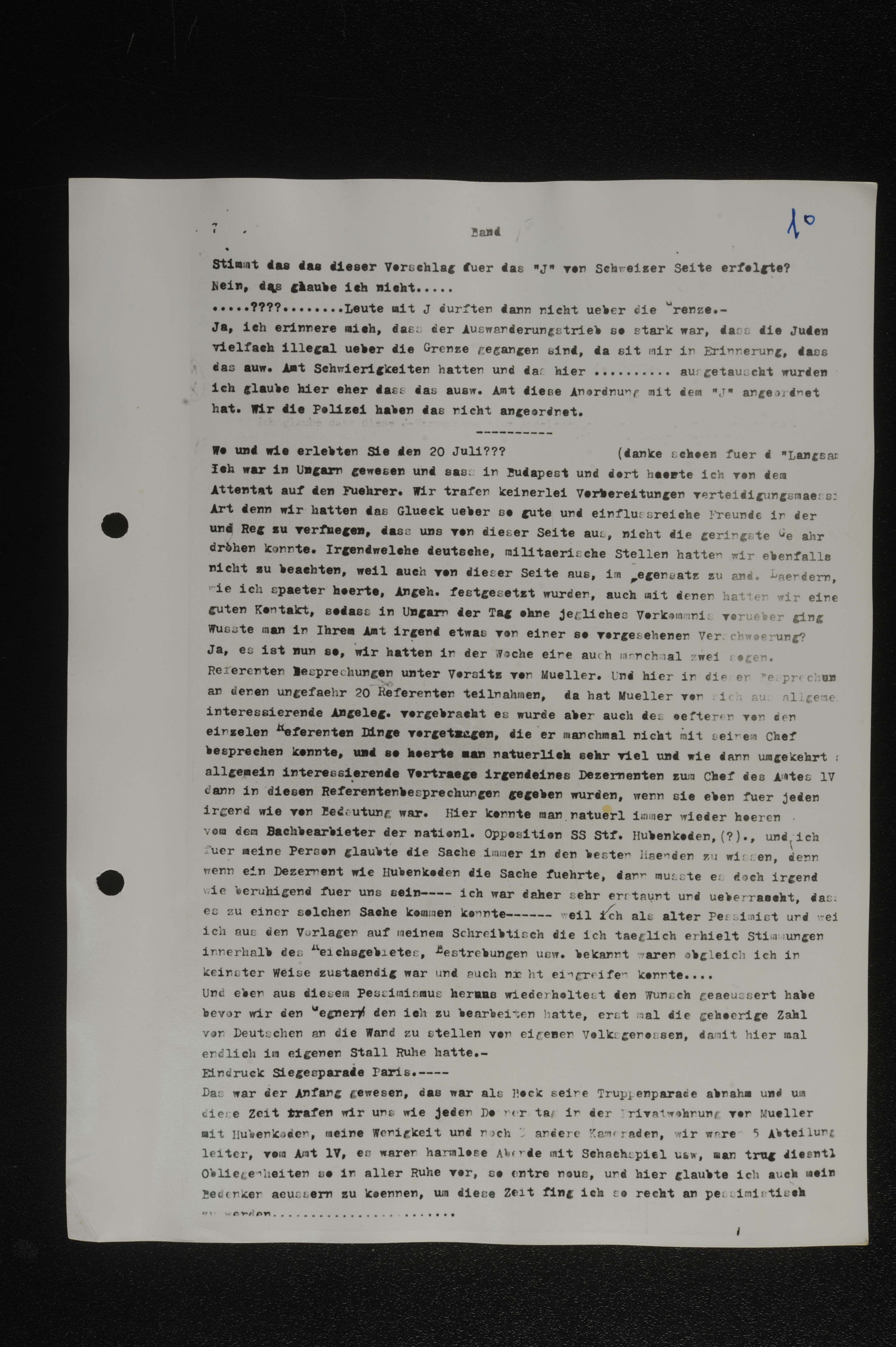
Page 268 of the typescript, O.65 file 86.
Page 268 · Yad Vashem Archives, O.65/86

German transcription

… und sein Speichel mich Gesicht… ich wollte es schon wegwischen, besann mich aber und flüchtete mich dann in Mordgedanken, denn um jene Zeit war der Schleifstein in Dachau groß geschrieben. Dort auf der Schinderwiese, wie wir sie nannten war nur stacheliges Gras und Schotter, durch die Uniform hatte ich mir die Ellbogen aufgeroppt… und ich hatte ein paar Reitstiefel, andere hatten Zivilschuhe, eine einheitliche Uniform gab es ja noch nicht, meine Stiefel habe mir aufgeschnitten bei diesem harten Gras und da habe ich mich mittags vor lauter Mordgedanken nicht im Revier gemeldet obwohl sich schon die halbe Companie abgemeldet hatte,… nachmittags wurden wir wieder geroppt, ich hatte mich verbinden lassen mit Gasen und Leukoplast aber in den ersten Minuten war das auch wieder weg, es war wieder durchgeblutet, wie gesagt, ich war dem heulen näher als dem Lachen und lebte nur noch in Mordgedanken. Ich habe das auch später meinem Chef gesagt, ich habe es Heydrich gesagt, Kaltenbrunner, jedem der es hören wollte habe ich es gesagt. Ich habe mit Wollust mir den Mord an diesem Laponesen vorgestellt und nur so habe ich diese Tage über mich ergehen lassen können, nur so konnte ich diesen Schinderdienst machen, ich blieb nur mit 8 od 10 Kerlen übrig. Und als ich gerade so am Schluß meiner Kräfte war, da wurde ich zu einem Unteroff. Kurs befohlen, da hatten doch diese Schweinehunde den Befehl bekommen, die Unteroff. mit Gewalt heraus zu holen, weil es dem RF SS irgendwie Regimenter aus dem Boden zu stampfen. Ich wurde also befördert und in Passau konnte ich mir den mein Bonbons anstecken. – Das also war mein erster erlebter Nationals., der mir aber auch nichts mehr an meinem Fanatismus rauben konnte, weil ich durch die Goebbels Presse von dem heroischen Widerstand, durch den Einzelkämpfer, daß ich da derart fasziniert war und mir sagte wenn die Leute so für ein Vaterland sterben können, dann muß es etwas Großes sein und da war mir alles gleichgültig gewesen und ich war meinen Eltern dankbar, daß sie mir keine Schwierigkeiten gemacht haben und mich ziehen haben lassen dorthin, wo es mich hinzog. – – I Fragen, die verlesen wurden: 1. Die Sache mit meinem väterlichen Freund, mit dem ich mich nicht duzte, der niemanden von uns je das Du angeboten hat, der selten auf Veranstaltungen der d-o. Frontk. kam, der nur ein einziges Mal ein öffentliches Kommando führte als nämlich die Tagung der Frontk. in Linz statt fand, und er ein Batallon kommandierte und er dann vor dem Volksgarten stand, auf dem Platz an dem später Göring und Epp die Reihen des national. Aufbruches führten, hat dieses einzige Batallon, das einzige was auf die Beine zu bringen war, dieses Batallon hörte auf sein Kommando. Sonst habe ich ihn nie kommandieren gehört. Sein Offiziersjahrgang war der Oberstlt. Reisegger, seine Frau war verstorben, er lebt in Urfar, er war Pionierlehrer an irgend einer Kadettenschule, zeit seines Lebens gewesen bis er durch die Revulotion die er nie verstanden hatte, überrascht wurde und je ein Pesnionistenende fand. Dieser Mann hat uns jungen Leuten das Duwort angetragen und wie es sich im östr. Reglement gehört, hatten wir ihm auch gehorsamst darauf zu antworten: Du, Herr Oberstleutnant. Und wir hatten vor diesem Obstlt. Reisegger, der sich mit dem Gros dieses jungen Verbandes duzte, ein so respektvolles Verhältnis wie er es wahrscheinlich in seiner

Draft translation

[HW: [illegible]] Band 30 [Volume 30] [HW: 268] on, and his saliva [DEL: tickled] me [DEL: in] face, ...... I already wanted to wipe it away, but reconsidered and then took refuge in thoughts of murder, for at that time the grindstone was writ large in Dachau. There on the Flaying-meadow, as we called it, there was only prickly grass and gravel, through the uniform I had scraped my elbows raw...... and I had a pair of riding boots, others had civilian shoes, a uniform uniform did not yet exist, my boots I had cut open by this hard grass and so at midday, out of sheer thoughts of murder, I did not report to the sick-bay although half the company had already reported off, ...... in the afternoon we were drilled/harried again, I had let myself be bandaged with gauze and Leuko- plast [adhesive plaster] but within the first minutes that too was gone again, it had bled through again, as said, I was nearer to weeping than to laughing and lived only in thoughts of murder. I also said this later to my chief, I said it to Heydr[ich] , Kaltenbrunner, to everyone who wanted to hear it I said it. I imagined with voluptuous pleasure the murder of this [?Japanese?] and only thus have I been able to let these days pass over me, only thus could I do this drudgery-service, I remained with only [?8?] or 10 fellows. And just when I was so at the end of my strength, then I was ordered to a non-commissioned officer course, for these swine had after all received the order to fetch out the NCOs by force, because it somehow [DEL: pleased] [HW: [illegible]] the RF SS [Reichsführer SS] to stamp regiments out of the ground. I was [DEL: immx] therefore promoted and in Passau I could pin on my little candy [i.e. rank pip/insignia].-- That then was my first experienced National[?Socialism?/?National holiday?], which however could no longer rob anything from my fanaticism, because through the Goebbels press about the heroic resistance, through the individual fighter, [such] that I was so fascinated by it there and said to myself, if people can die like that for a fatherland, then it must be something great, and there everything was indifferent to me and I was grateful to my parents that they made no difficulties for me and let me go there, to where it drew me.--- I Questions that were read out::: 1. The matter with my fatherly friend, with whom I was not on familiar terms [du], who never offered any of us the familiar "du", who seldom came to events of the d-o. Frontk[ämpfer]. [front-fighters], who only a single time led a public command, namely when the conference of the Frontk. took place in Linz, and he commanded a [DEL: [illegible]] battalion and he then stood before the Volksgarten, on the square on which later Goering and Epp led the ranks of the national. awakening/uprising, this single battalion, the only one that could be brought to its feet, this battalion obeyed his command. Otherwise I never heard him command. His officer year-group [class] was that of Lt.-Col. Reisegger, his wife had died, he lives in Urfahr, he was a pioneer instructor at some cadet school, throughout his life had been so, until through the Revolution which he had never understood, he was surprised, and [je... HW illegible] found a pensioner's end. This man offered us young people the "du" address, and as is proper in the Austrian regulation[s], we also had to answer him most obediently thereupon: Du, Herr Oberstleutnant [Lieutenant-Colonel]. And we had toward this Lt.-Col. Reisegger, who was on familiar "du" terms with the bulk of this young formation, such a respectful relationship as he probably in his

cadet school, will not have had a better one. That is how much we revered this man. He was a teacher to us in every field, whether it was a matter of engineering questions, whether it was a matter of trouble, sorrow, vexation or joy. He took part in everything and had a consoling, kind, friendly word for it all, but he also had a sharp, military way of speaking when it came to things that struck him as somehow rotten. He always stayed to the end, in spite of his age. He drank, and however long the evening still was, he never finished more than at most a single 1/… of wine, or only half of it. He was always accompanied on his long way from the meeting place to his home by some of us. We positively fought each other for the right to walk with him. Quite different, then, exactly the opposite of D. von Ehrenwall.

If Lieutenant Colonel Reisegger was more down to earth, friendly and confidence-inspiring, then there was D. von Ehrenwall, who kept everything three paces away from himself, helped by his umbrella. He would depict a battle with every possible gesture, and at the end he would crack the umbrella down on the ground, and with that the battle was over, and with that he took his leave just as abruptly, and allowed no chance of discussion. The man had no rapport at all. When we were at the shooting range he gave the commands, and when we were together afterwards he would tell of some terrible battle, how he had attacked and what the enemy was like. You always had to watch out for the umbrella so you wouldn't be hit, and after this account he would go away.

Without knowing it, he contributed to a pre-National Socialist education. He was after all my first teacher. He was the one who first put the carbine in my hands. I had never held a rifle before. He preached to us about why we had to shoot at all, why we had to learn it at all, namely the sanctity of the fatherland and the damned duty to stand ready to defend one's fatherland. He spoke of no party. He was only the defender of the fatherland, and that was what he gave me, namely the readiness to have to defend the fatherland. And when we once drove to Ents, 20 km from Linz, to found a German-Austrian veterans' association in Ents, we set off…

Open page image and German
Page 269 of the typescript, O.65 file 86.
Page 269 · Yad Vashem Archives, O.65/86

German transcription

Kadettenschule nicht besser gehabt haben wird, so verehrten wir diesen Mann. Er war uns ein Lehrer auf allen Gebieten, ob es sich um Pioniertechn. Sachen handelte, ob es sich um Kummer, Leid, Verdruß, Freude, er nahm an allem Anteil und hatte für alles ein tröstendes, gütiges, nettes Wort, er hatte aber auch eine scharfes, militärische Sprache, wenn es sich um Sachen drehte, die ihm irgendwie faul stanken. Er hielt stets bis zum Schluß aus, trotz seines Alters, er trank, und wenn der Abend noch solang war, nie mehr als höchstens ein einziges 1/4 Wein ganz aus, oder auch nur die Hälfte, er wurde stets auf seinem langen Weg vom Unterkunftslokal bis zu seinem Haus von einigen von uns begleitet, wir rissen uns geradezu darum ihn begleiten zu dürfen. Anders also, gerade das Gegenteil von D. von Ehrenwald. War Obstlt. Reisegger mehr volkstümlich, nett, vertrauenserweckend, so war der D. von Ehrenwahd, der sich alles drei Schritte vom Leib hielt, schon mit Hilfe seines Regenschirms, er schildorte mit allen möglichen Bewegungen eine Schlacht und zum Schluß noch knallte er den Regenschirm zu Boden, und damit war die Schlacht zu Ende, und damit abrupt verabschiedete er sich auch, und ließ keine Diskussionsmöglichkeiten zu… Der Mann hatte überhaupt keinen Konex gehabt, als wir am Schieß Stand waren hat er die Kommandos gegeben und wenn wir dann nachher zusammen waren hat er irgendeine fürchterliche Schlacht erzählt, wie er angegriffen hat und wie der gegener war,… man muß immer auf den Regenschirm achten, damit man nicht getroffen wurde, und nach dieser Schilderung ging er dann weg… Ohne das er es wußte, hat er zu einem Pre-Nationals. Erziehung dazu beigetragen, er war ja mein erster Lehrer, er hat mir ja den Stutzen erstmalig gegeben, ich hatte ja nie ein Gewehr in der Hand gehabt… er hat uns gepredigt, warum wir überhaupt zu schießen haben, warum wir es überhaupt zu lernen hatten, nämlich die Heiligkeit des Vaterlandes und die verdammte Bereitschaftspflicht sein Vaterland zu verteidigen. Er hat von keiner Partei gesprochen, er war nur der Vaterlandsverteidiger und das war das was er mir gegeben hat, nämlich die Bereitschaft das Vaterland verteidigen zu müssen. Und als wir einmal nach Ents fuhren, 20 km von Linz, zur Gründung einer d-o Frontk. in Ents, da zogen wir los.…

Draft translation

...will not have had it better at the cadet school, so we revered this man. He was a teacher to us in all fields, whether it concerned pioneer-technical [engineering] matters, whether it concerned grief, suffering, vexation, joy, he took part in everything and had for everything a comforting, kindly, nice word, but he also had a sharp, military tongue when it turned on matters that somehow stank rotten to him. He always held out until the end, despite his age, he drank, and however long the evening still was, never more than at most a single 1/[?4?] of wine entirely, or even only the half, he was always on his long way from the quarters-tavern to his house accompanied by some of us, we downright fought over being allowed to accompany him. Different, then, precisely the opposite of D. von Ehrenwald. If Lieutenant-Colonel Reisegger was more folksy, nice, trust-inspiring, so was D. von Ehrenwahd [sic], who kept everything three steps from his body, already with the help of his umbrella, he depicted with all possible movements a battle and at the end he even slammed the umbrella to the ground, and with that the battle was over, and with that he abruptly took his leave as well, and permitted no possibilities of discussion.. The man had had no connection [rapport] at all, when we were at the shooting range he gave the commands and when we were then together afterward he told some terrible battle, how he had attacked and how the enemy was,..... one must always watch out for the umbrella, so that one was not hit, and after this depiction he then went away....... Without his knowing it, he contributed to a pre-national[ist?] education, he was after all my first teacher, he did after all first give me the carbine [Stutzen], I had after all never had a rifle in my hand...... he preached to us why we have to shoot at all, why we even had to learn it, namely the holiness of the Fatherland and the damned duty of readiness to defend one's Fatherland. He spoke of no party, , he was only the defender of the Fatherland and that was what he gave me, namely the readiness to have to defend the Fatherland.[HW: []and when we once drove to Ents [Enns?], 20 km from Linz, for the founding of a d-o front-fighters' [group] in Ents, then we set off.[HW: ]]......

Questioner

Why did Kaltenbrunner address you with the familiar “you” du, and why did you respect him so much?

My father, besides his position as commercial director at this electrical company, was also on the board of other firms and a member of an Ex… committee. There was an annual audit of the books, at which several people came together, and this meeting was chaired by a lawyer, so to speak. That was old Kaltenbrunner. Dr. Kaltenbrunner’s practice was very well regarded, and young Kaltenbrunner studied and then joined his father’s practice. Linz was a small town of about 30,000 inhabitants before the Anschluss, and one day we were very proud when the large incorporation took place and our town swelled to 100,000 inhabitants, with the outlying districts.

And so people in Linz probably knew one another, and that is how we boys came to know each other in earliest youth, perhaps without realizing it. After many years in which we had lost contact, we suddenly saw each other again at a rally. In such a small community—we were only twenty-five SS men—there was only one form of address, the familiar “you” du. I called him by his first name because we knew each other, and the familiar form of address was simply part of this small fighting group. My family was known to be nationalist in outlook, and it was a matter of course that I declared myself for this group. Besides, the SS was trying to win over members of the German-Austrian veterans’ association.

Around that time old Colonel Hiltl died and the struggles over leadership now broke out in this veterans' association, and it turned out that the association in truth consisted of two sectors: first, the legitimist part loyal to the emperor, and the nationalist part, which was infected by the growing propaganda of the NSDAP. We members of this young association had permission from the Christian Social Upper Austrian provincial government to fire live ammunition at the ranges, so one was trained on the rifle, and something like that naturally had to be especially attractive to the SS, since we had weapons training behind us.

And so Kaltenbrunner, by his sheer physical bulk alone, simply overran a person and branded me as belonging to them. And when I told him of my misgivings about the Schlaraffia and that I really still belonged to the veterans’ association—I had already submitted my resignation in writing, because the split into two groups did not suit me… I also wrote to my friend Friedrich von Schmidt. He was an old monarchist, but the friendship remained in spite of everything.

I revised my position when the struggle in the German-Austrian veterans' association began and I decided for one camp. But I could not decide for the nationalist side within the association, and by chance, through a rally with Gauleiter Bolek, I was assigned to the SS as if by a hint of fate.

Questioner

How did it come about with the dismissal at the oil company, and how did your father and your family take it?

Eichmann

At that time I was in Salzburg, 130 km from Linz. I was there with the oil company in Salzburg, after having worked for 5 years at the oil company in Linz. One day I was summoned to my director and he explained to me that by decision of the Vienna head office I would be dismissed with effect from such-and-such a date…

Open page image and German
Page 270 of the typescript, O.65 file 86.
Page 270 · Yad Vashem Archives, O.65/86

German transcription

Wiese sprach Kaltenbrunner per Du zu Ihnen und warum respektierten Sie ihn so? Mein alter Herr war außer seiner Stellung als kaufm. Direktor bei dieser Elek. Gesellschaft, auch noch Verwaltungsrat bei anderen Firmen und war auch Mitglied eines Ex… Komitee, und da fand jährlich eine buchalterische Überprüfung statt, wo mehrere zusammen kamen und dieses Zusammenkunft leitete eine Advokat sozusagen, und das war der alte Kaltenbrunner gewesen. Diese Kanzlei des Dr. Kaltenbrunner war eine sehr gut angesehene Kanzlei, und der junge Kaltenbrunner studierte und tratt dann in die Kanzlei seines Vaters ein. – Linz war ein kleines Städtchen von etwa 30 000 Einwohner bevor der Anschluß kam und wir waren eines Tages sehr stolz gewesen, als die große Eingemeinde erfolgte und unsre Stadt auf 100 000 Einwohner anschwoll, mit den Landesbezirken. Und daher kannte wohl auch in Linz das einer den anderen und so kam es daß wir Buben uns schon in frühester Jugend kennen gelernt haben, vielleicht unwissentlich, und nach langen Jahren, in denen wir den Kontakt verloren hatten, sahen wir uns plötzlich in einer Kampfversammlung wieder. In einer solch kleinen Gemeinschaft, wir waren ja nur 25 SS Männer gab es nur ein Wort und das war das Duwort gewesen. Daß ich ihn mit dem Vornamen ansprach, kam daher weil man sich kannte und das Du gehörte nun mal zu dieser kleinen kämpferischen Truppe. Meine Familie war bekannt als national eingestellt und es war selbstverst. daß ich mich zu dieser Gruppe bekannte. – Außerdem kam dazu daß die SS bestrebt, Angeh der deutsch-östr. Frontk. für sich zu gewinnen. – Um jene Zeit verstarb der alte Oberst Hilk und es entbrannten nun die Führungskämpfe in dieser Frontk. und dabei stellte sich heraus daß die Frontk. in Wahrheit aus 2 Sektoren bestand 1. der legimistische kaisertreue Teil und der national Teil, dieser wurde infiziert durch die zunehmende Propaganda der NSDAP. Wir. Angeh dieser jungen Frontk., wir hatten die Genehmigung durch die christl-soziale Ober Östr. Landesregierung, auf den Schießständen auch scharf zu schießen, man war also am Gewehr ausgebildet und sowas mußte natürlich für die SS besonders reizvoll sein, denn wir hatten somit ja Waffenkunde mitgehabt. Und daher kam es daß Kaltenbrunner, schon allein durch seine körperliche Fülle einem einfach überrannte und mich zu ihnen gehörig stempelte. – Und als ich ihm meine Bedenken wegen der Schlaraffia sagte und daß ich ja an sich zu der Frontk. noch gehöre, ich hätte zwar meine Austritt schon schriftlich eingereicht weil mich die Zwiespaltung in 2 Gruppen nicht behagte… ich schrieb auch an meinen Freund Friedrich von Schmidt, er war ein alter Monarchist, das Freundesverhältnis aber blieb trotz allem… Ich revidierte meine Haltung als der Kampf in deutsch östr. Frontk. anfing und ich entschied mich für ein Lager. Ich konnte mich aber nicht für die nationale Seit in der Frontk. entscheiden und kam durch Zufall durch eine Kampfversammlung mit Gauleiter Bolek wie durch einen Wink des Schicksal zu der SS abgestellt. Wie kam das mit der Entlassung bei der Oel Co – und wie hat das Ihr Vater und Ihre Familie aufgenommen? Ich war um jene Zeit in Salzburg, 130 km von Linz entfernt, ich war dort bei der Oel Co – Salzburg, nachdem ich vorher 5 Jahre bei der Oel Co in Linz tätig gewesen war. Ich wurde eines Tages zu meinem Direktor bestellt und der erklärte mir daß ich auf Beschluß der Wiener Generaldirektion mit Wirkung zum xy entlassen würde…

Draft translation

10 Volume 30 Continuation [HW: 270] How is it that Kaltenbrunner addressed you with "Du" [the familiar form] and why did you respect him so? My old man [i.e. my father] was, besides his position as [DEL: [?tech. Dr?]] commercial director at this electric[al] company, also on the board of directors at other firms and was also a member of an Ex...... committee, and there an accounting review took place annually, where several came together, and this gathering was led by a [DEL: jurist] [HW: advocate], so to speak, and that had been old Kaltenbrunner. This office [chambers/practice] of Dr. Kaltenbrunner was a very well-regarded office, and the young Kaltenbru[nner] studied and then entered his father's office. — Linz was a small little town of about 30,000 inhabitants before the Anschluss came and we were one day very proud when the great incorporation took place and our city swelled to 100,000 inhabitants, with the rural districts. And therefore in Linz too one probably knew the other, and so it came about that we boys had already come to know each other in earliest youth, perhaps unknowing- [HW: 43] ly, and after long years in which we had lost contact, we suddenly saw one another again at a combat/struggle assembly [Kampfversammlung]. In such a small community — we were after all only 25 SS men — there was only one word and that had been the "Du" word [the familiar form]. That I addressed him by his first name came about because one knew each other and the "Du" simply belonged to this small combative troop. My family was known as nationally minded and it was self-evident that I professed [allegiance] to this group. — Besides, there came in addition that the SS strove to win over for itself members of the German-Austrian Frontkämpfer [front-fighters/veterans]. — Around that time old Colonel Hilk died and now the leadership struggles flared up in this Frontk[ämpfer organisation], and in the process it turned out that the Frontk[ämpfer] in truth consisted of 2 sectors: 1. the legitimist emperor-loyal part and the national part; this [latter] was infected by the increasing propaganda of the NSDAP. We[.] members of this young Frontk[ämpfer], we had the permission through the Christian-Social Upper Austrian provincial government, also to fire live [sharp] ammunition at the shooting ranges; one was thus trained on the rifle, and such a thing naturally had to be especially appealing for the SS, for we had thus indeed brought weapons-knowledge along with us. And therefore it came about that Kaltenbrunner, already through his physical bulk alone, simply ran one over and stamped me as belonging to them. — And when I told him my misgivings about the Schlaraffia and that I did after all still belong to the Frontk[ämpfer] — I had, to be sure, already submitted my resignation in writing because the split into 2 groups did not please me..... I also wrote to my friend Friedrich von Schmidt, , he was an old monarchist, the friendship relationship however remained despite everything, .......... I revised my attitude when the struggle in the German-Austrian Frontk[ämpfer] began and I decided for one camp. But I could not decide for the national side in the Frontk[ämpfer] and came, by chance, through a combat/struggle assembly with Gauleiter Bolek, as if by a nod of fate, assigned to the SS. How did that happen with the dismissal at the Oil Co------ and how did your father and your family take that? I was around that time in Salzburg, 130 km distant from Linz; I was there at the Oil Co - Salzburg, after I had previously been active for 5 years at the Oil Co in Linz. I was one day summoned to my director and he explained to me that, by resolution of the Vienna General Directorate, I would be dismissed with effect from xy...

… and that staff reductions were being made and I was the only unmarried one, and so the choice had fallen on me. I was not particularly sorry. I traveled to Czechoslovakia to my fiancée at the time. It was the first holiday I had had in a long while. My fiancée was also glad that I was now free of salaried employment, and at that time I could have started a wholesale business in kerosene and lubricating oil in Czechoslovakia. An opportunity offered itself there because my fiancée also wanted to tie me more closely to the Bohemian region, and my father-in-law wanted to help me get started, but I did not do it. I wanted to go back to Upper Austria and start such a trade in mineral oils there.

And at this time Kaltenbrunner came to me and said I had nothing more to lose in Austria, that I was to go to the Reich and report to Bolek in Passau, Bahnhofstrasse. That suited me too. I only asked to have leave to go abroad approved from time to time. That appealed to me, and so I set off.

Now I was made ready for the journey abroad by my worried father, who was a friend of the consul in Linz at the time, Dierk von Langen. This man issued me a passport, since I was in fact a German citizen of the Reich, and at the same time this Dierk von Langen established that I had in truth been dismissed from the oil company because of my membership in the SS, and he gave me a letter of recommendation for the authorities of the Reich, as was always customary when someone belonged to a suitable family of a German colony abroad and was now returning to the home country furnished with such a letter of recommendation. It meant that I, from one of the most respected families here, would now go to my homeland; that he had heard I had been dismissed on account of my membership in the SS from the Oil Company, where I had worked for five and a half years.

I still remember that my father was pleased about the words "most respected family". It was otherwise not at all in keeping with his innate modesty.

When I told my parents that I had been dismissed from the Oil Company, and probably because—an inspector had been there recently, he was a Jew, and I had been wearing my emblem… It was received just as if someone had said: the perry pears are ripe now and perry must be made from them. We were not in dire financial straits, and my father said to himself: he has worn himself down there for five and a half years; now let him do it somewhere else for a change. It can only do him good.

Open page image and German
Page 271 of the typescript, O.65 file 86.
Page 271 · Yad Vashem Archives, O.65/86

German transcription

… und zwar würden Personaleinschränkungen vorgenommen und ich sei der einzig ledige, und daher sei die Wahl auf mich gefallen… es tat mir nicht weiter leid, ich fuhr in die Tschechoslowakei zu meiner damaligen Braut es war seit langer Zeit ein Urlaub für mich, meine Braut freute sich auch daß ich nun aus dem Angestelltenverhältnis frei wurde, und ich hätte damals in Tschech. einen Großhandel für Petroleum und Schmieröl anfangen können, eine Möglichkeit bot sich da weil meine Braut mich auch mehr an den böhmischen Raum fesseln wollte, mein Schwiegervater wollte mir auch behilflich sein zum Anfang, aber ich habe es nicht gemacht – ich wollte nach Ober Östr zurück und dort einen solchen Handel mit Mineralöle anfangen. und zu dieser Zeit kam Kaltenbrunner zu mir und sagte ich hätte in Östr. nichts mehr zu verlieren, ich hätte ins Reich zu gehen und hätte mich bei Bolek in Passau Bahnhofstraße zu melden. Auch das paßte mir, ich bat mir nur aus daß ich von Zeit zu Zeit meinen Auslandsurlaub genehmigt bekomme. das sagte mir zu und ich fuhr also los. – Nun wurde ich auslandsreise fertig gemacht von meinem sich sorgenden Vater, der ein Freund des damaligen Konsuls in Linz, Dierk von Langen, dieser stellte mir einen Reisepass aus, denn ich war ja ansich Reichsdeutscher, und gleichzeitig hat dieser Dierk von Langen fest gestellt, daß ich aus der Oel Co in Wahrheit wegen Zugehörigkeit zu der SS entlassen wurde und er hat mir ein Empfehlungsschreiben für die Reichsdeutschen Behörden mitgegeben wie das immer so üblich war wenn man einer entspr. Familie einer Reichsdeutschen Kolonie angehörts und nun in der Heimatland mit einem solchen Empfehlungsschreiben versehen zurückkehrte. – Das bedeutete daß ich mich aus der hier angesehensten Familien mich nun nach meinem Heimatland begeben würde, er habe gehört daß ich gegen Zugehörigkeit zur SS aus der Oel Co entlassen worden sei, bei der ich 5 1/2 Jahre tätig war. – Ich weiß noch, daß sich mein Vater über das Wort angesehenste Familie freut es lag ihm sonst gar nicht in seiner angeborenen Bescheidenheit. – Als ich meinen Eltern sagte, daß ich aus der Oel Co entlassen bin, und wahrscheinlich weil, da war neulich ein Insp. da und der war Jude, und ich trug mein Hoheitsabzeichen… das wurde aufgenommen, als wenn man sagte die Mostbirnen sind nun reif und es müssen Most daraus gemacht werden. – Denn wir lebten ja auch nicht in einer finanziellen tristen Lage und mein Vater sagte sich, jetzt hat er sich dort 5 1/2 Jahre die Nase abgewetzt, jetzt soll er es einmal weanders tun, es kann ihm nur dienlich sein. –

Draft translation

.... and specifically staff reductions would be undertaken and I was the only unmarried one, and therefore the choice fell on me.... I was not further sorry about it, I traveled to Czechoslovakia to my then-fiancée it was a vacation for me after a long time, my fiancée was also glad that I now became free from the employment relationship, and I could at that time in Czech[oslovakia] have started a wholesale business for petroleum and lubricating oil, a possibility presented itself there because my fiancée also wanted to tie me more to the Bohemian region, my father-in-law also wanted to be helpful to me at the start, but I did not do it--- I wanted to go back to Upper Austria and there start such a trade with mineral oils. and at this time Kaltenbrunner came to me and said I had nothing more to lose in Austria, I had to go into the Reich and had to report to Bolek in Passau, Bahnhofstrasse. That also suited me, I only requested that I get my foreign leave granted from time to time. that was agreed to me and so I set off.--- [HW: 43] Now I was made ready for the foreign journey by my worried father, who [was] a friend of the then-consul in Linz, Dierk von Langen, this one issued me a passport, for I was in fact a Reich German, and at the same time this Dierk von Langen ascertained, that I was in truth dismissed from the Oil Co. because of belonging to the SS and he gave me along a letter of recommendation for the Reich German authorities as was always customary when one belonged to a corresponding family of a Reich German colony and now returned to the homeland provided with such a letter of recommendation.--- That meant that I would now betake myself from the here most respected families to my homeland, he had heard that I had been dismissed from the Oil Co. on account of belonging to the SS, at which I had been active for 5 1/2 years. .-- I still remember, that my father was pleased about the word most respected family it otherwise did not lie at all in his innate modesty.--- When I told my parents, that I am dismissed from the Oil Co., and probably because, there was recently an inspector there and he was a Jew, and I wore my sovereignty badge...... that was received, as if one said the cider pears are now ripe and cider must be made from them.- For we also did not live in a financially dreary situation and my father said to himself, now he has worn his nose down there for 5 1/2 years, now he should do it somewhere else for once, it can only be serviceable to him.----

Questioner

You point out that you always took your measures on the basis of regulations, orders, decrees and so on. Now what did you do to bring such regulations or decrees into being?

I believe that I, or rather my section, was involved in the marking of the Jews in Germany. I did not of course give birth to this police regulation. It was certainly issued by the propaganda ministry, but they in turn cannot issue any police regulation. So whether I now drew up the police regulation, or whether I was only involved in working out the implementing provisions, so that the police would be put in a position to attend to the matter, that I do not know.

So I receive the assignment. My chief, Mueller, or directly the chief of the Security Police tells me, such and such has been ordered, you are to submit the decree-based regulation or the police regulation by such and such a date. Under the heading or keyword "marking of the Jews". Now I go back and discuss this matter not with my senior administrative officer (Regierungsamtmann) or with my police inspector, but with my government counsellor (Regierungsrat) or with my government assessor, because it is after all a legal matter.

So I tell him everything and arrange—call a working meeting. Taking part in the working meeting is the appointed liaison officer of the propaganda ministry to me, the appointed liaison officer of the Deputy of the Führer, a senior government counsellor Reischauer, the relevant representative of the Foreign Office, von Thadden, so all these offices which are involved either marginally or to some extent with joint responsibility have to be drummed together for this working meeting.

Each one now has his concern and his own little draft, and he presents it. After this working meeting I now put together—since the order has come from above and the Chief of the Security Police and the Security Service has the lead, I now have to draw up the framework draft. That is to say: Police Regulation No. such-and-such. With effect from such-and-such a date, all Jews of German nationality living in Reich territory are to be marked. Now comes point two: who in particular is to be covered. Now the Nuremberg Laws are brought in: who counts as a Jew subject to the marking requirement? Then the borderline cases come up, and then it says: in case of non-compliance, punishment…

Now come the implementing provisions: where the Jewish star is to be worn, how big it is, what it has to look like, what color, on which side it is to be worn, at what height it is to be worn, whether it is to be worn only on the street or in the house as well, and how the authorities are to behave when a Jew is encountered without the marking on the street, and so on.

The others do not really have much to say about this framework draft; that goes quickly. The implementing provisions have to be chewed over at length, because new objections and new proposals keep coming up that have to be considered by the office taking the lead. Once I have completed such a draft in my working meeting, which I have to chair, or my government counsellor acting for me, or my permanent deputy—then I have the framework draft initialed by the representatives who took part in the meeting. I finish the framework draft and write: “To the Chief of the Security Police and the Security Service,” or “To the Chief of the German Police: I enclose the work completed on orders,” and so on. It then goes off, initialed of course by the other offices, and the Reichsführer-SS or the Chief of the Security Police and the Security Service signs

Open page image and German
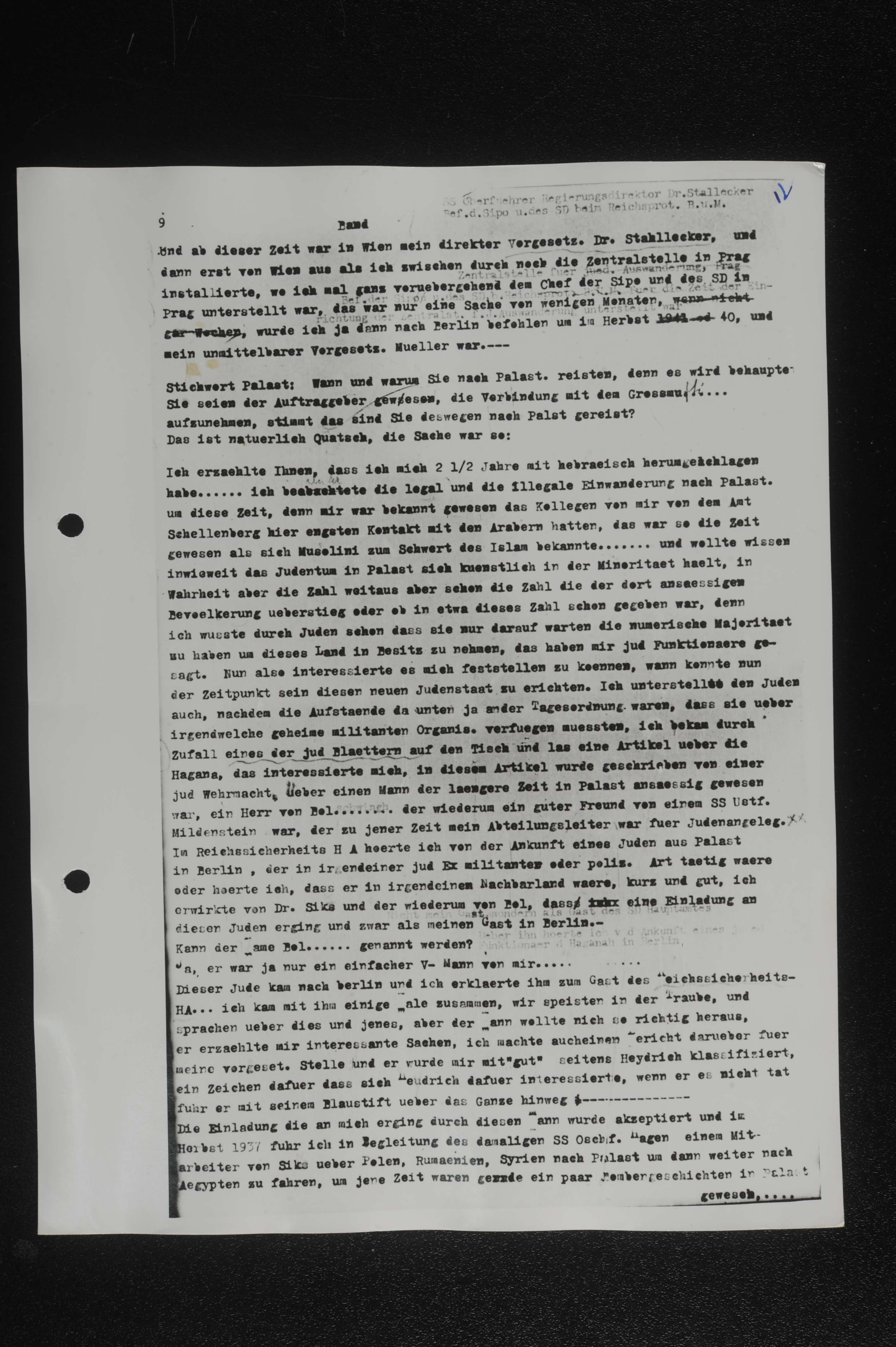
Page 272 of the typescript, O.65 file 86.
Page 272 · Yad Vashem Archives, O.65/86

German transcription

Sie weisen daraufhin daß Sie stets auf Grund von Verordnungen, Befehlen, Erlassen usw. Ihre Maßnahmen getroffen haben. Was haben Sie nun dazu getan um derartige Verordnungen od Erlasse ins Leben zu rufen? Ich glaube daß ich, bzw. meine Referat befaßt war bei der Kennzeichnung der Juden in Deutschland. Diese Polizeiverordnung habe ich natürlich nicht geboren, die wurde sicherlich im Propagandaminist. heraus gegeben, aber die wiederum können keine Polizeiverord. heraus gegeben, also ob ich nun die Poliz. Verord. gemacht habe, oder ob ich nur befaßt war mit der Findung der Durchführungsbestimmungen, damit nämlich die Polizei auch in die Lage versetzt wird die Angelegenheit auch beachten zu können, das weiß ich nicht… Also ich bekomme den Auftrag; mein Chef, Müller oder direkt der Chef der SIPO sagt mir, das und das wurde angeordnet, die Erlaßmäßige Reglung oder die Polizeiverord. haben Sie bis zum xy vorzulegen. Unter Kennzeichen bzw. Stichwort „Kennzeichen der Juden“. – Nun gehe ich also zurück und bespreche diese Angeleg. nun nicht mit meinem Regierungsamtmann oder mit meinem Pol. Insp. sondern mit meinem Regierungsrat oder mit meinem Reg Assessor, denn es ist ja eine juristische Sache, teile ihm also alles mit, raume eine beraume eine Arbeitsbesprechung an, in der Arbeitsbespr. nimmt teil der Beauftragte Verbindungsführer des Propagandaminist. zu mir, der beauftragte Verbindungsführer des Stellvertr. des Führers, ein Ober Reg Rat Reischauer, der diesbzg. Beauftragte des Ausw. Amtes, von Datten, also alle diese Stellen die entweder am Rande oder auch gewissermaßen mit federführend beteiligt sind, müssen zu dieser Arbeitsbespr. zusammen getrommelt werden. Jeder hat nun sein Anliegen und sein kleines Entwürflein und das trägt er vor, nach dieser Arbeitsbespr baue ich nun, da befohlen werden ist von oben, federführend ist der Chef der SIPO und des SD, habe ich jetzt also den Rahmenentwurf zu machen, d.h also Polizeiverordnung Nr. xy, mit Wirkung vom xy sind sämtliche im Reichsgebiet lebende Juden deutscher Staatsangeh. zu kennzeichnen. Jetzt kommt Punkt 2 : Wer also im einzelnen zu erfassen ist… Jetzt werden also die Nürnberger Gesetze heran gezogen… wer als Jude gilt zur Kenntzeichnungpflicht, dann kommen die Grenzfälle heran, und dann heißt es bei Nichtbeachtung, Strafe… – Jetzt kommen die Durchführungsbestimmungen: Wo also der Judenstern zu tragen ist, wie groß er ist, wie er auszusehen hat, welche Farbe, auf welcher Seite er zu tragen, in welcher Höhe er zu tragen ist, ob er nur auf der Straße zu tragen ist oder auch im Haus, und wie die Stellen sich zu verhalten haben, wenn der Jude angetroffen wird ohne Kenntzeichen auf der Straße… usw. Zu diesem Rahmenentwurf haben die Leute an sich nicht viel zu sagen, der geht schnell, die Durchführungsbestimmungen müssen lange durchgekaut werden, denn immer wieder kommen neue Bedenken, neue Anträge die von der federführende Stelle zu berücksichtigen sind. Habe ich nun einen solchen Entwurf fertig gestellt in meinem Arbeitsbespr. denen ich vorsitzen muß, oder mein in Vertret. stehender Regierungsrat oder mein ständiger Vertreter. Dann laß ich mir diesen Rahmenentwurf von den an der Besprechung teilgenommen Beauftragten abzeichnen, ich mach den Rahmenentwurf fertig und schreibe; an den Chef der SIPO und des SD oder an den Chef der Deutschen Polizei, als Anlage übersende ich auf Befehl fertiggestellte usw… es geht dann ab, natürlich abgezeichnet von den anderen Stellen, und der RF oder der Chef der SIPO u des SD unterschreiben

Draft translation

[HW: 272] You point out that you always took your measures on the basis of ordinances, orders, decrees, etc. Now what did you do to bring such ordinances or decrees into being? .I believe that I, or rather my Referat [section], was concerned with the marking of the Jews in Germany. This police ordinance I did not of course give birth to; it was certainly issued in the Propaganda Ministry, but they in turn cannot issue any police ordinance, so whether I now made the police ordinance, or whether I was only concerned with the finding of the implementing regulations, so that namely the police too would be put in a position to be able to attend to the matter, that I do not know............. So I receive the assignment; my chief, Mueller, or directly the chief of the SIPO says to me, this and that has been ordered, you are to submit the decree-based regulation or the police ordinance by the xy. Under the designation or catchword "Marking of the Jews".-- Now I go back then and discuss this matter not with my Regierungsamtmann [government official] or with my police inspector, but with my Regierungsrat [government counsellor] or with my Reg[ierungs]assessor, for it is after all a juristic matter, so I inform him of everything, arrange a arrange a working conference, in the working conference there takes part the assigned liaison leader of the Propaganda Ministry to me, the assigned liaison leader of the Deputy of the Führer, an Ober-Reg[ierungs]rat Reischauer, the pertinent assignee of the Foreign Office, von Datten, so all these offices that are involved either at the margins or also to a certain extent with joint responsibility [federführend] must be drummed together for this working conference. Each one now has his concern and his little draft and he presents it, after this working conference I now build, since it has been ordered from above, in charge [federführend] is the chief of the SIPO and of the SD, I have now then to make the framework draft, i.e. therefore Police Ordinance No. xy, with effect from xy all Jews of German nationality living in the Reich territory are to be marked. Now comes point 2: Who therefore is to be recorded in the individual case.... Now the Nuremberg Laws are therefore drawn in..... who counts as a Jew for the marking obligation, then the borderline cases come up, and then it reads, in case of non-observance, penalty ...........- Now come the implementing regulations: Where therefore the Jewish star is to be worn, how big it is, how it is to look, what colour, on which side it is to be worn, at what height it is to be worn, whether it is only to be worn on the street or also in the house, and how the offices are to conduct themselves when the Jew is encountered without marking on the street.........etc. To this framework draft the people actually do not have much to say, that goes quickly, the implementing regulations must be chewed over for a long time, for again and again new misgivings come, new petitions/motions which are to be taken into account by the office in charge [federführend]. Now once I have completed such a draft in my working conference which I must chair, or my Regierungsrat standing in as deputy or my permanent deputy. Then I have this framework draft initialled by the assignees who took part in the conference, I finish the framework draft and write; to the chief of the SIPO and of the SD or to the chief of the German Police, as an enclosure I transmit on order [the] completed// etc......... it then goes off, initialled of course by the other offices, and the RF [Reichsführer] or the chief of the SIPO and of the SD sign

this ordinance. It then comes back to me and goes out to all offices; it is published… and the police ordinance is finished.

That is a matter that also has an outward effect, because at home and abroad it can't be hidden that an enormous apparatus has been brought into play here. But there are also decrees, internal police decrees, which can be done by a quicker route, but which also don't carry that kind of fundamental importance.

Here is an example. An office out in the field reports difficulties to me in some area in the handling of the opponent. The office could be one of my advisers, the office could also be some state police regional headquarters. It writes that there is confusion here, or difficulty in the handling, that various points of view apparently govern this matter, that uniform work hasn't been achieved so far, and it asks for the matter to be settled generally.

So I call in my responsible desk officer, I go through the matter with him, that is, I instruct him to work on it, to put together everything that has already been issued in this area, all the directives, decrees and so on, and to examine how far the matter could be settled by decree or whether a police ordinance appears necessary here.

After studying the matter he then tells me that a small decree is enough here, in the form of a circular to all police offices and police regional headquarters, with copies to the inspectors of the Security Police and the Security Service, to the commanders of the Security Police and the Security Service, and for information also to the Higher SS and Police Leaders. Good. If I agree, or if difficulties or uncertainties still come up for me, I take the whole thing in my consultation folder to my office chief. I discuss the matter with him too. But he doesn't consider it important enough that the Chief of the Security Police has to be brought in as well, or even the Reichsführer-SS. Fine, so we finish it off, a circular.

Now my case officer drafts it, and I have to initial it. He puts his initials under his reference, IV B 4, and I put mine to the right of them. It goes on to the chief of Office IV, who signs it; then it goes on to the Chief of the Security Police and the Security Service, who signs it or merely puts his initials; and then it goes on to the Reichsführer-SS. It comes back by the same official channel it went out on, and on the basis of this office draft I now compose the actual circular for all police offices and police regional headquarters, and so on: with effect from such-and-such a date, it is ordered that such-and-such, and so on.

If I have a small matter within my own competence, I sign it with my name, as does my case officer, whose name appears in the file reference; or Müller signs it, Heydrich… That is how it goes out.

But a police decree that I had given birth to myself as a section head, however simple it might have been, I could never ever have issued that if I hadn't brought the machinery of the authorities into play. Is that what you meant?

Questioner

No, so far you have described the purely bureaucratic route. What is interesting is whether you were the originator of the ideas behind various ordinances and decrees.

Open page image and German
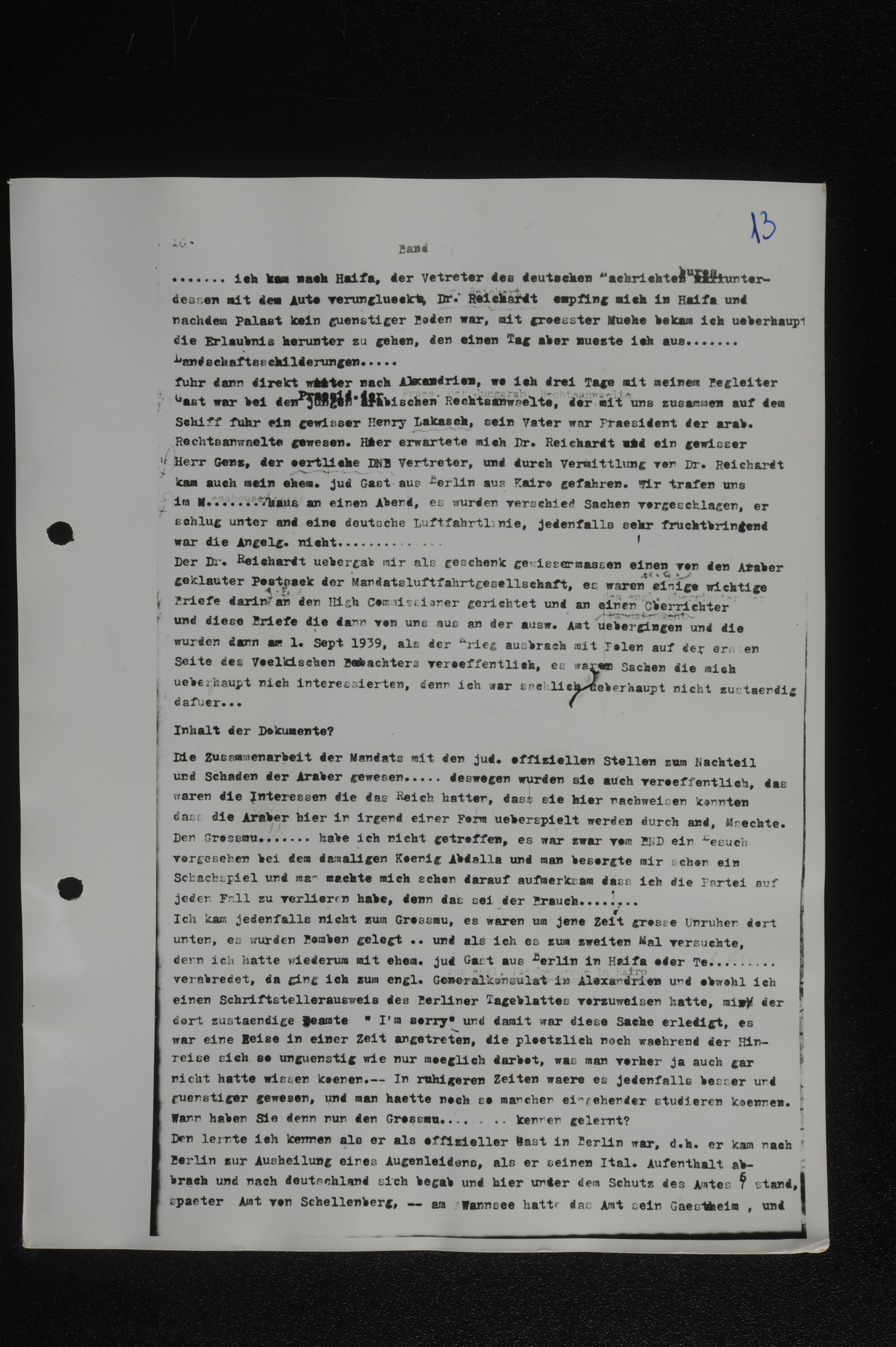
Page 273 of the typescript, O.65 file 86.
Page 273 · Yad Vashem Archives, O.65/86

German transcription

diese Verordnung. – Die kommt dann zu mir zurück und geht jetzt raus an sämtl Stellen, wird veröffentlicht… und die Polizeiverordnung ist also fertig. Das ist also eine Sache die auch einen äußeren Niederschlag findet, denn im Inn und Ausland läßt sich nicht verbergen, es ist ein gewaltiger Apparat hier eingeschaltet werden. Es gibt aber auch Erlasse, interne Polizeierlasse, die auf schnellerem Wege zu machen sind, denen aber auch nicht solche grundsätzliche Bedeutung zu kommt. – Das ist zum Beispiel ein Fall; eine Stelle draußen meldet mir Schwierigkeiten, auf irgend einem Gebiet in der Behandlung des Gegeners, die Stelle kann sein irgendeiner meiner Berater, die Stelle kann sein auch irgendeine Staatspol. Leitstelle, schreibt daß hier Unklarheit herrscht oder Schwierigkeit in der Behandlung das wohl für diese Sache verschied Gesichtspunkte maßgebend wären, daß eine einheitliche Arbeit bislang noch nicht erzielt werden kennte und es wird gebeten die Sache generell zu klären. So – da ziehe ich mir meine zuständigen Sachbearbeiter jetzt ran, gehe mit ihm die Sache durch, d.h. ich beauftrage ihn, die Sache zu bearbeiten, alles verzulegen was auf diesem Gebiet bereits ergangen war, an sämtlichen Weisungen Erlassen usw… und zu prüfen inwieweit die Sache erlaßmäßig geregelt werden könnte oder ob hier eine Poliz Verord. notwendig erscheint usw… Er teilte mir dann mit nach Studium der Sache daß hier ein kleiner Erlaß genügt, in Form eines Rundschreibens an sämtliche Poli. und Poli. Leitstellen, Nachrichten an die Insp. der SIPO und des SD, an die Befehlshaber der SIPO und des SD, herausgegeben wird, und nachrichtlich auch an die Höh SS und Pel Führ Gut wenn ich einverstanden bin, oder wenn mir noch Schwierigkeiten oder Unklarheiten auftauchen, nehme ich mir die ganze Sache in meine Rücksprachemappe zu meinem Amtschef, ich bespreche die Sache auch mit ihm, er hält sie aber nicht für so wichtig daß man hier auch noch den Chef der SIPO einschalten braucht, oder gar den RF – gut also machen wir es fertig, Rundschreiben… Jetzt aber arbeitete es mein Sachbearbeiter aus, ich muß es abzeichnen, er macht unter sein Zeichen IV B 4, sein Signum und ich mache rechts davon mein Signum und es geht weiter zum Amtschef 4, der unterschreibt, dann geht es weiter an den Chef der SIPO und des SD, der unterschreibt oder macht auch nur sein Signum und dann geht es weiter an den RF, kommt auf demselben Dienstweg wie es rausgegangen ist, auch wieder zurück und ich verfasse nun auf Grund dieses Kanzleientwurfes das richtige Rundschreiben für sämtl Poli und Polileitstellen… usw, mit Wirkung vom xy wird angeordnet, daß xy, usw… Habe ich eine so kleine Sache mit eigener Zuständigkeit dann unterschreibe ich mit meinem Namen, wie mein Sachbearbeiter, der steht eben in der Buchungsnummer, oder es unterschriebt Müller, Heydrich… so geht das raus. – Aber einen Polizeierlaß den ich mir als Referent selbst geboren hätte, und wäre er noch so einfach gewesen, den hätte ich nie und nimmer rausgeben können wenn ich nicht den Behördenapparat eingeschaltet hätte. – – Meinten Sie das? Nein, sie haben bisher den rein bürokratischen Weg geschildert, was aber int. ist, ob Sie bei verschied Verord und Erlässen die geistige Urheberschaft haben

Draft translation

this ordinance.-- It then comes back to me and now goes out to all offices, is pub- lished....... and the police ordinance is thus finished. That is thus a matter that also finds an outward manifestation, for at home and abroad it cannot be concealed, a mighty apparatus here is being brought into action. But there are also decrees, internal police decrees, which are to be made by a faster route, but to which also no such fundamental significance attaches. .-- That is for example one case; an office out there reports difficulties to me, in some area in the treatment of the opponent, the office can be some one of my advisers, the office can also be some State Police Regional Headquarters, writes that here unclarity prevails or difficulty in the treatment, that presumably for this matter various points of view would be decisive, that a uniform working could hitherto not yet be achieved and it is requested that the matter be clarified generally. So---- there I now pull in my competent case handler, go with him through the matter, i.e. I instruct him to work on the matter, to submit every- thing that had already issued in this area, in all instructions decrees etc.... and to examine to what extent the matter could be regulated by way of decree or whether here a police ordinance appears necessary etc...... He then informs me after study of the matter that here a small decree suffices, in the form of a circular to all police and police headquarters, notices to the Inspectors of the SIPO and of the SD, to the Commanders of the SIPO and of the SD, is issued, and by way of notice also to the Higher SS and Pol[ice] Leaders Good, if I am in agreement, or if difficulties or unclari- ties still arise for me, I take the whole matter in my consultation folder to my office chief, I discuss the matter also with him, but he does not hold it to be so important that here one still needs to bring in the Chief of the SIPO, or even the RF, ---- good so we finish it, circular......... But now my case handler works it out, I must countersign it, he makes under his mark lV B 4, his signum and I make to the right of it my signum and it goes further to Office Chief 4, who signs, then it goes further to the Chief of the SIPO and of the SD, who signs or also only makes his signum and then it goes further to the RF, comes back by the same official channel as it went out, also again, and I now compose on the basis of this office draft the proper circular for all police and police headquarters ....... etc, with effect from xy it is ordered that xy, etc.......... If I have such a small matter within my own competence then I sign with my name, like my case handler, who stands precisely in the booking number, or Mueller, Heydrich signs it........ that is how it goes out.------ But a police decree which I as desk officer had myself begotten, and were it ever so simple, that I could never ever have issued if I had not brought in the authority apparatus.--- ---Did you mean that? No, you have so far described the purely bureaucratic path, but what is int[eresting] is whether you have the intellectual authorship in various ordinances and decrees

No, not the authorship of the ideas. I believe that hardly ever, or only in the very rarest cases, did a section head in the Gestapo office originate the ideas behind decrees and ordinances. Because the whole subject matter of police work is such that all these cases, let's say, come from the practical side, are brought up from the subordinate offices, and so the source of the ideas is to be looked for below, or when it is a question of larger cases, of fundamental cases, then they come down from above, they are ordered.

A section head in the Gestapo office is less creatively active than, for example, in Office VII. In Office VII he was creative, in Office IV he was not, that also wasn't his job, here he only had to supervise his processing machine, do you understand?

Questioner

No, in my opinion the section head has to give the impulse, in this case the impulse for decrees and ordinances. That you, for example, arrange through Dannecker in France, through Wi in Slovakia, a legal underpinning of the Jewish measures in the individual states?

Eichmann

For example: I am not aware, and the cases are certainly very few, that a section head in a state police office was ever creatively active at all. Those things came from Office VII, I was there too, there I had to be creatively active, there I had to produce guidance booklets, into which I had to build my own thoughts, and they were either accepted or rejected by my superiors, but I first had to give birth to them. Such giving birth was not the job of a section head in the Gestapo office. He was the head of his office machine, he had to process what was carried in to him from above and from below in the sense of the directives and orders that had been issued, and if none had been issued yet, he obtained them by way of consultations.

I could never have given a fundamental decree, and a decree always has a fundamental meaning, otherwise it is not a decree in the sense of a police ordinance, to my subordinates sitting in the European countries, if I hadn't been prompted to do it. It also possibly happened that Dannecker, for example, came to me and said, I have colossal difficulties here and I believe and I think, Obersturmbannführer, we won't get any further here, because the laws here in this country are such, as the legal adviser has also told me, that subordinating Jews of such-and-such nationality is impossible as long as no special legislation is achieved here or some possibility of implementation is worked out by way of legislation.

Then I listened to that and called in the responsible case officer, in this case again a lawyer. Either he knew about it and was aware of the difficulties in that country and had now received a nudge, and thought the matter was really very simple: we only needed to suggest to the Foreign Office that, through its diplomatic representative, it arrange with the relevant authority for a supplementary ordinance to be added to the law concerning the year such-and-such, saying this and that. Then they would have a basis to work with over there and could operate in that country.

Then I said: good, excellent, get it ready; or I said: good, I will consult further about it. I then proposed it to Müller at the next opportunity. If it was approved, a letter to the Foreign Office was drawn up.

Open page image and German
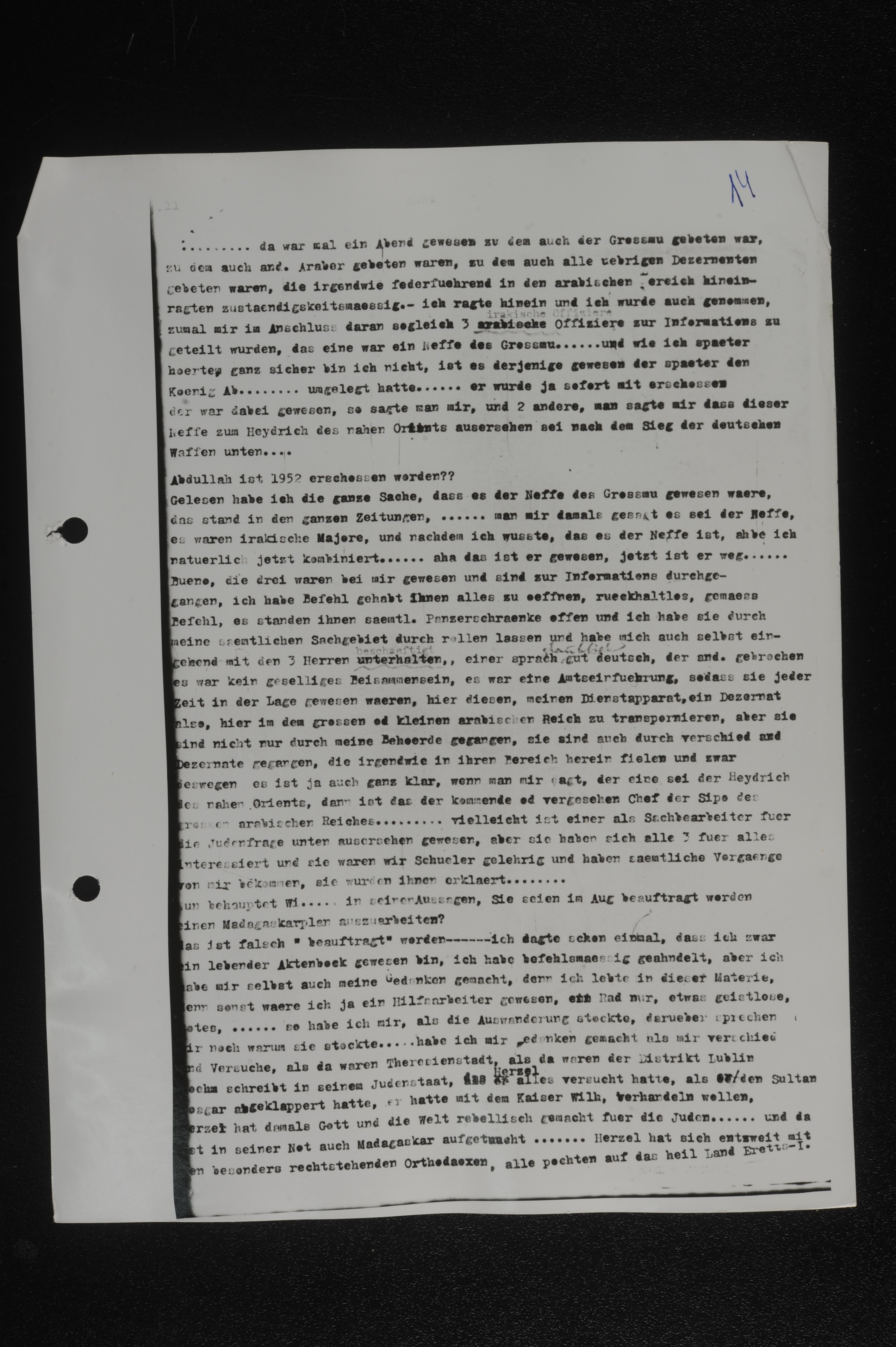
Page 274 of the typescript, O.65 file 86.
Page 274 · Yad Vashem Archives, O.65/86

German transcription

Nein, die geistige Urheberschaft nicht… Ich glaube die geistige Urheberschaft bei Erlassen und Verord. die hat wohl kaum oder nur in den allerseltesten Fällen je ein Referent im Gestapo Amt gehabt. Weil schon die ganze Materie des Poli. Wesens so ist, wenn alle diese Fälle, sagen wir, von der praktischen Seite herkommt von den nachgeord. Stellen herangetragen wird und so die geistige Urheberschaft unten zu suchen ist, oder wenn es sich um größere Fälle, grundsätzliche Fälle handelt, dann kommen sie von oben herunter, werden angeord. Ein Referent im Gestapo Amt ist weniger schöpferisch tätig, wie zB im Amt VII. Im Amt VII war er schöpferisch, im Amt IV war er es nicht, war auch nicht seine Aufgabe, sondern hier mußte er nur seiner Verarbeitungsmaschine vorstehen, verstehen Sie.? Nein, meiner Meinung nach hat der Referent die Anregung zu geben, in diesem Fall Anregung für Erlasse und Verordnungen… das Sie zB veranlassen über Dannecker in Frankreich, über Wi im der Slowakei… eine gesetzliche Untermauerung der Judenmaßnahmen in den einzelnen Staaten?… Beispiel: Mir ist nicht bekannt und die Fälle sind sicherlich sehr gering daß überhaupt ein Referent je in einem Staatspol. Amt schöpferisch tätig war, diese Sachen kamen von Amt VII, dort war ich auch, dort mußte ich schöpferisch tätig sein, dort hatte ich Leithafte zu erstellen, we ich meine Gedanken hinein bauen mußte und die wurden entweder von meinen Vorgest. akzeptiert oder verworfen, aber ich mußte sie erst einmal gebären. Ein solches Gebären war nicht Aufgabe eines Referenten im Gestapo Amt, der war der Vorstand seiner Büromaschine, das was ihm von oben und von unten herein getragen wurde, zu verarbeiten hatte im Sinne der ergangenen Weisungen und Befehle, sind aber noch keine ergangen, hat er sich die auf Grund von Rücksprachen besorgt. – Nie hätte ich einen grundsätzlichen Erlaß, und ein Erlaß hat immer eine grundsätzliche Bedeutung, sonst ist es kein Erlaß im Sinne einer Poli Verord, – an meine in den europ. Ländern sitzenden Nachgeord. geben können, wenn ich nicht dazu veranlaßt worden wäre. Es hat auch möglicherweise das gegeben, daß zB Dannecker zu mir kam… und gesagt hat, ich habe hier kolosale Schwierigk. und ich glaube und ich denke Obstf, so kommen wir hier nicht weiter, denn die Gesetze hier in diesem Lande sind so wie mir auch der jurist. Berater gesagt hat, so daß eine Unterstellung der Juden einer xy Staatsg. Angeh unmöglich ist, so lange hier nicht eine besondere Gesetzgebung erzielt wird oder auf dem gesetzgeberischen Wege irgendwie eine Durchführungsmöglichkeit erarbeitet wird. Dann habe ich mir das angehört und habe mir den zuständigen Sachbearbeiter kommen lassen, in dem Fall also wieder ein Jurist. Entweder kannte er das und wußte um die Schwierigkeiten in diesem Lande und hat nun einen Stupser bekommen und meinte nun, die Sache sei an sich sehr einfach denn wir brauchten hier nur dem Ausw. Amt verzuschlagen daß es über deinen Missionsträger bei der Stelle erwirkt, daß zu dem Gesetz btr. das Jahr xy, eine Zusatzverord. kommt in der es heißt, das und das. dann hat man drüben die Handhabung und kann in diesem Land operieren. Dann habe ich gesagt, gut, ausgezeichnet, machen Sie es fertig, oder ich habe gesagt, es ist gut, ich werde noch Rücksprache diesbzgl nehmen. Und habe das dann bei nächster Gelegen. Müller vorgeschlagen, war es in Ordnung, wurde ein Schreiben fertig gemacht an das Ausw. Amt. –

Draft translation

No, the intellectual authorship not... I believe the intellectual authorship for decrees and ordinances, that was hardly ever, or only in the very rarest cases, ever held by a desk officer in the Gestapo Office. Because the whole matter of the police apparatus is already such that, if all these cases, let us say, come from the practical side, are brought forward by the subordinate offices, and so the intellectual authorship is to be sought below, or if it concerns larger cases, matters of principle, then they come down from above, are ordered. A desk officer in the Gestapo Office is less creatively active than, for example, in Office VII. In Office VII he was creative, in Office IV he was not, that was also not his task, but rather here he only had to understand his processing machine, understand [do you understand?]. No, in my opinion the desk officer is to give the stimulus, in this case the stimulus for decrees and ordinances....... that you, for example, prompt via Dannecker in France, via Wi[?] in Slovakia.........a legal underpinning of the Jewish measures in the individual states?.... Example: It is not known to me, and the cases are certainly very few, that a desk officer was ever creatively active at all in a State Police Office; these things came from Office VII, I was there too, there I had to [HW: Office III [?with the Chancellor Heldrichs?] [illegible]] be creatively active, there I had to prepare guiding [pieces?/documents?] into which I had to build my thoughts, and they were either accepted or rejected by my superiors, but I first had to give birth to them. Such giving-birth was not the task of a desk officer in the Gestapo Office, he was the head of his office machine, who had to process what was brought in to him from above and from below in the sense of the directives and orders issued; but if none had been issued yet, he obtained them on the basis of consultations. — Never could I have given a fundamental decree, and a decree always has a fundamental significance, otherwise it is not a decree in the sense of a police ordinance, — to my subordinates seated in the European countries, if I had not been prompted to do so. It also possibly occurred that, for example, Dannecker came to me..... and said, I have colossal difficulties here, and I believe and I think, Obstf[Obersturmbannführer], we will not get any further here this way, because the laws here in this country are, as the legal adviser also told me, such that a subordination of the Jews to a xy [TS INS: state-citizen] affiliation[?] is impossible, as long as no special legislation is achieved here, or a possibility of implementation is worked out in some way by the legislative route. Then I listened to that and had the responsible case-handler come to me, in that case again a jurist. Either he knew this and was aware of the difficulties in this country and now got a nudge and now thought the matter was in itself very simple, for here we would only need to propose to the Foreign Office that it, via your[?] mission-bearer, bring about at the relevant office that, to the law concerning the year xy, a supplementary ordinance be added in which it says thus and thus. Then over there one has the handle and can operate in this country. Then I said, good, excellent, get it ready, or I said, it is good, I will still take consultation in this regard. And then proposed that to Müller at the next opportunity; was it in order, a letter was made ready to the Foreign Office. ----

This letter to the Foreign Office was never signed by me, it was signed by the office chief. If it was a quite simple matter that went to the Foreign Office for the attention of Legation Counsellor von Thadden, then I signed it myself. In it attention was drawn to the whole situation and it asks for soundings to be taken as to whether and how far the Reichsführer-SS’s order can be carried out step by step. It was a long drawn out process, it was pushed and pushed, or else the thing ran itself to death and was filed away, that happened too. If you call that creative, seen that way, then yes, of course.

Questioner

But quite indirectly these decrees and ordinances were still inspired by you, they were worked out by you and so on, weren't they?

Eichmann

Naturally, certainly that happened too, but you see, in the direct sense they were only quite small things. But, to take it as you suggest, the whole plan and the idea of transporting them to Madagascar, which had already got so far in rough draft that it was already a complete piece of legislation, that came from me as well, because in that case, that is right, in my distress, because I no longer knew where to put the Jews, I proposed to Grf. (Gruppenführer) and to the Chief of the Security Police that we get the island of Madagascar released to us.

Whether he would agree—then I would call a working conference, which many others would follow, and I would get the legislation ready here, with the aim that the Jews are to be transferred to Madagascar. Yes, the impulse came from me, it was a presentation. What followed after that I did not give birth to, I couldn't possibly have given birth to it, because so many offices have to be consulted and asked whether… It even often turns out in a negotiation that the lead has to be handed over to another central authority, and that we are only involved at the margin. Often it is the other way round, that is what the working conference decides, and on top of that there is the jealousy of the office chiefs.

Heydrich, for example, in the rarest cases or never let the lead be taken out of his hands. With Kaltenbrunner it was much simpler, there we didn't need to worry so much, because if it turned out that the lead was really a matter for the Foreign Office, or lay on the side of the Reich Ministry of Economics, then Kaltenbrunner never raised an objection to it. With Heydrich it was different, you could hear a thunderstorm if things were taken out of his hands.

[Handwritten changes in the following career-and-drafting passage: 'Ra' at the officer’s name and again at the later abbreviated name; an addition forming 'assistance' at 'help'.]

To continue with Madagascar. Here the initiative came from me. I contacted my legal case officer, Dr. …—SS Hstf. (Hauptsturmführer), first in Vienna, serving in an honorary capacity; he was in Poland, then came to me, and later went to the Waffen-SS, —and gave him the assignment. Now Ja. drew up an extensive piece of legislation for me. It began with a …ampel(?), and went through paragraphs one, two, three, four and five as the basic provisions. Then came the endless mass of implementing provisions. The whole thing had already been drawn up in draft by …, of course in weeks of collaboration with the legal experts of the principal central authorities, and of the central authorities from which I expected help, and which then gave me a certain backing at the coming working conferences and, together with me

Open page image and German
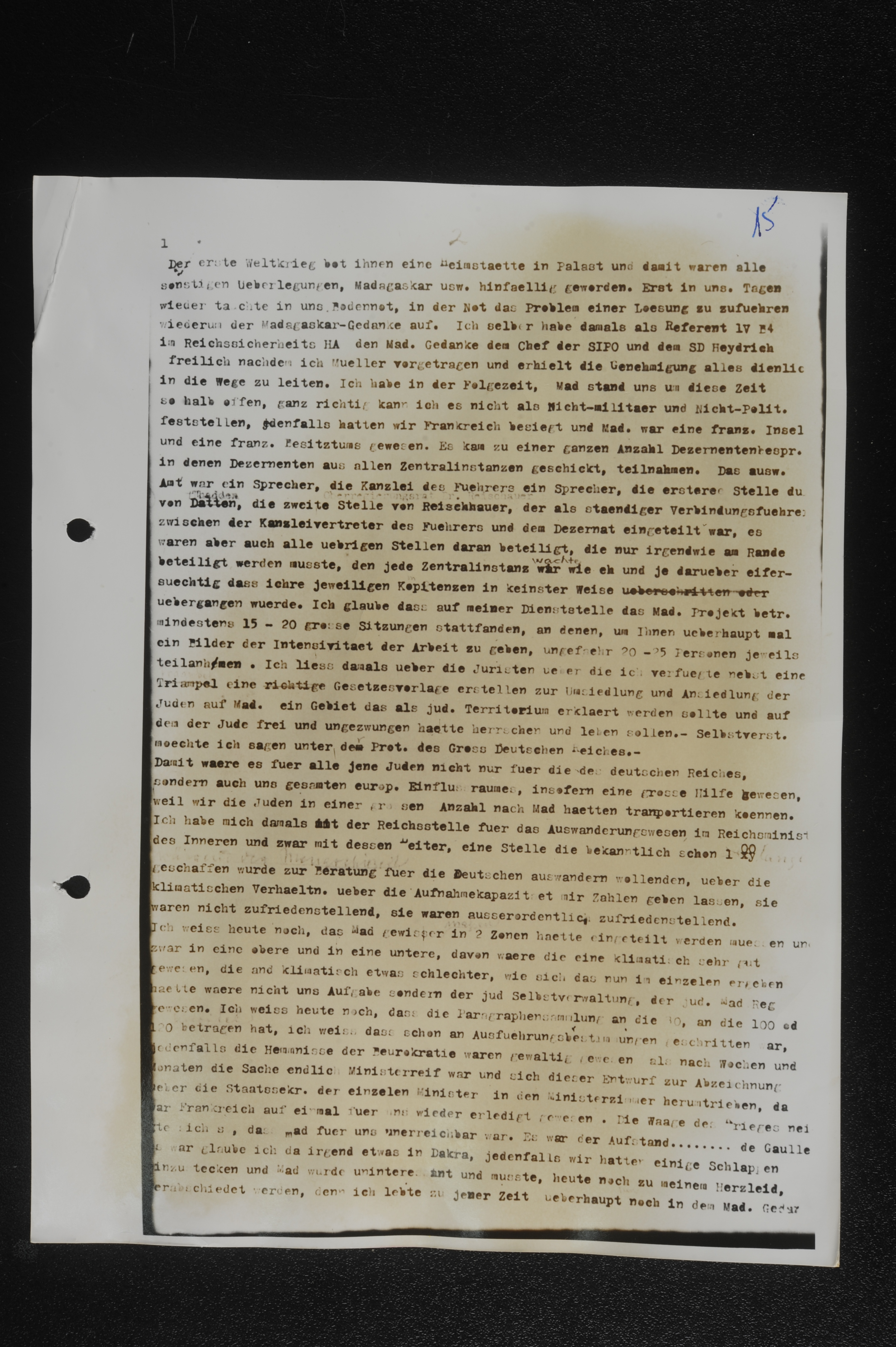
Page 275 of the typescript, O.65 file 86.
Page 275 · Yad Vashem Archives, O.65/86

German transcription

Dieses Schreiben an das Ausw. Amt wurde nie von mir unterschrieben, wurde vom Amtschef unterschrieben, wenn es eine ganz einfache Sache war, die an das Ausw. Amt zu Händen von Leg. Rat von Datten abging, dann habe ich es selbst unterschrieben. Darin wurde auf die ganze Sachlage aufmerksam gemacht und es wird gebeten, vorzufühlen, ob und inwieweit usw… dort der Befehl des RF Zug um Zug durchgeführt werden kann. Es war ein langwieriger Vorgang, es wurde gebohrt und gebohrt – oder aber die Sache hat sich tot gelaufen und wurde zu den Akten gelegt, auch das hat es gegeben. Wenn Sie das schöpferisch nennen, so gesehen, dann ja, selbstverst. – Aber so ganz indirekt waren diese Erlasse und Verord, doch von Ihnen inspiriert, sie wurden von Ihnen ausgearbeitet usw. nicht wahr??? Natürlich, sicherlich es hat das auch gegeben, aber Sie sehen, es waren ja im direkten Sinne nur ganz kleine Dinge… aber wenn Sie es so haben wollen dann war ja auch der ganze Plan und der Gedanke zur Verbringung nach Mad. der bereits im Rohentwurf soweit gediehen war, daß es eine komplette Gesetzeshandlung bereits war, auch von mir gegeben, denn in dem Fall, das ist richtig, habe ich in meiner Not, weil ich nicht mehr wußte wohin mit dem Juden, dem Grf. und dem Chef der SIPO vorgeschlagen, daß wir die Insel Mad freibekommen. Ob er einverstanden wäre – dann würde ich eine Arbeitsbesprech. anberaumen, der noch viele andere folgen würde und ich würde hier das Gesetzeswerk fertig machen, mit dem Ziel, daß die Juden nach Mad zu überführen sind. Ja, der Anstoß ist von mir gekommen, es war ein Vortrag, was nun folgte das habe ich nicht geboren, das konnte ich ja gar nicht gebären, denn dazu sind ja soviele Stellen zu hören und zu fragen ob… es ergibt sich sogar oft in einer Verhandlung daß die Federführung abgegeben werden muß an eine and Zentralinstanz, und wir nur am Rande beteiligt sind. Oft ist es umgekehrt, das ergibt die Arbeitsbespr. und dann kommt dazu noch die Eifersüchtelei der Amtschef, Heydrich zB hat sich in den seltesten Fällen oder auch nie die Federführung aus den Händen nehmen lassen, bei Klatenbrunner war es schön einfacher, da brauchten wir nicht soviel Sorge zu tragen, denn wenn es sich herausstellen sollte, daß die Federführung an sich Sache des Ausw. Amtes wäre, oder auf Seiten des Reichs. Wirt. Minist. läge, dann hat Kaltenbrunner nie Einspruch dazu erhoben, bei Heydrich war es anders, da konnte man ein Donnerwetter hören, wenn ihm die Sachen aus der Hand genommen wurde. – Weiter mit Mad hier kam der Anstoß von mir, ich habe mich mit meinem jurist. Sachbearbeiter Dr. Rajakowitsch (SS Hstuf. zuerst in Wien ehrenamtlich, war in Polen, kam dann zu mir, später ging er zur Waffen SS, ) ins Benehmen gesetzt und habe ihn beauftragt, – nun erstellte mir Ja. ein umfangreiches Gesetzeswerk, das fingt mit einem [unleserlich]ampel an, das ging über den Paragraphen 1, 2, 3, 4, 5, als Grundparagraphen, dann kam die unendliche Fülle der Ausführungsbestimmungen, das Ganze wurde von Ra bereits mal im Konzept erstellt, selbstverst. in wochenlanger Zusammenarbeit mit den jurist. Experten der hauptsächlichsten Zentralinstanzen und von den Zentralinst. von denen ich mir eine Hilfe erwartete, und die dann bei den kommenden Arbeitsbesprechungen, mir gewissermaßen Rückenstellung gaben und mit mir

Draft translation

Band 31 [HW: 275] This letter to the Foreign Office was never signed by me, it was signed by the Office Chief; when it was a very simple matter that went off to the Foreign Office to the attention of Legation Councillor von Datten, then I signed it myself. In it, attention was drawn to the whole situation and a request is made to feel out beforehand whether and to what extent, etc. ..... the order of the RF [Reichsführer] can be carried out there step by step. It was a lengthy process, it was bored and bored ---- or else the matter ran itself dead and was filed away to the records, that too happened. If you call that creative, seen that way, then yes, of course. .---- But so quite indirectly these decrees and ordinances were after all inspired by you, they were worked out by you etc., is that not so??? Naturally, certainly there was that too, but you see, in the direct sense these were really only very small things..... but if you want to have it that way, then indeed the whole plan and the thought of the transfer to Mad[agascar], which had already progressed so far in rough draft that it was already a complete legislative act, was also given by me, for in that case, that is correct, I in my distress, because I no longer knew where to put the Jews, proposed to the Count [Grf.] and the Chief of the SIPO that we get the island of Mad[agascar] freed up. Whether he would be in agreement --- then I would arrange a work-meeting, which many others would follow, and I would here finish the legislative work, with the aim that the Jews are to be transferred to Mad[agascar]. Yes, the impetus came from me, it was a contract; what then followed, that I did not bear, I could not bear it at all, for so many offices have to be heard and asked about it whether...... it even often turns out in a negotiation that the lead responsibility [Federführung] has to be handed over to another central instance, and we are only involved at the margin. Often it is the reverse, that arises from the work-meeting, and then in addition there is the jealousy of the Office Chiefs; Heydrich for example in the rarest cases, or even never, let the lead responsibility be taken out of his hands; with Klatenbrunner [Kaltenbrunner] it was much simpler, there we did not need to carry so much worry, for if it should turn out that the lead responsibility as such was a matter of the Foreign Office, or lay on the side of the Reich Economics Ministry, then Kaltenbrunner never raised an objection to it; with Heydrich it was different, there one could hear a thunderstorm when the matters were taken out of his hand. -- Further with Mad[agascar] [HW: [illegible]] here the impetus came from me, I got into contact with my legal case-officer Dr. [HW: KG] [?Rakewitsch?] (SS [?H?]stuf. [HW: at first in Vienna] in an honorary capacity, was in Poland, , then came to me, later he went to the Waffen SS, [DEL: [illegible]] ) and I commissioned him, -- now Ja. drew up for me an extensive legislative work, that began with a .[illegible].ampel(?), it went over paragraph 1, 2, 3, 4, 5, as basic paragraphs, then came the [DEL: [illegible]] endless abundance of implementing regulations, the whole thing was already once drawn up in concept by [HW: KG], of course in weeks-long collaboration with the legal experts of the principal central instances, and from the central instances from which I expected a help [HW: [illegible]], and which then at the coming work-meetings gave me, so to speak, backing, and with me

could step in. There was Reichbauer from the Deputy of the Führer, there was the responsible man from the Propaganda Ministry, and there was the responsible man from the Foreign Office, at that time still Rademacher. So I had won those over for this matter from the start, and those were after all three central authorities of importance, because one represented the Party, the other represented the Foreign Office, where I would really have had to have the worst misgivings, and the other matter was the Propaganda Ministry, also a tremendous thing if anyone wanted to be against it. And so I had the heavy artillery on my side.

[Handwritten addition at “Deputy of the Führer”: “the Chancellery of the”.]

The first working conference began, and I had to invite the responsible ministerial counsellor for emigration matters (Ausw. expansion probable, not stated) from the Reich Ministry of the Interior, because under an ordinance from the year 1892(?), which was still valid—and so every German national, whether Jew or non-Jew—the Interior Ministry had to be brought in as the responsible office for Ausw. matters (Ausw. Amt), and they did get involved.

And the ministerial counsellor gave a long lecture on the climatic conditions on Madagascar and came to the conclusion that on Madagascar a stretch of so and so many square kilometers would be entirely unsettleable, so much would be moderately suitable and so much would be suitable. Well, at that time one couldn't concern oneself with the principles from the year 1892, the man was outflanked at once.

The working conferences piled up and finally it had got so far that a ministerial draft was completed, and this draft, initialed by the office holding the lead, in that case by the Chief of the Security Police and the Security Service and by the Reichsführer-SS, now went to all the ministers, hung about there in the anterooms. Additional discussions were needed which now had to be settled at a higher level, namely the ministers among themselves with the Reichsführer-SS. The Chief of the Security Police brought himself in personally, whereby I was now only ever called in to draft the whole correspondence which the Chief of the Security Police and the Security Service or the Reichsführer-SS now had to conduct with these central authorities for clarification or explanation.

That went on until one day the situation in France was such that Madagascar had been taken and we could do nothing more. Finished, over and done with.

Now that was a thing that was given birth to, only here too I was not creatively active, rather it was easy for me to take the whole thing up, because the Jew Herzl had taken it up himself in his lifetime, and because he had little success in the palace (Palast), so he hit on the idea of Madagascar.

[Handwritten reference after “Madagascar”: “Adolf Böhm, The Jewish State”.]

But those are quite rare cases, because it was not the job of the section head to brood here over what else you could do now. That didn't exist at all. There was such a mass, precisely in this handling of the opponent, such a mass of pressure from outside, from the police outstations, from the Party, that we couldn't even give way to this pressure, because this pressure could only be worked up in police and technical terms so far as the whole police apparatus could play its part. I had to see to it, that was the job of the desk officer, that I didn't come along with a draft decree that would have meant an extraordinary burden for the subordinate executive offices (Ex…). These things had to be thought through as well.

Open page image and German
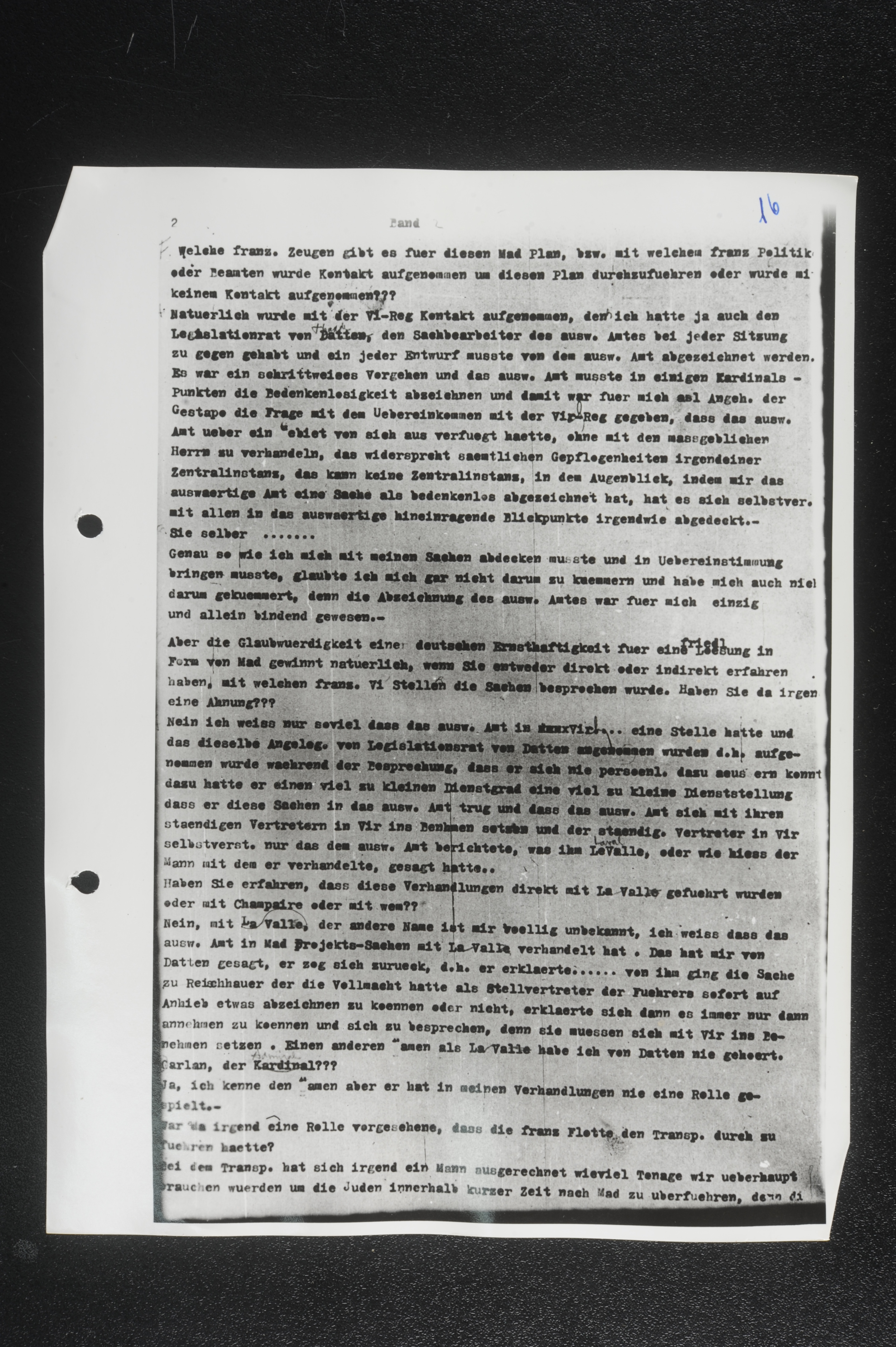
Page 276 of the typescript, O.65 file 86.
Page 276 · Yad Vashem Archives, O.65/86

German transcription

zusammen einspringen konnten. Da war Reichbauer vom Stellvertr. des Führers, da war der zuständ. Mann vom Propagaminist, und da war der zuständ. Mann vom ausw. Amt, um jene Zeit noch Rademacher, die also hatte ich schon von vorneherein für diese Sache gewonnen und das waren immerhin 3 Zentralinst von Wichtigkeit, denn der eine vertrat die Partei, der and. vertrat das ausw. Amt, wo ich an sich schlimmste Bedenken hätte haben müssen, die andere Sache war das Propagandaminist. auch eine gewaltige Sache wenn jemand dagegen sein wollte, und so hatte ich das schwere Geschütz auf meiner Seite. Die erste Arbeitsbespr. fing an und ich hatte hier den zuständ. Ministerialrat für das Ausw. Wesen des Reichsminist., des Inneren mit laden müssen, weil nämlich auf Grund einer Verord. aus dem Jahre 1892, die noch gültig war, und so war an sich jeder deutsche Staatsangeh. ob Jude oder Nichtjude, da mußte das Innenminist. als zuständiges Ausw. Amt mit eingeschaltet werden und da schalteten sie sich ein Und der Ministerialrat hielt einen langen Vortrag über die klimatischen Bedingungen auf Mad und kam zum Schluß das auf Mad eine yx lange Qkm. Strecke gänzlich unbesiedelbar wäre, yx wäre mittelmäßig geeignet und xy wäre geeignet, … nun jene Zeit hat man sich mit den Prinzipien aus dem Jahre 1892 nicht befassen können, der Mann wurde sofort überrundet. Die Arbeitsbesprech. häuften sich und endlich war es soweit daß ein Ministerentwurf fertig gestellt wurde, und dieser Entwurf abgezeichnet von der federführenden Stelle, indem Fall vom Chef der SIPO und des SD und des RF, ging nun an alle Minister, trieb sich dort in den Vorzimmern herum, es waren Zusatzbesprechungen nötig die nun auf höh Ebene ausgetragen werden mußten, nämlich die Minister mit dem RF untereinander, es schaltete sich der Chef der SIPO persönlich ein wobei ich nun immer nur insofern herangezogen wurde, um nun den ganzen Schriftverkehr, den nun der Chef der SIPO und des SD oder der RF mit diesen Zentralinst. zur Aufklärung oder zur Beleuchtung zu führen hatte, entwerfen mußte. – Das dauerte nun solange, bis eines Tages in Frankreich die Situation so war, das Mad eingenommen war und wir nicht mehr machen konnten. Schluß, aus – Bart ab. – Nun war das so eine Sache die geboren wurde, nur bin ich hier auch nicht schöpferisch tätig gewesen, sondern es war für mich leicht, die ganze Sache aufzugreifen, weil sie der Jude Herzl selbst aufgegriffen hatte zu seinen Lebzeiten und weil er in Palast wenig Erfolg hatte. so verfiel er auf die Idee Madagaskar. Aber es sind ganz seltene Fälle, denn es sit nicht Aufgabe des Referenten gewesen hier etwa zu grübeln, was kannst Du jetzt hier noch machen… das gab es gar nicht, es war eine solche Fülle gerade bei dieser Gegnuerbehandlung, eine solche Fülle von Druck von außen vorhanden, von den Pol. Fernstellen, von der Partei vorhanden, daß wir diesem Druck gar nicht einmal statt geben konnten, denn es konnte dieser Druck nur insoweit pol. techn verarbeitet werden, daß auch der ganze Pol. Apparat mitspielen konnte, ich mußte darauf achten, das war Aufgabe des Dezernenten, ja nur nicht mit einem Erlassentwurf zu kommen, der eine außerordentliche Überbelastung für die nachgeord. Ex… Stellen bedeutet hätte, auch diese Sachen mußten überlegt werden.

Draft translation

5 Volume 31 [HW: of the [?chancellery?] [illegible]] [HW: 276] together [HW: n] could step in. There was Reichbauer from the Deputy of the Fuehrer, there was the responsible man from the Propaganda Ministry, and there was the responsible man from the Foreign Office, at that time still Rademacher, these then I had already from the out- set won over for this matter and these were after all 3 central institutions of impor- tance, for the one represented the Party, the other represented the Foreign Office, where in itself I should have had the gravest misgivings, the other matter was the Propaganda Ministry, also a formidable thing if someone wanted to be against it, and so I had the heavy artillery on my side. The first working conference began and I had here had to invite along the responsible Ministerialrat for the Foreign Affairs [HW: (2)] of the Reich Ministry, of the Interior, because namely on the basis of an ordinance from the year 1892.[HW: ?](?), which was still valid, and so in itself every German national whether Jew or non-Jew, , there the Interior Ministry as responsible Foreign Office had to be brought in and there they brought themselves in And the Ministerialrat gave a long lecture about the climatic con- ditions on Mad and came to the conclusion that on Mad a yx long sq.-km. stretch would be wholly uninhabitable, yx would be moderately suited and xy would be suited, .... now xxxxtx that time one could not concern oneself with the principles from the year 1892, the "an was immediately outmaneuvered. The working conferences piled up and finally it was so far that a ministerial draft was completed, and this draft, initialed by the lead- ing office, in this case by the Chief of the SIPO and of the SD and of the RF, went now to all ministers, hung about there in the antechambers, there were sup- plementary discussions necessary which now had to be settled at a higher level, namely the ministers with the RF among themselves, the Chief of the SIPO involved himself personally, whereby I now was only ever drawn in insofar as, to now draft the whole correspondence which now the Chief of the SIPO and of the SD or the RF had to conduct with these central institutions for clarification or for illumination.----That lasted now so long, until one day in France the situation was such, that Mad was taken and we could do nothing more. End, over---- Beard off.------ Now that was such a thing that was born, only I was here too not creatively active, but rather it was easy for me to take up the whole matter, because the Jew Herzl himself had taken it up in his lifetime and because he had little success in Palace. so he hit upon the idea Madagascar.. [HW: (Adolf Böhm [?and?] the Jewish State #)] But these are very rare cases, for it was not the task of the Referent here to brood over, what can you still do here now......... that did not exist at all, there was such an abundance precisely in this handling-of-the-adversary, such an abundance of pressure from outside present, from the Pol. remote- offices, from the Party present, that we could not even accommodate this pressure, for this pressure could only be processed politically-technically insofar that also the whole Pol. apparatus could play along, I had to see to it, that was the task of the Dezernent, just not to come with a draft decree that would have meant an extraordinary over-burdening for the subordinate Ex... offices, these things too had to be considered.

There was such an abundance of suggestions coming in, and they had to be sifted so rigorously, that a desk officer had no need at all to invent anything of his own here. That is not just how it went for me, it went that way for all the other desk officers as well.

To what extent did I, as head of section IV B 4 of the Gestapo Office, have anything to do with the concentration camps at all?

First. Up to the point when the Gestapo Office still had to decide individual cases, until roughly the end of 1941, because then came the order to handle things summarily. And from the time the Führer order for physical annihilation was issued. In the first period, starting with the Reichsführer-SS, from the time the first camps were still going up, in any case at the time when the people who later became big were still small, they had already laid down some guidelines, which were then partly elaborated further, partly taken over, partly also rescinded.

What came out of it was, virtually, a list of the measures to be taken when a Jew had come to the Gestapo's notice for a race-defiling relationship, when he went in for currency smuggling, and so on. Offenses, then, in the various areas of German life. Orders had gone out on all of it, these orders were already there or the Reichsführer-SS kept supplementing them, extending them or revoking them. There were few kinds of enemy work to be handled where the supreme chief buried himself so personally in the details as he did in Jewish matters.

It was enough for so-and-so, anyone, a Gauleiter or somebody else, to raise it on some occasion, at a shared meal for instance, and speak to the Reichsführer-SS about it. He went into it and gave his orders in person, and they often contradicted the ones he had issued before. Other things were settled by law. The Gestapo or the regional police office would write to the Gestapo Office: the Jew so-and-so has done such-and-such, it is now proposed that he be transferred to the concentration camp. We request instructions.

The case then came to me. My senior administrative officer (Regierungsamtmann) Woerm, or one of my police inspectors, Moos—I no longer remember what the other one was called—they worked on the case and checked whether it was in order, whether the Jew could be committed to the camp or whether the grounds were insufficient. Good: committal to the concentration camp under the Reichsführer-SS’s decree of such-and-such a date. A reply to the office: in accordance with the decree of such-and-such a date, the Jew so-and-so will be ….

[Handwritten alternative at the rank in the following paragraph: “government or criminal-police counsellor?”]

Now that draft did not go out from IV B 4, from the office chief, to the State Police regional headquarters in Munich, telling them to transfer the Jew to such-and-such a place. Instead, the draft letter went to the protective-custody section in Office IV, headed by a so-and-so. He either signed it himself, or the office chief signed it, and the necessary instructions were given to the subordinate office. As a rule, it later went through the central registry of Office IV. All such letters arriving at the Gestapo Office from subordinate or superior offices were immediately put by the registry clerk into the protective-custody section’s tray, not IV B 4’s. That man therefore received the inquiry first and handled it as my own case officers would have done. I merely had to countersign, that is, sign off that there was no objection.

Open page image and German
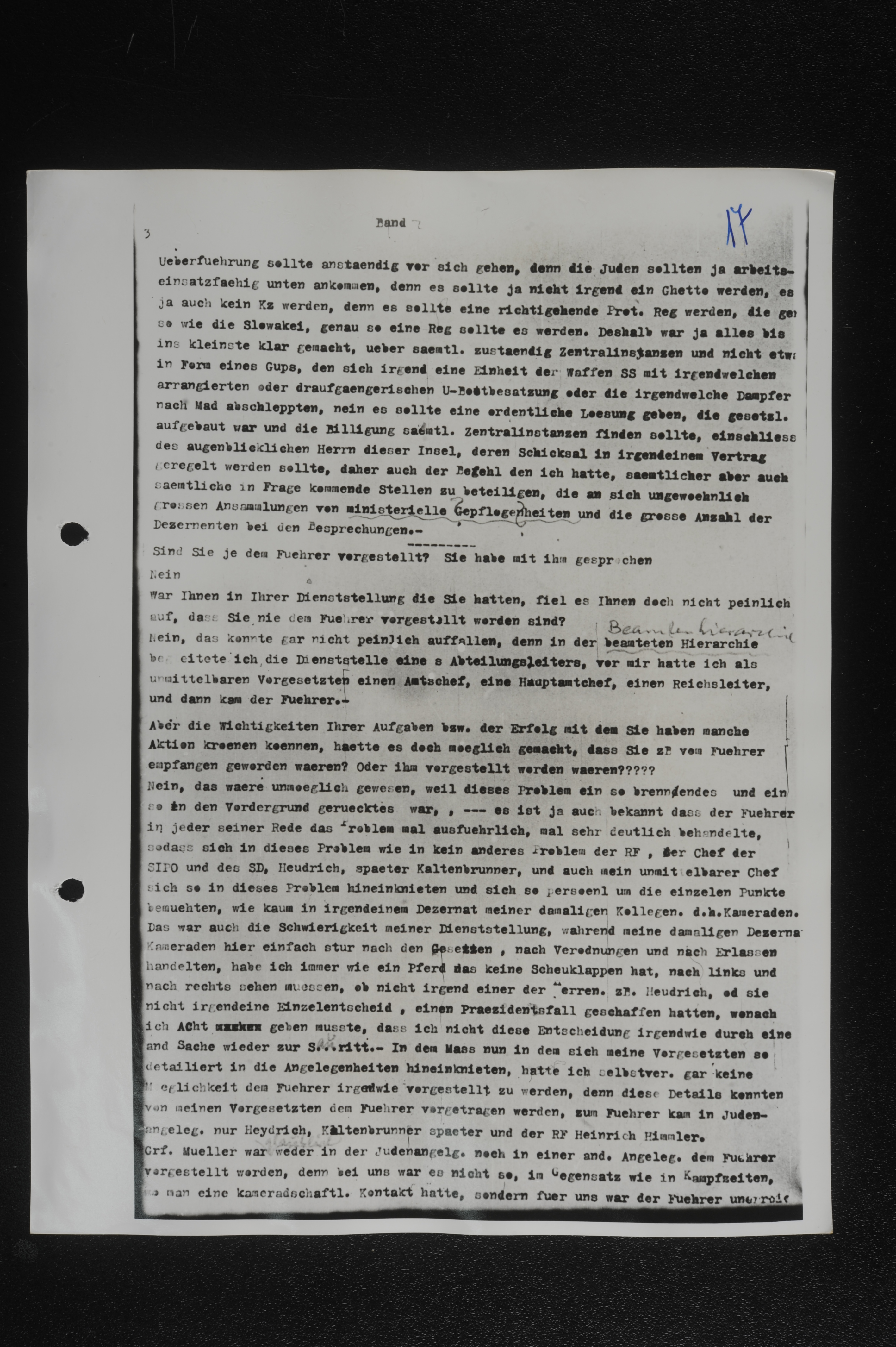
Page 277 of the typescript, O.65 file 86.
Page 277 · Yad Vashem Archives, O.65/86

German transcription

Es war eine solche Fülle von Anregungen da, das hier schwerstens gesiebt werden mußte, daß es ein Dezernent gar nicht notwendig hatte, hier etwas eigenes zu fabrizieren, so ist es aber nicht nur mir ergangen, so ist es auch allen übrigen Dezernenten ergangen. – Inwieweit hatte ich als Referent des Dezernates IVB4 des Gestapo Amt, überhaupt mit den KZ zu tun gehabt???? 1. Bis zu dem Zeitpunkt wo das Gestapo Amt auch Einzelfälle zu entscheiden hatte, bis ungefähr Ende 1941, denn dann kam der Befehl summarisch zu handeln. Und ab der Zeit wo der Führerbefehl zur physischen Vernichtung erging. Während der ersten Zeit waren vom RF beginnend mit der Zeit als noch die ersten KZ erstanden… jedenfalls zu der Zeit wo die späteren Große Leute noch klein waren, da haben sie bereits schon einige Richtlinien aufgestellt die dann zT weiter ausgearbeitet wurden, übernommen wurden, zT auch aufgehoben worden… es ergab sich hier eine Liste feierlich für die Maßnahmen die zu ergreifen sind, wenn ein Jude sich der rassenschänderischen Beziehung namhaft gemacht hat bei der Gestapo, wenn er dem Devisenschmuggel nachging, … usw. – Vergehen also auf dem verschied Lebensgebieten des deutschens Volkes… da waren Anord. ergangen, diese Anord standen schon da oder wurden vom RF immer wieder ergänzt, ausgebaut oder widerrufen. Es hat wenig gegenerische Formen gegeben, die zu bearbeiten waren, wo sich der oberste Chef sich so in die Details persönlich hineinkniete, wie gerade in die Judenangelegenheiten. Es genügte wenn xy, wenn irgend jemand, ein Gauleiter oder sonst xy, bei einem Anlaß ansprach, sei es bei einem gemeinsamen Essen dem RF ansprach… darauf ist er eingegangen und hat persönlichst seine Anord. gemacht, die sich vielfach sogar in Gegensatz setzten zu denen die er vorher erlassen hatte. Andere Sachen waren gesetzlich geregelt. Die Gestapo oder die Pol Leitstelle, schrieb nun an das Gestapo Amt: Der Jude xy hat xy gemacht, es wird nun vorgeschlagen ihm dem KZ zu überstellen. wir bitten um Weisung. Diese Sache kam nun zu mir, meine Regierungsamtmann Woerm, oder aner meiner Pol Insp. Moos, wie der ard. hier weiß ich nicht mehr, die bearbeiteten nun diesen Fall, sahen nach geht das in Ordnung, kann der Jude eingeliefert werden in das KZ oder reicht es nicht aus… Gut, Einweisung ins KZ gemäß dem Erlaß von RF von Xy… Rückschreiben an die Stelle : Laut gemäß Erlaß vom xy … wird der Jude xy… . Jetzt ist dieser Entwurf nicht von IV B 4 vom Amtchef nach der StaatsPol Leitstelle München zu ausgelaufen, daß die nun veranlaßt wären den Juden nach xy zu überstellen… sondern, dieser Briefentwurf ist jetzt an das Schutzhaftdezernat abgegangen im Amt IV, dem stand vor ein Kriminalrat xy …Der hat jetzt nun entweder selbst unterschrieben, oder vom Amtchef und hat nun die nötige Anweisung nach unten gegeben. In der Regel ist es dann später so gelaufen durch die Zentralregistratur des Amtes IV, sämtliche solche Schreiben die von nachgeord. oder auch von vorgesetz. Stellen die an Gestapoamt anliefen sofort durch den Registraturgehilfen in das Fach des Schutzhaftdezernates gelangen und nicht in das Fach IV B 4. sodaß dieser Mann diese Anfrage zuerst bekommen hat und dann diese Geschichte so behandelt hat, wie es auch meine Sachbearbeiter behandelt hätten und ich lediglich mitzeichnen mußte, dh. X vor Allem ohne Kenntnis also die Unbemerklichkeit signieren mußte.

Draft translation

[HW: 477] Band 31 There was such an abundance of stimuli/suggestions there, which had to be lived through here most arduously, that a desk officer had no need at all to fabricate something of his own here, but that is not only how it went for me, that is also how it went for all the other desk officers.------ [HW: ←] To what extent did I, as officer of the desk unit IVB4 of the Gestapo Office, have anything to do with the KZ [concentration camps] at all???? 1. Up until the point in time when the Gestapo Office still also had to decide individual cases, until approximately the end of 1941, for then came the order to handle [things] summarily. And from the time when the Führer order for physical annihilation was issued. During the first period there were, beginning with the RF [Reichsführer], starting with the time when the first KZ were still being erected....... in any case at the time when the later [HW: big] people were still small, they had already at that point set up some guidelines which were then in part further elaborated, taken over, in part also abolished...... there resulted here a list [?solemnly/festively?] for the measures which are to be taken when a Jew has made himself known/notable at the Gestapo for a rac[e]-defiling relationship, when he went in for currency smuggling, ...... etc.-----Offenses, then, in the various spheres of life of the German people...there orders had been issued, these orders already stood there or were again and again supplemented, expanded or revoked by the RF. There have been few adversarial/opposing forms which had to be processed, where the supreme chief buried himself so personally into the details, as precisely into the Jewish matters. It was enough if xy, if anyone, a Gauleiter or otherwise xy, addressed [it] on some occasion, be it addressing the RF at a shared meal..... upon that he went into it and made most personally his orders, which many times even set themselves in contradiction to those which he had issued before. Other things were regulated by law. The Gestapo or the Pol[ice] Leitstelle [directing office], now wrote to the Gestapo Office: The Jew xy has done xy, it is now proposed to transfer him to the KZ. [HW: or (perhaps Gestapo(leit))] [HW: we request instructions.] This matter now came to me, my Regierungsamtmann Woerm, or [an]other of my Pol[ice] Insp[ector] Moos, how the ??? here I no longer know, they now processed this case, checked whether that is in order, whether the Jew can be delivered into the KZ or whether it is not sufficient........ Good, committal into the KZ pursuant to the decree of RF of Xy...........Reply-letter to the office: In accordance with pursuant to decree of xy ..... the Jew xy is [being]............. Now this draft did not go out from IV B 4 from the office chief to the StaatsPol Leitstelle Munich, that they would now be caused to transfer the Jew to xy......but rather, this letter-draft has now gone off to the protective-custody desk unit in Office IV, over which there stood a [HW: Reg. or Krim. Rat] Kriminalrat xy ....He has now either signed himself, or [it was signed by] the office chief and has now given the necessary instruction downward. As a rule it then later ran thus, through the central registry of Office IV, all such letters that arrived at the Gestapo Office from subordinate or also from superior offices went immediately through the registry-assistant into the tray/file of the protective-custody desk unit and not into the tray/file of IV B 4, so that this man received this inquiry first and then handled this business the way my case-handlers too would have handled it, and I merely had to co-sign, i.e. X [HW: above all without [?knowledge?]] [HW: →] thus had to sign off the inconspicuousness/imperceptibility.

The protective-custody section could not decide a case on its merits; it was only an extension of the registry. That is why they did not put a government counsellor (Regierungsrat) there, but only a government criminal-police counsellor (Reg. Kriminalrat); he did not belong to the higher career track. I was of course among those primarily responsible. I also had to have my case officers examine on what grounds the Jew could be committed, or must not be committed. Later this was arranged in that way for simplicity, and we only had to sign off, because there had been [? dozens] of cases.

[Form of the inquiry:]

State Police regional headquarters, Munich. File reference such-and-such. To the Gestapo Office, for the attention of Grf. (Gruppenführer) Müller. Subject: Jew so-and-so, born such-and-such, Elemberg, resident at such-and-such an address. Reference: circular decree of the Reichsführer-SS of such-and-such a date. The Jew named above was transferred by the currency investigation office of this local office because he had shifted foreign currency illicitly. With reference to the circular decree, I request agreement to transfer the Jew so-and-so to Dachau concentration camp. I request instructions.

[Reply letter:]

[Handwritten annotation above the reply: “Draw up.”]

In accordance with the inquiry of such-and-such a date, under the circular decree of such-and-such a date, the Jew so-and-so is to be taken into protective custody, with the … or a review date of half a year.

Then it went to the protective-custody section. They immediately set their custody-review dates; it went down to the State Police regional headquarters in Munich, and they transferred the Jew to the concentration camp at Dachau. I had nothing more to do with the concentration camps. Only when the custody-review date came round did the State Police regional headquarters write:

Subject: Jew so-and-so, custody-review date such-and-such. The Jew was committed … to Dachau, xy. Under circular decree such-and-such of the Reichsführer-SS, the custody review must be submitted every half year. Issue a reply: another half year for the Jew…

Then the custody-review date came round again. Or in the meantime, because of this or that, there was a possibility of enabling the Jew so-and-so to leave for such-and-such a place. He was imprisoned because of …. An inquiry is made whether emigration can be permitted, since a relevant order of the Reichsführer-SS exists from the year such-and-such.

[It could scarcely have been spoken any faster.]

Everything was examined closely. It was either approved or refused under the existing decrees. There was a mass of individual cases, and my people worked day and night to deal with them all, because in each individual case it had to be established, whether Jew or non-Jew, whether he had committed an offence. But that was not my task; it was the task of the State Police regional headquarters. My task was whether this or that punishment applied to the offence, which had after all already been

Open page image and German
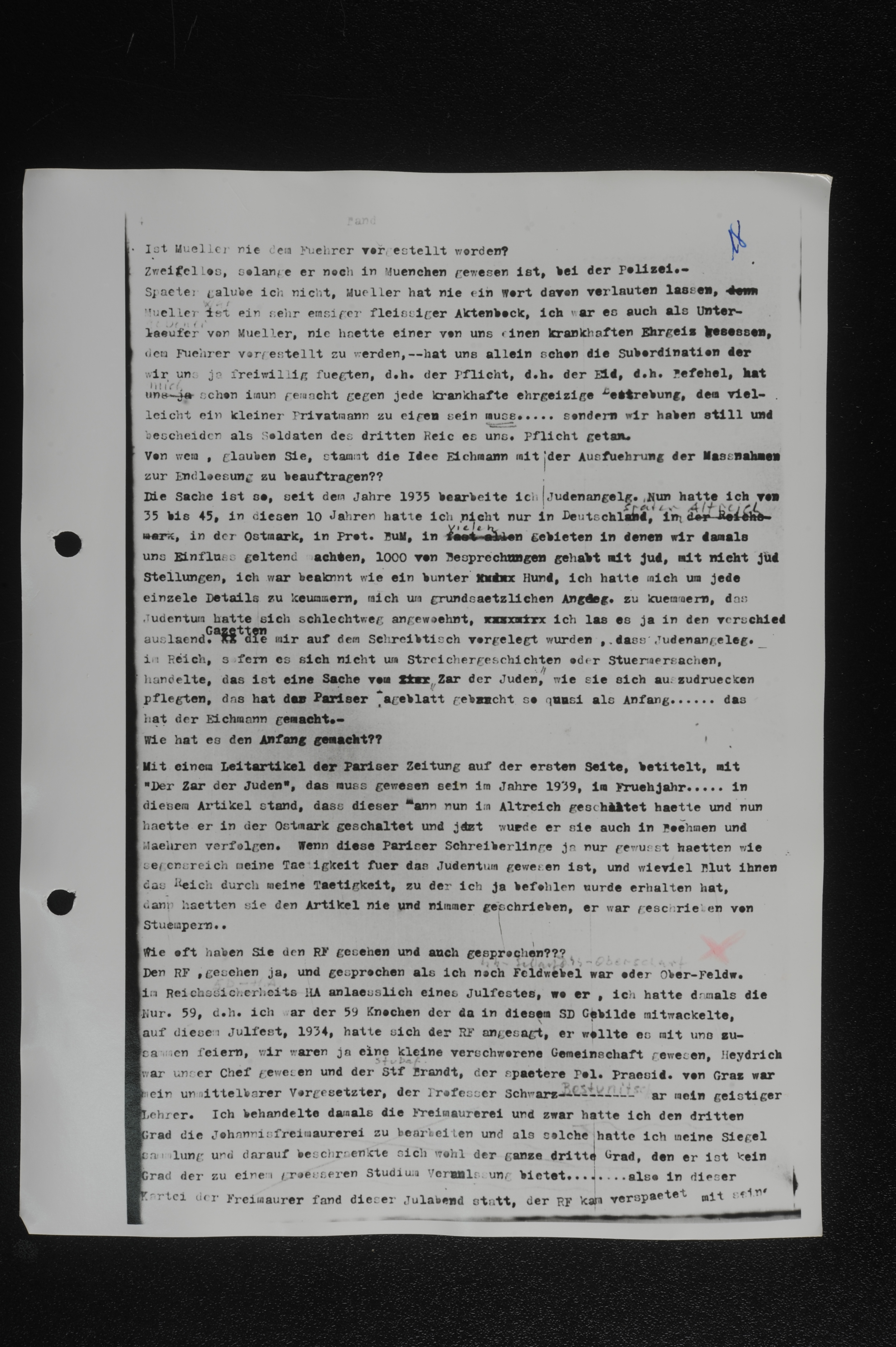
Page 278 of the typescript, O.65 file 86.
Page 278 · Yad Vashem Archives, O.65/86

German transcription

Das Schutzhaftdezernat konnte nicht sachlich entscheiden, das war nur eine verlängerte Registratur gewesen, (deswegen hat man ja auch dort keinen Regierungsrat hingesetzt, sondern nur einen Reg-Kriminalrat, er gehörte aber nicht zur höh. Laufbahn. Ich war natürlich mit in erster Linie verantwortlich, ich mußte auch die Sache prüfen lassen, durch meiner Sachbearbeiter, unter welchen Gesichtspunkten der Jude eingeliefert werden kann oder nicht eingeliefert werden darf. Es wurde später aus Einfachheitsgründen so geregelt und wir brauchten nur noch zu zeichnen, denn es waren ja Dutzende von Fällen gewesen. Form der Anfrage: Staats Pol Leitstelle München, Aktenzeichen xy an das Gestapo Amt, zu Händen von Grf. Müller. Btr.: Jude x Y, geb xy, Elemberg – wohnhaft xy Bezug: Runderlaß der RF vom xy : Der oben angeführte Jude wurde von Devisenvbehandlung amt der hiesigen Dienststelle überstellt weil er Devisen verschoben hat. Gemäß Bezug auf den Runderlaß bitte ich um Einverständnis den Juden xy in das KZ Dachau zu überstellen. Ich bitte um Weisung. Antwortschreiben: Gemäß Anfrage von xy ist laut Runderlaß von xy x schutzhaft zu nehmen, (mit der Haftüberprüfung könn oder prüfungstermin 1/2 Jahr. (Dann ist) das zum Schutzhaftdezernat gegangen, die haben dann gleich ihre Haftüberprüfungstermine gemacht, runter gegangen an die Staats Pol Leitstelle München und die haben den den Juden überstellt an das KZ nach Dachau. Ich habe mit den KZ nichts mehr zu tun gehabt, lediglich wenn der Haftüberprüfungstermin kam, dann hat die Staatspol Leitstelle geschrieben: Btr: Jude xy, Haftüberprüfungstermin xy Der Jude wurde… nach… eingeliefert. Gemäß des Runderlaß xy des RF ist hier alle 1/2 Jahr der Haftüberprüfungstermin vorzulegen. – Antworterteilen, noch ein halbes Jahr für den Juden… Dann kam wieder der Haftüberprüfungstermin… oder es ist in der Zwischenzeit so gekommen durch das und das ist die Möglichkeit gegeben dem Juden xy die Ausreise nach xy zu ermöglichen. Er wurde wegen… eingesperrt, es wird angefragt ob einer Ausw. statt gegeben werden kann, da ein diesbzgl. RF Befehl vorliegt aus dem Jahre xyyyy… (Schneller konnte wohl kaum gesprochen werden????????????????) Es wurde alles genau überprüft, entweder es wurde bejat oder abschlägig entschieden, laut den bestehenden Erlassen. – Das war eine Fülle von Einzelfälle und meine Leute hatten hier Tag und Nacht zu tun, um alle diese Einzelfälle zu behandeln, denn es mußte in jedem einzel Falle erkannt werden, ob nun Jude oder Nichtjude, ob er sich vergangen habe, aber es war nicht Aufgabe von mir, das war Aufgabe der Staats Pol Leitstelle, meine Aufgabe war ob für dieses Vergehen diese und jene Strafe zu kam, die ja auch bereit

Draft translation

Band 31 [HW: 278] The protective-custody desk could not decide on the merits, that had been only a prolonged registry, (that is also why one did not place any Regierungsrat [government councillor] there, but only a Reg-Kriminalrat [criminal councillor], he did not, however, belong to the higher career track. I was of course among those primarily responsible, I also had to have the matter examined, through my case officer, under which aspects the Jew could be del... r [delivered/committed] or may not be committed. It was later regulated in this way for reasons of simplicity and we needed only to sign off, for they had been foreign [documents/matters] from Müller. Form of the inquiry: State Police Regional Headquarters Munich, file reference xy to the Gestapo Office, for the attention of Grf. [Gruppenführer] Müller. Re.: Jew x Y, born xy, Elemberg — resident xy Reference: Circular decree of the RF [Reichsführer] of xy: The above-named Jew was overstepped/transferred by the currency-[?treatment?] [HW: [?I have?]] office of the local field office because he embezzled fore[ign]... [currency]. Pursuant to [HW: [?under natural?]] reference to the [HW: [?embezzlement?]] circular decree I request agreement to transfer the Jew xy to the KZ [concentration camp] Dachau. I request instruction. Reply letter: [HW: Draw up/complete] Pursuant to [DEL: [?this?]] inquiry of xy, according to the circular decree of xy [DEL: the Jew xy] [?x?] is to be taken into protective custody, (with the [DEL: inquiry] [HW: [?custody review could?]] [DEL: months] or review date 1/2 year. (Then) that went to the protective-custody desk, they then straightaway made their custody-review dates, went down to the State Police Regional Headquarters Munich and they transferred the Jew to the KZ to Dachau. I no longer had anything to do with the KZ, only when the custody-review date came, then the State Police Regional Headquarters wrote: Re: Jew xy, custody-review date xy The Jew was ............ delivered to ...... . Pursuant to the circular decree xy of the RF the custody-review date is to be submitted here every 1/2 year. - Grant a reply, another half year for the Jew........ Then the custody-review date came again........ or in the meantime it came about through this and that the possibility is given to enable the Jew xy the departure to xy. He was locked up on account of............., an inquiry is made whether an emigration can be granted, since a relevant RF order exists from the year xyyyy.... (Speed [Schnelle] could probably hardly be spoken of????????????????) Everything was examined precisely, either it was affirmed or decided negatively, according to the existing customs. - That was an abundance of individual cases and my people had day and night to do here, to handle all these individual cases, for in each individual case it had to be recognized whether now Jew or light-Jew [Lichtjude/half-Jew?], whether he had transgressed, but it was not my task, that was the task of the State Police Regional Headquarters, my task was whether for this offense this or that punishment came to bear, which indeed also ready [incomplete]

proposed, and whether that really accords with the existing laws or police regulations, because everything had to follow a standard. I could not say one thing one time and the opposite the next. No, that would not do; it had to follow a procedure exactly. If a wrong instruction had been given, the dressing-down from above would not have been so bad. But what could not have been put right was that an official working in the police could have said: “Yes, the laws used to be what counted, but today it seems no one knows any laws anymore. What am I supposed to do now? How am I supposed to judge it all?” That would have been terrible. You simply must not give a wrong instruction; there are a thousand examples of that.

Questioner

Were there so-called special treatments, besides the general decrees and regulations and so on, and who applied for them?

Eichmann

Special treatments were not something you had only with Jews. But let us say that a Jew at that time had offended against the Nuremberg Laws and had been proved to have had sexual intercourse with an [? Aryan woman]. Then he was tracked down somehow and brought to a State Police office. The State Police office then wrote just as it did in other matters: the Jew so-and-so was committed because he was found engaging in a race-defiling act. Under decree such-and-such, the question is put whether special treatment is to be carried out.

It was then checked in my office too. The facts of the case did not interest me. Under a special agreement these cases were no longer referred to the judicial authorities at all, so determining the facts was the task of the others. Only matters of principle on a larger scale were still brought before the judicial authorities in Jewish affairs—but the Führer had to agree to certain areas of jurisdiction being carved out of the Justice Minister’s authority. My case officer then checked everything. If everything was in order, the matter went back down and the Jew could be handed over for special treatment.

Questioner

What did the special treatment consist of?

Eichmann

Shooting or hanging. That was written in, depending on the case. Those rules too had been laid down by the Reichsführer-SS.

[Typed as notes in the transcript: Example of twelve strokes of the cane: with a doctor and a bucket of water.]

Twelve strokes could be decided by the office chief; twenty-five had to be decided by the Chief of the Security Police and the Security Service; and fifty the Reichsführer-SS reserved to himself. The section head could not order a single one.

Now the second point. Why did I travel to the concentration camps?

I visited Auschwitz, Oranienburg, and the concentration camp quite near Lublin. I came to Oranienburg in the course of the Grünspan case, so that does not count here; it was an individual case. But in the other concentration camps I was with Höss over and over again, because I had to keep in constant contact with the receiving camp, chiefly Auschwitz, before a larger operation began—Hungary, let us say.

[Handwritten addition: “The escort details … there (?), after all.”]

Open page image and German
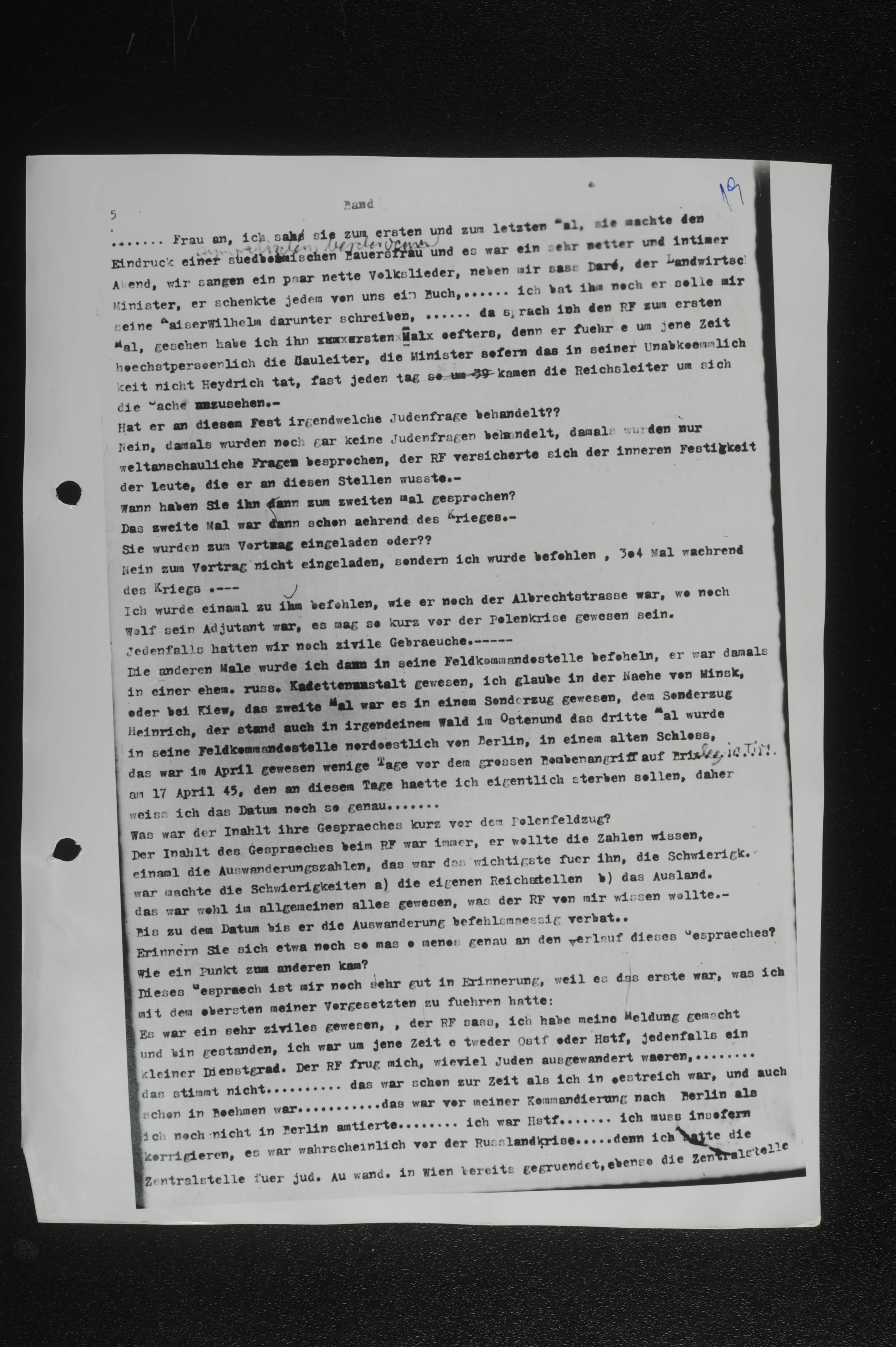
Page 279 of the typescript, O.65 file 86.
Page 279 · Yad Vashem Archives, O.65/86

German transcription

vorgeschlagen worden, ob daß nun auch tatsächlich im Einklang steht, mit den vorliegenden Gesetzen od Pol. Verord. denn es mußte ja alles nach einer Norm gehen. Ich kennte nicht einmal hue und dann wieder hett sagen.. Nein das ging nicht, das mußte genau nach einem Verfahren gehen, wenn eine Fehlweisung gegeben worden wäre, dann wäre der Anpfiff von oben nicht so schlimm gewesen, aber man hatte nicht ausbügeln können, daß der Beamte, der hier in der Pol tätig war, hätte sagen können; Ja, früher waren einmal die Gesetze maßgebend, aber heute kennt man scheinbar keine Gesetse mehr, was soll ich nun machen, wie soll man nun alles erkennen. – Das wäre furchtbar gewesen. – Man durfte eben keine Fehlanweisung geben, es gibt 1000 Beispiele dafür. – Gab es sogen. Sonderbehandlungen, neben den allgemeinen Erlassen und Verord. etc. und wer hat sie beantragt? Sonderbehandlungen hatte man aber nicht nur allein bei Juden, – Aber sagen wir, wenn sich ein Jude um jene Zeit gegen die Nürnberger Gesetze vergangen hatte und mit einem Deutschen Arierin nachgewiesenen Geschlechtsverkehr hatte, dann wurde er irgendwie aufgestöbert und einer Staats Pol Stelle zugeführt. Dann hat die Stape Stelle genau so geschrieben wie das bei anderen Sachen auch gewesen ist: Der Jude xy … eingeliefert, weil… bei rasseschändender Handlung angetroffen wurde. – Gemäß Erlaß xy … wird angefragt, ob… eine Sonderbehandlung durchgeführt werden soll… Es wurde nun auch bei mir nachgesehen, der Tatbestand interessierte mich nicht, die Fälle wurde ja nach einem besonderen übereinkommen gar nicht mehr der Justiz unterstellt, also der Tatbestand war die Aufgabe der anderen, nur grundsätzliche Angeleg. die sich auf größere Ebene abspielten wurden noch der Justiz vergetragen in Judenangelg. – aber da mußte der Führer mit einverstanden sein, daß dem Justizminist gewisse Sparten aus den Rippen geschnitten wurden – Mein Sachbearbeiter überprüfte nun alles… war alles klar… ging die Sache wieder runter und der Jude durfte einer Sonderbehandlung zugeführt werden. F: Worin bestand die Sonderbehandlung? A: Erschießen oder Aufhängen, das wurde dazu geschrieben, je nachdem, auch das war vom RF festgelegt worden diese Bestimmungen. Beispiel der 12 Stockhiebe. : Mit Arzt und Wasserkübel. – 12 Stockhiebe kennte der Amtschef entscheiden, 25 mußte der Chef des SIPO und des SD entscheiden, und 50 hat sich der RF selbst vorbehälten… Der referent kennte nicht einen anordnen. – Jetzt 2. Punkt. warum bin ich in die KZ gefahren: Ich habe besucht Auschwitz, Oranienburg, und das KZ was ganz in der Nähe von Lublin liegt… Nach Oranienburg kam ich im Zuge der Grünspansache, fällt also flach, war ein Einzelfall, aber in den übrigen KZ war ich bei Höß zum wiederholtesten Mal denn ich mußte ja mit dem aufnehmenden KZ, hauptsächlich Auschwitz, ständige Fühlungnahme aufrecht erhalten, bevor ein größerer Abschnitt anlief, sagen wir Ungarn. – Die Begleitkommandos wurschten ja dort.

Draft translation

8 Volume 31 [HW: 279] be proposed, whether that then also actually stands in accord with the existing laws or pol. ordinances, for it all had to go by a norm. I could not now and then again say [something else].. No that would not do, that had to go exactly by a procedure, if a wrong instruction had been given, then the dressing-down from above would not have been so bad, but one could not have ironed out that the official who was active here in the Pol. could have said: Yes, earlier the laws were once decisive, but today apparently one knows no more laws, what am I now to do, how is one now to recognize everything.----- That would have been terrible.---- One simply must not give a wrong instruction, there are 1000 examples for it.-- Were there so-called special treatments, besides the general decrees and ordinances etc., and who applied for them? Special treatments however one had not solely with Jews alone,----- But let us say, if a Jew at that time had offended against the Nuremberg Laws and had proven sexual intercourse with a German [DEL: [?woman?]] [HW: [?thüringen?]], then he was somehow ferreted out and delivered to a State Pol office. Then the Stapo office wrote exactly as it had been with other matters too: The Jew xy ......... ... committed/delivered, because...... .. .... .. was encountered in a race-defil[DEL: [?ing?]] [HW: [?other?]] act.----- Pursuant to decree xy ......... it is inquired whether............... a special treatment is to be carried out......... Now it was also checked with me, the facts of the case did not interest me, the cases were indeed, according to a special agreement, no longer subordinated to [HW: 2] the justice [system] at all, so the facts of the case were the task of the others, only fundamental matters that played out on a larger level were still brought before [HW: (5)] the justice [system] in Jewish matters. -- but there the Führer had to be in agreement, that certain sectors were cut out of the ribs of the Justice Minister------ My case-handler now checked everything...... everything was clear..... the matter went down again and the Jew could be delivered to a special treatment. [HW: F] In what did the special treatment consist/????? [HW: A] Shooting or hanging, that was written to it, according to circumstance, that too had been laid down by the RF, these regulations. Example of the 12 cane-blows. : With physician and water-bucket.---- 12 cane-blows the office chief could decide, 25 the Chief of the SIPO and of the SD had to decide, and 50 the RF himself reserved.... The referent could not order a single one.-- Now 2nd point. why did I drive to the KZ [concentration camps]: I visited Auschwitz, Oranienburg, and the KZ which lies quite in the vicinity of Lublin......... To Oranienburg I came in the course of the Grünspan matter, so that falls flat, was a single case, but in the remaining KZ I was with Höss for the most repeated time [i.e. repeatedly], for I indeed had to maintain constant contact with the receiving KZ, mainly Auschwitz, before a larger section started up, let us say Hungary.-- [HW: The escort-commandos [?bustled/mucked about?] indeed [?there?].]

Let us say Wi has again arranged a transport of xxxxx … Jews out of Slovakia, or Dannecker has arranged [?] transports with sixteen thousand Jews between them. Then, before the timetable conference, there was another conference with the responsible people of the Economic and Administrative Main Office, because I had to be told by the inspector of the concentration-camp system where I was to take these Jews. Pohl had the Reichsführer-SS's basic directive that he had to take in all Jews. Where he put them was his affair. I did not know that, nor did the Reichsführer-SS; that was his affair. So a decision was called for: where were these Jews to go? Pohl said, to Auschwitz. Then I knew: Auschwitz. It was then arranged with the Reich Transport Ministry: the departure stations, the Reich border between Hungary and Austria, or direct… in any case, to Auschwitz.

Now the transports started rolling. I had to keep to a figure agreed with the camps for the maximum number they could take, and I also had to keep to the regulations laid down by the chief of the Economic and Administrative Main Office. These stipulated that the Jews were to be transferred in a faultless state of health, and that this was not to be the case and that was not to be the case, and so on. As long as that went well, it rolled along and nobody bothered about anyone else. Practice is simply different from theory. Although E. were virtually [? urged; verb unclear] by me to ensure that the Jews were fit for work when they arrived, the Hungarian gendarmerie simply clubbed the Jews into the wagons because a wild, drunken Hungarian gendarmerie sergeant [?] did not want to spend much time on it.

The food and supplies were bad, miserable—on Hungarian soil, mark you; on German soil they were better after all. In short, the Jews arrived in a very bad state. But that may not have been the case only with the Hungarian transports; it may certainly have been the case with other transports too. There were difficulties everywhere. Either a representative of Höss came to me, or he came himself, or I received a teletype from Müller saying that I was to go to Auschwitz immediately to discuss and clear up the difficulties that had arisen. After that he asks me to come to Berlin to give a report.

So I had to travel to Auschwitz three or four times during my time in Hungary. Once they overdid it. Well, there were difficulties. The transports were running, eight or ten every day. Because of a bombing raid, one of the day's transports could not get through and was stuck, or something else intervened, so the second transport followed straight after it. In that way, on one occasion sixteen transport trains, I think, arrived at Auschwitz. At that Höss fell ill, went out of his mind and could not carry on. I was ordered to report to Pohl at the time, and Pohl apparently could not quite control himself. He snapped at me in a way I did not deserve at all, because I had not been responsible for it in the least. Of course I understood Höss's difficulties in that respect, but those were forces beyond one's control in wartime, and a scapegoat had been sought.

Those, then, were cases in which I came into the concentration camp. When I went into the concentration camp, it was for matters that did not spring from my personal curiosity, but from an invitation from the commandant, who took pleasure in showing a desk jockey the conditions imposed on him day after day. It was never said to me, but that was how I felt it, and perhaps I would have done the same.

Open page image and German
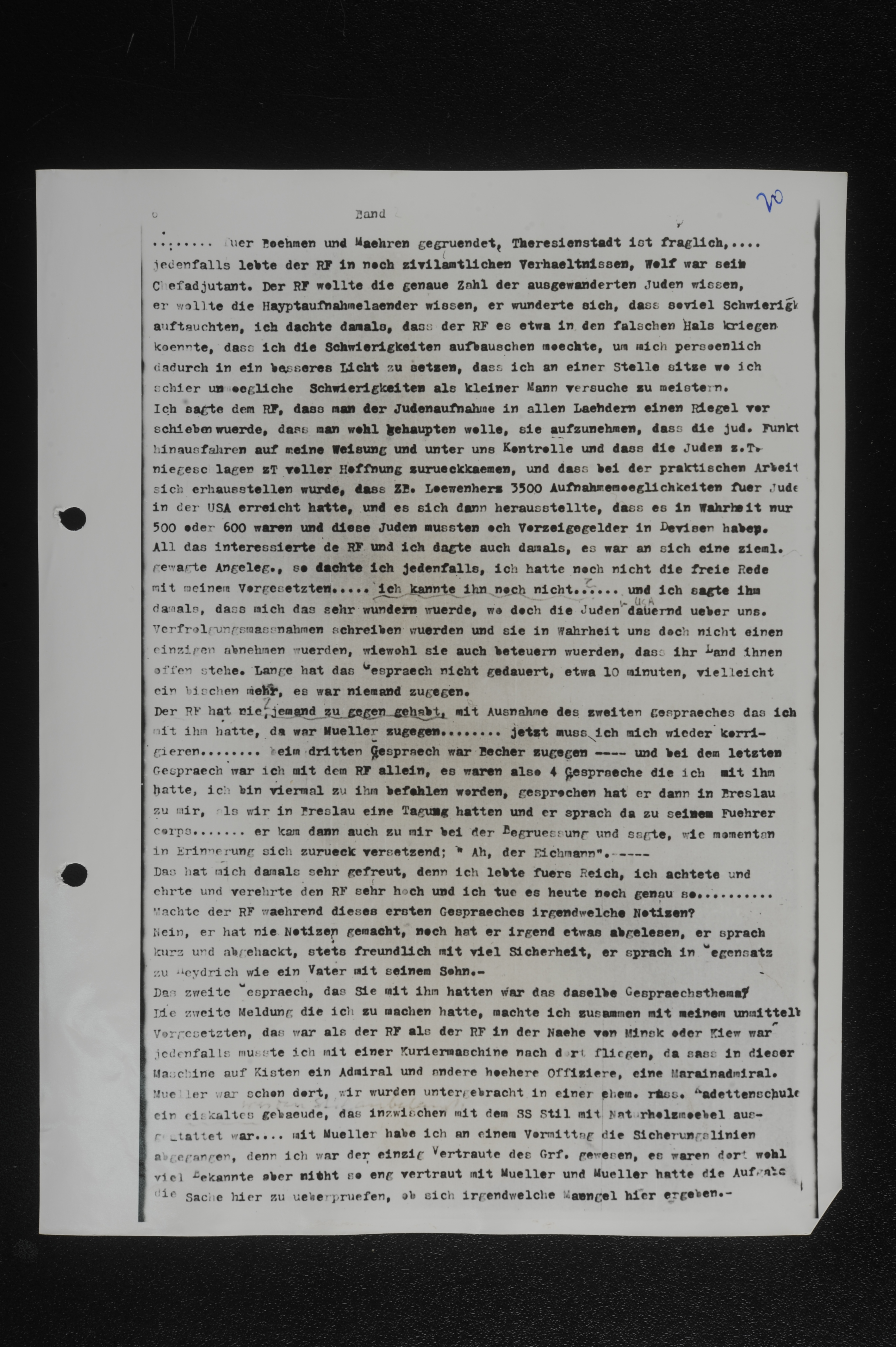
Page 280 of the typescript, O.65 file 86.
Page 280 · Yad Vashem Archives, O.65/86

German transcription

Sagen wir wi hat wieder aus der Slowakei einen Abtransp. von Juden erreicht oder Dannecker hat 8 Transp. mit zusammen 16 000 Juden erreicht, da fand vor der Fahrplanbesprechung noch eine Besprechung statt mit den zuständ. Leuten des VWHA, denn ich mußte nun von dem Insp des KZ Wesens die Mitteilung bekommen, wohin ich nun diese Jude zu fahren habe. denn der Pohl hatte die grundsätzliche Weisung des RF daß er alle Juden aufzunehmen hat, wohin er sie steckte, das war seine Sache, das wußte ich nicht, auch nicht der RF das war seine Sache, also hat man nun einen Entscheid herbei gerufen wo sollen diese Juden hin, da hat Pohl gesagt, nach Auschwitz, darauf hin habe ich gewußt, Auschwitz, darat hin wurde mit dem Reichsverkehrminist als Abgangsbahnhöfe, Reichsgrenze Ungarn-Östr ader direkt … sowiese ausgemacht nach Auschwitz. Jetzt rollte es, ich mußte mich eine Zahl die ausgemacht war mit den KZ wieviel es maxima se durften halten, ich mußte mich auch halten an die Bestimmungen die der Chef des VWHA angab, nämlich da war vorgeschrieben daß die Juden in einem einwandfreien Gesundheitszustand zu überstellen sind und das das nicht ist und das nicht ist etc… Solang das gut ging, rollte das und keiner kümmerte sich um den anderen, Die Praxis ist nun einmal anders als die Theorie, tratzdem E, förmlich von mir bekniet wurde, daß wenn die Juden wenn sie ankommen arbeitseinsatzfähig sind, hat die ung Gend einfach die Juden in die Waggons hineingeknüppelt weil ein wilder besoffener ung Gend Wachtmeister sich zB hier nicht viel aufhalten wollte. Die Verpflegung und Versorgung war schlecht miserable, auf ung Boden, wohlbemerkt, auf deutschen Boden war es doch besser, kurz und gut, die Juden kamen in einen sehr schlechten Zustand an – das mag aber nicht allein so bei den Ungarn Transp. so gewesen sein, es mag auch bestimmt bei and Transp. so gewesen sein. – es gab überall Schwierigkeiten. Entweder kam nun ein Abgeordneter von Höß oder er persönlich zu mir, oder ich bekam ein Fernschreiben von Müller daß ich mich unverzüglich nach Auschwitz zu begeben hätte, um aufgetretene Schwierigkeiten klärend zu erörtern, und im Anschluß daran bittet er mich nach Berlin zu kommen, um Bericht zu geben. So und nun mußte ich nach Auschwitz fahren, während meines Ungarnaufenthaltes 3 o 4 Mal, einmal haben sie es überzogen, gut die Schwierigkeiten waren da, die Transp. fuhren nun, jeden Tag 8 od 10. durch Bombenangriff ist nun der eine Transp. des Tages nicht mehr durchgekommen und lag fest, oder es kam sonst etwas dazwischen, es rollte also der 2. Transp. gleich nach, so kam es einmal das glaube ich 16 Transp. Züge nach Auschwitz kamen. Daraufhin wurde Höß krank, wahnsinnig und konnte nicht mehr. Ich wurde damals zu Pohl befohlen und Pohl konnte sich offenbar nicht ganz beherrschen, er fuhr mich in einer Art an, die mir gar nicht zu kam, denn ich war ja gar nicht zuständig dafür gewesen, natürlich verstand ich nun die Schwierigk. für Höß in diesem Sinne, aber das waren höhere Gewalten in Kriegzeiten und man hat nun einmal einen Sündenbock gesucht. – Das waren also Fälle wo ich in das KZ kam, wenn ich in das KZ gegangen bin, dann waren es Sachen die meiner nicht persönlichen Neugierde entsprangen, die einer Einladung seitens des Kommandanten entsprangen der sich ein Vergnügen daraus machte einem Schreibtischhengst hier diese Zustände zu zeigen, die ihm Tag für Tag zugemutet werden – es wurde mir nie gesagt aber ich habe es als so empfunden, aber vielleicht hätte ich es auch so getan. –

Draft translation

9 Band 31 [HW: 290] Let us say wi has again arranged from Slovakia a transport of xxxxx Jews or Dannecker has achieved [?8?] transports with together 16,000 Jews, there took place before the timetable conference yet another conference with the responsible people of the VWHA, for I now had to receive from the Insp. of the concentration-camp system the notification where I now had to take these Jews. for Pohl had the basic directive of the RF that he had to take in all Jews, where he put them, that was his affair, that I did not know, nor did the RF that was his affair, so one now called forth a decision where should these Jews go, there Pohl said, to Auschwitz, whereupon I [DEL: xxxxd] knew, Auschwitz, whereupon it was arranged with the Reich Transport Minister as departure stations, Reich border Hungary- Austria or direct ............ anyway to Auschwitz. Now it rolled, I had to keep to a number that was agreed with the concentration camp how many at most they were allowed to hold, I also had to keep to the regulations that the chief of the VWHA specified, namely there it was prescribed that the Jews are to be transferred in a faultless state of health and that this is not the case and that is not the case etc.......... As long as that went well, it rolled and no one bothered about the other, The practice is simply different from the theory, although E, formally was implored by me, that when the Jews when they arrive be fit for labour deployment, the Hungarian gendarmerie simply clubbed the Jews into the wagons because a wild drunken Hungarian gendarmerie sergeant [?sB?] did not want to hold up much here. The feeding and provisioning was bad miserable, on Hungarian soil, well noted, on German soil it was after all better, in short, the Jews arrived in a very bad state ------ but that may not have been so only with the Hungarian transports, it may also certainly have been so with other transports.----- there were difficulties everywhere. Either now there came a deputy of Höss or he personally to me, or I received a teletype from Müller that I had to betake myself immediately to Auschwitz, in order to clarifyingly discuss arisen difficulties, and following on that he asks me to come to Berlin, in order to give a report. So and now I had to travel to Auschwitz [HW: 6] during my Hungary sojourn 3 or 4 times, once they overdid it, well the difficulties were there, the transports now ran, every day 8 or 10. through bombing raid now one transport of the day did not get through any more and lay stuck, or something else came in between, so there rolled the 2nd transport straight after, so it came once that I believe 16 transport trains came to Auschwitz. Whereupon Höss became ill, mad and could no more. I was at that time ordered to Pohl and Pohl apparently could not quite control himself, he snapped at me in a manner that did not befit me at all, for I was after all not at all responsible for it, naturally I now understood the difficulty for Höss in this sense, but those were higher forces in war times and one has after all now sought a scapegoat. ----- Those were then cases where I came into the concentration camp, when I went into the concentration camp, then it was things that sprang from my [HW: [illegible]] personal curiosity, that sprang from an invitation on the part of the commandant who made a pleasure of it to show a desk-jockey here these conditions that are imposed on him day for day--- it was never said to me but I felt it as so, but perhaps I would also have done it so.-----

Or I had orders. There was also a small concentration camp in the Warthegau, with a few hundred men. The Jews were gassed there. I had to establish the time and report it to Müller. A doctor was responsible for that, so I asked the doctor. He told me this and that, I noted it down, and he then led me up to a van of that kind.

[Typed as notes in the transcript: Report with peephole.]

Those, then, were the reasons why and when I had anything to do with a concentration camp. Just as a desk officer in a police office did not need to be creative, he had just as little to do with a concentration camp. The desk officer was the head of his office machinery. The desk officer in Office VII was not the head of his office machinery, and the same applied in Office III. No desk officer in any office who possessed no executive powers was the head of his office machinery. In those offices where the desk officer possessed executive powers, he was only the head of his office machinery. That includes the Reich Criminal Police Office, the Order Police office and the Gestapo office.

The Reichsführer-SS had arranged it very properly and had also been very properly advised. He did not simply let his police do as they pleased. He kept them firmly in harness, so that they carried out their duties according to a set pattern, insofar as executive matters were concerned. Otherwise, I believe, the Reichsführer-SS would have been the exact opposite, because I believe nothing would have been more hateful to him than a mechanical routine among people from whom he expected an outlook and thinking of their own.

Our strength in executive work lay not so much in creativity as in a broad, comprehensive view. We had to survey and take in the matters: how to handle a matter on a Reich-wide scale as quickly and comprehensively as possible without bringing the Gestapo into difficulties with other central authorities, without creating cases that might become embarrassing for the Chief of the Security Police and the Security Service or for the Reichsführer-SS.

Besides that, I had to make sure that no lack of zeal in my duties could be imputed to me as the state's appointed man of trust, the desk officer of IV B 4. If you carried out this area of work in that way, you already had such a considerable workload that you never even got around to inventing matters that were already lying by the dozen in the files, brought forward as suggestions from below and also by superior offices, and being worked on continuously anyway.

The Jewish opponent in particular imagines—perhaps he knows better today through the State of Israel with its ‘Gestapo’; he certainly knows how it is done today. I am convinced that no eastern police force, neither the Russian nor the Hungarian nor the Czech Security Police, acts differently. On purely administrative grounds I cannot imagine any other way of handling it. I cannot believe that a Russian or Hungarian commissar can act just as he pleases. That does not exist anywhere in the world. [Handwritten addition: Not even in the so-called “West”!]

A desk officer deals only with what is brought to him, from above and from below. There was no need to be creative at all, because every stage had already been considered and thought through by other minds. There was nothing left to think about.

Open page image and German
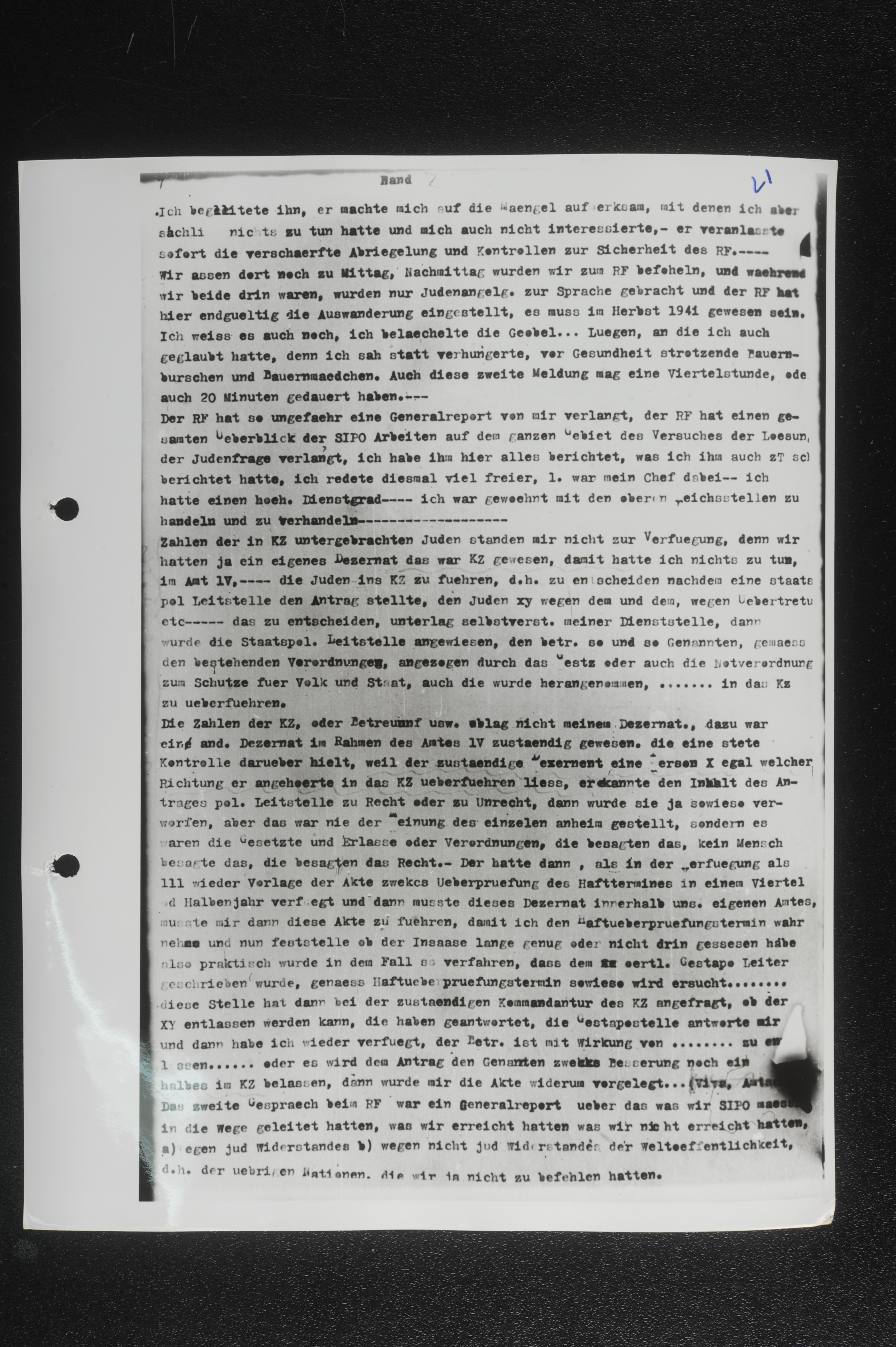
Page 281 of the typescript, O.65 file 86.
Page 281 · Yad Vashem Archives, O.65/86

German transcription

Oder ich hatte Befehl – es war auch ein kleines KZ im Warthegau – von wenigen hundert Mann, dort wurden die Juden vergast, dort mußte ich die Zeit feststellen, das mußte ich Müller berichten, dafür war ein Arzt zuständig, also habe ich den Arzt gefragt, der sagte mir das und das, ich notierte es mir, und erführte mich dann zu einem solchen Wagen heran. …Bericht mit Guckloch. Das waren also die Gründe warum und wann ich es mit einem KZ zu tun hatte. Genauso wenig wie ein Dezernent in einem Pol. Amt schöpferisch tätig sein brauchte, genause wenig hatte er mit einem KZ zu tun gehabt Der Dezernent war der Vorstand seiner Büromaschine – nicht Vorstand seiner Büromaschine war der Dezernent im Amt Vll, ebenso im Amt 111 – Nicht Vorstand seiner Büromaschine war jeder Dezernent in einem jeden Amt dem keinerlei Ex…Vollmachten zustanden. In jenem Ämtern in denen dem Dezernenten Ex…Vollmachten zustanden war er nur der Vorstand seiner Büromaschine, dazu zählt das Reichskriminalamt, dazu zählt das Amt der Ord. Poli. das Gestapoamt. – Der RF hat es an sich sehr ordentlich eingeteilt und ist auch sehr ordentlich beraten worden, er hat gar nicht seine Poli schalten und walten lassen, er hat sie genau im Gespann gehabt, daß sie hier schematisch ihr Aufgaben Gebiet erfüllten. soweit es sich um Ex…Angelg. handelt und ich glaube daß der RF sonst das gegenteilige dazu gewesen wäre, denn ich glaube dem RF wäre nichts verhaßter gewesen als ein Schema F, bei Leuten bei denen er ja einen eigenen Horizont und eigenes Denken erwartete. Unsere Stärke im Ex… lag nicht so sehr im schöpferisch sondern unsere Stärke lag im allgemeinen umfassenden Blick, wir mußten die Sachen übersehen und überschauen wie ich eine Sache mit Reichshorizont so schnell wie möglich und so umfassend wie möglich bearbeite ohne das ich die Gestape in schwierige Situationen mit anderen Zentralinstanzen bringe, ohne daß ich Fälle schaffe die dem Chef der SIPO und des SD oder dem RF unangenehm werden könnten, wie ich im übrigen zu wachen hatte, daß mir als der vom Staate eingesetzte Vertrauensmann, dem Referent von 1V B 4 keine dienstliche Lauheit unterstellt werden könnte. Wenn sie dieses Aufgabengebiet so erfüllten, dann hatten sie sowiese ein so gerüttelt Maß von Arbeit, daß sie gar nicht mehr dazu kamen, Sachen zu gebären, die ohnehin in den Akten zu dutzenden lagen, als Anregungen von unten und auch von vorgesetzten Dienststellen herangetragen wurden und sowiese laufend bearbeitet wurden… – Gerade der jud Gegner stellt sich vor, vielleicht weiß er es heute besser durch den Staat Israel mit seiner Gestapo," er weiß sicher wie es heute gemacht wird und ich bin davon überzeugt, daß keine östliche Polizei, weder russ noch ung noch die czech. SIPO anders handelt, ich kann mir eine and Behandlung allein bürotechn. nicht vorstellen, als wie die. Ich kann nicht glauben daß ein russ oder ung Kommissar frei nach Schnauze handeln kann, das gibt es nicht auf der ganzen Welt nicht… auch nicht im sogen. „Westen“! Ein Dezernent bearbeitet nur das was an ihn herangetragen wird, von oben und von unten. – Man brauchte gar nicht schöpferisch sein weil jede Phase schon durch and Gehirne bedacht und durchdacht war, es gab da nichts mehr zu denken. –

Draft translation

10 Volume 31 [HW: 281] Or I had orders------ there was also a small concentration camp in the Warthegau------ of a few hundred men, there the Jews were gassed, there I had to establish the time, that I had to report to Mueller, a doctor was responsible for that, s so I asked the doctor, who told me this and that, I noted it down for myself, and then I approached such a vehicle [Wagen]. ....report with peephole [Gucklech]. Those were then the "reasons why and when I had anything to do with a concentration camp. Just as little as a desk-officer [Dezernent] in a Pol[ice] office needed to be creatively active, just as little did he have anything to do with a concentration camp. The desk-officer was the head [Vorstand] of his office machine [Buromaschine]---- the desk-officer in Office VII was not the head of his office machine, likewise in Office III------- Not the head of his office machine was every desk-officer in every office to whom no kind of Ex[ecutive]......powers [Vollmachten] were granted. In those offices in which Ex........powers were granted to the desk-officer he was only the head of his office machine, to that counts the Reich Criminal Police Office [Reichskriminalamt], to that counts the office of the Ord[er] Poli[ce], the Gestapo office.------ The RF [Reichsführer] arranged it in itself very orderly and was also very orderly advised, he did not let his Poli[ce] simply operate and do as they pleased, he had them precisely in harness [im Gespann], so that they here sche[m]atically fulfilled their task area, insofar as it concerns Ex[ecutive] matters and I believe that the RF otherwise would have been the opposite to it, for I believe nothing would have been more hateful to the RF than a Chema F [Schema F / by-rote routine], with people from whom he indeed expected an own horizon and own thinking. Our strength in the Ex[ecutive].... lay not so much in the creative but our strength lay in the general comprehensive view [Blick], we had to survey and oversee the things how I work a matter with Reich-horizon as quickly as possible and as comprehensively as possible without my bringing the Gestap[o] into difficult situations with other central authorities, without my creating cases that could become unpleasant to the Chief of the SIPO and of the SD or to the RF, as I moreover had to watch, that to me as the trust-man [Vertrauensmann] appointed by the State, the officer [Referent] of IV B 4, no official lukewarmness [Lauheit] could be imputed. When they fulfilled this task-area in that way, then they anyway had such a shaken-down measure [geruettelt Mass] of work, that they did not even get around to giving birth to matters, which anyway lay by the dozens in [DEL: their] [HW: the] files, as suggestions [Anregungen] brought forward from below and also from superior offices and were anyway continuously processed..- Precisely the Jew[ish] [DEL: opponent] imagines to himself, perhaps he knows it better today through the State of Israel with [DEL: its eventual] Gestapo," he surely knows how it is done today and I am convinced of it, that no eastern police, neither Russ[ian] nor Hung[arian] nor the Czech. SIPO acts differently, I cannot imagine to myself a[ny] oth[er] treatment on bureaucratic-technical [burotechn.] grounds alone, than like that one. I cannot believe that a Russ[ian] or Hung[arian] commissar can act freely off-the-cuff [frei nach Schnauze], that does not exist in the whole world not... [HW: also not in the rainy [regen] "West"?] A desk-officer processes only that which is brought forward to him, from above and from below.-----One did not need to be creative at all because every phase was already considered and thought-through by oth[er] brains, there was nothing more to think there.---

I was directly responsible for the emigration sector, and we were speaking about creative activity in the Gestapo office.

Everything in the field of solving the Jewish question after the ban on Jewish emigration was outlined broadly in a few sentences. These carried the force of decrees or ordinances and were issued by the Reichsführer-SS following a basic order from the Führer. There was no longer any creative activity on the part of the desk officers here.

It was quite different with the … of the emigration regulations, with different regulations appearing week after week, with foreign-currency ordinances overtaking one another and repeatedly coming out on different premises, with the Reichsführer-SS's decrees on emigration or non-emigration constantly being overturned. Here there was an abundance of problems, and here it was indeed the desk officers' task to adapt skilfully to the foreign or domestic political situation of the moment, so as to achieve the goal he had set: to get the greatest possible number of Jews to emigrate within a short time.

Questioner

Over whom did you have command authority?

Eichmann

I had command authority over all my subordinates. That was a government councillor (Regierungsrat), a government assessor (Regierungsassessor), my permanent deputy, a senior government administrative officer (Regierungsamtmann), several senior police inspectors, several police inspectors, several police secretaries, several criminal police secretaries, several criminal police assistants, several police employees, several SS [?] (Stf.) of the Security Service, at times an SS [?]

(Obtf.) of the Security Service, several SS Untersturmführer and several Unterführer and men of the Security Service who served as police employees. That outlines my section insofar as it worked in Berlin, and insofar as the section included its extended arms: the advisers for Jewish affairs at the German legations, with the commanders of the Security Police and so on. Command authority here needs a qualification, because those men were primarily subordinate to the ambassador, the envoy or the commander.

If they could not comply with orders they received concerning their work, those advisers, unlike the other personnel directly subordinate to the ambassador or commander, were free to come to me and explain why they could not carry out the orders—for instance, because these conflicted with a directive they had received from the section. They asked for clarification, and only then would they return to their office. That did happen. So here I had direct command authority.

Questioner

If you drew up a circular headed ‘The Chief of the Security Police and the Security Service’, with your section number, signed ‘by order’ with your name, and addressed to all State Police headquarters, then that was a directive and an order? [Handwritten addition: No order!]

Eichmann

Yes, of course.

Questioner

So, with the letterhead ‘The Chief of the Security Police and the Security Service’ and a signature ‘by order’, did you have unlimited command authority over the Secret Police headquarters, or over all the subordinate offices of the Chief of the Security Police and the Security Service?

Eichmann

Yes, you can put it that way too, only there is a catch. A letter to all State Police offices and headquarters directing them to do this, that and the other went out in fair copy as a teletype. But it had its head and its roots in the file, and that was the main thing. It looked like

Open page image and German
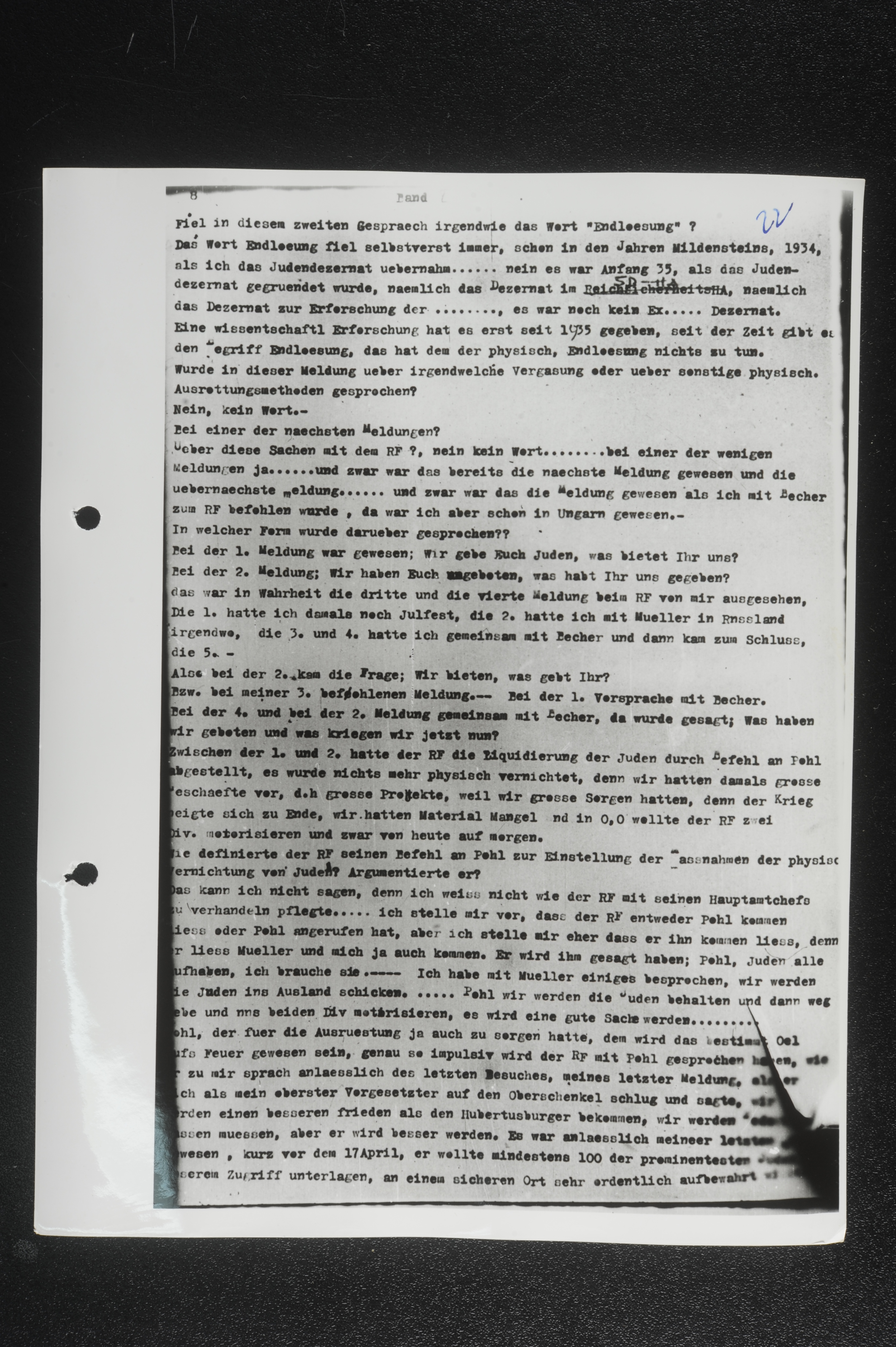
Page 282 of the typescript, O.65 file 86.
Page 282 · Yad Vashem Archives, O.65/86

German transcription

Für den Auswanderungssektor war ich direkt zuständig und wir sprachen von der schöpferischen Tätigkeit im Gestapo Amt. – Also alles was auf dem Gebiet der Lösung der Judenfrage nach dem Verbot der Auswanderung der Juden lag, war global umrissen mit einigen wenigen Sätzen, deren Erlassenskraft oder Verordnungskraft zu kam und vom RF erlassen wurden nach grundsätzlichen Befehl der ergangen war durch den Führer. Hier gab es keine schöpferische Tätigkeit seitens der Dezernenten mehr. Ganz anders bei dem Piegersatztrupp der Ausw. Bestimmungen, bei den sich wöchentlich wieder andere einstellenden Bestimmungen, bei den sich überschlagenden Devisenverordnungen, die immer wieder mit anderen Vorzeichen herauskamen, bei den ewig und immer wieder umgeworfenen Erlassen des RF bzgl der Ausw. oder der Nichtausw.. Hier war eine Fülle von Problemen und hier freilich war es Aufgabe der Dezernenten mit Geschick sich der jeweiligen aussen od innen polit. Lage anzupassen, um das von ihm gestellte Ziel innerhalb kurzer Frist einer Höchstzahl von Juden zur Ausw. bringen zu können. – Wem gegenüber hatten Sie Befehlsgewalt? Ich hatte Befehlsgewalt gegenüber allen meinen Nachgeordneten. Das war ein Reg Rat, ein Reg Assessor, meinen ständig. Vertreter, ein Reg. Amtmann mehrere Pol. Ober Insp., mehrere Pol Insp., mehrere Pol Sekr., mehrere Kriminal Sekr., mehrere Kriminalassistenten, mehrere Pol. Angestellte, mehrere SS Stf. des SD, zeitweilig einen SS Obtf. des SD, mehrere SS Ustf und mehrere Uf und Männer des SD, die als Pol. Angestellte fungierten. Damit habe ich umrissen mein Dezernat soweit es in Berlin arbeitete und soweit ich zu diesem Dezernat die verlängerten Arme gehörten als da waren die Berater für Judenfragen bei den deutschen Gesandtschaften, bei dem Befehlshaber der SIPO usw., wobei hier Befehlsgewalt mit einer Einschränkung zu versehen ist, denn diese Leute unterstanden ja nun mal in erster Linie dem Botschafter oder dem Gesandten oder dem Befehlshaber. Falls sie sachlichen Befehlen die sie erhielten nicht folgen konnten stand es diesen Berater frei, im Gegensatz zu den sonst unmittelbar unterstellten, des Botschafters des Befehlshabers, frei zu mir zu kommen, um mir zu sagen warum sie diese Befehle nicht ausführen können, weil sie etwa im Widerspruch stünden zu einer Weisung die sie von Dezernat erhalten hatten und sie bitten um Klärung und erst dann würden sie sich wieder an die Dienststelle begeben, das kam schon vor. – Also hier hatte ich direkte Befehlsgewalt. – Wenn Sie ein Rundschreiben abfassten mit dem Briefkopf: Der Chef der SIPO und SD Ihre Dezernatsnummer, unterschrieben in Auftrage mit Ihren Namen an alle Staats Pol. Leitstellen, so war das eine Weisung und ein Befehl?? Ja, selbstverst. Wenn also der Briefkopf : der Chef der SIPO und SD und in Auftrage unterschrieben hatten sie unbeschränkte Befehlsgewalt über die Geheimen Pol. Leitstellen, bezw. über sämtl. nachgeord. Stellen des Chefs der SIPO und SD??? Ja, das können Sie auch so sagen, nur hat das einen Pferdefuß, denn ein Schreiben an sämtl Staats Pol und Leitstellen mit der Weisung das, das und das zu machen sei, das ging raus in Reinschrift als Fernschreiben, das hatte aber in der Akte seiner Kopf und seine Wurzel, und das war die Hauptsache, die sah nämlich wie

Draft translation

Band 32 [HW: 282] For the emigration sector I was directly responsible and we spoke of the creative activity in the Gestapo office.---- So everything that lay in the field of the solution of the Jewish question after the prohibition of the emigration of the Jews was outlined globally with a few sentences, to which the force of decree or the force of ordinance accrued and [which] were issued by the RF [Reichsführer] according to fundamental order which had been issued through the Führer. Here there was no more creative activity on the part of the desk officers [Dezernenten]. Quite different with [HW: (4)] the [?Piegersatztrupp?] of the emigration regulations, with the ones that weekly again re[HW: newed]-establishing regulations, with the overturning foreign-currency ordinances, which came out again and again with different signs [premises], with the eternally and again and again overturned decrees of the RF regarding the emigration or the non-emigration. Here there was an abundance of problems and here indeed it was the task of the desk officers to adapt with skill to the respective foreign or domestic political situation, in order to be able to bring the goal set by him of a maximum number of Jews to emigration within a short term.---- Toward whom did you have command authority? [HW: (?)] I had command authority over all my subordinates. That was a Reg[ierungs]rat, a Reg[ierungs]assessor, my permanent deputy, a Reg[ierungs]amtmann, several Pol[izei] Ober Insp[ektoren], several Pol[izei] Insp[ektoren], several Pol[izei] Sekr[etäre], several Kriminal Sekr[etäre], several Kriminalassistenten, several Pol[izei] employees, several SS [DEL: XXXXX] Stf. of the SD, at times one SS Obtf. of the SD, several SS Ustf and several Uf and men of the SD, who functioned as Pol[izei] employees. With that I have outlined my Dezernat as far as it worked in Berlin and as far as to this Dezernat there belonged the extended arms as there were the advisers for Jewish affairs at the German legations, at the command the SIPO had etc., whereby here command authority is to be furnished with a restriction, because these people after all were subordinate in the first place to the ambassador or to the envoy or to the commander. In case they could not follow factual orders which they received it stood these advisers free, in contrast to the otherwise directly subordinate [personnel], of the ambassador of the commander, free to come to me, in order to tell me why they cannot carry out these orders, [DEL: xxx] because they perhaps stood in contradiction to a directive which they had received from [the] Dezernat and they suffered [?asked?] for clarification and only then would they betake themselves again to the office [Dienststelle], that did happen.---- So here I had direct command authority.-- If you drew up a circular letter with the letterhead: The Chief of the SIPO and SD, your Dezernat number, signed by order [im Auftrage] with your name to all State Pol[ice] Central Offices [Leitstellen], then that was a directive and an order?? [HW: no order!!!] Yes, of course. If then the letterhead: the Chief of the SIPO and SD and signed by order [im Auftrage] [HW: (1)], did you have unlimited command authority over the Secret Pol[ice] Central Offices, [HW: !] respectively over all subordinate offices of the Chief of the SIPO and SD??? [HW: !] Yes, that you can also say so, only it has a catch [Pferdefuß, "horse's foot"], because a letter to all State Pol and Central Offices with the directive to do this, that and the other, that went out in fair copy as a fair-copy letter, but that had in the file its head and its root, and that was the main thing, that namely looked like

this. I: a memorandum. Here everything was gathered together factually, developed, worked out and explained. Under II, when a directive of this kind went out to the State Police, especially to several State Police offices, and above all when it was a circular decree to all State Police offices and headquarters, it was submitted under II to the chief of Office IV through official channels, with a request for acknowledgment, approval and initialing. That is, when more than one office was involved, the signatory was, as a rule, usually the office chief. When it was a circular decree to all police headquarters and so on, the signatory was generally the Chief of the Security Police and the Security Service, and in exceptional cases the office chief.

Only in very exceptional circumstances—let us say both the office chief and the Chief of the Security Police were… or rather could not be found, because if they were travelling everything could be forwarded to them. Let us say the office chief was on leave and the Chief of the Security Police was absent, ill, laid low by some bomb attack. Then of course I could have signed a circular like that myself, but I would have had to record it under point III: since nobody could be found and there was danger in delay, I signed and ordered this matter myself. Afterwards, however, I had to answer for why I had done it. It could have meant having to accept an official reprimand.

But the case I have just described never occurred, because the office chief had his deputy, who for a short time was Schellenberg and later, regularly, [?]. In cases of special treatment the office chief also had to sign. Routine matters addressed to the State Police headquarters I could sign, but I had to—only the letter that went out; that was secondary. What mattered was the office letterhead. Even in routine procedure a memorandum had to be drawn up. In it the case officer had to give the reasons why the request was to be granted and had to be granted, or why it had to be refused. Under II he prepared the draft letter, and under III I decided whether to sign the draft myself or submit it to the office chief for signature.

But all of that can be picked apart legally. If the head of a State Police headquarters had reservations and did not carry out the directive—of course he was not allowed simply to leave it undone—he would have had to draw up a memorandum, express his reservations in it and work out grounds for a postponement. He would have had to say that he believed it was a matter of principle and wanted to consult the chief of Office IV before the measure was ordered. Then the letter went off once more. He certainly could have done that; he had that right.

But if the postponement had caused a delay harmful to the Reich, he would have had to answer for it, because there was an unequivocal, clear directive from the Reich Security Main Office, in this case the Gestapo office. It was no longer for him to ask whether that directive was right or wrong; by law he would have had to carry it out doggedly. Given the difficulty of the whole matter, however, because it concerned human lives or deprivation of liberty, it was always handled more delicately than a circular issued by Office VII, III, II or I.

Open page image and German
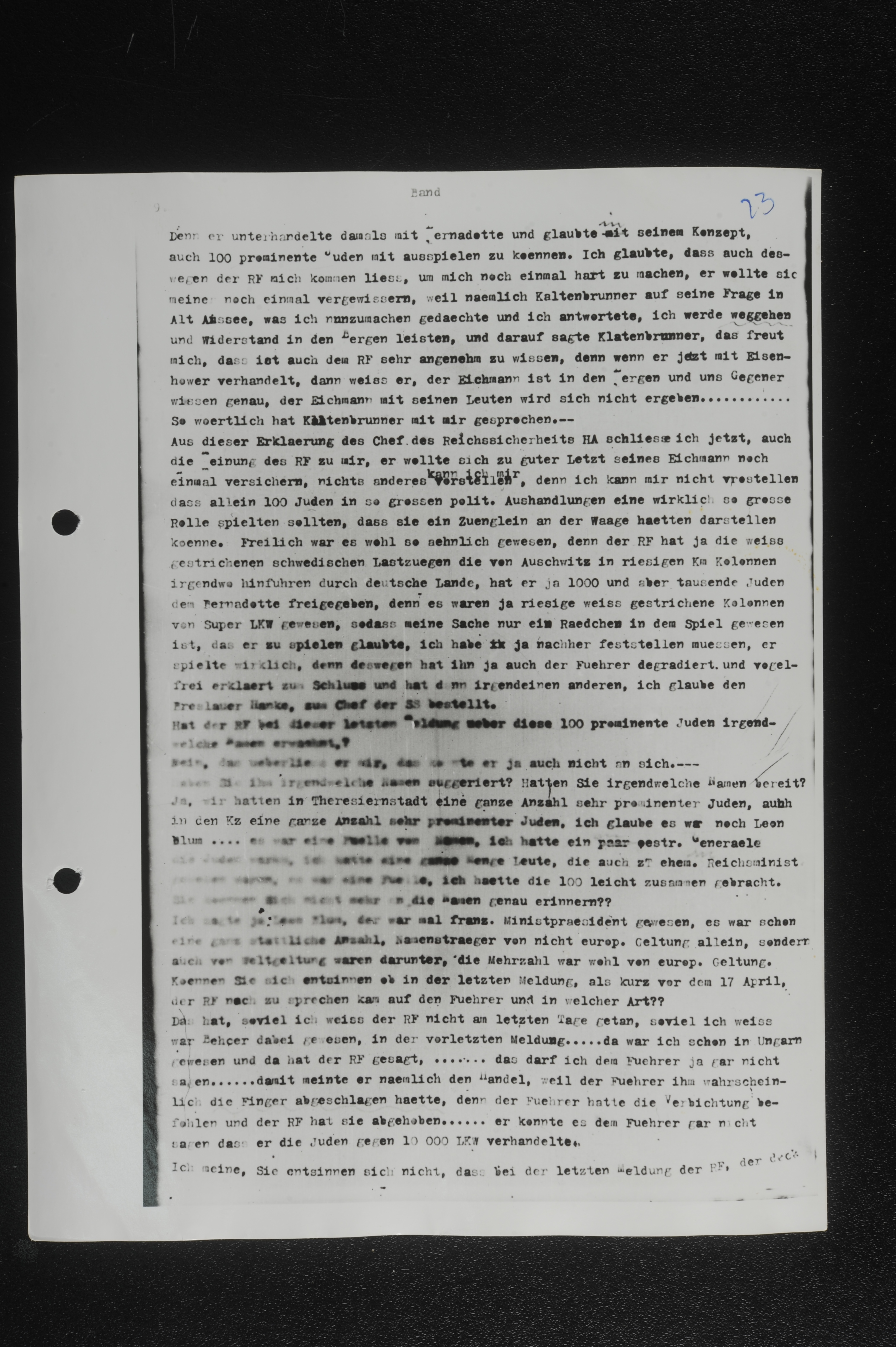
Page 283 of the typescript, O.65 file 86.
Page 283 · Yad Vashem Archives, O.65/86

German transcription

folgt aus: I Vermerk hier wurde alles sachlich zusammen getragen, und entwickelt und ausgearbeitet und erklärt. Unter II, wenn eine solche Weisung an die Staatspol. raus ging, besonders wenn eine solche Weisung an mehrere Staats-Pol. Stellen raus ging, ganz besonders wenn es ein Runderlaß an sämtl. Staats. Pol und Leitstellen war, wurde hier unter II dem Amtschef IV auf dem Dienstwege vorgelegt, mit Bitte um Kenntnisnahme Genehmigung und Abzeichnung, d.h. also wenn es mehr als eine Stelle gewesen ist, war es in der Regel der Unterschriftsträger su- meist mindestens der Amtschef , war es ein Runderlaß an sämtli. Pol Leitstellen usw. so war es in der Regel der Chef der SIPO und SD der zumeist Unterschriftleistende und in Ausnahmenfällen der Amtschef. Nur in ganz besonders gelagerten Fällen, sagen wir beide der Amtschef und der Chef der SIPO, befanden sich… bzw. waren nicht auffindbar, denn wenn sie sich auf Reisen befanden konnte ihnen ja alles nachgeschickt werden, sagen wir der Amtschef war auf urlaub und der Chef der SIPO war nicht da, war krank, lag danieder, durch irgendein Bombenattentat, dann hätte ich selbverst. ein solches Rundschreiben auch unterschreiben können aber dann hätte ich das vermerken müssen als Punkt III, da niemand aufzufinden war und weil Gefahr des Verzuges war, habe ich diese Sache selbst unterschrieben und angeordnet, aber nachher habe ich dafür einstehen müssen, warum ich das getan habe. Es hätte sein können daß ich dafür einen dienstlichen Verweis hätte hinnehmen müssen. Aber dieser eben geschilderte Fall kam nie vor, denn der Amtschef hatte ja seinen Vertreter der kurze Zeit einmal Schellenberg war und späterhin laufend Hubenko[unleserlich] Bei Sonderbehandlung mußte der Amtschef auch unterschreiben, – bei Routinesach an die Staats Pol Leitstellen, die konnte ich schon unterschreiben, aber ich mußte nur das Schreiben daß raus ging, das war nebensächlicher Natur, wichtig war der Amtskopf, auch im Routineverfahren mußte ein Vermerk angelegt werden, in diesem Vermerk mußte der Sachbearbeiter die Begründung anführen, warum dem Ansuchen statt zu geben ist und gegeben werden muß, oder warum es abschlägig behandelt werden muß, und unter 11 hat er den Briefentwurf fertig gemacht und ich entschied unter 111 ob dieser Briefentwurf von mir gezeichnet wird oder ob ich ihn dem Amtchef verlege zur Unterschrift… Aber das kann man alles jurist. zerpflücken, denn wenn dem Staats Pol. Leitstellen Leiter Bedenken gekommen wären und er hätte diese Weisung nicht durch geführt, er hatte sie natürlich nicht unterlassen dürfen… er hätte einen Vermerk anlegen müssen, er hätte hier seine Bedenken zum Ausdruck bringen müssen und er hätte sich hier einen Aufschub sich selbst herausarbeiten müssen… und er hätte sagen müssen, er glaube daß dem grundsätzl. Bedeutung zu käme und er wollte noch bevor diese Maßnahme angeordnet wird, doch zuvor noch Rücksprache mit dem Chef des Amtes IV nehmen. Und dann ging das Schreiben noch einmal los, das hat er wohl machen können, das Recht stand ihm zu, jedoch wäre durch diese Verzögerung dem Reich schädliche Verzögerung heraus gekommen, dafür hatte er grade stehen müssen, weil eine eindeutige klare Weisung des Reichssicherheits HA i d Fall des Gestape Amtes vorlag und er an sich nicht mehr zu fragen hatte ob diese Weisung nun recht oder nicht recht ist, sondern er hätte sie von rechtswegen stur durchführen müssen. Wurde aber bei der Difficilität der ganzen Angeleg. weil es sich um Menschenleben handelte oder um Freiheitsberaubung, auch immer delikater angefaßt, als wenn das Amt VII oder 111 ed 11 ed 1 ein Rundschreiben heraus gegeben hätten. –

Draft translation

2 Volume 32 [HW: 293] follows from: I Memorandum here everything was factually gathered together, and developed and worked out and explained. Under II, when such a directive went out to the State Pol[ice], especially when such a directive went out to several State Pol[ice] offices, quite especially when it was a circular decree to all State Pol[ice] and Head Offices, it was here under II submitted to the Office Chief [HW: [?IV?]] through official channels, with a request for acknowledgment [HW: [?Jerusalem?]] and initialing, that is, so when it was more than one office, as a rule it was the signature-bearer su-[HW: [?other?]] at least the Office Chief [HW: (10)], when it was a circular decree to all Pol[ice] Head Offices etc., it was as a rule the Chief of the SIPO and SD who [HW: always] provided the signature and [HW: (11)] in exceptional cases the Office Chief. Only in quite specially situated cases, let us say both the Office Chief and the Chief of the SIPO, were located... or rather were not findable, because when they were on travels everything could indeed be forwarded to them, let us say the Office Chief was on leave and the Chief of the SIPO was not there, was sick, lay stricken, through some bomb attack, then I of course could also have signed such a circular but then I would have had to note that as point III, since no one was to be found and because there was danger of delay, I signed this matter myself and ordered it, [only] afterwards I had to answer for why I had done that. It could have been that for it I would have [DEL: been punished or rewarded] [DEL: ] [HW: had to accept a [?serious?] reprimand]. But this case just described never occurred, because the Office Chief indeed had his deputy who for a short time once was Schellenberg and later on continually [?Hubenkoden?]. In the case of Special Treatment the Office Chief also had to sign, --- in routine matter[s] to the State Pol[ice] Head Offices, those I could indeed sign, but I had only the letter that went out, that was of secondary nature, what was important was the file-head [Amtskopf], also in the routine procedure a memorandum had to be laid out, in this memorandum the case-officer had to cite the justification, why the request is to be granted and must be granted, or why it must be treated negatively, and under 11 he made the letter draft ready and I decided under 111 whether this letter draft is signed by me or whether I submit it to the Office Chief for signature.... But that one can all pick apart legally, because if the State Pol[ice] Head Office head had had reservations and he had not carried out this directive, he of course would not have been permitted to omit it..... he would have had to lay out a memorandum, he would have had to express his reservations here and he would have had to work out a postponement for himself here... and he would have had to say, he believed that fundamental significance would attach to this and he wanted, still before this measure is ordered, first to confer with the Chief of Office IV. And then the letter went off once more, that he probably could do, that right stood to him, however through this delay a delay harmful to the Reich would have come out, for which he would have had to answer, because a clear unambiguous directive of the Reich Security Main Office in the case of the Gestapo Office lay [before him] and he actually had no more to ask whether this directive is now right or not right, but rather he would by law have had to carry it out stubbornly. But given the difficulty of the whole matter, because it concerned human lives or deprivation of liberty, it was also always handled more delicately, than if Office VII or 111 or 11 or 1 had issued a circular.------

That is why I made the distinction between offices equipped with executive powers and those that were not.

Questioner

To whom were the Jewish central offices in Vienna and Prague directly subordinate?

Eichmann

The Jewish central office in Vienna was directly under my direction. As desk officer of the inspector of the Security Police and the Security Service, I had received the order, on my own proposal, to create a central office for Jewish emigration. Inspector Stahlecker had first obtained authorization from the Reich Commissioner for the Reunification of Austria with the German Reich. He had an authorization decree, although the State Police headquarters in Vienna would by rights have been responsible. There I was the immediate superior of the Jewish religious community in Vienna. But as head of the Central Office for Jewish Emigration, I was not responsible for the executive side. At that time I had no authority to take a Jew into protective custody, except for the same right that belonged to every German member of the national community (Volksgenosse). I was not an executive authority.

Questioner

What position did you have, then?

Eichmann

I was transferred and am paid by the Security Service Upper Sector Danube. I was the officer for Jewish affairs there, and as a desk officer of the Security Service Upper Sector Vienna, to which I was transferred—first seconded, while retaining my position as a desk officer in the Security Service Main Office—I remained there, although I no longer needed to work there. There was no need, because that Security Service task was now being handled in full and exhaustively by the Central Office for Jewish Emigration.

There I sat as head of the office for the Commissioner for the Reunification of Austria with the German Reich and, at the same time, in a personal union of offices, as a desk officer of the Security Service Upper Sector Danube. As such I had unlimited authority in all administrative matters, in all matters falling under the promotion of emigration. The State Police headquarters in Vienna was not allowed to curtail that authority in the slightest, because the inspector of the Security Police and the Security Service had given the State Police headquarters the relevant directive that they were not to issue me instructions.

Before any State Police intervention against the agents of the religious community or in anything to do with emigration, they first had to obtain my clearance. But all individual measures of a State Police nature in Austria were entirely within the State Police's authority; there I had no possibility of objection. In practice, however, whenever I wanted something I consulted the responsible man, Dr. Ebner of the State Police headquarters in Vienna, just as he did with me, so that in fact there was no friction.

Questioner

So the Central Office for Jewish Emigration in Vienna was an office subordinate to an inspectorate of the Security Police and the Security Service?

Eichmann

Yes, although the Reich Commissioner for the Reunification of Austria and Germany could also intervene decisively in it. In the Central Office for Jewish Emigration there were not only personnel subordinate to the inspector of the Security Police and the Security Service, or people he could inspect, but also the officials of the Jewish religious community. They too did their work there on the assembly line, like the Gestapo official, the official of the Reich Economics Ministry, the official of the foreign-exchange office in Vienna and the official of the Finance Ministry. The Jew did his work on the assembly line in exactly the same way.

Open page image and German
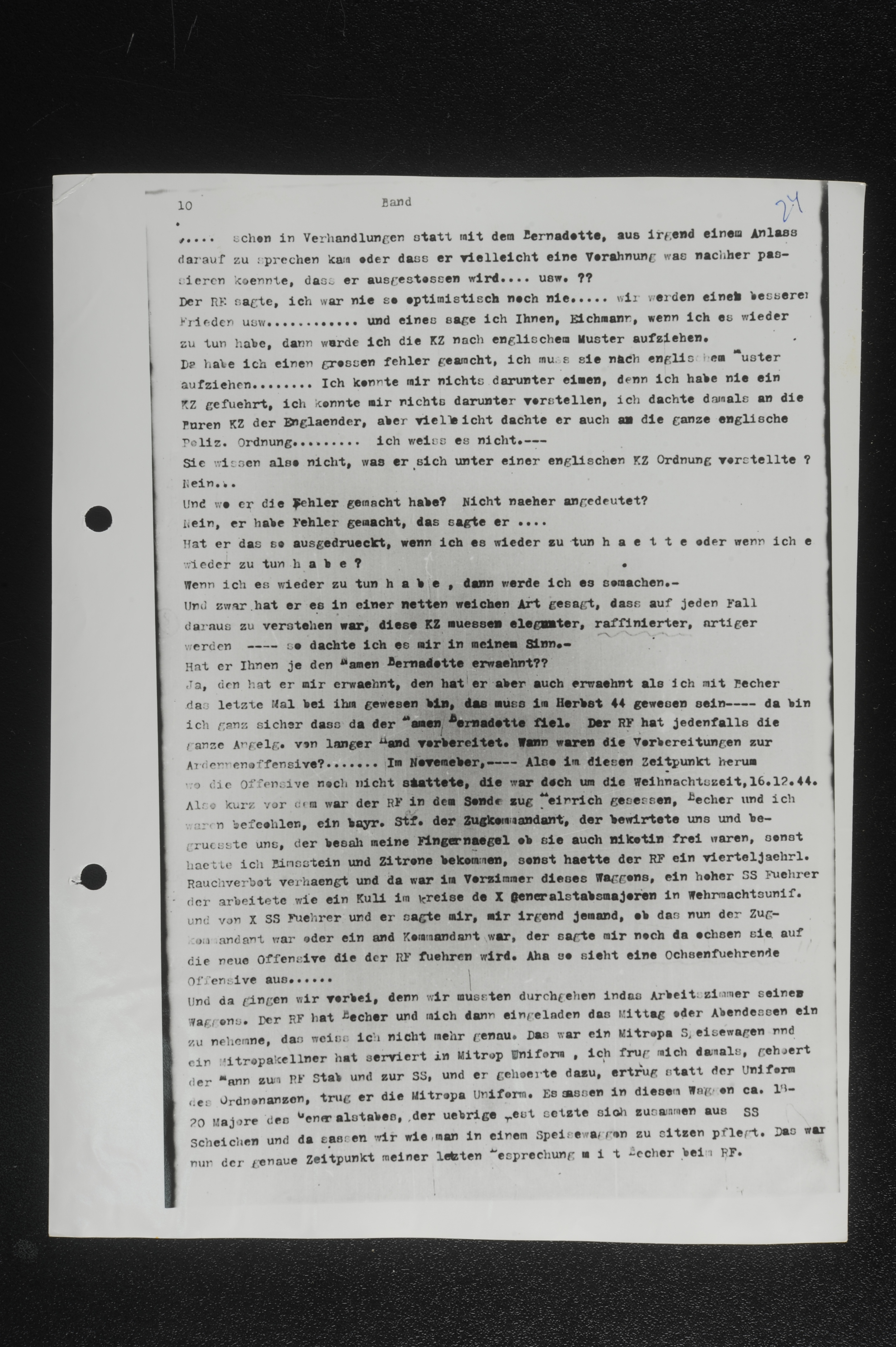
Page 284 of the typescript, O.65 file 86.
Page 284 · Yad Vashem Archives, O.65/86

German transcription

Daher machte ich ja den Unterschied zwischen den Ämtern die mit Ex… Vollmachten ausgestattet waren und die es eben nicht waren. F: Wem unterstanden direkt die jud Zentralstellen in Wien und in Prag??? A: Die jud Zentralstelle in Wien unterstand direkt meiner Leitung und zwar hatte ich als Referent des Inspekteurs der SIPO und SD auf meinen Verschlag hin den Befehl bekommen eine Zentralstelle für jud Ausw, zu schaffen. Inspekteur Stahllecker, der hatte sich zuver die Ermächtigung eingeholt vom Reichskommissar der Wiedervereinigung Östr. mit dem deutschen Reich, er hatte einen Ermächtigungserlaß Obwohl die Staats Pol Leitstelle in Wien von rechtswegen zuständig gewesen wäre. Dort war ich der unmittelbare Vorgesetzte der jud Kultusgemeinde in Wien. Aber ich war als Dienststellenleiter der Zentral für jud Ausw. war ich nicht zustä für den Ex… Teil, mir stand es um jene Zeit nicht zu etwa einen Juden in Schutzhaft zu nehmen, es sei denn dasselbe Recht wie es jeden deutschen Volksgenossen zustand, aber ich war kein Ex… Macht. F: Welche Stellung hatten Sie denn??? A: Ich bin versetzt worden und bin besoldet vom SD Oberabschnitt Donau. Da war ich Judensachbearbeiter – und als Referent des SD Oberabschnittes Wien, zudem ich versetzt wurde, zuerst kommandiert wurde unter Beibehaltung meiner Refereneigenschaft im SD HA… da blieb ich, obwohl ich dort nicht mehr arbeiten brauchte, man brauchte es nicht, denn diese SD mäßige Aufgabe wurde ja nun reles und erschöpfend behandelt von der Zentralstelle für jud Ausw., dort saß ich als Dienststellenleiter für den Kommissar der Wieder ver. Östr. mit dem deutschen Reich, gleichzeitig Personalunion, als Referent des SD Oberabschnittes Donau. Als solcher hatte ich in allen administrativen Dingen, in allen Dingen soweit sie unter Förderung der Ausw, kamen eine unbeschränkte Vollmacht die mir auch von der Staats Pol Leitstelle in Wien in keinster Weise beschnitten werden durfte, weil der Inspekteur der SIPO u SD die Staats Pol Leitstellen mit der einschlägigen Weisung versehen hatten, daß sie mir keine Weisungen erteilen dürfe und daß er mir vorher an die Agenten der Kultusgemeinde und alles was mit Ausw. zu tun hatte Staats pol. Eingriffe hätte, erst meine Unbedenklichkeit einholen müsse. Jedoch sämtl Einzelmaßnahmen Sta. Pol. Natur in Östr. die lag 100 % im Bereich der Sta Pol, da hatte ich wiederum keine Einspruchsmöglichkeit. In der Praxis jedoch hatte ich mich genause mit dem zuständ. Mann, Dr Ebner, der Sta Pol Leitstelle Wien ins Benehmen gesetzt wenn ich irgendwelche Wünsche hatte, genause wie er es mit mir getan hat, sodaß es tatsächlich zu keinen Reibereien kam. F: Frage: die Zentrale für jud Ausw. Wien war also dem einer Inspektion SIPO und SD nachgeordnete Dienststelle? A: Ja, in der allerdings auch der Reichskommissar für die Wiederver. Östr-Deutsc maßgeblich hineinspucken konnte, weil in der Zentralstelle für jud Ausw. weil ja nicht nur dem Inspekteur der SIPO und SD unterstellte Personal oder Menschen die er hat revidieren könne, sn die Beamten der jud Kultusgemeinde, die ja auch dort am laufenden Band ihren Dienst taten, wie der Gestapobeamte, wie der Beamte des Reichswirt. Minist. wie der beamte der Devisenstelle Wien, wie der Beamte des Finanzminist., so hat der Jude genau seinen Dienst getan am laufenden Band.

Draft translation

3 Volume 32 [HW: 294] Therefore I made the distinction between the offices which were equipped with ex.... full powers and those which just were not. .-- Q To whom were the Jewish central offices in Vienna and in Prague directly subordinate??? [HW: 12] A The Jewish central office in Vienna was directly subordinate to my direction and indeed I had, as desk officer of the [DEL: SD of the commander] [HW: inspectorate] of the SIPO and SD, received on my proposal the order to create a central office for Jewish emigration. [HW: Inspector] [DEL: Commander] Stahllecker, he had beforehand obtained the authorization from the Reich commissioner of the reunification of Austria with the German Reich, he had an authorization decree Although the State Police headquarters [Leitstelle] in Vienna would by rights have been competent. There I was the immediate superior of the Jewish religious community [Kultusgemeinde] in Vienna. But I, as office director of the central [office] for Jewish emigration, I was not compet[ent] for the ex..... part, at that time it was not up to me to for example take a Jew into protective custody, unless [it be] the same right as pertained to every German national comrade [Volksgenosse], but I was no ex.... power.--.-- Q What position did you then have??? A I was transferred and am paid by the SD Oberabschnitt Danube. There I was the Jewish affairs officer ----and as desk officer of the SD Oberabschnitt Vienna, to which I was transferred, first was seconded [kommandiert] while retaining my desk-officer capacity in the SD HA... there I remained, although I no longer needed to work there, one did not need it, for this SD-type task was now handled rea[lly] and exhaustively by the central office for Jewish emigration, there I sat as office director for the commissioner of the reunification of Austria with the German Reich, at the same time in personal union, as desk officer of the SD Ober- [HW: 13] abschnitt Danube. As such I had in all administrative matters, in all matters insofar as they came under the promotion of emigration, an unlimited full power which also could not in the slightest way be curtailed for me by the State Police headquarters in Vienna, because the [DEL: commander] [HW: inspector of the SD [?29.52?]] as State Police headquarters had been provided with the pertinent instruction that [HW: he] might not issue me any instructions and that he, before he had State-Police interventions against the agents of the religious community and everything that had to do with emigration, must first obtain my clearance [Unbedenklichkeit / no-objection]. However all individual measures of a State-Police nature in Austria, that lay 100% within the domain of the State Police, there I again had no possibility of objection. In practice however I had likewise put myself in touch [ins Benehmen gesetzt] with the competent man, Dr Ebner, of the State Police headquarters Vienna when I had any wishes whatsoever, likewise as he did it with me, so that in fact no frictions came about.- Q Question: the central [office] for Jewish emigration [HW: [?if an inspection?]] was thus a subordinate office to the [DEL: commander of the] SIPO and SD? A Yes, into which however also the Reich commissioner for the reunification Austria-Germa[ny] could authoritatively spit [i.e. interfere], because in the central office for Jewish emigration because indeed not only the personnel subordinate to the [DEL: commander] [HW: inspector] of the SIPO and SD or people whom he could inspect [revidieren], but the officials of the Jewish religious community, who indeed also there did their duty on the assembly line [am laufenden Band], like the Gestapo official, like the official of the Reich Economics Ministry like the official of the foreign-exchange office Vienna, like the official of the Finance Ministry, so the Jew did exactly his duty on the assembly line.

It even went so far that Stahlecker once inspected this office and greeted these Jewish officials with a handshake. It went so far that Heydrich, during an inspection, returned the Jewish officials' greeting and said good morning or good day to the Jewish officials sitting there, instead of the German greeting. These Jews were just as necessary for the work as the finance official. And because so many officials there came from offices outside the Security Service and outside the State Police, over which the inspector had no authority either in personnel matters or in their work, the office of the Reich Commissioner for the Reunification of Austria with Germany had a certain right of supervision. That was how it was in Vienna. It was quite different in Prague.

Questioner

So the chain of authority involving you and the Jewish Central Office in Vienna was not entirely clear. Administratively you were subordinate to Upper Sector Danube, which was headed by an office head who was also subordinate to that Upper Sector leader while being a section head in the Main Office at the same time?

Eichmann

I was no longer that at the time, because I was transferred then.

Questioner

Who took over your position?

Eichmann

I do not know.

Questioner

And afterwards you were transferred back…

Eichmann

After Heydrich had inspected the Central Office, pressure was then applied—it took two months—and I was transferred back to Berlin, but now no longer to Office VII, no longer to the Security Service Main Office, but into the executive branch, the Gestapo office. That was why Günther, my permanent deputy, and I resisted at first. We did not want to go into the executive branch; we wanted to keep doing Security Service work. We were settled into that, we had known the business for years, and the tasks now coming to us in an executive office were naturally new. For reasons of convenience alone we kept them off our backs for as long as possible, until a very sharp order made it unavoidable.

[Prague]

Here, when the inspector of the Security Police and the Security Service in Vienna, Stahlecker, was transferred to Prague as commander of the Security Police and the Security Service, there was the order from the Reich Security Main Office, obtained by Stahlecker, that I was transferred from Security Service Upper Sector Danube to the commander of the Security Police and the Security Service in Prague. So I was in Prague and directly and immediately subordinate to the commander.

The commander told me to set up a Jewish central office on the Vienna model. He obtained the necessary powers through the Reich Protector. The Reich Protector signed it in a simple procedure that he submitted to the commander, and later it was our common chief in Berlin, Heydrich, in any case. Here the Reich Protector merely had to notify or instruct the Protectorate government to assign the appropriate officials to the assembly line, just as the responsible offices of the Reich Protector assigned their officials to the Central Office's assembly line.

The officials of the Israelite religious community in Prague worked on the assembly line in exactly the same way, so it had been very simple. In personnel and supervisory matters I was subordinate to the commander of the Security Police and the Security Service in Prague, and the Reich Protector's office had a right of objection. That right was never exercised, and the later deputy Reich Protector was my chief in any case, from whom I had to take orders.

Open page image and German
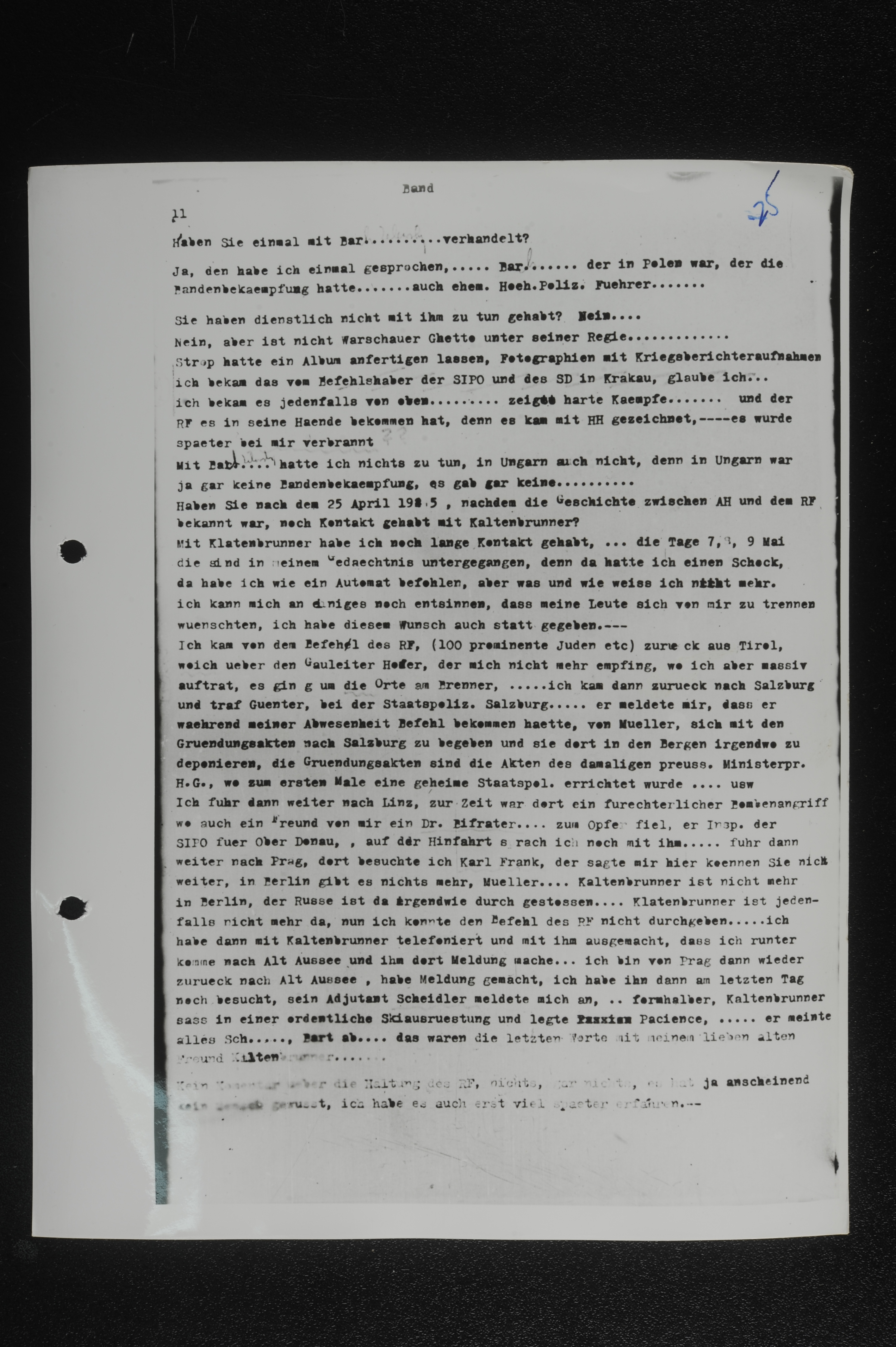
Page 285 of the typescript, O.65 file 86.
Page 285 · Yad Vashem Archives, O.65/86

German transcription

Es kam sogar soweit daß Stahllecker einmal dieses Amt inspizierte und diese Beamten mit Handschlag begrüßte. es ging sogar soweit daß Heydrich bei einer Inspektion den jüd. Beamten ihren Gruß erwiderte und den jud Beamten die das saßen Guten Morgen oder Guten Tag sagte, (statt des deutschen Grußes,) – Diese Juden waren arbeitsmäßig genau so notwendig wie der Finanzbeamte und weil hier soviel Beamten saßen aus SD fernen Dienststellen aus Sta Pol fernen Dienststellen über die der Inspekteur nicht hat verfügen können weder personell noch sachlich und so hatte hier ein gewisses Aufsichtsrecht die Dienststelle des Reichskommissar für Wiederver. Östr-Deutschl. So war es in Wien. Ganz anders war es in Prag: F: Also ihre Abhängigkeit mit der jud Zentralstelle in Wien war also nicht so ganz klar, Sie unterstanden verwaltungstechn. Oberabschnitt Donau, aber wurde geführt von einem Dienstleiter der auch diesem Oberabschnittführer unterstand, aber gleichzeitig Referatsführer im HA war?? A: Das war ich um jene Zeit nicht mehr, denn ich wurde um jene Zeit versetzt. F: Wer hat dann Ihre Stelle eingenommen? Das weiß ich nicht. F: Und dann sind Sie nachher rückversetzt… A: Nachher als Heydrich die Zentralstelle besichtigt hatte wurde dann gehört das dauerte 2 Monate, wurde ich widerum nach Berlin versetzt, jetzt aber nicht mehr für Amt Vll, nicht mehr in das SD HA, nämlich jetzt in die Ex… in das Gestapo Amt. Und das war der Grund warum Günter, mein ständig. Vertrete und ich uns zu anfangs sträubten weil wir nicht in die Ex wollten weil wir SD mäßig Arbeit beibehalten wollten, da waren wir eingeschustert, da kannten wir die Sache seit Jahren und die Aufgaben die nun in einer Ex. Dienststelle an uns herantraten, natürlich neu waren und schon aus Gründen der Bequemlichkeit selange uns vom Hals hielten bis es unumgänglich wurde durch einen sehr schaffen Befehl. Prag: Hier als der Inspekteur der SIPO und SD in Wien, Stahllecker zum Befehlshaber der SIPO und des SD nach Prag versetzt wurde, den Befehl vom Reichssicherheits. HA den Stahllecker erwirkte, daß ich vom SD Oberabschnitt Donau zum Befehlshaber der SIPO und SD nach Prag versetzt bin. Damit war ich in Prag und unterstand dem Befehlshaber direkt und unmittelbar. Der befehlshaber sagte mir nach Wiener Muster eine jud Zentral aufziehen. Die notwendigen Vollmachten dazu bekam er durch den Reichsport. Der Reichspret. hat das in einem einfachen Verfahren unterschrieben, daß er dem Befehlshaber vorgelegt hat, um später war es sowiese unser gemeinsamer Chef in Berlin, Heydrich. Hier hatte also der Reichspret. lediglich der Pret. Reg die Mitteilung oder die Weisung zu erteilen, daß er entspr. Beamtenpersonal an das laufende Band abstellt genau so wie die zuständ. Dienststellen des Reichspret. hier ihr Beamtenpersonal an das laufende Band der Zentralstelle abstellten und genau so arbeiteten die Beamten der isreal. Kultusgemeinde Prag an dem laufenden Band und so war die Sache sehr einfach gewesen. Ich unterstand personell und aufsichtsmäßig dem Befehlshaber der SIPo und SD in Prag und die Dienststelle des Reichspret. hatte ein Einspruchsrecht. Aber von diesem Recht wurde nie Gebrauch gemacht und der spätere Stellvert. Reichspret. war ja dann sowiese mein Chef von dem ich Befehle entgegen zu nehmen hatte.

Draft translation

4 Volume 32 285 [HW: [illegible]] It even went so far that Stahllecker once inspected this office and greeted these officials with a handshake,. it even went so far that Heydrich during an inspection returned the greeting of the [DEL: officials] [HW: Jewish officials] and to the Jewish officials who sat said Good Morning or Good Day, (instead of the German greeting,) - These Jews were, work-wise, exactly as necessary as the finance official and because so many officials sat here from SD-remote offices from Sta Pol remote offices over which the [DEL: [?commander?]] [HW: inspector] was not able to [HW: ^]dispose neither personally nor materially and so a certain right of supervision was held here by the office of the Reich Commissioner for Reunification of Austria-Germany. So it was in Vienna.----- Entirely different was it in Prague:: Q So your dependency with the Jewish Central Office in Vienna was thus not so quite clear, You were subordinate administratively-technically to Upper Sector Danube, but were led by a service leader who was also subordinate to this Upper Sector leader, but at the same time section leader in the HA (Main Office)?? A That I was no longer at that time, for I was transferred at that time. Q Who then took over your position? That I do not know.---- Q And then afterward you were transferred back...... A Afterward when Heydrich had inspected the Central Office it was then heard that lasted 2 months, I was again transferred to Berlin, but now not anymore for Office VII, no longer into the SD HA, namely now into the Ex.... into the Gestapo Office. And that was the reason why Guenter, my permanent deputy and I resisted at the beginning because we did not want to go into the Exxxx because we wanted to keep SD-type work, there we were slotted in, there we knew the matter for years and the tasks that now in an Ex. service office approached us, were of course new and already for reasons of comfort/convenience kept off our necks as long as until it became unavoidable through a very sharp order.-- Prague: Here [DEL: received should] when the [DEL: [?commander?]] [HW: inspector] of the SIPO and SD in Vienna, Stahllecker was transferred to Commander of the SIPO and of the SD to Prague, the order from the Reich Security. HA that Stahllecker obtained, that I from the SD Upper Sector Danube was transferred to the Commander of the SIPO and SD to Prague. With that I was in Prague and was subordinate to the Commander directly and immediately. The commander told me to set up a Jewish Central after the Vienna pattern. The necessary authorizations for this he received through the Reich[protector?]. The Reich[prot.] signed that in a simple procedure, that he presented to the Commander, since later it was anyway our common chief in Berlin, Heydrich. Here therefore had the Reich[prot.] merely the [Prot.?] [Reg?] the notification or the instruction to issue, that he assigns the corresponding official personnel to the running band (conveyor belt) just as the competent service offices of the Reich[prot.] here assigned their official personnel to the running band of the Central Office and just so the officials of the Israelite Religious Community Prague worked at the running band and so was the matter very simple. I was subordinate personnel-wise and supervision-wise to the Commander of the SIPo and SD in Prague and the office of the Reich[prot.] had a right of objection. But of this right no use was ever made and the later Deputy Reich[prot.] was then anyway my chief from whom I had to receive orders.

And those orders had to be carried out without delay, whereas I could have carried out orders given to me by Reich Protector von Neurath only after obtaining my superior's prior approval.

Questioner

What was the decisive reason why Heydrich was taken out of the police apparatus and made deputy Protector of Bohemia and Moravia?

Eichmann

Heydrich told me that personally twice. The first time was when I was summoned to him in the presence of his state secretary Ka…. The second was when, for some reason, I was ordered to come to Prague and invited to lunch. Apart from his adjutant, the only people at lunch were the commander of the Security Police and the Security Service for France, Obergruppenführer Thomas, and my humble self. Heydrich certainly obtained that post because he intrigued on his own behalf and through the Reichsführer-SS, who then got it approved by the Führer. Heydrich was as happy as a child, because he said to me: ‘It is splendid, finally, after these—after this negative rummaging around, to be given a positive task.’ He said that after he had held his press briefings, and he said it a second time when Thomas was in Prague and we were both his guests.

[Typed as notes in the transcript: Song of praise for this superior.]

Heydrich was appointed deputy Reich Protector in 1940. The highest leadership will certainly already have been thinking about Russia; they will certainly also have known that the Czechs were Slavs too. They will certainly have considered that good old Neurath was undoubtedly a good diplomat, but in times of great harshness would not be able to impose his will without regard for law. They will have argued that when the great Ordok(?) now runs up against the bearer of Slavdom, the other peoples who preached … and regarded themselves as followers of this great Mother Slavia might become rebellious. A strong hand in this Protectorate region, this Slavic region, would defeat such thoughts from the outset.

So if the Chief of the Security Police and the Security Service is appointed as this powerful officeholder for the region, any courage that might arise among this Slavic part will be stifled from the outset. We will maintain quiet from the outset, which we would not first need to enforce with weapons in our hands if a man of Neurath's type remained. That was certainly the decisive reason, and for that reason Heydrich certainly also obtained it through the Reichsführer-SS, making it attractive to him to present the matter to the Führer in that way. In this way he could indulge his little vanity at the same time.

Questioner

In practice, did he divide his time between Berlin and Prague?

Eichmann

Yes. At first he was in Prague more, and the files that had to be submitted to him for signature were sometimes slightly delayed, because these matters always had to be taken to Prague by courier, then returned to Berlin and distributed. He also worked for days at a time in Berlin, and then, conversely, the Reich Protector's business had to be forwarded to him in Berlin.

Questioner

Did one task not suffer because of the other?

Eichmann

No, on the contrary. What he wanted as Reich Protector and could not normally approve for himself, he could, as Chief of the Security Police and the Security Service,

Open page image and German
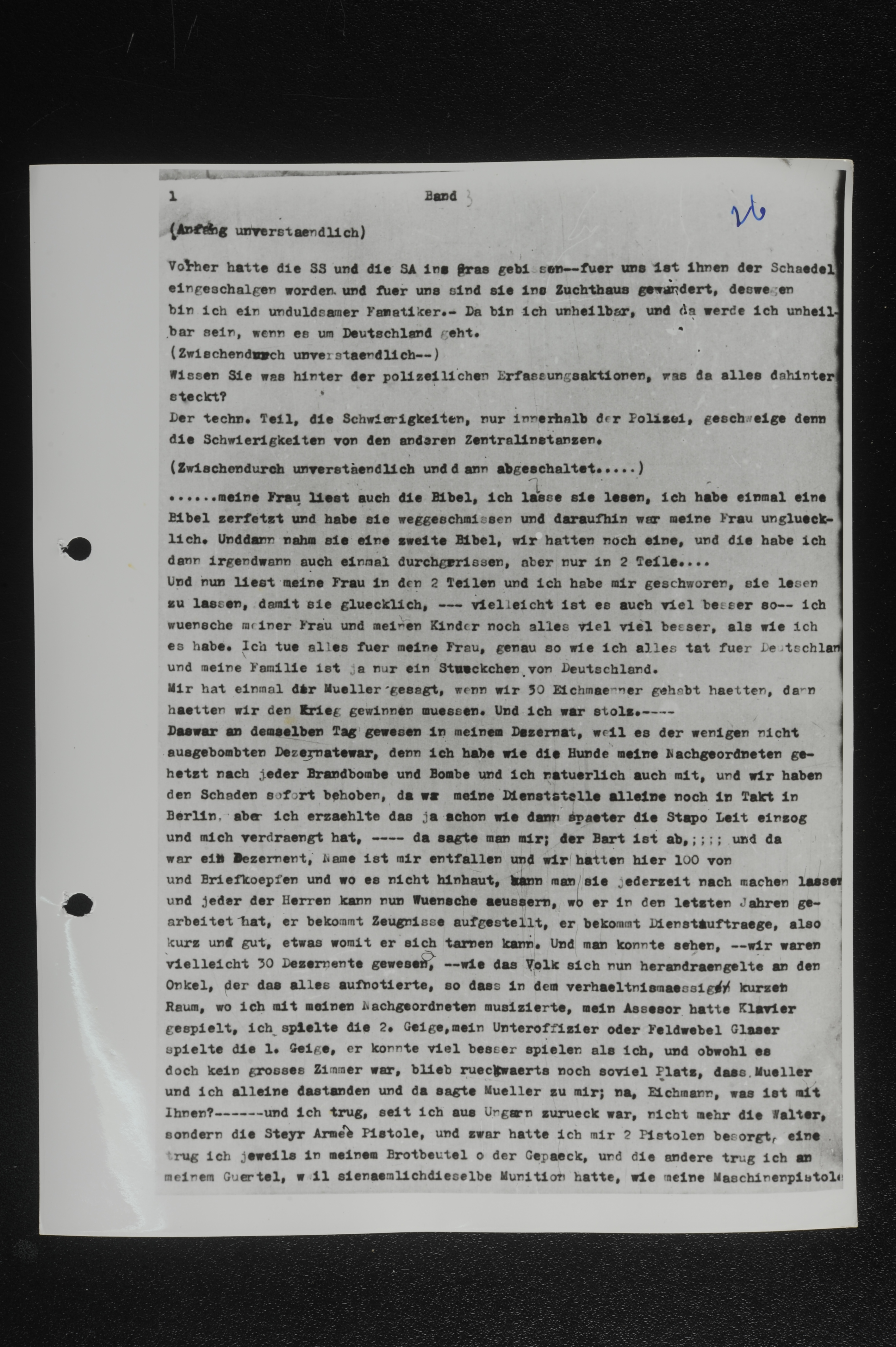
Page 286 of the typescript, O.65 file 86.
Page 286 · Yad Vashem Archives, O.65/86

German transcription

Und zwar waren sie ohne Verzug durchzuführen, währendem der Reichspret. von Neurath, von dem mir gegebenen Befehle hätte ich erst durchführen können nach vorher gehender Genehmigung durch meinen Vorgesetzten. F: Was ist der entscheide Grund gewesen, warum Heydrich aus dem Polizeiapparat heraus gezogen werden ist und zum stellvertr. Prot. von B u M… Das hat mir Heydrich persönlich 2 mal gesagt. 1. als ich zu ihm befohlen wurde im Beisein von seinem Staatsekr Ka… und das 2. Mal als ich aus irgendeinem Grund befohlen wurde nach Prag zu kommen und zum Mittagessen eingeladen wurde und zu dem Mittagessen außer seinem Adjutanten nur noch der Befehlshaber der SIPO und SD für Frankreich, Ogrf Thomas und meine Wenigkeit. Heydrich hat diese Stelle sicher bekommen weil er hier für seine Person intriggierte und über den Reichsführer, der dann die Sache beim Führer raus geschlagen hat. – Heydrich war glücklich wie ein Kind, denn er sagte mir: Es ist doch großartig endlich nach diesen, nach diesem nagtiven Herumwühlen, eine positive Aufgabe gestellt zu bekommen. Das sagte er mir nachdem er seine Pressebesprechungen abgehalten hatte und das sagte er ein zweites Mal als Thomas in Prag war und wir beide seine Gäste waren. Loblied auf diesen Vorgesetzten… 1940 erfolgte die Bestallung Heydrichs zum stellvertr. Reichspret. … In der obersten Führung wird man sich bestimmt schon Gedanken über Rußland gemacht haben, man wird auch bestimmt gewußt haben, daß die Czechen auch Slawen sind man wird sich auch bestimmt Gedanken gemacht haben daß der gute alte Neurath zweifellos ein guter Diplomat ist, aber in Zeiten mit großer Härte nicht in der Lage sein wird sich rechtlos durchzusetzen. Und man wird so argumentiert haben, wenn jetzt der große Ordok(?) dem Träger des Slawentums anläuft, dann werden die and. Volker die die Parauas predigten und sich als Anhänger dieser großen Mutter Slawia betrachteten unter Umständen aufsässig werden können, ein starke Hand in diesem Pret. Bereich in diesem slawischen Bereich, wird solche Überlegungen von vornherein schon zum scheitern bringen. Wenn also der Chef der SIPO und SD zu diesem gewaltigen Amtsträger für diesen Raum bestallt wird, dann wird sämtlicher Mut, der etwa aufkommen sollte bei diesem slawischen Teil von vorneherein erstickt werden und wir werden von vorneherein die Ruhe behalten, die wir gar nicht erst mit der Waffe in der Hand durch zu setzen brauchten, wenn ein Typ Neuraths bliebe. Das ist sicherlich der entscheiden Grund gewesen und aus diesem Grund erwirkte auch sicherlich Heydrich die Sache beim RF, machte ihm die Sache schmackhaft, sie dem Führer so vorzutragen und konnte auf diese Art und Weise seiner kleinen Eitelkeit gleichzeitig frönen. Hat er seine Zeit praktisch zwischen Berlin und Prag geteilt?? Ja, im Anfang war er mehr in Prag und die Akten die ihm zur Unterschriftsleistung vorgelegt werden mußten, die erhielten manchmal eine kleine Verzögerung, weil durch Kuriere diese Sachen stets nach Prag befördert werden mußten und dann wieder nach Berlin zurück kamen und dann ausgeteilt wurden, Er amtierte auch wieder tagelang in Berlin und da mußten umgekehrt die Reichspret. Sachen nach Berlin nachgetragen werden. F: Hat die eine Aufgabe nicht unter der anderen gelitten??? Nein, im Gegenteil, was er sich als Reichspret. wünschte und was er sich normal nicht hat genehmigen können, konnte er sich als Chef der SIPO und SD

Draft translation

3 Volume 32 [HW: 296] And indeed they were to be carried out without delay, whereas the Reich Prot[ectorate?] [/of] von Neurath, the orders given to me I could only have carried out after prior approval by my superior. [HW: F] What was the decisive reason why Heydrich was pulled out of the police apparatus and [made] deputy Prot[ector] of B[ohemia] and M[oravia]...... Heydrich told me this personally 2 times. 1st when I was summoned to him in the presence of his State Secretary Ka........ and the 2nd time when I, for some reason, was ordered to come to Prague and was invited to lunch, and at the lunch, besides his adjutant, there was only the Commander of the SIPO and SD for France, Ogrf[Obergruppenführer?] Thomas and my humble self. Heydrich certainly got this post because he intrigued here for his own person and through the Reichsführer, who then got the matter approved with the Führer. - Heydrich was happy as a child, for he said to me: [HW: (14)] It is truly magnificent, finally, after these [DEL: negative tasks], after this negat[?ive?] rummaging around, to be given a positive task. He said that to me after he had held his press briefings, and he said it a second time when Thomas was in Prague and we were both his guests. Song of praise for this superior......... In 1940 Heydrich's appointment as deputy Reich Prot[ector] took place.... In the supreme leadership one will certainly have already given thought to Russia, one will certainly also have known that the Czechs are also Slavs, one will certainly also have given thought that good old Neurath is doubtless a good diplomat, but in times of great harshness will not be in the position to prevail without regard for law [/prevail in a lawless [situation]]. And one will have argued thus: if now the great [?Ordek(?)?] runs up against the bearer of Slavdom, then the other peoples who preached the [?Parauas?] and regarded themselves as adherents of this great Mother Slavia could under certain circumstances become recalcitrant, a strong hand in this Prot[ectorate] area, in this Slavic area, will bring such considerations to failure from the outset. So if the Chief of the SIPO and SD is appointed to this mighty office-holder [post] for this space, then all courage that might arise in this Slavic part will be smothered from the outset, and we will from the outset keep the peace, which we would not first need to enforce with weapon in hand, if a Neurath type were to remain. That was certainly the decisive reason, and for this reason Heydrich also certainly [DEL: e[illegible]rte] [?brought about?] the matter with the RF[Reichsführer], made the matter palatable to him, to present it to the Führer thus, and could in this way at the same time indulge his little vanity. Did he practically divide his time between Berlin and Prague?? Yes, at the beginning he was more in Prague, and the files that had to be submitted to him for signature, those sometimes received a small delay, because these things always had to be conveyed to Prague by couriers and then came back again to Berlin and then were distributed. He also officiated again for days in Berlin, and then, conversely, the Reich Prot[ectorate] matters had to be forwarded to Berlin.- [HW: F] Did the one task not suffer under the other??? No, on the contrary, what he wished for as Reich Prot[ector] and what he [nermal=normally?] could not have approved for himself, he could [approve] as Chief of the SIPO and SD

approve it for himself.

Questioner

Did he soon outmanoeuvre Neurath, or push him aside?

Eichmann

Yes, he had no say at all any more, and then withdrew. When Heydrich was murdered, the chief of the Order Police, Daluege, took over.

Questioner

During Neurath's time, did you have any difficulties with the measures against the Jews?

Eichmann

No.

In Prague I was directly subordinate to the commander of the Security Police and the Security Service. The Reich Protector was only an authority with a right of objection. The commander was initially Stahlecker, then later Dr. …. When Weinmann took over the post in Prague, at about that time I was ordered from Prague to Berlin. No, much earlier: I was transferred to Berlin in the autumn of 1940. I handed the Central Office in Vienna over to Brunner, and the Central Office in Prague was run by Hauptsturmführer Günther.

Questioner

And those were the only two central offices for Jewish emigration?

Eichmann

No. Later, just when I was starting in Berlin, I had set up a Jewish central office for Jewish emigration and had just finished its framework, when… the thing never worked properly in Berlin at all. The number of Jews emigrating through that office never exceeded one thousand, I believe. It did not work there, in bureaucratic terms either; the central authorities refused for a long time. Soon, in 1941, there was not much left to be done about emigration. Countries had closed themselves off to such an extent that even the most cunning Jewish underhand work abroad could no longer find places for Jews, because the receiving countries had closed their doors. We could not place any more Jews. This went almost hand in hand with the explicit order that Jewish emigration was now forbidden. That was around June 1941.

Unknown speaker

So this ban on leaving came about after the attack on Russia.

Eichmann

The whole international conduct of the Jews must also have contributed to the Reichsführer-SS's declaration that no more Jews were to be let out. The Reichsführer-SS must have given this order in agreement with Hitler, because he could not simply bypass Göring's order, which had directed accelerated emigration.

Questioner

Who gave the directive in the deportations as to which camps the Jews were to be taken to?

Eichmann

The chief of the Economic and Administrative Main Office. Sometimes the Reichsführer-SS too, but then he had already discussed it with Pohl. Those were further instances of the Reichsführer-SS issuing orders he really should not have been allowed to issue. He would have done well never to designate a concentration camp on his own initiative, which he did quite often.

Instead he would have done well to follow normal practice: to instruct Office IV through the Chief of the Security Police and the Security Service, as generally happened, to have the responsible desk officer obtain these instructions from the Economic and Administrative Main Office. That was not always Pohl in person, only in particularly large matters such as Hungary. Otherwise it was the inspector of the concentration camps, SS Brigadeführer Glücks, and in smaller matters it was Glücks's case officer, an Obersturmbannführer Liebehenschel. When questions had to be discussed with Glücks, I had to go myself.

Open page image and German
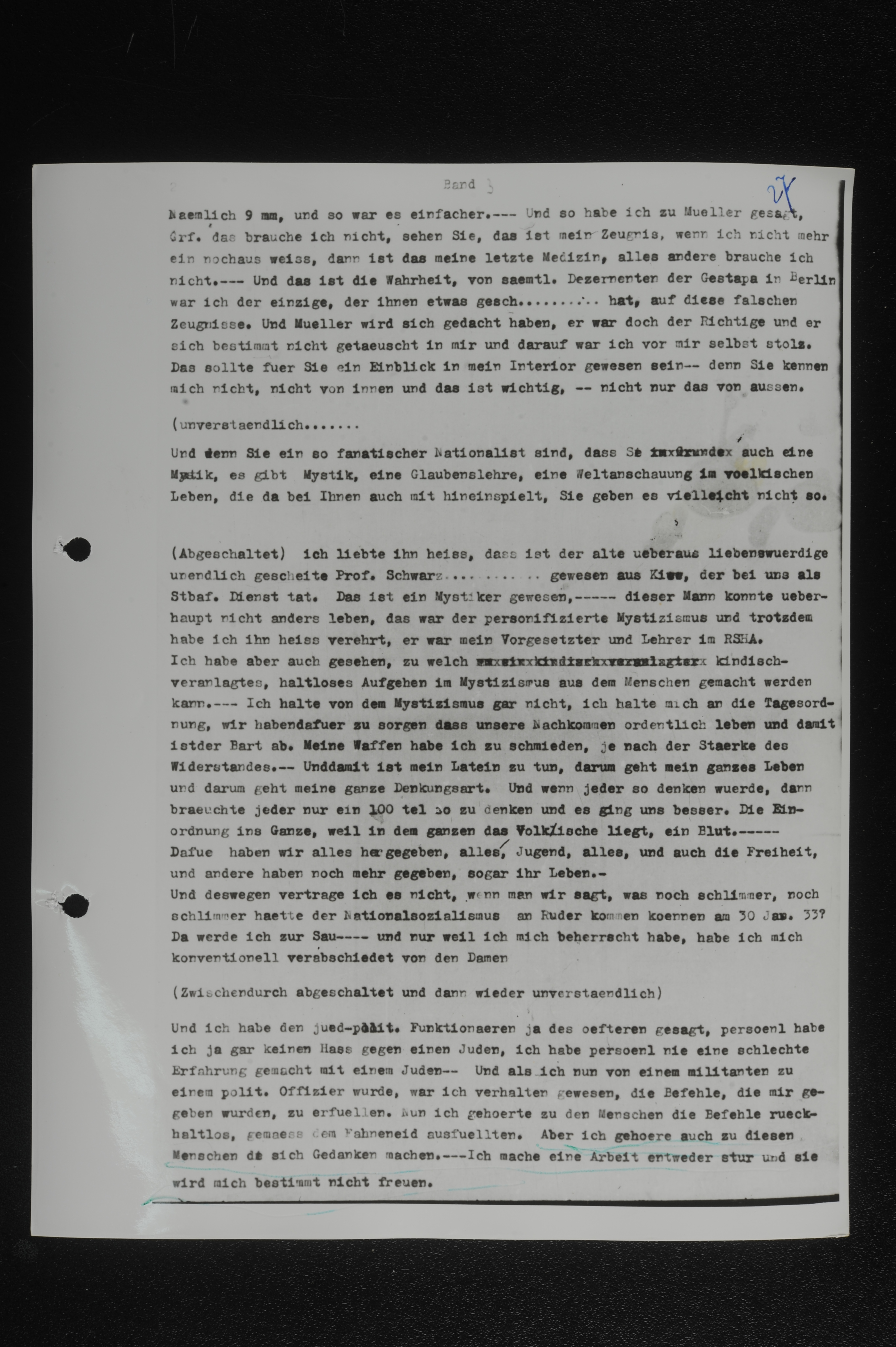
Page 287 of the typescript, O.65 file 86.
Page 287 · Yad Vashem Archives, O.65/86

German transcription

… selbst genehmigen. Hat er bald Neurath überspielt, bzw. an die Wand gedrückt? Ja, der hatte überhaupt nichts mehr zu sagen, er zog sich dann zurück. Als Heydrich ermordet wurde, kam der Chef der Ord. Pol. Daluege, ran… Hatten Sie unter der Zeit von Neurath irgendwelche Schwierigkeiten mit den Judenmaßnahmen? Nein, In Prag war meine unmittelbare Abhängigkeit vom Befehlshaber der SIPO und SD. der Reichspret war nur eine Einspruchsbehörde gewesen Der Befehlshaber war zu Anfang Stahllecker, dann später Dr. Weinmann. Als Weimann in Prag die Stelle übernommen hatte, so etwa um diese Zeit, da wurde ich von Prag nach Berlin befohlen… nein, viel früher, im Herbst 1940 wurde ich nach Berlin versetzt. Die Zentralstelle in Wien übergab ich Brunner und die Zentralstelle in Prag führte der Hstf. Günter. Und das sind die beiden einzigen Zentralstellen für jud Ausw. gewesen? Nein, es wurde dann später, als ich gerade in Berlin anfing, hatte ich eine jud Zentralstellen für jud Ausw aufgezogen und war gerade mit dem Rahmengerippe fertig gewesen, da… die Sache funktionierte in Berlin überhaupt nie richtig, die Zahl der ausw. Juden hat über diese Stelle [unleserlich] die 1000 überschritten glaube ich nie… dort ging das nicht, auch in bürokratischer Hinsicht, die Zentralinstanzen weigerten sich lange Zeit… und alsbald 1941 da war ja mit der Ausw. nicht mehr viel zu machen denn die Länder verschlossen sich ja in einem solchen Maße daß selbst die raffinierteste jud Dunkelarbeit im Ausland keine Juden mehr anbringen konnten, weil die Aufnahmeländer sich verschlossen, wir brachten keine Juden mehr an, es ging dann auch beinah Hand in Hand mit dem ausdrückl. Befehl daß die Judenauswanderung nun verboten seien, es war um die Zeit Juni 1941. Dieses Ausreise verbot ist also nach dem Angriff auf Rußland entstanden. Es muß auch das ganze international Benehmen der Juden damit beigetragen haben, daß der RF erklärt hat, nunmehr keinen Juden mehr raus zu lassen. Der RF muß diesen Befehl im Einverständnis mit Hitler gemacht haben, denn er konnte nicht so ohne weiteres den Befehl von Göring umgehen, der ja die forcierte Auswanderung angeordnet hatte. Wer gab die Weisung bei den Deportierungen in welche Lager die Juden abzutransportieren seien? Der Chef der VWHA – manchmal auch der RF, aber dann hatte er sich mit Pohl schon besprochen gehabt. Das waren wieder solche Fälle wo der RF Befehle erteilte, die er eigentlich nicht hätte erteilen dürfen. Er hätte gut daran getan nie von sich aus etwa ein KZ anzugeben, das hat er des öfteren getan. sondern er hätte gut daran getan es mit der normalen Praxis zu machen, indem er eben das Amt IV beauftragte über den Chef der SIPO und SD, wie es ja auch in der Regel geschah, daß sich der zuständ. Dezernent sich diese Weisungen vom VW HA holt, das war nicht immer Pohl in Person, das war er nur bei besonders größeren Sachen wie ZB Ungarn, sonst war es der Insp. der Kz gewesen, der SS Brigadeführer Glücks und bei kleinen Sachen war es dann der Sachbearbeiter von Glücks gewesen, ein Obstf. Liebehenschel. Nun wenn es sich um Fragen handelt die mit Glücks besprochen werden mußten, dann mußte ich ran gehen.

Draft translation

6 Band 32 287 ..... approve [it] oneself/himself. Did he soon outplay Neurath, or [rather] push [him] against the wall? Yes, that one had nothing more at all to say, he then withdrew. When Heydrich was murdered, the Chief of the Ord[nungs]. Pol[izei]. [HW: Daluege] [DEL: [?Bock?]] came up---- Did you during the time of Neurath have any difficulties with the Jewish measures? No, In Prague my immediate subordination was to the Commander of the SIPO and SD. the Reich Protector had only been an appeals authority The Commander was at the beginning Stahllecker, then later Dr. [DEL: [?Weimann?]] [HW: Weinmann?]. When Weimann had taken over the post in Prague, roughly around this time, then I was ordered from Prague to Berlin...... no, much earlier, in the autumn 1940 I was transferred to Berlin.- The Central Office in Vienna I handed over to Brunner and the Central Office in Prague was led by Hstf. Guenter.-- And those were the two only Central Offices for Jew[ish] emig[ration]? No, it was then later, when I was just beginning in Berlin, I had set up a Jew[ish] Central Office for Jew[ish] emig[ration] and had just [gotten] the framework-skeleton finished, when........ the thing never functioned properly at all in Berlin, the number of the emig[rated] Jews has [HW: over/via this office [illegible]] [DEL: [?one?]] the 1000 [DEL: exceeded].... there it did not work, also in bureaucratic respect, the central instances refused for a long time [DEL: against it]...... and soon 1941 there was indeed with the emig[ration] no longer much to be done for the countries closed themselves off indeed to such a degree that even the most refined Jew[ish] dark-work abroad could no longer place any Jews, because the receiving countries closed themselves off, we could no longer place any Jews, it then also went almost hand in hand with the explicit order that the Jewish emigration was now to be forbidden, it was around the time June 1941. This departure-prohibition thus came into being after the attack on Russia. The whole international conduct of the Jews must also have contributed to it, that the RF [Reichsführer] declared, henceforth to let no Jew out any more. The RF must have made this order in agreement with Hitler, for he could not so simply circumvent the order of Goering, who indeed had ordered the forced emigration.---- Who gave the directive in the deportations as to which camps the Jews were to be transported off to? The Chief of the VWHA-- sometimes also the RF, but then he had already conferred with Pohl.- Those were again such cases where the RF issued orders that he actually ought not to have been permitted to issue.-- He would have done well [not] as if of his own accord to designate say a KZ [concentration camp], that he has done more often, but rather he would have done well to do it with the normal practice, by [precisely] instructing Amt IV [Office IV] via the Chief of the SIPO and SD, as it also as a rule happened, that the competent desk-officer fetches these directives from the VWHA, that was not always Pohl in person, that was he only in especially larger matters like e.g. Hungary, otherwise it was the Insp[ector] of the KZ, the SS Brigadeführer Gluecks and in small matters it was then the case-worker of Gluecks, an Obstf. Liebehenschel. Now when it concerns questions which had to be discussed with Gluecks, then I had to step up [handle it].

When matters were to be discussed with Liebehenschel, I generally sent my permanent deputy Gunter rather than going myself.

Questioner

Did it not happen that, at such discussions, you recommended sending one group of Jews or another to one extermination camp or another?

Eichmann

No, that was not within our authority. It would have encroached on the authority of the Economic and Administrative Main Office.

Questioner

What considerations guided Pohl and the others in directing these transports?

Eichmann

The Economic and Administrative Main Office's considerations were these. First, whether there was capacity to take them in at all. Second, what the office had before it: which new factories, how many mines had to be operated, what other production important to the war was being moved into the concentration-camp sphere, how many workers were needed, how many women, how many men, how much office staff, and so on.

The individual concentration-camp commands submitted their respective staffing requirements to the Economic and Administrative Main Office, and the transports were allocated accordingly. In accordance with the extermination order that the Reichsführer-SS must undoubtedly have given Pohl personally, Pohl, through Glücks, gave the camp commandants the guidelines under which the camp command had to consign one part to extermination and accommodate the other for work. The camp commandant did not decide that himself; he had his doctors for it.

So, as for the transports I dispatched—after the conference with the Economic and Administrative Main Office, whose outcome was necessary before the timetable could be drawn up—the people were then selected by the commissions of doctors, in the concentration camp after unloading from the wagons, in accordance with the instructions issued to the individual camp commands. From this you can see that the Gestapo office had no influence at all, because we knew nothing about the detailed circumstances and were not interested in them either.

Questioner

How is it, then, that international Jewry attacks you so bitterly?

Eichmann

Yes, I have thought about that. I also have my explanation. I can imagine the following. From very early on I was the only one who negotiated with the Jewish functionaries, even when I still had no x… powers and was working in the Security Service. Then the Gestapo office had me… At that time a desk officer, a Dr. xy, headed the department. Subordinate to him, as one of its lowest-level functionaries, was a criminal district inspector, Kuchmann. Those people had no idea what a Zionist was, and so on. They made things easy for themselves by turning to Office VII, to which I belonged.

It was no longer done in writing but by telephone: would I come over for a discussion, there were some cases that were unclear. I took part, and so, in criminal district inspector Krugmann's office, at the interrogations he had to conduct on the authority of his desk officer, I met Eppstein, the head of the Reich Association for Jews in Germany. I also came into contact with other offices, and I found this very convenient. Not only could I help the Gestapo office through my theoretical knowledge, but personally I had expected a great deal from these discussions, to broaden my knowledge of Jewry in the Reich as well as the

Open page image and German
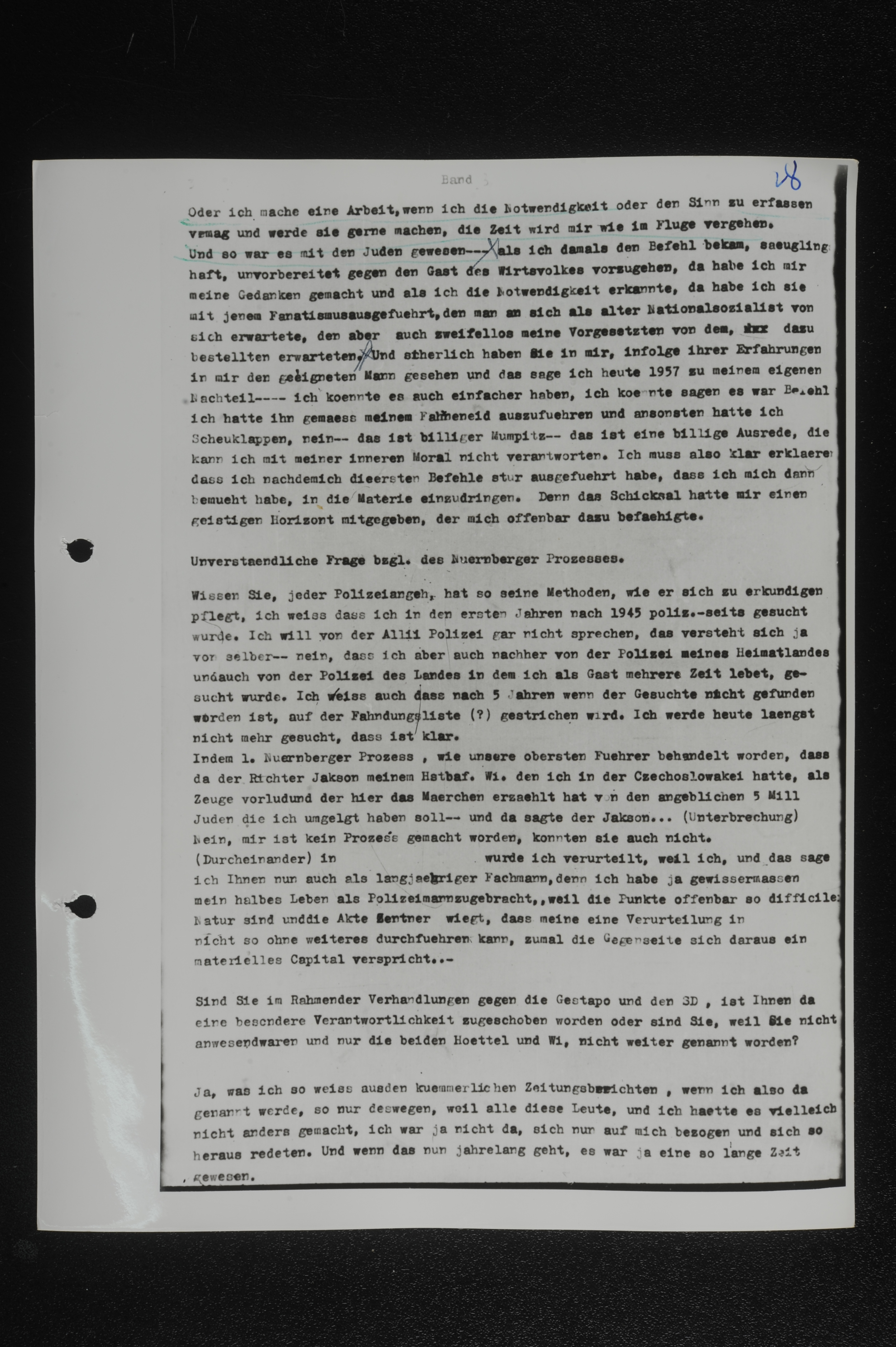
Page 288 of the typescript, O.65 file 86.
Page 288 · Yad Vashem Archives, O.65/86

German transcription

Wenn es Sachen waren die mit Liebehenschel besprochen werden sollten, dann hatte ich in der Regel auch meinen ständigen Vertreter Gunter geschickt und bin nicht selbst hingegangen. Kam es nicht vor, daß Sie bei solchen Besprechungen empfohlen haben diese od jene Gruppe von Juden in dieses od jenes Vernichtungslager zu schicken? Nein, – das stand uns nicht zu, das war ein Eingriff in die Kompetenz des VWHA Nach welchen Gesichtspunkten leiteten Pohl und die anderen diese Transp.? Die Überlegungen des VWHA gingen dahin a) Aufnahmemöglichkeiten überhaupt. b) Was lag im VWHA vor, welche neue Fabriken lagen vor, wieviel Bergwerke mußten betrieben werden, welche sonstige Herstellungen kriegswichtiger Natur wurd in den Bereich der KZ verlegt, welche Arbeitszahl benötigte man, wieviel weibl wieviel männl, wieviel Buropersonal etc… Der einzele Personalbedarf wurde von den einzelen Kommandanturen der KZ bei dem VWHA beantragt. Und danach wurden die Transp. eingeteilt. – Gemäß dem Vernichtungsbefehl dem der RF dem Pohl zweifellos persönlich gegeben haben muß, den hat nun Pohl über Glücks, dem Kommandanten der KZ jene Richtlinien gegeben nachdem nun die Kommandantur einen Teil der Vernichtung zuzuführen hatte und den and Teil arbeitsmäßig unter zu bringen hatte. Der Kommandant des KZ da hat aber die Sache nicht selbst entschieden, sondern der hatte seine Ärzte dazu und so wurden die Tranp. die ich abfuhr, die wurden nach der Besprechung mit dem VWHA auf Grund dessen Ergenis erst der Fahrplan erstellt werden konnte, wurde dann von den Kommissionen der Ärzte die Leute ausgesucht, im KL. nach Auswaggonierung gemäß den Weisungen die an die einzelen Kommandanturen ergangen waren. Daraus ersehen Sie, daß das Gestapo Amt überhaupt gar keinen Einfluß hatte da wir ja über die näheren Umstände gar keinen Bescheid wußten und es uns auch nicht interessierte. Wie kommt es nun daß Sie vom international. Judentum so angefeindet werden??? Ja, ich habe mir meine Gedanken darüber gemacht… ich habe auch meine Erklärung dafür… ich kann mir folgendes vorstellen… Ich war ja schon früh früh beginnend der einzige der mit den jud Funkt. verhandelte, selbst zu einer Zeit als ich noch keine x… Vollmachten hatte und ich im SD tätig war, da hat mich das Gestapo Amt… damals stand [unleserlich] referent ein Dr xy vor, dem auch als einer der letzten Organ eines Kriminalbezirksinsp. Kuchmann unterstand, die Leute hatten kein Ahnung was ein Zionist war, suw… und hatten nun von dem Amt Vll dem ich angehörte, es sich bequem gemacht, es wurde nicht mehr schriftlich gemacht sondern telefonisch, ich möchte doch mal eben rüber kommen, zu einer Besprechung es wären hier Fälle die unklar wären und da nahm ich teil und so kam ich in das Dienstzimmer des Kriminalbezirksinsp. Krugmann, zu den Vernehmungen, die er durchführen mußte auf Grund seines Referenten mit Eppstein, dem Leiter der Reichsvereinigung für Juden in Deutschl. zusammen Ich kam noch mit and Stellen zusammen und ich fand diese Sache sehr bequem, nicht nur durch das theoretische Wissen dem Gestapo Amt dienen konnte, so hatte ich mir persönl aus diesen Bespr. sehr viel erwartet, um meine Kenntnisse über das Reichsjudentum als auch das

Draft translation

7 Volume 32 [HW: 288] If it was matters that were to be discussed with Liebehenschel, then as a rule I had also sent my permanent deputy Gunter and did not go myself. Did it not happen that at such discussions you recommended sending this or that group of Jews to this or that extermination camp? No, --that was not up to us, that was an intrusion into the competence of the VWHA [HW: (15)] According to what considerations did Pohl and the others direct these transp.? The considerations of the VWHA went as follows a) reception possibilities at all. b) What was on hand at the VWHA, which new factories were on hand, how many mines had to be operated, which other manufacture of war-important nature was transferred into the sphere of the KZ, what labor number did one need, how many female how many male, how many European personnel etc..... The individual personnel need was requested from the VWHA by the individual commandant offices of the KZ. And after that the transp. were allocated. -- In accordance with the extermination order which the RF must without doubt have personally given to Pohl, Pohl then gave via Gluecks, the commandant of the KZ those guidelines according to which now the commandant office had to consign one part to the extermination and had to accommodate the other part labor-wise. But the commandant of the KZ, he did not decide the matter himself, but rather he had his physicians for that and so the transp. which I dispatched, they were, after the discussion with the VWHA on the basis of whose result the timetable could first be drawn up, then the people were selected by the commissions of the physicians, [HW: in the KL. [illegible]] [DEL: as] in accordance with the instructions which had gone out to the individual commandant offices .---- From this you see that the Gestapo Office had no influence at all since we indeed knew no information about the closer circumstances and it also did not interest us. How does it now come about that you are so opposed/attacked by international Jewry??? Yes, I have thought about it.... I also have my explanation for it.... I can imagine the following.... I was after all already early early beginning the only one who negotiated with the Jewish funct., even at a time when I still had no x...... authorizations and I was active in the SD, then the Gestapo Office had me..... at that time [DEL: as my] [HW: [illegible]] referent a Dr xy was in charge of, to whom [HW: (16)] also as [DEL: last] [HW: [?under the last?]] organ a criminal-district-inspector [DEL: Krugmann] [HW: Kuchmann] was subordinate, the people had [DEL: no] [HW: no] idea what a Zionist was, zuw [HW: (17)].. and had now from the Office VII to which I belonged, made it comfortable for themselves, it was no longer done in writing but by telephone, would I just come over, for a discussion, there were cases here which were unclear and there I took part and so I came into the office room of the criminal-district-inspector Krugmann, to the interrogations which he had to conduct on the basis of his referent-duty together with Eppstein, the head of the Reich Association for Jews in Germany I also came together with other offices and I found this matter very comfortable, not only through the theoretical knowledge could serve the Gestapo Office, so I had personally expected very much from these discussions, in order to [expand] my knowledge about Reich Jewry as well as the

international Jewry. Then I began telling Grugmann: ‘I would like to speak to Rabbi xy on xy; please summon him.’ So one hand washed the other. I helped the Gestapo office, and the Gestapo office helped me. Over the years I rose in rank and in my position within the service, and time and again I had the so-called dealings with the public that came with executive work. There were thousands of negotiations in all sorts of countries: Germany, Hungary, Austria, Holland, France, Belgium… That was how, during my work in [?], the Paris Daily (Pariser Tageblatt) began writing about me…

[Typed as notes in the transcript: Already written.]

That was the first article, and at the same time the signal for the press, which, let us say, was ninety percent Jewish-financed at the time. Articles of that kind increased and accumulated to such an extent that the editor of The Stormer (Der Stürmer)…

[Typed as notes in the transcript: Already written.]

From this collection of notices I gathered that international Jewry was increasingly occupying itself with me. People were amused by it, because I was credited with things for which I was not responsible at all, so that I almost felt obliged to apologize to my superiors lest they think I had overstepped my bounds. When a man in a country throws himself into a matter like that, a speciality such as emigration was—and I was recognized as the specialist by the Jewish experts too—people attributed to me everything they could attribute to me. When Dr. Rockenberg and Dr. Loewenherz described their misery to me, saying that scarcely had they assembled all the documents when new regulations appeared, so that the Jew could not emigrate and ended up in the concentration camp after all, they asked whether something could be done.

Then I conceived the plan of bringing offices outside the police under my direction—that is, under the direction of the Security Police and the Security Service—and doing everything through a single procedure in a few hours. It succeeded. It was such a proceeding that Heydrich said I was now a little prime minister as his subordinate. There was a kernel of truth in that, because I now had authority to issue instructions to a man seconded from the Reichsbank for foreign-exchange matters. I could, so to speak, determine the dollar conversion rate. There are other examples of that kind.

That did not escape the Jews either. There were many administrative lawyers among them who found this assumption of a dignity by my insignificant person so inconceivable. At one stroke I became the well-known Eichmann, right up to the Reichsführer-SS and the other ministries. Some hated me; some … me. All this gave me an enormous boost, and I threw myself into my work with all my energy. The Jews knew that too, and even more ruthless personnel were often placed under me. All this gave me that reputation and that name.

I was here and everywhere; nobody knew when I would appear. My subordinates respected me in a way that led the Jews to place me on a throne, so to speak. On top of everything came Wi's statement about the five million. So there was no longer any doubt about my person and my activities. But I was only an ordinary member of an office, admittedly in

Open page image and German
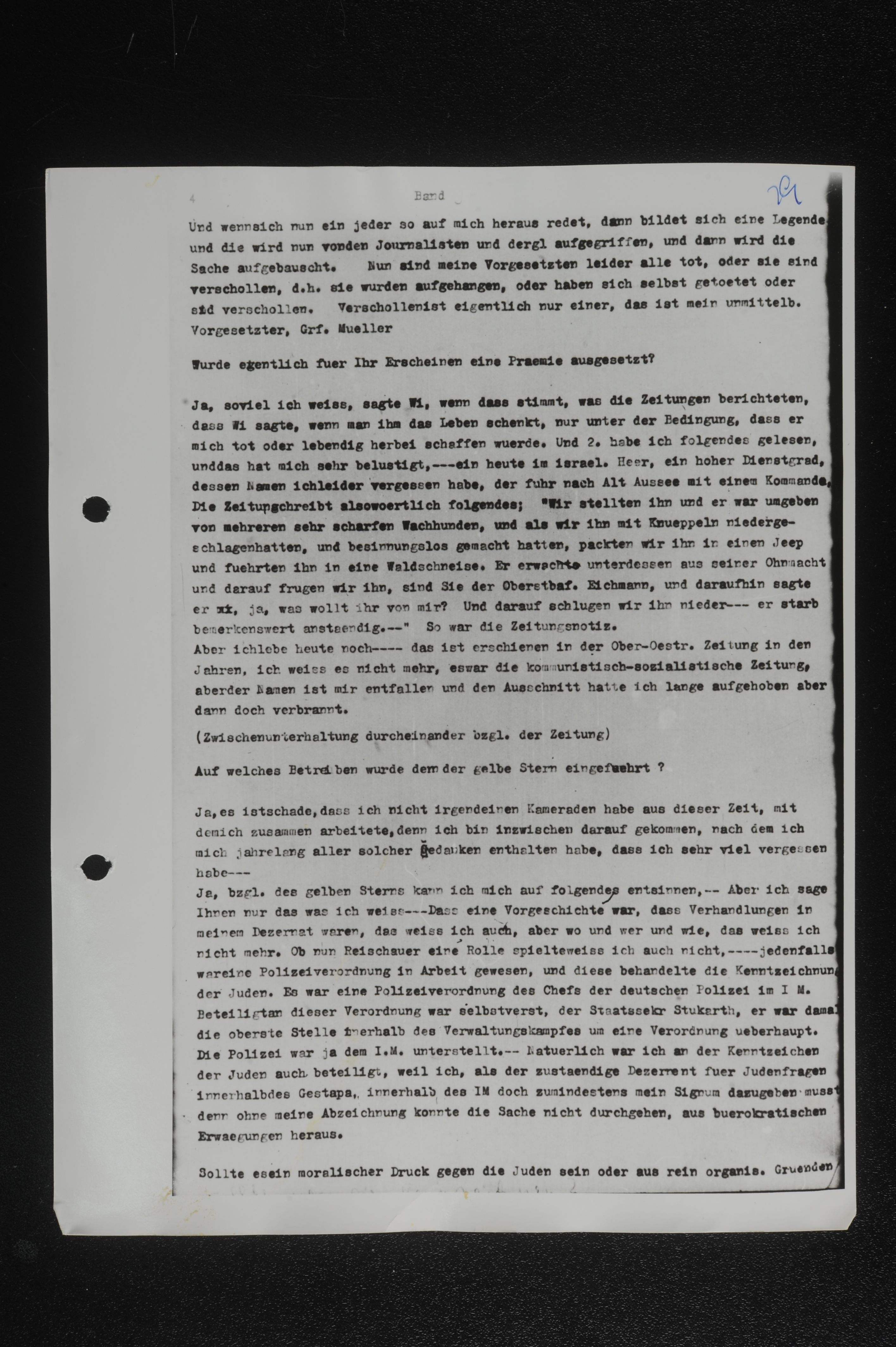
Page 289 of the typescript, O.65 file 86.
Page 289 · Yad Vashem Archives, O.65/86

German transcription

internationale Judentum und fing dann an dem Krugmann zu sagen ich möchte den Rabbiner xy am xy sprechen. laden Sie ihm bitte vor… Und so wusch eine Hand die Hand, ich half dem Gestapo Amt und das Gestapo Amt half mir. Im Laufe der Jahre nun wuchs ich dienstgradmäßig und dienststellenmäßig und immer wieder hatte ich den sogen. Parteiverkehr wie es in Ex war, und es sind 1000 von Verhandlungen gewesen in allen möglichen Ländern, es war in Deutschland, Ungarn, Östr. Holland Frankreich, Belgien, … und so kam es daß bei meiner Tätigkeit in Wien sich das Pariser Tageblatt über mich erging… schon geschrieben… das war der 1. Artikel und gleichzeitig das Signal für die Presse, die ja sagen wir mal durch 90 % damals jud finanziert wurde, diese Art Artikel nahmen dann so zu und häuften sich, das der Schriftleiter des Stürmers… schon geschrieben… und aus dieser Sammlung der Notizen entnahm ich also, daß das internationale Judentum sich zusehends mit mir beschäftigt, man belustigte sich darüber… denn man unterstellte mir sT Dinge für die ich gar nicht zuständig war, sodaß ich mich fast verpflichtet fühlte mich bei meinen Vorgesetzten zu entschuldigen damit ja nicht der Eindruck entstehe, daß ich über meine Grenze gegangen hätte Wenn also nun in einem Land sich ein Mann in eine Sache so hineinkniet, so eine Spezialsache, wie es die Auswanderung war und wie ich auch von den jud. Experten als der Fachmann anerkannt wurde… so hat man mir eben alles unterstellt was man mir unterstellen konnte. – Als mir Dr. Rockenberg und Dr. Löwenherz den Jammer schilderten, kaum hätten sie alle Dokumente, kämen wieder neue Bestimmungen und so könnte der jude nicht auswandern und landete dann doch im Kz ob man da nicht Abhilfe schaffen könnte und da habe ich den Plan gefaßt unter meiner Leitung d.h. unter der Leitung der S+PO und SD, hier auch polizei ferne Stellen zu vereinnahmen und in einem Weg alles in wenigen Stunden zu erledigen, das ist nun auch gelungen, es war ein solcher Vorgang, daß Heydrich sagte daß ich nun als sein Untergebener ein kleiner Ministerpräsident wäre und tatsächlich lag da auch ein Kern Wahrheit, denn ich hatte nun mehr Weisungsbefugnis über einen Mann der von der Reichsbank abgestellt war wegen Devisengeschichten, ich konnte sagen die Dollarkursumrechnung bestimmen," und so gibt es noch mehr Beispiele dieser Art… Das blieb den Juden auch nicht verborgen, denn unter ihnen gab es sehr viele Verwaltungsjuristen, die dieses Nehmen einer Würde durch meine kleine Person so unfaßbar fanden und so wurde ich mit einem Schlag der bekannte Eichmann bis zum RF herauf und die and Ministerien, teils haßten sie mich, teils [unleserlich] sie mich. Ich habe nun durch dies alles einen ungeheuren Aufschwung bekommen und verbisste mich mit aller Energie in meine Arbeit fest, das wußten auch die Juden" und mir wurden oft noch rücksichtslose Kräfte unterstellt… Aus diesem allem heraus bekam ich diesen Ruf und Namen… Ich war hier und überall, man wußte nie wann ich auftauchte, meine mir Unterstellten hatten Respekt vor mir in einer Form, daß den Juden veranlaßte mich quasi auf einen Thron zu setzen, und zu allem dann kam noch der Ausspruch von Wi mit den 5 Mill, da herrschte also kein Zweifel mehr über meine Person und meine Tätigkeit – aber ich war nur ein einfacher Dienststellenangeh, freilich in

Draft translation

8 Band 32 [HW: 289] international Jewry and then began to say to [the] Grugmann I would like to speak to Rabbi xy at xy. please summon him.. And so one hand washed the [other] hand, I helped the Gestapo office and the Gestapo office helped me. In the course of the years now I grew in rank and in office [position]-wise and again and again I had the blessing. Party dealings/traffic as it was in Ex, and there have been 1000s of negotiations in all possible countries, it was in Germany, Hungary, Austria, Holland, France, Belgium, ........ and so it came about that in [connection with] my activity in [V]ienna the Pariser Tageblatt dwelt on me......... already written....... that was the 1st article and at the same time the signal for the press, which — let us say — back then was 90% Jew[ish]-financed, these kinds of articles then increased so and piled up, that the editor of the Stürmer........ .. already written............ and from this collection of the notes I gathered therefore, that international Jewry was increasingly occupying itself with me, one amused oneself over it..... for one attributed to me things for which I was not at all competent/responsible, so that I almost felt obliged to apologize to my superiors so that indeed the impression should not arise, that I had gone beyond my boundary If therefore now in a country a man buries himself so into a matter, such a special matter, as the emigration was and as I was also acknowledged by the Jew[ish] experts as the specialist.... so one attributed to me just everything that one could attribute to me.---- When Dr. Rockenberg and Dr. Leewenherz described to me the misery, hardly would they have all the documents, [when] new regulations would come again and so the Jew could not emigrate and then ended up in the Ka[mp?] after all whether one could not there provide a remedy and then I formed the plan under my direction i.e. under the direction of the S+PO [Sipo] and SD, here also to co-opt/take in police-remote offices and in one way to handle everything in a few hours, that has now also succeeded, it was such a proceeding, that Heydrich said that I now as his subordinate was a little Prime Minister and in fact there lay also a kernel of truth there, for I now had more directive authority over a man who had been assigned from the Reichsbank because of foreign-exchange affairs, I could say [i.e.] determine the dollar-rate conversion," and so there are still more examples of this kind............. That also did not remain hidden to the Jews, for among them there were very many administrative jurists, who found this taking of a dignity/rank by my small person so inconceivable and so I became with one stroke the well-known Eichmann up to the RF [Reichsführer] and the oth[er] ministries, partly they hated me, partly [DEL: loved] [HW: [illegible]] they me. I have now through all this obtained a tremendous rise/upswing and [?bit myself?] with all energy fast into my work, that the Jews also knew" and to me often even ruthless forces were subordinated.......... Out of all this I got this reputation and name.... I was here and everywhere, one never knew when I would surface, my subordinates had respect for me in a form, that caused the Jews to set me quasi upon a throne, and to all [this] then came still the utterance of Wi[sliceny?] with the 5 Mill[ion], so there prevailed no doubt any more about my person and my activity--- but I was only a simple office-affiliate/member, admittedly in

the senior service, as it was called, because from desk officer upward they have entered the higher career track, so they can in practice rise as far as minister.

Open page image and German
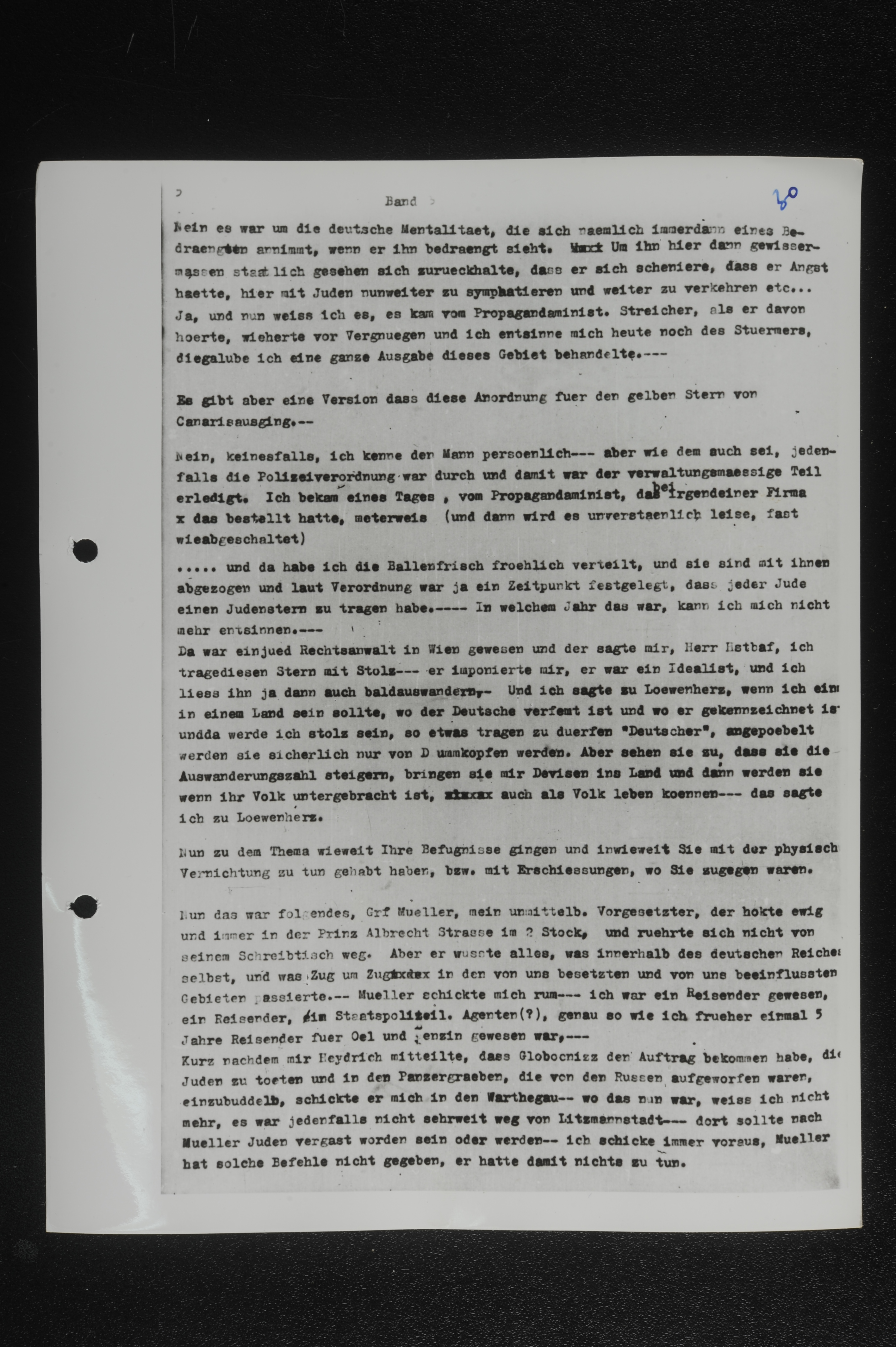
Page 290 of the typescript, O.65 file 86.
Page 290 · Yad Vashem Archives, O.65/86

German transcription

höheren Diensten wie sich da nannte, denn vom Referenten aufwärts haben sie die höh. Laufbahn eingeschlagen, so können es praktisch bis zum Minister bringen…

Draft translation

ig 9 Volume 32 290 higher services as it was called there, for from the [?r?]eferent [officer/desk-officer] upwards they have taken the higher career path, so they can practically bring it up to minister.....

Questioner

Today we come to Romania. As you know, most of the measures against the Jews were carried out by the Romanian government itself. The German offices were really involved only at the margins—for example, Ohlendorf's operational detachment (Einsatzkommando) in the Bu… and in Bessarabia. So I would like to move straight to 1941, when German offices really became active in Romania for the first time. Perhaps you remember that the police attaché there, Richter, reported to the Reich Security Main Office that Antonesko planned to deport 1[?]0,000 Jews across the Buk?

That is my Hauptsturmführer Richter, whom I assigned as adviser on Jewish affairs to the German legation in Bucharest. The envoy was Killinger. At the moment I do not recall his reporting that to me, but Richter was a very conscientious gentleman and, if that was the case, he will undoubtedly have reported it to me. But I do not see why that question is particularly interesting for me. If Antonescu wanted to deport the Jews, that could only suit us.

Questioner

No, that could not suit you, because we had no interest in Jews being deported into German-occupied territory. Richter was initially able to prevent those measures himself through his discussions in Bucharest; that was in October 1941. On 13 March 1942 a meeting on the matter took place between Mr. Eichmann, a Mr. Wetzel from the Eastern Ministry and a Mr. Rademacher. It was decided to warn Antonescu to refrain from these measures. Can you remember?

Eichmann

Yes, of course. I would naturally have resisted allowing Jews to be brought into territories already under our control, because my task had been to clear them of Jews. As far as the eastern territories were concerned, it could have been all the same to me: that was what the operational detachments (Einsatzkommandos) were there for, and I had no authority over them. But those territories were naturally taboo for me too, insofar as I could not allow Jews to be transported there from a place over which I had a measure of control. The world was big enough. They did not have to come into the territories we controlled.

Questioner

That also corresponds to what this hostile book says.

Questioner reads from a book

The deportations continued, but a month later Eichmann informed Rademacher that he would take security measures to stop these deportations [? to] the Buk.

Eichmann

Yes, that is entirely in line with my approach. I will not take Jews into a territory that I am glad is free of Jews. Rademacher probably came and asked me for advice about that, because, unlike von …, he was a rather easy-going man who wanted to make his work a little easier for himself. He was glad and grateful to get the rough text for the draft notes from me, which he then only had to put into diplomatic language, and the matter was settled for him.

Questioner reads from a book

The deportations then apparently stop. Rademacher states, however, that Eichmann's security measures consisted of having twenty-eight thousand Jews transported back

Open page image and German
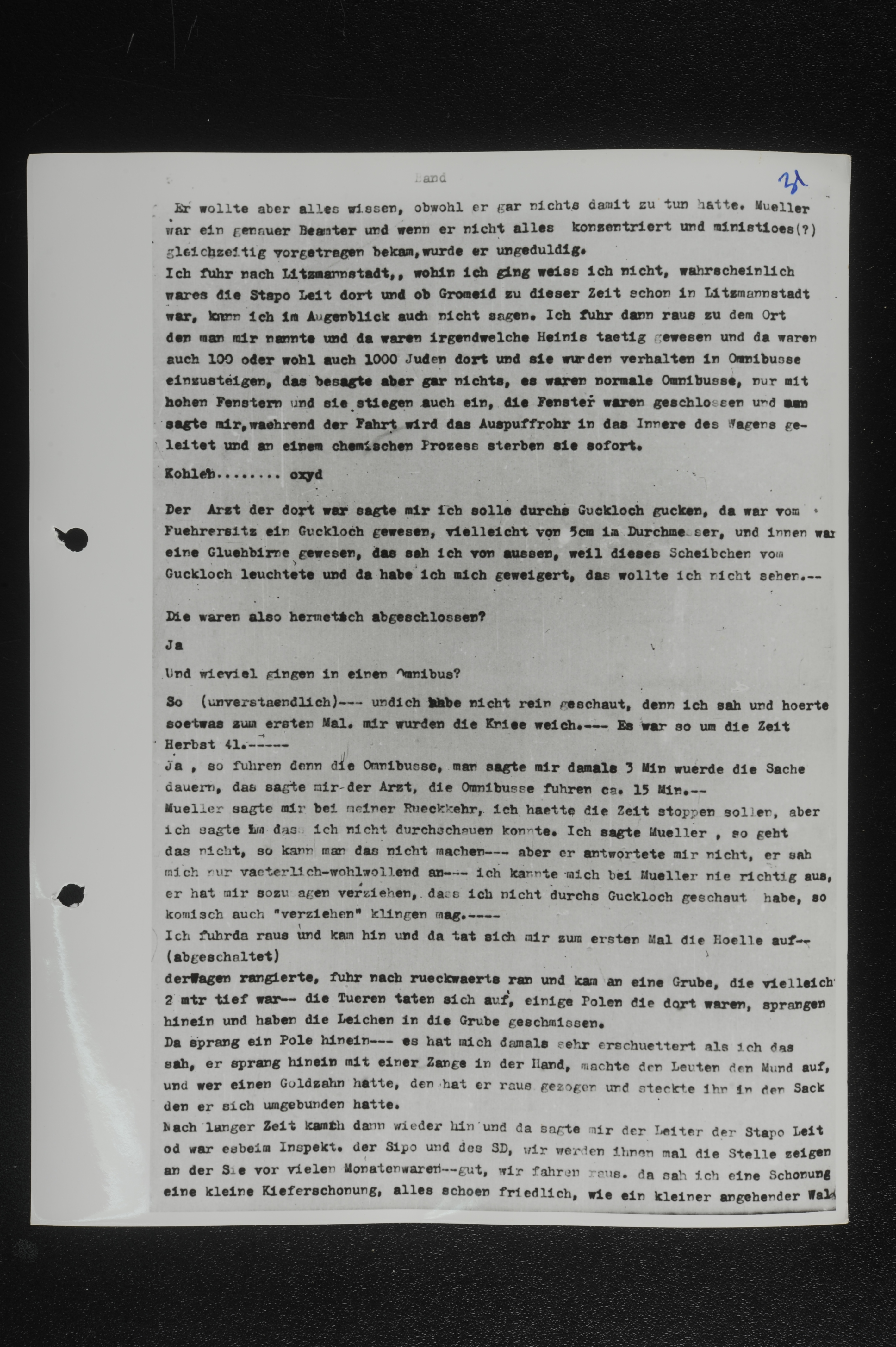
Page 291 of the typescript, O.65 file 86.
Page 291 · Yad Vashem Archives, O.65/86

German transcription

Wir kommen heute zu Rumänien, wie Sie wissen wurde der Großteil der Maßnahmen gegen die Juden von der rumänischen Regierung selbst durchgeführt, die deutschen Stellen waren eigentlich nur am Rande beschä tigt, zB. das Einsatzkommando Ohlendo in der Bu… und in Bessarabien, deshalb möchte ich gleich auf das Jahr 1941 üb gehen, in welchem das erste Mal eigentlich deutsche Stellen in Rumänien tätig wurden. Vielleicht ist Ihnen erinnerlich, daß der dortige Pol. Attache Richter an das Reichssicherheits HA berichtet hat, das Antonesko plane 120 000 Juden über Buk abzuschieben? Das ist mein Hstf Richter den ich als Judenberater an die deutsche Gesandtschaft in Bukarest abstellte, der Gesandte war Killinger. Im Augenblick ist mir das nicht bekannt, daß er mir das berichtet hat, aber Richter war ein ehr rdentlciher Herr und wird mir, wenn daß zugetroffen hat, zweifellos es berichtet haben. Aber ich sehe nicht ein, daß die Frage für mich sehr interessant ist, aber wenn Antonesku die Juden aschie en wollte, so konnte das uns ja nur recht sein. Nein, das konnte Ihnen nicht recht sein, denn Sie weil wir kein Interesse hatten das Juden in das deutsch besetzte Gebiet abgeschoben wurden. Zuerst konnte Richter selbst durch seine Aussprachen in Bukarest diese Maßnahmen verhindern, das war im Okt. 1941. Am 13. März 1942 fand eine Besprechung zwischen Herrn Eichmann, einem Herrn Wetzel von Ostministerium und einem Herrn Rademacher in dieser Angelegenheit statt, es wurde beschlossen eine Warnung an Antonesku zu geben, diese Maßnahmen zu unterlassen. Können Sie sich erinnern? Ja, natürlich, ich hätte mich natürlich dagegen gewehrt, Juden auf Gebiete bring zu lassen, die sowieso unter unsrer Kontrolle standen, denn meine Aufgabe war es ja gewesen, sie frei zu machen, soweit es die Ostgebiete waren, hätte es mir egal sein können, dazu waren ja die Einsatzkommandos da, über die ich nicht verfügen konnte. Aber auch diese Gebiet waren selbstverst. für mich tabu, insofern ich nicht zulassen ko te, daß von einer Stelle wo ich gewissermaßen die Kontrolle hatte nach dort Juden abtransp. wurden, die Welt war groß genug gewesen, sie mußten nicht in die Gebiete kommen die wir kontrollierten. Das entspri t auch was in diesem gegenerischen Buch steht, – die Deportierungen wur fortgesetzt, aber einen Monat später, hat Eichmann an Rademacher die Mitteilung gegeben, er werde Sicherheitsmaßnahmen treffen, daß diese Deportierungen an den Buk aufhören. Ja, das entspricht ganz meinen Linien, ich werde doch nicht Juden aufnehmen in ein Gebiet wo ich froh bin, daß es judenfrei ist. Insofern kam wohl Rademacher und bat mich um Rat, denn Rademacher war im Gegensatz zu von Datten ein Mann der etwas bequem war und der sich auch seine Sache ein bischer bequem machen wollte, und froh und dankbar war, wenn er von mir den ungefähren Text für die …(?) Vorlage (Noten bekam, dann nur noch in den diplomatischen Stil umz formen brauchte und die Sache war dann erledigt für ihm. Die Deportierungen hören dann scheinbar auf, jedoch sagt Rademacher aus, daß die gegen Sicherheitsmaßnahmen Eichmanns darin bestanden, daß er 28 000 Juden zurück transportieren ließ,

Draft translation

Band 33 [HW: 291] Today we come to Romania, as you know the greater part of the measures against the Jews were carried out by the Romanian government itself, the German offices were actually only marginally occupied, e.g. the Einsatzkommando Ohlendo[rf] in the Bu..... and in Bessarabia, therefore I would like to go straight over to the year 1941, in which for the first time German offices actually became active in Romania. Perhaps you recall that the Pol[ice] Attaché there, Richter, reported to the Reich Security Main Office that Antonesko planned to deport 120,000 Jews across the Buk[ovina]? That is my Hstf [Hauptsturmführer] Richter whom I assigned as Jewish adviser to the German legation in Bucharest, the envoy was Killinger. At the moment it is not known to me that he reported that to me, but Richter was a very orderly man and will, if that occurred, doubtless have reported it to me. But I do not see that the question is very interesting for me, but if Antonesku wanted to deport the Jews, then that could only be agreeable to us.-- No, that could not be agreeable to you, for you[x] because we had no interest that Jews were deported into the German-occupied territory. At first Richter himself was able, through his discussions in Bucharest, to prevent these measures, that was in Oct. 1941. On 13 March 1942 a meeting took place between Herr Eichmann, a Herr [TS INS: Wetzel] of the Ostministerium [Eastern Ministry] and a Herr Rademacher in this matter, it was decided to give a warning to Antonesku, to refrain from these measures. Can you recall.? Yes, of course, I would of course have resisted it, letting Jews be brought into territories that were under our control anyway, for it had after all been my task to make them free [of Jews], as far as it was the Eastern territories, it could have been all the same to me, that is what the Einsatzkommandos were there for, over which I could not dispose. But this territory too was of course taboo for me, insofar as I could not permit that from an office where I in a certain sense had the control, Jews were transported off to there, the world was big enough, they did not have to come into the territories that we controlled.-- That also corresponds to what stands in this generic book, - the deportations were continued, but one month later, Eichmann gave the communication to Rademacher, he would take security measures, that these deportations [DEL: across the] Buk cease.- Yes, that corresponds entirely to my lines, I will after all not take in Jews into a territory where I am glad that it is Jew-free. Insofar Rademacher probably came and asked me for advice, for Rademacher, in contrast to von [?Datten?], was a man who was somewhat comfortable and who wanted to make his matter a bit comfortable for himself too, and was glad and grateful when he got from me the approximate text for the ..(?) [HW: draft] (notes, then only needed to reshape it into the diplomatic style and the matter was then settled for him. The deportations then apparently cease, however Rademacher states that the security measures against [it] of Eichmann's consisted in his having 28,000 Jews transported back,

Questioner reads from a book

into the ethnic German settlements [?]… where they were liquidated.

Questioner

Does the name Otto Bräutigam mean anything to you?

No.

Questioner

Here it says that Otto Bräutigam's signed report of May states that a large proportion of the Jews in … had died. Those were said to have been Eichmann's security measures.

Eichmann

But I had no authority to have Jews treated in any way in Romania, let alone to have them liquidated. I did not even have the authority to give the simplest civil order concerning a single Jew, let alone an order for liquidation. That is not correct.

Questioner

It is further claimed that on 11 June 1942 Eichmann confidentially told his staff that the Romanian Jews would now be sent to Auschwitz.

Eichmann

I cannot recall that. But if Jews were transported to German territory, or rather handed over to the German authorities by the Romanian government, then of course all those Jews were taken in in accordance with the Reichsführer-SS's order, and only then did they go to Auschwitz. Auschwitz was the reception camp for that purpose which the chief of the Economic and Administrative Main Office will have designated to me.

Questioner

Perhaps you remember, if I tell you that on 20 September 1942 State Secretary Luther informed Eichmann that the Romanian Foreign Ministry had now given its consent to the deportations.

Eichmann

State Secretary Luther never sent Eichmann a communication, not a single time. That would have been improper and would have bypassed official channels. If State Secretary Luther sent a communication, he sent it to the Chief of the Security Police and the Security Service—to Heydrich, or later to Kaltenbrunner. It may be that, in quite exceptional circumstances, a state secretary of another central authority sent one directly to the head of Office IV, Müller, and that I then received it with the appropriate directive from my chief. I might perhaps have received it in that way, but not otherwise.

Questioner

This book repeatedly claims that you were in very good contact with Luther, and in personal contact at that.

Eichmann

Of course I was in personal contact with Luther, and very good contact. How shall I put it? Privately we had no contact at all, but we got to know each other at a few meetings. That does not mean I would subsequently have been entitled to write personal letters to State Secretary Luther, or that he would have been entitled to do the reverse. By personal letters I mean official letters addressed to me personally, and vice versa. No, I had followed official channels and had to follow them.

Questioner

Are you also aware that in the course of these negotiations—the Foreign Office, the Romanian government, the Reich Security Main Office—the Reichsführer-SS expressed the intention of deporting the Romanian Jews to the Lublin area?

Open page image and German
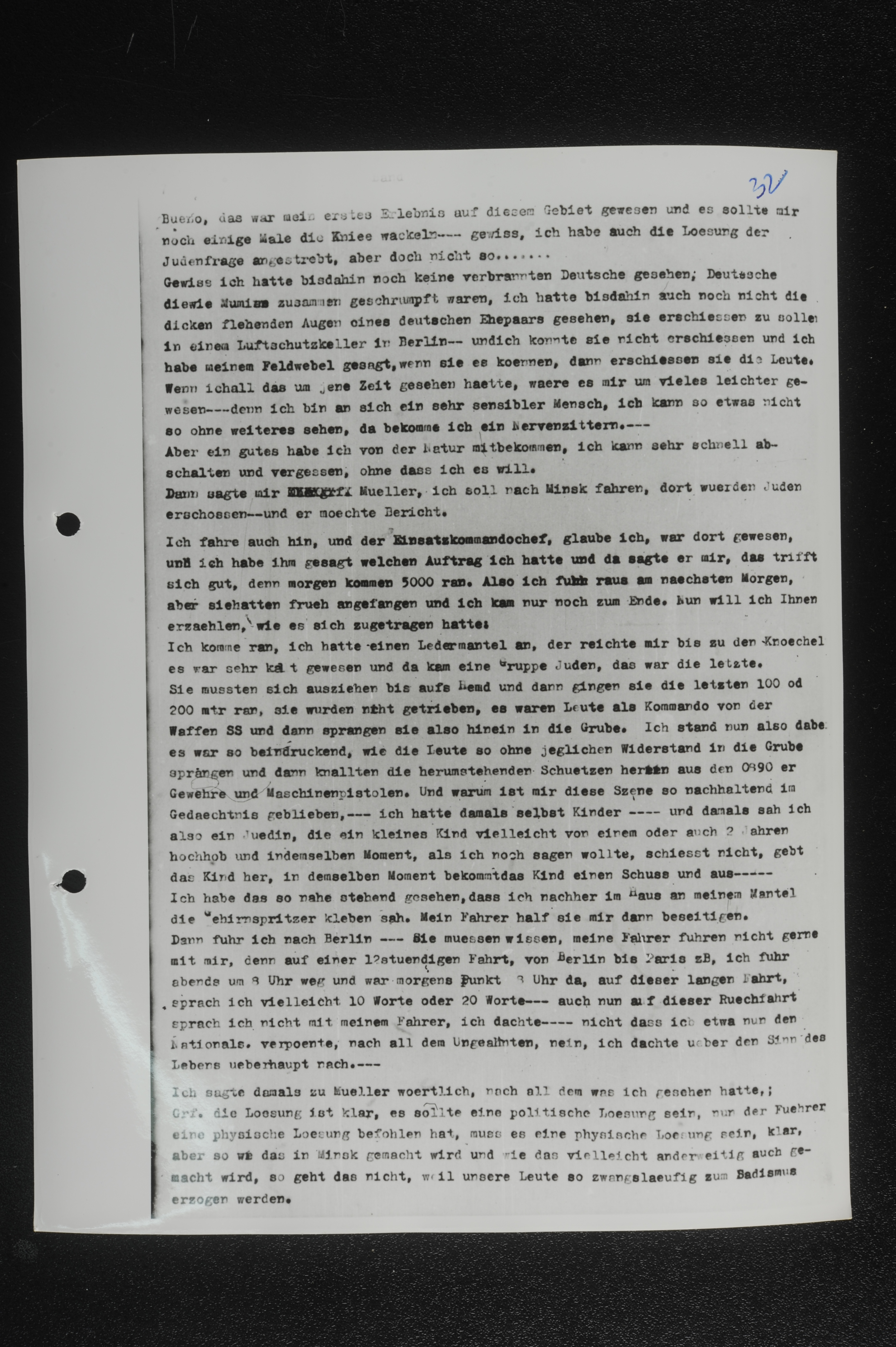
Page 292 of the typescript, O.65 file 86.
Page 292 · Yad Vashem Archives, O.65/86

German transcription
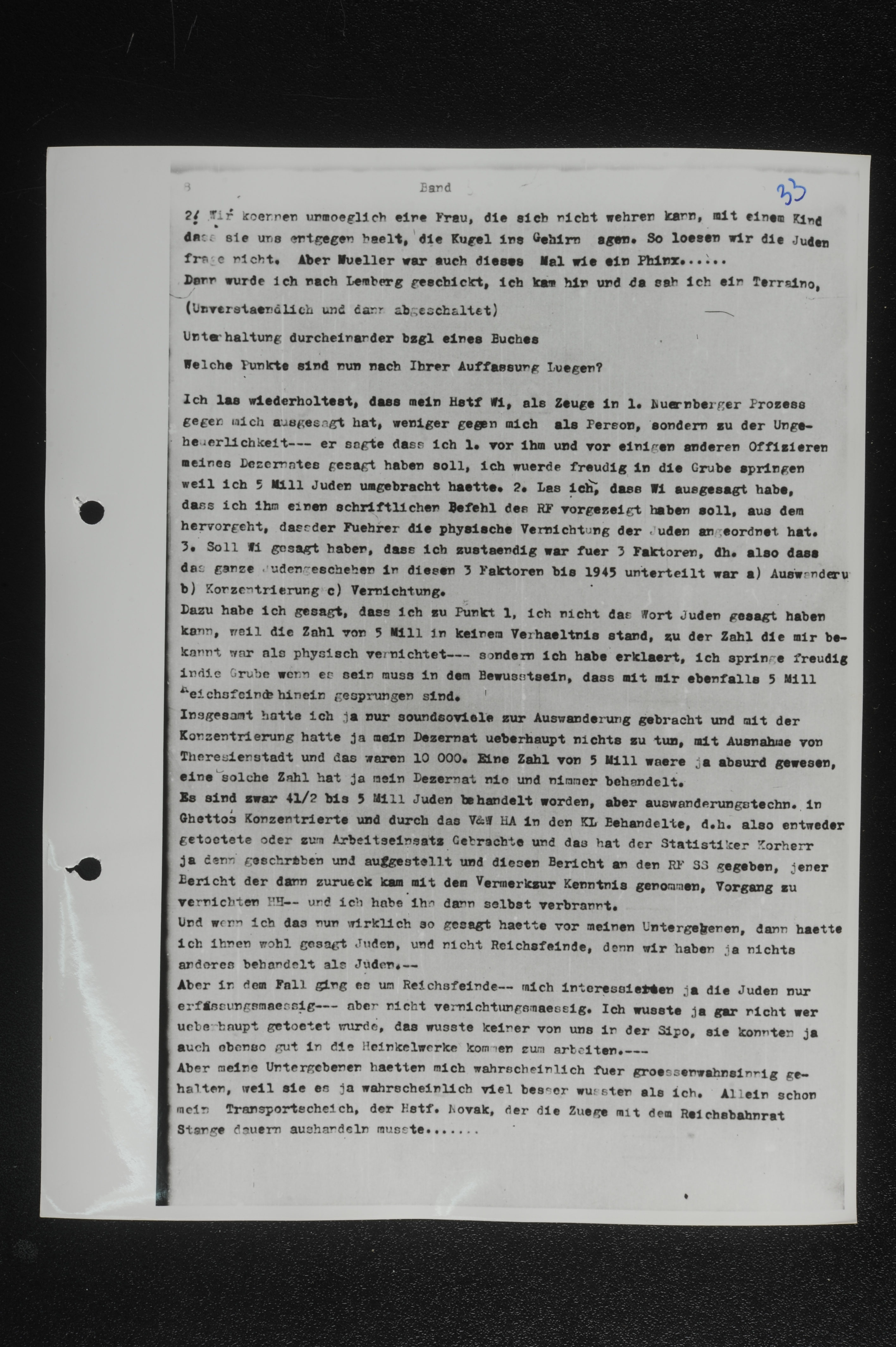
in die Volksdeutschen Siedlungen…(?) … wo sie liquidiert wurden. Sagt Ihnen der Name Otto Bräutigam etwas? Nein. Hier heißt es nämlich der unterzeichnete Bericht von Otto Bräutigam von Mai sagt das ein Großteil der Juden in… gestorben seien. Das seien die Sicherheitsmaßnahmen Eichmanns gewesen. Aber ich hatte ja keine Vollmachten Juden irgendwie in Rumänien behandeln zu lassen, geschweige denn sie liquidieren zu lassen. Ich hatte noch nicht einmal die Vollmacht gehabt über einen Juden nur die einfachste zivile Order zu geben, geschweige denn eine Liquidierungsorder. Das stimmt nicht. Nun wird weiter behauptet, Eichmann hätte am 11 Juni 1942 seinem Stab vertraulich mitgeteilt, daß die rumänischen Juden nun nach Auschwitz geschickt würden. Ich kann mich nicht entsinnen, aber wenn Juden nach dem deutschen Gebiet beförderwurden, bzw, von der rumänsichen Regierung der deutschen Behörde übergeben wurden, dann sind selbstverst. alle diese Juden gemäß dem Befehl des RF aufgenommen worden, und dann erst nach Auschwitz gegangen, denn Auschwitz ist das Auffanglager gewesen dafür, daß der Chef des VWHA mir namhaft gemacht haben wird. Vielleicht erinnern Sie sich, wenn ich Ihnen sage, daß am 20. 9. 42, der Staatsskre. Lutter an Eichmann die Mitteilung machte, daß das rumänische Außenminist. nun seine Zustimmung für die Deportationen erteilte. … Der Staatssekr. Lutter hat an Eichmann überhaupt nie eine Mitteilung gemacht, nicht ein einziges Mal, das wäre auch un gehörig gewesen und hätte den Dienstweg gesprengt. Wenn der Staatssekr. Lutter eine Mitteilung gemacht hat, so hat er die an den Chef der SIPO und des SD, an Heydrich oder an Kaltenbrunner später gegeben und es mag sein, in ganz besonders gelagerten Ausnahmefällen, daß ein Staatssekr. einer anderen Zentralinstanz ausnahmsweise dem Amtschef 4, Müller gegeben hat – und daß ich dann diese Mitteilung mit der entspr. Weisung meines Chefs bekommen habe, so mag ich das vielleicht entgegen nehmen, anders nicht. Im diesem Buch wird überhaupt öfters behauptet, daß Sie mit Lutter in sehr guter Verbindung standen und zwar in persönlicher Verbindung. Mit Lutter stand ich selbstverst in persönl. Verbindung und zwar in sehr guter Verbindung, wie soll ich das sagen, privat hat wir gar keinen Konex, aber in einige Besprechungen haben wir uns kennen gelernt, aber das besagt nicht, daß ich in der Folgezeit berechtigt gewesen wäre, an den Staatssekr. Lutter persönl. Briefe oder daß er umgekehrt berechtigt gewesen wäre, unter persönl. Briefe verstehe ich hier jetzt, dienstliche Briefe an meine Person gerichtetede. umgekehrt, nein hatte den Dienstweg eingehalten, hat ihn einhalten müssen. Ist Ihnen weiter bekannt daß im Rahmen dieser Verhandlung, Ausw. Amt, Rum. Reg, Reichssicherheits HA der RF SS die Absicht ausgesprochen habe, die rum. Juden nach der Lubliner Gegend zu deportieren?

Draft translation

2 Volume 33 [HW: 292] into the ethnic-German settlements....(?) ... where they were liquidated. Does the name Otto Braeutigam mean anything to you? [HW: [?Q?]] No. [HW: [?Q?]] For here it says namely the signed report by Otto Braeutigam of May says that a large part of the Jews in. ..... had died. These were said to have been Eichmann's security measures.-- [HW: [?A?]] But I had no authority to have Jews treated in any way whatsoever in Romania, let alone to have them liquidated. I had not even had the authority to give even the simplest civil order concerning a single Jew, let alone a liquidation order. That is not correct.-- [HW: [?Q?]] Now it is further claimed that Eichmann had on 11 June 1942 confidentially informed his staff that the Romanian Jews would now be sent to Auschwitz. [HW: [?A?]] I cannot recall it, but if Jews were transported to German territory, that is, were handed over by the Romanian government to the German authority, then of course all these Jews, in accordance with the order of the RF [DEL: [?to trans-?]] [HW: [?namely became, and only then to?]] [HW: [?✓?]] went to Auschwitz, for Auschwitz was the reception camp for that, which the chief of the VWHA [HW: [?is?]] named to me [DEL: (plural ending)]. [HW: [?Q?]] Perhaps you remember, if I tell you that on 20. 9. 42, the state secretary Lutter made the communication to Eichmann that the Romanian Foreign Ministry now granted its consent for the deportations. ... [HW: [?A?]] State secretary Lutter never made any communication to Eichmann at all, not a single time, that would also have been improper and would have blown the chain of service apart. If state secretary Lutter made a communication, then he gave it to the chief of the SIPO and of the SD, [DEL: or] to Heydrich or to Kaltenbrunner later, and it may be, in quite particularly situated exceptional cases, that a state secretary of another central authority exceptionally gave it to Amtschef 4, Mueller -- and that I then received this communication with the corresponding directive of my chief, that I might perhaps receive that way, not otherwise. [HW: [?Q?]] In this book it is moreover often claimed that you stood in very good connection with Lutter, and indeed in personal connection.- [HW: [?A?]] With Lutter I stood of course in personal connection, and indeed in very good connection, how shall I put it, privately we had no contact at all, but in some discussions we got to know each other, but that does not mean that I in the subsequent period would have been entitled to [write] personal letters to state secretary Lutter, or that he conversely would have been entitled to, by personal letters I understand here now, official letters addressed to my person. Conversely, [DEL: [?always?]] [HW: [?no?]] had kept to the chain of service, had had to keep to it. [HW: [?Q?]] Is it further known to you that within the framework of these negotiations, Foreign Office, Rom. Gov., [HW: !!] Reich Security Main Office of the RF SS expressed the intention to deport the Rom. Jews to the Lublin region? [HW: aha! so not A., but rather [?Berlin?]!]
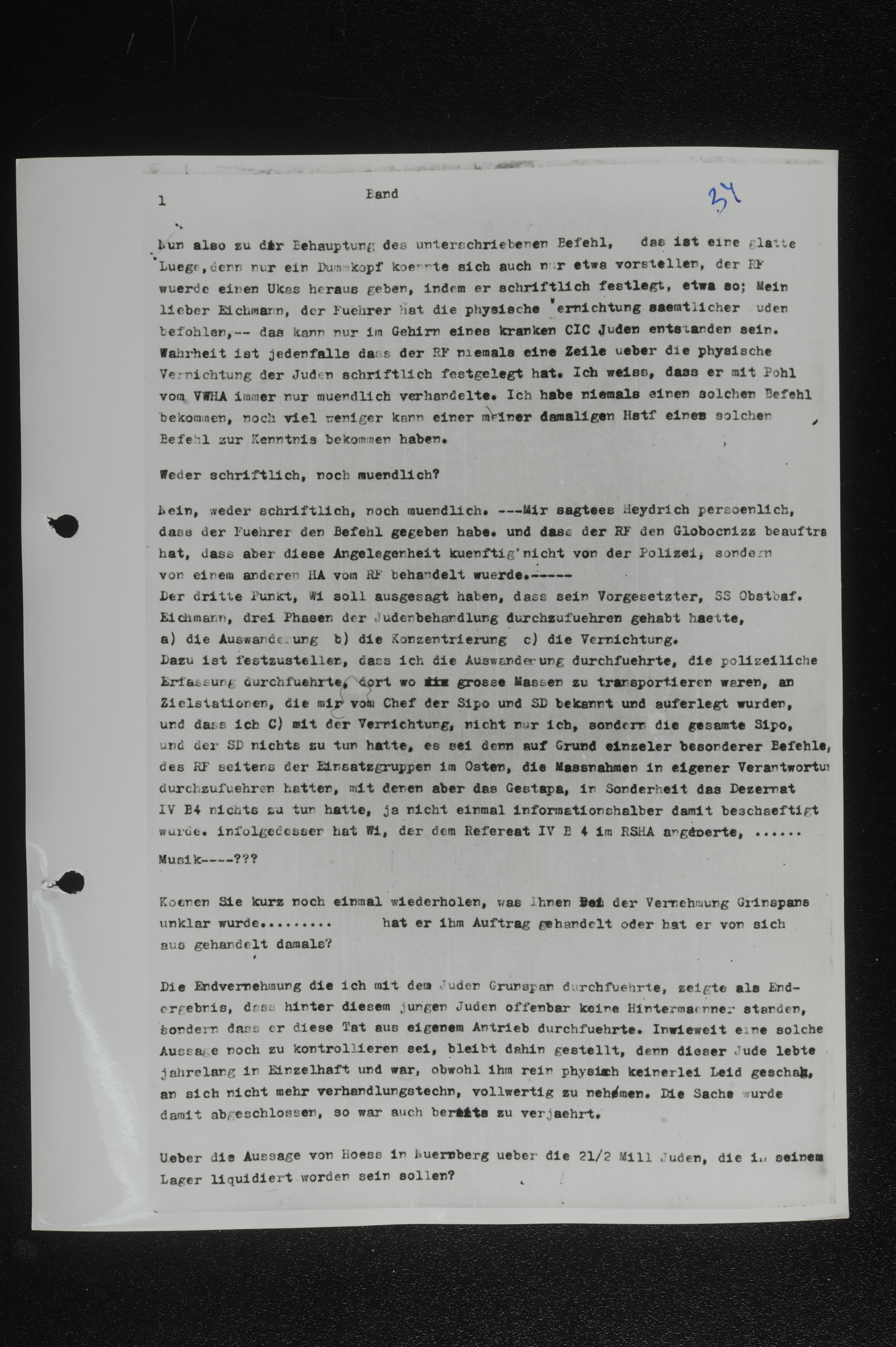
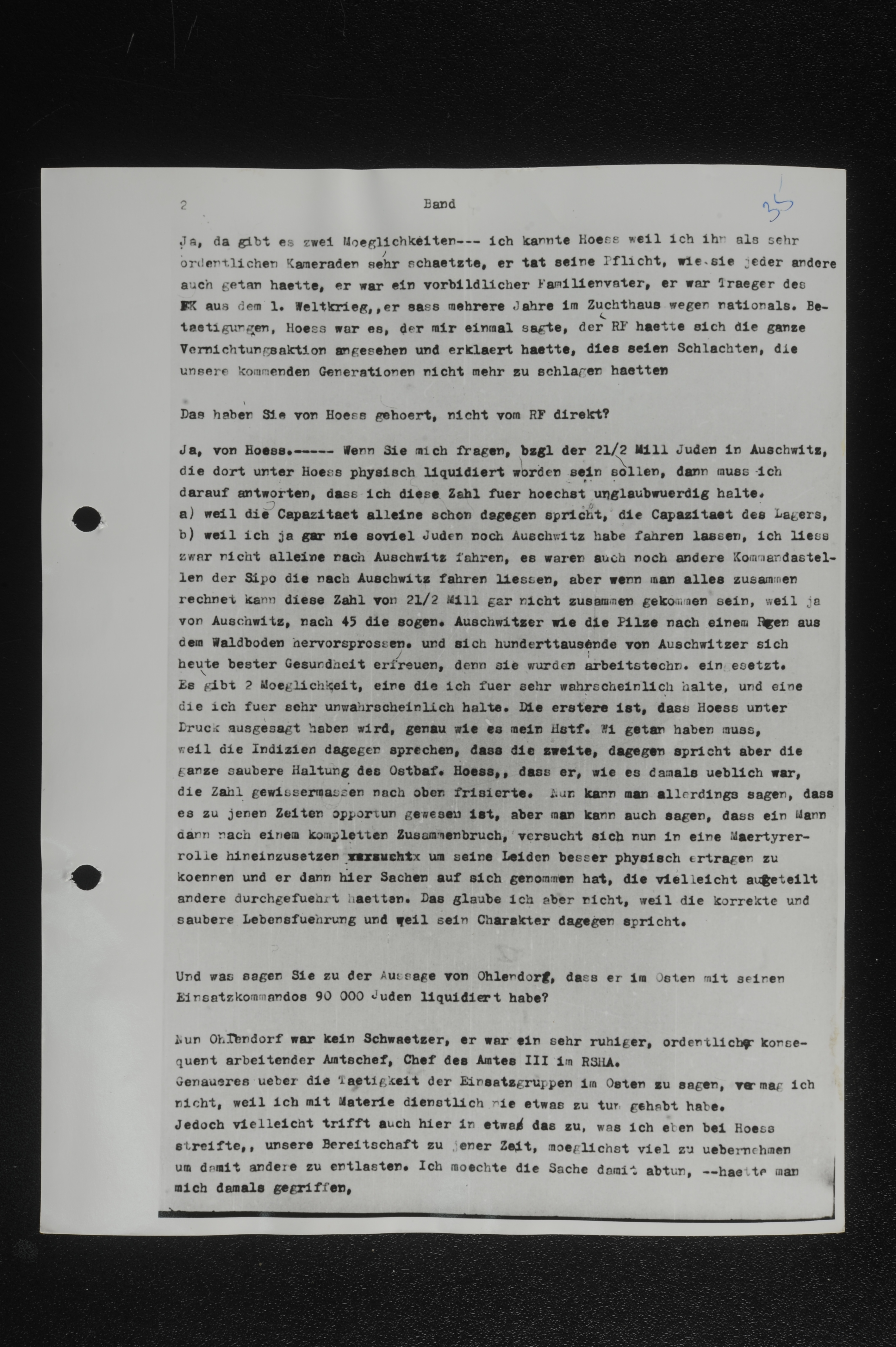
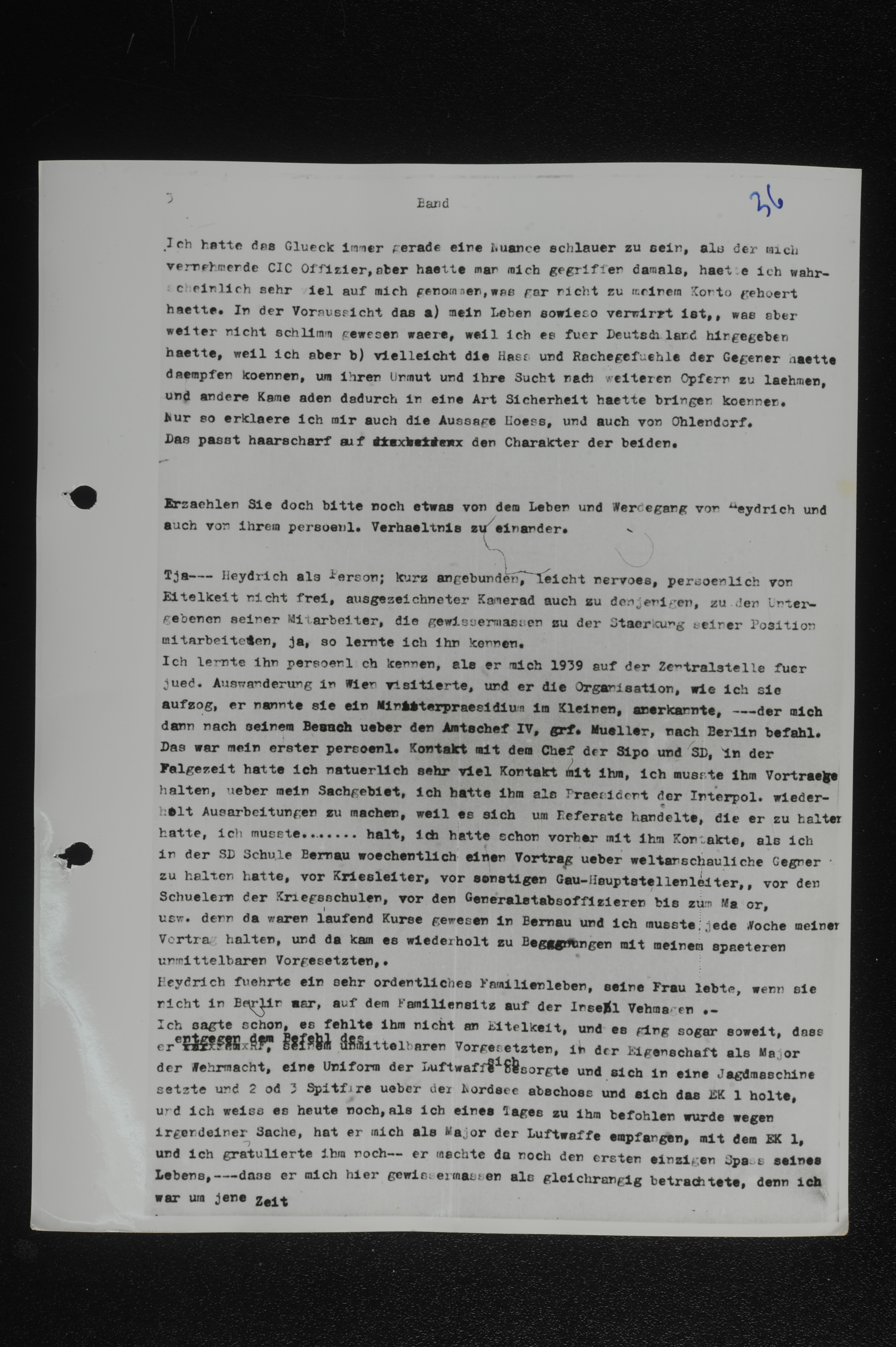
Questioner

Specifically, to conscript the part fit for work into labour and subject the rest to special treatment?

That was a standard order of the Reichsführer-SS: Jews who were fit for work were to be put to work, and those who were not were to fall victim to physical annihilation. Which concentration camp—Auschwitz or Lublin—I do not believe the Reichsführer-SS expressed an opinion like that. If he did express such an opinion, it was always open to revision through a veto by the Economic and Administrative Main Office, because that office alone determined the reception sites. Well, if the Reichsführer-SS said Lublin and there was room there, they went to Lublin, provided the Economic and Administrative Main Office had capacity there.

But despite the Reichsführer-SS's wish they would not have gone to Lublin if there had been no capacity; they would have gone to Auschwitz instead. In that case it would have been Obergruppenführer Pohl's task to correct the Reichsführer-SS's original directive. I do believe the Reichsführer-SS said that, because he repeatedly issued impulsive orders which, as I have said, often went down to the smallest details, but in practice were often very difficult, sometimes impossible, to carry out.

Questioner

Do you remember anything about the Romanian commissioner for Jewish affairs visiting Berlin to discuss the economic details of the deportations?

Eichmann

I would not want to deny it, but I do not remember whether such a man negotiated with me. I would certainly be able to recall it if he had approached me and my office, because it would have gone beyond normal daily work and would surely have stayed in my memory. It was my habit to invite these gentlemen privately to lunch or dinner as well, and so many memories would have accumulated during those hours that I could still remember it today if that had happened. But I cannot recall it, and I would prefer to deny it.
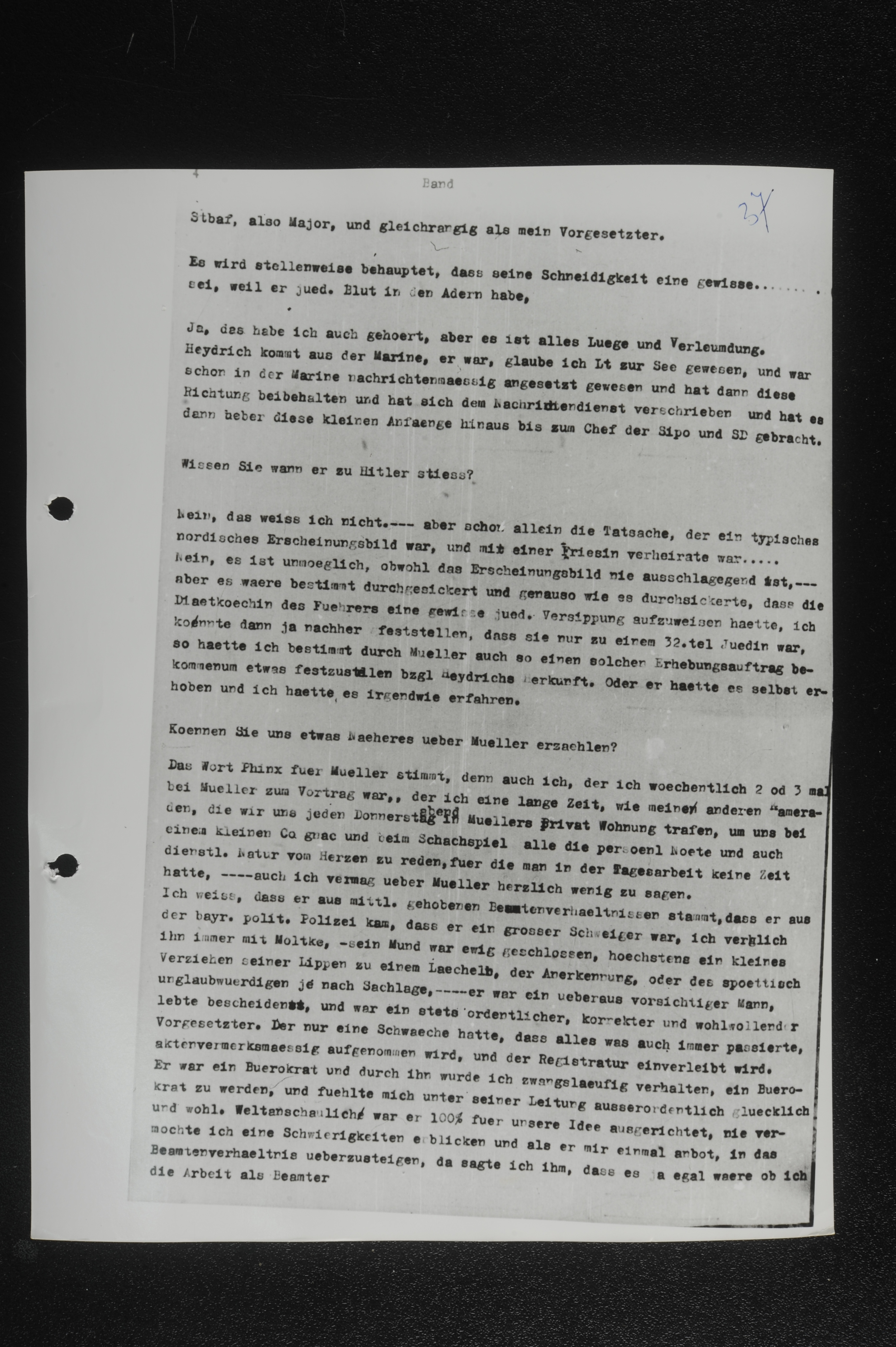
Questioner

Out of this whole affair there allegedly arose a lawsuit between the envoy Killinger and Eichmann, because apparently all these negotiations over the deportation of the Romanian Jews were conducted without going through the envoy Killinger. There is a letter of 27 August that Luther received from Killinger, which says:
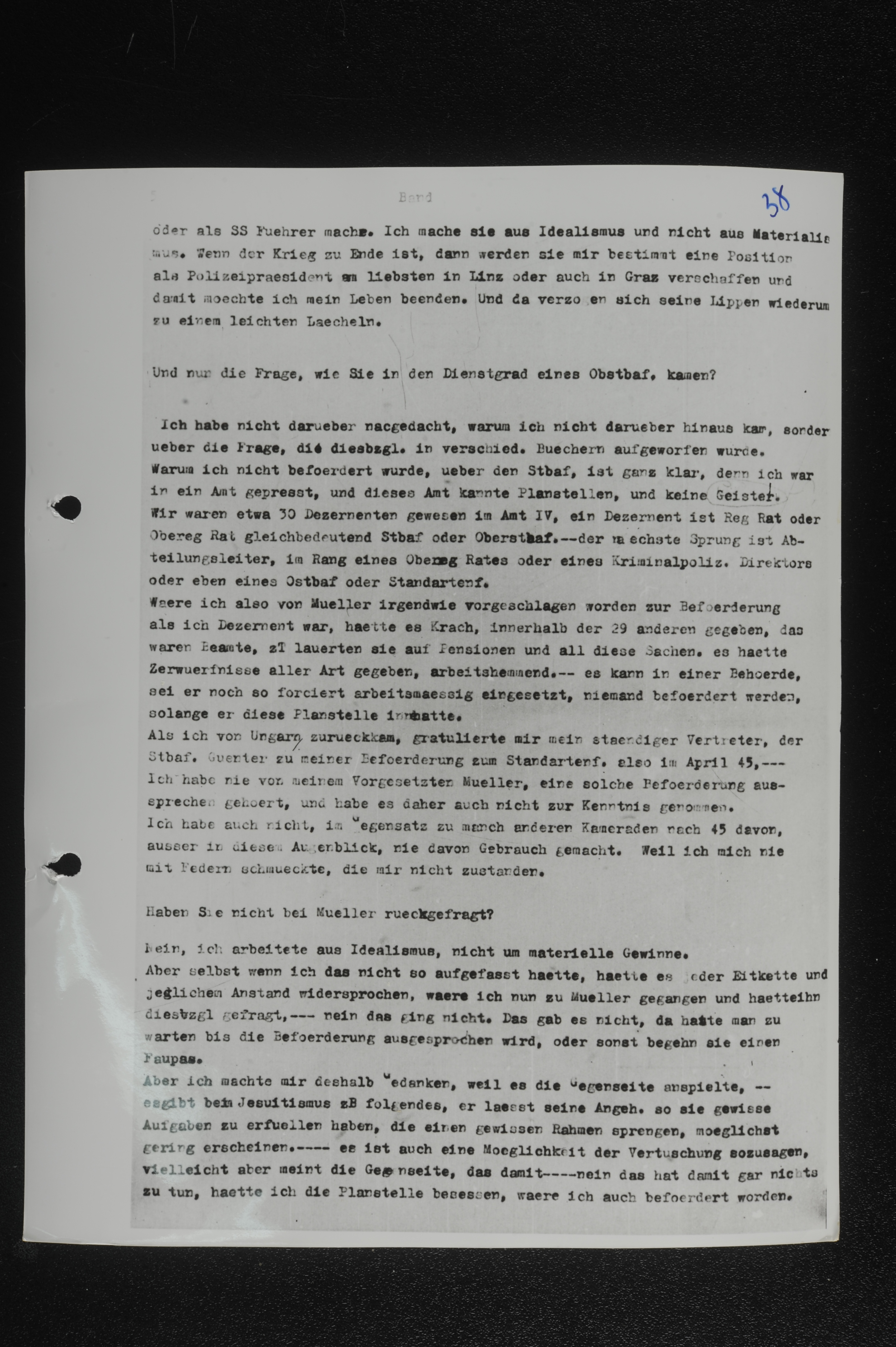
Questioner reads from Killinger's letter, as quoted in a book
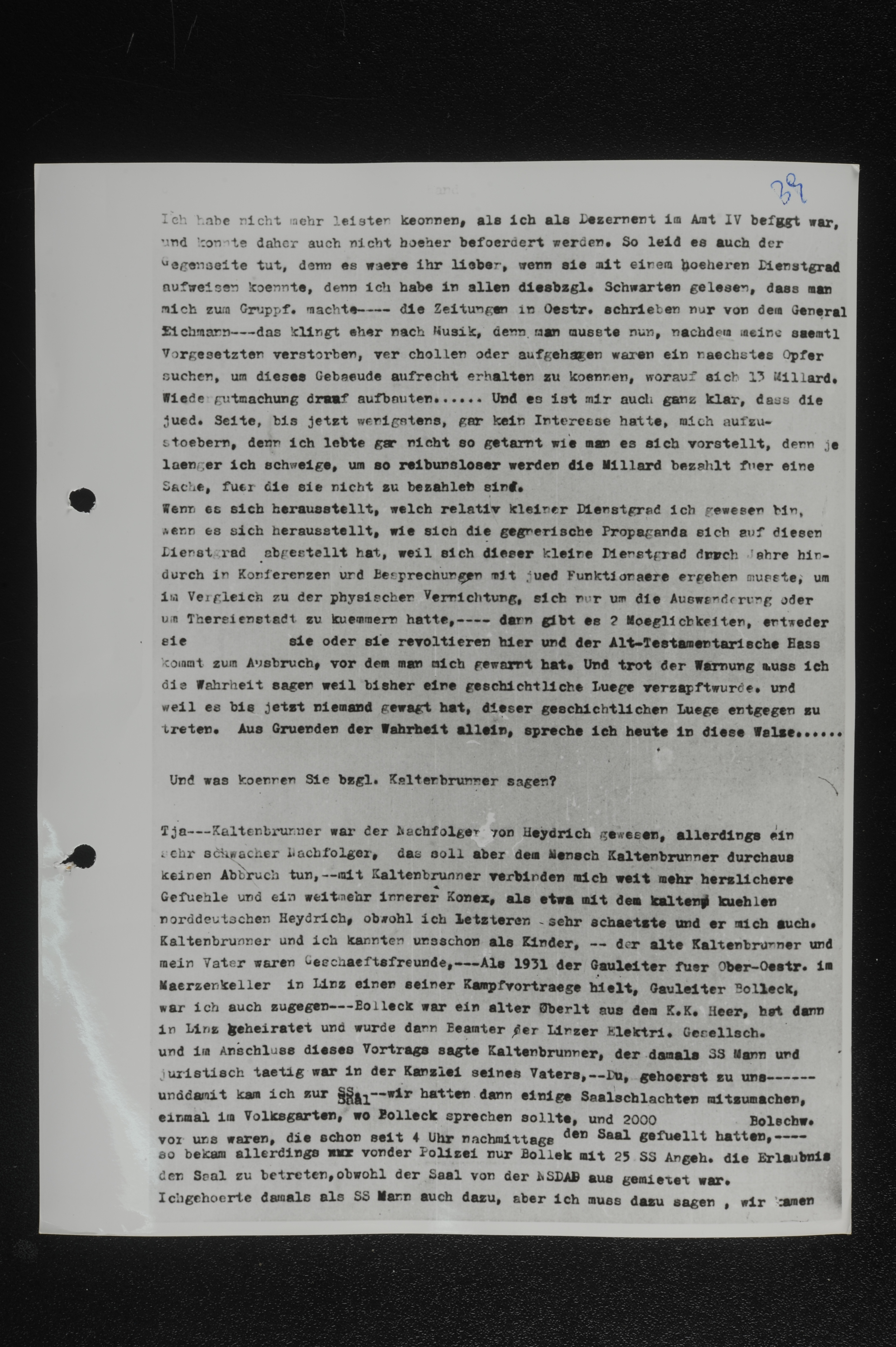
‘I ask that when such important gentlemen come to Berlin, like this M…, they not be fobbed off in a manner that might damage the good relationship between Germany and Romania. I would also point out that all letters addressed to SS Obersturmbannführer Eichmann went through the Foreign Office, so that the Foreign Office knew about the proceedings. That Mr. Eichmann did not consider it necessary to contact the Foreign Office is in no way surprising to me, since I am sufficiently familiar with the methods of the gentlemen of the SS. I would further remark that all…’

Questioner

[unintelligible on the recording]

Questioner reads from Killinger's letter, as quoted in a book

‘… end up with the Security Service in next to no time.’

Eichmann

I must make a statement of principle about that. I told you that I had a very conscientious man in Romania,

Open page image and German
Page 293 of the typescript, O.65 file 86.
Page 293 · Yad Vashem Archives, O.65/86

German transcription

Und zwar den arbeitseinsetzbaren Teil zur Arbeit einzuziehen und den Rest einer Sonderbehandlung zu unterziehen? Das ist ein Standart Befehl des RF gewesen, daß die Juden soweit sie arbeitseinsatzfähig waren, auch eingesetzt wurden, und die nicht, eben der physichen Vernichtung anheim fallen. Welche Kz nun, ob Auschwitz ode Lublin, das glaube ich ni das RF eine solche Meinung von sich gegeben hat, und wenn er eine solche Meinung geäußert hat, so ist eine solche Meinung immer revisionsfähig gewesen durch ein Veto des VWHA, denn die Aufnahmeorte bestimmte ausschließl. das VWHA. Gut wenn der RF nun gesagt hat Lublin und es war dort Platz, dann sind sie nach Lublin gekommen, falls das VWHA dort Aufnahmemöglichkeiten gehabt hat. A: Sie wären aber trotz des Wunsches des RF nicht nach Lublin gekommen, wenn dort ke Aufnahmemöglichkeiten waren, dann wären sie eben nach Auschwitz gekommen. Des RF ursprüngliche Weisung zu korrigieren wäre in dem Fall Aufgabe von Ogrf. Pohl gewesen. Ich glaube wohl, daß das der RF gesagt hat, weil er wiederholt impulsive Anordnungen erteilte, die wie ich schon sagte, sich oftmals bis in die kleinsten Details erstreckten, die aber praktisch oft nur sehr schwer, manchmal gar nicht durchzuführen waren. Ist Ihnen etwas in Erinnerung von dem Besuch der rum. Kommissars für jüd. Angeleg in Berlin um die wirtschaftl. Einzelheiten für die Deportierungen zu besprechen? A: Das möchte ich nicht in Abrede stellen, aber ob ein solcher Mann mit mir verhandelt hat, ist mir nicht erinnerlich. Ich würde mich sicher darauf besinnen können,, wenn er mich und meine Dienststelle angegangen hätte, denn es hätte den Rahmen der normalen Tagesarbeit gesprengt und wäre mir sicherlich in Gedächtnis geblieben, denn meine Angewohnheit war es, diese Herren auch privat zum Mittag ed Abendessen zu bitten und sich im Zuge dieser Stunden sich soviel Erinnerungen angehäuft hätten, daß ich heute mich noch erinnern könnte, wenn es so an dem gewesen wäre. Aber ich kann mich nicht entsinnen und ich möchte es lieber in Abrede stelle Aus dieser ganzen Angelegenheit entstand nämlich angeblich ein Prozeß zwischen dem Gesandten Killinger und Eichmann, denn anscheinend wurden diese ganzen Verhandlung um die Deportierungen der rum. Juden unter Umgehung des Gesandten Killinger durchgeführt. Es existiert ein Brief vom 27. Aug den Lutter von Killinger erhielt und indem es heißt; Ich bitte wenn solche wichtigen Herrn nach Berlin kommen, wie dieser M… dieselben nicht in einer Form abzuspeisen, daß das gute Verhältnis zwischen Deutschland und Rum. getrübt werden könnte. Dazu möchte ich noch bemerken, daß alle Schreiben an den SS Ostbf Eichmann über das ausw. Amt gegangen sind, sodaß das Ausw. Amt Kenntnis von den Vorgängen hatte, daß es aber Herr Eichmann nicht für notwendig gefunden hat, mit dem Ausw. Amt Verbindung aufzunehmen, ist mir in keiner Weise verwunderlich, da mir ja die Methoden der Herrn der SS zur Genüge bekannt sind. Ich übrigen möchte ich bemerken, daß alle …(?)undeutlich gespro in kürzester Zeit bei dem SD landen… A: Dazu muß ich eine grundsätzliche Erklärung abgeben. Ich sagte Ihnen daß ich ei sehr ordentlichen Mann in Rum hatte,

Draft translation

3 Band 33 [HW: 293] Namely to conscript the labour-deployable part for work and to subject the rest to a special treatment? That was a standard order of the RF [Reichsführer], that the Jews, insofar as they were fit for labour deployment, were also deployed, and those [who were] not, precisely fell victim to physical destruction. Which KZ [concentration camp] now, whether Auschwitz or Lublin, that I do not believe [ni(cht)] that the RF gave such an opinion of himself, and if he did express such an opinion, then such an opinion was always subject to revision by a veto of the VWHA [WVHA], for the reception sites were determined exclusively by the VWHA. Fine, if the RF now said Lublin and there was room there, then they came to Lublin, provided the VWHA had reception possibilities there. [HW: A] But they would nevertheless, despite the wish of the RF, not have come to Lublin if there were no [ke(ine)] reception possibilities there, then they would just have come to Auschwitz. To correct the RF's original directive would in that case have been the task of Ogrf. [Obergruppenführer] Pohl. . I do rather believe that the RF said that, because he repeatedly issued impulsive orders which, as I already said, often extended down to the smallest details, but which practically were often only very difficult, sometimes not at all, to carry out. Do you recall anything of the visit of the Rum[anian] commissar for Jew[ish] affairs [Angeleg(enheiten)] in Berlin to discuss the economic details for the deportations? [HW: A] I would not want to deny that, but whether such a man negotiated with me, I do not remember. I would surely be able to recall it if he had approached me and my office, for it would have burst the frame of the normal daily work and would surely have remained in my memory, for my custom was to invite these gentlemen also privately to lunch [ed(er)] [and] supper and in the course of these hours so many memories would have accumulated that I could still remember today, if it had been so. But I cannot recall and I would rather deny it [stelle(n)]. [HW: A] Out of this whole affair there arose, namely, allegedly a lawsuit [HW: [?,,?]] between the envoy Killinger and Eichmann, for apparently these whole negotiations about the deportations of the Rum[anian] Jews were carried out circumventing the envoy Killinger. There exists a letter of 27 Aug[ust] which Lutter [Luther?] received from Killinger and in which it says: I request that when such important gentlemen come to Berlin, like this M........... , [that] the same not be fobbed off in a form such that the good relationship between Germany and Rum[ania] could be clouded. To this I would like further to remark that all letters to the SS Ostbf [Obersturmbannführer] Eichmann went via the Ausw[ärtiges] Amt [Foreign Office], so that the Ausw. Amt had knowledge of the proceedings, that however Herr Eichmann did not find it necessary to make contact with the Ausw. Amt, is in no way surprising to me, since the methods of the gentlemen of the SS are sufficiently well known to me. For the rest I would like to remark that all ....(?) [spoken] indistinctly [gespro(chen)] end up at the SD in the shortest time.... [HW: A] To this I must make a fundamental declaration. I told you that I had a very orderly man in Rum[ania],

Richter came to Berlin several times and complained that Killinger was muzzling him, which was why he came in person, since he could not report it in writing. That happened perhaps half a dozen times, because I ordered Richter—or rather instructed him—that whenever he could not manage his affairs, when fundamental opinions were at issue, he was to take a plane or a train, come to me and report. Knowing Richter as I did, he combined business with pleasure, which is also why it became half a dozen times. Killinger was apparently a gentleman in Bucharest who wanted to run things very autocratically.

He got on very well with everyone, including Richter, as long as he knew Richter was harnessed to his own vehicle. Then the men had all the freedom to which their positions entitled them. If the envoy Killinger now complains about me, I must counter that by saying that the envoy Killinger, in Bucharest far from home, did not know how the cards were shuffled and played. He could not know that the responsible councillor for legislation (Legislationsrat) from the Foreign Office appeared in my anteroom at least once a week and asked for a meeting with me. For some years that was Rademacher, and also von Thadden.

If the envoy Killinger says that he dutifully sent all letters through the Foreign Office to the Security Police and the Security Service but complains that this was not done in the other direction, he does the Security Police and the Security Service a grave injustice, which may be forgiven him on account of his general stupidity. He could not know that Office IV had much closer contact with the Foreign Office than simply sending written notes back and forth. Nor could he suspect that the responsible Foreign Office case officers sat down at the same table at least once a week with the man of the Security Police about whom he speaks so ungraciously, and discussed the matter.

Now it comes back to me, and I see Richter before me; then I know that Leccar was in Berlin. Only he did not approach me. Perhaps I met him at some discussion, perhaps somewhere over a meal, but I must now tell you that the name is not unknown to me.

Questioner reads from a book

The end of this whole affair was that Killinger finally declared that he did not want the matter pursued any further. Marshal Antonescu also changed his attitude, saying he wanted nothing more to do with Jewish deportations. He was also indignant about the German interference and then proposed Jewish emigration to Palestine.

Eichmann

But the Romanians themselves killed the Jews?

Questioner

I have not spoken about that, because it goes beyond the scope of our discussion.

Eichmann

I told you at the beginning that it would have been unthinkable for me to give even the slightest order concerning Romanian Jews on Romanian sovereign territory. The Romanians' chauvinism would not have allowed it. But it suited me that the Jews solved their Jewish question themselves, and I know that the Romanians—Richter himself reported this to me—summarily liquidated their Jews in a manner that astonished me.

Open page image and German
Page 294 of the typescript, O.65 file 86.
Page 294 · Yad Vashem Archives, O.65/86

German transcription

Richter kam einige Male nach Berlin und beschwerte sich daß ihm von Killinger ein Maulkorb vorgebunden würde, wessentwegen er persönlich käme, da er es schriftlich nicht berichten kann. Das ist vielleicht ein halbes Dutzend mal geschehen weil ich Richter befahl, bzw, mit der Weisung versah, immer dann wenn er mit seinen Sachen nicht klar kommen könne, wenn es sich um grundsätzliche Meinungen handele, sich ins Flugzeug oder auf die Bahn zu setzten, um zu mir zu kommen und mir zu berichten. So wie ich Richter kannte, verband er Angenehmes mit dem Nützlichen weswegen es auch ein halbes Dutzendmal wurde. Killinger war scheinbar in Bukarest ein Herr der sehr autoritär schalten und walten wollte, der sich mit jedem, auch mit Richter sehr gut vertrug, solange er Richter an einem der Stränge seines Fahrzeuges angebunden wußte. Da hatten die Leute alle Freiheit, die ihnen auf Grund ihrer Dienststellung zu standen. Wenn sich nun der Gesandt Killinger über mich beschwert, so muß ich dem entgegen halten, daß der Gesandte Killinger in Bukarest, fern seiner Heimat nicht wußte, wie die Karten gemischt und gespielt wurden. Er konnte es nicht wissen, das wöchentlich mindestens einmal der zuständige Legislationsrat des Ausw. Amtes bei mir im Vorzimmer aufkreuzte und um eine Besprechung mit mir nachsuchte, das war einige Jahre Rademacher und auch von Datten. Wenn der Gesandte Killinger nun sagt, daß er sehr brav alle Briefe über das Ausw. Amt an die Sicherheitspol. und an den SD leitete, er es aber umgekehrt bemängelt, so tut er der SIPO und dem SD hier bitter unrecht, was ihm in Folge seiner allgemeinen Dummheit verziehen sein mag. Er konnte es nicht wissen, daß das Amt 4 mit dem Ausw. Amt einen viel engeren Konex hatten, als wie schriftliche Noten hin und er zu jagen und er konnte es nicht ahnen, daß die berufenen Sachbearbeiter des Ausw. Amtes sich mit dem Mann der SIPO über den er sich so ungnädig ausdrückt, sich mindestens wöchentlich einmal an einen Tisch setzte und die Sache besprach. Jetzt wird es mir gegenwärtig, und ich sehe Richter vor mir, dann weiß ich daß der Leccar in Berlin war. Nur hat er nicht mich angegangen, vielleicht habe ich ihn kennen gelernt bei irgendwelchen Besprechungen, irgendwo vielleicht auch bei einem Essen, aber ich muß Ihnen jetzt sagen, daß mir der Name nicht unbekannt ist. F: Das Ende dieser ganzen Sache war, daß Killinger zum Schluß erklärte, er wollte nicht das die Angelegenheit weiter verfolgt würde. " Marshall Antonesku änderte ebenfalls seine Einstellung, und erklärte er wolle von Judendeportierungen nichts mehr wissen, außerdem war er über die deutsche Einmischung entrüstet und er schlug dann die jüd Auswanderung nach Palast vor. Der Rum. hat aber selbst die Juden umgebracht?… Darüber habe ich nicht gesprochen, weil es über unseren Rahmen der Erörterungen hinaus geht. Ich sagte Ihnen schon zu Anfang, es wäre undenkbar gewesen, daß ich auch nur die geringste Order gegeben hätte bzgl. der rum. Juden auf rum. Hoheitsgebiet, das hätte der Chauvinismus der Rum nicht zugelassen, aber es war mir recht gewesen, die Juden lösten ihre Judenfrage sd ber und ich weiß daß die Rum, das hat mir Richter selbst berichtet, in einer Art und Weise, die mir erstaunenswert war, ihre Juden kurzerhand liquidierten.

Draft translation

Richter came to Berlin several times and complained that a muzzle was being put on him by Killinger, on account of which he was coming personally, since he cannot report it in writing. This happened perhaps half a dozen times because I ordered Richter, or rather, gave him the instruction, that whenever he could not manage with his affairs, when it was a matter of fundamental [DEL: instructions] [HW: opinions], to get on the airplane or on the train in order to come to me and report to me. As I knew Richter, he combined the pleasant with the useful, which is also why it became half a dozen times. Killinger was apparently in Bucharest a gentleman who wanted to rule and hold sway very authoritatively, who got along very well with everyone, also with Richter, as long as he knew Richter to be tied to one of the ropes of his vehicle. There the people all had all the freedom that was due to them on the basis of their official position. If the envoy Killinger now complains about me, then I must counter this with the fact that the envoy Killinger in Bucharest, far from his homeland, did not know how the cards were shuffled and played. He could not know it, that at least once a week the responsible legislation councilor of the Foreign Office turned up in my anteroom and sought a discussion with me, that was for some years Rademacher and also von Datten. [HW: [?Thadden?]] If the envoy Killinger now says that he very dutifully directed all letters via the Foreign Office to the Security Police and to the SD, but that he faults it the other way around, then he here does the SIPO and the SD bitter injustice, which in consequence of his general stupidity may be forgiven him. He could not know that Office 4 had a much closer connection with the Foreign Office than to chase written notes back and forth, and he could not suspect that the appointed case officers of the Foreign Office sat down at a table at least once a week with the man [HW: of the SIPO] about whom he expresses himself so ungraciously, and discussed the matter. Now it becomes present to me, and I see Richter before me, then I know that Loccar was in Berlin. Only he did not approach me, perhaps I got to know him at some discussions, somewhere perhaps also at a meal, but I must now tell you that the name is not unknown to me. [HW: F] The end of this whole matter was that Killinger declared in conclusion, he did not want the affair to be pursued further. " Marshall Antonesku likewise changed his attitude, and declared he no longer wanted to know anything about Jewish deportations, moreover he was outraged about the German interference and he then proposed the Jewish emigration to Palast. But the Rum. themselves killed the Jews?..... About that I did not speak, because it goes beyond our framework of the deliberations.-- I already told you at the beginning, it would have been unthinkable that I should have given even the slightest order regarding the Rum. Jews on Rum. sovereign territory, the [DEL: [?large territory?]] [HW: [illegible]] of the Rum. would not have permitted that, but it would have been fine with me, the Jews solved their Jewish question themselves and I know that the Rum., Richter himself reported this to me, in a manner and fashion that was astonishing to me, liquidated their Jews summarily.

To many, many thousands. I cannot give you the number.

Questioner

Are you aware that in 1943 the Jewish World Congress approached the North American State Department? A sum is reported, a transfer to a Swiss blocked account, which would allegedly be enough to buy the escape of 70,000 French and Romanian Jews.

Eichmann

In March 1943—no, I am not aware of that.

Questioner

It then goes on to say that

Questioner reads from a book

in the end a ransom was used for some Hungarian Jews—a small part of this money. The original plan ended in complete failure

Questioner

?

Eichmann

That is completely unknown to me.

Questioner

Do you know anything of an English offer to send 5,000 Jews from Poland, Latvia and Lithuania to Palestine, 85 percent of these 5,000 Jews being children? In 1943.

Eichmann

That never reached me, and it would not have been possible either. At that time I was very much against it, because around then the order of the RF (Reichsführer-SS) that no Jew was allowed to emigrate was being enforced very rigidly.

Questioner reads from a book

Eichmann insisted that 20,000 Germans of military age be exchanged.

[The rest is read out insanely fast and very indistinctly.]

Eichmann

I cannot recall it, but if that had been the case, I would certainly have wanted to gain an advantage for the Reich. But I do not understand why 20,000—why I did not demand 50,000, following the RF (Reichsführer-SS) principle of one to ten. Ideologically the idea appeals to me, but I cannot remember it.

Questioner

Do you remember that Hitler made Antonescu the offer to let 70,000 Jews leave for Palestine?

Eichmann

That is unknown to me.

Questioner

Is it also unknown to you that you declared that

Questioner reads from a book

this operation with the 5,000 children must be carried out quickly, because the time is not far off when the emigration of children from the eastern territories will no longer be technically possible? In 1943, at the end of May. Later von Thadden came to the Foreign Office. He too was in a hurry, but he wanted to send the 5,000 children to England. He also claims that Eichmann had said that the only place where there were still 5,000 children was the ghetto of Botsch–Motsch, but that this too would shortly be liquidated on Himmler’s orders.

Eichmann

I would not want to deny all this. I would have to think about it.

Questioner

Is it true that on the day Romania laid down its arms, on 23 August 1944, you were in Budapest in order to liquidate the Jews of the Romanian border towns of Arat and Daen…?

Eichmann

That is of course complete nonsense. I left Budapest at a particular time in the summer of 1944. One side—see Joel Brandt —interprets it as

Open page image and German
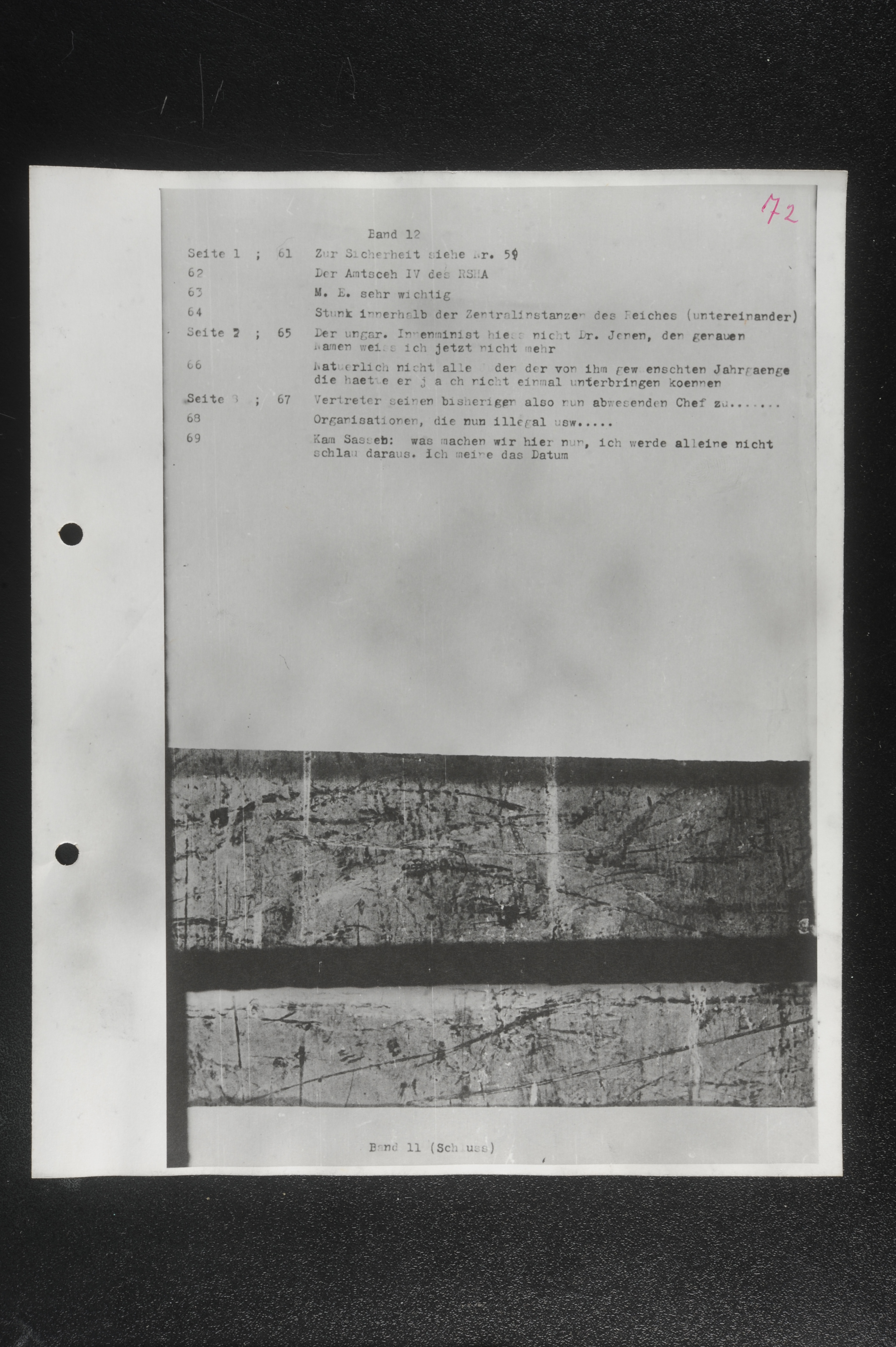
Page 295 of the typescript, O.65 file 86.
Page 295 · Yad Vashem Archives, O.65/86

German transcription

Zu vielen, vielen tausenden, die Zahl kann ich Ihnen nicht nennen. Ist Ihnen bekannt, daß der jüd Weltkongreß 1943 an das nordamerikanische Staatsdepartement herangetreten ist, man meldet eine Summe eine Überweisung an ein Schweizer Sperrkonto, die angeblich genügen würde um die Flucht von 70 000 frans. und rum. Juden zu erkaufen. Im März 1943, nein davon ist mir nicht bekannt. Es heißt dann weiter am Schluß wurde ein Lösegeld für einige ung Juden verwende ein kleiner Teil dieses Geldes. – Der ursprüngliche Plan endete mit einem völlige Mißerfolg.? Ist mir vollkommen unbekannt. Ist Ihnen etwas bekannt von einem englischen Angebot, 5 000 Juden aus Polen, Lettl und Litauen, unter diesen 5000 Juden davon 85% Kinder nach Palast zu schicken. 1943. Ist nie zu mir durchgedrungen, wäre auch nicht möglich gewesen, Denn ich war um Zeit sehr dagegen, denn um jene Zeit nach sehr stur gehandhabte Befehl des RF, das kein Jude auswandern darf. Eichmann bestand darauf, daß 20 000 Deutsche im militärfähigen Alter ausgetauscht werden. (Rest irrsinnig schnell vorgelesen und sehr undeutlich)… Ich kann mich nicht entsinnen, aber wenn an dem so gewesen wäre, dann hätte ich bestimmt ein Plus für das Reich raus holen wollen, aber ich verstehe nicht wiese 20 000 daß ich nicht 50 000 verlangt habe, nach dem Grundsatz des RF 1 : 10. – Ideologisch liegt mir die Sache, aber ich kann mich nicht daran erinnern. Erinnern Sie sich, daß Hitler, Antonesku das Angebot gemacht hat, 70 000 jüd aus nach Palast gehen zu lassen? Ist mir unbekannt. Ist Ihnen auch unbekannt, daß Sie erklärt haben, daß diese Aktion mit den 5000 Kinder, daß diese schnell durchgeführt werden muß, denn die Zeit ist nicht mehr fern, wo die Auswanderung von Kindern aus den Ostgebieten techn. nicht mehr möglich sein wird. Im Jahre 1943, Ende Mai. Später kam dann von Datten ins Ausw. Amt, auch er hatte Eile, er wollte aber die 5 000 Kinder nach England schicken, Außerdem behauptet er, Eichmann hätte gesagt, der einzige Ort wo noch 5 000 Kinder sind, sei das Ghetto von Botsch- Motsch (?) doch wurde auch dieses in Kürze nach Himmlers Weisung liquidiert werden.???? Ich möchte dies alles nicht in Abrede stellen, ich müßte darüber nachdenken. Stimmt es, daß Sie an dem Tage, an dem Rum die Waffen streckte, am 23. Aug. 44, in Budapest waren um die Juden der rum. Grenzstädten Arat und Daen…(?) zu liquidieren? Das ist natürlich vollkommener Blödsinn. – Ich ging zu einer bestimmten Zeit im Sommer 1944 von Budapest weg, die eine Seite diehe Joel Brandt, legt es so aus,

Draft translation

5 Volume 33 [HW: 295] To many, many thousands, I cannot tell you the number. Are you aware that in 1943 the Jew[ish] World Congress approached the North American State Department, one reports a sum a transfer to a Swiss blocked account, which would allegedly suffice to buy the escape of 70,000 Fren[ch]. and Rum[anian] Jews. In March 1943, no, of that I am aware. - It then goes on to say at the end a ransom was used for some kill[ed?] Jews a small part of this money. - The original plan ended in a complete failure.? That is completely unknown to me. Do you know anything of an English offer, to send 5,000 Jews from Poland, Latv[ia] and Lithuania, among these 5000 Jews of them 85% children to Pales[tine]. 1943. It never reached me, would also not have been possible, For at [that] time I was very much against it, for at that time [it was] handled according to a very stubbornly handled order of the RF, that no Jew may emigrate. Eichmann insisted that 20,000 [TS INS: Germans] of military-fit age be exchanged. (Rest read out insanely fast and very indistinctly)..... I cannot recall, but if it had been so, then I would certainly have wanted to get a plus out of it for the Reich, but I do not understand how [it is that] 20,000 that I did not demand 50,000, according to the principle of the RF 1 : 10.- Ideologically the matter suits me, but I cannot remember it. Do you remember that Hitler made Antonescu the offer, to let 70,000 [DEL: children] [TS INS: Jews from] go to Pales[tine]? That is unknown to me. Is it also unknown to you that you declared that this action with the 5000 children, that this must be carried out quickly, for the time is no longer far off, when the emigration of children from the Eastern territories will techn[ically] no longer be possible. In the year 1943, end of May. Later then [it/he] came from Datten into the Fore[ign] Office, he also had haste, but he wanted to send the 5,000 children to England, Moreover he claims, Eichmann had said, the only place where there are still 5,000 children, was the ghetto of Botsch-Motsch (?), yet this too would shortly be liquidated according to Himmler's instruction.???? I do not want to deny all this, I would have to think about it. Is it true that on the day on which Rum[ania] laid down its arms, on 23 Aug. 44, you were in Budapest in order to liq[u]idate the Jews of the Rum[anian] border towns Arat and Daen....(?)? That is of course complete nonsense.- I left Budapest at a certain time in summer 1944, the one side see Joel Brandt, interprets it thus,

that the deportations from Hungary had stopped and that I disappeared to a country estate to bide my time there. Now I hear from you that around that time I liquidated the Jews from the Romanian border towns, or wanted to liquidate them. To that I have the following to say. I had to break off my WORK in Budapest. I myself had to withdraw, because I myself, under the order of the RF (Reichsführer-SS)—because I had to go to Neuarat, Nikolsburg and so on, to remove 10,000 ethnic Germans there from the Russians’ grasp. And to evacuate these 10,000 ethnic Germans one way or another. So I have only this to add: around that time I did not see, let alone speak to, a single Jewish limp-dick, and my detachments likewise did not handle a single Jew. We had only this task of evacuating these 10,000 ethnic Germans in those border areas.

[End of the discussion of Romania.]

[France]

Questioner

Is it true that Heydrich intended—Heydrich’s original intention—to treat unoccupied France not as a territory to be made free of Jews, but as a place to gather the Jews unwanted in Germany?

Eichmann

Yes, that is right. I was once forced by some impatient Gauleiter—that is, I received the order to round up some Jews in western Germany. As I remember, that was five or six trainloads, and I then had them routed through occupied France. I personally had them run through from the last station in occupied territory to the first station in unoccupied territory, without a timetable conference and without any preliminary timetable discussion. But precisely that little stretch was probably the hardest work of all.

Questioner

It is now claimed that Hitler’s intention was different from Heydrich’s, and that for that reason, from 1942 on, there was a turn of 1 80 degrees and an attempt was now made to bring Petain into line with the measures taken in Reich territory.

Eichmann

The idea that Heydrich departed from Hitler’s line is utter nonsense. A man like Heydrich did what Hitler demanded. …

Questioner

Yes, hence the turn of 180 degrees. … You know that one of the first measures was to set up a body to handle the Jewish question on the model of Prague and Vienna, with the participation of the Foreign Office in the persons of Ambassador Abetz and his colleague Schwei… and Zei… As a preparatory measure for later deportations.

Eichmann

Yes, that can at most have been a move by the Foreign Office so that the Foreign Office too would retain the lead in these matters in France. For I did have a man in France with the commander of the Security Police and the Security Service, an adviser on Jewish questions, but he was under the commander—…

Open page image and German
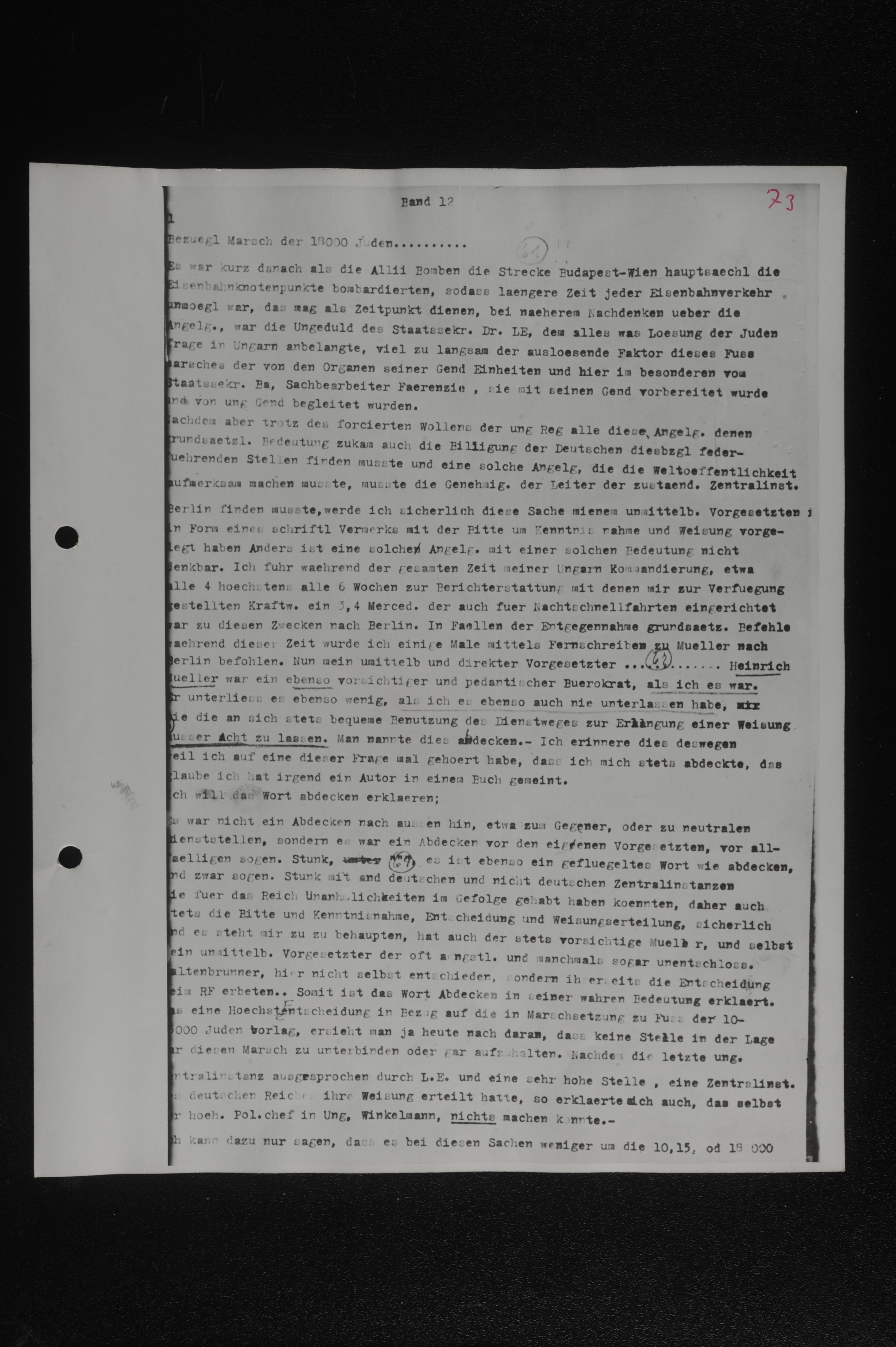
Pages 296 to 297 of the typescript, O.65 file 86.
Pages 296 to 297 · Yad Vashem Archives, O.65/86

German transcription

daß die Deportationen aus Ungarn aufgehört hätten, und ich auf ein Landgut verschwand um sich hier abwartend betätigte, nun höre ich von Ihrer Seite, das ich um jene Zeit die Juden aus den rum. Grenzstädten liquidiert hätte, bzw. liquidieren wollen. Dazu habe ich folgendes zu sagen. Ich hatte meine ARBEITEN in Budapest zu unterbrechen, ich selber hatte mich abzusetzen, weil ich selber laut Befehl des RF weil ich mich an die Orte Neuarat und Nikolsburg usw. zu begeben hätte, um dort 10 000 Volksdeutsche dem russ. Zugriff zu entziehen. Und diese 10 000 Volksdeutsche so oder so zu evakuieren. – Also ich habe hier nur dazu zu fügen, daß ich um jene Zeit nicht einen jüd. Schlappschwanz gesehen oder gar gesprochen habe, und das ebenfalls auch meine Kommandos nicht einen einzigen Juden behandelt haben, wir hatten lediglich diese Evakuierungsaufgabe dieser 10 000 Volksdeutsche in diesen Grenzgebieten. – Schluß mit Rumänien. Frankreich Stimmt das Heydrich die Absicht hatte das unbesetzte Frankreich, die anfängliche Absicht Heydrich, nicht als judenfrei zu machendes Gebiet zu machen, sondern als Sammelbecken für die in Deutschland unerwünschten Juden zu betrachten? Ja, das stimmt, ich war einmal durch irgendwelche ungeduldige Gauleiter gezwungen, d.h. ich bekam den Befehl, irgendwelche Juden in Westdeutschland zu erfassen, das sind meiner Erinnerung 5 o. 6 Eisenbahnzüge voll gewesen und die habe ich dann durch das besetzte Frankreich leiten lassen und habe sie persönlich ohne Fahrplankonferenz und ohne Fahrplanvorbesprechung von dem letzten besetzten bis zum ersten unbesetzten Bahnhof durchrollen lassen, aber gerade dieses kleine Stück war wohl die schwerste Arbeit von allem. – Es wird nun behauptet, daß die Absicht Hitlers eine andere gewesen sei, als die von Heydrich und daß deshalb ab 1942 eine Schwenkung von 1…0 Grad machte und nun versuchte Petain auf die Linie der im Reichsgebiet ergriffenen Maßnahmen zu bringen A: Eine abschweifende Haltung von Heydrich von der Linie Hitlers ist ein blühender Unsinn, ein Heydrich machte das was Hitler verlangte… Ja, deshalb die Schwenkung von 180 Grad… Sie wissen daß eine der ersten Maßnahmen waren unter Mitwirkung des Ausw. Amtes in den Personen des Botschafters Abetz und seinem Mitarbeiter Schwei… und Zei… eine Körperschaft aufzubauen, die die Judenfrage zu behandeln hat, nach dem Muster von Prag und Wien. Als vorbereitende Maßnahme für spätere Deportierungen. A: Ja, das kann höchstens ein Schuß des Ausw. Amtes gewesen sein, damit sich auch das Ausw. Amt in Frankreich in diesen Sachen die Federführung beibehält. Denn ich hatte ja in Frankreich beim Befehlshaber der SIPO und des SD einen Mann sitzen gehabt, einen Berater für Judenfragen, sondern er war dem Befehlshaber unt…

Draft translation

6 Volume 33 [HW: 296] that the deportations from Hungary had ceased, and I disappeared to a country estate in order to occupy myself here in a waiting posture, now I hear from your side that [HW: 297] around that time I had liquidated, or wanted to liquidate, the Jews from the Russian border towns. To this I have the following to say. I had to interrupt my WORK in Budapest, I myself had to withdraw, because I myself according to the order of the RF because I was to betake myself to the places Neuarat and Nikolsburg etc., in order to withdraw 10,000 ethnic Germans there from the Russian grasp. And to evacuate these 10,000 ethnic Germans one way or another. .-- So I have here only to add to this, that around that time I did not see or even sp[eak to] a single Jewish weakling, and that likewise also my comman[d] did not treat a single Jew, we had merely this evacuation task of these 10,000 ethnic Germans in these border regions.-- End with Romania. ---------------------------- F r a n c e Is it correct that Heydrich had the intention to make unoccupied France, the initial intention of Heydrich, not into a territory to be made free of Jews, but rather to regard it as a collecting basin for the Jews unwanted in Germany? Yes, that is correct, I was once forced by some impatient Gauleiter, that is, I received the order to seize some Jews in Western Germany, that was to my recollection 5 or 6 railway trains full and those I then had routed through occupied France and had them roll through personally without a timetable conference and without a timetable preliminary discussion from the last occupied to the first unoccupied station, but precisely this small stretch was probably the hardest work of all.---- [HW: •] It is now claimed that Hitler's intention was a different one than that of Heydrich and that therefore from 1942 on a swing of 180 degrees was made and now [one] tried to bring Petain onto the line of the measures taken in Reich territory [HW: A] A deviating attitude of Heydrich from Hitler's line is a blooming nonsense, a Heydrich did what Hitler demanded... [HW: /] Yes, therefore the swing of 180 degrees.... You know that one of the first measures were, with the participation of the Foreign Office in the persons of Ambassador Abetz and his associate Schwei...... and Zei..., to build up a body which is to handle the Jewish question, after the model of Prague and Vienna. As a preparatory measure for later deportations. [HW: A] Yes, that can at most have been a shot of the Foreign Office, so that the Foreign Office too retains the lead in these matters in France. For I had indeed in France with the Commander of the SIPO and the SD a man sitting, an adviser for Jewish questions, rather he was to the Commander sub[ordinate]

who handles these matters. He advised the French government’s commissioner for Jewish affairs.

Questioner

It is now further claimed that the attempt to build up a kind of Jewish association in France failed completely, because of the 300,000 Jews, at most 65,000 were deported. The reason given is that the work was unsuitable from a psychological point of view.

Questioner reads from a book

It took a long time before the Gestapo understood that even those French officials who were largely willing to cooperate insisted on not regarding a Jew born in France, or a Jew who had been granted French citizenship, as a Frenchman. So it came about that fewer than a tenth of the Jews deported from France held French citizenship, because most of the refugees were exterminated.

Eichmann

Yes, that is exactly right. Seldom has a country fought so hard for the Jews who held its citizenship as France did. It was a bad arrangement in itself to post a man to such a country in an advisory capacity and place him under a Commander of the Security Police and the Security Service. That fact alone put him at odds with all the French officials, however good their cooperation might be. He was, after all, an officer of the Commander of the Security Police and the Security Service in their France. Everything he said had to be rejected from the outset by these nationally minded Frenchmen, even though he himself may have been anti-Jewish to begin with. Dannecker may not have been the right man either, because Dannecker is a solid but clumsy Swabian who finally worked his way up in the Security Service to Hstf. (Hauptsturmführer): loyal and solid, a competent handler of files.

Questioner

Was he a lawyer?

Eichmann

No, not at all.

Questioner

He is listed here as a lawyer?

Eichmann

No, he did not even have a proper trade. I believe he once trained as a glove maker.

Questioner

But why was such a man put in a post as important as the one in France?

Eichmann

For years, from 1935 or 1936 right up to those days, Dannecker dealt with assimilated Jews. He was a desk officer, and in that field he was an expert. Because most of the Jews living in France were assimilated in outlook, this desk officer was posted to France. I agreed to that for good reasons, because I had nobody else and nobody better at my disposal, and nobody else and nobody better was given to me. Even if a super-lawyer had been put in that post, he would still have been badly placed as a desk officer under the Commander of the Security Police and the Security Service, because there was nothing else there. At most we could have fitted something else in there, with the Vichy government, with the representative of the Foreign Office, but that was

Open page image and German
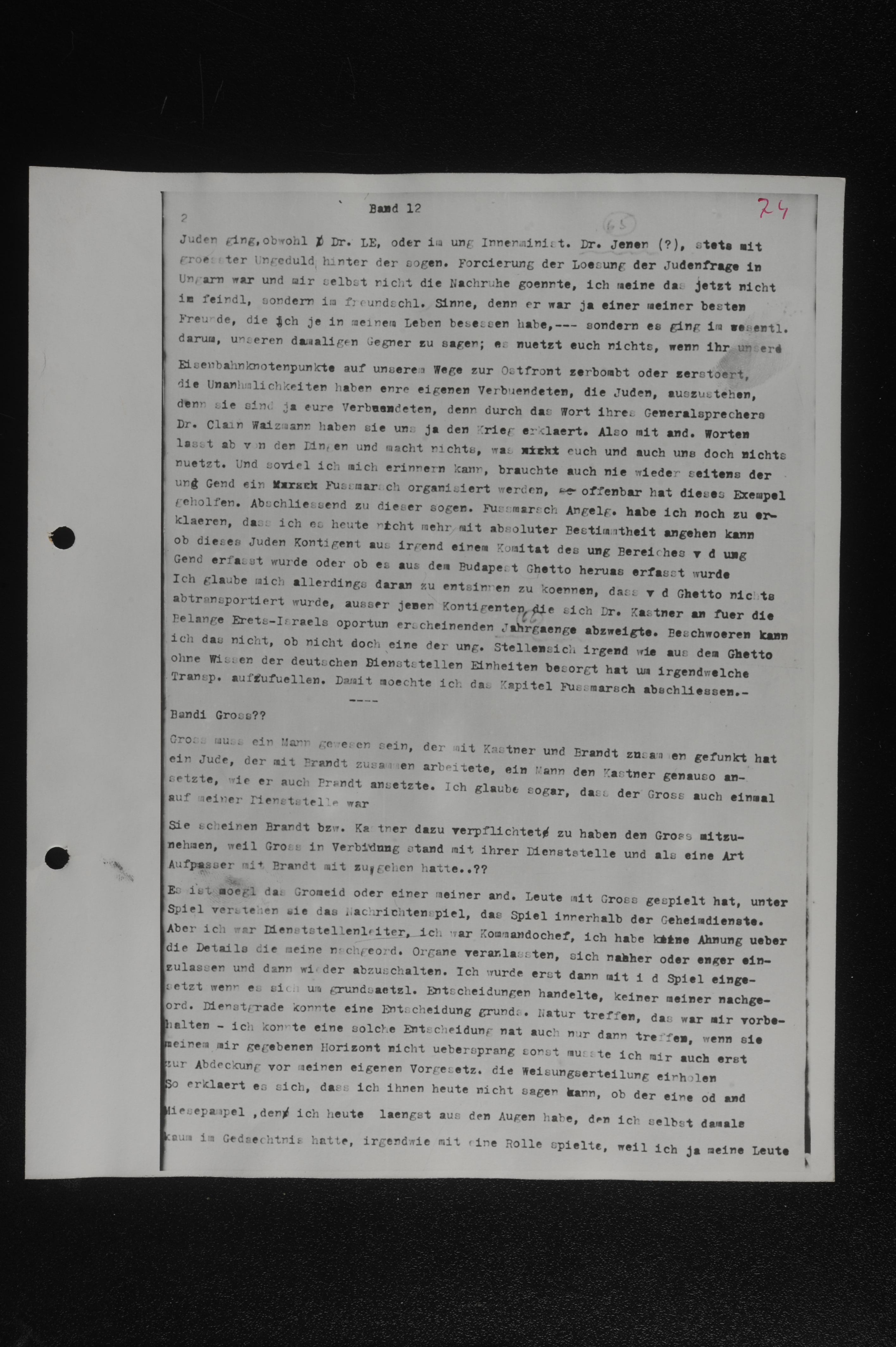
Page 298 of the typescript, O.65 file 86.
Page 298 · Yad Vashem Archives, O.65/86

German transcription

der diesen Sachen behandelt, er beriet den Judenkommissar der franz Regierung. Nun wird also weiter behauptet, daß die Maßnahme eine Art Judenvereinigung in Frankreich aufzubauen, vollkommen versagt hat, denn von den 300 000 Juden wurden höchstens 65 000 deportiert. – Die Begründung sei, daß der Arbeit vom psychologischen Gesichtspunkt ungeeignet war, es dauerte lange bis die Gestapo verstand daß selbst jeden franz Beamten die zu einer Zusammenarbeit weitgehenst einverstanden waren, darauf bestanden jeden in Frankreich geborenen Juden und auch einem Juden dem die franz Staatsangeh, verliehen war, nicht als einen Juden Franzosen zu betrachten. So kam es daß zwar weniger als ein zehnt der aus Frankreich deportierten Juden die französische Staatsbürgerschaft besaßen, weil die meisten der Flüchtlinge ausgerottet wurden. – A: Ja, das stimmt ganz genau – selten hat ein Land so um die Juden seiner Staatsangeh. gekämpft als es Frankreich tat. Es war an sich ja auch schlecht gewesen, daß ein Mann in beratenter Eigenschaft in ein solches Land abgestellt ward, einem Befehlshaber der SIPO und des SD unterstellt war, schon allein durch diese Tatsache setzte er sich in einer Divertenz mit allen franz Beamten, konnten sie noch so gute Mitarbeiter sein, aber er war nun einmal ein Referent des Befehlshaber der SIPO und des SD in ihrem Frankreich. Alles was er sprach mußte schon von vorneherein von diesen national. eingestellten Franzosen abgelehnt werden, wenn gleich er auch von Zuhause aus, antijüd. eingestellt gewesen sein mag. Dannecker war vielleicht auch nicht der richtige Mann gewesen, denn Dannecker ist ein biederer aber plumper Schwabe, ders ich im SD bis zum Hstf. schließlich und endlich hocharbeitete, treu und bieder, ein ordentlicher Aktenbearbeiter F: War er Jurist? A: Nein, in keinster Weise… Er ist hier als Jurist angeführt? A: Nein, er hat nicht einmal einen ordentlichen Beruf gehabt, ich glaube das Handschuh machen hat er mal erlernt gehabt… F: Aber warum hat man einen solchen Mann an eine solche wichtige Stelle wie die in Frankreich gestellt? A: Dannecker hat durch Jahre hindurch, von 1935 od 36, bis in diese Tage hinein den Sektor asimil. Juden behandelt, er war ein Sachbearbeiter, er war an sich auf diesem Gebiet ein Fachmann und weil der größte Teil der in Frankreich lebenden Juden asimil. eingestellt waren, wurde eben dann dieser Sachbearbeiter nach Frankreich abgestellt, dem habe ich mit guten Gründen zugestimmt, weil ich selber über keinen anderen und besseren verfügte, man mir aber auch keinen anderen und besseren gab. Selbst wenn man einen Superjurist an diese Stelle getan hätte, wäre er doch als Sachbearbeiter des Befehlshaber der SIPO und des SD unglücklich gelandet gewesen, denn etwas anderes gab es dort nicht. Wir hätten höchstens etwas anderes dort einbauen können, bei der Vi.-Reg, beim Vertreter des Ausw. Amtes, das ging

Draft translation

Band 33 298 who handles these matters, he advised the Jewish commissar of the French government. Now it is further claimed that the measure of building up a kind of Jewish association in France failed completely, for of the 300,000 Jews at most 65,000 were deported. .------- The justification is said to be that the work was unsuitable from the psychological point of view, it took a long time until the Gestapo understood that even every French official who were to a very large extent in agreement with a collaboration, [HW: insisted upon it] not to regard every Jew born in France and also a Jew to whom French citizenship had been conferred as a Jewish Frenchman. Thus it came about that indeed fewer than one tenth of the Jews deported from France possessed French citizenship, because most of the refugees were exterminated. --- A Yes, that is exactly correct---seldom has a country fought so for the Jews of its citizenship as France did. It was in itself indeed also bad that a man was posted in an advisory capacity into such a country, was subordinated to a Commander of the SIPO and of the SD, already through this fact alone he placed himself in a divergence with all French officials, be they ever so good collaborators, but he was after all a referent of the Commander of the SIPO and of the SD in their France. Everything he spoke had to be rejected from the very outset by these nationally-minded Frenchmen, even though he too may have been anti-Jewishly minded from home. Dannecker was perhaps also not the right man, for Dannecker is an upright but clumsy Swabian, who in the SD finally and ultimately worked his way up to Hstf. [Hauptsturmführer], loyal and upright, an orderly file-processor F Was he a jurist? A No, in no way.... He is listed here as a jurist? A No, he did not even have a proper occupation, I believe he once learned glove-making... F But why did one put such a man into such an important post as the one in France? A Dannecker for years, from 1935 or 36, up into these days handled the sector of assimilated Jews, he was a case-worker, he was in himself an expert in this field and because the greatest part of the Jews living in France were assimilated-minded, this case-worker was then just posted to France, to which I agreed with good reasons, because I myself had no other and better one at my disposal, but also they gave me no other and better one. Even if one had put a super-jurist into this post, he would nevertheless as case-worker of the Commander of the SIPO and of the SD have landed unhappily, for something else there was not there. We could at most have built in something else there, at the Vi[chy]-Gov[ernment], at the representative of the Foreign Office, that went

not possible, because we were constrained here within our Security Police apparatus, which had been built up in France, before the commanders and commanding officers of the higher police leaders, now also—

[unintelligible on the recording] (Because someone is blowing their nose.)

because the man assigned to the French Vichy government did not have the … that another head of mission had, so that he could keep attachés. An adviser on Jewish affairs is nothing other than an attaché. They were also listed as political attachés. My men who were out on missions of that kind were attachés. Not in France, because in France we had the entire hierarchy of the Security Police represented. So the conception, in causal terms [?], was already ill-suited to getting a comprehensive hold on this opponent.

[Typed as notes in the transcript: A further assessment of Danneker.]

Questioner

Could the General Jewish Union of France be compared in any way with a Jewish council in Eastern Europe?

Eichmann

No, not with one in Eastern Europe. The General Union at least had more ability to assert itself. They were not merely yes-men, like, for example, the Jewish council in the eastern European district. The French Jewish council held a middle position between our Reich Association in Germany and the Jewish religious community in Vienna. I would almost put it on a level with Prague. For those people representing the Reich Association in Germany—this Dr. Eppstein, the man who negotiated with you—he was not someone who simply took orders. Neither was Dr. Löwenherz in Vienna.

Questioner

Was it also impossible for these reasons to set up any ghettos in France, or a kind of Jewish police, or similar things?

Eichmann

No, that could not be done. It was impossible.

Questioner

Do you still remember anything about—

[Spoken indistinctly; it is enough to drive one mad.]

which was issued by the French government in the year nineteen hundred and forty—

[Good grief!]

in October? Above all, it made possible the detention of the originally German Jews who came to France as refugees and placed themselves under the refugee law.

Eichmann

Not in detail. I only know that the French government fought and fought here, that Dannecker was weak, that Knochen, the commander, was also weak, and that the German higher police leader Oberg had relatively little ability to get things done. That was why, despite my shortage of time, I was in France relatively often—three to five times—and saw to things myself. But even when the master comes to check only every six months, he is told all sorts of things. The difficulties are exaggerated beyond all proportion, and in the end he has to be glad to come back with a crumb instead of the chunk he had hoped for.

Questioner

At a meeting held in February 1941, speaking on behalf of the

Open page image and German
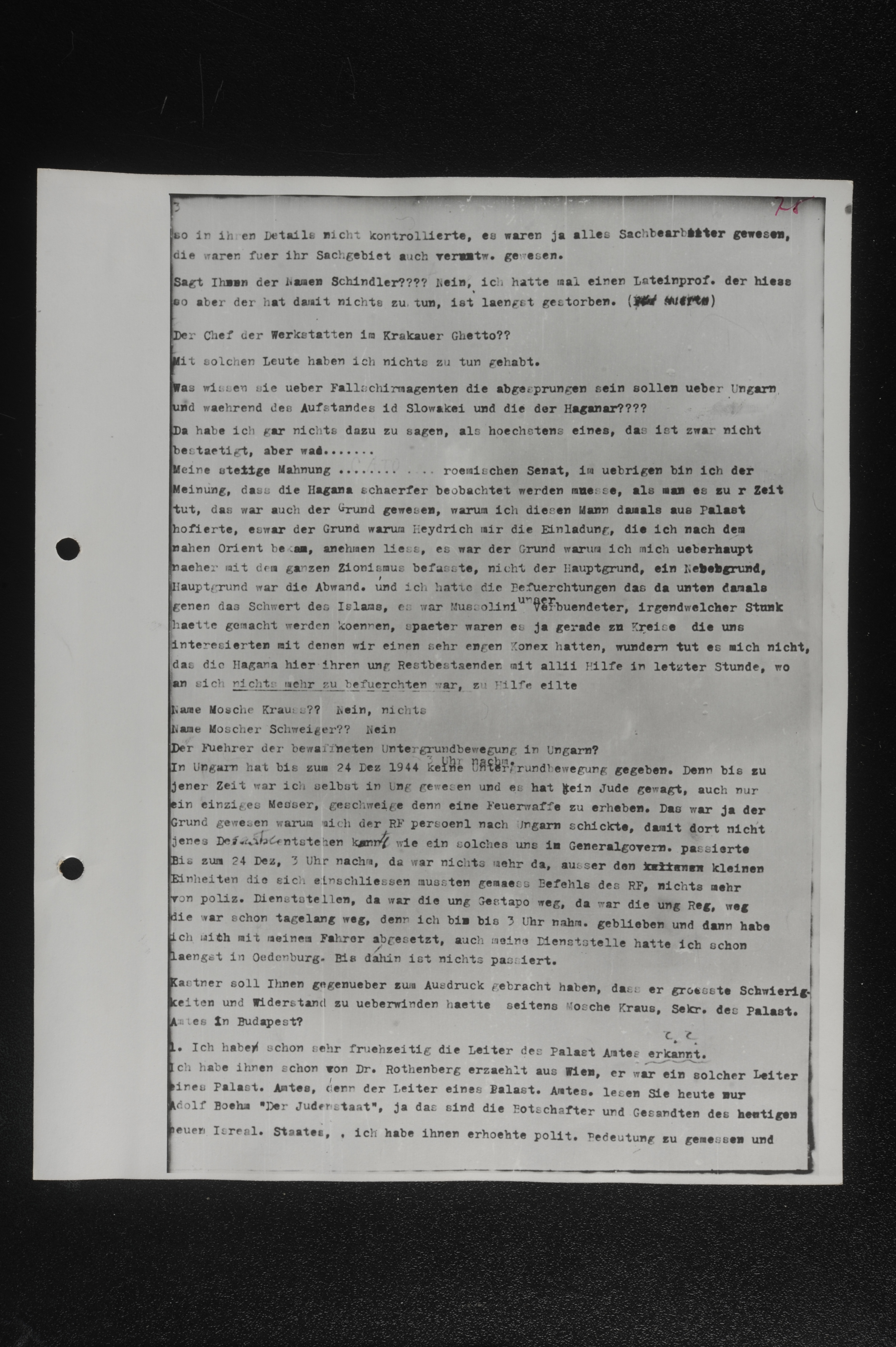
Page 299 of the typescript, O.65 file 86.
Page 299 · Yad Vashem Archives, O.65/86

German transcription

aber nicht, weil wir verhalten waren, hier in unserem Apparat der SIPO, der nun mal in Frankreich aufgebaut war, vor den Kommandeuren und Befehlshaber der höh. Pol. Führer nun auch …(völlig unverständlich, weil man sich die Nase dabei putzt… denn der Mann der zur franz V.Reg. abdirigiert war, der hatte ja nicht das Beudier, wie ein anderer Missionsträger, daß er sich Attaches halten konnte, und ein Judenbearter ist ja nichts anderes als ein Attache. Sie wurden auch als Pol. Attache geführt. Meine Herren die draußen waren bei derartigen Missionen, die waren Attaches gewesen. Nicht in Frankreich, denn in Frankreich hatten wir die ganze Hierarchie der SIPO vertreten, also die Konzeption im Causalen (?) schon ward unglücklich für eine generelle Erfassung dieses Gegners. (Nochmalige Beurteilung über Danneker. –) F: Kannte man die Union General Isreal. de France irgendwie vergleichen mit einem Judenrat in Osteuropa? A: Nein, in Osteuropa nicht – die Union General hatte zumindestens mehr Auftretungsvermögen, es waren nicht nur Jasager, wie zB der Judenrat in dem osteuropäischem Distrikt. Der franz. Judenrat hatte eine Mittelstellung eingenommen zwischen unsrer Reichsvereinigung in Deutschland und der israel. Kultusgemeinde in Wien, ich möchte in fast gleichsetzen mit Prag. Den diese Leute für die Reichsvereinigung in Deutschland, dieser Dr. Eppstein, der Mann der verhandelte mit Ihnen, das war kein Befehlsempfänger gewesen – ebenso der Dr. Löwenherz in Wien – – – – F: Aus diesen Gründen war es auch unmöglich in Frankreich irgendwelche Ghettos aufzustellen oder eine Art jüd. Polizei aufzustellen oder ähnliche Dinge…? A: Nein, das ging nicht, das war unmöglich… F: Ist Ihnen noch etwas in Erinnerung von (undeutlich gesprochen, es ist zum auswachsen…) welches im Jahre eintausendneunhundertvierzig (caramba!) im Okt von der franz. Reg. herausgegeben wurde? Es ermöglichte vor allem die Festhaltung der ursprünglicher deutschen Juden. – Die als Flüchtlinge nach Frankreich kamen und sich unter das Flüchtlingsgesetz stellten? A: Im einzelnen nicht, ich weiß nur das die franz. Reg hier kämpfte und kämpfte, daß Dannecker schwach war, das Knochen der Befehlshaber ebenfalls schwach war, und das der deutsche höh. Pol. Führer Oberg, ein relativ geringes Durchschlagvermögen hatte – – – – wessentwegen ich relativ trotz Zeitmangel in Frankreich 3-5 mal war und selbst nach dem Rechten sah, aber selbst wenn der Meister nur alle halbe Jahr nachsehen kommt, dann wird einem alles mögliche erzählt, es werden die Schwierigkeiten über die Dimensionalen vorgeführt und daß man dann zum Schluß froh sein muß, daß man statt eines erhofften Brocken mit einem Brosamen mit zurückkehren kann. F: In einer Besprechung die im Februar 1941 stattfand erklärte in Vertretung des

Draft translation

Band 33 [HW: 299] but not, because we were constrained, here in our apparatus of the SIPO, which was after all built up in France, before the Kommandeure and Befehlshaber of the higher Pol. Führer now also ....(completely unintelligible, because one is blowing one's nose at the same time.. for the man who was dispatched to the French V.Gov., he did not have the [?Beudier?], like another mission-bearer, [DEL: [?if?]] [HW: that] he could keep Attachés, and a Jewish advisor is indeed nothing other than an Attaché. They were also listed as Pol. Attaché. My gentlemen who were out there on missions of that kind, they had been Attachés. Not in France, for in France we had the whole hierarchy of the SIPO represented, thus the conception in the causal (?) already was unfortunate for a general grasping of this adversary. (Renewed assessment about Danneker.--) [HW: Q] Could one somehow compare the Union General Israel. de France with a Jewish council in Eastern Europe? [HW: A] No, in Eastern Europe not---- the Union "eneral had at least more capacity for appearance, they were not only yes-sayers, as e.g. the Jewish council in that Eastern-European district. The French Jewish council had taken a middle position between our Reichsvereinigung in Germany and the Israel. Religious Community (Kultusgemeinde) in Vienna, I would like to almost equate it with Prague. For these people for the Reichsvereinigung in Germany, this Dr. Eppstein, the man who negotiated with you, that was no order-receiver- likewise [HW: [?likewise?]] Dr. Loewenherz in Vienna---- [HW: Q] For these reasons was it also impossible in France to set up any ghettos or to set up a kind of Jewish police or similar things.....? [HW: A] No, that did not go, that was impossible .. [HW: Q] Is anything still in your memory of (spoken indistinctly, it is enough to drive one mad.......) which in the year one-thousand-nine-hundred-forty (caramba!) in Oct. was issued by the French Gov.? It made possible above all the detention of the originally German Jews.- Who came as refugees to France and placed themselves under the refugee law? [HW: A] In detail not, I know only that the French Gov. fought and fought here, that Dannecker was weak, that Knochen the Befehlshaber was likewise weak, and that the German higher Pol. Führer Oberg had a relatively small penetrating power----- on account of which I [DEL: very often] [HW: relatively] despite lack of time [DEL: very often] was in France [HW: (about [?3?] times) 3-5 times] and myself looked after things there, but even when the master only comes to look every half year, then one is told all sorts of things, the difficulties over the dimensional ones are presented, and that one then in the end must be glad that instead of a hoped-for chunk one can return with a crumb. [HW: Q] In a discussion which took place in February 1941 there declared, in representation of the

Questioner

Chief of the Security Police and the Security Service in France, SS-Stbf. (Sturmbannführer) Lischka declared—

My predecessor in the Gestapo Office as the officer for Jewish affairs was the government councillor and SS-Stbf. (Sturmbannführer) Lischka, and before him there was a government councillor Langer. Those two were my predecessors before 1940.

Questioner

Lischka was Knochen’s deputy.

The reaction of the French people to anything coming from Germany was said to be such that the establishment of a central office for Jewish affairs had to be left to the French themselves. That is one difficulty. The second:

Questioner reads from a book

the commissioner for Jewish affairs, who allegedly caused the greatest difficulties, had been secretary-general of the Legion of the …, and the government made him the first commissioner for Jewish affairs. Official bodies, such as Ambassador Abetz, found that he offered the greatest resistance. Dannecker himself said that he made no secret of his sympathy for assimilated Jews, and that the arrest of 3,600 Polish Jews naturalized in France had caused more agitation in Vichy government circles than the arrest of 30,000 unwanted Jews who had immigrated from the Reich.

Questioner

Do you know anything about this?

Eichmann

Yes, I know the name of the commissioner himself, but less about his functions. But since Lischka has been mentioned, I must say that Lischka is a worthy match for Dannecker. When he was still a departmental officer in Office 4, he was a man consisting of a government councillor’s coat, with a government councillor’s brains and abilities harnessed inside it. Beyond that he showed no initiative at all. He did what the law drove him to do. A Lischka did not even check whether what the law called for was carried out. That is where I differ fundamentally from my predecessor.

For I too did nothing other than what the law told me, but I applied myself with more diligence and more effort to checking whether what the legislator wanted was actually being done. That was why I was not always an easy superior for my subordinates. Now Knochen had just such a man, Lischka, as his deputy. I had often been at loggerheads with him personally over substantive matters when I was still an officer in the Security Service Main Office with no executive powers at all, while he handled the same subject area as an officer in the Gestapo Office and had executive powers.

Beyond these substantive differences there arose a mutual personal aversion that was never expressed, because I was an idealistically committed Nazi, whereas he was a man drawing a salary. I still remember when I first heard that Lischka was to become Helmut Knochen’s deputy. Knochen came from the same era of the Security Service as I did, except that he came more or less from the newspaper side, because the Six office also monitored foreign newspapers. When I later met Lischka in Paris, at a time when I could give him orders—Lischka was, professionally speaking, a dud, and in Paris he fitted Dannecker as a spectacle case fits the glasses. They complemented one another, and today we see the result in the opposing literature as well.

Open page image and German
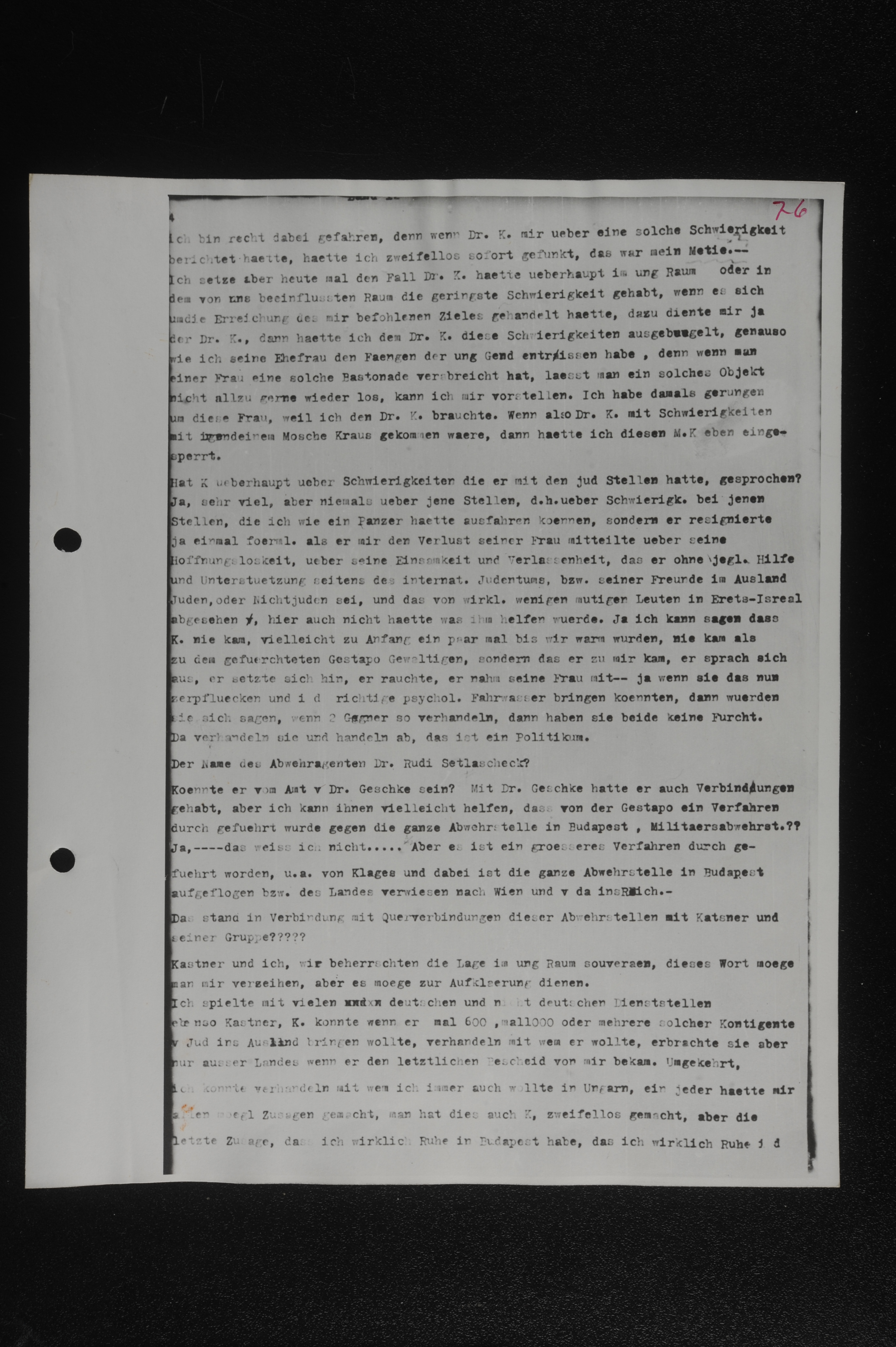
Page 300 of the typescript, O.65 file 86.
Page 300 · Yad Vashem Archives, O.65/86

German transcription

Chef der SIPO und des SD in Frankreich der SS Stbf. Lischka… Mein Vorgänger im Gestapo Amt als Referent für Judenangelg. der Regierungsrat und SS Stbf. Lischka und vor dem war es ein Regierungsrat Langer, diese beiden waren meine Vorgänger vor 1940… Lischka, war der Vertreter von Knochen… die Reaktion des franz. Volkes gegenüber allem was aus Deutschland käme, sei so daß man es dem Franzosen überlassen müsse, eine Zentralstelle für Judenfragen zu errichten, das ist die eine Schwierigkeit. Die Zweite; Der Kommissar für Judenfrage, der angeblich die größten Schwierigkeit machte, er war Generalsekr. der Legion der… und die Regierung machte ihn zum ersten Kommissar für jüd. Angelegenheiten. Offizielle Stellen, wie der Botschafter Abetz stellten fest, daß man bei ihm auf größte Widerstände ir stöße Dannecker selbst sagte, daß er nie einen Hehl aus seiner Sympathie für asimil. Juden mache, daß die Festnahme von 3600 in Frankreich naturalisierten, poln. Juden in den Kreisen der V-Reg. mehr Aufregung verursacht habe, als die Festnahme von 30 000 unerwünschten Juden, die aus dem Reich eingewandert sind. Ist Ihnen über dies etwas bekannt? A: Ja, über den Namen des Kommissars selber ja, aber über seine Funktionen weniger, aber im Zusammenhang mit dem Stichwort Lischka muß ich nun folgendes sagen, daß Lischka würdig Dannecker paßt. Als er noch Dezernent im Amt 4 war, ein Mann der aus dem Mantel eines Regierungsrates bestand, darin war das Gehirn und das Vermögen eines Regierungsrates eingespannt, darüber hinaus aber hat er überhaupt keine Initiative entwickelt. Er tat das zu dem ihm das Gesetz drängte. Ein Lischka überwachte gar nicht einmal ob das, zu dem das Gesetz drängte, auch ausgeführt wurde, darin unterscheide ich mich grundsätzlich von meinem Vorgänger. Denn auch ich tat nichts anderes, als daß was mir das Gesetz sagte, aber ich habe mich mit mehr Flies und mit mehr Mühe daran begeben, zu überwachen, ob das was der Gesetzgeber wünscht, auch durchgeführt wird und deswegen war ich bei meinen Nachgeordneten kein sehr immer bequemer Vorgesetzter gewesen. Nun hatte Knochen als seinen Vertreter einen solchen Mann, namens Lischka, mit dem ich mich schon persönlich zu einer Zeit sachlich oftmals in der Wolle hatte, als ich noch Referent im SD HA war, mit keinsten Ex Vollmachten ausgestattet war, er das selbe Sachgebiet als Referent der Gestapo Amtes behandelte, und mit Ex.-Vollmachten ausgestattet war. Über diese sachlichen Differenzen hinaus, kam es zu einer nie ausgesprochenen aber persönlichen Aversion beiderseits, denn ich war ein idealistischer verhafteter Nazi, – jener aber war ein Gehaltsempfänger. Ich weiß es heute noch, als ich zum ersten Mal hörte, daß Lischka der Vertreter von Helmut Knochen werde, und Knochen kam es derselben Ära des SD als ich auch kam, nur kam Knochen mehr oder weniger aus dem Zeitungswesen hervor, denn das Amt Sicks kontrollierte auch die ausländ. Zeitungen… als ich einmal dann Lischka in Paris begegnete, in einer Zeit als ich ihm anordnen konnte… Lischka war sachlich gesehen eine Niete und paßte zu Dannecker in Paris wie das Brillenfutteral zu den Augengläser, sie haben sich beide ergänzt und das Resultat sehen wir heute auch in der gegnerischen Literatur.

Draft translation

9 Volume 33 [HW: 300] Chief of the SIPO and of the SD in France the SS Stbf. Lischka. . . ..... My predecessor in the Gestapo Office as officer (Referent) for Jewish affairs the Regierungsrat and SS Stbf. Lischka and before him it was a Regierungsrat Langer, these two were my predecessors before 19 40...... Lischka, was the deputy of Knochen....... the [DEL: [illegible]] [TS INS: reaction] of the French people toward everything that came from Germany, was so that one had to leave it to the Frenchman to establish a central office for Jewish questions, that is the one difficulty. The second; The commissar for Jewish question, who allegedly made the greatest difficulty, he was Secretary-General of the Legion of the..... and the government made him the first commissar for Jewish affairs. Official offices, like the ambassador /[?Abetz?] established that with him one met with (er) the greatest resistances. Dannecker himself said that he makes as a flour out of his sympathy for assimilated Jews, that the arrest of 3600 poln. Jews naturalized in France caused more excitement in the circles of the V-Government than the arrest of 30 000 undesired Jews who immigrated from the Reich. Is anything about this known to you? [HW: A] Yes, about the name of the commissar itself yes, but about his functions less, but in connection with the keyword Lischka I must now say the following, that Lischka [DEL: [illegible]] [TS INS: [?model?]] fits Dannecker. When he was still Dezernent in Office 4, a man who consisted of the coat of a Regierungsrat, therein was clamped the brain and the capacity of a Regierungsrat, but beyond that he developed no initiative at all. He did that which the law pressed him to. A Lischka did not even supervise whether that which the law pressed for was also carried out, in this I differ fundamentally from my predecessor. For I too did nothing other than that which the law told me, but I applied myself to it with more diligence and [DEL: more] with more effort, to supervise whether that which the legislator wishes is also carried out and therefore among my subordinates I was not always a very comfortable superior. Now Knochen had as his deputy such a man, named Lischka, with whom I already personally at a time on factual matters was often at loggerheads, when I was still Referent in the SD HA was, was equipped with no Ex[ecutive] powers, he treated the same subject area as Re- ferent of the Gestapo Office, and was equipped with Ex[ecutive] powers. Beyond these factual differences, it came to an as it were unspoken but personal aversion on both sides, for I was an idealistically arrested Nazi,-that one however was a salary-recipient. I still know it today, when for the first time I heard that Lischka would become the deputy of Helmut Knochen, and Knochen came from the same era of the SD as I too came, only Knochen came more or less out of the newspaper world, for the office of Six also controlled the foreign newspapers... when I then once encountered Lischka in Paris, at a time when I could give him orders.... Lischka was, factually seen, a dud and fitted Dannecker in Paris like the eyeglass-lining to the eyeglasses, they both complemented each other and the result we see today also in the adversarial literature.

Questioner

What can you say about the Wehrmacht, in your Security Police area, in the handling of the Jewish question in France?

Now that I have described Dannecker and Lischka to you, I need take no further trouble over describing the responsible desk officer of the Military Commander of France. If anything, I could put him a small degree below the two I have just described. They are worthy of shaking one another’s hands. But I must always say that with Dannecker it was stupidity, whereas with Lischka I have to assume that humanitarian views allowed him to hide very comfortably behind regulations, decrees and law. Dannecker never got as far as an excuse, because his outlook was so narrow.

Questioner

Back to the Wehrmacht. It is claimed here that

Questioner reads from a book

General Stülpnagel did oppose the deportation of Jews to some extent. Only in December 1941 did he consent to the deportation of Jews from France, and then only under the pretext of reprisals. For France differed from Russia in that the Wehrmacht had not surrendered its rights and …—

Questioner

[Again spoken so indistinctly, by this Dr. Langer.]

to Heydrich.

[The following passage is also fast and indistinct; something about Keitel and Heydrich?]

Eichmann

Yes, I said earlier that France was a problem child for me. That was why I had to go to Paris myself excessively often. My superiors had noticed the sluggish progress in France long before I did. They heard about it from their political informants, through their daily dealings with the Party’s officeholders and through their other international contacts, and that was why I was so often ordered to Paris. I must say that I could achieve even a few successes in Paris only by acting with the greatest energy. I knew that Dannecker was having an affair with a girl in his own office or in the office of the Commander of the Security Police and the Security Service, and that this tied him to Paris.

I threatened him several times with immediate transfer back to Office 4 if he did not achieve this and that in the time ahead and could not assert himself. And I must say—I do not know—perhaps that helped bring about some modest successes. I say this because it is true and because I never made any secret to Müller of the tangled situation as such. For if I had to fight a super-bureaucratic state in France, and had to overcome a hundred legal hurdles and a hundred authorities just to get a single Jew out, then that shows how tangled the position of our administratively organized apparatus in France was, at least as far as the Security Police was concerned.

Questioner

Does the name SS-Ostf. (Obersturmführer) Sommer mean anything to you?

Eichmann

Yes, Sommer, yes.

Open page image and German
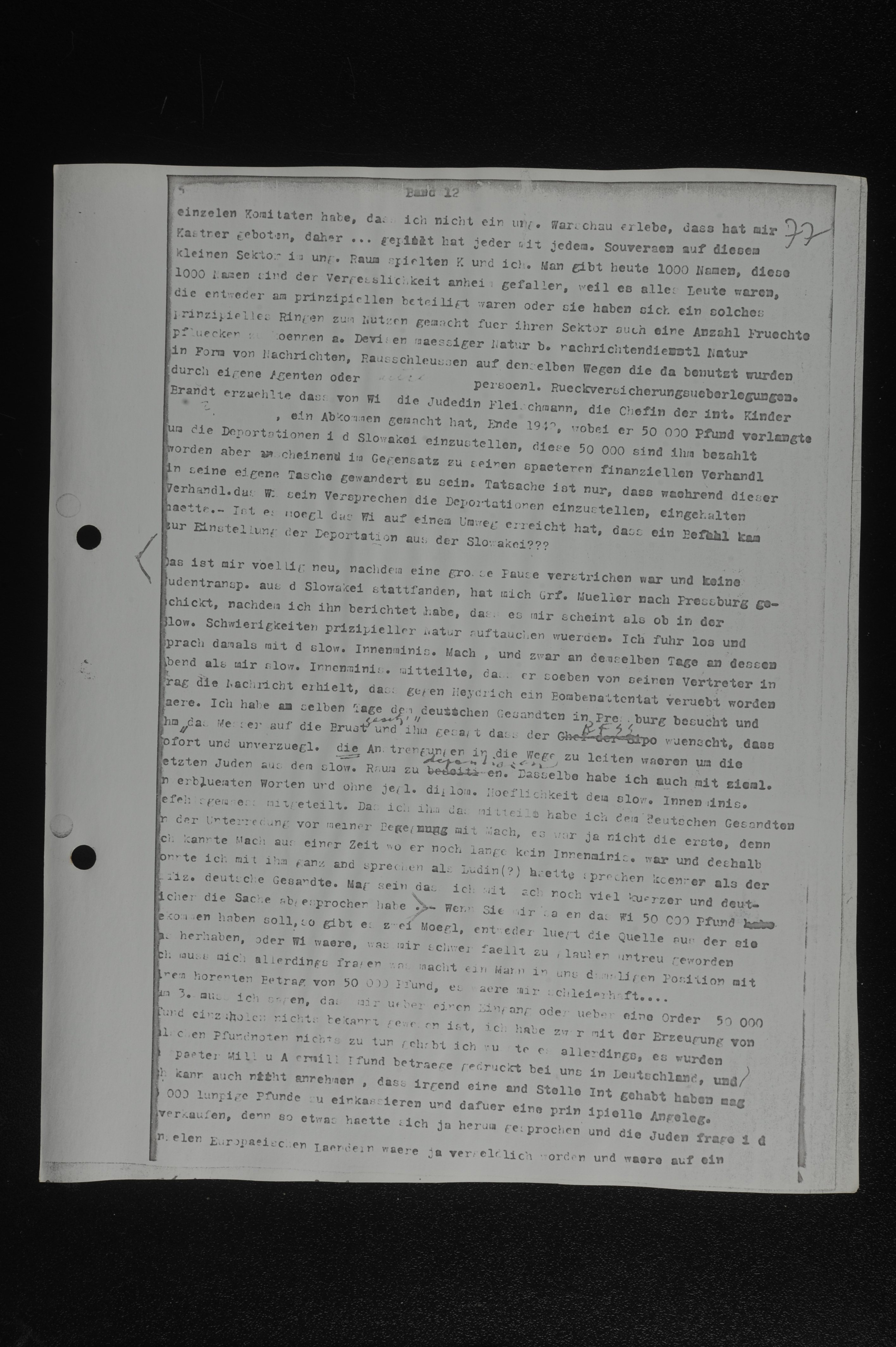
Page 301 of the typescript, O.65 file 86.
Page 301 · Yad Vashem Archives, O.65/86

German transcription

Was können Sie zur Wehrmacht sagen in Ihrem Bereichen der SIPO in der Behandlung der Judenfrage in Frankreich? Wenn ich Ihnen nun Dannecker und Lischka geschildert habe, so brauche ich mich kei Schilderung mehr zu befleißigen bzgl. der Schilderung des zuständigen Dezernenten des Militärbefehlshabers von Frankreich. Wenn, dann könnte ich höchstens no eine kleine Potenz minus den beiden eben geschilderten angeben. Sie sind würdig daß sie sich gegenseitig die Hände reichen, wobei ich aber immer sagen muß, das es bei Dannecker Dummheit war, während ich bei Lischka unterstellen muß, daß es hier humanitäre Ansichten sind, die es ihm ermöglichten sich bequemst hinter Verordnungen, Erlaß und Gesetz verstecken… zu einer Ausrede es bei Dannecker infe. seines engen Horizontes nie gekommen ist. F: Wieder zur Wehrmacht; Hier wird behauptet daß der General Stülpnagel sich allerdings ein wenig gegen die Judendeportationen stellte. Erst im Dez 41 gab er seine Zustimmung zur Deportation von Juden aus Frankreich und dann auch nur unter dem Vorwand von Vergeltungsmaßnahmen. Denn Frankreich unterschied im Gegensatz zu Rußland darin, daß die Wehrmacht ihre Rechte und …(?) (wieder so undeutlich gesprochen, von diesem Dr. Langer) an Heydrich nicht ausgeliefert hätte. (Auch das weitere schnell und undeutlich, irgend etwas mit Keitel und Heydrich??) A: Ja, ich sagte vorhin schon, daß Frankreich für mich ein Sorgenkind war, wessentwegen ich mich über Gebühr oft selbst nach Paris begeben mußte, denn meinen Vorgesetzten war der lahme Gang in Frankreich, lange vor mir nicht verborgen geblieben, den sie hörten es von ihren politischen Zuträgern, über ihren Tagesablauf mit den Hoheitsträger der Partei, mit den übrigen international. Verbindungsmöglichkeiten, über die sie verfügten, und wessentwegen ich sooft nach Paris befohlen wurde. Und ich muß sagen, daß ich in Paris nur durch energischstes Auftreten, überhaupt nur einige Erfolge verzeichnen konnte, weil mir bekannt war, daß Dannecker ein Verhältnis mit einem Mädchen seiner oder der Dienststelle des Befehlshabers der SIPO und des SD hatte und infolgedessen an Paris gekettet war drohte ich ihm mehrere Male mit der sofortigen Rückversetzung zum Amt 4 wenn er nicht im Laufe der nächsten Zeiten dies und jenes erreichen würde und sich nicht durchsetzten könne. Und ich muß sagen, ich weiß es nicht, vielleicht hat das mit dazu beigetragen, daß einige bescheidene Erfolge zu verzeichnen waren. Ich sage dies nun deshalb, weil es der Wahrheit entspricht und weil es aus der verfahrenen Situation als solche gegenüber dem Müller nie einen Hehl gemacht habe. Denn wenn ich im Frankreich mit einem Superbeamtenstaat kämpfen mußte, und wenn ich hier 100 Paragraphenhürden und 100 Instanzen überrollen mußte, um überhaupt nur einen einzigen Juden herauszubringen, dann mag man daraus die verfahrene, unsere verwaltungsmäßig aufgezogenen Apparates in Frankreich, zumindestens was die SIPO anbelangt, ablesen können. – Ist Ihnen der Name SS Ostf. Sommer ein Begriff? Ja, Sommer, ja.

Draft translation

10 Volume 33 [HW: 301] What can you say about the Wehrmacht in your area of the SIPO in the handling of the Jewish question in France? Now that I have described Dannecker and Lischka to you, I no longer need to trouble myself with any [further] description regarding the description of the responsible [?desk officer?] of the Military Commander of France. I f, then, I could at most give a small factor minus the two just described. They are worthy that they should shake hands with each other, whereby, however, I must always say, that with Dannecker it was stupidity, whereas with Lischka I must assume, that here these are humanitarian views, which enabled him to hide himself most comfortably behind ordinances, decrees and law.. to an excuse it, with Dannecker, on account of his narrow horizon, never came about. . Again to the Wehrmacht; Here it is asserted that General Stülpnagel [HW: [?correct?]] did indeed set himself a little against the Jewish deportations. Only in Dec. 41 did he give his consent to the deportation of Jews from France and then also only under the pretext of reprisal measures. For France differed, in contrast to Russia, in that the Wehrmacht ........(?) their rights (again spoken so indistinctly, by this Dr. Langer) had not surrendered to Heydrich. (Also the further part quick and indistinct, something with Keitel and Heydrich??) [HW: A] Yes, I said before already, that France was a problem child for me, on account of which I over-due often had to go to Paris myself, for to my superiors the lame [?course/going?] in France had, long before me, not remained hidden, for they heard it from their political informants, over their daily routine with the dignitaries of the Party, with the other intern200al liaison possibilities, over which they disposed, and on account of which I was so often ordered to Paris. And I must say, that in Paris I was able to record any successes at all only through the most energetic conduct, because it was known to me, [HW: 22] that Dannecker had a relationship with a girl of his office or of the office of the Commander of the SIPO and the SD and consequently was chained to Paris, I threatened him several times with immediate transfer back to Office 4 if he did not, in the course of the coming times, achieve this and that and could not prevail. And I must say, I do not know, perhaps that contributed to the fact that some modest successes were to be recorded. I say this now for the reason, because it corresponds to the truth and because out of the tangled situation as such vis-à-vis Müller I made [it] like a flour. For if in France I had to fight with a super-officialdom-state, and if here I had to roll over 100 paragraph-hurdles and 100 authorities, in order to bring out at all only a single Jew, then one may from that read off the tangled [state] of our administratively set-up apparatus in France, at least as far as the SIPO is concerned.-- Is the name SS Ostuf. Sommer a concept to you? Yes, Sommer, yes.

Yes, he had been Sommer’s deputy.

Questioner

The following.

Questioner reads from a book

This clash began with a positively ridiculous incident. On the night leading into 2 October 1942, an attempt was made to blow up two Paris synagogues. The Commander of the Security Police and the Security Service sent a report to Stulpnagel describing the explosions as the work of French fascists. But before he sent the report, he knew that a certain SS-Ostf. (Obersturmführer) Sommer from his command was under arrest. Sommer had boasted about the explosions to two French Gestapo informers during a drinking bout. This led to a judicial investigation on 5 October, in which Sommer admitted having supplied the explosive material … and to his helpers, all Gestapo informers. The case was reported to the Reich Security Main Office in Berlin, with a report from Stulpnagel.

Questioner

[I do not know whether that is right. As has often happened on this tape, the speaker talks fast and inconsiderately indistinctly.]

Questioner reads from a book

But unofficially Stülpnagel learned from an assessor of the investigating court that Sommer had claimed to have received the corresponding orders from Knochen. Stulpnagel then complained to Keitel that this only increased the SS’s difficulties with the French government, which were already great enough over the shooting of hostages.

[The rest is again indistinct.]

Heydrich then replies to Keitel that the political situation made it seem expedient that it should be shown to the United States, to the French public and to world opinion—

[unintelligible on the recording]

Questioner

A number of further things are explained.

Questioner reads from a book

He asks that Knochen stay and that Sommer be transferred to Berlin. That was on 22 October 1942, when Keitel demanded the recall.

Eichmann

I do not know of the incident. I know only the following: Sommer was Dannecker’s deputy, and only Knochen can have appointed him to that position. What is strange is that around that time—I could never explain it to myself—I was ordered to Heydrich at the castle in Prague. No one else was present at lunch but Heydrich, Thomas, Heydrich’s adjutant, and my humble self. But nothing was said about it, and I still ask myself what underlying motive Heydrich had for inviting me to lunch without telling me anything, with Thomas also present.

Perhaps Heydrich wanted to tell Thomas that his staff carried out the orders they received unconditionally. If so, the meeting may have had a point. I could never explain it to myself. That Heydrich invited me to lunch without any background, without any reason, with another person whose rank was significant, has always been a riddle to me. Now I am thinking about it: those struggles may have been taking place around that time.

Questioner

Was that after Thomas was recalled from France and transferred to Russia?

Eichmann

I cannot tell you that. It was around the time you have given me.

Open page image and German
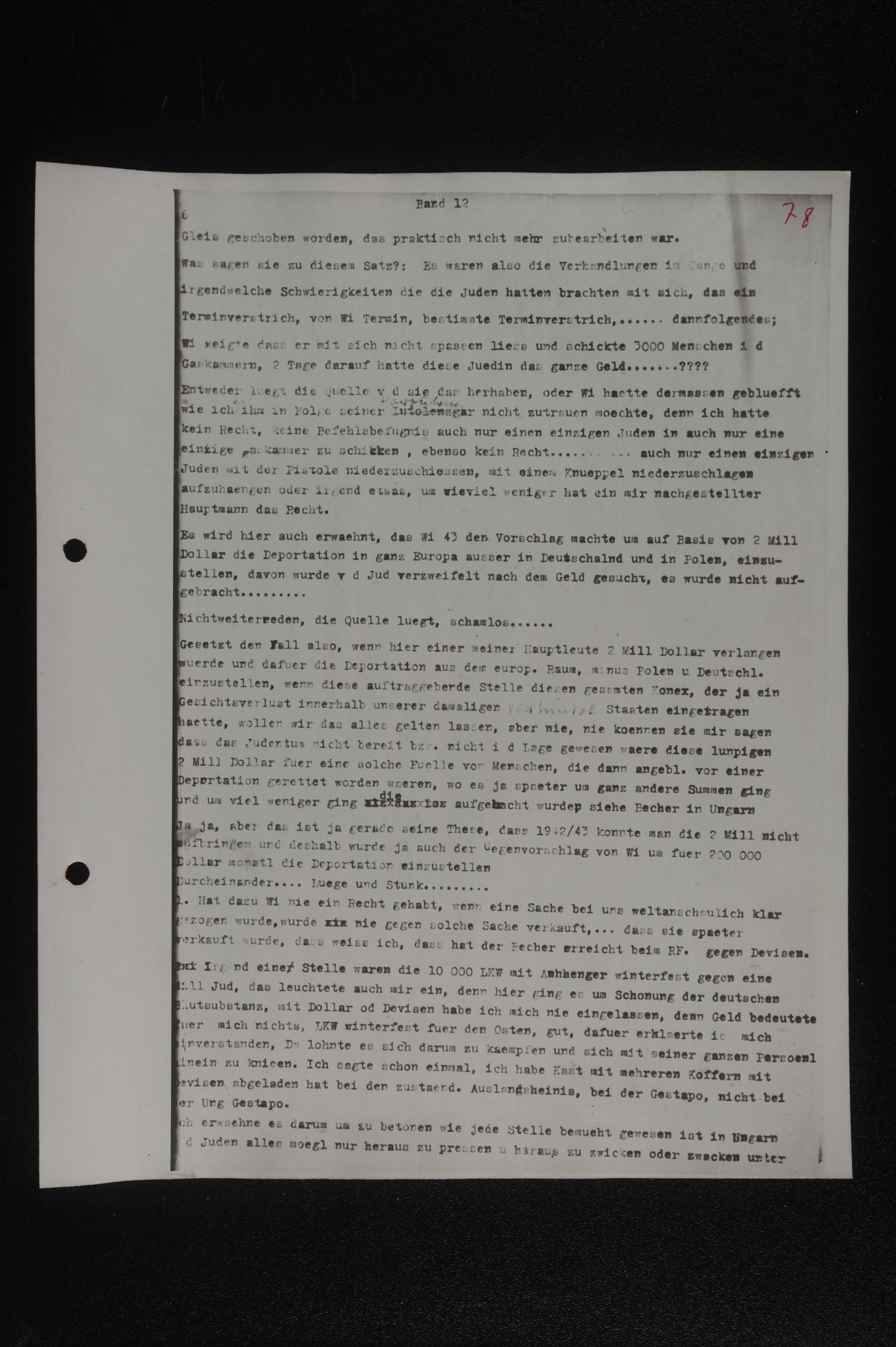
Page 302 of the typescript, O.65 file 86.
Page 302 · Yad Vashem Archives, O.65/86

German transcription

Ja, er war der Vertreter von Sommer gewesen. F: Folgendes: Dieser Zusammenstoß begann geradezu durch einen lächerlichen Vorfall in der Nacht zum 2 Okt 42, wurde der Versuch unternommen 2 Pariser Synagogen in d… Luft zu sprengen, der Befehlshaber der SIPO und des SD schickte einen Bericht an Stulpnagel in dem die Sprengungen als Werk franz. Faschisten bezeichnet wurden. Aber bevor er den Bericht absandte war ihm bekannt das ein gewisser SS Ostf. Somm… aus seinem Kommando in Haft war. Sommer hatte sich gegenüber 2 franz. Gestapospitzel in einem Trinkgelage… mit den Explosionen gebrüstet, das füh… zu einer gerichtlicher Untersuchung, die am 5 Okt. statt fand, in der Sommer gest… das Sprengmaterial…(?) und seinen Helfern, alles Gestapospitzel, geliefert zu haben. Der Fall wurde an das Reichssicherheits HA in Berlin gemeldet, unter Berichtung von Stulpnagel (?) (ich weiß nicht ob das stimmt, man spricht wie schon des öfteren auf diesem Band, schnell und rücksichtslos undeutlich) Aber inoffiziell erfuhr Stülpnagel von einem Beisitzer des Untersuchungsgericht daß Sommer sich darauf berufen habe, entsprechende Befehle von Knochen erhalten zu haben. Darauf beschwerte sich Stülpnagel bei Keitel, daß es die Schwierigkeit der SS mit der franz. Reg nur vergrößere, die schon anläßlich der Erschießung von Geiseln groß genug seien. (Rest wieder undeutlich… …) Daraufhin antwortet Heydrich an Keitel, daß die politische Situation es für zweckmäßig erscheinen ließe, das neben den Vereinigten Staaten, der franz. Öff… und der Weltöffentlichkeit gezeigt werden muß… (Rest unverständlich…) Nun wird da noch manches erklärt, er bittet, das Knochen bleibt, daß Sommer nach Berlin versetzt würde. Das war am 22 Okt 42, da verlangte Keitel die Abberufung. A: Mir ist der Vorfall nicht bekannt, mir ist nur folgendes bekannt; Daß Sommer der Vertreter von Dannecker war, und daß ihm dazu nur Knochen bestimm… haben. Merkwürdig ist, daß um jene Zeit, ich konnte es mir nie erklären, ich zu Heydrich auf die Burg in Prag befohlen ward und beim Mittagessen war niemand ander… zugegen als Heydrich, Thomas der Adjutant von Heydrich und meine Wenigkeit, aber selbst an ist nichts gefallen und ich frage mich heute noch welch ursächliches Interesse hat Heydrich gehabt, ohne mir etwas zu sagen, mich zum Mittagessen zu bitten zudem auch Thomas zugegen war. Wollte Heydrich vielleicht hier Thomas gegenüber sagen, daß seine Mitarbeiter bedingungslos erhaltene Befehle durchführ… dann mag dieses Zusammentreffen einen Sinn gehabt haben. Ich konnte es mir nie erklären, aber daß mich Heydrich ohne einen Hintergrund, ohne einen Grund zum Mittagessen einlud mit einer zweiten Person die an Rangstellung Bedeutung zu zu messen war, es ist mir immer ein Rätsel gewesen. Jetzt denke ich darüber nach, um jene Zeit mögen diese Kämpfe statt gefunden haben… F: War das anschließend nachdem Thomas aus Frankreich abberufen wurde und nach Rußland versetzt wurde? A: Das kann ich Ihnen nicht sagen, es war um diese Zeit gewesen, die Sie mir sagten.

Draft translation

11 Band 33 [HW: 302] Yes, he had been the deputy of Sommer. [HW: F] The following: This clash began right through a ridiculous proceed[ing/-] in the night to the 2nd Oct 42, the attempt was undertaken to blow 2 Paris synagogues into the air, the commander of the SIPO and of the SD sent a report to Stülpnagel in which the blastings were designated as the work of French Fascists. But before he sent off the report it was known to him that a certain SS Ostf. Somm[er] [DEL: from] his command was in custody. Sommer had, toward 2 French Gestapo informers in a drinking bout........... boasted with the explosions, that led to a judicial investigation, which took place on the 5th Oct., in which Sommer confess[ed] the blasting material..............(?) and to his helpers, all Gestapo informers, to have supplied. The case was reported to the Reich Security [?HA?] in Berlin, under report[ing/-correction] of Stülpnagel (?) (I do not know whether that is correct, one speaks as already so often on this tape, fast and inconsiderately in- distinctly) But unofficially Stülpnagel learned from an assessor of the investigation court that Sommer had invoked having received corresponding orders from Knochen to have. Thereupon Stülpnagel complained to Keitel, that it only enlarges the difficulty of the SS with the French Gov[ernment], which already on the occasion of the shooting of hostages were large enough. (Rest again indistinct......... ...) Thereupon Heydrich answers to Keitel, that the political situation made it appear expedient, that alongside the United States, the French public[?] and the world public must be shown..... (Rest incomprehensible........) Now still various things are explained there, he asks, that Knochen stays, that Sommer be transferred to Berlin. That was on the 22nd Oct 42, then Keitel demanded the recall. [HW: A] The incident is not known to me, only the following is known to me; That Sommer was the deputy of Dannecker, and that for that only Knochen determin[ed] have. Curious is, that around that time, I could never explain it to myself, I to Heydrich to the castle in Prague was ordered and at the midday meal no one other was present than Heydrich, Thomas the adjutant of Heydrich and my humble self, but even at [it?] nothing occurred and I ask myself even today what causal interest did Heydrich have, without saying anything to me, to invite me to the midday meal, in addition to which also Thomas was present. Did Heydrich perhaps want here toward Thomas to say, that his collaborators carry out unconditionally received orders, then this meeting may have had a sense. I could never ex- plain it to myself, but that Heydrich without a background, without a reason invited me to the midday meal with a second person to whom in rank position significance was to be attributed, it has always been a riddle to me. Now I think about it, around that time these struggles may have taken place... [HW: F] Was that subsequently after Thomas was recalled from France and was transferred to Rus- sia? [HW: A] That I cannot tell you, it was around this time that you told me.

Questioner

That would be the time, then. Oberg was put in Thomas’s place then.

[Typed as notes in the transcript: One comparison still remains—October 1941—Comrade Sassen, with the little book “Laws” on the Jewish question—the commissioning of the Chief of the Security Police and the Security Service by Geering with the Final Solution of the European Jewish question.]

I know nothing at all about the incident with Sommer itself.

Questioner

Do you know that the Military Commander for France, Otto von Stülpnagel, sent Keitel a proposal on 5 December 1941 to appease Heydrich?

Questioner reads from a book

He demanded the execution of 100 hostages in retaliation for three attacks on his soldiers. The Jews of Paris were also to pay a collective fine of one billion francs, and 1,000 Jews and 500 communists were to be transported east for forced labor.

Eichmann

I know nothing of that measure, nothing at all.

Questioner

Do you know that Heinrich von Stülpnagel refused the army’s assistance in the roundups of Jews on 13 July 1943?

Eichmann

When I say that I do not know of it, that does not mean it did not happen. It means I have forgotten it.

Questioner

This very deportation of the 1,000 Jews had various further consequences, because Heydrich could get no freight space, as other transports were more important, and Christmas intervened.

Eichmann

I do not believe that. For 1,000 men I could have obtained a transport train at any time.

Questioner

But there is said to be a communication of 24 December stating that a Wehrmacht transport command permitted no special transports through the Reich during the Christmas leave period.

Questioner reads from a book

Consequently, the Jews of Paris, who would otherwise have been taken directly to the death pits at …, were partly set free and partly held back in Auschwitz. On 28 February Dannecker was still trying to obtain Eichmann’s assurance of a definite date for deporting the 1,000 Jews, but without success. Only on 28 March did the first transport destined for Auschwitz leave

Questioner

?

Eichmann

I can no longer recall that.

Questioner reads from a book

Passenger cars were made available afterwards because there were no trucks, by Hstf. (Hauptsturmführer) Novak.

Eichmann

Well, if Novak was involved, then the story will probably be right.

Questioner reads from a book

Eichmann was visited in March 1942, and at this visit Dannecker boasted that he had been the first to propose continuing deportations from France. On 9 March Eichmann then informed Rademacher at the Foreign Office, who was blindly devoted to him, that the number of deportees to be expected immediately would be 6,000.

Eichmann

I do not remember it, but I admit it: it is possible.

Open page image and German
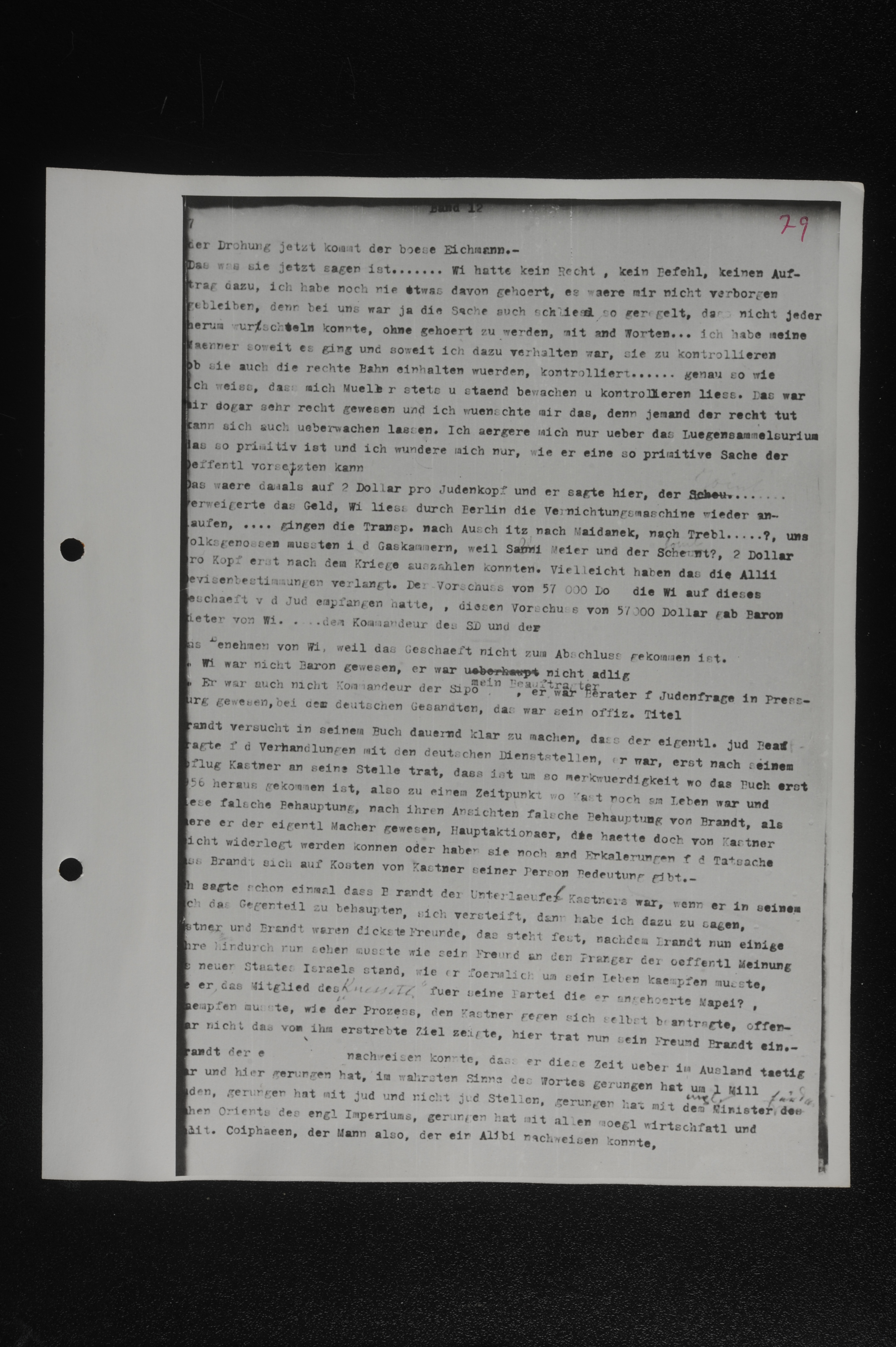
Page 303 of the typescript, O.65 file 86.
Page 303 · Yad Vashem Archives, O.65/86

German transcription

Das wäre also die Zeit, damals wurde Oberg an die Stelle von Thomas gesetzt. Es bliebe jetzt noch ein Vergleich übrig – Okt 1941, – Kamerad Sassen mit dem kleinen Buch "Gesetze" der Judenfragen – die Bestallung des Chefs der SIPO und des SD von Geering mit der Endlösung der europäischen Judenfrage… Über den Vorfall selbst mit Sommer ist mir gar nichts bekannt. F: Ist Ihnen bekannt, daß der Militärbefehlshaber für Frankreich, Otto von Stülpnagel, am 5. Dez 41, einen Vorschlag an Keitel sandte, zur Besänftigung von Heydrich. Er verlangte die Hinrichtung von 100 Geiseln als Vergeltung für drei Angriffe auf seine Soldaten, außerdem sollten Pariser Juden eine Kollektivstrafe von 1 Milliard. Francs zahlen und 1000 Juden und 500 Kommunisten sollten zur Zwangsarbeit nach dem Osten abtransportiert werden. A: Von dieser Maßnahme ist mir nichts bekannt, gar nichts. F: Ist Ihnen bekannt daß Heinrich von Stülpnagel am 13 Juli 43 die Hilfe der Armee bei den Judenrazzien verweigerte? A: Wenn ich nun sage, es ist mir nicht bekannt, dann soll das nicht heißen, das es nicht zutraf, dann habe ich es vergessen. F: Gerade dieser Abtransp. der 1000 Juden, dadurch gab es noch verschied. Folgerungen denn Heydrich konnte keinen Fracht[unleserlich] bekommen, da andere Transp. wichtiger waren, es kam die Weihnachtszeit dazwischen. A: Das glaube ich nicht, denn für 1000 Mann hätte ich zu jeder Zeit noch einen Transpzug bekommen… F: Es läge aber eine Mitteilung vor vom 24. Dez, daß ein Transportkommando der Wehrmacht während der Weihnachtsurlaubstage keine Sondertransporte durch das Reich zuließ, infolgedessen wurden die Pariser Juden, die sonst direkt in die Todesgruben nach …(?)… geschafft werden, teils auf freien Fuß, teils in Auschwitz zurückbehalten wurden. Nun versuchte Dannecker am 28 Feb immer noch die 1000 Juden, von Eichmann ein bestimmtes Datum für die Deportierung zugesichert erhalten, hatte aber damit keinen Erfolg, erst am 28 März verließ der erste Transport der für Auschwitz bestimmt war…(?)… A: Daran kann ich mich nicht mehr entsinnen F: Es wurden nachher Personenwagen zur Verfügung gestellt weil keine Lastwagen da waren und zwar von Hstf. Novak. A: Nun wenn Novak damit zu tun hatte, dann wird die Sache wohl stimmen. F: Eichmann wurde im März 1942 besucht und Dannecker brüstete sich bei diesem Besuch, daß er der erste gewesen sei, der fortlaufende Deportierungen aus Frankreich vorgeschlagen habe, am 9. März teilte dann Eichmann seinem ihm blind ergebenen Rademacher im Ausw. Amt mit, daß die Zahl der sofort zu erwarteten Deportierten 6000 betragen würde. Ich entsinne mich nicht, aber ich gebe es zu, es ist möglich.

Draft translation

12 Volume 33 [HW: 303] That would then be the time, back then Oberg was put in the place of Thomas. There would now remain still a comparison- Oct 1941, - Comrade S a s s e n [HW: [illegible]] with the little book "Laws" of the Jewish quest ion-- the appointment of the Chief of the SIPO and of the SD by Geering with the Final Solution of the European Jewish question...... About the incident itself with Sommer nothing at all is known to me. [HW: Q] Is it known to you that the Military Commander for France, Otto von Stuelp- nagel, on 5 Dec 41, sent a proposal to Keitel, to appease Heydrich. He demanded the execution of 100 hostages as retaliation for three attacks on his soldiers, moreover Paris Jews were to pay a collective penalty of 1 billion Francs and 1000 Jews and 500 Communists were to be transported off to the East for forced labor. [HW: A] Of this measure nothing is known to me, nothing at all. [HW: Q] Is it known to you that Heinrich von Stuelpnagel on 13 July 43 refused the help of the Army in the Jew-raids? [HW: A] If I now say, it is not known to me, then that shall not mean, that it did not occur, then I have forgotten it. [HW: Q] Precisely this transport-off of the 1000 Jews, thereby there arose still various consequences for Heydrich could not obtain any freight[?space?], since other transports were more important, the Christmas time came in between. [HW: A] That I do not believe, for for 1000 men I would at any time still have gotten a transport-train..... [HW: Q] There would however be present a communication of 24 Dec, that [DEL: [illegible]] a transport-command of the Wehrmacht during the Christmas holiday-days permitted no special transports [TS INS: through the Reich], in consequence of which the Paris Jews, who otherwise directly into the death-pits toward .......(?)...... would be conveyed, partly on free foot, partly in Auschwitz were retained. Now Dannecker on 28 Feb tried still always the 1000 Jews, having obtained from Eichmann a certain date [DEL: [illegible]] for the deportation assured, but had therewith no success, only on 28 March did the first transport that was destined for Aus- chwitz depart...(?)...... [HW: A] Of that I can no longer recall [HW: Q] There were afterward passenger-cars made available because no trucks were there and indeed by Hstf. Novak. [HW: A] Now if Novak had to do with it, then the matter will probably be correct. [HW: Q] Eichmann was visited in March 1942 and Dannecker boasted at this visit, that he had been the first who had proposed continuous deportations from France, on 9 March then Eichmann informed his to-him blindly-devoted Rademacher in the Foreign Office, that the number of the immediately to-be-expected deportees would amount to 6000. I recall, [HW: not] but I admit it, it is possible.

Questioner reads from a book

The reply from the German Foreign Office and the embassy in Paris was that there was not the slightest objection to the deportation of these 6,000 Jews.

Questioner

Did you not receive Foreign Office documents about the Jewish question signed by State Secretary Weizsaecker?

No, I did not. Now, I have no documents from Weizsaecker, but I know that Grf. (Gruppenführer) Müller was on very good terms with State Secretary Weizsaecker. I myself drafted a dozen letters that Müller sent to Weizsaecker. These letters dealt with cardinal problems, cardinal problems that now had to be finally decided. Although I can no longer say what they contained, I do know that I took the greatest care and exercised the greatest official concentration in drafting them, so that neither their spirit nor their content could be challenged.

This was unlike the letters that went to Luther, which one simply dictated quickly and which generally produced no more than a little summer shower. Here, however, fundamental matters were at issue, and Müller apparently had great influence over Weizsaecker. A desk officer knows that when he has many letters to draft and write. Weizsaecker must have worked to Müller’s satisfaction. That satisfaction did not stop at recognizing the negative; nothing would have come of that, and I would have noticed it. Such matters generally took the positive course we wanted. That was why I took the greatest care. I was not a man merely drawing a salary. I was an idealist placed at an ex. post.

Questioner

In a memorandum by Rademacher concerning the Jews of Belgrade, it says:

Questioner reads from a book

Eichmann proposes shooting. Weizsaecker says of this memorandum that the Jews would have been in greater danger as hostages in France than in Auschwitz, a name that at the time still meant nothing at all.

On 4 March 1942, a meeting of the Jewish-affairs officers from the various ministries took place in Eichmann’s office. There Eichmann is said to have proposed introducing the Jewish star in all territories occupied by Germany.

Eichmann

First, I did not have an office. I had a department (Dienststelle), which I headed. Second, such meetings often took place at my department with the various officers for Jewish affairs from the various central authorities. Third, I remember very well that one day the question of extending the obligation to wear the Jewish star came up for discussion. I no longer know who gave me the instruction, but I do not deny it. That is what happened. Whether it happened at that particular time, I do not know.

Questioner

Do you still remember the French government’s reaction to this instruction?

Eichmann

Yes, but not only the French government’s. I expected a reaction to all my orders, but I did not give way to those reactions. When I had an order, I carried it out.

Open page image and German
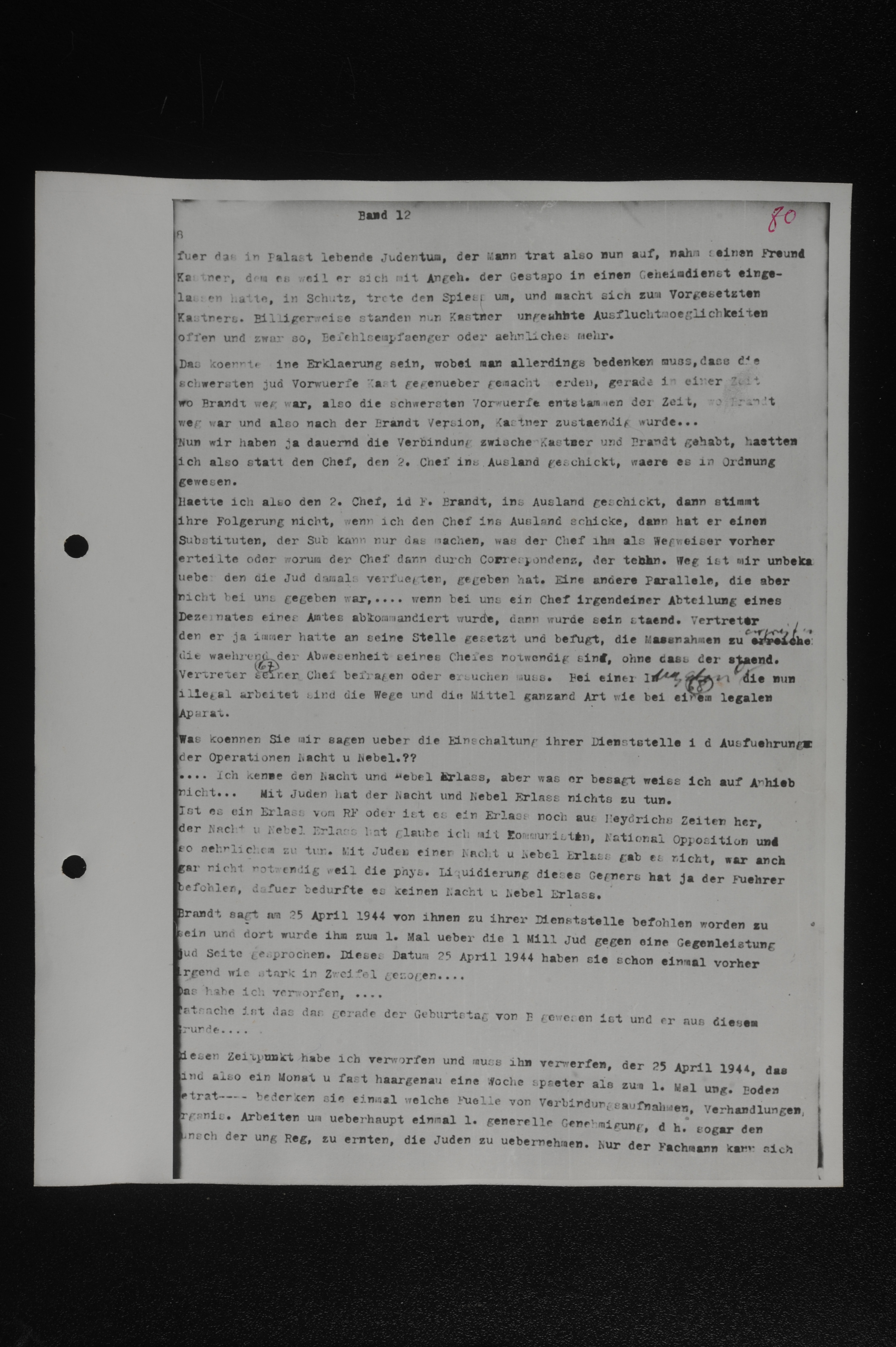
Page 304 of the typescript, O.65 file 86.
Page 304 · Yad Vashem Archives, O.65/86

German transcription

Nun die Antwort war die des deutschen ausw. Amtes und des Botschaftes in Paris, daß nicht der geringste Einwand gegen die Abschiebung dieser 6000 Juden vorliege. – Nun, Sie haben nicht Dokumente in die Hand bekommen des Ausw. Amtes hinsichtlich der Judenfrage, die vom Staatssekr. Weizäcker unterzeichnet waren? Nein, ich nicht. – Nun ich habe keine Dokumente von Weizäcker, aber ich weiß daß der Grf. Müller mit dem Staatssekr. Weizäcker sehr gut stand und ich selber habe ein Dutzend Brief entworfen, die Müller an Weizäcker absandte und diese Briefe die behandelten Kardinalprobleme, Kardinalprobleme die nun mehr letzlich entschieden werden mußten. Wenn gleich ich nicht mehr angeben kann, welchen Inhaltes sie waren, so weiß ich doch, daß ich mich größter Genauigkeit befleißigte und größter behördlicher Konzentration befleißigte, diese Schreiben stets so abzufassen, daß an ihrem Geist und an ihrem Inhalt nicht zu rütteln war. Denn es ging hier im Gegensatz zu Briefen, die an Lutter rausgingen, wo man ein solches Schreiben eben schnell diktierte, wobei in der Reg… wie mehr als ein kleiner Sommerregen rausfiel – hier ging es aber um grundsätzl. Dinge und Müller hatte anscheinend einen großen Einfluß auf Weizäcker das weiß ein Referent wenn er viele Brief aufzusetzen, zu schreiben hat… und Weizäcker muß zur Zufriedenheit Müller gearbeitet haben. Diese Zufriedenheit hat nicht im Erkennen des Negativen verharrt, denn da wäre ja nichts dabei heraus gekommen, dann hätte ich das wohl auch gemerkt. Solche Sachen gingen in der Regel einen von uns gewollten positiven Weg und daher befleißigte ich mich der größten Genauigkeit. denn ich war kein Gehaltsempfänger, ich war auf einen ex. Posten gesetzter Idealist. – In einer Aufzeichnung das die Belgrader Juden betrifft von Rademacher steht, Eichmann schlägt Erschießen ver… – Weizäcker sagt nun zu dieser Aufzeichnung, daß die Juden als Geiseln in Frankreich in größere Gefahr gewesen wären, als in Auschwitz, ein Name der damals noch gar nichts bedeutete. Am 4 März 1942 fand in Eichmanns Büro ein Tagung der Judenreferenten aus den verschied. Ministerien statt. Und da habe Eichmann vorgeschlagen der Judenstern solle nun in allen von Deutschland besetzten Teilen eingeführt werden. A: 1. Habe ich kein Büro gehabt, ich habe ein Dienststelle gehabt, der ich vorstand. 2. Haben öfters solche Besprechungen auf meiner Dienststelle statt gefunden mit den verschied. Dezernenten für Judenfragen der verschied. Zentralinstanzen. 3. Entsinne ich mich sehr gut, daß eines Tages mal die Frage die Erweiterung der Pflicht zum Tragen des Judensterns zur Debatte stand. Wer mir die Weisung erteilt hat weiß ich nicht mehr, aber ich leugne sie nicht ab, es ist so geschehen Ob sie zu diesem Zeitpunkt statt gefunden hat, weiß ich nicht. F: Erinnern Sie sich noch auf die Reaktion die Sie bzgl dieser Weisung bei der franz Reg hatten? A: Ja, aber nicht allein bei der franz Reg. Aber Reaktion erwartete ich bei all meinen Anordnungen, aber ich habe ihnen nicht weiter statt gegeben, denn wenn ich einen Befehl hatte, so habe ich diesen auch durchgeführt.

Draft translation

33 Volume 33 [HW: 304] Now the answer was the [DEL: [illegible]] of the German For[eign] Office and of the Embassy in Paris, that there was not the slightest objection to the deportation of these 6000 Jews.- Now, did you not get documents into your hands from the For[eign] Office concerning the Jewish question that were signed by State Secr[etary] Weizaecker? No, not I. --- Now I have no documents from Weizaecker, but I know that Grp[?] Mueller stood on very good terms with State Secr[etary] Weizaecker and I myself drafted a dozen letter[s] that Mueller sent off to Weizaecker and these letters, they dealt with cardinal problems, cardinal problems that now ultimately had to be decided. Even though I can no longer state what their content was, I do know that I applied the greatest exactitude and the greatest official concentration, to always draft these writings in such a way that their spirit and their content could not be shaken. For here, in "ontrast to letters that went out to Lutter, where one simply dictated such a writing quickly, whereby as a rule no more than a little summer rain fell out -- here, however, it was a matter of fundamental things and Mueller apparently had a great influence on Weizaecker, that a [?desk officer?] knows when he has many letter[s] to draft, to write..... and Weizaecker must have worked to Mueller's satisfaction. This satisfaction did not persist in the recognizing of the negative, for then nothing would have come of it, then I would probably also have noticed that. Such matters as a rule took a positive path desired by us and therefore I applied the greatest exactitude. for I was no salary-recipient, I was an idealist placed at an ex[posed] post.- In a memorandum that concerns the Belgrade Jews by Rademacher it says, Eichmann proposes shooting----- Weizaecker now says to this memorandum, that the Jews as hostages in France would have been in greater danger than in Auschwitz, a name that at that time still meant nothing at all. . [HW: (23)] On 4 March 1942 a [DEL: [illegible]] meeting of the Jewish desk officers from the various ministries took place in Eichmann's office. And there Eichmann is said to have proposed the Jewish star should now be introduced in all parts occupied by Germany. [HW: A] 1. I did not have an office, I had a service post [Dienststelle], which I understood [/managed]. 2. Such discussions often took place at my service post with the various desk officers for Jewish questions of the various central authorities. 3. I remember very well, that one day the question the extension of the obligation to wear the Jewish star was up for debate. . Who gave me the instruction I no longer know, but I do not deny it, it happened so. Whether it took place at this point in time, I do not know. [HW: A] Do you still remember the reaction you had regarding this instruction with the Fr[ench] gov[ernment]? [HW: A] Yes, but not with the Fr[ench] [DEL: [illegible]] gov[ernment] alone. But reaction I expected with all my orders, but I did not give them further heed, for when I had an order, then I also carried it out.

Questioner

But it was not possible to carry out these measures through the French authorities, because Oberg first had to issue a police decree.

Well, how it was done makes no difference. In any case, they wear the Jewish star in France too, in the France occupied by us.

Questioner

But it was impossible to move the French authorities, because the commissioner for Jewish affairs resisted it?

Eichmann

That may be a question that interests the historian, but not me as a militiaman. What interests me is that it was actually carried out. In any case, the Jews in the occupied part of France wore the Jewish star, and I got this instruction enforced everywhere, just as I generally—

Questioner

In unoccupied France, which was later occupied, you did not get your way?

Eichmann

That is quite possible.

Questioner

Do you know that the commissioner for Jewish affairs then requested his recall because of the wearing of the Jewish star?

Eichmann

Yes, that is quite possible. I probably kept putting pressure on this man through Dannecker and Knochen, and in other ways as well… In any case, perhaps he could do nothing else by then.

Questioner

Do you know that Dannecker told his colleagues in Brussels and The Hague that the French quota for the next three months would be 100,000 Jews from both zones? A completely insane figure.

Eichmann

I do not know that.

Questioner

It was later explained that this was a misunderstanding, because it would have been completely impossible to assemble such a large number in so short a time.

Eichmann

In 1943 that was not impossible.

Questioner

Eichmann himself is then said to have told Rademacher that the French Jewish quota was only 40,000.

Eichmann

Yes, that is right.

Originally, in 1934 or 1935, there was a Security Service Main Office. That was the Security Service of the RF SS (Reichsführer-SS). This Security Service of the RF SS (Reichsführer-SS) was brought together in the Security Service Main Office, and the SS districts and SS senior districts came under it. Alongside it was the Security Police Main Office. The Security Police Main Office included the Gestapo Office, the Secret State Police Office (Gestapa), and the Reich Criminal Police Office.

One was headed by Müller, the other by Nebe. The State Police offices (Stapo) and the State Police headquarters (Stapoleit) belonged to the Gestapa as its subordinate extensions—the so-called Gestapo, but it is not called Gestapo; it is called Stapo. For the Reich Criminal Police Office, the subordinate extensions were the Criminal Police offices (Kripo) and the Criminal Police headquarters (Kripoleit). The Security Service Main Office consisted of several offices,

Open page image and German
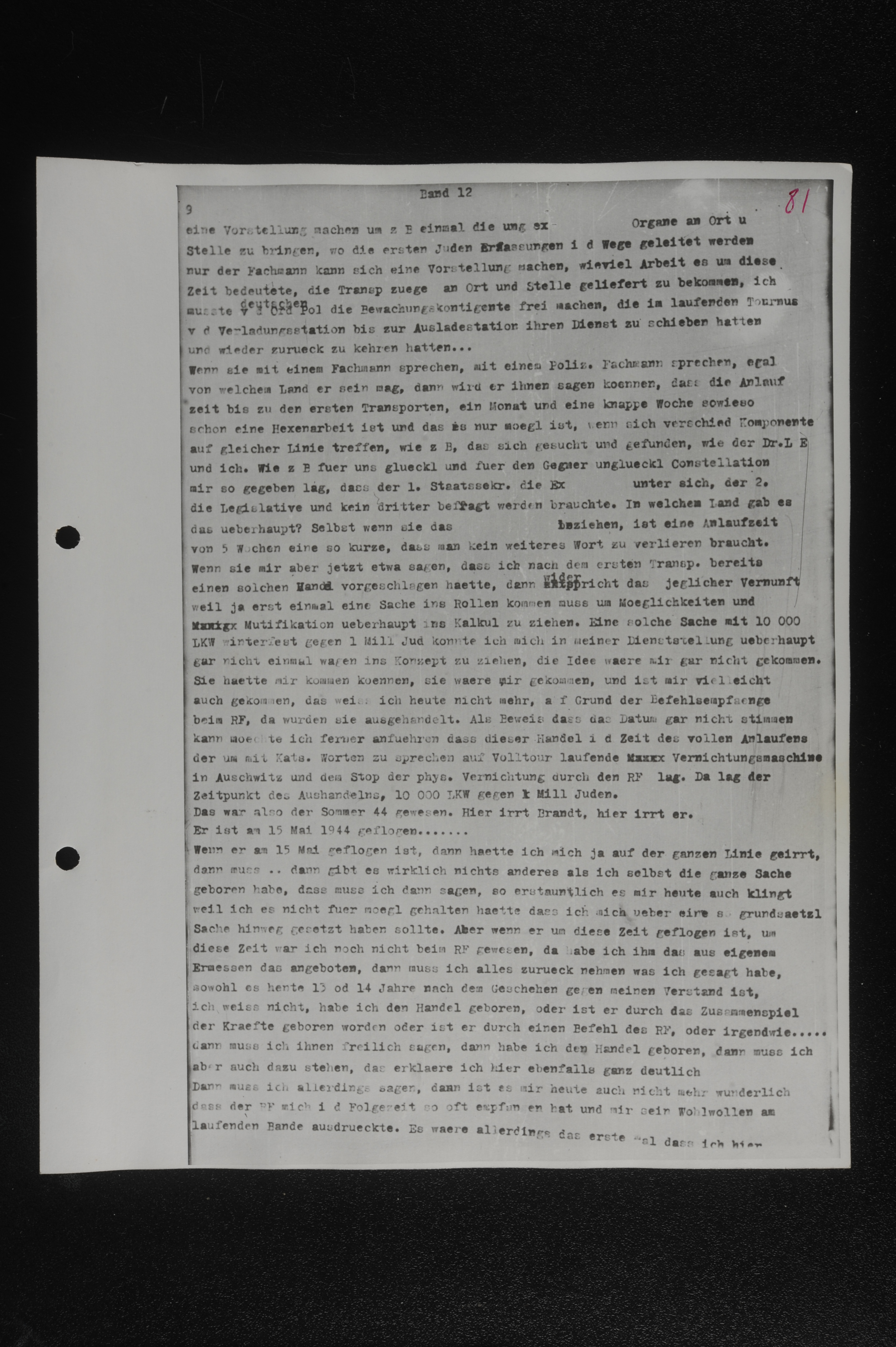
Page 305 of the typescript, O.65 file 86.
Page 305 · Yad Vashem Archives, O.65/86

German transcription

Es war aber nicht möglich über die franz Stellen, diese Maßnahmen durch zu führen, denn erst mußte Oberg einen Polizeierlaß heraus geben. Ja wie das gemacht wurde, ist egal, sie tragen jedenfalls in Frankreich auch den Judenstern, in dem von uns besetzten Frankreich… Aber es war unmöglich die franz. Stellen zu bewegen, denn es scheiterte an dem Widerstand des Juden Kommissars? Das mag eine Frage sein, die den Geschichtsforscher interessiert, mich aber nicht als Milizist, mich interessiert, daß das Faktum durchgeführt wurde. Jedenfalls haben die Juden in dem besetzter Teil Frankreichs den Judenstern getragen und ich habe mich mit dieser Weisung überall durchgesetzt, so wie ich mich in der Regel… Im unbesetzten, aber später besetzten Frankreich haben Sie sich nicht durch gesetzt? – Das ist gut möglich… Ist Ihnen bekannt, daß der Judenkommissars auf Grund des Tragens des Judensterns dann seine Abberufung eingereicht hat?… Ja, das ist gut möglich, wahrscheinlich habe ich solange durch Dannecker und Knochen auf diesen Mann geschossen und sonst irgendwie… Jedenfalls konnte er dann vielleicht nicht mehr anders… Ist Ihnen bekannt daß Dannecker seinen Kollegen in Brüssel und Dehaag erklärte daß die franz. Quote für die nächsten 3 Monate 100 000 Juden aus beiden Zonen betragen würde? Eine vollkommen irrsinnige Zahl… Das weiß ich nicht… Es wurde ja dann auch später erklärt, daß dies ein Mißverständnis wäre, weil es eine vollkommene Unmöglichkeit gewesen wäre in so kurzer Zeit eine so hohe Zahl zusammen zu stellen… Im Jahre 1943, war das an sich keine Unmöglichkeit. Eichmann selbst habe dann Rademacher mitgeteilt, daß die franz Juden Quote nur 40 000 beträge. Ja, das stimmt. Ursprünglich, im Jahre 1934 od 35 gab es ein SD Hauptamt, das war der Sicherheitsdienst des RF SS. Dieser Sicherheitsdienst des RF SS war zusammen gefaßt im SD HA und diesem SDHA unterstanden die SS Abschnitte und SS Ober Abschnitte. Daneben gab es das HA SIPO – dem HA SIPO gehörten an das Gestapo Amt, das Gestapa und das Reichskriminalpolizeiamt. Während das eine von Müller geführt wurde, wurde das andere von Nebe geführt. Dem Gestapa gehörten in verlängerten Armen abwärtigen Instanz an die Stapo und die Stapoleit, die sogen. Gestape, aber das heißt auch nicht Gestape sondern heißt Stapo. Für das Reichskriminalpol. Amt als verlängerten Arm nach unten die Kripo und die Kripoleit. Das SDHA setzte sich zusammen aus mehreren Ämtern,

Draft translation

14 Volume 33 [HW: 305] It was however not possible to carry out these measures through the French authorities, for first Oberg had to issue a police decree. Yes, how it was done is irrelevant, in any case they [the Jews] wear the Jewish star in France too, in the France occupied by us.... But it was impossible to move the French authorities, for it failed on the resistance of the Jewish Commissar? That may be a question that interests the historical researcher, but not me as a militiaman [Milizist], what interests me is that the fact was carried out. In any case the Jews in the occupied part of France wore the Jewish star and I prevailed everywhere with this directive, just as I as a rule....... In the unoccupied, but later occupied France you did not prevail?- That is quite possible.... Are you aware that the Jewish Commissar then submitted his recall/dismissal on [the] "grounds [rund → likely Grund] of the wearing of the Jewish star?.... Yes, that is quite possible, probably I fired at this man for so long through Dannecker and Knochen and otherwise somehow..... In any case he then perhaps could not do otherwise..... Are you aware that Dannecker declared to his colleagues in Brussels and The Hague that the French quota for the next 3 months would amount to 100,000 Jews from both zones? A completely insane number.. That I do not know........ It was then also later declared that this was a misunderstanding, because it would have been a complete impossibility to assemble such a high number in such a short time.... In the year 1943, that [HW: to me] was no impossibility. Eichmann himself is then said to have informed Rademacher that the French Jewish quota amounted to only 40,000. Yes, that is correct. ---------------- Originally, in the year 1934 or 35 there was an SD Head Office [SD Hauptamt], that was the Security Service [Sicherheitsdienst] of the RF SS. This Security Service of the RF SS was consolidated in the SD HA and to this SDHA were subordinated the SS Sections [Abschnitte] and SS Upper Sections [Ober Abschnitte]. Alongside there was the HA SIPO- to the HA SIPO belonged the Gestapo Office [Gestapa], the Gestapo and the Reich Criminal Police Office. While the one was led by Mueller, the other was led by Nebe. To the Gestapa belonged, in extended arms as lower instances, the Stapo and the Stapoleit [Stapeleit], the so-called Gestapo, but that is also [TS INS: not] called Gestapo but rather is called Stapo. For the Reich Criminal Police Office as extended arm downward the Kripo and the Kripoleit. The SDHA was composed of several offices, [DEL: which at that time ver-]

which were headed at that time by Brandt, Oberg, Ohlendorf and so on. Their chief in that sector was Heydrich, just as he was chief of the Security Police Main Office, which consisted of the State Police and the Reich Criminal Police. Heydrich stood over it, and his chief was the RF (Reichsführer-SS), who was chief over various main offices. There was the Order Police Main Office, itself divided into various branches, including the fire and [? air-raid] protection police, and so on, and the other main offices.

Now to the Security Police Main Office and the Security Service Main Office. For pay purposes, the Security Service Main Office came under Reichs… Schwarz. The Party appointed the administrative officers. The administrative chief at that time was a man named Borg. This chief of financial administration had his administrative “bulls” in every district and every senior district of the Security Service; these men had the entire financial side under them. This sector was clearly set apart by the Party and was purely a Party apparatus, with nothing to do with the state side. The Secret State Police Office (Gestapa), with its State Police offices (Stapo) and State Police headquarters (Stapoleit), and the Reich Criminal Police, with its Criminal Police offices (Kripo) and Criminal Police headquarters (Kripoleit), were purely state organizations and were also paid by the state.

By 1935 or 1936 we had to discard a cuff band that until then had read Security Service Main Office, and we received a new cuff band reading Reich Security Main Office. So around that time the Party sector and the state sector in this Security Service building were merged with the Reich Security Main Office. The letterheads also read: Reich Security Main Office, the Chief of the Security Police and the Security Service. I do not know how far the budgets were divided up, or how far the state subsidized the Party purse, or the other way round, or subsidized the Interior Ministry. I had nothing to do with that, and it is also of little importance.

In any case, I still know that the Reich Treasurer Schwarz had a say until 1945. I can also say that, without doubt, the relationship between the RF (Reichsführer-SS), including his further extensions, and Reichsleiter Bormann was always excellent. Bormann had also been Schwarz’s chief. After Hess left, he was the supreme chief of the Party. I know that the letters I had to write to Bormann were always very cordial and comradely in tone, without great subservience. In drafting the letters, I had to know roughly what the relationship between the correspondents was, so that I could match the form and style to it.

Questioner

Can you explain how such an important state political body as the Security Service could be organized on a Party basis, financially on a Party basis? Was it because the Security Service was already present in the National Socialist German Workers’ Party (NSDAP) from the beginning?

Eichmann

Yes, it was there. Heydrich had set up his index cards very early. Kaltenbrunner had worked in intelligence very early, and that explains it, because at the beginning there was the struggle between Party and state—

Open page image and German
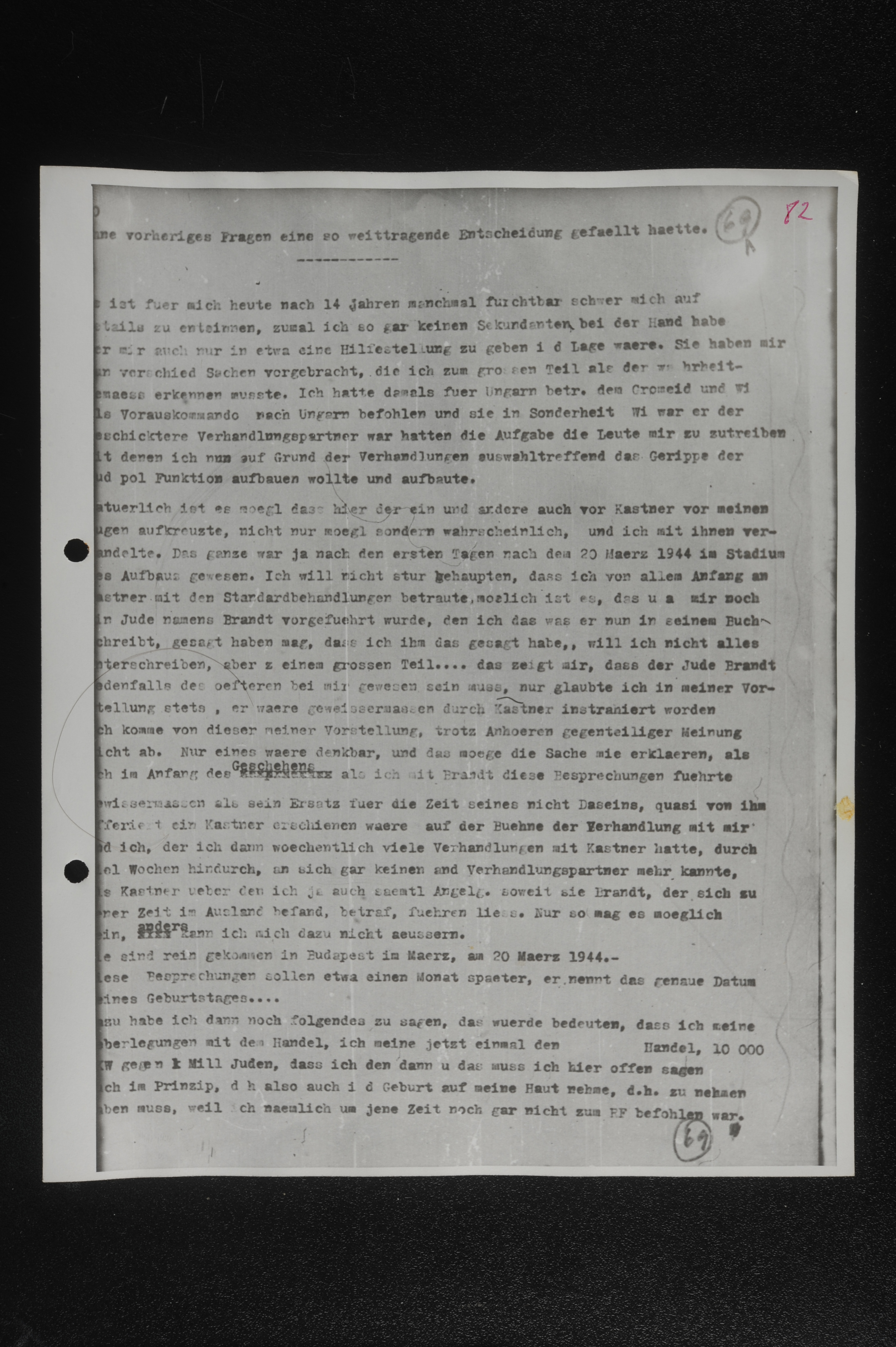
Page 306 of the typescript, O.65 file 86.
Page 306 · Yad Vashem Archives, O.65/86

German transcription

denen damals vorstanden; Brandt, Oberg, Ohlendorf usw. deren Chef auf diesem Sektor Heydrich war, genau so wie er Chef des HA SIPO war, das bestand aus der Stapo und Reichs Kripo., darüber stand Heydrich und sein Chef war der RF, der dann Chef über verschied. Hauptämter war, das HA Ord. Pol, das sich ebenfalls wieder verteilte in verschied Spalten, dazu gehörte die Feuer und Schutzpol, usw. usw. …und die übrigen HA. – Nun zum HA SIPO und SD HA; Das SD HA war besoldungsmäßig dem Reichs…(?) Schwarz unterstellt. Die Partei ernannte die Verwaltungsführer, dem Verwaltungschef, das war um jene Zeit ein Borg, – also dieser Chef der geldlichen Verwaltung, der hatte dann seine Verwaltungsbullen die in jedem Abschnitt, in jedem Oberabschnitt, des SD, die Leute hatten so den gesamten geldlichen Teil unter sich. … Während dieser Sektor ganz klar von der Partei ausgesondert wurde, und ein rein Parteiapparat war und mit dem staatlichen nichts zu tun. hatte, war das Gestapa mit den Stapo und Stapoleit und das Reichskripo, mit den Kripo und Kripoleit, rein staatlicher Natur, sie wurden auch vom Staat besoldet. Bis zu 1935 oder 36 hatten wir einen Ärmelstreifen, der bisdahin SDHA lautete, abzulegen, und wir bekamen einen neuen Ärmelstreifen, der hieß Reichssicherheit HA. Um diese Zeit also war Partei und Staatssektor in diesem SD Gebäude verschmolzen mit dem Reichssicherheits HA und die Briefköpfe lauteten auch; Reichssicherheits HA, der Chef der SIPO und des SD. Im wieweit nun die haushaltsmäßige Aufgliederung vorgenommen wurde und in wieweit der Staat dem Parteisäckel Zuschuß gab, oder umgekehrt, resp, dem Innenminist. Zuschuß gab, das weiß ich nicht, denn damit habe ich nicht etwas zu tun gehabt, ist aber auch weni… von Bedeutung. Jedenfalls weiß ich noch, daß bis 1945 der Reichsschatzmeister Schwarz ein Wort mit zu sprechen hatte und ich kann auch sagen, daß zweifelsohne das gute Verhältnis zwischen dem RF und in seinen weiteren verlängerten Armen zum Reichsleiter Bormann stets ein ausgezeichnetes war. Denn Bormann war ja auch der Chef von Schwarz gewesen. Er war ja nachdem Hess abging, der oberste Chef der Partei. Ich weiß, daß die Briefe die ich an Bormann zu schreiben hatte, daß sie immer in einem sehr liebenswürdigen und kameradschaftlichen Ton gehalten ohne große Unterwürfigkeit. Denn ich mußte ja beim Aufstellen der Briefe ungefähr wissen, wie die Haltung zwischen den Briefschreibern war, damit ich mich danach in der Form und im Stil richten konnte. – Können Sie nun erklären, wieso ein so wichtiges staatliches pol. Organ wie der SD parteimäßig, also finanziell parteimäßig erfaßt werden konnte. Kommt das daher, daß von Anfang an in der NSDAP der SD schon vorhanden war?? Ja, der war vorhanden und zwar hatte Heydrich schon sehr früh seine Karteikarten aufgestellt – Kaltenbrunner hat schon sehr früh auf dem Sektor Nachrichten gearbeitet und daher erklärt sich, weil ja am Anfang der Kampf zwischen Partei und Staat war, …

Draft translation

29 Volume 55 [HW: 306] who at that time headed them; Brandt, Oberg, Ohlendorf etc. whose chief in this sector was Heydrich, exactly as he was chief of the [DEL: xxxx] Main Office SIPO, which consisted of the Stapo and Reich Kripo., above that stood Heydrich and his chief was the RF, who then was chief over various Main Offices, [there] was the Main Office Order Police, which likewise was again divided into various columns, to which belonged the Fire [HW: and] [HW: [?school?]] /protection police, etc. etc. ...and the remaining Main Offices. -- Now to the Main Office SIPO and SD Main Office; The SD Main Office was, in [DEL: pay]-terms [HW: pay], subordinated to the Reich...... . (?) Schwarz. The Party appointed the administrative leaders, [to] the administrative chief, who at that time was a Borg, [HW: [?a Borg?]] --so this chief of the monetary administration, he then had his administrative bulls who in every section, in every superior section, of the SD, the people had under them the entire monetary part. [HW: [?and administered it cleverly?]] ... While this sector was quite clearly separated out from the Party, and was a purely Party apparatus and had nothing to do with the state [apparatus], the Gestapa [HW: X] with the Stapo and Stapo-leit and the Reichskripo, with the Kripo and Kripo-leit, [was] of purely state nature, they were also paid by the state. [HW: 24] Up until 1935 or 36 we had a cuff-band, which until then read SD Main Office, [HW: !] to lay aside, and we received a new cuff-band, which was called Reich Security Main Office. So around this time Party and state sector in this SD building were merged with the Reich Security Main Office and the letterheads also read: Reich Security Main Office, the Chief of the SIPO and of the SD. Now to what extent the budgetary breakdown was carried out and to what extent the state gave a subsidy to the Party purse, or vice versa, resp. gave a subsidy to the Interior Ministry, that I do not know, for I had nothing to do with that, but it is also of little significance. In any case I still know that until 1945 the Reich Treasurer Schwarz had a word to say [in it] and I can also say that without doubt the good relationship between the RF and in his further extended arms to Reichsleiter Bormann was always an excellent one. For Bormann had after all also been the chief of Schwarz. He was after all, after Hess left, the supreme chief of the Party. I know that the letters which I had to write to Bormann, that they were always kept in a very amiable and comradely tone, without great subservience. For in drafting the letters I had to know approximately what the relationship between the letter-writers was, so that I could accordingly conform to the form and the style.-- Can you now explain how such an important state political organ as the SD could be registered in Party terms, that is, financially in Party terms. Does that come from the fact that from the very beginning in the NSDAP the SD was already present?? Yes, it was present and indeed Heydrich had already very early set up his card index files--Kaltenbrunner had already very early worked in the sector of intelligence [HW: ? ? ?] and from that it is explained, because after all at the beginning there was the struggle between Party and state, ......

Questioner

So at the beginning there was the struggle between Party and state. What do you mean by that?

That does not mean a bloody struggle. The Party wanted to collect its tribute for all the hard years of struggle, and to take the machinery of control into its hands so that what had finally fallen into its lap after all those years could not be taken away again by a state sector. Conversely, jealous state bodies guarded their own interests. Whether it was the German Reichswehr, which had to contend with the militant offices of the Party, or state police offices, which (sensed unwelcome competition, or similar) in the Party’s intelligence organizations—I could list more things, but I will leave it at that for today.

Now the Party had seen that the Security Service, from its very earliest beginnings, based in [? Brienner] Street in Munich, was doing extremely important work for the Party. I cannot say exactly how far the Security Service played a part in the whole Röhm affair, but it did play a part. This Party office moved from the city of the movement, Munich, to Berlin in the summer of 1934 and was given the palace at Wilhelmstrasse 102. A park connected it with the Prinz Albrecht Palace, where the Gestapo (Secret State Police) was located.

Now this Security Service apparatus grew—I myself had number 54—and suddenly grew. Enormous sums of money must have been poured into it around that time. The Party therefore had no interest at all in letting this powerful apparatus slip out of its hands, especially since it certainly had the financial means by then to make this expenditure no great difficulty. Still, I remember very well that when I reported in Wilhelmstrasse in Berlin in September 1934, there were difficulties with our pay for a few months.

We worked and were not paid, because the Security Service still had little money at that time. It went so far that our office chief once lent each of us 10 marks. When we finally did get our money, many days after the first of the month, I still remember the cashier, Oberscharf. (Oberscharführer) W. (Wettich), standing at the counter paying it out—he was later a Hstf. (Hauptsturmführer)—and saying: “Now we can count on getting our salaries on time.” We were delighted.

That was still in the days of the Security Service Main Office. Later it merged. Personnel from those institutions (Instruktionen) were transferred to the Security Police, and others to the Security Service. A civil servant, a Reich civil servant, was never transferred to the Security Service in such a way that his salary also came under Reich Treasurer Schwarz. That would have conflicted with civil-service legislation and with the official’s pension entitlement, and so on. As a rule, when someone was transferred, his pay came from the sector he had come from.

Open page image and German
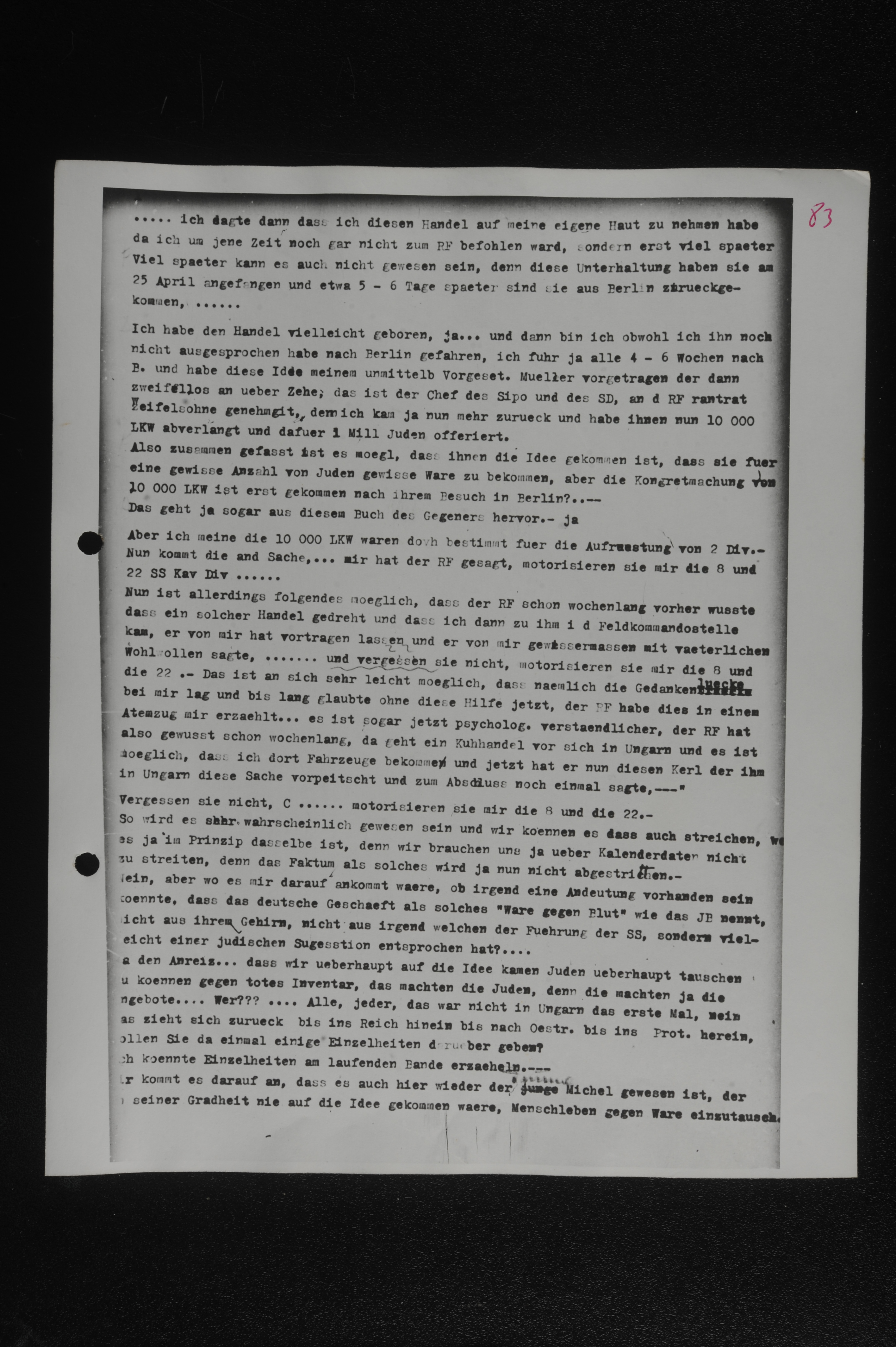
Page 307 of the typescript, O.65 file 86.
Page 307 · Yad Vashem Archives, O.65/86

German transcription

Anfänglich war also der Kampf zwischen Partei und Staat, was meinen Sie damit? Es ist damit nicht ein blutiger Kampf gemeint, die Partei wollte nun ihren Tribut einheimsen für all die schweren Kampfjahre und wollte nun den Steuerapparat so in die Hand nehmen, daß nicht durch einen staatlichen Sektor, daß was nun nach langen Jahren der Partei endlich in den Schoß gefallen war, wieder genommen werden konnte. Umgekehrt wachten eifersüchtige staatliche Organe über ihre Belange. Ob sich das nun um die deutsche Reichswehr gehandelt hat, die sich nun mit den militanten Stellen der Partei sich auseinander zu setzen hatten, ob sich das um polizeiliche staatliche Polizeistellen handelte, die in den nachrichtenmäßig …tionen der Partei eine…(?)… entwickelten, und so könnte ich noch mehr Dinge aufzählen, ich will es aber für heute damit bewenden lassen. Nun hat die Partei gesehen, als der SD aus den ursächlichsten Anfängen heraus, in München in der B…Straße sitzend für die Partei wichtigstes leistete Wie weit der SD bei der ganzen Röhmaffäre eine Rolle spielt, das kann ich nicht genau sagen, aber er spielte eine Rolle. Diese Parteidienststelle siedelte nun aus der Stadt der Bewegung, München, nach Berlin 1934 im Sommer und bekam das Palais in der Wilhelmstr 102 und durch einen Park war man dann verbunden mit dem Prinz Albrecht Palais in dem die Gestapa saß. Nun dieser SD Apparat wuchs, ich selber hatte die Nr. 54, und zwar plötzlich anwuchs, es müssen um diese Zeit gewaltige Gelder hineingestopft worden sein, und so hatte die Partei schon gar kein Interesse mehr, diesen mächtigen Apparat aus ihrem Fingern raus zu lassen, zumal die Partei sicherlich um jene Zeit über jene finanzielle Möglichkeiten verfügte, daß diese Ausgabe nicht mehr allzu schwierig war, obgleich ich mich noch sehr gut entsinnen kann, als ich mich im Sept 1934 in der Wilhelmstr. in Berlin meldete, daß es da noch einige Monate mit der Besoldung haberte, wir arbeiteten und bekamen nicht bezahlt, weil der SD um jene Zeit noch wenig Geld hatte, das ging so weit daß unser Amtschef jedem von uns einmal 10 Mark lieh, als wir erst viele Tage nach dem Monatersten endlich unser Geld bekamen, und ich weiß es heute noch daß der Kassenbulle, ein Oberscharf. W. Wettich, der an am Schalter stand und auszahlte, später war er Hstf., daß der sagte, nun können wir damit rechnen, daß wir pünktlich unseren Gehalt bekommen, wir freuten uns… Das war noch die Zeit des SD HA, später verschmelz das, die Angehörigen jener Instruktionen wurden zu der SIPO hinüber versetzt, und andere wieder zum SD, wobei ein Versetzen eines Beamten, eines Reichsbeamten zum SD niemals in der Form ging, daß er nun auch seinen Gehalt, als besoldungsmäßig,, dem Reichsschatzmeister Schwarz unterstellt war, das wäre zu einer Konkurrenz…(?) hätte mit der Beamtengesetzgebung geführt, auch mit der Versorgungsberechtigung des Beamten usw. … sondern hier ging es in der Regel bei einer Versetzung, bei der Besoldung von dem Sektor aus, von dem er kam.

Draft translation

Band 34 [HW: 307] So initially there was the struggle between Party and State, what do you mean by that? By this is not meant a bloody struggle; the Party now wanted to collect its tribute for all the hard years of struggle and now wanted to take the tax apparatus so into its hand, that what after long years had finally fallen into the Party's lap could not be taken away again through a state sector. Conversely, jealous state organs watched over their concerns. Whether this now concerned the German Reichswehr, which now had to come to terms with the militant offices of the Party, whether this concerned police state police-offices, which in the intelligence[-related] [HW: [?itself?]] ...tions of the Party developed a ...(?)...... , and so I could enumerate still more [HW: [?military competition, of course, or similar?]] things, but for today I will let it rest at that. Now the Party saw, when the SD out of the most original beginnings, [HW: 2)] sitting in Munich in the B.....Strasse [HW: [?Brenner?]] performed what was most important for the Party. How far the SD plays a role in the whole Röhm affair, that I cannot say exactly, but it played a role. [DEL: One] [HW: [?This?]] Party-office now relocated out of the city of the movement, Munich, to Berlin in the summer of 1934 and received the palace in the Wilhelmstr 102, and through a park one was then connected with the Prinz Albrecht Palais in which the Gestapa sat. Now this SD apparatus grew, I myself had the No. 54, and indeed suddenly grew, around this time tremendous sums of money must have been stuffed into it, and so the Party already had no interest anymore in letting this powerful apparatus out of its fingers, especially since the Party certainly around that time disposed of such financial possibilities that this expenditure was no longer all too xxxx difficult, although I can still very well recall, when I reported in Sept 1934 at the Wilhelmstr. in Berlin, that there for a few months there were still difficulties with the pay, we worked and did not get paid, because the SD around that time still had little money, it went so far that our office-chief lent each of us once 10 Marks, when we [HW: [?on?]] many days after the first of the month finally got our money, and I still know it today that the cash-bull, an Oberscharf. W. [HW: [?Wettich?]], who at [DEL: himself] stood at the counter and paid out, later he was Hstf., that he said, now we can count on it that we get our salary punctually, we rejoiced.... That was still the time of the SD HA, later that merged, the members of those instructions were transferred over to the SIPO, and others again to the SD, whereby a transfer of an official, of a Reich-official to the SD never went in the form that he now also had his salary, as pay-wise, subordinated to the Reich-treasurer Schwarz, that would have come [DEL: come] [HW: [?felt?]] to a competition...(?) [HW: [?last opinion?]] with the civil-servant legislation, also with the pension-entitlement of the official [HW: [?chronic?]] etc.... but here it went as a rule in a transfer, in the pay, from the sector out from which he came.

Questioner

Can you tell us something about the origins of the Security Service, in time and place?

I can really tell you nothing, or only very little, except that Heydrich once said after a meeting, looking back, as it were, and proud of what he had achieved so far, that he could still remember sitting in an attic room writing out his index cards. That had been the birth of the Security Service.

Questioner

When might that have been?

Eichmann

That must have been well back in the years of struggle, probably around the thirties. Heydrich cannot have joined very long before that. If one knew that date, one could roughly work out the other one, because Heydrich was given this work from the beginning.

Unknown speaker

Let us never forget that it is a fact, not a version of events, that Heydrich came into this Party information-service office through Canaris.

But Heydrich was anything but a tool of Canaris. He went on about that all too often.

Müller also belonged to the Klausener group, because Müller belonged to the Security Service from the beginning too.

That was probably the struggle between Party and state, the struggle over jurisdiction.

Questioner

Do you have any idea what was on those index cards with which the Security Service began, so to speak?

Eichmann

Yes. When I was transferred from the troops to the Security Service in 1934, my first job—and it took about 14 days—was to deal with the index-card business. Enormous card trays stood in a large hall of the palace. There may have been 20 or 30 of them, with card after card in rows, about the size of an ordinary book. There was mainly an index of Freemasons, an index of the Independent Order W…, and other cards for so-called secret societies and so on, as well as a small Jewish index. All sorts of things were in it. They were in different colors. The ordinary Freemason had yellow; the U.O.B.B. (Independent Order of Bnai Brith) had rose-red to carmine-red cards. Heydrich himself started this index.

He wrote it by hand. And so I came into this card-index hall with Jaenisch, my outer-office chief, where six or seven comrades were already working. Our job was to put these 100,000, 120,000 or even 200,000 cards into alphabetical order. You can imagine that if eight men needed 14 days to arrange them alphabetically and in detailed alphabetical order, it must have been quite a substantial card index. I still remember that there were very many visitors at that time, some led by the RF (Reichsführer-SS) himself, some by the Chief of the Security Police and the Security Service, and some by my immediate superior, Stbf. (Sturmbannführer) Brandt. It was also here in this card-index hall that Streicher

Open page image and German
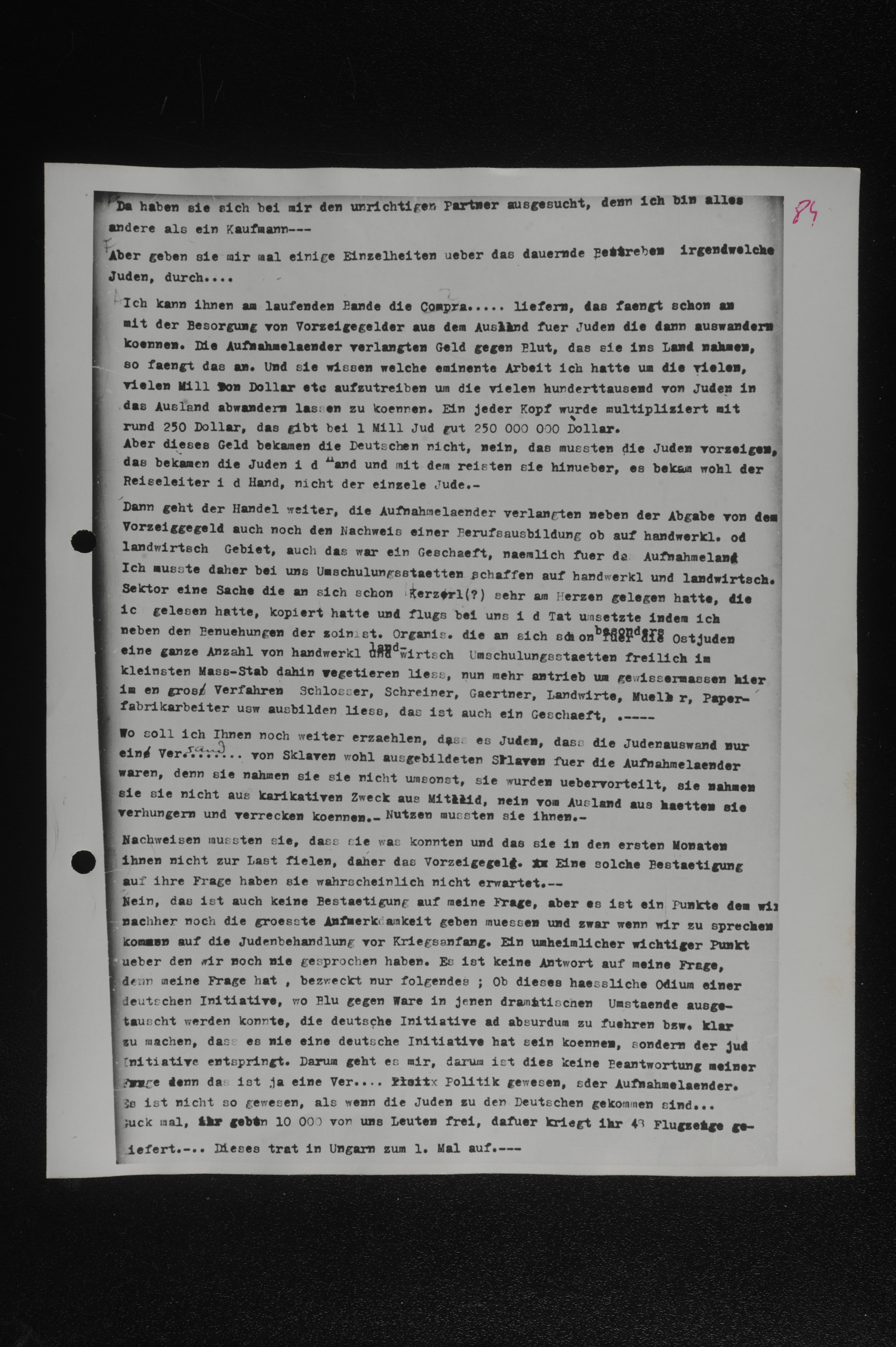
Page 308 of the typescript, O.65 file 86.
Page 308 · Yad Vashem Archives, O.65/86

German transcription

Können Sie nun zeitlich und räumlich von der Entstehungsgeschichte des SD etwas wiedergeben? Da kann ich eigentlich gar nicht od nur sehr wenig wiedergeben, als einmal Heydrich nach einer Besprechung gesagt hat, gewissermaßen zurückschauend und stolz auf sein bisher Erreichtes – er könne sich noch der Zeit erinnern als er in der Dachkammer saß und dort seine Karteikarten schrieb, das wäre die Urstunde des SD gewesen – Wann kann das gewesen sein? Das muß noch relativ tief in der Kampfzeit gewesen sein, es muß wohl um die dreißiger Jahre gewesen sein… denn besonders alt muß das Datum von Heydrichs Beitritt nicht gewesen sein, wenn man das wüßte könnte man auch das andere sich ungefähr errechnen, denn Heydrich wurde ja von Anfang an damit befaßt. Vergessen wir nie, daß es eine Tatsache ist und keine Version, daß Heydrich in dieses Parteiinformationdienstamtes hineinkam, durch Canaris. A: Aber Heydrich war alles andere nur kein Werkzeug von Canaris, dazu hat er sich zuoft ausgelassen… F: Zu der Gruppe Klausener… hat auch Müller gehört, denn Müller gehört ja auch von Anfang an zum SD… Das war wohl der Kampf von Partei und Staat, der Kampf um die Zuständigkeiten. Haben Sie nun eine Idee was diese Karteikarten enthielten mit denen der SD so gewissermaßen anfing? Ja, als ich 1934 zum SD versetzt wurde von der Truppe aus, da war meine erste Arbeit und das dauerte ungefähr 14 Tage Karteikartenkram zu erledigen. Da waren in einem großen Saal des Palais gewaltige Karteikartentröge aufgestellt. Es mögen wohl 20 oder 30 solcher Tröge gewesen sein, darin lag nun kolonnenweise Karteik an Karteikarte, die hatten ungefähr die Größe eines normalen Buches. Da waren hauptsächlich eine Freimaurerkartei erstellt, eine Kartei des U-O. Unabhängiger Orden W…, da waren auch andere Karteikarten erstellt von sogen. Geheimbünden usw… auch eine kleine Judenkartei, es war also alles mögliche drin – die hatten nun verschied Farben, der kleine Freimaurer hatte gelb, der U.O.B.B. eine roserote bis kaminrote, – und den Anfang zu dieser Kartei hat Heydrich selbst gemacht, die hat er mit der Hand geschrieben – und so kam ich mit Jänisch, meinem Vorzimmerchef in diesen Karteikartensaal, wo bereits 6 oder 7 Kameraden arbeiteten, … Unsere Arbeit war nun diese 100, 120 oder auch 200 000 Karteikarten alphabetisch zu ordnen, sie können sich vorstellen, daß wenn 8 Mann hier 14 Tage zu tun hatten, nach Alphabet und Feinalphabet zu ordnen, es muß schon eine ganze respektable Karteikartensache gewesen sein. Und ich entsinne mich noch, daß um jene Zeit sehr viele Besucher kamen, teils vom RF selber geführt, teils vom Chef der SIPO und SD geführt und teils auch von meinem unmittelbaren Vorgesetzten Stbf. Brandt geführt. Hier in diesem Karteikartensaal war es auch, daß Streicher

Draft translation

2 Volume 34 [HW: 308] Can you now render something, temporally and spatially, of the origin history of the SD? There I can actually render nothing at all or only very little, except that once Heydrich, after a discussion, said, looking back so to speak and proud of what he had achieved up to then ----- he could still remember the time when he sat in the attic room and there wrote out his index cards, that that had been the birth-hour of the SD------ When could that have been? That must have been still relatively deep in the time of struggle, it must probably have been around the thirties... for the date of Heydrich's joining must not have been especially old., if one knew that one could also reckon out the other approximately, for Heydrich was after all occupied with it from the beginning. Let us never forget, that it is a fact and not a version, that Heydrich got into this Party information-service office, through Canaris. But Heydrich was anything but a tool of Canaris, on that he first expressed himself.. To the Klausener group....... Mueller also belonged, for Mueller after all also belongs to the SD from the beginning.... That was probably the struggle of Party and State, the struggle over the competences/jurisdictions. Do you now have an idea what these index cards contained with which the SD, so to speak, thus began? Yes, when I in 1934 was transferred to the SD from the troop, then my first work — and that lasted about 14 days — was to deal with the index-card stuff. There in a large hall of the Palais [HW: [illegible]] enormous index-card troughs were set up. There may well have been 20 or 30 such troughs, in it lay now in columns card by index-card, they had about the size of a normal [HW: 26] book. There were mainly a Freemason card-index established, a card-index of the I.O. Independent Order W......, there were also other index cards established of so-called secret societies etc...... also a small Jew card-index, there was so everything possible in it --- these had now various colors, the little Freemason had [DEL: white and] yellow, [DEL: the higher Freemason] [HW: [illegible]] a pure-red to chimney-red,- and the beginning to this card-index Heydrich himself made, he [DEL: himself] [HW: [illegible]] wrote it --- and so I came with Jaenisch, my ante-room chief, into this index-card hall, where already 6 or 7 comrades were working, ..... Our work was now to order these 100, 120 or also 200,000 index cards alphabetically, , you can imagine, that if 8 men here had 14 days of work, to order by alphabet and fine-alphabet, it must already have been a whole respec[HW: 27]table index-card affair. [HW: V] And I still recall, that around that time very many visitors came, partly led by the RF himself, partly led by the Chief of the SIPO and SD and partly also led by my immediate superior Stbf. Brandt. Here in this index-card hall it was also, that Streicher

Streicher came in and said jokingly, “Well, do you want the name?” He then gave his adjutant’s name. It was one of the favorite jokes when visitors came: they could name somebody they knew. In Streicher’s case his adjutant was a former lodge member, and when we pulled out that card, he abruptly broke off the tour.

[The typist: I did not quite understand that correctly.]

But by then the rush on the lodges must have been over for a long time. There was already an enormous index. My predecessors must have been as busy as bees, both before and after the seizure of power, because this enormous index already existed in September 1934, when I joined them. Freemasonry had been greatly overestimated. They had the minor lodge masters and the ordinary lodge brothers in their grip and made difficulties for them. But later they saw that, if these were tools of international Jewry, the little man knew nothing about it and could just as easily have been used for another apparatus, for the Party apparatus, for instance, and its aims. That is what was subsequently done.

Questioner

Were these indexes confined to Germany, or were they international?

Eichmann

They were international. They already covered several countries. The index was growing and functioning. That is to say, after I left there after 14 days, the index was established, and any number of people kept working at long desks from membership lists confiscated by the local State Police offices (Stapo) and State Police headquarters (Stapoleit). They copied from the membership lists of the various institutions or from the subscription lists of various journals, extracting this or that, and so they had their cards. These were arranged not only by people but also by organizations. It grew in that way; the index was continually being worked on.

When I was transferred to another section in 1935, my chief, Ustf. (Untersturmführer) Mildenstein, designed two enormous automatic card-index wheels. The entire card-index administration, which had grown to about 20 or 30 men, could be reduced to two. They sat there as if at a harmonium, automatically taking out whichever cards were needed at the time. That was the final result. I myself then left; I went to the museum section. After my first 14 days in the Security Service, I spent a whole year doing nothing but sorting and examining Freemason seals and other boring museum work of that kind.

Questioner

Do you think that in the end these index cards covered practically the whole German people—that there were some 80 million cards?

Eichmann

No, I do not think so. But there were an enormous number of millions of cards. The cards became very small, very thin and punched, and those drums held an incredible number of them.

Questioner

Do you think that, before the seizure of power, the Security Service started by Heydrich concerned itself not only with gathering information but also with taking action, carrying out particular subversive operations within other

Open page image and German
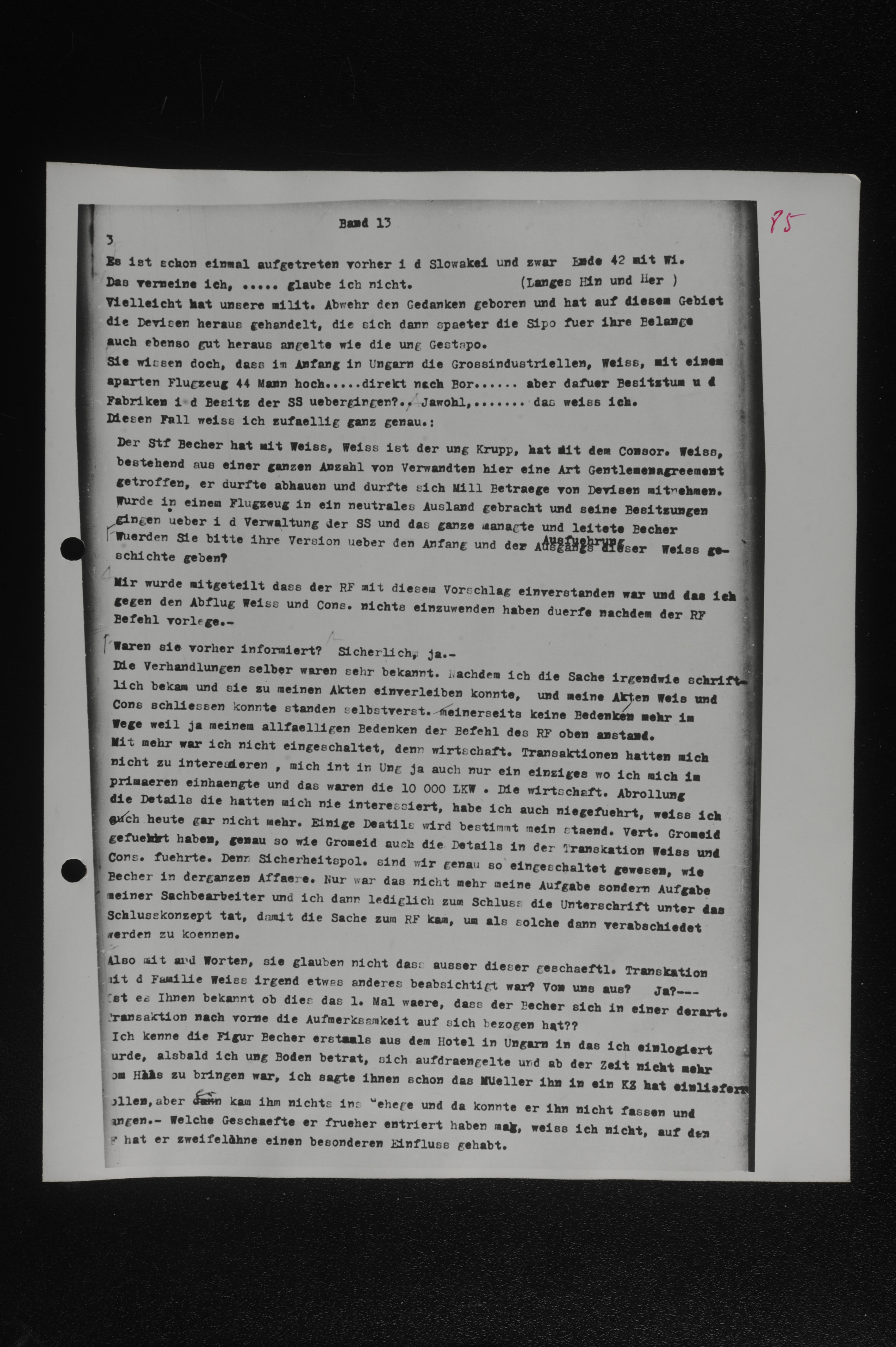
Page 309 of the typescript, O.65 file 86.
Page 309 · Yad Vashem Archives, O.65/86

German transcription

Streicher hineinkam und hier scherzhalber sagte, "wo wollt Ihr den Namen haben, und damit nannte er den Namen seines Adjutanten… es gehörte zu den beliebt Scherzen, wenn Besucher kamen, daß sie irgendeinen Namen der ihnen bekannt war nennen durften und bei Streicher war es nun so, daß sein Adjutant, ein ehem. Logenangeh, war und als wir nun diese Karte herauszogen, brach er abrupt die Besichtigung ab… (Habe es nicht so ganz richtig verstande… Es muß aber um jene Zeit der Run auf die Loge längst vorbei gewesen sein, es bestand schon damals eine Riesenkartei, meine Vorgänger müssen also bienenfleißig gewesen sein, bereits vor der Machtergreifung und nach der Machtergreifung, denn diese Riesenkartei bestand schon im Sept 1934, als ich dazu kam. Man hat ja die Freimaurerei bedeutend überschätzt, man hat in ihr die kleinen Meister vom Stuhl, die kleinen Logenbrüder, die hatte man hier in der Zange gehabt und man hat ihnen Schwierigkeiten bereitet, aber man hat ja dann später gesehen, wenn es Werkzeuge sind für das internationale Judentum, dann weiß der kleine Mann doch nichts davon und hätte ebenso elegant für eine anderen Apparat, sei es für den Parteiapparat eingesetzt werden können für dessen Ziele, was man dann ja auch getan hat. – waren diese Kartei nur auf Deutschland beschränkt, oder waren sie international Sie waren international, sie hatten schon mehrere Länder erfaßt. Die Kartei wuchs und arbeitete ja, d.h. daß ich nachdem ich nach 14 Tagen dort raus kam, daß die Kartei nun stand, ewig an langen Schreibtischen arbeiteten soundsoviel Leute an Hand von Mitgliederverzeichnissen, die beschlagnahmt wurden von den öffentlichen Stapo und Stapo Leit, schrieben sie nun aus den Mitgliederverzeichnissen, der verschied. Institutionen oder aus Abonnementsverzeichnissen der verschied. Zeitschriften, und da zogen sie daß oder das heraus und so hatten sie die Karteikarten. Sie wurden auch nicht nur nach Personen angelegt, sondern auch nach Organisationen, es wuchs sich dann so aus, die Kartei wurde laufend bearbeitet. Und als ich 1935 in ein anderes Referat versetzt wurde, und mein Chef der Ustf. Mildenstein hier zwei riesige Karteiräder entwarf, von automatischer Natur, Für den gesamten Karteikartenverwaltungsapparat, der inzwischen an die 20 oder 30 Mann angewachsen war, auf 2 reduziert werden konnte, die hier nun wie vor einem Harmonium saßen und hier nun automatisch die Karten raus nahmen die im Moment benötigt wurden. Das war das Endergebnis, ich selber kam ja dann weg, ich kam in die Abteilung Museum, und nachdem ich 14 Tage beim SD war, hatte ich ja ein ganzes Jahr nichts anderes zu tun, als Freimaurersiegel zu ordnen und zu sichten und noch so andere langweilige Museumsarbeit. Glauben Sie das zum Schluß diese Karteikarten praktisch das ganze deutsche Volk umfassen? Das dann eine 80 Mill Karteikarten waren? Nein, das glaube ich nicht, aber es waren gewaltige Mill von Karteikarten gewesen, die Karteikarten wurden dann sehr klein und sehr dünn, gelocht und in diese Trommeln gingen eine unheimliche Mengen von Karteikarten hinein. – Glauben Sie daß der von Heydrich gestartete SD sich vor der Machtübernahme sich damit befaßte, nicht nur informationsmäßig zu sammeln, sondern auch aktiv zu werden, indem sie bestimmte Zersetzungsaktionen innerhalb anderer

Draft translation

3 Volume 34 [HW: 308] [HW: [?...?]] Streicher came in and here said jokingly, "where do you want to get the name from," and with that he named the name of his adjutant..... it was among the popular jokes, when visitors came, that they were allowed to name some name that was known to them, and with Streicher it was now so, that his adjutant, a former lodge member, was, and when we now pulled out this card, he abruptly broke off the tour......... . (Did not quite understand it correctly [HW: [?...?]] But by that time the run on the lodge must have long been over, there already existed at that time a huge card-index, my predecessors must therefore have been busy as bees, already before the seizure of power and after the seizure of power, for this huge card-index already existed in Sept 1934, when I came to it. One has indeed considerably overestimated Freemasonry, one saw in it the little masters of the chair, the little lodge-brothers, those one had here in the pincers and one caused them difficulties, but one saw then later, if they are tools for international Jewry, then the little man knows nothing of it after all and could just as elegantly have been employed for another apparatus, be it for the party apparatus, for its goals, which one then also did.- [HW: /] were these card-indexes limited only to Germany, or were they international [HW: /] They were international, they had already covered several countries. The card-index grew and worked indeed, i.e. that after I came out of there after 14 days, that the card-index now stood, forever at long desks worked so-and-so-many people on the basis of membership lists, which were confiscated by the [DEL: public] [HW: public] Stapo and Stapo Command, they now wrote on the [DEL: to the last] [HW: to the] membership lists, of the various institutions or from subscription lists of the various periodicals, [HW: and] there they pulled out this or that and so they had the index cards. They were also laid out not only by persons, but also by organizations, it then grew out so, the card-index was continuously processed. And when I was transferred in 1935 to another department, and my [HW: [?...?]] chief [HW: the] Ustf. [HW: VI] Mildenstein here designed two huge card-index wheels, [DEL: before] [HW: of] automatic nature, for the entire index-card administration apparatus, which had meanwhile grown to about 20 or 30 men, could be reduced to 2, who now sat here as if before a harmonium and here now automatically took out the cards that were needed at the moment. That was the end result, I myself then went away, I came into the department Museum, and after I was 14 days with the SD, I had indeed for a whole year nothing else to do than to order and sort Freemason seals and still other boring museum work. [HW: /] Do you believe that in the end these index cards [DEL: xxxxendxxxx] practically encompass the whole German people? That [DEL: is] then were 80 million index cards? [HW: /] No, that I do not believe, but there were enormous millions of index cards that had been, the index cards then became very small and very thin, punched, and into these drums went an uncanny quantity of index cards.- Do you believe that the SD started by Heydrich, before the seizure of power, concerned itself with, not only collecting information-wise, but also becoming active, in that they [carried out] certain subversion-actions within other

Questioner

parties?

I cannot say. I have never heard anything about it.

Questioner

So there are said to have been governments that tried to offload their Jews onto the German government, and then fussed over them with all sorts of possible and impossible inspections of the settlement areas. They wanted to see where their Jews had ended up, and so on and so on. Could you give a full account of these governments and the ways they fussed over them?

Eichmann

I have my experience, and it applied generally, with the exception of Hungary and Denmark. My experience was that wherever a German emissary arrived, whether from the Chief of the Security Police, from the Foreign Office or from a Party office, and the question of eliminating the Jews from the areas inhabited by the people concerned came up for discussion, and it was even suggested that they should make an effort to hand the Jews over to the Reich, in not a single case were difficulties raised at the outset. On the contrary, the offer was received as an outright deliverance. I kept saying to myself: “How am I going to find all that transport capacity? How am I going to get it, to carry all this out as quickly as they are demanding of me?”

It went so far that the Chief of the Security Police told me, and Müller told me too: “It will start there roughly in that month. See that you get enough transport equipment. I have spoken with Pohl; they can all go to such and such a place.” I repeatedly drew up timetables with the Reich Transport Ministry and repeatedly had to cancel them again. That happened too. The countries concerned developed misgivings because the initial transports mobilized certain forces. These brought about the dismissal or transfer of the officials who were setting the deportations in motion there, or their sudden disappearance. As a result, I had to cancel the remaining trains again.

[Interposed question about the governments.]

Questioner

Which governments were they, and which ones are being discussed?

[Answer.]

Eichmann

I am speaking of all countries. We had the same thing in Slovakia, the same thing in France, although it began very promisingly there, and the same thing in Holland. At first the transports were rolling so well that you could say it was splendid; then difficulties piled upon difficulties.

Questioner

Does that mean it was splendid that the Dutch official administrative apparatus cooperated to such an extent?

Eichmann

It made no difficulties. At the beginning there were no difficulties at all …

Open page image and German
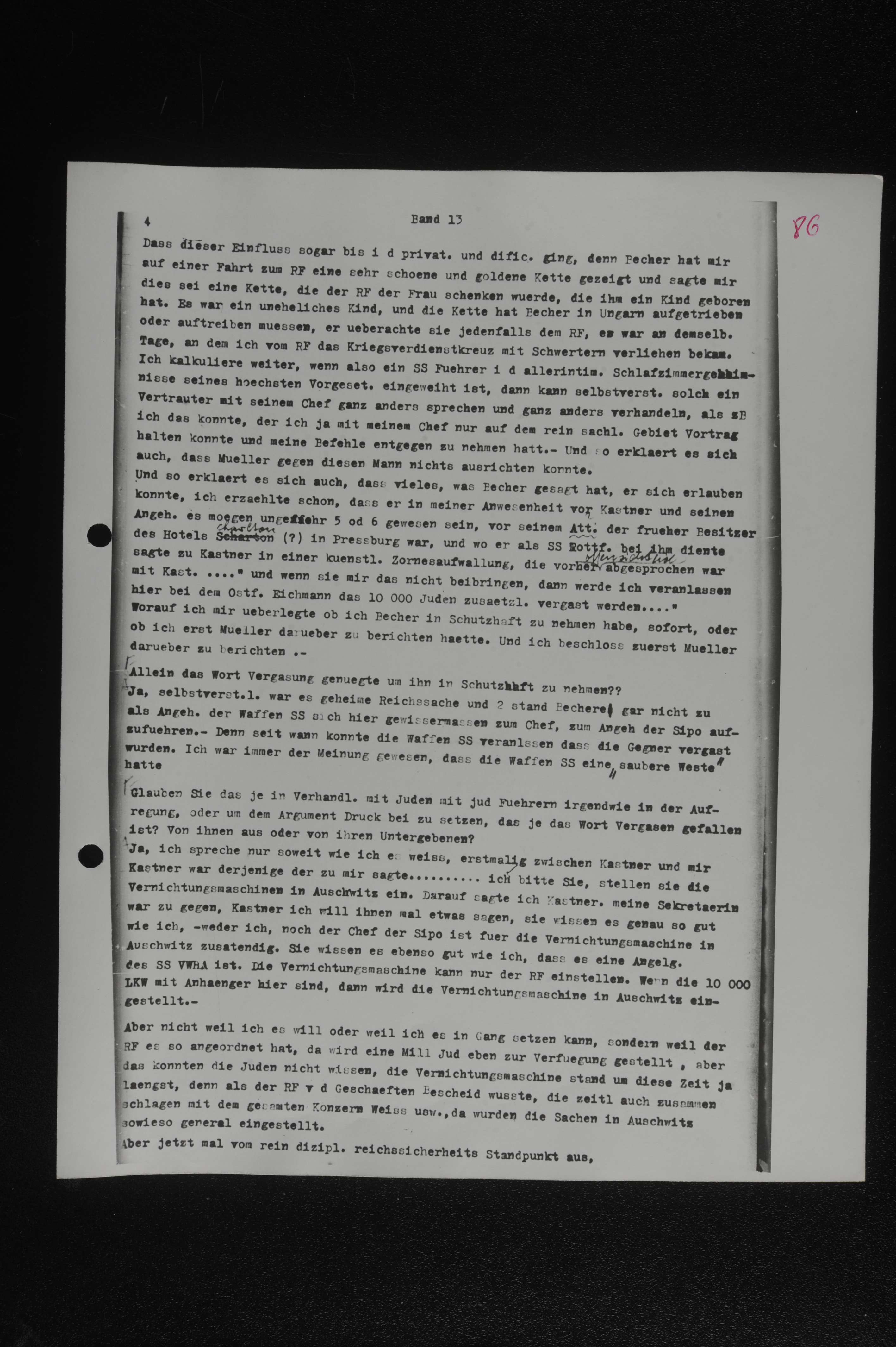
Page 310 of the typescript, O.65 file 86.
Page 310 · Yad Vashem Archives, O.65/86

German transcription

Parteien durchführte? Das kann ich nicht sagen, davon habe ich nie etwas gehört. Es soll also Regierungen gegeben haben, die der deutschen Regierung ihre Juden wie saures Bier anpriesen? Und sie dann nachher umsorgten mit einer Anzahl möglich und unmöglichen Inspektionen in Siedlungsgebieten, sie wollten sich das angucken, wo ihre Juden hingekommen wären, usw. usw. – Könnten Sie nun erschöpfend diese Regierungen und ihre Umsorgungsphänomenen umschrieben? Ich habe nun meine Erfahrungen gemacht und die gilten eigentlich für allgemei… mit Ausnahme von Ungarn und Dänemark. Ich habe die Erfahrung gemacht, daß überall wo ein deutscher Emisär, egal ob der nun vom Chef der SIPO oder von Ausw. Amt dorthin kam, oder von einer Parteidienststelle dorthin kam und die Frage auf die Eliminierung der Juden aus den Lebensgebieten des betr. Volkes zur Debatte stand und sogar anheim gestellt wurde, doch bemüht zu sein die Juden dem Reich zu überantworten, in keinem einzigen Fall von Haus aus Schwierigkeiten bereitet wurden. Sondern im Gegenteil, geradezu erlösend wurde dieses Angebot entgegen genommen sodaß ich mir wiederholtest sagte, wie werde ich nur den vielen Transportraum auftreiben, wie werde ich sie bekommen, um das alles so schnell durchzuführen, wie man das nun so schnell von mir fordert. Es ist sogar soweit gekommen, daß mir der Chef der SIPO gesagt hat, und auch Müller mir sagte, – es geht in d nem Monat ungefähr dort los, sehen Sie zu das Sie genügend Transp. Material bekommen. – Ich habe mit Pohl gesprochen, die kommen alle dort und dort hin" – Ich habe dann hier zum wiederholtesten mal mit dem Reichsverkehrsminist. Fahrpläne aufgestellt und mußte dann zum wiederholtesten Mal diese aufgestellten Fahrpläne wieder absagen, auch das hat es gegeben. Weil nun die betr. Länder Bedenken hatten weil durch anfängliche Transp. gewisse Kräfte mobilisiert wurden, die ein Absetzen, ein Versetzen, ein plötzliches nicht mehr Lassen der Funktionäre herbeiführte, die die Sache des Abtransp. dort einleiteten und das hatte nun zur Folge daß ich die restliche Züge wieder abbestellen mußte. Zwischenfrage, bzgl. der Regierungen, welche waren es und von welchen wird gesprochen??? Antwort: Ich spreche von allen Ländern, dasselbe hatten wir in der Slowakei, dasselbe hatten wir in Frankreich, obwohl es dort sehr hoffnungsvoll anfing, dasselbe hatten wir in Holland, wo noch die Transp. am Anfang rollten, das man sagen kann, es war eine Pracht und wo dann Schwierigkeiten, über Schwieri… auftauchten. Soll das heißen daß es eine Pracht war, weil der holländische beamtliche Verwaltungsapparat derartig mitarbeitete? – Er machte keine Schwierigkeiten, – es gab überhaupt am Anfang keine Schwierig…

Draft translation

4 Band 34 [HW: 210] carried out [by] parties? That I cannot say, I never heard anyth[?ing?] about it. -------- So there are supposed to have been governments that praised their Jews to the German government like sour beer? And then afterwards fussed over them with a number of possible and impossible inspections in settlement areas, they wanted to look at it, where their Jews had ended up, etc. etc. — Could you now exhaustively describe these governments and their fussing-over phenomena? I have now made my experiences and they actually held true generally, with the exception of Hungary and Denmark. I made the experience that everywhere where a German [?adviser?], regardless of whether he now came there from the Chief of the SIPO or from the Foreign Office, or came there from a Party office, and the question of the elimination of the Jews from the living-areas of the people concerned was up for debate and it was even suggested [to them] to make an effort to hand the Jews over to the Reich, in not a single case were difficulties created from the outset. But on the contrary, this offer was received downright as a deliverance, so that I repeatedly said to myself, how am I only to find the great [amount of] transport space, how will I get it [HW: [?them?]], in order to carry all that out as quickly as one now demands it of me so quickly. It even came so far that the Chief of the SIPO told me, and Mueller also told me, ---it starts there in about o e month, see to it that you get enough transp. material.--I have spoken with Pohl, they all come there and there" -- I then, for the most repeated time here, drew up timetables with the Reich Transport Minist., and then had, for the most repeated time, to cancel these drawn-up timetables again, that too has happened. Because now the countries concerned had misgivings because through initial transp. certain forces were mobilised, which brought about a removal, a transfer, a sudden no-longer-leaving of the functionaries who were initiating the matter of the deportation there, and that now had the consequence that I had to cancel the remaining trains again. Interposed question, regarding the governments, which ones were they and which are being spoken of??? [HW: (28)] [HW: <] Answer: I am speaking of all countries, we had the same in Slovakia, we had the same in France, although it began there very hopefully, we had the same in Holland, where the transp. were still rolling at the beginning, [such] that one can say it was a splendour, and where difficulties then, upon difficult[ies], surfaced. Is that to mean that it was a splendour that the Dutch official administrative apparatus cooperated to such a degree?---- He made no difficulties,-- there were at the beginning no difficult[ies] at all

but then there was mobilization, and then the difficulties arose. It dragged on as slowly as anything until another unit could finally be transported. You can see it in all the books: at first some tens of thousands were taken away at speed, then there was a standstill, then there was fighting—not with weapons—and then another contingent of 10,000 or 15,000, or perhaps only 4,000, 5,000, 3,000 or 2,000. Then there were more battles to be fought, then another batch was prised loose, and so it went on.

It was different only with Hungary. Hungary really did try to offload the Jews onto us. Hungary was the only country for which we simply could not work fast enough. I was constantly pressed; I could not obtain the transport equipment, however hard I tried. Even the receiving centers had difficulties accommodating them. That was the pace the Hungarian government allowed. Denmark was the opposite: difficulties were actually raised from the first day, which happened in no other country.

In that respect these two countries, Denmark and Hungary, are the only exceptions, in opposite ways, among all the other countries of Europe. Compare the relevant literature and you will see that at the beginning it went smoothly, almost like a raid, and then the damned difficulties arose. You will not find that in Hungary. There were difficulties there too, but by then the great masses had already been taken away, and the war had advanced so far that some of the difficulties were on our side. We could not transport them away.

[Typed as notes in the transcript: March on foot.]

Questioner

Could you summarize the various measures indicating that the different countries were trying to offload them in that way?

Eichmann

I cannot give exhaustive information about that. I can only tell you about the places where I negotiated myself. That was Slovakia. It offered its Jews to the Germans, trying to offload them. That is clear.

Hungary—that has already been explained clearly enough.

France: there it was Laval. At the beginning he not only made no difficulties; it seemed that all the Jews could be taken over from France without any difficulty. At the beginning, the expression “trying to offload them” applied to France too.

Holland: I do not know who negotiated there, but train after train was rolling. The desk officer under the Commander of the Security Police had his hands full. I had to support him. I sent him Burger, and for a time even Brunner to Holland, so that I had some very heavy artillery there to get this work done quickly. So there too they were trying to offload them onto me. But I must say that I do not know who negotiated or how. The Dutch made no difficulties—not until later.

Belgium was the same. Things went smoothly at first, then no longer.

Open page image and German
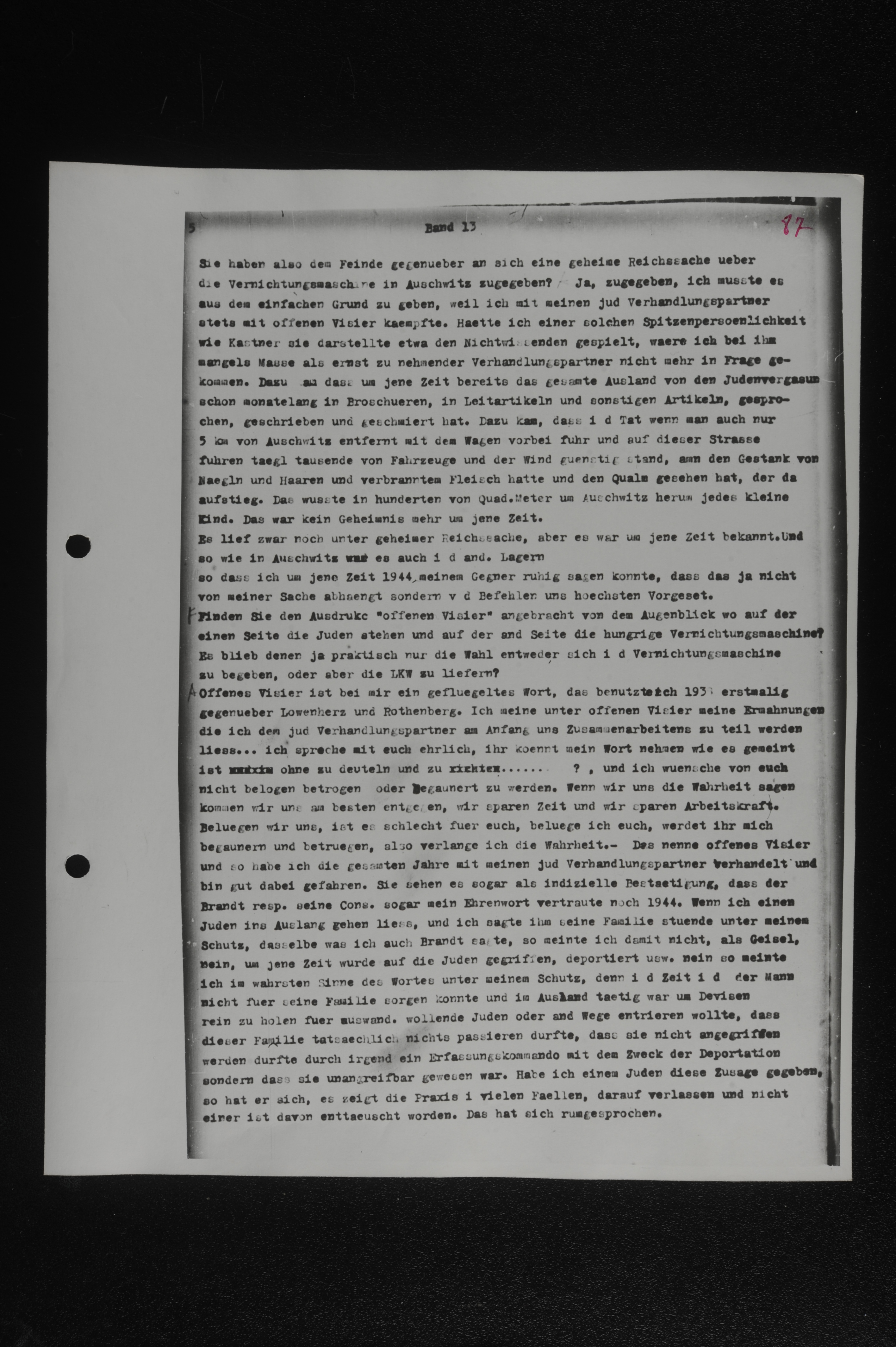
Page 311 of the typescript, O.65 file 86.
Page 311 · Yad Vashem Archives, O.65/86

German transcription

aber dann wurde mobiliert und dann traten die Schwierigkeiten auf und daß zog sich dann so zäh wie sonst was hin, bis dann endlich wieder eine Einheit transportiert werden konnte. Aber Sie sehen es doch in allen Büchern, daß am Anfang mit einer gewissen Rasanz einige 10 000 heraus gefahren wurden, dann kam ein Stillstand, dann wurde gekämpft, nicht mit Waffen, dann gab es wieder ein Kontigent mit 10 oder 15 000 oder auch nur 4,5,3,2 000, dann waren wieder Kämpfe zu bestehen, dann wurde wieder ein Teil losgeeist und so ging das dann. Nur mit Ungarn war es anders, Ungarn hat uns wirklich die Juden wie saures Bier angepriesen und Ungarn war das einzige Land gewesen, für das wir überhaupt nicht schnell genug arbeiten konnten, wie ich dauernd bedrängt wurde, wo ich gar nicht das Transp. Material auftreiben konnte, so se… ich mich auch bemühte – so daß selbst die Aufnahmestellen Schwierigkeiten in der Unterbringung hatten, ein solches Tempo wurde von der ung. Reg zugelas… Im Gegensatz dazu, war es Dänemark, wo tatsächlich die Schwierigkeiten vom ersten Tag an gemacht wurden, was in keinem anderen Land zu verzeichnen war. Insofern bilden also diese beiden Länder, Dänemark und Ungarn, die gegensätz[unleserlich] einzige Ausnahme im Hinblick auf alle übrigen Länder Europas. Vergleichen Sie die einschlägige Literatur, dann werden Sie sehen, daß es am Anfang fast überfallmäßig glatt ging. und dann die verdammten Schwierigk… auftraten. Sie werden es nicht in Ungarn finden, es gab wohl auch Schwierigk… aber da waren die großen Massen schon abgefahren und das Kriegsgeschehen war schon soweit vorgerückt, daß auch manche Schwierigk. bei uns lagen, wir haben sie nicht abfahren können (Fußmarsch)… F: Könnte man nun die verschied Maßnahmen die daraufhinweisen, daß es ein Anpreisen wie saures Bier war der verschied Länder zusammen fassen? A: Ich kann da nicht erschöpfend Auskunft geben, ich kann Ihnen nur das sagen, wo ich selbst verhandelt habe Das war die Slowakei, sie hat den Deutschen ihre Juden wie saures Bier angeboten. Das ist klar… Ungarn, schon deutlich genug ausgeführt Frankreich, dort war es der Laval, der hat im Anfang nicht nur keine Schwier… gemacht, sondern es schien so, daß von Frankreich ohne jede Schwierigk. die gesamten Juden übernommen werden konnten. Das galt für Frankreich am Anfang auch der Ausdruck, "wie saures Bier" Holland, wer da verhandelt hat das weiß ich nicht, es rollte aber Zug um Zug Der Sachbearbeiter beim Befehlshaber der SIPO hatte alle Hände voll zu tun, ich mußte ihm unterstutsen, ich schickte ihm Burger, eine Zeitlang sogar auch Brunner nach Holland schicken, sodaß ich dort ein sehr starkes Geschütz hat das diese Arbeit in Eile verrichten konnte – also wurde es mir auch wie saures Bier angepriesen – wobei ich aber sagen muß, ich weiß nicht wer und wie verhandelt wurde, aber die Hollander machten keine Schwierigkeiten, erst später. Belgien war dasselbe, dort ging es anfangs reibungslos, dann nicht mehr.

Draft translation

but then mobilization occurred and then the difficulties arose and that dragged on then as sluggishly as anything, until then finally another unit could be transported again. But you do see it in all the books, that at the beginning with a certain rapidity some 10,000 were driven out, then came a standstill, then there was fighting, not with weapons, then there was again a contingent with 10 or 15,000 or also only 4, 5, 3, 2,000, then again battles had to be endured, then again a part was broken loose and so it went then. Only with Hungary it was different, Hungary really recommended the Jews to us like sour beer, and Hungary was the only country for which we could not work quickly enough at all, as I was constantly pressed, where I simply could not procure the transp. material, however much I exerted myself----- so that even the receiving stations had difficulties in the accommodation, such a tempo was permitted by the Hung. Gov. In contrast to that, it was Denmark, where the difficulties were actually made from the first day on, which was to be recorded in no other country. In that respect then these two countries, Denmark and Hungary, form the [HW: [illegible]] only exception with regard to all the remaining countries of Europe. Compare the relevant literature, then you will see that at the beginning it went almost like a raid, smoothly. and then the damned difficult[ies] arose. You will not find it in Hungary, there were indeed also difficult[ies] but there the great masses had already departed and the war events were already so far advanced that some difficult[ies] lay also with us, we could not get them away (foot march)......... [HW: F] Could one now summarize together the various measures which indicate that it was a recommending like sour beer of the various countries? [HW: A] I cannot give exhaustive information there, I can only tell you that where I myself ne[go]tiated. That was Slovakia, it offered the Germans its Jews like sour beer. That is clear.... Hungary, already carried out clearly enough France, there it was Laval, who at the beginning not only made no difficult[ies], but it seemed so, that from France without any difficult[y] the entire Jews could be taken over. That applied to France at the beginning also the expression, "like sour beer" Holland, who negotiated there that I do not know, but it rolled train after train. The desk-officer at the Commander of the SIPO had his hands full, I had to support him, I sent him Burger, for a while even also Brunner to send to Holland, so that I had there a very strong operation that could perform this work in haste---- so it was also recommended to me like sour beer-- whereby I must however say, I do not know who and how was negotiated, but the Hollanders made no difficulties, only later. Belgium was the same, there it went smoothly at the beginning, then no more.

In Belgium, next to nothing was deported …

Unknown speaker

But some trains did leave. And they left immediately.

Eichmann

The example of the Hungarian gendarmerie commander is … (?). He throws his arms around my neck, thanks me in the name of the people—which he actually had no authority to do—and tells me that a monument in Budapest would be assured me if I managed to take over this dreadful enemy of the Magyar people. A few days later this man was on the enemy side. And that was how it was everywhere: tremendous enthusiasm at first, and a few weeks later it had all burnt itself out like a straw fire, because the man concerned no longer really wanted to, as he had at first, or because he was no longer there at all.

Questioner

Could you also give these things country by country, concerning the care operations, the inspections in the resettlement areas, and so on?

Eichmann

First, the basic point. As part of the difficulties being made, the bodies with which the German authorities negotiated expressed wishes, even demands, that individuals or commissions be allowed to visit the groups sent away from their country in the area where they were staying. Some of these requests reflected a wish to make an official trip to distant, out-of-the-way countries. But they were also attempts to drag out the German authorities' negotiations for the time being. They dressed up these negotiations with the words: 'Well, then we can give our authorities X and Y a report on the labor deployment of these Jews we have sent away, and then I can get things through more easily, then I can get somewhere more easily, because people keep saying the Jews are being gassed. Or that the Jews are being killed.'

Questioner

In what year did that begin, this version that the Jews were being gassed or killed?

Eichmann

That may well have been the end of 1942 or the beginning of 1943.

Questioner

Then that coincided with the greater part of the extermination operation?

Eichmann

Yes, it was known.

Questioner

So it cannot be said of these people or governments that they had not known about it?

Eichmann

No. I myself never said, 'No, they are not being killed,' when I was asked. No, I did not do that, because I told people: 'What is happening now is simply happening.' That could not be kept secret; it was a Führer order, after all. The Führer himself also said later on the radio, in [? his] speech, [? more than once], 'Jewry will be exterminated.' He attacked Jewry in every speech.

Open page image and German
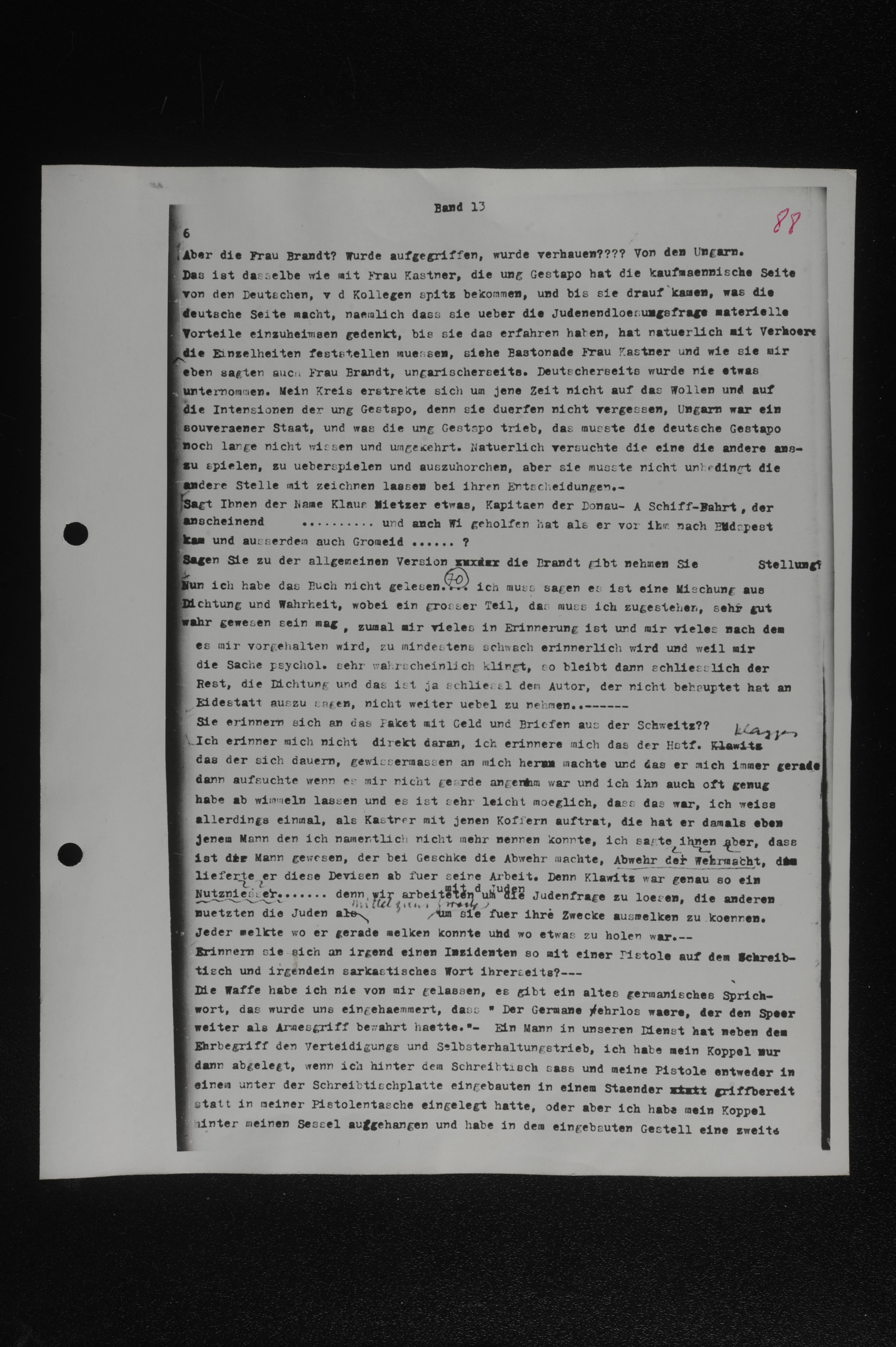
Page 312 of the typescript, O.65 file 86.
Page 312 · Yad Vashem Archives, O.65/86

German transcription

In Belgien ist so gut wie nichts deportiert worden… Aber es sind doch einige Züge abgefahren… Und die sind sofort abgefahren. Das Beispiel des ung. Gend. Kommandanten ist suabtomatisch(?) – – er fällt mir um den Hals, er bedankt sich im Namen des Volkes, wofür er eigentlich gar nicht die Vollmacht/ hatte, und erklärt mir, daß mir in Budapest ein Denkmal sicher wäre, wenn es mir gelänge den fürchterlichen Feind des Magyarentums zu übernehmen – ein paar Tage später war dieser Mann auf der Feindseite. – Und so war es überall, am Anfang helle Begeisterung und ein paar Wochen später ist alles wie ein Strohfeuer verraucht gewesen, weil der Betreffende nicht mehr so recht wollte, wie anfänglich oder weil er gar nicht mehr da war. F: Könnten Sie diese Sachen auch nach Länder angeben, bzgl. der Umsorgungsaktionen, die Inspektionen in den Umsiedlungsgebieten etc… A: Erst mal das Grundsätzliche; Im Zuge der Schwierigkeitsbereitung gehörte mit dazu daß die betr. Stellen mit den die deutschen Stellen verhandelteten Wünsche bis Forderungen stellten, Einzelpersonen oder Kommissionen die Visitation der aus ihrem Land abgefahrenen Einheiten im Aufenthaltsgebiet zu genehmigen. Das waren zT. Bitten die dem Wunsch entsprachen einmal eine Dienstreise zu tun in ferne abgelegene Länder, das waren aber auch Versuche, Verhandlungen der deutschen Stellen verläufig mal in die Länge zu ziehen denn sie schmückten diese Verhandlungen mit dem Werten, ja dann können wir unseren Stellen XY einen Bericht geben über den Arbeitseinsatz dieser von uns abgefahrenen Juden und dann habe ich ein leichteres Durchschlagvermögen dann komme ich leichter ran, denn man sagt immer die Juden würden vergast. Oder die Juden würden getötet. – F: Im welchem Jahr fing das an, diese Version, die Juden werden vergast oder getötet? A: Das mag wohl Ende 42/ Anfang 43 gewesen sein – F: Dann deckte sich das mit einem größten Teil der Vernichtungsaktion?? A: Ja, es war bekannt. – F: So kann also von diesen Personen od Regierungen nicht gesagt werden, daß sie es nicht gewußt hätten?? A: Nein. – Ich selber habe niemals gesagt, – nein, sie werden nicht getötet, – wenn man mich gefragt hat. Nein, das habe ich nicht getan, denn ich habe den Leuten gesagt was nun geschieht, geschieht nun einmal… Das konnte man nicht geheim halten, es war ja ein Führerbefehl, der Führer hat ja auch später im Reich gesagt in einer Rede, das Judentum wird vernichtet. – Er hat ja in jeder Rede das Judentum angegriffen. –

Draft translation

No usable literal translation is stored for this sheet.

Questioner

When the governments of the various countries tried to carry out inspections on the grounds that it was being said the Jews were being gassed, was that also put in writing by the governments concerned?

No, that was always dealt with only orally. The only body that put it in writing was the International Red Cross in Geneva. They wanted to go to Auschwitz and Lublin too, and the RF (Reichsführer-SS) handled that himself, in agreement with the Foreign Office. The RF (Reichsführer-SS) always redirected this request from the International Red Cross in Geneva to Theresienstadt. Three times in all. The other countries' requests for these inspections were not made privately, but at meetings and negotiations. But we recorded these requests in the memoranda drawn up after the meetings, just as every meeting was taken down in writing by a shorthand typist or some other fellow.

Questioner

Was it also recorded in these meeting memoranda that the Jews were being gassed?

Eichmann

Yes, of course; always in my meetings. I had to pass all that on. I had to obtain approval, the instruction as to whether an inspection was to be authorized or not. L.E. initials also made such a demand, but with him it was more a matter of establishing whether we could take in any more or not. He was then given permission to travel through Germany, but I do not know which offices he visited.

Questioner

Which governments, then, tried to carry out such inspections?

Eichmann

Slovakia. They received permission in some cases too, but they were not shown Auschwitz or Lublin. Almost all countries, because my people repeatedly reported to me that this person or that had applied again to inspect the Jewish camps, and asked for instructions on how it could be justified. Again and again the answer was: 'No, it is not possible at the moment.' When I was asked, I generally gave an evasive answer.

When I was told, 'The Jews are being exterminated there,' I always said: 'I do not know that, because the moment your Jews are sent away by me, I hand them over at the destination station to the SS VWHA (Economic and Administrative Main Office). This SS VWHA puts the Jews to work, either in the concentration camp or in the areas belonging to the camp. What happens to those unfit for work, I do not know. I believe they are exterminated, but the Security Police is not responsible for that. Apply to the RF (Reichsführer-SS).'

[Compare Dr. Kastn…]

Questioner

Do you remember particular cases in which, as time went on, you increasingly used the word “exterminated” to official bodies of other countries and governments?

Eichmann

Slovakia. Also in Amsterdam: there I spoke before an invitation (in the hotel of the Jew) to a Jewish “[? Reistafel]”

Open page image and German
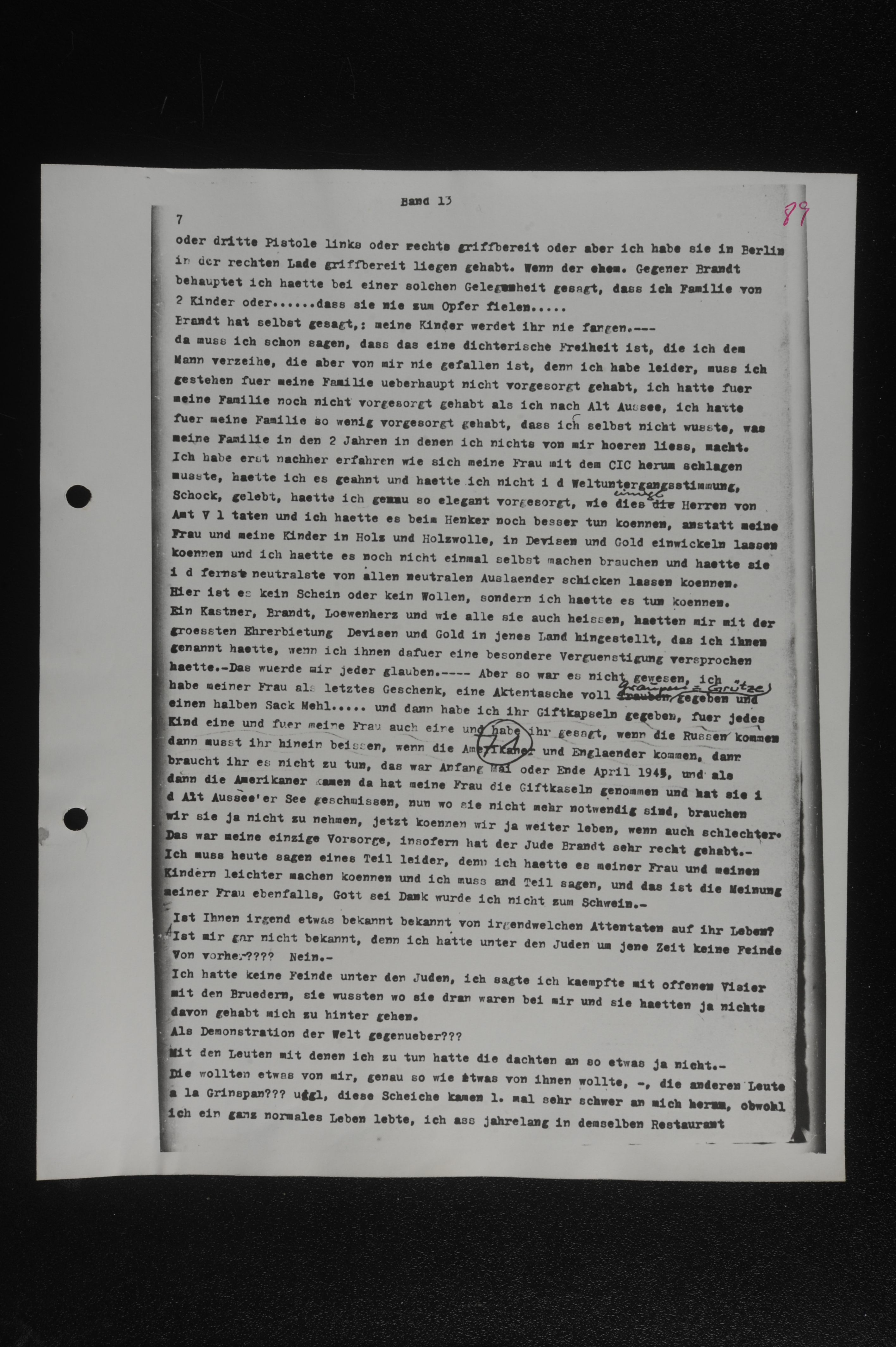
Page 313 of the typescript, O.65 file 86.
Page 313 · Yad Vashem Archives, O.65/86

German transcription

Wenn nun die Regierungen der verschied Länder versuchten die Inspektionen durchzuführen unter der Angabe es würde gesagt werden, daß die Juden vergast würden… wurde das auch schriftlich niedergelegt von den betr. Reg.? Nein, das wurde immer nur mündlich behandelt. Die einzige Stelle die das schriftlich an hte, war das internationale rote Kreuz in Genf. Sie wollten auch nach Auschwitz und Lublin, und das hat der RF selbst behandelt, im Einvernehmen mit dem ausw. Amt und der RF hat diese Wünsch des Int. RK von G… Genf, dann immer abgestellt auf Theresienstadt. Dreimal insgesamt. Die Wünsche der anderen Länder bzgl. dieser Inspektionen wurden nicht privatim geäußert, sondern bei Besprechungen und Verhandlungen. Aber diese Wünsche wurden ja von uns in dem aufgenommen Aktenvermerke nach den Besprechungen festgehalten, so wie jede Besprechung ja von einer Stenotipistin oder sonst einem Heini aufgenommen wurde schriftlich. Wurde auch in diesen Besprechungsvermerken festgehalten, daß man die Juden vergast? Ja, selbstverständlich, in meiner Besprechung immer. – Denn ich mußte das ja alles weiter tragen, ich mußte mir ja dann die Genehmigung einholen, die Weisung, ob nun eine Inspektion genehmigt werden soll oder nicht?… Auch L.E. stellte se eine Forderung, aber bei ihm war es mehr, umfestzustellen ob wir noch mehr aufnehmen können oder nicht… er bekam dann eine Genehmigung durch Deutschland zu fahren, aber welche Stellen er angelaufen ist, das weiß ich nicht… Welche Regierungen also bemühten sich solche Inspektionen durchzuführen? A: Slowakei – sie haben auch in einigen Fällen die Genehmigung bekommen, aber es wurde ihnen nicht Auschwitz und auch nicht Lublin gezeigt. Fast alle Länder, denn meine Leute haben mir immer wieder berichtet, das dies und jener wieder vorstellig geworden ist um die Judenlager zu besichtigen und es wurde um Weisung gebeten, wie es zu verantworten ist. Und es wurde immer wieder darauf hingewiesen, nein, im Augenblick geht es nicht. Wenn man mich gefragt ht, dann habe ich in der Regel eine ausweichende Antwort gegeben, wenn mir gesagt worden ist; Die Juden werden dort vernichtet, dann habe ich stets gesagt, das weiß ich nicht, denn in dem Augenblick in dem enre Juden von mir abgefahren werden, dann übergebe ich sie am Zielbahnhof dem SS VWHA – Dieses SSVWHA setzt die Juden arbeitsmäßig ein, entweder im Kz oder zu den Bereichen die zum KZ gehören, was mit den arbeitsunfähigen geschieht, das weiß ich nicht, ich glaube, sie werden vernichtet, aber die SIPO ist dafür nicht zuständig, wenden sie sich an RF. – (Vergleich Dr. Kastn… Erinnern Sie sich an Einzelfälle, wo Sie im Laufe der Zeit, im zunehmenden Maße das Wort "Vernichtet" verwendet haben, gegenüber offiziellen Stellen anderer Länder und Regierungen? Slowakei – Auch in Amsterdam, da sprach ich vor einer Einladung „zu einer jüd. Reistafel" im Hotel des Juden

Draft translation

7 Volume 34 [HW: 313] When now the governments of the various countries tried to carry out the inspections under the statement it would be said that the Jews were being gassed.... was that also put down in writing by the respective gov[ernments]? No, that was always only handled orally. The only office that requested this in writing was the international Red Cross in Geneva. They also wanted to [go] to Auschwitz and Lublin, and the RF [Reichsführer] himself handled that, in agreement with the For[eign] Office, and the RF then always deflected this wish of the Int. RC of G Geneva onto Theresienstadt. Three times in total. The wishes of the other countries regarding these inspections were not expressed privately, but rather at discussions and negotiations. But these wishes were indeed recorded by us in the memoranda recorded after the discussions, just as every discussion was indeed taken down in writing by a steno-typist or some other [?fellow?]. Was it also recorded in these discussion memoranda that one gasses the Jews? [HW: (29)] Yes, of course, in my discussion always.------ For I had to carry all that further, I then had to obtain the authorization, the directive, as to whether an inspection should now be authorized or not?.. L.E. also made such a demand, but with him it was more, to determine whether we can still take up more or not.... he then received an authorization to travel through Germany, but which places he approached, that I do not know.. Which governments then endeavored to carry out such inspections? [HW: A] Slovakia---- they also received the authorization in some cases, but they were not shown Auschwitz and also not Lublin. Almost all countries, for my people reported to me again and again, that this one and that one had again applied to view the Jew-camps and a directive was requested, as to how it is to be answered for. And it was pointed out again and again, no, at the moment it is not possible. When one asked me, then I gave as a rule an evasive answer, when it was said to me: The Jews are being exterminated there, then I always said, that I do not know, for at the moment in which the Jews are driven away by me, then I hand them over at the destination station to the SS VWHA--- This SS VWHA deploys the Jews in terms of labor, either in the KZ [concentration camp] or to the areas that belong to the KZ, what happens with those unfit for work, that I do not know, I believe, they are exterminated, but the SIPO is not responsible for that, turn to the RF.----(Compare Dr. Kastn[er] Do you remember individual cases, where you in the course of time, to an increasing degree used the word "exterminated," toward official offices of other countries and governments? Slovakia--- Also in Amsterdam, there I spoke before a [DEL: invitation to [illegible]] [HW: in the hotel of the Jew] [HW: to a Jew[ish] [?Reiskabel?] "]

with a Dutch official, but I can no longer say who he was, what his name was, and so on. In The Hague I regularly stayed overnight at the Hotel Des Indes. There too I once spoke with a Dutchman, but I no longer remember his name either. Dr. Rajakowitsch (?) could give better information; he was the one who got things going in Holland. He also introduced Dutchmen to me at the beginning. But, as I said, Zoepf, Rajakowitsch, Brunner—they ought to know more.

The Dutchmen I spoke with then were not in uniform. Whether they were Party men, I do not know. In any case they were not working on behalf of the Jews; it was a very friendly discussion. I assume they were people my people had found—antisemites, one might say. So, as I said, almost all countries sought these inspection visits. The only witnesses I can name are my staff, whom I had stationed in the respective countries.

I also remember that Richter gave me the names of Romanian government people who wanted to visit Germany and demanded access here to the sites of the measures against the Jews. This Romanian government official was in Berlin and even claims to have spoken with me.

Questioner

Was there also a country which, quite apart from curiosity, really showed concern for these deported Jews by supplying them with food? Were there any countries that said, 'We are now sending off a train with food or clothing and so on, so that our Jews do not go short'?

Eichmann

No, not in a single case. On the contrary, they handed the Jews over to us practically as poor as church mice. I believe Höss would have been glad and grateful if the trains had been somewhat better supplied. Some of them were very poorly supplied with food too. Not at the beginning: the first few transports were good, but then they started cutting back drastically. Not a single request for extra care was made. They were not even made from Slovakia.

Questioner

So, on the contrary, the various countries and governments tried to retain as much of the Jewish property as possible?

Eichmann

Yes.

Questioner

When you say that at first they provided for them decently, but afterwards became increasingly sparing, how did that show itself?

Eichmann

Earlier they had still been allowed a second coat, a third blanket; they had also been allowed personal belongings and their own food. Then, in some cases, all of that was ruthlessly taken away from them, stripped from them. [Handwritten note at the foot of the sheet: The WVHA (?), or the former members of this main office, could, insofar as they were involved, give exhaustive information here.]

Open page image and German
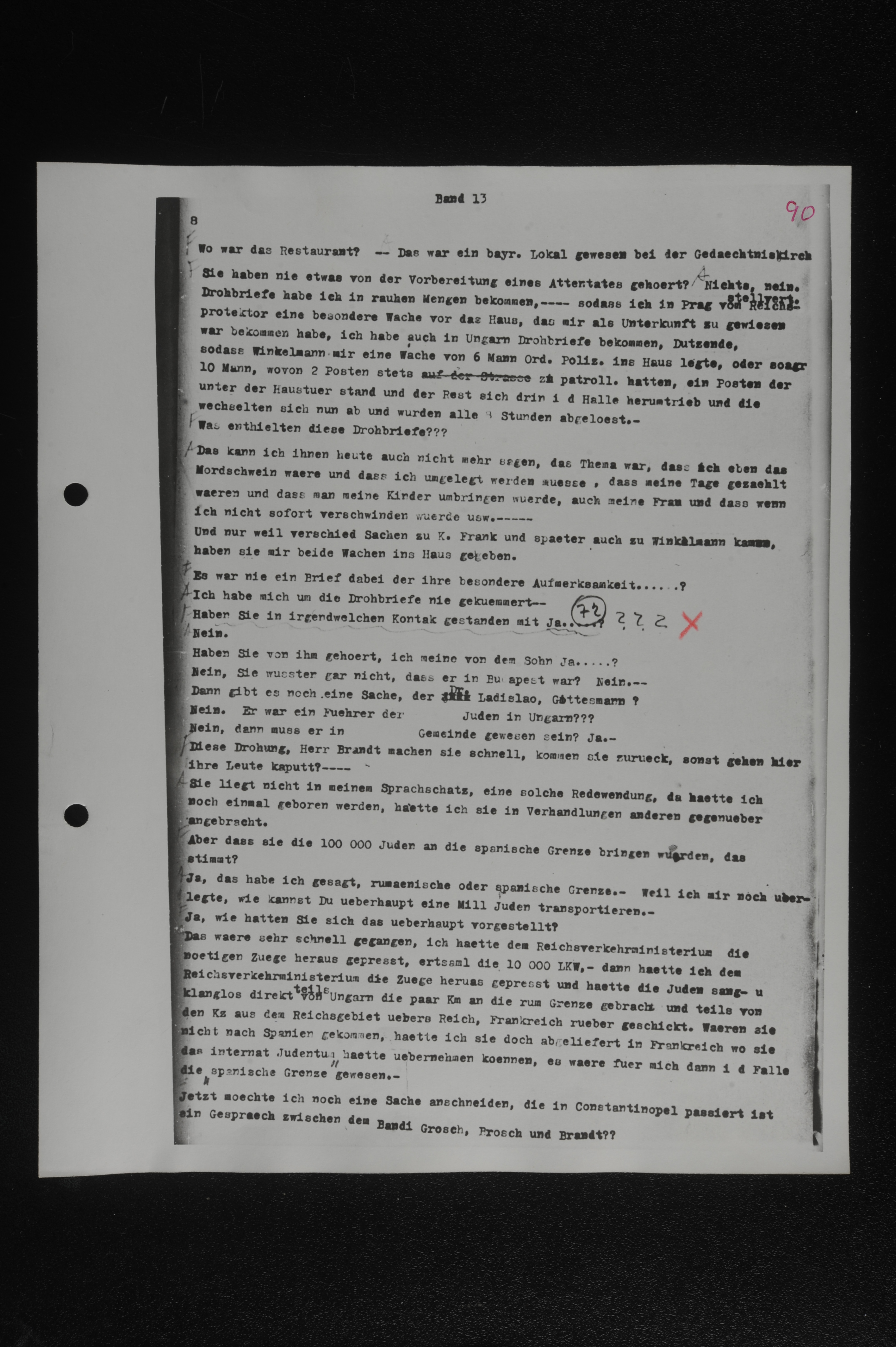
Page 314 of the typescript, O.65 file 86.
Page 314 · Yad Vashem Archives, O.65/86

German transcription

mit einem holländischen Funktionär, aber ich kann nicht mehr sagen wer es war wie er hieß usw… Im Denhaag habe ich laufend übernachtet in dem Hotel "Des Indes", auch da sprach ich einmal mit einem Holländer, aber auch diesen Namen habe ich nicht mehr weiter in Erinnerung. Bessere Auskunft geben könnte der Dr. Jakowitsch(?), der ja in Holland die Sache ankurbelte. Er stellte mir auch Holländer im Anfang vor, aber wie gesagt, Zoepf, Jakowitsch, "Brunner die müßten mehr wissen. Diese Holländer mit denen ich damals sprach waren nicht uniformiert. Ob es Parteimänner waren, weiß ich nicht, sie waren jedenfalls nicht für die Juden bemüht, es war eine sehr freundschaftliche Besprechung. Ich nehme an es waren Leute die meine Leute aufgetrieben haben wohl sagen. Antisemiten. – Also wie gesagt, fast alle Länder bemühten sich um diese Inspektionsbesuche, als Zeuge kann ich nur meine Mitarbeiter nennen, die ich in den jeweiligen …der sitzen hatte. Ich entsinne mich auch noch, daß Richter mir Namen nannte vom rumänischen Regierungsleuten, die Deutschland besuchen wollten und hier für die Stätten der Judenmaßnahmen Zutritt verlangten. – Dieser rum. Regierungsbeamte war in Berlin und behauptet sogar mit mir gesprochen zu haben… Hat es auch ein Land gegeben, daß auch abgesehen von der Neugierde, nun auch wirklich eine Sorge um diese deportierten Juden an den Tag legte? In dem sie diese Juden mit Lebensmittel versorgten – Hat es irgendwelche Länder gegeben, die gesagt haben, wir schicken jetzt einen Zug mit Lebensmittel oder Kleidungs etc ab damit unsere Juden nicht zu kurz kommen. Nein, in keinem einzigem Fall, im Gegenteil, sie haben die Juden ja quasi als ärmste Kirchenmäuse uns überlassen – und ich glaube Höß wäre froh und dankbar gewesen, wenn die Züge etwas besser ausgestattet gewesen wären, zT. sind sie auch Lebensmittelmäßig sehr kümmerlich ausgestattet gewesen. Im Anfang nicht, die ersten paar Transp. waren gut, aber dann fingen sie mächtig an zu sparen. Eine Anfrage für eine Extrabetreuung wurde in keinem Fall gestellt. Die wurden nicht einmal aus der Slowakei gestellt. – Die verschied Länder und Regierungen haben sich als im Gegenteil darum bemüht, soviel wie möglich von dem Judenbesitz zurückzubehalten? Ja. – Wenn Sie sagen, anfänglich haben sie sie anständig versorgt, nachher wurden sie immer sparsamer, wie kam das zum Ausdruck? Man hat ihnen vorher z.B. nach einen 2. Mantel gelassen, eine dritte Decke gelassen man hat ihnen auch private Sachen gelassen, man hat ihnen auch privat Essen gelassen und dann wurde ihnen in manchen Fällen das alles rücksichtslos abgenommen, abgezwackt. [handschriftlich: Das V.W.H…amt bzw. die ehem. Angeh. dieses H.A. könnten, soweit sie damit zu tun hatten, hier erschöpfende Auskunft geben.]

Draft translation

8. Volume 34 [HW: 314] with a Dutch functionary, but I can no longer say who it was, what his name was etc... In The Hague I regularly stayed overnight in the Hotel "Des Indes", there too I once spoke with a Dutchman, but this name too I no longer have in memory. Better information could be given by Dr. [HW: [?kg?]] Jakowitsch(?), who after all got the thing going in Holland. He also introduced Dutchmen to me at the beginning, but as said, Zoepf, Jakowitsch, "Brunner [HW: [?5)?]] who however [?would?] know more. These Dutchmen with whom I spoke at that time were not in uniform. Whether they were party men, I do not know, in any case they were not exerting themselves for the Jews, it was a very friendly discussion. I assume they were people that my people rounded up so to say. Antisemites.--- So as said, almost all countries made efforts for these inspection visits, as a witness I can only name my co-workers, whom I had sitting in the respective [one]. I also still recall that Richter named to me names of Romanian government people who wanted to visit Germany and here demanded access to the sites of the Jewish measures.--This Rom. government official was in Berlin and even claims to have spoken with me...... Was there also a country that, quite apart from curiosity, now also really displayed a concern for these deported Jews? In that they supplied these Jews with foodstuffs-- Were there any countries that said, we are now sending off a train with foodstuffs or clothing etc. so that our Jews do not come up short. No, in not a single case, on the contrary, they left the Jews to us quasi as the poorest church mice-- and I believe Hoess would have been glad and grateful if the trains had been somewhat better equipped, in part they were also very meagerly equipped in terms of foodstuffs. Not at the beginning, the first few transp. were good, but then they began mightily to economize. A request for extra care was in no case made. They were not even made from Slovakia.-- The various countries and governments on the contrary made efforts to retain as much as possible of the Jewish property? Yes.-- If you say, initially they supplied them decently, afterwards they became ever more sparing, how did that come to expression? Beforehand one had left them n[?ow?] [HW: [?zub?]] a 2nd coat, left [them] a third blanket, one also left them private things, one also left them private food and then in some cases all of that was ruthlessly taken from them, filched away. [HW: The V.W.[?Mann?] Hg. who the dem. [?belong.?] this H.A. [?knew,?] [?insofar as?] they with it to him [?let?] see an [?exhaustive?] decency.] [HW: X]

Questioner

Which transports were carried out not by the Germans, but by the countries and governments concerned?

Slovakia. It rounded them up with its own agencies and handed them over. The transport escort detachment was always German. The Slovak agencies carried out the roundup and the provisioning, and the same applied to Hungary.

In Holland, German agencies did the rounding up with the assistance of the Dutch police. The Dutch police had to do the work of herding them in.

In France the French police helped. Dannecker had a French police commissioner to assist him, who never made difficulties for him.

In Belgium I do not know who did it.

Questioner

Where were the transports rounded up and provisioned by the Germans?

Eichmann

In the General Government. But Office IV was not responsible there; Glo had the special assignment. Glo did that not only in his own district but in the other districts too. That was how far Glo's arm reached. Although he was only SS and Police Leader of the Lublin district, that arm reached into the areas of the other SS and Police Leaders too, who then had to support him. All the decrees of the SS and Police Leaders—not … In any case, Glo, with the Higher SS and Police Leader in Krakow, after the latter had obtained clearance from Frank of Poland each time … For without the General Government administration, the Higher SS and Police Leader, and thus his SS and Police Leaders in the General Government, could not do as they pleased.

In Denmark the German police did it entirely on their own, I believe with the help of some Wehrmacht units, but I cannot say for certain. And that brings us to the end, because we could not do it in the other countries. The other countries insisted on their sovereign rights. There were not very many countries where we could carry out the rounding up.

Questioner

What intention might the individual governments have had in sending the Jews away without identity papers?

Eichmann

The handover regulations said neither that the Jews were to be transferred to us with identity papers nor that they were to be transferred without them. So the people concerned could handle it as they saw fit. At the beginning, of course, lists of names were handed over. The transport leader required lists of names, and these were then handed to the reception offices of the VWHA (Economic and Administrative Main Office). Which individual documents a Jew had with him was beyond our knowledge. That was the Jew's own affair, or that of the agency that rounded them up.

Questioner

Could that not have been a general police measure to nip possible escape attempts in the bud, so that it then became a general rule that the Jews left without identity papers?

Eichmann

No.

Open page image and German
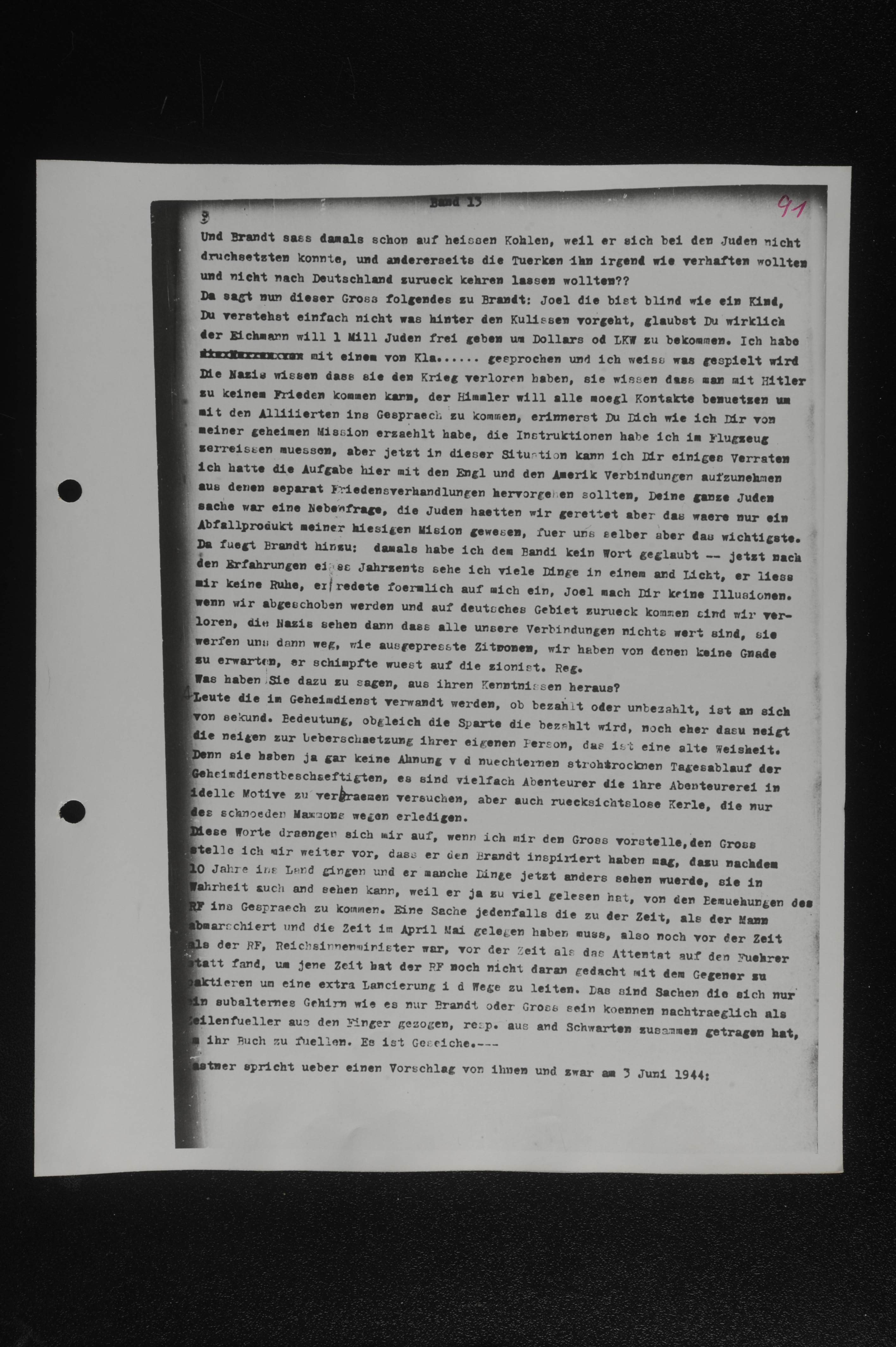
Page 315 of the typescript, O.65 file 86.
Page 315 · Yad Vashem Archives, O.65/86

German transcription

Welche Transp. wurden nun nicht von den Deutschen, sondern von den betr. Länder und Regierungen durchgeführt? Slowakei, die hat sie mit eigenen Organen erfaßt und übergeben. Das Transp. Begleitkommando waren jeweils immer Deutsche gewesen. Die Erfassung wurde durch erführt von den slowakischen Organen, auch die Versorgung, und dasselbe galt für Ungarn. In Holland machte die Erfassung die deutschen Organe, unter zu Hilfenahme der holländischen Polizei. Die holländische Polizei mußte ja die Zutreiberdienste leisten. In Frankreich half die franz Polizei mit. – Dannecker hatte einen franz. Kommissar zu Hilfe, der ihm nie Schwierigkeiten machte. – In Belgien weiß ich nicht, wer es da machte. F: Wo wurden die Transp. von den Deutschen erfaßt und versorgt? A: Im Generalgovern., aber da war das Amt IV nicht zuständig gewesen, da hat Glo den Sonderauftrag gehabt. Das hat Glo nicht nur in seinem Distrikt gemacht sondern in den übrigen Distrikten ebenfalls. So weit reichte Glo Arm, obwohl er nur SS und Pol. Führer des Distriktes Lublin war, so reichte dieser Arm auch in die anderen Bereiche der SS Pol Führer hinein, die ihm dann zu unterstützen hatten. Die ganzen Erlasse der SS u Pol. Führer nicht, jedenfalls hat Glo mit dem Höh. SS Pol. Führer in Krakau, nachdem dieser jeweilig die Bedenkenlosigkeit des Polenfranks eingeholt hatte. Denn ohne der Generalgovern. Verwaltung konnte ja der Höh. SS u Pol Führer und damit auch seine SS Pol. Führer im Generalgo ernement nicht schalten oder walten wie sie wollten. In Dänemark hat es die deutsche Polizei gemacht, ganz allein, ich glaube mit Hilfe einiger Wehrmachtseinheiten, ich kann es aber nicht genau sagen. Ja und somit sind wir am Ende, denn in den anderen Länder haben wir es nicht machen können, die anderen Länder haben auf ihre Hoheitsrecht gepocht. Es gibt nicht allzuviel Länder wo wir die Erfassung durchführen konnten. Welche Absicht kann bei den einzelnen Regierungen vorgelegen haben, daß sie die Juden ohne Personalpapiere abgeschickt haben? A: Die Übergabebestimmungen sagten weder daß uns die Juden mit Personalpapiere zu überstellen seien, noch daß sie ohne Personalpapiere zu überstellen seien. Da konnten es also die Betreffenden halten, wie sie es für richtig hielten. Im Anfang freilich wurden Namenslisten abgegeben, vom Transp. Führer wurden Namenslisten verlangt und die wurden dann den Aufnahmestellen des VWHA übergeben, welche einzelne Dokumente der Jude bei sich hatte, das entzog sich unserer Kenntnis, das war dem Juden seine Angelegenheit. bzw. der Stelle die sie erfaßte Das kann nicht eine allgemeine poliz. Durchführung gewesen sein, um evtl Fluchtversuche schon im Keim zu ersticken und daß es dann eine allgemeine Norm wurde, daß die Juden ohne Personalpapiere abfuhren? Nein.

Draft translation

9 Volume 34 [HW: 315] Which transports were now carried out not by the Germans, but by the countries and governments concerned? Slovakia, that one captured them with its own organs and handed them over. The transport escort commando were in each case always Germans. The capturing was carried out by the Slovak organs, also the provisioning, and the same applied for Hungary. In Holland the capturing was done by the German organs, with the assistance of the Dutch police. The Dutch police did after all have to render the round-up services. In France the French police assisted.--Dannecker had a French commissioner to help, who never made difficulties for him.--- In Belgium I do not know who did it there. [HW: F] Where were the transports captured and provisioned by the Germans? [HW: A] In the General Government, but there Office IV was not competent, there Glo had the special assignment. Glo did that not only in his district but in the remaining districts as well. So far did Glo's arm reach, although he was only SS and Police Leader of the district of Lublin, thus this arm reached also into the other areas of the SS Police Leaders, who then had to support him. The whole decrees of the SS and Police Leaders not, in any case Glo has with the Higher SS Police Leader in Krakau, after this one had in each case obtained the unhesitatingness [freedom-from-objection] of the Poland-Frank. For without the General Government administration the Higher SS and Police Leader and thereby also his SS Police Leaders in the General Government could not indeed rule or hold sway as they wished. In Denmark the German police did it, entirely alone, I believe with the help of some Wehrmacht units, but I cannot say it exactly. Yes and so mt [so] we are at the end, for in the other countries we could not do it, the other countries insisted on their sovereign right. There are not all too many countries where we could carry out the capturing. What intention may have been present with the individual governments, that they dispatched the Jews without personal papers? [HW: A] The handover provisions said neither that the Jews were to be transferred to us with personal papers, nor that they were to be transferred without personal papers. So the parties concerned could handle it as they held it to be right. In the beginning admittedly name lists were handed over, by the transport leader name lists were demanded and these were then handed over to the reception points of the VWHA [WVHA], which individual documents the Jew had on his person, that eluded our knowledge, that was the Jew's own affair. respectively the office that captured them [HW: (30)] ! That cannot have been a general police implementation, in order to possibly nip escape attempts in the bud already, and that it then became a general norm that the Jews departed without personal papers? No.

In every country the rounding up was handled differently. Sometimes it happened so quickly in nighttime operations that no one asked about it at all.

Questioner

Did your office have anything to do with registering Jewish property?

Eichmann

Yes and no. Registration only in the form of—let us say, paperwork. Soon after the Central Office for Jewish Emigration was established in Vienna, the Jews, when they were ready to emigrate, ordered their shipping containers and packed their three- or four-room apartments into them. There was not much to register apart from the monetary assets. But those were dealt with by the Chief Finance President and the other interested authorities, such as the Ministry of Economics, the foreign-exchange office, and so on.

In Prague, once the Central Office had been established, it became necessary to set up a so-called Administration and Disposal Office, so that all this Jewish property would now be registered and managed centrally. By then the individual Jew could no longer take all of it along so blithely and cheerfully as had still been possible in Vienna a year earlier. I obtained permission through the Reich Protector. Dr. Rajakowitsch, who until then had still worked with me on an unpaid basis, introduced me to the father-in-law of SS Stbf.

(Sturmbannführer) Kraus in Vienna, who ran a large business house (Gerngross) in Vienna as general director. This father-in-law of the SS man Kraus had been a genius at bookkeeping. Together with Dr. Rajakowitsch, he set up the Administration and Disposal Office. As far as bookkeeping was concerned, this father-in-law did the work in Prague. As for the legislative part, Dr. Rajakowitsch drafted it and, through the jurist—the chief jurist of the Commander of the Security Police and SD (Security Service) in Prague, an older senior government councillor from Austria (Maurer), an SS Ostubaf.

(Obersturmbannführer; handwritten correction of typed Ostuf.)—pushed the matter through the official channels of the Reich Protector for Bohemia and Moravia. After a few weeks, this structure was in place in its bookkeeping form on the one hand, and with its entire legal foundation on the other. My task was then fulfilled, because I am not a businessman, and it was not my job to handle these things commercially.

By decree of the Reich Protector, the Commander of the Security Police and SD (Security Service) became the supervisory authority over the Administration and Disposal Office, and the German Reich Audit Office became the auditing body. Twice a year it sent an auditor, who then spent weeks over the books and granted the supervisory authority its discharge—or took it by the collar if expenditures had been made that the Reich Audit Office rejected or did not agree with. After all, hundreds of millions of marks were being administered, and one was glad when everything balanced and there were no discrepancies.

Later, an office of this kind was also established in Vienna on the advice of the Chief Finance President. But by then the time had already passed, and only a very small part still went through this Administration and Disposal Office in Vienna. Here the supervisory authority was the Inspector of the Security Police and SD (Security Service).

Open page image and German
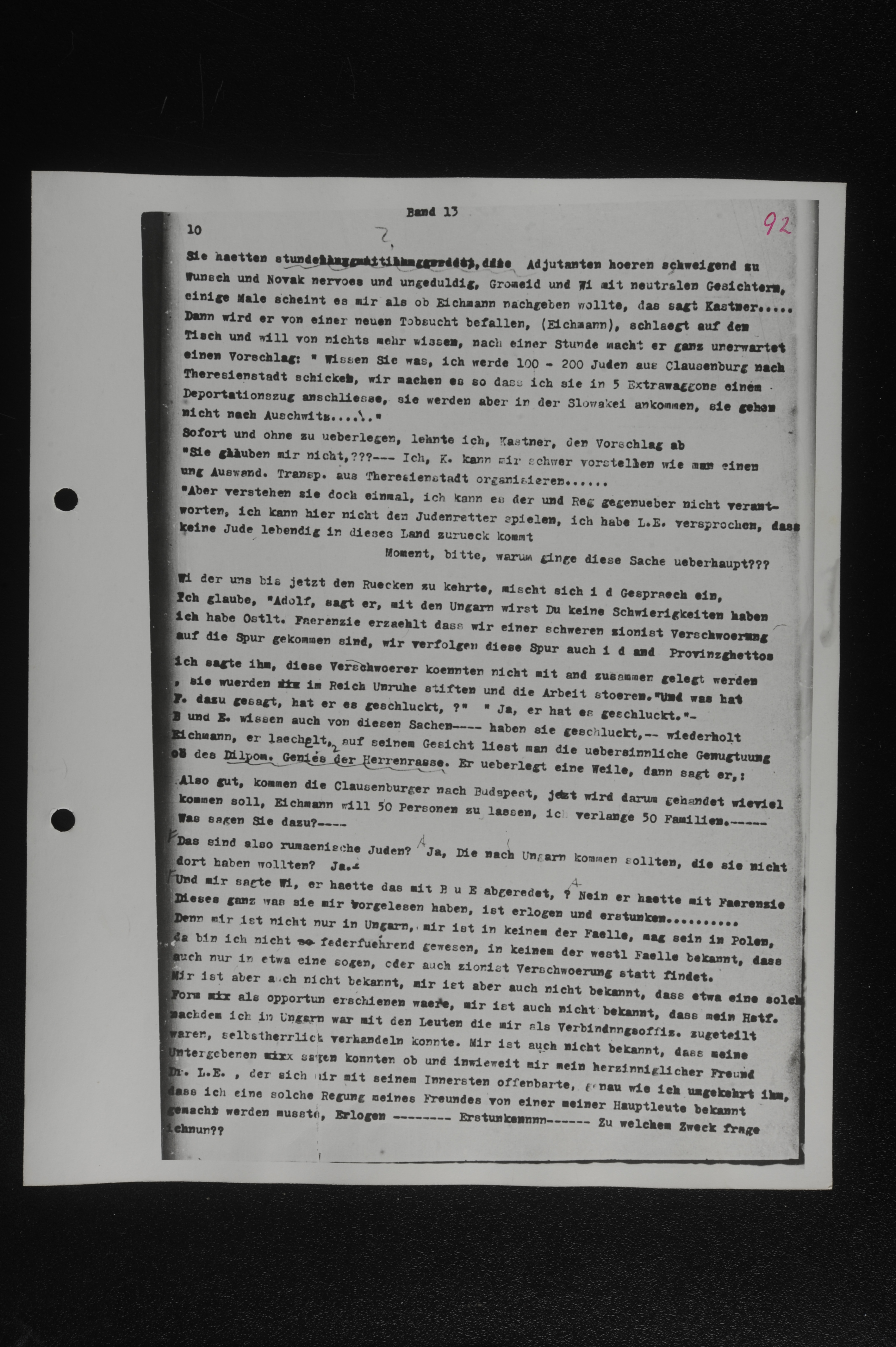
Page 316 of the typescript, O.65 file 86.
Page 316 · Yad Vashem Archives, O.65/86

German transcription
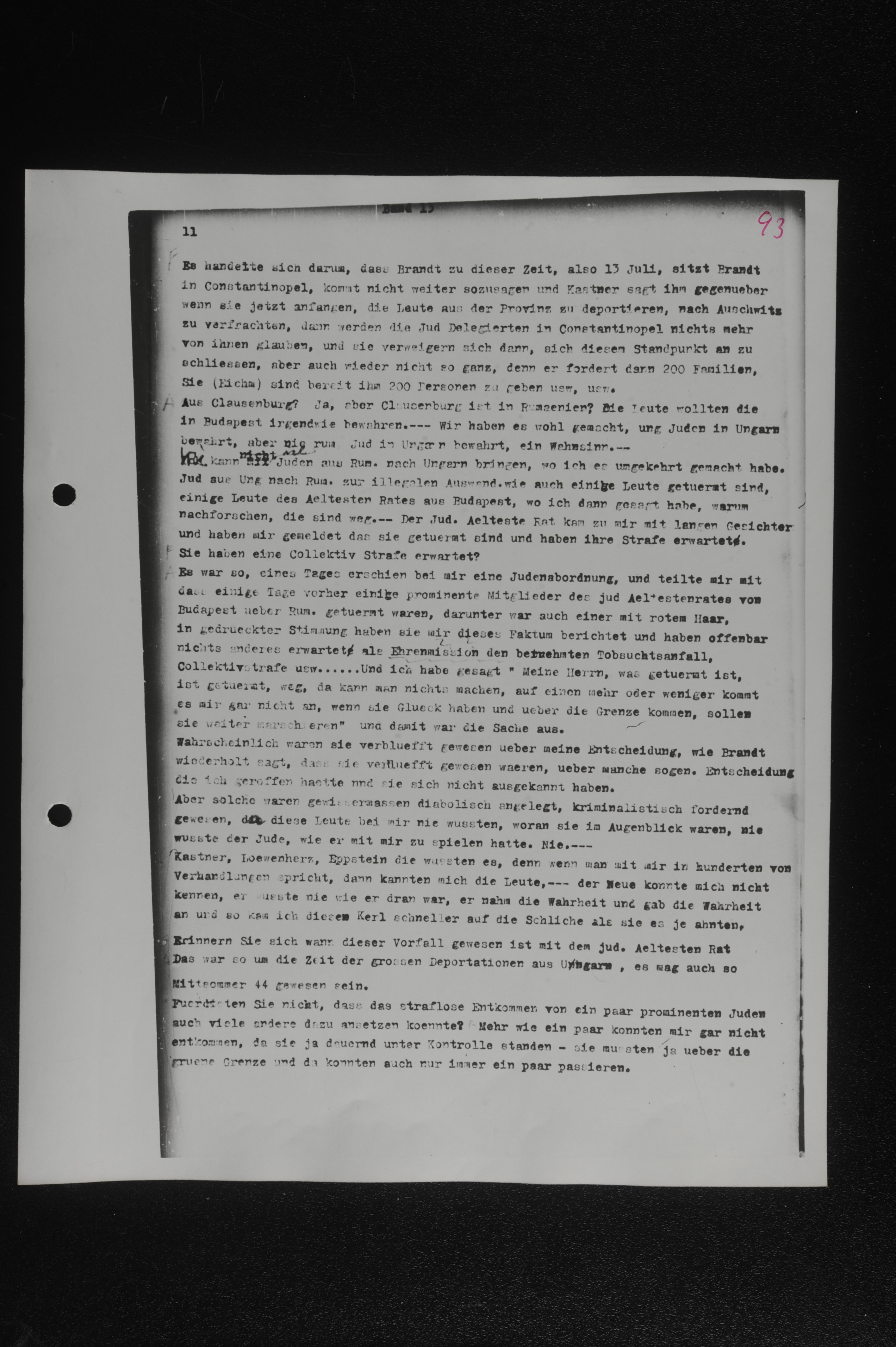
In jedem Land wurde ja die Erfassung verschieden gehandhabt, manchmal ging das so schnell in Nachtaktionen, da wurde überhaupt nicht danach gefragt. Hat Ihre Dienststelle etwas zu tun gehabt mit der Erfassung von jüd. Besitz? Ja und Nein, Erfassung nur in Form von, sagen wir papiermäßig. – Als bald nachdem die Zentralstelle für jüd. Auswanderung in Wien errichtet war, hatten die Juden wenn sie auswanderungsfertig waren ihre Lifte bestellt, und da packten sie nun ihre drei od vier Zimmerwohnung hinein – da gab es nicht viel zu erfassen, außer das geldliche Vermögen, das aber regelte der Oberfinanzpräsident mit den übrigen Stellen die daran interessiert waren, wie zB. das Wirtschaftsminist. Devisen Stelle usw… In Prag, als dort die Zentral errichtet war, stellte sich die Notwendigkeit heraus eine sogen. Verwaltungs und Verwertungsstelle aufzuziehen, damit nunmehr dieser ganze jüd. Besitz zentral erfaßt und geleitet wird, denn um jene Zeit konnte der einzelne Jude, nicht mehr all das so frisch und fröhlich mitnehmen, wie das in Wien noch vor einem Jahr möglich gewesen war. Da hatte ich die Genehmigung bekommen durch den Reichsprot. und da wurde mir durch Dr. Jakowitsch, der bis dahin noch ehrenamtlich mit mir zusammen arbeitete, der Schwiegervater des SS Stbf. Kraus in Wien, der ein großes Geschäftshaus "Gerngross" in Wien als Generaldirektor führte vorgestellt. und dieser Schwiegervater dieses SS Angeh. Kraus war ein genie auf buchhalterischem Gebiet gewesen und dieser Mann hat mit Dr. Jakowitsch zusammen die Verwaltungs und Verwertungsstelle errichtet, soweit es sich um das buchhalterische handelte, hat dieser Schwiegervater diese Sache gemacht in Prag und soweit es sich um den gesetzgeberischen Teil handelte hat in Dr. Jakowitsch entworfen und über den Juristen, über den Kronjuristen Maurer des Befehlshaber der SIPO und SD im Prag, ein älterer Ober Reg Rat aus Oestr. ein SS Ostubaf hat dieser Sache nun auf dem Instanzenweg des Reichsprot. für Böhmen und Mähren durchgepaukt… Nach einigen Wochen stand dieses Gebilde nun in buchhalterischer Form und auf der anderen Seite die gesamte gesetzliche Untermauerung. Damit war meine Aufgabe erfüllt, weil ich ja kein Kaufmann bin und weil es ja auch die Aufgabe nicht von mir war die Dinge kaufmännisch zu behandeln. Die Dienstaufsichtsbehörde über die Verwaltungs und Verwertungsstelle wurde durch Erlaß des Reichsprot. der Befehlshaber der SIPO und SD und damit wurde die Kontrollstelle, der deutsche Reichsrechnungshof. Der im Jahre etw. 2 mal einen Revisor hinschickte, der dann wochenlang hinter den Büchern saß und dann der Dienstaufsichtsbehörde die Entlastung erteilte… oder die Dienstaufsichtsbehörde am Kragen packte wenn irgendwelche Ausgaben gemacht wurden, die der Reichsrechnungshof ablehnte oder nicht damit einverstanden war. Es wurden schließlich hunderte von Mill Mark verwaltet und man freute sich doch wenn alles stimmte und keine Differenzen auftraten… Auch in Wien wurde dann später auf Anraten des Oberfinanzpräsidenten eine solche Stelle eingerichtet, aber die Zeit war doch schon um und es war nur noch ein ganz kleiner Teil der durch diese Verwaltungs und Verwertungsstelle in Wien ging. – Hier war Dienstaufsichtsbehörde der Inspekteur der SIPO und SD.

Draft translation

In every country the registration was indeed handled differently, sometimes it went so fast in night actions, that no questions were asked about it at all. Did your office have anything to do with the registration of Jewish property? Yes and no, registration only in the form of, let us say, on paper.--- As soon as the Central Office for Jewish Emigration in Vienna had been set up, the Jews, when they were ready to emigrate, had ordered their lift-vans, and there they packed their three or four room apartment into it----there was not much to register, except the monetary assets, but that was regulated by the Chief Finance President with the other offices that were interested in it, as for example the Ministry of Economics, foreign-currency office, etc..... In Prague, when the Central [Office] had been set up there, the necessity emerged to set up a so-called Administration and Realization Office, so that now this entire Jewish property would be centrally registered and directed, because around that time the individual Jew could no longer take all that away so fresh and cheerful as had still been possible in Vienna a year before. There I had received the authorization through the Reich Protector and there I was introduced through Dr. Jakowitsch, who up until then still worked together with me on an honorary basis, the father-in-law of the SS-Stbf. Kraus in Vienna, who ran a large business house [HW: "Gemgross"] in Vienna as general director. and this father-in-law of this SS-member Kraus had been a genius in the field of bookkeeping and this man together with Dr. Jakowitsch set up the Administration and Realization Office, insofar as it concerned the bookkeeping side, this father-in-law did this thing in Prague and insofar as it concerned the legislative part, Dr. Jakowitsch drafted it and through the jurist, through the crown-jurist [HW: Maurer] of the Commander of the SIPO and SD in Prague, an older Senior Government Councillor from Austria, an SS [DEL: Ostuf.] [HW: Ostubaf] has now pushed this matter through by the official channels of the Reich Protector for Bohemia and Moravia.. After a few weeks this construct now stood in bookkeeping form and on the other side the entire legal underpinning. With that my task was fulfilled, because I am not a merchant and because it was also not my task to handle the things in a commercial manner. The service-supervisory authority over the Administration and Realization Office was, through decree of the Reich Protector, the Commander of the SIPO and SD, and with that the control office [became] the German Reich Court of Audit. Which in the year [HW: to him] 2 [DEL: or [?4?]] times sent an auditor there, who then sat for weeks behind the books and then granted the service-supervisory authority the discharge.... or grabbed the service-supervisory authority by the collar when any expenditures were made that the Reich Court of Audit rejected or was not in agreement with. In the end hundreds of millions of marks were administered and one was glad indeed when everything was correct and no discrepancies arose.... Also in Vienna such an office was then later set up on the advice of the Chief Finance President, but the time was already up and it was only a very small part that went through this Administration and Realization Office in Vienna.- Here the service-supervisory authority was the Inspector of the SIPO and SD.
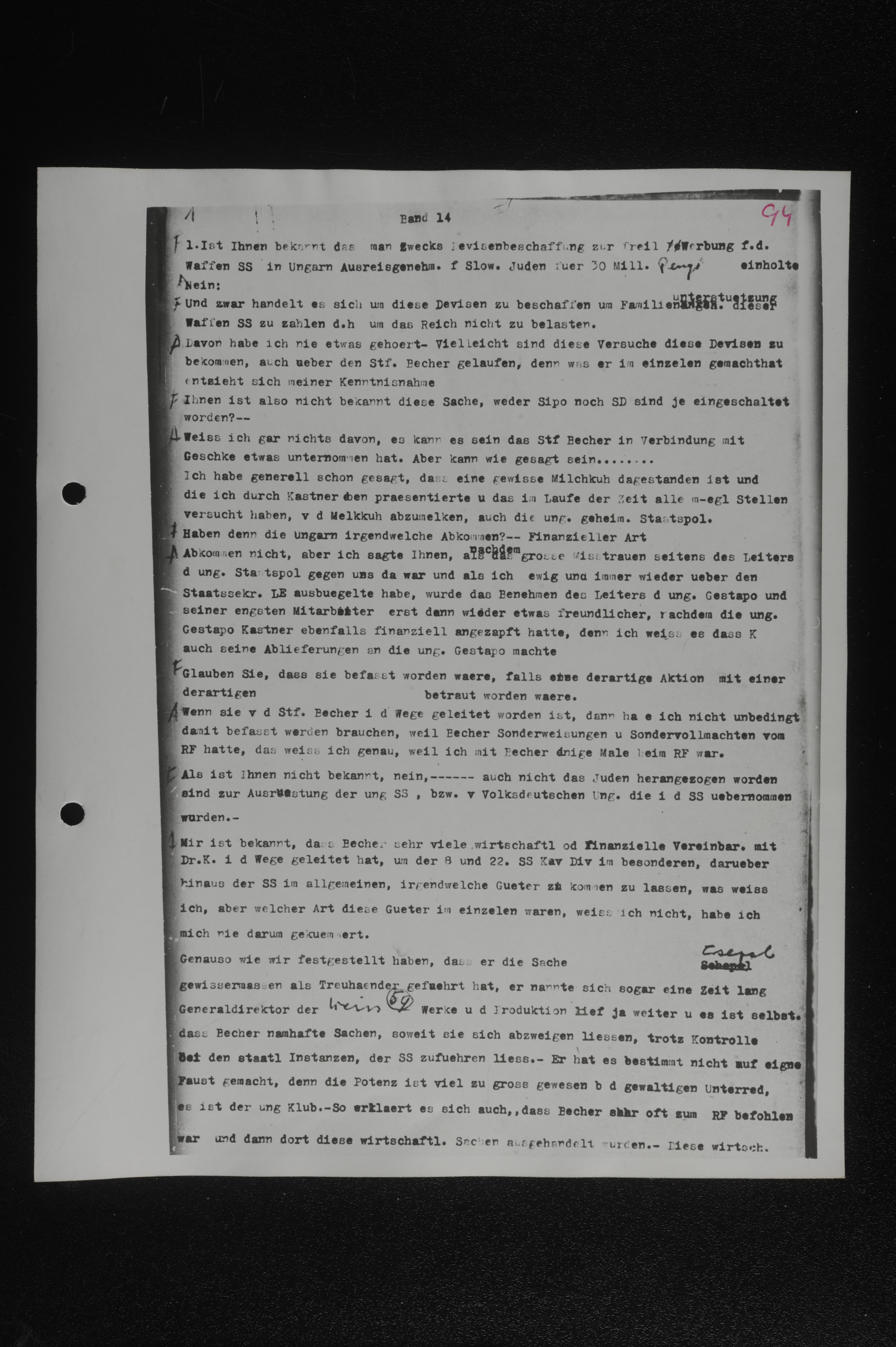
Questioner

How was the special supervision by the Chief of the SD (Security Service) carried out?

By having full-time SS personnel in that outfit. They were civilian employees, after all. These were not direct state agencies or private agencies, but corporations under public law. These civilian employees were supervised by a few full-time SD (Security Service) members. Immediate supervision on behalf of the Chief of the Security Police and the SD (Security Service) lay with the head of the Central Office for Jewish Emigration, Stbf. (Sturmbannführer) Günther.

Questioner

Were these supervisors there all the time?

Eichmann

Besides the audits prescribed by Reich regulations, because it was a public corporation, the Chief of the Security Police and SD (Security Service) also had a department head of the SD Administrative Office of his own, named SS Stbf. (Sturmbannführer) Broke…. He carried out all the yearly audits of the administrative leaders in the SD main districts. On behalf of the Chief of the Security Police he also had to inspect this Central Office for Jewish Emigration and the Administration and Disposal Office and submit a report. So there was double supervision through the Chief of the Security Police and SD (Security Service). I know of not a single case of personal enrichment. Our apparatus ran cleanly, and that was our pride.

Questioner

Is it possible that the operation carried out in the General Government by Klo…tschki … (?) went under the title “Operation Reinhardt”?

Eichmann

I do not know.

Questioner

Does this letter seem authentic to you?

Eichmann

Glo was then transferred out of the General Government and became SS and Higher Police Leader in the Italian area.

Questioner

Does that mean he had completed his task in the General Government?

Eichmann

Yes.

Questioner

Could that mean there was nothing more to do there?

Eichmann

It could not mean that, because people were transferred and posted as necessity required. I was transferred from Vienna to Prague although I was nowhere near finished in Vienna. I had scarcely begun in Prague when I was transferred to Berlin. So being transferred does not mean that one had completed one’s assignment. This transfer must have come very suddenly. He is reporting here on an operation he had to carry out, and did carry out, as SS and Police Leader in the Lublin district, but he reports it under the letterhead of his new post as SS and Higher Police Leader in the Operational Zone of the Adriatic Coastland. That is unusual in itself. But the reason may be that Glo knew nothing about the bureaucratic procedure and left it to a subordinate, who was not particular about the choice of letterhead. It really must be called a mistake. That would never have happened to me.

Open page image and German
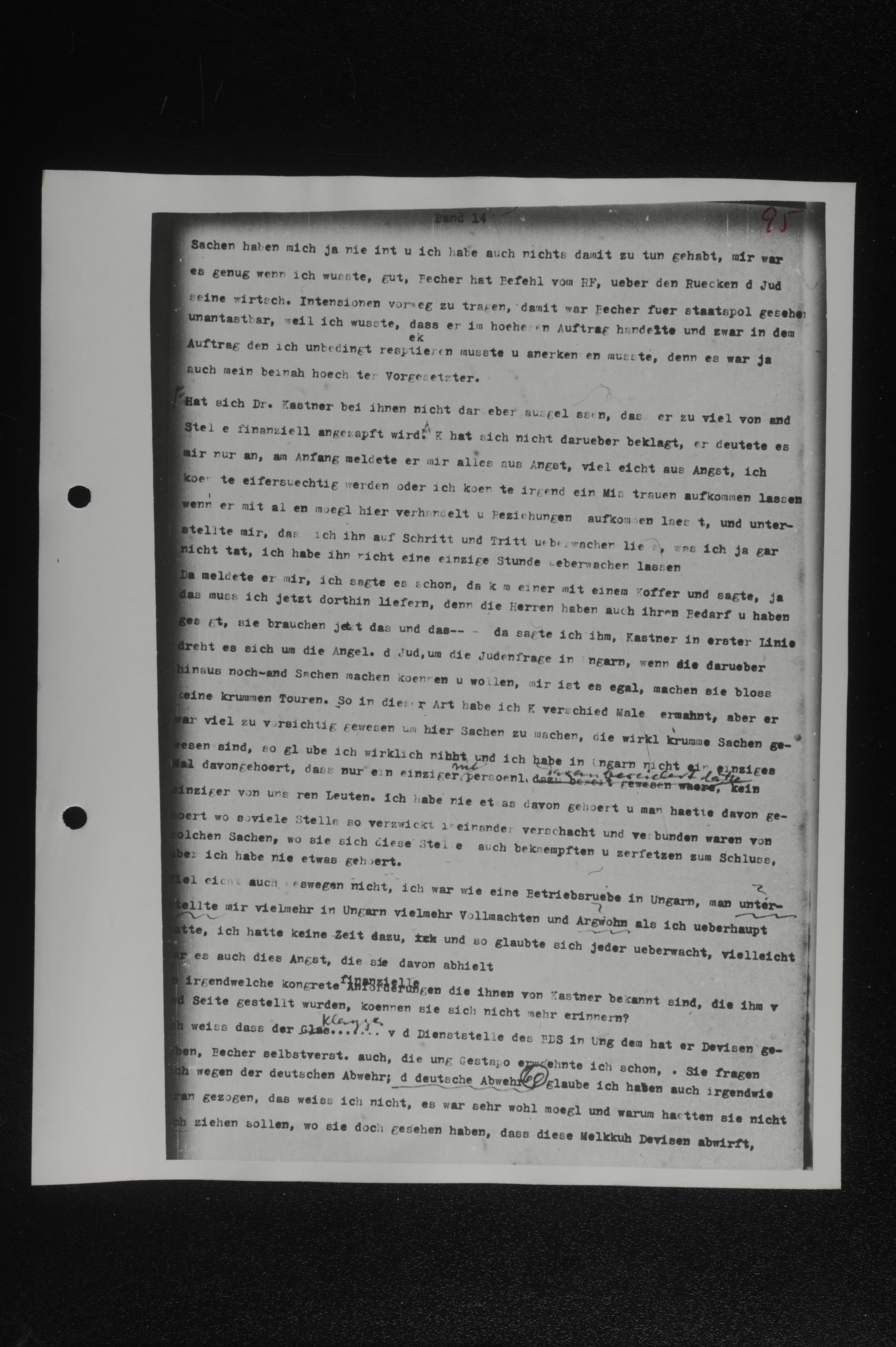
Page 317 of the typescript, O.65 file 86.
Page 317 · Yad Vashem Archives, O.65/86

German transcription
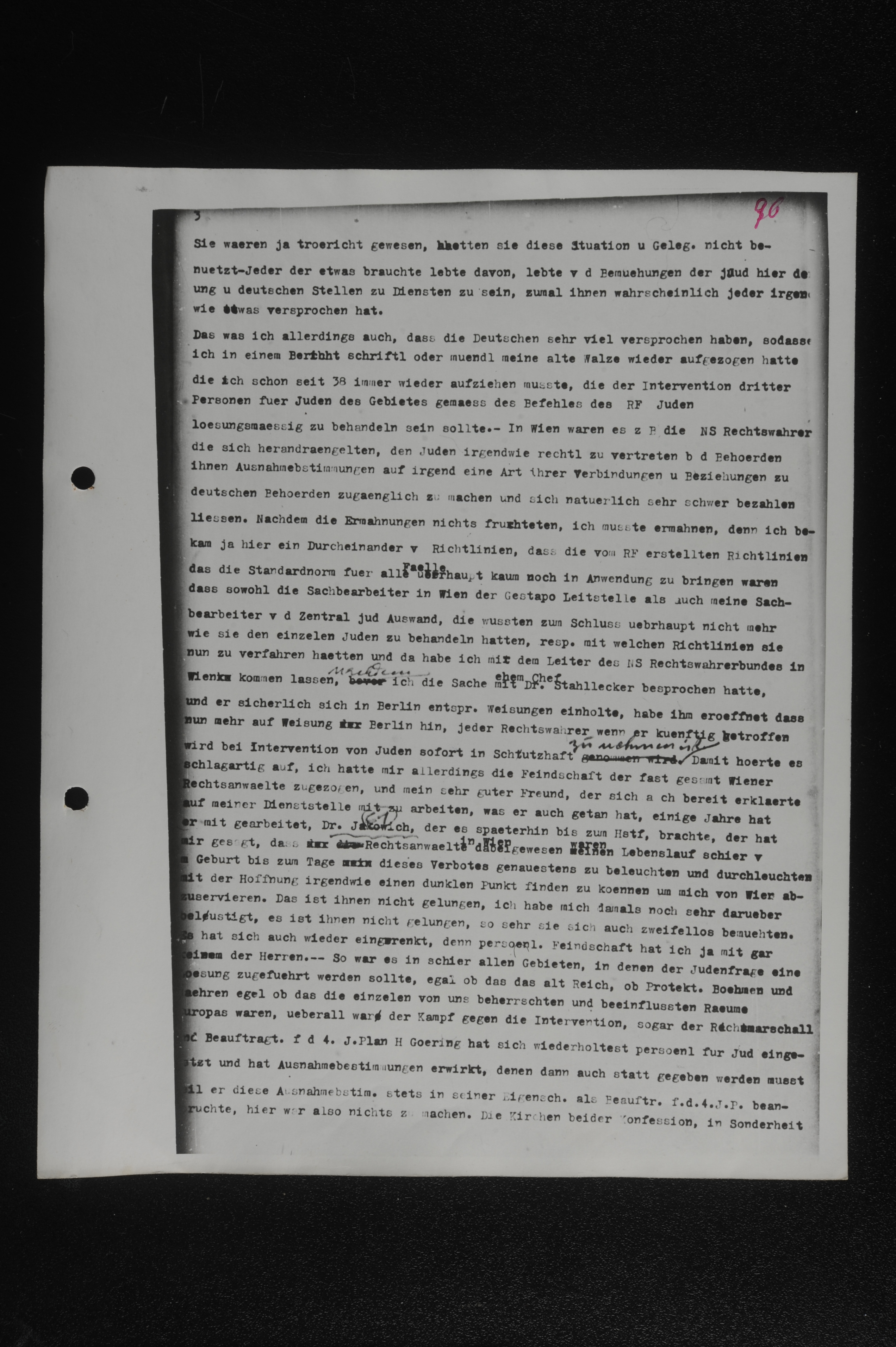
Die besondere Kontrolle von Chef des SD, wie wurde die durchgeführt? Das er SS Hauptamtliche Führer in diesem Laden hatte, es waren ja Zivil-Angestellte, es war ja kein direkten Staatsstellen, es waren keine direkte privat Stellen, sondern es waren Körperschaften öffentlichen Rechts. Und diese Zivil Angestellte die wurden kontrolliert durch einige hauptamtliche SD Angeh., und die unmittelbare Kontrolle im Auftrage des Chef der SIPO und des SD hatte der Leiter für die Zentrale jüd. Auswanderung Stbf. Günter. Diese Kontrolleure nun, waren die ständig da…? Der Chef der SIPO und SD hatte neben den laut Reichsbestimmungen vorgesehenen Revisionen, weil es eine öffentliche Körperschaft war, auch noch von sich einen Abteilungsleiter des Verwaltungsamtes des SD, namens SS Stbf. Broke[unleserlich] der die gesamten Revisionen bei den Verwaltungsbullen in den SD Oberabschnitten jährlich machte, hatte auch im Auftrag des Chef der SIPO diese Zentrale für jüd Auswanderung und auch die Verwaltungs und Verwertungsstelle zu kontrolliere und einen Bericht abzuliefern. – Also die Kontrolle war doppelt gewesen durch den Chef der SIPO und SD. Nicht ein einziger Fall persönlicher Bereicherung ist mir bekannt, unser Apparat lief sauber und das war unser Stolz. Ist es möglich, daß die von (?) im Generalgov rn durchgeführte Aktion unter dem Titel "Aktion Reinhardt" gelaufen ist. Das weiß ich nicht… Ist Ihnen dieses Schreiben autentisch? Glo wurde ja dann versetzt aus dem Generalgoverm. und wurde dann SS und Höh. Pol Führer im italienischen Raum, Heißt as das er seine Aufgabe im Generalgoverm. erledigt hatte? Ja, Könnte das heißen, daß es dort nichts mehr zu erledigen gab? Das könnte es nicht heißen, denn man ist versetzt und kommandiert worden wie es die Notwendigkeit ergab. – Ich bin von Wien nach Prag versetzt worden, obwohl ich in Wien noch lange nicht fertig war – kaum hatte ich in Prag angefangen bin ich nach Berlin versetzt worden – das besagt also nicht, wenn man versetzt wurde, daß man sein Aufgabengebiet abgeschlossen hatte. Diese Versetzung muß sehr plötzlich gekommen sein, denn er berichtet hier über eine Aktion in seiner Eigenschaft als SS und Pol. Führer im Distrikt Lublin hat machen müssen und gemacht hat, da berichtet er mit dem Briefkopf seine neue Funktion der SS und Höh Pol. Führer in der Operationszone Adriat. Küstenland, es ist an sich etwas ungewöhnlich… Aber es mag folgende Gründe haben, daß Glo über dem bürokratischen Ablauf gar nicht unterrichtet war, sondern es seinem Nachgeordneten überlassen hat und dieser in der Wahl des Briefkopfes eben nicht wählerisch war, es ist eigentlich als Fehler zu bezeichnen, das wäre mir nie unterlaufen.
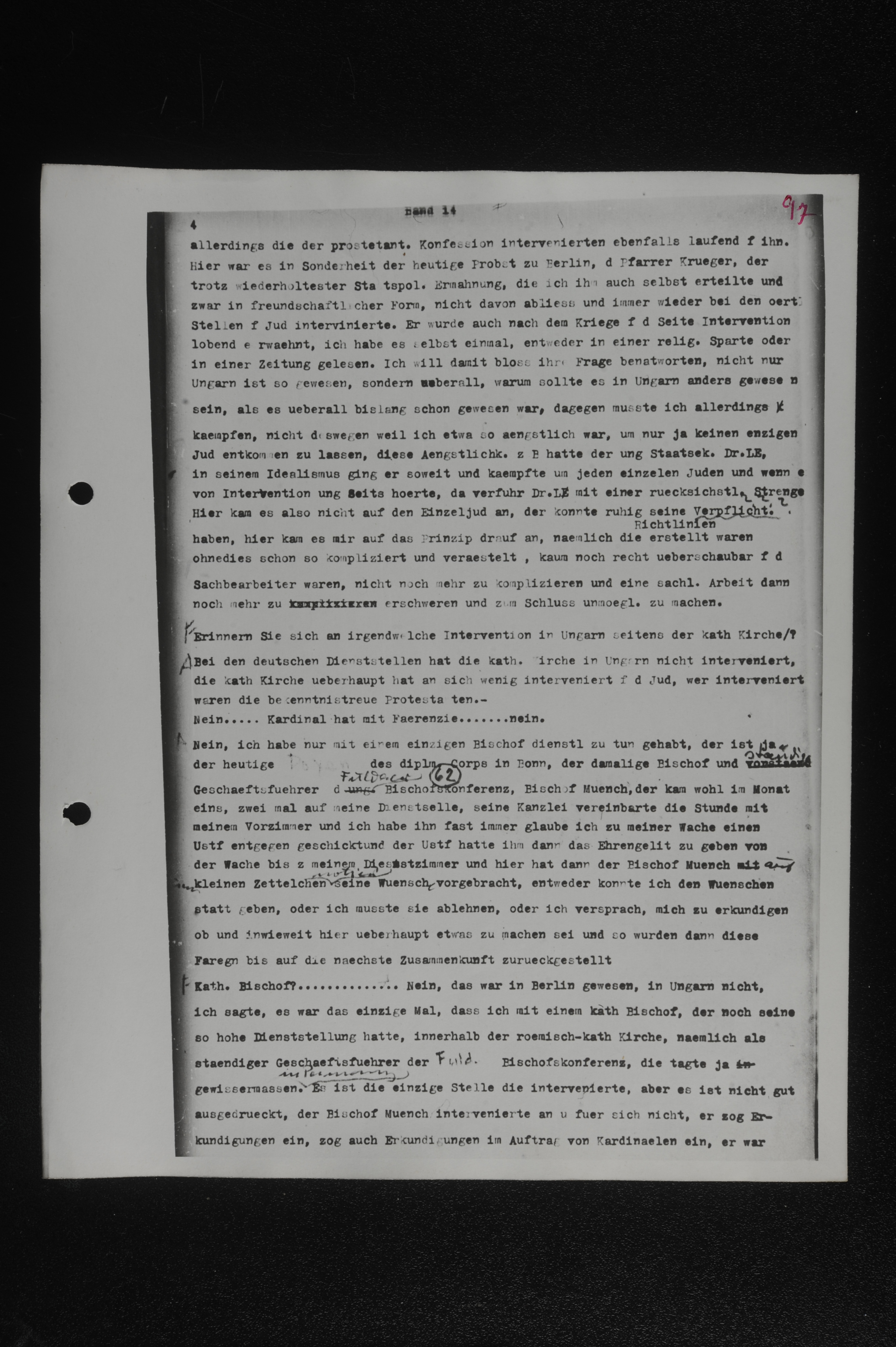
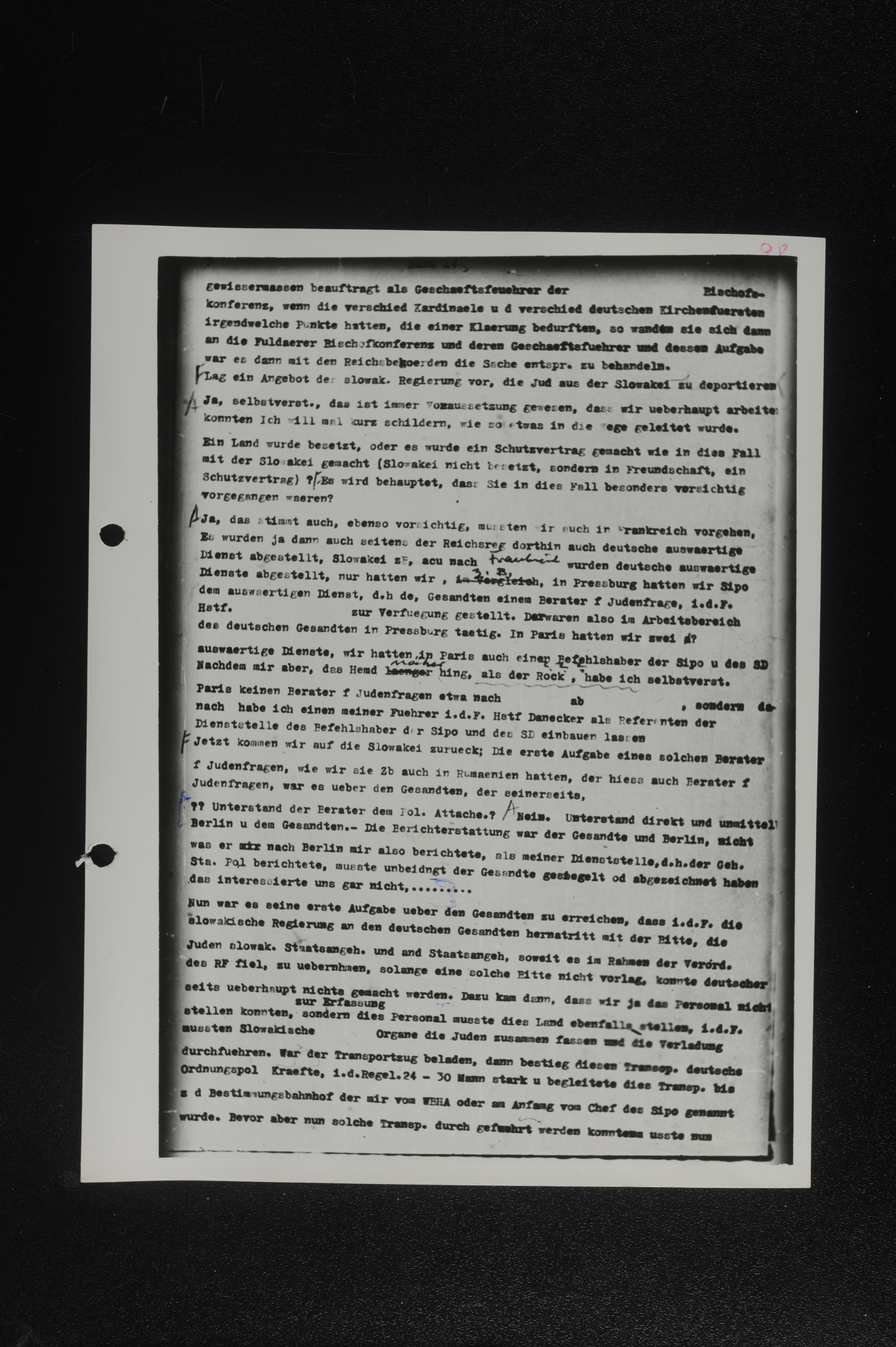
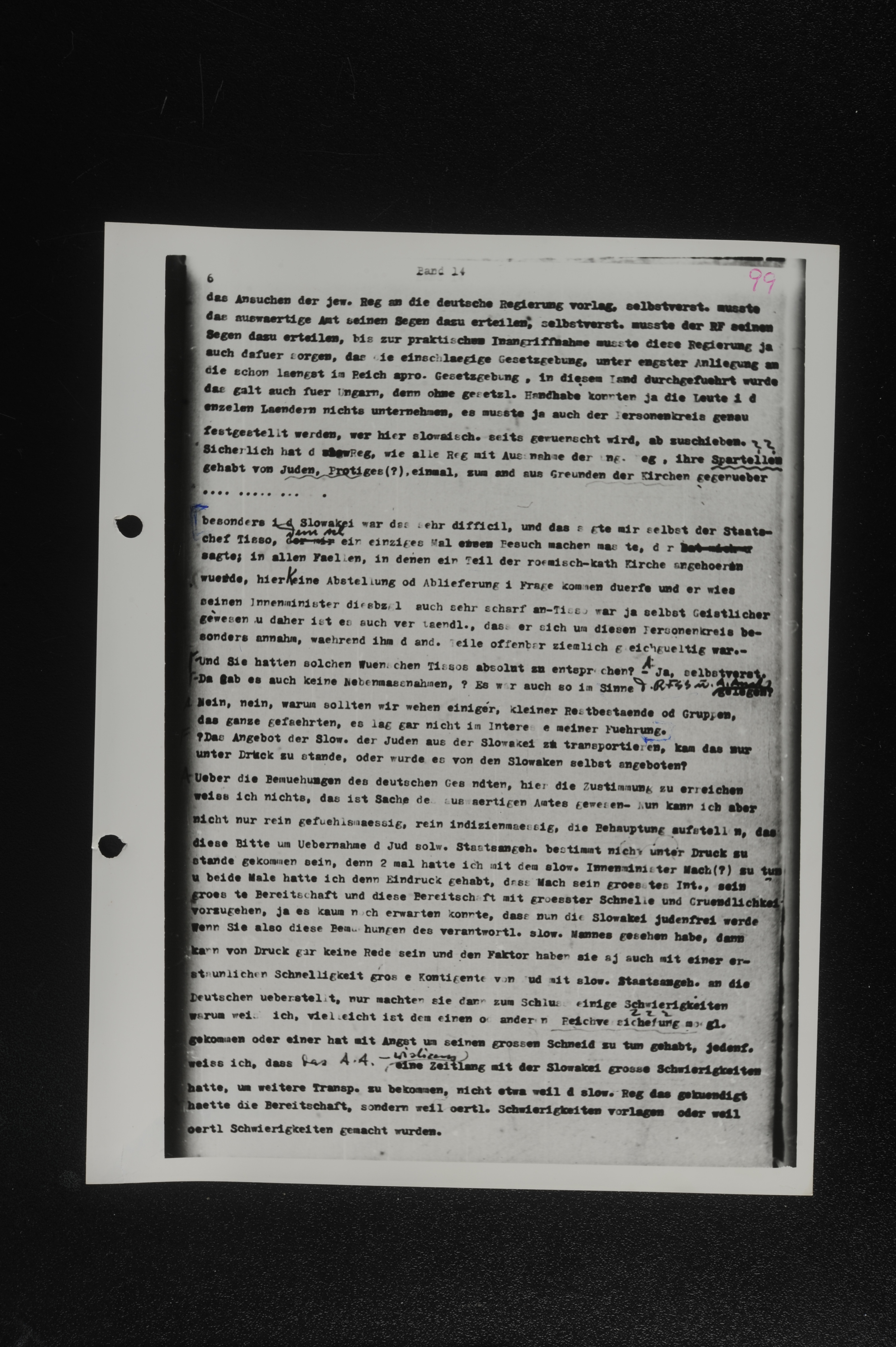
Draft translation

11 Volume 34 [HW: 317] The special control by the Chief of the SD, how was that carried out? [HW: ✓] That he had SS full-time officials in this shop, they were indeed civilian employees, it was indeed not a direct state office, they were not direct private offices, but rather they were corporations under public law. And these civilian employees, they were controlled by a few full-time SD members, and the immediate control on behalf of the Chief of the SIPO and of the SD was held by the head of the Central [Office for] Jewish Emigration, Stbf. Guenter.[DEL: -] [HW: [illegible]] [HW: [illegible]] These controllers now, were they always there.....? The Chief of the SIPO and SD had, besides the audits provided for under Reich regulations, because it was a public corporation, also of his own a department head of the Administrative Office of the SD, named SS Stbf. Broke[?n?] [HW: [illegible]] who annually did the entire audits at the administrative [officials/bodies] in the SD Oberabschnitte, [and] also had, on behalf of the Chief of the SIPO, to control this Central [Office] for Jewish Emigration and also the Administration and Realization Office and to deliver a report. -- So the control had been double, through the Chief of the SIPO and SD. Not a single case [DEL: for] of personal enrichment is known to me, our apparatus ran clean and that was our pride. Is it possible that the operation carried out by [DEL: Klodetschki] (?) in the General Government ran under the title "Aktion Reimhardt". That I do not know..... Is this document authentic to you? Glo was then indeed transferred out of the General Government and then became SS and Higher Police Leader in the Italian area, [HW: [illegible]] Does that mean that he had completed his task in the General Government? Yes, Could that mean that there was nothing more to be dealt with there? That it could not mean, for one was transferred and commanded as necessity required. -- I was transferred from Vienna to Prague, although in Vienna I was by no means yet finished -- scarcely had I begun in Prague [when] I was transferred to Berlin ---- that thus does not mean, if one was xx transferred, that one had concluded one's field of tasks. This transfer must have come very suddenly, for he here reports on an operation that he had to carry out and did carry out in his capacity as SS and Police Leader in the District of Lublin; there he reports with the letterhead [of] his new function of SS and Higher Police Leader in the Operations Zone Adriatic Coastland; it is in itself somewhat unusual... But it may have the following "rounds/grounds", that Glo was not at all informed about the bureaucratic process, but rather left it to his subordinate, and this one was in the choice of the letterhead simply not choosy; it is actually to be designated as an error, that would never have happened to me.

Questioner

… and at the same time it shows the haste with which Glo left his previous area.

Do you have an explanation for that?

No, I have no explanation for that at all. No, nothing comes to mind. I did not see him for a long time after that.

Questioner

The reason for the haste must have been that they needed a man with Glo’s driving force in the Adriatic coastal region.

Eichmann

Yes, things must have been very precarious in that region for them to need him there immediately—just as I had to get from Prague to Berlin so quickly, and from there to Hungary.

Questioner

People were generally very satisfied with Glo, were they not?

Eichmann

Yes, he thereby advanced from SS and Police Leader to Higher SS and Police Leader.

Questioner

Now this:

Questioner reads from Globocnik's letter to Himmler

“As of October 19, 1943, I have concluded Operation Reinhardt and dissolved all the camps.”

Questioner

What does that mean?

Eichmann

Glo was never a bureaucrat. The operation was concluded, all the camps dissolved: from that one could conclude that all the Jews had been killed by him. One could assume that if this letter consisted only of that sentence. But he goes on to write, “I have handed these labor camps over to SS Ogf. (Obergruppenführer) Pohl.” Pohl was the man responsible for the concentration camps, so he must have taken over these camps. But a camp with nothing left in it does not interest a chief of the concentration camps. One could doubt the authenticity of this letter. It has no beginning and no end, so to speak. It is neither official nor private. Perhaps it is even forged. I do not know; somehow it is unclear. Glo was not a civil servant, but the Party people in particular were much worse pen-pushers, precise down to the smallest details.

Questioner

Could it not be that he is speaking about two camps in his letter, that he dissolved extermination camps and handed over labor camps?

Eichmann

Where he exterminated, I do not know.

Questioner

Can one say that after October 13, 1943 there were no more Jews in the General Government?

Eichmann

One cannot say that, because the General Government was not cleared of Jews.

[Story:]

I was once traveling from east to west, and I come through some camp. In this camp Glo had carried out exterminations, or they were carried out later; I no longer remember. In the General Government, eastern district of Lublin, Triblinka (?). An Ostf. (Obersturmführer) was the camp commander. It was a small camp. How they exterminated there I do not know—not with gas. There in this camp the Ostf. (Obersturmführer) had an armored reconnaissance vehicle, but it ran on tracks and was very low. Then I …

Open page image and German
Page 318 of the typescript, O.65 file 86.
Page 318 · Yad Vashem Archives, O.65/86

German transcription

[unleserlich] und er zeigt gleichzeitig mit welcher Eile Glo sein bisheriges Gebiet verlassen hat Haben Sie dafür eine Begründung? Nein dafür habe ich gar keine Begründung, nein es ist mir nichts in Erinnerung, ich habe ihn ja lange dann nicht mehr gesehen. Es müßte der Grund für die Eile sein, daß man in der adriatischem Küstengegend einen Mann mit der Durchschlagskraft wie Glo sie hatte, brauchte, Ja, es muß wohl in dieser Gegend sehr brenzlich gewesen sein, das man ihm dort sofort brauchte… genau so wie ich von Prag so schnell nach Berlin kommen mußte. und von da nach Ungarn… Man war doch im allgemeinen mit Glo sehr zufrieden? Ja, er avancierte ja damit von SS und Pol. Führer zum Höh SS und Pol. Führer Nun folgendes, mit dem 19.Okt. 1943 habe ich Glo? die Aktion Reinhardt abgeschlossen und alle Lager aufgelöst.? Was heißt das? Glo war nie ein Bürokrat… die Aktion war abgeschlossen, sämtliche Lager aufgelöst, daraus könnte man folgern, daß sämtliche Juden von ihm getötet wurden – man könnte das auch annehmen, wenn dieses Schreiben nur aus diesem Satz bestehen würde – aber er schreibt ja weiter, ich habe diese Arbeitslager an SS Ogf. Pohl übergeben – und Pohl war der zuständige Mann für die KZ gewesen, der muß also diese Lager übernommen haben. – aber ein Lager wo nichts mehr drin ist, interessiert einen Chef der KZ nicht – Man konnte die Echtheit dieses Schreibens anzweifeln, es hat kein Anfang und kein Ende gewissermaßen, es ist nicht dienstlich und auch nicht privat. Vielleicht ist es auch gefälscht… ich weiß es nicht, irgendwie ist es unklar Glo war kein Beamter, aber gerade die Parteileute waren noch viel schlimmere Federfuchser, bis in die kleinsten Kleinigkeiten genau… Kann es dann nicht sein, daß er in seinem Schreiben über ? Lager spricht, Vernichtungslager aufgelöst hat und Arbeitslager übergeben hat? Wo er vernichtet hat, daß weiß ich nicht… Kann man sagen daß es nach dem 13 Okt 1943 keine Juden mehr gab im Generalgovern? Das kann man nicht sagen, denn das Generalgovern. wurde ja nicht entjudet Geschichte: Ich war einmal auf einer Fahrt vom Osten nach dem Westen und da komme ich durch irgendein Lager und in diesem Lager hatte Glo Vernichtungen durchgeführt oder wurden später durchgeführt, ich weiß es nicht mehr, im Generalgovern, Ost Distrikt Lublin, Triblinka,(?) – einen Ostf. war der Lagerleiter, es war ein kleines Lager, wie die vernichtet haben das weiß ich nicht, nicht mit Gas… Dort in diesem Lager hatte der Ostf. einen Panzerspähwagen, aber der lief auf Ketten, sehr nieder, nun habe ich mich

Draft translation

[illegible] and it shows at the same time with what haste Glo left his previous area Do you have an explanation for that? [HW: [illegible]] No, for that I have no explanation at all, no, nothing comes to my memory, I did not see him for a long time after that. The reason for the haste must be that in the Adriatic coastal region one needed a man with the striking power that Glo had, Yes, it must have been very hot in that region, that they needed him there immediately.....exactly like how I had to come from Iraq to Berlin so quickly. and from there to Hungary...... In general one was very satisfied with Glo, wasn't one? Yes, he thereby advanced from SS and Police Leader to Higher SS and Police Leader Now the following, with the 19 Oct. 1943 I have [TS INS: Glo?] concluded the Aktion Reinhardt and dissolved all camps.? What does that mean? Glo was never a bureaucrat.....the operation was concluded, all camps dissolved, from that one could conclude that all Jews were killed by him -- one could also assume that, if this letter consisted only of this sentence-- but he does write further, I have handed over these labor camps to SS Ogf. Pohl-- and Pohl had been the responsible man for the concentration camps, so he must have taken over these camps.-- but a camp where there is nothing left in it, does not interest a chief of the concentration camps--- One could doubt the authenticity of this letter, it has no beginning and no end so to speak, it is not official and also not private. Perhaps it is also forged... I do not know, somehow it is unclear Glo was not an official, but precisely the party people were much worse pen-pushers, exact down to the smallest little details.......... Can it then not be that in his letter he speaks about ? camps, dissolved extermination camps and handed over labor camps? Where he exterminated, that I do not know..... Can one say that after the 13 Oct 1943 there were no more Jews in the General Government? That one cannot say, because the General Government. was not de-Jewed Story: I was once on a trip from the East to the West and there I come through some camp and in this camp Glo had carried out exterminations or they were carried out later, I no longer know, in the General Government, East District Lublin, Triblinka,[HW: ?](?)--- an Ostf. was the camp leader, it was a small camp, how they exterminated that I do not know, not with gas..... There in this camp the Ostf. had a armored reconnaissance car, but it ran on tracks, very low, now I have

and drove it around in the immediate camp area. It took me about an hour before I could steer the thing well myself. Because of that hour’s driving lesson, I remembered this camp very well. I come to Lublin again, and Glo’s Hstf. (Hauptsturmführer), Höfele, says to me—we were sitting by the fireplace—and Höfele told me the story of the camp Triblinka. One fine day an SS officer was having a uniform fitted at the camp tailor’s shop, a uniform that was being made.

From behind the uniforms being worked on there, a Jew rushed out and shot the officer dead with the pistol he had laid aside during the fitting. Then, as if on command, the sentry on a raised lookout was rushed and killed. Several other SS men were killed and their weapons seized. The Jews put the armored vehicle into action and fired on the guards with the machine guns. After so-and-so many of the guards had been killed, a large part of these imprisoned Jews fled. Some fell victim to the pressure-activated mines on one side of the camp.

The rest, apart from a few, were then found in a large-scale operation launched within a few hours. This comes to mind as I read the letter in which Glo applies to the RF (Reichsführer-SS) for some Iron Crosses. This was a camp that was to be regarded as a labor camp. You can see it quite clearly from the fact that a tailor’s shop was operating there: the guards themselves had their uniforms altered or made there. So this cannot have been an extermination camp, but a kind of concentration camp. This story may have been around the end of 1942/43. So it was Meidanek.

[Typed as notes in the transcript: Description of a stage in the camp, in front of the commandant’s building.]

[Typed as notes in the transcript: Qualified musicians—supposed 175—.]

Questioner

So, all in all, the whole Glo story is very confused.

Eichmann

I had a very warm relationship with Glo. I knew him from the years of struggle, but did not know him personally then. I got to know him personally when he was Gauleiter of Vienna. In my struggle to establish the Central Office for Jewish Emigration, I needed friends. So I also went to the Gau leadership in Vienna. I went to Glo and explained my request to him: things could not go on like this. Glo pulled out all the stops and really did everything conceivable to help me with my plan. Our friendship dates from that time. Then I went to Berlin and saw and heard nothing more of him until I had to travel to the General Government on the orders of the RF (Reichsführer-SS) to see how far Glo had got with preparations for physical extermination. The second time I saw him was at the safe affair.

Questioner

You surely also knew some of Glo’s friends. Or do you see among his people someone who might have played a double game, who might have worked for the enemy? Do you have any idea how he chose his people?

Open page image and German
Page 319 of the typescript, O.65 file 86.
Page 319 · Yad Vashem Archives, O.65/86

German transcription

und bin im unmittelbaren Lagerbereich damit herumgefahren, ich habe ungefähr eine Stunde gebraucht bis ich das Ding selber gut lenken konnte, Durch diese eine Stunde Fahrstunde habe ich dieses Lager sehr gut im Gedächt zurückbehalten und ich komme wieder einmal nach Lublin und da sagt mir der Hstf. von Glo, Höfele, wir saßen am Kamin, und da erzählte mir Höfele die Geschichte des Lagers Triblinka. – Eines schönen Tages hatte sich ein SS Führer in der Lagerschneiderei eine Uniform anpassen lassen, die in Arbeit war und hinter den Uniformen die da in Arbeit standen stürtzte eine Jude hervor und erschoß diesen Führer mit seiner während der Anprobe abgelegten Pistole. Daraufhin wurde wie auf Kommando der Wachtposten der auf einem erhöhten Ausguck war erstürmt und getötet, es wurden einige andere SS Angeh. getötet, deren Waffen man sich bemächtigte, der SPW wurde in Aktion gesetzt von den Juden und mit den Maschinengewehren die Wachen beschossen und nachdem soundosviel Bewachungspersonal umgelegt wurde, hatte ein großer Teil dieser inhaftierten Juden durch Flucht das Weite gesucht. Ein Teil davon fiel den Tretminen die auf einer gewissen Seite des Lagers lagen zum Opfer und den übrigen Rest fand man dann mit Ausnahme weniger Einheiten durch eine Großaktion die dann im Laufe von wenigen Stunden gestartet war. – Das fällt mir ein beim Lesen des Schreibens wo Glo beim RF einige eiseren Kreuze beantragt. Das war ein Lager das als Arbeitslager anzusehen war, sie sehen es schon recht öntlich, daß ja auch eine Schneiderei tätig war, denn das eigene Bewachungspersonal ließ sich dort ihre Uniform neu ändern oder schneidern. Es kann sich also hier nicht um ein Vernichtungslager gehandelt haben, sondern um eine Art Kz. Diese Geschichte kann so Ende 42/ 43 gewesen sein. Es war also Meidanek. – (Schilderung einer Bühne im Lager, vor dem Kommandanturgebäude) (Qualifizierte Musiker, – vermeintliche 175 –) Also Summasumarium, die ganze Glo Geschichte ist sehr verworren. ich hatte mit Glo ein sehr herzliches Verhältnis, ich kannte ihn aus der Kampfzeit, habe ihn aber nicht persönlich damals kennen gelernt. Persönlich lernte ich ihn kennen, als er Gauleiter von Wien war. Zu meinem Kampf zur Errichtung der Zentrale für jüd. Auswanderung brauchte ich Freunde und so ging ich auch die Gauleitung in Wien, ich ging zu Glo und setzte ihm meine Bitte auseinander, daß es so nicht weiter ginge… Glo zog nun alle Register und tat nun wirklich das Denkbarmöglichste um mir bei meinem Plan zu helfen, seit dieser Zeit dadiert unsre Freundschaft. Dann kam ich nach Berlin, sah und hörte nichts mehr von ihm, bis zu dem Moment wo ich im Auftra des RF nach dem Generalgoverm. fahren mußte um dort zu sehen wie weit Glo mit den Vorbereitungen für die physiche Vernichtung gekommen sei… das zweite mal sah ich ihn dann bei der Panzerschrabkaffäre. Sie kannten doch nun auch wohl einige von Glo Freunden, oder sehen Sie in irgend einem seiner Leute, einen Menchen der vielleicht doppelt gespielt hat? Der vielleicht für den Feind arbeitete – haben Sie irgendeine Ahmung wie er seine Leute auswählte?

Draft translation

and drove around with it in the immediate camp area, I needed about an hour until I could steer the thing well myself. Through this one hour of driving lesson I retained this camp very well in memory and I come once again to Lublin and there the Hstf. [Hauptsturmführer] of Glo, Höfele, says to me, we were sitting at the fireplace, and there Höfele told me the story of the camp Triblinka [Treblinka].-- One fine day an SS leader had a uniform, which was in the works, fitted at the camp tailor's shop, and from behind the uniforms that were in the works there a Jew burst forth and shot this leader dead with his pistol that had been laid aside during the fitting. Thereupon, as if on command, the guard post who was on a raised lookout was stormed and killed, several other SS members were killed, whose weapons one took possession of, the SPW [Schützenpanzerwagen / armored personnel carrier] was set into action by the Jews and the guards were fired upon with the machine guns and after so-and-so-many guard personnel had been killed, a large part of these imprisoned Jews sought the distance [made off] through flight. A part of them fell victim to the pressure mines [tread mines] that lay on a certain side of the camp and the remaining rest was then found, with the exception of a few units, through a large-scale operation that was then started in the course of a few hours.-- That occurs to me on reading the letter where Glo applies for some iron crosses at the RF's [Reichsführer's]. That was a camp that was to be regarded as a labor camp, you already see it quite openly [publicly?], that indeed also a tailor's shop was active, for the guard personnel itself had their uniform newly altered or tailored there. It cannot therefore have been a matter here of an extermination camp, but rather of a kind of Kz. [concentration camp]. This story may have been so at the end of 42/43. It was thus Meidanek [Majdanek].-- (Depiction of a stage in the camp, in front of the commandant's headquarters building) (Qualified musicians, --putative 175---) So all in all [sum total], the whole Glo story is very confused. I had a very cordial relationship with Glo, I knew him from the time of struggle [Kampfzeit], but did not get to know him personally at that time. Personally I got to know him when he was Gauleiter of Vienna. For my struggle to set up the Central Office for Jewish Emigration I needed friends and so I also went [to] the Gauleitung in Vienna, I went to Glo [HW: 37] and laid out my request to him, that it could not go on like this any longer.....Glo now pulled out all the stops and now really did the utmost thinkable to help me with my plan, since that time our friendship dates. Then I came to Berlin, saw and heard nothing more from him, until the moment where I had to travel on the orders of the RF [Reichsführer] to the Generalgoverm. [General Government] in order to see there how far Glo had come with the preparations for the physical extermination... the second time I then saw him at the Panzerschrabkaffäre [Panzerschreck affair?]. You did now probably also know some of Glo's friends, or do you see in any one of his people, a person who perhaps played a double game? Who perhaps worked for the enemy--do you have any inkling how he selected his people?

My meeting with Glo again after so-and-so many years since we had last seen each other in Vienna … I was sent to Glo to report, went there, and saw a police captain occupied with building houses, still at the shell stage, which then had to be sealed airtight. I thought the thing was supposed to take place in the anti-tank ditch; that was what Heydrich had told me. So I came back and reported what I had seen. Some time later I was summoned to Heydrich again. This time I was told that I had to deliver a letter to Glo, stating that 250,000 Jews were to be sent for extermination, on the orders of the RF (Reichsführer-SS), or simply “on orders.” I do not know whether I was given the finished letter to deliver, or whether the Chief of the Security Police and SD (Security Service) ordered me to draw it up at my office.

Open page image and German
Page 320 of the typescript, O.65 file 86.
Page 320 · Yad Vashem Archives, O.65/86

German transcription

Mein Wiederzusammentreffen mit Glo nach soundsoviel Jahren als wir uns in Wien das letzte Mal sahen – ich wurde also zu Glo geschickt um zu berichten, fuhr hin, und sah dort einen Pol. Hauptmann mit dem Bauen von Häusern beschäftigt, im Rohbau, und die man dann hermitisch abschließen müsse, ich dachte im Panzergraben sollte die Sache statt finden, so sagte das mir Heydrich – kam also zurück, habe gemeldet was ich gesehen habe – wurde nach einiger Zeit wieder zu Heydrich befohlen, diesmal wurde mir mitgeteilt das ich ein Schreiben an Glo zu überbringen hätte, indem es hieß, daß 250 000 Juden der Vernichtung zuzuführen seien, auf Befehl von RF oder eben nur so auf Befehl, ich weiß nicht ob ich das Schreiben fix und fertig übertragen bekam, oder ob mir der Chef der SIPO und SD angeordnet hat, daß ich dieses Schreiben auf meiner Dienststelle zu erstellen hätte. –

Draft translation

14 Volume 34 [HW: 320] My reunion with Glo after so-and-so many years since we last saw each other in Vienna---so I was sent to Glo to report, drove there, and saw there a Pol. Hauptmann [police captain] occupied with the building of houses, in the shell/rough-construction stage, and which then had to be hermetically sealed, I thought the matter was supposed to take place in the anti-tank ditch, so Heydrich told me that--- so came back, reported what I had seen-----after some time was ordered to Heydrich again, this time I was informed that I had a letter to deliver [HW: [?ori?]] to Glo, in which it said that 250,000 Jews were to be led to annihilation/extermination, on the order of RF or just simply so on order, I do not know whether I received the letter fully finished/ready to convey, or whether the Chief of the SIPO and SD ordered me that I had to draw up/produce this letter at my office/duty station.---

If I had drafted the letter, it would have to bear the file reference IV B 4 and the register number. In any case, I was sent off as a courier with this letter, which bore the signature of the Chief of the Security Police and SD (Security Service), Heydrich, and I had to hand it to Glo… personally. Glo took it, read it, and—since it was classified as a Secret Reich Matter …, and such matters had to be acknowledged under a special number—gave the acknowledgment. I received all of this.

Glo also showed me his room, where he had set up his sleeping place, and, behind or beside a picture, a small safe built into the wall. He opened it and put this letter inside. He said, “You see, Comrade Eichmann, you must always have everything in black and white.” Whether we used the familiar or formal form of address with each other, I no longer remember exactly. “In black and white” was a common saying among us, because nothing was done without instructions and orders—not by Glo either, as SS and Police Leader.

Around that time I no longer recognized Lublin. A fine police precinct had been established. There was a guest house, there were offices and enormous drafting rooms. Glo showed me through his technical department, because he had received a special assignment from the RF (Reichsführer-SS): he was to produce models for the SS and police strongpoints to be built in the East in the future. He had various models there, some drawn, some modeled in small wooden pieces, some worked out in proper architectural drawings.

It was not only conscripted Poles who worked in this technical office. Jewish architects worked there too; there were mathematicians, technicians, skilled workers in the wood-… industry. Glo also showed me a huge carpentry shop where Jews worked as well. There they had drawn the finest things to workshop specifications. Indeed, the whole furnishing of the SS and police strongpoint at Lublin brought to mind that one was sitting in a remote eastern corner of the General Government—rather, one believed oneself to be in some modernly furnished room in the capital.

I then visited Glo once more, a third time, and found that his work had progressed. At the outskirts of Lublin there was a camp that had previously looked quite wretched, but had now reached quite respectable dimensions. It was the concentration camp of Lublin, which had probably housed 10,000 people.

[Photocopy.]

This letter that I had to deliver to Glo as a courier … The following: I had to hand Glo two such letters, more or less (mas o menos) within half a year. The two letters differed in two respects: first, the little word “another”—another 250,000—and, instead of Heydrich’s signature, the second letter bore Müller’s signature on behalf of the Chief of the Security Police, because I believe Kaltenbrunner was already Chief by then.

It surprises me very much that, when one letter is present in the document collection, the second letter has not also been shown, which would, after all, make the matter …

Open page image and German
Page 321 of the typescript, O.65 file 86.
Page 321 · Yad Vashem Archives, O.65/86

German transcription

Wenn ich das Schreiben erstellt hätte, müßte es ja das Aktenzeichen IV B 4 und die Buchnummer tragen. Jedenfalls bin ich mit diesem Schreiben das die Unterschrift des Chef der SIPO und des SD Heydrich, trug, als Kurier in Marsch gesetzt worden und hatte Glo… dieses Schreiben persönlich zu übergeben gehabt. Glo nahm es, las und gab es da es unter geheimer Reichssache, die es lief und die unter einer besonderen Nummer bestätigt werden müssen, die Bestätigung ich nahm dies alles entgegen … und Glo zeigte mir noch sein Zimmer in dem er auch seine Schlafstätte aufgebaut hatte, hinter oder neben einem Bild ein in die Wand eingelassenes Panzerschränkchen, das er nun öffnete und dieses Schreiben nun darin verwahrte… Und er sagte: Sehen Sie, Kamerad Eichmann, man muß immer alles schwarz auf weiß haben, (wir duzten oder wir siezten uns, weiß ich nicht mehr genau), dieses Wort, schwarz auf weiß, ist ein geflügeltes Wort gewesen bei uns, denn man tat nichts ohne Weisung und ohne Befehl, auch Glo, als SS und Pol. Führer. – Um jene Zeit erkannte ich Lublin nicht wieder, es war ein schönes Polizeirevier entstanden, es war ein Gästehaus, es waren Bureräume, es waren gewaltige Zeichenräume vorhanden und Glo führte mich durch seine Techn. Abteilung, denn er hatte von RF einen Sonderauftrag erhalten, und zwar sollte er Modelle erstellen nach denen künftig die SS und Polizei Stützpunkte im Osten zu erstellen wären Da hatte er verschied. Modelle teils gezeichnet, teils in kleinen Holzsachen modeliert, teils in richtigen, architektonischen Zeichnungen durchgeführt… In diesem techn. Buro arbeiteten nicht nur dienstverpflichtete Polen, es arbeiteten auch jüd. Architekten, da saßen Mathematiker, Techniker, Facharbeiter der Holzabteilungen, und Glo… zeigte mir auch eine riesige Tischlerei, in denen auch Juden arbeiteten und hier hatten sie dieschönsten Sachen nach Werkstattsangaben gezeichnet, wie denn überhaupt das ganze Mobilar des SS und Pol. Stützpunkt Lublin überhaupt den Gedanken aufkommen ließ, daß hier an einer verlassenen östlichen Ecke des Generalgo vernements sässe, sondern man glaubte in irgend einer modern ausgestatteten Räumlichkeit in der Hauptstadt zu sitzen. – Ich habe Glo dann nocheinmal ein drittes Mal besucht und fand seine Arbeiten vorwärts getrieben, denn es befand sich am Ausgang bei Lublin ein Lager, das vorher recht kümmerlich aussah, das aber jetzt schon recht respektable Aussmaße zeigtigte… es war das KZ von Lublin gewesen, daß wohl 10 000 Menschen beherbergt hatte. – Fotokopie… Dieses Schreiben das ich Glo… als Kurier zu überbringen hatte,… Folgendes, ich hatte Glo… 2 solcher Schreiben auszuhändigen, mas o menos innerhalb eines halben Jahres. Die beiden Schreiben unterschieden sich in 2 Dingen, einmal in einem Wörtchen "weitere" 250 000 und das statt der Unterschrift Heydrichs, war auf dem 2. Schreiben des Unterschrift Müllers, in Vertr. des Chef der SIPO, den ich glaube daß um diese Zeit Kaltenbrunner schon Chef war. – Es wundert mich sehr, daß wenn schon ein Schreiben in der Dokumentensammlung vorherrscht, man nicht auch das 2. Schreiben vorgezeigt hat, was ja die Sache [unleserlich]

Draft translation

Band 35 [HW: 321] If I had drafted the letter, it would after all have to bear the file reference IV B 4 and the book number. In any case, with this letter which bore the signature of the Chief of the SIPO and of the SD, Heydrich, I was set in motion as a courier and had to hand over this letter to Glo.... personally. Glo took it, read it, and gave it — since it ran under Secret Reich Matter [?which ran?], and which must be confirmed under a special number, the confirmation — I received all of this... and Glo also showed me his room, in which he had also set up his sleeping quarters, behind or next to a picture a small armored cabinet let into the wall, which he now opened and now kept this letter [?letter?] in it.... And he said: You see, Comrade Eichmann, one must always have everything in black and white, (whether we were on familiar terms or on formal terms with each other, I no longer know exactly), this phrase, black on white, was a winged word [common saying] with us, for one did nothing without instruction and without order, Glo too, as SS and Police Leader.— Around that time I did not recognize Lublin again, a fine police district had come into being, there was a guest house, there were office rooms, there were enormous drafting rooms on hand and Glo led me through his technical department, for he had received a special assignment from RF [Reichsführer], namely he was to produce models according to which the SS and police strongpoints in the East were in future to be built. There he had various models, partly drawn, partly modeled in small wooden things, partly carried out in proper architectural drawings...... In this technical office not only conscripted Poles worked, there also worked Jewish architects, there sat mathematicians, technicians, skilled workers of the wood [HW: departments] indus[?]try, and Glo.... also showed me a huge joinery/carpentry shop, in which Jews also worked and here they had drawn the finest things according to workshop specifications, just as indeed the whole furnishing of the SS and Police strongpoint Lublin altogether did not let the thought arise that one was here sitting at an abandoned eastern corner of the Generalgouvernement, but rather one believed [DEL: [illegible]] one was sitting in some modernly furnished premises in the capital.— I then visited Glo once more a third time and found his works driven forward, for at the exit near Lublin there was a camp, which previously had looked quite wretched, but which now already showed quite respectable dimensions...... it had been the concentration camp of Lublin, that had probably housed 10,000 people.————— Photocopy..... This letter which I had to deliver to Glo.... as a courier,........ The following, I had to hand over to Glo...... 2 such letters, which was o[r?] mo[?re?] within a half year. The two letters differed in 2 things, once in a little word "further" 250,000 and that instead of Heydrich's signature, on the 2nd letter was the signature of Müller, on behalf of the Chief of the SIPO, for I believe that around this time Kaltenbrunner was already Chief.———— It surprises me very much that when after all one letter predominates in the document collection, one has not also shown the 2nd letter, which after all [illegible]

…considerably more interesting, because here the figure jumps from 250,000 to 500,000. If you tell me that a photocopy of the first letter has been found, I must counter that Glo… burned both these letters. The order obliged him to do so as the bearer of a Secret Reich Matter. As such, you were obliged to protect Secret Reich Matters from anyone gaining access, even at the sacrifice of your own life. So he will have burned them. The only possibility left is that he, during his lifetime, or a considerable time before … in this case, probably the first letter was obtained by some intelligence services and photocopied. I have broadly outlined the circle of people around Glo: Polish conscripted workers, German conscripted workers, Jewish architects and engineers who were on duty and at work at this SS and police strongpoint.

[Interposed question:]

Questioner

If the original was stolen to make a photocopy, and we are dealing here with the first letter, there must have been a personnel change around Glo between the first and second letters that made it impossible to take the second, more important letter. That is, someone who had access to Glo’s safe was able to take the first letter, but with the second letter either no longer had the opportunity or was no longer there.

[Second question:]

From your personal assessment of Glo, do you consider it possible that this safe was installed by some prisoner who was clever enough to obtain a second key, so that he always had access to the safe? Or do you believe Glo was clever enough to rule out that possibility by having it installed by particular people, SS people?

Eichmann

I consider it out of the question that anyone from the circle of people I named could be the perpetrator—as the perpetrator … as the leader of such an underground movement, without a doubt. I consider it out of the question that SS Hstf. (Hauptsturmführer) Höfle could be the perpetrator, because he had been Glo’s closest and most trusted friend. I consider it out of the question that the major of the Order Police could be responsible, because he was mostly away. I hardly believe he had access to the room where, as I did not say for nothing, a bed had been set up. But Glo also had household staff: female staff, as far as I know Polish staff, and a number of SS orderlies as well.

I mentioned the little table in front of the fireplace because I found the motifs on the tiles so extraordinarily nice, and because the cognacs were served to us each time by orderlies. As far as I remember, these were severely wounded SS men who had become unfit for the front and now occupied these posts. Who set up the bed—the orderlies or his female staff? Those are the questions to ask. That it was stolen is entirely clear, because by law Glo was not allowed to make even a written copy of a Secret Reich Matter, let alone a photocopy, unless he had personally obtained permission from the issuer—in this case the Chief of the Security Police and SD (Security Service). Such a copy—a written copy—would then have had to carry a notice of authorization.

Open page image and German
Page 322 of the typescript, O.65 file 86.
Page 322 · Yad Vashem Archives, O.65/86

German transcription

… wesentlich interessanter gestalten würdes denn hier schnellt die Zahl von 250 000 auf 500 000. – Wenn Sie mir sagen, es ist ein Fotokopie gefunden worden vom 1. Schreiben, dann muß ich Ihnen entgegen halten, daß es also der so ist, das Glo… diese beiden Schreiben verbrannt hat, dazu verpflichtete ihn der Befehl als Geheimnisträger einer geheimen Reichssache und als solcher sind sie verpflichtet gewesen geheime Reichsachen vor jeweiligen Zugriff zu schützen auch unter Aufopferung ihres eigenen Lebens. Er wird sie also verbrannt haben es bleibt nur übrig, daß er zu seinen Lebzeiten oder geraume Zeit vorher i d Fall wohl das 1. Schreiben von irgendwelchen Geheimdiensten beschafft und fotokopiert wurde. Ich habe den Personenkreis im großen umrissen, von dem Glo… umgeben war… das waren Poln Dienstverpflichtete, deutsche Dienstverpfl…, jüd. Architekten und Ingenieure, die auf diesem SS und Pol-Stützpunkt dienstmäßig, arbeitsmäßig tätig waren… F: Zwischenfrage: Wenn das Original entwendet wurde um eine Fotokopie zu machen und es handelt sich hier um das erste Schreiben, so muß in der Zeit zwischen dem 1. und dem 2. Schreiben eine personelle Änderung in der Umgebung von Glo… vor genommen worden sein, die es unmöglich machte, daß das 2. und wichtigere Schreiben weggenommen werden konnte, d.h. daß irgend jemand der Zugang hatte zu dem Panzerschrank von Glo… das erste Schreiben hat weg nehmen können, beim 2. Schreiben entweder nicht mehr die Gelegenheit hatte, oder nicht mehr da war 2. Frage: Halten Sie es für möglich aus Ihrer persönl. Beurteilung über Glo… daß nun dieser Panzerschrank angelegt wurde und daß von irgendeinem Gefangenen der nun anderseits so schlau war sich einen 2. Schlüssel zu besorgen, sodaß er zu dem Panzerschrank immer Zugang hatte, od glauben Sie von Glo… daß er so schlau war eine solche Möglichkeit unmöglich zu machen indem er es von besonderen Leuten SS Leuten hat anbringen lassen??? A: Ich halte es für ausgeschlossen, daß aus dem genannten Personenkreis irgendeiner als Täter in Frage kommt, als Täter… als Leiter einer solche Untergrundsbewegung zweifelsohne. Ich halte es für ausgeschlossen, daß der SS Hstf. Höfle als Täter in Frage kommt, denn er war der engste und vertrauteste Freund Glo… gewesen, ich halte es für ausgeschlossen daß der Major der Ord Pol dafür in Frage kommt, denn er war meistens auswärts und ich glaube kaum daß er Zutritt hatte zu dem Raum von dem ich nicht so ungefähr sagte, daß dort eine Schlafstelle aufgebaut war. Aber Glo… hatte auch Hauspersonal, dieses stammte aus weiblichem Personal, soviel ich weiß aus polnischem Personal aber auch eine Anzahl von SS Ordonanzen. Ich erwähnte das Tischchen vor dem Kamin, weil ich die Motive auf den Kacheln so außerordentlich nett fand und daß die Kognaks uns jeweils kredenzt wurden von Ordonanzen, das waren soviel ich mich erinnere schwerverwundete SS Angeh. die für die Front untauglich wurden und nun diese Stellen einnahmen… Wer baute das Bett, die Ordonanzen oder sein weibliches Personal, diese Fragen wären zu stelle???? Das es entwendet wurde, ist völlig klar, denn Glo durfte laut Gesetz von einer geheimen Reichssache nicht einmal eine Abschrift machen, geschweige denn eine Fotokopie, es sei denn er hätte sich die Genehmigung des Ausstellendem, i d Fall des Chefs der SIPO und des SD persönlichst eingeholt und dann hatte eine solche Copie… Abschrift versehen werden müssen mit einem Genehmigungsbescheid.

Draft translation

2 Volume 35 [HW: 322] ........ would make [it] considerably more interesting, for here the number jumps from 250,000 to 500,000. ---- If you tell me that a photocopy of the 1st letter has been found, then I must counter to you that it is thus the case that Glo.... burned these two letters, the order obligated him to this as a bearer of secrets of a secret Reich matter and as such you were obligated to protect secret Reich matters from any respective access even at the sacrifice of your own life. He will thus have burned them, it only remains that during his lifetime or a considerable time before, in this case probably the 1st letter was procured by some intelligence services and photocopied. I have outlined in broad terms the circle of persons by whom Glo.... was surrounded,,, these were Polish labor-conscripts, German labor-cons[cripts], Jewish architects and engineers who were active in a duty-related, work-related manner at this SS and police base.... [HW: F] Intermediate question: If the original was stolen in order to make a photocopy and it is here a matter of the first letter, then in the time between the 1st and the 2nd letter a personnel change must have been undertaken in the surroundings of Glo[.] which made it impossible that the 2nd and more important letter could be taken away, i.e. that someone who had access to Glo's....... safe could have taken away the first letter, [but] at the 2nd letter either no longer had the opportunity, or was no longer there. 2nd question: Do you consider it possible from your personal assessment of Glo..... that this safe was now installed and that by some prisoner who on the other hand was so clever as to procure himself a 2nd key, so that he always had access to the safe, or do you believe of Glo..... that he was so clever as to make such a possibility impossible by having it installed by special people, SS people??? [HW: A] I consider it out of the question that anyone from the named circle of persons comes into consideration as a perpetrator, as a p e r p e t r a t o r........ as the leader of such an underground movement, without doubt. I consider it out of the question that the SS Hstf. [Hauptsturmführer] Höfle comes into consideration as a perpetrator, for he had been Glo's......... closest and most trusted friend, I consider it out of the question that the Major of the Ord[nungs]Pol[izei] comes into consideration for it, for he was mostly away and I hardly believe that he had access to the room of which I said not so approximately that a sleeping place was set up there. But Glo.... also had house staff, this consisted of female staff, as far as I know of Polish staff but also a number of SS orderlies. I mentioned the little table before the fireplace because I found the motifs on the tiles so extraordinarily nice and that the cognacs were served to us in each case by orderlies, these were as far as I remember severely wounded SS members who became unfit for the front and now took up these positions.. Who built the bed, the orderlies or his female staff, these questions would be [ones] to pose???? That it was stolen is completely clear, for Glo, according to law, was not even permitted to make a copy of a secret Reich matter, let alone a photocopy, unless he had obtained the permission of the issuer, in this case the Chief of the SIPO and of the SD, personally, and then such a copy.. transcript would have had to be provided with a permission notice. [HW: 33]

A photocopy from it … Either the person who wrote this book had a photocopy made from the original—but I do not believe that, because then he would surely have published the original, never, never a photocopy. The very fact that there is a photocopy of a Secret Reich Matter proves unequivocally that the thing was stolen. Household staff or orderlies—the people who took it away were in his working circle. In all his actions, on duty and in private, Glo was a very casual man. Nobody bothered him; he was bound by no fixed form and was no slave to time.

Thinking it over further, I can imagine it is quite possible that when he changed clothes he simply left the safe key in the other trousers. Perhaps none of that interested him at the moment. His thoughts were on great problems. He was regarded as a great master builder. His greatness was that he kept two to three million Jews away from the Reich, with a small deployment of German personnel. He thought only, “How can I serve the Reich?” The exact accounting in Reichsmarks is typical of Glo, just as he writes that prominent … industries are interested in his work: that this is something that could be very important to the Reich. He concerned himself with everything.

[Interposed question purely from the police standpoint:]

Questioner

Let us suppose: while you were talking with him, could the Polish household staff or the orderlies move freely around the room?

Eichmann

I saw female staff only early in the morning, dusting. The things for eating, drinking and smoking were brought by the orderlies. There was a free, open tone; people spoke uninhibitedly with each other. We played the record, “We hanging our washing on the Siegfried line”. He could not have cared less whether orderlies or household staff were bustling through the room. We spoke just as openly, without whispering.

Questioner

So there were no precautions?

Eichmann

Well, I must say, at that time, when the front was still very, very far to the east, who knows whether I would have taken them had I not been schooled in a police office—which Glo never had been, because he came straight from the Party. But we had felt uncomfortable even just clearing our throats quickly at night.

[Now further police matters:]

Questioner

So, someone found the key in the trouser pocket and made a photocopy. But to make one you need a camera; you cannot do it with just the first one to hand. You must have had a good camera. Was a photographic department therefore part of a concentration camp’s complete equipment, where, for example, the inmates …?

Eichmann

Yes, of course. Every policeman had photographic equipment at his disposal insofar as it fell within his responsibilities.

Questioner

Was the photographer who photographed the concentration camp inmates also an inmate, or …?

Eichmann

Yes, in many camps the personnel were involved in almost everything. And you must not forget: Glo was (I believed) a bachelor [handwritten note below the line: in any case, in the General Government he was “completely (? unbeweibt)”, at least to all appearances]. When he went away, then

Open page image and German
Page 323 of the typescript, O.65 file 86.
Page 323 · Yad Vashem Archives, O.65/86

German transcription

Eine Fotokopie daraus … entweder hat derjenige der dieses Buch geschrieben hat sich eine Fotokopie machen lassen vom Original, doch das glaube ich nicht, denn dann hätte er wohl das Original erscheinen lassen, aber nie nie eine Fotokopie, schon die Tatsache daß von einer geheimen Reichssache eine Fotokopie vorliegt beweist eindeutig, daß diese Sache gestohlen worden ist, – Hauspersonal oder Ordonanzen, die Entführer dieser Sache in seinem Arbeitskreis. Glo war in seinem ganzen Tun und Handeln, im Dienst und privat ein sehr legerer Mensch, ihn störte niemand, er war eine keine feste Form gebunden und er war auch kein Sklave der Zeit. Wenn ich nun so weiter über alles nachdenke, so kann ich mir vorstellen, daß es gut möglich ist daß er beim Wechseln der Kleider den Schlüssel zum Panzerschrank ruhig in der anderen Hose hat stecken lassen … da alles interessierte ihn vielleicht im Moment nicht, er war mit seinen Gedanken bei großen Problemen, er galt als großer Planmeister, seine Größe war daß er dem Reich 2 – 3 Mill Juden fernhielt… mit einem geringen Einsatz von deutschem Personal – er überlegte nur, wie kann ich dem Reich dienen… Die genaue Reichsmarkabrechnung ist typisch für Glo… genau so wie er schreibt daß sich namhafte Industrien für seine Arbeiten interessieren, also daß das eine Sache ist, die dem Reich sehr wichtig sein könnte. – Er kümmerte sich um alles… Reine polizeiliche Zwischenfrage: Nehmen wir an, während Sie mit ihm sprachen, konnte sich das polnische Dienstpersonal od die Ordonanzen sich irgendwie im Raum frei bewegen?… Weibliches Personal sah ich nur am frühen Morgen, staubwischenderweise – das Zeug zum Essen und Trinken und rauchten, das brachten die Ordonanzen… Es herrschte ein freier offener Ton, man sprach ungehemmt miteinander, wir spielten die Platte ab, "We hanging our washing on the Siegfried line…" es war ihm vollkommen wurscht, ob da nun Ordonanzen oder Dienstpersonal durch den Raum schwirrten, es wurde genau so offen ohne Tuschelei gesprochen. Gab es also keine Vorsichtsmaßnahmen??? Nun ich muß sagen, um jene Zeit als die Front noch sehr, sehr weit östlich lag, wer weiß, hätte ich sie getroffen, wäre ich nicht durch die Schule eine Pol. Amtes gegangen, wodurch Glo… nie gegangen ist, denn er kam direkt aus der Partei aber uns war es ja unangenehm gewesen sich überhaupt in der Nacht nur mal schnell zu räuspern… Also nun weiter polizeiliches: …lse jemand fand der Schlüssel in der Hosentasche, hat nun eine Fotokopie gemacht, aber um eine solche zu machen, braucht man einen Apparat, man kann es auch nicht mit dem erst besten, man muß schon einen guten Apparat gehabt haben. Gehörte es also zu kompletten Ausrüstung eines KZ Lagers, daß eine fotografische Abteilung da war wo zB die Insassen…? Ja, selbstverständlich, jeder Polizeimann hat, soweit er zuständig war, über ein Aufnahmegerät verfügt… War der Fotograf der die KZ Insassen fotografierte auch ein Insasse oder… Ja, in vielen Lagern war das Personal fast in allen Dingen mit eingeschaltet. – und Sie dürfen nicht vergessen, Glo… war sauber Junggeselle, wenn er verreiste, dann jedenfalls im G.G. war er "völlig unbeweibt" zu mindestens dem Augenscheine nach

Draft translation

Band 35 [HW: 323] A photocopy from it ... either the person who wrote this book had a photocopy made from the original, but I do not believe that, because then he would surely have let the original appear, but never never a photocopy, the very fact that a photocopy of a secret Reich matter exists proves unambiguously that this matter was stolen,- household staff or orderlies, the abductor of this matter within his work circle. Glo was in his whole doing and acting, on duty and privately, a very casual person, no one disturbed him, he was bound to no fixed form and he was also no slave of time. If I now go on thinking about everything like this, then I can imagine that it is quite possible that when changing clothes he calmly left the key to the armored cabinet stuck in the other pants ..... since perhaps everything did not interest him at the moment, he was with his thoughts on great problems, he was regarded as a great master planner, his greatness was that he kept 2 - 3 million Jews away from the Reich.... with a small deployment of German personnel--- he only considered, how can I serve the Reich........... The exact Reichsmark accounting is typical of Glo...... just as he writes that renowned [DEL: xxxx]industries are interested in his works, that is, that this is a matter that could be very important to the Reich.--- He concerned himself with everything....... Pure police interposed question: Let us assume, while you spoke with him, could the Polish service personnel or the orderlies move about freely in the room in some way?....... Female personnel I saw only in the early morning, in a dusting manner----- the stuff for eating and drinking and smoking, that the orderlies brought...... There prevailed a free open tone, one spoke uninhibitedly with one another, we played the record, " We hanging our washing on the Siegfried line......." it was completely all the same to him whether orderlies or service personnel buzzed through the room there, it was spoken just as openly without whispering.------ So were there no precautionary measures??? Well I must say, around that time when the front still lay very, very far to the east, who knows, had I met them, had I not gone through the school of a police office, which Glo.... never went through, because he came directly from the Party, but for us it had been unpleasant even to just quickly clear one's throat in the night........ So now further police matters: if someone found the key in the trouser pocket, has now made a photocopy, but in order to make such a one, one needs an apparatus, one also cannot do it with the very first best one, one must have had a good apparatus already.- So did it belong to the complete equipment of a KZ camp, that a photographic department was there for which the inmates.......? Yes, of course, every police man had, insofar as he was competent, an image-recording device at his disposal... Was the photographer who photographed the KZ inmates also an inmate or...... Yes, in many camps the personnel was involved in almost all things.--- and you must not forget, Glo ..... was [HW: [?clean?]] a bachelor, when he traveled away, then [HW: in any case in the G.G. he was "completely [?unguarded?]" [?to?]] [HW: at least by his [?appearance?]]

the house stood empty. And he traveled a great deal—then the house stood empty.

Questioner

How long would he have had to keep the letter? When could he destroy it?

Eichmann

As far as I can recall, he had no right at all to have such a thing given to him in writing. He certainly would not have received it from the RF (Reichsführer-SS) if Glo had not played an exceptional role personally (a persona), because Glo was in favor with the RF (Reichsführer-SS). Glo had been the fighting, tenacious, illegal Gauleiter in the Ostmark. As Gauleiter of Vienna, he caused the German Reich little difficulty when he was pushed aside to make room for a German governor, a Reich Commissioner, Bürckel. He put the cause before the person, and that was not forgotten.

So the RF (Reichsführer-SS) compensated him by appointing him SS and Police Leader. After a short period in that role, he was made Higher SS and Police Leader, and was thus roughly back in the position he had given up without complaint. So Glo played quite a different role from the other SS and Police Leaders. The Governor General could not push Glo around either, because Glo wrote to the RF (Reichsführer-SS) personally. The others would not have been allowed to do that; it would have bypassed official channels. But a man like Glo had no need of them.

He alone, who worked only for the interests of the Reich, who worked only for those interests, could write personally to the RF (Reichsführer-SS) without having selfish motives attributed to him. The RF (Reichsführer-SS) trusted Glo unconditionally. Now, with this letter, it may have been that none of the others received such a letter—none. But here Glooo said, “Please, I would like it in writing.” Then the half-soldier in this Party warhorse awoke. Naturally, once his task was finished, Glo would have had to destroy this thing. Perhaps he did destroy it. The only question is when the enemy intelligence service photographed it.

[Interposed question:]

Questioner

If he requests such a letter and receives it, his intention is surely to have his mission covered in some way. If it is covered, he thinks, “Then no one can accuse me of having acted on my own authority.” But the accusation against which he wants to protect himself could arise at any moment: during his operation or two years afterwards. If one is looking for an explanation for this written document, one must say that the written confirmation would make no sense if he then destroyed it, because then his “black and white” would no longer have any value.

Eichmann

Yes, but after completion he received confirmation that it had been carried out. That would have superseded the first document—through the report of completion and the acknowledgment of that report received in response, which must also have been classified as a secret matter.

Questioner

In other words, if the enemy (Gegener) committed his full efforts, he will also have supplied the necessary equipment. If such incredible valuables were found in one district—probably 100,000,000 million Reichsmarks in all —well, the cost of a special camera could hardly have been in any proportion to those sums. If there were places where half a million dollars were found, and so on, then such a small camera

Open page image and German
Page 324 of the typescript, O.65 file 86.
Page 324 · Yad Vashem Archives, O.65/86

German transcription

lag das Haus leer und er war viel auf Reisen – dann lag das Haus leer. – Wie lange müßte er den Brief aufbewahrt haben? Wann konnte er ihn vernichten? Soviel ich mich entsinnen kann, so hatte er überhaupt kein Recht sich eine solche Sache schriftlich geben zu lassen, und er hätte sie auch sicher vom RF nicht bekommen, wenn Glo nicht eine Ausnahmerolle a persona gespielt hätte, denn Glo hatte eine guten Stein im Brett beim RF. – Glo war der kämpfende, zähe illegale Gauleiter in der Ostmark gewesen, er, der Gauleiter von Wien hatte dem deutschen Reich wenig Schwierigkeiten gemacht als er abserviert wurde, um einem deutschen Statthalter einem Reichskommissar Bürckel Platz zu machen, er hat die Sache vorangestellt und nicht die Person und das hat man Glo… offensichtlich nicht vergessen So hat ihn der RF entschädigt und hat ihm zum SS und Pol Führer bestellt. Und nach einer kurzen Praxis wurde er zum höh. SS und Pol. Führer gemacht und somit war er im ungefähren auf der alten Stellung die er ohne Murren aufgegeben hat So hat Glo eben eine ganz andere Rolle gespielt als die and SS und Pol Führer. Mit Glo hat auch der Generalgoverneur nicht Schlitten fahren können, denn Glo hat den RF persönlich angeschrieben, die anderen hätten das nicht tun dürfen, es wäre eine Umgehung des Dienstweges gewesen, aber ein Glo hätte es nicht nötig. Nur er, der sich nur für die Reichsinteressen einsetzte, der nur für solche arbeitete, der konnte persönlich auch an den RF schreiben, da hat man ihm keine egoistischen Gründe unterschoben – der RF hat Glo bedingungslos vertraut – Nun bei diesem Schreiben kann es eben so gewesen sein, daß keiner der anderen ein solches Schreiben bekommen hat – keiner – aber hier hat Glooo eben gesagt, bitte ich möchte es schriftlich haben, da er wachte ihn diesem Parteihengst der halbe Soldat – natürlich hätte jetzt Glo nachdem seine Aufgabe beendet war diese Sache vernichten müssen, vielleicht hat er sie auch vernichtet – es fragt sich nur, wann hat der gegnerische Dienst sie fotografiert. Zwischenfrage: Wenn er nun ein solches Schreiben beantragt und es auch bekommt, so beabsichtigt er doch damit, daß seine Mission irgendwie gedeckt ist… wenn sie also gedeckt ist, so denkt er sich damit, daß man mir nicht einen Vorwurf machen kann, daß ich eigenmächtig gehandelt hätte… das will aber heißen, daß er diesen Vorwurf, vor dem er sich decken will, daß dieser jeden Augenblick eintreten kann, der kann eintreten während seiner Aktion und 2 Jahre nach seiner Aktion – wenn man nun eine Erklärung sucht für diese schriftliche Sache, so muß man sich sagen, hätte diese schriftliche Bestätigung nun gar keinen Sinn, wenn er sie wieder vernichtet, denn damit hatte dieses "schwarz auf weiß" auch keinen Wert mehr… Ja, aber nach Erledigung bekam er ja die Vollzugsbestätigung und damit wäre die erste Sache ja überholt gewesen – durch die Vollzugsanmeldung und die daraufhin eingehende Vollzugsmeldungbestätigung, die ja auch unter geheimer Sache laufen muß. Denn nun mit anderen Worten, wenn also der Gegner voll angesetzt hat, dann wird er auch das nötige Material dazu gegeben haben, denn wenn in einem Distrikt solche unglaublichen Werte vorgefunden werden… zusammen wohl 100 000 000 Mill Reichsmark, gut, aber eine solche Spezialkamera doch in keinem Verhältnis zu diesen Summen gestanden haben mag, wenn es also Stellen gegeben hat, wo 1/2 Mill Dollar gefunden worden sind, etc.… dann steht ein solche kleine Kamera

Draft translation

4 Volume 35 [HW: 324] the house stood empty and he was often away on travels-- then the "ouse stood empty.-- How long would he have had to keep the letter? When could he destroy it? As far as I can recall, he had no right at all to have himself given such a matter in writing, and he would surely also not have received it from the RF, if Glo had not played an exceptional role a persona, for Glo had a good standing [lit. "a good stone in the board"] with the RF.----- Glo had been the fighting, tough illegal Gauleiter in the Ostmark, he, the Gauleiter of Vienna, had made the German Reich few difficulties when he was disposed of [ausserviert], in order to make room for a German governor [Statthalter], a Reich Commissioner Huertel [HW: [?Bürckel?]], he put the matter first and not the person, and that one did not forget for Glo.. [HW: [?Globocnik?]] Thus the RF compensated him and appointed him SS and Police Leader. And after a short period of practice he was made higher SS and Police Leader, and thus he was roughly in the old position which he had given up without grumbling. Thus Glo just played an entirely different role than the other SS and Police Leaders. With Glo the Governor General could also not ride sleigh [i.e. could not push him around/have his way], for Glo had written personally to the RF, the others would not have been allowed to do that, it would have been a circumvention of the official channels, but a Glo did not need it. Only he, who committed himself only to the Reich interests, who worked only for such [interests], he could also write personally to the RF, there one imputed to him no egoistical motives---------the RF trusted Glo unconditionally---- Now with this letter it may just have been so, that none of the others received such a letter---- none---- but here Glooo just said, please I would like to have it in writing, since he watched [guarded] him this party stallion the half soldier ---naturally now Glo, after his task was completed, would have had to destroy this matter, perhaps he also destroyed it---- the only question is, when did the opposing service photograph it. Interposed question: If he now applies for such a letter and also receives it, then he intends by that, that his mission is somehow covered...... if it is thus covered, then he thinks to himself, that one cannot make me a reproach, that I had acted on my own authority...... but that is to say, that this reproach, against which he wants to cover himself, that this can occur at any moment, it can occur during his action and 2 years after his action---- if one now seeks an explanation for this written matter, then one must say to oneself, this written confirmation would then have no sense at all, if he destroys it again, for with that this "black on white" would also have no value anymore.... Yes, but after completion he did receive the execution confirmation and with that the first matter would indeed have been superseded-- through the execution notification and the execution-report-confirmation received in response thereto, which must indeed also run under secret matter. ------ For now in other words, if the "?owner? [egener] thus applied in full, then he will also have given the necessary material for it, for if in a district such incredible values are found...... .. together probably 100 000 000 mill[ion] Reichsmark, good, but such a special camera may yet have stood in no proportion to these sums, if there thus were places, where 1/2 mill[ion] Dollars were found, etc.......... then such a small camera stands

Questioner

is nothing by comparison.

All right, but how does it get into the camp? How could that have been organized?

Yes, if an uprising could be organized in Warsaw, if an uprising is organized in a small camp near De…cker …, if one considers that there was a Polish underground movement in Poland with which the Jews had very close connections … That is a purely technical matter and presents no problem.

[Interposed question:]

Questioner

Do you remember what else Glo kept in this safe?

Eichmann

Almost nothing. It was only a small cabinet, 30 by 40 centimeters. I stood in front of it with him myself. There were just various little papers in it and nothing else, nothing at all.

Questioner

If more documents were published, one could say they came from Glo’s safe. But there were no others there. It is also possible, though, that the whole thing had already been recorded in Berlin beforehand?

Eichmann

I consider that out of the question. It was all done quite routinely. I was ordered to prepare a letter for Glo, and a letter I had to deliver personally never left my sight. I dictated it to Mrs. Werlemann. Ustf. (Untersturmführer) Martin, as head of the registry, then received the letter, assigned it a register number as a Secret Reich Matter and entered it in the registry. No duplicate was made, only one original. I then took the letter and either presented it personally to Heydrich, or gave it to Müller, who presented it to Heydrich in turn. I received it back through official channels.

Questioner

So it is possible that, when this letter left you and went to Müller, it was photographed there after all? Then all the letters could have been photocopied?

Eichmann

Oh no, not all the letters. Enough were photocopied, and not all the letters contained instructions as important as this letter. It was such a clear, unambiguous text. If one is looking for the opening through which the enemy could have gained access, where he had an opportunity to act, one can say that Glo’s safe or Berlin was the starting point.

Possible. But just as I had to take care, Müller had to do so to an even greater degree, since all the threads came together with him. Theoretically, of course, everything is possible—with me, and all the more with Müller. But I knew my people. I knew Martin and his registry. I had known him as an SS man …. He was meticulous, and he was a wooden lump who rose from behind his desk only for me or for Müller. But he was reliable. I preached to all my people: “Do your work properly. Whatever else you think of me—even ‘kiss my ass’ (LMA)—is all the same to me. But the work must be done.”

Open page image and German
Page 325 of the typescript, O.65 file 86.
Page 325 · Yad Vashem Archives, O.65/86

German transcription

win Nichts daneben. … Schon, aber wie kommt sie in das Lager????? wie kann es organisiert worden sein? Ja, wenn ein Aufstand in Warschau organisiert werden konnte, wenn ein Aufstand in einem kleinen Lager bei organisiert wird, wenn man denkt, daß in Polen eine polnische Untergrundbewegung herrschte, mit denen doch die Juden innigst Konex hatten… das ist eine rein techn. Angelg die aber kein Problem darstellt, Zwischenfrage: Haben Sie noch eine Ahnung, was Glo noch mehr in diesem Panzerschrank verwahrt hatte?, Fast nichts – es war nur ein kleines Schränkchen 30 mal 40 cm. Ich stand selbst mit ihm davor, es waren nur verschied Papierchen darin und sonst nichts, gar nichts. Würden also noch mehr Dokumente veröffentlich werden, dann könnte man sagen sie kämen von Glo… Panzerschrank, aber es waren dort ja keine weiteren vorhanden… möglich allerdings ist es auch, daß das Ganze schon in Berlin vorher erfaßt worden ist????, Das halte ich für ausgeschlossen. – Es ist ganz routinemäßig vor sich gegangen Ich bekam den Befehl ein Schreiben für Glo… fertig zu machen – und ein Schreiben, daß ich persönlich zu überbringen hatte, habe ich nicht mehr aus dem Auge gelassen – ich habe das Schreiben der Frau Werlemann abdiktiert, daraufhin hat dieses Schreiben der Ustf. Martin in Empfang genommen, als Chef der Registratur, und hat diesem Schreiben die Buchnummer gegeben unter geheimer Reichssache und eingetragen in die Registratur, ein Doppel wurde nicht gemacht, nur ein Original. Dann habe ich dieses Schreiben zu mir genommen und habe es nun entweder dem Heydrich persönlich vorgelegt, oder habe ich es Müller gegeben der es nun seinerseits dem Heydrich vorlegte und ich habe dieses Schreiben auf dem Dienstwege wieder zurückbekommen… Also ist es doch möglich, daß dieses Schreiben, als es von Ihnen weg ging zu Müller, daß es dort vielleicht doch fotografiert worden ist???? Dann hätten ja alle Schreiben fotocopiert werden können? Oh, nein, nicht alle Schreiben, es sind genügend fotocopiert worden und auch nicht alle Schreiben enthielten solche wichtigen Anweisungen wie dieses Schreiben. Es war ein so klarer, eindeutiger Text… Wenn man also die Lücke sucht, wo der Feind hätte Einblick haben können, wo er Betätigungsmöglichkeit hatte, so kann man sagen der Panzerschrank von Glo… oder aber Berlin ist der Ausgangspunkt gewesen Möglich… aber genau so wie ich hätte Acht haben müssen, genau so hätte es Müller noch im verstärktem Maße zu tun, bei dem nun alle Fäden zusammen kamen. Theoretisch ist natürlich alles möglich, bei mir, sowie um so mehr bei Müller, aber ich kannte meine Leute, ich kannte Martin mit seiner Registratur, ich kannte ihn schon als SS Mann, er war penible und er war ein Holzklotz, der nur bei mir oder bei Müller hinter seinem Schreibtisch aufstand. – aber er war zuverlässig. Und ich habe allen meinen Leuten gepredigt, tut Eure Arbeit richtig was Ihr sonst über mich denkt, sei es LMA, ist mir egal, aber die Arbeit muß gemacht werden.

Draft translation

Band 35 325 win Nothing beside it. ...... Alright, but how does it get into the camp????? how can it have been organized? Yes, if an uprising in Warsaw could be organized, if an uprising in a small camp near Demrecker is organized, if one considers that in Poland a Polish underground movement prevailed, with whom the Jews did have most intimate contact....... that is a purely technical matter but which poses no problem, ----- Interposed question: Do you still have any idea what Glo still kept more in this armored cabinet [safe]?, Almost nothing----it was only a small little cabinet 30 by 40 cm, [DEL: [illegible]] I stood before it myself with him, there were only various little papers in it and otherwise nothing, nothing at all.---- Should therefore even more documents be published, then one could say they came from Glo..... armored cabinet [safe], but there were no further ones there [available]..... possible however it is also, that the whole thing had already been recorded beforehand in Berlin????,-- That I consider ruled out.----It went entirely routinely I received the order to prepare a letter for Glo..... ----- and a letter that I had to deliver personally, I did not let out of my sight anymore---- I dictated the letter to Frau Werlemann, there- upon Ustf. Martin received this letter, as chief of the registry, and gave this letter the file number under secret Reich matter and entered it into the registry, a duplicate was not made, only one original. Then I took this letter to myself and now either presented it to Heydrich personally, or I gave it to Mueller who now for his part presented it to Heydrich and I received this letter back by official channel..... So it is then possible, that this letter, when it went away from you to Mueller, that it was there perhaps photographed after all???? Then indeed all letters could have been photocopied? Oh, no, not all letters, enough were photocopied and also not all letters contained such important instructions as this letter. It was such a clear, unambiguous text..... So if one seeks the gap, where the enemy could have had insight, where he had opportunity to act, then one can say the armored cabinet [safe] of Glo... or else Berlin was the starting point----- Possible.... but exactly as I had to be careful, exactly so did Mueller have to do so to an even heightened degree, at whom now all threads came together. Theoretically of course everything is possible, with me, as well as all the more with Mueller, but I knew my people, I knew Martin with his registry, I knew him already as an SS man [DEL: [?taken on?]], he was meticulous and he was a Helsklets, who only before me or before Mueller rose from behind his desk. --- but he was reliable. And I have preached to all my people, do your work right whatever else you think about me, be it LMA [kiss-my-ass], is all the same to me, but the work must be done.-- -

Unknown speaker

This static hostile front now found—into this static hostile front there now penetrated, as an internal dynamic, perhaps still somewhat concealed in 1934/35, but quite openly and decisively after the proclamation of the Nuremberg Jewish laws, after 1936 … Into this static hostile front there now came the Jewish question as a dynamic element. The Jewish question was injected into it, first of all, of course, by the Jews themselves, and within Jewry first and foremost by Zionism. For if, after the First World War, Zionism tried, worked by every means, to cash in its contribution during the First World War—above all its financial and economic contribution—in a Baufuhr Declaration, which then failed to bring the hoped-for success, the re-establishment of the Jewish state, which failed to bring that success, in B…

United men, such as Laurence, the Arab L., such as the English Chief of the General Staff and other Conservatives, more or less right-leaning forces in England, who above all unconsciously, but sometimes consciously, during the World War and in the decisive years after it, would by no means let the English Empire suffer harm for the sake of founding a Jewish state, which was in any case somehow repugnant to those same elements—at least as repugnant as founding a Zulu state in South Africa.

If it was these elements that caused the attempt to cash in the national Jewish capital, the sums contributed toward defeating Germany in the First World War, to fail, then world Jewry, and above all Zionism, had from the outset scented the enormous possibilities concealed in the Third Reich’s emerging policy towards the Jews. I do not wish to assert that the Jews in 1936/3… were already fully aware that it would ultimately lead to gassings or to operations for the physical extermination of the Jews.

But it is certain that, at least from 1936, world Jewry and above all Zionism repeatedly pointed out that there were [? seeds] present in the Third Reich’s policy towards the Jews—measures that could ultimately lead to physical extermination. And from Kristallnacht in 1938, a large-scale Jewish campaign began abroad, making a thunderclap out of every fart and trying to make capital out of the assaults that actually took place against the Jews during K-Night (Kristallnacht), including physical assaults—or to present those assaults as forerunners of systematic, and also physical, combating of Jewry in the Third Reich.

That world Jewry and above all Zionism were already speaking with a forked tongue about the Third Reich’s combating of the Jews follows plainly from the fact that, with the right hand, they wrote about the physical suffering inflicted on the Jews, for example during this K-Night (Kristallnacht), and also about the physical suffering plainly in store for the Jews in Germany, which was positively foretold—foretold above all on the basis of the Nazis’ brutality, and so on. Although they wrote that with the right hand, with the left hand they did nothing, absolutely nothing—not even a little—to promote the large-scale operation then underway for the emigration of the German Jews in any way. If one …

Open page image and German
Page 326 of the typescript, O.65 file 86.
Page 326 · Yad Vashem Archives, O.65/86

German transcription

Diese statische feindliche Front fand nun – in diese statische feindliche Front drang nun als innere Dynamik, vielleicht noch etwas verborgen in den Jahren 34/35, aber ganz offen und entschieden nach der Abkündigung der Nürnberger Judengesetze nach 1936… in diese statische feindliche Front kam nun als dynamisches Element die Judenfrage hinein. Die Judenfrage wurde hineinlanciert, zuallererst natürlich von den Juden selber und innerhalb des Judentums an allererster Stelle der Zionismus. Denn, wenn der Zionismus nach dem 1. Weltkrieg versucht hat mit allen Mitteln daraufhin gearbeitet hat ihren Beitrag vor allen Dingen finanzieller, wirtschaftlicher Art während des 1. Weltkrieges zu versilbern in einer Baufuhr Declaration, die aber dann nicht den erhofften Erfolg brachte die Wiedergründung des jüd. Staates, die diesen Erfolg nicht brachte in B… … United Männern, wie zB. Laurence, der Araber L. wie zB der englische Chef des Generalstabes und sonstige Conservative, mehr oder weniger rechts ausgerichtete Kräfte in England, die von allen Dingen unbewußt, manchmal aber auch bewußt während des Weltkrieges und in den entscheidenden Ja nach dem Weltkrieg keinesfalls das englische Imperium Schaden leiden lassen möchten zu Gunsten der Gründung eines Jüd. Staates, der sowieso demselben Element irgendwie, zumindest zuwider war, so zuwider wie mux die Gründung eines Zulustaates in Süd Afrika. Wenn es also diese Elemente gewesen die die Versilberung des national. jüd. Kapitales Beitragsbeträge zur Besiegung Deutschlands im 1. Weltkrieg mißlang, so hatte das Weltjudentum und vor allen Dingen der Zionismus von vorneherein gewittert die enormen Möglichkeiten die sich in ein anbahnenden Judenpolitik im dritten Reich verborgen lagen… Ich will damit nicht behaupten, daß sich die Juden 1936/39 schon darüber vollkommen im Klaren ware daß es schließlich zu Vergasungen führen würde oder zu physischen Vernichtungsaktionen gegen den Juden, aber es steht fest, das mindestens ab 1936, das Weltjudentum und vor allen Dingen der Zionismus immer wieder daraufhin gewiesen hat, daß in der Judenpolitik des dritten Reiches Keimen anwesend waren, die Maßnahmen die schließlich zur physischen Vernichtung führen konnten. Und ab der Kristallnacht 1938 fängt ja auch schon im Ausland eine großangelegte jüd. Campagnia statt, die aus jeden Pups einen Donnerschlag machte und die ersuchte an Hand der Übergriffen die tatsächlich in der K-Nacht die gegen die Juden statt gefunden haben, auch physische Übergriffe, Kapital zu schlagen, bzw. diese Übergriffe anzudeuten als Verläufer, eines systematischen, auch physischen Bekämpfung des Judentums im dritten Reich. Das schon damals das Weltjudentum und vor allen Dingen der Zionismus in der Angelegenheit der Judenbekämpfung durch das dritte Reich mit einer doppelten Zunge sprach, geht ohne weiteres aus der Tatsache hervor, daß man wohl, mit der rechten Hand schrieb mim über die physischen Leiden die den Juden zugefügt wurden Zb in diese K-Nacht und auch über die physischen Leiden die den Juden in Deutschland ohne weiteres bevor stand und geradezu prophezeit wurden, vor allen Dingen prophezeit wurden aus der Brutalität der Nazis heraus usw. obwohl man das mit der rechten Hand schrieb, tat man mit der linken Hand nichts, aber auch nichts – ein kleines bißchen um der damals statt findenden Großaktion zur Emigration der deutschen Juden irgendwie Vorschub zu leisten. Wenn man

Draft translation

Band 36 [HW: 326] This static hostile front now found------ into this static hostile front there now penetrated as inner dynamic, perhaps still somewhat hidden in the years 34/35, but quite openly and decidedly after the announcement of the Nuremberg Jewish Laws after 1936.... into this static hostile front there now came as a dynamic element the Jewish question. The Jewish question was launched into it, first of all of course by the Jews themselves and within Jewry in the very first place Zionism. For, when Zionism after the 1st World War attempted by all means worked toward it [to make] their contribution above all of a financial, economic kind during the 1st World War, to cash in [it] in a Balfour [Baufuhr] Declaration, which however then did not bring the hoped-for success the re-founding of the Jewish state, which did not bring this success in B..... ..... United men, as for example Laurence, the Arab L. as for example the English Chief of the General Staff and other Conservatives, more or less right-oriented forces in England, who above all things unconsciously, sometimes however also consciously during the World War and in the decisive years after the World War in no case would want to let the English Empire suffer damage in favor of the founding of a Jewish state, which anyway to that same element somehow, at least was repugnant, as repugnant as [mux] the founding of a Zulu state in South Africa. If it was then these elements which [caused] the cashing-in of the national Jewish capital contribution-amounts toward the defeat of Germany in the 1st World War to fail, then world Jewry and above all Zionism had from the outset scented the enormous possibilities that lay hidden in an emerging Jewish policy in the Third Reich.. I do not wish thereby to assert that the Jews in 1936/37 were already completely clear about it that it would finally lead to gassings or to physical extermination-actions against the Jews, but it stands firm, that at least from 1936 on, world Jewry and above all Zionism again and again pointed to it, that in the Jewish policy of the Third Reich germs [seeds] were present, [that could lead to] measures that could finally lead to physical extermination. And from the Kristallnacht of 1938 there begins indeed already abroad a large-scale Jewish [HW: [illegible]] campaign, that made a thunderclap out of every fart [Pups] and that sought, by means of the excesses which actually took place in the K-Night [Kristallnacht] against the Jews, also physical excesses, to make capital, or rather to indicate these excesses as forerunners of a systematic, also physical combating of Jewry in the Third Reich-. That already at that time world Jewry and above all Zionism in the matter of the combating of the Jews by the Third Reich spoke with a double tongue, follows readily from the fact, that one indeed, with the right hand wrote about the physical sufferings that were inflicted on the Jews e.g. in this K-Night and also about the physical sufferings that lay before [awaited] the Jews in Germany readily and were downright prophesied, above all were prophesied out of the brutality of the Nazis etc.. although one wrote that with the right hand, one did with the left hand nothing, but nothing at all--- not a little bit to somehow further the large-scale action, taking place at that time, for the emigration of the German Jews. If one

Unknown speaker

When one looks at the enormous efforts that world Jewry and Zionism made after the Second World War, first to prepare the state of Israel in an undertaking that was also military in nature, which throughout the prewar years and especially during the war years wrested land from the Arabs inch by inch in Palestine itself; the efforts that finally brought the state of Israel into being; the efforts to keep alive the economic absurdity called Israel; and when one adds up these enormous efforts, one can only wonder that this same world Jewry and this same Zionism, in the years 1939, 1940, 1941, and even in 1944, did not lift a single finger to promote large-scale Jewish emigration from Germany.

When one takes all these factors into account and draws a logical conclusion from them, one can only say that world Jewry, Zionism, intellectual Jewry, which for the most part, which to a large extent springs at least from German Jewry, with an outstanding knowledge of the German character, with an analytical understanding of the German individual such as hardly any other people possesses.

This intellectual Jewry knew that the German people, to whom I would like to apply here the image of a young, vigorous, blond and stupid giant, had already had the Jewish problem served up ready-made by world Jewry, by Zionism, nicely laid out so as to drive him slowly but surely mad, because every possibility of a logical, normal, peaceful solution was systematically barred to him; that one would slowly but surely goad the anger of this blind … giant, bring that anger to white heat, and then calculate with mathematical certainty the moment when he would strike out with his fist.

And calculate with just as much mathematical precision that, after the first blow, this fist would be raised for a second, a third and a fourth blow. This blow would, and that too was clear to world Jewry and Zionism, it would cost Jewish property. That did not matter. It would also cost Jewish blood, but that did not matter either. For just as other peoples have fought wars of independence to win their independence on the battlefield, and have not shrunk from sacrifices of blood when it came to winning their own fatherland and securing their independence, so world Jewry and Zionism moved their battlefield with mathematical precision to the place, or rather chose their battle at the place, where that giant would rage.

They said to themselves: the little war we are fighting in Palestine to conquer a Ha. there, to bargain for a patch of land there, to make use of an Arab sheikh there with all his corruption, to seize him or buy him off, this little war ultimately takes place only to advantage (Vorteil). The real war for the founding and the conquest, for bringing to life the centuries-old dream of Eretz Israel (Eretts Israel), this real war is fought in Germany. After Germany had conquered a large part of Europe, Europe became the theater of this war planned by world Jewry and, above all, by Zionism. The battlefields of this war were called extermination camps. Seen from this show, one can only say that Israel

Open page image and German
Page 327 of the typescript, O.65 file 86.
Page 327 · Yad Vashem Archives, O.65/86

German transcription

Wenn man die enormen Anstrengungen sieht, die sich das Weltjudentum und der Zionismus nach dem 2. Weltkrieg geleistet hat, den Staat Israel erst einmal vorzubereiten in einer Aktion die auch militärischer Art war, die während der ganzen Vorkriegsjahre und vor allen während der kriegsjahre in Palast selber Zoll um Zoll Boden den Araber abrang – die Anstrengungen die den Staat Israel dann schließlich ins Leben riefen, die Anstrengungen die das wirtschaftliche Unding was Israel heißt weiter am Leben zu erhalten und wenn man die Summen dieser Riesenanstrengungen macht, so kann man sich nur noch darüber wundern, daß es diesem selben Weltjudentum und demselben Zionismus in den Jahren 39/40/41, sogar noch im Jahre 1944, nicht einen einzigen Finger gekrümmt hat, um eine Großauswanderung von Juden von Deutschland zu befördern. – Wenn man nun alle dies Faktoren in Betracht zieht und nun daraus eine der Logik entsprechenden Folgerung zieht, so kann man nur sagen, daß sich das Weltjudentum, der Zionismus, das interlektuelle Judentum, was sich ja zum größten Teil, das zu einem großen Teil, mindestens dem deutschen Judentum entspringt, mit einer vorzüglichen Kenntnis des deutschen Charakters, mit einem analyitischen Vermögen dem deutschen Menschen gegenüber, wie es wohl kaum ein anderes Volk hat. Dieses interlektuelle Judentum war sich darüber im Klaren daß das deutsche Volk dem id diesem Zusammenhang das Bild anhängen möchte, eines jungen kraftstrotzenden blonden und blöden Riesen, das Judenproblem schon mungerecht gemacht wurde vom Weltjudentum vom Zionismus, schön zurecht gelegt, um ihn langsam aber sicher zum Wahnsinn zu bringen, weil ihm jede Möglichkeit einer logischen normale friedlichen Lösung ihm systematische versperrt wurde, daß man langsam aber sicher die Wut dieses blinden … Riesen herausstacheln würde, diese Wut zur Weißglut bringen würde und sich dann mit mathematischer Sicherheit den Augenblick errechnen konnte, wo er mit seiner Faust ausschlagen würde. Und mit genau so mathematischer Genauigkeit ausrechnen konnte, daß diese Faust nach dem ersten Schlag auch zum zweiten und zum dritten und zum vierten Schlag ausholen würde. – Dieser Schlag würde und das war auch dem Weltjudentum und dem Zionismus klar, das würde jüd. Besitz kosten, das spielte keine Rolle, das würde auch jüd Blut kosten, aber auch das spielte keine Rolle denn so wie andere Völker Unabhängigkeitskriege geführt haben um ihre Selbstständigkeit zu erkämpfen auf dem Schlachtfeld und keine Blutopfer gescheut haben, wenn es darum ging das eigene Vaterland zu erobern, seine Selbstständigkeit sicher zu stellen, so hat das Weltjudentum und der Zionismus sein Schlachtfeld mit mathematischer Genauigkeit dorthin verlegt, bzw. seine Schlacht dort gewählt wo jener Riese wüten würde – und hat sich gesagt, den kleinen Krieg, den wir in Palast führen um dort ein Ha. zu erobern, um dort einen Raum zu erschachern, da einen arabischen Scheich mit seiner ganzen Corruption zu verwenden weg zu kapern oder weg zu kaufen, dieser Kleinkrieg spielt sich letzten Endes nur im Vorteil ab, der eigentliche Krieg um die Gründung und für die Eroberung, für das ins Leben rufen des Jahrhunderte alte Traum des Eretts Israel – dieser eigentliche Krieg wird in Deutschland geführt und nachdem Deutschland ein Großteil Europas erobert hatte wurde dann Europa zum Kriegsschauplatz dieses vom Weltjudentum und vor allen Dingen vom Zionismus geplanten Krieges. – Die Schlachtfelder dieses Krieges hießen Vernichtungslager. Von dieser Show aus gesehen, kann man nur sagen, daß Israel

Draft translation

When one sees the enormous efforts that world Jewry and Zionism made after the 2nd World War, to prepare the State of Israel in the first place in an action that was also of a military nature, which during all the pre-war years and above all during the war years in Palest[ine] itself wrested the ground from the Arab inch by inch -- the efforts which then finally called the State of Israel into being, the efforts to keep further alive the economic monstrosity that is called Israel, and when one makes the sum of these gigantic efforts, then one can only wonder at the fact that this same world Jewry and this same Zionism, in the years 39/40/41, even still in the year 1944, did not crook a single finger to promote a large-scale emigration of Jews from Germany.-- If one now takes all these factors into consideration and now draws from them a conclusion corresponding to logic, then one can only say that world Jewry, Zionism, the intellectual Jewry, which indeed for the greatest part, to a large part, at least springs from German Jewry, with an excellent knowledge of the German character, with an analytical faculty toward the German person such as hardly any other people has,. This intellectual Jewry was clear about the fact that the German people to which id in this connection would want to attach the image, of a young vigorous-bursting dazzling and dull-witted giant, the Jewish problem was already made [mungerecht/wrongly?] by world Jewry by Zionism, nicely laid out, in order to bring him slowly but surely to madness, because every possibility of a logical normal peaceful solution was systematically barred to him, that one would slowly but surely goad forth the rage of this blind ........ . ... giant, would bring this rage to white heat and then could calculate with mathematical certainty the moment when he would strike out with his fist. And with just such mathematical precision could calculate that this fist after the first blow would also draw back for the second and for the third and for the fourth blow.- This blow would and that too was clear to world Jewry and to Zionism, that would cost Jewish property, that played no role, that would also cost Jewish blood, but that too played no role, for just as other peoples have waged wars of independence to fight for their autonomy on the battlefield and shunned no blood sacrifices when it came to conquering their own fatherland, to securing its autonomy, so did world Jewry and Zionism relocate its battlefield with mathematical precision to there, or rather chose its battle there where that giant would rage--- and said to itself, the small war that we wage in Palest[ine] to conquer a [Ma. — meter/measure?] there, to scrounge/haggle a space there, to use away a corrupt Arab sheikh with his whole corruption, to hijack away or to buy away [him], this small war plays itself out in the end only in the advantage/margin, the actual war for the founding and for the conquest, for the calling into life of the centuries-old dream of the Erett[s] Israel---this actual war is waged in Germany and after Germany had conquered a large part of Europe, then Europe became the theater of war of this war planned by world Jewry and above all by Zionism.- The battlefields of this war were called extermination camps. Seen from this show, one can only say that Israel

Unknown speaker

that Israel owes its existence to the Jewish policy of the Third Reich, or rather that the Third Reich, that the German leadership, hemmed in and cornered, saw no other possibility than to resort to violence against the Jews, to demand a high toll of Jewish blood and thereby to serve the policy, the objective, the long-term goal of a genuine Zionist endeavor.

Whoever pauses for a moment over the thoughts and memories of the United Nations debates that at the time unanimously supported the founding of the state of Israel, whoever thinks back for just a moment to the constantly recurring theme: this Jewish people, which suffered under the scourges of Nazism as no other people did. This Jewish people, which suffered six million blood sacrifices out of its total population of twenty million, almost a third; this poor Jewish people, which had to sacrifice six million to National Socialism, through its proportionately greatest losses of blood among all the Allied peoples, earned through suffering the right to a state of its own, to its own statehood.

Not a single delegation, among all the peoples present at the United Nations during these debates, made the slightest attempt, apart from the Arab nations, to question the truth of these great sacrifices of blood. Nobody did. And of course, in the face of a globally manipulated public opinion, nobody even dared so much as to touch on the falsity of Zionism. For this Zi… consisted essentially in this: every people prepared to commit its blood and property to its independence, to its own statehood, has a right to that independence and that statehood. If these sacrifices involve blood, every people thereby proves that it deserves its independence. Now, the Jewish people made six million sacrifices of blood, thereby paying proportionately the highest toll of blood for the Allied victory, so the Jewish people has a right to its own state.

In this connection it must be pointed out that already after the First World War, through the so-called Baufuhr Declaration, Eretz Israel (Eretts Israel) was essentially promised to the Jews by the Allies. Promised to the Jews because they had contributed greatly, economically and above all financially, to the Allied victory over Germany.

One must also remember in this connection that Turkey was then allied with Germany. Turkey held sovereignty over Palestine, and Turkey’s defeat could therefore create the precondition for Eretz Israel (Erets Israel). We can follow the course of Jewish efforts to put the … Declaration into practice. Only one thing became clear to the Jews from this: in modern times it is no longer enough to play Jud Süss in order to create political realities. Somehow the world had to be given clear proof of Jewish willingness to commit themselves to their own state. Somehow the proposition had to be challenged that a people that gives up its homeland, a people that has given up its state for thousands of years, practically since Israel’s subjugation by the Romans, can hardly have the right suddenly, at some point in history, to fall back on ancient rights that it has neglected for two thousand years.

Open page image and German
Page 328 of the typescript, O.65 file 86.
Page 328 · Yad Vashem Archives, O.65/86

German transcription

das Israel seine Existenz der Judenpolitik des dritten Reiches verdankt, bzw. das das dritte Reich, daß die deutsche Führung eingeklemmt und eingeeckt, keine andere Möglichkeit mehr sah, als zur Gewalt gegen die Juden zu schreiten ein hohes Zoll von jüd. Blut zu fordern und insoweit der Politik, der Zielsetzung dem Fernziel eines wirklichen zionistis. Bestrebens zu dienen. – Wer sich einen Augenblick lang aufhält bei den Gedanken und bei den Erinnerungen von den Debatten der United Nations die damals einstimmig die Gründung des Staat Israel befürworteten, nur eine Augenblick daran zurück denkt, wie es das immer wiederkehrende Leitmotiv war, diesem jüd. Volke, daß wie kein anderes Volk gelitten hat unter den Geiseln des Nazismus. Dieses jüd. Volk daß mit seinen 6 Mill auf seiner Gesamtbevölkerung von 20 Mill, als beinahe ein Drittel, an Blutopfer gehabt hat – dieses a me jüd. Volk, daß 6 Mill dem National. hat opfern müssen, hat mit seinen relativen höchsten Blutverlusten sämtl. alli. Völker, das Recht auf einen eigenen Staat, auf die Selbststaatlichkeit erlitten. Kein einziger d Abordnung, die auf sämtl. Völker die auf den Vereinigten Nationen während dieser Debatten zugegen waren, hat nur im leisesten versucht, abgesehen von den arabischen Nationen, die Wahrheit dieser hohen Blutopfer zu bezweifeln, niemand hat – und selbstverst. hat es schlagartig o d angesichts einer global bearbeiteten öffentlichen Weltmeinung auch nur gewagt, die Falschheit des Zionismus auch nur andeutungsweise zu streifen, denn dieser Zi… bestand im Grunde genommen ein jedes Volk, das bereit ist für seine Selbstständigkeit seine Eigenstaatlichkeit einzusetzen mit Blut und Gut hat ein Anrecht auf diese Selbstständigkeit und auf diese Eigenstaatlichkeit. Wenn diese Opfer blutig Natur sind, so beweist ein jedes Volk damit, daß es diese Selbstständigkeit verdient, nun das jüd Volk hat 6 Mill Blutopfer gebracht, damit den höchsten Blutzoll prozentual für den alliii. Sieg geleistet, also hat das jüd. Volk ein Anrecht auf seinen eigenen Staat. In diesem Zusammenhang muß unbedingt darauf hin gewiesen werden, daß schon nach dem 1. Weltkrieg, der sogen. Baufuhr Declaration Eretts Israel im Grunde genommen von den Allii. den Juden zu gesichert wurde. Den Juden zugesichert wurde, weil sie im hohen Maße wirtschaftlich und vor allen Dingen finanziell zu dem allii. Sieg über Deutschland beigetragen hatten. – Man darf in diesem Zusammenhang auch nicht vergessen, daß damals die Türkei mit Deutschland verbunden war. Die Türkei die Oberhoheit über Palast. hatte und eine Niederlage der Türkei infolgedessen die Voraussetzung für Erets Israel schaffen könnte. – Wir können den Verlauf der jüd Bemühungen, die Declarati… in Wirklichkeit umzusetzen, nur eine Sache ist den Juden daraus klar geworden, daß es in der modernen Zeit, nicht mehr genügt den Jud Süß zu spielen um pol. Realitäten schaffen zu können, sondern daß irgendwie der Welt einen klaren Beweis geliefert werden müßte von der jüd. Einsatzbereitschaft für ihren eigenen Staat, das irgendwie die These angegriffen werde müßte, die da sagt, daß ein Volk, das seine eigene Heimat aufgibt, daß ein Volk, daß seit Jahrtausenden, praktisch seit der Niederwerfung Israels durch die Römer, seinen Staat aufgegeben hat, wohl kaum das Recht hat, nun plötzlich in irgendeinem Zeitpunkt der Geschicht… zurückzugreifen, auf alte Recht, die man während 2000 Jahren vernachlässigt hat.

Draft translation

Band [illegible] [HW: 328] that Israel owes its existence to the Jewish policy of the Third Reich, that is, that the Third Reich, that the German leadership, hemmed in and cornered [eingekleast — sic; likely "eingekesselt"/"eingeengt"; eingeeckt — sic], saw no other possibility than to resort to violence against the Jews, to demand a high toll of Jewish blood, and to that extent to serve the policy, the aim, the distant goal of a real Zionist endeavor. — Whoever pauses for a moment over the thoughts and over the memories of the debates of the United Nations which at that time unanimously advocated the founding of the State of Israel, only thinks back for a moment on how it was the ever- recurring leitmotif, [directed at] this Jewish people, which like no other people has suffered under the scourges of Nazism [Geiseln — sic; literally "hostages," likely for "Geißeln"/scourges]. This Jewish people which with its 6 million out of its total population of 20 million, has had as blood-sacrifice almost a third —————— this a me [sic] Jewish people, which has had to sacrifice 6 million to National[ism], has, with its relatively highest blood-losses of all the Allied peoples, earned [erlitten — sic; "suffered," likely for "erworben"] the right to its own state, to self-statehood. There is not a single [member] of the delegation, which [diexaufx — garbled] all the peoples who were present at the United Nations during these debates, has in the least attempted, apart from the Arab nations, to doubt the [xxkxx — garbled] truth of these high blood-sacrifices, no one has ————— and of course it has abruptly [o d — garbled] [TS INS: in the face of a] globally worked public world-opinion [also] even dared to touch, even in the slightest allusion, on the falsity of Zionism, for this Zi..... [Zionism, truncated] consisted essentially [in the principle that] every people that is prepared to commit blood and property for its independence, its own statehood, has a right to this independence and to this own statehood. If these sacrifices are of a bloody nature, then every people thereby proves that it deserves this independence, now the Jewish people has brought 6 million blood-sacrifices, has thereby rendered the highest blood- toll proportionally for the Allied victory, therefore the Jewish people has a right to its own state. In this connection it must absolutely be pointed out that already after the 1st World War, the so-called Balfour [Baufuhr — sic] Declaration of Eretz Israel was in essence assured to the Jews by the Allies. Was assured to the Jews because they had contributed in high measure economically and above all financially to the Allied victory over Germany. — One must in this connection also not forget that at that time Turkey was allied with Germany. Turkey which had the sovereignty over Palest[ine] and a defeat of Turkey could consequently create the precondition for Eretz Israel. — We can [trace] the course of the Jewish efforts to actually put the Declaration into effect, [but] only one thing has become clear to the Jews from this, that in modern times it is n o l o n g e r sufficient to play the Jud Süss in order to be able to create political realities, but rather that somehow a clear proof would have to be delivered to the world of the Jewish readiness-to-commit for their own state, that somehow the thesis would have to be attacked which says that a people that gives up its own homeland, that a people that for thousands of years, practically since the subjugation of Israel by the Romans, has given up its state, can scarcely have the right now suddenly at some point in history to fall back on old rights that one has neglected for 2000 years.

Unknown speaker

And that it was necessary to pose in dramatic form the problem of Jewry, always latent among all peoples, so sharply that the peoples, the leaders and the politicians had to take some position on the Jewish state. In modern times Zionism, which is ultimately itself a creation of modern times, for latent Zionism had existed among a certain proportion of the rabbis throughout the centuries and even surfaced during various conquests in various countries, but ultimately became a militant political consciousness only in modern times. This Zionism understood that such a compelling demonstration of the Jewish will to a state of its own was necessary, and that its most dramatic form would naturally consist in making Jewry the chosen victim of the Nazism threatening the whole world.

At the same time, modern Zionism by no means neglected military necessities. Its political demands had their counterpart in military readiness, readiness for action, which was intermittently [?] present in Palestine already in the twenties, grew in the thirties, and during the war took on the full form of a small war. After the war it stood up militarily to the English, who had only just been its allies, just as it did to the other enemies of Zionism. In this small war the Jews did prove themselves excellent partisan fighters, bringing the whole baseness of partisan warfare to bear against the English, especially after the Second World War. In this connection I need only look through the book, “…”

which is the life story of the English parachutist Rey…, murdered by the Jews.

Now that the Jews had emphatically declared their will, and now that the Jewish policy of the Third Reich increasingly ended in violence, had to end there according to Jewish calculations, all this made it indisputable that Eretz Israel (Eretts Israel) was brought into being.

If one takes the purely chronological course of Germany’s handling of the Jewish question, one undoubtedly finds that initially, entirely in keeping with the German character and especially the German sense of order and regularity, the handling of the Jewish question was initially a more or less purely formal, a ju… matter, involving decrees, regulations and so on.

With the separation of the powers of state, despite the unification of the three powers in the Führer’s hands, there was friction and discussion of jurisdiction; then, naturally, on the eve of the war, a more vigorous implementation of the specified provisions, and finally, during the war, under the pressure of the events of the war themselves, an increasingly inexorable move toward sheer brutal violence. Shortly before the end of the war there was a return to where the German form of humanity in solving the Jewish question had begun anyway, with positively tear-jerking fits of humanity. This at the very time when a hundred thousand ethnic Germans, when even a hundred thousand Reich Germans, driven from home and homeland by the events of the war, on the bombarded

Open page image and German
Page 329 of the typescript, O.65 file 86.
Page 329 · Yad Vashem Archives, O.65/86

German transcription

Und das es notwendig war in dramatischer Form das immer und bei allem Völker latend anwesende Problem des Judentums so scharf zu stellen, daß die Völker, die Führer, die Politiker irgendwie Stellung zum jüd. Staat nehmen mußten. In der modernen Zeit hat sich der Zionismus, der ja letzten Endes auch eine Schöpfung der modernen Zeit ist, denn der latente Teil des Zionismus war ein gewisser Teil der Rabbis während der ganzen Jahrhunderte vorhanden, spülte sogar auch an die Oberfläche bei irgendwelchen Eroberungen in irgendwelchen Ländern, wurde aber zu einem militanten, polit. Bewußtsein letzten Endes ers… in der modernen Zeit. Dieser Zionismus war sich darüber im Klaren, daß sich ein solcher zwingender Demonstration des jüd. Willen zum eigenen Staat notwenig war und das die meist dramitsche Gestaltung natürlich darin bestehen würde, dieses das Judentum zum auserwählten Opfer des der ganzen Welt bedro… den Nazismus zu machen. Daneben vernachlässigte der moderne Zionismus keineswegs die Notwendigkeiten auf dem militärischen Sekter, die polit. Ferderungen fanden ihre Parallele in einer militärischen Bereitschaft, Einsatzbereitschaf… die termitent schen in den 20 er. Jahren in Palast anwesend war, in dem 30 er. Jahren anwuchs und während des Krieges das regelrechte Format eines Kleinkrie… annahm und nach dem Krieg den noch so eben verbundeten Engländer genau so militärisch die Stirn bot, wie den anderen Feinden des Zionismus. In diesem Kleinkrieg bewiesen allerdings die Juden ausgezeichnete Partisanenkämpfer su… in dem sie die ganze Niedertracht des Partsisannenkrieges, ver allen Dingen na… dem Ende des 2. Weltkrieges gegenüber dem Engländer in Anwendung brachten, ich brauche in diesem Zusammenhang nur das Buch zu überlesen, " daß die lebensgeschichte ist von dem von den Juden ermordeten englischen Fallschirmjäger Rey. … Nachdem nun die Juden ihren Willen stark bekundeten und nachdem nun die Judenpol. des dritten Reiches, die mehr und mehr nach der Gewalt endete, enden muß… nach jüd. Berechnung, hat es alles zu einer indiskutablen Angelegenheit gemac… das Eretts Israel ins Leben gerufen wurde. – Wenn man natürlich den rein gronologischen Verlauf der deutschen Behandlung der Judenfrage nimmt, so kommt man ohne Zweifel zu der Feststellung das anfänglich genau dem deutschen Charakter und ver allem dem deutschen gearteten Sinn für Ordnung und Regelmäßigkeit entsprechend, anfänglich die Behandlung der Judenfrage, eine mehr oder weniger rein formelle, eine ju… Angelegenheit war mit Verordnungen und Verschriften usw. wobei sich die Trennu… der Staatsmächte trotz der Vereinigung der 3 Mächte in der Hand des Führera… es zu Reibereien und Zuständigkeitsdiskussionen kam, um natürlich am Verabend des Krieges zu einer tatkräftigeren Ausführungen der bestimmten Bestimmungen zu gelangen und schließlich während des Krieges unter dem Druck des Kriegsgeschehens selber mehr und unerbitterlich den Weg zu reinen brutalen Gewalt zu gehen und kurz ver Ende des Krieges wieder dort anzuknüpfen we die deutsche Form der Humanität zur Lösung der Judenfrage sowiese angefangen hatte mit geardzu tränenrührenden Humanitätsanwandlungen. Das zu derselben Zeit wo hunderttausend Volkddeutsche, wo hunderttausend Reichsdeutsche sogar durch Kriegsereignisse aus Heim und Heimat vertrieben sich auf den mit Bombenbeschuß

Draft translation

[HW: 329] And that it was necessary in dramatic form to pose so sharply the problem of Jewry, which is always and in all things latently present among the peoples, that the peoples, the leaders, the politicians somehow had to take a position on the Jewish state. In modern times Zionism, which in the final analysis is likewise a creation of modern times — for the latent part of Zionism was present in a certain part of the rabbis throughout all the centuries, even washed up to the surface at any conquests in any countries, but only became a militant, political consciousness in the final analysis [ers = erst?] in modern times. This Zionism was clear about the fact that such a compelling demonstration of the Jewish will to [have] its own state was necessary [not-wenig = notwendig] and that the most dramatic shaping would naturally consist in this, in making Jewry into the chosen victim of the Nazism threatening [bedro(hen)] the whole world. Alongside this, modern Zionism by no means neglected the necessities in the military sector [Sekter = Sektor]; the political demands [Ferderungen = Forderungen] found their parallel in a military readiness, readiness for action [Einsatzbereitschaf(t)] which [was] termitent [?] present in the 20s in Palast [= Palestine?], grew in the 30s and during the war took on the regular format of a small war [Kleinkrie(g)] and after the war offered military resistance [militaersich = militärisch] to the English who were just so recently allies, exactly as it did to the other enemies of Zionism. In this small war, however, the Jews proved [themselves] excellent partisan fighters, in that they brought the whole vileness of the partisan war to bear, above all after the end of the 2nd World War against the Englishmen; in this connection I need only [briefly] read over the book, " that is the life story of the English parachutist [Fallschirmjäger] Rey, murdered by the Jews.//....... Now after the Jews strongly manifested their will and after the Jewish policy [Judenpol(itik)] of the Third Reich, which ended more and more in violence, [and] had to end [so], according to Jewish calculation, has made it all into an indiscussable matter, [so] that Eretz Israel [Eretts Israel] was called into life.--- If one naturally takes the purely chronological [grenologischen = chronologischen?] course of the German treatment of the Jewish question, then one comes without doubt to the finding that at first, precisely in accordance with the German character and above all with the German-fashioned sense for order and regularity, at first the treatment of the Jewish question was a more or less purely formal, a ju..... [judicial?] matter with regulations and prescriptions etc., whereby the separation [Trennu(ng)] of the state powers [Staatsmächte] first [Erets = erst], [with] the union of the 3 powers in the hand of the Führer, came to frictions and jurisdiction-disputes, in order naturally on the eve of the war to arrive at a more vigorous execution of the specific provisions, and finally during the war, under the pressure of the war-events themselves, to go more and inexorably the path to purely brutal violence, and shortly before the end of the war to pick up again there where the German form of humanity toward the solution of the Jewish question had begun anyway with downright [geardzu = geradezu] tear-jerking fits of humanity. That at the same time when a hundred thousand ethnic Germans [Volksdeutsche], when a hundred thousand Reich Germans [Reichsdeutsche] even, driven from home and homeland by war-events, on the [roads] under bombardment [mit Bombenbeschuss ...]

Unknown speaker

roads and railway lines, were moving along and trying to save their skins; that at exactly the same time space aboard ships was made available to rescue a certain number, several thousand Jews, to Sweden;

that at the same time trains were set in motion toward Switzerland. It is perhaps somewhat naive to suppose that the responsible German authorities that ordered these actions believed they could still score a few points in this way at five minutes to twelve. Rather, it demonstrated the hopelessness of the average German, who was ultimately also the man in uniform, being able to pursue a violent solution of the Jewish question in the long run.

Here lies a very important point that I do not wish to pursue further at the moment, but which I do want to establish, and which may prompt more extensive consideration. I mean, the point that absolutely must be discussed is the average German and the use of violence against a defenseless opponent, or rather a phrase about the remark of the RF (Reichsführer-SS), who had never met a German who did not know his own good Jew. From this the RF (Reichsführer-SS) concluded that there were about … 100 million Germans and that each knew his good Jew, so there was hardly any room left in the world for the bad ones.

On the basis of the available information from the enemy side and from our side, I believe I must objectively establish that:

1. On the German side there was violence, murder, murder under the aggravating circumstance that the victims were defenseless prisoners.

2. The circumstances of the war, and I do not even wish to invoke a certain compensating justice, which lies in the fact that Germany and the German people, practically since the defeat at Ska…, that is, since the moment when Germany and the Third Reich failed in the most essential of all the tasks they had set themselves, namely the prior, the biological and political and subsequent defeat of Bolshevism. After Stalingrad the average German was undoubtedly caught between the wall and the knife. The most ruthless bombardments rained down day and night, hardship increased, and Jewry had never troubled to conceal that it regarded itself as the great promoter, the instigator, the great organizer of the war against Germany.

Thus it is not forgivable, but it is understandable, that a man like Eichmann, Höss, Glo…, who, one had seen the terrible phosphorus nights in Hamburg, another the bombardments of Berlin, the third the slaughter in Dresden; that these men, already burdened by the orders and the assignment to which they now had to devote their energies, regarded this almost as an exercise of arbitrary but humanly explicable justice; that they naturally regarded these now tangible brothers of the very intangible culprits responsible for German suffering as vermin. They would have called it nothing less than a wish for suicide if they had not confronted the opponent as radically as they did in carrying out certain orders.

I do not wish to pursue this kind of justice, which runs through the whole course of events like a common thread, by which the German crime is not excused, by which the Allied crime is not excused.

Open page image and German
Page 330 of the typescript, O.65 file 86.
Page 330 · Yad Vashem Archives, O.65/86

German transcription

liegenden Straßen und Eisenbahnlinien, sich bewegten und versuchten die Haut zu retten, – daß zur genau derselben Zeit Schiffsraum zur Verfügung gestellt wurde um nach Schweden eine bestimmte Zahl von mehreren tausend Juden zu retten, daß in derselben Zeit Züge in Bewegung gesetzt wurden nach der Schweiz und es ist vielleicht etwas naiv anzunehmen wollen, daß die deutschen verantwortlichen Stellen, die diese Aktionen veranlaßten, nun auf diese Art glaubten noch 5 Min. ver 12 Uhr noch irgendwelche Punkte sammeln zu können. Es war vielmehr die Demonstrierung die Aussichtslosigkeit unter Beweis zu stellen, die dem deutschen Durchschnittsmensch, der letzten Endes auch in der Uniform steckte, eine gewaltsame Lösung der Judenfrage auf die Dauer betreiben zu können. Und da liegt ein sehr wichtiger Punkt auf den ich im Augenblick nicht näher eingehen möchte, den ich aber fixieren möchte, der zu weitgehenderen Betrachtungen Anlaß geben kann. Ich meine alles, der Punkt der unbedingt besprochen werden muß, wird sein der deutsche Durchschnittsmensch und die Anwendung von Gewalt gegen einen wehrlose Gegner, bzw. eine Phrase auf den Ausspruch des RF, der noch keinem Deutschen begegnet ist, der nicht seinen guten Juden kennt, worauf der RF daraus folgerte daß es etwa 2 100 Mill Deutsche gäbe und daß jeder seinen guten Juden kennt sodaß es in der Welt kaum noch Platz gibt in da für die Schlechten – Nach dem verliegenden Informationsmaterial von feindlicher Seite und von unserer Seite glaube ich objektiv feststellen zu müssen daß: 1. Von deutscher Seite; Gewalt, Mord, Merd unter den erschwerenden Umständen daß es wehrlose Gefangene waren betrieben wurde. 2. Die Kriegsumstände, und ich will jetzt noch nicht einmal zurückgreifen auf eine gewisse ausgleichende Gerechtigkeit, die darin liegt, daß Deutschland und das deutsche Volk praktisch seit der Niederlage bei Ska…, dh. seit dem Moment wo Deutschland und das dritte Reich fehl geschlagen hat in ihrer wesentlichsten aller Aufgaben die es sich gestellt hat, nämlich in der vorherigen in der biologische und polit. und nachherige Niederringung des Belschew. nach Stalingrad befand sich zweifelsohne der deutsche Durchschnittsmensch zwischen der Wand u… dem Messer, es hagelt alltäglich und allnächtlich die reucksichtslosesten Bombardierungen ein, die Not stieg und auch das Judentum hatte sich nie bemüht zu verheimlichen, daß es sich selbst als den großen Promoter, als den Anstifter als den großen Organis. des Krieges gegen Deutschland betrachtete, es ist also nic… zu verzeihen, aber es ist zu verstehen daß ein Mensch wie Eichmann, Höß, Glo… die sich – der eine die furchtbaren Fosfernächte in Hamburg, der andere die BomBardements auf Berlin, der Dritte sich die Mörderei von Dresden angesehen hat, daß sich diese Menschen die sowieso belastet waren von den Befehlen um d dem Auftrag den sie nun ihre Kräfte zu widmen hatten, daß diese Menschen fast als ei… augsburg auf gesetzherrlichen aber menschlichen erklärelichen Gerechtigkeit empfanden, da diesm nun greifbaren Bruder sehr ungreifbaren Schuldigen für das deutsche Leid selbstverst. als Ungeziefer betrachteten und es geardezu als Selbstmordlust erklärt hätten, wären sie dem Gegner nicht so radikal entgegen getreten, wie sie es in Ausführung bestimmter Befehle gemacht haben. Ich will nicht auf diese Art von Gerechtigkeit die durch das ganze Geschehen wie ein roter Faden durchzieht, womit das deutsche Verbrechen nicht entschuldigt wird, womit das alii Ve brechen nicht entschuldigt wird.

Draft translation

5 Volume 36 330 lying roads and railway lines, moved and tried to save their skin, ----that at exactly the same time cargo space was made available in order to save to Sweden a certain number of several thousand Jews, that at the same time trains were set in motion toward Switzerland and it is perhaps somewhat naive to want to assume that the German responsible authorities who occasioned these actions now in this way believed they could still, at 5 min. to 12 o'clock, gather some points. It was rather the demonstrating, to prove the hopelessness, of being able to pursue, in the long run, a violent solution of the Jewish question upon the German average person, who in the end also was stuck in the uniform. And here lies a very important point which at the moment I do not wish to go into more closely, but which I would like to fix/pin down, which can give rise to more far-reaching considerations. I mean [ales], the point which absolutely must be discussed will be the German average person and the application of force against a defenseless opponent, or rather a phrase upon the pronouncement of the RF, that no German has yet been encountered who does not know his good Jew, whereupon the RF concluded from this that there would be about 2 [100] mill. Germans and that each one knows his good Jew so that in the world there is hardly any place left [?inxdax?] for the bad ones---- According to the [verliegenden = present/available] information material from the enemy side and from our side I believe I must objectively establish that: 1. On the German side; force, murder, [murder — Merd] under the aggravating circumstances that they were defenseless prisoners was carried out/pursued. 2. The war circumstances, and I do not even yet want to reach back to a certain compensating justice, which lies in the fact that Germany and the German people practically since the defeat at Ska........., i.e. since the moment where Germany and the Third Reich failed in the most essential of all tasks that it had set itself, namely in the prior — in the biological and polit. and subsequent subjugation/downing of Bolshevism [Belschew.] after Stalingrad, the German average person found himself without doubt between the wall and the knife, there hails down daily and nightly the most ruthless bombardments, the distress rose and Jewry too had never taken pains to conceal that it regarded itself as the great promoter, as the instigator, as the great organiz. of the war against Germany, it is thus not to be forgiven, but it is to be understood that a person like Eichmann, Hoess, Gle.... who ---- the one who has looked upon the terrible phosphorus nights in Hamburg, the other the bombardments on Berlin, the third the murder-work of Dresden, that these people who were burdened anyway by the orders and the mission to which they now had to devote their strengths, that these people almost as a [?augsburg?] felt upon [gesetzherrlichen = lawful?] but humanly explicable justice, since they [regarded] this now graspable brother [as a] very ungraspable guilty party for the German suffering, self-evidently regarded [them] as vermin and would positively have declared it as a lust for suicide, had they not so radically confronted the opponent as they have done in execution of certain orders. I do not want to [dwell] on this kind of justice which runs through the whole happening like a red thread, with which the German crime is not excused, with which the [alii] crime is not excused.

Unknown speaker

But both represent an equal degree of criminality, depriving each of the right to pass judgment on the other.

It is established that the initial German efforts, which continued even beyond the beginning of the war, to solve the Jewish problem in an orderly and peaceful way not only received not the slightest cooperation from the Allied side, not only received not the slightest cooperation from the Jewish side, but were positively strangled at birth by the opponent, whether Allied or Jew.

That the static front would have gone to war against Germany in 1939; perhaps it would have waited another seven years, perhaps longer still. That would have depended on how things developed. But world Jewry and above all Zionism had, from the outset, fattened itself into this static front, whether under a poetic pretext, an ideological pretext or an economic pretext, and soon became the driving force, replacing the static element with a dynamic that, by its own laws, necessarily had to arrive at 1 September 1939. And within a period determined not by economic factors and so on, but by necessity, by wishes, by circumstances that seemed opportune and were partly created by world Jewry or Zionism.

It is no mere symbolism that world Jewry declared war on the German people on 1 January 1939. It was not a romantic act driven by feelings, but a quite cold calculation, in order at least to have precedence in the struggle against the Third Reich at that time and, on the basis of that precedence, to make every further demand, simply leap over the two thousand years and the intervening events, renew the pretension to a Jewish state that existed two thousand years ago, throw it back into the political arena and reshape this pretension so as to resurrect it in a state.

There are indications in this regard that still absolutely need to be worked out and examined individually, just as a study is needed to work through the United Nations debates that led to the founding of the state of Israel. If we establish that the dynamic element within the static enemy front was supplied by world Jewry or Zionism, that means asking at the same time how far this Jewish, this clearly apparent Jewish tendency to bring about a war, plainly to a declaration of war, nine months before the beginning of the war; it could hardly be expressed more clearly. How they nevertheless allowed a war to come about despite this clear tendency; how far the Third Reich, the German leadership, accommodated this Zionist tendency or even assisted it.

There is a suspicious uniformity present in the accounts of statements of opinion, official conferences, measures, plans, strategic planning on a large and small scale, with reference, for example, to the great German General Staff: the thesis that the entire German military, the military leadership, opposed war in its dealings with the Führer. On the basis of the available information, there can no longer be any doubt today that Adolf H. declared war on Poland on 1 September 1939, firmly convinced that the English guarantee to Poland was ultimately only a bluff and that England would not enter the war.

Open page image and German
Page 331 of the typescript, O.65 file 86.
Page 331 · Yad Vashem Archives, O.65/86

German transcription

Aber wo beide eine Gleichheit des Verbrecherischen darstellen, die dem einen und dem anderen das Recht nehmen, den Stab zu brechen über den anderen. – Festgestellt wird, daß die anfänglichen und auch den noch den Kriegsanfang überdauernden deutschen Bemühungen das Judenproblem ordentlich und friedlich zu lösen, aber nicht nur die geringste Mitarbeit von allii. Seite gefunden hat, nicht nur die geringste Mitarbeit von jüd. Seite gefunden hat, sondern geradezu von Gegner ob Allii oder Jude im Keim erstickt wurde. Daß die statische Front 1939 im Kriege gegen Deutschland vorgegangen wäre, vielleicht hätte sie noch 7 Jahre länger gewartete, vielleicht noch länger, daß hätte sich je nach der Entwicklung der Dinge ergeben, daß aber das Weltjudentum und vor allen Dingen der Zionismus von Anfang an in dieser statischen Front sei es unter poet. Vorwand, sei es idiolog. Vorwand, sei es unter wirtsch… Vorwand hineingemästet hat und alsbald treibender Faktor wurde und den statis… Moment ablöste von einer Dynamik, die nach ihren eigenen Gesetzten unbedingt 1. Sept 39 zu finden hatte und zwar in einem Zeitraum der nicht von den wirtsch… Faktoren etc. bestimmt wurden, von der Notwendigkeit, von den Wünschen, von d… Opportunität erscheinenden Umständen die teilweise creiert wurden vom Weltjudentum bzw. vom Zionismus. – Es ist keine bloße Symbolik daß das Weltjudentum am 1. Jan 39 dem deutschen Volk den Krieg erklärte, es ist kein romantischer Akt von irgendwelchen Gefühlen getrieben gewesen, sondern eine ganz kühle Überlegung, um in der Zeit zumindestens das Primat des Kampfes gegen das dritte Reich zu haben und auf Grund dieses Primats jede weiteren Forderungen stellen zu können, die einfach über die 2000 Jahre und die über die Geschehnisse hinwegspringen und das Premtend eines vor 2000 Jahren bestehenden jüd. Staates zu erneuern und erneut in die polit. Arena zu werfen und dieses Prezetend um zuformen um es neu aufersteh… zu lassen in einem Staat. In der Hinsicht gibt es noch Andeutungen die unbeding… noch einzeln erarbeitet und durchgearbeitet werden müssen, genau so wie ein Studium nötig ist zur Durcharbeitung der Debatten der United Nationes, die sch… zur Gründung des Staates Israel veranlaßten. Wenn wir also feststellen, daß innerhalb der stitschen feindlichen Front das Element der Dynamik vom Weltjudentum bzw. vom Zionismus bestellt wurde, so heißt das zur selben Zeit die Frage zu stellen inwieweit diese jüd. klar ersichtliche jüd. Tendenz zu einem Krieg zu kommen, klar zur Kriegserklärung, od 9 Monate vor Kriegsanfang, klarer kann es wohl kaum ausgesprochen werden. Wie sie es denn trotz dieser klaren Tendenz zu einem Kriege kommen lassen – inwieweit das dritte Reich die deutsche Führung nun dieser Zioni. Tendenz entsprechen hat, bzw. sogar Vorsch… geleistet hat. Es ist eine verdächtige Uniformität anwesend in den Darstellungen der Meinungsäußerungen, Dienstbesprechungen, Maßnahmen, Plannungen, strategische Groß und Kleinplannung – mit Bezug zb auf den großen deutschen Generalstab in der These, daß das ganze deutsche Militär, das führende Militär sich beim Führer gegen den Krieg gestemmt hat. An Hand des Informationsmaterial ist es heute nicht mehr anzuzweifeln, daß Adolf H. am 1. Sept 39 Polen den Krie… erklärte, in der festen „Überzeugung daß die englische Garantie an Polen letzten Endes nur ein Bluff war und England nicht in d Krieg schreiten werde.

Draft translation

But where both represent an equality of the criminal, which takes from the one and the other the right to break the staff over [i.e., to pass judgment on] the other.— It is established that the initial German efforts — and also those still outlasting the beginning of the war — to solve the Jewish problem properly and peacefully, but found not even the slightest cooperation from the allied side, found not even the slightest cooperation from the Jewish side, but rather were nipped in the bud by [?opponents?] whether Allied or Jew [HW: [illegible]] ------------ That the static front would have proceeded in 1939 in the war against Germany — perhaps it would have waited another 7 years longer, perhaps even longer, that would have resulted according to the development of things — but that world Jewry and above all Zionism from the very beginning fattened itself into this static front, be it under poetic [i.e. political — see uncertainties] pretext, be it under ideological pretext, be it under economic pretext, and soon became a driving factor and displaced the static moment with a dynamic that, according to its own laws, absolutely had to find the 1st Sept 39, and indeed within a time span that was not determined by economic factors etc., [but] by necessity, by the wishes, by the circumstances appearing as opportunity which were partly created by world Jewry, respectively by Zionism.— It is no mere symbolism that world Jewry on the 1st Jan 39 declared war on the German people, it was no romantic act driven by some feelings, but rather a quite cool calculation, in order in that time at least to have the primacy of the struggle against the Third Reich and, on the basis of this primacy, to be able to make any further demands, which simply leap over the 2000 years and over the events and to renew the pretendend[?] of a Jewish state existing 2000 years ago and to throw it anew into the political arena and to reshape this pretendend[?] in order to let it resurrect anew in a state. In this respect there are still indications that absolutely must yet be individually worked out and worked through, just as a study is necessary for the working-through of the debates of the United Nationes[sic] which led themselves[?] to the founding of the state of Israel. If we thus establish that within the static enemy front the element of dynamics was ordered[?commissioned?] by world Jewry respectively by Zionism, then that means at the same time to pose the question to what extent this Jewish clearly discernible Jewish tendency to come to a war, clearly to the declaration of war, 9 months before the start of the war — more clearly it can hardly be expressed. How then, despite this clear tendency to a [DEL: warx] war, did they let it come [to it] —— to what extent the Third Reich, the German leadership, now corresponded to this Zioni[st] tendency, respectively even provided assistance[?rendered service?]. It is a suspicious uniformity [DEL: [?in the?]] [in the] presentations of the expressions of opinion, official conferences, measures, plannings, strategic large and small planning —— with reference e.g. to the great German General Staff in the thesis that the entire German military, the leading military, braced itself at the Führer's against the war. On the basis of the information material it is today no longer to be doubted that Adolf H. on the 1st Sept 39 declared war on Poland, in the firm „conviction that the English guarantee to Poland was in the last analysis only a bluff and England would not step into the war.

And not to mention France, where the war was as unpopular as it could possibly be among a depraved people.

The question now is in what way Zionism, which saw its moment arrive on 1 September 1939 and, on the other hand, could no more decide than the German government whether England would go to war—and to what extent Zionism gave the final push to overcome English doubts on that point, or rather to turn them into open war. In this respect it is undoubtedly very important to go through the available information once more: the latest actions in Warsaw, in London, in Paris and above all in Washington. It is admittedly very unlikely that explicit indications will be found, but by making connections among my superficial recollections, more specific indications in this direction might be obtained.

In my view, one can now say without risk of error that war against Germany, against the Third Reich, would have come one way or another, with or without economic factors and so on, solely and entirely as the result of the Zionist campaign, the campaign of world Jewry, which in this respect subordinated itself entirely to Zionism. It had at its disposal the means of influencing public opinion that are all-powerful in modern times, and thus waged a campaign against the Third Reich that could only end in war.

When one sees how, with relatively few resources and in a relatively short time, public opinion was made ready, for example in North America, for a war against Japan—a war that was, after all, declared by North America against Japan—to reach its culmination in the whole spectacle of the attack on P. Habour, then one cannot doubt that even without Danzig, or without this or that which happened to play a part, there would certainly have been a war against the Third Reich. For world Jewry and Zionism had set themselves this war as their task because they had to musste—that only in this way could they shorten the wait for the re-establishment of the state of Israel by at least a few generations—and for this reason they were determined to obtain the state of Israel through a war.

To what extent the German leadership subordinated itself to this goal of Zionism is a question that cannot be answered clearly. But there are an enormous number of factors, of indications, that make the question seem not nearly as foolish as it may sound. The circumstance that probably not a single action relating to the Jews, and tons of material and documentary material, has been carried out. Without all those tons of documentary material being in enemy hands as a whole, without this material having been handed over by the Allies to Jewry, to Zionism.

So the mere fact that no action against the Jews was carried out that is now documented in Jewish possession—this fact alone is enough at least for the assumption that, even before the outbreak of war, certain German offices, certain people in the German leadership, perhaps most of them unconsciously and the very smallest portion consciously, worked together with Zionism—this thesis is more than probable. For it was known from the outset that Germany would be presented with the bill, if the victory went the other way, for the German measures against the Jews. From the outset, one had also taken into account—

Open page image and German
Pages 332 to 333 of the typescript, O.65 file 86.
Pages 332 to 333 · Yad Vashem Archives, O.65/86

German transcription

Und von Frankreich gar nicht zu reden wo der Krieg so unpopulär war wie in einem versauten Volk er nur unpopulär sein kann. – Es steht jetzt zur Frage, auf welche Art und Weise der Zionismus der am 1. Sept. 39 seinen Zeitpunkt gekommen sah und andererseits, genauso wenig wie die deutsche Regierung entscheiden konnte, ob nun England zum Krieg schreiten würde und in wie weit der Zionismus den letzten Anstoß gegeben hat um die diesbezgl. englische Zweifel zu neutralisieren bzw. in einen offenen Krieg umzusetzen. In dieser Hinsicht ist es zweifelsohne von bedeutender Wichtigkeit daß das vorhandene Informationsmaterial die letzten Handlungen in Warschau, in London, in Paris und vor allen Dingen in Washington noch einmal durch genommen wird, wobei es allerdings sehr unwahrscheinlich ist, daß man offene Andeutungen finden wird, aber durch irgendwelche Kombinationen in meiner oberflächlichen Erinnerungen nähere Andeutungen in dieser Richtung zu bekommen. Man kann heute m.E. ohne Gefahr einen Irrtum zu begehen, denn das der Krieg gegen Deutschland, gegen das das dritte Reich so oder so gekommen wäre, mit oder ohne wirtschaftl. Faktoren usw. einzig und allein als Frucht der zionistischen Campagne, der Campagne des Weltjudetums das sich in dieser Hinsicht absolut dem Zionismus unterordnete, und daß über die in der modernen Zeit allmächtigen Beeinflussungsmittel der öffentlichen Meinung verfügte und so über eine Campagne gegen das dritte Reich führte, daß nur in einem Krieg enden konnte. Wenn man sieht wie mit relativ wenig Mittel und in einer relativ kurzen Zeitspanne zB in Nordamerika die öffentliche Meinung reif gemacht wurde für einen Krieg gegen Japan, der ja von Nordamerika gegen Japan erklärt werden ist, um gerade zu seine Krönung zu finden in dem ganzen Theater von dem Angriff auf P. Habour, so kann man nicht daran zweifeln, daß es auch ohne Danzig oder ohne dies und jenes was nun zufällig eine Rolle gespielt hat, es bestimmt zu einem Krieg gegen das dritte Reich gekommen wäre. Denn das Weltjudentum und der Zionismus haben sich diesen Krieg zur Aufgabe gestellt weil es mußte, daß es nur auf diesem Wege die Zeit des Wartens um die Wiedergründung des Staates Israel um mindestens einige Generationen verkürzen könnte und aus diesem Grunde entschlossen war, den Staat Israel durch einen Krieg zu erlangen. In wie weit sich nun die deutsche Führung diesem Ziele des Zionismus untergeordnet hat, ist eine Frage worauf die Antwort nicht klar zu erteilen ist – es gibt aber eine Unmenge von Faktoren, von Indizien, die die Frage gar nicht also so töricht erscheinen lassen, wie sie klingen mag. Der Umstand daß wohl keine einzige Aktion die sich auf die Juden bezog, und tonnenweise Material und Unterlagenmaterial durchgeführt worden ist. Ohne daß dieses tonnenweise Unterlagenmaterial geschlossen in feindliche Hand sich befindet, ohne daß dieses Material von den Allii, dem Judentum dem Zionismus übergeben wurde. Allein also die Tatsache, daß keine einzige Aktion gegen die Juden durchgeführt worden ist, die sich heutezutage dokumentarisch in jüdischem besitz befindet, allein diese Tatsache ist genügend um zu mindestens die Annahme, daß noch vor dem Kriegsausbruch bestimmte deutsche Dienststellen bestimmte Leute aus der deutschen Führung, unbewußt vielleicht der Größtteil, bewußt der Kleinstteil, mit dem Zionismus zusammen gearbeitet haben, diese These ist mehr als wahrscheinlich, denn man hat von Anfang an gewußt, daß man Deutschland die Rechnung präsentieren würde im Falle eines anderen Sieges mit den deutschen Maßnahmen gegen die Juden – man hat von Anfang mit eingerechnet

Draft translation

7 Volume 30 [HW: •332] [HW: 333] And not to speak at all of France where the war was as unpopular as it can only be unpopular in a corrupted/depraved people. -- The question now stands, in what manner Zionism, which on 1 Sept. 39 saw its moment come, and on the other hand, just as little as the German government could decide whether England would now proceed to war, and to what extent Zionism gave the final impetus in order to neutralize the English doubts in this respect, or rather to convert [them] into an open war.. In this respect it is without doubt of considerable importance that the existing informational material, the last actions in Warsaw, in London, in Paris and above all in Washington, be gone through once more, whereby it is however very improbable that one will find open indications, but through some combinations in my superficial recollections to obtain closer indications in this direction. One can today in my opinion without danger of committing an error, for that the war against Germany, against the Third Reich would have come one way or another, with or without economic factors etc., solely and only as the fruit of the Zionist campaign, the campaign of world Jewry which in this respect subordinated itself absolutely to Zionism, and which had at its disposal the in modern times all-powerful means of influencing public opinion and thus led a campaign against the Third Reich, that could only end in a war. When one sees how with relatively few means and in a relatively short span of time e.g. in North America public opinion was made ripe for a war against Japan, which indeed was declared by North America against Japan, precisely to find its [?crowning?] in the whole theater of the attack on P. Habour [Pearl Harbor], then one cannot doubt that even without Danzig or without this and that which now happened to have played a role, it certainly would have come to a war against the Third Reich. For world Jewry and Zionism set this war as their task because it had to be, that only in this way could it shorten the time of waiting for the re-founding of the state of Israel [TS INS: by] at least a few generations, and for this reason was resolved to attain the state of Israel through a war. To what extent the German leadership now subordinated itself to this goal of Zionism, is a question to which the answer cannot be given clearly-- but there is an enormous quantity of factors, of indications, that make the question not appear so foolish [teericht] at all as it may sound. The circumstance that indeed hardly a single action which related to the Jews, and tons of material and documentary material was carried out. Without this documentary material by the ton being located as a whole in enemy hand, without this material having been handed over by the Allies, to Jewry, to Zionism. Thus the mere fact that not a single action against the Jews was carried out, that is today located documentarily in Jewish possession, this fact alone is sufficient to at least the assumption, that already before the outbreak of war certain German offices, certain people from the German leadership, unconsciously perhaps the greatest part, consciously the smallest part, worked together with Zionism, this thesis is more than probable, for one knew from the beginning, that one would present Germany the bill in the case of a different victory with the German measures against the Jews---one calculated in from the beginning

what the German contribution, the economic and financial contribution to the state of Israel, could be. From the beginning one could have expected that the bill for even the slightest abuse by some party hack against a Jew would eventually be presented, and that Germany would eventually have to make amends. It would take us too far to mention and discuss all the versions circulating on this subject. After the information, the instruction, the knowledge I have gained from hostile and friendly material on this question, I must at least say that it seems impossible that at least one or more senior German leaders did not lend themselves to this Zionist game in the Jewish question.

Although it is only a supposition, although it is only, let us say, more a momentary than an instinctive summing-up of many [meaning uncertain: “in premabilien (?)”], I must nevertheless state that it seems improbable to me that this immense quantity of German material concerning the solution of the Jewish question, this immense quantity of material positively played into the hands of Jewry, could have been supplied through the influence or intervention of treacherous elements outside the German offices directly charged with and connected to the Jewish question. In this case those offices are essentially the Gestapo and SD (Security Service).

How far there were elements within the Jewish desk that also provided information to the enemy, in this case Zionism, may remain undiscussed here. If the probability of this thesis is readily accepted, how much more probable must the thesis be that precisely the reactions calculated and placed by Zionism within the German leadership, especially the leadership responsible for the Jewish question, reactions calculated and placed precisely there, which somehow had to end in brutal violence, were introduced by the enemy, slipped in, calculated through and then actually threatened by reality.

It is entirely impossible to deny that, for Zionism, the sacrifice of blood, if possible exclusively of assimilated Jewry, which was worthless and despised in Zionism’s eyes anyway… It is entirely impossible to deny that Zionism did nothing to spare assimilated Jews the sacrifices of blood that occurred. On the other hand, it is impossible to deny that it was precisely these sacrifices of blood, and precisely their magnitude, that enabled Zionism to realize the state, the dream of the state of Israel.

When one sees its realization, when one considers how that realization took place only on the basis of the peoples’ moral outrage at the bloody sacrifice of Jewry in German hands, then it is, one need not even be a Zionist oneself, that is, let oneself be guided by a ruthless, thousand-year-old expediency toward reaching the goal at any price; one need not even perform this Zionist brutali… to bring into the debate the fact that every German act of violence against Jewry was a building block of the Israeli state.

That therefore nothing worse could happen to Zionism than the absence of violence, not violence in the form of a blow with a stick or a strike, but violence in its most naked, raw form, that is, extermination. For even before a single Jew in Germany was subjected to physical extermination, a campaign of agitation from the Jewish side was already being conducted throughout the world,

Open page image and German
Page 334 of the typescript, O.65 file 86.
Page 334 · Yad Vashem Archives, O.65/86

German transcription

was der deutsche Beitrag, der wirtsch. finanzielle Beitrag dem Staat Israel sein könnte, man hat von Anfang an damit rechnen können daß auch nur der geringste Übergriff irgendeines Parteiheinis gegenüber einem Juden mal die Rechnung präsentiert werden würde und mal die Sühne vor Deutschland geleistet werden würde. Es würde zu weit führen, die verschiedenen Versionen die diesbzgl pulsieren, alle zu erwähnen und durch zu sprechen, – nach der Information, nach der Belehrung, nach der Kenntnisnahme meinerseits vom feindl. und vom freundl. Material in dieser Frage, muß ich zumindestens sagen. daß es unmöglich scheint, daß in der Frage der Juden nicht mindestens einen od mehrer… höh. deutschen Führer diesem zion. Spiel geliehen haben und obwohl es nur eine Vermutung ist, obwohl es nur, sagen wir mal, mehr eine momentane als instinktive Zusammenfassung vieler in premabilien (?) ist, bix muß ich doch feststellen, daß es mir unwahrscheinlich, daß diese Unmenge vom deutschen Material bezgl. der Lösung der Judenfrage, diese Unmenge Material die also regelrecht dem Judentum zugespielt wurde daß diese hat stattfinden können durch Einfluß od durch Einwirkung von verräterischen Elementen außerhalb von der direkt mit der Judenfrage beauftragten, konektierten deutschen Dienststellen, die heißen in diesem falle im Grunde genommen Gestapo, SD, – inwieweit innerhalb des Judenreferats Elemente vorhanden gewesen sind, die irgendwie dem Feinde, i.d.Falle dem Zionismus ebenfalls Dienst informatorischer Art geleistet haben, mag hier noch unbesprochen bleiben. Wenn die Wahrscheinlichkeit dieser These nun ohne weiteres anzunehmen ist, um wieviel mehr ist dann die Wahrscheinlichkeit anzunehmen von der These das genau vom Zionismus berechnet und angesetzt innerhalb der deutschen Führung speziell der mit der Judenfrage beauftragten Führung, genau dort angesetzten, berechneten Reaktionen die irgendwie auf brutaler Gewalt auslaufen mußten, vom Feinde eingesetzt, eingeschoben, durchkalkuliert und dann tatsächlich von der Wirklichkeit bedroht. Es ist vollkommen ausgeschlossen zu verneinen, daß dem Zionismus das Blutopfer, wenn möglich ausschließl. des für den Zionismus sowiese wertlosen und verachtetem Asimil. Judentums, es ist vollkommen ausgeschlossen, zu verneinen daß der Zionismus nichts gemacht dem asimil. Juden die Blutopfer die statt gefunden haben, zu sparen. Es ist andererseits unmöglich zu verneinen, daß es gerade diese Blutopfer gewesen sind und das es gerade die Höhe dieser Blutopfer gewesen sind, die den Zionismus in den Stand gesetzt haben, dem Staat dem Traum vom Staate Israels zu verwirklichen. Wenn man die Verwirklichung sieht, wenn man andererseits betrachtet wie diese Verwirklichung nur statt gefunden hat auf der Basis der moralischen Entrüstung der Völker über das blutige Opfer des Judentums in deutscher Hand, so ist es, so braucht man noch nicht mal selber Zionist zu sein, d.h von einer rücksichtslosen, jahrtausend, alten Zweckmäßigkeit dazu führen läßt das Ziel um jeden Preis zu erreichen, man braucht noch nicht einmal diesen zion. Brutali… zu leisten um es in die Debatte hineinzuwerfen, daß jede deutsche Gewalttat gegen das Judentum ein Baustein des israelitischen Staates war. Daß deshalb dem Zionismus nichts schlimmeres passieren könnte, als das Ausbleib… der Gewalt, nicht etwa in der Form eines Stockschlages od eines Hiebes, sondern die Gewalt in seiner meist nakten, rohen Form d. h. die Vernichtung, denn noch bevor in Deutschland einen einzigen Juden der physischen Vernichtung zu gefährt wurde, hat schon in der ganzen Welt eine Hetze von jüd Seite geführt statt,

Draft translation

Band 30 [HW: 354] what the German contribution, the economic financial contribution to the State of Israel could be, from the very beginning one could have reckoned that even the very slightest transgression of any [Parteiheiris — party ???] against a Jew would one day have the [?honoring/homage?] presented and one day have the atonement rendered before Germany. It would lead too far to mention and discuss all the various versions that pulsate in this regard, - after the information, after the instruction, after taking cognizance on my part of the hostile and of the friendly material on this question, I must at least say, that it seems impossible, that in the question of the Jews at least one or several higher German leaders have not lent themselves to this Zionist game, and although it is only a supposition, although it is only, let us say, more a momentary than instinctive summary of many in premabilien (?) [preliminaries?], [?bix?] I must nonetheless establish, that it seems to me improbable, that this vast quantity of German material concerning the solution of the Jewish question, this vast quantity of material that was thus outright played into the hands of Jewry, that this could have taken place through the influence or through the action of treacherous elements outside of the German offices directly charged with, connected to the Jewish question, which in this case are basically called Gestapo, SD, -- to what extent within the Jewish desk [Judenreferat] elements were present, who in some way likewise rendered service of an informational kind to the enemy, in this case to Zionism, may here remain still undiscussed. If the probability of this thesis is now to be assumed without further ado, how much more then is the probability to be assumed of the thesis that, calculated and set in place precisely by Zionism within the German leadership, especially the leadership charged with the Jewish question, precisely there set in place, calculated reactions which somehow had to run out into brutal violence, deployed by the enemy, inserted, calculated through and then actually [bedreht — twisted/turned?] by reality. It is completely impossible to deny, that to Zionism the blood-sacrifice, if possible exclusively of the assimilated Jewry which is worthless and despised to Zionism anyway, it is completely impossible, to deny that Zionism did nothing to spare the assimilated Jews the blood-sacrifices that took place. On the other hand it is impossible to deny, that it was precisely these blood-sacrifices and that it was precisely the magnitude of these blood-sacrifices that put Zionism in the position to realize the state, the dream of the State of Israel. When one sees the realization, when one on the other hand considers how this realization only took place on the basis of the moral indignation of the peoples over the bloody sacrifice of Jewry in German hands, so it is, one does not even need to be a Zionist oneself, that is to let oneself be led by a ruthless, thousand-year-old, ancient expediency to reach the goal at any price, one does not even once need to render this Zionist brutali.... [word breaks off] to throw it into the debate, that every German act of violence against Jewry was a building-block of the Israelite state. That therefore nothing worse could happen to Zionism, than the absence of the violence, not for instance in the form of a blow of a stick or of a strike, but rather the violence in its mostly naked, raw form, that is the annihilation, for even before a single Jew in Germany was led to physical annihilation, an agitation from Jewish side had already been carried out across the whole world,

which pointed out that National Socialism (National.) was carrying out the physical extermination of the Jews. One almost gets the impression that people wanted to say to the German everyman: whether you exterminate or do not exterminate, it makes no difference, because you already have the name of an exterminator; so as to prompt him to a resigned reaction: well… if that is already being said about me, then I had better simply do it too. This resignation naturally appears primitive, but there is probably hardly anything more primitive than the way the Jewish question was solved in the Third Reich.

Open page image and German
Page 335 of the typescript, O.65 file 86.
Page 335 · Yad Vashem Archives, O.65/86

German transcription

die daraufhin wies, daß der National. die physische Vernichtung der Juden betrieb. Man bekommt fast den Eindruck als wollte man dem deutschen Michel sagen ob Du nun vernichtest od nicht vernichtest, das bleibt alles dasselbe, denn den Namen eines Vernichters hast Du schon, um ihn so zu einer resignierten Reaktion zu veranlassen, na… wenn das schon von mir gesagt wird, dann ist es schon besser ich mache es auch gleich so – Diese Resignierung ist natürlich primitiv erscheinend, aber es gibt wohl auch kaum etwas Primitiveres als die Art und Weise worauf die Judenfrage im dritten Reich gelöst wurde. –

Draft translation

who thereupon pointed out that the National. pursued the physical extermination of the Jews. One almost gets the impression as if one wanted to say to the German Michel [the common German everyman]: whether you now exterminate or do not exterminate, it all remains the same, for the "ame [name] of an exterminator you already have, so as thereby to induce him to a resigned reaction, well... if that is already being said of me, then it is already better I do it right away as well too----- This resignation naturally appear[ing] primitive, but there is probably also hardly anything more primitive than the manner and way in which the "udenfrage [Jewish question] in the Third Reich was solved.------

Questioner

We have touched several times on the question of economic measures against the Jews, but we have never gone into it in principle. How would you, off the cuff, argue for the economic measures, that is, measures by which property, money, was taken away? How would you justify those measures in principle?

Yes, this concerns the elimination of the opponent from the economic life of the German people. The Jew had taken an enormous share in the economy of his host people, not only in terms of capacity but also in terms of key positions, a share that ought to have fallen to him given the relatively small size of his population. Precisely through the commercial exploitation of the German people, especially in the difficult economic situation, the Jew had increasingly incurred his host people’s resentment and anger. Thus, when the NSDAP (Nazi Party) wrote the struggle against this opponent into its party program, it could count from the outset on an extraordinarily strong response among the German people, because the general tendency was against this economic situation.

Questioner

Do you mean that it constitutes an injustice if, for example, ten Jews possess exactly a thousand times more in assets than a hundred Germans? Do you consider that sufficient justification?

Eichmann

No, the point is that the opponent, who has an extraordinarily sharp mind when business matters are concerned, exploited the people’s hardship after Versailles so shamelessly that he pounced like a carrion vulture on a German farmer toiling away, or on a tradesman, whenever he thought he could take him over for a few pfennigs. He even went as far as the final recourse of compulsory enforcement against property.

I am speaking only of the severe economic conditions that arose after Versailles and continued until 1933, when the misery reached seven million unemployed. Had the Jew exercised restraint in those years, the NSDAP (Nazi Party) would never have found such a response among the German people when its speakers, from the minor speakers to the great Reich speakers, declared their struggle against the bloodsucker. That was, as it were, flypaper with which the NSDAP (Nazi Party) could catch votes it would otherwise never have obtained.

Questioner

Can you give any particulars of this carrion-vulture behavior, or bloodsucking by the Jews, in the twenties, after Versailles?

Eichmann

I am not in a position to speak about it off the cuff. I can only tell you in general that their influence not only grew to enormous proportions, but that, as the body of the people grew poorer, their harshness, their insolence and their shamelessness increased, instead of their becoming ever more restrained. No, they became ever more shameless. I need only recall the enormous scandals that surfaced over there, the major scandals of the brothers …. These were major scandals running into … millions. In Austria there was the scandal of the Jew Bode, which led to the collapse of the veterans’ institution (Kriegeranstalt), who defrauded the Austrian people of more than hundreds of millions of schillings. But those were scandals that ran straight into the

Open page image and German
Page 336 of the typescript, O.65 file 86.
Page 336 · Yad Vashem Archives, O.65/86

German transcription

F: Wir haben nun schon verschiedentlich den Komplex der wirtschaftlichen Maßnahmen gegen die Juden berührt, aber wir sind noch nie grundsätzlich darauf eingegangen wie würden Sie aus dem Stegreif über die wirtschaftl. Maßnahmen, also Maßnahmen in denen Besitz, also Geld abgenommen wurde, wie würden Sie grundsätzliche diese Maßnahmen argumentieren? A: Ja, es ahndelt sich hier um das Kapitel Ausschaltung des Gegners aus dem wirtschaftsleben des deutschen Volkes. Der Jude hat nicht nur einen enormen Anteil an der Wirtschaft seines Wirtsvolkes genommen, und zwar nicht nur Kapazitätsmäßig, sondern auch Schlüsselstellungsmäßig, und zwar ein Anteil der ihm bei der relativ kleinen Bevölkerungsanzahl hätte zu kommen müssen. Gerade durch die kaufmännische Ausnützung des deutschen Volkes gerade in der schweren Wirtschaftslage, hatte sich der Jude in zunehmenden Maße den Groll und den Zorn seines Wirtsvolkes zu gezogen, sodaß die NSDAP die Bekämpfung dieses Gegners auf ihr Parteiprogramm schrieb, hier von vorneherein auf eine außerordentliche starke Ressonans innerhalb des deutschen Volkes rechnen konnte, weil eben die allgemeine Tendenz contra gegen diese Wirtschaftslage war. – F: Wollen Sie damit sagen, daß es eine Ungerechtigkeit darstellt wenn zB. 10 Juden über genau tausend mal mehr verfügen über Werte, als 100 Deutsche, glauben Sie ist das genügend Begründung? A: Nein, hier kommt es darauf an, daß der gegner, der an sich einen außerordentlich scharfen Verstand hat, sobald es sich um geschäftliche Angelegenheiten handelt, daß er die Notzeit des Volkes nach Versailles, so schamlos ausgenützt hat daß er wie ein Aasgeier sich auf einen deutschen, sich dahin arbeitenden Bauer oder auf einen Gewerbetreibenden stürzte, wenn er glaubte, ihm mit ein paar wenigen Pfennigen zu vereinnahmen können, und er es hier auch bis zum letzten Mittel der Zwangsvollstreckung kommen ließ. Ich rede hier nur von der harten Wirtschaftslage die nach Versailles entstand und sich hinzog bis zum Jahre 1933 we das Elend auf 7 Mill Arbeitslose stieg. Hätte sich der Jude in jenen jahren sich der Zurückhaltung befleißigt, nie hätte die NSDAP eine solche Ressonanz im deutschen Volke gefunden, wenn sie, angefangen von dem kleinen Redner bis zu den gerssen Reichsredner, den Kampf gegen den Blutsauger ansagten. Das war gewissermaßen schon ein Fliegenfänger mit dem sich die NSDAP sich Stimmen fangen konnte, und sie sonst nie bekommen hätte. – F: Können Sie nun dieses Aasgeiertum, oder das Blutsaugertum der Juden in den 20er. Jahren nach Versailles können Sie da über irgendwelche Einzelheiten reden? A: Ich bin nicht in der Lage Ihnen nun aus dem Stegreif zu reden, ich kann Ihnen nur im allgemeinen sagen, daß nicht nur der Einfluß grandioss Ausmaße annahm sondern daß im Zuge der Verarmung des Volkskörpers die Rigorosität, die Frechheit und die Unverschämtheit eine immer größere wurde, statt umgekehrt, immer mehr zurückhaltender wurde, nein sie wurden immer unverschämter. – Ich erinnere nur an die gewaltige Skandale die auftauchten drüben als Spitzenskandale der Gebrüder?????, es waren Spitzenskandale die in die Mill. hinen gingen, es war in Östreich der Skandal des juden Bode, der zum Zusammenbruch der Kriegeranstalt führte, der hier das östr. Volk um mehr als hunderte von Mill von Schill. betrogen hat. Aber das waren Skandale gewesen, wo es gleich in die

Draft translation

Band XI 37 [HW: 336] We have now already touched on the complex of economic measures against the Jews from various angles, but we have never fundamentally gone into it — how would you, off the cuff, argue about the economic measures, that is, measures in which property, that is, money was taken away, how would you argue these measures on a fundamental level? Yes, it is a matter here of the chapter of the elimination of the opponent from the economic life of the German people. The Jew took not only an enormous share in the economy of his host people, and indeed not only in terms of capacity, but also in terms of key positions, and indeed a share that would have had to accrue to him given the relati[vely] small population number. Precisely through the commercial exploitation of the German people, precisely in the difficult economic situation, the Jew had drawn upon himself to an increasing degree the resentment and the wrath of his host people, so that the NSDAP wrote the combatting of this opponent onto its party program, could here count from the outset on an extraordinarily strong resonance within the German people, because the general tendency was precisely contra against this economic situation.--- Do you mean to say with that, that it constitutes an injustice if e.g. 10 Jews have at their disposal exactly a thousand times more in values than 100 Germans — do you believe that is sufficient justification? No, here it depends on the fact that the opponent, who in himself has an extraordinarily sharp intellect as soon as it is a matter of business affairs, that he exploited the time of need of the people after Versailles so shamelessly, that he like a carrion-vulture pounced upon a German peasant working his way up, or upon a tradesman, when he believed he could take him in with a few paltry pfennigs, and he here also let it come to the last means of forced execution [foreclosure]. . I am speaking here only of the hard economic situation that arose after Versailles and dragged on until the year 1933 wh[en] the misery rose to 7 million unemployed. Had the Jew in those years applied himself to restraint, never would the NSDAP have found such a resonance in the German people, when it, beginning from the small speaker up to the great Reich speaker[s], declared the fight against the bloodsucker. That was, so to speak, already a flypaper with which the NSDAP could catch votes for itself, and which it otherwise would never have gotten. ----- Can you now [speak about] this carrion-vulturism, or the bloodsucking of the Jews in the 20s, [in the] years after Versailles, can you speak there about any particulars? I am not in a position to speak to you now off the cuff, I can only tell you in general, that not only did the influence take on grandiose dimensions, but that in the course of the impoverishment of the body of the people the [DEL: Rikofositaet] [HW: Rigorosität] [rigorousness], the "brazen[ness]" and the impudence became an ever greater one, instead of the reverse, becoming ever more restrained — no, they became ever more impudent.-- I recall only the tremendous scandals that surfaced over there as top scandals of the brothers????? [HW: Barmat ?], they were top scandals that went into the xxx million, it was in Austria the scandal of the Jew Bode, which led to the collapse of the veterans' institution, who here defrauded the Austrian people out of more than hundreds of millions of Schill[ings]. But those had been scandals, where it went straight into the

hundreds of millions of marks. Then there were the scandals and little scandals that perhaps affected individuals far more than the enormous plundering campaigns which impoverished shareholders and left officials, employees and workers without a livelihood, but did not cut as deeply to the marrow as, for example, the forced auction of a farmer’s holding, when he had to leave his farm and go on earning his living as a farmhand. If one considers the exclusion of the Jews from the economic side, from that standpoint alone, one must say that the Jew himself is to blame.

The Jew can say that to himself too, for he became much wiser later. The Jews themselves complained that, for their fraudulent fellow members of the race who had brought this dilemma upon these Jews themselves; in particular it was the assimilated Jews who were positively ashamed of their own fellow members of the race and gave them a wide berth whenever they so much as saw a freshly imported Jew, whom they themselves called a sponger (Schnorrer) and with whom they wanted nothing in common because he embarrassed them. In short, the assimilated Jew was intent on making no difficulties and allowing none to arise.

Questioner

Do you believe that Goldmann and Ben-Gurion (Bengurium) have always been in agreement?

Eichmann

That question is a little too difficult for me. I believe there has been fiercer fighting in the … world federation than in any other Jewish group. There was a constant brawl there, and that has probably remained the case to this day.

Questioner reads from a magazine article on Goldmann and Ben-Gurion

For our freedom you shall sound the trumpet and raise the banner for all the exiled, and let us come together from the four corners of the world, and let our eyes behold the return of Zion in mercy. Three times a day, for the last two thousand years, devout Jews have repeated these words. When Zionism made the ingathering a political reality in the present day, the sound of the trumpets was often mixed with the sound of disunity in Jewry. A larger, usually hidden conflict is taking place between the Jews of the United States, who give the new state perhaps a hundred million a year, and the Jews of Israel themselves.

Last week the conflict even became audible in Jerusalem. The premier of Jerusalem, David Ben-Gurion (Bengurie), and others expected a stream of Jews from the United States to Israel to help the untrained and inexperienced immigrants from Eastern Europe and Africa build the new country with their American skills. But even eager Zionists in the United States were more inclined to send money instead, and many American Zionists believed that their financial contribution entitled them to a say in Israeli affairs. Ben-Gurion (Bengurie) did not agree.

There are no rights without duties, he said at the Zionist congress in 1951. What is a Zionist, and what is simply a Jew who wishes to help our state? A Zionist must himself come to Israel as an immigrant. Today’s Zionists have not understood the test. The leader of Zionism outside Israel fought back: Goldmann, …3 years old, president of the World Zionist Organization, next after Ben-Gurion (Bengurie) in prestige among world Jewry. Just as Ben-Gurion (Bengurie) stands out because of his … temperament, because of his hot-headedness in a certain sense, and

Open page image and German
Page 337 of the typescript, O.65 file 86.
Page 337 · Yad Vashem Archives, O.65/86

German transcription

…derte von Mill. Mark ging. Und dann gab es die Skandale und Skandälchen, die …einzelen vielleicht noch viel mehr betroffen haben, als die gewaltigen Raub- …ge, die Aktionäre veramen ließen, Beamte, Angestellte und Arbeiter brotlos …rden ließen, die aber nicht so ungeheuer den Kern bis ins Mark trafen, als zB …e Hofversteigerung eines Bauern, der nun von seinem Hof herunter mußte, und nun …necht weiterhin sein Leben verdienen mußte. Wenn man nun die Ausschaltung …Juden von der wirtschaftlichen Seite betrachtet, nur von dieser Warte aus beachtet, dann muß man sich sagen, daß der Jude selbst Schuld hat, und der Jude …sich das selbst auch sagen, denn er ist später ja viel schlauer geworden …Juden selber haben sich ja beklagt, daß sie für ihre betrügerischen Rassege- …sen, die hier für diese Juden selber dieses Dilemma heraufbeschworen haben, im …onderen waren es die asimil. Juden gewesen, die sich geradezu ihrer eigenen …segenossen schämten und 10/Bogen machten, wenn sie nur einen frischimportierten …den nur sahen, den sie selbst Schnorrer nannten und mit dem sie nichts gemein habe …llten, weil er sie blamierte – kurz und gut, der asimil. jude war so eingestellt …re Schwierigkeiten zu machen und keine Schwierigkeiten aufkommen zu lassen. …auben Sie daß die Namen Goldmann und Bengurium immer comfort gegangen sind? …ese Frage ist mir ein bißchen zu difipil, – ich glaube daß in keiner jüd. Gruppe …tiger gekämpft wurde, als in der zionistischen Weltvereinigung, hier war ein …ndiges Geraufe und (ist es) wahrscheinlich noch bis heute geblieben. – …r unsre Freiheit sollst Du das Trompetenstoßen und die Fahne für alle Exilierten …ben und laß uns zusammen kommen von den vier Ecken der Welt und daß unsre Augen …e Rückkehr von Zien in Gnade betrachten werden. Dreimal täglich, während der …tzten 2000 Jahren haben fromme Juden diese Werte wiederholt. Als der Zionismus …e Sammlung zu einer politischen Wirklichkeit in der heutigen Zeit machte, …mischte sich oft der Klang der Trompeten der Klang der Uneinigkeit im Judentum …greessere, gewöhnlich verborgener Konflikt findet zwischen den Juden der …einigten Staaten, die den neuen Staat jährlich wohl hundert Mill zuschieben, …d den Juden von Israel selber statt. Verige Woche wurde sogar der Konflikt in …rusalem hörbar. Der Premier von Jerusalem David Bengurie …d andere erwarteten einen Strom von Juden aus den vereinigten Staaten nach Israel …die unausgebildeten und unerfahrenen Emigranten von Osteuropa und Afrika mithelfen um das neue Land aufzubauen mit ihrem amerikanischen Können. Aber sogar …frige Zionisten in den V. Staaten neigten mehr dazu Geld zu schicken stattdessen, …d viele amerikanische Zionisten waren der Überzeugung daß ihr finanzieller Beitrag sie berechtigen in den israelitischen Angelegenheiten ein Wort mit zu sprechen …gurie sah das nicht ein. Es gibt keine Recht ohne Pflichte erzählte er auf …m zionistischen Kongreß 1951, was ist ein Zionist oder was ist ein fach ein Jude, …r wünscht unserem Staate zu helfen. Ein Zionist muß selber nach Israel kommen …s ein Emigrant, die Zionisten von heute haben die Probe nicht verstanden. …r Führer des Zionismus außerhalb Israels kämpfte zurück, mit Namen Goldmann …3 Jahre alt, Präsident von Welt Zionisten Organis. und kommt gleich nach …gurie in Prestige unter den Weltjuden. Sowie Bengurie fällt auf wegen seines …len Temperaments, wegen seiner Mitkämpfigkeit in einem gewissen Sinn und

Draft translation

Band 37 [HW: 337] ...dreds of Mill[ion]. Mark went. And then there were the scandals and little scandals, which affected individuals perhaps even much more than the enormous plunder- [ings], which let shareholders become impoverished, made officials, employees and workers job- less, but which did not so tremendously strike the core to the marrow, as e.g. the court auction of a farmer, who now had to come down off his farm, and now as a farmhand had to go on earning his living. If one now considers the elimination of the Jews from the economic side, considers [it] only from this vantage point, then one must tell oneself that the Jew himself is at fault, and the Jew must also tell himself this, for he did indeed become much cleverer later. The Jews themselves did indeed complain that for their fraudulent racial fel- lows[?], who here for these Jews themselves conjured up this dilemma, in particular it had been the assimil[ated] Jews, who were downright ashamed of their own racial fellows and made 10/turns[?], if they only saw a freshly-imported [J]ew, whom they themselves called a schnorrer and with whom they wanted to have nothing in common, because he embarrassed them --- in short and good, the assimil[ated] Jew was so disposed [to make] them difficulties and to let no difficulties arise. Do you believe that the names Goldmann and Bengurion always went comfort[?]? This question is a bit too difficult for me, --I believe that in no Jew[ish] group was fought more bitterly than in the [DEL: [illegible]] [HW: [illegible]] World Federation, here there was a constant scuffle and (it is) probably has remained so up to today.----- For our freedom you shall [give] the trumpet-blast and the flag for all the exiled, and let us come together from the four corners of the world and that our eyes shall behold the return of Zion in grace. Three times daily, during the last 2000 years, pious Jews have repeated these words. When Zionism made the gathering into a [DEL: [illegible]] political reality in the present time, often the sound of the trumpets of the sound of disunity in Jewry mixed in [a] larger, usually more hidden conflict takes place between the Jews of the United States, who push probably a hundred Mill[ion] to the new state yearly, and the Jews of Israel themselves. Last week the conflict even became audible in Jerusalem. [DEL: In the Nashx vxnx Israelx] The Premier of Jerusalem David Bengurie[?] and others expected a stream of Jews from the United States to Israel [in order] to help the untrained and inexperienced emigrants from Eastern Europe and Africa to build up the new land with their American know-how. But even zealous Zionists in the U[nited] States tended more toward sending money instead, and many American Zionists were of the conviction that their financial contri- bution entitled them to have a say in the Israelite affairs. [Ben]gurie did not see that. . There are no rights without duties, he told at the Zionist Congress 1951, what is a Zionist or what is simply a Jew, who wishes to help our state. A Zionist must himself come to Israel as an emigrant, the Zionists of today have not understood the test. The leader of Zionism outside Israel fought back, by name Goldmann [?]3 years old, President of World Zionist Organis[ation] and [DEL: marx] comes right after [Ben]gurie in prestige among the world Jews. As Bengurie [?stands out?] because of his lively temperament, because of his combativeness in a certain sense and

Questioner reads from a magazine article

although Goldmann agrees that all Jews should eventually emigrate to Israel, he nevertheless favors a slower policy and believes that the Jews of the United States deserve more recognition for their help. He even suggested that an observer from the World Zionist Organization should have a seat in the Israeli cabinet, a proposal Ben-Gurion (Bengurie) flatly rejected. Last week Ben-Gurion (Bengurie) deepened the division in a speech to a gathering in Jerusalem convened to discuss the ideology of Zionism. About seventy writers and thinkers from around the world expressed audible astonishment when Ben-Gurion (Bengurie) said: the difference between Goldmann and me is that he is a Zionist and I am not.

Everyone seems to agree that a Jew can live in America, read and speak English, bring up his children in American culture, and still call himself a Zionist. If that is Zionism, then I, Ben-Gurion (Bengurie), want nothing to do with it. Goldmann then stood up to make clear to Ben-Gurion (Bengurie) that it was desirable, that some form of partnership between the Jews in Israel and the Jews in other countries was necessary before both died spiritually. If this partnership failed, it would be disastrous for Israel and catastrophic for the Jews in the Diasp….

[Verbatim text by Goldmann:]

Israel must, by its mere existence, counteract the silent process of assimilation. What made Eastern Jewry so powerful was not its theoretical attachment to Jewish religion and Jewish culture, but the fact that Eastern Jewry put the Talmud into practice in daily life and carried it out. This realization of ideas can now be given to the Jewry of the Dia… only in Israel. Rabbis may preach the theory of the chosen people and believe in it, but the Jewish member of an American golf club does not believe in it. If the Jewish people in the Dia… cannot find a new wave of pride and self-respect, this Jewry will collapse physiologically. That is precisely where Israel comes in, but it depends on a real partnership being achieved.

[End.]

[Comment:]

This weekend Ben-Gurion (Bengurie) was silent, evidently not in the mood to discuss partnership.

Questioner

What do you say to that now?

I cannot say very much about it. It is one more proof that I was right not to agree with Streicher and his idea at the time. I had to combat Streicher’s idea of a universally directed, tightly organized leadership of the whole of international Jewry as a bloc, receiving its directives from Zion, all only apparently divided but in reality marching in step toward a single goal. Nothing of the kind is true. In my political struggle I found exactly the same quarrels as among any other people, from the extreme left, from the extreme …, to the extreme right, to the extreme clerical camp.

Open page image and German
Page 338 of the typescript, O.65 file 86.
Page 338 · Yad Vashem Archives, O.65/86

German transcription

wohl Goldmann damit einverstanden ist, daß schließlich alle Juden nach Israel migrieren sollen, so befürwortet er doch eine langsamere Politik und ist der Meinung, daß die Juden aus den V. Staaten mehr Anerkennung verdienen mit ihrer Hilfe. Er suggerierte sogar einen Beobachter der zionist. Weltorganis. im israel. Kabinett einen Sessel haben soll, ein Vorschlag der von Bengurie glattweg abgeschlagen wurde. Letzte Woche hat Bengurie die Spaltung tiefer gemacht mit einer Rede vor einer Versammlung in Jerusalem, die zusammen gerufen war, um die Idiologie des Zionismus zu besprechen. Etwa 70 Schriftsteller und Denker aus der ganzen Welt machten einen hörbaren Verwunderungsausdruck, als Bengurie sagte, der Unterschied zwischen Goldmann und mir ist, daß er ein Zionist ist und ich nicht. Es scheint so zu sein, daß jeder darüber einverstanden ist, daß ein Jude in Amerika leben kann, daß er englisch lesen und sprechen kann und seine Kinder in amerikanischer Kultur erziehen und sich trotzdem einen Zionisten nennen kann, wenn das Zionismus ist, dann will ich, Bengurie, davon nichts wissen. Dann stand Goldmann auf, um Bengurie klar zu machen, daß es wünschbar ist, daß in irgendeiner Form von Partnership zwischen den Juden in Israel und den Juden in anderen Ländern notwenig ist, bevor beide geistig sterben. Wenn dieses Partnership nicht gelingen würde, würde dies dessatrös für Israel sein und katastrophal für die Juden in der Diasp[unleserlich] … (?). – Wörtlicher Text von Goldmann: Israel muß durch ihre bloße Existenz gegen den schweigsamen Prozeß der Asimil. eine Gegenwirkung darstellen. Was das Ostjudentum so mächtig gemacht hat, war nicht die theoritische Anhänglichkeit dieses Ost-Judentums an der jüd. Religion und an der jüd. Kultur, es war aber die Tatsache das gerade das Ostjudentum die Talmud in ihrem täglichen Leben verwirklichte und durchführte. Diese Verwirklichung von Ideen kann nun dem Judentum der Dia[unleserlich] nur bei Israel gegeben werden. Rabbies mögen die Theorie predigen von dem auserwählten Volk und daran glauben, aber das jüd. Miglied eines amerikanischen Golfklubs glaubt nicht daran. Wenn das jüd. Volk in der Dia… nicht eine neue Welle von Stolz und Selbstrespekt finden kann, wie wird dieses Judentum physiologisch susammen fallen. Das ist nun das gerade wo Israel auftaucht, aber das ist davon abhängig daß ein wirkliches Partnership durchgeführt werden kann. Ende. – Kommentar; dieses Wochenende war Bengurie schweigsam, offentsichtlich nicht in der Stimmung über Partnership zu reden. Was sagen Sie nun dazu?? Da kann ich nicht sehr viel dazu sagen – es ist ein Beweis widerum mehr, daß ich Recht hatte, daß ich Streicher mit seiner Idee damals als nicht comfort hielt damals. Ich mußte die Idee Streichers bekämpfen von dieser universell geleiteten, straff ausgerichteten Führung des gesamten internationalen Judentums en Bloc, die ihre Direktiven von Zion [unleserlich] haben die nun hier alle nur scheinbar uneinig, aber in Wirklichkeit geeinigt hier auf ein Ziel losmarschierten. Nichts ist dergleichen wahr, ich habe in meinem politischen Kampf festgestellt, genau dieselben Streitereien wie bei jedem anderen Volk, von der äußersten Linken, von der äußersten Roten, bis zur äußersten Rechten, bis zur äußersten Schwarzen. –

Draft translation

Band 37 [HW: 338] although Goldmann agrees with this, that ultimately all "ews should emigrate to Israel, he nevertheless advocates a slower policy and is of the opinion that the Jews from the U. States deserve more recognition with their help. He even suggested that an observer of the Zionist World Organization should have a seat in the Israeli cabinet, a proposal which was flatly rejected by Bengurie. Last week Bengurie deepened the split with a speech before an assembly in Jerusalem, which had been called together in order to discuss the ideology of Zionism. Some 70 writers and thinkers from all over the world gave an audible expression of astonishment when Bengurie said the difference between Goldmann and me is that he is a Zionist and I am not. It seems to be so, that everyone agrees on this, that a Jew can live in America, that he can read and speak English and raise his children in American culture and nevertheless can call himself a Zionist, if that is Zionism, then I, Bengurie, want nothing to do with it. Then Goldmann stood up, in order to make clear to Bengurie that it is desirable that in some form a partnership between the Jews in Israel and the "ews in other countries is necessary, before both die spiritually. If this partnership were not to succeed, this would be disastrous for Israel and catastrophic for the "ews in the Diast[HW: [illegible]]...(?).- Verbatim text of Goldmann: Israel must, through its mere existence, constitute a counter-effect against the silent process of assimilation. What made Eastern Jewry so mighty was not the theoretical attachment of this Eastern Jewry to the Jewish religion and to the Jewish culture, but it was rather the fact that precisely Eastern Jewry realized and carried out the Talmud in their daily life. This realization of ideas can now be given to the Jewry of the Dia[illegible] only in Israel. Rabbis may preach the theory of the chosen people and believe in it, but the Jewish member of an American golf club does not believe in it. If the Jewish people in the Dia...... cannot find a new wave of pride and self-respect, how this Jewry will psychologically collapse. That is now precisely where Israel emerges, but that is dependent on a real partnership being able to be carried out. End.- Comment; this weekend Bengurie was silent, evidently not in the mood to talk about partnership. What do you say now to that?? To that I cannot say very much---- it is one more proof that I was right, that I did not hold Streicher with his idea as comfort[able] back then. I had to combat Streicher's idea of this universally directed, tightly aligned leadership of the entire international Jewry en bloc, which have their directives from Zion [HW: [illegible]] who now here all only apparently disunited, but in reality curbed here marched off toward one goal. Nothing of the like is true, I have established in my political struggle exactly the same quarrels as with every other people, from the extreme Left, from the extreme [?Red?], to the extreme Right, to the extreme Black.-

Naturally, Jewry also has political leaders who try to hold the whole thing together as a bloc as well as they can, because otherwise it would fall apart. That is Goldmann’s concern. On the ideological divergence (Vergenz) in the programs of the two spokesmen you have just cited, I must say this: Ben-Gurion (Bengurie) generally pursues nothing different from what the RF (Reichsführer-SS) pursued. When I told Jewish functionaries back then that, if I were not a German and a National Socialist (National.) but a Jew, I would be the most committed Zionist they could imagine, for even then, when I was still the case officer for the Zionist World Organization, I recognized the parallel between what the SS wanted, the blood-and-soil idea, and Zionism.

In terms of their aims, two siblings, only in what they wanted. Ben-Gurion (Bengurie), who has now finally become the successor of a man, sees the terrible disunity in his people. He saw it then too. He also left in protest then, because he could not bring them under his will. Only recently did he reappear, when the whole situation down there became dangerous. He sees that only attachment to the soil will secure Palestine and Israel for Jewry in the future, precisely because it is surrounded by enemies.

It cannot be denied: he must use the harshest method available, and it does him absolutely no good, and he is right, to have a few American moneybags come into the country, live in beautiful houses and perhaps employ a few dozen workers, but otherwise lead the lives of drones. As in a beehive, he has to ensure that the drones are eliminated at the proper moment. The proper moment is when they come to Israel and do not want to work. A non-worker in Palestine is a burden; he had better stay abroad and send money.

Questioner

But Ben-Gurion’s (Begurie) thesis is that a Zionist who is in America (Ameriak)… is no Zionist. He says nothing against a drone’s life?

Eichmann

No, but he speaks of duties, and there is no Zionist who comes to Israel and has no duties here.

Questioner

He does not address the drone’s life…

He says that every Jew living abroad who sends money has the right to be a Zionist…

Eichmann

Yes, but if a rich American comes to Israel today, he has to work, or he has to… his money… he has to share everything… What did Brandt do? Brandt did this: everything belongs to you and me and you, and what belongs to you belongs to me too. Communism, to put it in plain German. He told me at the founding of Theresienstadt: here Jewry has an opportunity to learn and prepare for its future stay in Palestine. To that extent we are grateful for the establishment of Theresienstadt. Dr. Eppstein, the head of the Zionist association in Germany, also said that to me. Dr. R. Loewenherz said it to me too. Now there is something else. So far I have only outlined Ben-Gurion’s (Begurie) position on the matter. What matters to him is that after

Open page image and German
Page 339 of the typescript, O.65 file 86.
Page 339 · Yad Vashem Archives, O.65/86

German transcription

Natürlich verfügt auch das Judentum über politische Führer die bestrebt sind das ganze so gut es eben geht, blockmäßig zusammen zu halten, weil es sonst zerfallen würde, die Sorge Goldmanns. Zu der idiol. Vergenz im Hinblick auf die programmatischen Bemühungen dieser beiden Sprecher wie sie eben anführten, muß ich folgendes sagen, der Bengurie verfolgt im generellen ja nichts anderes, als es der RF verfolgt hat – wenn ich damals den jüd. Funktionären gesagt habe, wäre ich nicht Deutscher und National. sondern Jude, dann wäre ich der arrangierteste Zienist den sie sich vorstellen können, denn schon damals erkannte ich, noch als ich Sachbearbeiter der zion. Weltorganis. war, erkannte ich die Parallele zwischen dem Wollen der SS, Blut und Boden Gedanke, und dem Zionismus. Wenn sie wollen, sielsetzungsmäßig 2 Geschwister, nur im Wollen. – Bengurie, der nun endlich der Nachfolger eines Mannes wurde, wie Weizman er sieht die schreckliche Uneinigkeit in seinem Volke, er sah sie auch damals, damals ist er auch gegangen unter Protest, weil er sie nicht unte… seinen Willen bringen konnte, erst kürzlich ist er ja wieder erschienen, als es brenzlich wurde da unten die ganze Lage, er sieht daß nur eine Verhaftung mit dem Boden dem Judentum künftighin Palast. und Israel sicher wird, gerade weil es umgeben ist ringsum mit Feinden, es läßt sich nicht ableugnen, muß er die härteste Methode anwenden, die überhaupt nur anwendbar ist und es ist ihm absolut nicht gedient und er hat recht, wenn er einige amerikanische Pfeffersäcke ins Land bekommt, die hier in einem wunderschönen Haus wohnen, die vielleicht ein paar Dutzend Arbeitnehme… haben und im übrigen aber ein Drohnenleben führen. Er muß wie in einem Bienenstock dafür sorgen, daß die Drohnen in einem richtigen Augenblick ausgeschaltet werden, zur richtigen Zeit ist, wenn sie nach Israel kommen und nicht arbeiten wollen. Ein Nichtarbeiter in Palast ist eine Last, dann soll er lieber draußen bleiben und Geld schicken. Die These von Begurie aber ist – ein Zienist der in Ameriak … ist kein Zienist, gegen ein Drohnenleben sagt er nichts. – ? Nein, aber er spricht von Pflichten, und es gibt keinen Zienisten der nach Israel kommt und hier keine Pflichten hat. – Das Drohnenleben berüht er nicht … Er spricht, das jeder im Ausland lebende Jude, der Geld schickt, das Recht ein Zienis… zu sein … Ja, aber wenn heute ein reicher Amerikaner nach Israel kommt, dann muß er mitarbeite… oder er muß sein geld … er muß alles teilen … was hat Brandt gemacht? Brandt hat das gemacht, alles gehört Dir und mir und Dir und was Dir gehört, gehör… auch mir (Kommunimus, auf deutsch gesagt). – Er sagte mir bei der Gründung von Theresienstadt, hier hat das Judentum nun mal Gelegenheit zu lernen und sich vorzubereiten auf den künftigen Aufenthalt in Palast. Insofern sind wir dankbar für die Einrichtung von Theresienstadt, so sagte mir auch Dr. Eppstein, der Leiter der zion. Vereinigung in Deutschland. Auch Dr. R. Loewenherz sagte es mir. – Nun kommt noch was anderes dazu, ich habe bis jetzt nur umrissen die Stellung Beguries zur Sache' ihm kommt es darauf an daß nach

Draft translation

Naturally, Jewry too has political leaders who strive to hold the whole thing together, block-wise, as well as it possibly can, because otherwise it would fall apart, Goldmann's concern. Regarding the ideol[ogical] convergence with respect to the programmatic efforts of these two speakers as you have just cited, I must say the following: Ben-Gurion in general pursues nothing other than what the RF pursued--- if I had told the Jewish functionaries back then, were I not a German and Nationa[list] but a Jew, then I would be the most arranged/committed Zionist you could imagine, for already back then I recognized, still when I was case-officer [DEL: [illegible]] of the Zion[ist] World Organis[ation], I recognized the parallel between the will of the SS, Blood and Soil idea, and Zionism. If you will, in terms of aim two siblings, only in the will.--- Ben-Gurion, who now finally became the succe- [HW: [illegible]] [HW: (2)] ssor of a man, [HW: [?like Weizmann?]] he sees the terrible disunity in his people, he saw it back then too, back then he also left under protest, because he could not bring them under his will, only recently he did appear again, when it [DEL: [illegible]] became precarious down there the whole situation, he sees that only an anchoring with the soil will henceforth make Palest[ine] and Israel secure for Jewry, precisely because it is surrounded all around by enemies, it cannot be denied, he must apply the harshest method that is at all applicable and it does him absolutely no good and he is right, if he gets a few American money-bags into the country, who live here in a most beautiful house, who perhaps have a couple dozen employees but otherwise lead a drone's life. He must, as in a beehive, see to it that the drones are switched off at the right moment, at the right time it is, when they come to Israel and do not want to work. A non-worker in Palest[ine] is a burden, then he should [HW: rather] stay outside and send money. But the thesis of Be[n-]gurion is--- a Zionist who is in Ameri[c]a........ is no Zionist, against a drone's life he says nothing.--? No, but he speaks of duties, and there is no Zionist who comes to Israel and here has no duties.-- The drone's life he does not touch........ He speaks, that every Jew living abroad who sends money, the right to be a Zionis[t]..... Yes, but if today a rich American comes to Israel, then he must collaborate or he must his money...... he must share everything...... what did Brandt do? Brandt did this, everything belongs to You and [DEL: You] [HW: me] and You and what belongs to You, belong[s] also to me (Communism, said in German).-- He told me at the founding of Theresienstadt, here Jewry now has the opportunity to learn and to prepare itself for the future stay in Palest[ine]. In that respect we are grateful for the establishment of Theresienstadt, so Dr. Eppstein also told me, the head of the Zion[ist] Association [HW: [illegible]] in Germany. [HW: (3)] Dr. R. Loewenherz also said it to me.- Now something else comes on top of this, I have up to now only outlined the position of Be[n-]gurion on the matter'; what matters to him is that after

two thousand years of dispersion, the people should now take root, just as the RF (Reichsführer-SS) wanted to create his regiments and later divisions out of nothing after a long period without a military.

How was Ben-Gurion (Ben-Gurion) to make this move in so short a time after succeeding, with Allied help amid the general confusion, in taking possession of this country? How else could he have withstood the Arab pressures?

Questioner

Do you believe that Ben-Gurion (Ben-Gurion) would be prepared to accept the ultimate consequence of his wish to have Jews working in the new state, Jews from all over the world, that he would be prepared to sacrifice the influence of Jewry in their respective countries, which together make up the influence of world Jewry throughout the world?

Eichmann

No, there is Goldmann. Ben-Gurion (Ben-Gurion) is a firebrand, a hothead, known for it. For his part he does what he thinks right. But Goldmann is there too, and his position is: money, money, and more money, pump it in. What use is all my work if I cannot support it with money? And here is something Ben-Gurion (Ben-Gurion) perhaps does not want to say, and says to Goldmann only in passing. There is, after all, the goal they deny, namely achieving world domination.

That runs like a common thread through all the Zionist congresses, all the congresses of Jewish world Jewry. You also see it in Jewish Wall Street (Walstrett) and the Jewish centers of capital, whether it concerns the entire automobile industry or oil, it is all the same. Look at the UN today. What use to Goldmann is a world Jewry not bound into the program? He gets nothing more, or only very little. Perhaps he receives the individual shekels (Scheckel) as obligatory dues paid by those Jews who call themselves Zionists.

What good is it to Eretz Israel (Erez) if it is only the shekel? Then Palestine would have to declare itself financially bankrupt. Not in the past, because in the past there was no huge army of officials to support, no armed forces to support. The many expenses borne by all states did not exist. So he has to make sure he receives something, because even the milking of Germany will end one day. That money, too, is used up against the threat from the Arab side; a large part must be converted into weapons.

What, then, must Jewry in the Dia…, in the efforts of the leaders of the Jewish World Congress to draw the net ever tighter around the non-Jewish population of the world, if in today’s difficult times, as we have seen in Germany’s case, the Jew, homeless, a German national, is treated as the moment prompts the host people? Today Eretz Israel (Eretts Israel) exists. Today Eretz Israel (Erettes Israel) can automatically provide Jews with Israeli citizenship, and they are already foreign citizens, free under the Israeli agreements and entirely exempt from any general police measures. The mere fact that the Jew can change his citizenship tomorrow if he wishes, and need not go through life stateless.

Open page image and German
Page 340 of the typescript, O.65 file 86.
Page 340 · Yad Vashem Archives, O.65/86

German transcription

2 000 jähriger Zerstreuung, das Volk nun verwurzelt wird, wie es dem RF darauf ankam, nach langer militärloser Zeit, seine Regimenter und spätere Divisionen aus dem Boden zu stampfen. – Wie sollte nun Bengurio in so kurzer Zeit nachdem es ihm gelungen ist mit Allii Hilfe in dem allgemeinen Wirr Warr sich dieses Landes zu bemächtigen, nun diesen Zug zu tun, wie sollte es ihm denn sonst anders möglich gewesen sein, den arabischen Bedrängungen stand zu halten. – Glauben Sie, daß wenn Bengurio dazu bereit wäre, die äußerste Konsequenz seines Wunsches um Juden als Mitarbeiter im neuen Staat zu haben, Juden aus der ganzen Welt, daß er dazu bereit wäre, aufzuopfern den Einfluß des Judentums in den resp Ländern, die ja zusammen den Einfluß des Weltjudentums überall in der Welt darstellen? Nein, hier ist Goldmann, Bengurio ist ein Feuerkopf, ein Hitzkopf, er ist bekannt dafür, er macht für seinen Teil was er für richtig hält – aber jetzt ist auch noch Goldmann da, der steht auf dem Standpunkt Geld, Geld und nochmals Geld hinein pumpen, was nutzt mir alle Arbeit wenn ich sie nicht mit Geld untermauern kann, und nun kommt eines, das will Bengurio vielleicht nicht sagen und er sagt es Goldmann nur am Rande. Es gibt doch das Ziel, daß sie ableugnen, nämlich die Erreichung der Weltherrschaft, das zieht sich ja wie ein roter Faden hin seit sämtlichen Kongressen der Zionisten, seit sämtlichen Kongressen des jüd. Weltjudentums, das sehen sie aber auch in der jüd. Walstrett und in den jüd. Kapitalzentren – ob sich das um die gesamte Automobilindustrie handelt, oder ob sich um das Erdöl dreht, es ist alles dasselbe – Sehen Sie sich heute die UNO an. Was nützt ein nicht im Programm verhaftetes Weltjudentum, Goldmann, denn er bekommt ja nichts mehr oder nur noch wenig, er bekommt vielleicht die einzelnen Scheckel als obligate Abgaben, die diejenige Juden die sich Zionisten nennen entrichten müssen – was hilft es Erez s Israel" wenn es nur bei dem Schekel bliebe, dann müßte Palst finanziell bankrott ansagen. – Früher nicht, denn früher war nicht ein riesiges Beamtenheer zu versorgen, früher war keine Wehrma… zu versorgen, – die vielen Auslagen die ja alle Staaten trage, die waren ja ni… da, also muß er sehen, daß er etwas bekommt, denn auch die Melkung Deutschlands die hört ja eines Tages auf, auch das Geld wird verbuttert gegen die Drohung von der arabischen Seite, es muß ein Großteil in Waffen umwandelt werden. – Was nutz… also das Judentum in der Dia… im Bestreben der Führer des jüd Weltkongresses immer enger die Maschen um die nichtjüd. Weltbevölkerung zu legen, wenn in den heutigen dificilen Zeiten, man hat es ja gesehen am Beispiel Deutschlands, hier der Jude als heimatlos, als deutscher Staatsangeh. behandelt wird wie es gerade der Augenblick dem Wirtsvolk eingibt. Heute ist Eretts Israel da, heute kann Erettes Israel die Juden automatisch mit der israelitschen Staatsangeh. versorgen und schon sind sie ausländische Staatsbürger, sind nach den israelitschen Vereinbarungen frei und scheiden völlig aus bei irgendwelche universellen poliz. Maßnahmen. Allein schon die Tatsache, daß der Jude wenn er will, morgen seine Staatsangeh. wechseln kann und nicht als staatenloser durchs Leben zu ziehen braucht.

Draft translation

5 Volume 37 [HW: 340] 2,000-year dispersion, the people is now becoming rooted, as it mattered to the RF, after a long militaryless period, to stamp his regiments and later divisions out of the ground.-- How was Bengurio now, in such a short time after he succeeded with Allied help in seizing this country in the general chaos, now to make this move, how else would it otherwise have been possible for him to withstand the Arab pressures.- Do you believe that if Bengurio were prepared for it, the extreme consequence of his wish to have Jews as collaborators in the new state, Jews from all over the world, that he would be prepared to sacrifice the influence of Jewry in the resp. countries, which together do indeed represent the influence of world Jewry everywhere in the world? No, here is Goldmann, Bengurio is a hothead, a hotheaded man, he is known for it, he does for his part what he holds to be right---- but now there is also Goldmann there too, he takes the standpoint money, money and once again money to pump in, what use is all my work to me if I cannot underpin it with money, and now comes one thing, that Bengurio perhaps does not want to say and he says it to Goldmann only in passing. There is indeed the goal that they deny, namely the attainment of world domination, that runs like a red thread through all the congresses of the Zionists, through all the congresses of the wor. world Jewry, but they see that also in the Jew. Wall Street and in the Jew. capital-centers--- whether it concerns the entire automobile industry, or whether it revolves around the petroleum, it is all the same---Look at the UN today. What use is a world Jewry not held fast in the program, Goldmann, he gets nothing more or only little now, he perhaps gets the individual [DEL: checks] [HW: Shekel] as obligatory dues that those Jews who call themselves Zionists must render --what does it help "Erez Israel" if it remained only at the Shekel, then Palst. would have to declare financial bankruptcy. --- Formerly not, for formerly there was not a huge army of officials to provide for, formerly there was no Wehrmac[ht] to provide for, - the many outlays that [DEL: today] all states indeed bear, they were indeed not there, so he must see that he gets something, for the milking of Germany too, that indeed ceases one day, the money too is squandered against the turn from the Arab side, a large part must be converted [HW: deals] into weapons.-- What use then is Jewry in the Dia..... in the endeavor of the leaders of the Jew. World Congress ever more tightly to lay the meshes around the non-Jew. world population, when in today's difficult times, one has indeed seen it in the example of Germany, here the Jew as homeless, as German national is treated as the moment just prompts the host people. Today Eretz Israel is there, today Eretz Israel can automatically supply the Jews with the Israelite nationality and already they are foreign nationals, are according to the Israelite agreements free and drop out completely from any universal poli. measures. The mere fact alone that the Jew, if he wishes, can tomorrow [DEL: already] change his nationality and does not need to go through life as a stateless person.

That alone is an enormous gain for the aims of world Jewry. But to keep it, Ben-Gurion (Bengurie) must ensure here in Palestine that Palestine is not lost to them. That comes first. Thus, in my opinion, Ben-Gurion (Bengurie) now has the advantage (Pre), because he must ensure that Palestine is not lost to world Jewry.

Questioner

So when he has carried all this out as it must be, world Jewry will cease to exist and all of it will become the land of Israel?

Eichmann

No, precisely not. That is the division into two parts. Goldmann must ensure that the connection remains, indeed that the bond grows ever closer, and that assimilation-minded Jews are pressed down more and more. For now one can put it to the Jewish …: you have a fatherland, you have a nation of your own, you are brothers; your different citizenship is only temporary, you can change it tomorrow and place yourselves in the protective arms of the Jewish armed forces. They could not say that before. But Goldmann can say it, the head of the Jewish World Congress can say it, and the leader of the Zionist World Congress can say it.

Questioner

But if world Jewry, Jewry living in the Dia…, which at the same time today has such great influence available in the various governments, is deprived in this way of its most dynamic, most industrious and most enterprising elements, one can calculate with mathematical certainty when the time will come that this world Jewry will have no influence left at all among the other peoples and nations. Surely that cannot be of any use to Jewry?

Eichmann

That is what I am saying. That is why Ben-Gurion (Bengurie) is against it too. These people who wanted to come to Eretz Israel (Eretts Israel) and build beautiful villas somewhere here on the coast are of no use to them. They are a burden. They get the money anyway; these people should stay abroad. Apart from that, how could Palestine have the capacity to take in so many Jews? The Palestinian government much prefers to take the poor devils, the Jews from the East, who are used to working from morning to night. They create value, they produce, they work. The Western Jew, who is already half infected with assimilationist thinking, will never be the producer the Eastern Jew is. That is also the reason for Kastner’s great lament: that it is precisely the eastern portion that is being taken from the Jewish bloodstream. The Western Jew is of no use to him in building the state.

Questioner

Do you believe in a real opposition of the kind appearing here, between Goldmann…?

Eichmann

No, not in the slightest. It is only a game. Well bueno, there was an opposition, to call it that, between Ribbentrop and Goebbels too; an opposition like that between the RF (Reichsführer-SS) and Goebbels, that may be. This business will surely have some purpose. They are both pulling in the same direction. But I do not believe in any fundamental divergence, not in the slightest.

Open page image and German
Page 341 of the typescript, O.65 file 86.
Page 341 · Yad Vashem Archives, O.65/86

German transcription

Allein daß ist in den Augen des Weltjudentums ein enormer Gewinn. Aber um diesen beizubehalten muß Bengurie hier in Palst dafür sorgen, daß ihnen nicht Palast verloren geht, das ist permier, und so hat Bengurie an sich m.E. jetzt einmal das Festnahme Pre denn er muß dafür sorgen, daß dem Weltjudentum nicht Palst. verloren geht. Also wenn er nun das alles durchgeführt hat, wie es sein muß, dann hört das Weltjudentum auf zu bestehen und dann wird das alles Land Israel? Nein, das eben nicht, das ist die Zweiteilung. Goldmann muß dafür sorgen, daß der Konex bestehen bleibt, ja daß die Bindung eine immer engere wird, und daß die asimil. eingestellten Juden immer mehr und mehr runter gedrückt wird, denn jetzt kann man ja dem jüd. …(?) [unleserlich] bringen, Ihr habt ein Vaterland, ihr habt eine eigene Nation, ihr seid Brüder, ihr habt nur vorübergehend eine andere Staatsangeh. ihr könnt sie morgen wechseln – und könnt Euch in die schützenden Arme der jüd. Wehrmacht begeben. Das konnten sie bisher nicht sagen – das kann aber Goldmann sagen, das kann auch der Leiter des jüd Weltkongresses sagen, das kann auch der Führer des zionist. Weltkongresses sagen. Wenn aber auf diese Art und Weise dem Weltjudentum, in der Dia… lebenden Judentum dem gleichzeitig doch heute so ein großer Einfluß in den verschied Regierungen unfsieht offen steht, wenn also diesem Judentum die meist dynamischen, die meist arbeitssamen, die meist unternehmungslustigen Elemente entzogen werden, so kann man doch mit mathematischer Sicherheit ausrechnen, wann der Augenblick kommen wird, daß diesem Weltjudentum überhaupt kein Einfluß in den anderen Völker und Nationen übrig bleiben wird, und das kann doch eigentlich dem Judentum gar nicht nützlich sein? Das sage ich ja, drum ist Bengurie ja auch dagegen, denn diese Leute die nach Eretts Israel kommen wollten, die hier irgendwo an der Küste schöne Villen aufbauen wollen, mit denen ist ihnen ja gar nicht gedient, sie fallen zur Last, das Geld bekommen sie ja sowiese, sie sollen draußen bleiben. Aber davon abgesehen, wie hätte Palast denn überhaupt die Aufnahmemöglichkeit für soviel Juden, dagegen ist es der palast. Reg ja viel lieber, sie nimmt die armen "Schweine," die Juden aus dem Osten, die das arbeitn gewöhnt sind von früh bis abends, die schaffen Werte, sie produzieren, die arbeiten. Der Westjude der sowiese schon halb angesteckt ist, von asimil. Gedankengängen, der wird ja nie der Produzent sein, wie es eben der Ostjude darstellt. Deswegen ja auch der große Jammer Kastners, daß ausgerechnet hier der östliche Teil dem jüd. Blutstrom entzogen werden, mit dem Westjuden ist ihm nicht gedient um den Staat aufzubauen. – Glauben Sie daß in einem wirklichen Gegensatz wie er hier zu Tage tritt, zwischen Goldmann? – Nein, in keinster Weise, es ist nur ein Spiel – bueno ein Gegensatz, wenn man es so nennen will, gab es auch zwischen Ribbentrop und Goebbels, ein Gegensatz wie zwischen RF und Goebbels, so mag es sein. – Irgendeinen Zweck wird diese Sache schon haben, – sie ziehen beide am selben Strang. Ich glaube aber an keine grundsätzliche Divergenz, in keinster Weise.

Draft translation

Alone, that is an enormous gain in the [DEL: aims] [HW: [?ways?]] of world Jewry. But in order to retain this, Ben Gurion here in Palestine must see to it that Palestine is not lost to them, that is priority, and so Ben Gurion himself in my opinion now has for once the [HW: [?arrest?]] Pre for he must see to it that Palestine is not lost to world Jewry. So when he has now carried all this out, as it must be, then world Jewry ceases to exist and then all of it becomes the Land of Israel? No, precisely not, that is the bipartition. Goldmann must see to it that the connection [Konnex] remains in existence, yes that the bond becomes an ever closer one, and that the assimilation-inclined Jews are pressed down more and more, for now one can indeed bring to the Jewish ....(?) [HW: [illegible]], You have a fatherland, you have your own nation, you are brothers, you have only temporarily a different citizenship, you can change it tomorrow -- and can betake yourselves into the protecting arms of the Jewish Wehrmacht [armed forces]. [HW: !] This they could not say hitherto---- but Goldmann can say this, the leader of the Jewish World Congress can also say this, the leader [Führer] of the Zionist World Congress can also say this. But if in this manner from world Jewry, from the Jewry living in the Dia.... [Diaspora] to which at the same time today such a great influence in the various governments stands open unf-sieht [sic], if therefore from this Jewry the most dynamic, the most industrious, the most enterprising elements are withdrawn, then one can indeed calculate with mathematical certainty when the moment will come that for this world Jewry no influence at all in the other peoples and nations will remain over, and that can actually not be useful at all to Jewry? That is just what I say, that is why Ben Gurion is also against it, for these people who wanted to come to Eretz Israel, who want to build here somewhere on the coast fine villas, they are of no service to them at all, they fall as a burden, the money they get anyway, they are to stay outside [abroad]. But apart from that, how would Palestine have the reception capacity at all for so many Jews, against that the Palestinian government would much rather, it takes the poor "swine," the Jews from the East, who are accustomed to work from morning till evening, they create values, they produce, they work. The Western Jew who is anyway already half infected by assimilation trains of thought, he will never be the producer as precisely the Eastern Jew represents. That is also why the great lament of Kastner, that of all things here the eastern part is withdrawn from the Jewish bloodstream, with the Western Jew he is not served in building up the state. .--- Do you believe that in a real opposition as it comes to light here, between Goldmann ?----- No, in no way, it is only a game------ game [buene, sic] an opposition, if one wants to call it so, there also was between Ribbentrop and Goebbels, an opposition as between RF [Reichsführer] and Goebbels, so it may be.-- This affair will surely have some purpose,-- they both pull on the same rope. But I believe in no fundamental divergence, in no way.

He leaves out the fact that both have been fighting the same fight for decades, and also leaves out the fact that they each hold an independent post. They are both saddled with leading the Jewish World Congress, that is so. And in the Jewish World Congress every political color is represented.

Questioner

What do you think Glo meant when he says in a letter to the RF (Reichsführer-SS):

Questioner reads from Globocnik's letter to Himmler

“My findings in Lublin have shown that the General Government, and particularly the Lublin district, was a particular focal point (Ausstrahlungsherd), and I therefore tried to capture these dangers in pictures.”

Eichmann

Do you know what I think? Typhus. They had typhus in the General Government.

Questioner

In which year?

Eichmann

Always. I myself once walked through a typhus camp with Glo, through barracks.

Questioner

What did they look like?

Eichmann

With beds, admittedly, with covered straw sacks, and they lay on them: milder cases, cases that had just died and cases that were dying. They were continually being dragged out. That must be what he photographed; I cannot imagine anything else.

Questioner

Now comes the next sentence:

Questioner reads from Globocnik's letter to Himmler

“It may prove useful in the future to be able to point to the elimination of this danger.”

Eichmann

Yes, by killing the Jews. By that he means that one can avoid this problem from the outset by no longer providing a medical remedy when this epidemic appears, but eliminating it through violent measures.

Questioner reads from Globocnik's letter to Himmler

“And during the last visit the RF (Reichsführer-SS) held out the prospect that some EK (Iron Crosses) would be made available for these particularly arduous achievements.”

Questioner

But could the words focal point or dangers not also refer to possible uprisings?

Eichmann

When was that? Was it before Warsaw?

Questioner

That was in April 1943.

Eichmann

And when was that?

Questioner

In November 1943.

Eichmann

Yes, then I must take back what I said about the epidemic and regard the uprisings as probable. Glo himself had, in Lublin, in that camp of his that we described recently, where the Jews took possession of the camp; and if he asks for EK (Iron Crosses), that is probably the likeliest explanation. Glo certainly would not have asked for EK (Iron Crosses) if it had been a matter of dealing with a typhus affair.

Questioner

That is clear.

It is presented here as though the entire Jewish uprising was provoked because there was supposedly a Himmler order to destroy the whole ghetto, and the Jews then resorted to the uprising.

Open page image and German
Page 342 of the typescript, O.65 file 86.
Page 342 · Yad Vashem Archives, O.65/86

German transcription

Er schaltet aus, daß sie beide schon jahrzehntelang den gleichen Kampf kämpften und schaltet auch aus, da sie ja beide einen selbständigen Posten bekleiden. Sie sind behaftet beide mit der Leitung des jüd. Weltkongresses, das ja. – Und im jüd. Weltkongreß haben sie ja sämtliche Farben in parteipolit. Hinsicht vertreten. – Was meinen Sie was Glo gemeint hat, wenn er in irgendeinem Schreiben an den RF sagt: "Meine Feststellungen in Lublin haben ergeben, daß es sich im Generalgouvernement, aber im besonderen im Distrikt Lublin um einen besonderen Ausstrahlungsherd gehandelt hat und nun versuchte ich daher diese Gefahrenmomente bildlich festzuhalten. –" Wissen Sie was ich da glaube – Fleckfieber, die haben Fleckfieber gehabt im Generalg… In welchem Jahr? Immer, ich selber bin einmal mit Glo durch ein Fleckfieberlager gegangen, durch Baraken. – Wie sahen die aus? Zwar mit Betten, mit Strohsäcken mit Bezug, und da lagen sie drauf, leichtere Fälle, Fälle die gerade gestorben waren und Fälle die am Sterben waren, – sie wurden raus geschleppt am laufenden Bande. – Das wird er fotografiert haben, etwas anderes kann ich mir nicht vorstellen. – Nun kommt der nächste Satz, es wird sich vielleicht für die Zukunft sich zweckmäßi… erweisen, auf die Ausschaltung dieser Gefahr hinweisen zu können. – Ja, indem man die Juden getötet hat und womit er meint daß man diese Sache gleich von vornherein vermeiden kann, indem man eben beim Auftreten von dieser Seuche nicht mehr medizinisch Abhilfe schafft, sondern mit Gewaltmaßnahmen aus der Welt schafft. – Und beim letzten Besuch hat der RF in Aussicht gestellt daß für diese besonderen harten Leistungen einige EK zur Verfügung gestellt werden. – Aber kann nicht auch das Wort Ausstrahlungsherd oder Gefahrenmomente sich nicht auf eventuelle Aufständen beziehen? Wann war das gewesen, war das vor Warschau? Das war im April 1943 – und wann das? im November 1943. – Ja, dann muß ich das mit der Seuche zurücknehmen und muß als wahrscheinlich die Aufstände annehmen, denn Glo hatte selber in Lublin in seinem einen Lager, daß wir neulich schilderten, wo die Juden sich hier des Lagers bemächtigten und das wenn er um EK bittet, ist das wohl das wahrscheinlichste, denn Glo hätte sicherlich nicht um EKs gebeten, wenn es sich um die Beseitigung einer Fleckfieberangelegenheit gehande… hätte. – Das ist klar. – Es wird hier so dargestellt, daß der ganze jüd Aufstand so provoziert wurde, weil angeblich ein Himmler Befehl da war, das ganze Ghetto niederzumachen und daß dann die Juden zu dem Aufstand gegriffen haben.

Draft translation

7 Volume 37 [HW: 342] [HW: Here] [HW: general] He rules out that the two of them had both already been fighting the same fight for decades and also rules out that they both indeed hold an independent post. They are both burdened/charged with the leadership of the Jewish World Congress, that yes.- And in the Jewish World Congress they have indeed represented all colors in party-political respect.--- What do you think Glo meant when he says in some letter to the RF: "My findings in Lublin have shown that in the "eneralgouvernement [Generalgouvernement], but in particular in the District of Lublin, it was a matter of a special radiating-focus/source-of-emanation and I therefore now tried to capture these danger-moments pictorially.-" Do you know what I believe there--- Spotted fever [typhus], they had spotted fever in the Generalg[ouvernement] In which year? Always, I myself once walked with Glo through a spotted-fever camp, through barracks.- What did they look like? Indeed with beds, with straw sacks with covering, and there they lay on them, lighter cases, cases that had just died and cases that were dying, --they were dragged out on a running conveyor-belt [continuously].-- He will have photographed that, I cannot imagine anything else. - ---- Now comes the next sentence, it will perhaps prove expedient for the future, to be able to point to the elimination of this danger.--- Yes, in that one killed the Jews and by which he means that one can avoid this matter right from the outset, namely by no longer providing medical remedy at the appearance of this epidemic, but rather removing it from the world with measures of force/violence. --- And at the last visit the RF held out the prospect that for these especially hard achievements some EK [Iron Crosses] would be made available.----- But cannot also the word radiating-focus or danger-moments refer to possible uprisings? When had that been, was that before Warsaw? That was in April 1943--- and when was that? in November 1943.--- Yes, then I must retract that about the epidemic and must take as probable the uprisings, for Glo himself had in Lublin in his one camp, that we recently described, where the Jews here seized control of the camp, and that if he asks for EK, that is probably the most likely, for Glo would surely not have asked for EKs if it had been a matter of the removal of a spotted-fever affair. had.-- That is clear.--- It is presented here in such a way that the whole Jewish uprising was provoked, because allegedly there was a Himmler order, to raze the whole ghetto, and that then the Jews resorted to the uprising.

Questioner

So as a last resort?

I know nothing about that. When was the affair with the Polish underground army, with General S…rr? Yes, that was a year later.

Questioner

What do you say to this? Here is an itemized statement of a Reif…. That naturally has documentary value and is also a key to certain conclusions.

[Typed as notes in the transcript: List of sets, rags, women’s hair: 3,000 kilos?]

Eichmann

Is that an original report? I cannot believe it.

Questioner

Did you know that female inmates had their hair shorn off in the concentration camps?

Eichmann

Yes, I know that. They were all shorn because of the risk of lice infestation. Everyone, everyone who came into a concentration camp was shorn, man or woman.

Questioner

But 3,000 kilos of women’s hair?

Eichmann

As for the rags, that was probably a matter for the VWHA. But when they cleared out the ghettos, the local authorities may have put everything from the ghettos to use. But they speak here of bed feathers. I ask myself, surely they did not drag their bed feathers along; I cannot imagine that, when they had been arrested and were being taken away. I saw it in Hungary, when the Hungarian gendarmerie fetched the Jews, and not one of them had a bed with him.

Questioner reads from a report listing seized property

1…0 wagons of bed feathers, weighing 270,000 kilos, also from Auschwitz, Lublin…

Eichmann

Yes, wait a moment. They took mattresses into the wagons with them, that is right; they took everything with them.

Questioner

But how can one then say that they were always crammed together in the wagons?

Eichmann

Yes, they were allowed to take their luggage, and by order of the RF (Reichsführer-SS) exactly as much as the Germans had been allowed by the French at the time: fifty kilos per person. In every concentration camp the hair was cut off, the hair on the head, under the arms and the pubic hair. Liebehenschel or Glücks told me that once. Then they were smeared with a solution that killed the lice. The women were given a headscarf and had to work wearing it. But that is no exceptional procedure. In all the eastern countries, prisoners probably have all their hair cut off, because the louse transmits typhus there, and wherever people are gathered together in the East there is no animal more feared than the louse. The louse can bring death; the crab louse is only unpleasant.

Questioner

It also says here that used men’s clothing was delivered to the enterprise Heinrich?

Eichmann

I know nothing about that. But the concentration-camp prisoners had to hand over their clothing, since they wore prisoners’ clothing, everywhere, in Auschwitz too.

Questioner

So the enterprise Heinrich means nothing to you at all?

Eichmann

No, this is the first I have heard of it.

Questioner

Who was SS-Grf. (Gruppenführer) and Lieutenant General Katzmann? This is a report by that Grf. (Gruppenführer) on the assets seized during resettlement, including the position as of 30 June 4[?]: so many necklaces, so many copper coins, and so on.

Open page image and German
Page 343 of the typescript, O.65 file 86.
Page 343 · Yad Vashem Archives, O.65/86

German transcription

So als letztes Mittel? Davon ist mir nichts bekannt. Wann ist denn die Sache mit der polnischen Untergrundarmee gewesen, mit dem General Serr? Ja, das war ein Jahr später. Was sagen Sie dazu? Hier ist eine Ausstellung eines Reif… … … das hat natürlich einen dokumentarischen Wert und ist gleichzeitig ein Schlüssel zu bestimmten Aufschlüssen; Aufzählung von Garrituren, – Lumpen – Frauenhaare: 3000 Kilo??? Ist das ein Originalbericht – das kann ich nicht glauben. Ist Ihnen bekannt, daß in den Kz den weibl. Insassen die Haare abgeschoren wurden? Ja, das weiß ich und zwar sind sie alle geschoren worden, wegen der Verlausungsgefahr. Alle, jeder der ins Kz kam, wurde geschoren, ob Mann oder Frau. Aber 3000 Kilo Frauenhaare? Und über die Lumpen, – es war wohl Sache des VWHA, aber wenn sie heute die Ghettos ausräumten, dann können die örtlichen Stellen alles verwertet haben aus den Ghettos heraus – aber man spricht hier von Bettfedern – aber ich frage mich, die werden doch nicht ihre Bettfedern mitgeschleppt haben, das kann ich mir nicht denken, daß wenn sie verhaftet worden waren und abgefahren würden. – Ich habe das in Ungarn gesehen, wenn die ung. Gend die Juden holte und da hat keiner ein Bett mitgehabt. 130 Waggons Bettfedern mit 270 000 Kilo, auch aus Auschwitz, Lublin… Ja, Moment mal, die haben sich Matratze mit genommen in die Waggons, stimmt, sie haben ja alles mitgenommen. Wie kann man aber dann sagen, daß sie immer zusammengepfercht in die Waggons? Ja, sie dürften ihr Gepäck mitnehmen, und genau so viel nach Befehl des RF wie de Deutsche vom Franzosen damals zugebilligt bekommen hat, 50 Kilo pro Kopf und Nase. In jedem Kz wurden die Haar abgeschnitten, die Haare auf dem Kopf, unter den Armen und die Schamhaare, das sagte mir einmal Liebehenschel oder Glücks. – Und dann wurden sie mit einer Lösung eingeschmiert die den diese Läuse töteten. – Und die Frauen bekamen dann ein Kopftuch, die mußten mit einem Kopftuch arbeiten. Aber das ist keine besondere Handlung, es wird wohl in allen östlichen Länder den Häftlinge alles abgeschnitten weil nämlich dort in den östl. Länder die Laus Fleckfieber übertragend ist und man hat vor keinem Tier einen größeren Respekt dort wo es sich um Menschansammlungen handelt im Osten als vor der Laus. Die Laus kann den Tod bringen, die Filzlaus ist nur unangenehm. Hier wird auch erwähnt daß an Männeraltbekleidung dem Unternehmen Heinrich zugestellt wurde? Davon weiß ich nichts. – Aber die Häftlinge in den KZ, die mußten ja die Kleidung abgeben, weil sie doch Häftlingsbekleidung trugen, überall in Auschwitz auch. Also das Unternehmen Heinrich, das sagt ihnen gar nichts? Nein, das höre ich zum ersten Mal. Wer war der SS Grf. und Generallt. Katzmann? Es ist ein Bericht dieses Grf. über d bei der Aussiedlung erfassten Vermögungswerte, u.a. mit dem Stand vom 30, Juni 4[unleserlich], soviel Halsketten, soviel Kupfermünzen… etc.

Draft translation

8 Volume [?27?] [HW: 343] So as a last resort? Nothing is known to me about that. When was this business with the Polish underground army, with the General Serr? Yes, that was a year later.- What do you say to that? Here is an exhibit of a Reif...... ...... .. that naturally has a documentary value and is at the same time a key to certain conclusions; Enumeration of sets/garments,--rags---- women's hair: 3000 kilos??? Is that an original report-- I cannot believe that.--- Are you aware that in the concentration camps the hair was shorn off the female inmates? Yes, I know that, and indeed they were all shorn, because of the danger of lice-in- festation. All of them, everyone who came into the concentration camp was shorn, whether man or woman.--- But 3000 kilos of women's hair?----- And regarding the rags,--it was probably a matter for the VWHA, but if today they cleared out the ghettos, then the local offices may have utilized everything out of the ghettos --- but here they speak of bed feathers--- but I ask myself, they surely did not drag their bed feathers along with them, I cannot imagine that, if they had been arrested and were carried off.-- I saw that in Hungary, when the Hungarian gendarmerie fetched the Jews and there no one had a bed with them. 130 wagons of bed feathers with 270,000 kilos, also from Auschwitz, Lublin.... Yes, wait a moment, they took a mattress along with them into the wagons, that's right, they did indeed take everything with them.-- But how can one then say that they were always crammed together into the wagons? Yes, they were permitted to take their luggage along, and exactly as much by order of the RF as the German got granted by the Frenchman back then, 50 kilos per head and nose. In every concentration camp the hair was cut off, the hair on the head, under the arms and the pubic hair, that Liebehenschel or Gluecks once told me.-- And then they were smeared with a solution that killed these lice.- And the women then received a headscarf, they had to work with a headscarf. But that is no special act, it is probably in all eastern countries that everything is cut off the prisoners, because there in the eastern countries the louse is transmitting spotted fever [typhus] and one has no greater respect for any animal there where it concerns gatherings of people in the East than for the louse. The louse can bring death, the crab louse is only unpleasant. [HW: [?c?]] Here it is also mentioned that men's used clothing was delivered to the enterprise Heinrich? I know nothing of that.----- But the prisoners in the concentration camp, they had to hand over their clothing, because they wore prisoner clothing after all, everywhere in Auschwitz too. So the enterprise Heinrich, that means nothing to you at all? No, I am hearing that for the first time.-- Who was the SS-Gruf. and Lieutenant-General Katzmann? It is a report of this Gruf. about the asset values seized during the resettlement, among others with the status as of June 30, 4[?], so many necklaces, so many copper coins.....etc.

Questioner

So this Katzmann speaks about it. You have no more precise details?

No, I have heard the name before, I think.

Questioner

Then here is a report from Pohl to the RF (Reichsführer-SS) in November 44 concerning the distribution of watches to members of the Waffen-SS?

Eichmann

It says: "I have handed these watches over to the worthiest and most deserving of the divisions; the distribution takes place in your name." That contradicts the mentality of the Reichsführer-SS and the whole SS conception of honor, so I assume that these were never Jewish watches. I am hearing of it for the first time. After all, Pohl did not only sell off Jewish things; he also bought things new. Office Group D in Oranienburg…

[The individual numbers of watches are read out.]

[Further reading of the report, much too fast to take down.]

[Typed as notes in the transcript: Nothing but watch stories.]

I have only two things to say about that. First, how disgusting. Second, if we, at this time, at the end of 44, when we believed we were fighting a merciless struggle against the emergency facing the Reich and the people, if at this time an SS-Obergruppenführer Pohl and his SS VWHA (Economic and Administrative Main Office), with the approval of the Reichsführer-SS, were carrying on such nonsense of no importance to the war, then it serves us right that we lost the war. I can say no more about it. If it is true, then that is the only answer I can give.

In general, this VWHA was a collection of oddballs.

Questioner

Please explain these characters to me.

[A little brief talk at the microphone about secret signs.]

But it is not said even once that they come from Jewish property. What do you make of that?

Eichmann

The word 'repair' is enough for me; the rest does not interest me at all. But it would also be enough for me if they were brand-new things that the VWHA bought on 29 November 44. Damn it, we had other things to do then than such sh… … filth.

Yes, but the Waffen-SS, with their Viking reputation, have no business pointing a finger at us today. Something like that ought to be published sometime. But one should not judge it so harshly here, because I experienced it all too often myself when someone really received the famous RF (Reichsführer-SS) watch.

It is always said that the VWHA received orders from us. They received damn all. We transferred the units, and then the VWHA decided together with the doctors concerned in the individual concentration camps. Some of it is already seeping through into the various Jewish publications, through the stupidity of the people of the VWHA, because they kept all their material.

No, handed it over. Then it is even worse.

Questioner

Tell me, how could Jewish property be prevented from being privately procured, stolen?

Open page image and German
Page 344 of the typescript, O.65 file 86.
Page 344 · Yad Vashem Archives, O.65/86

German transcription

Da spricht nun dieser Katzmann darüber, Sie haben keine näheren Angaben? Nein, den Namen habe ich wohl schon gehört. Dann ist hier ein Bericht von Pohl an den RF im Nov. 44 betr, Uhrenverteilung an die Angeh. der Waffen SS? Es heißt, ich habe diese Uhren den würdigsten und verdientesten der Divisionen übergeben, die Austeilung erfolgt in Ihrem „Namen“. Das widerspricht der Mentalität des RF und der ganzen SS Ehr Auffassung, deswegen unterstelle ich daß das niemals jüd. Uhren waren, ich höre zum ersten Mal davon. Pohl hat ja schließlich nicht nur Judensachen verscheuert, er hat ja auch Sachen neu gekauft. Die Amtsgruppe D in Oranienburg, – (Verlesen der einzelnen Anzahl der Uhren) (Weiteres Verlesen des Berichtes, viel zu schnell zum Mitschreiben.) Lauter Uhren Geschichten Da habe ich nur 2 Sachen dazu zu sagen, 1. pfuiteufel. – 2. wenn wir um diese Zeit, Ende 44, wo wir glaubten in einem erbarmungslosen Kampf gegen den Reichs und Volksnotstand zu kämpfen, wenn um diese Zeit ein SS OGrf. Pohl mit seinem SS VWHA mit Genehmigung des RF einen solchen nichtkriegswichtigen Unsinn betrieb, dann geschieht es uns recht, daß wir den Krieg verloren haben, mehr kann ich nicht dazu sagen. Wenn es wahr ist, dann ist dies meine einzige Antwort die ich geben kann. Überhaupt war in diesem VWHA eine Sammlung von schräger Heinis. Erklären Sie mir bitte diese Schriftzeichen? (Ein bißchen kleines Gerede am Mikrophon über „Geheimzeichen) Es wird aber nicht ein einziges Mal gesagt, daß sie aus jüd. Besitz kommen, aber was halten Sie davon? Mir genügen die Worte „Reparatur“, das andere interessiert mich gar nicht. Mir würde aber auch genügen wenn das blitzhagel neue Dinger wären, die das VWHA gekauft am 29 Nov. 44. – da hatten wir beim Henker doch andere Sachen zu tun gehabt als solche Sch…dreck. Ja, aber die Waffen SS, mit ihrem Wikinruf, die haben es gar nicht nötig daß sie heute mit Finger auf uns deuten, so etwas sollte man einmal veröffentlichen. Aber man sollte es hier nicht so hart betrachten, denn ich habe es selber zu oft erlebt wenn man wirklich die berühmte R.F. Uhr bekam. Da heißt es immer das VWHA habe Befehl von uns bekommen, einen Dreck haben sie bekommen, wir haben die Einheiten überstellt und dann entschied das VWHA mit den betr. Ärzten in den einzelnen KZ. Zum Teil sickert es jetzt schon in den einzelnen jüd. Literaturen durch, und zwar durch die Dummheit der Leute des VWHA, weil sie ihr ganzes Material aufgehoben haben. Nein, übergeben, dann ist es noch schlimmer. Sagen Sie, wie konnte vermieden werden, daß privatim jüd Besitz organis wurde, gestohlen wurde?

Draft translation

9 Volume 37 [HW: 344] So now this Katzmann speaks about it, you have no more precise details? No, I have surely heard the name before.-- Then here is a report from Pohl to the RF in Nov. 44 concerning distribution of watches to the members of the Waffen SS? It says, I have handed over these watches to the most worthy and most deserving of the divisions, the distribution takes place in your "name".-- That contradicts the "entality [mentality] of the RF and the whole SS honor conception, therefore I assume that these were never Jewish watches, I hear of it for the first "ime [time]. Pohl after all did not only sell off Jewish things, he also bought things new. The Amtsgruppe D in Oranienburg,--- (Reading out of the individual number of the watches) (Further reading out of the report, much too fast to write along.--) Nothing but watch stories To that I have only 2 things to say, 1. phooey-devil [ugh].- 2. if we, around this time, end of 44, when we believed we were fighting in a merciless struggle against the Reich and national emergency, if around this time an SSOGrf. Pohl with his SS VWHA with the permission of the RF carried on such a non-war-important nonsense, then it serves us right that we lost the war, more I cannot say to it. If it is t r u e, then this is my only answer that I can give.- [HW: [illegible]] In general there was in this VWHA a collection of crooked opinion [mentality].--- Please explain to me these characters/symbols? (A little bit of small chatter at the microphone about "ecret signs [secret signs]) But it is not said one single "ime [time], that they come from Jewish possession, but what do you make of that? The words "repair" are enough for me, the rest does not interest me at all. But it would also be enough for me if the blitz-hail [damn] things were new items, that the VWHA bought on 29 Nov. 44.--by the hangman we had other things to do than such sh.....dirt. Yes, but the Waffen SS, with their Viking reputation, they have no need at all that they today point a finger at us, such a thing one should publish sometime. But one should not regard it here so harshly, for I have myself too often experi- enced it when one really got the famous R.F. watch.-- "ow [Now] it is always said the VWHA had received orders from us, a dirt [nothing] have they received, we transferred the units and then the VWHA decided with the respective doctors in the individual KZ.-- In part it now already seeps through into the individual Jewish literatures, and indeed through the stupidity of the people of the VWHA, because they kept all their material. No, handed over, then it is still worse.-- Tell me, how could it be prevented, that Jewish possession was privately organiz[ed], was stolen?

Questioner

Here I have a certificate from the Lord Mayor of Litzmannstadt which states that

Questioner reads from a certificate from the Mayor of Litzmannstadt

the department head Albert Meier, born X, is entitled to take over cash and valuables originating from Jewish property, which have meanwhile been collected by the district commissioners and mayors, and to issue receipts for them. By order, Bibo, head of the office.

So the head of the office gives Mr. Meier this certificate. But I assume that if something is handed over to him, a record is kept of it. Yet you know as well as I do: if I can issue a certificate, then, first, I am already largely entitled myself, certainly more entitled than the person to whom I issue it, to take valuables and so on into my possession, and so forth. Second, if I can issue certificates to others, I have one more opportunity for a bit more mischief to be done.

Questioner

How was this handled in general?

Eichmann

Where I know exactly, in Austria, the Protectorate of Bohemia and Moravia and the Old Reich, it was out of the question. There was the administrative and … office. The supervision was too strict; the senior finance presidents were involved; the apparatus was too large, the commercial and bookkeeping side with all its trappings, passing through so many sieves. It was not possible at all. How it was set up in the General Government I do not know, because I was not responsible there. The Gestapo office was not responsible there at all. But I can give you an illustrative example.

The commander of the Security Police and the SD (Security Service) in Krakow, SS-Gruppenführer and Lieutenant General of Police XY, had been Inspector of the Security Police and SD in Munich before receiving the new assignment. One day he was arrested, his driver too, and several others as well. The outcome of the proceedings before the police court was that this man had got himself furs for his 'cloth-clad woman', in such quantities that his wife would have had to reach the age of Methuselah to use up even part of them. The result: the man was demoted to SS-Mann and sent to the front, to the D…anger (?) probation battalion.

And since the devil did not want him, after a long time I saw the man again somewhere as a Hauptsturmführer. Promoted because of the distinction for bravery in the face of the enemy. He was promoted all the way up the ladder; there were no medals or honorary titles. What then became of the Hauptsturmführer I do not know. Perhaps a bullet did reach him after all. No, I remember: I saw him once again, already a Sturmbannführer, for bravery in the face of the enemy. What became of him after that I no longer know. That was an example of someone unlawfully taking possession of other people's things.

Questioner

So that is proof that it happened?

Eichmann

Certainly, but it did not happen with me, where I know about it. Surely there were more such incidents. This example just happened to occur to me ….

Questioner

Yes, the SS-Obergruppenführer Jungklaus was also demoted for cowardice in the face of the enemy and later shot in Finland.

Open page image and German
Page 345 of the typescript, O.65 file 86.
Page 345 · Yad Vashem Archives, O.65/86

German transcription

Hier habe ich eine Bescheinigung vom Oberbürgermeister von Litzmannstadt, die besagt, der Abteilungsleiter Albert Meier, geb. X, ist berechtigt, Bargeld und Wertsachen, die aus jüd. Besitz stammen, inzwischen von der Amtskommissaren und Bürgermeister eingezogen worden sind, zu übernehmen und hierüber Quittung zu leisten. Im Auftrage, Bibo, Amtsleiter. Als der Amtsleiter gibt dem Herrn Meier diese Bescheinigung, aber ich nehme an daß wenn ihm etwas übergeben wird, daß darüber etwas geführt wird, aber Sie wissen so gut wie ich, wenn ich eine Bescheinigung ausstellen kann, 1. bin ich dann selber auch schon weitgehendst berechtigt, jedenfalls mehr berechtigt, als derjenig dem ich die Bescheinigung ausstelle, um Werte usw. an mich zu nehmen, usw.… 2. also wenn ich anderen eine Bescheinigung ausstellen kann, habe ich eine Möglichkeit mehr, daß da ein bißchen mehr Unfug getrieben wird. Wie wurde das nun im allgemeinen gehalten? Dort wo ich es genau weiß: Östreich, Prot. B.u.M., Altreich, da war es ausgeschlossen, da war die Verwaltungs und Verwertungsstelle gewesen, hier war die Kontrolle zu scharf gewesen, da waren die Oberfinanzpräsidente eingeschaltet, da war der Apparat zu groß, das kaufmännische und buchalterische mit dem ganzen Drum und Dran, durch soviel Siebe durchgehend, da war es gar nicht möglich. Wie es im generalgovern. aufgezogen war, das weiß ich nicht, denn da war ich nicht zuständig gewesen, da war das Gestapo Amt überhaupt nicht zuständig gewesen. – Ich kann Ihnen hier aber einen illustr. Beispiel erzählen.: Der Befehlshaber der SIPO und des SD in Krakau, SS Grf. und Generallt. der Polizei XY, er war in München der Inspekteur der Sipo u des SD gewesen bevor er die neue Verwendung bekam, der wurde eines Tages verhaftet, sein Fahrer auch und etliche andere auch. Ende der Verhandlung vor dem Pol. Gericht war, daß dieser Mann sich Pelze für seine Tuchumhüllte angelacht hat und zwar in so großen Mengen, daß seine Frau Methusalemsalter hätte erreichen müssen, wenn sie auch nur ein Teil in etwa hätte aufbrauchen können, Folge: der Mann wurde zum SS Mann degradiert er wurde an die Front geschickt und zwar im Bewährungsbataillon Dirlewanger(?) und da ihn der Teufel nicht haben wollte, habe ich diesen Mann irgendwo dann nach Jahr und Tag wieder gesehen als Hstf. Wegen der Auszeichnung wegen Tapferkeit vor dem Feind befördert, er wurde die ganze Leiter herauf befördert, Orden und Ehrenbezeichnung gab es nicht. Was dann aus dem Hstf geworden ist, weiß ich nicht, vielleicht hat ihn doch noch eine Kugel erreicht, – nein, ich entsinne mich ich habe ihn dann wieder einmal gesehen als Stbf. bereits, wegen Tapferkeit vor dem Feind, was dann aus ihm wurde weiß ich nicht mehr, – Das war ein Beispiel, wenn sich jemand unrechtmäßig in den Besitz vor anderen Sachen gesetzt hat. Also ein Beweis dafür das es passierte? Sicherlich, aber bei mir ist es nicht passiert, dort wo ich es weiß – sicher hat es noch mehr solcher Zwischenfälle gegeben. Dieses Beispiel fiel mir nur gerade ei F: Jungklaus wurde auch degradiert wegen Feigheit vor dem Feinde erschossen.

Draft translation

10 Volume 37 [HW: 345] Here I have a certificate from the Chief Mayor of Litzmannstadt, which states that the department head Albert Meier, born X, is entitled to take over cash and valuables which originate from Jewish property, [and] have in the meantime been collected by the district commissars and mayors, and to issue receipts for this. By order, Bibo, Office Leader.-- As the office leader gives Herr Meier this certificate, but I assume that if something is handed over to him, that something is recorded about it, but you know as well as I do, if I can issue a certificate, 1. then I myself am also already largely entitled, in any case more entitled than the one to whom I issue the certificate, to take values etc. to myself, etc.... 2. so if I can issue a certificate to others, I have one more possibility that a little more mischief is carried on there. -- How was this now handled in general? [HW: [illegible]] There where I know it exactly: Austria, Prot[ectorate] B[ohemia] and M[oravia], Altreich, there it was ruled out, there the administrative and [HW: [illegible]] [DEL: [illegible]]-office had been, here the control was too strict, there the Chief Finance Presidents were involved, there the apparatus was too big, the commercial and bookkeeping [DEL: [illegible]] with all the trimmings, passing through so many sieves, there it was not possible at all. How it was set up in the Generalgovern[ment], that I do not know, for there I had not been responsible, there the Gestapo Office was not responsible at all. -- But here I can tell you an illustr[ative] example. : The Commander of the SIPO and the SD in Krakow, SS Grf[?Gruppenführer?] and Lieutenant General of the Police XY, he had been in Munich the [DEL: Leader of the SD Oberabschnitt] [HW: [illegible]] before he received the new assignment, was one day arrested, his driver too and several others too. The end of the proceedings before the Pol[ice] Court was that this man had procured [?furs?] for his [?Tuchunhuellte?] and indeed in such large quantities that his wife would have had to reach the age of Methuselah if she could have used up even only a part of it, consequence: the man was demoted to SS man, he was sent to the front and indeed in the penal battalion [?Dirlewanger?](?), and since the devil did not want him, I saw this man again somewhere then after a year and a day as Hstf[Hauptsturmführer]. Because of the decoration for bravery before the enemy promoted, he was promoted all the way up the ladder, medal and honorary designation there was not. What then became of the Hstf, I do not know, perhaps a bullet did reach him after all, - no, I recall, I saw him then again once as Stbf[Sturmbannführer] already, on account of bravery before the enemy, what then became of him I no longer know,-- That was an example, when someone unlawfully put himself in possession of other people's things.- [HW: [illegible]] So a proof that it happened, ? [HW: [illegible]] Certainly, but with me it did not happen, there where I know it--- certainly there were more such incidents. This example just occurred to me [incomplete: ei(n)] [HW: [illegible]] [DEL: the later SS Ogrf[Obergruppenführer] in Finland] Jungklaus was also demoted for cowardice before the enemy [and] shot.

Shall I tell you a story from my own life that had to do with embezzlement? I come back to Berlin from an ordered official trip to Paris. My permanent deputy tells me that a judge from the SS and police court, SS-Obersturmführer Baumann, had called, and that as soon as I got back I should call on him. As was my habit, after spending a few days in uniform I liked to take the opportunity to wear a civilian suit for a couple of hours, although it was forbidden. We have already had that, so I do not need to tell it…

[Typed as notes in the transcript: The story with the little bag… through those few words… I think I know something about that… I got caught up in the machinery, and only through my registry clerk, who dug through everything, did the matter become clear.]

[Typed as notes in the transcript: The story about Judge Baumann and the requested arrest warrant.]

Questioner

Now I have a letter here, upper left:

Questioner reads from a Waffen-SS letter from Lublin

Waffen-SS, Lublin garrison. To the SS and Police Leader Reinhardt, Lublin. The SS garrison administration requests the handing over of 50 empty suitcases originating from the known operation, through the clothing fund. Signature illegible, Brigadeführer, signed on behalf by an SS-Sturmbannführer.

Eichmann

Yes, I know nothing about it. I can only assume that these are suitcases that come from ganneck.

Questioner

Yes, but it says Waffen-SS and known operation, meaning that it was also carried out by the Waffen-SS?

Eichmann

Yes, that is right too. Wi. will certainly have been an SS-Sturmbannführer in the Waffen-SS garrison administration in Lublin. A garrison administration was always only troops.

Questioner

Now here is a letter from the WHW (Winter Relief) in Posen, winter 43, to the Lord Mayor of Litzmannstadt. It protests about the partly heavily stained items of clothing, even soiled with blood and dirt, made available to the WHW. It also says that the returning settlers intended to receive care from the WHW learn where the things came from and that the WHW thereby falls into disrepute. It therefore emerges clearly that the WHW was provided with clothing and so on originating from operations of some kind. It even happened that in one consignment to Posen the Jewish stars had not yet been removed from 200 skirts and 51 jackets. That really is no striking proof of caution.

Eichmann

No, I want to tell you about the whole matter in general. I had nothing else to do with the General Government than that once, perhaps twice, I played postman, courier, nothing more. And because it was a secret journey, they sent the desk officer himself as courier. I can tell you no more, only this: what happened has nothing more to do with police work; it appears extraordinarily clumsy and contrary to all police work. I can speculate about one thing or another, but I have no understanding or explanation for it.

Open page image and German
Page 346 of the typescript, O.65 file 86.
Page 346 · Yad Vashem Archives, O.65/86

German transcription

Soll ich Ihnen mal eine Geschichte erzählen aus meiner persönlicher Leben, die mit Unterschlagung zu tun hatte: Ich komme von einer befohlener Dienstfahrt nach Paris nach Berlin zurück. Mein ständiger Vertreter sagt mir das von SS [unleserlich] l. Gericht ein Richter, SS Ostuf. Baumann vorgesprochen hätte und sobald ich zurück käme möchte doch einmal bei ihm vorsprechen. Wie es so meine Angewohnheit war, wenn ich einige Tage in Uniform steckte, so habe ich obwohl es verboten war, gerne davon Gebrauch gemacht, um ein paar Stunden einen Zivilanzug zu tragen. Haben wir schon – brauche ich also nicht zu erzählen, … Die Geschichte mit dem Beutelchen – durch die ein paar Worte – ich glaube da we ich etwas, bin ich in die Mühle mit herein gekommen und nur durch meinen Registrateu der alles nach wühlte, kam die Sache dann ins Klare. – Geschichte um den Richter Baumann mit dem beantragten Haftbefehl. Jetzt habe ich hier ein Schreiben, links oben Waffen SS, Standort Lublin: An den SS und Pol. Führer Reinhardt, Lublin. Die SS Standort Verwaltung bittet um Aushändigung von 50 leeren, aus der bekannten Aktion stammenden Koffer über Kleiderkasse Unterschrift unleserlich, Brigadeführer, i.V. SS Stbf. Ja, ich weiß davon nichts, ich muß nur annehmen das das Koffer sind die eben aus ganneck stammen. Ja, es heißt aber Waffen SS und bekannte Aktion, d.h. also daß sie auch von der Waffen SS durchgeführt worden ist? Ja, das stimmt auch, der Wi. wird sicher ein SS Stbf. der Standortverwaltung der Waffen SS gewesen sein, in Lublin. Standortverwaltung war immer nur Truppe. Jetzt ist hier ein Schreiben von dem WHW aus Posen Winter 43 an den Oberbürgermeister von Litzmannstadt. Da wird protestiert durch die teilweise stark befleckte und sogar mit Blut und Schmutz verunreinigte Kleidungsstücke, die dem WHW zur Verfügung gestellt wurden und es wird außerdem gesagt die zur Betreuung vom WHW vorgesehen Rückwanderer von der Herkunft der Sachen Kenntnis erhalten und somit das WHW in Misskredit gelangt. – Es geht also hier klar hervor, daß dem WHW Kleidungsstücke etc, zur Verfügung gestellt wurden die aus irgendwelchen Aktionen stammen, denn es kam so gar vor, daß in einer Sendung nach Posen an 200 Röcken an 51 Jacken die Judensterne noch nicht entfernt waren. Das ist nun wirklicher kein schlagender beweis an Vorsicht. Nein, ich will Ihnen überhaupt sagen zur ganzen Sache, ich hatte mit dem Generalgouvernement nichts anderes zu tun gehabt als daß ich einmal vielleicht auch zweimal, daß ich Briefträger spielte, Kurier weiter gar nichts – und weil es sich um eine geheime Reise handelt hat man gleich den Referenten persönlich als Kurier geschickt. Mehr kann ich Ihnen nicht sagen, nur das eine, daß das was geschah, mit Poliz. nichts mehr zu tun hat, außerordentlich plump und jeglicher Poliz. arbeit entgegengesetzt erscheint. Ich kann über dies eine oder andere Rätselraten, aber ich habe dafür kein Verständn… und Erklärung.

Draft translation

Band 3 [HW: 346] Shall I tell you a story from my personal life that had to do with embezzlement: I am returning from an ordered official trip to Paris back to Berlin. My permanent deputy tells me that from the SS and [1st?] Court a judge, SS Ostuf. Baumann, had called on [us] and that as soon as I came back I should call on him once. As was my habit, when I had been stuck in uniform for a few days, I liked—although it was forbidden—to make use of the opportunity to wear a civilian suit for a couple of hours. We already have------ so I do not need to tell, ...... The story with the little bag/pouch-------- through which a few words-- I believe there I [something], I got dragged into the mill along with it and only through my registrar, who dug through everything afterward, did the matter then become clear.---- Story about the judge Baumann with the requested arrest warrant.---- Now I have here a letter, upper left Waffen SS, garrison Lublin: To the SS and Pol. Leader Reinhardt, Lublin. The SS garrison administration requests the handing over of 50 empty suitcases originating from the well-known [action] [DEL: [illegible]] [?over?] clothing fund/cashier Signature illegible, Brigadeführer, on behalf of SS Stbf. Yes, I know nothing about it, I can only assume that these are suitcases which come precisely from [?ganneck?].- Yes, but it says Waffen SS and well-known action, i.e. that it was also carried out by the Waffen SS? Yes, that is correct too, the Wi. will surely have been an SS Stbf. of the garrison administration of the Waffen SS, in Lublin. [HW: //] Garrison administration was always only troops.---- Now here is a letter from the WHW from Posen, winter 43, to the Lord Mayor of Litzmannstadt. Here there is a protest on account of the partly heavily stained articles of clothing, even soiled with blood and dirt, which were made available to the WHW, and it also says that the returning migrants provided for care by the WHW would obtain knowledge of the origin of the things and thus the WHW would fall into disrepute.-- It thus emerges clearly here that articles of clothing etc. were made available to the WHW which originate from some actions or other, for it even occurred that in one shipment to Posen, on 200 skirts, on 51 jackets, the Jewish stars had not yet been removed. That is now really no striking proof of caution.---- No, I want to tell you in general about the whole matter, I had nothing to do with the [?General Government?] other than that once, perhaps also twice, that I played postman, courier, nothing further-- and because it concerned a secret journey, the referent [desk officer] himself was sent at once as courier. More I cannot tell you, only the one thing, that what happened has nothing more to do with police [work], appears extraordinarily clumsy and contrary to any kind of police work. I can guess this or that riddle about this, but for that I have an understanding and explanation.

I can tell you nothing about this document, "before execution the gold teeth were knocked out", because I am reading it here for the first time.

Questioner

What interests me is your assessment, your reaction to it.

Eichmann

I would like to consider it impossible. I have no other explanation for it.

Questioner

But that is how it happened. Pictures and reports about it have appeared, reports by Reichsbank officials about so-and-so many kilos of gold fillings. Where did they come from?

Unknown speaker

But who ordered it centrally?

Questioner

Here is a statement by Emil Puhl, Vice-President of the Reichsbank, who points out that Pohl asked him to store gold spectacle frames, gold fillings and other objects in large quantities.

Unknown speaker

So it will have come from the WVHA (SS Economic and Administrative Main Office), but it will probably have been an order from the RF (Reichsführer-SS).

Questioner

But what is your position on that?

Eichmann

I reject it, condemn it, because as an SS man it is inconceivable to me. I fight every opponent, a cruel fight if need be, but, for a start, I do not take a watch from an opponent. I take nothing from this opponent, not even a gold crown. If he has one, then let him slide into the grave with it. I have no explanation, however great a shortage of foreign currency and gold we might have had. For if victory had depended on gold and foreign currency, I would have said to myself: good, then we must be a shade more contemptuous of death to make up the equivalent. It is safer, it is more moral and it is better. There was nothing I despised more in all these operations than seeing unnecessary harshness. I intervened and reported it to my office chief. My office chief agreed with me; he even strengthened me in my attitude. I would never have let something like this serve me as a guideline.

Questioner

Would you have refused the order?

Eichmann

I would have drawn up such a guideline, not signed it, and dictated a memorandum about it and had it placed in the files, because it goes against my conviction. I did everything that agreed with my conviction, but I would have done nothing against my conviction.

[Examples of excesses.]

Questioner

But where is the ethical difference when you take a Jew's life's work from him, the fruit of his life's work? Where is the difference when you take all his civil rights from him? Where is the difference between someone whom you then finish off five minutes later and someone from whose mouth you first quickly have the gold crown removed, professionally, by a Jewish dentist, so that this valuable material is not lost? Where is the difference for you?

Eichmann

I call that a failure to avoid harshness where it could have been avoided. If this is done while the person is still alive, it runs counter to what was intended. We did not command the General Government and the occupied Russian territories; that was no concern of ours. Probably everyone there did what he wanted without firm leadership, because the Gestapo office [handwritten below: (? bzw.) IV B4] had nothing at all to do with these territories.

Open page image and German
Page 347 of the typescript, O.65 file 86.
Page 347 · Yad Vashem Archives, O.65/86

German transcription

Ich kann ihnen zu diesem Schreiben „vor exekutieren die Goldzähne ausgebrochen“ Nichts sagen, weil ich das hier zum ersten Mal lese. Was mich interessiert ist Ihre Beurteilung, Ihre Reaktion darauf?? Ich möchte es für unmöglich halten, eine andere Erklärung habe ich nicht dafür. Aber es ist so gewesen – es sind doch Bilder und Berichte davon erschienen, Berichte der Beamten der Reichsbank über xy Kilo Goldplomben… wo sind sie hergekommen. Wer aber hat es zentral angeordnet? Hier liegt eine Erklärung von Emil Puhl, Vicepräsident der Reichsbank, der daraufhin weist, daß Pohl ihn gebeten habe um Goldbrillenrahmen, Goldfüllungen und andere Gegenstände in größeren Mengen aufzubewahren. Also wird es WVHA gekommen sein, aber es wird wohl ein RF Befehl gewesen sein. Aber wie nehmen Sie dazu Stellung?? Ablehnen, verurteilen, weil es mir als SS Mann unverstellbar ist. – Ich führe gegen jeden Gegner einen Kampf, wenn es sein muß einen grausamen Kampf, aber ich nehme vom Gegner erstens mal nicht eine Uhr, ich nehme nichts an vom diesem Gegner, auch keine Goldkrone – wenn er sie hat, dann soll er eben damit ins Grab rutschen. – Ich habe keine Erklärung und wenn wir noch so einen großen Devisen und Goldmangel gehabt hätten, denn wenn der Sieg von Gold und Devisen abgehangen wäre, dann hätte ich mir gesagt, gut, dann müssen wir um eine Nuance mehr todesverachtender sein um dieses Equalent einzubringen, es ist sicherer, es ist moralischer und es ist besser. Ich habe nichts sehr verachtet bei den ganzen Aktionen, als wenn ich unnötige Härte sah, ich bin eingeschritten und habe meinem Amtschef davon berichtet. Und mein Amtschef: hat mir recht gegeben, er bestärkte mich noch in meiner Einstellung. So etwas hier, das hätte ich mir nie als Richtlinie dienen lassen. Hätten Sie den Befehl verweigert? Ich hätte eine solche Richtlinie aufgestellt, nicht unterschrieben, und einen Aktenvermerk dazu diktiert und zu den Akten legen lassen, weil es gegen meine Überzeugung ist. Ich habe alles getan was mit meiner Überzeugung überein ging, ich hätte aber nichts gegen meine Überzeugung gemacht. (Beispiele von Ausschreitungen) Wo liegt aber der ethische Unterschied, wenn Sie einem Juden seine Lebensarbeit, seine Frucht seiner Lebensarbeit abnehmen, – worin liegt da der Unterschied wenn sie einem Juden sämtliche zivile Rechte abnehmen – wo liegt da der Unterschied zwischen einem den man dann 5 Min. nachher erledigt mit einem den man vorher noch einmal schnell die Goldkrone aus dem Mund nimmt auf fachliche Art und Weise durch einen jüd. Zahnarzt um dadurch dieses wertvolle Material nicht verloren gehen zu lassen, wo liegt da für Sie der Unterschied?? Das nenne ich Nichtvermeidung von Härten wo sie hätten vermieden werden können soform diese Sache geschieht, solange diese Person noch lebt, steht also im Widerspruch zu dem Gewollten – Generalgovern. und besetzte russ Gebiete haben wir ja nicht befohlen, das ging uns nichts an – wahrscheinlich hat hier jeder getan was er wollte ohne scharfe Führung – denn das Gestapo Amt hat mit diesen Gebieten gar nichts zu tun gehabt.

Draft translation

Band 38 [HW: 347] I can tell you nothing about this document "before executing knocked out the gold teeth" because I am reading this here for the first time. What interests me is your assessment, your reaction to it?? I would like to consider it impossible, another explanation I do not have for it. But it was so--- there are indeed pictures and reports that have appeared about it, reports of the officials of the Reichsbank about xy kilos of gold fillings.....where did they come from. But who ordered it centrally? Here is a statement by Emil Puhl, Vice-President of the Reichsbank, who thereupon points out that Pohl had asked him to store gold spectacle-frames, gold fillings and other objects in larger quantities. So it will have come to WVHA, but it will probably have been an RF order. But what is your position on this?? Reject, condemn, because it is inconceivable to me as an SS man. -I wage against every opponent a struggle, if it must be a cruel struggle, but I take from the opponent, firstly, not a watch, I take nothing from this opponent, also no gold crown--if he has it, then he shall just slide into the grave with it.- I have no explanation and even if we had had ever such a great shortage of foreign exchange and gold, for if victory had depended on gold and foreign exchange, then I would have said to myself, good, then we must be one nuance more death-defying in order to bring in this equivalent, it is safer, it is more moral and it is better. I have despised nothing very much in the whole [set of] actions, as when I saw unnecessary harshness, I stepped in and reported it to my office chief. And my office chief agreed with me, he further strengthened me in my attitude. Such a thing as here, that I would never have let serve me as a guideline.- Would you have refused the order? I would have set up such a guideline, not signed [it], and dictated a file-note to it and had it placed in the files, because it is against my conviction. I have done everything that agreed with my conviction, but I would have done nothing against my conviction. (Examples of excesses) But where lies the ethical difference, when you take from a Jew his life's work, the fruit of his life's work, - wherein lies the difference there if you take from a Jew all civil rights - where lies there the difference between one whom one then dispatches 5 min. afterward [and] one from whom one beforehand once more melts [/] takes the gold crown out of the mouth in a professional manner by a Jew[ish] dentist in order thereby not to let this valuable material be lost, where lies for you the difference?? That I call non-avoidance of harshnesses where they could have been avoided before this thing happens, as long as this person still lives, stands therefore in contradiction to the willed [/intended]- General Government and occupied Russ[ian] territories we did not indeed command, that was no concern of ours--probably here everyone did what he wanted without sharp leadership-- for the Gestapo office had nothing at all to do with these territories. [HW: [illegible]]

If it happened when the person was dead, then it is desecration of a corpse. I may not take the gold teeth out of a fallen enemy at the front either; it is the same thing. What the enemy did to us I do not know. If he fights me and kills me and his family, then I kill him too; that is natural. But if he resorts to the perfidious means of desecrating a corpse, I still consider myself too good to repay it with desecration of a corpse. Then I put ten times and a hundred thousand times the number against the wall. But I do not have anyone’s gold tooth broken out because he, because he did it to a fallen German soldier.

Questioner

I am very grateful to you for your spontaneous reaction, which also wins siegt your clear, decent inner attitude toward the enemy.

Now here is the book "The Naked and the Dead". A scene is described for pages: an American soldier in a ravine opens the closed mouth of a dead Japanese to remove the gold filling. This book was written by an American, and it concerns American soldiers. So these filthy things did not happen only among us.

Eichmann

As I already told you, whether it is an American or anyone else, taking something from a dead person is desecration of a corpse, and the law provides a penitentiary sentence for it. I am too much of a policeman to repay such a thing in kind. Today, after so many years, I would not have this inner peace if I had tolerated even one case of base motives, insofar as it came to my ears, or even ordered such things through official channels. But my whole circle was as I was. We all remained correct in these matters; we had a different outlook.

I must note with astonishment that such documents exist, and I must tell you personally that I now…

[Example involving pieces of soap.]

although I would not like to believe it, it no longer sounds so improbable to me now ….

Questioner

No, that adds to your dismay…

Eichmann

Now, I never thought much of the VWHA (SS Economic and Administrative Main Office), but now I am finished with it. I am sorry that Höss was in the VWHA. Well, they simply were not police officials.

Questioner

Höss handed over hundreds of kilos of fillings…

But what do you say now if, in our fight against the Jew, we resorted to such measures? What does that make of our fight? What does it mean for the ethical basis of our fight? What does it mean for the fact, yes or no, that once violence was used, violence and not we became the ruler, that violence prescribed the internal laws, and that we no longer applied the laws of violence to serve our cause, but simply and plainly stood in the service of violence itself? What thoughts does that thought prompt in you?

Eichmann

Judging it alone cannot really be all there is to it. I try to explain it to myself:

Open page image and German
Page 348 of the typescript, O.65 file 86.
Page 348 · Yad Vashem Archives, O.65/86

German transcription

Wenn es geschah wenn die Person tot war, dann ist es Leichenschändung, ich darf auch einen gefallenen Feind an der Front nicht die Goldzähne raus nehmen, das ist dasselbe. Was der Feind mit uns getan hat. weiß ich nicht, wenn er mich bekämpft und mich tötet und meine Familie, dann töte ich ihm auch das ist natürlich se, aber wenn es dann zu perfilen Mittel einer Leichenschändung greift, dann bin ich mir selbst noch zu gut dazu um es mit Leichenschändung aus zugleichen, dann stelle ich die zehnfache und hunderttausendfache Anzahl an die Wand – aber ich lasse keinem den Goldzahn heraus brechen weil er,weil er es an einem gefallenen deutschen Soldaten getan hat. Ich bin Ihnen nun sehr dankbar für Ihre spontane Reaktion, die auch Ihren innere klare anständige Einstellung dem Feinde gegenüber siegt. Nun hier das Buch: „Die Nackten und die Toten“, hier wird seitenlang eine Szene beschrieben, wie ein amerikanischer Soldat in einer Kluft einem toten Japaner den geschlossenen Mund öffnet, um ihm die Goldfüllung rauszunehmen. – Dieses Buch ist von einem Amerikaner geschrieben und es handelt sich hier um amerikanische Soldaten, es sind also diese Schweinereien nicht nur bei uns passiert. Ich sagte Ihnen ja schon, sei es nun auch ein Amerikaner, oder sonst wer, wer einen Toten etwas weg nimmt, dann ist das Leichenschändung, und dafür kennt das Gesetz eine Zuchthausstrafe – dazu bin ich zu sehr Polizist, als daß ich solches mit gleichem vergelten könnte. Ich hätte heute nicht die innere Ruhe zu verzeichnen, heute nach soviel Jahren wenn ich auch nur einen einzigen Fall von irgendwelchen gemeinen Motiven geduldet hätte, sofern sie mir zu Ohren kamen, oder gar solche auf Amtswegen angeordnet hätte. Aber so wie ich war meine ganze Umgebung, wir sind alle in diesen Belangen korrekt geblieben, wir waren einer anderen Auffassung. Ich muß mit Erstaunen feststellen, daß solche Dokumente existieren, und ich muß Ihnen persönlich sagen, daß ich nun mehr, (Beispiel mit Seifenstückchen) obwohl ich es nicht glauben möchte, aber so unwahrscheinlich klingt es mir jetzt nicht meh Nein, das kommt zu Ihrer Erschütterung… Nun ich habe von VWHA nie viel gehalten, aber jetzt bin ich fertig.Es tut mir leid, daß Höß im VWHA war, nun es waren eben keine Polizeibeamten. Höß hat an hunderte Kilo von Plomben abgegeben… Aber was sagen Sie nun, wenn wir in unserem Kampf gegen den Juden zu solchen Maßnahmen geschritten sind, was macht das aus unserem Kampf, was bedeutet das für die ethische Basis unseres Kampfes, was bedeutet das für die Tatsache, ja oder nein, einmal die Gewalt angewendet, die Gewalt und nicht wir zur Herrscherin wurde, die Gewalt die inneren Gesetze verschrieb und wir nicht mehr die Gesetze der Gewalt in Anwendung brachten um eben unserer Sache zu dienen, sondern nun mehr einfach und schlichtweg im Dienste der Gewalt selber standen. Und zu welchen Gedanken veranlaßt dieser Gedanke Sie?? Mit der Beurteilung allein kann es ja ansich keine Bewandtnis haben, ich versuche e mir zu erklären;

Draft translation

When it happened when the person was dead, then it is desecration of a corpse, I may also not take the gold teeth out of a fallen enemy at the front, that is the same thing. What the enemy did to us, I do not know, if he fights me and kills me and my family, then I also kill him, that is naturally so, but when it then resorts to the perfidious means of a desecration of a corpse, then I am myself still too good for that to compensate for it with desecration of a corpse, then I put the tenfold and hundred-thousandfold number up against the wall --but I let no one break out the gold tooth because he, because he did it to a fallen German soldier. I am now very grateful to you for your spontaneous reaction, which also [conquers/prevails] your inner clear decent attitude toward the enemy.- Now here the book: "The Naked and the Dead," here for pages long a scene is described, how an American soldier in a chasm/cleft opens the closed mouth of a dead Japanese, in order to take out the gold filling for him.---- This book is written by an American and it concerns here American soldiers, so these filthy deeds did not happen only with us.- I already told you, be it now also an American, or whoever else, whoever takes something from a dead person, then that is desecration of a corpse, and for that the law knows a penitentiary sentence--- for that I am too much of a policeman, than that I could requite such a thing with the same. I would today not have the inner calm to record, today after so many years if I had tolerated even only a single case of any base motives, insofar as they came to my ears, or had even ordered such things through official channels. But as I was so was my whole surroundings, we all remained correct in these matters, we were of a different conception. I must with astonishment establish that such documents exist, and I must tell you personally, that I now more, (example with little piece of soap) although I would not like to believe it, but so improbable it does not sound to me now anymo[re] No, that comes to your consternation...... Now I have thought a lot of the VWHA, but now I am finished. It grieves me that Hoess was in the VWHA, well they were simply not police officials. ---- Hoess handed over hundreds of kilos of fillings....... But what do you say now, when we in our fight against the Jew have proceeded to such measures, what does that make of our fight, what does that mean for the ethical basis of our fight, what does that mean for the fact, yes or no, once the violence applied, the violence and not we became the ruler [feminine], the violence which prescribed the inner laws and we no longer brought the laws of "violence" into application in order precisely to serve our cause, but rather now simply and plainly stood in the service of violence itself. And to what thought does this thought induce you?? With the judgment alone it can in itself have no bearing, I try to explain it to myself;

The war began comparatively harmlessly, and then the whole world came down on us few people. Our state leadership did not know how to take it step by step; instead, it allowed us to be rolled over from every side, partly through our own fault or entirely through our own fault. There were relatively few specialists. The field of work in every sector kept growing, and each specialist had, figuratively speaking, many thousands of kilometers to keep in view, which he could not keep in view. Local offices have now emerged that let events guide them subjectively.

I could imagine someone hearing that a close relative had been massacred in close combat, that he had died through enemy action, that this or that had happened during the war, so that his whole thinking and striving to annihilate the opponent hardened, until in the end he could no longer distinguish whether ethical values had to be maintained or whether none of it mattered a sh… … anymore, so long as it served victory, even if it was the last tenth of a gram of gold. You dogs let my wife, my children suffocate; now ten thousand get it. You see, there were many such elements in junior leadership posts and also leadership posts, where they could command one or several men.

This outlook spread to the men. Multiplied by other cases, that produces quite a nice, tidy sum. And so it came about, for reasons I do not know, that, for example, the work in the General Government and the occupied Russian territories was not subordinated to the central office of the Reich Security Main Office. In those territories, every unit-group chief, every leader, every junior leader ultimately had such wide latitude, taking him so far from the central control into which he would normally have been confined, that things could happen which were inconceivable in official work. I have no other explanation.

Questioner

Your answer is certainly very correct, but I miss something of the warmth here, indeed something of your own personal, human disappointment. When I go into the two individual cases we discussed this evening, a whole world collapses for me.

Do you not gradually begin to believe yourself that a spontaneous version, a spontaneous tendency, a spontaneous common thread in all this work we have looked at this evening is taking shape more and more? Consider the uncertainty, the possibility that we ultimately have concerning Wi…Gremeid., the … uncertainty together with the strange fact that the most secret orders were delivered into the enemy’s hands, not to mention this hauling of important documentary material to the enemy by the ton. Are you not beginning to believe that some dark power somehow guided the hand of the German leadership, which set out as a young giant bursting with strength, and that this same German did not know where he was striking, but that this secret…

Yes, that Pro… were at work to push through these … things, to de… … (?) the German people, to de… … the German leadership, to brand it … for all time.

Open page image and German
Page 349 of the typescript, O.65 file 86.
Page 349 · Yad Vashem Archives, O.65/86

German transcription

Der Krieg fing verhältnismäßig harmlos an und dann stürzte die ganze Welt auf uns paar Menschen los, unsre Staatsführung verstand es nicht Zug um Zug zu nehmen, sondern sie ließ es zu, daß wir teils durch eigne Schuld oder überhaupt durch eigne Schuld von allen Seiten angerollt wurden. Fachleute waren es relativ wenige gewesen, das Arbeitsgebiet auf jedem Sektor wurde immer größer und ein jeder Fach mann hatte mal im übertragenen Sinne viele 1000 KM zu überblicken gehabt und die konnte er nicht überblicken. Es sind nun örtliche Stellen aufgetreten, die sich hier subjektiv leiten lassen vom Geschehen. Ich könnte mir vorstellen, wie einer hörte, daß man irgendeinen nahen Verwandten im Nahkampf massakrierte, wie er unter Feindeinwirkung gestorben ist, wie so dies und jenes geschah während des Krieges, daß sich sein ganzes Sinnen und Trachten den Gegner zu vernichten verhärtete, um er zum Ende gar nicht mehr unterscheiden konnte, ob hier ethische Werte zu halten wären, oder ob hier jetzt alles, Sche… egal ist, mas wenn es dem Siege dient, und wenn es das letzte zehntel gramm Gold ist. – Ihr Hunde habt mir meine Frau, mein Kinder ersticken lassen, jetzt kommen zehntausend dran… Sehen Sie, solche Elemente, deren waren es viele, an Unterführerstellen, auch am Führerstellen gewesen, wo sie einen oder mehrere Mann haben befehlen können, und da hat sich diese Anschauung auf die Männer übertragen, multipliziert mit anderem Fäll dann gibt das eine ganz hübsche und nette Summe, und so kommt es, daß auch welchen Gründen weiß ich nicht, daß zB. die Arbeiten im Generalgouvern. und in den besetzte russ. Gebieten, nicht der Zentrale des Reichssicherheitshauptamtes unterstellt war, sodaß schließlich in diesem Gebieten jeder Einheitsgruppenchef, jeder Führer, jeder Unterführer irgendwie einen so weiten Spielraum hatte, der ihn weit wegnahm, von der zentralen Steuerung in der er normalerweise eingepreßt worden wäre, daß e hier zu solchen amtlich nicht vorstellbaren Dingen hat kommen können. Eine andere Erklärung habe ich nicht. Ihre Antwort ist wohl sehr korrekt, aber es fehlt mir hier etwas von der Wärme, ja sogar etwas von Ihrer eigenen persönlichen menschlichen Enttäuschung, wenn ich nun selber auf die beiden Einzelfälle eingehe, die wir heute abend besprechen haben weil es für mich selber eine ganze Welt damit zusammenbricht. Glauben Sie denn nun nicht selber langsam daß ein spontane Version, eine spontane Tendenz, ein spontaner roter Faden in dieser ganzen Arbeit, die wir heute abend besehen haben, mehr und mehr doch Gestalt gewinnt, wenn Sie mal bedenken, die Unsiche heit, die Möglichkeit die wir letzten Endes hinsichtlich Wi… Gremeid. – die [unleserlich] Unsicherheit mit der Merkwürdigkeit, daß geheimste Befehle dem Feind in die Hand gespielt worden sind… und nicht zu reden von dieser tonnenweise Heranschleppung für den Feind von wichtigem Unterlagenmaterial – fangen Sie nun nicht bald an, doch dran zu glauben, daß irgendeine dunkle Gewalt die deutsche Führung, die als ein junger kraftstrotzender Riese ausgegangen ist, irgendwie die Hand geführt hat und d derselbe Deutsche nicht gewußt hat, wohin er schlägt, aber daß diese geheime… Ja, das Pro[unleserlich] an Werk waren um diese unmtachex Sachen durchzusetzen, unso d deutsche Volk zu de….(?), um die deutsche Führung zu de… um sie zu brandma für alle Zeiten.

Draft translation

[?Z?] Volume 3 [HW: 349] The war began comparatively harmlessly and then the whole world came crashing down on us few people, our state leadership did not understand how to proceed move by move, but rather it allowed it to happen that we were overrun from all sides partly through our own fault or altogether through our own fault. Experts there were relatively few of, the field of work in every sector became ever larger and each expert had, in the figurative sense, many 1000 KM to survey and those he could not survey. Now local offices have arisen, which let themselves be guided here subjectively by events. I could imagine, how someone heard that someone massacred some near relative in close combat, how he died under enemy action, how this and that happened during the war, that his whole thinking and striving to annihilate the opponent hardened, until in the end he could no longer distinguish whether ethical values were to be maintained here, or whether now everything, sh..... is all the same here, [?mas?] if it serves victory, and if it is the last tenth of a gram of gold.-- You dogs let my wife, my children suffocate, now ten thousand are up next...... You see, such elements, of which there were many, at sub-leader positions, also at leader positions, where they could command one or several men, and there this view was transferred to the men, multiplied by other case[s] then that gives a quite pretty and nice sum, and thus it comes that also for which reasons I do not know, that e.g. the work in the Generalgover[nment] and in the occupied Russ[ian] territories, was not subordinated to the central office of the Reich Security Main Office, so that finally in these territories every unit-group-chief, every leader, every sub-leader somehow had such a wide latitude, which took him far away from the central control into which he would normally have been pressed, that [he] could here come to such officially inconceivable things. Another explanation I do not have.---- Your answer is indeed very correct, but I miss here something of the warmth, yes even something of your own personal human disappointment, when I now myself go into the two individual cases which we have to discuss this evening, because for me myself a whole world collapses with it.----- Do you then not now yourself slowly believe that a spontaneous version, a spontaneous tendency, a spontaneous re[d] thread in this whole work which we have this evening looked at, more and more does take shape, when you once consider, the uncertain[ty], the possibility which we ultimately with regard to Wi....Gremeid.---- the [illegible] uncertainty with the peculiarity, that most-secret orders have been played into the enemy's hand.....and not to speak of this ton-by-ton hauling-up for the enemy of important documentary material---- do you now not soon begin, indeed to believe it, that some dark power guided the German leadership, which as a young vigor-bursting giant set out, somehow guided the hand and th[at] the same German did not know where he was striking, but that this secret..... Yes, the Pro[illegible] were at work in order to push through these unmtachex[?] things, in order [?] the German peopl[e] to de....... .(?), in order to de.... the German leadership.... in order to brand[mark] them for all time.

The person who knew about this was … Müller, because Müller was approached about precautions for carrying out the transport, storage and so on, the safeguarding of these gold valuables, which consisted to a considerable extent of watches, gold fillings and so forth.

Questioner

If you now know that experience apparently shows it to be inevitable that an ideological struggle against an opponent leads to such excesses, following an iron logic, namely the logic of violence, and you now consider what has affected you at least as deeply as it has me, would you say in retrospect: then I would rather forgo this ideological struggle? Or rather: now it becomes clear to me that in an ideological struggle one must forgo violence, at least in the form in which we used it, because it inevitably leads to these things. Since you reject it as spontaneously as everyone else, would you then say: better to forgo the ideological struggle?

Eichmann

No, then I would be committing suicide. Those are unwelcome excesses. They must be condemned; the people must be shot, that is quite clear. But that has nothing to do with the sanctity of the ideological struggle. Here I am not fighting for my seventy million people; no, I have to fight for all the unborn who are still to come. The others do exactly the same. Yes, if I want to commit suicide, then of course I forgo it. I cannot capitulate because of unpleasantness, because of difficulties. I cannot capitulate because of filthy deeds either.

I cannot do that, because, taken as a whole, it was not a filthy business. I protest against that; there is no question of it. We did not fight with filthy methods from the outset. We warned the opponent; we warned him at the highest alert level. He did not listen, and the fighting grew harsher and harsher, as is usual in a struggle. To be or not to be. We had the sword of the Morgenthau Plan hanging over us. We were fighting for the bare existence of the Germans of German blood already born and still to be born. But I must not surrender the general line because of such filthy deeds or excesses.

Questioner

But when you say that about the D-sword (sword of Damocles) of the Morgenthau Plan, a struggle for life and death, a struggle for those not yet born, and you see this as a real struggle for life and death, so that if the opponent really wins it is over for us and for those not yet born: when you see these things from the perspective of today’s partial Germany, today one of the richest countries in Europe, with a gold reserve three times the English reserve and a prosperity Germany has probably not known since imperial times; when you compare the drama, the extreme situation we felt ourselves to be in then, with today’s realities, and add to this present reality this one instance, this individual occurrence, what is your conclusion?

Eichmann

Then I say to myself that Churchill himself admitted having slaughtered the wrong pig.

Open page image and German
Page 350 of the typescript, O.65 file 86.
Page 350 · Yad Vashem Archives, O.65/86

German transcription

Derjenige der über dieses Bescheid wußte, war es Müller, weil Müller angegangen ist um Vorsichtsmaßnahmen zur Durchführung von Transp. Aufbewahrung usw. Sicherstellung dieser Goldwerte, die aus einen ganz beträchtlichen Teil aus Uhren, Goldplomben usw. bestanden. Wenn Sie nun wissen, daß es aus Erfahrung anscheinend unvermeidbar ist, daß es ei weltanschaulicher Kampf gegen einen Gegner zu solchen Ausschreitungen kommt, infolg einer eisernen Logik, nämlich die Logik der Gewalt, wenn Sie sich also jetzt vor Augen halten was Sie mindestens zu tief betroffen hat wie mich, würden Sie dann nachträglich sagen, dann verzichte ich lieber auf diesen weltanschaulichen Kampf. bzw. dann wird es mir klar, daß man in einem weltanschaulichen Kampf auf die Gewal wenigstens in der Form wie wir sie angewendet haben, zu verzichten hat, weil sie zwangsläufig zu diesen Sachen führt, weil Sie und genau wie jeder andere sie so spontan ablehnt, würden Sie dann sagen, dann lieber auf den weltanschaulichen Kamp verzichten? Nein, dann wäre ich ja Selbstmörder, das sind unliebsame Auswüchse, die sind zu verurteilen, die Leute müssen erschossen werden, das ist ganz klar, aber das hat m der Heiligkeit des weltanschaulichen Kampfes nichts zu tun, hier habe ich ja nicht zu kämpfen für mein 70 Mill Volk, nein hier ich habe zu kämpfen für alle die Ungeborenen die da noch kommen werden, die anderen machen es ja genau se… Ja, wenn ich ein Selbstmörder sein will, ja dann selbstverst. dann verzichte ich darauf, ich kann ja nun nicht wegen irgendwelcher Unliebsamkeiten, wegen irgendwelche Schwierigkeiten kapitulieren, ich kann auch nicht wegen Schweinereien kapitulieren. das kann ich nicht, denn global gesehen war es keine Schweinerei. Dagegen verwahre ich mich, das gibt es nicht. Wir kämpften ja nicht von vorneherein mit Schweinereien, wir haben den Gegner gewarnt, wir haben in gewarnt in höchster Ala stufe, er hat nicht gehört, es wurde immer härter gekämpft, wie das eben se üblich ist im Kampf. Te be or net te be – wir hatten ja das Schwert des Morgenthau Planes über uns. Wir kämpften ja um die nackte Existenz der bereits gebören und noch zu gebärenden deutschen Angeh. des deutschen Blutes. – Ich darf aber nicht wegen solcher Schweinereien oder Auswüchse die Generallinie kapitulieren lassen. Aber wenn Sie nun sagen: das mit dem D-Schwert des Morgenthauplanes, ein Kampf um Leben und Tod, ein Kampf um die noch nicht Geborenen, wenn Sie diesen Kampf nun seh als eine wirklichen Kampf um Leben und Tod, wenn es anun also wirklich der Gegner siegt, so ist es aus für uns und es ist aus für die noch nicht geborenen, wenn Si diese Sachen nun sehen aus der Perspektive des heutigen Teildeutschlands, was heute eines der reichsten Länder ist in Europa, was heute einen Goldverrat hat, der drei den englischen Goldvorrat übersteigt, was heute eine Wohlstand kennt, wie es Deuts wohl seit der Kaiserzeit nicht mehr gekannt hat, wenn Sie das nun aus der Perspekti der Dramatik, der Zuspitzung die wir damals empfunden haben mit der der heutigen Erwir Wirklichkeiten und Sie nehmen dazu in dieser heutigen Wirklichkeit diese Ein heit, dieses Einzelgeschehen, was ist dann Ihre Folgerung? Dann sage ich mir, das Churchill selbst zugegeben hat, das falsche Schwein geschlach… zu haben.

Draft translation

5 Volume 3 [HW: 3.50] The one who knew about this order was [?it?] Mueller, because Mueller was approached to [take] precautionary measures for the carrying out of transport, storage etc. securing of these gold valuables, which consisted to a quite considerable part of watches, gold fillings etc.- If you now know that it is apparently unavoidable from experience, that in an ideological struggle against an opponent it comes to such excesses, as a result of an iron logic, namely the logic of violence, if you now hold before your eyes what has at least affected you as deeply as me, would you then say in retrospect, then I would rather forgo this ideological struggle. or rather then it becomes clear to me, that in an ideological struggle one has to forgo violence, at least in the form in which we applied it, because it inevitably leads to these things, because you just like everyone else reject it so spontaneously, would you then say, then rather forgo the ideological struggle? [HW: [illegible]] No, then I would be a suicide, those are unpleasant excesses, they are to be condemned, the people must be shot, that is quite clear, but that has nothing to do with the holiness of the ideological struggle, here I do not have to fight for my 70 mill[ion] people, no here I have to fight for all the unborn who will still come, the others do it just the sa........ Yes, if I want to be a suicide, yes then of course then I forgo it, I cannot now, because of any unpleasantnesses, because of any difficulties capitulate, I also cannot capitulate because of dirty tricks. that I cannot, because globally seen it was not a dirty trick. Against that I protest, that does not exist. We did not fight from the outset with dirty tricks, we warned the opponent, we warned him at the highest alarm level, he did not listen, it kxx was fought ever harder, as it just is customary in the struggle. Te be or net te be----- we did after all have the sword of the Morgenthau Plan over us. We were after all fighting for the naked existence of the already born and yet to be born German members of German blood.-- But I may not, because of such dirty tricks or excesses, let the general line capitulate. [HW: [illegible]] But if you now say: that thing with the D-sword of the Morgenthau plan, a struggle for life and death, a struggle for the not yet born, if you now see this struggle as a real struggle for life and death, if the opponent thus really wins now, then it is over for us and it is over for the not yet born, if you now see these things from the perspective of today's partial-Germany, which today is one of the richest countries in Europe, which today has a gold treasure/gold reserve, that exceeds the three[?] the English gold treasure/gold reserve, which today knows a prosperity as Germ[any] has probably not known since the Kaiser era, if you now [take] that from the perspective of the drama, the intensification that we felt back then with that of today's realities and you take to this in this today's reality this unit, this single event, what is then your conclusion? [HW: [illegible]] Then I say to myself, that Churchill himself has admitted, to have slaughtered the wrong pig.

For Germany’s reputation is doing relatively very well today not because the Western world, which at first wanted to annihilate us, wanted to spare us as German blood, but because a coming national and state emergency faces the Western world, and because it does not want to throw away the German people’s potential as fighters, with more than two thousand years of fighting experience. That alone led to the rejection of the original Morgenthau Plan. In the coming general confrontation they need blood, blood and more blood, to save as much of their own blood as possible. That is it, and nothing else.

Questioner

That is an observation that may contain some truth, but it does not answer my question. My question is this: when Churchill says they slaughtered the wrong pig, he is thinking of Russia, not the Jews. What I want is the following: from today’s perspective, the sense of being trapped in a dilemma, the D-sword (sword of Damocles) and so on, bare existence, security of life for the living and those still to come, these extreme pressures have somehow been reduced to absurdity by world events. For today the defeated German is the richest country, and so on.

Looking at today’s Germany from this perspective, and then at something like what we have seen today, what does one say to oneself? These excesses, too, can only be explained by taking the moods and atmosphere of that time, and the certainty that a defeated Germany would forever mean the squandering of Germany, the starvation of German children and so on. In short, genocide against Germany. But none of that happened. It did not come to that. These excesses did happen. Now these two elements: the mistaken assumption, it is all over…

[overlapping talk]

Eichmann

Would it not be possible that, a:, National (Socialist) circles, together with the enemy, led National (Socialism) into a trap in this way, so as to hold it to account before history, as it were, and expose it? That this was something cunningly devised by Jewry, with certain circles of the intelligence services concerned, and that Jewry could gain, as an absolutely certain advantage, a territory of its own again after two thousand years of landlessness, and could then build up that territory in peace through enormous tribute payments, and moreover, over long historical periods, remain the party pitied by everyone and therefore always readily supported.

That would of course be a cunningly diabolical plan, if it had a parallel in miniature in Dr. Kastner’s statement to me in Budapest that it was hard to be a Jew, because they would be left here alone, abandoned by Jews and non-Jews, to bleed away, with no support to be expected from anyone. It would be a small parallel, the little Budapest tragedy raised to an enormous power. That would be a second explanation for me, and there probably is no third.

Questioner

What I am getting at is what one feels today when one sees how mistaken one’s dark forebodings of that time were, and at the same time sees such things and connects it all with one’s own ideological struggle?

Open page image and German
Page 351 of the typescript, O.65 file 86.
Page 351 · Yad Vashem Archives, O.65/86

German transcription

Denn nicht weil die westliche Welt, die uns ja zuerst vernichten wollte, weil uns als deutsches Blut hat schonen wollen, geht es heute dem Ruf Deutschlands relativ sehr gut, sondern weil hier ein kommender Volk und Staatsnotstand der westlichen Welt vorliegt und weil man das potenzielle Kämpfertum des deutschen Volkes mit eine über 2000 Jahren kämpferischen Praxis sich nicht vergeben möchte, das allein ist es gewesen, daß zum Verwerfen des ursprünglichen Morgenthauplanes geführt hat denn man braucht in der kommenden Generalauseinandersetzung Blut, Blut und nochmals Blut, um möglichst viel eigene Blut zu sparen, das ist es und nichts anderes. Das ist eine Feststellung die eine Wahrheit haben kann, aber die keine Antwort ist auf meine Frage; meine Frage ist – wenn Churchill sagt, sie hätten das falsche Schwein geschlachtet, so denkt er dabei an Rußland und nicht etwa an die Juden, aber was ich möchte ist folgendes: das aus der heutigen Perspektive zeigt, daß die damalige Dilemmastimmung, D-Schwert, usw. – die nackte Existenz, die Lebenssicherheit für die Lebenden und für die noch Kommenden, daß diese Zuspitzungen zu irgendwie durch die Weltereignisse ad absurdum geführt worden ist, denn heutzutage ist ja der besiegte Deutsche das reichste Land tect pp. – Wenn Sie nun aus dieser Perspektive das heutige Deutschland sehen, dann so einer Sache sehen, wie wir sie heute gesehen haben… was sagt man sich da… auch diese Exzessen sind nur zu erklären in indem man die damaligen Stimmungen und Atmosphären nahm und die Sicherheit das ein besiegtes Deutschland für immer und ewig heißen würde die Verschwendung Deutschland, die Verhungerung deutscher Kinder usw… kurz und gut der Völkermord gegen Deutschland – das alles hat aber nicht statt gefunden, es ist nicht soweit gekommen – es ist wohl zu diesen Exzessen gekommen – Diese beiden Elemente nun, die irrtümliche Annahme, es ist aus (Durcheinander) A: Wäre es nicht möglich, daß a: National. Kreise mit dem Gegner zusammen den National. auf diese Art und Weise aufs Glatteis führten um ihn gewisserßen hier vor der Geschichte zu verhaften und bloß zu stellen… daß diese Sache ein vom Judentum raffiniert ausgeklügelte, mit gewissen Kreisen, der in Frage kommenden Geheimdiensten, war, und das Judentum für sich als absolut sicheren Pluspunkt einmal nach 2000 Jähriger Erdenlosigkeit ein eigenes Territorium wieder einheimsen konnte und darüber hinaus durch gewaltige Tributleistungen dieses Territorium in Ruhe aufzubauen in der Lage ist und darüber hinaus über lange geschichtliche Perioden hinaus als der von allen Bemitleidete und daher auch gerne der immer zu unterstützende Teil sein wird – es wäre das natürlich ein raffiniert diabolischer Plan, wenn es im kleinen eine Parallele hätte in der Erklärung Dr. Kastners in Budapest mir gegenüber, das es schwer sei, Jude zu sein, den man würde sie hier alleine, von Juden und Nichtjuden verlassen, dahin bluten lassen, von niemanden hätten sie Unterstützung zu erwarten.. – Es wäre eine kleine Parallele, die kleine Budapester Tragödie zur Riesenpotenz erhoben. Es wäre eine 2. Erklärung für mich und eine dritte gibt es wohl nicht.. – Um was es mir geht – was man heute empfindet, wenn man die Unrichtigkeit seiner damaligen düsteren Ahnungen sieht und andererseits im selben Augenblick solche Sach sieht und dann das ganze in Verbindung bringt mit dem eigenen weltansch. Kampf?

Draft translation

6 Volume 38 [HW: 351] For not because the western world, which after all first wanted to annihilate us, because it wanted to spare us as German blood, is Germany's reputation relatively very good today, but rather because here a coming national and state emergency of the western world is present and because one does not want to give away the potential fighting-spirit of the German people with an over-2000-year fighting practice, that alone is what led to the discarding of the original Morgenthau plan, for one needs in the coming general confrontation blood, blood and once again blood, in order to spare as much of one's own blood as possible, that is it and nothing else.--- That is an assertion which may hold a truth, but which is no answer to my question; my question is -------- when Churchill says they had slaughtered the wrong pig, he is thereby thinking of Russia and not, say, of the Jews, but what I want is the following: that from today's perspective it shows that the dilemma-mood of that time, D-sword, etc.---the naked existence, the life-security for the living and for those yet to come, that these acute intensifications have somehow been led ad absurdum by the world events, for nowadays after all the defeated German is the richest country tect [etc.] pp.------ If you now from this perspective see today's Germany, then see such a thing as we have seen it today..... what does one say to oneself there..... these excesses too can only be explained by [?insofar as?] one took the moods and atmospheres of that time and the certainty that a defeated Germany would forever and ever mean the wasting of Germany, the starvation of German children etc......in short and good the genocide against Germany ---- but all that did not take place, it did not come that far--- it did indeed come to these excesses--- These two elements now, the mistaken assumption, it is out [over]----- (Confusion / cross-talk) Would it not be possible that a: National[ist] circles together with the enemy led the National[ists] in this manner onto the ice / into a trap in order to, as it were, hold them here to account before "istory [History] and expose them.... that this matter was a refinedly contrived one by Jewry, with certain circles of the intelligence services in question, and that Jewry could for itself as an absolutely secure plus-point once, after 2000 years of landlessness, harvest again its own territory and beyond that is in a position through mighty tribute-payments to build up this territory in peace and beyond that over long historical periods will be the one pitied by all and therefore also gladly the always [TS INS: to be] supported party -- that would of course be a refinedly diabolical plan, if it had in the small a parallel in the declaration of Dr. Kastner in Budapest to me, that it was hard to be a Jew, for one would here alone, abandoned by Jews and non-Jews, let them bleed to that point, from no one would they have support to expect. .-- It would be a small parallel, the small Budapest tragedy raised to the enormous power. It would be a 2nd explanation for me and a third there probably is not. .-- What it is about for me--- what one feels today, when one sees the incorrectness of one's gloomy forebodings of that time and on the other hand at the same moment sees such things and then brings the whole into connection with one's own ideological [worldview] struggle?

Yes, but one should not be blinded. Today’s declaration of war between East and West puts an end to the whole nonsense. What we wanted to create is hanging in the air…

[Regarding a photocopy.]

No, I have no service markings on this letter. I can only explain it to myself this way. It is a teleprinter message from the time when Becher, on the orders of the RF (Reichsführer-SS), was carrying out the material fleecing. Naturally, as with all matters of fundamental importance, the Foreign Office was involved too, and it handed its opinion to the Reich plenipotentiary. In Hungary that was Veesenmayer. It could also be a reply from Veesenmayer. Then Veesenmayer received from his own office, the Reich Foreign Ministry, a certificate of no objection, allowing him to give his clearance to the operations Becher had to carry out in Hungary in matters of property.

Questioner

But you are not aware that any Hungarians who helped with the operations against the Jews received grants?

Eichmann

That is perhaps putting it a little too personally. As I said before, as soon as Peter Hain learned of these efforts by the German occupation authorities, relations grew tense between the German Gestapo and the Hungarian Gestapo. They improved again only when the Hungarian Gestapo also became active in matters of property. In practice, that means that the Magyars also received their share of the property offices and could now compensate themselves too.

[The letter is read out.]

But I reckon that this is not about individual Hungarians; it concerns organizations, a local office.

[The letter is read out again.]

Neither an L. E. nor a Ba… ever received a … (?), let alone took one. L. E. would sooner have put a bullet through his head than taken even a single … (?) from Jewish property. His attitude was exactly like mine, and that is why we got on so well.

Questioner

But could it also have been a matter of informer services?

Eichmann

I do not believe that the Führer would have concerned himself with that. I do not believe that …. The devil knows who else had his fingers in it in Hungary. I can speak only of the people with whom I had personal dealings there, namely the two state secretaries. I had no dealings with the prime minister, whom I saw only once or twice, so I cannot say whether those people might have taken anything.

Questioner

Now here is a copy with the letterhead:

Questioner reads from a Criminal Police letter from Litzmannstadt

State Criminal Police. Criminal Police Office, Litzmannstadt.

Questioner

[The letter is read out.]

Open page image and German
Page 352 of the typescript, O.65 file 86.
Page 352 · Yad Vashem Archives, O.65/86

German transcription

Ja, aber man soll sich nicht blenden lassen, die heutige Kriegserklärung zwischen Ost und West macht ja dem ganzen Zinnober ein Ende, das was wir haben schaffen wollen hängt ja in der Luft Bzgl. einer Fotocopie: Nein, ich habe keine Dienstzeichen auf diesem Schreiben – ich kann es mir nur so erklären, es handelt sich um ein Fernschreiben, zu der Zeit als Becher im Auftrage des RF die materielle Schröpfung vornahm, das hier selbstverst. wie alle Sachen, denen grundsätzliche Bedeutung zukam, so auch das ausw. Amt beteiligt wurde und hier auch das ausw. Amt seine Stellungnahme dem Reichsbevollmächtigten übergeben hat, in Ungarn war es Fesemeier… Es kann auch eine Antwort von Fesemeier sein… und da hat nun Fesemeier von seiner Dienststelle vom Reichsaussenminist. die Unbedenklichkeitsbescheinigung dafür bekommen, daß er die Aktionen die Becher in vermögensrechtlicher Hinsicht in Ungarn durchzuführen hat, seine Bedenkenlosigkeit erteilen kann. Aber Ihnen ist nicht bekannt, daß irgendwelche Ungarn, die behilflich waren bei den Judenaktionen also Dotationen bekommen haben? Das ist vielleicht ein bischen zu persönlich ausgedrückt – ich sagte schon einmal daß alsbald nach Peter Hein von diesen Bemühungen der deutschen Besatzungsmächte erfuhr, sich die Lage zuspitzte zwischen der deutschen Gestapo und der ung. Gestapo Und erst wieder besser wurde, als die ung. Gestapo auch in vermögensrechtlicher Hinsicht ebenfalls tätig war. Das heißt praktisch daß die Magiaren ebenfalls ihren Anteil an den Vermögensstellen bekamen und sie sich nun auch schadlos halten konnten. Verlesen des Schreibens. Aber ich schätze, daß es sich hier nicht um personifizierte Ungarn handelt, sondern daß es sich hier um Organis. handelt, einheimische Dienststelle. Nochmaliges Verlesen des Schreibens… Weder ein L. E. nach ein Ba… hat je einen (?) bekommen, geschweige denn genommen, der L.E. hätte sich eher eine Kugel durch den Kopf geschossen, bevor er auch nur einen (?) genommen hätte, aus jüd. Vermögen. Seine Haltung war genau wie die meine und deshalb vertrugen wir uns auch so gut Es kann sich aber auch um Zuträgerdienst gehandelt haben?? Glaube ich nicht, daß der Führer sich damit beschäftigt hätte, das glaube ich ni… Weiß der Henker wer die in Ungarn noch seine Finger drin hatte, ich kann nur von den Leuten sagen mit denen ich in Ungarn persönlichen Umgang hatte, das waren die beiden Staatssekr. … denn ich hatte ja mit dem Ministerpräsident, den ich nur ein od zweimal sah keinen Umgang gehabt, da kann ich nichts sagen, ob diese Leute etwas genommen haben könnten. Nun ist hier eine Abschrift mit dem Kopf: Staatliche Kriminalpolizei. Kriminalpoliz. Stelle Litzmannstadt (Verlesen des Schreibens)

Draft translation

7 Volume 3 [HW: 352] Yes, but one should not let oneself be blinded, today's declaration of war between East and West indeed puts an end to the whole tomfoolery, that which we wanted to create is indeed hanging in the air----- Regarding a photocopy:: No, I have no service marks/reference numbers on this letter-- I can only explain it to myself thus, it concerns a teletype, at the time when Becher on the orders of the RF [Reichsführer] was carrying out the material fleecing, that here of course as with all matters that had fundamental significance, the Foreign Office too was involved and here also the Foreign Office handed over its position/statement to the Reich Plenipotentiary, in Hungary it was Fesemeier...... It can also be a reply from Fesemeier.. and so now Fesemeier from his service office/agency, from the Reich Foreign Minister[y], got the certificate of no objection for this, that he can grant his lack-of-objection for the actions that Becher has to carry out in property-law respects in Hungary. But it is not known to you, that any Hungarians who were of assistance in the Jewish actions thus [HW: 2] received endowments/grants? That is perhaps expressed a bit too personally--- I already said once that as soon as after Peter Hein learned of these efforts of the German occupation powers, the situation came to a head between the German Gestapo and the Hungarian Gestapo And it became better again, when the Hungarian Gestapo was likewise active in property-law respects too. That means practically that the [?Magyars?] likewise got their share in the property offices/positions and they could now also indemnify themselves.----- Reading of the letter.------ But I estimate that it does not concern personified Hungarians here, but rather that it concerns organiz[ations] here, native/local service office. - Renewed reading of the letter....... Neither an L.E. nor a Ba.... ever got a (?), let alone took one, the L.E. would sooner have shot a bullet through his head, before he would even have taken a single (?), from Jewish property. His attitude was exactly like mine and that is why we got along so well too But it could also have been a matter of informer service/tip-off service?? I do not believe that the Führer would have occupied himself with that, that I believe [?I/to me?] The hangman knows who else had his fingers in it in Hungary, I can only speak of the people with whom I had personal dealings in Hungary, those were the two state secretaries...... for I had indeed no dealings with the Minister-President, whom I saw only once or twice, there I can say nothing, whether these people could have taken something.----- Now here is a copy with the letterhead: State Criminal Police. Criminal Police Office Litzmannstadt (Reading of the letter)

If Litzmannstadt had a State Police headquarters, it must also have had a Criminal Police headquarters. Until now I have taken all the letters read out as more or less genuine. But this letter looks like an arrangement, a local shady bargain between two crooks who merely gave themselves an official letterhead. Above all, what irritates me greatly is that below the date, as is usual among businessmen, the exact street, the exact house number and the exact telephone number are also entered. That was not provided for at all on official forms.

[In this conversation we refer to a copy reproduced on page 71.]

That is a shady bargain, not an official matter. If it is genuine at all, it is a shady bargain between the parties directly concerned, who took the letterhead only to give it an official appearance. They may have entered the journal number without transferring it into the register.

Questioner

And the IM matter: could that not have been an official service matter after all?

Eichmann

I can say only this: to me, accustomed as I am to correct bureaucracy, that is a punch in the back of the neck. It is a mystery to me what they did here. I cannot reconcile it with my bureaucratic sense; nothing agrees with it.

Questioner

The Criminal Police came under Nebe?

Eichmann

Yes, at that time, yes. The Reich Criminal Police came under him and nothing else, just as the Gestapo came under Müller, although Müller also had … for the border protection service under him.

Open page image and German
Page 353 of the typescript, O.65 file 86.
Page 353 · Yad Vashem Archives, O.65/86

German transcription

Wenn Litzmannstadt eine StaPo Leit gehabt hat, dann muß es auch eine Kripe Leit gehabt haben. – Bis habe ich alle die verlesenen Schreibe se quasi doch für echt geha aber dieses Schreiben sieht mir aus, als wenn es eine Abmachung wäre zwischen einem örtlichen Kuhhandel mit 2 Gauner, die sich lediglich den Briefkopf effiziell gaben und vor allen Dingen ist was mich sehr irritiert ist, daß unter dem Datum, wie das bei Geschäftsleuten eb en-üblich ist, auch die genaue Straße und die genaue Hausnu und der genaue Fernsprecher verzeichnet ist – das ist aber auf dienstlichen Bogen überhaupt nicht vorgesehen gewesen (Wir beziehen uns bei diesem Gespräch auf eine Abschrift das auf Seite 71 aufgeführt wird) Das ist ein Kuhhandel und keine amtliche Sache. – Wenn es überhaupt echt ist, dann ist ein Kuhhandel zwischen den unmittelbar Interess ten, die sich nur um der ganzen einen dienstl. Aussehen zu geben den Briefkopf genom men haben. Sie können die Tagebuchnummer aufgeführt haben aber nicht in die Regist eingetragen haben… Und die IM Angelegenheit, kann die nicht doch eine effiziell dienstliche Sache gewese sein??? Ich kann nur das eine sagen, das haut mir, der ich an korrekte Bürokratie gewöhnt bin, mit der Faust ins Genick, – Es ist mir schleierhaft was die hier gemacht habe Ich bringe es nicht in meinen beurokratischen Sinn hinein, nichts stimmt damit überei Die Kripe unterstand Nebe?? Ja, um jene Zeit ja. Ihm unterstand die Reichskripe und sonst nichts. – Genau wie Müller die Gestapo unterstand, allerdings unterstand Müller noch Grenzpol. für Grenzschutzdienst.

Draft translation

If Litzmannstadt had a StaPo directing office [StaPo Leit(stelle)], then it must also have had a Kripo directing office [Kripe Leit].- Until now I have taken all the read-out letters/documents quasi as genuine after all, but this letter looks to me as if it were an arrangement between a local horse-trade [Kuhhandel] with 2 crooks, who merely gave themselves the letterhead officially, and above all what irritates me very much is that under the date, as is customary among businessmen, the exact street and the exact house number [Hausnu(mmer)] and the exact telephone [number] is recorded-- but that was not at all provided for on official forms/letterhead (In this conversation we are referring to a transcript/copy that is listed on page 71) That is a horse-trade [Kuhhandel] and not an official matter.----- If it is genuine at all, then it is a horse-trade between the immediately interested parties, who only took the letterhead in order to give the whole thing an official appearance. They may have listed the day-book/journal number [Tagebuchnummer] but not transferred [it] into the register [HW: [illegible]]... And the IM matter, could that not after all have been an official service matter??? I can only say the one thing, that hits me, who am accustomed to correct bureaucracy, with the fist in the back of the neck,----- It is a mystery [schleierhaft] to me what they have done here. I cannot bring it into my bureaucratic sense/mind, nothing about it agrees/matches. The Kripo was subordinate to Nebe?? Yes, around that time yes. Subordinate to him was the Reich Criminal Police [Reichskripe/Reichskripo] and nothing else.-- Just as Müller was subordinate to the Gestapo [sic — as written; grammatically inverted], however Müller was still subordinate to [?Grenzpol(izei)?] for [?border?] protection service [Grenzschutzdienst].

Questioner

From the beginning there has been a certain dualism within the German Reich leadership over the whole Jewish question, or rather the efforts to solve it. As you described critically earlier, for you personally and as a section head the aim was to view the Jewish question politically and ideologically and to settle it politically. Now, on 12 November 1938 at eleven o’clock, a discussion took place in the Reich Air Ministry. A pronouncement by Göring effectively reduced the Jewish problem to the following sentence:

"Since the problem is principally an extensive economic problem, this is where the lever must be applied. Naturally, a series of legal measures follows from this, falling within the sphere of both the Minister of Justice and the Minister of the Interior, then the resulting propaganda measures within the sphere of the Propaganda Minister, and naturally measures by the Finance Minister and the Economics Minister too. At the meeting when we discussed this question and decided to Ary… … the German economy, to get the Jew out of the German economy, enter him in the debt register and put him on an annuity, and…

Questioner

[coughing noise]

which, however, have been pursued only very sluggishly. We then had a demonstration here in Berlin, after which the people were told that something decisive was now happening. But again nothing happened. Now we have had the affair in Paris, followed once again by the demonstration, and now something must happen."

Questioner

I quote this at such length for a very specific reason. On 12 November 193 …, that is, less than a year before war broke out, it is said by the man who, after the RF (Reichsführer-SS), was the most powerful man in the Reich, I mean after the Führer the most powerful man in the Reich…

[Arguments about Göring.]

In November 1938 he makes this pronouncement, that the problem is principally an extensive economic one. H. (Hermann) Göring had belonged to the National (Socialist movement) since 1923. H. G. (Hermann Göring) had also lived through the times when there were Jewish members of the NSDAP (National Socialist German Workers’ Party). He had lived through all those times when the Jewish question grew more and more acute under pressure, probably economic pressure. So he had lived through the time when it was finally recognized that the Jewish question was the essential question. He took part in the seizure of power and the building of National (Socialist) Germany, in the second most powerful position at that, and now, on 12 November 1938, he says the Jewish question is principally an economic problem.

Nine or ten months later the war begins, and not even two years later, during the war, the first organized, technical exterminations of Jews took place. In this whole long speech by Göring, who still enjoyed the Führer’s unlimited confidence in 1938, in this whole long speech there is not one word of fanaticism. There are many half-cynical and wholly cynical expressions, but not a single word of fanaticism. So barely two years later the Jews are being exterminated in an organized way. It is not only in the history of power politics, but simply for a person in possession of his sound reason ……

Open page image and German
Page 354 of the typescript, O.65 file 86.
Page 354 · Yad Vashem Archives, O.65/86

German transcription

Es ist von Anfang an in der ganzen Judenfrage, bzw. in den Bemühungen die Juden frage zu lösen ein gewisser Duellismus bei der deutschen Reichsführung vorhanden. Wie Sie vorher kritische geschildert haben, ging es Ihnen persönlich und Ihnen als Referatsleiter darum die Judenfrage politisch und weltanschaulich zu betrachten und politisch zu erledigen. – Nun fand am 12 Nov. 1938 um 11 Uhr im Reichsluftfahrtministerium eine Aussprache, ein Spruch von Göring, das Judenproblem in Wirklichkeit zu folgendem Satz reduziert:„Daß das Problem in der Hauptsache ein umfangreiches, wirtschaftl. Problem ist, wird hier der Hebel angesetzt werden müssen. Selbstverst. ergeben sich daraus auch eine Reihe rechtlicher Maßnahmen, die sowohl in das Gebiet des Justizministers, wie in das des Innenministers fallen, dann die daraus erfolgenden Propagandamaßnahmen, die in das gebiet des Herrn Propagandaministers fall selbstverst. auch Maßnahmen des Finanzministers und des Wirtschaftsministers. In der Sitzung in der wir damals über diese Frage sprachen und in dem Beschluß faßten die deutsche Wirtschaft zu ari…., den Juden aus der deutschen Wirtschaft heraus, und ihn in das Schuldbuch hineinverbringen und auf die Rente setzten und… (Hustenkrach) die aber nur sehr schleppend verfolgt worden sind. Wir haben dann hier in Berlin eine Demonstration gehabt, daraufhin dem Volk gesagt wurde, es geschieht jetzt etwas Entscheidendes, es ist aber wieder nichts geschehen. Wir habe jetzt die Sache in Paris gehabt, darauf hin folgte nun wieder die Demonstration und jetzt muß etwas geschehen.“ Wenn ich das nun hier ganz ausführlich anführe, so tue ich das aus einem ganz bestimmten Grund. Am 12 Nov. 193, d.h. weniger als ein Jahr als vor Kriegsausbruch wird von dem Mann nach dem RF, der der Mächtigste Mann im Reich war, ich meine nach dem Führer der mächtigste Mann im Reich war (Argumente über Göring) Im Nov. 1938 fällt dieser Spruch, daß dieser Problem in der Hauptsache ein umfangreiches wirtschaftliche s ist… H. Göring hat dem National. seit 1923 angehört – H.G. hat auch die Zeiten miterlebt, wo es jüd. Mitglieder der NSDAP gab, hat asle diese Zeiten miterlebt wo sich immer mehr und mehr unter dem Druck, wahrscheinlicher wirtschaftl. Art die Judenfrage sich zugespitzt hat, hat also die Zeit miterlebt wo zum Schluß erkannt wurde, daß die Judenfrage die Wesensfrage war, hat die Machtergreifung mitgemacht, hat asle den Aufbau des national. Deutschlands mit gemacht und zwar an zweitmächtigster Stelle und sagt nun am 12. Nov. 1938, die Juden frage ist in der Hauptsache ein wirtschaftliches Problem. – 9 od 10 Monate später fängt der krieg an – und noch keine 2 Jahre später im Krieg fanden die ersten organis. techn. Judenvernichtungen statt. – Es ist in dieser ganzen langen Rde von Göring, der 1938 noch das unbegrenzte Vertrauen des Führers besaß, es ist auch in dieser ganzen langen Rde nicht ein Wort des Fanatismus anwesend, es sind viele halb und ganz zynische Ausdrucke vorhanden aber nicht ein einziges Wort des Fanatismus. – Also kaum 2 Jahre später werden die Juden organis. vernichtet – es ist nicht nur in der Geschichte der Machtpolitik, sondern es ist einfach für einen Menschen, der in Besitz ist sei er gesunden Vernun…

Draft translation

1 Volume 39 [HW: 354] There is from the beginning in the whole Jewish question, or rather in the efforts to solve the Jewish question, a certain dualism present in the German Reich leadership. As you have previously critically described, it was for you personally and for you as head of section [Referatsleiter] a matter of considering the Jewish question politically and ideologically [weltanschaulich] and of settling it politically.-. Now on 12 Nov. 1938 at 11 o'clock in the Reich Aviation Ministry a discussion took place, a saying/verdict [Spruch] of Göring, [which] reduced the Jewish problem in reality to the following sentence: "That the problem is in the main an extensive, economic problem, here the lever will have to be applied. Of course there arise from this also a series of legal measures, which fall both into the domain of the Justice Minister as [well as] into that of the Interior Minister, then the propaganda measures resulting from this, which fall into the domain of the Herr Propaganda Minister, of course also measures of the Finance Minister and of the Economics Minister. In the session in which we then spoke about this question and in which xxrx we passed the resolution to ari....... the German economy, [to bring] the Jew out of the German economy, and to bring him into the debt-book [Schuldbuch] and put him on the pension/annuity [Rente] and... (Mustenkrach) which, however, have been pursued only very sluggishly. We then had here in Berlin a demonstration, whereupon it was said to the people, something decisive is now happening, but again nothing has happened. We have now had the affair in Paris, whereupon now again the demonstration followed and now something must happen.-----" If I now cite this here quite fully, I do so for a quite specific reason. On 12 Nov. 193[8], i.e. less than a year as before the outbreak of war, [it] is [said] by the man after the RF, who was the most powerful man in the Reich, I mean after the Führer was the most powerful man in the Reich---- (Arguments about Göring) In Nov. 1938 this saying/verdict falls, that this problem is in the main an extensive economic one........H. Göring has belonged to the National[socialist movement] since 1923- H.G. has also lived through the times when there were Jewish members of the NSDAP, has lived through all these times when more and more, under the pressure, probably of an economic kind, the Jewish question sharpened/came to a head, has thus lived through the time when in the end it was recognized that the Jewish question was the essential question [Wesenfrage], has taken part in the seizure of power, has taken part in all the construction of National[socialist] Germany and indeed at the second-most-powerful position and now says on 12 Nov. 1938, the Jewish question is in the main an economic problem.----- 9 or 10 months later the war begins--- and not yet 2 years later in the war the first organized, technical Jewish exterminations took place.-- It is in this whole long speech of Göring, who in 1938 still possessed the unlimited trust of the Führer, it is also in this whole long speech not a [single] word of fanaticism present, there are many half and wholly cynical expressions present but not a single word of fanaticism.----So barely 2 years later the Jews are organizedly exterminated ---it is not only in the history of power-politics, but it is simply for a person, who is in possession be it of sound reason[...]

Questioner

…as Göring as a man undoubtedly possessed it, as Göring, the second most powerful man in the Reich. AH (Adolf Hitler) expressly appointed him his successor in September 39, should anything happen to him. For Göring the man and the second most powerful man in the Reich, it is impossible to suppose that he could make such leaps of thought, that he could go against his own nature. Psychologically, logically, politically, in terms of statesmanship, on so essential a question for National (Socialism), it is impossible for a man, without outside influence, to move in two years from a purely economic interpretation, such as that of the Jewish question, to simple annihilation.

That contradicts all logic, every psychological process and so on. For the second most powerful man in the Reich to be allowed so mistaken an interpretation, let us say in retrospect, the way he viewed the Jewish problem on 12 November as an economic problem. Such an error must not occur. If the physical annihilation beginning two years later lay in the logic of developments, he should already have stood in the shadow of that development, or given some hint of it, however indirect, even if only in the form of an outburst of hatred or of a dilemma-ridden confrontation with the Jewish problem, or whatever it might be.

Or he would have said: this is the issue, either the German people lives or Jewry lives; there is no room for both alongside one another and for one another. Or whatever else his statement might have been. I go into this at such length because I see precisely here another proof of something I have not yet said but which nevertheless remains my thesis. And with this I would like, as it were, to lift a corner of that cloth.

Purely as a matter of logic, it will, with a sensible study of this speech, delivered among the most trustworthy men, where Göring minced no words at all, where he let himself be guided by no tactical considerations whatever, where he wished to use no misleading words, nothing… This speech was not delivered in public; this conversation was purely for internal use. He could quite freely have spoken out there if it had occurred to him.

In this speech I see, and here I come to the decisive point, that it was not determined by the Jewish problem itself, by its essential significance, not by a Jewish declaration of war on the German Reich that was still only theoretical, but that factors outside Germany, a very long, secret arm, set certain levers in motion. In this way, within so few years, a view of the problem as principally an extensive economic problem could lead to physical annihilation. In other words, it is only logical to assume that nothing in Göring, that is, nothing in National (Socialism), nothing in the Third Reich, nothing in the German leadership made that leap of its own accord, from viewing a purely economic problem to physical annihilation.

Unknown speaker

I already told you that earlier. Should… That would be one more piece of circumstantial evidence. What is politics?

The art of steering the state.

Politics is getting the greatest possible benefit for the people.

Open page image and German
Page 355 of the typescript, O.65 file 86.
Page 355 · Yad Vashem Archives, O.65/86

German transcription

… wie Göring es als Mensch es zweifelsohne hatte, wie Göring als Zweitmächtigster im Reich – AH hat ihm im Sept 39. ausdrücklich als seinen Nachfolger eingesetzt, wenn ihm etwas passieren sollte… es ist also für den Menschen Göring und für den Zweitmächtigsten Mann im Reich unmöglich anzunehmen, daß er irgendwelche gedankliche Sprünge machen kann über seinen eigenen Schatten hinweg springen kann – es ist ihn also phsycholog. log. polit. staatsmännisch in einer so wesentlichen Frage für den National. unmöglich, daß ohne äußere Einwirkung ein Mann in 2 Jahren von einer rein wirtscht Interpretierung wie die dar jüd Frage übergeht zu der schlichten Vernichtung. Das widerspricht also jeder Logik, jedem phsychel. Vorgang usw. – dem zweitmächtig sten Mann im Reiche darf eine so irrtümlich Interpretierung, sagen wir mal, nachher gesehen, wie er am 12. Nov. das Judenproblem als ein wirtschaftl Problem betrachtet. So darf ein Irrtum nicht unterlaufen. Er hätte, wenn die nach 2 Jahren einsetzende physische Vernichtung in der Logik der Entwicklung lag, schon damals irgendwie im Schatten dieser Entwicklung stehen sollen bzw. irgendwie eine Andeutung, wie indirek sie auch sein möchte, wie sie auch nur die Form eines Hassausbruches oder einer Dilemmaartigen Auseinandersetzung mit dem Judenproblem oder wie es auch sein mag… oder hätte er gesagt, es geht hierum, entweder das deutsche Volk lebt oder daß das Judentum lebt, für beide nebeneinander und füreinander gibt es keinen Raum. Oder was auch immer gewesen sei in seinem Ausspruch… Ich führe das deshalb so ausführlich an, weil ich nämlich gerade hierin einen weiteren Beweis sehe für eine Sache, die ich noch nicht sagte, aber doch immerhin meine These bleibt. Und das ich hiermit etwa einen Zipfel dieses Tuches aufheben möchte. – Rein aus der Logik heraus wird es bei einem vernünftigen Studium dieser Rede, die gehalten wurde mit den vertrauenswürdigsten Männern, wo also Göring überhaupt kein Blatt vor den Mund genommen hat, wo er sich überhaupt nicht von irgendwelchen taktischen Wegen hat leiten lassen, überhaupt nicht von irgendwelchen Irreführende Worte Gebrauch machen möchte, nichts – diese Rede wurde nicht öffentlich gehalten, sondern diese Plauderei wurde rein für den internen Gebrauch verwendet, er hätte also ruhig dort Reslegen können, wenn ihm das in den Sinn gekommen wäre. Ich sehe in dieser Rede, ich komme alos auf den entscheidenden Punkt, daß nicht vom Judenproblem selber von seinem wesentlichen Wert bestimmt, nicht von einer bislang noch theoretischen jüd. Kriegserklärung an das deutsche Reich, sondern daß von außerdeutschen Faktoren, von einem ganz langen, geheimen Arm irgendwelche Hebel in Bewegung gesetzt worden sind un damit i nerhalb von so wenigen Jahren von einer Betrachtung des Problems als in der Hauptsache als ein umfangreiches wirtschaftliches Problem seien zu der physischen Vernichtung kommen konnte. Also mit anderen Werten, es ist nur logisch anzunehmen, daß nichts in Göring. d.h. das nichts im National. nichts im dritten Reich, nichts in der deutschen Führung diesen Sprung von sich aus gemacht hat von der Betrachtung eines rein wirtschaftl. Problems zu der physischen Vernichtung. – Das sagte ich Ihnen vorhin schon, – s o l l t e – das wäre ein Indizienbe weis mehr. – Was ist Politik?? Die Kunst den Staat zu lenken. – Politik ist das größtmöglichstbeste für das Volk heraus zu holen.

Draft translation

2 Volume 39 [HW: 355] .... as Goering as a human being undoubtedly had it, as Goering as the second-most-power- ful [man] in the Reich---- AH [Adolf Hitler] in Sept. 39 expressly appointed him as his successor, should anything happen to him...... it is therefore for the human being Goering and for the second-most-powerful man in the Reich impossible to assume that he could make any leaps of thought, that he could leap over his own shadow--it is therefore for him psycholog. log. polit. statesmanlike in such an essential question for the National[Socialism?] im- possible, that without external influence a man in 2 years goes from a purely economic interpretation such as [that of] the Jewish question over to the plain annihilation. That therefore contradicts all logic, every psychol. process etc.--- the second-most-power- ful man in the Reich may [not have?] such an erroneous interpretation, let us say, seen afterwards, how he on the 12th of Nov. regarded the Jewish problem as an economic problem. Thus an error may not slip in. He would, if the physical annihilation setting in after 2 years lay in the logic of the development, already back then somehow have stood in the shadow of this development, or somehow [given] an intimation, however indirect it might be, however it might also only take the form of an outburst or a dilemma-like grappling with the Jewish problem or however it may be..... or he would have said, it is a question here of, either the German people lives or that the Jewry lives, for the two alongside one another and for one another there is no room. Or whatever else it may have been in his utterance...... I adduce this therefore so extensively, because I namely see precisely herein a further proof for a matter, which I have not yet stated, but which nevertheless remains my thesis. And which I hereby would like to lift a corner of this cloth, as it were.-- Purely out of logic it will, upon a sensible study of this speech, which was held with the most trustworthy men, where therefore Goering at all took no leaf before his mouth [minced no words], where he in no way let himself be led by any tactical paths, in no way [wanted to] make use of any misleading words, nothing----this speech was not held publicly, but rather this chat was used purely for internal use, he could therefore calmly have laid it out [Aeslegen sic] there, if that had come into his mind. I see in this speech, I come therefore to the decisive point, that not by the Jewish problem itself, by its essential worth determined, not by a hither- to still theoretical Jewish declaration of war on the German Reich, but rather that by extra-German factors, by a very long, secret arm some levers were set in motion and thereby within so few years from a regarding of the problem as in the main as an extensive economic problem it could come to the physical annihilation. Thus with other values [words], it is only logical to assume, that nothing in Goering, i.e. that nothing in the National[Socialism], nothing in the Third Reich, nothing in the German leadership made this leap of itself from the regarding of a purely economic problem to the physical annihilation.---- That I already told you earlier,---- s h o u l d ---- that would be one circumstantial proof more.-- What is politics?? The art of steering the state.-- Politics is to draw out the greatest-possible-best for the people.

Questioner

That is the National (Socialist) interpretation of politics.

No, it is not. It is like that in every country.

Questioner

No.

Unknown speaker

Well, in some states it can also mean putting as much as possible into one’s own pocket.

Questioner

It is already different with Fascism. With National (Socialism), it means getting the greatest possible benefit for the people.

Eichmann

As I told you, word for word, in my eyes politics always meant getting the best possible result for the people to which I belong. The economy is the most important factor of all, the most important thing in the life of the masses. Even as an individual, it is extraordinarily reassuring to know that next week, next month, next quarter I will have no worries about my livelihood because, for one reason or another, I have made provision: whether I have work, whether my pantry is full, whether my barn is full. I have provided for myself and for those I am duty-bound to provide for. That is economy. Whether this is a Marxist or National (Socialist) outlook does not interest me at all; it is the most elementary insight.

When I say that I see the Jewish question as a question to be solved politically, the word "political" in that sentence is a stock phrase, a word put in almost half-thoughtlessly. Thoughtlessly because it is short, and because an individual can imagine something by it, or nothing at all. It is quite clear that when I say the question must receive a political solution, the economic factor is number one in determining all these matters, whether it is said aloud or not. Life, then. I do not eliminate an opponent because he wants a concert in A minor and I want one in D major. I eliminate him because I want something to eat.

[That was clear.]

I eliminate him because he takes something from my living space, because he creates difficulties for my future generations. That may be a restriction of sovereign territory within the living space. It is the economic sector; in our twentieth century this is not a matter of ideals. It is living space. We can grow more grain; we can bake more bread. Our numbers keep increasing. We must make provision, otherwise our children are already going hungry. All of that belongs to the economic factor. The be-all and end-all of modern statecraft is the material, however you choose to take that, and from the material we come to the ideal. We are fighting for our living space, on which we want to live, can live and are meant to live. We are not fighting for a black, white and red flag or a swastika. Those are our symbols. Life is what comes first.

Questioner

And what comes first in life?

Eichmann

Reproduction, blood… And what comes even before that: the drive for self-preservation and the drive to preserve the people. Which comes first there?

Questioner

The drive for self-preservation.

Eichmann

Yes, there has never yet been a person who could answer that question for you, because the drive for self-preservation, I think about that only…

Open page image and German
Page 356 of the typescript, O.65 file 86.
Page 356 · Yad Vashem Archives, O.65/86

German transcription

Das ist die national. Interpretation von Politik. Nein, das ist es nicht, das ist in jedem Lande so. Nein. Bueno es kann auch in mancher Staaten bedeuten, möglichst viel in die eigene Tasche einzustecken. – Schon beim Faschismus ist es anderes, beim National. ist es das größtmöglichste. für das Volk heraus zu holen. Also ich sagte Ihnen nun wörtlich, in meinen Augen war immer, das bestmöglichste für das Volk dem ich angehöre rauszuholen die Politik. Die Wirtschaft ist der wichtigste Faktor überhaupt, das wichtigste im Massenleben – schon für als Einzelmenschen ist es eine außerordentliche Beruhigung wenn ich weiß daß ich in der nächsten Woche, im nächsten Monat, im nächsten Vierteljahr keine existenzielle Sorgen habe, weil ich aus irgendeinem Grund vorgesorgt habe, sei es daß ich Arbeit habe, sei es daß ich meine Speisekammer voll habe, sei es daß ich meine Scheune voll habe, ich habe vorgesorgt für mich und für die für die ich pflichtgemäß zu sorgen habe, das ist Wirtschaft. Ob das nun marxistische oder national. Anschauung ist, interessiert mich gar nicht, das ist primitivste Erkenntnis. Wenn ich nun sage, ich sehe die Judenfrage als eine Frage die politisch gelöst werden muß, so ist in diesem Satz das Wort „Politisch“ ein geflügeltes Wort, ein Wort, daß fast halb gedankenlos mit hineingebaut wurde, gedankenlos deswegen weil es kurz ist, und weil der einzelne sich etwas darunter verstellen kann. oder auch nichts sich drunter verstellen kann. Es ist ganz klar, daß wenn ich sage, die Frage muß eine politische Lösung erfahren, daß als Nur. 1. in allen diesen Dingen ob man es nun ausspricht oder nicht, der WirtschaftsFaktor bestimmt. – Das Leben also, denn ich schalte ja einen Gegner nicht aus, deswegen weil er ein Konzert in A-moll und ich in D-dur haben möchte, ich schalte ihn aus, weil ich etwas zu fressen haben will (Das war deutlich) – ich schalte ihn aus, weil er mir von meinem Lebensraum etwas nimmt, weil er meinen kommenden Generationen Schwierigk. bereitet. Das kann sein eine hoheitsgebiet Einengende im Lebensraum, es ist der Wirtschaftssektor, das ist nicht idiell in unserem 20. Jahrhundert, das ist der Lebensraum, wir können mehr Korn anbauen, wir können mehr Brot backen, wir werden immer mehr, wir müssen Vorsorge treffen, sonst leiden unsere Kinder bereits Hunger, das gehört alles in den Wirtschaftsfaktor mit hinein. Das A und O der modernen Staatsführung ist das Materielle und das können sie nehmen wie sie wollen und aus dem Materiellen da kommen wir zu dem Idiellen – wir kämpfen ja um unserem Lebensraum auf dem wir leben wollen, und können und leben sollen, wir kämpfen ja nicht um eine Fahne schwarz, weiß rot, oder um ein Hackenkreuz, das sind unsre Symbole, das Primäre ist das Leben. Und was ist im Leben das Primäre? Die Fortpflanzung, das Blut… Und was ist noch primärer, der Selbsterhaltungstrieb und der Volkserhaltungstrieb. Was ist da das Primärere? Der Selbsterhaltungstrieb Ja, es hat noch keinen Menschen geben können, der Ihnen auf diese Frage eine Antwort hat geben können, denn der Selbsterhaltungstrieb, den denke ich nur nach

Draft translation

3 Band 39 [HW: 356] That is the national[ist] interpretation of politics.---- No, that is it not, that is so in every country.---- No.----- [?Buene?] it can also in some states mean, to pocket as much as possible into one's own pocket.-- Already with Fascism it is different, with National[ism] it is to extract the greatest possible . for the people.-- So I told you now literally, in my eyes it was always the politics to extract the best possible for the people to which I belong. The economy is the most important factor at all, the most important thing in mass life-- already for as single human beings it is an extraordinary reassurance if I know that in the next week, in the next month, in the next quarter I have no existential worries, because I have for some reason provided ahead, be it that I have work, be it that I have my pantry full, be it that I have my barn full, I have provided ahead for myself and for those for whom I dutifully have to provide, that is economy. Whether that now is Marxist or national[ist] view is, does not interest me at all, that is most primitive insight. If I now say, I see the Jewish question as a question which must be politically solved, so is in this sentence the word "Political" a winged word, a word, that was built in almost half thoughtlessly, thoughtlessly for the reason that it is short, and because the individual can imagine something under it. or also nothing can imagine under it. It is quite clear, that when I say, the question must undergo a political solution, that as No. 1. in all these things whether one now says it out or not, the economic factor determines. - Life thus, for I do not switch off an opponent, for the reason because he a concert in A-minor and I in D-major would like to have, I switch him off, because I want to have something to devour (That was clear)---I switch him off, because he takes from me something of my living space, because he creates difficult[ies] for my coming generations. That can be a sovereign-territory constricting one in the living space, it is the economic sector, that is not ideal[istic] in our 20th century, that is the living space, we can [TS INS: more] grow less grain, we can bake more bread, we become always more, we must take precautions, otherwise our children already suffer hunger, that belongs all into the economic factor also. The A and O of modern state leadership is the material and that they can take as they want and out of the material there we come to the ideal[istic] -- we fight indeed for our living space on which we want to, and can and shall live, we fight indeed not for a flag black, white red, or for a swastika, those are our symbols, the primary thing is life. And what is in life the primary thing? Procreation, the blood..... And what is still more primary, the self-preservation drive and the people-preservation drive. What is there the more primary? The self-preservation drive Yes, there could yet be no human being, who could have given you an answer to this question, for the self-preservation drive, that I only think about [HW: [illegible]]

for reasons of …, because otherwise I cannot reproduce. If you say reproductive drive, good, then I must first preserve myself.

The problem here… For the practical carrying out of the reproductive drive, one precondition is that nothing interferes with your drive for self-preservation. In other words, if on one side you have a knife being driven into you and on the other the most beautiful of all women and the Sch… of all male desires, you get nowhere at all. Then practically nothing at all is possible.

[Typical explanation for V.S.]

The drive for self-preservation comes first of all, and because that is so, what follows is… What is self-preservation? That is precisely where the greatness of National (Socialism) lies, and where it far surpasses the material interpretation of Marxism. What is self-preservation, what is the self? It is blood. It is the purity of blood. Our struggle against Jewry is a purely economic struggle only in the very last place. It is a struggle to keep our blood pure. They have proved for two thousand years that they keep their blood pure. That is why they are so strong: for two thousand years they have rejected every other mixing of blood.

You have enough examples of the drive for self-preservation in the realm of organic life. A creature preserves itself only until it has reproduced, after which it has no more interests. In my eyes the reproductive drive is the stronger and the greater. If the drive for self-preservation were greater and stronger, nature would not allow it, creation would not allow the drive for self-preservation to be reduced to nothing once reproduction had been secured. The reproductive drive is never reduced to nothing in organic life, never, whereas the drive for self-preservation certainly is. So I tell myself that primacy must be given to the reproductive drive, for reasons that nature prescribes to me organically.

Questioner

Pardon. You must distinguish between the different stages of organic life here, and man belongs to the highest stage.

Eichmann

But organic life is organic life. Whether a few thousand years lie between makes no difference. In organic life the line of creation is recognizable, and I can make my diversions (Ablenkungen). Man does not occupy the exalted, exceptional position that he generally wishes for himself.

Questioner

Pardon, but the very fact that the animal has laws and follows laws about which it cannot exercise a choice, whereas man can…

Unknown speaker

But the insect, for example, stands higher than we do…

Eichmann

Pardon. I do not doubt that, seen in terms of evolution, the reproductive drive may once have been stronger in man too, more primary than the drive for self-preservation. I do not doubt that…

But what meaning would organic life have at all if that were not so? Where would its higher meaning lie?

Open page image and German
Page 357 of the typescript, O.65 file 86.
Page 357 · Yad Vashem Archives, O.65/86

German transcription

aus Gründen der [unleserlich], weil ich mich sonst nicht fortpflanzen kann. Wenn Sie sagen Fortpflanzungstrieb, gut, dann muß ich mich erst einmal selbsterhalten. Das Problem hier… für die techn. Ausführung des Fortpflanzungstrieb ist eine – Voraussetzung, daß in ihrem Selbsterhaltungstrieb nichts dazwischen gemacht wird. Wenn Sie mit anderen Worten an der einen Seite ein Messer haben, was Ihnen reingerannt wird und auf der anderen Seite die schönste aller Frauen und die Sch[unleserlich] aller Männergelüste steht, kommen Sie zu garnichts, dann ist techn. gar nichts möglich (typische Erklärung für V.S.) Selbsterhaltungstrieb ist das allererste, und weil es se ist, darauf erfolgt auch – was ist Selbsterhaltung?, darin liegt ja gerade die Größe des National. und darin übertrifft sie weit die materielle Interpretation des Marxismus, – was ist das Selbsterhaltung, was ist das Selbst – das ist Blut. Das ist die Reinheit des Blutes unser Kampf gegen das Judentum ist an allerletzter Stelle ein rein wirtschaftlicher es ist ein Kampf um die Reinerhaltung unseres Blutes, daß die ihr Blut rein erhalten, dafür haben sie schon seit 2 000 Jahren den Beweis erbracht. Darum sind sie auch so stark weil sie 2 000 Jahren jede andere Blutvermischung von sich gewiesen haben. Selbsterhaltungstrieb auf dem Gebiet des organischen Sektors haben Sie an sich Beispiele genug. Wo sich eine Kreatur der Schöpfung nur so lange selbst erhält, bis es sich fortgepflanzt hat, wo es keine Interessen mehr hat. Der Fortpflanzungstrieb ist an sich in meinen Augen der stärkere und der größere. Denn wenn der Selbsterhaltungstrieb der größere und der stärkere wäre, dann würde ed die Natur nicht zu lassen, dann würde es die Schöpfung nicht zu lassen, daß nach Sicherheit der erfolgten Fortpflanzung der Selbsterhaltungstrieb zu einem Nichts degradiert wird. Der Fortpflanzungstrieb wird in keinem Fall des organischen Lebens zu einem Nichts degradiert, in keinem Fall, der Selbsterhaltungstrieb sehr wohl. Daher sage ich mir, daß dem Fortpflanzungstrieb das Primat zu erteilt werden, das sage ich mir aus Gründen, die mir die Natur organisch verschreibt. – Pardon – Sie müssen hier einen Unterschied machen in dem organischen Leben in den verschied. Stufen und der Mensch gehört nun einmal auf die höchste Stufe. Aber organisches Leben, ist organisches Leben, ob da nun ein paar tausend Jahre dazwischen stehen, ist völlig uninteressant. Im organischen Leben ist die Linie der Schöpfung erkennbar und da kann ich meine Ablenkungen machen, der Mensch nimmt nicht eine so hohe Sonderstellung ein, wie es sich der Mensch im allgemeinen wünscht Pardon, aber allein schon die Tatsache, daß das Tier Gesetze hat und Gesetzen folgt nach denen es zur Auswahl gar nicht schreiten kann, der Mensch aber wohl… Aber, zB. das Insekt steht höher als wir… Pardon… ich bezweifle nicht, in der Evolution gesehen auch im Menschen einmal der Fortpflanzungstrieb stärker gewesen sein mag, primärer als der Selbsterhaltungstrieb das bezweifle ich nicht, … Aber worin läge der Sinn des organischen Lebens überhaupt, wenn das nicht so wäre, wo läge der höhere Sinn?

Draft translation

4 Volume 39 [HW: 357] out of reasons of the [?Matrix?], because I otherwise cannot reproduce/propagate myself. If you say reproductive drive, good, then I must first preserve myself. The problem here...... for the technical execution of the reproductive drive is a - precondition, that in your self-preservation drive nothing is interfered with. If you, in other words, on the one side have a knife, which is driven/rammed into you and on the other side the most beautiful of all women and the [?sum?] @ of all male desires/lusts stands, you come to nothing at all, then technically nothing at all is possible (typical explanation for V.S.) Self-preservation drive is the very first thing, and because it is so, thereupon also follows-- what is self-preservation?, therein lies precisely the greatness of the National[ism]. and therein it far surpasses the material interpretation of Marxism, -- what is that self-preservation, what is that self--- that is blood. That is the purity of the blood our struggle against Jewry is in the very last place a purely economic one it is a struggle for the keeping-pure of our blood, that they keep their blood pure, for that they have already for 2,000 years furnished the proof. That is why they are also so strong because they have for 2,000 years rejected from themselves every other blood-mixing.--- Self-preservation drive in the field of the organic sector you have in themselves examples enough. Where a creature of the creation only preserves itself so long, until it has reproduced, where it has no more interests. The reproductive drive is in itself in my eyes the stronger and the greater. For if the self-preservation drive were the greater and the stronger, then nature would not allow it, then the creation would not allow it, that after the securing of the accomplished reproduction the self-preservation drive is degraded to a nothing. The reproductive drive is in no case of organic life degraded to a nothing, in no case, the self-preservation drive very well [is]. Therefore I say to myself, that to the reproductive drive the primacy is to be granted, that I say to myself out of reasons which nature prescribes to me organically. - Pardon------You must here make a distinction in organic life in the various stages and the human being belongs after all to the highest stage. But organic life, is organic life, whether now a few thousand years stand in between, is completely uninteresting. In organic life the line of creation is recognizable and there I can make my diversions/deviations, the human being does not take up such a high special position, as the human being in general wishes [for himself] Pardon, but already the mere fact alone, that the animal has laws and follows laws according to which it cannot even proceed to selection/choice, the human being however [can]... But, e.g. the insect stands higher than we do.... Pardon... I do not doubt, seen in evolution also in the human being at one time the reproductive drive may have been stronger, [DEL: [?primary?]] than the self-preservation drive that I do not doubt, ...... But wherein would lie the sense of organic life at all, if that were not so, where would lie the higher sense? [HW: (7)] [HW: !]

But these are only meant to be secondary matters. By this detour I want to get at something else. I am coming back to politics and the economy. For me, placed at a post like a little piece of a mosaic, to look after my people, sub-department SIPO (Security Police), the following arises. Why must I look after them? Why must I keep my eyes open here as desk officer IV B4, so that in my sector no misfortune befalls the people to which I belong? So that they are not fleeced, so that no danger threatens them. And what danger could threaten them? The danger of death, of a wounding of the people, of the death of the people, of distress among the people, from this opponent I have to deal with.

In normal times the opponent can threaten the people economically, only … not; we would not be able to recognize that, it extends over too long a period. In my short existence as a desk officer I cannot recognize it at all. The economy really is the be-all and end-all; everything revolves around it. What does economy mean? It means living. My people must be able to live. The agreements the economy makes serve the life of the people and nothing else. And so has… and here it is the Commissioner for the Four-Year Plan speaking, not the Reich Air Master (Reichsluftmeister) and not the Reich Master of the Hunt.

Here it is, here it is the Commissioner for the Economy speaking, and here I must agree with Göring, because at that time he really did have his head screwed on. [overstruck parenthesis not translated:… Hermann] It was not for nothing that Göring, as Commissioner for the Four-Year Plan, seized all power and made everything subject to him, including the RF (Reichsführer-SS). Because the economy came first, and eliminating the opponent from the German people was the starting point and the point where he could wound us most. That he did not mix our blood with his in such a high proportion did not matter to us.

Questioner

Culture and art?

Eichmann

Yes, that he Judaized the spirit of the people.

Through culture and art he naturally always hit the bullseye in the economy; that was what he wanted. Those were side channels to bring him to what he believed, not only believed, no, since he had a certain advantage as a result of his thousand-year upbringing. And I know exactly when he acquired that advantage. That advantage in the economic field really belongs only, leaving the Armenian aside, to the Jew. The Jew, until then a nomadic people and partly a soldier people, entered the Babylonian captivity.

There he had every freedom, but he could not be a craftsman, he could not be a soldier, he could not be an official. He was not allowed this and not that. Only trade remained to him; the Babylonian kings allowed him that. So for the first time, because nothing else was left to him, the Jew developed into a trading people. He then saw how, with comparatively less physical exertion, he could not only lead a comfortable life within a short time, but even make the people and the master people under whom he lived in exile useful to him as his servants.

So, leaving aside the prophets who spoke against it, you also have the struggle between the comfortable life of the Jews during the exile and the perpetual preachers. Jesaiah (?) was probably the chief preacher, who kept writing the warning on the wall, calling them to good sense, to reason, who, one of the few shrewd leaders of the people, recognized… who kept directing them to their people and their mission. Otherwise they probably would not have had such leaders at that time.

Open page image and German
Page 358 of the typescript, O.65 file 86.
Page 358 · Yad Vashem Archives, O.65/86

German transcription

Aber das sollen nur nebensächl. Sachen sein, ich will auf eine andere Sache hinaus auf diesem Umweg. Ich komme nämlich wieder auf Politik und Wirtschaft zu sprechen. Für mich, der ich an eine Stelle gesetzt worden bin als ein kleines Mosaiksteinchen für mein Volk, Unterabteilung – SIPO – zu sorgen haben, ergibt sich nun folgendes; Warum habe ich zu sorgen? Warum habe ich hier als Referent IV B4 meine Augen auf zu machen, damit auf meinem Sektor dem Volk dem ich angehöre, kein Unglück geschieht. Damit es nicht geschröpft wird, damit ihm keine Gefahr droht. Und welche Gefahr kann ihm gedroht werden? Die Gefahr des Todes, die Gefahr einer Volkverundung, eines Volktodes, einer Volksnot von diesem Gegner den ich zu bearbeiten habe… Der Gegner kann ja nur in normalen Zeiten das Volk wirtschaftlich bedrohen, nur nicht, das würden wir nicht erkennen können, das erstreckt sich über zu große Zeiträume. Das kann ich in meinem kurzen Dasein als Referent gar nicht erkennen. Die Wirtschaft ist tatsächlich das A und O, um sie dreht sich alles. Was heißt Wirtschaft? das heißt leben, mein Volk muß leben können, die Verträge die die Wirtschaft mach… dienen dem Leben des Volkes und nichts anderes. Und so hat, und hier spricht der Reichs-Beauftragte für den 4 Jahresplan und nicht der Reichsluftmeister und nicht der Reichjägermeister, hier spricht, hier spricht der Beauftragte für die Wirtschaft und hie muß ich Göring recht geben, denn um jene Zeit hat er wirklich mal seinen Kopf bei sammen gehabt Und nicht umsonst hat Göring als Beauftragter für den 4 Jahresplan sämtliche Macht an sich gerissen und alles ihm untertan gemacht, einschließlich dem RF. Weil die Wirtschaft das Primat war, und die Ausschaltung des Gegners aus dem deutschen Volke, das war doch der Ausgangspunkt und der Punkt wo er uns am meisten verwunden konnte. Das er unser Blut prozentual nicht so hoch vermischte mit dem seinen, – das hat uns nichts gemacht – Kultur und Kunst??? Ja, das er den Geist des Volkes verjüdete. – Über die Kultur und über die Kunst hat er selbstverst immer hinein getroffen ins Schwarze in die Wirtschaft, das wollte er – das waren Nebenkanäle, um ihn auf das zu bringen, von dem er glaubte, nicht nur glaubte, nein nachdem er zufolge seiner vi… 1000 jährigen Erziehung ein gewisses Pre hatte. Und ich weiß es ganz genau, seit wann er dieses Pre hatte, dieses Pre auf dem Teil der Wirtschaft hat eigentlich nur, ich will von dem Armenier absehen, der Jude. Der Jude der bislang ein Nomadenvolk, teilweise ein Soldatenvolk war, kam in die babylonische Gefangenschaft und hier hatte er alle Freiheiten, aber er durfte kein Handwerker sein, er durfte kein Soldat sein, er durfte kein Beamter sein, er durfte das nicht und das nicht, es blieb ihm nur übr der Handel, das haben die babylonischen Könige ihm gestatte, und da hat sich der Jud zum ersten Mal, weil ihm nichts anderes übrig blieb zum Händlervolk ausgebildet und hat nun gesehen wie er unter verhältnismäßig weniger physischer Kraftanstrengun innerhalb kurzer Zeit nicht nur ein bequemes Leben führen kann, nein, daß er sogar die Leute und das Herrenvolk unter dem er in Verbannung lebte, sich zu seinen Diener nutzbar machen konnte. So haben Sie auch, wenn Sie von den Propheten absehen, die im dagegen redeten, haben Sie den Kampf zwischen dem Wohlleben der Juden während der Exilzeit und den ewigen Predigern, Jesaiah (?) war wohl der Hauptprediger, der immer wieder das Fanal an die Wand schrieb zur Rasse, zur Vernunft, der einer der wenigen und schlauen Volksführer erkannte, – der sie immer wieder auf ihr Volk wies und auf ihre Mission, sonst hätten sie wohl nicht solche Führer gehabt um jene Zeit.

Draft translation

But those are only supposed to be secondary matters, I want to get at another thing by this detour. Namely I come again to speak of politics and economy. For me, who have been placed at a post as a small mosaic-stone to provide for my people, sub-department - SIPO -, there now results the following; Why do I have to provide? Why do I have here as case-officer IV B4 to keep my eyes open, so that in my sector no misfortune befalls the people to which I belong. So that it is not fleeced, so that no danger threatens it. And what danger can be threatened to it? The danger of death, the danger of a people-defilement [Volkverundung], of a people-death, of a people-distress from this adversary whom I have to work on.. The adversary can indeed only in normal [TS INS: times] threaten the people economically, only [DEL: [illegible]] not, that we would not be able to recognize, that extends over too great periods of time. That I cannot recognize at all in my short existence as case-officer. The economy is in fact the A and O, everything turns around it. What does economy mean? that means to live, my people must be able to live, the treaties that the economy according to serve the life of the people and nothing else. And thus, and here speaks the Reich-Commissioner for the 4 Year Plan and not the Reich-Air-Master and not the Reich-Hunt-Master, here speaks, here speaks the Commissioner for the economy and here I must grant Goering right, for at that time he really once had his head together ([DEL: always Hermann]) And not in vain has Goering as Commissioner for the 4 Year Plan seized all power to himself and made everything subject to him, including the RF. Because the economy was the primacy, and the elimination of the adversary from the German people, that was [DEL: [illegible]] after all the starting point and the point where he could wound us the most. That he did not mix our blood proportionally so highly with his, -- that did us nothing---- Culture and Art??? Yes, that he Judaized the spirit of the people.---- Over the culture and over the art he of course always hit right into the black [bullseye] into the economy, that he wanted ---- those were side-channels, in order to bring him to that of which he believed, not only believed, no after he in consequence of his 1000-year education had a certain Pre[cedence/advantage]. And I know it quite exactly, since when he had this Pre, this Pre in the part of the economy has actually only, I want to leave aside the Armenian, the Jew. The Jew who up to now was a nomad-people, partly a soldier-people, came into the Babylonian captivity and here he had all freedoms, but he was not allowed to be a craftsman, he was not allowed to be a soldier, he was not allowed to be an official, he was not allowed this and not that, there remained to him only trade, that the Babylonian kings permitted him, and there the Jew for the first time, because nothing else remained to him, trained himself into a trader-people and now saw how he, under relatively less physical exertion of strength, within a short time not only can lead a comfortable life, no, that he even could make the people and the master-people under whom he lived in banishment useful to himself as his servants. Thus you have also, if you leave aside the prophets who spoke against it, you have the struggle between the good-living of the Jews during the exile-time and the eternal preachers, Isaiah (?) was probably the chief preacher, who again and again wrote the signal-fire on the wall to the race, to reason, who was one of the few and shrewd people-leaders who recognized, ----- who again and again pointed them to their people and to their mission, otherwise they would probably not have had such leaders at that time.--

In every host people among whom the Jew settled, they threw themselves on the economy, on the artery of the peoples. Cinema, theatre, art in every form, that is all very nice, but it does not fill my stomach, and it does not fill the stomachs of 70 million. That does not interest me when I have nothing to eat; then even the best film does not interest me. There may be exceptions; they prove the rule. But my stomach has to be full enough for me at least to say that I am just getting by. I am talking about a perfectly normal condition.

In that respect Finkel is right here as the Reich culture administrator: absolutely no primacy. Culture and art come second; life comes first. The Jew attached himself to the full stomach, and of course to cultural matters too, to the things that educate a people. There he could do something more, fasten himself on still more firmly. But when he occupied a percentage of German retail trade that could not in any way be reconciled with his share of the population, when he was entrenched in German wholesale trade, when he dominated industry, then it was dangerous.

Then he could not only steer and direct the country's business; he could already determine how many unemployed a people of 70 million would have in two years. Nobody asked whether the great Berlin shipowner was a Jew, Balin. He was celebrated this week; it was his hundredth birthday. It is [? naturally] not … that a Jew, Ra.… (?), was shot. But as to the business side of it, ask your E. von Salomon; he can tell you something different. He was there; he knew why they had to bump off this Ra.…. The saying did not exist for nothing: ‘Shoot Walter Radenau dead, the God-damned Jew-sow.’

Why is that? It is in the people, and what is in the people is healthy. The people's opinion, that is truth.

Questioner

People always said National Socialism and communism were first cousins. That is not true.

Eichmann

It is absolutely true, in theory and in practice. And I tell you, whether in the officers' club or at the office, whether in my private room or in my office room, we discussed this question hundreds of times and more. We in the SS, though, stood on the furthest left wing you could possibly imagine. And do you know who our master was? Goebbels. Goebbels was ‘SS left’ x; understand me correctly. [Handwritten marginal note x): comparatively]

Questioner

No, no, no, no.

Eichmann

There were right-wing people among us in the SS too, with white gloves and so on. From among the fellows who came out of the fighting, who came out of the battles in meeting halls, who fought for the sake of the idea; fate had chosen me for that too.

[Typed as notes in the transcript: Account of the battle in the …, or rather the Volksgarten hall.]

We came from those ranks, we who stood on the extreme left wing. You will also understand that Goebbels completely won us over with his rousing words; you can imagine that too. And you must also know that everything that came from the Propaganda Ministry was sacrosanct to us. Anyone who came from the Propaganda Ministry had been sifted ten times over by Goebbels; otherwise he could not have lasted.

Open page image and German
Page 359 of the typescript, O.65 file 86.
Page 359 · Yad Vashem Archives, O.65/86

German transcription

In jedem Wirtsvolk, in dem nun der Jude saß, haben sie sich auf die Wirtschaft geworfen, auf die Schlagader der Völker, – Kino, Theater, Kunst in jeder Form, das ist ja nun sehr schön, aber davon werde ich nicht satt, und davon werden 70 Mill nicht satt. Das interessiert mich nicht, wenn ich nichts zu essen habe, dann interessiert mich der beste Film nicht – es mag Ausnahmen geben, das bestät die Regeln – aber ich muß meinen Magen so voll haben, daß ich zumindestens sagen kann, ich komme gerade so durch. Ich rede von einem ganz normalen Status. Insofern hat Finkel hier recht als der Reichskulturwalter, absolut kein Primat. Kultur und Kunst ist zweitrangig, das erste ist das Leben. An den vollbesetzten Magen, da setzte sich der Jude ran, selbstverständlich auch an die kulturellen Ding an die volksbildenden Dinge, da konnte er noch ein übriges tun, da konnte er sich noch fester ran setzten. Wenn er aber heute im deutschen Kleinhandel einen Prozentsatz besetzte, die in keinster Weise mit seinem Bevölkerungsanteil übereinzubringen war, wenn er im deutschen Großhandel drin steckte, wenn er die Industrie beherrsch da war es gefährlich gewesen, da konnte er nicht nur die Geschäfte des Landes lenk und leiten, ja er konnte schon bestimmen z.B. wieviel Arbeitslose das 70 Millvolk in 2 Jahren haben wird. Es war nicht gefragt ob nun der Großreeder von Berlin Jude war, Balin, diese Woche wurde er gefeiert, er war sein 100. Geburtstag, es ist nicht unbemerkt daß ein Jude Ra… (?) erschossen wurde (aber auf dem wirtschaftlichen Status,) da fragen sie ihren E.v.Salomon, der kann Ihnen etwas anderes erzählen. Er war dabei gewesen, er wußte es, warum sie diesen Ra… umlegen mußten. Es hat nicht umsonst das Sprichwort gegeben, „Schießt ab den Walter Radenau – die gottverfluchte Judensau.“ Warum das, das ist im Volk drin und was im Volk drin ist, das ist gesund. Volksmeinung, das ist Wahrheit. Man sagte immer der National. und der Kommunismus, das sind Geschwisterkinder Stimmt nicht… Das stimmt haargenau – in der Theorie und in der Praxis. und ich sage Ihnen, ob im Kasino oder auf der Behörde, ob in meinem Privatzimmer ob in meinem Dienstzimmer wir uns mehr als hunderte Mal uns über diese Frage unterhielten. Wir allerdings in der SS, die wir auf dem linkentens Flügel standen, denn Sie sich überhaupt nur verstellen können und wissen Sie wer unser Meister war – Goebbels. – Goebbels war vergleichsmäßig „SS links,“ verstehen Sie mich recht Nein, nein, nein, nein. Es hat bei uns in der SS auch Rechtstehende gegeben, mit weißen Handschuhe etc… Von den Kerlen, die aus dem Kampf heraus kamen, die aus den Saalschlachten heraus kamen, die um der Idee wegen gekämpft haben, dazu hat das Schicksal auch mich erkoren gehabt. (Erzählung von der Schlacht im –) bzw. Volksgartensaal. Aus diesen Reihen kamen wir, die wir am äußersten, linken Flügel standen. – Sie werden es auch verstehen, daß Goebbels uns mit seinen aufpeitschenden Worten uns auch restlos vereinnahmte, daß können Sie sich auch verstellen. und daß alles was vom Propagandaminist. kam bei uns tabu war, das müssen Sie auch wissen. Denn wer vom Propa. Minist. kam, der war von Goebbels zehnfach gesiebt, sonst hätte er nicht bestehen können.

Draft translation

6 Volume 39 [HW: 359] In every host people among whom the Jew now sat, they threw themselves upon the economy, upon the arteries of the peoples,--- cinema, theater, art in every form, that is now indeed very nice, but I do not get full from that, and 70 million do not get full from that. That does not interest me, if I have nothing to eat, then the best film does not interest me--- there may be exceptions, that confirms the rules----- but I must have my stomach so full that I can at least say, I just barely get by. I speak of a completely normal status. In this respect Finkel is right here as the Reich Culture Steward, absolutely no primacy. Culture and art are second-rank, the first is life. Onto the full stomach, there the Jew attached himself, of course also onto the cultural things onto the popular-educational things, there he could do still more, there he could set himself even more firmly. But if he today occupied in the German small trade [HW: [illegible]] at a percentage that was in no way to be reconciled with his population share, if he was stuck in the German wholesale trade, if he dominated the industry there it had been dangerous, there he could not only steer and direct the business of the country, indeed he could already determine [HW: 2.a] how many unemployed the 70-million-people will have in 2 years. It was not asked whether the great shipowner of Berlin was a Jew, Balin, this week he was celebrated, it was his 100th birthday, it is not un- [HW: [illegible]] noticed that a Jew Ra.... (?) was shot (but on the business status,) there ask your E.v.Salomon, he can tell you something else. He had been there, he knew it, why they had to bump off this Ra.... . There was not for nothing the saying, "So off with Walter Radenau---the god-damned Jew-sow.-----" Why that, that is inside the people and what is inside the people, that is healthy. People's opinion, that is truth.----- One always said National[ism] and Communism, those are cousins Not true..... That is right exactly to a hair---in theory and in practice. and I tell you, whether in the casino or at the office, whether in my private room or in my duty room we talked with one another more than hundreds of times about this question. We however in the SS, we who stood on the leftmost wing, that you can at all only imagine and do you know who our master was--- G o e b b e l s .-- Goebbels was "SS left," understand me right [HW: x) comparatively] No, no, no, no. There were among us in the SS also right-standing ones, with white gloves etc.... Of the fellows who came out of the fight, who came out of the hall-battles, who fought for the sake of the idea, to that fate had also chosen me. (Narration of the battle in the [DEL: [illegible]]-) respectively Volksgarten-hall. Out of these ranks we came, we who stood on the outermost, left wing.--- You will also understand that Goebbels with his whipping-up words also completely won us over entirely, that you can also imagine. and that everything that came from the Propaganda Minist[ry] was taboo among us, that you must also know. For whoever came from the Propa[ganda] Minist[ry], he was ten-fold sifted by Goebbels, otherwise he could not have existed.

Questioner

Yes, all right, but none of that answers my question: why Göring sees the Jewish problem as an economic problem in 1938 and then, three years later, exterminates them. An economic problem: to see extermination as the prerequisite for solving an economic problem is quite something.

I am not saying anything different; I am coming to it in my argument. What is politics? Politics is economics. Perhaps there were Preve… who now, when they saw: this way we will get nowhere…. Even the opponent has to say today, and he does say it, that up to year such-and-such the matter was lawful and normal and went ahead, and there was nothing in particular to object to. So it cannot have suited the intentions of Jewry for things to have continued along those lines.

No, after 2,000 years they finally needed a more drastic example; they needed the unlimited sympathy of the whole population of the earth. That was what they needed, and that was what they then got. I told you that at the beginning of this evening. That was when it began to dawn on me: could these people have devised such a gigantic, devilish plan? They would be capable of it. That through certain agencies and forces they brought things to the point of sacrificing their own blood in order to attain their existence as a people.

Questioner

In 1954 a book appeared by Bruno Blau, doctor of law, about the special legislation applying to Jews in Germany from 1933 to 1945. Is Dr. Blau, formerly a lawyer in Berlin, a familiar name to you?

Eichmann

No, I never knew him.

Questioner

His life account says that Mr. Blau did not go to a concentration camp because a serious illness kept him in a Jewish hospital practically throughout the years of the National Socialist Reich. How is it possible, when it is always said that Jews who were useless for work were deported and exterminated, that he could spend this time in what was actually a comfortable way?

Eichmann

Yes, I have read the book. I mentioned before that in my deportation guidelines, and I issued those only for the Reich territory and the Protectorate of Bohemia and Moravia, not for the other territories, such as Poland, the occupied Russian territories and so on, my guidelines said that old and infirm people were to be held back from the transports. It follows that, if the doctors considered Blau ill, he could not be included in the transports. Later, however, Jews were sent to Theresienstadt, because Theresienstadt itself had facilities for receiving old and infirm people. But I gather from this book that Blau was never deported, so apparently the guidelines I issued were observed in this case.

Questioner

Were there many such cases?

Eichmann

I cannot tell you that in detail, because I confined myself to drawing up the guidelines and was not required to check that the guidelines were observed.

Open page image and German
Page 360 of the typescript, O.65 file 86.
Page 360 · Yad Vashem Archives, O.65/86

German transcription

Ja, nun gut, das ist aber alles keine Antwort auf meine Frage, wieso Göring 1938 das Judenproblem als Wirtschaftsproblem ansieht, und dann 3 Jahre später dann vernichtet. Ein wirtschaftliches Problem, die Voraussetzung ein wirtschaftl Problem zu lösen, in der Vernichtung zu sehen, das ist ein ziemlich starkes Stück. Ich sage ja nichts anderes, ich komme ja in meiner Beweisführung darauf. Was ist Politik, Politik ist Wirtschaft – vielleicht hat es Provo… gegeben, die jetzt nun, als sie sahen, so kommen wir auf keinen grünen Zweig… Auch der Gegner muß heute sagen, bis zum Jahr xy, und er sagt es auch, war die Sache eine gesetzmäßig normale und ging und es war im besonderen nichts einzuwende Also muß es den Intensionen des Judentums nicht gelegen gewesen sein, wenn die Lini so weiter gelaufen wäre – nein sie brauchten nun endlich nach 2 000 Jahren ein drastischeres Beispiel, sie brauchten das unbeschränkte Mitleid der ganzen Erdbevölkerung, das brauchten sie und das bekamen sie denn nun auch. – Das sagte ich Ihnen ja schon zum Eingang des heutigen Abends. da kam bei mir die Dämmerung auf, sollten sich die Leute einen so gigantischen teuflischen Plan sich ausgedacht haben, im Stande wären sie es. Das sie es durch irgendwelche Stellen und Kräfte es dahin gebracht haben, daß sie ihr eigenes Blut aufgeopfert haben, um damit ihre völkliche Existenz zu erlangen. Im Jahre 1954 erschien ein Buch des Dr. jur. Bruno Blau über das Ausnahmerecht der Juden in Deutschland von 1933 bis 1945. Ist Ihnen der Dr. jur. Blau, früher Rechtsanwalt in Berlin ein Begriff? Nein, nie gekannt. In seiner Lebensbeschreibung steht, daß Herr Blau nicht in ein KZ kam, da er wegen einem schweren Leiden in einem jüd. Hospital praktisch während der gesamten Jahre des national. Reiches untergebracht war. Wie ist es möglich, wo es immer heißt, daß die für die Arbeit nutzlosen Juden deportiert und vernichtet werden diese Zeit in einer eigentlichen angenehmen Form verbringen konnte. Ja, ich habe das Buch gelesen – ich erwähnte ja schon einmal daß in meinen Deportationsrichtlinien, und solche erließ ich ja nur, soweit es sich um das Reichsgebiet u das Prot. B.u. M. handelte, und nicht für die übrigen Gebiete, wie Polen, russ. besetzte Gebiete usw. – in meinen Richtlinien hieß es, alte und gebrechliche Leute sind vom Transp. zurückzustellen. Darauf folgert, daß wenn Blau von den Ärsten als krank angesehen wurde nicht in die Transp. eingeschlossen werden konnte. Allerdings wurden dann später Juden nach Theresienstadt in Marsch gesetzt, weil in Theresienstadt hatten sie ja selbst Aufnahmemöglichkeiten für alte und gebrechliche Personen, aber ich entnehme aus diesem Buch, daß Blau nie deportiert wurde… also hat man sich hier offenbar an die von mir gegebenen Richtlinien gehalten. Hat es viele solcher Fälle gegeben? Ich kann Ihnen das im einzelnen nicht sagen, denn ich begnügte mich mit der Erstellu der Richtlinien und war nicht verhalten die Einhaltung der Richtlinien zu überprüfe

Draft translation

Band 39 [HW: 360] 7 Yes, well then, but all that is no [DEL: question] answer to my question, why Goering in 1938 regards the Jewish problem as an economic problem, and then 3 years later then annihilates. An economic problem, to see the precondition for solving an economic problem in annihilation, that is a rather strong piece [i.e. a bit much]. I am saying nothing else, I am indeed coming to that in my argumentation. What is politics, politics is economics--- perhaps there were Preve...... [incomplete word], who now, when they saw, this way we get onto no green branch [i.e. get nowhere]......... Even the opponent must say today, until the year xy, and he does say it too, the matter was a lawfully normal one and proceeded and there was in particular nothing to object to. So it must not have suited the intentions of Jewry, if the line had continued to run on like that---- no they now finally, after 2,000 years, needed a more drastic example, they needed the unrestricted pity of the whole population of the earth, that they needed and that they then indeed also got.--- That I already told you at the beginning of this evening. There the dawning came upon me, whether the people should have thought up for themselves such a gigantic devilish plan, they would be capable of it. That through some agencies and forces they brought it about that they sacrificed their own blood, in order thereby to attain their national/ethnic existence.--- In the year 1954 a book appeared by Dr. jur. Bruno Blau about the exceptional law [special legislation] concerning the Jews in Germany from 1933 to 1945. Is Dr. jur. Blau, formerly a lawyer in Berlin, a familiar name [concept] to you? No, never knew him.----- In his life-description [biography] it states that Herr Blau did not come into a concentration camp, since on account of a serious ailment he was practically accommodated in a Jewish hospital during the entire years of the national Reich. How is it possible, where it is always said that the Jews useless for work are deported and annihilated, [that he] could spend this time in an actually agreeable form.-- Yes, I have read the book---- I already mentioned once that in my deportation guidelines, and such I only issued insofar as it concerned the Reich territory and the Prot. B. u. M. [Protectorate of Bohemia and Moravia] and not for the remaining territories, such as Poland, Russian occupied territories etc.--in my guidelines it said, old and frail people are to be held back from the transport. From that it follows, that if Blau was regarded as ill by the doctors he could not be included in the transports. However, later Jews were then set in march to Theresienstadt, because in Theresienstadt they themselves had reception facilities for old and frail persons, but I gather from this book that Blau was never deported... so one evidently here adhered to the guidelines given by me. Were there many such cases? I cannot tell you that in detail, for I contented myself with the drawing-up of the guidelines and was not obliged to check the observance of the guidelines.

These guidelines served the individual regional police headquarters as a practical basis, as a guide for putting together the deportation transports. In Reich territory they were put together by the Stapo together with the Order Police. Every Gestapo chief thus had the necessary tools in these guidelines and knew how to proceed. It is possible that a considerable percentage were affected by them. After the war we established that, contrary to the hostile propaganda, legions of old and infirm Jews could be found and tracked down. You can see from the Jewish newspapers of the individual Jewish religious communities alone that they have to provide for them. So they stayed behind; the offices therefore followed these guidelines. Blau is certainly not an isolated case.

Questioner

I would like to jump ahead a little and ask whether, from 1 July 1943, when Jews were removed from the jurisdiction of the criminal courts and any punishment was carried out by the police, your workload increased greatly?

Eichmann

Not that I know of. In an office with a good complement of established posts, where, as in any office, an individual official cannot be worked to death, it does not really show, given the relatively slow bureaucratic pace that prevailed in the central authorities, whether an official works more intensively than usual for a month at a stretch, for … or a quarter of an hour each day. So it is very difficult for me to say that the workload suddenly became enormous and that I was, say, required to request additional staff, or to ask for additional established posts. I can remember that precisely: it was not like that.

I can remember just as well that at the Central Office for Jewish Emigration in Vienna I once had to request staff and set up a new department to carry out an order of the Reichsführer-SS. Under that order, Jews held in the concentration camps could be brought to emigrate once the Central Office for Jewish Emigration had demonstrated that there was an opportunity for them to immigrate somewhere. The workload there was so enormous that an entire new department really had to be set up. I give that as an example of when I would have felt compelled by an exceptional workload to request particular established posts for that purpose.

My explanation is that there was no increase in work because, by 1941, the number of Jews living in the Reich had already fallen to 31,000.

Questioner

Now that you have read the book, you also know the statistics it contains. I will just repeat them very briefly.

Questioner reads from Bruno Blau's book

In 1935, after the annexation of the Saar territory, 503,000 Jews lived in the so-called Old Reich. According to these statistics, there were still 168,972 in May 1941 and 14,574 on 1 September 1944. Jews by religion only.

Questioner

How do we get from the figure of 500,000 in 1935 to 168,000 in 1941? I am speaking only of the so-called Old Reich.

Eichmann

They all emigrated.

Open page image and German
Page 361 of the typescript, O.65 file 86.
Page 361 · Yad Vashem Archives, O.65/86

German transcription

Diese Richtlinien dienten ja den einzelnen Pol. Leitstellen als Handhabe, als Richtschnur über die Zusammenstellung der Deportationstransp. Im Reichsgebiet wurden sie ja zusammen gestellt mit der Gestapo und mit der Ordnungspol. Und da hatte jede Stapo Leiter mit diesen Richtlinien ein Rüstzeug zur Hand und wußte wie er zu verfahren hatte. es ist möglich daß ein erheblicher Prozentsatz davon betroffen wurd Wir haben ja nach dem Krieg festgestellt, daß gegen die gegnerische Propaganda, Legionen von alten gebrechlichen Juden aufzufinden und aufzutreiben sind. man sieht es allein schon in den jüd. Zeitungen der einzelnen jüd. Kultusgemeinden das sie dafür zu sorgen habe, als sind sie dageblieben, also haben sich die Stellen nach diesen Richtlinien gehalten. Blau ist bestimm kein Einzelfall. Ich möchte nun etwas vorgreifen und fragen, ob ab dem 1. Juli 1943, als die Juden der Strafgerichtsbarkeit entzogen wurden und eine etwaige Bestrafung durch die Pol. vorgenommen wurde, ob sich ab dieser Zeit der Arbeitsanfall bei Ihnen sehr vergrös hat? Nicht das ich wüßte… in einer Behörde die Planstellenmäßig gut besetzt war und wo wie bei jeder Behörde der einzelne Beamte an Arbeitsüberlastung nicht zu Grunde gehen kann, da fällt es an sich nicht auf bei dem relativ langsamen Beamten tempo daß in den Zentralinstanzen vorherrschte, ob nun so ein Beamter nun wirklich einmal einen Monat hindurch so oder eine Viertelstunde täglich intensiver arbeitet als er dies sonst gewohnt war, daher ist es für mich sehr schwer zu sagen, daß der Arbeitsanfall plötzlich ein enormer wurde und ich etwa verhalten werden bin, zusätzliches Personal anzusuchen, oder darum zu bitten daß mir zusätzliche Planstellen zuerkannt werden. Dessen kann ich mich genau entsinnen; so war das nicht. Ich kann mich ebenso gut entsinnen, daß ich einmal auf der Zentr stelle für jüd. Auswanderung in Wien hier Personal anfordern haben müssen und hi eine neue Abteilung habe einrichten müssen, um einem RF Befehl, demzufolge die in den Ks einsitzenden Juden dann zur Auswanderung gebracht werden können, wenn für sie eine Einwanderungsmöglichkeit durch die Zentralstelle für jud. Auswanderung nachgewiesen ist, daß hier der Arbeitsanfall an solch enormer war, daß tatsächli eine ganze Abteilung neu aufgezogen werden mußte. ich gebe das als Beispiel wenn i mich durch einen besondern Arbeitsanfall hier genötigt, besondere Planstellung diesbgl. zu erbitten. Meine Erklärung liegt darin, daß ein Arbeitsanfall nicht statt gefunden hat, wei bereits im Jahre 1941 die Anzahl der im Reich lebenden Juden schon auf 31 000 herab gesunken war. – Nachdem Sie nun das Buch gelesen haben, kennen Sie ja nun auch die darin erhaltene Statistik. Ich will nur ganz kurz wiederholen; Im Jahre 1935, nach dem Anschluß des Saargebietes lebten im sogenannten Altreich 503 000 Juden. – Denn nach dieser Statistik lebten im Mai 1941 noch 168972 und am 1 Sept 1944 14 574 Juden. Reine Glaubensjuden. – Wie kommen wir zu der Zahl 500 000 im Jahre 1935 auf die 168 000 im Jahre 1941, ich spreche jetzt nur vom sogenannten Altreich.?? Sie sind restlos abgewandert.

Draft translation

Band 39 [HW: [illegible]] [HW: 361] These guidelines indeed served the individual Pol[itical] control-centres [Leitstellen] as a means, as a guide-line for the compilation of the deportation transp[orts]. In the Reich territory they were indeed compiled [HW: [illegible]] together with the Gestapo and with the Ordnungspol[ice]. And there each Stapo leader had with these guidelines an equipment at hand and had to [know] how he was to proceed. it is possible that a considerable percentage was affected by it. We indeed established after the war, that against the [HW: [illegible]] hostile propaganda, legions of old infirm Jews to be found and to be rounded up [DEL: is] [HW: [illegible]]. one sees it already alone in the Jew[ish] newspapers of the individual Jew[ish] religious communities that they have to see to it, since they remained there, thus the offices held to these guidelines. Blau is certainly no isolated case. I would now like to jump ahead somewhat and ask, whether from 1 July 1943, when the Jews were withdrawn from the criminal jurisdiction and any eventual punishment was undertaken by the Pol[ice], whether from this time the accrual of work with you greatly increased? Not that I would know..... in an authority which was well filled in terms of established posts and where, as with every authority, the individual official cannot perish from work-overload, there it does not in itself stand out, given the relatively slow official tempo that prevailed in the central instances, whether now such an official really once for a month through [HW: [illegible]] so, or a quarter-hour daily works more intensively than he was otherwise accustomed to, therefore it is for me very difficult to say, that [HW: [illegible]] the accrual of work suddenly became an enormous one and I was somewhat compelled, to take on additional personnel [DEL: or to install] [HW: [?to employ?]], or to request that additional established posts be granted to me. Of that I can precisely recall; it was not so. I can just as well recall, that I once at the Central Office for Jew[ish] Emigration in Vienna here had to requisition personnel and here had to set up a new department, in order to [comply with] an RF order, according to which the Jews sitting in the KZs [concentration camps] can then be brought to emigration, when for them an immigration possibility through the Central Office for Jew[ish] Emigration is proven, that here the accrual of work was of such enormous [kind], that indeed a whole department had to be newly set up. i give that as an example when i [was] here compelled [DEL: [illegible]] [HW: [illegible]] by a special accrual of work, to request special establishment of posts in this regard. My explanation lies in this, that an accrual of work did not take place, because already in the year 1941 the number of Jews living in the Reich had already sunk down to 31,000.-- Now that you have read the book, you now indeed also know the statistics contained therein. I want only quite briefly to repeat; In the year 1935, after the annexation of the Saar territory there lived in the so-called Old Reich 503,000 Jews.-- For according to this statistic there lived in May 1941 still 168,972 and on 1 Sept 1944 14,574 Jews. Pure Jews-by-faith.-- How do we come from the figure 500,000 in the year 1935 to the 168,000 in the year 1941, i am now speaking only of the so-called Old Reich.?? They have emigrated away without remainder.-

Questioner

So there can be no question of extermination at this time?

No, no. Who carried out extermination in the Old Reich? Nobody at all.

Questioner

Well, I am only speaking of the bare statistics, because the number here falls from 500,000 to 168,000.

Eichmann

Well, because roughly 350,000 Jews are missing, isn't that so? They emigrated by the normal route. I was responsible for emigration only until '41, and then emigration stopped altogether. Now, they did not all emigrate to the last person, but let me assume that perhaps 5,000 or 10,000 were in the concentration camps, as prisoners, not gassed or killed. The same drop from a high figure to a cut-off date, say '41, in the Protectorate of Bohemia and Moravia is likewise emigration. In Austria too, within a single year, from 1938 to 1939, we brought about the emigration of the round figure of 100,000 Jews.

So the number of Jews in Austria, as established by the Israelite Religious Community, fell from that level to roughly 100,000. The records were not kept by the Jewish Central Office for Emigration in Vienna. That was the task of the officials of the Jewish Religious Community in Vienna assigned to the Central Office for Jewish Emigration and of the Israelite Religious Community's technical statistical department, under its director, Dr. R. Löwenherz. So you will concede that these figures are correct, because they are Jewish figures. I commissioned a Reich Association with a statistic for the Old Reich.

Questioner

All that is clear so far. Now how did the number fall from 168,000 on 1 May 1941 to 14,000 on 1 September 1944?

Eichmann

I cannot remember exactly now, but I can say this: at a certain point the Reichsführer-SS gave the order to transfer all Jews within the meaning of the Nuremberg legislation, subject to the exceptions in the existing guidelines, to the concentration camps for labour deployment. They were taken to the concentration camps.

Questioner

That does not mean they were exterminated; it only means that they no longer appeared in the Old Reich. That is, they could be living somewhere else?

Eichmann

Yes, they went to Theresienstadt; they lived in the Heinkel works attached to the concentration camps, and so on.

Questioner

Outside the Old Reich? [Handwritten correction: should rather read “Reich territory”.]

Eichmann

No, …, they were no longer counted in the statistics. They were simply gone, and the Reich Association of Jews in Germany was finished with them too. So all the recorded Jews were subtracted from the Jews still living in the Reich.

Questioner

The author of this book is himself an example of the guidelines being observed at the evacuation offices. Otherwise Dr. Balu could not claim that he was spared because he was ill and infirm and remained here in a Jewish hospital until the end of the war. So the disappearance of the 150,000 Jews is explained in this way.

Eichmann

Here is an example. The armaments industry in Dresden had difficulties at that time, when the Gestapo combed the district for Jews who were to be deported under this order of the Reichsführer-SS. It was the period from 1941 to 1944, when…

Open page image and German
Page 362 of the typescript, O.65 file 86.
Page 362 · Yad Vashem Archives, O.65/86

German transcription

Also von einer Vernichtung kann um diese Zeit noch keine Rede sein? Nein, nein… wer hat denn im Altreich vernichtet, überhaupt niemand. Nun ich spreche ja auch nur von der reinen Statistik, weil eben hier die Zahl von 500 000 auf 168 000 fällt. Nun weil rund 350 000 Juden fehlen, nicht wahr. Die sind auf dem normalen Wege zur Auswanderung gelangt – ich hatte ja auch nur bis 41 die Auswanderung gehabt und dann hörte ja die Auswanderung gänzlich auf – nun die sind nicht alle restlos ausgewandert, aber ich nehme einmal an, daß da vielleicht 5 oder 10 000 in den Ks gesessen haben, aber als Häftlinge, nicht etwa vergast oder getötet. – Diesen selben Sprung von einer hohen Ziffer, bis zu einem Stichtag, sagen wir 41 im Prot. B.u.M. ist genau so Auswanderung. Wir haben ja auch in Östreich innerhalb eines Jahres von 1938-39 die runde Summe von 100 000 Juden zur Auswanderung gebracht Also sank die Zahl der Juden in Östreich die von der israel. Kultusgemeinde gestgestellt wurde von dieser Höhe herunter auf rund 100 000 und die Evidenzhaltung machte nicht. etwa die jüd Zentral für Auswanderung in Wien sondern das war die Aufgabe an die Zentrale für jüd Auswanderung abgestellten Beamte der jüd. Kultusgemeinde in Wien und die techn. statistische Abteilung der israel. Kultusgemeinde unter der Leitung ihres Amtchefs, Dr. R. Löwenherz. Also werden Sie mir zugeben, daß diese Zahlen stimmen, denn es sind jüd Zahlen. Ich habe eine die Reichsvereinigung beauftragt Statistik für das Altreich Alles ist soweit denn klar. – Nun wie kam es zur Herabminderung von 168 000 am 1. Mai 1941 auf 14 000 am 1. Sept 1944? Ich kann mich nun nicht genau entsinnen, aber ich kann folgendes sagen, daß der RF zu einem bestimmten Zeitpunkt den Befehl gegeben hat, alle Juden im Sinne der Nürnberger Gesetzgebung, mit Ausnahme der vorliegenden Richtlinien, in die Ks zum Arbeitseinsatz zu überstellen, die sind in die Ks abgefahren worden. – Es heißt ja nicht, daß sie vernichtet worden sind, es heißt nur, daß sie im Altreich nicht mehr auftraten, d.h. also sie können irgendwo anders leben? Ja, sie kamen nach Theresienstadt, sie lebten in den den Ks angeschlossenen Heinkelwerke usw. Außerhalb des Altreiches?? [handschriftlich: muß besser heißen: Reichsgebiet.] Nein, die zählten dann nicht mehr mit in den Statistiken, die waren eben weg, die waren auch erledigt für die Reichsvereinigung der Juden in Deutschland. – Also alle erfaßte Juden wurden von denen im Reich noch lebenden Juden abgezählt. Der Verfasser dieses Buches ist ja an sich ein beispiel dafür daß die Richtlinien in den Evakuierungsstellen beachtet wurden denn sonst könnte der Dr. Balu ja nicht weil er krank und gebrechlich wurde behaupten, daß er verschont geblieben ist und bis zum Ende des Krieges hier in einem jüd. Krankenhaus war. Also das Verschwinden von den 150 000 Juden klärt sich in dieser Form. – Hier ein Beispiel, die Rüstungsindustrie in Dresden um jene Zeit Schwierigkeiten als die Stapo den Bereich durchkämmte nach Juden die gemäß diesem Befehl des RF zur Deportierung zu bringen waren, es war die Zeit gewesen von 1941 bis 1944, wo…

Draft translation

9 Band 39 [HW: 362] So of an extermination there can be no talk yet at this time? No, no... who then in the Altreich [Old Reich] exterminated, no one at all.-- Now I am also speaking only of the pure statistics, because precisely here the number falls from 500,000 to 168,000.--- Now because roughly 350,000 Jews are missing, is that not so. They reached emigration by the normal way--- I had after all only had emigration until 41 and then emigration ceased entirely--- now these did not all emigrate completely, but I assume for once that perhaps 5 or 10,000 sat in the CCs [concentration camps], but as prisoners, not gassed or killed, say.- This same jump from a high figure, up to a cutoff date, let us say 41 in the Prot. B.u.M. [Protectorate of Bohemia and Moravia] is exactly so emigration. We also brought in Austria within one year from 1938-39 the round sum of 100,000 Jews to emigration So the number of Jews in Austria which was esta-established by the Israel. religious community [Kultusgemeinde] sank down from this height to roughly 100,000 and the keeping of records was done not by the Jew. Central [Office] for Emigration in Vienna but that was the task of the officials of the Jew. religious community in Vienna assigned to the Central [Office] for Jew. Emigration and the tech. statistical department of the Israel. religious community under the direction of its office chief, [HW: [?Loewenh?]] Dr. R. Loewenherz. So you will concede to me that these numbers are correct, for they are Jew. numbers. I had [HW: a] instructed the Reichsvereinigung [DEL: this] statistics [DEL: to work up.] [HW: [illegible]] Everything is so far then clear.-- Now how did it come to the reduction from 168,000 on 1 May 1941 to 14,000 on 1 Sept 1944? [HW: X] I cannot now recollect exactly, but I can say the following, that the RF [Reichsführer] at a certain point in time gave the order, all Jews in the sense of the Nuremberg legislation, with the exception of the present guidelines, to transfer to the CCs for labor deployment, these were driven off to the CCs.-- It does not mean that they were exterminated, it only means that they no longer appeared in the Altreich, i.e. so they can live somewhere else? Yes, they came to Theresienstadt, they lived in the Heinkel-works attached to the CCs etc.--- Outside the Altreich?? [HW: [?should better read?]: Reich territory.] [HW: X] [DEL: [HW: [?Outside Reich territory?] [illegible]]] No, [DEL: [HW: [illegible]]] these then no longer counted along in the statistics, they were simply gone, they were also settled [done with] for the Reichsvereinigung of the Jews in Germany.-- So all registered Jews were counted off from those Jews still living in the Reich. The author of this book is in itself an example of the fact that the guidelines were observed in the evacuation offices for otherwise Dr. Balu could not because he became sick and infirm claim that he remained spared and until the end of the war was here in a Jew. hospital. So the disappearance of the 150,000 Jews clears itself up in this form.-- Here an example, the armaments industry in Dresden around that time difficulties as the Stapo combed the district for Jews who according to this order of the RF were to be brought to deportation, it had been the time from 1941 to 1944, where........

It was the time when the public offices of the Security Police and the Security Service sometimes had to fight the fiercest battles with the armaments industry offices, because those offices stood up for the Jews in the factories and secured certificates declaring them indispensable. In painstaking individual proceedings the Gestapo and its regional headquarters then provided evidence in some cases, and separate correspondence had to be sent to the Reich Security Main Office even over individual Jews.

We in turn had to approach the armaments authorities, or Minister Speer, and they had to approach their Gau district to get rid of Jew x or y. One director had been very stubborn, but Mutschmann also wanted his Gau clear of Jews. The initiative did not come so much from the Gestapo or the local Gestapo regional headquarters; they were driven by the Party offices, here by the Gau leadership. Every Gauleiter wanted to report his Gau to Bormann or the Führer as free of Jews. It was just the same race as when factories could not hurry fast enough to report to the German Labour Front that the whole plant belonged to the Labour Front.

Then they received some award they were allowed to display on their flag or …. In short, Mutschmann took this director, had a placard hung around his neck, and had him marched through Dresden with some policemen, with writing on it saying that he was Dresden's greatest protector of Jews. After that Mutschmann very quickly succeeded in making Dresden completely free of Jews. That was the time when Jews who had made themselves indispensable in the individual armaments industries were prised loose case by case, but then sent to armaments industries attached to the individual concentration camps. The VWHA (SS Economic and Administrative Main Office) had various armaments branches, and they were put into those.

Now I must point out that all the decrees, regulations, laws and so on concerning Jews originated with individual police offices, this Party office or that other administrative office. One gets the impression that there was no central direction of the Jewish question.

That is why we once had a difference of opinion. Nobody can really believe that Jewish affairs were not centrally directed. Everyone imagines, as the literature since '45 also describes it, that a ‘pope of Jewish affairs’ sits up here, holding all the strings and supplying everything with the relevant documents, regulations and orders. Perhaps he obtains them from his immediate superior, but otherwise he directs everything centrally, like a spider in its web. The former official believes that, the man who served in uniform believes that, the people believe it, the opponent believes it, and the world believes it.

The world believes it, just as the majority of people on earth, insofar as they concern themselves with the Jewish problem, believe that international Jewry is equally tightly directed: a spider sits up there in its web, steering, leading and directing everything. The one idea is just as much nonsense as the other. In our Third Reich too, the Jewish question was by no means centrally directed. This collection of laws compiled by the Jewish lawyer Dr. Blau is direct proof that it was not.

Open page image and German
Page 363 of the typescript, O.65 file 87.
Page 363 · Yad Vashem Archives, O.65/87

German transcription

Es war die Zeit wo die öffentlichen Stellen der SIPO und des SD zum Teil härteste Kämpfe mit den Stellen der Rüstungsindustrien zu führen hatten, weil die Stellen für die Juden in den Fabriken sich einsetzten und für die Unabkömmlichkeitsbescheinigungen sorgten und in mühseligen Einzelverfahren haben dann die Stapo und d… Stapo Leitstellen zum Teil hier nachgewiesen und es mußten auch wegen Einzeljuden extra Korrespondenz geführt werden an das Reichssicherheitshauptamt und es mußte von uns wieder an die Rüstung, bzw. an den Minister Speer herantreten und die mußten wieder an ihren Gaukreis herantreten um den Juden x oder y loszubekommen. Nun war ein Direktor sehr hartnäckig gewesen und Mutschmann wollte aber auch seinen Gau rein haben von Juden, wie denn die Initiative dazu nicht sehr die Stapo oder di… örtl. Stapo Leitstelle machte, sondern sie wurden getrieben von den Parteidienstst… hier von der Gauleitung, denn jeder Gauleiter wollte seinen Gau dem Bormann oder dem Führer als judenfrei melden. Es war genau dasselbe Rennen als mal die Fabriken sich nicht schnell genug beeilen konnten, um der deutschen Arbeitsfront zu melden, der Betrieb steht hundertprozentig in der Arbeitsfront und dann bekamen sie etwas verliehen daß sie auf ihrer Fahne oder … führen durften. Kurz und gut, Mutschmann hat diesen Direktor genommen, hat ihm einen Zettel um den Hals hängen lassen und hat ihn durch Dresden marschieren lassen, mit irgendwelchen Schutzmannsch. und draufgeschrieben, daß er der größte Judenbeschützer sei von Dresden… Daraufhin gelang es Mutschmann sehr schnell, Dresden völlig judenfrei zu machen. Das war die Zeit wo die Juden in den einzelnen Rüstungsindustrien wo sie sich unabkömmlich gemacht hatten, und nun in Einzelfällen losgeeist wurden und dann aber zu Rüstungsindustrien kamen die die einzelnen Kz angegliedert waren, das VWHA hatte verschied. Rüstungszweige und da wurden sie hinein gesteckt. – Nun muß ich bemerken, daß alle Erlasse, Verordnungen, Gesetze usw. di… die Juden betreffen, auf die Initiative der einzelnen Pol. Stellen, jener Parteistell… jener and. Verwaltungsstelle zurückgehen und man den Eindruck bekommt, daß eine zentrale Steuerung der Judenfrage nicht bestanden hat. Das ist es ja warum wir einmal eine Meinungsverschiedenheit hatten, es vermag wirklich niemand zu glauben daß die Judenangelegenheit nicht zentral gesteuert worden wäre, denn ein jeder stellt sich vor, wie das ja auch in der Literatur seit 45 geschildert wird, daß nun hier oben ein Judenpabst sitzt, und dieser hat nun alles an seinen Strippen und er versorgt alles mit seinen einschlägigen Unterlagen, Verordnungen und Befehle, holt sich die vielleicht noch von seinem unmittelbaren Vorgesetzten ein, im übrigen aber leitet er alles zentral wie eine Spinne im Netz. Das glaubt der Beamtetgewesene, das glaubt der in Uniformgestandene, das glaubt das Volk, das glaubt der Gegner und das glaubt die Welt, das glaubt die Welt genauso wie die Mehrzahl unserer Erde, soweit sie sich mit dem Judenproblem auseinandersetzen sie glauben daß das internationale Judentum ebenso straff geleitet wird, das da oben eine Spinne im Netz sitzt und nun alles lenkt, leitet und dirigiert. Es ist das eine genau so ein großer Blödsinn wie das andere. Auch bei uns im dritten Reich wurde die Judenfrage keinesfalls zentral gesteuert, die Gesetzessammlung die die hier der jüd. Rechtsanwalt Dr. Blau zusammen gestellt hat, ist geradezu ein Beweis dafür, daß dem nicht so war.

Draft translation

It was the time when the public offices of the SIPO and the SD in part had to wage the harshest struggles with the offices of the armaments industries, because the offices championed the Jews in the factories and saw to the indispensability-certificates, and in laborious individual proceedings the Stapo and Stapo control-centers in part demonstrated [/proved] this here, and extra correspondence also had to be conducted on account of individual Jews to the Reich Security Main Office, and we in turn had to approach the armaments [ministry], respectively Minister Speer, and they in turn had to approach their Gau-district in order to get Jew x or y released. Now a director had been very stubborn, and Mutschmann however also wanted to have his Gau clean of Jews, since the initiative for it was not so much made by the Stapo or the local Stapo control-center, but rather they were driven by the Party service-offices, here by the Gauleitung, for every Gauleiter wanted to report his Gau to Bormann or to the Führer as free of Jews. It was exactly the same race as when the factories once could not hurry quickly enough to report to the German Labor Front, "the enterprise stands one-hundred-percent in the Labor Front," and then they got something conferred [on them] that they were permitted to carry on their banner or ....... Long and short, Mutschmann took this director, had a placard hung around his neck and had him marched through Dresden, with some kind of police-guards[?] and written on [it] that he was the greatest Jew-protector of Dresden...' Thereupon Mutschmann succeeded very quickly in making Dresden completely free of Jews. That was the time when the Jews in the individual armaments industries where they had made themselves indispensable, and now in individual cases were pried loose and then however came to armaments industries to which the individual KZ[concentration camps] were attached; the WVHA had various armaments branches and there they were stuck in..-- Now I must remark that [DEL: the whole] [HW: all] decrees, [DEL: the] regulations, [DEL: the] laws etc. which concern the Jews go back to the initiative of the individual police offices, that Party office, that other administrative office, and one gets the impression that a central steering of the Jewish question did not exist.-- That is indeed why we once had a difference of opinion; no one is really able to believe that the Jewish matter would not have been centrally steered, for everyone imagines, as it is also depicted in the literature since '45, that up here there now sits a Jew-pope, and he now has everything on his strings and he supplies everything with his relevant documents, regulations and orders, perhaps still obtains them from his immediate superior, but otherwise directs everything centrally like a spider in the web. That the one-who-was-an-official believes, that the one-who-stood-in-uniform believes, that the people believe, that the enemy believes and that the world believes; the world believes it just as the majority of our earth [does], insofar as they concern themselves with the Jewish problem; they believe that international Jewry is likewise tightly led, that up there sits a spider in the web and now steers, leads and directs everything.. The one is just exactly as great a nonsense as the other. Also with us in the Third Reich the Jewish question was by no means centrally steered; the collection of laws which the Jewish lawyer Dr. Blau here compiled is downright a proof of the fact that it was not so.

Rather, each central authority issued some Jewish regulation of its own. Yes, it went so far that whenever AH (Adolf Hitler) had once again made a speech in which he particularly denounced Jewry, and when, from 1939 to his last speech, did he ever give a speech without particularly addressing this international opponent, a week later, sure enough, one would find that some central authorities or a Party authority had issued another supplementary regulation or done something or other.

I have established here that, although the Reich Citizenship Laws were issued in 1935, three or four years later somebody thinks: hold on, we have forgotten to lay down in law that Jews are forbidden to join the Hitler Youth. And years later an implementing regulation to the Reich Citizenship Laws was issued. It was like that everywhere. Two or three ministers conferred with one another, a minister with a Gauleiter, some Reichsleiter with another commissioner. In the course of their conversation they concluded that Jews would have to be excluded from this sector as well, or: I would have to bring this matter within my jurisdiction.

So it was discussed and settled over a little glass of cognac. An exchange of letters followed, confirming the agreement, and the central authority concerned issued a decree laying down for its subordinate offices how they were to proceed. A typical example in this collection of laws was the meeting between the Reichsführer-SS and the Reich Minister of Justice, Dr. Thierack, where some matter was discussed, I think the transfer of Jews from penal custody to the custody of the concentration camps of the SS VWHA (Economic and Administrative Main Office).

Questioner

It concerns notifying the Gestapo of Jews released from the criminal justice system.

Eichmann

Yes, and now this. Just as it happened in the legislative sphere, laws, regulations, decrees and so on, they had exactly the same decentralization in the Ex… work. Nobody can say or claim that the Gestapo Office, the Reich Security Main Office under Müller, had the matter centrally in its hands. Or that I, as his desk officer IV B 4, had it centrally in my hands. Even the hostile literature notes in one place that, for example, I officially had nothing to do with, and was not responsible for, the work of combating opponents in the occupied Russian territories, the General Government, Lithuania, Estonia and so on and so on.

I also had nothing to do with the Ex operations in Hungary and in the various other countries. The local military forces did that. It is hard to believe, but the evidence makes it possible to establish that the Reich Security Main Office was not always the office taking the lead here. We were, as I was once able to explain to you very clearly, we were the maid of all work. Only when matters were taken out of our hands by an order, a directive or a command from very senior superiors did we simply have to look on.

Of course that is not to say that the Security Police and the Security Service forces in the General Government and the occupied Russian territories had no hand in the solution of the Jewish question. Of course they had a hand in it, and the Waffen-SS and some of the Wehrmacht were involved as well. No, the Reich Security Main Office, Section IV B 4, had nothing to do with it. Instead, other, higher local commands were ordered to do it by the Reichsführer-SS, without an obligation to report to the Reich Security Main Office, IV B 4.

Open page image and German
Page 364 of the typescript, O.65 file 87.
Page 364 · Yad Vashem Archives, O.65/87

German transcription

Sondern das jede Zentralinstanz irgend eine Judenverordnung für sich erließ. Ja es ging soweit, daß wenn AH wieder einmal eine Rede gehalten hat, wo er das Judentum wieder besonders anprangerte und wann wurde überhaupt eine Rede gehalten von 1939 bis zu seiner letzten Rede wo er sich nicht besonders mit diesem internationalen [unleserlich] Gegner auseinandersetzte, prompt darauf war eine Woche später zu verzeichnen daß irgendwelche Zentralinstanzen oder eine parteiliche Instanz irgendwie wieder eine neu Zusatzverordnung erließen, irgend etwas machten, – ich habe hier festgestellt obwohl die Reichsbürgergesetze im Jahre 1935 erlassen, daß 3 od 4 Jahre später es irgend jemand einfällt, halt, wir haben ja vergessen gesetzlich festzulegen, daß Juden der Zutritt zur Hitlerjugend verboten ist und da wurde Jahre später eine Durchführungsverordnung zu den Reichsbürgergesetzen erlassen – so war es überall. Es besprachen sich 2 od 3 Minister miteinander, ein Minister mit einem Gauleiter, irgendein Reichsleiter mit einem anderen Beauftragten und sie kamen im Laufe des Gespräches darauf daß man aus diesem Sektor die Juden auch noch ausschalten müßte, oder ich müßte mir diese Sache unter mein Zuständigkeitsbereich einvernehmen, so wurde das bei einem Gläschen Cognac besprechen und festgelegt, es folgte ein Briefwechsel wo diese Abmachung bestätigt wird und diese entsprechende Zentralinstanz hat einen Erlaß herausgegeben, der hier für die Nachgeordneten festlegte, so und so ist hier zu verfahren. Das war in dieser Gesetzessammlung ein typisches Beispiel die Zusammenkunft zwischen dem RF und dem Reichsjustizminister Dr. Therak, wo irgendeine Sache verhandelt wurde, ich glaube Übergabe der Juden aus dem Strafvollzug in die Gewahrsamkeit der KZ des SS VWHA. Es handelt sich um die Meldung der aus der Strafjustiz entlassenen Juden an die Gestap… Ja, und nun folgendes – genau so wie das auf dem Sektor der Legislative erfolgte also Gesetz, Verordnung, Erlaß usw., genau so eine Dezentralisierung hatten sie in der Ex… Arbeit, nie kann jemand sagen oder behaupten, daß das Gestapo Amt, das Reichssicherheits HA unter Müller die Sache zentral in den Händen hatte. Oder ich als sein Referent IV B 4 zentral in den Händen hatte, denn auch die gegneri… Literatur bemerkt es auch an einer Stelle, habe ich zB von Amtswegen nichts zu tun gehabt und war nicht zuständig für die Arbeiten auf dem Gebiet der Gegnerbekämpfung in den besetzten russ Gebieten, Generalgovern, Litauen, Estland usw. usw. Ich habe auch nichts zu tun gehabt mit den Ex Vorgängen in Ungarn und in den verschie… anderen Ländern, dort machten das die örtlichen militärischen Ex – Kräfte. Es ist schwer zu glauben, aber an Hand von Beweisen kann man es feststellen, daß das Reichssicherheits HA hier nicht immer die federführende Stelle gewesen. Wir waren, wie ich es Ihnen einmal sehr deutlich auseinandersetzen konnte, wir waren das Mädchen für alles. Nur dort wo man uns die Sachen auf Grund einer Anordnung, einer Weisung, eines Befehles sehr hoher Vorgesetzter aus den Händen nahm, da hatten wir eben zuzusehen. Natürlich soll das nicht heißen, das in dem Generalgovern. und in den besetzten russ. Gebieten die Kräfte der SIPO und des SD die Hände etwa nicht in der Lösung der Judenfrage drin hatten, natürlich hatten sie sie drin, es kamen noch Waffen SS dazu und Wehrmacht zum Teil, nein das Reichssicherheits HA, das Dezernat IV B 4 hatte damit nichts zu tun, sondern dafür wurden andere örtlich höhere Kommandos von RF befohlen, ohne Pflicht zur Berichterstattung an das Reichssicherheits HA, IVB 4.

Draft translation

But that each central authority issued some Jewish regulation for itself. Yes it went so far, that when AH once again gave a speech, where he again especially denounced Jewry — and when was a speech ever given at all from 1939 up to his last speech where he did not especially engage with this international [HW: [illegible]] adversary — promptly thereupon it was to be recorded a week later that some central authorities or a Party authority somehow again issued a new supplementary regulation, made some thing or other, — I have here determined, although the Reich Citizenship Laws [were] issued in the year 1935, that 3 or 4 years later it occurs to someone, stop, we have indeed forgotten to establish legally that Jews are forbidden entry to the Hitler Youth, and there years later an implementing regulation to the Reich Citizenship Laws was issued——so it was everywhere. 2 or 3 ministers conferred with one another, one minister with a Gauleiter, some Reichsleiter or other with another commissioner, and in the course of the conversation they came to [the point] that one would have to eliminate the Jews also from this sector too, or I would have to bring this matter into agreement under my area of jurisdiction, so that was discussed and established over a little glass of cognac, there followed a correspondence where this arrangement is confirmed and this corresponding central authority issued a decree, which here for the subordinates laid down, thus and thus is to be proceeded here. That was in this collection of laws a typical example, the meeting between the RF and the Reich Justice Minister Dr. Therak, where some matter was negotiated, I believe transfer of the Jews from penal custody into the custody of the concentration camps of the SS VWHA. It concerns the reporting of the Jews released from the criminal justice [system] to the Gestapo. Yes, and now the following——exactly the way that occurred in the sector of the legislative, that is law, regulation, decree etc., exactly such a decentralization they had in the ex.... work, never can anyone say or claim, that the Gestapo Office, the Reich Security Main Office under Mueller had the matter centrally in [its] hands. Or [that] I as his desk officer IV B 4 had [it] centrally in [my] hands, for even the opposing literature notes it too at one place, I had for instance officially nothing to do [with it] and was not responsible for the works in the field of adversary-combating in the occupied Russian territories, General Government, Lithuania, Estonia etc. etc. I also had nothing to do with the ex proceedings in Hungary and in the various other countries, there the local [HW: [?military?]] ex-forces did it. It is hard to believe, but on the basis of proofs one can determine, that the Reich Security Main Office here was not always the leading office. We were, as I could once set out to you very clearly, we were the maid-of-all-work. Only there where one took the matters out of our hands on the basis of an order, an instruction, a command of very high superior, there we just had to watch. Naturally that shall not mean, that in the General Government and in the occupied Russian territories the forces of the SIPO and the SD did not have their hands, so to speak, in the solution of the Jewish question, naturally they had them in [it], there came in addition Waffen SS and Wehrmacht in part, no, the Reich Security Main Office, the section IV B 4 had nothing to do with it, but rather for that other local higher commands were ordered by the RF, without obligation to report to the Reich Security Main Office, IVB 4. [HW: 4]

Without any supply of guidelines from the Reich Security Main Office. These guidelines were given as orders by the Reichsführer-SS, because as desk officer IV B 4 I was never allowed to issue an order. That would have contradicted all the principles of a police authority, a central authority. I could only give the local Gestapo offices instructions, never orders. You cannot command an official; you issue an instruction to an official. Whereas the operational detachments (Einsatzkommandos) in the occupied Russian territories were military; they had to take orders. In the General Government it was something in between.

[Typed as notes in the transcript: Example from the book discussed, with the relevant documents; letterhead with Waffen-SS.]

They too were involved in it, although Wikingruf, for example, claims the opposite. Anyone who reads Wikingruf will not believe it, but here we see it in black and white. And if you ask an honest man of the Waffen-SS today, he will be able to confirm it. I remember a member of the LAH (Leibstandarte Adolf Hitler) being here once who openly admitted that his unit, from the LAH, had also been deployed in such Jewish affairs in the occupied Russian territories.

Questioner

Within Reich territory, how were responsibilities divided between the Security Police and the Order Police? In my opinion various orders and decrees were not matters for the Security Police, in this case the Gestapo, at all: for example, the ban on Jews visiting cinemas, theatres and so on.

Eichmann

The precinct captains monitored that, or it was done through the reporting obligation imposed on them.

Questioner

The wearing of the Jewish star?

Eichmann

Monitoring that was of course the responsibility of the Order Police, that is, the competent precinct captain. In Austria it was called the police commissariat, and the Ra- inspectors and senior Ra- inspectors worked there. In the Old Reich they were called precinct captains, and there were also the sergeants and senior police sergeants. Then, after all, there were the surveillance agents, and arrest was not exclusively the task of the Security Police, the local Gestapo or the Gestapo regional headquarters. In towns the precinct captains dealt with that; in the countryside it was the rural constables, the gendarmerie.

Questioner

It says here that

Questioner reads from Bruno Blau's book

the supervisory authority for the Reich Association of Jews was the Reich Security Main Office, a particular office of the Gestapo

Questioner

?

Eichmann

That is correct. That was me; that was Desk IV B 4. I was the supervisory authority.

Questioner

How was the Reich Association of Jews in Germany founded? Have we already discussed that?

Eichmann

No, I cannot say exactly. When I was still in Office VII in Berlin, Desk IV B had long existed. At that time the desk was staffed by a Sturmbannführer Langer (R.R.). He was there for a long time, and a Sturmbannführer Lischka (R.R.) succeeded him. SS Obersturmführer Eichmann succeeded him. So when I took over Desk IV B 4 in the autumn of 1940 as section head, with my permanent deputy Stf. Günther, the Reich Association of Jews was a long-established body that worked well. In the preceding years, under those two government councillors I have just named,

Open page image and German
Page 365 of the typescript, O.65 file 87.
Page 365 · Yad Vashem Archives, O.65/87

German transcription

Ohne Richtlinienversorgung des Reichssicherheits HA, diese Richtlinien wurden in Form von Befehlen vom RF gegeben, denn ich habe ja als Referent IVB 4 nie einen Befehl geben dürfen, daß hätte ja den ganzen Prinzipien einer pol. Instanz, einer Zentralinstanz widersprochen, ich dürfte ja nur die örtlichen Dienststellen der Gestapo mit Weisungen versehen, aber nie mit Befehlen, einem Beamten können sie nicht befehlen, einem Beamten ordnen sie an. Während die Einsatzkommandos in den besetzt. russ. Gebieten, die waren Militant, die hatten Befehle entgegen zu nehmen, im Generalgevern. war es ein Zwischending, (Beispiel mit dem durchgenommen Buch mit entspr. Dokumenten, Kopf mit Waffen SS), auch diese waren mit drin verhaftet, wie ZB der Wikingruf das Gegenteil behauptet, und wer ein Wikingrufleser ist wird es nicht glauben, aber hier sehen wir es schwarz auf weiß. Und wenn Sie heute einen ehrlichen Mann der Waffen SS fragen, der wird es Ihnen bestätigen können. Ich entsinne mich, hier war einmal ein Angeh der LAH gewesen, der offen zugab, daß seine Einheit bei solchen Judengeschichten mit eingesetzt war von der LAH, in den besetzten russ. Gebieten. Innerhalb des Reichsgebietes, wie war da die Aufteilung zwischen SIPO und Ordnungspol… meiner Ansicht nach waren verschied Verfügungen und Erlässe gar nicht Angelegenheit der Sicher.Pol, in dem Falle Gestapo, zB. daß es Juden verboten ist Kinos zu besuchen Theater usw. … Das haben die Revierhauptleute beobachtet, oder durch die Meldepflicht, die ihnen auferlegt worden war. Das Tragen des Judensterns? Die Beobachtung oblag natürlich der Ordnungspol. d.h. dem zuständigen Revierhauptmann, in Östr. hieß das Kommissariat und da waren die Ra- Inspekteure und Ober Ra- Inspekteure tätig, und im Altreich nannte man das Revierhauptleute und dort waren es auch die Wachtmeister gewesen und Pol. Oberwachtmeister gewesen. Nun schließlich waren die Agenten der Überwachung und die Verhaftung war ja nicht ausschließl. Aufgabe der SIPO, der örtlichen Stapo oder der Stapo Leitstellen, das besorgten in den Städten die revier Hauptleute und auf dem Land waren es die Landjäger gewesen, Gendarmerie. Hier heißt es die Aufsichtsbehörde der Reichsvereinigung der Juden war das Reichssicherheits HA, eine besondere Stelle der Gestapo?? Das stimmt. Das war ich, das war das referat IV B 4, ich war Dienstaufsichtsbehörd… Wie kam es zur Gründung der Reichsvereinigung der Juden in Deutschland, wurde darüber schon gesprochen?? Nein, genau kann ich es nicht sagen – als ich noch in dem Amt VII war in Berlin, da bestand schon längst das Referat IV B Das Referat hat um jene Zeit, besetzt mit einem Stbf. Langer, er war lange Zeit tätig und ihm folgte eine Stbf. Lischka. Ihm folgte der SS Ostuf. Eichmann Als ich also das referat IV B 4 im Herbst 1940 übernahm als Dezernent mit meinem ständigen Vertreter Stf. Günter da war die Reichsvereinigung der Juden ein längst errichtetes Gebilde, das wohl funktionierte. In den Jahren vorher hatte unter diesen beiden Regierungsräten die ich eben nannte,

Draft translation

3 Volume 40 [HW: 365] Without directive-provisioning of the Reich Security Main Office, these directives were given in the form of orders by the RF, for as a desk officer [Referent] IVB4 I was of course [not] permitted to give an order, that would after all have contradicted the whole principles of a pol[itical] authority, a central authority; I was after all only permitted to furnish the local offices of the Gestapo with instructions [Weisungen], but never with orders; you cannot order [befehlen] an official, you direct [ordnen an] an official. Whereas the Einsatzkommandos in the occupied russ[ian] territories, they were militant, they had to receive orders; in the Gener­al­gov[ernment] it was an in-between thing, (example gone through with the book with corresp[onding] documents, letterhead with Waffen SS), these too were caught up in it, as for example the Wikingruf claims the opposite, and whoever is a Wikingruf reader will not believe it, but here we see it in black and white. And if you today ask an honest man of the Waffen SS, he will be able to confirm it to you. I recall, there was once here a member of the LAH, who openly admitted that his unit had been deployed along in such Jew-affairs by the LAH, in the occupied russ[ian] terri­tories. Within the Reich territory, how was the division there between SIPO and Ordnungspol[izei]? in my opinion various decrees and edicts were not at all a matter of the Sicher[heits]pol[izei], in that case the Gestapo, e.g. that it is forbidden to Jews to visit cinemas, theaters etc..... That the precinct captains [Revierhauptleute] observed, or through the reporting-duty that had been imposed on them.. The wearing of the Jewish star? The observation lay of course with the Ordnungspol[izei], i.e. with the responsible precinct captain [Revierhauptmann], in Austr[ia] that was called the Kommissariat and there the Ra-- Inspectors and Senior Ra- Inspectors were active, and in the Altreich one called that precinct captains [Revierhauptleute] and there it was also the Wachtmeister and Pol[ice] Oberwachtmeister. Now finally the agents of the surveillance and the arrest was after all not exclusively [the] task of the SIPO, of the local Stape or of the Stape control-centers [Leitstellen], that was seen to in the cities by the precinct captains and in the countryside it was the Landjäger, gendarmerie.- Here it says the supervisory authority of the Reich Association of the Jews was the Reich Security Main Office, a special office of the Gestapo?? That is correct. That was I, that was the desk [Referat] IV B 4, I was [the] duty-supervisory-authority [Dienstaufsichtsbehörd(e)] How did it come about that the Reich Association of the Jews in Germany was founded, has that already been spoken about?? No, exactly I cannot say it------ when I was still in Amt VII in Berlin, the Referat IV B [HW: 10] already existed long since. The Referat at that time [was] staffed with a Stbf. Langex, [HW: R.G.] he was active for a long time and him there followed a Stbf. Lischka. [HW: L.R.] Him there followed the SS Ostuf. Eichmann. So when I took over the Referat IV B 4 in autumn 1940 as Dezernent [officer-in-charge] with my permanent deputy Stf. Günter, the Reich Association of the Jews was a long-since erected structure, which functioned well. In the years before, under these two Regierungsräte [government councillors] whom I just named,

the Reich Association had taken shape and form. Legal permission was laid down for such a Reich Association to be formed at all, and the Chief of the Security Police was designated as the supervisory authority. Further new regulations kept being issued for this Reich Association. It was a Jewish institution, just as I created it with the Israelite Religious Community in Vienna in 1938, or with the Israelite Religious Community in Prague.

There it was the decree of the Reich Commissioner for the Reunification of the German Reich; here it was the Reich Protector for Bohemia and Moravia's decree approving its establishment. The supervisory authority in Vienna was the Commander of the Security Police and the Security Service, and in Prague it was likewise the Commander of the Security Police and the Security Service. In the Old Reich it was the Reich Security Main Office. The head of this Reich Association in Germany came just as his colleague Dr. R. Löwenherz did, or the Prague men Dr. Weidmann and Edelstein.

They often came daily, or … a week, gave their report and asked for a decision, and the decision was conveyed to them. I made it my practice that whenever someone came to obtain my decision, or told me of his measures and instructions, or submitted proposals that I either approved or rejected, the Jew recorded every such discussion in a file memorandum, a duplicate of which he had to send me soon after the discussion. As a rule, to avoid so much unnecessary running about, he would hand me the note of the previous discussion at the next meeting.

I then briefly went through it with him and immediately made marginal notes on what had been dealt with in the meantime and what was still particularly noteworthy. The Jewish side had to incorporate the original in its own files. I remember that in Vienna Dr. Löwenherz had assembled a whole Leitz binder of such file notes. I saw it once when I visited the Israelite Religious Community. It began when I still held the rank of Obstf. and ended when I held the rank of Obersturmbannführer.

That is to give you an idea of how many memoranda were in this binder, though there may also have been two or three Leitz binders. Of course I also made it my duty to arrange meetings in the Israelite Religious Community's building in Vienna or Prague. Sitting there beside the office director, surrounded by that institution's desk officers and department heads, and in the presence of a particular case officer from my own office, I conducted and led the discussion. It was a purely factual working conference. So what I mean is that supervision rested with the Chief of the Security Police and the Security Service.

Questioner

Who was the head of the Reich Association of Jews in Germany?

Eichmann

Dr. Eppstein.

Questioner

Were you on closer terms with him? Did he come to you more often?

Eichmann

Yes, I had known Eppstein for a long time. I dealt with him when I was still in Office VII. As the case officer for the Zionist World Federation I had a great many questions to ask for my own information. An M. district secretary named Kuchmann summoned Eppstein. He was an official of Desk IV B 4 in the Gestapo Office, with which I had nothing to do at the time, because I was still

Open page image and German
Page 366 of the typescript, O.65 file 87.
Page 366 · Yad Vashem Archives, O.65/87

German transcription

die Reichsvereinigung Gestalt und Form angenommen, die gesetzliche Erlaubnis wurde ja festgelegt, daß es überhaupt zu einer solchen Reichsvereinigung kommen darf und es wurde der Chef der SIPO als Dienstaufsichtsbehörde bestimmt. Es wurde zu dieser Reichsvereinigung immer weitere neue Verordnungen herausgegeben, es war eine jüd. Institution, genau so wie ich sie im Jahre 1938 in Wien es mit der israel. Kultusgemeinde geschaffen habe oder in Prag mit der israel. Kultusgemeinde geschaffen habe. Dort war es der Erlaß des Reichskommissars zur Wiedervereinigung des deutschen Reiches und hier war es der Erlaß der die Gründung genehmigte des Reichspret. für B. u. M. Die Dienstaufsichtsbehörde war in Wien der Befehlshaber der SIPO und des SD und in Prag war es ebenfalls der Befehlshaber der SIPO und des SD, und im Altreich war es das Reichssicherheitshauptamt. Der Leiter dieser Reichsvereinigung in Deutschland, der kam nun genau so wie sein Kollege Dr. R. Leewenherz oder der Prager Dr. Weimann und Edelstein, die kamen oft täglich oder ein jene Paar in der Woche und haben hier ihren Vortrag gehalten und haben um Entscheidung gebeten und der Besch… wurde ihnen übermittelt, ich hatte es mir zur Gepflogenheit gemacht, daß ein jeder wenn er nun zu mir kam um sich seinen Bescheid holte oder mir seine Maßnahmen und Anordnungen mitteilte oder seine Vorschläge unterbreitete, ich sie entweder genehmigte oder ablehnte, daß ein jede solche Besprechung als Vermerk aufgenommen wurde vom Juden, den er mir als Doppel zuzuleiten hatte alsbald nach der Besprechung und in der Regel wurde es so gemacht damit nicht soviel unnötige Laufereien waren, daß er mir bei der nächsten Besprechung mir immer die Aktennotiz der Besprechung vorher übergab, die ich dann kurz mit ihm durchsprach, und mir gleich die Randbemerkungen machte, was nun davon erledigt wurde in der Zwischenzeit und was noch besonders bemerkenswert war, das Original hatte sich die jüd. Seite in ihren Akten einzuverleiben. Ich entsinne mich daß in Wien Dr. Leewenherz einen ganzen Leitzordner solcher Aktennotizen angelegt hatte und ich habe einmal gesehen als ich die israel. Kultusgemeinde besuchte, das fing an als ich noch den Dienstgrad eines Obstf hatte und endete als ich den Dienstgrad eines Ostbf. hatte, damit will ich mal sagen wieviel Aktenvermerke in diesem Ordner drin gewesen waren, es mögen aber auch 2 od 3 Leitzordner gewesen sein. Natürlich habe ich es mir auch zur Pflicht gemacht Besprechungen anzuberaumen im Gebäude der israel Kultusgemeinde in Wien oder in Prag und dann dort neben dem Amtsleiter sitzend, umgeben von den Referenten und Abteilungsleiter dieser Institution und dann habe ich im Beisein irgend eines speziellen Sachbearbeiters meiner Dienststelle die Besprechung geführt und geleitet das war eine reine sachlich Arbeitskonferenz gewesen. Also ich will damit sagen, die Dienstaufsicht oblag dem Chef der SIPO und des SD. Wer war der Leiter der Reichsvereinigung der Juden in Deutschland?? Dr. Eppstein Hatten Sie zu ihm ein näheres Verhältnis, kam er öfters zu Ihnen? Ja, Eppstein kannte ich schon lange, mit ihm verhandelte ich als ich noch im Amt VII war und hier noch als Sachbearbeiter für die zion. Weltvereinigung hatte ich ja zu meiner eigenen Aufklärung sehr viel Fragen zu stellen gehabt, ein damaliger M.Bezirkssekr. Kuchmann, der lud Eppstein vor, das war ein Beamter des Referates IV B 4 im Gestapo Amt, mit dem ich ja damals ja nichts zu tun hatte, denn ich stand ja noch

Draft translation

the Reich Association took shape and form, the legal permission was indeed established that such a Reich Association may come about at all, and the Chief of the SIPO was designated as the supervisory authority (Dienstaufsichtsbehörde). For this Reich Association ever more new ordinances were issued; it was a Jewish institution, exactly as I created it in the year 1938 in Vienna with the Israelite Religious Community (Kultusgemeinde), or created it in Prague with the Israelite Religious Community. There it was the decree of the Reich Commissar for the Reunification of the German Reich, and here it was the decree that approved the founding, of the Reich Protector (Reichspret.) for B[ohemia] and M[oravia]. The supervisory authority in Vienna was the Commander of the SIPO and the SD, and in Prague it was likewise the Commander of the SIPO and the SD, and in the Altreich it was the Reich Security Main Office (Reichssicherheitshauptamt). The head of this Reich Association in Germany, he now came just like his colleague Dr. R. Loewenherz or the Prague [ones] Dr. Weimann and Edelstein, they came often daily or a [HW: [?those?]] couple [of times] in the week and gave their report (Vortrag) here and asked for a decision, and the decision (Besch[eid]) was conveyed to them; I had made it my custom that each one, whenever he now came to me to obtain his decision (Bescheid) or communicated to me his measures and orders or submitted his proposals, [and] I either approved or rejected them, that every such discussion was recorded as a [DEL: a files-]memorandum [HW: [?according to?]] by the Jew, which he had to convey to me as a duplicate [HW: X] soon after the discussion, and as a rule it was done this way so that there were not so much unnecessary running-around (Lauferei), that at the next discussion he always handed me beforehand the file-note (Aktennotiz) of the discussion, which I then briefly discussed through with him, and immediately made the marginal notes for myself, [as to] what of it had now been dealt with in the meantime and what was still especially noteworthy; the original the Jewish side had to incorporate into their files. I recall that in Vienna Dr. Loewenherz had set up a whole Leitz-binder of such file-notes [DEL: [?nichmer?]] and I once saw, when I visited the Israelite Religious Community — this began when I still had the rank of an Obstf[ührer] and ended when I had the rank of an Ostbf[ührer], by which I mean to say how many file-memoranda had been in this binder, but there may also have been 2 or 3 Leitz-binders. Naturally I also made it my duty to arrange discussions in the building of the Israelite Religious Community in Vienna or in Prague, and then sitting there next to the office head, surrounded by the desk-officers (Referenten) and department heads of this institution, and then in the presence of some special case-officer (Sachbearbeiter) of my office I conducted and led the discussion; that had been a purely factual work-conference. So, by this I mean to say, the supervision (Dienstaufsicht) lay with the Chief of the SIPO and the SD. Who was the head of the Reich Association of the Jews in Germany?? Dr. Eppstein Did you have a closer relationship with him, did he come to you more often? Yes, I had known Eppstein for a long time, I negotiated with him when I was still in Office VII, and here, still as case-officer for the Zionist World Federation, I did have very many questions to put for my own enlightenment; a then M[?] district-secretary Kuchmann, he summoned Eppstein — that was an official of the Referat IV B 4 in the Gestapo Office, with whom I at that time indeed had nothing to do, for I was still

under Six, in the office for scholarly evaluation. There I talked about the subject with Eppstein, or with the Chief Rabbi Dr. Baeck, whom I had summoned as required. With Baeck it was mostly about questions of orthodoxy, about Orthodoxy; with Eppstein I discussed current practical questions of Zionist politics. How far the opponent was keeping me in the dark for substantive reasons was something I generally knew how to judge. I had the reports of our confidential informers and agents, which I wanted to check through the Jew; conversely, I had the Jew checked through our informers' and agents' reports.

That was the Security Service's game, a double means of checking. That was where I got to know Eppstein. He was an exceptionally skilful, well-bred, educated lawyer. Eppstein, just like Dr. Loewenhers, had nothing servile about him whatever. His speech was free and open, one might say courageous, even though one also knew that these Jewish negotiating partners never came to the slightest harm. In my dealings with them, I instructed my guards and my outer office always to arrange these Jewish functionaries' visits so that they did not have to wait. They arrived and were treated politely and courteously by the guards.

Then they came up to me, without much escort, since they were regular visitors. They sat down, and we negotiated as gentlemen do. They knew me; they knew my attitude from conversations that from time to time reached into it. That is unavoidable when you deal with an opponent for a long time: one occasionally … developed a personal connection. I with them, and vice versa. There was no more trembling in the knees, no more uncertainty. If I could read their faces, they could read mine just as well, especially since I never approached them with underhanded intentions.

They may have been cautious at first, but later they knew perfectly well that they could say anything in the negotiations. How else could I have managed such a matter as the supervisory authority if I could not also hear the truth? How else could I have expected productive work from these Jewish functionaries if I had not dealt with them openly? They also knew, and I have never made any secret of it, that I have no prejudice at all against the individual Jew. I know no hatred of Jews. I do not share the views of the Streicher idea. Rather, I see the necessity of the struggle and its inevitability, but in the political sphere.

Questioner

Surely the Reich Security Main Office would naturally appoint people as presidents of this Reich Association, or of the Central Office in Vienna, who were decidedly compliant tools of the Reich Security Main Office?

Eichmann

Anyone else would probably have done it that way, and it was done that way locally. The local Gestapo or Gestapo regional headquarters' section heads naturally exchanged the ‘material’ supplied to them by the Reich Association of Jews as its local representatives over the years, for people they could get along with easily. But that is wrong. In subordinate offices it might not have had the same effect, because they are supplied anyway by their Jewish central office,

Open page image and German
Page 367 of the typescript, O.65 file 87.
Page 367 · Yad Vashem Archives, O.65/87

German transcription

Unter Sicks, im Amt für wissenschaftl Auswertung und da habe ich mich dann mit Eppstein oder auch mit dem Obsr Rabbiner Dr. Beck, Leo die ich dann jeweils vorladen ließ, unterhalten über das Sachgebiet, mit Beck meistens über orthodoxe Fragen, über Orthodexie und mit Eppstein habe ich mich über laufende praktische Fragen der zion. Politik unterhalten, inwieweit ich natürlich vom Gegner aus sachlichen Gründen im Unklaren gelassen wurde, das wußte ich im allgemeinen genau zu entscheiden, denn ich hatte ja die Berichte unserer V-Männer und Agenten, die ich ja nur überprüfen wollte durch den Juden und umgekehrt ließ ich den Juden überprüfen durch die Berichte unser V-Männer und Agente, das war ja das Spiel des SD, doppelte Kontrollmöglichkeit. Da lernte ich Eppstein kennen, er war ein außerordentlich gewandter und wohlerzogener, gebildeter Jurist, Eppstein hatte genau wie der Dr. Löwenhers in keinster Weise etwas kriecherisches an sich, sondern die Rede war frei und offen und man könnte sagen mutig wenn [unleserlich] auch wußte, daß diesen jüd. Verhandlungspartner, auch nie das geringste Leid geschah. Soweit ich mit ihnen zu tun hatte, habe ich meine Wachen und meine Vorzimmer angewiesen, die Besuche dieser jüd. Funktionäre immer so einzurichten, daß die Betreffende keine Wartezeit hatten – sie kamen wurden von den Wachen höflich und zuvorkommend behandelt, sie kamen dann zu mir herauf, wurden nicht groß begleitet, denn sie waren ja ständige Besucher, sie nahmen Platz und wir verhandelten wie man es unter Gentlemen zu tun pflegt, denn sie kannten mich, sie kannten meine Einstellung, durch die Unterhaltung, die ja auch [unleserlich] hineinragte, denn das ist unvermeidlich, wenn man lange mit dem Gegner verhandelt, dann haben [unleserlich] sie auch einen persönlichen Konex bekommen. Ich zu ihnen und umgekehrt, da war kein Zittern mehr in den Knieen, das war keine Unsicherheit mehr, wenn ich es verstand aus ihren Gesichtern zu lesen, dann verstanden sie es ebenso gut aus meinem Gesicht zu lesen, zumal ich nie mit hinterhältigen Gedanken kam, die Vorsicht mögen sie am Anfang haben walten lassen, aber später wußten sie genau daß sie im Verlaufe der Verhandlungen alles haben sagen können, denn wie anders hätte ich eine solche Sache als Dienstaufsichtsbehörde leiten können, wenn ich nicht auch die Wahrheit hätte hören können, wie anders hätte ich sonst von diesen jüd. Funktinm. eine ersprießliche Arbeit erwarten können, wäre ich ihnen nicht mit offenem Visier begegnet. Sie wußten auch, und ich habe nie einen Hehl daraus gemacht, daß ich gegen den Einzeljude gar kein Verurteil habe, ich kenne keinen Haß gegen die Juden ich gehöre nicht zu den Anschauungen der Streicher Idee, sondern ich sehe die Notwendigkeit des Kampfes und die Unabwendbarkeit des Kampfes, aber auf dem politische Sektor. Es wäre doch selbstverst. daß von Seiten des Reichssicherheits HA als Präsidenten dieser Reichsvereinigung bzw, Zentralstelle in Wien Leute eingesetz werden die ausgesprochen willfährige Werkzeuge für das Reichssicherheits HA sind? Das hätte wohl jeder andere so gemacht, es wurde auch örtlich so gemacht, die örtl. Stape oder Stape Leitstellen Dezernente, die haben sich selbstverst. im Laufe der Jahre ihr Material eingetauscht daß ihnen von der Reichsvereinigung der Juden vorgesetzt wurde als örtliche Vertretung der Reichsvereinigung, mit denen sie irgendwie leicht zu rande kamen. Aber das ist verkehrt, in den nachgeordneten Instanzen mag sein würde sich das nicht so auswirken, weil sie sowieso versorgt werden von ihrer jüd. Zentrale,

Draft translation

Under Six, in the office for scientific evaluation, and there I then, with Eppstein or also with the Chief Rabbi Dr. Beck, [HW: [illegible]] whom I then in each case had loaded/transported away, conversed about the subject area, with Beck mostly about orthodo[x] questions, about orthodox[y], and with Eppstein I conversed about current practical questions of Zionist politics; to what extent I was of course, from the opponent's side, for factual reasons left in the dark — that I knew [HW: [?in general?]] exactly how to decide, for I did after all have the reports of our V-men and agents, which I after all only wanted to verify through the Jew, and conversely I had the Jew verified through the reports of our V-men and agents; that was after all the game of the SD, a double check-possibility. There I got to know Eppstein; he was an extraordinarily adroit and well-bred, educated jurist. Eppstein, exactly like Dr. Loewenherz, had in no way anything servile/fawning about him, but rather the speech was free and open and one could say courageous, even when [HW: [illegible]] one also knew that to these Jewish negotiating partners not even the slightest harm ever came. Insofar as I had to do with them, I have instructed my guards and my anterooms/outer-offices always to arrange the visits of these Jewish functionaries so that the persons concerned had no waiting time — they came, were treated by the guards politely and obligingly, they then came up to me, were not much escorted, for they were after all constant visitors, they took a seat and we negotiated as one is accustomed to do among gentlemen, for they knew me, they knew my attitude, through the conversation, which after all also [DEL: into the private] [HW: [illegible]] extended, for that is unavoidable when one negotiates a long time with the opponent, then [HW: [illegible]] they also acquired a personal connection. I to them and vice versa, there was no more trembling in the knees, that was no more insecurity, when I understood how to read from their faces, then they understood it just as well [how] to read from my face, especially since I never came with underhanded/insidious thoughts; the caution they may have let prevail at the beginning, but later they [bie=sie] knew exactly that in the course of the negotiations they could have said everything, for how else could I have conducted such a matter as a supervisory authority [Dienstaufsichtsbehörde] if I could not also have heard the truth; how else could I otherwise have expected fruitful/profitable work from these Jewish functionaries [Funktinm.] if I had not met them with open visor. They also knew, and I have never made any secret of it, that I have no prejudice at all against the individual Jew, I know no hatred against the Jews, I do not belong to the views of the Streicher idea, but rather I see the necessity of the struggle and the inevitability of the struggle, but on the political sector. It would surely be self-evident that on the part of the Reich Security Main Office, as presidents of this Reich Association or Central Office in Vienna, people were installed who are decidedly willing/compliant tools for the Reich Security Main Office? That anyone else would probably have done likewise, it was also done so locally; the local Stapo or Stapo control-center desk officers [Dezernenten], they have of course in the course of the years exchanged their material [/traded around the material] that was placed before them by the Reich Association of the Jews as local representation of the Reich Association, with whom they somehow easily got along. But that is wrong; in the subordinate instances/agencies it may be that it would not work out that way, because they are in any case provided for by their Jewish central office,

with instructions and guidelines. They are therefore only executing bodies. But suppose I had appointed a Jewish office director in the person of a Dr. R. Löwenherz who said ‘Yes, sir’ to everything I said, or even ‘At your command’. If I had had a man in Dr. Eppstein who said yes to everything, or in Prague, then that Jewish organization would have been a pigsty where no swine could have found its way around any more. It would not have worked, and the offices attached to the Jewish agencies would probably have needed ten or twenty times as much staff. As it was, the operation was orderly. The Israelite Religious Community consisted of around 400 Jewish officials. They had their own Matr. register, birth and death registers; hence the office directors too. I protect them from abuses.

[Typed as notes in the transcript: Example: Night of Broken Glass.]

I want to tell you about the treatment of Jews within Germany, about the support for those who had been pushed out of the German people's spheres of life. A certain proportion would undoubtedly have turned to crime if they had not received at least enough support to fill their stomachs, to buy a pair of boots, to buy a pair of trousers. All of that was handled by the welfare department of the Religious Community in Vienna. I had to raise the money for it, that is, raise it by allowing the Jewish functionaries to travel abroad so they could make their begging rounds in England.

There they scraped together and collected foreign currency, which they also continued to receive in subsequent remittances. They offered it to the foreign-exchange office (Devisenstelle, handwritten correction of struck Reisestelle) in Vienna and could convert it into Reichsmarks at up to twenty times the exchange-rate value. The Reich Economics Ministry once took me to task because I was endangering the international exchange rate of the Reichsmark when I sold the Reichsmark, the rate was then 2.50 or 2.…0 to one dollar, when I sold the dollar for 20 Reichsmarks, among Jews, of course.

The Jew had to pay 250 dollars in the country of immigration, so he had to pay 20 times 250 dollars, 500 Reichsmarks, instead of 6 00 Reichsmarks. The difference first cost the Religious Community itself; then it pocketed the difference, or, if the dollars were given to it, it pocketed the whole 5,000 Reichsmarks. From that the organization paid its employees, from that it paid for welfare, from that it paid for the emigration of Jews without means. So if a compliant man had been in the leading position, whether in Vienna, Berlin or Prague, the Religious Community could not possibly have coped with that enormous volume, with the thousands of matters that had to be dealt with in twenty-four hours.

Even if I had had to assign police personnel to it, those personnel would not have been able to do it, because you have to be a specialist too. And the tougher the particular director, the better he kept his operation in order. And if you have a man of stature in some position, and that man knows from the outset that he and his whole family and his whole clan are in … (?) for the supervisory authority, and therefore of course for all the subordinate authorities too, then, as a rule, he is a man of that stature in his office and in his dealings with the supervisory authority. Indeed, he positively wants to make that evident.

Open page image and German
Page 368 of the typescript, O.65 file 87.
Page 368 · Yad Vashem Archives, O.65/87

German transcription

mit Weisungen und Richtlinien, sie sind also nur ausführende Organe, aber nehmen Sie an, ich hätte in der Person eines Dr. R. Löwenherz einen jüd. Amtsdirektor eingesetzt, der zu allem was ich gesagt hätte, jawohl oder gar "Zu Befehl". Wenn ich in der Person des Dr. Eppstein einen Mann gehabt hätte, der zu allem jawohl gesagt hätte, oder in Prag dann wäre dieses jüd. Gebilde ein Sauhaufen [unleserlich] gewesen, wo sich kein Schwein mehr hätte zurecht finden können, es hätte nicht funktioniert und dann hätten die den jüd. Dienststellen angeschlossenen Stellen wahrscheinlich des zehnfache oder zwanzigfache an Personal gebracht. So aber hat man einen klaren Laden gehabt. Die israel. Kultusgemeinde bestand aus rund 400 jüd. Beamten, sie hatten ihr eigenes Matr[unleserlich]register, Geburten und Sterberegister deswegen auch Amtsdirektoren. Ich schütze sie vor Übergriffen. (Beispiel Kristallnacht). Ich will Ihnen von der inneren Behandlung der Juden in Deutschland von der Unterstützung die ja nun aus der Lebensgebieten des deutschen Volkes hinausgedrängt waren und zweifelsohne zu einem gewissen Prozentsatz der Kriminalität anheim gefallen wären, wenn sie nicht zumindestens soviel Unterstützung bekommen hätten damit sie sich ihren Magen haben füllen können, daß sie sich ein Paar Stiefel haben kaufen können, daß sie sich ein paar Hosen haben kaufen können, das alles wurde von der Kultusgemeinde in Wien von der Fürsorgeabteilung bewältigt. Das Geld mußte ich dazu auftreiben, d.h. auftreiben indem ich den jüd. Funktionä… die Ausreise ermöglichte damit sie ihre Schnorrtouren nach England [unleserlich] durchführten, wo sie hier Devisen einkratzten und einsammelten, die sie auch laufend nachgeschick… bekamen, die sie dann der Devisenstelle Wien anboten, und die sie bis zu einem zwanzigfachen Kurswert in RM umwandeln konnten – das Reichswirtschaftsminist. schoß mich einmal an, weil ich den internationalen Kurs der RM gefährde wenn ich die RM, der Kurs war damals 2,50 oder 2,30 – 1 Dollar, daß ich den Dollar zu 20 RM verkaufte unter Juden natürlich. der Jude mußte 250 Dollar im Einwanderungsland bezahlen, also mußte er 20 mal 250 Dollar, 500 RM bezahlen, statt 600 RM, die Differenz kostete erst einmal der Kultusgemeinde selbst, dann hat sie die Differenz davon eingesteckt, oder aber wenn sie die Dollar geschenkt bekamen haben sie die ganzen 5 000 RM eingesteckt. davon bezahlte [unleserlich] dem Apparat seine Angestellte, davon bezahlte er die Fürsorge, davon bezahlte sie die Auswanderung der nicht vermögenden Juden. Wenn also jetzt ein willfähriger Mann an der leitenden Stelle gewesen wäre, egal ob in Wien, Berlin oder Prag, dann hätten sie die Kultusgemeinde die gewaltige Fülle mit den tausend von Agenden, die da im Laufe von 24 Stunden zu bearbeiten waren, gar nicht durchstehen können, selbst wenn ich Pol. Personal hätte ansetzen müssen, dann wäre dieses Personal ja gar nicht in der Lage gewesen es durchzuführen, weil man ja da schließlich auch Fachmann sein muß. Und je härter der jeweilige Leiter war. um so besser hat er seinen Laden im Schuß gehabt. Und wenn Sie nun an irgendeiner Stelle einen Mann von Format sitzen haben und wenn dieser Mann von vorneherein weiß, daß er und seine ganze Familie und seine ganze Sippschaft in … (?) für die Dienstaufsichtsbehörde und selbstverst. auch damit für alle nachgeordneten Behörden, dann ist dieser Mann in der Regel in sein Amt und in seiner Verhandlungen mit der Dienstaufsichtsbehörde der Mann dieses Formates, ja dann wünscht er es gerade zu heraus zustellen.

Draft translation

6 Volume 40 [HW: 368] with instructions and directives, so they are only executive organs, but suppose I had installed in the person of a Dr. R. Loewenherz a Jewish office director who, to everything I had said, [said] "yes indeed" or even "at your command".- If I had had in the person of Dr. Eppstein a man who had said yes to everything, or in Prague, then this Jewish structure would have been a pigsty [HW: [illegible]] where no swine could have found its way around any more, it would not have functioned and then the offices attached to the Jewish agencies would probably have brought in ten times or twenty times the personnel. But as it was, one had a clear-run shop. The Israelite Religious Community consisted of around 400 Jewish officials, they had their own regis[HW: [illegible]] register, birth and death registers, and therefore also office directors. I protect them from encroachments. (Example Kristal night). I want to [tell] you about the internal treatment of the Jews in Germany, about the support [for those] who had now been pushed out of the spheres of life of the German people and who without doubt would to a certain percentage have fallen prey to criminality, if they had not received at least enough support so that they could fill their stomachs, that they could buy themselves a pair of boots, that they could buy themselves a pair of trousers, all of this was handled by the Religious Community in Vienna by the welfare department. The money I had to drum up for it, that is, drum up by making emigration possible for the Jewish functionar[ies] so that they carried out their sponging tours to England [HW: [illegible]], where they scraped together and collected foreign currency here, which they also had continually forwarded to them, which they then offered to the [DEL: [?travel office?]] [HW: [illegible]] Vienna, and which they could convert up to a twenty-fold [DEL: [?utilization?]] [HW: [?exchange rate?]] into RM--the Reich Economics Minist[ry] once jumped on me because I endanger the international exchange rate of the RM when I [sell] the RM, the rate was then 2.50 or 2.30 - 1 dollar, that I sold the dollar at 20 RM among Jews of course. the Jew had to pay 250 dollars in the immigration country, so he had to pay 20 times 250 dollars, 500 RM, instead of 6 00 RM, the difference first of all cost the Religious Community itself, then it pocketed the difference from it, or else if they got the dollars as a gift they pocketed the whole 5 000 RM. from that [HW: [illegible]] the apparatus paid its employees, from that it paid the welfare, from that it paid the emigration of the non-propertied Jews. So if now a compliant man had been at the leading position, no matter whether in Vienna, Berlin or Prague, then they [HW: [?the Religious Community?]] would not have been able at all to get through the enormous abundance with the thousands of agents that had to be dealt with there in the course of 24 hours, even if I had had to deploy police personnel, then this personnel would not have been at all in a position to carry it out, because one ultimately also has to be a specialist there. And the harder the respective leader was, the better he had his shop in order. And if you now have a man of stature sitting at some position and if this man knows from the outset that he and his whole family and his whole clan in ........ (?) for the supervisory authority and self-evident[ly] also thereby for all subordinate authorities, then this man is as a rule in his office and in his negotiations with the supervisory authority the man of this stature, yes then he wishes precisely to make it stand out.

Questioner

So, according to your assertion, neither Dr. Löwenherz nor Dr. Eppstein nor the representative in Prague was a compliant tool?

No, they contradicted me. They had their ifs and buts. They had to.

Questioner

Can you remember concrete examples of them contradicting you, where you can show that the negotiations were in practice between equals?

Eichmann

The … example:

How did the Central Office for Jewish Emigration come into being in the first place? You know that you needed a tax clearance certificate, a certificate of good conduct, a such-and-such, and so on and so on. A series of documents had to be produced to obtain a passport. Some of those documents were valid for a relatively short time. The tax clearance certificate, the hardest to obtain, was valid for six to eight weeks; after that it was invalid. The Jew already had to wait at the authorities until the rest of the public had been dealt with. If he finally got an opportunity to speak to the official at the counter, he was lucky.

As a rule he had to come three or four times before he finally got his turn. Once he finally had that tax clearance certificate in his hands, he then had to queue just as often elsewhere, only to be told: ‘Jew, wait’, depending on the counter official's whim. The result was that the tax certificate's six or eight weeks of validity had long since expired, and he had to start again from the beginning. In the meantime other documents became invalid too. One day Dr. Rothenberg and Dr. Löwenherz came to me and said: ‘Obersturmführer, this cannot go on. What else are Jews supposed to do to be able to emigrate?’

They described to me what I have just described to you, and said: ‘Unless you can arrange preferential treatment for the Jews here, you will not get rid of them, even though the Jew is willing to emigrate.’ I thought that over and discussed the difficulty with the Commander of the Security Police and the Security Service, Dr. Stahlecker. I told him: ‘If we could gather all those counter officials who have to be approached under our control in one building provided by the Security Police, then they would go down as if on a conveyor belt and drop off with their passports ready. It is good for both sides.’

I was fortunate to have a superior like Stahlecker, who immediately took up the matter and went with me that same day to see Reich Commissioner Bürckel. Bürckel was full of enthusiasm, and the Reich Commissioner's decree was issued that very day. That is an example. A man without stature would have come crawling and whining; he might even have tried to gloss things over, and so on and so on. No, the office director was not a compliant tool in the hands of the Security Police. He was a man of stature who came forward, demanded things and expressed his wishes. Löwenherz had something of an Austrian's character and temperament, whereas Eppstein was the very type (Bruttotyp) of a cheeky, incisively spoken Prussian lawyer, and an ice-cold lawyer at that.

Open page image and German
Page 369 of the typescript, O.65 file 87.
Page 369 · Yad Vashem Archives, O.65/87

German transcription

Also nach Ihrer Behauptung waren weder der Dr. Leewenherz, noch der Dr. Eppstein, noch der Vertreter in Prag, willfährige Werkzeuge? Nein, sie haben mir contra gegeben, sie haben ihr Wenn und Aber gehabt, das mußten sie. Können Sie sich auf konkrete Beispiele erinnern in denen sie ihr Contra gegeben habe… Wo Sie beweisen können, das praktisch von gleich zu gleich verhandelt wurde? Das nächste Beispiel: Wie kam es zur Zentralstelle für jüd. Auswanderung überhaupt? Sie wissen daß dazu notwendig war eine steuerliche Unbedenklichkeitsbescheinigung, ein Führungszeugnis ein so wie so so so so … es mußten eine Reihe von Papieren erbracht werden, die zur Erlangung eines Reisepasses notwendig waren. Ein Teil dieser Papiere die erbracht werden mußten, hatten eine relativ kurze Laufzeit, die steuerliche Unbedenklichkeitsbescheinigung als die am schwierigsten zu erlangende, hatte eine Gültigkeit von 6 Wochen, danach war sie ungültig. Hatte der Jude der sowieso bei den Behörden warten mußte, bis der übrige Parteiverkehr abgewickelt war, endlich noch Gelegenheit den Schalterbeamten zu sprechen, dann hat er Glück gehabt, in der Regel mußte er drei od viermal kommen und endlich kam er dann dran. Hatte er nun endlich diese steuerliche Unbedenklichkeitsbescheinigung in Händen, dann mußte er auf ähnlichem Wege genau so oft Schlange stehen und dann feststellen, Jude, warten … je nach Lust und Laune des Schalterbeamten. Die Folge war, daß die 6 od 8 Wochen Laufzeit der steuerlichen Bescheinigung längst verstrichen waren, und er mußte wieder von vorne anfangen und inzwischen wurden wieder andere Papiere ungültig. Da kamen Dr. Rottenberg und Dr. Leewenherz eines Tages zu mir und haben mir gesagt, Ostf. so geht das nicht weiter, was sollen denn die Juden noch tun um auswandern zu können und haben mir das geschildert, was ich Ihnen eben geschildert habe, und haben mir gesagt, wenn es hier nicht gelingt die Juden bevorzugt zu behandeln, dann werden Sie die Juden nicht los obwohl der Jude auswanderungswillig ist. Daraufhin habe mir das durchdacht und habe die Schwierigkeit mit dem Befehlshaber der SIPO und des SD Dr. Stahllecker besprechen und habe ihm gesagt, wenn es uns gelänge alle diese Schalterbeamten, die da angelaufen werden müssen, alle unter unsre Kontrolle in ein Gebäude daß die SIPO mir gibt, zu versammeln, dann gehen sie wie am laufenden Band runter und fallen paßfertig ab, es ist für beide Teile gut. Ich hatte das Glück gehabt einen Vorgesetzten wie Stahllecker zu haben, der die Sache sofort aufgriff und am selben Tage noch mit mir den Reichskommissar Bürckel aufsuchte – Bürckel war Feuer und Flamme, und am selben Tage kam es noch zu dem Erlaß des Reichskommissars. Das ist ein Beispiel, ein Mann ohne Format wäre gekrochen gekommen und hätte gewinselt, ja er hätte vielleicht die Sache verschönigen wollen usw usw … nein der Amtsdirektor war kein willfähriges Werkzeug in den Händen der SIPO, nein es war ein Mann von Format der auftrat, forderte und wünschte. Leewenherz hatte ein bischen den Einschlag, das Naturell eines Östreichers, während Eppstein der Bruttotyp eines kessen, pregnant sich ausdrückenden, preuß. Jurist gewesen ist, und zwar ein eiskalter Jurist.

Draft translation

7 Volume 40 [HW: 369] So according to your assertion [HW: neither] Dr. Löwenherz, nor Dr. Eppstein, nor the representative in Prague were compliant tools? No, they gave me contra, they had their ifs and buts, they had to. Can you remember concrete examples in which they gave their contra Where you can prove that in practice it was negotiated on equal terms? The [DEL: most diffi[?cult?]] [HW: [?next?]] example: How did the Central Office for Jewish Emigration come about at all? You know that for this a tax clearance certificate was necessary, a certificate of good conduct, a such-and-such and so on..... a series of papers had to be produced, which were necessary for obtaining a travel passport. A part of these papers that had to be produced had a relatively short period of validity, the tax clearance certificate as the most difficult to obtain, had a validity of 6 [HW: 8] weeks, after that it was invalid. If the Jew, who anyway had to wait at the authorities until the rest of the party traffic had been dealt with, finally still had opportunity to speak to the counter official to speak, then he had luck, as a rule he had to come three or four times and finally then it was his turn. Had he now finally this tax clearance certificate in hand, then he had to in a similar way just as often stand in line and then find out, Jew, wait.....according to the mood and whim of the counter official. The consequence was that the 6 or 8 weeks period of validity of the tax certificate had long since elapsed, and he had to start again from the beginning and meanwhile other papers again became invalid. Then Dr. Rottenberg and Dr. Löwenherz came to me one day and said to me, Ostf. this does not go on like this, what then are the Jews still supposed to do to be able to emigrate, and described to me that which I have just described to you, and said to me, if it does not succeed here to treat the Jews preferentially, then you will not get the Jews rid of although the Jew is willing to emigrate. Thereupon I thought this through and discussed the difficulty with the Commander of the SIPO and of the SD Dr. Stahlecker and said to him, if we succeeded in gathering all these counter officials, who must be run to there, all under our control in a building that the SIPO gives me, to assemble, then they go down like on a conveyor belt and fall off ready-with-passport, it is good for both parts. I had had the luck to have a superior like Stahlecker, who took up the matter immediately and on the same day still sought out with me the Reich Commissioner [DEL: Güstel] [HW: [?Bürckel?]]--[DEL: Güstel] [HW: [?Bürckel?]] was fire and flame, and on the same day still came about the decree of the Reich Commissioner. That is an example, a man without stature would have come crawling and would have whimpered, yes he would have per- haps wanted to embellish the matter etc etc.... no the office director was no compliant tool in the hands of the SIPO, no it was a man of stature who appeared, demanded and wished. Löwenherz had a bit of the strain, the temperament of an Austrian, whereas Eppstein was the gross type of a bold, pregnantly expressing himself, Prussian jurist was, and indeed an ice-cold jurist. [HW: [illegible]] X

Questioner

Can you tell me a similar example involving Dr. Eppstein, like the one you have just told me about Dr. Löwenherz?

Another Viennese example.

A lawyer from the Austrian Jewish Religious Community in Vienna once came to me in the days after the Reich Night of Broken Glass (Reichskristallnacht). He worked in the Central Office for Jewish Emigration. He said to me: ‘Hauptsturmführer, wild Jewish lout attacks harmless German lion.’ I was sitting at my desk. The officials would simply come in to discuss some particular special case. So this man came in and told me that as a good, nice joke. If I, who embodied the Security Police, had been such a rabid Jew-devourer, hardly anyone would have dared to say anything like that to me in my office, where my permanent deputy Hauptsturmführer Günther sat opposite me. I was not even alone; the two of us worked in one room.

Dr. Eppstein always came running when, through local shortcomings in the transports, the guidelines for carrying out the evacuation were not followed exactly. The meticulous lawyer had his prescription in the form of the evacuation guidelines; he had those. If he found a failure on the part of a local office, he came running and reported it to me, identifying the place and sometimes the official too, and asked me to put a stop to it before it set a precedent.

Questioner

Do you have a concrete example?

Eichmann

No, it happened all the time, and I will tell you this…

Questioner

No, I am interested only in whether these people were installed as heads of the Reich Association of Jews in Germany, as [? office directors] of the Religious Communities, and whether they were compliant tools of the Reich Security Main Office?

Unknown speaker

But now we know how it was.

Questioner

And what happened to these people afterwards?

Eichmann

Dr. R. Löwenherz, over the years, one did occasionally exchange a private word; these people had their private worries too. Quite early on, Dr. Löwenherz said to me: ‘Obersturmführer, you promised Dr. Rothenberg that he could emigrate to Palestine after he had spent a certain time as head of the Palestine Office setting things up here, and once the operation was running so that a deputy could take over. You have kept that promise and allowed Dr. Rothenberg to emigrate to Palestine.

Now I ask for myself as well: when my task here is finished, would you promise to let me emigrate to England?’ In 1939. I told him: ‘Mr. Löwenherz, I promise you that you can emigrate to England, but for the time being there is no question of it. Work here and get on with the job. As director of the Jewish Religious Community you are in charge of an operation with 400 employees, and I would not know whom to put in your place.’

[Interjected question:]

Questioner

How did you come to choose Dr. Löwenherz?

Eichmann

A few days after the reunification I had orders to come to Vienna to get emigration moving there. Since I had been working in Berlin as the case officer for the

Open page image and German
Page 370 of the typescript, O.65 file 87.
Page 370 · Yad Vashem Archives, O.65/87

German transcription

Können Sie mir ein ähnliches Beispiel erzählen, in Verbindung mit Dr. Eppstein wie Sie es eben von Dr. Löwenherz erzählt habe? Noch ein Wiener Beispiel: Zu mir kam einmal ein Jurist der östr. jüd. Kultusgemeinde in Wien in den Tagen nach der Reichskristallnacht. Und zwar tat er Dienst in der Zentrale für jüd. Auswanderung. Er sagte zu mir Hstf. "Wilder Judenlümmel greift harmlosen deutschen Löwen an." Ich saß am Schreibtisch, die Beamten kamen ja so rein um einen besonderen Spezialfall zu besprechen – also dieser kam nun herein und erzählte mir di… als einen guten, netten Witz, – Wenn ich nun, der ich ja die SIPO verkörperte, so ein wildgewordener Judenfresser gewesen, es hätte wohl kaum einer wagen können, ähnliches hier mir im Amtsraum zu sagen, wo mir gegenüber mein ständiger Vertrete… der Hstf. Günter saß, ich war nicht einmal allein, wir arbeiteten zu zweit in einen Raum. Dr. Eppstein kam immer dann angelaufen, wenn irgendwie bei den Transp. durch örtl. Unzulänglichkeiten, die Richtlinien zur Durchführung der Evakuierung nicht genau eingehalten wurden. Er der peinliche Jurist hatte sein Rezept in Form von Richtlinien für die Evakuierung, die hatte er, Fand er hier irgend einen Versager, seit der örtl. Dienststellen, kam er angelaufen und teilte mir das unter Angabe des Orte… und teilweise auch unter Angabe des Beamten mit und bat mich das abzustellen, bevor es Schule machen würde. Haben Sie ein kongretes Beispiel?? Nein, das ist am laufenden Bande passiert und ich sage Ihnen folgendes … Nein, mich interessiert nur ob diese Leute als Leiter der Reichsvereinigung der Juden in Deutschland, als Amtsleiter der Kultusgemeinden eingesetzt wurden und ob sie willfährige Werkzeuge des Reichssicherheits HA waren?? Aber nun wissen wir ja wie es war. Und nun wie ist der weitere Weg dieser Leute gewesen? Der Dr. R. Löwenherz hat sich im Laufe der Jahre, man sprach ja auch einmal ein privates Wort – diese Leute hatte ja auch einmal private Sorgen – und da sagte mir der Dr. Löwenherz schon einmal rechtfrühzeitig; Ostf, Sie haben dem Dr. Rottenberg versprochen, daß er nach Palast. auswandern darf, wenn er eine gewisse Zeit als Leiter des Palast. Amtes die Sache hier eingerichtet hat und wenn der Laden läuft, so daß ein Vertreter von ihm die Sache übernehmen kann, Sie haben nun das Versprechen gehalten und dem Dr. Rottenberg die Auswanderung nach Palast. gestattet. Ich bitte nun auch für meine Person, wenn meine Aufgabe hier abgeschlossen ist, würden Sie mir versprechen, mich nach England auswandern zu lassen? … Im Jahre 1939 … Und da habe ich ihm gesagt. Herr Löwenherz, ich verspreche Ihnen, Sie können nach England auswandern, aber vorläufig ist keine Rede davon, arbeiten Sie hier und machen Sie die Sache hier, denn Sie sind als Amtsdirektor der jüd. Kultusgemeinde einen Laden mit 400 Angestellten vorgesetzt und ich wüßte nicht wen ich an Ihrer Stelle nehmen kön… Zwischenfrage: Wie kamen Sie auf die Person des Dr. Löwenherz? Einige Tage nach der Wiedervereinigung hatte ich Befehl nach Wien zu kommen, um dort die Auswanderung anzukurbeln. Nachdem ich ja in Berlin als Sachbearbeiter für die

Draft translation

8 Volume 40 [HW: 370] Can you tell me a similar example, in connection with Dr. Eppstein as you have just told me about Dr. Loewenherz? Another Viennese example: There came to me once a jurist of the Austrian Jewish Religious Community [Kultusgemeinde] in Vienna in the days after the Reich Kristallnacht. And indeed he did service in the Central Office for Jewish emi- gration. He said to me, Hstf. [Hauptsturmführer], "Wild Jewish lout attacks harmless German lion." I sat at the desk, the officials came in just like that to discuss a spe- cial special case-- so this one now came in and told me this as a good, nice joke, --- If I now, I who indeed embodied the SIPO, had been such a rabid Jew-devourer, hardly anyone could have dared, to say anything similar to me here in the office room, where opposite me my permanent deputy the Hstf. Guenter sat, I was not even alone, we worked as a pair in one room.-- Dr. Eppstein always came running along when somehow with the transports through local inadequacies, the guidelines for the carrying out of the evacuation were not exactly adhered to, He the meticulous jurist had his recipe in the form of guide- lines for the evacuation, that he had, If he found here some failure, on the part of the local offices, he came running along and communicated that to me with statement of the place and partly also with statement of the official and asked me to stop that, be- fore it would set a precedent. Do you have a concrete example?? No, that happened on the running belt [i.e. continuously] and I tell you the following.... No, I am only interested whether these people were installed as [DEL: presidents] [HW: leaders] of the Reich Association of the Jews in Germany, as [DEL: presidents] [HW: [illegible]] of the Religious Communities and whether they were compliant tools of the Reich Security Main Office [Reichssicherheits HA]?? But now we do indeed know how it was.---- And now what was the further path of these people? Dr. R. Loewenherz has, over the course of the years, one did after all also speak a private word once-- these people did after all also have private worries once--and there Dr. Loewenherz said to me already once quite early on; Ostf. [Obersturmführer], you have promised Dr. Rottenberg, that he may emigrate to Palest[ine], when for a certain time as leader of the Palest[ine] Office he has set up the matter here and when the shop runs, so that a deputy of his can take over the matter, You have now kept the promise and permitted Dr. Rottenberg the emigration to Palest[ine]. I now ask also for my person, when my task here is completed, would you promise me, to let me emigrate to England?... In the year 1939...And there I said to him. Herr Loewenherz, I promise you, you can emigrate to England, but for the time being there is no talk of it, work here and do the matter here, for you are as office director of the Jewish Religious Community set over a shop with 400 employees and I would not know whom I could take in your place Interposed question: How did you come upon the person of Dr. Loewenherz? Some days after the Reunification [Anschluss] I had orders to come to Vienna, in order there to crank up the emigration. After I had indeed, in Berlin as case-officer for the

Zionist World Federation, I was the sought-after specialist on emigration whom the Chief of the Security Police had at his disposal. So I came to Vienna and conferred with a criminal police official, Dr. Ebener, who was still lugging around an Austrian commissar's uniform with a heavy sabre. That same Dr. Ebener who was later to become the permanent deputy of the head of the Gestapo regional headquarters in Vienna. The Commander of the Security Police and the Security Service, to whom I was assigned, [typed “was Dr. Dr. Rasch, SS Stf.” struck out; handwritten replacement: whose name at present …]. First I had to explain my proposed programme to the Commander of the Security Police and the Security Service.

I told him how I envisaged the procedure; he approved it. I set it out in writing as a file memorandum, had it initialled, and now had the authorization of the superior of the Vienna Gestapo regional headquarters to proceed in that way and no other. The Gestapo was instructed to accommodate all my wishes and make things easier for me, and so on. First I restored the organized Jewish life that had been smashed in those days, but only insofar as I needed it for the emigration of Jews from the Ostmark. I needed a proper, effective Jewish central instrument, which I had to provide with a head; the most important thing was the choice of that head.

I asked Dr. Ebener to have some former Jewish leaders of organized life in Austria who were in custody brought out to me. They came to an office room in the Hotel Metropil. Dr. so-and-so came, and Dr. so-and-so came. One was too old for me, another too slow and infirm, the third too polite and servile. Then a man came who had already served as an official of the Israelite Religious Community. I spoke with Dr. R. Löwenherz, coming to his personal details, questioning him factually about what he had done [?], and all the usual things. I discovered that he had told me untruths in some cases, probably out of worry and distress, since he did not know me. So I slapped him in the face.

[Typed as notes in the transcript: Very uncontrolled; not gentlemanlike.]

But I have already told you that. In all my time working on Jewish affairs I attacked a Jew only once, and that was Dr. Löwenherz, who received a slap in the face in the first hour of our acquaintance.

And so, in that very hour, I appointed Dr. Richard Löwenherz director of the Israelite Religious Community. I sent him back to his cell with a slip of paper and a pencil and instructed him to describe, first, the organizational structure he envisaged, and second, how things would function. I dictated my intentions and ideas to him in telegram style as guidelines. Then Dr. Löwenherz went back to his cell. I had instructed that he was to remain in custody but no longer counted as a prisoner.

I simply wanted to establish quickly, as quickly as possible, whether he had the intellectual stature to run such a large organization. The next day I had him brought to me again, read through it, discussed it with him, and was surprised at the contents. They corresponded completely to my ideas and to what I had discussed with the Commander of the Security Police and the Security Service, who essentially approved everything because he was not clouded by any expert knowledge of the essentials. I, on the other hand, coming from Six, was already automatically equipped with these things.

Open page image and German
Page 371 of the typescript, O.65 file 87.
Page 371 · Yad Vashem Archives, O.65/87

German transcription

zien. Weltvereinigung tätig war, war ich ja der gesuchte Fachmann über Auswanderungsfragen über den der Chef der SIPO verfügte. Ich kam also nach Wien und besprach mich mit einem noch die östr. Kommissarsuniform mit schweren Säbel herumschleppenden [unleserlich] Kriminalbeamten Dr. Ebener. Jener Dr. Ebener der später der ständ. Vertreter für die Stapo Leitstelle im Wien werden sollte. Der Befehlshaber der SIPO und des SD, dem ich kommandohalber zugeteilt war, war Dr. Dr. Rasch, SS Stf. [unleserlich] Ich hatte zuerst dem Befehlshaber der SIPO und des SD mein Programm das ich vorhatte zu entwickeln, ich erzählte ihm wie ich mir den Ablauf vorstellte, er genehmigte mir das, ich formulierte es in Form eines Aktenvermerks schriftlich, ließ sie mir abzeichnen und hatte nun die Vollmacht des Vorgesetzten [unleserlich] der Stape Leitstell… Wien, daß ich so und nicht anders zu verfahren hätte und die Stape war angewiesen hier allen meinen Wünschen Rechnung zu tragen und mir Erleichterungen usw. zu geben. Als erstes stellte ich dieses, in diesen Tagen zerschlagenen jüd. organ. Leben wieder her und zwar nur in soweit wie ich das für die Auswanderung der Juden aus der Ostmark brauchte. Ich mußte ein ordentliches, schlagkräftiges jüd. Zentrinstrument haben, daß ich mit einem Leiter zu versehen hatte und da war das wichtigste die Person des Leiters. Ich bat dem Dr. Ebener darum mir einige ehemalige in Haft gesessene, jüd. Geschickeleiter des organis. Leben in Östr. aus der Haft vorführen zu lassen. In einem Dienstzimmer des Hotels Metropil, da kamen sie nun, es kam der Dr. xy, es kam der Dr. xy, der eine war mir zu alt, der andere war mir zu langsam und zu gebrechlich, der dritte war mir zu häflich und zu servil gewesen, und da kam ein Mann der als Beamter der israel. Kultusgemeinde schon tätig gewesen war – und da habe ich mit Dr. R. Löwenherz verhandelt (über die Personalien kommend, sachlich den Getanen verhört,) und alle die üblichen Geschichten und ich kam darauf daß er mir wohl in seiner Sorge und in seiner Not, er kannte mich ja nicht, die Unwahrheit sagte in einigen Fällen, – und daraufhin knallte ich ihm eine Ohrfeige (sehr unbeherrscht – nicht gentlemanlike) – aber ich sagte Ihnen das ja schon – ich habe in meiner ganzen Zeit in der Judenarbeit nur ein einziges Mal einen Juden angegriffen und das war der Dr. Löwenherz, der in der ersten Stunde unsrer bekanntschaft eine Ohrfeige verabreicht bekam… Und so habe ich den Dr. Richard Löwenherz bestellt in dieser selben Stunde zum Amtsdirektor der israel. Kultusgemeinde – habe ihm mit Zettel und Bleistift in die Zelle zurückgeschickt und habe ihm den Auftrag gegeben, daß er mir 1. das organis. Gerippe zu schildern hätte, das ihm vorschwebe und 2. den funktionellen Ablauf der Dinge wobei ich ihm als Richtlinien mein Vorhaben und meine Ideen bereits telegrammstilmäßig diktierte. Und daraufhin marschierte der Dr. Löwenherz in seine Zelle zurück, wobei ich Anweisung gegeben hatte, daß er wohl in Gewahrsam zu verbleiben hätte, daß er aber nicht mehr als Gefangener gilt. Ich wollte mich nur schnell und schleunigst vergewissern ob der Mann auch das geistige Format hat, um einen solchen großen Apparat führen zu können. Am nächsten Tage ließ ich ihn mir wieder vorführen, las es mir durch. besprach das mit ihm, war erstaunt über den Inhalt der ganz meiner Vorstellung entsprach und auch ganz dem entsprach was ich mit dem Befehlshaber der SIPO und des SD besprochen hatte, der ja im wesentlichen alles genehmigte weil er ja von dem wesentlichen in keinster Sachkenntnis getrübt war, dagegen ich ja von Sicks aus, schon automatisch mit diesen Dingen ausgerüstet war.

Draft translation

9 Band 40 [HW: 371] ...cutt off. World Union was active, I was indeed the sought-after specialist on emigration questions at whose disposal the Chief of the SIPO stood [i.e. over whom the Chief of the SIPO had disposal]. So I came to Vienna and conferred with a criminal-police official Dr. Ebener, still dragging around the Austrian commissar's uniform with a heavy sabre [HW: [illegible]]. That Dr. Ebener who was later to become the permanent representative for the Stapo Regional Headquarters in Vienna. The Commander of the SIPO and of the SD, to whom I was attached for command purposes, was Dr. Dr. Rasch, SS-Standartenführer [HW: [illegible]]. I first presented to the Commander of the SIPO and of the SD my program that I intended to develop, I told him how I imagined the sequence of events would go, he approved this for me, I formulated it in writing in the form of a file memorandum, had it initialed off for me, and now had the authorization of the superior [HW: [illegible]] of the Stapo Regional Headquarters Vienna, that I was to proceed thus and not otherwise, and the Stapo was instructed to take account of all my wishes here and to give me facilitations etc. As the first thing I re-established this Jewish [?organizational?] life, smashed in these days, and indeed only insofar as I needed it for the emigration of the Jews out of the Ostmark. I had to have a proper, hard-hitting Jewish central instrument, which I had to provide with a leader, and there the most important thing was the person of the leader. I asked Dr. Ebener to have some formerly imprisoned Jewish skilled leaders [?Geschäftsleiter/business-leaders?] of organized life in Austria brought out to me from custody. In a duty-room of the Hotel Metropol, there they came now, there came Dr. xy, there came Dr. xy, the one was too old for me, the other was too slow and too frail for me, the third was too ugly and too servile for me, and then there came a man who had already been active as an official of the Israelite Religious Community --- and there I negotiated with Dr. R. Loewenherz [HW: (] coming to the personal particulars, [HW: ²]objectively interrogated the [HW: ²]person questioned [HW: )], and all the usual stories, and I came upon [the fact] that he probably, in his worry and in his distress -- he did not know me, after all -- told me the untruth in some cases, --- and thereupon I dealt him a slap in the face (very uncontrolled - not gentlemanlike) -- but I already told you that -- in my whole time in the Jewish work I attacked a Jew only a single time, and that was Dr. Loewenherz, who in the first hour of our acquaintance was administered a slap in the face... And so I appointed Dr. Richard Loewenherz in this same hour as Office Director of the Israelite Religious Community -- sent him back into the cell with paper slip and pencil and gave him the assignment that he was to sketch for me 1. the organizational skeleton that he envisaged, and 2. the functional sequence of things, whereby I already dictated to him telegram-style my intention and my ideas as guidelines.. And thereupon Dr. Loewenherz marched back into his cell, whereby I had given instruction that he was indeed to remain in custody, but that he no longer counts as a prisoner.. I only wanted to assure myself quickly and with all haste whether the man also has the intellectual format to be able to lead such a large apparatus. On the next day I had him brought to me again, read it through, discussed that with him, was astonished at the content which corresponded entirely to my conception and also corresponded entirely to what I had discussed with the Commander of the SIPO and of the SD, who essentially approved everything because he was in no [DEL: [?way?]] [HW: expert knowledge] clouded by the essential [i.e. was not clouded by any expert knowledge of the essentials], whereas I from Sicks [?] onward was already automatically equipped with these things.

I had him released immediately and sent him home. He also told me that his watch had gone missing; he had not got his watch back, and something else was missing too. I then spoke to Ebner: he must get his watch and his things back. I heard nothing more about it, so probably it was all put right.

And so he became office director. He then got all his racial brethren released, which cannot be held against him, and brought them into the Religious Community.

Löwenherz has survived the war. Where he is today I do not know; he will probably be in England with his married children.

Questioner

Was he in Vienna throughout the war?

Eichmann

Yes, I never heard of anyone attacking him.

Dr. Storfer, a commercial councillor who, during the First World War, was an Austro-Hungarian officer (administrative major), had somehow made his way to me very early on, together with a surgeon named Neumann, a well-known Jewish doctor, a leading authority. He interceded for imprisoned Jews. Since the Israelite Religious Community's organization was swallowing official after official, I gave him a few cases. Soon the story spread that he was the man with connections in high places and that, through those connections, Jews in prison could be released. Storfer was a wealthy man who never took a pfennig from others of his race.

Having grown familiar through these matters, Commercial Councillor Storfer came to me at every opportunity. He also managed to make friends with Dr. Löwenherz and shuttled back and forth between Dr. Rothenberg and Dr. Löwenherz. I must say that I had a certain soft spot for this Commercial Councillor Dr. Storfer, which my permanent deputy Günther could not understand. Storfer showed me a book published by his army commander, a field marshal lieutenant or the like. It was illustrated, and one page showed a photograph of Storfer as an administrative major in the Imperial-Royal Army (K.K.).

Storfer had a very pleasant, proper way of conducting negotiations, and I never turned him away. He had been useful to me. Not that he betrayed anyone; he undertook special assignments. He told me about difficulties arising out there in some of our own offices. He was, so to speak, a kind of informer, but not for Jews: an informer I could put to work to give me information about our own apparatus. He learned it from the Jews who were being dealt with out there in practice much more easily than a non-Jewish confidential informer could.

That went on for years with Storfer. While I was in Hungary, Günther, who had never been particularly well disposed towards Storfer, somehow influenced Dr. Ebner (or the other way round?). Admittedly, Storfer did something foolish. Storfer was afraid because I was no longer there, and he entertained thoughts of escape. Ebner found out, conferred with Günther, and Storfer was then sent to the Auschwitz concentration camp. I told you that during my time in Hungary I was probably in Auschwitz twice and spoke to Höss. Höss said to me: ‘I have a prisoner here

Open page image and German
Page 372 of the typescript, O.65 file 87.
Page 372 · Yad Vashem Archives, O.65/87

German transcription

Ich ließ ihn sofort entlassen, schickte ihn nach Hause, wobei er mir noch sagte, da… seine Uhr abhanden gekommen sei, er habe seine Uhr nicht bekommen und noch etwas war ihm abhanden gekommen, daraufhin habe ich mit Ebner gesprochen, er muß seine Uhr und seine Sachen wieder bekommen, ich habe dann nichts mehr davon gehört, wahrscheinlich ging das dann alles in Ordnung. Und so wurde er Amtsdirektor und seine Artbrüder die hat er sich dann alle losgeeist und das ist ihm auch nicht zu verargen und hat sie mit in die Kultusgemeinde eingebaut. Leewenherz hat nun den Krieg überstande, wo er heute ist, weiß ich nicht, wahrscheinlich wird er in England sein bei seinen verheirateten Kindern. War er während des gesamten Krieges in Wien? Ja, ich habe nie gehört daß ihn irgend jemand angegriffen hätte. Der Dr. Storfer, ein Kommerzialrat, im ersten Weltkrieg [unleserlich] (Verwaltungsmajor) gebracht, der hat sich schon sehr frühzeitig irgendwie an mich herangearbeitet mit einem Chirurgen [unleserlich] Neumann, ein bekannter jüd. Arzt eine Kapazität, und bat hier für Juden die inhaftiert waren und weil der Apparat der israel. Kultusgemeinde sowiese Beamte auf Beamte verschlang, da habe ich ihm einige Fälle gegeben und bald ging von ihm die Mär, daß er der Mann war, der über hohe Verbindungen verfügte zu den hohen Stellen, und infolge dieser Beziehungen, Juden die in Gefängnis sitzen frei gelassen werden können. Nun war Storfer ein vermöger Mann, der nie einen Pfennig von seinen Rassegenossen nahm … nun durch diese Sachen zutraulich geworden, kam der Kommerzialrat Storfer alle Augenblick zu mir und hat es dann auch verstanden sich auch mit Dr. Löwenherz anzufreunden und pendelte zwischen Dr. Rottenberg und Dr. Löwenherz her und hin, und ich muß sagen ich hatte für diesen Kommerzialrat Dr. Storfer irgendwie eine Schwäche die mein ständiger Vertreter Günter nicht verstehen konnte. Der Storfer hat mir ei… Buch gezeigt, daß sein Armeechef ein Feldmarschalllt. so wies, herausgab und das illustriert war und auf einer Seite eine Fotografie dieses Storfer als Verwaltungsmajor der K.K. Armee darstellt, dieser Storfer hatte eine sehr nette und ordentliche Art zu verhandeln und ich wies ihn nie ab, er war mir dienlich gewesen, nicht das er verriet, er machte solche Spezialaufträge, er teilte mir Schwierigkeiten mit die entstehen würden draußen bei irgendwelchen eigenen Dienststellen, er war so gewissermaßen eine Art Spitzel gewesen, aber nicht für Juden, aber ein Spitzel den ich ansetzen konnte der mir für unseren eigenen Apparat Auskunft geben konnte. Weil er es von den Juden, die draußen in der Praxis bearbeitet wurden, ja viel leichter erfuhr als der nicht jüd. V-Mann. Das ging Jahre hindurch mit dem Storfer dahin, während ich nun in Ungarn war, hat Günter, der dem Storfer nie besonders grün war, hat nun irgendwie, hat [unleserlich] wohl Ebner beeinflußt, [unleserlich] freilich hat Storfer ein Blödsinn gemacht, Storfer hatte Angst, weil ich nicht mehr da war, da hat er sich mit Fluchtgedanken getragen da kam Ebner dahinter, Ebner besprach sich mit Günter und daraufhin wurde Storfer in der KZ Auschwitz eingeliefert. Ich erzählte daß ich während meines Ungarnaufenthaltes wohl zweimal in Auschwitz war und mit Höß gesprochen habe und da sagte mir Höß, hier habe ich einen Häftling bekomm…

Draft translation

10 Volume 40 [HW: 372] I had him released immediately, sent him home, whereby he still told me that his watch had gone missing, he had not gotten his watch back and something else had gone missing from him, thereupon I spoke with Ebner, he must get his watch and his things back again, I then heard nothing more about it, probably it all then came in order. - And so he became Office Director and his kind-brothers he then detached them all for himself and that too is not to be held against him and built them into the Cultural Community. Loewenherz has now survived the war, where he is today, I do not know, probably he will be in England with his married children. Was he in Vienna during the entire war? Yes, I never heard that anyone had attacked him. The Dr. [DEL: [?Rittenberg?]] [HW: Sterfer], a Commercial Councillor, in the first World War [HW: [?lain o.?]] [DEL: he brought it up to the] [HW: [?or knife o.?]] [DEL: X] (administrative major) brought it, he already very early on somehow worked his way to me with a Churigen [HW: [?...?]] Neumann, a well-known Jew. doctor a capacity, and asked here for Jews who were imprisoned and because the apparatus of the Israel. Cultural Community anyway devoured official upon official, so I gave him a few cases and soon the tale spread from him that he was the man who commanded high connections to the high offices, and as a result of these relations, Jews who sit in prison can be set free. Now Sterfer was a [DEL: very] wealthy man, who never took a pfennig from his race-comrades.... now having become trusting through these matters, the Commercial Councillor Storfer came to me at every moment and then also understood how to befriend himself also with Dr. Loewenherz and shuttled back and forth between Dr. Rettenberg and Dr. Loewenherz, [DEL: xxxxxxxxxxxxxx] and I must say I somehow had a weakness for this Commercial Councillor Dr. Storfer which my constant deputy Guenter could not understand. The Storfer brought me a book [DEL: [?brought?]], that his army chief a [?Field Marshal Lt.?] so knew, published and which was illustrated and on one page depicts a photograph of this Storfer as administrative major of the K.K. [Imperial-Royal] Army, this Storfer had a very nice and orderly manner of negotiating and I never turned him away, he had been of service to me, not that he betrayed, he did such special assignments, he informed me of difficulties that would arise out there at any of our own service posts, he was so to speak [DEL: my] [HW: [?a kind of?]] informant, but not for Jews, but an informant whom I could deploy who could give me information for our own apparatus. Because he learned it much more easily from the Jews who were being worked on out there in practice than the non-Jew. V-man [confidential informant]. This went on for years with the Storfer, while I was now in Hungary, Guenter, who was never particularly fond of the Storfer, has now somehow, has [HW: [?...?]] probably influenced Ebner, [HW: [?...?]] admittedly Storfer did a foolishness, Storfer was afraid, because I was no longer there, so he entertained thoughts of flight [HW: 12] [DEL: X] then Ebner got wind of it, Ebner conferred with [HW: 13] Guenter and thereupon Storfer was committed to the KZ [concentration camp] Auschwitz. I recounted that during my stay in Hungary I was probably twice in Auschwitz and spoke with Hoess and there Hoess told me, here I have received a prisoner

from the Gestapo regional headquarters in Vienna. He complains in my ear every day that he is a special associate of Obersturmbannführer Eichmann, that he has guarantees, and that he wants and asks for the Obersturmbannführer to be informed immediately. He says he came here to Auschwitz without Obersturmbannführer Eichmann's knowledge. At any rate, I first had a separate cell assigned to him, and he had to sweep the yard.’ Unfortunately, he was then shot on Günther's orders.

Exactly the same thing happened with Dr. Eppstein. Theresienstadt had very lax leadership, so I needed a very firm hand. I needed people tough enough to organize an operation with such a mass apparatus, and people with guts, because only that way could I learn the truth. There was some occasion or other for my sending Eppstein, who no longer had anything to do in a Reich Association that had become insignificant, to Theresienstadt to take over the whole administration there.

Dr. Baeck sat on the Council of Elders, as did the Austrian General Sommer, and so on and so on. [Handwritten addition:? secretary +? Murmelstein] Eppstein was in charge of the whole thing. They had 150 men, their own police. While I was in Hungary, I came through Prague, and … Günther had Eppstein transported to Auschwitz and had him shot there. He could not stand Eppstein either; he had never been well disposed towards him.

I do not want Günther's name mentioned in the book, because Günther is still alive and I do not want to harm him. Günther was as industrious as a bee with paperwork. He could spend hours on detailed work, reading through 300 or 400 individual files; he could dictate his 50 or 60 letters every day. He was a relentless worker who could force his way through the thickest walls with his Thuringian thick-headedness. He had a thick hide, which the blue state police had once beaten black and blue.

Probably as a result of his difficult path in the NSDAP during the years of struggle, I think he was more often physically battered during those years than walking around in good health. In that frame of mind he probably ruled out any personal approach. He would not let Jews come within three paces of him. His conversations and remarks to Jews lacked any personal note. His instructions came out in barrack-room fashion; although spoken somewhat unfortunately, they were still curt and harsh. He could hardly bear contradiction. He was my permanent deputy from 193 … to 1945. He never advanced beyond that position; I cannot say why either.

He was an extraordinarily reliable man. Perhaps it was some sort of complexes that led him, precisely during my one longer absence from the office, when he was conducting affairs as my deputy and had full powers, without asking me, for I was not there, I had been assigned to Hungary, to get rid of the people I had worked with all those years. That is what vexes me. I worked with Eppstein from the beginning of 1935 to 1943, roughly eight years; I worked with Dr. Storfer from 1938 to 1944, six years. All of that happened in the summer of 1944 while I was in Hungary. He also had Weidmann and Edelstein from Prague bumped off. He had all my Jewish functionaries during

Open page image and German
Page 373 of the typescript, O.65 file 87.
Page 373 · Yad Vashem Archives, O.65/87

German transcription

von der Stpo Leit in Wien, er jammert mir jeden Tag die Ohren voll, er sei ein besonderer Mitarbeiter des Ostbf. Eichmann und er hätte Garantien und er wünscht und bittet sofort daß der Ostbf. benachrichtigt wird, er sei ohne Wissen des Ostbf. Eichmann hier nach Auschwitz gekommen. Ich habe ihm jedenfalls erst mal eine extra Zelle anweisen lassen und er mußte Hof kehren. Leider ist er dann von Befehl Günter erschossen worden. Und genau dasselbe geschah mit Dr. Eppstein – Nachdem Theresienstadt eine sehr [unleserlich] leichte Leitung hatte, brauchte ich eine sehr harte jüdische Hand, ich brauchte Leute die hart genug waren um einen Laden durch zu organisieren bei solchen Massenapparaten und ich brauchte Leute die auch Mumm hatten, denn nur so konnte ich die Wahrheit erkennen. Irgendein Anlaß war es. daß ich Eppstein, der schon bei einer keinen bedeutungslos gewordenen Reichsvereinigung, nichts mehr zu tun, nach Theresienstadt geschickt, um dort die gesamte Leitung zu übernehmen. Im Ältesten Rat saß der Dr. Beck, daß der sestr. General Sommer, Rabb… Murmelstein usw. usw. … und der Eppstein war der Leiter der ganzen Sache gewesen, sie hatten ja 150 Mann, eigene Polizei und als ich in Ungarn auf war, kam ich durch Prag und [unleserlich] Günter Eppstein nach Auschwitz transp. lassen und hat ihn dort erschießen lasse. Er konnte auch den Eppstein nicht leiden, er war ihm nie grün gewesen. Ich möchte nicht haben, daß der Name Günter im Buch genannt wird, weil Günter noch lebt und ich möchte ihm nicht schaden, weil Günter ein Mann war von einem bienenmäßigen Aktenfleiß, er konnte in stundenlan… Kleinarbeit 300 400 Einzelakte durch lesen, er konnte täglich seine 50, 60 Schrei… abdiktieren, er war ein Wühler gewesen, der mit seinem thüringischen Dickschä… auch hier durch die dicksten Wände durch zustoßen vermochte, er hatte ein dickes Fell, was ihm einst blau geschlagen wurde, durch die blaue Landespolizei, und infolge wohl seine schweren Werdeganges bei der NSDAP während der Kampfzeit, ich glaube er war mehr zerschlagen am Körper während Kampf Jahre als er gesund herum lief, und aus dieser Stimmung heraus hat er sich wohl jede persönliche Annäherung verboten, er ließ sich den Juden auch nicht näher als 3 Schritt vom Leib herankommen, seine Gespräche und seine Sätze mit den Juden entbehrten jeder persönlichen Note, seine Anordnungen kamen kasernenhaftenmäßig heraus, wenn auch etwas leider gesprochen, so doch kurz und hart, er vertrug kaum Widersprüche, er war von 193 bis 1945 mein ständiger Vertreter, er kam nie über diese Dienststellung heraus, warum kann ich auch nicht sagen, er war ein außerordentlich verlässlicher Mann gewesen – irgendwelche Komplexe mögen es gewesen sein, die ihn dazu veranlaßten, gerade in der einzigen längeren Abwesenheit von der Dienststelle – er nun als mein Vertreter die Geschäfte führte und die Vollmachten hatte, ohne mich zu fragen, denn ich war ja nicht da, ich war ja nach Ungarn kommandiert, sich hier der Personen zu entledigen, mit denen ich die ganzen Jahre gearbeitet hatte. Das ist für mich der Verdruß, denn mit Eppstein habe ich zusammen gearbeitet, von Anfang 1935 bis 1943, das sind rund 8 Jahre, mit Dr. Storfer habe zusammen gearbeitet von 1938 bis 1944, das sind 6 Jahre. Alles das passierte im Sommer 1944 als ich in Ungarn war. Den Weimann und Edelstein aus Prag hat er mir auch umlegen lassen, er hat mir alle meine jüd Funktionäre während

Draft translation

11 Volume 40 [HW: 373] from the Stpo Leit[ung] in [DEL: [illegible]] Vienna, he moans in my ear every day, [that] he is a special collaborator of Ostbf. Eichmann and he has guarantees and he wishes and asks immediately that the Ostbf. be notified, [that] he came here to Auschwitz without the knowledge of Ostbf. Eichmann. In any case, I first had an extra cell assigned to him and he had to sweep the yard. [HW: [?44)?]] ! [HW: X] Unfortunately he was then shot on Günter[']s order. And exactly the same happened with Dr. Eppstein-- After Theresienstadt had a very [HW: [illegible]] light management, I needed a very hard hand, I needed people who [HW: [?mitigates?]] were hard enough to organize a shop through with such mass apparatuses and I needed people who also had guts, for only thus could I recognize the truth. There was some occasion, [such] that I sent Eppstein, who already [HW: at a] with a Reichsvereinigung that had become meaningless[,] having nothing more to do, to Theresienstadt, to take over the entire management there. In the Council of Elders sat Dr. Beck, [such] that the [?sestr.?] General Sommer, etc. etc.... and Eppstein had been the head of the [HW: [?Sektor + Marmelstein?]] whole affair, they had indeed 150 men, [their] own police and when I was in Hungary [HW: on/at] I came through Prague and [DEL: [illegible]] Günter had Eppstein transp[orted] to Auschwitz [HW: [illegible]] and had him shot there. He also could not stand Eppstein, he was [as green/like poison?] to him. I would not like to have the name Günter x named in the book, because Günter is still alive and I would not like to harm him, because Günter was a man of a bee-like diligence with files, he could in hours-long detailed work read through 300[,] 400 individual files, he could daily dictate his 50, 60 letter[s], he had been a burrower, who with his Thuringian thick-skull was also able to push through here through the thickest walls, he had a thick hide, which was once beaten blue on him, by the blue provincial police, and in consequence probably of his hard course of development at the NSDAP during the time of struggle, I. believe he was [DEL: [illegible]]smashed on the body during [HW: struggle] [DEL: the] [the] years when he ran around healthy, and out of this mood he probably forbade himself any personal [DEL: human x] approach, he did not let the Jews come nearer to his body than 3 paces [DEL: [illegible]], his conversations and his sentences with the Jews lacked any personal note, his orders came out barracks-like, even if unfortunately somewhat spoken, yet short and hard, he could scarcely bear contradictions, he was from 193 to 1945 my permanent deputy, he came [as/how over] this official position, why I also cannot say, he had been an extraordinarily reliable man-- some complexes may have been it, that induced him, precisely in the single longer absence from the office-- he now conducting the business as my deputy and having the full powers, without asking me, for I was indeed not there, I was indeed commanded to Hungary, to rid himself here of the persons with whom I had worked all the years. That is for me the vexation, for with Eppstein I worked together, from the beginning of 1935 until 1943, that is roughly 8 years, with Dr. Storfer [I] worked together from 1938 until 1944, that is 6 years. All this happened in the summer of 1944 when I was in Hungary. Weimann and Edelstein from Prague he also had killed off for me, he had [killed] all my Jew[ish] functionaries during

So they turned my apparatus inside out while I was away.

Questioner

What reason did Günther give for these measures?

Eichmann

Günther gave me this as his reason: “Look, we are now at the beginning of 45, or the end of 44. You know how things stand. You were right in your pessimism. You worked with these Jewish functionaries all that time. They know too much, and that is why I let them die.”

My answer was: “Yes, my dear Rolf, there are a hundred others who know exactly the same thing. It is all recorded in file notes at the Jewish religious communities, at the Reich Association, everywhere. What is the point? These people’s entire staff knows just as much as Eppstein himself, as Stauffel himself. I do not see the point. Besides, I promised these people that they could emigrate and remain free. And you know that when I promised the Jews something, I kept that promise. I know you take the opposite view: you can promise an opponent whatever you like and break it at any time; you can swear an oath and give your word of honor and break it at any time.” Yes, I said: “I can break an oath to an opponent. But I cannot fail to keep a promise I personally made to an opponent who works for me, and instead, out of gratitude, give him a shot in the back of the neck. That will not do.”

But what was I supposed to do? It was too late. Of course Mueller will have approved it for him; that is what I assume. Günther will not have done it on his own authority. He will have reported it to the head of Office IV in a consultation and presented his concerns and his reasons in such a way that Mueller approved it.

Questioner

But what concerns could he have expressed to Mueller?

Eichmann

The concern that the Jew XY had worked here with us for so long and had detailed knowledge of the Security Police personnel, and so on and so forth.

Questioner

Ultimately that is an argument for the opponent: that every minor official, such as Günther, who is a deputy, has authority over life and death.

Eichmann

He did not have it. That is precisely why I say it is unthinkable that Günther also gave the order for the decision he took on his own. No, that had to go through Mueller. He was not master over life and death.

Questioner

But if, as you say, he presented it to his superior in the right way, then he achieved the same thing as if he had decided it himself?

Eichmann

But it was the end of 44. The Russian was already pressing toward Vienna. 44 was a different time from 41/42. Toward the end of 44, some things had already become less tightly controlled. There was admittedly not much left to do in our field, so he was still dealing with such leftover matters.

No sooner am I out of the house than they do whatever they like here.

Questioner

You always invoke the existing laws—and here they are—

Eichmann

Yes, as I say, the end of 44. You must not compare the actions at the end of 44 with those that took place in normal, orderly times. I count those as lasting until 20 July 44. Times were normal then, and from that point on things moved in giant strides toward chaos.

Unknown speaker

No, my counterargument: when Vienna was still a fortress, when the betrayal came to light, the—

Open page image and German
Page 374 of the typescript, O.65 file 87.
Page 374 · Yad Vashem Archives, O.65/87

German transcription

So hat man mir meinen Apparat umgekrempelt in der Zeit meiner Abwesenheit. Welche Begründung gab Günter zu diesen Maßnahmen? Mir hat Günter zur Begründung angegeben: Sieh mal, wir sind jetzt Anfang 45, od Ende 44 (?) Du weißt wie die Situation steht, Du hast mit Deinem Pessimismus recht gehabt, Du hast die ganze Zeit mit diesen jüd. Funktionären zusammen gearbeitet, sie wissen zuviel und deswegen habe ich sie sterben lassen – Meine Antwort: Ja, mein lieber Rolf, da gibt es ja hundert andere die genau dasselbe wissen es ist ja alles aktenvermerksmäßig festgehalten in den jüd. Kultusgemein… in der Reichsvereinigung, überall, wozu das, der gesamte Mitarbeiterstaat dieser Leute weiß ja genau so gut Bescheid wie Eppstein selber, wie Stauffel [unleserlich] selber, ic… sehe das nicht ein – außerdem habe ich den Leuten versprechen, daß sie auswande… und daß sie in Freiheit bleiben können – und Du weißt wenn ich den Juden etwas versprechen habe, dann habe ich auch dieses Versprechen eingehalten – ich weiß Du bist auf dem gegensätzlichen Standpunkt, man kann dem Gegner versprechen was man will, man kann es jederzeit brechen – man kann einen Eid geben und ein Ehrenwort und man kann es jederzeit brechen – ja, ich sagte, ich kann dem Gegner gegenüber einen Eid brechen, aber ich kann nicht einem Gegner dem ich persönlich etwas versprechen habe, und der arbeitet für mich mit, ihm dieses Versprechen nicht erfüllen – sondern ihm aus Dankbarkeit den Knickschuß verpassen, das geht nicht. Aber was sollte ich nun machen, es war zu spät, natürlich wird ihm das Müller genehmigt haben, das nehme ich wohl an – das wird Günter nicht aus eigener Macht getan haben, sondern er wird in Form einer Rücksprache dem Amtschef IV mitgeteilt haben, wird ihm seine Sorgen und seine Begründungen so serviert haben das Müller es genehmigt hat. Aber welche Besorgnisse kann er Müller gegenüber zum Ausdruck gebracht haben? Die Besorgnis, daß der Jude XY solange hier zusammen gearbeitet hat, genau Personalkenntnisse hat von der SIPO usw. usw. … Das ist nun letzten Endes ein Argument für den Gegner, daß jeder kleinere Beamte, wie Günter der ein Vertreter, eine Machtbefugnis über Leben und Tod hat. Er hatte sie nicht, deswegen sage ich ja, daß es undenkbar ist, daß Günter den Entschluß, den er aus eigenem faßte, auch angeordnet hat, nein das mußte über Müller gehen. er war nicht Herr über Leben und Tod. Aber wenn er wie Sie sagen, es entsprechend serviert bei seinem Vorgesetzten, dann hat er dasselbe erreicht, als wenn er selbst darüber verfügt hätte?? Aber es war ja das Ende 44, da drängelte der Russe bereits auf Wien, 44 war eine andere Zeit gewesen wie 41/42. – im Jahre 44 so gegen Ende da hat sich manches schon geleckert – allerdings war auf unserem Gebiet nicht mehr viel zu machen, da hat er noch solche Restgeschichten erledigt. Kaum bin ich aus dem Hause, da macht man hier was man will. Sie berufen sich immer auf die bestehenden Gesetzen – und hier sind sie … Ja, ich sage ja, Ende 44, man darf nicht die Handlungen Ende 44 nicht vergleichen mit den Handlungen die in normalen ordentlichen Zeiten stattgefunden haben, solche bezeichne ich bis zu 20 Juli 44, da waren die Zeiten normal – und ab da ging es mit Riesenschritten den chaotischen Zuständen zu. Nein, mein Gegnargument, als Wien noch Festung war, als man auf den Verrat kam, de…

Draft translation

Band 41 374 So they turned my apparatus upside down during the time of my absence. What justification did Guenter give for these measures? Guenter gave me as justification: Look, we are now at the beginning of 45, or end of 44 (?). You know how the situation stands, you were right with your pessimism, you worked the whole time together with these Jewish functionaries, they know too much and that is why I let them die-- My answer: Yes, my dear Rolf, there are a hundred others there who know exactly the same thing, it is all recorded in file-note form in the Jewish religious communities [Kultusgemein(den)], in the Reich Association [Reichsvereinigung], everywhere, what for, the entire staff of collaborators of these people knows just as well as Eppstein himself, as Stauffel [HW: [illegible]] himself, I do not see the point of it-- besides, I promised the people that they would emigrate and that they could remain in freedom-- and you know that when I have promised the Jews something, then I have also kept this promise-- I know you are of the opposite standpoint, one can promise the adversary whatever one wants, one can break it at any time -- one can [swear] an oath against [?] and a word of honor and one can break it at any time--- --- yes, I said, I can break an oath toward the adversary, but I cannot, toward an adversary to whom I have personally promised something, and who works along for me, not fulfill this promise for him--but instead out of gratitude give him the neck-shot [Knickschuss], that does not work--- But what was I supposed to do now, it was too late, of course Mueller will have approved it for him, I do assume that--- Guenter will not have done that out of his own power [authority], but rather he will, in the form of a consultation, have communicated it to the chief of Office IV, will have served up to him his worries and his justifications in such a way that Mueller approved it.--- But what concerns [Besorgnisse] can he have expressed toward Mueller? The concern that the Jew XY has worked together here for so long, has exact personnel knowledge of the SIPO etc. etc..... That is now in the final analysis an argument for the adversary, that every smaller official, like Guenter who is a deputy, has a power of authority over life and death.-- He did n o t have it, that is why I say indeed that it is unthinkable that Guenter also ordered the decision that he made on his own, no that had to go through Mueller. he was not master over life and death.--- But if he, as you say, served it up accordingly to his superior, then he achieved the same thing as if he had disposed over it himself?? But it was after all the end of 44, there the Russian was already pressing toward Vienna, 44 had been a different time from 41/42.--- in the year 44 so toward the end there many things had already become slack [?]- however in our field there was no longer much to be done, there he still settled such remnant matters [Restgeschichten].- Hardly am I out of the house, and here one does what one wants.--- You always invoke the existing laws--- and here they are...... Yes, I say indeed, end of 44, one must not compare the actions [of the] end of 44 with the actions that took place in normal orderly times, such I designate up to the 20th of July 44, there the times were normal--- and from there on it went with giant strides toward the chaotic conditions.-- No, my counter-argument, when Vienna was still a fortress, when one came upon the betrayal, the

Unknown speaker

that the officers from the military district command committed by passing information to the Russians about weak points. When these people were caught, they were not immediately put against the wall. A normal court-martial hearing took place, and only then were they hanged. So even in such a case things could have taken their normal course. Such examples are seized on with delight by the opponent and used as proof that arbitrary rule prevailed in the Gestapo.

If one uses these cases that occurred at the end of 44 as an argument, then all I can offer as evidence is that in 41 tapes I have described everything that was normal, and now I can give no other account. Of course that is an arbitrary act.

Questioner

But you will have to admit that right and law are not tied to a particular time?

Eichmann

What upset me then was quite different from what upsets me today. As a secondary matter, I had seen that I had given the Jews my word and could not keep it. I also felt affronted because they were making a mess of my own apparatus, making a mess of my section, where there had been no arbitrary rule. This was the only arbitrary act. That is why I gave Günther a piece of my mind, and Mueller as well. I told him exactly the same thing.

Questioner

Did Günther know about your promise?

Eichmann

Yes, of course he knew.

Questioner

Did you not then start proceedings against this man for breach of discipline?

Eichmann

No, I could not do that, because I had been posted to Hungary. During my absence, which ran from 19 March 44—barely eight days; I was in Mauthausen concentration camp then—until 2 or 3 January 44, when I resumed my official duties in Berlin, my permanent deputy moved up: Günther moved up from his position as my permanent deputy to acting desk officer in the desk officer’s absence.

Questioner

But there is one thing I do not understand. First you describe Günther as someone who let off steam in petty work routines. How is it that you then name such a man as your deputy, especially since you first said he had been a reliable man? He was not reliable if he knew you had made promises and did the opposite?

Eichmann

I am no clairvoyant. First, choosing a permanent deputy for myself was not within my authority. There was no such thing. He was assigned to me as my permanent deputy. I did not know Günther at all when he came to me. He came from some SS officer school. He wore a red-bordered arrow here on his left arm—Braunschweig. It was a senior SS officer school where he served. Then one day in Vienna I was assigned two Günthers, one an Ustf (Untersturmführer) and one an Ostf (Obersturmführer) or Hstf (Hauptsturmführer).

I did not know them at all. I took the Hstf (Hauptsturmführer) as my permanent deputy, although I was an Ostf (Obersturmführer) at the time. When I was ordered to Berlin in 1940 as a desk officer, the same decree, of which I had known nothing, stipulated that Günther was to be my permanent deputy. The Chief of the Security Police and the Security Service ordered that personally. This whole transfer took place after Heydrich—the ramshackle outfit, the—

Open page image and German
Page 375 of the typescript, O.65 file 87.
Page 375 · Yad Vashem Archives, O.65/87

German transcription

den die Offiziere aus dem Wehrkreiskommando begangen haben, indem sie Nachrichten den Russen zukommen ließen über schwache Stellen – diese Leute wurden als sie erwischt waren, nicht gleich an die Wand gestellt, sondern es fand eine normale Militärgerichtsverhandlung statt – und dann erst wurden sie aufgehangen – also auch in so einem Fall hätte es seinen normalen Weg gehen können – und solche Beispiele werden von dem Gegner mit Wonne aufgegriffen und damit der Beweis gegeben die Gestapo, daß da die Willkür herrschte. Wenn man diese Fälle, die sich Ende 44 zugetragen haben als Argumentation nimmt, da kann ich ja nur als Beweisführung angeben, daß ich in 41 Bänder all das normale geschildert habe, und nun nichts anderes angeben kann. Natürlich ist das ein willkürlicher Akt. Aber Sie werden mir zugeben müssen, daß Recht und Gesetz nicht an eine bestimmte Zeit gebunden ist ??. Meine Alterierung war damals eine ganze andere als heute, – ich hatte nebenbei gesehen, daß ich den Juden mein Wort gegeben habe und es nicht halten konnte – denn hier fügte ich mich noch in sofern brüskiert, weil man mir meinen eigenen Apparat versaut, weil man mir mein Referat versaut, wo es keine Willkür gab, und das ist die einzige Willkür gewesen, deswegen habe ich dem Günter entsprechend bescheid gegeben und auch Müller gegenüber, genau so habe ich es ihm auch gesagt. Wußte Günter von Ihrem Versprechen?? Ja, selbstverst. wußte er das. Haben Sie dann nicht ein Verfahren gegen diesen Mann eingeleitet wegen Disziplinlosigkeit?? Nein, das konnte ich nicht machen, denn ich war nach Ungarn kommandiert und mein ständiger Vertreter rückte während meiner Abwesenheit, die vom 19 März 44, wenig 8 Tage, da war ich ja im KZ Mauthausen – bis zum 2 od 3 Januar 44, als ich meine Dienstgeschäfte in Berlin wieder aufnahm, rückte Günter aus seiner Dienststellung als mein ständiger Vertreter zum Geschäftsführenden Referenten in Abwesenheit des Referenten heran. Da verstehe ich aber eines nicht, Sie schildern erst Günter als eine Person die sich in kleinlichen Arbeitsgängen austobte, wie kommt es daß Sie dann so einen Mann als Vertreter nennen, insbesondere als sie zuerst sagten – es sei ein verlässlicher Mann gewesen. – Er ist nicht verlässlich gewesen, wenn er weiß daß Sie Versprechungen gegeben haben und er macht das gegenteil davon?? Ich bin ja kein Hellseher – 1. ist es ja nicht meine Zuständigkeit gewesen, mir einen ständigen Vertreter zu erwählen – das gab es ja nicht, – er ist mir als ständiger Vertreter gegeben worden – ich kannte Günter überhaupt nicht als er zu mir kam, Günter kam aus irgendeiner SS Führerschule – er hatte hier auf dem linken Arm einen rot umrandeten Pfeil getragen – Braunschweig – das war eine Höh. SS Führerschule, wo er Dienst tat. Da bekam ich eines Tages in Wien 2 Günters und zwar einen Ustf und einen Ostf od Hstf. Günter zugeteilt, ich kannte sie gar nicht. Den Hstf. bekam ich, obwohl ich Ostf. war um diese Zeit als meinen ständigen Vertreter. Als ich 1940 zum Dezernenten nach Berlin befohlen wurde besagte derselbe Erlaß von dem ich keine Ahnung hatte, daß Günter mein ständiger Vertreter zu sein habe, angeordnet hat das der Chef der SIPO und des SD persönlich nämlich diese ganze Versetzung geschah nachdem Heydrich den Saftladen, die

Draft translation

Band 41 [HW: 375] that the officers from the Wehrkreis command committed, in that they let news reach the Russians about weak points--- these people, when they were caught, were not immediately stood up against the wall, but rather a normal military court proceeding took place-- and only then were they hanged----- so even in such a case it could have taken its normal course--- and such examples are seized upon with delight by the opponent, and thereby the proof is given [about] the Gestapo, that there arbitrariness prevailed.-- If one takes these cases, which occurred at the end of 44, as argumentation, then I can only give as demonstration of proof that in 41 volumes I have described all that [is] normal, and now can give nothing else.----.-- Of course t h a t is an arbitrary act.---- But you will have to grant me that right and law are not bound to a particular time??.-- My agitation [Alterierung] at that time was an entirely different one than today,--- I had incidentally seen that I had given the Jews my word and could not keep it--- for here I found myself moreover offended [brusquely treated], because they messed up my own apparatus for me, because they messed up my Referat [department] for me, where there was no arbitrariness, and that was the only arbitrariness there was, therefore I gave notice accordingly to Günter and also toward Müller, exactly so I said it to him too.-- Did Günter know of your promise?? Yes, of course he knew that.-- Did you then not initiate a proceeding against this man for lack of discipline [indiscipline]?? No, I could not do that, for I was commanded [posted] to Hungary and my permanent deputy moved up during my absence, which [was] from 19 March 44, barely 8 days, then I was in the KZ [concentration camp] Mauthausen---until the 2nd or 3rd January 44, when I resumed my official duties in Berlin, Günter moved up from his official position as my permanent deputy to acting [managing] Referent in the absence of the Referent.- But there is one thing I do not understand here, you first describe Günter as a person who let off steam in petty work processes, how does it come that you then name such a man as deputy, especially as you first said--------- he was a reliable man.-- He was not reliable, if he knows that you gave promises and he does the opposite of it?? I am no clairvoyant----1. it was indeed not my competence [responsibility] to choose a permanent deputy for myself--that did not exist,-- he was given to me as permanent deputy--- I did not know Günter at all when he came to me, Günter came from some SS officer school---- he had worn here on the left arm a red-bordered arrow - Braunschweig---- that was a Höhere [senior] SS officer school, where he did service. There one day in Vienna I got 2 Günters, namely an Ustf [Untersturmführer] and an Ostf or Hstf. Günter assigned [to me], I did not know them at all.--The Hstf. I got, although I was Ostf. at that time, as my permanent deputy. When I was ordered to Berlin in 1940 as Dezernent [desk officer], the same decree, of which I had no idea, that Günter was to be my permanent deputy, ordered that the Chief of the SIPO and the SD personally namely this whole transfer took place after Heydrich the junk-shop [Saftladen], the

Questioner

Or rather, did you not ask Günther directly, “Did Mueller approve that for you?”

I can no longer remember that today. I believe it of my superior, whom I still greatly esteem today, and I think him capable of doing it, because it was not agreeable to him. He knew my way of negotiating with the Jews, of dealing with the Jews. It may be that Mueller was glad to play this trick on me, because, had I been there, he would certainly have been talked out of this intention again and again by arguments during our consultations. Anyone who knows Mueller could well suppose that such a proposal from Günther suited him very well.

Questioner

That would of course give the opponent still more arguments for claiming that arbitrary rule prevailed on the Gestapo’s part. For if the minor official Günther has this intention, and it is even done with pleasure, as you claim here, and the Chief of the Gestapo approves people being dispatched to their deaths without having incurred any guilt, other than working loyally with you for years, then those are wonderful arguments for the opponent to speak of arbitrary rule and prove it. And of course one must assume that other cases—

You know of no other cases?

Eichmann

No, in my time there was no arbitrary rule in my section.

Questioner

But it is possible that similar cases occurred in other sections and are exaggerated and magnified, and so on, and that this is how the Gestapo has acquired the reputation it enjoys today.

Eichmann

Let me tell you something. What I am saying now is of course theoretical. If it were possible to assemble a panel of Jews and non-Jews, and if they examined every working minute of the time when I was the desk officer in IV B 4, when I headed the Eichmann Commando in Hungary, when I headed the Central Office for Jewish Emigration, and when I was a case officer and later a desk officer in Office VII—if they went through my entire working life from 1934 to 1945 in detail, remained factual, kept strictly to the truth and judged objectively—then I will tell you something: such a panel, convened to convict me, would have to acquit me. For during my tenure there was no arbitrary rule in my section, in my office. Where I encountered those few individual cases—for of course I could never vouch for my people—I intervened immediately and without mercy.

[Descriptions of incidents already recorded.]

As surely as I stand here, I always reported such incidents, and Mueller was grateful for those reports. So who ordered such things? Not I, and not Mueller either.

Questioner

Did Günther have the authority to address requests of that kind to a concentration camp?

Eichmann

Not requests. He had to send a decree to the SS HAVW, and Mueller must have signed it. There is no other possibility, because as a desk officer I could never have written to Roess, “Here, kill the Jew XY.”

Questioner

One moment. You said that had been agreed in a discussion with Günther and Hoess?

Eichmann

Of course, naturally—how, probably—but first it had to be put in order in the files.

Open page image and German
Page 376 of the typescript, O.65 file 87.
Page 376 · Yad Vashem Archives, O.65/87

German transcription

bzw. haben Sie Günter nicht direkt gefragt, hat Müller Dir das genehmigt ?? Das kann ich mich heute nicht mehr entsinnen – ich glaube und traue es meinem auch heute noch sehr verehrten Vorgesetzten zu, das zu machen, weil es ihm nicht unangenehm war, weil er nämlich meine Art kannte, mit den Juden zu verhandeln, mit den Juden umzugehen und es mag sein das Müller mir gerne diesen Streich spielte weil er wenn ich dort gewesen wäre, er bestimmt immer wieder im Verlaufe von Rücksprachen mit Argumentationen von diesem Wollen abgebracht worden wäre. Wer Müller kennt, könnte ihm schon unterstellen, daß ihm ein solcher Vorschlag Günters recht gelegen kam. Damit würden Sie natürlich dem Gegner noch mehr Argumente zur Verfügung stellen um behaupten zu können daß die Willkür herrschte von seiten der Gestapo.?? Denn wenn der kleine Beamte Günter die Absicht hat, und die wird sogar mit Vergnügen wie Sie hier behaupten, und es wird vom Chef der Gestape genehmigt, daß Leute zum Tode befördert werden ohne daß sie eigentlich irgendeine Schuld auf sich geladen haben, außer loyal durch Jahre mit Ihnen zusammen gearbeitet haben, sind das für den Gegner wunderbare Argumente von der Willkür zu sprechen und diese zu beweisen. Und es ist natürlich anzunehmen, daß andere Fälle, Sie kennen keine anderen Fälle? Nein, zu meiner Zeit hat es keine Willkür gegeben in meinen Dezernat. Aber es ist möglich, daß in anderen Dezernaten ähnliche Fälle vorgekommen sind, die aufgebauscht werden und vergrößert werden usw. und daß damit die Gestape in den Ruf kommt, den sie heute genießt. Ich will Ihnen mal was sagen, es ist natürlich Theorie, was ich jetzt sage – wenn es gelingen würde ein Kremium von Juden und auch Nicht Juden aufzustellen eine jede Arbeitsminute in der Zeit in der ich als Referent IVB 4 tätig war, in der Zeit in der ich als Leiter des Eichmann Kommandos in Ungarn tätig war in der ich als Leiter der Zentral für jüd. Auswanderung tätig war, in der ich als Sachbearbeiter und später als Referent in Amt VII tätig war, wenn die also das gesamte Arbeitsleben vom Jahre 1934 bis 1945, genau durch arbeiten würden und sachlich blieben und genau bei der Wahrheit blieben, objektiv urteilen würden, dann will ich Ihnen etwas sagen, dann mußte ein solches Kremium daß zusammen treten soll, um mich zu verurteilen, müßte mich frei sprechen, weil während meiner Amtsführung, hat es keine Willkür gegeben in meinem Dezernat, in meiner Dienststelle, wo ich solche wenige Einzelfälle antraf, denn ich könnte natürlich nie für meine Leute garantieren, habe ich aber unverzüglich und unbarmherzig durchgegriffen. (Schilderungen, der schon aufgenommenen Zwischenfälle) So war ich hier stehe, ich habe immer Meldung gemacht von solchen Zwischenfällen und Müller war mir dankbar für solche Berichterstattungen. Wer hat also solche Sachen befohlen, ich nicht, – und der Müller auch nicht, Hatte Günter die Befugnis derartige Bitten an ein KZ auszusprechen? Bitten nicht, er mußte an der SS HAVW einen Erlaß richten und den muß Müller unterzeichnet haben, anders ist es nicht möglich, denn ich als Referent hätte ja nie dem Röß schreiben können – hier legen Sie mal den Juden XY um. Moment. Sie sagten daß sei in einer Aussprache mit Günter und Höß so ausgemacht worden? Selbstverst. natürlich, wie wahrscheinlich, aber daß mußte erst einmal aktenmäßig zurechtgelegt werden.

Draft translation

Band 41 [HW: 376] or rather, did you not ask Guenter directly, did Mueller authorize that for you?? I can no longer recall that today-- I believe it, and I do credit my superior, whom I still even today greatly esteem, with doing that, because it was un-[HW: not]pleasant for him, because he namely knew my manner of negotiating with the Jews, of dealing with the Jews, and it may be that Mueller gladly played this trick on me because he, if I had been there, would certainly have been talked out of this intention again and again in the course of consultations by arguments. Whoever knows Mueller could well suppose of him that such a proposal of Guenter's came quite conveniently to him.- With that you would of course place still more arguments at the disposal of the opponent, to be able to claim that arbitrariness prevailed on the part of the Gestapo.?? For if the little official Guenter has the intention, and it is even done with pleasure as you claim here, and it is authorized by the chief of the Gestapo, that people be dispatched to death without their actually having loaded any guilt upon themselves, except for having loyally worked together with you for years, then those are wonderful arguments for the opponent to speak of arbitrariness and to prove it. And it is of course to be assumed that other cases,-- You know of no other cases? No, in my time there was no arbitrariness in my section (Dezernat).- But it is possible that in other sections (Dezernate) similar cases occurred, which are blown up and enlarged etc., and that thereby the Gestapo comes into the repute that it enjoys today.- I'll tell you something, it is of course theory, what I now say---- if it were to succeed to set up a body (Kremium) of Jews and also non-Jews, [to examine] every minute of work in the time in which I was active as desk officer (Referent) IVB 4, in the time in which I was active as leader of the Eichmann Kommando in Hungary, in which I was active as leader of the Central [Office] for Jewish Emigration, in which I was active as case-handler (Sachbearbeiter) and later as desk officer (Referent) in Amt VII, if they were then to work through exactly the entire working-life from the year 1934 to 1945, and remained factual and remained exactly with the truth, would judge objectively, then I will tell you something, then such a body which is supposed to convene in order to condemn me, would have to acquit me, because during my tenure of office, there was no arbitrariness in my section (Dezernat), in my office (Dienststelle), where I encountered such few individual cases, for I could of course never guarantee for my people, but I intervened without delay and mercilessly.-(Depictions of the incidents already recorded) As I stand here, I always made report of such incidents and Mueller was grateful to me for such reports.- Who then ordered such things, i not, - and Mueller a l s o not,--- Did Guenter have the authority to voice such requests to a concentration camp? Requests no, he had to direct a decree to the SS MAVW [WVHA?] and Mueller must have signed it, otherwise it is not possible, for I as desk officer (Referent) could never have written to Roess-- here just do away with the Jew XY.----- Moment.-- You said that had been arranged so in a discussion with Guenter and Hoess? Of course, naturally, as [was] probable, but that first had to be set right in the files (aktenmaessig).

And Günther must have done that through official channels. What he then did, how and in what form, is another matter. That follows from the decision authorizing it, recorded in the files.

You must not forget: this was a time when people were being killed nonstop in the concentration camps.

Questioner

When did this happen?

Eichmann

It was in the second half of 44, or in the final phase of 44. I cannot give you the exact date. When I came to Auschwitz and Hoess told me about it, I said, “Well then, have Storfer brought to me. I would like to speak with him.” Storfer came to me beaming with joy, and I said, “Well, my dear fellow, what are you doing here?” He said to me, “Ostf (Obersturmführer), I did something stupid. I wanted to escape because you were no longer there. I became frightened, and they caught me. But you know I never did anything.”

[Etc.]

I then told Hoess that Storfer had always been decent, that he had worked with me. I also told Hoess that Storfer had never betrayed his own Jews. That was not something you necessarily knew even when you worked together. He was important to me and had been a good colleague. As head of a Jewish central office, I was obliged to work with them all. I had Jewish officials there too, so I had to work with them and they with me.

It was a special position: that, as an employee of the Security Police and the Security Service, I could give orders to Reich finance officials and Economics Ministry officials, and so on and so forth. I said to Hoess, “Give him light work and decent food.” He promised me that, and Storfer was very grateful to me. And I said, “I will speak with Ebner about what can be done so that you can get out of this place again.” Hoess knew about it; he was present. The three of us spoke together.

And at the time when I was discussing these matters—one has to understand, once someone is in a concentration camp—you get in relatively easily, but getting out is terribly difficult. There was an order from the Reichsführer-SS that anyone in a concentration camp was not to be released. That was a standing order, which is why getting anyone out was so difficult. So I thought at the time: well, not much can happen to Storfer; a little sweeping in the yard is no great matter, and he gets decent food.

Yes, he said to me, “Ostf (Obersturmführer), it is terrible. I sleep in a room with a few hundred people. I get a tight feeling around my heart. I have never done anything like this. Could I not have somewhere, even if it were only a corner—” So I said to Hoess, “Let him sleep in some corner where he can sleep peacefully and alone. Arrange something, and let him go out with his broom whenever he feels like it and sweep up here.”

And Hoess did that. He was not the brutal concentration-camp commandant people imagine with a bulldog face. He was the father of a whole lot of children. He had human understanding for human worries. He had the orders that bound him. And had chance made it my fate to fill the post of a concentration-camp commandant, I would not have acted differently either. Had I been ordered to gas Jews and shoot them, I would have carried out those orders. And I have said before:

Open page image and German
Page 377 of the typescript, O.65 file 87.
Page 377 · Yad Vashem Archives, O.65/87

German transcription

Und das mußte Günter auf dem Dienstwege gemacht haben, was er dann machte, wie und in welcher Form, das ist eine andere Sache. Das ist eine Folge des aktenmäßige festgelegte Genehmigungsbeschmädes. Sie dürfen nicht vergessen, es war eine Zeit in der in den KZ am laufenden Band umgelegt wurde. Wann ist das Geschehen? Es war in der zweiten Hälfte von 44, od in der letzten Phase des Jahres 44, das genaue Datum kann ich Ihnen nicht sagen. – Denn als ich nach Auschwitz kam und mir Höß davon erzählte, habe ich gesagt, na dann lassen sie mir mal Storfer kommen, ich möchte mit ihm sprechen – und dann kam Storfer zu mir freudestrahlend und da sagte ich ihm, ja mein Lieber, was machen Sie denn hier, – und da sagte er mir: Ostf, ich habe ein Blödsinn gemacht, ich wollte flüchten weil Sie nicht mehr da sind, und da habe ich Angst bekommen und sie haben mich erwischt, aber Sie wissen doch, ich habe nie etwas getan … etc. Ich sagte dann zu Höß, Storfer sei immer ordentlich gewesen, er habe mit mir zusammen gearbeitet, wobei ich auch Höß sagte, daß Storfer nie seine eigenen Juden verraten hat, das wußte man auch nicht unbedingt wenn man zusammen arbeite er war mir wichtig und er war mir ein guter Mitarbeiter gewesen, denn ich war ja verhalten mit allen als Leiter einer jüd. Zentrale, ich hatte ja auch jüd beamte sitzen gehabt, also mußt ich mit ihnen zusammen arbeiten und sie mit mir, es war eine Sonderstellung. – daß ich als Angestellter der SIPO und des SD daß ich verfügen könnte über den Reichsfinanzbeamten und Wirtschaftsminister beamten usw. usw. – und ich sagte Höß, gib ihm leichte Arbeit und anständiges Essen und er versprach mir das und Storfer war mir sehr dankbar – und ich sagte, ich will mal mit Ebner sprechen, was sich hier machen läßt, daß sie wieder hieraus kommen aus diesem Laden – das wußte Höß, er war dabei gewesen, wir sprachen zu dritt. – Und in dieser Zeit, als ich die Sachen besprach – man muß wissen, wer einmal im KZ ist – man kommt verhältnismäßig leicht rein, aber man kommt furchtbar schwer raus, denn dem gegenüber stand ein Reichsführerbefehl, daß wer im KZ ist, nicht entlassen werden darf, das war ein grundsätzl. Befehl, und deshalb war es so schwer jemanden heraus zu kriegen. – So habe ich mir damals gedacht, nun dem Storfer kann nicht viel passieren, das bischen Hofkehren, das macht das kraut nicht fett, er kriegt ein anständiges Essen – ja, er sagte mir: Ostf, es ist furchtbar, ich schlafe ja in einem Raum wo ein paar hundert Menschen drin schlafen, ich bekomme Herzbeklemmungen, ich habe so etwas noch nie gemacht, kann ich nicht irgendwo, und wenn es nur eine Ecke wäre, Und da habe ich Höß gesagt, laß ihn in irgendeiner Ecke schlafen wo er ruhig und allein schlafen kann, mache irgendetwas und laß ihn ausmarschieren mit seinem Besen wann er Lust und Laune hat und laß ihn hier zusammen fegen – und das hat Höß auch gemacht, er war nicht der brutale KZ Kommandant, den man sich mit einem Bulldoggengesicht vorstellt, er war Vater von einem Haufen Kinder gewesen, er hatte menschliches Verständnis für menschliche Sorgen, er hatte die Befehle die ihn banden und hätte ich durch des Schicksals Zufall der Posten eines Kommandanten eines KZ ausfüllen müssen, ich hätte auch nicht anders gehandelt und hätte ich den Befehl bekommen Juden zu vergasen und zu erschießen, dann hätte ich die Befehle durchgeführt und ich habe schon einmal gesagt,

Draft translation

And Guenter had to have done that through official channels, what he then did, how and in what form, that is another matter. That is a consequence of the file-recorded, fixed approval [Genehmigungsbeschmädes — corrupt word, apparently "approval decree/notice"]. You must not forget, it was a time in which people were being done away with [killed] on a running conveyor belt in the concentration camps.-- When did this happen [When is the occurrence]? It was in the second half of '44, ed [=and] in the last phase of the year '44, the exact date I cannot tell you.-- For when I came to Auschwitz and Hoess told me about it, I said, well then let Sterfer be brought to me, I would like to speak with him -- and then Sterfer came to me beaming with joy and then I said to him, yes my dear fellow, what are you doing here then, --and then he said to me: Ostf [Obersturmführer], I did a stupid thing, I wanted to flee because you are no longer there, and then I got afraid and they caught me, but you do know, I never did anything....... etc. I then said to Hoess, Sterfer had always been decent, he had worked together with me, whereby I also told Hoess that Sterfer never betrayed his own Jews, that one also did not necessarily know when one works together, he was important to me and he had been a good collaborator to me, for I was after all detained [verhalten — uncertain; possibly "restrained/held" or an error for "behalten"/"verhaftet"] with all as "leader" [eiter — apparent OCR of "Leiter"] of a Jewish central office, I had after all also had Jewish officials seated [sitting], so I had to work together with them and they with me, it was a special position.-- that I as an employee of the SIPO and the SD, that I could dispose over [command] the Reich finance official and economics-ministry officials etc. etc. -- and I said to Hoess, give him light work and decent food and he promised me that and Sterfer was very grateful to me-- and I said, I want to speak with Hoener sometime, what can be done here so that they get out of here again out of this shop [establishment]-- Hoess knew that, he had been present, we spoke as three [the three of us].-- And during this time, as I discussed the matters---- one must know, whoever is once in the concentration camp---- one gets in relatively easily, but one gets out terribly hard, for against that stood a Reichsfuehrer order, that whoever is in the concentration camp may not be released, that was a fundamental order, and therefore it was so hard to get someone out.-- So I thought to myself back then, well nothing much can happen to Sterfer, that bit of courtyard-sweeping, that doesn't do the cabbage any harm [idiom: it does no real harm], he gets decent food--- yes, he said to me: Ostf, it is terrible, I sleep in a room where a few hundred people sleep in it, I get heart palpitations [tightness of the heart], I have never done anything like this before, can I not somewhere, and if it were only a corner, And then I said to Hoess, let him sleep in some corner where he can sleep quietly and alone, do something and let him march out with his broom whenever he feels like it and let him sweep up here---- and Hoess did that too, he was not the brutal concentration-camp commandant that one imagines with a bulldog face, he had been a father of a heap of children, he had human understanding for human worries, he had the orders that bound him and had I through fate's chance had to fill the post of a commandant of a concentration camp, I too would not have acted differently and had I received the order to gas and to shoot Jews, then I would have carried out the orders and I have already once said,;

And Günther must have done that through official channels. What he then did, how and in what form, is another matter. That follows from the decision authorizing it, recorded in the files.

You must not forget: this was a time when people were being killed nonstop in the concentration camps.

Questioner

When did this happen?

Eichmann

It was in the second half of 44, or in the final phase of 44. I cannot give you the exact date. When I came to Auschwitz and Hoess told me about it, I said, “Well then, have Storfer brought to me. I would like to speak with him.” Storfer came to me beaming with joy, and I said, “Well, my dear fellow, what are you doing here?” He said to me, “Ostf (Obersturmführer), I did something stupid. I wanted to escape because you were no longer there. I became frightened, and they caught me. But you know I never did anything.”

[Etc.]

I then told Hoess that Storfer had always been decent, that he had worked with me. I also told Hoess that Storfer had never betrayed his own Jews. That was not something you necessarily knew even when you worked together. He was important to me and had been a good colleague. As head of a Jewish central office, I was obliged to work with them all. I had Jewish officials there too, so I had to work with them and they with me.

It was a special position: that, as an employee of the Security Police and the Security Service, I could give orders to Reich finance officials and Economics Ministry officials, and so on and so forth. I said to Hoess, “Give him light work and decent food.” He promised me that, and Storfer was very grateful to me. And I said, “I will speak with Ebner about what can be done so that you can get out of this place again.” Hoess knew about it; he was present. The three of us spoke together.

And at the time when I was discussing these matters—one has to understand, once someone is in a concentration camp—you get in relatively easily, but getting out is terribly difficult. There was an order from the Reichsführer-SS that anyone in a concentration camp was not to be released. That was a standing order, which is why getting anyone out was so difficult. So I thought at the time: well, not much can happen to Storfer; a little sweeping in the yard is no great matter, and he gets decent food.

Yes, he said to me, “Ostf (Obersturmführer), it is terrible. I sleep in a room with a few hundred people. I get a tight feeling around my heart. I have never done anything like this. Could I not have somewhere, even if it were only a corner—” So I said to Hoess, “Let him sleep in some corner where he can sleep peacefully and alone. Arrange something, and let him go out with his broom whenever he feels like it and sweep up here.”

And Hoess did that. He was not the brutal concentration-camp commandant people imagine with a bulldog face. He was the father of a whole lot of children. He had human understanding for human worries. He had the orders that bound him. And had chance made it my fate to fill the post of a concentration-camp commandant, I would not have acted differently either. Had I been ordered to gas Jews and shoot them, I would have carried out those orders. And I have said before:

Open page image and German
Page 377, second copy of the typescript, O.65 file 87.
Page 377, second copy · Yad Vashem Archives, O.65/87

German transcription

Und das mußte Günter auf dem Dienstwege gemacht haben, was er dann machte, wie und in welcher Form, das ist eine andere Sache. Das ist eine Folge des aktenmäßige festgelegte Genehmigungsbescheides. Sie dürfen nicht vergessen, es war eine Zeit in der in den KZ am laufenden Band umgelegt wurde. Wann ist das Geschehen? Es war in der zweiten Hälfte von 44, od in der letzten Phase des Jahres 44, das genaue Datum kann ich Ihnen nicht sagen. – Denn als ich nach Auschwitz kam und mir Höß davon erzählte, habe ich gesagt, na dann lassen sie mir mal Storfer kommen, ich möchte mit ihm sprechen – und dann kam Storfer zu mir freudestrahlend und da sagte ich ihm, ja mein Lieber, was machen Sie denn hier, – und da sagte er mir: Ostf, ich habe ein Blödsinn gemacht, ich wollte flüchten weil Sie nicht mehr da sind, und da habe ich Angst bekommen und sie haben mich erwischt, aber Sie wissen doch, ich habe nie etwas getan … etc. Ich sagte dann zu Höß, Storfer sei immer ordentlich gewesen, er habe mit mir zusammen gearbeitet, wobei ich auch Höß sagte, daß Storfer nie seine eigenen Juden verraten hat, das wußte man auch nicht unbedingt wenn man zusammen arbeite er war mir wichtig und er war mir ein guter Mitarbeiter gewesen, denn ich war ja verhalten mit allen als Leiter einer jüd. Zentrale, ich hatte ja auch jüd beamte sitzen gehabt, also mußt ich mit ihnen zusammen arbeiten und sie mit mir, es war eine Sonderstellung. – daß ich als Angestellter der SIPO und des SD daß ich verfügen könnte über den Reichsfinanzbeamten und Wirtschaftsminister beamte usw. usw. – und ich sagte Höß, gib ihm leichte Arbeit und anständiges Essen und er versprach mir das und Storfer war mir sehr dankbar – und ich sagte, ich will mal mit Ebner sprechen, was sich hier machen läßt, daß sie wieder hieraus kommen aus diesem Laden – das wußte Höß, er war dabei gewesen, wir sprachen zu dritt. – Und in dieser Zeit, als ich die Sachen besprach – man muß wissen, wer einmal im KZ ist – man kommt verhältnismäßig leicht rein, aber man kommt furchtbar schwer raus, denn dem gegenüber stand ein Reichsführerbefehl, daß wer im KZ ist, nicht entlassen werden darf, das war ein grundsätzl. Befehl, und deshalb war es so schwer jemanden heraus zu kriegen. – So habe ich mir damals gedacht, nun dem Storfer kann nicht viel passieren, das bischen Hofkehren, das macht das Kraut nicht fett, er kriegt ein anständiges Essen – ja, er sagte mir: Ostf, es ist furchtbar, ich schlafe ja in einem Raum wo ein paar hundert Menschen drin schlafen, ich bekomme Herzbeklemmungen, ich habe so etwas noch nie gemacht, kann ich nicht irgendwo, und wenn es nur eine Ecke wäre, Und da habe ich Höß gesagt, laß ihn in irgendeiner Ecke schlafen wo er ruhig und allein schlafen kann, mache irgendetwas und laß ihn ausmarschieren mit seinem Besen wann er Lust und Laune hat und laß ihn hier zusammen fegen – und das hat Höß auch gemacht, er war nicht der brutale KZ Kommandant, den man sich mit einem Bulldoggengesicht vorstellt, er war Vater von einem Haufen Kinder gewesen, er hatte menschliches Verständnis für menschliche Sorgen, er hatte die Befehle die ihn banden und hätte ich durch des Schicksals Zufall den Posten eines Kommandanten eines KZ ausfüllen müssen, ich hätte auch nicht anders gehandelt und hätte ich den Befehl bekommen Juden zu vergasen und zu erschießen, dann hätte ich die Befehle durchgeführt und ich habe schon einmal gesagt,

Draft translation

And Guenter must have done that through official channels; what he then did, how and in what form, that is another matter. That is a consequence of the file-recorded [aktenmaessig] established authorization notice. You must not forget, it was a time in which people were being killed [umgelegt] on a running [conveyor] belt in the concentration camps.- [HW: /] When did this happen? [HW: △] It was in the second half of 44, [ed = "and"?] in the last phase of the year 44, the exact date I cannot tell you.-- For when I came to Auschwitz and Hoess told me about it, I said, well then let Sterfer come to me, I would like to speak with him -- and then Sterfer came to me beaming with joy, and I said to him, yes my dear fellow, what are you doing here then, --and then he said to me: Ostf [Obersturmführer], I did a stupid thing, I wanted to flee [fluechtet] because you are no longer there, and then I got afraid and they caught me, but you know of course, I never did anything....... etc. I then said to Hoess, Sterfer had always been decent [ordentlich], he had worked together with me, whereby I also told Hoess that Sterfer never betrayed his own Jews, one did not [HW: 7] necessarily know that even when one worked together [HW: 7] he was important to me and he had been a good coworker to me, for I was after all bound [verhalten] with everything as head of a Jewish central office [Zentrale], I had also had Jewish officials sitting there, so I had to work together with them and they with me, it was a special position.-- that I, as an employee of the SIPO and the SD, that I could dispose over the Reich finance officials and Ministry-of-Economics officials etc. etc. -- and I said to Hoess, give him light work and decent food and he promised me that and Sterfer was very grateful to me-- and I said, I want to speak with Ebner about what can be done here, so that they get out again out of this shop [Laden]-- Hoess knew that, he had been present, we spoke as three [zu dritt].-- And in this time, when I discussed the matters---- one must know, whoever is once in the concentration camp--- one gets in relatively easily, but one gets out terribly hard, for opposing that stood a Reichsführer order, that whoever is in the concentration camp may not be released, that was a fundamental order, and therefore it was so hard to get someone out.--- So I thought to myself back then, well nothing much can happen to Sterfer, the little bit of courtyard-sweeping [Hofkehren], that doesn't make the cabbage fat [i.e. it's no big deal], he gets decent food--- yes, he said to me: Ostf, it is terrible, I sleep after all in a room where a few hundred people sleep inside, I get heart palpitations [Herzbeklemmungen], I have never done such a thing, can I not somewhere, and if it were only a corner, And then I said to Hoess, let him sleep in some corner where he can sleep quietly and alone, do something and let him march out with his broom whenever he has the desire and mood and let him sweep together here---- and Hoess did that too, he was not the brutal concentration-camp commandant that one imagines with a bulldog face, he had been the father of a bunch of children, he had human understanding for human worries, he had the orders that bound him and had I through the chance of fate had to fill the post of a commandant of a concentration camp, I too would not have acted otherwise and had I received the order to gas Jews and to shoot them, then I would have carried out the orders and I have already said once,;

I am neither grateful nor ungrateful to fate for not having been given such a post, because I cannot piss against the wind anyway. Our oath obliged us to obey orders, and that is what I did. I was always a proper SS officer, accustomed to obeying.

Another example: I set up Tehersienstadt, and you know what Theresienstadt was. It was initially meant to be a collection center for the Jews of the Protectorate of Bohemia and Moravia, but was then converted into an old people’s home. At the time when it was initially to become this collection center, so that the deputy Protector—the word he had given the press, that in two months the Protectorate would be free of Jews—he even said to me, “Eichmann, now I have promised this, and now something has to happen.” You know Heydrich’s impulsive manner.

Well, one of the first measures in the first weeks—I was in Berlin at the time and had just dropped into Prague for a quick visit—and I discover that the commander of the Security Police and the Security Service in the Protectorate of Bohemia and Moravia had ordered that three or four Jews be publicly hanged on the gallows in Theresienstadt. In Theresienstadt, and while Theresienstadt was being established. I can no longer describe the exact circumstances to you. In any case, the supervisory authority was the commander of the Security Police and the Security Service in the Protectorate of Bohemia and Moravia.

The handling of matters was the responsibility of the head of the Central Office for Jewish Emigration in Prague, my Hstf (Hauptsturmführer) Günther, the brother of my permanent deputy. This Günther had established that some Jews had cooked up, or intended to cook up, this or that piece of dirty business, so the commander of the Security Police and the Security Service ordered the public hanging in Theresienstadt. You can imagine the panic among the Jews already brought to Theresienstadt, who had been promised that they could build up a territory of their own there, and so on.

Once, when I visited Theresienstadt, the Jewish functionaries gave me hell. I explained to them then—I naturally had to cover for the commander in front of the Jews—“Well, if people break the laws in this way, I cannot help either. Then the local commander intervenes. But I can assure you that in future no more justice will be carried out here. I also expect the Council of Elders to see to it that such things do not happen again.” I then authorized a Jewish police force of their own down there, which grew to as many as 150 men.

You can say that this too was arbitrary rule. It can be counted as such, if one chooses. But the commander for Bohemia and Moravia, Dr. Weinmann, in the same year that the Chief of the Security Police and the Security Service became deputy Reich Protector, 41—

Questioner

Were the Jews in the Protectorate not subject to the ordinary courts at that time?

Eichmann

Yes, they were subject to the courts of the Protectorate Government. The Protectorate Government reached an agreement with the Reich Protector’s administration: it would move the Czech population out of Theresienstadt, compensate them and resettle them elsewhere. In return, the Czech Protectorate Government hands over all the Jews in the Protectorate to the Reich Protector’s administration, because he assured the Protectorate Government that they would go to Theresienstadt.

Open page image and German
Page 378 of the typescript, O.65 file 87.
Page 378 · Yad Vashem Archives, O.65/87

German transcription

Ich bin dem Schicksal weder dankbar, noch undankbar, daß ich so einen Posten nicht bekommen habe, weil ich gegen den Wind sowiese nicht anschiffen kann Denn wir waren verpflichtet durch unseren Eid den Befehlen Folge zu leisten und das habe ich getan, ich war immer ein ordentlicher SS Führer, der gewöhnt war zu gehorchen. Ein anderes Beispiel: Ich richtete Theresienstadt ein und sie wissen was Theresienstadt war, es sollte erst ein Sammelbecken sein für das Judentum aus dem Prot. Böhmen und Mähren, wurde aber dann zu einem Altersheim umgemöbelt. In der Zeit nun, als es erst das Sammelbecken werden sollte, damit der stellv. Prot. Führer das Wort daß er der Presse nun einmal gegeben hat, in 2 Monaten sei das Prot. Judenfrei, – er sagte mir noch, Eichmann nun habe ich das versproc… und nun muß auch etwas geschehen, Sie kennen Heydrich in seiner impulsiven Art, gut nun, eines der ersten Maßnahmen in den ersten Wochen, ich war zur Zeit in Berlin gewesen und war nur mal so auf ein Sprung in Prag, da komme ich doch drauf daß der Befehlshaber der SIPO und des SD im Prot. Bereich Böhmen und Mähren eine Anordnung gegeben hat, daß in Theresienstadt, öffentlich, 3 od 4 Juden am Galgen zu erhängen sind und das in Theresienstadt und das als Theresienstadt in Gründung war, ich kann Ihnen nun den Sachverhalt nicht mehr genau schildert, jedenfalls Dienstaufsichtsbehörde war der Befehlshaber der SIPO und des SD im Prot. B. u. M. und mit Bearbeitungsangelegenheiten war der Leiter der Zentrale für jüd. Auswanderung in Prag, mein Hstf. Günter, der Bruder meines ständigen Vertreters und dieser Günter hat festgestellt, daß irgendwelc… Juden diese od jene Schweinerei ausgeheckt haben od aushegen wollten, sodaß der Befehlshaber der SIPO und des SD hier die öffentliche Erhängung angeordnet hat in Theresienstadt. – Sie können sich vorstellen, welche Panikstimmung unter denen schon nach Theresienstadt eingelieferten Juden ausbrach, denen doch versprochen wurden, daß sie nun in Theresienstadt sich ein eigenes Territorium aufbauen können usw. – es wurde mir einmal als ich Theresienstadt besuchte die Hölle heiß gemacht von den jüd. Funktionären und ich habe ihnen erklärt damals, ich mußte natürlich vor den Juden den Befehlshaber abdecken – ja, wenn man sich gegen die Gesetze in einer solchen Form vergeht, dann kann ich auch nicht helfen, dann schreitet eben der örtliche Befehlshaber ein, aber ich kann versichern, künftig wird hier keine Justiz mehr verübt, ich erwarte aber auch, daß künftig daß der Ältesten Rat dafür sorgt, daß so etwas nicht mehr verkommt und habe ihnen dann unten eine eigene jüd. Polizei, die bis zu einer Stärke von 150 Mann anschwoll genehmigt. Sie können nun sagen, auch daß wäre Willkür wenn man will kann es auch drunter fallen, aber der Befehlshaber für B.u. M. Dr. Weimann, in demselben Jahr als der Chef der SIPO und des SD, stellv. Reichspret. wurde, 41, Unterstanden die Juden zur damaligen Zeit im Prot. nicht der normalen Justiz? Ja, sie unterstanden der Justiz der Prot. Reg. und die Prot. Reg hat mit der Verwaltung des Reichspret. ein Übereinkommen getroffen, daß sie die tschechische Bevölkerung in Theresienstadt aussiedelt, entschädigt, anderweitig ansiedelt, dafür überliefert die tschechische Prot. Reg. sämtliche Juden im Prot. Bereich der Verwaltung des Reichspret aus, weil er der Prot Reg zugesichert hat, sie kommen nach Theresienstadt.

Draft translation

I am neither grateful nor ungrateful to fate that I did not get such a post, because I cannot piss against the wind anyway. For we were obligated through our oath to comply with the orders and that I did, I was always a proper SS Fuehrer who was accustomed to obeying. Another example: I set up Theresienstadt and you know what Theresienstadt was, it was first supposed to be a collection basin for the Jewry from the Prot[ectorate] Bohemia and Moravia, but was then remodeled into a home for the aged. In the time now, when it was first supposed to become the collection basin, so that the deputy Prot[ectorate] Fuehrer [could keep] the word that he had once given to the press, that in 2 months the Prot[ectorate] would be free of Jews,---he still said to me, Eichmann now I have promised this [word cut: versproch(en)] and now something must also happen, you know Heydrich in his impulsive manner, well now, one of the first measures in the first weeks, I had at the time been in Berlin and was just briefly popping into Prague, then I do come upon [it] that the Commander of the SIPO and of the SD in the Prot[ectorate] area Bohemia and Moravia had given an order that in Theresienstadt, publicly, 3 or 4 Jews are to be hanged on the gallows and that in Theresienstadt and while [as] Theresienstadt was being founded, I can now no longer describe to you the facts of the matter exactly, in any case the supervisory service authority was the Commander of the SIPO and of the SD in the Prot[ectorate] B[ohemia] and M[oravia] and with processing matters was the Chief of the Central Office for Jewish Emigration in Prague, my Hstf. [Hauptsturmfuehrer] Guenter, the brother of my permanent deputy and this Guenter had established that some [word cut: irgendwelc(he)] Jews had hatched this or that piece of filth or wanted to hatch [it], so that the Commander of the SIPO and of the SD here ordered the public hanging in Theresienstadt.---- You can imagine what panic mood broke out among those Jews already delivered to Theresienstadt, who had after all been promised that they could now build up their own territory in Theresienstadt etc. ---- once when I visited Theresienstadt hell was made hot for me [I was given hell] by the Jewish functionaries and I explained to them at that time, I had of course to cover for the Commander before the Jews----yes, if one violates the laws in such a form, then I too cannot help, then the local Commander simply steps in, but I can assure [you], in future no [more] justice [summary justice] will be carried out here, but I also expect that in future that the Council of Elders sees to it that such a thing no longer occurs [word: verkommt] and I then granted them down there their own Jewish police, which swells [word: anschwell(t)] up to a strength of 150 men.---- You can now say, that too would be arbitrariness, if one wants it can also fall under that, but the Commander for B[ohemia] and M[oravia] Dr. Weimann, in the same year as the Chief of the SIPO and of the SD became deputy Reich Protector, 41, -- Were the Jews at that time in the Prot[ectorate] not subject to the normal justice/judiciary? Yes, they were subject to the justice/judiciary of the Prot[ectorate] Gov[ernment] and the Prot[ectorate] Gov[ernment] made an agreement with the administration of the Reich Protector, that it resettles the Czech population in Theresienstadt, compensates [them], settles [them] elsewhere, in return the Czech Prot[ectorate] Gov[ernment] hands over all Jews in the Prot[ectorate] area to the administration of the Reich Protector, because he assured the Prot[ectorate] Gov[ernment] they would come to Theresienstadt.

Now Theresienstadt did not have enough room for all the Jews in Bohemia and Moravia. The Reich Protector could therefore order that the groups who found no place in Theresienstadt—these groups were then taken away to concentration camps in the East. From the moment they came to Theresienstadt, they were subject to the commander of the Security Police and the Security Service. He had a permanent detachment in the town of about five or six men from his office. Outside, Theresienstadt was guarded by about 15 to 20 gendarmes of the Czech Protectorate Government, that is, one man every few kilometers.

Questioner

These unlawful acts by Jews—were they committed in Theresienstadt itself?

Eichmann

Yes, they were committed in Theresienstadt itself, and the punishment was carried out in Theresienstadt itself as a deterrent example. It was wrong in this respect, and they agreed with me when I said: “If we want to build something up here in Theresienstadt, we must not start with executions. It will frighten people off.”

Questioner

But how did you want to punish the people who had committed unlawful acts?

Eichmann

They would have had to be sent to a concentration camp, but not hanged in Theresienstadt. I was against that. The order from the RF (Reichsführer-SS) said that such people were to be transferred to a concentration camp, and Theresienstadt was not a concentration camp. That was a mistake by the commander of the Security Police and the Security Service. He probably thought, in his ignorance, that it was a camp where people were concentrated, therefore a concentration camp, and carried out executions there. That was not allowed.

Theresienstadt was also, in a sense, under the supervision of the Reich Security Main Office, because I had founded it and set it up and was now leaving, since I had been transferred to Berlin. From Berlin I provided the “shots in the arm”, after the Chief of the Security Police and the Security Service, my superior, became Reich Protector and asked me for practical advice about what to do after making that promise to the journalists. I suggested it to him, which is why I was entrusted with the work of setting it up.

For the detailed work, since I still had my ramshackle outfit in Berlin, I proposed Günther. Günther was subordinate to the commander of the Security Police and the Security Service, and so that commander was the supervisory authority for Theresienstadt. It was the RF’s (Reichsführer-SS’s) intention that Theresienstadt should not be a concentration camp. Indeed, he even made it a showpiece and coined the name “Jewish old people’s home”. No more executions took place, not one. What I had told the Jews stood: “German offices will no longer punish you. Punish yourselves.”

Questioner

On what grounds was Seidl then sentenced to death?

Eichmann

The Jews themselves spoke for Seidl. All the people who served in Theresienstadt, whom I had appointed, whether it was this Seidl or—at any rate, these people were sentenced to death. Their only defense witnesses were Jews, and they all spoke for Seidl. I read it myself: the Jews did not understand why Seidl and the other people who lived in Theresienstadt were sentenced to death. That had been a form of justice; it too had been arbitrary. Arbitrary acts occur everywhere at one time or another, do they not? I have nothing further to say about it.

Open page image and German
Page 379 of the typescript, O.65 file 87.
Page 379 · Yad Vashem Archives, O.65/87

German transcription

Nun hat Theresienstadt nicht soviel Aufnahmemöglichkeiten gehabt. als Juden in B. u. M. waren, daher hat der Reichspret. anordnen könne, daß Teile die keine Aufnahme fanden in Theresienstadt, diese Teile wurden dann in östl. Kz abgefahren. Sie unterstanden also in dem Augenblick in dem sie nach Theresienstadt kamen dem Befehlshaber der SIPO und des SD, der in der Stadt ein ständige Kommando von etwa 5 bis 6 Mann seiner Dienststellenangehörigen hatte, außen wurde Theresienstadt bewacht von etwa 15 bis 20 Gendarmen der tschechischen Prot. Reg. d.h. also auf paar Kilometer kam ein Mann. F: Diese gesetzwidrige Handlungen der Juden wurden die in Theresienstadt selbst begangen? A: Ja, die wurden in Theresienstadt selbst begangen und als abschreckendes beispiel wurde der Strafvollzug in Theresienstadt selber durchgeführt. – Es war insofern nicht recht, und man hat mir auch recht gegen, als ich damals sagte, wenn wir hie in Theresienstadt eine Sache aufbauen wollen, dann dürfen wir nicht gleich mit Exekutionen anfangen, die Leute werden ja kopfscheu. F: Aber in welcher Form wollten Sie die Leute bestrafen die gesetzwidrige Handlungen begangen haben? A: Dann hätte man diese Leute einem Kz zu führen müssen, aber nicht in Theresienstadt aufhängen, dagegen war ich. – Denn der Befehl des RF besagte ja, daß solche Leute in ein Kz zu überstellen sind und Theresienstadt war ja kein KZ und das war ein Irrtum des Befehlshaber der SIPO und des SD. Er hat wahrscheinlich in Unkenntnis gedacht, es ist ein konzentriertes Lager, als ein Kz und hat darin exekutiert, und das gab es nicht, dieses Theresienstadt war dem Reichssicherheits HA, gewissermaßen aufsichtsmäßig auch unterstellt, weil ich es gegründet und eingerichtet habe und nun abrückte von dort, weil ich ja nach Berlin versetzt war und von Berlin habe ich die "Injektionsspritzen" gegeben, nach dem der Chef der SIPO und des SD, mein Vorgesetzter Reichspret, wurde und mich um sachlichen Rat angefragt hat, was zu machen ist, nachdem er den Journalisten da versprochen hatte. Und da habe ich ihm das vorgeschlagen und daher wurde ich mit d… Einrichtungsarbeiten betraut, für die Detailarbeiten, weil ich ja meinen Saftladen in Berlin auch noch hatte, den Günter vorgeschlagen, Günter unterstand dem Befehlshaber der SIPO und des SD und als war der Befehlshaber der SIPO und des SD die Dienstaufsichtstelle für Theresienstadt. Theresienstadt war kein KZ nach dem Willen des RF, ja er hat es sogar als ein Aushängeschild gemacht und hat den Namen jüd. Altersheim geprägt. Es kam dann keine Exekutionen mehr vor nicht eine, es blieb dabei was ich den Juden gesagt hatte, es wird nicht mehr von deutschen Dienststellen bestraft, bestraft ihr euch selber. F: Mit welcher Begründung wurde dann Seidel zum Tode verurteilt? A: Die Juden selber haben ja für Seidel gesprochen, alle die Leute die in Theresienstadt Dienst taten, die ich eingesetzt hatte, ob das nun dieser Seidel war oder … also jedenfalls diese Leute wurden zum Tode verurteilt und hatten als Entlastungszeugen nur Juden und sie sprachen alle für Seidel und ich habe es selber gelesen daß die Juden nicht verstanden haben, warum Seidel und die anderen leute die in Theresienstadt lebten zum Tode verurteilt wurden, es war eben eine Justiz gewesen es war auch eine Willkür, es gibt überall einmal Willkür nicht, wahr?? Ich habe nun auch nichts mehr weiter zu sagen darüber.

Draft translation

7 Volume 41 [HW: 379] Now Theresienstadt did not have as much accommodation capacity as there were Jews in B. u. M. [Bohemia and Moravia], therefore the Reichspret. [Reichsprotektor] could order that parts which found no accommodation in Theresienstadt, these parts were then hauled off to eastern Kz [concentration camps]. So at the moment they came to Theresienstadt they were subordinate to the Commander of the SIPO and the SD, who had a permanent detachment in the town of 5 to 6 men of his office personnel, on the outside Theresienstadt was guarded by 15 to 20 gendarmes of the Czech Prot. Gov. [Protectorate Government], that is, so, one man came every couple of kilometers. [HW: F] These unlawful acts of the Jews, were they committed in Theresienstadt itself? [HW: A] Yes, they were committed in Theresienstadt itself and as a deterrent example the execution of punishment was carried out in Theresienstadt itself.----- It was in that respect not right, and they also gave me right, when I said back then, if we here in Theresienstadt want to build up a thing, then we must not start right away with executions, the people become skittish, after all.-- [HW: F] But in what form did you want to punish the people who had committed unlawful acts? [HW: A] Then one would have had to take these people to a Kz[HW: u], but not hang them in Theresienstadt, I was against that.-- For the order of the RF [Reichsführer] stated, after all, that such people are to be transferred to a Kz and Theresienstadt was, after all, no KZ and that was an error of the Commander of the SIPO and the SD. He probably thought, in ignorance, it is a concentrated camp, as [being] a Kz and executed in it, and that did not exist, this Theresienstadt was to the Reich Security HA [Head Office], [HW: ,] in a manner of speaking also subordinated in supervisory terms, because I had founded and set it up and now moved away from there, because I had, after all, been transferred to Berlin and from Berlin I gave the [HW: „]injection syringes[HW: "], after which the Chief of the SIPO and the SD, my superior, became Reichspret., and asked me for factual advice on what is to be done, after he had promised the journalists there. And so I proposed that to him and therefore I was entrusted with the setting-up works, for the detail work, because I still had my mess-of-a-shop [Saftladen] in Berlin too, [I] proposed Guenter, Guenter was subordinate to the Commander of the SIPO and the SD and so the Commander of the SIPO and the SD was the service-supervisory office for Theresienstadt. Theresienstadt was no KZ according to the will of the RF, yes he even made it into a showpiece/display-sign [Aushaengeschild] and coined the name Jewish old-age home. There then occurred no more executions, not one, it remained as I had told the Jews, it will no longer be punished by German offices, punish yourselves. . [HW: F] On what grounds was Seidel then sentenced to death? [HW: A] The Jews themselves indeed spoke for Seidel, all the people who did service in Theresienstadt, whom I had installed, whether that was now this Seidel or.. so at any rate these people were sentenced to death and had as exculpatory witnesses only Jews and they all spoke for Seidel and I read it myself that the Jews did not understand why Seidel and the other people who lived in Theresienstadt were sentenced to death, it was just a [piece of] justice, it was also an arbitrariness, there is everywhere at some point arbitrariness, is there not, true?? I now also have nothing further to say about it.--

Questioner

If you had to conduct a trial today concerning the whole range of questions we have been discussing for some time, and you were the prosecutor, whom would you call as prosecution witnesses, in order of importance? And whom would you call as defense witnesses if you were conducting the defense?

In answer to your question, I have the following to say. As prosecutor, if I had the authority, I would summon AH (Adolf Hitler) and the RF (Reichsführer-SS) in connection with these matters, both of them for the overall events. For the police side, the police implementation: the Chief of the Security Police and the Security Service. For everything that happened after the police registration: the head of the SSVWHA (SS Economic and Administrative Main Office), Pohl.

I would then have all the department heads and desk officers—

[Struck out in the typescript.]

Then, for the Reich Security Main Office, I would also summon the head of Office IV, all the Einsatzgruppen chiefs in the East, the Higher SS and Police Leader in the General Government, and the head of Office VII, SS Brigadeführer Dr. Six. Then, from Office IV B 4, the desk officer Eichmann and the protective-custody desk officer; and, for the legislative side, the head of Office II and the relevant department heads or desk officers. I would also summon all the SS and Police Leaders of the General Government, the commanders of the Security Police and the Security Service in the occupied territories or territories we influenced, and all the advisers on Jewish affairs in the various European countries. With that, I think we would have covered the Security Police side.

I would then summon, from the VWHA (Economic and Administrative Main Office), the inspector of concentration camps, SS Brigadef. (Brigadeführer) Gluecks; then the head of the office within the VWHA responsible for the administrative work; all the concentration-camp commandants; and all the desk officers who formed the link between the camp commandants and the inspector of concentration camps. The Chief of the Order Police, and with him the responsible operations officer, who had to provide the transport escort detachments that accompanied the deportation trains as far as the transfer stations where they were handed over to the VWHA.

Then, from Germany, the Gauleiter and their case officers, insofar as they were involved in removing the Jews from their Gau. Then the Reich Foreign Minister, with the relevant state secretary, department heads and desk officers, to clarify the German Reich’s negotiations with the various “Sadoliken” states and the Foreign Office’s role in obtaining those countries’ consent to the removal of the Jews. Then the Reich Economics Minister, with the relevant department head, desk officers and state secretary: on the one hand, those responsible for removing the Jews from the economy; on the other, to clarify the disposal—to the Reichsbank and so on—of … Jewish property.

Then the head of the Chancellery of the Führer: for the first period, Rudolf Hess, and then Bormann, with his permanent liaison officers to the Chancellery of the Führer, Office IV of the Reich Security Main Office, the Foreign Office and the other central authorities. Acting on his instructions, he was, so to speak, the hammer that—

Open page image and German
Page 380 of the typescript, O.65 file 87.
Page 380 · Yad Vashem Archives, O.65/87

German transcription

Wenn Sie heute einen Prozeß zu führen hätten, über den ganzen Fragenkomplex den wir nun schon seit längerer Zeit besprechen und Sie wären der Anklagevertreter, wen würden Sie in der Reihenfolge der Wichtigkeit als Anklagezeugen heran holen und wen würden Sie, wenn Sie die Verteidigung zu führen hätten als Entlastungszeuge heran führen? In der Beantwortung Ihrer Frage habe ich folgendes festzustellen. Als Anklagevertreter würde ich zu dem Komplex wenn ich die Vollmachten hätte, vorladen lassen; AH, RF, und zwar beide für das Globalgeschehen. 3. a) das Polizeiliche, die poli. Durchführung, Chef der SIPO und SD 3. b) für all das was nach der poli. Erfassung passierte, den Chef des SSVWHA Pohl. Ich würde dann sämtliche Abteilungsleiter und Referenten) gestrichen Sodann würde ich für das Reichssicherheits HA noch den Amtschef IV vorladen lassen, sämtliche Einsatzgruppenchefs im Osten, den höh. SS und Pol. Führer im Generalgovern. und den Amtschef VII, SS Brigadeführer Dr. Sicks. Sodann aus dem Amt IV B 4, den Referenten Eichmann und den Schutzhaftreferente… und ferner für den legislativen Teil den Amtschef II und seine in Frage kommenden Abteilungsleiter, bzw. Referenten. Des weiteren würde ich dann noch vorladen sämtliche SS und Pol. Führer des Generalgovern., die Befehlshaber der SIPO und SD in den besetzten Gebieten oder Gebiete die wir beeinflußten, sämtl. Judenberater in den verschied. europäischen Ländern. Und damit glaube ich, hätten wir das SIPO mäßige umrissen, ich würde dann vorladen lassen aus dem VWHA den Inspekteur für KL Wesen, SS Brigadef. Glücks, dann den Amtschef im VWHA dem die verwaltungsmäßigen Arbeiten oblag, sämtl. KZ Kommandanten, und sämtl. Referenten die das Bindeglied zwischen dem KZ Kommandanten und dem Inspekteur des KZ Wesen darstellten. 3. c) den Chef der Ordnungspolizei und mit ihm den zuständigen Operationsoffizie… der für die Bereitstellung der Transportbegleitkommandos zuständig war, die die Deportierungszüge bis an die des VWHA übergebenden Übergangsbahnhöfen zu begleiten hatten. Des weiteren aus dem deutschen Kreis die Gauleiter mit ihren Sachbearbeitern, soweit sie mit der Arbeit entjudung des Gaues zu tun hatte weiter den Reichsaußenminist und mit ihm den zuständigen Staatssekr. und die zuständigen Abteilungsleiter und Referenten, zur Klärung für die Verhandlunge… des deutschen Reiches mit den verschied Sadoliken(????) Staaten, um zu beleuchten die Rolle die das ausw. Amt spielte, die Zustimmung dieser Länder für die Entjudung zu erlangen, des weiteren den Reichswirtschaftsminist mit seinem zuständig. Abteilungsleiter und Referenten und zuständig. Staatssekr. einmal für die Entjudung der Wirtschaft verantwortlichen und zum anderen zur Klärung der Verwertung an die Reichsbank usw. jüd. Eigentums. Ferner den Chef der Kanzlei des Führers, für die erste Zeit Rudolf Hess und dann Bormann mit seinen beständigen Verbindungsführer mit der Kanzlei des Füh… und dem Amte IV des Reichssicherheits HA und dem Ausw. Amt und dem übrigen zentralinstanzen, denn er war in seinem Auftrage gewissermaßen der Hammer der

Draft translation

[HW: 3] [HW: 380] If you today had to conduct a trial, about the whole complex of questions which we have now been discussing for a longer time, and you were the prosecuting counsel, whom would you, in the order of importance, bring in as prosecution witnesses, and whom would you, if you had to conduct the defense, bring forward as exculpatory witness? In answering your question I have the following to state. As prosecuting counsel I would, to the complex, if I had the authority, have summoned; AH, RF, and indeed both for the global events-- . 3. a) the police matter, the pol. execution, Chief of the SIPO and SD 3. b) for all that which happened after the pol. registration, the Chief of the SSVWHA Pohl. I would then [have summoned] all department heads and desk officers) struck----- Then I would, for the Reich Security Main Office, also have summoned the Office Chief IV, all Einsatzgruppen chiefs in the East, the Higher SS and Pol. Leader in the General Government, and the Office Chief VII, SS Brigadeführer Dr. Sicks. Then from Office IV B 4, the desk officer Eichmann and the protective-custody desk officer, and further for the legislative part the Office Chief II and his department heads, or desk officers, coming into question. Furthermore I would then also summon all SS and Pol. Leaders of the General Government, the commanders of the SIPO and SD in the occupied territories or territories which we influenced, all Jewish advisers in the various European countries. And with that I believe we would have outlined the SIPO-side matter, I would then have summoned from the VWHA the inspector for KL affairs, SS Brigadef. Glücks, then the Office Chief in the VWHA to whom the administrative work fell, all KZ commandants, and all desk officers who represented the connecting link between the KZ commandant and the inspector of the KZ affairs. 3. c) the Chief of the Order Police and with him the responsible operations officer who was responsible for the provision of the transport-escort commandos, who had to escort the deportation trains up to the transfer stations handed over to those of the VWHA. Furthermore from the German circle the Gauleiter with their desk officers, insofar as they had to do with the work of de-Jewifying the Gau, further the Reich Foreign Minister and with him the responsible State Secretary and the responsible department heads and desk officers, for the clarification of the negotiations of the German Reich with the various [Satellite?] states, in order to illuminate the role that the Foreign Office played, to obtain the consent of these countries for the de-Jewifying, furthermore the Reich Economics Minister with his responsible department head and desk officers and responsible State Secretary, on the one hand responsible for the de-Jewifying of the economy and on the other hand for the clarification of the utilization to the [?Reichsbank etc.?] of Jewish property.,---- Further the Chief of the Chancellery of the Führer, for the first period Rudolf Hess and then Bormann with his permanent liaison leader with the Chancellery of the Führ[er] and Office IV of the Reich Security Main Office and the Foreign Office and the remaining central authorities, for he was, in his commission, so to speak the hammer of the

had to break through for the Gestapo wherever objections of principle were the order of the day—objections of principle to a solution in this or that field, right down to classifying Jews as indispensable (UK) for work in armaments plants. I would even summon the Armaments Minister, who would have to answer for why, on what scale and under what conditions he employed Jews in the armaments industries.

I would also summon the Reich Minister for Popular Enlightenment and Propaganda, to clarify the role he played through his responsible case officers in the mental preparation, that is, in influencing people. I would also summon Reich Interior Minister Stukart, with his responsible department head and state secretary and his desk officers for general legislation; and, should you wish, all the Reichstag deputies who voted for the laws, the Reich citizenship laws and so on, even if only formally. That would have been the first group.

Outside the Reich: all the state functionaries who worked with the Germans in the various countries and, where there were such organizations, the party functionaries too. That is what I would do as prosecutor, and I would arrange a mammoth trial here.

Not doing that, and taking them individually at a time when the subject had not yet been understood as a whole, was a mistake. Whether it was a mistake for the other side or for us is for history to decide. It was a mistake, and I have a definite opinion about that mistake, but that is of no interest. That would be the prosecutor. Now the defense.

So the trial is now under way. The chief defense witness: history. I would summon a person who is an authority in this field, and I would also summon an authority on the disastrous effects of the Treaty of Versailles on the thinking and conduct of every German and nationally minded person. That was the attitude out of which men like AH (Adolf Hitler), HH, Goebbels, and so on and so forth, emerged. I am among them too—several million altogether. Added to them were the rest of the 75 million who had to support the seven million unemployed, who themselves had just too much to die on and already too little to live on. The culmination was 1933.

Versailles brought the question to a head: would 75 million Germans become Communists or National Socialists in 1933? Versailles no longer allowed any other solution. That is also the chief defense witness for all the people I named earlier, whom I would summon as prosecutor. It is still very difficult, in 1952, to find actual people as defense witnesses. Twelve years of influence and propaganda have so affected those who might have been considered as defense witnesses—unless they have meanwhile died a natural or an unnatural death—that some of them no longer want to know anything about it and simply no longer want to remember anything.

Open page image and German
Page 381 of the typescript, O.65 file 87.
Page 381 · Yad Vashem Archives, O.65/87

German transcription

für die Gestapo dort durchschlagen mußte, wo irgendwelche grundsätzliche Bedenken an der Tagesordnung standen, die grundsätzlichen Bedenken für eine Lösung auf diesem od jenem Gebiet, bis zur UK Stellung der Juden für den Einsatz in den Rüstungsbetrieben – ich würde sogar auch den Rüstungsminist… vorladen lassen, wobei er sich zu verantworten hätte, warum, in welcher Höhe und unter welchen Bedingungen er Juden in den Rüstungsindustrien beschäftigt hat, ferner den Reichsminister für Volksaufklärung und Propaganda vorladen lassen, um zu klären welche Rolle er durch seine zuständigen Sachbearbeiter spielte im Hinblick auf die geistige Vorbereitung d.h. die Beeinflussung, ich würde auch den Reichsinnenminist. Stukart vorladen lassen mit seinem zuständigen Abteilungsleiter und Staatssekr., mit seinen Dezernenten für die allgemeine Legislative und wenn Sie wollen, auch sämtliche Reichstagsabgeordnete, die für die Gesetze, Reichsbürgergesetze usw. wenn auch nur formal abstimmten. Das wäre die erste Garnitur gewesen. Soweit es das Reich nicht betrifft, alle die in den verschied. Ländern mit den Deutschen zusammen gearbeiteten Funktionären des Staates und wenn vorhanden auch der parteilichen Gliederung. Das würde ich als Anklagevertreter machen und hier einen Monstre Prozeß anberaumen. Das man das nicht getan hat und das man sie einzel vornahm, zu einer Zeit wo man die Materie noch gar nicht überschaut, das war ein Fehler – ob es ein Fehle… für die Gegenseite war oder ein Fehler für uns, das mag die Geschichte bestimme… Ein Fehler war, und ich habe meine bestimmte Auffassung über diesen Fehler aber das ist ja uninteressant. Das wäre also der Anklagevertreter, nun die Verteidigung; Der Prozeß läuft also jetzt; L. Hauptentlastungszeuge ; die Geschichte – ich würde eine Person vor Gericht laden, die eine Autorität auf diesem Gebiet ist und ich würde weiter eine Autorität vor Gericht laden, die die unheilvollen Auswirkungen den der Versaillesvertrag auf das Denken und Tun eines jeden deutsch und national denkender Menschen auswirkte, denn aus dieser Einstellung heraus kamen ja die Männer wie AH, HH, Goebbels, usw. usw, unter denen bin auch ich, also insgesamt einige Millionen, dazu kam der Rest auf 75 Mill die 7 Mill Arbeitslose erhalten mußten, die selber gerade noch zum sterben zu viel hatten, zum leben bereits zu wenig, Gipfelpunkt 1933. – Versailles ließ die Frage auf die Spitze stellen, werden 1933 75 Mill Deutsche Kommunisten oder Nationalsozialisten. Eine andere Lösung ließ Versailles nicht mehr zu. Das ist auch der Hauptentlastungszeuge für den ganzen Personenkreis den ich vorhin nannte, den ich als Ankläger vorladen lassen würde. Es ist noch sehr schwer, im Jahre 1952, personifizierte Entlastungszeugen zu finden, denn eine Beeinflussung und eine Propaganda in 12 Jahren hat den Teil der als Entlastungszeuge überhaupt in Frage gekommen wäre, sofern er nicht in der Zwischenzeit eines natürlichen oder auch nicht natürlichen Todes verstorben ist, so beeinflußt, daß die Leute zum Teil von gar nichts mehr wissen wollen und sich einfach an gar nichts mehr erinnern wollen.

Draft translation

for the Gestapo there had to prevail wherever any fundamental objections were on the agenda, the fundamental objections for a solution in this or that area, up to the UK-classification [reserved-occupation deferment] of the Jews for deployment in the armaments enterprises----- I would even also have the armaments minister summoned, whereby he would have to answer for himself, why, in what magnitude and under what conditions he employed Jews in the armaments industries, further have the Reich Minister for Popular Enlightenment and Propaganda summoned, in order to clarify what role he played through his responsible desk-officers with regard to the intellectual preparation, i.e. the influencing, I would also have the Reich Interior Minister Stukart [Stuckart] summoned with his responsible department head and State Secretary, with his desk-officers for the general legislation and if you like, also all Reichstag deputies who voted, even if only formally, for the laws, Reich Citizenship Laws etc. That would have been the first set. Insofar as it does not concern the Reich, all the functionaries of the state who collaborated with the Germans in the various countries and, where present, also of the party organization. That I would do as prosecuting counsel and here schedule a mo[illegible] [HW: [?monster?]] trial. That one did not do this and that one took them individually, at a time when one does not yet survey the matter at all, that was a mistake-- whether it was a mistake for the opposing side or a mistake for us, that history may determine. It was a mistake, and I have my definite view about this mistake but that is indeed uninteresting. That would then be the prosecuting counsel, now the defense; The trial is thus now running; L. Chief exculpatory witness; history-- I would summon before the court a person who is an authority in this field and I would further summon before the court an authority [concerning] the calamitous effects that the Treaty of Versailles worked upon the thinking and doing of every German and nationally thinking person, for out of this attitude there came indeed the men like AH, HH, Goebbels, etc. etc., among whom I too am, thus in total some millions, added to this came the rest to 75 million who had to support the 7 million unemployed, who themselves had just barely too much to die, already too little to live, culminating point 1933.- Versailles let the question be brought to a head, in 1933 will 75 million Germans become Communists or National Socialists. Another solution Versailles no longer permitted. That is also the chief exculpatory witness for the whole circle of persons that I named earlier, whom I would have summoned as prosecutor. It is still very difficult, in the year 1952, to find personified exculpatory witnesses, for an influencing and a propaganda over 12 years has so influenced the part that would have come into consideration as an exculpatory witness at all, insofar as he has not in the meantime died a natural or also not natural death, that the people in part no longer want to know anything at all and simply no longer want to remember anything at all.

That is still the best factor in it. But very many of those who would still have been willing in 1945/46, under pressure from the occupying powers—for every pressure produces a counter-reaction—are no longer there today. Comfortable living and democratic re-education have borne fruit, so that today, as defense counsel, I would not know, as—

[unintelligible on the recording]

—seen, I could still bring someone forward today as a defense witness who would really stand by the matter.

In 1945 I would have had all my subordinates. Today I am no longer so sure. Some of them will now be serving in the new police force again and will not be candidates for defense witnesses at all when they consider their pension entitlements. Others may have had to lead a hard life in the meantime and curse the time and the stupidity that made them become Nazis. If something gets in their way today, it is humanly understandable that they vent their anger here.

One could try, provided the Jew Loewenherz is still alive, to call him as a defense witness. I could even call Dr. Kastner as a defense witness. I believe that if I were to call Jews as defense witnesses today, I would almost fare better with them in 1952, sad as it may sound, than with my own people from those days as defense witnesses. Of course I would have to call all my superiors as defense witnesses. But if the trial takes place today, I have to say that they are no longer alive. That is my fate.

Questioner

As prosecutor, which Jews would you call—or rather, charge?

Eichmann

Yes, I would have to charge the ones I would also have to call as defense witnesses: Dr. Loewenherz, Dr. Eppstein, Dr. Rothenberg, the two leaders of the Orthodox community in Prague, Dr. Baeck, the entire Council of Elders in Teresienstadt. I would charge all of them, although they only did their duty, toward Jewry as well. They worked with the Gestapo, cooperated.

They may well have secured as much as possible for Jewry, but on the other hand they also made things relatively easy for me. Had I not had this Jewish operational apparatus—and it is not a matter of the individual, because behind them were the individual organizations with their Jewish employees and officials in Vienna, Berlin and Hungary—I would have needed a hundred times as many staff, and I still would not have managed it. I might have managed to get the staff, but that alone would not have been enough. Those people would have needed years to become familiar with the subject. Nothing would have been resolved, neither emigration nor deportation.

Questioner reads aloud

Numerous documents illuminate the details. When studying them, one should note that those charged with the extermination operation, in their efforts to keep their secret, used a special terminology. Words such as “resettled”, “evacuated” and “given special treatment” are without exception descriptions for—

Open page image and German
Page 382 of the typescript, O.65 file 87.
Page 382 · Yad Vashem Archives, O.65/87

German transcription

Das ist noch der beste Faktor davon. Aber sehr viele davon, die noch 1945/46 bereit gewesen wären unter dem Druck der Besatzungsmächte, den jeder Druck löst ja eine Gegenreaktion aus, aber die gibt es heute nicht mehr. Das Wohlleben und die demokratische Umerziehung haben da ihre Früchte getragen sodaß ich heute als Verteidiger nicht wüßte, als … (unverständlich…) gesehen, könnte ich heute noch als Entlastungszeugen heranführen, der dann aber auch wirklich zur Sache steht. 1945 hätte ich alle meine Nachgeordneten gehabt, heute bin ich mir nicht mehr so sicher, denn ein Teil davon wird heute bei der neuen Polizei wieder Dienst machen und wird als Entlastungszeuge gar nicht in Frage kommen, wenn sie sich ihre Versorgungsgebührnisse vor Augen halten. Ein anderer Teil hat in der Zwischenzeit vielleicht ein hartes Leben führen müssen, verflucht die Zeit und die Dummheit in der er Nazi wurde, und wenn ihm nun heute etwas in die Quere kommt, dann ist es menschlich verständlich, daß er hier seinen Zorn ausläßt. Man könnte versuchen, sofern der Jude Löwenherz noch lebt, ihm als Entlastungszeuge anzuführen, ich hätte sogar auch den Dr. Kastner als Entlastungszeugen anzuführen… Ich glaube wenn ich heute Juden als Entlastungszeugen anzuführen hätte, daß ich mit denen 1952 fast besser fahren würde, so traurig es klingen mag, als mit den eigenen Leuten aus jenen Tagen als Entlastungszeugen anführen würde. Natürlich müßte ich alle meine Vorgesetzten als Entlastungszeugen anführen, aber wenn der Prozeß heute statt findet, muß ich ja sagen sie leben nicht mehr. Das ist ja mein Schicksal. Als Ankläger würden Sie welche Juden aufführen? bzw. anklagen? Ja, ich müßte die anklagen, die ich auch als Entlastungszeugen anführen müßt… Dr. Löwenherz, Dr. Eppstein, Dr. Rottenberg, die beiden Führer der Orthodoxie in Prag, Dr. Beck, den gesamten Ältesten Rat in Teresienstadt, die alle würde ich anklagen, obwohl sie nur ihre Pflicht taten, auch dem Judentum gegenüber haben sie mit der Gestapo gearbeitet, cooperiert. Sie hielten wohl das höchstmögliche für das Judentum heraus, aber sie haben es auch mir auf der anderen Seit… verhältnismäßig leicht gemacht, denn hätte ich diesen jüd. Einsatzapparat nicht gehabt, es ist nicht die Einzelperson, denn hinter ihnen kommen ja die einzelnen Organis. mit den jüd. Angestellten und Beamten, in Wien, Berlin, in Ungarn, – ich hätte ja das hundertfache an Personal gebraucht und ich hätte es trotzdem nicht geschafft. Ich hätte es wohl personalmäßig klar bringen können, aber das allein hätte nicht genügt, diese Leute hätten Jahre gebraucht um mit der Materie vertraut zu werden. Nichts wäre gelöst worden, weder die Auswanderung, noch die Deportierung. S. 85 – Zahlreiche Dokumente beleuchten Einzelheiten. Bei dem Studium ist zu beachten, daß die mit der Ausrottungsaktion Beauftragten in dem Bemühungen ihr Geheimnis zu bewahren einer besonderen Terminologie (?) befleißigten, Wörter wie ausgesiedelt. evakuiert. sonderbehandelt sind ausnahmslos Beschreibungen für

Draft translation

Volume 42 [HW: 382] That is still the best factor of it. But very many of them who in 1945/46 would still have been ready under the pressure of the occupying powers — for every pressure does indeed trigger a counter-reaction — but that no longer exists today. The good living and the democratic re-education have there borne their fruits, so that today as a defense counsel I would not know, as .... (unintelligible....) seen, I could today still bring forward as an exonerating witness [one] who then, however, really does stand behind the matter. In 1945 I would have had all my subordinates, today I am no longer so sure, for a part of them will today again be doing service with the new police and will not come into question at all as an exonerating witness, if they keep their pension entitlements before their eyes. Another part has in the meantime perhaps had to lead a hard life, curses the time and the stupidity in which he became a Nazi, and if now today something crosses his path, then it is humanly understandable that he here vents his anger. One could try, insofar as the Jew Loewenherz still lives, to bring him forward as an exonerating witness; I would even have Dr. Kastner too to bring forward as an exonerating witness.. I believe that if I today had to bring forward Jews as exonerating witnesses, that I would fare almost better with them in 1952 [sic], as sad as it may sound, than if I were to bring forward my own people from those days as exonerating witnesses. Naturally I would have to bring forward all my superiors as exonerating witnesses, but if the trial takes place today, I must indeed say they are no longer alive. That indeed is my fate. As a prosecutor, which Jews would you bring forward? or rather, prosecute? Yes, I would have to prosecute those whom I would also have to bring forward as exonerating witnesses. Dr. Loewenherz, Dr. Eppstein, Dr. Rettenberg [uncertain], the two leaders of the Orthodoxy in Prague, Dr. Beck, the entire Council of Elders in Theresienstadt, all these I would prosecute, although they only did their duty, also toward Jewry [Judentum] they worked with the Gestapo, cooperated. They indeed held out the highest possible for Jewry, but they also made it relatively easy for me on the other side, for had I not had this Jewish deployment-apparatus [Einsatzapparat] — it is not the individual person, for behind them come indeed the individual organiz[ations] with the Jewish employees and officials, in Vienna, Berlin, in Hungary,---- I would indeed have needed a hundredfold in personnel and I would still not have managed it. I could probably have managed it in terms of personnel, but that alone would not have sufficed, these people would have needed years to become familiar with the material. Nothing would have been solved, neither the emigration, nor the deportation. p. 85--- Numerous documents illuminate details. In the study it is to be noted, that those charged with the extermination-action [Ausrottungsaktion], in the endeavors to preserve their secret, cultivated a special terminology (?), [words such] as resettled, evacuated, specially-treated [sonderbehandelt] are without exception descriptions for

Questioner reads aloud

descriptions of the fact that people were “murdered”.

That is not right. Evacuated meant what the word said. When groups of people were evacuated—Poles, Gypsies, Jews, ethnic Germans—they were evacuated. People were also evacuated to Theresienstadt. Evacuated or deported is exactly the same thing. Deportation is—deportation to a concentration camp. Later there was no more evacuation to those camps. Later people were no longer evacuated to Theresienstadt either; they were deported. Only in the case of ethnic Germans did people speak of evacuation, and later it was described by the expression “resettlement”.

People spoke of resettlement in the case of the Poles too. A distinction was indeed made, but that does not mean that deporting and evacuating are the same as killing. Not even the term “final solution for the Jews” (Judenendlösung) is the same as killing. It had been called that long before 1941, when this operation first began. The Madagascar project came under the heading “Final Solution of the Jewish Question”.

The project in the Lublin district, the attempt at the first settlements of Jews, the attempt to obtain large territories in the General Government that were to be designated a Jewish reservoir, also came under the heading “Final Solution of the Jewish Question”.

The six transports I had sent to western, unoccupied France under pressure from the Gauleiter also came under the heading “Final Solution of the Jewish Question”. So you can see that relatively harmless things went under “Final Solution of the Jewish Question” for years. The expression was retained later, when it really was the physical Final Solution. But even then a distinction was made between those who were exterminated in the concentration camps and those whom the VWHA (SS Economic and Administrative Main Office) held back for work in armaments plants.

Special treatment was killing.

But it was not applied only to Jews. Every section had special treatment. It was, so to speak, a decree from the RF (Reichsführer-SS). It was not said that someone would be hanged or shot, but that he would be subjected to special treatment. I also assume that this was something the RF (Reichsführer-SS) considered with his legal advisers. He had removed certain groups of people from the jurisdiction of the Reich Minister of Justice and perhaps said to himself that one could hardly pronounce a judgment saying “shoot”, “hang” or “kill”, because the Jews had been removed from the judicial system. So the term “special treatment” was coined by some lawyer, or perhaps by him himself.

I know that the word meant “killing” in every case. I cannot think of any other cases at the moment. But it also happened that prominent people in a concentration camp came under special treatment. In that case it was meant to signify that they did not live in a barrack but probably in a kind of villa, in considerably better conditions than the other inmates.

Questioner

If physical extermination had actually begun, and from then on it says “Final Solution” or “finally solved”, is that to be understood as “killed”?

Open page image and German
Page 383 of the typescript, O.65 file 87.
Page 383 · Yad Vashem Archives, O.65/87

German transcription

Beschreibungen für den Tatbestand "Ermordet" Das stimmt nicht… Evakuiert ist das gewesen, was das Wort auch besagte. Wenn Personenkreise evakuiert wurden, das waren Polen, Zigeuner, Juden Volksdeutsche, die sind evakuiert worden, man ist auch nach Theresienstadt evakuiert worden. Evakuiert oder Deportiert ist genau dasselbe. Deportation ist, – die Deportierung in ein KZ, da wurde später ja nun nicht mehr evakuiert, – Er wurde auch später nicht mehr nach Theresienstadt evakuiert, man hat deportiert. Man hat nur bei den Volksdeutschen von einer Evakuierung gesprochen und es wurde dann später mit der Umschreibung "Umsiedlung" bezeichnet. Auch bei den Polen sprach man von einer Umsiedlung, es wurde wohl schon ein Unterschied gemacht, aber das heißt nicht, daß deportieren und evakuieren gleich zu setzen ist mit töten. Es ist noch nicht einmal das Worte Judenendlösung gleichzusetzen mit töten, denn das hieß schon so lange vor 1941, als überhaupt mit dieser Aktion angefangen wurde. Madagaskarprojekt ging unter Betr: Endlösung der Judenfrage. – Das Projekt mit dem Distrikt Lublin, der Versuch mit den ersten Ansiedlungen der Juden, der Versuch zur Erreichung großer Gebiet im Generalgovernment die als Judenreservoir hätten bezeichnen werden sollen, ging auch unter Btr: Endlösung der Judenfrage. Die 6 Transp. die ich in das westl. unbesetzte Frankreich habe fahren lassen unter dem Druck der Gauleiter, ging ebenfalls unter dem Betr; Endlösung der Judenfrage. Man sieht also daraus daß die relativ harmlosen Dinge Jahre hindurch unter Endlösung der Judenfrage liefen. Es wurde dann auch später beibehalten, als es dann wirklich die physische Endlösung war, aber auch hier ist differenziert worden, zwischen denen die nun vernichtet wurden in den KZ oder denen die sich das VWHA für die Arbeit in den Rüstungsbetrieben zurückstellte. Sonderbehandlung war Tötung. – Es ist aber nicht nur für Juden in Anwendung gekommen, ein jedes Dezernat hatte Sonderbehandlung gehabt. Es war gewissermaßen ein Erlaß gewesen des RF. Es wurde hier nicht gesagt, er wird erhangen oder erschossen, sondern er wird der Sonderbehandlung zugeführt. Ich nehme auch an, daß es eine Überlegung gewesen ist, die der RF anstellte mit seinen juristischen Beratern, weil er ja bestimmte Personenkreise aus dem Bereich des Reichsjustizministers herauszog und er sich vielleicht hier sagte, man kann hier schwerlich ein Urteil fällen daß hier heißt; erschießen, erhängen oder töten, denn die Juden sind ja aus der Justiz herausgestellt, also wurde das Wort von irgendeinem Juristen oder vielleicht von ihm selber, Sonderbehandlung, geprägt. Ich weiß, daß das Wort in allen Fällen "Tötung" bedeutete, mir sind auch im Moment keine anderen Fälle bekannt. Es kam aber auch vor, das prominente Leute im KZ unter Sonderbehandlung liefen, das sollte dann aber in diesem Fall heißen, daß sie nicht in einer Baracke wohnten, sondern wohl in einer Art Villa und in einem bedeutend besseren Zustand wohnten, als die anderen Insassen. Wenn nun tatsächlich mit der physischen Vernichtung begonnen wurde und wenn es von dann an Endlösung oder Endgelöst heißt, daß es dann als Getötet aufzufassen ist.

Draft translation

Band 42 [HW: 383] Descriptions for the offence/fact-pattern "Murdered" That is not correct... Evacuated is what it was, which the word also stated. When groups of persons were evacuated, those were Poles, Gypsies, Jews, ethnic Germans, they were evacuated, one was also evacuated to Theresienstadt. Evacuated or deported is exactly the same thing. Deportation is, -- the deportation into a concentration camp, there one was later no longer evacuated, --- One was also later no longer evacuated to Theresienstadt, one deported. Only in the case of the ethnic Germans did one speak of an evacuation and it was then later designated with the paraphrase "resettlement." In the case of the Poles too one spoke of a resettlement, a distinction was probably indeed made, but that does not mean that to deport and to evacuate is to be equated with to kill. Not even the word Jewish-final-solution is to be equated with to kill, for that already meant so [long] before 1941, when this operation was begun at all. The Madagascar project ran under Re: Final Solution of the Jewish Question.-- The project with the Lublin district, the attempt at the first settlements of the Jews, the attempt to attain large territor[ies] in the General Government which should have been designated as a Jewish reservoir, also ran under Re: Final Solution of the Jewish Question. The 6 transp[orts] which I had sent into western unoccupied France under the pressure of the Gauleiter, likewise ran under the Re: Final Solution of the Jewish Question. One sees therefore from this that the relatively harmless things ran for years under Final Solution of the Jewish Question. It was then also later retained, when it then really was the physical final solution, but here too it was differentiated, between those who were now annihilated in the concentration camps or those whom the VWHA [WVHA] held back for the work in the armaments enterprise[s]. Special treatment was killing.--- But it was not only applied for Jews, every department/section had had special treatment. It had been, so to speak, a decree of the RF [Reichsführer]. It was not said here, he will be hanged or shot, but rather he is subjected to special treatment. I also assume that it was a consideration which the RF made with his legal advisers, because he indeed withdrew certain groups of persons from the sphere of the Reich Minister of Justice and he perhaps said to himself here, one can hardly render a judgment here that here reads: shoot, hang or kill, for the Jews are indeed removed from [the] justice [system], so the word, special treatment, was coined by some jurist or perhaps by himself. I know that the word in all cases meant "killing," and no other cases are known to me at the moment either. But it also occurred that prominent people in the concentration camp ran under special treatment, but that in this case was then supposed to mean that they did not live in a barrack, but rather probably in a kind of villa and lived in a considerably better condition than the other inmates. If now the physical annihilation was actually begun and if from then on it is called final solution or final-solved, that it is then to be understood as killed.

No, not at all. After 41, the words “Final Solution of the Jewish Question” by no means only meant that people were being killed. The statistics show that far more remained alive than were killed.

Questioner

Can one say that the subject area “Jewry” was not separated from the Freemasonry section until the end of 1936?

Eichmann

Around that time, yes. The end of 35, the beginning of 36.

Questioner

Can one say that priority in the Jewish question lay exclusively with the Party and its propaganda apparatus?

Eichmann

Yes, up to then, yes.

Questioner

How long did you work under von Mildenstein?

Eichmann

34, from the troops to the Security Service, until spring 1936, … Brand with Six—around that time there was a general shake-up. We had … a head of office who had a lawyer as his chief of staff, a Hstf (Hauptsturmführer), who gave a lecture every week on criminal law and civil law. Around that time Mildenstein visited the Freemasonry department where I served—the seal collection—and tried to interest me in the Jewish department he had just set up. I was glad of the change and agreed. The transfer to the other department followed soon afterward, and as a case officer I had to work on the Zionist world organization.

I worked under von Mildenstein from about the summer of 1935 until 1936. It must have been around then that von Mildenstein moved to the Speer office. He went to the USA on Speer’s behalf to study the motorway system. For a few more weeks the department was run by the senior-ranking case officer, who then transferred to the German armed forces. Wi took his place. It then became a proper department, and the case officers advanced to desk officers. In the summer of 1937 Wi was replaced as department head by SS Oberscharführer Hagen, a confidant of Dr. Six who worked with him. I then traveled with Hagen to Egypt and Palestine in the autumn of 1937. In the winter we made preparations for the Ostmark, and in the spring of 1938 I went to the Security Service main sector in Vienna.

Questioner reads from Wisliceny's report

Concerning the general difficulties—Mildenstein wrote a number of “world writings” (Weltschriften), calling on Himmler to become more involved in this question and to seek a solution to the Jewish problem in Germany through emigration on a large scale.

Questioner

Are you familiar with these writings?

Eichmann

No, I have heard nothing about them, but I would like to believe it. At that time, as the case officer under Mildenstein, I worked on the Zionist world organization. The first book I took up was by Adolf Boehm,

Open page image and German
Page 384 of the typescript, O.65 file 87.
Page 384 · Yad Vashem Archives, O.65/87

German transcription

Nein, keinster Weise, es hat keinesfalls nach 41 das Wort Endlösung der Judenfrage nur bedeutet, daß hier nun getötet wurde… es geht mir ja aus den Statistiken hervor, es sind ja weit mehr gut am Leben geblieben als getöte… worden sind. – Kann man sagen daß erst am Ende des Jahres 1936 das Sachgebiet "Judentum" vom Referat Freimaurerei getrennt wurde? Um die Zeit etwa ja, Ende 35, Anfang 36. – Kann man sagen daß die Priorität der Judenfrage ausschließl. in den Händen der Partei und ihres Propagandsapparates lag? Ja, bis dahin ja. Wie lange haben Sie unter von Mildenstein(?) gearbeitet? 34 von der Truppe zum SD, bis, Herbst, um jene Zeit eine allgemei… Umkrempelung – wir hatten [unleserlich] einen Amtshef, der als Stabsführer einen Juristen, ein Hsstf hatte, der jede Woche einen Vortrag über das Strafrecht und über das Bürgerl. Recht hielt, – um jene Zeit besuchte Mildenstein die Freimaurerabteilung in der ich Dienst tat, – Siegelsammlung – und er versuchte mein Intere… wachzumachen für seine eben aufgezogene Judenabteilung. Ich war froh über diese Ablösung, sagte zu, alsbald folgte die Versetzung zu dieser anderen Abteilung, und ich hatte als Sachbearbeiter die zion. Weltorganisation zu bearbeiten. Unter von Mildenstein arbeite ich von etwa Sommer 1935 bis 1936, den um jene Zeit muß es gewesen sein als von Mildenstein zu der Dienststelle Speer wechselte, er reiste im Auftrage für Speer um das Autobahnwesen zu studieren nach der USA ab. Wenige Wochen noch führte diese Abteilung der Rangälteste Sachbearbeiter der aber dann zu der deutschen Wehrmacht überging und an seine Stelle kam Wi, und es wurde dann auch eine richtige Abteilung, die Sachbearbeiter avancierten zu Referenten. Im Sommer 1937 wurde Wi als Abteilungsleiter abgelöst und an seine Stelle kam der SS Oberscharführer Hagen, ein Vertrauter von Dr. Sicks, der mit ihm zusammen arbeitete, mit dem ich dann zusammen im Herbst 1937 nach Ägypten und Palast. fuhr. Im Winter hatten wir dann die Vorbereitungen für die Ostmark und im Frühjahr 1938 kam ich dann zum SD Oberabschnitt Wien. Bzgl. der allgemeinen Schwierigkeiten, …, … hat Mildenstein eine Anzahl von Weltschriften verfaßt, und damit Himmler aufgefordert sich stärker in diese Frage einzuschalten um die Lösung des jüd. Problems in Deutschland in einer weitgehenden Auswanderung zu suchen. Sind Ihnen diese Textschriften bekannt? Nein, habe nichts davon gehört, aber ich möchte es glauben. – Ich bearbeite damals als der Sachbearbeiter unter Mildenstein die zion. Weltorganis. und das erste Buch, das ich mir vernahm, war von Adolf Böhm,

Draft translation

5 Volume 42 [HW: 384] No, in no way, it has in no case, after 41, the word Final Solution of the Jewish Question only meant that here now killing was done.....it is evident to me from the statistics, far more indeed remained well alive than were killed.------ Can one say that only at the end of the year 1936 was the subject-area "Jewry" separated from the "[R]eferat Freemasonry"? Around that time roughly yes, end of 35, beginning of 36.---- Can one say that the priority of the Jewish Question lay exclusively in the hands of the Party and its propaganda apparatus? Yes, up to that point yes. How long did you work under von Mildenstein(?) X [HW: Spring 1938 via [?Stülpe?] Brand near S14)] 34 from the troop to the SD, until [DEL: 35], autumn [DEL: 35 at Sicks], around that time a general reshuffling-----we had [HW: [?Grimm?]] an Office Chief, who as Staff[DEL: -leader] [HW: Leader] had a jurist, an M[a]sstf. [Hauptsturmführer?], who every w[ee]k held a lecture on criminal law and on civil law, --around that time Mildenstein visited the Freemasonry department in which I did serv[ice],----seal collection-----and he tried to awaken my interest for his newly set-up Jewish department. I was glad about this replacement, agreed, soon thereafter followed the transfer to this other department, and I had as case-officer to work on the Zion[ist] World Organization. Under von Mildenstein I work from about summer 1935 until 1936, for around that time it must have been when von Mildenstein [ch]anged to the [D]ienststelle Speer, he travelled on assignment for Speer in order to study the highway/autobahn matter, to the USA departed. For a few weeks more this department was led by the senior-ranking case-officer who however then transferred over to the German Wehrmacht and in his place came Wi, and it then also became a proper department, the case-officers advanced to referents. In summer 1937 Wi was relieved as department leader and in his place came the SS Oberscharführer Hagen, a confidant of Dr. Sicks, who worked together with him, with whom I then together in autumn 1937 travelled to Egypt and Palest[ine]. In winter we then had the prepar[a]tions for the Ostmark and in spring 1938 I then came to the SD Oberabschnitt Vienna. Regarding the general difficulties,....,............ Mildenstein composed a[DEL: [illegible]] number of world-writings [pamphlets/tracts], and thereby called upon Himmler to involve himself more strongly in this question in order to seek the solution of the Jew[ish] problem in Germany in a far-reaching emigration. Are these text-writings known to you? No, have heard nothing of it, but I would like to believe it.-- I work at that time as the case-officer under Mildenstein the Zion[ist] World organiz[ation] and the first book that I took up/perceived, was by Adolf Boehm,

“The Jewish State.” It inspired me greatly at the time and was the main tome I used, alongside newspaper clippings, brochures and so on, in order to …—

Besides the Zionist world organization, I also had to work on Orthodoxy.

I then produced the first guidance booklet on the Zionist world federation. It had about 30 to 40 pages. It was printed and sent to the training leaders of the Security Service main sectors and sectors, so that the people out there would know their opponent in the greatest detail. I produced a second booklet on “the A. of Israel” as the organization representing Orthodoxy.

I also produced a third guidance booklet on the “New Zionist World Federation”.

In those guidance booklets, I proposed the greatest possible support for Jews in their efforts to emigrate and, where there were no such efforts, promoting them by every means. At the end of all those Security Service guidance booklets, every officer handling Jewish affairs in the sectors and main sectors had to be given a work program telling him how to act. In that way the individual sectors were aligned in their thinking and steered toward the same goal, and the head of each sector could … his Gauleiter accordingly. And not only that: he could also brief the other representatives of the individual central authorities accordingly. That included the greatest possible encouragement of emigration.

Now you must understand that those guidance booklets never went out under the compiler’s name. Admittedly, their covering letters carried my case-officer code beside the book number. But that code accompanied the booklet only as long as my head of office wanted it to. It did not appear on the booklet itself, only on the covering letter. That covering letter changed very quickly, as soon as the booklet was passed on to the Chief of the Security Police. If these are the booklets you are calling memoranda here, then I can certainly remember them, because those case officers each sat on their own dungheap, just as I sat on mine. I know nothing about any separate memoranda. But I must add that I need not necessarily have known anything about them.

But … that was how it was, after the closing of the lodges, which was usually carried out after drinking alcohol by a completely disorganized mob without any specialist knowledge—

[Typed as notes in the transcript: Lengthy description of the training in knowledge of Jewish matters, specialist knowledge, Hebrew language instruction, etc.]

so, in the Jewish question too—primacy lay with the Party—

[The thread of the preceding passage is then completely lost.]

Questioner

Do you know a brochure that is said to have been issued by the Jewish-affairs section, entitled “The Jewish World Organization”, 1938?

Eichmann

Yes, that is what I have just told you. The Jewish world organization included, for example, the Zionist Association for Germany, the A… Israel, the New Zionist Association, and so on and so forth.

Questioner

Did you compile that brochure?

Open page image and German
Page 385 of the typescript, O.65 file 87.
Page 385 · Yad Vashem Archives, O.65/87

German transcription

"Der Judenstaat". – Es hat mich sehr begeistert damals, und es war der Hauptschinken den ich benützte neben Zeitungsausschnitten Broschüren usw, um die – ich hatte außer der zion. Weltorganis. auch noch die Orthodoxie zu bearbeiten. – Da stellte ich das erste Leitheft her über die zion. Weltvereinigung, das Heft hatte ungefähr 30 bis 40 Seiten, das wurde dann gedruckt und wurde an die Schulungsleiter der SD Oberabschnitte und SD Abschnitte, herausgeschickt, damit die Leute draußen über den Gegner genauestens Bescheid wußten. Ein zweites Heft habe ich erstellt über "Die A. Israels" als die Trägerin der Orthodoxie. Ein drittes Leitheft habe ich dann noch erstellt über die "…(?) Neue zion. Weltverung" In diesen Leitheften habe ich damals vorgeschlagen, die größtmögliche Unterstützung des Juden bei seinen Auswanderungsbestrebungen und so solche etwa nicht vorhanden, mit allen Mitteln zu fördern. Denn am Schluß aller dieser SD Leitheften mußten ja allen Judensachbearbeiter in den SD Abschnitten und Ober Abschnitten ein Arbeitsprogramm gegeben werden, wie er sich zu verhalten hatte. Dabei die einzelnen SD Abschnitte geistig gleich ausgerichtet auf dasselbe Ziel gesteuerten und daß der Führer des SD Abschnittes seinen Gauleiter entsprechend [unleserlich] könnte. Und nicht nur das, daß er auch die übrigen Vertreter der einzelnen Zentralinstanzen entsprechend orientieren könnte. Darunter stand größtmöglichste Förderung der Auswanderung. Nun müssen Sie wissen, daß solche Leithefte niemals mit dem Namen des Bearbeiters heraus gingen, freilich hatten diese Leithefte im Anschreiben neben der Buchnummer mein Sachbearbeiterzeichen, aber dieses Zeichen marschierte nur solange mit, als es mein Amtschef mitmarschieren lassen wollte, weil es ja nicht auf dem Leitheft seinen Niederschlag fand, sondern auf dem Begleitschreiben. und dieses Begleitschreiben wechselte sehr schnell, schon wenn das Leitheft an den Chef der SIPO weiter wanderte Wenn es diese Hefte sein sollen, die hier unter Denkschriften von Ihnen genannt werden, dann kann ich mich schon an die erinnern weil diese Sachbearbeiter genau so auf ihrem Gebiet saßen, wie ich auf dem meinigen. Aber von Extradenkschriften ist mir nichts bekannt, aber ich muß hinzufügen, daß mir davon auch nichts bekannt sein muß. Aber das so war, nach der Logeschließung die meist nach Genuß von Alkohol von einem völlig desorganisierten Haufen durchgeführt wurde, ohne jede Sachkenntnis, (Große Umschreibung der Ausbildung für die jüd. Kenntnisse, die Sachkenntnis, hebräischen Sprachunterricht usw…) so hat auch in der Judenfrage, … das Primat hatte die Partei, … (Faden hier von oben dann restlos verloren…) F: Kennen Sie eine Broschüre die vom Judenreferat raus gegeben sein soll, mit dem Titel "Die jüd. Weltorganisation" 1938 A: Ja, das ist das was ich Ihnen eben sagte. Die jüd. Weltorganis. darunter fielen zB. die zion. Vereinigung für Deutschland, die A… Israel, – Die Neu-Zion. Vereinigung, usw. usw… F: Haben Sie diese Broschüre zusammengestellt?

Draft translation

6 Volume 42 [HW: 285] "The Jewish State".--It greatly inspired me at that time, and it was the main tome that I used, alongside newspaper clippings, brochures etc., in order to [HW: ○] --- besides the Zionist World Organization I also had to work on Orthodoxy.--- Then I produced the first guidance-booklet about the Zionist World Association; the booklet had about 30 to 40 pages, that was then printed and was sent out to the training-leaders of the SD Main-Sectors and SD Sectors, [DEL: xxxxx] so that the people out there would know most precisely about the enemy. A second booklet I produced about "The A.[HW: (16)] of Israel" as the bearer of Orthodoxy. A third guidance-booklet I then also produced about the "......(?) [HW: New] Zionist World Asso[DEL: ciation]ciation" In these guidance-booklets I proposed at that time to promote by every means the greatest-possible support of the Jew in his emigration efforts and such if any not present. For at the end of all these SD guidance-booklets a work-program had to be given to all the Jewish-affairs officers in the SD Sectors and Main-Sectors, as to how he was to conduct himself. Thereby the individual SD Sectors were mentally aligned/directed [DEL: aligned] [HW: [?directed?]] steered toward the same goal, and that the leader of the SD Sector would know his Gauleiter accordingly [DEL: [illegible]] [HW: [illegible]]. And not only that, that he could also orient the remaining representatives of the individual central agencies accordingly. Under that stood: greatest-possible promotion of emigration. Now you must know that such guidance-booklets never went out with the name of the compiler; admittedly these guidance-booklets had, in the cover-letter, alongside the book-number, my case-officer's mark, but this mark marched along only as long as my office-chief wanted to let it march along, because it did not, after all, find its expression on the guidance-booklet itself, but on the accompanying letter. and this accompanying letter changed very quickly, already once the guidance-booklet passed on to the Chief of the SIPO. If these are supposed to be the booklets that are here named under memoranda of yours, then I can indeed remember those because these case-officers sat in their field just as I did in mine. But of extra-memoranda nothing is known to me, but I must add that nothing of them need be known to me either. [HW: (] But [HW: (17)] that was so, after the lodge-closing which was mostly carried out, after the enjoyment of alcohol, by a completely disorganized bunch, without any expert knowledge, (Great paraphrase of the training for the Jewish [DEL: training] [HW: knowledge], the expert knowledge, Hebrew language instruction etc...) so too in the Jewish question, ....... the primacy was held by the Party, .......... ( thread here from above then completely lost..........) [HW: T] Do you know a brochure which is supposed to have been issued by the Jewish-Desk, with the title "The Jewish World Organization" 1938 [HW: X] Yes, that is what I just told you. The Jewish World Organization, under it fell for example the Zionist Association for Germany, the A.... Israel, --- The New-Zionist Association, etc. etc.... [HW: T] Did you compile this brochure?

No, not the brochure. I only had the part on the Zionist world organization.

Questioner

When did this brochure come out?

Unknown speaker

1938.

Eichmann

Then it came out very late, because I finished my guidance booklet long before I traveled to Palestine.

Questioner

The brochure was issued under the pseudonym Dieter Schwarz. This Schwarz is supposed to be Heydrich?

Eichmann

I do not know that either.

Questioner

But the authors were Professor Six and Herbert Hagen.

Eichmann

Then that is right. They published those things later, after the Security Service sectors had them, making them available to the general public. I do not know to what extent my material was revised, because I remained factual. We had to remain factual.

Questioner

The proposal for a Central Office for Jewish Emigration in Vienna—was that your proposal?

Eichmann

Yes.

Questioner

Heydrich was the one most closely involved there personally?

Eichmann

You cannot say that. At first he knew nothing about it. I made the proposal to Stahlecker in Vienna. He took it up immediately. When things were running to everyone’s satisfaction and going well, Heydrich came to Vienna after … time and spent a whole morning looking things over. After that I was ordered to Berlin.

Questioner

How would you describe the activities and personalities of Storfer and Professor Neumann?

Eichmann

I sent them both abroad, and Loewenherz too, to look for opportunities for emigration and to obtain foreign currency.

Questioner

How high would you put the number of Jews who emigrated from Austria before 1939?

Eichmann

In almost a year, 100,000 Jews emigrated after the Central Office in Vienna was established. It was the first well-organized emigration, carried out in cooperation with German and Jewish employees. There may have been 206,000 altogether, something like that. I no longer know exactly. The work ran nonstop, as I have said. I came to Vienna in March 1938. At the beginning I had many difficulties to overcome, so it was almost the summer of 1938 before the outfit was running properly. It must have been early 39 when we reached the first 100,000. Emigration from Vienna continued into the years 40/41.

I was already in Prague with Stahlecker as a desk officer when the—

Open page image and German
Page 386 of the typescript, O.65 file 87.
Page 386 · Yad Vashem Archives, O.65/87

German transcription

Nein, die Broschüre nicht, ich habe nur den Teil zion Weltorganis. gehabt. Wann kam diese Broschüre heraus? 1938 Dann ist es aber sehr spät heraus gekommen, denn ich habe mein Leitheft fertig gestellt, lange bevor ich nach Palast gefahren bin. – Diese Broschüre ist unter dem Pseudonym Dieter Schwarz herausgegeben. Dieser Schwarz soll Heydrich sein? Das weiß ich auch nicht. – Aber der Verfasser war Prof. Sicks und Herbert Hagen Dann stimmt daß, dann haben sie diese Sachen nach dem es die SD Abschnitte hatten, später dann veröffentlicht, also der Allgemeinheit zugänglich gemacht. Inwieweit meine Sachen revidiert wurden, das weiß ich nicht, denn ich blieb sachlich, wir mußten sachlich bleiben. – Der Vorschlag zu einer Zentralstelle für jüd. Auswanderung in Wien, ist Ihr Vorschlag? Ja. – Heydrich war dort stärksten persönlich eingeschaltet? Das kann man nicht sagen. – Er wußte ja am Anfang gar nichts davon, denn ich habe Stahllecker in Wien diesen Vorschlag gemacht. Der griff die Sache sofort auf, und als die Sache dann marschierte zur allgemeinen Zufriedenheit [unleserlich] und es dann mik gut ging, kam Heydrich nach längerer Zeit nach Wien und er hat sich einen ganzen Vormittag die Sache angesehen und daraufhin wurde ich nach Berlin befohlen Wie würden Sie die Aktion und die Persönlichkeit von Storfer und Prof. Neumann beschreiben? Die habe ich beide ins Ausland geschickt, auch Löwenherz um Auswanderungsmöglichkeiten zu suchen und Devisen aufzutreiben Wie hoch würden Sie die Zahl der aus Östr. ausgewanderten Juden ansetzen vor 1939? In fast einem Jahr wanderten 100 000 Juden aus nach dem die Zentralstelle in Wien ins Leben gerufen wurde. Es war die erste wohl organisierte Auswanderung, in Zusammenarbeiten mit deutschen und jüd. Angestellten Es mögen wohl insgesamt 206 000, so etwas gewesen sein, ich weiß es nicht mehr genau, die Arbeit ging ja am laufenden Band, wie ich schon sagte. Ich kam im März 1938 nach Wien, ich hatte ja zu Anfang meiner Tätigkeit viel Schwierigkeiten zu überbrücken, so kam es fast in den Sommer 1938 bis der Laden richtig lief, und es muß dann Anfang 39 gewesen sein, daß wir die ersten 100 000 zusammen hatten. Die Auswanderung in Wien ging noch bis in die Jahre 40/41. – Ich war ja dann schon in Prag bei Stahllecker gewesen als Referent als die

Draft translation

7 Volume 42 [HW: 386] No, not the brochure, I only had the part on world [Weltergamis. — incomplete/garbled word]. When did this brochure come out? 1938 But then it came out very late, because I completed my guide-booklet [Leitheft] long before I travelled to Palest[ine].-- This brochure was published under the pseudonym Dieter Schwarz. This Schwarz is supposed to be Heydrich? That I do not know either.- But the author was Prof. Sicks [Six?] and Herbert Hagen Then that is correct, then they published these things after the SD sections had them, later then, that is, made [them] accessible to the general public. To what extent my things were revised, that I do not know, for I stayed factual, we had to stay factual.-- The proposal for a Central Office for Jewish emigration in Vienna, is that your proposal? Yes.- Heydrich was most strongly personally involved there? That one cannot say.- At the beginning he knew nothing at all about it, for I made this proposal to Stahllecker [Stahlecker] in Vienna. He took up the matter immediately, and when the matter then was marching, to general satisfaction [HW: [illegible]] and it then went well [mikx — garbled], Heydrich came to Vienna after months and he looked at the matter for a whole morning and thereupon I was ordered to Berlin How would you describe the action and the personality of [DEL: [?Staerker?]] [HW: Storfer] and Prof. Neumann? Those two I both sent abroad, also Loewenherz, in order to seek emigration possibilities and to raise foreign currency How high would you put the number of Jews who emigrated from Austria before 1939? In almost one year 100,000 Jews emigrated after the Central Office in Vienna was brought into being. It was the first well-organized emigration, in collaboration with German and Jewish employees. It may well have been altogether 206,000 or something like that, I no longer know exactly, the work went on continuously [on the assembly line], as I already said. I came to Vienna in March 1938, at the beginning of my activity I had many difficulties to bridge over, so it came almost to the summer of 1938 before the shop was running properly, and it must then have been the beginning of '39 that we had the first 100,000 together. The emigration in Vienna went on still into the years 40/41.----- I had then already been in Prague with Stahllecker [Stahlecker] as a desk officer [Referent] when the

German troops marched into Warsaw. I had already been there for over a month. At that time I held two functions there: first, as personal adviser to the commander of the Security Police and the Security Service; second, as head of the Central Office for Jewish Emigration, which I had set up in Prague on the Vienna model. After it was established I was ordered to Berlin. Stahlecker stayed on there, was later sent to the East as an Einsatzgruppe chief, and fell outside Leningrad. At that time I traveled constantly back and forth between Berlin and Prague. Günther, a brother of my permanent deputy, was in Vienna then. That was 39, and by then I had hardly any contact with Vienna. In any case I have a figure of 206,000, 210,000, something like that, in mind.

Questioner

How many got out of Prague?

Eichmann

I cannot say, but well over 100,000 there too, although the war broke out a few months later. I still remember a figure of 97,000.

Questioner

Is it true that until the summer of 1939 Heydrich’s involvement in the Jewish question was limited to Austria and Bohemia and Moravia, and that he had no say in the territory of the Reich?

Eichmann

Well, he did have a say in his police sector. Not in the economic sector; that was the Commissioner for the Four Year Plan.

Questioner reads from Wisliceny's report

At the founding of the Reich Security Main Office

Questioner

—when was it founded?

Eichmann

Before the war.

Questioner reads from Wisliceny's report

At the founding of the Reich Security Main Office, when the Security Service, the State Police and the Criminal Police were brought together organizationally, Heydrich called Eichmann, who stood in the highest favor with him, to Berlin and gave him the Jewish-affairs section IV D 4 in the Reich Security Main Office, with the task of building up, in Vienna and Prague, a similar organization for the entire territory of the Reich?

Eichmann

That is only partly correct. Heydrich was in Vienna, and a few weeks afterward I received a teleprinter message telling me to come to Berlin with my deputy. We had been to Mueller. Mueller told us how we were now to come to Berlin. I had my reservations because of Prague. Well, we went back and thought we had won, because we did not want to go to Berlin to sit behind a desk. But a few weeks later a teleprinter message instructed us to report for duty in Berlin. I went to Mueller; Mueller told me about it, and he went with me to Heydrich as well.

Heydrich told me that, besides my work as a desk officer under Mueller in IV B 4, I was to establish a Central Office for Jewish Emigration in Berlin on the Vienna and Prague model, and here the Reich Association and so on. Now, that did not work in Berlin. I did establish it, but it did not function properly, because by that time there were already hardly any immigration opportunities left. The countries closed themselves off. Bohemia and Moravia and the Ostmark, too, could not get rid of their Jews through emigration.

Open page image and German
Page 387 of the typescript, O.65 file 87.
Page 387 · Yad Vashem Archives, O.65/87

German transcription

deutschen Truppen in Warschau einmarschierten, schon über einen Monat war ich dort. Ich führte damals dort eine Doppelfunktion, erstmal als persönlicher Referent des Befehlshaber der SIPO und SD und zum anderen als Leiter der Zentralstelle für jüd. Auswanderung, die ich dem Wiener Muster in Prag aufgezogen hatte und nachdem sie eingerichtet war, wurde ich nach Berlin befohlen, Stahllecker blieb dann noch dort, wurde dann später als Einsatzgruppenchef in den Osten geschickt, fiel vor Leningrad. Ich fuhr damals dann dauernd zwischen Berlin und [unleserlich] HGf. Im Wien saß damals Günter, ein Bruder meines ständigen Vertreters. Das war damals 39 und da hatte ich dann schon kaum noch Kontakt zu Wien. Ich habe jedenfalls die Zahl 206, 210 000, so etwas im Kopf. Aus Prag, wieviel sind da weggekommen? Das kann ich nicht sagen aber auch weit über 100 000, obwohl wenige Monate später der Krieg ausbrach, denn ich entsinne mich noch an eine Zahl 97 000. Stimmt das, daß die Einschaltung Heydrichs in die Judenfrage sich bis zum Sommer 1939 beschränkte auf Östr. und Böhmen und Mähren? Und im Reichsgebiet er nichts zu sagen hatte. Ja, zu sagen hatte er schon auf seinem poliz. Sektor, nicht auf dem Sektor der Wirtschaft da war es der Beauftragte für den 4 Jahresplan. Bei der Gründung des Reichssicherheits HA, – wann war die Gründung? Sie war vor dem Kriege. Bei der Gründung des Reichssicherheits HA, bei der organis. Zusammenfassung der SD, Stapo und Kripo berief Heydrich den bei ihm in höchster Gunst stehenden Eichmann nach Berlin und übergab ihm das Judenreferat IV D 4 im Reichssicherheits HA mit dem Auftrag in Wien und Prag eine ähnliche Organis. für das gesamte Reichsgebiet aufzubauen? Das stimmt nur bedingt – Heydrich war in Wien, und alsbald wenige Wochen nachher bekam ich ein Fernschreiben mit meinem Vertretung [unleserlich] nach Berlin zukommen. Wir waren bei Müller gewesen, Müller teilte uns mit wie wir nun nach Berlin kommen sollten, ich hatte meine Bedenken wegen Prag – gut, wir gingen zurück und dachten nun wir hätten gewonnen denn wir wollten nicht hinter den Schreibtisch nach Berlin aber einige Wochen erging ein Fernschreiben, daß wir uns in Berlin zur Dienstleistung zu melden hätten. Ich ging zu Müller, Müller teilte mir das mit, er ging mit mir auch zu Heydrich, Heydrich sagte mir, daß ich neben meiner Arbeit als Dezernent bei Müller IVB 4, eine Zentralstelle für jüd. Auswanderung nach dem Muster Wien und Prag in Berlin zu errichten hätte und hier die Reichsvereinigung usw… Nun das ging in Berlin nicht, ich habe sie zwar errichtet, aber sie funktionierte nicht, recht denn um jene Zeit gab es bereits kaum mehr Einwanderungsmöglichkeiten. Die Länder sperrten sich, auch Böhmen und Mäh… und die Ostmark konnten ihre Juden nicht auf dem Wege der Auswanderung loswerden.

Draft translation

a Band 42 387 German troops marched into Warsaw, I had already been there for over a month. I then held a dual function there, first as personal adviser [Referent] to the Commander of the SIPO and SD, and second as head of the Central Office for Jewish Emigration, which I had set up in Prague on the Vienna model, and after it was established, I was ordered to Berlin, Stahllecker then still remained there, was then later sent to the East as head of an Einsatzgruppe, fell before Leningrad. I then at that time continually travelled between Berlin and [DEL: rei] [HW: [illegible]] HGf. In Vienna at that time sat Guenter, a brother of my permanent deputy. That was then 39 and by then I had scarcely any contact with Vienna anymore. In any case I have the number 206, 210,000, something like that in my head. From Prague, how many got out of there? That I cannot say but also well over 100,000, although the war broke out a few months later, for I still recall a number 97,000. Is it correct that Heydrich's involvement in the Jewish question was, until the summer of 1939, limited to Austria and Bohemia and Moravia? And that in the Reich territory he had nothing to say. Yes, to say he did have something [to say] in his police sector, not in the sector of the economy, there it was the plenipotentiary for the Four Year Plan. At the founding of the Reich Security Main Office [Reichssicherheits HA] -- when was the founding? It was before the war. At the founding of the Reich Security Main Office, at the organizational combining of the SD, Stapo and Kripo, Heydrich called the Eichmann who stood in highest favour with him to Berlin and handed over to him the Jewish section [Judenreferat] IV D 4 in the Reich Security Main Office with the order to build up in Vienna and Prague a similar organization for the entire Reich territory? That is only conditionally correct----- Heydrich was in Vienna, and forthwith a few weeks afterward I received a teleprinter message [ordering] me together with my deputy [HW: Mann.] to come to Berlin. We had been at Mueller's, Mueller informed us how we were now to come to Berlin, I had my misgivings concerning Prague----- good, we went back and thought now we had won for we did not want to go behind the desk to Berlin, but a few weeks [later] there went out a teleprinter message that we were to report in Berlin for duty. I went to Mueller, Mueller informed me of it, he also went with me to Heydrich, Heydrich told me that, alongside my work as section head [Dezernent] under Mueller IVB 4, I was to establish a Central Office for Jewish Emigration in Berlin on the model of Vienna and Prague and here the Reich Association [Reichsvereinigung] etc........ Now that did not work in Berlin, I did indeed establish it, but it did not function, [HW: [illegible]] for around that time there already were [HW: [illegible]] immigration possibilities. The countries closed themselves off, Bohemia and Moravia too and the Ostmark could get rid of their Jews [HW: [illegible]] by way of emigration.

Although the Jews wanted to emigrate and the central offices offered the necessary help. But foreign countries, instead of reducing the sums people had to show, kept raising them higher and higher. They no longer issued affidavits or any other immigration papers, and they made difficulties in other ways too.

Questioner

How many Jews would you estimate remained in Poland as of 1 September 1939?

Eichmann

Three million.

Questioner reads from Wisliceny's report

After Eichmann had taken up his post in Berlin, he formed the plan

Eichmann

One moment, that is not right. I was transferred to Berlin in 1940.

Questioner reads from Wisliceny's report

Eichmann formed the plan to deport the Jews from Reich territory, the Protectorate and Austria to Poland, on the assumption that the Polish territories would sooner or later be an independent state again. So he quickly organized a transit camp in Nisko on the San and wanted to deport the Jews from Vienna, Brünn and Mährisch Ostrau there.

Questioner

Is all that correct?

Eichmann

Yes, that is right. I still did that under Stahlecker; at that time I had nothing at all to do with Berlin. I said to myself, now we have Poland. Throughout my work I was, in a certain way, inspired by the book The Jewish State by Adolf Boehm. Somehow that book also gave me the wish to help here, not for the Jews, but because the solution to this problem lay here: to make the German people free of the Jew…

Open page image and German
Page 388 of the typescript, O.65 file 87.
Page 388 · Yad Vashem Archives, O.65/87

German transcription

Obwohl die Juden auswandern wollten, und die Zentralstellen die nötige Hilfe boten. Aber das Ausland, anstatt die Vorzeigegelder zu ermäßigen es sie immer mehr und mehr heraufschraubten. Sie erteilten auch keine Affidavits mehr und keine sonstigen Einwanderungspapiere und auch sonst machten sie Schwierigkeiten. – Wie hoch würden sie bis zum 1. Sept 39 die Anzahl der in Polen verbliebenen Juden schätzen? 3 Mill. – Eichmann nachdem er sein Amt in Berlin angetreten hatte, faßte den Plan Moment, das stimmt nicht, ich wurde 40 nach Berlin versetzt… Eichmann faßte den Plan die Juden aus dem Reichsgebiet, aus dem Prot. und aus Östr. nach Polen abzuschieben, in der Annahme daß die polnischen Gebiete doch über kurz oder lang wieder ein selbständiges Staatswesen sein würden. So organisierte er rasch ein Durchgangslager in Nisko am San(?) und wollte die Juden aus Wien, Brünn und Mährisch Ostrau(?) nach dorthin abschieben. Das stimmt alles? Ja, das stimmt, das habe ich noch gemacht unter Stahllecker, da habe ich mit Berlin noch gar nichts zu tun gehabt, da habe ich mir gesagt, Jetzt habe er wir Polen… ich wurde bei meiner ganzen Tätigkeit so gewissermaßen von dem Buch "Der Judenstaat" von Adolf Böhm inspiriert… ich hatte irgendwie durch dieses Buch auch den Wunsch hier mitzuhelfen, nicht für die Juden, aber daß hier die Lösung liegt für dieses Problem um das deutsche Volk vom Juden frei zu machen…

Draft translation

Although the Jews wanted to emigrate, and the central offices provided the necessary help. But the foreign countries, instead of lowering the show-money (funds to be presented), they screwed it up more and more. They also no longer issued [?affidavits?] nor any other immigration papers and otherwise too they made difficulties.-- How high would you estimate the number of Jews remaining in Poland up to 1 Sept 39? 3 million.-- Eichmann, after he had taken up his office in Berlin, formed the plan Moment [one moment], that is not correct, I was transferred to Berlin in 40..... Eichmann formed the plan to deport the Jews out of the Reich territory, out of the Prot[ectorate] and out of Austria to Poland, in the assumption that the Polish territories would after all sooner or later again be an independent state entity. So he quickly organized a transit camp [DEL: xxx] in Niske on the [HW: San(?)] and wanted to deport the Jews from Vienna, Brünn and Mährisch Ostrau(?) thither. Is all that correct? Yes, that is correct, that I still did under Stahllecker [Stahlecker], there I had nothing at all to do with Berlin yet, there I said to myself, now we have Poland...... in my whole activity I was in a certain manner inspired by the book "Der Judenstaat" [The Jewish State] by Adolf Boehm..... I somehow through this book also had the wish to help along here, not for the Jews, but that here lies the solution for this problem of making the German people free of the Jew....

to bring about a solution between Jewry and Germandom, and on the other hand to give the Jews a homeland in this way. “Homeland” had been a catchword of the Balfour Declaration.

Now, in Stahlecker I had a superior who listened to me, a man who was extraordinarily lively and active, who was also somewhat ambitious. Anything that was a new idea, one might also say a creative inspiration, was what he looked for. The whole of official life follows a set routine. Officials are transferred, or they have already been in place for a long time and stay there until they die or reach retirement age. New ideas are hardly ever born, except through poring over implementing ordinances, decrees and draft laws that are described in the minister’s anteroom as especially creative. But when it came to political solutions of a new kind, people were generally reserved.

Stahlecker was not, not when I proposed a central office for Jewish emigration to him, nor when I made this proposal: now we have an enormous number of square kilometres in the East. We can carve out a territory here the size of a German Gau (regional district). Its head, in relation to the Reich, will be the Chief of the Security Police and Security Service, and all the Jews will be settled here, with their own schools and administrations. Only the supervisory authority will be the Chief of the Security Police and Security Service. Stahlecker was enthusiastic about it. He will doubtless have reported it to Heydrich, because I received authorization. Not only that, Stahlecker himself drove there with me.

I came to the San. I saw a blown-up railway bridge, wide, endlessly wide country from horizon to horizon, shaped somewhat like a plateau, with the San, that mighty carrier of water, in front of me. As an initial base I had the village of Nisko, a sizeable village right on the boundary between the Russian sphere of interest and the German sphere of interest.

I thought the terrain was ideal. I drove back, made my sketches and descriptions of the terrain, and Stahlecker got into the car. We drove off together and looked at everything. Then we drove to the … line. A GPU (Soviet political police) commissar received us, and after we had talked very pleasantly for a while, a Siberian rifle unit … received orders to escort us through the Russian corridor so that we would be spared any possible unpleasantness, because we were travelling in full uniform. And so we came back onto Polish soil under German control.

I drove back and had Jewish craftsmen assembled, two thousand of them, naturally along with the rest of the personnel. I took my rabbi, Dr. Mobelstein, with me. I assigned him a certain amount of administrative work there. And after I had the best craftsmen in Mährisch Ostrau, I had the best specialists and workers assembled for me from Prague and also from Vienna, possibly also from the Old Reich, though I would almost deny that. I had material assembled from Theresienstadt, because we had a great many barracks there, and I then had a few trains put together with the two thousand people, including one veterinarian, who also asked me to let his son be his adjutant so that he would not have to work. Fine, I approved it.

Open page image and German
Page 389 of the typescript, O.65 file 87.
Page 389 · Yad Vashem Archives, O.65/87

German transcription

Um eine Lösung zwischen Judentum und Deutschtum herbeizuführen und andererseits den Juden auf diese Art und Weise eine Heimstätte zu geben. Heimstätte war ein geflügeltes Wort der Balfour Declaration gewesen. Nun hatte ich in Stahllecker einen Vorgesetzten, der auf mich hörte, ein Mann der außerordentlich lebendig und aktiv war, der auch etwas ehrgeizig war und alles was neuartige Gedanken waren, man kann auch sagen schöpferische Eingebungen waren, die suchte er. Das ganze Behördenleben spielt sich ja nach Schema F ab, die Beamten werden versetzt, oder sie sind schon lange am Platz und bleiben dort bis sie sterben oder pensionsreif werden. Neue Gedanken werden kaum geboren, es sei denn das durch das Wälzen von Durchführungsverordnungen, Erlassen, Gesetzesentwürfe die vom Minister Vorzimmer als besonders schöpferisch bezeichnet werden… Wenn es sich aber um politische Lösungen von neuartiger Struktur handelt, ist man im allgemeinen zugeknöpft gewesen. Stahllecker war es nne nicht, auch nicht als ich ihm den Vorschlag für eine Zentrale für jüd. Auswanderung machte, er war es auch nicht als ich ihm den Vorschlag machte, jetzt haben wir gewaltige Qukm im Osten, wir können uns hier ein Territorium von der Größe eines deutschen Gaues herausbröckeln, Chef davon wird der Chef der SIPO und SD dem Reich gegenüber und angesiedelt werden hier sämtliche Juden, mit eigenen Schulen und Verwaltungen, lediglich die Aufsichtsbehörde ist der Chef der SIPO und des SD. Stahllecker war begeistert davon, er wird zweifellos davon Heydrich berichtet haben, denn ich erhielt die Genehmigung, ja nicht nur das, Stahllecker fuhr mit mir selbst hin – ich kam an den San,(?) ich sah eine zersprengte Eisenbahnbrücke, weites unendlich weites Gebiet von Horizont zu Horizont, leicht Plateauartig gebildet, den San, den gewaltige Wasserträger vor mir, als Rückhalt für den ersten Moment hatte ich das Dorf Nisko, ein größeres Dorf, hart an der Grenze des russ Interessengebietes und des deutschen Interessengebietes. Ich dachte mir, das Gelände sei ideal, ich fuhr zurück, machte mir meine Geländeskizzen und Beschreibungen und Stahllecker setzte sich auf den Wagen, wir fuhren zusammen los, wir sahen uns alles an, wir fuhren dann an die (?) Linie, ein GPU Kommissar empfing uns und nachdem wir uns eine Zeitlang sehr angenehm unterhalten hatten bekam dann eine sibirische Schützen Gruppe Befehl uns durch den russ Korridor zu begleiten damit wir vom allfälligen Unliebsamkeiten verschont blieben, denn wir fuhren in voller Uniform und so kamen wir dann wieder auf polnischen Boden der unter deutscher Kontrolle stand. Ich fuhr zurück und ließ mir nun jüd. Handwerker zusammen stellen und zwar 2000, natürlich mit dem übrigen Personal. Mein Rabbiner Dr. Mobelstein nahm ich mit, der hier gewissermaßen verwaltungsmäßige Arbeiten übertragen bekam von mir und nachdem ich die besten mit Handwerker im mährisch Ostrau hatte ich ließ mir also die besten Fachleute und Arbeiter zusammen stellen aus Prag und auch aus Wien, möglicherweise auch aus dem Altreich, aber das möchte ich fast ableugnen, und so ließ ich aus Theresienstadt Material zusammen stellen, denn dort hatten wir ja sehr viele Baraken und ließ nun einige Züge mit den 2000 Personen zusammen stellen, darunter auch einen Tierärzte, bat der mich noch darum es sein Sohn, damit er nicht zu arbeiten brauche, bei ihm Adjutant sein könne, gut, ich genehmigte es…

Draft translation

In order to bring about a solution [Leesung: OCR error, likely "Lösung" = solution] between Jewry and Germandom and on the other hand to give the Jews a homestead in this way. Homestead had been a winged word [i.e. a catchphrase] of the Balfour Declaration. Now in Stahllecker [Stahlecker] I had a superior who listened to me [heerte: OCR error, likely "hörte"], a man who was extraordinarily lively and active, who was also somewhat ambitious, and everything that were novel ideas, one can also say creative [scheepferische: OCR error, likely "schöpferische"] inspirations, those he sought. The whole life of officialdom plays out after all according to Schema F [Chema F: OCR error for Schema F, i.e. routine/by-the-book], the officials are transferred, or they have already been long in place and remain there until they die or become ready for pension. New ideas are hardly born, unless through the poring over of implementing ordinances [Durchfuehrungsverodnungen: OCR/typo], decrees, draft laws which are designated by the minister [Verzimmer: illegible/uncertain] as especially creative [scheepferisch: OCR error for schöpferisch]......But when it is a matter of political solutions [Loesungen] of a novel structure, one has in general been buttoned-up [zugekneepft: OCR error, likely "zugeknöpft" = reticent]. Stahllecker was not [nnex: OCR garble] that, also not when I made him the proposal [Verschlag: OCR error, likely "Vorschlag"] for a central office for Jewish emigration, he was also not [that] when I made him the proposal, now we have enormous [Quken: illegible, uncertain] in the East, we can carve out for ourselves here a territory of the size of a German Gau [herausbreeckeln: OCR error, likely "herausbröckeln"], chief of it will be the Chief of the SIPO and SD vis-à-vis the Reich, and settled here will be all the Jews, with their own schools and administrations, only the supervisory authority is the Chief of the SIPO and of the SD. Stahllecker was enthusiastic about it, he will doubtless have reported it to Heydrich, for I received the authorization, indeed not only that, Stahllecker himself drove there with me----- I came to the San [river] (?), I saw a blown-up railway bridge, wide, endlessly wide territory [Gebiet] from horizon to horizon, formed lightly plateau-like, the San, the mighty water-bearer before me, as a fall-back for the first moment I had the village of Niske, a larger village, hard on the border of the Russian sphere of interest and the German sphere of interest. I thought to myself, the terrain [Gelände] is ideal, I drove back, made myself my terrain sketches and descriptions and Stahllecker sat himself in the car, we drove off together, we looked at everything, we then drove to the (?) line, a GPU commissar received us and after we had conversed very pleasantly for a while [HW: (18)] [HW: [illegible]] [HW: !!!] then [a?] Siberian rifleman [Schützen] got orders to accompany us through the Russian corridor [Kerrider: OCR error, likely "Korridor"] so that we would be spared from any untoward unpleasantnesses, for we drove in full uniform and thus we then came again onto [DEL: [?Russian?]] [HW: Polish] soil which stood under German control. I drove back and now had Jewish craftsmen assembled for me, namely 2000, naturally with the rest of the personnel. My rabbi Dr. [?Mobelstein?] [HW: Marmel] I took along, who here was to a certain extent transferred administrative works [i.e. was assigned administrative tasks] by me, and after I had the best [HW: with] craftsmen in Mährisch Ostrau [Moravian Ostrava] I thus had the best specialists and workers assembled for me from Prague and also from Vienna, possibly also from the Altreich [Old Reich], but that I would almost deny, and thus I had material assembled from Theresienstadt, for there we had after all very many barracks and now had a few trains assembled with the 2000 persons, among them also [DEL: several] [HW: one] veterinarian(s), [HW: [?asked the?]] me still for it [HW: it/that] his son, so that he would not need to work, could be adjutant with him, good, I approved it...

The Jews did not work under our direction. They worked under the direction of the various Jewish caseworkers or specialists, and I would only have told Mobelstein how I envisaged the settlement in terms of construction. I rode over the terrain with him and explained how I would like it. Nisko was to be the first base in this whole district, which I believed and hoped I could obtain for myself. I wanted to bring in further transports, transport trains with material, and bring the people there along with the material, so that settlement could spread from there, from that centre, radiating out in every direction. The San was the border. That was the Jewish territorial border.

And when the thing finally got going, K.H. Frank threw a spanner in the works.

Questioner reads from Wisliceny's report

Eichmann also quietly added Jews from Stettin and Pomerania to these transport trains from Vienna and Brünn.

Eichmann

I know nothing about that, but I would not have found anything wrong with it either.

Questioner reads from Wisliceny's report

The proclamation of the General Government as part of Reich territory, and a written protest by the Governor-General, Frank, to Göring, put an end to this activity of Eichmann’s in December 1939.

Eichmann

Yes. He gave an order to the commander of the Security Police and Security Service through his Higher SS and Police Leader in the General Government, Krüger, that I was to be arrested on entering the General Government. Streckenbach told me this over a small cognac. To avoid causing difficulties, I stayed the night in Krakow, drove back the next morning and then made my reports. But the situation must already have been such that the other side had won, because I myself never again received an order to go to Nisko on the San. On the contrary, after a year, once there was no hope left, I had the camp on the San dissolved and had the Jews taken back to their places of origin or to Theresienstadt.

Questioner

Did you set up this transit camp at Nisko on the San yourself?

Eichmann

Yes, but it was not a camp. Picture this country with its boundless expanse: there were perhaps fifty kilometres with nothing standing there. A little farther on there was a town, Radom. Later it was the district of Lublin. I wanted that whole district too. I wanted to make the town of Radom the capital of this Jewish territory, which would have consisted of the whole district of Lublin. Drawing on experience, I first established myself at Nisko on the San. I could not tackle Radom yet. That would have required extensive administrative regulations to remove the Polish population living there from the area, and even that would not have been enough. Instead, I tackled the matter from below and first got myself established there. Here I needed no decrees and no regulations. Unfortunately, it did not work out as I had imagined it would.

Open page image and German
Page 390 of the typescript, O.65 file 87.
Page 390 · Yad Vashem Archives, O.65/87

German transcription

Die Juden arbeiteten ja nicht unter unserer Leitung, sondern sie arbeiteten unter der Leitung der verschied. jüd. Sachbearbeiter, bzw. Fachleute und ich hätte lediglich Mobelstein gesagt, wie ich mir so die Siedlung baumäßig denke. Ich ritt mit ihm das Gelände ab und erklärte ihm nun wie es ich gerne haben möchte. Und Nisko sollte der erste Stützpunkt sein in diesem ganzen Distrikt, den ich mir anzulachen glaubte und hoffte, und ich wollte weiter Transp. auf Transpzüge mit Material bringen und mit dem Material die Menschen hinbringen, damit von dort, von diesem Ausstrahlungspunkt aus die Besiedlung erfolgen könne und zwar strahlenförmig nach allen Seiten. Der San war die Grenze, das war die jüd territorial Grenze. – Und als man die Sache endlich anlief, da hat mir der K.H. Frank einen Strich durch die Rechnung gemacht. … An diese Transpzüge aus Wien und Brünn… schloß Eichmann auch stillschweigend Juden aus Stettin und Pommern an. Es ist mir unbekannt, aber ich hätte auch keinen Fehler dabei gefunden. Die Ausrufung des Generalgovern. als Teil des Reichsgebietes und ein Protestschrieb des Generalgoverneurs des Frank bei Göring machten dieser Tätigkeit Eichmann in Dez 39 ein Ende. Ja, und zwar hat er einen Befehl gegeben und diesen gab er dem Befehlshaber der SIPO und SD, über seine höheren SS und Pol. Führer im Generalgovern, Krüger, gegeben, daß ich bei Betreten des Generalgovern. zu verhaften sei. Das teilte mir Streckenbach bei einem kleine Cognac mit und um keine Schwierigkeiten zu machen, bin ich die Nacht in Krakau geblieben bin dann am nächsten Morgen zurückgefahren und habe dann meine Berichte erstattet, aber die Sachlage muß schon so gewesen sein, daß die Gegenseite gewonnen hatte, denn ich selber bekam nie wieder den Befehl nach Nisko am San zu fahren, sondern im Gegenteil, ich habe dann nach Jahresfrist, nachdem keine Hoffnung mehr vorhanden war, das Lager am San auflösen lassen und die Juden wieder zurückfahren lassen in ihre Herkunftsorte oder nach Theresienstadt. Dieses Durchgangslager Nisko am San, das haben Sie selber eingerichtet? ? Ja, aber es war kein Lager gewesen, man sich dieses Land vorstellen mit seiner grenzenlose Weite, es waren vielleicht 50 km gewesen, wo nichts stand, es war dann etwas weiter eine Stadt Radom gewesen, es war dann später der Distrikt Lublin gewesen, ich wollte ja auch diesen ganzen Distrikt haben, ich wollte diese Stadt Radom als Hauptstadt dieses jüd. Territoriums machen und dieses hätte bestanden eben aus dem ganzen Distrikt Lublin. Und erfahrungsgemäß setzte ich mich zunächst einmal nach Nisko am San, Radom konnte ich noch nicht angreifen dazu hätte es großer Verwaltungsverordnungen bedurft um die dort ansässige polnischen Bevölkerung auszusiedeln, aber das allein hätte ja auch nicht genügt, so aber habe ich die Sache von unten angepackt und bin erst einmal rein gesessen, hier brauchte ich keine Erlasse und keine Verordnungen, aber leider ist es mir dann doch nicht so gelungen wie ich es mir gedacht hatte.

Draft translation

Band 43 The Jews did not work under our direction, but rather they worked under the direction of the various Jewish caseworkers, or [rather] specialists, and I would merely have said [to] Nobelstein how I picture the settlement to myself construction-wise. I rode along the terrain with him and now explained to him how I would like to have it. And Nisko was to be the first strongpoint in this whole district, which I believed and hoped to lay claim to for myself, and I wanted to bring further transp[orts] on transp[ort] trains with material and to bring the people there with the material, so that from there, from this radiating point, the settlement could take place, and indeed radially in all directions. The San was the border, that was the Jewish territorial border.--- And when the matter had nicely got going, then K.H. Frank threw a wrench in my plans [lit. drew a line through my reckoning]. .... To these transp[ort] trains from Vienna and Brünn....... Eichmann also tacitly attached Jews from Stettin and Pomerania. It is unknown to me, but I would also not have found any fault in it. The proclamation of the General Government as part of the Reich territory and a protest wrote of the Governor-General [i.e. a protest written by the Governor-General] Frank to Göring put an end to this activity of Eichmann's in Dec[ember] [19]39. Yes, and namely he gave an order and this he gave to the commander of the SIPO and SD, via his higher SS and Pol[ice] Leader in the General Government, Krüger, gave [it], that I was to be arrested upon entering the General Government. This Streckenbach informed me of over a small cognac, and in order to make no difficulties, I stayed the night in Kraków, then drove back the next morning and then rendered my reports, but the situation must already have been such that the opposing side had won, for I myself never again received the order to drive to Nisko am San, but on the contrary, I then, after a year's time, after there was no longer any hope, had the camp on the San dissolved and had the Jews driven back again to their places of origin or to Theresienstadt. This transit camp Nisko am San, did you set that up yourself? ? Yes, but it had been no camp, [if] one imagines this land with its boundless expanse, it had perhaps been 50 km where nothing stood, there was then somewhat further a town of Radom, there was then later the district of Lublin, I indeed wanted to have this whole district too, I wanted to make this town of Radom the capital of this Jewish territory and this would have consisted precisely of the whole district of Lublin. And as experience showed, I first of all settled myself into Nisko am San, Radom I could not yet approach, for that great administrative ordinances would have been needed in order to resettle the Polish population resident there, but that alone would indeed also not have sufficed, but this way I tackled the matter from below and first sat right in, here I needed no decrees and no ordinances, but unfortunately it then did not succeed for me as I had imagined it.

It was very much to the Jews’ regret, because we wanted to achieve a political solution with it. That is another example.

Questioner

But surely you could not have drawn up this plan down to the smallest detail, or even carried it out, without your superior being informed of it?

Eichmann

The example of the Central Office for Jewish Emigration in Vienna showed Stahlecker that there always had to be something behind a proposal of mine. I had a certain credit with him. Stahlecker was no pen-pusher who wanted to know everything exactly, down to the smallest detail. He did not bother with that. He liked to be everywhere, hovering above things. Heydrich was exactly the same. Heydrich and Stahlecker could have been siblings. Stahlecker had confidence in my work because of the really successful establishment of the Central Office in Vienna. He knew that I did not simply talk idly about things. On top of that came the crucial point, the political solution. And that was an important part of the political solution: bringing the Jews there and giving them a territory in this district of Lublin.

Questioner reads from Wisliceny's report

Eichmann turned again to his emigration plans, now having to include Polish Jewry in his calculations. It was clear that Palestine would never be able to take in the approximately three and a half million Jews from Germany, Poland, Austria and Czechia.

Questioner

That would mean that, after deducting the three million Jews for Poland, only half a million remained for Germany, Austria and Czechia?

Eichmann

Yes, that can be right. Deduct those who emigrated, and it can be exactly right.

Questioner reads from Wisliceny's report

Added to this was that, under Italian influence, the founding of a Jewish state in Palestine is regarded on the German side as undesirable out of consideration for Arab demands. Nevertheless, emigration from the Reich to Palestine continued until the end of 1940. For example, in September 1940 there were transports from Danzig via …, the Danube, to Romania. Only in 1941 did Himmler prohibit emigration to Palestine. Eichmann considered Madagascar as a country to receive people in large numbers.

This was not Eichmann’s invention. Madagascar had often been discussed as an emigration territory, by Theodor Herzl… In 1937 the French government had sent a commission there, which also included Jewish representatives, to examine the possibility of settling the island with Europeans. The first victory over France in May 194[?] gave the idea fresh impetus. People generally expected the war to end soon. In a detailed memorandum, Eichmann, supported by Heydrich, proposed the island of Madagskar as a settlement area.

Eichmann

I worked it out for Heydrich, not with his support.

Questioner reads from Wisliceny's report

This proposal met with the approval of Himmler and Hitler. Eichmann was instructed to work out a detailed plan. For this he obtained documents from the French Colonial Ministry in Paris, particularly the annual reports of the governors-general and the findings of the commission mentioned above.

Open page image and German
Page 391 of the typescript, O.65 file 87.
Page 391 · Yad Vashem Archives, O.65/87

German transcription

Es war sehr zum Leidwesen der Juden, denn wir wollten eine politische Lösung damit erreichen, das ist wieder mal ein Beispiel. – Aber Sie haben doch diesen Plan mit der Ausarbeitung bis ins kleinste nicht aufstellen oder sogar ausführen könne, ohne daß nicht Ihr Vorgesetzter davon unterrichtet war?? Durch das Beispiel der Zentralstelle für jüd Auswanderung in Wien wußte Stahllecker, daß bei einem Vorschlag von mir immer etwas dahinter sein müßte, ich hatte da eine gewisses Poudier bei ihm, Stahllecker war kein Federfuchser der nur bis in die kleinest Ausarbeitung alles genau wissen wollte, damit hat er sich nicht abgegeben, er war gerne überall, schwebte über den Dingen Heydrich war genau so, Heydrich und Stahllecker hätten Geschwister sein können. Stahllecker hatte Vertrauen zu meiner Arbeit, durch die wirklich gelungene Einrichtung der Zentralstelle in Wien, er wußte, daß ich nicht so etwas nur dahin redete, dazu kam noch der springende Punkt, die politische Lösung… Und das war ein wichtiger Punkt in der politischen Lösung, nämlich die Juden dort hin zu bringen, ihnen ein Territorium zu geben in diesem Distrikt Lublin. Eichmann wandte sich wieder seinen Auswanderungsplänen zu, wobei er nun bei seinen Berechnungen, das poln. Judentum mit einrechnen mußte. Es war klar, daß Palast niemals in der Lage sein würde die etwa 3 1/2 Mill Juden aus Deutschl. Polen, Östr. Tschechei aufzunehmen. Das würde heißen, wenn die 3 Mill Juden für polen wegkommen, daß nur noch eine halbe Mill für Deutschl. Östr. Tschechei übrigblieb? Ja, das kann stimmen, rechnen sie die Ausgewanderten ab, dann kann das genau stimmen. Hierzu kam noch das auf italienischen Einfluß hin, die Gründung des palast. Judenstaates deutscherseits als unerwünscht mit Rücksicht auf die arabischen Forderungen betrachtet wird. Trotzdem fand bis Ende 1940 noch eine Abwanderung aus dem Reich nach Palast statt. So zB im Sept 40 Transps. aus Danzig über …(?) …, Donau nach Rumänien Erst 1941 verbot Himmler die Palast Auswanderung. Als Aufnahmeland für eine Massenaufnahme wurde von Eichmann Madagaskar in Betracht gezogen. Hierbei handelt es sich nicht um eine Erfindung Eichmanns, Madagaskar war als Auswanderungsgebiet schon häufiger diskutiert werden, von Theodor Herzel… 1937 hatte die franz. Reg eine Kommission dorthin entsandt der auch jüd. Vertreter angehörten, um die Möglichkeit für eine Besiedlung der Insel durch Europäer zu prüfen. Der erste Sieg über Frankreich im Mai 194… gab dem Gedanken einen neuen Aufschwung. Ganz allgemein erwartete man ein baldiges Kriegsende. In einer ausführlichen Denkschrift schlug Eichmann, von Heydrich unterstützt, die Insel Madagaskar als Ansiedelraum vor… Ich habe es ausgearbeitet für Heydrich, nicht von ihm unterstützt. Dieser Vorschlag fand die Zustimmung Himmlers und Hitlers. Eichmann wurde beauftragt einen genauen Plan auszuarbeiten. Er besorgte sich hierfür Unterlagen aus dem franz. Kolonialminist in Paris, insbesondere die Jahresberichte der Generalgouverneure und die Ergebnisse der oben erwähnten Kommission.

Draft translation

Band 43 [HW: 391] It was very much to the sorrow of the Jews, for we wanted to achieve a political solution [Leesung — OCR for "Lösung"] thereby, that is once again an example.---- But you surely could not draw up or even carry out this plan with the elaboration down to the smallest detail, without your superior being informed of it?? Through the example of the Central Office for Jewish Emigration in Vienna, Stahllecker [Stahlecker] knew that with a proposal from me there always had to be something behind it, I had a certain [?Roudier?] with him, Stahllecker was no pen-pusher who only wanted to know everything exactly down to the smallest elaboration, he did not concern himself with that, he was gladly everywhere, hovered above things, Heydrich was exactly the same, Heydrich and Stahllecker could have been siblings. Stahllecker had confidence in my work, through the truly successful establishment of the Central Office in Vienna, he knew that I did not just talk like that into the void, added to that was the crucial point, the political solution.... And that was an important point in the political solution, namely to bring the Jews there, to give them a territory in this District Lublin. Eichmann turned again to his emigration plans, whereby he now, in his calculations, had to include Polish Jewry. It was clear that Palestine [Palast — OCR abbreviation/error for "Palästina"] would never be in a position to take in the roughly 3 1/2 million Jews from Germany [HW: (16)], Poland, Austria, Czechia [Tschechei]. That would mean, if the 3 million Jews for Poland go away, that only half a million would remain for Germany, Austria, Czechia? Yes, that can be right, deduct the emigrated ones, then it can be exactly right. To this came further that, on Italian influence, the founding of the Palestinian [palast.] Jewish state is regarded on the German side as undesirable with regard to the Arab demands. Nevertheless, up until the end of 1940 an emigration from the Reich to Palestine [Palast] still took place. Thus for example in Sept 40 transports from Danzig over ...(?)....., [DEL: [illegible]] [HW: Danube] to Romania. Only in 1941 did Himmler forbid the Palestine [Palast] emigration. As a receiving country for a mass reception, Madagascar was taken into consideration by Eichmann. In this it is not a matter of an invention of Eichmann's, Madagascar had already frequently been discussed as an emigration area, by Theeder Herzel [Theodor Herzl].... In 1937 the French government had sent a commission there, to which Jewish representatives also belonged, in order to examine the possibility for a settlement of the island by Europeans. The first victory over France in May 194[0] gave the idea a new upswing. Quite generally one expected a soon end of the war. In a detailed memorandum Eichmann, supported by Heydrich, proposed the island of Madagascar as a settlement space.... I worked it out for Heydrich, not supported by him. This proposal found the approval of Himmler and Hitler. Eichmann was commissioned to work out a precise plan. For this he procured documents from the French Colonial Ministry in Paris, in particular the annual reports of the Governors-General and the results of the above-mentioned commission.

I had even been to Hamburg, to the Tropical Institute, with Dr. Ra…. I worked all of this through down to the smallest detail.

Questioner reads from Wisliceny's report

At the same time he brought together shipping experts for consultations.

Eichmann

That too. I had an expert then named Schlie, a Reich German. He was the same man who managed that strange ship that could never reach land. I had him. But above all, through the emigration advisory office of the Reich Interior Ministry, headed by a ministerial councillor, which admittedly still based its views on the law enacted in the year ’13, I obtained the names of the necessary technical experts and worked with them too. But more important than that was that I drew up a body of legislation specifically for the settlement.

Questioner reads from Wisliceny's report

The transports were to be organized as a joint undertaking of Hapak and Norddeutscher Lord, using various European ports of embarkation. In a peace settlement, France was to be forced to hand over Madagascar as a Jewish colony, and the European states were to be called upon to accede to a convention…

[coughing]

…to join. The following conditions were necessary. First, the Jews in the individual countries had to be retrained from the intellectual professions they preferred into manual trades. Second, Jewish property had to be preserved as far as possible until resettlement, so that it could be used for that purpose. Third, the compilation of accurate Jewish statistics for all countries.

The resettlement operation was to be directed by a neutral office in Berlin. Göring was to take the formal chairmanship of the resettlement staff encompassing all Europe, while the Chief of the Security Police and Security Service was to be entrusted with the technical implementation, which in practice meant Eichmann. Eichmann worked on this plan from 1940 until the summer of 1941. In 1941 the Madagascar plan was still a subject of meetings in Berlin that Eichmann held with his representatives in the individual countries.

[Sense not entirely clear.]

These meetings were mostly concerned with the progress of retraining and its further expansion. In preparation for the Madagascar plan, from August 1940 Eichmann began sending representatives to individual countries occupied by or allied with Germany. They were either assigned to the individual commanders of the Security Police or the Security Service, or attached as assistants to the police attaché. In Slovakia and Romania they were called advisers.

Such representatives were dispatched in the order of their assignments: France first, then Slovakia, Holland, Belgium, Croatia, Romania and Bulgaria. The dispatch of detachments to Greece, Italy, southern France and Denmark was not connected with the Madagascar plan and will therefore be described later. Eichmann gave these representatives the guidelines mentioned above, which had not been rescinded by the spring of 1942. The central organization planned by Eichmann was not set up initially; people wanted to wait until the war ended.

Open page image and German
Page 392 of the typescript, O.65 file 87.
Page 392 · Yad Vashem Archives, O.65/87

German transcription

Ich war sogar in Hamburg gewesen in dem Tropeninstitut gewesen mit Dr. Ra… ich habe dies alles bis ins Kleinste durchgearbeitet. Gleichzeitig zog er Fachleute aus der Schiffahrt zu Beratungen zusammen. Auch das. – Ich hatte damals einen Fachmann namens Schlie, ein Reichsdeutscher, daß ist derselbe Mann der das komische Schiff schaukelte, daß da nie Land gewinnen konnte – den hatte ich, aber vor allen Dingen habe ich über die Auswanderberatungsstelle des Reichsinnenminist., dem ein Ministerialrat vorstand, die freilich noch ihre Gesichtspunkte nach dem Gesetz das im Jahre 13 … erlassen wurde, richteten, – da habe ich auch die nötigen techn. Fachleute genannt bekommen und habe auch damit gearbeitet. Aber wichtiger noch als das war, daß ich ein reines Gesetzeswerk erstellte, zur Besiedlung. Die Transporte sollte als eine Gemeinschaftsarbeit der Hapak und Norddeutscher Lord organisiert werden, unter zugrundelegung verschiedener europäischer Einschiffungshäfen. Bei einem Friedensschluß sollte Frankreich gezwungen werden Madagaskar als Judenkolonie herzugeben und die europäischen Staaten sollten aufgefordert werden, einer Konvention beizutreten… (Husterei) … anzuschließen. Dazu waren folgende Voraussetzungen nötig; 1. Die Juden in den einzelnen Länder mußten von denen von ihnen bevorzugten intellektuellen Berufen auf handwerkliche Berufe umgeschult werden. 2. Das jüd. Vermögen mußte nach Möglichkeit bis zu der Umsiedlung erhalten bleiben, damit es zu diesem Zweck angewendet werden kann. 3. Die Aufstellung einer genauen jüd. Statistik für alle Länder. Die Umsiedlungsaktion sollte von einer neutralen Stelle in Berlin geleitet werden. Den formellen Vorsitz des ganz Europa einziehenden Umsiedlungsstabes sollte Göring übernehmen, während der Chef der SIPO und SD mit der techn. Durchführung beauftragt werden soll, letzteres bedeutete praktisch Eichmann. An diesem Plan hat Eichmann von 1940 bis zum Sommer 41 gearbeitet. 1941 war dieser Mad. Plan sogar noch Gegenstand bei Besprechungen in Berlin, die Eichmann mit seinen Beauftragten in den einzelnen Ländern abhielt (Sinn nicht ganz klar) Es handelte sich bei diesen Besprechungen meistens um den Stand der Umschulungen und ihrem weiteren Ausbau. Zur Vorbereitung des Mad. Plan begann Eichmann ab August 1940 Beauftragte in einzelne von Deutschland besetzte oder verbündete Länder zu entsenden. Diese waren entweder bei den einzelnen Befehlshaber der SIPO oder des SD eingesetzt oder als Gehilfen den Poliz. Attache beigegeben. In der Slowakei und in Rumänien führten sie die Bezeichnung Berater. Solche Beauftragten wurden entsandt nach der Reihenfolge ihrer Beauftragungen; Frankreich als erster, Slowakei, Holland, Belgien, Kroatien, Rumänien, Bulgarien. Die Entsendung von Kommandos nach Griechenland, Italien, Süd-Frankreich und Dänemark hing nicht mit dem Mad Plan zusammen und wird daher später ausgeführt. Diesen Beauftragten gab Eichmann die eben angeführten Richtlinien, die bis Frühjahr 1942 nicht aufgehoben wurden. Die von Eichmann geplante Zentralorganis. wurde zunächst nicht geschaffen, man wollte erst das Kriegsende abwarten.

Draft translation

4 Band 43 [HW: 392] I had even been in Hamburg been in the Tropical Institute with Dr. Ra..... I worked through all of this down to the smallest detail. At the same time he brought together experts from shipping for consultations. That too.---- I had at that time an expert named Schlie, a Reich German, that is the same man who rocked the funny ship, that could there like gain land ----him I had, but above all things I have via the emigration- advisory office of the Reich Interior Ministry, which was headed by a Ministerialrat, which admittedly still oriented their viewpoints according to the law that in the year 13 ...... was issued, --there I also got the [weetigen?] technical experts named to me and worked with that too. But more important still than that was, that I established a pure body of law, for the settlement. The transports were to be organized as a joint undertaking of the Hapak and Norddeutscher Lord, taking as a basis various European embarkation ports. Upon a conclusion of peace France was to be compelled to give up Madagascar as a Jewish colony and the European states were to be called upon to accede to a convention........ (coughing) ..... to join. For this the following preconditions were necessary; 1. The Jews in the individual countries had to be retrained from the intellectual professions preferred by them to handicraft professions. 2. The Jewish property had to as far as possible until the resettlement be preserved, so that it can be applied for this purpose. 3. The drawing up of an exact Jewish statistic for all countries. The resettlement action was to be directed by a neutral office in Berlin. The formal chairmanship of the resettlement staff drawing in all Europe Goering was to take over, while the Chief of the SIPO and SD was to be entrusted with the technical execution, the latter meant practically Eichmann. On this plan Eichmann worked from 1940 until the summer of 41. In 1941 this Mad. plan was even still a subject at discussions in Berlin, which Eichmann held with his commissioned agents in the individual countries (sense not entirely clear) These discussions mostly concerned the state of the retrainings and their further expansion. For the preparation of the Mad. plan Eichmann began from August 1940 to dispatch commissioned agents into individual countries occupied by Germany or allied. These were either assigned to the individual commanders of the SIPO or of the SD or attached as assistants to the police attaché. In Slovakia and in Romania they bore the designation adviser. Such commissioned agents were dispatched according to the order of their commissioning; France as first, Slovakia, Holland, Belgium, Croatia, Romania, Bulgaria. The dispatch of commandos to Greece, Italy, Southern France and Denmark had no connection with the Mad plan and will therefore be set out later. To these commissioned agents Eichmann gave the just cited guidelines, which until spring 1942 were not rescinded. The central organization planned by Eichmann was at first not created, one wanted first to await the end of the war.

Questioner reads from Wisliceny's report

But to establish the future jurisdiction of the Chief of the Security Police and Security Service over all these resettlement problems, Göring, in his capacity as chairman of the Reich Defense Committee, issued a decree in the early summer of 1940, which, with the ……

Yes, that is right. That happened in connection with Madagascar.

Questioner reads from Wisliceny's report

This gave Eichmann the right…

[unintelligible on the recording]

Eichmann

Yes, that is right.

Questioner reads from Wisliceny's report

The word “Final Solution” appeared in this decree. The Madagascar plan came under that heading. Later, the term “Final Solution” acquired a completely different meaning and was used by Himmler and Eichmann as a cover word for the biological annihilation of European Jewry.

Eichmann

With reservations.

Questioner reads from Wisliceny's report

Eichmann did this deliberately, to deceive other agencies that had been let in on the resettlement plans by using the word previously used for resettlement.

Eichmann

That is not right, because Eichmann did not originate that. It originated higher up.

Questioner

What did that gesture just now mean?

Eichmann

That they were not assigned solely for the Madagascar project. We wanted to have them in any case; we wanted to establish ourselves there. Once you are in, you can see what comes next. The same applied to the General Government at the time. It is not my fault that I came off worse there.

Questioner

But Müller, Heydrich and Himmler came off worse too.

Eichmann

Of course, quite clearly. But I think Frank regretted it very much afterwards, because Frank was later pushed into something that he had not wanted at all. He did not want any Jews in the General Government; he wanted it free of Jews. I only wanted to pack one district of his full of Jews. But later he had the whole Final Solution business, and he was in charge of it. Just as he had driven me out of the General Government, he had to take others who then carried out the Final Solution for him. Whether that was any more pleasant, I do not know. The whole thing would have gone differently if Frank had not torpedoed Nisko on the San. Whether he torpedoed it himself or it came from another quarter, I do not know. For Frank it was a great struggle at the time, against Heydrich, against Himmler and against me too.

Questioner reads from Wisliceny's report

In Poland, the handling of all Jewish problems lay in the hands of the Higher SS and Police Leader and the SS and Police Leaders subordinate to him under the individual governors. In general, the ghettos, with their own administrations, had been sealed off. Into these ghettos, to an ever greater extent,

Open page image and German
Page 393 of the typescript, O.65 file 87.
Page 393 · Yad Vashem Archives, O.65/87

German transcription

Um aber die kommende Zuständigkeit des Chefs der SIPO und SD für alle diese Probleme der Umsiedlung festzulegen, gab Göring in seiner Eigenschaft als Vorsitzender des Reichsverteidigungsausschusses einen Erlaß im Frühsommer 1940 heraus, der mit der Vorber[unleserlich]tung… Ja, das stimmt, das geschah im Zusammenhang mit dem Mad. – Damit besaß Eichmann das Recht…(?) undeutlich… Ja das stimmt. In diesem Erlaß kam das Wort Endlösung vor, der Mad Plan lief unter diesem Stichwort, später hat der Begriff Endlösung eine völlig andere Bedeutung bekommen und wurde als Tarnwort für die biologische Vernichtung des europ. Judentums von Himmler und Eichmann benutzt. Mit Vorbehalt… Dies wurde von Eichmann bewußt gemacht, um andere Behörden, die in die Umsiedlungspläne eingeweiht werden waren, mit der d[unleserlich] Anwendung des für die Umsiedlung bisher gebrauchten Wertes, zu täuschen… Das stimmt nicht, denn Eichmann hat das nicht geboren, das wurde höheren Orts geboren. – Was bedeutete diese Geste vorhin? Das sie nicht nur wegen dem Mad Projekt abgestellt wurden, sondern wir wollten sie überhaupt haben, wir wollten uns hinein setzen, wenn man mal drin ist, wird man weiter sehen, dasselbe galt damals für das Generalgovern. Das ich da nun der Unterlegene war, ist ja nun nicht meine Schuld. – Aber es waren auch unterlegen, Müller, Heydrich, Himmler. – Natürlich, ganz klar. – Aber ich glaube, daß Frank das nachher sehr bereut hat, denn Frank ist hier in eine Sache hineingedrängt werden später, die er gar nicht hat haben wollen… Er wollte keine Juden haben im Generalgovern, er wollte judenfrei sein, aber ich wollte ihm nur einen Distrikt voll Juden packen, – aber später hat er ja die ganze Endlösungsgeschichte gehabt, er war ja federführend… genau so wie er mich aus dem Generalgovern. heraus gebissen hat, mußte er andere nehmen, die ihm dann die Endlösung machten, ob das nun angenehmer war, das weiß ich nicht. Die Sache an sich wäre anders verlaufen, wenn Nisko am San von Frank nicht torpediert werden wäre. – Ob er das nun selbst torpediert hat, oder ob es von anderer Stelle kam, das weiß ich nicht. Für Frank war es damals ein großer Kampf, gegen Heydrich, gegen Himmler und auch gegen mich. – In Polen lag die Behandlung aller jüd Probleme in den Händen des Höh. SS und Pol. Führers und den ihm unterstellten SS und Pol. Führern bei den einzelnen Governeuren. Ganz allgemein war die Absperrung der Ghettos mit eigener Verwaltung durchgeführt werden. In diese Ghettos war in immer stärkerem Maße,

Draft translation

Volume 4 393 But in order to establish the coming competence/jurisdiction of the Chief of the SIPO and SD for all these problems of the resettlement, Goering, in his capacity as Chairman of the Reich Defense Committee, issued a decree in early summer 1940, which with the preliminary consultation............. Yes, that is correct, that happened in connection with the Mad[agascar]. - With this Eichmann possessed the right.....(?) unclear..... Yes that is correct. In this decree the word Final Solution occurred, the Mad[agascar] Plan ran under this catchword/heading, later the term Final Solution acquired a completely different meaning and was used as a camouflage word for the biological annihilation of European Jewry by Himmler and Eichmann. With reservation..... This was consciously done by Eichmann, in order to deceive other authorities, which had been let in on the resettlement plans, with the [DEL: for the] application of the [word] hitherto used for the resettlement... That is not correct, for Eichmann did not give birth to that / did not originate that, that was born in higher quarters.- What did this gesture mean beforehand? That they were not only shut down/stopped because of the Mad[agascar] project, but we wanted to have them at all/anyway, we wanted to install ourselves in there, once one is in, one will see further, the same applied at that time for the General Government. That I was now the inferior/loser there, is now indeed not my fault.--- But they were also inferior/losers, Mueller, Heydrich, Himmler.-- Naturally, quite clear.--- But I believe that Frank regretted this very much afterward, for Frank was pushed into a matter here later, which he did not at all want to have.... He did not want to have any Jews in the General Government, he wanted to be free of Jews, but I wanted only to pack one district full of Jews for him, --- but later he indeed had the whole Final Solution business, he was indeed the one taking the lead / holding the pen.... exactly as he bit me out of the General Government, he had to take others, who then did the Final Solution for him, whether that was now more pleasant, that I do not know. The matter in itself would have run differently, if Niske[?] had not been torpedoed at the [Sam?] of Frank.--- Whether he now torpedoed that himself, or whether it came from another place/office, that I do not know. For Frank it was at that time a great struggle, against Heydrich, against Himmler and also against me.-- In Poland the treatment of all Jewish problems lay in the hands of the Higher SS and Pol[ice] Leader and the SS and Pol[ice] Leaders subordinate to him at the individual Governors. Quite generally the sealing-off of the ghettos with their own administration had been carried out. Into these ghettos there was in ever stronger measure,

Questioner reads from Wisliceny's report

armaments plants, especially those producing army equipment, had been moved. The Jews’ situation as regards food, clothing, accommodation and so on varied greatly, depending on the attitude of the SS and Police Leader. Until the summer of 1943, Eichmann concerned himself very little indeed with the Jews in Poland. He confined himself to issuing general guidelines on the formation of ghettos, the appointment of Jewish councils of elders and similar matters. In the occupied territories and the countries allied with Germany where Eichmann’s representatives were active, the main emphasis was on preparing the Madagascar plan. Individual measures arising from the local initiative of commanders of the Security Police and Security Service or the military administrations are deliberately left aside here, since only the broad course of development is to be set out.

People are generally inclined to see Himmler as an ice-cold, cynical politician. This view is certainly not right. In his whole outlook, Himmler was a mystic who paid homage to his ideology with religious fanaticism.

That is not far off the mark.

Questioner reads from Wisliceny's report

While, on the one hand, he consulted astronomers and turned to other sciences, the SS developed into a kind of religious sect with its own forms and customs, in which crude materialism mingled with vague … notions. Not only was personal achievement recognized; promotion was also tied to the number of children, withdrawal from the church and other things.

Eichmann

And he had to believe in God. If he did not believe in God, he could of course leave the church and be an atheist, but then he was excluded. Atheistic lines of thought were not welcome.

Questioner reads from Wisliceny's report

Against the world of the subhuman, Himmler demanded the harshest measures, and that was how the concentration camps came into being. In Himmler’s view, humanity was Christian softening of the spinal cord. Praised be whatever makes you hard. Seeking the solution to the Jewish question in emigration or colonial settlement was, in Himmler’s view, no solution, but merely a shifting of the problem, as the idea of German world domination took an ever stronger hold of him.

Eichmann

This is the first I have heard of that.

Questioner reads from Wisliceny's report

Certainly, as Eichmann has stated, he agreed to the Madagascar plan only out of regard for world opinion and for political reasons.

Eichmann

I do not remember making such a statement. I would have regarded such a statement as insubordinate.

Questioner

But do you think it possible…?

Eichmann

No, no, I do not think that possible.

Questioner

Do you think it possible that the RF (Reichsführer-SS) much preferred a dead Jew to a living Jew on Madagascar?

Open page image and German
Page 394 of the typescript, O.65 file 87.
Page 394 · Yad Vashem Archives, O.65/87

German transcription

Betriebe der Rüstungsindustrie, besonders der Heeresausrüstung verlegt worden. Die Lage der Juden war, was Ernährung, Kleidung, Unterbringung usw. an anbelangt ganz unterschiedlich, je nach der Haltung des SS und Pol. Führers. Eichmann hat sich bis zum Sommer 1943 herzlich wenig um die Juden in Polen gekümmert. Er beschränkte sich auf die Herausgabe allgemeiner Richtlinien über die Ghettobildung, Einsetzung jüd. ältesten Räte und ähnliches. In den besetzten Gebieten und mit in denen mit Deutschland verbündeten Länder in denen die Beauftragten Eichmanns tätig waren, lag das Hauptgewicht auf der Vorbereitung des Mad Planes. Von einzelnen Maßnahmen die der örtlichen Initiative der Befehlshaber der SIPO und SD oder der Militärverwaltungen entsprangen, soll bewußt hier abgesehen werden, da nur die große Linie der Entwicklung hier aufgezeichnet werden soll. Man ist meist geneigt in Himmler einen eiskalten, zynischen Politiker zu sehen diese Ansicht ist sicher nicht richtig, Himmler war seiner ganzen Haltung nach ein Mystiker der seiner Weltanschauung mit religiösem Fanatismus huldigte. Das ist nicht ganz daneben getroffen… Während er auf der einen Seite Astronomen zu Rate zog und sich andere Wissenschaften zuwandte, entstand aus der SS eine Art religiöse Sekte mit eigenen Formen und Brauchtum, in der grober Materialismus mit verschwommenen …(?) Vorstellungen vermengte. Nicht nur die persönliche Leistung wurde anerkannt, sondern die Beförderung war an Kinderzahl, Kirchenaustritten und anderen Dingen gebunden. Und gottgläubig mußte er sein… war er nicht gottgläubig, er konnte ja auch aus der Kirche austreten, und ein Atheist sein, er war aber dann ausgeschlossen. Atheistische Gedankengängen waren nicht zuträglich. Gegenüber der Welt des Untermenschen forderte Himmler schärfste Maßnahmen, so entstanden die KZ, Humanität war nach Himmlers Ansicht christliche Rückenmarckserweichung… Gelobt sei, was hart macht… Die Lösung der Judenfrage in einer Auswanderung oder in einer kolonialen Siedlung zu suchen, war nach Himmlers Ansicht keine Lösung, sondern nur eine Verlagerung des Problems, je stärker der Gedanke der deutschen Weltherrschaft Besitz von ihm ergriff… – Das höre ich zum ersten Mal… Sicherlich hat er, wie Eichmann erklärt hat, den Mad. Plan nur mit Rücksicht auf die Weltöffentlichkeit und aus politischen Motiven zugestimmt… Ich entsinne mich nicht eine solche Äußerung getan zu haben, ich würde sie ja als subordinationswidrig aufgefaßt haben eine solche Äußerung. Aber halten Sie es für möglich… Nein, nein, das halte ich nicht für möglich… Halten Sie es für möglich, daß dem RF ein toter Jude viel lieber war, als ein lebendiger Jude auf Mad?

Draft translation

plants of the armaments industry, especially of the naval outfitting/equipment, had been relocated. The situation of the Jews was, as far as nutrition, clothing, housing etc. is concerned, quite varied, depending on the attitude of the SS and Pol. leader. Eichmann concerned himself heartily little with the Jews in Poland up to the summer of 1943. He confined himself to the issuing of general guidelines regarding the ghetto formation, installation of Jewish councils of elders and the like. In the occupied territories and with [TS INS: in] those countries allied with Germany in which Eichmann's agents were active, the main emphasis lay on the preparation of the Mad[agascar] Plan. Of individual measures which sprang from the local initiative of the commanders of the SIPO and SD or of the military administrations, it shall consciously be disregarded here, since only the broad line of the development is to be recorded here. One is mostly inclined to see in Himmler an ice-cold, cynical politician, this view is surely not correct, Himmler was by his whole bearing a mystic who paid homage to his worldview with religious fanaticism. That is not entirely off the mark.... While on the one hand he consulted astronomers and turned to other sciences, out of the SS there arose a kind of religious sect with its own forms and customs, in which crude materialism mingled with vague .....(?) notions/displacements. Not only was personal achievement recognized, but the [DEL: [illegible]] promotion was tied to number of children, church withdrawals and other things. And believing-in-God he had to be..was he not believing-in-God, he could indeed also withdraw from the church, and be an atheist, but he was then excluded. Atheistic trains of thought were not conducive/beneficial. Toward the world of the subhuman Himmler demanded the sharpest measures, thus the concentration camps arose, humanity was according to Himmler's view Christian softening-of-the-spinal-marrow... Praised be what makes hard....... To seek the solution of the Jewish question in an emigration or in a colonial settlement was according to Himmler's view no solution, but only a shifting of the problem, the stronger the idea of German world domination took possession of him..-- That I hear for the first time..... Certainly he, as Eichmann has explained, agreed to the Mad[agascar] Plan only with regard to world public opinion and out of political motives... I do not recall having made such an utterance, I would indeed have understood it as insubordinate, such an utterance. But do you hold it to be possible....... No, no, that I do not hold to be possible.... Do you hold it to be possible, that to the RF[SS] a dead Jew was much dearer than a living Jew on Mad[agascar]?

No, not at all. Whoever writes that has no idea of the truth.

Questioner reads from Wisliceny's report

The events after the outbreak of the war with Russia show that the RF (Reichsführer-SS) was inwardly contemplating the annihilation of European Jewry.

Eichmann

Yes, I have already said that. Everything changed then.

Questioner reads from Wisliceny's report

He, like Heydrich, Müller and Eichmann, was determined to deal Jewry a blow from which it will not recover, as Eichmann put it to Richter in 1945 with cynical frankness.

Eichmann

If I said that to Richter, then it was certainly only something I had heard. It is completely false that Himmler, Heydrich, Müller and Eichmann decided to exterminate Jewry at the beginning of the Russian campaign. “Decided” is not the right word anyway. The RF (Reichsführer-SS) received it as an order; it was not his idea. I still remember exactly the moment when I was told, “The Führer has ordered physical annihilation.” I heard the words “physical annihilation” for the first time in my life.

That is how this situation stayed with me. I have forgotten a great deal, but I will probably never be able to forget that moment. Neither Müller nor Heydrich nor Eichmann nor anyone else was involved in it; this matter was decided directly by the Führer and the RF (Reichsführer-SS). The RF (Reichsführer-SS) then issued the necessary instructions, certainly also to the head of the VWHA (Economic and Administrative Main Office).

The Chief of the Security Police, perhaps together with Müller, because Müller was in direct contact with the individual special task force (Einsatzgruppen) chiefs, perhaps the two of them came up with the words “anti-tank ditches”. When I was summoned to Heydrich, I was already presented with a fully worked-out plan, which I was to inspect and report on to him. He told me that Glo… had received orders from the RF (Reichsführer-SS) to use the Russian anti-tank ditches to shoot the Jews there and then level the ditches. I was to go there and report to him how far the work had progressed.

With this statement I give the lie to the author’s construction. I bring it up because the author says I told Richter that it was a blow from which Jewry would not recover. I do not want to deny that sentence outright, because I cannot remember it. But if I did say it, then I had heard it and repeated it to my staff in that form.

Questioner reads from Wisliceny's report

The annihilation of Russian Jewry was carried out through mass shootings, which the so-called special task forces (Einsatzgruppen) of the Security Police were charged with carrying out.

[Typed as notes in the transcript: Ohlendorf’s explanatory testimony in Nuremberg.]

In this Commissar Order, Eichmann saw an opportunity to annihilate the rest of Jewry as well.

Eichmann

Complete nonsense.

Questioner reads from Wisliceny's report

In agreement with Müller and Heydrich, he began in the autumn of 1941 to deport Jews from Reich territory, Austria, Bohemia and Moravia to areas where the Commissar Order applied, especially Riga and Minsk.

Open page image and German
Page 395 of the typescript, O.65 file 87.
Page 395 · Yad Vashem Archives, O.65/87

German transcription

Nein, keinesfalls… der das schreibt hat keine Ahnung von der Wahrheit… Daß der RF im Inneren an eine Vernichtung des europäischen Judentums dachte zeigen die Ereignisse nach Ausbruch des Krieges mit Rußland… Ja, das sagte ich ja schon, da hat sich alles gewandelt… Er sowohl wie Heydrich, Müller und Eichmann waren entschlossen dem Judentum einen Schlag zu versetzen, von dem es sich nicht mehr erholen wird, wie es Eichmann 1945 Richter gegenüber in zynischer Offenheit aussprach… Wenn ich das Richter gegenüber gesagt habe, dann ist das sicherlich nur eine Sache gewesen die ich gehört habe. Völlig falsch ist es, daß mit Beginn des Rußlandfeldzuges Himmlers, Heydrich, Müller und Eichmann die Ausrottung des Judentums beschlossen hätten – beschlossen ist sowieso nicht das gegebene Wort, der RF hat es befohlen bekommen, es war nicht seine Idee und ich erinnere mich noch genau an den Augenblick, als man mir sagte, der Führer hat die physische Vernichtung befohlen, ich hörte das Wort physische Vernichtung zum ersten Mal in meinem Leben. So ist mir diese Situation haften geblieben, ich habe wohl viel vergessen, aber diesen Augenblick werde ich wohl nie vergessen können Weder Müller, noch Heydrich, noch Eichmann, noch irgend jemand sonst war damit befaßt, sondern diese Sache wurde vom Führer und vom RF direkt beschlossen. Daraufhin hat der RF seine nötigen Anordnungen gegeben, sicherlich auch an den Chef des VWHA. – Der Chef der SIPO hat man vielleicht mit Müller, weil Müller mit den einzelnen Einsatzgruppenchefs in unmittelbaren Konex stand, haben beide vielleicht das Wort "Panzergräben" geboren – denn als ich zu Heydrich befohlen wurde, wurde mir bereits ein fix und fertiger Plan serviert, den ich inspizierend ihm zu berichten hätte, nämlich er sagte mir, das Glo… vom RF den Befehl bekommen hat, die russ Panzergräben zu benutzen um dort die Juden zu erschießen, und dann die Gräben einzuebnen, ich solle hinfahren und ihm berichten wie weit die Arbeit gegangen sind… Mit dieser Feststellung strafe ich die Kombination des Autors Lügen. Und ich komme darauf, weil der Autor sagt, ich hätte Richter gesagt… das sei ein Schlag von dem sich das Judentum nicht erholen würde… Ich will diesen Satz nicht unbedingt in Abrede stellen, weil ich mich nicht entsinnen kann, sollte ich es aber gesagt haben, dann habe ich es gehört und habe es so meinen Mitarbeitern wiedergegeben… Die Vernichtung des russ. Judentums wurde durch Massenerschießungen durchgeführt, mit deren Ausführung die sogen. Einsatzgruppen der SIPO beauftragt waren… ausführende Aussage Ohlendorfs in Nürnberg… In diesem Kommissarerlaß sah Eichmann eine Möglichkeit auch das übrige Judentum zu vernichten… Völliger Blödsinn… Im Einverständnis mit Müller und Heydrich begann er im Herbst 1941 Juden aus dem Reichsgebiet, Östr. Böhmen und Mährenwach Gebieten zu deportieren in denen der Kommissarerlaß gültigkeit hatte, besonders nach Riga und Minsk.

Draft translation

7 Volume 43 [HW: 395] No, in no case... whoever writes that has no idea of the truth... That the RF inwardly was contemplating an annihilation of European Jewry is shown by the events after the outbreak of the war with Russia..... Yes, I already said that, everything changed there..... He as well as Heydrich, Mueller and Eichmann were determined to deal Jewry a blow from which it will never recover again, as Eichmann expressed it in 1945 to Richter in cynical openness... If I said that to Richter, then that was surely only a thing which I had heard. It is completely false that with the beginning of the Russian campaign Himmler, Heydrich, Mueller and Eichmann had decided the extermination of Jewry------decided is anyway not the given word, the RF received it as an order, it was not his idea and I still remember exactly the moment when I was told, the Fuehrer has ordered the physical annihilation, I heard the word physical annihilation for the first time in my life. Thus this situation has stuck with me, I have indeed forgotten much, but this moment I will probably never be able to forget. Neither Mueller, nor Heydrich, nor Eichmann, nor anyone else at all was concerned with it, rather this matter was decided directly by the Fuehrer and by the RF. Thereupon the RF gave his necessary directives, surely also to the chief of the VWHA.----The chief of the SIPO one has perhaps with Mueller, because Mueller stood in immediate contact with the individual Einsatzgruppen chiefs, both perhaps gave birth to the word "tank ditches"--for when I was ordered to Heydrich, a ready-made plan was already served to me, which I inspecting had to report to him, namely he told me that Glo.... has received the order from the RF to use the Russian tank ditches in order to shoot the Jews there, and then to level the ditches, I was to drive there and report to him how far the work has progressed...... With this determination I give the lie to the author's combination. And I come to it, because the author says, I supposedly said to Richter... that it be a blow from which Jewry would not recover...... I do not necessarily want to deny this sentence, because I cannot recall, but should I have said it, then I heard it and gave it to my co-workers in that way... The annihilation of Russian Jewry was carried out through mass shootings, with whose execution the so-called Einsatzgruppen of the SIPO were charged.... executive/executing testimony of Ohlendorf in Nuremberg..... In this Commissar Order Eichmann saw a possibility to annihilate also the remaining Jewry... Complete nonsense.... In agreement with Mueller and Heydrich he began in autumn 1941 to deport Jews from the Reich territory, Austria, Bohemia and Moravia [Maehrenwach] areas in which the Commissar Order had validity, especially to Riga and Minsk.

This author’s logic or argument is to be dismissed as sheer nonsense, because I would not even have had the possibility of looking there for the only way of solving the problem. My task was to send the Jews to the concentration camps, after nobody would take them any longer and the RF (Reichsführer-SS) had stopped all emigration at the beginning of the Russian campaign. The order came that anyone in a concentration camp had to remain there until the end of the war, that nobody could be released, and that all the Jews were to be sent to the concentration camps. It was completely indifferent to me where the Jews went.

As far as I was concerned, they could have marched to Madagascar, or to Glo to be gassed, or to Auschwitz, or to Riga. It was completely indifferent to me, because I could not determine where they went anyway. My timetable man had to sit down each time with the responsible official in the VWHA (Economic and Administrative Main Office), and the VWHA told me the reception stations. Or, if the VWHA was not responsible for Riga and Minsk, it is quite possible that the RF (Reichsführer-SS) himself fixed the reception stations. The RF (Reichsführer-SS) had a mania for interfering, often down to the smallest details, and made life administratively difficult that way.

Questioner reads from Wisliceny's report

At this time no Jews are being annihilated outside Russian territory. They are being annihilated on Russian territory on the basis of the Commissar Order.

Unknown speaker

Of course Jews were killed in the General Government in 1941.

Questioner reads from Wisliceny's report

In Riga was Eichmann’s friend, Stahlecker, chief of the special task forces (Einsatzgruppen). This deportation to Riga and Minsk, to bring them in this way within the scope of the Commissar Order. This deportation came from Eichmann’s own initiative, as he himself has admitted.

Eichmann

Nonsense. That is all I can say. I had nothing more to do with Stahlecker from the moment he left Prague. I had nothing to do with him either officially or privately. We never exchanged a single letter.

Questioner reads from Wisliceny's report

On the other hand, Theresienstadt was being built up as a model ghetto at this time. This alone marks out the whole development in stages. From the summer of 1941, Eichmann began to concern himself increasingly with Jewry in Poland.

Eichmann

That is rubbish. I had no business concerning myself with that at all. For me, Poland was finished after the Nisko project and after the BDS (commander of the Security Police and Security Service) in Krakow told me that he had to arrest me. After that I did not concern myself with anything further. I went there another two or three times to Glo… as a postman, but nothing else. I had no jurisdiction and no authority.

Questioner reads from Wisliceny's report

On several occasions, Eichmann carried out mass executions in Poland on Himmler’s orders?

Eichmann

No, I did not carry out a single execution.

Open page image and German
Page 396 of the typescript, O.65 file 87.
Page 396 · Yad Vashem Archives, O.65/87

German transcription

Die Logik oder die Beweisführung dieses Autors ist als glatter Blödsinn abzutun, denn ich hätte es ja gar nicht möglich gehabt, darin die einzige Möglichkeit zu suchen das Problem zu lösen. Meine Aufgabe war die Juden in die KZ zu schicken, nachdem sie nun niemand mehr angenommen hat und der RF mit Beginn des Rußlandfeldzuges jegliche Auswanderung gestoppt hat. Der Befehl kam, daß wer im KZ sitzt, drin zu bleiben hätte bis Kriegsende, keiner entlassen werden durfte und daß die Juden alle in die KZ zu überweisen sind. Mir war es völlig egal, wohin die Juden kamen, von mir aus hätten sie auch nach Mad marschieren können, von mir aus auch zu Glo zum vergasen, von mir aus auch nach Auschwitz, auch nach Riga… das ist mir völlig egal gewesen, weil ich sowieso nicht bestimmen kannte wohin… mein Fahrplanonkel hatte sich ja mit dem Zuständigen des VWHA jeweils zusammen zu setzen… und daß das VWHA mir die Aufnahmestationen sagte oder wenn für Riga und Minsk der VWHA nicht zuständig gewesen sein sollte, ist es sehr leicht möglich daß der RF selbst die Aufnahmestationen festlegte… denn der RF hatte die Sucht sich oftmals bis in die kleinsten Details sich einzumischen und machte einem damit das Leben verwaltungstechn schwer. Zu dieser Zeit werden außerhalb des russ Territoriums keine Juden vernichtet. Sie werden auf russ Territorium vernichtet, auf Grund des Kommissarerlasses. Selbstverst. sind 1941 im Generalgovern. Juden getötet worden… In Riga war Eichmanns Freund, Stahllecker, Chef der Einsatzgruppen, diese Deportation nach Riga und Minsk, um sie auf diese Weise unter die Wirkung des Kommissarerlasses zu bringen. Diese Deportation entsprach Eichmanns privater Initiative wie er selbst zu gegeben hat… Blödsinn, mehr kann ich nicht sagen… Mit Stahllecker habe ich nichts mehr zu tun gehabt, ab dem Augenblick in dem er abmarschierte von Prag. Ich hatte weder dienstlich, noch privat mit ihm zu tun, wir haben nie einen einzigen Brief gewechselt. Andererseits wurde Theresienstadt um diese Zeit als Musterghettos aufgebaut Schon allein hieraus ist die ganze Entwicklung stufenweise gekennzeichnet. Seit dem Sommer 1941 begann Eichmann sich in immer stärkeren Maße sich mit dem Judentum in Polen zu befassen… Das ist Quatsch, damit hatte ich mich ja gar nicht zu befassen… Für mich war Polen erledigt gewesen nach dem Nisko Projekt und mir der BDS in Krakau sagte, daß er mich zu verhaften habe… ich habe mich dann um nichts mehr gekümmert, ich bin noch 2 od 3 Mal hingefahren zu Glo… als Briefträger, aber sonst nichts, ich habe keine Zuständigkeit und keine Vollmacht gehabt… Verschied. Male hat Eichmann auf Befehl Himmler in Polen Massenexekutionen durchgeführt?? Nein, ich habe nicht eine einzige Exekution durchgeführt.

Draft translation

The logic or the argumentation of this author is to be dismissed as sheer nonsense, for I would not even have had the possibility of seeking therein the only possibility of solving the problem. My task was to send the Jews to the concentration camps, after no one would take them any longer and the RF [Reichsführer] with the beginning of the Russian campaign stopped all emigration. The order came that whoever sits in the KZ [concentration camp] would have to stay in until the end of the war, none was allowed to be released, and that the Jews are all to be transferred to the KZ. It was completely all the same to me where the Jews came to; as far as I was concerned they could also have marched to Mad, as far as I was concerned also to Gle [Globocnik?] for gassing, as far as I was concerned also to Auschwitz, also to Riga........that was completely all the same to me, because I anyway could not determine where... my timetable-uncle [Fahrplanonkel] had after all to sit down together with the responsible person of the VWHA [WVHA] in each case.... and that the VWHA told me the reception stations or if for Riga and Minsk the VWHA should have been responsible for me, it is very easily possible that the RF himself established the reception stations....for the RF had the addiction to meddle often down into the smallest details and thereby made life administratively-technically difficult for one. At this time no Jews are exterminated outside of Russian territory. They are exterminated on Russian territory, on the basis of the Commissar Order. Self-evidently Jews were killed in 1941 in the General Government... In Riga was Eichmann's friend, Stahllecker [Stahlecker], chief of the Einsatzgruppen, this deportation to Riga and Minsk, in order to bring them in this way under the effect of the Commissar Order. This deportation corresponded to Eichmann's private initiative as he himself has admitted.. Nonsense, more I cannot say.... With Stahllecker [Stahlecker] I had nothing more to do, from the moment in which he marched off from Prague. I had neither officially nor privately anything to do with him, we never exchanged a single letter. On the other hand Theresienstadt was around this time built up as a model ghetto. From this alone the whole development is characterized step by step. Since the summer of 1941 Eichmann began to concern himself in ever stronger measure with Jewry in Poland... That is rubbish, with that I did not have to concern myself at all... For me Poland was finished after the Nisko project and the BDS in Krakau [Cracow] told me that he had to arrest me.....I then no longer bothered about anything, I still drove there 2 or 3 times to Gle [Globocnik?]...as a letter-carrier, but otherwise nothing, I had no jurisdiction and no authority..... Various times Eichmann carried out mass executions in Poland on Himmler's order?? No, I did not carry out a single execution.

Questioner reads from Wisliceny's report

His relationship became especially close with the Higher SS and Police Leader in Lublin, the former Austrian Gauleiter O. Glo…, whom Eichmann already knew from Austria.

Yes, I knew him from Austria, but I had no close relationship with him.

Questioner reads from Wisliceny's report

According to Eichmann’s own statements to his subordinates, Glo… was the first to use gas chambers for the mass extermination of people.

Eichmann

Yes, but why are the subordinates never named?

Questioner reads from Wisliceny's report

Glo had established large labour camps in his command area. As Eichmann said, this procedure was less conspicuous for Glo than mass shootings, since various police units had refused to carry out the executions of women and children. On the other hand, there was a separate detachment to remove the traces of the executions, and it was formally subordinate to Eichmann.

Eichmann

When the retreat began on our side, I was summoned to Müller. Müller told me that the mass graves in the East had to be cleared up so that they would not fall into Russian hands, and that a Standf. (Standartenführer), Paul Blobel, would arrive in Berlin within the next few days. He had been commissioned by the Chief of the Security Police and was coming with his own detachment. Blobel had previously been chief of a special task detachment (Einsatzkommando), and before that head of a Security Service district somewhere in western Germany. Müller went on to say, “I do not know how to accommodate him. I am placing him under you for his material needs.” I received the order. Some time later a tall, heavy-boned man reported to me.

He introduced himself in a perpetually hoarse voice and coarse language. The fellow did not have five kreuzers’ worth of manners: “Ostf., you are to provide for my material needs. The substance of my assignment is none of your business. Where can I find quarters? I have my men here too.” Three or four men, just as arrogant as he was. As I said, I did nothing more than provide for his material needs. His work did not interest me, and I had no idea how things were done there. He had his own maps and worked entirely independently with his men. I had already had clashes with him before, which I have already mentioned. The detachment was simply called the “Blobel Detachment ”.

Questioner reads from Wisliceny's report

After the outbreak of war with the USA, in November 1941, came Hitler’s decision to order the biological annihilation of Jewry…

Unknown speaker

[indistinct muttering]

Questioner reads from Wisliceny's report

In August 1942 Eichmann showed Wi an order from Himmler, dated spring 1942, for physical annihilation.

Questioner

Is that right?

Eichmann

No, I never had an order from the RF (Reichsführer-SS) for physical annihilation.

Open page image and German
Page 397 of the typescript, O.65 file 87.
Page 397 · Yad Vashem Archives, O.65/87

German transcription

Besonders eng wurde sein Verhältnis mit dem Höh. SS und Pol. Führer in Lublin, dem früheren östr. Gauleiter O. Glo… dem Eichmann schon aus Östr, kannte Ja, ich kannte ihn aus Östr, aber hatte kein enges Verhältnis mit ihm… Nach Eichmanns eigenen Angaben seiner Untergebenen gegenüber hat Glo… als erster Gaskammern zu Massenextermination von Menschen angewandt… Ja, aber warum sagt man die Untergebenen nie? Glo hatte in seinem Kommandobereich große Arbeitslager errichtet. Wie Eichmann sagte, war dieses Verfahren Glo unauffälliger als die Massenerschießungen da sich verschied. die Pol. Einheiten geweigert hatten, die Exekutionen von Frauen und Kindern durchzuführen. Andererseits hatte man zur Beseitigung der Spuren der Exekutionen ein eigenes Kommando, das Eichmann formell unterstellt war. In dem Moment da bei uns der Rückzug anfing, wurde ich zu Müller befohlen und Müller sagte mir, daß die Massengräber im Osten um sie nicht in der Hände der Russen fallen zu lassen, aufgeräumt werden müssen und daß sich in den nächsten Tagen ein Standf. Paul Globel in Berlin einfinden wird, der ist vom Chef der SIPO beauftragt worden, der kommt mit einem eigenen Kommando. Globel war vorher Einsatzkommandochef gewesen und vorher war er Führer eines SD Abschnittes irgendwo in Westdeutschland… Er sagte weiter, ich weiß nicht wie ich ihn unterbringen soll, wirtschaftlich unterstelle ich ihn ihnem. Ich nahm den Befehl entgegen, einige Zeit später meldete sich bei mir ein großer derbknochiger Mann, er stellte sich mit einer ewig heiseren Stimme mit groben Worten bei mir vor, Manieren hatte der Kerl nicht für 5 Kreuzer,: Ostf. Sie haben mich wirtschaftl. zu betreuen, sachlich geht Sie meine Aufgabe nichts an, wo kann ich unterkommen, ich habe hier auch meine Leute, 3 od 4 Mann, ebenso arrogant wie er selbst, Ich war wie gesagt, weiter nichts als eine wirtschaftliche Betreuung für ihn. Seine Arbeit interessierte mich ja nicht, ich hatte auch keine Ahnung, wie es da zuging, er hatte seine eigenen Karten und arbeitete völlig selbständig mit seinen Leuten. Ich hatte ja schon früher einmal Zusammenstäße mit ihm die ich ja schon anführte… Das Kommanda hieß nur "Kommando Globel – Nach dem Kriegsbeginn mit der USA, im November 1941, kam der Bescheid Hitler die Biologische Vernichtung des Judentums zu befehlen… (Undeutliches Gemurmel) Eichmann zeigte im August 1942 Wi einen Befehl Himmlers datiert vom Frühjahr 1942? zur physischen Vernichtung. Stimmt das? Nein, ich habe nie einen Befehl vom RF zur physischen Vernichtung gehabt.

Draft translation

9 Band 43 [HW: 397] Especially [TS INS: close] was his relationship with the Higher SS and Police Leader in Lublin, the former Austrian Gauleiter O. Gle....... whom Eichmann already knew from Austria Yes, I knew him from Austria, but had no close relationship with him..... According to Eichmann's own statements to his subordinates, Gle... was the first to apply gas chambers for the mass extermination of people... Yes, but why does one say the subordinates like? Gle had erected large labor camps in his [DEL: work area] [TS INS: Kommando]. As Eichmann said, this procedure of Gle's was less conspicuous than the mass shootings since various police units had refused to carry out the executions of women and children. On the other hand, for the removal of the traces of the executions one had a special detachment, which was formally subordinated to Eichmann. At the moment when the retreat began with us, I was ordered to Mueller and Mueller told me that the mass graves in the East, in order not to let them fall into the hands of the Russians, must be cleaned up, and that in the next few days a Standartenführer Paul Globel will appear in Berlin, he has been assigned by the Chief of the SIPO, he comes with his own detachment. Globel had previously been Einsatzkommando chief and before that he was leader of an SD sector somewhere in West Germany.....He said further, I do not know how I should accommodate him, economically I subordinate him to you. I received the order, some time later a big burly-servile man reported to me, he introduced himself to me in an eternally hoarse voice with coarse words, the fellow did not have manners for 5 kreuzers, : Obersturmführer, you have to look after me economically, factually my task is none of your business, where can I lodge, I have my people here too, 3 or 4 men, just as arrogant as he himself, I was, as said, nothing further than an economic caretaker for him. His work did not interest me, I also had no idea how things went there, he had his own maps and worked completely independently with his people. I had already once earlier had clashes with him which I already cited...... The detachment was called only "Kommando Globel--- After the beginning of the war with the USA, in November 1941, came the order to command Hitler the biological annihilation of Jewry... (Indistinct murmuring) Eichmann showed Wi in August 1942 an order of Himmler's dated from spring 1942? for physical annihilation. Is that correct? No, I never had an order from the RF for physical annihilation.

Questioner reads from Wisliceny's report

Certainly Hitler’s order had been given some time earlier, since holding back the Jews fit for work was the main subject of Himmler’s order.

If that is so, I do not want to deny it, because the RF (Reichsführer-SS) very often interfered in details, and he may well have written to the Chief of the Security Police and Security Service. It should be noted that in deporting Jews from Reich territory or anywhere else, not from the General Government, because I was not responsible for that, Jews fit for labour deployment are to be exempted.

Questioner reads from Wisliceny's report

That such an order for physical annihilation can be reconstructed may be established from Eichmann’s statements to Wi, Richter and Krumey. First, the Madagascar plan was finally abandoned in the winter of 1941–42. The reasons were ideological.

Eichmann

Rubbish. The military situation, nothing else.

Questioner reads from Wisliceny's report

Second, before deportations from Europe and mass annihilations began in the summer of 1942, there were preliminary stages triggered by the Commissar Order.

Eichmann

That is possible, yes.

Questioner reads from Wisliceny's report

Third, the radical change was not recognizable until the summer of 1942. It was carefully camouflaged and explained to the public as resettlement to Poland and, at the same time, as intensified antisemitic propaganda.

Eichmann

Possible.

Questioner reads from Wisliceny's report

Fourth, on his own initiative or at Pohl’s suggestion, Himmler held back the Jews fit for work from biological annihilation because he wanted to use them as labour slaves in the large factories. He also wanted these labour slaves to carry out other projects, the planting of a forest belt to improve the climate.

Eichmann

Yes, that is right. The suggestion came from some forestry fellow.

Questioner reads from Wisliceny's report

From March 1942 Eichmann, in possession of the corresponding orders, began deporting and annihilating European Jewry. Auschwitz and several camps near Lublin were established as extermination camps. Eichmann had not specifically fixed the sequence of the individual countries. He took his time, since the annihilation of Polish Jewry and deportation from the Reich evidently seemed more urgent to him.

Eichmann

No, he had to take his time, because he could carry out his deportations only when a) the legal prerequisites had been created and enacted in territories outside the Reich or not under Reich control, b) the Reich Transport Ministry made the necessary transport trains available, and c) the SS VWHA (Economic and Administrative Main Office) … the capacity to receive them. Then I could carry out my order.

Open page image and German
Page 398 of the typescript, O.65 file 87.
Page 398 · Yad Vashem Archives, O.65/87

German transcription

Sicher ist der Befehl Hitlers schon einige Zeit vorher gegeben worden, da in dem Himmler Befehl die Zurückstellung der arbeitsfähigen Juden den Hauptgegenstand bildete Wenn das so ist, will es nicht verneinen, weil der RF sich sehr oft in Einzeldinge/ hereingemischt hat und er sehr wohl dem Chef der SIPO und SD geschrieben haben mag… es ist zu beachten daß bei der Deportierung der Juden aus dem Reichsgebiet oder irgendwo, aus dem Generalgovern. nicht, denn dafür war ich ja nicht zuständig gewesen, arbeitseinsatzfähige Juden auszunehmen sind. Daß sich so ein Befehl zur physischen Vernichtung zusammen stellen kann, auf Grund Eichmanns Angabe gegenüber Wi, Richter und Gromeid festgestellt werden, 1. der Mad. Plan wurde im Winter 41/42 endgültig fallen gelassen. Die Gründe hierfür waren ideologischer Art Quatsch, die militärische Lage, weiter nichts… 2. bis zur Einsetzung der Deportierungen aus Europa und der Massenvernichtungen im Sommer 1942, waren Vorstufen vorhanden, die vom Kommissarbefehl ausgelöst wurden. Das ist möglich, ja. – 3. Die radikale Änderung war bis zum Sommer 1942 nicht erkennbar, sie wurde sorgfältig getarnt und und der Öffentlichkeit als Umsiedlung nach Polen und gleichzeitig als verstärkte antisemitische Propaganda erklärt. Möglich… 4. Von der biologischen Vernichtung hat Himmler aus eigener Initiative oder auf Vorschlag Pohl die arbeitsfähigen Juden zurückgestellt, da er sie als Arbeitssklaven in den großen Betrieben einsetzen wollte… Auch andere Arbeitsvorhaben wollte er von diesen Arbeitsklaven ausführen lassen, die Anpflanzung eines Waldgürtels zur Klimaverbesserung Ja, das stimmt, der Vorschlag kam von irgendeinem For theini… als Forstheini Seit März 1942 begann Eichmann in Besitz der entsprechenden Befehle mit der Deportation und Vernichtung des europäischen Judentums. Als Vernichtungslager wurden Auschwitz und einige Lager bei Lublin eingerichtet. Die Reihenfolge der einzelnen Länder war von Eichmann nicht besonders festgelegt worden. Er ließ sich Zeit, da ihm offentlich die Vernichtung des polnischen Judentums und die Deportierung aus dem Reich vordringlich erschien… Nein, er mußte sich Zeit lassen weil er seine Deportationen nur dann durchführen konnte wenn a) in den Außerreichsgebieten oder nicht unter Reichskontr… stehenden Gebieten die gesetzlichen Voraussetzungen geschaffen werden und verabschiedet waren und wenn b) das reichsverkehrminist. die nötigen Transp. Züge zur Verfügung stellte und wenn C) das SS VWHA die Aufnahmemöglichkeiten zu standen. Dann konnte ich meinen Befehl durchführen.

Draft translation

10 Volume 43 [HW: 398] [TS INS: Hitler's] Certainly the order [DEL: [?Himmler's?]] was given some time earlier, since in the Himmler order the deferral of the able-to-work Jews formed the main subject. If that is so, [I] do not want to deny it, because the RF [Reichsführer] very often meddled in individual matters and he may very well have written to the chief of the SIPO and SD.... it is to be noted that in the deportation of the Jews from the Reich territory or from anywhere, from the General Government not, for that I was indeed not responsible, Jews fit for labor deployment are to be excepted. That such an order for physical annihilation can be assembled/put together, [may] be established on the basis of Eichmann's statement to Wi[sliceny], Richter and Gromeid, 1. The Mad[agascar] plan was definitively dropped in the winter of 41/42. The reasons for this were of an ideological nature. Nonsense, the military situation, nothing more... 2. Until the setting-in of the deportations from Europe and the mass annihilations in the summer of 1942, there were preliminary stages, which were triggered by the Commissar Order. That is possible, yes.-- [HW: Himmler was never [?portrayed/described?] anything of a Comm[issar] Ord[er]. Only now!!!] 3. The radical change was not recognizable until the summer of 1942, it was [HW: X] [DEL: carefully] [DEL: [?carefully?]] camouflaged and and explained to the public as resettlement to Poland and at the same time as intensified antisemitic propaganda. Possible.... 4. From the biological annihilation Himmler, on his own initiative or on Pohl's proposal, deferred the able-to-work Jews, since he wanted to deploy them as labor slaves in the large enterprises.....He also wanted to have other labor projects carried out by these labor slaves, the planting of a forest belt for climate improvement. Yes, that's right, the proposal came from some Forestry-guy.. [HW: as Forestry-guy] From March 1942 [HW: (26)] Eichmann, in possession of the corresponding orders, began the deportation and annihilation of European Jewry. As extermination camps [HW: X] Auschwitz and some camps near Lublin were set up. The sequence of the individual countries had not been particularly [HW: (23)] fixed/laid down by Eichmann. He took his time, since apparently the annihilation of Polish Jewry and the deportation from the Reich seemed to him pressing/urgent..... No, he had to take his time because he could carry out his deportations only when a) in the extra-Reich territories or territories not standing under Reich control the legal preconditions were created and passed/enacted and when b) the Reich Transport Ministry made available the necessary transport trains and when c) the SS VWHA [WVHA] [made available] the reception possibilities [?were available. Then I could carry out my order.?]

Questioner reads from Wisliceny's report

Until the autumn of 1942, Eichmann also kept the Final Solution secret from his staff. This was all the easier because they came to Berlin only very rarely, when ordered there by Eichmann. Only in November 1942, at a meeting in Berlin, did he inform individual subordinates about the extermination ….

Rubbish. If my shorthand typists wrote that and my junior staff knew it, then I had no reason not to tell my advisers, who all held the rank of captain and were out in the field and had to know how they were to conduct themselves.

Questioner reads from Wisliceny's report

In January 1943, Eichmann was to send his deputy Günther to …

[read aloud indistinctly]

…to negotiate in northern Greece. The military administration planned the formation of a ghetto, with the Jews deployed for labour within the framework of the OT (Organisation Todt)?

Eichmann

Possible.

Questioner reads from Wisliceny's report

In February 1943, Wi… received the order to go to Salonika, at the same time as Brunner and …. Since the military administration accepted Brunner’s proposals, he carried out the deportation from Macedonia from the end of March until the middle of May.

Eichmann

Possible.

Questioner reads from Wisliceny's report

After the deportation in Macedonia had been completed, Brunner, who enjoyed Eichmann’s highest favour, was sent to France with his detachment to step up the deportations there, since Eichmann accused the commander of the Security Police, Dr. Knochen, of sabotaging his measures.

Eichmann

That is rubbish.

Questioner reads from Wisliceny's report

Brunner was active in southern France and the previously occupied territory. At the same time as the transports from Macedonia, some transports came in from Bulgaria, specifically from the formerly Greek territory of …. These had been arranged by Dannecker, who was working on Eichmann’s behalf with the police attaché in Sofia.

Eichmann

That is all possible.

Questioner reads from Wisliceny's report

After Italy’s capitulation in 1943, Eichmann sent Dannecker to Rome. Despite repeated approaches by Himmler to Mussolini, the Italian government had not joined in the deportation. Indeed, in the case of Salonika, it had even repatriated its Jewish nationals to Italy.

Eichmann

Yes, that may be right. I have already told you that I had great trouble and difficulties down here.

Questioner reads from Wisliceny's report

Dannecker, and from 1944 Bosshamer, deported some transports from Italy, but…

(remainder read aloud indistinctly) …

In September 1943, Eichmann sent Wi… to Athens with orders to deport the Jews from southern Greece immediately. By January 1944, this order had not been carried out, and some transports took place in the early summer of 1944.

Eichmann

That …

Questioner reads from Wisliceny's report

In F… detachment to Copenhag…

Open page image and German
Page 399 of the typescript, O.65 file 87.
Page 399 · Yad Vashem Archives, O.65/87

German transcription

Bis zum Herbst 1942 hielt Eichmann auch die Endlösung vor seinen Mitarbeitern geheim, es war dieses um so leichter, da diese nur höchst selten, wenn sie von Eichmann befohlen wurden, nach Berlin kamen. Erst im November 1942 hat er auf ei… Tagung in Berlin einzelnen seiner Untergebenen Mitteilung von der Vernichtungsakti… gemacht. Quatsch… Wenn meine Stenotipistinen das geschrieben haben und meinen subalter… Mitarbeiter das wußten, dann hatte ich keinen Grund das meinen Beratern, die du… wegs im Range eines Hauptmanns standen und draußen waren und Bescheid wissen mußten wie sie sich zu verhalten haben, es ihnen etwa nicht zu sagen. Im Januar sollte Eichmann seinen Vertreter Günter nach … (undeutlich vergelesen) … in Nordgriechenland zu verhandeln… Die Militärverwaltung plante eine Ghettobildung mit dem Arbeitseinsatz der Jude… Rahmen der Ot…? Möglich. – Im Februar 1943 bekam Wi… den Befehl sich nach Saloniki zu begeben, gleichzeiti… mit Brunner und… da die Militärverwaltung sich Brunners Vorschlägen anschles… führte er die Deportation aus Mazedonien ab Ende März bis Mitte Mai durch. – Möglich. – Nach Abschluß der Deportation in Mazedonien wurde Brunner, der Eichmanns höchste Gunst besaß, nach Frankreich gesandt mit seinem Kommando, um da die Deportatione… zu aktivieren. Da Eichmann den Befehlshaber der SIPO Dr. Knochen der Sabotage seiner Maßnahmen beschuldigte. – Das ist Quatsch… Brunner betätigte sich in Südfrankreich und in dem früheren besetzten Gebiet. Gleichzeitig mit den Transp. aus Mazedonien liefen einige Transp. aus Bulgarien und zwar aus dem früheren griechischen Gebiet von …(?) ein. Die von dem im Auftrage Eichmann beim Polizeiattache in Sofia tätigen Dannecker veranlaßt worden waren. Das ist alles möglich… Nach der Kapitulation Italien 1943 wurde Dannecker von Eichmann nach Rom entsandt Die italienische Regierung hatte sich trotz verschiedentlicher Bemühungen Himmle… bei Mussolini der Deportation nicht angeschlossen, ja sogar im Falle Saloniki ihre jüd. Staatsangeh. nach Italien repartuiert. Ja, das kann stimmen, ich sagte Ihnen ja schon daß ich hier unten große Scherereien und Schwierigkeiten hatte. – Dannecker und seit 1944 Bosshamer haben aus Italien einige Transp. deportiert, jedoch… (rest undeutlich vergelesen) (die weny) Im Sept 1943 sandte Eichmann Wi… nach Athen mit dem Befehl, die Juden aus Südgriechenland unverzüglich zu deportieren – bis Januar 1944 wurde dieser Befehl nicht durchgeführt und im Frühsommer 1944 fanden einige Transp. statt. Das i[unleserlich] Im F[unleserlich] …ando nach Kopenhag…

Draft translation

[HW: 1] [HW: 394] Until the autumn of 1942 Eichmann also kept the Final Solution secret from his co-workers; this was all the easier since these only very rarely came to Berlin, when they were ordered [there] by Eichmann. Only in November 1942 did he, at a conference in Berlin, make communication of the extermination action[s] to individual ones of his subordinates. Nonsense... If my stenotypists wrote that and my subaltern co-workers knew it, then I had no reason not to tell it, say, to my advisers, who after all stood in the rank of a captain and were out there and had to know how they were to conduct themselves. 43 In January Eichmann was to [send] his deputy Günter to........( indistinctly misread) ........ to negotiate....... in northern Greece. The military administration planned the formation of a ghetto with the labor deployment of the Jews[,] [within] the framework of the Ot......? Possible.- In February 1943 Wi... received the order to proceed to Salonika, at the same time as Brunner and....., since the military administration joined itself to Brunner's proposals[;] he carried out the deportation from Macedonia from the end of March until mid-May.- Possible.-- After conclusion of the deportation in Macedonia, Brunner, who possessed Eichmann's highest favor, was sent to France with his commando, in order to activate the deportations there. Since Eichmann accused the commander of the SIPO Dr. Knochen of the sabotage of his measures.- That is nonsense..... Brunner became active in southern France and in the formerly occupied territory. Simultaneously with the transports from Macedonia, some transports came in from Bulgaria, namely from the former Greek territory of ..(?) . Which had been arranged by Dannecker, active on Eichmann's behalf at the police attaché in Sofia. That is all possible.... After the capitulation of Italy 1943 Dannecker was dispatched by Eichmann to Rome. The Italian government had, despite various efforts of Himmler with Mussolini, not joined the deportation, indeed in the case of Salonika had even repatriated its Jewish nationals to Italy. Yes, that can be right, I already told you that I had great troubles and difficulties down here.---- Dannecker and, since 1944, Bosshamer deported some transports from Italy, however....(rest indistinctly misread) [?(the few)?] In Sept 1943 Eichmann sent Wi... to Athens with the order to deport the Jews from southern Greece without delay ----- until January 1944 this order was not carried out, and in early ...er 1944 some transports took place. That [illegible] In F[illegible] ...ando to Copenhag[en]

Questioner reads from Wisliceny's report

to deport Danish Jews. Most of them fled to Sweden. Several hundred were arrested, but were taken not to Auschwits but to Theresienstadt. They owe this to the courageous intervention of the Danish king.

Yes, that is right.

Questioner reads from Wisliceny's report

By the spring of 1944, then, deportations had taken place in almost every country under German influence. Only two countries had so far been spared Eichmann’s measures: Hungary and Romania. Romania did not join in the deportation to Poland even by the end of the war, while Hungary’s turn came in March 1944. The farther the war progressed and the clearer it became that a German victory was out of the question, the harder Eichmann pressed for the deportation and annihilation to be carried through completely. For this reason he also went to Budapest personally with a detachment to which he had ordered most of his staff.

Eichmann

That is not right either. I was ordered by the RF (Reichsführer-SS) or by the Chief of the Security Police and Security Service to go to Budapest personally.

[Regarding Eichmann’s pressure for deportation.]

When I was pulled away from the building site I was running, x kilometres east of Berlin, to house the Gestapa, Office IV, when I was pulled away from that site on a superior’s order, it certainly was not my own wish, because I was ordered to go. But when I was ordered, see the example of Wi…, and then to Berlin, then of course I take the best men of my staff or my office with me to make things easier for myself. That is what I did in Hungary too. I took everyone with practical experience.

Questioner reads from Wisliceny's report

Only Brunner remained in France and Bosshammer in Italy?

[read aloud too quickly and indistinctly]

Günther remained in Berlin.

[Typed as notes in the transcript: Then something about Hungary; a lightning operation.]

The deportation of the Jews from Budapest did not succeed because this operation, prepared in secret, was betrayed in time, and Horthy prohibited it after intervention by neutral diplomats.

Eichmann

Yes, to try to pick this matter apart today, after twelve years… I brought pressure to bear on Budapest several times, not just once. At first, of course, I had the difficulties and the resistance, but later it was the transport problem.

It was a lightning operation, that is clear, because I could not proceed otherwise. I had orders to ensure that eastern Hungarian Jewry could not emerge as a source of partisan formations, and I could only do that through a lightning operation. That is why I began as I did, although it would have been more convenient in terms of results: I could have produced figures; it would have been much easier if I could have started in the west or southwest, where our SS divisions were stationed, for example. I could also have brought pressure to bear directly on Budapest to exploit the element of surprise. I had orders not to allow partisan formations to arise, so I had to comb through from the east, the most difficult course for me, not only because I had to send my men into completely unknown areas, not only because I had to ask E. and B.

Open page image and German
Page 400 of the typescript, O.65 file 87.
Page 400 · Yad Vashem Archives, O.65/87

German transcription

Um dänische Juden zu deportieren… Diese flüchteten zum größten Teil nach Schweden. Einige hundert wurden verhaftet, aber nicht nach Auschwitz gebracht, sondern nach Theresienstadt. Sie verdanken dies dem mutigen Eintreten des dänischen Königs. Ja, das stimmt. Bis zum Frühjahr 1944 hatten also in fast allen Länder die unter deutschem Einfluß standen, Deportationen stattgefunden. – Nur 2 Länder waren von Eichmanns Maßnahmen bisher verschont geblieben, Ungarn und Rumänien. Rumänien hat sich auch bis zum Kriegsende der Deportation nach Polen nicht angeschlossen, während Ungarn im März 1944 an die Reihe kam. Je mehr der Krieg fortschritt und je mehr es immer klarer wurde, daß ein deutscher Sieg ausgeschlossen war, um so stärker drang Eichmann auf die restlose Durchführung der Deportation der Vernichtung. – Aus diesem Grunde ging er auch persönlich nach Budapest mit einem Kommando, zu dem er die meisten seiner Mitarbeiter beordert hatte. – Das stimmt wieder nicht, ich wurde befohlen, vom RF oder vom Chef der SIPO und SD Persönlich mich nach Budapest zu begeben. Bzgl.: Eichmanns Drängen zur Deportation… Wenn ich von meiner Baustelle, die ich leitete, x Kilometer von Berlin östlich, zwecks Unterbringung der Gestapa Amt IV, also von dieser Baustelle weggezogen wurde, auf einen Befehl eines Höheren, dann lag das bestimmt nicht in meinem Wunsch, denn ich wurde befohlen. Wenn ich aber befohlen wurde, siehe Beispiel Wi[unleserlich] und dann nach Berlin, dann nehme ich mir selbstverst. die Besten meines Stabes oder meiner Dienststelle mit zu meiner eigenen Erleichterung. So habe ich es auch im Falle Ungarn gemacht, ich habe mir alles mitgenommen, was Praxis hatte. … Nur Brunner blieb in Frankreich und Bosshammer in Italien?? (Verlesen zu schnell und undeutlich…) Günter blieb in Berlin… (Dann irgendetwas bzgl. Ungarn Blitzaktion…) Die Deportation der Juden aus Budapest gelang nicht, da diese Aktion geheim vorbereitet, rechtzeitig verraten wurde und Horthy auf Intervention neutraler Diplomaten, die Aktion verbot. Ja, diese Sache heute nach 12 Jahren zerpflücken zu wollen… ich habe öfters meine Hebel an Budapest gesetzt, nicht nur einmal, im Anfang freilich hatte ich di… Schwierigkeiten, die Widerstände, später aber war es das Transp. Problem. Eine Blitzaktion war es, das ist klar, denn anders konnte ich nicht vorgehen. Ich hatte den Befehl dafür zu sorgen, daß das ost-ung. Judentum nicht Partisanenbildent in Erscheinung treten könne und das konnte ich nur durch eine Blitzaktion machen, deswegen fing ich ja auch, obwohl es für mich erfolgsmäßiger bequemer gewesen wäre, ich hätte ja mit Zahlen aufwarten können, ich hätte es viel einfacher gehabt, wenn ich hätte im Westen anfangen können oder im Südwesten, dort wo unsere SS Divisionen standen zB, ich hätte ja auch gleich den Hebel in Budapest ansetzen können, um das Überraschungsmoment ausnützen können. Ich hatte den Befehl es zu keiner Partisanenbildung kommen zu lassen, also hatte ich vom Osten her durchzukämmen, für mich am schwierigsten, nicht nur weil ich meine Leute in völlig unbekannte Gegenden senden mußte, nicht nur weil ich E. u. B.

Draft translation

placeholder

to let the gendarmerie first deploy in these areas. How vast and scattered this territory is, how difficult to traverse, and how compact and inviting western Hungary then lies before you, how invitingly the Bohemian-Moravian region lies before you. I still knew western Hungary from peacetime; I had practically been at home there. It was downright tempting, but the order bound me not to allow partisan formations to arise. How I did that was left to me. So, whether I wanted to or not, I had to forgo immediate advance credit, to put it plainly, and sacrifice a few weeks. But I told myself that it would pay off. Everyone had started in the west; everyone had started where there was the least resistance. Jewry, however, had not been prepared for that, which is why I was successful.

Questioner reads from Wisliceny's report

The efforts in Budapest since the spring of 1944 by representatives of the … Distribution Comitee then led, in October 1944, to an order from Himmler in which the Final Solution was [?]. The last operation Eichmann carried out, although he knew the state of affairs under Himmler, was the deportation of the remaining Jews from Slovakia.

Eichmann

That is nonsense, of course. I could not have done such things at my own discretion. I only did such things when I had them in black and white in my files.

Questioner reads from Wisliceny's report

Brunner, who had returned from France, was sent in September 1944 to Par… and deported, in the greatest haste, the Jews he could seize. But even after Himmler’s decree halting physical annihilation, Eichmann was still not satisfied. The decree prohibited only the annihilation of the Jews, and so he set about… Jews from Budapest as labourers…

[remainder unintelligible on the recording; coughing]

In December 1944 he had to stop this activity too, because Budapest was surrounded by Russian forces. From February 1945, Eichmann’s section was in complete dissolution. He himself went underground with some of his staff during the collapse in May 1945.

Eichmann

Possible, but all that belongs in the chapter on a mixture of fiction and truth.

Questioner reads from Wisliceny's report

Finally, the reasons why Eichmann could have such success with his operation as a whole. First, Eichmann enjoyed the fullest confidence of Himmler, Heydrich and Müller. His position of trust remained completely intact under Kaltenbrunner’s leadership as well. Second, on the basis of Göring’s decree in the summer of 1941, Eichmann could simply override objections among the offices.

Eichmann

Yes, because the Chief of the Security Police and Security Service was familiar with the tasks of the solution. That is right.

Questioner reads from Wisliceny's report

Third, with regard to the occupied territories and the allied countries, Ribbentrop and the Foreign Office in no way hindered Eichmann’s activities. The Foreign Office had subordinated itself completely to Eichmann’s initiative.

Open page image and German
Page 401 of the typescript, O.65 file 87.
Page 401 · Yad Vashem Archives, O.65/87

German transcription

zu bitten hatte, die Gend erst mal in diesen Gebieten zur Entfaltung kommen zu lassen, wie weit und wie zerstreut ist dieses Gebiet, wie unwegsam… und wie schön zusammen und einladend liegt dann Westungarn vor Ihnen, wie liegt der böhmisch-mährische Raum so einladend vor Ihnen, … Westungarn kannte ich noch aus Friedenszeiten, da war ich förmlich zu Hause gewesen – es war geradezu verlockend, aber der Befehl band mich, es zu keinen Partisanenbildung kommen zu lass… Wie ich das machte, war mir überlassen, also mußte ich, ob ich wollte oder nich… auf sofortige Vorschußlorbeeren, profan ausgedrückt, verzichten, mußte einige Wochen opfern, aber ich sagte mir, das kommt schon rein… ein jeder hätte im Westen angefangen, ein jeder hätte dort angefangen, wo sich ihm der geringste Widerstand bietet. Darauf allerdings war das Judentum nicht gefaßt gewesen, daher hatte ich den Erfolg. Seit Frühjahr 1944 in Budapest laufenden Bemühungen der Vertreter der …(? Distribution Comitee führten dann im Oktober 1944 zu einem Befehl Himmlers wo die Endlösung stamierte…(?) Die Letzte Aktion die Eichmann noch durchführte, obgleich er über den Stand der Dinge unter Himmler unterrichtet war, war die Deportierung der restlichen Juden aus der Slovakei. Das ist natürlich Quatsch… ich habe solche Sachen aus eigenem Gutdünken ja gar nicht machen können… ich habe solche Sachen nur dann gemacht, wenn ich sol… Sachen schwarz auf weiß in meinen Akten hatte. … Brunner der aus Frankreich zurückgekehrt war, wurde im Sept 44 nach Par…(?) entsandt und deportierte in größter Eile die Juden die er erfassen konnte. Aber selbst nach dem Erlaß Himmlers zur Einstellung der physischen Vernichtung, gab Eichmann sich noch nicht zufrieden. Der Erlaß verbot nämlich, nur die Vernichtung der Juden und so machte er sich daran als Budapest Juden als Arbeitskräfte… Rest undeutlich, Husterei… Im Dez. 44 mußte er auch diese Tätigkeit einstellen, da Budapest von russ. Kräften eingeschlossen wurde. Seit Februar 45 befand sich Eichmanns Referat in voller Auflösung. Er selbst ist mit einem Teil seiner Mitarbeiter beim Zusammenbruch im Mai 1945 untergetaucht. Möglich, aber das gehört alles in das Kapitel herein Mischung zwischen Dichtung und Wahrheit… Abschließend die Gründe warum Eichmann mit seiner Aktion im Ganzen einen solchen Erfolg haben konnte: 1. Eichmann besaß das vollste Vertrauen von Himmler, Heydrich und Müller. Auch unter der Amtsführung von Kaltenbrunner blieb seine Vertrauenstellung absolut erhalten. 2. Auf Grund des Görings Erlasses im Sommer 1941 konnte Eichmann die Einsprüche unter Dienststellen glatt ausschalten… Ja, weil der Chef der SIPO und SD mit den Lösungsaufgaben vertraut war. Das stimm… 3. Im Bezug auf die besetzten Gebiete u die verbündeten Länder wurde Eichm… von Ribbentrop und dem ausw. Amt in keiner Weise an seiner Tätigkeit gehindert Das ausw. Amt hatte sich völlig der Initiative Eichmanns untergeordnet.

Draft translation

[HW: 401] to ask, to let the Gend[armerie] first come to deployment in these areas, how far and how scattered is this area, how impassable...... and how nicely together and invitingly then West Hungary lies before you, how does the Bohemian-Moravian space lie so invitingly before you,......West Hungary I still knew from peacetime, there I had practically been at home---- it was downright tempting, but the order bound me, to let it come to no formation of partisans. How I did that was left to me, so I had, whether I wanted to or not, to renounce immediate advance-laurels, plainly expressed, [I] had to sacrifice a few weeks, but I said to myself, that will come out right........everyone would have started in the West, everyone would have started there where the least resistance offers itself to him. For that, however, Jewry had not been prepared, therefore I had the success.-- Since spring 1944 the ongoing efforts in Budapest of the representatives of the .....(?) Distribution Comitee then led in October 1944 to an order of Himmler where the Final Solution stamierte.....(?) The last action which Eichmann still carried out, although he was informed about the state of things under Himmler, was the deportation of the remaining Jews from Slovakia. That is of course nonsense... I could not have done such things out of my own discretion at all....I did such things only then, when I had such things black on white in my files. ... Brunner who had returned from France was in Sept 44 sent to Par......(?) and deported in the greatest haste the Jews he could apprehend. But even after Himmler's decree for the cessation of the physical annihilation, Eichmann was still not satisfied. The decree namely forbade [DEL: [illegible]] only the annihilation of the Jews and so he set about [to] u s Budapest Jews as labor-forces...... Rest indistinct, coughing...... In Dec. 44 he also had to cease this activity, since Budapest was encircled by Russ[ian] forces. Since February 45 Eichmann's section found itself in full dissolution. He himself went underground with a part of his co-workers at the collapse in May 1945. Possible, but that all belongs in the chapter of a mixture between fiction (Dichtung) and truth.... In conclusion the reasons why Eichmann could have such a success with his action as a whole: 1. Eichmann possessed the fullest trust of Himmler, Heydrich and Mueller. Also under the office-leadership of Kaltenbrunner his position of trust remained absolutely preserved. 2. On the basis of Goering's decree in summer 1941 Eichmann could smoothly eliminate the objections among departments...... Yes, because the chief of the SIPO and SD was familiar with the solution-tasks. That is corr[ect] 3. With regard to the occupied territories and the allied countries [DEL: [illegible]]Eichm[ann] was in no way hindered in his activity by Ribbentrop and the Foreign Office. The Foreign Office had completely subordinated itself to the initiative of Eichmann.

Questioner reads from Wisliceny's report

Fourth, despite all the difficulties in obtaining transport material, the Reich Transport Ministry always gave Eichmann preferential access to the necessary means of transport. The whole deportation stood or fell with the provision of transport trains. This was quite clear in the cases of Greece and Hungary. Fifth, Eichmann’s staff were accustomed to carrying out orders blindly. It was impossible, by appealing to their reason, to persuade these men to engage in quiet sabotage or to slow things down, which, with the rapid course of the war, would have meant saving thousands of people. Eichmann’s personal influence over these mostly utterly primitive people was too great.

Here the author is wrong. Many of my staff had been government councillors: Bosshammer, Wunsche, Suhr. Wi was a cut above me; Wi was certainly no intellectual nonentity. You know, when the man giving orders himself obeys and is accustomed to turning the orders he receives promptly into action, I should like to meet the subordinate who does not do the same. That is just it; that is the leadership principle (Führerprinzip) we had. It is, in itself, the duty of every officer to behave with the utmost correctness and live with the utmost correctness, in his private life and all the more so on duty: sober, clear, matter-of-fact, brief and to the point.

Then these men could never even get the idea of torpedoing the whole thing. Of course I held my lousy outfit in an iron grip. At the same time I was popular with my subordinates, because I had a personal connection with them, not for reasons of expediency. I spoke with them in their regional dialect, insofar as they came from Bavaria and down that way, and made music with them over the years. There was nothing of the ramrod Prussian about me. If one of these men, from the rank and file up, voiced objections, I listened to them.

If they were well founded, that was all right with me. If they were unfounded, I will certainly have said, “Keep your mouth shut. You do not understand this.” To the extent that I used the familiar form of “you” with them, and I did with most of them because I had worked with them for years, I could do so without committing a breach of service discipline. On the contrary, the franker the answer was on a matter that displeased me, the more harmlessly it was taken by the other side.

Questioner reads from Wisliceny's report

On the basis of numerous investigations, it must be stated once again that, although covered by orders from Hitler and Himmler, Eichmann’s personal part in this deed, in the decimation of European Jewry, is decisive and that he must be held fully responsible for it, since there were other ways of circumventing Hitler’s order.

Eichmann

Quite clearly, there were other ways. I could have sabotaged it. But then I would have become not [? merely] a scoundrel but a swine, a swine who had sworn an oath to the flag and an oath of service, but would then have had to join the ranks of the criminals of the twentieth of July.

Questioner

But would you, on the other hand, agree that your personal part in the decimation of European Jewry is indisputable?

Eichmann

Yes, I did transport them, and had I not done that, they would not have reached the butcher.

Open page image and German
Page 402 of the typescript, O.65 file 87.
Page 402 · Yad Vashem Archives, O.65/87

German transcription

4. Das Reichsverkehrsministerium hat Eichmann trotz aller Schwierigkeiten bei der Beschaffung des Transp. Materials stets bevorzugt die notwendigen Transp. Mittel zur Verfügung gestellt. Mit der Gestellung der Transp. Züge stand und fiel die ganze Deportation. Das zeigte sich ganz klar im Falle Griechenland und Ungarn. 5. Eichmanns Mitarbeiter waren gewöhnt blind Befehle auszuführen. Es war unmöglich unter Apell an die Vernunft dieser Leute zu einer stillen Sabotage oder zu einer Verlangsamung die ja bei der raschen Entwicklung des Krieges eine Rettung von tausender von Menschen bedeutete, zu bewegen. Eichmanns persönlicher Einfluß auf diese meist völlig primitiven Menschen war zu groß. Hier irrt der Einfluß Autor, viele meiner Mitarbeiter waren Regierungsräte gewesen, Bosshammer, Wunsche, Suhr, – Wi war eine Potenz höher als ich, Wi war geistig bestimmt keine Null gewesen – wissen Sie, wenn der Befehlende gehorcht, und gewöhnt ist, die Befehle die er bekommt, pünktlich zur Tat werden zu lassen, dann möchte ich den Nachgeordneten kennen, der nicht dasselbe macht. Das ist es ja, das ist ja das Führerprinzip das wir hatten und das ist ja an sich die Aufgabe eines jeden Offiziers, das er korrekst vergeht, das er korrektest lebt, im persönl. Leben, im Dienst erst recht, nüchtern, klar sachlich, kurz, prägnant. Dann kann bei diesen Leuten ja gar nicht die Idee aufkommen können, die Sache zu torpedieren. Natürlich hatte ich meinen Saftladen in eisernen Händen gehabt, – dabei war ich bei Nachgeordneten beliebt, denn ich hatte mit den Leuten einen persönlichen Konex gehabt, nicht aus Gründen der Opportunität, ich unterhielt mich mit ihnen in ihrer Landessprache, soweit sie aus Bayern und da unten her kamen, ich musizierte mit ihnen durch Jahre hindurch… ich hatte nichts an mir was etwa das zackige preußische gewesen wäre, wenn einer dieser Männer, vom Mann angefangen etwa Widersprüche geäußert hat, dann habe ich die entgegen genommen, waren sie begründet, war für mich die Sache in Ordnung – waren sie unbegründet, dann werde ich sicher gesagt haben "halten Sie den Mund" das verstehen Sie nicht"… Soweit ich mich mit ihnen duzte, und ich tat es mit den meisten, weil ich schon jahrelang mit ihnen zusammenarbeitete, ich konnte es tun, ohne hier dienst-dissiplinarmäßig Unkorrektheit habe zu Schulden kommen lassen. Im Gegenteil je offener die Antwort war auf eine Sache die mir nicht paßte, um so harmloser war sie ja dann von der anderen Seite aufgefaßt gewesen… Auf Grund zahlreicher Ermittlungen muß nochmals festgestellt werden, daß Eichmann obgleich auf Befehle von Hitler und Himmler gedeckt, persönlicher Anteil an dieser Tat an der Dezemierung (?) des europäischen Judentums entscheidend ist und er voll dafür verantwortlich gemacht werden muß, da es andere Möglichkeiten gab, den Hitlerbefehl zu umgehen. Ganz klar, gab es andere Möglichkeiten, ich hätte sabotieren können – aber dann wäre ich nicht nur ein Lump, sondern ein Schwein geworden, ein Schwein, daß wohl einen Fahneneid und Diensteid geleistet hat, daß sich aber dann in die Reihe der Verbrecher vom 20. Juli hätte einreihen müssen. Aber andererseits würden Sie damit zustimmen, daß Ihr persönlicher Anteil an der Dezemierung des europäischen Judentums unbestreitbar ist.? Ja, ich habe sie ja transp. und hätte ich das nicht getan, dann wären sie ja nicht zum Schlächter gekommen.

Draft translation

[HW: U] [HW: 402] 4. The Reich Ministry of Transport, despite all difficulties in procuring the transport material, always gave Eichmann preference in placing the necessary transport means at his disposal. The whole deportation stood and fell with the provision of the transport trains. This showed itself quite clearly in the case of Greece and Hungary. 5. Eichmann's coworkers were accustomed to carrying out orders blindly. It was impossible, by appeal to the reason of these people, to move them to a quiet sabotage or to a slowing-down, which, given the rapid development of the war, would have meant the rescue of thousands of people. Eichmann's personal influence over these mostly wholly primitive people was too great. Here the influence[?] author errs, many of my coworkers had been government councillors [Regierungsräte], Bosshammer, Wunsche, Suhr,----- Wi was one power higher than I, Wi had certainly been no zero intellectually ----- you know, when the one commanding obeys, and is accustomed to letting the orders that he receives become deed punctually, then I should like to know the subordinate who does not do the same. That is just it, that is just the leadership principle [Führerprinzip] that we had, and that is in itself the task of every officer, that he conducts himself most correctly, that he lives most correctly, in his personal life, in service all the more so, sober, clear, matter-of-fact, brief, terse. Then among these people the idea can just not even come up, of torpedoing the matter. Naturally I had held my little shop [Saftladen] in an iron grip,---and yet I was liked among my subordinates, for I had had a personal connection [Konnex] with the people, not out of reasons of opportunity, I conversed with them in their native tongue, insofar as they came from Bavaria and down there, I made music with them through the years....... I had nothing about me that was in any way the ramrod Prussian thing, if one of these men, beginning from the [common] man, expressed contradictions, then I received them, if they were well-founded, the matter was in order for me --- if they were unfounded, then I will surely have said "hold your tongue, that you do not understand.".......Insofar as I was on familiar-you [du] terms with them, and I did it with most of them, because I had already worked together with them for years, I could do it, without here letting incorrectness in terms of service discipline be charged to my account. On the contrary, the more open the answer was on a matter that did not suit me, the more harmless it was then apprehended from the other side....... On the basis of numerous inquiries it must be established once again that Eichmann, although covered by orders from Hitler and Himmler, personal share in this deed in the decimation (?) of European Jewry is decisive and he must be made fully responsible for it, since there were other possibilities of circumventing the Hitler order. Quite clearly, there were other possibilities, I could have sabotaged--but then I would not have [HW: out of?] been a scoundrel, but a swine, a swine that had indeed sworn an oath to the flag and an oath of service, but that would then have had to fall in line with the row of criminals of the 20th of July. But on the other hand would you thereby agree that your personal share in the decimation of European Jewry is indisputable? Yes, I did transport them, and had I not done that, then they would not have come to the slaughterer.

I had the order to deport.

Questioner

So that is your position on this?

Eichmann

Yes, that is my position. At most I could add that I did not want it. I did not want deportation; I wanted emigration. And if the other countries, which could not do enough to denounce the German measures, had at least opened their arms a little, drawn them, so to speak, into their protection and taken them in, I would not have assembled even half a deportation train, for lack of people. I would not have needed to arrange a single timetable conference at the Reich Transport Ministry.

I would not have needed to visit a single concentration camp to separate those fit for labor deployment from those unfit for it. The other countries did not do that. After Versailles, that is their second great guilt. Their further guilt is that at the end we gave them another chance, and the RF (Reichsführer-SS) said to them, “Take them off our hands. But you will no longer get them for nothing; now give us goods in return.” For the third time the other countries rejected the offer, and then the trains had to roll.

Questioner

And you gladly accept that responsibility?

Eichmann

Insofar as we are talking about the police measure, namely rounding them up in those areas where I, that is, the Security Police, was active, where I then provided the transport trains and they departed, or in those areas where, through my advisers, I induced the governments concerned to hand over to the German Reich the Jews who were their citizens, so that I could take them away after their own police had rounded them up: I accept responsibility for that, of course, for having done it. I was not asleep during the war years.

[Typed working instruction: We must revise these sentences individually once more. 1. What were the Security Police doing, and how much of that jurisdiction fell to my section?]

Questioner reads from Wisliceny's report

Resistance to Eichmann was offered only by Wi… and, in Hungary, by Ostbf. (Obersturmbannführer) Krumey…

Eichmann

But I never noticed that resistance. This book is a mixture of fiction and truth. I must say there is a great deal of truth in it, but the author has not investigated the matter thoroughly either. I do not know what year this potboiler was written in, because otherwise, in his childish inexperience, he could not have built my humble self up into such a mighty office as he has done. I always knew how to get my way. That is why I was in that position, why I was in the higher police service, on the higher career track. But as regards my jurisdiction, I am credited here with things for which I had no responsibility whatsoever.

I am only saying that this author too has to resort to such a portrayal if the so-called statement attributed to me about the death of six million Jews is to gain credibility. For it is quite clear: if he reduced my sphere of duties to what I actually held, there would be a great many people who would say, for one thing, the man cannot have known about that, and for another, he cannot possibly have killed six million Jews. It is physically impossible, if you work out the time. But when the author here invents an official apparatus for me and credits me with such vast powers, powers I never had at my disposal…

Open page image and German
Page 403 of the typescript, O.65 file 87.
Page 403 · Yad Vashem Archives, O.65/87

German transcription

Ich hatte den Befehl zu deportieren. – Das ist also Ihre Stellungnahme hierzu.? Ja, das ist meine Stellungnahme, ich könnte höchstens noch sagen, ich wollte es nicht, ich wollte keine Deportierung, ich wollte eine Auswanderung. Und hätte das Ausland, das sich nicht genug tun konnte, die deutschen Maßnahmen anzuprangern, die Arme wenigstens etwas ausgebreitet und die ihnen gewissermaßen in ihren Schutzbereich gezogen und aufgenommen, dann wäre nicht ein halber Deportationszug von mir aufgestellt worden, mangels Masse, dann hätte ich nicht eine einzige Fahrplankonferenz beim Reichsverkehrsminist. bestellen brauchen, dann hätte nicht ein einzigen KZ besuchen brauchen, auszuscheiden zwischen Arbeitseinsatzfähigen und Nichtarbeitseinsatzfähigen, das hat das Ausland nicht getan, das ist nach Versailles die zweite große Schuld des Ausland. Die weitere Schuld des Auslan… ist es, daß wir ihnen zum Schluß auch wieder eine Chance gegeben haben und der RF ihnen gesagt hat, "Nehmt sie uns ab" "aber umsonst bekommt ihr sie nicht mehr, jetzt gebt uns dafür Ware" Zum dritten Mal hat das Ausland das Angebot abgeschla… und da mußten Sie Züge rollen… Und diese Verantwortung nehmen Sie verantwortungsfreudig an?? Soweit es sich hier um die poliz. Maßnahme handelt, nämlich die Erfassung in jene Räumen, wo ich, d.h. die SIPO tätig war, ich dann die Transp. Züge stellte, si… dann abfuhren – oder in jenen Räumen wo ich durch meine Berater die entsprechende Regierungen dazu brachte, daß sie dem deutschen Reich die Juden ihrer Staatsangeh. überstellte. Ich sie dann abfuhren konnte, nachdem die eigene Polizei sie erfaßt hat, dafür stehe ich ein, selbstverst. das getan zu haben – ich habe nicht geschlafen während der Kriegsjahre… Wir müssen diese Sätze noch einmal einzel revidieren, 1. Wozu war die SIPO tätig und wieviel von dieser Zuständigkeit ist auf mein Dezernat verfallen. Widerstand gegen Eichmann wurde nur geleistet von Wi… und in Ungarn vom Ostbf. Gremeid… Diesen Widerstand habe ich aber nie bemerkt. Dieses Buch ist eine Mischung von Dichtung und Wahrheit, wobei ich feststellen muß, daß sehr viel Wahrheit dabei is… aber daß der Autor auch nicht gründlich der Sache nachgegangen ist, in welchem Jahr weiß ich nicht, daß dieser Schinken geschrieben wurde, denn sonst hätte er nicht in seiner kindlichen Unerfahrenheit meine Wenigkeit zu einer so gewaltigen Dienststelle ausbauen können, wie er dies getan hat. ich habe mich stets durchzusetzen gewußt, deswegen war ich ja in dieser Stellung, deswegen war ich ja im höheren Polizeidienst in der höheren Laufbahn gewesen, aber bezgl. meiner Zustän… keit unterstellt man mir hier Sachen, für die ich in keinster Weise zuständig war Ich sage nur, daß auch dieser Autor sich einer solchen Schilderung befleissigen mu… will die sogen. Erklärung die man mir unterstellt, von dem Tod der 6 Mill. Juden Glaubwürdigkeit erfahren, denn es ist ganz klar, denn würde er mein Aufgabenbereic… auf das wirklich Innegehabthaben zurückführen, es sehr viel Kreise geben würde, d… sich einmal sagen, der Mann kann das nicht gewußt haben, zum anderen der kann ja doch gar nicht 6 Mill Juden getötet haben… es ist physisch gar nicht möglich, wenn sie sich die Zeit ausrechnen, aber in dem mir hier der Auter einen Dienstappar… andichtet und Befugnisse zu erkennt, die so gewaltig sind und über die ich nie verfü… habe.

Draft translation

[HW: 5] [HW: 403] I had the order to deport.- So that is your position on this.? Yes, that is my position, at most I could still say, I did not want it, I did not want a deportation, I wanted an emigration. And had the foreign countries, which could not do enough to denounce the German measures, at least spread their arms somewhat and drawn them [the ihnenx] in a manner of speaking into their sphere of protection and taken them in, then not half a deportation train would have been assembled by me, for lack of mass [i.e. for lack of the quantity], then I would not have needed to order a single timetable conference at the Reich[xxxxx]transport ministry, then I would not have needed to visit a single concentration camp, to separate out between those fit for labor deployment and those not fit for labor deployment, that the foreign countries did not do, that is after Versailles the second great guilt of the foreign countries. The further guilt of the foreign countries is that we in the end gave them a chance again and the RF said to them, "Take them off our hands" "but you will not get them for nothing anymore, now give us goods in return for them" For the third time the foreign countries refused [abgeschla-] the offer and then the trains had to roll...... And this responsibility you take on in a responsibility-glad manner [readily / gladly accepting responsibility]?? Insofar as it is here a matter of the police measure, namely the apprehension/registration in those spaces where I, i.e. the SIPO was active, I then provided the transport trains, [si — they/which] then departed--- or in those spaces where I, through my advisers, brought the corresponding governments to the point that they handed over to the German Reich the Jews of their nationality [ueberstelltew]. I could then take them away, after the [country's] own police had apprehended them, for that I stand [I take responsibility], of course to have done that----I did not sleep during the war years.... We must revise these sentences once more individually, 1. Where [Wesu] was the SIPO active and how much of this competence/jurisdiction devolved upon my Dezernat [section].-- [HW: 2-6] Resistance against Eichmann was offered only by Wi... and in Hungary by the Eastern Jew [Ostju.] Gremeid.... But this resistance I never noticed. This book is a mixture of poetry [Dichtung — fiction/invention] and truth, whereby I must state that there is very much truth in it, but that the author also has not thoroughly pursued the matter, in which year I do not know that this potboiler [Schinken] was written, for otherwise he could not in his childish inexperience have built up my humble self [meine Wenigkeit] into so mighty an office/agency, as he has done this. I always knew how to assert myself, that is why I was in this position, that is why I had been in the higher police service in the higher career track, but regarding my competen[ce] one here imputes to me things for which I was in no way whatsoever competent/responsible. I say only that this author too had to apply himself to such a portrayal [befleissigen], will [that is to] say. Explanation that one imputes to me, of the death of the 6 million Jews [gain] credibility, for it is quite clear, for if he would trace my area of tasks back to what was really held [innegehabt], there would be very many circles/groups who would once say, the man cannot have known that, and on the other hand he cannot possibly have killed 6 million Jews at all....it is physically not possible at all, if you calculate the time, but in that the author here fabricates/attributes [andichtet] to me a service apparatus and grants [me] authorities/powers that are so mighty and over which I never disposed [never had]. [I have.]

yes, then of course one can say: this man with such enormous influence, even over the RF (Reichsführer-SS), yes, it really is credible that he killed the six million Jews. That may well have been the author’s basis.

Questioner

Now, your very first reaction?

Eichmann

Three-quarters rubbish, one-quarter truth.

Questioner

This report is by Wi…

Eichmann

What is truth? Do you know what truth is? I know; you do not.

How was he interrogated?

Questioner

You cannot credit the report with technical accuracy…

Eichmann

No, you cannot. I told you that. The inevitability is …. But I consider Wi far too shrewd not to have reduced my relationship with the Chief of the Security Police and SD (Security Service), and my relationship with the RF (Reichsführer-SS), to its proper, normal proportions at the time, if he had been able to testify freely. Now, I told you earlier, without knowing it, that there probably is nobody left today, because everyone today speaks purely from a subjective standpoint, with an eye to what he can gain, if he is incriminated, or what he can earn, if he has material things in view.

You cannot find anyone today. I am convinced that if you asked my closest colleagues from that time today, they would run me down, because that can only improve their own lives. But I tell you I am not like that. I would be a scoundrel if I ran down the RF today, or the Chief of the Security Police, or the head of Office IV. Nor will I run down my colleagues. I know that incriminates me today. I did not do it then, and I do not do it now either. That is my stubbornness.

Questioner

I can only give you my personal impression: in my view this report was made under absolutely no direct, immediate coercion, torture or anything of that kind. Instead, I read a single motive in it, a single driving force. Not the general desire to whitewash oneself, because that plays no very great part with an intellectual man such as Wi, whom I am gradually getting to know as well. He has one basic motive, and a very primitive one: he hates you like the plague.

Eichmann

Why should he hate me? … was once my superior, that is true.

Questioner

Yes, and that is why. He suppressed it for years. He did not ask whether you could help it; he sees you only as the object…

Eichmann

Otherwise all of this would probably have attached to him, this aura. It is a … aura, but let us put it that way, in today’s negative sense: he would, in a way, have gone down in history. It is possible. Although I never contributed anything to that, because I had everything except a ruthless, hard-driving ambition. I once said that to Müller too, and he thought a person ought to be ambitious. It was about entering the civil-service career. At the time I still wanted to wait until the war was over. That may have been around 1942. It is possible, but then it comes from a primitive mentality, if he acts from this motive…

Questioner

No, it need not be that at all. Precisely because he is an intellectual man

Open page image and German
Page 404 of the typescript, O.65 file 87.
Page 404 · Yad Vashem Archives, O.65/87

German transcription

ja dann freilich kann man sagen, dieser Mann mit solchen gewaltigen Einflüssen, selbst auch des RF, ja, das ist wohl wirklich glaubhaft daß der die 6 Mill Juden umgebracht hat. – Das mag sich wohl der Autor zu Grunde gelegt haben. Nun Ihre allerspontanste Reaktion: Dreiviertel Mist, einviertel Wahrheit. Dieser Bericht ist von Wi.: Was ist Wahrheit? Wissen Sie was Wahrheit ist? Ich weiß es, Sie nicht. Wie ist er verhört worden? Man kann dem Bericht nicht eine techn. Richtigkeit geben… Nein, das kann man nicht, das sagte ich Ihnen ja… die Zwangsläufigkeit ist eri… Aber ich halte Wi für viel zu schlau, als daß er nicht meine Verhältnis in de… ich zum Chef der SIPO und SD stand, indem ich zum RF stand, auf das gesunde, normale Maß von damals zurückgeführt, dann wenn er frei hätte aussagen könne… Nun sagte ich Ihnen vorhin schon, ohne daß ich es wußte, daß es heute wohl überhaupt keinen mehr gäbe, denn heute spricht jeder rein von der subjektiven Warte ausgesehen, mit dem Ausguck, was kann ich dabei gewinnen, sofern er belast… ist, was kann ich dabei verdienen, sofern er materielle Dinge als Ziel im Auge h… Sie kriegen heute keinen mehr, ich überzeugt wenn Sie heute meine engsten Mitar… von damals fragen, dann werden sie über mich herziehen, weil sie dadurch ihr Le… nur verbessern können. Ich sage Ihnen aber, daß ich nicht so bin, ich wäre ein Lump würde ich heute über den RF herziehen, würde ich über den Chef der SIPO herziehen oder über den Amtschef IV, auch nicht über meine Mitarbeiter. Ich weiß daß das mich heute belastet. – Ich habe es damals nicht getan und tue e… auch heute nicht und das ist meine Sturrheit. Ich kann Ihnen als mein persönliches Empfinden nur sagen, das m.E. dieser Bericht absolut unter keinem direktem, unmittelbaren Zwang oder Tortur odgl. erfolgt ist, sondern ich lese aus diesem Bericht heraus ein einziges Motiv, ein einziger Bewegunggrund, nicht das allgemeine Reinewaschen, denn das spielt bei dem interlektuellen Menschen, den ich nun auch langsam kenne, wie Wi es ist, keine allzu gros… Rolle – er hat ein Grundmotiv und das ist ein sehr primitives Motiv: Er haßt Si… wie die Pest. Warum sollte er mich hassen – war einmal mein Vorgesetzter, das stimmt Ja, und deshalb – das hat er jahrelang unterdrückt, er fragte auch nicht ob Sie etwas dazu konnten, er sieht in Ihnen nur das Objekt… Sonst wäre das wohl alles auf ihn gegangen, dieser Nymbus(?) – es ist ein k[unleserlich] Nymbus (?) aber sagen wir es einmal so, im heutigen Negativen, er wäre also in d… Geschichte gewissermaßen eingegangen, möglich ist es. – Obwohl ich ja nie dazu etwas beigetragen habe, denn ich habe ja alles gehabt, aber nur über keinen krankhaften Ehrgeiz verfügt, das habe ich auch einmal Müller gesagt, und der meinte, ehrgeizig müßte der Mensch sein… es ging über die Übernahme in die Beamtenlaufbahn, ich wollte damals noch dem Krieg abwarten… das mag wohl so 42 gewesen sein. Möglich ist es, aber es ist dann aus einer geistig primitiven Natur heraus, wenn er aus diesem Motiv heraus… Nein, das braucht es gar nicht zu sein, gerade weil er ein interlektueller Mensch

Draft translation

[HW: 6] No. 44 [HW: 404] yes then of course one can say, this man with such enormous influences, even also that of the RF, yes, that is indeed really believable that he killed the 6 million Jews.------That the author may well have taken as a basis. Now your very most spontaneous reaction: Three-quarters rubbish, one-quarter truth. This report is by Wi.: ; What is truth? Do you know what truth is? I know it, you do not. How was he interrogated? [HW: [illegible]] One cannot give the report a technical correctness...... [HW: [illegible]] No, that one cannot, that I did tell you...the inevitability is [er...] (word incomplete) But I hold Wi to be far too clever, than that he would not [have brought] my relationship in the [HW: 27] [position] I stood toward the Chief of the SIPO and SD, in that I stood toward the RF, back to the sound, normal measure of back then, then if he could have testified freely Now I already told you before, without my knowing it, that today there is probably none at all left, for today everyone speaks purely from the subjective vantage viewed, with the lookout, what can I gain thereby, insofar as he is incriminat[ing/ed] is, what can I earn thereby, insofar as he has material things as the aim in view You get none anymore today, I [am] convinced if you today question my closest co-work[ers] from back then, then they will run me down, because thereby their li[ves] they can only improve. But I tell you, that I am not so, I would be a scoundrel [if] I today ran down the RF, [if] I ran down the Chief of the SIPO or over the Office Chief IV, also not over my co-workers. I know that that incriminates me today.-I did not do it back then and do [it] also today not and that is my stubbornness.---- I can tell you as my personal feeling only, that in my view this report took place absolutely under no direct, immediate coercion or torture or the like, but rather I read out of this report a single motive, a single mo- tive/ground of movement, not the general washing-clean, for that plays with the intellec- tual person, whom I now also slowly know, as Wi is, no all too great role----he has a basic motive and that is a very primitive motive : He hates yo[u] like the plague. Why should he hate me---- [DEL: [illegible]] was once my superior, that is correct---- Yes, and therefore--- that he suppressed for years, he also did not ask whether you could [do] anything about it, he sees in you only the object.... Otherwise that would all probably have gone onto him, this nimbus(?)----it is a [barely?] nimbus (?) but let us say it thus, in today's Negative, he would thus have in[to] history to a certain extent entered, possible it is.---- Although I indeed like [then/back then] contributed something, for I indeed had everything, but only had no [in]sane [i.e. diseased] ambition at [my] disposal, that I also once told Mueller, and he thought, ambitious the person would have to be........it went over the taking-over into the official [civil-service] career, I wanted back then still to await the war.....that may well have been so [in] '42 been. Possible it is, but it is then out of a spiritually primitive nature, when he out of this motive....... No, that need not be at all, precisely because he is an intellectual person

Questioner

it is these emotional impulses that use all the resources of the intellect to give a primitive feeling room to breathe. That is the case with Wi. He suppressed this envy for years. With the end of the war, with defeat, with the gallows in sight, this hatred, this envy, became outright hatred, all the more because he was caught and Eichmann was not. That is the only way to explain how an intellectual man like Wi. could be led to say it. It is not something one says under pressure or torture:

Questioner reads aloud

“I guarantee that I will bring you Eichmann alive or dead, if you let me go free, if you let me live.”

Questioner

That is whimpering.

What you say is very plausible, but I do not know how to put it in human terms, since I never had the slightest difficulty with Wi and never made difficulties for him either. We had been good friends. It was exactly the same with Krumey. Although with Krumey I did notice certain things: it was difficult for him, an office head accustomed to working independently, to have me giving him orders and forcing him into the blinkered policy of a government agency, because it was not he who was responsible, but I. He was used to being responsible, and so Krumey took various unauthorized actions.

I told him once, too: that might have been possible in resettlement, but it will not do in the police apparatus, because I have to answer for it. We were both the same age and held the same service rank. He himself, however, applied and asked to go to Hungary with me. I gave people as much freedom as possible, as far as I could. It was Wi himself who asked me to take him out of Slovakia and take him along to Hungary. His particular hobbyhorse, and what he would look forward to, was the de-Jewing of the Hungarian aristocracy, and beyond that examining under the magnifying glass the whole assimilation-minded Jewish population of Hungary. He did that, too.

Questioner

What did he mean by “examining under the magnifying glass”?

Eichmann

Singling them out and working on them. He did it, after all. He was the one who introduced me to L.E.. He tracked him down, because Wi. belonged to the advance detachment along with Krumey. He opened up those channels that then proved fatal to Jewry. How does the man come to impute things to me today, things which he must know at least as well as I do, since he was my superior for a year and a half or two years? To impute things to me that I could never actually have permitted myself, because I would immediately have been called to order.

There is no police apparatus anywhere in the world in which a desk officer can override the chief of a country’s police. And what chief of a country’s police lets himself be influenced by a desk officer? A country’s police chief may have 500 or 1,000 desk officers under him. The RF (Reichsführer-SS) may have had 5,000 desk officers under him. Would he then have let himself be influenced by one desk officer? I do not believe it. Or would the RF have let himself be influenced by a regimental commander? Is there a parallel?

Open page image and German
Page 405 of the typescript, O.65 file 87.
Page 405 · Yad Vashem Archives, O.65/87

German transcription

sind es diese Gefühlsmomente, die dann die ganze interlektuelle Technik dazu benützen, um einer primitiven Gefühlsregung Raum und Luft zu schaffen und das ist der Fall Wi. – Er hat jahrelang diesen Neid unterdrückt, mit dem Kriegsende, mit der Niederlage, mit dem Galgen in Sicht, ist dieser Haß, ist dieser Neid, ist zu einem ganz klaren Haß geworden, zumal noch er erwischt worden ist, und Eichmann nicht. Denn nur so ist es zu erklären, daß ein so interlektueller Mensch, wie Wi. sich verleiten läßt, das zu sagen und das ist nicht etwas was m… unter Druck oder unter eine Tortur sagt: "Ich stehe dafür gerade, daß ich de… Eichmann lebendig oder tot zu ihnen bringe, – wenn Sie mich frei lassen, wenn S… mir das Leben lassen…" Das ist Winseln… Es ist sehr plausible, so wie Sie es sagen, aber ich weiß nicht, wie ich es men… lich in eine Form bringen kann, nachdem ich mit Wi nicht die geringste Schwierigkeit hatte, ich ihm auch nie Schwierigkeiten machte, wir waren gute Freunde gewe… Mit Gremeid genau dasselbe. Wenn gleich ich bei Gremeid doch einige Sachen spür… daß es für ihn schwer war, ihm dem selbständig arbeitenden gewohnten Dienststellenleiter, ich ihm hier die Anordnungen zu geben und ihm in die Scheuklappenpolitik einer Behörde hinein zu pressen, denn verantwortlich war nicht er, send… ich. Er war es gewöhnt verantwortlich zu sein, und so hat sich Gremeid verschie… Eigenmächtigkeiten erlaubt, und ich sagte es ihm auch einmal; bei der Umsiedlun… das vielleicht möglich gewesen, aber im Polizeiapparat geht das nicht, denn ich muß es verantworten, wir waren beide gleichaltrig und standen im selben Dienstr… Allerdings hat er selbst angesucht und hat gewünscht mit mir nach Ungarn zu geh… Ich habe den Leuten soweit es ging die größtmögliche Freiheit gelassen, auch Wi selber war es gewesen, ihauder mich bat ihn aus der Slowakei wegzunehmen. I… nach Ungarn mitzunehmen, sein besonderes Steckenpferd sei und darauf würde er sic… freuen, die Entjudung der ung. Aristokratie vorzunehmen. und darüber hinaus das ganze ung. asimil. eingestellte Judentum vor die Lupe zu nehmen und das hat auch gemacht. Was meinte er mit "vor die Lupe nehmen?" Herauszulösen und zu bearbeiten. Er hat es ja auch gemacht, er war es ja gewese… der mich L.E. bekannt machte, er hat ihn aufgetan, denn Wi. gehörte mit Gremeid zum Vorauskommande. Er hat diese Linien aufgetan, die dem Judentum dann zum Verhängnis wurden. Wie kommt der Mann dazu, mir heute Dinge zu unterstellen, ur di… er, obwohl er durch 11/2 Jahre od 2 Jahre mein Vorgesetzter war, und mindestens ebenso genau kennen muß, wie ich sie kenne, Dinge mir zu unterstellen, die ich in Wahrheit gar nicht hätte erlauben dürfen, weil an mich sofort zurecht gewie… hätte. Es gibt ja keinen Polizeiapparat in der ganzen Welt wo sich der Referent gegen den Chef der Polizei eines Landes irgendwie drüber hinwegsetzen kann, und welcher Chef einer Polizei eines Landes läßt sich von einem Referenten beeinflussen. Der Polizeichef eines Landes verfügt vielleicht über 500 od 1000 Ref… der RF hat vielleicht über 5 000 Referenten verfügt, hätte er sich dann von ein… Referenten beeinflussen lassen?? Das glaube ich nicht. Oder der RF hätte sich vo… einem Regimentskommandeur beeinflussen lassen, gibt es da eine Parallele?

Draft translation

[HW: 7] Volume 44 [HW: 405] it is these emotional moments, which then use the whole intellectual technique to create room and air for a primitive emotional impulse, and that is the case of Wi.--- For years he suppressed this envy; with the war's end, with the defeat, with the gallows in sight, this hatred, this envy, has become a completely clear hatred, all the more since he was caught and Eichmann was not. For only thus can it be explained that such an intellectual person as Wi. lets himself be induced to say that, and it is not something one says under duress or under torture: "I vouch for it that I will bring Eichmann to you alive or dead,--- if you let me go free, if you let me keep my life...." That is whimpering...... It is very plausible, the way you say it, but I do not know how I can put it into a form, humanly/personally [menschlich?/mühelos?], since I did not have the slightest difficulty with Wi, I also never made difficulties for him, we had been good friends. With Cremeid exactly the same. Though with Cremeid I did indeed sense some things, that it was hard for him, the office-section-leader accustomed to working independently, for me to give him the orders here and to press him into the blinkers-policy of an authority, for responsible was not he, but I. He was accustomed to being responsible, and so Cremeid permitted himself various acts of self-authorization/high-handedness, and I told him so once too; in the resettlement that had perhaps been possible, but in the police apparatus that does not work, for I must answer for it, we were both the same age and stood in the same duty-rank [Dienstrang?]. Admittedly he himself applied and wished to go with me to Hungary. I left the people the greatest possible freedom as far as it went, also Wi himself it had been who [ihn?/ihm?] asked me to take him away from Slovakia. To take him along to Hungary, his particular hobbyhorse being, and thereon he would look forward, to undertake the de-Jewing of the Hungarian aristocracy, and beyond that to take under the magnifying-glass [scrutinize] the whole Hungarian assimilation-minded Jewry, and that he did indeed also do.--- What did he mean by "take under the magnifying-glass"? To pick out and to work on/process. He did indeed do it too, he had indeed been the one who made me acquainted with L.E., he opened him up/tracked him down, for Wi. belonged with Cremeid to the advance-detachment [Vorauskommando]. He opened up these lines which then became the doom of Jewry. How does the man come to impute to me today things which he — although through 1 1/2 years or 2 years he was my superior, and must know them at least as exactly as I know them — to impute to me things which in truth I would not even have been permitted to allow, because [I] would have been rebuked at once. There is indeed no police apparatus in the whole world where the desk-officer [Referent] can somehow override the chief of the police of a country, and which chief of a police of a country lets himself be influenced by a desk-officer. The police chief of a country perhaps commands over 500 or 1000 desk-officers [Referenten], the RF perhaps commanded over 5,000 desk-officers, would he then have let himself be influenced by a desk-officer?? That I do not believe. Or the RF would have let himself be influenced by a regimental commander, is there a parallel to that?

Questioner

Becher had a quite personal relationship with the RF (Reichsführer-SS). If the RF tells Becher his bedroom secrets and commissions him to choose a fine gift, and he tastefully chooses a very beautiful, heavy gold chain and then tells me about it as well, the RF has certainly chosen the right man. Because if I have such a sensitive, delicate bedroom mission, I keep it inside my heart, sealed away and turned to stone. So this man worked his way in and saw how to get access to such things. But I had only a stand-at-attention relationship with the RF, and otherwise none at all. It was the same with Heydrich. It was not like that with Kaltenbrunner, and with Müller it was not like that because of the daily work. So you cannot bring in Becher as a counterexample.

I do not understand any of this, not the watch decree either. I do not understand any of it.

Questioner

Bedroom secrets are secrets because they are tied to the bed, and a bed is not a sounding board.

The founding of the Reich Security Main Office must have been before September 1939. It meant bringing together the SD (Security Service), Stapo (State Police) and Kripo (Criminal Police). After its founding, Eichmann was brought to Berlin by Heydrich and assigned to section IV B 4 in the Reich Security Main Office. That meant Eichmann was effectively detached from his previous organization, the SD. He was taken out of the SD and seconded to the Gestapa (Secret State Police Office), although the SD belonged to the Reich Security Main Office just as the Gestapa did. Until then the two had operated separately. One was purely a Party matter, the other a state matter.

In my view, you probably did not help enforce the Law for the Restoration of the Professional Civil Service in the so-called Old Reich, because the law had already been enacted in 1933. But when you took over Austria, that law was extended to Austria too, as far as I remember. To what extent were you brought in to implement the Law for the Restoration of the Professional Civil Service in Austria?

Eichmann

Not at all. In Austria I dealt with no measures concerning the Jewish question other than emigration itself. Everything else was negotiated and discussed between the hotel on Morzinplatz, later the Gestapo, and the Office of the Reich Commissioner for the Reunification of Austria with Germany.

Questioner

But that confirms you were involved in some way, because besides being head of the Central Office for Jewish Emigration, you also held the position of Jewish-affairs desk officer with the Commander of the Security Police and SD (Security Service).

Eichmann

No, I did not hold that position with the Commander of the Security Police and SD. I held it as a desk officer in the SD upper district. But I worked in the Central Office for Jewish Emigration and dealt with nothing other than Jewish emigration. [Handwritten note at the foot of the sheet: My successor in the SS upper district was SS (? Obersturmführer) G…mann, who until then had dealt only with (? church matters) …]

Open page image and German
Page 406 of the typescript, O.65 file 87.
Page 406 · Yad Vashem Archives, O.65/87

German transcription

Becher?? Becher hatte ein ganz persönliches Verhältnis zum RF, wenn Becher von RF die Be… geheimnisse mitgeteilt bekommt, und er den Auftrag hat, ein schönes Geschenk au… zu suchen und geschmackvollerweise ein sehr schöne schwere goldene Kette aussuch… und das mir noch sagt, dann hat der RF sowieso den Richtigen sich da ausgesucht, denn wenn ich schon eine so heikle, delikate Schlafzimmermission habe, dann habe ich die in meinem Herzen drin, verschlossen und versteinert… Also hat sich d… Mann hier rangeschlichen, hat gesehen wie er an solche Sachen kam… aber hatte ja mit dem RF nur ein Stillstandverhältnis, aber auch sonst keins, dasselb… hatte ich auch mit Heydrich – mit Kaltenbrunner war es nicht so und mit Müller ergab es sich aus der tägl. Arbeit als nicht so, da kann man Becher gar nicht r… ziehen als contra. Ich verstehe das alles nicht, auch den Uhrenerlaß nicht… all das verstehe ich nicht. Bettgeheimnis sind darum Geheimnis, weil sie an das Bett binden und das Bett ist kein Resonanzkasten… … Die Gründung des Reichssicherheits HA muß vor Sept 1939 liegen und bedeutete a… die Zusammenfassung von SD, Stapo und Kripo, nach dieser Gründung also wurde Eichmann von Heydrich nach Berlin und wurde in das Referat IV B 4 im Reichssicherheits HA übergeben. Dies bedeutete also, daß Eichmann praktisch losgelöst wur… aus seinem vorherigen Verband und das war der SD. Wurde also vom SD rausgenomm… und zum Gestapa kommandiert, wobei aber der SD in dem Fall genau so zum Reichssi… heits HA gehörte, als das Gestapa. Bis dahin marschierten beide getrennt, das e… war eine reine Parteiangelegenheit und das andere eine Staatsangeleg. … Gesetze: Durchsetzung M. E. haben Sie zur Wiederherstellung des Gesetztes des Berufs Beamtentums im sogen. Altreich wahrscheinlich nicht mitgewirkt, wd l das Gesetz schon 1933 erlassen wurde. Aber als Sie Östreich übernahmen, wurde dieses Gesetz soweit mi… erinnerlich ist, auch auf Östreich übertragen / Inwieweit wurden Sie eingestellt um das Gesetz zur Wiederherstellung des Berufs Beamtums in Östreich durc… zu führen? Überhaupt nicht, in Östreich wurde ich mit keinem anderen Maßnahme auf dem Gebiet der Judenfrage beschäftigt, als wie den reinen Auswanderungskomplex. All… andere wurde verhandelt, besprochen zwischen Hotel am Morzinplatz Später Gestapo un… dem Amt des Reichskommissars für die Wiedervereinigung Östreich mit Deutschla… Aber damit bestätigen Sie doch daß Sie irgendwie mit eingeschaltet waren denn außer den Leiter der Zentral für jüd. Auswanderung, hatten Sie doch die Funkti… eines Judenreferenten beim Befehlshaber der SIPO und des SD. Nein, die hatte ich nicht beim Befehlshaber der SIPO und SD, sondern ich hatte si… als Referent im SD Oberabschnitt. Ich amtierte aber in der Zentrale für jüd. Auswanderung und hatte auch mit nichts anderem zu tun als nur mit der jüd. Auswanderung. Mein Nachfolger im SS-O.A. war SS [unleserlich] …mann, der bis [unleserlich] nur Kirchen bearbeitet

Draft translation

Band 44 406 8 Becher?? Becher had a wholly personal relationship with the RF; when Becher gets the [bed] secrets communicated to him by the RF, and he has the task of picking out a nice gift and tastefully picks out a very beautiful heavy golden chain and still tells me about it, then the RF has anyway picked the right one for himself there, because if I already have such a ticklish, delicate bedroom mission, then I have it locked away inside my heart, sealed and petrified..... So the man crept up here, saw how he came by such things......... but [I] had only a standstill relationship with the RF, but otherwise none either; the same I also had with Heydrich — with Kaltenbrunner it was not so, and with Müller it did not turn out that way from the daily work, so one cannot draw Becher in as contra at all. I do not understand all of this, not the watch decree either... all of that I do not understand. Bed secrets are secrets precisely because they bind to the bed, and the bed is no resonance box...... ................. The founding of the Reich Security Main Office must lie before Sept 1939 and meant the consolidation of SD, Stapo and Kripo; after this founding, then, Eichmann was [transferred] by Heydrich to Berlin and was handed over into the department IV B 4 in the Reich Security Main Office. This meant, then, that Eichmann was practically detached from his previous formation, and that was the SD. [He] was thus taken out of the SD and seconded to the Gestapa, whereby, however, the SD in this case belonged just as much to the Reich Security Main Office as did the Gestapa. Until then the two marched separately; the one was a pure Party matter and the other a State matter. .......... Laws: [TS INS: Enforcement] In my opinion you probably did not participate in the [Law] for the Restoration of the Professional Civil Service in the so-called Old Reich, [because] the law was already issued in 1933. But when you took over Austria, this law, as far as I recall, was also transferred to Austria / To what extent were you deployed to carry out the Law for the Restoration of the Professional Civil Service in Austria? Not at all; in Austria I was not occupied with any measure in the field of the Jewish question other than the pure emigration complex. All else was negotiated, discussed between Hotel am Me [HW: [illegible]] Later Gestapo and the Office of the Reich Commissioner for the Reunification of Austria with Germany. But with that you do confirm that you were somehow switched in, for besides being the head of the Central [Office] for Jewish Emigration, you did have the function of a Jewish affairs officer with the Commander of the SIPO and the SD. No, I did not have that with the Commander of the SIPO and SD, but rather I had it as officer in the SD Oberabschnitt. But I officiated in the Central [Office] for Jewish Emigration and also had to do with nothing else than only with Jewish emigration. [HW: My successor in the 45-01A was SS [illegible] [?]mann, who until [illegible] only [?Poland?]-handled[?]]

I was given nothing else to deal with, neither legislative matters nor personnel matters nor anything else in the field of the Jewish question.

It must have been someone else, but I do not know.

Questioner

That surprises me, because at the time I was working in another SD (Security Service) district in Austria, and under this law we had the task of assessing officials, that is, establishing whether they were Jews or not.

Eichmann

That never came to me. It never passed through my field of work at all. I dealt only with Jewish emigration, nothing else.

Questioner

You had nothing to do with this law in your later work either?

Eichmann

No, not later in the Protectorate either. In the Protectorate it was handled by a desk officer with the Commander of the Security Police and SD (Security Service), a government councillor from old Austria who then became a senior government councillor.

Questioner

And the law on revoking naturalizations and withdrawing German citizenship, which was also enacted in 1933: you had nothing to do with that either?

Eichmann

I dealt with that later, when I took over section IV B 4 in 1940. I then had the part of the work that also counted toward the ex…. I had a field of work covering the withdrawal of German citizenship, that is, establishing hostility to the people and the state. That led to withdrawal of German citizenship and, in turn, of property as well: seizure of the property and its transfer to the regional finance president for confiscation, and publication in the Reich Gazette (Reichsanzeiger). But that was only from 1940 onward. Until then I had nothing to do with it.

Questioner

These laws repeatedly mention the so-called exceptions: people with decorations for bravery, those wounded in the First World War, and veterans of the First World War. Were those provisions actually observed for as long as they were in force?

Eichmann

Yes, for as long as they were in force, yes.

Questioner

Until when were they in force?

Eichmann

Well, that is to say, some of them were never abolished. Public offices sometimes overstepped the bounds through unauthorized actions, but then the matter was put right again. It is only in that sense that one can understand saying they were abolished later, because those groups were later taken to Theresienstadt. Take the Austrian General Sommer, a Jew. He was taken to Theresienstadt and had so-called accommodation for prominent people there.

He did not live in the barracks-like communal quarters but in a small house, and to my knowledge he survived the war. The public offices adhered very strictly to these provisions, which is not meant to say that exceptions occurred here and there; but they occur everywhere. I must also add that we all experienced the war, and we were all brought up with a heroic outlook and learned to respect all those who fought and bled for the German Reich. Yes, we also respected the enemy who suffered wounds for his fatherland.

Open page image and German
Page 407 of the typescript, O.65 file 87.
Page 407 · Yad Vashem Archives, O.65/87

German transcription

Ich wurde mit nichts anderen befaßt, noch mit Gesetzgeberischen Angeleg. noch mit persönlien Angeleg., noch mit irgend anderen Dingen auf dem Gebiet der Judenfrage. Es muß ein anderer gewesen sein, aber ich weiß es nicht. [handschriftlich: e… Gehmann] Das wundert mich aber, denn ich arbeitete um diese Zeit in einem anderen SD Abschni… in Östreich und wir hatten im Rahmen dieses Gesetzes die Aufgabe Beamte zu beurteilen, d.h. also auf die Feststellung ob Jude oder nicht. … Das kam nie zu mir, das durchlief mein Sachgebiet überhaupt nicht. ich hatte nur jüd. Auswanderung, sonst nichts. Auch in Ihrer späteren Tätigkeit hatten Sie mit diesem Gesetz nichts zu tun? Nein, auch im späteren Protektorat nicht. Das hat im Prot. gemacht ein Referent de… Befehlshaber der SIPO und SD ein altöstr. Regierungsrat, Brand Mayer, der dann Oberreg. Rat wurde Auch bei dem Gesetz vom Widerruf von Einbürgerungen und die Aberkennung der deuts… Staatsangeh., das auch im Jahre 1933 erlassen wurde, damit hatten Sie auch nichts zu tun? Damit hatte ich später zu tun gehabt als ich 1940 das Dezernat IV B 4 übernahm da hatte ich den Teil von Arbeit gehabt, der auch zur Ex… zählte, ich hatte ja e… Sachgebiet Aberkennung der deutschen Staatsangeh. also Feststellung der Volks-und Staatsfeindlichkeit und daraus entstand dann die Aberkennung der deutschen Staatsangeh. und da wiederum auch des Vermögens. d.h Beschlagnahme des Vermögens und die Übergabe an den Oberfinanzpräsidenten zwecks Einziehung und die Veröffentlichun… im Reichsanzeiger. Das war aber erst ab 40 gewesen, bis dahin hatte ich damit nichts zu tun. In diesen Gesetzen kommen immer wieder vor die sogen. Ausnahmen, Leute mit Tapferkei… auszeichnungen, die 1. Weltkriegsverwundeten, die Kriegsteilnehmer des 1. Weltkrieg… wurden nun diese Sachen solange sie in Geltung waren, auch beachtet? Ja, solange sie in Geltung waren, ja, Bis wie lange waren sie in Geltung? Ja, d.h. zum Teil wurden sie ja nie abgeschafft, durch als Eigenmächtigkeiten öffentl… Dienststellen wurde hier manchmal über die Stränge gehauen, aber dann wurde diese Sache wieder geregelt, nur insofern ist es verständlich wenn man sagt, sie wurde n… später abgeschafft, weil diese Teile später, nach Theresienstadt geschafft worden sind. Beispiel der östr. General Sommer, ein Jude er wurde nach Theresienstadt gebracht und hatte hier eine sogen. Prominentenunterkunft, er lebte nicht in den kasernenähnlich… Sammelquatieren, sondern in einem kleinen Häuschen und nach meinem Wissen hat er den Krieg überstanden. – Die öffentl Dienststelle hielten sich an diese Ausführungen striktens, was aber ni… besagen soll, das hier und da Ausnahmen vorgekommen sind, aber die kommen eben über… vor. Aber ich muß noch dazu sagen, wir alle haben im Kriegsgeschehen gestanden und wir alle sind och dazu erzogen werden zu einer heldischen Auffassung und haben geler… Achtung zu haben vor all denen die für das deutsche Reich kämpften und bluteten, ja wir hatten auch Achtung für den Feind der für sein Vaterland Wunden davon trug

Draft translation

[HW: 9] [HW: 407] I was not concerned with anything else, neither with legislative matters nor with personnel matters, nor with any other things in the area of the Jewish question. It must have been someone else, but I do not know it.-- [HW: [?a Gehmann?]] [HW: X] But that surprises me, because at that time I was working in a different SD sector in Austria and within the framework of this law we had the task of evaluating officials, i.e. thus for the determination of whether Jew or not. .... That never came to me, that did not pass through my area of responsibility at all. I had only Jewish emigration, nothing else.-- Also in your later activity did you have nothing to do with this law? No, also later in the Protectorate not. In the Prot. that was done by a specialist officer of the Commander of the SIPO and SD, an old-Austrian Regierungsrat, [HW: [?Brand Mayer?]] who then became Oberreg. Rat. [HW: X] Also with the law on the revocation of naturalizations and the deprivation of German citizenship, which was also issued in the year 1933, with that too you had nothing to do? With that I did have to do later when in 1940 I took over the Dezernat IV B 4, there I had had the part of work that also counted toward the Ex..., I did have a field of responsibility deprivation of German citizenship, thus determination of hostility to People and State, and out of that then arose the deprivation of German citizenship and thereby in turn also of the property, i.e. confiscation of the property and the handover to the Oberfinanzpräsident for the purpose of collection and the publication in the Reichsanzeiger. But that was only from 40 onward, until then I had nothing to do with it. In these laws there recur again and again the so-called exceptions, people with bravery decorations, the wounded of the 1st World War, the war participants of the 1st World War, were now these matters, as long as they were in force, also observed? Yes, as long as they were in force, yes, Until when were they in force? Yes, that is, in part they were as it were abolished, [TS INS: through] as arbitrary acts of public offices here sometimes one went over the traces, but then this matter was regulated again, only insofar is it understandable if one says, they were later abolished, because these parts later, were carried off to Theresienstadt. Example the Austrian General Sommer, [TS INS: a Jew] he was brought to Theresienstadt and had here a so-called prominent-persons accommodation, he did not live in the barracks-like collective quarters, but in a little house and to my knowledge he survived the war.-- The public offices held themselves strictly to these provisions, which however is supposed to say to me, that here and there exceptions did occur, but those do just occur. But I must add to this, we all stood in the war-events and we all were also raised to a heroic conception and had learned to have respect before all those who fought and bled for the German Reich, yes we had also respect for the enemy who carried away wounds for his fatherland

And we could not have acted differently toward Jews either, if that was our outlook. I have already said that we also had Jewish SS men who had taken part in the meeting-hall battles for the NSDAP (National Socialist German Workers’ Party). We did not rebuff those people either. We later smoothed their way so that they could have a decent, quiet life. We respected the Jewish front-line veterans of the First World War just as much. We also had a Jewish holder of the Pour le Mérite, named Bergtold, or something like that.

Questioner

So these Jewish SS men were… abroad…

Eichmann

No, they were treated as they wished and given what they wanted. They were not harassed. They were not shipped abroad, but they were generally glad to go so they could finally have some peace, insofar as they had not shot themselves, and so on and so on. But they could do what they wanted; they were left unmolested.

I had a Ustf. (Untersturmführer) at my office who then discovered he was a quarter-Jew. He wanted to kill himself. I stopped him. He then went into the air force (Luftwaffe) and fought magnificently there. And from what I have been told, he has again played a major role in Austria’s new national movement since the war.

Questioner

How many Jewish SS men do you estimate there were?

Dr. Langer

The number was small, though there were a few more after the proof of Aryan ancestry. You cannot put a percentage on it. There were probably more in Austria than in the Old Reich.

Eichmann

But if I absolutely have to give a figure, I have to say around 50, for the Reich and Austria. That applies to SS men. There were considerably more in the other parties, many hundreds. Some were old fighters who only discovered through genealogical research that they were of Jewish descent.

Questioner

Had the majority of the SS men taken the extreme course, suicide?

Eichmann

Yes, most of them, if they were officers. A few cases came to my attention, mainly in 1937 and 1938. In Austria it was after the annexation (Anschluss), when people began researching their ancestry; in the German cases too, of course. Sometimes it took a very long time and ran into 1940. But the way was smoothed for these people. They had their wishes, and those wishes were granted. I had an SS Oberscharf. (Oberscharführer), and I had the man brought to me myself, although I generally did not concern myself with individual cases. We discussed his case. He was not downcast. He simply said, “Bad luck, Ostbf.. It was a fine time, but that is how things are now. I cannot do anything more.” I asked what he wanted to do.

He was a musician. I gave him … hours to think about what he wanted to do. He came back and wanted to go to Switzerland to start a band. Good, I said. He had money. If he had not, I would have got him the money for the journey, but he did not need any. He received a passport, and I instructed the border-crossing posts to let him through. Everything was in order. He now reaches Switzerland, apparently does not trust the business, and crosses the … border. When he is challenged, he does not stop. The other man shoots and hits him, and the man falls dead. I received a report at once. Everything was recorded in detail, but there was nothing more to be done. The border posts were not at fault.

Open page image and German
Page 408 of the typescript, O.65 file 87.
Page 408 · Yad Vashem Archives, O.65/87

German transcription

Und wir haben auch beim Juden nicht anders handeln können, wenn wir dieser Auffassung waren, ich sagte ja schon, daß wir auch jüd. SS Männer gehabt haben, die ja die Kämpfe für die NSDAP in den Saalschlachten mitgemacht haben, wir haben diese Leute auch nicht vor den Kopf gestoßen, wir haben ihnen nachher die Wege geebnet daß sie ein ordentliches ruhiges Leben haben haben können. Genau haben wir die jüd. Frontkämpfer des 1. Weltkrieges geachtet. Wir haben auch eine jüd. Poue le Merit Träger gehabt, namens Bergtold oder so ähnlich. Diese jüd. SS Männer wurden also in Ausland… Nein, sie wurden behandelt wie sie wollten und was sie wollten, sie wurden nicht belästigt. Sie wurden nicht in Ausland verfrachtet, aber an sich gingen sie gerne damit sie endlich Ruhe hatten, soweit sie sich nicht erschossen hatten usw. usw. aber sie konnten machen was sie wollten, sie blieben aber ungehelligt. Ich hatte auf meiner Dienststelle einen Ustf. der kam dann darauf daß er viertel Jude sei, er wollte sich umbringen, ich habe ihn davon abgehalten, er kam dann zur Luftwaffe, er hat sich dort fantastisch geschlagen… und wie man mir erzählt hat er in der neuen nationalen Bewegung in Östr. jetzt nach dem Kriege wieder in Östr. eine große Rolle gespielt. Wech groß schätzen Sie die Anzahl der jüd. SS Männer? Er war gering, nach dem Ariernachweis allerdings ein paar mehr, man kann da keinen Prozentsatz festlegen, in Östreich gab es wahrscheinlich mehr als im Altreich Wenn ich aber nun unbedingt eine Zahl nennen muß, so muß ich sagen um die 50, für Reich und Östr. das gilt für SS Männer, während bei den anderen Parteien bedeutend mehr waren, da geht es in die vielen hunderte, es waren zT alte Kämpfer, die erst durch die Ahnenforschung darauf kamen, daß sie jüd. Abstammung waren. War die Mehrzahl der SS Männer zur extremen Lösung geschritten, zum Selbstmord? Ja, die meisten, wenn es Offiziere waren, es sind mir einige Fälle bekannt geworden, hauptsächlich in den Jahren 37/38, in Östreich war es nach dem Anschluß, als die Leute begannen Ahnenforschung zu betreiben, in deutschen Fällen natürlich auch, und es dauerte manchmal sehr lange und kam in das Jahr 1940 herein. Aber diesen Leute wurden die Wege geebnet, sie hatten ihre Wünsche und sie wurden ihnen erfüllt. Ich hatte einen SS Oberscharf., den Mann habe ich mir selbst kommen lassen obwohl ich mich im allgemeinen mit Einzelfälle nicht abgegeben habe, wir haben über seinen Fall gesprochen, er war nicht bedrückt, – er meinte nur: "Pech gehabt. Ostuf, es war ne schöne Zeit, aber es ist nun so, ich kann nichts mehr machen Ich frug ihn was er machen wollte, er war Musiker… ich gabe ihm 24 Stunden Zeit zum Überlegen was er nun machen wollte, er kam dann wieder, wollte in die Schweiz um dort eine Kapelle zu gründen – gut sagte ich, Geld hatte er gehabt, hätter er keins gehabt, hätte ich ihm das Geld für die Reise besorgt, aber er brauchte kein er bekam einen Reisepaß, die Gren… gangsstellen wurden von mir angewiesen, ihn passieren zu lassen, alles in Ord… kommt nun an die Schweiz, traute wohl der Sache nicht, und geht über die …ere Grenze, und wie er nun angerufen wird, bleibt er nicht stehen, der andere schießt und trifft und der Mann bleibt tot liegen Ich bekam sofort Bericht, es wurde alles genau aufgenommen, aber es war nichts mehr zu machen, die Grenzstellen hatten keine Schuld.

Draft translation

And we could not have acted otherwise with the Jew either, if we were of this conviction; I already said that we also had Jewish SS men who had taken part in the fights for the NSDAP in the hall-battles, we did not rebuff these people either, we afterwards smoothed the ways for them so that they could have a decent quiet life. We equally respected the Jewish front-fighters of the 1st World War. We also had a Jewish Pour le Mérite bearer, by the name of Bergtold or something similar. --- These Jewish SS men were thus [sent] abroad...,...... No, they were treated as they wished and [given] what they wanted, they were not molested. They were not shipped abroad, but in themselves they went gladly so that they finally had peace, insofar as they had not shot themselves etc. etc., but they could do what they wanted, they however remained unmolested.---- I had at my office an Ustf. [Untersturmführer] who then came upon [the fact] that he was a quarter Jew, he wanted to kill himself, I dissuaded him from it, he then went to the Luftwaffe, he fought fantastically there... and as I was told he [played] in the new national movement in Austria now after the war again in Austria played a large role. [HW: this was said by Dr. Langer [?by me?]] [HW: X] How large [Wech = Wie] do you estimate the number of the Jewish SS men? It was small, according to the Aryan certificate however a few more, one cannot fix any [HW: Dr. Langer] percentage there, in Austria there were probably more than in the Altreich [Old Reich]. But if I now absolutely have to name a number, then I must say around 50, for [the] Reich and Austria, that holds for SS men, while among the other parties there were significantly more, there it goes into the many hundreds, they were partly old fighters who only came upon [it] through the ancestry research that they were of Jewish descent. Had the majority of the SS men proceeded to the extreme solution, to suicide? Yes, most, if they were officers, some cases became known to me, mainly in the years 37/38, in Austria it was after the Anschluss, when the people began to pursue ancestry research, in German cases naturally too, and it sometimes lasted very long and came into the year 1940. But for these people the ways were smoothed, they had their wishes and they were fulfilled for them. I had an SS Oberscharf. [Oberscharführer], I had this man sent to me myself although in general I did not concern myself with individual cases, we spoke about his case, he was not depressed, -- he only opined: "Had bad luck. Ostuf [Obersturmführer], it was a nice time, but it is now so, I can do nothing more." I asked him what he wanted to do, he was a musician.....I gave him [HW: ?] 24 [HW: ?] hours' time to consider what he now wanted to do, he then came back, wanted [to go] to Switzerland to found a band there---good, I said, he had had money, had he had none, I would have procured the money for the journey for him, but he did not need any, he got a passport, the border [cross]ing stations were instructed by me to let him pass, all in ord[er] now comes to the Switzerland [border], evidently did not trust the matter, and goes over the ...er border, and as he is now called [challenged], he does not stop, the other one shoots and hits and the man remains lying dead. I received a report immediately, everything was recorded exactly, but there was nothing more to be done, the border stations had no guilt.

Questioner

Do you remember whether any of these former Jewish SS men worked against the Reich, in Europe or outside it, perhaps out of bitterness?

No, I do not know of a single case. The man in the case I just described was of the most decent disposition. He was a full Jew. He was an Oberscharführer. What else were you supposed to do? I addressed him as “my friend”. His being a Jew receded into the background; this was a comrade from the old meeting-hall battles…

Questioner

You had nothing to do with the Editors’ Law?

Eichmann

No. I must tell you something fundamental about all these laws. Until 1940 I had absolutely nothing to do with them. When I was still in the SD (Security Service) Main Office, I was the case officer for the Zionist world organization and for Orthodoxy. When drafts circulated from a ministry taking the lead to other ministries, some of those regulations, implementing measures, laws and decrees could certainly reach the SD Main Office too, and through its distribution list reach the responsible department head. In that case the department head countersigned them, not the case officer. The case officer was assigned to a Jewish political matter on the research side, and that was the work of the SD Main Office at the time. To what extent Ohlendorf’s Office III took the lead…

Open page image and German
Page 409 of the typescript, O.65 file 87.
Page 409 · Yad Vashem Archives, O.65/87

German transcription

Ist Ihnen in Erinnerung daß einer dieser ehem. jüd SS Männer im europ. oder außer europ. Bereich vielleicht aus Erbitterung gegen das Reich gearbeitet hat? Nein, das ist mir nicht ein einziger Fall bekannt. Dieser eben geschilderte Fall war ein Mann anständigster Gesinnung, er war Volljude gewesen. Er war Oberscharführer. Was wollten Sie anderes machen, ich redete ihn mit mein Freund an, das trat eben der Jude zurück, es ging um einen Kameraden der ehem. Saalschlachten… Mit dem Schriftleitergesetz hatten Sie nichts zu tun? Nein, zu all den Gesetzen muß ich Ihnen grundsätzliches sagen, bis zum Jahre 1940 hatte ich damit überhaupt nichts zu tun, denn als ich noch im SD HA war, war ich Sachbearbeiter gewesen für die zion. Weltorganis und für die Orthodoxie wenn hier im Circulationsverfahren irgendwelche Entwürfe von irgendwelchen federführenden Minist an andere Minist. umliefen, so konnte es sicherlich passie… daß ein Teil dieser Verordnungen und Durchführungen, Gesetze und Erlasse auch das SD HA anliefen und hier durch den Verteiler den zuständigen Abteilungsleiter trafen, dann hat der Abteilungsleiter diese Mitzeichnung vollzogen, nicht aber der Sachbearbeiter. Der war ausgerichtet für eine jüd. pol. Angelg. die sich in der Forschung befand und das war um jene Zeit das SDHA gewesen. Inwieweit das Amt3 Ohlendorf federführend gewesen ist …

Draft translation

11 . Volume 44 [HW: 409] Do you recall that one of these former Jewish SS men in the European or extra-European sphere perhaps worked out of bitterness against the Reich? No, not a single such case is known to me. This case just described was a man of the most decent disposition, he had been a full Jew. He was Oberscharführer. What else were you supposed to do, I addressed him as my friend, that is precisely when the Jew stepped back, it was a matter of a comrade of the former hall- brawls..... You had nothing to do with the Editors' Law? No, regarding all these laws I must tell you something fundamental, up to the year 1940 I had absolutely nothing to do with it, for when I was still in the SD HA, I had been the desk officer for the Zionist World Organization and for the Orthodoxy if here in the circulation procedure any drafts from any lead ministry circulated to other ministries, then it could certainly happen that a part of these ordinances and implementations, laws and decrees also circulated to the SD HA and here through the distributor reached the responsible department head, then the department head carried out this co-signature, but not the desk officer. He was set up for a Jewish political matter that was in research, and that at that time had been the SDHA. To what extent Office III Ohlendorf was lead-responsible ......

Questioner

[Written marginal remarks: For this work it is of the utmost importance to be able to build up the origin of the Jewish people, Eretts Israel, to extract billions from Germany as so-called reparations, and to hammer a sense of guilt into the German people. That suits the Jewish cause morally, but it is also important because the money to come is supposed to be a kind of atonement payment, and the greater the sense of guilt, the easier it is to demand that money. The basis of all these efforts and all these successes is ultimately the legend of the six million murdered Jews. It is of the utmost importance for us to examine this thesis closely, both in its origin and in its significance. If one looks closely, there are actually two Jewish theses in conflict with one another. The first is the well-known one of Bu…, who speaks of more than six million. The other is Reitlinger’s far more serious work, “The Final Solution”. That work asserts that the six million cannot possibly be right and that the figure must be around four million. Neither Reitlinger nor Bu… nor the Israeli government has even remotely attempted, for example, to provide a list by name of those six million murdered people. Yet they know how to list exactly what damage individual Jews suffered in the Third Reich; it is itemized in minute detail. But no attempt has yet been made to provide this list of the six million Jews by name, not even leaving out the uncertain factors, such as the Jews in Russia, whom Israel and Jewry can easily claim cannot be counted, and therefore certainly cannot be listed by name. Nor has such a list been compiled for European Jewry. They work only with large numbers: they claim that before the war there were so many, and after the war only so many Jews remained, so the rest disappeared and the Germans murdered them. They take no account whatever of migration, of the movement of Jews from one place to another. They simply say that there were so many Jews in Belgium before the war and only so many afterward; the difference between the two numbers must therefore be the number of Jews from Belgium murdered by the Germans. If we now draw the conclusion, calling for a register of the victims by name, and if, on the other hand, we see how precisely the Germans worked, how the murder was carried out with the most meticulous bookkeeping methods, and if we also see the enormous quantities of documentary material that, there is no other way to put it, were passed to Jewry by people from the Third Reich and afterward, then compiling a list of the victims by name does not seem so crazy at all. After all, those victims ultimately form the basis for claims, demands and so on that cannot be overlooked. So, if one demands a list of names, it would already be a useful attempt in that direction if the Jewish population of Holland or France, precisely recorded by name by the Jewish organizations before the war, could now be accounted for exactly: these are the victims who fell here and there. That would at least make the matter somewhat more credible. But if we take the core of this]

Open page image and German
Page 410 of the typescript, O.65 file 87.
Page 410 · Yad Vashem Archives, O.65/87

German transcription

Es ist für diese Arbeit von höchster Bedeutung den Ursprung des jüd. Volkes, Eretts Israel aufbauen zu können, aus Deutschland Millardenbeträge als sogen Reparationen heraus zu bekommen, dem deutschen Volk ein Schuldbewußtsein einzuhämmern, daß sowohl moralisch der jüd Sache paßt, aber was andererseits auch wichtig ist, weil die Gelder, die kommen sollen, auch eine Art Sühnegelder sein sollen und je höher das Schuldbewußtsein ist, um so leichter kann man diese Gelder fordern, also die Basis aller dieser Bestrebun… und aller dieser Erfolge ist letzten Endes die Legende der 6 Mill. ermordeten Juden. Es ist für uns von höchster Bedeutung diese These genau zu untersuchen, sowohl wie in ihrer Entstehung, als auch in ihrer Bedeutung. Es sind natürlich 2 jüd. Thesen, wenn man es genau betrachtet, im Kampf miteinander die erste ist die bekannte von Bu…(?) der über mehr als über 6 Mill. spricht, die andere ist das weit seriösere Werk von Reitlinger, "Die Endlösung". In diesem Werk wird die Behauptung aufgestellt, daß diese 6 Mill nie stimmen können, daß die Zahl um etwa rund 4 Mill liegen muß. Weder Reitlinger, noch Bu…, noch die israelitische Regierung hat auch nur annähernd versucht, zB namentliche Aufführung zu geben von diesen 6 Mill Ermordeten, man weiß aber genau aufzuführen, welcher Schaden entstanden ist bei den einzelnen Juden im dritten Reich, es wird haargenau deteiliert, aber man machte noch nicht den Versuch, um diese namentliche Aufführung der 6 Mill Juden zu geben, auch nicht unter Ausschaltung der vagen Faktoren, wie es das Judentum in Rußland ist, von dem Israel und das Judentum leicht behaupten könne, das es zahlenmäßig nicht zu erfassen ist, also heißt das namenmäßig schon gar nicht. Aber auch bei dem europäischen Judentum ist diese Aufstellung der Namen nicht geschehen, denn man arbeitet nur mit großen Zahlen, man behauptet vor dem Krieg waren soviel da und nachdem Kriege sind es nur noch soviele Juden, der Rest also ist verschwunden und den haben die Deutschen ermordet. Man hält überhaupt keine Rechnung mit der Migration, also mit der migratorischen Bewegung der Juden, man sagt einfach in Belgien befanden sich vor dem Krieg soviel Juden, nach dem Kriege waren nur noch soviel da, also muß die Differenz zwischen den beiden Zahlen die Anzahl der Juden sein, die von den Deutschen ermordeten aus Belgien stammenden Juden in. Wenn wir nun die Folgerung aufstellen, nach einer namentlichen Führung der Opfer und wenn wir andererseits sehen, mit welcher Genauigkeit gearbeitet wurde deutscherseits, also mit penibelster, buchhalterischer Methotik wurde der Mord betrieben, wenn aber andererseits die unheimlichen Mengen von Unterlagenmateri… sieht, das man, anders kann man es nicht sagen, das dem Judentum zugespielt wurde, von Leute aus dem dritten Reich und nachher, dann erscheint es überhaupt nicht so wahnsinnig eine namentliche Aufführung der Opfer aufzustellen. Diese Opfer bilden doch letzten Endes die Basis für Claims, Forderungen usw. die nicht zu übersehen sind. Wenn man also die Forderung zur Aufführung der Namen stellt, so würde es doch schon ein guter Versuch in dieser Richtung sein, wenn das namentlich vor dem Kriege genau festgehaltene, von den jüd. Organis., Judentum, in Holland oder Frankreich p daß man da nun genau sagen könnte, daß sind nun die Opfer die da und da gefallen sind. Damit würde die Sache doch wenigstens etwas glaubhafter, wenn wir aber den Kern in dieser

Draft translation

1 Marginal Remarks Volume 45 [HW: 410] It is of the highest importance for this work to be able to build up the origin of the Jewish people, Eretz Israel, to get billion-sums out of Germany as so-called reparations, to hammer into the German people a consciousness of guilt, which suits the Jewish cause both morally, but which on the other hand is also important, because the monies that are supposed to come are also supposed to be a kind of atonement-money, and the higher the consciousness of guilt is, the more easily one can demand these monies, so the basis of all these endeavors and of all these successes is in the last analysis the legend of the 6 million murdered Jews. It is of the highest importance for us to examine this thesis exactly, both as regards its origin and as regards its significance. There are of course 2 Jewish theses, if one looks at it exactly, in struggle with each other, the first is the well-known one by Bu......(?) who [DEL: [?marx?]] speaks of more than 6 million, [DEL: [illegible]] [HW: the] other is the far more serious work by Reitlinger, "The Final Solution." In this work the assertion is put forward that these 6 million can never be correct, that the number must lie at around roughly 4 million. Neither Reitlinger, nor Bu...., nor the Israelite government has even approximately attempted, e.g., to give a naming listing of these 6 million murdered, but one knows exactly how to list what damage arose to the individual Jews in the Third Reich, it is detailed down to a hair, but one did not yet make the attempt to give this naming listing of the 6 million Jews, not even under exclusion of the vague factors, such as the Jewry in Russia is, of which Israel and the Jewry can easily claim that it cannot be captured numerically, so that means by name certainly not at all. But also with the European Jewry this drawing-up of the names has not happened, for one works only with large numbers, one asserts before the war there were so many present and after the war there are only so many Jews, the rest thus has vanished and the Germans murdered them. One keeps no account at all with the migration, that is, with the migratory movement of the Jews, one simply says in Belgium there were before the war so many Jews, after the war there were only so many present, so the difference between the two numbers must be the number of the Jews murdered by the Germans originating from Belgium. If we now set up the conclusion, according to a by-name keeping of the victims, and if we on the other hand see with what exactness was worked on the German side, that is, with the most meticulous, bookkeeperly methodology the murder was carried on, but if on the other hand one sees the uncanny quantities of documentation material, which — one cannot say it otherwise — was played into the hands of Jewry, by people from the Third Reich and afterwards, then it appears not so insane at all to draw up a by-name listing of the victims. These victims form after all in the last analysis the basis for claims, demands etc. which are not to be overlooked. So if one makes the demand for the listing of the names, it would after all already be a good attempt in this direction, if that which was precisely recorded by name before the war, by the Jewish organizations, Jewry, in Holland or France, so that one could now say exactly, those are now the victims who fell here and there. Thereby the matter would after all become at least somewhat more credible, but if we the core in this

Questioner

[Written marginal remarks, continued: matter, the six million murdered, then one must establish that this thesis is derived solely from one remark by Eichmann, who is said to have said: “If it comes to that… then I will jump laughing into the pit, for with me there are also five million enemies of the Reich…” But here they have said “Jews” instead of “enemies of the Reich”. The principal witness for the statement is Wi….]

[Written marginal remarks: Wi was handed over to Czechoslovakia suspiciously quickly by the Allies. And I say suspiciously quickly because, in Eichmann’s absence, he was an absolutely crucial witness. It is incomprehensible that Jewry did not insist that he should not remain available, especially since he had declared himself willing to talk freely, probably out of old personal resentments against Eichmann, and was eager to say exactly what people wanted to hear. So, as I have said, it remains incomprehensible that this man was handed over to Czechoslovakia so quickly, when one could say with deadly certainty that he would immediately be hanged behind the Iron Curtain. In other words, what did they do? They put forward this thesis, but immediately silenced its principal witness. In any run-of-the-mill detective story such a circumstance would immediately arouse suspicion; it would be a clear ground for suspicion. Further statements, such as those made by Höss, who said he had killed two and a half million Jews in his camp, are doubted even by Jewish authors and described as gross exaggerations. Höss is no longer here either, yet his two and a half million are eagerly included in the thesis of six million. One must therefore conclude that something is wrong. First, despite the presentation of extensive documentary material, no attempt has ever been made to compile a list by name. Nor is there any document or other evidence beyond a single sentence from Eichmann. And the principal witness for that sentence, also the principal witness for Office IV B 4, Wi…, was very quickly sent away, practically pushed into the grave. Personally, however, I would like to say that I do not believe Wi is actually dead. He is probably being held in reserve as long as there is no certainty about Eichmann. Third, on the basis of this thesis and its generality, demands are made whose end cannot be foreseen and whose outcome could have a downright tragic significance for Eretts Israel. That is probably why it can hardly be expected that a list of the victims of Nazism by name will be produced for the time being. This also makes clear what tactic should be followed: the continual demand for such a list. Only on that basis will it be possible to cast doubt on this thesis of six million for an ever wider public.]

Open page image and German
Page 411 of the typescript, O.65 file 87.
Page 411 · Yad Vashem Archives, O.65/87

German transcription

Angelegenheit, die 6 Mill Ermordeten, nehmen, so muß man festellen, daß diese These nur einem Wort Eichmanns entnommen wird, der gesagt haben s[unleserlich] wenn schon… dann werde ich lachend in die Grube springen, denn mit mir sind auch 5 Mill Reichsfeinde… man hat aber hier statt Reichsfeinde Juden gesagt… Hauptzeuge für die Erklärung ist Wi… Wi wurde verdächtig schnell von den Alliierten der Tschechei ausgeliefert und ich sage verdächtig schnell, denn er war schließl. durch die Abwesenheit Eichmanns, ein absoluter Kronzeuge und es ist unverständlich, daß nicht das Judentum darauf gedrungen hat, daß er nicht zur Verfügung bleibt, zumal er doch erklärt hat, wahrscheinlich aus alten persönlichen Resentimen… Eichmanns gegenüber, schön zu plaudern und genau das gerne sagen wollte, was man gerne hörte, es bleibt also wie gesagt unverständlich, daß dieser Mann so schnell der Tschechei ausgeliefert wurde, wobei man mit tödlicher Sicherheit sagen könnte, daß er hinter dem eisernen Vorhang sofort aufgehängt wird. Mit anderen Worten, was hat man gemacht, man hat diese These aufgestellt, aber man hat trotzdem den Kronzeugen für diese These sofort mundtot gemacht. In der erstbesten Detektiv-Story würde ein solcher Umstand sofort Verdacht erweckend sein, es wäre ein klarer Verdachtsmoment. Die weiteren Erklärungen, wie sie von Höß ab abgegeben wurden, der gesagt hat, er hätte 2 1/2 Mill Juden umgebracht, in seinem Lager, werden sogar von jüd. Aureren angezweifelt und zwar als grobe Übertreibungen dargestellt. Höß ist nun auch nicht mehr da, trotzdem werden seine 2 1/2 Mill in der These der 6 Mill eifrigst einkalkuliert. So muß man also zu der Folgerung kommen, das da irgend etwas nicht stimmt. Erstens hat man trotz Vorlage eines umfangreichen Unterlagenmaterial nie den Versuch gemacht einer namentlichen Aufführung, es ist auch weiter kein Dokument oder eine sonstige Unterlage vorhanden, als nur ein Satz von Eichmann vorhanden und der Kronzeuge für diesen Satz und gleichzeitig auch der Kronzeuge für das Amt IV B 4, Wi… hat man sehr schnell abgeschoben, praktisch in das Grab geschoben. Aber persönlich möchte ich hierzu bemerken, daß ich es nicht glaube, daß Wi tatsächlich tot ist. Er wird wohl in Reserve gehalten, solange man keine Sicherheit hat, über Eichmann. Drittens kommt hinzu, auf Grund dieser These und der Allgemeinheit dieser These macht man Forderungen deren Ende nicht übersehen ist und deren Ende geradezu eine tragische Bedeutung haben könnte für Eretts Israel. Es ist wohl aus diesem Grunde kaum anzunehmen daß es vorläufig zu einer solchen namentlichen Aufstellung der Opfer des Nazismus kommen wird. Hieraus geht auch klar hervor, welcher Taktik man folgen soll, nämlich die dauernde Forderung für eine solche namentliche Aufstellung, denn nur auf dieser Basis wird es möglich sein, diese These der 6 Mill fragwürdig zu machen, für ein mehr und mehr breiteres Publikum.

Draft translation

2 Remarks in the Margin Volume 4[?5?] [HW: 411] matter, the 6 million murdered, take [it], then one must ascertain that this thesis is derived only from a single word of Eichmann's, who is said to have said s[illegible] if it must be........ then I will jump laughing into the pit, for with me there are also 5 million enemies of the Reich..... but here one has said Jews instead of enemies of the Reich..... The chief witness for the statement is Wi..... Wi was handed over suspiciously quickly by the Allies to Czechia and I say suspiciously quickly, for he was after all, through the absence of Eichmann, an absolute crown witness and it is incomprehensible that Jewry pressed for it that he not remain available, especially since he had after all declared, probably out of old personal resentment toward Eichmann, that he would gladly chat away and wanted to say exactly that which one gladly heard [wished to hear], it thus remains, as said, incomprehensible, that this man was handed over to Czechia so quickly, whereby one could say with deadly certainty that behind the iron curtain he would be immediately hanged. In other words, what has one done, one has put forward this thesis, but one has nonetheless immediately silenced [made mute] the crown witness for this thesis. In the first best [any run-of-the-mill] detective story such a circumstance would immediately be suspicion-arousing, it would be a clear moment of suspicion. The further statements, as they were given by Höss, who said, he had killed 2 [HW: 1/2] million Jews, in his camp, are even doubted by Jewish authors [Autoren] and indeed presented as gross exaggerations. Höss too is now no longer here [alive], nonetheless his 2 1/2 million are most eagerly calculated into the thesis of the 6 million. So one must thus come to the conclusion that something there is not right. Firstly, despite the submission of an extensive body of documentary material [there has been] no attempt made at a nominal listing [listing by name], there is also further no document or other record present, than only a single sentence from Eichmann present, and the crown witness for this sentence and at the same time also the crown witness for the Office IV B 4, Wi... one has deported very quickly, practically pushed into the grave. But personally I should like to remark on this, that I do not believe that Wi is actually dead. He is probably being held in reserve, as long as one has no certainty, about Eichmann. Thirdly there comes in addition, on the basis of this thesis and the generality of this thesis one makes demands whose end is not foreseeable [not to be overlooked] and whose end could downright have a tragic significance for Eretz Israel [Eretts Israel]. It is probably for this reason hardly to be assumed that provisionally there will come about such a nominal listing of the victims of Nazism. From this it also emerges clearly, which tactic one should follow, namely the continual demand for such a nominal listing, for only on this basis will it be possible to make this thesis of the 6 million questionable, for a more and more broader public.

I can no longer tell how far Ohlendorf was involved in countersigning. But I am inclined to think his apparatus had more of the leading responsibility within the SD (Security Service) Main Office than, for example, Office I or the later Office VII for the scholarly assessment and study of opponents.

When I was transferred from the SD Main Office to Vienna and Prague, I had nothing to do with these matters either, insofar as we are discussing legislation here, because I had to concentrate exclusively, in the truest sense of the word, on emigration alone.

When I was transferred back to Berlin in 1940, this time to the Gestapo, of course, whenever some central authority produced new implementing regulations, these went round for circulation. Those authorities first approached our Office II, Legal Affairs and Administration, as it was called. From there I too received the matters for countersigning. That was my only involvement in these affairs. As I have already said, apart from the draft law concerning Madagascar, I personally did nothing else in this field.

Questioner

The initiative always came from the competent central authorities.

Eichmann

Yes, that is how it is.

Questioner

The Reich Citizenship Law and the Law for the Protection of German Blood and German Honor, generally known as the “Nuremberg Laws”: who took the initiative?

Eichmann

At that time I was sitting in the museum of Office VII, and in a museum one learns nothing of what is happening in practice. My work under the museum director Richter from Berlin was to arrange and organize my seal collection and record it in a card index. We were quite separate and had nothing to do with the SD’s activities. Occasional visitors came from the HJ (Hitler Youth), BM, and so on to look at the museum. But I believe those two laws arose from a discussion at the highest level between Goebbels, Göring, the RF (Reichsführer-SS) and the Führer, and that Frick was brought in because he had to develop the matter through his state secretary Stukart. I also believe that one stimulus was the constant propaganda hammering by Streicher and Goebbels, and that the Führer’s Chancellery was involved in providing the impetus.

Questioner

The Führer’s Chancellery had to be involved in every piece of legislation. But the question remains: did the initiative come from the Führer’s Chancellery, or was it merely asked to deal with the matter?

Eichmann

All these things were enacted at a time when I had absolutely nothing to do with them. It was only in 1940 that I dealt with the ex-consequences of these laws.

Questioner

Do you remember any cases that would illustrate your work in this area?

Eichmann

By that time, 1940, the major clean-up of individual cases was already over. From 1940 onward there were only follow-up skirmishes by the individual State Police offices and regional headquarters. The procedure was then that, for example, a State Police office or regional headquarters would report

Open page image and German
Page 412 of the typescript, O.65 file 87.
Page 412 · Yad Vashem Archives, O.65/87

German transcription

Inwieweit Ohlendorf hier an der Mitzeichnung beteiligt war, das vermag ich heute nicht mehr zu erkennen, ich möchte aber glauben daß sein Apparat federführender zuständig war im Rahmen des SDHA, als zB. das Amt I oder das spätere Amt Vll, zur wissenschaftl. Auswertung und Erforschung der Gegner. Als ich nun vom den SDHA wegversetzt wurde nach Wien und Prag, hatte ich mit diese Angeleg. auch nichts zu tun, soweit es sich hier um die legislative Abgeleg… dreht und hier zur Debatte steht, weil ich mich hier ausschließl. im wahrsten Sinne des Wortes, mich nur auf das Auswanderungswesen zu konzentrieren hatte. Als ich nun im Jahre 1940 nach Berlin rückversetzt wurde, diesmal aber zum Gestapo da wurde ich selbstverst., wenn hier neue Durchführungsverord, wieder geboren wurden von irgendwelchen Zentralinstanzen, auf dem Wege des Umlaufes, als erste liefen diese Stellen unser Amt 11 an, nämlich Recht und Verwaltung, so hieß es u… von dort aus, bekam ich diese Sachen nun ebenfalls zum mitsignieren. Das war meine einzige Beteiligung an diesen Angelegenheiten, ich sagte schon mit Ausnahme des Gesetzentwurfes, Madagaskar betr. habe ich selbst sonst nichts auf diesem Gebiet gemacht. Die Initiative ging ja jeweilig von den zuständigen Zentralinstanzen aus. Ja, so ist das… Das Reichsbürgergesetz und das Gesetz zum Schutz des deutschen Bldes und der deutschen Ehre, allgemein bekannt unter "Nürnberger Gesetze". Wer hat die Initiative dabei gehabt? Ich saß um jene Zeit im Museum des Amtes Vll und in einem Museum erfährt man nichts von dem weiß In der Praxis sich abspielt, ich hatte meine Arbeit unter dem Museumsdirektor Richter aus Berlin, meine Siegelsammlung zu gestalten und zu ordnen und karteimäßig zu erfassen. Wir saßen ja ganz separat und hatten mit dem Geschehen des SD nichts zu tun, zu uns kamen allfällige Besucher seitens der HJ, BM usw… die sich hier das Museum ansehen. Ich glaube aber daß diese beiden Gesetze entstanden sind auf Grund einer Besprechung au höchster Ebene zwischen Goebbels, Göring, RF und Führer und das zugezogen wurde Frick, und zwar deswegen weil er ja diese Sache auszubauen hatte, über seinen Staatssekr. Stukart Ich glaube auch, daß zu diesen Sachen Anstoß gegeben hat, einmal, das dauernde propagandistische Hineinhämmern seitens Streicher und auch Goebbels. und das hier die Kanzlei des Führers anstösslich beteiligt war. Die Kanzlei des Führers mußte ja bei jeder Gesetzgebung erfaßt werden… aber es bleibt die Frage, ging die Initiative von der Kanzlei des Führers aus oder wurde sie nur damit befaßt? Diese Sachen sind ja alle zu einer Zeit erlassen worden, wo ich damit überhaupt nichts zu tun hatte. Ich hatte erst 1940 mit diesen Ex-Folgen dieser Gesetze zu tun. Erinnern Sie sich an irgendwelche Fälle, um Ihre Tätigkeit in diesem Raum zu illustrieren? Um diese Zeit 1940 war das große Reinemachen in den Einzelfällen bereits erledigt. Es handelte sich ab 1940 nur noch um Nachzugsgefechte der einzelnen Stape und Stape Leitstellen. Der Lauf der Dinge war dann so gewesen, daß zB eine Stape oder Stape Leit mitteilte

Draft translation

To what extent Ohlendorf was involved here in the co-signing, that I am no longer able to discern today, but I would like to believe that his apparatus was more responsibly in charge within the framework of the SDHA, than e.g. the Office I or the later Office VII, for the scholarly evaluation and research of the opponents.-- When I was now transferred away from the SDHA to Vienna and Prague, I also had nothing to do with this matter, [DEL: [illegible]] insofar as it here concerns the legislative matter and stands here up for debate, because I here had exclusively, in the truest sense of the word, only to concentrate on emigration affairs. When I was now in the year 1940 transferred back to Berlin, this time however to the Gestapo, then I was of course, when new implementing decrees were here born again by some central instances, by way of circulation, these offices first ran to our Office II, namely Law and Administration, so it was called, and from there I now likewise received these matters for co-signing. That was my only participation in these matters; I already said, with the exception of the draft law concerning Madagascar, I myself otherwise did nothing in this field. The initiative always proceeded from the competent central instances. Yes, that is so... The Reich Citizenship Law and the Law for the Protection of German Blood and German Honor, generally known under "Nuremberg Laws".: Who had the [HW: II] initiative in this? I sat at that time in the museum of Office VII, and in a museum one learns nothing of what plays out in practice; I had my work under the museum director Richter from Berlin, to design and order my seal collection and to record it in card-index form. We sat quite separately and had nothing to do with the doings of the SD; occasional visitors came to us on the part of the HJ, BM etc.... who look at the museum here. But I believe that these two laws came into being on the basis of a discussion at the highest level between Goebbels, Goering, RF and Führer, and that Frick was drawn in, and indeed for the reason that he had to build out this matter, through his State Secretary Stuka[HW: [?rt?]] I also believe that impetus was given to these matters, for one, by the constant propagandistic hammering-in on the part of Streicher and also Goebbels, and that here the Chancellery of the Führer was objectionably involved. The Chancellery of the Führer had to be brought in with every piece of legislation.... but the question remains, did the initiative proceed from the Chancellery of the Führer, or was it only occupied with it?.. These matters were all enacted at a time when I had nothing whatsoever to do with it.-- I only in 1940 had to do with the after-consequences of these "laws. Do you recall any cases, to illustrate your activity in this area? By this time 1940 the great "putting-in in the individual cases was already dealt with. From 1940 on it was only a matter of follow-up skirmishes of the individual Stapo and Stapo control-centers. The course of things had then been such that e.g. a Stapo or Stapo control-center communicated

that Jew XY employs a German housemaid, although he has a young rascal over eighteen in the family. The Jew was therefore taken into custody under the Law for the Protection of German Blood and German Honor, and instructions are requested as to whether he should be transferred to a concentration camp under the RF (Reichsführer-SS) decree of …. That came to me. It then went either to the government administrative officer Woern or Police Chief Inspector Mees, depending on the Jew’s initial letter, because one handled A–K and the other K–Z. They then checked which regulation applied.

Penalty: Dachau concentration camp. Prepared. File note concerning Jew XY: 1. …, what I have just said. 2. To the State Police regional headquarters in Munich, concerning Jew XY, with reference to the letter of …. In reply to the letter cited, you are informed that Jew XY is to be committed to Dachau concentration camp under RF decree No. …, pursuant to the law ….

[Typed routing note: III – IV B – Protective-custody section: forwarded for information and further instructions.]

[Typed routing note: IV – ZDA – or resubmission for review of the detention date; the interval was three months each time.]

The last item can be omitted if the protective-custody section itself registered the matter for automatic resubmission. With that, the case was settled. That is the bureaucratic handling, the ex-handling of this case.

Questioner

You do not know of any particular cases?

Eichmann

No, no particular cases.

Questioner

Do you remember any cases of the opposite kind, interventions on behalf of prominent Jews? Influence from higher up to exempt them from prosecution under the Reich Citizenship Laws or the Law for the Protection…?

Eichmann

Yes, that happened all the time. Those were the so-called interventions, but I cannot remember individual cases. They ranged from Göring himself, through the Waffen-SS General Wolff, down to the present Provost of Berlin, who was then Pastor Grüber, with dozens and hundreds of people intervening in between. It was actually forbidden to intervene. But what are you to do when the Commissioner for the Four-Year Plan intervenes, when an SS general intervenes? You cannot then be more of a stickler with the other people than circumstances require.

Questioner

And how did you conduct yourself in such cases?

Eichmann

I did not dare take on Göring. Göring did not call me himself, nor did his office. Göring discussed these things with the RF (Reichsführer-SS). The RF then sometimes came along with things directly contrary to what he had just ordered. I had a row with Wolff, but Müller put that right again. I did repeatedly admonish the pastor and ask him to stop intervening. I gave him three State Police warnings. When Grüber still had not had enough after the third State Police warning, I told him I would now have to order his transfer to a concentration camp if he intervened again after that third warning. He did it again, so I simply had him committed to a concentration camp, and then I

Open page image and German
Page 413 of the typescript, O.65 file 87.
Page 413 · Yad Vashem Archives, O.65/87

German transcription

das. bei dem Juden XY, obwohl er über einen Lausebengel über 18 Jahren in der Familie hat, ein deutsches Dienstmädchen angestellt ist, daraufhin wurde der Jude gemäß des Gesetzes zum Schutz des deutschen Blutes und der deutschen Ehre in Haft genommen und es wird um Weisung gebeten ob der Jude laut Erlaß des RF vom in ein KZ überführt werden soll? – Das kam zu mir, das bekam dann entweder der Regierungsamtmann Wörn oder der Pol. Oberinsp. Mees, je nachdem welche Anfangsbuchstaben der Jude hatte, denn von a-k hat es der eine bearbeitet und von k-z der andere… es wurde dann nachgesehen, welche Verordnung lag ver… KZ Dachau. – Fertiggemacht. Briefvermerk bter. Jude XY: 1… was ich eben schon sagte. 2. An die Stpo Leit München, betr. Jude XY, Bezugnahme auf Schreiben von … Auf das in Bezug angeführte Schreiben wird mitgeteilt, daß der Jude XY gemäß des Erlasses vom RF Nr…. gemäß des Gesetzes… in das KZ Dachau einzuweisen ist. III – 1V B – Schutzhaftdezernat: Bitten um Kenntnisnahme und zur weiteren Weisung übersandt IV – ZDA – oder Vorlage zwecks Überprüfungs Haftungstermin, es waren jeweils 3 Monate. Das letztere kann wegfallen, wenn das Schutzhaftdezernat diese Sache der automatischen Wiedervorlage selbst registrierte und damit war der Fall erledigt gewesen, das ist die bürokratische Behandlung, die ex.-Behandlung dieses Falles. Sie Kennen nicht irgendwie besondere Fälle? Nein, besondere Fälle nicht. Erinnern Sie sich an irgendwelche Fälle in gegenteiligen Sinn, an Interventionen für irgendwelche prominente Juden? Seitens höhere Beeinflussung um diese Strafverfolgungen der Reichsbürgergesetze bzw. des Gesetzes zum Schutz… heraus zu nehmen? Ja, das ist am laufenden Bande geschehen, das waren die sogen. Interventionen, aber an Einzelfälle kann ich mich nicht erinnern. Da kamen runter von Göring selber über den General der WaffenSS Wolf, bis zum heutigen Probst von Berlin, dem damaligen Pfarrer Krüger und hatten dazwischen Dutzende und Hunderte von Interventionisten. Es war an sich verboten zu intervenieren, aber was wollen sie machen, wenn der Beauftragte für den 4 Jahresplan interveniert, ein SS General interveniert, dann können sie mit den anderen Leuten nicht päbstlicher zu gericht gehen, als man eben in solchen Fällen zu sein hat. Und wie haben Sie sich in solchen Fällen verhalten? Ich habe es nicht gewagt mich mit Göring an zu binden und Göring hat mich auch nicht selbst angerufen, auch seine Dienststelle rief mich nicht an, Göring hat diese Sachen mit dem RF besprechen Und der RF kam dann manchmal mit Sachen an, die er gerade vorher gegenteilig angeordnet hatte. Ich hatte mich mit Wolf in die Wolle gekriegt, das hat aber Müller wieder ins Ordnung gebracht. Ich habe wohl den Pfarrer öfters ermahnt und ihm gebeten, er möchte nicht mehr intervenieren, ich habe ihm dreimal stapel. verwarnt und als Krüger bei der dritten staatspol Verwarnung noch nicht genug hatte und ich ihm sagte, ich müsse nun eine Überstellung in das KZ anordnen, wenn er nach der dritten Stapo Verwarnung wieder intervenieren würde, und er es wieder getan hat, habe ich ihn kurzerhand in ein KZ einweisen lassen und habe ihn dann [unleserlich] [unleserlich]

Draft translation

Band 45 [HW: 413] that. in the case of the Jew XY, although he has a rascal over 18 years old in the family, a German maidservant is employed, thereupon the Jew was taken into custody in accordance with the law [DEL: xmxr] for the protection of German blood and German honor and instruction is requested as to whether the Jew is to be transferred into a concentration camp pursuant to the decree of the RF of xxxxxx?-- That came to me, that was then received either by the Regierungsamtmann Woern or the Pol. Oberinsp. Mees, depending on which initial letter the Jew had, for from a-k the one processed it and from k-z the other... it was then looked up which regulation applied ver...... [?bueme?] KZ Dachau.- Made ready. Letter note conc. Jew XY: 1............ what I just now said. 2. To the Stpo Leit Munich, conc. Jew XY, reference to letter of ,,...... In reference to the letter cited it is communicated that the Jew XY is to be committed into the KZ Dachau pursuant to the decree of the RF No....... pursuant to the law....... III - 1V B --- Protective Custody Department (Schutzhaftdezernat): Requested to take note and forwarded for further [DEL: xxxxx] instruction IV - ZBA - or submission for the purpose of review-of-detention date, they were in each case 3 months. The latter can be dispensed with, if the Protective Custody Department [DEL: zxxxkxxxixxxxx] itself registered this matter for automatic re-submission and thereby the case would have been settled, that is the bureaucratic handling, the ex.-handling of this case. You don't somehow know any special cases? No, special cases no. Do you remember any cases in the opposite sense, of interventions for any prominent Jews? On the part of higher influence in order to take these [DEL: from the] out from the prosecutions of the Reich Citizenship Laws or the law for the protection.....? Yes, that happened continuously (on the running belt), those were the so-called interventions, but individual cases I cannot remember. There came down from Goering himself, via the ,eneral of the WaffenSS Wolf, up to the present-day Provost of Berlin, the then Pastor Krueger and had dozens and hundreds of interventionists in between. It was as such forbidden to intervene, but what are you to do, when the Commissioner for the 4 Year Plan intervenes, an SS General intervenes, then you cannot go to court more popish with the other people than one just has to be in such cases.-- And how did you conduct yourself in such cases? I did not dare to tie myself up with Goering and Goering also did not call me himself, his office also did not call me, Goering discussed these matters with the RF And the RF then sometimes came along with matters which he had just previously ordered to the contrary. I had gotten into a wrangle with [DEL: Wolf], but Mueller put that back in order again. [HW: 7] I did indeed admonish the pastor often and asked him, he should not intervene anymore, I warned him three times by state police (stapel.), and when Krueger at the third state police warning still did not have enough and I told him, I must now order a transfer into the KZ, if after the third Stapo warning he were to intervene again, and he did it again, I had him committed into a KZ without further ado and then had him [illegible] [illegible]

did not let him out again either, however much his wife pressed me. Once she even caught me personally on the telephone. She booked a long-distance call from Magedburg and got me on the line. I gave her a refusal, however, and left it to her to approach the RF (Reichsführer-SS). She will have done so, but Grüber nevertheless remained in the concentration camp until the end of the war. Grüber was an ordinary pastor whose hobbyhorse was caring for non-Aryan Christians.

If he had confined himself to that, since those people occupied a kind of special position, it would have been all right. But as these things happen, and Grüber certainly did not recognize this either, that was why I gave all those many, many admonitions, which could almost be interpreted as forbearance if one did not know the facts. I had to do it because I knew that, in practice, care for non-Aryan Christians too often extends, through a man like that, to relatives of those non-Aryan Christians who are not entitled under the law to be placed in a privileged position. Is that clear?

[Regulation on professional assistance in foreign-exchange matters.]

[Reading of this decree; enactment on 29 June 1936.]

[Statement.]

[Typed as notes in the transcript: I came to Vienna; Central Office founded, and so on.]

Now I had indeed seen that I had all the responsible officials sitting here along the production line, together with the Jewish officials of the religious community in Vienna, that the paperwork was running properly, and that no document expired before the others had also been issued. Then it turned out that the immigration countries were making their admission requirements increasingly difficult. The amounts of the so-called show money were raised each time. In short, those countries made every effort to keep the Jews off their hands. We made every effort to get the Jews out as quickly as possible. Yes, the Jews helped the authorities do that, and in this way we supported one another. That took a great deal of money. North America, for example, demanded show money of 250 dollars a head; other countries required even more. The money had to be raised.

I did this without knowing that a law existed on assistance in foreign-exchange matters. You must understand that at the Central Office for Jewish Emigration I did not have a single lawyer who could have helped me, or a single lawyer who knew the body of legislation as such. Nor did I know what had been enacted in the meantime. I did not concern myself with it and simply forced my way through, stubbornly, and did one thing: I went to the foreign-exchange office in Vienna. A Reichsbank councillor named Wolf was there, an open-minded, unbureaucratic gentleman.

I described my difficulties to him and said: “Look, here I have obtained the papers for Jew XY, and there I have these difficulties with the countries. These people keep raising the per-head sums and will not admit the Jews. I send my people out, Löwenherz, Storfer, Rette berg and so on, to raise foreign currency. Now I have the currency. I want to give the Jews the currency as show money so they can march out. But I also want to use it, because I have to maintain the religious community in Vienna, the four hundred officials and

Open page image and German
Page 414 of the typescript, O.65 file 87.
Page 414 · Yad Vashem Archives, O.65/87

German transcription

auch dann nicht mehr heraus gelassen, so sehr mich auch seine Frau bedrängte, sie hatte auch einmal mich persönlich am Telefon erwischt, sie meldete ein Ferngespräch aus Magdeburg an und bekam mich an die Strippe… ich teilte ihr allerding… eine abschlägige Antwort mit und stellte ihr anheim sich an den RF zu wenden, sie wird es auch getan haben, aber Krüger blieb trotzdem bis zum Kriegsende im Kz sitzen. Krüger war ein normaler Pfarrer, der [unleserlich] ein Steckenpferd hatte, Betreuung von nicht-arischen Christen. Wäre er dabei verblieben, denn jene hatte ja eine Art Sonderstellung eingenommen, dann wäre es ja gut gewesen, aber wie es so kommt und das hat Krüger sicher auch nicht erkannt, deswegen hatte ich ja dies… vielen, vielen Ermahnungen, die man fast als Langmut auslegen könnte, wenn man nicht den Sachverhalt wüßte. Ich mußte das machen weil mir bekannt war, daß bei einer solchen Sache Betreuung von nicht-arischer Christen hier in der Praxis zu oft der Fall ist, daß aus der Verwandtschaft dieser nicht-arischen Christen hier auch Personenskreise miterfaßt werden, durch so einen Mann, die an sich nach dem Gesetz nicht in einen previligierten Stand zu rücken sind… – Ist das klar Verordnung in der geschäftmäßigen Hilfeleistung in Devisensachen; Verlesung dieses Erlasses; Gesetberlassung am 29.6.1936. Stellungnahme; Ich kam nach Wien, Zentralstelle gegründet usw… Jetzt habe ich zwar gesehen, daß ich hier alle zuständigen Beamten am laufenden Bande hocken habe samt den jüd. Funktionären der Kultusgemeinde in Wien, daß die papiermäßige Sache in Ordnung ging, daß mir nicht mehr ein Dokument verfällt ohne daß die übrigen auch ausgestellt sind, da stellte sich dann heraus daß die Einwanderungsländer ihre Aufnahmebestimmungen in zunehmenden Masse erschwerten. Die Höhe der sogen. Vorzeigegelder wurden jeweils erhöht, kurz und gut, die Länder machten alle Anstrengungen, um sich die Juden vom Halse zu halten Wir machten alle Anstrengungen um die Juden so schnell wie möglich raus zu bekom… ja die Juden halfen den Behörden darin und so unterstützen wir uns auf diese Art und Weise gegenseitig. Dazu gehörte nun eine ganze Menge Geld, wenn zB Nordamerika ein Vorzeigegeld von 250 Dollar pro Kopf verlangte, andere Länder hatten noch höhere Vorzeigegelder. Das Geld mußte aufgebracht werden. Ich habe hier in Unkenntnis das hier ein Gesetz bestand für Hilfeleistungen in Devisengeschichten, denn Sie müssen wissen, denn ich hatte damals auf der Zentralstelle für jüd. Auswanderung nicht einen einzigen Juristen sitzen, der mir dabei geholfen hätte, oder einen einzigen Juristen, der das Gesetzeswerk als solches gekannt hätte, ich kannte auch nicht was unterdessen erlassen wurde, habe mich auch nicht darum gekümmert und bin einfach stur mit dem Kopf durch die Wand gegangen und habe eines gemacht, ich bin zur Devisenstelle in Wien gegangen, dort saß ein Reichsmakrat Wolf, der war ein aufgeschlossener, unbürokratischer Herr, und diesem Mann habe ich meine Nöte geschildert und habe ihm gesagt, "Sehen Sie hie… habe ich dem Juden XY die Papiere besorgt, dort habe ich die Schwierigkeiten bei den Ländern, diese Leute erhöhen mir dauernd die Kopfgelder und wollen die Juden nicht aufnehmen, ich schicke meine Leute raus, Löwenherz, Storfer, Rette berg usw, um Devisen aufzutreiben, die Devisen habe ich jetzt, ich will den Juden die Devisen geben als Vorzeigegelder damit sie rausmarschieren können, ich möchte abe… damit, weil ich die Kultusgemeinde in Wien zu erhalten habe, die 400 Beamte und

Draft translation

3 Volume 45 [HW: 414] [HW: [illegible]] not let out even then, however much his wife also pressed me, she had also once caught me personally on the telephone, she registered a long-distance call from Magdeburg and got me on the line... I did however give her a corresponding[?] answer and left it to her to turn to the RF, she will also have done so, but Krueger nevertheless remained sitting until the end of the war in the concentration camp. Krueger was a normal parson, who [illegible] had a hobbyhorse, the pastoral care of non-Aryan Christians. Had he remained at that, for those had indeed taken up a kind of special position, then it would have been good, but as it so comes about, and Krueger surely also did not recognize this, that is why I had this many, many admonitions, which one could almost interpret as forbearance, if one did not know the state of affairs. I had to do that because it was known to me that in such a matter, pastoral care of non-Aryan Christians, here in practice it is too often the case, that from the kinship of these non-Aryan Christians here also circles of persons are co-registered, through such a man, who are in themselves according to the law not to be moved into a privileged status..-- Is that clear Ordinance in the commercial rendering of assistance in foreign-exchange matters; Reading-aloud of this decree; Enactment of law on 29.6.1936. Position/opinion; I came to Vienna, Central Office founded etc........ Now I had indeed seen, that here I have all the competent officials squatting on the assembly[?] line together with the Jew. functionaries of the religious community in Vienna, that the paper-wise matter went in order, that not one more document lapses[?] for me without the others also being issued, then it turned out that the immigration countries were making their admission[?] regulations increasingly harder. The amount of the so-called show-money[?] was in each case raised, in short and good, the countries made all efforts, to keep the Jews off their necks We made all efforts to get the Jews out as quickly as possible yes the Jews helped the authorities in it and so we supported one another in this manner reciprocally. To this belonged now a whole lot of money, when e.g. North America demanded a show-money of 250 dollars per head, other countries had still higher show-monies. The money had to be raised. I here, in ignorance that here a law existed for renderings of assistance in foreign-exchange stories[?], for you must know, for I had at that time at the Central Office for Jew. emigration not a single jurist sitting, who would have helped me in it, or a single jurist, who would have known the legislative work as such, I also did not know what was in the meantime being decreed, also did not concern myself about it and simply went stubbornly with the head through the wall and did one thing, I went to the foreign-exchange office in Vienna, there sat a Reichs-[makrat?] Wolf, he was an open-minded, unbureaucratic gentleman, and to this man I described my troubles and said to him, "See, here I have procured the papers for the Jew XY, there I have the difficulties with the countries, these people keep raising the head-monies for me and do not want to take the Jews in, I send my people out, Loewenherz, Storfer, Rette[n]berg etc, to raise foreign exchange, the foreign exchange I now have, I want to give the Jews the foreign exchange as show-money so that they can march out, but I want with it, because I have to maintain the religious community in Vienna, the 400 officials and

employees. The Jews who have been thrown out and pushed out of German spheres of life are practically out on the street. The medical services of the religious community’s welfare office need help, need money. The state allocates them no funds. What am I to do? I am supposed to get the Jews to emigrate, and people handicap me. Give me permission to sell dollars or Reichsmarks to Jews within the country at whatever rate I can get, up to the amount the Jew still has available. For example, if a Jew still has a hundred thousand schillings, I will sell him five hundred or a thousand dollars for a hundred thousand schillings.” I received permission. Whether he asked the Reich Economics Ministry, I do not know. That was none of my concern. I dictated my file note and, as I said, I was covered.

So I said to my friend Löwenherz: “Here, flog the foreign currency. Hand it over, deliver it to Wolf. It will not be taken from you there, only deposited, and you will control it. You can say: I have ten families here, and each family now needs five hundred or a thousand dollars in show money. That makes ten thousand dollars in show money. But you have ten thousand dollars lying with Wolf, which you can use. You must provide me with proof that you exchanged those ten thousand dollars not for thirty thousand marks but for three hundred thousand marks, in one case for six hundred thousand Reichsmarks. That was the highest case.”

Then Löwenherz came to me once. He had another Jew who still had money and was prepared to pay twenty marks for one dollar if only he could get the dollars. He desperately wanted to leave. I approved it, so the matter went through. But when it happened, it came out and there was a row. The Reich Economics Ministry took the view that Eichmann in Vienna was undermining the mark’s value abroad. A great bureaucratic steamroller was set going. It went through Heydrich to the RF (Reichsführer-SS), who was alarmed.

But I did not receive a single reproach from my superior. I still remember Heydrich laughing heartily at this prank and encouraging me to push through ruthlessly wherever necessary. That pleased me very much. My superiors then ironed the matter out, with the result that Eichmann’s tactic does not undermine the Reichsmark’s value. What the Reich Economics Ministry did about it, I naturally do not know. That is what I have to say on the subject of assisting Jews to obtain foreign currency.

Questioner reads from a collection of Nazi laws

Upper Silesia had a special position under the legislation on Jews. There was an agreement between Germany and Poland under which the minority was to be guaranteed a certain protection until a specified date.

Questioner

Were you involved in that?

Eichmann

Yes, I can tell you more precisely about that. In 1937 I slipped on the parquet floor while holding a yellow pencil and fell on my right hand in such a way that I broke it in two places. It was put in plaster, and I then got into the habit of signing with my left hand and writing with it whatever I had to write.

Open page image and German
Page 415 of the typescript, O.65 file 87.
Page 415 · Yad Vashem Archives, O.65/87

German transcription

Angestellte, die Juden die herausgeschmissen worden sind und herausgedrängt worden sind aus den deutschen Lebensgebieten, die sitzen hier praktisch auf der Straße, die ärztliche Hilfe der Fürsorgestelle der Kultusgemeinde braucht Hilfe braucht Geld, vom Staat kriegen sie keine Gelder zugewiesen, was soll ich machen, ich soll die Juden zur Auswanderung bringen und man handicap mich, geben Sie mir die Genehmigung daß ich die Dollar oder die Reichsmark zu einem solchen Kurs den Juden im Inland verkaufen kann, wie ich sie anbringen kann und über eine solche Höhe über die der Jude gerade noch verfügt. Wenn es sich zB um einen Juden handelt, der noch über hunderttausend Schilling verfügt, dann werde ich ihm 500 Dollar oder 1000 Dollar zu 100 000 Schilling verkaufen. Da bekam ich die Genehmigung, ob er nun angefragt hat beim Reichswirtschaftsminist das weiß ich nicht, das ging mich nichts an, ich habe meinen Vermerk abdiktiert und war wie gest… gedeckt. Ich habe daher meinem Freund, dem Löwenherz gesagt, hier verscheuer die Devisen, gib sie ab, liefer sie ab an Wolf, dort werden sie aber nicht kassiert, dort werden sie nur deponiert und darüber verfügst Du… Du kannst also sagen, ich habe hier 10 Familien und jede Familie braucht jetzt 500 oder 1000 Dollar Vorzeigegelder, gibt 10 000 Dollar Vorzeigegelder, 10 000 Dollar hast Du aber liegen bei Wolf, darüber kannst Du verfügen, mir mußt Du den Nachweis erbringen, daß Du die 10 000 Dollar, nicht zu 30 000 Mark sondern zu 300 000 Mark in einem Fall zu 600 000 R.M., das war der höchste Fall, eintauschtest. – Da kam der Löwenherz einmal zu mir, er hatte noch einen Juden der noch über Geld verfügte und der ist bereit 20 Mark für einen Dollar zu zahlen, wenn er nur die Dollar bekäme, er will unbedingt weg… ich genehmigte das, die Sache ging also in Ordnung, als aber das nun geschah, kam es raus und es gab einen Krach, das Reichswirtschaftsminist hatte sich auf den Standpunkt gestellt, daß der Eichmann in Wien den Wert der Mark im Ausland untergräbt – und es wurde eine große Walze gestartet sie lief über Heydrich den RF an, er wurde alarmiert, ich bekam aber von meinem Vorgesetzten nicht einen einzigen Vorwurf, ich weiß noch daß Heydrich herzhaft gelacht hat über diesen Streich und mich ermuntert hat, wo immer es notwendig war rücksichtslos durchzugehen, es hat mich sehr gefreut, meine Vorgesetzten haben diese Sache dann ausgebügelt, mit dem Erfolg, daß die Taktik des Eichmanns den Wert der Reichsmark nicht untergräbt. Was das Reichswirtschaftsminist dagegen unternommen hat, das weiß ich natürlich nicht, soviel habe ich zu dem Kapitel zu sagen zu Hilfeleistung der Juden beim Devisenerwerb. In der Judengesetzgebung hatte Oberschlesien eine Sonderstellung; Ein Abkommen zwischen Deutschland und Polen nachdem der Minderheit ein gewisser Schutz zu gewährleisten sei bis zu einem bestimmten Termin. Sind Sie damit befaßt worden? Ja, dazu kann ich Ihnen genaueres sagen; Im Jahre 1937, bin ich auf dem Parkettboden, einen gelben Bleistift in der Hand halten ausgerutscht und fiel mit der rechten Hand so auf, daß ich mir die Hand zweimal brach, ich wurde darauf in Gips gelegt und habe mir dann angewöhnt mit der linken Hand meine Unterschriften zu machen und das zu schreiben, was ich zu schreiben hatte.

Draft translation

Band 45 [HW: 415] 4 employees, the Jews who have been thrown out and pushed out of the German living-areas, they are sitting here practically on the street, the medical assistance of the welfare office of the Religious Community [Kultusgemeinde] needs help needs money, from the State they get no monies allocated, what am I to do, I am supposed to bring the Jews to emigration and they handicap me, give me the permission that I can sell the dollars or the Reichsmark to the Jews within the country at such a rate as I can dispose of them and above such an amount above which the Jew just still has at his disposal. If it is a matter e.g. of a Jew who still has over a hundred thousand schillings at his disposal, then I will sell him 500 dollars or 1000 dollars for 100,000 schillings. There I got the permission, whether he then inquired at the Reich Economics Ministry that I do not know, that was none of my concern, I dictated my note [Vermerk] and was covered as [before]. I therefore said to my friend, to Loewenherz, here sell off the foreign exchange, hand it over, deliver it to Wolf, but there they are not collected, there they are only deposited and over that you dispose..... So you can say, I have here 10 families and each family now needs 500 or 1000 dollars show-money [Vorzeigegelder], makes 10,000 dollars show-money, but you have 10,000 dollars lying at Wolf, over that you can dispose, to me you must furnish the proof that you exchanged the 10,000 dollars, [HW: [DEL: [?1257?]]] not for 30,000 marks but for 300,000 marks in one case for 600,000 [DEL: dollars], that was the highest case.----- Then Loewenherz came to me once, he had one more Jew who still had money at his disposal and who is prepared to pay 20 marks for one dollar, if he only got the dollars, he absolutely wants to get away..... I approved that, so the matter went in order, but when this now happened, it came out and there was a row, the Reich Economics Ministry had taken the standpoint that the Eichmann in Vienna undermines the value of the mark abroad--- and a big steamroller was started, it ran up over Heydrich to the RF, he was al[armed], but I got from my superior not a single reproach, I still know that Heydrich laughed heartily over this prank and encouraged me, wherever it was necessary, to go through ruthlessly, it pleased me very much, my superiors then ironed this matter out, with the success that the tactic of the Eichmann does not undermine the value of the Reichsmark. What the Reich Economics Ministry undertook against it, that I naturally do not know, that much I have to say on the chapter of the assistance to the Jews in the acquisition of foreign exchange. In the Jewish legislation Upper Silesia had a special position; an agreement between Germany and Poland according to which a certain protection was to be guaranteed to the minority up to a certain date. Were you dealt with [involved with] that? Yes, on that I can tell you more precisely; In the year 1937, I slipped on the parquet floor, holding a yellow pencil in the hand, and fell onto the right hand in such a way that I broke the hand twice, I was thereupon put in plaster and then accustomed myself to make my signatures with the left hand and to write that which I had to write.

I was a case officer then. I still remember Dannecker sitting beside me as the case officer for purely assimilation-minded Jewry. We were laughing at my clumsy left-handed writing when the order came that I was to report to Six. I went with Wi to Six. It was just when Wi was changing over with Hagen; Wi was no longer really doing anything. Six ordered me to go to Breslau immediately, for eight days to begin with, to discuss the whole business with a Jewish-affairs case officer, Ustf. (Untersturmführer) Roesner, at the SD (Security Service) upper district in Breslau. I took the extensive material I was given and had to explain to him how things were to be done and what he had to observe. Until then nothing at all could be done, until 15 July 1937.

I reported to the office, which was headed by a Stf. XY. Stbf. (Sturmbannführer) XY kept me waiting three days. I was an Oberscharführer at the time. The first thing he did was thunder at me: “Even if you come from the HA (Main Office) with the aim of spying on me here, I will have you put against the wall.” A friendly gentleman.

I told him: “Sturmbannführer, I know nothing about that. Nobody has given me the task of spying on you. I have come with instructions to instruct your officer for Jewish affairs and give him the tools so that, from the moment the Reich laws take effect here in the East Upper Silesian area, he will be thoroughly familiar with this field. I have no other order.” He then rather went around it [?]. On my way out I had to salute with my left hand, as my right hand was still bandaged. I met one of his Hstf. (Hauptsturmführer) and he took me to task over that. In a word, they made one difficulty after another for me at the SD upper district in Breslau.

I got through those eight days as best I could. I wrote Wi a letter every day, since there was no possibility of oversight there; this Sturmbannführer was known as all-powerful. After exactly eight days I cleared out, without having managed to accomplish much there at all. I reported everything. Proceedings were brought against the man, and he was ordered to Berlin. I was questioned as a witness in his presence and in the presence of an Ostf.

(Obersturmführer) Albrechts from the personnel department, with Streckenbach also present, and had to relate everything. The man was then removed from his post. Much later I met him again at some lecture. By then I was an Ostbf. (Obersturmbannführer); he was still a Stbf. (Sturmbannführer). He tried to ingratiate himself, saying, “But we know each other.” I simply said, “Yes, yes, we know each other.” That settled it. I had nothing in mind for the man.

I remember the matter very well because the head of the SD upper district handicapped me so that I could get nowhere with the actual work. Roesner too was very reserved toward me, and they more or less tried to keep me occupied at the office without my being able to get my business across. That was why there was a complete reshuffle of personnel. I cannot tell you any more about it. What I mean is that the Reich government did considerable preparatory work long before the laws took effect in Upper Silesia. I was there before July 1937, because at the end of September I went to Palestine.

[Now on the regulation concerning the registration of Jewish property, of 26 April 1938.]

I remember the regulation, but I had nothing to do with it.

Open page image and German
Page 416 of the typescript, O.65 file 87.
Page 416 · Yad Vashem Archives, O.65/87

German transcription

…ch war damals Sachbearbeiter gewesen, ich weiß noch, neben mir saß Dannecker als Sachbearbeiter für sein asimil. eingestelltes Judentum und wir belustigten uns über das ungeschickte Schreiben mit der linken Hand, da kam der Befehl, daß ich mich bei Sicks zu melden hatte und ich ging mit Wi zu Sicks, das war gerade die Zeit als Wi mit Hagen wechselte, Wi tat an sich nichts mehr, und Sicks gab mir den Befehl mich unverzüglich nach Breslau zu begeben und zwar auf die Dauer von 8 Tagen vorläufig um dort einen Judensachbearbeiter Ustf. Rösner beim SD Oberabschnitt Breslau die ganzen Angelegenheiten zu besprechen, habe mir umfangreiches Material mitgenommen, das ich mitbekam und habe ihm das zu erklären gehabt wie das nun zu geschehen hätte und wie er die Dinge nun zu beachten hätte, denn bis dahin durfte ja gar nichts gemacht werden, bis zum 15 Juli 1937. Ich meldete mich auf der Dienststelle, die wurde geleitet durch einen Stf. XY, der Stbf. XY ließ mich drei Tage warten und ich war damals Oberscharf, das erste war, daß er mich andonnerte und mir sagte, wenn Sie auch vom HA kommen, mit dem Ziel mich hier auszuspionieren, dann lasse ich Sie an die Wand stellen (freundlicher Herr) da sagte ich zu ihm; Stbf. mir ist das fremd, mir hat kein Mensch den Auftrag gegeben Sie hier auszuspionieren, ich komme hierher mit der Weisung Ihren Referenten für Judenangelegenheiten zu instruieren und ihm das Rüstzeug zu geben, um ab dem Augenblick an dem hier die Reichsgesetze in Kraft treten, in dem Ost Oberschlesisch Raum, die Möglichkeit gegeben, daß er auf diesem Gebiet firm ist. Einen weiteren Befehl habe ich nicht, er wurde dann etwas umgehen, beim Rausgehen mußte ich mit der linken Hand, ich hatte die rechte Hand immer noch verbunden, grüßen, ich traf einen seiner Hstf. und wurde dann von ihm zur Rede gestellt wegen dieser Sache man hat mir mit einem Wort Schwierigkeiten über Schwierigkeiten im SD Oberabschnit… in Breslau gemacht. Ich habe diese 8 Tage recht und schlecht verbracht, ich Wi jede Tag einen Brief geschrieben, da da keine Kontrollmöglichkeit da war, denn dieser Stbf war als allgewaltig bekannt gewesen, nach 8 Tage pünktlich haute ich ab, ohne daß ich überhaupt viel dort erledigen können, ich habe das alles gemeldet, es kam zu einem Verfahren gegen diesen Mann, er wurde nach Berlin befohlen, ich wurde in seiner Gegenwart und in Gegenwart eines Ostf. Albrechts von der Personalabteilung und Streckenbach war zugegen wurde ich als Zeuge vernommen, mußte alles sagen, der Mann wurde dann abgelöst, viel später traf ich ihn dann wieder, ich war den schon Ostbf, er war immer noch Stbf, auf irgendeinem Vortrag, und er versuchte sich dann anzubiedern, er sagte wir kennen uns doch und ich sagte nur, ja, ja wir kennen uns. – und damit war es dann erledigt, ich hatte mit dem Mann nichts vor. Ich erzähle mich sehr gut an diese Sache, weil ich durch die handicap seitens des Leiters des SD Oberabschnittes hier an sich sachlich nicht zum Zuge kam. Rösner war auch mir gegenüber voller Zurückhaltung und man hat mich mehr oder weniger zu beschäftigen versucht auf der Dienststelle ohne das ich hier irgendwie meine Sache los wurde. Wessentwegen ja dann auch eine totale Personalumbesetzung erfolgte, mehr kann ich Ihnen dazu nicht sagen. Ich will damit sagen, daß hier von der Reichsregierung lange vor dem Inkrafttretung der Gesetze im Oberschlesischen Raum ziemlich vorgearbeitet wurde. Ich war vor Juli 1937 dort, denn Ende Sept fuhr ich nach Palast. Nun über die Verordnung über die Anmeldung des Vermögens der Juden; Vom 26 April 1938; Erinnerlich ist mir die Verordnung, aber ich habe nichts damit zu tun gehabt.

Draft translation

5 Volume 45 [HW: 416] [i] had been case officer/desk officer at that time, I still remember, next to me sat Dannecker as case officer for his assimilation-oriented Jewry and we amused ourselves about the clumsy writing with the left hand, then came the order that I had to report to Sicks and I went with Wi to Sicks, that was just the time when Wi was switching over with Hagen, Wi actually no longer did anything, and Sicks gave me the order to proceed without delay to Breslau, namely for the duration of 8 days provisionally in order to discuss the whole matters there with a Jewish case officer Ustf. Roesner at the SD Oberabschnitt Breslau, [I] took extensive material with me, which I was given, and had to explain to him how this was now to happen and how he now had to observe the things, for until then nothing at all was permitted to be done, until 15 July 1937. I reported at the office, which was led by a Stf. XY, the Stbf. XY made me wait three days and I was Oberscharf. at the time, the first thing was that he thundered at me and told me, if you too are coming from the RA, with the aim of spying on me here, then I will have you put up against the wall (friendly gentleman) then I said to him; Stbf., that is foreign/unknown to me, no person has given me the order to spy on you here, I am coming here with the instruction to instruct your officer for Jewish affairs and to give him the tools, in order that from the moment at which the Reich laws come into force here, in the East Upper Silesian area, the possibility is given that he is well-versed in this field. A further order I do not have, he then became somewhat accommodating/came around a bit, on going out I had to salute with the left hand, I still had the right hand bandaged, I met one of his Hstf. and was then taken to task by him regarding this matter, in a word they made difficulties upon difficulties for me at the SD Oberabschnitt in Breslau. I spent these 8 days well and badly [i.e. as best I could], I wrote Wi a letter every day, since there was no possibility of control there, for this Stbf. had been known as all-powerful, after 8 days punctually I cleared out, without being able to accomplish much there at all, I reported all of this, it came to proceedings against this man, he was ordered to Berlin, I was — in his presence and in the presence of an Ostf. Albrecht from the personnel department, and Streckenbach was present — I was examined as a witness, had to say everything, the man was then relieved [of his post], much later I then met him again, I was already Ostbf. by then, he was still Stbf., on some contract, and he then tried to ingratiate himself, he said we do know each other and I said only, yes, yes we know each other. --- and with that it was then settled, I had nothing planned with the man [OCR: "ann"]. I remember this matter very well, because through the handicap on the part of the head of the SD Oberabschnitt I actually did not get anywhere here on a factual level. Roesner too was full of reserve toward me and one more or less tried to keep me occupied at the office without my getting my matter accomplished here in any way. On account of which then also a total personnel reshuffle took place, more than that I cannot tell you about it. I mean to say by this that here much groundwork was done by the Reich government long before the [DEL: Ixxxtzx] entry into force of the laws in the Upper Silesian area. I was there before July 1937, for at the end of Sept. I traveled to Palast[ine]. Now about the ordinance on the registration of the property of the Jews; Of 26 April 1938; The ordinance is [something] I recall, but I had nothing to do with it.

For at that time I was working in Vienna as head of Jewish emigration. But in Vienna we had a property matter under the control of Fischbeck, the Property Transfer Office, where the matter was recorded centrally. I had nothing to do with it later either.

[Compulsory identity cards; introduced in 1938.]

I had nothing further to do with that.

[Regulation on carrying out changes of surnames and first names; 17 August 1938.]

This matter was also put before the SD (Security Service) Main Office, and I believe before Office VII. Who wrote down the names, I do not know. I was simply very surprised at the time by the quite exhaustive selection of names, some of which were no longer current at all, dug up from the most ancient times, from the time of the Jewish kings. In compiling these names there must have been involved, first, the Führer’s Chancellery. Streicher will have taken pains and hurried to send names to Berlin. No doubt the Jewish associations themselves will also have been asked to supply names. I can imagine that the Jewish Reich Association was asked to supply names.

Questioner

Who was responsible for drafting this law?

Eichmann

The Gestapa (Secret State Police Office) certainly took the lead. The office of Six was involved too, but only as a participant. Office IV [?]. I believe I can vaguely remember that Stbf. (Sturmbannführer) Lischka, my predecessor as the officer for Jewish affairs in the Gestapa, even showed me that list. That is why I think so; it is not unfamiliar to me. But as I said, I had nothing to do with it, because I had the Central Office in Vienna at the time.

Questioner

The atonement payment by Jews of German citizenship, over one billion Reichsmarks: were you involved in that?

Eichmann

No. I was involved in the whole affair, the Night of Broken Glass (Reichskristallnacht), only to the extent that I let a number of Jews camp and sleep in my office under the protection of the guards, and the next day they went home again. That was the only thing I had to do with it. I mention it because this whole Night of Broken Glass was contrary to our wishes, our aim. The Jews must have recognized that, for why else would they have fled to the offices of the Chief of the Security Police and the SD (Security Service)? They crawled into the lion’s jaws, so to speak, and they must have known that the Security Police and the SD were against it. It must have become known to them that quickly, even more quickly than to me as head of the office, because I knew absolutely nothing. I had received no instruction, no order, nothing, absolutely nothing.

Questioner

Did you have anything to do with Hinkel’s order excluding Jews from the cinema, the theater, public concerts and so on and so forth?

Eichmann

I had nothing to do with that. Hinkel did it within his own jurisdiction. Only this: when I was running the Central Office in Vienna, Hinkel came one day in person…

Open page image and German
Page 417 of the typescript, O.65 file 87.
Page 417 · Yad Vashem Archives, O.65/87

German transcription

Denn um jene Zeit war ich als Leiter für jüd. Auswanderung in Wien tätig. Aber in Wien hatten wir eine Vermögenssache die unter der Kontrolle von Fischbeck stand Vermögensverkehrstelle, da ist diese Sache zentral erfaßt worden. Auch später habe ich damit nichts zu tun gehabt. Kennkartenzwang; Einführung im Jahre 1938 Ich hatte damit nichts weiter zu tun… Verordnung über die Durchführung von Veränderungen der Familien und Vornamen; 17.8.38. Diese Sache ist auch dem SDHA vorgelegen und zwar glaube ich dem Amt VII, wer die Namen aufgeschrieben hat, das weiß ich nicht, ich habe mich nur damals sehr gewundert über die recht erschöpfende Auswahl dieser Namen, die zT. gar nicht mehr aktuell waren, die aus der ältesten Zeit aus der Zeit der jüd. Könige heraus gekramt wurden, an dieser Namensaufstellung muß beteiligt gewesen sein. 1. die Kanzleistelle des Führers, Streicher wird sich bemüht und beeilt haben, hier Namen nach Berlin zu melden, es werden zweifelsohne auch die jüd Vereinigungen selbst aufgefordert worden sein, Namen zu nennen, ich kann mir vorstellen, daß di… jüd. Reichsvereinigung aufgefordert wurde Namen zu nennen. Wer war verantwortlich bei der Ausarbeitung dieses Gesetzes? Da war sicherlich das Gestapa federführend, auch das Amt Sicks, aber nur beteilig… Amt IV,?, ich glaube mich dunkel entsinnen können, daß der Stbf. Lischka, mein Vorgänger der Referent für Judenangeleg. im Gestapa, daß der mir sogar diese Liste gezeigt hat, ich glaube deswegen, mir ist es nicht unbekannt. Aber wie gesagt ich hatte damit nichts zu tun, denn um jene Zeit hatte ich die Zentralstelle in Wien. Sühneleistung von Juden mit deutscher Staatsangeh, über 1 Millard RM, waren Sie daran beteiligt? Nein… ich war an der ganzen Sache, Reichskristallnacht, insoweit beteiligt, daß ich eine Anzahl Juden in meiner Dienststelle im Schutze der Wachen habe kampieren und schlafen lassen und am nächsten Tage gingen sie wieder nach Hause. Das war das einzige das ich damit zu tun hatte und ich erzähle es deswegen, weil diese ganze Reichskristallnacht contra unserem Wollen, unserem Ziel gewesen. Und das müssen die Juden erkannt haben wie denn hätten sie sich sonst auf die Dienst des Chef der SIPO und SD geflüchtet, sie sind gewissermaßen dem Löwen in den Rachen gekrochen und sie müssen es gewußt haben, daß die SIPO und der SD dagegen war. So schnell muß ihnen das bekannt geworden sein, schneller noch als mir als Dienststellenleiter, denn ich wußte von gar nichts, ich hatte keine Weisung, keinen Befehl bekommen, nichts gar nichts. Mit der Anordnung von Hinkel, daß die Juden ausgeschlossen sind an der Teilnahme an Kino, Theater und öffentlichen Konzerten usw, usw, hatten Sie damit etwas zu tun? Damit hatte ich nichts zu tun gehabt, daß hat Hinkel in eigener Zuständigkeit gemacht, nur folgendes als ich die Zentrale in Wien leitete, kam Hinkel eines Tages persönl.

Draft translation

Band 45 [HW: 417] For at that time I was active in Vienna as head of Jewish emigration. But in Vienna we had a property matter which was under the control of Fischbeck, Property Transfer Office, there xxxx this matter was centrally recorded. Also later I had nothing to do with it.- Identity-card requirement; introduction in the year 1938 I had nothing further to do with it.... Ordinance concerning the carrying out of changes of family and first names; 17.8.38. This matter was also presented to the SDHA and indeed I believe to Amt VII, who wrote down the names, that I do not know, I only wondered greatly at the time about the quite exhaustive selection of these names, which in part were no longer at all current, which were dug up out of the oldest time from the time of the Jewish kings, in this compilation of names must have been involved. 1. the Chancellery of the Führer, Streicher will have taken pains and hurried to report names here to Berlin, undoubtedly the Jewish associations themselves will also have been called upon to name names, I can imagine that the Jewish Reich Association was called upon to name names. Who was responsible in the drafting of this law? There the Gestapa was certainly leading, also Amt Sicks, but only involved Amt IV, ?, I believe I can dimly recall that the Stbf. Lischka, my predecessor the desk officer for Jewish affairs in the Gestapa, that he even showed me this list, I believe therefore, it is not unknown to me. But as said I had nothing to do with it, for at that time I had the Central Office in Vienna. Atonement payment by Jews with German citizenship, over 1 billion RM, were you involved in that? No.... I was involved in the whole matter, Reich Crystal Night, to the extent that I let a number of Jews camp and sleep in my office under the protection of the guards and on the next day they went home again. That was the only thing I had to do with it and I relate it for the reason that this whole Reich Crystal Night was contrary to our will, our aim. And the Jews must have recognized this, for how else would they otherwise have fled to the offices of the Chief of the SIPO and SD, they crept as it were into the jaws of the lion and they must have known it, that the SIPO and the SD were against it. So quickly must it have become known to them, quicker even than to me as office head, for I knew nothing at all, I had no directive, received no order, nothing at all. With the ordinance of Hinkel, that the Jews are excluded from participation in cinema, theater and public concerts etc, etc, did you have anything to do with that? I had nothing to do with that, that Hinkel did in his own competence, only the following as I led the Central Office in Vienna, one day Hinkel came personally --

Hinkel, with Party number 9, as he introduced himself everywhere, the man who wrote the book One Among a Hundred Thousand (Einer unter Hunderttausend). He looked over the shoddy outfit and was absolutely delighted. He was accompanied by a Stf. Roth and a Hstf. (Hauptsturmführer) Kualkofski (?). In the period that followed, Roth and Kualkofski came to me in Vienna very often, less because I could have helped them in their efforts to reach their goal than because they recognized my office as a welcome treasure trove, where they could perfect their knowledge of everything concerning Jewish [? life] in Austria, even better than at the State Police headquarters.

There was a bustling stream of Jewish callers at my office. When I tell you that for a number of weeks we got 1,000 Jews a day completely ready to leave, that means at least 2,000 Jews could come marching up every day: some to submit the application to obtain a passport, the others to collect the passport for signing. As a rule, though, there were more than 2,000 Jews a day, because at that time I demanded that Löwenherz provide me with at least 12,000 to 14,000 Jews every day. We were lucky then: we had foreign currency, other countries were taking people in, so there was a coming and going all day long.

Into this came Party comrade number 9, Hinkel, with whom I developed an extraordinarily cordial relationship over time. In his own field Hinkel was stubborn and intolerant and recognized nobody except Goebbels. He respected the RF (Reichsführer-SS); he was an honorary Gruppenführer, after all. He was one of the first to have an SS tailcoat made for himself, and at that time he had organized the film ball in Vienna, which took place in the rooms of the castle (Burg). I was invited too, and at gatherings of that kind such things were done and worked out.

That same night I drove with some Slovak officers to a place called Engerau, along with other people from the Security Service upper district, to discuss the details there. A little revolution was starting there around that time. I think it was around the time when Slovakia was making itself independent and withdrawing from the territory of Czechoslovakia. It must have been at the time of the 1938 film ball. Beyond that I had nothing to do with Reich culture administrator Hinkel. He will have described his affairs to me, or his assistants Roth and Kualkofski will have.

Listen · The Vienna office · 0:36

Questioner reads from a collection of Nazi laws

The Führer's decree to SS Grf. (Gruppenführer) Heydrich on the solution of the Jewish question, dated 24 January 1939. The Führer assigns Heydrich the task of “bringing the Jewish question, in the form of emigration or evacuation, to a solution appropriate to the times and as favorable as possible.”

Eichmann

That was the Madagascar project. In presenting that Madagascar project, the chief of the Security Police and Security Service obtained from Reich Marshal Göring all the powers relating to Jewish affairs.

Questioner

Oddly enough, the following ordinance under the Hitler Youth law was issued in 1939:

Questioner reads from a collection of Nazi laws

Jews are not admitted to the Hitler Youth; persons of mixed descent may be members.

Questioner

This ordinance is dated 23 March 1939.

Eichmann

The Jew, that is clear, but we courted the person of mixed descent (Mischling). Today's quarter-Jew was tomorrow's German-blooded person. And there were a considerable number of them. You could not treat blood in such a way that you simply threw out the baby with the bathwater. We needed them, including the half-Jew, provided the half-Jew was not a Jew within the meaning of the legislation, that is, if he was not circumcised

Open page image and German
Page 418 of the typescript, O.65 file 87.
Page 418 · Yad Vashem Archives, O.65/87

German transcription

Hinkel mit der Parteinummer 9, wie er sich überall vorstellte, der das Buch geschrieben hat, "Einer unter Hunderttausend", der sah sich den Saftladen an und war hell begeistert gewesen, er war in Begleitung eines Stf. Roths und eines Hstf. Kualkofski (?) in der Folgezeit kamen Roth und Kualkofski sehr oft zu mir nach Wien, weniger weil ich ihnen hätte behilflich sein können auf dem Weg ihrer Bemühungen zur Zielerreichung, sondern weil sie meine Dienststelle als eine willkommene Fundgrube erkannten, wo sie sich alles was jüd. Leben in Östr. betraf, ve… vollkommen konnten besser noch als bei der Stapo Leit, denn bei mir pulsierte ein jüd. Parteiverkehr, wenn ich ihnen sage, daß wir eine Reihe von Wochen jeden Tag 1000 Juden zur Ausreise fix und fertig gemacht haben, so heißt das, daß mindestens 2 000 Juden täglich anmarschieren konnten, die einen nämlich um den Antrag zu stellen um den Paß zu erreichen, und die anderen den Reisepaß zum Unterschreiben abzuholen. In der Regel aber waren es mehr wie 2000 Juden täglich, denn ich verlangte von Löwenherz damals daß er mir täglich mindestens 12-14 000 Juden zu stellen habe – wir hatten damals Glück gehabt, wir hatten Devisen, das Ausland nahm auf, also war ein Kommen und Gehen den ganzen Tag. Dahinein stieß nun der Parteigenosse Nr. 9, Hinkel, mit dem ich im Laufe der Zeit ein außerordentlich herzliches Verhältnis bekam. Hinkel war ein Mann der auf seinem Gebiet stur und intolerant und niemand außer Goebbels anerkannte, er schätzte den RF, er war ja Ehrengruppenf., er war einer d… ersten der sich einen SS Frack bauen ließ, und er hatte in Wien damals den Filmball arrangiert, der in den Räumen der Burg statt fand, ich wurde dann auch dazu geladen und bei solchen Zusammenkünften wurden dann solche Sachen gemacht und gedeichselt. Im derselben Nacht fuhr ich mit einigen slowakischen Offiz. nach einem Ort Engerau, auch mit anderen Leuten des SD Oberabschnitts, um dort Näheres zu besprechen, denn um jene Zeit startete dort ein kleines Revolutiönchen, ich glaube es war um die Zeit als sich die Slowakei selbständig macht und sich aus dem gebiet der Tschechoslowakei ausschaltete. Es muß zZt des Filmballs 1938 gewesen sein. Weiter aber hatte ich mit dem Reichskulturwalter Hinkel nichts zu tun gehabt, er wird mit seine Sachen geschildert haben oder seine Gehilfen Roth und Kualkofski. Erlaß des Führers an den SS Grf. Heydrich zur Lösung der Judenfrage vom 24.1.39. Der Führer überträgt Heydrich die Aufgabe;" Die Judenfrage in Form der Auswanderung oder Evakuierung einer der Zeit entsprechenden, möglichst günstigen Lösung zuzuführen." Das war das Madagaskarprojekt gewesen, und da hat sich über dieses Mad. Projekt vortragend der Chef der SIPO und SD vom Reichsmarsch. Göring sämtl. Vollmachten für die Judenangelegenheiten geben lassen. Sonderbarerweise wurde 1939 folgende Verordnung zum Gesetze der HJ erlassen; Juden werden in der HJ nicht aufgenommen, Mischlinge können Mitglieder sein. Diese Verordnung ist vom 23. März 1939. Der Jude, das ist klar, aber der Mischling wurde ja von uns umworben. Der Vierteljude von heute, war ja der Deutschblütige von morgen. Und das war eine stattliche Anzahl gewesen, so konnte man ja nicht mit dem Blut umgehen, daß man einfach das Kind mit dem Bad ausschüttete, wir brauchten sie, auch der Halbjude, wenn der Halbjude nicht Jude im Sinne der Gesetzgebung gewesen ist, d.h. wenn er nicht beschnitten war

Draft translation

[HW: 418] Hinkel with Party number 9, as he introduced himself everywhere, who wrote the book, "One Among a Hundred Thousand", he looked at the junk-shop/racket [Saftladen] and had been brightly enthusiastic, he was in the company of a Stf. [Sturmbannführer] Roth and a Hstf. [Hauptsturmführer] Kualkofski (?); in the period thereafter Roth and Kualkofski came to me in Vienna very often, less because I could have been helpful to them on the path of their efforts toward reaching their goal, but rather because they recognized my office as a welcome treasure-trove, where everything that concerned Jews in Austria they could [ve] completely [do?], even better than at the Stapo Leit [State Police headquarters], for with me a Jewish party-traffic pulsed; when I tell you that for a number of weeks we made 1000 Jews ready and finished for emigration every day, then that means that at least 2,000 Jews could march up daily, the ones namely to submit the application in order to obtain the passport, and the others to pick up the travel passport for signing. As a rule, however, it was more than 2000 Jews daily, for I demanded of Loewenherz at that time that he had to provide me daily at least 12-14,000 Jews-- - we had been lucky at that time, we had foreign currency [Devisen], the foreign countries took [them] in, so there was a coming and going the whole day. Into this now pushed party-comrade No. 9, Hinkel, with whom in the course of time I got an extraordinarily cordial relationship. Hinkel was a man who in his field was stubborn and intolerant and recognized no one except Goebbels, he esteemed the RF [Reichsführer], he was indeed Ehrengruppenf. [honorary Gruppenführer], he was one of the first who had an SS dress-coat [Frack] built for himself, and he had arranged the Film Ball in Vienna at that time, which took place in the rooms of the Burg [castle], I was then also invited to it and at such gatherings such things were then done and wangled/finagled [gedeichselt]. In the same night I drove with some Slovak officers to a place Engerau, also with other people of the SD Oberabschnitt, in order to discuss further matters there, for around that time a little revolution started there, I believe it was around the time when Slovakia makes itself independent and switches itself out of the territory of Czechoslovakia. It must have been at the time of the Film Ball 1938. But further I had nothing to do with the Reich Culture Warden [Reichskulturwalter] Hinkel, he will have depicted his matters or his assistants Roth and Kualkofski. Decree of the Führer to SS Grf. [Gruppenführer] Heydrich for the solution of the Jewish question of 24.1.39. The Führer transfers to Heydrich the task; "To bring the Jewish question, in the form of emigration or evacuation, to a solution as favorable as possible corresponding to the times [der Zeit entsprechenden]." That had been the Madagascar project, and there, giving a report on this Mad. project, the Chief of the SIPO and SD had all authorizations [Vollmachten] for the Jewish affairs given to him by the Reichsmarschall Goering.-- Strangely, in 1939 the following ordinance was issued as a law of the HJ [Hitler Youth]; Jews are not admitted into the HJ, half-breeds/mixed-race [Mischlinge] can be members. This ordinance is of 23 March 1939. The Jew, that is clear, but the Mischling [mixed-race person] was indeed courted/wooed by us. The quarter-Jew of today was indeed the German-blooded of tomorrow. And that had been a considerable number, so one could not deal with the blood in such a way that one simply threw out the child with the bath [i.e. the baby with the bathwater], we needed them, also the half-Jew, if the half-Jew was not a Jew in the sense of the legislation, i.e. if he was not circumcised

if he did not belong to a Jewish religious community, then he counted as a Jew within the meaning of the legislation. But a half-Jew as such was also 50 percent German blood, which tomorrow was already 75 percent, and by the next generation it was full-blooded.

[Typed as notes in the transcript: But he could also marry a Jew? What then?]

Hence the provision that they could also be persons of mixed descent. Persons of mixed descent in the Hitler Youth: that might well offend many a Party comrade and seem incomprehensible. But one has to have a standard to be able to sort such great masses into certain channels; hence this business. And you cannot offend people like that either. How many persons of mixed descent were there in the armed forces? There were even officers. That would have stirred up a hornets' nest like no other. It was not a matter of thrashing everything out neatly with a sledgehammer. No, it came gradually, as things developed with the legislation on Jews. Nothing at all had been prepared long in advance, as people would like to believe.

Questioner

Did you help issue an ordinance under the Reich Citizenship Law or not, given that the Reich Association later came under the Reich Security Main Office? This ordinance came out on 4 July 1939.

Eichmann

No, that was still done by Lischka, my predecessor.

Questioner

Confiscation of radio sets, II B 4. Which department was that? The decree of 29 September 1939. The Reich Security Main Office existed by then, and Office II at that time dealt with legislation, so Office IV was only marginally involved in this matter.

Eichmann

Yes, Office II was responsible for legislation.

Open page image and German
Page 419 of the typescript, O.65 file 87.
Page 419 · Yad Vashem Archives, O.65/87

German transcription

wenn er nicht einer jüd. Religionsgemeinschaft angehörte, derr dann galt er als Jude im Sinne der Gesetzgebung. Aber ein Halbjude als solcher war ja auch 50 % deutsches Blut, das morgen schon 75 % war, und bei der nächsten Generation war es vollblütig (konnte aber auch einen Juden heiraten?? was dann) daher der Passus, es könne auch Mischlinge sein. Mischlinge bei der HJ das mag wohl manchen Parteigenossen vor den Kopf stoßen und nicht begreiflich erscheinen… aber man muß nun einmal eine Norm haben, um so große Massen in gewissen Bahnen einteilen zu können, daher diese Geschichte. Und man kann doch auch nicht die Leute so vor dem Kopf stoßen, wieviel Mischlinge gab es denn bei der Wehrmacht? Es gab sogar Offz., das wäre ja ein Stich ins Wespennest gewesen ohnegleichen. Es ist nicht so daß in einer Holzhammermethode nun alles schön abgedroschen wurde, nein, das kam nach und nach, wie sich das eben ergab mit der jüd. Gesetzgebung, es ist gar nichts von langer Hand vorbereitet gewesen, wie man das gerne wahrhaben möchte. Zur Herausgabe einer Verordnung zum Reichsbürgergesetz erfolgte Ihre Mitarbeit oder nicht? Nachdem die Reichsvereinigung später dem Reichssicherheits HA unterstand. Am 4.7.39. kam diese Verordnung heraus. Nein, das hat noch Lischka gemacht, mein Vorgänger. Beschlagnahmung von Radioapparate, II, B 4, welche Abteilung war das, Erlaß vom 29.9.39., da bestand das Reichssicherheits HA. und Amt II war zu dieser Zeit, Gesetzgebung, also das Amt IV war in dieser Angelegenheit nur am Rande beteiligt. Ja, für Gesetzgebung war das Amt II zuständig.

Draft translation

Band 45 419. if he did not belong to a Jewish religious community, [TS INS: then] then he was considered a Jew in the sense of the legislation. But a half-Jew as such was also 50% German blood, which tomorrow was already 75%, and by the next generation it was full-blooded (but could he also marry a Jewess?? what then), hence the clause, that they could also be Mischlinge (persons of mixed descent). Mischlinge in the HJ (Hitler Youth) — that may well take some Party comrades aback and not appear comprehensible... but one must after all have a norm, in order to be able to divide such great masses into certain channels, hence this business. And one cannot after all rebuff people like that either, how many Mischlinge were there then in the Wehrmacht? There were even officers, that would indeed have been a poke into the wasp's nest without equal. It is not so that in a sledgehammer method now everything was nicely thrashed out, no, that came gradually, as it just came about with the Jewish legislation, nothing at all was prepared long in advance, as one would gladly have it be. For the issuance of a decree to the Reich Citizenship Law, did your collaboration take place or not? After the Reichsvereinigung (Reich Association) later came under the Reich Security Main Office. On 4.7.39. this decree came out. No, that was still done by Lischka, my predecessor. Confiscation of radio sets, II, B 4, which department was that, decree of 29.9.39., at that time the Reich Security Main Office existed. and Amt II was at that time, legislation, so Amt IV was in this matter only marginally involved. Yes, for legislation Amt II was responsible.

Questioner

[Topic cue: Exceptional law applying to the Jews in Germany.]

Did the Reich Association of Jews in Germany have the right to issue ordinances for the Jews?

Yes, the Reich Association had that right, but of course only if those ordinances had been agreed in advance with the responsible section in Office IV and approved. In practice it worked like this: before 1940 the head of the Reich Association of Jews in Germany, Dr. Eppstein, went to my predecessor Professor Lischka and presented his request. Or else it was prompted by the Gestapo, worked out by him, and submitted in summary. After 1940 he submitted it to me; it was approved or rejected. If it was approved, it was a lawful ordinance of the Jews in Germany, valid and binding for all Jews under the Nuremberg law code.

Questioner

So the emigration levy ordinance of the Reich Association of Jews in Germany was issued on 2 February 1940. That means this ordinance had already been agreed with you.

Eichmann

No, I did not come until the autumn of 1940. Just as the Jewish religious community in Vienna had also fixed an amount, exactly the same applied to the Reich Association in Germany. Only in the old Reich (Altreich) it was handled a little more formally and strictly. In Austria, that is, in the Ostmark, it was done rather more easily: Dr. Löwenherz came to me, presented the matter, and I told him, “Yes, yes, do it that way.” Then Löwenherz ordered it. In the old Reich, Eppstein first had to make the pilgrimage to the State Police with the exact draft.

It was laboriously worked through there in bureaucratic fashion, and after weeks and days the man got the papers back and had to change them on certain points. It was more meticulous, more complicated, more bureaucratic. In the Ostmark and in Bohemia and Moravia, by contrast, the matter was handled roughly by rule of thumb, and the responsible heads could act fairly freely at their own discretion, knowing that in any event they had the backing of their supervisory authority.

Questioner

How did the order come about that all members of the German police had to see the film Jew Süss (Jud Suess)?

Eichmann

I can only imagine that Goebbels, who initiated the matter with Veit Harlan, was trying to reach as large an audience as possible, and through the man with whom he got on well and was in ideological agreement, he tried to recruit that man's enormous corps as viewers too. I myself, at the time when I

Open page image and German
Page 420 of the typescript, O.65 file 87.
Page 420 · Yad Vashem Archives, O.65/87

German transcription

Ausnahmerecht der Juden in Deutschland; Hatte die Reichsvereinigung der Juden in Deutschland das Recht Verordnungen für die Juden herauszugeben? Ja, das Recht hatte die Reichsvereinigung, natürlich nur dann wenn diese Verordnungen mit dem zuständigen Dezernat im Amt IV vorher abgesprochen war und genehmigt war. In der Praxis trug sich das so zu, der der Leiter der Reichsvereinigung der Juden in Deutschland, Dr. Eppstein, vor 1940 zu meinem Vorgänger Prof. Lischak ging, ihm sein Anliegen vortrug, oder aber von der Gestapo inspiriert und von ihm ausgearbeitet im Extrakt vorgelegt wurde, nach 1940 bei es mir vorlegte, es wurde genehmigt oder verworfen. War es genehmigt dann war es eine rechtsmäßige Verordnung der Juden in Deutschl. gültig und bindet für alle Juden im Nürnbergergesetzbuch. Also die Auswanderungabgabeverordnung der Reichsvereinigung der Juden in Deutschland wurde erlassen am 2.2.40 – also wurde diese Verordnung bereits mit Ihnen abgesprochen. Nein, ich kam erst im Herbst 1940 – Genauso wie die israel. Kultusgemeinde in Wien hat ebenfalls einen Betrag festgesetzt… genau das traf auch für die Reichsvereinigung in Deutschland zu. – nur im Altreich wurde das ein bischen formeller und straffer gehandhabt, während das in Östreich, d.h. in der Ostmark wurde die Sache auf etwas leichtere Art durchgeführt, indem Dr. Lowenherz zu mir kam, mir das vorgetragen hat und ich ihm dann gesagt habe, ja, ja, das machen Sie so… dann hat der Lowenherz das angeordnet. Im Altreich mußte Eppstein erst mit dem genauen Entwurf zur Stapo pilgern, es wurde dort beamtenmäßig durchgeochst, und nach Wochen und Tagen bekam dann der Mann die Sachen zurück, mußte sie ändern in einigen Punkten, es war penibler, diffiziler, es war bürokratischer, dagegen in der Ostmark und in B.u.M. wurde die Sache frei über den Daumen geschält und die zuständigen Leiter konnten hier ziemlich freisu gig nach eigenem Ermessen verfahren und wußte, daß er auf alle Fälle die Deckung seiner Aufsichtsbehörde hatte. Wie kam es zu dem Erlaß das sämtliche Angehörige der deutschen Polizei den Film "Jud Süß" ansehen müssen? Ich kann mir nur vorstellen daß Goebbels, der die Sache mit Veit Harlan entrierte hier bemüht war, eine möglichst große Ressonanz zu finden und mit dem Mann mit dem r gut und idiologisch gleichkam versuchte, dessen gewaltiges Corps mit als Zuseher zu werben. Mir selbst ist es damals als ich

Draft translation

Band 40 [HW: 420] Exceptional law of the Jews in Germany; Did the Reich Association of Jews in Germany have the right [DEL: kxxix] to issue ordi- nances for the Jews? Yes, the Reich Association had that right, naturally only if these ordinances had beforehand been agreed upon with the competent section in Amt IV and were approved. In practice it happened thus, that the head of the Reich Association of Jews in Germany, Dr. Eppstein, before 1940 went to my predecessor Prof. Lischak, presented his request to him, or else, inspired by the Gestapo and worked out by him, it was submitted in extract, after 1940 to [DEL: [illegible]] it was submitted to me, it was approved or rejected. If it was approved then it was a lawful ordinance of the Jews in Germany valid and binding for all Jews in the Nuremberg law-book. [HW: (1)] [HW: X] Thus the emigration-levy-ordinance of the Reich Association of Jews in Germany was issued on 2.2.40 -- so this ordinance was already [HW: 2] [HW: X] agreed upon with you .- [HW: to Berlin] [HW: X] No, I came only in autumn 1940 -- Just as the Israelite Religious Community in Vienna likewise fixed an amount......exactly the same applied also for the Reich Association in Germany. --- only in the Altreich this was handled a little more formally and more strictly, while in Austria, that is in the Ostmark the matter was carried out in a somewhat easier manner, in that Dr. Löwenherz came to me, presented it to me and I then said to him, yes, yes, you do it that way...then Löwenherz ordered it. In the Altreich Eppstein had first to make a pilgrimage to the Stapo with the exact draft, it was there processed in official bureaucratic manner, and after weeks and days then the man got the things back, had to change them in several points, it was more meticulous, more difficult, it was more bureaucratic, whereas in the Ostmark and in B.u.M. the matter was worked out roughly by rule of thumb and the com- petent heads could here proceed rather freely at their own discretion and knew that in all cases he had the cover of his supervisory authority. [HW: (2)] How did it come to the decree that all members of the German police must watch the film "Jud Süss"? I can only imagine that Goebbels, who initiated the matter with Veit Harlan, was here endeavoring to find as great a resonance as possible and with the man with whom he was on good terms and ideologically alike tried to enlist that man's mighty corps as viewers too. To myself at the time when I

watched the film, did not know that there had been pressure from above. I read here for the first time in the collection of laws that any pressure had been exerted at all. Perhaps it was in the individual branches of the SS or the SA.

Questioner

Above all in the police.

Eichmann

I know nothing about that. I had so many police officials of junior and the very lowest ranks; nobody was forced. I am convinced that most of them did not go at all, perhaps because most of them baulked at the expense. I know of no pressure, not even of a recommendation having been made. I could imagine that, through Dr. Goebbels' agreement with the RF (Reichsführer-SS), it was recommended to sections of the General SS, the black SS and the SA, perhaps by the training officers. With the best will in the world, I could not get any more out of it than that.

Questioner

Were you informed about the Führer's decree of 29 May 1941 concerning the confiscated assets of enemies of the Reich?

Eichmann

Yes, I dealt with it. I was not involved in drafting it; somehow I took it over. By mysterious routes it eventually reached the final stop where it had to be handled in practice, and landed with my section. For this purpose I had government councillor Suhr, whom I had to take over from the chief of Office 4. After he was transferred to the commander of the Security Police and Security Service in France, I put in charge the man who had already been working with me for some time as an assessor and then became a government councillor, Hunsche.

As his assistant I assigned him the later government councillor Bosshammer (and then government assessor). This business first involved establishing hostility to the people and the state. Once that was established, confiscation of the assets was ordered, all of it by my section. The whole file was then sent to the Reich Gazette (Reichsanzeiger) for publication, because it also entailed the revocation of German citizenship.

Then the file was sent in duplicate to the Foreign Office, or rather the Foreign Office read it in the Reich Gazette anyway, as did the various heads of mission in the various foreign countries. The file was then handed over at the same time to the chief finance president, with a request to confiscate the assets. Publication took place every 14 days in the Reich Gazette. That was the practical procedure. Of course we could not establish who in Munich, Stuttgart and so on had been guilty of activities hostile to the state. The responsible State Police offices and State Police headquarters had doubtless, on

Open page image and German
Page 421 of the typescript, O.65 file 87.
Page 421 · Yad Vashem Archives, O.65/87

German transcription

den Film ansah, nicht bekannt gewesen, daß es in Druck von oben gewesen wäre, ich habe es hier zum ersten Mal in der Gesetzessammlung gelesen, daß überhaupt ein Druck ausgeübt wurde. Vielleicht war es in den einzelnen Gliederungen der SS oder der SA In der Polizei vor allen Dingen Mir ist davon nichts bekannt, ich habe soviele Polizeibeamte des subalternen und subalternsten Dienstgrades gehabt, niemand ist gezwungen, worden, ich bin davon überzeugt, die meisten sind gar nicht gegangen, weil die meisten vielleicht die Ausgaben gescheut haben….Mir ist nicht davon bekannt daß irgendein Druck, ja nicht einmal eine Empfehlung ausgesprochen war. Ich könnte mir vorstellen daß durch das Agreement von Dr. Goebbels mit dem RF hier auf die Teile der allgemeinen SS, auf die schwarze SS und die SA, vielleicht von den Schulungsleitern diese Sache rekommendadiert wurde. Mehr könnte ich dem beim besten Willen nicht abnötigen. Waren Sie über den Erlaß des Führers über die eingezogenen Werte von Reichsfeinden, vom 29.5.41. unterrichtet? Ja, ich war damit befaßt, an der Ausarbeitung war ich nicht beteiligt, ich habe es irgendwie übernommen – es kam auf mysteriösen Wegen endlich zu der Endstation wo es praktisch zu bearbeiten war und landete dann bei meinem Dezernat. Ich hatte zu diesem Zweck den Regierungsrat Surr, den ich vom Amtschef 4 übernehmen mußte und nachdem der zum Befehlshaber der SIPO und SD nach Frankreich versetzt wurde, hatte ich den der schon seit längerer Zeit bei mir als Assessor tätig war und dann Regierungsrat wurde, Hunsche, den hatte ich dann beauftragt und zu seinem Helfer hatte ich ihm den Regierungsrat Bosshammer dazu gegeben. Diese Sache behandelte einmal die Feststellung der Volks und Staatsfeindlichkeit, war diese dann getroffen, dann wurde die Beschlagnahmung der Vermögen ausgesprochen, das alles von meinem Dezernat. Dann wurde die ganze Akte an den Reichsanzeiger gebracht zur Veröffentlichung, denn damit war auch verbunden die Aberkennung der deutschen Staatszugehörigkeit dann wurde die Akte in doppel an das ausw. Amt gegeben, resp. das ausw. Amt las es sowieso in dem Reichsanzeiger, ebenso die verschied. Missionschefs in den verschied. ausländischen Staaten, dann wurde die Akte gleichzeitig dann abgetreten an den obersten Finanzpräsidenten mit der Bitte um Einziehung der Vermögenschaften. Die Veröffentlichung geschah alle 14 Tage im Reichsanzeiger der praktische Lauf war dieser. Wir konnten natürlich nicht feststellen wer sich in München, Stuttgart usw. sich staatsfeindlicher Umtriebe schuldig gemacht hat…. Die zuständigen Stapo und Stapo Leit haben zweifellos auf

Draft translation

[?Band 46?] 424 when [I] watched the film, it was not known [to me] that it had been under pressure from above, I read here for the first time in the collection of laws that any pressure at all was exerted. Perhaps it was in the individual subdivisions of the SS or the SA In the police above all I am not aware of anything about that, I had so many police officials of subaltern and most subaltern rank, no one was forced, I am convinced [of this], most did not go at all, because most perhaps shied away from the expenditures.....I am not aware that any pressure, indeed not even a recommendation was expressed. I [HW: 3] could imagine that through the agreement of Dr. Goebbels with the RF [DEL: [illegible]] here upon the parts of the general SS, upon the black SS and the SA, perhaps this matter was recommended by the training leaders. More than that I could not, with the best will, wring from it. Were you informed about the decree of the Führer concerning the confiscated valuables of enemies of the Reich, of 29.5.41.? Yes, I was engaged with it, in the drafting I was not involved, I somehow took it over--it came by mysterious routes finally to the end station where it was practically to be worked on and then landed with my desk/section. I had for this purpose the Regierungsrat [DEL: [?Manzahn?]] [HW: [?Sürr?]], whom I had to take over from the Chief of Office 4, and after he was transferred to the Commander of the SIPO and SD to France, [HW: (4)] I had the one who had already for a longer time [HW: [?Meronn?] (4)] been active with me as an assessor and then became Regierungsrat, Wunsche, whom [HW: [?wahren?]] I then charged and as his helper [DEL: [illegible]] I gave him the Regierungsrat [HW: [?and at the time Reg.-Assess?]] Bosshammer. This matter dealt on the one hand with the determination of enmity to the people and state; once this was established, then the confiscation of the assets was pronounced, all of that from my desk/section. Then the whole file was brought to the Reichsanzeiger [HW: 4] for publication, for with that was also connected the deprivation of German nationality, then the file was given in duplicate to the Foreign Office, resp. the Foreign Office read it anyway in the Reichsanzeiger, likewise the various heads of mission in the various foreign states, then the file was simultaneously [HW: then] handed over to the highest Finance President with the request for confiscation of the assets. The publication occurred every 14 days in the Reichsanzeiger, the practical course was this. We could naturally not determine who in Munich, Stuttgart etc. had made himself guilty of enemy-of-the-state machinations.... The competent Stapo and Stapo-Leit[stellen] have doubtless upon

the basis of their cooperation with the Security Service and its upper districts, and so on, established that the Reich President's emergency decree for the protection of the state, the various other implementing provisions, and the supplementary laws were to be applied to this or that person within their jurisdiction. A comprehensive file was then opened. If the man was still in Reich territory, which was seldom the case, he was summoned. If not, every possible inquiry was set in motion to establish the evidence.

This summary was then sent to Berlin with a request to revoke German citizenship on grounds of hostility to the people and the state, and a request for the chief finance president to confiscate the property. In the section we did not have to examine the person or the personal details. The final authority on that was the State Police office or State Police headquarters, unless an appeal was lodged against it. In my section we only had to establish whether there was a legal basis for the case. The individual was of no interest to the central authority. The matter was simply passed on, as I explained in detail at the beginning.

Questioner

Under what file reference was it listed in the Reich Gazette?

Eichmann

In every case, IV B 4, my section.

Questioner

The decree of the Commissioner for the Four-Year Plan to SS Grf. (Gruppenführer) Heydrich concerning the overall solution of the Jewish question, dated July 1941, that is, at a time when you were already a section head in the Reich Security Main Office.

Questioner reads from a collection of Nazi laws

Referring to the Führer's decree of 24 January 1939, Göring instructs Heydrich to make all the necessary preparations of a substantive and material nature for an overall solution of the Jewish question in the German spheres of influence, Europe. Heydrich is to submit an overall draft.

Questioner

What do you know about these two things?

Eichmann

Too many years have passed for me to have been able to recall these things immediately a few weeks ago, but in the meantime I have read some things. Around that same time I was building up and delving into the Madagascar project. You know that it was not something I worked on in a quiet retreat. It was something that stirred all the central authorities and mobilized them, because I drummed them together once or twice a week. There were 20, 30, 40 section heads at the meetings of the individual central authorities. And Heydrich, who had a very receptive mind for matters concerning the primacy of the Security Police, saw

Open page image and German
Page 422 of the typescript, O.65 file 87.
Page 422 · Yad Vashem Archives, O.65/87

German transcription

Grund ihrer Zusammenarbeit mit dem SD und den SD Oberabschnitten, usw. festgestellt, daß die Notverordnung des Reichspräsidenten zum Schutze des Staates, die verschied. sonstigen Durchführungsbestimmungen, mit den zusätzlichen Gesetzen auf die und die betr. Person ihres Dienstbereiches in Anwendung zu bringen sei. – Daraufhin wurde eine umfassende Akte aufgenommen, wenn der Mann noch im Reichsgebiet war, was selten der Fall gewesen ist,wurde er vorgeladen, wenn nicht, wurde alle Erörterungen die möglich waren in die Wege geleitet um die Beweiskraft durchzuführen, und dann wurde dieses Extrakt nach Berlin gegeben, mit der Bitte um Aberkennung der deutschen Staatszugehörigkeit wegen Volk und Staatsfeindlichkeit und die Bitte um Einziehung des Vermögens durch den obersten Finanzpräsidenten. Wir im Dezernat hatten nicht die Person oder das Personelle zu überprüfen, da war die letzte Instanz die Stapo oder die Stapo Leit, außer es wurde hier gegen rekurriert. Wir hatten in meinem Dezernat lediglich festzustellen, ob die gesetzliche Grundlage für diesen Fall vorhanden war. Die Person interessierte nicht in der Zentralinstanz. Da wurde eben die Sache weitergeleitet, wie ich anfangs ausführlich schilderte. Im Reichsanzeiger, unter welchem Aktenzeichen wurde das angeführt? Für alle Fälle IV B 4,mein Dezernat. Erlaß des Beauftragten des 4 Jahresplanes an den SS Grf. Heydrich bzgl. der Gesamtlösung der Judenfrage vom Juli 1941, also zu einer Zeit als Sie bereits als Dezernent im Reichssicherheits HA saßen. Unter Bezugnahme des Erlasses vom Führer vom 24.1.39. wird Heydrich vom Göring beauftragt alle erforderlichen Vorbereitungen in sachlicher und materieller Art zu treffen für eine Gesamtlösung der Judenfrage in deutschen Einflußgebieten, Europa. Heydrich soll einen Gesamtentwurf vorlegen. Was ist Ihnen bekannt von diesen beiden Dingen? Es sind viele Jahre vergangen, als daß ich mich vor Wochen auf Anhieb auf diese Sachen habe entsinnen können,doch nun habe ich in der Zwischenzeit einige Sachen gelesen; Um dieselbe Zeit baute ich und stöberte ich am Mad. Projekt herum. Sie wissen daß es eine Sache gewesen ist, die ich nicht in einer stillen Klause bearbeitete, sondern es war eine Sache die sämtliche Zentralinstanzen bewegte und sie mobilisierte,weil ich sie wöchentlich ein bis zweimal zusammentrommelte, es waren 20, 30, 40 Dezernente gewesen in den Versammlungen der einzelnen Zentralinstanzen, und hier hatte Heydrich der einen sehr aufnahmefähigen Kopf für Sachen hatte was die Priorität der SIPO anging und er sah

Draft translation

[HW: 4.22] reason for their collaboration with the SD and the SD Upper Sectors, etc., established that the Emergency Decree of the Reich President for the Protection of the State, the various other implementing provisions, together with the additional laws, was to be brought into application against the person in question of their area of jurisdiction.-- Thereupon a comprehensive file was taken up; if the man was still in Reich territory, which was seldom the case, he was summoned; if not, all discussions [Eroerterungen] that were possible were set in motion in order to carry out the evidentiary force [Beweiskraft], and then this extract was given to Berlin, with the request for revocation of German nationality on grounds of hostility to Volk and State, and the request for confiscation of the property through the Supreme Finance President. We in the section [Dezernat] did not have to examine the person or the personal matters; there the last instance was the Stapo or the Stapo Leit[stelle], unless it was appealed [rekuriert] against here. In my section we had merely to establish whether the legal basis for this case was present. The person was of no interest at the central instance. There the matter was simply passed on, as I described in detail at the beginning. In the Reichsanzeiger, under what file reference [Aktenzeichen] was that entered? For all cases IV B 4, my section. Decree of the Deputy [Beauftragten] for the 4th Year Plan to the SS Grf. Heydrich concerning the total solution [Gesamtloesung] of the Jewish question, of July 1941, thus at a time when you were already sitting as a section head [Dezernent] in the Reich Security Main Office [Reichssicherheits HA]. With reference to the decree from the Führer of 24.1.39., Heydrich is instructed by Göring to make all necessary preparations of a factual and material kind for a total solution of the Jewish question in the German spheres of influence, Europe. Heydrich is to submit an overall draft [Gesamtentwurf]. What is known to you of these two things? Many years have passed, [too many] for me to have been able to recall these matters straight off weeks ago, but now in the meantime I have read some things; Around the same time I was building and rummaging around at the Mad[agascar] Project. You know that it was a matter that I did not work on in a quiet hermitage [stillen Klause], but rather it was a matter that moved all the central instances and mobilized them, because I drummed them together once or twice weekly; there were 20, 30, 40 section heads [Dezernente] in the assemblies of the individual central instances, and here Heydrich, who had a very receptive mind for matters concerning the priority of the SIPO, and he saw

here, just as at the Jewish central offices in Vienna and Prague, a second opportunity to extend his powers. With this Madagascar project, over which all the authorities had been fighting and scrambling until then, he simply approached Göring and obtained a general authorization (Generalboudoir) for the Final Solution of the Jewish questions. What was meant by this decree was the Madagascar project. And Göring had here, as a special report or overall draft… this Madagascar draft, after the authorized section heads sent to me by the central authorities had initialled it, was forwarded as a ministerial draft through the chief of the Security Police and Security Service to the individual ministries, naturally first to the Reich Marshal. I always addressed it: “To the Reich Marshal G.” Underneath: “Commissioner for the Four-Year Plan.” But that is not important at the moment.

Questioner

So by the overall draft you mean the Madagascar project?

Eichmann

Yes, the Madagascar project.

Questioner

And not, as one might read into it, the physical elimination of the Jews?

Eichmann

No. No draft for that was ever requested or supplied at all. I would have had to know about that too, because I was just as surprised as everybody else.

Questioner

Did a reply then come to this overall draft sent to Göring?

Eichmann

Heydrich was then appointed commissioner with the …. In any event, from that time on no central authority could interfere in any way with Heydrich's arrangements concerning the Jewish question, or reproach him or lay down rules for him.

Questioner

Yes, but this overall draft refers only to the Madagascar project, so surely the reply would have to refer only to that project?

Eichmann

Yes, that was how it was arranged. He was charged with the overall solution of the Jewish question, on the basis of the Madagascar project. At that time nobody yet knew that one day the Madagascar project would fall through and different directives would be issued from high and still higher quarters. But Heydrich, and Himmler too, derived from this instrument of appointment the right to go on doing or leaving undone whatever they pleased. For this instrument of appointment had undoubtedly not been issued specifically for the Madagascar project alone. Rather, the Madagascar project had been the occasion for Heydrich to obtain such a general commission.

Open page image and German
Page 423 of the typescript, O.65 file 87.
Page 423 · Yad Vashem Archives, O.65/87

German transcription

hier ebenso wie in Wien und Prag bei den jüd. Zentralstellen eine zweite Gelegenheit, seine Befugnisse zu erweitern. Um dieses Mad Projekt, um das sich bis dahin alle Instanzen kämpften und rauften, hat er kurzerhand Göring angesprochen und hat sich hier Generalboudoir für die Endlösung der Judenfragen geben lassen – gemeint war hier mit diesem Erlaß das Mad. Projekt. Und Göring hat sich hier als einen Spezialbericht, oder Gesamtentwurf, war dieser Mad Entwurf, nachdem ihn die zu mir gesandten bevollmächtigten Dezernenten der Zentralinstanzen abgezeichnet hatten,als Ministerentwurf über den Chef der SIPO und SD weitergeleitet an die einzelnen Ministerien, natürlich zuerst an den Herrn Reichsmarschall. Meine Anschrift lautete immer; An den Herrn Reichsmarschall G. Untertitel Beauftragter für den 4 Jahresplan Das ist aber nicht wichtig im Moment Also unter Gesamtentwurf verstehen Sie das Mad Projekt? Ja, das Mad Projekt. Und nicht wie man etwa durchblicken könnte die physische Ausscheidung der Juden? Nein – da wurde überhaupt nie ein Entwurf gefordert, noch gegeben. Das müßte ich ja auch wissen, denn ich war ja genau so überrascht wie jeder andere Auf diesen Gesamtentwurf an Göring kam dann eine Antwort? Heydrich ist dann als Beauftragter bestallt worden mit der…?… Jedenfalls konnte ab dieser Zeit keine Zentralinstanz Heydrich irgendwie in seinem Arreglement bzgl der Judenfrage reinsprechen oder ihm irgendwelche Vorhaltungen oder Vorschriften machen. Ja aber dieser Gesamtentwurf bezieht sich doch nur auf das Mad, Projekt, da mußte sich doch die Antwort nur auf dieses Projekt beziehen? Ja, das war schon so abgestellt, er war für die Gesamtlösung der Judenfrage beauftragt – Grund das Mad. Projekt. – ,das nun eines Tages dieses Mad. Projekt ins Wasser fiel und von hoher und höherer Warte aus andere Direktiven erteilt werden würden, wußte man um jene Zeit noch nicht, aber Heydrich resp. auch Himmler hat aus dieser Bestallungsurkunde für sich die Rechte abgeleitet, nun mehr auch weiter alles zu tun und lassen zu können, denn es war ja zweifelsohne nicht nur definitiv für das Mad. Projekt gegeben, diese Bestallungsurkunde, sondern das Mad. Projekt war für Heydrich der Anlaß gewesen sich eine solche Generalbestallung zu beschaffen

Draft translation

[HW: 423] ...er just as in Vienna and Prague at the Jewish central offices a second opportunity to expand his powers. About this Mad. project, about which [TS INS: With] up to then all authorities fought and scuffled, he simply approached Goering and had himself given here a general-power-of-attorney [Generalpouqoir] for the Final Solution of the Jewish questions--what was meant here with this decree was the Mad. project. And Goering has himself here as a special report, or overall draft, this Mad draft was, after the plenipotentiary section-officers [Dezernenten] of the central authorities sent to me had initialed it, as ministerial-draft forwarded via the Chief of the SIPO and SD to the individual ministries, naturally first to the Herr Reichsmarschall. My address always read; To the Herr Reichsmarschall G. [HW: #] Subtitle Commissioner for the 4 Year Plan But that is not important at the moment So by overall draft you understand the Mad project? Yes, the Mad project. And not, as one might perhaps allow to be glimpsed, the physical elimination of the Jews? No--there was never any draft demanded, nor given, at all. That I would have had to know too, for I was just as surprised as everyone else To this overall draft to Goering there then came an answer? Heydrich was then appointed as commissioner with the .......?..... In any case, from this time on no central authority could in any way interfere in Heydrich's arrangement [Arreglement] regarding the Jewish question or make him any remonstrances or prescriptions. Yes but this overall draft refers only to the Mad, project, so the answer would have had to refer only to this project? Yes, that was already so arranged, he was commissioned for the overall solution of the Jewish question --reason the Mad. project.--, that now [HW: (5)] one day this Mad. project fell into the water and from high and higher vantage other directives would be issued, one did not yet know at that time, but Heydrich resp. Himmler too has from this deed of appointment derived for himself the rights [HW: much/many] now moreover also to be able to do and leave everything, for it [HW: [illegible]] was indeed without doubt not only definitively given for the Mad. project, this deed of appointment, but the Mad. project had been for Heydrich the occasion to procure for himself such a general appointment

Questioner

Do you not think it was a trick by Heydrich and also by the RF (Reichsführer-SS) to put such a humane project before Göring, knowing that Göring was somewhat soft on the Jewish question, and then derive a general authorization from his reply?

I do not think so, because at that time we had the island of Madagascar, and this whole solution was too fine and elegant to leave room for any crooked ulterior motive. No. Even with all the seriousness of battling through the many, many difficulties, no, I cannot imagine that.

Questioner

Yes, but when you speak of the appropriate seriousness… if the Reich Marshal had suitable staff and something was put before him, it had to be properly thought through.

Eichmann

It was such a convenient and cheap solution. Not only the party that wanted it, the German Reich government, but also the party affected had gladly promised to cooperate, since it was already a familiar undertaking for them too. In a sense, the conservatively minded felt it was their duty to help.

Questioner

You never saw Göring's letter of reply?

Eichmann

No [? no longer knowingly].

Questioner

The one from which Heydrich then derived the general authorization, you never saw that?

Eichmann

No, but (I assume) I was told that he now had the general authorization.

Questioner

Following the submission of this Madagascar project?

Eichmann

Yes. The whole Madagascar project, with its many paragraphs and so on, was the overall draft, together with a … and an outgoing letter. I undoubtedly drafted the letter to Göring myself; there was no other one. It must also bear the file reference IV B 4. And I do dimly remember doing it. It was a hell of a lot of work.

Questioner

Is it not possible that this decree then followed it, the one saying that Heydrich may take all the measures of a substantive and material nature…

Eichmann

Of course. After the entire Madagascar project had been submitted, Göring appointed Heydrich, that is, the chief of the Security Police, to carry out the whole undertaking, that is, the Final Solution of the Jewish question in Europe. But a physical solution was never meant by Final Solution. Never. Because if Heydrich had really planned that, he would not have said to me one day: “The Führer has ordered the physical

Open page image and German
Page 424 of the typescript, O.65 file 87.
Page 424 · Yad Vashem Archives, O.65/87

German transcription

Glauben Sie nicht daß es ein Trick von Heydrich und auch vom RF war, Göring ein solches humanes Projekt vorzulegen, wissend das Göring in jüd. Frage etwas weich ist, um aus einer Antwort dann eine Generalvollmacht hervorzuleiten. Das glaube ich nicht, denn um diese Zeit war es ja so, daß wir die Insel Mad hatten, und es war ja zu schön und elegant diese ganze Lösung. als daß da irgendwie ein krummer Hintergedanke hätte Platz gehabt. Nein, – auch bei dem ganzen Ernst des Durchpaukens der vielen vielen Schwierigkeiten, nein, das kann ich mir nicht vorstellen. Ja, aber wenn Sie so sagen mit entspr. Ernst…. wenn der Reichsmarschall schon entspr. Mitarbeiter hatte und ihm etwas vorgelegt wurde, dann mußte das schon Hand und Fuß haben. Es war ja eine so bequeme und billige Lösung, wobei nicht nur der wollende Teil, die deutsche Reichsregierung – sondern auch der betroffene Teil gerne seine Mitarbeit zugesagt hatte, da es ja für ihn auch schon ein vertrautes Werk war gewissermaßen für die konservativ Eingestellten es hier eine Pflicht bedeutete hier mitzuhelfen. In das Antwortschreiben von Göring haben Sie nie Einsicht genommen? Nein, nicht mehr wissentlich. Aus dem dann Heydrich die Generalvollmacht hervorleitete, das haben Sie nie gesehen? Nein – aber es wurde mir mitgeteilt, daß er nun die Generalvollmacht hat. Anschließend an die Vorlage dieses Mad. Projektes? Ja. das ganze Mad Projekt mit seinen vielen Paragraphen usw. das war der Gesamtentwurf nebst einer Präambel….(?)…. und einem Ausgang, denn das Schreiben an Göring habe zweifelsohne ich entworfen, da gab es kein anderes, das muß auch das Aktenzeichen IVB 4 tragen. – und ich entsinne mich auch dunkel, daß ich es gemacht habe, es war eine Mordsarbeit gewesen. Ist es nicht möglich daß dann dieser Erlaß im Anschluß daran kam, indem es heißt, Heydrich kann die gesamten Maßnahmen in sachlicher und materieller Art… Natürlich, nachdem das gesamte Mad Projekt gegeben war, hat Göring, Heydrich, d.h. der Chef der SIPO bestallt für die Gesamtdurchführung, d.h Endlösung der Judenfrage in Europa. Wobei aber Endlösung niemals gedacht war an eine physische Lösung. Nie, denn hätte Heydrich das wirklich geplant, dann hätte er mir nicht eines Tages gesagt;"Der Führer hat die physische

Draft translation

5 Volume 46 [HW: 424] Don't you believe that it was a trick by Heydrich and also by the RF, to present Goering such a humane project, knowing that Goering is somewhat soft in the Jewish question, in order to then derive from an answer a general authorization. That I do not believe, for around this time it was so, that we had the island of Mad[agascar], and this whole solution was too beautiful and elegant, that some crooked ulterior motive could have had a place in it. No,--- also with the whole seriousness of hammering through the many many difficulties, no, that I cannot imagine. Yes, but if you say it so with corresponding seriousness.... if the Reichsmarschall already had corresponding co-workers/staff and something was presented to him, then it had to have hand and foot [i.e. be well-founded]. It was such a convenient and cheap solution, whereby not only the willing party, the German Reich government--but also the affected party had gladly promised its cooperation, since it was for it too already a familiar work in a way; for the conservatively minded it here meant a duty to help along here. Into the reply letter from Goering you never took a look? No, [HW: [?also not knowingly?]]. [HW: X] From which Heydrich then derived the general authorization, that you never saw? [HW: [?I assume?]] No--but it was communicated to me that he now has the general authorization. Following upon the presentation of this Mad[agascar] project? Yes. the whole Mad[agascar] project with its many paragraphs etc. that was the overall draft together with a [HW: [?preamble?]] ...(?)...... and a conclusion, for the letter to Goering I doubtless drafted, there was no other, that must also bear the file reference IVB 4.--and I also dimly recall that I made it, it had been a hell of a lot of work [lit.: a murderous work]. [HW: (6)] Is it not possible that this decree then came subsequently thereto, in which it says, Heydrich may [carry out] the entire measures of a factual and material kind.......... Naturally, after the entire Mad[agascar] project had been given, Goering appointed [DEL: [illegible]] Heydrich, i.e. the Chief of the SIPO, for the overall execution, i.e. Final Solution of the Jewish question in Europe. Whereby however by [DEL: xxxxx] [TS INS: under] Final Solution a physical solution was never thought of. Never, for had Heydrich really planned that, then he would not have said to me one day; "The Fuehrer has ordered the physical

extermination of the Jews.” So what was the point of this whole appointment, then? All that work had been in vain anyway, the whole Madagascar business.

Questioner

Is it not possible that Heydrich made suggestions along those lines to the Führer?

Eichmann

Heydrich to the Führer?

Questioner

Once he had the assignment for the Final Solution of the Jewish question… the Madagascar project had to be dropped for foreign-policy reasons, and another solution of the Jewish question had to be found. Heydrich, as the man appointed to the task, put a corresponding proposal to the Führer.

Eichmann

I am not sure whether that was Heydrich. Perhaps it was another Reichsleiter.

Questioner

Could it not have been Bormann?

Eichmann

I do not know.

Questioner

You worked with Heydrich on this matter, after all. Perhaps you yourself once answered Heydrich along those lines, and Heydrich passed it on to the Führer?

Eichmann

No, that is wrong. I do not even believe Heydrich did it. I would reject that outright. Not even the RF (Reichsführer-SS). I would rather think that some “arranged people” (Arrangierten), who had no conception at all of the gravity of the task, Reichsleiter of the kind we had, I do not want to name any names, that they said it to the Führer. If anybody said it to the Führer at all. Nobody ever had to stiffen the Führer's backbone before his speeches to get him to speak particularly sharply against the Jews yet again. He did that on his own.

And if you follow his speeches, it would be a task for a psychiatrist, and if you establish their increasing vehemence, while we can always establish that he had no adviser when drafting and composing his speeches, then you could readily infer from that indication that this order must have occurred to the Führer himself at some moment. I have said before that I knew Heydrich. The way he told me was such that he too had not expected a consequence like that. He will undoubtedly have noticed that at that moment I had no idea of its implications. These are weighty words and sentences, whose significance one cannot even grasp at the moment they are uttered. One can grasp it only afterwards. Only later can one gauge that burden weighing tons. [Handwritten addition: Because that precedent was lacking.]

Questioner

Was it not Heydrich's task, after the Madagascar project fell away, to put new proposals for solving the Jewish question to the Führer? And your

Open page image and German
Page 425 of the typescript, O.65 file 87.
Page 425 · Yad Vashem Archives, O.65/87

German transcription

Vernichtung der Juden befohlen"…. Wozu also dann diese ganze Bestallung, dann war die ganze Arbeit sowieso umsonst gewesen, die ganze Mad. Geschichte. Ist es nicht möglich, daß Heydrich dem Führer entsprechende Suggestionen gegeben hat Heydrich dem Führer? Nachdem er den Auftrag hat mit der Endlösung der Judenfrage – das Mad – Projekt muest aus außenpolit. Gründen fallen gelassen werden und es mußte eine andere Lösung der Judenfrage getroffen werden. Heydrich, als der damit Bestallte, hat dem Führer einen entsprechenden Vorschlag unterbreitet. Ich bin nicht sicher ob das Heydrich gewesen war, vielleicht ist es auch ein anderer Reichsleiter gewesen. Ob es nicht Bormann gewesen sein konnte? Ich weiß es nicht, Sie arbeiteten ja in dieser Sache mit Heydrich. Es ist vielleicht möglich, daß Sie selbst einmal Heydrich in dieser Richtung anworteten und Heydrich gab es dem Führer weiter?? Nein, das ist falsch. Ich glaube nicht einmal daß Heydrich es getan hat. Das möchte ich glattweg ablehnen. Nicht einmal der RF – ich möchte hier vielmehr glauben daß irgendwelche Arrangierten, die sich von der Schwere des Aufgabe gar keinen Begriff machen, Reichsleiter, die wir hatten, ich will gar keine Namen nennen, daß die hier es dem Führer gesagt haben. – Wenn es überhaupt jemand dem Führer gesagt hat, denn nie hat man dem Führer vor seinen Reden ein besonders Rückrat verpassen müssen, um heute mal wieder besonders scharf gegen die Juden zu sprechen, das hat er von sich aus getan und wenn Sie seine Reden verfolgen, es wäre die Aufgabe eines Psychiaters und wenn Sie hier feststellen die zunehmende Vehimenz, wobei wir immer feststellen könne, daß er bei dem Konzept, bei dem Herstellen seiner Rede keinen Berater gehabt hat,dann könnte man aus dieser Indizie heraus ohne weiteres entnehmen, daß dieser Befehl dem Führer in irgendeiner Stunde selbst gekommen sein muß. Ich sagte schon einmal, ich kannte Heydrich, die Art wie er es mir mitteilte war so gewesen, daß auch er mit einer solchen Konsequenz nicht gerechnet hat. Er wird auch zweifellos bei mir gemerkt haben, daß ich momentan über die Tragweite gar nicht Bescheid wußte. Das sind Worte und Sätze die inhaltschwer sind, die man im Augenblick des Gebens gar nicht einmal ermißt, die kann man erst nachher ermessen. Die tonnenschwere Last kann man erst später ermessen. Weil jenes Vorbild fehlte. War es nicht die Aufgabe Heydrichs, nachdem das Mad Projekt wegfiel dem Führer neue Vorschläge zur Lösung der Judenfrage zu unterbreiten? Und Ihre

Draft translation

extermination of the Jews ordered"... So what then was the point of this whole appointment/commission, then the whole work had been in vain anyway, the whole Mad[agascar] affair. Is it not possible that Heydrich gave the Führer corresponding suggestions Heydrich to the Führer? After he had the assignment with the Final Solution of the Jewish question—the Mad[agascar] project had to be abandoned for foreign-policy reasons and another solution of the Jewish question had to be arrived at. Heydrich, as the one charged with it, submitted a corresponding proposal to the Führer. I am not sure whether it was Heydrich, perhaps it was also another Reichsleiter. Whether it could not have been Bormann? I do not know it, you did after all work on this matter with Heydrich. It is perhaps possible that you yourself once answered Heydrich in this direction and Heydrich passed it on to the Führer?? No, that is false. I do not even believe that Heydrich did it. That I would flatly reject. Not even the RF[SS]--- I would here rather believe that some arranged persons/go-betweens, who make no conception at all of the gravity of the task, Reichsleiter that we had, I do not want to name any names at all, that these here said it to the Führer.--- If anyone at all said it to the Führer, for one never had to give the Führer a special backbone before his speeches, in order today once again to speak especially sharply against the Jews, that he did of himself/on his own and if you follow his speeches, it would be the task of a psychiatrist and if you here ascertain the increasing vehemence, whereby we can always ascertain that in the concept, in the composing of his speech he had no advisor, then one could from this indication readily infer that this order must have come to the Führer himself in some hour. I already said once, I knew Heydrich, the way in which he communicated it to me was such that he too had not reckoned with such a consequence. He will also doubtless have noticed in me that I at the moment did not at all know the significance/extent. These are words and sentences that are heavy in content, that one at the moment of giving does not even gauge, one can gauge them only afterward. The ton-heavy burden one can gauge only later. [HW: because that [?model/precedent?] was lacking.] Was it not Heydrich's task, after the Mad[agascar] project fell away, to submit to the Führer new proposals for the solution of the Jewish question? And your

Questioner

task in working with Heydrich on the Jewish question was to take a position, make proposals, and so on. Did Heydrich never say to you, “What can we do now that the Madagascar project is no longer valid?”

Heydrich never did that, not once, and neither did Müller. I conceived my own individual projects: the Central Office for Jewish Emigration, and the Madagascar project too. I also conceived the project for a Jewish state in the Lublin district. But I conceived nothing beyond that. The other thing was brought to us, the Security Police, from outside, and that is physical extermination. The Security Police had nothing to do with it.

Questioner

But surely the man charged with the Jewish question, after he had to abandon the project for which he had been appointed, had to put forward new proposals?

Eichmann

Then you have a poor understanding of the civil service.

Questioner

Heydrich was not a civil servant. He was a creative man, and as such he surely thought, “What do I propose now that the other thing has gone wrong?”

Eichmann

If that had been his only task, he would certainly have thought about it. But since he had other tasks, he did not, because in those days he was Reich Protector for Bohemia and Moravia. And I remember very clearly that it was precisely because of this Hermann Göring proposal that I had to go to Prague several times. Now, the date: he was appointed in '41. If Heydrich told me that Glo was to use the anti-tank ditches on the Russian side for physical extermination, then that means we must have been in possession of those ditches. From that I conclude that at least eight weeks must have passed since the twin battles of Minsk and Białystok.

It must have been even longer, because I was sent there after reporting to Heydrich. I went to Minsk and still saw remains of T-34s. I even dismantled an electrical (Schaltung, circuit) from one of them for myself. The salvage units had long since done their work. Of the 400 or 600 tanks which, according to the armed forces report, were supposed to have been left along the route, I perhaps no longer saw any. So clearing units were already at work. Not a single corpse was to be seen any more. So let us say eight or ten weeks (after the twin battle). Then Heydrich sent me to Glo. so that I could report to him on how far Glo had progressed with his work.

Questioner

Right, so Heydrich received his appointment in July. In July the Madagascar

Open page image and German
Page 426 of the typescript, O.65 file 87.
Page 426 · Yad Vashem Archives, O.65/87

German transcription

Aufgabe als Mitarbeiter von Heydrich in der Judenfrage war es doch Stellung zu nehmen oder Vorschläge zu machen und ähnliches. Sprach Heydrich nie mit Ihnen; "was können wir jetzt machen,nachdem das Mad Projekt nicht mehr gilt"? Das hat Heydrich nicht ein einziges Mal gemacht, auch nicht Müller – ich habe selbst meine einzelnen Sachen geboren – Zentralstelle für Jüd. Auswanderung und eben auch das Mad Projekt, – ich habe auch das Projekt des Judenstaates im Distrikt Lublin geboren – aber mehr habe ich nicht geboren, das kam von außerhalb an uns, die SIPO, herangetragen und das ist die physische Vernichtung. Mit dem hatte die SIPO nichts zu tun. Nun der Beauftragte für die Judenfrage, nachdem er nun das Projekt nach dem er bestellt wurde, hat fallen lassen müssen, mußte doch neue Vorschläge unterbreiten? Aber da kennen Sie das Beamtenwesen schlecht, – Heydrich war kein Beamter, er war eine schöpferische Natur und als solche hat er sich nun bestimmt Gedanken gemacht, was schlage ich vor, nachdem nun das andere schief gegangen ist. – Wenn er nur diese Aufgabe gehabt hätte, dann hätte er sich bestimmt Gedanken gemacht, nachdem er aber noch andere Aufgaben hatte, hat er sich diese Gedanken nicht gemacht, denn er war in diesen Tagen Reichsprot. für B. u. M. – und ich entsinne mich sehr genau, daß ich gerade wegen diesem Hermann Göring Vorschlag einige Male nach Prag fahren mußte. Nun das Datum, er ist 41 bestallt worden – Wenn Heydrich mir gesagt hat, daß Glo die Panzergräben auf russ. Seite für die physische Vernichtung heranzunehmen, daß besagt dann, daß wir im Besitz der Panzergräben gewesen sein mußten. Daraus schließe ich daß nach den Doppelschlachten, Minsk-Bialistok, daß da mindestens 8 Wochen vergangen sein müssen – es müssen noch mehr vergangen sein, denn ich wurde hingeschickt, nach dieser Meldung bei Heydrich, fuhr nach Minsk, sah noch Reste von T 34, aus einem hab ich mir noch ein kleine elektr. Schaltung….(?) herausmontiert, – die Beutekommandos hatten längst schon ihre Arbeit getan, denn von den vielen 400 oder 600 Panzer die auf der Strecke liegen geblieben sein sollen, laut Wehrmachtsbericht, habe ich vielleicht keine mehr gesehen – es waren also schon Aufräumungskommandos an der Arbeit – nicht eine einzige Leiche hat man mehr gesehen. Also sagen wir einmal 8 oder 10 Wochen, da schickte mich also Heydrich nach der Doppelschlacht zu Glo., um ihm Bericht zu erstatten, wieweit Glo vorwärts gekommen sei mit seiner Arbeit. – Gut lasg Heydrich hat im Juli seine Bestallung bekommen, im Juli war das Mad.

Draft translation

[HW: 426] [?no 4?] Your task as a collaborator of Heydrich in the Jewish question was after all to take a position or to make proposals and the like. Did Heydrich never speak with you; "what can we do now, after the Madagascar project no longer applies"? Heydrich did not do that a single time, nor did Mueller—I myself gave birth to my individual matters—Central Office for Jewish Emigration and also precisely the Madagascar project,—I also gave birth to the project of the Jewish state in the District of Lublin------but more than that I did not give birth, that was brought to us from outside, to the SIPO, carried to us, and that is the physical extermination. The SIPO had nothing to do with that. Now the person charged with the Jewish question, after he now had to let the project drop after he was appointed to it, still had to submit new proposals? But there you know the civil-service system badly,--- Heydrich was not a civil servant, he was a creative nature and as such he certainly did think about, what do I propose, now that the other thing has gone wrong.-- If he had had only this task, then he would certainly have thought about it, but since he still had other tasks, he did not make these considerations, for in those days he was Reich Protector for B. and M.--and I recall very precisely that precisely because of this Hermann Goering proposal I had to travel to Prague several times. Now the date, he was appointed in '41-- If Heydrich told me that Glo[bocnik] was to take up the tank-ditches on the Russian side for the physical extermination, that then means that we must have been in possession of the tank-ditches. From that I conclude that after the double-battles, Minsk-Bialystok, that at least 8 weeks must have passed there--even more must have passed, for I was sent there, after this report at Heydrich's, drove to Minsk, still saw remnants of T 34, from one I still dismounted a small electr. ......(?) [HW: circuit/switching] [HW: X] for myself,--the booty-commandos had long since done their work, for of the many 400 or 600 tanks that are said to have been left lying along the route [HW: X], according to the Wehrmacht report, I saw perhaps [DEL: still] 400--so there were [HW: [?saw no more?]] already clean-up-commandos at work--not a single corpse [HW: X] was seen any more. So let us say 8 or 10 weeks, so Heydrich sent me [HW: [?once?]] [HW: [?some corpses?]] to Glo[bocnik], to make him a report, how far Glo[bocnik] had come with his work.-- Good let us say Heydrich received his appointment in July, in July was the Madagascar.

Questioner

project was no longer current. That can easily be established from all the business in France. It must have been around that time, and then this other matter came along.

The only question now is who put it to the Führer.

Not Heydrich. He was in Prague at that time as Reich Protector.

Questioner

But that does not rule out his thinking about it in Prague as well: “What do I propose now?”

Eichmann

How often do you think the deputy Reich Protector concerned himself with the work of the Security Police? How often? Just to give you an idea of the time involved in those days.

Questioner

I cannot say.

Eichmann

Half a day a week. For the entire Security Police.

Questioner

I do not believe that. The signatures alone took up his time.

Eichmann

You do not believe it? Then I must say you were lucky to have been in the Security Service. His office chiefs were responsible for the signatures. The deputy Reich Protector, in his simultaneous capacity as chief of the Security Police and Security Service, signed personally only in very important cases. Otherwise, at that time Müller signed everything in Office IV.

Questioner

In Office IV. But I remember very well that we received many things bearing his signature. Besides, he did make time when I visited him in Prague…

Eichmann

I visited him in Prague too.

Questioner

But that does not mean he was not racking his brains: “What am I to do with the Jews now that I cannot send them to Madagascar?”

Eichmann

Within four weeks.

Questioner

But one can arrive at a solution within an hour, find a way…

Eichmann

You will have to ask a clairvoyant about that. Now I have just about had enough. This is a factual discussion…

[Animated overlapping talk]

Questioner

But the point is that Heydrich may well have asked once, “What can I do now?”

Eichmann

But I have said that it was not like that, and that I assume Heydrich had nothing at all to do with the whole Final Solution…

Questioner

Now that the thought had occurred to the Führer, from his own head or from another quarter, now there is another solution than the extermination

Open page image and German
Page 427 of the typescript, O.65 file 87.
Page 427 · Yad Vashem Archives, O.65/87

German transcription

Projekt nicht mehr aktuell, das läßt sich sehr leicht feststellen durch die ganzen Sachen in Frankreich, das muß um diese Zeit gewesen sein, dann kam diese andere Sache. Es fragt sich jetzt nur, wer hat es dem Führer angetragen? Heydrich nicht, er war ja um diese Zeit in Prag als Reichsprot. Das hat aber nichts damit zu tun, daß er sich nicht auch in Prag Gedanken darüber gemacht hat, was schlage ich jetzt vor? – Was glauben Sie wie oft sich der stellvertr. Reichsprot. Sorgen gemacht hat um die Arbeit der SIPO? Wie oft? Nur um einen Begriff zu geben über die Zeitmasse in jener Zeit. Das kann ich nicht sagen… In der Woche einen halben Tag. Für die gesamte SIPO. Das Glaube ich nicht, er hat allein für die Unterschriften Zeit gebraucht. Das glauben Sie nicht, dann muß ich sagen, dann haben Sie glück gehabt, daß Sie in dem SD waren – für die Unterschriften waren seine Amtschef zuständig, Unterschriften hat der stellvertr. Reichsprot. in seiner Eigenschaft in der Personalunion als Chef der SIPO und SD nur in ganz wichtigen Fällen persönl. getan, sonst hat alles im Amt IV, Müller, unterschrieben um jene Zeit. Im Amt IV, aber ich kann mich sehr wohl erinnern, daß wir vieles mit seiner Unterschrift bekommen habe – außerdem nahm er sich schon Zeit, wenn ich bei ihm in Prag war… Ich war auch bei ihm in Prag gewesen… Aber das sagt nicht, daß er sich nicht den Kopf zerbricht, was mache ich nur mit den Juden, nachdem ich sie nun nicht nach Mad. schicken kann. Innerhalb von 4 Wochen Man kann aber innerhalb einer Stunde zu einer Lösung kommen, einen Weg zu finden… Da müssen Sie einen Hellseher fragen…. jetzt reicht es mir langsam…. es handelt sich hier um eine sachliche Debatte… (Eifriges Durcheinander – ) Aber es geht doch darum, daß Heydrich vielleicht doch einmal gefragt hat, was kann ich nun tun… Aber ich habe gesagt, es ist nicht so an dem, und daß ich überhaupt unterstelle daß Heydrich überhaupt nichts damit zu tun hat mit der ganzen Endlösung…. Nachdem nun dem Führer der Gedanken entsprungen ist, aus seinem eigenen Kopf oder von anderer Seite, nun gibt es eine andere Lösung als die Vernichtung

Draft translation

8 [?Band 40?] [HW: 427] Project no longer current, that can be established very easily through the whole affairs in France, that must have been around this time, then came this other matter. The only question now is, who put it forward to the Führer? Not Heydrich, he was after all around this time in Prague as Reich Protector. [HW: [?(cf. on this: not?]] But that has nothing to do with [the fact] that he did not also give thought to it in Prague, what do I propose now?--- What do you think how often the deputy Reich Protector worried about the work of the SIPO? How often? Just to give an idea of the time-quantities in that period. That I cannot say.. Half a day per week. For the entire SIPO. That I do not believe, he needed the time for the signatures alone. You do not believe that, then I must say, then you were lucky that you were in the SD --for the signatures his office chiefs were responsible, signatures the deputy Reich Protector did in his capacity in the personal union as chief of the SIPO and SD only in very important cases personally, otherwise everything was signed in Office IV, Müller, around that time. In Office IV, but I can very well remember that we received many things with his signature--besides he did take time when I was with him in Prague....... I too had been with him in Prague.. But that does not say that he does not rack his brains, what am I to do with the Jews, now that I cannot send them to Mad. [Madagascar]. Within 4 weeks But one can arrive at a solution within an hour, find a way... For that you would have to ask a clairvoyant...... now it is slowly getting to be enough for me.... this here is a factual debate....... (Eager confusion-----) But the point is after all that Heydrich perhaps did once ask, what can I now do... But I have said, it is not so [thus], and that I altogether assume that Heydrich has nothing at all to do with the whole Final Solution... Now that the thought has sprung from the Führer, out of his own head or from another side, now there is no other solution than annihilation

Questioner

of the Jews, that he then asked Heydrich, “What do you think? There is now only this one way left,” and Heydrich said yes. Or did he simply give him the order?

The Führer, yes indeed, that I do believe. Read through the speeches and ask a psychiatrist; you will see that I am right. I can say it only by instinct, with the experience of the years now added to that, and I must tell you again: neither Heydrich nor the RF (Reichsführer-SS) originated the physical extermination of the Jews. I tell you that. Take the Führer's speeches as indications and have a psychiatrist examine them from that point of view. And you will see that, with so many speeches available, the psychiatrists' tests generally turn out right.

Questioner

Wait a moment. These tests have already been carried out a hundred thousand times by the enemy side. They have examined everything down to the smallest detail, analyzed it, put it together, and so on. Nobody has yet given a professionally responsible psychiatric explanation, that is, direct circumstantial evidence that this idea originated directly with the Führer and was passed on by him. Besides, you do not have to be a psychiatrist, or work in the so-called teams, to know that fundamentally the physical extermination of the Jews is absolutely at odds with the Führer's nature. Absolutely.

Eichmann

Then why did he describe it so precisely and bluntly in his speeches years beforehand…?

Questioner

Speeches are matters of propaganda. But apart from that, fundamentally the question is only who, besides the Führer… Let us assume that the Führer originated the idea. But that he originated it alone, that there were no influences that helped him in any way at that time and in that matter, I do not believe. A man like the Führer, in particular, must have thought: “If I give the order for physical extermination, I must also have the necessary apparatus at my disposal.” So I am asking who could have contributed to this inner decision so as to turn it into an order.

Eichmann

Not Heydrich and not the Reichsführer-SS. Perhaps the political people.

Questioner

Do you not think that, if he has to consider the apparatus for the purely technical side, he must appoint the man who is to be put in charge of it?

Open page image and German
Page 428 of the typescript, O.65 file 87.
Page 428 · Yad Vashem Archives, O.65/87

German transcription

der Juden, daß er nun Heydrich gefragt hat, was glauben sie, es gibt jetzt nur noch diesen einen Weg, – und das Heydrich gesagt hat, ja – oder hat er ihm einfach den Befehl erteilt Der Führer, aber sehr wohl, das glaube ich.Lesen Sie die Reden durch, befragen Sie einen Fhysanhter und Sie werden merken, daß ich recht habe. ich kann es nur fingerspitzengefühlsmäßig sagen und daß hier nun noch die Erfahrung der Jahre hinzu kommt und ich Ihnen wieder sagen muß, weder Heydrich noch der Rf haben die physische Vernichtung der Juden geboren. Das sage ich Ihnen und nehmen sie die Reden des Führers als Indizien dazu und lassen sie sie von einem Phaychater auf diese Sache hin überprüfen. und Sie werden sehen daß die Teste der Phaychater bei soviel Reden die vorliegen in der Regel stimmen. – Momentmal, diese Teste sind von feindlicher Seite hunderttausendmal schon durchgeführt, sie haben alles bis ins kleinste untersucht, analysiert und zusammengefügt usw…. Keiner hat bis jetzt die phsychater techn. verantwortliche Erklärung gegeben, also direkte Indizienbeweise gegeben, daß diese Idee von Führer direkt geboren und weitergegeben worden ist. Außerdem braucht man gar kein Physechter zu sein, man braucht gar nicht in den sogen. Teams zu arbeiten, um zu wissen, daß im Grunde genommen die physische Vernichtung der Juden dem Wesen des Führers absolut nicht entspricht. Absolut nicht… Warum hat er denn schon Jahre vorher haarscharf und nackt in seinen Reden geschildert… Reden sind Propagandaangelegenheiten – aber abgesehen davon, es geht im Grunde genommen doch nur darum, wer neben dem Führer – wir wollen also mal die These annehmen, der Führer hat diese Idee geboren – daß er sie alleine geboren hat, daß da keine Einflüsse gewesen sind, die ihm in der Zeit und in der Sache irgendwie geholfen haben – das glaubs ich nicht – denn gerade ein Mann wie der Führer muß sich überlegt haben,wenn ich den Befehl zur physischen Vernichtung gebe, dann muß ich auch den nötigen Apparat verfügen. – darum meine ich, wer könnte nun zu dieser innere Entscheidung beigetragen haben um diese in einen Befehl umzusetzen? Nicht Heydrich und nicht der Rf, vielleicht die politischen Leute… Glauben Sie nun nicht, wenn er sich die Frage stellen muß um den Apparat für das rein technische, daß er den Mann bestellen muß, der damit beauftragt wird?

Draft translation

[HW: 428] of the Jews, that he now asked Heydrich, what do you think, there is now only this one way left,--and that Heydrich said, yes--or did he simply issue him the order The Führer, but very well, that I believe. [Re]ad the speeches through, ask a psychiatrist and you will notice that I am right. I can only say it on a fingertip-feeling [intuitive] basis and that here now the ex- perience of the years is added and I must tell you again, neither Heydrich nor the Rf [Reichsführer] gave birth to the physical annihilation of the Jews. That I tell you and take the speeches of the Führer as indications thereof and have them checked by a psychiatrist on this matter. And you will see that the tests of the psychiatrists, with so many speeches that are available, as a rule are correct.--- One moment, these tests have been carried out a hundred thousand times already by the enemy side, they have investigated everything down to the smallest detail, analyzed and put together etc..... No one up to now has given the psychiatr. techn. respon- sible explanation, that is, given direct circumstantial evidence, that this idea was born directly from [the] Führer and passed on. Besides one does not need to be a psychiatr[ist] at all, one does not need to work in the so-called teams at all, in order to know that fundamentally the physical annih- ilation of the Jews absolutely does not correspond to the nature of the Führer. Absolutely not..... Why then did he already years before, sharply and nakedly, depict [it] in his speeches... Speeches are propaganda matters ---but apart from that, fundamentally it is after all only a matter of who beside the Führer----- so let us for once adopt the thesis, the Führer gave birth to this idea---that he gave birth to it alone, that there were no influences that helped him in the time and in the matter somehow---that I do not believe--for precisely a man like the Führer must have considered, if I give the order for physical annihilation, then I must also allocate the necessary apparatus.--- therefore I mean, who now could have contributed to this inner decision in order to convert it into an order? Not Heydrich and not the Rf, perhaps the political people.... Do you now not believe, if he must pose himself the question about the apparatus for the purely technical [matter], that he must appoint the man who is charged with it?

In the second place, of course.

Questioner

No, in the first place. I cannot give an order without knowing whether it is possible to carry it out.

Eichmann

But the initiative has to come first. Who took the initiative?

Questioner

We are not clear about that.

But you know the Führer well enough not to believe that he would issue an order before the apparatus for killing people was there…

Eichmann

Of course not.

Questioner

So he will have discussed it with the RF (Reichsführer-SS) and Heydrich before issuing the order.

Eichmann

Yes, the Reichsführer-SS gave the order to Heydrich. That is quite clear.

But for me the primary question is: who was the initiator?

Questioner

Yes, we are not clear about that.

Eichmann

But surely that ought to be possible to establish? Who was it supposed to have been? My feeling is that it was neither the Reichsführer-SS nor the chief of the Security Police.

Questioner

That is why I come to the idea that Heydrich, as the man charged with the Jewish questions, has to propose solutions. Once one solution does not work, he has to propose another. From that I conclude that it came from Heydrich or Himmler.

Now let us put it melodramatically: issuing an order simply to bump off defenseless people corresponds to a categorical imperative of the circumstances, but it also cannot be conceived by a person capable of setting aside all sentimental mush and saying, “This is a task… datidata… it has to be carried out.”

Now tell me, do you know a colder bastard than Heydrich within the Reich Security Main Office, within the political body?

Eichmann

No.

Questioner

Since that time, since your conversation about this order, when you think about Heydrich from that time on, do you consider it possible or impossible in this very cold, purposeful, calculating, but at the same time energetic man? Do you consider it impossible that such a man could have such an idea, when there is no other solution left? Is it so impossible that Heydrich came up with this idea? Is it so impossible that, out of loyalty to the Führer, Heydrich took this whole problem off his hands? And there is not the slightest proof that such a Führer order ever existed at all, in writing…

Open page image and German
Page 429 of the typescript, O.65 file 87.
Page 429 · Yad Vashem Archives, O.65/87

German transcription

In zweiter Linie selbstverständlich Nein, in erster Linie, ich kann ja nicht einen Befehl geben, ohne zu wissen ob die Möglichkeit zur Durchführung vorhanden ist? Aber es muß erst einmal die Initiative vorhanden sein. Wer hat die Initiative gegeben. Darüber sind wir uns ja nicht im Klaren – Aber Sie kennen doch nun den Führer auch gut, um nicht zu glauben, daß er einen Befehl ausspricht, bevor der Apparat zur Menschentötung da ist…. Natürlich nicht – Und das wird er also mit dem RF und Heydrich durchgesprochen haben, bevor er den Befehl herausgegeben hat… Ja, der Befehl hat der RF dem Heydrich gegeben, das ist ja ganz klar. Für mich ist aber der primäre Teil, wer war der Initiator? Ja, darüber sind wir uns nicht im Klaren Das müßte man aber doch feststellen können? Wer soll es gewesen. Meinem Gefühl nach weder RF noch der Chef der SIPO Deswegen komme ich ja auf die Idee, daß Heydrich als Beauftragter für die Judenfragen Lösungen vorschlagen muß und nachdem die eine Lösung nicht geht, muß er eine andere Lösung vorschlagen und daraus schließe ich, daß es von Heydrich oder Himmler kam. – Jetzt mal melodramatisch – einen Befehl heraus zu geben, um Wehrlose einfach abzumurksen, entspricht einem kategorischen Imperativ der Umstände, kann aber auch nicht gefaßt werden von einem Menschen der im Stande ist von sämtl. Gefühlsduselei abzusehen und zu sagen, das ist eine Aufgabe…. datidata die muß durchgeführt werden. Nun sagen Sie mir, kennen Sie innerhalb des Reichssicherheits HA, innerhalb des poli. Organes, einen kälteren Hund als Heydrich? A: Nein F: Seit dieser Zeit, seit Ihrer Unterredung bzgl dieses Befehls, wenn Sie seit dieser Zeit über Heydrich nachdenken, halten sie es für möglich, oder unmöglich gerade in diesem kalten, zielbewußten, rechnerisch veranlagten aber auch gleichzeitig tatkräftigen Mann, halten Sie es für unmöglich, daß so ein Mann auf eine solche Idee kommt? Wenn es keine andere Lösung mehr gibt? Ist es so unmöglich, daß Heydrich auf diese Idee gekommen ist, ist es so unmöglich daß Heydrich aus Treue dem Führer gegenüber ihm diesen Komplex abgenommen hat….und es gibt auch nicht den geringsten Beweis das überhaupt so ein Führerbefehl vorhanden gewesen ist, schriftlich…

Draft translation

[HW: 10] B[a]nd 46 [HW: 429] In the second place, of course No, in the first place, I cannot after all give an order without knowing whether the possibility for carrying it out exists? But first of all the initiative has to be present. Who gave the initiative. About that we are not clear--- But you do now know the Führer well enough not to believe that he pronounces an order before the apparatus for killing people is there.... Naturally not--- And so he will have talked this through with the RF and Heydrich before he issued the order.. Yes, the order was given by the RF to Heydrich, that is quite clear. But for me the primary part is, who was the initiator? Yes, about that we are not clear [HW: λ] But that ought to be possible to establish? Who is it supposed to have been. According to my feeling neither the RF nor the Chief of the SIPO That is why I come to the idea that Heydrich as the one charged with the Jewish questions must propose solutions and, after the one solution does not work, he must propose another solution and from that I conclude that it came from Heydrich or Himmler.--- Now let's be melodramatic----to issue an order simply to bump off defenseless people, corresponds to a categorical imperative of the circumstances, but can also not be conceived by a person who is capable of setting aside all sentimental mush and of saying, that is a task.... datidata it must be carried out. Now tell me, do you know within the Reich Security Main Office, within the political organ, a colder dog than Heydrich? [HW: A]No [HW: F] Since that time, since your conversation regarding this order, if since that time you think about Heydrich, do you consider it possible, or impossible, precisely in this cold, purposeful, calculating but at the same time also energetic man, do you consider it impossible that such a man comes upon such an idea? When there is no other solution any more? Is it so impossible that Heydrich came upon this idea, is it so impossible that Heydrich out of loyalty toward the Führer took this complex off him.....and there is also not the slightest proof that such a Führer order ever existed at all, in writing.....

No, it is as you say: Heydrich was a cold bastard, and the RF (Reichsführer-SS) was equally unflinching when it concerned his own people. But I tell you, both of them had to reckon not only with SS members but also with their civil servants, and that would not work. And I tell you that the initiative must have come from the political sector. Must have. And I tell you that the initiator is probably, in my opinion even quite certainly, to be sought in the Goebbels–Bormann circle.

Once the Führer, from this standpoint… once everything was at an impasse, and Goebbels and Bormann had been present at the dozens of discussions about the Madagascar project, once he was listening more to those advisers… He hardly listened to the Reichsführer-SS, and Heydrich was with the Führer very rarely indeed. I remember only a single occasion. Now, once the Führer had decided on this order, he naturally sent for Heydrich. That is clear. For one must not forget that the Reichsführer-SS was always the second-level authority in this administrative field, until the time when he became commander of the Replacement Army and Reich Minister of the Interior.

Unknown speaker

He was a Reichsleiter, but not a minister. He was also a state secretary, but that means nothing at all in such matters. You could have sent for Stukart, since he had even been the Reichsführer-SS's superior: he was first state secretary.

Eichmann

No, no, it is as I say: naturally the Reichsführer-SS was charged with this order. What did the Reichsführer-SS say? He will have said, “It is the only solution, my Führer. We have tried everything.” Perhaps he put it in telegram style. In part he heard it from me; he had summoned me several times. In part he heard it through the continuing reports.

Questioner

What did he hear from you? That this was the only solution?

Eichmann

From me he heard about the difficulties. The Reichsführer-SS will have been summoned to the Führer. The Führer will have told him his advisers' opinion. The Reichsführer-SS will have told the Führer that it was the only possible solution, because we had exhausted all the other possibilities. The Reichsführer-SS knew that the possibilities had been exhausted: a) through my presentations, through the continuing reports; c) through his office chiefs, and through the chief of the Security Police. Perhaps he also knew it from the other heads of the German central authorities. So when Heydrich summoned me, he could say: “The Reichsführer-SS has told me that the Führer has ordered the physical extermination of the Jew.” Glo was assigned, and so on, and so on.

[Typed as notes in the transcript: Assignment to inspect the Russian anti-tank ditches.]

With that I can close the matter. I have already said the rest.

Open page image and German
Page 430 of the typescript, O.65 file 87.
Page 430 · Yad Vashem Archives, O.65/87

German transcription

Nein, es stimmt schon wie Sie sagen, Heydrich wär ein kalter Hund und der RF war wenn es sich um sein Volk handelte, ebenfalls ohne jeden Nerv – Ich sage Ihnen aber, daß beide hier nicht mit SS Angeh. zu rechnen hatten allein, sondern mit ihren Beamten zu rechnen hatten – und da ging das nicht. Und ich sage Ihnen, daß die Initiativ aus dem politischen Sektor gekommen sein muß – muß – und ich sage Ihnen, daß der Initiator wahrscheinlich meiner Meinung nach (sogar ganz sicher, auf dem Sektor Goebbels-Bormann zu suchen ist. Nachdem nun der Führer hier von dieser Warte aus – nachdem nun alles verfahren war, sowie Goebbels und Bormann waren ja zugegen bei den Dutzenden von Besprechungen über das Mad. Projekt – nachdem er nun diese Ratgeber mehr hörte – er hörte ja kaum den RF und selten daß Heydrich ja mehr als selten beim Führer gewesen ist, – ich entsinne mich nur an ein einziges Mal – nun da der Führer nun zu diesem Befehl entschlossen war, hat er sich selbstverst. Heydrich geholt – das ist klar. – Denn man darf nicht vergessen, daß der RF immer auf diesem Gebiet des Verwaltungsmäßigen die 2. Instanz gewesen, bis zu jener Zeit als er Befehlshaber des Ersatzheeres wurde und Reichsinnenminister Er war wohl Reichsleiter, aber kein Minister – Er war auch Staatssekr, aber das besagt überhaupt nichts in solchen Fragen, da hätte man noch den Stukart holen können, denn er war sogar noch Vorgesetzter gewesen vom RF, er war 1. Staatssekr. – nein, nein, es ist schon so, da wurde natürlich der RF mit diesem Befehl beauftragt. – Was hat der RF gesagt? – "Er wird gesagt haben, es ist die einzig Lösung mein Führer, wir haben alles versucht". – Vielleicht hat es telegrammstilmäßig aufgezogen, zT. hörte er es durch mich, er hatte mich einige Male zu sich befohlen, zT. hörte er es durch die laufende Berichterstattung F: Was hat er von Ihnen gehört – das das die einzige Lösung ist? A: Von mir hat er die Schwierigkeiten gehört – Der RF wird zum Führer befohlen worden sein, – der Führer wird ihm die Meinung seiner Ratgeber mitgeteilt haben – der RF wird dem Führer gesagt haben es ist die einzige mögliche Lösung – denn wir haben sämtl. andere Möglichk. erschöpft.- Der RF wußte von den erschöpften Möglichkeiten; a) durch meine Vorträge – durch die laufende Berichterstattung – c) durch seine Amtschefs – und durch den Chef der SIPO – er wußte es vielleicht auch von den übrigen Leitern der deutschen Zentralinstanzen.- So also konnte Heydrich, als er mich zu sich befahl,sagen, der RF hat mir mitgeteilt, daß der Führer die physische Vernichtung des Juden befohlen hat. Glo wurde beauftragt usw, usw….Auftrag zur Besichtigung der russ Panzergräben…. Damit kann ich die Sache abschließen, das andere habe ich schon gesagt

Draft translation

[HW: 430] No, it is quite so as you say, Heydrich was a cold dog and the RF, when it concerned his people, was likewise without any nerve--- But I tell you that both here did not have to reckon with SS members alone, but had to reckon with their officials--- and there that did not work. [HW: [?supplement etc.?]] And I tell you that the initiative must have come from the political sector--must----and I tell you that the initiator probably in my opinion [HW: one] (indeed quite certainly, is to be sought in the Goebbels-Bormann sector. After now the Fuehrer here from this vantage point--- after now everything had been dealt with, since Goebbels and Bormann were indeed present at the dozens of discussions about the Mad[agascar]. Project--after he now heard these advisers more--he indeed hardly heard the RF and seldom that Heydrich indeed more than seldom had been with the Fuehrer,-I recall only a single time---now that the Fuehrer was now resolved upon this order, he of course fetched himself Heydrich--that is clear.--For one must not forget that the RF had always in this field of the administrative been the 2nd instance, until that time when he became Commander of the Replacement Army and Reich Interior Minister. He was indeed Reichsleiter, but no minister--- He was also State Secretary, but that says nothing at all in such questions, there one could have fetched even Stuckart, for he had even still been superior to the RF, he was 1st State Secretary.---no, no, it is quite so, there of course the RF was entrusted with this order.--- What did the RF say?-- "He will have said, it is the only solution my Fuehrer, we have tried everything".-- Perhaps he laid it out in telegram-style, in part he heard it through me, he had summoned me to him a few times, in part he heard it through the ongoing reporting [HW: F] What did he hear from you---that this is the only solution? [HW: A] From me he heard the difficulties--- The RF will have been summoned to the Fuehrer,--the Fuehrer will have communicated to him the opinion of his advisers--the RF will have said to the Fuehrer it is the only possible solution----for we have exhausted all other possibilities.- The RF knew of the exhausted possibilities; a) through my reports----through the ongoing reporting--c) through his office chiefs----and through the chief of the SIPO---he knew it perhaps also from the remaining leaders of the German central instances.- So thus Heydrich could, when he summoned me to him, say, the RF has communicated to me that the Fuehrer has ordered the physical annihilation of the Jew. Glo[bocnik] was entrusted etc, etc.....Order for the inspection of the Russian tank ditches........ With that I can conclude the matter, the other I have already said

Questioner

There is nothing at all in the available evidence to support the claim that Goebbels was the father of this idea of extermination. Goebbels' private diary was found. In that diary the first indication that Goebbels knows about the extermination operations comes in mid-August 1942. Around the time when the Führer order is supposed to have been given, before that time, during it, and immediately afterwards, there is only a single suggestion to that effect in the Goebbels papers. Bormann is a possibility, of course, although I think the picture one generally gets of Bormann is that of a creative, resourceful man who, with an epoch-making decision such as the extermination of Jewry, that the man somehow comes up with the idea. I think we are on the wrong track with Goebbels and Bormann.

Then who ordered the Night of Broken Glass (Reichskristallnacht)?

Questioner

That was something that came from the Party.

Eichmann

Yes, but that was the first, the first major thing that shocked us.

Questioner

But a Night of Broken Glass and something so far-reaching…

Eichmann

That is a small step. We are outside the law, so it is a small step. Or rather, it lies outside normal administrative rules. The Night of Broken Glass lay outside administrative rules; the physical extermination of a people lies outside administrative rules. So if something outside administrative rules, take the Night of Broken Glass, has an originator, and if in case B the originator of physical extermination is unknown, since it too lies outside any administrative rules, I have to tell myself that, from the standpoint of official procedure, the indications point more to that side than the other.

I would have had to find a note somewhere in a file, or take it into my own files, if it had been a Security Police matter. I had a file for everything in these fields. Without a file you simply could not do anything, and nobody would have done anything either. Everyone from top to bottom, down to the lowliest nobody, would have demanded the file.

Questioner

That has nothing to do with it. The point is that it was suggested to Hitler by the Reichsführer-SS or Heydrich. But when I think of Bormann, if you tell me Bormann said it in 1944, then I believe it, because at that time Bormann's influence on Hitler was great and malign. In 1941, by contrast, his influence on Hitler was still vanishingly small, while the Reichsführer-SS's had always been great. Bormann's decrees about the Church were all harsh, but that was all much later.

Open page image and German
Page 431 of the typescript, O.65 file 87.
Page 431 · Yad Vashem Archives, O.65/87

German transcription

daß Goebbels der Vater dieses Vernichtungsgedankens sein soll, gibt es nach alldem vorliegenden Beweisen überhaupt nicht. Man hat von Goebbels das Privattagbuch gefunden – in diesem Privattagbuch gibt es Mitte August 1942 die erste Andeutung, daß Goebbels über die Vernichtungsaktionen Bescheid weiß. Um die Zeit herum in der der Führerbefehl erfolgt sein soll, noch vor der Zeit, noch in der Zeit und noch unmittelbar nachher, gibt es nur eine einzige Suggestion diesbzgl. in dem Goebbelschen Nachlaß; Bormann ist natürlich eine Möglichkeit, obwohl ich glaube, daß das Bild daß man allgemein von Bormann erhält, das eines schöpferischen, ideenreichen Mannes ist, der nun, eine immerhin epochale Entscheidung wie die Vernichtung des Judentums es ist, das der Mann da irgendwie auf die Idee kommt, Ich glaube, daß wir mit Goebbels und Bormann auf dem Holzweg sind. Wer hat denn die Reichskristallnacht befohlen? Das ist etwas was von der Partei ausgegangen ist… Ja, das ist aber das erste, das erste Große was uns schokierte Aber eine Reichskristallnacht und eine so tiefgehende… Das ist ein kleiner Schritt – wir stehen außerhalb des Gesetzlichen, da ist es ein kleiner Schritt – besser gesagt es steht außerhalb der normalen behördlichen Norm – außerhalb einer behördlichen Norm stand die Reichskristallnacht – außer halb der behördlichen Norm tscht die physische Vernichtung eines Volke's. – Wenn also außerhalb der behördlichen Norm, siehe Reichskrista… nacht, ein Urheber da ist – wenn also im Falle B der Urheber nicht bekannt ist für eine physische Vernichtung, da es ja auch außerhalb einer jeglichen behördlichen Norm steht, muß ich mir sagen,.die Indizien lauten für mich, wenn ich von Amtswegen spreche, mehr zu jener Seite als zur anderen Seite – ich hätte ja auch irgendwie in irgendeiner Akte eine Notiz finden müssen, oder ich hätte sie zu meinen Akten nehmen müssen, wenn es sich um SIPO Angelegenheit gehandelt hätte. Denn ich hatte ja für alles, auf diesen Sektoren eine Akte gehabt. und ohne Akte konnte man nun einfach nichts tun und es hätte auch niemand was getan – es hätte ja jeder von oben nach unten bis zum kleinsten Piesepampel die Akte verlangt. Das hat ja damit nichts zu tun, es geht ja darum daß es Hitler suggeriert wurd… von seiten des RF oder Heydrich….aber wenn ich an Bormann denke – wenn Sie mir sagen, Bormann hätte das im Jahre 44 gesagt,dann glaube ich es, denn damal war der Einfluß Bormanns auf Hitler ein unheilvoller und großer. Während 1941 der Einfluß Bormanns auf Hitler noch verschwindend klein war, dagegen der vom RF schon immer groß war. Bormanns ganze Erlässe bzgl. der Kirche waren hart, aber das war alles viel später.

Draft translation

[HW: 431] that Goebbels is supposed to be the father of this idea of extermination, according to all the evidence available, there is no such thing at all. One found Goebbels's private diary — in this private diary there is, in mid-August 1942, the first hint that Goebbels knows about the extermination actions. Around the time in which the Führer order is supposed to have taken place, still before the time, still during the time and still immediately afterward, there is only one single suggestion in this respect in the Goebbels estate/papers; Bormann is of course a possibility, although I believe that the picture one generally gets of Bormann is that of a creative, idea-rich man, who now, an after all epochal decision such as the extermination of Jewry is, that the man there somehow hits upon the idea, I believe that with Goebbels and Bormann we are on the wrong track. Who then ordered the Reichskristallnacht? That is something that emanated from the Party.. Yes, but that is the first, the first big thing that shocked us But a Reichskristallnacht and one so deep-reaching... That is a small step — we stand outside of the legal, there it is a small step — better said it stands outside of the normal official/administrative norm — outside of an official/administrative norm stood the Reichskristallnacht — outside of the official/administrative norm [tscht] the physical extermination of a people. — So if outside of the official/administrative norm, see Reichskristallnacht, an originator/author is there — so if in case B the originator/author is not known for a physical extermination, since it too stands outside of any official/administrative norm, I must say to myself, the indications read for me, when I speak in an official capacity, more toward that side than toward the other side — I would after all somehow have had to find a note in some file, or I would have had to take it into my files, if it had been a matter of a SIPO affair. For I did after all have a file for everything, in these sectors. and without a file one simply could do nothing now and no one would have done anything either — after all everyone from top to bottom down to the smallest little nobody would have demanded the file. That has nothing to do with it, the point is after all that it was suggested to Hitler by the side of the RF or Heydrich.... but when I think of Bormann — when you tell me Bormann would have said that in the year 44, then I believe it, for at that time Bormann's influence on Hitler was a baleful and great one. Whereas in 1941 Bormann's influence on Hitler was still vanishingly small, whereas that of the RF was always already great. Bormann's whole decrees regarding the Church were hard, but that was all much later.

Questioner

At that time Bormann was still more of a minor Party official. I rule out your suppositions about Bormann and Goebbels, but it is difficult to rule out Heydrich and B. entirely, as against the other people in the Party. As Reich Protector, Heydrich visited Hitler fairly often. He was directly subordinate to him at that time, and it is entirely possible that he made Hitler a proposal on the matter.

No, Heydrich is not the initiator. That is my opinion, and not because I was his subordinate. He is dead; it can neither harm him nor help him.

Questioner

Yes, of course claro, but do you know anyone tougher than Heydrich?

Eichmann

When it came to carrying things out, no.

Questioner

Name the inner circle around Hitler at that time. The armed forces are ruled out. Göring is out. Probably not Goebbels either. Which of the Reichsleiter? Bormann? No, unlikely.

Eichmann

All right bueno, then it was Hitler himself. Heydrich and Himmler were not the initiators. No, that is my conviction, and I can say nothing else. Given the facts and what I knew of my highest superiors, no. Heydrich was not an actor. He always spoke openly; he never concealed anything from me. I was on very good terms with Heydrich. Then he would probably have said to me, “At last, Eichmann, the time has come. Now we have done it. Now we have got all the a…holes (A…loecher) from the ministries out of the way. Now we can finally do as we please.” That is how Heydrich would probably have spoken to me. But Heydrich did not do that.

Questioner

Or do you think he did not do it because the matter was rather too much for him after all?

Eichmann

No, I noticed that Heydrich too had been handed something new here. I was astonished as well, and Müller noticed it too when I told him, “This will not do. We cannot carry out the Jewish question this way.” No, no, no, no, the Security Police could not have originated something like that. No, Heydrich did not propose it.

Questioner

Let us take the Führer's standpoint for a moment. If the Führer had toyed with this idea, he would immediately have seen the implementing body in his mind's eye and presumably said to himself, “Whom do I entrust this to?” Do you believe, on the other hand, that the Führer, who always held the ethic of comradeship in such high regard and knew that carrying out his orders required real men who could simply ride roughshod over everything

Open page image and German
Page 432 of the typescript, O.65 file 87.
Page 432 · Yad Vashem Archives, O.65/87

German transcription

In dieser Zeit war Bormann mehr noch ein kleiner Parteibeamter. Ich schließe Ihre Vermutungen bzgl. Bormann und Goebbels aus, es ist aber schwer Heydrich und RF ganz auszuschließen, gegenüber dem anderen Personenkreis der Partei. Heydrich kam als Reichsprot öfters zu Hitler, er war im zu jener Zeit direkt unterstellt und es ist absolut möglich, daß er Hitler diesbzgl. einen Vorschlag gemacht hat… Nein, Heydrich ist nicht der Initiator – das ist meine Meinung, – nicht weil ich sein Untergebener war – er ist ja tot, es kann ihm weder schaden noch helfen… Ja, claro, aber kennen Sie einen härteren als Heydrich? In der Durchführung, nein. Nennen Sie doch den engeren Kreis der damaligen Zeit um Hitler, Wehrmacht schließt aus; Göring fällt aus; Goebbels wohl auch nicht; Wer von den Reichsleitern; Bormann? nein – unwahrscheinlich Bueno, dann war es Hitler selbst – Heydrich und Himmler waren nicht die Initiatoren, nein – das ist meine Überzeugung und da kann ich nichts anderes sagen. Nach der Lage des Sachverhaltes, nach der Kenntnis meiner obersten Vorgesetzten – nein – Heydrich war ja kein Schauspieler, er hat ja immer offen gesprochen, er hat ja nie etwas verborgen vor mir – ich stand mit Heydrich sehr gut – dann hätte er wohl zu mir gesagt – endlich, Eichmann ist es soweit jetzt haben wir es geschafft, jetzt haben wir die ganzen A–löcher von Ministerien weggeräumt, jetzt können wir endlich schalten und walten…. So hätte Heydrich wohl zu mir gesprochen – das hat Heydrich aber nicht getan Oder glauben Sie, er hat es nicht getan, weil ihm die Sache doch etwas zu schwer war? Nein, ich habe gemerkt, daß Heydrich hier auch etwas Neues verpaßt bekommen hat – ich war auch erstaunt – und Müller hat es auch gemerkt, als ich ihm sagte, so geht das nicht, so können wir die Judenfrage nicht durchführen. Nein, nein, nein, nein, soetwas konnte die SIPO nicht geboren haben. Nein, Heydrich hat es nicht vorgeschlagen Gehen wir einmal vom Führerstandpunkt aus – wenn der Führer mit dieser Idee kokettiert hat, dann hat er doch sofort das Ausführungsorgan vor seinem geistigen Auge gesehen, und hat sich wohl gesagt, wem vertraue ich das an?? Glauben Sie nun andererseits, daß der Führer, der doch immer die Ethik der Kameradschaft sehr hoch gehalten hat und er wußte daß die Ausführung seiner Befehle, ganze Kerle erforderten, die einfach über alles hinwegschreiten konnten.

Draft translation

[?Band 4?] [HW: 432] At this time Bormann was even more a minor Party official. I rule out your suppositions regarding Bormann and Goebbels, but it is difficult to entirely rule out Heydrich and B., as against the other circle of persons in the Party. Heydrich came as Reich Protector more often to Hitler, he was at that time directly subordinate to him and it is absolutely possible that he made Hitler a proposal in this regard... No, Heydrich is not the initiator-- that is my opinion,--not because I was his subordinate--he is after all dead, it can neither harm nor help him... Yes, claro, but do you know anyone harder than Heydrich? In the execution, no. Do name the inner circle around Hitler of that time, the Wehrmacht is ruled out; Goering drops out; Goebbels probably not either; Who among the Reich Leaders; Bormann? no-improbable Bueno, then it was Hitler himself--Heydrich and Himmler were not the initiators, no- that is my conviction and I can say nothing else there. According to the state of the facts, according to the knowledge of my highest superiors--no-- Heydrich after all was no actor, he always spoke openly, he never concealed anything from me--I stood very well with Heydrich--then he would probably have said to me-- finally, Eichmann it has come this far now we have managed it, now we have cleared away all the a--holes of Ministries, now at last we can rule and manage as we please..... Thus Heydrich would probably have spoken to me---but Heydrich did not do that [HW: See Wannsee debate [?BD?] 50, T 12,13, !!!] Or do you believe he did not do it because the matter was after all somewhat too [HW: X] hard for him? No, I noticed that Heydrich here too had gotten something new handed to him--I too was astonished--and Mueller noticed it too, when I said to him, that will not do, we cannot carry out the Jewish question that way. No, no, no, no, something like that the SIPO could not have given birth to. No, Heydrich did not propose it Let us proceed once from the Fuehrer standpoint--if the Fuehrer flirted with this idea, then he surely at once saw the executing organ before his mind's eye, and probably said to himself, to whom do I entrust this?? Do you now on the other hand believe that the Fuehrer, who after all always held the ethic of comradeship very high and he knew that the execution of his orders required whole fellows, who could simply step over everything.

Questioner

and solely to fulfill a task important to the Reich, could at the same time take on a hideous task too. And do you believe that, out of this comradely ethic, he virtually seated himself on a throne and said: I give you the order, Heydrich or the Reichsführer-SS; you carry it out—and that is the end of it?

No, I do not believe that either. It was probably like this: the Führer summoned the Reichsführer-SS and presumably then discussed the matter with him. Yes, at heart the Reichsführer-SS was a soft, kindly man. Nobody knows that; only someone who knew how to deal with this man knows it. The Reichsführer-SS cannot have originated this. Sometimes this man left me baffled—for example, the watch decree. I still do not know how to reconcile that.

Questioner

Well, you say ‘How disgusting!’ about this watch decree. Let us turn the clock back twenty years. Somebody comes along and says to you: ‘Jews—men, women and children—away with them!’ You would probably have said exactly the same thing: ‘How disgusting!’?

Eichmann

Yes, but back then there was no emergency facing the people and the state either. But it does not relieve a people's distress if I hang a hanged man's property on a particularly deserving officer as a decoration.

Questioner

That is true too. But it is far too important for us to establish how this order came about. We must be clear about one thing: the physical annihilation of Jewry, as it was ordered and carried out, surely does not accord with the German spirit or the German mentality. One surely cannot say that it is characteristic.

Eichmann

It is typical of the German spirit when that same enemy has first slaughtered defenseless German women, children and old people.

Questioner

In what way?

Eichmann

With the bombing raids.

Questioner

But we did the same thing ourselves.

Eichmann

But not in this form.

[Typed as notes in the transcript: Description of the shooting of the Jews—report to Müller—men are trained to become sadists—solving the problem on this basis is not right.]

Heydrich said the same words: that the men had to be replaced.

Open page image and German
Page 433 of the typescript, O.65 file 87.
Page 433 · Yad Vashem Archives, O.65/87

German transcription

und nur für die Erfüllung für das Reich wichtige Aufgabe, zur selben Zeit aber auch eine scheußliche Aufgabe auf sich nehmen konnten, und glauben Sie daß er nun aus dieser kameradschaftlichen Ethik heraus, sich nun auf den Thron gewissermaßen gesetzt hat, und nun sagte; ich gebe Euch den Befehl, Heydrich oder RF, Ihr führt ihn aus – aus Bart ab???? Nein, das glaube ich auch nicht, es wird wohl so sein, daß der Führer den RF zu sich befohlen hat, mit ihm dann auch die Sache besprochen haben wird. Ja, der RF ist im Grunde seines Herzens ein weicher gütiger Mensch gewesen, das weiß niemand, das weiß nur der, der mit diesem Mann hat umgehen können Der RF kann das nicht geboren haben – manchmal bin ich mir irr geworden über diesen Mann – zB. der Uhrenerlaß – wie ich diese Sache zusammen reimen soll, weiß ich heute noch nicht – Bueno zu diesem Uhrenerlaß sagen Sie "pfuiteufel", schalten wir einmal 20 Jahre zurück – nun kommt da jemand und sagt Ihnen;" Juden, Männer, Frauen und Kinder weg – " da werden Sie wahrscheinlich genauso gesagt haben, "pfuiteufel" ?? Ja, aber damals herrschte auch nicht ein Volks und Staatsnotstand, aber es lindert die Not eines Volkes nicht wenn ich das Gut eines gehangten an einem besonders verdienten Offizier als Dekorations hänge – Das stimmt auch wieder – es ist aber viel zu wichtig für uns festzustellen wie dieser Befehl zustande gekommen ist – denn über eine Sache müssen wir uns im Klaren sein – die physische Vernichtung des Judentums, wie sie angeordnet wurde und wie sie durchgeführt wurde – entspricht doch nicht etwa dem deutsch Geiste oder der deutschen Mentalität – mexn man kann doch nicht sagen, daß Charakterbezeichnend ist – Es ist typisch für den deutschen Geist, wenn der derselbe Gegner wehrlose deutsche Frauen, Kinder und Greise vorher abgeschlachtet hat. In welcher Form? Mit den Bombenangriffe – Aber dasselbe haben wir ja auch gemacht – Aber nicht in dieser Form – (Schilderung von der Erschießung der Juden – Bericht an Müller – Männer werden zu Sadisten erzogen – Lösung des Problems auf dieses Basis nicht richtig) Heydrich hat dieselben Worte gesagt, daß man die Männer auswechseln müsse

Draft translation

14 Volume 46 [HW: 439] and only for the fulfillment for the Reich important task, at the same time however could also take upon themselves a heinous task, and do you believe that he now out of this comradely ethic has now to a certain extent seated himself on the throne, and now said; I give you the order, Heydrich or RF, you carry it out--- out of hand [aus Bart ab????] N in [No], that I don't believe either, it will probably be that the Führer summoned the RF to him, will then have oh discussed the matter with him. Yes, the RF was at the bottom of his heart a soft, kind human being, that nobody knows, that only the one knows who was able to deal with this man The RF cannot have given birth to that ---sometimes I became confused about this man--e.g. the watch-decree---how I am to make sense of this matter, I do not know even today--- Bueno [Well/Good] to this watch-decree you say "pfuiteufel [ugh/for shame]", let us switch back 20 years for once---now someone comes there and says to you;" Jews, men, women and children away---" then you will probably likewise have said, "pfui- teufel" ?? Yes, but back then there did not prevail a people's and state emergency either, but it does not ease the distress of a people if I hang the property of a hanged man on a particularly deserving officer as decoration---- That is right again-- it is however much too important for us to establish [fest?zy? su stelle] how this order came about--for about one thing we must be clear--the physical annihilation of the Jewry, as it was ordered and as it was carried out--does not after all correspond, say, to the German spirit or to the German mentality--[?mexn?] one cannot after all say that it is character-designating [characteristic]--- It is typical for the German spirit, when the same opponent has previously slaughtered defenseless German women, children and old people. In what form? With the bombing raids-- But we did the same thing too----- But not in this form--- (Depiction of the shooting of the Jews-- Report to Müller--Men are educated into sadists--Solution of the problem on this basis not correct) Heydrich said the same words, that one must exchange the men Volume 46

then came the year ’43, the bombing raids on Berlin. What I saw there defies all description. I said to myself: and the Führer was right after all with the annihilation order; this enemy must be annihilated. That thought had never come to me in this way before. But when I saw all that misery, then yes.

[Typed as notes in the transcript: Description of the aerial mine in the diplomats' cellar—these people too, for once, saw how these dogs treated us—guests of a foreign diplomat, all dead.]

Yes, it went against our mentality, but only up to a certain point, and then no longer.

Questioner

Yes, but that was November ’43—two years later.

Eichmann

Yes, that makes no difference. Good leaders must foresee that.

Questioner

But to what extent can one say that other countries knew about these annihilation operations—and they did know—and said to themselves: now we need have no moral inhibitions either?

Eichmann

It is not my task to judge that.

Questioner

If our air force had been sufficiently equipped, we probably would not have had these raids on Berlin. I understand your hatred over these raids; I experienced them too. But as a matter of principle, it is un-German. The enemy airman somehow does his work in a hygienic way: he drops his bombs from 5,000 km up. But pushing the people in—

Eichmann

The Security Police did not do that. The Security Police is comparable to an air-wing commander who flies towards some German city with his wing. Was he convicted of crimes against humanity? Why do they convict the Security Police? We did not kill anybody! Just as the ground personnel loaded the bombs, we only transported the Jews away. In many cases it was the auxiliary personnel of other countries. We had nothing to do with their subsequent fate.

Questioner

But you knew what happens to these people?

Eichmann

But not all of them were killed. As a member of the Security Police, I had my duty to do: to load them. Anything beyond that did not interest me. The Security Police had no other task to undertake. The rest was the task of the VWHA (SS Economic and Administrative Main Office).

Questioner

But it was precisely the troops of the SPO (Security Police) and the SD (Security Service) that had to carry out the task in the East about which you said: ‘This will not do’—these shooting operations.

Eichmann

We were not responsible for what the Einsatzgruppen did in the East. That was a direct order from the Reichsführer-SS. The office had nothing to do with it, not even by way of reporting—not even that.

Open page image and German
Page 434 of the typescript, O.65 file 87.
Page 434 · Yad Vashem Archives, O.65/87

German transcription

dann kam das Jahr 43 – die Bombenangriffe auf Berlin – was ich da gesehen habe spottet jeder Beschreibung – da habe ich mir gesagt, und der Führer hat doch recht gehabt mit dem Vernichtungsbefehl, dieser Gegner muß vernichtet werden. Vorher kam mir nie dieser Gedanke so – aber wie ich all dieses Elend gesehen habe dann ja (Schilderung der Luftmine im Diplomatenkeller, auch diese Leute haben es einmal gesehen, wie diese Hunde uns behandelten – Gäste eines ausl. Diplomaten, alle tot – ) Ja, es hat unsere Mentalität widersprochen aber nur bis zu einem gewissen Zeitpunkt und dann nicht mehr Ja, aber das war ja November 43 – also 2 Jahre nachher – Ja, das ist egal, gute Führer müssen das voraussehen Aber wie weit kann man sagen, daß das Ausland von diesen Vernichtungsaktionen gewußt hat, und sie haben es gewußt, daß sie sich gesagt haben, jetzt brauchen wir auch keine moralischen Hemmungen zu haben Das ist nicht meine Aufgabe, dies zu beurteilen – Wenn unsre Luftwaffe genug gerüstet gewesen wäre, dann hätte wir wohl diese Angriffe auf Berlin nicht gehabt. – ich verstehe Ihren Haß bzgl. dieser Angriffe ich habe es auch erlebt, aber grundsätzlich gesehen, ist es undeutsch. – Der feindliche Flieger macht seine Arbeit irgendwie auf hygienische Art, er läßt 5000 km hoch seine Bomben fallen – aber – die Leute hereinschieben – Hat die SIPO nicht gemacht – die SIPO ist vergleichbar mit irgendeinem Kommodore der mit seinem Geschwader irgendeine deutsche Stadt anfliegt – ist er verurteilt worden, wegen Verbrechen an der Menschlichkeit? Warum verurteilt man die SIPO, wir haben doch niemand getötet?? – Genau wie das Personal am Boden die Bomben einlegte – genau so haben wir nur die Juden abtransportiert, in vielen Fällen waren es die Hilfskräfte anderer Länder, wir haben mit ihrem weiteren Schicksal nichts zu tun gehabt… Aber Sie wußten doch, was mit diesen Menschen geschieht? Aber nicht alle wurden getötet – aber ich habe als Angeh. der SIPO mein Pflicht zu tun gehabt – sie zu verladen – weiteres interessierte mich nicht. und keine andere Tätigkeit hatte die SIPO zu übernehmen gehabt. Das andere war Aufgabe des VWHA. Aber gerade die Truppen der SPO und des SD hatten die Aufgabe im Osten zu erfül… von der Sie sagten; So geht das nicht….diese Erschießungsaktionen – Was die Einsatzgruppen im Osten machten, dafür waren wir nicht zuständig, das war ein direkter Befehl vom RF, damit hatte das Amt nichts zu tun gehabt, nicht einmal berichterstattungsweise, nicht einmal das…

Draft translation

then came the year 43--the bombing raids on Berlin- what I saw there defies all description-- there I said to myself, and the Führer was after all right with the extermination order, this enemy must be exterminated. Before, this thought never came to me like this--but when I saw all this misery then yes (description of the aerial mine in the diplomats' cellar, these people too have seen it once, how these dogs treated us---- guests of a foreign diplomat, all dead--) Yes, it contradicted our mentality but only up to a certain point in time and then no longer Yes, but that was after all November 43--so 2 years afterward-- Yes, that doesn't matter, good leaders must foresee that But how far can one say that the foreign countries knew about these extermination actions, and they knew it, that they said to themselves, now we too need have no moral inhibitions That is not my task, to judge this-- If our air force had been sufficiently armed, then we would probably not have had these raids on Berlin.--I understand your hatred regarding these raids I too experienced it, but seen fundamentally, it is un-German.-- The enemy airman does his work somehow in a hygienic manner, he drops his bombs from 5000 km high --but--to push the people in---- The SIPO did not do that-- the SIPO is comparable to some commodore who flies with his squadron toward some German city--was he sentenced, for crimes against humanity? Why does one sentence the SIPO, we did after all kill no one??--Exactly like the personnel on the ground who loaded the bombs--exactly so we only transported away the Jews, in many cases it was the auxiliary forces of other countries, we had nothing to do with their further fate.. But you did after all know what happens to these people? But not all were killed---but I as a member of the SIPO had my duty to do--to load them-- further did not interest me. and no other activity did the SIPO have to take over. The other was the task of the VWHA. But precisely the troops of the SPO and of the SD had the task in the East to fulfil- of which you said; That won't do.....these shooting actions--- What the Einsatzgruppen did in the East, for that we were not responsible, that was a direct order from the RF, with that the office had nothing to do, not even in a reporting capacity, not even that......

Questioner

But we do not want to confine ourselves to the office. We are talking about the matter in principle. And when we say that it does not accord with the German spirit, and you then draw the comparison with the air-wing commander as far as the Security Police's task in the various territories is concerned—but excepting the way the Einsatzkommandos came into play. Those Einsatzkommandos cannot be compared with the air-wing commander at all. In my view, they have the most un-German task of all.

No, they are comparable to the parachutes that were dropped. They were not under the air-wing commander either. Those Einsatzgruppen chiefs received their order directly from the Reichsführer-SS. We, the office, received different orders from the Reichsführer-SS.

Open page image and German
Page 435 of the typescript, O.65 file 87.
Page 435 · Yad Vashem Archives, O.65/87

German transcription

Aber wir wollen uns nicht auf das Amt beschränken, sondern wir reden über die Angelegenheit im Prinzip.- Und wenn wir sagen, es entspricht nicht dem deutschen Geist – und wie Sie dann den Vergleich machen mit dem Kommodore, was die Aufgabe der SIPO betrifft in den verschied. Gebieten, aber mit Ausnahme wie die Einsatzkommandos zur Geltung kamen, aber diese Einsatzkommandos sind gar nicht zu vergleichen mit dem Kommodore. Die haben meiner Ansicht nach die deutschwidrigste Aufgabe – Nein, die sind vergleichbar mit den Fallschirmen die abgesetzt wurden – die unterstanden ja auch nicht dem Kommodore – die haben ihren direkt Befehl vom RF bekommen, diese Einsatzgruppenchefs – Wir, das Amt, haben vom RF andere Befehle bekommen. –

Draft translation

But we do not want to limit ourselves to the office, rather we are talking about the matter in principle.- And when we say, it does not correspond to the German spirit--and how you then make the comparison with the Commodore, as regards the task of the SIPO in the various territories, but [DEL: xxxxxxxxxxx] with the exception of how the Einsatzkommandos came into effect, but these Einsatzkommandos are not at all to be compared with the Commodore. In my view they had the most un-German task-- N o, they are comparable to the parachutists who were dropped--they were not subordinate to the Commodore either--they got their direct order from the RF, these Einsatzgruppen chiefs-- We, the office, received other orders from the RF.-----

Yes, as a comparison I said that the enemy air fleet that flies in to murder women and children goes about it differently. It does not know whether its bomb hits or whether there is a dud among them, or something of that sort. The member of the Security Police who had the loading done here, with his own personnel or with the personnel of other countries, did not know whether these Jews would be killed or put to work, or something of that sort.

But other air fleets dropped paratroopers, and these men—they knew this—had a very specific assignment: to kill X or blow up factory XY with 10,000 men, and so on. That is surely comparable to the Einsatzgruppen. They were deployed in the East; very specific orders were given by the same chief, who, like the air-wing commander, gave his orders to these troops. So here the order was passed down by the Reichsführer-SS to the Einsatzgruppen chiefs on the one hand and to the chief of Office IV on the other.

Questioner

Yes, but I do not know whether the comparison applies.

Eichmann

These Einsatzgruppen chiefs in the East did not only fight against the Jews. They also fought against the partisans.

Questioner

Yes, but that is not really what we are talking about.

Eichmann

But they did everything in the East, the Einsatzgruppen chiefs.

Questioner

But we do not want to talk about that at all.

Eichmann

Yes, but if you do not want to talk about it, it must still be said: I had nothing to do with these Einsatzgruppen chiefs in the East, and that has been officially established.

Questioner

Yes, but we do want to discuss whether it accords with the German character. According to your theory and your view, it would be exactly the same if, after an attack on England, the English suddenly shot the German prisoners out of hatred.

Eichmann

Does that not fit with Morgenthau?

Questioner

That was after the war.

Eichmann

How do you mean, after the war?

Questioner

One moment: no German internees were killed.

Eichmann

Why? Because they themselves were afraid of the pig they had already slaughtered. Otherwise they would have done it.

Questioner

Whether they would have done it or not, we did do it.

Eichmann

Yes, but they wanted to turn us into a nation of goatherds. In practice that means genocide.

Questioner

But that was a plan that was never carried out.

Open page image and German
Page 436 of the typescript, O.65 file 87.
Page 436 · Yad Vashem Archives, O.65/87

German transcription

Ja, ich sagte als Vergleich, die feindliche Luftflotte die einfliegt um Frauen Kinder zu ermorden, hat eine andere Art – sie weiß es nicht, trifft ihre Bombe oder ist ein Blindgänger dabei – oder dgl. – der Angeh. der SIPO der hier verladen hat lassen, mit eigenen Kräften oder mit den Kräften anderer Länder der wußte ja nicht ob diese Juden nun getötet werden oder ob sie zum Arbeitseinsatz kommen odgl…. andere Luftflotten aber haben Fallschirmjäger abgesetzt und diese, das wußten sie, hatten einen ganz bestimmten Auftrag zu erfüllen, den X umzubringen oder das Werk XY in die Luft zu sprengen mit 10 000 Mann usw. – das ist wohl vergleichbar mit den Einsatzgruppen, die sind eingesetzt worden im Osten, es wurden ganz bestimmte Befehle gegeben, vom selben Chef, der gleich wie der Kommodore seine Befehle dieser Truppe gab – so hier es vom RF einmal dem Einsatzgruppenchefs und andererseits dem Amtschef IV übergeben worden ist.- Ja, aber ich weiß nicht ob der Vergleich zutrifft – Diese Einsatzgruppenchefs im Osten haben ja nicht nur gegen die Juden gekämpft sie haben ja auch gegen die Partisanen gekämpft. – Ja, aber davon sprechen wir ja eigentlich nicht – Aber sie haben alles gemacht im Osten die Einsatzgruppenchefs – Aber darüber wollen wir ja gar nicht sprechen – Ja aber wenn Sie nicht darüber sprechen wollen, so muß doch gesagt werden, ich habe mit diesen Einsatzgruppenchefs im Osten nichts zu tun gehabt und das ist amtlich festgestellt. – Ja, aber wir wollen doch darüber sprechen ob es dem deutschen Wesen entspricht denn nach Ihrer Theorie und nach Ihrer Ansicht würde es genau dasselbe sein, wenn nach einem Angriff auf England die Engländer nun plötzlich aus Haß die deutschen Gefangenen einfach abschießen würden… Haut das nicht hin mit Morgenthau? Das war nach dem Krieg – Wieso nach dem Krieg? Ein Moment, es wurden keine Deutsche internierte umgebracht… Warum, weil sie selbst Angst hatten vor ihrem vorher geschlachteten Schwein sonst hätten sie es ja getan. Ob sie es getan hätten, wir haben es aber getan – Ja, aber man wollte aus uns ein Ziegenhältervolk machen, das heißt praktisch Volksmord… Das war aber ein Plan, der nie zur Ausführung kam –

Draft translation

Band 47 [HW: 436] Yes, I said as a comparison, the enemy air fleet that flies in to murder women [and] children, has a different manner—it does not know [her/it], hits its bomb or there is a dud among them—or the like—the member of the SIPO who had [things/people] loaded here, with his own forces or with the forces of other countries, he did not know whether these Jews are now killed or whether they come to labor deployment or the like...... but other air fleets have dropped paratroopers and these, that they knew, had a very particular assignment to fulfill, to kill X or to blow up the plant XY into the air with 10,000 men etc.——that is probably comparable to the Einsatzgruppen, they were deploy[ed?] in the East, very particular orders were given, from the same chief, who just like the Commodore gave his orders to this troop——so here it has been handed over by the RF once to the Einsatzgruppe chiefs and on the other hand to the office chief IV.- Yes, but I do not know whether the comparison applies—— These Einsatzgruppe chiefs in the East did not only fight against the Jews, they also fought against the partisans.-- Yes, but of that we are actually not speaking--- But they did everything in the East, the Einsatzgruppe chiefs---- But about that we do not want to speak at all---- Yes but if you do not want to speak about it, then it must nevertheless be said, I had nothing to do with these Einsatzgruppe chiefs in the East and that is officially established.-- Yes, but we do want to speak about whether it corresponds to the German character, for according to your theory and according to your view it would be exactly the same, if after an attack on England the English would now suddenly out of hatred simply shoot down the German prisoners....... Doesn't that work out with Morgenthau? That was after the war-- How after the war? One moment, no German internees were killed.. Why, because they themselves were afraid of their previously slaughtered pig, otherwise they would indeed have done it. Whether they would have done it, but we did do it--- Yes, but they wanted to make of us a goat-herder people, that means practically genocide.... But that was a plan that never came to execution-----

That is no concern of mine. What was decided was decided.

Questioner

Not decided. That was proposed by a Mr. Morgenthau. It was not an order. It was a personal plan worked out by Mr. Morgenthau, but Morgenthau had nothing to do with it, because he was Secretary of State for Finance. It had been a privately worked-out plan of Morgenthau's. It was discussed on all sides, and they said there was only one way to smash Germany: take away its economic potential and make it a … state. And that was in 1943. But there was not even a draft law, let alone one of the states—in this case the USA—having announced the plan as its own.

Eichmann

Yes, but in practice they did make us feel it.

Questioner

But where did they shoot and gas people?

Eichmann

They let us starve. Gassing and shooting are then far more humane.

Questioner

Now, you are absolving your conscience on various matters.

Eichmann

I have no need whatever to absolve my conscience. Number one: I state that here and now.

Questioner

You justify your measures by what you experienced in Berlin. Against that I have put the point that, according to your theory, the English could just as well have done the same thing because of the bombing raids. At that time there was no talk at all of a Morgenthau Plan.

Eichmann

But they did do it.

Questioner

When the physical annihilation began, there was still no talk at all of a Morgenthau Plan.

Eichmann

I said that earlier.

Questioner

On the contrary, there was still talk of the Atlantic (Pact?), which was very humane. That was the political aim at the time. There was no talk at all of a Morgenthau Plan.

Eichmann

Yes, that plan was very humane.

So, to conclude this controversy, I stand by it. First: the Reichsführer-SS is not the initiator in this direction, and of course neither is his main-office chief Heydrich, nor any of his main-office chiefs. The initiative must have come from a third quarter. Nor do I have to justify myself in any way, and I have no need whatever to unburden my conscience. I do not need that. I feel no burden and no

Open page image and German
Page 437 of the typescript, O.65 file 87.
Page 437 · Yad Vashem Archives, O.65/87

German transcription

Das geht mich nichts an, was beschlossen war, war beschlossen – Nicht beschlossen, das war von einem Herrn Morgenthau vorgeschlagen, das war kein Befehl – das war ein persönlicher Plan von Herrn Morgenthau ausgearb… tet, aber Morgenthau hatte damit nichts zu tun, denn er war Staatssekr. für Finanzen Das war ein privat ausgearbeiteter Plan von Morgenthau gewesen – er wurde beredet von allen Seiten, und die sagten es gibt nur eine Möglichkeit Deutschland zu zerschlagen und das ist sein wirtschaftliches Prodenzial wegzunehmen und davon einen Agrar…. Staat zu machen, und das war im Jahre 1943 – aber es ist noch nicht einmal ein Gesetzentwurf da gewesen, geschweige denn das einer der Staaten, in diesem Fall die USA diesen Plan als seinen Plan bekannt gemacht hätte… Ja, aber praktisch haben sie es uns doch fühlen lassen Wo aber haben sie erschossen und vergast Sie haben uns verhungern lassen…. vergasen und erschießen ist dann noch viel humaner Nun Sie sprechen Ihr Gewissen in verschied Dingen frei – Ich habe mein Gewissen überhaupt nicht frei zu sprechen – Nr.1 das stelle ich hiermit fest – Sie rechtfertigen Ihre Maßnahmen mit dem Erlebnis, daß Sie in Berlin hatten und dem habe ich gegenüber gestellt, daß genau so gut die Engländer auf Grund der Bombenangriffe, dasselbe hätten machen können, nach Ihren Theorie. Damals war von einem Morgenthauplan überhaupt nicht die Rede – Aber sie haben es ja gemacht – Als die Angelegenheit begonnen wurde mit der physischen Vernichtung, war von einem Morgenthauplan überhaupt noch nicht die Rede – Das sagte ich vorhin schon, – Im Gegenteil es war noch die Rede von der Atlantik. Pakt (?), die sehr human war., das war damal… s das politische Ziel, von einem Morgenthauplan war überhaupt nicht die Rede… Ja, dieser Plan war sehr human… Also ich sage zu dieser Contraverse abschließend…. ich bleibe dabei; 1. der RF ist nicht Initiator, in dieser Richtung, und selbstverst auch nicht sein HA Chef Heydrich, wie überhaupt keiner seiner HA Chefs….Die Initiative muß von einer dritten Seite gekommen sein. Dann habe ich mich in keinster Weise zu rechtfertigen und ich habe in keinster Weise mein Gewissen zu entlasten, das habe ich nicht notwendig, ich fühle keine Bedrückung und kein

Draft translation

2 Volume 4[?8?] 437 That is none of my concern, what was decided was decided--- Not decided, that was proposed by a Mr. Morgenthau, that was not an order --that was a personal plan worked out by Mr. Morgenthau, but Morgenthau had nothing to do with it, for he was State Secr. for Finance That had been a privately worked-out plan by Morgenthau-- it was discussed from all sides, and they said there is only one possibility to smash Germany and that is to take away its economic potential and make of it a ....[HW: [?agrarian?]] . state, and that was in the year 1943---but there was not even a draft law there yet, let alone that one of the states, in this case the USA, had made this plan known as its plan.... Yes, but practically they did make us feel it after all But where did they shoot and gas They let us starve...... gassing and shooting is then still much more humane Now you speak your conscience free on various matters--- I do not have to speak my conscience free at all-- No.1 that I hereby establish-- You justify your measures with the experience that you had in Berlin and to that I have contrasted, that just as well the English on the basis of the bombing raids, could have done the same thing, according to your theory. At that time there was no talk at all of a Morgenthau plan-- But they did do it---- When the matter was begun with the physical annihilation, there was no talk at all yet of a Morgenthau plan-- That I already said before,--- On the contrary there was still talk of the Atlantic.[HW: [illegible]] , which was very human ., that was at that time the political goal, of a Morgenthau plan there was no talk at all.... Yes, this plan was very human..... So I say concludingly to this controversy... I stand by it; 1. the RF is not the initiator, in this direction, and self-evidently also not his HA Chief Heydrich, as indeed none of his HA Chiefs.......The initiative must have come from a third side. Then I have in no way to justify myself and I have in no way to unburden my conscience, that I do not need, I feel no oppression and no

sense of guilt in me. For me, as a German who had sworn his oath to the flag, doing my duty to the people and the fatherland was a matter of course, the most elementary duty. And I did my duty by carrying out and obeying the orders I received. Insofar as I had to work out their details, I had to give those orders force. Wherever I can be connected with what happened in the physical annihilation of the Jews, I have admitted it freely and without evasion. But what does ‘admitted’ mean? I have nothing to confess; I have stated it. Where I cannot be connected with it, I do not take upon myself things that do not concern me. The reason I do not is that I cannot impose that on my subordinates. Even though, like someone running amok, I could say: take all this shit on yourself and the whole thing will be put to rest. I do not do it, and I have said my piece.

Questioner

When you received the orders, did you think about their meaning and how they were to be carried out?

Eichmann

No, I carried them out. That was no concern of mine at all. Where would we have got to if everyone back then had thought about it, if my subordinates had thought about it? You can do that today in the German federal army, but not with us. For me, an order was an order.

Questioner

And yet you did think about it. When you said to Müller, ‘This will not do’, you were thinking about whether an order could be carried out.

Eichmann

But I did not receive that order. I was sent there to inspect and report. Then I came back and had to report. I reported, and included my own thinking too, and what I thought was: ‘This will not do.’ I was not assigned to carry it out. That was quite different people. It was the Waffen-SS that did that, not even the Security Police, not even the POL police.

Questioner

When you said at the time, ‘This will not do’, did you think about some other way of solving the matter? Or make proposals?

Eichmann

Politically, always only politically. I never sought a solution by force. It formed no part of my thinking.

Questioner

So, at bottom, you were in favor of physical annihilation then, if that is what you are saying? So you were, after all—

Open page image and German
Page 438 of the typescript, O.65 file 87.
Page 438 · Yad Vashem Archives, O.65/87

German transcription

Schuldbewußtsein in mir – denn für mich als einen Deutschen, der seinen Fahneneid geleistet hat, galt es als die selbstverst. und primitivste Pflicht dem Volk und Vaterland gegenüber seine Pflicht zu tun…. und die Pflicht tat ich indem ich die Befehle die ich bekam ausführte und gehorchte,und den Befehlen soweit ich sie detailieren mußte, Nachdruck zu verleihen hatte. Wo ich mit dem Geschehen der physischen Vernichtung der Juden in Zusammenhang zu bringen bin, habe ich das frei und unumwunden zugestanden, aber was heißt zugestanden, ich habe nichts zu gestehen, da habe ich es gesagt – we nicht,, nehme ich diese Dinge die mich nichts angehen, nicht auf mich, deswegen nicht, weil ich das meinen Nachgeordneten nicht zu muten kann. wenn gleich ich als eine Art Amokläufer sagen könnte – nimm den ganzen Scheißdreck auf dich und alles hat seine Ruhe – ich tue es nicht und damit habe ich gesprochen… F: Haben Sie bei Erhalten der Befehle Gedanken gemacht, über den Sinn und über die Durchführung? Nein, ich habe sie durchgeführt – das ging mich ja gar nichts an – wo kämen wir hin, wenn sich jeder damals Gedanken gemacht hätte, wenn meine Untergebenen sich Gedanken gemacht hätten, – das können Sie heute in der deutschen Bundesarmee machen, aber nicht bei uns….Befehl war für mich Befehl Und Sie haben sich doch Gedanken gemacht – denn als Sie Müller sagten, so geht das nicht – dann haben Sie sich Gedanken gemacht über die Durchführbarkeit eines Befehles… Ich habe ja diesen Befehl nicht bekommen – ich wurde ja hingeschickt zur Inspektion zur Berichterstattung – dann kam ich zurück und ich mußte berichten, dann habe ich berichtet und auch mit meinem Denken, und mein Denken war "so geht es nicht"….ich wurde ja nicht mit der Durchführungs beauftragt, das waren ja ganz andere gewesen – das war Waffen SS gewesen die das machte nicht einmal SIPO, nicht einmal POL. F: Als Sie damals sagten so geht das nicht, haben Sie sich damals Gedanken gemacht in welcher anderer Form man die Sache lösen könnte ? Oder Vorschläge gemacht? Politisch, immer nur politisch – eine Gewaltlösung habe ich nie angestrebt, sie bildete keine Bestandteil meines Denkens F: Also waren Sie im Grunde damals doch für die physische Vernichtung wenn sie das sagen? Also doch –

Draft translation

3 Volume 47 [HW: 438] consciousness of guilt in me---for for me as a German, who has sworn his oath to the flag, it was regarded as the self-evident and most primitive duty toward the people and fatherland to do one's duty..... and the duty I did in that I carried out and obeyed the orders I received, and to the orders, insofar as I had to detail them, had to lend emphasis. Where I am to be brought into connection with the event of the physical annihilation of the Jews, I have admitted this freely and frankly, but [DEL: [illegible]] what does admitted mean, I have nothing to confess, there I said it-- where not,, I do not take these things which do not concern me upon myself, for that reason not, because I cannot expect that of my subordinates. even though I as a kind of amok-runner could say--take the whole shit- crap upon yourself and everything has its peace-- I do not do it and with that I have spoken..........([DEL: [?Amok?]]) [HW: F] Did you, upon receiving the orders, form thoughts, about the sense and about the execution? No, I carried them out--that was none of my concern at all-- where would we get to, if everyone back then had formed thoughts, if my sub- ordinates had formed thoughts, --that you can do today in the German Federal Army, but not with us....an order was for me an order And yet you did form thoughts--for when you said to Mueller, that won't work like that--- then you formed thoughts about the practicabil- ity of an order.... But I did not receive this order--I was sent there to the in- spection for reporting--then I came back and I had to report, then I reported and also with my thinking, and my thinking was "it won't work like that"....I was not entrusted with the execution, those were quite others--that had been Waffen SS who did that not even SIPO, not even POL. [HW: [illegible]] [HW: F] When you said back then that won't work like that, did you back then form thoughts in what other form one could solve the matter? Or make pro- posals? Politically, always only politically--a violent solution I never sought, it formed no component[HW: part]solution of my thinking [HW: F] So were you at bottom back then in fact for the physical annihilation if you say that? So indeed---

I could jump in your face with my bare arse, but I want to keep calm and ask you: now explain your impudent assertion to me.

Questioner

If you now claim that you wanted to solve the Jewish question only by political means and not by force, you are saying that you were against physical annihilation, because physical annihilation is a solution by force. Against physical annihilation—then you misspoke, yes, of course.

Eichmann

Yes, that is what I said: against physical annihilation.

[See the bottom of page 438: is this answer correct?]

Unknown speaker

Yes.

Questioner

But then you contradict what you first said: that after the bombing raids the Führer was right after all about physical annihilation.

Eichmann

Yes, you heard very well. ‘AFTER ALL’ is the important expression. The one was in 1941 and the other was in November 1943.

Questioner

Was that just a passing reaction—‘and the Führer is right after all’—after you had seen all that? And after you had slept on it, did you think differently again?

Eichmann

No, I did not change my attitude, and I still say that today.

Questioner

And what do you say about the way it was carried out?

Eichmann

Not my task. I had nothing to do with it.

Questioner

But you did think about it?

Eichmann

Well, in this respect, especially today, I am like a private citizen who can think back over a matter. In 1941, when I saw that, I felt as though I had been torn out of seventh heaven, and I said that. And then I said—and you heard quite correctly, and you have captured my whole attitude—after that experience in Berlin with that old married couple, I said to myself: and the Führer was right after all to have all these dogs killed. When you see such horror—that is our own blood, those are our children, that is me! That is when sacred egoism breaks out—nationalism. That is why I was a nationalist.

Questioner

Yes, but what did the Jew from Greece have to do with it—or from the other countries?

Open page image and German
Page 439 of the typescript, O.65 file 87.
Page 439 · Yad Vashem Archives, O.65/87

German transcription

A: Ich könnte Ihnen ja mit dem nackten A…. ins Gesicht springen, aber ich will die Ruhe bewahren und Sie fragen, jetzt erklären Sie mir Ihre freche Behauptung? F: Wenn Sie jetzt behaupten, Sie wollten die Judenfrage nur auf dem politischen Weg lösen und nicht mit Gewalt, damit sagen Sie, Sie waren gegen die physische Vernichtung, denn die physische Vernichtung ist doch eine Gewaltlösung…. Gegen die physische Vernichtung, dann haben Sie sich versprochen, ja selbstverst. – A: Ja, das sagte ich so gegen die physische Vernichtung ( Siehe Seite 3 unten stimmt diese Antwort) Ja, – F: Dann aber widersprechen Sie sich mit dem, was Sie zuerst gesagt haben – das nach den Bombenangriffen – daß der Führer doch recht hat mit der physischen Vernichtung. A: Ja, Sie haben sehr gut gehört, das Wort "DOCH" ist das wichtige, das eine war im Jahre 1941 und das andere war im November 1943 gewesen F: War das nun ein momentaner Einfluß, – und der Führer hat doch recht, nach dem Sie das alles gesehen haben – und nach dem Sie darüber geschlafen haben dachten Sie wieder anders? A: Nein, da habe ich an meiner Einstellung nichts geändert. und das sage ich auch heute noch… F: Und was sagen Sie zu der Form der Durchführung? A: Nicht meine Aufgabe, ich hatte nichts damit zu tun gehabt… F: Aber Sie haben sich doch Gedanken darüber gemacht? A: Nun ich bin in dieser Beziehung, besonders heute, wie ein Privatmann. Der über eine Sache zurückschauend nachdenken kann. 1941 als ich das sah, war ich wie aus dem 7. Himmel herunter gerissen und sagte das….und ich sagte dann, und Sie haben sehr richtig gehört und Sie haben auch damit meine ganze Einstellung getroffen – nach diesem Erlebnis in Berlin mit diesem alten Ehepaar da habe ich mir gesagt – und der Führer hat doch recht gehabt, daß er alle diese Hunde hat umbringen lassen. Wenn Sie ein solches Grauen sehen, – das ist ja unser eigenes Blut, das sind ja unsere Kinder – das bin ja ich…. da kommt der heilige Egoismus zum Ausbruch – der Nationalismus – deswegen bin ich ja Nationalist gewesen – Ja aber was hat der Jude aus Griechenland damit zu tun gehabt….oder aus den anderen Länder?

Draft translation

Band 47 [HW: 439] [HW: A] I could indeed jump into your face with the bare A... , but I want to keep calm and ask you, now explain to me your insolent assertion? [HW: F] If you now assert that you wanted to solve the Jewish question only by the political way and not with force, thereby you say, you were against the physical annihilation, for the physical annihilation is after all a force-solution... Against the physical annihilation, then you have misspoken, yes of cour--- [HW: A] Yes, I said that so against the physical annihilation ( See page 3 below, is this answer correct) Yes, --- [HW: F] But then you contradict yourself with what you first said-- that after the bombing raids----- that the Führer is after all right with the physical annihilation. [HW: A] Yes, you heard very well, the word "DOCH" [after all/indeed] is the important one, the one was in the year 1941 and the other had been in November 1943 [HW: F] Was that now a momentary influence, ---and the Führer is after all right, after you had seen all that --and after you had slept on it, did you think differently again? [HW: A] No, there I changed nothing in my attitude. and that I still say today... [HW: F] And what do you say to the form of the carrying-out? [HW: A] Not my task, I had had nothing to do with it.. [HW: F] But you did after all give thought to it? [HW: A] Well I am in this respect, especially today, like a private man. Who can think back reflecting about a matter. 1941 when I saw that, I was as if torn down from the 7th heaven and said that...and I said then, and you heard very correctly and you have also thereby hit my whole attitude--after this experience in Berlin with this old married couple there I said to myself--and the Führer was after all right, that he had all these dogs killed. When you see such a horror, -- that is after all our own blood, that is after all our children-- that is after all me....there the holy egoism comes to eruption-- the nationalism-- that is why I was indeed a nationalist--- Yes but what did the Jew from Greece have to do with it....or from the other countries?

No interview speech on this page.

Open page image and German
Blank sheet of the typescript, O.65 file 87.
Blank sheet · Yad Vashem Archives, O.65/87

German transcription

This sheet is blank.

Draft translation

No usable literal translation is stored for this sheet.

I did not give a damn. He had declared war on us; he was an enemy. Total war had been declared, and it made no difference to me who it was. Every enemy who declared war on me, who declared war on my people, deserved annihilation. That is why I also said at the end: I do not care, I leap joyfully into the pit, knowing that five million enemies of the Reich have croaked along with me. That is how I said it, and not otherwise.

Questioner

Then it would also have accorded with your attitude and temperament if, for example, the Jews had gained the power after the war, through some combination of circumstances, to gas one or two million Germans, and had done so? That would also have accorded with your conception of justice?

Eichmann

I already wanted to have 500,000 Germans shot. I recommended that to Müller, recommended it most urgently.

Questioner

So it would accord with your conception of justice if the Jews, had they had the opportunity, had simply gassed two million Germans chosen at random?

Eichmann

Why? I am no cosmopolitan (Cosmolit); I am a German. For me, everything that serves the German people is good and useful.

Questioner

And for the Jew, that is good and useful too.

Eichmann

Possibly, but I do not accept it if he does it after the war. He is my enemy, quite clearly. Has anyone ever heard that I wanted to ingratiate myself with a Jew? I would have had an opportunity now. I could have sold Goldmann the whole thing. I would only have had to inflate the numbers. I have been promised large sums for that. I would only have had to say eight million Jews instead of six million, nothing more, and say the necessary things to go with it—not at nearly such length as here. No, I am first and foremost a German, and whatever serves my German people is right and sacred to me.

Questioner

You think the whole affair benefited the German people at the time?

Eichmann

Yes, at the time it did.

Questioner

How did it benefit them?

Eichmann

Killing enemies. Enemies ought to be killed. What did the commander of the 6th Army in Korea say to the journalists when the peace terms became known? ‘Gentlemen, I cannot tell you anything about that. My task is to kill enemies.’

Open page image and German
Page 440 of the typescript, O.65 file 87.
Page 440 · Yad Vashem Archives, O.65/87

German transcription

Das war mir wurscht gewesen, er hat uns ja den Krieg erklärt, er war ein Gegner gewesen – es war ein totaler Krieg angesagt, für mich war das ganz egal wer das war… Jeder Gegner der mir den Krieg, der meinem Volk den Krieg angesagt hat, war vernichtungswürdig – und deswegen habe ich ja auch gesagt, zum Schluß, mir ist es egal, ich springe freudig in die Grupp?, in dem Bewußtsein, mit mir sind 5 Mill. Reichsfeinde verreckt… So und nicht anders habe ich es gesagt Es hätte denn auch Ihrer Einstellung und Ihrem Temperament entsprochen – wenn nun zB die Juden nach dem Krieg durch irgendwelche zusammenlaufende Umstände die Macht gehabt hätten um 1 oder 2 Mill Deutsche zu vergasen, daß sie es dann auch gemacht hätten… Das hätte dann auch Ihrer Rechtsauffassung entsprochen? Ich wollte ja schon 500 000 Deutsche an die Wand stellen lassen, das habe ich ja Müller empfohlen, dringendst empfohlen…. Es würde also Ihrer Rechtsauffassung entsprechen, wenn die Juden wenn sie die Gelegenheit gehabt hätten, wahllos genommen, einfach 2 Mill Deutsche vergast hätten? wieso ich bin ja kein Cosmolit, ich bin ja Deutscher – für mich ist alles gut und nützlich, was dem deutschen Volke dient.. Und dem Juden ist auch das gut und nützlich… Möglich, aber ich akzeptiere es nicht, wenn er es nach dem Kriege macht Er ist mein Feind… ganz klar, hat je einer schön gehört, daß ich mich einem Juden hätte anbiedern wollen, ich hätte jetzt eine Gelegenheit gehabt – ich hätte dem Goldmann den ganzen Schinken verkaufen können, ich hätte nur die Zahl n rauf schrauben müssen – ich habe große Beträge versprochen bekommen dafür – ich hätte statt 6 Mill Juden nur 8 Mill Juden zu sagen brauchen, nichts weiter und das nötige drum und dran zu sagen brauchen gar nicht solange wie hier. – Nein, ich bin in erster Linie Deutscher und was meinen deutschen Volk dient, ist recht und heilig für mich…. Sie glauben es hat ihm genützt damals die Angelegenheit? Ja, damals ja – Was hat es ihm genützt… Feinde umzubringen, Feinde gehören getötet – Was hat der Chef der 6. Armee in Korea gesagt zu den Journalisten, als die Friedensbestimmungen durchdringen – "Meine Herren, ich kann Ihnen gar nichts darüber sagen, meine Aufgabe ist es, Feinde zu töten."

Draft translation

That was all the same to me, he did after all declare war on us, he had been an enemy--a total war was declared, for me it was quite all the same who that was....Every enemy who declared war on me, who declared war on my people, was worthy of annihilation--and that is also why I said, at the end, it is all the same to me, I leap joyfully into the grave(?), in the awareness that with me 5 million enemies of the Reich have croaked.....Thus and not otherwise did I say it It would then also have corresponded to your attitude and your temperament--if now for example the Jews after the war through some converging circumstances had had the power to gas 1 or 2 million Germans, that they would then also have done it...That would then also have corresponded to your conception of justice? [HW: [illegible]] I did after all already want to have 500,000 Germans stood against the wall, that I did after all recommend to Mueller, most urgently recommended.... [HW: [?]!!] It would then correspond to your conception of justice, if the Jews if they had had the opportunity, taken indiscriminately, had simply gassed 2 million Germans? how so I am after all no cosmopolitan, I am after all a German-- for me everything is good and useful that serves the German people.. And to the Jew that is also good and useful... Possible, but I do not accept it, if he does it after the war He is my enemy...quite clear, has anyone ever indeed heard that I would have wanted to ingratiate myself with a Jew, I would now have had an opportunity---I could have sold Goldmann the whole ham(?), I would only have had to screw the number up--I have been promised large sums for that --I would have needed to say instead of 6 million Jews only 8 million Jews, nothing further and would not have needed to say the necessary this-and-that at all as long as here.--No, I am first and foremost a German and what serves my German people is right and holy for me.... You believe it benefited him at the time, the matter? Yes, at the time yes--- What did it benefit him... To kill enemies, enemies belong killed(?)---What did the chief of the 6th Army in Korea say to the journalists, when the peace terms broke through--"Gentlemen, I can tell you nothing at all about it, my task is to kill enemies."

Those were the Reds he had to kill. This lieutenant general had his duty; he did his duty. It was not for him to ask questions.

Questioner

He was a Jew.

Eichmann

That makes no difference. I have never heard of this respectable lieutenant general being brought before a war tribunal.

Questioner

No, he did it in the sense that he had to destroy enemies while fighting at the front. That is an entirely different matter, which you are wrongly comparing with the measures against the Jews that we took.

Eichmann

In a war there is neither front nor hinterland. In total war everything is a front.

Questioner

But in what way did this measure against the Jews benefit us? Would it not have been better to put these Jews properly to work? Why were the boys from Organisation Todt put to digging ditches and building roads, rather than the Jews, instead of gassing them?

Eichmann

That would have benefited us. You must ask the Führer about that.

Questioner

But I do not know how it is supposed to have benefited us.

Eichmann

It benefited us insofar as we said: good, enemies are biting the dust too, when our own people have to bite the dust as well.

Questioner

That is what is un-German: saying that enemies bite the dust, not talking about bombing raids here and bombing raids there, the reprisals.

Eichmann

But ask a Germanic man of old, or perhaps old Frits. He will tell you exactly the same: only in that way could Germany become great. That is why I told Müller: first have 500,000 Germans shot, and then you can go to work on the Jews.

Questioner

But old Frits did not annihilate people. On the contrary, he sat at table with his opponents.

Eichmann

I sat at table with the Jews too. But the principle remains the same.

Questioner

Yes, but that is not how he did it.

Eichmann

But you are getting onto thin ice with questions like these. I had nothing to do with these things. Why do you ask me in this way? Ask the people from the VWHA (SS Economic and Administrative Main Office). I am only approaching this academically in my

Open page image and German
Page 441 of the typescript, O.65 file 87.
Page 441 · Yad Vashem Archives, O.65/87

German transcription

A: Das, waren die Roten gewesen, die er töten mußte… Dieser Generallt. stand in seiner Pflicht, er hat seine Pflicht getan, er hatte nicht zu fragen F: Er war Jude A: Das ist ganz egal, nie habe ich gehört, daß dieser ordentliche Generallt vor ein Kriegstribunal kam…. F: Nein, er hat es in diesem Sinn getan, daß er an der Front kämpfend, Feinde vernichten mußte – das ist eine ganz andere Sache. die von Ihnen fälschlicherweise in Vergleich gestellt wird, mit den Judenmaßnahmen, die wir getroffen haben A: In einem Krieg gibt es weder Front noch Hinterland, im totalen Krieg. ist alles eine Front. F: Aber in welcher Form hat uns diese Judenmaßnahme genützt, wäre es nicht besser gewesen, wenn man diese Juden ordentlich zu Arbeit angesetzt hätte warum hat man den die Jungens von der Org. Todt zum Gräbenbauen eingesetzt und zum Straßenbau, warum nicht die Juden, anstatt sie zu vergasen. A: Das hätte uns genützt… Da müssen Sie den Führer fragen… F: Aber ich weiß nicht, wie es uns genützt haben soll….. A: Genützt hat es uns insofern indem wir sagten, gut es beißen auch Feinde ins Gras, wenn unsre auch ins Gras beißen müssen. F: Das ist das Undeutsche, wenn Sie sagen, Feinde ins Gras beißen, und nicht wenn Sie sagen Bombenangriffe hier und Bombenangriffe da, die Vergeltungsmaßnahmen. A: Aber fragen Sie einen alten Germanen, oder vielleicht auch den alten Frits, er wird Ihnen genau dasselbe sagen, so nur könnte Deutschland groß werden, und deswegen sagte ich auch Müller, stellen sie erst einmal 500 000 Deutsche an die Wand und dann können sie mit den Juden praktizieren….. F: Der alte Frits hat aber nicht vernichtet – er hat im Gegenteil mit seinen Gegner zu Tische gesessen…. A: Ich bin auch mit den Juden am Tisch gesessen, aber der Grundsatz bleibt doch der gleiche. F: Ja aber so hat er es nun doch nicht gemacht… A: Aber Sie bringen sich mit solchen Fragen auf ein Glatteis – ich hatte ja mit diesen Sachen nichts zu tun – weshalb fragen Sie mich in dieser Form?? Fragen Sie doch die Leute vom VWHA, ich stehe ja nur akademisch mit meinen

Draft translation

6 Band 47 [HW: 441] [HW: A] Those, had been the Reds, whom he had to kill.. This general stood in his duty, he did his duty, he had not to ask [HW: F] He was a Jew [HW: A] That is quite the same [i.e. beside the point], never have I heard that this proper general came before a war tribunal.... [HW: F] No, he did it in this sense, that he, fighting at the front, had to destroy enemies-- that is a completely different matter, which is falsely put by you in comparison with the Jewish measures, which we have taken [HW: A] In a war there is neither front nor hinterland, in total war everything is a front. [HW: F] But in what form did this Jewish measure benefit us, would it not have been better if one had properly put these Jews to work, why did one then deploy the boys from the Org. Todt to ditch-digging and to road-building, why not the Jews, instead of gassing them. [HW: A] That would have benefited us... There you must ask the Führer... [HW: F] But I do not know how it is supposed to have benefited us..... [HW: A] It benefited us insofar as we said, good, enemies too bite into the grass [die], when ours too must bite into the grass. [HW: F] That is the un-German thing, when you say, enemies bite into the grass, and not when you say bombing raids here and bombing raids there, the retaliation measures. [HW: A] But ask an old Germanic man, or perhaps also old Fritz, he will tell you exactly the same, only thus could Germany become great, and that is also why I said Müller, first put 500,000 Germans against the wall and then you can practise with the Jews..... [HW: F] But old Fritz did not exterminate-- on the contrary he sat at table with his opponents.... [HW: A] I too sat at table with the Jews, but the principle remains the same after all. [HW: T] Yes but that is not how he did it after all... [HW: A] But you bring yourself onto thin ice with such questions--- I had nothing to do with these things---why do you ask me in this form?? Ask the people from the VWHA [WVHA], I stand only academically with my

answers about it. Ask the people who had direct dealings with it, not me from Office IV of the Security Police. We had nothing to do with it, apart from the Einsatzgruppen chiefs who had to carry out their task on the special order of the Reichsführer-SS.

Questioner

But you did act as a henchman?

Eichmann

No, not at all, in no way whatsoever.

Questioner

But you knew that some of the people were being sent to physical annihilation. So you were doing a henchman's work.

Eichmann

No, that is not a henchman's work. Those are efforts to influence the European governments to distance themselves from the Jew.

Questioner

Do you believe that this would have had a positive effect abroad rather than the opposite?

Eichmann

That does not interest me at all. I had my order. What do the effects have to do with me? That does not interest me. Ask the Reichsführer-SS about that, Heydrich, the Führer, if you like.

Questioner

But you did think about it?

Eichmann

Whether I thought about it is none of your business at all.

Questioner

Yes, it is. If we are writing a book about you now, whether you thought about it is very much our business. It would even be very interesting.

Eichmann

No, my thoughts are none of your business, at least not today, because I have become annoyed—because people are trying, trying to shunt the whole matter onto the wrong track. Yes, gentlemen, if people will not remain objective, I will remain objective, but then I will say nothing.

Questioner

But that is not it at all. Only in this way can we get your counterarguments to the opposing literature. Is it not objective for me to ask, when you tell me it benefited the German people, what the benefit consisted of?

Eichmann

That is no concern of mine.

Questioner

Then you cannot say in the first place that it benefited the German people.

Eichmann

In 1943, of course—yes, out of hatred.

Questioner

But where was the benefit?

Eichmann

But where is the benefit in 1945, when I say: I leap joyfully into the pit? Where is the benefit there?

Open page image and German
Page 442 of the typescript, O.65 file 87.
Page 442 · Yad Vashem Archives, O.65/87

German transcription

Antworten dazu – fragen Sie doch die Leute die direkt damit zu tun hatten, aber nicht mich vom Amt IV der SIPO, die wir nichts damit zu tun hatten, mit Ausnahme von den Einsatzgruppenchef die auf besonderen Befehl des RF ihre Aufgabe erfüllen mußten… Aber Sie haben doch Handlangerdienst geleistet? Nein, überhaupt nicht, in keinster Weise – Aber Sie wußten doch daß ein Teil der Leute der physischen Vernichtung zugeführt wurden… also sind das Handlangerdienste die Sie geleistet haben Nein, das sind keine Handlangerdienste, das sind Beeinflussungen der eurp. Regierungen sich vom Juden zu distanzieren. Glauben Sie das dies im Ausland eine positive Auswirkung gehabt hätte und nicht eine Gegenteilige? Das interessiert mich ja gar nicht, ich hatte ja meinen Befehl, was gehen mich die Auswirkungen an, das interessiert mich nicht, da fragen Sie den RF, Heydrich, den Führer wenn Sie wollen. Aber Sie haben sich doch Gedanken gemacht? Das geht Sie ja gar nichts an, ob ich mir Gedanken gemacht habe… Doch, wenn wir jetzt ein Buch über Sie schreiben, geht es uns sehr wohl an, ob Sie sich Gedanken gemacht haben, es wäre sogar sehr interessant. Nein, meine Gedanken gehen Sie gar nichts an, wenigstens heute nicht, weil ich mich geärgert weil man es versucht, die ganze Angelegenheit auf ein schiefes Gleis zu bringen versucht… Ja, meine Herrn, wenn man nicht sachlich bleibt… dann bleibe ich wohl sachlich, aber ich schweige dann. Aber das ist es ja gar nicht, nur auf diese Art und Weise können wir von Ihnen die Gegenargumentation zu der gegnerischen Literatur bekommen – Ist es nicht sachlich, wenn ich Sie frage, wenn Sie mir sagen, es hat dem deutschen Volk genützt und worin bestand nun der Nutzen? Das geht mich ja nichts an… Dann können Sie ja zuerst nicht sagen, daß es dem deutschen Volk genutzt hat – 1943 selbstverständlich – ja aus dem Haß heraus…. Aber wo war der Nutzen? Aber wo bleibt der Nutzen 1945, wenn ich sage… ich springe freudig in die Grube… wo bleibt da der Nutzen?

Draft translation

7 Volume 47 [HW: 442] Answers to that-- just ask the people who directly had to do with it, but not me from Office IV of the SIPO, we who had nothing to do with it, with the exception of the Einsatzgruppen chiefs who on special order of the RF had to fulfill their task... But you did after all render lackey services? No, not at all, in no way whatsoever---- But you did after all know that a part of the people were led to physical annihilation... so those are lackey services that you rendered No, those are not lackey services, those are influencings of the European governments to distance themselves from the Jew. Do you believe that this would have had a positive effect abroad and not a contrary one? That does not interest me at all, I had after all my order, what do the effects concern me, that interests me, ask the RF about that, Heydrich, the Führer if you want. But you did after all give it thought? That is none of your business at all, whether I gave it thought... But it is, if we are now writing a book about you, it very much is our business, whether you gave it thought, it would even be very interesting. No, my thoughts are none of your business at all, at least not today, because I am annoyed because one tries, one tries to bring the whole matter onto a crooked track....Yes, my gentlemen, if one does not remain objective... then I will indeed remain objective, but then I will be silent. But that is not it at all, only in this way and manner can we get from you the counter-argumentation to the opposing literature--- Is it not objective, when I ask you, when you tell me, it benefited the German people and xxx wherein did the benefit consist now? That is none of my business... Then you cannot at first say that it benefited the German people--- 1943 of course --- yes out of the hatred.... But where was the benefit? But where does the benefit remain in 1945, when I say.. I jump joyfully into the pit............ where does the benefit remain there?

Questioner

That is why I am asking: where is the benefit?

Not for you, nor for me—perhaps for our generations.

Questioner

But where is the benefit?

Eichmann

I do not know.

Questioner

Then why do you speak of a benefit?

Eichmann

I see a benefit in it. I see no benefit in letting enemies of the Reich live today, letting matters come to an attempt on the Führer's life, and letting treason occur on every front. When I came to Hungary, I could just as well have said: thank God, now you are getting away from the bombing raids—they are no good anyway. Now off to Budapest, into the wine taverns, and then just guzzle wine in peace. No, I received the order and went to work.

Questioner

But what you are saying now about the attempt on the Führer's life is wrong. That was proposed from an entirely different quarter. It has nothing to do with the 500,000 you wanted to have shot. Or one can—can also say it of those 500,000, but not of the Jews.

Eichmann

Nobody said that either.

Questioner

Yes, but we were talking about the Jews. You yourself let the influential Jews travel abroad, the ones who carried weight abroad, the finance Jews—from there they produced the propaganda. And little Rosenthal and Grünbaum, and the little Jew from Greece, they were killed. That was no great political foresight, but you had nothing to do with that.

Eichmann

That was not my task either. Complain to Göring; complain to all the others.

Questioner

You know better than I do about the Reichsführer-SS's excessively friendly behavior towards Mr. Rotschild in Vienna.

Eichmann

Complain about that to all those who intervened, starting with Pastor Krüger, who is now a provost in Berlin, right up to the Reichsmarschall. You can take it up with Ogrf. (Obergruppenführer) Wolff too; I was at very serious loggerheads with him. Complain to all these people that the little Jew had to suffer while the big one is now in North America. Complain to these interveners of ours, but not to the Security Police.

Questioner

That is not what I mean at all. We are talking about matters of principle.

Eichmann

That is what I said too: matters of principle.

Open page image and German
Page 443 of the typescript, O.65 file 87.
Page 443 · Yad Vashem Archives, O.65/87

German transcription

Deshalb frage ich ja, wo ist der Nutzen? Für Sie nicht, für mich auch nicht, vielleicht für unsere Generationen. Aber wo ist der Nutzen? Das weiß ich nicht… Aber warum reden Sie dann von einem Nutzen? – Ich sehe darin einen Nutzen… Ich sehe keinen Nutzen darin wenn ich heute Reichsfeinde leben lasse, und es auf ein Führerattentat ankommen lasse, und an Verrat an allen Fronten kommen lasse – – Ich hätte ja auch sagen können wir ich nach Ungarn kam, Gott sei Dank, jetzt kommst du aus den Bombenangriffen heraus, die taugen ja so wie so nichts – und jetzt auf nach Budapest, hinein in die Weinkneipen und dann ruhig Wein gesoffen. Nein, ich habe den Befehl bekommen und ich bin an meine Arbeit gegangen. – Aber das ist ja falsch was Sie jetzt sagen, mit dem Attentat auf den Führer, das ist ja von ganz anderer Seite vorgeschlagen worden, das hat nichts damit zu tun mit den 500 000 die Sie erschießen lassen wollten. Oder man kann auch sagen von diesen 500 000, aber nicht von den Juden….. Das hat ja auch kein Mensch gesagt – Ja, aber wir sprachen doch von den Juden… – Sie selbst haben ja die einflußreichen Juden ins Ausland fahren lassen, die die im Ausland gewicht hatten, die Finanzjuden… von wo sie die Propaganda gemacht haben, und den kleinen Rosenthal und den Grünbaum… und den kleinen Juden aus Griechenland, die hat man umgebracht. Das war keine große politische Voraussicht, damit haben Sie aber nichts zu tun gehabt – Das war auch nicht meine Aufgabe, beklagen Sie sich bei Göring, beklagen Sie sich bei all den anderen…. Das hyperfreundliche Verhalten vom RF dem Herrn Rotschild in Wien gegenüber, das kennen Sie, besser wie ich – Beklagen Sie sich darüber bei all den Interventionisten, angefangen beim Pfarrer Krüger, der heute als Probst zu Berlin ist, bis rauf zum Reichsmarschall, Sie können auch den Ogrf. Wolf ran nehmen, mit dem ich mich schwerstens in der Wolle hatte. Bei all diesen müssen Sie sich beschweren, daß der kleine Jude hat leiden müssen und der Große heute in Nordamerika sitzt, bei diesen unseren Intervenisten müssen Sie sich beklagen, aber nicht bei der SIPO Das meine ich ja gar nicht, wir sprechen ja jetzt über grundsätzliche Dinge – Das sagte ich ja auch, grundsätzliche Dinge.

Draft translation

8 Volume 47 [HW: 443] That is why I am asking, where is the benefit? Not for you, not for me either, perhaps for our generations. But where is the benefit? That I do not know... But then why do you speak of a benefit?-- I see a benefit in it.. I see no benefit in it if today I let enemies of the Reich live, and let it come to an assassination of the Führer, and let it come to betrayal on all fronts-----I could indeed also have said when I came to Hungary, thank God, now you are getting out of the bombing raids, they are no good anyway --and now off to Budapest, into the wine taverns and then calmly guzzled w[ine]. No, I received the order and I went to my work.-- But that is wrong, what you are now saying, with the assassination of the Führer, that was proposed from an entirely different quarter, that has nothing to do with the 500,000 whom you wanted to have shot. Or one can can also say of these 500,000, but not of the Jews..... But no one said that either-- Yes, but we were speaking of the Jews...-- You yourself did let the influential Jews travel abroad, those who had weight abroad, the finance Jews....from where they made the propaganda, and the little Rosenthal and the Grünbaum...and the little Jew from Greece, those were killed. That was no great political foresight, but you had nothing to do with that--- That was also not my task, complain to Göring, com- plain to all the others.... The hyper-friendly conduct of the RF toward Herr Rothschild in Vienna, that you know, better than I-- Complain about that to all the interventionists, starting with the pastor Krüger, who today is provost in Berlin, up to the Reich marshal, you can also take on the Ogrf. Wolf, with whom I was most severely at loggerheads, With all of these you must com- plain, that the little Jew had to suffer and the great one today sits in North America, to these our interventionists you must complain, but not to the SIPO That is not what I mean at all, we are now speaking about fundamental things--- That is what I said too, fundamental things.

Questioner

Yes, and that is why I come back to this: where was the benefit in killing these people? Another benefit would surely have been to put them to work where our own people from the OT (Organisation Todt) were working, instead of gassing them.

Yes, if you put it that way, I must tell you what we all said to ourselves: this method of solving the problem is too monstrous.

Questioner

So you did think about it after all.

Eichmann

One moment: once it was too late, then no longer. By then thinking served no purpose. Later I gave it no more thought.

Questioner

People thought about it when it really was too late.

Eichmann

Yes, perhaps at the highest level, just as the Reichsführer-SS said that if he has to do it again, he will organize the concentration camp system quite differently, entirely on the English model. You are right there. But as a recipient of orders, it was not my task during a total war to weigh the order I received and its effects on a postal scale. Where would we have got to if everyone could interpret his orders according to his own opinion and wishes? I would have put my subordinates before a court-martial, and I myself would have deserved to be beheaded.

Another participant

I experienced this myself with an Hstf. (Hauptsturmführer) who had an order to carry out a shooting. He asked me to relieve him; it would destroy him psychologically. I valued the man highly—he was capable—so I took the task off him and arranged for it to be handled another way.

Eichmann

However much you value your man, I would just as surely have had my people brought before a court-martial.

Questioner

Do you not think that not every man is suited to such a task, although that same man can be a wonderful officer at the front?

I could not shake an executioner's hand either. He was introduced to me once, but I could not do it; it was quite impossible for me.

Eichmann

Well, there are soft men and there are hard men.

Questioner

That has nothing to do with softness.

Eichmann

That is not what I mean either. It is not meant to be disparaging. But I did not come running into the SS from behind some desk. I come from the Wandervogel, from the old Austrian oltoestr. front-fighters' group, where an old general put a rifle in my hand for the first time. Later I saw the people's distress; I saw Versailles, the outcome of the war, the betrayal. I became a fervent nationalist. I came along a

Open page image and German
Page 444 of the typescript, O.65 file 87.
Page 444 · Yad Vashem Archives, O.65/87

German transcription

Ja und deswegen komme ich jetzt darauf zurück, wo lag da der Nutzen diese Leute umzubringen. Ein anderer Nutzen war es doch, die Leute einzusetzen, da wo unsre Leute von der OT eingesetzt waren, anstatt sie zu vergasen. – – Ja, wenn Sie es so fragen, dann muß ich Ihnen sagen, was wir uns alle gesagt haben – es ist zu ungeheuerlich diese Lösungsmethode….. Also haben Sie sich doch Gedanken gemacht Moment, wie es zu spät war, dann nicht mehr, da hatten die Gedanken keinen Zweck mehr, später habe ich mir keine Gedanken mehr gemacht… Die Gedanken hat man sich gemacht, als es dann wirklich zu spät war.. Ja, vielleicht von höchster Seite, genau wie der RF gesagt hat, wenn er es noch einmal zu tun hat wird er das KZ Wesen ganz anders machen, ganz nach englischem Muster. Da haben Sie recht…. Meine Aufgabe aber als Befehlsempfänger war es nicht, während eines totalen Krieges, hier auf eine Briefwaage zu legen, den Befehl den ich bekam und diese Auswirkung… Ja wo wären wir denn da hin gekommen, wenn sich jeder seinen Befehl nach seiner eigenen Meinung, nach seinen eigenen Wünschen hätte auslegen können – meine Nachgeordneten hätte ich vor ein Kriegsgericht gestellt und ich selber hätte geköp… gehört….. A: Ich selber habe es mit einem Hstf. erlebt, daß er einen Erschießungsbefehl hatte, er bat mich um eine Ablösung, er ginge daran seelisch zu Grunde und da ich den Mann sehr schätzte, er war tüchtig, habe ich ihm das abgenommen und es in andere Wege geleitet – So sehr Sie Ihren Mann schätzen, so sehr hätte ich meine Leute vor ein Kriegsgericht stellen lassen – Glauben Sie nicht, daß nicht jeder Mann für eine solche Aufgabe geeignet ist, daß aber derselbe Mann ein wunderbarer Offizier an der Front ist…? Ich konnte auch einem Henker nicht die Hand geben, er wurde mir einmal vorgestellt, ich konnte nicht, es war mir völlig unmöglich… Nun es gibt weiche und es gibt harte. Das hat mit Weichheit nichts zu tun… Das will ich auch nicht damit sagen, es soll keine Declassifizierung sein, aber ich komme nicht von irgendeinem Schreibtisch hineingelaufen in die SS ich komme aus dem Wandervogel, aus der oltöstr. Frontkämpfergruppe, wo mir ein alter General zum ersten Mal ein Gewehr in die Hand drückte, – und ich sah dann später die Not des Volkes, ich sah Versailles, den Ausgang den Krieges, den Verrat, ich wurde ein glühender Nationalist, ich kam auf einem

Draft translation

Band 67 [HW: 447] Yes and that is why I now come back to this, where was the benefit in killing these people. Another benefit was surely to deploy the people, there where our people of the OT were deployed, instead of gassing them.-- Yes, if you ask it that way, then I must tell you what we all said to ourselves--it is too monstrous, this method of solution..... So you did after all give it thought Just a moment, once it was too late, then no longer, then the thoughts had no more purpose, later I gave it no more thought... One gave it thought when it really was too late.. Yes, perhaps from the highest quarter, exactly as the RF said, if he has to do it once more he will make the whole KZ system quite differently, entirely after the English model. There you are right.... But my task as a recipient of orders was not, during a total war, to place here on a letter-scale the order that I received and this effect...Yes where would we have ended up then, if everyone could have interpreted his order according to his own opinion, according to his own wishes--I would have placed my subordinates before a court-martial and I myself would have deserved to be behead[ed]..... [HW: A] I myself experienced it with a Hstf., that he had a shooting order, he asked me for a relief, he was going to perish spiritually from it and since I esteemed the man very much, he was capable, I took that from him and directed it into other channels-- As much as you esteem your man, so much would I have had my people placed before a court-martial-- [DEL: xDoYouNotBelieveIxamxnotxeverymanxtoxaxx] Do you not believe that not every man is suited for such a task, that however the same man is a wonderful officer at the front...? I too could not shake the hand of an executioner, he was once introduced to me, I could not, it was completely impossible for me... Now there are soft ones and there are hard ones. That has nothing to do with softness... That is not what I mean to say by it either, it is not to be a declassification, but I do not come running in from some desk into the SS [HW: [illegible]] I come from the Wandervogel, from the Oltoe-str. front-fighter group, where an old general first pressed a rifle into my hand,--and I then later saw the distress of the people, I saw Versailles, the outcome of the war, the betrayal, I became a glowing nationalist, I came on a

road that was marked half in black and yellow and half already in blood-red with the swastika. My experience with my fiancée at the time: we saw the unemployed marching down the street from the Märzenkeller, and my fiancée just said, ‘These idiots.’ And I—I said nothing at all; I did not know her well enough yet. Then I only said: well, they are orderly, though. A few months later I was in the Volksgarten hall and took part in the first hall brawl on the side of those idiots, and then that engagement fell through. And so I went on. I had been in the SS; I joined the troops, then went on to the SD (Security Service) and immersed myself all the more in ideological matters.

On orders, I even studied philosophy of religion for two and a half years. You can imagine that people who study philosophy of religion need not always be the hardest spirits in life. There were exceptions: take the Nazis of Noyola(?), to give an example from the Roman Catholic Church, or Calvin. I did not become a gentle man during my studies. I did some thinking then, and serious thinking—such thinking that I spent my honeymoon, which someone else spends in bed and on holiday, buried in books, and began learning Hebrew. I threw myself into it more and more, more and more. And I did not become a fanatic, and I did not become a hater.

I became a man who realized that the matter had to be brought to an end objectively and politically, by mutual agreement. I studied the efforts of Theod. (Theodor) Herzerl to achieve and create a Jewish state, and I held hundreds and thousands of discussions with the Jewish functionaries. Not like some lowly Kriminalsekr. (Kriminalsekretär) who will not even let a Jew sit down: I negotiated with these people. There was an atmosphere, I would say today, of mutual trust. Only along that road did I come to the Central Office in Vienna and Prague, to the idea in the Lublin district and to the Mad (Madagascar) project. They came about, these projects of mine.

And when everything failed, I no longer knew how to proceed either. Then I let everything hang and let it go. And when Heydrich told me that the Führer had ordered physical annihilation, I still had to think about it: ‘PHYSICAL ANNIHILATION’—that meant killing. And I could see in Heydrich too that he did not agree with it either. I tell you this because, as I said before, I had spent two and a half or three years struggling with religious studies and toiling over them. So I also have confidence, without becoming arrogant, that even in the eyes and in the appearance of my superior, and in the momentary bearing of my

Open page image and German
Page 445 of the typescript, O.65 file 87.
Page 445 · Yad Vashem Archives, O.65/87

German transcription

Wege der halb schwarz-gelb gezeichnet war und halb schon blutig rot mit dem Hackenkreuz. Mein Erlebnis mit meiner damaligen Braut, als wir die Arbeitslosen vom Märzenkeller durch die Straße marschieren sahen, als meine Braut nur sagte "Diese Idioten" – und ich – ich sagte gar nichts – ich kannte sie noch zu wenig, ich habe dann nur gesagt, na, die haben aber Ordnung. Wenige Monate später war ich im Volksgartensaal und nahm an der ersten Saaleschlacht teil auf der Seite dieser Idioten und dann verwarf sich dieses Verlöbnis – und so kam ich weiter, ich war in der SS gewesen, ich kam zur Truppe und ich kam dann weiter zum SD und begab mich dann auf das weltanschauliche Fahrwasser erst recht und ich betrieb auf Befehl sogar 21/2 Jahre Religionsphilosophie – Sie werden sich vorstellen können, das Menschen die Religionsphilosophie betreiben, nicht immer die härtesten Geister im Leben darstellen müssen, es gab Ausnahmen, nehmen wir die Nazis von Noyola(?) um ein Beispiel der römische kath Kirche zu nennen, oder Calvin – Ich wurde kein Sanfter während meiner Studienzeit, da machte ich mir Gedanken und zwar schwere Gedanken – solche Gedanken, daß ich meine Flitterwochen, die ein anderer zwischen Bett und Urlaub verbringt, ich hinter Bücher verbrachte und anfing hebräisch zu lernen und in dem Maß kniete ich mich immer mehr hinein, immer mehr… Und ich wurde kein Fanatiker und ich wurde kein Hasser, ich wurde ein Mann, der erkannte, daß man sachlich und politisch in beiderseitigen Einvernehmen die Sache zu Ende bringen müsse. Ich studierte Theod. Herzerls Bemühungen zur Erlangung und zur Erschaffung eines Judenstaates, und ich habe mit den jüd. Funkt. hunderte und tausende Besprechungen geführt, aber nicht etwa, wie ein kleiner Kriminalsekr, der den Juden noch nicht einmal sitzen läßt, ich verhandelte mit diesen Leuten und es war eine Atmosphäre möchte ich heute mal sagen des gegenseitigen Vertrauens gewesen… Nur auf diesem Wege kam ich zu der Zentralstelle in Wien und Prag, zu der Idee im Distrikt Lublin und zum Mad Projekt, sie kamen meine Sachen… Und so, wie dann alles fehl schlug, da habe ich auch nicht mehr weiter gewußt, dann habe ich auch alles hängen lassen und gehen lassen und als mir Heydrich dann sagte, vom Führer sei die physische Vernichtung angeordnet – ich mußte mir noch Gedanken machen "PHYSISCHE VERNICHTUNG" – das hieß also umbringen… Und ich sah es auch Heydrich an, daß er auch nicht damit einverstanden war und ich sage Ihnen das deswegen weil ich Ihnen zuvor gesagt habe, ich hätte mich 21/2 oder 3 Jahre mit Religionswissenschaften auseinander gesetzt und mich abgeplagt, daher traue ich es mir auch zu ohne überheblich zu werden, daß ich selbst in den Augen und in dem Erscheinungsbild meines Vorgesetzten und in der momentanen Gebung meines

Draft translation

[HW: 445] path[s] which was drawn half black-yellow and half already bloody red with the swastika. My experience with my then-fiancée, when we saw the unemployed marching from the Maerzenkeller through the street, when my fiancée only said "The se idiots"--- and I-- I said nothing at all-- I still knew her too little, I then only said, well, but they do have order. A few months later I was in the Volksgarten hall and took part in the first hall battle on the side of these idiots and then this engagement was discarded--and so I went further on, I had been in the SS, I came to the troop and I then came further to the SD and betook myself onto the ideological/worldview waters all the more and I even carried on, on orders, 2 1/2 years of religious philosophy--You will be able to imagine that people who carry on religious philosophy need not always represent the hardest spirits in life, there were exceptions, let us take the Nazis of Noyola(?) to name an example of the Roman Cath[olic] Church, or Calvin--I did not become a gentle one during my time of study, there I made myself thoughts and indeed heavy thoughts--such thoughts that I spent my honeymoon, which another spends between bed and vacation, I spent behind books and began to learn Hebrew and to that measure I knelt myself into it more and more, more and more..... And I did not become a fanatic and I did not become a [DEL: Massex] hater, I became a man who recognized that one must bring the matter to an end objectively and politically in mutual agreement. I studied Theod[or] Herzl's efforts toward the attainment and toward the creation of a Jewish state, and I have conducted with the Jew[ish] funct[ionaries] hundreds and thousands of discussions, but not, say, like a little criminal-secretary, who does not even let the Jew sit down, I negotiated with these people and it was an atmosphere I would like to say today of mutual trust.. Only on this way did I come to the Central Office in Vienna and Prague, to the idea in the District of Lublin and to the Mad[agascar] Project, they came my things.... And so, as then everything failed, there I also no longer knew further, then I also let everything hang and let go and when Heydrich then told me, from the Führer the physical annihilation was ordered-- I still had to make myself thoughts "PHYSICAL ANNIHILATION"-- that meant then to kill..... And I also saw it on Heydrich, that he too was not in agreement with it and I tell you this for the reason because I told you beforehand, I had set myself apart with / grappled with religious sciences for 2 1/2 or 3 years and had toiled, therefore I also trust it to myself without becoming arrogant, that I my self in the eyes and in the appearance of my superior and in the momentary [se] disposition/setting of my

superior, I could read, at least roughly: ‘What is your cast of mind?’

Questioner

And what was your first inward reaction to that?

Eichmann

I told you: I sat there and listened. I let the words ‘physical annihilation’ grind through my head.

Questioner

And did you think about how it would be carried out?

Eichmann

I immediately received the order: ‘Drive out there—Glo is assigned to it, and so on…’

The first time I did not see anything more, only that respectable captain. The second time, I told Müller: this will not do; this is not how we solve the Jewish question.

Questioner

Is that respectable man from the Order Police not Captain Wirth?

Eichmann

Yes, that was his name. Later he was a major. A South German.

Questioner

Did you not then try—since this task of physical annihilation seemed so monstrous to you—did you not try to free yourself from the task?

Eichmann

No, never. An order means carrying it out. That is to say, I had nothing to carry out: at that time I only had to inspect and report.

Questioner

But later you were assigned to carry it out.

Eichmann

No, the Security Police was never assigned to carry it out.

Questioner

But to help carry it out—or rather, to round people up for the subsequent Final Solution.

Eichmann

Yes, that is correct, but rounding people up never gave me a headache.

Questioner

But you also knew the brutal circumstances in which people were rounded up?

Eichmann

The rounding-up? No, that was not done brutally. There were orders in place for that, and if someone really committed an offense locally, they were disciplined, of course. But wherever masses of people are moved there are incidents; that is so throughout the world, and I did not need to think about it. I gave no thought to loading people and delivering them to their fate—what do I know?—either they live or they die. That was an order.

I have had a little humanistic schooling. ‘Wanderer, when you come to Sparta, proclaim that you have seen us lying here, as the law commanded.’ That is how it was. People still speak about it after a thousand years because they were true to the law. Jewish orthodoxy also adopted the expression ‘true to the law’. That is why it is still alive, two thousand years after its final dispersal from its Jewish state.

Open page image and German
Page 446 of the typescript, O.65 file 87.
Page 446 · Yad Vashem Archives, O.65/87

German transcription

Vorgesetzten ablesen konnte, in ungefähr zu mindestens, wess Geistes Anschauung bist Du? – Und wie war Ihre erste innere Reaktion darauf? Sagte ich Ihnen ja, ich bin dagesessen, ich habe gehört – ich habe mir das Wort physische Vernichtung durch meinen Kopf mahlen lassen Und haben Sie sich über die Ausführungsgedanken gemacht? Ich habe ja dann gleich den Befehl bekommen, "fahren Sie raus – Glo ist beauftragt usw…" Beim ersten Mal habe ich ja gar nicht weiter gesehen, nur diesen biederen Hauptmann – beim zweiten Mal, dann habe ich zu Müller gesagt, so geht es nicht, so lösen wir die Judenfrage nicht… Ist dieser biedere Mann der Ordnungspol. nicht Hpt. Wirth? Ja, s hieß er… später war er Major… ein Süddeutscher… Haben Sie dann nicht versucht, nachdem Ihnen diese Aufgabe physische Vernichtung so ungeheuerlich erschien, haben Sie nicht versucht, sich von dieser Aufgabe frei zu machen. Nein, niemals – Befehl d.h. durchführen…D.H. ich hatte ja nichts durchzuführen, um diese Zeit hatte ich nur zu inspizieren und Bericht zu erstatten. Aber später wurden Sie doch mit der Durchführung beauftragt – Nein, die SIPO wurde nie mit der Durchführung beauftragt – Aber doch mit der Mitdurchführung, bzw. mit der Erfassung für die spätere Endlösung Ja, das stimmt, aber die Erfassung hat mir nie Kopfschmerzen bereitet. Aber Sie wußten doch auch unter welchen brutalen Umständen die Erfassungen durchgeführt wurden? Die Erfassung? Nein, die wurden nicht brutal durchgeführt, dafür lagen die Befehle da, und wenn sich wirklich jemand etwas örtlich hat zu schulden kommen lassen, dann wurden sie gemaßregelt, das ist klar Aber überall bei Massenbewegungen gibt es Zwischenfälle, das ist auf der ganzen Welt so und da habe ich mir keine Gedanken zu machen brauchen – ich habe mir auch keine Gedanken gemacht daß ich nun Menschen verlade und sie ihrem Schicksal zu führen, – que se yo – entweder leben sie oder sie sterben. Das war Befehl. Ich bin ein bischen humanisch vorgebildet" Wander wenn Du nach Sparta kommst, verkünde – Du habest uns hier liegen sehen, wie es das Gesetz befahl." So war das, darüber spricht man noch nach tausend Jahren, weil sie gesetzestreu waren. Und das Wort "Gesetzestreu" hat auch die jüd. Orthodoxie übernommen, deswegen lebet sie auch noch – 2000 Jahre nach ihrer endgültigen Zerstreuung aus ihrem Judenstaat.

Draft translation

[HW: 446] Tape 47 ...superior could read off, at least approximately, of what spirit's per-suasion are you?-- And what was your first inner reaction to that? I told you already, I sat there, I heard—I let the word physical extermination grind through my head And did you make thoughts about the ideas of execution/implementation? Well, I then immediately received the order, "drive out there - Glo is charged etc........" The first time I didn't see any further at all, only this worthy/honest captain--- the second time, then I said to Mueller, this won't do, we won't solve the Jewish question this way..... Is the worthy man of the Ordnungspolizei not Captain Wirth? Yes, that was his name....later he was major.... a South German.. Did you then not try, after this task physical extermination seemed so monstrous to you, did you not try to free yourself from this task. No, never----- order i.e. carry out...I.e. I had nothing to carry out, at this time I only had to inspect and to render report. But later you were indeed charged with the execution--- No, the SIPO was never charged with the execution--- But indeed with the co-execution, or rather with the registration/apprehension for the later Final Solution Yes, that is correct, but the registration never gave me a headache. But you did also know under what brutal circumstances the registrations were carried out? The registration? No, they were not carried out brutally, for that the orders were there, and if someone really did commit some fault locally, then they were disciplined, that is clear. But everywhere with mass movements there are incidents, that is so all over the world and there I did not need to make thoughts for myself--I also did not make myself any thoughts that I now load up people and lead them to their fate, --que se ye [sp?]--either they live or they die. That was an order. I am a little humanistically pre-educated" Wanderer, when you come to Sparta, proclaim—that you have seen us lying here, as the law commanded." That was how it was, one still speaks about that after a thousand years, because they were law-abiding/loyal to the law. And the word "loyal to the law" the Jewish orthodoxy also took over, that is why it too still lives--2000 years after their final dispersion out of their Jewish state.

If we Germans were more true to the law and less quarrelsome by nature, we would be in a different position.

Questioner

That example from ancient Greece is flawed, because it concerned people who fought at the front.

Eichmann

Why, you ridiculous little squirt, did you fight at the front? Think about what I told you: we had a total war, and the distinction between front and hinterland was completely blurred. I must expressly oppose and fight the notion, still held today by incorrigible minds, even Germans, that the last war was fought only at the front. At the front it was fought by the Waffen-SS, who at the same time shot Jews in the pits at the front, including a woman with an infant in her arms.

The woman screamed to me to help her. The Waffen-SS shot her down in the pit at the front. And in the hinterland an old married couple in Berlin begged me, staring wide-eyed, to shoot them. So if you confuse these concepts or refuse to acknowledge them, I am sorry. There is no distinction in annihilating enemy powers once total war has been declared. Take the Trojans against the Greeks—or rather, the Trojans against the Persians, and later the Carthaginians against the Romans. It was exactly the same.

[intervening conversation]

Questioner

Now another question: during your work, did you ever volunteer for the actual front?

Eichmann

It may have been a dozen times, even two dozen. The last time it was very urgent for me; I wanted to die. That was in the presence of my Hstf. (Hauptsturmführer) Dennecker. I was in Budapest; Christmas 1944 was approaching. My old friend Zehender, commander of the 22nd Cavalry Division, whom I often visited—we drank together—told me that so many of his officers were out of action and that a whole company had gone over to the Russians, but he had caught them again.

I thought to myself: I have nothing more to do here in Hungary anyway. I have no order to go back. I will have them give me a squadron, and I will stay there, at least until New Year. Then Zehender calls Kaltenbrunner in the presence of Hstf. (Hauptsturmführer) Dannecker, and he said to Kaltenbrunner: ‘Eichmann is with me. He is asking for this and that.’ I went right up to Zehender's ear to hear what my chief was saying. I had caught roughly the sense of it—

Open page image and German
Page 447 of the typescript, O.65 file 87.
Page 447 · Yad Vashem Archives, O.65/87

German transcription

Wären wir Deutsche mehr gesetzestreu und weniger queristisch veranlagt, würden wir anders dastehen. Dieses Beispiel aus dem alten Griechenland hinkt, weil es sich um Menschen handelte, die an der Front gekämpft haben – Wieso, Sie lächerlicher Pimpel, haben Sie an der Front gekämpft? – Denken Sie doch einmal darüber nach daß ich Ihnen gesagt habe, daß wir einen totalen Krieg gehabt haben und zwar ist Front und Hinterland völlig verwischt gewesen, ich muß dagegen ausdrücklich opunieren und kämpfen daß heute noch unbelehrbare Geister, selbst Deutsche, der Meinung sind, daß der letzte Krieg nur an der Front gekämpft wurde – an der Front wurde er von der Waffen SS gekämpft, die auch gleichzeitig an der Front, Juden in den Gruben erschossen haben, mit einer Frau mit einem Säugling auf dem Arm, und die Frau hat mir zu geschrien, ich soll ihr helfen…die Waffen SS hat sie an der Front niedergeschossen in der Grube und es haben im Hinterland ein altes Ehepaar in Berlin klotzäugig mich gebeten, ich möge sie erschießen. Wenn Sie also diese Begriffe verwechseln oder nicht wahr haben wollen, dann tut es mir leid. – Es gibt keinen Unterschied im Vernichten von feindlichen Mächten wenn ein totaler Krieg erklärt wurde – Beispiel der Trojaner gegen die Griechen…bzw. die Trojaner gegen die Perser und später die Chrthager gegen die Römer… es war genau dasselbe… Zwischenunterhaltung Jetzt eine andere Frage, haben Sie sich während Ihrer Tätigkeit mal an die wirkliche Front gemeldet Es mag eindutzendmal, auch zweidutzendmal gewesen sein, – das letzte Mal war es mir sehr dringlich gewesen, da wollte ich vor die Hunde gehen – das war im Beisein meines Hstf. Dennecker – ich war in Budapest gewesen, Weihnachten 1944 stand vor der Türe – mein alter Freund Zehender, Kommandeur der 22. Kav.Div den ich oft besuchte, wir tranken, der sagte mir, daß bei ihm soviele Offiz. ausgefallen wären und daß eine ganze Companie zum Russen übergelaufen wäre aber er hätte sie wieder erwischt – und da habe ich in meinem Sinn gedacht, ich habe sowieso hier nichts mehr zu tun in Ungarn, ich habe keinen Befehl zum zurückgehen, lasse ich mir eine Schwadron geben, und ich bleibe da, mindestens bis Neujahr – Daraufhin ruft Zehender Kaltenbrunner an im Beisein vom Hstf. Dannecker, und er sagte Kaltenbrunner"; Eichmann ist bei mir… er bittet das und das…" und ich bin ganz nah an das Ohr von Zehender ran gegangen um zu hören, was mein Chef sagt, ich hatte den Sinn ungefähr mit bekommen –

Draft translation

12 Volume 47 [HW: 447] Were we Germans more law-abiding and less quer[HW: [illegible]]uistically inclined, we would stand differently. This example from ancient Greece limps, because it concerned people who fought at the front-- How so, you ridiculous little squirt, did you fight at the front?--- Do think about it once, that I told you, that we had a total war and namely front and hinterland were completely blurred, I must expressly oppose and fight against this that even today incorrigible spirits, even Germans, are of the opinion, that the last war was fought only at the front--at the front it was fought by the Waffen SS, who also at the same time at the front shot Jews in the pits, with a woman with an infant on her arm, and the woman screamed to me, I should help her.....the Waffen SS shot her down at the front in the pit and in the hinterland an [lates] married couple in Berlin, wide-eyed, begged me, that I might shoot them. So if you confuse these concepts or do not want to acknowledge them, then I am sorry.-- There is no difference in the annihilation of enemy powers when a total war has been declared--- Example of the Trojans against the Greeks.....or rather the Trojans against the Persians and later the Carthaginians against the Romans.... it was exactly the same.. [HW: [illegible]] ------ Interposed conversation----- Now another question, did you during your activity ever report to the real front E may have been a dozen times, also two dozen times, -- the last time it was very urgent for me, then I wanted to go to the dogs [to perish]--that was in the presence of my Hstf. Dannecker--- I had been in Budapest, Christmas 1944 stood before the door--my old friend Zehender, commander of the 22nd Cav. Div whom I often visited, we drank, he told me, that with him so many officers had been lost and that a whole company had deserted to the Russians but he had caught them again--- and then I thought in my mind, I have nothing more to do here anyway in Hungary, I have no order to go back, I'll have a squadron given to me, and I'll stay there, at least until New Year---Thereupon Zehender calls Kaltenbrunner in the presence of the Hstf. Dannecker, and he said Kaltenbrunner"; Eichmann is with me.... he requests this and that....." and I went right up close to Zehender's ear to hear, what my chief says, I roughly caught the sense--

And then Zehender told me word for word: “Kaltenbrunner told me it can't be done; the Reichsführer-SS would tear his head off.” That brought my last request to go to the front to nothing. I would have dearly liked to take over a squadron, especially since at that time the Personnel Main Office had me listed as a cavalryman, an SS Untersturmführer in the Waffen-SS. As an Untersturmführer I wore yellow collar patches—as an SS Ostf., green piping, that is, Security Police, and as an SS Untersturmführer, yellow piping, as a Waffen-SS fellow.

Later we also adopted the two SS runes on the Security Police uniform, to make it the same as the Waffen-SS uniforms, on the Reichsführer-SS's orders. If I had managed to get to the front then, I would have sought death. It was an end-of-the-world mood that you can no longer put into words today. The Jew Kastner also congratulated me on the Iron Cross then. I received it at that time, the Iron Cross, Second Class.

Questioner

The police ordinance on marking the Jews was issued on 1 September 1941. That was at a time when you were already a section head in the Reich Security Main Office. To what extent were you involved in drafting this decree?

Eichmann

Not in drafting it at all. One day my section received yellow cloth by the meter, by the roll, as though I were an old cloth merchant, with stars stamped on it and the German word for “Jew” (Jude) written inside them. Who designed this form, I don't know. It may have been the Führer's deputy chancellery, through Senior Government Councillor Fleischhauer. It may have been that people remembered the Stürmer methods and thought this would be practicable in the Propaganda Ministry. In any case, these things were allotted to me and I had to pass them on to the Jewish central organizations. I distributed it to Loewenhers, to Eppstein and to an envoy from Prague. It was cut up and the quantity roughly calculated for the Jews who were required to wear this star under the Nuremberg laws. That was my task; I had nothing further to do with it.

Questioner

So you weren't involved at all, not even by giving your views on this decree?

Eichmann

No.

Questioner

But who initiated it, then?

Eichmann

It was some spontaneous idea dreamed up by some little man.

Questioner

But it is called a police ordinance.

Eichmann

Yes, it was an implementing ordinance, and it had to be issued in the form of a police ordinance.

Open page image and German
Page 448 of the typescript, O.65 file 87.
Page 448 · Yad Vashem Archives, O.65/87

German transcription

Und da sagte mir Zehender wörtlich; Kaltenbrunner sagte mir, es geht nicht, der RF würde ihm den Kopf abreißen." – Damit war meine letzte Meldung an die Front ad absurdum geführt. – Ich hätte zu gerne eine Schwadron übernommen, zumal ich um jene Zeit als SS Untersturmf. in der Waffen SS im Personal HA geführt als Kavallerist. Ich habe als Ustf. gelbe Spiegel getragen – als SS Ostf. mit grüner Biese, also SIPO und als SS Ustf. mit der gelben Biese, als Waffen SS Onkel… Später nahmen wir ja auch auf der Uniform der SIPO die beiden SS Runen an, um es so gleich zu machen mit denen der Waffen SS auf Befehl des RF. Wenn es mir damals gelungen wäre an die Front zu kommen, dann hätte ich den Tod gesucht. – Das war eine Weltuntergangstimmung, die man heute nicht mehr in Worte wieder geben kann… Auch der Jude Kastner hat mir ja damals zum eisernen Kreuz gratuliert, ich bekam es damals, das eiserne Kreuz 2. Klasse… Die Polizeiverordnung zur Kennzeichnung der Juden wurde am 1.9.41. erlassen. D.h. also zu einer Zeit in der Sie schon als Dezernent im Reichssicherheits HA waren… Wie weit waren Sie bei der Konzeptierung dieses Erlasses erfaßt? Konzeptierung überhaupt nicht, eines Tages bekam ich auf mein Dezernat wie ein alter Tuchwarenhändler meterweise, rollenweise gelbes Tuch mit gestempelten Sterne und darin war das deutsche Wort. "Jude" eingeschrieben. – Wer diese Form entwarf, das weiß ich nicht, es kann sein die stellv. Kanzlei des Führers durch den Ob. Reg Rat Fleischhauer, es kann sein daß man sich an die Stürmermethoden erinnerte und hier im Propagandaministerium diese Sache für gangbar hielt – jedenfalls bekam ich diese Sachen zugeteilt und hatte sie an die jüd. Zentralorganis. weiterzugeben. Ich habe es an Löwenhers, an Eppstein und einem Angesandten von Prag verteilt, es wurde aufgeschnitten und ungefähr für die Juden ausgerechnet die nach den Nürnbergergesetzen zum Tragen dieses Sternes in Frage kamen. Das war meine Aufgabe, weiter hatte ich nichts damit zu tun Sie waren also gar nicht beteiligt auch nicht mit Ihrer Stellungnahme zu diesen Erlaß? Nein, – Aber von wem ging denn die Sache aus? Es war irgend eine spontane Sache die durch irgendein Männlein geboren wurde. Aber es nennt sich Pol. Verordnung Ja, es war ein Durchführungsverordnung und die mußte Form einer Pol.Verord. rausgehen.

Draft translation

And then Zehender said to me verbatim: Kaltenbrunner told me, it won't do, the RF would tear his head off."-- With that, my last request [to go] to the front was reduced to absurdity.-- I would have very much liked to take over a squadron, all the more since around that time I was carried as an SS Untersturmf. in the Waffen SS in the Personal[nel] HA as a cavalryman. As Ustf. I wore yellow collar-patches--as SS Ostf. with green piping, thus SIPO, and as SS Ustf. with the yellow piping, as Waffen SS uncle.... Later we also adopted on the uniform of the SIPO the two SS runes, in order to make it the same as those of the Waffen SS by order of the RF. If I had succeeded back then in getting to the front, then I would have sought death.----------- That was an end-of-the-world mood, which today one can no longer put into words..... The Jew Kastner too congratulated me back then on the Iron Cross, I received it back then, the Iron Cross 2nd Class.... ---------- The police ordinance for the marking of the Jews was issued on 1.9.41. That is, then, at a time in which you were already a Dezernent [section head] in the Reich Security HA... To what extent were you involved in the drafting of this decree? Drafting not at all, one day I received onto my Dezernat [section], like an old cloth-goods dealer, yellow cloth by the meter, by the roll, with stamped stars and in it the German word "Jude" was inscribed.-- Who designed this form, that I do not know, it may be the deputy Chancellery of the Führer through the Ob. Reg[ierungs]Rat Fleischhauer, it may be that one remembered the Stürmer methods and here in the Propaganda Ministry held this matter to be feasible--in any case I got these things allotted [to me] and had to pass them on to the Jewish central organiz[ations]. I distributed it to Loewenhers [Löwenherz], to Eppstein and an envoy from Prague, it was cut up and calculated roughly for the Jews who, according to the Nuremberg laws, came into question for the wearing of this star. That was my task, beyond that I had nothing to do with it So you were not at all involved, not even with your position [statement] on this decree? No,-- But from whom then did the matter originate? It was some spontaneous matter which was born by some little man. But it is called a Pol[ice] Ordinance Yes, it was an implementing ordinance and that had to go out in the form of a Pol[ice] Ordinance.

Questioner

So it originated in the Reich Ministry of the Interior?

No, it certainly didn't originate there. It originated in another office, and then, of course, the Ministry of the Interior was entrusted with it, and in turn its branch, the Security Police. The guidelines were handed to the Reich Association by the Gestapa (Secret State Police Office)—that is, imposed on it. But the initiative for wearing the star came from a higher level.

Questioner reads from a collection of Nazi laws

It is important to point out that the original idea of wearing the Jewish star came from Canaris.

[Typed as notes in the transcript: The decree on the departure of severely war-disabled people was abolished in September 1941.]

Eichmann

Yes, everything became more difficult then. We were moving further and further into total war, and there was no time left for special arrangements.

[Typed topic cue: Führer decree charging Rosenberg with combating the Jews in the intellectual sphere.]

Questioner

Only Reichsleiter Rosenberg is named here, in cooperation with the armed forces (Wehrmacht), for the occupied eastern territories.

Eichmann

There were various offices within the workings of the Reich leadership, and each thought it had exclusive rights to the answer for a final solution of the Jewish question. Streicher believed that in his own way, as did the Reich Security Main Office, and so did that great and small philosopher Rosenberg. Who whispered to Rosenberg that he should now concern himself with an institute for research into the Jewish question, I don't know, but that was how it was. Beyond the monthly brochures or effusions this institute put out, which I began to read or skimmed and which then automatically went into the files, I have nothing to say about it.

In any case, there was no time to establish this institute to deal with the problem in the intellectual sphere. And I have said it so many times: total war was approaching with giant strides, and at that time anything that wasn't decisive for the war wasn't even read; it went into the files. I stress again: everything that could not be entered under “decisive for the war” at that time was filed away, including the Institute for Research into the Jewish Question.

Questioner

Didn't you have any disputes over jurisdiction with this Rosenberg office?

Eichmann

No, we had no disputes over jurisdiction, because we mediated it.

[Typed topic cue: The regulation on the use of public transport by Jews, issued by the Reich Association of Jews in Germany.]

Open page image and German
Page 449 of the typescript, O.65 file 87.
Page 449 · Yad Vashem Archives, O.65/87

German transcription

Also ging es vom Reichsministerium des Inneren aus? Nein, von da aus ging es bestimmt nicht, es ging von einer anderen Stelle aus und dann wurde natürlich das Ministerium des Inneren damit beauftragt damit widerum die Sparte des Minist. des Inneren, die SIPO. – Die Richtlinien wurden vom Gestapa der Reichsvereinigung übergeben, d.h. befohlen – aber die Initiative des Sterntragens, das ging von einer höheren Warte aus. Es ist wichtig daraufhin zu weisen, daß die Originalidee zum Tragen des Judensternes von Canaris kam. Erlaß für die Ausreise von Schwerkriegsbeschädigten wurde im Sept 41 abgeschafft Ja, da wurde alles schwieriger – Man schritt ja immer mehr in den totalen Krieg hinein, da hatte man für extra Geschichten gar keine Zeit mehr. Führererlaß der Rosenberg mit der geistigen Bekämpfung des Judens beauftragt Es wird hier nur der Reichsleiter Rosenberg genannt in Zusammenarbeit mit der Wehrmacht für die besetzten Ostgebiete… Es gab ja verschied Stellen innerhalb des Geschehens der Reichsführung und jede dachte das Resultat für eine Endlösung der Judenfrage für sich gepachtet zu haben – Streicher glaubte es auf seine Art und Weise, ebenso das Reichssicherheits HA – und es glaubte auch der große und kleine Philosoph Rosenberg. Wer nun dem Rosenberg einzwitscherte, daß er sich jetzt noch mit einem Institut zur Erforschung der Judenfrage zu befassen habe, das weiß ich nicht, aber es war so, aber mehr wie die monatlichen Broschüren oder Auswürfe die dieses Institut von sich gab, die ich auch anlas, oder überlas und die dann automatisch zu den Akten kamen, weiß ich darüber nichts zu sagen Jedenfalls war für eine Gründung dieses Institutes zur Behandlung dieses Problemes auf dem geistigen Gebiet keine Zeit – und ich habe es schon x mal gesagt, der totale Krieg schritt mit Riesenschritten ran und alles was nicht kriegsentscheidend war um diese Zeit wurde nicht einmal gelesen und kam zu den Akten. Ich betone nocheinmal alles was um jene Zeit nicht in die Rubrick "kriegsentscheidend" zu vermerken war, wurde at acta gelegt, darunter auch das Institut zur Erforschung der Judenfrage Hatten Sie keine Kompitenzstreitigkeiten mit diesem Amt Rosenberg? Nein, wir hatten keine Kompitanzstreitigkeiten, weil wir es medierten(?). – Die Verordnung über die Benutzung öffentlicher Verkehrsmittel durch Juden, die von der Reichsvereinigung der Juden in Deutschland herausgegeben wurde.

Draft translation

14 Volume 47 So it proceeded from the Reich Ministry of the Interior? No, from there it certainly did not proceed, it proceeded from another office and then of course the Ministry of the Interior was charged with it thereby again the branch of the Ministry of the Interior, the SIPO.-- The guidelines were handed over by the Gestapa to the Reich Association, i.e. ordered-- but the initiative of the star-wearing, that proceeded from a higher vantage point. It is important to point out that the original idea for the wearing of the Jewish star came from Canaris. Decree for the emigration of the severely war-disabled was abolished in Sept 41 Yes, then everything became more difficult--One was after all advancing ever more into total war, there one had no time at all anymore for extra stories. Führer decree that Rosenberg [was] charged with the intellectual combating of Jewry Here only Reichsleiter Rosenberg is named in cooperation with the Wehrmacht for the occupied Eastern territories... There were after all various offices within the workings of the Reich leadership and each thought it had leased the result for a Final Solution of the Jewish question for it- self---Streicher believed it in his manner and way, likewise the Reich Security Main Office---and the great and small philosopher Rosenberg also believed it. Now who whispered to Rosenberg that he should now still occupy himself with an institute for the research of the Jewish question, that I do not know, but it was so, but more than the monthly brochures or ejecta which this institute put out, which I also read, or read over and which then automatically came to the files, I know nothing to say about it for In any case there was [DEL: through] a founding of this institute for the treatment of this problem in the intellectual field no time-- and I have already said it x times, total war advanced with giant strides and everything that was not decisive for the war around this time was not even read and came to the files. I emphasize once more everything that around that time was not to be noted in the rubric "decisive for the war," was laid ad acta, among them also the institute for the research of the Jewish question Did you have no jurisdictional disputes with this office Rosenberg? No, we had no jurisdictional disputes, because we mediated it(?).- [HW: mediieren] The regulation on the use of public means of transport by Jews, which was issued by the Reich Association of Jews in Germany.

It was some man who had something to do with transport. He drew attention to the overcrowding and so on, and then approached the matter through ministerial channels. The maid-of-all-work, the police, then had to tell the Reich Association to let its subordinate bodies know that such-and-such a regulation had come into force, and to publish it in its communications staff.

Questioner

Order on transferring Jews after they have served their sentences?

Eichmann

This matter has nothing to do with the executive treatment of opponents as such. It is a purely formal legal agreement between the Reich Minister of Justice on the one hand and the chief legal advisers of the Chief of the Security Police and Security Service on the other. That is why you also see the file reference of Office II. It had nothing to do with Office IV; that was Law and Administration. When such a decree was issued, the judicial authorities acted in the case as the regulation prescribed. Neither IV B 4 nor any other section of the Reich Security Main Office needed to be involved.

Questioner

Did you give any thought to the fact that these Jews were to be transferred to the Auschwitz and Lublin concentration camps, and that it says

Questioner reads from a collection of Nazi laws

“regardless of the length of the sentence”

Questioner

they had served in a prison of the judicial system?

Eichmann

I gave that no thought at all. I wasn't the Tsar of the Jews, as the Pariser Tageblatt called me; I had to attend to my duties. That doesn't mean I was responsible for every wicked deed and every good deed done to the Jews. At first I had been responsible for Jewish emigration, and later I was gradually brought in on individual cases and so on. But where these were settled generally through ministerial channels—that is, by decree, regulation or official procedure—then my responsibility ceased. I gave no thought at all to what, if, where, how things would be. I did my thinking about what I was concerned with, and had enough to do with that.

Questioner

So as far as these laws were concerned, you were essentially just kept informed?

Eichmann

The whole matter was passed to me for my information, nothing more.

Questioner

Why did you send people of stature like Dannecker, who is described by the opposing side as a nonentity—and of whom you don't think all that much yourself—why did you send such a man to an area as important as France?

Open page image and German
Page 450 of the typescript, O.65 file 87.
Page 450 · Yad Vashem Archives, O.65/87

German transcription

Das ist irgendwie ein Mann der mit dem Verkehr zu tun hatte, der hat darauf aufmerksam gemacht über die Überfüllung usw. und ist dann herangetreten auf dem ministeriellen Wege und das Dienstmädchen für alles, die Polizei, mußte dann der Reichsvereinigung mitteilen, ihre Nachgeordneten wissen zu lassen, daß eine Verordnung so und so in Kraft getreten sei, und sie möchte das in ihrem Mitteilungsstab veröffentlichen. Anordnung von der Überweisung von Juden nach der Strafverbüßung? Diese Sache hat mit der exekutiven Gegnerbehandlung an sich nichts zu tun es ist rein formales juristisches Abkommen, zwischen dem Reichsjustizminister einerseits, und zwischen den Kronjuristen des Chef der SIPO und SD, daher sehen Sie auch das Aktenzeichen des Amt II, das hatte mit dem Amt IV nichts zu tun, das war Recht und Verwaltung gewesen. Wenn so ein Erlaß herausgegeben wurde, dann haben die Justizbehörden in dem Fall so gehandelt, wie diese Verordnung es besagt, da brauchte weder IV B 4 oder ein anderes Dezernat des Reichssicherheits HA eingeschaltet werden Haben Sie sich Gedanken gemacht, daß diese Juden nach KZ Auschwitz und Lublin zu überweisen sind, und das es heißt, ohne Rücksicht auf die Dauer der Straf die sie in einem Gefängnis der Justiz verbracht haben? Darüber habe ich mir gar keine Gedanken gemacht, denn ich war ja nicht der Zar der Juden, wie mich das Pariser Tageblatt deklarierte, sondern ich hatte ja für meine Obliegenheiten zu sorgen – Das heißt ja nun nicht, daß ich für sämtl. Schandtaten und Wohltaten für die Juden zuständig war. Ich war im Anfang für die jüd. Auswanderung zuständig gewesen, und später wurde ich dann suggsessive für die Einzelfälle usw. mit eingeschaltet, die aber generell und auf dem ministeriellen Wege, d.h. Erlaß, Verord. Geschäftswegen arregliert waren, dann fiel meine Zuständig ja aus. – Ich habe mir überhaupt keine Gedanken gemacht, was, wenn, wo, wie wäre – ich habe mir meine Gedanken gemacht und genug zu tun gehabt, mit dem ich befaßt war Also mit diesen Gesetzen waren Sie praktisch nur nachrichtlich befaßt? Mir wurde die ganze Sache zur Kenntnisnahme übermittelt, weiter nichts. – Wieso haben Sie Leute von Format, wie Dannecker, der von der gegnerischen Seite als Null bezeichnet wird – von dem Sie aber selbst nicht allzuviel halten warum haben Sie solch einen Mann in ein so wichtiges Gebiet wie Frankreich geschickt.?

Draft translation

[HW: 450] This is somehow a man who had to do with traffic/transport, he drew attention to the overcrowding etc. and then approached by the ministerial route and the maid-of-all-work, the police, then had to inform the Reichsvereinigung, to let their subordinates know that a regulation such-and-such had come into force, and it should publish that in its communications organ. Order concerning the transfer of Jews after completion of sentence? This matter has in itself nothing to do with the executive treatment of the adversary, it is a purely formal juridical agreement, between the Reich Justice Minister on the one hand, and between the crown-jurists of the Chief of the SIPO and SD, therefore you also see the file reference of Amt II, that had nothing to do with Amt IV, that had been Law and Administration. When such a decree was issued, then the justice authorities in the case acted just as this regulation states; there neither IV B 4 nor another section of the Reich Security Main Office needed to be brought in. Did you give thought to the fact that these Jews were to be transferred to KZ Auschwitz and Lublin, and that it means, without regard to the duration of the sentence they had spent in a prison of the justice system? About that I gave no thought at all, for I was not the Tsar of the Jews, as the Paris Tageblatt declared me, but rather I had to see to my duties. That indeed does not mean that I was responsible for all injurious deeds [Schnadtaten — unclear] and benefactions for the Jews. In the beginning I had been responsible for the Jewish emigration, and later I was then successively drawn in for the individual cases etc. as well, which however were arranged generally and by the ministerial route, i.e. decree, regulation, official channels, then my competence dropped out.— I gave myself no thought at all about what, if, where, how would be—— I gave my thoughts and had enough to do with what I was occupied with. So with these laws you were practically only concerned in an informational capacity? The whole matter was transmitted to me for information, nothing further.— ----------- Why did you send people of stature, like Dannecker, who is described by the opposing side as a nought — of whom, however, you yourself do not think all too much — why did you send such a man into so important a territory as France?

Because I had to take what was available.

Questioner

That's not true. The Security Service and Security Police had very capable people.

Eichmann

I didn't choose them for myself; I had to take what I was given. Or can you pick out whatever you want from a monkey house of 6,000 to 8,000 Security Police men?

Questioner

Yes, in your field.

Eichmann

Not me. I had to make do with what I had.

Questioner

Given your position, you could have taken this or that man from a Security Service district at any time.

Eichmann

I did do that, to some extent. I suffered from the section heads of the Reich Security Main Office taking my good people away from me.

Questioner

But you must realize that there was a time when everything was done about national opposition and sabotage, but nothing at all was done about Jews.

Eichmann

So to some extent I had to rely on these people because there was no one else. If I had had leading lights, for example someone of the caliber of Dr. Jakewitsch, whom I sought out myself, or Hauptsturmführer Bolschwin, who snatched Office VI away from me because it counted for more—perhaps with such help I would have got Lublin. Perhaps the Mad. (Madagascar) project would have been pushed through sooner, before the island was lost to me. Perhaps emigration would have been even more radical and more rapid than it already was. Given my modest resources, it was a great deal if I could bring about the emigration of 100,000 in Vienna in one year. If I hadn't had, in part, slow minds at my disposal whom I first had to train, but had had people with a perspective of their own, then perhaps I would have brought about the emigration of 150,000 in one year.

Questioner

You must make a distinction there. For a central office like Vienna or Prague, experienced officials are enough, but the position of a representative for Jewish affairs in France called for a man with political breadth.

Eichmann

I couldn't, when the issue of the day was France, … a man who had great intellectual gifts but no previous involvement whatsoever in the subject. Here I had to take people who for years had already—…

Open page image and German
Page 451 of the typescript, O.65 file 87.
Page 451 · Yad Vashem Archives, O.65/87

German transcription

Weil ich nehmen mußte, was da war – Das ist nicht wahr, der SD und die SIPO hatte sehr fachige Menschen gehabt Ich habe sie mir ja nicht genommen, ich mußte das nehmen, was mir gegeben wurde – Oder können Sie sich aus einem Affenstall von 6 – 8.000 SIPO leuten aussuchen was Sie wollen? Ja, in Ihrer Sache – Ich nicht, ich mußte mit dem vorlieb nehmen, was ich hatte – Sie haben jederzeit die Möglichkeit gehabt in einem SD Abschnitt sich den oder jenen Mann heraus zuholen, bei Ihrer Stellung – Ich habe es ja auch zum Teil getan… Ich habe darunter gelitten, daß mir die Dezernenten des Reichssicherheits H… mir die guten Leute weggenommen haben. Aber Sie müssen wissen, daß es eine Zeit gab, wo man für nationale Opposition und Sabotage alles tat, aber für Juden gar nichts getan hat Ich habe also zum Teil mit diesen Leuten rechnen müssen, weil es nichts and… gab – hätte ich Koriphäen gehabt, zB vom Schlage eines Dr, Jakewitsch, den ich mir selbst sucht, oder wie der Hstf. Bolschwin, der mir das Amt VI wegschnappte, weil es mehr galt – vielleicht hätte ich mit solchen Hilfen Lublin bekommen, vielleicht wäre das Mad Projekt schneller durchgepaukt gewesen, als mir die Insel verloren war – vielleicht wäre die Auswanderung noc… radikaler und rasanter gewesen, als sie es schon war – für meine bescheidene Verhältnisse war es viel gewesen, wenn ich in einem Jahr 100 000 in Wien zu… Auswanderung bringen kennte – hätte ich nicht über langsame Geister zum Teil verfügt die ich erst anlernen mußte – sondern hätte ich über Leute verfüg… mit eigenem Horizent – dann hätte ich vielleicht 150 000 in einem Jahr zur Auswanderung gebracht. Da müssen Sie einen Unterschied machen, daß für eine Zentralstelle wie Wie… und Prag routinierte Beamte genügen, aber für eine Stellung eines Beauftrag… für jüd. Belange in Frankreich ein Mann mit politischen Horizont hingehört hat Ich konnte ja nicht, wenn heute Frankreich zur Debatte stand, einen Mann n… der über große Geistesgaben verfügt, der aber von der Materie in keinster Weise vorbelastet war. Ich mußte hier Leute nehmen, die jahrelang schon in d…

Draft translation

16 Volume 47 [HW: 451] [HW: 4] Because I had to take what was there-- That is not true, the SD and the SIPO had had very expert people I did not take them for myself, I had to take what was given to me-- Or can you pick out from a monkey-house of 6–8,000 SIPO people whatever you want? Yes, in your matter/case-- Not I, I had to make do with what I had-- You had at any time the possibility, in an SD sector, of fetching out this or that man for yourself, given your position- I did do so in part too... I suffered from the fact that the desk officers of the Reich Security H[A] took the good people away from me. But you must know that there was a time when for national opposition and sabotage everything was done, but for Jews nothing at all was done So I had to reckon in part with these people, because there was nothing els[e]--had I had luminaries, e.g. of the stamp of a Dr. Jakewitsch, whom I sought out myself, or like the Hstf. Bolschwin, who snatched the Amt VI away from me, because it counted for more----- perhaps with such aids I would have gotten Lublin, perhaps the Mad[agascar] project would have been pushed through faster, before the island was lost to me-- perhaps the emigration would have been newly more radical and more rapid than it already was---for my modest circumstances it was a great deal, if I could bring 100,000 in Vienna to emigration in one year--had I not in part had at my disposal slow minds whom I first had to train--but had I had at my disposal people with their own horizon--then I would perhaps have brought 150,000 to emigration in one year. There you must make a distinction, that for a central office like Vienn[a] and Prague routined/experienced officials suffice, but for a position of a plenipotentiary/commissioned agent for Jewish concerns in France a man with political horizon belonged I did not know, if today France was up for debate, a man n[?] who has great intellectual gifts, but who was in no way pre-encumbered by the subject matter. I had to take people here who for years already in th[?]

worked in Jewish life. What use was it to me if I got a Government Councillor Bosshammer or a Government Councillor Wunsche? They were nothing but order-takers. Whereas Ostf. Brunner, who started with me in Vienna—he came to me as an SS man and became an SS Hauptsturmführer. Once this man had become accustomed over the years to the dealings and the paperwork through his work at the Central Office, I put him to work. He made his way. Dannecker had been working in the Security Service Main Office as a desk officer for assimilated Jews long before Brunner. I then got him, and said to myself: the majority of Jews in France are assimilated Jews. All right, I had nobody else, so Dannecker, then. Wi,

[overlapping talk]

Questioner

France called for a man of stature, not a Dannecker.

Eichmann

I couldn't get one. I wasn't all-powerful; I had to take what I was given. It was on a Yule evening that I fell out with Blobel. Blobel had been placed in my administrative care, and Blobel tried, with his Prussian loudmouthedness, to deal with me—a man who was on good terms with his people, calm, steady, consistent, who would sometimes tell his men the truth with a “you idiot”, and who also addressed them with the familiar form of “you”. In short, this Blobel wanted to give me instructions, issue me orders, handle me with Prussian precision. You have to understand the finer distinction between the so-called necessary Prussian drill and Prussian precision and correctness. But you also have to bear in mind that you get further with your people on a calm footing than…

Open page image and German
Page 452 of the typescript, O.65 file 87.
Page 452 · Yad Vashem Archives, O.65/87

German transcription

jüd Leben arbeiteten, was nützte es mir wenn ich einen Reg Rat Boskhammer bekam oder einen Reg. Rat Wunsche, das waren reinste Befehlsempfänger, wogegen Ostf. Brunner, der bei mir anfing in Wien, er kam zu mir als SS Mann, er wurde SS Hstf. – wenn dieser Mann durch die Arbeit in der Zentralstelle durch Jahre hindurch, den Umgang, das Aktenwesen gewöhnt war – den setzte ich dann ein – er hat seinen Weg gemacht. Dannecker, der schon lange Zeit vor Brunner im SD HA als Sachbearbeiter für asimil. Juden tätig war, den ich dann bekam und ich mir sagte, die Mayorität der Juden in Frankreich setzt sich aus asimil. Juden zusammen, gut ich hatte niemand anderes, dann also Dannecker. – Wi, Durcheinandergerede… Nach Frankreich gehörte ein Mann mit Format und kein Dannecker Konnte ich ja nicht bekommen – ich war nicht allgewaltig, ich mußte nehmen was ich bekam… Es war an einen Julabend gewesen, an dem ich mich mit dem Globel zerwarf, Globel war mir zur wirtschaftlichen Betreuung übergeben und Globel versuchte, mit seiner preuß. Großschnäuzigkeit, mir, einem Mann, der mit seinen Leuten in einem netten Verhältnis stand, ruhig, gediegen, gleichbleibend – der auch mal seinen Leuten die Wahrheit sagte, mit "Du Trottel" und der auch seine in der Duform ansprach – kurz und gut, dieser Globel wollte mir nun Anordnungen geben, Befehle erteilen, so auf preußisch exakt mit mir schustern nur muß man die feinere Nuancierung kennen, zwischen dem so genannten, notwendigen preußischen Drill und der preußischen Exaktheit und Korrektheit. Aber man muß oft auch mal daran denken, daß man mit seinen Leuten auf einer ruhigen Basis weiter kommt, als…

Draft translation

Volume 47 [HW: 452] ...worked [in] Jewish life, what use was it to me if I got a Reg[ierungs]R[a]t Boskhammer or a Reg. Rat Wunsche, those were the purest order-takers [Befehlsempfaenger], whereas Ostf. Brunner, who [DEL: [illegible]] started with me in Vienna, he came to me as an SS man, he became SS Hstf.--when this man, through the work in the Central Office [Zentralstelle], through [over the course of] years, had become accustomed to the dealings [Umgang], the files-system [Aktenwesen]-- him I then deployed--- he made his way. Dannecker, who already a long time before Brunner was active in the SD HA as case-worker [Sachbearbeiter] for assimil[ated] Jews, whom I then got and I said to myself, the majority of the Jews in France is made up of assimil[ated] Jews, good, I had no one else, then therefore Dannecker.--- Wi, Talking-over-one-another [confused cross-talk]..... To France belonged a man with format [stature] and no Dannecker I could not get one after all -- I was not all-powerful, I had to take what I got.. [HW: an] It had been a July evening on which I fell out with Globel, [HW: D] Globel had been handed over to me for economic [wirtschaftliche] supervision/care and Globel tried, with his Prussian big-mouthedness [Grossschnaeuzigkeit], with me, a man who stood in a nice relationship with his people, calm, solid, constant [unchanging]---who also sometimes told his people the truth, with "you fool [Trottel]" and who also addressed his [people] in the du-form [informal "you"]---- in short and good, this Globel now wanted to give me directives, issue orders [to me], to cobble together with me in Prussian-exact fashion, only one must know the finer nuancing, between the so-called necessary Prussian drill and the Prussian exactness and correctness. But one must often also think of the fact that with one's people one gets further on a calm basis, than...........

If you know how to maintain a personal connection with your men, you reach the goal more quickly and more effectively than if I try to achieve it through so-called blind obedience. That may be the difference between an office led by a South German and one led by a North German. On that Yule-festival evening I asked Gruppenführer Müller, who was sitting to my right, why he had ordered me, of all people, from Vienna to Berlin.

He told me: “Yes, Comrade Eichmann, I knew what I had done. With you I gained an entire office, and I don't need to build up its staff, only supplement it. It was clear to me from the outset that you would bring your ablest colleagues with you.” I must tell you that too, in answer to your question today. I had all the representatives in the European countries come that evening, and each brought something. Wi, brought Slovak schnapps; Richter brought Romanian ham, preserved in tins, and so on. It was a pleasant evening; everything was divided up equally.

I said that evening that it was easy to stand by the flag in good times, but that it took strength, and put idealism into practice, to grip the flagstaff even more tightly in bad times and to carry the flag to victory in accordance with the orders given. In his second speech, Gruppenführer Müller picked up directly on that: “Your superior, your section head, Ostf. Eichmann, spoke of the flag.” And that was where he began… By that I only wanted to say that even Müller wasn't in a position to—and that he was glad I brought my colleagues along.

That was also how it came about that I took a Dannecker with me. But I didn't take him with me: he offered himself to me, and I wasn't given anyone else. Had I had other people of stature, there probably would have been a Jewish state in Lublin. The Mad. (Madagascar) project would also have been carried out, and emigration would have been pushed still harder. Perhaps, with these capable minds, it would not have had to come to such a Final Solution at all, at least not with Austria, the Protectorate of Bohemia and Moravia, and Germany, because all that would already have been dealt with beforehand.

Open page image and German
Page 453 of the typescript, O.65 file 87.
Page 453 · Yad Vashem Archives, O.65/87

German transcription

Wenn man mit seinen Leuten einen persönlichen Konex aufrecht zu erhalten versteht, fährt man schneller und besser zum Ziel, als wenn ich dies durch einen sogen. Kadavergehorsam zu erreichen versuche. Das ist vielleicht der Unterschied wenn eine Dienststelle von einem Süddeutschen geführt wird, oder von einem Norddeutschen. An diesem Julfestabend habe ich dem Grf. Müller, der zu meiner Rechten saß, gefragt, warum er ausgerechnet mich von Wien nach Berlin befohlen hat und da sagte er mir, ja, Kamerad Eichmann, ich wußte was ich getan habe. Denn mit Ihnen habe ich eine ganze Dienststelle gewonnen und brauche sie personalmäßig nicht aufzustellen, sondern nur zu ergänzen. – Denn daß Sie sich ihre fähigsten Mitarbeiter mitbringen würden, daß war mir von vorne herein klar – auch das muß ich Ihnen nun sagen, damit ich Ihnen Ihre heutige Frage bestätige – Ich ließ zu jenem Abend sämtl. Vertreter in den europ. Ländern kommen und ein jeder hat irgendetwas mitgebracht – Wi, brachte slowakischen Schnaps, Richter-rum. Schinken, in Dosen konserviert usw… es wurde ein netter Abend, alles gleich aufgeteilt. – Ich sagte an diesem Abend, daß es leicht sei, in guten Tagen zur Fahne zu stehen, daß es aber eine Kraft bedeute, und die Verwirklichung des Idealismus in schlechten Tagen den Fahnenschaft noch krampfhafter zu umfassen und gemäß den erteilten Befehlen die Fahne zum Sieg zu führen hätten – Der Grf. Müller in seiner zweiten Rede schloß direkt an; Ihr Vorgesetzter, Ihr Referent, der Ostf. Eichmann sprach von der Fahne" und hier fing er denn an… Damit wollte ich nur sagen, daß selbst Müller nicht in der Lage war – und er froh war, daß ich mir meine Mitarbeiter mitbrachte – so kam es auch, daß ich mir einen Dannecker mitnahm, aber ich nahm ihn ja nicht mit, er bot sich mir an und ich bekam ja niemand anderes – hätte ich andere Leute von Format gehabt, dann wäre es wohl zu einem Judenstaat in Lublin gekommen, dann wäre auch das Mad. Projekt erledigt worden und auch die Auswanderung wäre noch forcierter gewesen, – vielleicht hätte es dann gar nicht mit diesen fähigen Geister zu einer solchen Endlösung zu kommen bräuchen, wenigstens nicht mit Oestr. und Prot. B.u. M. und Deutschland – denn dann wäre dies alles ja schon vorher erledigt worden.

Draft translation

If one understands how to maintain a personal contact with one's people, one travels faster and better to the goal than if I try to achieve this through a so-called cadaver-obedience [blind obedience]. That is perhaps the difference when an office is led by a South German, or by a North German. On this Yule-festival evening I asked Count Muell[e]r, who sat to my right, why he had ordered me of all people from [DEL: [?Berlin?]] [HW: Vienna] to Berlin, and then he said to me, yes, comrade Eichmann, I knew what I had done. For with you I have won a whole office and do not need to set it up in terms of personnel, but only to complete/supplement it.--For that you would bring along your ablest co-workers, that was clear to me from the outset---this too I must now tell you, so that I confirm to you your today's question-- To that evening I had all[?] representatives in the European countries come, and each one brought along something or other--Vi[?], brought Slovak schnapps, Richter-rum. Ham, preserved in tins etc..... it became a nice evening, everything divided up equally.--- I said on this evening that it was easy to stand by the flag in good days, but that it meant a strength [/power], and the realization of idealism in bad days to grasp the flag-staff even more convulsively and, in accordance with the orders given, they [/one] would have to lead the flag to victory--Count Mueller in his second speech tied on directly; Your superior, your desk-officer, the Ostuf. [Obersturmführer] Eichmann spoke of the flag" and here then he began....... By this I only wanted to say that even Mueller was not in a position--- and that he was glad that I brought my co-workers along---so it also came about that I took a Dannecker along with me, but I did not take him along, he offered himself to me and I got no one else after all-- had I had other people of caliber, then it would probably have come to a Jewish state in Lublin, then the Mad[agascar] project too would have been settled/finished, and the emigration too would have been still more forced,-- perhaps then it would not have needed to come at all with these capable minds to such a Final Solution, at least not with Austria and Protectorate B[ohemia] and M[oravia] and Germany---for then all this would already have been settled beforehand.

K. H. Frank in Prague connected me by telephone with Kaltenbrunner, and I spoke to Kaltenbrunner from his desk. Although my marching orders were for Berlin, he ordered me to come to him in Alt Aussee because it was no longer possible to get through. It was one day at the beginning of May, I think, after lunch, that I went to the slope of the Loser. The Loser is a local mountain at Alt Aussee, and on that slope there were villas for people staying there on summer holiday. The Chief of the Security Police and Security Service was quartered in one of these pleasant villas.

His adjutant, an old and trusted comrade of mine, SS Sturmbannführer Gscheitler, received me and announced me. Then I entered a room where I saw Ernst Kaltenbrunner sitting behind a table, wearing an Obergruppenführer's field tunic and almost wedge-shaped ski trousers, with his feet in two splendid ski boots, despite the last-days-of-Pompeii mood of doom that prevailed among us then—mentally, at any rate, with me. He was sitting after lunch with a small cognac and a game of patience in front of him. I said to him, “Well, did it turn out well?” And he said, “No, it's bad”—the game of patience, that is.

So the game had turned out badly, but that was nothing new to me; everything had to turn out badly. He had a cognac brought to me. Gscheidler brought it himself, rather than the orderly as was usual. The white snow on the Loser slope shone through the window. It had snowed heavily; that area did not become free of snow until the end of May. The room was comfortably warm, and it was pleasant to be there when I thought of having to camp in the cold for days and nights on end. The cognac tasted excellent despite my gloomy mood, and Kaltenbrunner said to me, “Well, what are you doing now?”

You have to understand that things were no longer as they had been before, when I was summoned to give official reports. By now the die had been cast. All these things had become secondary; people no longer attached decisive importance to them. The mind was partly absent and occupied with things that lay far ahead of what the present moment offered. For this was the beginning of a nervous shock, dealt to you over a few days as though with a wooden mallet: the Reich, for which we had cared and feared so much, had broken apart.

Open page image and German
Page 454 of the typescript, O.65 file 87.
Page 454 · Yad Vashem Archives, O.65/87

German transcription

Kaltenbrunner; K.H. Frank in Prag verband mich telefonisch mit Kaltenbrunner und von seinem Schreibtisch aus sprach ich mit Kaltenbrunner und obwohl mein Marschbefehl nach Berlin lautete, befahl er mich, da ein Durchkommen nicht mehr möglich war, zu sich nach Alt-Aussee. Es war an einem Tag, Anfang Mai, glaube ich, nach dem Mittagessen, da ging ich an den Loserhang, Loser ist ein Hausberg für Alt Aussee und an diesem Loserhang da waren Villen für Leute die dort auf Sommerfrische wohnten und in einer solchen netten Villa war der Chef der SIPO und SD einquartiert. Sein Adjutant, ein langjähriger, vertrauter Kamerad von mir, SS Stbf. Gscheitler empfing mich, meldete mich und ich kam dann rein in einen Raum indem ich den Ernst Kaltenbrunner hinter einem Tisch sitzen sah, angetan mit einer Feldbluse, eines Obgrf. einer fast keilförmigen Skihose, steckend in zwei wunderbaren Skistiefeln trotz der Untergangsstimmung der letzten Tage von Pompeji, die uns damals beherrschten, geistesmäßig jedenfalls mich, und er saß nach dem Mittagessen mit einem kleinen Cognac hinter einer Pacience und ich sagte zu ihm; na, ist es gut ausgegangen? und er sagte zu mir; nein, es ist schlecht, die Pacience nämlich… Also die Pacience war schlecht ausgegangen, aber das war mir ja ansich nicht Neues, es mußte ja alles schlecht ausgehen. Er ließ mir einen Cognac bringen, Gscheidler brachte ihn mir selber und nicht die Ordonanz wie das sonst üblich war, – zum Fenster herein leuchtete der weiße Schnee vom Loserabhang, es hatte mächtig geschneit, es wurde in dieser Gegend erst Ende Mai schneefrei. Das Zimmer war anheimelnd warm, und es war ein schöner Aufenthalt, wenn ich daran dachte, daß ich tagelang und nächtelang im Kalten campieren mußte. Der Cognac schmeckte mir ausgezeichnet trotz meiner düsteren Stimmung, und Kaltenbrunner sagte zu mir; "Ja was machst jetzt?" Sie müssen sich vorstellen, um diese Zeit war es nicht mehr wie früher, daß ich zu dienstlichen Rapporten befohlen wurde jetzt waren also die Würfel gefallen, alle diese Sachen waren nebensächlich geworden, man legte nicht mehr den entscheidenden Wert darauf, das Gehirn war zT halb abwesend, und beschäftigte sich mit Sachen die zT. weit voraus dem lagen, was der Augenblick gab – denn es war der Anfang eines Nervenschoks den man ein paar Tag wie durch einen Holzhammer verpaßt, erhielt nämlich daß das Reich, um daß wir so gesorgt und gebangt hatten, daß es zerbrochen war. –

Draft translation

Band 48 [HW: 454] 1 Kaltenbrunner; K.H. Frank in Prague connected me by telephone with Kaltenbrunner and from his desk I spoke with Kaltenbrunner and although my march order read to Berlin, he ordered me, since getting through was no longer possible, to come to him at Alt-Aussee. It was on a day, beginning of May, I believe, after lunch, that I went to the Loser slope, Loser is a local mountain for Alt Aussee and on this Loser slope there were villas for people who lived there on summer holiday and in one such nice villa the Chief of the SIPO and SD was quartered. His adjutant, a long-standing, trusted comrade of mine, SS Stbf. Gscheitler received me, announced me and I then came into a room in which I saw Ernst Kaltenbrunner sitting behind a table, clothed in a field-blouse, of an Obgrf. [Obergruppenführer], in an almost wedge-shaped ski trousers, tucked into two wonderful ski boots despite the doomsday mood of the last days of Pompeii, which dominated us at that time, at any rate me mentally, and he sat after lunch with a small cognac behind a game of patience and I said to him; well, did it come out well? and he said to me; no, it is bad, the patience namely.... So the patience had come out badly, but that was in itself nothing new to me, everything had to come out badly. He had a cognac brought to me, Gscheidler brought it to me himself and not the orderly as was otherwise customary,--in through the window shone the white snow from the Loser slope, it had snowed mightily, in this region it only became snow-free at the end of May. The room was cozily warm, and it was a pleasant stay, when I thought that for days and nights I had to camp in the cold. The cognac tasted excellent to me despite my gloomy mood, and Kaltenbrunner said to me; "Well, what are you doing now?" You must imagine, at this time it was no longer as before, that I was ordered to official reports, now then the die had been cast, all these things had become secondary, one no longer placed decisive value on it, the brain was in part half absent, and occupied itself with things that in part lay far ahead of what the moment gave--for it was the beginning of a nervous shock which one is dealt for a few days as if by a wooden mallet, namely receiving that the Reich, about which we had so cared and worried, that it had broken apart.-

When he asked what I would do now, I told him, “I'm going into the mountains.” He replied, “That's good, that's good, for the Reichsführer-SS too, because then he can speak differently to Eisenhower. He knows that when Eichmann is in the mountains, he won't surrender, because he can't surrender.” That settled the whole official part, and I became, so to speak, a partisan chieftain. I took my leave of Kaltenbrunner formally, without any personal touch; none from him either. He remained seated behind his table with the patience cards on it. His expression conveyed his goodwill.

Gscheidler then escorted me out, and I went to one of the big hotels in Alt Aussee where I had my men. One of the big hotels whose owner was still speaking several years later about that dog, Eichmann, who had requisitioned his hotel and quartered his hordes there, who had allegedly wrecked everything and caused him material damage. That was nothing but the product of a petty shopkeeper's mind, because not everything in that hotel was wrecked. The senior staff medical officer of the neighboring military hospital in Alt Aussee implored me to evacuate Alt Aussee with my combat force so that he could declare it an open town.

After a few days I gave in to his urging, after having inquiries made into the number and kind of wounded in the Alt Aussee district. Even before the bulk of my combat force had left the hotel, I saw with my own eyes Red Cross nurses personally scrubbing and cleaning it with brushes and scrubbing cloths, room by room, floor by floor. So after me, part of the military hospital—which had to move because of overcrowding—looked after and cleaned everything here in this hotel belonging to the swine who had the nerve to claim that we had wrecked everything, and fitted it out as a hospital ward.

He was simply one of the profiteers who thought he could feather his nest a little further with some compensation or other. Around that time, one evening, on the strength of Kaltenbrunner's newly issued order to organize resistance in the high mountains—no, in the Totengebirge —I assembled all the riff-raff that had been foisted on me here. Alongside my reliable men whom I knew, the men of my own office, there was some motley

Open page image and German
Page 455 of the typescript, O.65 file 87.
Page 455 · Yad Vashem Archives, O.65/87

German transcription

Auf seine Frage, was ich nun machen würde, sagte ich ihm, ich gehe in die Berge – darauf sagte er mir, das ist gut, das ist gut, auch für den RF, weil er dann mit dem Eisenhower anders reden kann, weil er weiß, wenn der Eichmann in den Bergen ist, der ergibt sich nicht, weil er sich nicht ergeben kann – Damit war der ganze dienstliche Teil erledigt und ich ward gewissermaßen Partisananhäuptling. Ich verabschiedete mich von Kaltenbrunner, formell ohne jegliche persönliche Note, auch er nicht – er blieb hinter seinem Tisch auf dem die Paciencekarten lagen, sitzen, seine Miene verriet mir sein Wohlwollen, ich wurde dann von Gscheidler heraus begleitet und ich begab mich in eines der großen Hotels in Alt Aussee, wo ich meine Leute hatte. Eines der großen Hotels, dessen Inhaber noch einige Jahre später noch von dem Hund, dem Eichmann sprach, der hier sein Hotel beschlagnahmte und hier seine Horden unterziehen ließ, die ihm angeblich alles verwüstet und materiellen Schaden zugefügt hätten. Das jedoch ist lediglich einer armen Krämerseele entsprungen, denn in diesem Hotel wurde nicht alles verwüstet, denn ich habe, nachdem der Oberstabsarzt, des benachbarten Lazarettes in Alt-Aussee mich flehentlich darum bat, mit meiner Kampftruppe Alt Aussee doch räumen zu wollen, damit er Alt Aussee als eine offene Stadt erklären könne, habe ich diesem Drängen nach einigen Tagen statt gegeben, nachdem ich Erkundigungen habe einziehen lassen, wieviel und von welcher Art die Verwundeten seien, die sich in der Gemarkung Alt Aussee aufhielten und noch bevor das gros meiner Kampftruppe dieses Hotel geräumt hatte, sah ich mit eigenen Augen, wie Rote Kreuz Schwestern mit Bürsten und Schrupptüchern Zimmer für Zimmer, Boden für Boden persönlich schrubbten und reinigten, sodaß nach mir, das Lazarett zum Teil, da es sich ja verlagern mußte, wegen Überfüllung, dieses Hotels dieses Saukerls der sich hier anmaßte, zu behaupten, wir hätten alles verwüstet, hier alles pflegte und reinigte und als Lazarettstation einrichtete. – Er war halt einer der Nutznießer, der da glaubte durch irgend eine allfällige Entschädigung, ein weiteres Schäflein ins Trockne bringen zu können. Um jene Zeit habe ich dann an einem Abend, auf Grund des nun mehr erteilten Befehls von Kaltenbrunner, im Höhengebirge einen Widerstand zu organisieren, nein, im Totengebirge, all das Grobzeug versammelt, was mir hier an den Hals geschmissen wurde. Da waren neben meinen ordentlichen und bekannten Leuten, Männer meiner Dienststelle, irgendein zusammengewürfelter

Draft translation

2 Volume 48 [HW: 455] Kaltenbrunner To his question, what I would do now, I told him, I am going into the mountains---- thereupon he said to me, that is good, that is good, also for the RF, because he can then talk differently with Eisenhower, because he knows, when the Eichmann is in the mountains, he does not surrender, because he cannot surrender---- With that the entire official part was settled and I became, so to speak, a partisan chieftain. I took my leave of Kaltenbrunner, formally, without any personal note, he too not--he remained sitting behind his table on which the Patience [solitaire] cards lay, his expression betrayed to me his goodwill, I was then escorted out by Gscheidler and I betook myself into one of the large hotels in Alt Aussee, where I had my people. One of the large hotels, whose proprietor even several years later still spoke of the dog, the Eichmann, who seized his hotel here and had his hordes quartered here, who allegedly had laid waste to everything for him and inflicted material damage. That, however, has merely sprung from a poor petty-shopkeeper's soul, for in this hotel not everything was laid waste, for after the senior staff physician of the neighboring military hospital in Alt-Aussee implored me to be willing to evacuate Alt Aussee with my combat troop, so that he could declare Alt Aussee an open city, I gave in to this urging after a few days, after I had had inquiries made, how many and of what kind were the wounded who were located in the district of Alt Aussee, and even before the bulk of my combat troop had evacuated this hotel, I saw with my own eyes how Red Cross nurses with brushes and scrubbing cloths personally scrubbed and cleaned room by room, floor by floor, so that after me, the military hospital in part, since it indeed had to relocate, on account of overcrowding, of this hotel of this swine who here [DEL: xxxxxxxx] presumed to claim we had laid everything to waste, here tended and cleaned everything and set it up as a military-hospital station.-- He was just one of the profiteers, who believed he could bring another little sheep into the dry [into safety] through some occasional compensation. Around that time I then, one evening, on the basis of the order now issued by Kaltenbrunner, to organize a resistance in the high mountains, no, in the Totengebirge, gathered together all the coarse rabble that was thrown around my neck here. There were, besides my orderly and known people, men of my duty office, some ragtag assembled

bunch of Waffen-SS men, and there was a wild bunch from Office VI, Schellenberg. Some were people from Kremsmünster Abbey, which had gone up in flames—I think they set fire to it themselves—but before that, several truckloads consisting of tropical uniforms and other uniforms, anything but winter and ski equipment. Instead they had down sleeping bags and emergency rations of chocolate and hard sausages, things we hadn't seen for a long time, in vast quantities. They had a cash box, a small iron box measuring about 30 by 20 centimeters, 10 to 15 centimeters high, filled with dollars, pounds and gold coins.

I now had to take over all this stuff, together with the men, on Ernst Kaltenbrunner's orders. Up on the Blauern —that's a march uphill from Alt Aussee of perhaps one and a half to three hours; I can't say exactly, because there was suddenly heavy snowfall at that time, and I also requisitioned 150 Hitler Youth from the mayor of Alt Aussee because there was nobody else left, with instructions to shovel away the snow, which in places was one to two meters deep, so that I could get through with my vehicles, at least as far as the Blauern. It had been recommended to me as a solid strongpoint, on a saddle with Ischl in the valley on one side and Alt Aussee in the valley on the other.

There on the Blauern I had requisitioned a room from the innkeeper, the only one there was, had an armory set up there, and had the uniforms brought in. The mayor, an old Party member, warned me about the innkeeper and told me he was a treacherous clericalist (Schwarzer), and that it would be best if I had him bumped off. When he told me that, I was firmly determined to have this man bumped off first of all. It really was a time when everyone was bumping everyone else off.

Then I came up to the Blauern and took a look at that little runt of an innkeeper, and said to myself: no, there's no need to bump him off; he does nothing anyway. Among the stores from Kremsmünster there was also a barrel of red wine. I put it out beside the road, and each of the soldiers making their way home from Ischl through the mountains could knock back a few glasses of red wine and move on. They were not allowed to stay more than five minutes. That was how the barrel of red wine was emptied. The box with the dollar notes, pound notes and gold coins,

Open page image and German
Page 456 of the typescript, O.65 file 87.
Page 456 · Yad Vashem Archives, O.65/87

German transcription

Haufen von Waffen SS Angeh., und da war ein wüster Haufen des Amtes VI Schellenberg, zum Teil Leute, die im Stift Kremsmünster, das in Flammen aufgegangen war, ich glaube sie haben es selbst angezündet, aber vorher noch einige Lastkraftwagen voll die bestanden aus Tropenuniformen, aus sonstigen Uniformen, alles weniger Winterausrüstung und Skiausrüstung, dafür hatten sie Daunenschlafsäcke, eiserne Ration, bestehend aus Schokolade, Hartwürsten, Sachen, die wir schon lange nicht mehr gesehen hatten, in rauhen Mengen und sie hatten eine Kasse, ein eisernes Kästchen, mit einem Ausmaß von etwa 30 cm mal 20 cm, Höhe 10-15 cm, dieses war gefüllt mit Dollar, Pfunden und Goldmünzen. – Dieses ganze Zeug hatte ich nun auf Befehl von Ernst Kaltenbrunner zu übernehmen, samt den Mannschaften. Ich habe auf der Blauern, das ist ein Marsch von Alt Aussee bergwärts vielleicht von ungefähr 11/2 bis 3 Std. ich kann es nicht genau sagen, weil um jene Zeit plötzlich ein starker Schneefall einsetzte, und ich von dem Bürgermeister von Alt Aussee noch 150 HJ anforderte, weil niemand anderes mehr da war, mit der Anweisung Schnee weg zu schaufeln, der teilweise ein bis zwei Meter hoch war, damit ich mit meinem Wagenpark durchkonnte, wenigstens bis zu Blauern, denn das wurde mir als ein solider Stützpunkt genannt, ein Stützpunkt auf einem Sattel, der auf der einen Seite Ischl im Tal hatte, und auf der anderen Seite Alt Aussee im Tal hatte. Hier auf der Blauern hatte ich bei dem Wirt, dem einzigen den es gab, ein Zimmer beschlagnahmt, habe dort eine Waffenkammer einrichten lassen, habe die Uniformen reinbringen lassen, der Bürgermeister, ein alter Parteigenosse warnte mich vor dem Wirt und sagte mir, es sei ein verräterischer Schwarzer, am besten wäre es, wenn ich ihn umlegen lasse, und als er mir dieses sagte, war ich fest entschlossen, diesen Mann als erstes mal umlegen zu lassen – es war eigentlich die Zeit, wo jeder, jeden umlegte. Und dann kam ich auf die Blauern und sah mir das Würstchen von einem Wirt an und da habe ich mir gesagt, nein, denn braucht man nicht umzulegen, der tut auch so nichts. Und in dem Warenlager von Kremsmünster war auch ein Faß Rotwein und dieses Faß Rotwein stellte ich an die Straße und jeder der Lanzer, die von Ischl aus durch die Berge heimwärts strebten, konnten sich hier einige Gläser Rotwein einverleiben und weiterziehen, längerer Aufenthalt als 5 Minuten war nicht gegeben, so wurde das Faß Rotwein leer. Die Schatulle mit den Dollarnoten und den Pfundnoten und den Goldmünzen,

Draft translation

Band 48 3 Kaltenbrunner [HW: 456] heap of Waffen-SS members, and there was a wild heap of Amt VI Schellenberg, in part people who had [been?] in the Kremsmünster Abbey, which had gone up in flames, I believe they set fire to it themselves, but beforehand still several trucks full [which] consisted of tropical uniforms, of other uniforms, everything less winter equipment and ski equipment, instead they had down sleeping bags, iron ration, consisting of choco- late, hard sausages, things which we had not seen for a long time, in rough quantities and they had a cashbox, a little iron box, with a dimension of about 30 cm by 20 cm, height 10-15 cm, this was filled with dollars, pounds and gold coins.-- This whole stuff I now had to take over on the order of Ernst Kaltenbrunner, together with the crews. I have on the Blaualm, that is a march from Alt Aussee up the mountain of perhaps about 1 1/2 to 3 hrs. I cannot say it exactly, because around that time suddenly a heavy snowfall set in, and I still requisitioned 150 HJ [Hitler Youth] from the mayor of Alt Aussee, because no one else was there anymore, with the instruction to shovel the snow away, which was partly one to two meters high, so that I could get through with my vehicle park, at least up to the Blaualm, for that was named to me as a solid strongpoint, a strongpoint on a saddle, which had on the one side Ischl in the valley, and on the other side had Alt Aussee in the valley. Here on the Blaualm I had confiscated at the innkeeper's, the only one there was, a room, had a weapons chamber set up there, had the uniforms brought in, the mayor, an old party com- rade, warned me about the innkeeper and told me it was a treacherous black one [i.e. clericalist/reactionary], the best would be if I had him bumped off, and when he told me this, I was firmly resolved to have this man bumped off first of all -- it was actually the time when everyone bumped off everyone. And then I came onto the Blaualm and looked at the little runt of an innkeeper and then I said to myself, no, for one need not bump [him] off, he does nothing anyway. And in the goods store from Kremsmünster there was also a barrel of red wine and this barrel of red wine I placed at the road and each of the Lancers [landsmen?], who from Ischl strove homeward through the mountains, could take in a few glasses of red wine here and move on, longer stay than 5 minutes was not given, thus the barrel of red wine became empty. The casket with the dollar notes and the pound notes and the gold coins,

I handed over to Government Councillor Wunsche for safekeeping with the most exact record-keeping. Even in those days, his being a government councillor was still my best guarantee that these things would be properly accounted for.

I myself moved into the inn on the Blauern and camped there. I forgot to say that when I was last with Kaltenbrunner and gave the answer already described to his question about what I would do now, he said: “Look, Horia Sima is in Alt Aussee with his little wife, very nice; take him up with you.”

So I drove to Horia Sima at his quarters, reported to him and said that I had orders from the Chief of the Security Police and Security Service to take charge of him and bring him into the mountains with his staff.

Horia Sima was plainly very pleased; his cabinet chief, his other ministers and the generals he had with him were even more pleased, seven or eight people altogether. I brought them up to the Blauern and initially quartered them nearby. When his war minister or defense minister asked whether they could arm themselves, I granted the request. Before collecting them down below, I had had them fitted out in paymaster uniforms so that they would not attract attention in the village. I had them driven up like that, except for Horia Sima, whom I had driven up in civilian clothes.

[Typed aside: He was the last Romanian… (?)]

Up on the Blauern they all changed again into different uniforms, as far as that was possible with the strange uniforms I had received from Office VI. The war minister, or one of his generals, made a request of me in the armory—well, “armory”: it was only a corner, a quarter of a room. I was very surprised when he picked out an FN pistol and, with an extraordinarily shrewd and practiced expert's eye, noticed something I hadn't seen at all. I must say that I hadn't looked over the armory very thoroughly, and I must also say that I am no weapons expert.

This man found silencers among these things and, as though he were a weapons technician who had spent his entire life doing nothing but fitting silencers to Belgian FN pistols, fitted one to his pistol. The whole thing looked like half a flamethrower. I told him that the whole thing was actually forbidden, and he said to me, “But it deadens the sound”—his exact words. I said to myself: those are still daredevils; they still have idealism in their bellies. You can march with men like that.

Open page image and German
Page 457 of the typescript, O.65 file 87.
Page 457 · Yad Vashem Archives, O.65/87

German transcription

übergab ich dem Reg Rat Wunsche von mir in Verwahr mit genauester Aufzeichnung, denn er, als Reg Rat war mir immer noch in diesen Tagen die beste Gewähr dafür, daß diese Sachen ordentlich kassenmäßig geführt wird. Ich selber zog also in den Gasthof auf der Blauern und campierte dort. ich habe vergessen zu sagen, daß als ich das letzte Mal bei Kaltenbrunner war und auf seine Frage, was ich nun machen würde, ihm die bereits geschilderte Antwort gab, er mir sagte; Du, in Alt Aussee ist der W. Ziemer (?) (Leutl ?) mit seinem Weibl/ sehr nett, nimms mit rauf. – Also fuhr ich hin, zu Worias Ziemer in sein Quartier, meldete mich bei ihm und sagte ihm, daß ich Befehl hätte, vom Chef der SIPO und SD ihn zu übernehmen, und ihn in die Berge zu bringen mit seinem Stab. Worias Ziemer, war offentsichtlich sehr erfreut noch erfreuter war sein Kabinettschef und seine übrigen Minister und Generäle, die er da hatte, insgesamt 7 od 8 Personen. Ich brachte sie auf die Blauern und quartierte sie erst mal dort in der Nähe ein, auf die Bitte seines Kriegsministers oder Verteidigungsminister, ob sie sich bewaffnen könnten, habe ich dem Wunsch entsprochen – ich hatte sie bevor ich sie unten holte, Zahlmeister-Uniformen verpassen lassen, damit das unten im Dorf nicht auffällt, und ließ sie so herauffahren, mit Ausnahme vom Worias Ziemer, den ich in Zivil herausfahren ließ. (Er war der letzte rum…(?) ) Und auf der Blauern zogen sie sich alle wieder in verschied Uniformen um, soweit daß überhaupt möglich war, bei den komischen Uniformen, die ich da vom Amt VI erhielt, – Der Kriegsminister oder irgendeiner seiner Generäle bat mich in der Waffenkammer, d.h. Waffenkammer, es war nur eine Ecke gewesen, nur ein viertel Zimmer, und da wunderte es mich noch sehr, als er sich eine FN aussuchte und wie er mit einem ungeheuren listigen und geschickten Fachblick, etwas feststellte, was ich gar nicht gesehen hatte, wobei ich bemerken muß, daß ich mir die Waffenkammer gar nicht so sehr gründlich angesehen hatte, und ich muß noch bemerken, daß ich auch kein Experte in Waffen bin, da hat doch dieser Mann aus diesen Sachen Schalldämpfer herausgefunden und als wenn er ein Waffentechniker wäre, der sein Leben lang nichts anderes getan hat als auf belgischen FN Pistolen Schalldämpfer auf zu montieren, montierte er sich auf seine Pistole einen solchen Schalldämpfer auf und das ganze Ding sah wie ein halber Flammenwerfer, worauf ich ihm sagte, das ganze sein an sich verboten, worauf er mir sagte, aber es dämpft den Schall, wörtlich… Worauf ich mir im stillen sagte, daß sind noch Draufgäng die haben noch Idialismus im Bauch, mit denen kann man marschieren.

Draft translation

84 Kaltenbrunner Volume 48 [HW: 457] I handed over to Reg[ierungs] Rat Wunsche [it was] given by me into safekeeping with the most exact record-keeping, for he, as Reg[ierungs] Rat, was still to me in these days the best guarantee for it that these matters were conducted properly in accounting terms. I myself thus moved into the Ga[st] thof [inn] on the Blauern and camped there. I have forgotten to say that when I was at Kaltenbrunner's the last time and, to his question of what I would now do, gave him the already described answer, he said to me: You, in Alt Aussee is the W. Ziemer (?) (Leutl ?) with his little wife/, very nice, take him along up.---- So I drove there, to Worias Ziemer in his quarters, reported to him and told him that I had orders, from the Chief of the SIPO and SD, to take him over, and to bring him into the mountains with his staff. Worias Ziemer was evidently very pleased, still more pleased was his cabinet chief and his remaining ministers/// and generals, whom he had there, altogether 7 or 8 persons. I brought them onto the Blauern and quartered them first of all there in the vicinity, at the request of his war minister or defense minister, [as to] whether they could arm themselves, I complied with the wish -- I had, before I fetched them from below, had them fitted with paymaster uniforms, so that this would not be conspicuous down in the village, and had them driven up thus, with the exception of Worias ZIemer, whom I had driven out in civilian clothes.(He was the last rum...(?) ) And on the Blauern they all changed again into various uniforms, insofar as that was at all possible, with the odd uniforms that I received there from Amt VI [Office VI], --- The war minister or some one of his generals asked me [to come] into the weapons chamber, i.e. weapons chamber, it was only a corner, only a quarter room, and there it still surprised me greatly when he picked out an FN and, with an enormously cunning and skilled expert's eye, established something that I had not seen at all, whereby I must note that I had not looked at the weapons chamber so very thoroughly at all, and I must further note that I am also no expert in weapons, this man there indeed found silencers out of these things and as if he were a weapons technician who his whole life had done nothing else but mount silencers onto Belgian FN pistols, he mounted such a silencer onto his pistol and the whole thing looked like half a flamethrower, upon which I told him that the whole thing was in itself forbidden, upon which he told me, but it dampens the sound, literally...Upon which I said to myself in silence, those are still daredevils, they still have idealism in the belly, with those one can march.

I also had a complete radio truck among my equipment. You have to understand that a radio truck was a huge monster, with all sorts of things. On the first day, as the sun rose, a Hauptsturmführer came from Office VI: “Orders from Obergruppenführer Kaltenbrunner: I'm to collect emergency rations.” I said, “What are you to collect? Emergency rations? I need those myself.” “Orders from Obergruppenführer Kaltenbrunner.” Then he grew arrogant and insolent, and my Ostf. Burger said to me, “Shall I bump him off?”

Then I said to this Hauptsturmführer, “You can have half a suitcase full, but no more, otherwise I'll have you bumped off.” He took half a suitcase full of dried sausages and chocolate. As I only pieced together later, he had made off somewhere with these things, perhaps to Switzerland.

For a red-haired SS Oberscharführer came to me two, three, four, five times in succession, each time with a slip saying that he was to be given so many rolls of gold napoleons (Napoleondor). Each roll contained 50 coins. The signature was always Ernst Kaltenbrunner. I knew it, and it looked genuine to me. But I had no reason to check whether it was genuine or not, because for us in the mountains gold and money meant nothing, while bread and emergency rations meant everything. Although I had been sharp with this Hauptsturmführer and had not spared my threats, I nevertheless had Government Councillor Wunsche pay out every man who asked for his little rolls of gold without objection, against a receipt. I had Wunsche put Kaltenbrunner's requisition in the files—or perhaps he put it in the cash box too, as though it were worth gold.

Ostf. Burger came and told me he had made a valuable find in the trucks from Kremsmünster: some air-force sleeping bags filled with down. They were all already spoken for, but he had saved one for me and brought it to me. When I saw it, I found it very serviceable and appropriated it. It served me well later in captivity too, until I lost sight of it as well.

The next morning I heard loud shouting and bellowing. When I looked out of the window, I saw Burger slapping a civilian right and left across the face. I sent an orderly to order Burger to my room. He reported that the man was a teacher who had come up from one of the villages in the valley to loot the stocks of fat in one of the trucks, and that he had therefore made his point by hitting him. I told him that an officer does not hit people.

Open page image and German
Page 458 of the typescript, O.65 file 87.
Page 458 · Yad Vashem Archives, O.65/87

German transcription

Einen kompletten Funkwagen hatte ich auch bei meiner Ausrüstung, Sie müssen wissen ein Funkwagen war ein riesen Ungetüm gewesen, mit allerhand Sachen. Am ersten Tage als die Sonne aufging kam ein Hstf. aus dem Amt VI – Befehl vom Ogrf. Kaltenbrunner; Eiserne Ration soll ich abholen. – Da sagte ich, was sollen Sie abholen? Eiserne Ration, die brauche ich selber. Befehl vom Ogrf. Kaltenbrunner – da wurde er anmaßend, da wurde er frech, und mein Ostf. Burger sagte zu mir, soll ich ihn umlegen? Da sagte ich zu diesem Hstf., "Sie können den halben Koffer voll bekommen, aber nicht mehr, sonst lasse ich Sie umlegen." Und da hat er sich einen halben Koffer voll Dürrwürste und Schokolade heraus geholt. – wie ich mir später erst zusammen reimen konnte, ist er mit diesen Sachen irgendwo hingetürmt, vielleicht nach der Schweiz. Denn ein rothaariger, SS Oschf. kam 2,3,4,5, Mal hintereinander zu mir, jedesmal mit einem Zettel, daß er soundsoviele Stangen Napoleondor ausgeliefert bekommen müsse. Eine Stange waren 50 Stück gewesen., die Unterschrift war immer Ernst Kaltenbrunner, die kannte ich und sie kam mir echt vor. Ich hatte aber keinen Grund die Echtheit oder Nichtechtheit nachzuprüfen, denn für uns in den Bergen bedeutete Gold oder Geld nichts, Brot und Eiserne Ration hingegen alles. Wenn ich auch zu diesem Hstf. scharf war und mit Drohungen nicht sparte, so habe ich doch jeden Mann der seine Goldröllchen verlangte anstandlos von meinem Reg Rat Wunsche auszahlen lassen gegen Quittung und habe die Anforderung von Kaltenbrunner von Wunsche zu den Akten nehmen lassen, resp. vielleicht hat er es auch in die Kassette getan, so als wäre es Goldwert. Es kam die Ostf. Burger und teilte mir mit daß er einen kostbaren Fund aus den LKW aus K-Münster gemacht hätte, nämlich er hatte einige Luftwaffen Schlafsäcke aus Daunenfedern vorgefunden. Sie seien alle schon vergeben, aber einen hatte er noch gerettet für mich und den brachte er mir. Als ich gesehen habe, fand ich ihn für sehr brauchbar und habe ihn vereinnahmt. Er hat mir dann später in der Gefangenschaft noch gute Dienste getan, bis ich ihn dann auch aus den Augen verloren habe. Ich hörte am nächsten Morgen ein heftiges Geschrei und Gebrüll, und als ich zum Fenster raus sah, da sah ich Burger wie er einen Zivilisten rechts und links mit Ohrfeigen traktierte. Durch eine Ordonanz befahl ich Burger zu mir in mein Zimmer, und er meldete mir, daß dies ein Lehrer sei, der aus irgend einer der Talortschaften heraufgekommen wäre, um die Fettbestände in einem der LKW zu plündern und daß er ihm deshalb handgreiflichen Bescheid zu teil werden ließ. Ich sagte ihm, daß ein Offizier nicht schlägt.

Draft translation

[?Band 46?] [HW: 458] I also had a complete radio car [signals van] as part of my equipment. You must know a radio car had been a giant monster, with all kinds of things. On the first day as the sun rose a Hstf. [Hauptsturmführer] came from Amt VI [Office VI]--order from Ogrf. [Obergruppenführer] Kaltenbrunner; I am supposed to collect an iron ration.- Then I said, what are you supposed to collect? Iron ration, I need it myself. Order from Ogrf. Kaltenbrunner--- then he became presumptuous, then he became insolent, and my Ostf. [Obersturmführer] Burger said to me, shall I bump him off? Then I said to this Hstf., "You can get half a suitcase full, but not more, otherwise I'll have you killed [TS INS: put down/off]." And then he fetched out for himself half a suitcase full of Dürrwürste [dried sausages] and chocolate.-as I could only piece together later, he made off with these things somewhere, perhaps to Switzerland. For a red-haired SS Oschf. [Oberscharführer] came 2,3,4,5 times one after another to me, each time with a note, that he must be handed over so-and-so many bars [rolls/rods] of Napoleondor [gold napoleons]. One bar had been 50 pieces., the signature was always Ernst Kaltenbrunner, which I knew and it seemed genuine to me. But I had no reason to check the genuineness or non-genuineness, for for us in the mountains gold or money meant nothing, bread and iron ration on the other hand everything. Even if I was sharp to this Hstf. and did not spare threats, I nevertheless had every man who demanded his little gold rolls paid out without objection by my Reg Rat [Regierungsrat] Wunsche against receipt and had the requisition from Kaltenbrunner taken by Wunsche to the files, resp. perhaps he also put it in the cassette [box], as if it were of gold value. The Ostf. Burger came and informed me that he had made a precious find from the truck [LKW] from K-Münster, namely he had found some Luftwaffe [air force] sleeping bags of down feathers. They were all already allocated, but he had still saved one for me and he brought it to me. When I saw it, I found it very usable and appropriated it. It later did me good service in captivity as well, until I then also lost sight of it. The next morning I heard a violent shouting and roaring, and when I looked out the window, then I saw Burger as he was treating a civilian right and left with box-on-the-ears [slaps]. Through an orderly I ordered Burger to me in my room, and he reported to me that this was a teacher, who had come up from some one of the valley villages, in order to plunder the fat supplies in one of the trucks, and that he had therefore given him a hands-on [physical] reply. I said to him that an officer does not strike.

If he loots, he will be court-martialed and shot, not beaten. And with that I sent him packing.

I ordered the radio truck to be taken into a clearing in the forest, because Horia Sima had asked me to keep in touch with the outside world at all times. The radio truck would be just the thing for keeping us informed about everything as quickly and as well as possible. We could now contact stations on all sorts of wavelengths, and we had no shortage of people with a gift for languages: the Romanians alone had a large vocabulary.

Hardly had I given the order when there was a tremendous explosion. I sent a runner to find out what that tremendous bang was, and he reported that the radio truck had been blown up with a bundled hand-grenade charge. I then had that a…hole … of an SS Unterführer (noncommissioned officer) brought to me. I could do no more than roar at him. What purpose would it have served? The radio truck was finished. I couldn't lock the fellow up because I had no prison. The offense was too minor to shoot him for it. I couldn't drive him away either, because he could have betrayed us. So I shouted at him and threw him out again.

I just said to myself: what a pack of swine you've assembled here. Waffen-SS fellows who had perhaps just been discharged from a military hospital and made available to some unit again, picked up somewhere by the Security Police and taken over; that utterly insubordinate bunch from Office VI; a few broads; my own men; and 150 Hitler Youth on top of that. Then I also had the Romanians on my hands, and now I was supposed to fight a war in this Totengebirge.

I had weapons, the very latest ones. I had never seen an assault rifle before; now I had heaps of them. I had never seen as much ammunition as I had up here now—Panzerfaust antitank weapons in vast quantities. I then ordered the Blaualm evacuated and a withdrawal to the Rettenbachalm, which is a little higher in the Totengebirge.

I had sent Burger, my best skier, up on patrol with one man to accompany him. I sent him to the Rettenbachalm and still higher to check the snow conditions, possible accommodation and so on. So the immediate objective was the Rettenbachalm in any case.

All the weapons we didn't need—and this time my officers had to work just as hard as any rifleman A…—I had sunk in the river running beside the Rettenbachalm, rendered unusable, smashed against the rocks.

Open page image and German
Page 459 of the typescript, O.65 file 87.
Page 459 · Yad Vashem Archives, O.65/87

German transcription

Wenn er plündert wird er vor ein Kriegsgericht gestellt und erschossen, aber nicht geschlagen und damit jagte ich ihn heraus. Ich befahl daß der Funkwagen in eine Waldschneise zu bringen sei, da W. Ziemer mich bat, doch stets Kontakt mit der Außenwelt zu halten und der Funkwagen doch gerade recht wäre hier schnellstens und bestens über alles informiert zu werden. Wir hatten ja nun die Möglichkeit über alle mögl. Wellenlängen uns mit den Stationen in Verbindung zu setzen und da wir keinen Mangel hatten an sprachbegabten Leuten, denn schon allein die Rumänien verfügten über einen großen Sprachschatz. Kaum hatte ich den Befehl gegeben, da erfolgte eine fürchterliche Detonation – als ich dann einen Läufer losschickte, zwecks Feststellung dieses fürchterlichen Knalls meldete er mir, daß der Funkwagen durch eine geballte Handgranatenladung in die Luft gesprengt worden wäre. Ich ließ mir dann das A…loch von einen SS Unterf. kommen, mehr als andonnern konnte ich nicht mehr, denn was hätte es auch für einen Zweck gehabt, der Funkwagen war hinüber, einsperren konnte ich den Kerl nicht, weil ich kein Gefängnis hatte, zum Erschießen war die Tat zu gering, wegjagen konnte ich ihn auch nicht, denn er hätte uns verraten können, also habe ich ihn angeschrieen und wieder raus geschmissen. Ich habe mir nur gesagt, welchen Sauhaufen hast Du nun hier versammelt, Kerle von der Waffen SS, die vielleicht gerade aus dem Lazarett entlassen noch einmal irgendwelchen Einheiten zur Verfügung gestellt wurden, irgendwo von der SIPO aufgegabelt wurden und vereinnahmt wurden, diesen völlig subordinationswidrigen Haufen des Amtes VI, einige Weiber, und meine Leute und dazu 150 Mann HJ. Und da hatte ich noch die Rumänien auf dem Hals und da sollte ich nun in diesem Totengebirge einen Krieg führen. Waffen hatte ich, die allermodernsten, ich hatte nie vorher ein Sturmgewehr gesehen, nun hatte ich sie haufenweise, ich hab nie soviel Munition gesehen wie ich es nun hier oben hatte, – Panzerfäuste zum Sau füttern – ich gab dann Befehl die Blaualm zu räumen und sich auf die Rettenbachalm abzusetzen, die liegt schon etwas höher in dem Totengebirge. Ich hatte Burger als meinen besten Skiläufer mit einem Mann als Begleiter zur Patrouille heraufgeschickt und habe ihn auf die Rettenbachalm geschickt und noch weiter herauf, um die Schneeverhältnisse und die Unterkunftsmöglichkeiten usw. zu kontrollieren. Also Nahziel jedenfalls die Rettenbachalm. Alle Waffen die wir nicht brauchten und diesmal mußten meine Offiziere genau so schuften, wie jeder Schütze A…, ließ ich in den neben der Rettenbachalm laufenden Fluß versenken, unbrauchbar machen, am Stein zerschlagen.

Draft translation

Kaltenbrunner [HW: 459] If he plunders he will be brought before a court-martial and shot, but not beaten, and with that I chased him out. I ordered that the radio van was to be brought into a forest clearing, since W. Ziemer asked me to keep constant contact with the outside world after all, and the radio van would be just right here to be informed most quickly and best about everything. We now had the possibility of getting in touch with the stations over all possible wavelengths, and since we had no shortage of linguistically gifted people, for the Romanians alone already commanded a large vocabulary. Hardly had I given the order when a terrible detonation occurred--when I then sent off a runner, for the purpose of ascertaining this terrible bang, he reported to me that the radio van had been blown up into the air by a concentrated hand-grenade charge. I then had the a...hole summoned to me by an SS junior leader, more than to thunder at him I could no longer do, for what purpose would it also have served, the radio van was done for, lock him up I could not the fellow, because I had no prison, for shooting the deed was too slight, chase him away I also could not, for he could have betrayed us, so I screamed at him and threw him out again. I only said to myself, what a pack of swine have you now assembled here, fellows of the Waffen SS, who perhaps just discharged from the field hospital were once again placed at the disposal of some units, were picked up somewhere by the SIPO and taken in, this wholly insubordinate crowd of Amt VI, some women, and my people and in addition 150 men of the HJ. And there I still had the Romanians on my neck and there I was now supposed to wage a war in this Totengebirge. Weapons I had, the very most modern, I had never before seen an assault rifle, now I had them by the heap, I have never seen so much ammunition as I now had up here, --Panzerfäuste to feed to the pigs--I then gave order to clear the Blaualm and to withdraw to the Rettenbachalm, which lies somewhat higher up in the Totengebirge. I had sent Burger up as my best skier with one man as companion for patrol and sent him to the Rettenbachalm and further up still, to check the snow conditions and the accommodation possibilities etc. So near-objective in any case the Rettenbachalm. All weapons that we did not need and this time my officers had to slave away just as much as any rifleman A......, I had sunk in the river running beside the Rettenbachalm, made unusable, smashed on the stone.

I ordered them not to throw a single rifle into the river in working condition. I had set aside a whole morning for the job. Once I was sure that not one of these weapons beyond what we could carry to the Rettenbachalm had been left on the Blaualm, but that they had been sunk, unusable, in the little mountain stream, I was the last to leave the Blaualm and went to the Rettenbachalm. There an advance party of the Romanian government-in-exile had designated some herdsmen's huts where the remaining detachment could shelter. I dismissed most of the men after the radio truck was blown up, when I saw that discipline had deteriorated beyond what was permissible. Around that time Ernst Kaltenbrunner sent an orderly to me on the Blaualm, who delivered the following order: “The Reichsführer-SS orders that no shots are to be fired at Englishmen or Americans.”

[K… (Heading: Chief of the Security Police and Security Service.)]

I had to countersign it, and then the lad hurried back down to the valley. When the Blaualm had been evacuated, large stocks were still left there, all things that were of no importance for an attack and therefore could not harm us—the uniforms left behind, for example. Strangely enough, Office VI had sent up bales of cloth, linen, shirts… I felt like an old dealer. I thought to myself then: so these were all the activities of Office VI that were decisive for the war. It was hoarding for their own households. Perhaps some of it was for the informants; I'll grant that, but in my own mind I thought otherwise.

So I dismissed them, all that rabble. In the case of the decent ones, I had Wunsche pay out 5,000 Reichsmarks to each, against a signature. Besides dollar and pound notes, the cash box contained Reichsmarks too. A little SS girl, an auxiliary, begged and pleaded with me to take at least her along. She didn't know where to go, had nobody, and was trying to come with us to the Rettenbachalm. But at that time I was merciless and hard, even in the face of women's attempts to charm me. Instead of answering, I told Government Councillor Wunsche, “Pay out 5,000 marks, bb… next.”

I was so hard and curt then that anyone who heard I no longer needed anyone was glad to clear off, and would have been even gladder not to see me, let alone have to speak to me.

So, on arriving at the Rettenbachalm, I had my Romanian government-in-exile there. I visited them first, because they had been placed under my protection.

Open page image and German
Page 460 of the typescript, O.65 file 87.
Page 460 · Yad Vashem Archives, O.65/87

German transcription

Ich befahl ihnen nicht ein Gewehr gebrauchsfähig in den Fluß zu werfen. Einen ganzen Vormittag habe ich für diese Arbeit angesetzt gehabt. Nachdem ich sicher war daß nicht ein Stück dieser Waffen, mehr als wir bis zur Rettenbachalm schleppen konnten, auf der Blaualm verblieben war, sondern unbrauchbar in das Gebirgsflüßchen versenkt wurde, habe ich dann als letzter die Blaualm verlassen und habe mich dann auf die Rettenbachalm begeben, wodurch ein Vorauskommando der rum. Exilreg. einige Sennschuppen, angewiesen wurde und wo das Restkommando unterziehen konnte. Den Großteil der Leute habe ich nach Sprengung des Funkwagens, als ich sah, daß die Disziplin mehr als erlaubt gelitten hatte, entlassen. Denn um jene Zeit schickte mir Ernst Kaltenbrunner eine Ordonanz zu mir auf die Blaualm, und die übermittelte mir folgenden Befehl: Der RF befiehlt, daß auf Engländer und Amerikaner nicht geschossen werden darf. K… (Kopf Chef der SIPO und SD) Die Gegenzeichnung mußte ich machen, und damit rauschte denn dieser Knabe wieder zu Tal. Als nun die Blaualm geräumt war, große Bestände noch auf der Blaualm zurück blieben, alles Bestände, die nicht angriffswichtig waren, die uns also nicht schaden konnten, die Uniformen die dort bliebe zB., merkwürdigerweise hatte das Amt VI Ballen an Stoff Leinen, Hemden… heraufgeschickt, ich kam mir vor wie ein alter Händler ich habe mir damals so in meinem Sinn gedacht, daß sind also alles kriegsentscheidende Arbeiten des Amtes VI gewesen. Hamsterei war es für die eigene Wirtschaft, für die V-Leute war es vielleicht zum Teil, das lasse ich gelten – aber ich dachte halt in meinem Sinn doch anders. Ich habe sie also entlassen, dieses ganze Gesoks, soweit es sich um Leute handelte, die ordentlich waren, habe ich einem jedem 5 000 RM auszahlen lassen, durch Wunsche und gegen Unterschrift. Denn in dieser Kassette waren auch außer Dollar und Pfundnoten auch RM gewesen. Ein kleines SS Mädchen, eine Helferin bat mich und flehte mich an, ich möchte sie doch wenigstens mitnehmen, sie wisse nicht wohin, sie hätte niemand und versuchte hier mit auf die Rettenbachalm zu kommen; aber ich war um jene Zeit gnadenlos und hart. Auch gegen weibl. Betörungsversuche und habe statt einer Antwort dem R.R. Wunsche gesagt, -5 000 M. auszahlen, bb… der Nächste. Ich war um diese Zeit so hart und kurz angebunden, so daß gerne jeder, der hörte daß ich niemand mehr brauche, gerne abhaute, mich noch viel lieber nich sah, geschweige denn überhaupt mit mir zu reden hatte. – So hatte ich auf der Rettenbachalm angekommen meine rum. Exilreg. die ich als erste besuchte, weil sie mir unter meinen Schutz gestellt war.

Draft translation

Kaltenbrunner [HW: 460] I did not order them to throw a usable rifle into the river. I had set aside a whole morning for this work. After I was certain that not a single piece of these weapons, more than we could drag up to the Rettenbachalm, remained on the Blaualm, but rather was sunk unusable into the little mountain stream, I then as the last one left the Blaualm and then betook myself to the Rettenbachalm, whereby an advance detachment of the [Rom.] government-in-exile was assigned some herdsmen's huts, and where the remaining detachment could take shelter. The greater part of the people I dismissed after the blasting of the radio vehicle, when I saw that discipline had suffered more than permissible. For around that time Ernst Kaltenbrunner sent me an orderly to me on the Blaualm, and it conveyed to me the following order: The RF orders that on Englishmen and Americans one may not fire. K...... (Head Chief of the SIPO and SD) The countersignature I had to make, and with that then this lad rushed off down to the valley again. Now when the Blaualm was cleared, great stocks still remained behind on the Blaualm, all stocks that were not attack-important, that thus could not harm us, the uniforms that remained there for example, curiously enough Office VI had sent up bales of cloth, linen, shirts... , I felt like an old dealer, I thought to myself then in my mind that these were thus all war- decisive works of Office VI. Hoarding it was for their own economy, for the V-people [agents] it was perhaps in part, that I let stand--but I just thought otherwise in my mind after all. So I dismissed them, this whole rabble, insofar as it concerned people who were decent, I had 5,000 RM paid out to each one, through Wunsche and against signature. For in this cassette there were also besides dollar and pound notes also RM. A little SS girl, a [female] helper begged me and implored me, that I might at least take her along, she did not know where to go, she had no one and tried here with [me] to come to the Rettenbachalm; but I was at that time merciless and hard. Also against female attempts at beguilement, and instead of an answer I said to R.R. Wunsche, -pay out 5,000 M., bb...the next one. I was at this time so hard and curt, so that gladly everyone who heard that I no longer needed anyone, gladly cleared off, much more gladly did not see me, let alone had anything to talk about with me at all.---- So having arrived at the Rettenbachalm I had my Rom. government-in-exile whom I visited first, because it had been placed under my protection.

They thanked me for the good provisioning. I saw that they were well housed and comfortably placed in the mountains; at any rate they had a roof over their heads and were not going hungry. I was astonished that even now they were still lugging around large bundles whose protective wrapping had long since torn. They were large bundles, 50 by 25 or 30 centimeters across and 40 centimeters deep, consisting of Romanian banknotes. They must have been large-denomination notes. They carried them around all the time. The amounts must have run into millions upon millions. They guarded those bundles more carefully than their bread or a bockwurst sausage.

Oberscharführer Slawik, my house dragon from Budapest, lived like a wolfhound (Wolgshund) on the ground floor of the villa where Winkelmann had quartered me. He had the Order Police detachment under his command. It was the Order Police that had had to be assigned to me at the Reichsführer-SS's request for my protection—building security, personal protection. So this detachment was under him, and in Hungary he had an easy time of it, because he only had to see to the security of the house. He was really only there to keep watch during the day so that I could sleep properly and peacefully at night.

This Slawik now turned out to be a cook on the Rettenbachalm; he was a butcher by trade. Slawik, that ever-cheerful, optimistic, well-stuffed lump, who never went hungry because he was right at the source, had arranged something for me on the Rettenbachalm. He had found a wooden compartment in a herdsman's hut and had hay brought into it, and some straw as well. This man, who had grown up entirely in the big city, had no idea what harm he was doing. He had laid hay containing peppermint on top of the straw, and I, dog-tired, threw myself down on this bed of hay, with the result that I woke up the next day with a headache.

That was the morning when I passed on to Horia Sima and his men, and to my own men as well—long-serving SS members, or rather Security Service members, of whom only Krumey, Wi., Richter, Brunner, Dannecker and Zoepf were missing; everyone else was there—the Reichsführer-SS's order, passed through the Chief of the Security Police and Security Service: no firing at Englishmen or Americans. “IMA” was the reply. The so-called home guards were already creeping around us. They were Austrian hunters and other riff-raff, with red-white-red armbands, all anti-Prussian types, probably all people who had shouted themselves hoarse with cries of “Hail Hitler” in 1938, and who later claimed never to have been involved. They were creeping around us, with rifles, of course.

Open page image and German
Page 461 of the typescript, O.65 file 87.
Page 461 · Yad Vashem Archives, O.65/87

German transcription

Sie dankten mir für die gute Versorgung, ich habe gesehen, daß sie gut untergebracht und auch gebirglich gut dran waren, jedenfalls ein Dach über dem Kopf hatten, sie auch nicht hungerten… Ich wunderte mich, daß sie auch jetzt noch große Bündel, deren Schutzumhülle längst zerrissen war, mit sich herumschleppten, es waren große Bündel, 50 mal 25 od 30 cm Breite, mal 40cm in der Tiefe, bestehend aus rum. Banknoten, es müssen große Scheine, die schleppten sie immer mit sich rum, es müssen Mill und Abermill Beträge gewesen sein, sie hätten diese Bündel besser als ihr Brot oder als eine Bockwurst – Der Obschf. Slawik, mein Hausdrachen aus Budapest, der wie ein Wolfshund zu ebener Erde in der Villa hauste, in der mich Winkelmann einquartierte, dem das Kommando der Ordnungspol unterstand, es war die Ordnungspol. die man mir auf Wunsch des RF zu meinem Schutz hat abkommandieren müssen, Gebäudeschutz, privaten Schutz, dem also dieses Kommando unterstand und der in Ungarn an sich eine ruhige Kugel schob, dem er hatte ja nur für die Sicherheit des Hauses zu sorgen und war an sich nur da tagsüber dafür zu wachen, daß ich nachts ordentlich und ruhig schlafen konnte. – Dieser Slawik entpuppte sich nun auf der Rettenbachalm als Koch, er war von Beruf Fleischhauer, – Slawik der ewig muntere, optimistische, vollgefressene Drumm, der nie Hunger hatte, weil er an der Qülle saß, der hatte nun auf der Rettenbachalm eine Sache für mich organisiert, in einer Sennhütte hatte er einen Holzverschlag ausfindig gemacht und da ließ er Heu hineinbringen und auch etwas Stroh, und dieser Mann der nur in der Großstadt groß geworden war, er ahnte nicht, was für ein Unheil er tat denn er hatte Pfefferminzhaltiges Heu auf dieses Stroh gelegt und ich hundemüde hab mich auf dieses Heulager gehauen, mit der Folge daß ich am nächsten Tag mit Kopfschmerzen aufwachte. An dem Morgen an dem ich W. Ziemer und seinen Leuten und sowohl auch meinen Leuten, langjähriger SS Angeh., besser gesagt SD Angeh. von denen an sich nur fehlte,; Gromeid, Wi., Richter., Brunner und Dannecker und Zöpf(?) sonst war alles da – jetzt nun den Befehl des RF weitergegeben über den Chef der SIPO und SD, auf Engländer und Amerikaner darf nicht geschossen werden… – IMA, so war die Antwort… um uns herum schlichen bereits die sogen. Heimatschutsler, es waren östr. Jäger und auch sonstiges Gesokse – mit der rotweiß-roten Binde, alles Antipifkes, alles Leute wahrscheinlich die sich 1938 heiser schrieen mit HH Rufen – und die dann später nie dabei gewesen sein wollen, die schlichen um uns herum, mit Gewehren natürlich. –

Draft translation

[HW: 461] [?Kaltvonbrunner?] They thanked me for the good provisioning, I saw that they were well accommodated and also, mountain-wise, well off, in any case had a roof over their heads, they also did not go hungry.. I was astonished that they even now still dragged around large bundles with them, whose protective covering had long since torn apart, they were large bundles, 50 by 25 or 30 cm in width, by 40 cm in depth, consisting of Romanian banknotes, they must have been large notes, they always dragged them around with them, it must have been millions and millions of amounts, they hated(?) these bundles better than their bread or than a Bockwurst---- The Obersturmführer Slawik, my house-dragon from Budapest, who like a Wolfhound lived at ground level in the villa in which Winkelmann quartered me, [DEL: who belonged to the Ordnungspolizei], to whom the command of the Ordnungspolizei was subordinate, it was the Ordnungspolizei that had to be detached to me at the wish of the RF for my protection, building protection, private protection, to whom then this command was subordinate and who in Hungary in itself was working a soft job(?), for he had only to see to the security of the house and was in itself only there during the day to watch over it, so that at night I could sleep properly and quietly.-The he Slawik now turned out on the Rettenbachalm to be a cook, he was a butcher by profession,--Slawik the eternally cheerful, optimistic, well-fed fellow(?), who was never hungry because he sat at the source, he had now organized a thing for me on the Rettenbachalm, in a dairy hut he had located a wooden partition and there he had hay brought in and also some straw, and this man who had only grown up in the big city, he had no inkling what a calamity he was doing for he had laid peppermint-containing hay on this straw and I, dog-tired, threw myself onto this hay-bed, with the consequence that the next day I woke up with headaches. On that morning on which I now passed on the order of the RF via the Chief of the SIPO and SD to W. Ziemer and his people and as well also to my own people, longtime SS members, better said SD members, of whom in themselves only were missing: Gromeid(?), Wi., Richter, Brunner and Dannecker and Zoepf( ) otherwise everyone was there--now the order of the RF, on Englishmen and Americans one may not fire..-IMA(?), that was the answer.....around us already crept the so-called Heimatschützler, they were Austrian riflemen and also other riffraff--with the red-white-red armband, all anti-Piefkes, all people probably who in 1938 screamed themselves hoarse with HH shouts ---and who then later never want to have been there, they crept around us, with rifles of course.--

I then established a cordon and had warning signs put up, including on the so-called hunting paths. In the high mountains these are open to every forester, every worker, every forestry assistant. I had those closed too, and had a sign put up warning that anyone approaching would be fired on without warning or challenge. I had positions manned with sharpshooters—I had Austrians; every one of them was a sharpshooter except my fat Slawik. What they shot, or whether they shot at all, I don't know, because there was gunfire everywhere at that time. No report was ever brought to me. On the other hand, we weren't troubled by the opposing side either. So one must assume either that the opposing groups respected the warning signs or that my firing positions were working well. There probably isn't a third possibility here.

Horia Sima, with whom I spent most of that day, and I agreed that because we had no communications, and because of the lurking danger from the opposing groups, we would be overrun. We agreed to move our camp a few meters higher up the mountain. Before that I sent my driver, SS Unterscharführer or Rottenführer Bolanski, to Alt Aussee. I told Wunsche that he was to give Bolanski the necessary money and impressed on Bolanski that he was to buy up the entire stock of bread from whichever baker he came across. If it couldn't be done the easy way, then the hard way, but it had to be paid for in any case, and I didn't want to see him again without the car loaded with fresh bread. We had only rusks and biscuits. A few hours later Bolanski returned with the car packed full of fresh bread, probably several hundred loaves.

Then Bolanski asked me to give him a car—at the end I was driving a very small Fiat Topolino—and two or three trucks, because he wanted to set up a trucking business somewhere. I thought to myself that I no longer needed a car in the high mountains. Why shouldn't I grant this wish to my driver, who had served me faithfully for so many years? I told him, “Take a truck, or whatever you need, from the Blaualm and make off in my Topolino.” As I heard later, on the way from the Blaualm to Bad Ischl he cleverly let the Topolino run down into a ditch—a good eight, ten to twelve meters or so—and left it there. He seems to have made off somehow with the trucks. Perhaps he had some luck with his trucking business. I would wish him that.

The next day we moved our position a few hundred meters higher,

Open page image and German
Page 462 of the typescript, O.65 file 87.
Page 462 · Yad Vashem Archives, O.65/87

German transcription

Ich habe daraufhin einen Sperrkreis gebildet und habe Warntafeln anbringen lassen, auch auf den sogen. Jagdsteigen, diese stehen in den Hochgebirgen jedem Förster, jedem Arbeiter, jedem Forstgehilfen zur Verfügung, auch diese ließ ich sperren und ließ eine Warntafel anbringen, daß bei sich nähern, ohne Warnung und Anruf geschossen wird. Ich ließ Nester, mit Scharfschützen, ich hatte Östr. da war ein jeder Scharfschütze außer meinem dicken Slawik, besetzen, was sie oder ob sie geschossen haben, das weiß ich nicht, denn um jene Zeit knallte es an allen Ecken und Enden. Eine Meldung wurde mir nie gebracht, auf der anderen Seite wurden wir auch nicht von der anderen gegnerische Seite behelligt, sodaß entweder anzunehmen ist, daß die gegnerischen Gruppen, die Warnschilder respektierten oder daß meine Schützennester gut arbeiteten. Eine dritte Möglichkeit gibt es wohl hier nicht. – Ich kam mit W. Ziemer, mit dem ich an diesem Tag meistens zusammen war, übere daß wir infolge des Fehlens von jeglichem Nachrichtenübermittlung, infolge der lauernden Gefahr durch die gegnerischen Gruppen, überrollt werden und wir einigten uns unser Lager einige Meter höher bergwärts zu legen. Zuvor schickte ich meinen Fahre, SS Uschf. oder Rottenf. Bolanski, nach Alt Aussee, ließ Wunsche wissen daß er Bolanski das nötige Geld zu geben habe, und schärft Bolanski ein, daß er dem Bäcker, egal welchen er anträfe, den gesamten Brotvorrat aufzukaufen habe. Soll es nicht im Guten gehen, dann eben im Schlechten, bezahlt muß auf alle Fälle werden und ich möchte ihn nicht widersehen ohne den Wagen vollgeladen mit frischem Brot. Denn wir hatten nur Zwieback und Keks, einige Stunden kam Bolanski zurück, den Wagen voll bepackt mit frischen Brot, wohl einige hundert Leibe, dann bat mich Bolanski, daß ich ihm einen Wagen geben möchte, zum Schluß fuhr ich einen ganz kleinen Fiat Topolino, und daß ich ihm 2 od 3 LKW geben möchte, weil er sich irgendwo ein IKW Unternehmen aufziehen möchte, ich dachte mir, daß ich im Hochgebirge keinen Wagen mehr benötige und ich sagte mir warum soll ich meinem Fahrer, der mir soviele Jahre treulich diente, diesen Wunsch nicht erfüllen, und habe ihm gesagt, nimm Dir einen LKW oder was Du brauchst von der Blaualm und setze Dich mit meinem Topolino ab. Den Topolino hat er, wie ich später hörte, auf dem Weg von der Blaualm bis nach Bad Ischl geschickt in einen Graben herunter fahren lassen, das sind immerhin 8,10-12 Meter ungefähr, und hat ihn dort liegen lassen und scheint mit den LKW irgendwie abgehauen zu sein, vielleicht hatte er dann Glück mit seinem LKW Unternehmen, ich würde es ihm wünschen. Am nächsten Tag verlegten wir unseren Standort um einige hundert Meter höher,

Draft translation

Band 46 [HW: 462] I thereupon formed a closed zone [Sperrkreis] and had warning boards put up, also on the so-called hunting-tracks [Jagdsteige]; these are available in the high mountains to every forester, every worker, every forestry-assistant; these too I had closed off and had a warning board put up, that upon approaching, without warning and challenge, one will be shot. I had nests, with sharpshooters — I had Austrians there, every one there was a sharpshooter except for my fat Slawik — occupy [positions]; wa[s] they or whether they shot, that I do not know, for around that ti[me] there was cracking [of gunfire] at all corners and ends. A report was never brought to me; on the other side [uaf: read auf] we were also not molested by the other, opposing side, so that it is either to be assumed that the opposing groups respected the warning-signs, or that my sharpshooter-nests worked well. A third possibility there is probably not here.- I came, with W. Ziemer, with whom I was mostly together on this day, [to agree] [übere: read überein] that we, as a result of the lack of any transmission of messages, as a result of the lurking danger [Gefhr: read Gefahr] through the opposing groups, would be overrun, and we agreed to place our camp some meters higher up the mountain [hoeger: read höher]. Beforehand I sent my driver [Fahre: read Fahrer], SS Uschf. [Unterscharführer] or Rottenf. [Rottenführer] Bolanski, to Alt Aussee, let [Wunsche: possibly "let it be known" — text corrupt] know that he, Bolanski, was to be given the necessary money, and impressed [schaerft: read schärfte] upon Bolanski that he was to buy up from the baker, no matter which one he came across, the entire bread-supply. Should it not go by good means, then just by bad means; paid it must be in all cases, and I did not want to see him again [widersehen: read wiedersehen] without the wagon loaded full with fresh bread. For we had only zwieback and biscuits [Keks]; after some hours Bolanski came back, the wagon fully packed with fresh bread, probably some hundred loaves [Leibe: read Laibe], then Bolanski asked me that I might give him a wagon — in the end I was driving a very small Fiat Topolino — and that I might give him 2 or 3 trucks [LKW], because he wanted to set up a truck [IKW: read LKW] business somewhere; I thought to myself that in the high mountains I would no longer need a wagon, and I said to myself, why should I not grant this wish to my driver, who served me faithfully for so many years, and told him, take yourself a truck or what you need from the Blaualm and take off with my Topolino. The Topolino he, as I heard later, on the way from the Blaualm to Bad Ischl had deliberately let drive down into a ditch — that is after all about 8, 10-12 meters — and left it lying there and seems to have somehow made off with the truck; perhaps he then had luck with his truck business, I would wish it for him. The next day we shifted our position [Standor: read Standort] some hundred meters higher,

With the exception of Horia Sima, everyone, including myself, took part in hauling up margarine, bread, emergency rations, pots, cooking gear and so on and so on, on a rope that had been rigged, because the slope went up at over 45 degrees. And then, when we reached the top, we spent the night in the open. We more or less covered one another with our bodies. So we lay on the crusted snow and woke up countless times during the night.

The next day Burger said to me, “Ostbf. (Obersturmbannführer), we've discussed the matter. You're wanted as a war criminal and we're not wanted as war criminals. So if you were to leave and appoint another commander, especially since we're not allowed to shoot at the English and Americans anyway, and the Russians aren't coming here because this is an American sphere of influence, you'd be doing your comrades a great service.”

After I'd settled the matter with myself, I said, “Men, I'm leaving you here on the Rettenalm on your own now. The war is over, you're not allowed to shoot anyway, so see how you get through.”

Jaenisch, my long-serving outer-office bruiser, came forward immediately and asked to be allowed to accompany me. We had another schnapps together. Horia Sima, whom I also told about it, gave me his gold fountain pen. He himself now put on civilian clothes too, and so did his cabinet people. We promised to meet again in a waiting room at a dentist named Wolf's, somewhere in Germany, by keeping a relative there posing as a patient until we had found one another.

So we went our separate ways, and Jaenisch and I soon fell into American captivity. Later I heard that Horia Sima had set up a large centre in Salzburg for the restoration of a “nationals.” Romania, with American help. The continual spells of captivity and living underground meant that we never did meet in that waiting room at the dentist's. I myself later had an opportunity to speak with a Professor Bopesku, who had once been a close associate of Horia Sima's. I asked him, just as I asked a former Romanian envoy named Ginuea, to pass on my greetings to Horia Sima and tell him about the misfortune that befell me, which also made it impossible for me to meet him. And that is the end of it.

Questioner

That red-haired Obsch. (Oberscharführer) who turned up with the note—were you able to establish afterwards that it was forged?

Open page image and German
Page 463 of the typescript, O.65 file 87.
Page 463 · Yad Vashem Archives, O.65/87

German transcription

Mit Ausnahme von W. Ziemer beteiligte sich alles einschließl. meiner Person an der Heraufbringung von Marg. Brot, eiserne Rationen, Töpfen, Kochgeschirr usw, usw. an einem Seil das gespannt war, denn es ging ja über 45 Gra… Steigung noch oben und dann hatten wir oben angekommen, die Nacht unter freiem Himmel zugebracht, wir deckten uns quasi gegenseitig mit unseren Körper zu… so lagen wir auf dem geharschten Schnee, wurden in der Nacht x-mal wach. – Am nächsten Tag sagte zu mir Burger; Ostbf. wir haben die Sache besprochen, Sie werden als Kriegsverbrecher gesucht und wir werden nicht gesucht als Kriegsverbrecher, wenn Sie sich also absetzen würden und würden einen anderen Kommandanten bestimmen, zumal wir auf Engländer und Amerikaner sowieso nicht schießen dürfen und der Russe hier nicht her kommt, weil es ein amerikanisches Einflußgebiet ist, da würden Sie ihren Kameraden einen großen Dienst erweisen. – " Nachdem ich mit mir selbst die Sache abgemacht hatte, habe ich also gesagt; "Leute, so lasse ich Euch nun hier auf der Rettenalm allein, der Krieg ist aus, schießen dürft ihr sowieso nicht, seht zu wie ihr durchkommt." Jenisch, mein langjähriger Vorzimmerbulle meldete sich sofort und bat mich mich begleiten zu dürfen. Wir tranken noch einen Schnaps miteinander, W. Ziemer schenkte mir noch seinen goldenen Füllfederhalter, dem ich das dann auch sagte, er selber zog sich nun auch Zivil an, seine Kabinettsleute auch, wir versprachen uns in irgendeinem Vorzimmer von einem Zahnarzt Wolf, irgendwo in Deutschland wiederzusehen, nämlich solange einen Verwandten als Pseudopatienten zu halten, bis wir uns gegenseitig gefunden hätten. So zogen wir auseinander, Jenisch und ich fielen alsbald in amerikanische Gefangenschaft. Später hörte ich daß W. Ziemer eine große Zentral in Salzburg für die Wiedergewinnung eines nationals. Rumäniens arrangiert hat, mit amerikanischer Hilfe, und die dauernden Gefangenschaften und das U-Boot fahren, ließ es also nicht zu, daß wir dann je in diesem besagten Vorzimmer bei dem Zahnarzt getroffen haben. Ich selber hatte dann einmal die Gelegenheit mit einem Prof. Bopesku zu sprechen, der ein enger Mitarbeiter mal von W. Ziemer, war, ihn bat ich, genau so wie einen früheren rum. Gesandten namens Ginuea, W. Ziemer meine Grüße auszurichten und ihm über das Mißgeschick da mich traf, das es nun auch nicht zuließ mich mit ihm zu treffen, zu berichten. – Und damit Ende… Dieser rothaarige Obsch. der da mit dem Zettel ankam, haben Sie nachher feststellen können, daß es gefälscht war?

Draft translation

[HW: 463] With the exception of W. Ziemer, everyone including my own person took part in the hauling up of marg., bread, iron rations, pots, cooking gear etc., etc. on a rope that had been stretched, for it went up over 45 degrees incline still upward, and then, having arrived up top, we had spent the night under the open sky, we covered ourselves so to speak mutually with our bodies.....thus we lay on the crusted snow, woke up umpteen times during the night.--- The next day Burger said to me; Ostbf., we have discussed the matter, you are wanted as a war criminal and we are not wanted as war criminals, so if you were to make off and were to appoint a different commandant, especially since we are not allowed to shoot at Englishmen and Americans anyway and the Russian does not come here, because it is an American zone of influence, then you would render your comrades a great service.--" After I had settled the matter with myself, I therefore said; "People, thus I now leave you here alone on the Rettenalm, the war is over, you are not allowed to shoot anyway, see how you get through." Jenisch, my longtime anteroom bull, reported at once and asked me to be allowed to accompany me. We still drank a schnapps together, W. Ziemer [DEL: [illegible]] [TS INS: gave] me his golden fountain pen too, to which I then also said that, he himself now also put on civilian clothes, his cabinet people too, we promised each other to see each other again in some anteroom of [DEL: [illegible]] a dentist Wolf, somewhere in Germany, namely to keep a relative as a pseudo-patient for as long as it took until we had found each other mutually. Thus we parted ways, Jenisch and I soon fell into American captivity. Later I heard that W. Ziemer arranged a large central [office] in Salzburg for the recovery of a national. [DEL: [illegible]] Romania, with American help, and the continual captivities and the U-boat traveling did not permit it, then, that we ever met in that said anteroom at the dentist's. I myself then once had the opportunity to speak with a Prof. Bopesku, who was once a close collaborator of W. Ziemer, him I asked, just as [I asked] a former Rom. envoy named Ginuea, to convey my greetings to W. Ziemer and to report to him about the misfortune that befell me there, which now also did not permit me to meet with him.--- And with that, end..... This red-haired Obsch. who came there with the note, were you able to establish afterwards that it was forged?

No, I thought so, and I still think so today. I can't imagine that Kaltenbrunner handed me the whole lot and then hampered me with some detailed instruction, because he couldn't have known what order I had issued. So I assumed it was forged. Had it been a superior other than Kaltenbrunner, I wouldn't have had that thought at all. But with Kaltenbrunner I had to assume that he was leaving me a completely free hand—never, after this whole business, the RF (Reichsführer-SS) and Eisenhower, when he knows Eichmann is up in the high mountains; perhaps there were others there as partisan leaders as well.

There would have been a partisan war too, if it hadn't been for the order that the English and Americans must not be fired on, from the RF—everything, everything in confusion. If we had remained consistent, we could have built a line of resistance, though of course, looking back today, without success. But we would have gone on shooting it out for months. Today, of course, it's madness, lunacy. Perhaps the RF recognised that too. As I heard later, those fellows all cleared off to Switzerland, with gold and money and the devil and all.

The whole emergency ration served only to get that whole crowd through the lean period in Germany, and then they went to Switzerland, where the gold coins bought better bread again.

All the people from Office VI cleared off to Switzerland.

Questioner

And Wunsche?

Eichmann

He stayed up on the Rettenbachalm, after the men had decided it would be better for me to leave, since I was wanted as a war criminal. And my combat assignment had been fulfilled anyway. I wasn't allowed to shoot at the English and Americans, and the Russians weren't coming here in any case.

Open page image and German
Page 464 of the typescript, O.65 file 87.
Page 464 · Yad Vashem Archives, O.65/87

German transcription

Nein, ich dachte es mir und denke es mir auch heute noch. ich kann mir nicht denken, daß Kaltenbrunner mir den ganzen Ramsch übergeben hat und mir dann durch Detailanordnung irgendwie handicapte, denn er konnte ja nicht wissen, welche Order ich erlassen hatte, denn daher nahm ich an, daß sie gefälscht war. Wäre es ein anderer Vorgesetzter gewesen, als Kaltenbrunner, dann hätte ich diese Überlegung gar nicht gehabt. Aber bei Kaltenbrunner mußte ich annehmen, daß er mir freieste Hand ließ, nie, nach dieser ganzen Sache, der RF und Eisenhower, wo er weiß, der Eichmann ist im Hochgebirge, vielleicht sind da noch mehr als Partisanenchefs gewesen, es wäre auch zu einem Partisanenkrieg gekommen, wenn nicht der Befehl gewesen wäre, auf Engländer und Amerikaner darf nicht geschossen werden, vom RF alles alles durcheinander, wäre man konsequent geblieben, hätte man eine Widerstandslinie aufbauen können, natürlich heute gesehen, ohne Erfolg. Aber wir hätten uns noch monatelang herum geschossen, heute natürlich ist es ein Wahnsinn, eine Verrücktheit. Vielleicht hat der RF das auch erkannt. – Wie ich nachher später hörte, sind diese Brüder alle in die Schweiz abgehauen, mit Gold und Geld und Tod und Teufel. – Die ganze eiserne Ration hat nur dazu gedient, die ganzen Brüder über die trockne Zeit in Deutschland wegzubringen, und dann gingen sie in die Schweiz wo die Goldmünzen wieder ein besseres Brot boten. Die ganzen Leute vom Amt VI sind alle in die Schweiz abgehauen. Und Wunsche? Der blieb oben auf der Rettenbachalm, nachdem die Leute festgestellt hatten, daß es besser wäre, wenn ich, da ich als Kriegsverbrecher gesucht wurde, mich absetzen würde. Und meine Kampfaufgabe war ja auch erfüllt, ich dürfte ja nicht schießen auf Engländer und Amerikaner, und Russen kamen sowieso nicht hierher.

Draft translation

No, I thought so and I still think so today. I cannot imagine that Kaltenbrunner handed me over the whole junk and then somehow handicapped me through a detail order, for he could not know what order I had issued, and therefore I assumed that it was forged. Had it been a different superior than Kaltenbrunner, then I would not have had this consideration at all. But with Kaltenbrunner I had to assume that he left me the freest hand, never, after this whole affair, the RF and Eisenhower, where he knows, that Eichmann is in the high mountains, perhaps there were more than partisan chiefs there, it would also have come to a partisan war, if the order had not been there, that on Englishmen and Americans one may not shoot, from the RF all all in confusion, had one remained consistent, one could have built up a line of resistance, of course seen today, without success. But we would have gone on shooting around for months more, today of course it is a madness, an insanity. Perhaps the RF also recognized that.-- As I later heard afterwards, these brothers all cleared off to Switzerland, with gold and money and death and the devil.--- The whole iron ration served only to bring the whole brothers over the dry time in Germany, and then they went into Switzerland where the gold coins again offered a better bread. All the people from Amt VI all cleared off to Switzerland. And Wunsche? He stayed up on the Rettenbachalm, after the people had determined that it would be better if I, since I was being sought as a war criminal, would remove myself. And my combat task was indeed also fulfilled, I was indeed not allowed to shoot at Englishmen and Americans, and Russians did not come here anyway.

Questioner

This room where Klaltenbrunner was sitting at the time—was it a large room?

No, it wasn't a large room. It was a fairly comfortably furnished room, a living room. It didn't belong to him either. It was a villa that had been vacated for the purpose.

Questioner

Did it have a wooden floor, or carpets?

Eichmann

Yes, carpets.

Questioner

Did it have a large window facing the mountains?

Eichmann

No, an ordinary window, with curtains, closed when I was inside.

Questioner

Was there an open hearth fire, a fireplace?

Eichmann

I don't remember that, but it was probably a tiled stove.

Questioner

This table—was it an ordinary household table?

Eichmann

Yes, a fine large table, a dining-room table.

Questioner

And he was sitting quite alone at this table?

Eichmann

Yes, he was quite alone. He sat at one end of the table, if I remember rightly. I came in from this side; Kaltenbrunner sat here, with the window to his right. Here was the end wall of the room; here a door led into the adjoining rooms, where Gescheidler then went; and here the game of patience lay in front of him.

Questioner

Do you play patience yourself?

Eichmann

I played it at one time, but today I can't remember how. I'd have to start again.

Questioner

You don't happen to remember the game K. (Kaltenbrunner) had in front of him?

Eichmann

Yes—playing patience is something you do while thinking about something. Either it comes out or it doesn't. It goes like this: you think about something, you consider whether it will come out or not, and so you lay out the patience. There's an element of superstition in it. We did it in captivity too: will we be released by Christmas or not—is it over or isn't it? Only that was a different kind of patience, because we had light playing cards leichten, not patience cards. And I did ask him, “Oberführer, did it come out?” And he says no, nothing more.

Questioner

You no longer remember the pattern there…

Eichmann

No, it gets laid out, it gets laid out in rows, and then the cards are moved around again. There are all sorts of kinds of patience.

Questioner

Were they proper patience cards that he had?

Eichmann

Yes, a new deck. But that's how it was done in Austria. A lot of the old ladies do it; after the meal they lay out

Open page image and German
Page 465 of the typescript, O.65 file 87.
Page 465 · Yad Vashem Archives, O.65/87

German transcription

Dieser Raum, indem Kaltenbrunner damals saß, war das ein großes Zimmer? Nein, es war kein großes Zimmer, es war ein relativ gemütlich eingerichtetes Zimmer, ein Wohnzimmer. Es gehörte ja auch nicht ihm, es war eine Villa die zu diesem Zweck frei gemacht worden ist Hatte es einen Holzboden gehabt, oder Teppiche? Ha, Teppiche Hatte es ein großes Fenster zu den Bergen? Nein, ein normales Fenster, mit Vorhängen, geschlossen, als ich drin war. War da ein offenes Herdfeuer, Kamin? Das weiß ich nicht mehr, aber wahrscheinlich wird es ein Kachelofen gewesen sein Dieser Tisch war das ein normaler Hauszimmertisch? Ja, ein schöner großer Tisch, ein Speisezimmertisch Und er saß ganz allein an diesem Tisch? Ja, er war ganz allein, er saß an einer Stirnseite des Tischs – wenn ich mich noch recht erinnere – ich kam rein, von dieser Seite, Kaltenbrunner saß hier Fenster an der Seite rechts von ihm, hier war die Stirnkante des Zimmers, hier ging eine Tür ab in die Nebenräumlichkeite wohin sich Gescheidler dann begab – und hier lag die Pacience vor ihm Spielen Sie selbst Pacience? Ich habe einmal gespielt, aber ich kann mich heute nicht mehr erinnern, ich müßte erst wieder anfangen. Sie erinnern sich nicht etwa an die Partie die K. vor sich hatte? Ja – das Paciencelegen ist eine Sache wobei man an etwas denkt – also entweder es geht auf oder es geht nicht auf, – und nun kommt das so, man denkt an eine Sache, man überlegt, geht es auf oder nicht und man legt also Pacience… es ist ein Aberglaube dabei – in der Gefangenschaft haben wir es auch gemacht, werden wir noch bis Weihnachten entlassen oder nicht – ist es aus oder ist es nicht aus… nur ist das wieder eine andere Pacience gewesen, weil wir die leichten Spielkarten hatten, nicht die Paciencekarten. Und ich habe ihn noch gefragt – Oberführer, ist es ausgegangen – und da sagt er nein, mehr nicht. – Sie erinnern sich nicht mehr an die Figur da… Nein, das wird ja gelegt, das wird ja in Reihen gelegt, es wird dann wieder umgesteckt… es gibt ja alle möglichen Arten von Pacience Waren es richtige Paciencekarten, die er hatte? Ja, ein neues Spiel. – aber so machte man das in Östreich, es machen viel die alten Damen, nach Tisch legen

Draft translation

This room, in which Kaltenbrunner sat at that time, was that a large room? No, it was not a large room, it was a relatively comfortably furnished room, a living room. It did not belong to him either, it was a villa that had been vacated for this purpose Had it had a wooden floor, or carpets? Ha, carpets Did it have a large window facing the mountains? No, a normal window, with curtains, closed, when I was inside. Was there an open hearth fire, fireplace? That I no longer know, but probably it will have been a tiled stove This table, was that a normal house-room table? Yes, a beautiful large table, a dining-room table And he sat all alone at this table? Yes, he was all alone, he sat at one end/head of the table-- if I still remember rightly--I came in, from this side, Kaltenbrunner sat here, window on the side to the right of him, here was the head-edge of the room, here a door led off into the adjoining rooms whither Gescheidler then betook himself--and here the patience [game of solitaire] lay before him Do you play patience [solitaire] yourself? I played once, but today I can no longer remember, I would have to start over again first. Do you not perhaps remember the game/round that K. had before him? Yes-- the laying of patience is a thing in which one thinks about something--- so either it comes out or it does not come out,--and now it comes like this, one thinks of a thing, one considers, does it come out or not and so one lays patience..... there is a superstition involved in it--- in captivity we also did it, will we still be released by Christmas or not-- is it over/does it come out or is it not over/does it not come out.... only that was again a different patience, because we had the light [ordinary] playing cards, not the patience cards. And I still asked him-- Oberführer, did it come out --and then he says no, no more than that.- You no longer remember the figure/pattern there,,,,,, No, that is laid out, that is laid out in rows, it is then re-inserted again.... there are indeed all possible kinds of patience Were they real patience cards that he had? Yes, a new deck.---but that is how one did it in Austria, many of the old ladies do it, after the meal laying [it]

the old ladies, after the meal, then they drink their mocha with it and later lie down and sleep for an hour or so.

Questioner

Were there any pictures on the wall?

Eichmann

I don't recall that any more.

Questioner

What kind of cognac were you given?

Eichmann

A foreign cognac.

Questioner

When the adjutant let you in, did the adjutant stay?

Eichmann

He announced me to K. (Kaltenbrunner), and then I was let in, and then he withdrew.

Questioner

He didn't wear glasses?

Eichmann

K.? No, he didn't wear glasses.

Questioner

Did you have the impression that he'd already enjoyed several good cognacs?

Eichmann

No, not at all.

Questioner

He generally drank little.

Eichmann

Well, K. generally much preferred beer. I once went to see him in Vienna, when he was still Higher SS and Police Leader, and I thought to myself, he's remained modest after all. He ate his Upper Austrian soup in the evening, and I was given a bottle of beer, and he had a beer too.

Questioner

What was that about the message from the RF (Reichsführer-SS)?

Eichmann

The RF ordered that the English and Americans must not be fired on.

Questioner

Because when you were there in Alt Aussee, that must surely already have been in the first days of May?

Eichmann

Yes, certainly…

Questioner

It was the end of April?

Eichmann

No, some soldiers were already heading home, armed and unarmed, up from Bad Ischl. The Americans were already in Bad Ischl, and the girls were already dancing with the Americans in the market square. I remember it all too well, because we were furious about that state of affairs. It was the first days of May. On the 3rd or 4th of May there had been a terrible snowfall, a return of winter. Of course, there was still deep snow up on the Blaualm, but the approach from Alt Aussee was about two hours, and the meadows down there by Alt Aussee were already free of snow. The Almbach was already running free of ice, and this terrible stretch up here was so covered in drifts by that snowfall that, for stretches of a hundred metres, with the

Open page image and German
Page 466 of the typescript, O.65 file 87.
Page 466 · Yad Vashem Archives, O.65/87

German transcription

die alten Damen, nach Tisch, dann trinken sie ihren Mokka dazu und legen sich später aufs Ohr und schlafen ein Stündchen. Waren an der Wand irgendwelche Bilder? Dessen entsinne ich mich nicht mehr. Was war das für Cognac den sie bekamen? Einen ausl. Cohnac Als Sie vom Adjutant reingelassen wurden, blieb dann der Adjutant da? Der hat mich gemeldet beim K, und dann wurde ich reingelassen und dann hat er sich zurückgezogen Hat keine Brille getragen? K.?, nein, er hat keine Brille getragen Hatten Sie den Eindruck, daß er schon mehrere gute Cognacs genossen hätte? Nein, durchaus nicht. Er trank an sich wenig Nun, k. trank an sich viel lieber Bier. – Ich kam einmal zu ihm nach Wien, da war er noch Höh. SS und Pol F, und ich dachte mir noch, er ist doch bescheiden geblieben – Er aß seine öberöstr. Suppe am Abend und ich bekam dann eine Flasche Bier und er trank dann auch ein Bier… Wie war das mit der Meldung vom RF? Der RF hat befohlen, auf Engländer und Amerikaner darf nicht geschossen werden Denn wo Sie da waren in Alt Aussee, daß muß doch sicherlich schon in den ersten Maitagen gewesen sein? Ja, sicherlich… Es war Ende April? Nein, es zogen ja schon zT Soldaten bewaffnet und unbewaffnet nach Hause von Bad Ischl herauf und in Bad Ischl saß bereits der Amerikaner und auf dem Marktplatz tanzten bereits die Mädchen mit den Amerikaner. – Ich weiß es noch zu genau, weil wir uns fürchterlich geärgert haben über diesen Zustand – es waren die ersten Maitagen gewesen… Am 3 od 4 Mai war ein fürchterlich Schneefall eingebrochen, ein Rückfall vom Winter, natürlich oben auf der Blaualm da war noch dicker Schnee gewesen, aber von Alt Aussee, der Anmarsch war ungefähr 2 Std, also die Wiesen da unten die waren bei Alt Aussee schon schneefrei gewesen, der Almbach sprudelte schon eisfrei und diese fürchterliche Strecke herauf, wurde von diesem Schneefall zu verweht, sodaß 100 mtr weise mit dem

Draft translation

2 Volume 49 [HW: 466] the old ladies, after the meal, then they drink their mocha with it and lie down later on their ear and sleep for a little hour. Were there any pictures on the wall? Of that I no longer recall. What kind of cognac was it that they received? A foreign cognac When you were let in by the adjutant, did the adjutant then stay there? He announced me to the [DEL: srx] K, and then I was let in and then he withdrew Wore no glasses? K.?, no, he wore no glasses Did you have the impression that he had already enjoyed several good cognacs? No, not at all. He himself drank little Well, k. himself much preferred to drink beer.--- I once came to him in Vienna, he was still Higher SS and Pol[ice] L[eader] then, and I thought to myself, he has after all remained modest- He ate his Upper Austrian soup in the evening and I then got a bottle of beer and he then also drank a beer...... How was that with the report from the RF? The RF had ordered, on Englishmen and Americans one may not be shot [i.e. one may not shoot at Englishmen and Americans] Because where you were there in Alt Aussee, that must surely already have been in the first days of May? Yes, surely..... It was the end of April? No, soldiers were already in part marching home armed and unarmed up from Bad Ischl and in Bad Ischl the American was already sitting and on the market square the girls were already dancing with the American.- I still know it too exactly, because we were terribly annoyed about this condition--it had been the first days of May..... On the 3rd or 4th of May a terrible snowfall had set in, a relapse of winter, of course up on the Blaualm there was still thick snow, but from Alt Aussee, the approach was about 2 hrs, so the meadows down there they were already snow-free at Alt Aussee, the Almbach was already bubbling ice-free and this terrible stretch up here, was so drifted over by this snowfall, that for 100 meters at a time with the

car there was no getting through. The HJ (Hitler Youth) were working there and shovelled the road clear so that the vehicles could get up as well. I'd like to say that again, since it provides another firm date, and it could very easily be reconstructed exactly.

Questioner

The actual capitulation took place after you'd already left the unit, didn't it?

Eichmann

With the best will in the world, I can't piece together those last days any more. I was living in a kind of shock at the time. When everything really did collapse, I lost the will to live as well. In those days practically nothing mattered to me. They could have stood me against the wall, and if I'd had a pistol I would have shot myself. Just as I said to my adjutant Jaenisch, once we were prisoners and things looked so hopeless at first, “You know what, we'd do best to end our lives.”

To which Jaenisch said, “You could have known that yesterday. We'd have had it easier then; now there's no sense in it.” And I asked the camp doctor whether he couldn't give me some kind of poison. He said, “Is it as bad as all that?” “No, there's no point to any of it any more; it's all shit.” But he had nothing in his dispensary except a little morphine, and that was no use. Many people went through days like that. You had fought, worked, cared and feared for the Reich, and now it had collapsed. It took me a few days before the will to live came back.

Questioner

Now it's odd that this order from the RF (Reichsführer-SS) dates from a time when he'd long since been dismissed. He was dismissed on 29 April.

Eichmann

Yes, that must have been later, but we knew nothing about it.

Questioner

He was in northern Germany. Was he still in contact with K. (Kaltenbrunner) then?

Eichmann

Certainly, by radio somehow.

Questioner

Did you notice any radio installation in K.'s villa?

Eichmann

Not in the villa. But there was also a Stbf. (Sturmbannführer) from Office VI on the slope of the Loser. They were receiving reports there continually. Whether they had a transmitter, I don't know. And in those last days I went there daily to find out the situation, so that I knew how things stood.

Wunsche asked to go to Aussee once more to visit his family. I gave him permission, and then he came back and reported that, while he was down there, the American tanks had come

Open page image and German
Page 467 of the typescript, O.65 file 87.
Page 467 · Yad Vashem Archives, O.65/87

German transcription

Auto kein Durchkommen war. Da arbeiteten eben HJ und haben die Straße frei geschaufelt, damit die Wagen auch raufkommen konnten. Das möchte ich wiederum sagen, da es wieder als ein festes Datum dasteht und das ließe sich sehr leicht, ganz genau rekonstruieren… – Die eigentliche Kapitulation ist doch erfolgt, als Sie sich schon von der Truppe abgesetzt hatten? Die letzten Tage kann ich beim besten Willen nicht mehr zusammen bringen, ich lebte damals in einer Art Schock – als nun dann wirklich alles zusammen brach, da fehlte mir auch die Lust am Leben, mir war in diesen Tagen schier alles egal gewesen, man hätte mich auch an die Wand stellen können und hätte ich eine Pistole gehabt, dann hätte ich mich selbst erschossen, genau so wie ich meinem Adjutanten Jenisch, nachdem wir nun gefangen waren und es am Anfang so aussichtslos war, gesagt habe, weißt du was, wir machen am besten unserem Leben ein Ende. Worauf mir Jenisch sagte; das hättest du noch gestern wissen können, da hätten wir es noch bequemer gehabt, jetzt hat es keinen Sinn. – Und ich habe den Lagerarzt gebeten, ob er mir nicht irgendein Gift geben könnte – er meinte dann; Ist es denn so schlimm? Nein, es hat dich alles keinen Zweck mehr, es ist alles Scheiße… Aber er hatte nichts in seiner Apotheke, außer ein bißchen Morphium und das nützte nichts. Es waren Tage, die viele mitgemacht haben, man hat gekämpft, gearbeitet, gesorgt, gebangt für das Reich, – nun war es zusammen gebrochen und bis da nun wieder der Lebenswille kam, daß dauerte bei mir einige Tage Nun ist es merkwürdig, daß dieser RF Befehl aus einer Zeit stammt, wo er schon längst abgesetzt war… Er wurde abgesetzt am 29. 4. Ja, das muß später gewesen sein, aber davon haben wir nichts gewußt. Er war in Norddeutschland – stand er dann noch in Verbindung mit K.? Sicherlich, irgendwie durch Funk… Haben Sie in K. Villa irgendwie eine Funkanlage festgestellt? In der Villa nicht. Aber auch am Loserabhang war ein Stbf. vom Amt VI gewesen, die bezogen hier laufend Meldungen, ob sie einen Sender hatten, das weiß ich nicht und dort holte ich mir ja in den letzten Tagen täglich die Lage ein, damit ich Bescheid wußte, wie es steht. – Wunsche bat mich, er wolle noch einmal nach Aussee um seine Familie zu besuchen und ich habe es ihm genehmigt und dann kam er zurück und berichtete mir, während seines Untenseins seien die amerik. Panzer rein-

Draft translation

There was no getting through by car. So the HJ [Hitler Youth] worked there and shoveled the road free, so that the vehicles could get up too. That I would say once again, since it stands here again as a fixed date, and it would be very easy to reconstruct exactly.— The actual capitulation did in fact occur [DEL: [illegible]] [HW: occurred], after you had already detached yourself from the troop? The last days I cannot with the best will piece together anymore, I lived back then in a kind of shock—when then really everything collapsed, then I also lacked the will to live, in those days I had been utterly indifferent to everything, they could also have stood me against the wall, and had I had a pistol, then I would have shot myself, exactly as I said to my adjutant Jenisch, after we were now captured and it was so hopeless in the beginning, you know what, we best make an end of our life. Whereupon Jenisch said to me; you could have known that already yesterday, then we would have had it even more comfortable, now it makes no sense.— And I asked the camp doctor whether he could not give me some kind of poison—he then said; Is it then so bad? No, it all has no purpose for you anymore, it is all shit....... But he had nothing in his apothecary, except a bit of morphine and that was of no use. Those were days that many went through, one fought, worked, cared, feared for the Reich,—now it had collapsed and until then the will to live came again, that lasted for me several days Now it is odd that this RF [Reichsführer] order stems from a time when he had long since been dismissed.. He was dismissed on 29 April. Yes, that must have been later, but of that we knew nothing. He was in North Germany—was he then still in contact with K.? Certainly, somehow by radio... Did you establish in K.'s villa some kind of radio installation? Not in the villa. But also at the Loser slope there had been a Stbf. [Sturmbannführer] from Amt VI [Office VI], they continuously received reports here, whether they had a transmitter, that I do not know, and there in the last days I fetched myself the situation daily, so that I would know how things stood.— Wunsche asked me, he wanted to go once more to Aussee to visit his family, and I granted it to him, and then he came back and reported to me, that during his absence the American tanks had come in—

in, and he'd then gone back through the garden, across the fields, and made off on his way to the Blaualm.

Questioner

Because by then Hanke had long since been RF (Reichsführer-SS).

Eichmann

All right, even if that's so, we knew nothing about it.

Questioner

You don't believe that this was a private initiative of Kaltenbrunner's?

Eichmann

Then K. (Kaltenbrunner) wouldn't have said, “On the RF's orders,” and K. wouldn't have said, “It's good, because H. (Himmler) wants to negotiate with Eisenhower.” And it's important that he also knows that Eichmann is up here in the mountains. Of course, looking back today, it was a childish business to go into the mountains with such a ridiculous little band, wanting to play at war up there as a mountain spirit with a few gnomes. One could have caused trouble up here for a few weeks simply by blocking the pass. With a few men, if you know the mountains, nothing is easier than blocking the road from Bad Ischl to Aussee.

But it would only have lasted a few weeks. If they'd sent up a proper mountain infantry battalion, it would very soon have been in their hands. One would probably have kept withdrawing further and further. Admittedly, the attackers would have taken heavy losses at first, because all the advantages are with those who know the mountains, and I'm not attacking, I'm only observing, while they can't observe me. But eventually it comes to an end, if only for supply reasons, because at that time everything up there, everything, was deep in snow.

Questioner

In the last conversation with K., didn't he bring up the RF, or what the RF's exact position was? No judgment of him either?

Eichmann

No, nothing at all, nothing.

[Romania's withdrawal from the war]

Questioner

You were in Budapest then?

[August 1944]

That withdrawal from the war is said to have made a strong impression on you?

Eichmann

I remember so little of it that I can't recall it at all. I evidently had so much to do that none of these things really reached my awareness. It wasn't my job. I probably took note of it and told my men, “It's all just sh…,” and that was the end of the matter for me. I can't remember anything else. But I can still remember very clearly how delighted I was at the time, when the

Open page image and German
Page 468 of the typescript, O.65 file 87.
Page 468 · Yad Vashem Archives, O.65/87

German transcription

gekommen und er sei dann rückwärts über den Garten, über Feld und Flur sei er dann abgehauen auf den Weg zur Blaualm. Denn um die Zeit war Hanke schon längst RF. Gut wenn dem auch so ist, wir wußten nichts davon. Sie glauben nicht, daß das eine Privatinitiative von Kaltenbrunner gewesen ist? Dann hätte K. nicht gesagt, auf Befehl des RF – und dann hätte K. auch nicht gesagt, es ist gut, denn H. Himmler will mit Eisenhower verhandeln. Und es ist wichtig, daß er auch hier weiß, hier oben sitzt der Eichmann in den Bergen – es war natürlich heute gesehen, eine kindische Angelegenheit mich mit einem so lächerlichem Haufen mich ins Gebirge zu begeben, um oben als Berggeist mit ein paar Hutzelmännchen Krieg spielen zu wollen. Man hätte hier oben einige Wochen Schwierigkeiten bereiten können, indem man einfach den Übergang sperrte, denn nichts ist leichter.mit ein paar Mann wenn man die Berge kennt, daß man die Straße von Bad Ischl nach Aussee sperren kann. – Aber das hätte nur wenige Wochen gedauert, wenn die ein ordentliches Gebirgsjäger bataillon herauf geschickt hätten, wäre die Sache doch sehr bald in ihre Hände gekommen. Man hätte sich wohl immer mehr und mehr zurück gezogen, freilich hätte der Angreifer am Anfang große Verluste gehabt, denn alle Vorteile sind natürlich in der Hand [unleserlich] Bergkundigen und ich greife ja nicht an, ich beobachte ja nur, jene aber können mich nicht beobachten… aber einmal nimmt die Sache dann doch ein Ende allein schon aus verpflegungsmäßigen Gründen, denn um jene Zeit war da oben ja alles alles tief verschneit. Bei dem letzten Gespräch mit K. hat er da nicht angefangen vom RF oder wie die genaue Position wäre vom RF? Auch kein Werturteil? Nein, gar nichts, nichts Kriegsaustritt Rumäniens – da waren Sie in Budapest gewesen?, Aug 44. – Dieser Kriegsaustritt soll Sie sehr beeindruckt haben? Es ist mir so wenig gegenwärtig, daß ich mich gar nicht entsinnen kann. Ich hatte offenbar soviel zu tun, daß mir alle diese Sachen so gar nicht recht zum Bewußtsein kamen, es war ja nicht meine Aufgabe. Ich werde es wohl zur Kenntnis genommen haben und meinen Leuten gesagt haben es ist halt alles Sch… und damit war die Sache für mich erledigt gewesen. Ich kann mich an sonst nichts erinnern. Ich kann mich aber ausgezeichnet noch erinnern, welche Freude ich damals hatte, als damals die

Draft translation

[HW: 1] [HW: 468] come, and he then went backwards across the garden, across field and meadow, he then took off on the way to the Blaualm. For by that time Hanke had long since been RF. Fine, even if that is so, we knew nothing of it. You do not believe that that was a private initiative of Kaltenbrunner's? Then K. would not have said, on the order of the RF -- and then K. would also [TS INS: Himmler] not have said, it is good, for H. wants to negotiate with Eisenhower. And it is important that he too knows here, up here in the mountains sits Eichmann -- seen today it was of course a childish affair, to betake myself into the mountains with such a laughable band, to want to play war up there as a mountain spirit with a couple of little shriveled men (Hutzelmännchen). One could have created difficulties up here for a few weeks, by simply blocking the pass, for nothing is easier, with a couple of men, if one knows the mountains, than to block the road from Bad Ischl to Aussee. -- But that would have lasted only a few weeks; if they had sent up a proper mountain-rifle battalion, the matter would still have come into their hands very soon. One would have kept withdrawing more and more, admittedly the attacker would have had great losses at the beginning, for all the advantages are of course in the hand of those familiar with the mountains, and I am not attacking, I am only observing, but those cannot observe me.... but at some point the matter does come to an end, if only for supply reasons, for around that time everything up there was deep under snow, all of it. At the last conversation with K. did he not begin there about the RF, or how the exact position would be regarding the RF? No value judgment either? No, nothing at all, nothing ----------------- Romania's withdrawal from the war -- you had been in Budapest then?, Aug 44. - This withdrawal from the war is said to have impressed you greatly? It is so little present to me that I cannot recall it at all. I evidently had so much to do that all these things did not even properly come to my consciousness, it was not my task after all. I will presumably have taken note of it and said to my people, it is all sh...... and with that the matter was settled for me. I cannot remember anything else. But I can still remember excellently what joy I had at that time, when back then the

headlines appeared: retaliation has begun. That morning I had been at the Hungarian Interior Ministry with B. …, and … was sitting behind his desk sorting the morning post. He stood up—he was a very lively, impulsive man—stood up, embraced me, waved the Hungarian morning newspaper about and said, “So retaliation is here.” I can remember that exactly. So how little impression it must have made on me when Romania withdrew from the war.

Questioner

Wasn't there talk of your going to Romania with a detachment?

Eichmann

No—yes, but if one calls Neuzrat Romania, then of course. Arat is an old Hungarian county capital. It went to Romania through some old peace treaty, probably after the last war. When I came through that Sunday morning, Arat was celebrating its return to Hungarian mother soil. Whether Neuzrat had previously belonged to Hungary or Romania, I don't know, because Neuarat and Arat are separated by a little stream. At that time, though, Neuarat was Romanian sovereign territory, even after that morning ceremony I witnessed. So if one still calls that Romania, then I was in Romania, but only 500 metres from the Hungarian border. Of course, I also got into the area around Nickolsburg, which is Romanian territory too, but only one or two kilometres from the border at most. Beyond that there were Romanian troops again, Romanian borders and guards, which we had to respect at that time.

Questioner

How many days before you drove down there to carry out the operation with the ethnic Germans—how many days before that had you received the order?

Eichmann

On the Sunday when I drove through Arat to Neuarat to sort out the business with the military hospital, as I already said, there was the great ceremony on the market squares, attended by prominent Hungarian authorities, for the public reincorporation of this territory into Hungary. I don't remember the date, but it can be established very easily, because that town had fallen back into Hungarian hands a day or a few hours earlier. So that fixes the date. And it was also on that Sunday that the senior staff medical officer told me, “The most seriously wounded of my men don't need medicine any more now. The mere fact that German soldiers are here again

Open page image and German
Page 469 of the typescript, O.65 file 87.
Page 469 · Yad Vashem Archives, O.65/87

German transcription

Überschriften erschienen, die Vergeltung hat eingesetzt. Ich war an dem Vormittag in dem ung. I.M. gewesen bei B. [unleserlich]. und E. saß hinter seinem Schreibtisch, er war dabei die Morgenpost zu sortieren, er stand auf, er war ein sehr lebendiger impulsiver Mann gewesen, stand auf umarmte mich und wedelte mit der ung. Morgenzeitung herum und sagte mir, die Vergeltung also ist da. – Darauf kann ich mich also genau entsinnen, wie wenig Eindruck muß es mir also gemacht haben als Rumänien aus dem Krieg ausgetreten ist Ist nicht die Rede davon gewesen, daß Sie mit einem Kommando nach Rum. ziehen würden? Nein – ja aber wenn man Neuzrat als Rum bezeichnen will, dann selbstverst. Arat ist ein alte ung. Komitatshauptstadt, durch irgendeinen alten Friedensvertrag, nach dem letzten Krieg wohl, ist es zu Rumänien gekommen und als ich an diesem Sonntagmorgen durchkam, feierte ja gerade dieses Arat die Rückkehr zur ung. Muttererde. Ob Neuzrat früher zu Ungarn od Rum gehört hat, daß weiß ich nicht, denn Neuarat und Arat ist durch ein kleines Flüßlein getrennt. Um jene Zeit aber war Neuarat rum Hoheitsgebiet auch noch nach dieser Morgenfeier die ich miterlebte, wenn man also daß noch als Rum. bezeichnen will, dann war ich in Rum. gewesen, aber nur 500 mtr. von der ung. Grenze weg. Natürlich bin ich dann auch in den Raum von Nickolsburg hinein gekommen, daß ist auch rum. Gebiet, aber wenig 1 od 2 km von der Grenze weg, war das Höchste gewesen, denn dann waren schon wieder rum. Truppen, rum. Grenzen und Wachen, die wir zu beachten hatten um diese Zeit. Wieviel Tage vorher, bevor Sie darunter fuhren um die Aktion mit den Volksdeutschen durchzuführen, wieviel Tage vorher hatten Sie den Befehl dazu bekommen? An dem Sonntag an dem ich durch Arat fuhr, nach Neuarat, um dort die Sache mit dem Lazarett in Ordnung zu bringen, wie ich das schon sagte, da war die große Feierlichkeit an dem namhafte ung. Stellen teilnahmen auf den Marktplätzen zur öffentlichen Wiedereinverleibung dieses Gebietes mit Ungarn. das Datum weiß ich nicht mehr, aber es läßt sich sehr leicht feststellen, denn diese Stadt fiel wieder ein Tag zuvor oder wenige Stunden vorher den Ungarn in die Hände. Also steht damit das Datum fest und übrigen war es gewesen an diesem Sonntag an dem mir der Oberstabsarzt sagte, die Schwerstverwundeten meiner Leute brauchen jetzt keine Medikament mehr, allein die Tatsache daß wieder deutsche Soldaten hier

Draft translation

5 Volume 49 [HW: 469] headlines appeared, the retaliation has set in. I had been on that morning in the Hung.[arian] I.M. at B. [?R?]. and [?E?]. was sitting behind his desk, he was in the process of sorting the morning mail, he stood up, he had been a very lively impulsive man, stood up embraced me and waved around with the Hung.[arian] morning newspaper and said to me, so the retaliation is here.---- I can therefore recall that exactly, how little of an [?i?]mpression it must therefore have made on me when Romania withdr[?e?]w from the war Was there not talk of you moving with a commando to Rom.[ania]? No---yes but if one wants to designate Neuzrat as Rom.[ania], then of course. Arat is an old Hung.[arian] county capital, through some old peace-treaty, after the last war probably, it came to Romania and when I came through on this Sunday morning, this Arat was just celebrating the return to the Hung.[arian] mother-earth. Whether Neuzrat earlier belonged to Hungary or Rom.[ania], that I do not know, for Neuarat and Arat is separated by a small little river. At that time however Neuarat was Rom.[anian] sovereign territory even still after this morning-celebration which I witnessed, so if one wants to designate that still as Rom.[ania], then I had been in Rom.[ania], but only 500 m. away from the Hung.[arian] border. Naturally I then also came into the area of Nickolsburg, that is also Rom.[anian] territory, but little 1 or 2 km from the border away, that had been the furthest, for then there were already again Rom.[anian] troops, Rom.[anian] borders and guards, which we had to heed at this time. How many days before, before you drove down there to carry out the operation with the ethnic Germans, how many days before had you received the order for it? On the Sunday on which I drove through Arat, to Neuarat, in order to put the matter with the field hospital in order there, as I already said, there was the great festivity in which notable Hung.[arian] figures took part on the market-squares for the public re-incorporation of this territory with Hungary. the date I no longer know, but it can be very easily established, for this city fell again a day before or a few hours earlier into the hands of the Hungarians. Thus with that the date is fixed and moreover it had been on this Sunday on which the senior staff-physician said to me, the most severely wounded of my men need no medicament anymore now, the mere fact that again German soldiers [?h?]ere

is the best medicine. I've told the nurses to pack everything up; please transport us out.” That would be a second way of approximately establishing the date. Now I was lying in wait, because the Hungarian H… Division kept postponing the attack, and because, long before the attack was fixed, I had for my part gathered at an estate that Becher had requisitioned for his purposes—a stud farm with a Hstf. (Hauptsturmführer) and staff. That was under Becher; they were all from the Florian Geier unit.

The march from that estate where I was waiting to Neuarat probably took a day and a half to two days at most, whereas I sat on the estate for fourteen days to three weeks. I was there so long that I once went away for a few days. I think I went to Berlin, via Budapest to Berlin, and reported to Grf. (Gruppenführer) Müller on all of it. Above all, I could tell him nothing—that I had this assignment to evacuate 10,000 ethnic Germans. So I was able to report it to him. I stayed on the estate as long as necessary.

I kept my men busy drilling with the ten to twelve mortars I had from Zehender. And another week had passed before I came to the estate, from when Geschke told me, “At two today, Eichmann, report to me to receive an order.” And in service matters I was so punctilious that I said, “Yes, sir,” even to Geschke, although we didn't use a strict tone with each other on duty; we'd grown too close, there was that kind of comradeship. And I had learned that with the troops you must wear service dress.

So I got myself ready according to regulations and had myself driven the few houses over to the offices of the Commander of the Security Police and Security Service. In the anteroom I ask the adjutant to announce me. I was admitted at once, saluted and reported to receive the order. Geschke burst out laughing and, so to speak, patted me on the shoulder and said, “That's not how I meant it. I do have a message, but you didn't have to come like that.” In any case he was joking. I said, “Regulations are regulations, and when I have an order to receive, that's how I do it.”

He then gave it to me in a matter-of-fact way, because I have no idea at all

Open page image and German
Page 470 of the typescript, O.65 file 87.
Page 470 · Yad Vashem Archives, O.65/87

German transcription

sind. ist die beste Medizin, ich habe den Schwestern die Weisung gegeben alles einzupacken, bitte transportieren Sie uns ab… Das wäre der zweite Punkt wie das Datum etwa festzustellen wäre. Nun stand ich ja auf einer Lauerstellung, weil die ung. H… Div. den Angriff immer wieder verschoben und weil lange bevor der Angriff festgelegt wurde, ich mich meinerseits versammelte auf einem Gut, das Becher für seine Zwecke requirierte, – ein Gestüt mit einem Hstf und Stab – das gehörte zu Becher – von der Einheit Florian Geier waren sie alle. Der Anmarsch nun von diesem Gut auf dem ich wartete bis nach Neuarat hat wohl 11/2 bis 2 Tage gedauert, wenn es viel war, wohingegen auf dem Gut, da saß ich 14 Tage bis 3 Wochen, ich saß sogar solange daß ich einmal ein paar Tage wegfuhr, ich glaube, ich bin nach Berlin gefahren, über Budapest nach Berlin und habe Grf. Müller über all das berichtet, vor allen Dingen konnte ich ihm ja auch nichts melden, daß ich diesen Auftrag 10 000 Volksdeutsche zu evakuieren hatte. So konnte ich es ihm berichten. Ich blieb also auf dem Gut solange wie es nötig war. Ich habe meine Leute beschäftigt mit Exerzieren an den 10-12 Granatwerfer die ich von Zehender hatte. Und bevor ich auf das Gut kam sind wiederum eine Woche vergangen, als Geschke mir sagte – heute um 2 Uhr, Eichmann, meldest du dich bei mir, zum Empfang eines Befehles – Und ich war auch dienstlich so superkorrekt, daß ich sagte; jawohl, – auch zu Geschke obwohl wir zwar dienstlich keinen strengen Ton miteinander hatten, wir waren zu sehr mit einander verwachsen, es war eine solche Kameradschaft. Und ich habe es gelernt, bei der Truppe, muß man einen Dienstanzug tragen, ich habe mich also vorschriftsmäßig fertig gemacht, und ließ mich die paar Häuser rüber fahren vor das Dienstgebäude des Befehlshaber der SIPO und SD und ich bitte im Vorzimmer den Adjutanten, daß er mich meldet. Ich wurde sofort vorgelassen, grüßte und meldete mich zur Entgegennahme des Befehles, worauf Geschke in ein helles Gelächter ausbrach und mich gewissermaßen auf die Schulter klopfte und meinte; So habe ich es nicht gemeint… – ich habe wohl eine Meldung, aber du brauchtest doch nicht so zu kommen… er machte jedenfalls Flachs. – Ich habe gesagt, Vorschrift ist Vorschrift und wenn ich einen Befehl entgegen zu nehmen habe, dann mache ich es in dieser Art und Weise. Er hat ihn mir denn auch sachlich gegeben, denn ich weiß ja gar nicht

Draft translation

is. is the best medicine, I gave the nurses the instruction to pack everything up, please transport us away.... That would be the second point as to how the date might roughly be established. Now I was indeed on a lookout position, because the Hung. H...Div. kept postponing the attack again and again, and because long before the attack was set, I for my part gathered on an estate that Becher requisitioned for his purposes,--an es[tate] with a Hstf and staff--- that belonged to Becher----from the unit Florian Geier they all were. The approach march now from this estate on which I waited until after Neuarat has taken probably 1 1/2 to 2 days, if it was much, whereas on the estate, there I sat 14 days to 3 weeks, I even sat so long that I once drove away for a few days, I believe I drove to Berlin, via Budapest to Berli[n] and reported to Grf. Mu[e]ller about all that, above all I could indeed also report nothing to him, that I had this assignment to evacuate 10,000 ethnic Germans[DEL: xxxx]. So I could report it to him. So I remained on the estate as long as it was necessary. I occupied my people with drilling on the 10-12 grenade launchers/mortars which I had from Zehender. And before I came to the estate, again [DEL: xxxxgx] a week had passed, when Geschke said to me---today at 2 o'clock, Eichmann, you report to me, for the receipt of an order---And I was also so super-correct in service that I said; yes indeed,-- even to Geschke although we admittedly did not have a strict tone with one another in service, we were too much grown together with one another, it was such a comradeship. And I have learned it, with the troop, one must wear a service uniform, so I got myself ready according to regulation, and had myself driven the few houses over in front of the service building of the Commander of the SIPO and SD and I ask in the anteroom the adjutant that he announce me. I was admitted immediately, greeted and reported myself for the receipt of the order, whereupon Geschke broke out into bright laughter and in a manner clapped me on the shoulder and said; That is not how I meant it.....- I do have a message/report, but you didn't need to come like that........ he was joking in any case.- I said, regulation is regulation and when I have an order to receive, then I do it in this manner and way. He then also gave it to me matter-of-factly, for I do not even know

what countermeasures it calls forth on my part, what consequences such an order has, which I then pass on in detail and issue. I must be able to justify myself. It could have happened that the vehicle with the mortars, on the snowdrifted road—on those raised, snowdrifted roads in the east where shells were landing to the left and right—took a direct hit. Then the whole bloody lot would have blown apart with all the ammunition I had in it.

And if I alone had survived, or if I'd been wounded, I would later have had to justify myself. They would have asked how I'd received the order. So I reported in the normal way, was entered in his daybook, received my order properly, received it in legally valid form and carried it out. As Commander of the Security Police and Security Service, he can give me orders, not directives. To receive a directive I don't need a regulation uniform; in some circumstances I can even appear in civilian clothes.

Questioner

Is there any indication that you regarded this march to bring out the ethnic Germans as half a suicide mission, as the situation warranted?

Eichmann

I was the only unit—a few dozen men—in a Hungarian army group. And when I began down there with the ethnic Germans, I drew the anger of the Magyars on myself.

Questioner

So it was half a suicide mission after all?

Eichmann

Yes, of course.

Questioner

You're also said to have remarked to several people, “Well, if we ever get back from there…”

Eichmann

It's possible I said that.

Questioner

So you said that to Höttel, among others?

Eichmann

Höttel wasn't in Hungary at all.

Questioner

Yes, he was with you at the end of August. You were at his flat in Budapest, and by then you'd already received the order for Neuarat. You discussed it with him, and he and you said, “It's half a suicide mission; let's see whether we get back.”

Eichmann

That's possible. I may also have said it to Krumey and all my men.

Questioner

You once said that you had a personal, human, warm relationship with Höttel, and that towards him you were

Open page image and German
Page 471 of the typescript, O.65 file 87.
Page 471 · Yad Vashem Archives, O.65/87

German transcription

was für Gegenmaßnahmen er auslöst meinerseits…, welche Folgen ein solcher Befehl hat, daß ich dann detailiert weitergebe und anordne ich muß mich rechtfertigen können – es hätte ja sein können, daß der Wagen mit den Granatwerfern auf der schneeverwehten Straße auf den erhöhten, schneeverwehten Straßen im Osten, wo die Granaten einschlugen links und rechts, einen Volltreffer bekommen hätte, dann wäre der ganze Sauhaufen zerplatzt bei der vielen Munition, die ich darin hatte – und wenn ich allein übrig geblieben wäre oder ich wäre verwundet worden, dann hatte ich mich später rechtfertigen müssen, man hätte mich gefragt, wie ich den Befehl bekommen habe. So hatte ich mich hier normal gemeldet, ich wurde eingetragen in sein Tagebuch, habe meinen Befehl ordentlich erhalten und habe ihn also rechtskräftig bekommen und habe ihn auch ausgeführt. Als Befehlsh. der Sipo und SD kann er mir Befehle geben, keine Weisungen – zur Entgegennahme einer Weisung brauche ich keine vorschriftsmäßige Uniform, da kann ich auch u.U. in Zivil erscheinen Sind irgendwelche Indizien vorhanden, daß Sie diesen Marsch um die Volksdeutsche heraus zu holen, den der Wirklichkeit entsprechend, als ein halbes Himmelfahrtskommando angesehen haben? Ich war der einzige Verband, ein paar Dutzend Leute, in einer ung. Heeresgruppe. Und ich habe als ich unten anfing mit den Volksdeutschen mir den Zorn der Mariaren zugezogen, Also war es doch ein halbes Himmelfahrtkommando? Ja, natürlich Sie sollen auch mehreren zum Ausdruck gebracht haben, na, wenn wir da mal wieder zurück kommen. – Möglich, daß ich das gesagt habe Also Sie haben das u.a. dem Höttel gegenüber zum Ausdruck gebracht? Höttel, der war doch gar nicht in Ungarn gewesen… Doch, er war Ende August bei Ihnen gewesen, in seiner Wohnung in Budap. sind Sie bei ihm gewesen und zwar hatten Sie dann schon den Befehl für Neuarat und haben dann mit ihm darüber gesprochen und er und Sie haben gesagt, das ist ein halbes Himmelfahrtkommando, mal sehen ob wir da zurück kommen. Das ist möglich – ich mag es auch Gromeid gesagt haben und all meinen Leute Sie haben mal gesagt daß Sie zu Höttel ein persönlich, menschliches, herzliches Verhältnis hatten und daß Sie ihm gegenüber mit

Draft translation

[HW: 471] — Band 49, 7 what countermeasures he triggers on my part.., what consequences such an order has, that I then pass on in detail and give the order — I must be able to justify myself — it could indeed have happened that the vehicle with the mortars on the snow-drifted road, on the raised, snow-drifted roads in the East, where the shells struck left and right, got a direct hit, then the whole rotten heap [Sauhaufen] would have blown apart given the large amount of ammunition I had in it — and if I alone had been left over, or I had been wounded, then I would have had to justify myself later, they would have asked me how I received the order. Thus I reported myself here normally, I was entered in his diary, received my order properly and thus got it legally valid and also carried it out. As commander of the Sipo and SD he can give me orders, no directives [Weisungen] — for the receipt of a directive I do not need a regulation uniform, there I can also under certain circumstances appear in civilian clothes Are there any indications that you regarded this march to bring out the ethnic Germans [Volksdeutsche], which in accordance with reality, as half a suicide mission [Himmelfahrtskommando]? I was the only unit, a couple dozen people, in a Hung[arian] army group. And when I began down there with the ethnic Germans I drew upon myself the wrath of the [Mariaren]. So it was indeed half a suicide mission? Yes, of course You are also said to have expressed to several people, well, if we ever get back again. — Possible that I said that So you expressed this among others to Höttl? Höttl, he had not even been in Hungary at all.. Yes he had, he had been with you at the end of August, in his apartment in Budap[est] you were with him, and indeed you already had the order for [Neuarat] then and then talked with him about it, and he and you said, this is half a suicide mission, let's see whether we get back there. That is possible — I may also have said it to [Gromeid] and [DEL: xxxxxxxx] [TS INS: all my] people You once said that you had a personal, human, cordial relationship with Höttl and that toward him you with

Questioner

absolutely frank, without sentimental reservation?

Yes, that's true too.

Questioner

Now he says that under the impression of it, in anticipation of the mission to Romania, and also because of your clear understanding of the war situation, including Romania's withdrawal, you were in a certain psychological state. And did you tell him that the war was now lost for Germany, meaning that absolutely everything was lost for us too, and that you too would be regarded by the United Nations as a major war criminal?

Eichmann

I can't have said that. The United Nations—certainly not.

Rather, in a press digest that we received every day—only enemy press, of course, which I too received every day as a desk officer—I once read about the war criminals. I was number nine. I was still rather amused by the whole thing then. But I only came to know the term “major war criminal” at the Nuremberg trial.

Questioner

Then the Allies will say so because you allegedly transported Jews by the million, registered them, and some of them were handed over for physical extermination.

Eichmann

But he doesn't say “gassed”?

Questioner

No—and that some were then taken away for extermination. Höttel then asks how many there were, and you're said to have replied that the number was a major Reich secret, but that you would tell Höttel because, as a historian, he might be interested in it.

Eichmann

I didn't know that Höttel was a historian at all. I'm hearing that for the first time today.

Questioner reads from Hoettl's account

Eichmann went on to say that he had recently made a report to Himmler, because Himmler wanted to know the exact number of those killed.

Eichmann

That's right too—those killed. I didn't make the report either. The RF (Reichsführer-SS) had asked for a statistical compilation, but not from me—from a government councillor (Regierungsrat) who had once worked at the Reich Statistical Office. No, I never made another report.

Questioner

Yes, a report was apparently made, but it wasn't accepted, so a statistical compilation was then drawn up to do it differently. Because before that, before this statistical compilation, you had already

Open page image and German
Page 472 of the typescript, O.65 file 87.
Page 472 · Yad Vashem Archives, O.65/87

German transcription

absoluter Aufrichtigkeit waren ohne sentimentale Einschränkung? Ja, das stimmt auch. Nun sagt er daß Sie unter dem Eindruck, unter dem Vorerleben des Kommandos nach Rum und außerdem durch die klare Erfassung der Kriegslage, infolge auch des Austritt Rum. daß Sie also dadurch psychologisch in einer gewissen Stimmung waren – und haben Sie ihm gegenüber gesagt, der Krieg ist nun mehr für Deutschland verloren d.h. daß also auch für uns absolut alles verloren ist und daß Sie ebenfalls von den Verein. Nat. als einen Hauptkriegsverbrecher betrachtet werden würden? Das werde ich nie gesagt haben, Verein. Nat. überhaupt nicht. Sondern ich habe in einem Pressespiegel, der uns ja jeden Tag vorlag natürlich nur Feindpresse, die auch mir als Dezernent jeden Tag vorlag, da habe ich mal die Kriegsverbrecher entnommen, ich war Nr. 9, da habe ich mich noch ein bißchen belustigt über alles, aber das Wort Hauptkriegsverbrecher kannte ich erst bei dem Nürnbergerprozeß Dann werden die Allii es deswegen sagen, weil Sie angeblich Mill-weise die Juden transportiert hätten, erfasst hätten und die teilweise eben der physisch. Vernichtung zugeführt wurden. Er sagt aber nicht vergast? Nein, – und daß dann ein Teil zur Vernichtung geführt wurde, daraufhin fragt Höttel, wieviel es denn gewesen seien, und daraufhin hätten Sie gesagt, die Zahl sei zwar ein großes Reichsgeheimnis doch Sie würden es Höttel sagen, weil Höttel als Historiker Interesse daran haben möchte – Ich habe gar nicht gewußt, daß Höttel Historiker war, das höre ich heute zum ersten Mal. Eichmann sagte weiter; er habe erst vor kurzem einen Bericht gemacht, an Himmler, da dieser die genaue Zahl wissen wollte, der Getöteten Das stimmt auch Getötete – ich habe den Bericht auch nicht gemacht sondern der RF hat eine Statistik verlangt, aber nicht von mir, sondern von einem Reg Rat der einmal in dem statistischen Reichsamt tätig war, nein, einen anderen Bericht habe ich nie gemacht Ja, man hat wohl einen Bericht gemacht, der wurde aber nicht angenommen und so hat man dann um es anders zu machen eine Statistik aufgestellt – denn Sie haben ja vorher, vor dieser Statistik schon

Draft translation

8 Volume [DEL: [illegible]] [HW: [illegible]] [HW: 472] absolute sincerity were without sentimental reservation? Yes, that is also correct. Now he says that you, under the impression, under the prior experience of the commando/mission to Rum. and moreover through the clear grasp of the war situation, as a result also of the withdrawal of Rum., that you therefore psychologically were in a certain mood--and did you say to him, the war is now henceforth lost for Germany, i.e. that therefore for us too absolutely everything is lost, and that you would likewise be regarded by the United Nations as a main war criminal? That I will never have said, the United Nations not at all. Rather, in a press digest, which of course lay before us every day, naturally only enemy press, which also lay before me as desk officer every day, there I once took/extracted the war criminals, I was No. 9, there I still amused myself a little about it all, but the word main war criminal I only knew at the Nuremberg trial Then the Allies [DEL: [?have?]] [HW: will] [DEL: [?said?]] [HW: say] it for that reason, because you allegedly transported the Jews by the million, had registered them and these were partly in fact led to the [DEL: [?jewish?]] physical. extermination. But he says not gassed? No,--- and that then a part was led to extermination, whereupon Hoettel asks how many it had then been, and thereupon you had said, the number is indeed a great Reich secret yet you would tell Hoettel, because Hoettel as a historian might have interest in it-- I did not know at all that Hoettel was a historian, I hear this today for the first time. ·Eichmann said further; he had only recently made a report, to Himmler, because the latter wanted to know the exact number, of those killed That is also correct, killed--- I also did not make the report but rather the RF demanded a statistic, but not from me, but rather from a government councillor who was once active in the statistical Reich office was active, no, another report I never made Yes, one did indeed make [DEL: [illegible]] a report, but it was not accepted and so one then, in order to do it differently, drew up a statistic --for you had indeed before, before this statistic already

Questioner

had to make a report.

An overall report? With figures? No, never.

And this report that the statistician made wasn't a report about the physically exterminated Jews, although he'd obtained all the source material from the VW HA (SS Economic and Administrative Main Office). Instead, everything was in it: the number of Jews who had emigrated normally, and then, using estimates—these people are specialists in this field—he somehow estimated how many had emigrated illegally. He calculated the natural decrease exactly from births and deaths. He made himself an upside-down pyramid. All that was included, and it was called the statistics on the solution of the Jewish question.

Questioner

But surely some written work of that kind had been done earlier too?

Eichmann

No, never, because I didn't know the extermination figure at all. I first saw it when the statistician was working with us at my office. These statistics didn't even distinguish how many were still held in the concentration camps at the time and how many had actually been killed by the camps. Instead, he checked everyone who had been taken into the camps, some of them through my office, against the camps' intake figures. That was enough for him. There was no breakdown of how many Auschwitz had killed and how many were still alive.

Questioner

Was that the first time you heard the number of exterminated Jews?

Eichmann

I've never heard the actual number of exterminated and killed Jews at all. I don't know it.

Questioner

And the number of Jews registered?

Eichmann

The registered Jews—I was able to calculate part of that figure myself, insofar as I transported them. For those the General Government transported, I took note of the final reports from Glo to the RF (Reichsführer-SS). I still remember one figure. I don't know whether it was two and a half million or three million in the General Government. The number of Jews living in Poland was probably around that size. That includes the Russian territories too, because the Jews cleared off when they had the chance and were freely admitted if they gave the Russian a watch. So I don't know this figure at all; only the VWHA (SS Economic and Administrative Main Office) knows it. Today, of course, I know the figure roughly if I sit down to it

Open page image and German
Page 473 of the typescript, O.65 file 87.
Page 473 · Yad Vashem Archives, O.65/87

German transcription

einen Bericht machen müssen Einen Gesamtbericht? Mit Zahlen? Nein, nie. Und dieser Bericht den dieser Statistiker machte ist kein Bericht gewesen über die physisch vernichteten Juden, obwohl er sich das ganze Unterlagen Material vom VW HA besorgt hat – sondern da war alles drin, die Zahl der normal abgewanderten Juden – und dann hat er irgendwie durch Schätzungen, die Leute sind ja Fachleute auf diesem Gebiet, abgeschätzt wieviel illegal abgewandert sind, die Zahl der natürlichen Verminderung hat er sich genau errechnet durch Geburtenzugang und Abgang, er hat eine auf den Kopf gestellte Pyramide sich gemacht – all das, ist dabei gewesen, und das hieß dann die Statistik über die Lösung der Judenfrage Aber vorher wurden doch auch irgendwelche schriftlichen Arbeiten gemacht in diesem Sinne? Nein, nie – denn die Vernichtungszahl kannte ich überhaupt nicht, die habe ich zum ersten Mal gesehen, als der Statistiker bei uns arbeitete auf mein Dienststelle, – Es wurde in dieser Statistik nicht einmal unterteilt wieviel zur Zeit davon noch in den KZ einsitzen und wieviel tatsächlich durch die KZ getötet wurden, sondern alles das, was in die KZ hineingeführt worden ward, das zum Teil durch meine Dienststelle kam, hat er kontrolliert mit den Aufnahmeziffern des KZ, das hat ihm genügt, er hatte keine Speziffaction drin, wieviel hat nun Auschwitz getötet und wieviel sind noch am Leben. Sie haben da zum ersten Mal die Zahl der vernichteten Juden gehört? Die tatsächliche Zahl, der vernichteten und getöteten Juden habe ich überhaupt nie gehört. die weiß ich nicht Und die Zahl der erfassten Juden? Die erfassten Juden – diese Zahl habe ich mir zT selbst errechnen können, soweit ich sie transportierte – die die das Gen. Gov, transp. hat, da habe ich denn die Abschlußberichte von Glo an den RF zur Kenntnis genommen. Mir ist noch eine Zahl in Erinnerung ich weiß nicht ob es 21/2 Mill od 3 Mill waren im Gen Gov., um diese Größe schwebte wohl die Zahl der in Polen ansässigen Juden., dazu gehören auch die russ Gebiete, denn die Juden hauten ab, wenn sie Gelegenheit hatten und sie fanden freie Aufnahme wenn sie dem Russen eine Uhr gaben. – Also diese Zahl weiß ich überhaupt nicht, die weiß nur das VWHA, heute natürlich weiß ich die Zahl in etwa wenn ich mich dran setze

Draft translation

9 Volume 49 would have had to make a report A total report? With figures? No, never. And this report that this statistician made wa[s] not a report about the physically annihilated Jews, although he obtained the whole [source] material from the VW HA [SS Economic-Administrative Main Office]--but rather everything was in there, the number of normally emigrated Jews--and then he somehow, through estimates--these people are after all specialists in this field--estimated how many emigrated illegally, the number of the natural decrease he calculated exactly through birth increase and outflow, he made himself a pyramid stood on its head--all that was part of it, and that was then called the statistics on the solution of the Jewish question But beforehand surely some written works were also made in this sense? No, never---for I did not know the annihilation figure at all, I saw it for the first time when the statistician was working with us at my office,--In these statistics it was not even subdivided how many of them are at present still confined in the KZ [concentration camps] and how many were actually killed through the KZ, but rather all that which had been led into the KZ, which came partly through my office, he checked against the intake figures of the KZ, that sufficed him, he had no specification in it, how many has Auschwitz now killed and how many are still alive. There you heard the number of the annihilated Jews for the first time? The actual number of the annihilated and killed Jews I have never heard at all. I do not know it And the number of the registered Jews? The[ ]registered Jews --this number I was able in part to calculate for myself, insofar as I transported them--the ones that the Gen. Gov. [General Government] transp[orted], there [TS INS: final reports] I then took note of the [DEL: copies] of the from Glo [DEL: xxxreports] to the RF [Reichsführer-SS] for information. One figure is still in my memory[,] I do not know whether it was 2½ mill[ion] or 3 mill[ion] in the Gen Gov., around this magnitude the number of the Jews resident in Poland probably hovered., to this belong also the Russ[ian] territories, for the Jews cleared off when they had the opportunity and they found free reception if they gave the Russian a watch.-- So this number I do not know at all, only the VWHA knows it, today of course I roughly know the number if I sit down to it

because what the Allies established, what they took over—subtract that from the figure, and the remainder simply isn't there any more. You have to subtract the emigration figure and the natural decrease, and then a residual total is left. It wasn't my job to establish that. I was never mentioned or named either.

Further proof: K. (Kaltenbrunner) had called a service conference at the Preussenhaus. The meeting there took place between Mussolini's liberation and March 1944, but it could also be that I was ordered from Hungary to Berlin for this purpose. I don't remember. In any case, K. called this meeting at the height of the war, at the Preussenhaus, because there was no room in the State Police office, which was partly bombed out. Leipziger Strasse, near Potsdamer Platz.

All the State Police office chiefs were there, all the State Police regional headquarters chiefs, all the inspectors and all the commanders of the Security Police and Security Service. Whether the chiefs of the operational groups (Einsatzgruppen) and operational detachments (Einsatzkommandos) were there, I don't know. In any case, it was a gathering of about 300 men; it might have been 400. Goebbels was there too, and Lange, because the Security Service senior district leaders were also present. I was among the speakers who had to give a lecture, and I gave my lecture on the result of combating ideological opponents. It was at the height of the war at the time. Before me, Ko… spoke about his liberation of Mussolini. I mention all this because these are dates, when you can't otherwise give them offhand.

And that day I had to give a lecture whose draft I had to submit to Müller. I also asked Müller whether I was to give an overview of the figures. I'd noted down some figures and didn't know how to put it to those people. They were people from whom I had nothing to hide. I couldn't establish the number of Jews actually killed. I didn't have it.

Müller told me not to speak about these matters at all, but to pass over them and say that the Führer had given the RF (Reichsführer-SS) an order under which the RF had charged the VWHA (SS Economic and Administrative Main Office) with the final solution. And I then said in conclusion, it is to be hoped that the thousand-year-old scourge of humanity will now

Open page image and German
Page 474 of the typescript, O.65 file 87.
Page 474 · Yad Vashem Archives, O.65/87

German transcription

denn das was die Allii festgestellt haben, was sie übernommen haben, abgezogen von der Zahl der Rest, der ist eben nicht mehr da. Man muß davon abziehen die Auswanderungsziffer, die Zahl der natürlichen Verminderung, und dann bleibt ihnen einen Restsumme übrig – es war ja nicht meine Aufgabe das festzustellen, ich wurde auch nie erwähnt oder genannt Weiterer Beweis; Im Preußenhaus hatte K. zu einer Dienstbesprechung aufgerufen, zwischen der Mussolinie Befreiung und dem März 1944 hat die Tagung im Preußenhaus stattgefunden, es könnte aber auch sein, daß ich zu diesem Zweck von Ungarn nach Berlin befohlen wurde, das weiß ich nicht mehr. Jedenfalls in der sehr hohen Zeit des Krieges hat K. zu dieser Tagung aufgerufen, weil im Stapo Amt kein Platz war, es war zum Teil ausgebombt, im Preußenhaus. Leipzigerstr, nahe dem Potsdamerplatz – Da waren sämtl. Stapo Leiter, sämtl. Stapo Leit Leiter, sämtl. Inspekteure sämtl Befehlshaber der SIPO und SD, ob Einsatzgruppenchefs und Einsatzkommandochefs dabei waren, das weiß ich nicht, jedenfalls war es eine Versammlung von rund 300 Mann, auch 400 können es gewesen sein, auch Goebbels war dabei gewesen, auch Lange, weil die SD Oberabschnittführer auch mit dabei waren und ich war unter den Referenten die einen Vortrag halten mußten, und ich hielt meinen Vortrag über das Ergebnis der Weltanschaulichen Gegnerbekämpfung. Es war damals eine sehr hohe Zeit im Kriegsgeschehen. Vor mir sprach Ko… über seine Mussolinibefreiung – ich gebe das alles an, weil es Daten sind, wenn man sie sonst nicht so auf Anhieb sagen kann. Und an diesem Tage hatte ich einen Vortrag zu halten, den ich im Konzept Müller vorlegen mußte und ich fragte Müller noch über ich eine zahlenmäßige Übersicht zu geben habe – ich hatte mir einige Zahlen aufnotiert und ich wußte nicht, wie ich es den Leuten zu sagen hatte, es waren ja Leute vor denen ich nichts zu verbergen hatte, – ich konnte die Zahl der wirklich getöteten Juden nicht feststellen, ich hatte sie nicht. Müller hat mir gesagt über diese Sachen überhaupt nicht sprechen sondern darüber hinweg gehen und hier sagen, daß der Führer dem RF einen Befehl gegeben habe, wonach seitens des RF das VWHA mit der endgültigen Lösung beauftragt wurde – und ich sagte dann abschließend es ist zu hoffen, daß die jahrtausend alte Geisel des Menschentums nun

Draft translation

10 Band 49 [HW: 474] for that which the Alli[es] have established, what they have taken over, sub- tracted from the number the rest, that is simply no longer there. One must sub- tract from it the emigration figure, the number of the natural diminution, and then a remaining sum is left over for them--- it was after all not my task to establish that, I was also never mentioned or named Further proof: In the Preussenhaus K. had called for an official conference, between the Mussolini liberation and March 1944 the session took place in the Preussenhaus, but it could also be that I was ordered for this purpose from Hungary to Berlin, that I no longer know. In any case in the very high time of the war K. called for this session, because in the Stapo Office there was no room, it was partly bombed out, in the Preussenhaus. Leipzigerstr, near the Potsdamerplatz----- There were all Stapo leaders, all Stapo Leit leaders, all inspectors all commanders of the SIPO and SD, whether Einsatzgruppen chiefs and Einsatz kommando[DEL: [?chsfxx?]] [TS INS: ochefs] were there, that I do not know, in any case it was a gathering of around 300 men, also 400 it could have been, also Goebbels had been there, also Lange, because the SD Oberabschnitt leaders also were there and I was among the speakers who a lecture had to give, and I gave my lecture on [DEL: the ideological] [DEL: combating-down] the result of the ideological combating of the enemy. It was at that time a very high time in the war events. Before me spoke Ko........ about his Mussolini liberation--I state all this, because these are data, when one otherwise cannot say them so off the cuff. And on this day I had to give a lecture, which I in draft had to submit to Mueller and I asked Mueller further whether I a numer- ical overview am to give--I had noted down for myself some figures and I did not know how I was to say it to the people, they were after all people before whom I had nothing to hide, --I could not establish the number of the really killed Jews, I did not have it. Mueller told me about these matters not to speak at all but rather to pass over it and here to say, that the Fuehrer had given the RF an order, according to which on the part of the RF the VWHA was charged with the final solution---and I said then in conclusion it is to be hoped, that the thousand-year-old scourge of humanity now

be quiet once and for all as a result. I'm telling you this because I was still in office and rank then, and had to prepare a special lecture for people I couldn't have fooled. Even then we didn't know the exact figure, and no doubt the VW HA (SS Economic and Administrative Main Office) may not have known it either in the rush. What was known was overblown material, fabrications, things inflated to suit the situation. That was customary among subordinate offices: to make the success stand out as much as possible in the report.

It wasn't always a lie. Sometimes they had already taken an advance on work still to come and included it, saying to themselves, “Who knows when I have to submit the next report? Go ahead and include this month too.” You weren't guilty of making a false report, because by the time the matter had gone back and forth, that item had been dealt with too. No one ever understated things in this field. The same applied to the others, whether it was the armed forces (Wehrmacht), the Party or the Labour Front, and so on.

Questioner

Now, in those circumstances—the mission to Neuarat, Romania's withdrawal from the war—you are said to have replied to Höttel's question about whether you knew the exact number of Jews killed:

Questioner reads from Hoettl's account

“I can't give an exact figure, but on the basis of my information I arrive at the following result: about four million Jews were killed in the various extermination camps, while a further two million died in other ways, most of them by the operational detachments (Einsatzkommandos) of the Security Police during the campaign against Russia…”

Eichmann

Two million? That's sheer nonsense. Were there even two million Jews in the occupied Russian territories? They'd run off…

Questioner

About five million Jews lived in the occupied Russian territories before we got there.

Eichmann

But the estimate for the whole of European Russia was only five million Jews.

Unknown speaker

I'm hearing that for the first time…

Questioner

But we occupied most of European Russia—in the most important part—

Eichmann

It can never, ever have been two million Jews.

Questioner reads from Hoettl's account

Himmler is said to have been dissatisfied with the report at the time, because in his view the number of Jews killed must have been greater than six million.

Open page image and German
Page 475 of the typescript, O.65 file 87.
Page 475 · Yad Vashem Archives, O.65/87

German transcription

damit ein für alle Mal Ruhe geben wird. – Das sage ich Ihnen deshalb als ich damals noch in Amt und Würde war, ich mich damals auf einen Spezialvortrag habe vorbereiten müssen, vor Leuten denen ich an sich kein X für ein U habe vormachen können, selbst damals haben wir die genaue Zahl nicht gewußt und zweifelsohne mag es auch in der Eile das VW HA nicht gewußt haben. Was gewußt wurde, waren Schinken, waren Türken, waren je nach Lage hinauffrisierte Sachen wie das eben seitens der subalternen Dienststellen üblich war möglichst in den Bericht den Erfolg rauszustellen. Nicht immer war es gelogen, manchmal war auch schon ein Vorschuß genommen auf kommende Arbeiten, die wurden dann damit hineinverarbeitet, weil man sich sagte, wer weiß wann ich den nächsten Bericht zu geben habe, nimm ruhig noch diesen Monat dazu, man hat sich keines Falschberichtes schuldig gemacht, denn bis die Sache hin und hergegangen ist, ist dieser Faktor auch erledigt. Auf diesem Gebiet wurde nie tiefgestapelt – dasselbe galt auch für die anderen ob das nun Wehrmacht war oder Partei oder Arbeitsfront usw… Nun sollen Sie aus diesen Umständen – Kom. nach Neuarat, Kriegsaustritt Rum. – sollen Sie auf die Frage von Höttel, ob Sie eine genaue Zahl der getöteten Juden kennen, gesagt haben; Eine genaue Zahl kann ich nicht geben, aber auf Grund meiner Information komme ich zu dem folgenden Ergebnis; in den verschied. Vernichtungslagern sind etwa 4 Mill Juden getötet worden, während weitere 2 Mill auf andere Art den Tod fanden, wobei der Großteil davon von den Einsatzkommandos der SIPO während des Feldzuges gegen Rußland… 2 Mill?, das ist doch heller Blödsinn. Waren überhaupt 2 Mill Juden in den russ besetzten Gebieten, – die sind doch getürmt… Wohnhaft in den russ besetzten Gebieten waren etwa 5 Mill Juden., bevor wir hinkamen Aber es sind doch im ganzen europ. Rußland nur 5 Mill Juden geschätzt worden Das höre ich zum ersten Mal… Aber wir haben ja den Großteil vom europ. Rußland besetzt… im wichtigsten Teil – Das können nie und nimmer 2 Mill Juden gewesen sein. – Himmler sei mit dem Bericht nicht zufrieden gewesen damals, da nach seiner Meinung die Zahl größer sein müßte der getöteten Juden als 6 Mill.

Draft translation

11 Volume 49 [HW: 475] so that it will finally give peace once and for all.--I tell you this because when I was still in office and dignity back then, I had to prepare a special lecture, before people to whom I could not in fact pull the wool over their eyes [lit. could not fool with an X for a U], even back then we did not know the exact number and doubtless the VW HA [RSHA?] may also not have known it in the haste. What was known were hams, were Turks, were, depending on the situation, things trumped up [inflated] as was just customary on the part of the subordinate offices, to bring out the success in the report as much as possible. It was not always a lie, sometimes an advance was already taken on coming work, which was then worked into it, because one told oneself, who knows when I have to submit the next report, go ahead and add this month too, one had not made oneself guilty of a false report [Flaschbericht — sic], for by the time the matter has gone back and forth, this factor is also settled. In this field it was never understated [downplayed]---the same held also for the others whether that was now Wehrmacht or Party or Labor Front etc..... Now, from these circumstances --Com[missar] to Neurath, war exit of Rum[ania]--- you are supposed to [DEL: a number] have said, to Höttel's question, whether you know an exact number of the killed Jews; An exact number I cannot give, but on the basis of my information I arrive at the following result; in the various extermination camps about 4 mill Jews have been killed, while a further 2 mill found death in another manner, whereby the greater part of these by the Einsatzkommandos [TS INS: of the SIPO] during the [DEL: war] campaign against Russia....... . 2 mill?, that is sheer nonsense. Were there even 2 mill Jews at all in the Russian-occupied territories,----they did flee [lit. "they piled up"/decamped].... Resident in the Russian-occupied territories were about 5 mill Jews., before we got there But in all of European Russia only 5 mill Jews were estimated This I hear for the first time... But we did occupy the greater part of European Russia...in the most important part--- That could never ever have been 2 mill Jews.-- Himmler was said to have not been satisfied with the report back then, since in his opinion the number would have to be greater of the killed Jews than 6 mill. [DEL: [illegible]]

Questioner reads from Hoettl's account

Himmler is said to have declared that he would send a man from his statistical office to Eichmann, so that, using Eichmann's material, the man would draw up a new report in which the exact number would be calculated.

That's once again a mixture of fiction and truth. Here the good man gets everything wrong again, consciously or unconsciously. I never drew up a report of that kind. One day I am summoned to Grf. (Gruppenführer) Müller, and he told me that a government councillor (Regierungsrat) would be coming to me to establish statistically the result of the solution of the Jewish question. He has access to all the files and every facility. And he did come, a rather surly man, and gathered his material, partly at my office and partly while travelling. It took about fourteen days.

He collected material from everywhere, because I didn't have the records from every country. My accounts, often of individual cases, didn't interest him; he wanted the overall picture. He often wrote himself to the commander in Paris, or wherever it was. He himself wrote to the individual concentration-camp commandants. The collected material supplied by Liebehenschel at the VWHA (SS Economic and Administrative Main Office), or by Brigadeführer Glücks, wasn't enough for him. No, he also wrote to the individual concentration camps for reports. Then he gave me all the material, but there was no mention at all of how many were dead.

Instead it said that so many had been taken away to the concentration camps. There was, however, mention of how many the chiefs of the operational groups (Einsatzgruppen) had killed up there within their own jurisdiction. Of course, there was also mention of roughly how many Glo had dealt with in the General Government. Where he got that from, I don't know. So then I had the figures, and I was ordered to compile a report on the only Führer typewriter in the Gestapo (Secret State Police)—that is, in the Security Police—a typewriter with oversized letters.

It was to be a report for the Führer. I made this report two or three times. It was thrown out again and again, but not because of the figures. I think the statistician wouldn't have let his figures be rejected at all. I had to rework the report stylistically, nothing else. Before that I had never been ordered to make a general report, so to speak. That was the general report, and I only regret that no copy of it exists. Because at the time I thought to myself, and I certainly also spoke with Günther about it

Open page image and German
Page 476 of the typescript, O.65 file 87.
Page 476 · Yad Vashem Archives, O.65/87

German transcription

Himmler hätte erklärt, daß er einen Mann von seinem statistischen Amt zu Eichmann schicken werde, damit dieser auf Grund des Materials von Eichmann einen neuen Bericht erfasse wo die genaue Zahl ausgerechnet werden würde. Das ist nun mal wieder eine Mischung von Dichtung und Wahrheit – Hier bekommt der gute Mann man wieder alles in den falschen Hals, bewußt oder unbewußt, – Ich habe nie einen solchen Bericht erstellt – eines Tages werde ich zum Grf. Müller befohlen und er sagte zu mir, daß da ein Reg. Rat zu mir kommen wird, um das Ergebnis in der Lösung der Judenfrage statistisch festzustellen. Er hat Zugang zu allen Akten und er hat alle Erleichterungen – Er kam denn auch, ein ziemlich mürrischer Mann, der hat nun so seine Sachen zusammen getragen, teils bei mir, teils war er unterwegs, es dauerte so ungefähr 14 Tage… und hat sich von überall die Sachen geholt, denn ich hatte ja nicht von alle Ländern die Unterlagen, meine oftmals Einzelgeschichten die interessierten ihn nicht, er wollte das Globale haben, er hat oftmals selbst an den Befehlshaber in Paris geschrieben wo es auch immer war, er selbst hat die einzelnen Kommandanten der KZ angeschrieben, es genügte ihm nicht die gesammelte Überlieferung von Liebehenschel im VWHA oder von dem Brigadeführer Glücks… nein er schrieb auch die einzelnen KZ an wegen Meldungen. So und nun hat er mir das gesamte Material gegeben, da war aber gar keine Rede davon gewesen, wieviel tot waren, sondern da hieß es soundsoviel wurden in die KZ abgefahren, es war allerdings die Rede davon wieviel die oben in eigener Zuständigkeit Einsatzgruppenchefs getötet hatten, es war selbstverst auch die Rede davon wieviel Glo etwa in G.Gov… machte… woher er das bekam, das weiß ich nicht, und dann hatte ich also das Zahlenmaterial, und da wurde ich befohlen einen Bericht zusammen zu stellen und zwar auf der einzig in der Gestapo vorhandenen d.h. SIPO vorhandenen Führermaschine, eine Schreibmaschine mit übergroßen Lettern, es sollte also ein Führerbericht werden, ich habe diesen Bericht 2-3 Mal gemacht, er wurde immer wieder umgeworfen, aber nicht wegen der Zahlen ich denke der Statistiker hätte sich die Zahlen gar nicht verwerfen lassen ich habe den Bericht stilistisch umarbeiten müssen, – sonst nichts. Vor dem aber habe ich nie den Befehl bekommen einen Generalbericht zu machen gewissermaßen, das war der Generalbericht gewesen und ich bedaure nur, daß keine Abschrift davon vorhanden ist… Denn ich dachte damals so in meinem Sinn, und habe auch sicherlich mit Günter darüber gesprochen

Draft translation

12 Volume 49 [HW: 476] Himmler is supposed to have declared that he would send a man from his statistical office to Eichmann, so that this man, on the basis of Eichmann's material, would compile a new report in which the exact number would be calculated. That is once again a mixture of fiction and truth--- Here the good man once again gets everything down the wrong throat [i.e. gets it all wrong], consciously or unconsciously,--- I never prepared such a report---one day I am summoned to Grf. [Gruppenführer] Mueller and he said to me that a Reg. Rat [Regierungsrat / government councillor] will come to me in order to establish statistically the result in the solution of the Jewish question. He has access to all the files and he has every facilitation--- He then indeed came, a rather morose man, who has now gathered his things together in this way, partly with me, partly he was on the road [traveling], it lasted about 14 days..... and fetched the things [material] from everywhere, for I did not after all have the documents from all countries, my often individual histories [case-by-case accounts] did not interest him, he wanted to have the global [figures], he often wrote himself to the commander in Paris wherever it was, he himself wrote to the individual [DEL: [illegible]] [TS INS: Kommandante / commandants] of the KZ [concentration camps], the collected transmission [records] from Liebehenschel in the VWHA [WVHA] or from Brigadefuehrer Gluecks did not suffice him....no he also wrote to the individual KZ regarding reports. So and now he gave me the entire material, but there was no talk at all of how many were dead, but rather it said such-and-such-many were carried off to the KZ, there was [DEL: [illegible]] [TS INS: however] talk of how many the [TS INS: above, in their own jurisdiction] Einsatzgruppen chiefs had killed, there was of course also talk of how many Glo[bocnik] made [i.e. accounted for] approximately in the G.Gov. [Generalgouvernement]......where he got that from, I do not know, and then I therefore had the numerical material, and then I was ordered to compile a report and indeed on the only Fuehrer-machine present in the Gestapo, that is, present in the SIPO, a typewriter with oversized letters, it was thus to become a Fuehrer report, I made this report 2-3 times, it kept being thrown out/overturned, but not because of the numbers, I think the statistician would not have let his numbers be discarded at all, I had to rework the report stylistically,--nothing else. But before this I never received the order to make a general report, so to speak, that had been the general report and I only regret that no copy of it exists.. For at that time I thought thus in my own mind, and certainly also spoke with Guenter about it

I thought to myself at the time, well, that doesn't solve the Jewish question. I still remember this matter very precisely, because that was the first time I'd made such a report on a machine of that kind, one I'd neither known nor seen before. Something like that stays in the memory: drafting a report for the Führer, and then the report goes off. And since the report was drawn up at my office, it naturally bore my file reference too. Not the report, but the covering letter with it.

So here Höttel is mixing things up, consciously or unconsciously. In part he tells the truth; the other part isn't entirely untrue either—incorrect, rather.

Questioner

Now he goes on to say,

Questioner reads from Hoettl's account

I must assume that this information Eichmann gave me was correct, because, of all the people concerned, he certainly had the best overview of the number of murdered Jews.

Eichmann

But I didn't have the best overview of the number of murdered Jews. The VWHA (SS Economic and Administrative Main Office) had the best overview. Liebehenschel had it, or Glücks, or I don't know who else handled these matters. I had nothing else to do with the concentration camps except to speak with the VWHA and ask, how many do you want, and where can you take them? Liebehenschel arranged that for me, except on one or two occasions when a meeting was held under Pohl's chairmanship with about a dozen office heads attending.

Questioner

As his reason, he says that you had the best overview—and he says it as though he wanted to protect you somehow—because,

Questioner reads from Hoettl's account

first, he “delivered” the Jews to the extermination establishments through his special detachments and therefore knew the number exactly. And second, as a department head in Office IV of the RSHA (Reich Security Main Office), which was also responsible for Jewish affairs, he presumably knew best the number of Jews who died in other ways.

Eichmann

That's where the great error lies. Of course I knew it when Glo one day reported that the General Government was free of Jews judenfrei; it was simply reported in that bare form. Of course I knew roughly the number of Jews in the General Government, and when it was reported free of Jews, there was simply nothing left in it.

Open page image and German
Page 477 of the typescript, O.65 file 87.
Page 477 · Yad Vashem Archives, O.65/87

German transcription

Ich dachte mir damals, na, gelöst ist die Judenfrage damit nicht. Ich entsinne mich dieser Sache noch ganz genau, denn ich habe damals zum ersten Mal einen solchen Bericht gemacht auf einer solchen Maschine, die ich bis dahin noch nicht gekannt habe und auch nicht gesehen habe… So etwas bleibt doch im Gedächtnis, einen Bericht für den Führer entwerfen und dieser Bericht geht dann los… und da der Bericht bei mir aufgestellt wurde, hat er selbstverständl. auch meine Aktenzeichen getragen. Nicht der Bericht, sondern das Begleitschreiben dabei… Also hier bringt Höttel die Sachen bewußt oder unbewußt durcheinander er sagt zum Teil die Wahrheit, zum anderen ist es auch nicht ganz unwahr, besser gesagt unrichtig. – Nun sagt er weiter, ich muß annehmen, daß diese Informationen Eichmanns mir gegenüber richtig waren, da er, von allen in Betracht kommenden Personen bestimmt die beste Übersicht über die Zahl der ermordeten Juden hatte. Aber über die Zahl der ermordeten Juden hatte ich nicht die beste Übersicht, die beste Übersicht darüber hatte das VWHA, die hatte Liebehenschel oder Glücks, oder ich weiß nicht wer sonst die Sachen bearbeitet hat, ich hatte ja mit dem KZ nichts anderes zu tun gehabt, als wie mit dem VWHA zu sprechen und zu fragen, wieviel wollen sie haben und wohin können sie sie nehmen. und das hat mir Liebehenschel vermittelt, wenn nicht ein od zwei mal eine Besprechung unter dem Vorsitz von Pohl statt fand, wo ungefähr ein Dutzend Dienststellenleiter dran teilnahmen. Als Begründung sagt er, daß Sie die beste Übersicht hatten – und er sagt es als wollte er Sie doch irgendwie in Schutz nehmen, denn; 1. "lieferte" er durch seine Sonderkommandos die Juden an die Vernichtungsanstalten, und kannte daher diese Zahl ganz genau – und 2. wußte er als Abteilungsleiter des Amtes IV des RSHA, daß auch für die Judenangelegenheiten zuständig war, am besten wohl die Zahl der auf andere Art und Weise umgekommenen Juden Da liegt der große Irrtum; natürlich habe ich es gewußt, daß wenn Glo eines Tages meldete, das Gen. Gov. ist judenfrei, es wurde eben ganz schlicht gemeldet – natürlich wußte ich die Zahl ungefähr der Juden im Gen. Gov. und wenn es judenfrei gemeldet wurde, dann war eben nichts mehr drin.

Draft translation

I thought to myself at the time, well, the Jewish question is not solved with that. I still remember this matter quite precisely, for at that time I made such a report for the first time on such a machine, which I had not known until then and also had not seen.. Something like that does stay in one's memory, drafting a report for the Führer and this report then goes off....and since the report was drawn up at my place, it naturally also bore my file reference. Not the report, but the accompanying letter with it... So here Höttel mixes things up consciously or unconsciously, he says in part the truth, in the other part it is also not entirely untrue, better said incorrect.--- Now he says further, I must assume that this information of Eichmann's to me was correct, since he, of all the persons who come into consideration, certainly had the best overview of the number of murdered Jews. But over the number of the murdered Jews I did not have the best overview, the best overview about that had the VWHA, Liebehenschel had it or Gluecks, or I don't know who else worked on the matters, I had after all nothing else to do with the concentration camp than to speak with the VWHA and to ask, how many do you want to have and where can you take them. and that was arranged for me by Liebehenschel, if not one or two times a discussion took place under the chairmanship of Pohl, where approximately a dozen office/department heads took part in it. As justification he says that you had the best overview--- and he says it as if he wanted somehow to take you into protection after all, for; 1. he "delivered" the Jews through his special commandos to the extermination institutions, and therefore knew this number quite exactly-- and 2. he knew as department head of Office IV of the RSHA, which was also responsible for the Jewish matters, best probably the number of the Jews who perished in another manner and way. There lies the great error; naturally I knew it, that when Glo[bocnik] one day reported, the Gen[eral] Gov[ernment] is free of Jews, it was just quite plainly reported---naturally I knew the number approximately of the Jews in the Gen[eral] Gov[ernment] and when it was reported free of Jews, then there was just nothing more left in it.

I had nothing to do with it. It was a special order. When I say I was twice sent off on a journey as a postman, then that is… When they say the General Government is free of Jews, that is a small total compared with the others. People were simply quick to say it—free of Jews; that’s that.

I knew nothing about the occupied eastern territories either. I could not even have completed a report, because I did not have the figures. I reckon the commanders of the individual task forces (Einsatzgruppen) had no figures either, because the individual group commanders, when called upon to produce such a report, probably made rough guesses and put figures in. I don’t think they actually did a count. They made rough guesses and then always put the figures very high…

Unknown speaker

At the Nuremberg trial Ohlendorf spoke of 90,000…

Questioner

And I have read an author from the opposing side who finds this figure very high…

Unknown speaker

The figure given by Ohlendorf—the Jews exterminated by the special task units (Einsatzkommandos)? No.

Eichmann

In the same book in which the same author also says that Hoess’s figure is too high—

Questioner

Then Hoettl goes on to say that,

Questioner reads from Hoettl's account

because of the events, Eichmann was in such a state of mind that he had no intention at all of telling me anything untrue.

Eichmann

At that time I was not in a depressed state of mind. I had been a pessimist all those years.

Questioner

So did this conversation take place at all?

Eichmann

As I have already said, I cannot remember being in Hoettl’s apartment in Hungary, as I am said to have been. Nor can I remember Romania’s withdrawal from the war making any particular impression on me.

Questioner

Wait a moment, if Turkey’s declaration of war, which was farther off after all, had already made such an impression on you…

Eichmann

An impression… Well, I was in Berlin, standing with Günther in front of the world map, when I said to him, “Do you still not believe that we have lost the war?”

Questioner

But can you remember nothing about having spoken with Hoettl

Open page image and German
Page 478 of the typescript, O.65 file 87.
Page 478 · Yad Vashem Archives, O.65/87

German transcription

Ich habe damit nichts zu tun gehabt, es war ein Sonderbefehl gewesen. Wenn ich sage, daß ich zweimal als Briefträger auf die Reise geschickt worden, so ist das ja… wenn es heißt das Gen Gov, ist judenfrei, so ist das ja eine kleine Summe im Vergleich mit den anderen, – man ist eben schnell bei der Hand gewesen – judenfrei – Schluß aus. Von den besetzten Ostgebieten hatte ich auch keine Ahnung gehabt, ich hätte nicht einmal einen Bericht fertig stellen können, weil ich die Zahlen nicht hatte. Ich schätze die einzelnen Einsatzgruppenchefs, die hatten auch keine Zahlen gehabt, weil wohl die einzelnen Gruppenchefs wenn sie zu solch einem Bericht aufgerufen wurden, frei über den Daumen peilten und Zahlen einsetzten Ich schätze nicht, daß die die Angelegenheit gezählt haben. Sie haben über den Daumen gepeilt und dann immer recht hoch rauf damit… Im Nürnberg. Prozeß hat ja Ohlendorf über 90 000 gesprochen… Und ich habe von einem gegnerischen Autor gelesen, daß ihm diese Zahl sehr hoch vorkommt… Die von Ohlendorf angegebene Zahl, die von den Einsatzkommandos vernichteten Juden?, nein In demselben Buch wo auch die Zahl von Höß als zu hoch angegeben wird von demselben Autor – Dann sagt Höttel also weiter; das Eichmann durch die Ereignisse in einer solchen seelischen Verfassung war, daß er gar nicht die Absicht hatte, mir etwas unwahres zu sagen In dieser Zeit war ich in keiner deprimierten, seelischen Verfassung – Pessimist war ich die ganzen Jahre über gewesen. Also dieses Gespräch, hat das überhaupt statt gefunden? Ich sagte ja schon, ich kann mich nicht erinnern, daß ich in der Wohnung von Höttel in Ungarn gewesen sein soll, ich kann mich auch genau so wenig daran erinnern, daß mich der Rum. Kriegsaustritt sonderlich beeindruckt hätte Moment, wenn Sie die Kriegserklärung der Türkei, die doch immerhin weiter lag, Sie schon so beeindruckt hat… Beeindruckt… gut ich war in Berlin gewesen und stand mit Günter vor der Weltkarte – wie ich ihm sagte; glaubt ihr es noch immer nicht, daß wir den Krieg verloren haben? Aber können Sie sich an nichts erinnern, daß Sie mit Höttel gesprochen haben

Draft translation

I had nothing to do with it, it had been a special order. When I say that I was twice sent on the journey as a letter-carrier, then that is indeed.... when it says the G[eneral] Gov[ernment] is free of Jews, then that is indeed a small sum compared with the others,----one was simply quick at hand about it--free of Jews---finished, done. Of the occupied eastern territories I also had had no idea, I could not even have completed a report, because I did not have the figures. I reckon the individual Einsatzgruppen chiefs, they too had no figures, because probably the individual group chiefs, when they were called upon for such a report, guessed freely off the cuff and inserted figures. I do not reckon that they counted the matter. They estimated off the cuff and then always [set it] quite high with it...... In the Nuremberg trial Ohlendorf indeed spoke of over 90,000.... And I have read from an opposing author that this figure seems very high to him.... The figure given by Ohlendorf, of the Jews destroyed by the Einsatzkommandos?, no In the same book where the figure from Hoess is also given as too high by the same author--- Then Hoettel further says; that Eichmann, through the events, was in such a mental/emotional state that he had no intention at all of telling me anything untrue In this period I was not in any depressed, mental/emotional state--- A pessimist I had been all those years through. So this conversation, did it take place at all? I already said, I cannot remember that I am supposed to have been in Hoettel's apartment in Hungary, I can just as little remember that the Rom[anian] withdrawal from the war particularly impressed me One moment, if the declaration of war by Turkey, which after all lay further away, already impressed you so much.... Impressed........well I had been in Berlin and stood with Guenter before the world map---as I said to him; do you [pl.] still not believe it, that we have lost the war? But can you remember nothing, that you spoke with Hoettel

I really cannot recall it. I do not want to deny it; I would gladly admit it if I could recall it. It is true that I spoke with Hoettl very often, and probably about the extermination of the Jews as well. What else would we have talked about?

Reconstructed some figures? That is also true to some extent… People always confuse one thing—whether those people even said it that way, Hoettl and so on… In all these stories about figures, when they throw a number around, three or four million, they always forget to say one thing: that this whole figure, which the statistician produced, is made up by repeatedly adding together the individual categories—whether emigration, natural decrease, or departure for the concentration camps. Everything was included. But you cannot say that all these Jews were killed. I spoke out against that from the very beginning, because it is not true. It is just as untrue that I am supposed to have said I will jump joyfully into the grave because I have killed five million Jews. My own people would have thought me a megalomaniac fool.

Questioner

When did you have to set up a room for this statistician in your office? Was it in Berlin?

Eichmann

Yes, in Berlin, in the Kurfuerstenstrasse. This report was submitted at the end of the year, and at the end of 1944 I was in Budapest. On the other hand, it cannot have been the end of 1943. Possibly I am mistaken and he began at the end of ’44, and it was finished at the beginning of ’45. I read somewhere that this man testified and gave the exact date as well. It cannot have been ’43; it must have been the end of ’44 or the beginning of ’45.

Questioner

There is really no need to accept this man’s statement about the date just like that…

Eichmann

I cannot recall it. Conversely, it cannot have been the end of ’44 at all, because Hoettl met me in Hungary during that year, as he said here… So it must have been earlier. Nor can it have been between March and the alleged meeting with Hoettl, which I wish neither to deny nor to admit, because I can no longer recall it. If I perhaps had a second event to go by, as has so

Open page image and German
Page 479 of the typescript, O.65 file 87.
Page 479 · Yad Vashem Archives, O.65/87

German transcription

Ich kann mich dessen in der Tat nicht entsinnen, ich will es nicht abstreiten, ich würde es gerne zugeben, wenn ich mich hierdrauf entsinnen könnte Daß ich mit Höttel sehr oft gesprochen habe, daß stimmt, und wohl auch über die Judenvernichtungen, was wird man sonst schon gesprochen haben. Irgendwelche Zahlen rekonstruiert? Das stimmt ja auch einigermaßen… Die Leute verwechseln immer eins – ob die Leute da überhaupt so gesagt haben, Höttel usw… sie vergessen immer eins zu sagen bei den ganzen Zahlengeschichten wenn sie schon mit einer Zahl herumwerfen, 3 od 4 Mill, daß diese ganze Zahl. die ja der Statistiker geboren hat, daß diese Zahl sich ja zusammensetzt mit einer vielfachen Addierung der einzelnen Sparten, – sei es Auswanderung, natürlich Verminderung, Abfahrt in die KZ, alles wurde hier hereingenommen, man kann aber nicht sagen, daß alle diese Juden getötet worden sind, da stimmte ich schon von allem Anfang dagegen an, weil es nicht wahr ist – es ist genau so nicht wahr, daß ich gesagt haben soll ich springe freudig in die Grube weil ich 5 Mill Juden getötet habe – ich wäre ja bei meinen Leuten als einen größenwahnsinnigen Barr erschienen Zu welcher Zeit haben Sie diesem Statistiker ein Zimmer einrichten müssen in Ihrer Dienststelle, war es in Berlin? Ja, in Berlin, in der Kurfürstenstraße – dieser Bericht wurde zum Jahres ende gegeben und Jahresende 1944 war ich in Budapest – Auf der anderen Seite kann es Ende 1943 nicht gewesen sein, möglich daß ich mich irre und er vielleicht Ende 44 angefangen hat, und Anfang 45 die Sache fertig geworden ist – ich habe es ja irgendwo gelesen, daß dieser Mann ausgesagt hat und auch das genaue Datum genannt hat – 43 kann es nicht gewesen sein, es muß Ende 44 Anfang 45 gewesen sein. Die Aussage dieses Mannes bzgl des Datums so ohne weiteres anzunehmen, das ist gar nicht so notwendig… Ich kann mich nicht entsinnen – umgekehrt kann es ja gar nicht Ende 44 gewesen sein, dann im Laufe des Jahres traf mich ja Höttel in Ungarn wie er hier sagte… es muß also vorher gewesen sein, kann auch gar nicht in der Zeit vom März bis zum angeblichen Treffen mit Höttel gewesen sein, was ich aber weder in Abrede stellen möchte noch zugeben möchte, weil ich mich nicht mehr darauf entsinnen kann. Hätte ich vielleicht noch eine zweite Sache, wie das so

Draft translation

Band 49 [HW: 479] I really cannot recall it, I do not want to deny it, I would gladly admit it if I could recall this. That I spoke with Hoettel very often, that is correct, and probably also about the Jewish exterminations, what else would one have spoken about. Reconstructed some figures? That is also correct to some extent..... People always confuse one thing—whether the people there even said it that way, Hoettel etc......they always forget to say one thing with all these figure-stories when they already throw a figure around, 3 or 4 mill, that this whole figure, which the [DEL: illegible] statistician gave birth to, that this figure is indeed composed of a manifold addition of the individual categories, --be it emigration, of course reduction, departure to the concentration camps, everything was taken in here, but one cannot say that all these Jews were killed, I already opposed all of that from the very beginning, because it is not true--- it is exactly [thus] not true that I am supposed to have said I leap joyfully into the pit because I have killed 5 mill Jews--- I [DEL: illegible] [TS INS: would] then have appeared to my people as a megalomaniac fool At what time did you have to set up a room for this statistician in your office, was it in Berlin? Yes, in Berlin, in the Kurfuerstenstrasse-- this report was given at year's end and year's end 1944 I was in Budapest--- On the other hand it cannot have been at the end of 1943,, possible that I am mistaken and he perhaps began [at the] end of 44, and beginning of 45 the matter was finished----I did read it somewhere, that this man testified and also named the exact date--43 it cannot have been, it must have been end of 44 beginning of 45. To accept the statement of this man regarding the date just like that, that is not so necessary at all...... I cannot recall-------conversely it cannot have been end of 44 at all, then in the course of the year Hoettel met me in Hungary as he said here....so it must [DEL: illegible]xexex have been before, also cannot have been at all in the time from March to the alleged meeting with Hoettel, which however I would neither wish to deny nor wish to admit, because I can no longer recall it. Were I to have perhaps yet a second matter, how that so

often happened, then perhaps I could connect it with that. So it cannot have been 1944 at all. But it was at the end of the year; I remember that again, because I had to redictate that tome so often, and the date kept being put on it. So it must have been the end of ’43.

Questioner

When did you move out of your office in the Kurfuerstenstrasse?

Eichmann

It was probably in March 1945, when I had built all the roadblocks. That was when I received the order to burn my whole rotten outfit and then hand my entire rotten outfit over to the Berlin State Police headquarters. And on the very day the Berlin State Police headquarters was unloading emergency rations from a whole fleet of trucks into my deep cellars, I received orders to report to the RF (Reichsführer-SS). That was the business with the prominent Jews and so on… So that was the day I handed over my office.

Günther stayed there, and I met him later in Salzburg on the way back from Tyrol. So it cannot have been the end of ’44. All the indications are against it. Even though I would rather believe no one, not even myself, I still have to say: if everything is against it, if Hoettl says so, and if you check the statistician, and if I say it practically cannot have been in 1944, then I have to say it can only have been a partial account. The whole of 1944 would then be left out, with Hungary and a figure of, say, half a million given by the opposing side.

Questioner

What else was there in 1944?

Eichmann

Well, adding it all up like that also gives three quarters of a million, and—how much does it say here?

Questioner

Four million, and two million by other means.

Eichmann

So six million? And that would have been at the end of ’43? Four million killed and two million put to death in some other way?

Questioner

Now, Hoettl does not say that this was in the statistician’s report, but that you had told him on the basis of your information and…

Eichmann

When someone tells me that in forty years, I will probably just giggle in a falsetto and confirm it, because by then I will have become so feeble-minded that I believe everything. But today I am still sufficiently in my right mind to know very well what is possible and what is not. Although I cannot recall ever having spoken with Hoettl about this, I even say, so that no doubt or uncertainty arises, that it would be possible, but I do not know. In any case, it is impossible that I gave Hoettl these figures, because

Open page image and German
Page 480 of the typescript, O.65 file 87.
Page 480 · Yad Vashem Archives, O.65/87

German transcription

oftmals vorgekommen ist, dann könnte ich es vielleicht damit in Zusammenhang bringen. Es kann also gar nicht 1944 gewesen sein, es war aber Ende des Jahres gewesen, dessen entsinne ich mich wieder, weil ich ja die Schwarte sooft habe wieder umdiktieren müssen und immer wieder kam das Datum drauf. Es muß also dann Ende 43 gewesen sein. Wann sind Sie aus ihrer Dienststelle aus der Kurfürstenstraße ausgezogen? Es wird wohl im März 1945 gewesen sein, als ich die Straßensperren alle gebaut hatte… da hatte ich dann den Befehl bekommen, meinen ganzen Saftladen zu verbrennen und dann meinen gesamten Saftladen der Stapo Leit Berlin zu übergeben. Und gerade an dem Tag, an dem die Stapo Leit Berlin mit einer ganzen Anzahl von Lastwagen eiseren Verpflegung ablud in meine Tiefkeller, an dem Tag bekam ich Befehl zum RF – da war die Sache mit den prominenten Juden etc… An dem Tag also habe ich meine Dienststelle übergeben, drin blieb noch Günter und den traf ich dann in Salzburg auf dem Rückweg von Tirol Es kann also Ende 44 nicht gewesen sein, alle Indizien sprechen dagegen und wenn ich auch niemanden glauben möchte, auch mir nicht, so muß ich doch sagen, wenn alles dagegen spricht, wenn es Höttel so sagt, und wenn man die Statiker nachsieht und wenn ich sage, daß es praktisch gar nicht gewesen sein kann 1944, dann muß ich allerdings sagen, dann kann es nur eine Teilgeschichte gewesen sein, denn dann fiel ja das ganze Jahr 1944 flach, mit Ungarn, mit einer Zahl zB von der gegnerischen Seite gesagt, 1/2 Mill. – Was war denn noch 1944 gewesen, ? – Gut wenn man es so zusammenleppern will, kommt auch auf 3/4 Mill und wieviel wird hier gesagt? 4 Mill und 2 Mill auf sonstige Art und Weise. Also 6 Mill? und das wäre dann Ende 43 gewesen?? 4 Mill Getötet und 2 Mill so auf andere Art und Weise umgebracht? Nun Höttel sagt nicht, daß das in dem Bericht des Statiker gestanden hätte, sondern daß hätten Sie ihm auf Grund Ihrer Information und … Wenn man mir das in 40 Jahren erzählt werde ich wohl dann nur noch mit einer Fistelstimme kichern und die Sache bestätigen, weil ich dann schon so gehirnschwach geworden bin und dann alles glaube. Aber heute ich geistig doch noch so zurechnungsfähig, daß ich sehr wohl weiß, was möglich ist und was nicht möglich ist obgleich ich mich nicht entsinnen kann mit Höttel je über diese Sache gesprochen zu haben und ich sage sogar damit doch kein Zweifel aufkommt oder Unklarheiten, es wäre möglich, aber ich weiß es nicht. Unmöglich jedenfalls ist es daß ich Höttel diese Zahlen genannt habe, weil

Draft translation

16 Volume 49 [HW: 480] has often occurred, then perhaps I could bring it into connection with that. So it cannot have been 1944 at all, but it was at the end of the year, of that I recall again, because I did after all so often have to re-dictate the tome and again and again the date came onto it. So it must then have been the end of '43. [HW: ✓] When did you move out of your office at the Kurfuerstenstrasse? It will probably have been in March 1945, when I had built all the street barriers.........then I had received the order to burn my whole junk-shop [Saftladen] and then to hand over my entire junk-shop to the Stapo Leit Berlin. And precisely on the day on which the Stapo Leit Berlin unloaded a whole quantity of iron[?] provisions into my deep cellars with a number of trucks, on that day I received an order to the RF---that was the matter with the prominent Jews etc ......So on that day I handed over my [DEL: [illegible]] office, in it there still remained Guenter and him I then met in Salzburg on the way back from Tyrol So it cannot have been the end of '44, all the indications speak against it and even if I would like to believe no one, not even myself, so I must nonetheless say, if everything speaks against it, if Hoettel says it so, and if one looks up the statistics [Statistiker] and if I say that it practically cannot have been at all in 1944, then I must indeed say, then it can only have been a partial-story, for then the whole year 1944 fell away, with Hungary, with a figure e.g. said by the opposing side, 1/2 million.-- What was there still in 1944, then? ----- Fine, if one wants to cobble it together like that, one also comes to 3/4 million and [DEL: [illegible]] how much is said here? 4 million and 2 million [DEL: [illegible]] by other kinds of means. So 6 million? and that would then have been the end of '43?? 4 million killed and 2 million done away with in another manner? Now Hoettel does not say that this had stood in the report of the [DEL: [illegible]] [HW: statistician/Statiker], but rather that you had [said/told] it to him on the basis of your information and ..... When one tells me that in 40 years I will probably then only giggle with a falsetto voice and confirm the matter, because I will then have become so brain-weak and then believe everything. But today I am mentally still so of sound mind/accountable, that I know very well what is possible and what is not possible although I cannot recall ever having spoken with Hoettel about this matter and I say even so that no doubt indeed arises or ambiguities, it would be possible, but I do not know it. Impossible in any case is it that I named these figures to Hoettel, because

that was not yet even under discussion, and I did not know later either how many Jews had been killed. I still do not know today. Nor did I know then, when I had to give my talk in the Prussian House and Mueller told me, in answer to my question whether I should give figures—he told me it was better to say nothing at all unless you knew everything precisely and beyond doubt.

Questioner

Can you explain what a desk officer and a deputy group leader in an office of the RSHA (Reich Security Main Office) would be?

Eichmann

Office IV was run by an office chief. When he was away he had a deputy, but he had no permanent deputy. Office IV was then divided into two groups. One group was headed by Huppenkothen (?); the other was under Philrarer (?), who later died in Linz from an aerial mine. So there were two group leaders, but they had no authority to give the desk officer substantive instructions—is that clear? It was merely a loose grouping. Only when the chief of Office IV was away did a matter also have to be countersigned by the group leader as it went through the official channels.

Open page image and German
Page 481 of the typescript, O.65 file 87.
Page 481 · Yad Vashem Archives, O.65/87

German transcription

das noch gar nicht zur Debatte stand und ich auch später nicht gewußt habe, wieviel Juden getötet worden sind. Ich weiß es heute noch nicht und ich habe es auch damals nicht gewußt als ich meinen Vortrag im Preußenhaus halten mußte und mir Müller sagte, auf meine Frage hin, ob ich Zahlen nennen soll – er mir sagte, besser man sagt überhaupt nichts wenn man nicht alles exakt und stichfest weiß. Können Sie mir erklären, was ein Referent und ein stellvertr. Gruppenleiter in einem Amt des RSHA sein kann? Das Amt IV leitete ein Amtschef, wenn dieser weg war, hatte er einen Vertreter er hatte aber keinen ständigen Vertreter, – das Amt IV zerfiel dann in 2 Gruppen, die eine Gruppe leitete Hubenkoden (?) die andere Gruppe stand unter Philrarer (?) der dann später in Linz durch eine Luftmine umgekommen ist, – das waren also zwei Gruppenleiter gewesen, die hatten aber dem Referenten keine sachlichen Weisungen zu erteilen – ist das klar? Das ist lediglich ein lockeres Zusammenfassen gewesen. Nur wenn der Amtschef IV weg war, dann mußte eine Sache auf dem Dienstwege, auch vom Gruppenleiter mit abgezeichnet werden.

Draft translation

that this was not yet even up for debate and I also did not know later on how many Jews had been killed. I still do not know it today and I also did not know it at the time when I had to hold my lecture in the Prussia House and Mueller told me, in response to my question whether I should name figures—he told me it is better one says nothing at all if one does not know everything exactly and rock-solid. Can you explain to me what a desk officer [Referent] and a deputy group leader [stellvertr. Gruppenleiter] in an office/department [Amt] of the RSHA can be? Office IV [Amt IV] was directed by an office chief [Amtschef]; when he was away, he had a deputy, but he had no permanent deputy,---Office IV then split into 2 groups; the one group was directed by Hubenkoden (?), the other group [DEL: in the] stood under Philrarer (?), who then later perished in Linz through an aerial mine,---so those had been two group leaders, but they had no authority to issue substantive instructions to the desk officer [Referent]--is that clear? That was merely a loose grouping-together. Only when the office chief IV was away, then a matter, via official channels, had to be co-signed also by the group leader.

[Mysterious conversation with Hoettl in Hungary]

That is also why he had come to me, because of Romania’s war-ex…, to find out about the military situation, which I received daily from the Hungarian H. Ministry of War and the commanders of the Waffen-SS.

[August 1944]

I obtained reports on the situation—in general at first, then later every so often, and still daily—but Winkelmann had a very large, spacious house at his disposal on a hill. In one of its rooms a police captain had enormous maps lying on tables. They were situation maps, but when you have been away from the troops for so long you do not really know much about them. Now it was from this man that I obtained the military situation daily. I cannot recall obtaining it elsewhere. To find out precisely where things might stand in terms of kilometres, I went to my friend Zehender at his divisional command post.

Of course I only got his own picture from him, though he knew about the neighbouring divisions through discussions with his army commander, and naturally Zehender knew a good deal. But he did not show it to me on the map; he described it to me. So I had no need to get the military situation anywhere else, because I obtained it there probably more accurately than anywhere else. But when I was with Hoettl, I will undoubtedly have spoken with him about the military situation too. I would not deny that. But I most certainly did not obtain the military situation from Hoettl.

Questioner

Now you will understand that it is very difficult to reconcile your relationship of trust with Hoettl on the one hand with these statements of his on the other. So this statement of Hoettl’s must have a particular intention behind it… But it did not come about under pressure. The question now is: how can this account be shown to be absurd, despite that relationship of trust?

Eichmann

I must refer you to Dr. Langer, because he has offered to tell you various things about Hoettl. He calls him a shifty character. Hoettl does not want to attack me at all; he is not spiteful either. I had a cordial relationship with Hoettl. But after the collapse he must have had some reason to get into the Americans’ good graces, because Hoettl had been in Alt-Aussee. How could one get into their good graces in 1945? One had to go over to the other side from the very start, so as to remain free as far as possible, by… with the CIC (Counter Intelligence Corps) officers—there really were experienced experts among them… Here expert met expert. Naturally the CIC had an interest in giving its superiors as sensational and compelling a report as possible, because that sort of thing advances its office, its official position. So if Hoettl wanted a

Open page image and German
Page 482 of the typescript, O.65 file 87.
Page 482 · Yad Vashem Archives, O.65/87

German transcription

Mysteriöse Gespräch mit Hörtel in Ungarn; Deswegen war er auch zu mir gekommen, wegen des Kriegsaus… Rumäniens um sich über die militärische Lage zu informieren, die ich täglich von dem ungarischen H. Kriegsministerium und den Befehlshabern der Waffen SS bekam. August 1944 – Die Lage habe ich mir im Anfang überhaupt, später dann alle Daumenlang mal, weiterhin täglich eingeholt, aber auf einem Hügel hatte der Winkelmann ein sehr großes geräumiges Haus zur Verfügung und in einem von diesem Zimmer hatte ein Polizeihauptmann riesenhafte Karten auf Tischen liegen, es waren die Lagekarten, aber wenn man solange aus der Truppe heraus ist, hat man an sich wenig Ahnung davon – bei diesem Mann nun holte ich mir täglich die milit. Lage ein. Ich kann mich nicht entsinnen, daß ich die milit. Lage anderwärtig eingeholt haben sollte – um mich mal ganz genau über eventl. Kilometerlage zu erkundigen habe ich mich zu meinem Freund Zehender begeben auf seinen Divisionsgefechtsstand. Freilich habe ich von ihm nur sein Bild bekommen, allerdings wußte er über die angrenzenden Divisionen bescheid durch Besprechungen mit seinem Armeechef, und da wußte Zehender natürlich allerhand, aber er gab es mir nicht auf der Karte bekannt, er beschrieb es mir. Ich hatte es also gar nicht nötig mir die milit. Lage irgendwo anders zu holen, denn ich habe sie da so exakt bekommen, wie wohl nirgends anders. Wenn ich aber mit Hörtel zusammen war, werde ich auch zweifellos mit ihm über die milit. Lage gesprochen haben, das möchte ich nicht verneinen, aber die milit. Lage bei Hörtel eingeholt, das habe ich ganz bestimmt nicht. – Nun werden Sie verstehen, daß es einerseits sehr schwierig ist, Ihr Vertrauensverhältnis zu Hörtel zu kombinieren mit anderseits diesen Aussagen Hörtels, es muß also diese Aussage Hörtels eine bestimmte Intension haben… aber sie ist nicht unter Druck zustande gekommen – Nun ist die Frage, wie soll man diese Erklärung, trotz dieses Vertrauensverh. ad absurdum führen? Da muß ich Sie an Dr. Langer empfehlen, denn er hat sich ja bereit erklärt Ihnen über Hörtel verschiedenes zu sagen – er bezeichnet ihn als schrägen Hund. Hörtel will mir ja garnicht ans Zeug fahren, er ist ja auch nicht gehässig, mit Hörtel hatte ich ein herzliches Verhältnis gehabt – aber irgendwelche Gründe muß Hörtel nach dem Zusammenbruch gehabt haben um sich bei den Amerikanern lieb Kind zu machen – denn Hörtel war ja in Alt-Aussee gewesen, wie konnte man sich aber 1945 lieb Kind machen? – Man mußte sich also von Anbeginn auf die andere Seite stellen, damit einem nach Tunlichkeit die Freiheit blieb, in dem man mit den CIC Beamte, es waren ja auch wirklich Fachleute darunter mit Erfahrung… hier traf sich also Fachmann mit Fachmann natürlich hatte der CIC ein Interesse daran einen möglichst aufregenden und durchschlagenden Bericht an seine Vorgesetzte zu geben, denn sowas fördert ja seine Dienststelle, seine Dienststellung – Wenn Hörtel also über ein

Draft translation

Band 50 [HW: 482] Mysterious conversation with Hoettl in Hungary; That is why he had also come to me, on account of the war-exit....... of Romania, in order to inform himself about the military situation, which I received daily from the Hungarian H. War Ministry and the commanders of the Waffen SS. August 1944--- At the beginning I obtained the situation at all, later then every thumb's-length once, further on daily, but on a hill Winkelmann had a very large, spacious house at his disposal, and in one of these rooms a police captain had gigantic maps lying on tables, they were the situation maps, but when one has been out of the troops for so long, one has in itself little idea of it---from this man now I obtained daily the military situation, I cannot recall that I should have obtained the military situation elsewhere-- in order to inquire once quite exactly about the possible kilometer-position I betook myself to my friend Zehender at his division command post. Admittedly I got from him only his picture, however he knew the score about the adjoining divisions [TS INS: through discussions] with his army chief, and there Zehender naturally knew all sorts of things, but he did not make it known to me on the map, he described it to me. So I had no need at all to get the military situation from anywhere else, for I got it there so exactly as probably nowhere else. But when I was together with Hoettl, I will also doubtless have spoken with him about the military situation, that I would not want to deny, but to have obtained the military situation from Hoettl, that I quite certainly did not.-- Now you will understand that on the one hand it is very difficult to combine your relationship of trust with Hoettl with on the other hand these statements of Hoettl's, this statement of Hoettl's must therefore have a certain intention.....but it did not come about under pressure--- Now the question is, how is one to lead this declaration, despite this relationship of trust, ad absurdum? There I must refer you to Dr. Langer, for he has indeed declared himself ready to tell you various things about Hoettl----he describes him as a crooked dog. Hoettl really does not want to attack me at all, he is also not spiteful, with Hoettl I had had a cordial relationship--but Hoettl must have had some reasons after the collapse to make himself a dear child with the Americans----for Hoettl had after all been in Alt-Aussee, but how could one make oneself a dear child in 1945?--- One had therefore to put oneself on the other side from the very beginning, so that as far as possible one's freedom remained, in that one with the CIC officials, there were indeed really experts among them with experience.... here therefore expert met expert, naturally the CIC had an interest in giving as exciting and striking a report as possible to its superiors, for such a thing promotes after all its office, its official position-----If Hoettl therefore over a

substantial entrée to the enemy intelligence service, then he also had to provide material. If he came up with paltry figures, he would have achieved nothing. But if he could throw millions around, then people took notice; then Hoettl became the important person… Through that he could then put forward all his other ambitions. That is my explanation about Hoettl, but ask Dr. Langer about it, because he knows Hoettl professionally. He also knows certain particular matters that could shed more light on the affair. I myself would be careful not to attack Hoettl in any way that would harm him. I do not do so, not even if he had attacked me in a way that harmed me. I could only regret it, just as I regret it with Wi, although even there I will never repay like with like.

Questioner

Now we come to a report by a certain Kurt Gerstein, Ostf. (Obersturmführer).

Questioner reads from the Gerstein report

A man who on 27 September 1936 was removed from the higher German mining service for activities hostile to the state; who was also persecuted by the Gestapo in 1933 for activities against the Nazi state; who on 2 October 1936 was expelled from the NSDAP (Nazi Party) for religious activities hostile to the state on behalf of the Confessing Church; who on 30 January 1935 was publicly beaten up and injured for disrupting a party celebration at the municipal theatre in Hagen; who on 14 July 1938 is arrested for the second time and sent to Welsheim concentration camp for activities hostile to the state.

Questioner

How can such a man end up in Office VI?

Eichmann

Such a man can only end up in Office VI, because no other office could have had any use for him.

Questioner

That is true, but it is not quite like that.

Questioner reads from the Gerstein report

With two references from the Gestapo officers who handled the various matters—one of the two was Criminal Police Secretary Zerrer in Stuttgart, who would somehow, deep down, have sympathized with this man on religious grounds—he managed to join the SS without difficulty. He joined the SS on 10 March 1941. He received his basic training in Hamburg Langenau, in Holland, Oranienburg. Because of his dual course of study, he was soon taken into the technical medical service and assigned to the SS Leadership Main Office, Office Group D, medical services of the Waffen-SS, and the Hygiene Department.

He soon became a lieutenant and a first lieutenant. At Christmas 1941 the court that had ordered my expulsion from the NSDAP learned of my entry into the SS in a leading position. Considerable opposition followed, but because of his successes in his work his office protected him and kept him on. In January 1942 he became head of the Health (?) Department and was simultaneously taken on in a dual appointment for the same field by the Reich Physician of the SS and Police.

Open page image and German
Page 483 of the typescript, O.65 file 87.
Page 483 · Yad Vashem Archives, O.65/87

German transcription

namhaftes Entre verfügen wollte beim gegnerischem Nachrichtendienst, dann mußte er aber auch Material liefern – wenn er also mit kümmerlichen Zahlen aufwarten wollte, dann hätte er gar nicht erreicht, nun er aber mit Mill. herum schmeißen könnte – da wurde man aufmerksam, da wurde Hörtel die wichtige Person… und über diese Sache konnte er dann alle seine sonstigen Ambitionen vortragen – daß ist meine Erklärung über Hörtel, aber fragen Sie diesbzgl. Dr Langer, denn er kennt Hörtel ja dienstlich. Er weiß ja auch bestimmte Spezialsachen die dann ein besseres Licht in die Angelegenheit bringen könnte – ich selber möchte mich auch davor hüten Hörtel in irgendeiner Form schädlich anzugreifen – ich tue es nicht, auch dann nicht wenn er mich selbst schädlich angegriffen hätte, ich konnte es dann nur bedauern, so wie ich es bei Wi es bedauere, wo ich trotzdem doch nie gleiches mit gleichem vergelten werde. Jetzt kommen wir zu einem Bericht von einem gewissen Kurt Gerstein. Ostf. Ein Mann der am 27 Sept. 1936 wegen staatsfeindlicher Betätigung aus dem höheren deutschen Bergdienst entfernt wurde – der weiter 1933 von der Gestapo verfolgt wurde wegen Betätigung gegen den Nazistaat – der am 2. Okt 1936 Ausschluß aus der NSDAP wegen staatsfeindlicher religiöser Betätigung für die Bekenntniskirche – der am 30 Jan 1935 wegen Störung/einer Parteifeierlichkeit im Stadttheater Hagen öffentlich verprügelt und verletzt wurde – der am 14 Juli 1938 zum zweiten Mal verhaftet wird und in das KZ Welsheim wegen staatsfeindlicher Betätigung eingeliefert wird – wie kann so ein Mann beim Amt VI landen?????? So einer kann nur am Amt VI landen, denn kein anderes Amt hätte diesen Mann ja brauchen können – Das stimmt schon, aber es ist nicht ganz so, mit 2 Referenzen der Gestapo Beamten, die die verschiedenen Sachen bearbeiteten – einer der beiden war der Kriminalsekr. Zerrer in Stuttgart, der irgendwie religiös im Unterbewußtsein mit diesem Mann einverstanden gewesen wäre – so gelang es ihm unschwer in die SS einzutreten. – Am 10 März 1941, trat er in die SS ein. – Er erhielt die Grundausbildung in Hamburg Langenau – in Holland – Oranienburg – wegen dem doppelt Studium wurde er bald in den techn. ärztlichen Dienst übernommen und dem SS Führungshauptamt Amtsgruppe D, Sanitätswesen der Waffen SS und Abteilung Hygiene zugeteilt. – Er wurde bald Lt. und Oberlt, Weihnachten 1941 erhielt das Gericht das meinen Ausschluß aus der NSDAP verfügt hatte, Kenntnis von meinem Eintritt in die SS an führende Stelle. Es folgte ein großes Gegentreiben aber wegen seinen Erfolgen in seiner Tätigkeit wurde er von seiner Dienststelle geschützt und gehalten. Im Jan. 1942 wurde er Abteilungsleiter der Abteilung Gesundheits (?) und gleichzeitig in Doppelstellung für den gleichen Sektor vom Reichsarzt SS und Polizei übernommen.

Draft translation

[HW: 483] ...wanted to have a considerable entrée with the enemy intelligence service, but then he also had to deliver material---if he thus wanted to come up with paltry numbers, then he would not have achieved anything, but if he could throw millions around----then one became attentive, then Hoertel became the important person.... and over this matter he could then bear all his other ambitions---that is my explanation about Hoertel, but ask [HW: Dr] Langer in this regard, since he knows Hoertel professionally. He also knows certain special matters which could then bring a better light into the affair -I myself would also like to guard against attacking Hoertel harmfully in any form-- I do not do it, not even then when he had attacked me himself harmfully, I could then only regret it, just as I regret it with Wi, where I nevertheless will still never repay like with like. Now we come to a report by a certain Kurt Gerstein. Ostf. [Obersturmführer] A man who on 27 Sept. 1936 was removed from the higher German mining service on account of activity hostile to the state - who further in 1933 was persecuted by the Gestapo on account of activity against the Nazi state-- who on 2 Oct 1936 [was subject to] exclusion from the NSDAP on account of activity hostile to the state, religious, for the Confessing Church-- who on 30 May 1935 on account of disturbance/of a party festivity [HW: Jan] in the Hagen city theater was publicly beaten up and injured--- who on 14 July 1938 is arrested for the second time and is delivered into the KZ [concentration camp] Welsheim on account of activity hostile to the state--- how can such a man land at Amt VI [Office VI]?????? Such a one can only land at Amt VI, for no other office could indeed have had a use for this man-- That is indeed correct, but it is not quite so, with 2 references from the Gestapo officials who handled the various matters--one of the two was the Criminal Secretary Zerrer in Stuttgart, who somehow religiously in the subconscious would have been in agreement with this man ---thus he succeeded without difficulty in entering the SS.-- On 10 March 1941, he entered the SS.-- He received the basic training in Hamburg Langenau-in Holland-Oranienburg---on account of the double study he was soon taken over into the technical medical service and assigned to the SS Führungshauptamt [SS Leadership Main Office] Amtsgruppe D [Office Group D], Sanitätswesen [Medical/Sanitary Affairs] of the Waffen SS and the Hygiene Department.--He soon became Lt. [Leutnant] and Oberlt [Oberleutnant], Christmas 1941 the court that had ordered my exclusion from the NSDAP received knowledge of my entry into the SS at a leading position. There followed a great counter-drive but on account of his successes in his activity he was protected and held by his office. In Jan. 1942 he became department head of the Health (?) Department and simultaneously in a double position was taken over for the same sector by the Reichsarzt SS und Polizei [Reich Physician SS and Police].

Questioner reads from the Gerstein report

In that capacity he took over the entire technical disinfection service, including disinfection with highly poisonous gases.

Questioner

So despite all the back and forth and the arrests, joining the SS is possible?

Yes, why not? He had two people here who could smooth the way for him. It would even have been possible, had he had especially good connections with the …, for Office VI to reach an arrangement about his past without any harm to him. That is typical of Office VI, though I ask you not to take that as a sarcastic remark. People working in intelligence never have to ask about a man’s past, only about results. That is clear. That is why there were also many narrow-minded people in Office IV who attributed everything bad to Office VI. But anyone who could see the situation to some extent, who could get an overall picture, had to tell himself that they had to work with death and the devil. They worked with Jews too…

Questioner

It goes on to say that,

Questioner reads from the Gerstein report

in this capacity as head of department and so on, on 8 June 1942 he received a visit from SS S…f. Günther, of the Reich Security Main Office, Berlin, Kurfuerstenstrasse, whom he had not known until then.

Eichmann

I know nothing about that. But there was no such thing as an SS Stf. (Sturmführer); that existed in the SA. So it can only have been an Ustf. (Untersturmführer), Obstf. (Obersturmführer) or Hstf. (Hauptsturmführer). In 1942 it is possible that my permanent deputy was still a Hstf. (Hauptsturmführer).

Questioner reads from the Gerstein report

Günther came in civilian clothes…

Eichmann

That is possible, because we could go about as we liked.

Questioner reads from the Gerstein report

He gave orders to procure 100 kilos of prussic acid immediately for a secret assignment and to drive with it in a car to an unknown place known only to the driver. We then drove, some weeks… to Prague. Professor Pfannenstiel, SS Ostf. (Obersturmführer), full professor of hygiene at the University of Marburg, also happened to travel with us. We then drove to Lublin, where SS Grf. (Gruppenführer) Glo was waiting for us.

Glo said, “This is one of the most secret matters there is at present. Anyone who talks about it will be shot on the spot. Yesterday two blabbermouths were shot.” Then he explained to us: “At present, 17 August 1942, we have three installations in operation: Belschek, on the Lublin–Bemberg railway line, D. line, maximum daily capacity 15,000 people; Treblinka, east of Warsaw, maximum capacity 25,000 people; Sovibor, also in Poland, maximum capacity 20,000 people. Meidaneck, near Lublin, is now being prepared. The first three

Open page image and German
Page 484 of the typescript, O.65 file 87.
Page 484 · Yad Vashem Archives, O.65/87

German transcription

Er übernahm in dieser Eigenschaft den ganzen techn, Desinfektionsdienst einschließlich der Desinfektion mit hochgiftigen Gasen – Also trotzdem vielen Hin und Her und Verhaftungen ist ein Eintritt in die SS möglich? Ja, warum nicht, – er hatte ja hier 2 Leute die ihm hier Brücken bauen konnten – es wäre sogar möglich gewesen, wenn er über besonders gute Beziehungen zum …(?)… verfügt hätte, daß er ohne Schaden über sein Vorleben vom Amt VI vereinbart worden wäre. daß sieht dem Amt VI ähnlich, wobei ich das aber nicht als sarkastische Bemerkung aufzufassen bitte – weil Leute die auf dem Nachrichtengebiet arbeiteten, nie noch dem Vorleben zu fragen haben, sondern nur nach dem Erfolg. Das ist klar, deswegen hat es auch viel engstirnige Leute im Amt IV gegeben, die nun alles Schlechte dem Amt VI nachsagten – wer aber hier so einigermaßen die Sache überschauen konnte, sich global eine Vorstellung machen konnte – der mußte sich schon sagen, sie mußten mit Tod und Teufel zusammen arbeiten, sie arbeiteten ja auch mit Juden zusammen… Nun heißt es weiter, daß er nun in dieser Eigenschaft als Abteilungsleiter usw… erhielt er am 8. Juni 1942 den Besuch vom dem ihm bis dahin unbekannten SS S[unleserlich]f. Günter von dem Reichssicherheits HA Berlin. Kurfürstenstraße. Davon weiß ich nichts, aber einen SS Stf. gab es gar nicht, den gab es bei der SA – es kann sich also nur um einen Ustf. Obstf oder Hstf. gehandelt haben 1942 ist es möglich daß mein ständiger Vertreter noch Hstf, war. Günter kam in Zivil… Das ist möglich, denn wir konnten ja gehen wie wir wollten – Er gab den Auftrag sofort für einen geheimen Auftrag 100 Kilo Blausäure zu beschaffen und mit dieser mit einem Auto zu einem unbekannten Ort zu fahren der nur dem Fahrer des Wagens bekannt sei. Wir fuhren alsdann einige Wochen nach Prag. – Mit uns fuhr noch zufällig der Professor Pfannenstiel, SS Ostf. Ord. für Hygiene an der Uni Marburg, Wir fuhren alsdann nach Lublin, wo uns der SS Grf. Glo uns erwartete – Glo sagte diese Angelegenheit ist eine der geheimsten Sachen die es überhaupt zur Zeit gibt. – wer damuaber spricht wird auf der Stelle erschossen – gestern sind 2 Schwätzer schossen worden. Dann erklärte er uns; Im Augenblick, 17 Aug. 1942, haben wir drei Anstalten in Betrieb, nämlich Belschek, Bahnstrecke Lublin Bemberg, – D. Linie, Höchstleistung pro Tag; 15 000 Personen – Treblinka, östlich von Warschau, Höchstleistung 25 000 Personen, – Sovibor, auch in Polen 20 000 Personen Höchstleistung. – jetzt ist in Vorbereitung Meidaneck bei Lublin. – Die drei erst

Draft translation

3 Volume 50 [HW: 484] In this capacity he took over the entire technical disinfection service including the disinfection with highly toxic gases ---- So despite much back and forth and arrests, an entry into the SS is possible? Yes, why not,--- he had after all 3 people here who could build bridges for him here--- it would even have been possible, if he had had especially good connections to the ..(?)......, that he would have been arranged/agreed by Office VI without harm regarding his past. that is typical of Office VI, whereby I ask that this not be taken as a sarcastic remark--- because people who worked in the intelligence field never have to ask about the past, but only about the success. That is clear, that is why there were also many narrow-minded people in Office IV, who now attributed everything bad to Office VI--but whoever here could survey the matter to some extent, could form a global picture of it----he had to tell himself, they had to work together with death and the devil, they after all also worked together with Jews....... Now it says further, that he now in this capacity as department head etc...received on 8 June 1942 the visit from the until then unknown to him SS Stf. Guenter from the Reich Security Main Office Berlin. Kurfuerstenstrasse. Of that I know nothing, but an SS Stf. did not exist at all, that existed in the SA--so it can only have been a matter of a Ustf. Obstf or Hstf. 1942 it is possible that my permanent deputy was still Hstf. Guenter came in civilian clothes... That is possible, for we could indeed go about as we wanted-- He gave the order to procure immediately for a secret assignment 100 kilos of prussic acid and to drive with it in a car to an unknown place which was known only to the driver of the vehicle. We then drove a few weeks later to Prague.-- With us there also drove by chance Professor Pfannenstiel, SS Ostf. Ord. for Hygiene at the University of Marburg, We then drove to Lublin, [DEL: xkm] where the SS Grf. Glo awaited us ---Glo said this matter is one of the most secret things that exist at all at the present time.--whoever speaks about it, however, will be shot on the spot----yesterday 2 blabbermouths were shot. Then he explained to us; At the moment, 17 Aug. 1942, we have three installations in operation, namely Belschek, railway line Lublin Bemberg,- D. line, maximum capacity per day; 15,000 persons-- Treblinka, east of Warsaw, maximum capacity 25,000 persons, -- Soviber, also in Poland 20,000 persons maximum capacity.---- now in preparation is Meidaneck near Lublin.-- The three first

Questioner reads from the Gerstein report

named I inspected personally with the heads of these installations, with Police Captain Wirth. The other, far more important task is to convert the gas chambers, which now operate with diesel exhaust, to something better and faster. I am thinking above all of prussic acid. The day before yesterday the Führer and Himmler were here; at their instruction I had to take them there personally. I am to issue written entry passes to no one.

Then Pfannenstil asked, “What did the Führer say, then, Glo?” “Faster, carry out the whole operation faster…” His companion, Dr. Herbert Linden (Dr. Linden ), then asked, “Glo, do you think it right to bury all the corpses instead of burning them? A generation might come after us that does not understand the whole thing.”

Glo: “Gentlemen, if a generation ever comes after us that is so weak and spineless that it does not understand our great task, then the whole of National Socialism will indeed have been in vain. On the contrary, I think bronze tablets should be sunk, recording that we had the courage to carry out this great and so necessary work.” The answer: “Good, Glo, that is my view too…”

Ha, ha, ha, ha—

Sometimes I think, IMA, because there is no point in fighting against it. When the dogs serve up such fairy tales, such atrocity stories, I just say: let them go ahead; it serves no purpose.

Questioner reads from the Gerstein report

The hair was kept in potato sacks. That is for some special purposes for the U-boat weapons…

Driven into the gas chambers with leather whips—700 to 800 people into these gas chambers, in 25 square metres—

Eichmann

That is completely impossible…

Questioner reads from the Gerstein report

From the other side of the gas chambers, men from the work detail open the wooden door. They were promised freedom and a share of all the valuables found, reckoned in parts per thousand, for their terrible service. The dead stand upright beside one another in the chambers like pillars of salt. Two dozen dentists open the mouths with hooks and look for gold; other dentists break out the gold teeth and crowns with hammers. Captain Wirths darts about among them all; he is in his element.

Eichmann

That’s mad—so that is how Max and Moritz picture the Führer of the Greater

Open page image and German
Page 485 of the typescript, O.65 file 87.
Page 485 · Yad Vashem Archives, O.65/87

German transcription

genannten habe ich persönlich mit den Leitern dieser Anstalten mit dem Polizeihauptmann Wirth besichtigt. – Die andere noch weitwichtigere Aufgabe ist die Umstellung der Gaskammern die jetzt mit Dieselauspuffgasen arbeiten auf eine bessere und schnellere Sache, ich denke da vor allem an Blausäure. Vorgestern waren der Führer und Himmler hier, auf ihre Anweisung mußte ich sie persönlich dort hinbringen – ich soll niemand schriftliche Einlaßkarten ausstellen. – Daraufhin fragte Pfannenstil; Was hat den der Führer gesagt, Glo….? Schneller, die ganze Aktion schneller durchführen…" Sein Begleiter, der Dr. Herbert Lindner,(Dr. Linden) hat darin gefragt; Glo, halten Sie es für richtig die ganzen Leichen zu vergraben, anstatt sie zu verbrennen? Nach uns könnte eine Generation kommen, die das Ganze nicht versteht.??? Glo:" Meine Herrn wenn je nach uns eine Generation kommen soll die so schlapp und so knochenweich ist, die unsre große Aufgabe nicht versteht, dann allerdings ist der ganze NS umsonst gewesen. Ich bin im Gegenteil der Ansicht daß man die Bronzetafeln versenken soll,an denen festgehalten worden ist, daß wir den Mut gehabt haben, das große und so notwendige Werk durchzuführen." Die Antwort; Gut, Glo, das ist auch meine Ansicht……. Ha, ha, ha, ha, – Manchmal denke ich, IMA, denn es hat doch keinen Sinn dagegen anzustinken, denn wenn die Hunde solche Märchen auftischen, solche Greuelgeschichten, dann sage ich nur, sie sollen es ruhig machen, es hat doch keinen Zweck. – Die Haare wurden in Kartoffelsäcke verfährt, daß ist für irgendwelche Spezialzwecke für die U-Bootwaffen……. Mit Lederpeitschen in die Gaskammern getrieben – 700 – 800 Menschen in diese Gaskammern auf 25 qtrm. – Das ist völlig unmöglich….. Von der anderen Seite der Gaskammern öffnen Männer vom Arbeitskommando die Holztür – man hat ihnen die Freiheit versprochen und einen gewissen pro-millsatz von allen gefundenen Werten für ihren schrecklichen Dienst – wie Salzsäulen stehen die Toten aufrecht in den Kammern nebeneinander – 2 Dz. Zahnärzte öffnen mit Hacken den Mund und sehen nach Gold – andere Zahnärzte brechen mit Hämmern die Goldzähne und Kronen, unter allen springt der Hptm. Wirths herum, er ist in seinem Element. – Das ist toll – so stellt sich Max und Moritz den Führer des Groß

Draft translation

4 Volume 50 [HW: 485] named I inspected personally with the heads of these installations, together with Police Captain Wirth.-- The other, still far more important task is the conversion of the gas chambers, which now operate with diesel exhaust gases, to something better and faster; I am thinking above all of prussic acid. The day before yesterday the Fuehrer and Himmler were here; on their instruction I had to take them there personally--- I am to issue written entry passes to no one.---- Then Pfannenstil asked; What did the Fuehrer say then, Glo....? Faster, carry the whole operation through faster......" His companion, Dr. Herbert Lindner,(Dr. Linden) asked about it; Glo, do you think it right to bury all the corpses instead of burning them? After us a generation could come that does not understand the whole thing.??? Glo:" My gentlemen, if a generation should ever come after us that is so slack and so soft-boned that it does not understand our great task, then indeed the whole of National Socialism will have been for nothing. I am, on the contrary, of the view that one should sink bronze tablets on which it is set down that we had the courage to carry out the great and so necessary work." The answer; Good, Glo, that is my view too....... Ha, ha, ha, ha,----- Sometimes I think, IMA, for there is no point in kicking against it, for when the dogs dish up such fairy tales, such atrocity stories, then I only say they should go ahead; there is no point.--- ---- The hair was [?transported?] in potato sacks; that is for some special purposes for U-boat weapons........ Driven into the gas chambers with leather whips--- 700 -800 people into these gas chambers on 25 square meters.---. That is completely impossible..... -- From the other side of the gas chambers, men of the work detail open the wooden door--they were promised their freedom and a [?certain?] per-mille rate of all the valuables found for their dreadful service--- like pillars of salt the dead stand upright beside one another in the chambers-- [TS INS: 2 Dz.] Dentists open the mouth with hooks and look for gold--other dentists break out the gold teeth and crowns with hammers; among them all Capt. Wirths springs about; he is in his element.--- That is terrific------- that is how Max and Moritz picture the Fuehrer of the Great

German Reich. So the Führer is said to have been there too…

Questioner

Do you think it possible that Günther was given orders to procure the prussic acid?

Eichmann

I really do not know.

Questioner

Would that be in the nature of the business?

Eichmann

Not really, because we are not a shop for all kinds of supplies. We could just as well have procured stearin candles for… women. It does not matter what… The only answer to such filth is the grossest obscenities.

Questioner

He then adds that

Questioner reads from the Gerstein report

the same Günther again demanded large quantities of prussic acid from him at the beginning of ’44. He showed him a large shed in the Kurfuerstenstrasse where he intended to store it. It was a matter of several wagonloads of prussic acid, to kill many people with it.

Eichmann

But then I would have had to know about it. Admittedly I was not there at the beginning of ’44; I was east of Berlin setting up that fallback office for the Gestapa (Secret State Police Office), and then I was in Hungary. But if there had been a few wagonloads of prussic acid there…

Questioner

Yes, but

Questioner reads from the Gerstein report

there was then opposition to that on safety grounds. Günther himself said he did not know when the poison would be used or in what way, but it had to be kept constantly available.

Questioner

[Further reading of this report, but too fast and mumbled under the breath.]

[Typed as notes in the transcript: They wanted to kill a large part of the German people—reading rooms, club rooms—questions of technical implementation that Gunter put to Gerstein—foreign workers or prisoners of war were perhaps to be killed? But Gerstein then arranged for the prussic acid to disappear for various disinfection purposes immediately after arrival at the Auschwitz and Oranienburg concentration camps. He was certain that Günther wanted to procure the poison to kill millions of people with it. The quantity would have been sufficient for approximately sixteen million.]

Eichmann

Now at last that is a figure that impresses me… One really has to look at that with a certain sarcasm.

Questioner reads from the Gerstein report

Gerstein also avoided going to the concentration camps too often, because people were sometimes hanged in honour of visitors, or taken away for execution.

Eichmann

That is an a… with ears. Günther was such a taciturn fellow, so taciturn that over the years I was annoyed more than once

Open page image and German
Page 486 of the typescript, O.65 file 87.
Page 486 · Yad Vashem Archives, O.65/87

German transcription

Deutschen Reiches, der Führer soll also auch dort gewesen sein… Halten Sie es für möglich, daß Günter den Auftrag bekommen hat, die Blausäure zu besorgen? Das weiß ich wirklich nicht. Liegt das irgendwie in der Art der Sache? Eigentlich nicht, denn wir sind ja nicht ein Laden für irgadwelche Bedarfsgüter, wir hätten ja dann auch Sterinkerzen für … Weiber besorgen könne, das ist ja ganz egele was… hier kann man nur mit den greessten Schweinereien antworten auf eine solche Sauerei. – Er fügt dann noch hinzu, daß der selbe Günter anfang 44 nochmals große Mengen Blausäure von ihm verlangte. E r zeigte ihm in der Kurfürstenstraße einen großen Schuppen, wo er die Blausäure zu lagern gedachte. Es handelte sich um mehrere Waggons Blausäure um viele Manschen damit umzubringen. – Das hätte ich aber dann wissen müssen, alerdings war ich Anfang 44 nicht dort, da war ich ostwärts von Berlin gewesen, zur Errichtung dieser Ausweichstelle für das Gestapa, und dann war ich in Ungarn, aber wenn da ein paar Waggons Blausäure gewesen wäre….. Ja, aber man hat sich dem dann widersetzt aus Sicherheitsgründen.. Günter sagte selbst, er wisse nicht wann das Gift gebraucht wurde und auf welche Weise, es müsse aber ständig verfügbar gehalten werden. Weiteres Vorlesen dieses Berichtes, aber zu schnell und in den "Bart" gemurmelt.) Stichworte; Man wollte einen Großteil des deutschen Volkes töten – Lesesaale, Klubräume – – Fragen der techn. Durchführung die Gunter an Gerstein richtete. – Fremdarbeiter oder Kriegsgefangene sollten vielleicht umgebracht worden???? Aber Gerstein richtete es dann so ein daß die Blausäure direkt nach der Ankunft in den KZ Auschwitz und Oranienburg für irgendwelche Desinfektionszwecke verschanden. E r war sicher daß Günter das Gift beschaffen wollte, um Mill von Menschen damit umzubringen. Mengenmäßig wäre es ausreichend gewesen ungefähr für 16 Mill. Das ist nun endlich mal eine Zahl die mir imponiert….. d as muß man nun schon mit einem gewissen Sarkasmus betrachten. Gerstein hat es im übrigen vermieden all zu oft in den KZ zu erscheinen denn es war manchmal üblich zu Ehren der Besucher Leute aufzuhängen oder sie Exekutionen zuzuführen. Das ist ein A…. mit Ohren. Günter war eine so wortkarge Natur, so wortkarg daß ich mich in den Jahren mehr als einmal mich geärgert habe,

Draft translation

Band 50 [HW: 486] German Reich, the Führer is supposed to have been there too... Do you consider it possible that Günter received the order to procure the prussic acid? That I really do not know. Does that somehow lie in the nature of the matter? Actually not, for we are not a shop for whatever sort of supply goods, we could then also have procured tallow candles for ....... women, that is completely irrelevant what.... here one can only answer with the greatest filthy business [obscenities] to such a piggishness/mess.-- He then adds further that the same Günter demanded of him again large quantities of prussic acid at the beginning of '44. He showed him in the Kurfürsten- strasse a large shed where he intended to store the prussic acid. It was a matter of several wagons of prussic acid in order to kill many people with it.- But then I would have had to know that, however I was not there at the beginning of '44, at that time I had been eastward of Berlin, for the establishment of this evacuation-station [Ausweichstelle] for the Gestapa, and then I was in Hungary, but if there had been a few wagons of prussic acid there..... Yes, but one then opposed that on security grounds.. Günter himself said, he did not know when the poison was used and in what way, but it must be kept constantly available. Further reading-aloud of this report, but too fast and mumbled into the "beard".) Catchwords: One wanted to kill a large part of the German people--- reading-rooms, club-rooms-----Questions of the technical execution which Günter directed to Gerstein.--Foreign workers or prisoners of war[DEL: [illegible]] [HW: ne] were perhaps [to be] killed???? But Gerstein then arranged it so that the prussic acid disappeared directly after arrival at the concentration camp Auschwitz and Oranien- burg for some sort of disinfection purposes. He was certain that Günter wanted to procure the poison in order to kill millions of people with it. In quantity it would have been sufficient for approximately 16 million. That is now finally a figure that impresses me..... that one must now already regard with a certain [DEL: [illegible]] sarcasm. Gerstein moreover avoided appearing all too often in the concentration camps for it was sometimes customary in honor of the visitors to hang people up or to lead them to executions. That is an a.... with ears. Günter was such a taciturn nature, so taciturn that over the years I got annoyed more than once,

that nothing at all could be got out of the fellow. I do not even know about the family histories, about the parents, of these two Günthers, with whom I worked from ’38 to ’45. I know only one thing: that the Prague Günther is a North American national by birth. Both Günthers were extraordinarily reticent. Only one thing strikes me: this Gerstein named everyone, from Günther to the Führer, but he apparently forgot me entirely.

Questioner

But this fellow is also very strongly questioned in part by the enemy. Do you know whether there was an SS office at Leipzigerstrasse 31/32?

Eichmann

I cannot recall that.

[Wannsee Protocol]

Questioner reads from the Wannsee Protocol

The first is a letter from Reichsmarschall G. to the Chief of the Security Police in Berlin: “In addition to the task already assigned to you by decree of 24 January ’39, of bringing the Jewish question, through emigration or evacuation, to as favourable a solution as possible for the question of the day, I hereby charge you to make all the preparations in hand, in organizational, practical and material terms, for an overall solution of the Jewish question in the German areas of influence in Europe. Insofar as the responsibilities of other central authorities are affected, they are to be involved. I further charge you…”

[unintelligible on the recording] (The ending is indistinct.)

Eichmann

I dictated that report… Doesn’t it bear my file reference?

Unknown speaker

No.

Eichmann

But I did dictate the letter; those are my words.

Questioner

But it is a letter from Goering to Heydrich?

Eichmann

That is correct. The letter was drafted in our office and merely signed by Goering; it was submitted ready for signature.

Questioner reads from the Wannsee Protocol

At the meeting on 20 January 1942 on the Final Solution of the Jews, in Berlin at the Grosser Wannsee, the participants were:

Eichmann

A year before Stalingrad.

Questioner reads from the Wannsee Protocol

So the participants were: Gauleiter Dr. Meyer and Reichsamtleiter (Reich office leader) Dr. Leibbrandt, Reich Ministry for the Occupied Eastern Territories?

Eichmann

No, I do not know.

Questioner reads from the Wannsee Protocol

State Secretary Dr. Stukkrt, Reich Ministry of the Interior.

Eichmann

Yes.

Questioner reads from the Wannsee Protocol

State Secretary Neumann, Commissioner for the Four-Year Plan?

Eichmann

Yes.

Open page image and German
Page 487 of the typescript, O.65 file 87.
Page 487 · Yad Vashem Archives, O.65/87

German transcription

daß aus dem Kerl so gar nichts heraus zu kriegen war, ich weiß noch nicht einmal über die Familiengeschichten, über die Eltern Bescheid, von diesen beiden Günter, mit denen ich von 38 bis 45 zusammen gearbeitet habe. Ich weiß nur eine einzige Sache, daß der Prager Günter nordamerikanischer Staatsangeh. ist, und zwar von Geburt aus. Beide Günter zeichnete eine übertriebene Schweigsamkeit aus. – Mir fällt nur eines auf, daß dieser Gerstein alles genannt hat, vom Günter bis zum Führer, nur mich hat er offenbar ganz vergessen. – Aber dieser Heini wird ja auch teilweise vom Feind sehr stark angezweifelt. Wissen Sie ob es in der Leipzigerstraße 31/32 eine Dienststelle der SS gab? Darauf kann ich mich nicht entsinnen. – Wannseeprotokoll; Das erste ist ein Brief vom Reichsmarschall G. an den Chef der SIPO in Berlin; "In Ergänzung der Ihnen bereits mit Erlaß vom 24 Jan 39, übertragenen Aufgabe die Judenfrage in Form der Auswanderung oder Evakuierung einer der Zeitfrage entsprechenden möglichst günstigen Lösung zuzuführen, beauftrage ich Sie hiermit alle vorliegenden Vorbereitungen in organi. sachlicher und materieller Hinsicht zu treffen für eine gesamt Lösung der Judenfrage in den deutschen Einflußgebieten in Europa. Sofern jeweile Zuständigkeiten andere Zentralsinstanzen berührt werden, sind diese zu beteiligen. Ich beauftrage Sie weiter……….Schluß undeutlich……. Den Bericht habe ich abdiktiert….steht nicht mein Aktenzeichen dabei Nein Den Brief habe ich aber abdiktiert, es sind meine Worte. Aber es ist ein Brief von Göring an Heydrich? Und das stimmt, der Brief ist bei uns entworfen worden und wurde nur unterschrieben von Göring, er wurde unterschriftsfertig vorgelegt. An der Besprechung am 20 Jan. 1942 zur Endlösung der Juden in Berlin am großen Wannsee nahmen teil; Ein Jahr vor Stalingrad Nahmen also teil; Gauleiter Dr. Meier, und Reichsamtleiter Dr. Meibrandt, Reichsministerium für die besetzten Ostgebiete? Nein, weiß ich nicht Staatssekr. Dr. Stukkrt. Reichsministerium des Innern Ja Staatssekr. Neumann, Beauftragter für den 4 Jahresplan? Ja

Draft translation

Band 50 [HW: 487] that nothing at all could be got out of the fellow, I do not even know about the family histories, about the parents, of these two Günters, with whom I worked together from 38 to 45. I know only a single thing, that the Prague Günter is a North American citizen, and indeed by birth. Both Günters were marked by an exaggerated taciturnity.---Only one thing strikes me, that this Gerstein named everyone, from Günter up to the Führer, only me he has apparently entirely forgotten.-- But this Heini was also in part very strongly doubted by the enemy. Do you know whether at Leipzigerstrasse 31/32 there was an office of the SS? Of that I cannot recall.- Wannsee protocol; The first is a letter from Reichsmarschall G. to the Chief of the SIPO in Berlin; "In supplement to the task already assigned to you by decree of 24 Jan 39, to bring the Jewish question in the form of emigration or evacuation to a solution as favourable as possible corresponding to the circumstances of the time, I herewith charge you to make all necessary preparations in organizational, practical and material respect for a total solution of the Jewish question in the [HW: in] German sphere of influence in Europe. Insofar as the competences of other central authorities are thereby touched, these are to be involved. I charge you further...........End indistinct....... The report I dictated off....my file reference is not on it No But the letter I did dictate off, they are my words. But it is a letter from Goering to Heydrich? And that is correct, the letter was drafted at our office and was only signed by Goering, it was submitted ready for signature. At the meeting on 20 Jan. 1942 for the final solution of the Jews in Berlin at the great Wannsee there took part; One year before Stalingrad There took part then; Gauleiter Dr. Meier, and Reichsamtleiter Dr. Meibrandt, Reich Ministry for the Occupied Eastern Territories? No, that I do not know State Secretary Dr. Stuckart. Reich Ministry of the Interior Yes State Secretary Neumann, Commissioner for the Four-Year Plan? Yes

Questioner reads from the Wannsee Protocol

State Secretary Dr. Freissler, Reich Ministry of Justice.

Yes.

Questioner reads from the Wannsee Protocol

State Secretary Dr. Buehler, Office of the General Government.

Eichmann

I don’t know.

Questioner reads from the Wannsee Protocol

Undersecretary of State Luther, Foreign Office.

Eichmann

Yes.

Questioner reads from the Wannsee Protocol

SS Unterführer Klopfer, Party Chancellery.

Eichmann

I cannot recall.

Questioner reads from the Wannsee Protocol

Ministerial Director Kritzinger, Reich Chancellery.

Eichmann

I can no longer recall.

Questioner reads from the Wannsee Protocol

SS Gruppenführer Hofmann, Race and … Main Office.

Eichmann

I cannot recall.

Questioner reads from the Wannsee Protocol

SS Gruppenführer Mueller, Reich Security Main Office.

Eichmann

Yes. I drafted and copied out the invitation letters myself. I brought Heydrich a whole folder of documents for signature, and he signed them all. I sat in front of his desk and just waited until he had put his “Heydrich” underneath. I dictated all these letters, these invitations—I know that very well. Every one bears the section reference IV B 4.

Questioner reads from the Wannsee Protocol

SS Ostbf. (Obersturmbannführer) Eichmann

Questioner

—were you already an Ostf. then?

Eichmann

Yes, as I have already said, I was an Ostf. for about five years.

Questioner reads from the Wannsee Protocol

SS Oberführer Dr. Schoengarth, Commander of the Security Police and the Security Service in the General Government.

Eichmann

No.

Questioner reads from the Wannsee Protocol

SS Sturmbannführer Dr. Langer, Commander of the Security Police and Security Service for the General District of Latvia, Commander of the Security Police and Security Service in Reichs… Ostland.

Eichmann

I don’t know.

[unintelligible on the recording] (Coughing obscures the further reading.)

Questioner reads from the Wannsee Protocol

The meeting was convened to establish clarity on the fundamental issues. Responsibility for directing work on the Final Solution of the Jewish question would lie centrally with the RF (Reichsführer-SS), regardless of geographical boundaries. The Chief of the Security Police then gave a brief overview of the measures taken so far in the struggle against the opponent. The most important elements are: A) pushing the Jews out of the German people’s food-supply areas, and B) pushing the Jews out of the living space. In pursuing these efforts, as the sole provisional solution, the acceleration of the emigration of the Jews from the

Open page image and German
Page 488 of the typescript, O.65 file 87.
Page 488 · Yad Vashem Archives, O.65/87

German transcription

Staatssekr. Dr. Freissler, Reichsjustizministerium Ja Staatssekr.Dr. Bühler, Amt des Generalgovernements Weiß ich nicht Unterstaatssekr. Lutter, Ausw. Amt. Ja SS Unterführer Klopfer, Parteikanzlei Kann ich mich nicht entsinnen Ministerialdir. Kritzinger, Reichskanzlei Kann ich mich nicht mehr entsinnen SS Grpf. Hoffmann, Rassen und…… HA Kann ich mich nicht entsinnen SS Grpf. Müller, Reichssicherheits HA Ja – Die Einladungsschreiben habe ich selbst entworfen und abgeschrieben eine ganze Unterschriftsmappe habe damals Heydrich zugebracht und er hat sie alle unterschrieben, ich habe vor seinem Schreibtisch gesessen und habe nur gewartet bis er sein Heydrich darunter gemalt hatte. Diese Briefe habe ich alle abdiktiert, diese Einladungschreiben, das weiß ich ganz genau, alle tragen sie das Referatszeichen IV B 4 – SS Ostbf. Eichmann, waren Sie da schon Ostf.? Ja, ich sagte es ja schon, daß ich wohl 5 Jahre Ostf. war SS Oberführer Dr. Schöngard, Befehlshaber der SIPO und des SD im Generalgov Nein SS Stbf. Dr. Langer, Kommandeur der SIPO und SD für Generalbezirk Lettland, Befehlshaber für SIPO und SD im Reichs…… Ostland Weiß ich nicht Durch Husten ist das weitere Vorlesen unverständlich – zu dieser Besprechung wurde geladen um grundsätzliche Klarheit zu schaffen. Die Federführung bei der Bearbeitung für die Endlösung der Judenfrage läge ohne Rücksicht auf geograph. Grenzen zentral beim RF. Der Chef der SIPO gab dann einen kurzen Überlick auf die bisher durchgeführten Maßnahmen bei dem Kampf gegen den Gegner. Die wesentlichsten Momente bilden; A) die Zurückdrängung der Juden aus den Ernährungsgebieten des deutschen Volkes und die B) die Zurückdrängung der Juden aus dem Lebensraum. Im Vollzug der Bestrebungen wurde als einzige, vorläufige Lösung möglichkeit die Beschleunigung der Auswanderung der Juden aus dem

Draft translation

7 Volume 50 [HW: 488] State Secretary Dr. Freissler, Reich Ministry of Justice Yes State Secretary Dr. Buehler, Office of the General Government I don't know Under State Secretary Lutter, Foreign Office. Yes SS Unterfuehrer Klopfer, Party Chancellery I cannot recall Ministerial Director Kritzinger, Reich Chancellery I can no longer recall SS Grpf. [Gruppenfuehrer] Hoffmann, Race and...... HA [Head Office] I cannot recall SS Grpf. [Gruppenfuehrer] Mueller, Reich Security HA [Head Office] Yes------- I myself drafted and copied out the invitation letters a whole signature folder I brought to Heydrich at that time and he signed them all, I sat in front of his desk and only waited until he had painted his Heydrich under it. These letters I all dictated, these invitation letters, that I know quite exactly, all of them bear the section reference IV B 4 -- SS Ostbf. [Obersturmbannfuehrer] Eichmann, were you already an Ostf. [Obersturmfuehrer] then? Yes, I already said it, that I was probably an Ostf. for 5 years SS Oberfuehrer Dr. Schoengard, Commander of the SIPO and of the SD in the General Government No SS Stbf. [Sturmbannfuehrer] Dr. Langer, Commander of the SIPO and SD for the General District of Latvia, Commander for SIPO and SD in the Reich.......... Ostland I don't know Through coughing the further reading aloud is unintelligible---------to this meeting [people] were invited in order to create fundamental clarity. The lead responsibility in the handling for the Final Solution of the Jewish Question lay, without regard to geograph[ical].. boundaries, centrally with the RF [Reichsfuehrer]. The Chief of the SIPO then gave a short overview of the measures carried out so far in the struggle against the adversary. The most essential moments constitute; A) the pushing back of the Jews out of the food-supply areas of the German people and the B) the pushing back of the Jews out of the living space. In the execution of the[DEL: xkinxxrigxx] endeavors, as the sole, provisional solution possibility the acceleration of the emigration of the Jews out of the

Questioner reads from the Wannsee Protocol

Reich territory was undertaken more vigorously and systematically. By order of the Reichsmarschall, a Reich Central Office for Jewish Emigration was established in January ’39, and its direction was entrusted to the Chief of the Security Police and the Security Service.

Yes.

Questioner reads from the Wannsee Protocol

Its task was to take all measures for the emigration of the Jews, to direct the flow of emigration, carry it out and speed it up in individual cases. The aim was to cleanse the German living space of Jews by legal means. Everyone was aware of the disadvantages that such a demand entailed…

[Reading out the individual items.]

Despite these difficulties, from the seizure of power to the cut-off date of 31 October 1941, a total of roughly 537,000 Jews were made to emigrate. Of these, from the Old Reich since 31 January ’33, roughly 63,000; from the Ostmark since 15 March ’38, roughly 147,000; from the Protectorate of Bohemia and Moravia since 15 March 1939, roughly 30,000.

Eichmann

No, that is not right; it is a transcription error. It cannot possibly be 30,000.

Questioner

No more than 147,000 from the Ostmark either?

No more than 360,000 from the Reich.

Eichmann

I cannot tell you about the Reich. The Ostmark figure cannot really be right either. I was not listening all that closely while it was being read; they are my words, after all. So I must tell you that the figure for the Protectorate is certainly not right—that caught my attention just now. And as for the Ostmark figure, I did give you a figure of 204,000 or 205,000. The Jewish community in Vienna recorded that itself and painted it on my dummy (Tuerken). As for the Old Reich, well, I do not know the figure, but on the strength of this I would reject it.

Questioner reads from the Wannsee Protocol

Foreign Jews made a total of roughly nine and a half million dollars available in donations by October ’41.

Eichmann

Yes, I got these figures from the central Jewish bodies.

Questioner reads from the Wannsee Protocol

Meanwhile the RF (Reichsführer-SS) has forbidden Jewish emigration in view of the danger of emigration in wartime and the danger from the East.

[III]

In place of emigration, evacuation of the Jews to the East has now become a further possible solution, with the Führer’s approval. These operations must be regarded only as fallback possibilities, but practical experience is being gained here that is important for the coming solution of the Jewish question. In the course of this Final Solution of the European Jewish question, some eleven million are to be considered, distributed among the individual countries as follows:

Open page image and German
Page 489 of the typescript, O.65 file 87.
Page 489 · Yad Vashem Archives, O.65/87

German transcription

Reichsgebiet verstärkt und planmäßig in Angriff genommen. Auf Anordnung des Reichsmarsch. wurde im Jan 39 eine Reichszentral für jüd. Auswanderung eingerichtet, mit deren Leitung der Chef, der SIPO und SD betraut wurde. Ja, – Sie hatte die Aufgabe alle Maßnahmen zur Auswanderung der Juden zu treffen. den Auswanderungsstrom zu lenken, durchzuführen und im Einzelfall zu beschleunigen. Aufgabeziel war, auf legalem Weg, den deutschen Lebensraum von den Juden zu säubern.. Über die Nachteile die eine solche Forderung mit sich bringt, waren sich alle im Klaren…..(Vorlesen der einzelnen) Trotz dieser Schwierigkeiten wurden von der Machtübernahme bis zum Stichtag, 31. Okt. 1941. insgesamt rund 537 000 Juden zur Auswanderung gebracht. Davon aus dem Altreich vom 31. Jan 33, rund 63 000 15 März 38 aus Ostmark rund 147 000 15 März 1939 aus Prot. B.u. M. rund 30 000 Nein, das stimmt nicht, das ist verschrieben, 30 000 kann nie sein. Aus der Ostmark auch nicht mehr wie 147 000 ? Aus dem Reich nicht mehr wie 360 000 Aus dem Reich kann ich Ihnen nicht sagen – aus der Ostmark, das kann eigentlich auch nicht stimmen – ich habe beim Vorlesen nicht so genau hingehört, es sind ja meine Worte, deswegen muß ich Ihnen sagen, die Zahl im Prot. stimmt keinesfalls, da wurde ich jetzt hellhörig, und die Zahl der Ostmark, da habe ich Ihnen doch einer Zahl genannt von 204/205 000 – das hat die Kultusgemeinde in Wien selbst aufgezeichnet und auf meinen Türken hingemalt. Und mit dem Altreich, nun ja die Zahl weiß ich nicht, aber die Zahl möchte ich auf Grund dieser Sache ablehnen. Durch ausländische Juden auf dem Schenkungswege wurde bis zum Okt. 41 insgesamt rund 91/2 Mill Dollar zur Verfügung gestellt. Ja, diese Zahlen habe ich von den jüd. Zentralinstanzen bekommen. Inzwischen hat der RF im Hinblick auf die Gefahr einer Auswanderung im Kriege und im Hinblick auf die Gefahr des Ostens die Auswanderung der Juden verboten. III An Stelle der Auswanderung ist nun als weitere Lösungsmöglichkeit nach Genehmigung vom Führer die Evakuierung der Juden nach dem Osten getreten. Diese Aktionen sind aber lediglich als Ausweichsmöglichkeiten anzusprechen, doch werden hier praktische Erfahrungen gesammelt, die im Hinblick auf die kommende Lösung der Judenfrage bedeutend sind. Im Zuge dieser Endlösung der europäischen Judenfrage kommen rund 11 Mill in Betracht. Die sich wie folgt auf die einzelnen Länder verteilt;

Draft translation

8 Volume 50 [HW: 489] Reich territory reinforced and systematically taken in hand. By order of the Reich Marshal, in Jan[uary] 39 a Reich Central [Office] for Jewish Emigration was set up, with whose direction the Chief of the SIPO and SD was entrusted. Yes,--- It had the task of taking all measures for the emigration of the Jews, to direct the emigration stream, to carry it out and in the individual case to expedite [it]. The aim of the task was, by legal means, to cleanse the German living space of the Jews.. About the disadvantages that such a demand brings with it, everyone was clear.....(Reading out of the individual [ones]) Despite these difficulties, from the seizure of power up to the cut-off date, 31 Oct[ober] 1941, altogether around 537,000 Jews were brought to emigration. Of these, from the Old Reich from 31 Jan[uary] 33, around 63,000 15 March 38 from the Ostmark around 147,000 15 March 1939 from Prot[ectorate] B[ohemia] and M[oravia] around 30,000 No, that is not correct, that is miswritten, 30,000 can never be. From the Ostmark also not more than 147,000? From the Reich not more than 360,000 From the Reich I cannot tell you-- from the Ostmark, that actually cannot be correct either---- I did not listen so exactly during the reading out, they are indeed my words, therefore I must tell you, the figure in the Prot[ocol] is by no means correct, there I now pricked up my ears, and the figure of the Ostmark, there I did indeed name you a figure of 204/205,000---that the Kultusgemeinde [Jewish community] in Vienna itself recorded and painted onto my Turk [dummy/front]. And with the Old Reich, well yes the figure I do not know, but the figure I would like to reject on the basis of this matter. Through foreign Jews by way of donation, up to Oct[ober] 41 altogether around 9½ mill[ion] dollars was made available. Yes, these figures I received from the Jewish central authorities. Meanwhile the RF [Reichsführer], in view of the danger of an emigration in wartime and in view of the danger of the East, has forbidden the emigration of the Jews.III In place of emigration, now, after approval from the Führer, the evacuation of the Jews to the East has come as a further possibility of solution. These actions, however, are only to be addressed as fallback possibilities, yet here practical experiences are being gathered which are significant in view of the coming solution of the Jewish question. In the course of this Final Solution of the European Jewish question, around 11 mill[ion] come into consideration. Which distribute themselves as follows over the individual countries;

Questioner reads from the Wannsee Protocol

Still eleven million, excluding those who emigrated. Old Reich, 131,800; Ostmark, 43,700.

Questioner

So there were only 190,000 Jews in the whole of the Ostmark?

Questioner reads from the Wannsee Protocol

Eastern territories, 24,000; General Government, 2,284,000.

Questioner

What does “eastern territories” mean?

Questioner reads from the Wannsee Protocol

Bialistok, 400,000.

I would have named Bialistok separately—impossible; I cannot name a city.

Questioner reads from the Wannsee Protocol

Protectorate of Bohemia and Moravia, 74,200; Estonia, free of Jews; Latvia, 3,500; Lithuania, 34,000; Belgium, 43,000; Denmark, 5,600; France, occupied territory, 165,000, unoccupied territory, 700,000; Greece, 69,600; Netherlands, 160,800; Norway, 1,300. B) The countries not under German influence: Bulgaria, 48,000; England, 330,000; Finland, 2,300; Ireland, 4,000; Italy, 58,000; Albania, 200; Croatia, 40,000; Portugal, 3,000; Romania including Bessarabia, 342,000; Sweden, 8,000; Switzerland, 1800…. Serbia.

Eichmann

No, no, no, this compilation has been fraudulently inserted.

Questioner reads from the Wannsee Protocol

Slovakia, 88,000; Spain, 6,000; Turkey… 57,500; Hungary, 752,800; Soviet Union, five million; Ukraine, 2,994,684; White Russia excluding Bialistok, 446,484. Altogether over eleven million.

Questioner

Now the intention is quite clear: if there were so many and now only so many remain, then the others have been killed.

Eichmann

That has been fraudulently inserted, as surely as I stand here…

Questioner reads from the Wannsee Protocol

The Jewish numbers given in the various foreign figures concern only Jews by religion, since definitions of Jews according to racial principles are still partly lacking. The handling of the problem in the individual countries will encounter certain difficulties in view of the general attitude and outlook, especially in Hungary and Romania. Thus in Romania even today a Jew can, for money, obtain suitable documents officially certifying that he has foreign citizenship.

Eichmann

Heydrich said all that in his discussion of the fundamental issues? Then he would have been a gossiping woman, and I would have been an a…hole …. Heydrich would have told me to go to hell, thrown me out, if I had dared to put such a presentation before him when he had invited those high-ranking leading figures to a discussion of fundamental issues.

Questioner

So this paragraph has been smuggled in?

Eichmann

Yes, of course.

Open page image and German
Page 490 of the typescript, O.65 file 87.
Page 490 · Yad Vashem Archives, O.65/87

German transcription

Noch 11 Mill ausschließl. der Ausgewanderten; Altreich; 131 800 – Ostmark; 43 700 – d.h. also in der ganzen Ostmark waren nur anwesend 190 000 Juden? Ostgebiete 24 000 – Generalgovern. 2 Mill, 284 000 Was heißt Ostgebiete? Bialistok 400 000 – Bialistok hätte ich extra genannt, unmöglich, ich kann keine Stadt nennen. Prot. B.u. M. 74 200 – Esthland judenfrei – Lettland 3 500 – Litauen 34 000 – Belgien 43 000 – Dänemark 5 600 – Frankreich, besetztes Gebiet 165 000 – unbesetztes Gebiet 700 000 – Griechenland 69 600 – Niederlande 160 800 – Norwegen 1 300 – B) (die Länder die nicht unter deutschen Einfluß stehen; ) Bulgarien 48000 – England 330 000 – Finnland 2 300 – Irland 4 000 – Italien 58 000 – Albanien 200 – Kroatien 40 000 – Portugal 3 000 – Rumänien einschließl. Bessarabien 342 000 – Schweden 8 000 – Schweiz 18000 Serbien Nein, nein, nein, diese Aufstellung ist hineingeschwindelt worden. Slowakei 88 000 – Spanien 6000 – Türkei…… 57 500 – Ungarn 752800 – Sowjet Union 5 Mill – Ukraine 2 994 684 – Weißrussland ausschließlich Bialistok 446 484 – zusammen über 11 Mill. – Nun die Absicht ist ganz klar, wenn soviel da waren und es sind jetzt nur noch soviel da, dann sind die anderen getötet worden. Das ist hineingeschwindelt worden, so wahr wie ich hier stehe…. Bei den angegebenen Judenzahlen der verschied. ausländischen Zahlen handelt es sich jedoch nur um Glaubensjuden, da die Begriffsbestimmungen der Juden nach rassischen Grundsätzen teilweise ja doch noch fehlen. Die Behandlung des Problems in den einzelen Ländern wird im Hinblick auf die allgemeine Haltung und Auffassung auf gewisse Schwierigkeiten stoßen besonders in Ungarn und Rumänien, so kann sich heute noch in Rum der Jude gegen Geld entsprechende Dokumente die ihm eine fremde Staatsanggh. amtlich bescheinigen Das alles hat Heydrich in seiner grundsätzlichen Sache erzählt – dann wäre er ein Waschweib gewesen und ich wäre ein A…loch gewesen, mich hätte der der Heyrdich zum Teufel gejagt, mich rausgeschmissen, wenn ich es gewagt hätte ihm einen solchen Vortrag vorzulegen, wo er hier die hohen leitenden Persönlichkeiten zu einer grundsätzlichen Besprechung gebeten hatte Also dieser Absatz ist reingeschmuggelt? Ja, aber selbstverständlich..

Draft translation

9 Volume 50 [HW: 490] Still 11 mill. excluding those who emigrated; Altreich [Old Reich]; 131,800 -- Ostmark [Austria]; 43,700 -- i.e. so in the whole Ostmark there were only present 190,000 Jews? Eastern territories 24,000 -- Generalgovern[ment] 2 mill., 284,000 [DEL: Mxixdx] What does Eastern territories mean? Bialystok 400,000---- Bialystok I would have named separately, impossible, I cannot name any city. Prot[ectorate] B[ohemia] a[nd] M[oravia] 74,200----- Estonia free of Jews----- Latvia 3,500 --- Lithuania 34,000 -- Belgium 43,000 -- Denmark 5,600 --- France, occupied territory 165,000 -- unoccupied territory 700,000----Greece 69,600------ Netherlands 160,800----Norway 1,300------ B) (the countries that are not under German influence;) Bulgaria 48,000----England 330,000 ------- Finland 2,300 - Ireland 4,000---- Italy 58,000 -- Albania 200 -- Croatia 40,000 ----Portugal 3,000 -- Romania including Bessarabia 342,000 ----Sweden 8,000 - Switzerland 18,000 Serbia No, no, no, this compilation has been fraudulently inserted [lit.: "swindled into it"]. Slovakia 88,000 -- Spain 6,000 -- Turkey........ 57,500Ø ------Hungary 752,800----Soviet Union 5 mill------Ukraine 2,994,684----White Russia [Belarus] ex- cluding Bialystok 446,484--------- together over 11 mill. ----- Now the intention is quite clear, if so many were there and there are now only so many there, then the others have been killed. That has been fraudulently inserted, as truly as I stand here.... With the given Jewish figures of the various foreign figures, it however concerns only Jews by faith, since the definitions of the Jews according to racial principles are indeed in part still lacking. The treatment of the problem in the individual countries will, in view of the general attitude and conception, meet with certain difficulties especially in Hungary and Romania, thus today in Rom[ania] the Jew can still, against money, obtain corresponding documents that officially certify to him a foreign citizenship [Staatsangeh(örigkeit)] All this Heydrich told in his fundamental matter --- then he would have been an old wash-woman [gossip] and I would have been an a..hole, the [DEL: Rxxx] the Heydrich would have chased me to the devil, thrown me out, if I had dared to submit such a lecture to him, where he here had invited the high leading personalities to a fundamental discussion So this paragraph has been smuggled in? Yes, but of course..

Questioner reads from the Wannsee Protocol

The influence of the Jews in all spheres of the Soviet Union is well known. About five million live in the European area, and barely half a million Jews in the Asian area. The occupational breakdown of the Jews living in the European territories of the Soviet Union was roughly as follows: in agriculture, 9.1 percent; workers, 14 percent; in trade, 20 percent; employees in state employment, 23 percent; private professions, theatre… 32 percent.

That does not sound familiar to me.

Questioner reads from the Wannsee Protocol

Under appropriate leadership, the Jews are to be put to work in the East in a suitable way in the course of the Final Solution.

Eichmann

That could be right.

Questioner reads from the Wannsee Protocol

The Jews fit for work were assigned to road building in large columns, with the sexes separated, and a large proportion will undoubtedly drop out through diminution. Any final remainder will have to be treated accordingly, since it will undoubtedly be the most resilient part: they represent a natural selection and are to be regarded as the germ cell of a new Jewish reconstruction. See the experience of history.

Eichmann

Possible, yes…

Questioner reads from the Wannsee Protocol

In carrying out the Final Solution, Europe will be combed through from west to east. The Reich territory, including the Protectorate of Bohemia and Moravia, will be taken out at the outset, if only because of housing questions and other social and political necessities. The evacuated Jews were taken step by step into transit ghettos, to be transported farther east from there. An important prerequisite for carrying out the evacuation at all is an exact definition of the people to be included.

It is intended not to evacuate those aged 65, but to transfer them to an old-age ghetto; Theresienstadt is envisaged for this. Besides these age groups—of the roughly 280,000 Jews present in the Old Reich and the Ostmark on 31 October 4…, about 30 percent are over 65—these old-age ghettos also admit war-disabled people and Jews with military decorations. With these solutions the many interventions will cease at a stroke.

Eichmann

Yes, those are my words…

Questioner reads from the Wannsee Protocol

In Slovakia and Croatia the matter is not too difficult, since the most important fundamental questions there have already been resolved. An adviser on Jewish affairs has also been appointed in Romania in the meantime. To settle the question in Hungary, it is necessary in the near future for an adviser

Open page image and German
Page 491 of the typescript, O.65 file 87.
Page 491 · Yad Vashem Archives, O.65/87

German transcription

Der Einfluß der Juden auf allen Gebieten in der Sowjet Union ist bekannt, im europäischen Gebiet leben etwa 5 Mill, im asiatischen Raum knapp eine halbe Mill Juden. Die berufsständige Aufgliederung der in europ. Gebieten der Sowjet Union ansässigen Juden war etwa folgende; In der Landwirtschaft 9,1% – Arbeiter 14% – im Handel 20% – im Staatarbeit Angestellte 23% – private Berufe, Theater…… 32% Das kommt mir nicht bekannt vor Unter entsprechender Leitung sollen im Zuge der Endlösung die Juden in geeigneter Weise im Osten zum Arbeitseinsatz kommen. Das könnte stimmen In großen Kolonnen, unter Trennung der Geschlechter, wurden die arbeitsfähigen Juden Straßenbauten zugeführt, wobei zweifellos ein Großteil durch Verminderung ausfallen wird. Der allfällige endgültige Restbestand wird, da es sich bei diesen zweifellos um den widerstandfähigsten Teil handelt, entsprechend behandelt werden müssen, weil diese eine natür-Auslese darstellen und als Keimzelle eines neuen jüd. Aufbaus anzusprechen ist. (Siehe die Erfahrung der Geschichte) Möglich, ja.. Im Zuge der praktischen Endlösung wird Europa vom Westen nach Osten durchgekämmt, das Reichsgebiet, einschließl. Prot. B.u.M. wird allein schon aus Gründen der Wohnungsfragen und sonstigen sozialen poli. Notwendigkeiten von vorneherein weggenommen werden. Die evakuierten Juden wurden Durchgangs- Zug um Zug in die Ghettos verbracht um von dort aus weiter nach dem Osten transportiert zu werden. – Wichtige Voraussetzungen für die Durchführung des Evakuierung überhaupt ist die genaue Festlegung der in Betracht kommenden Personenkreis.. Es wird beabsichtigt die im Alter von 65 Jahren nicht zu evakuieren, sondern die einem Altersghetto, vorgesehen ist Theresienstadt zu überstellen. Neben diesen Alterskaassen, von denen am 31 Okt 4… sich im Altreich und in der Ostmark befindlichen etwa 280 000 Juden sind etwa 30% über 65 Jahre alt. – weiterhin finden in diesen Altersghettos, kriegsbeschädigte und Juden mit Kriegsauszeichnungen Aufnahme. Mit diesem Lösungen werden die vielen Intervention mit einem Schlag aufhören. Ja, das sind meine Worte… In der Slowakei und in Kroatien ist die Angelegenheit nicht allzu schwer da die wesentlichsten Kernfragen dort bereits einer Lösung zugeführt wurden In Rumänien hat man auch inzwischen einen Judenberater eingesetzt. Zur Regelung der Frage in Ungarn ist in Zeitkürze erforderlich einen Berater

Draft translation

The influence of the Jews in all areas in the Soviet Union is well-known, in the European area about 5 mill. live, in the Asiatic space [TS INS: europ] barely half a mill. Jews. The occupational breakdown of the [TS INS: territories] Jews resident in the Soviet Union was approximately as follows; In agriculture 9.1%--workers 14% --in commerce 20% - in state work employees 23%--private professions, theater....... 32% That does not seem known to me Under appropriate direction the Jews shall, in the course of the final solution, be brought to labor deployment in the East in a suitable manner. That could be correct In large columns, with separation of the sexes, the able-bodied Jews were led to road-building works, whereby without doubt a large part will drop out through diminution. The eventual final remnant will, since these without doubt are the most resistant part, have to be treated accordingly, because these represent a natural selection and are to be regarded as the germ-cell of a new Jewish reconstruction. (See the experience of history) Possible, yes.. In the course of the practical final solution Europe will be combed through from West to East, the Reich territory, including Prot. B.u.M. [Bohemia and Moravia], will from the outset be taken away first, already for reasons of the housing questions and other social poli[tical] necessities. The evacuated Jews were [TS INS: transit-] brought step by step into the ghettos in order from there to be transported further to the East.--Important prerequisites for the carrying out of the evacuation at all is the exact fixing of the circle of persons coming into consideration.. It is intended not to evacuate those of the age of 65 years, but rather to transfer them to an old-age ghetto, provided is Theresienstadt. Besides these age-classes, of whom on 31 Oct 4[?] about 280,000 Jews located in the Old Reich and in the Ostmark [DEL: [illegible]], about 30% are over 65 years old.-furthermore in these old-age ghettos, war-disabled and Jews with war decorations find admission. With this [DEL: [illegible]] solutions the many interventions will cease at one stroke. Yes, those are my words... In Slovakia and in Croatia the matter is not all too difficult since the most essential core questions there have already been brought to a solution. In Romania one has also in the meantime appointed a Jewish adviser. For the regulation of the question in Hungary it is in a short time necessary [to appoint] an adviser

Questioner reads from the Wannsee Protocol

on Jewish affairs to be imposed on the Hungarian government.

That is possible; those are my words too.

Questioner reads from the Wannsee Protocol

As regards beginning preparations to settle the problem in Italy, Heydrich considers contact with the police chief appropriate in these matters.

Eichmann

There is nothing to object to in substance; only the style is not quite right. The bureaucratic German is missing… There is a difference… It could also be because the man taking the minutes happened to be asleep for a moment; that must be considered too.

Questioner reads from the Wannsee Protocol

SS Gruppenführer Hoffmann intends to send a case officer from the Race and Settlement Office along to Hungary for general orientation. However, if the Chief of the Security Police also takes the matter in hand there. The Nuremberg Laws are to form the basis for carrying out the Final Solution plan; a prerequisite for clearing up the problem is also a solution to the questions of mixed marriages and persons of mixed descent (Mischlinge).

[unintelligible on the recording] (Indistinct and fast.)

1. Treatment of persons of mixed descent of the first degree. With regard to the Final Solution of the Jewish question, persons of mixed descent of the first degree are placed on the same footing as Jews. Exempt from this treatment are: a) persons of mixed descent of the first degree married to persons of German blood, if children of mixed descent of the second degree have been born of the marriage. Persons of mixed descent of the second degree are essentially placed on the same footing as Germans. Persons of mixed descent of the first degree…

[unintelligible on the recording] (Completely indistinct and very fast.)

SS Gruppenführer Hoffmann takes the view that the widest possible use must be made of sterilization, especially since a person of mixed descent, faced with the choice between evacuation and sterilization, would prefer to undergo sterilization. But to take account of the biological side as well, State Secretary Stukart proposed proceeding to compulsory sterilization.

Eichmann

That is interesting.

Questioner

Do you remember that?

Eichmann

Yes, if they are my words, then I am reminded of it. But if they are not my words, then I do not know. That is asking too much—it was 1942, after all, a long time ago… Going by the text, it could be right, of course.

Questioner reads from the Wannsee Protocol

State Secretary Dr. Buehler stated that the General Government would welcome it if the Final Solution of this question in the General Government

Open page image and German
Page 492 of the typescript, O.65 file 87.
Page 492 · Yad Vashem Archives, O.65/87

German transcription

für Judenfragen der ung. Regierung aufzuokterieren. Das ist möglich, das sind auch meine Worte Hinsichtlich zur Aufnahme der Vorbereitungen zur Regelung des Problems in Italien hält Heydrich eine Verbindung mit Polizeichef in diesen Belangen für angebracht Sachlich nicht zu beanstanden, es ist nur stilistisch nicht ganz in Ordnung. Es fehlt das Beamtendeutsch……es ist ein Unterschied…es kann auch an dem Protokollaufnehmer liegen, daß er gerade mal geschlafen hat, auch das massp man überlegen. SS Grpf. Hoffmann beabsichtigt einen Sachbearbeiter des Rassen und Siedl. Amtes zur allgemeinen Orientierung dann nach Ungarn mitsenden zu wollen. Jedoch wenn auch vom Chef der SIPO dort die Angelegenheit in Angriff genommen wird. Zum Zuge des Endlösungsvorhaben sollen die Nürnbergesetze die Grundlage bilden, wobei Voraussetzung zur Bereinigung des Problems auch die Lösung der Mischehen und Mischlingsfragen ist. – (Undeutlich schnell);; 1. Behandlung der Mischlinge 1. Grades – Mischlinge 1. Grades sind im Hinblick auf die Endlösung der Judenfrage, den Juden gleichgestellt, von diese Behandlung werden ausgenommen a) Mischlinge 1. Grades verheiratet mit deutschblütigen, wenn aus der Ehe Kinder, Mischlinge des 2. Grades hervorgegangen sind, die Mischlinge des 2. Grades sind im wesentlichen den Deutschen gleichgestellt. Mischlinge 1. Grades……… .(völlig undeutlich und sehr schnell………) SS Grpf. Hoffmann steht auf dem Standpunkt, daß von der Sterilisierung weitgehendst Gebrauch gemacht werden muß, zumal der Mischling, wenn er vor die Wahl gestellt, ob er evakuiert oder sterilisiert werden soll, sich lieber der Sterilisation unterziehen würde. Um aber auch dem biologischen Teil Rechnung zu tragen, schlug Staatssekr. Stukart vor, zur Zwangssterilisierung zu schreiten Das ist interessant Erinnern Sie sich an das? Ja, wenn es meine Worte sind, dann werde ich daran erinnert, aber wenn es nicht meine Worte sind, dann weiß ich es nicht, das ist zuviel verlangt, es war doch 1942, das ist eine lange Zeit her…Dem Text nach kann es stimmen, natürlich. Staatssekr. Dr. Bühler stellte fest, daß das Generalgovern. es begrüßen würde, wenn mit der Endlösung dieser Frage im Generalgovern.

Draft translation

[HW: Volume 50] to force upon the Hungarian government for Jewish questions. [HW: 49] That is possible, those are also my words Regarding the taking-up of the preparations for the regulation of the problem in Italy, Heydrich considers a connection with the police chief in these matters as appropriate Factually not to be objected to, it is only stylistically not entirely in order The bureaucratic German is missing......it is a difference...it can also be due to the protocol-taker, that he had just been sleeping, that too one must consider. SS Grpf. Hoffmann intends to want to then send along to Hungary a case-worker of the Race and Settlement Office for general orientation. However, even if the matter is taken in hand there by the chief of the SIPO as well. For the carrying-out of the final-solution project the Nuremberg laws are to form the basis, whereby a precondition for the clearing-up of the problem is also the solution of the mixed-marriages and half-breed questions.-- (Indistinct fast);; 1. Treatment of the half-breeds of the 1st degree--Half-breeds of the 1st degree are, with regard to the final solution of the Jewish question, placed equal to the Jews, from this treatment are excepted a) Half-breeds of the 1st degree married with German- blooded persons, when from the marriage children, half-breeds of the 2nd degree, have come forth, the half-breeds of the 2nd degree are essentially placed equal to the Germans. Half-breeds of the 1st degree........ .(completely indistinct and very fast.........) SS Grpf. Hoffmann takes the standpoint that use of sterilization must be made to the greatest extent, especially since the half-breed, when he is placed before the choice whether he shall be evacuated or sterilized, would rather undergo the sterilization. But in order also to take the biological part into account, State Secretary Stukart proposed to proceed to compulsory sterilization That is interesting Do you remember that? Yes, if they are my words, then I am reminded of it, but if it is not my words, then I do not know it, that is asking too much, it was after all 1942, that is a long time ago...According to the text it can be correct, of course. State Secretary Dr. Buehler determined that the General Government would welcome it, if with the final solution of this question in the General Government

Questioner reads from the Wannsee Protocol

would be begun…

[Cross-talk, indistinct.]

Yes, I can remember that; now I can remember Bühler.

Questioner reads from the Wannsee Protocol

that it was precisely the Jew who had to be removed from the General Government, because, as a carrier of disease, he posed an immense danger and because his constant black-market trading disrupted the country’s economy. Of those—of the 2 1/2 million Jews in question, half, moreover, were unfit for work.

Eichmann

That is exaggerated, of course. In the General Government, precisely the opposite is the case. It was precisely the General Government that supplied such an abundance of small craftsmen.

Questioner reads from the Wannsee Protocol

In conclusion, the various possible solutions were discussed. Both Gauleiter Dr. Meyer and State Secretary Dr. Bühler took the view that certain preparatory work in the course of the Final Solution should be carried out straight away in the territories concerned, but that the population must not be alarmed.

Questioner

What is that supposed to mean?

Eichmann

Perhaps liquidation. But they had already been doing that since 1941 in the occupied eastern territories. Still, that sentence must be marked; I cannot accept it, although, all in all, a large part of it consists of my own words.

So, to sum up, one has to say that, as far as the wording of this report is concerned, it is absolutely authentic. It is only where the essential part is concerned—namely, the figures and the hints about some kind of violent solution to the problem—that it is wide of the mark, or rather that this has been smuggled in… When you said “Wannsee Protocol” to me at the beginning, I said that I remembered next to nothing. But when I then heard my own words, I knew what it was about.

Now, this was how it happened. After his appointment by the Reich Marshal, Heydrich ordered me to invite this man and that man and the other one to a meeting where the matters would be examined on a general basis and where he intended to impose his will. I was ordered to draft invitation letters. He gave me key points, which I wrote down, and ordered me to work out a speech for him. I did that, but, as always with these things, a speech needs two or three rounds of

Open page image and German
Page 493 of the typescript, O.65 file 87.
Page 493 · Yad Vashem Archives, O.65/87

German transcription

begonnen werden würde…… Zwischengerede, undeutlich Ja, daran kann ich mich entsinnen, jetzt kann ich mich an Bühler entsinnen das gerade der Jude aus dem Generalgovern entfernt werden müsse, weil er als Seuchenträger eine eminente Gefahr bedeute und daß er durch dauernden Schleichhandel die Wirtschaft des Landes in Unordnung bringe. Von denen von den 21/2 Mill Juden in Frage kommenden, sei übrigens die Hälfte davon arbeitsunfähig Das ist natürlich übertrieben – gerade im Generalgovern. ist das Gegenteil der Fall – gerade das Generalgovern. hat die Fülle des kleinen Handwerkers gestellt. Abschließend wurden die verschied. Arten der Lösungsmöglichkeiten besprochen – Wobei sowohl seitens des Gauleiters Dr. Meier, also auch seitens des Staatssekr. Dr. Bühler der Standpunkt vertreten wurde, gewisse vorbereitente Arbeiten im Zuge der Endlösung gleich in den betr. Gebieten durchzuführen, wobei aber eine Beunruhigung der Bevölkerung vermieden werden müsse. Was soll das heißen? Vielleicht Liquidierung, aber das haben sie doch schon seit 41 gemacht in den besetzten Ostgebieten – aber diesen Satz muß man anstreichen, den kann ich nicht akzeptieren, obwohl es alles in allem ein Großteil meiner Worte sind Also zusammenfassend muß man sagen, daß was den textlichen Teil dieses Berichtes betrifft, daß der absolut authentisch ist, daß er nur dort wo es um den wesentlichen Teil geht, nämlich um die Zahlen und die Andeutungen über irgendwelche gewaltmäßige Lösungen des Problems, daß er dort daneben haut, bzw. das es hineingeschmuggelt worden ist….. Als Sie mir am Anfang sagten, "Wannseeprotokoll" sagte ich, daß ich mich so gut wie an nichts entsinne – aber als ich dann meine Worte hörte, da wußte ich Bescheid. Nun war die Sache folgende; Nach seiner Bestallung durch den Reichsmarschall hat Heydrich mir den Befehl gegeben, hier die und die und die einzuladen, zu einer Besprechung wo die Dinge von einer generellen Basis beleuchtet werden und wo er nun hier seine Faust durchsetzen will. Ich bekam den Befehl Einladungsschreiben zu verfassen, er gab mir Stichworte an, die ich dann aufschrieb, und den Befehl ihm eine Rede auszuarbeiten, das habe ich getan, aber wie immer bei solchen Sachen muß eine Rede zwei-dreimal ge-

Draft translation

12 Volume 50 [HW: 493] would be begun........ Cross-talk, indistinct Yes, I can recall that, now I can recall Buehler that precisely the Jew must be removed from the General Government, because he, as a carrier of epidemics, constitutes an eminent danger and that through continual black-marketeering he brings the economy of the country into disorder. Of those of the 2 1/2 million Jews coming into question, moreover, half of them are incapable of work That is of course exaggerated--precisely in the General Government the opposite is the case-precisely the General Government has furnished the abundance of the small artisan. In conclusion the various types of possible solutions were dis- cussed---Whereby both on the part of Gauleiter Dr. Meier, as well as on the part of the State Secretary Dr. Buehler the standpoint was maintained, to carry out certain prepara- tory works in the course of the Final Solution right away in the relevant territories, whereby however a disquieting of the population must be avoided. What is that supposed to mean? Perhaps liquidation, but they had after all already been doing that since 41 in the occupied Eastern territories---but this sentence one must underline, that I cannot accept, although all in all it is a large part of my words So summarizing one must say, that as far as the textual part of this report is concerned, that it is absolutely authentic, that it only there where it concerns the essential part, namely the numbers and the intimations about any kind of violent solutions of the problem, that it there strikes wide of the mark, or rather that it has been smuggled in..... When you told me at the beginning, "Wannsee Protocol" I said, that I recall as good as nothing- but when I then heard my words, then I knew what was what. Now the matter was as follows; After his appointment by the Reich Marshal Heydrich gave me the order, here to invite this one and that one and the other one to a conference where the things are illuminated from a general basis and where he now wants to push through his fist here. I received the or- der to compose invitation letters, he gave me catchwords, which I then wrote down, and the order to work out a speech for him, that I have done, but as always with such matters a speech must be two-three times

polishing, and then he finally had his speech ready. For the invitation letters I used the same text for everyone. I obtained the official titles for my information, and I also had to find out the form of address: it was either official or cordial. Then I swept in to him with a signature folder, and he scribbled his “Heydrich” underneath, one after another. Then the letters were sent off. Some people also declined and sent their deputy, for some official reason or other, or something of that sort. And then the whole thing went ahead. I still remember that, after this Wannsee Conference, Heydrich, Müller and my humble self sat comfortably by a fireplace. That was also the first time I saw Heydrich smoking—a cigar or a cigarette

[?]

and I thought, Heydrich is smoking today… And something I had never seen: he was drinking cognac. For years I had not seen Heydrich drink any alcoholic beverage. After that I saw Heydrich drinking only once more, at some comradeship celebration of the SDHA (Security Service Main Office). Heydrich, already in high spirits, demonstrated the Pappenheimer to us, which I had never known before. You sang a song and had a drink; you climbed onto a chair and had a drink; then onto the table… and so on, and back down again. It was a bit of fun I had not known; it was a north German custom… And after this Wannsee Conference we sat together peacefully, not to talk shop, but to give ourselves over to rest after the long, strenuous hours. I cannot say any more about it.

Open page image and German
Page 494 of the typescript, O.65 file 87.
Page 494 · Yad Vashem Archives, O.65/87

German transcription

feilt werden und dann hatte er endlich seine Rede zusammen. Und die Einladungsschreiben habe ich allen denselben Text genommen, die Dienstköpfe holte ich mir informatorisch ein und auch die Anrede mußte ich mir besorgen, die war entweder dienstlich oder herzlich. Ich rauschte dann mit einer Unterschriftsmappe zu ihm, wo er nun Zug um Zug sein Heydrich darunter kritzelte, dann wurden die Sachen zum Versandt gebracht – einige Leute haben auch abgelehnt und ihren Vertreter geschickt, aus irgendwelchen dienstl. Gründen oder dgl. Und dann lief also die Sache und nun weiß ich noch, daß im Anschluß an diese Wannseekonferenz, daß Heydrich, Müller und meine Wenigkeit an einem Kamin gemütlich saßen, daß ich Heydrich da auch zum ersten Mal habe rauchen sehen, Zigarre oder Zigarette (??) und ich dachte noch heute raucht ja Heydrich…. und was ich nie sah, er trank Cognac, da ich es jahrelang nicht gesehen habe, daß Heydrich mal irgendwin alkoholisches Getränk trank. Ich sah dann Heydrich nur noch einmal trinkend auf irgendeinem Kameradschaftsfest des SDHA, wo Heydrich bereits in animierter Stimmung den mir bisher unbekannten Pappenheimer uns vormachte, man sang ein Lied und trank einen, man stieg auf den Stuhl und trank einen, dann auf den Tisch… usw. und wieder runter, also ein Scherz der mir unbekannt war, es war ein norddeutscher Brauch… Und nach dieser Wannseekonferenz saßen wir also friedlich zusammen, nicht um zu fachsimpeln, sondern uns nach den langen anstrengenden Stunden der Ruhe hinzugeben. Mehr kann ich darüber nicht sagen.

Draft translation

13 Volume 50 [HW: 494] be filed and then he finally had his speech together. And the invita- tion letters, I took the same text for all of them, the official titles I obtained for my information and the form of address I also had to ob- tain, it was either official or cordial. I then swept in with a signature folder to him, where he now, one by one, scribbled his Heydrich under- neath, then the things were sent off--some people also declined and sent their deputy, for some sort of official reasons or the like. And then the thing was underway and now I still know, that following upon this Wannsee Conference, that Heydrich, Mueller and my humble self sat cozily by a fireplace, that I there also for the first time saw Heydrich smoke, cigar or cigarette (??) and I still thought today Heydrich is smoking.... and what I never saw, he drank cognac, since I had for years not seen that Heydrich ever drank any alcoholic beverage. I then saw Heydrich drinking only one more time at some comradeship celebration of the SDHA, where Heydrich already in an animated mood demonstrated to us the Pappenheimer hitherto unknown to me, one sang a song and drank one, one climbed up on the chair and drank one, then onto the table... etc. and back down again, so a jest that was unknown to me, it was a north German custom... And after this Wannsee Conference we sat thus peacefully together, not to talk shop, but to give ourselves over to rest after the long strenu- ous hours. More than that I cannot say about it. -----------

Questioner

So the task will be to draw up a report that partly takes over these sentences from the hostile Wannsee report and partly refutes, directly in the text, the things that were clearly smuggled in—for example, the figures—without formally mentioning the hostile Wannsee account. We will therefore take over individual sentence constructions characteristic of Eichmann and then comment on them, for example by having one of those present ask about the number of Jews in Switzerland, and having him point out that these figures are not available. We should also mention that the Jews within the German sphere of influence numbered this or that many, which would stand in tacit contrast to the figures given in the enemy report, without mentioning the hostile version in the slightest.

Open page image and German
Page 495 of the typescript, O.65 file 87.
Page 495 · Yad Vashem Archives, O.65/87

German transcription

EXTRABLATT Es wird also darauf ankommen, einen Bericht zu erfassen, worin teilweise diese Sätze übernommen werden aus dem feindlichen Wannseebericht und teilweise die als klar hereingeschmuggelten Sachen, zB. die Ziffern die direkt in dem Text zu widerlegen, ohne jedoch die feindliche Wannseeberichterstattung förmlich zu erwähnen. Wir werden also einzele dem Eichmann entsprechende Satzkonstruktion übernehmen, dazu dann Stellung nehmen, zB. in der Form, daß einer der Anwesenden fragt über die Ziffer der in der Schweiz vorhandenen Juden und er dann darauf hinweist, daß diese Ziffern nicht zur Verfügung stehen, auch dazu erwähnen, daß die im deutschen Einflußbereich anwesenden Juden diese oder jene Zahl ausmachen die dann in einem stillschweigenden Gegensatz zu denen im Feindbericht angegebenen Zahlen stehen, ohne auch nur die feindliche Version im geringsten zu erwähnen. –

Draft translation

Band 50 495 E X T R A E D I T I O N It will therefore be a matter of drafting a report in which partly these sentences are taken over from the enemy Wannsee repor[?t?] and partly the things smuggled in as if clear, e.g. the figures, [are] to be refuted directly within the text, without however formally mentioning the enemy Wannsee reporting. We will therefore take over individual sentence constructions corresponding to Eichmann, then take a position on them, e.g. in the form that one of those present asks about the figure of the Jews present in Switzerland and he then points out that these figures are not available, also mentioning in that connection that the Jews present in the German sphere of influence make up this or that number, which then stand in a tacit contrast to the numbers given in the enemy report, without even mentioning the enemy version in the slightest.--

Questioner

Was Müller admitted to the NSDAP (National Socialist German Workers’ Party) only in 1939, and then only on the RF (Reichsführer-SS)’s drawn-out insistence (hinhaltende Insistenz)?

No, I am hearing that for the first time. I was convinced of the opposite: that he had come into contact with the Party early on. I never asked myself that question, though. I had no reason at all to take an interest in it or to examine the matter. I could not imagine anything other than that Müller was an old Party comrade, and that was how he always presented himself.

Questioner

Do you know whether he planned to set up a central card index in which every German was to be recorded?

Eichmann

No, I am hearing that for the first time too.

Questioner

Do you know the circumstances, or rather Nebe’s connections with 20 July?

Eichmann

… haven’t I already described that? Yes, that Muell… wanted to hunt him down personally… when Nebe faked his suicide at …see. … in Hungary at that time, and I heard about it when I returned to Berlin sometime after the …. I still remember the following about it today: Müller was particularly struck that his longtime friend, Reich Criminal Police Director Nebe—there were only two, the other was Müller—that this Nebe had, in a sense, become a traitor too. Anyone who knows Müller can imagine how … chief now also went to the greatest personal trouble to hunt this man down somehow.

That is humanly understandable too. Nebe’s briefcase and other belongings were found on the shore somewhere on the Wannsee, and to an ordinary person everything must have pointed to suicide. Müller had found some catch in it, or rather he probably knew the suicide had been faked, because two top specialists were at loggerheads here and neither could fool the other. Where and how Müller finally hunted him down, I no longer remember. In any case, he was captured alive and put on trial.

Questioner

Don’t you know anything about Nebe getting caught up in it by chance?

Questioner reads from a book

He was apparently in contact with a few people involved in 20 July, for purely opportunistic reasons. When suspicion arose that the Berlin police president was somehow involved in the conspiracy, Kaltenbrunner asked Nebe, whom he knew to be friends with the police president, to summon him for a conversation. Nebe took this to mean that K. (Kaltenbrunner) had seen through him, and fled headlong.

Open page image and German
Page 496 of the typescript, O.65 file 87.
Page 496 · Yad Vashem Archives, O.65/87

German transcription

Ist Müller erst 1939 in die NSDAP aufgenommen worden und zwar nur auf hinhaltende Insistenz des RF? Nein, das höre ich zum ersten Mal – ich war vom Gegenteil überzeugt, daß er schon früh mit der Partei zusammen gekommen ist….Ich habe mir allerdings diese Frage nie gestellt, ich hatte gar keine Veranlassung dazu mich dafür zu interessieren und dieses Faktum irgendwie zu beleuchten – ich konnte mir gar nichts anderes vorstellen, als daß Müller ein alter Parteigenosse ist und so gab er sich auch stets. Wissen Sie, ob er den Plan hatte eine Zentralkartei zustande zubringen in der jeder Deutsche geführt werden sollte? Nein, auch das höre ich zum ersten Mal Kennen Sie die Umstände, bzw. Zusammenhänge Nebes mit dem 20 Juli? …habe ich das nicht schon geschildert? – Ja, das Mue[unleserlich] ihn persönlich strecke bringen wollte…als Nebe den Selbstmord am Wannsee vortäuschte. …in dieser Zeit in Ungarn und hörte das als ich irgendwann nach dem [unleserlich]en nach Berlin zurückkam, davon ist mir heute noch Folgendes in Erinnerung; Müller besonders beeindruckt, daß sein langjähriger Freund, der Reichskriminal pol Dir. Nebe, es gab nur zwei, der andere war Müller, daß dieser Nebe hier gewissermaßen mit zum Verräter wurde. Wer nun Müller kennt, kann sich ungefähr ausmalen,daß sich mein Chef nun mehr auch persönlich die aller größte Mühe gab, um diesen Mann nun irgendwie zur Strecke zu bringen, das ist auch menschlich verständlich – Festgestellt wurden Aktenmappe und sonstige Sachen von Nebe am Strand an irgendeiner Stelle am Wannsee und für einen Normalen mußte alles auf Selbstmord hindeuten. – Müller hatte irgendeinen Hacken an der Sache gefunden, resp. wußte er es wohl, daß hier ein Selbstmord vorgetäuscht war, denn hier hatten sich ja 2 Spitzenfachleute in der Wolle, wo keiner dem anderen etwas vormachen konnte,. Wo ihn und wie ihn Müller dann zur Strecke brachte, daß weiß ich heute nicht mehr, er wurde jedenfalls lebend ergriffen und es wurde ihm der Prozeß gemacht Wissen Sie nicht irgendetwas, daß Nebe zufälligerweise darein geriet, denn er stand wohl mit ein paar Leuten des 20 Juli in Verbindung und zwar aus rein opportunistischen Gründen und als der Verdacht aufkam, daß der Berliner Polizeipräs. irgendwie in die Verschwörung verwickelt sei, bat Kaltenbrunner Nebe, von dem er wußte, daß er mit dem Polizeipräs. befreundet war, diesen zu einer Unterredung zu bestellen und Nebe entnahm daraus, daß K. ihn durchschaut habe und ergriff Hals über Kopf die Flucht.

Draft translation

Band 51 [HW: Lg 990] Was Mueller only admitted into the NSDAP in 1939, and indeed only upon the delaying insistence of the RF? No, I hear that for the first time--I was convinced of the opposite, that he already came together with the Party early on....I never however posed this question to myself, I had no occasion at all to interest myself in it and to somehow illuminate this fact-- I could imagine nothing else than that Mueller is an old Party comrade and that is how he always presented himself too. Do you know whether he had the plan to bring about a central party in which every German was to be led? No, that too I hear for the first time Do you know the circumstances, or rather the connections, of Nebe with the 20 July? ..have I not already described that?--Yes, that Mue[illegible] wanted to bring him personally to bay...when Nebe faked the suicide at the [?Wannsee?]. ..at that time in Hungary and heard that when I sometime after the [illegible] returned to Berlin, of it the following is still in my memory today; Mueller especially impressed that his long-time friend, the [HW: Reichs] [HW: pol] [DEL: [illegible]]criminal Dir. Nebe, there were only two, the other was Mueller, that this Nebe here to a certain extent became a traitor too. Whoever now knows Mueller can approximately imagine that [?my?] chief now moreover also personally took the very greatest pains to somehow bring this man to bay, that too is humanly understandable---Found were briefcase and other things of Nebe on the beach at some spot at the Wannsee and for a normal [DEL: [?criminalist?]] everything had to point to suicide. --Mueller had found some hitch in the matter, or rather he probably knew, that here a suicide was faked, for here 2 top experts were at loggerheads, where neither could put anything over on the other. Where him and how Mueller then brought him to bay, that I do not know today anymore, he was in any case seized alive and he was put on trial Do you not know anything, that Nebe got into it by chance, for he was probably in contact with a couple of people of the 20 July and indeed out of purely [TS INS: opportunistic] [DEL: [illegible]] reasons and when the suspicion arose, that the Berlin police president was somehow entangled in the conspiracy, Kaltenbrunner asked Nebe, of whom he knew, that he was friends with the police president, to summon the latter for a conversation and Nebe inferred from this, that K. had seen through him and took flight head over heels.

[Further reading aloud concerning Nebe.]

I know no more than I have already said. Perhaps Müller started there, since the two of them were friends. Naturally, the whole business was discussed among us afterwards. It was also known that Nebe had not been directly involved in this stuff. In fact, I believe he had not even known anything definite. But he knew about the whole conspiracy and about all those circles, so it would have been his duty to report the whole thing. The same reproach that rightly applies to Rommel, for example, therefore applies to him in an even more aggravated form… But I know no more about this affair than I have already told you. Had I been in Berlin at the time, I would certainly know more.

Questioner

Is it true that Müller had a phenomenal memory?

Eichmann

Yes, he had a wonderful memory.

Questioner

Did you ever know Müller’s trusted friend Scholz?

Eichmann

Scholz?

Questioner

The man with whom he disappeared from the Reich Chancellery after Hitler’s death? He is said to have directed the radio-deception games with Russia on Müller’s orders?

Eichmann

No, I have never heard anything about that.

Questioner

Do you think it possible that Müller was already in contact with the Soviets at the end of 1944?

Eichmann

You see, I often spoke with my people about the different positions we held within the SS. I, for example, stood on the extreme left wing, out of my deepest inner conviction. That is to say, what we so often said among ourselves then: communism and nationalism are first cousins.

Questioner

Yes, but that is a false account of it.

Eichmann

It may be false for someone who does not take that position. I do not want to defend the position now or go into it further. I only want to answer the question. I discussed it with Müller too, and he agreed with me.

Yes, I do know the name Scholz somehow. Didn’t he also have the T.U. (telephone monitoring)?

Questioner

Yes.

Eichmann

So that is how I know him. A younger man. Yes, he had the T.U., the brown sheets. We called them brown sheets; it was brown paper

Open page image and German
Page 497 of the typescript, O.65 file 87.
Page 497 · Yad Vashem Archives, O.65/87

German transcription

Weiteres Vorlesen bzgl. Nebe; Mehr weiß ich nicht, als ich schon sagte, vielleicht hat Müller dort angesetzt, denn beide waren ja befreundet. Natürlich war nachher bei uns diese ganze Sache ein Thema gewesen und es war auch bekannt, daß Nebe nicht direkt an diesem Kram beteiligt war, ja, ich glaube noch nicht einmal etwas definitives gewußt hatte, aber er wußte von der ganzen Verschwörung und er wußte von diesen ganzen Kreisen – seine Aufgabe wäre es also gewesen, diese ganze Sache zu melden. Also trifft ihn noch im erschwerteren Maße derselbe Vorwurf, denn zB. Rommel zu Recht trifft…. Aber ich weiß nicht mehr über diese Angelegenheit wie ich Ihnen schon sagte – wäre ich damals in Berlin gewesen, wüßte ich bestimmt mehr Stimmt es das Müller ein phänomenales Gedächtnis hatte? Ja, ein wunderbares Gedächtnis hatte er Haben Sie bei Müller je gekannt seinen vertrauten Freund Scholz? Scholz? Mit dem er nach dem Tode von Hitler aus der Reichskanzlei verschwunden ist? Es soll ein Mann gewesen sein, der im Auftrag von Müller die Funkspiele mit Rußland leitete? Nein, ich habe nie etwas davon gehört – Halten Sie es für möglich daß Müller bereits Ende 44 in Verbindung mit den Sowjets gestanden hat?? Sehen Sie, ich sprach seoft auch mit meinen Leuten darüber, daß wir in der SS doch verschied. Stellungen einnahmen – ich zB. stand am äußersten linken Flügel, aus meiner tiefsten innerer Überzeugung heraus, d.h. nämlich das, was wir damals seoft unter einander sagten, nämlich das der Kommunismus und der Nationalismus sind Geschwisterkinder. – Ja, aber das ist eine falsche Darstellung…. Das mag sein falsch für den der nicht auf dem Standpunkt steht – ich will nun nicht den Standpunkt verteidigen oder näher darauf eingehen, ich will nur die Frage beantworten, ich sprach darüber auch mit Müller und er gab mir Recht. – Ja, den Namen Scholz kenne ich irgendwie, hat er nicht auch die T.U. gehabt? F: Ja – Daher also kenne ich ihn. Ein jüngerer Mann. – Ja, er hatte die T.U. gehabt, die BraunBogen, wir nannten sie braun Bogen, es war braunes Papier gewesen

Draft translation

2 Volume 51 [HW: 497] Further reading-aloud concerning Nebe; I don't know more than what I already said, perhaps Mueller made contact there, for the two were indeed friends. Of course afterwards this whole matter had been a topic among us and it was also known that Nebe was not directly involved in this stuff, yes, I believe he had not even known anything definite, but he knew about the whole conspiracy and he knew about all these circles--his task would therefore have been to report this whole matter. Thus the same reproach applies to him in an even more aggravated degree than, for example, rightly applies to Rommel.... But I don't know any more about this affair than I already told you--had I been in Berlin at that time, I would certainly know more Is it true that Mueller had a phenomenal memory? Yes, he had a wonderful memory Did you ever know at Mueller's his intimate friend Scholz? Scholz? With whom he disappeared from the Reich Chancellery after the death of Hitler? He is supposed to have been a man who directed the radio-games (Funkspiele) with Russia on Mueller's orders? No, I have never heard anything of that-- Do you consider it possible that Mueller was already in contact with the Soviets at the end of '44?? You see, I so often spoke with my people about the fact that we in the SS did indeed take up different positions--- I for example stood on the outermost left wing, out of my deepest inner conviction, that is namely, that which we so often said among one another at that time, namely that communism and nationalism are sibling-children (cousins).--- Yes, but that is a false presentation.... That may be false for the one who does not stand on the standpoint -- I do not now want to defend the standpoint or go into it more closely, I only want to answer the question, I spoke about this also with Mueller and he agreed with me.-- Yes, the name Scholz I somehow know, didn't he also have the T.U.? Yes-- So that is how I know him. A younger man.-- Yes, he had had the T.U., the BrownArcs (BraunBogen), we called them brown sheets, it had been brown paper

in blue lettering, in DIN-standard format. At the top, in red, was “Secret Reich matter (Geheime Reichssache)”, followed by the explanation why… and also the penalty to be expected if it was misused.

[Another description of the circulation of the T.U. sheets.]

These T.U. telephone-monitoring sheets were collected and put together and then circulated in a routing folder (Weisemappe). They circulated among the desk officers of Office IV. The administrative office of Office IV had marked the relevant section designations in the margins beside the individual matters under discussion. All the sections mentioned on the brown sheets were then listed, one after another, on the front of the routing folder. These brown sheets went only to the desk officers or the permanent deputy, or to both. They were then initialled, and my office was crossed off on the routing folder. It then went on, through official channels and the secret registry, to the next section for initialling. If that section thought something needed to be done, it was left to the section to decide whether or not to deal with the matter officially.

Questioner

Why was it so secret?

Eichmann

It was secret for two reasons, although every child knew about it. First, the very fact that telephone conversations were monitored had to be kept secret, because it meant an intrusion into a private person’s affairs. Second, had it not been kept secret, many a source of information would probably have dried up as a result.

Questioner

And how did that work—the listening in?

Eichmann

I do not know. I was never present when these things were done.

Questioner

Could they be monitored centrally?

Eichmann

… that was the Research Office (Forschungsamt). So many officials worked there, not from the Secret State Police. It was just like the letter-inspection offices.

Questioner

And were particular people’s conversations written down there, whether important or unimportant?

Eichmann

Yes, particular people’s. Particular numbers were monitored, and everything was written down.

Questioner

But could the other person hear that?

Eichmann

Yes, people say you can hear a click, but I once had a specialist tell me that this is not true. With the letter-inspection offices it is like this: there is a perfectly ordinary way of telling whether a letter

Open page image and German
Page 498 of the typescript, O.65 file 87.
Page 498 · Yad Vashem Archives, O.65/87

German transcription

in blauen Lettern, in Din-Form at, oben war in Rotschrift "Geheime Reichssache" und dann die Erklärung warum…… und gleichzeitig das zu erwartete Strafausmaß, falls hiermit Mißbrauch getrieben werden würde. (nochmalige Schilderung der Circulacion der T.U. Bogen) Diese TU Bogen wurden gesammelt und zusammen gestellt und circulierten dann in einer Weisemappe, circulierten innerhalb der Referenten des Amtes IV, und die Geschäftsstelle des Amtes IV hatte nun am Rande zu den einzelnen Sachen die da zur Debatte standen, die Referatsbezeichnungen ausgezeichnet. Und vorne auf der Weisemappe waren dann alle die Referate hintereinander erfaßt, die auf den Braunbogen aufgezeichnet waren und diese Braunbogen bekamen nur die Referenten oder der ständige Vertreter, oder an beide, und dann wurde das abgezeichnet und auf der Weisemappe mein Amt abgestrichen, und ging dann weiter zur Abzeichnung an das nächste Dezernat auf dem Geschäftswege ab, über die Geheimregistratur. Falls das Dezernat nun glaubte hier etwas zu unternehmen müssen, so war das dem Dezernat anheim gestellt die Sache dienstlich zu bearbeiten oder nicht…… Warum war das so geheim gewesen? Es war aus 2 Gründen geheim gewesen, obwohl es jedes Kind wußte. 1. die Tatsache, daß Telefongespräche überhaupt überwacht wurden, es mußte schon geheim gehalten werden, weil es ein Eingriff in die Belange eines Privatmenschen bedeutete – 2. wäre es nicht geheim gehalten gewesen, so wäre wohl manche Fundgrube auf diesem Weg zum versiegen gekommen Und wie ging das vor sich? Das Abhören? Das weiß ich nicht, ich war nie dabei wo diese Sachen gemacht werden sind Konnten die zentral abgehört werden? [unleserlich] das war das Forschungsamt, da saßen soundsoviele Beamte, nicht von der Geh. Stapo, es war genau wie die Briefüberprüfungsstellen. Und da wurden von bestimmten Leuten Gespräche ob wichtig oder nicht wichtig mitgeschrieben? Ja, von bestimmten, da wurden denn bestimmte Nummern überwacht und alles wurde mitgeschrieben. Konnte der andere das aber hören?… Ja, man sagt durch einen Knax, aber ich habe es mir mal von einem Fachmann sagen lassen – das stimmt nicht – bei den Briefüberprüfungsstellen ist es so, es gibt ein ganz gewöhnliches Mittel, ob zu wissen, ob ein Brief

Draft translation

3 Volume 51 [HW: 498] in blue letters, in DIN format, at the top in red script was "Secret Reich Matter" and then the declaration why....... and at the same time the punishment to be expected, if misuse were to be made hereof. (repeated description of the circulation of the T.U. sheets) These TU sheets were collected and compiled and then circulated in a white folder, circulated within the desk officers of Office IV, and the business office of Office IV now had, in the margin next to the individual matters that stood there for debate, marked the section designations. And on the front of the white folder then all the sections were recorded one after the other, which were noted down on the brown sheets, and these brown sheets re- ceived only the desk officers or the permanent deputy, or both, and then it was signed off and on the white folder my office was crossed off, and then it went further for signing to the next section on the official channel, via the secret registry. If the section now believed it had to undertake something here, then it was left to the section to process the matter officially or not...... Why had that been so secret? It had been secret for 2 reasons, although every child knew it. 1. the fact that telephone conversations were monitored at all, it had to be kept secret, because it meant an intrusion into the concerns of a private person--- 2. had it not been kept secret, then indeed many a treasure-trove would have come to dry up on this path And how did that proceed? The eavesdropping? That I do not know, I was never present where these things were done Could they be eavesdropped centrally? [illegible] that was the Research Office, there sat so-and-so-many officials, not from the Secret State Police, it was exactly like the letter-inspection offices. And there conversations, whether important or not important, were written down by certain people? Yes, by certain [ones], there then certain numbers were monitored and everything was written down. But could the other [person] hear that?... Yes, one says by a click, but I once had it told to me by an expert --that is not correct---- with the letter-inspection offices it is so, there is a quite ordinary means, of knowing, whether a letter

is being inspected or not. You have to write your name on the back, across the whole triangle, with an indelible pencil. When the letter is exposed to hot steam or opened with a steam needle, the pencil writing discolours slightly, precisely where this is done, and that is how you can tell. If this is missed, the letter is opened normally and closed again with an official stamp from the inspection office.

Questioner

Have you heard of a close friend from the Führer’s youth called Moris, who was a half-Jew? Emil Maurice.

Eichmann

No, I have never heard of that.

Questioner

He also led the SS for a time?

Eichmann

Yes, Mauris, spelt the French way. Yes, but only from the literature. He had also been the Führer’s secretary. Yes, I know that; that was known. But I have never heard that he was a half-Jew.

Questioner

Do you also know that Heydrich is said to have had a stack of secret files on the Führer as well?

Eichmann

I do not know, but I could imagine it, now that I know a substantial file was compiled on Eva Braun, which I also sT worked on myself…

Questioner

Was that Heydrich’s idea?

Eichmann

Certainly. I do not believe Müller would have opened up such a matter on his own authority. Extensive discussions were needed, and yet the matter had to be handled so delicately. You can imagine, with that man in office—in this case AH (Adolf Hitler)—and me required to establish Eva Braun’s ancestry, how delicately I had to handle it.

Questioner reads from a book

Heydrich was born in Halle an der Saale. His father was a music teacher, a half-Jew, whose mother, Sarah Heydrich, died in Leipzig. In 1934 Heydrich brought a case against a master baker from Halle an der Saale who had made these circumstances known. When a review was demanded and the church and civil registers in Halle were to be consulted, it turned out that, inexplicably, March 1904, the month of Heydrich’s birth, was missing. In 1935 and 1936 Heydrich also had to bring cases against people who asserted his Jewish ancestry. In the first case there was a written retraction and a declaration of honour, and in the second the defendant disappeared.

Open page image and German
Page 499 of the typescript, O.65 file 87.
Page 499 · Yad Vashem Archives, O.65/87

German transcription

überprüft wird oder nicht, man muß auf der Rückseite seinen Namen mit einem Tintenstift über das ganze Dreieck schreiben, und dann wenn der Brief über den Heißdampf kommt, oder mit einer Heißdampfnadel geöffnet wird, sich doch der Tintenstift in etwa verfärbt, gerade dort wo es gemacht wird und daran erkennen sie es. Und wenn das nun verpaßt wird, dann wird der Brief normal geöffnet und wieder geschlossen mit einem amtlichen Stempel dieser Überprüfungsstelle. Haben Sie von einem intimen Jugendfreund des Führers gehört der Moris hieß? der ein Halbjude war? Emil Moris Nein, habe ich nie gehört Der hat auch eine Zeitlang die SS geführt? Ja, Mauris, auf französisch geschrieben – ja, aber nur aus der Literatur. Er war auch Sekretär vom Führer gewesen, ja, das weiß ich, daß ist bekannt gewesen. Aber daß er Halbjude war, davon habe ich nie etwas gehört. Wissen Sie auch, daß Heydrich einen Stoß geheimer Akten auch über den Führer gehabt haben soll? Das weiß ich nicht, aber ich könnte es mir denken, nachdem ich heute weiß, daß über Eva Braun eine respektable Akte angelegt war, die ich auch sT/zT selbst bearbeitet habe… Das war eine Idee von Heydrich gewesen? Sicherlich, denn ich glaube nicht daß Müller aus eigener Zuständigkeit eine solche Sache aufgerollt hätte, weil doch umfangreiche Erörterungen notwendig waren und trotzdem mußte die Sache so delikat behandelt werden – es läßt sich denken, wenn hier der Mann amtiert, i.d.F. AH und ich nun die Feststellung machen soll in welchem Abstammungsverhältnis Eva Braun steht, wie delikat ich doch die Sache anfassen mußte. – Heydrich ist in Halle an der Saale geboren – sein Vater war Musiklehrer, ein Halbjude – dessen Mutter, Sarah Heydrich, ist in Leipzig gestorben. – Heydrich hat im Jahre 1934 einen Prozeß geführt gegen einen Bäckermeister aus Halle a.d.S. der diese Verhältnisse bekannt gegeben hat – als ein Revisionsverfahren gefordert wurde, daß die Kirchenbücher und Standesregister in Halle nachgeschlagen werden würden, stellt sich heraus, daß auf unerklärliche Art und Weise gerade der März 1904, der Geburtsmonat Heydrichs fehlte. Auch 35 und 36 mußte Heydrich noch Prozesse gegen Leute anstrengen, die seine jüdische Abstammung behaupten. Im ersten Fall wurde eine schriftl. Widerruf gemacht und eine Ehrerklärung, und im 2. Fall entschwand der Beklagte.

Draft translation

Band 51 [HW: 498] is being checked or not, one must write his name on the back with an ink pencil across the whole triangle, and then when the letter comes over the hot steam, or is opened with a hot-steam needle, the ink pencil does discolor somewhat, precisely there where it is done, and by that they recognize it. And if this is now missed, then the letter is opened normally and closed again with an official stamp of this checking office. Have you heard of an intimate boyhood friend of the Führer who was called Moris? who was a half-Jew? Emil Moris No, I have never heard [of it] He also led the SS for a while? Yes, Mauris, written in French--yes, but only from the literature. He had also been secretary to the Führer, yes, I know that, that was well known. But that he was a half-Jew, of that I have never heard anything. Do you also know that Heydrich is said to have had a bundle of secret files also about the Führer? That I do not know, but I could imagine it, since I know today that a respectable file was compiled about Eva Braun, which I also myself worked [on]... That had been an idea of Heydrich's? Certainly, for I do not believe that Mueller out of his own competence would have rolled up such a matter, because after all extensive discussions were necessary and nevertheless the matter had to be handled so delicately--one can imagine, if here the man [DEL: [illegible]] [HW: is in office], i.e. AH, and I now am to make the determination in what descent-relationship Eva Braun stands, how delicately I did have to handle the matter.- Heydrich was born in Halle an der Saale--his father was a music teacher, a half-Jew----[DEL: [illegible]] [HW: whose] mother, Sarah Heydrich, died in Leipzig.--Heydrich conducted a lawsuit in the year 1934 against a master baker from Halle a.d.S. who had made these circumstances known -when a revision proceeding was demanded, that the church registers and civil registry in Halle would be looked up, it turns out that in an inexplicable manner precisely March 1904, the birth month of Heydrich, was missing. In 35 and 36 too Heydrich still had to bring lawsuits against people who assert his Jewish descent. In the first case a written [DEL: [illegible]] retraction was made and a declaration of honor, and in the 2nd case the defendant vanished.

I know nothing about that.

Questioner reads from Hoettl's book

Heydrich had a trusted SS Hschf. (Hauptscharführer) whom he had known since his Hamburg days. He instructed him to carry out a break-in in Halle, obtain all the documents and registers revealing his father’s ancestry, and destroy them. There was also a gravestone for Sarah Heydrich in Leipzig, and that too was later removed. It was his grandmother’s gravestone; she was a full Jewess. He replaces it with a new gravestone bearing only “S. Heydrich”. The invoice for it remained at Heydrich’s adjutant’s office in Berlin until 1945.

Eichmann

Until 1945? But Heydrich died before that, didn’t he?

Questioner

At the former adjutant’s office.

Eichmann

Yes, well, Gscheidler was with Heydrich too… That could be right. But Gscheidler would have to know more about it.

Questioner

Is he still alive?

Eichmann

Yes, he is still alive.

Questioner

There seems to have been quite a hearty antipathy between Heydrich and Werner Best?

Eichmann

I do not know of that. As long as Heydrich was there, Best was in Office I too. He was his deputy.

Questioner

It would have been easy enough for Heydrich to push him out.

Eichmann

He did that too—later, when Heydrich came to Berlin.

Questioner

What was Heydrich’s aim?

Questioner reads from Hoettl's book

He did not open up even to his closest colleagues. Only under the influence of alcohol did he come out of himself a little, and from that one could gather that he aspired to nothing less than becoming the first man in the German Reich. He once developed the idea that the office of Reich Chancellor should be separated from that of the Führer.

Eichmann

I am hearing all this for the first time. Alcohol? I know that Heydrich was a very moderate drinker.

Questioner reads from Hoettl's book

Heydrich carried out his duties with the greatest formal skill. It is not correct to claim that he incurred the hatred of the Czech population through a bloody reign of terror. On the contrary…

[and so on]

…one could hear many appreciative words about him…

Eichmann

Yes, that is precisely why he had to die; that was known. What Czech nationalism would have needed at that time, to drive Czech resistance ever further forward, was a bloodhound. When the opposite happened and there was an imminent danger that the Czech people would start thinking about the terror, about the pressure, it was high time for

Open page image and German
Page 500 of the typescript, O.65 file 87.
Page 500 · Yad Vashem Archives, O.65/87

German transcription

Ist mir nichts davon bekannt. Heydrich hatte einen vertrauten SS Hschf. den er bereits aus seiner Hamburger Zeit kannte und damit beauftragt sich durch Einbruch in Halle in Besitz von sämtl. Dokumenten und Register zu setzen, aus denen die Abstammung seines Vaters zu erkennen war und zu vernichten. In Leipzig war auch ein Grabstein der Sarah Heydrich, später wurde auch dieser beseitigt. Es war der Grabstein seiner Großmutter, sie war Volljüdin. – Er ersetzt den Grabstein durch einen Neuen, mit nur "S. Heydrich" – die Rechnung für denselben existierte bis 1945 bei Adjutantur Heydrichs in Berlin. Bis 45, aber Heydrich starb doch vorher…? Bei der ehem. Adjutantur… Ja, nun Gscheidler war auch bei Heydrich… kann stimmen. Aber darüber müßte Gscheidler Genaueres wissen… Lebt er noch? Ja, er lebt noch. Es scheint daß eine recht herzliche Antipathie zwischen Heydrich und Werner Best bestand? Ist mir nicht bekannt, denn solange Heydrich da war, war Best auch in Amt I gewesen, – er war sein Stellvertreter. Es wäre doch auch leicht gewesen für Heydrich ihn abzuschieben. Das hat er auch gemacht – Später als Heydrich nach Berlin kam… Was war Heydrichs Ziel? Er eröffnete sich auch nicht seinen vertrautesten Mitarbeiter – nur unter Alkoholeinfluß ging er ein bißchen aus sich heraus und daraus konnte man entnehmen, daß er nach nichts anderen strebte als der erste Mann im deutschen Reich zu werden. Er entwickelte mal den Gedanken, daß man die Stellung des Reichskanzler von der des Führers abzweigen müsse. Das höre ich alles zum ersten Mal – Alkohol? ich weiß daß Heydrich ein sehr mäßiger Genießer von Alkohol gewesen ist Seine Aufgaben löste Heydrich mit größten formalen Geschick. Es ist nicht richtig zu behaupten daß er durch ein blutiges Schreckensregiment sich den Haß der tschechischen Bevölkerung zugezogen hat, im Gegenteil… usw. … man konnte viele anerkannte Worte über ihn hören… Ja, deswegen mußte er ja sterben, das war ja bekannt. Was der tsch. Nationalis um jene Zeit gebraucht hätte, um den Widerstand der Tschechen immer weiter vorwärts zu treiben, wäre ein Bluthund gewesen. Nachdem das Gegenteil eingetreten war und Gefahr im Verzuge war, daß sich das tschechische Volk hier Gedanken machte über den Terror über den Druck, da war es höchste Zeit für

Draft translation

Volume 51 5 [HW: 50] Nothing of that is known to me. Heydrich had a trusted SS Hauptscharführer whom he already knew from his Hamburg days and charged him with getting possession, by breaking into Halle, of all documents and registers from which the ancestry of his father could be recognized, and to destroy them.. In Leipzig there was also a gravestone of Sarah Heydrich, later this too was removed. It was the gravestone of his grandmother, she was a full Jewess.- He replaces the gravestone with a new one, with only "S. Heydrich"-- the invoice for the same existed until 1945 at Heydrich's adjutant's office in Berlin.-- Until 45, but Heydrich died before that though...? At the former adjutant's office...... Yes, well Gscheidler was also with Heydrich.......could be right. But about that Gscheidler would have to know more precisely... Is he still alive? Yes, he is still alive. It seems that a quite hearty antipathy existed between Heydrich and Werner Best? That is not known to me, for as long as Heydrich was there, Best had also been in Amt I, --- he was his deputy. It would surely have been easy for Heydrich to push him off. That he also did---Later when Heydrich came to Berlin.. What was Heydrich's goal? He also did not open up even to his most trusted collaborators--only under the influence of alcohol did he come a little out of himself and from that one could gather that he strove for nothing other than to become the first man in the German Reich. He once developed the thought that one must split off the position of the Reich Chancellor from that of the Führer. I am hearing all this for the first time---Alcohol? I know that Heydrich was a very moderate enjoyer of alcohol His tasks Heydrich solved with the greatest formal skill.. It is not correct to claim that he drew upon himself the hatred of the Czech population through a bloody reign of terror, on the contrary.........etc. ......one could hear many acknowledging words about him....... Yes, that is why he had to die, that was after all known. What Czech nationalism at that time would have needed, in order to drive the resistance of the Czechs ever further forward, would have been a bloodhound. After the opposite had occurred and there was danger imminent that the Czech people here made thoughts about the terror about the pressure, then it was high time for

Czech nationalism to put a stop to this. They could do that only by silencing the man who was directing things so skilfully here—simply by killing him.

Questioner

Do you know whether his wife, a schoolteacher’s daughter from the Baltic islands, was driven by pathological ambition?

Eichmann

I cannot say. She was a strikingly blonde woman, a Frisian type.

Questioner

It goes on to say here that Heydrich was very vindictive nachtraeglich.

Eichmann

Yes, he was.

Questioner

And that he also had Best on his list, and that Best was really saved from him only by his death.

Did Kaltenbrunner have no police training at all?

Eichmann

Except if you count his administrative career and the law, which he may have encountered somewhere at the edges… He was a lawyer.

[That was the answer.]

The Allies overestimated Kaltenbrunner’s activities for the Third Reich. He had to pay for Heydrich’s crimes too. One could say that he died as a substitute for Himmler.

[Doesn’t this mean Heydrich here?]

Müller and Nebe could practically do whatever they wanted under him, but they always obtained the necessary cover from Kaltenbrunner.

Questioner

Yes, that is right. Kaltenbrunner was good-natured, but they did obtain the cover, so nothing more can be proved.

Eichmann

Kaltenbrunner’s interest lay much less in the details of the police pol. apparatus than in the possibility he quite rightly recognized of intervening in high politics with the help of the domestic and foreign intelligence service.

Questioner reads from Hoettl's book

Hence the preference for Office VI.

Then there was Schellenberg’s fear that Kaltenbrunner might displace him. He therefore attached himself more closely to Himmler, creating tension between Kaltenbrunner and Himmler, or rather aggravating it.

Eichmann

That tension was never there… Otherwise Himmler would never have proposed him as chief of the Sipo (Security Police).

Questioner

Why did Kaltenbrunner delay giving his vigorous support to the German peace initiatives until it was finally too late?

Eichmann

Although he was already inclined in that direction, the reason undoubtedly lies in his attachment to AH (Adolf Hitler).

Questioner

Certainly, yes…

[Quiet reading aloud.]

Questioner reads from Hoettl's book

…but he did not have that man’s personal stature either.

Open page image and German
Page 501 of the typescript, O.65 file 87.
Page 501 · Yad Vashem Archives, O.65/87

German transcription

den tschechischen Nationalismus hier einen Riegel vorzuschieben und das konnte sie nicht anders machen, als den Mann, der hier geschickt die Dinge leitete, hier mundtot machte, indem man ihn einfach tötete. Wissen Sie ob seine Frau, eine Lehrerstochter von den Ostseeinseln von einem pathologischen Ehrgeiz getrieben wurde? Das kann ich nicht sagen, es war eine auffallend blonde Frau, ein Friesentyp. Es heißt hier weiter, daß Heydrich sehr nachträglich war. Ja, das war er Und das er eben auch Best auf seinem Programm stehen hatte und daß Best eigentlich nur durch seinen Tod vor ihm gerettet war. Kaltenbrunner hatte überhaupt keine polizeiliche Vorbildung? Außer wenn man seine Verwaltungslaufbahn und mit der Juristerei wo er doch irgendwie am Rande zusammen gestoßen sein mag… er war Jurist. (Antwort war das) Kaltenbrunner wurde von den Allii in seiner Tätigkeit für das dritte Reich überschätzt, er hat für die Verbrechen von Heydrich mitbüßen müssen, man kann sagen, daß er als einen Ersatzmann für Himmler gestorben ist. (heißt das hier nicht Heydrich???????????) Müller und Nebe konnten praktisch unter ihm machen was sie wollten, ließen sich aber immer die nötige Deckung von Kaltenbrunner geben. Ja, das stimmt, Kaltenbrunner hatte einen gutmütigen Charakter, aber sie ließen sich eben die Deckungen gebe, also kann man nichts mehr beweisen. Kaltenbrunners Interesse galt auch viel weniger den Einzelheiten des pol. Apparates, als daß er ganz richtig erkannte, die Möglichkeit mit Hilfe des Nachrichtendienstes Inlands und des Auslands in die große Politik einzugreifen. Daher auch die Bevorzugung des Amtes VI Dazu kommt noch die Sorge Schellenbergs, Kaltenbrunner könne ihn verdrängen und sich deshalb mehr an Himmler anschloß und damit eine Spannung zwischen Kaltenbrunner und Himmler erzeugte, bzw. die noch verschärfte. Die war doch nie da… Sonst hätte Himmler ihn doch nie zum Chef der Sipo vorgeschlagen Warum zögerte Kaltenbrunner den deutschen Friedensaktionen seine heftige Unterstütz zu verleihen, solange als es dann endgültig zu spät war? Obwohl er in der Richtung schon geneigt war, der Grund liegt zweifellos an seiner Bindung zu AH. Sicher ja…… (Leises Vorlesen) … er hatte aber auch nicht dessen persönl. Format

Draft translation

to bar the way here to Czech nationalism and they could not do it any other way than to silence the man who skilfully directed things here, here silence [him], by simply killing him.-- Do you know whether his wife, a schoolteacher's daughter from the Baltic islands, was driven by a pathological ambition? [HW: (probably Frau [illegible] (?[illegible]a?))] That I cannot say, she was a strikingly blonde woman, a Frisian type. It says further here that Heydrich was very vindictive/spiteful.. Yes, that he was And that he also had Best on his program and that Best was really only saved from him by his [Heydrich's] death.-- Kaltenbrunner had no police training/background at all? ------ Except when [one considers] his administrative career and with the law where he may somehow have brushed up against it at the edge....he was a jurist.(the answer was ----- that) Kaltenbrunner was overestimated by the Allies in his activity for the Third Reich, he had to atone/pay along for the crimes of Heydrich, one can say that he died as a substitute man for Himmler. (does this here not mean Heydrich???????????) Mueller and Nebe could practically do under him what they wanted, but always let themselves be given the necessary cover by Kaltenbrunner. Yes, that is correct, Kaltenbrunner had a good-natured character, but they just let themselves be given the covers, so nothing more can be proven. Kaltenbrunner's interest was also much less in the details of the pol.[itical] [TS INS: the possibility] apparatus, than that he quite rightly recognized, with the help of the domestic and of the [TS INS: intelligence service] foreign [service] to intervene in the great politics. Hence also the preference for Amt VI [Office VI]--- Added to this is Schellenberg's worry that Kaltenbrunner could dis- place him and therefore attached himself more to Himmler and thereby generated a tension between Kaltenbrunner and Himmler, or rather [that] further sharpened it.. That [tension] was never there at all.... Otherwise Himmler would never have proposed him as Chief of the Sipo German actions Why did Kaltenbrunner hesitate to lend his vehement support to the peace[DEL: [illegible]] [TS INS: German actions], as long as it was then finally too late? Although he was already inclined in that direction, the reason lies without doubt in [DEL: [illegible]] his tie/bond to AH [Adolf Hitler]. Certainly yes...... (Quiet reading aloud) ...but he had [DEL: [illegible]]also not that man's personal format/stature

Questioner

When did you work more closely with Heydrich? When were you in constant contact with Heydrich?

I saw H. (Heydrich) very often in the evenings, right at the beginning of my SD (Security Service) work, when he gave the tours in the museum. He knew nothing further about me, only what I looked like. I never had to report to him; my rank was far too low for that. I was first summoned to Heydrich when Six was my superior. So Six, as it were, introduced Heydrich and me. Six’s confidant Hagen saw me simply as a diligent case officer—which I probably was—and Hagen’s view carried over to Six.

Questioner

That was Walter Hagen … Did you use the familiar form of address with one another? Were you in closer contact with him?

Eichmann

Yes… yes… He was my superior for a time.

Questioner

Afterwards too?

Eichmann

Yes, we travelled to Palestine together, and later we were pleased to see one another whenever we met somewhere.

Questioner

And Walter Hagen stayed under Schellenberg afterwards?

Eichmann

Yes, he went to Office VI afterwards, I think—no, no, Hagen stayed with Six.

Questioner

I have asked before for an explanation of how Six worked with Schellenberg on the information side.

[Returning to the question above.]

Eichmann

So, under Six I was summoned to Heydrich more often. I had to give my lectures at the SD school in Bernau, and that was the first time I was gradually but surely lifted out of the work of a case officer. I was an Oberscharführer. I was picked up by car; I was driven over… So one already had certain privileges that belonged only to an officer. One was no longer judged by rank, but more by the position one held. That was how I came to have dealings with Heydrich constantly. He had me summoned at every turn.

His adjutant’s office, which usually kept everything off his hands and dealt with it, had to wait for days; all that could wait. When I came to Heydrich, Dr. Neumann, who came after Gscheidler, and Gscheidler too, knew: the old man needs him. I never had to wait long in Heydrich’s anteroom either. It was very interesting, though, because you met all sorts of people there. Anyone in Heydrich’s anteroom waiting to receive orders knew of the others, whatever their rank: this is a man of importance.

Open page image and German
Page 502 of the typescript, O.65 file 87.
Page 502 · Yad Vashem Archives, O.65/87

German transcription

Zu welcher Zeit haben Sie enger mit H zusammengearbeitet, wann waren Sie in ständigem Kontakt mit H Heydrich H. sah ich ganz zu Anfang meiner SD Tätigkeit sehr häufig abends, wenn er die Führungen machte im Museum. Er hatte von mir weiter keine Kenntnis, nur eben so erscheinungsmäßig, ich hatte mich ja nie bei ihm zu melden, das war ich ein viel zu kleiner Dienstgrad. – Ich wurde erstmalig zu Heydrich befohlen, als Six mein Vorgesetzter war. Six hat also sozusagen die „Bekanntschaft von Heydrich und mir vermittelt. Six Vertrauter Hagen, sah in mir ja nur einen emsig arbeitenden Sachbearbeiter, der ich ja wohl auch gewesen bin, und diese Erkenntnis Hagens schlug auf Six über Das war Walter Hagen… Duzten Sie sich mit ihm?. Haben Sie mit dem engerer Kontakt gehabt? Ja… ja… er war mein Vorgesetzter eine Zeitlang Auch nachher? Ja, wir machten die Reise zusammen nach Palästina. und später freuten wir uns wenn wir uns sahen, wenn wir uns irgendwo trafen. Und Walter Hagen blieb nachher unter Schellenberg? Ja, der ging nachher zum Amt VI, glaube ich – Nein, nein, Hagen blieb bei Six… Ich bat schon immer mal um eine Erläuterung, wie Six informatorisch mit Schellenberg zusammen arbeitete? Weiter zur Frage oben; Also unter Six wurde ich dann öfters zu Heydrich befohlen, denn in Bernau, in der SD Schule dort mußte ich meine Vorträge halten und dadurch wurde ich dann zum ersten Mal aus der Arbeit eines Sachbearbeiters, so langsam aber sicher rausgehoben, ich war Oberscharführer, ich wurde mit dem Wagen abgeholt, ich wurde geb acht,… man hatte also sehen so seine Vergünstigungen die nur sonst einem Führer Dienstgrad zustanden, man wurde also nicht mehr nach Dienstgrad, sondern mehr nach Dienststellung eingeschätzt. Und so kam es daß ich dauernd mit Heydrich zu tun hatte, Alle Schlag ließ er mich zu sich befohlen, sodaß seine Adjutantur, die gewöhnl alles von ihm abwimmelten und erledigten, die mußten tagelang warten, das alles hatte Zeit. Wenn ich zu Heydrich kam, dann wußte Dr. Neumann der nach Gscheidler kam, und Gscheidler auch, dann wußten die, der Alte braucht ihn, ich mußte auch nie lange warten im Vorzimmer von Heydrich. Obwohl es sehr interessant gewesen war, denn man traf dort alle möglichen Leute und wer einmal im Vorzimmer Heydrichs war, und man auf einen Befehlsempfang wartete, dann wußte der eine von dem anderen, egal welcher Rang, das ist ein Mann von Wichtigkeit.

Draft translation

7 Volume 51 H At what time did you work more closely with [DEL: [illegible]] [HW: H], when H were you in constant contact with [DEL: [illegible]] [HW: H] H e y d r i c h H. I saw very frequently in the very beginning of my SD activity, in the evenings, when he gave the tours in the museum. He had no further knowledge of me, only just by appearance, I never had to report to him, for that I was much too low a rank.-- I was for the first time summoned to Heydrich when Six was my superior. Six thus, so to speak, brokered the "acquaintance" of Heydrich and me.. Six's confidant Hagen saw in me only a diligently working case-officer, which I probably indeed was, and this insight of Hagen's carried over to Six That was Walter Hagen..... Were you on familiar (du) terms with him?.. Did you have closer contact with him? Yes.....yes..... he was my superior for a while Also afterward? Yes, we made the journey together to Palestine. and later we were glad when we saw each other, when we met each other somewhere. And Walter Hagen stayed afterward under Schellenberg? Yes, he went afterward to Office VI, I believe ----))) No, no, Hagen stayed with Six.......... I always asked at some point for an explanation, how Six worked together informatively with Schellenberg? Further to the question above; So under Six I was then more often summoned to Heydrich, for in Bernau, in the SD school there, I had to give my lectures and thereby I was then for the first time out of the work of a case- officer, slowly but surely lifted out, I was Oberscharführer, I was picked up with the car, I was brought,....so one had thus rather so one's privileges which only [HW: [?only?]] belonged to a leader [HW: [?rank?]], one was thus no longer assigned according to rank, but rather more according to duty-position, and by knowing. And so it came about that I constantly had to do with Heydrich, At every turn he had me summoned to him, so that his adjutant's office, who usually fended off and dispatched everything from him, they had to wait for days, that all had time. When I came to Heydrich, then Dr. Neumann, who came after Gscheidler, knew, and Gscheidler too, then they knew, the Old Man needs him, I also never had to wait long in Heydrich's anteroom. Although it was very interesting, for one met there all possible people and whoever was once in Heydrich's anteroom, and one was waiting for a receipt of orders, then the one knew of the other, no matter what rank, that is a [?man?] of importance.

Questioner

In what year was it that you could practically always get in to see Heydrich straight away?

That continued until his death. From 1937 on I had dealings with him constantly.

Questioner

How many times would you estimate? A hundred?

Eichmann

No, I would say perhaps fifty times.

Questioner

But that would not even be once a month?

Eichmann

Well, yes, that may be about right.

Questioner

Was there no period when you were with him more regularly?

Eichmann

Yes, there was a period when I went to him perhaps three times in a fortnight, when preparations were being made for something—for example, the Wannsee Conference. I was with him very often then. Something came up at every turn, if only because of the address I had to prepare for him… When he was Reich Protector, with Theresienstadt, it was more frequent too. Then there would be a period when there was nothing, depending on the circumstances…

[Now the matter of Hagen.]

In the beginning, when people did not yet really know why the man was an opponent—he might be a Communist, or a Freemason, or a Jew—that was the heyday of Office VII, namely scientific research into opponents. They traced things back into the most distant past: what was the situation with the opponent; how had he become an opponent; what aims had he pursued and what aims did he pursue today; how did he disguise himself? All these things were processed and chewed over there. If an office needed information, it turned to Office VII.

Beyond that, Office VII’s predecessor, Office I, had already tried on its own initiative to supply all the other SD (Security Service) offices with scholarly tools, by issuing guidance booklets. If an informant posted somewhere in France for some purpose came across a Jewish institution that he could make nothing of, or his leads ran there, he naturally passed this on to Office VII. Schellenberg, or the people there, did not know the situation either, so they too referred back to Office VII for information. Office VII then supplied a ready-made explanation, and they knew what it was about. Those were the points of contact between Office VI and Office VII.

Questioner

Do you know whether Hagen moved from Office VII to Office VI?

Eichmann

I cannot say. It is not entirely unfamiliar to me, but on the other hand

Open page image and German
Page 503 of the typescript, O.65 file 87.
Page 503 · Yad Vashem Archives, O.65/87

German transcription

In welchen Jahr war das so daß Sie praktisch immer gleich ran kamen bei Heydrich Das war bis zu seinem Tode. Ab 1937 hatte ich ständig mit ihm zu tun. Wieviel mal würden Sie schätzungsweise sagen? 100 Mal? Nein, ich würde sagen vielleicht 50 mal. Ja aber das wäre ja noch nicht einmal im Monat?… Nun ja, das mag hinkommen Gab es keine Zeit wo Sie ständiger mit ihm?… Ja, es gab wohl eine Zeit wo ich in 14 Tagen dreimal vielleicht zu ihm kam, wenn es Vorbereitungen gab zu irgendwelchen Sachen, zB Wannseekonferenz, da war ich sehr oft bei ihm gewesen, da war alle Augenblicke etwas, schon allein der Vortrag den ich ihm auszuarbeiten hatte… Als er Reichsprot. war, mit Theresienstadt, da war es auch öfters gewesen, dann kam mal wieder eine Zeit wo es nichts gab, je nach dem… Jetzt die Sache mit Hagen; Im Anfang, wie man noch nicht so recht wußte, warum ist der Mann ein Gegner, er ist wohl Kommunist, oder Freimaurer oder Jude… um diese Zeit war die Hochkonjunktur des Amtes VII gewesen, nämlich die wissenschaftliche Gegenererforschung. Hier wurde bis in die fernsten Zeiten zurück verfolgt, was war mit dem Gegner, wie kam es dazu, daß er Gegner wurde… welche Ziele verfolgte er und welche Ziele verfolgt er heute, wie tarnt er sich und alle diese ganzen Sache, das wurde dort verarbeitet und verkauft. Wenn nun irgend ein Amt eine Auskunft brauchte, dann wandte sich dieses Amt, an das Amt VII. Aber darüber hinaus hat der Vorläufer des Amtes VII, das Amt I von sich aus schon versucht, mit Leitheften, die herausgegeben wurden, alle diese übrigen Dienststellen im SD mit dem Rüstzeug wissenschaftlicher Natur zu versorgen. Wenn nun irgendein V-Mann der irgendwo in Frankreich angesetzt war, für irgendetwas und dem kam eine Institution über den Weg gelaufen, jüd. Art, mit der er nichts anzufangen wußte, oder seine Fäden liefen dort hin, hat er das natürlich weiter gegeben an das Amt VII, Schellenberg, oder die Leute dort, wußten nun auch nicht wie die Sache war, dann haben sie auch zurückgefragt um Auskunft an das Amt VII – und dann hat das Amt VII eine fix-fertige Erklärung abgegeben und die Leute wußten Bescheid. – Das sind so die Berührungspunkte zwischen Amt VI und Amt VII gewesen. Ist Ihnen nun bekannt ob Hagen vom Amt VII nach Amt VI übersiedelte? Das kann ich nicht sagen, ganz so fremd ist es mir nicht – aber andererseits

Draft translation

Volume 51 [HW: 503] In which year was it that you practically always came into contact with Heydrich That was until his death. From 1937 on I had constantly to do with him. How many times would you say approximately? 100 times? No, I would say perhaps 50 times. Yes but that would not even be once a month?.. Well yes, that may about fit Was there no time when you [were] more constantly with him?... Yes, there was indeed a time when in 14 days I came to him three times [HW: perhaps], when there were preparations for some matters, e.g. Wannsee Conference, then I had been with him very often., then there was something at every moment, already the report alone which I had to work out for him...... When he was Reich Protector, with Theresienstadt, then it was also more often, then again there came a time when there was nothing, according to circumstances..... Now the matter with Hagen; In the beginning, when one did not yet rightly know, why is the man an opponent, he is probably a Communist, or Freemason or Jew....around this time was the boom period of Office VII, namely the scientific [DEL: re-] [DEL: [?search of the combating of opponents?]] opponent-research. Here it was traced back into the most distant times, what was [the case] with the opponent, how did it come about that he became an opponent....which aims did he pursue and which aims does he pursue today, how does he camouflage [DEL: [?himself?]] himself and all these whole matters, that was processed and sold there. When now some office needed information, then this office turned to Office VII. But beyond that the predecessor of Office VII, Office I, had already on its own tried, with guidance-booklets which were issued, to supply all these [TS INS: remaining] agencies in the SD with the equipment of a scientific nature. When now some V-man [informant] who was posted somewhere in France, for something, and to him an institution came running across the path, of Jewish kind, with which he knew nothing to do, or his threads ran there, he of course passed that on to Office VII, Schellenberg, [DEL: [illegible]] [TS INS: or] the people there, now also did not know how the matter was, then they too asked back for information to Office VII -- and then Office VII gave a ready-made explanation and the people knew the score.- Those were more or less the points of contact between Office VI and Office VII. Is it known to you now whether Hagen moved over from Office VII to Office VI? That I cannot say, it is not entirely so foreign to me--but on the other hand

Hagen was a close colleague of Six’s, and I cannot imagine that Six would have wanted to let Hagen go just like that—unless there was a staff reduction in Office VII, since the office lost importance in the later war years. But I cannot say exactly whether Hagen then went to Office VI.

[Now the report by Höss.]

Questioner reads from the Hoess affidavit

“I, Rudolf Franz Ferdinand Hoesse, having first been duly sworn, testify and declare as follows. I am forty-six years old and have been a member of the NSDAP (National Socialist German Workers’ Party) since 1922, a member of the SS since 1934, and in the service of the Waffen-SS since 1939. From 1 December 1934 I was a member of the SS guard formation, the so-called Death’s Head formation. Since 1934 I was continuously involved in the administration of concentration camps and served at Dachau until 1938. Then I served as adjutant at Sachsenhausen from 1938 until 1 May 1940, when I was appointed commandant at Auschwitz. I commanded Auschwitz until 1 December 1943. I estimate that 2 1/2 million were exterminated there by execution and gassing.”

Eichmann

Two and a half million… Well, if the commandant of the Auschwitz concentration camp says that, it is presumptuous of me to challenge it, because I could be reproached for having been at Auschwitz only three times, at most four times, for a few hours on a visit.

Questioner

But you also stayed overnight there and had breakfast with Höss the next morning?

Eichmann

Possibly. I would not deny it; perhaps I arrived late in the evening. But that makes no difference at all. Even if it had been twenty times, it is still presumptuous to challenge a concentration camp commandant’s statement… Two and a half million—where did he get them from?

Questioner

But we are used to dealing with large figures now… Two and a half million? They must all have been Jews, I suppose?

Eichmann

No, there were 20,000 Russian prisoners of war among them. Most were probably Jews—about 100,000 German Jews, and a large proportion of inhabitants, mostly Jews, from Holland, Belgium, Greece, France, Poland, Czechoslovakia, Hungary and other countries.

Questioner

Good, shall we stay with the Jews? How many were taken to Auschwitz altogether?

Eichmann

One thing I can say straight away: it was not 2 1/2 million.

Questioner

How many transport trains would that alone have required?

Now reckon 2,500 men to a transport train.

Open page image and German
Page 504 of the typescript, O.65 file 87.
Page 504 · Yad Vashem Archives, O.65/87

German transcription

war Hagen von Six ein enger Mitarbeiter, und ich kann mir nicht denken, daß Six Hagen so ohne weiteres hat los werden wollen, – es sei denn daß im Amt VII eine Personaleinschränkung stattfand, denn in den vorgeschrittenen Kriegsjahren verlor ja das Amt an Bedeutung – aber ganz genau kann ich es nicht sagen ob Hagen dann zum Amt VI gekommen ist… Nun Bericht von Höß; Ich, Rudolf Franz, Ferdinand Höße, sage nach vorhergehender, rechtmäßiger Vereidigung aus und erkläre wie folgt; Ich bin 46 Jahre alt und Mitglied der NSDAP seit 1922, Mitglied der SS seit 1934, im Dienst der Waffen SS seit 1939, ich war Mitglied seit ab 1. Dez. 34 des SS Wachverbandes, des sogen. Totenkopfverbandes. Seit 1934 hatte ich unausgesetzt mit der Verwaltung von KZ zu tun und tat Dienst in Dachau bis 1938 Dann als Adjutant in Sachsenhausen von 38 bis 1. Mai 1940, zu welcher Zeit ich dann als Kommandant in Auschwitz benannt wurde. Ich befehligte Auschwitz bis zum 1. Dez 1943, ich schätze daß 21/2 Mill durch Hinrichtung und Vergasung dort ausgerottet worden sind, 21/2 Mill – also wenn daß der Kommandant des KZ Auschwitz sagt, dann ist es vermessen, wenn ich mir erlaube, dagegen anzustinken, weil man mir vorwerfen könnte, daß ich nur 3 mal höchstens 4 mal ein paar Stunden besuchshalber in Auschwitz gewesen bin. – Aber Sie haben dort auch übernachtet, und am nächsten Morgen mit Höß gefrühstückt?… Möglich, ich möchte das nicht in Abrede stellen, vielleicht bin ich abends spät angekommen. – Aber das spielt ja gar keine Rolle, und wenn es 20 mal gewesen wäre – es ist trotzdem vermessen, gegen diese Aussage eines KZ Kommandanten anzugehen – 21/2 Mill – wo hat er die herbekommen???? Aber wir sind es ja gewöhnt mit großen Zahlen jetzt umzugehen – 21/2 Mill? Es müssen wohl alles Juden gewesen sein? Nein, 20 000 russ Kriegsgefangene waren mit dabei – die Größtzahl waren wohl Juden. – etwa 100 000 deutsche Juden – und einen Großteil von Einwohner meistens Juden aus Holland, Belgien, Griechenland, Frankreich, Polen, Czechoslowakei, Ungarn und anderen Ländern, – Gut, wollen wir mal bei den Juden bleiben? Wieviel sind denn überhaupt nach Auschwitz gefahren worden – eines kann ich nur auf Anhieb sagen, daß sind keine 21/2 Mill gewesen. Allein wieviel Transportzüge müßten das gewesen sein?? Rechnen Sie nun mal den Transportzug mit 21/2 000 mann.

Draft translation

Band 51 9 Hagen was a close collaborator of Six, and I cannot imagine that Six would have wanted to get rid of Hagen just like that, -- unless a personnel reduction took place in Amt VII, because in the advanced war years the Amt indeed lost in importance --- but quite exactly I cannot say whether Hagen then came to Amt VI..... Now report of Hoess; I, Rudolf Franz, Ferdinand Hoesse, testify after prior, lawful swearing-in and declare as follows; I am 46 years old and a member of the NSDAP since 1922, member of the SS since 1934, in the service of the Waffen SS since 1939, I was a member since from 1 Dec. 34 of the SS Guard-formation, the so-called Death's-Head-formation. Since 1934 I had continuously to do with the administration of concentration camps and did service in Dashau until 1938. Then as adjutant in Sachsenhausen from 38 to 1 May 1940, at which time I was then named as commandant in Auschwitz. I commanded Auschwitz until 1 Dec 1943, I estimate that 2 1/2 million have been exterminated there through execution and gassing, 2 1/2 mill---- so if that is what the commandant of the Auschwitz concentration camp says, then it is presumptuous if I permit myself to rail against it, because one could reproach me that I was only 3 times at most 4 times a few hours a visitor in Auschwitz.--- But you also stayed overnight there, and the next morning had breakfast with Hoess?... Possible, I would not want to deny that, perhaps I arrived late in the evening. ---But that plays no role at all, and even if it had been 20 times--it is nevertheless presumptuous to go against this statement of a concentration camp commandant---2 1/2 mill---where did he get them from???? But we are indeed accustomed now to dealing with big numbers---2 1/2 mill? They must probably have all been Jews? No, 20,000 Russian prisoners of war were among them--- the largest number were probably Jews.--about 100,000 German Jews--- and a large part of inhabitants mostly Jews from Holland, Belgium [DEL: Denmark], Greece, France, Poland, Czechoslovakia, Hungary and other countries,-- Good, shall we for now stay with the Jews? How many were actually driven to Auschwitz at all---one thing I can only say offhand, that were no 2 1/2 mill. Alone, how many transport trains would that have had to be?? Now just reckon the transport train with 2 1/2 thousand men.

That would be a thousand transport trains. That does not add up. I never received or requested a thousand transport trains from the Reich Transport Ministry—never. But its records must show how many transport trains it made available to me. Those records must still be there. They had to keep their correspondence for years, and they had their archives…

Questioner

Unfortunately, all the records for that are missing.

Eichmann

Then they stole them; that would be the one piece of evidence for it. There is another way of proving it, of course, but I cannot do that because I do not have the records. It would require a painstaking compilation of all the evacuees, from all countries, that Section VI B 4 had anything at all to do with. Not from the General Government, of course, because nothing was taken from there to Auschwitz anyway.

Questioner

Poland is listed too.

Eichmann

But then Glo cannot have had that many either. Auschwitz was not in the General Government; it was Reich territory.

Questioner

So the best way to refute it is through the number of trains. Do you have any idea how many trains you ran there, or how many trains you ran altogether?

Eichmann

I do not know; I cannot say. But I will give a rough figure—say five hundred trains. I maintain that I am exaggerating the number immensely. Of course, it is very difficult today: put people under pressure, and you can get anything out of them if you promise them death and the devil in return. But records had to be filled out when the timetables were prepared. I can accept a figure as correct only when those records are put before me.

Questioner

What do these five hundred trains refer to?

Eichmann

Everywhere—everywhere.

Questioner

What percentage of those trains would you say went directly to Auschwitz?

Eichmann

Most of the trains. I hardly ran any trains to Lublin, and the VWHA (SS Economic and Administrative Main Office) always required Auschwitz as the destination station.

Questioner

Bergen-Belsen?

Eichmann

Very few, very few. Numerically they play no part at all. Neither do Buchenwald and Dachau. To Dachau, never—except perhaps a few trains from Bavaria to Dachau. I do not know. Individual trains too; the prominent people also went to Dachau. But none of these places carries any weight; you can

Open page image and German
Page 505 of the typescript, O.65 file 87.
Page 505 · Yad Vashem Archives, O.65/87

German transcription

Das wären also 1000 Transportzüge das kommt nicht hin – ich habe nie 1000 Transportzüge vom Reichsverkehrsminist. bekommen oder angefordert niemals. – Aber es muß auch aus den Unterlagen des Reichsverkehrsminist ersichtlich sein, wieviel Transportzüge es mir zur Verfügung gestellt hat, diese Unterlagen müssen noch da sein, sie mußten ja ihre Korrespondenz jahrelang aufheben und hatten ihre Archive… Leider fehlen dafür sämtliche Unterlagen Dann haben sie sie gestohlen, daß wäre nämlich ein einziger Beweis dafür. Es gibt natürlich auch noch eine andere Beweisführung, aber daß kann ich nicht machen, weil ich gar nicht die Unterlagen dazu habe, das wäre eine aus allen Ländern, penible Zusammentragung, alle Evakuierten, die das Referat VI B 4 nur angegend mit angelaufen haben, – Natürlich nicht aus dem Gen. Gov, denn von da wurde sowieso nichts nach Auschwitz gefahren. Polen ist auch mit aufgeführt Aber dann kann wi der der Glo nicht soviel gehabt haben – Auschwitz ist nicht Gen Gov, ist Reichsgebiet gewesen, Also die Widerlegung ist am besten zu finden in der Anzahl der Züge. Haben Sie irgendeine Ahnung wieviel Züge Sie dorthin gefahren haben, oder wieviel Züge Sie überhaupt gefahren haben? Das weiß ich nicht, kann ich nicht sagen – aber ich will mal eine Hausnummer sagen – mal 500 Züge, so behaupte ich, die Zahl ist emenz übertrieben von mir – Aber natürlich ist es heute sehr schwer, wenn man die Leute unter Druck setzt, man kann alles von ihnen haben wenn man dann Tod und Teufel dafür verspricht, aber es mußten ja bei den Fahrplanvorbereitungen Protokolle ausgefüllt werden und ich kann nur dann eine Zahl für richtig halten, wenn man mir die Protokolle vorlegt. Von diesen 500 Zügen, worauf beziehen die sich? Überall hin – überall Woeh hoch würden Sie den Prozentsatz einsetzen von diesen Zügen, die nun direkt nach Auschwitz gefahren sind? Der Größteil der Züge, denn nach Lublin habe ich ja kaum Züge gefahren und das VWHA hat von mir immer doch als Zielbahnhof Auschwitz verlangt Bergen Belsen? Wenig, wenig – die spielen gar keine Rolle zahlenmäßig Buchenwald und Dachau auch nicht, nach Dachau nie, höchstens daß aus Bayern heraus einige Züge nach Dachau gefahren sind, vielleicht. Ich weiß es nicht – Einzelzüge auch – die Prominenz ist auch nach Dachau gekommen Aber alle diese Stellen fallen gar nicht in 's Gewicht, die kann man

Draft translation

That would then be 1000 transport trains ---that doesn't add up-- I never got or requested 1000 transport trains from the Reich Transport Ministry never.--- But it must also be evident from the records of the Reich Transport Ministry, how many transport trains it placed at my disposal, these records must still be there, they surely had to keep their correspondence for years and had their archives.... Unfortunately all records for that are missing Then they stole them, that would namely be a single proof of it. There is of course also another line of proof, but that I cannot do, because I do not have the records for it at all, that would be a from all countries, meticulous compilation, all the evacuees that Referat VI B 4 only re- motely was involved with,-- Naturally not from the Gen[eral] Gov[ernment], for from there nothing was driven to Auschwitz anyway. Poland is also listed But then again the Glo[bocnik?] cannot have had so much----- Auschwitz is not Gen[eral] Gov[ernment], was Reich territory, So the refutation is best to be found in the number of trains Do you have any idea how many trains you drove there, or how many trains you drove altogether? That I do not know, I cannot say--- but let me name a ball- park figure--say 500 trains, so I claim, the number is immensely exagger- ated by me---- But of course it is very difficult today, when one puts people under pressure, one can get anything from them if one then promises death and the devil for it, but during the timetable prep- arations protocols had to be filled out and I can only then hold a number to be correct, when one presents the protocols to me. Of these 500 trains, what do they refer to? To everywhere--- everywhere How high would you set the percentage of these trains that now went directly to Auschwitz? The greatest part of the trains, for to Lublin I hardly drove trains and the VWHA always did demand Auschwitz from me as destination station Bergen Belsen? Little, little---they play no role at all in numerical terms Buchenwald and Dachau also not, to Dachau never, at most that out of Bavaria some trains were driven to Dachau, perhaps. I do not know it---Individual trains too--the prominent ones also came to Dachau But all these places do not carry any weight at all, one can them

simply file them away. Of course, a few trains also went into the General Government. But, if I am to give a figure out of those five hundred trains, without records and just from my own feeling, I will estimate high: forty to fifty trains went to the other destination stations specified by the VW HA (SS Economic and Administrative Main Office). Let it even be eighty…

Questioner

When did you start running these trains altogether?

Eichmann

To be on the safe side, I will say the beginning of 1941, after careful consideration of my earlier activities—although it should be noted that the State Police headquarters also sent Jews to the local concentration camps.

Questioner

So, over four years, that gives 125 trains a year: ten to twelve trains a month? Is that possible? Is that too low or too high?

Eichmann

Yes, that is possible. That is how it was. Often there was a month when nothing was run at all.

Questioner

Did you ever have a month with fifty trains, or thirty?

Eichmann

Fifty trains, no. In Hungary I evacuated around 300,000 in a period of—

Questioner

Two and a half months…

Eichmann

No, the period is considerably longer…

Questioner

You did not transport 300,000 either; there were still 200,000 in the ghetto.

Eichmann

There had been around 400,000 to 500,000 Jews in Hungary. So let us take 500,000: 200,000 stayed there, so I did transport 300,000 after all?

Questioner

But you had finished everything by August.

Eichmann

Yes, people are staggered by it today; we were staggered at the time that such a thing was possible at all… It really was a peak achievement, never recorded before or since.

[Typed as notes in the transcript: 300,000 people.]

Questioner

That would mean, for four months, 125 trains/per month—… then thirty trains, so practically one train every day.

Eichmann

Yes, that could well be right for Hungary. But it was done by mobilizing all available forces [handwritten addition: and all (?) “Regierungs…” (illegible)], so that even the world became agitated about it. All within March to December 1944, so nine months, and the trains must be spread over that period. So this figure of 2 1/2 million is presumptuous, and I must say presumptuous because I feel personally affected by it. But to prove it precisely one would need the original records from the Reich Transport Ministry. One would have to demand them. How else can it be proved?

Questioner

The man who would know would probably be Novak?

Open page image and German
Page 506 of the typescript, O.65 file 87.
Page 506 · Yad Vashem Archives, O.65/87

German transcription

ruhig at acta legen. Natürlich gingen auch ein paar Züge in das Gen Gov. Aber wenn ich nun hier eine Zahl nennen soll, ohne Unterlagen, aus meinem eigenen Gefühl heraus, eine Zahl von den 500 Zügen, dann will ich mal hoch rechnen und mal sagen es waren die vom VW HA angegebenen anderen Zielbahnhöfen, 40-50 Züge und lassen Sie es auch 80 sein… Sie haben im Ganzen gefahren, seit wann? Ich will mal sagen, sicherheitshalber, Anfang 1941, nach reiflicher Überlegung meiner vorherigen Tätigkeiten, – obwohl bemerkt sei, daß die Stape Leit Stellen die Juden auch in die örtlichen KZ einlieferten. Das ergibt also für 4 Jahre, im Jahr 125 Züge, d.h. daß Sie im Monat 10 -12 Züge gefahren haben? Ist das möglich, ist das nach unten oder oben. Ja, das ist möglich, es ist schon so, oft gab es auch einen Monat wo überhaupt nichts gefahren wurde. Haben Sie mal einen Monat mit 50 Zügen gehabt? oder mit 30. 50 Züge, nein – In Ungarn habe ich rund 300 000 evakuiert in einem Zeitraum von – 21/2 Monaten… Nein, der Zeitabschnitt ist bedeutend größer… Sie haben ja auch keine 300 000 gefahren, es waren ja noch 200 000 im Ghetto Nun in Ungarn waren rund 400-500 000 Juden gewesen, also nehmen wir 500 000 und 200 000 sind drin geblieben, also habe ich doch 300 000 gefahren? Aber bis August hatten Sie alles abgeschlossen. Ja, heute steht man Kopf darüber, wir haben damals Kopf gestanden, daß so etwas überhaupt möglich was, … es war tatsächlich eine Höchstleistung die nie vorher oder nachher zu verzeichnen war. Das wäre also für 4 Mon. 300 000 Menschen 125 Züge/pro Monat –, und dann 30 Züge, also praktisch jeden Tag einen Zug. Ja, das kann schon stimmen für Ungarn – daß geschah aber unter Aufbietung aller verfügbaren Kräfte – und sämtlicher Regierungs[unleserlich] ierung, so daß sich auch die Welt darüber aufregte – Alles innerhalb von März bis Dez 44, also 9 Monate und man muß also die Züge aufteilen in diese Zeit Also diese Zahl von 21/2 Mill ist vermessen und ich muß sagen vermessen, weil ich mich selbst betroffen fühle, man müßte aber um das nun genau beweisen zu können die Original Unterlagen vom Reichsverkehrminist. haben, man müßte sie verlangen, wie anders kann man es sonst beweisen. Der Mann, der das wüßte, wäre wohl Novak?

Draft translation

II [HW: [illegible]] [HW: 506] quietly file it ad acta. Of course a few trains also went into the Gen[eral] Gov[ernment]. But if I am now supposed to name a figure here, without documents, out of my own feeling, a figure of the 500 trains, then I will estimate high and say it was the other unloading-stations given by the VW HA, 40-50 trains, and let it even be 80......... You ran in total, since when? Let me say, to be safe, beginning of 1941, after mature deliber- ation of my earlier activities,--although it should be noted that the Stapo Leit Stellen [State Police Head Offices] also delivered the Jews into the local KZ [concentration camps]. That gives then for 4 years, 125 trains per year, i.e. that you ran per month 10-12 trains? Is that possible, is that too low or too high. Yes, that is possible, it is indeed so, often there was also a month where nothing at all was run. Did you ever have a month with 50 trains? or with 30.--- 50 trains, no----- In Hungary I evacuated around 300,000 in a time- frame of ---- 2 1/2 months... No, the time-span is considerably larger... [TS INS: in] You did not run 300,000 either, there were still 200,000 Ghetto Now in Hungary there had been around 400-500,000 Jews,, so let us take 500,000 and 200,000 remained inside, so I did after all run 300,000? But by August you had concluded everything.-- Yes, today one is astounded [lit. one stands on one's head] about it, we stood on our heads back then, that such a thing was even possible at all, ....it was in fact a peak achievement that was never recorded before or after. [TS INS: 300,000 people] That would then be for 4 mon[ths] 125 trains/per month-,[?and?]/ then 30 trains, so practically one train every day. Yes, that can well be correct for Hungary--but that happened under the mobilization [HW: [illegible]] of all available forces--- [DEL: it was a one-time forcing of the evacu-] ation, such that even the world got worked up about it--- All within March to Dec 44, so 9 months and one must therefore divide the trains across this period So this figure of 2 1/2 mill[ion] is presumptuous and I must say presumptuous, because I feel affected myself, but to be able to prove that now exactly one would have to have the original documents from the Reich Transport Minist[ry], one would have to demand them, how else can one otherwise prove it. The man who would know that would probably be Novak?

Reich Railway Councillor Stange and Hstf. (Hauptsturmführer) Novak. But I would suggest this—they are only human too—even if they were idealists then and remained loyal, it is possible that, over ten years, idealists have become opportunists. I do not even know whom he has to provide for today, where he is forced to go higher, and where he simply cannot do otherwise without harming himself. On this question one would have to go by the trains alone, nothing more, because that is the decisive point (palabra mayor), the main argument, if one can say that under Eichmann…

Questioner

Günther could say that quite precisely too…

Eichmann

So altogether 350 trains were run. Then we would already have proof that it is impossible that six million Jews were killed. And not all of those I transported were killed… One would have to ask the VWHA (SS Economic and Administrative Main Office) about that too. I would make an intuitive estimate: it will probably come to fifty per cent, unless I am pitching it too low.

[Continuing with Höss.]

Questioner

From 1 May 1940 to 1 December 1943, he estimates that … 2,500,000 people were exterminated by gassing and execution.

Eichmann

1940? He probably means over the whole period. But two and a half million—that is one and a quarter million a year. Let someone demonstrate to me how that could be done technically… That is forty thousand a day? I can only clutch my head; I cannot say any more than that.

Questioner

Worked out exactly, thirty-five thousand a day.

Eichmann

No one can believe that; it is not possible.

Questioner

What capacity did Auschwitz have?

Eichmann

At the very most, I would say a quarter of a million, judging by the whole site…

Questioner

Then he would have had to replace his population ten times. Do you think it possible that this happened?

Eichmann

No, at least not as far as I am concerned. Then I would have had a tenth of four years—so five months—then every five months I would have…

Open page image and German
Page 507 of the typescript, O.65 file 87.
Page 507 · Yad Vashem Archives, O.65/87

German transcription

Der Reichsbahnrat Stange und der Hstf, Novak. Wobei ich aber unterstellen möchte – es sind ja auch nur Menschen – wenn sie auch damals Idealisten waren und mit ur Stange hielten, so kann es doch sein, daß im Laufe von 10 Jahren aus Idealisten, Opportunisten geworden sind – ich weiß ja gar nicht für wen er heute zu sorgen hat, wo er gezwungen ist, nach oben zu gehen und wo er gar nicht anders kann, um sich nicht zu schädigen Man müßte sich in dieser Frage eben nur auf die Züge beziehen, mehr nicht denn das ist nun mal das palabra mayor, das Hauptargument, wenn man nämlich sagen kann, es sind unter Eichmann… Günter könnte das auch ganz genau sagen… Es sind also im Ganzen 350 Züge gefahren, dann hätten wir damit schon den Beweis, daß es unmöglich ist, daß 6 Mill Juden umgebracht worden sind. Und von all denen die ich gefahren habe, sind ja gar nicht alle getötet worden… man müßte auch da einmal das VWHA fragen – ich möchte mal mit Fingerspitzengefühl annehmen, – es wird wohl ein Prozentsatz von 50 % heraus kommen, wenn ich nicht zu tief greife, Nun weiter Höß; Vom 1. Mai 1940 bis zum 1 Dez 1943 schätzt er daß [unleserlich] 2 500 000 Menschen durch Vergasung und Hinrichtung ausgerottet worden sind – 1940? er meint das wohl in der ganzen Zeit, aber 21/2 Mill, d.h. 11/4 Mill pro Jahr, daß soll mir mal einer techn. vormachen… das sind 40 000 tägl? da kann ich mir nur an den Kopf greifen mehr kann ich dazu nicht sagen. Genau ausgerechnet 35 000 täglich. Das kann keiner glauben, das geht nicht – Wieviel Kapazität hatte Auschwitz? Wenn es hoch kommt, möchte ich mal sagen – 1/4 Mill. – nach dem gesamten Araial zu beurteilen… Dann hätte er seine Bevölkerung 10 mal erneuern müssen, halten Sie das für möglich, daß das geschehen ist? Nein, von mir aus wenigstens nicht, dann hätte ich den zehnten Teil von 4 Jahren – also 5 Monate, dann hätte ich alle 5 Monate…

Draft translation

12 Volume 51 [HW: 507] The Reichsbahnrat Stange and the Hstf. [Hauptsturmführer] Novak. Whereby I would however like to assume--- they are after all only human beings--- even if they were idealists back then and stood by ur Stange, it can still be that in the course of 10 years, idealists have become opportunists--I don't even know at all for whom he has to provide today, where he is forced to go upwards and where he simply cannot do otherwise, so as not to harm himself One would in this question simply have to refer only to the trains, nothing more, for that is after all the palabra mayor, xm the main argument, when namely one can say, there are under Eichmann...... Günter could also say that quite exactly.... So altogether 350 trains were run, then we would thereby already have the proof that it is impossible that 6 million Jews were killed. And of all those that I ran, not all were killed at all..... one would also there have to ask the VWHA [WVHA?] for once--- I would like for once with fingertip-feel [intuition] to assume,--it will probably come out a percentage of 50 %, if I do not reach too deep,--- Now further Höss; From 1 May 1940 to 1 Dec 1943 he estimates that ø 2,500,000 people were exterminated by gassing and installation--- 1940? he probably means that over the whole period, but 2½ million, i.e. 1¼ million per year, that someone should demonstrate to me technically.....that is 40,000 daily? there I can only clutch my head, more I cannot say to that. Exactly calculated 35,000 daily. That no one can believe, that is not possible---- How much capacity did Auschwitz have? At the most, I would like for once to say --¼ million.--judging by the whole area [Areal]... Then he would have had to renew his population 10 times, do you consider that possible, that that happened?-- No, at least not as far as I am concerned, then I would have had the tenth part of 4 years--that is 5 months, then I would have had every 5 months.......

The opposing literature would have to be checked carefully to see when they report stops in the deportation measures—over which pages these deportation stops extend and which countries they concern. That stop must then be factored into the arithmetic when assessing, or calculating the probability of, the number of trains used. Thus, for the deportation period, which we have calculated at four years, after deducting these stops we must set out, except for the Gen Gov (General Government), the figure the enemy gives for those killed and the train-transport capacity required for it, then divide the one by the other, and in this way arrive at a monthly average of trains made available.

Open page image and German
Page 508 of the typescript, O.65 file 87.
Page 508 · Yad Vashem Archives, O.65/87

German transcription

EXTRABLATT Es müßte in der gegnerischen Literatur genau nachgesehen werden, wann ie Stops in den Deportationsmaßnahmen angeben – auf welche Seiten sich diese Deportationsstop ausstrecken und auf welche Länder sie sich beziehen. Dieser Stop ist dann nachher rechnerisch einzuschalten bei der Beurteilung oder bei der Wahrscheinlichkeitsberechnung über die Anzahl der eingesetzten Züge sodaß wir in der Zeit der Deportationen die wir auf 4 Jahre berechnet haben, unter Abzug dieser Stops dann anführen müssen mit Ausnahme vom Gen Gov, die vom Feind angegebene getötete Zahl und der dafür benötigte Zugtransportraum und dann das eine auf das andere aufteilen und dann auf diese Art und Weise zu einem Pro-Medium kommen von zur Verfügung gestellten Zügen monatlich.

Draft translation

2 Volume 51 [HW: 508] [HW: 587] E X T R A S H E E T It would have to be checked precisely in the enemy literature, when the stops in the deportation measures are given--to which pages these deportation-stops extend and to which countries they re- late. This stop is then afterwards to be factored in arithmetically in the assessment or in the probability-calculation regarding the number of deployed trains, so that in the period of the deportations which we have calculated at 4 years, minus these stops, we must then cite, with the exception of the Gen[eral] Gov[ernment], the number given [DEL: [illegible]] [TS INS: given] by the enemy as killed and the transport-space required for it and then apportion the one against the other and then in this manner arrive at a pro-medium of trains made available monthly.

Then I would have had to transport 250,000 people to Auschwitz every month. First, that is impossible. How many transport trains alone would I have needed if I reckon 2,500 people to a train? Then I would have needed 100 transport trains every month, without a break, for four years. Every five months, 100 transport trains: that makes 1,000 transport trains altogether. Never, never. Nothing could be more untrue.

Then there is the further consideration that they would all have had to be gassed and burned in the concentration camps, every last one of them. But Pohl, or rather the RF (Reichsführer-SS), gave the order that those fit for work were to be incorporated into the labor process—and half, indeed more than half, had been fit for labor deployment. Let us take a high figure, let us say 50:50. Then I would actually have had to transport twice as many, namely half a million every five months.

So we estimate the camp’s capacity at 250,000. That was the standing population. Now the new transports arrived, and those fit for work were selected from them; or the standing population was reduced or the capacity enlarged to make room for the new arrivals. Surely you would not take a man who had been trained to work at a lathe, a Jew, and gas him to make room for a newcomer at that lathe.

Of course, that too has to be taken into account—they were not all killed. But be that as it may, I would have had to send 250,000 people to Auschwitz every five months. Where was I supposed to get these people from?

When, on the one hand, you read in the opposing literature what difficulties had to be overcome just to get hold of the people at all, everything that was done to thwart Germany’s wishes for these deportations. You also see how often there were pauses lasting months, how it then started up again in dribs and drabs, only to be stopped again suddenly.

Open page image and German
Page 510 of the typescript, O.65 file 87.
Page 510 · Yad Vashem Archives, O.65/87

German transcription

Dann hätte ich alle Monate 250 000 Menschen nach Auschwitz fahren müssen 1. Ist das ein Ding der Unmöglichkeit, wieviel Transportzüge allein hätte ich gebraucht, wenn ich den Transportzug mit 21/2 000 Menschen rechne Dann hätte ich alle Monate, stur weg, durch 4 Jahre hindurch 100 Transportzüge benötigt. – Alle 5 Maante, 100 Transportzüge, ergibt insgesamt 1000 Transportzüge, nie und nimmer – Das ist so etwas unwahres, wie es gar nichts anderes geben kann. Dazu kommt noch die Überlegung, daß die ja dann noch in den KZ mit Stumpf und Stil hätten vergast und verbrannt werden müssen. Nachdem aber Pohl, resp. der RF den Befehl gab, die Arbeitsfähigen sind dem Arbeitsprozeß einzugliedern – und die Hälfte, ja mehr waren arbeitseinsatzfähig gewesen. Rechnen wir mal eine hohe Zahl, nehmen wir 50:50, dann hätte ich ja in Wahrheit das Doppelte fahren müssen, nämlich eine halbe Mill., alle 5 Monate. Wir schätzen also die Kapazität des Lagers auf 250 000, also die waren mal die Stammbevölkerung, jetzt kamen die neuen Transporte, davon wurden die Arbeitsfähigen ausgesondert, bzw. wurde dann der Stamm verringert oder die Kapazität vergrößert, um also für die Neuen Platz zu haben. Man wird doch nicht einen Mann der eingearbeitet war an einer Drehbank, ein Jude, nun raus holen und vergasen um Platz zu haben für einen Neuankömmling an dieser Drehbank Man muß das natürlich auch mit in Betracht ziehen – sie sind nicht alle getötet worden. Aber wie dem auch sei, ich hätte alle 5 Monate 250 000 Menschen nach Auschwitz schicken müssen – Wo hätte ich diese Menschen herbekommen sollen? Wenn Sie auf der einen Seite in der gegnerischen Literatur lesen welche Schwierigkeiten zu überbrücken waren, die Leute überhaupt zu bekommen was alles gemacht wurde um diese Deportationswünsche von Deutschland zu hintertreiben. Sie sehen weiter, wie oft monatelange Pausen eintraten, wie es dann mal wieder anbröckelte und dann doch wieder plötzlich gestoppt wurde.

Draft translation

Band 52 [HW: 510] Then I would have had to transport 250,000 people to Auschwitz every month 1. Is that a thing of impossibility, how many transport trains alone would I have needed, if I reckon the transport train at 2 1/2 thousand people. Then I would have needed, straight off, through 4 years, 100 transport trains every month.-- Every 5 months, 100 transport trains, gives altogether 1000 transport trains, never and by no means------ That is something as untrue as there can be nothing else. To this comes in addition the consideration, that they then would still have had to be gassed and burned in the concentration camps root and branch. But after Pohl, resp. the RF gave the order, the fit-for-work ones are to be incorporated into the labor process----and the half, indeed more, had been fit for labor deployment. Let us reckon once a high number, let us take 50:50, then I would in truth have had to transport double, name- ly half a million, every 5 months. So we estimate the capacity of the camp at 250,000, so those were once the core population, now the new transports came, of these the fit-for-work ones were sorted out, or rather the core was then reduced or the capacity enlarged, so as to have space for the new ones. One will surely not pull out a man who had been trained in at a lathe, a Jew, now and gas him to have space for a new arrival at this lathe One must naturally also take that into consideration--they were not all killed. But be that as it may, I would have had to send 250,000 people to Auschwitz every 5 months--Where should I have gotten these people from? When on the one hand you read in the oppositional literature what difficulties had to be bridged, to get the people at all, what all was done to thwart these deportation wishes of Germany. You see further, how often pauses of months set in, how it then crumbled away again and then yet again suddenly was stopped.

As witnesses to the impossibility of such rapid transport movements I name: A) On the purely technical side of transport: Reich Railway Councillor Stange of the Reich Transport Ministry, head of the timetable department; SS Hstf. (Hauptsturmführer) Novak, the desk officer responsible for drawing up the timetables; the permanent deputy, SS Stbf. (Sturmbannführer) Günther. B) Members of the Auschwitz concentration camp’s command personnel who are still alive.

If these statements are heard independently of one another, people will recognize for themselves that my assertion is correct. It is already proved in itself; the proof only needs to be strengthened. As a further means of checking, I would cite the figures for those transported away from the various corners of Europe wherever Section IV B 4 had a hand in it in any form. Then we will arrive at the right figure. In my opinion, speaking off the cuff and purely on instinct—but an instinct that comes from knowing the subject—the figure should be reduced by 50 percent. And on top of that I maintain that even those 50 percent are exaggerated.

Questioner reads from the Hoess affidavit

… A further half million died of hunger and disease, making a total of approximately three million dead. This figure represents about 70 or 80 percent of all those sent to Auschwitz as prisoners. The remainder, 20 or 30 percent, were selected and used as slave laborers in the concentration camps’ industries.

Eichmann

So 20 to 30 percent of three million is 600,000 to 900,000. Auschwitz never took in that many, not even with its mines all around it. From that, of course, must be deducted what through natural decrease—

I recently read that almost every country has an association of former Auschwitz prisoners. I gathered from that that there are quite a number, and that there are also some who do not want to register at all, who do not want to identify themselves at all.

But where are those 600,000 to 900,000 supposed to have gone? That is a large city.

[Typed as notes in the transcript: Auschwitz capacity 350,000, in terms of area. Including the mine that was nearby, Heinkel aircraft works.]

But Auschwitz is a village, not a city.

Questioner

Have you never heard anything about the 20,000 prisoners of war?

Open page image and German
Page 511 of the typescript, O.65 file 87.
Page 511 · Yad Vashem Archives, O.65/87

German transcription

Ich gebe als Zeugen für die Unmöglichkeit einer solchen rasanten Transportbewegung an; A) Rein verkehrstechn.; Reichsbahnrat Stange, vom Reichs Verkehrs. Minist. Chef der Fahrplanabteilung. SS Hstf. Novak, Sachbearbeiter für die Fahrplanerstellung Ständiger Vertreter, SS Stbf. Günter B) Lebendes, noch, Kommandopersonal des KL Auschwitz. C) + vom VWHA Wenn man nun diese Aussagen unabhängig von einander hört, dann wird man auf die Richtigkeit von meiner Behauptung, die in sich ja schon bewiesen, es braucht ja nur der Beweis Verhärtet werden, von selbst darauf kommen. Als weitere Überprüfungsmöglichkeit nenne ich die Zahlen die dar aus den verschied. europ. Ecken und Enden, wo das Dezernat IV B 4 in irgendeiner Form seine Finger mit im Spiel hatte, abgefahren wurden. Dann werden wir auf die richtige Zahl kommen. Die Zahl ist m.E. auf Anhieb gesagt, rein gefühlsmäßig, aber das Gefühl das aus der Sachkenntnis heraus kommt um 50 % zu reduzieren und dann behaupte ich obendrein noch, daß diese 50 % übertrieben sind. … eine weitere 1/2 Mill starben durch Hunger und Krankheit, was eine Gesamtzahl von ungefähr 3 Mill Toten ausmacht. Diese Zahl stellt ungefähr 70 od 80 % aller Personen dar, die als Gefangene nach Auschwitz geschickt wurden und die übrigen, also 20 od 30 % wurden ausgesucht und als Sklavenarbeiter in den Industrien der KZ Lager verwendet. Also, 20 bis 30 % von 3 Mill sind also 600 - 900 000. – Die hat Auschwitz nie aufgenommen, samt seinen Bergwerken die ringsherum saßen nicht. – Davon muß natürlich abgezogen werden was durch natürliche Verminderung. Ich las neulich einmal, daß es fast in allen Ländern einen Verein gibt, der ehem. Auschwitzhäftlinge. – ich entnahm daraus daß es eine ganze Anzahl ist, daß es auch solche gibt, die sich gar nicht einschreiben wollen, sich gar nicht deklarieren wollen. Wo sollen aber diese 600 -900 000 geblieben sein, das ist ja eine Groß-Stadt Auschwitz Kapazität 350 000, areal mäßig, Samt dem Bergwerk, das in der Nähe war Heinkelflugzeugwerke. – Aber Auschwitz ist ja ein Dorf, ist ja keine Stadt Von den 20 000 Kriegsgefangenen haben Sie nie etwas davon gehört?

Draft translation

3 Volume 51 [HW: 511] I cite as witnesses [DEL: xix] for the impossibility of such a rapid transport movement; A) Purely traffic-technical.; Reichsbahnrat Stange, from the Reich Transport Ministry. Head of the Timetable Department. SS Hstf. Novak, desk officer for the timetable preparation Permanent deputy, SS Stbf. Guenter B) Living, still, command personnel of the KL Auschwitz. [HW: C) + from VWHA] If one now hears these statements independently of one another, then one will arrive by oneself at the correctness of my assertion, which in itself is already proven, it only needs the proof to be hardened. As [DEL: fxxuxx] a further possibility of verification I name the figures that were transported away from the various European corners and ends, where the department IV B 4 had its fingers in the game in some form. Then we will arrive at the correct figure. The figure is in my opinion, said off the cuff, purely by feeling, but the feeling that comes out of the expert knowledge, to be reduced by 50 %, and then I assert on top of that, that these 50 % are exaggerated. ........ a further 1/2 million died through hunger and illness, which makes up a total figure of approximately 3 million dead.-- This figure represents approximately 70 or 80 % of all persons who were sent as prisoners to Auschwitz, and the remaining, that is 20 or 30 %, were selected and used as slave laborers in the industries of the KZ camps. So, 20 to 30 % of 3 million is thus 600 - 900,000.---- Auschwitz never took those in, together with its mines that sat all around, it did not.----- From that of course must be subtracted what through natural decrease. I read recently once that there is in almost all countries an association, of former Auschwitz prisoners.--I inferred from that that it is a whole number, that there are also such who do not want to register themselves at all, do not want to declare themselves at all. But where are these 600 - 900,000 supposed to have gone, that is indeed a large city, Auschwitz capacity 350,000, area[?]-wise, together with the mine that was nearby Heinkel aircraft works.----- But Auschwitz is indeed a villag[?e], is indeed not a city Of the 20,000 prisoners of war you have never heard anything about that?

No, I have never heard anything about it.

Questioner

That these prisoners were selected out of the prisoner-of-war camps by the Gestapo?

Eichmann

I know nothing about that.

Questioner reads from the Hoess affidavit

Approximately 400,000 Hungarian Jews were executed by us in the summer of 1944.

Eichmann

No, that is not right. I never transported away more than about 300,000.

Questioner

And how many of them are still alive today?

Eichmann

It is impossible. I mean to say, 30,000 were transported on one occasion, but just imagine 30,000 every day—then how many Order Police men would I have needed? The regulation was 25 to 30 men. That means 30,000 people to load every day. But let us reckon only 3,000 per train, so ten trains daily. They took two days from Hungary to Auschwitz. That means 20 trains were on the way, and if a train takes two days to get there, presumably it takes two days back as well. So that is another four trains, and each train has 25 to 30 Order Police men. That means 500 men on the outward journey and 500 coming back, making 1,000 men. I think the commander of the Order Police in Hungary would have been happy to have 1,000 men available for such a thing. Utter madness.

I had roughly 250 men available, but I also name my desk officers as witnesses. Krumey himself must know it much better than I do; he handled the detailed work. So according to that I would have had 1,000 Order Police men for my directive, if everything had been so. I would also have needed a reserve of trains, because while the trains were rolling another ten trains would be loaded. I would then have needed 1,500 Order Police men. I never had that. And even if you reckon half that number of escort personnel, it would still have been around 800 Order Police men.

Questioner reads from the Hoess affidavit

Mass executions by gassing began in the course of the summer of 1941 and lasted until the autumn of 1944.

Eichmann

Let us hold on to that date for our calculations. So we must change our calculation of four years again.

Questioner

So we arrive at a daily average of 42,000 executions.

Eichmann

Impossible.

Questioner reads from the Hoess affidavit

I personally supervised the executions until 1 December 1943 and know, on the basis of my service and supervision of the camp of the VWHA (SS Economic and Administrative Main Office), that these mass executions took place as described above. All mass executions by gassing took place under the direct order, under the supervision

Open page image and German
Page 512 of the typescript, O.65 file 87.
Page 512 · Yad Vashem Archives, O.65/87

German transcription

Nein, habe ich nie etwas davon gehört. Daß diese Gefangenen von der Gestapo aus den Kriegsgefangenenlagern ausgesondert wurden? Davon weiß ich nichts, Ungefähr 400 000 ungarische Juden wurden im Sommer 1944 von uns hingerichtet Nein, das stimmt nicht, ich habe ja nie mehr abgefahren wie rund 300 000 und wieviel leben davon heute noch??? Es ist unmöglich – Ich will man sagen, es sind mal 30 000 gefahren, aber stellen Sie sich einmal vor, jeden Tag 30 000 – dann hätte ich an Ord. Po. gebraucht? ; 25 bis 30 Mann waren Vorschrift gewesen – d.h. also nun täglich 30 000 Mann zum verladen, rechnen wir aber nur mal 3 000 pro Zug, also 10 Züge täglich – die brauchten von Ungarn bis Auschwitz 2 Tage d.h. also. da sind 20 Züge unterwegs gewesen und wenn er 2 Tage hinbraucht, dann wohl auch 2 Tage zurück, das sind also wieder 4 Züge und jeder Zug hat 25 bis 30 Mann Ord. Pol. d.h. also hin, sind 500 Mann unterwegs und wied. zurück 500 Mann, gibt 1000 Mann. Ich glaube der Befehlshaber der Ord. Pol. in Ungarn wäre glücklich gewesen wenn er 1000 Mann zur Verfügung gehabt hätte für eine solche Sache – hellster Wahnsinn. – Ich hatte ungefähr rund 250 Mann zur Verfügung, aber auch nenne ich meine Sachbearbeiter als Zeugen. Gromeid selber muß es doch noch viel besser wissen, als ich er hatte ja die Detailarbeit. Also hätte ich dem nach für meine Direktive 1000 Mann Ord. Pol. gehabt, wenn alles so gewesen wäre… Ich hätte ja auch Reserve an Zügen haben müssen, denn während die Züge rollen werden ja wieder weitere 10 Züge verladen – ich hätte ja denn 1500 an Ord. Pol. haben müssen – Nie, habe ich das gehabt. Und selbst wenn sie die Hälfte rechnen an Begleitpersonal dann wären es immer noch an die 800 Mann Ord. Pol. gewesen. Massenhinrichtungen durch Vergasung begannen im Laufe des Sommers 1941 und dauerte bis 1944 Herbst Dieses Datum wollen wir doch festhalten für unsere Rechnungen. Wir müssen also unsre Rechnung von 4 Jahr wieder ändern… Wir kommen also auf eine tägliche Hinrichtung pro-medium auf 42 000 Unmöglich… Ich beaufsichtigte persönlich die Hinrichtungen bis zum 1 Dez 43 und weiß auf Grund meines Dienstes und Überwachung des Lagers des VWHA daß diese Massenhinrichtungen wie vorerwähnt sich abwickelten. Alle Massenhinrichtungen durch Vergasung fanden unter den direkten Befehl unter der Aufsicht

Draft translation

4 Volume 51 [HW: 512] No, I never heard anything about that. That these prisoners were selected out of the prisoner-of-war camps by the Gestapo? Of that I know nothing , Approximately 400,000 Hungarian Jews were executed by us in the summer of 1944 No, that is not correct, I never transported away more than around 300,000 and how many of them are still alive today??? It is impossible---I mean to say, let's say 30,000 were transported once, but just imagine, every day 30,000------then I would have needed at Ord. Po.? ; 25 to 30 men had been the regulation--that is, then daily 30,000 men for loading, but let us reckon only 3,000 rpo [per] train, so 10 trains daily--they needed from Hungary to[?] Auschwitz 2 days that is. so there were 20 trains underway and if it takes him 2 days there, then probably also 2 days back, so that is again 4 trains and each train has 25 to 30 men Ord. Pol. that is, so [going] there, are 500 men underway and again back 500 men, gives 1000 men. I believe the Commander of the Ord. Pol. in Hungary would have been happy if he had had 1000 men available for such a thing ------sheer/brightest madness.-------- I had approximately around 250 men available, but I also name my case officers as witnesses. Gromeid himself must surely know it much better still, [HW: [?that is much?]] he had the detail work. So I would accordingly have had 1000 men Ord. Pol. for my directive, if everything had been so....... I would also have had to have a reserve of trains, for while the trains roll, a further 10 trains will again be loaded ----I would then have had to have 1500 at Ord. Pol. ----Never, did I have that. And even if you reckon half as escort personnel, then it would still have been close to 800 men Ord. Pol. Mass executions by gassing began in the course of the summer of 1941 and lasted until 1944 autumn This date we do want to hold onto for our calculations. We must therefore change our calculation of 4 years again...... We arrive therefore at a daily execution per-medium [on average] of 42,000 Impossible...... I personally supervised the executions until 1 Dec 43 and know on the basis of my service and surveillance of the camp of the VWHA that these mass executions proceeded as previously mentioned. All mass executions by gassing took place under the direct order xxunder the supervision

Questioner reads from the Hoess affidavit

and responsibility of the RSHA (Reich Security Main Office). I received all orders for these mass executions directly from the Reich Security Main Office.

Questioner

From whom?

It does not say.

How can the Reich Security Main Office give orders to a subordinate of another main office at all? That is simply not possible. Pohl, as head of a main office, would have objected to that in the strongest terms.

Questioner

But can the Reich Security Main Office not request special treatment (Sonderbehandlung)?

Eichmann

Of course. That was done, as I have already said. In individual cases it went through the SS Economic and Administrative Main Office. Here Höss does not mention the RF (Reichsführer-SS) order, and he evidently wants to cover for the Reichsführer-SS.

Eichmann reads from the Hoess affidavit

On 1 December 1943 he became head of Office I in Office Group D of the SS Economic and Administrative Main Office. In that office he was responsible for bringing together all the matters that arose between the Reich Security Main Office and the concentration camps. He held that post until the end of the war.

Eichmann

That is the crux of the matter. So he was transferred to an office where, in a manner of speaking, cooperation between the Reich Security Main Office and the SS Economic and Administrative Main Office was handled. Cooperation concerning timetables and the technical arrangements for receiving people, as I have already told you. Ogrf. (Obergruppenführer) Pohl presided. His section heads or department heads sat at the table insofar as they were involved, just as I sat at the table with my timetable man, perhaps with a government councillor as well. There I told him my capacity: how many I would be given by the Hungarian government and within what period. He knew how many he had to receive and told me the destination stations. Usually that was Auschwitz.

Questioner

Was there any discussion of what percentage of them were to be exterminated?

Eichmann

No, never. That was left exclusively to the SS Economic and Administrative Main Office, certainly through an order of the RF (Reichsführer-SS): the material fit for work is to be put to work. But none of this interested the Reich Security Main Office in the slightest. I once read in the opposing literature that there were doctors who selected the personnel fit for work. The doctors were SS officers from the SS Economic and Administrative Main Office. They did that according to the instructions of the respective commandant, who perhaps said: I need so many; today we need more, today fewer; do not be so fussy. One knows how these things may have gone.

Questioner

You were responsible until the handover to the concentration camp?

Open page image and German
Page 513 of the typescript, O.65 file 87.
Page 513 · Yad Vashem Archives, O.65/87

German transcription

und Verantwortlichkeit des RSHA statt. Ich erhielt unmittelbar vom RSHA alle Befehle zu diesen Massenhinrichtungen [handschriftlich: 1.) Wer gab Befehl (RFSS) 2.) Wer hat beaufsichtigt (KL …) 3.) … RSHA war gar nicht zuständig!] Von wem? Steht nicht dabei… Wie kann überhaupt das RSHA einem Nachgeordneten eines anderen HA Befehle geben – das gibt es gar nicht, das hätte sich Pohl als HA Chef schwerstens verbeten Kann aber nicht das RSHA Sonderbehandlung beantragen – Selbstverst, das wurde ja auch gemacht, das habe ich ja auch gesagt, das ging über das VW HA in Einzelfällen – Hier erwähnt Höß den RF Befehl nicht und er will hier offenbar den RF abdecken… Er wurde am 1 Dez 43 Chef. vom Amt I in Amtgruppe D im W VHA und in diesem Amt war er verantwortlich für die Zusammenstellung aller Angelegenheiten die sich zwischen dem RSHA und den KZ's ergaben. Er hatte diese Stelle bis zum Ende des Kriegs inne. Dort liegt der Has im Pfeffer. Er wurde also in ein Amt versetzt wo gewissermaßen die Zusammenarbeit des RSHA mit dem WVHA bearbeitet worden ist. Eine Zusammenarbeit die fahrplanmäßig, aufnahmetechn durchgeführt wurde, wie ich Ihnen schon sagte – Ogrf. Pohl präsendierte, seine Dezernete oder Abteilungsleiter, soweit sie beteiligt waren saßen am Tisch, genau so wie ich am Tisch saß mit meinem Fahrplanonkel, vielleicht noch mit einem Reg Rat, und hier habe ich ihm meine Potenz gesagt wieviel ich von der ung. Reg. zur Verfügung gestellt bekommen, innerhalb welchen Zeitraumes – er hat gewußt wieviel er aufzunehmen hat und er hat mir die Zielbahnhöfe genannt Das war in der Regel Auschwitz gewesen. War da die Rede davon, wieviel Prozentsätze davon zu vernichten seien? Nein, niemals, das ist dem WVHA in ausschließl. Zuständigkeit überlassen worden, sicherlich durch einen RF Befehl – das arbeitsfähige Material ist der Arbeit zuzuführen… aber dies alles hat das RSHA in keinster Weise interessiert. – Ich las ja mal in einer gegnerischen Literatur, daß da Ärzte waren die das arbeitsfähige Personal aussortierte… die Ärzte waren SS Führer vom VWHA – sie haben das gemacht nach ihren Weisungen von dem jeweiligen Kommandanten – der vielleicht gesagt hat, ich brauche soundso viel… heute brauchen wir mehr, heute weniger, sind sie nicht so pinselig. Man weiß ja wie das so gegangen ist. – sein mag. Sie waren Verantwortlich bis zur Übergabe an das KZ?

Draft translation

and responsibility of the RSHA. I received directly from the RSHA all orders for these mass executions [HW: 1. [illegible] (RFSS)] From whom? [HW: 2. [illegible] K.L.] Is not stated alongside.... [HW: 3. [illegible] RSHA directive- / [illegible]] How can the RSHA give orders at all to a subordinate of another HA [Hauptamt]----that does not exist at all, Pohl as HA chief would have most severely forbidden that But cannot the RSHA request special treatment [Sonderbehandlung]--- Of course, that was indeed also done, that I have also said, that went through the VW HA [WVHA] in individual cases ----- Here Höss does not mention the RF [Reichsführer] order and he here evidently wants to cover for the RF... He became on 1 Dec 43 chief of Amt I in Amtsgruppe D in the W VHA [WVHA] and in this office he was responsible for the compilation of all matters that arose between the RSHA and the KZ's [concentration camps]. He held this position until the end of the war. There lies the hare in the pepper [i.e. there's the crux of the matter]. He was thus transferred into an office where in a certain manner the cooperation of the RSHA with the WVHA was handled. A cooperation which was carried out on a scheduled basis, in receiving-technical terms [aufnahmetechnisch], as I already told you--Ogrf. [Obergruppenführer] Pohl presided, his desk officers or department heads, insofar as they were involved, sat at the table, exactly as I sat at the table with my timetable-uncle [Fahrplanonkel], perhaps also with a Reg[ierungs]Rat [government councillor], and here I told him my capacity [Potenz] how many I got put at my disposal by the Hung. [Hungarian] Gov[ernment], within what time period--- he knew how many he had to take in and he named to me the destination stations That was as a rule Auschwitz. Was there any talk of how many percentages of them were to be exterminated? No, never, that was left to the WVHA in exclusive competence, certainly through an RF order---the labor-capable material is to be directed to labor....... but all this in no way interested the RSHA.. --I once read in an opposing literature, that there were doctors who sorted out the labor-capable personnel...... the doctors were SS officers from the VWHA [WVHA]-- they did that according to their directives from the respective commandant---who perhaps said, I need such-and-such many....today we need more, today less, don't be so fussy [pinselig]. One indeed knows how it went like that.-- [HW: may be.] You were responsible until the handover to the KZ [concentration camp]?

Yes, up to the handover to the concentration camp, and I have said that repeatedly. Pohl told me the destination station. The escort officer, usually a lieutenant, sometimes an Order Police sergeant—there were also a few Waffen-SS detachments whose men had been disabled in the war and could no longer perform their duties as before; there were only a few—then reported to the person receiving them in a handover procedure: so many, from such and such a place. Received and signed for. The handover record was then delivered, and Krumey kept it.

[Report continues.]

Unknown speaker reads from the Hoess affidavit

Pohl and Kaltenbrunner often conferred personally about the concentration camps.

[unintelligible on the recording]

On 15 October 1944 I submitted a detailed report to Kaltenbrunner concerning the Mauthausen concentration camp. Kaltenbrunner asked me for a short oral summary and said he would reserve any decision until he had an opportunity to examine it in every detail. This report dealt with the assignment of work from Mauthausen [?], of several hundred prisoners who had been sentenced to death, so-called nameless prisoners.

The Final Solution of the Jewish question meant the complete extermination of all Jews in Europe. I had orders to facilitate extermination in June 1942. At that time three further extermination camps already existed in the Gen Gov (General Government). Bel… (?)

These camps were under the operational detachment (Einsatzkommando) of the Security Police and the SD (Security Service). I visited Treblinka to establish how the exterminations were carried out. The camp commandant of Treblinka told me…

Unknown speaker

[Handwritten note above “operational detachment”: I know nothing about that! …]

Eichmann

We can see quite clearly here that Höss describes the matter only approximately. For we know, also from the opposing literature, that in the General Government in particular this work was not carried out by the Security Police and the Security Service. Rather, that here, that here the Higher SS and Police Leader was charged with it, and that he used the Order Police, the Waffen-SS and, of course, the Security Police as well, whereas in the occupied Russian territories everyone was involved, including the German armed forces (Wehrmacht).

Unknown speaker

He says the camp was under the operational detachment of the Security Police and the Security Service. …

Unknown speaker reads from the Hoess affidavit

The camp commandant told me that he had liquidated 80,000 in half a year. He had been mainly concerned with liquidating all the Jews from the Warsaw ghetto. He used … (?) gas, and in his opinion this method was very reliable.

When I built the extermination building at Auschwitz, I used Zyklom B (?), a crystallized hydrocyanic acid which we threw into the death chambers through a small opening.

Open page image and German
Page 514 of the typescript, O.65 file 87.
Page 514 · Yad Vashem Archives, O.65/87

German transcription

Jawohl bis zur Übergabe an das KL, und das habe ich wiederholt schon gesagt. Ich habe von Pohl den Zielbahnhof genannt bekommen. Da hat der Begleitoff. meistens ein Leutnant, auch mal ein Wachtmeister, der Ord. Pol. – es waren auch einige Kommandos der Waffen SS gewesen, die kriegsversehrt waren und ihren Dienst nicht mehr so versehen konnten, es waren wenige gewesen, die haben dann in einer Übergabeverhandlung dem Übernehmenden gemeldet, soundsoviel, von da und da… übernommen und unterschrieben und das Übergabeprotokoll ist dann abgeliefert worden und da hat dann Gromeid bei sich aufbewahrt. Bericht weiter; Pohl und Kaltenbrunner berieten sich betr. der KL oft persönlich (unverständlich) Am 15 Okt. 44 erstattete ich Kaltenbrunner einen ausführlichen Bericht, betr. das KL Mauthausen – Klatenbrunner bat mich um einen kurzen mündlichen Auszug und sagte er würde sich jede Entscheidung vorbehalten bis er Gelegenheit habe, ihn in allen Einzelheiten zu prüfen. Dieser Bericht behandelte Zuweisung von die Arbeit von Mauthausen/von mehreren 100 Gefangene, die zum Tode verurteilt waren, sogen. namenlose Gefangene. Die Endlösung der Judenfrage bedeute die vollständige Ausrottung aller Juden in Europa. Ich hatte den Befehl Ausrottungserleichterungen im Juni 42 zu schaffen. Zu jener Zeit bestand schon drei weiter Vernichtungslager im Gen Gov. Bel…(?) Diese Lager befanden sich unter dem Einsatzkommandos der Sipo und des SD. Ich besuchte Treblinka, um festzustellen wie die Vernichtungen ausgeführt werden, der Lagerkommandant von Treblinka sagte mir… Wir sehen hier ganz genau, daß Höß die Sache nur von ungefähr beschreibt, denn wir wissen, auch von der gegnerischen Literatur, daß gerade im Gen Gov. diese Arbeiten nicht vom Sipo und SD ausgeführt worden sind. Sondern das hier, daß hier der Höh. SS und Pol. Führer also damit beauftragt war und daß er dafür Ord. Pol. Waffen SS, freilich auch Sipo ansetze, während in den russ besetzten Gebieten ja alles ran gewesen ist, einschließlich der Wehrmacht Er sagt, das Lager befand sich unter dem Einsatzkommando des Sipo und SD … der Lagerkommandant sagte mir, daß er 80 000 in einem halben Jahr liquidiert hätte, er hatte hauptsächlich mit der Liquidierung aller Juden aus dem Warschauer Ghetto zu tun, er wandte…(?) gas an und nach seiner Ansicht, war diese Methode sehr sicher. Als ich das Vernichtungsgebäude in Auschwitz errichtete, gebrauchte ich das Zyklon B (?) eine kristallisierte Blausäure, die wir in die Todeskammern durch eine kleine Öffnung einwarfen.

Draft translation

Band 51 [HW: 514] Yes indeed, up to the handover to the KL [concentration camp], and I have already said that repeatedly. I got the destination station named to me by Pohl. There the escort off[icer], mostly a lieutenant, sometimes also a sergeant, of the Ord. Pol. [Order Police] ----there had also been some commandos of the Waffen SS who were war-disabled and could no longer perform their duty so [well], there had been few, they then in a handover proceeding reported to the taker-over, such-and-such-many, from here and there.... taken over and signed and the handover protocol was then delivered and there then Gromeid [?] kept it with himself. --Report continues; Pohl and Kaltenbrunner often conferred personally concerning the KL (unintelligible) On 15 Oct. 44 I rendered Kaltenbrunner a detailed report, concerning the KL Mauthausen--Kaltenbrunner asked me for a short verbal excerpt and said he would reserve every decision to himself until he had opportunity to examine it in all details. This report dealt with [TS INS: assignment of] [TS INS: he] the work of Mauthausen/of several 100 prisoners, who were condemned to death, so-called nameless prisoners. The Final Solution of the Jewish question meant the complete extermination of all Jews in Europe. I had the order to create extermination facilitations in June 42. [TS INS: en] At that time there already existed three further extermination camps in the Gen Gov. [General Government] Bel...(?) [HW: Of that nothing is known to me, [?I thought the SS soon, with the?]] These camps were located under the Einsatzkommando of the Sipo and the SD. I visited Treblinka, in order to establish how the exterminations are carried out, the camp commandant of Treblinka told me... We see here quite exactly that Hoess describes the matter only approximately, for we know, also from the opposing literature, that precisely in the Gen Gov. these works were not carried out by the Sipo and SD. But rather that here, that here the Höh. SS und Pol. Führer [Higher SS and Police Leader] was ent[rust]ed with all this and that he for it deployed Ord. Pol. [and] Waffen SS, admittedly also Sipo, while in the Russian-occupied territories indeed everything was brought in, including the Wehrmacht. He says, the camp was located under the Einsatzkommando of the Sipo and SD .........the camp commandant told me that he had liquidated 80,000 in half a year, he had mainly to do with the liquidation of all Jews from the Warsaw Ghetto, he applied..........(?) gas and in his opinion, this method was very reliable. When I erected the extermination building in Auschwitz, I used the Zyklon B (?) a crystallized prussic acid, which we threw into the death chambers through a small opening. [HW, right margin, vertical: checked [?Kai Wolff?] .SS ..... june Major 9. [?Wolff?] 44 [illegible]]

Unknown speaker reads from the Hoess affidavit

It took three to fifteen minutes, depending on the climatic conditions, to kill the people in the death chamber. We knew the people were dead when their screaming stopped. We usually waited half an hour before opening the doors and finding the bodies. We built gas chambers that could hold 2,000 people.

Unknown speaker

The maximum output of Auschwitz must have been, as we said, 40,000 a day. With 2,000 in half an hour, only one gas chamber needs to be operating. Then take ten half-hours and you already have 20,000.

No, here one must work with the Reich Transport Ministry. There would have to be, every day for three years, 20 trains a day—that is 600 trains a month—to Auschwitz alone. No, no.

Unknown speaker reads from the Hoess affidavit

The way we selected our victims was as follows. Two doctors, SS doctors, worked at Auschwitz to examine the incoming transport trains. The arrivals had to walk past the doctors, who made their decisions by gestures. Those they needed for work were sent into the camp; the others were immediately sent to the extermination camps. Young children were exterminated without distinction because their youth made them unable to work. At Auschwitz we tried to deceive the victims by making them believe they had to undergo delousing.

Of course, they sometimes recognized our true intentions, which sometimes caused unrest and difficulties. Very often the women tried to hide their children under their clothes, but when we found them they were of course sent for extermination. We were supposed to carry out the exterminations in secret, but the foul and nauseating stench from the burning bodies permeated the whole area, and people living in the surrounding communities knew that exterminations were being carried out at Auschwitz.

Yes, I said that before too: depending on which way the wind blew, you could smell it.

Unknown speaker reads from the Hoess affidavit

From time to time special prisoners arrived from the local Gestapo office. The SS doctors killed such prisoners by injections of gasoline. From time to time we carried out medical experiments on female inmates—

[unintelligible on the recording]

These people had already been sentenced to death by the Gestapo. From approximately March 1941 to September 1943, Mildner was head of the Gestapo in Kattowitz and, as such, head of the political department at Auschwitz, and directed third-degree interrogations.

Unknown speaker

What is the third degree? I have never heard of it.

Open page image and German
Page 515 of the typescript, O.65 file 87.
Page 515 · Yad Vashem Archives, O.65/87

German transcription

Es dauerte 3-15 Minuten, je nach den klimatischen Verhältnissen, die Menschen in der Todeskammer zu töten, wir wußten wann die Menschen tot waren wenn ihr Kreischen aufhörten, wir warteten gewöhnlich eine halbe Stunde bis wir die Türen öffneten und die Leichen fanden. Wir bauten Gaskammern die 2000 Menschen fassen konnten – Die Höchstleistungen müssen gewesen sein, von Auschwitz, wie wir gesagt haben 40 000 täglich. Mit 2000 in einer halben Stunde, braucht nur eine Gaskammer zu arbeiten – dann nehmen Sie 10 halbe Stunden, dann haben Sie schon 20 000. Nein, hier muß man mit dem Reichsverkehrminist. arbeiten… Da müßten jeden Tag, durch 3 Jahre hindurch, jeden Tag 20 Züge – d.s. gleich 600 Züge im Monat, allein nach Auschwitz… nein, nein… Die Art und Weise wie wir unsere Opfer auswählten war folgende; 2 Ärzte waren in Auschwitz tätig, SS Ärzte, um die einlaufenden Transportzüge zu untersuchen. Die Einlaufenden mußten an den Ärzten vorbeigehen, die durch Zeichen ihre Entscheidungen trafen, die die sie zur Arbeit brauchten, wurden in das Lager geschickt, die anderen wurden sofort in die Vernichtungslager geschickt. Kinder im zarten Alter wurden unterschiedslos vernichtet da sie auf Grund ihrer Jugend unfähig waren, zu arbeiten. In Auschwitz bemühten wir uns die Opfer zum Narren zu halten, indem sie glaubten, sie hätten eine Entlausung durchzumachen, natürlich erkannten sie auch manchmal unsere wahren Absichten, wir hatten dadurch manchmal Aufruhr und Schwierigkeiten. Sehr häufig wollten die Frauen ihre Kinder unter den Kleidern verbergen aber wenn wir sie fanden wurden sie selbstverst zur Vernichtung entsandt. Wir sollten die Vernichtungen im geheimen durchführen, aber der faule und Übelkeit erregende Gestank der von den verbrennenden Körper ausging, durchdrang die ganze Gegend und die Leute die in den umliegenden Gemeinden lebten, wußten, daß in Auschwitz Vernichtungen durchgeführt wurden. Ja, ich sagte das ja auch schon, je nach dem wie der Wind ging, roch man es. Von Zeit zu Zeit kamen Sondergefangene an aus dem örtlichen Gestapobüro. Die SS Ärzte töteten solche Gefangene durch Benzineinspritzungen. Von Zeit zu Zeit führten wir medizinische Experimente an weiblichen Insassen aus … (unverständlich) Diese Menschen waren schon von der Gestapo zum Tode verurteilt worden Mildner war ungefähr in der Zeit vom März 1941 bis zum Sept. 43, Chef von der Gestapo in Kattowitz und als solcher Leiter der politischen Abteilung in Auschwitz und die Verhörung dritten Grades leitete. – Was ist denn dritter Grad – habe nie etwas davon gehört??

Draft translation

Band 51 [HW: 515] It took 3-15 minutes, depending on the climatic conditions, to kill the people in the death chamber; we knew when the people were dead when their shrieking stopped; we usually waited half an hour before we opened the doors and found the corpses. We built gas chambers that could hold 2000 people--- The maximum outputs must have been, from Auschwitz, as we have said, 40,000 daily. With 2000 in half an hour, only one gas chamber needs to work---then you take 10 half-hours, then you already have 20,000. No, here one must work with the Reich Transport Minist[er]..... There would have to be, every day, throughout 3 years, every day 20 trains--that is, equal to 600 trains per month, to Auschwitz alone....... no, no... The manner and way in which we selected our victims was the following: 2 doctors were active in Auschwitz, SS doctors, to examine the incoming transport trains. The incoming ones had to walk past the doctors, who made their decisions by signs; those whom they needed for work were sent into the camp, the others were sent immediately into the extermination camp. Children of tender age were exterminated without distinction since they were, on account of their youth, incapable of working. In Auschwitz we made efforts to make fools of the victims, by having them believe they had to undergo a delousing; naturally they sometimes also recognized our true intentions, thereby we sometimes had uproar and difficulties. Very frequently the women wanted to hide their children under their clothes, but when we found them they were of course sent for extermination. We were supposed to carry out the exterminations in secret, but the foul and nausea-inducing stench that emanated from the burning bodies penetrated the whole area, and the people who lived in the surrounding communities knew that exterminations were being carried out in Auschwitz. Yes, I said this already too, depending on how the wind went, one smelled it. From time to time special prisoners arrived from the local Gestapo office. The SS doctors killed such prisoners by benzine injections. From time to time we carried out medical experiments on female inmates ......(unintelligible).. These people had already been sentenced to death by the Gestapo. Mildner was approximately in the time from March 1941 until Sept. 43, chief of the Gestapo in Kattowitz and as such head of the political department in Auschwitz and directed the interrogation of the third degree.- What is third degree then---never heard anything about it??

Unknown speaker reads from the Hoess affidavit

In this capacity he frequently sent prisoners to Auschwitz for imprisonment or execution. He visited Auschwitz on various occasions—

Unknown speaker

[Reading aloud too fast and indistinct.]

Unknown speaker reads from the Hoess affidavit

… and he was very interested, since he had to send Jews from his area to Auschwitz for execution. I understand English as it is written above. The above statements are true. I made these declarations voluntarily and without coercion.

I know nothing about Höss being able to speak English. That is entirely new to me.

Questioner

Page 131. Do you recognize this picture—

Questioner reads aloud

the main entrance gate to Auschwitz

Questioner

?

Eichmann

No, I have never seen it. That is not the main entrance gate.

[Sketch.]

There was no such collection of huts there. It was a smooth, precise, new National Socialist style—that was Auschwitz. Perhaps it is a side entrance, twenty kilometers farther away; I do not know.

Questioner

Page 132. This picture—

Questioner reads aloud

Auschwitz 2, the entrance to Birkensau

Questioner

?

Eichmann

No, I have never seen it.

Questioner

Page 134. This picture…

Eichmann

No, I have never seen it. It is possible that they had barbed wire. I once saw, at Auschwitz, in front of the commandant’s building, where I generally stayed—there was a female staff member with a company of women. They had scarves tied over their hair, which they probably no longer had, and one of them had a dog with her. I can still remember that. But as for such massive barbed-wire fencing, although I consider it useful—it was a concentration camp, after all; I might have done it myself—in any case I did not consciously see it.

Unknown speaker

Then, during the questioning in court, Höss says the following:

Unknown speaker reads from Hoess's Nuremberg testimony

After the victims arrived, they had to hand over everything they had, put down their clothes and surrender their valuables.

Unknown speaker

Is that correct?

Eichmann

That was the practice of the SS Economic and Administrative Main Office. They will have had their regulations.

Unknown speaker reads from Hoess's Nuremberg testimony

And then they went straight to their deaths, Höss?

Yes.

From your experience, I ask you whether these people knew what awaited them, Höss?

For the most part they did not, because precautions had been taken that left them in doubt and could not arouse the suspicion that they were to go to their deaths.

Open page image and German
Page 516 of the typescript, O.65 file 87.
Page 516 · Yad Vashem Archives, O.65/87

German transcription

In dieser Eigenschaft sandte er häufig Gefangene nach Auschwitz zur Einkerkerung oder Hinrichtung. Er besuchte Auschwitz bei verschied. Gelegenheiten (Vorlesen zu schnell und undeutlich… und er war sehr interessiert, da er Juden aus seinem Gebiet zur Hinrichtung nach Auschwitz senden mußte. – Ich verstehe englisch wie es vorstehend geschrieben steht – Die oberen Angaben sind wahr. Diese Erklärungen gab ich freiwillig und ohne Zwang ab. Ich weiß nichts davon, daß Höß englisch sprechen konnte, das ist mir ganz neu… Seite 131; Er kennen Sie dieses Bild – Haupteingangstor zu Auschwitz… Nein, nie gesehen… das ist nicht das Haupteingangstor (Skizze) So ein Hüttenzeug gab es da nicht, das war ein glatter, akkurater nationals. neuer Stil, das war Auschwitz – vielleicht ist es ein Nebeneingang, 20km weiter weg, ich weiß es nicht. Seite 132; Dieses Bild – Auschwitz 2 – Einfahrt nach Birkensau? Nein, nie gesehen… Seite 134; Dieses Bild… Nein, nie gesehen – möglich ist es daß sie Stacheldraht hatten… Ich habe einmal gesehen in Auschwitz, vor dem Kommandanturgebäude, da hielt ich mich ja meistens auf, da ist ein weibliches Personalwesen gewesen, mit einer Companie Frauen, sie hatten Kopftücher umgebunden gehabt, über ihre Haare, die sie wohl nicht mehr hatten, und da war eine, die hatte einen Hund bei sich – darauf kann ich mich noch entsinnen. Aber an so gewaltige Stacheldrahtumzäumung, obwohl ich sie für möglich halte … es war ja KL gewesen, ich hätte es vielleicht auch gemacht, jedenfalls bewußt gesehen habe ich sie nicht. Dann bei der Unterfragung bei Gericht sagt Höß folgendes aus; Nach Ankunft der Opfer mußten sie alles was sie hatten abgeben, die Kleider niederlegen, ihre Wertsachen abgeben… Ist das richtig????? Das ist Praxis des VWHA gewesen, die werden ihre Vorschriften gehabt haben Und gingen dann sofort in den Tod, Höß?? Jawohl… Ich frage Sie bei Ihrer Erfahrung, ob diese Menschen wußten, was ihnen bevorstand, Höß? Zum größten Teil nicht, denn es waren Vorkehrungen getroffen, die sie darüber im Zweifel ließen und die nicht den Verdacht erregen konnten, daß sie in den Tod gehen sollten.

Draft translation

Band 61 In this capacity he frequently sent prisoners to Auschwitz for imprisonment or execution. He visited Auschwitz on various occasions (reading aloud too fast and indistinct............... .....and he was very interested, since he had to send Jews from his area for execution to Auschwitz.----- I understand English as it is written above---- The above statements are true. These declarations I gave voluntarily and without coercion. I know nothing of Hoess being able to speak English, that is entirely new to me........ Page 131; Do you know this picture - main entrance gate to Auschwitz.... No, never seen........ that is not the main entrance gate (sketch) There was no such hut-material [shack-like stuff] there, that was a smooth, accurate national[-socialist], new style, that was Auschwitz ---perhaps it is a side entrance, 20km further away, I don't know. Page 132; This picture-- Auschwitz 2--entry into Birkenau? No, never seen...... Page 134; This picture.... No, never seen -----it is possible that they had barbed wire...... I once saw in Bachau, [HW: [?Auschütz?]] in front of the Kommandantur building, where I mostly stayed, there was a female personnel department [staff group], with a company of women, they had headscarves tied on, over their hair, which they probably no longer had, and there was one, she had a dog with her----that I can still recall. But such a massive barbed-wire fencing, although I ..... [HW: [illegible]] it had been a KL after all, I would perhaps also have done it, in any case I did not see it. Then during the questioning at court Hoess states the following; After arrival of the victims they had to hand over everything they had, lay down their clothes, hand over their valuables.... Is that correct????? That was [DEL: the] practice of the VWHA [WVHA], they will have had their regulations And then went immediately to their death, Hoess?? Yes indeed.. I ask you, from your experience, whether these people knew what awaited them, Hoess? For the most part not, for precautions had been taken which left them in doubt about it and which could not arouse the suspicion that they were to go to their death.

Reading from the court record

Thus signs were put on all the doors saying this was a delousing or a “bathing interrogation”. This was announced to the prisoners in several languages by prisoners from earlier transports who had been brought in as auxiliary crews for all these operations.

Questioner

Did you see such notices? Did Höss not point them out?

No.

Reading from the court record

And death then occurred through gassing within three to fifteen minutes, as you told me? Is that correct?

Yes.

You said further that the victims had already been rendered unconscious before death finally occurred?

Yes. From what I learned from the doctors concerned, the onset of unconsciousness or death varied greatly depending on the number of people in the rooms and the temperature. Unconsciousness occurred within a few seconds or minutes.

Questioner

So there is nothing more to say about that?

Eichmann

No. What interests me about the whole Höss matter is the numerical side. It is so outrageous that it can actually be refuted without difficulty.

Questioner

In our discussions of the measures against Jews in France, we got as far as July 1942. It says here that Eichmann found that Vichy was increasingly making difficulties. It would now be interesting to establish what role Lavalle played in all the measures against Jews. Do you have any recollections?

Eichmann

I have no further recollections except that once, when the difficulties evidently became too great, I was sent to Vi…

Questioner

Would it be better if I gave details?

Eichmann

Perhaps that would be better. But as I said, I was once sent to Vi… because the Reich Security Main Office or the Reichsführer-SS had some man stationed there, or perhaps someone from the Foreign Office. In any case, there was a man on the German side whom I had to seek out, scrutinize and give some backbone, so that he could exert greater pressure on the V-Reg (Vichy government).

Questioner

It says here that, during a conversation you had with the Foreign Office, you complained that Vi… was increasingly making difficulties for you.

Eichmann

I remember that.

Open page image and German
Page 517 of the typescript, O.65 file 87.
Page 517 · Yad Vashem Archives, O.65/87

German transcription

So war überall an den Türen eine Beschriftung angebracht, daß das eine Entlausungs, bzw. Badevernehmung sei, diese wurde in mehreren Sprachen, den Häftlingen, durch Häftlinge die früheren Transporten angehörten und zu diesen ganzen Aktionen als Hilfsmannschaften gebracht wurden verkündet. Haben Sie solche Anschlagungen gesehen, hat Höß nicht darauf hingewiesen? Nein Und der Tod trat denn durch Vergasung innerhalb von 3-15 Minuten ein, so sagten sie mir ? Ist das richtig ? Jawohl Sie sagten weiter, daß schon vor Eintreten des endgültigen Todes eine Betäubung der Opfer eingetreten wäre? – Jawohl – So wie ich es durch die jeweiligen Ärzte erfahren habe, waren je nach Zahl und Temperatur in den Räumen vorhandenen Personen der Eintritt der Betäubung bzw. des Todes sehr verschieden… Die betäubung fand in wenigen Sekunden, bzw, Minuten statt. Dazu ist also weiter nicht zu sagen? Nein… Was mich an der ganzen Sache von Höß interessiert ist das Zahlenmäßige, das so himmelschreiend, daß es eigentlich unschwer widerlegt werden kann… Bei unseren Besprechungen über die Judenmaßnahmen in Frankreich kamen wir bis zum Juli 42; Es heißt hier, daß Eichmann feststellte, daß Vichy… im zunehmenden Maße Schwierigkeiten machte – es wäre nun interessant festzustellen welche Rolle Lavalle in den gesamten Judenmaßnahmen eingenommen hat. Haben Sie irgendwelche Erinnerungen? Ich habe weiter keine Erinnerungen, als das einmal die Schwierigkeiten offenbar zu groß wurden ich nach Vi… geschickt wurde… Soll ich besser Details bringen? Vielleicht ist es besser – aber wie gesagt, ich wurde einmal nach Vi… geschickt, denn dort hatte das RSHA oder der RFSS irgendeinen Mann sitzen oder vielleicht auch vom ausw Amt, jedenfalls war es irgendein Mann von deutscher Seite, den ich aufzusuchen hatte, den ich unter die Lupe zu nehmen hatte, dem ich das Rückrat zu stärken hatte, damit er hier bei der V-Reg stärkeren Druck ausüben kann. Es heißt hier, daß Sie bei einer Unterredung die Sie mit dem ausw. Amt, daß Sie sich beschwerten, da Vi… Ihnen in zunehmenden Maße Schwierigkeiten bereitet würde. Das ist mir in Erinnerung…

Draft translation

9 Volume 51 [HW: 51] Thus everywhere on the doors an inscription was affixed that this was a delousing, or rather a bath interrogation [Badevernehmung — sic; likely for Badebehandlung/"bath treatment"], this was announced in several languages to the prisoners, by prisoners who belonged to earlier transports and were brought in as auxiliary crews [Hilfsmannschaften] for these whole actions. Did you see such postings, did Hoess not point them out? No And death then occurred through gassing within 3–15 minutes, so they told me? Is that correct? Yes indeed You further said that already before the final death occurred an anaesthetization [Betäubung — stupefaction/rendering unconscious] of the victims would have set in? -- Yes indeed---- As I learned it through the respective doctors, depending on the number and temperature of the persons present in the rooms, the onset of the anaesthetization or rather of death was very different...The anaesthetization took place within a few seconds, or rather, minutes. So there is nothing further to say about that? No...... What interests me about the whole matter of Hoess is the numerical [aspect], which [is] so crying-to-heaven [outrageous] that it can actually easily be refuted.... -------------------- In our discussions about the Jewish measures in France we got up to July '42; It says here that Eichmann established that [HW: Vichy].. made difficulties to an increasing degree----it would now be interesting to establish what role Lavalle [Laval] took on in the entire Jewish measures. Do you have any recollections? I have no further recollections, than that once when the difficulties evidently became too great I was sent to Vi...... [Vichy]..... Should I better bring [give] details? Perhaps it is better----but as I said, I was sent once to Vi...., for there the RSHA or the RFSS had some man sitting, or perhaps also from the Foreign Office, in any case it was some man from the German side, whom I had to seek out, whom I had to take under scrutiny [under the magnifying glass], whose backbone I had to strengthen, so that he could here exert stronger pressure on the V[ichy] Government. It says here that in a discussion which you [had] with the Foreign Office, that you complained that Vi... was causing you difficulties to an increasing degree. That is in my memory.....

Questioner

Now it is claimed that, in reality, Lavalle was still quite accommodating then, in 1942—perhaps precisely because A… had sent along the then Legation Councillor Rahn (later Rahn was ambassador to Musolini; he was in Tunis for a time), who …, to temper Oberg’s somewhat excessive severity. Here Lavalle agreed that he would consent to deportations of foreign and stateless Jews. He also promised to review the naturalization of Jews since 1919 and revoke it where appropriate.

Knochen told me that. Now I know it. When I—it was one day—he was busy, that is, he had someone with him just then, in a small drawing room in a French villa on the Champs del’E.

Questioner

Could that have been on 1 July? We will come back to this conversation.

Eichmann

Good.

Questioner

Regarding Rahn, it is mentioned that he was the German representative in Tunis and that he prevented the deportation of the Jews from Tunis.

Eichmann

I know nothing about that. How could I have got Jews from Tunis at all?

Questioner

Tunis was known through the operational detachments (Einsatzkommandos) of the Security Police and the Security Service.

Eichmann

But not in Jewish matters. How was I supposed to transport them? That is entirely new to me. This is the first I have heard of it.

Questioner

Here Rahn’s role is contrasted with his role in France, where he negotiated the handing over of Jews—a matter he himself kept quiet about in his book, whereas he then stresses that he prevented the deportation of the Jews in Tunis.

Eichmann

That is completely unknown to me. Ridiculous. Nowadays everyone picks out whatever in Jewish matters he can use to his advantage today.

Questioner reads from Reitlinger's book

Moreover, in the negotiations at that time, Bavalle was prepared to have children under sixteen deported from the unoccupied zone. He declared that Jewish children in the occupied zone did not concern him. Here it appears, so it says, that Lavalle used the Gestapo’s manner of speaking with a particular intention. Now a special note: one may assume that Lavalle deliberately offered the Germans stateless children in order to save the French Jews, and that this was the full extent of the protection for French Jews that Lavalle invoked in court.

Eichmann

In my opinion the matter is not so simple. On behalf of the

Open page image and German
Page 518 of the typescript, O.65 file 87.
Page 518 · Yad Vashem Archives, O.65/87

German transcription

Nun wird aber behauptet, daß in Wirklichkeit Lavalle damals noch, 1942, recht entgegenkommend war, vielleicht gerade deshalb als A… den damaligen Legi. Rat Rahn,( später war Rahn Botschafter bei Musolini, er war in Tunis, einige Zeit) der … mitgeschickt hatte, um die etwas zu große Schärfe Obergs abzuschwächen. – Und hier stimmte Lavalle zu, daß er Deportierungen von ausl. und staatenloser Juden zustimme, und außerdem versprach er die Einbürgerung von Juden seit 1919 zu überprüfen und gegebenenfalls zu widerrufen. Das sagte mir Knochen… jetzt weiß ich es… als ich, es war an einem Tag gewesen, er war beschäftigt, d.h. er hatte gerade jemanden bei sich, in einem kleinen Salon, in einer franz. Villa auf der Champs del'E. Kann das am 1. Juli… auf diese Unterredung kommen wir noch… Gut… Bgl. der Person Rahn wird erwähnt, daß er deutscher Beauftragter in Tunis war – daß er dort die Deportierung der Juden aus Tunis verhindert habe… Davon ist mir nichts bekannt, wie hätte ich Juden aus Tunis überhaupt bekommen können Tunis war bekannt durch die Einsatzkommandos der Sipo und SD Aber nicht in Judenfragen, wie hätte ich die denn transportieren sollen? Das ist mir völlig neu… höre ich zum ersten Mal. Nun hier wird die Rolle Rahn gegenüber gestellt – in Frankreich wo er wegen der Auslieferung von Juden verhandelte – eine Angelegenheit, die er selbst in seinem Buch verschwiegen hat, während er dann betont, daß er in Tunis die Deportierung der Juden verhindert habe… Ist mir völlig unbekannt… lächerlich… Ein jeder nimmt heute das auf dem Judensektor, wo er heute mit previlieren kann. Außerdem war Bavalle bereit, Kinder unter 16 Jahren aus der unbesetzten Zone zu deportieren zu lassen – bei den damaligen Verhandlungen. Er erklärte Judenkinder in der besetzten Zone interessieren ihn nicht. Hier erscheint es, so heißt, es, daß sich Lavalle mit einer bestimmten Absicht der Redeweise der Gestapo bediente. Nun eine besondere Note;;; Man kann annehmen, daß Lavalle bewußt den Deutschen staatenlose Kinder angeboten hatte,, um die frans. Juden zu retten und daß sich darauf der ganze Schutz für die franz. Juden, auf die sich Lavalle bei Gericht berufen hat, beschränkt hat. Meiner Meinung nach ist die Angelegenheit nicht so einfach, zu Gunsten der

Draft translation

10 Band 51 [HW: 518] But now it is claimed that in reality Lavalle was actually still, in 1942, quite accommodating, perhaps precisely for that reason as A... . the then Legation Councillor Rahn, (later Rahn was ambassador to Mussolini, he was in Tunis, for some time) whom the ... had sent along, in order to soften Oberg's somewhat too great harshness.-- And here Lavalle agreed, [DEL: xxxxxxxx] [TS INS: that he] agree to deportations of foreign and stateless Jews, and moreover he promised to review the naturalization of Jews since 1919 and if applicable to revoke it. That is what Knochen told me... now I know it.... when I, it had been on a day, [DEL: sixx] he was busy, i.e. he [DEL: xxx] had just had someone with him, in a little salon, in a French villa on the Champs de l'E. Can that on 1 July..... we will still come to this discussion.... Good..... Regarding the person of Rahn it is mentioned that he was German commissioner/plenipotentiary in Tunis--that he prevented the deportation of the Jews from Tunis there... Of that nothing is known to me, how could I have gotten Jews out of Tunis at all Tunis was known through the Einsatzkommandos of the Sipo and SD But not in Jewish questions, how then was I supposed to transport them? That is completely new to me.... I am hearing it for the first time. Now here the role of Rahn is contrasted-- in France where he negotiated concerning the extradition/handing over of Jews--a matter which he himself concealed in his book, while then he stresses that in Tunis he prevented the deportation of the Jews.... Is completely unknown to me... ridiculous... Everyone today takes up, in the Jewish sector, wherever he can privilege himself today. Moreover Lavalle was prepared to let children under 16 years be deported from the unoccupied zone-- at the negotiations at that time. He declared Jewish children in the occupied zone do not interest him. Here it appears, so it is said, that Lavalle made use of the Gestapo's manner of speech with a particular intention. Now a particular note;;; One may assume that Lavalle had consciously offered the Germans [DEL: xxxxxxxxxx] stateless children, in order to save the French Jews and that upon this the whole protection for the French Jews, which Lavalle invoked in court, was limited. In my opinion the matter is not so simple, in favor of the

children in the occupied zone, Lavalle could do nothing at all.

Questioner reads from Reitlinger's book

Moreover, Lavalle’s proposal to go beyond the Gestapo’s wishes and have children deported from the unoccupied zone appears only in a second-hand report from Dannecker to Eichmann. “Lavalle has proposed,” Dannecker writes to Eichmann. In fact, the round-ups in the unoccupied zone were postponed for two months and then carried out as unsystematically as possible. Children were not included. In any event, the Gestapo had no doubt that Lavalle had deceived it.

Eichmann

I cannot remember that. Dannecker never reported anything to me about children.

Questioner

We will come back to that later. Now your visit to Paris.

Questioner reads from Reitlinger's book

The Gestapo still thought that the French police would arrest French people for it—French Jews. On 1 July Eichmann came to Paris and instructed Knochen and Dannecker to insist that the relevant and necessary legal foundations be created, making it possible for Jews transferred to the destination stations to be regarded as stateless upon entering Reich territory. A failure in this area would lead to the greatest difficulties of a foreign-policy kind; the carrying out of the RF (Reichsführer-SS) order had to be avoided in any event.

Questioner

[It was a little unclear to me?]

Eichmann

Yes, those sentences could have come out of my brain.

Questioner reads from Reitlinger's book

This sentence in the communication which A… as well as Stuelpnagel and Dannecker received from Eichmann certainly comes from Eichmann personally. It shows the cautious bureaucrat whom Wi… described so aptly at Nuremberg.

Questioner

Do you remember?

Eichmann

I do not remember the matter itself, but the words I have just heard could still come out of my mouth even now. I must recognize and classify them as belonging to my own vocabulary. And I must add that I vaguely remember that we once had difficulties, or thought we had, when we had Jews of French nationality. Perhaps the matter came up with me precisely because of the immense difficulties I had with France, with unoccupied France, when I had to get the six trains across somehow, from a Gauleiter who was pressing me.

So I do not want to deny that.

Open page image and German
Page 519 of the typescript, O.65 file 87.
Page 519 · Yad Vashem Archives, O.65/87

German transcription

Kinder in der besetzten Zone konnte Lavalle auf keinen Fall etwas tun. Außerdem erscheint Lavalles Vorschlag über die Wünsche der Gestapo heraus zu gehen und Kinder aus der unbesetzten Zone deportieren zu lassen, nur aus einem, aus zweiter Hand stammenden Bericht Danneckers an Eichmann;; Lavalle hat vorgeschlagen, schreibt Dannecker an Eichmann. – Tatsächlich wurden die Razzien in der unbesetzten Zone für 2 Monate hinausgeschoben und dann so unsystematisch wie möglich vorgenommen. Kinder wurden nicht eingezogen – die Gestapo war jedenfalls nicht im Zweifel darüber, daß Lavalle sie getäuscht hatte. Daran kann ich mich nicht erinnern. Über Kinder hat mir Dannecker nie etwas berichtet Darauf kommen wir später… Nun Ihr Besuch in Paris.; Die Gestapo war immer noch der Meinung die franz Pol würde Franzosen für sie festnehmen. Franz. Juden. Am 1. Juli kam Eichmann nach Paris und beauftragte Knochen und Dannecker darauf zu bestehen, daß die allfälligen und notwendigen Gesetzlichen Untermauerungen geschaffen würden,, die es möglich machen, daß die dem Zielstationen überstellten Juden mit dem Betreten des Reichsgebietes als staatenlos anzusehen sind. – Bei einem Versagen auf diesem Gebiet wären größte Unannehmlichkeiten außenpolitischer Art zu erwarten, die Durchführung des RF Befehls auf jeden Fall vermieden werden müsse. (Es war mir ein bischen unklar?) Ja, die können meinem Hirn entsprungen sein, diese Sätze… Dieser Satz in der Mitteilung, der sowohl A…t als auch Stülpnagel und Dannecker von Eichmann erhielten, stammt sicherlich von Eichmann persönlich. Es zeigt den vorsichtigen Bürokraten, den Wi… in Nürnberg so treffend beschrieben hat… Erinnern Sie sich??? Ich erinnere mich an diese Angelegenheit als Sache nicht, aber die Worte die ich eben höre, die könnten auch jetzt noch aus meinem Munde entsprungen sein Ich muß sie als zu meinem Sprachschatz gehörend eingliedern und erkennen. Und ich muß weiter sagen, daß ich mich dunkel entsinne, daß wir mal irgendwie Schwierigkeiten hatten oder glaubten zu haben, wenn wir Juden franz Staatsangeh. hatten. Vielleicht ist die Sache auch bei mir aufgetaucht, gerade weil ich die emensen Schwierigkeiten hatte mit Frankreich mit dem unbesetzten Frankreich, als ich die 6 Züge von einem Gauleiter, der mich bedrängte, irgendwie hinüberschaffen mußte… Also ich will das nicht ableugnen.

Draft translation

11 Band 51 [HW: 519] In the occupied zone Lavalle could in no case do anything for children. Moreover Lavalle's proposal to go beyond the wishes of the Gestapo and to have children deported from the unoccupied zone appears only from a second-hand report of Dannecker to Eichmann;; Lavalle has proposed, Dannecker writes to Eichmann.-- In fact the raids in the unoccupied zone were postponed for 2 months and then carried out as unsystematically as possible. Children were not taken in--the Gestapo was at any rate in no doubt that Lavalle had deceived it. That I cannot remember. About children Dannecker never reported anything to me. We will come to that later....... Now your visit in Paris.; The Gestapo was still of the opinion the French police would arrest Frenchmen for it. French Jews. On 1 July Eichmann came to Paris and instructed Knochen and Dannecker to insist that the possible/eventual and necessary laws and [HW: [?to change?]] underpinnings be created, which make it possible that the Jews transferred to the destination stations are to be regarded as stateless upon entering Reich territory.- In case of a failure in this area the greatest unpleasantnesses of a foreign-policy nature were to be expected, [that] the execution of the RF order must in any case be avoided. (It was a bit unclear to me?) Yes, those can have sprung from my brain, these sentences..... This sentence in the communication, which both A....t [HW: 2] as well as Stülpnagel and Dannecker received from Eichmann, certainly originates from Eichmann personally. It shows the cautious bureaucrat, whom Wi... in Nuremberg described so aptly.... Do you remember??? I do not remember this matter as a matter, but the words that I just hear, they could even now still have sprung from my mouth. I must classify and recognize them as belonging to my vocabulary. And I must further say that I dimly recall that we once somehow had difficulties or believed we had, when we had Jews of French nationality. Perhaps the matter also came up with me, precisely because I had the immense difficulties with France with unoccupied France, when I somehow had to get the 6 trains across from a Gauleiter who pressed me..... So I do not want to deny this.

Questioner

It says further, concerning the discussions you had in Paris, that extraordinarily far-reaching plans were drawn up for deportation trains from Bordeaux …. A train from Marseille was also planned to carry the Jews brought over from Algiers.

I do not know that. One thing I can say for certain is that matters of detail really were not discussed while I was in Paris. I was not responsible for the details; the commander of the Security Police and Security Service in France was responsible for them.

Questioner

But in my view your presence would have been precisely the occasion to discuss these questions of detail?

Eichmann

No, I do not think so, because in Paris I dealt neither with registration nor with other matters of detail. What interested me was the fundamental issue: that France offered us the Jews. That is said in one sentence, but there is an immense array of difficulties, including the legal foundations. Achieving those things was what mattered to me. Where from and how, then—that was what Dannecker and Knochen were there for, and also a Higher SS and Police Leader who could have pushed something through if necessary, although that would not have been his task either. He had to concern himself with the fundamental issues—Oberg, that is, together with the German envoy, dealing with the responsible French authorities, in this case Lavalle.

Questioner reads from Reitlinger's book

The French response was that Pétain and Lavalle had proposed deporting the stateless Jews from the unoccupied zones. Whereas …, the new French official in charge, declared that a new registration of the Jews was necessary. Dannecker would not accept that and declared that the 10,000 Jews needed for the big round-up set for 13 July could simply be taken from the internment camps of the unoccupied zone, without getting involved in the difficulties of a new government. Dannecker then tried to obtain permission to inspect the camps in the unoccupied zones to establish what reservoir of Jews was available. He then reported—the trip had not been satisfactory, for he gave a figure of only 6,000 Jews.

Questioner

[Typed topic cue: The taking over of the so-called Buerkel operation.]

[overlapping talk]

Unknown speaker

[Saarpfalz?]

Open page image and German
Page 520 of the typescript, O.65 file 87.
Page 520 · Yad Vashem Archives, O.65/87

German transcription

Nun heißt es weiter, bzgl. der Besprechungen, die Sie in Paris hatten, daß außerordentlich weitreichende Pläne für Deportationszüge aus Bordeaux …, entworfen wurden. So war auch ein Zug aus Marseille vorgesehen, der die aus Algier herübergeschafften Juden befördern sollte Das weiß ich nicht – Eines kann ich sicher sagen, daß bei meiner Anwesenheit in Paris Detailgeschichten wirklich nicht besprochen worden sind. Denn für die Detailsachen war ich ja nicht zuständig gewesen, dafür war ja der Befehlshaber der Sipo und SD in Frankreich zuständig. Aber meiner Ansicht nach, wäre gerade Ihre Anwesenheit gelegen gewesen, um über diese Detailfragen zu sprechen? Nein, das glaube ich nicht, denn ich habe in Paris weder mit der Erfassung zu tun gehabt, noch mit anderen Detailgeschichten, mich interessierte das Grundsätzl. nämlich das, daß Frankreich uns die Juden anbot… Das ist in einem Satz gesagt, aber es ist eine so emense Fülle von Schwierigkeiten und darunter ist auch die gesetzl. Untermauerung zu verstehen, – diese Sachen zu erreichen, darauf kam es mir an, – woher und wie dann, – dazu war Dannecker, Knochen da, auch ein Höh. SS und Pol. F. der noch notfalls hätte eine Sache durch drücken können, Obwohl es auch nicht seine Aufgabe gewesen wäre… Er hatte sich um die grundsätzl. Dinge zu kümmern, und zwar Oberg mit dem deutschen Gesandten zusammen bei den zuständig. franz. Dienststellen, also in dem Fall Lavalle. Nun war die franz. Reaktion ja so, daß Petain und Lavalle vorgeschlagen hätten die staatenlosen Juden aus den nicht besetzten Zonen zu deportieren. Während … der neue franz Zuständige erklärte, es sei eine neue Registrierung der Juden notwendig. Dannecker wollte sich damit nicht zufrieden geben, und erklärte, daß für die große, auf den 13 Juli, festgesetzte Razzie für die 10 000 Juden benötigt waren, daß man die ohne weiteres aus den Internierungslager der unbesetzten Zone entnehmen könne, um sich nicht auf die Schwierigkeiten einer neuen Regierung einzulassen. Nun versuchte Dannecker, die Lager in den unbesetzten Zonen anzusehen zu dürfen, um festzustellen welches Reservoir an Juden vorhanden ist. Er erstatte dann Bericht – die Reise war nicht zufriedenstellend, denn er gab nur 6000 Juden an – Die Übernehmung der sogen. Aktion Bürkel… (Durcheinander) Saarpfalz??

Draft translation

12 Volume 51 [HW: 520] Now it says further, regarding the discussions that you had in Paris, that extraordinarily far-reaching plans for deportation trains from Bordeaux ... , were drawn up. Thus a train from Marseille was also envisaged, which was to transport the Jews brought over from Algiers [was to] That I do not know----One thing I can say for certain, that during my presence in Paris detail matters were really not discussed. For for the detail matters I was in fact not responsible, for that the Commander of the Sipo and SD in France was responsible. But in my view, precisely your presence would have been opportune, in order to speak about these detail questions? No, I do not believe that, for in Paris I had [HW: [?further?]] to do with the registration [nor] with other detail matters, what interested me was the fundamental, namely this, that France offered us the Jews... That is said in one sentence, but it is such an immense abundance of difficulties and among that is also to be understood the legal underpinning,--to achieve these things, that is what mattered to me, ---whence and how then,----for that Dannecker, Knochen were there, also a Higher SS and Pol. F. who could in case of need still have pushed a matter through, although it would also not have been his task... He had to concern himself with the fundamental things, and namely Oberg together with the German envoy at the responsible French offices, that is in this case Lavalle. Now the French reaction was indeed such, that Petain and Lavalle would have proposed to deport the stateless Jews from the unoccupied zones. While ........ the new French responsible official declared, a new registration of the Jews was necessary. Dannecker did not want to [TS INS: and declared] be content with this, that for the large raid set for the 13th of July, for the 10,000 Jews were needed, that one could without further ado take them from the internment camp of the unoccupied zone, in order not to get involved in the difficulties of a new government. Now Dannecker tried to be permitted to view the camps in the unoccupied zones, in order to determine what reservoir of Jews is present. He then made a report----the trip was not satisfactory, for he gave only 6000 Jews------ The taking over of the so-called Aktion Buerkel... .. (Confusion/cross-talk) Saarpfalz??

Questioner

[Rapid reading aloud—unclear.]

Questioner reads from Reitlinger's book

The population barely noticed the operation as it proceeded, Eichmann told Luther, full of pride?

Yes, but I hardly spoke with Luther at all— [Handwritten note: (? I certainly) did not say that!]

Questioner

So Dannecker found only 6,000, and among those 6,000 there were still survivors of the Buerkel operation.

Or rather, those who had escaped.

Questioner reads from Reitlinger's book

He also found that the Monte Carlo casino was full of Jews, and so on. When he returned to Paris after his absence, he found Heinz Röthke, a Berlin lawyer who had been appointed head of the Jewish office.

Eichmann

Yes, that is right.

Questioner

Why was Dannecker removed?

Eichmann

I would not call it removal. At the time I assigned Röthke to reinforce Dannecker, with the aim of having Röthke take the matter into his own hands. Dannecker was a thick-headed Swabian and rather awkward, and in France we needed someone more agile, someone who found his way through more elegantly, not someone who went at it with sledgehammer methods.

Questioner reads from Reitlinger's book

So Dannecker was recalled to Berlin because of the nightclubs he ran.

Eichmann

No, that is not right.

Questioner reads from Reitlinger's book

In the following January he was given a post by Eichmann in Bulgaria.

Eichmann

Could be.

Questioner reads from Reitlinger's book

In October 1943 he was transferred to Verona, and in the summer of 1944 to Hungary.

Eichmann

That is all correct. [Handwritten qualification: I (? naturally) do not know the date …]

Questioner reads from Reitlinger's book

He seems to have remained in Eichmann’s command until the last moment, but it is not known whether he appeared with the others in Alt Aussee in May 1945.

Eichmann

No. [Handwritten addition: I do not think so; but I do not know exactly!]

Questioner reads from Reitlinger's book

Nothing is known about his subsequent fate.

The French police then informed the Security Police that, on the basis of their findings, there must be 28,000 stateless Jews in Paris. That meant there was a corresponding reservoir of Jews for the big round-up after all.

Open page image and German
Page 521 of the typescript, O.65 file 87.
Page 521 · Yad Vashem Archives, O.65/87

German transcription

(Schnelles Vorlesen – unklar) Der Vorgang der Aktion wurde von der Bevölkerung kaum wahrgenommen, erklärte Eichmann Lutter voll Stolz?… Habe ich bestimmt nicht gesagt! Ja, aber ich sprach ja mit Lutter kaum, – Also Dannecker traf nur 6000 an – und in diesen 6000 waren noch z Überlebende aus der Aktion Bürkel. Besser gesagt, die Getürmten – Außerdem stellte er fest daß das Kasino von MonteCarlo voller Juden sei usw…. als er nach seiner Abwesenheit nach Paris zurückkehrt, traf er Heinz Röttke, einen Berliner Rechtsanwalt an, der zum Chef des Judenamtes ernannt war. – Ja, das stimmt Warum wurde Dannecker abgesetzt? Abgesetzt möchte ich nicht sagen, ich habe damals Röttke Dannecker zur Verstärkung zugegeben, mit dem Ziel, daß Röttke diese Sache an sich reißt. Denn Dannecker war ein dickschädiliger Schwabe und auch ein bißchen unbeholfen, und in Frankreich brauchten wir einen der wendiger war, der sich eleganter durchfechtete, forsch und nicht einen der mit Holzhammermethoden ran ging. Dannecker wurde also nach Berlin zurückgerufen, wegen den von Ihm betriebenen Nachtlokalen Nein….. das stimmt nicht. Im Januar darauf bekam er ein Amt von Eichmann in Bulgarien – Kann sein, Im Okt. 43 wurde er nach Verona versetzt und im Sommer 1944 nach Ungarn Das stimmt alles…. Das Datum … Er scheint bis zum letzten Augenblick in Eichmanns Kommando verblieben zu sein, aber es ist nicht bekannt ob er mit den übrigen im Mai 45 in Alt Aussee auftauchte. Nein… ich glaube nicht; weiß es aber nicht genau! Über sein weiteres Schicksal weiß man nichts….. Nun verständigte die franz. Pol die Sipo, daß auf Grund ihrer Feststellungen es in Paris 28000 staatenlose Juden geben müsse. D.h. also. daß für die große Razzie doch ein entsprechendes Reservoir von Juden sei.

Draft translation

13 Volume 51 (Rapid reading-aloud---- unclear) The course of the operation was hardly noticed by the population, declared Eichmann to Lutter full of pride?... [HW: [?Can apparently?] [?not said?]!] Yes, but I hardly spoke with Lutter at all,------ So Dannecker found only 6000----and among [DEL: xxxxxx] these 6000 there were still [?z?] survivors from the Bürckel operation. Better said, the ones who had escaped----- Furthermore he determined that the casino of MonteCarlo was full of Jews etc.... when he returns to Paris after his absence, he encountered Heinz Röttke, a Berlin lawyer, who had been appointed to chief of the Jewish office.-- Yes, that is correct Why was Dannecker removed? Removed I would not want to say, at the time I added Röttke to Dannecker as reinforcement, with the aim that Röttke would seize this matter to himself. For Dannecker was a thick-headed Swabian and also a bit [HW: bit] clumsy, and in [DEL: n] France we needed one who was more agile, who fought his way through more elegantly, [HW: brisk] and not one who went at it with sledgehammer methods. Dannecker was therefore recalled to Berlin, on account of the nightclubs run by him No.....that is not correct. In the following January he received an office from Eichmann in Bulgaria-- Could be, In Oct. 43 he was transferred to Verona and in the summer 1944 to Hungary That is all correct.... [HW: The date [?also?] [?probably?] [illegible]] He appears to have remained in Eichmann's command until the last moment, but it is not known whether he surfaced with the rest in May 45 in Alt Aussee. No... [HW: I don't think so; but don't know it exactly!] About his further fate nothing is known..... Now the French police informed the Sipo that, on the basis of their findings, there must be 28000 stateless Jews in Paris. That means, therefore, that for the big raid there was indeed a corresponding reservoir of Jews.

Questioner reads from Reitlinger's book

Dannecker, firmly convinced that he could count on 22,000 Jews, chose the … sports stadium, which he considered large enough for an assembly camp.

I once knew another camp near Paris whose name I cannot now remember, but this one is completely unknown to me.

Questioner reads from Reitlinger's book

The French police actually did the main work in this round-up, because the German police would by no means have been sufficient to round up these masses. That is said to have been the very last time the French police cooperated so energetically with the German police in Jewish matters. From 1943 their attitude hardened considerably.

Questioner

Do you remember nothing more specific about the big round-up?

Eichmann

No, I remember nothing more.

Questioner

Perhaps if I remind you of a few things?

Questioner reads from Reitlinger's book

The round-up was planned for 13 July, but because 14 July was the national holiday, Röthke, who by then already had rather more say than Dannecker, postponed it until 16 July. The number of prisoners was not 22,000, as Dannecker had calculated, but only 12,800. Only 3,000 of them were men of working age, but 4,000 were children. Of these, 6,000 were sent directly to Tran…, while 6,800, including all the children—

Eichmann

Trans… —what is that?

Questioner

A camp.

Eichmann

Yes, that is the one I mean. I saw it once.

Questioner

Drans… —from there the transports went straight to Auschwitz.

[overlapping talk and questions]

[Typed as notes in the transcript: Various points: children were also rounded up through the orphanages, etc., to make up the required number.]

Questioner reads from Reitlinger's book

… It took five days before H… could be cleared. Herding people together like cattle, without water, without providing for the most elementary necessities and often without a scrap of clothing—that was what the German police had been doing over the last four weeks in Poland and occupied Russia. The horrors of the ghetto were now being repeated in the most civilized city in the world.

Questioner

But were the French police not responsible for that?

Eichmann

They took part, but Dannecker was in charge.

Open page image and German
Page 522 of the typescript, O.65 file 87.
Page 522 · Yad Vashem Archives, O.65/87

German transcription

Nun, wählte Dannecker, in der festen Überzeugung, daß er mit 22 000 Juden rechnen könne, das Sportstadium, daß er für die Bedürfnisse eines Sammellagers für groß genug hielt. Ich kannte mal ein anderes Lager bei Paris, dessen Namen ich mich jetzt nicht entsänne, aber dieses ist mir völlig unbekannt. Bei dieser Razzie hat eigentlich die Hauptarbeit die franz Pol geleistet denn zur Auftreibung dieser Massen hätte die deutsche Polizei in keiner Weise genügt. – Das sei überhaupt das letzte Mal gewesen, so wird behauptet, daß die franz. Pol. tatkräftigst mit der deutschen Pol. in Judenangelegenheiten zusammengearbeitet hat. Denn ab 1943 hat sich die Haltung sehr verschärft. Über die große Razzie ist Ihnen nicht mehr näheres in Erinnerung? Nein, es ist mir nichts mehr in Erinnerung. Vielleicht wenn ich Sie an einiges erinnere? Die Razzie war vorgesehen für den 13 Juli, aber da der 14 Juli Nationalfeiertag war, hat Röttke, der damals schon etwas mehr zu sagen hatte, wie Danneker, die Razzie auf den 16 Juli verschoben. Die Zahl der Gefangenen betrug nicht, wie Dannecker sich errechnet hat, 22000, sondern nur 12 800. – Von denen nur 3000 Männer im arbeitsfähigen Alter waren, aber 4000 Kinder Davon wurden 6000 direkt nach Tran… geschickt, während 6 800, darunter alle Kinder…. Trans……was ist das? Ein Lager Ja, das meine ich, das habe ich einmal gesehen. Drans…von dort gingen die Transporte direkt nach Auschwitz…. (Durcheinandergerede und Fragen – –) Verschiedenes; Kinder wurden auch mit erfaßt durch die Waisenhäuser etc…. um die geforderte Zahl aufzufüllen….. … 5 Tage dauerte es bis das H… geräumt werden konnte, Menschen wie Vieh, ohne Wasser zusammen zu treiben, ohne für die elementarsten Notwendigkeiten und oft ohne einen Fetzen Kleidung, das hatte die deutsche Pol. in den letzten 4 Wochen in Polen und im besetzten Rußland betrieben, die Schrecken des Ghettos wiederholtesten sich jetzt in der zivilisiertesten Stadt der Welt War aber dafür nicht die franz. Polizei zuständig Die haben mitgemacht, aber Dannecker hatte die Leitung,

Draft translation

14 Volume 51 [HW: 52] Now, Dannecker chose, in the firm conviction that he could count on 22,000 Jews, the Sports Stadium which he considered large enough for the needs of a collection camp. I once knew another camp near Paris, whose name I cannot recall now, but this one is completely unknown to me. At this raid the main work was actually done by the French police, for to round up these masses the German police would in no way have sufficed.---That was said to have been the last time altogether, so it is claimed, that the French police worked most vigorously together with the German police in Jewish matters. For from 1943 on the attitude hardened very much. About the big raid nothing more detailed is in your memory? No, nothing more is in my memory. Perhaps if I remind you of a few things? The raid was planned for the 13th of July, but since the 14th of July was the national holiday, Roettke, who by then already had somewhat more to say than Dannecker, postponed the raid to the 16th of July. The number of prisoners was not, as Dannecker had calculated for himself, 22,000, but only 12,800.- Of whom only 3,000 were men of working age, but 4,000 children. Of these 6,000 were sent directly to Tran... , while 6,800, among them all the children.... Trans......what is that? A) camp Yes, that is what I mean, that I have seen once. [HW: [illegible]] Drans...from there the transports went directly to Auschwitz.... (Cross-talk and questions--) Various things; children were also caught up in this through the orphanages etc.... in order to fill up the demanded number..... XX ........5 days it took until the H............. could be cleared, to drive people together like cattle, without water, xxxxx without [providing] for the most elementary necessities and often without a shred of clothing, that is what the German police had carried out in the last 4 weeks in Poland and in occupied Russia, the horrors of the ghetto were now being repeated in the most civilized city of the world But was the French police not responsible for that They took part, but Dannecker had the leadership,

Questioner reads from Reitlinger's book

It was also Dannecker who found the sports stadium, apparently without making the slightest preparations for such numbers. When he then inspected the camp, he made some improvements.

Questioner

[Further reading aloud of a report on the conditions in this camp.]

[Read aloud quickly and indistinctly.]

I cannot remember anything. If I could remember, I would say so.

Questioner reads from Reitlinger's book

Among all the terrible things the Second World War brought, the story of the 4,051 children in H… is one of the worst. Knochen and Röthke negotiated with Pétain about the children on the second day of the round-up. … The commissioner for Jewish affairs wanted to send them to orphanages, but the Gestapo demanded that they accompany their parents to the deportation camps until a decision came from the Reich Security Main Office in Berlin. On the fourth day after …, Eichmann, the model of a German bureaucrat and the father of three little girls, telephoned Röthke to say that at the end of August enough trains would be available to take the children to the Gen. Gov. (General Government). The children were then taken from their parents and transported to Drans….

Eichmann

By telephone? I do not know of a single case. Nothing at all was arranged by telephone in our office, if only because, under the watchword “The enemy is listening”, nothing like that is ever done by telephone. I would never have arranged a matter—and this certainly fell under the category of a secret Reich matter—I would never have arranged anything like that by telephone. If anything, it would have been done by teleprinter. I must reject that.

Questioner

It is expressly asserted…

Eichmann

But I ought to be able to remember something like that involving 4,000 children. Yet what I take from this whole matter, as evidence in my favor, so to speak, is that I never dealt with such things by telephone at all.

Questioner

Could it not have happened after all because of the great urgency? The children are now sitting in H…; they get no water, there are no sanitary facilities, no doctors, and so on, and so on. Now it is arranged that the French police should take them to orphanages. The German Security Police oppose this and declare that they want to send the children to the deportation camps, and so on, and so on.

[The whole account above is read aloud again.]

Open page image and German
Page 523 of the typescript, O.65 file 87.
Page 523 · Yad Vashem Archives, O.65/87

German transcription

Dannecker war es ja auch der das Sportstadium ausfindig machte, ohne scheinbar die geringsten Vorbereitungen zu treffen für solche Mengen. Als er das Lager dann besichtigte. hat er einige Verbesserungen geschaffen. Weiteres Vorlesen eines Berichtes bzgl den Zuständen in diesem Lager (Schnell und undeutlich vorgelesen) Ich kann mich an nichts entsinnen – Wenn ich mich entsinnen könnte, würde ich es sagen Unter all den fürchterlichen Dingen, die der 2. Weltkrieg gebracht hat, ist die Geschichte der 4 051 Kinder in dem H… einer der ärgsten. Knochen und Röttke verhandelten mit Petain über die Kinder, am 2. Tag der Razzie. – der Judenkommissar wollte sie in Waisenanstalten schickten, aber die Gestapo verlangten, daß sie ihre Eltern in die Deportationslager begleiten sollten, bis eine Entscheidung aus dem RSHA Berlin käme. Am 4. Tag nach … telefonierte Eichmann, das Vorbild eines deutschen Bürokraten und der Vater von drei kleinen Mädchen, an Röttke, daß Ende August genug Züge verfügbar seien, um die Kinder nach dem Gen. Gov. zu bringen. Daraufhin wurden die Kinder ihren Eltern abgenommen und nach Drans… geschafft. Telefonisch?? Mir ist nicht ein einziger Fall bekannt – telefonisch wurde bei uns überhaupt nichts ausgemacht, schon deswegen, weil unter der Parole "Feind hört mit" nie sowas telefonisch gemacht wird. Nie hätte ich eine Sache, und die lief bestimmt unter geheimer Reichssache, nie hätte ich so etwas telefonisch ausgemacht. Das wäre überhaupt, wenn schon, doch durch Fernschreiber gemacht worden. Das muß ich von mir weisen. Es wird ausdrücklich behauptet… Aber an so etwas wie mit 4000 Kinder müßte ich mich doch entsinnen können aber ich nehme aus diesem ganzen Komplex, quasi als Beweisführung zu meinen Gunsten, daß ich telefonisch, solche Sachen überhaupt nie behandelt habe. Kann es nicht auf Grund der großen Dringlichkeit doch gewesen sein – die Kinder sitzen nun in diesem H… bekommen kein Wasser, es fehlen die sanitären Anlagen, keine Ärzte usw, usw…. Nun wird ausgemacht die franz. Pol. soll sie in Waisenhäuser bringen, die deutsche Sipo stemmt sich dagegen und erklärt daß sie die Kinder in die Deportationslager schicken will, Usw usw. (Nochmaliges Vorlesen der ganzen Geschichte oben)

Draft translation

15 Volume 51 [HW: 52o] Dannecker was indeed also the one who located the sports stadium, without apparently making the slightest preparations for such masses. When he then inspected the camp, he made some improvements. Further reading aloud of a report regarding the conditions in this camp (Read aloud quickly and indistinctly) I cannot recall anything --- If I could recall, I would say so. Among all the terrible things that the 2nd World War brought, the story of the 4,051 children in the H.. .. is one of the worst. Knochen and Roettke negotiated with Petain about the children, on the 2nd day of the raid. --- the Jewish commissar wanted to send them to orphanages, but the Gestapo demanded that they should accompany their parents to the deportation camps, until a decision came from the RSHA Berlin. On the 4th day after .... Eichmann, the model of a German bureaucrat and the father of three little girls, telephoned Roettke that at the end of August enough trains would be available to bring the children to the Gen. Gov. Thereupon the children were taken from their parents and transported to Drans........ By telephone?? Not a single case is known to me -- with us nothing at all was arranged by telephone, if only because under the watchword "The enemy is listening" something like that is never done by telephone. Never would I have arranged a matter, and it certainly ran under secret Reich matter, never would I have arranged such a thing by telephone. That would in any case, if at all, have been done by teleprinter. This I must reject. It is expressly asserted... But something like that with 4000 children I ought to be able to recall, but I take from this whole complex, quasi as evidence in my favor, that I never dealt with such matters by telephone at all. Could it not, on the basis of the great urgency, still have been so --- the children are now sitting in this H...... receiving no water, the sanitary facilities are lacking, no doctors etc, etc.... Now it is arranged that the French Police is to bring them to orphanages, the German Sipo opposes this and declares that it wants to send the children to the deportation camps, etc etc. (Repeated reading aloud of the whole story above)

Questioner

So, in practical terms, you are the instigator of the whole affair.

All I can say to that is that I cannot remember a transport with 4,000 children at all. Nor can I recall ever having a telephone conversation with Paris about such matters, and I cannot recall ever having a telephone conversation about such matters at all, because all these matters were classified as secret Reich matters. Presumably, mindful of “The enemy is listening,” such conversations were never conducted. And we had a much faster means available to us: the teleprinter. But if the author wants to claim that I telephoned Röthke, I must reject that.

[Typed cue: The following sources of evidence:]

[Handwritten addition: Furthermore: The impossible conditions described here in this assembly camp seem to me decidedly exaggerated, although I cannot recall such things at all. Be that as it may, the RSHA (Reich Security Main Office), IV B 4, was not responsible for local shortcomings. There were guidelines for everything. If these were not followed, then it is the fault of the local offices. And as I said, I cannot recall a transport of children. Believe me, during these months I have concealed nothing and]

[Handwritten continuation in the left margin: said what I know. I would admit this too without hesitation if I could remember it. Sometimes, when I was]

Open page image and German
Page 524 of the typescript, O.65 file 87.
Page 524 · Yad Vashem Archives, O.65/87

German transcription

Also praktisch sind Sie der Urheber zu der ganzen Geschichte. Dazu habe ich nur zu sagen, daß ich mich an einen Transport mit 4000 Kinder überhaupt nicht erinnern kann. Weiter kann ich mich nicht entsinnen mit Paris je ein Telefongespräch über solche Sachen geführt zu haben und ich kann mich weiter nicht entsinnen überhaupt je ein Telefongespräch in solchen Sachen geführt zu haben, weil ja alle diese Sachen unter Geheimer Reichssachen standen und man fernmündlich unter Beachtung "Feind hört mit" nie solche Gespräche geführt hat – und es stand uns ein viel schnellerer Weg zur Verfügung, der des Fernschreibers. Wenn aber der Autor behaupten will, ich hätte mit Röttke telefoniert, so muß ich das ablehnen. Folgende Beweisquellen; Ferner: die hier geschilderten Unmöglichkeiten in diesem Sammellager scheinen mir, obwohl ich mich auf solche Dinge gar nicht entsinnen kann bestimmt übertrieben. Wie dem aber auch immer sei, für örtliche Unzukömmlichkeiten war ja das RSHA, IV B 4, nicht zuständig. Es gab ja für alles Richtlinien, wenn nicht nach diesen Verfahren wurde, dann ist es Schuld der örtlichen Dienststellen. Und wie gesagt: an einen Kindertransport kann ich mich nicht entsinnen. Man mag es mir glauben: ich habe in diesen Monaten mit nichts "hinter dem Berg" gehalten und gesagt, was ich weiß. Ich würde ohne Zaudern auch dies zugeben, wenn ich mich daran entsinnen könnte. Manchesmal war es mir beim

Draft translation

16 Volume 51 [HW: 524] So practically you are the originator of the whole story. To that I have only to say that I cannot remember at all a transport with 4000 children. Further I cannot recall ever having conducted a telephone conversation with Paris about such matters and I furthermore cannot re-call ever having conducted a telephone conversation in such matters at all, because indeed all these matters were under Secret Reich Matters and one, mindful of "The enemy is listening in," never conducted such conversations orally --and there was available to us a much faster w[a]y, that of the teleprinter. But if the author wants to claim I had telephoned with Roettke, then I must reject that. The following sources of evidence; [HW: Furthermore: the impossibilities depicted here in this assembly camp I re- member, [?I also do not reflect?] things I cannot recall at all certainly [?dispute?]. But however that may be, for local improprie- ties the RSHA, IV B 4, was indeed not competent/responsible. There were indeed guidelines for everything; if not [proceeded] according to these procedures, then it is the fault of the local higher offices. And as said: a children's- transport I cannot recall. One may believe me: in these months I have with nothing "held back" [lit. "held behind the mountain"] and] [HW: [?Enough, what I know. I must without hesitation and?] [illegible] [?to give, if I can answer for myself,?] [illegible] [?, what it should one day become?]]

[Handwritten continuation: reading through it, it almost seemed as though I could recall a shipment of children. The more I thought about it, the more blurred my mental pictures became, so that it seems to me as though it was the beginning of a kind of self-suggestion.]

[Handwritten parenthesis: This has already happened to me several times during our work. It is evidently really very difficult, after so long, to work one’s way back to remembering many things. This would also have to be brought out in the book, to remain truthful. Joel Brand, or rather the writer of his account, did something similar too.]

Open page image and German
Page 525 of the typescript, O.65 file 87.
Page 525 · Yad Vashem Archives, O.65/87

German transcription

Durchlesen fast so gewesen, als ob ich mich auf eine Kindersendung entsinnen könnte. Je mehr ich nachdenke, umso verschwommener werden meine Vorstellungen, so daß es mir scheint, als ob es der Anfang einer art Selbstsuggestion gewesen ist. (Es ist mir bereits einigemale schon so gegangen während unserer Arbeit. Es ist offenbar wirklich sehr schwer sich nach so langer Zeit in vielen Dingen die Zurückerinnerung zu erarbeiten. Man müßte dies auch, damit man bei der Wahrheit bleibt, in dem Buch zum Ausdruck bringen Ähnliches tat ja Joel Brand resp. sein Verfasser auch).

Draft translation

[?live through?] [?now?] him been, as if I could re-[?member?] a [?child's soul?]. The more I reflect, the [?more blurred?] my conceptions become, so that it seems to me as though it was the beginning of a kind of [?self-biography?]. ( [DEL: It] It is a [?shown?] by me already several times during our work. It is evidently really very difficult, after such a long time, to work out the recollection in many things. One would have to do this too, so that one stays with the truth, express it in the book [?in fact?] indeed did Joel Brand resp. his author too ).

Questioner reads from Reitlinger's book

Now, on a decision of the RSHA (Reich Security Main Office), passed on by telephone by Eichmann, these 4,051 children were taken from their parents and brought to the camp Dran…. The camp Dran is known as the place from which transports went to Auschwitz. The French then also agreed that 3 to 500 children could be added to each transport to Auschwitz.

And most of these children were in fact deported from Dran….

I know nothing about matters concerning children.

Questioner reads from Reitlinger's book

No staff of any kind accompanied the children in the sealed cattle cars, which at that time were filled with old and sick people, but somehow they had to get into the trains. A survivor of these transports describes it as follows: Sometimes a roomful of hundreds of children, seized by uncontrollable panic and terror, would no longer respond to the adults’ coaxing. They could not bring the children down; they had to call in …, who carried the screaming children down in their arms.

In Röthke’s deportation files a record dated 11 November 1942 was found:

Questioner

[Typed fragment: 8…]

Questioner reads from Reitlinger's book

that Belgian railwaymen had found the bodies of 25 children aged between two and four in the empty cattle cars returning from Auschwitz, children who had never reached the gas chamber.

Questioner

[Typed cue: Question:]

You, or rather your office, were responsible for the transports up to their handover at the destination stations. What do you have to say about these conditions?

Eichmann

That I have only learned about it today, that I know nothing about it.

Questioner

But, as the head of an office, is one responsible for everything one does not know?

[Handwritten annotation: … French ….]

Eichmann

Very well, then I am responsible; nothing can be done about that. The very fact that I had Dannecker relieved shows that people were not satisfied with his work. How the train was unloaded at Auschwitz was not my responsibility. Whether people died on the outward journey, I do not know; nobody knows that. I was responsible only for rounding people up and transporting them.

Questioner

Yes, but here the loading was not carried out properly…

Eichmann

I have already said in the case of Hungary that although the Hungarian government

[Handwritten annotation at the foot: ….]

Open page image and German
Page 526 of the typescript, O.65 file 88.
Page 526 · Yad Vashem Archives, O.65/88

German transcription

Nun wurden also auf Beschluß des RSHA, der von Eichmann telefonisch durchgegeben wurde, wurden diese 4051 Kinder ihren Eltern abgenommen und in der Lager Dran… geschafft. Das Lager Dran ist dafür bekannt daß von dort aus die Verschickungen nach Auschwitz erfolgten Nun stimmten auch die Franzosen zu, daß jedem Transport nach Auschwitz, 3 bis 500 Kinder beigegeben werden könnten Und die meisten dieser Kinder wurden auch tatsächlich aus Dran … deportiert. Über Kinderangelegenheiten ist mir nichts bekannt. Keinerlei Personal wurden den Kindern in den versiegelten Viehwagen beigegeben die damals mit Alten und Kranken angefüllt waren, aber irgendwie mußten sie in die Züge hinein. Ein Überlebender dieser Transporte schildert das folgendermaßen; Manchmal kam es vor, daß ein Zimmer voll mit hunderten von Kindern, die von einer unbeherrschbaren Panik und Entsetzen gepackt waren, dem Zugeden der Erwachsenen nicht länger folgten. Sie waren nicht in der Lage die Kinder herunter zu bringen, sie mußten schon….. rufen, die die schreienden Kinder auf ihren Armen herunter trugen. In Röttkes Deportationsakten wurden eine vom 11 Nov. 42 dadierte Aufzeichnung gefunden; 8…. daß Belgische Eisenbahner in den leeren aus Auschwitz zurückkehrenden Viehwagen, 25 Leichen von Kinder, im Alter von 2 Jahren bis 4 Jahren gefunden haben, die niemals bis zur Gaskammer gefunden haben. Frage; Sie bzw. Ihre Dienststelle waren für die Transporte verantwortlich bis zur Übergabe an die Zielbahnhöfe, was haben Sie nun zu diesen Zuständen zu sagen? Das ich das erst heute erfahren habe, daß ich davon nichts weiß. Aber für jede Unwissentheit ist man verantwortlich als Leiter einer Dienststelle? Gut, dann bin ich eben verantwortlich, da kann man nichts machen. Sie sehen ja schon allein, daß ich Dannecker ablösen ließ, daran sieht man ja schon daß man mit seiner Arbeit nicht zufrieden gewesen ist. – Wie der Zug nun entladen wurde in Auschwitz dafür kann ich ja nichts….. ob die Leute nun auf der Hinfahrt gestorben sind, daß weiß ich ja nicht, das weiß kein Mensch Ich war nur für die Erfassung und für die Transportierung verantwortlich Ja aber hier, das war kein ordnungsgemäßes Verladen…… Ich habe schon einmal im Fall Ungarn gesagt, daß obwohl der ung. Reg die

Draft translation

Band 53 [HW: 526] Now, therefore, on the decision of the RSHA, which was transmitted by telephone by Eichmann, these 4051 children were taken from their parents and brought to the camp Dran.. .. . The camp Dran is known for the fact that from there the transports to Auschwitz took place. Now the French also agreed that 3 to 500 children could be added to each transport to Auschwitz. And most of these children were in fact also deported [DEL: xxxx] [TS INS: from] Dran ... . About children's matters nothing is known to me [HW: _]nothing[HW: _]. No personnel of any kind were assigned to the children in the sealed freight cars [Viewagen] which at that time were filled with the old and the sick, but somehow they had to [get] into the trains. A survivor of these transports describes it as follows; Sometimes it happened that a room full of hundreds of children, who were seized by an [DEL: unbeherrbarenx] uncontrollable panic and terror, no longer followed the [pull/urging?] of the adults. They were not able to bring the children down, they had to already..... call [/summon], who carried the screaming children down in their arms. In Roettke's deportation files a record dated 11 Nov. 42 was found; 8....that Belgian railway workers found, in the empty freight cars returning from Auschwitz, 25 corpses of children, aged from 2 years to 4 years, who never [got] as far as the gas chamber. Question; You, or rather your office, were responsible for the transports up to the handover at the destination stations, what do you now have to say to these conditions? That I only learned of it today, that I know nothing of it. But for every ignorance one is responsible as the head of an office? [HW: [illegible] Cadem? Frenchmen [illegible]] [HW: ⊗] Fine, then I am simply responsible, nothing can be done about it. You already see for yourself that I had Dannecker relieved, from that one already sees that one was not satisfied with his work.--How the train was now unloaded in Auschwitz, for that I can do nothing..... whether the people now died on the outward journey, that I do not know, no person knows that. I was only responsible for the registration [/apprehension] and for the transportation. Yes but here, that was no orderly loading...... I have already said once in the Hungary case, that although the Hung. gov. [/the] [HW: [illegible]]

had been informed of the guidelines for rounding people up, the authorities often failed to follow them, which brought me complaints from the VWHA (SS Economic and Administrative Main Office). If the offices assigned to this in France did not follow the guidelines, then I must say that the supervisory authority can do no more than issue guidelines to be followed. Every member of the Security Police and the Security Service has sworn the service oath, and that oath includes obeying instructions and requirements. It cannot be my task, sitting in the central office, to inspect every single transport train personally on the spot. Subordinate offices must follow the instructions of their superiors. I must say, since I am speaking for Department IV, that everything on our side was done in a purely bureaucratic way, in accordance with the orders and instructions before us.

Questioner

But surely you in the central office must also notice that, of the transports from France, only 70 percent arrive alive at their destination?

Eichmann

70 percent?

Questioner

Of the transports from Holland, 80 percent arrived; of those from France, only 70 percent.

Eichmann

I am hearing the figure for Holland for the first time too: only 80 percent.

Questioner reads from Reitlinger's book

After the roundup, the trains departed as promptly as if according to a timetable. Between 19 and 28 July there were eight trains, and in August thirteen transports. The Gestapo statistics have survived. They show an average of 1,000 people per transport, with variations down to 149 at one end and up to 1,089 at the other. With the help of a fragment of the daily roll call for the Birkenau men’s camp, it is possible to trace the tragic end of the great roundup.

Questioner

[Further reading aloud, indistinct and fast.]

According to this, of those on the transports from France, only 70 out of 100 did not reach the camp at all.

Eichmann

I must consign this matter too to the realm of atrocity stories…

Questioner

One more piece of evidence:

Questioner reads from Reitlinger's book

for the transport that arrived on 20 July, the admission of 475, respectively 512–599 and 370 Jews from France was recorded in the Birkenau men’s camp.

Eichmann

Admission or taking them over?

Questioner

Admission.

Open page image and German
Page 527 of the typescript, O.65 file 88.
Page 527 · Yad Vashem Archives, O.65/88

German transcription

Die Richtlinien zur Erfassung bekannt gegeben worden waren, sich aber die Organe oftmals sich nicht an diese Richtlinien hielten, was mir Beanstandungen seitens des VWHA eintrug. Wenn sich die dafür beauftragten Stellen in Frankreich sich nicht an die Richtlinien hielten, dann muß ich dazu sagen, mehr kann ja die Dienstaufsichtsbehörde nicht tun, als daß sie Richtlinie heraus gibt, nach denen zu verfahren ist. Denn soweit es sich um Angeh. der Sipo und des SD handelt, hat ja ein jeder den Diensteid geleistet und der Diensteid umschließt auch, daß den Weisungen und Anforderungen zu gehorchen ist. Es kann nicht meine Aufgabe. als in der Zentralstelle sitzend, sein, jeden einzelnen Transportzug, hier persönlich in Lokalaugenschein zu nehmen. Es ist Aufgabe der nachgeordneten Stellen, sich an die Weisungen der vorgeordneten Stellen zu halten. Ich muß sagen, weil ich ja für das Amt IV spreche, daß von uns aus alles rein bürokratisch gemäß den vorliegenden Anordnungen und Weisungen geschah. Aber es muß doch auch bei Ihnen in der Zentralstelle auffallen, daß von den Transporten aus Frankreich, nur 70% lebend ankommen an dem Bestimmungsort? 70% Von den Transporten aus Holland kamen 80% an, von denen aus Frankreich nur 70%. Das von Holland höre ich aber auch zum ersten Mal, nur 80% Nach der Razzie gingen die Züge so schnell wie nach einem Fahrplan ab. Zwischen 19. und 28 Juli gab es 8 Züge, im August 13 Transporte. Die Gestapestatistiken sind erhalten geblieben, sie weisen einen Durchschnitt von 1000 Pers für einen Transport auf, wobei es Schwankungen bis zu 149 nach einen und 1089 nach der anderen gab. Es ist möglich, mit Hilfe eines Fragmentes Birkenauers Tagesappell für das Männerlager dem tragischen Ende der großen Razzie nachzuspüren. (Weiteres Vorlesen, undeutlich und schnell) Wonach aus den Transporten aus Frankreich, nur 70:100/ins Lager kamen überhaupt nicht mehr. Ich muß auch diese Sache in der Reich der Greuelmär verweisen…… Noch ein Beweis; Bei den Transport der am 20 Juli anlangte, wurde die Aufnahme von 475, bzw. 512-599 und 370 Juden aus Frankreich im Birkenauer Männerlager verzeichnet. Die Aufnahme oder Übernahme? Die Aufnahme

Draft translation

2 Volume 53 [HW: 527] The guidelines for registration/apprehension had been made known, but the organs often did not adhere to these guidelines, wad [=which] brought me complaints on the part of the VWHA [sic]. If the offices commissioned for this in France did not adhere to the guidelines, then I must say to this, the supervisory authority can indeed do no more than issue a guideline according to which one is to proceed. For insofar as it concerns members of the Sipo and the SD, every single one has indeed sworn the service oath, and the service oath also encompasses that orders and requirements are to be obeyed. It cannot be my task, sitting in the central office, to personally take into ocular inspection here every single transport train. It is the task of the subordinate offices to adhere to the instructions of the superior offices. I must say, because I speak indeed for the Amt IV [Office IV], that from our side everything happened purely bureaucratically in accordance with the orders and instructions at hand. But it must indeed also be noticed by you in the central office, that of the transports from France, only 70% arrive alive at the destination? 70% Of the transports from Holland 80% arrived, of those from France only 70%. But the [figure] from Holland I also hear for the first time, only 80% After the raid the trains departed as fast as [if] according to a timetable. Between 19 and 28 July there were 8 trains, in August 13 transports. The Gestapo statistics have remained preserved, they show an average of 1000 persons for one transport, whereby there were fluctuations up to 149 toward the one and 1089 toward the other. It is possible, with the help of a fragment of Birkenau's daily roll-call for the men's camp, to trace the tragic end of the great raid. (Further reading aloud, indistinct and fast) [TS INS: not at all any more] According to which of the transports from France, only 70:100/ came into the camp. I must also relegate this matter to the realm of atrocity-tales...... One more proof; At the transport that arrived on 20 July, the admission of 475, respectively 512-599 and 370 Jews from France was recorded in the Birkenau men's camp. The admission or the taking-over? The admission

The others were probably killed because they were not fit for labor deployment. I would like to put the emphasis on the word: taking them over, or admission? A number X was admitted to the Birkenau camp, which belonged to Auschwitz; that is to say, admitted. But the transport, the handover of the transport, is not described at all.

Questioner reads from Reitlinger's book

But the witness Jenny Spritzer, who arrived on 21 July at the … camp, noticed nothing of a selection.

Eichmann

That is precisely the diabolical part. Where does this Jenny Spritzer live? She would be a good witness, then; they deliberately brought her in. They should not have included that sentence, for the name says it all. Here they want to cover up their lies for the casual reader who is not familiar with the details: here they have a witness. It should read as follows: he is speaking of admission figures. The author knows perfectly well that the people admitted to a concentration camp are those fit for work, who are assigned to a work process.

Before that came the decision: fit for work or not fit for work. The latter were liquidated by the VWHA (SS Economic and Administrative Main Office) on the order of the RF (Reichsführer-SS). To make this particular atrocity begin in France, and to draw the widest possible circles of the SS into these matters, he brings on a pseudo-witness, Jenny Spritzer, who now expressly claims that she heard nothing of a selection.

Questioner reads from Reitlinger's book

Between 18 and 16 August, the fact that the transports contained many children can be inferred from the admission of only 128, 140, 182 and 115 men respectively to the camp.

Eichmann

There he says again what I have just said. The author gives himself the lie: page 361 of Reitlinger’s book, The Final Solution. He also tries to drag the Security Police into the whole affair, to implicate the SS as a whole. But he counted on the reader’s stupidity or superficiality, or he was himself that superficial, and now he must put up with this revision. But let me say the following for general information: even if it had been so, I would still have had to disclaim responsibility on behalf of the central authority, because locally we had the Higher SS and Police Leader and the commander of the Security Police and Security Service with his staff. They had their instructions and their orders, and with that I close the matter as far as I am concerned.

[Typed fragment: By the end]

Open page image and German
Page 528 of the typescript, O.65 file 88.
Page 528 · Yad Vashem Archives, O.65/88

German transcription

Die anderen sind wahrscheinlich getötet worden, weil sie nicht arbeitseinsatzfähig waren – den Schwerpunkt möchte ich auf das Wort legen Übernahme oder Aufnahme? In das Lager Birkenau, das gehörte zu Auschwitz, wurde eine Zahl X aufgenommen, d.h. also aufgenommen. Aber der Transport, die Transportübergabe wird ja gar nicht geschildert. – Aber der Zeuge Jenny Spritzer (?), der am 21 Juli im …lager ankam, bemerkte nichts von einer Selektion Darin liegt ja gerade die Diabolik, – wo lebt denn die Jenny Spritzer, dann wäre sie eine gute Zeugin, die haben sie bewußt herangezogen. Diesen Satz hätten sie nicht mit hereinfügen dürfen denn Nomen ist Omen. Hier wollen sie für den flüchtigen Leser, der mit den Details nicht vertraut ist, ihre Lügen übertünchen, – hier haben sie einen Zeugen. Hier muß es heißen; Er spricht von Aufnahmezahlen – er weiß ganz genau von einem Kz der Autor, daß die aufgenommen Personen die arbeitsfähigen sind, die einem Arbeitsprozeß angegliedert sind.. Dem voraus ging die Entscheidung, arbeitsfähig oder nicht arbeitsfähig, letzter wurden gemäß des Befehls vom RF vom VWHA liquidiert. Damit nun die besondere Greuel schon in Frankreich ihren Anfang nehmen soll, und damit möglichst weite Kreise der SS in diese Sachen hinein gezogen werden können, läßt er eine Pseudozeugin Jenny Spritzer auffahren, die da nun ausdrücklich behauptet, von einer Selektion habe sie nichts vernommen. – Zwischen dem 18 und 16 August kann man die Tatsache, daß die Transporte viele Kinder enthielten, daraus entnehmen, weil nur 128 bzw. 140 – 182 bzw. 115 Männer in dem Lager aufgenommen wurden. Da sagt er schon wieder, was ich eben gesagt habe, – der Autor straft sich selbst Lügen, Seite 361 – Buch, Endlösung von Reitlinger. Er versucht auch die Sipo in die ganze Geschichte mit hinein zu ziehen, um die SS global auffahren zu lassen, hat aber mit der Dummheit oder mit der Oberflächlichkeit des Lesers gerechnet, oder er war selbst so oberflächlich gewesen – und muß sich jetzt diese Revidierung gefallen lassen. Aber ich sage zur allgemeinen Kenntniz folgendes; Selbst wenn es so gewesen wäre, dann mußte ich trotzdem die Verantwortung der Zentralinstanz von mir weisen, denn dazu hatten wir örtlich den Höh. SS und Pol. Führer, den Befehlshaber der SIPO und SD mit seinem Personal. Jene hatten ihre Weisungen und ihre Befehle und damit schließe ich für meinen Teil diese Sache ab. Bis Ende

Draft translation

3 Volume 53 [HW: 528] The others were probably killed because they were not fit for labor deployment-- I would like to place the emphasis on the word take-over or admission? Into the camp Birkenau, that belonged to Auschwitz, a number X was admitted, i.e. thus admitted. But the transport, the transport hand-over is not depicted at all.- But the witness [DEL: [illegible]] [HW: Jenny] Spritzer (?), who arrived at the camp on 21 July, noticed nothing of a selection Therein lies precisely the diabolical thing,-- where then does the Jenny Spritzer live, then she would be a good witness, they deliberately brought her in. This sentence they should not have been allowed to insert along with it for nomen est omen. Here they want, for the fleeting reader who is not familiar with the details, to whitewash their lies, --here they have a witness. Here it must read; He speaks of admission-figures--- he knows quite exactly [TS INS: of a concentration camp] the author, that the admitted persons are the ones fit for labor, who are attached to a labor process.. This was preceded by the decision, fit for labor or not fit for labor, the latter were liquidated in accordance with the order from the RF from the VWHA. So that now the particular atrocity should already take its beginning in France, and so that as wide as possible circles of the SS can be drawn into these matters, he brings up a pseudo-witness Jenny Spritzer, who now expressly claims that she heard nothing of a selection.-- Between the 18th and 16th August one can gather the fact that the transports contained many children from this, because only 128 or 140 --182 or 115 men were admitted into the camp. There he says once again what I just said, --the author gives himself the lie, page 361--book, Final Solution by Reitlinger. He also tries to drag the Sipo into the whole story, in order to let the SS appear globally, but has reckoned with the stupidity or with the superficiality of the reader, or he himself had been so superficial----and must I now put up with this revising. But I say for general knowledge the following; Even if it had been so, then I nonetheless had to reject the responsibility of the central authority from myself, for that we had locally the Higher SS and Pol. Leader, the Commander of the SIPO and SD with his personnel. Those had their instructions and their orders and with that I close this matter for my part. Until [HW: end]

Questioner reads from Reitlinger's book

By the end of August, 25,000 Jews had been deported from France, none from the unoccupied zone, very few from the provinces, and almost all from Paris. On 14 July Röthke had to cancel the transport from Bordeaux because the French police, who arrested only stateless Jews, could not round up more than 150 Jews. After all the trouble Eichmann had taken over the transport with the Reich Transport Ministry, he was indignant about this. Nothing like it had happened to him before; the affair was disgraceful. He did not want to report it to SS Grf. (Gruppenführer) Müller immediately, since he would otherwise disgrace himself. They would therefore have to consider dropping France altogether as a country from which people were to be deported.

Questioner

[Handwritten annotation below the paragraph: ….]

Here again is a number:

Questioner reads from Reitlinger's book

IMD 7 S…

Questioner

.

That could be the voyage of a naval minesweeper in some grid square in the Baltic…

Questioner

Can you not remember your annoyance? Do you not know about this matter?

Eichmann

No, I do not know about it.

Questioner

But you did admit that you had a great deal of trouble in France.

Eichmann

I had trouble everywhere, particularly in France, but with Dannecker…

Questioner reads from Reitlinger's book

In August 1942 Röthke’s efforts to carry out the deportations of Jews from France were then continued on an increased scale.

Eichmann

I said even then that France had always been a rotten egg.

Questioner reads from Reitlinger's book

By the end of August about 7,000 Jews, and by the beginning of September about 9,000, had been arrested and brought to Dran….

Röthke then expressed the hope that he would deport 52,000 Jews from France.

Questioner

Have you never heard of the problem of naturalizations after 1933?

Eichmann

Yes, of course. That was also part of my discussions with Knochen and Oberg.

Questioner

That hope of deporting 52,000 Jews was surely illusory at the time.

Do you know anything about the deportation of Leo Blum?

Eichmann

Where did he go? To Oranienburg. He had a little villa there.

Questioner

Here it says:

Questioner reads from Reitlinger's book

On 23 September it was telegraphed to Eichmann, Glücks and Rudolf Höss, the butcher of Auschwitz: “The brother of the former French prime minister has been deported on today’s transport.”

Open page image and German
Page 529 of the typescript, O.65 file 88.
Page 529 · Yad Vashem Archives, O.65/88

German transcription

Bis Ende August waren 25000 Juden aus Frankreich deportiert, keine aus der unbesetzten Zone, nur sehr wenige aus der Provinz, fast alle aus Paris. Am 14 Juli mußte Röttke den Transport aus Bordeaux absagen, weil die franz. Pol. die nur staatenlose Juden festnahm, nicht mehr als 150 Juden aufzubringen in der Lage war. Nach all der Mühe, die sich Eichmann bzgl. der Transport mit dem Reichsverkehrsminist. gegeben hat, war er über diese Tatsache entrüstet. – So etwas sei ihm bisher noch nicht vorgekommen, die Angelegenheit sei blamable. Er wolle SS Grf. Müller noch nicht gleich Mitteilung machen, da er sich sonst selbst blamiere. man müsse sich daher überlegen, ob man Frankreich nicht überhaupt als Abfuhrland fallen lassen solle Hier auch wieder eine Zahl IMD 7 S…… (?) Das kann die Fahrt eines Marineräumbootes sein auf irgendeinem Planquadrat in Ostsee….. Können Sie sich nicht an Ihren Ärger erinnern? Ist Ihnen diese Angelegenheit nicht bekannt? Nein, sie ist mir nicht bekannt aber haben doch zugegeben, daß Sie sehr viel Ärger hatten in Frankreich. Ich hatte überall Ärger, in Frankreich wohl ganz besonders, aber mit Dannecker – – Im August 42 wurden dann die Bemühungen von Röttke im verstärkten Maß fortgesetzt, die Judendeportationen aus Frankreich durchzuführen. Ich habe schon damals gesagt, Frankreich ist immer ein faules Ei gewesen. Bis Ende August waren etwa 7000 und bis Anfang Sept. waren ungefähr 9000 Juden festgenommen und nach Dran… gebracht. Röttke sprach damals die Hoffnung aus, er wurde 52 000 Juden aus Frankreich deportieren. Haben Sie nie von dem Problem der Einbürgerung nach 33 gehört? Ja, doch, das war ja auch mit bei meinen Besprechungen mit Knochen und Oberg gewesen Diese Hoffnung auf den Abtransp. von 52 000 Juden war doch damals illusorisch Ist Ihnen etwas bekannt über den Abtransport von Leo Blum? Wo kam der hin?…… Nach Oranienburg. Er hatte dort eine kleine Villa Hier heißt es; Am 23 Sept. telegrafierte an Eichmann, Glücks, und Rudolf Höß, dem Schlächter von Auschwitz, der Bruder des ehem. franz. Minist. Präs. ist mit dem heutigen Transport, abgeschoben worden.

Draft translation

4 Band 53 [HW: 529] Until the end of August 25000 Jews had been deported from France, none from the unoccupied zone, only very few from the province, almost all from Paris. On 14 July Roettke had to cancel the transport from Bordeaux, because the French police, which arrested only stateless Jews, was not in a position to raise more than 150 Jews. After all the trouble that Eichmann had taken regarding the transport with the Reich Transport Ministry, he was indignant over this fact.--Something like this had never happened to him before, the matter was disgraceful. He did not yet want to make a report to SS Gruf. Mueller right away, since otherwise he himself would be disgraced. one must therefore consider whether France should not be dropped altogether as a country of removal [HW: [illegible]] Here again a number IMD 7 S....... (?) That could be the voyage of a naval minesweeper on some grid square in the Baltic Sea..... Can you not remember your annoyance? Is this matter not known to you? No, it is not known to me but you did admit that you had a great deal of trouble in France. I had trouble everywhere, in France quite especially so, but with Dannecker--- In August 42 the efforts of Roettke to carry out the Jew deportations from France were then continued to an increased degree. I said already back then, France has always been a rotten egg. Until the end of August about 7000 and by the beginning of Sept. approximately 9000 Jews had been arrested and brought to Dran......... . Roettke expressed the hope at that time that he would deport 52 000 Jews from France. Have you never heard of the problem of naturalization after 33? Yes, indeed, that was also among my discussions with Knochen and Oberg This hope for the removal of 52 000 Jews was surely illusory at that time Is anything known to you about the removal of Leo Blum? Where did he go to?...... To Oranienburg. He had a small villa there Here it says; On 23 Sept. telegraphed to Eichmann, Gluecks, and Rudolf Hoess, the butcher of Auschwitz, that the brother of the former French Prime Minister has been deported with today's transport.

I know nothing about that. But telephone calls and telegrams are being thrown around here…

We did not communicate with one another by telephone or telegram. We could communicate by teleprinter, or, if it was very urgent, there was a flash-priority teleprinter message, or the usual normal business correspondence. We knew no other way, particularly when GRS (secret Reich matters) were involved.

Questioner

In connection with these naturalizations, do you know of a visit by Röthke to Lavalle?

Eichmann

No, I know nothing about it. And I believe Lavalle would never have received Röthke, any more than he would have received a Dannecker. He probably would not even have received me straight away, because that was what the German envoy was there for. Now, at that time the German envoy does not deal with a Röthke; he deals with the Higher SS and Police Leader, or, in his absence, perhaps with the commander of the Security Police and Security Service, but never with a desk officer. Lavalle would have demeaned himself utterly.

Questioner

Then he left you very much in the dark, because Röthke did visit Lavalle; a date is even given.

Questioner reads from Reitlinger's book

He wanted to bring about the revocation of naturalizations granted since 1933.

The commissioner for Jewish affairs in France, the commissar… prepared the draft of a decree and submitted it to Lavalle. This dragged on from 1942 into the middle of 1943, and Röthke pressed Knochen at regular intervals to initiate action to induce Lavalle to revoke these naturalizations.

Eichmann

No, I know nothing about that.

Questioner reads from Reitlinger's book

Finally, on 14 August 1943, Röthke succeeded in obtaining an interview with Lavalle himself.

Eichmann

I now want to add a safeguard for myself concerning the assertion I just made, because it is an assertion, though one that accords with practice: namely, that the French commissioner for Jewish affairs could certainly have had access to Lavalle; I cannot judge that. And now I reason as follows: either it suited the commissioner for Jewish affairs to take Röthke along, or Röthke persuaded him to take him along when the commissioner had to report to Lavalle.

Open page image and German
Page 530 of the typescript, O.65 file 88.
Page 530 · Yad Vashem Archives, O.65/88

German transcription

Davon ist mir nichts bekannt. Aber hier wirft man mit Telefonaten und Telegrammen um sich… Wir verkehrten nicht mit einander per Telefon oder Telegramm, wir konnten uns mit Hilfe eines Fernschreibers verständigen… oder wenn es ganz dringend war, dann gab es einen Blitz FS oder es gab die übliche normale Geschäftskorrespondenz. Was anderes kannte man nicht, besonders dann nicht, wenn es sich um GRS Sachen handelte. Ist Ihnen bzgl dieser Sache der Einbürgerung von einem Besuch Röttkes bei Lavalle bekannt? Nein, davon ist mir nichts bekannt… Und ich glaube, daß Lavalle Röttke nie empfangen hätte, genau so wenig, wie er einen Dannecker empfangen hätte. Er hätte wahrscheinlich auf Anhieb, nicht einmal mich empfangen, denn dazu war der deutsche Gesandte da… Nun der deutsche Gesandte hat zu dieser Zeit ja nicht mit einem Röttke zu tun, sondern er mit dem Höh. SS und Pol. Führer zu tun, falls noch in dessen Abwesenheit noch mit dem Befehlshaber der SIPO und SD, aber nie mit einem Referenten. Da hätte sich ja Lavalle bis in den tiefsten Untergrund erniedrigt. Dann hat er Sie aber sehr im Unklaren gelassen, denn Röttke war bei Lavalle, es wird ja sogar ein Datum angegeben. – Er wollte den Widerruf bzgl der Einbürgerung seit 33 veranlassen. Der Judenbeauftragte in Frankreich, der Kommissar. … bereitete den Entwurf einer Verordnung vor, und legte den Lavalle vor. Das zog sich dann von 42 auf Mitte 43 hin und Röttke drängte in regelmäßig Abständen Knochen um eine Aktion einzuleiten, um Lavalle zum Widerruf bzgl dieser Einbürgerung zu veranlassen. Darüber ist mir nichts bekannt, nein…. Schließlich gelang es Röttke am 14 Aug. 1943 eine Unterredung mit Lavalle selbst zu erlangen, Ich will nun für mich noch einen Sicherheitsriegel einbauen für die Behauptung die ich eben sagte…denn es ist eine Behauptung, die allerdings der Praxis entspricht…nämlich daß der franz. Judenkommissar sicherlich Zutritt bei Lavalle haben konnte, das kann ich nicht beurteilen,… und jetzt kalkuliere ich so, daß es entweder im Sinne des Judenkommissars war, Röttke mit sich zu nehmen, oder daß Röttke ihn soweit brachte, daß er ihn mit sich nahm, falls der Judenkommissar Lavalle Bericht erstatten mußte.

Draft translation

[HW: 530] Of that nothing is known to me. But here one throws around telephone calls and te-legrams........ We did not communicate with one another by telephone or telegram, we could reach an understanding with the xix help of a teleprinter... or when it was quite urgent, then there was a Blitz FS [flash telex] or there was the usual xxixx normal business correspondence. Anything else one did not know, especially not then, when it concerned GRS [secret Reich matters] affairs. Is anything known to you regarding this matter of the naturalization about a visit of Röttke to Laval? No, of that nothing is known to me........ And I believe that Laval would never have received Röttke., just as little as he would have received a Dannecker. He would probably, straight off, not even have received me, for the German envoy was there for that... Now the German envoy at this time does not have to deal with a Röttke, but rather he deals with the Higher SS and Police Leader, if in the latter's absence still with the Commander of the SIPO and SD, but never with a desk officer [Referent]. There Laval would indeed have lowered himself into the deepest underground. But then he left you very much in the dark, for Röttke was with Laval, a date is even given.-- He wanted to bring about the revocation regarding the naturalization since [19]33. [HW: [illegible]] The Jewish commissioner in France, the Commissar. ... prepared the draft of an ordinance, and laid it before Laval. This then dragged on from [19]42 into the middle of [19]43 and Röttke pressed Knochen at regular [HW: ger] intervals to initiate an action, in order to induce Laval to the revocation regarding this naturalization. About that nothing is known to me, no.... Finally Röttke succeeded on 14 Aug. 1943 in obtaining a conversation with Laval himself, I now want to build in for myself yet a safety-bolt for the assertion which I just made...for it is an assertion, which however corresponds to the practice....namely that the French Jewish commissar certainly could have access to Laval, that I cannot judge,..... and now I calculate thus, that it was either in the interest of the Jewish commissar to take Röttke along with him, or that Röttke brought him so far that he took him along with him, in case the Jewish commissar had to render a report to Laval.

I do not wish to dispute that. The first is the usual practice; the second would be an exception.

Questioner reads from Reitlinger's book

Now the interview took place at a very unfavorable time. In the meantime German troops had occupied the parts of France that had until then been unoccupied, but…

besides, in Lavalle’s eyes Röthke was not a man of any importance.

Eichmann

That is exactly what I just told you. It would have been understandable if Lavalle had thrown Röthke out.

Questioner reads from Reitlinger's book

For that reason he was anything but accommodating to Röthke. He told him he was angry with… those are commissioners for Jewish affairs… because they had drawn up drafts for a decree under which women and children were to be deprived of their citizenship. Lavalle then mentioned to Röthke, more or less in passing, that he had lost his copy of the draft. Before a new draft could be submitted to the council of ministers, three months would have to pass so that

[Difficult to understand on the recording: “right” / “that”.]

the Jews could have made their changes, even if 30 Jews should have the right to do so. Unless all these conditions were met, Lavalle said, the French police could not support Knochen in any way. Besides, the Italians would have to be asked.

After this very embarrassing interview, Röthke did then have to report that he would need more German police.

Eichmann

So it is true after all: the commissioner for Jewish affairs took him along.

Röthke had no authority to do that whatsoever. It is a lapse that cannot be blamed on the RSHA (Reich Security Main Office); the blame falls primarily on the commander…

Questioner

Here is something typical of this book: the unclear evidence. Here it says: “

Questioner reads from Reitlinger's book

Undated record, translated in Poliakoff

Questioner

”, the author of the other book.

[Overlapping talk.]

In my opinion, Röthke should have reported his interview with Lavalle to you.

Eichmann

He did not do that. If that were so, it would also be a lapse by Knochen and by the Higher SS and Police Leader. For how can I, as BDS (commander of the Security Police and Security Service), allow some desk officer, a subordinate, to go to the highest authority in the country, the authority with whom I have to negotiate? No… When, for example, I was in Slovakia and spoke with Tisso, Tisso had asked to speak with me, with me, who came from Berlin,

Open page image and German
Page 531 of the typescript, O.65 file 88.
Page 531 · Yad Vashem Archives, O.65/88

German transcription

Das möchte ich nicht in Abrede stellen. Das erste ist die Gepflogenheit, das zweite wäre eine Ausnahme. Nun fand die Unterredung in einer recht ungünstigen Zeit statt, inzwischen waren von den deutschen Truppen bisdahin die unbesetzten Teile von Frankreich besetzt, aber… außerdem war Röttke in Lavalles Augen kein Mann von irgendwelcher Bedeutung. A: Das ist ja das, was ich Ihnen eben sagte, es wäre verständlich gewesen, wenn Lavalle Röttke rausgeschmissen hätte. Aus diesem Grund, war er Röttke alles andere als entgegenkommend. – Er teilte ihm mit, daß er über…. das sind Judenkommissare wütend sei, weil die den Entwürfe zu einer Verordnung ausgearbeitet hätten, wo Frauen und Kinder ihre Staatsbürgerschaft beraubt werden sollen. So von ungefähr erwähnte Lavalle Röttke dann gegenüber, daß er seine Ausfertigung des Entwurfes verloren habe. Bevor einer neuer Entwurf dem Minister rat vorgelegt werden könne, müßten drei Monate vergehen, damit die Juden ihre Änderungen gemachte haben können, auch wenn 30 Juden das Recht dazu haben sollten Ohne daß alle diese Voraussetzungen erfüllt seien, so sagte Lavalle, könnte die franz Pol. Knochen in keiner Weise unterstützen. Außerdem müßte man die Italiener fragen. – – – Nach dieser sehr peinlichen Unterredung mußte Röttke dann doch berichten, daß er mehr deutsche Polizei benötigen würde… A: Da stimmt es also doch, da hat ihn der Judenkommissar mitgenommen. Dazu hatte Röttke überhaupt keine Berechtigung. Das ist ein Lapsus, der nicht dem RSHA in die Schuhe zu schieben ist, sondern den trifft in erster Linie den Befehlshaber… Hier ist typisch für dieses Buch, die unklare Beweise… hier heißt es, Umdadierte Aufzeichnung, – übersetzt bei Poliakoff (?) – der ist der Autor des anderen Buches. (Durcheinander) Meiner Ansicht nach, hätte Röttke Ihnen von der Unterredung mit Lavalle berichten müssen… A: Das hat er nicht getan… Wenn dem so wäre, wäre es auch ein Lapsus von Knochen und auch ein Lapsus vom Höh SS und Pol. Führer… Denn wie kann ich zulassen als BDS, daß irgendein Referent, ein Nachgeordneter, zu der höchsten Autorität des Landes geht, mit der ich zu verhandeln habe? Nein… als ich zB in der Slowakei war und mit Tisso (?) sprach, da hat Tisso gewünscht mit mir zu sprechen… mit mir der ich aus Berlin kam,

Draft translation

6 Volume 53 [HW: 531] I do not wish to dispute that. The first is the customary practice, the second would be an exception. Now the discussion took place at a really unfavorable time, in the meantime [TS INS: up to then] the unoccupied parts of France had been occupied by the German troops, but........ besides, Roettke was in Lavalle's eyes no man of any importance. That is exactly what I just told you, it would have been understandable, if Lavalle had thrown Roettke out.. For this reason, he was anything but accommodating toward Roettke. -He informed him that he over.... [TS INS: the about a decree,] these are Jewish commissars was furious, because they had drawn up the drafts, in which women and children were to be deprived of their citizenship. So more or less Lavalle then mentioned to Roettke, that he had lost his copy of the draft. Before a new draft could be submitted to the council of ministers, three months would have to pass, so that [TS INS: (correct/that) poorly legible)] the Jews can have made their changes, even if 3o Jews should have the right to do so Without all these preconditions being fulfilled, so said Lavalle, the French pol. could in no way sup- port Knochen. Besides one would have to ask the Italians.--- After this very embarrassing discussion Roettke then did have to report, that he would need more German police... So then it is true after all, so the Jewish commissar took him along. For this Roettke had no authorization whatsoever. That is a lapse, which is not to be blamed on the RSHA, but rather it falls in the first place on the commander ........ Here is typical for this book, the unclear evidence ...... here it says, Redated record,-translated by Poliakoff(?)--he is the author of the other book. (Confusion/muddle) In my opinion, Roettke should have reported to you about the discussion with Lavalle.... He did not do that.....If that were so, it would also be a lapse of Knochen and also a lapse of the Higher SS and Pol. Leader.... For how can I permit as BDS, that any referent, a subordinate, goes to the highest authority of the country, with which I have to negotiate? No.........when for example I was in Slovakia and spoke with Tisso (?), then Tisso wished to speak with me...with me who came from Berlin,

But first I went to the envoy and discussed everything with him. Then, once I had reached an understanding with the envoy, I went to the Slovak interior minister. After seeing him, I went together with him to the head of state. That is how it is done.

Questioner

But did you not inform Berlin beforehand?

Eichmann

I do not know. Perhaps they wrote to me through the Foreign Office that the head of state wished to speak with me.

It cannot be done any other way. They could have locked me up, given the harm I could have caused. It has to be agreed first between the central authorities. What a stink it would have caused at the Foreign Office in Berlin if they had learned that a desk officer of the RSHA (Reich Security Main Office) was having an interview with the head of state of a friendly nation.

So, in answer to your question whether I had informed Berlin, I must tell you that I am convinced this had been prepared long in advance. Besides, a head of state cannot simply receive anyone he wants, as he pleases. There is protocol to be observed in one form or another.

Unknown speaker

Of course.

Questioner

But the conclusions drawn from this are interesting. The author presents Lavalle as a major factor in the failure of the Final Solution of the Jewish question in France.

[An article is read aloud.]

Eichmann

This author probably wants to tell the reader what a lofty standpoint he takes on this matter. He is not even capable of telling the truth for a single page…

Questioner

But from the interview between Röthke and Lavalle, whether it happened or not, we see that the measures against the Jews in France did fail…

Eichmann

Yes, I have always said so.

Questioner

Now, a very important matter in France is the Italian intervention.

Eichmann

I know nothing at all about that.

Questioner

Do you not know that the Italian military authorities in Croatia, Tunis and Greece have already been discussed, the ones who protect the Jews wherever possible?

Eichmann

Yes, I even believe Italian officers married Jewish women.

[We have already discussed this.]

Questioner

Were you not told that the Italian military administration, to the French police—

[Handwritten annotation at the right edge: ….]

Open page image and German
Page 532 of the typescript, O.65 file 88.
Page 532 · Yad Vashem Archives, O.65/88

German transcription

Da bin ich aber erst zum Gesandten gegangen und habe mit dem Gesandten alles besprochen und dann ging ich, nachdem ich mit dem Gesandten klar gekommen war, zu dem slow. Innenminister, nachdem ich bei ihm war, bin ich mit ihm zusammen zum Staatschef gegangen… So geht das… Aber Sie Berlin vorher nicht davon verständigt? Das weiß ich nicht, vielleicht hat man es mir geschrieben, über das ausw. Amt, daß der Staatschef mich zu sprechen wünsche. – Anders geht das nicht, man hätte mich einsperren können, denn was hätte ich für Unheil verzapfen können… daß muß doch in den Zentralinstanzen erst abgesprochen werden, was hätte das in Berlin beim ausw. Amt für einen Stunk gegeben, wenn sie in Erfahrung gebracht hätten, daß ein Referent des RSHA mit dem Staatschef einer befreundeten Nation eine Unterredung führt. Deshalb muß ich Ihnen sagen auf Ihre Frage, ob ich Berlin benachrichtigt hätte, – – – ich bin überzeugt, daß das von langer Hand vorbereitet gewesen ist. Außerdem kann ein Staatschef nun nicht gerade empfangen wen er nun will und wozu er gerade lustig ist, da ist ein Protokoll auf irgend eine Art und Weise zu beachten. Selbstverständlich… Aber interessant sind die Schlüsse die man daraus zieht. Der Autor stellt Lavalle als einen Hauptfaktor hin, der bei der Scheiterung der Endlösung der Judenfrage in Frankreich eine Rolle spielt. (Vorlesen eines Artikels – – – – –) Dieser Autor will wahrscheinlich dem Leser sagen, von welch hoher Warte aus er diese Sache betrachtet… er ist noch nicht einmal in der Lage eine Seite der Wahrheit entsprechend zu sprechen… Aber wir sehen aus der Unterredung Röttke mit Lavalle, ob Tatsache oder nicht daß doch die Judenmaßnahmen in Frankreich gescheitert sind… Ja, habe ich immer gesagt Nun eine sehr wichtige Angelegenheit in Frankreich ist die italienische Intervention; Darüber bin ich nun gar nicht im Bilde… Ist Ihnen nicht bekannt, daß man von den italienischen Militärbehörden bereits in Kroatien, Tunis, Griechenland gesprochen hat? – die die Juden schützen wo es möglich ist… Ja, ich glaube sogar daß italienische Offiziere Jüdinnen heirateten. (Haben wir schon besprochen) Ist Ihnen nicht berichtet worden, daß die Italienische Militärverwaltung der franz. Polizei

Draft translation

[HW: 532] But there I first went to the envoy and discussed everything with the envoy and then I went, after I had come to an understanding with the envoy, to the Slov[ak] Interior Minister, after I was with him, I went together with him to the head of state.... So it goes... But you [did] not inform Berlin of it beforehand? That I do not know, perhaps they wrote to me, via the Foreign Office, that the head of state wished to speak with me.-- It cannot be done otherwise, they could have locked me up, for what mischief could I have caused...that must after all first be agreed in the central authorities, what a stink that would have caused in Berlin at the Foreign Office, if they had learned that [DEL: [illegible]] [TS INS: a desk officer of the RSHA is holding a] conversation [with the] head of state of a friendly nation. Therefore I must tell you in answer to your question, whether I would have notified Berlin,---I am convinced that this had been prepared long in advance. Besides, a head of state cannot exactly receive whomever he wants and whenever he just feels like it, there a protocol is to be observed in some way or another. Of course...... But interesting are the conclusions one draws from it. The author p[or]trays Lavalle as a main factor who plays a role in the failure of the final solution of the Jewish question in France. (Reading aloud of an article-----) This author probably wants to tell the reader from what a lofty vantage point he views this matter.....he is not even in a position to speak one side of the truth correspondingly......... But we see from the conversation Roettke with Lavalle, whether fact or not, that indeed the Jewish measures in France have failed...... Yes, I have alwa/ys said [so] Now a very important matter in France is the Italian intervention; About that I am really not at all in the picture...... Is it not known to you that the Italian military authorities have already spoken in Croatia, Tunis, Greece?--who protect the Jews where it is possible.... Yes, I even believe that Italian officers married Jewesses. (We have already discussed this) Has it not been reported to you that the Italian military administration [to] the French police [HW: [illegible]]

Questioner

…when they wanted to take measures against the Jews in the Italian-occupied zone, stayed their hand and protected the Jews? Were you not told about it? In Nice. … (?)

I can no longer remember that today.

Questioner

Were you also not told that the Italians did not keep their promises to take measures against the Jews, but did the opposite?

Eichmann

But how many Jews can there really have been there? That region cannot accommodate all that many, can it?

Questioner

Yes, but the Jews fled there because they knew the Italians would protect them.

Eichmann

At any rate, it has not remained firmly in my memory.

Questioner

It even says here that

Questioner reads from Reitlinger's book

the Gestapo assumed most of the Jews had fled into the territory occupied by Italy.

Questioner

The Gestapo—who is that in this case? Eichmann?

Eichmann

It could just as well be Knochen.

Questioner

Does the name Los…, the chief of the Italian police in the occupied territories, mean anything to you?

Eichmann

No.

Questioner

Then you are badly informed about the incidents that occurred there.

[Reading aloud, indistinct.]

Questioner reads from Reitlinger's book

General Bastianini …? orders issued to General Ambrosio, unambiguous and forceful. …

This last maneuver clearly agitated Himmler, so that he sent Heinrich Müller …? to Rome. On 27 March 43, Müller learned that Los…, the Italian police chief in the occupied zone in southern France, had gone into the occupied zone a few days earlier, but Knochen’s inquiry about … came to nothing.

On 6 April, Knochen was so desperate that he turned by telegram not only to Eichmann but also to Schellenberg. He had learned from the Gestapo in Marseille that the Jews were positively streaming into the … zone.

Eichmann

If he did that by telegram, I cannot know about it either, since I never received telegrams.

Questioner

But surely someone must have told you that the Jews were fleeing into the Italian zone because they were protected there from being seized by the French and German police.

Open page image and German
Pages 533 to 534 of the typescript, O.65 file 88.
Pages 533 to 534 · Yad Vashem Archives, O.65/88

German transcription

Wenn sie Maßnahmen gegen die Juden ergreifen wollten in der ital. besetzten Zone, in den Arm fiel, die Juden schützte? Wurde Ihnen nicht berichtet? In Nizza. …(?) Ich kann mich heute nicht mehr daran erinnern. Wurde Ihnen auch nicht berichtet, daß die Italiener die Versprechen Maßnahmen gegen die Juden zu unternehmen nicht gehalten haben, das Gegenteil gemacht haben? Aber wieviel Juden mögen schon dort gewesen? So aufnahmefähig ist doch diese Gegend gar nicht? Ja, aber die Juden sind hingeflüchtet, weil sie wußten die Italiener werden sie schützen. Jedenfalls ist es mir nicht nachhaltig im Gedächtnis haften geblieben. Hier steht sogar, die Gestapo nahm an, daß die meisten Juden in das von Italien besetzte Gebiet geflohen waren. Die Gestapo, wer ist das in dem Fall? Eichmann? Kann ebenso gut Knochen sein Ist Ihnen der Namen Los… der Chef der italienischen Polizei in den besetzten Gebieten, bekannt? Nein, Da sind Sie aber schlecht unterrichtet über Fälle die dort vorgekommen sind?; Vorlesen, undeutlich… General Bastanini…??? ergangene Befehle an General Ambrosius, eindeutig und scharf… Dieses letzte Manöver setzte Himmler eindeutig in Aufregung, daß er Heinrich Müller,…??? nach Rom schickte. Am 27. März 43 erfuhr Müller, daß Los… Italienische Polizeichef in der besetzten Zone in Südfrankreich, einige Tage vorher in die besetzte Zone gefahren sei aber Knochens Nachfrage über … war ergebnislos. Am 6 April war Knochen so verzweifelt, daß er sich telegrafisch nicht nur an Eichmann sondern auch an Schellenberg wandte. Er habe von der Gestapo in Marseille erfahren, daß die Juden geradezu in die Zone strömten. Wenn er das telegrafisch gemacht hat, kann ich das auch nicht wissen, da ich ja Telegramme nie erhielt. Aber man wird Ihnen doch berichtet haben müssen, daß die Juden in die ital. Zone flüchteten, weil man sie dort vor den Zugriffen der franz und deutschen Pol. schützte.

Draft translation

8 Volume 53 When they wanted to take measures against the Jews in the [DEL: frxx] Ital. occupied zone, fell into the arm [i.e. stayed the hand], who protected the Jews? Were you not reported to? In Nice. ..... .(?) [HW: 533] [HW: F 34] I can no longer remember that today. Were you also not reported to, that the Italians did not keep the promises to undertake measures against the Jews, that they did the opposite? But how many Jews may there already have been there? This region is surely not so capable of taking [people] in at all? Yes, but the Jews fled there, because they knew the Italians will protect them. In any case it has not remained lastingly fixed in my memory. Here it even says, the Gestapo assumed that most Jews had fled into the territory occupied by Italy. The Gestapo, who is that in that case? Eichmann? Can just as well be Knochen Is the name Los.......the chief of the Italian police in the occupied territories, known to you? No, But there you are poorly informed about cases that occurred there?; Read aloud, indistinct..... GeneralBastanini.......??? orders issued to General Ambrosius, unambiguous and sharp..... This last maneuver clearly put Himmler into agitation, so that he Heinrich Mueller,....??? sent to Rome. On 27 March 43 Mueller learned that Los..... Italian police chief in the occupied zone in southern France, had driven into the occupied zone a few days earlier but Knochen's inquiry about. . ... was fruitless. On 6 April Knochen was so desperate that he turned by telegraph not only to Eichmann but also to Schellenberg. He had learned from the [HW: [illegible]] Gestapo in Marseille that the Jews were positively streaming into the [DEL: franz.] zone. If he did that by telegraph, I cannot know that either, since I indeed never received telegrams. But they must surely have reported to you, that the Jews fled into the [DEL: fx] Ital. zone, because there they were protected from the reach of the French and German pol. [police].

Questioner reads from Reitlinger's book

This flight of Jews was evidently financed by the director of the French-Italian bank. Los… appeared and disappeared again. Müller demanded that he be brought to Berlin. But Los… could not be found until May, when Röthke learned from the Gestapo in Marseille that the former police chief of Bari, which Los… had previously been, was living in a general’s uniform in the villa in …. He was the head of a commissariat for Jewish affairs, and his assistant was Donardi, that bank director, a half-Jew, living at such-and-such a place…

Questioner

[Further reading aloud.]

Questioner reads from Reitlinger's book

…that about 50,000 Jews were living in the Italian-occupied zone…

Questioner

That is why I am very surprised that you thought only very few Jews lived there.

How large was that zone?

Questioner

The whole of Altmarken, the city of Nice, with half a million inhabitants and its surroundings, and Renopel.

Eichmann

Then, when the Italian armed forces capitulated, those Jews must have been within our reach again…

Questioner

Do you remember nothing else about the matter?

Eichmann

No, but I think it is being considerably exaggerated… Embellished with poetic license. Whatever truth there may be in it is surely so insignificant, seen from the Reich’s perspective, that it was not so important to the Reich, and I no longer remember it today either. But I do not mean that I still remember everything of importance to the Reich.

Questioner

You then also sent Anton Brunner to Marseille to carry out large roundups of Jews.

Eichmann

When?

Questioner reads from Reitlinger's book

Although the German army only occupied Nice on 1 November, the plan to bring back the Jews from M… had made little progress. Only 2,000 had been taken there, and the rest were able to disperse among the mountain villages.

Questioner

[Typed topic cue: Röthke’s character.]

Questioner reads from Reitlinger's book

Röthke’s declarations mostly proved to be empty threats. Brunner could not organize a roundup without the help of the French police. All the registers of Jews were destroyed when the Italians withdrew, so that the good Brunner had to hunt for Jews in the street.

Open page image and German
Page 535 of the typescript, O.65 file 88.
Page 535 · Yad Vashem Archives, O.65/88

German transcription

Diese Flucht der Juden war offensichtlich von dem Direktor der franz-ital. Bank finanziert. Los… tauchte auf und verschwand wieder. Müller verlangte, daß er nach Berlin gebracht werden würde. Aber Los… konnte erst im Mai aufgefunden werden, als Röttke von der Gestapo in Marseille erfuhr, daß der ehem. Polizeichef von Bari, daß war Los… gewesen früher, in der Uniform eines Generals in der Villa in … lebe. Er war der Vorstand eines Kommissariats für jüd. Angelegenheiten und sein Gehilfe war Donardi, dieser Bankdirektor, Halbjude, wohnhaft, dort und dort… (Weiteres Vorlesen,… …daß ungefähr 50 000 Juden in der ital. besetzten Zone lebten … Deswegen wundert es mich sehr, daß Sie der Meinung waren, daß dort nur sehr wenig Juden gelebt haben…? Wie groß war denn diese Zone? Die gesamten Altmarken, die Stadt Nizza, mit 1/2 Mill Einwohner, mit Umgebung, und Renopel (?). A: Da müßten ja, als die ital. Wehrmacht kapitulierte, diese Juden für unseren Zugriff wieder da gewesen sein… Ist Ihnen von der Angelegenheit sonst nichts in Erinnerung? Nein… aber ich glaube, daß da doch ziemlich übertrieben wird… Mit dichterischer Freiheit entsprechend ausgeschmückt worden. Das Etwas, daß da daran wahr sein mag, ist sicherlich vom Reichshorizont ausgesehen, so kümmerlich, daß es gar nicht so Reichswichtig war, und mir heute auch nicht mehr erinnerlich ist. Damit weil ich aber nicht sagen, daß mir alle reichswichtigen Sachen heute noch in Erinnerung sind. Sie schickten ja dann auch Anton Brunner nach Marseille, um große Razzien auf die Juden zu machen Wann? Obwohl die deutsche Armee erst am 1.11. Nizza besetzten, hatte der Plan die Juden aus M… zurückzubringen, keine großen Fortschritte gemacht, nur 2000 hatte man hingeschafft und der Rest konnte sich in den Bergdörfern verteilen.. Bzgl. Charakter von Röttke; Röttkes Erklärungen erwiesen sich meist als leere Drohungen. Brunner gelang es nicht ohne Hilfe der franz Polizei eine Razzia in Gang zu bringen. Die gesamte Judenregister wurden vernichtet, als die Italiener sich zurückzogen, sodaß der gute Brunner angewiesen war, auf der Straße Jagd nach den Juden zu machen?????

Draft translation

9 Volume 53 [HW: 535] This flight of the Jews was evidently financed by the director of the French-Italian bank. Los..... surfaced and disappeared again. Mueller demanded that he be brought to Berlin. But Los... could only be located in May, when Roettke learned from the Gestapo in Marseille that the former police chief of Bari, that had been Los.... earlier, was living in the uniform of a general in the villa in. He was the head of a commissariat for Jewish affairs and his assistant was Donardi, this bank director, half-Jew, resident, there and there........ (Further reading aloud,..... .....that approximately 50,000 Jews lived in the Italian-occupied zone ..... That is why it surprises me very much that you were of the opinion that only very few Jews had lived there...? How large then was this zone? The entire Altmarken,, the city of Nice, with 1/2 million inhabitants, with surroundings, and Renopel(?).- Then, when the Italian Wehrmacht capitulated, these Jews must have been available again for our access... Do you otherwise remember nothing about the matter? No..... but I believe that this is being rather exaggerated... Embellished accordingly with poetic license. The something that may be true about it is certainly, seen from the Reich horizon, so paltry that it was not at all Reich-important, and is also no longer memorable to me today. By that, however, I do not want to say that all Reich-important matters are still in my memory today. You then also sent Anton Brunner to Marseille to carry out large raids on the Jews When? Although the German army only occupied Nice on 1.11., the plan to bring the Jews back from M..... had made no great progress, only 2000 had been transported there and the rest could disperse into the mountain villages.. Regarding the character of Roettke; Roettke's declarations proved mostly to be empty threats. Brunner did not succeed in getting a raid going without the help of the French police. The entire Jewish register was destroyed when the Italians withdrew, so that the good Brunner was directed to hunt for the Jews on the street?????

Yes, I know that; that is right. I still remember it…

Questioner reads from Reitlinger's book

When Eichmann appeared in Nice soon afterward with the German army, he was very disappointed at the small size of the haul, but he soon saw the explanation for it.

Eichmann

They were in the mountains…

Questioner reads from Reitlinger's book

He learned that 15,000 Jews were staying in the mountains, specifically in the mountains of the principality of Monaco…

Eichmann

Yes, that is right. I drove through Monaco myself.

Questioner

And what did you arrange there?

Eichmann

I could do nothing in Monaco itself… Taboo.

Questioner reads from Reitlinger's book

But on 23 September the German consul in Monaco received an order from the Foreign Office: access for the Security Police to the principality….

Eichmann

Yes, that is right, but it came to nothing…

Questioner reads from Reitlinger's book

But the consul was only able to find 1,000 Jews who had lived there for years. Eichmann would not give way and repeatedly insisted that 10,000 to 15,000 Jews must be there…

Eichmann

Yes, that is right.

Questioner reads from Reitlinger's book

In July 1944 the consul informed the Foreign Office, von Thadden, that most of the 1,000 Jews had escaped to Switzerland and Spain after Eichmann appeared on the scene. Forty-five Jews remained, all of them under special protection.

Eichmann

Yes, all of that is right. Word got around, and all the Jews left Monaco immediately…

Questioner

What do you consider the reasons why the planned Final Solution of the Jews in France failed so badly?

Eichmann

Two reasons. First, Dannecker’s lack of stature; Knochen’s being occupied with other official duties. Second, the resistance of the government, Lavalle, which flagged after an initial burst of enthusiasm, perhaps grew more cautious because of our military reverses and acted more quietly. Those are my reasons.

Questioner

Do you remember any figures for how many Jews were deported?

Eichmann

Going by instinct, I would put the number at about 40,000.

Questioner

A list was found in Röthke’s office, and according to that list 45 trains departed. The author estimates the number at 65,000.

Open page image and German
Page 536 of the typescript, O.65 file 88.
Page 536 · Yad Vashem Archives, O.65/88

German transcription

Ja, das weiß ich, das stimmt, daran entsinne ich mich noch… Als Eichmann bald darauf mit der deutschen Armee in Nizza auftauchte, war er über das geringe Ausmaß der Beute sehr enttäuscht – aber erkannte bald wo die Erklärung dafür lag. Die waren in den Bergen… Er erfuhr, daß sich 15 000 Juden in den Bergen aufhielten und zwar in den Bergen von dem Fürstentum Monaco… Ja, das stimmt, ich bin selber durch Monaco durchgefahren Und was haben Sie dort veranlaßt? In Monaco selber konnte ich nichts machen … tabu Aber am 23. Sept erhielt der deutsche Konsul in Monaco vom ausw. Amt den Auftrag der Sipo den Zutritt zu dem Fürstentum. .. Ja, das stimmt, aber es verlief negativ… Aber der Konsul war nur in der Lage 1000 Juden zu finden, die dort schon seit Jahren ansässig waren, aber Eichmann gab nicht nach und verwies immer wieder darauf daß 10-15 000 Juden da sein müßten… Ja, das stimmt Im Juli 44 teilte der Konsul dem ausw. Amt mit, von Thadden, daß die meisten der 1000 Juden, nach dem Eichmann auf den Plan getreten war, in die Schweiz, nach Spanien… entkommen waren. Übrig bleiben 45 Juden, die alle unter besonderem Schutz standen. Ja, das stimmt alles, das hatte sich rumgesprochen und sämtliche Juden sind sofort ab von Monaco… Was halten Sie für die Gründe, daß die geplante Endlösung der Juden in Frankreich so gescheitert ist? 2 Gründe; 1. die mangelnde Größe von Dannecker. Die anderwärtige dienstliche Inanspruchnahme Knochens. 2. Die Resistenz der Reg, Lavalle, die nach einem Anfangselan erlahmte, vielleicht durch das Mißgeschick unserer Waffen vorsichtiger wurde und leiser trat.. Das sind meine Gründe. Ist Ihnen zahlenmäßig etwas in Erinnerung, wieviel Juden deportiert wurden? Fingerspitzengefühlsmäßig möchte ich die Zahl so auf 40 000 beschreiben Aus dem Büro von Röttke ist eine Liste gefunden worden, und nach dieser Liste gingen 45 Züge ab. – Der Autor schätzt die Zahl auf 65 000.

Draft translation

Yes, I know that, that is correct, I still remember that... When Eichmann showed up in Nice shortly afterward with the German army, he was very disappointed about the small extent of the loot--but he soon recognized where the explanation for it lay. They were in the mountains.... He learned that 15,000 Jews were staying in the mountains, and indeed in the mountains of the Principality of Monaco..... Yes, that is correct, I myself drove through Monaco And what did you arrange there? In Monaco itself I could do nothing.... taboo But on 23 Sept the German consul in Monaco received from the Foreign Office the order [to grant] the Sipo access to the Principality... Yes, that is correct, but it went negatively... But the consul was only in a position to find 1000 Jews who had already been resident there [DEL: xxxxx] igx for years, but Eichmann did not give in and pointed again and again to the fact that 10-15,000 Jews had to be there... Yes, that is correct In July 44 the consul informed the Foreign Office, von Thadden, that most of the 1000 Jews, after Eichmann had come onto the scene, into Switzerland, to Spain.... had escaped. Remaining are 45 Jews, who all stood under special protection. Yes, that is all correct, that had got around and all the Jews are immediately off from Monaco... What do you consider to be the reasons that the planned final solution of the Jews in France so failed [DEL: xx]? 2 reasons; 1. the lacking size [greatness] of Dannecker. The other official commandeering of Knochen. 2. The resistance of the government, Laval, which slackened after an initial élan, perhaps became more cautious through the misfortune of our weapons and trod more softly.. Those are my reasons. Is anything in your memory numerically, how many Jews were deported? By a feel of the fingertips [gut feeling] I would like to describe the number at around 40,000 From the office of Röttke a list has been found, and according to this list 45 trains departed.-The author estimates the number at 65,000.

So, if 75 trains are supposed to have departed and the author arrives at 65,000, that means there were trains carrying fewer than 1,000. And the claim that there were trains carrying fewer than 1,000 does not really make sense to me. From the standpoint of timetabling I would not want to endorse it. So he says 65,000 and I say 40,000; let us say about 50,000.

Questioner

What was the Gestapo’s program in France for expulsion? Its purpose?

Eichmann

What I am saying now applies not only to France but also to the other countries in which Germany had an interest for security reasons. The Jew had been declared an enemy of the state by the lawful German government of the Reich. The government must have had its reasons for seeking to eliminate this enemy as its highest priority. Once the order to eliminate an enemy of the Reich had been given, it had to be carried out. The government’s reasons for seeing in this enemy a threat to the people and the state were the government’s business. We, as the police, had to act accordingly…

Questioner

We have discussed that so often already. I am interested in France. Can you give anything more precise in figures?

Eichmann

I told you earlier that the failure to achieve the result was also our fault, but I also mentioned resistance as a second point. I will explain that further. The farther west you go from the center of Europe, the greater the influence of the assimilation-minded Jew compared with the other Jewish political tendencies. The French citizen does not see a Jew, a menace, a danger or an enemy in the Jew who has, at least outwardly, renounced all Jewish ties and now lived and worked as a citizen of the republic.

He sees him as one of his own kind. In such a country it is very difficult to convince the population that the assimilation-minded section of the Jews whom we regarded as enemies is among its own bitterest enemies, because everyday life tells it the opposite. So, certainly, from Pétain to Lavalle, down to the last French peasant, or as far as the mountains of … it made it a sort of duty for him that he must keep these [unresolved word: fraguten] French citizens out of the reach of the Bo….

[This sentence is not entirely clear.]

There was another difficulty.

Open page image and German
Page 537 of the typescript, O.65 file 88.
Page 537 · Yad Vashem Archives, O.65/88

German transcription

Wenn also 75 Züge abgegangen sein sollen und der Autor auf 65000 schließt, dann heißt das, daß es Züge gegeben hat unter 1000. Und das es Züge gegeben haben soll, unter 1000, das will mir nicht so recht einleuchten. Das möchte ich vom Fahrplantechn. Standpunkt aus nicht recht unterschreiben. – Er sagt also 65 000 – ich 40 000, also sagen wir rund 50 000 F: Was war das Programm der Gestapo in Frankreich für die Aussiedlung Der Sinn? A: Das was ich jetzt sage, trifft nicht nur für Frankreich zu auch für die anderen Länder, soweit Deutschland aus Sicherheitsgründen Interesse hatte. Der Jude war von der gesetzmäßigen deutschen Reichsregierung als Staatsfeind proklamiert – Die Regierung mußte ihre Gründe haben, warum sie diesen Feind vordringlichst zu eleminieren bestrebet war. Nun einmal der Befehl zur Eleminierung eines Reichsfeindes gegeben ward, mußte dieser Befehl auch durchgeführt werden. Welche Gründe die Reichsregierung hatte, um in diesem Feind die Bedrohung des Volkes und Staates zu sehen, war Aufgabe der Regierung gewesen, wir, als die Polizei hatten entsprechend zu verfahren gehabt… F: Davon haben wir schon so oft gesprochen… mich interessiert Frankreich. Können Sie zahlenmäßig nichts näheres angeben? A: Wenn ich Ihnen vorhin sagte, daß die Schuld auch auf unserer Seite lag, daß das Ergebnis nicht erreicht wurde, als zweiten Punkt aber auch noch die Resistenz nannte… so will ich Ihnen das noch erklären. Je mehr Sie von der Mitte Europas nach Westen kommen, um so größer ist der Einfluß des asimil. eingestellten Juden, im Hinblick auf die übrigen jüd. polit. Richtungen. Der franz. Bürger sieht in dem Juden, der sich, wenigstens äußerlich von allen jüd. Bindungen losgesagt hat und nun als Bürger der Republik lebte und wirkte, keinen Juden, keine Bedrohnis, keine Gefahr, keinen Feind. Er sieht ihn, als seinesgleichen. Es ist sehr schwer in einem solchen Land, dem Volk in dem der asimil. eingestellte Teil, von uns als Feind anerkannten Juden, ihn als seinen mit ärgsten Feind, glaubhaft zu machen, weil die Lebenspraxis ihm das Contaere sagt. So hat sicherlich von Petain angefangen, über Lavalle bis zum letzten franz. Bauer, oder bis zu den Bergen von… es ihm gewissermaßen zur Verpflichtung gemacht daß er diese fraguten, farnz Bürger, dem Zugriff der Bo… entziehen muß. (Dieser Satz ist nicht ganz klar…) Da lag wieder eine Schwierigkeit

Draft translation

11 Volume 53 [HW: 537] If, then, 75 trains are supposed to have departed, and the author concludes 65,000, then that means there must have been trains under 1,000. And that there are supposed to have been trains under 1,000, that does not quite make sense to me. From the timetable-technical standpoint I would not quite subscribe to that.—He says thus 65,000—I 40,000, so let us say roughly 50,000 What was the program of the Gestapo in France for the resettlement The purpose? What I am now saying does not apply only to France but also to the other countries, insofar as Germany had an interest for reasons of security. The Jew had been proclaimed by the lawful German Reich government as [DEL: [?Jew?]] [TS INS: enemy of the state]—The government must have had its reasons why it strove most urgently to eliminate x this enemy. Now, once the order for the elimination of an enemy of the Reich was given, this order also had to be carried out. What reasons the Reich government had, to see in this enemy the threat to the people and state, had been the task of the government; we, as the police, had to proceed accordingly...... We have spoken of that so often already.... France interests me. Can you give nothing more precise in terms of numbers? If I told you earlier that the fault also lay on our side, that the result was not achieved, but as a second point also named the resistance... then I will explain that to you further. The more you come from the middle of Europe toward the West, the greater is the influence of the assimilation-minded Jew, in regard to the remaining Jewish political tendencies The French citizen sees in the Jew, who has, at least outwardly, renounced all Jewish ties and now lived and worked as a citizen of the Republic, no Jew, no menace, no danger, no enemy. He sees him as one of his own kind. It is very difficult in such a [TS INS: to the people] country, in which the assimilation-minded part, recognized by us as enemy [DEL: [?enemy?]] [TS INS: Jews], to make [him] credible as his most bitter enemy [DEL: [?with?]] his, because the practice of life tells him the contrary. Thus certainly, beginning from Petain, through Lavalle down to the last French peasant, or down to the mountains of.... it made it, so to speak, into an [TS INS: obligation made] that he must withdraw these [fraguten] French citizens from the grasp of the Bo...... (This sentence is not entirely clear.....) There again lay a difficulty

The fact that the French police took part only hesitantly and reluctantly is along the same lines. The farther east you go from the center of the Reich, the more willing people generally were, as experience showed, to throw out this parasite, as people used to say, because the opportunity to rid themselves of it was favorable. There was just one exception, in the southeast: Hungary. In Hungary the proportion of assimilation-minded Jews was disproportionately large compared with the other eastern countries. The German government of the Reich therefore feared that something similar to what had happened throughout the West could happen in Hungary.

France is not the only example. The struggle over the Jews in Holland was just as hard and tenacious, even if not quite so—but on the whole it was not a decisive success. The same in Belgium. When they began in Hungary, there was still the warning signal of the Warsaw ghetto uprising. That is why— I gave it some thought myself when, after years of work behind a desk, I entered the harsh reality of practical work. That is why the RF (Reichsführer-SS) said to himself: now he must go out himself to sort Hungary out. Hungary was very difficult, because the assimilation-minded Jew there was intertwined with the host people, connected by marriage and kinship…

And because, at such a stage, it is really very difficult first to push through the legal foundations and then move on to executive implementation. It must always be borne in mind that these are sovereign or semi-sovereign countries with their own executive authorities, which will not let the occupying power tell them even the slightest thing about executive action, or only with great difficulty. So things can only move forward with enthusiasm in the first seconds, hours or weeks. Once those first seconds have been missed, you can only expect growing resistance that takes a great deal of the strength you should have concentrated on getting your business done.

Questioner

How many Jews did you reckon there were in France?

Eichmann

I can no longer remember exactly, but many times the number not only recorded but also calculated in an ascertainable way. Many times that number; certainly not just 40,000 to 50,000.

Questioner

What do you say to the figure of 300,000?

Eichmann

Yes, I would accept that. Because, however many Jews were deported from France, at least in the years from 1939 to 1940

Open page image and German
Page 538 of the typescript, O.65 file 88.
Page 538 · Yad Vashem Archives, O.65/88

German transcription

Daß die franz. Polizei nur zögernd und zaudernd mittat, liegt auf derselben Linie. Je weiter Sie nun nach dem Osten kommen, von der Mitte des Reiches ausgesehen, um so bereitwilliger sind in der Regel die Leute gewesen, so sagt es die Praxis, – hier diesen Parasiten, wie man zu sagen pflegte, auszustoßen, weil die Gelegenheit günstig war, sich hier davon zu befreien… Eine einzige Ausnahme war, und zwar im südöstlichen Teil, Ungarn gewesen. In Ungarn war der Teil der asimil. eingestellten Juden, im Vergleich mit den anderen östlichen Ländern, unverhältnismäßig groß gewesen. Daher befürchtete man auch seitens der deutschen Reichsregierung daß in Ungarn ähnliches passieren könnte, wie dies im gesamten Westen geschah. Frankreich ist nicht das einzige Beispiel, der Kampf in Holland um die Juden ist genau so hart und zäh gewesen, wenn auch nicht ganz so aber im großen und ganzen nicht durchschlagend. In Belgien genauso. Als man in Ungarn anfing hatte man noch als Fanal, den Aufstand im Warschauer Ghetto. Daher hat ich habe mir selbst Gedanken gemacht, als ich nun nach jahrelanger Tätigkeit hinter dem Schreibtisch, in die rauhe Wirklichkeit der Praxis kam, daher hat der RF sich gesagt, jetzt muß er selbst hinaus, um Ungarn zu löffeln. Ungarn war sehr schwer. Weil eben der asimil. eingestellte Jude mit dem Wirtsvolk dort verwachsen, verschwägert, versippt war… und weil es in einem solchem Stadium wirklich sehr schwer ist, erst einmal die gesetzliche Untermauerung durchzupauken und von da dann rüber zu klettern in die exekutive Durchführung, wobei immer zu bedenken ist, daß es sich um souveräne oder halbsouveräne Länder handelt, die über ihre eigene Exekutive verfügt, die sich gar nicht oder nur sehr schwer von der Ocpationsmacht u exekutiv auch nur das leiseste einreden lassen. Und so geht daß nur in den ersten Sekunden Stunden oder Wochen mit Elan… und sind diese ersten Sekunden verpaßt, haben sie nur noch mit einem wachsenden Widerstand zu rechnen der ihnen sehr viel Kraft nimmt, die sie an sich auf die Erledigung ihrer Sachen hätten konzentrieren müssen. – Mit wieviel Juden in Frankreich haben Sie gerechnet? Genau kann ich mich heute nicht mehr erinnern, aber ein Vielfaches von dem was nicht nur erfaßt, sondern was auch feststellbar errechnet wurde. Ein Vielfaches, jedenfalls nie und nimmer 40-50000 Was sagen Sie zu der Zahl 300 000. Ja, das möchte ich wohl annehmen. Denn soviel Juden auch von Frankreich abgefahren wurden, so sind doch zumindestens in den Jahren von 1039 bis 1940

Draft translation

12 That the French police cooperated only hesitantly and [auderud — uncertain, illegible OCR], lies along the same line. The further you now come toward the East, seen from the center of the Reich, the more willingly the people were as a rule, so practice says it,—to cast out this parasite here, as one used to say, because the opportunity was favorable to free oneself of it here.. A single exception was, and indeed in the southeastern part, Hungary. In Hungary the portion of assimilation-minded Jews was, in comparison with the other eastern countries, disproportionately large. Therefore one also feared on the part of the German Reich government that in Hungary something similar could happen as it happened throughout the entire West. France is not the only example, the fight in Holland over the Jews was just as hard and tough, even if not quite so [incomplete], but on the whole not decisive. In Belgium just the same. When one began in Hungary one still had as a beacon/signal the uprising in the Warsaw Ghetto. Therefore has — I have made my own thoughts, when I now after years of activity [DEL: inxdinxxxxx] behind the desk, came into the rough reality of practice, therefore the RF said to himself, now he himself must go out, to spoon out Hungary. Hungary was very difficult. Because precisely the assimilation-minded Jew was there grown together with, intermarried with, interrelated with the host people.......and because in such a stage it is really very difficult, first of all to hammer through the legal underpinning and from there then to climb over into the executive carrying-out, whereby it must always be considered that these are sovereign or half-sovereign countries, which dispose over their own executive, u that let themselves not at all or only very hardly be talked into even the slightest thing executively by the occupation power. And so that goes only in the first seconds hours or weeks with élan.... and once these first seconds are missed, they have only to reckon with a growing resistance which takes very much strength from them, which they should actually have had to concentrate on the settling of their affairs.— With how many Jews in France did you reckon? Exactly I can no longer remember today, but a multiple of that which was not only registered, but which was also determinably calculated. A multiple, in any case never ever 40-50000 What do you say to the number 300 000. Yes, that I would well assume. For as many Jews as were driven off from France too, so are yet at least in the years from 1939 to 1940

Jews fled the German Reich and emigrated…

Questioner

It is said that the Gestapo was completely in the dark about the program. Did the men arrive there with records, or were they really groping in the dark and had to assemble their records only after they arrived? How was it?

Eichmann

Essentially yes, without records. The preparation time had been much too short in every country. As a rule we had to go by the Jewish yearbooks. Then they added a small percentage of people who were not entered in the Jewish books but counted as Jews under our laws, and that gave an approximate figure. Our reference point had been the statistical Jewish yearbooks.

Questioner

So the claim that the Gestapo was completely in the dark is correct…

Eichmann

Yes, in France at any rate, yes…

Questioner

So, once more about the Jews who were deported and exterminated.

Questioner reads from Reitlinger's book

There were fewer than 65,000; of these, 2,800 returned after the war.

The list dated 1 July 1944 found in Röthke’s office, they say, shows 75 deportation trains. Normally a train of twenty wagons carried 1,000 Jews, but many later transports were much smaller. The figure given above is not final, but would probably have to be revised downward rather than upward.

Eichmann

I told you I remembered 40,000, so I was not entirely wrong after all.

Questioner

Is it true that, because of the difficulties in counting, registering and concentrating the Jews with the help of the French police, they simply took Jewish orphanages and so on to meet the quotas?

Eichmann

There was no such thing.

Questioner

On the basis of an order for a large roundup,

Questioner reads from Reitlinger's book

10,000 Jews are to be rounded up…

Questioner

[Typed addition: for the famous roundup of 16 July 1942.]

Eichmann

No, no, what sort of order is that: “are to be rounded up”? Only an incompetent mind could have given it…

Questioner

You did admit that Dannecker was an incompetent mind.

[Argument about Dannecker.]

Eichmann

Later, after the compulsory-service call-ups, you got all sorts of people, but they were not yet there at this time…

[Handwritten word at the lower right: ….]

Open page image and German
Page 539 of the typescript, O.65 file 88.
Page 539 · Yad Vashem Archives, O.65/88

German transcription

Juden aus dem deutschen Reich getürmt und ausgewandert… Es heißt, daß die Gestapo bzgl. des Programmes vollkommen im Dunklen gewesen sei – Sind denn die Leute mit Unterlagen dort hingekommen, oder sind sie wirklich im Dunkeln getappt und mußten sie sich ihre Unterlagen erst dort schaffen. Wie war denn das? Im wesentlichen ja, ohne Unterlagen. Die Anläufzeit war ja viel zu kurz gewesen, in allen Ländern, wir mußten uns in der Regel an die jüd. Jahresbücher halten und dann haben sie noch einen kleinen Prozentsatz dazu gegeben, die in den jüd. Büchern nicht eingetragen waren, aber die nach unseren Gesetzen auch als Juden galten, dann hatten man so ungefähr eine Zahl. Unser Anhaltspunkt waren die statistischen jüd. Jahresbücher gewesen. Also dann stimmt die Behauptung, daß die Gestapo völlig im Dunkeln gewesen sei… A: Ja, in Frankreich jedenfalls, ja… Also nochmal bzgl. der abtransportierten und vernichteten Juden… Man hat also weniger als 65 000 – davon sind nach dem Kriege 2 800 zurückgekehrt, Die in Röttkes Büro gefundene Liste vom 1. Juli 1944, sagt man daß es 75 Deport. Züge gegeben habe. Gewöhnlich befördere ein aus 20 Waggons bestehender Zug 1000 Juden, aber zahlreiche spätere Transporte waren viel kleiner, die oben angegebene Ziffer ist zwar nicht abschließend, dürfte aber eher nach unten als noch oben zu korrigieren sein. A: Ich sagte Ihnen 40 000 habe ich in meinem Gedächtnis, so habe ich doch nicht ganz unrecht. Stimmt daß, daß man auf Grund der vorliegenden Schwierigkeiten, mit Hilfe der franz Pol. die Juden zahlenmäßig zu erfassen, zu registrieren, zu konzentrieren… daß man einfach jüd. Waisenhäuser etc… hergenommen hat, um die Zahlensolls zu erfüllen? A: Hat es nicht gegeben Auf Grund eines Befehles zu einer großen Razzia sind 10000 Juden zu erfassen… Razzia zur berühmten 16 Juli 42 A: Nein, nein, was ist das denn für ein Befehl, – – – – sind zu erfassen – – – – das kann doch nur ein unzulänglicher Geist gegeben haben… Sie haben ja zugegeben, daß Dannecker ein unzulänglicher Geist war. (Streit um Dannecker) Nach den Dienstverpflichtungen später hat man alle möglichen Leute bekommen, die gab es aber um diese Zeit noch nicht. –

Draft translation

13 Volume 53 [HW: 539] Jews fled and emigrated out of the German Reich....... It is said that the Gestapo was completely in the dark regarding the programme---Did the people arrive there with documentation/records, or were they really groping in the dark and did they have to procure their documentation only there. How was that then? Essentially yes, without documentation. The lead-in/start-up time had after all been much too short, in all countries, we had as a rule to keep to the Jewish yearbooks and then they also gave a small percentage there [in addition] who were not entered in the Jewish books, but who according to our laws also counted as Jews, then one had roughly a figure. Our reference point had been the statistical Jewish yearbooks. So then the assertion is correct that the Gestapo had been completely in the dark.... Yes, in France at any rate, yes... So once more regarding the deported and exterminated Jews.... One thus has less than 65,000--of these 2,800 returned after the war,.- The list found in Röttke's office of 1 July 1944, they say that there were 75 deport[ation] trains. Usually a train consisting of 20 wagons transports 1000 Jews, but numerous later transports were much smaller, the figure given above is indeed not conclusive, but would rather be corrected downward than upward. I told you 40,000 I have in my memory, so I am after all not entirely wrong. Is that correct, that on account of the existing difficulties, of recording, registering, concentrating the Jews numerically with the help of the French pol[ice]....... that one simply took Jewish orphanages etc.... in order to fulfil the quota figures? There was no such thing On account of an order for a big raid, 10000 Jews are to be recorded..... [HW: to the famous 16 July 42] raid No, no, what kind of order is that then,----are to be recorded-----that can only have been given by an inadequate mind.... You have after all admitted that Dannecker was an inadequate mind. (dispute about Dannecker) Later, according to the labor-service obligations [Dienstverpflichtungen], one got all sorts of people, but those did not yet exist around this time.-- [HW: [?Dannecker?]]

Questioner

The matters concerning children again. Dr. Höllers writes here, having experienced it all in Drans… and Auschwitz, that in July 1944 the Paris orphanages and the Rotschild old people’s home were emptied. Röthke’s files contain a report that something similar had happened earlier, on 6 April 1944.

[An article is read aloud.]

Questioner reads from Reitlinger's book

…deportation procedure.

Questioner

Do you know nothing about it?

So the operation in France failed.

Yes, it failed.

Questioner

In this connection the author emphasizes the un… of Lavalle.

Eichmann

Rightly so…

Questioner

He writes:

Questioner reads from Reitlinger's book

“In France…”

Questioner

[unintelligible on the recording]

Questioner reads from Reitlinger's book

whom his countrymen shot as a traitor after the war.

Questioner

[Further reading aloud.]

Eichmann

In other words, assimilated Jews. Here the man has, of course, taken it in a different direction; I stated it soberly and matter-of-factly.

Questioner

He writes that only a quarter of the Jews living in France were subjected to the Final Solution.

Eichmann

He was no longer a Jew at all; he was a Frenchman…

Questioner

But the important thing is that Lavalle is the grand master of the Allied victory over the Germans. Lavalle pulled the wool over the Führer’s eyes; he did this and that, and Lavalle was a very shrewd French peasant who thought only of France. He did not care about the whole European idea. We lost the war when the Führer shook Pétain’s hand.

Eichmann

When the parade took place on the Champs d….

Not that alone. Germany’s desperate search for friendship with this swinish France…

Questioner

Wooing, not searching… And second, Dunkirk (Duennkirchen). That was one of the nails that hammered the coffin shut.

In all the measures you took concerning the Jewish question, did you never think about their effect on public opinion in enemy countries and, above all, in neutral countries?

Eichmann

I can think of nothing else but how to carry out the order I have received well and as quickly as possible.

Open page image and German
Page 540 of the typescript, O.65 file 88.
Page 540 · Yad Vashem Archives, O.65/88

German transcription

Nochmals die Kinderangelegenheiten, hier schreibt Dr. Höllers, der in Drans… und in Auschwitz alles mit erlebt hatte, – daß im Juli 1944 die Pariser Waisenhaus/er und das Rotschild Altersheim geleert wurden Röttkes Akten enthalten einen Bericht daß sich schon früher ähnliches zugetragen hatte, am 6 April 44; (Vorlesung des Artikels…) …Abschubverfahren. – Nichts bekannt? Also die Aktion in Frankreich ist gescheitert. – Ja, gescheitert. Der Autor streicht in diesem Zusammenhang die un (?) Lavalles heraus. – Mit Recht… Er schreibt; In Frankreich…(unverständlich. den seine Landsleute nach dem Kriege als Verräter erschossen haben. (Weiteres Vorlesen… Mit anderen Worten – Asimil Juden, hier hat der Mann es natürlich in ein anderes Fahrwasser gegeben – ich sprach es nüchtern, sachlich aus. Er schreibt, daß nur ein viertel der in Frankreich lebenden Juden der Endlösung zugeführt wurden… Der war ja gar kein Jude mehr, der war ja Franzose… Aber das bedeutende ist ja, daß Lavalle der Großmeister ist in dem Sieg der Allii über die Deutschen ist. Lavalle hat dem Führer Sand in die Augen gestreut, er hat gemacht dies und jenes und Lavalle war ein ganz schlauer franz Bauer, der nur an Frankreich dachte, die ganze Europaidee war ihm schnuppe. Wir haben den Krieg verloren, als der Führer Petain die Hand drückte. Als die Parade auf der Champs d … statt fand. Nicht das allein, dieses krampfhafte Suchen Deutschland einer Freundschaft dieses Sau-Frankreichs… Buhlens, nicht Suchen… Und 2. Dünnkirchen… das war eines der Nägel die den Sarg zuklopften Haben Sie bei allen Maßnahmen, die Sie btr. der Judenfrage trafen, nie an die stimmenmäßige Auswirkung im feindlichen und vor allen Dingen im neutralen Ausland gedacht.? Ich kann da nichts anderes denken, als wie kann ich den erhaltenen Befehl, gut und schnellstmöglich zur Ausführung bringen

Draft translation

14 Volume 53 [HW: 540] Once again the children's matters, here Dr. Hoellers writes, who had experienced everything in Drans... and in Auschwitz,--that in July 1944 [TS INS: the] [DEL: the] Paris orphanage/ [TS INS: he] and the Rothschild old-age home were emptied Roettke's files contain a report that something similar had already occurred earlier, on 6 April 44; (reading aloud of the article......) .....deportation procedure.--Nothing known? So the operation in France failed.- Yes, failed. The author brings out in this connection the un (?) of Lavalle.- Rightly so..... He writes; In France....(unintelligible . whom his countrymen shot as a traitor after the war. (further reading aloud..... In other words--assimilated Jews, here the man has of course put it into another channel-I stated it soberly, matter-of-factly. He writes that only a quarter of the Jews living in France were brought to the Final Solution.... He was no longer a Jew at all, he was a Frenchman... But the significant thing is that Lavalle is the grand master in the victory of the Allies over the Germans. Lavalle threw sand in the Führer's eyes, he did this and that and Lavalle was a very cunning French peasant, who thought only of France, the whole European idea was of no concern to him. We lost the war when the Führer shook Pétain's hand. When the parade on the Champs d ... took place. Not that alone, this frantic seeking by Germany for a friendship of this swine-France.... Wooing, not seeking..... And 2. Dunkirk.... that was one of the nails that hammered the coffin shut Did you, with all the measures you took regarding the Jewish question, never think of the effect in terms of opinion abroad in enemy and above all in neutral foreign countries.? I can think nothing other than, how can I carry out the received order well and as quickly as possible

Questioner

That is not what I mean now. Did you never give it any thought or have reservations when you received an order?

All right, you receive an order and follow it on the strength of your oath…

Questioner

But surely you do think about it?

Eichmann

He was an enemy of the Reich.

Questioner

No, I mean the effect of the measures on public feeling in enemy and neutral countries. Did you never think about that?

Eichmann

You cannot put yourself in my position there. You never can, because you were in the SD (Security Service) right to the end. But when you are in the executive apparatus today, it does not interest you at all.

Questioner

So you gave it no thought?

Eichmann

No, not at all. I was completely indifferent to it. I was in the executive apparatus. I received an order and had to carry it out, and I have told you before, if I had had to arrest my father… Well… I was in the executive apparatus…

Questioner

I think you misunderstand the question. You did have some prior grounding in intelligence, or in the SD (Security Service).

Eichmann

Yes, I am—

Questioner

Now that becomes second nature to a person, so that when he takes such executive measures…

Eichmann

I must also say that we actually had to report on how the measures affected the Jews' mood. But presumably Office VI reported in just the same way: what are enemy countries saying, what are neutral countries saying, how did it affect the population…

Questioner

And these matters were at least brought to you through intelligence reports, so you must have given them some thought.

Eichmann

For information…

Questioner

So you did give it some thought…

Eichmann

Personally, nothing at all… Solution…

Questioner

But suppose it was like this: in Sweden they are talking about such and such a matter; in Auschwitz the Jewish transports end in such and such a way… You must have thought something about that?

Open page image and German
Page 541 of the typescript, O.65 file 88.
Page 541 · Yad Vashem Archives, O.65/88

German transcription

Das meine ich jetzt nicht. – Haben Sie nie bei Erhalt eines Befehles sich Gedanken gemacht oder Bedenken gehabt… Gut, man erhält einen Befehl, und befolgt ihn auf Grund des Eides… aber man macht sich doch Gedanken??? Es war ein Reichsfeind Nein, ich meine nun die stimmungsmäßige Auswirkung der Maßnahmen im feindlichen und neutralen Ausland… haben Sie nie daran gedacht? Da können Sie sich nicht in meine Haut versetzen, daß können Sie nie, weil Sie bis zum Schluß im SD gewesen sind… Aber wenn Sie heute in der Exekutive sind dann interessiert Sie das gar nicht… Also Sie haben sich keine Gedanken gemacht? Nein, keinesfalls, es war mir völlig egal gewesen. Ich war in der Exekutive gewesen, ich bekam einen Befehl und hatte den auszuführen und ich sagte Ihnen schon einmal, wenn ich meinen Vater hätte verhaften müssen… tja… ich war in der Exekutive drin… Ich glaube Sie mißverstehen die Frage… Sie sind doch nachrichtenmäßig oder SD ein bischen vorbelastet gewesen. Ja, das bin Nun ist das eine zweite Natur in einem Menschen, daß er wenn er nun solche Exekutivmaßnahmen trifft,… Dazu muß ich noch sagen, daß wir geradezu zu berichten hatten, wie wirken sich die Maßnahmen auf die Juden stimmungsmäßig aus… aber wohl genau so hat das Amt VI berichtet, was spricht das feindliche Ausland, das neutrale Ausland… wie wirkte es sich auf die Bevölkerung aus… Und diese Sachen wurden doch zumindestens nachrichtendienstlich an Sie herangetragen, also haben Sie sich doch Gedanken machen müssen… Informatorisch… Also haben Sie sich doch Gedanken gemacht… Persönlich – gar nichts… Lösung… Aber wenn es nun so war… in Schweden spricht man nun über die und die Angelegenheit – in Auschwitz enden die Judentransporte in der und der Form… da müssen Sie sich doch etwas dabei gedacht haben?…

Draft translation

15 Volume 53 [HW: 541] That is not what I mean now.-- Did you never, upon receiving an order, give it thought or have reservations.... Fine, one receives an order, and follows it on the basis of the oath.... but one does give it some thought??? He was an enemy of the Reich No, I now mean the effect on the mood [morale] of the measures in enemy and neutral foreign countries.... did you never think about that? There you cannot put yourself in my skin, that you can never [do], because you were in the SD until the end...But if today you are in the Executive then that does not interest you at all.. So you gave it no thought? No, in no case, it was completely a matter of indifference to me. I had been in the Exe- cutive, I received an order and had to carry it out and I told you once already, if I had had to arrest my father... well.... I was in the Executive..... I believe you misunderstand the question.... You were, after all, in intelligence terms or [as] SD somewhat predisposed [pre-burdened]. Yes, that I am Now it is a second nature in a person, that when he takes such executive measures,.... To that I must further say, that we practically had to report, how do the measures affect the Jews in terms of mood [morale]...but presumably exactly [s]o did Amt VI [Office VI] report, what does the enemy foreign country say, the neutral foreign country.....how did it affect the population.... And these matters were, after all, at least brought to you by intelligence, so you did after all have to give it thought.. Informationally... So you did after all give it thought.... Personally---nothing at all....Solution... But if it was now so... in Sweden one now speaks about this and that matter----in Auschwitz the Jewish transports end in this and that . Form.... there you must have thought something in the process?........ [HW: [illegible]]

Unknown speaker

What I am doing here is really nonsense, whether on orders or on my own initiative, if the effect is that neutral countries are stirred up, and can be stirred up, against us precisely because of these measures. We are in a neutral war, and it is important that the few countries still neutral either remain genuinely neutral or come over to us and help us. And through the foreign news I have to keep hearing that, precisely because of these measures I carry out, opinion is turning more and more against us, and that enemy propaganda uses these very measures to discredit the Third Reich in the eyes of the still-neutral world.

Now, had I been in a position where I could decide freely, such views of world opinion would have had to concern me, quite clearly. But since I did not have the privilege of holding such a post, and since I was someone receiving orders in the truest sense of the word, it was not for me to ask about that. And I say it again today: where would we have ended up if everyone receiving orders had asked himself whether what he had been ordered to do made sense and how it might affect Germany? Then it would have been a (probably pigsty; S…stall) …, and we might not have had to hold out against an enemy for six years; we would have had to capitulate after one or two years. I was in the executive apparatus, received orders and obeyed.

Questioner

But this is not about thinking or not thinking. You received your order, you carried it out, and had that not been the case, we would have ended up in a (probably pigsty; S…stall) ……

But the question is a different one: whether your prior grounding in the SD (Security Service) led you to trains of thought whose reconstr… … interests us at the moment. In other words, whether, precisely because of your SD training, without that affecting the execution of the orders you received, you nevertheless considered things one way or another: such and such an operation, abroad they say such and such; right, not right… No, it has to be done differently, and so on.

You did think in the course of your work, without orders…

[Typed as notes in the transcript: See the Jewish Central Office; the Madagascar Plan.]

Open page image and German
Page 542 of the typescript, O.65 file 88.
Page 542 · Yad Vashem Archives, O.65/88

German transcription

Das ist doch nun eigentlich ein Blödsinn was ich nun hier mache, sei es auf Befehl oder von mir aus, wenn die Wirkung die ist, daß die neutralen Länder gerade auf Grund dieser Maßnahmen, gegen uns aufgehetzt und aufgehetzt werden können. Wir stehen in einem neutralen Krieg, und es ist wichtig, daß die wenigen Länder, die noch neutral sind, entweder wirklich neutral bleiben oder zu uns kommen, uns helfen. Und ich muß durch die Auslandnachrichten immer wieder hören, daß gerade auf Grund dieser Maßnahmen, die von mir durchgeführt werden, daß man immer mehr gegen uns eingestellt wird und daß gerade diese Maßnahmen die gegnerische Propaganda zum Anlaß nimmt um das dritte Reich in den Augen der noch neutralen Welt herab zusetzen. Nun wäre ich an einer Stelle gesessen, wo ich hätte frei entscheiden können, hätten mich solche Meinungen der Weltöffentlichkeit interessieren müssen, ganz klar… Nachdem ich aber nicht den Vorzug hatte auf einem solchen Posten zu sitzen, und nachdem ich nun Befehlsempfänger gewesen bin im wahrsten Sinne des Wortes, habe ich nicht danach zu fragen gehabt. Und ich sage es heute noch einmal – wo wären wir hingekommen wenn ein jeder Befehlsempfänger sich gefragt hätte, ob nun das was er befohlen bekommen hat nun einen Sinn hat und wieweit sich für das Deutschland auswirken könnte – dann wäre es ein S…stall gewesen und wir hätten vielleicht nicht 6 Jahre gegen einen Feind durchstehen müssen sondern wir hätten nach 1od2 Jahren kapitulieren müssen. Ich war in der Exekutive und habe Befehle bekommen und habe gehorcht. Aber es handelt sich jetzt nicht um das Nachdenken oder Nichtnachdenken, Sie haben Ihren Befehl bekommen, Sie haben ihn auch ausgeführt und wenn an dem nicht so gewesen wäre, dann wären wir eben in einen S…stall hinein gekommen… Aber die Frage ist eine andere… ob Sie durch Ihre SD Vorbelastung nicht zu Gedankengängen gekommen sind, deren Rekonstru… uns im Augenblick interessiert – mit and. Worten, daß Sie gerade durch Ihre SD Ausbildung, ohne daß es aber die Ausführung Ihrer erhaltenen Befehle beeinflußte, ob Sie nicht doch so und so sich überlegt haben, das und das die Aktion, im Ausland spricht man so und so – richtig nicht richtig… nein, man muß das anders machen… usw. Sie haben ja gedacht – bei Ihrer Aufgabe, ohne Befehle… siehe Jüd. Zentralstelle – Mad. Plan…

Draft translation

Band 54 542 This is really actually a nonsense what I am doing here now, be it on orders or on my own initiative, if the effect is such that the neutral countries, precisely on the basis of these measures, can be incited and incited against us. We are in a neutral war, and it is important that the [DEL: xxx] few countries that are still neutral either really remain neutral or come over to us, help us. And I must through the foreign news hear again and again that precisely on the basis of these measures, which are carried out by me, that one is set more and more against us and that precisely these measures the enemy propaganda takes as an occasion in order to belittle the Third Reich in the eyes of the still neutral wo[r]ld. Now had I been seated in a position where I could have decided freely, such opinions of the world public would have had to interest me, quite clearly... But after I did not have the privilege of sitting in such a post, and after I have now been a receiver of orders in the truest sense of the word, I did not have to ask about that. And I say it today once again----where would we have ended up if every receiver of orders had asked himself whether now that which he received as an order now has a sense and how far it could affect for [DEL: [illegible]] [TS INS: the] Germany-- then it would have been a s...stall [shithouse/pigsty] and we would perhaps not have had to hold out 6 years against an enemy but rather we would have had to capitulate after 1 or 2 years. I was in the executive [branch/apparatus] and got orders and obeyed. But it is now not a matter of the thinking-over or n[o]t-thinking-over, You got your order, You also carried it out and if it had not been so, then we would have indeed gotten into a s...stall... But the question is a different one.. whether You through Your SD prior-conditioning have not come to trains of thought whose reconstru... interests us at the moment-- with oth[er] words, that You precisely through Your SD training, without however it influencing the execution of Your received orders, whether You did not after all consider this way and that, this and that the action, abroad one speaks this way and that---right not right...... no, one must do it differently..etc. You did indeed think---in Your task, without orders..... see Jew[ish] Central Office ----Mad[agascar] Plan......

For that I have to go back to 1941. That was the only time I thought. But not just for myself; that must be said explicitly. It would be enormously easy for me today to distance myself by telling you a fairy tale about all the pious wishes I had. I am not doing that. I have no right to, because later I no longer thought. I thought then, in 1941.

[The affair with Müller.]

Yes, when Heydrich sent me there, I did not think quietly; I thought aloud, aloud to Müller, to Günther, and probably to my government councillors as well. What I had in mind, and said over and over, was to solve this whole problem politically. And I do not know whether you can picture correctly what I understand by a political solution. By that I mean a separation without violence, through a legal ordinance that brings about, or clarifies, the separation of the guest from the host people. That was my whole aim. That was also how the idea of the Central Office for Jewish Emigration came to me.

That idea then gave birth to my project in Lublin; I wanted the whole district. Out of that idea I then brought Theresienstadt into being, because I was suddenly asked for advice, they were hoping for a possible solution, when Heydrich overreached himself in front of the press hacks. And out of that idea I warmed up the old Herzl egg again with Mad. (Madagascar), keeping several German central authorities intensely occupied with these matters for several months. For that long I fought and struggled, and at that time I was not even a National Socialist, if you will.

The relationship between the Jews and me was so watered down and so blurred that in the end they could no longer say: is he a Jew or an SS officer? We sat side by side at the same assembly line in the central offices. That was what I wanted. Then I still thought; then I could still develop a certain initiative; then I could still bring forth ideas that could actually be put into practice. But when the course of the war reached such proportions that this ordinary civilian defiance could no longer be indulged, they had, from

Open page image and German
Page 543 of the typescript, O.65 file 88.
Page 543 · Yad Vashem Archives, O.65/88

German transcription

Da muß ich zurück schalten auf das Jahr 1941, nur da habe ich gedacht. Aber nicht für mich, daß muß ausdrücklich gesagt werden – denn es wäre für mich heute ungeheuer einfach mich zu distanzieren, indem ich Ihnen heute eine Märchen erzähle, von all den frommen Wünsche die ich hatte… Das tue ich nicht, das Recht habe ich nicht, denn ich habe später nicht mehr gedacht, da habe ich gedacht 1941. – Die Affäre mit Müller Ja, wo ich da von Heydrich geschickt wurde – da habe ich aber nicht/leise gedacht, da habe ich laut gedacht – laut gedacht gegenüber Müller, gegenüber Günter und wahrscheinlich auch gegenüber meinen Regierungsräten. Nämlich ich dachte – und ich habe es widerholtest sagt, dieses ganze Problem auf politische Art zu lösen Und ich weiß nicht, ob Sie sich das Richtige darunter vorstellen können, was ich unter politischer Lösung verstehe. – Darunter verstehe ich ein gewaltloses Auseinandergehen, durch eine gesetzliche Verordnung, die zur Scheidung des Gastes vom Wirtsvolk führt, bzw. klärt. Das war mein ganzes Bestreben gewesen und daher auch, aus diesem Gedanken heraus, entstand ja bei mir die Idee der Zentrale für Jüd. Auswanderung. Aus diesem Gedanken heraus gebar ich ja dann die Sache in Lublin, den ganzen Distrikt wollte ich haben – aus diesem Gedanken heraus gebar ich ja dann Theresienstadt, weil von mir abrupt ein Rat verlangt wurde – eine Lösungsmöglichkeit erhofft wurde, als sich Heydrich hier vor den Pressefritzen vergaloppierte. – Und aus dem Gedanken heraus wärmte ich das alte Herzerlsche Ei wieder auf mit Mad. und zwar so, daß ich mehrer deutsche Zentralinstanzen mehrere Monate mit diesen Sachen heftigst beschäftigte. – Solange habe ich da gekämpft, habe ich gerungen und da war ich, wenn Sie wollen, nicht einmal Nationalsozialist gewesen, da war das Verhältnis zwischen den Juden und mir ein so verwässertes und ein so verschwommenes, daß sie zum Schluß nicht mehr sagen konnten, ist es ein Jude oder ist es ein SS Führer. Denn wir hockten ja beim selben Arbeitsband in den Zentralstellen beieinander. Das war mein Wollen, da dachte ich noch, da habe ich noch eine gewisse Initiative entwickeln können, da habe ich auch noch Gedanken gebären können, die dann auch wirklich in die Praxis verwirklicht werden konnten. Als aber das Kriegsgeschehen dann solche Ausmaße annahm, daß diesem bürgerlich normalen Trotz nicht mehr Folge geleistet werden konnte, hatte man von

Draft translation

There I must switch back to the year 1941, only there did I think. But not for me, that must be expressly said--- for it would be enormously easy for me today to distance myself, by telling you today a fairy tale, of all the pious wishes that I had... That I do not do, I do not have the right to, for I did not think any more later, there I thought 1941.--- The affair with Mueller Yes, where I was sent there by Heydrich-- there I did not, however, think /quietly, there I thought aloud---thought aloud toward Mueller, toward Guenter and probably also toward my Regierungsraete [government councillors]. Namely I thought---and I have it most repeatedly [DEL: thought] [TS INS: says], to solve this whole problem in a political way And I do not know whether you can imagine the right thing thereunder, what I understand under political solution.--Thereunder I understand a nonviolent going-apart, through a legal ordinance, which leads to, or rather clarifies, the separation of the guest from the host-people. That had been my whole endeavor and therefore also, out of this thought, there arose in me the idea of the Central Office for Jew. Emigration. Out of this thought I then gave birth to the matter in Lublin, the whole district I wanted to have--- out of this thought I then gave birth to Theresienstadt, because a counsel was abruptly demanded of me----a possibility of a solution was hoped for, when Heydrich here bolted before the press-Fritzen [press-hacks].-- And out of the thought I warmed up the old Herzl-ish egg again with Mad[agascar]. and indeed in such a way that I most vigorously occupied several German central authorities for several months with these matters.-- So long did I fight there, did I struggle and there I was, if you will, not even once a National Socialist, there the relationship between the Jews and me was such a watered-down and such a blurred one, that in the end they could no longer say, is it a Jew or is it an SS leader. For we did indeed crouch together at the same work-conveyor-belt in the central offices. That was my will, there I still thought, there I could still develop a certain initiative, there I could also still give birth to thoughts, which then also really could be realized into practice. But when the war-events then took on such dimensions, that this bourgeois-normal defiance could no longer be followed, one had from

on high, decided otherwise. From then on I received only the orders that, whether I liked them or not, had to be carried out in accordance with my oath of service. I no longer had to think. Had I wanted to think, or first to look at the whole business in detail, above all those matters for which the Security Police and the SD (Security Service), or rather the central authorities, were not responsible at all, perhaps other thoughts would have occurred to me out of purely human considerations. That is possible…

Questioner

That is a different matter, that you carried out the order.

Eichmann

I have said that I divided the matter into two parts, and I cannot say more about it than that. I had to obey without question…

Questioner

But you did receive reports about the effects of the measures…

Eichmann

That did not interest me at all…

Questioner

But you received the reports, you read them and thought something about them. And that is what we want to know now.

Eichmann

All I can say is that I probably thought the German Reich government was right.

Questioner

That is what you thought?

Eichmann

Of course I will have thought that.

Questioner

I do not claim to know you through and through. But I know your thinking machine, how you let something come to you, how you process it and how you spit it back out. I do believe to a certain extent, the belief is there, that you can, in a way prompted also by egocentricity, simply lower a curtain and say: no thinking here. A pure act of will, nothing more. Only to a small extent, though…

But most of what I think I know about you tells me that it is out of the question that, during the war, especially since you were occasionally presented with illustrative material so utterly alien to you, very little of it—

[Journey on Müller's instructions.]

that, while you were working, I will not say every hour, but at least once a day, your thoughts suddenly wandered away from carrying out an order you had received and onto its effects, whether in human terms or political terms and so on. I cannot distinguish between those, but I am certain that you did what we are calling here giving it thought.

Open page image and German
Page 544 of the typescript, O.65 file 88.
Page 544 · Yad Vashem Archives, O.65/88

German transcription

Hoher Warte aus, anders entschieden. Ab dann bezog ich nur noch die Befehle, die, ob sie mir passten oder nicht, gemäß meinem Diensteid auszuführen waren. – Ich hatte nicht mehr zu denken gehabt, – hätte ich denken wollen – oder hätte ich mir die ganzen Sachen erst einmal in Details hätte ansehen wollen, vor allem für diese Sachen, für die die SIPO und der SD, oder besser gesagt für die die Zentralinstanzen gar nicht zuständig waren, vielleicht wären mir aus rein menschlichen Erwägungen andere Gedanken gekommen. Das ist möglich… Das ist eine andere Angelegenheit daß Sie den Befehl durchgeführt haben Ich habe gesagt, ich habe die Sachen in zwei Teile unterteilt und mehr kann ich dazu nicht Stellung nehmen. Ich hatte stur zu gehorchen… Aber Sie haben doch die Meldungen bekommen wie sich die Maßnahmen auswirkten… Interessierte mich ja gar nicht… Aber Sie haben die Meldungen bekommen, sie haben sie gelesen und sie haben sich was dabei gedacht und das wollen wir jetzt wissen – Ich kann dazu nur sagen, daß ich mir wohl dabei gedacht habe, daß die deutsche Reichsregierung recht hat. Das haben Sie gedacht?? Selbstverständlich werde ich mir das gedacht haben. Ich will ja nun nicht behaupten, daß ich Sie durch und durch kenne – aber ich kenne Ihre Denkmaschine – bzw. wie Sie eine Sache auf sich zu kommen lassen wie Sie sie verarbeiten und wie Sie sie wieder ausstoßen. Ich glaube zu einem gewissen Prozentsatz allerdings, aber der Glaube ist da, daß es Ihnen möglich ist, durch eine Art, auch vom Egozentrischen eingegeben, einfach einen Vorhang runter zu lassen und zu sagen, da wird nicht gedacht, ein reiner Willensakt, nada mas – ein kleiner Prozentsatz nur – Nur Großteil aber meines vermeintlichen Kennens von Ihnen, sagt mir, daß es ausgeschlossen ist, daß Sie sich im Laufe des Krieges, zumal Ihnen und Ihnen so gar nicht liegendes illustra. Material gelegentlich, sehr wenig, vorgesetzt wurde, (Reise im Auftrage von Müller) daß Sie sich bei Ihrer Arbeit, ich will nicht sagen jede Stunde, aber mindestens einmal am Tage, daß Sie plötzlich mit Ihren Gedanken weg waren, nicht bei der Ausführung eines bekommenen Befehls, sondern bei der Auswirkung, ob das nun in menschlicher Hinsicht war oder politischeer usw… das kann ich gar nicht unterscheiden, aber ich bin sicher davon, daß Sie sich, wie wir hier das jetzt nennen, Gedanken gemacht haben.

Draft translation

high vantage point, decided otherwise. From then on I only received the orders which, whether they suited me or not, were to be carried out according to my part of the service.-- I no longer had to think, ---had I wanted to think----or had I wanted to first look at the whole matters in detail, above all for those matters for which the SIPO and the SD, or better said for which the central authorities were not competent at all, perhaps from purely human considerations other thoughts might have come to me. That is possible... That is another matter, that you carried out the order. I have said, I divided the matters into two parts and more than that I cannot take a position on. I had to obey doggedly.... But you did after all receive the reports on how the measures were taking effect... That did not interest me at all.... But you received the reports, you read them and you thought something about them. [DEL: [illegible]]/and that is what we now want to know---- [HW: [illegible]] I can only say about that, that I probably did think to myself that the German Reich government is right. You thought that?? Of course I will have thought that to myself. I do not now want to claim that I know you through and through-----but I know your thinking machine-- or rather how you let a thing come at you, how you process it and how you expel it again. I do believe to a certain percentage however, but the belief is [DEL: [illegible]] through a kind of, also from the there, that it is possible for you, [DEL: [illegible]] Egocentric prompted simply to let a curtain down and to say, there nothing is thought, a pure act of will, nada mas--- only a small percentage----- [HW: [illegible]] But only the greater part of my supposed knowing of you tells me, that it is out of the question that you, during the course of the war, especially since illustra. material so very much not to your liking was occasionally, very little, put before you, (journey on the order of Mueller) that you, at your work, I will not say every hour, but at least once a day, that you were suddenly away with your thoughts, not at the carrying out of a received order, but at the effect, whether that was now in a human respect or political etc....that I cannot distinguish at all, but I am sure of it, that you, as we now call it here, made thoughts to yourself [i.e. reflected].

If that is what you call giving it thought, when you remind me of the trip for Müller, that I was opposed to killing, then that is right. I told him so.

Questioner

But that is not the only instance. Those images you saw then, or rather those thoughts you had then, or rather those images still so vivid before your eyes today, stayed with you at the time as well.

Eichmann

I made no secret of that either…

Questioner

Yes, but precisely because those images made such an impression on you, I am sure that throughout the war years, while carrying out your duties and your orders, you often connected some matter with them in your thoughts…

Eichmann

Yes, my inner feeling, not my thoughts…

Questioner

Yes, but I call that thoughts too…

Eichmann

Yes, my inner feeling. That was quite unlike my permanent deputy Günther, for example. Günther was an ice-cold man. In all seven years of working together I never had even a fraction of a human relationship with him. He was so cold that in my absence he simply had my people killed.

Questioner

But how could you have such a man at your side? All right, he was assigned to you, but surely over time you can get a man like that transferred away…

Eichmann

He was an excellent administrator…

Questioner

All right, then I send him into administration and have him do nothing but administrative work—

[overlapping talk]

Eichmann

Why? The man did his work. It was only as a person that he was cold.

[overlapping talk]

Questioner

… When one causes suffering, that one feels suffering oneself, then it is justified.

Eichmann

But I have already said that. It was so terrible for me when I saw it for the first time that I went to Müller and said to him, word for word: this cannot go on like this… I was horrified.

When inspecting those anti-tank ditches, I still remember being told, “hermetically sealed off”, and how an uneasy feeling came over me…

Open page image and German
Page 545 of the typescript, O.65 file 88.
Page 545 · Yad Vashem Archives, O.65/88

German transcription

Wenn Sie darunter verstehen, Gedanken machen, wenn Sie mich an die Reise von Müller erinnern, das ich ein Gegner gewesen bin vom Töten, dann stimmt das, das habe ich ihm gesagt. Aber das ist nicht der einzige Fall, diese Bilder die Sie damals gesehen haben, bzw. diese Gedanken die Sie damals gehabt haben, bzw, diese Bilder die Ihnen heute noch so lebendig vor Augen stehen, die sind auch damals bei Ihnen geblieben Da habe ich ja auch ge keinen Hehl daraus gemacht… Ja aber gerade weil diese Bilder Sie so beeindruckt haben, bin ich sicher daß in all den Kriegsjahren, bei der Ausübung Ihres Dienstes, bei der Durchführung Ihrer Befehle – daß Sie des öfteren mit irgendwelchen Gedanken eine Sache damit in Verbindung brachten… Ja, mein inneres Gefühl, nicht meine Gedanken… Ja aber das nenne ich auch Gedanken… Ja. mein inneres Gefühl, – das war ganz im Gegensatz zB zu meinem ständigen Vertreter Günter gewesen – Günter, war ein Mann von Eiseskälte… mit dem ich all den 7 Jahren der Zusammenarbeit auch nicht nur einen Bruchteil eines menschlichen Verhältnisses gehabt habe… er war so kalt, daß er in meiner Abwesenheit einfach meine Leute töten ließ. Aber wie konnten Sie einen solchen Mann an Ihrer Seite haben – gut er war Ihnen zugeteilt, aber man kann doch einen solchen Mann abschieben im Laufe der Zeit… Er war ein ausgezeichneter Verwaltungsarbeiter… Gut, dann schicke ich ihn in die Verwaltung und lasse ihn nur Verwaltungsarbeiten machen – (Durcheinanderreden…) Warum, der Mann hat seine Arbeit getan, nur als Mensch war er kalt gewesen – (Durcheinander…) ???? wenn man Leiden verursacht, daß man selbst Leiden empfindet, dann ist es gerechtfertigt. Aber das sagte ich ja schon, das war bei mir so furchtbar, als ich das das erste Mal sah, daß ich dann zu Müller hinging und ihm wörtlich sagte; so geht das nicht… ich war entsetzt. – Bei der Besichtigung dieser Panzergräben – ich erinnere mich noch, wie man mir sagte; hermetisch abgeschlossen – wie da mir ein unbehagliches Gefühl ankam –

Draft translation

4 Band 54 [HW: 545] If you understand by that, to reflect, if you remind me of the journey of Mueller, that I was an opponent of killing , then that is correct, that I told him. But that is not the only case, these images which you saw back then , or rather these thoughts which you had back then, or rather, these images which still stand so vividly before your eyes today, they also stayed with you back then I made no secret of that either... Yes but precisely because these images impressed you so much, I am sure that in all the war years, in the exercise of your duty, in the carrying out of your orders--that you more often with some- thing [TS INS: a] [DEL: [?its?]] thought brought the matter into connection therewith... Yes, my inner feeling, not my thoughts... Yes but that I also call thoughts... Yes. my inner feeling,--that was quite in contrast for example to my per- manent deputy--- [TS INS: Guenter] Guenter, was a man of ice-coldness.... with whom in all the 7 years of the collaboration I did not have even one fraction of a human relationship...he was o cold, that he in my absence simply had my people killed., But how could you have such a man at your side-- fine he was assig assigned to you, but one can after all push off such a man in the course of time...... He was an excellent administrative worker..... Fine, then I send him into the administration and let him only do administrative work--- (Talking over one another...) Why, the man did his work, only as a human being he was cold been - (Confusion.......) ???? when one causes suffering, that one oneself feels suffering, then it is justified. But that I already said, that was so terrible with me, when I saw that the first time,, that I then went over to Mueller and said to him literally; this cannot go on like this.... I was horrified.--- At the inspection of these anti-tank ditches--- I still remember, how one told me;; hermetically sealed-- how there an uneasy feeling came upon me-----

And when I then saw the young men of the Waffen-SS shooting at those Jews in the pit, I just caught the last volleys, something changed in me. My knees shook just as they did that time Höss showed me something where corpses were being burned. My knees were trembling; I have said this before. I had to summon all my strength in front of Höss's escort detachment, which was buzzing along behind us, because I had no escort of my own, so that I would not somehow keel over.

Questioner

So that reinforces the point that, with your mental disposition, it is impossible that you simply carried everything out throughout without giving it any thought.

I am completely convinced that when you were in Auschwitz for the first time, you were a—

Eichmann

That I was an unhappy man, yes, that is right.

Questioner

Then you saw the final destination station, after all that long time spent trying to solve the Jewish problem.

Eichmann

Yes, yes, that is right. My only comfort in all those deportations was that I simply did not know: does he die or not? That was my only support, that I was not responsible for it, that I simply did not know what happened to the people…

Questioner

What you have now told us shows that you did give it thought.

Eichmann

Those were my inner feelings…

Questioner

And you read the newspaper every day. You will have received still more news, foreign periodicals, extracts from enemy newspapers and so on. So you did think: what effect are the measures I carry out having in enemy and neutral countries?

Eichmann

But that is secondary.

Questioner

No, it makes no difference whether it is secondary or primary. We want to know what you thought.

Eichmann

I said weeks ago that I once told Wi.. that I took the view that National Socialism would never, ever last a thousand years. My view was that, if AH (Adolf Hitler) were dead, the Reich would break up into the interests of its military commanders and collapse in on itself, just as every great empire in history fell apart shortly after the death of its founder.

Open page image and German
Page 546 of the typescript, O.65 file 88.
Page 546 · Yad Vashem Archives, O.65/88

German transcription

Und als ich dann sah wie die jungen Leute der Waffen SS auf diese Juden in der Grube schossen, ich habe gerade noch die letzten Salven mitbekommen, da bin ich irgendwie anders geworden – da zitterten mir genau so die Knie, wie mir da einmal Höß eine Sache zeigte, wo Leichen verbrannt wurden, ich zitterte in den Knieen, ich habe es schon einmal gesagt, – ich mußte damals alle meine Kraft zusammen nehmen vor dem Begleitkommando von Höß, daß hinter uns heranschwirrte, denn ich hatte keine Begleiter, daß ich da nicht irgendwie aus den Latschen kippte. Das ist also noch eine Verstärkung hierzu, daß es ausgeschlossen ist, bei Ihrer geistigen Veranlagung, einfach durchweg ausgeführt haben, ohne sich Gedanken gemacht zu haben… – Ich bin vollkommen davon überzeugt, daß als Sie das erste Mal in Auschwitz waren, daß Sie ein Daß ich ein unglücklicher Mensch war, ja das stimmt. – Da sahen Sie nun den Endzielbahnhof nach all der langen Zeit der Bemühungen das Judenproblem zu lösen Ja, ja, das stimmt – mein einziger Trost bei all den Abtransporten für mich war dann, daß ich eben nicht wußte, stirbt er oder nicht… Das war mein einziger Halt gewesen, daß ich dafür nicht zuständig war, daß ich eben nicht wußte, was mit den Leuten geschah… Aus diesen Sachen, die Sie uns nun gesagt haben, geht doch hervor, daß Sie sich Gedanken gemacht haben Das waren meine inneren Gefühle… Und nun lasen Sie jeden Tag die Zeitung, Sie werden noch mehr Nachrichten bekommen habe, Auslandzeitschriften, Auszügen aus Feindzeitungen usw… und da haben Sie sich doch Gedanken gemacht, wie wirken sich die von mir durchgeführten Maßnahmen, im feindlichen und im neutralen Ausland aus. – Das ist aber sekundär. Nein, das ist gleich, ob sekundär oder primär, wir wollen wissen was Sie sich gedacht haben. Ich sagte vor Wochen schon einmal, daß ich mal zu Wi… sagte, daß ich auf dem Standpunkt stehen würde, daß der Nationalsoz. nie und nimmer 1000 Jahre bestehen würde – das: mein Standpunkt sei, daß wenn AH tot wäre, das Reich in die Feldherrninteressen zerfallen würden und genau so in sich zerbrechen würde wie jedes große Reich in der Geschichte kurz nach dem Ableben des Begründers zerfiel.

Draft translation

And when I then saw how the young men of the Waffen SS were shooting at these Jews in the pit, I just caught the last salvos, then I somehow became different-- then my knees trembled exactly as they did once when Hoess showed me a thing where corpses were being burned, I trembled in the knees, I have said it once already,--I had to summon all my strength back then before Hoess's escort detachment that whirred along behind us, for I had no escorts, so that I would not somehow keel over out of my slippers there. That is thus yet another reinforcement to this, that it is out of the question, with your mental disposition, to have simply carried [it] out throughout, without having made thoughts to yourself..-- I am completely convinced of it, that when you were in Auschwitz the first time, that you were a That I was an unhappy man, yes that is correct.-- There you now saw the final-destination station after all the long time of the efforts to solve the Jewish problem Yes, yes, that is correct-- my only consolation with all the deportations for me was then, that I precisely did not know, does he die or not.... That had been my only support, that I was not responsible for it, that I precisely did not know what happened to the people.... From these things, which you have now told us, it does emerge, that you have made thoughts to yourself Those were my inner feelings.... And now you read the newspaper every day, you will have received still more news, foreign periodicals, excerpts from enemy newspapers etc... and so you did make thoughts to yourself, how do the measures carried out by me have effect, in the enemy and in the neutral foreign countries.-- But that is secondary. Now, it is the same, whether secondary or primary, we want to know what you thought. I said weeks ago already once, that I once said to Wi.. that I would take the standpoint, that National Soc. would never and ever exist for 1000 years--that: [DEL: xxxxxx] would be my standpoint, that if AH were dead, the Reich would fall apart into the interests of the military commanders and would break apart within itself exactly as every great empire in history disintegrated shortly after the passing of its founder.

[Overlapping talk. Discussion of history.]

By that I mean that such thoughts occupied me while I was, so to speak, burdened with work for the Security Police and the SD (Security Service). And I tried, as it were, to get at the meaning: why the harshness, when nothing lasts forever? And because I was still dragging along a remnant of the Christian upbringing of my youth, I asked myself: what is this harshness for? No order was more welcome to me than the one I probably dictated a dozen times: avoidable harshness was to be avoided. Wherever I came anywhere near excesses, I took firm action.

Those were my thoughts, those were my feelings. What effects the orders of our highest leadership had or might have for the German people was not for me to concern myself with. Because, being a pessimist by nature, I said first and foremost: it is all for nothing anyway… We want to try to build the house for our children so firmly and solidly that they will not have it as hard as we do. We can do no more than that, and the more generations follow us and the longer they continue, the calmer and better it should be.

Questioner

But I believe that you did reflect, on the basis of the reports you received from Office VI, or Office III: what effects are the measures I have carried out having on public feeling? You did think about that.

Eichmann

Let us suppose we are in total war. Everyone takes part in it wherever he happens to be, whether a soldier at the front or a civilian at home, and so on. Everyone probably gave some thought, in the work assigned to him, to whether what I am doing now serves to achieve victory, or what it is good for…

Questioner

What effect, then, did the things you carried out have on neutral nations? It was important to keep them neutral or draw them over to us, was it not? It was precisely the measures you took that sent enemy propaganda into overdrive. Against us…

Eichmann

You keep mixing up the two parts of the matter. I had nothing to do with the extermination, only with deportation, and that was the least of the evils.

Questioner

Yes, but the thing ran on an assembly line.

Eichmann

No, there was one HA (main office) here and another HA (main office) there.

Open page image and German
Page 547 of the typescript, O.65 file 88.
Page 547 · Yad Vashem Archives, O.65/88

German transcription

Durcheinander… Geschichtliche Debatte… Damit will ich sagen, daß mich solche Gedanken beschäftigten, als ich mit Arbeiten für die SIPO und SD sozusagen belastet war. Und ich versuchte mir den Sinn gewissermaßen herauszuschälen, – warum die Härte wenn doch nichts ewig dauert. – Und ich sagte mir, weil ich immer noch einer Rest christlicher Erziehung aus meiner Jugendzeit mit herüberschleppte, wozu diese Härte. Und kein Befehl war mir willkommener gewesen, den ich wohl dutzendmal diktierte, daß vermeidbare Härten, zu vermeiden seien… Überall wo ich nur ungefähr auf Auswüchse traf, habe ich durchgegriffen… Das waren meine Gedanken gewesen, das waren meine Gefühle. Welche Auswirkungen die Befehle unserer obersten Führung für das deutsche Volk haben oder haben könnten, das hatte mich nicht zu interessieren. Weil ich primär, als Pessimist schon von Haus aus, gesagt habe… es ist eh alles für die Katz… wir wollen versuchen das Haus für unsere Kinder, so fest und so solide zu bauen, damit sie es nicht so hart haben wie wir. Mehr können wir nicht tun, und je mehr und je länger Generationen nach uns folgen, um so ruhiger und um so besser soll es sein. Ich glaube aber, daß Sie doch einmal nachgedacht haben, auf Grund der Meldungen, die Sie vom Amt VI bzw. vom Amt III bekommen haben, wie sind die stimmungsmäßigen Auswirkungen meiner durchgeführten Maßnahmen. Da haben Sie sich Gedanken gemacht. – Nehmen wir nun mal an – wir sind im totalen Krieg, jeder nimmt daran teil an der Stelle, an der er ben sitzt, ob daß nun der Frontsoldat ist oder der Zivilist im Inneren, usw… Daß sich da jeder wohl bei der jeweiligen ihm zugeteilten Arbeit sich Gedanken gemacht hat, ist daß nun für die Erringung des Sieges oder für was ist es gut, was ich jetzt mache… – Welche Einflüsse hatten als Ihre Ausführungen bei den neutralen Nationen, – denn es war doch wichtig, sie neutral zu erhalten bzw. sie an uns heran zuziehen? Gerade die von Ihnen getroffenen Maßnahmen wurde ja die Feindpropaganda auf Hochtouren gebracht. Gegen uns… Sie verwechseln immer wieder die Sachen in zwei Teile zu teilen, mit der Vernichtung hatte ich nichts zu tun gehabt, sondern nur mit der Deportierung, und das war das geringste Übel gewesen. Ja, aber die Sache lief doch auf einem Fließband Nein, hier war ein HA und dort war ein HA

Draft translation

Confusion..... Historical debate... By this I want to say that such thoughts occupied me when I was, so to speak, burdened with work for the SIPO and SD. And I tried to extract the meaning to a certain extent,--why the harshness if after all nothing lasts forever.--And I said to myself, because I still dragged along a remnant of Christian upbringing from my youth, what for this harshness. And no order had been more welcome to me, which I dictated indeed dozens of times, that avoidable harshnesses were to be avoided.. Everywhere where I only approximately encountered excesses, I intervened firmly.. Those had been my thoughts, those had been my feelings. What effects the orders of our supreme leadership have or could have for the German people, that did not have to interest me. Because I said primarily, being a pessimist already by nature..... it is all for nothing anyway...... we want to try to build the house for our children so firm and so solid, so that they do not have it as hard as we. More we cannot do, and the more and the longer generations follow after us, the calmer and the better it should be. But I believe that you did think about it at some point, on the basis of the reports which you received from Amt VI or from Amt III, what are the mood-related effects of my carried-out measures. There you gave it thought.-- Let us now assume--we are in total war, everyone [DEL: notxandxmakesx] [DEL: onxhisx] takes part in it at the place at which he ben sits, whether that is now the front soldier or the civilian in the interior, etc.... That everyone there indeed with the respective [DEL: xxxxxxx] work allotted to him gave thought to it, is that now good for the attainment of victory or for what is it good, what I am doing now.. --What influences did then your executions/actions have among the neutral nations,---for it was after all important to keep them neutral or to draw them toward us? Precisely through the measures taken by you the enemy propaganda was indeed brought to high speed. Against us... You keep again and again confusing the things by dividing into two parts, with the extermination I had had nothing to do, but only with the deportation, and that had been the least of the evil. Yes, but the matter ran after all on an assembly line No, here was one HA and there was one HA

Questioner

Yes, but people abroad did put the two together.

That is no concern of mine.

Questioner

Yes, but surely you must have given it some thought?

Eichmann

No. Who talked about deportation during the war? They only talked about gassing.

Questioner

No, they also talked about the measures in France and Holland…

Eichmann

Those are trifles.

Questioner

And those people were then transported away. Propaganda was made about that abroad too.

Eichmann

I know what you are getting at: what people abroad may have thought about physical extermination, and that I would have thought about it. But it is no concern of mine, physical extermination… It was not my task, nor Office IV's, nor IV B 4's.

Questioner

What did you think the other day when a murderer slaughtered six children and packed them into tin cans? What did you think about that?

Eichmann

Well, I thought the fellow ought to be hanged, and the children's parents should do whatever they wanted with him.

Unknown speaker

Well, as a variation on your thoughts, I will probably have thought: this whole shitty business is no concern of mine. I am just glad that fate spared me from being the concentration camp commandant of Auschwitz.

Eichmann

And I said that I am neither grateful nor ungrateful to fate. Had it been so, I would have carried out that order too. My task did not weigh on me. One must distinguish very sharply between physical extermination and registration in the individual countries.

Questioner

Let us put it crudely: you were really the concentration camps' henchman. You had people taken to where they were killed.

Eichmann

Of course… But who was killed?

Questioner

The old people…

Eichmann

Not all the old people. Not if he was a specialist worker.

Questioner

Let us say a higher percentage.

Eichmann

That does not interest me. I did not give the order. You can also hold Reichsbahnrat (Reich Railway councillor) Stange responsible,

Open page image and German
Page 548 of the typescript, O.65 file 88.
Page 548 · Yad Vashem Archives, O.65/88

German transcription

Ja, aber die Sache wurde doch vom Ausland zusammen gebracht. Das geht ja mich nichts an Ja, aber Sie werden sich doch irgendwelche Gedanken darüber gemacht haben? Nein – wer hat den über die Deportierung gesprochen während des Krieges? Man hat nur über die Vergasung gesprochen Nein, man hat auch über die Maßnahmen in Frankreich und Holland… Das sind doch Kleinigkeiten Und die sind dann abtransportiert worden… man hat auch darüber im Ausland Propaganda gemacht Ich weiß was Sie wollen, Was das Ausland über die physische Vernichtung sich gedacht haben mag und daß ich mir darüber Gedanken gemacht hätte… Geht mich aber nichts an, physische Vernichtung… Ist nicht meine Aufgabe gewesen und auch nicht des Amtes IV und auch nicht IVB 4. – Was haben Sie sich neulich denn für Gedanken gemacht, daß ein Mörder 6 Kinder abschlachtete und in Konservenbüchsen verpackte, was haben Sie sich da für Gedanken gemacht. Doch ich habe mir gedacht der Kerl gehört aufgehängt und die Eltern der Kinder sollen mit ihm machen, was sie wollen. Gut und in Abwandlung Ihrer Gedanken, werde ich wahrscheinlich gedacht haben, mich geht der ganze Scheißdreck nichts an, ich bin nur froh, daß mich das Schicksal bewahrt hat, KZ Kommandant zu sein vom Auschwitz. Und ich habe gesagt, daß ich dem Schicksal weder dankbar noch undankbar bin, wenn es doch so gewesen wäre, ich hätte den Befehl auch ausgeführt… Meine Aufgabe hat mich ja nicht belastet, man muß hier sehr scharf unterscheiden zwischen der physischen Vernichtung und der Erfassung in den einzelnen Ländern. Sagen wir es einmal vulgär, an sich waren Sie doch der Handlanger für die KZ, Sie haben die Menschen dort hinbringen lassen, wo sie umgebracht wurden, – Natürlich… aber wer ist denn getötet worden… Die Alten… Nicht alle Alten, wenn er Spezialarbeiter war nicht. Sagen wir ein höher Prozentsatz – Interessiert mich ja nicht, ich habe ja den Befehl nicht/gegeben. Sie können ja auch den Reichsbahnrat Stange zur Verantwortung ziehen,

Draft translation

7 Band 54 [HW: 548] Yes, but the matter was after all brought together from abroad. That is none of my business Yes, but you will surely have made some thoughts about it? No---- who spoke about the deportation during the war? One spoke only about the gassing No, one also spoke about the measures in France and Holland.... Those are trifles after all And they were then transported away...... one also made propaganda about it abroad I know what you want. What abroad may have thought about the physical extermination and that I would have made thoughts about it.... But it is none of my business, physical extermination.... Was not my task and also not of Office IV and also not IVB 4.-- What thoughts did you recently make then, that a murderer slaughtered 6 children and packed them into tin cans, what thoughts did you make about that. Well I thought to myself the fellow belongs hanged and the parents of the children shall do with him what they want. Good and in variation of your thoughts, I will probably have thought, the whole shitty muck is none of my business, I am only glad that fate has spared me from being KZ commandant of Auschwitz. And I said that I am neither grateful nor ungrateful to fate, if it had after all been so, I would have carried out the order too.. My task did not burden me after all, one must here distinguish very sharply between the physical extermination and the registration in the individual countries. Let us say it once vulgarly, in itself you were after all the handyman for the KZ, you had the people brought there where they were killed,---- Naturally..... but who was then killed..... [HW: [illegible]] The old ones... [HW: [illegible] deed..!!] Not all old ones, if he was a special worker not. Let us say a higher percentage-- Does not interest me after all, I did not give the order after all. You can after all hold the Reichsbahnrat Stange to account too,

He supplied the trains, after all. He was much worse: he was the one who first made it possible for me to transport the people.

Questioner

No, no. You said you were responsible until the people were handed over to the concentration camps. Let us leave those people out of it.

Eichmann

No, why? If you put questions like that to me, I have to point that out. Then you are being inconsistent.

[Crossed-out typed line: … — … — ….]

Since I wanted to resolve the matter on a purely political basis and then saw the whole business being switched onto another track, I adopted, as the ultimate conclusion of my wisdom, a certain Jesuitical line of thought. It put a blinder on my right side and left my view clear only to the left. I had to see to the transports and to the legal underpinning in the individual countries under our influence, so that they would hand the Jews over to us. And everything that happened to the right of that blinder I did not want to see, did not wish to look at, wanted nothing at all to do with. That is my mental picture.

On the matter of deporting children raised yesterday, I have a few more scattered thoughts to express. 1. Whatever SS Hstf. (Hauptsturmführer) Theodor Dannecker may have played down in his reporting about irregularities of every kind, the author may well have exaggerated. Had it really been as the author describes it and as it was read to me yesterday, I would have to be able to remember such a matter at least dimly. Something like that does stay in the memory, or, when one returns to it, it is suddenly brought out of the darkness again and comes at least into half-light, so that one can remember something. But I can remember absolutely nothing. I would say so if I could remember, because it would do me no good to deny something if my own people might be able to prove me wrong.

But I do not mean to deny it and say that it never happened at all. Far too much has been described for that.

Open page image and German
Page 549 of the typescript, O.65 file 88.
Page 549 · Yad Vashem Archives, O.65/88

German transcription

Er hat ja die Züge zur Verfügung gestellt – er war ja noch viel schlimmer, er hat mir ja erst die Möglichkeit gegeben, die Menschen zu transportieren. Nein… nein… Sie haben gesagt, daß Sie verantwortlich waren bis zur Übergabe der Leute an die KZ. Lassen wir diese Leute draußen. Nein, warum, wenn Sie mir solche Fragen stellen, dann muß ich darauf hinweisen, dann sind Sie inkonsequent. Nachdem ich die Sache auf einer rein politischen Basis zur Lösung bringen wollte und nun sah, die ganze Angelegenheit auf ein anderes Gleis gefahren wird – für mich als meiner Weisheit letzter Schluß, einen gewissen jesuitischen Gedankengang, gepachtet, der mir auf der rechten Seite eine Scheuklappe aufsetzte, meinen Blick nur nach links frei ließ. Ich hatte für die Transporte zu sorgen, für die gesetzliche Untermauerung, in den einzelnen von uns beeinflußten Ländern, damit jene uns die Juden auslieferten – und alles das, was rechts dieser Scheuklappe geschah, wollte ich nicht sehen, wünschte ich nicht zusehen, wollte ich gar nichts damit zu tun haben. – Das ist mein Gedankenbild. – Zu der gestern angezogenen Kinderdeportierungsangelegenheit habe ich noch ein paar Gedankensplitter zu äußern 1. Was der SS Hstf. Theodor Dannecker verniedlich haben mag, in seiner Berichterstattung, im Hinblick auf Unzukömmlichkeiten aller Art, das mag der Autor sicherlich aufgebauscht haben. Wäre dem wirklich so gewesen, wie der Autor es schildert und wie es mir gestern vorgelesen wurde, dann müßte ich mich an eine solche Angeleg, zu mindestens dunkel erinnern können. Denn so etwas bleibt einem ja doch im Gedächtnis haften, bzw. wenn man es dann behandelt, wieder plötzlich aus dem Dunkel hervorgezogen und kommt zumindestens ins Halbe Licht, sodaß man sich an etwas erinnern kann. Aber ich kann mich reinweg an nichts erinnern ich würde es ja sagen, wenn ich mich erinnern könnte, weil es mir ja nichts nützen würde, etwas abzuleugnen, was mir unter Umständen von meinen eigenen Leuten gegenteilig widerlegt werden kann. Ich will damit aber nicht ableugnen und sagen, es ist überhaupt nicht passiert, denn dazu ist wieder viel zu viel geschildert worden.

Draft translation

8 Volume 54 [HW: 549] He did after all place the trains at [our/my] disposal----- he was after all far worse, he did after all first give me the possibility to transport the people. No.....no.... You said that you were responsible up to the handing-over of the people to the concentration camps.. Let us leave these people out of it. No, why, if you put such questions to me, then I must point out, then you are inconsistent. [DEL: Emma]----- [DEL: Anna]------ [DEL: Krach] After I wanted to bring the matter to a solution on a purely political basis and now saw that the whole affair is being driven onto another track--for me, as my wisdom's final conclusion, a [TS INS: onto the] certain jesuitical train of thought, leased/appropriated, which put on me [DEL: [illegible]] the right side a blinker/flap, left my gaze free only toward the left. I had to see to the transports, to the legal underpin- ning, in the individual countries influenced by us, so that those would deliver the Jews to us--- and everything that happened to the right of this blinker, I did not want to see, did not wish to look at, wanted to have nothing at all to do with it.-That is my mental image.---- ----- ------ To the child-deportation matter raised yesterday I have still a few splinters of thought to express 1. What SS Hstf. Theodor Dannecker may have played down, in his reporting, with regard to improprieties/shortcomings of all kinds, that the author has surely inflated. Had it really been so, as the author depicts it and as it was read aloud to me yesterday, then I would have to be able to remember such a matter, at least dimly. For something like that does after all stay stuck in one's mem- ory, that is, when one then deals with it, again suddenly drawn out of the darkness and comes at least into half-light, so that one can remember something. But I can remember absolutely nothing, I would indeed say it, if I could remember, because it would be of no use to me to deny something that could under some circumstances be refuted to the contrary by my own people. But I do not thereby want to deny and say, it did not happen at all, for far too much has again been described for that.

I mean that something must have happened, but it cannot have been so terrible, otherwise I would have remembered it.

2. But if it really was as gruesome as the author says it was, then I must conclude that Dannecker, the Commander of the Security Police and the SD (Security Service) in Paris, and the Higher SS and Police Leader let themselves be made fools of by the French. The French, as the author says, even emptied the orphanages for them and touted the children as though trying to get rid of sour beer. These three would then have fallen for that touting and, to the malicious satisfaction of the French police, so to speak, evacuated and deported a large proportion. From the outset they could have foreseen the greatest sympathy from world opinion, and, skillfully exploited, that must have torpedoed further possibilities for deportation and automatically turned against it even those French people who had previously favored deportation.

3. That the receiving camp, in this case, as is stated, Auschitz, sent the wagons back so that the corpses of Jewish children were found in them in the Belgian region, I have to consign to the realm of the usual fairy tales of atrocities against children that we know from the First World War, which also come from that very area. Another interesting thing is that the witness cannot name anyone as a witness apart from one Jewish woman. And there is something else that would have to be established.

I do not believe at all that the trains departed directly and went directly to the destination. They were fully utilized en route, because, as far as I can remember, the escort personnel always returned on regular trains. I would not assert it a hundred percent, but ninety-nine percent: the trains never returned empty over the long distances; they were somewhere in circulation and were taken out of circulation again. But that would have to be established, because I am not entirely sure…

4. You have found so many documents and papers, and now I ask myself: where are the documents concerning the children's matters, credible documents, of course? That is all I have to say about this matter at the moment.

Open page image and German
Page 550 of the typescript, O.65 file 88.
Page 550 · Yad Vashem Archives, O.65/88

German transcription

Ich will damit sagen, daß da irgendetwas gewesen sein muß, aber es kann nicht so fürchterlich gewesen sein, sonst würde ich es mir gemerkt haben 2. Wenn es aber nun wirklich so schaurig hergegangen sein soll, wie es der Autor schildert, dann muß ich feststellen, daß sich Dannecker, sowohl als auch der Befehlshaber der SIPO und SD in Paris, als auch der Höh. SS und Pol. Führer, von den Franzosen haben für dumm verkaufen lassen. Die ihnen, wie der Autor sagt, sogar die Waisenhäuser ausgeräumt haben, die Kinder angepriesen haben, wie saures Bier. Und auf diese Anpreisungen waren diese drei nun hereingefallen und hätten gewissermaßen zur Schadenfreude der franz Polizei, hier einen großen Teil evakuiert und deportiert, wo sie von vorneherein mit dem allergrößten Mitleid der Weltöffentlichkeit haben rechnen können und daß das bei geschickteser Ausschlachtung zur Torpetierung von weiteren Deportationsmöglichkeiten geführt haben muß und wo sie auch die Franzosen, die bisher für eine Deportierung eingestellt waren, automatisch dagegen gestellt bekamen. 3. Daß das Aufnahmelager, in dem Fall, wie festgestellt wird, Auschitz, die Waggons hat zurückrollen lassen, sodaß im Raum Belgien Jüd Kinderleichen in den Waggons gefunden wurden, das muß ich in den Bereich der üblichen Kindergreuelmärchen verweisen, die wir ja aus dem 1. Weltkrieg kennen, die ja auch just aus diesem Raum stammen… Interessant ist noch in diesem Zusammenhang, daß der Zeuge außer einer Jüdin als Zeugin niemanden nennen kann. Dazu kommt noch, es müßte festgestellt werden. – Ich glaube es gar nicht daß die Züge direkt abgefahren sind und direkt zu dem Bestimmungsort die sind unterwegs ausgelastet worden, denn soviel ich mich erinnern kann, sind die Leute vom Begleitpersonal immer mit regulären Zügen zurückgekommen. – Ich möchte es nicht 100% behaupten, aber zu 99% daß die Züge auf den langen Strecken nie leer zurück gefahren sind, daß die irgendwo im Umlauf waren und aus dem Umlauf wieder herausgezogen wurden… Das müßte aber festgestellt werden, da ich nicht ganz sicher bin… 4. Sie haben doch soviel Dokumente und Papiere aufgefunden und nun frage ich mich, wo sind die Dokumente geblieben, die die Kinderangelegenheiten betreffen, freilich Dokumente die glaubwürdig sind. Damit habe ich in dem Augenblick zu dieser Sache nichts mehr zu sagen.

Draft translation

9 Volume 54 [HW: 550] I want to say by this that something must have happened there, but it cannot have been so terrible, otherwise I would have remembered it. 2. But if it really did proceed so gruesomely as the author depicts, then I must conclude that Dannecker, as well as the Commander of the SIPO and SD in Paris, as well as the Higher SS and Police Leader, let themselves be taken for fools by the French. Who, as the author says, even cleared out the orphanages for them, extolled the children like sour beer. And these three had now fallen for these extollings and had, so to speak to the malicious joy of the French police, evacuated and deported a large part here, where from the outset they could have reckoned with the very greatest sympathy of world public opinion, and that this, with more skillful exploitation, must have led to the torpedoing of further deportation possibilities, and where they also got the French, who up to then had been in favor of a deportation, automatically turned against it. 3. That the reception camp, in this case, as is established, Auschitz, let the wagons roll back, so that in the Belgium area Jewish children's corpses were found in the wagons, that I must relegate to the realm of the usual atrocity-tales-about-children, which we do indeed know from the 1st World War, which also just originate from this very area....... Interesting in this connection is furthermore that the witness can name no one besides one Jewess as witness. Added to this, it would have to be established.-- I do not believe it at all that the trains departed directly and directly to the destination, they were utilized/put to use en route, for as much as I can remember, the people of the escort personnel always came back with regular trains.-- I would not want to assert it 100%, but 99% that the trains never traveled back empty on the long stretches, that the xxx were somewhere in circulation and were pulled out of circulation again... That would however have to be established, since I am not entirely sure...... 4. You did find so many documents and papers, and now I ask myself, where have the documents gone that concern the children's matters, admittedly documents that are credible. With that I have nothing more to say on this matter at this moment.

Questioner

Can you tell me whether it is true that responsibility for the gas chambers and crematorium buildings lay with Office Group C, (probably after) such buildings were requested by Office Group D?

Within the VWHA, I do not know. I am not informed about that.

[Page 137: plan.]

I am seeing that for the first time. The RSHA (Reich Security Main Office) had nothing to do with it.

Questioner

Have you ever heard of an SS Ustf. (Untersturmführer) Becker?

Eichmann

No.

Questioner

He was assigned with a detachment for gassing vans?

Eichmann

In which area?

Questioner

Kiev.

Eichmann

No…

[Quiet reading aloud.]

I am also hearing for the first time here that people were gassed up in Russian-occupied territory. I always thought they had only shot people.

[Quiet reading aloud by Comrade Sassen.]

Questioner

Does it not say who all these things came under?

He writes that to SS Ostbf. (Obersturmbannführer) Rauf.

Questioner reads from a court document

Rauf, Prinz-Albrecht Street 8.

Eichmann

I know the name…

Questioner reads from a court document

Teletype from Riga to the RSHA (Reich Security Main Office), II D 3 a. GRS (Secret Reich Matter). Concerning S-goods (S-Waren).

Eichmann

Now, I do not know this matter. But if this letter, this document, did not exist, everyone would naturally assume that it too was handled by the section dealing with Jewish affairs. But you can see from it that that is not true at all. And there were, or rather there still are, other things I really know nothing about. We had nothing at all to do with all that technical stuff. As I have said so often, we always had only a political solution in mind. When that was not how things turned out, we, IV B 4, were naturally brought in too, but only in matters of transport and registration. The rest did not concern us. Our work was essentially finished once we had the timetables drawn up, jointly with the Reich Transport Ministry, after I could tell the Reich Transport Ministry how many trains I needed. I was told that, for one thing, by the office that

Open page image and German
Page 551 of the typescript, O.65 file 88.
Page 551 · Yad Vashem Archives, O.65/88

German transcription

Können Sie mir sagen, ob es stimmt, daß für die Gaskammern und Krematorienbauten die Verantwortung der Amtsgruppe C nachdem solche Bauten von der Amtsgruppe D angefordert wurden Innerhalb des VWHA, daß weiß ich nicht, darüber bin ich nicht im Bilde Seite 137; Plan Den sehe ich zum ersten Mal – Damit hatte das RSHA nichts zu tun. Habe Sie je einmal von einem SS Ustf. Becker gehört? Nein – Der war angesetzt mit einem Kommando für Vergasungswagen? In welchem Raum? Kiew… Nein… (Leises Vorlesen – Ich höre hier auch zum ersten Mal, daß oben im russ besetzten Gebiet vergast worden ist, ich dachte immer, die hätten nur erschossen. (Leises Vorlesen von Kamerad Sassen –) Ist denn nicht angegeben, wem die ganzen Sachen unterstanden? Er schreibt das an den SS Ostbf. Rauf Rauf – Prinz Albrecht Str. 8 Den Namen kenne ich… Fernschreiben aus Riga an das RSHA II D 3 a. GRS. btr. S-Waren. Nun ich kenne diese Angelegenheit nicht, aber wäre nun dieses Schreiben dieses Dokument nicht vorhanden, dann würde selbstverst. alle Welt annehmen, daß diese Sache auch das Dezernat gemacht hat, das die Judenangeleg bearbeitet hat. – Aber Sie sehen daraus, das es gar nicht stimmt. Und so gab es noch, bzw. gibt es noch andere Sachen von denen ich tatsächlich nichts weiß, – Wir haben überhaupt mit dem ganzen techn. Kram nichts zu tun gehabt… wir haben immer nur, wie ich schon so oft sagte, die politische Lösung im Auge gehabt. Wie nun nicht so an dem war, sind wir selbstverständlich auch mit eingeschaltet worden, IVB 4, aber nur transportmäßig, erfassungsmäßig – das andere hat uns nicht angegangen, und unsere Arbeit war erledigt gewesen an sich in dem wir die Fahrpläne erstellen ließen – die mit dem Reichsverkehrminst gemeinsam erstellt wurden, nachdem ich dem Reichsverkehrminist. sagen konnte, wieviel Züge ich brauche, und das hat mir einmal die Stelle genannt, die die

Draft translation

10 Volume 54 351 that Can you tell me whether it is true, [DEL: mm] [TS INS: that] for the gas chambers and crema- torium constructions the responsibility [lay with] Amtsgruppe C after, such constructions were requested by Amtsgruppe D Within the WVHA, that I do not know, about that I am not in the picture Page 137; Plan That I am seeing for the first time--The RSHA had nothing to do with that. Have you ever heard of an SS Ustf. Becker? No--- He was assigned with a detachment for gassing vans? In which area? Kiev.. No... (Quiet reading aloud-- I too am hearing here for the first time that up in the Russian-occupied territory gassing was done, I always thought they had only shot. (Quiet reading aloud-by comrade Sassen--) Is it not then stated to whom all these things were subordinate? He writes that to the SS Ostbf. Rauf Rauf--Prinz Albrecht Str. 8 That name I know----- Teletype from Riga to the RSHA II D 3 a. GRS. re. S-goods. Now I do not know this matter, but were now this letter this document not present, then of course all the world would assume that this matter too was done by the section that handled the Jewish affairs.- But you see from it, that it is not true at all. And so there were still, or rather there still are other matters of which I actually know nothing, --We had in general nothing to do with the whole technical stuff----we always only had, as I have so often said, the political solution in view. Since it was now not so with that, we were of course also brought in as well, IVB 4, but only with regard to transport, with regard to registration --the other did not concern us, and our work was in itself finished once we had the timetables drawn up--which were drawn up together with the Reich Transport Ministry, after I could tell the Reich Transport Ministry how many trains I needed, and that once named to me the office that the

carried out the registration. I did not carry that out myself. I never had the personnel for it, never. And, for another thing, when the receiving stations were named to me by the VWHA… Yes, had my section consisted of 2,000 people, it would certainly have been impossible for me to prove that I had nothing to do with registration. But I had only officials, and in Hungary a few people as a transport escort detachment. How the transports were assembled and how they were fed was not for me to concern myself with, although I did give guidelines as points of reference for the Hungarian gendarmerie. I cannot judge whether they followed them. I could not do anything; it was not within my command authority.

And I will tell you something else about your questions on why IV B 4 keeps turning up. I have already explained that. But here you really have another example: a completely new section that has never come up before and is again in charge. It really is as I told you. It really was not a case of brushing off any responsibility on my part. No, everyone, absolutely everyone, interfered and involved himself in these matters, and everyone thinks he has to contribute to the work wanted by the higher leadership. They pushed their way right in. But today they all want nothing more to do with it. Today it is section IV B 4, the Gestapo (Secret State Police) of Office 4, that is left. Everyone else shirks and, so to speak, dumps the buckets of filth on us.

Questioner

On further reflection, does the name Rauf mean nothing to you?

Eichmann

No, I know I have heard the name very often. The Gestapa (Secret State Police Office), and probably Office II as well, were in Prinz-Albrecht Street. The transport dispatch office, and the Chief of the Security Police and the SD (Security Service) with the adjutant's office… In-house prison… Building management…

Open page image and German
Page 552 of the typescript, O.65 file 88.
Page 552 · Yad Vashem Archives, O.65/88

German transcription

Erfassung durchführte, die wurde ja nicht von mir durchgeführt, dazu habe ich ja nie Personal gehabt, nie, und zum anderen wenn mir die Aufnahmebahnhöfe genannt wurden vom VWHA. Ja, hätte mein Dezernat aus 2000 Menschen bestanden, dann wäre es sicherlich unmöglich für mich, nachzuweisen, daß ich mit der Erfassung nichts zu tun gehabt habe. Aber ich hatte ja nur Beamte gehabt und in Ungarn ein paar Leute als Transportbegleitkommando. Wie die Transporte zusammengestellt wurden, wie sie verpflegt wurden, daß hatte mich nicht zu interessieren, obgleich ich hier Richtlinien als Anhaltspunkte für die ung. Gend. gegeben habe. Ob sie sich danach richteten, kann ich nicht beurteilen, ich konnte ja nichts unternehmen, es lag ja nicht in meiner Befehlsgewalt… Und ich will Ihnen noch weiter sagen, auf Ihre Fragen, warum immer wieder IVB 4 aufkreuzt – habe ich Ihnen schon erklärt – aber hier in Wahrheit haben Sie wieder ein Beispiel mehr, hier ist ein ganz neues Dezernat, daß noch nie aufkreuzte, das wieder federführend ist und es ist wirklich so, wie ich Ihnen gesagt habe – es ist wirklich nicht ein Abwimmeln von irgendwelcher Verantwortung meinerseits gewesen… nein, es hat sich jeder aber auch jeder in diese Sachen mit hineingemischt und hineingehangen und jeder glaubt etwas dazu beitragen zu müssen zu der von der hohen Führung gewünschte Arbeit. Sie haben sich ja direkt hineingedrängelt – aber heute wollen die alle nichts mehr davon wissen. Heute bleibt das Dezernat IV B 4, nämlich die Gestapo des Amtes 4 übrig, alles andere drückt sich und wirft gewissermaßen die Unratkübel auf uns. Bei näherem Nachdenken sagt der Name Rauf nichts? Nein, ich weiß, daß ich den Namen sehr oft gehört habe – In der Prinz-Albrecht Str war das Gestapa und wohl auch das Amt II drin. Die Fahrdienstleitung und Chef der SIPO und SD mit Adjutantur. – Hausgefängnis – Hausverwaltung…

Draft translation

carried out the registration/recording, that was indeed not carried out by me, for that I never had personnel, never, and for another thing when the reception/arrival stations were named to me by the VWHA. Yes, had my section [Dezernat] consisted of 2000 people, then it would surely be impossible for me to prove that I had nothing to do with the registration. But I had indeed only officials [Beamte] and in Hungary a few people as transport-escort-detachment [Transportbegleitkommando]. How the transports were put together, how they were provisioned/fed, that was not for me to be interested in, although I here gave guidelines as points of reference for the Hung[arian] gend[armerie]. Whether they conducted themselves accordingly, I cannot judge, I could indeed undertake nothing, it did not lie within my command authority [Befehlsgewalt].... And I want to tell you still further, to your questions, why again and again IVB 4 crops up—I have already explained to you—— but here in truth you have again one more example, here is a completely new section [Dezernat], that never yet cropped up, that again is in charge [federführend] and it really is so, as I told you—it really was not a fobbing-off/brushing-away [Abwimmeln] of any responsibility on my part... no, everyone but also everyone meddled and got mixed up in these matters and everyone believes he must contribute something to the work desired by the high leadership. They directly pushed/shoved themselves in—but t o d a y they all want to know nothing more about it. Today the section IV B 4, namely the Gestapo of Office 4 [Amt 4], remains left over[.], everything else shirks/dodges and to a certain extent throws the refuse-buckets [Unratkübel] onto us. On closer reflection the name Rauf says nothing? No, I know that I have heard the name very often—In the Prinz-Albrecht Str[asse] that was the Gestapa and probably also Amt II in there. The traffic-dispatch control [Fahrdienstleitung] and Chief of the SIPO and SD with adjutancy.—— House-prison [Hausgefängnis]——— House-administration [Hausverwaltung].....

Questioner

Did reports actually reach you from the Baltic states, or did you ever see summary activity reports?

As far as I can still remember today, it was said that the matter in the Baltic states had been solved on the spot. I never had anything to do with it either.

Questioner reads from the Stahlecker report

It is said of Latvia, for example, that in 1935 there were 93,000 Jews there. When the Germans marched in, there were still 70,000 Jews in Latvia; the rest had fled with the Bolsheviks. Jewish-Bolshevik rule had deported 33,000 Latvians, and by October 1941 the special detachments (Sonderkommandos), which consisted mainly of Latvians, had executed 30,000 Jews ….

Eichmann

Yes, up there they dealt with their own affairs themselves.

Questioner reads from the Stahlecker report

In Lithuania, wagons(?) (Wagen(?)), in 1923 there were 153,000 Jews. Forty thousand Lithuanians were sent to Siberia, and that was said to be attributable to the preparatory work of the Jews. Forty thousand Jews were then killed by the Lithuanians.

Unknown speaker

Revenge.

[Further reading aloud concerning Lithuania.]

Questioner reads from the Stahlecker report

In individual actions, a total of 136,000 Jews were liquidated.

The head of Task Force A (Einsatzgruppe A), SS Brigadeführer Stahlecker, mentions, among other things, that in the very first hours after the invasion local antisemitic forces were induced to P..(?) … against the Jews. As ordered…

[Reading aloud.]

…took the first measures on their own initiative.

Questioner

Did Stahlecker never tell you about that?

Eichmann

No, I never met him again. I last saw him when he left as a task-force commander (Einsatzgruppenchef). I had nothing more to do with him.

Questioner reads from the Stahlecker report

Then Stahlecker speaks about the … region and says that well over 400,000 Jews were counted at the time. That figure is certainly too low. Minsk had 100,000 Jews out of a population of 238,000. Nineteen thousand, most of them Jews, were shot as partisans and criminals. Estimated figures from the Wehrmacht (German armed forces) up to December 1941. Then, from December 1940, Jewish transports were run at short intervals from the Reich to Riga, Minsk and so on.

Open page image and German
Page 553 of the typescript, O.65 file 88.
Page 553 · Yad Vashem Archives, O.65/88

German transcription

Aus den baltischen Staaten, sind Ihnen da eigentlich Berichte zugekommen, oder haben Sie zusammenfassende Tätigkeitsberichte mal zu Augen bekommen. Soviel ich mich heute noch erinnern kann, hat es geheißen, daß die Sache in den Baltischen Staaten an Ort und Stelle gelöst worden ist. Ich habe auch nie etwas damit zu tun gehabt. Von Lettland wird zB gesagt, im Jahre 1935 waren 93000 Juden da. Als die Deutschen einmarschierten, gab es in Lettland noch 70 000 Juden der Rest war mit den Bolschwisten geflüchtet. Die jüd. Bolsch. Herrschaft hatte 33000 Letten verschleppt und bis zum Okt 41 haben die Sonderkommandos die hauptsächlich aus Letten bestanden, 30 000 Juden exekutier… Ja, die haben dort oben ihre Sache selber erledigt. In Litauen Wagen(?) im Jahre 1923 waren 153 000 Juden – 40 000 Litauer wurden nach Sibirien geschickt und das wäre auf die Vorarbeit der Juden zurückzuführen – und 40 000 Juden wurden dann von den Litauern umgelegt Die Revanche Weiteres Vorlesen, bzgl. Litauen – in Einzelaktionen wurden insgesamt 136 000 Juden liquidiert. Der Führer der Einsatzgruppe A, der SS Brigadeführer Stahllecker, erwähnt u.a. daß schon in den ersten Stunden nach dem Einmarsch einheimische antisemitische Kräfte zu P…(?) gegen die Juden veranlaßt wurden. Befehlsgemäß… Vorlesen… … die ersten Maßnahmen von sich aus getroffen haben. – F: Stahllecker hat Ihnen gegenüber davon nie erzählt? A: Nein, ich habe ihn ja nie mehr getroffen – als er wegging als Einsatzgruppenchef habe ich ihn zum letzten Mal gesehen. Ich hatte nichts mehr mit ihm zu tun gehabt. – Dann spricht Stahllecker über den Raum, sagt, daß damals weit über 400 000 Juden gezählt wurden, sicherlich zu niedrig gegriffen diese Ziffer – Minsk hatte bei einer Einwohnerzahl von 238000 – 100 000 Juden. – 19000 wurden als Partisanen und Verbrecher, in der Mehrzahl Juden erschossen. Schätzungsweise Angaben von der Wehrmacht bis Dez 41. Dann wurden seit dem Dez. 40 aus dem Reich in kurzen Abständen Judentransp. nach Riga, Minsk usw. geführt.

Draft translation

12 [?Band 54?] [HW: 553] [HW: [?✓?]] From the Baltic states, did reports actually reach you there, or did you at some point get to see summary activity reports. As far as I can still remember today, it was said that the matter in the Baltic states was solved on the spot. I also never had anything to do with it. [HW: [?✓?]] Of Latvia it is said for example, in the year 1935 there were 93000 Jews there. When the Germans marched in, there were still 70,000 Jews in Latvia, the rest had fled with the Bolshevists. The Jewish Bolshevist rule had deported 33000 Latvians and up to Oct 41 the special commandos, which consisted mainly of Latvians, executed 30,000 Jews. Yes, up there they took care of their matter themselves. In Lithuania [DEL: [illegible]] [TS INS: cars(?)] in the year 1923 there were 153,000 Jews— 40,000 Lithuanians were sent to Siberia and that is to be traced back to the preparatory work of the Jews—and 40,000 Jews were then killed by the Lithuanians. The revenge. Further reading aloud, regarding Lithuania——in individual actions a total of 136,000 Jews were liquidated. The leader of the Einsatzgruppe A, the SS Brigadeführer Stahllecker, mentions among other things that already in the first hours after the marching-in native antisemitic forces were induced to P..(?) against the Jews. As ordered........ reading aloud..... ...... took the first measures on their own initiative.—— [HW: F] Did Stahllecker never tell you about this? [HW: A] No, I never met him again—when he left as Einsatzgruppen-chief I saw him for the last time. I had nothing more to do with him.— Then Stahllecker speaks about the area, says that at that time well over 400,000 Jews were counted, this figure certainly set too low—Minsk had, with a population of 238000 - 100,000 Jews.— 19000 were shot as partisans and criminals, in the majority Jews. Estimated figures from the Wehrmacht up to Dec 41. Then since Dec. 40 from the Reich at short intervals Jew-transports were led to Riga, Minsk etc.

Yes, to Riga, that is right.

Questioner reads from the Stahlecker report

Twenty thousand to Riga and seven thousand to Minsk.

Eichmann

To Minsk is news to me. That certainly happened on Heydrich's orders. The task-force commanders (Einsatzgruppenchefs) certainly came to Berlin now and then to report. They will have spoken to Heydrich; he will have had it presented to him, and Heydrich will then probably have told the task-force commanders on his own initiative: we will send you more trains, and so on and so on. And that is how I then received instructions to have trains run not to Auschwitz but to Riga. It was not for me to decide the railway stations. A task-force commander or the commandant of a concentration camp would certainly not have stood for a section head simply dumping thousands of people on him.

[Page 153: map.]

No, I have never seen this map. I received no reports at all about these matters. I first heard of them when the statistician was collecting this material from me.

[Page 154.]

[File reference: IV A 1 - 24 B 41 GRS (Secret Reich Matter).]

IV A 1 is not me at all. That is a completely different section. There you have another example, another different section. I told you I had nothing to do with the reporting by the task-force commanders, and I never received any reports either. I believe section IV A 1 was the section that collected all the reports and acted as the liaison between the chiefs of Offices IV, V, III and VII and the task-force commanders.

Questioner

Was that under Müller too?

Eichmann

Yes. It is an entirely different group, IV A, and I was IV B. I have said so often that there were so many offices pushing their way into Jewish affairs…

Questioner

So one can really conclude that it was a muddle?

Eichmann

I would not call it a muddle. It would have been considerably more elegant and better if, for example, a Führer order had established an office of “Reich Commissioner for Jewish Affairs”. I had something like that in mind in Austria. After the Central Office was established there, I was aiming to obtain the (probably title) and also the legal powers of a Reich Commissioner for Jewish Affairs in

Open page image and German
Page 554 of the typescript, O.65 file 88.
Page 554 · Yad Vashem Archives, O.65/88

German transcription

Ja, nach Riga das stimmt. 20 000 nach Riga und 7 000 nach Minsk Nach Minsk ist mir neu – Das geschah sicherlich auf Anordnung von Heydrich. Sicherlich kamen die Einsatzgruppenchefs ab und zu mal nach Berlin zur Berichterstattung – sie werden mit Heydrich gesprochen haben, er wird sich das haben vortragen lassen und Heydrich wird dann von sich aus wahrscheinlich sich den Einsatzgruppenchefs gesagt haben, da schicken wir ihnen noch andere Züge nach usw. usw. – und so bekam ich dann Weisung Züge nicht nach Auschwitz, sondern nach Riga fahren zu lassen. – Ich hatte ja keine Eisenbahnhöfe zu bestimmen – Ein Einsatzgruppenchef oder ein Kommandant eines KZ hätte es sich bestimmt nicht gefallen lassen wenn ein Dezernent ihm einfach tausende von Menschen auflädt. – Seite 153; Karte – Nein, diese Karte habe ich nie gesehen, – ich habe überhaupt keine Berichterstattung bekommen von diesen Sachen – ich hörte davon zum ersten Mal, als der Statistiker bei mir diese Sachen sammelte… Seite 154 Aktenzeichen IV A 1 – 24 B 41 GRS IV A 1 bin ich gar nicht, das ist ein ganz anderes Dezernat, – Da haben Sie schon wieder ein Beispiel – schon wieder ein anderes Dezernat. Ich sagte Ihnen daß ich mit dem Berichterstattung nichts zu tun gehabt, der Einsatzgruppenchefs, ich habe auch nie Berichte bekommen – Ich glaube, daß Dezernat IV A 1 war das Dezernat gewesen, daß die gesamte Berichterstattung sammelte und die Verbindungsstelle zwischen dem Amtschefs IV, V, III, VII mit den Einsatzgruppenchefs war. Das unterstand auch Müller? Ja – es ist ja auch eine ganz andere Gruppe IV A und ich war IV B – Ich sagte ja schon so oft, es gab soviele Stelle, die sich in die Judenangelegenheiten hineindrängelten… Daraus kann man doch eigentlich folgern, daß es ein Durcheinander war; Durcheinander möchte ich nicht sagen – es wäre wohl bedeutend eleganter und besser gewesen, es wäre zB durch einen Führerbefehl eine Stelle geschaffen worden „Reichskommissar für die Judenangelegenheiten“ Mir schwebte so etwas vor in Östreich – dort war ich darauf aus nach Errichtung der Zentralstelle, daß ich dort das Prätikat und auch die gesetzlichen Befugnisse bekomme eines Reichskommissärs für die Judenangelegenheiten in

Draft translation

Yes, to Riga that is correct. 20,000 to Riga and 7,000 to Minsk To Minsk is new to me-- That certainly happened on Heydrich's order. Certainly the Einsatzgruppen chiefs came to Berlin now and then to report--they will have spoken with Heydrich, he will have had it presented to him and Heydrich will then probably of his own accord have told the Einsatzgruppen chiefs, we will send them still more trains etc. etc.--and so I then got instructions to have trains run not to Auschwitz, but to Riga. -- I had no railway stations to determine--- A Einsatzgruppen chief or a commandant of a concentration camp would certainly not have put up with it if a desk officer simply dumps thousands of people on him.-- Page 153; map- No, this map I have never seen, --- I got no reporting at all from these matters--- I heard of it for the first time when the statistician was collecting these things at my [office]----- Page 154 File reference IV A 1 - 24 B 41 GRS IV A 1 I am not at all, that is a completely different desk, --- There you have another example again --again a different desk. I told you that I had nothing to do with the reporting, of the Einsatzgruppen chiefs, I also never got reports--- I believe that desk IV A 1 was the desk that collected the entire reporting and was the liaison office between the office chiefs IV, V, III, VII with the Einsatzgruppen chiefs. That was also under Mueller? Yes--- it is after all also a completely different group IV A and I was IV B--- I already said so often, there were so many offices that pushed their way into the Jewish affairs....... From that one can actually infer that it was a muddle; Muddle I would not want to say--- it would probably have been considerably more elegant and better, if for example through a Führer order an office had been created "Reich Commissioner for Jewish Affairs" Something of the sort was in my mind in Austria--there I was intent, after the establishment of the Central Office, on my getting there the practicum and also the legal powers of a Reich Commissioner for Jewish Affairs in

reunified Austria. From there it would have been another step to Jewish affairs as a whole. I would have taken this Jewish sector out of all the central authorities and set up a separate office, a “Reich Commissariat for the Solution of the Jewish Question”. Everything, everything, everything would have proceeded from that office, and who knows whether it might not then have led to an elegant political solution. For today, with this solution, far too many offices had had a hand in it, had been forceful in argument, and had advocated and pushed through the most radical position.

A position I could never have adopted, given my many years of preparatory work in the field of the Jewish question, because it would have made no sense to me ideologically. Perhaps Heydrich and Müller never even put the harsh side of these matters under me in the first place, but put these matters under others instead. And you know, once that begins, it spreads in circles, just as when I throw a stone into a pond. Every office really did, as I have already said, claim it for itself whenever it had the lead and the little “Jews” sector was involved. Lange too saw it for the first time when he saw Dr. Blau's collection of laws.

Open page image and German
Page 555 of the typescript, O.65 file 88.
Page 555 · Yad Vashem Archives, O.65/88

German transcription

Dem wiedervereinten Östreich. Von da aus wäre es ein nächster Schritt gewesen für die Judenangelegenheiten überhaupt – ich hätte diesen Judensektor aus allen Zentralinstanzen herausgezogen und hätte ein eigenes Amt errichtet „Reichskommissariat für die Lösung der Judenfrage“. Alles, alles, alles wäre von diesem Amt ausgegangen und wer weiß, ob es nicht dann zu einer eleganten, politischen Lösung gekommen wäre denn heute, bei dieser Lösung, hatten viel zu viel Stellen ihre Hand im Spiel gehabt – und waren wortgewaltig gewesen und haben den radikalsten Standpunkt vertreten und durchgedrückt. Einen solchen Standpunkt, den ich auf Grund meiner langjährigen Vorarbeit auf dem Gebiet der Judenfrage nie hätte einnehmen können – weil er mir idiologisch gar nicht eingegangen wäre. Vielleicht hat auch Heydrich und Müller mir die Schärfe dieser Sachen erst gar nicht unterstellt, sondern hat hier die Sachen anderen unterstellt. Und Sie wissen, wenn das nun einmal anfängt, dann zieht das Kreise, genau so, wenn ich einen Stein in einen Teich werfe, – Hier hat nun tatsächlich eine jede Stelle, wie ich schon sagte, wenn sie federführend war, und es das Sektörchen „Juden“ anging, auch für sich vereinnahmt. Erstmalig hat Lange es ja auch gesehen, als er die Gesetzessammlung von Dr, Blau sah. –

Draft translation

To the reunited Austria. From there it would have been a next step for the Jewish affairs in general --I would have pulled this Jewish sector out of all central agencies and would have established a separate office "Reich Commissariat for the Solution of the Jewish Question". Everything, everything, everything would have proceeded from this office and who knows whether it would not then have come to an elegant, political solution, for today, with this solution, far too many agencies had had their hand in the game - and had been eloquent and had represented and pushed through the most radical standpoint. Such a standpoint, which I on the basis of my many years of preparatory work in the field of the Jewish question could never have adopted---because it would not at all have entered me ideologically. Perhaps Heydrich and Mueller also did not at all impute to me the severity of these things in the first place, but rather imputed the things here to others. And you know, once that begins, then it draws circles, exactly as when I throw a stone into a pond,---- Here now indeed every agency, as I already said, when it was in the lead, and it concerned the little sector "Jews", also appropriated [it] for itself. For the first time Lange too saw it, when he saw the collection of laws of Dr. Blau.-----

No interview speech on this page.

Open page image and German
Page 556 of the typescript, O.65 file 88.
Page 556 · Yad Vashem Archives, O.65/88

German transcription

Nachkontrollieren wann die neuen Großanlagen, Vergasungsanlagen, in Auschwitz in Betrieb genommen wurde, um dementsprechend die Kapazität berechnen zu können.

Draft translation

Volume 54 (Apart) To check afterwards when the [DEL: [illegible]] new large installations, gassing installations, in Auschwitz were put into operation, in order to be able to calculate the capacity accordingly. [HW: 55/6]

Eichmann reads from a Foreign Office telegram of May 4, 1944

“To be handled only as classified material. Telegram (G), cipher teleprinter. Budapest, 4 May 1944, 17:45. Received 5 May 1944, 13:30. No. 1179, 4 May 1944 (Secret), also for Ambassador Ritter. Further to telegram report No. 1052 of 23 April 1944.

Ghettoization work in the Carpathian region, Zone 1, completed in the last few days. Around 200,000 Jews have been registered in ten camps and ghettos. In Transylvania, Zone 2, the concentration of the roughly 110,000 Jews living in this area began today. The deportation of the 310,000 Jews from Zones 1 and 2 to Germany is to begin in mid-May; four transports a day, each carrying 3,000 Jews, are planned.

On 4 May a timetable conference for these transports takes place in Vienna, attended by representatives of the Reich Railway (Reichsbahn), the SIPO (Security Police) and the Hungarian gendarmerie. Since it is assumed that foreign Jews were also included during the concentration, the legation’s liaison man attached to Special Operations Unit Eichmann (Sondereinsatzkommando Eichmann) will visit camps in eastern Hungary during the coming week, separate out Jews of neutral and enemy states, and have them accommodated in special quarters. Veesenmayer.”

The letter bears a receipt stamp of the Foreign Office, Domestic Department II, 1870 G. A distribution stamp has long since been printed on it, indicating how the letter is to be circulated. That would be the text of a cipher-teleprinter message from the Reich Plenipotentiary in Hungary, Dr Veesenmayer, to the Foreign Office.

This letter proves, first, that I pressed for Jews of foreign nationality not to be included in the deportation, but to be exempted. It is clear that Veesenmayer, who sat behind his desk or shuttled between his desk and the offices of the Hungarian government, was never in a camp and would never have known about this had I not reported the fact to the Higher SS and Police Leader in Hungary, so that he in turn approached Veesenmayer, so that here the Foreign Office in a sense authorizes Veesenmayer: a liaison man of the German legation attached to my unit will visit eastern Hungary and, in these camps, together with the advisers I placed at the disposal of the Hungarian gendarmerie, in these camps, Jews

Open page image and German
Page 557 of the typescript, O.65 file 88.
Page 557 · Yad Vashem Archives, O.65/88

German transcription

Nur als Verschlußsache zu behandeln – Telegramm (G) Geheimschreiber, Budapest, 4.5.44. – 17;45 – Ankunft 5.5.44. – 13;30 Nr. 1179 – 4.5.44. (Geheim) auch für Botschafter Ritter Im Anschluß an Drahtbericht Nr. 1052 vom 23.4.44. Ghettoisierungsarbeiten im Karpatenraum, Zone 1, in diesen Tagen abgeschlossen. In 10 Lagern und Ghettos sind rund 200 000 Juden erfaßt. In Siebenbürgern, Zone 2, ist heute mit der Konzentrierung, der in diesem Gebiet rund 110 000 lebenden Juden, begonnen worden. Mit dem Abtransport der 310 000 Juden aus der Zone 1 und 2, nach Deutschland soll Mitte Mai begonnen werden und zwar sind täglich 4 Transporte mit je 3 000 Juden vorgesehen. Am 4. Mai stattfindet in Wien eine Fahrplankonferenz für diese Transporte, an der Vertreter der Reichsbahn, der SIPO und der ung. Gend. teilnehmen. Da angenommen wird, daß bei Konzentrierung auch ausl. Juden erfaßt worden sind, wird Verbindungsmann der Gesandtschaft bei Sondereinsatzkommando Eichmann im Laufe der nächsten Woche Lager in Ostungarn aufsuchen. Juden neutraler und Feindstaaten absondern und in Sonderunterkünften unterbringen lassen. Fesemeier. Das Schreiben ist abgestempelt mit einem Eingangsstempel des ausw. Amtes Inlandsabteilung II, 1870 G. – Es ist längst ein Verteilerstempel aufgedruckt, nachdem das Schreiben zu verteilen ist. Das wäre der Text eines Geheimschreiberschreibens des Reichsbevollmächtigten in Ungarn Dr. Fesemeier an das ausw. Amt. Dieses Schreiben beweist, daß 1. ich drauf drängte, daß Juden mit ausl. Staatsangeh. nicht von der Deportation erfaßt worden, sondern daß sie ausgenommen werden mußten. Es ist klar, daß Fesemeier, der ja hinter seinem Schreibtisch saß, oder zwischen seinem Schreibtisch und den Dienstzimmern der ungarischen Regierung hin und her pendelte, niemals in einem Lager war und niemals davon Bescheid gewußt hätte, hätte ich nicht diese Tatsache dem Höh. SS und Pol. Führer in Ungarn berichtet, sodaß dieser seinerseits Fesemeier angesprochen hat so, daß hier das ausw. Amt Fesemeier gewissermaßen bevollmächtigt, daß ein Verbindungsmann der deutschen Gesandtschaft bei meinem Kommando Ostungarn aufsuchen wird und in diesen Lagern gemeinsam mit den Beratern die ich der ung. Gend. zur Verfügung gestellt habe, in diesen Lagern, Juden

Draft translation

1 Volume 5[?5?] [HW: 55] To be treated only as a classified matter---Telegram (G) Cipher-teleprinter, Budapest, 4.5.44. -17;45 ---Arrival 5.5.44.-13;30 No. 1179--4.5.44. (Secret) also for Ambassador Ritter Further to wire report No. 1052 of 23.4.44. Ghettoization works in the Carpathian region, Zone 1, completed in these days. In 10 camps and ghettos around 200,000 Jews have been registered. In Transylvania, Zone 2, the concentration of the roughly 110,000 Jews living in this area has been begun today. The deportation of the 310,000 Jews from Zone 1 and 2 to Germany is to be begun in mid-May, and specifically 4 transports of 3,000 Jews each are foreseen daily. On 4 May a timetable conference for these transports takes place in Vienna, in which representatives of the Reichsbahn, the SIPO and the Hungarian Gendarmerie participate. Since it is assumed that in the concentration foreign Jews too have been registered, the liaison man of the legation with the Special Operations Command Eichmann will in the course of the coming week visit camps in eastern Hungary. Separate out Jews of neutral and enemy states and have them accommodated in special quarters. Fesemeier. The letter is stamped with an incoming stamp of the Foreign Office, Domestic Department II, 1870 G.--A distribution stamp has long since been imprinted, according to which the letter is to be distributed. That would be the text of a cipher-teleprinter letter of the Reich Plenipotentiary in Hungary Dr. Fesemeier to the Foreign Office. This letter proves that 1. I pushed for the point that Jews with foreign nationality not be caught by the deportation, but rather that they had to be exempted. It is clear that Fesemeier, who after all sat behind his desk, or shuttled back and forth between his desk and the office rooms of the Hungarian government, was never in a camp and would never have known anything about it, had I not reported this fact to the Higher SS and Police Leader in Hungary, [DEL: on his part] [DEL: [illegible]] [TS INS: so that] he for his part addressed Fesemeier [TS INS: fesemeier] so that here the Foreign Office was, so to speak, authorized, that a liaison man of the German legation will visit my Command in eastern Hungary and, in these camps together with the advisers whom I placed at the disposal of the Hungarian Gendarmerie, in these camps, Jews

Jews of enemy and neutral nationality are to be separated out and housed in special quarters, and Jews of foreign nationality in general are to be exempted. This letter shows quite clearly how sharply Special Unit Eichmann (Sonderkommando Eichmann) distinguished between them here, and how efforts were made to exempt Jews of foreign nationality from this. Second, this letter proves that deportation from Hungary only got under way in May, because it speaks of Zones 1 and 2; logically they will not have begun with Zones 4 and 5, but with Zones 1 and 2. It goes on to say that a timetable conference takes place on 4 May with representatives of the Reich Railway (Reichsbahn), the SIPO (Security Police) and the Hungarian gendarmerie, and that four transports, each with 3,000 Jews, were to run daily.

Now I ask myself: it has always been claimed that trains were already running in April, and I always took the view that this seemed rather early to me. Now it is proved here that they only ran in May—if they ran in May at all—because the timetable conference was not until 4 May. From the timetable conference, which always lasted three to four days, until the trains were made available, at least ten to fourteen days elapsed, if not more, so that at best one could reckon on after mid-May. I still had a dim recollection of something like that. I was thrown off by the book by J. Brandt.

Questioner

So it is also proof that there really were trains with 3,000; with four trains, that would be 12,000.

Eichmann

That may well be, if I had the necessary wagons.

Questioner

So four trains there and four trains back makes eight, with forty men as guards.

Eichmann

Yes, but I did not have those. The Chief of the Order Police (Ordnungspolizei) provided them.

Questioner

So altogether you had about 300 at your disposal?

Eichmann

Yes, I would estimate roughly that.

Open page image and German
Page 558 of the typescript, O.65 file 88.
Page 558 · Yad Vashem Archives, O.65/88

German transcription

Juden mit feindlicher und neutraler Staatsangeh. abzusondern und in Sonderunterkünfte unterzubringen, und überhaupt Juden ausl. Staatsangeh. auszunehmen sind. Es zeigt ganz klar dieses Schreiben wie scharf seitens des Sonderkommandos Eichmann hier unterschieden wurde und wie man bestrebt war, Juden ausl. Staatsangeh. hiervon auszunehmen. 2. Beweist dieses Schreiben daß die Deportation aus Ungarn erst im Mai angelaufen ist, denn man spricht ja hier von der Zone 1 und 2, man wird logischerweise ja nicht mit der Zone 4 und 5 angefangen haben, sondern eben doch mit der Zone 1 und 2… Und es heißt weiter, daß am 4. Mai eine Fahrplankonferenz statt findet mit Vertretern der Reichsbahn, der SIPO und der ung. Gend. Und daß täglich 4 Transporte mit je 3000 Juden zu fahren waren. – Jetzt frage ich mich, es ist doch immer behauptet worden, es sei schon im April gefahren worden und ich stand immer auf dem Standpunkt, daß es mir doch reichlich früh vorkam… und nun wird ja hier bewiesen daß erst im Mai gefahren worden ist, wenn überhaupt im Mai gefahren worden ist… denn am 4. Mai war ja erst die Fahrplankonferenz, denn von der Fahrplankonferenz, die doch immer 3 bis 4 Tage dauerte bis zur Verfügungstellung der Züge sind doch mindestens 10-14 Tage vergangen, wenn nicht noch mehr, sodaß man höchstens rechnen könnte, nach Mitte Mai… und so etwas war mir auch noch dunkel in Erinnerung. Ich wurde irritiert durch das Buch von J. Brandt. – Also ist es auch ein Beweis, daß es doch Züge gegeben hat mit 3000, das wären dann bei 4 Zügen 12000. – Das mag schon sein, wenn ich die nötigen Waggons hatte. Also 4 Züge hin – 4 Züge her, sind gleich 8 mit 40 Mann Bewachungspersonal Ja, die habe ich aber nicht gehabt, die hat der Chef der Ord. Pol. gestellt. Sie hatten im ganzen zur Verfügung also etwa 300? Ja, ich schätze so ungefähr…

Draft translation

to separate Jews of enemy and neutral nationality and to accommodate them in special quarters, and generally that Jews of foreign nationality are to be exempted. This letter shows quite clearly how sharply distinction was made here on the part of the Sonderkommando Eichmann and how efforts were made to exempt Jews of foreign nationality from this. 2. This letter proves that the deportation from Hungary only got underway in May, for one speaks here indeed of Zone 1 and 2; one will logically not have begun with Zone 4 and 5, but rather indeed with Zone 1 and 2.... And it says further that on 4 May a timetable conference takes place with representatives of the Reichsbahn, the SIPO and the Hungarian Gendarmerie. And that daily 4 transports with 3000 Jews each were to run.----Now I ask myself, it has always been claimed that they had already run in April and I always took the position that it did seem to me rather early.... and now it is proven here that they only ran in May, if they ran at all in May... for on 4 May the timetable conference was only [then held], for from the timetable conference, which after all always lasted 3 to 4 days, until the provision of the trains at least 10-14 days have passed, if not even more,, so that at most one could reckon, after mid-May.... and something like that was also still dim in my memory. I was irritated by the book of J. Brandt.-- So it is also a proof that there were indeed trains with 3000, that would then be with 4 trains 12000.- That may well be, if I had the necessary wagons. So 4 trains there - 4 trains back, equal 8 with 40 men guard personnel Yes, but those I did not have, the Chief of the Ordnungspolizei provided those. You had in all at your disposal then about 300? Yes, I estimate roughly.... [HW: illegible]

Questioner

How could one sum up Heydrich’s character? What, in your opinion, is the essential picture?

[Almost unintelligible on the recording because of tape noise; therefore only the words understood.]

[Typed as notes in the transcript: Heydrich a cynic; no loyalty between comrades; he placed no trust whatsoever in his followers’ loyalty … knowing the other man’s secrets; many prominent people knew that Heydrich … collected material; people hated him for it.]

[Then unintelligible on the recording again.]

[Typed as notes in the transcript:

Questioner reads aloud

Heydrich did not exempt even Hitler from his surveillance system. He had a confidential agent specifically in Munich (Muenschen), whose task was to sound out Hitler’s staff.

Questioner

]

[Then completely unintelligible on the recording again. Please excuse this; it must be the equipment and the tape.]

[Typed as notes in the transcript: Keywords: Heinrich Hoffmann, Christian Weber, Friedrich Weber … also the Nordic … Heydrich’s character was not without pathological traits; excessive ambition … (?) … ancestry not entirely pure; he wanted to see only people around him who embodied pure Germanic blood, and he himself emphasized his radiant Nordic appearance … peculiar slant of the eyebrows, attributed to Mongolian ancestry.]

[unintelligible on the recording]

[Typed as notes in the transcript: Death mask.]

[Rest completely unintelligible on the recording.]

So people would like to know what I think of Heydrich? I will try to say it in a few words: cold, hard, brutal, a great organizer, very hardworking, extremely mistrustful, a friend only when it was expedient, very clever, a man who would walk over corpses. Character traits that in themselves are extremely un-Germanic. I have one thing in common with him: I too was born in Halle an der Saale, and his father was my violin teacher. Admittedly, I only got as far as “O Christmas Tree”, and for that I received slaps from old Heydrich. I can in no way claim that he had Jewish blood, but one thing I know from my own knowledge since childhood: it was always said that the Heydrichs were not Aryan or had Jewish blood. That is about it, by and large.

Would you like to know anything more specific?

Questioner

Yes, from personal experience, or a description of this man’s character. For example, a great many events, or perhaps things that did not happen, are recounted—for instance the Bürgerbräukeller attack in 1939, which is said to have been organized by Heydrich.

Eichmann

I consider Heydrich, him in particular, capable of any deed. He is such a calculating and ambitious man—but believing means not knowing.

Open page image and German
Page 560 of the typescript, O.65 file 88.
Page 560 · Yad Vashem Archives, O.65/88

German transcription

Wie könnte man das charakterliche Bild von Heydrich zusammenfassen, was ist nach Ihrer Meinung das wesentliche Bild? (Durch Bandgeräusche fast unverständlich, daher nur verstandene Worte) Zyniker Heydrich, keine Kameradschaftstreue, auf Gefolgsschaftstreue setzte er keinerlei Vertrauen… von den Geheimnissen des anderen zu wissen, viele Persönlichkeiten wußten daß Heydrich… …Material sammelte, man haßte ihn deswegen, (dann wieder unverständlich) Heydrich nahm auch Hitler von seinem Überwachungssystem nicht aus, er hatte in München eigens einen Vertrauensmann der die Aufgabe hatte die Mitarbeiter Hitlers auszuhorchen, (dann wieder völlig unverständlich, bitte um Entschuldigung, es muß am Apparat und am Band liegen) – Stichworte; Heinrich Hoffmann, Christian Weber, Friedrich Weber, – auch der nordische… es fehlt in Heydrich Charakterbild auch nicht an pathologischen Zügen, unmäßiger Ehrgeiz …(?????)… nicht ganz reine Abstammung, er wollte nur Menschen um sich sehen die reine Ausprägung des germanischen Bluts darstellten und er selbst unterstrich seine strahlende nordische Erscheinung – eigenartige schiefe Stellung der Augenbrauen, man führte es auf mongolische Abstammung zurück, (Unverständlich) – Totenmaske – Rest völlig unverständlich..) Man will also gerne wissen was ich von Heydrich halte? Ich will es versuchen mit wenigen Worten zu sagen; Kalte, hart, brutal, großer Organisator, sehr fleißig, äußerst mißtrauisch Freund nur dann wenn zweckmäßig, sehr klug, ein Mann der über Leichen ging Charaktereigenschaften, die an sich äußerst ungermanisch sind. Ich habe eins mit ihm gemein, daß ich auch in Halle an der Saale geboren bin und sein Vater war mein Geigenlehrer, ich habe es allerdings nur zu „O, Tannebaum“ gebracht, dafür habe ich Backpfeiffen vom alten Heydrich bekommen, ich kann in keiner Weise behaupten, daß er jüd. Blut hätte, aber eins weiß ich, aus eigener Kenntnis von Jugend auf daß es immer geheißen hat, Heydrichs sind nicht arisch oder haben jüd. Blut – daß ist es so im Großen und Ganzen. Möchten Sie noch etwas Näheres wissen? Ja, aus dem Erlebnis heraus, oder die Charakterschilderung dieses Mannes zB. werden eine Großanzahl von Geschehnissen od viel. Nichtgeschehnissen wiedergegeben, zB, der Bürgerbräukelleranschlag 1939 der also von Heydrich organisiert sein soll. Ich halte Heydrich, gerade ihn, zu jeder Tat fähig, er ist ein so berechnender und ehrgeiziger Mann, – aber glauben heißt, nichts wissen.

Draft translation

Band 56 [HW: 160] How could one summarize the character portrait of Heydrich, what is in your opinion the essential picture? (Almost incomprehensible due to tape noise, therefore only the understood words.) Cynic Heydrich, no comradely loyalty, on the loyalty of followers he placed no trust whatsoever........to know the secrets of the other, many personalities knew that Heydrich.... ...collected material, one hated him for that, (then again incomprehensible) Heydrich did not even exempt Hitler from his surveillance system, he had in Munich specially a man of confidence whose task was to sound out Hitler's collaborators, (then again completely incomprehensible, I ask for forgiveness, it must be due to the apparatus and the tape) --- Keywords; Heinrich Hoffmann, Christian Weber, Friedrich Weber,----- also the Nordic-------there is also no lack in Heydrich's character portrait of pathological traits, immoderate ambition ....(?????)... not entirely pure descent, he wanted to see only people around him who represented pure expression of the Germanic blood and he himself underlined his radiant Nordic appearance--------peculiar slanting position of the eyebrows, one traced it back to Mongolian descent, (Incomprehensible) --death mask--- rest completely incomprehensible..) So one would like to know what I think of Heydrich? I will try to say it in a few words; Cold, hard, brutal, great organizer,, very diligent, extremely mistrustful, friend only when expedient, very clever, a man who walked over corpses. Character traits which in themselves are extremely un-Germanic. I have one thing in common with him, that I too was born in Halle an der Saale and his father was my violin teacher, I admittedly only got as far as "O, Tannenbaum," for which I received slaps from old Heydrich, I cannot in any way claim that he had Jew[ish] blood, but one thing I know, from my own knowledge from youth on, that it was always said, Heydrichs are not Aryan or have Jew[ish] blood--that is how it is on the whole and in general. Would you like to know something more detailed? Yes, out of the experience, or the character depiction of this man for example a large number of events or perhaps non-events are rendered, for example, the Bürgerbräukeller attack of 1939 which is thus said to have been organized by Heydrich. I consider Heydrich, precisely him, capable of any deed, he is such a calculating and ambitious man,--but to believe means to not know.

Those are purely feelings I am expressing, but one thing I know: he always supported the man he knew to be a counterweight to his opponents. Extraordinarily intelligent.

Questioner

In your opinion, was it easy for him to outmaneuver the RF (Reichsführer-SS)?

Eichmann

I consider that entirely possible, because he was so adroit and had such an unerring instinct for the right moment. He served up the things he wanted to achieve to the RF (Reichsführer-SS) at just the right moment. Anyone who knew the RF knows this: if, for example, you wanted to tell him something that would hit home, you had to whisper something behind a third person’s back. Then he would turn around and say, “What did you say?” And you had to fend him off and say, “No, I am not saying that.” Then he would ask again, and then came the spontaneous decisions that often would have been better left unmade, precisely because they were spontaneous. A tactic that Oberstgrf. (Oberst-Gruppenführer) Wolff understood extremely well; I would really like to crown him the master intriguer.

Questioner

Can one say that Heydrich had a loyalty complex toward the RF (Reichsführer-SS), or any loyalty at all?

Eichmann

I do not believe that the concept of loyalty existed for him at all. To be loyal you must have a soul, and Heydrich was a soulless man. Of course he worked with the RF (Reichsführer-SS), but that collaboration certainly in turn enabled him to double his strength, power and position, and the future plans that he undoubtedly had.

Questioner

Was it his ambition to become the RF’s (Reichsführer-SS’s) successor?

Eichmann

I cannot know that. It would also have depended on how he in turn stood with the Führer.

Questioner

Is anything known about that?

Eichmann

No, I do not know. In this area he was very jealous and watchful, and I can hardly believe that he would have dared to put something to the Führer behind the RF’s (Reichsführer-SS’s) back. If it had come out, it would have caused difficulties, and he probably did not want to expose himself to that.

Questioner

Can one say that Heydrich was inspired by the SS idea as such? Or was he a policeman, pure and simple?

Eichmann

I regard him as a policeman, pure and simple.

Questioner

Is that story about the Navy known—the daughter of a Navy uncle, to whom he was engaged and whom he was supposed to marry, and whom he then did not want to marry, and where he is said to have told the father, laughing,

Open page image and German
Page 561 of the typescript, O.65 file 88.
Page 561 · Yad Vashem Archives, O.65/88

German transcription

Das sind rein gefühlsmäßige Äußerungen, aber eins weiß ich, daß er immer den unterstützte, von dem er wußte daß er ein Gegengewicht gegen seine Gegner war. Unerhört intelligent Deiner Meinung nach, ist es ihm leicht geworden den RF zu überspielen? Das halte ich für absolut möglich, weil er so gewandt war und ein so absolutes Fingerspitzengefühl hatte, bestimmte Dinge, die er erreichen wollte, im richtigen Moment dem RF servierte und wer den RF kannte, der weiß es, wenn man zB dem RF etwas sagen wollte, das saß, dann mußte hinter dem Rücken einer dritten Person etwas flüstern, und dann drehte er sich rum und sagte, „Was haben Sie gesagt?“ Und dann mußte man sich wehren und sagen, nein, das sage ich nicht… und dann wurde noch einmal gefragt – und dann kamen die spontanen Entscheide die oft, eben weil sie spontan waren, besser nicht getroffen worden wären. Eine Taktik die der Oberstgrf. Wolf ausgezeichnet verstand, dem ich überhaupt die Krone als Intrigant aufsetzen möchte. Kann man nun sagen, daß Heydrich dem RF gegenüber einen Treuekomplex hatte, oder überhaupt Treue hatte? Ich glaube nicht, daß der Begriff Treue überhaupt für ihn bestand, denn zu Treue muß man Seele haben, und Heydrich war ein seelenloser Mensch. Er hat natürlich mit dem RF zusammen gearbeitet, was sicher aber aus dieser Zusammenarbeit widerum seiner Kraft, und Macht und Stellung und seine Zukunftspläne die er zweifellos hatte, verdoppeln ließ. Ob es seine Ambition war, der Nachfolger vom RF zu werden? Das kann ich nicht wissen, das hätte auch davon abgehangen wie weit er mit dem Führer widerum stand? Ist davon etwas bekannt? Nein, das weiß ich nicht. Auf diesem Gebiet war er sehr eifersüchtig und wachsam und ich glaube kaum, daß er es gewagt hätte, hinter dem Rücken des RF, dem Führer was beizubringen, denn wenn das raus gekommen wäre, hätte es doch Schwierigkeiten gegeben und dem wollte er sich wohl nicht aussetzen. Kann man sagen, daß Heydrich von der SS Idee als solche beseelt war? Oder war er ein reiner Polizeimann? Ich halte ihn für einen ganz reinen Polizeimann. Ist bekannt diese Geschichte mit der Marine, die Tochter eines Marineonkels mit der er verlobt war und die er heiraten sollte und die er nicht dann heiraten wollte und wo er dem Vater lachend gesagt haben soll,

Draft translation

2 Volume 56 [HW: 501] Those are purely emotional expressions, but one thing I know, that he always supported the one of whom he knew that he was a counterweight against his opponents. Outrageously intelligent In your opinion, was it easy for him to outmaneuver the RF? That I consider absolutely possible, because he was so adroit and had such an absolute instinctive tact, [that he] served certain things, which he wanted to achieve, to the RF at the right moment, and whoever knew the RF, he knows it, if one for example wanted to tell the RF something, [something] that struck home, then one had to whisper something behind the back of a third person, and then he turned around and said, "What did you say?" And then one had to defend oneself and say, no, I'm not saying that....... and then one was asked once more ---and then came the spontaneous decisions which often, precisely because they were spontaneous, would better not have been made. A tactic that the Oberstgrf. Wolf understood excellently, on whom I would altogether like to place the crown as intriguer. [HW: toward/vis-à-vis] Can one now say that Heydrich had a loyalty complex toward the RF, or had loyalty at all? I do not believe that the concept of loyalty existed for him at all, for to [have] loyalty one must have soul, and Heydrich was a soulless person. He did of course work together with the RF, which surely however out of [HW: in turn/again] this collaboration let his strength, and power and position and his future plans which he undoubtedly had, be doubled. Whether it was his ambition to become the successor to the RF? That I cannot know, that would also have depended on how far he in turn stood with the Führer? Is anything known of that? No, that I do not know. In this area he was very jealous and watchful and I hardly believe that he would have dared, behind the back of the RF, to teach the Führer something, for if that had come out, it would after all have given difficulties and he probably did not want to expose himself to that. Can one say that Heydrich was inspired by the SS idea as such? Or was he a pure policeman? I consider him a quite pure policeman. Is this story known with the Navy, the daughter of a Navy uncle to whom he was engaged and whom he was supposed to marry and whom he then did not want to marry and where he is supposed to have said to the father laughingly,

Questioner

“Yes, you see, it cost me so little, practically, to lay this girl; surely she cannot become my wife.” And that he was expelled from the Navy for it—even old Raeder intervened—and afterward it was presented as though he had been expelled from the Navy for Nazi activity.

… not known to me.

Questioner

Is it known whether Heydrich maneuvered Müller into the SS?

Eichmann

I do not know that from personal knowledge of the matter, but it was always said that if Müller had not enjoyed Heydrich’s absolute confidence, Heydrich would have expelled him. That is quite beyond question.

[Then unintelligible on the recording.]

Questioner

Was Heydrich what the two of us understand by an SS man?

Unknown speaker

No.

Eichmann

No, because his distinctive character traits have nothing to do with the picture we set up as our ideal.

Questioner

That is clear, but on the other hand his task was to protect the Reich against its enemies within. That was an immensely hard task, which of course could only be dealt with harshly.

Eichmann

What I cannot stand is collecting material about people so as to get them cheaply into my power, and that is quite beyond question, from a higher rank upward …

[A motorcycle passes; unintelligible on the recording.]

until the man was in one’s power.

Questioner

Yes, but that is a police task, something done even in a democracy.

Eichmann

Yes, but doing it through blackmail: “My dear friend, we know this and that about you; you are a swine. But we will not remove you. If you follow my line, then …”

Isn’t that so? And surely that must not happen. He is supposed to be an unblemished man, someone beyond reproach.

Questioner

It depends on whether Heydrich really did that, using information he had obtained and then resorting to blackmail, including against his SS comrades. Surely that ought to be possible to check?

Eichmann

I cannot say.

Questioner

How would you characterize the RF (Reichsführer-SS)?

Eichmann

That really cannot be said in a brief conversation.

Open page image and German
Page 562 of the typescript, O.65 file 88.
Page 562 · Yad Vashem Archives, O.65/88

German transcription

Ja, sehen Sie, das hat mich so wenig gekostet, praktisch dieses Mädchen umzulegen, das kann doch nicht meine Frau werden – und das er darum aus der Marine ausgestoßen wurde, es ist sogar noch der alte Reeder dazwischen gekommen – und nachher ist es dann so ausgelegt worden, daß er wegen Nazitätigkeit aus der Marine ausgestoßen worden sei [unleserlich] mir nicht bekannt Ist es bekannt, ob Heydrich den Müller reinlanciert hat in die SS? Aus eigener Sachkenntnis weiß ich das nicht, aber es hat immer gehießen daß, wenn Müller nicht das absolute Vertrauen von Heydrich genossen hätte, daß dann Heydrich den Müller ausgeschlossen hätte. Das ist ganz ohne Frage, (dann unverständlich) War der Heydrich das, was wir beide unter einem SS Mann verstehen? Nein Nein, denn seine markanten Charakterzüge haben nichts mit dem Bild zu tun, was wir uns als Ideal stellen Das ist klar, aber andererseits war es seine Aufgabe den Schutz des Reiches zu übernehmen, gegenüber seiner, Feinde aus dem Innern und das war natürlich eine unheimlich harte Aufgabe, die man natürlich auch nur hart lösen konnte. Was ich nicht leiden kann, ist, daß ich Material über Menschen sammle um sie dann billig in meine Hand zu bekommen und das ist ganz ohne Frage von einem höheren Dienstgrad aufwärts… (Motorrad fährt vorbei, unverständlich..) bis eben der Mann in der Hand war. Ja, das aber ist eine polizeiliche Aufgabe, die man sogar in der Demokratie macht… Ja, aber daß es erpresserisch gemacht wird… mein lieber Freund, das und das wissen wir von Dir, Du bist ein Schwein… aber wir setzen Dich nicht ab, wenn Du auf meine Linie gehts, dann … Ist es nicht so? Und das darf ja wohl nicht sein, er soll ja ein sauberer Mann sein, ein Unantastbarer. Es kommt darauf an, ob Heydrich das wirklich gemacht hat, auf Grund von gewonnen Informationen und dann auf erpresserischen Weg, auch bei seinen SS Kameraden, das mußte man doch nachprüfen könne? Das kann ich nicht sagen. – Wie würdest Du den RF charakterisieren? Das ist an sich mit keiner kurzen Unterhaltung gar nicht zu sagen.

Draft translation

Yes, you see, it cost me so little, practically, to bump off this girl [literally: to knock over/kill this girl], she cannot become my wife after all---and that he was therefore expelled from the Navy, even the old shipowner got involved in it--and afterwards it was then interpreted in such a way that he was supposedly expelled from the Navy on account of Nazi activity Not known to me Is it known whether Heydrich maneuvered Mueller into the SS? From my own expert knowledge I do not know that, but it was always said that, if Mueller had not enjoyed the absolute trust of Heydrich, that then Heydrich would have expelled Mueller. That is quite without question, (then unintelligible) Was Heydrich that which we both understand by an xxxxxxxx SS man? No No, for his striking character traits have nothing to do with the image that we set for ourselves as an ideal That is clear, but on the other hand it was his task to take over the protection of the Reich, against its enemies from within, and that was of course an uncannily hard task, which one could of course also only solve in a hard way. What I cannot stand is that I collect material about people in order then to get them cheaply into my hand, and that is quite without question from a higher rank upward.....(motorcycle drives past, unintelligible..) until the man was finally in hand. Yes, but that is a police task, which one even carries out in a democracy... Yes, but that it is done in a blackmailing way.....my dear friend, we know this and that about you, you are a swine........but we will not depose you, if you go along my line, then ........ Is it not so? And that surely must not be, he is supposed to be a clean man, an untouchable one. It depends on whether Heydrich really did that, on the basis of obtained information and then by a blackmailing route, also with his SS comrades, one would have to be able to verify that, wouldn't one? That I cannot say.- How would you characterize Pf [Mueller? / abbreviated name]? That is in itself not at all possible to say with my short conversation.

But I would say: “Ah, two souls dwell—alas—in my breast.” First of all, you have to know where he comes from.

He comes from Bavaria, was a teacher—hence the constant urge to be a pedagogue. He had enormous ambition and could be unusually kind-hearted and helpful, but just as readily make sudden decisions that offended the sense of justice. Extremely hardworking, a very great organizer, a very poor judge of people, unfortunately easily susceptible to being told what he wanted to hear.

Questioner

There is a document, a report from Pohl to the RF (Reichsführer-SS). It was a great honor to receive the RF’s watch. Now Pohl writes on 29 November 1944 concerning “Distribution of watches to members of the Waffen-SS”:

Questioner reads from Pohl's letter to Himmler

“To the Reichsführer—Office Group D—Oranienburg … Twenty thousand pocket watches … Last year I placed the stated allocation at the disposal of the Waffen-SS. These gifts are issued in your name to the most valued and most deserving members of this division …”

Questioner

[Then indistinct on the recording again.]

Questioner reads from Pohl's letter to Himmler

“I request your confirmation. Altogether, at present, in Work Group D, under repair …”

Questioner

Is it German, or in keeping with the SS, to take a watch from an enemy of the Reich, repair it, and then give that watch to a deserving man?

Eichmann

To that I can say: the Old Testament is a very wise and instructive book. You will find a passage in it: woe to a people in which a servant is made a leader, or a maidservant a queen. And unfortunately our leadership lacked H…(?) …. A sergeant is not yet a commander, and it was on that point that this crystal-clear nationalist outlook eventually degenerated: the struggle of the individual Reichsleiter, Reich ministers and office chiefs against one another. They squandered their strength against each other instead of working together on real nationalism, on the old idea of the struggle, and promoting it as they had once done before 1933. And of course it goes against the SS idea to hand out used watches from concentration camps as gifts of honor. Simply impossible—that is the only way I can explain it.

Questioner

How is it possible that the RF (Reichsführer-SS), who could be finicky down to the smallest detail, who on the other hand was filled with the ethos of the soldier-farmer, the ethos of being racially healthy and sensitive, who put everything into it, including his schoolmasterly pedagogy, somehow to instill the concepts

Open page image and German
Page 563 of the typescript, O.65 file 88.
Page 563 · Yad Vashem Archives, O.65/88

German transcription

Doch ich möchte sagen; Ach, zwei Seelen wohnen – ach, in meiner Brust"… Man muß überhaupt einmal wissen, wo er her kommt. Er stammt aus Bayern, war Lehrer, daher immer die Sucht, Pädagoge zu sein, hatte ungeheuren Ehrgeiz, konnte ungewöhnlich gutherzig und hilfsbereit, ebenso aber auch ganz urplötzlich Entscheidungen beschließen, die gegen das Rechtsgefühl gingen, ungemein fleißig, sehr großer Organisator, sehr schlechter Menschenkenner leider leicht empfänglich für zum Munde reden. Es gibt ein Dokument, d.h. eine Meldung von Pohl an den RF – und es war ja eine sehr ehrende Angelegenheit, wenn man die Uhr des RF bekam – jetzt schreibt Pohl am 29. Nov. 44 bzgl."Uhrenverteilung an Angeh. der WaffenSS" An den Reichsführer – Amtsgruppe D – Oranienburg… ; 20 000 Taschenuhren… Ich habe im Vorjahre die angeführte Kontigenz der Waffen SS zur Verfügung gestellt. Die Ausgaben dieser Gaben erfolgt in Ihrem Namen an die wertesten und würdigsten Angeh. dieser Division… (Dann mal wieder undeutlich…) bitte um Ihre Bestätigung. Insgesamt befindet sich bei der Arbeitsgruppe D zur Zeit in Reparatur… Ist das nun deutsch, bzw. SS mäßig, einem Reichsfeind die Uhr abzunehmen, sie wieder in Stand zu setzen und dann diese Uhr dem verdiensteten zu übergeben? Dazu kann ich sagen, das alte Testament, ist ein sehr kluges und lehrreiches Buch, da wirst Du eine Stelle finden; Wehe einem Volk, in dem ein Knecht zur Führung oder aber eine Magd zur Königin gemacht wird… – Und leider hat es in unseren Führung an H…(?) gemangelt ein Feldwebel ist noch kein Kommandeur und an dieser Tatsache ist diese kristallklare nationalistische Anschauung zum Schluß ausgeartet, der Kampf der einzelnen Reichsleiter, Reichsminister, Amtschefs einer gegen den anderen und so haben sie ihre Kräfte gegenseitig vergeudet anstatt gemeinsam an dem wirklichen Nationalismus an der alten Kampfidee zu arbeiten und sie zu fördern, wie schließlich einst vor 1933. Und natürlich ist das gegen die SS Idee gebrauchte Uhren aus den KZ wieder als Ehrengabe zu vergeben – einfach unmöglich, so kann ich das nur begründen… Wie ist das nun möglich, daß der RF, der bis in die Details pislich sein konnte, der doch andererseits vom Ethos des Wehrbauern erfüllt war, vom Ethos des rassischen Gesunden und Empfindenten erfüllt war, der doch alles daran setzte, auch seine Schulmeisterpädagogig, irgendwie die Begriffe

Draft translation

4 Volume 56 [HW: 563] But I would like to say; "Ah, two souls dwell — alas, in my breast".... One must at all know, where he comes from. He comes from Bavaria, was a teacher, hence always the mania to be a pedagogue, had enormous ambition, could be unusually kind-hearted and helpful, but likewise also [DEL: xxxxxx] quite suddenly resolve upon decisions, which went against the sense of justice, uncommonly diligent, very great organizer, very poor judge of people, unfortunately easily susceptible to speaking-to-the-mouth [i.e. sycophancy/telling people what they want to hear]. There is a document, that is, a report from Pohl to the RF [Reichsführer] — and it was indeed a very honoring matter, when one got the watch of the RF — now Pohl writes on 29 Nov. 44 concerning "Distribution of watches to members of the Waffen-SS." To the Reichsführer — Amtsgruppe D [Office Group D] — Oranienburg....; 20,000 pocket-watches........ I have in the previous year made available the cited quota [Kontigenz, sic] of the Waffen-SS. The issuing of these gifts takes place in your name to the worthiest and most deserving members of this divi- sion.....(Then again unclear [in the source]......) request your confirmation. In total there is at the Arbeitsgruppe D [Work Group D] at present in repair....... Is that now German, or rather SS-like, to take the watch from an enemy of the Reich, to put it back in working order and then to hand over this watch to the meritorious one? To this I can say, the Old Testament, is a very clever and instructive book, there you will find a passage; Woe to a people, in which a servant is made into the leadership, or else a maidservant made into a queen..--- And unfortunately in our leadership there was a lack of H..................(?) a sergeant is not yet a commander, and on this fact this crystal-clear nationalistic outlook in the end degenerated, the struggle of the individual Reichsleiter, Reich Ministers, office chiefs one against the other and so they wasted their forces against one another instead of working together on the real nationalism, on the old idea of struggle, and to promote it, as ultimately once before 1933. And of course it is against the SS idea to give out used watches from the concentration camps again as an honorary gift----- simply impossible, thus I can only justify it.... How is that now possible, that the RF, who could be meticulous [pislich, sic; = peinlich] down to the details, who on the other hand was filled with the ethos of the warrior-peasant [Wehrbauer], with the ethos of the racially healthy and sentient [Empfindenten, sic], who indeed set everything to it, also his schoolmaster-pedagogy, somehow the concepts

Questioner

of purity and loyalty and so on. How can he reconcile that in his mind with saying to himself, “Well, we cannot throw these watches away; I will distribute them to my most proven officers”? How could he, as a mystic, commit such utter baseness? How is that to be understood? And in the same month he orders Becher to bring him a gold chain, which was then given to his girlfriend, who was having a child at the time. How can those things be reconciled?

Probably simply because inner greatness of soul was lacking there too—or a lack of feeling.

Anyone can assume that, under the influence of the war, he told himself that material like that simply could not be thrown away. But on the other hand I must say: it is simply boorish.

Questioner

Couldn’t that also be connected with the petty schoolmaster’s trait of never throwing anything away, using everything, wasting nothing? Couldn’t that be it?

Eichmann

Yes, of course. In any case it puts the RF (Reichsführer-SS) in a completely different light. In spite of such things, it is almost impossible to make people, at least outsiders, understand how great the RF was. It is very difficult.

Questioner

The letter is from Pohl to the RF (Reichsführer-SS)? Is it initialed?

Eichmann

Yes, only its wording is reproduced here.

Questioner

Yes, and now Glo…?

Eichmann

Glo… was Gauleiter in Vienna. He was removed because he went into shoe shops himself and checked the prices, and things of that sort. I only know him because I later saw him in the Reichstag. He was a Reichstag deputy too; otherwise I do not know him any further.

Questioner

Yes, but he claims that the RF (Reichsführer-SS) was in Auschwitz once or twice, and looked over the whole camp from … to the back, and then said, “Those are battles our children will no longer have to fight.” In 1943. Is it even possible that the RF looked at it from A to Z?

Eichmann

Yes, I consider that entirely possible, and the remark as well.

Questioner

So it is possible, after all, to assume that the RF (Reichsführer-SS) intervened very extensively and with initiative in the solution of the Jewish question. But what interests me is whether these were his own ideas or whether they could also have come from Heydrich.

Eichmann

Yes, I also believe that it could have been suggested to him. But was the business with the watches suggested to him? I assume of a leader

Open page image and German
Page 564 of the typescript, O.65 file 88.
Page 564 · Yad Vashem Archives, O.65/88

German transcription

Der Reinheit und Treue usw. reinzubekommen. Wie kann es nun mit dem in seinem Kopf zusammengereimt werden, daß er sich sagt, gut – die Uhren können wir nicht wegwerfen, die verteile ich an meine bewährtesten Offiziere – wie konnte er, als Mystiker, eine solche absolute Niedrigkeit begehen, – wie ist das zu verstehen – und in dem selben Monat, gibt er Becher den Auftrag ihm eine Goldkette mitzubringen – die wurde dann an seine Freundin geschenkt die da gerade ein Kind bekam – Wie ist das zusammen zubringen. Wohl einfach so, daß auch da innere Seelengröße gefehlt hat, oder Gefühllosigkeit – Es ist für jeden anzunehmen, daß er sich sagte, unter dem Einfluß des Krieges, daß man so ein Material einfach nicht wegwerfen kann. – Aber anderer seits muß ich sagen, es ist einfach proletenhaft. Ob das nicht auch verbunden ist mit der kleinschulmeisterlichen Eigenschaft – ja nichts wegzuwerfen, alles ausnutzen, nichts vergeuden, – könnte es nicht da sein? Ja, natürlich, Jedenfalls bringt es den RF in ein ganz anderes Licht und es ist fast unmöglich, wenigstens den Außenstehenden, trotz solcher Sachen ihnen klar zu machen, wie groß der RF war. Es ist sehr schwer. Der Brief ist von Pohl an den RF? Ist er abgezeichnet? Ja, er ist hier nur mit Wortlaut wiedergegeben. Ja, und nun Glo….? Glo…. war Gauleiter in Wien, er wurde abgesetzt, weil er selber in die Schuhläden ging und die Preise kontrollierte und so in dem Stil… Ich kenne ihn nur, weil ich ihn dann im Reichstag gesehen habe, er war auch Reichstagabgeordneter, sonst kenne ich ihn nicht weiter. – Ja, aber er behauptet, daß der RF 1 oder 2 Mal in Auschwitz gewesen ist? Und sich das ganze Lager von nach hinten angeguckt hat und dann gesagt hat, das sind Schlachten, die brauchen unsere Kinder nicht mehr zu schlagen – Im Jahre 1943 – Ist es überhaupt möglich, daß der RF sich das von A-Z angesehen hat? Ja, ich halte das absolut für möglich, auch der getane Ausspruch… Es ist so wohl doch möglich anzunehmen, daß der RF zu der Lösung der Judenfrage, doch weitgehendst mit Initiative eingegriffen hat, was mich aber interessiert, sind es nun seine eigenen Ideen oder könnten sie auch von Heydrich kommen? Ja, das glaube ich auch, daß das suggeriert sein könnte – aber ob die Uhrengeschichte ihm suggeriert wurde??? – Ich nehme von einem Führer an

Draft translation

To get into [ideals of] purity and loyalty etc. Now how can it be reconciled in his head that he says to himself, well—we cannot throw the watches away, I will distribute them to my most proven officers—how could he, as a mystic, commit such an absolute baseness,—how is that to be understood——and in the same month, he gives Becher the order to bring him a gold chain—which was then given as a gift to his girlfriend who had just then had a child——How is that to be brought together. Probably simply thus, that there too inner greatness of soul was lacking, or lack of feeling— It is to be assumed by anyone that he said to himself, under the influence of the war, that one simply cannot throw away such material.—But on the other hand I must say, it is simply proletarian. Whether that is not also connected with the petty-schoolmasterly quality—to throw nothing away at all, to make use of everything, to waste nothing,—could it not be that? Yes, of course. In any case it puts the RF in an entirely different light and it is almost impossible, at least to the outsiders, in spite of such things to make clear to them how great the RF was. It is very difficult. The letter is from Pohl to the RF? Is it initialled/signed off? Yes, it is here only reproduced with [its] wording. Yes, and now Glo....? Glo.... was Gauleiter in Vienna, he was removed, because he himself went into the shoe shops and checked the prices and so on in that style..... I know him only because I then saw him in the Reichstag, he was also a Reichstag deputy, otherwise I do not know him any further.— Yes, but he claims that the RF was 1 or 2 times in Auschwitz? And looked at the whole camp from the back and then said, those are battles/slaughters, which our children no longer need to fight/slay— In the year 1943—Is it even possible that the RF looked at that from A to Z? Yes, I hold that to be absolutely possible, also the utterance made.... It is thus probably possible after all to assume that the RF intervened, to a very great extent with initiative, in the solution of the Jewish question, but what interests me, are they now his own ideas or could they also come from Heydrich? Yes, I too believe that, that it could be suggested——but whether the watch-story was suggested to him??? — I assume of a leader

that he will not let anyone suggest such a thing to him, that he throws out anyone who comes with an idea like that.

Questioner

What, in your view, would have been a solution to the Jewish problem?

Eichmann

Well, in any case not the solution that was adopted. I am very sorry that I have to say this. It displeases me, and it does not accord with my inner conviction that one is entitled simply to remove masses of people from the world in this way, because one is convinced—because these masses are harmful.

Questioner

But what solution, then?

Eichmann

First of all, I would probably have done what was originally demanded before 1933: all the Jews who had immigrated from the East after 1918—under strict and firm supervision, their property too, which they had grabbed for themselves in the meantime, and the sources it came from—I would then have expelled them from Germany and taken away what they had acquired dishonestly. That would have been the first thing. Second, I would not have allowed the small percentage that Jews represented in relation to non-Jewish Germans to hold such a high position of power: in film, newspapers and banks, everywhere in the key positions. I would only have allowed it in proportion to their numbers.

Yes, Jewish emigration was encouraged, and only laughably small numbers resulted, partly because foreign states demanded very large advance payments; very difficult emigration rules for North America.

Questioner

The measures proposed above may apply to the time before the war, but in the course of the whole war the Jews from the other countries came in as well, and it is surely beyond question that the Jews were the driving force behind all the resistance—not military resistance, political resistance.

Now a completely open question: if the Germans have the right to annihilate a Jewish people because, in their view, the Jews are their enemies, then conversely the Jews also have the right to kill non-Jews. That is clear. So, in my view, if one considers the other an enemy, to fight him as well … That is a primitive solution.

Eichmann

That is my view too. But I also think that a Morgenthau Plan—the plan has not been carried out, but it was on the

Open page image and German
Page 565 of the typescript, O.65 file 88.
Page 565 · Yad Vashem Archives, O.65/88

German transcription

daß er sich soetwas nicht suggerieren läßt, daß er so jemand mit einer solchen Idee rausschmeißt – Was wäre Deiner Ansicht nach eine Lösung gewesen für das Judenproblem? Tja… jedenfalls nicht die Lösung, die getroffen wurde, es tut mir sehr leid, daß ich das sagen muß, es mißfällt mir und entspricht auch nicht meiner innerer Überzeugung, daß man berechtigt ist, Massen in dieser Form einfach aus der Welt zu schaffen, weil man der Überzeugung ist, weil diese Massen schädlich sind. Aber welche Lösung dann? Ich hätte wohl zuerst einmal, so wie es auch ursprünglich vor 1933 gefordert wurde alle die Juden die nach 1918 aus dem Osten eingewandert waren unter strenger und starker Kontrolle, auch ihr Vermögen, daß sie sich unterdessen errafft hatten, aus welchen Quellen das stammte, hätte ich dann aus Deutschland rausgesetzt und ihnen das weggenommen, was sie unehrlich erworben haben, das wäre das Erste gewesen. 2. hätte ich nicht gestattet, daß ein geringer Prozentsatz den die Juden im Verhältnis zu den Deutschen Nicht Juden gab, daß dieser geringe Prozentsatz eine so hohe Machtposition inne hatte, nämlich in Film, Zeitung, Banken, also überall in den Schlüsselstellungen, sondern hätte nur gestattet, daß es in prozenter Zahl gewesen wäre. Ja. man hat ja die jüd. Auswanderung gefördert und da sind ja nur lächerl. Zahlen zusammen gekommen, teilweise weil die ausl. Staaten sehr hohe Vorgelder verlangten, sehr schwierige Emigrationsbestimmungen nach Nordamerika, Die oben vorgeschlagenen Maßnahmen mögen für die Zeit vor dem Krieg sein, aber im Zuge des ganzen Kriegsgeschehens kamen ja die Juden noch aus den anderen Ländern hinzu und es steht wohl außer Frage, daß die Juden die treibende Kraft waren für den ganzen Widerstand, nicht militärischer Art, politischer Widerstand. – Nun eine ganz offene Frage? Wenn die Deutschen das Recht haben, ein jüd. Volk zu vernichten, weil nach ihrer Ansicht, die Juden ihre Feinde sind, dann haben umgekehrt die Juden auch das Recht auch die Nicht Juden umzubringen. Da ist klar. Also nach meiner Ansicht, wenn einer den anderen als Feind betrachtet, ihn auch zu bekämpfen… Das ist eine primitive Lösung. Meine Ansicht ist es auch – ich aber habe auch die Meinung daß man einen Morgenthau Plan, der Plan ist nicht verwirklicht aber er war auf dem

Draft translation

Band 56 that he does not let himself be suggested such a thing, that he throws out somebody with such an idea— What would in your opinion have been a solution for the Jewish problem? Well.....in any case not the solution that was taken, I am very sorry that I have to say this, it displeases me and also does not correspond to my inner conviction, that one is entitled to simply remove masses from the world in this form, because one is of the conviction, because these masses are harmful. But which solution then? I would probably first, just as it was also [TS INS: originally] demanded before 1933, have then set out of Germany all the Jews who [DEL: [illegible]] had immigrated from the East after 1918, under strict and strong control, also their assets, that they had grabbed for themselves in the meantime, from what sources it originated, and taken away from them what they had acquired dishonestly, that would have been the first. 2. I would not have allowed that a small percentage which the Jews had in relation to the German non-Jews, that this small percentage held [TS INS: had] such a high power position, namely in film, newspaper, banks, so everywhere in the key positions, but would only have allowed that it were in percentage number. Yes. one did indeed promote the Jewish emigration and there only ridiculous figures came together, partly because the foreign states demanded very high advance monies, very difficult emigration provisions to North America, The measures proposed above may be for the time before the war, but in the course of the whole war events the Jews from the other countries came in addition and it is probably beyond question that the Jews were the driving force for the whole resistance, not of military kind, political resistance.— Now a completely open question? If the Germans have the right to annihilate a Jewish people, because in their opinion, the Jews are their enemies [DEL: xxx], then conversely the Jews also have the right also to kill the non-Jews. That is clear. So in my opinion, if one regards the other as an enemy, also to combat him.......That is a primitive solution. My opinion is it also—— but I also have the view that one a Morgenthau Plan, the plan is not realized but it was on the

well on the way to being carried out, so people said to themselves, “If we lose the war, the Jews will fall upon us. So let us begin to eliminate the Jews, somehow render the Jews in the Reich harmless.” And on top of that, the whole war. The Jews were offered around everywhere, like unwanted goods, and nobody would take them. In the very last months of the war Sweden and Switzerland did something. So what solution was there?

It goes against me personally to take defenseless people—even if it is my greatest enemy—defenseless people who have done nothing to me personally, only by their birth, and simply drive them into a gas oven. If someone has committed an assassination attempt or the like, I can understand someone firing into the middle of it in the first rush of feeling. The Americans in Dachau, too, finding nothing else, took my picture, hung it on a tree and shot at it. Those are all immediate reactions, understandable ones. If I am now asked for a solution …?

Questioner

Yes, but it can hardly be regarded as a solution to let the Jews simply be Jews, leave everything as it was, and only keep them under control. That would have required an expenditure of manpower which, numerically …

Eichmann

I once spoke with a Jew and his non-Jewish wife. His wife had said to me beforehand: yes, the Jews are wonderfully settled here in Argentina, because here they are sharp operators too (Vivos), and here the Jew does not stand out so much. But in the Nordic countries, where this business sense and worship of money came less naturally, they were of course outstripped by these intelligent, hardworking people, ambitious at school—outstripped in business.

In some cases the means did not matter: lending money to everyone, then later having the farms forcibly auctioned off in order to take possession of them, and the farms were then taken over by their own private bank. Farmers contemplated suicide, and some of the women farmers took their lives because they were driven from their old land in the postwar years 28/29. This hardness, this craving for money, does not come naturally to Nordic people.

That naturally gave rise to hatred, and then there is the way the Jew can be tremendously insolent when he appears in masses. Of course one can say a great deal to excuse the measures. But I personally find the method downright brutal: they were simply gassed like that. That is not chivalrous, even toward my enemy.

Open page image and German
Page 566 of the typescript, O.65 file 88.
Page 566 · Yad Vashem Archives, O.65/88

German transcription

besten Weg verwirklicht zu werden, daß man sich gesagt hat, wenn wir den Krieg verlieren, dann werden die Juden über uns herfallen – also fangen wir einmal an die Juden zu beseitigen, die Juden die im Reich sind irgendwie unschädlich zu machen, dazu dann noch der ganze Krieg – man hat die Juden ja nun auch angepriesen wie saures Bier an allen Ecken und Enden, – keiner hat sie abgenommen – in den allerletzten Kriegsmonaten hat Schweden und die Schweiz etwas gemacht, – was war dann also für eine Lösung da? – Mir widerspricht es persönlich, wehrlose Menschen und selbst wenn es mein größter Feind ist, wehrlose Menschen, die mir persönlich gar nichts getan haben, nur eben durch ihre Geburt – nun einfach in einen Gasofen zu jagen wenn einer ein Attentat begangen hat odgl. dann habe ich Verständnis wenn einer im ersten Elan dazwischen schießt, – auch die Amerikaner in Dachau haben da sie nichts anderes fanden mein Bild genommen und haben es an einen Baum gehängt und beschossen – das sind alles so erste Reaktionshandlungen verständliche – wenn man mich nach einer Lösung nun fragt?… Ja, aber es ist doch wohl kaum als Lösung zu betrachten, wenn man die Juden, eben Juden sein läßt, und alles beim alten bleibt, sie nur unter Kontrolle hält, dafür hätte man aber einen Kräfteaufwand gebraucht, der zahlenmäßig… Ich habe mich einmal mit einem Juden unterhalten und mit seiner nicht-jüd. Frau. Und da hat seine Frau einmal vorher zu mir gesagt, Ja die Juden sind hier in Argentinien wunderbar untergebracht, denn hier die sind auch Vivos, und hier fällt der Jude gar nicht so auf. Aber den nordischen Ländern, denen dieser Geschäftssinn und die Anbetung des Geldes nicht so lag, die wurden ja natürlich von diesen intelligenten, fleißigen, auf den Schulen strebsamen, überflügelt, in den Geschäften überflügelt, zT. spielten die Mittel keine Rolle, jedem Geld zu borgen, dann später die Höfe zwangszuversteigern, um in den Besitz der Höfe zu kommen, die dann wieder von den eigenen PrivatBank übernommen wurden, das Bauern Selbstmordgedanken trugen und ZT die Bäuerinnen sich das Leben nahmen, weil sie von ihrer alten Scholle getrieben wurde in den Nachkriegsjahren 28/29, – eben diese Härte, diese Sucht nach Geld liegt dem nordischen Menschen nicht Daraus entstand natürlich der Haß und dann die Art, wenn der Jude in Massen auftritt ungeheuer pampig sein kann… man kann natürlich so vieles zur Entschuldigung der Maßnahmen sagen… aber ich persönlich finde die Art ausgesprochen brutal, indem sie so einfach vergast wurden. Das ist auch nicht ritterlich, selbst meinem Feind gegenüber.

Draft translation

7 Volume 56 [HW: 566] best way to be realized, that one said to oneself, if we lose the war, then the Jews will fall upon us--so let us begin once to eliminate the Jews, to somehow render the Jews who are in the Reich harmless, and in addition to this then the whole war---one did indeed also tout the Jews around like sour beer at every corner and end,--nobody took them off [our hands]---in the very last months of the war Sweden and Switzerland did something,--so what kind of solution was there then?----- It repels me personally, defenceless people and even if it is my greatest enemy, defenceless people who have done nothing at all to me personally, only just through their birth---now simply to drive [them] into a gas oven[.] if someone has committed an assassination attempt or the like, then I have understanding if someone in the first ardour shoots in between,---also the Americans in Dachau, since they found nothing else, took my picture and hung it on a tree and shot at it--these are all such first reaction-acts[,] understandable------- if one now asks me for a solution?.... Yes, but it can surely hardly be regarded as a solution, if one lets the Jews, just be Jews, and everything remains as of old, only holds them under control, but for that one would have needed an expenditure of forces, which numerically....... I once conversed with a Jew and with his non-Jewish wife. And there his wife once said to me beforehand, Yes the Jews are wonderfully accommodated here in Argentina, because here they too are Vivos, and here the Jew does not stand out so much at all. But the Nordic countries, to whom this business sense and the worship of money did not so lie [came less naturally], they were of course outstripped by these intelligent, industrious, in the schools ambitious [ones], outstripped in business, in part the means played no role, to lend money to everyone, then later to compulsorily auction off the farmsteads, [in order] to come into possession of the farmsteads, which then again by the own private [DEL: xxxxx]Bank were taken over, that [DEL: xxxx] farmers carried thoughts of suicide and in part the farmwomen took their lives, because she was driven from her old soil [homestead] in the post-war years 28/29, -- just this hardness, this addiction to money does not lie with the Nordic person[.] From this arose of course the hatred and then the manner, when the Jew appears in masses [he] can be tremendously insolent....... one can of course say so much in excuse of the measures....but I personally find the manner outright brutal, in that they were simply gassed like that. That is also not chivalrous, even toward my enemy.

Unknown speaker

It is always the same single thing we are reproached with: the extermination of X million Jews in this manner. So we do not want to discuss law; that has been thrown completely out of joint.

Questioner

What can one say about the time when Heydrich was shot dead and Kaltenbrunner took his place? Who was in the running then to take Heydrich’s position?

I am not informed about the personnel situation at that time. I was in Russia then and could not learn anything about it firsthand. But since I knew most of the gentlemen who played in that orchestra very well, I firmly believe that certain people proposed putting an incompetent man there, not another Heydrich, who was capable of anything—a political policeman. So that leaves only, after Heydrich, as the man whom Kaltenbrunner presents—that leaves only Wolff.

[This was spoken in a convoluted sentence and was unclear, Comrade Sassen!]

Wolff’s intention was to have a willing instrument. No competition, because under Heydrich he had—and that was the only real competition for him …

Unknown speaker

Perhaps this can also be connected with the fact that Wolff is a shadowy figure anyway …

I would be very interested to know why he was not brought into any Nuremberg trial. I keep coming to the same conclusion, and I hope this does not make me suspect as a reactionary: complete power demands inner modesty, crystal-clear integrity and, I would almost say, humility. When I look at the leadership as a whole, the Gauleiter, for example—Mr Ru…(?) —it is impossible to put such a man at the head of so large a Gau as, for example, the province of Saxony.

He may have been a good brassiere manufacturer, but not a Reichsstatthalter. For example, the conductor of the Dresden Philharmonic went to him and said, “Mr Reichsstatthalter, as always, I need such and such a subsidy from the state treasury for my orchestra.” The answer: “Why a subsidy? Pay for it out of your receipts.” Then Kemp said to him, “But Mr Reichsstatthalter, we are propaganda, a major representation of Germany; we play abroad …” The answer: “Stop that fairy tale. Whoever orders music should

Open page image and German
Page 567 of the typescript, O.65 file 88.
Page 567 · Yad Vashem Archives, O.65/88

German transcription

Es ist ja auch immer wieder das einzige was uns vorgeworfen wird, die Ausrotung von X Mill Juden in dieser Art… Also über Recht wollen wir nicht diskutieren, das ist vollkommen aus den Angeln gehoben Was kann man sagen, zu dem Zeitpunkt an dem Heydrich erschossen wurde und wo Kaltenbrunner an seine Stelle kam? Wer lag damals im Rennen um an die Stelle von Heydrich zu kommen? Ich bin über die Personallage zu dieser Zeit nicht im Bilde, da war ich in Rußland und habe also nichts persönlich zur Kenntnis nehmen können, aber da ich die meisten Herren sehr gut kannte die in diesem Orchester mitspielten, glaube ich absolut an, daß es von bestimmten Menschen offeriert worden ist, dort einen unfähigen Menschen hinzusetzen und gar nicht wieder so einen Heydrich, der ja zu allem fähig war, ein politischer Polizist. Also da bleibt nur nach Heydrich, als Mann, den Kaltenbrunner prasentiert, da bleibt also nur der Wolf übrig (Es war in einem Schachtelsatz gesprochen und unklar, Kamerad Sassen !) Wolfs Absicht war es dabei, ein williges Instrument zu haben. Keine Konkurrenz, denn unter Heydrich hat er, und das war die einzige wirkliche Konkurrenz für ihn – Vielleicht ist damit auch in Verbindung zu bringen, daß Wolf sowieso eine dunkle Gestalt ist – Es würde mich sehr interessieren, warum er in keinen Nürnberger Prozeß hereingebracht worden ist? Ich komme immer wieder zu dem selben Ergebnis und ich hoffe nicht, daß ich damit in einen reaktionären Verdacht komme, aber eine vollkommen Macht fordert eine innere Bescheidenheit, kristallklare Sauberkeit und ich möchte fast sagen, eine Demut und wenn ich mir nun mal so die Führerschicht schlechthin ansehe, sagen wir, die Gauleiter, Herrn Ru…(?) zB, es ist unmögl eine solchen Mann an die Spitze eines solchen großen Gaues zu stellen wie zB. die Provinz Sachsen – er mag ein guter Büstenhalterfabrikant gewesen sein, aber kein Reichsstatthalter – da ist zB. der Dirigent von den Dresdner Philharmoniker zu ihm gegangen und hat ihm gesagt; Herr Reichsstatthalter ich brauche wie immer, so undsoviel Zuschuß aus der Staatskasse, für mein Orchester, – Antwort; Wieso denn Zuschuß, bezahlen Sie das doch aus ihren Einnahmen – Daraufhin sagte ihm Kemp, Aber Herr Reichsst. wir sind doch eine Propaganda, eine große Repräsentation, für Deutschland, wir spielen im Ausland… Antwort: Hören Sie auf mit der Mär. wer Musik bestellt, soll sie

Draft translation

It is indeed always again the only thing that is reproached to us, the extermination of X million Jews in this manner.... So about law we do not want to discuss, that is completely lifted off its hinges What can one say, about the point in time at which Heydrich was shot and where Kaltenbrunner came in his place? Who was in the running at that time to come into the place of Heydrich? I am not in the picture about the personnel situation at this time, there I was in Russia and could thus take note of nothing personally, but since I knew most of the gentlemen very well who played along in this orchestra, I believe absolutely that it was offered by certain people, to put an incapable person there and not again such a Heydrich, who indeed was capable of everything, a political policeman. So [DEL: [illegible]] [HW: there remains] only after Heydrich, as the man whom Kaltenbrunner presents, there remains thus only the Wolf left over (It was spoken in a nested-box sentence and unclear, Comrade Sassen !) Wolf's intention thereby was, to have a willing instrument No competition, for under Heydrich he has, and that was the only real competition for him-- Perhaps it can also be brought into connection with this, that Wolf is anyway a dark figure--- It would interest me very much, why he was not brought into any Nuremberg trial? I come always again to the same result and I hope not that I come thereby into a reactionary suspicion, but a complete power demands an inner modesty, crystal-clear cleanliness and I would almost say, a humility and when I now just look at the leadership stratum as such, let us say, the Gauleiter, Mr. Ru......(?) for example, it is impossible to place such a man at the head of such a large Gau as e.g. the province Saxony-he may have been a good brassiere manufacturer, but no Reichsstatthalter----there for example the conductor of the Dresden Philharmonic went to him and said to him; Mr. Reichsstatthalter I need as always, so-and-so much subsidy from the state treasury, for my orchestra,---Answer; Why then subsidy, pay that indeed out of your revenues-- Thereupon Kemp said to him, ;But Mr. Reichsst. we are indeed a propaganda, a great representation, for Germany, we play abroad...... Answer: Stop with the [Masr.] whoever orders music, shall [it]

pay for it too.” And those were the Dresden Philharmonic. There are many more examples. The women alone, the way they flung themselves into cars like a sparrow into horse droppings. I have nothing against a good cook, but as a Reichsstatthalter’s wife I do reject her. Oddly enough, men adjust to an elevated position more quickly than women.

And so, in answer to everything you asked me about how this or that could have been possible, I can only tell you that the class was missing. Leading and bearing great responsibility must somehow be in the blood. You cannot simply say, “From tomorrow you are this or that.” He can be as hardworking, as capable, as brilliant as you like, but one day he will be thrown off course. This soldier-peasantry (Wehrbauerntum)—wonderful; Daree’s peasant law—wonderful. But afterward everything was exaggerated, everything suddenly began to lose its bearings. Suddenly, in some district in Russia, some commissar forbade kissing the dead. It is an old custom going back centuries. He forbade it because he considered it unhygienic. Another example:

Mr Frauenfeld and Mr Reich Training Leader Schmidt—the torchlight procession with soldiers, the front 100 kilometers farther east, simply because Training Leader Schmidt from Munich wanted to drive to the town hall that way with Mr Frauenfeld. I stepped in, threatening to report it to higher authorities unless the whole show was dispersed within ten minutes, and they meekly obeyed my order.

[Unintelligible on the recording: the story about goats, doing away with goats so that forest can grow, in the middle of the war? Where?]

Another example: Mr Koch arrived in a special train. Fourteen carriages; Rosenberg had eight of them, Mr Koch the rest. Rosenberg was Reich Commissioner (Reichskommissar) for the Occupied Eastern Territories, and Koch was responsible for Ukraine. They quarreled and insulted each other; neither went where the other was. Mr Koch, who, as is well known, used to punch tickets—I have nothing against that, but again the necessary class was missing. Nothing against ticket conductors, but do not make them Reich Commissioners.

An example: Mr von Kalian and the Reichsleiter. K. was a conductor in Aachen. The Reichsleiter calls him and says, “H. v. K., would you be so kind—your orchestra is looking for a trumpeter; do hire so-and-so. You would be doing me

Open page image and German
Page 568 of the typescript, O.65 file 88.
Page 568 · Yad Vashem Archives, O.65/88

German transcription

auch bezahlen. – Und das waren die Dresdner Philharmoniker Und so gibt es noch viele Beispiele – allein schon die Frauen, wenn sie sich in die Auto warfen, wie ein Spatz in die Pferdeäpfel… Ich habe gar nichts gegen eine gute Köchin, aber als Frau Reichsstatthalter lehne ich sie dann doch ab… eigenartigerweise kommen die Männer in einer gehobenen Stellung schneller zurecht, als die Frauen… Und so kann ich Dir auf alles wie Du mich fragtest, wie dies oder das möglich gewesen sein kann, daß ich Dir nur antworten kann, daß eben die Klasse fehlte und das Führen und große Verantwortung tragen muß doch irgendwie im Blut liegen, man kann nicht einfach sagen, ab morgen bist Du das und das, da kann er noch so fleißig sein, noch so tüchtig, noch so genial, aber eines Tages wird er dann doch aus den Bahnen geworfen. Dieses Wehrbauerntum, wunderbar, das Bauerngesetz von Daree wunderbar, aber dann wurde nachher alles übertrieben, alles fing dann auf einmal an zu schwimmen – plötzlich wurde in irgendeinem Gebiet in Rußland von irgend so einem Kommissar verboten, die Leichen zu küssen, es ist seit Jahrhunderten ein alter Brauch, – er verbot es weil er es für unhygienisch hielt. weiteres Beispiel; Herr Frauenfeld und Herr Reichsschulungsleiter Schmidt – der Fackelaufzug mit von Soldaten, 100 Km. weiter nach Osten die Front, nur weil der Herr Schulungsleiter Schmidt aus München mit Herrn Frauenfeld so zur Stadthalle fahren wollte – ich funkte dann dazwischen, mit der Drohung eine Meldung an obere Stellen zu machen, wenn der Zauber nicht in 10 Minuten aufgelöst sei, und man kam klein und häßlich meinem Befehl nach, (Unverständlich die Geschichte mit den Ziegen, Abschaffung von Ziegen, damit Wald wachsen kann, mitten im Krieg?? Wo ??) Weiteres Beispiel; Herr Koch kam mit Sonderzug. 14 Waggons, 8 davon hatte Rosenberg, der Rest Herr Koch – Rosenberg war Reichskommissar für die besetzten Gebiete im Osten und Koch war für die Ukraine, sie zankten sich, sie beschimpften sich, keiner ging hin wo der andere war… Herr Koch der früher bekannterweise Fahrkarten geknipst hat – ich habe nichts dagegen, – aber es fehlte auch wieder die nötige Klasse – nichts gegen die Fahrkartenschaffner, aber macht sie nicht zu Reichskommissaren Beispiel; Herr von Kalian mit dem Reichsleiter; K. war in Aachen, Kapellmeister, der Reichsl. ruft ihn an und sagt; H.v.K. seien sie doch so freundlich, in ihrem Orchester wird doch ein Trompeter gesucht, stellen Sie doch den sowieso ein, sie tun mir damit

Draft translation

also pay.------- And those were the Dresden Philharmonic. And so there are still many examples---already just the women, when they threw themselves into the cars, like a sparrow into the horse-droppings.....I have nothing against a good cook, but as Frau Reichsstatthalter I do then reject her after all...... oddly enough the men in an elevated position cope more quickly than the women.... And so I can [answer] you on everything as you asked me, how this or that could have been possible, that I can only answer you that precisely the class was lacking, and leading and bearing great responsibility must after all somehow lie in the blood, one cannot simply say, from tomorrow you are this and that, there he can be ever so diligent, ever so capable, ever so brilliant, but one day he will then after all be thrown out of the tracks. This Wehrbauerntum [defense-peasantry], wonderful, the peasant-law of Daree [Darré] wonderful, but then afterwards everything was exaggerated, everything then all at once began to swim----suddenly in some region in Russia it was forbidden by some commissar to kiss the corpses, it is for centuries an old custom,---he forbade it because he held it to be unhygienic. Further example; Herr Frauenfeld and Herr Reichsschulungsleiter [Reich Training Leader] Schmidt- the torchlight procession [TS INS: with] [TS INS: further to the East] of soldiers, 100 km. [from] the front, only because the Herr Schulungsleiter [Training Leader] Schmidt [TS INS: from Munich] wanted to drive to the town hall thus with Herr Frauenfeld-- I then radioed/butted in between, with the threat to make a report to higher authorities, if the spectacle were not dissolved in 10 minutes, and one complied small and ugly with my order, (Unintelligible the story with the goats, abolition of goats, so that forest can grow, in the middle of the war?? Where ?? ) Further example; Herr Koch came with a special train. 14 wagons, 8 of them had Rosenberg, the rest Herr Koch--Rosenberg was Reichskommissar for the occupied territories in the East and Koch was for the Ukraine, they quarreled, they abused each other, neither went where the other was.... Herr Koch who earlier, as is known, punched tickets--I have nothing against it,---but again the necessary class was lacking---nothing against the ticket-conductors, but do not make them Reichskommissars Example; Herr von Kalian with the Reichsleiter; K. was in Aachen, Kapellmeister [conductor], the Reichsl. calls him and says; H.v.K. do be so kind, in your orchestra a trumpeter is being sought, do just hire so-and-so, you would thereby do me a

a personal favor.” All right, H. v. K. has him sent over for an audition. The trumpeter arrives and plays so that the flies fall off the wall; H. v. K. cannot use him. A short time later there is another telephone call from the Reichsleiter: “Please, H. v. K., hire this man.” H. v. K. replies: “I cannot hire this man. He cannot play.” The Reichsleiter then says: “But he is an old fighter.” H. v. K. again: “But he is not supposed to fight here at all—he is supposed to PLAY.”

I tell these stories because I see a common thread in them, I see where the fault lies. But if one wants to speak of guilt at all, perhaps it can be put this way: before 33, only those who wanted to out of inner conviction became National Socialists. After 33, they all pushed to the front. But then it was said again that these were loyal old fighters—see the playing and the fighting. Consequently they became this and that, Gauleiter and so on, and then they could fight, but could no longer play.

They could certainly sound the trumpet in the fight against communism …, Marxism—brave in the battles in meeting halls and on the streets; some let themselves be beaten into cripples, everything you like. But that does not make them remotely capable of taking up this or that position afterward. This runs right through the whole structure. Otherwise things would basically have looked different. If they had not, fundamentally, been small people, there would not have been this dueling (Duellismus) between the Reichsleiter and the Reich ministers, and so on. An example: Mr von Ribbentrop.

You might reasonably ask whether I had always held this conviction, even then, and if so, why I took part at all. But we were probably convinced that this water would eventually settle and become clear. Unfortunately it happened too quickly: into leadership in 33, war six years later. That probably says it all. But the hope that this would eventually die out, settle or change—that was what kept us old National Socialists committed to our outlook: bridging class-mindedness, bridging status-mindedness, and so on and so on. Apart from that, during the war there was no time to think about any of it.

Questioner

Now another question: do you think that the solution of the Jewish question, or rather the order for physical extermination as such, suited the RF (Reichsführer-SS), so to speak? Or that it was nevertheless inwardly repugnant to him?

Open page image and German
Page 569 of the typescript, O.65 file 88.
Page 569 · Yad Vashem Archives, O.65/88

German transcription

einen persönlichen Gefallen. – Gut, H.v.K. läßt ihn sich schicken zum Vorblasen, – der Trompeter kommt, bläst, daß die Fliegen von der Wand fallen und H.v. K. kann ihn also nicht gebrauchen – Kurze Zeit danach wieder ein telefonischer Anruf des Reichsleiters, – bitte, H.v.K, stellen sie diesen Mann ein, – darauf H.v.K. diesen Mann kann ich nicht einstellen, der kann ja nicht blasen, – drauf hin sagt der Reichsleiter, aber er ist doch ein alter Kämpfer, daraufhin wieder H.v.K., aber er soll ja bei gar nicht kämpfen – blasen soll er. – Ich erzähle diese Geschichten, weil ich irgendwie da den roten Faden sehe, die Schuld sehe – aber wenn man von schuldig überhaupt sprechen will dann mag es vielleicht so gesagt sein; vor 33 wurde nur der Nationals. der es aus innerer Überzeugung werden wollte – nach 33 haben sie sich alle nach vorne gedrängt – dann aber wieder wurde gesagt das waren treue alte Kämpfer, siehe Bläser und Kämpfen – infolge dessen wurden sie das und das, Gauleiter etc… und dann konnten sie zwar kämpfen, aber nicht mehr blasen. – Sie konnten zwar blasen im Kampf gegen den Kommunismu… Marxismus, tapfer in den Saalschlachten, auf den Straßen – ließen sich teils zum Krüppel schlagen, alles was Du willt, aber daher sind sie noch lange nicht fähig nachher diese od jene Stellung einzunehmen und das geht durch die ganze Linie durch – sonst hätte es im Grunde genommen anders ausgesehen, wenn es nicht doch im Grunde genommen kleine Leute gewesen wären, dann hätte es auch nicht diesen Duellismus gegeben, zwischen den Reichsleitern und den Reichsministern usw… – Beispiel; Herr v. Ribbentrop. – Nun könnte es berechtigt sein, daß Du mir die Frage stellst, ob ich diese Überzeugung schon immer hatte, schon damals und wenn ja, warum ich dann überhaupt mit gemacht habe? Aber wir waren wohl der Überzeugung, daß sich einmal dieses Wasser setzt und klar wird – es ist bedauerlicherw. zu schnell gegangen, 33 an die Führung – 6 Jahre später Krieg, damit ist wohl alles gesagt – aber die Hoffnung daß das mal ausstirbt, sich absetzt od wandelt, das war das, was uns alte Nationals. in unsrer Anschauung, – Überbrückung des Klassengeistes, Überbrückung des Standesgeistes, etc.etc. doch an der Stange hielt, abgesehen davon war im Krieg gar keine Zeit an all das zu denken… Nun eine andere Frage, glaubst Du, daß die Lösung der Judenfrage, bzw. der physische Vernichtungsbefehl als solcher dem RF sozusagen gelegen hat? Oder daß es ihm innerlich doch zuwider gewesen ist?

Draft translation

[?Band 56?] [HW: 569] a personal favor.--Good, H.v.K. has him sent to blow [audition on trumpet],-- the trumpeter comes, blows, so that the flies fall off the wall, and H.v.K. thus cannot use him---- A short time later again a telephone call from the Reichsleiter,--please, H.v.K, take this man on, --to which H.v.K. this man I cannot take on, he can't blow at all,---upon which the Reichsleiter says, but he is an old fighter [alter Kämpfer], whereupon again H.v.K., but he isn't supposed to fight at all---- b l o w is what he's supposed to do.-- I tell these stories because I somehow see there the red thread, see the guilt---but if one wants to speak of guilty at all, then it may perhaps be put thus; before 33 only the National Soc. [became one] who wanted to become one out of inner conviction--after 33 they all pushed themselves to the front--but then again it was said those were[DEL: [?xx?]] loyal old fighters, see blowers and fighting ---as a consequence they became this and that, Gauleiter etc......and then they could indeed fight, but no longer blow.--- They could indeed blow in the fight against Communism, Marxism, brave in the hall-battles, on the streets- let themselves in part be beaten to a cripple, everything you like, but from that they are still not by a long way capable afterwards of taking up this or that position and that runs through the whole line---otherwise it would basically have looked different, if in the end they had not been small people [little people] after all, then there would also not have been this dualism, between the Reichsleiters and the Reichsministers etc..-Example; Herr v. Ribbentrop.-- Now it could be justified that you put the question to me whether I always had this conviction, already then, and if yes, why I then took part at all? But we were probably of the conviction that this water would one time settle and become clear--it went unfortunately too fast, 33 into the leadership--6 years later war, with that probably everything is said----but the hope that that would one day die out, settle itself off or change, that was what held us old National Soc. in our view, -bridging of the class-spirit, bridging of the estate-spirit [caste-spirit], etc.etc. still to the pole [i.e. kept us on course], apart from that in the war there was no time at all to think of all that.... Now another question, do you believe that the solution of the Jewish question, or rather the physical extermination order as such, so to speak suited the RF [Reichsführer]? Or that it was nevertheless inwardly repugnant to him?

Questioner

Yes, it is strange that something like this was kept so secret. Did you know anything about it—about this gassing and extermination?

No. But, on the other hand, if one reads the literature, it was not so secret at all. The Jews knew about it, for example. The Jews said things to prominent German officials—spoke about the extermination mills in Auschwitz. At times, when something in Auschwitz was running at full speed, one could immediately detect a distinctive stench five to six kilometers away, and it was constantly reported in the foreign press. Only it had also been reported beforehand, before there was any talk of it at all, so it is logical that people did not attach much importance to it.

I know, for example, that the operational detachments (Einsatzkommandos) in the East, partly staffed by the Waffen-SS, in some cases carried out mass executions. But what I still know from back then, from Kiev and Lemberg, is that Hschf. (Hauptscharführer) Soffner told such atrocity stories in the mess in Lemberg that I thought to myself, “Well, he really is boasting.” At Kiev, I believe, three or four thousand were reported. But back then all of that somehow came under combating partisans and so on. At that time I absolutely did not know that children were also being killed there, and so on. But it must be assumed that the majority knew nothing of these things.

But the thing is, these operational detachments (Einsatzkommandos)—Ohlendorf, for example, was subordinate to Heydrich. I consider it entirely possible, because I know that the RF (Reichsführer-SS) could be very warm-hearted and helpful, that Heydrich was the main driving force. I consider it possible; I cannot prove it.

[Rest unintelligible on the recording.]

Something else I do not understand on the RF’s (Reichsführer-SS’s) part is that he put these concentration camp guards into SS uniforms, for example. How can one blur an order like the SS? He simply put the men into uniforms, and they then belonged to the Death’s Head regiment (Totenkopfstandarte) or otherwise to the SS. The same with the officials in the State Police (Stapo) and Criminal Police (Kripo). They were police officials: today they were nothing, tomorrow they had a rank, perhaps Ostf. (Obersturmführer), because they were senior government councillors (Oberregierungsräte). But all of that lies in ambition, in the sphere of power. Take the SS court, SS jurisdiction, to kick them particularly hard in the H… …. But properly speaking, these people do not belong to the SS at all.

But that was Heydrich: his order was the men who served the Reich.

Open page image and German
Page 570 of the typescript, O.65 file 88.
Page 570 · Yad Vashem Archives, O.65/88

German transcription

Ja, das ist eigenartig, daß so etwas so geheim gehalten worden ist. – Hast Du etwas davon gewußt? Von dieser Vergasung und Vernichtung. Nein – aber wenn man andererseits wieder die Literatur liest, war es doch gar nicht so geheim, denn zB. die Juden haben das gewußt – die Juden haben zB zu bedeutenden deutschen Beamten gesagt – gesprochen über die Vernichtungsmühlen in Auschwitz – Teilweise konnte man wenn etwas in Auschwitz auf Hochtouren lief, auf 5 bis 6 km konnte man sofort einen identifizierenden Gestank feststellen und in der Auslandspresse wurde es dauernd bekannt gegeben, nur wurde das auch schon vorher bekannt gegeben, bevor davon überhaupt die Rede war, deshalb ist es logisch daß man sich da nicht soviel daran gelegen ließ. Ich weiß zB. daß die Einsatzkommandos im Osten, die teilweise von Waffen SS besetzt wurden daß die zT. Massenexekutionen durchgeführt haben. Aber was ich zB von damals noch weiß, von Kiew und von Lemberg, daß der Hschf. Soffner im Kasino von Lemberg also solche Greuelgeschichten erzählte, wo ich noch bei mir dachte, na, der gibt ja mächtig an – und bei Kiew wurden glaube ich drei od vier tausend angegeben, aber das lief damals irgendwie alles unter Partisanenbekämpfung usw. – aber damals war mir absolut auch nicht bekannt, daß da auch Kinder umgelegt wurden usw… aber es ist doch anzunehmen, daß der Größtteil von diesen Sachen nichts wußte. Aber die Sache ist doch, so, diese Einsatzkommandos, Ohlendorf zB, unterstand doch dem Heydrich und ich halte es für absolut möglich, denn ich weiß daß der RF sehr warmherzig sein konnte, sehr hilfsbereit, daß der Haupttreibende Heydrich war, ich halte es für möglich, ich kann es nicht beweisen… (Rest unverständlich) Noch etwas, was ich von seiten des RF nicht verstehe, daß er zB diese KZ Wächter in SS Uniformen steckte, wie kann man einen Orden wie die SS zu verwischen – er steckte die Leute dann so einfach in die Uniformen und sie gehörten dann der Totenkopfstandarte an oder sonst der SS. Genause die Beamte bei der Stapo und Kripo, es waren Polizeibeamte, heute waren sie nichts, morgen hatten sie einen Rang, vielleicht Ostf. weil sie Oberregierungsräte waren… Aber das alles liegt in dem Ehrgeiz indem Machtbreich, nehmen wir das SS Gericht, die SS Gerichtsbarkeit, um sie ganz besonders in den H… zu treten – aber ordnungsgemäß gehören diese Leute gar nichts zu der SS – Aber so war Heydrich, sein Orden waren die Männer die im Dienst des Reiche standen.

Draft translation

Yes, that is strange, that something like this was kept so secret.-- Did you know anything about it? About this gassing and extermination. No--but if on the other hand one reads the literature again, it was really not so secret at all, for e.g. the Jews knew this- the Jews for e.g. said to prominent German officials--spoke about the extermination-mills in Auschwitz--Partly one could, when something was running at full speed in Auschwitz, at 5 to 6 km one could immediately detect an identifying stench, and in the foreign press it was constantly made known, only it was also already made known beforehand, before there was even any talk of it, therefore it is logical that one did not attach so much importance to it. I know e.g. that the Einsatzkommandos in the East, which were partly manned by Waffen SS, that they in part carried out mass executions. But what I e.g. still know from back then, from Kiev and from Lemberg, that the Hschf. [Hauptscharführer] Soffner in the casino of Lemberg told such atrocity-stories, where I still thought to myself, well, he really is boasting mightily---and at Kiev I believe three or four thousand were given, but back then all that somehow ran under partisan-combat etc.--but back then it was absolutely not known to me either, that children were also being killed there etc.......but it is indeed to be assumed that the greatest part of these people knew nothing. But the thing is, so, these Einsatzkommandos, [DEL: [?Heydrich?]] Ohlendorf for e.g., was after all subordinate to Heydrich, and I hold it for absolutely possible, for I know that the RF [Reichsführer] could be very warm-hearted, very helpful, that the main driving force was Heydrich, I hold it for possible, I cannot prove it...... (Rest unintelligible) Something else, which I do not understand on the part of the RF, that he e.g. put these KZ [concentration camp] guards into SS uniforms, how can one blur an order [decoration/honor] like the SS --- he then simply put the people into the uniforms and they then belonged to the Totenkopfstandarte or otherwise to the SS. Just as the officials at the Stapo and Kripo, they were police officials, today they were nothing, tomorrow they had a rank, perhaps Ostf. [Obersturmführer] because they were Ober- regierungsräte... But all that lies in the ambition, in the power- sphere, take the SS court, the SS jurisdiction, in order to tread them quite especially in the h...... ----but properly these people do not belong to the SS at all-- But that was Heydrich, his order [decoration/honor] were the men who stood in the service of the Reich.

He was an idealist. On the military side, that was the SS; on the idealistic side there was also the General SS, and then came the general … services. Those services were performed by people who were also from the SS, and in that way he gave everyone the possibility of withdrawing. There were also people who served the Reich very well who were hunchbacked, cross-eyed and 1.54 tall, and they were not admitted to the SS.

Questioner

Do you now think that this extermination order suited the RF (Reichsführer-SS)? Or do you think he did not agonize over it?

[Interruption.]

Eichmann

Yes, but one should not tear something down before having something better. And if one wants to replace a religion with a pot-bellied local Party group leader …

[unintelligible on the recording]

that is what the chickens do in the yard.

Questioner

What would have interested me in this whole story is to know from a personal perspective, to have Heydrich’s character outlined in such a way that the operation against enemies of the Reich, probably first and foremost the Jews, was dealt with in this manner—cunningly, with force used in part. But that seems very difficult to me. On the other hand, I do not believe Heydrich undertook anything without, by and large, being covered by the RF (Reichsführer-SS).

Eichmann

No, that is clear. He was too clever for that, and he could not push ahead on his own either. It must have been coordinated somewhere.

Questioner

Guided by the right hand, Heydrich was a very suitable and capable police chief. Is nothing known about any conflicts he had with Canaris?

Eichmann

Yes, the gods may know whether they had been together before, or whether he had even been managed by Canaris earlier and then brushed off when he became inconvenient, just as he in turn wanted to brush Canaris off because he knew too much. All that was interesting, but unresolved.

Questioner

Are there no indications?

Eichmann

This subject we are discussing is so broad that, to exhaust it, one would need many people who were in the picture. It was divided up very cunningly: what one did not know, the other knew.

Open page image and German
Page 571 of the typescript, O.65 file 88.
Page 571 · Yad Vashem Archives, O.65/88

German transcription

Er war ein Idealist – von der militärischen Seite das war die SS, die idealistische Seite war weiter die allgemeine SS und dann kamen die allgemeinen … Dienste. Diese Dienste wurden gemacht von Leuten, waren auch von der SS, – und damit gab er einem jedem die Möglichkeit des Rückzuges… Auch im Dienst des Reiches haben Leute sehr gut gestanden, die einen Buckel hatten und schielten und 1,54 groß waren – und die wurden nicht in die SS aufgenommen. Glaubst Du nun daß dieser Vernichtungsbefehl dem RF gelegen kam? oder meinst Du er hat sich kein Kopfzerbrechen darum gemacht. (Unterbrechung) Ja, aber man soll nicht etwas abreißen bevor man etwas besseres hat – Und wenn man nun eine Religion ersetzen will, durch einen dickbäuchigen Ortsgruppenleiter…(unverständlich) … das machen die Hühner auf dem Hof. – Was mich an der ganzen Geschichte interessiert hätte, zu wissen aus der persönlichen Schau raus, die Gestalt von Heydrich so umrissen zu bekommen, daß also die Aktion in Bezug auf Reichsfeinde, wohl an erster Stelle die Juden eben auf diese Art gelöst wurde, raffiniert, zT. Gewalt angewandt wurde – aber das scheint mir doch wohl sehr schwierig zu sein – andererseits glaube ich nicht, daß Heydrich etwas unternommen hat, um nicht im großen und ganzen gedeckt zu sein vom RF. Nein, das ist klar, dafür war er zu klug und vordrängen konnte er ja auch nicht, irgendwo abgestimmt sein mußte daß schon… Heydrich war, geführt von der richtigen Hand, ein sehr geeigneter und tüchtiger Polizeichef Nichts ist bekannt über irgendwelche Gegensätze, die er mit Canaris hatte? Ja, das mögen die Götter wissen, ob die früher zusammen waren, oder ob er früher sogar von Canaris gemanaged worden ist und dann abgewimmelt wurde, als er unbequem wurde, wie er seinerseits den Canaris abwimmeln wollte, weil er zuviel gewußt – das alles wurde interessant aber ungeklärt Indizien liegen nicht vor? Dieses Thema das wir hier besprechen, ist so breit – um das zu erschöpfen müßte man viele Menschen die im Bilde waren haben, denn sehr raffiniert war das ja aufgeteilt, was der eine nicht wußte, wußte der andere.

Draft translation

He was an idealist- from the military side that was the SS, xxx the idealistic side was further the general SS and then came the general ........ services. These services were performed by people, were also of the SS, --and thereby he gave everyone the possibil- ity of retreat..... Also in the service of the Reich people have stood very well, who had a hunchback and squinted and were 1.54 tall---and those were not taken into the SS. Do you now believe that this extermination order came at a convenient time for the RF? or do you think he did not rack his brains about it. (Interruption) Yes, but one should not tear something down before one has something better-- And if one now wants to replace a religion, with a fat-bellied local group leader...(unintelligible) ....... that is what the chickens do in the yard.-- What would have interested me in the whole story, to know from the personal view out, to get the figure of Heydrich outlined in such a way, that thus the action in regard to enemies of the Reich, indeed at first place the Jews were solved just in this way, cunning, in part force was applied--but that seems to me indeed very difficult to be--on the other hand I do not believe that Heydrich undertook anything, so as not by and large to be covered by the RF. No, that is clear, for that he was too clever and push himself forward he could also not, somewhere it had to be coordinated already... Heydrich was, led by the right hand, a very suitable and capable police chief Nothing is known about any antagonisms that he had with Canaris? Yes, that the gods may know, whether they were together earlier, or [TS INS: he] whether earlier he was even managed by Canaris and then brushed off when he became inconvenient, as he for his part wanted to brush off Canaris, because he had known too much--all that became interesting but un- resolved No indications are present? This theme that we are discussing here, is so broad--to exhaust it one would have to have many people who were in the picture, for very cunningly it was xt indeed divided up, what the one did not know, the other knew.

And playing one off against another was also a major factor. It was, after all, a bit of very strong …-economy. There is nothing to be done about that…

Questioner

In general, with those particular appointments of Higher SS and Police Leaders in the various countries, Heydrich had no say?

Eichmann

Hardly. Well, he could raise an objection, he could produce material against the appointment, he could attack it. If the man had been very disagreeable to him, he would probably have done so… But in general, as SS and Higher Police Leader, he was the highest-ranking man. He did not go to the commander of the Security Police; he went to him personally. But basically everyone—the commander of the Security Police too, the commander of the Order Police, the State Police and the Security Service—had their own official channels.

The Higher SS and Police Leader could certainly put in a word or make a proposal, but he had no command authority of any kind. He also took no part in the proceedings, because they came directly from Heydrich to the commander of the Security Police; they did not pass through his office. It is like this: people believed the Higher SS and Police Leader had been a little Reichsführer in his own office—not a bit of it. Only the General SS went through the chief of staff of the two senior SS district leaders (Oberabschnittsführer)…

[unintelligible on the recording]

But none of the others.

Questioner

And who proposed the appointment of a Higher SS and Police Leader?

Eichmann

The RF (Reichsführer-SS) did that. He took care to choose men who were skilled in dealing with the respective Reich governors and Gauleiters, who would not cause him difficulties by stirring up trouble in the individual territories, but who were also presentable, diligent and so on… But basically they were not professional policemen. Without exception they also belonged to the General SS…

Questioner

Was that also the case later in the occupied territories?

Eichmann

Yes, it was the case there too, of course.

Questioner

And they became Waffen-SS generals after the 20th of July, because after that date the army’s prisoner camps and, in part, other functions that united the army and the Wehrmacht—to the Higher SS and Police Leader, that is, for example, a Grpf. (Gruppenführer) and lieutenant general of the Waffen-SS and Police. And now they became Waffen-SS lieutenant generals in order to hold a rank conferred by the Führer, so that they could carry out certain defined military tasks.

Eichmann

I, for example, am a lieutenant general of the Waffen-SS, but from a purely military point of view my highest rank was captain, perhaps major—that is, in Wehrmacht terms.

Open page image and German
Page 572 of the typescript, O.65 file 88.
Page 572 · Yad Vashem Archives, O.65/88

German transcription

Und auch das gegenseitige Ausspielen war ja auch ein großer Faktor es war halt doch ein bißchen sehr starke … wirtschaft. Da ist nichts zu ändern… Im allgemeinen die bestimmten Berufungen zu SS u Höh Pol Führern in den verschied Ländern, da hatte Heydrich nichts zu melden? Wohl kaum, nun er konnte Einspruch erheben, er konnte Gegenmateriel bringen, er konnte dagegen schießen – wenn der Mann ihm sehr unangenehm gewesen wäre, dann hätte er es wohl getan… Aber im allgemeinen war er als SS und Höh Pol. Führer der Ranghöchste, er ging nicht zum Kommandeur der SIPO, er ging zu ihm persönlich – aber im Grunde genommen hatte jeder, auch der Kommandeur der SIPO, der Kommandeur der Ordnungspolizei, der Stapo und SD, ihren eigenen Dienstweg – aber der SS Höh.Pol. konnte wohl man ein Wort einlegen, einen Vorschlag machen, aber irgendwelche Befehlsgewalt hatte er nicht – er nahm ja auch nicht an den Vorgängen teil, denn kamen ja direkt vom Heydrich an den Befehlshaber der SIPO, die gingen ja nicht durch sein Dienstzimmer – Es ist nun so, wie man glaubte, daß der Höh SS u Pol F. ein kleiner Reichsführer gewesen sei in seiner Dienststelle, keine Spur, nur die allgemeine SS ging durch den Stabsführer der beiden Oberabschnittsführer, … (unverständlich. aber alle anderen nicht Und wer machte den Vorschlag zur Ernennung eines SS Höh Pol F.? Das machte der RF – wobei er Rücksicht darauf nahm, in dem er Männer nahm die geschickt waren im Umgang mit den jeweiligen Reichsstatthaltern und Gauleitern, die keine Schwierigkeiten ihm bereiteten, indem sie Stunk machten in den einzelnen Gebieten, die aber auch repräsentativ waren, die fleißig waren usw… aber im Grunde genommen waren es keine Fachpolizisten die waren ja ausnahmslos auch allgemeine SS… Auch nachher bei den besetzten Gebieten war das der Fall? Ja, da war das auch der Fall, natürlich Und die wurden Waffen SS Generäle nach dem 20. Juli, weil nach dem Datum die Gefangenenlager des Heeres und zT auch andere Funktionen die das Heer und die Wehrmacht einten, dem Höh. SS und Pol F. – sprich – zB Grpf. und Generallt. der Waffen SS und Polizei, und nun wurden sie Waffen SS Generallt. um nun einen vom Führer ernannten Dienstgrad zu besitzen um militärische bestimmte umrissenen Aufgaben erfüllen zu können. Ich zB. bin Generallt. der Waffen SS, aber rein militärisch gesehen war mein höchster Dienstgrad Hauptmann, vielleicht Major, also wehrmachtsmäßig.

Draft translation

And also the mutual playing-off against each other was indeed also a great factor [HW: 572] it was after all a bit of very strong .........economy. There is nothing to change about that..... In general the particular appointments to SS and Higher Pol[ice] Leaders in the various countries, there Heydrich had nothing to say [in the matter]? Hardly, well he could raise an objection, he could bring counter-material, he could shoot against it----if the man had been very disagreeable to him, then he would probably have done it.... But in general he was, as SS and Higher Pol[ice] Leader, the highest in rank, he did not go to the Commander of the SIPO, he went to him person[al]ly--but fundamentally everyone had, including the Commander of the SIPO, the Commander of the Order Police, the Stapo and SD, their own official channel--but the SS Higher Pol[ice] could indeed put in a word, make a proposal, but any sort of command authority he did not have-- he also did not take part in the proceedings, for [they] came indeed dir[e]ctly from Heydrich to the Commander of the SIPO, these did not go through his office--It is now so, as one believed, that the Higher SS and Pol[ice] L[eader] had been a little Reichsführer in his official post, no trace [of it], only the general SS went through the Chief of Staff of the [b]oth Oberabschnitt leaders,.....(unintelligible. but all the others not And who made the proposal for the appointment of an SS Higher Pol[ice] L[eader]? That the RF did---whereby he took into consideration [this], in that he took men who were skilled in dealing with the respective Reichsstatthalter[s] and Gauleiters, who caused him no difficulties, in that they made a stink in the individual regions, but who were also presentable, who were diligent etc.....but fundamentally they were not professional policemen they were indeed without exception also general SS... Later also in the occupied territories was that the case? Yes, there that was also the case, naturally And they became Waffen SS generals after the 20th of July, because after that date the prisoner camps of the Army and in part also other functions which the Army and the Wehrmacht [unified/held], [went to] the Higher SS and Pol[ice] L[eader] -that is- e.g. Grpf. and Lieutenant General of the Waffen SS and Police, and now they became Waffen SS Lieutenant General[s] in order now to possess a rank appointed by the Führer in order to be able to fulfill [certain] outlined military tasks. I e.g. am Lieutenant General of the Waffen SS, but seen purely militarily my highest rank was Captain, perhaps Major, that is, in Wehrmacht terms.

A man like Hauser, for example, was a real lieutenant general, or Steiner—whichever you care to name. Militarily speaking, they were genuine military officers who rose through the ranks.

Questioner

Did you know Jungklaus?

Eichmann

Yes, what about him?

Questioner

He was shot for cowardice in the face of the enemy—first demoted, then shot. He was Higher SS and Police Leader in Belgium.

And Rauter.

Eichmann

What about him?

Questioner

He was shot by the Dutch.

Open page image and German
Page 573 of the typescript, O.65 file 88.
Page 573 · Yad Vashem Archives, O.65/88

German transcription

Ein Mann wie Hauser zB. der war ein wirklicher Generallt, oder Steiner, wie Du sie nennen willst, militärisch gesehen, waren das wirkliche Soldatenoffiziere, die eben rangmäßig anstiegen. Hast Du den Jungklaus gekannt? Ja, was ist mit dem? Der ist wegen Feigheit vorm Feind erschossen worden, erst degradiert und erschossen, er war Höh.SS und Pol F. in Belgien Und Rauter Was ist mit dem? Der ist von den Holländer erschossen worden

Draft translation

14 Volume 56 [HW: 573] A man like Hauser for example, he was a real lieutenant general, or Steiner, whichever way you want to call them, seen militarily, those were real soldier-officers, who simply rose by rank. Did you know Jungklaus? Yes, what about him? He was shot for cowardice before the enemy, first demoted and shot, he was Higher SS and Police Leader in Belgium And Rauter What about him? He was shot by the Dutch

Questioner

Did you never notice that Müller had woodworking as a hobby?

No.

[unintelligible on the recording]

I did not build the air-raid cellar; I only made the design. Originally he wanted just a small foxhole. I made a small … air-raid bunker where there would be room for him, his wife and their two children. Naturally, the four people had to stand packed closely together. I … reinforced it accordingly, siphoned off some cement for myself, and then had the men do it. It had only just hardened properly when there was another terrible air raid on Berlin. His house took a direct hit and was half blown to pieces, but the Muelle family was in the air-raid bunker and came through the raid splendidly.

Questioner

And you were often at his house?

Eichmann

Yes, for a while even every Thursday, with a few of my comrades. We also played chess. I regularly lost the games; I believe I never won a single one. He had the following tactic: it gave him diabolical pleasure to let me come on at the start until I became certain of victory. It was always the same. I kept charging headlong into the whole business, became certain of victory, and suddenly he had me—I was checkmated. Now I must say that when I was younger I was a chess player who enjoyed playing very much and played a great deal.

But from about the age of twenty-four or twenty-five I would play perhaps one game a year, perhaps none, or suddenly thirty games at once. I am that sort of occasional chess player. But I cannot tell you whether Müller was a keen chess player; I do not know that either. He was a clever chess player, though, and that means that such a man has the capacity to concentrate and plan, and also adopts a particular tactic. As a rule, a chess player shows in his play what he is like in life…

[unintelligible on the recording] [Typed topic cue: Some question concerning Poland-Frank (?)]

Yes, in my case it came very early, with the affair…

Questioner

So that was already at the end of 1939.

Eichmann

Stallecker was already commander of the Security Police and the Security Service in the Protectorate—March 1939. We had several months of work in Prague and in Bohemia and Moravia. Poland declared war on us in 1939—the war was over at the end of September.

Open page image and German
Page 574 of the typescript, O.65 file 88.
Page 574 · Yad Vashem Archives, O.65/88

German transcription

Ihnen ist nie aufgefallen, daß Müller ein Holzverarbeitendes Hobby hatte? Nein – (Unverständlich) Luftschutzkeller habe ich nicht gemacht, ich habe nur den Entwurf gemacht, er wollte ursprünglich nur so ein kleines Schützenloch, – Ich habe einen kl… Luftschutzbunker gemacht, wo er mit seiner Frau und seinen 2 Kinder Platz haben konnte. Natürlich mußten hier eng an eng die vier Personen stehen, ha… ihn entsprechend armiert(?), habe mir den Zement abgezwackt, und habe es dann die Leute machen lassen. Er war gerade gut gehärtet gewesen, da war wieder ein fürchterlicher Luftangriff auf Berlin gewesen, ein Volltreffer traf sein Haus, dieses ist halb verpulvert worden, aber die Familie Müller war im Luftschutzbunker und hat diesen Angriff so glänzend überstanden. Und in seinem Haus waren Sie öfters? Ja, einige Zeit sogar jeden Donnerstag mit ein paar meiner Kameraden. Wir spielten dann auch Schach, die Partien verlor ich regelmäßig, habe glaube ich, keine einzige je gewonnen. Und zwar hatte er folgende Taktik, es bereitete ihm ein diabolisches Vergnügen, mich am Anfang so ran gehen zu lassen, daß ich zum Schluß siegessicher wurde, es war immer dasselbe, ich habe mich immer wieder hineingaloppiert in die ganze Angelegenheit, ich wurde siegessicher und auf einmal hat er mich gehabt, ich war matt gese[unleserlich]t Nun muß ich sagen, ich bin ein Schachspieler, der früher einmal als ich noch jünger war, sehr gern und sehr viel gespielt habe, aber dann so ab 24, 25 J. spielte ich im Jahr vielleicht eine Partei, vielleicht auch keine, oder auf einmal gleich 30 Partien – ich bin so ein Gelegenheitsschachspieler Ich kann Ihnen aber nicht sagen, ob Müller nun ein eifriger Schachspieler war, das weiß ich auch nicht. Aber er war ein kluger Schachspieler, und daß heißt ja nun, daß ein solcher Mann über ein Konzentrations und Planungsvermögen und sich auch eine bestimmte Taktik zu eigen macht. Und ein Schachspieler gibt im Spiel, in der Regel das wieder, im Leben, wie er ist… (Unverständlich, das Band) Irgendeine Frage bzgl. Polen-Frank (?) Ja, bei mir ist es schon sehr früh gekommen, und zwar bei der Affäre… Also ist das Ende 39 schon gewesen. Stallecker war Bef. d. Sipo und SD im Prot. bereits – März 39 – da hatten wir etliche Monate in Prag zu tun und in Böhmen und Mähren – Polen hat uns den Krieg erklärt 39 – der Krieg war aus Ende September

Draft translation

Band 57 [HW: 574] It never struck you that Mueller had a wood-working hobby? No-- (Unintelligible) The air-raid cellar I did not make, I only made the design, originally he only wanted such a small foxhole,-- I made a sma[illegible] air-raid bunker, where he with his wife and his 2 children could have room. Of course the four persons had to stand here tight against each other, ha[illegible] armored(?) it accordingly, chiseled off some cement for myself, and then let the people do it. It had just hardened well, when there was again a terrible air raid on Berlin, a direct hit struck his house, this was half blown to bits, but the Muelle family was in the air-raid bunker and survived this raid so splendidly. And you were in his house more often? Yes, for some time even every Thursday with a few of my comrades. We then also played chess, the games I lost regularly, I have I believe, never won a single one. And indeed he had the following tactic, it gave him a diabolical pleasure to let me go at it so at the beginning that at the end I became sure of victory, it was always the same, I galloped myself again and again into the whole affair, I became sure of victory and all at once he had me, I was checkmate[illegible] Now I must say, I am a chess player who earlier, when I was still younger, played very gladly and very much, but then from about 24, 25 yrs. I played perhaps one game a year, perhaps also none, or all at once 30 games at once --- I am such an occasional chess playe[r] But I cannot tell you whether Mueller was now an avid chess player, that I also do not know. But he was a clever chess player, and that now means that such a man has a capacity for concentration and planning and also makes a certain tactic his own. And a chess player in the ga[HW: 1]me renders, as a rule, again, i[HW: 2]n life, the way [HW: 1]he is..... (Unintelligible, the tape) Some question regarding Poland-Fran[k] (?) Yes, with me it came already very early, and indeed with the affair......[HW: ??? ?] So that was already at the end of '39. Stallecker was Cmdr. of the Sipo and SD in the Prot. already---March '39----- there we had several months of work in Prague and in Bohemia and Moravia-- Poland declared war on us '39---the war was over at the end of September

In October I made that trip with Stahlecker, to choose the pla… for ourselves. I drove with Stahlecker in his car through the Russian corridor, and there we also spoke with a … commissar. I can still see the man before me: a very tall, broad-shouldered fellow wearing a leather jacket as his uniform—a brown leather jacket. He stood there and, in a manner of speaking, ran the checkpoint at the entrance to the corridor. The corridor was several kilometres long, probably twenty, and the population stared at us along the way… In a small village we had a breakdown; something was wrong, and hundreds of these small-town people gathered around us. So it was about that time…

Then came the assembling of the transports: from Theresienstadt the m…rial…, the craftsmen from the Moravian-Ostrau region, because I said to myself, in this industrial region I have the best craftsmen. Then they were sent to … It was already winter, with snow… The setting-up work took several weeks. After one of my inspection trips to see how far it had progressed, I passed through Krakow, and Streckenbach told me … he wanted to tell me a good joke. He was always a cheerful fellow from Hamburg. The joke was that the Governor General had ordered that I was to be arrested by him immediately on setting foot on the General Government’s own soil. That must have been at the end of 1939 or the beginning of 1940.

Questioner

Do you know that the Warsaw ghetto was supposed to be closed on 12 September 1940?

Eichmann

No, I do not know that…

Questioner

It is interesting how Frank says in Lublin on 22 April 1941:

Questioner reads from Frank's diary

“Who can demand of us, after we have been fighting the Jew for twenty years, that we still show any consideration? If the Jews in the world ask for pity today, that leaves us cold.” On 9 September 1941, Dr. Humel, head of an office in Warsaw, states that the danger of typhus is becoming ever greater for the Polish population too. He reports 2,405 cases of typhus in the ghetto, but says the actual number is much higher, and so on… Many Poles ill with typhus have also been found, and it is therefore important to press for the ghetto to be sealed off completely. Then an order of the … is issued, permitting Jews on the country road to be shot—which basically means imposing the death penalty for leaving the ghetto unlawfully.

Questioner

Was that generally the case with the ghettos, that permission to shoot was given?

Open page image and German
Page 575 of the typescript, O.65 file 88.
Page 575 · Yad Vashem Archives, O.65/88

German transcription

Im Oktober habe ich dann mit Stahllecker diese Fahrt gemacht, um uns den Pla… auszusuchen – ich fuhr mit Stahllecker in seinem Wagen den russischen Korridor durch und da unterhielten wir uns noch mit einem Kommissar, ich sehe den Mann noch vor mir, ein sehr hochgewachsener, breitschultriger Kerl mit einer Lederjacke, als Uniform – braune Lederjacke, und der stand dort und leitete so gewissermaßen den Kontrollposten am Eingang zum des Korridor – Der Korridor war etliche km lang, wohl 20 km, und unterwegs wurden wir von Bevölkerung bestaunt … in einem kleinen Dorf hatten wir eine Panne, irgendetwas war nicht in Ordnung, und es versammelten sich also um uns herum hunderte von dieser kleinstädtischen Bevölkerung, also um diese Zeit war das … dann kam die Zusammenstellung der Transporte, aus Theresienstadt das M… …rialu aus dem Mährischostraum die Handwerker, weil ich mir sagte, in diesem I… …dustriegebiet habe ich die besten Handwerker, dann wurden sie nach … es wa… bereits Winter gewesen, mit Schnee … die Einrichtungsarbeiten haben mehrer… Wochen gedauert und im Anschluß an einer meiner Inspektionsreisen, wie weit das nun gediehen ist, kam ich durch Krakau, und da sagte mir Streckenbach, er mir einen guten Witz erzählen wolle, er war ein immer vergnügter Hamburger und der Witz sei also, daß der Generalgouverneur angeordnet hätte, daß ich b… Betreten des Gen Gov eigenen Boden sofort von ihm zu verhaften wäre. Das mus… also gewesen sein, Ende 39 Anfang 40. Ist Ihnen bekannt, daß am 12. Sep. 1940 das Ghetto von Warschau geschlossen werden sollte. Nein, das weiß ich nicht … Es ist interessant wie Frank am 22. April 1941 in Lublin sagt, wer kann von uns, nachdem wir nun 20 Jahre im Kampf mit dem Juden stehen, verlangen, daß wir noch irgendwelche Rücksichten nehmen. Wenn heute die Juden in der Welt um Mitleid bitten, so läßt uns das kalt. Am 9. Sept. 1941 wird von Dr. Humel, Amtschef in Warschau, festgestellt, daß die Gefahren des Fleckfiebers auch für die polnische Bevölkerung immer größe… wird und daß der Fleckfieberstand im Ghetto 2 405 Fälle gemeldet sind, daß der tatsächliche Stand aber viel höher sei usw. … Außerdem hat man sehr viel an Fleckfieber erkrankte Polen festgestellt, und daß es darum wichtig ist, die vollkommene Abschließung des Ghettos zu betreiben. Dann wird ein Befehl des … gegeben, wo auf Juden auf der Landstraße geschossen werden darf, – und d.h. im Grunde genommen verhängung der Todesstrafe bei widerrechtlichen Verlassens des Ghettos. War das bei den Ghettos überhaupt so, daß eine Schießerlaubnis gegeben wurde ?

Draft translation

2 Volume 57 In October I then made this trip with Stahllecker, in order to pick out the [place/pla-] for us - - I rode with Stahllecker in his car through the Russian cor[ridor] and there we still talked with a Commissar, I can still see the man before me, a very tall, broad-shouldered fellow with a leather jacket, as uniform - - brown leather jacket, and he stood there and directed, so to speak, the control post at the entrance [TS INS: to] of the corridor - The corridor was several km long, probably 2o km, and along the way we were gawked at by [the] population ... in a small village we had a breakdown, some­thing was not in order, and so hundreds of this small-town population gathered around us us, so at that time it was .... then came the assembling of the transports, from Theresienstadt the m[ate]ria[l], from the Moravian-Ostrau region the craftsmen, because I said to myself, in this in[dustrial] area I have the best craftsmen, then they were [taken] to ... it wa[s] already winter, with snow .... the setting-up works lasted sever[al] weeks and following one of my inspection trips, how far it had now progressed, I came through Krakow, and there Streckenbach said to me, [that] he wanted to tell me a good joke, he was an always cheerful Hamburger and the joke was thus, that the Governor-General had ordered that I, up[on] entering the Gen[eral] Gov[ernment]'s own soil, was immediately to be arrested by him. That mus[t] therefore have been, end of 39 beginning of 40. Is it known to you that on 12 Sep. 1940 the ghetto of Warsaw was supposed to be closed. No, that I do not know .... It is interesting how Frank on 22 April 1941 in Lublin says, who among us can, after we have now stood 2o years in struggle with the Jew, demand that we still take any considerations. When today the Jews in the world beg for pity, that leaves us cold. On 9 Sept. 1941 it is established by Dr. Humel, office chief in Warsaw, that the dangers of spotted fever [typhus] for the Polish population too are becoming ever great[er] and that the spotted-fever count in the ghetto [is] reported [as] 2 4o5 cases, that the actual count however is much higher etc. .... Besides, one has established very many Poles ill with spotted fever, and that it is therefore important to press for the complete sealing-off of the ghetto. Then an order of the .... is given, where at Jews on the country road [it] may be shot, - - and that is, at bottom, the impo­sition of the death penalty for unlawful leaving of the ghetto. Was that with the ghettos at all the case, that a permission to shoot was given ¿

I do not know, because I never inspected ghettos. The only place in my area of responsibility where a restricted zone was imposed on the Jew was Theresienstadt. But the border gendarmerie there had no permission to shoot. And Theresienstadt was not so sealed off either, because the main Dresden–Prague road ran right through the middle of it.

Questioner

But it says here that

Questioner reads from Frank's diary

in Warsaw, despite bringing in a …, they had so far been able to pass only forty-five death sentences. Of these, only eight were said to have been carried out, since the clemency commission in Krakow had to decide each individual case. A further six hundred applications for sentencing are pending.

Questioner

[Further reading] [unintelligible on the recording]

[Typed topic cue: Keywords concerning a speech by Frank dated ….] [unintelligible on the recording]

[Typed as notes in the transcript:

Questioner reads from Frank's diary

Deliberate attempts are repeatedly made to speak of cruelty and harshness. As a matter of principle, we want to have pity only for the German people—the others had no pity for us either…

Questioner

]

[Further reading, almost entirely] [unintelligible on the recording]

So several things emerge from this. That is dated 9 September 1941—two months after the beginning of the eastern campaign, two months after the Commissar Order came into force. He goes on to say that, from an estimated two and a half million Jews who were there in the east, in Poland, he has now reached three and a half million. These are probably Jews who have been filtering through in increasing numbers. This is also reported from Jewish sources, so that Poland became more and more of a reservoir for Jews. That is not unimportant for the subsequent calculation of the stated numbers of those exterminated. On the other hand, there must also have been a large migration of Jews to the Russian side.

Eichmann

They fled like swarms of bees, and the Russians immediately let them pass freely if they gave them a watch… If I am not mistaken, Murmelstein told me that.

Questioner

Do you have any idea of the numbers?

Eichmann

Yes, I once estimated them—100,000, 200,000, 250,000, figures of that order. But that was an intuitive estimate on our part. We had no control; they crossed along the whole broad frontier. That was back then, before the Russian war. Later, when the General Government began its measures against the Jews, you can imagine—if so many had already run away beforehand, just because it had led there to a

Open page image and German
Page 576 of the typescript, O.65 file 88.
Page 576 · Yad Vashem Archives, O.65/88

German transcription

Das weiß ich nicht, denn ich habe nie Ghettos kontrolliert. Das einzige wo den Jude eine Bannmeile gesetzt war, bei mir in meinem Dienstbereich, das war Theresienstadt gewesen. Aber da hatte die Grenz.Gend. keine Erlaubnis zu schießen – Aber Theresienstadt war ja auch nicht so abgeschlossen, denn mitten durch Theresienstadt führte ja die große Autostraße Dresden-Prag. Aber hier kommt zum Ausdruck, daß in Warschau trotz Hinzunahme einer erst 45 Todesurteile fällen können. Von diesen wären erst 8 vollstreckt worden, da über jeden einzelnen Fall die Gnadenkommission in Krakau die Entscheidung treffen müsse. Weitere 600 Anträge auf Verurteilung liegen vor. (Weiteres Vorlesen einfach unverständlich… Stichworte; Bzgl einer Rede von Frank vom… (unverständlich ) Bewußt wird immer wieder versucht von Grausamkeit und Härte zu sprechen, Mitleid wollen wir grundsätzlich nur mit dem deutschen Volk haben, – die anderen haben mit uns auch kein Mitleid gehabt… (Weiteres Vorlesen fast unverständlich – Also hieraus gehen nun einige Sachen hervor, daß ist vom 9. Sept. 41 – also 2 Monate nach Anfang des Ostfeldzuges, – 2 Monate nach in Kraft treten, das Kommissarbefehler – er spricht weiter, daß er nun von schätzungsweise 21/2 Mill Juden, die da wären im Osten, in Polen, er jetzt auf 31/2 Mill Juden gekommen ist, wahrscheinlich handelt es sich um Juden die da mehr und mehr durchgesickert sind – das wird ja auch von jüd. Seite bekannt gegeben – sodaß Polen mehr und mehr ein Reservoir für Juden wurde, – das ist nicht unwichtig, für die nachherige Berechnung der angegebenen Zahlen der Vernichteten, – andererseits muß aber auch eine große Abwanderung statt gefunden haben der Juden nach der russ Seite. – Sie sind ja wie Bienenschwärme getürmt – und die Russen haben ihnen sofort freien Durchgang gegeben, wenn sie ihnen eine Uhr gaben… wenn ich nicht irre hat mir das Murmelstein erzählt. Haben Sie eine Ahnung in welcher Höhe??? Ja, ich habe sie einmal geschätzt, – 100-200-250 000, in jeder Größenordnung. Das ist aber ein Fingerspitzengefühl von uns gewesen, wir haben ja keine Kontrolle gehabt, sie sind ja auf der ganzen breiten Linie rüber. Das war damals gewesen, noch vor dem russ. Krieg. Später als das Gen. Gov. mit den Judenmaßnahmen anfing, dann können Sie sich vorstellen, wenn schon vorher soviel abgehauen sind, nur weil es dort zu einer

Draft translation

3 Volume 57 [HW: 576] That I do not know, for I never controlled ghettos. The only [place] where a [B]annmeile ["ban-mile"/prohibited zone] was set [for] the Jew, in my sphere of duty, that was Theresienstadt. But there the border-gendarmerie had no permission to shoot -- But Theresienstadt was also not so closed off, for right through the middle of Theresienstadt ran the great highway Dresden-Prague. . But here it comes to expression, that in Warsaw despite the addition of a [they] could only pass 45 death sentences [as yet]. Of these only 8 would have been carried out, since about each individual case the clemency commission in Krakow must [make] [DEL: pass] the decision. A further 600 applications for sentencing are pending. (Further reading simply unintelligible....... Catchwords; Regarding a speech by Frank of the......... (unintelligible) Consciously it is again and again attempted to speak of cruelty and harshness, we want on principle to have pity only with the German people,------- the others also had no pity with us...... (Further reading almost unintelligible-------- So from this now several things emerge, that is from the 9th Sept. 41-- so 2 months after the beginning of the Eastern campaign,-- 2 months after the coming into force of the commissar order----he speaks further, that he now from roughly 2 1/2 million Jews, who were there in the East, in Poland, has now arrived at 3 1/2 million Jews, probably it is a matter of Jews who there more and more seeped through----- that is also made known from Jewish side [DEL: [illegible]] --so that Poland more and more became a reservoir for Jews,---- that is not unimportant, for the later calcula[HW: t]ion of the stated figures of the exterminated,--on the other hand there must however also have taken place a great migration of the Jews to the Russian side.-- They are heaped up like swarms of bees --and the Russians gave them at once free passage, if they gave them a watch.....if I am not mistaken Murmelstein told me that. Have you any idea in what magnitude??? Yes, I once estimated it,--100-200-250,000, in every order of magnitude. But that was a fingertip-feeling of ours, we had after all no control, they went over on the whole broad line. That was then, still before the Russian war. Later when the G[eneral] Gov[ernment] began with the Jewish measures, then you can imagine, if already beforehand so many had cleared off, only because there [it came] to a

local concentration or ghettoization—how many Jews then migrated into Russian territory when they now felt the pressure behind it. Namely, when physical extermination began…

Questioner

Wait a moment. Then they would have been in Russian territory, or rather in the sphere of influence of the deployment detachments (Einsatzkommandos)—out of the frying pan into the fire. If they wanted to reach unoccupied Russian territory, they would have had to … behind the Wehrmacht—on… (an, fragment)

(One word) [unintelligible on the recording]

Eichmann

No, in the period before that. There had been almost two years, up to June 1941. What I am telling you about the 200,000 or 250,000 belongs to the time of Nisko on the Sa…, shortly after the Polish campaign. So, the end of 1939 to the middle of 1941—that was the figure I was somehow given. I believe we even included it in our statistics. And I believe we put it down as 100,000; we did not want to put it too high. That was safer. As for how many crossed the border from the beginning of 1940, when the two thousand skilled workers were at Nisko on the San under Murmelstein’s direction, until the outbreak of the Russian war in June 1941, more than a year later, I do not know. The pressure kept getting stronger, and the Jew could roughly work out what was still to come.

Questioner

But Frank speaks of an increase in the number of Jews. He makes no mention at all of Jews having migrated into Russian territory. Now there could be two explanations for that: he may regard it as a shortcoming (Mango) on his part that Jews slipped through…

Eichmann

Yes, out of his border area…

Questioner

Yes, but then I would say he was not responsible, after all; it was not the General Government.

Eichmann

Yes, but it was all his area. Everything was subject to his decision; he was the sovereign authority.

Questioner

But beyond the D-Line (demarcation line), was that not a matter for the Wehrmacht?

Eichmann

The Wehrmacht, yes, quite right… But I believe we had no border troops at that time. The Governor General did have something like a Wehrmacht commander in Krakow. He could do nothing without the permission of the General Government authority—there was no war on. You can already see from this that he cared a jot about it: he had given orders to arrest a member of the Reich Security Main Office, a desk officer in the senior service. That shows this high-handedness… Frank had a sort of—how shall I put it—the beginnings of a dictator’s delusions, megalomania—to have me arrested just like that… although it is only one individual case. He liked to show off, unlike K. H. Frank in Bohemia and Moravia, who was an extraordinarily

Open page image and German
Page 577 of the typescript, O.65 file 88.
Page 577 · Yad Vashem Archives, O.65/88

German transcription

örtlichen Konzentrierung kam oder zu einer Ghettoisierung, wieviel Juden dann in das russ Gebiet abgewandert sind, wo sie jetzt nun Druck dahinter verspürten. Nämlich als die physische Vernichtung anfing… Moment, dann wären sie ja in russ Gebiet, bzw. in die Einflußzone der Einsatzkommandos, also vom Regen in die Traufe… wenn sie nun in unbesetztes russ Gebiet gelangen wollten, dann hätten sie hinter der Wehrmacht an (?) (Wort unverständlich) Nein, in dem Zeitraum vorher, es waren doch fast 2 Jahre Zeit gewesen, bis Juni 41, was ich Ihnen sage mit den 200 oder 250 000, das ist die Zeit gewesen Nisko a/ sa…(??) also kurz nach dem Polenfeldzug. Also Ende 39 bis Mitte 41, da war die Zahl gewesen, die ich irgendwie genannt bekam. Ich glaube, wir haben sie sogar in unserer Statistik geführt. Und ich glaube wir haben da die Zahl 100 000 aufgestellt, wir wollten sie nicht so hoch aufstellen, das war sicherer. Was nun von Anfang 1940, als die 2000 Facharbeiter unter Murmelsteins Leitung in Nisko a/S. waren, bis zum Ausbruch des russ. Krieges, also Juni 1941, mehr als ein Jahr später, was da die Grenze gewechselt hat, daß weiß ich nicht – denn der Druck werde ja immer Stärker, der Jude konnte sich ja ungefähr ausrechnen was da noch kommt. Er, Frank, aber spricht von einem Zuwachs der Juden – er weist gar nicht daraufhin daß Juden nach dem russ Gebiet abgewandert sind. Nun könnte es dafür 2 Erklärungen geben, daß er es seinerseits als ein Mango ansieht, daß Juden durchgeschlüpft sind, Ja, aus seinem Grenzbereich… Ja, aber dann wurde ich sagen er war doch nicht verantwortlich, es war doch nicht das Gen. Gov. Ja, aber es war doch alles sein Bereich, es oblag doch alles seiner Entscheidung, er war doch der Hoheitsträger gewesen. Aber nach der D-Linie, war das nicht eine Angelegenheit der Wehrmacht. Wehrmacht, ja, ganz richtig… aber ich glaube wir hatten um diese Zeit keine Grenztruppen, – aber der Gen Gov hatte doch in Krakau so etwas ähnliches wie einen Wehrmacht Befehlshaber gehabt, (?) – er konnte ja nichts machen, es war ja kein Krieg, ohne Genehmigung der Gen Gov. Behörde – Sie sehen schon daraus daß er sich einen Deut darum kümmerte, er hatte ja Befehl gegeben einen Angeh, des RSHA, einen Referenten im höheren Dienst zu verhaften, – man sieht daraus diese Selbstherrlichkeit… Frank hatte so eine Art, wie soll ich sagen – so einen beginnenden Diktatorenwahn – Greessenwahn – mich da so einfach zu verhaften…obwohl es nur einen Einzelfall darstellt. – Er protzte gerne, im Gegensatz zu dem K.H. Frank in B.u.M. der ein außerordentlich

Draft translation

Band 57 [HW: 577] local concentration came about, or to a ghettoization, how many Jews then migrated into Russian territory, where they now felt pressure behind [them]. Namely when the physical extermination began.... One moment, then they would after all be in Russian territory, or rather in the zone of influence of the Einsatzkommandos, so out of the frying pan into the fire.....if they now wanted to get into unoccupied Russian territory, then they would have had to [go] behind the Wehrmacht (?) (word unintelligible) No, in the period before, there had after all been almost 2 years' time, up to June 41; what I am telling you with the 200 or 250,000, that was the time [of] Nisko a/ Sa...(??) so shortly after the Polish campaign. So end of 39 to mid-41, that was the number that I somehow got named. I believe we even carried it in our statistics. And I believe we set up the number 100,000 there, we did not want to set it so high, that was safer. What now from the beginning of 1940, when the 2000 skilled workers were under [DEL: [?Nob-lstein's?]] [HW: [?Murmel?]] direction in Nisko a/S., up to the outbreak of the Russian war, so June 1941, more than a year later, what there crossed the border, that I do not know --for the pressure did after all become ever stronger, the Jew could after all roughly calculate for himself what still was coming. He, Frank, however, speaks of an increase of the Jews---he does not point at all to [the fact] that Jews migrated into the Russian territory. Now there could be 2 explanations for this, that he for his part regards it as a shortcoming that Jews slipped through,, Yes, out of his border area... Yes, but then I would say he was after all not responsible, it was after all not the General Government. Yes, but it was after all all his area, everything was after all subject to his decision, he was after all the bearer of sovereignty. But after the D-Line, was that not a matter of the Wehrmacht. Wehrmacht, yes, quite right... but I believe we had no border troops at this time,---but the General Government did after all have in Cracow something similar to a [HW: [?Wehrmacht?]] [DEL: commander], (?)---he could not do anything after all, it was after all not war, without permission of the General Government authority-- You already see from that that he did not care a jot about it, he had after all given orders to arrest a member of the RSHA, a Referent in the senior service,-- one sees from that this self-imperiousness.... Frank had a manner, how shall I say--- such an incipient dictator-mania--megalomania----to arrest me there just like that...although it represents only an individual case.--He liked to show off, in contrast to the [HW: K.H.] Frank in B.u.M. who was an extraordinarily

modest man, who did not tend to exaggerate and was a man of few words. This Frank, on the other hand, was a powerful speaker who liked putting himself in the limelight. I believe Streckenbach told me that when Poland-Frank set off from his office for home or somewhere, there was an enormous motorcade, with sirens and police and so on—rather like an oriental prince setting out on a journey. If two and a half million Jews were too few for him, he readily added another million. The Führer took up the Jewish problem in every speech, and at that time everyone was pressing to contribute something to the solution…

Just read Dr. Blau’s collection: it shows how everyone pushed his way in and believed this or that was his own exclusive preserve… You can also see it from the fact that Frank forbade me to enter and wanted to handle the matter himself. He obviously saw me as a rival. If he had let the Reich Security Main Office operate freely from the end of 1939 to 1941, if he had allowed the plan I drew up, with my superiors’ approval, to be carried out, Frank would have had nothing at all to do with it. The whole question in the General Government would have been solved completely without bloodshed. He would only have had to give me the Lublin district. I had discussed it with the Jews; Murmelstein was enthusiastic at the time.

I had to start small then. If I had immediately asked for the city of Radom [?], I would never have got it, because it first had to be cleared of the Polish population. But now that I had established myself at Nisko on the San, it was a small Jewish state in the making—just as I had started small with the Central Office in Vienna, and then suddenly they wanted Central Offices everywhere… Nisko was a little village, and I believe the Jews were entitled to a restricted zone of ten kilometres by ten kilometres. I had simply taken all of that for myself. The Jews were provided with horses; I had a Jewish veterinarian there, so they had animals too.

I also said to Murmelstein, “Here you must learn to ride too, not just sit at a desk.” That was the first time Murmelstein got onto a nag. I rode myself as well; there was not much you could do with vehicles. Murmelstein clambered onto the horse and sat there like a grease spot. I said to him, “Well, Murmelstein, what is life like on the back of a horse?” Well, he was not pleased. But why am I describing all this? If it had been a small area, they would not have needed horses. It was an area of ten kilometres by ten kilometres round about. That was the beginning. And I say once again, it would all have happened completely without bloodshed…

Open page image and German
Page 578 of the typescript, O.65 file 88.
Page 578 · Yad Vashem Archives, O.65/88

German transcription

bescheidener Mensch war. Der nicht zu Übertreibungen neigte, wortkarg war – er, dieser Frank, redegewaltig, sich gerne ins Rampenlicht stellend. Ich glaube Streckenbach erzählte mir daß, wenn der Polenfrank loszog, von seiner Dienststelle nach Hause oder so, daß war eine gewaltige Autokaravane gewesen, mit Sirenen und Polizei, tec – quasi so wenn sich ein Orientalischer Fürst auf Reisen begibt. – Wenn ihm 21/2 Mill Juden zu wenig waren, gab er ohne weiteres noch 1 Mill dazu, das Judenproblem wurde ja vom Führer in jeder Rede aufgegriffen und in jener Zeit drängte ja alles dazu irgendetwas zu der Lösung beizutragen… Lesen Sie einmal die Sammlung von Dr. Blau, da sieht man, wie sich jeder hineindrängte, wie jeder auch glaubte, dies und jenes für sich gepachtet zu haben… Man sieht es auch daraus, daß Frank mir das Betreten verbot und selbst die Sache machen wollte. – er sah in mir offensichtlich eine Konkurrenz. Hätte er das RSHA von Ende 39 bis 41 schalten und walten lassen, hätte er den Plan, den ich aufstellte und für den ich die Genehmigung meiner Vorgesetzten hatte, durchführen lassen, dann hatte Frank ja gar nichts mit zu tun gehabt, denn wäre die ganze Frage im Gen. Gov. völlig unblutig gelöst worden – Er hätte mir ja nur den Distrikt Lublin geben brauchen, und ich hatte das ja mit den Juden besprochen, Murmelstein war damals begeistert – ich mußte damals ja erst klein anfangen – hätte ich damals gleich die Stadt Radom ?) verlangt, ich hätte sie nie bekommen, denn es mußte ja erst von der poln. Bevölkerung geräumt werden. Nun da ich mich aber in Nisko a/s festgesetzt hatte, es war ein kleiner Judenstaat im Werden – genau so wie ich auch in Wien mit der Zentralstelle klein anfing, auf einmal aber wollten sie auch überall die Zentralstellen haben, – Nisko war ein kleines Dörfchen, und ich glaube den Juden stand eine Bannmeile von 10 km zu 10 km zu… das hatte ich mir einfach alles genommen.D.Juden waren mit Pferden versehen, ich hatte einen jüd. Tierarzt dort, – sie hatten also auch Tiere gehabt, ich sagte auch zu Murmelstein, hier müssen sie auch reiten lernen und nicht nur am Schreibtisch sitzen… Murmelstein ist da zum ersten Mal auf einen Gaul – ich bin selbst auch geritten, mit Fahrzeugen konnte man nicht viel machen – Murmelstein kroch aufs Pferd und saß dort wie ein Fettfleck – ich sagte ihm damals, na, Murmelstein, wie ist das Leben auf dem Rücken eines Pferdes? Nun, er war nicht erbaut – Aber warum schildere ich das alles? – Wäre es ein kleines Gelände gewesen, dann hätten sie ja keine Pferde gebraucht, nun es war ein Gelände gewesen von 10 km zu 10 km im Umkreis – Das war der Anfang gewesen – Und ich sage noch einmal, es wäre völlig unblutig alles geschehen…

Draft translation

[HW: 8] Band 57 [HW: 578] ...a modest man was. Who did not tend toward exaggerations, was taciturn-- he, this Frank, eloquent, gladly putting himself into the limelight, I believe Streckenbach told me that, when the Poland-Frank set off, from his office to go home or so, that was a mighty motorcade, with sirens and police, etc--just as when an Oriental prince sets off on a journey.--If 2 1/2 million Jews were too few for him, he readily added another 1 million on top, the Jewish problem was indeed taken up by the Führer in every speech and in that time everything was pressing to contribute something or other to the solution.....Read once the collection by Dr. Blau, there one sees how everyone pushed his way in, how everyone also believed to have this and that leased for himself..... One sees it also from the fact that Frank forbade me entry and wanted to do the matter himself.-- he evidently saw in me a competition/rival. Had he let the RSHA rule and dispose from the end of '39 to '41, had he let the plan that I drew up and for which I had the authorization of my superiors be carried out, then Frank would have had nothing at all to do with it, for the whole question in the Gen. Gov. would have been solved completely bloodlessly-- He would have only needed to give me the District Lublin, and I had indeed discussed this with the Jews, Murmelstein was at that time enthusiastic-----I had after all to begin small at that time--had I at that time demanded right away the city of Radom 2), I would [DEL: [?it?]] never have gotten it, for it had after all first to be cleared of the Polish population. Now since I had, however, established myself firmly in Nisko a/s, it was a small Jewish state in the making-- exactly just as I also began small in Vienna with the Central Office, but all at once they wanted to have the Central Offices everywhere too,---Nisko was a small little village, and I believe the Jews were entitled to a prohibited zone of [HW: (approx. not all ?!!)] 10 km by 10 km to...that I had simply taken all for myself. The Jews were provided with horses, I had a Jewish veterinarian there,-- they had thus also had animals, I said also to Murmelstein, here they must also learn to ride and not only sit at the desk...Murmelstein got there for the first time onto a nag --I myself also rode, with vehicles one could not do much---Murmelstein crawled onto the horse and sat there like a grease-stain--I said to him at that time, well, Murmelstein, how is life on the back of a horse? Well, he was not delighted---- But why do I describe all this?---- Had it been a small piece of terrain, then they would not have needed horses, well it was a piece of terrain of 10 km by 10 km in circumference-- That had been the beginning---- And I say once more, it would have all happened completely bloodlessly...

For it was to become an autonomous Jewish state in the Lublin district. I had also thought about how we would have employed the Jews. That cannot happen overnight either. I cannot bring a million, two million or five hundred thousand Jews there in transports all at once: they will croak on me, or I will have nothing but epidemics… No, Nisko on the San—that was where the first specialists were. Barracks were to be built there; it was to become a base, and an industry was to develop there. That is why the skilled workers came first; later unskilled workers would have been needed too. It would have grown just as our large concentration camps did.

They too grew to a hundred thousand and more, and there had been nothing there before either. Only it was not to become a concentration camp, but an autonomous Jewish state in the Lublin district, under the protectorate of the German Reich. That was to be a final solution (Endloesung) to the Jewish question. And so today I cannot absolve Poland-Frank of being the very initiator of this enormous extermination of Jews in his General Government, which he set in motion with his orders and his people… Because of his shortsightedness and his frantic fear that anyone might meddle in his area of command… That is the truth.

Questioner

Now, when people came out of the General Government and made off eastward into Russian-occupied territory, they slipped through a barrier. Whose authority was that barrier under—the OKW (Armed Forces High Command), a central office for border-police matters in Berlin, or Poland-Frank?

When did Department IV get the border police?

Eichmann

Before the war.

All right, that does not matter further. But I was at the D-Line (demarcation line) several times, and you must not imagine that it was a hermetically sealed territory. Here and there you had a couple of fellows standing at the main crossing points, and then for ten or twenty kilometres you saw nothing at all—neither Russians nor anyone else. At Nisko on the San, for example, there was a small Wehrmacht unit when I came up there.

Questioner

It lies much farther west.

Eichmann

Yes, but you could get into Russian territory there across the San. It was not so hermetically sealed off.

Questioner

But the question remains: was Poland-Frank responsible? In that case he had reason not to mention it at all. Or did it not fall within his authority?

Eichmann

I think it did fall within his authority, because it was his sovereign territory. There was no war on. The Reich Protector was responsible for his Protectorate’s borders too, so that not everybody would come in from the Reich to

Open page image and German
Page 579 of the typescript, O.65 file 88.
Page 579 · Yad Vashem Archives, O.65/88

German transcription

Denn es sollte ein autonomer Judenstaat werden im Distrikt Lublin. Wie wir nun die Juden beschäftigt hätten, auch darüber habe ich mir Gedanken gemacht – auch das geht nicht von heute auf morgen, ich kann nicht auf einmal 1 Mill oder 2 Mill. oder 500 000 Juden in Transporten dorthin bringen, da verrecken sie mir oder ich habe nichts als Seuchen… Nein, Nisko a/S, da waren die ersten Fachleute, dort sollten Baracken gebaut werden, das sollte ein Stützpunkt werden, da sollte eine Industrie entstehen, – daher auch erst die Facharbeiter, dann hätte man auch Hilfsarbeiter benötigt, aber es wäre dann so gewachsen, wie auch unsre Groß KL, die wuchsen ja auch zu 100 000 und …ahr und da war früher auch nichts dagewesen. – nur sollte es ja kein KL werden, sondern ein autonomer Judenstaat, der im Distrikt Lublin, unter dem als Prot. für das Deutsche Reich. Das sollte eine Endlösung der Judenfrage sein. – Und so kann ich heute den Polenfrank nicht frei sprechen, daß er überhaupt der Initiator ist, für diese gewaltige Judenvernichtung in seinem Gen Gov, die er ja mit seinen Befehlen und mit seinen Leuten angesetzt hat… Zufolge seiner Kurzsichtigkeit und zufolge seiner krampfhaften Angst, daß jemand in seinem Befehlsbereich überhaupt herum fummeln könnte… Das ist die Wahrheit. Wenn nun Leute aus dem Gen Gov kamen und nach Osten, nach dem russ besetzten Gebiet sich absetzten, dann schlüpften sie doch durch einen Sperriegel, wem unterstand nun der Sperriegel, dem OKW oder einer Zentralstelle für Grenzpol. Art in Berlin, oder dem Polenfrank? Wann hat das Amt IV, die Grenzpolizei bekommen? Vor dem Kriege Gut, spielt weiter keine Rolle – aber ich war mehrmals an der D-Linie und man darf sich nicht vorstellen, daß es ein hermetisch abgeschlossenes Gebiet war, – man hat hier und da mal ein paar Heinis stehen gehabt an den Hauptübergangsstellen, und dann haben Sie 10 oder 20 km überhaupt nichts gesehen weder vom Russen, noch von irgend jemand anderem. – ZB. Nisko a/S, da war eine kleine Wehrmachteinheit gewesen, als ich dort hinauf kam Es liegt viel weiter westlicher Ja, aber dort konnte man ja hinein kommen in das russ Gebiet über den San (?) es war nicht so hermetisch abgeschlossen – Aber die Frage bleibt – war Polenfrank dafür verantwortlich, dann hatte er Grund überhaupt nicht davon zu reden, oder war er nicht zuständig? Ich meine er war zuständig, denn es war ja sein Hoheitsbereich gewesen… Es war ja kein Krieg. Es war ja auch der Reichsprot. zuständig gewesen, für seine Prot. Grenzen, damit nicht alles aus dem Reich hinein kommt um das

Draft translation

For it was to become an autonomous Jewish state in the District of Lublin. How we would then have employed the Jews, about that too I have given thought--- that too does not happen from today to tomorrow, I cannot at once bring 1 mill. or 2 mill. or 500,000 Jews there in transports, there they perish on me or I have nothing but epidemics....No, Nisko on the S[an], there were the ra[?]te[?] specialists, barracks were to be built there, that was to become a base of support, an industry was to arise there,--therefore first the skilled workers, then one would also have needed auxiliary/unskilled workers, but it would then have grown, like also our big KL [concentration camps], those grew indeed to 100,000 and [more] and there earlier too there had been nothing.--only it was indeed not to become a KL, but rather an autonomous Jewish state, that in the District of Lublin,xxxxxxxxxx [HW: [?under the?]] [DEL: like] [HW: [?as?]] Prot. for the [?German?] Reich. That was to be a Final Solution of the Jewish question.-- And so I cannot today acquit Poland-Frank, that he is at all the initiator, for this enormous extermination of Jews in his Gen[eral] Gov[ernment], which he indeed set in motion with his orders and with his people... In consequence of his short-sightedness and in consequence of his convulsive fear that anyone in his area of command could at all meddle around...... That is the truth. If now people came out of the xxxxxx Gen Gov and toward the East, toward the Russian-occupied territory withdrew, then they slipped through a barrier-bar[rier], to whom was the barrier then subordinate, to the OKW or to a central office for border-pol[ice] matters in Berlin, or to Poland-Frank? When did Amt IV [Department IV] receive the border police? Before the war Good, plays no further role--but I was several times at the D-Line and one may not imagine that it was a hermetically sealed-off territory,--one has here and there had a couple of fellows standing at the main crossing points, and then you saw nothing at all for 10 or 20 km neither of the Russian, nor of anyone else.- E.g. Nisko on the S[an], there had been a small Wehrmacht unit, when I came up there It lies much farther west Yes, but there one could indeed come into the Russian territory across the San (?) it was not so hermetically sealed-off--- But the question remains--was Poland-Frank responsible for it, then he had reason not to speak of it at all, or was he not competent/responsible? I mean he was competent/responsible, for it had indeed been his sovereign domain.... It was indeed no war. Indeed the Reich Prot[ector] too had been responsible, for his Prot[ectorate] borders, so that not everything comes in out of the Reich in order to

buy up the Protectorate. That is also why there were transit passes and all those little tricks. The Reich Protector was responsible for that. Of course he worked it out in the closest cooperation with the Reich Economics Ministry, because neither could have any interest in it.

Questioner

Then, on 17 October 1941, a government meeting discusses the following matter:

Questioner reads from Frank's diary

“The city of Lublin had about forty thousand Jews in 1939. In the course of time about twelve thousand of them have been resettled, but almost the same number has moved in again by today.”

Unknown speaker

From the rural hinterland…

Questioner

When he says “resettled” there—is that Globocnik, October 1941?

Eichmann

That is possible. In any case, it was a measure of the General Government’s own.

Questioner

And it goes on to say that

Questioner reads from Frank's diary

the Jews who moved in brought a great deal of scabies and other diseases with them and were therefore carriers of these epidemics. There will only be a clarification of the Jewish question when all the Jews can be transported away.

Eichmann

If Poland-Frank thought he could deport his Jews into the occupied Russian territories, he met the strongest resistance from Reich Commissioner Rosenberg for those occupied Russian territories. Nobody would take the Jews off anyone else—what was he to do with them? Hence that drastic expression, “Liquidate them yourselves.” It was not the Reich Security Main Office that said that; it was the Rosenberg office, on which he wanted to foist them. I reckon Heydrich turned Poland-Frank down flat: “Deal with your own business yourself.”

Questioner reads from Frank's diary

Then, at a police meeting on 18 June 1942, the problem of resettling Jews in Krakow is discussed. Carrying out such an operation requires the provision of sufficient transport trains. Although a train embargo has been ordered for the next fourteen days, he has secured, in negotiations with President …, the occasional provision of trains to transport Jews away. After the embargo expires, the operation against the Jews must be intensified.

Questioner

It is perhaps interesting in this respect: even with the General Government’s high-handedness, the transport people still had to be involved as the responsible authority.

Eichmann

Yes—you might not believe me when I describe the difficulties I had with the Reich Economics Ministry. It was not so simple when some Gauleiter who had gone wild suddenly wanted to evacuate a hundred thousand Jews. No, the trains had to be provided first. The Reich Transport Ministry was itself a central authority, and when they said no and invoked other orders

Open page image and German
Page 580 of the typescript, O.65 file 88.
Page 580 · Yad Vashem Archives, O.65/88

German transcription

Prot. aufkaufen kann, deswegen hat es ja auch die Durchlaß-Scheine gegeben und alle diese Mätzchen. Da war der Reichsprot. zuständig gewesen, natürlich hat er das in engster Zusammenarbeit mit dem Reichswirtschaftsminist. ausgearbeite, denn beide konnten kein Interesse daran haben. Dann wird im Okt,17, 1941, – in einer Regierungssitzung gesprochen über folgende Angelegenheit; Die Stadt Lublin zählte 1939 rund 40 000 Juden, es sind davon im Laufe der Zeit ungefähr 12 000 ausgesiedelt worden, aber fast dieselbe Anzahl ist bis heute wieder zugewandert Aus dem flachen Hinterland… Wenn er da sagt, "ausgesiedelt" – ist das Globocnizz, Okt. 1941 Das ist möglich, jedenfalls ist das eine Gen. Gov. eigene Maßnahme gewesen. Und es heißt weiter, daß die eingewanderten Juden im hohen Maße Kretze und andere Krankheiten mit sich brachten, daher Träger dieser Seuchen. Eine Klärung der Judenfrage wird es erst dann sein, wenn der volle Abtransp. aller Juden bewerkstelligt sein kann. Wenn nun der Polenfrank glaubte seine Juden in die russ besetzten Gebieten abschieben zu können, dann ist er da auf stärkstem Widerstand gestoßen, beim Reichskommissar Rosenberg für die russ besetzten Gebieten – Keiner nahm vom anderen die Juden an, was soll er damit… Daher auch dieser drastische Ausdruck "liquidiert sie selbst"… Das hat nicht das RSHA, das hat das Amt Rosenberg gesagt, dem er sie aufhängen wollte.. Ich schätze daß Heydrich den Polenfrank glatt abblitzen lassen – mach' deinen Kram selber. Dann in einer Polizeisitzung am 18 Juni 1942 – wird gesprochen über das Problem der Judenaussiedlung in Krakau – Für die Durchführung einer solchen Aktion sei die Stellung von ausreichenden Transportzügen notwendig. Trotzdem für die nächsten 14 Tage eine Zugsperre verordnet sei, habe er in den Verhandlungen mit Präs. erreicht, daß für den Abtransp. von Juden ab und zu Züge bereit gestellt werden. Nach Ablauf der Sperrfrist müsse die Judenaktion verstärkt durchgeführt werden. – Es ist vielleicht insofern interessant, daß auch selbst bei der Selbstherrlichkeit des Gen. Gov. doch die Zuständigkeit der Transportheinis notwendig war Ja, – man glaubt es mir vielleicht gar nicht, wenn ich so schildere welche Schwierigkeiten ich mit dem Reichswirtschaftsminist. hatte – es ist nicht so einfach gewesen, wenn da irgend ein wildgewordener Gauleiter plötzlich 100 000 Juden evakuieren wollte – nein, da müßten erst einmal die Züge gestellt werden. Es war ja selbst eine Zentralinstanz, das Reichsverk. Minist und wenn die gesagt haben, nein, und haben sich auf anderweitige Befehle

Draft translation

7 Volume 57 [HW: [?540?]] [HW: [illegible]] Prot[ectorate] can buy up, that is also why there were the transit-passes and all these tricks. There the Reich Prot[ector] had been responsible, of course he worked this out in closest cooperation with the Reich Economics Minist[ry], for both could have no interest in it. Then on Oct. 17, 1941, in a government session there is talk about the following matter: The city of Lublin numbered around 40,000 Jews in 1939, of these in the course of time about 12,000 have been resettled, but almost the same number has by today immigrated again From the flat hinterland.. When he says there, "resettled"—is that Globocnizz, Oct. 1941 That is possible, in any case that was a Gen[eral] Gov[ernment] own measure. And it goes on that the immigrated Jews to a high degree brought scabies and other diseases with them, therefore carriers of these epidemics. A clarification of the Jewish question will only be [achieved] when the full transport-away of all Jews can be accomplished. If now the Poland-Frank believed he could deport his Jews into the Russ[ian] occupied territories, then he ran there into the strongest resistance, at the Reich Commissar Rosenberg for the Russ[ian] occupied territories---Nobody took the Jews off the other, what is he to do with them... Hence also this drastic expression "liquidate them yourself".... That was not the RSHA, that was the Office [of] Rosenberg [that] said [it], on whom he wanted to hang them.. I estimate that Heydrich let the Poland-Frank get flatly rebuffed--do your own stuff yourself. Then in a police session on 18 June 1942--there is talk about the problem of the Jewish resettlement in Kraków-- For the carrying-out of such an action the provision of [DEL: xxxxx] sufficient transport-trains is necessary. Although for the next 14 days a train-embargo is ordered, he had in the negotiations with Pres[ident]. achieved, that for the transport-away of Jews now and then trains are made ready. After expiry of the embargo-period the Jew-action must be carried out reinforced.-- It is perhaps insofar interes[DEL: ixxxx][TS INS: ting], that also even with the self-glory[/absolutism] of the Gen[eral] Gov[ernment] the competence of the transport-fellows was necessary Yes,--- one perhaps does not even believe it, when I describe like this what difficulties I had with the Reich Economics Minist[ry]---- it was not so simple, when some Gauleiter gone wild suddenly wanted to evacuate 100,000 Jews------no, there first the trains had to be provided. It was itself indeed a central authority, the Reich Transport Minist[ry] and when they said, no, and referred to other orders

or embargoes, there was nothing at all you could do. There was only one thing you could do: keep putting pressure on them or pestering them until you got a few trains, which were only a fraction of what you needed.

Questioner

Did you generally have to deal with embargoes like that as well?

Eichmann

Yes—Hstf. (Hauptsturmführer) Novak can testify to how I kept pressing that little man to procure transport trains. I was being pressed from above as well, and Novak met with a stubborn no from the R.V.M. (Reich Transport Ministry). I often had to intervene myself, and Günther too, so that we could get somewhere.

Questioner

Did these train embargoes last a long time?

Eichmann

Yes, often four, six, eight weeks.

Questioner

Not three or four months?

Eichmann

No, within three or four months I did get something after all, but not always the full number of trains. That happened. I remember one occasion when I got nothing at all any more and gave up. Well, I said to myself, then Heydrich will just have to do it himself. I drew up a submission; what came of it, I no longer know today.

Questioner

Do you have any idea how many embargoes were imposed on average in a year? Were there one, or two, or five, or eight?

Eichmann

No, I cannot give you an average figure. With the beginning of the Russian campaign, that was the period of almost trouble-free provision of rolling stock by the R.V.A. —requests of that kind were refused more often than granted.

Questioner

Can one say that every major offensive meant a train embargo for your office?

Eichmann

Yes, you can say that—though that should not quite mean that I could not still get two or three trains now and then.

Questioner

You will not have got any trains before the western offensive.

Eichmann

No.

Questioner

You will not have got any when the Norway and Denmark business got under way either.

Eichmann

Yes, difficulties there too.

Questioner

So in 1940, for much of 1940, you will not have got any trains—in May, June, July, up to the end of the campaign in France?

Eichmann

No.

Questioner

Then immediately afterwards?

Eichmann

Not immediately afterwards. There were still the supply trains, until I intervened and said: the trains go out full, with food supplies, ammunition and all sorts of equipment, and with soldiers,

Open page image and German
Page 581 of the typescript, O.65 file 88.
Page 581 · Yad Vashem Archives, O.65/88

German transcription

oder Sperren, da konnte man gar nichts machen. Man konnte nur eines machen, sie solange treten oder belästigen, bis man dann ein paar Züge, die nur ein Bruchteil von dem waren, was man brauchte, bekommen hatte. Haben Sie denn auch im allgemeinen mit solchen Sperren zu tun gehabt? Ja, – das kann der Hstf. Novak bezeugen, wie dieser kleine Mann bedrängelt wurde von mir, er soll Transp. Züge beschaffen, denn man bedrängelte mich ja auch von oben und dem Novak wurde ein stures Nein entgegen gesetzt vom wenigstens R.V.M. – Da mußte ich mich oft mit einschalten, auch Günter, damit wir etwas erreichen Nahmen diese Zugsperren einen längeren Zeitraum ein? Ja, oft 4,6,8 Wochen 3 oder 4 Monate nicht? Nein, innerhalb von 3 od 4 Monate habe ich dann doch etwas bekommen aber nicht immer die volle Zahl der Züge – das kam vor – einmal erinnere ich mich, da bekam ich überhaupt nichts mehr und resignierte – gut, sagte ich mir, dann muß es Heydrich eben selber machen, und habe eine Vorlage gemacht, mit welchem Erfolg, daß weiß ich heute nicht mehr. Haben Sie eine Ahnung was für ein Durchschnitt von Sperren im Laufe eines Jahres verhängt worden, waren 1, oder 2 oder 5 oder 8 Sperren? Nein, einen Durchschnittssatz kann ich Ihnen nicht sagen. Mit Beginn des Rußlandfeldzuges, da war die Zeit des fast reibungslosen zur Verfügungstellung von rollenden Materials des R.V.A., die waren mehr negativ entschieden worden, solche Anfragen, als positiv Kann man sagen, daß jede größere Offensive für Ihr Amt eine Zugsperre bedeutete? Ja, das kann man sagen – was aber nicht ganz so heißen sollte, daß ich nicht doch ab und an 2 bis 3 Züge bekommen konnte. Sie werden vor der Westoffensive keine Züge bekommen haben Nein Sie werden als die Sache Norwegen, Dänemark anrollte auch keine bekommen habe Ja, auch Schwierigkeiten Also im Jahre 1940, weitgehenst im Jahre 1940 werden Sie keine Züge bekommen haben, also Mai, Juni, Juli, bis Abschluß des Frankreichfeldzuges? Nein Dann unmittelbar danach? So unmittelbar danach nicht – Es waren da noch die Verpflegungszüge, bis ich mich da einhackte und sagte, die Züge fahren voll hin, mit Verpflegungsnachschub, mit Munition und allen möglichen Geräten, und mit Soldaten,

Draft translation

or blocks/stoppages, there one could do nothing at all. One could only do one thing, keep pressing or pestering them until one had then obtained a few trains, which were only a fraction of what one needed. Did you in general also have to deal with such blocks? Yes,--that the Hstf. Novak can attest, how this little man was pressed by me, he was to procure transport trains, for I was after all also being pressed from above, and Novak was met with a stubborn No from the [HW: [DEL: [?at least?]]] R.V.M.--There I often had to intervene myself, Guenter too, so that we achieved something Did these train-blocks take up a longer period of time? Yes, often 4,6,8 weeks Not 3 or 4 months? No, within 3 or 4 months I did then after all get something but not always the full number of trains-----that happened---- once I remember, there I got nothing at all anymore and resigned--- good, I said to myself, then Heydrich must just do it himself, and made a submission/proposal, with what success, that I don't know anymore today. Do you have any idea what sort of average of blocks in the course of a year was imposed, were there 1, or 2 or 5 or 8 blocks? No, an average figure I cannot tell you. With the beginning of the Russia campaign, that was the time of the almost frictionless making-available [DEL: [?providing?]] [TS INS: of] rolling stock/material of the R.V.A., those were more negatively decided, such inquiries, than positively Can one say that every larger offensive meant a train-block for your office? Yes, one can say that--which however should not quite mean that I could not after all now and then get 2 to 3 trains. You will not have gotten trains before the Western offensive No You will, when the Norway, Denmark matter got rolling, also not have gotten any Yes, difficulties too So in the year 1940, largely in the year 1940 you will not have gotten trains, that is May, June, July, until the conclusion of the France campaign? No Then immediately after that? Not so immediately after that----There were still the provisioning trains then, until I hacked in there and said, the trains run there full, with provisioning-supply, with munition and all possible equipment, and with soldiers,

They must come back empty, surely. Yes, Novak then told me, this is how it is—he had heard it from Stange—they are loaded up again in Russia straight away. There was this business with honey: they had no containers, it stood there in bathtubs, and was then put into barrels and loaded aboard. From Russia the trains brought back all sorts of things, fodder grain and so on… They all came back loaded.

Questioner

But why would empty trains coming back from Russia interest you?

Eichmann

Well, I could have used them somewhere in the Reich where I had evacuation measures to carry out. Because evacuations within the Reich only went from some place or other to Auschwitz—or… I could have used them there…

Questioner

So now we have got well into 1940: the western campaign, then the preparations for the leap across to England, which are finally abandoned in September. So it is quite possible that you could run normally in September, October, November and December 1940. But you were running relatively little then, only out of the Reich.

Eichmann

Yes.

Questioner

Then at the beginning of 1941 you began transporting Jews from other countries too—but then in April 1941 came the Balkan campaign?

Eichmann

I do not think I really felt that one…

But I only rarely got anything after the beginning of the Russian campaign. For Operation Barbarossa, enormous quantities of ammunition and materiel were brought up to East Prussia months beforehand, into the forests… As far as I can remember, I got nothing at all then.

Questioner

Then you probably got nothing at all from May or June 1941 until after the first great double battles?

Eichmann

No—at least, I believe so.

Questioner

Did that last the whole of 1941, that you got no transports?

Eichmann

No, a whole year—no, I do not think so.

Questioner

So from May, possibly until the end of the year?

Eichmann

Yes, towards the end of the year something again now and then—that could well be.

Questioner

Then Frank says on 2 August 1943:

Questioner reads from Frank's diary

“Things are quite clear with us. If someone asks what will become of the NSDAP (National Socialist German Workers’ Party)—the NSDAP will certainly outlive the Jews. Here we began with three and a half million Jews; of them only a few … remain.”

Open page image and German
Page 582 of the typescript, O.65 file 88.
Page 582 · Yad Vashem Archives, O.65/88

German transcription

Die müssen doch leer zurück kommen – ja, sagte mir Novak dann, das ist so, er hatte es von Stange gehört, die werden gleich wieder in Rußland beladen und zwar war das so mit Honig, sie hatten keine Gefäße, der stand dort in Badewannen, wurden dann in Fässer verladen und aufgeladen – aus Rußland brachten die Züge alles mögliche mit an Futtergetreide usw. … die kamen, alle beladen zurück. Aber wieso konnte Sie interessieren, leer fahrende Züge die aus Rußland kommen? Nun, die hätte ich irgendwo im Reich ansetzen können, wo ich Evakuierungsmaßnahmen hatte – Denn die Evakuierungen die drehten sich doch im Reich nur von irgendeiner Stelle nach Auschwitz, – oder. … da hätte ich sie brauchen können… Jetzt sind wir also damit gekommen, tief ins Jahr 1940 herein, – Westfeldzug, dann waren die Vorbereitungen für den Sprung nach England, die werden dann definitiv aufgegeben im Sept., also ist es schon möglich, daß Sie Sept, Okt Nov Dez 1940 normal haben fahren können – Aber da fuhren Sie ja relativ wenig, nur aus dem Reich Ja Dann sind Sie Anfang 1941 dazu übergegangen, auch Juden aus anderen Ländern zu transportieren – da kam aber im April 1941 der Balkanfeldzug? Den glaube ich habe ich nicht recht gespürt… Aber ich habe nur selten etwas bekommen nach dem Beginn des Rußlandfeldzuges. Für das Unternehmen Barbarossa wurden ja gewaltige Munitions und Material-Sachen Monate vorher nach Ostpreußen rauf gebracht in die die Wälder… soviel ich mich erinnern kann, – da bekam ich überhaupt nichts. Dann haben Sie wahrscheinlich vom Mai-Juni 41 bis nach den ersten großen Doppelschlachten überhaupt nichts bekommen haben? Nein, ich glaube wenigstens. Hat das wohl das ganze Jahr 41 überdauert, daß Sie keine Transp. bekamen? Nein, ein ganzes Jahr, nein, das glaube ich nicht Also ab Mai evtl bis Ende des Jahres? Ja, gegen Ende des Jahres doch ab und zu mal wieder etwas, das könnte schon sein – Dann sagt Frank am 2 Aug. 43; Bei uns stehen die Dinge ganz klar, wenn da einer fragt, was wird mit der NSDAP werden – – die NSDAP wird die Juden bestimmt überleben – – hier haben wir mit 31/2 Mill Juden begonnen, von ihnen sind nur noch wenige vorhanden.

Draft translation

They must after all come back empty--yes, Novak told me then, that is how it is, he had heard it from Stange, they will immediately be loaded again in Russia, and indeed it was so with honey, they had no vessels, it stood there in bathtubs, were then loaded into barrels and loaded up--from Russia the trains brought back all sorts of things, fodder grain etc......they all came back loaded. But how could empty-running trains coming from Russia interest you? Well, those I could have put to use somewhere in the Reich, where I had evacuation measures--Because the evacuations [DEL: ixxRxixhx] they after all revolved within the Reich only from some place or other to Auschwitz, --or.....there I could have used them..... Now we have thus come, deep into the year 1940,-Western campaign, then there were the preparations for the leap over to England, those are then definitively abandoned in Sept., so it is indeed possible that you Sept, Oct Nov Dec 1940 could have run normally- But there you drove relatively little, only out of the Reich Yes Then at the beginning of 1941 you went over to also transporting Jews from other countries-but then in April 1941 came the Balkan campaign? That I believe I did not really feel.... But I received [DEL: nothing more] [HW: [?only somewhat less?]] after the [HW: ^] beginning of the Russian campaign. For the operation Barbarossa, tremendous ammunition and materiel things were after all brought up to East Prussia months beforehand into the forests......as far as I can remember, -- there I received nothing at all. Then you probably from May-June 41 until after the first great double battles received nothing at all? No, [HW: [?I believe at least.?]] Did this perhaps last out the whole year 41, that you received no transp.? No, a whole year, no, that I do not believe So from May possibly until the end of the year? Yes, toward the end of the year now and then something again after all, that could well be-- Then Frank says on 2 Aug 43; With us the things stand quite clearly, if someone there asks, what will become of the NSDAP--- the NSDAP will certainly outlive the Jews--here we began with 3 1/2 mill Jews, of them are only a few still present.

Everyone has, let us say, emigrated.

Questioner

That is a fine euphemism…

But on 2 August 1943 he states that three and a half million Jews…

Eichmann

That is a figure—he wanted to report a success.

Questioner

Then on 4 March 1944 he said in Krakow—the military situation was not very good by then:

Questioner reads from Frank's diary

“If some whiner here and there now mourns the Jews with tears in his eyes and says, ‘Is it not dreadful what has been done to the Jews?’, one must ask that person whether he is still of the same opinion today. If we had the two million Jews fully active today, and the few men and women in the country, we would no longer be in control of the situation. The Jews are a race that must be wiped out; wherever we catch even one, that is the end of him.”

Questioner

There he suddenly goes from three and a half million to two million.

Eichmann

That fits what I said before: reporting success, always inflating the figures.

Questioner

Both statements were made at a gathering of Reich speakers.

Eichmann

The figures could never be inflated enough…

Questioner

Then it says here, in connection with a picture of the main entrance to the ghetto in Krakow, that it was to become a model ghetto.

Eichmann

That was on 20 March 1941—the gas chambers at Belsec, Meidanek, Auschwitz and elsewhere were not yet operating. On 13 March 1943 the model ghetto was liquidated as well.

Questioner reads from the Ostland correspondence

On 31 October 1941 the Reich Minister for the Occupied Eastern Territories writes to the Reich Commissioner for Ostland in Riga and says:

Questioner

Can a Reich Commissioner for Ostland prohibit executions of Jews?

Eichmann

Yes, certainly. It is not clear to me who in the RSHA (Reich Security Main Office) could have said that. Second, the Reich Commissioner and the individual commissioners were responsible for the occupied Russian territories, and nobody could do as he pleased there without the district commissioner’s consent. If he entered a veto, nothing could be undertaken. This may have been the work of an individual task force (Einsatzgruppe) of the Security Police and the Security Service, or a task detachment (Einsatzkommando) subordinate to a task force.

And if they wanted to settle the matter locally in accordance with an order from the RF (Reichsführer-SS)—it must have been a general order—then that task-force chief will have complained in Berlin. But the task-force chief did not approach Section IV B 4. At most he approached Müller, though as a rule he approached the Chief of the Security Police and the Security Service.

Open page image and German
Page 583 of the typescript, O.65 file 88.
Page 583 · Yad Vashem Archives, O.65/88

German transcription

Alles ist, sagen wir einmal ausgewandert – Das ist eine schöne Umschreibung… Er gibt aber am 2 Aug. 43 an, daß 31/2 Mill Juden… Das ist eine Angabe, da wollte er Erfolg melden – Dann am 4. März 44 sagte er, in Krakau, daß war nun die militärische Lage nicht sehr schön… Wenn nun einer Wehleidiger da und dort mit Tränen in den Augen den Juden nachtrauert und sagt, ist das nicht grauenhaft, was den Juden gemacht worden ist, dann muß man den Betreffenden fragen ob er heute noch derselben Meinung ist. Wenn wir heute die 2 Mill Juden in voller Aktivität und die wenigen Männer und Frauen im Lande hätten, würden wir nicht mehr Herr der Lage sein. Die Juden sind eine Rasse die ausgetilgt werden muß, wo immer wir nur einen erwischen, geht es mit ihm zu Ende. Da ist er auf einmal von 31/2 Mill auf 2 Mill Das paßt dazu wie ich schon sagte, Erfolg melden, immer nach oben frisieren. Beide Sachen sind gesagt worden in einer Versammlung von Reichsredner. Es konnte nie genug nach oben frisiert werden… Dann wird hier gesagt anläßlich eines Bildes vom Haupteingang des Ghettos in Krakau, das sollte ein Musterghetto werden. – Das war am 20 März 1941 – die Gaskammern in Belsec, Meidanek, Auschwitz und andere funktionierten noch nicht. – Am 13 März 1943, wurde auch das Musterghetto liquidiert. – Der Reichsminister für die besetzten Ostgebiete richtet sich am 31. Okt. 41 Seite 190 – an den Reichskommissar Ostland in Riga und sagt; Kann ein Reichskommissar Ostland Judenexekutionen untersagen? Ja, freilich, – es ist mir nicht klar, wer das im RSHA gesagt haben könnte, 2. ist für die besetzten russ. Gebieten der Reichskommissar zuständig gewesen und die einzelnen Kommissare und es hat ja niemand in den Gebieten schalten und walten können, ohne daß der Gebietskommissar seine Zustimmung gab. Hat er ein Veto eingelegt, konnte ja nichts unternommen werden. Es kann sich hier um die Arbeit eine Einzeleinsatzgruppe gehandelt haben der Sipo und des SD oder ein Einsatzkommando, daß einer Einsatzgruppe unterstand. Und wenn die nun dort die Sache örtlich bereinigen wollten, gemäß eines RF Befehl, es muß ein allgemeiner Befehl gewesen sein, dann wird sich dieser Einsatzgruppenchef in Berlin beschwert haben. Der Einsatzgruppenchef ist aber nicht das Referat IV B 4 angelaufen, sondern allenfalls Müller angegangen, aber doch in der Regel den Chef der Sipo und des SD angegangen.

Draft translation

10 Volume 57 [HW: 585] Everything is, let us say, emigrated-- That is a nice paraphrase.... But on 2 Aug. 43 he states that 3 1/2 mill. Jews...... That is a statement, there he wanted to report success-- Then on 4 March 44 he said, in Krakow, that the military situation was now [TS INS: Whiners here and there] not very nice....When now someone with tears in his eyes mourns for the Jews and says, is it not dreadful, what has been done to the Jews, then one must ask the person concerned whether he is still of the same opinion today. If we today had the 2 mill. Jews in full activity and the few men and women in the country, we would no longer be master of the situation. The Jews are a race that must be exterminated, wherever we catch only one, it comes to an end with him. There he is suddenly from 3 1/2 mill. to 2 mill. That fits with it as I already said, report success, always dress up upward. Both things were said in an assembly of Reich speakers. It could never be dressed up upward enough..... [TS INS: Haupt] Then here it is said on the occasion of a picture of the entrance of the Ghetto in Krakow, that was supposed to become a model ghetto.-- That was on 20 March 1941--the gas chambers in Belzec, Majdanek, Auschwitz and others were not yet functioning.-- On 13 March 1943, the model ghetto was also liquidated.-- The Reich Minister for the occupied Eastern Territories addresses himself on 31 Oct. 41 Page 190- to the Reich Commissioner Ostland in Riga and says; Can a Reich Commissioner Ostland prohibit Jew-executions? Yes, indeed,--it is not clear to me, who in the RSHA could have said that, 2. for the occupied Russ. territories the Reich Commissioner was responsible and the individual commissioners and no one in the territories could manage and govern without the district commissioner giving his consent. If he lodged a veto, then nothing could be undertaken. It may here have been the work of a single Einsatzgruppe of the Sipo and the SD or an Einsatzkommando, that was subordinate to an Einsatzgruppe. And if they now wanted to settle the matter locally there, pursuant to an RF order, it must have been a general order, then this Einsatzgruppe chief will have complained in Berlin. But the Einsatzgruppe chief did not approach the section IV B 4, but at most approached Mueller, but as a rule approached the Chief of the Sipo and the SD.

He will have presented his difficulties and his successes there. So it may be correct that he approached the RSHA (Reich Security Main Office) with a complaint, and that the RSHA then expressed its surprise to the Reich Commissioner for the occupied Russian territories, or something along those lines… But this affair shows without doubt that, from a certain point at least, when the troops were no longer carrying out military operations and the civil administration took a greater role, people could no longer do as they pleased there—not even the Security Police, as is sometimes generally believed.

Questioner reads from the Ostland correspondence

Fifteen days later this commissioner replies:

Questioner

[Typed document heading: Reporting official: government councillor (Regierungsrat) Trampedach (?)]

Questioner reads from the Ostland correspondence

“I have prohibited the uncontrolled executions of Jews in Libau because the manner in which they were carried out could not be justified. Please inform me whether your inquiry is to be understood as a directive that all Jews in Ostland are to be liquidated. Is this to be done without regard to age, sex and economic considerations? Of course, cleansing Ostland of Jews is an urgent task, but the solution must be reconciled with the needs of the war economy. Neither from the orders on the Jewish question in the brown folder nor from other decrees have I so far been able to infer such a directive.”

Eichmann

The brown folder must be an order from the Reich Commissioner for the occupied Russian territories to his subordinate offices.

That has nothing to do with us. I know of no brown folder.

Questioner reads from the Ostland correspondence

Then a reply comes on 18 December 1941 from the Reich Ministry for the Occupied Eastern Territories:

“The Jewish question should by now have been clarified through oral discussions. As a matter of principle, economic interests are to be disregarded in settling the problem. Otherwise, please discuss any questions that arise directly with the Higher SS and Police Leader.”

Questioner

So that is clear proof that between October and 18 December 1941 the RSHA pressed its case with Rosenberg, and that the Reich Commissioner for Ostland is instructed: the Higher SS and Police Leader is responsible here. Thus the Reich Commissioner’s executive authority is absolutely restricted, and that of the Higher SS and Police Leader is expanded instead.

Eichmann

No, the Higher SS and Police Leader is assigned to the Reich Commissioner. He cannot do anything without the approval of the Reich Commissioner for the occupied … territories. Krüger in the General Government could not do anything without an authorization from the Governor General.

Open page image and German
Page 584 of the typescript, O.65 file 88.
Page 584 · Yad Vashem Archives, O.65/88

German transcription

Hier wird er seine Schwierigkeiten und auch seine Erfolge vorgetragen haben. Und so mag das stimmen, daß er sich beschwerdeführend an das RSHA wendete, und das RSHA dann dem Reichskommissar für die besetzten russ. Gebiete eben seine Verwunderung zum Ausdruck brachte oder etwa so in dieser Form… Aber aus dieser Sache heraus, sieht man ohne Zweifel, daß, ab einem gewissen Zeitpunkt zumindestens, als die Truppen nicht mehr militärische Aktionen hatte, sondern als mehr die Zivilverwaltung eintrat, daß hier nicht mehr geschaltet und gewaltet werden konnte, auch nicht von seiten der Sipo, wie man das allgemein manchmal glaubt. – 15 Tage später antwortet dieser Kommissar; Berichterstatter Reg Rat Trampedach (?); Ich habe die wilden Judenexekutionen in Libau untersagt, weil sie in der Art ihrer Durchführung nicht zu verantworten waren. Ich bitte mich zu unterrichten, ob Ihre Anfrage als dahingehende Weisung aufzufassen ist, daß alle Juden im Ostland liquidiert werden sollen? Soll dieses ohne Rücksicht auf Alter, Geschlecht und Wirtschaft geschehen? Selbstverst. ist die Reinigung des Ostlands von Juden eine dringliche Aufgabe, aber die Lösung muß mit den Notwendigkeiten der Kriegswirtschaft in Einklang gebracht werden. – Weder aus den Anordnungen zur Judenfrage in der braunen Mappe, noch aus anderen Erlassen, konnte ich bisher eine solche Weisung entnehmen. Die braune Mappe muß eine Anordnung des Reichskommissars für die besetzten russ Gebiete an seine nachgeordneten Dienststellen sein Das hat mit uns nichts zu tun, ich kenne keine braune Mappe. Dann wird darauf geantwortet, am, 18 Dez 41 vom Reichsminist. f.d. besetzten Ostgebiete; In der Judenfrage dürfte inzwischen durch mündl. Besprechungen Klarheit geschaffen sein. Wirtschaftl. Belange sollen bei der Regelung des Problems grundsätzlich unberücksichtigt bleiben. Im übrigen wird gebeten, auftauchende Fragen unmittelbar mit dem Höh. SS und Pol. Führer zu bereden. – – – – – Das ist also ein klarer Beweis daß vom Okt bis zum 18 Dez 41 das RSHA bei Rosenberg vorgestoßen hat, und das der Reichskommissar Ostland angewiesen wird – da ist der Höh. SS und Pol. Führer zuständig. – Also wird hiermit die Exekutivgewalt des Reichskommissars absolut eingeschränkt und es wird die des Höh. SS und Pol Führer dafür erweitert. Nein, der Höh SS und Pol Führer ist dem Reichskommissar ja zugeteilt, – – – Er kann ja nichts machen ohne die Genehmigung des Reichskommissars für die besetzten Gebiete. – Es könnte ja Krüger im Gen Gov, nichts machen wenn er nicht den Ermächtigungsbescheid vom Gen, Governeur hatte.

Draft translation

11 Volume 67 [HW: 584] Here he will have presented his difficulties and also his successes. And so it may be correct that he turned complainingly to the RSHA, and the RSHA then expressed to the Reich Commissar for the occupied Russ[ian] territories precisely its astonishment or something roughly in this form....... But out of this matter, one sees without doubt that, from a certain point in time at least, when the troops no longer had military actions, but rather when more the civil administration set in, that here one could no longer operate and govern, not even on the part of the Sipo, as one generally sometimes believes.-- 15 days later this Commissar answers; Reporter Reg[ierungs]Rat Trampedach (?); I have forbidden the wild Jewish executions in Libau, because in the manner of their execution they were not to be justified. I ask to be in- formed whether your inquiry is to be understood as a directive to the effect that all Jews in the Ostland are to be liquidated? Should this happen without regard to age, sex and economy? Self-evid[ently] the cleansing of the Ostland of Jews is an urgent task, b[u]t the solution must be brought into harmony with the necessities of the war economy.-- Neither [DEL: xxx] [HW: from the] orders on the Jewish question in the brown folder, nor from other decrees, could I so far derive such a directive. The brown folder must be an order of the Reich Commissar for the oc- cupied Russ[ian] territories to his subordinate offices That has nothing to do with us, I know no brown folder. Then a reply is made to it, on, 18 Dec 41 by the Reich Minist[ry] f[or] the occupied Eastern territories; In the Jewish question clarity should meanwhile have been created through oral discussions. Economic interests are, in the regulation of the problem, to remain fundamentally disregarded. For the rest it is requested that arising questions be discussed directly with the Higher SS and Pol[ice] Leader.----- That is thus a clear proof that from Oct until 18 Dec 41 the RSHA had pushed forward at Rosenberg, and that the Reich Commissar Ostland is instructed--there the Higher SS and Pol[ice] Leader is competent.-- Thus herewith the executive power of the Reich Commissar is absolutely restricted and it is that of the Higher SS and Pol[ice] Leader for that expanded. No, the Higher SS and Pol[ice] Leader is indeed assigned to the Reich Commissar,--- He can indeed do nothing without the authorization of the Reich Commissar for the occupied territories.-Krüger in the Gen[eral] Gov[ernment] could indeed do nothing if he did not have the authorization decree from the Gen[eral] Governor.

Questioner reads from the Ostland correspondence

The Reich Commissioner for Ostland writes on 18 June 1943 to the Reich Minister for the Occupied Eastern Territories: “From General Commissioner Kube…”

Yes, the one who was murdered by a bomb that his Russian servant had placed under his bed.

Questioner reads from the Ostland correspondence

“The enclosed secret reports have come in from General Commissioner Kube and deserve particular attention. That the Jews are given special treatment needs no further discussion. But that things occur such as those described in the General Commissioner’s reports of 1 June scarcely seems credible. What is kafue compared with that? Just imagine such occurrences becoming known to the other side and being exploited there. Such propaganda would probably remain ineffective only because listeners and readers would not be prepared to believe it.”

Questioner

You know nothing about that?

Eichmann

No.

Questioner

Then here is a letter (Schreine).

Questioner reads from a document

Ambassador Abetz…

Questioner

[Quoted document signature: By order — Best.]

Eichmann

I know nothing about it, but I could roughly piece together how it may have happened. Either the Foreign Office acted on its own initiative and instructed Abetz, or the RSHA (Reich Security Main Office) approached the Foreign Office to say that the matter should now be examined in principle: under which … the removal of Jews (Entjudung) from France in the occupied territories could be carried out. The Foreign Office will then have written to Abetz and passed the points you have just raised to him for handling. Abetz, for his part, then passed the matter to the responsible office, the military administration in Paris.

Questioner

Then here is one addressed

Questioner reads from an RSHA letter to Dannecker

to the representative of the Chief of the Security Police and the Security Service for France and Belgium, Paris office, for the attention of Hstf. (Hauptsturmführer) Dannecker:

“Subject: Emigration of emigrants from Spain to America. Enclosed, for your information, are copies of two confidential reports from the German Consulate General in Casablanca that were transmitted to the Foreign Office—letters of 25 March and 8 June 1942. The conditions described in them are also to receive attention from your office and are to be countered as far as possible, so that emigration of this kind is prevented.”

Questioner

IV B 4 wrote that to Dannecker. Who signed it? Sur?

Eichmann

My government councillor (Regierungsrat). What can this be? There is no previous file on it; it is a new matter.

Open page image and German
Page 585 of the typescript, O.65 file 88.
Page 585 · Yad Vashem Archives, O.65/88

German transcription

Der Reichskommissar Ostland schreibt am 18 Juni 43; an den Reichsminist. für die besetzten Ostgebiete; Vom Generalkommissar Kube… Ja, der ermordet wurde – – durch eine Bombe die ihm sein russ dienstbarer Geist unters Bett gelegt hatte. Vom Generalkommissar Kube sind die beigefügten Geheimberichte eingegangen die ganz besondere Beachtung verdienen. – Daß die Juden sonder behandelt werden bedarf keiner weiteren Erörterung – daß aber Dinge vorkommen, wie sie in den Berichten des Generalkommissars vom 1. Juni, vorgetragen werden, erscheint kaum glaubhaft, – was ist dagegen Katyn – man stelle sich nur einmal vor, solche Vorkommnisse würden auf der Gegenseite bekannt und dort ausgeschlachtet. Wahrscheinlich würde eine solche Propaganda nur deshalb wirkungslos bleiben, weil Hörer und Leser nicht bereit wären, derselben Glauben zu schenken. Davon haben Sie keine Ahnung? Nein Dann ist hier ein Schreiben; Seite 193 Der Botschafter Abbets… Im Auftrag – – – – Best Bekannt ist mir nichts davon, aber ich könnte mir ungefähr zusammenreimen wie es gewesen sein mag – – – Entweder hat das ausw. Amt von sich aus geschaltet und Abbets angewiesen, oder das RSHA ist an das Ausw. Amt herangetreten, daß nun mehr in grundsätzlicher Hinsicht die Sache zu beleuchten sei, nach welchen die Entjudung Frankreichs in den besetzten Gebieten durchgeführt werden könne. Daraufhin wird das ausw. Amt Abbets angeschrieben haben und wird ihm diese Punkte, die Sie eben anzogen, zur Bearbeitung übertragen haben. – Seinerseits hat nun Abbets die Sache weitergegeben an die zuständige Stelle, an die Militärverwaltung in Paris. Dann ist hier an den Beauftragten des Chef der Sipo und SD für Frankreich und Belgien, Dienststelle Paris, zu Händen, Hstf. Dannecker; Betr; Emigrantenauswanderung von Spanien nach Amerika Anliegend werden abschriftlich zwei dem ausw. Amt übermittelte vertrauliche Berichte des deutschen Generalkonsulats in Casablanca – Schreiben vom 25.3. und 8.6. 42 – zur Kenntnisnahme übersandt. Den darin geschilderten Zuständen ist auch von dort aus, Beachtung zu zuwenden und im Rahmen des möglichen entgegen zu treten. Damit eine derartige Auswanderung unterbunden wird. Das hat IVB 4 geschrieben an Dannecker, war hat es unterschrieben? Sur? mein Reg Rat. – – Was kann das nun sein, es ist ohne Vorgang, es ist eine neue Sache.

Draft translation

12 Volume 57 [HW: 197] The Reich Commissioner Ostland writes on 18 June 43; to the Reich Minister for the Occupied Eastern Territories; From the General Commissioner Kube.. Yes, the one who was murdered---by a bomb that his Russian menial spirit had placed under his bed. From the General Commissioner Kube the enclosed secret reports have arrived which deserve quite special attention.- That the Jews are treated specially requires no further discussion--but that things occur, such as are presented in the reports of the General Commissioner of 1 June, appears scarcely credible,--what against it is kafue(?) [HW: Katyn] -one need only imagine, such occurrences would become known on the opposing side and there be exploited. Probably such propaganda would remain ineffective only for the reason, because listeners and readers would not be prepared to lend it belief. Of this you have no idea? No Then here is a shrine [Schreine]; Page 193 The Ambassador Abbets......... By order ---- Best Nothing of this is known to me, but I could roughly piece together how it may have been--- Either the Foreign Office acted on its own initiative and instructed Abbets, or the RSHA approached the Foreign Office, that now more in a fundamental respect the matter was to be illuminated, according to which the de-Jewification of France in the occupied ter- ritories could be carried out. Thereupon the Foreign Office will have written to Abbets and will have transferred to him these points, which you just drew upon, for processing.-For his part Abbets has now passed the matter on to the competent office, to the Military Administration in Paris. Then here to the Deputy [DEL: and] [TS INS: of the] Chief of the Sipo and SD for France and Belgium, Office Paris, to the attention of, Hstf. Dannecker; Re; Emigrant emigration from Spain to America Enclosed are transmitted as copies two confidential reports conveyed to the Foreign Office of the German Consulate General in Casablanca--letters of 25.3. and 8.6. 42- uur [for] information sent. To the conditions described therein attention is also to be turned from there and within the scope of the possible to be countered. So that such an emigration is prevented. That was written by IVB 4 to Dannecker, who signed it? Sur? my Reg[ierungs]rat.---What can this now be, it is without precedent, it is a new matter.

There can be two explanations. First, emigration was forbidden; or second, it was a matter of property rights—the Jews were carrying a great deal of property with them on this occasion. It strikes me as odd that Sur handled the matter and signs it.

Questioner

What interests me is this: basically you did not care how the Jews got away.

Eichmann

At what time?

Questioner

On 10 July 1942.

Eichmann

But I had the RF’s (Reichsführer-SS’s) order forbidding emigration. At that time it had not yet been relaxed. That came only later, as compensation deals with the Jews became increasingly widespread. At the beginning of the Russian campaign the RF (Reichsführer-SS) had issued a rigid ban on emigration, and it was rigidly observed… This date seems a little too early to me.

Questioner

Who is that?

Eichmann

That is the certification stamp of my authority—the RSHA (Reich Security Main Office) within the RMI (Reich Ministry of the Interior)—then the state emblem and beneath it “Chief of the Security Police and the Security Service.” It is the certification stamp of this letter, which was certified here by an office clerk, nothing more.

Questioner

Can you read the signature?

Eichmann

Not properly. In any case, one of my police employees.

Questioner

What does “By order—Sur ” mean? On your behalf?

Eichmann

No, on behalf of the RSHA.

Questioner

Do you not know what numbers were involved in the emigration of Jews to Casablanca and so on?

Eichmann

No, there can only have been very few. It is not very significant and can be checked at any time. Those were small matters.

Questioner

But how so? There are tremendously many—thousands upon thousands…

Eichmann

But this is about Jews of Spanish nationality, is it not? How so?

Questioner

No—the emigration through Spain to America…

Eichmann

That is something else… Yes, that is illegal emigration, that is fleeing. As I said, in every country where measures began, everyone immediately fled across the border away from the official crossing points. Yes, those are enormous numbers.

Questioner

Do you know any figures, then?

Eichmann

Yes, as far as I know, the statistician who worked with me made an approximate calculation of illegal emigration, and it was a fixed item in our calculations.

Open page image and German
Page 586 of the typescript, O.65 file 88.
Page 586 · Yad Vashem Archives, O.65/88

German transcription

Es kann zwei Dinge haben; 1. die Auswanderung war verboten – oder 2. es war eine vermögensrechtliche Angelegenheit, daß die Juden bei dieser Gelegenheit sehr viel vermögensrechtl. Sachen mitschleppten – – – weil es mir merkwürdig ist, daß Sur die Sache behandelt hat und unterschreibt. Was mich interessiert – im Grunde genommen war es Ihnen doch egal wie die Juden wegkamen – – – Um welche Zeit? Am 10 Juli 1942 – Ich hatte doch den Befehl des RF Auswanderung verboten, um diese Zeit war er ja noch nicht gelockert, das kam doch erst später, als im zunehmenden Maße die Compensationsgeschäfte überhaupt nahmen mit den Juden. Mit Beginn des Rußlandfeldzuges hatte der RF ein stures Auswanderungsverbot erlassen, und es wurde auch stur eingehalten… dieses Datum erscheint mir ein bischen verfrüht. Wer ist das? Das ist der Beglaubigungsstempel meiner Behörde – des RSHA im RMI – dann Hoheitszeichen und darunter Chef der Sipo und SD. Das ist der Beglaubigungsstempel dieses Schreibens der von einer Kanzleiangestellte hier beglaubigt worden ist, weiter nichts. Können Sie die Unterschrift lesen? Nicht richtig, jedenfalls einer meiner Polizeiangestellten – Was heißt im Auftrag Sur? in Ihrem Auftrag? Nein, im Auftrag des RSHA Ist Ihnen nicht bekannt um wieviel Zahlen es sich gehandelt hat bei der Auswanderung von Juden nach Casablanca usw…? Nein, das können nur ganz wenige gewesen sein, das ist nicht sehr bedeutsam und ist auch jeder Zeit nachzuweisen. Das sind kleine Sachen gewesen. Aber wieso, es sind unheimlich viele, tausend und abertausend… Aber es dreht sich doch um Juden spanischer Staatsangeh, wieso?… Nein – – – – die Auswanderung über Spanien nach Amerika… Das ist was anderes… ja, das ist die illegale Auswanderung, das ist das Türmen, wie ich schon sagte, als in jedem land indem nun Maßnahmen anfingen türmte alles sofort über die grüne Grenze – – – – ja, das sind gewaltige Summen. Ist Ihnen denn nun zahlenmäßig etwas bekannt? Ja, soviel ich weiß hat der Statistiker der bei mir gearbeitet hat so ungefähr errechnet, die illegale Abwanderung und die war doch ein feststehender Posten gewesen in unserer Rechnung.

Draft translation

Band 57 It can be one of two things; 1. emigration was forbidden--or 2. it was a property-law matter, that the Jews on this occasion dragged along very many property-law things---because it is strange to me that Sur handled the matter and signs. What interests me--basically it was all the same to you anyway how the Jews got away--- Around what time? On 10 July 1942-- But I had the order of the RF [Reichsführer] emigration forbidden, around this time it was indeed not yet relaxed, that only came later, when to an increasing degree the compensation deals [Conyensationsgeschaefte] were taken up at all with the Jews. With the beginning of the Russian campaign the RF had issued a stubborn [stur02] emigration ban, and it was also stubbornly adhered to..... this date seems to me a bit premature [verfrücht]. Who is that? That is the authentication stamp of my authority--of the RSHA in the RMI--then sovereign emblem and beneath it Chief of the Sipo and SD. That is the authentication stamp XX of this letter which has been authenticated here by an office clerk, nothing further. Can you read the signature? Not properly, in any case one of my police employees-- What does "by order [im Auftrag] Sur" mean? By your order? No, by order of the RSHA Is it not known to you what numbers were involved in the emigration of Jews to Casablanca etc...? No, that can only have been very few, that is not very significant and is also traceable at any time. Those were small matters. But how, there are terribly many, thousand and abertausend [thousand upon thousand]...... But it is about Jews of Spanish nationality, how?... No---- the emigration via Spain to America....... That is something else......yes, that is the illegal emigration, that is the bolting [Tuermen], as I already said, when in every country in which measures now began everything immediately bolted over the green border [i.e. across the frontier]-----yes, those are enormous sums. Is anything then now known to you numerically? Yes, as far as I know the statistician who worked with me calculated approximately, the illegal migration and it was indeed a fixed item in our accounting.

Questioner

But that doesn't come out of his report…

Did you study it carefully?

Didn't you have any definite figures?

Of course we had figures on illegal emigration.

Questioner

Yes, but I mean here specifically…

Eichmann

There were thousands, tens of thousands—not Jews now—who came from Holland, Belgium and France, specifically through unoccupied France, to Spain and Portugal and to North Africa. Some then went on to England, America and so on. So if that was the case with people who were politically opposed to the Germans, and there were perhaps ten thousand of them, then there is no need to be surprised that there were also ten thousand, perhaps even a hundred thousand Jews—

Questioner

Yes, that's right too…

Eichmann

Because I know from personal experience: Jews I knew who were in the cinema business, and they simply went to unoccupied France. That was very early on, in 1941…

I already told you about Hungary. I did nothing to stop this illegal emigration. The people who got away through Romania were legion…

Questioner

But wasn't some figure available from that time?

Eichmann

We estimated it. Didn't I include it in that statistical account I drew up? Somewhere I know the estimated number of those who emigrated illegally. That estimate wasn't simply a rough guess; it was calculated somehow. It was a very high figure, the illegal emigration overseas—

Questioner

In figures?

Eichmann

Don't you have my handwritten report to hand, with the tabulation?

Now this number of those who emigrated illegally—a; with the intention of remaining on the European mainland, and those who left for land overseas—still keeps us very busy as we compile the statistics. We will come to it automatically…

Questioner

Have you ever heard of an institution called Hadamar?

Eichmann

No.

Questioner

In May 1943 people of mixed ancestry (Mischlinge), half-Jews, all of them children, are said to have been housed there.

Open page image and German
Page 587 of the typescript, O.65 file 88.
Page 587 · Yad Vashem Archives, O.65/88

German transcription

Aber das geht aus seinem Bericht nicht hervor… Haben Sie ihn denn gut studiert? Haben Sie denn keine bestimmten Ziffern gehabt? Freilich haben wir Ziffern gehabt über die illegale Abwanderung Ja, aber ich meine nun hier speziell… Es sind tausende, es sind zehntausende gewesen, jetzt keine Juden, die aus Holland Belgien, Frankreich, gerade durch das unbesetzte Frankreich, nach Spanien und nach Portugal gekommen sind und nach Nordafrika… Ein Teil ist dann nach England, nach Amerika usw… also wenn das schon der Fall war bei Leuten die politisch gegen die Deutschen eingestellt waren und das sind vielleicht zehntausend, dann braucht man sich doch gar nicht zu wundern, daß es auch zehntausend, vielleicht sogar hunderttausend Juden gewesen sind – Ja, das stimmt doch auch… denn ich weiß aus persönlicher Erfahrung, Juden die ich gekannt habe, die im Kinobetrieb drin saßen und die sind einfach nach dem unbesetzten Frankreich, das ist schon sehr früh gewesen, 1941,… Ich sagte Ihnen ja schon von Ungarn, ich habe nichts dagegen getan, um diese illegale Abwanderung zu unterbinden, – was da über Rumänien abgehauen ist das ist ja Legion… Aber hat aus der damaligen Zeit nicht irgendeine Ziffer vorgelegen? Wir haben sie geschätzt, – habe ich sie denn nicht in die eine Sache, die ich statistisch aufstellte nicht mit herein genommen? – Irgendwo ist mir bekannt die geschätzte Zahl der illegal Abgewanderten… Diese Schätzungszahl wurde nicht so ohne weiteres nur über den Daumen gepeilt, die wurde errechnet irgendwie – – es war eine sehr hohe Zahl gewesen, die illegale Abwanderung nach Übersee – – – Ziffernmäßig??? Haben Sie nicht meinen handschriftlichen Bericht zur Hand mit der Aufstellung? Nun diese Zahl der illegal Abgewanderten, a; mit dem Ziel des Verbleibs auf dem europäischen Festland und der abgesprungenen nach dem überseeischen Festland, die beschäftigt uns ja noch sehr rege, bei der Zusammenstellung der Statistik – wir kommen automatisch noch darauf… Haben Sie irgendwann einmal gehört von einer Anstalt Hadamar? Nein, Im Mai 1943 sollen dort Mischlinge, Halbjuden, alles Kinder untergebracht worden sein.

Draft translation

14 Volume 57 [HW: 587] But that does not emerge from his report.... Did you then study it well? Did you then have no definite figures? Certainly we had figures about the ill egal emigration Yes, but I mean now here specifically..... There were thousands, there were tens of thousands, now not Jews, who from Holland Belgium, France, precisely through unoccupied France, to Spain and to Portugal came and to North Africa...... A part then went to England, to America etc..... so if that was already the case with people who were politically disposed against the Germans and those are perhaps ten thousand, then one need not be surprised at all that it was also ten thousand, perhaps even a hundred thousand Jews-- Yes, that is also correct..... for I know from personal experience, Jews whom I have kn own, who were [HW: 2 2] in the cinema business and they simply [went] to unoccupied France, that was already very early, 1941,.. I already told you about Hungary, I did nothing against it, to prevent this illegal emigration,--what fled out there via Romania that is [DEL: [?a?]] legion..... But was there not some figure available from that time then? We estimated them, --did I then not include them in the one thing, which I set up statistically?-- Somewhere is known to me the estimated number of the illegally emigrated... This estimation- number was not just simply guessed off the cuff, it was calculated somehow---it had been a very high number, the illegal emi- gration overseas --- In figures??? Do you not have my handwritten report to hand with the tabulation? Now this number of the illegally emigrated, a; with the aim of remaining on the European mainland and of those who jumped off to the overseas mainland, that still occupies us very actively, in the compilation of the statistics-- we come to it automatically still.... Have you ever at some point heard of an institution Hadamar? No, In May 1943 there are supposed to have been housed there Mischlinge, half-Jews, all children .

Where, in which country? Who writes that?

Questioner

A head nurse.

Questioner reads from a head nurse's statement

Almost all the children were healthy; only a few had skin rashes. The children were all killed by injections.

Unknown speaker

Jews? Half-Jews?

Eichmann

That I don't know…

Open page image and German
Page 588 of the typescript, O.65 file 88.
Page 588 · Yad Vashem Archives, O.65/88

German transcription

Wo, in welchem Land? Wer schreibt das? Eine Oberschwester – fast alle Kinder waren gesund, nur einige hatten Hautausschläge, die Kinder wurden alle durch Injektionen getötet. Juden? Halbjuden? – – – – – Das weiß ich nicht…

Draft translation

13 Volume 57 [HW: 578] Where, in which country? Who writes that? A head nurse--almost all children were healthy, only some had skin rashes, the children were all killed by injections. Jews? Half-Jews? ----- That I do not know.. 14 Volume 57

No interview speech on this page.

Open page image and German
Page 589 of the typescript, O.65 file 88.
Page 589 · Yad Vashem Archives, O.65/88

German transcription

Bitte nachzusuchen zeitlicher Zusammenhang zwischen Evakuierung Norwegen und Evakuierung Dänemark Calvinisch an H.B. Helvetische Bekenntniss.

Draft translation

Band [Tape/Volume] 58 Please to investigate temporal connection between evacuation Norway and evacuation Denmark [HW: Calvinist to H.B.] [HW: / Helvetic Confession.] [HW: S] [HW: 589]

When I came back from Hungary, around that time, I found a letter from the Personnel Main Office—or was it from the Leadership Main Office? In any case, not from the RSHA (Reich Security Main Office). So it probably came from the Personnel Main Office, didn't it…

So this letter was there. It had been sent to all SS officers, and enclosed were five or six or eight large-format sheets with preprinted questions. There may have been about fifty to sixty questions. The letter said that the officer addressed would probably be astonished to be approached with such a matter at the height of the war, at a time when, by order of the Reich leadership, only work essential to the war was really to be done and everything else had to be deferred until after the end of the war. But it went on to say that the RF (Reichsführer-SS) had satisfied himself of its enormous importance, and that, for reasons listed individually which I can no longer remember today, it was absolutely essential for each officer addressed to answer these questions precisely and return them through official channels by the specified date.

Like me, many other SS officers probably threw the letter into a corner of their desks in their first surge of anger on receiving it. But one was so accustomed to orders being orders, especially in a matter with a deadline, that after a few days one took the stuff out again and set about filling it in.

The questionnaire set out everything from birth onward: the parents' standing, number of children, married, family, dates of promotion, award of the RF's (Reichsführer-SS's) death's-head ring, dagger, SS sword, work assignments, postings, foreign travel. In short, everything was listed in this questionnaire, so that the SS man filling it in stood there, from the cradle to the date of completion, naked and bare, so to speak…

Questioner

But how does one explain all that?

Eichmann

Even then one thought about how strange the matter was, but there was hardly any time, and besides, it came from one's own organization. Afterwards, though, when I heard that the enemy side was thoroughly and accurately informed about the entire life of every individual SS officer, I began to have misgivings. I said to myself that in drawing up the questionnaire, without a doubt—the opposite would first have to be proved, but it could hardly be proved—that here, in drawing up the questionnaire, the SS office that drew it up, I am sorry to have to say it, had without a doubt allowed itself to be guided by enemy hands.

Open page image and German
Page 590 of the typescript, O.65 file 88.
Page 590 · Yad Vashem Archives, O.65/88

German transcription

Als ich aus Ungarn zurückkam, um diese Zeit, fand ich ein Schreiben des Personal HA vor oder war es vom Führungs HA gewesen, jedenfalls nicht vom RSHA, es kam also wohl vom Personal HA, nicht wahr… Also dieses Schreiben lag nun vor, es war an alle SS Führer ausgeschickt worden, und als Anlage waren 5 od 6 od 8 Bogen in Großformat mit vorgedruckten Fragen, es können ungefähr 50 bis 60 Fragen gewesen sein. Und hier in diesem Schreiben hieß es nun, daß der angesprochene Führer wohl erstaunt sei, um diese Zeit des hohen Krieges, mit einer solchen Sache angegangen zu werden, in einem Zeitpunkt wo doch laut Befehl der Reichsführung wirklich nur kriegswichtige Arbeiten zu absolvieren sind und alles andere bis nach Kriegsende hinten angestellt zu bleiben hat – Aber es hieß dann weiter, der RF habe sich von der ungeheuren Wichtigkeit überzeugt und aus Gründen die nun einzeln angeführt worden sind, die mir heute aber nicht mehr erinnerl. sind, ist es unumgänglich wichtig, daß der einzelne angesprochene Führer diese Fragen genau beantwortet und sie zu einem Zeitpunkt, der angegeben war, auf dem Dienstweg zurück schickt. Mit mir werden wohl viele andere SS Führer bei Erhalt dieses Schreibens, dieses erst einmal in der ersten Aufwallung des Zornes in eine Schreibtischecke hineingefeuert haben, aber man war so gewöhnt, daß Befehl, Befehl ist noch dazu bei einer terminisierten Angelegenheit, daß man sich dann diesen Kram nach einigen Tagen hervorhalte und sich dann an die Ausfüllung machte. Auf diesem Fragebogen war nun alles ausgeführt, von der Geburt an, Stand der Eltern, Kinderanzahl, verheiratet, Familien, Beförderungsdaten, Verleihung des Totenkopfringes des RF, Dolch, SS Degen, Arbeitsverwendung, Kommandierungen Auslandsreisen – kurz und gut, es war in diesem Fragebogen alles angeführt, sodaß der ausfüllende SS Mann von der Wiege bis zum Datum der Ausfüllung quasi nackt und bloß dastand… Aber wie erklärt man sich das nun alles… Schon damals dachte man über die Merkwürdigkeit der Sache nach, – aber es blieb einem ja kaum Zeit und außerdem es kam ja von dem eigenen Verband – – – – nachher allerdings dachte ich, als ich hörte, daß die Feindseite über das gesamte Leben jedes einzelnen SS Führers, bestens und wahrheitsgemäß unterrichtet war, da kamen mir Bedenken und ich sagte mir, daß hier bei der Erstellung des Fragebogens sich zweifelsohne, das Gegenteil müßte erst bewiesen werden, aber man kann es wohl kaum beweisen, daß hier, bei Aufstellung des Fragebogens sich hier die aufstellende Dienststelle der SS, ich muß es leider sagen, sich zweifelsohne von Feindhand hat leiten lassen.

Draft translation

Band 58 [HW: 590] When I came back from Hungary, around this time, I found a letter from the Personnel Head Office [Personal HA], or was it from the Leadership Head Office [Fuehrungs HA], in any case not from the RSHA, so it probably came from the Personnel HA, is that not so..... So this letter now lay before [me], it had been sent out to all SS leaders [officers], and as an enclosure there were 5 or 6 or 8 sheets in large format with pre-printed questions, they may have been about 50 to 60 questions. And here in this letter it now said that the leader [officer] addressed would probably be astonished, at this time of the high [intense] war, to be approached with such a matter, at a point in time when, according to the order of the Reich Leadership, really only work important to the war is to be carried out and everything else is to remain deferred [put at the back] until after the end of the war--- But it then said further, the RF [Reichsfuehrer] had convinced himself of the tremendous importance and for reasons which have now been listed individually, but which I can no longer remember today, it is unavoidably important that the individual leader [officer] addressed answer these questions exactly and send them back through official channels at a point in time which was given. Along with me many other SS leaders [officers] will probably, upon receipt of this letter, have first of all, in the first surge of anger, fired this into a corner of a desk, but one was so accustomed [to the fact] that order is order, moreover in a matter set to a deadline, that one then took this stuff back out after a few days and set about filling it in. On this questionnaire everything was now laid out, from birth onward, standing [status] of the parents, number of children, married, families [family details], promotion dates, award of the Death's-Head Ring of the RF, dagger, SS sword, work employment [assignment], commandeerings [postings], foreign travels--in short and good [in short], everything was listed in this questionnaire, so that the SS man filling it out stood there, from the cradle to the date of filling out, so to speak naked and bare..... But how does one now explain all this to oneself..... Already at that time one thought about the strangeness of the matter,--but one hardly had any time and besides it came from one's own organization [unit]----afterwards, however, I thought, when I heard that the enemy side was informed in the best and most truthful way about the entire life of each individual SS leader [officer], then misgivings came to me and I said to myself that here, in the preparation of the questionnaire, without doubt—the opposite would first have to be proven, but one can hardly prove it—that here, in the drawing up of the questionnaire, the drawing-up office [Dienststelle] of the SS, I must unfortunately say it, without doubt let itself be guided by enemy hand.

There is no other explanation, because we had also deferred quite different, very important things in accordance with the order to put off everything not essential to the war. This was a waste of paper, a waste of the personnel who had to process the material, and theft of every SS officer's time.

Questioner

You mean that a more senior officer then, to the RF (Reichsführer-SS)…

Eichmann

It can only have happened that someone of high rank in the Reich leadership made this matter seem plausible to the RF (Reichsführer-SS). How, I don't know—perhaps by saying that the SS officers' files had been lost in a bombing raid, and so on. And the RF (Reichsführer-SS) then let himself be lulled. I cannot imagine it any other way, however hard I try. And I tell you quite openly and freely, as a personal supposition of mine: when I heard that all this had fallen so intact into enemy hands, I thought to myself that one really ought to investigate whether the tattooing of SS men's blood groups had not also somehow been suggested as part of a plan prepared long in advance.

Unknown speaker

I would doubt that, although I myself know from my own experience that in April 1945 it was proposed to the RF (Reichsführer-SS) that all 100,000 concentration camp inmates be tattooed in a rapid operation, to create a certain confusion, so that not every SS man could immediately be recognized by it. And that the RF (Reichsführer-SS) personally rejected it—he did not want to use tricks of that kind.

[Comments about these questionnaires; overlapping talk.]

[Measures against the Jews in Belgium.]

Questioner reads from a book

On 10 May 1940, that is, when the German Wehrmacht occupied Belgium, there were 85,000 Jews living in Belgium, most of them in Antwerp or Brussels. On 28 October the occupying troops ordered the registration of the Jews. Do you remember that?

Eichmann

No, but that is probably how it was done.

Questioner

Are you aware that no more than 42,000 Jews could be ascertained, although there were 85,000 Jews in Belgium?

Eichmann

Because they had fled. I wanted to tell you at the outset: we had no success in Belgium.

Questioner

Yes, that may well be right, they had fled. But it says here that a large proportion managed to evade registration—

Open page image and German
Page 591 of the typescript, O.65 file 88.
Page 591 · Yad Vashem Archives, O.65/88

German transcription

Es gibt nichts anderes, denn wir haben ganz anderes, sehr wichtige Dinge, gemäß dem Befehl, alles nichts kriegswichtig hinten anzustellen, auch hinten angestellt – Das war Papierverschwendung, das war Verschwendung von Personal die ja die Sachen nun bearbeiten mußten – und es war ein Diebstahl an der Zeit eines jeden SS Führers. – Sie meinen, daß nun ein höherer Führer nun dem RF…… Nur so kann es gewesen sein, daß ein hoher Dienstgrad der Reichsführung dem RF diese Sache plausible gemacht hat, wie weiß ich nicht, – – – vielleicht daß die Akten der SS Führer durch Bombenangriff verloren gegangen seien, etc. und der RF hat sich dann einlullen lassen… ich kann es mir beim besten Willen nicht anders vorstellen – und ich sage Ihnen ganz offen und frei, als persönliche Annahme von mir – – – als ich das hörte, daß das alles so wohlbehalten dem Feind in die Hände gefallen sei, da dachte ich in meinem Sinn, man mußte doch einmal nachforschen, ob nicht auch die Tätovierung der Blutgruppe der SS Leute, von langer Hand vorbereitet, nicht irgendwie suggeriert worden ist. – – Das möchte ich bezweifeln, obwohl ich selber aus eigener Erfahrung weiß, daß dem RF im April 1945 vorgeschlagen wurde, in einer Schnellaktion sämtl. 100 000 KZ Insassen tätovieren zu lassen, um damit eine gewisse Verwirrung zu erreichen, damit nicht jeder SS Mann sofort daran wiedererkannt werden kann. Und das der RF persönlich das abgelehnt hat – er wollte sich derartigen Triks nicht bedienen (Kommentare, durcheinander gesprochen bzgl dieser Fragebogen – – –) Maßnahmen gegen die Juden in Belgien; Am 10 Mai 1940, d.h. also bei der Besetzung Belgiens, durch die deutsche Wehrmacht, lebten in Belgien 85 000 Juden. Und die meisten in den Städten Antwerpen oder Brüssel, am 28. Okt. verfügten die Besatzungstruppen die Regist der Juden. Ist Ihnen das erinnerlich Nein – – – aber es wird so gemacht worden sein. Ist Ihnen bekannt, daß eine höhere Zahl wie 42 000 Juden nicht festzustellen war, obwohl 85 000 Juden in Belgien waren. Weil sie geflüchtet sind – – – – ich wollte Ihnen schon zu Anfang sagen, in Belgien haben wir keinen Erfolg gehabt. Ja, das mag wohl stimmen, sie sind geflüchtet – – – aber es heißt hier, daß es einem Großteil gelang, sich der Regist. zu entziehen –

Draft translation

2 Volume 58 [HW: 581] There is nothing else, for we have quite other, very important things, in accordance with the order, to put everything not important to the war effort at the back, [these] were also put at the back --That was a waste of paper, that was a waste of personnel who now had to work on the matters--and it was a theft of the time of every SS leader.- You mean that now a higher leader now [made this plausible] to the RF...... Only so can it have been, that a high rank of the Reich leadership made this matter plausible to the RF, how I do not know,---perhaps that the files of the SS leaders had been lost through a bombing raid, etc. and the RF then let himself be lulled..... I cannot with the best will imagine it otherwise--and I tell you quite openly and freely, as a personal assumption of mine--- when I heard that, that it had all fallen so well-preserved into the enemy's hands, then I thought in my mind, one really ought to investigate once whether the tattooing of the blood group of the SS men, prepared by [DEL: a] [HW: long] hand, had not somehow been suggested.-- That I would like to doubt, although I myself know from my own experience that in April 1945 it was proposed to the RF, in a swift action, to have all 100,000 concentration camp inmates tattooed, in order thereby to achieve a certain confusion, so that not every SS man could be immediately recognized again by it. And that the RF personally rejected this--he did not want to make use of such tricks (Comments, spoken confusedly/over one another regarding these questionnaires---) ------- Measures against the Jews in Belgium; On 10 May 1940, i.e. thus at the occupation of Belgium by the German Wehrmacht, there lived in Belgium 85,000 Jews. And most in the cities of Antwerp or Brussels, on 28 Oct. the occupation troops ordered the registr[ation] of the Jews. Is that recollectable to you [do you recall that] No--- but it will have been done so. Is it known to you that a higher number than 42,000 Jews could not be ascertained, although there were 85,000 Jews in Belgium. Because they fled---- I wanted to tell you already at the beginning, in Belgium we had no success. Yes, that may well be correct, they fled--- but it says here that a large part managed to evade the registr[ation] -

Questioner reads from a book

Now the military governor, General von Falkenhausen, and the civil governor, Ekhardt Reeder, play a major role.

Yes, I know. I had to write to him a few times on Heydrich's instructions.

Questioner

Falkenhausen is well known, of course—a 20 July man—

Eichmann

Yes.

Questioner reads from a book

Reeder always tried to hold his own against the interventions of the Sipo (Security Police).

Questioner

Do you remember any specific cases?

Eichmann

No, not directly. I can only say that because, on Heydrich's instructions, I had to prepare a draft letter to Reeder for him several times, in which he tried in some way to clarify the complaints he heard from the local Sipo (Security Police) offices in Belgium and advance the Sipo's (Security Police's) interests.

Questioner

Do you remember that Reeder and Falkenhausen always refused to introduce the Jewish star?

Eichmann

I can't recall that detail, but it would be entirely possible.

Questioner reads from a book

Reeder and Falkenhausen pursued a policy aimed at winning over Belgian public opinion, but they had no scruples about giving up Jewish foreigners and Jewish refugees. And so Belgium is said to have been the first occupied western country from which Jewish refugees were deported: 82 Polish Jewish families were repatriated from Antwerp, and later a much larger number of Jews originating from Poland, in February and March 1942, to be employed in the textile industry of Mo….

Eichmann

I don't know about that either, but it would certainly be possible…

Questioner

Do you remember what the Jewish camp in Belgium was called? Marling?

Eichmann

No, I don't recall it.

Questioner reads from a book

The deportation trains that left Marlin for Auschwitz from 4 August 1942 were intended for the mass deportation of Jews regardless of citizenship. And this was devised by Eichmann's office.

Eichmann

I can't believe that…

Questioner reads from a book

Which even complained later to the Foreign Office that its orders were not being carried out properly. Consequently Luther and Rademacher initialled a sharp protest on 2 December, addressed to Werner von Bargen, the Foreign Office representative with Falkenhausen, concerning the failure to include the native Belgian Jews.

Eichmann

Yes, now I understand. I had opposed their sending me foreigners and no Belgian Jews. Because Jews of foreign citizenship had, under the—

Open page image and German
Page 592 of the typescript, O.65 file 88.
Page 592 · Yad Vashem Archives, O.65/88

German transcription

Nun spielt eine große Rolle der Militärgouverneur, General von Falkenhausen und der Zivilgouverneur, Ekhardt Reeder. Ja, das weiß ich, an den mußte ich ein paar mal schreiben im Auftrag von Heydrich. Falkenhausen ist ja bekannt, 20. Juli Mann – – – Ja, Reeder hat immer versucht, sich gegen die Eingriffe der Sipo zu behaupten, haben Sie irgendwelche konkrete Fälle in Erinnerung? Nein, nicht direkt, ich kann das nur deswegen sagen, weil ich einige Male im Auftrag von Heydrich ihm einen Briefentwurf für Reeder fertig machen mußte. Wo er hier versuchte, die Klagen, die er von den örtlichen Stellen der Sipo in Belgien hörte, in irgendeiner Form klar zu stellen und die Sipo Belange vorwärts zu treiben. Ist Ihnen in Erinnerung, daß Reeder und Falkenhausen sich immer geweigert haben, den Judenstern einzuführen? An dieses Detail kann ich mich nicht entsinnen, aber es wäre durchaus mögl. Reeder und Falkenhausen verfolgten eine Politik die daraus ausging die belgische öffentliche Meinung zu gewinnen – – aber sie hatten dabei keine Bedenken, jüd. Ausländer und jüd. Flüchtlinge preis zu geben. Und so sei Belgien das erste occupierte westl Land gewesen, aus dem jüd. Flüchtlinge deportiert wurden und zwar 82 poln. jüd. Familie aus Antwerpen repartiiert, und später eine weit größere Zahl aus Polen stammenden Juden, im Feb und März 42, um in der Textilindustrie von Mo… beschäftigt zu werden. Darüber ist mir auch nicht bekannt, aber mögl. wäre es schon… Erinnern Sie sich wie das Judenlager hieß in Belgien? Marling? Nein, ist mir nicht in Erinnerung. Die Deportierungszüge die ab 4 Aug 42 aus Marlin nach Auschwitz abgingen waren für eine Massenverschickung der Juden ohne Unterschied der Staatsbürgerschaft bestimmt. – Und zwar ist das ausgeklügelt worden von Eichmanns Amt Das kann ich nicht glauben… Das sich sogar später beim ausw. Amt beschwert hat, daß seine Aufträge nicht richtig erfüllt wurden. – Infolgedessen paraphierten Lutter und Rademacher am 2 Dez einen scharfen an, Werner Balken, den Vertreter des ausw. Amtes bei Falkenhausen gerichteten Protest, der sich darauf bezog, daß die bodenstämmigen Belg. Juden nicht erfaßt worden waren Ja, jetzt verstehe ich, ich hatte mich dagegen gestemmt, daß man mir Ausländer schickte und keine belg. Juden… Denn die Juden ausl. Staatsangeh, die mußten ja laut der

Draft translation

3 Volume 58 [HW: 592] Now a large role is played by the military governor, General von Falkenhausen and the civil governor, Ekhardt Reeder. Yes, that I know, I had to write to him a few times on the orders of Heydrich. Falkenhausen is well known, of course, 20 July man--- Yes, Reeder always tried to assert himself against the interventions of the Sipo, do you recall any concrete cases? No, not directly, I can only say this because I several times had to prepare, on the orders of Heydrich, a draft letter for Reeder for him. Where he here tried to clarify in some form the [DEL: [illegible]] complaints that he heard from the local offices of the Sipo in Belgium, and to push forward the Sipo interests. Do you recall that Reeder and Falkenhausen always refused to introduce the Jewish star? This detail I cannot recall, but it would be quite possible. Reeder and Falkenhausen pursued a policy which proceeded from [the aim of] winning over Belgian public opinion--but they had no scruples in this about giving up Jewish foreigners and Jewish refugees. And so Belgium is said to have been the first occupied country [HW: western] from which Jewish refugees were deported, and indeed 82 Polish Jewish famil[ies] from Antwerp repatriated, and later a far greater number of Jews originating from Poland, in Feb and March 42, to be employed in the textile industry of Mo... . About that I am also not informed, but it would indeed be possible... Do you remember what the Jewish camp was called in Belgium? Marling? No, it is not in my memory. The deportation trains which departed from 4 Aug 42 from Marlin to Auschwitz were intended for a mass dispatch of the Jews without distinction of citizenship.--And indeed this was worked out/devised by Eichmann's office. That I cannot believe... Which even later complained to the Foreign Office that its orders were not being carried out correctly. - As a consequence Lutter and Rademacher paraphed/initialed on the 2 [DEL: [illegible]] Dec a sharp [protest] to, directed at Werner Balken, the representative of the Foreign Office at Falkenhausen, a protest, which referred to the fact that the native-born Belgian Jews [DEL: [illegible]] had not been registered/apprehended. Yes, now I understand, I had resisted/opposed that one sent me foreigners and no Belgian Jews...For the Jews of foreign citizenship, those had after all according to the

guidelines, to be exempted in any case. They weren't allowed to be deported at all, unless, of course…

Questioner

No, you misunderstand. Refugees and stateless Jews were deported, but Belgian Jews were not, and Eichmann's office protested against that.

Eichmann

Well, of course. If they send me only stateless Jews, or only Jews with foreign citizenship—but only where that citizenship was of countries we had occupied and where we already had an agreement with the individual governments, or where it concerned countries in the East, that is, Poland—those could of course be deported. They were not exempt from deportation. Naturally it annoyed me when they sent me only such Jews, because my orders were to make Belgium free of Jews according to the guidelines issued. So Falkenhausen and Reeder's conduct was directly contrary to the RF's (Reichsführer-SS's) order. So I had to act against it, so I had to call on the Foreign Office, and so the Foreign Office intervened in Belgium as described here. I would in no way deny that this was how the matter developed and the course it took.

Questioner reads from a book

It is stated here that native Belgian Jews arrived at Auschwitz camp for the first time on 3 August 1943. Until then there had been only a single mass raid in Belgium. On 3 September several hundred Belgian Jews from Antwerp were taken in furniture vans from their homes to the barracks… (?) in Marlin. The Queen and Cardinal van Roy (?) then intervened, and Reeder again ordered these Belgian Jews to be released. The attempt at a mass raid was not repeated after that.

Eichmann

That may be…

Questioner reads from a book

Further privileged groups, 1,800, were taken in 1944 to Theresienstadt, Bergen Belsen and other German camps.

Eichmann

I no longer know about that. 1944—I don't even need to know about that any more, because for a large part of that year I was no longer serving in Berlin.

Questioner

Are you aware that the Belgian population helped the Jews a great deal?

Eichmann

Yes. I no longer know individual cases, but I still remember that the Belgian population was very much on the Jews' side.

Questioner reads from a book

In any case, in the trial against Reeder and Falkenhausen that concluded in 1951, the Brussels court considered their guilt in the deportations of 25,000 Jews proven, but did not hold them responsible for the subsequent tortures and murders.

Open page image and German
Page 593 of the typescript, O.65 file 88.
Page 593 · Yad Vashem Archives, O.65/88

German transcription

Richtlinien sowieso ausgenommen werden, die durften ja gar nicht deportiert werden, es sei natürlich, daß… Nein, Sie verstehen das falsch, es wurden deportiert, Flüchtlinge und staatenlose Juden – aber belgische Juden nicht und dagegen hat das Amt Eichmann protestiert. Na, selbstverst. – wenn sie mir nur staatenlose Juden schicken oder nur Juden mit ausl. Staatsangeh. aber nur insoweit daß nämlich die Staatsbürgerschaft sich auf Länder erstreckte, die wir besetzt hatten und wo wir mit den einzelnen Regierungen sowieso ein Übereinkommen hatten oder es sich um Länder drehte aus dem Osten, also aus Polen, die konnten selbstverst. deportiert werden, die waren nicht ausgenommen von der Deportation. – Natürlich hat mich das nun geärgert, wenn man mir nur solche Juden schickte, denn mein Befehl lautete ja, Belgien judenfrei zu machen nach den erteilten Richtlinien, also ist das Vorgehen von Falkenhausen und Reeder geradezu conträr zu dem Befehl des RF gewesen, also mußte ich dagegen angehen, also mußte ich hier das ausw. Amt bemühen, also hat dann das ausw. Amt wie hier beschrieben, in Belgien interveniert. Ich möchte keinesfalls in Abrede stellen, daß der Werdegang und Weg auch so war. Hier wird nun erklärt, daß zum ersten Mal am 3. Aug 1943 bodenstämmige, belgische Juden im Lager Auschwitz eingetroffen seien. Bis dahin hat es nur eine einzige Massenrazzia in Belgien gegeben. Am 3. Sept wurden einige hundert belgische Juden aus Antwerpen in Möbelwagen aus ihrem Heimen nach der Kaserne…(?) in Marlin geschafft. Daraufhin intervenierte die Königin und der Kardinal van Roy (?) und Reeder ordnete wieder die Freilassung dieser belgischen Juden an. – Der Versuch einer Massenrazzia wurde daraufhin nicht mehr wiederholt. Das mag sein… Weitere previligierte Gruppen, 1800, wurden im Jahre 1944 nach Theresienstadt, Bergen Belsen und anderen deutschen Lagern gebracht. Das ist mir nicht mehr bekannt, 1944 – das brauche ich gar nicht mehr zu wissen, weil ich ja einen Großteil des Jahres gar nicht mehr amtierte in Berlin Ist Ihnen bekannt, daß die belgische Bevölkerung den Juden sehr geholfen hat? Ja – – – Einzelfälle sind mir nicht mehr bekannt, aber mir ist noch in Erinnerung das die belgische Bevölkerung sehr auf Seiten der Juden gestanden hat. Jedenfalls in dem gegen Reeder und Falkenhausen geführten und 1951 abgeschlossenen Prozeß nahm das Brüssler Gericht die Schuld der Beiden an den Deportationen von 25 000 Juden als erwiesen an, hielt sie aber für die späteren Torturen und Ermordungen nicht für verantwortlich.

Draft translation

4 [illegible] [HW: 593] guidelines are excepted in any case, they were not even allowed to be deported, it being of course "that. . No, you understand that wrongly, they were deported, refugees and stateless Jews--but Belgian Jews not, and against that the Eichmann office protested. Well, of course.--if they send me only stateless Jews or only Jews with foreign citizenship but only insofar as namely the citizenship extended to countries that we had occupied and where we had an agreement with the individual governments anyway or where it concerned countries from the East, so from Poland, those could of course be deported, they were not excepted from the deportation.--Of course it now annoyed me when one sent me only such Jews, for my order was indeed to make Belgium free of Jews according to the issued guidelines, so the action of Falkenhausen and Reeder was downright contrary to the order of the RF, so I had to move against it, so I had to trouble the Foreign Office here, so then the Foreign Office, as described here, intervened in Belgium. I would in no case wish to deny that the development and course was also so. Here it is now explained, that for the first time on 3 Aug 1943 native-born, Belgian Jews arrived at the Auschwitz camp. Until then there had been only a single mass raid in Belgium. On 3 Sept several hundred [TS INS: from Antwerp] Belgian Jews were transported in furniture vans from their homes to the barracks...(?) in Marlin. Thereupon the Queen and the Cardinal van Roy (?) intervened and Reeder again ordered the release of these Belgian Jews.-- The attempt at a mass raid was thereupon no longer repeated. That may be.... Further privileged groups, 1800, were in the year 1944 brought to Theresienstadt, Bergen Belsen and other German camps. That is no longer known to me, 1944--that I do not even need to know any more, because for a large part of the year I was no longer in office in Berlin. Is it known to you that the Belgian population helped the Jews very much? Yes--- Individual cases are no longer known to me, but I still remember that the Belgian population stood very much on the side of the Jews. In any case, in the trial conducted against Reeder and Falkenhausen and concluded in 1951, the Brussels court took the guilt of the two in the deportations of 25,000 Jews as proven, but did not hold them responsible for the later tortures and murders.

Questioner

Yes, nothing more is said about Belgium, and you don't remember anything else either?

I'd be interested to know what the man from the Sipo (Security Police) was called.

Questioner

It isn't in here at all…

Eichmann

Then there probably wasn't anyone down there. It was a very meagre affair in Belgium. The only definite thing I can still remember is that I repeatedly had to write letters to Reeder for Heydrich, which he then signed. [Handwritten note: or (? Kaltenbr…)]

Questioner reads from a book

Now we come to a country that retained its monarchy, its neutrality and its constitution despite German occupation: Denmark. Here resistance to the pressure of Himmler and the SS was 90 per cent successful.

Eichmann

That's true too.

Questioner reads from a book

In 1942 the American press reports that the King of Denmark had threatened to abdicate if the Nuremberg Laws were introduced by the German side.

Eichmann

I don't know about that.

Questioner

It is claimed here that Rademacher served as an informer for the SS in the diplomatic corps.

Eichmann

That is absolutely untrue, in every respect. Rademacher came from the diplomatic career service. He was, I believe, a legation counsellor first class…

Questioner reads from a book

The first German envoy was called Cecil von Rendefink.

Eichmann

I never had anything to do with him.

Questioner reads from a book

On the basis of this experience with the King, Rademacher instructed him to find a suitable opportunity to point out that Denmark would be wise to prepare in good time for a European settlement of the Jewish question to have taken place by the end of the war at the latest.

Questioner

Are you aware that in 1942 King Christian wanted to introduce the Jewish star—had declared that he would be the first to wear the Jewish star?

Eichmann

No, I don't know about that.

Questioner

Do you remember that Himmler, when he was not getting anywhere with the usual measures that had succeeded in every country, ordered Gestapo chief Heinrich Müller in September 1942 to include the names of Jews in a list of communists and Danish resistance leaders whom he intended to arrest?

Eichmann

That is completely new to me. I've never heard it. I had nothing to do with it either.

Unknown speaker

But where did the author get these things?

Eichmann

That is completely new to me…

Open page image and German
Page 594 of the typescript, O.65 file 88.
Page 594 · Yad Vashem Archives, O.65/88

German transcription

Ja, weiter über Belgien wird nicht mehr gesagt und Ihnen ist auch nichts in Erinnerung? Mich würde interessieren wie der Mann hieß der Sipo? Steht überhaupt nicht drin… Dann wird wohl keiner unten gewesen sein, es war ein sehr magere Sache in Belgien – – das einzige positive wo ich mich noch erinnern kann, ist, daß ich wiederholtest Briefe an Reeder schreiben mußte für Heydrich, die dieser den unterschrieben hat. oder Kaltenbr… Nun kommen wir zu einem Land, daß trotz deutscher Besatzung, seine Monarchie, seine Neutralität und seine Verfassung beibehielt. – Dänemark; Hier war der Widerstand gegen den Druck Himmlers und der SS zu 90% erfolgreich war. Das stimmt auch. Im Jahre 1942 berichtet die amerikanische Presse, daß der König von Dänemark mit seinem Thronverzicht gedroht habe im Falle daß von deutscher Seite die Nürnberger Gesetze eingeführt werden würden Ist mir nicht bekannt – Hier wird behauptet daß Rademacher als Spitzel für die SS in dem diplom. Corps diente Das stimmt auf keinen Fall, in keinster Weise. Rademacher kommt aus der Diplomatenlaufbahn, er war, glaube ich, Legitationsrat 1. Kl…… Der erste deutsche Gesandte hieß Cecil von Rendefink – Mit dem habe ich nie etwas zu tun gehabt. – – – – Auf Grund dieser Erfahrung mit dem König gab Rademacher dem die Weisung eine passende Gelegenheit zu finden, daraufhin zu weisen, daß es klug wäre, wenn Dänemark sich rechtzeitig darauf einstellt, das spätestens am Kriegsende eine europäische Regelung der Judenfrage erfolgt wäre. Ist Ihnen bekannt, daß der König Christian im Jahre 1942, den Judenstern einführen wollte – erklärte habe, er werde als erster den Judenstern tragen? Nein, ist mir nicht bekannt. Erinnern Sie sich daß Himmler, als man mit den normalen Maßnahmen mit denen man in allen Ländern Erfolg hatte, nicht durch drang, im Sept 42 dem Gestapo Chef Heinrich Müller befahl, die Namen von Juden in einer Liste von Kommunisten und dänischen Widerstandsführern aufzunehmen, die er zu verhaften beabsichtige Das ist mir völlig neu – habe ich nie gehört – – hatte auch nichts damit zu tun Aber woher hat der Autor diese Sachen? Das ist mir völlig neu…

Draft translation

[HW: 594] Yes, nothing more is said about Belgium and you also have nothing in your memory? I would be interested in what the man was called, the Sipo? It isn't in there at all... Then probably no one was down there, it was a very meager affair in Belgium--- the only positive thing I can still remember is that I repeatedly had to write letters to Reeder for Heydrich, which the latter signed. [HW: [illegible]] Now we come to a country that, despite German occupation, retained its monarchy, its neutrality and its constitution.-Denmark; Here the resistance against the pressure of Himmler and the SS was 90% successful. That is also correct. In the year 1942 the American press reports that the King of Denmark had threatened to abdicate his throne in the event that the Nuremberg Laws were to be introduced from the German side That is not known to me-- Here it is claimed that Rademacher served as an informer for the SS in the diplomatic Corps That is by no means correct, in no way. Rademacher comes from the diplomatic career [track], he was, I believe, Legation Councillor 1st Class...... The first German envoy was called Cecil von Rendefink-- I never had anything to do with him.---- On the basis of this experience with the King, Rademacher gave [the] instruction to find a suitable opportunity to point out that it would be wise if Denmark prepared itself in good time [for the fact] that at the latest at the war's end a European regulation of the Jewish question would have taken place. Is it known to you that King Christian in the year 1942 wanted to introduce the Jewish star--had decl[?are?]d he would be the first to wear the Jewish star? No, that is not known to me. Do you remember that Himmler, when he did not get through with the normal measures with which one had success in all countries, in Sept 42 ordered the Gestapo Chief Heinrich Mueller to include the names of Jews in a list of communists and Danish resistance leaders whom he intended to arrest That is completely new to me- -I never heard [of it]-- also had nothing to do with it But where did the author get these things? That is completely new to me....

Questioner

Rendefink's successor was the famous K. W. Best. Did you have dealings with him?

Yes. Under Best, the RF (Reichsführer-SS), or Heydrich, demanded that Jews of Danish citizenship be brought into Reich territory. This went back and forth, with the result that, through the office of the Commander of the Sipo and SD (Security Police and Security Service), Dr Rudolf Mildner—I visited him once in Copenhagen—I believe 2,000 or 1,500 Danish Jews were then shipped out. During the crossing I believe some Jews also jumped into the water and committed suicide. The steamer arrived; where they went first, I don't know.

Questioner

You've got the number wrong. There were only 202 Jews on the steamer.

Eichmann

Only 203? Possibly. In any case, I then had to house these Jews in Theresienstadt on the RF's (Reichsführer-SS's) orders. Then Denmark demanded the Jews back. I went to Copenhagen once to discuss the matter with the Commander of the Sipo and SD (Security Police and Security Service), so that I could give Müller and Heydrich an appropriate oral report here and the further course of action could be decided. When I came back, it was more or less the case that these Jews had to be sent back again. Some people died of natural causes, but only a few, and then there were those who had jumped overboard into the water.

Questioner reads from a book

It is stated here that Himmler expected to be able to count on K. W. Best because he had previously belonged to the Secret State Police. But Best, who had left the Gestapo to escape Heydrich's clutches, was freed from his fears for his career by the death of his bitterest enemy.

Eichmann

I'd heard that once before. That was high politics; I couldn't see through it, I couldn't make sense of it.

Questioner

The author of this book defends Best strongly.

Eichmann

I can well believe that. He attacks Heydrich, of course…

Questioner

At one point he writes:

Questioner reads from a book

Best wished to lead a quiet life as Reich plenipotentiary in a semi-neutral country. So the report he sent to Ribbentrop in January 1943 was quite brave. Best proposed—

Questioner

[reading aloud too fast]

Eichmann

Yes, there was no Jewish question in Denmark. Whoever put the idea of ridding Denmark of Jews into the RF's (Reichsführer-SS's) head must have been a bad adviser. Those few Jews in Denmark, whom one had to look for with a magnifying glass, caused the German government more trouble and headaches than if a thousand times that number had been shipped away.

Questioner reads from a book

There were 6,500 Jews in Denmark altogether—

Open page image and German
Page 595 of the typescript, O.65 file 88.
Page 595 · Yad Vashem Archives, O.65/88

German transcription

Der Nachfolger von Rendefink war der berühmte K.W. Best; Haben Sie mit ihm zu tun gehabt? Ja, unter Best hat der RF oder Heydrich, verlangt, daß die Juden dänischer Staatsangeh. nach dem Reichsgebiet zu bringen sind. Das ist nun Hin und Her gegangen, mit der Folge, daß über die Dienststelle des Bef. der Sipo und SD Dr. Rudolf Mildner, – ich habe ihn einmal besucht in Kopenhagen – sind glaube ich dann 2 000 oder 1500 dänische Juden abgefahren worden. Jetzt sind bei dieser Überfahrt glaube ich auch einige Juden ins Wasser gesprungen und haben Selbstmord verübt. Der Dampfer kam an, wohin sie zuerst gegangen sind, weiß ich nicht, In der Zahl haben Sie sich geirrt, auf dem Dampfer waren nur 202 Juden – – Nur 203? mögl. – jedenfalls habe ich dann diese Juden in Theresienstadt unterbringen müssen auf Befehl des RF. Und dann forderte man von Dänemark die Juden wieder zurück – ich fuhr dann einmal nach Kopenhagen um dort die Sache mit dem Bef. der Sipo und SD zu beörtern, damit ich hier Müller und Heydrich einen entsprechenden mündl. Bericht erstatten kann, damit die weitere Marschroute festgelegt wird und als ich nun zurückkam, war es ungefähr so gewesen, daß diese Juden wieder zurück geschickt werden mußten. Es sind infolge natürl. Ablebens einige Leute gestorben, aber wenige und dann die eben die von Bord ins Wasser gesprungen sind. Hier wird erklärt, daß Himmler erwartete, daß er auf K.W. Best rechnen könne, weil der früher Angeh. der geheimen Staatspol. war – aber Best, der die Gestapo verlassen hatte, um Heydrichs Fängen zu entgehen, war durch den Tod seines ärgsten Feindes von den Befürchtungen für seine Laufbahn befreit. Ich hörte das schon einmal, daß war höhere Politik gewesen, da schaute ich nicht durch, ich konnte es mir nicht zusammen reimen, – Der Autor dieses Buches verteidigt Best sehr. Das glaube ich schon, – er greift Heydrich an natürlich… Einmal schreibt er – Best wünschte als Reichsbevollm. in einem halbneutralen Land ein ruhiges Leben zu führen – darum war der Bericht, den er Ribbentrop im Jahre 1943 Jan zugehen ließ, recht tapfer. – Best schlug vor, (Vorlesen zu schnell Ja, in Dänemark gab es ja keine Judenfrage, wer dem RF den Floh ins Ohr gesetzt hat, Dänemark zu entjuden, muß ein übler Ratgeber gewesen sein, denn diese paar Juden in Dänemark, die mit der Lupe gesucht werden mußten, die haben der deutschen Reg mehr Scherereien und Kopfzerbrechen verursacht, als wenn das tausendfache davon weggefahren wäre. Es gab im Ganzen 6 500 Juden in Dänemark –

Draft translation

Rendefink's successor was the famous K.W. Best; Did you have dealings with him? Yes, under Best the RF, or Heydrich, demanded that the Jews of Danish nationality were to be brought to the Reich territory. This then went back and forth, with the result that via the office of the Commander of the Sipo and SD Dr. Rudolf Mildner, --I visited him once in Copenhagen--- I think then 2,000 or 1,500 Danish Jews were shipped off. Now during this crossing I think also some Jews jumped into the water and committed suicide. The steamer arrived, where they first went, I do not know, You were mistaken in the number, on the steamer there were only 202 Jews---- Only 202? possibly--in any case I then had to accommodate these Jews in Theresienstadt on the order of the RF. And then one demanded the Jews back again from Denmark --I then travelled once to Copenhagen in order to discuss the matter there with the Commander of the Sipo and SD, so that I here could render Mueller and Heydrich a corresponding oral report, so that the further course of march is determined, and when I now came back, it had been approximately so, that these Jews had to be sent back again. As a consequence of natural death some people died, but few, and then those precisely who jumped from board into the water. Here it is stated that Himmler expected that he could count on K.W. Best, because he was earlier a member of the secret State Police--but Best, who had left the Gestapo in order to escape Heydrich's clutches, was freed by the death of his bitterest enemy [DEL: fxxx] from the apprehensions for his career. I heard that once already, that was higher politics, there I did not see through it, I could not make sense of it,-- The author of this book defends Best very much. That I do believe,--he attacks Heydrich of course... At one point he writes---Best wished, as Reich Plenipotentiary in a semi-neutral country, to lead a quiet life--therefore the report which he had sent to Ribbentrop in the year 1943 [HW: Jan] was quite brave.-- Best proposed, (reading aloud too fast Yes, in Denmark there was indeed no Jewish question, whoever put the flea in the RF's ear to de-Jew Denmark must have been a bad advisor, for those few Jews in Denmark, who had to be searched for with a magnifying glass, they caused the German government more trouble and headache than if a thousandfold of that had been taken away. There were in total 6,500 Jews in Denmark--

As I say, there was no Jewish question in Denmark…

Questioner reads from a book

There were 1,350 refugees from Germany who until then had been valued by the Danish government. Now Best proposed that, if German citizenship were restored to these refugees, the Danes would no longer be able to protect them. But Best, who was an excellent lawyer, certainly knew that this was impossible under German law.

Eichmann

No, that wasn't possible. Now it is possible again. I recently read in the newspaper that all those Jews who lost German citizenship through my department can now apply to regain German citizenship, because a law has since been passed in West Germany making this legal repatriation possible. But that does not happen wholesale either. An individual application has to be made, so that incorporation into the German national body is also carried out individually. Only now, so long after the war, is it possible.

But as I already said about Denmark: first, there had been no Jewish question there. Second, we never intended to intervene there. Third, whoever inspired the RF (Reichsführer-SS) with this idea was a bad adviser. I may assume that this adviser acted either out of stupidity or deliberately. Fifth, it is also possible that the RF (Reichsführer-SS) thought of it himself, not knowing that there really were only a miserable few thousand Jews in Denmark.

However hard I examine myself as to whether, and to what extent, I might have taken any initiative here, I have to answer in the negative. If only because, with the enormous row that arose over this matter, I would inevitably have received a terrible dressing-down from one office or another—whether the head of Office 4, the Chief of the Sipo and SD (Security Police and Security Service), or the RF (Reichsführer-SS)—because I was, after all, the lowest-ranking person who had a share in the whole affair. It would have been very easy to give me a dressing-down, but because I had been so completely removed from anything that set it off, they could not do that. And with that I have amply demonstrated my department's inactivity in this field. Naturally, once the basic order, the instruction, was given, I got involved; then I had to deal with the matter.

Questioner reads from a book

They waited for an event that would allow harsher action over Jewish affairs, and that event was unrest caused by a strike of the dockworkers in Odensee.

Open page image and German
Page 596 of the typescript, O.65 file 88.
Page 596 · Yad Vashem Archives, O.65/88

German transcription

Ich sage ja, es gab keine Judenfrage in Dänemark… Es gab 1 350 Flüchtlinge aus Deutschland… die von der dänischen Reg. bisher geschätzt wurden. – Nun machte Best den Vorschlag, wenn man diesen Flüchtlingen die deutsche Staatsangeh, wieder zurückgebe, daß dann die Dänen den Schutz nicht mehr ausüben könnten – aber Best, der ein ausgezeichneter Jurist war wußte bestimmt daß das auf Grund der deutschen Gesetze nicht möglich war. Nein, das ging nicht, – – – jetzt geht es wieder, ich las neulich in der Zeitung, daß all jene Juden, die durch mein Dezernat die deutsche Staatsangeh. verloren haben, nun den Antrag stellen können, zur Wiedererlangung der deutschen Staatsangeh. weil nämlich inzwischen in Westdeutschland ein Gesetz herausgekommen ist, das diese juristische Repatriierung ermöglicht. Das geht aber auch nicht in Bausch und Bogen, da muß ein individueller Antrag gestellt werden, um dann auch individuell die Einverleibung in den deutschen Körper vorgenommen wird. – – – Jetzt erst nach so langer Zeit nach dem Krieg ist es mögl. Aber ich sagte schon zu Dänemark; 1. hatte es keine Judenfrage vorliegen gehabt, 2. Von uns nie beabsichtigt hier hineinzustechen 3. Wer dem RF diese Sache inspirierte, war ein schlechter Ratgeber – ich darf unterstellen, daß dieser Ratgeber entweder aus Dummheit oder aus Vorsatz gehandelt hat. 5. Mögl. ist allerdings auch, daß der RF von sich aus darauf gekommen ist. Aus einer Unkenntnis heraus, daß in Dänemark nun wirklich nur ein paar kümmerliche tausend Juden da waren… Und so sehr ich mich prüfe, ob und inwieweit ich vielleicht hier eine Initiative rolle gespielt hätte, muß ich hier negativ beantworten, schon allein aus dem Grunde, weil ich bei dem ungeheuren Knatsch, der aus dieser Sache entstand, ich unweigerlich von irgendeiner Stelle sei es Amtschef 4, sei es der Chef der Sipo und SD, sei es der RF, eineß Fürchterlichen auf den Hut verpaßt bekommen hätte, weil ich schließlich der kleinst Dienstgrad war, der an dem ganzen Brocken mitgegessen habe. Es wäre sehr billig gewesen, mir hier so …ine aufs Dach zu verpassen, aber weil ich so ganz abseits stand, von jeglicher …nitialzündung, hat man das nicht tun können, und damit habe ich die Inaktivi…tät meines Dezernates auf diesem Gebiet reichlich bewiesen. …atürlich als der grundsätzliche Befehl, die Weisung gegeben ward, da habe …ch mich eingeschaltet, da mußte ich die Sache bearbeiten. …un wartete auf ein Ereignis, auf Grund dessen, man etwas schärfer gegen die …denangelegenheiten vorgehen konnte, und dieses Ereignis waren Unruhen die …rvorgerufen wurden durch einen Streik der Hafenarbeiter in Odensee.

Draft translation

Band 58 [HW: 596] I do say, there was no Jewish question in Denmark... There were 1,350 refugees from Germany... who up to now were being protected [OCR: "geschaetzt" = estimated/valued, but sense requires "geschuetzt" = protected] by the Danish government.--Now Best made the proposal that if one gave these refugees back the German citizenship, then the Danes could no longer exercise the protection--but Best, who was an outstanding jurist, knew for certain that this was not possible under German law. No, that did not work,---now it works again, I recently read in the newspaper that all those Jews who lost the German citizenship through my department can now file the application for the regaining of the German citizenship, because in the meantime in West Germany a law has come out that makes this juridical repatriation possible. But that does not go through wholesale either, there an individual application must be filed, so that then the incorporation into the German body [corpus] is also carried out individually.---Only now, after such a long time after the war, is it possible. But I already said as to Denmark: 1. it had had no Jewish question present, 2. Never intended by us to stick in here [intervene here] 3. Whoever inspired the RF [Reichsführer] with this matter was a bad adviser--I may assume that this adviser acted either out of stupidity or out of intent. 5. Possible, however, is also that the RF came upon it of his own accord. Out of an ignorance, that in Denmark there really were only a few miserable thousand Jews.... And however much I examine myself, whether and to what extent I perhaps played an initiative role here, I must answer this in the negative, for the sole reason that, given the enormous quarrel/mess that arose out of this matter, I would inevitably have gotten a terrible one on the hat [i.e. gotten a terrible rap over the head] from some office, be it Amtschef 4 [head of Office 4], be it the chief of the Sipo and SD, be it the RF, because I was after all the smallest rank [service grade] who ate along at the whole chunk. It would have been very cheap to give me one on the roof here [i.e. to rap me over the head], but because I stood so entirely off to the side, from every initial ignition [instigation], one could not do that, and thereby I have amply proved the inactivity of my department in this field. Naturally when the fundamental order, the directive was given, then I switched myself in [got involved], then I had to work on the matter. Now [one] waited for an event, on the basis of which one could proceed somewhat more sharply against the Je[wish] affairs, and this event was disturbances/unrest which were caused by a strike of the harbor workers in Odense.

Questioner reads from a book

And the affair was triggered by the Swedish government passing on to the soldiers stationed in Norway the right to use the Swedish railways (?).

Questioner

(Next sentence) [unintelligible on the recording]

Questioner reads from a book

There was unrest and there were arrests, and on 9 August the Danish prime minister threatened to resign if the Danish courts had to open criminal proceedings against those arrested. Martial law was then proclaimed. After that, the Danish resistance movement blew up the German-occupied Vorum (?) hall. The strike then intensified, so that the next day all Danish shipyards were on strike. Then the gov— … (?) resigned, and General Hanneken proclaimed martial law throughout Denmark. Danish government business was then in practice conducted by the ministerial directors, acting for the ministers. Best now thought this was a favourable opportunity for the deportations, and on 8 September demanded police reinforcements and help from the Wehrmacht.

Questioner

Are you informed about all these matters? Do you know or remember anything?

No. After all, this matter was too insignificant to have interested me much at the time, let alone for me still to be able to recall anything about it today.

Questioner reads from a book

On 18 September Rolf Günther arrived in Copenhagen with a delegation from … and Eichmann's office. The Commander of the Sipo (Security Police) in Copenhagen, SS Stadf. (Standartenführer) Rudolf Mildner, immediately recognized the intentions, which would then have been held against him. He flew to Berlin to persuade Kaltenbrunner to call the men back, but had no success. Meanwhile Best tried to cover himself on both sides. On the evening of the raid, he promised Swe. to pass on the King's wish that the Jews should be interned in Denmark.

Eichmann

Yes, Günther went to Copenhagen and set some operation in motion there. What it was and how, I don't know either. I believe he got the transport organized. Doesn't the author say that?

Questioner reads from a book

The transport took place, and it was stated that the soldiers who had been interned should be let out and the Jews locked up instead, to show the Danish soldiers that they were not the enemy, but that the Jews were the enemy. It was also proposed that 50 to 100 Jews be deported for every act of sabotage. Finally Best assured Ribbentrop that the deportations would begin immediately when the steamer Wartheland arrived in Copenhagen. And he complains about the lack of help from Hanecken.

Eichmann

Yes, they must have pulled out all the stops to get those few—

Open page image and German
Page 597 of the typescript, O.65 file 88.
Page 597 · Yad Vashem Archives, O.65/88

German transcription

Und zwar ausgelöst wurde die Sache durch die Schwed. Reg. den in Norwegen stationierten Soldaten das Recht zur Benützung der schwedischen Bahnen (?) weiterzugeben (Nächster Satz unverständlich…) Es gab Unruhen und Verhaftungen und am 9 Aug drohte der dänische Ministerpräs. mit dem Rücktritt falls die dänischen Gerichte gegen die Verhafteten ein Strafverfahren eröffnen müßten. Daraufhin wurde ein Standrecht verkündet… und daraufhin sprengte die dänische Widerstandsbewegung die deutsch-besetzte, Vorum (?) Halle in die Luft. Daraufhin verstärkte sich der Streik, sodaß am nächsten Tag alle dänischen Schiffswerken streikten. Daraufhin trat die Reg- (?) zurück und General Hanecken verkündigte das Standrecht für ganz Dänemark. Die dänischen Regierungsgeschäfte wurden dann praktisch nunmehr von den Ministerialdirektoren wahr genommen. in Vertretung der Minister. Nun dachte Best daß das eine günstige Gelegenheit für die Deportationen sei, und verlangte am 8. Sept Polizeiverstärkung und Hilfe von der Wehrmacht Sind Sie über alle diese Sachen informiert, kennen oder erinnern Sie sich an etwas… Nein, es ist ja schließl. auch zu bedeutungslos gewesen diese Sache, als daß es mich um jene Zeit sehr interessiert hätte, geschweige denn daß ich heute noch irgendeine Rückerinnerung aufzubringen in der Lage wäre. Am 18 Sept kam Rolf Günter mit einer Abordnung von … und Eichmanns Amt in Copenhagen an. Der Befehlshaber der Sipo in Copenhagen SS Stadf. Rudolf Mildner erkannte sofort was für Absichten bestanden, die dann ihm zur Last gelegt worden wären, er flog nach Berlin, um Kaltenbrunner zu bewegen, die Leute zurück zu rufen, hatte damit aber keinen Erfolg. Best versuchte in der Zwischenzeit sich nach beiden Seiten zu decken. Er versprach Swe. an dem Abend an dem die Razzia stattfand, den Wunsch des Königs weiterzuleiten, daß die Juden in Dänemark interniert werden mögen. Ja, Günter ist nach Copenhagen gefahren und hat dort irgendeine Aktion in die Wege geleitet – was und wie das weiß ich auch nicht – ich glaube er hat den Transport auf die Beine gebracht, schreibt das nicht der Autor ? Es wurde transportiert und zwar hat man erklärt, man soll die Soldaten auslassen die interniert waren und dafür die Juden einsperren, um den dänischen Soldaten zu zeigen, sie seien nicht der Feind, sondern der Feind seien die Juden Außerdem wurde vorgeschlagen, für jeden Sabotageakt sollen 50 bis 100 Juden deportiert werden. Schließlich versicherte Best Ribbentrop, daß die Deportationen sofort beginnen würden, sobald der Dampfer Wartheland in Copenhagen eintreffe. und er beschwert sich über den Mangel von Hilfe von Hanecken, Ja, es müssen schon allerhand Geschütze aufgefahren sein, um die paar

Draft translation

[HW: 597] And in fact the matter was triggered by the Swedish government passing on to the soldiers stationed in Norway the right to use the Swedish railways (?) (Next sentence unintelligible.....) There were disturbances and arrests and on 9 Aug the Danish Prime Minister threatened to resign if the Danish courts should have to open criminal proceedings against those arrested. Thereupon a martial law was proclaimed... and thereupon the Danish resistance movement blew the German-occupied, Vorum (?) hall into the air. Thereupon the strike intensified, so that on the next day all Danish shipyards were on strike. Thereupon the government (?) resigned and General Hanecken proclaimed martial law for all of Denmark. The Danish governmental affairs were then practically now conducted by the ministerial directors, in representation of the ministers. Now Best thought that this was a favorable opportunity for the deportations, and on 8 Sept demanded police reinforcement and help from the Wehrmacht Are you informed about all these matters, do you know or do you remember something.... No, it was after all ultimately too insignificant, this matter, for it to have interested me very much at that time, let alone that I would today still be in a position to bring up any recollection. On 18 Sept Rolf Guenter arrived in Copenhagen with a delegation from and Eichmann's office. The commander of the Sipo in Copenhagen, SS Stadf. Rudolf Mildner immediately recognized what intentions existed, which would then have been laid to his charge, he flew to Berlin, in order to persuade Kaltenbrunner to call the people back, but had no success with that. Best in the meantime tried to cover himself toward both sides. He [TS INS: pro-]mised Swe. on the evening on which the raid took place, to pass on the wish of the King, that the Jews in Denmark might be interned. Yes, Guenter travelled to Copenhagen and set in motion some action there--what and how, that I also do not know--I believe he got the transport onto its feet, does the author not write that? There was transporting and in fact it was declared, one should let out the soldiers who were interned and in return lock up the Jews, in order to show the Danish soldiers, they were not the enemy, but rather the enemy were the Jews. Besides it was proposed, for every act of sabotage 50 to 100 Jews should be deported.. Finally Best assured Ribbentrop that the deportations would begin immediately, as soon as the steamer Wartheland arrived in Copenhagen. and he complains about the lack of help from Hanecken, Yes, quite a lot of artillery must indeed have been brought up, in order to [get] the few

Jews out of Denmark.

Questioner

Aren't you aware that they even wanted to send Gruppenführer Berger to Denmark to carry the operation out?

Eichmann

No, I don't know about that. There seems to have been some office with a very particular interest in having these few Jews transported out of Denmark.

Questioner

Berger was the fellow with the idea of a Greater Germanic Reich, wasn't he? Perhaps it was he who thought that all the Scandinavian countries should be made Nordic-Germanic?

Eichmann

Possibly that was where it came from…

Questioner

Because the idea of a Greater Germanic Reich comes from Berger…

Eichmann

There must have been some office behind it, because we ourselves laughed at the enormous effort required for those few Jews, who were then sent back again on top of it. But we, my department, we washed our hands of any blame, because we did nothing but transport them. Orders are orders. And transport them back again, as ordered.

Questioner reads from a book

Now this raid had the following lack of success: 284 Jews were arrested, of whom 50 were released again as privileged Jews, and only 202 Jews were put aboard the steamer Wartheland. Occasional arrests raised the number to 470, but more than 6,000 full Jews and 1,376 half-Jews were smuggled across the border into Sweden.

Eichmann

Well, that was always the reaction when we appeared…

Questioner reads from a book

Best was less successful in his efforts to wrest some Danish Jews from the clutches of Eichmann's office. There was, for example, a 102-year-old Jewish woman, and Best requested—she had been sent to Theresienstadt—that this woman be released and sent back to improve morale.

Eichmann

Yes, I remember, and that was done.

Questioner

No, it wasn't done. It says here in a report…

[unintelligible on the recording]

Questioner reads from a book

of 25 October that the RSHA (Reich Security Main Office) absolutely disapproved of it, because it would have to give the Jews an impression of weakness if some of them were brought back to Copenhagen.

Eichmann

But they were all sent back…

Questioner

There's nothing about that in this book…

Eichmann

But I would have staked my life on it: those few Danish Jews had to march back again…

Open page image and German
Page 598 of the typescript, O.65 file 88.
Page 598 · Yad Vashem Archives, O.65/88

German transcription

Juden aus Dänemark zu bekommen Ist Ihnen nicht bekannt, daß man sogar den Gruppenführer Berger nach Dänemark schicken wollte um die Sache durchzuführen Nein – ist mir nicht bekannt. – Es scheint eine Stelle da gewesen zu sein, die ein ganz besonderes Interesse daran hatte, daß dies paar Juden aus Dänemark transportiert werden. Berger war doch gerade der Onkel mit dem Gedanken Groß Germanisches Reich… ob der nicht daraufkam, daß man die ganzen Skandinavischen Länder nordisch-germanisch machen sollte? Möglich, das es von da kam… Den die Idee, Groß Germanisches Reich, ist von Berger… Irgendeine Stelle muß da gewesen sein, denn wir selber lachten ja über die gewaltige Kraftanstrengung die notwendig war für die paar Juden, die dann obendrein wieder zurück geschickte wurden. Aber wir, mein Dezernat, wir wuschen unsere Hände in Unschuld, denn wir taten nichts anderes als zu transportieren, Befehl ist Befehl, und wieder zurück transportieren gemäß Befehl. Nun diese Razzia hatte folgenden Nicht-Erfolg; 284 Juden wurden festgenommen, davon wurden 50 wieder freigelassen, als previligierte Juden, und nur 202 Juden wurden auf diesen Dampfer Wartheland gebracht. Gelegentliche Festnahmen erhöhten diese Zahl auf 470 aber mehr als 6000 Volljuden und 1376 Halbjuden wurden über die Grenze nach Schweden geschmuggelt. Nun das war ja immer die Reaktion auf unser Auftreten… Weniger erfolgreich war Best in seinen Bemühungen einige dänische Juden aus den Fängen von Eichmanns Amt zu entreißen – das war zB. eine 102 Jahre alte Jüdin – und da hat Best beantragt – sie kam nach Theresienstadt – man möge doch zur Hebung der Stimmung diese Frau frei geben und zurückschicken. – Ja, ich entsinne und das wurde auch gemacht Nein, wurde nicht gemacht… hier heißt es in einem Bericht… (unverständl gesprochen… – vom 25. Okt; daß das RSHA ihn absolut mißbillige, weil es unter den Juden den Eindruck von Schwäche machen müsse, wenn einige von ihnen nach Copenhagen zurück gebracht wurden. Aber sie sind doch alle wieder zurück gegeben warden… In diesem Buch steht davon nichts… Aber ich hätte mich dafür kreuzigen lassen, daß diese paar dänischen Juden wieder zurückmarschieren mußten…

Draft translation

to get Jews out of Denmark Is it not known to you that they even wanted to send Gruppenführer Berger to Denmark to carry the matter out No-- it is not known to me.-- There seems to have been an office that had a quite special interest in these few Jews being transported out of Denmark. But Berger was precisely the fellow with the idea of a Greater Germanic Reich... whether he did not hit upon the idea that all the Scandinavian countries ought to be made Nordic-Germanic? Possible, that it came from there... For the idea, Greater Germanic Reich, is from Berger..... Some office must have been there, for we ourselves laughed at the enormous exertion of force that was necessary for the few Jews, who then on top of that were sent back again. But we, my department, we washed our hands in innocence, for we did nothing other than to transport, an order is an order, and to transport back again according to order. Now this raid had the following non-success; 284 Jews were arrested, of these 50 were released again, as privileged Jews, and only 202 Jews were brought onto this steamer Wartheland.. Occasional arrests raised this number to 470 but more than 6000 full Jews and 1376 half Jews were smuggled across the border into Sweden. Now that was always the reaction to our appearance.... Less successful was Best in his efforts to wrest some Danish Jews from the clutches of Eichmann's office --that was e.g. a 102-year-old Jewess -and there Best applied--she came to Theresienstadt---that one should indeed, for the raising of the mood, release this woman and send her back.-- Yes, I recall and that was also done No, was not done......here it says in a report....(spoken unintelligibly......- of the 25th Oct; that the RSHA absolutely disapproved of it, because it must make the impression of weakness among the Jews if some of them were brought back to Copenhagen. But they were all given back again...... In this book there is nothing about that..... But I would have let myself be crucified for it, that these few Danish Jews had to march back again...

But they did come back. I still remember how angry I was with the idiot who sent those old people on the journey in the first place…

Questioner

That was probably Günther's operation?

Eichmann

It doesn't matter. Even if it was Günther, he got his knuckles rapped just the same. I remember very clearly the disgraceful business and the dressings-down over sending those old farts on the journey at all. As far as Denmark was concerned, we did nothing but disgrace ourselves. I was always against putting a thorn in a country's side for nothing at all. It wasn't worth it, for the sake of a few thousand Jews you could count on one hand.

Questioner

Do you remember that the Swedish envoy in Berlin asked for Sweden to be allowed to take at least the children?

Eichmann

I don't know about it, but it would have been entirely in keeping with the intervention at the time.

Questioner

It was rejected, of course—by the Foreign Office.

Questioner reads from a book

Later all these deported Danish Jews came to Theresienstadt.

Eichmann

Yes, I remember that, much to Eppstein's annoyance.

Questioner

And you don't remember anything else about Denmark?

Eichmann

No. Even today I can still get angry at the stupidity of deporting those old farts back then…

But looking at it today, all in all: you can't make an omelette without breaking eggs.

But I must still add that I'm not certain Günther carried out this operation with the old people. Perhaps it was another idiot after all…

Questioner

Do you remember anything else about Norway?

Eichmann

I know practically even less about that than about Denmark.

Questioner

Are you aware that there was a Jewish reception camp at Berg near D onsberg?

Eichmann

No. Norway is a blank to me; I know nothing about it…

Questioner

Don't you remember that all the German measures against Jews were carried out in Norway?

Eichmann

How many Jews were there?

Questioner

In Oslo, 1,700. There were very few…

Eichmann

You must excuse me: if I can often remember 20,000 or 30,000 Jews only very vaguely, then I probably don't remember 1,000 or 2,000 Jews at all…

Questioner

Do you know the name Korherr?

Open page image and German
Page 599 of the typescript, O.65 file 88.
Page 599 · Yad Vashem Archives, O.65/88

German transcription

Aber sie sind doch zurückgekommen – ich weiß doch noch wie ich mich geärgert habe, über diesen Trottel, der diese Alten überhaupt auf die Reise geschickt hat… Das war wohl die Aktion Günters gewesen? Ist ja egal, auch wenn es Günter war, ist ihm genauso auf die Finger geklopft worden, denn da entsinne ich mich noch ganz genau, an die Schweinerei und die Anpfiffe die es gegeben hat, diese alten Säcke überhaupt auf die Reise zu schicken. Im Hinblick Dänemark haben wir uns nichts als blamiert und ich war immer dagegen in ein Land einen Stachel hineinzusetzen wegen nichts und wieder nichts, es lohnt sich ja gar nicht, wegen ein paar tausend Juden, die man an einer Hand abzählen kann. Erinnern Sie sich daß der schwedische Gesandte in Berlin darum gebeten hat, daß Schweden wenigstens die Kinder übernehmen dürfe. Ist mir nicht bekannt, aber es läge absolut in der Natur der damaligen Intervention. Es wurde natürlich abgelehnt. Und zwar vom ausw. Amt… Später kamen dann alle diese dänischen deportierten Juden nach Theresienstadt Ja, das weiß ich noch, sehr zum Verdruß von Eppstein Und sonst wissen Sie nichts mehr über Dänemark Nein… ich kann mich nur auch noch heute über die Trotteligkeit ärgern, damals diese alten Säcke zu deportieren… Aber nun heute gesagt im summasumarium wo gehobelt wird, fallen Späne. – Aber ich muß trotzdem dem noch unterstellen, daß ich nicht sicher bin, daß Günter diese Aktion mit den Alten getroffen hat, vielleicht war es doch ein anderer Trottel gewesen… Über Norwegen ist Ihnen da noch etwas erinnerlich? Da weiß ich praktisch noch weniger wie über Dänemark Ist Ihnen bekannt, daß es eine Judenaufnahmelager gab bei Berg bei Donsberg? Nein – – – Norwegen ist ein schwarzes Tuch, da weiß ich gar nichts… Ist Ihnen nicht erinnerlich, daß in Norwegen sämtl deutsche Judenmaßnahmen durchgeführt worden sind, – Wieviel Juden gab es denn? In Oslo 1 700, es gab sehr wenig… Man muß schon entschuldigen, wenn ich mich schon oft nur sehr vage an 20 000 oder 30 000 Juden erinnern kann, daß ich mich dann an 1000 oder 2000 Juden wohl gar nicht mehr erinnere… Ist Ihnen der Name Korherr bekannt?

Draft translation

10 Volume 58 [HW: 599] But they did come back after all--I still remember how I got annoyed, about that idiot who sent these old people on the journey at all.... That was probably Guenter's operation? It doesn't matter, even if it was Guenter, he got his knuckles rapped just the same, because there I still remember quite exactly, the mess and the dressings-down that there were, to send these old sacks on the journey at all. With regard to Denmark we did nothing but make fools of ourselves and I was always against setting a thorn into a country for nothing at all, it isn't even worth it, for the sake of a few thousand Jews, that one can count on one hand. [TS INS: in Berlin] Do you remember that the Swedish envoy asked that Sweden be at least permitted to take over the children. That is not known to me, but it would lie absolutely in the nature of the intervention of that time. It was naturally rejected. And indeed by the Foreign Office... Later then all these Danish deported Jews came to Theresienstadt Yes, that I still know, very much to the annoyance of Eppstein And otherwise you know nothing more about Denmark No....I can only still today get annoyed about the idiocy, of deporting these old sacks back then... But now, said today in the sum-summation, where planing is done, shavings fall.--- But I must nevertheless still suppose, that I am not sure, that Guenter carried out this operation with the old people, perhaps it was after all another idiot..... About Norway is anything still remembered by you there? There I know practically even less than about Denmark Is it known to you, that there was a Jew reception camp near Berg near Donsberg? No---Norway is a black cloth, there I know nothing at all.... Is it not remembered by you, that in Norway all German Jew measures were carried out, -- How many Jews were there then? In Oslo 1,700, there were very few..... One must indeed excuse me, when I often can only remember very vaguely 20,000 or 30,000 Jews, that I then probably no longer remember 1000 or 2000 Jews at all.... Is the name Korherr known to you?

Questioner

Because a Dr Korherr reported to Himmler on Jewish matters?

Unless that was the statistician? No…

I didn't have another Korherr.

Questioner reads from a book

In a general raid only 725 Jews were found at all, and the raid was carried out mainly by members of the Qu. party (Parte…) ….

Eichmann

Yes, perhaps it is the statistician after all?

Yes, it can only be the statistician…

Questioner

Do you remember a transport on the Norddeutscher Lloyd steamer Donau from Belgen to a German port, with Auschwitz as its destination?

Eichmann

No, I don't remember that at all.

Questioner reads from a book

A second group was then deported in March 1943. Only 43 Jews deported from Norway to Auschwitz survived the war.

Eichmann

When I don't remember something, I don't mean that I think it is untrue. No, I no longer recall it. Just as I cannot understand why anyone intervened in these countries at all…

Questioner

Do you know nothing of the negotiations in Norway's case too, of the Swedish government's requests stating that it was prepared to take in the Norwegian Jews?

Eichmann

No, I can no longer remember these Nordic matters. I can only condemn the fact that anyone interfered there at all.

Questioner

It is also interesting that Mr Weiszaecker rejected precisely these requests from the Swedish government, reported on them to Ribbentrop as well, and declared that such a plan had no prospect of success.

Eichmann

Weiszaecker, the 20 July man—well, that fits the pattern…

Questioner

This Swedish proposal to take in Jews must surely be familiar to you somehow. It must have matched your original ideal regarding emigration, with all the difficulties there were with receiving countries. It must have been what you wanted, and surely you must remember it?

Eichmann

Yes, but the number was so small.

Questioner

Yes, but it is this matter we are discussing. I can well imagine, precisely because it matched your original ideal, that you will remember it, because at that particular time, when nothing at all could be done with any government—

Open page image and German
Page 600 of the typescript, O.65 file 88.
Page 600 · Yad Vashem Archives, O.65/88

German transcription

Denn über die Judenangelegenheiten berichtete ein Dr. Korherr an Himmler? Wenn das nicht der Statistiker gewesen ist?… nein… Einen anderen Korherr habe ich nicht gehabt Bei einer allgemeinen Razzia wurden nur 725 Juden überhaupt entdeckt und diese Razzia wurde hauptsächlich von den Angehörigen der Qu. … Parte… durchgeführt. – Ja, vielleicht ist es doch der Statistiker? – – – – – – Ja, daß kann nur der Statistiker sein… Ist Ihnen erinnerlich, daß ein Transport stattfand mit dem Dampfer " Donau" des Norddeutschen Lloyd von Belgien nach einem deutschen Hafen mit dem Bestimmungsort Auschwitz. Nein, ist mir gar nicht mehr in Erinnerung. Eine zweite Gruppe wurden dann im März 1943 deportiert. Nur 43 aus Norwegen nach Auschwitz deportierte Juden haben den Krieg überlebt. Ich will damit nicht sagen, wenn ich mich nicht erinnere, daß ich es für nicht wahr halte, nein, ich entsinne mich nicht mehr daran. Genau so wie ich es nicht begreifen kann, daß man hier überhaupt in diese Länder eingegriffen hat… Ist Ihnen nichts bekannt von den Verhandlungen, auch im Falle Norwegen, von den Anträgen der schwedischen Regierung, daß sie bereit sei, die norwegischen Juden aufzunehmen? Nein, ich kann mich an diese nordischen Sachen nicht mehr erinnern, ich muß nur verurteilen, daß da überhaupt hineingestochen wurde. Interessant ist auch, daß gerade die Anträge der schwedischen Regierung Herr Weiszäcker abgelehnt hat und darüber noch an Ribbentrop berichtet hat und erklärt hat, so einen Plan habe keine Aussicht. Weiszäcker, der vom 20 Juli – – – – nun liegt ganz in der Linie… Dieser schwedische Vorschlag, nun Juden aufzunehmen, der muß Ihnen doch irgendwie bekannt sein – – – es müßte doch weil es Ihrem ursprünglichen Wunschbild entsprach bzgl. der Auswanderung, und nun die vielen Schwierigkeiten mit den Aufnahmeländer da waren – – – es müßte doch Ihrem Wunsch entsprochen haben und Sie müßten sich doch daran erinnern? Ja, aber nun war die Zahl so gering gewesen, Ja, aber es geht um diese Sache – – – und ich kann mir gut vorstellen, weil es ja gerade Ihrem ursprünglichen Wunschbild entsprach, daß Sie sich an diese Sache noch erinnern werden, weil ja gerade in der damaligen Zeit wo überhaupt mit keiner Regierung etwas zu machen wäre,

Draft translation

11 Volume 58 [HW: 600] For it was a Dr. Korherr who reported to Himmler on the Jewish matters? If that was not the statistician?...... no.... I did not have another Korherr In a general raid only 725 Jews were discovered at all [DEL: [illegible]] and this raid was carried out mainly by the members of the Qu. . Part[?y?] carried out. -- Yes, perhaps it is the statistician after all?------ Yes, that can only be the statistician..... Do you recall that a transport took place with the steamer "Donau" of the Norddeutscher Lloyd from Belgium to a German port with the destination Auschwitz. No, I no longer remember it at all. A second group was[?] then deported in March 19 43. Only 43 from Norway [TS INS: to Auschwits] deported Jews survived the war. I do not mean to say by this, when I do not remember, that I hold it to be untrue, no, I no longer recall it. Just as I cannot comprehend that one intervened in these countries at all..... Is nothing known to you of the negotiations, also in the case of Norway, of the requests of the Swedish government that it was willing to take in the Norwegian Jews? No, I can no longer remember these Nordic matters, I must only condemn that there was any meddling in there at all. Interesting too is that it was precisely the requests of the Swedish government that Herr Weiszaecker rejected [TS INS: has] and reported about it to Ribbentrop and de[?]clared that such a plan had no prospect. Weiszaecker, who [was] of the 20th of July----now lies entirely in line...... --------- This Swedish proposal, now to take in Jews, must surely be somehow known to you---it would have to, because it corresponded to your original ideal wish regarding emigration, and now the many difficulties with the receiving countries were there--- it would have had to correspond to your wish and you would surely have to remember it? Yes, but now the number had been so small, Yes, but it is about this matter--- and I can well imagine, because it precisely corresponded to your original ideal wish, that you will still remember this matter, because precisely in that period when nothing at all could be done with any government,

Questioner

that this proposal must have been like a flower in the desert in your eyes. That was 1943.

Even if that were so, the RF's (Reichsführer-SS's) ban was in force at that time. It would not have been possible at all…

Questioner

Yes, but the RF's (Reichsführer-SS's) ban was also such that—not after all… Look at the case of Hungar— …—and I seem to remember dimly that you once spoke to me about it, and that it was quite clear to you at the time, and that it was precisely this intervention by Weizsaecker that completely thwarted the efforts then being made, which your office itself supported. And that your office then did not want to start a war with the all-powerful under-secretary of state. So recalling something along those lines would not be without interest.

Eichmann

You mean that Weizsaecker opposed Jews leaving Norway for Sweden? And the Danish Jews whom Sweden wanted to take in as well? Weizsaecker opposed all that?

Questioner

Yes, the author writes here:

Questioner reads from a book

in keeping with his usual conduct, Weizsaecker refused to discuss the question at all.

Questioner

Because we have other cases too where Weizsaecker was always against the Jews. In the Italian case we see that he did something different…

Eichmann

So Weizsaecker was against it, and therefore against our intentions. All right, you can put it that way. At that moment it was all the same to us where they went. We had to clear Norway of them. If they left for neutral Sweden, that would have suited us. If they had gone a few years earlier, we would have been glad. Or if Sweden had been able to take 30,000 or 40,000 off our hands a few years earlier, we would have been glad. We would even have paid for it.

So one could indeed say here that Weizsaecker—if it is true that these Jews went from Norway to Auschwitz, which I don't know—if that is true, then some of them certainly will not have survived the war; perhaps none will have survived. But in any case Weizsaecker would then have set himself up as the murderer of the Jews. Because we would have let them go.

Questioner

Is that what you meant?

Eichmann

That's right.

Questioner

The first time Sweden asked to be allowed to take in the children, Stenkraft (?) opposed it…

Eichmann

Why?

[Reading aloud, quickly and indistinctly: the answer to the Swedish government's request.]

Open page image and German
Page 601 of the typescript, O.65 file 88.
Page 601 · Yad Vashem Archives, O.65/88

German transcription

daß nun dieser Vorschlag quasi wie so eine Blume in der Wüste gewesen sein muß in Ihrem Auge, das war 1943 Selbst wenn an dem so wäre, es bestand ja um diese Zeit das Verbot des RF, es wäre doch gar nicht möglich gewesen… Ja aber das RF Verbot war nun auch so, daß nicht doch… sehen Sie Fall Ungar… und ich meine mich dunkel erinnern zu können, daß Sie doch mal darüber zu mir gesprochen haben und daß es Ihnen doch damals ziemlich klar war und daß gerade diese Intervention von Weiczäcker gewesen war, der die damaligen Bemühungen, die an und für sich von Ihrem Amt unterstützt wurden, also restlos in die Quere schoß. Und daß dann Ihr Amt nicht einen Krieg anfangen wollte mit dem allmächtigen Unterstaatsekr. Also in dem Sinn ich an etwas zu erinnern, wäre nicht uninteressant. Sie meinen, daß Weiczäcker sich dagegen stemmte, daß Juden aus Norwegen nach Schweden abmarschierten… auch gegen die dänische Juden, die Schweden aufnehmen wollte… gegen all das hat sich Weiczäcker gestemmt? Ja, der Autor schreibt hier; im Übereinstimmen mit seinem sonstigen Verhalten lehnte es Weiczäcker ab, die Frage überhaupt zu besprechen. Weil wir sonst auch einige Fälle haben wo Weiczäcker immer gegen die Juden war Im Fall Italien sehen wir dann, daß er etwas anderes gemacht hat… Also Weiczäcker war dagegen… also somit gegen unsere Intensionen – gut man kann es so formulieren… Uns war es ja im Augenblick egal wo sie hinkamen, wir hatten Norwegen frei zu machen, wenn sie also in das neutrale Schweden abmarschieren, wäre es uns ja recht gewesen. – – – Wenn sie ein paar Jahre vorher schon gegangen wären, wären wir ja froh gewesen, oder hätte Schweden ein paar Jahre vorher schon uns 30 od 40 000 abnehmen können, wären wir ja froh gewesen, wir hätten sogar noch bezahlt dafür. Also könnte man hier schon sagen, daß Weiczäcker, – wenn das stimmt daß diese Juden von Norwegen nach Auschwitz gekommen sind, was ich ja nicht weiß, wenn das also stimmt, dann wird bestimmt ein Teil davon den Krieg nicht überlebt haben, vielleicht auch alle, – aber jedenfalls hätte sich hier dann Weiczäcker zum Mörder der Juden aufgespielt. Denn wir hätten sie freigelassen Das meinten Sie? – Das stimmt. – – – Das erste Mal, als die Anfrage von Schweden kam, die Kinder aufnehmen zu dürfen, hat sich Stenkraft (?) dagegen gestellt… Warum? (Vorlesen, schnell und undeutlich die Antwort auf den Antrag der schwedischen Regierung)

Draft translation

12 Volume 58 [HW: 601] that now this proposal must have been quasi like a flower in the desert in your eye,, that was 1943 Even if it were so, there existed after all at this time the prohibition of the RF, it would after all not have been possible at all..... Yes but the RF prohibition was now also such that not nevertheless....... you see the Hungarian case and I think I can dimly remember that you did speak to me about it once and that [DEL: xkxx] it was after all rather clear to you at that time and that precisely this intervention of Weizsäcker was the one who shot the efforts of that time, which in and of themselves were supported by your office, thus completely across (thwarted them). And that then your office did not want to start a war with the almighty [TS INS: Under-]State Secretary. So in that sense to remind me of something would not be uninteresting. You mean that Weizsäcker resisted the Jews from Norway marching off to Sweden...also against the Danish Jews, whom Sweden wanted to take in.....against all that Weizsäcker resisted? Yes, the author writes here; in accordance with his otherwise usual conduct Weizsäcker declined to discuss the question at all. Because we otherwise also have some cases where Weizsäcker was always against the Jews. In the case of Italy we see then that he did something else..... So Weizsäcker was against it....thus therefore against our intentions -- good, one can formulate it that way... To us it was at the moment indifferent where they got to, we had to make Norway free, if they thus march off into neutral Sweden, it would after all have been fine with us.---If they had already gone a couple of years earlier, we would after all have been glad, or had Sweden been able to take 30 or 40,000 off our hands a couple of years earlier, we would after all have been glad, we would even have paid for it besides. So one could indeed say here that Weizsäcker, --if it is true that these Jews from Norway came to Auschwitz, which I do not know, if it thus [DEL: xixxtx] is true, then a part of them will certainly not have survived the war, perhaps also all,-- but in any case here then Weizsäcker would have set himself up as the murderer of the Jews. For we would have released them. That is what you meant? --That is right.--- The first time, when the inquiry came from Sweden, to be allowed to take in the children, Stenkraft (?) set himself against it... Why? (Reading aloud, quick and indistinct, the answer to the application of the Swedish government)

Questioner

Now another matter. So far our study has shown that rounding up the Jews in the Reich and in all the occupied territories, and transporting them away, was the sole and exclusive field of work of your office.

Rounding them up and transporting them? No, that is not quite right. In very many countries, rounding them up was not my task. You mean bringing them together—yes, that is right, you are right there…

Questioner

I mean transport now…

Eichmann

But that has nothing to do with rounding them up—the deportation, the transport.

Questioner

That was exclusively your field?

Eichmann

Yes indeed.

Questioner

Norway was occupied territory. You would not have transported people by ship every day?

No, so this was an exceptional matter, something outside the ordinary official routine. Surely you ought to be able to remember it?

Eichmann

Denmark, yes, because a few [? people; typed “old” struck out] jumped into the water on me there… I cannot recall Norway. If Sweden had taken them in, we would gladly have handed them over. If anyone opposed that, it was certainly only to cause us further difficulties.

Questioner

What was the timing of the Norwegian and Danish affairs? Which was done first?

Eichmann

They happened at roughly the same time…

Questioner

That cannot be. Is there no date given for when the Donau sailed, for example?

It sailed on 26 November 1942.

Eichmann

Now, if the Danes should have gone before the Norwegians, then Weizsaecker will have chuckled to himself and said, “Now I will play the same filthy trick on them with the Norwegians.” The difficulties with the Danish Jews were unbelievable. You can hardly believe that those few …00 Jews from Denmark caused us more trouble than the whole Hungarian evacuation.

Questioner

… But the status was quite different with the Danish government…

Eichmann

… I have said it countless times: I do not know who the unfortunate fellow could have been who stirred up this hornets’ nest, which did not interest us in the slightest in terms of numbers, because there was never a Jewish question in the Scandinavian states.

… And if the Norwegians came after the Danes, then Weizsaecker could have played his … game here to perfection. Then it fits exactly that he sabotaged the transfer of the Jews from Norway to Sweden to cause us fresh difficulties. Nothing else.

Open page image and German
Page 602 of the typescript, O.65 file 88.
Page 602 · Yad Vashem Archives, O.65/88

German transcription

Nun eine andere Sache; es ist doch bis jetzt aus unserem Studium hervorgegangen, daß die Erfassung der Juden im Reichsgebiet, in sämtl. besetzten Gebieten und deren Abtransport, auch nur das einzige und exklusive Arbeitsgebiet Ihres Amtes war Erfassung und Transport? Nein, das stimmt nicht ganz – die Erfassung war in sehr vielen Ländern nicht meine Aufgabe. Sie meinen das Zusammenführen – ja das stimmt, da haben Sie recht…. Ich meine jetzt Transport… Aber das hat doch mit Erfassung nichts zu tun – die Deportation, der Transport Das war ausschließl. Ihr Gebiet?…. Jawohl… Norwegen gehörte zum besetzten Gebiet, – Sie werden nicht jeden Tag Leute transp haben mit einem Schiff? Nein, also war das schon eine außerordentliche Sache, die irgendwie aus dem normalen Dienstkram fiel, da müßten Sie sich doch erinnern können? An Dänemark ja, weil mir da so ein paar [unleserlich] ins Wasser gesprungen sind… An Norwegen kann ich mich nicht entsinnen, wenn Schweden sie aufgenommen hätte, wir sie mit Handkuß abgegeben hätten. Wenn dagegen geschossen wurde, so sicherlich nur deshalb um uns weitere Schwierigkeiten zu bereiten. Wie sieht die Sache zwischen Norwegen und Dänemark zeitlich aus, was wurde zuerst gemacht – Die liefen ungefähr zur selben Zeit… Das kann nicht sein, ist denn kein Datum genannt wann ZB die "Donau" abging Die fuhr am 26 Nov. 1942 Nun wenn die Dänen vor den Norwegern gefahren sein sollten – dann wird sich Weiczäcker ins Fäustchen gelacht haben und sich gesagt haben, nun mache ich ihnen dieselbe Schweinerei mit den Norwegern – denn unglaublich waren die Schwierigkeiten gewesen mit den dänischen Juden – man kann es wohl kaum glauben, daß die paar …OO Juden aus Dänemark uns mehr zu schaffen machten, als die ganze ungar. Evak. …a aber der Status war ein ganz anderer mit der dänischen Regierung…. …t, ich sagte schon x-mal, ich weiß nicht wer der Unglücksmensch gewesen kann …r diesen Vespennest anstieß, daß uns in keinster Weise zahlenmäßig interessierte, denn in den skandinavischen Staaten gab es nie eine Judenfrage. – …d wenn nun noch die Norweger nach den Dänen kamen, dann hat hier Weiczäcker in Rachspiel in größter Vollendung durchspielen können und dann haut es …nau hin daß er die Übernahme der Juden aus Norwegen an Schweden sabotierte uns neuerliche Schwierigkeiten zu bereiten. nichts anderes

Draft translation

[?20?] Volume [?30?] [HW: 602] Now another matter; up to now it has indeed emerged from our study that the registration of the Jews in the Reich territory, in all occupied territories, and their transport away, was also the only and exclusive field of work of your office Registration and transport? No, that is not entirely correct ---the registration was in very many countries not my task. You mean the bringing-together--yes, that is correct, there you are right.... I mean now transport... But that has nothing to do with registration--- the deportation, the transport That was exclusively your area?.... Yes indeed.. [HW: [illegible]] Norway belonged to the occupied territory, -you will not have transp[orted] people every day with a ship? No, so that was indeed an extraordinary matter, which somehow fell out of the normal routine duty-business, there you ought surely to be able to remember? [DEL: [illegible]] Of Denmark yes, because there a couple of [DEL: [?files?]] [HW: [illegible]] jumped into the water for me.....Of Norway I cannot recall, if Sweden had taken them in, we would have handed them over with a hand-kiss. If, on the contrary, there was shooting, then surely only for the purpose of preparing further difficulties for us. How does the matter look between Norway and Denmark in terms of time, what was done first-- They ran approximately at the same time.. That cannot be, is then no date named, when, for example, the "Donau" departed It sailed on 26 Nov. 1942 Now if the Danes were to have sailed before the Norwegians- then Weizsäcker will have laughed into his little fist and said to himself, now I do the same swinishness to them with the Norwegians--for unbelievable had been the difficulties with the Danish Jews- one can hardly believe it, that the few OO Jews from Denmark gave us more trouble than the whole Hungarian evac[uation] [a] but the status was an entirely different one with the Danish government.... [t], I said already x-times, I do not know who the unlucky person can have been [who] bumped into this wasps' nest, that in no way interested us numerically, for in the Scandinavian states there was never a Jewish question.--- [and] if now the Norwegians came after the Danes, then here Weizsäcker was able to play through a [HW: [illegible]]sh-play in greatest perfection and then it fits exactly that he sabotaged the takeover of the Jews from Norway to Sweden [in order] to prepare fresh difficulties for us. nothing else

Questioner

You never had anything to do with Reich Commissioner Terboven?

Yes, he was written to quite often. I had to draft several letters for the Chief of the Security Police and Security Service, addressed to Derhoven.

Questioner

He was a Gauleiter?

Eichmann

Yes, he was Reich Commissioner for Norway.

Yes, I remember. I flew back from Copenhagen to Berlin at the time in a four-engined Condor. It was one of my trips up there to see what was going on. Gauleiter … was on the same aircraft; he had turned up at Copenhagen airport. The military commander Hanecken also appeared at the airfield to see the Reich Commissioner off officially. On that occasion I saw both gentlemen, but I spoke to neither of them. At that time I had no desire to talk to anyone: I had a nasty mess on my hands that other people had cooked up, and now I had to see how to get it settled and cleared up again.

What did I discuss with Mildner in Copenhagen at the time? Well, first I looked into whether it was true that some people had jumped off the ship into the water, and whether it was true that the Jews really were that old. The birth registers had to be checked, and all those things—and I had to discuss all those things with Mildner on the spot. I, who never had to deal with individual cases, now had to concern myself with this. That is why Denmark still rings so horribly in my ears. Apparently Mildner was also very glad that he finally had an officer from the Reich Security Main Office before him, because I can imagine that Mildner—that his a… was quaking with fear too. He was sitting in Copenhagen, heard nothing for days, and was probably trembling for his position and his life, after the world press…

Questioner

He did go to Kaltenbrunner…

Eichmann

Mildner had been dismissed. I still remember…

Questioner

Yes, because of the arrival of your people.

Eichmann

I came up later to put the matter in order.

[overlapping talk]

And he was all amiability and friendliness, and you could hear what a tremendous weight had lifted from his heart, now that he had someone before him who came from the

Open page image and German
Page 603 of the typescript, O.65 file 88.
Page 603 · Yad Vashem Archives, O.65/88

German transcription

Mit dem Reichskommissar Derhoff (?) haben Sie nie etwas zu tun gehabt? Ja, er wurde öfters angeschrieben – ich mußte einige Schreiben entwerfen für den Chef der Sipo und SD für Derhoven(?) – Er war Gauleiter? Ja, er war Reichskommissar für Norwegen – Ja, ich erinnere – ich fuhr mit einer Maschine damals nach Berlin von Copenhagen zurück, es war eine viermotorige Condor(?) – es war eine meiner Reisen gewesen, um oben einmal nachzusehen, was los war, und da flog in derselben Maschine der Gauleiter T… mit, der sich auf dem Flughafen Copenhagen einfand und der Militärbefehlshaber Hanecken erschien auch am Flugplatz, um den Reichskommissar offiziell zu verabschieden, bei dieser Gelegenheit habe ich diese beiden Herren gesehen, habe aber weder mit dem einen noch mit dem anderen gesprochen. – Denn um diese Zeit hatte ich gar keine Lust mit irgend jemand zu reden, denn ich hatte einen üblen Stunk, den andere ausgekocht hatten und nun mußte ich sehen, wie man ihn nun wieder unter Dach und Fach bringt und wie man ihn bereinigen kann. Was ich damals mit Mildner besprochen habe in Copenhagen? – Nun erst einmal bin ich der Sache nachgegangen, ob es stimmt, daß einige vom Schiff ins Wasser gesprungen sind, ob es stimmt, daß die Juden wirklich so alt sind, – da mußten die Geburtenregister nachgesehen werden und alle diese Sachen – und alle diese Sachen mußte ich mit Mildner an Ort und Stelle besprechen – ich mußte mich hier, der ich nie mit Einzelfällen abzugeben hatte, nun mußte ich hier mich drum kümmern. Deshalb klingt mir auch noch Dänemark greulich in den Ohren nach. – Scheinbar war Mildner auch sehr froh gewesen, daß er nun mal endlich einen Dezernenten vom RSHA vor sich hatte, denn ich kann mir denken, daß Mildner daß ihm auch der A… im Grundeis zerflossen ist, denn er saß in Copenhagen hörte tagelang nichts und zitterte wahrscheinlich um Stellung und Leben, nachdem die Weltpresse… Er fuhr ja zu Kaltenbrunner… Mildner war abgesetzt (?) gewesen,… ich erinnere mich noch Ja, wegen der Ankunft Ihrer Leute Ich kam ja später rauf um die Sache in Ordnung zu bringen (Durcheinander) und da war er liebenswürdigkeit und freundlich gewesen und es fielen ihm hörbar zentnerweise die Steine vom Herzen, daß er nun einen hatte vor sich, der aus der

Draft translation

14 Volume 58 [HW: 603] [HW: Terboven] With the Reich Commissar Derhoff (?) you never had anything to do? Yes, he was written to often - I had to draft several letters for the Chief of the Sipo and SD for Derhoven(?) - He was Gauleiter? Yes, he was Reich Commissar for Norway-- Yes, I remember--I flew with an aircraft back then to Berlin from Copenhagen, it was a four-engine Condor(?) -- it was one of my trips, to look up above [/go up and take a look] once at what was going on, and there flew in the same aircraft the Gauleiter T.... along, who turned up at the Copenhagen airport and the Military Commander Hanecken also appeared at the airfield, in order to officially bid farewell to the Reich Commissar, on this occasion I saw these two gentlemen, but spoke with neither the one nor the other.-- For at this time I had no desire at all to talk with anyone, for I had a nasty mess/stink [Stunk], which others had cooked up and now I had to see how to bring it back under roof and cover [i.e. set it in order] and how to clean it up. What I discussed with Mildner back then in Copenhagen?--- Now, first of all I went into the matter, whether it is true that several jumped from the ship into the water, whether it is true that the Jews really are so old,--there the birth registers had to be checked and all these things ---and all these things I had to discuss with Mildner on the spot--- I had to, here, I who never had to deal with individual cases, now I had to concern myself here with it. That is why Denmark still rings horribly in my ears afterwards.---Apparently Mildner had also been very glad that he now finally had a referent/desk-officer [Dezernenten] from the RSHA before him, for I can imagine that Mildner, that for him too the A..... melted into ground-ice [i.e. was terrified / it "melted in ground-ice", idiom for extreme fear], for he sat in Copenhagen heard nothing for days and probably trembled for position and life, after the world press...... He drove/went indeed to Kaltenbrunner... Mildner had [DEL: [?in any case?]] [HW: [?been dismissed/removed?]] (?) been,..I still remember Yes, because of the arrival of your people I came indeed [DEL: xxxx] up later to put the matter in order (Confusion/commotion) and there he had been amiability and friendly and there fell from him tremendously hundredweights of stones from the heart [i.e. a great weight fell from his heart], that he now had one before him, who came from the

central authority and to whom he was obliged to report, and to whom he could now hand everything over, so to speak. And I then tried to put the matter in order, and I believe I can recall that the Jews then went back. I made that proposal.

Questioner

The author does not mention that here.

Eichmann

I cannot swear to it, but I think that is how it was…

Questioner

Now there is another matter: not only Weizsaecker but also the Reich Commissioner was opposed to emigration, or to the Swedes taking over the Norwegians. In 1943 he complained that the Swedish consulate was very liberal in issuing naturalization certificates.

Eichmann

Yes, Sweden was known for taking a great interest in looking after these people.

Questioner

Otherwise, have you nothing further to say about the Scandinavian affairs?

Eichmann

No, I have said everything there is to say about them in principle.

Questioner

And you had no further conferences with Best?

Eichmann

Yes, I called on Best too in Copenhagen. Now, this discussion with Best, since I can no longer even picture its setting—I'm sure I went there with Mildner—I can only reproduce it from the impression I have of it. Perhaps Best will have said to me, “Well, now see what you have got yourself into. I said so from the start.”

And I will have said, “Gruppenführer, it was an order from the RF (Reichsführer-SS). We had to carry it out.” And I believe I can recall that the first proposal to return the Jews to Denmark came from Best, because it was the only alternative left to us at all if we were to save face. Too much nonsense had been committed for us to maintain the situation as it stood.

I myself supported the return, which at first struck me as something outrageous, something that had never happened before. And I believe I can recall that the Jews from Denmark, apart from the few individual cases who died of natural causes, actually were taken back again. In the meantime I had housed the Jews very well and properly in Theresienstadt, to Dr. Eppstein’s sorrow and distress, so that they would be preserved for me. Thus they were under my control.

I have nothing more to say about it…

Open page image and German
Page 604 of the typescript, O.65 file 88.
Page 604 · Yad Vashem Archives, O.65/88

German transcription

Zentralinstanz kam, dem er berichterstattungmäßig verhalten war, und dem er nun alles gewissermaßen übergeben konnte. – Und ich habe dann die Sache in Ordnung zu bringen versucht – und ich glaube mich entsinnen zu können, daß die Juden dann zurück gefahren sind, den Vorschlag habe ich gemacht Das bringt der Autor hier nicht – Ich kann es nicht beschwören, aber ich meine es sei so gewesen… Nun kommt noch eine andere Sache, daß nicht nur Weiczäcker, sondern auch der Reichskommissar gegen eine Auswanderung bzw. Übernahme der Norweger an die Schweden eingestellt war. – Er hat sich nämlich darüber beschwert, im Jahre 43, daß das schwedische Konsulat bei Ausgabe von Naturalisierungbescheinigungen sehr liberal sei. – Ja, Schweden war dafür bekannt gewesen sich dieser Leute sehr anzunehmen. Sonst haben Sie weiter zu den Skandinaviengeschichten nichts mehr zu sagen? Nein, ich habe alles gesagt, was grundsätzlich dazu zu sagen wäre. Und mit Best haben Sie weiter keine Konferenzen gehabt? Ja, Best lief ich auch an in Copenhagen – ich kann nun diese Besprechung mit Best, weil ich sie nicht einmal mehr räumlich sehe – sicherlich bin ich mit Mildner hingegangen – ich kann sie nur gefühlsmäßig wiedergeben, vielleicht wird Best mir gesagt haben, tja – das haben Sie nun davon… ich habe es ja gleich gesagt…. Und ich werde gesagt haben; Gruppenf. es ist Befehl des RF gewesen… den mußten wir durchführen und ich glaube mich entsinnen zu können, daß der erste Vorschlag zur Rückführung der Juden nach Dänemark von Best aus ging, weil es die einzige Alternative war, die uns überhaupt noch blieb, um das Gesicht zu wahren, denn es wurde zuviel Blödsinn begangen, als das wir den augenblicklichen Status hatten aufrecht erhalten können. Ich selber befürwortete die Rückführung, die mir anfänglich als etwas ungeheuerliches, bis dahin noch nie dagewesenes erschien und ich glaube mich entsinnen zu können, daß tatsächlich die Juden aus Dänemark, mit Ausnahme der wenigen Einzelfällen, die infolge natürlichen Ablebens verschieden, wieder zurück gefahren worden sind. Zwischendurch hatte ich die Juden sehr gut und ordentlich, zum Leid und Kummer von Dr. Eppstein, in Theresienstadt untergebracht, damit sie mir nur ja erhalten blieben und somit standen sie unter meiner Kontrolle. – Mehr habe ich dazu nicht zu sagen…

Draft translation

15 Volume 58 604 came central authority, to which he was bound in terms of reporting, and to which he now could hand over everything, so to speak.--And I then tried to put the matter in order---- and I believe I can recall that the Jews then were driven back, the proposal I made The author does not bring that here--- I cannot swear to it, but I mean it was so... Now comes yet another matter, that not only Weiczaecker, but also the Reich Commissar was disposed against an emigration resp. taking over of the Norwegians to the Swedes.--He namely complained about it, in the year 43, that the Swedish consulate in issuing naturalization certificates was very liberal.-- Yes, Sweden had been known for taking up these people very much. Otherwise you have nothing further to say about the Scandinavia stories? No, I have said everything that fundamentally would be to say about it. And with Best you had no further conferences? Yes, Best I also ran into in Copenhagen--- I can now this discussion with Best, because I do not even see it spatially anymore---- ----- certainly am I gone there with Mildner-----I can render it only by feeling, perhaps Best will have said to me, well--- that is what you now have of it..... I did say it right away.... And I will have said; Gruppenf. it was order of the RF..... we had to carry it out and I believe I can recall, that the first proposal for the return of the Jews to Denmark went out from Best, because it was the only alternative that remained to us at all, to save face, for too much nonsense was committed, than that we the momentary status could have maintained. I myself advocated the return, which appeared to me initially as something mon- strous, until then never before existing and I believe I can re- call, that indeed the Jews from Denmark, with the exception of the few individual cases, who by natural decease died, again were driven back. In between I had housed the Jews very well and properly, to the sorrow and grief of Dr. Eppstein, in Theresienstadt, so that they would just be preserved to me and thus they stood under my control.-- More I have not to say about it.......

Questioner

We have discussed several times how the Italians acted as protectors of the Jews in Greece, Croatia and the part of France occupied by the Italians. From September 1943 the picture naturally changed, since Italy was in practice treated as an occupied country.

What measures in Italy can you remember that were taken on your part, by your office?

Did I not send Bosshammer down there?

Questioner

The name does not appear here.

Eichmann

Was he not in Verona?

Questioner

In Verona, Sandberger comes up, and the inevitable Dannecker.

Eichmann

Italy was just as much a failure as Belgium and the Nordic states. It was of no interest to me. I can tell you that I remember nothing at all about Italy.

Questioner

Jewish sources give 15,000 Jews who perished, out of a total of 57,000.

Eichmann

No more than 57,000 Jews in Italy—and were those 15,000 all supposed to have been deported to Germany?

Questioner

Yes.

Eichmann

I will not deny it, but I cannot recall anything.

Questioner

Are you aware that when Rome was occupied by German troops, 8,000 Jews in Rome fell into German hands?

Eichmann

No.

Questioner

Are you not aware that Himmler intended to deport these 8,000 Jews to Auschwitz—in this case, your work?

Eichmann

No. What year is this supposed to have been?

Questioner

In September 1943, after the occupation of Italy.

Questioner reads from a book

When the plan arose to deport these 8,000 Jews found in Rome, on 30 September the famous Bishop Hudal, director of the German church in Rome, drew the city commandant General Stahel’s attention to the possibility that the Pope would speak out against the deportations. The latter then decided not to carry out Himmler’s orders without the express consent of the Foreign Office.

[Further reading aloud: too fast and unintelligible on the recording.]

Questioner

Do you remember this matter?

Eichmann

No, nothing at all.

Questioner

Now Weizsaecker turns up again. By then he was already ambassador to the Holy See, and Weizsaecker and his deputy always emphasized that he had always warned the Jews about deportations and the like…

Open page image and German
Page 605 of the typescript, O.65 file 88.
Page 605 · Yad Vashem Archives, O.65/88

German transcription

Italien; Schon einige Male besprachen wir, daß die Italiener als Beschützer der Juden Teil in Griechenland, Kroatien und in dem von den Italiener besetzten Frankreich aufgetreten sind. Ab Sept 1943 hat sich natürlich das Bild verändert, da Italien praktisch als besetztes Land behandelt wurde. An welche Maßnahmen in Italien können sie sich erinnern, die von Ihrer Seite aus von ihrem Amt aus ergriffen wurden? Habe ich nicht Bosshammer herunter geschickt? Der Name kommt hier nicht vor. War er nicht in Verona? In Verona kommt vor Sandberger und der unvermeidliche Dannecker. Italien ist genau so ein Versager gewesen wie Belgien, wie die nordischen Staaten, es ist für mich uninteressant gewesen – ich kann Ihnen sagen an Italien erinnere ich mich überhaupt nicht. – 15 000 umgekommene Juden, geben Jüd Quellen an. Von insgesamt 57 000 In Italien nicht mehr wie 57 000 Juden – und die 15 000 sollen die alles deportiert worden sein, nach Deutschland? Ja Ich will es nicht abstreiten, aber ich kann mich an nichts entsinnen. Ist Ihnen bekannt daß in Rom, als Rom von den deutschen Truppen besetzt wurde, daß 8 000 Juden den Deutschen in die Hände fielen? Nein Ist Ihnen nicht bekannt, daß Himmler, in diesem Fall Ihre Arbeit, beabsichtigte diese 8 000 Juden nach Auschwitz zu deportieren Nein, in welchen Jahr soll es gewesen sein? Im Sept 1943, nach der Besetzung Italiens Als der Plan auftauchte diese 8000 in Rom aufgefundenen Juden zu deportieren, am 30 Sept machte der berühmte Bischoff Judall (?) Direktor der deutschen Kirche in Rom den Stadtkommandanten General Stahlem darauf aufmerksam, daß sich der Papst möglicherweise gegen die Deportierungen aussprechen würde. Daraufhin beschloß dieser die Befehle Himmlers ohne ausdrückliche Zustimmung des ausw. Amtes nicht auszuführen. (Weiteres Vorlesen zu schnell und unverständlich) Erinnern Sie sich an diese Angelegenheit? Nein gar nichts – Nun taucht Weiczäcker wieder auf, er war damals bereits Botschafter beim Heiligen Stuhl und zwar kehrte Weiczäcker und sein Vertreter immer hervor, daß er immer [unleserlich] die Juden gewarnt habe vor Deportierungen und ähnliches

Draft translation

Band 59 [HW: 605] Italy; Several times already we discussed that the Italians appeared as protectors of the Jews [TS INS: Part] in Greece, Croatia and in the France occupied by the Italians. From Sept 1943 the picture naturally changed, since Italy was practically treated as an occupied country. Which measures in Italy can you recall that were undertaken from your side, from your office? Didn't I send Bosshammer down? The name does not appear here. Wasn't he in Verona? In Verona there appear Sandberger and the unavoidable Dannecker. Italy was just as much a failure as Belgium, as the Nordic states, it was uninteresting for me — I can tell you, of Italy I remember nothing at all.-- 15,000 Jews who perished, Jewish sources state. Out of a total of 57,000 In Italy no more than 57,000 Jews-- and the 15,000 are all supposed to have been deported, to Germany? Yes I don't want to deny it, but I can recall nothing. Is it known to you that in Rome, when Rome was occupied by the German troops, that 8,000 Jews fell into the hands of the Germans? No Is it not known to you that Himmler, in this case your work, intended to deport these 8,000 Jews to Auschwitz No, in which year is it supposed to have been? In Sept 1943, after the occupation of Italy When the plan emerged to deport these 8000 Jews found in Rome, on 30 Sept the famous Bishop Judall (?), director of the German church in Rome, drew the attention of the city commandant General Stahlem to the fact that the Pope would possibly speak out against the deportations. Thereupon the latter resolved not to carry out Himmler's orders without express consent of the Foreign Office. (Further reading aloud too fast and unintelligible) Do you remember this matter? No, nothing at all----- Now Weiczaecker turns up again, he was at that time already ambassador to the Holy See and indeed Weiczaecker and his deputy always emphasized that he had always warned the Jews of deportations and similar

Questioner reads from a book

What is certain is that he forwarded a copy of Bishop Hudal’s protest to the Commander of the Security Police, Obersturmbannführer Kappler. And Kappler believed this warning came from the Pope himself, and the whole thing was a bluff by Judall.

I recall nothing of that.

Questioner reads from a book

Then Weizsaecker writes to the Foreign Office that the Pope, although reportedly pressed from many sides, has not allowed himself to be drawn into any demonstrative statement against the deportation of the Jews.

Questioner

[Further reading aloud: unintelligible on the recording and fast.]

Eichmann

No, I cannot remember anything…

Questioner

Now it is repeatedly emphasized that the Jews were warned in time to look for hiding places, that many were kept hidden in monasteries, and that many fled to the south, which was already occupied by the Allies.

Eichmann

When was all this?

Questioner

In the autumn of 1943.

Eichmann

And when did the deportations start rolling?

Questioner

They started rolling in October. Then it says that

Questioner reads from a book

fewer than 1,000 of them were arrested on 16 October, of whom 615 arrived in Auschwitz on 22 October.

Eichmann

That may well be right; I can no longer remember it.

Questioner reads from a book

And from then on the Jews were said to be like hunted game in Italy. A key witness, Max. …, reports that altogether 1,127 Jews were used from Rome to Auschwitz, and only 15 of them returned.

Questioner

Can you also remember the shooting of the 350 hostages?

Eichmann

I got that from the newspaper. I had nothing to do with it. I only learned of it long after the war, through the Kappler trial.

Questioner

Are you aware that Jews were arrested at Largomaggiore after the occupation of Italy, and were drowned there by the police and the SS?

Eichmann

No, I know nothing about it.

Questioner reads from a book

Incidents of this kind were more frequent. But this haphazard killing was then replaced by systematic extermination. At the beginning of October Martin Sandberger, former commander of the task forces (Einsatzgruppen) in Russia, took over the leadership of the Gestapo in Verona, while the apparently indispensable Dannecker became commissioner for Jewish affairs in Italy, in October 1943.

Eichmann

I cannot recall anything. Perhaps it is possible that I remember nothing because the whole business was such a trifle that I did not concern myself with it at all, and my permanent deputy took this matter off my hands. Denmark was a trifle too, but it became an international stink.

Open page image and German
Page 606 of the typescript, O.65 file 88.
Page 606 · Yad Vashem Archives, O.65/88

German transcription

Sicher ist, daß er eine Abschrift des Protestes des Bischoffs Judall an den Bef. der Sipo an den Obstbaf. Kappler weiter geleitet. Und Kappler glaubte, diese Warnung käme vom Papst selbst, und das Ganze war ein Bluff Judalls. Ist mir nichts erinnerlich Dann schreibt Weiczäcker an das auswärtige Amt, der Pabst hat sich obwohl dem Vernehmen nach von vielen Seiten bestürmt, zu keiner demonstrativen Äußerung gegen den Abtransport der Juden hinreißen lassen – (Weiteres Vorlesen; unverständlich und schnell… Nein ich kann mich an nichts erinnern… Nun wird immer wieder betont, daß die Juden rechtzeitig gewarnt wurden, Verstecke aufzusuchen, daß viele in Klöstern versteckt gehalten wurden, daß viele nach dem Süden geflüchtet sind, der bereits von den Allii besetzt war. Um welche Zeit ist das alles gewesen? Im Herbst 43 Und wann sind die Deportationen angerollt? Die rollten an im Oktober – dann heißt es weniger als 1000 von ihnen wurden am 18 Okt verhaftet, von denen 615 am 22 Okt. in Auschwitz ankamen. Es kann schon stimmen, erinnern kann ich mich nicht mehr daran Und von da an seien die Juden gewesen wie gehetztes Wild in Italien. Ein Kronzeuge Max. berichtet daß im Ganzen von Rom nach Auschwitz 1127 Juden gebraucht wurden und davon nur 15 zurückkehrten. Können Sie sich auch an die Erschießung erinnern der 350 Geiseln? Das habe ich aus der Zeitung entnommen, damit habe ich nichts zu tun gehabt. Erst lange nach dem Kriege habe ich durch den Prozeß Kappler das erfahren. Ist Ihnen bekannt daß Juden am Largomaggiore nach der Besetzung von Italien verhaftet worden seien und dort von der Polizei und SS ertränkt worden seien? Nein, nichts ist mir bekannt. Vorkommnisse dieser Art waren häufiger. Aber dieses regellose Morden wurde dann abgelöst durch eine planmäßige Vernichtung. Anfang Oktober übernahm Martin Sandberger, früherer Bef. der Einsatzgruppen in Rußland, die Leitung der Gestapo in Verona. Während der offenbar unentbehrliche Dannecker Judenkommissar für Italien wurde, im Okt 1943 Ich kann mich an nichts entsinnen – vielleicht ist es möglich, daß ich mich deshalb an nichts erinnere, weil ja die ganze Sache eine solche Lappalie war daß ich mich um diese ganze Sache überhaupt nicht gekümmert habe und mir diese Sache mein ständiger Vertreter abgenommen hat. – Dänemark war auch eine Lappalie, wurde aber zu einen internationalen Stunk. –

Draft translation

Certain is that he forwarded a copy of the protest of Bishop Judall to the Commander of the Sipo to Obstbaf. [Obersturmbannführer] Kappler. And Kappler believed this warning came from the Pope himself, and the whole thing was a bluff of Judall's. Nothing is recollectable to me. Then Weizsäcker writes to the Foreign Office, the Pope has, although according to report pressed from many sides, not let himself be carried away into any demonstrative utterance against the deportation of the Jews-- (Further reading aloud; unintelligible and fast... No, I cannot remember anything... Now it is emphasized again and again that the Jews were warned in time to seek out hiding places, that many were kept hidden in monasteries, that many fled to the South, which was already occupied by the Alli[es]. At what time was all this? In the autumn of 43. And when did the deportations get rolling? They got rolling in October--then it says fewer than 1000 of them were arrested on the 18th of Oct, of whom 615 arrived in Auschwitz on the 22nd of Oct. It may well be correct, I can no longer remember it. And from then on the Jews were said to be like hunted game in Italy. A key witness Max. [surname omitted] reports that in total from Rome to Auschwitz 1127 Jews were used [gebraucht] and of them only 15 returned. Can you also remember the shooting of the 350 hostages? That I took from the newspaper, I had nothing to do with it. Only long after the war did I learn that through the Kappler trial. Is it known to you that Jews were arrested at the Largo Maggiore [Lago Maggiore] after the occupation of Italy and were drowned there by the police and SS? No, nothing is known to me. Occurrences of this kind were more frequent. But this irregular murdering was then superseded by a systematic extermination. At the beginning of October Martin Sandberger, former Commander of the Einsatzgruppen in Russia, took over the leadership of the Gestapo in Verona. While the apparently indispensable Dannecker became Jewish Commissar for Italy, in Oct 1943. I can recall nothing--perhaps it is possible that I therefore remember nothing, because indeed the whole thing was such a trifle that I did not concern myself at all with this whole matter and my permanent deputy took this matter off my hands.-- Denmark was also a trifle, but became an international stink.-

Questioner

Now, perhaps “a trifle” is not the right word, because transports rolled to Auschwits.

Questioner reads from a book

Ten thousand alone have been established.

Well, it was a trifle after all. That must have been the case, because I can remember absolutely nothing about it. Günther took all the small matters off my hands.

Questioner

It says here about one transport—a transport that Eichmann possibly organized himself, which would mean that he was in northern Italy at the time?

Eichmann

No, I was never down there. Never, never.

Questioner

It is claimed here that 600 Jews, some of them from Tripoli, were deported on 22 February 1944, and that only 126 men and women among them survived the selections in Birkenau. It is claimed that this transport may have been organized by Eichmann himself.

Eichmann

No. In February 1944 I was sitting in the woods 60 or 80 kilometres east of Berlin. I had been in Italy privately at Easter 1939, and then I was not in Italy again until 1950. I travelled through Italy in 1937 when I came from Egypt ….

Questioner

Does the camp … mean anything to you? The Italian Jews were concentrated there, and a second camp … near Bozen?

Eichmann

No, nothing… Only in 1945 was I at the Brenner, but on the Austrian side ….

Questioner reads from a book

The transports from Gris went to Mauthausen, in 1944.

Eichmann

I must tell you that I can hardly remember, and also that in the year 194… I was hardly carrying out my duties as a section officer.

Questioner

Were you told that Jewish transports had to turn back because they could not get through the Brenner owing to the Allied bombing raids?

Eichmann

No, I know nothing about that…

Questioner

Did you have anything to do with the solution of the Jewish question in Trieste?

Eichmann

No, I had nothing to do with that either. In 1944 I was hardly carrying out my duties. My permanent deputy had to do all this, not I, so I am not informed about any of these things. Besides, Günther was not obliged to report everything to me, since he is not allowed to ask me for a decision anyway.

Questioner

And did Globoeniss approach you in any way as Higher SS and Police Leader in Trieste?

Eichmann

No, never. He did not correspond with me. Perhaps with IV B 4; that may be, but I know nothing about it…

Questioner

And in Rome, with Kappler?

Eichmann

No, not that either. I only know that Kappler was an important man for Müller. How, why, for what reason, I do not know. I only kept hearing the name Kappler.

Questioner

Good, then let us conclude.

Open page image and German
Page 607 of the typescript, O.65 file 88.
Page 607 · Yad Vashem Archives, O.65/88

German transcription

Nun Lappalie ist vielleicht nicht richtig, denn Transporte rollten nach Auschwitz, 10 000 sind allein festgestellt worden Na ja, es war doch eine Lappalie gewesen, so wird es auch sein, weil ich mich an so gar nichts entsinnen kann, die kleinen Sachen nahm Günter mir alle ab. Hier heißt es von einem Transport – ein Transport den Eichmann möglicherw. selbst organisierte, demzufolge er damals in Norditalien war? Nein, ich war nie unten – nie, nie. Es wird hier behauptet von 600 Juden, einige von ihnen aus Tripolis, wurden am 22 Feb 44 deportiert und von diesen überlebten nur 126 Männer und Frauen die Selektionen in Birkenau und von diesem Transport wird behauptet, daß er möglicherw. von Eichmann selbst organisiert wurde. Nein, Feb 44 da saß ich im Wald 60 od 80 Km ostwärts von Berlin Ich war in Italien gewesen Ostern 1939 privat – und bin dann erst wieder in Italien gewesen 1950 und bin 1937 durch Italien gefahren als ich von Ägypten h… Ist Ihnen das Lager ein Begriff, dort wurden die italienischen Juden konzentriert, als zweites Lager bei Bozen? Nein, nichts…… Nur 1945 war ich am Brenner gewesen, aber auf der östr. Seit… Die Transporte aus Gris(?) gingen nach Mauthausen, 1944 Ich muß Ihnen sagen, daß ich kaum entsinne und aber auch daß ich im Jahre 194… kaum amtierte als Referent – Hat man Ihnen berichtet, daß Judentransporte zurück gehen mußten, weil sie wegen den allii Bombenangriffen den Brenner nicht passieren konnten? Nein, davon weiß ich nichts… Haben Sie mit der Lösung der Judenfrage in Triest zu tun gehabt? Nein, auch damit habe ich nichts zu tun gehabt. 1944 amtierte ich ja kaum, mein ständiger Vertreter hatte ja dies alles zu tun, nicht ich deswegen bin ich über alle diese Dinge gar nicht orientiert. Außerdem war Günter gar nicht verhalten, mir alles zu berichten, weil er ja sowieso von mir keine Entscheidung verlangen darf. Und Globoeniss hat Sie irgendwie angegangen als Höh SS Pol Führer in Triest? Nein, nie – mit mir hat er keinen Schriftwechsel geführt, vielleicht mit IV B 4 mag sein, aber ich weiß von nichts… Und in Rom mit Kappler Nein, auch nicht, ich weiß nur, daß Kappler ein wichtiger Mann für Müller war, – wie warum wieso, daß weiß ich nicht – ich hörte nur immer wieder den Namen Kappler. – Gut dann wollen wir abschließen –

Draft translation

3 Band 59 607 Now a triviality is perhaps not right, because transports rolled to Auschwitz, 10,000 alone have been established Oh well, it was after all a triviality, so it will be too, because I can remember absolutely nothing at all about it, Guenter took all the small matters off my hands. Here it says of one transport--- a transport that Eichmann possibl[y] organized himself, according to which he was in Northern Italy at the time? No, I was never down there-- never, never. It is claimed here of 600 Jews, some of them from Tripoli, [they] were deported on 22 Feb 44 and of these only 126 men and women survived the selections in Birkenau and of this transport it is claimed that it was possibl[y] organized by Eichmann himself. No, Feb 44 there I was sitting in the woods 60 or 80 km eastward of Berlin I had been in Italy at Easter 1939 privately- and then was only again in Italy in 1950 and drove through Italy in 1937 when I [came] from Egypt h[m] Is the camp a concept to you, there the Italian Jews were concentrated, as a second camp near Bozen? No, nothing...... Only in 1945 was I at the Brenner, but on the Austrian side The transports from Gris(?) went to Mauthausen, 1944 I must tell you that I hardly recall and but also that in the year 194[4] I hardly officiated as regent [Regerent]-- Has one reported to you that Jew-transports had to go back, because they could not pass the Brenner on account of the Alli[ed] bombing raids? No, of this I know nothing... Did you have to do with the solution of the Jewish question in T[r]iest? No, with that too I had nothing to do. In 1944 I hardly officiated after all, my permanent deputy had after all to do all this, not I therefore I am not oriented at all about all these things. Besides Guenter was not at all obliged to report everything to me, because he anyway may not require any decision from me. And did [?Globocnik?] approach you in any way as Higher SS Pol[ice] Leader in Trieste? No, never--with me he conducted no correspondence, perhaps with IV B 4 may be, but I know of nothing... And in Rome with Kappler No, that neither, I only know that Kappler was an important man for Mueller, -how why wherefore, that I do not know-I only heard again and again the name Kappler.- Good, then we want to conclude---

Questioner

Can you tell us something about the measures taken against the Jews in Holland?

In Holland we had SS-Brigadeführer Harstfer as Commander of the Security Police and Security Service. Then in The Hague there was a Government Councillor Zoepf, who had a very close personal connection with Harster. Somehow it was then decided at a higher level that this Government Councillor Zoepf was to handle Jewish affairs in Holland and, for that purpose, to get in touch with the responsible section of the Reich Security Main Office.

Questioner

Was there not also a colleague called aus der Fuenten?

Eichmann

Yes, I remember, aus der Fuenten. I believe he was Zoepf’s deputy. He was a very simple-minded fellow, not blessed with the slightest intellectual gifts… I came to know Zoepf somehow—perhaps he came to the Reich Security Main Office and introduced himself as the appointed officer for Jewish affairs in the occupied Dutch territories. At any rate he was there, and he received his guidelines from my section.

Harster was very much occupied with the radio deception operation he was running with England, which had resulted in his securing a certain number of enemy agents who had parachuted in. Consequently Harster had little time to involve himself personally in the solution of the Jewish question. Zoepf therefore had a fairly free hand. I know that Zoepf often approached the Reich Commissioner for the occupied Dutch territories, Seisinquart, directly, and also the economics minister there, Fischböck. But Zoepf also had Dutch bodies with executive powers at his disposal.

Zoepf was an extraordinarily soft man, distinguished by only one thing: his zeal, punctuality and loyalty as an official. While he was acting on his own, Zoepf had been able to produce more difficulties than practical results. Numerical quotas were agreed on, ranging from 20,000 to 50,000, but the actual result was usually not even 10 percent. I myself had to travel to The Hague some five or six times to get things moving again through Zoepf and the Commander, stiffen their backbones, and set them on the offices responsible for the legislative underpinning and the executive orders.

And no sooner had a figure of 20,000 to 40,000 been settled than I could establish with certainty that in reality only 10 to 15 percent were being transported away. It dragged on like that for a long time, to transport those few thousand Jews away from Holland.

Open page image and German
Page 608 of the typescript, O.65 file 88.
Page 608 · Yad Vashem Archives, O.65/88

German transcription

Können Sie uns über die Maßnahmen die gegen die Juden in Holland unternommen wurden, etwas sagen? In Holland hatten wir als Befehlshaber der Sipo und SD den SS Brigf. Harstfer. Dann war in Den Haag ein Reg Rat Zoepf, der mit Harstner einen sehr engen persönl Konex hatte. Irgendwie wurde dann auf einer höheren Ebene bestimmt, daß dieser Reg Rat Zoepf, in Holland die Judenangelegenheiten zu bearbeiten hätte, und sich dieserhalb mit dem zuständigen Referat des RSHA ins Benehmen zu setzen habe Gab es nicht auch noch einen Mitarbeiter aus der Fünden? Ja, ich entsinne mich, aus der Fünden, ich glaube es war der Vertreter von Zoepf, – er war ein sehr einfältiger Bursche und mit keinerlei Geistesgaben auch nur in etwa begnadet… – Zoepf lernte ich nun irgendwie kennen, sei es daß er zum RSHA kam und sich dort vorstellte, als der bestellte Judenreferent in den besetzten niederländischen Gebieten, er war jedenfalls da und er bezog seine Richtlinien von meinem Dezernat. Nachdem Harstner zeitlich sehr in Anspruch genommen war, durch das Funkspiel, das er mit England trieb, und daraus als Resultat doch eine gewisse zahlenmäßig Sicherstellung hatte von abgesprungenen feindlichen Fallschirmagenten, dadurch hatte Harstner wenig Zeit sich persönlich für die Lösung der Judenfrage miteinzusetzen. Zoepf hatte also ziemlich freie Hand und ich weiß daß Zoepf oftmals selbst an den Reichskommissar für die beset. niederl. Gebiete Seisin quart herantrat und auch an den dortigen Wirtschaftsminist. Fischböck. Zoepf hatte aber auch holl. Organe die mit Ex-Gewalt ausgestattet waren an der Hand. Zoepf war ein außerordentlich weicher Mann, den nur eines auszeichnete, seinen Beamteneifer, seine Beamtenpünktlichkeit und seine Beamtentreue. Zoepf hatte in der Zeit seines Alleinschaltens mehr Schwierigkeiten als praktische Resultate zeitigen können. – Es wurden Zahlenkontigente vereinbart, die in der Größenordnung zwischen 20 bis 50 000 lagen, der praktische Endeffekt war in der Regel nicht einmal 10% gewesen. Ich selber mußte an die 5 bis 6mal nach Den Haag fahren, um hier immer wieder über Zoepf und über den Bef. die Sachen anzukurbeln, und ihnen das Rückgrat stärken, und sie dergestalt wieder auf die Stellen zu hetzen, die für die legislative Untermauerung und für die Ex-Anordnungen zuständig waren, Und kaum war wieder eine Zahl von 20 bis 40 000 abgehandelt, so konnte ich mit Sicherheit feststellen, daß in Wirklichkeit nur 10 – 15% abtransportiert werden. So zog sich das eine lange Zeit hin – um die paar tausend Juden von Holland abzutransportieren. –

Draft translation

4 Volume 69 Can you tell us something about the measures that were undertaken against the Jews in Holland? In Holland we had as Commander of the Sipo and SD the SS-Brigade[führer] Harster. Then in The Hague there was a Government Councillor [Regierungsrat] Zoepf, who had a very close personal connection with Harster. Somehow it was then determined at a higher level that this Government Councillor Zoepf was to handle the Jewish affairs in Holland, and that he for this reason was to enter into communication with the responsible section of the RSHA. Was there not also another co-worker from the Fünden? Yes, I recall, from the Fünden, I believe it was the deputy of Zoepf,--he was a very simple-minded fellow and not in the least gifted with any intellectual talents...--I now somehow came to know Zoepf, be it that he came to the RSHA and introduced himself there, as the appointed Jewish affairs officer [Judenreferent] in the occupied Dutch territories, in any case he was there and he obtained his guidelines from my department. After Harster was very much taken up in terms of time, through the radio-game [Funkspiel] that he ran with England, and had as a result a certain numerical securing of dropped enemy parachute agents, through this Harster had little time to involve himself personally in the solution of the Jewish question. Zoepf thus had rather a free hand and I know that Zoepf often himself approached the Reich Commissioner for the occupied Dutch territories Seyss[-Inquart] [HW: [?meist?]] and also the economics minister there Fischböck. But Zoepf also had Dutch organs at hand that were equipped with executive power [Ex-Gewalt]. Zoepf was an extraordinarily soft man, whom only one thing distinguished, his official's zeal, his official's punctuality and his official's loyalty. Zoepf had [DEL: xxx] in the time of his acting alone been able to produce more difficulties than practical results,-- Numerical contingents were agreed upon, which lay in the order of magnitude between 20 to 50,000, the practical end effect was as a rule not even 10% [of that]. I myself had to travel to The Hague some 5 to 6 times, in order here again and again to get the matters going through Zoepf and through the Commander, and to strengthen their backbone, and in this way again to spur them on to the offices that [DEL: xxx] were responsible for the legislative underpinning and for the executive orders [Ex-Anordnungen], [DEL: x] And scarcely was a number of 20 to 40,000 dealt with again, then I could establish with certainty that in reality only 10-15% are transported away. Thus this dragged on for a long time---in order to transport away the few thousand Jews from Holland.--

Questioner reads from a book

110,000 Jews out of a total of 140,000 were transported away from Holland ….

That many—110,000 Jews. Well, I did say that I had to go to The Hague five or six times to get things moving again. So it did succeed after all…

Now, I have already told you, my efforts in Holland to sabotage the interventions extended from the—to the point of contempt for death …—“Reichstafel” (?), to the powerful one in the old, dusty but quite proper and bourgeois Hotel De Indes, to trips to Amsterdam. There Zoepf, by virtue of the powers of his chief, the Commander of the Security Police and Security Service, had a section officer who had been taken away from the Commander of the Security Police. He was an Hstf. (Hauptsturmführer); his name escapes me. He was a very shrewd and experienced detective, far ahead of Zoepf, and in my eyes at the time he was the right man for Amsterdam. He seized the right moment, set the right police measures in motion, and achieved the right results.

Questioner

It was Lages…

Eichmann

Yes, right, Lages, that was his name. Hstf. (Hauptsturmführer) Lages.

In conclusion, I can state that the BDS (Commander of the Security Police and Security Service) always showed the greatest readiness to serve, that Government Councillor Zoepf was in no way behind him, and that the man who controlled the centre of Jewish life in Holland, namely Amsterdam, was always the right man in my eyes too. But once Zoepf had worked out the legal underpinning for Holland—that suited his particular abilities—and pushed it through the official channels with many difficulties, he was no longer the right man.

Practical work eluded him. He could carry legislative matters through and conduct negotiations reasonably well, but he was not a practical man. So I soon sent him up a whole string, so to speak, of advisers on Jewish affairs who could be spared and had become available. Of these I remember the head of the Z. f.J.A. (Central Office for Jewish Emigration), Hstf. (Hauptsturmführer) Brunner, and I believe Hstf. (Hauptsturmführer) Burger too…

Questioner

Aus der Fuenten?

Eichmann

Yes, I believe I sent him too. He does not come from Harster’s office. One day Müller told me to find a place for aus der Fuenten. He had done his crash course with me, going through all the subject areas. Then I sent him up to Zoepf as support and as an aide, because Zoepf was already complaining about staffing difficulties anyway.

Novak was in The Hague for a time too.

Open page image and German
Page 609 of the typescript, O.65 file 88.
Page 609 · Yad Vashem Archives, O.65/88

German transcription

Es wurden 110 000 Juden von 140 000 Juden insgesamt aus Holland abtransportier… Doch soviel, 110 000 Juden – nun ich sagte ja, ich mußte 5 bis 6 mal nach De… Haag um die Sache immer wieder anzukurbeln. So hattes also doch Erfolg. – Nun ich sagte Ihnen schon, meine Bemühungen in Holland die Interventionen zu sabotieren, die erstreckten sich von der bis zur Todesverachtung …(?) [unleserlich] [unleserlich] jüd. Reichstafel(?) bis zu dem mächtigen, in dem alten verstaubten, aber so… recht ordentlichem und bürgerlichen Hotel De Indes, m der Wehr, bis zu Fahrten nach Amsterdam, wo Zoepf kraft seiner Vollmachten seines Chefs, nämlich des Bef. d. Sipo u SD, dort einen Dezernenten hatte, der dem Kommandeur der Sipo entrissen ward, ein Hstf, Name ist mir entfallen, es war ein sehr schlauer und sehr erfahrener Kriminalist gewesen, der Zoepf um vieles voraus war und der auc… für mich, für meine damaligen Augen auch der richtige Mann für Amsterdam gewesen ist, der den richtigen Augenblick erfaßte und auch die richtigen polis. Maßnahmen in die Wege leitete, und auch die richtigen Erfolge hatte. Lages war es… Ja, richtig, Lages, so hieß er… – Hstf. Lages – Abschließend kann ich feststellen, daß der BDS immer größte Dienstbereitschaft an den Tag legte, daß der Reg Rat Zoepf ihm in nichts nachstand, und daß der Mann der den Schwerpunkt des jüd. Lebens in Holland, nämlich Amsterdam, kontrollierte, immer auch in meinen Augen, der richtige Mann gewesen war. Nun aber Zoepf einmal, und das lag in seiner Eigenschaft die Gesetzesmäßi… Untermauerung für Holland erarbeitet hat, sie auf dem Instanzenweg, mit vielen Schwierigkeiten durchgepaukt hat, daß Zoepf ab dem Augenblick nicht mehr der geeignete Mann war, weil ihn die Praxis mied, er konnte wohl die legislativen Angelegenheiten, durchziehen, er konnte Verhandlungen relativ ordentlich führen, aber ein Mann der Praxis war er nicht und deshalb habe ich ihm alsbald einen ganzen Rattenschwanz sozusagen von entbehrlichen, freigewordenen Judenberater raufgeschickt. Als solche sind mir in Erinnerung, der Leiter der Z.f.J. A., den Hstf Brunner, ich glaube auch den Hstf Burger,… Aus der Fünden? Ja, ich glaube den habe ich auch geschickt – der kommt nicht aus der Dienststell… von Harstner – eines Tages sagte mir Müller, ich solle aus der Fünden unterbringen. Aus der Fünden hatte bei mir seinen Schnellkurs gemacht, in dem er durch sämtl. Sachgebiete lief – und dann schickte ich ihn als Unterstützung und als Atlatus rauf zu Zoepf, weil Zoepf sowieso schon jammerte über Personalschwierigkeiten. – Auch Novak war mal eine Zeit in Den Haag gewesen.

Draft translation

5 Volume 59 [HW: 609] 110,000 Jews out of 140,000 Jews in total were transported away from Holland. But so many, 110,000 Jews--- well I did say, I had to go 5 to 6 times to The Hague to keep getting the matter going again. So it did have success.------- Now I already told you, my efforts in Holland to sabotage the interventions, they extended from the to the point of contempt for death ..(?) [HW: [?exterminated?]] [HW: MT] Jew. Reich-board(?) up to the mighty, in the old dusty, but qui[te] proper and bourgeois Hotel De[HW: [?Indes, at the guard?]] , down to trips to Amsterdam, where Zoepf by virtue of his authority of his chief, namely the Cmdr. of the Sipo and SD, had a case officer there, who was wrested from the Commander of the Sipo, an Hstf, the name has slipped from me, he had been a very shrewd and very experienced criminalist, who was far ahead of Zoepf and who als[o] for me, for my eyes at the time was also the right man for Amsterdam had been, who grasped the right moment and also set the right pol. measures in motion, and also had the right successes. [HW: X] It was Lages... Yes, right, Lages, that's what he was called.....-Hstf. Lages---- [HW: Crim. Comm. or Councillor] In conclusion I can establish that the BDS always displayed the greatest readiness to serve, that the Gov. Councillor Zoepf was in no way inferior to him, and that the man who controlled the focal point of Jew. life in Holland, namely Amsterdam, always in my eyes as well, had been the right man. But now once Zoepf, and that lay in his capacity, worked out the statutory underpinning for Holland, pushed it through the official channels, with many difficulties, that from that moment Zoepf was no longer the suitable man, because practice avoided him, he could indeed carry through the legislative matters, he could conduct negotiations relatively properly, but a man of practice he was not and therefore I soon sent up to him a whole rat's tail so to speak of dispensable, freed-up Jewish advisers. As such I recall, the head of the Z.f.J.A. , the Hstf Brunner, I believe also the Hstf Burger,.... [HW: all these were] Aus der Fünden? [HW: X] [HW: subordinated to the Bdt.S.,] [HW: (Zoepf)] Yes, I belieeve I sent him too---- he does not come from the office of Harstner--- one day Mueller told me, I should place Aus der Fünden. Aus der Fünden had done his crash course with me, in which he ran through all the subject areas --and then I sent him up as support and as adlatus to Zoepf, because Zoepf was already whining anyway about personnel difficulties.-- Novak too had been in The Hague for a time.

Now, from that mass of men I sent up there, I would not want to commit myself about one individual or another, and I would like to include Novak and Bosshammer here too.

Questioner

Bosshammer carried out some deportations in Italy in 1945.

Eichmann

So Bosshammer was in Italy after all. Then he can hardly have been in Holland as well. So I did remember correctly.

The game up there was then played in such a way that, after I sent reinforcements, Zoepf only had to smooth the way for settling the theoretical matters, through his BDS (Commander of the Security Police and Security Service) to the individual desk officers of the Reich Commissioner for the occupied Dutch territories, and to the Higher SS and Police Leader in that territory, Rauter.

I still remember very clearly how the difficulties were once again very great and difficulties were being made on the Dutch side. But that did not happen very often. We had more difficulties from our own German economic offices, because they feared a setback to the Dutch economic quota. I know for certain that once, if not twice, I went with Harster to Rauter and had to give Rauter an address on my chief’s instructions. The address was about the patience of the Reich Security Main Office now approaching exhaustion: we had done everything, everything had now been put right in staffing terms, and it was now forcefully demanded that a solution to the question in the occupied Dutch territories should finally be achieved.

And I will probably have had a special programme for Rauter, which I handed over to him, set out point by point. He only needed to follow the individual points to issue the appropriate orders and, if he did not yet have the necessary powers, obtain them in order to carry out the individual points I set out for him. Rauter was a very decent, pleasant person. We got on very well. He was the second of the men who formed the Styrian Homeland Defence (Heimatschutz), in contrast to Prince Starhemberg in Austria. The first was called Dr. Pfrimer. He had left the Home Guard (Heimwehr) to set up the Homeland Defence (Heimatschutz) in Austria, and Rauter was his associate, his military adviser. These leaders of the nationalist Homeland Defence (Heimatschutz), as distinct from the Christian Social Home Guard (Heimwehr), were taken over by the SS. That is how Rauter moved into the SS.

Questioner

Rauter joined the party as early as 1932.

Eichmann

That whole Homeland Defence (Heimatschutz) outfit was nationalist. The Home Guard (Heimwehr) had gone through the same development and formation as the German-Austrian Front Fighters’ Association had gone through some time earlier,

Open page image and German
Page 610 of the typescript, O.65 file 88.
Page 610 · Yad Vashem Archives, O.65/88

German transcription

Nun aus diesem Massenangebot das ich dort hinaufschickte, wobei ich mich an der ein od anderen nicht festhalten möchte, und ich möchte auch hier Novak und Bosshammer verstehen – Bosshammer hat 1945 in Italien einige Deportationen durchgeführt Also war Bosshammer doch in Italien, dann kann er auch kaum in Holland gewesen sein, habe ich mich doch recht erinnert. Nun ist dieses Spiel oben so gespielt worden daß Zoepf, nachdem ich Verstärkung schickte, nur noch die Wege zu ebenen hatte zur Erledigung der theoretischen Angelegenheiten und zwar über seinen BDS zu den einzelnen Sachbearbeitern, des Reichskommissars f.d. beset. niederl. Gebiete, und zum Höh. SS und Pol. Führer in diesem Gebiet Rauter. Ich entsinne mich noch sehr deutlich als die Schwierigkeiten mal wieder sehr groß waren, und von holl. Seite aus Schwierigkeiten gemacht wurden, aber es ist nicht zu oft vorgekommen, vielmehr Schwierigkeiten hatten wir von den eigenen deutschen Wirtschaftsstellen. weil sie einen handicap von dem holl. Wirtschaftssoll befürchteten, und ich weiß bestimmt, daß ich einmal, wenn nicht sogar zweimal mit Harstner bei Rauter war, und Rauter im Auftrag meines Chefs einen Vortrag halten mußte. Der Vortrag hatte zum Thema, daß die Geduld des RSHA sich nunmehr der Erschöpfung nähere, wir alles getan hätten, personaltechn. nunmehr alles ausgeglichen sei und nunmehr mit Rasanz verlangt würde, daß endlich die Lösung der Frage in dem beset. niederl. Raum gelöst wird. Und ich werde wohl ein Spezialprogramm gehabt haben für Rauter, das ich ihm übergeben habe, punktmäßig gegliedert, sodaß er nur nach den einzelnen Punkten zu verfahren brauchte, um seine entsprechenden Anordnungen zu verteilen, falls er die entsprechenden Vollmachten noch nicht gehabt hat, sich die einzelnen Vollmachten zu besorgen, um den einzelnen Punkten, die ich ihm anführte nachzukommen. Rauter war ein sehr ordentlicher, netter Mensch, wir verstanden uns sehr gut, er war der Zweite der Leute die den steyrischen (?) Heimatschutz aufstellten, im Gegensatz zu Fürst Starhemberg in Östreich, der Erste hieß Dr. Pfrimer der an sich aus der Heimat Wehr heraustrat, um den Heimatschutz aufzustellen in Östreich und Rauter war sein Nebengeordneter, sein militärischer Berater, aus dem Heimatschutz, nationalen im Gegensatz zu der christl. sozial. Heimwehr, wurden diese Führer zum Heimatschutz von der SS übernommen, und so avancierte Rauter zur SS. Rauter trat ja schon im Jahr 32 der Partei bei Dieser ganze Laden "Heimatschutz" war ja national gewesen. Die Heimwehr hatte ja dieselbe Entwicklung und Gestaltung durchgemacht, wie sie einige Zeit vorher die deutsch-östr. Frontk. Vereinig. durchmachte,

Draft translation

[?Band 59?] [HW: 610] Now out of this mass offering that I sent up there, whereby I do not want to hold fast to the one or the other, and I would also like here to understand Novak and [illegible] Bosshammer,-- Bosshammer carried out some deportations in Italy in 1945 So Bosshammer was in Italy after all, then he can hardly have been in Holland either, if I have remembered correctly. Now this game was played up top in such a way that Zoepf, after I sent reinforcement, only still had to level the paths for the settlement of the theoretical matters, and namely via his BDS to the individual case-officers, of the Reich Commissioner for the occupied Netherlands territories, and to the Higher SS and Police Leader in this territory, Rauter. I still remember very clearly when the difficulties were once again very great, and difficulties were made from the Dutch side, but it did not occur too often, [DEL: [illegible]] rather we had difficulties from our own German economic offices, because they feared a handicap to the Dutch economic quota, and I know for certain that I was once, if not even twice, with Har[t]ner at Rauter's, and Rauter had to give a lecture on the orders of my chief. The lecture had as its theme, that the patience of the RSHA was now nearing exhaustion, that we had done everything, in personnel-technical terms everything was now balanced out, and that now with vehemence it was demanded that finally the solution of the question in the occupied Netherlands space be solved. And I will probably have had a special program for Rauter, which I handed over to him, articulated point by point, so that he only needed to proceed according to the individual points, in order to distribute his corresponding orders, [DEL: [illegible]] [TS INS: in case] he had not yet had the corresponding powers of authority, to procure for himself the individual powers of authority, in order to comply with the individual points that I cited to him. Rauter was a very orderly, nice person, we understood each other very well, he was the "second" of the people who set up the Styrian (?) Heimatschutz, in contrast to Starmberg [HW: Fürst Starhem[berg]] in Austria, the first was called Dr. [?Reismann?] [HW: Pfrimer] who himself stepped out of the Heimwehr, in order to set up the Heimatschutz in Austria, and Rauter was his subordinate, his military advisor, out of the Heimatschutz, [TS INS: national] in contrast to the Christian-social Heimwehr, these leaders were taken over into the Heimatschutz by the SS, and thus Rauter advanced to the SS. Rauter joined the party already in the year 32 [HW: ✗ is from Dr. [?Langer?]!!] This whole outfit "Heimatschutz" had after all been national. The Heimwehr had after all gone through the same development and formation as the German-Austrian Front-fighters' Association had gone through some time before,

I brought up this little digression to explain why Rauter and I got on so well. I came from Linz; he was from Steyr. So there was a good relationship from the outset, because you were glad for once to be able to speak in dialect. You did not feel you had to be so very careful and watch every word, so you could make negotiations in a conference a little easier for yourself. And I can still remember that the negotiations with Rauter were very proper and also very successful.

Then, after my negotiations, I went back again, crawled into my web like a spider, and waited for what was to come. I marched off with the figures they gave me, took Novak to task in Berlin, threw the figures at him and chased him off to the R.V.M. (Reich Transport Ministry). His task was to get the necessary trains within the time I had agreed and draw up the timetable. Then the trains had to roll. And they rolled, and there were many, many difficulties: they were suddenly interrupted, and I had to overturn the timetable again, much to the distress of the Reich Transport Ministry. They had to draw up not only this timetable arrangement in some form; a whole string of other timetable conferences and timetable arrangements depended on it, so they had to reorganize their entire structure, which was geared to this whole cycle of trains.

That happened very, very often in Holland, or in connection with Holland.

Questioner

So you were at Rauter’s two or three times altogether?

Eichmann

Once for certain, perhaps twice, perhaps even three times. I do not know.

Questioner

But only at his office?

Eichmann

Yes, only at his office.

Questioner

And you never found that Rauter wanted a certain moderation of this evacuation programme?

Eichmann

Certainly. Rauter was one of the authorities who had certain misgivings, and when I went to Rauter with Harster, it was not to pay a friendly visit but to dispel those misgivings.

Questioner

Do you still remember what kind of misgivings he expressed?

Eichmann

It was very difficult in this country to deport Jews with Dutch citizenship. The Dutchman does not recognize a Jew with Dutch citizenship; he recognizes a Dutchman, or someone who is not a Dutchman. And if someone is a Dutchman, other Dutchmen make difficulties when another nation wants to go after him.

Open page image and German
Page 611 of the typescript, O.65 file 88.
Page 611 · Yad Vashem Archives, O.65/88

German transcription

Ich habe diese kleine Abschwenkung angeführt um zu erklären, warum ich mich mit Rauter eben so gut verstand. Ich kam aus Linz, er war Steyr, so war schon von Haus aus das gute Verhältnis da, weil man mal ganz froh war wenn man in Mundart hat sprechen können, man hat sich nicht gefühlt, daß so sehr vorsichtig sein muß und auf jedes Wort aufpassen muß, so konnte man sich auch in einer Konferenz die Verhandlung etwas leichter machen, und ich mich so auch noch erinnern kann, daß die Verhandlungen mit Rauter sehr ordentlich und auch sehr erfolgreich waren. Dann bin ich nach meinen Verhandlungen wieder zurückgefahren und habe mich wie eine Spinne ins Netz verkrochen und habe die Dinge erwartet, die da kommen sollten, bin mit den Zahlen, die man mir nannte abmarschiert, habe mir in Berlin Novak vorgeknöpft, habe ihm die Zahlen an den Kopf geschmissen, habe ihn zum R.V.M. verjagt und seine Aufgabe war es nun innerhalb der Zeit die ich vereinbart hatte, die nötigen Züge zu bekommen, den Fahrplan zu erstellen und dann mußten ja die Züge rollen. Und sie rollten und es gab viele, viele Schwierigkeiten, wo sie dann plötzlich abrupt unterbrochen wurden, ich dann wieder den Fahrplan umstoßen mußte, sehr zum Leidwesen des RVM, denn sie mußten ja nicht nur diese Fahrplanordnung in irgendeiner Form zusammenstellen, sondern damit hing ja ein ganzer Rattenschwanz von anderen Fahrplankonferenzen und Fahrplanordnungen, sodaß sie ihr ganzes Gebilde, das nun auf diesen ganzen Zugturnus abgestellt war, wan wieder umlegen mußten. Das war in Holland oder bei Holland sehr, sehr oft der Fall gewesen. Sie sind also im Ganzen 2 od 3 mal bei Rauter gewesen? Einmal bestimmt, vielleicht 2 vielleicht auch 3 mal, ich weiß es nicht, Aber nur auf seiner Dienststelle? Ja, nur auf seiner Dienststelle Und Sie haben bei Rauter nie festgestellt, daß er doch eine gewisse Mäßigung diese Evakuierungsprogrammes wünschte? Sicherlich, denn Rauter war eine der Stellen gewesen, die gewisse Bedenken hatten und wenn ich mit Harstner zu Rauter ging, so galt es nicht hier einen Freundschaftsbesuch zu machen, sondern hier diese Bedenken zu zerstreuen. Erinnern Sie sich noch an die Art der Bedenken die er geäußert hat. Es war nun in diesem Land sehr schwierig Juden mit holl. Staatsangeh. zu deportieren, der Holländer kennt keinen Juden mit holl Staatsangeh, er kennt einen Holländer, oder er kennt einen der kein Holländer ist. Und wenn da nun ein Holländer ist, so macht der andere Holländer Schwierigkeiten wenn eine andere Nation diesem Holländer an den Wagen fahren will.

Draft translation

[HW: 611] I have brought up this little digression in order to explain why I got along so well with Rauter precisely. I came from Linz, he [DEL: [illegible]] was Steyr, so [HW: [illegible]] the good relationship was there already from the outset, because one was quite glad when one could speak [DEL: [illegible]] [HW: be able] in dialect, one did not feel that [HW: one] must be so very careful and watch every word, so one could also make the negotiation somewhat easier in a conference, and I can also still remember that the negotiations with Rauter [DEL: [illegible]] were very proper and also very successful. Then, after my negotiations, I drove back again and crept [away] like a spider into the web and awaited the things that were supposed to come, marched off with the figures that were named to me, took Novak to task in Berlin, threw the figures at his head, chased him off to the R.V.M., and his task was now, within the time that I had agreed upon, to obtain the necessary trains, to draw up the timetable, and then the trains had to roll. And they rolled and there were many, many difficulties, where they [sic: si] were then suddenly abruptly interrupted, [and] I then had to overturn the timetable again, much to the distress of the RVM, for they had not only to put together t h i s timetable arrangement in some form, but rather a whole rat's tail of other timetable conferences [sic: konferenzne] and timetable arrangements hung on this, so that they had to rearrange their whole structure again, which was now set to this whole train cycle. That was the case very, very often in Holland or near Holland. So you were in all 2 or 3 times at Rauter's? Once for certain, perhaps 2 perhaps also 3 times, I don't know it. But only at his office? Yes, only at his office. And with Rauter you never established that he did after all wish a certain moderation of this evacuation program? Certainly, for Rauter had been one of the offices that had certain misgivings, and when I went with Harstner to Rauter, it was not a matter here of making a friendship visit, but rather of dispelling these misgivings here. Do you still remember the nature of the misgivings that he expressed. It was now very difficult in this country to deport Jews with Dutch citizenship, the Dutchman knows no Jew with Dutch citizenship, he knows a Dutchman, or he knows one who is not a Dutchman. And when there is now a Dutchman, then the other Dutchman makes difficulties if another nation wants to go after this Dutchman [idiom: drive at his cart].

Questioner

But you did deport Jews with Dutch citizenship…

Yes, of course, but people resisted that at first.

Questioner

And Rauter resisted it too?

Eichmann

Probably not Rauter personally, but he also had to deal with the Dutch police, and apparently he felt the resistance there very strongly.

Questioner

Do you no longer remember how he expressed his individual misgivings, or how…

Eichmann

No, not in detail any more.

Questioner

Or whether he spoke of the political situation or some large-scale political plan?

Eichmann

No, I cannot recall it.

Questioner reads from a book

Here in a letter—it says he wrote it to Himmler—he states that he would never allow a deportation train to be cancelled: “the way is gone”. Just as he declared in a speech to SS leaders: “I will gladly atone in heaven with my soul for the crimes I have committed here against the Jews. Whoever has recognized the significance of Jewry as a people and as a race cannot act differently from us.”

Eichmann

Please, I said expressly—not personally, but that he merely expressed misgivings because he obviously had to reckon with the Dutch police and had to see things clearly there too. And I said that I had to dispel Rauter’s misgivings.

Questioner

But why did you have to dispel misgivings about the Dutch police?

Eichmann

An express order from the RF (Reichsführer-SS). That was enough.

Questioner

Do you not know whether Rauter and Kaltenbrunner had a particularly close friendship?

Eichmann

I do not know of one, but I know nothing to the contrary either. I cannot recall having to be careful when writing to Rauter.

Questioner

Are you aware that a Jewish ghetto was created in Holland on the East European model?

Eichmann

Yes, I am aware of that.

Questioner

And that the Jews were concentrated?

Eichmann

Zoepf arranged all that. They were concentrated in the ghetto in Amsterdam.

Questioner

Or what other kinds of camps were set up there? Have you heard of a peat-cutting camp?

Eichmann

I do not know about that. It may be that the Jewish Council of Elders set up this peat-cutting camp itself, just as the Reich Association in Germany or the Council of Elders in Theresienstadt founded various labour camps. I do not think the Security Police concerned itself with peat-cutting camps.

Open page image and German
Page 612 of the typescript, O.65 file 88.
Page 612 · Yad Vashem Archives, O.65/88

German transcription

Aber Sie haben doch auch Juden holl. Staatsangeh. deportiert – Ja, natürlich, aber dagegen sträubte man sich doch anfangs. Und Rauter sträubte sich auch dagegen? Rauter als Mensch wohl nicht, aber er hatte doch auch mit holl. Polizei zu tun, und scheinbar hat er dort die Resistenz sehr verspürt. Erinnern Sie sich nicht mehr, wie er nun seine einzelnen Bedenken zum Ausdruck brachte oder wie… Nein im einzelnen nicht mehr Oder daß er von der polit. Lage oder einer polit. Großplanung sprach? Nein, ich kann mich nicht entsinnen. Hier in einem Brief wird behauptet, er schrieb ihn an Himmler; daß er niemals zulassen würde, daß ein Deportationszug ausfiele "der Weg ist weg". Jan. 44 Genau so wie er in einer Rede SS Führer gegenüber erklärte; "ich will gern im Himmel mit meiner Seele dafür büßen für das was ich hier gegen die Juden verbrochen habe, wer die Bedeutung des Judentums als Volk und als Rasse erkannt hat, kann nicht anders handeln als wir." Bitte, ich sagte ausdrücklich – nicht als Mensch, sondern nur Bedenken geäußert hat, weil er offenbar mit der holl. Poliz. rechnen mußte, und dort ja auch die Sachen klar sehen mußte. Und ich sagte, daß ich bei Rauter Bedenken zerstreuen mußte. Aber wieso mußten Sie Bedenken bzgl. der holl Poliz. zerstreuen? Ausführlicher Befehl des RF, das genügte. Ist Ihnen nicht bekannt ob Rauter und Kaltenbrunner ein besonders enges freundschaftl. Verhältnis hatten. Ist mir nicht bekannt, aber auch nichts gegenteiliges. Ich kann mich nicht entsinnen, daß ich aufpassen mußte, bei Schreiben an Rauter Ist Ihnen bekannt, daß in Holland nach osteuropäischen Muster ein Judenghetto geschaffen wurde? Ja, ist mir bekannt Und daß die Juden zusammen gefaßt wurden? Das hat Zoepf alles veranlaßt, im Ghetto in Amsterdam wurden sie zusammen gefaßt Oder was sonst für Lager hat man dort gemacht? Haben Sie was von Torfstechlager gehört? Das weiß ich nicht – Es kann ja sein, daß der jüd. Ältestenrat selbst dies Torfstechlager angelegt hat, genau wie diese Reichsvereinig. in Deutschland oder der Ältestenrat in Theresienstadt verschied. Arbeitslager gründete. Ich glaube nicht, daß die Sipo sich mit Torfstechlagern abgegeben hat.

Draft translation

But you did also deport Jews of Dutch nationality--- Yes, of course, but at first there was resistance against that. And Rauter also resisted it? Rauter as a person probably not, but he did also have to deal with Dutch police, and apparently he strongly sensed the Resistance there. Do you no longer remember how he then expressed his individual objections or how...... No, not in detail anymore. Or that he spoke of the political situation or of some large-scale political planning? No, I cannot recall. Here in a letter it is claimed, he wrote it to Himmler; that he would never allow that a deportation train fal[DEL: xxxxxx] [HW: l] "the road is gone/lost". [HW: 2/1] [HW: Jan. 44] Exactly as he declared in a speech before SS leaders; "I will gladly atone in Heaven with my soul for that which I have committed here against the Jews, whoever has recognized the significance of Jewry as a people and as a ra[DEL: sxx] [HW: ce] cannot act otherwise than we did." Please, I said expressly---- not as a person, but only expressed objections, because he evidently had to reckon with the Dutch police, and there indeed also had to see things clearly. And I said that with Rauter I had to dispel objections. But why did you have to dispel objections regarding the Dutch police? Detailed order of the RF [Reichsführer], that was sufficient. Is it not known to you whether Rauter and Kaltenbrunner had a particularly close friendly relationship. It is not known to me, but nothing to the contrary either. I cannot recall that I had to be careful, in writing to Rauter Is it known to you that in Holland a Jewish [HW: Council of Elders?] was created after the Eastern European model? Yes, it is known to me And that the Jews were rounded up/concentrated? Zoepf arranged all that, in the ghetto in Amsterdam they were concentrated Or what other kind of camps did one make there? Have you heard anything of a peat-cutting camp? That I do not know-----It may well be that the Jewish Council of Elders itself set up this peat-cutting camp, just as this Reich Association in Germany or the Council of Elders in Theresienstadt founded various labor camps. I do not believe that the Sipo [Security Police] concerned itself with peat-cutting camps.

Questioner

No, it did not originate with the Jews themselves, because it says here that

Questioner reads from Reitlinger's book

from the very beginning these atrocities aroused more than merely passive sympathy among the n… population.

Questioner

Do you know anything about the raid in the historic Jewish quarter in Amsterdam on 9 February 1941?

No, it will have been a local measure.

Questioner

But you must know about it, because after this raid the first Jewish transport left Holland, but the railway workers went on strike. You were supposed to get ten or twelve trains.

Eichmann

No, I know nothing about it.

Questioner

It says that dock workers from the islands of Kaltenburg, Wittenburg and Osterburg came to the Jews’ aid. In the course of this a certain Henry…, a Dutch policeman, was wounded and later died. And this funeral was used for further unrest.

Eichmann

I am sorry, but I cannot remember anything…

Questioner

Are you not aware that after these incidents, on Himmler’s orders, 400 hostages were arrested—Jews?

Eichmann

No, I know nothing about it. My section probably was not responsible for it at all. We only dealt with the deportations; we had nothing to do with any acts of sabotage. There was another section for that, and for taking hostages too… I only remember the business with the Berlin exhibition, where it was established that Jews were involved. Müller instructed me to tell Berlin, Vienna and Prague that the heads were to come here. Then Müller informed them, on orders from the RF (Reichsführer-SS), that Jews had been involved in the affair, in the sabotage at the Berlin exhibition, that six or eight Jews as …

Questioner

Yes, you have told us that already.

Did you ever have difficulties with Seyss…?

Eichmann

Not I, but the people from the BDS (Commander of the Security Police and Security Service). You cannot call them difficulties. Those gentlemen, Seyss…, Fischböck and so on, were fundamentally willing to do everything the Reich demanded. In that respect they were beyond reproach. But they had their missions to carry out, and one little cogwheel meshes with the next. If you authorize it and make all the Jews available at one stroke, a few cogwheels drop out, the machine no longer runs as it did, and you have difficulties. So these people are obliged to work it in calmly, slowly, step by step, as suits their economic or political intentions. [Handwritten note at the foot of the sheet, with a mark at Fischböck: He is still alive!]

Open page image and German
Page 613 of the typescript, O.65 file 88.
Page 613 · Yad Vashem Archives, O.65/88

German transcription

Nein, von den Juden selber ist es nicht ausgegangen, denn es steht hier, gleich von Anbeginn riefen diese Grausamkeiten mehr als bloß passiven Symphatie von seiten der … Bevölkerung her. Wissen Sie etwas von der Razzia im historischen Judenviertel in Amsterdam am 9. Feb 1941? Nein, wird eine lokale Maßnahme gewesen sein Das muß Ihnen aber bekannt sein, denn nach dieser Razzia ist der erste Judentransport aus Holland abgerollt, aber da wurde von den Eisenbahner gestreikt, Sie sollten wohl 10 oder 12 Züge bekommen. Nein, ist mir nichts bekannt. Es heißt daß die Dockarbeiter den Juden zur Hilfe kamen von den Inseln Kaltenburg, Wittenburg und Osterburg, – dabei wurde ein gewisser Henry… ein holl. Poliz. verwundet und starb später Und dieses Begräbnis wurde zu weiteren Unruhen benützt. Tut mir leid, aber ich kann mich an nichts erinnern… Ist Ihnen nicht bekannt, daß nach diesen Vorfällen, auf Befehl Himmler 400 Geiseln festgenommen wurden, Juden? Nein, ist mir nichts bekannt. – Wahrscheinlich war mein Dezernat dafür gar nicht zuständig, wir hatten ja nur die Deportationen aber wir hatten nichts mit evtl. Sabotagen zu tun, dafür gab es ein anderes Dezernat. Auch für die Erfassung von Geiseln… Ich erinner mich nur noch an die Geschichte mit der Berliner Ausstellung, wie da festgestellt worden ist, daß Juden dran waren, da hat mir Müller aufgetragen ich habe Berlin, Wien und Prag mitzuteilen, daß die Leiter herkommen sollen, und da wurde ihnen von Müller eröffnet, auf Befehl des RF, da an der Geschicht an der Sabotage in der Berliner Ausstellung seien Juden beteiligt gewesen, daß 6 oder 8 Juden als … Ja, haben Sie schon erzählt. Haben Sie einmal Schwierigk. mit Seis… gehabt? Ich nicht, aber die Leute vom BDS – Schwierigk. kann man nicht sagen, diese Herrschaften Seis… …, Fischböck usw. sie waren ja an sich primär bereit all das zu tun, was das Reich verlangte – in der Beziehung waren sie unantastbar. Aber die Leute haben nun ihre Missionen zu erfüllen gehabt und da spielt ein Zahnrädchen in das andere. Erlauben sie nun und geben sie nun auf Anhieb sämtl Juden frei, dann fallen ihnen einige Zahnräder aus und die Maschine läuft nich mehr so und sie haben Schwierigkeiten. Also sind diese Leute verhalten, ruhig, langsam, Zug um Zug, so wie es ihnen in ihren wirtschaftspolit. oder polit. Intensionen genehm erscheint, einzubauen.

Draft translation

No, it did not originate from the Jews themselves, for it says here, right from the very beginning these atrocities called forth more than merely passive sympathy on the part of the m............. .......population. Do you know anything about the raid in the [haetreisch — unclear] Jewish quarter in Amsterdam on 9 Feb 1941? No, it will have been a local measure. But that must be known to you, for after this raid the first Jew[ish] transport out of Holland rolled off, but then the railwaymen went on strike, you were supposed to get 10 or 12 trains. No, nothing is known to me of that. It is said that the dock-workers came to the aid of the Jews from the islands Kattenburg, Wittenburg and Oosterburg,--in the process a certain Henry... a Dutch policeman was wounded and died later. And this funeral was used for further unrest. I am sorry, but I can remember nothing..... Is it not known to you that after these incidents, on Himmler's order 400 hostages were arrested, Jews? No, nothing is known to me.--- Probably my section was not even responsible for that, for we only had the deportations but we had nothing to do with possible sabotage acts, for that there was another section. Also for the seizure of hostages.... I only still remember the story with the Berlin exhibition, how it was established there that Jews were involved [lit. "were on it"], then Mueller charged me that I was to inform Berlin, Vienna and Prague that the heads should come here, and then it was disclosed to them by Mueller, on order of the RF [Reichsführer], that in this affair in the sabotage at the Berlin exhibition Jews had been involved, that 6 or 8 Jews as ... ...... Yes, you have already told that. Did you once have difficulties with Seis... ? Not I, but the people from the BDS---difficulties one cannot say, these gentlemen Seis..... ..., [HW: ⊗] Fischboeck etc. they were indeed in themselves primarily willing to do all that which the Reich demanded--in that respect they were beyond reproach. But the people now had their missions to fulfil and there one little cogwheel plays into the other. If you now permit and now release all the Jews at one stroke, then some cogwheels fall out for them and the machine no longer runs so [well] and they have difficulties. So these people are held back, calm, slow, step by step, so as it seems agreeable to them in their economic-political or political intentions, to build in. [HW: ⊗ He is still alive !!!!] [HW: X]

Their art was to curb the impatience of the Security Police somewhat—it was driven by the order of the RF (Reichsführer-SS)—without losing face with the RF (Reichsführer-SS). Neither Fischböck nor Seyss… lost face.

Questioner

Did you also negotiate with Sei in… fairly often?

Eichmann

No, never, not once. Not with Fischböck either, although I knew him from Austria; but I no longer had anything to do with him.

Questioner

And with Schmidt, the Party Chancellery’s representative in Holland?

Eichmann

Yes, I had dealings with Schmid, but I no longer know where or how.

Questioner

But in that capacity he had nothing to do with Jewish affairs?

Eichmann

No. I applied pressure through the BDS (Commander of the Security Police and Security Service), or, when that was not enough, through Rauter. I never really went beyond Rauter; I did not need to.

Questioner

It says here that Seyss… and Rauter took a position on the arrest of hostages, and both declared that it was politically unwise.

Eichmann

But I had nothing to do with the arrest of hostages. That was another section. I have said so countless times already.

Questioner

What do you say to this characterization of Rauter, in prison after 1945?

Questioner reads from Reitlinger's book

It points to a man with strongly emphasized but professionally limited notions of honour, who was not unpleasant in manner, but was decidedly stupid and a worshipper of force.

Eichmann

I would not call him decidedly stupid. Rauter was a man who took orders, though he only carried out the order of the RF (Reichsführer-SS), whom he recognized as his superior. As I have already said, it was enough if I could show him that the RF (Reichsführer-SS) had given the order. That dispelled all his misgivings and also gave him the strength to gallop over the hurdles of a Reich Commissioner’s misgivings, carrying the Reich Commissioner over those hurdles with him.

Questioner

I believe that all the more firmly, since Seyss… and Rauter could surely talk things out quite well personally.

Eichmann

No, they were two different characters…

But both came from Austria (Ostmark), and both Austrians in very high positions were swimming alone on their little island in the so-called sea of “Prussians” (Pifken), as people say. I say this because I am an Austrian myself, and because in my office I had some Austrian personnel and some from the Old Reich (Altreich). There were often frictions between the Austrians and the so-called “Prussians” (Pifken). My assessors and government councillors, in particular, had to needle one another. Wunsche less so: he was fairly indifferent to all that. Not Suhr; Suhr was a pronounced—I would almost say nasty—type of “Prussian” (Pifke). Bosshammer less so: he was a Rhinelander. At first he made himself unpleasantly conspicuous with his big mouth. Only later, through the evenings of music-making, did he win the …

Open page image and German
Page 614 of the typescript, O.65 file 88.
Page 614 · Yad Vashem Archives, O.65/88

German transcription

Um die Ungeduld der Sipo, sie trieb ja der Befehl des RF, diese Ungeduld in etwa zu zügeln, ohne dabei beim RF das Gesicht zu verlieren, war ihre Kunst. Es verlor kein Fischböck das Gesicht, und auch kein Seis … Haben Sie mit Sei in. … auch öfters verhandelt? Nein, nie, nicht ein einziges Mal. auch nicht mit Fischböck, allerdings den kannte ich von Östr. her, hatte aber nichts mehr mit ihm zu tun. Und mit Schmidt, Beauftr. der Parteikanzlei. in Holland. Ja, mit Schmid hatte ich zu tun gehabt, aber wo und wie weiß ich nicht mehr. Aber er hatte als solcher in den Judenangelegenheiten nichts zu machen? Nein – ich habe meine Hebel geansetzt beim BDS oder wenn das nicht genügt hat, bei Rauter, über Rauter hinaus eigentlich nie, brauchte ich nicht. Hier heißt es, daß Seis. und Rauter zu der Geiselfestnehmung Stellung genommen haben, und beide haben erklärt, daß es politisch unklug sei. Aber ich habe doch mit den Geiselfestnahmen nichts zu tun gehabt, es doch ein anderes Dezernat – x-mal schon gesagt. – Was sagen Sie zu den Charakterisierung von Rauter (im Gefängnis nach 45) Man weist auf einen Mann mit stark betonten, aber beruflich beschränkten Ehrbegriffen, der kein unangenehmes Wesen hatte, aber ausgesprochen dumm und ein Gewaltanbeter war. Ausgesprochen dumm möchte ich ihn nicht bezeichnen – Rauter war ein Befehlsempfänger, hat allerdings nur den Befehl des RF ausgeführt, den anerkannte er als seinen Vorgesetzten. Ich sagte ja schon, es genügte wenn ich ihm nachweisen konnte, der RF hat befohlen, das zerstreute sämtl. Bedenken bei ihm und das gab ihm auch die Kraft über die Hürden der Bedenken eines Reichskommissars hinwegzugaloppieren, um den Reichskommissar über diese Hürden hinweg mitzureißen. Das glaube ich, um so sicherer, da Seis und Rauter sich sicher persönl. recht gut aussprechen konnten Nein, es waren zwei verschied. Charaktere… Aber beide sind aus der Ostmark und beide Ostmärker auf sehr hohem Posten sind auf dem Inselchen allein geschwommen in dem sogen. Meer der Pifken, wie man es sagt. Ich sage das deswegen, weil ich ja auch [unleserlich] Östreicher bin, und weil ich auf meiner Dienststelle, zT. Ostmärker hatte und zT. Altreich Personal hatte, da kam es oftmals zu Reibereien zwischen den Ostmärker und den sogen. Pifken, besonders meine Assesoren und Reg. Räte mußten da sticheln, – Wunsche weniger, ihm war das alles ziemlich egal, Surr nicht, Surr war ein ausgesprochener (fast möcht ich sagen übler Typ) des Pifkes… Bosshammer weniger, er war Rheinländer, er hat sich am Anfang durch seine große Schnauze unliebsam bemerkbar gemacht… erst später durch die Musizierabende [unleserlich] an die Sympathie…

Draft translation

To curb somewhat the impatience of the Sipo — it was driven by the order of the RF [Reichsführer] — this impatience, without thereby losing face before the RF, was her/your art [Kunst]. No Fischboeck lost face, and neither did any Seis... Did you also negotiate more often with Sei[ss-Inquart]...? No, never, not a single time. Not with Fischboeck either, though I knew him from Austria [Oestr.], but I no longer had anything to do with him. And with Schmidt, representative [Beauftr.] of the Party Chancellery in Holland. Yes, I had had dealings with Schmid[t], but where and how I no longer know. But as such he had nothing to do in Jewish affairs? No—— I applied my levers at the BDS or, when that did not [HW: ge]suffice, at Rauter; beyond Rauter, actually never, I did not need to. Here it says that Seis[s] and Rauter took a position on the taking of hostages, and both declared that it was politically unwise. But I had nothing to do with the hostage-takings, that was after all another section [Dezernat]—— said x-times already.—— What do you say to the characterization of Rauter (in prison after '45)? One points to a man with strongly emphasized but professionally limited notions of honor, who had no unpleasant nature, but was decidedly stupid and a worshipper of force [Gewaltanbeter].; I would not want to describe him as decidedly stupid—— Rauter was an order-receiver [Befehlsempfaenger], carried out, however, only the order of the RF, whom he recognized as his superior. I already said, it sufficed if I could prove to him, the RF has ordered [it], that dispersed all his reservations and that also gave him the strength to gallop past the [DEL: effect] [HW: hurdles] of the reservations of a Reich Commissioner, in order to sweep the Reich Commissioner along past these hurdles. That I believe, all the more surely, since Seis[s] and Rauter could surely talk things out with each other quite well personally. No, they were two different characters..... But both are from the Ostmark [Austria] and both Ostmarkers in very high posts were swimming alone on the little island in the so-called Sea of the Pifken [derogatory for Prussians/Germans of the Old Reich], as one says. I say that because I too am [HW: [illegible]] an Austrian, and because at my office [Dienststelle] I had partly Ostmarkers and partly Old Reich [Altreich] personnel, there it often came to frictions between the Ostmarkers and the so-called Pifken, especially my assessors [Assessoren] and government councillors [Reg. Raete] had to needle [each other] there,——Wunsche less, to him it was all rather indifferent, Surr not, Surr was a decided (I would almost say a nasty type) of the Pifke...Bosshammer less, he was a Rhinelander, at the beginning he made himself unpleasantly noticeable through his big mouth [grosse Schnauze].....only later, through the music evenings [Musizierabende] [illegible], [he came] into [my/their] sympathy

of the other section members, so that later I heard nothing more about it. And so I took each individual seriously to task who reproached someone else for being Austrian, or, conversely, for being a “Prussian” (Pifke). I stepped in, and I know this too because I fought that plague. That is why I know so well that when one … an Austrian in that sea of Old Reich Germans, someone whose official position was roughly comparable to one’s own, one could speak to him much more easily and openly than to someone who came from a different German region (Lebensraum). And so I believe that Seyss… and Rauter, both of whom held very high positions in the occupied Dutch territory and were often surrounded by people who were not southern Germans, must have got on quite well together, although they had opposite natures.

Questioner

But they come from two entirely different camps. Seyss… was Catholic …, and Rauter came from the German-national camp.

Eichmann

But that does not mean that they did not, after all, get on quite well in the Netherlands.

Questioner

Do you know nothing about the incident in Amsterdam in which a German police patrol was doused with vitriol, after which another 250 Jews were arrested as hostages?

Eichmann

No, I cannot remember that. Perhaps I read it, but I do not recall it.

Questioner

Then there were really wild incidents: strikes by workers in Amersterdam, crowds gathering, the police firing into the crowd, and so on.

Eichmann

Yes, I cannot know about that. The primary matter here is the attack, so the department whose section dealt with attacks was responsible for it. The same applied to the strike business: none of that was my task…

Questioner

That was precisely what led to the dispatch of the 3… Jewish hostages to Mauthausen. Do you know nothing about it?

Eichmann

No, I was not responsible for taking hostages, and if another section arrested Jewish hostages, they were sent separately and did not travel on the deportation trains. Everyone picked up by other sections came to the Reich separately. If a matter was not purely a Jewish affair concerned with the solution of the Jewish question—and thus, for me, with deportation—I had nothing to do with those transports either; I was not involved at all. The department responsible for each particular subject area was responsible for all the questions that arose, whether they concerned Jews or non-Jews. And after all, I was not the transport man for every Tom, Dick or Harry…

Open page image and German
Page 615 of the typescript, O.65 file 88.
Page 615 · Yad Vashem Archives, O.65/88

German transcription

Der anderen Referatsmitglieder, sodaß ich später nichts mehr weiter hörte, und so habe ich mir hier jeden einzelnen vorgeknöpft, im Ernst, der hier einen anderen vorwarf das Östreichertum oder umgekehrt, das Pifkentum. Da bin ich dazwischen gefahren und ich weiß es auch, weil ich ein Bekämpfer dieser Seuche gewesen bin, deshalb weiß ich es zu gut, daß wenn man mal einen Ostmärker tar… im Meer der Altreichdeutschen, der in etwa dieselbe Dienststellegröße einnahm als man selbst, daß man mit dem viel leichter und offener sprechen konnte, als wenn das jemand gewesen war, der aus einem anderen deutschen Lebensraum herauskam. Und so glaube ich, daß Seis und Rauter, die beide auf einem sehr hohen Posten standen in dem niederl. beset. Gebiet und vielfach umgeben war von nicht Süddeutschen, daß die sich hier bestimmt recht gut vertragen haben obgleich sie gegensätzlicher Natur gewesen sind. Sie kommen aber aus zwei ganz verschiedenen Lagern, Seis… war katholi… und Rauter aus der deutsch-nationalen. Das will aber nicht besagen, daß sie sich doch nicht in den Niederlanden recht gut verstanden haben. Ist Ihnen über den Vorfall in Amsterdam nichts bekannt, bei der eine deutsche Polizeipatrouille mit Vitriol übergossen wurde, worauf wieder 250 Juden als Geiseln verhaftet wurden Nein – ich kann mich nicht darauf erinnern – vielleicht habe ich es gelesen, aber es ist mir nicht erinnerlich. Darauf in kam es dann zu wirklich wilden Vorfällen. Streiks der Arbeiter in Amsterdam, Menschenauflauf, Schießen der Polizei in die Menge usw. Ja, das kann ich nicht wissen, das primäre ist hier das Attentat, also ist der Dezernat dafür zuständig gewesen, dessen Referat Attentate bearbeitete. Ebenso bei den Streikangelegenheit, war alles nicht meine Aufgabe… Gerade das hatte zur Folge die Verschickung der jüd. 300 Geiseln nach Mauthausen Ist Ihnen nichts bekannt? Nein, ich hatte ja nicht Geiseln zu erfassen und wenn ein anderes Dezernat jüd. Geiseln festgenommen hat, so wurden die extra verschickt und fuhren nicht mit den Deportationszügen. Alle Personen die von anderen Dezernaten aufgegriffen wurden, sind extra nach dem Reich gekommen. Wenn so eine Sache nicht eine reine Judenangelegenheit war zur Lösung der Judenfrage, für mich also betr. Deportation, dann hatte ich auch nichts mit solchen Abtransporten zu tun, dann war ich gar nicht mit einbegriffen. Für alle aufkommenden Fragen war der zuständige Dezernat des jeweiligen Sachgebietes zuständig, ob das nun Juden waren oder Nicht-Juden, – und schließlich war ich ja kein Transportonkel für irgendwelche Heinis…

Draft translation

Of the other section members, so that I later heard nothing further, and so here I took each individual to task, in earnest, whoever here reproached another with the Austrian-ness or the reverse, the Pifke-ness [derogatory term for Prussians/Reich-Germans]. There I intervened and I also know it, because I was a fighter against this plague, therefore I know it too well, that when one once [took/put] an Ostmark man [Austrian] in the sea of the Old-Reich Germans, who occupied roughly the same size of official position as oneself, that one could speak with him much more easily and openly than if it had been someone who came out of a different German living-space [Lebensraum]. And so I believe that Seyss[-Inquart] and Rauter, who both stood in a very high post in the Netherlands occupied territory and were often surrounded by non-South-Germans, that they certainly got along quite well here although they were of opposite natures. But they come from two entirely different camps, Seyss[-Inquart] . . ..... .. was Catholic and Rauter from the German-national. But that does not mean that they [HW: 2 1] did not nevertheless get along quite well in the Netherlands. Is nothing known to you about the incident [Verfall] in Amsterdam, in which a German police patrol was doused with vitriol, whereupon again 250 Jews were arrested as hostages? No-- I cannot remember it-- perhaps I read it, but it is not recalled by me. Thereupon it then came to really wild incidents. Strikes of the workers in Amsterdam, throngs of people, shooting of the police into the crowd, etc. Yes, that I cannot know, the primary thing here is the attentat [assassination attempt], so the desk [Dezernat] for that was xix responsible, whose section handled attentats. Likewise in the strike matter, all was not my task..... Precisely that had as its consequence the sending of the [TS INS: Jewish] 300 hostages to Mauthausen. Is nothing known to you? No, I did not have hostages to register, and if another desk [Dezernat] arrested Jewish hostages, then they were sent off extra and did not travel with the deportation trains. All persons who were seized by other desks were brought extra to the Reich. When such a matter was not a pure Jewish affair for the [Fragmax] solution of the Jewish question, thus for me concerning deportation, then I also had nothing to do with such removals/transports-off, then I was not at all included. For all arising questions the responsible desk of the respective subject area was responsible, whether that were now Jews or non-Jews, ---and finally I was indeed no "transport-uncle" [transport-man] for any [Meinis]......

Questioner

Rauter defends himself at his trial by saying that he was against sending the Jews to the Muathausen camp, to the stone-quarry camps—that is, death camps—and that this is why many Dutch Jews went to Sachsenhausen.

Then the question would be: where did the transports go that are to be described as transports for the solution of the Jewish question? Where did they go?

No, from 1942 the transports go to Auschwitz again.

Questioner reads from Reitlinger's book

Mr Eichmann reported to Mr Rademacher on 23 June 1942 that from the middle of July the trains would run daily, and that 40,000 from the Netherlands and 40,000 from occupied France and Belgium would be transported.

Now, that would have been a programme… But unfortunately that was not how it was. I had to go there again and was promised another 40,000, and I was glad when I got 10 to 15 per cent. And in Holland I did at least eventually reach 110,000.

Questioner

But the Foreign Office, out of consideration for the psychological effects, initially wanted to deport only 25,000 stateless Jews and refugees from Holland, whereas Zoepf and aus der Fuenten arrested everyone they could lay hands on—

Eichmann

One moment. Zoepf did what I ordered. He had my guidelines, and I did not simply make those up out of thin air either. They developed over time through orders from the RF (Reichsführer-SS), supplementary decrees, and my own thinking and drafting.

Questioner

So you were doing creative work after all? [Handwritten note: (? Now) this nonsense again!]

Eichmann

I already told you then that I compiled the guidelines. They were made up of the practical experience of the section—our own, of course—together with the orders from the RF (Reichsführer-SS) and the supplementary orders. The Chief of the Security Police had had another idea, and then the Chancellery of the Deputy of the Führer came into it as well: they wanted their say too. Everything was added; it grew as a cancer grows. And those guidelines stated that Jews of foreign nationality were not to be deported, that old Jews and Jews unfit for transport were likewise not to be transported, and that avoidable hardships were to be avoided.

I must also explain what is to be understood by “Jews of foreign nationality”. Of course, all those countries we had occupied were gradually excluded from that clause, or those where we could reach an arrangement with the competent government, insofar as they were still autonomous; or, as in the General Government, where we had to administer by our own authority, these former Polish Jews … were no longer to be regarded as foreign Jews.

Turkey, for example. Up to 1944, no Jew with Turkish citizenship would ever have …

Open page image and German
Page 616 of the typescript, O.65 file 88.
Page 616 · Yad Vashem Archives, O.65/88

German transcription

Rauter verteidigt sich in seinem Prozeß daß er gegen die Verschickung der Juden nach dem Lager Mauthausen war, in die Steingrubenlager, also Todeslager, deshalb kamen viele holl. Juden nach Sachsenhausen. Da wäre die Frage, wohin sind denn die Transporte, die als Transporte zur Lösung der Judenfrage anzusprechen sind, wohin sind die gegangen. Nein, ab 42 gehen die Transporte wieder nach Auschwitz und – zwar hat Herr Eichmann am 23 Juni 1942 berichtet an Herr Rademacher, daß von Mitte Juli an, die Züge täglich verkehren. Und 40 000 aus den Niederlanden, 40 000 aus dem besetzten Frankreich und Belgien befördert werden. Nun das wäre ein Programm gewesen… aber leider war es ja nicht so, ich mußte ja dann wiederhinfahren und dann wieder 40 000 versprochen bekommen habe und froh war, wenn ich dann 10 bis 15% bekam. Und bin dann in Holland doch wenigstens noch auf 110 000 gekommen, wie man sagt! Das ausw. Amt wollte aber mit Rücksicht auf die psychologischen Auswirkungen zunächst nur 25 000 staatlose Juden und Flüchtlinge aus Holland deportieren. Während Zoepf und aus der Fuenden alles verhaftet haben, was sie erfassen konnten Moment, Zoepf hat das gemacht was ich befohlen habe – er hat ja seine Richtlinien gehabt, die habe ich mir ja auch nicht so aus der Rippe geschnitten – die sind geboren worden im Laufe der Zeit durch RF Befehle, durch Zusatzverordnungen durch eigenes Nachdenken und Aufstellen. Also waren Sie doch schöpferisch tätig? Ich sagte Ihnen ja damals schon, daß ich die Richtlinien zusammen gestellt habe und zwar setzten sie sich zusammen aus den praktischen Erfahrungen des Dezernates, selbstverst. das waren die eigenen, dazu kamen die RF Befehle, die Zusatzbefehle, der Chef der Sipo hatte noch eine andere Idee gehabt, dann kam noch die Kanzlei des Stellvertr. des Führers hinzu, die wollten auch noch was sagen, alles kam dazu, es wuchs, wie ein Krebs wächst. Und in diesen Richtlinien stand drin, daß Juden ausl. Staatsangeh, nicht zu deportieren sind, ebenso nicht alte und transportunfähige Juden nicht zu transportieren sind, und auch daß vermeidbare Härten zu vermeiden sind – unter Ferner muß ich dazu bemerken, daß Juden ausl. Staatsangeh, – selbstverst. zu verstehen ist, daß all jene Länder dann peu a peu ausgenommen wurden aus diesem Passus, die wir besetzt hatten, oder wo wir ein Reglement treffen konnten mit der zuständigen Regierung, sofern sie noch autonom waren, oder wie im Gen Gov, wo wir kraft eigenen Rechtes zu wirtschaften hatten, daß diese ehem. poln. Juden jetzt nicht mehr als ausl. Juden anzusprechen war, – z.B. Türkei, bis 44 hätte doch nie ein Jude mit türkischer Staatsangeh, [unleserlich]

Draft translation

12 Volume 59 616 Rauter defends himself in his trial that he was against the deportation of the Jews to the Mauthausen camp, into the stone-quarry camps, that is, death camps, this is why many Dutch Jews came to Sachsenhausen. Now the question would be, [DEL: [illegible]] where then did the transports go, those which are to be addressed as transports for the solution of the Jewish question, where did they go. No, from 42 on the transports go again to Auschwitz and — indeed Herr Eichmann reported on 23 June 1942 to Herr Rademacher, that from mid-July on, the trains run daily. And 40,000 from the Netherlands, 40,000 from occupied France and Belgium are to be transported. Now that would have been a program..... but unfortunately it was not so, I then had to travel there again and then again got 40,000 promised and was glad if I then got 10 to 15%. And then in Holland did after all at least still reach 110,000, [HW: as they say!] But the Foreign Office wanted, out of consideration for the psychological effects, at first only to deport 25,000 stateless [DEL: [illegible]] Jews and refugees from Holland. While Zoepf and aus der Fünden arrested everything they could get hold of One moment, Zoepf did what I ordered--- he indeed had his guidelines, those I did not just cut out of my rib either--- they were born in the course of time through RF orders, through supplementary decrees, through my own reflecting and drafting. [HW: ⊗] So you were creatively active after all? [HW: ⊗ [?once again this?] nonsense !!! X] I told you back then already, that I compiled the guidelines, and indeed they were composed of the practical experiences of the section, of course those were the own ones, to that came the RF orders, the supplementary orders, the Chief of the Sipo had had yet another idea, then there came in addition the Chancellery of the Deputy of the Führer, they too wanted to say something,, everything came to it, it grew, as a cancer grows, And in these guidelines it stood, that Jews of foreign nationality are not to be deported, likewise not old and transport-unfit Jews are not to be transported, and also that avoidable hardships are to be avoided---- among Furthermore I must remark on this, that Jews of foreign nationality —of course it is to be understood, that all those countries were then peu à peu excepted from this passage, which we had occupied, or where we could reach an arrangement with the competent government, insofar as they were still autonomous, or as in the Gen[eral] Gov[ernment], where we had to administer by virtue of our own right, that these former Polish Jews [?état?] were no longer to be addressed as foreign Jews, --- [?e.g.?] Turkey, up to 44 no Jew with Turkish nationality would ever have [illegible] [illegible]

Questioner

But English Jews were killed too…

Yes, if but by mistake, not deliberately (… I cannot remember it).

Incidentally, I read the following here in those tomes of yours that you gave me. I think it was from Holland, though it could also have been France, although I do not think so—but so much time has passed that I have forgotten. Höss passed a case on to me: a woman had been admitted along with the transports and had brightly and cheerfully announced there that she was not a Jewess at all. That made the camp staff suspicious, and they kept this woman there for the time being. Höss first wrote to the Economic and Administrative Main Office, and then it came to me: a woman had been brought in who claimed not to be a Jewess. That was against the guidelines. I immediately ordered that she be sent to Theresienstadt accompanied by someone from the concentration camp. I had her held there in Theresienstadt too and looked into the matter. Indeed, she was not a Jewess…

I came to Theresienstadt again at some point, and Eppstein told me that they still had this woman there. What was to happen to her now? Because I had ordered that she be given preferential accommodation, in the quarter for prominent people. She had her room there, her food…

Open page image and German
Page 617 of the typescript, O.65 file 88.
Page 617 · Yad Vashem Archives, O.65/88

German transcription

Aber es sind doch auch engl. Juden umgebracht worden… Ja, aber irrtümlich, nicht mit Absicht, wenn ich mich nicht daran erinnern kann Übrigens habe ich hier in Ihren Schwarten die Sie mit gegeben haben folgendes gelesen. Ich glaube aus Holland, es könnte aber auch Frankreich gewesen sein, wenngleich ich es nicht glaube, aber die lange Zeit ließ es mich vergessen, da ist mir doch von Höß eine Sache zugeleitet worden, daß eine Frauensperson auf Grund von Transporten mit eingewiesen wurde, dort frisch, fröhlich erklärt hat, sie ist gar keine Jüdin, daraufhin ist das Lagerpersonal stutzig geworden und hat diese Frauensperson zunächst einmal auf Eis gelegt, und Höß schrieb nun zunächst einmal an das VW HA und dann kam es zu mir, daß also hier eine Frauensperson eingeliefert worden sei, die behauptete Nicht Jüdin zu sein. – Das war gegen die Richtlinien. – ich habe dann sofort angeordnet, daß sie in Begleitung einer Person des KL nach Theresienstadt in Marsch zu setzen sei. – Und ich habe sie dann auch in Theresienstadt auf Eis legen lassen und bin der Sache nachgegangen, tatsächlich, sie war keine Jüdin… Ich kam dann mal wieder nach Theresienstadt und da sagte mir Eppstein, daß sie immer noch diese Frauensperson dort haben, was denn nun damit zu geschehen habe, – weil ich angeordnet hatte, daß sie bevorzugt unterzubringen ist, in dem prominenten Viertel. Sie hatte dort ihr Zimmer, ihr Essen…

Draft translation

13 Volume 59 [HW: 617] But English Jews were indeed also killed..... [HW: X] Yes, but by mistake, not with intent, [HW: [DEL: at the same time] [?that I?] [?cannot remember?]] [HW: if/when] By the way, I read the following here in your tomes that you gave me along, I believe from Holland, but it could also have been France, although I do not believe it, but the long time made me for- get it, there a matter was passed to me by Hoess, that a female person was admitted on the basis of transports, and there freshly, cheerfully declared she is not a Jewess at all, whereupon the camp personnel became suspicious and first of all put this female person on ice, and Hoess now first of all wrote to the VWHA and then it came to me, that so here a female person had been delivered, who claimed [she was] not a Jewess to be.- That was against the guidelines.-- I then immediately ordered, that she was to be set in march to Theresienstadt in the company of a person of the KL [concentration camp].- And I then also had her put on ice in Theresienstadt and pursued the matter, indeed, she was not a Jewess...... I then came to Theresienstadt again once and there Eppstein told me, that they still have this female person there, what then was now to happen with it, ---because I had ordered that she is to be accommodated preferentially, in the prominent quarter. She had her room there, her food..... 12

Questioner

So you got a room there?

I had had accommodation assigned to me in Theresienstadt in the area for prominent people. One day I was shown the results of the inquiries, which stated that in this case it really was—in this case—a non-Jew. This woman had visited a Jewish woman friend or a family during the evacuations and had been swept up with them wholesale, through ignorance or lack of time, or because this non-Jewish woman had stood up for that family. When I visited, Eppstein asked me what was to be done about it. And when, one day, I knew that the case had been cleared up, I was, I believe, transferred back to her country of origin—or I left her in Theresienstadt for a while longer, until the first impressions of her reception in Auschwitz might have faded.

Of course, she had only got as far as being unloaded from the wagons, for she was questioned by officials in Theresienstadt, and I assume and hope that she was questioned skillfully, so that the files could show that she had noticed nothing of the proceedings themselves and could know nothing about them. I believe that was how it was and that she was then transferred to her country of origin. Eppstein pressed me very hard about this, very hard, because he would not tolerate non-Jews being included in his community. It is a counterpart to the business of compensation for the Jews, where the Jews likewise do not want others benefiting at their expense.

Now I will tell you how I come to this: Jews of foreign nationality, people infirm with age, people unfit for transport—that is, they might still be a long way from being infirm with age and yet no longer be fit for transport. A fifty-year-old may still be far from infirm with age, but if he is unfit for transport, if his gout is so bad that he can no longer crawl, then he cannot be evacuated. That is what the guidelines say.

What happened in practice is not the responsibility of section IV B 4. The guidelines had been issued. Where would we have got to if every section head in Office IV had had to run around the whole great German Reich, including the territories we had occupied, checking whether the guidelines he had issued in accordance with his instructions and orders were actually being followed or not? The subordinate offices had to answer for that. If they were not being followed, those offices might have had to face disciplinary penalties.

Open page image and German
Page 618 of the typescript, O.65 file 88.
Page 618 · Yad Vashem Archives, O.65/88

German transcription

Also Sie bekamen dort in Zimmer? Ich hatte mir in Theresienstadt eine Unterkunft in der prominenten Gegend anweisen lassen und bekommen dann eines Tages das Ergebnis der Erörterungen vorgelegt, welche dann besagen, daß es sich hier in diesem Fall tatsächlich hier in diesem Fall um einen Nicht Juden handelt. und zwar hatte diese Frau in der Zeit der Evakuierungen eine jüd Freundin oder Familie besucht und wurde nun infolge der Unkenntnis oder Zeitmangel oder auch infolge des Eintretens dieser nicht jüd. Frau für diese Familie, im Bausch und Bogen mit erfaßt. Auf meinen Besuch hin sagte ich, daß mir Eppstein nun, was damit zu geschehen habe und alles ich dann eines Tages wußte, daß der Fall klargestellt war, wurde ich, glaube ich, wieder in ihr Herkunftsland überstellt oder ich ließ sie noch eine Zeit in Theresienstadt bis die ersten Eindrücke ihres Empfanges in Auschwitz verflüchtet haben könnten… Sie ist natürlich nur bis zur Auswaggonierung gekommen denn sie wurde durch Organe in Theresienstadt befragt und ich nehme an und hoffe, geschickt gefragt, sodaß die Akten aufweisen konnten, daß sie von den Vorgängen an sich nichts wahrgenommen hat und wissen kann. – Das glaube ich, das es so war und daß sie dann in ihr Herkunftsland überstellt wurde. Denn Eppstein bedrängelte mich sehr dieserhalb sehr, weil er es nicht dulden wollte, daß Nicht Juden in seiner Gemeinschaft mitgeführt wurden. – Es ist ein Gegenstück zu der Sache mit der Wiedergutmachung für die Juden, wo die Juden ja auch nicht wünschen daß andere auf ihr Konto mit reisen. Nun will ich Ihnen sagen, wie ich darauf komme; daß Juden ausl. Staatsangeh. Altersschwache, Transportunfähige, d.h. also sie konnten noch lange bis zur Altersschwäche hinhaben, aber doch nicht mehr transportfähig sein. Ein 50 jähriger ist vielleicht noch lange nicht altersschwach, aber wenn er transportunfähig ist, daß er vor lauter Gicht nicht mehr krauchen kann, dann kann er nicht evakuiert werden, daß besagen die Richtlinien. Was geschehen ist in der Praxis, dafür ist das Dezernat IV B 4 nicht zuständig. Die Richtlinien sind herausgekommen. Wo wären wir hingekommen, wenn ein Jeder Dezernent des Amtes IV hätte nachlaufen müssen im ganzen großen deutschen Reich einschließl. der von uns besetzten Gebieten um nachzuprüfen ob tatsächlich die Richtlinien die er gemäß seinen Weisungen und Befehlen herausgegeben hat, eingehalten werden oder nicht? Dafür hatten die nachgeordneten Dienststellen gerade zu stehen und hätten sich, wenn das Gegenteil der Fall gewesen wäre, hätten sie unter Umständen mit Disziplinarstrafen zu rechn… gehabt.

Draft translation

2 Volume 68 So you got a room there? I had had lodging assigned to me in Theresienstadt in the prominent area and then one day received the result of the deliberations presented to me, which then state that in this case it actually was a matter here in this case of a non-Jew. And indeed this woman had, during the time of the evacuations, visited a Jewish friend or family and was now, as a result of ignorance or lack of time or also as a result of the stepping-in of this non-Jewish woman for this family, lumped in wholesale [TS INS: I, that] caught up along with them. Upon my visit Eppstein now told me what was to happen with it, and everything I then one day knew, that the case was clearly established, I was, I b e l i e v e, transferred back to her country of origin or I left her still a while in Theresienstadt until the first impressions of her reception in Auschwitz might have evaporated... She of course only got as far as the loading-out into wagons, for she was, through organs in Theresienstadt, questioned and I assume and hope, questioned skilfully, so that the files could show that she of the proceedings had as such perceived nothing and can know. — That I believe, that it was so, and that she then was transferred to her country of origin. For Eppstein pressed me very much about this very much, because he did not want to tolerate that non-Jews were carried along in his community. — It is a counterpart to the matter of the restitution for the Jews, where the Jews too indeed do not wish that others travel along on their account. Now I want to tell you how I come to this; that Jews of foreign nationality, those infirm with age, unfit for transport, i.e. so they could still have a long time until age-infirmity, but nonetheless no longer be transportable. A 50-year-old is perhaps still far from age-infirm, but if he is unfit for transport, that from sheer gout he can no longer crawl, then he cannot be evacuated, that state the guidelines. What happened in practice, for that Department IV B 4 is not responsible. The guidelines came out. Where would we have come to, if every desk-officer of Office IV had had to run after throughout the whole great German Reich including the territories occupied by us in order to check whether the guidelines that he in accordance with his instructions and orders had issued are actually being observed or not? For that the subordinate offices had precisely to answer, and would, if the opposite had been the case, have had under certain circumstances to reckon with disciplinary penalties.

When I personally came upon such excesses, I saw to the punishment; at least I reported them, because such cases were not provided for in the guidelines.

[Typed as notes in the transcript: Example: Troestel; Jew with a burnt-off beard; and so on—already mentioned.]

Questioner

Was there a branch of the Central Office for Jewish Emigration in Holland?

Eichmann

Yes, I believe so. I sent Dr. Jako… up to Holland. He was to set up the same thing there, and it was set up. I believe it even called itself the Central Office for Jewish Emigration for a while. But it came to nothing, because it did not work. People think you can simply reproduce a Central Office for Jewish Emigration somewhere else, like copying a transfer picture: it had been put into practice in Vienna and pushed through in Prague with great difficulty. That did not work. It is easy to say, but enormously difficult.

Vienna was an exception. It caused a stir; I was addressed like a little minister-president. What we had managed in Vienna at the first attempt, with tremendous speed, by virtually overrunning people—and which, once it had succeeded, could no longer be undone—we managed once again with the same speed, now also supported by the chief of the Reich Security Main Office, Heydrich. Now he could throw himself into it too, because he already knew how it had worked in Vienna. Until then he had watched the whole thing from a distance.

Stallecker and I had to do that alone. And it worked once again in Prague, although he was still a long way from being deputy Reich Protector then. In Berlin it no longer worked. The central authorities refused, because they were placing their entire staff under the police—and not only that. The personnel side would not have been so important. No, they were handing all their powers over to the authority of the police. That did not work. So they got wind of everything from Vienna; perhaps they had thought differently at first.

When they suddenly heard that Eichmann tells the economics fellow what he wants—or, at the foreign-exchange office, I tell its head: I have this and this and this here, I have 200,000 dollars, and I need 2 million marks, immediately. And I did get them, once even at an exchange rate of up to 20 marks to a dollar. That was the highest. Then the penny dropped with the people, and I got a dressing-down until my own people backed me up, my superiors… But these are encroachments on the most elementary and fundamental powers of those central authorities, and they had naturally—

Open page image and German
Page 619 of the typescript, O.65 file 88.
Page 619 · Yad Vashem Archives, O.65/88

German transcription

Bei den Ausfällen wo ich persönlich hinzu kam, sorgte ich für die Bestrafung zumindest machte ich Meldung davon, denn solche Fälle waren in den Richtlinien nicht vorgesehen (Beispiel Tröstel, – Jude mit abgebranntem Bart, – usw. sind schon erwähnt. –) Gab es eine Zweigstelle für die Zentrale der jüd. Auswanderung in Holland? Ja, ich glaube, und zwar habe ich den Dr, Jako… rauf geschickt nach Holland – der sollte oben dasselbe aufziehen und es wurde auch aufgezogen und es nannte sich auch glaube ich mal eine Zeitlang Zentralstelle für jüd. Auswanderung, wurde aber nichts, weil es nicht funktionierte. Es glauben nämlich die Leute, es läßt sich eine Z.f.J. A. in Wien praktiziert, in Prag mit Ach und Krach durchgedrückt… irgend an einem anderen Punkt einfach Abziehbildmäßig nachmachen. Das ging nicht. – Das Wort spricht sich leicht aus, aber es ist ungeheuer schwer, – es war in Wien eine Ausnahme, es hat Aufsehen erregt, ich wurde wie ein kleiner Minister präs. auf Anhieb angesprochen, – was uns in Wien mit einer ungeheuren Rasanz mit einem quasi Überfahren gelungen war, das nachdem es gelungen war, nicht mehr rückgängig gemacht werden konnte, haben wir noch einmal mit derselben Rasanz und jetzt noch unterstützt durch den Chef des RSHA, Heydrich, weil er nun jetzt auch seine Person mithereinschmeißen konnte, weil er ja in Wien schon die Praxis kannte, bis dahin hat er sich die ganze Sache aus der Ferne angesehen, das mußten Stallecker und ich alleine machen, – und da ging es in Prag auch noch einmal, obwohl er da noch lange nicht stellvertr. Reichsprot. war. In Berlin ging es dann nicht mehr, da weigerten sich die Zentralinstanzen, denn sie unterstellten ihr ganzes Personal, aber nicht allein das, das Personelle wäre nicht so wichtig gewesen, nein, ihre ganzen Befugnisse gaben sie der Gewalt der Polizei, – das ging nicht. – Also sie alles witterten so von Wien, denn am Anfang dachten sie vielleicht anders darüber – als sie nun plötzlich hörten, der Eichmann gibt dem Wirtschaftsonkel seine Wünsche – oder an der Devisenhandelsstelle, dem Leiter der Devisenhandelsstelle sage ich habe hier, das und das und das, ich habe 200 000 Dollar, und ich brauche 2 Mill Mark, und zwar sofort… ich bekam sie ja denn auch, einmal sogar einen Wechselkurs bis zu 20 Mark für einen Dollar, das war das Höchste gewesen und da fiel von den Leuten der Groschen und ich bekam eins auf die Nuß bis mich meine Leute deckten, meine Vorgesetzten… Das sind aber nun Eingriffe in die elementarsten und fundamentalsten Befugnisse dieser Zentralinstanzen und das hatten sie natürl…

Draft translation

2 Volume 60 [HW: 619] In the excesses where I personally came upon [them], I saw to the pu- nishment, at least I made a report of it, for such cases were not provided for in the guidelines (example Troestel, --Jew with burned-off beard, --etc. have already been mentioned.-) Was there a branch office for the Central Office for Jewish emigration in Holland? Yes, I believe [so], namely I sent Dr. Jako..... up to Holland--he was to set up the same thing up there and it was in fact set up and it also called itself, I believe, for a while, Central Office for Jewish emigration, but it came to nothing, because it did not function. For the people believe, namely, that a Z.f.J.A. as practiced in Vienna, pushed through in Prague with great difficulty..... [could] simply at some other point be copied off decal-fashion. That did not work.-- The word is easily spoken, but it is enormously hard,-- it was in Vienna an exception, it caused a stir, I was addressed like a little minister pres. [HW: at first go],------- what had succeeded for us in Vienna with an enormous impetuosity with a quasi running-over, that after it had succeeded, could not be reversed any more, we did once more with the same impetuosity and now additionally supported by [DEL: [illegible]] the chief of the RSHA, Heydrich, because he now could also throw his own person in as well, because he already knew the practice in Vienna, until then he had watched the whole thing from afar, that Stallecker and I had to do alone,--and there it worked in Prague too once more, although he was there by no means yet deputy Reich Protector. In Berlin then it no longer worked, there the central authorities refused, for they subordinated their whole personnel, but not that alone, the personnel matter would not have been so important, no, their whole powers they gave to the authority of the police,--that did not work.--- So they scented everything so from Vienna, for at the beginning they perhaps thought differently about it---- when they now suddenly heard, Eichmann grants the economics-uncle his wishes---- or at the foreign-exchange trading office, to the head of the foreign-exchange trading office I say I have here, this and that and that, I have 200,000 dollars, and I need 2 million marks, and indeed at once.... I did in fact get them then too, once even an exchange rate up to 20 marks for one dollar, that had been the highest and then [DEL: [illegible]] the [HW: to] the people the penny dropped and I got one on the nut until my people covered me, my superiors.....But these are now interventions into the most elementary and fundamental powers of these central authorities and that they naturally [ha]d

not expected the police to bring their own methods into play here.

Questioner

The head of the Central Office for Jewish Emigration in Holland was ….

Eichmann

Yes, that may be right. Jako… started it up there, in any case. I think we even had an administration and disposal office there. But just as little came of that central office as of the one in Berlin. Wherever I turned up in Berlin, I found anxious faces in the central authorities. Nobody dared do anything anymore. I was treated politely and considerately, but they feared and avoided me as a child avoids fire. Even I, in Berlin—and in The Hague we had no different experience.

Questioner

Are you aware that, regarding the deportation of Jews with Dutch citizenship, the Reich Security Main Office wanted a regulation under which the Jews would lose their Dutch citizenship the moment they crossed the border?

Eichmann

Yes, I have some dim recollection of that. It was an accommodation on our part, intended to free the Dutch from any pangs of conscience. But today I can no longer say whether the idea came from me or from the Foreign Office.

Questioner

No, the Foreign Office opposed it immediately. It pointed out that Sweden would then stop representing the interests of German citizens in the Dutch colonies, for instance in …. Besides, at the same time reports kept coming in from Nordhausen about the deaths of Dutch Jews, and Sweden intervened in that case.

Eichmann

Yes, that is right… But perhaps it was Reich…auer who made the proposal. But I do know about it…

Questioner

The Gestapo then found another solution, in connection with the death certificates, which suddenly arrived in Holland in bundles, about the death of this hostage.

Eichmann

But not through us… Of the hostage—that is none of my section’s business. No death certificates passed through me either.

Questioner

Then the Foreign Office gave the Gestapo the good advice not to issue any more death certificates at all, and not to let any information about the place of confinement reach the outside, so that the Swedes would have no—

Open page image and German
Page 620 of the typescript, O.65 file 88.
Page 620 · Yad Vashem Archives, O.65/88

German transcription

nicht erwartet gehabt, daß die Polizei hier nun ihre eigenen Register rauszieht Der Leiter für die Z.f.J. A. in Holland war (?) Ja, das kann stimmen. Jako… hat sie jedenfalls eingeleitet oben – ich glaube wir hatten sogar eine Verwaltung und Verwertungsstelle gehabt oben, aber aus dieser Zentralstelle ist dann genauso wenig etwas richtiges geworden, wie auch die in Berlin, denn wo ich auch immer in Berlin aufkreuzte, ich fand ängstliche Gesichter vor in den Zentralinstanzen, aber keiner traute sich noch etwas zu machen, ich wurde höflich und zuvorkommend behandelt, aber man fürchtete und mied mich, wie ein Kind das Feuer. – Selbst ich in Berlin und in Den Haag haben wir keine anderen Erfahrungen gemacht. Ist Ihnen bekannt, daß bzgl der Deportierung von Juden mit holländischer Staatsbürgerschaft, das RSHA eine Verordnung wünschte, derzufolge die Juden in dem Augenblick, indem sie die Grenze überschritten, ihre holländische Staatsbürgerschaft verlieren. Ja mir ist da etwas dunkel in Erinnerung – es war ein Entgegenkommen von uns gewesen, daß die Holländer frei machen sollte, von etwaigen Gewissensbissen, aber ich kann heute nun nicht mehr sagen ob diese Idee nun von mir kam… oder vom ausw. Amt? Nein, das ausw. Amt war dagegen, es hat sich sofort dagegen gestellt und wies daraufhin, daß in diesem Fall Schweden aufhören würde, die Interessen deutscher Bürger in holl. Kolonien, zB. in zu vertreten, außerdem kam zur selben Zeit dauernd die Nachrichten von dem Tod der holl. Juden aus Nordhausen, und in diesem Fall mischte sich Schweden ein. Ja, das stimmt… aber vielleicht ist es Reich auer gewesen, der den Vorschlag gemacht hat – aber mir ist es bekannt… Die Gestapo hat dann eine andere Lösung gefunden und zwar im Zusammenhang mit der Ausstellung der Totenscheine, die gebündelt ankamen nach Holland plötzlich über den Tod dieser Geisel Aber nicht über uns… der Geisel, das geht mein Dezernat nichts an – über mich sind auch keine Totenscheine gegangen Nun gab das ausw. Amt der Gestapo den guten Rat, man möge überhaupt keine Totenscheine mehr ausstellen, man möge überhaupt von dem Unterbringungsort keine Mitteilung verlauten lassen nach außen hin, damit die Schweden keine

Draft translation

not have expected, that the police here would now pull out their own regis­ters The head for the Z.f.J.A. [Central Office for Jewish Emigration] in Holland was (?) Yes, that may be correct. Jako...... at any rate initiated it up there---- I believe we had even had an administration and utilization office up there, but out of this Central Office then just as little of anything proper came, as also the one in Berlin, for wherever I ever turned up in Berlin, I found anxious faces before me in the central authorities, but no one still dared to do anything, I was treated politely and obligingly, but one feared and avoided me, like a child [fears] the fire.-- Even I in Berlin and in The Hague, we made no other experiences. Is it known to you, that with regard to the deportation of Jews with Dutch citizenship, the RSHA wished for an ordinance, according to which the Jews at the moment in which they crossed the [DEL: [illegible]] border, would lose their Dutch citizenship. Yes, something is dimly in my memory there--- it was an accommodation on our part, that was supposed to free the Dutch, from any [DEL: [illegible]] pangs of conscience, but I can now no longer say today whether this idea came from me.... or from the Foreign Office? No, the Foreign Office was against it, it immediately opposed it and pointed out, that in this case Sweden would cease to represent the interests of German citizens in Dutch colonies, e.g. in [DEL: [illegible]] to represent, besides at the same time the news kept coming continually of the death of the Dutch Jews from Nordhaus[e]n, and in this case Sweden interfered. Yes, that is correct...... but perhaps it was Reich[m]auer who made the proposal--but it is known to me...... The Gestapo then found another solution and namely in connection with the issuing of the death certificates, which arrived bundled in Holland suddenly about the death of these hostages But not through us.....the hostage, that does not concern my desk [Dezernat]---through me no death certificates went either Now the Foreign Office gave the Gestapo the good advice, that one should not issue any death certificates at all anymore, one should not let out any notification at all about the place of accommodation to the outside, so that the Swedes [?kriez?]

Questioner

opportunity to intervene. Have you heard nothing about that?

No.

Questioner

Have you heard of the Jewish camp Ogreben?

Eichmann

No.

Questioner

Westerburg?

Eichmann

Yes, I know Westerburg. Under whose control was it, German or Dutch?

Questioner

I do not know at the moment. It does not emerge from this…

Questioner reads from Reitlinger's book

Westerburg then became a collection point for the gas chambers of Auschwitz, for the—

Questioner

[unintelligible on the recording] (reading aloud)

Unknown speaker reads from Reitlinger's book

Eichmann had spoken the truth.

Eichmann

Every day a train left either from France or from Holland. I did not travel to Paris and The Hague so often for nothing. Something had to happen.

Questioner reads from Reitlinger's book

From the middle of August there were difficulties, once the Jews had realized what kind of deportations these were…

Eichmann

Well, the strange thing is that most Dutch Jews are still alive.

Questioner

Yes, but nowhere near most. There were 140,000, and 110,000 of them disappeared…

Eichmann

But they went somewhere else as well. They were not all killed.

[intervening conversation]

This Mr. Reitlinger is not a very precise gentleman…

Questioner

He only says here how many Jews are still in Holland today: 35,000.

Eichmann

But you cannot say that 110,000 were killed.

Questioner

No, 80,000 were killed.

Eichmann

Who says that—the Jews?

Questioner

No, that is the figure you can derive from what was there. Those 140,000 do not even include the 50,000 with German citizenship who came to Holland after ’36…

They do not count anyway…

But then they took the number of those who were still in Holland, who had remained, of those who had returned to Holland, and of those who illegally—because it is all illegal emigration—

Open page image and German
Page 621 of the typescript, O.65 file 88.
Page 621 · Yad Vashem Archives, O.65/88

German transcription

Möglichkeiten haben, sich einzumischen. Habe Sie darüber nichts gehört? Nein. Haben Sie von dem Judenlager Ogreben (????) gehört? Nein, Westerburg? Ja, Westerburg ist mir bekannt – unter welcher Kontrolle stand es deutscher oder holländischer? Das weiß ich im Moment nicht – geht nicht hieraus hervor… Westerburg hat nun die Rolle bekommen als Sammelstation für die Gaskammern von Auschwitz, für die… (Vorlesen undeutlich… Eichmann hatte die Wahrheit gesprochen Jeden Tag ging entweder ein Zug aus Frankreich oder aus Holland ab Bin nicht umsonst sooft nach Paris und Den Haag gefahren, es mußte ja was passieren – Ab Mitte August gab es dann Schwierigkeiten, nachdem die Juden drauf gekommen sind, um welche Verschickungen es sich handelt… So, nun das merkwürdige ist ja, daß die meisten holländischen Juden noch leben Ja aber bei weitem nicht, es hat 140 000 gegeben und davon sind 110 000 verschwunden… Aber die sind doch noch woanders hingegangen, die sind doch nicht alle getötet worden Zwischengespräch… Dieser Herr Reitlinger ist kein sehr genauer Herr… Er spricht ja nur von dem hier wieviel Juden heute noch in Holland sind, 35 000. Aber man kann doch nicht sagen, daß 110 000 getötet worden sind – Nein, es sind 80 000 getötet worden Wer sagt das, die Juden? Nein, das ist die Ziffer die man daraus ableiten kann, von dem was vorhanden war, bei diesen 140 000 werden gar nicht die 50000 gerechnet mit deutscher Staatsangeh. die nach Holland gekommen sind nach 36… Die zählen ja sowieso nicht… Aber dann hat man die Zahl genommen, von denjenigen die in Holland noch waren, geblieben sind, von denen die nach Holland zurückgekehrt sind, und von denen die illegal, denn es ist ja alles eine illegale Emigration

Draft translation

Band 60 [HW: 621] possibilities to interfere.. Have you heard nothing about it? No.. Have you heard of the Jewish camp Ogreben (????)? No, Westerburg? Yes, Westerburg is known to me-----under what control was it, German or Dutch? That I do not know at the moment ---does not follow [DEL: [illegible]] from here... Westerburg then received the role as collection station for the gas chambers of Auschwitz, for the..... (reading out indistinct...... Eichmann had spoken the truth Every day a train departed either from France or from Holland Have not driven to Paris and The Hague so often for nothing, something did have to happen-- From mid-August there were then difficulties, after the Jews had figured out what deportations it was about.... So, now the strange thing is that most Dutch Jews are still alive Yes but by far not, there were 140,000 and of those 110,000 have disappeared.... But they did go somewhere else after all, they were surely not all killed Interjection...... The Mr. Reitlinger is not a very precise gentleman...... He speaks only of this here, how many Jews are still in Holland today, 35,000. But one cannot say that 110,000 were killed---- No, 80,000 were killed Who says that, the Jews? No, that is the figure one can derive from it, from what was on hand, in these 140,000 the 50,000 with German citizenship who came to Holland after 36 are not counted at all... Those don't count anyway.... But then one took the number, of those who were still in Holland, have remained, of those who returned to Holland, and of those who [came] illegally, for it is after all all an illegal emigration

Questioner

—been.

Fine, then they should not question the Security Police. They should question other offices.

Questioner

Are you aware that there were 14,500 employees at the Jewish Council at the end of the year?

Eichmann

Yes, that is quite possible.

Questioner

They were protected from deportation, but the Gestapo then reduced the number to 13,000.

Eichmann

Possible. Half of Amsterdam was Jewish officials. There you see the tolerance of the Security Police.

Questioner

The peat cutters were exempted too, and their family members numbered 30,000 people.

Eichmann

They were exempted too. There you have it. There was an outcry against the peat-cutting camps, and now, after all this denigration of the entire deportation, it turns out that the workers in the peat-cutting camps and their relatives were exempted from the deportation measures. So I ask myself: was it really so terrible?

Those peat-cutting camps were labor camps and were exempt from the deportation measures.

Questioner

But which camp can it have been?

Eichmann

Westerburg was a peat-cutting camp.

Questioner

And the Security Police even protected these people.

Eichmann

Yes, the relatives were provisionally exempted from the deportation measures.

[overlapping talk]

Questioner

On 10 July Rauter wrote to Müller that rounding up the Jews was causing them the very greatest headaches…

Eichmann

Yes, of course. I did not hear that, but I did hear about the other difficulties.

Questioner

He said that three trains a week were needed to deport the Jews. He then proposed declaring the Jews outside the protection of the law. After 15 October, Jews could be arrested not only by members of the police but also by members of the Wehrmacht and the Party.

Eichmann

After which 15 October? In what year?

Questioner

1943.

Questioner reads from Reitlinger's book

Those measures had only limited success. Combing out the labor camps yielded not 30,000 but only 17,000, and at the end of the year the total number of Jews deported from the Netherlands was 38,606.

Questioner

At the end of 1943. So there would have been, in ’44, during the invasion and so on—then there was supposed to be the—

Open page image and German
Page 622 of the typescript, O.65 file 88.
Page 622 · Yad Vashem Archives, O.65/88

German transcription

gewesen… Gut, dann sollen sie nicht die Sicherheitspol befragen, da sollen sie andere Stellen befragen Ist Ihnen bekannt, daß Ende des Jahres 14 500 Angestellte beim Judenrat waren? Ja, das ist schon möglich Die waren nämlich geschützt vor der Deportierung, wurden aber dann von der Gestapo auf 13 000 heruntergesetzt Möglich, – halb Amsterdam war ja jüdische Beamte – da sehen Sie die Toleranz der Sipo. Die Torfstecher sind auch ausgenommen worden und deren Familienangeh. waren 30 000 Menschen. – Die sind auch ausgenommen worden… Da haben Sie s – da ist gewettert worden gegen die Torfstechlager, jetzt wird festgestellt, nachdem hier übel hergezogen wird über die ganze Deportierung, daß die Arbeiter in den Torfstechlager und die Angeh. von den Deportierungsmaßnahmen ausgenommen waren. Also frage ich mich, war es wirklich so furchtbar,??? Diese Torfstechlager sind ja Arbeitslager gewesen und sind von den Deportierungsmaßnahmen ausgenommen gewesen. Aber welches Lager kann es denn gewesen sein – Westerburg ist ein Torfstechlager gewesen… Und die Sipo hat sie noch geschützt diese Leute Ja, die Angehörige sind vorläufig von den Deportierungsmaßnahmen ausgenommen worden (Durcheinander) Am 10 Juli schrieb Rauter an Müller daß die Zusammenfassung der Juden ihnen die allergrößten Kopfzerbrechen machen… Ja natürl. das hörte ich zwar nicht, aber von den übrigen Schwierigkeiten Er erklärte daß man 3 Züge pro Woche brauche, zwecks Deportierung der Juden – er schlug dann vor, die Juden für vogelfrei zu erklären, nach dem 15 Okt. konnten die Juden nicht nur von Angeh. der Polizei, sondern auch von Angeh. der Wehrmacht und der Partei in Haft genommen werden. Nach welchem 15 Okt, in welchem Jahr 1943 – diese Maßnahmen hatte nur beschränkten Erfolg – das Auskämmen der Arbeitslager ergab nicht 30 000 sondern nur 17 000 und Ende des Jahre betrug die Gesamtzahl der aus den Niederlanden deportierten Juden, 38 606, Ende 1943 – Also wären im Jahr 44, in der Invasion usw. soll dann der

Draft translation

been.... Good, then they should not question the security police, they should question other offices Are you aware that at the end of the year there were 14,500 employees at the Jewish Council? Yes, that is quite possible They were namely protected from deportation, but were then reduced from the Ge stapo to 13,000 Possible, --half of Amsterdam was Jewi h [Jewish] offi ials [officials]--there you see the tolerance of the Sipo. The peat-cutters were also exempted and their family members were 30,000 people.-- They were also exempted...There you have i----- there was ranting against the peat-cutting camps, now it is being established, after there is nasty carping here about the whole deportation, that the workers in the peat-cutting camps and the family members were exempted from the deportation measures. So I ask myself, was it really so terrible,??? These peat-cutting camps were indeed labor camps and were exempted from the deportation measures. But which camp can it have been then--- Westerburg was a peat-cutting camp.... And the Sipo even protected them, these people Yes, the family members [wer]e for the time being exempted from the deportation measures (Confusion / cross-talk) On 10 July Rauter wrote to Mueller that the rounding-up of the Jews was causing them the very greatest headaches.... Yes of course, I did not hear that, but of the remaining difficulties He declared that one needed 3 trains per week, for the purpose of deporting the Jews--he then proposed to declare the Jews outlawed [vogelfrei], after the 15 Oct. the Jews could be taken into custody not only by members of the police, but also by members of the Wehrmacht and the Party. After which 15 Oct, in which year 1 43 ----- these measures had only limited success--- the combing-out of the labor camps yielded not 30,000 but only 17,000 and at the end of the year the total number of Jews deported from the Netherlands amounted to 38,606, end of 1943---- So in the year 44, in the invasion etc. then the [text ends]

But I know that some time ago there was discussion of measures to protect Jews. Among other things, in Holland, for example, the Commissioner for the Four-Year Plan sent out his emissaries. They tracked down gem dealers, antique dealers and art dealers, who then immediately received protective passes. That falls under this heading. If the Reich Marshal himself does this, pursuing his own passions, then one should not be surprised that every Tom, Dick and Harry helped himself from this pot for his personal or official purposes—which of those it was can be left open. It was very difficult to judge what was right and what was wrong in terms of National Socialist intent. I raised this subject weeks and months ago because I knew about this Dutch example.

Questioner

Did you have to send Jews from the West to Auschwitz who had to work there for the newly built B. works?

Eichmann

What they had to work for did not interest me at all.

Questioner

Have you never heard of this Buna works?

Eichmann

Yes, I have. That was probably a factory there with the one belonging to Heinkel. But I had to deliver my transports to the places prescribed by the Economic and Administrative Main Office. What that office needed them for was not in any file, and it was none of my business either…

Questioner

Because of the difficulties, Harster reduced the May quota from 12,000 to 8,000.

Eichmann

Yes, there were difficulties…

Questioner

They then had to take out exempted, privileged Jews, and that is how they got the 6,000 together.

Eichmann

Really, I can hardly believe that…

Questioner

Yes, they combed through the list of those exempted and claimed that at first they had had only 6,000.

Eichmann

Yes, by privileged you now mean exempted. When I say privileged about these Jews, I mean “privileged”, in quotation marks. When I mean privileged, I mean it according to the laws. Those are two different concepts. What they call privileged is because these people have been classified as indispensable, because they have produced something, let us say on some scale—let us say on a Reich-wide scale. That is how it was issued too. That was how they were raised to privileged status.

Open page image and German
Page 623 of the typescript, O.65 file 88.
Page 623 · Yad Vashem Archives, O.65/88

German transcription

Aber ich weiß, daß vor einiger Zeit einmal von den Judenschutzmaßnahmen gesprochen wurde, wo auch u.a. B. in Holland auch der Beauftragte für den 4 Jahresplan seine Emissäre aussehen ließ – hier Edelsteinhändler, Antiquitätenhändler, Kunstgemäldehändler ausfindig macht, die dann hier sofort ihren Schutzpass bekamen – unter diese Rubrik zählt das, wenn das natürlich hier der Reichsmarschall macht, der hier so seinen Passionen nachging, so darf man sich eben nicht wundern, daß Huns und Kins hier aus diesem Topf heraus holte für seine persönlichen oder dienstlichen Belange, das mag dahin gestellt sein, und das es eben sehr schwer war, hier zu beurteilen, was ist recht und was ist unrecht, im Sinne des nationalsozialistischen Wollens. Ich schnitt dieses Thema schon vor Wochen und Monaten an, weil mir dieses holländische Beispiel bekannt war Mußten Sie Juden aus dem Westen nach Auschwitz senden, die dort für das neu errichtete B.-Werk arbeiten mußten? Wofür sie arbeiten mußten, das interessierte mich gar nicht Haben Sie von diesem Buna (?) Werk nie gehört? Ja, schon, das war wohl ein Werk da mit den von Heinkel, aber ich mußte meine Transporte dahin liefern an die Orte, die mir das V&W HA verschrieb. Wozu sie das V&W HA brauchte, das stand in keiner Akte und das ging mich auch nichts an… Auf Grund der Schwierigkeiten hat nämlich Harster die Maiquote die auf 12 000 festgesetzt war, auf 8 000 herunter gesetzt. – Ja, man hatte schon Schwierigkeiten… Man mußte dann freigestellte previligierte Juden herausnehmen und so bekam man dann die 6 000 zusammen. So, das glaube ich aber kaum… Ja. man die Liste der Freigestellten durchgekämmt und behauptet zuerst nur 6000 gehabt zu haben. Ja, unter Previligierten meinen Sie nun Freigestellte… wenn ich sage previligiert zu diesen Juden, da meine ich "previligiert" (mit Gänsefüßchen wenn ich previligiert meine, so meine ich das nach den Gesetzen – das sind 2 verschiedene Begriffe. Das was die previligiert nennen, ist weil sie u.k. gestellt sind, weil sie etwas herausgebracht haben sagen wir mal in irgendeiner Größe, sagen wir mal Reichshorizont, so wurde es ja auch herausgegeben – dadurch wurden sie dann in die previligierte Stufe erhoben.

Draft translation

7 Band 60 [HW: 624] But I know that some time ago there was once talk of the Jew-protection measures, where also among other things e.g. in Holland also the Commissioner for the Four-Year Plan had his emissaries sent out -- here he tracks down dealers in precious stones, dealers in antiquities, dealers in art paintings, who then here immediately received their protection-pass -- under this rubric that counts, if of course here the Reich Marshal does it, who here so pursued his passions, then one may indeed not be surprised that Huns and Kins here fished out of this pot for his personal or official concerns, that may be left open, and that it was indeed very hard, here to judge, what is right and what is wrong, in the sense of the National Socialist willing. I broached this theme already weeks and months ago, because this Dutch example was known to me Did you have to send Jews from the West to Auschwitz, who had to work there for the newly erected B.-Works? What they had to work for, that did not interest me at all Did you never hear of this Buna (?) Works? Yes, indeed, that was probably a works there with the ones from Heinkel, but I had to deliver my transports there to the places that the V&W HA prescribed to me. What the V&W HA needed them for, that stood in no file and that was also none of my concern..... On account of the difficulties Harster namely lowered the Maiqiote which had been fixed at 12,000, down to 8,000.-- Yes, one already had difficulties..... One then had to take out exempted privileged Jews and thus one then got the 8,000 together. So, but that I hardly believe.... Yes, one combed through the list of the exempted and claimed at first to have had only 6000. Yes, by privileged you now mean exempted......when I say privileged with regard to these Jews, there I mean "privileged" (with quotation marks) when I mean privileged, then I mean it according to the laws---those are 2 different concepts. That which t h e y call privileged is because they are made u.k. [indispensable], because they brought something out let us say in some size, let us say Reich-horizon, thus it was indeed also issued -- through this they were then raised into the privileged rank.

They were not, in truth, privileged before the law.

Questioner reads from Reitlinger's book

From the beginning of May, weekly transports of 2,000 Jews began moving again. They did not go to Auschwitz, but to So..

Questioner

Have you heard of this concentration camp?

Eichmann

Actually, I no longer remember it very well.

Questioner reads from Reitlinger's book

Because the crematoria in Auschwitz were fully occupied by the deportations from Berlin and Sa..

Eichmann

Really?

Questioner reads from Reitlinger's book

And the inmates of this concentration camp, So., were almost all killed. There were no survivors… Only 16 women and 3 men returned from there after the war. So. was in Poland, and all these trains arrived from Westerburg.

Eichmann

So Westerburg was cleared out?

Questioner

It says nothing here about clearing it out. It only says that

Questioner reads from Reitlinger's book

a train left Westerburg every Tuesday and arrived on Friday at the remote place in So., 110 kilometers from Lublin.

Eichmann

So, Globocnik, but I never…

Questioner reads from Reitlinger's book

On some Tuesdays two trains left. In this way a total of 34,313 Jews from Holland reached the secret death camp on the bank of the ….

Eichmann

How precise…

Questioner

Well, those figures… Westerburg was very precisely recorded by the German side. A great many Jews were also claimed back by the German side, as so-called exempted Jews, “people’s Jews” (Volksjuden)… The Wehrmacht wanted people, the economy did… There were Jews in the Dutch governing party;

Questioner reads from Reitlinger's book

thirteen old Party comrades had permission not to wear the Jewish star. Likewise an art expert and an Olympic champion.

Eichmann

The art expert goes on H. Goering’s account…

Questioner

Then a German Olympic champion made a demand, and the son-in-law of a former royal librarian.

Questioner reads from Reitlinger's book

Besides, Dr. Calmeyer, of the German Commissariat for Justice, demanded that 370 members of the Amsterdam Portuguese Jewish community, who had no points of contact with the Eastern Jews, be placed separately in an internment camp. His demand succeeded. In contrast to the largest sa… community in the Balkans, in Salonika, which was completely exterminated.

Open page image and German
Page 624 of the typescript, O.65 file 88.
Page 624 · Yad Vashem Archives, O.65/88

German transcription

Es waren in Wahrheit keine Previligierten vor dem Gesetz. Von Anfang Mai rollten dann wieder wöchentliche Transporte von 2 000 Juden. Und zwar gingen die nicht nach Auschwitz, sondern nach So. Haben Sie von diesem KL etwa gehört? Eigentlich ist es mir nicht mehr so in Erinnerung. Denn in Auschwitz waren die Krematorien durch die Verschickungen aus Berlin und Sa. voll besetzt. So? – Und die Insassen von diesem KL So… wurden fast alle umgebracht es gab keine Überlebende… nur 16 Frauen und 3 Männer kamen nach dem Krieg von dort zurück. So… war in Polen und diese Züge kamen alle aus Westerburg an. Also ist Westerburg geräumt worden? Von Räumung steht hier nichts, es heißt hier nur, es verließ jeden Dienstag ein Zug Westerburg. Und kam am Freitag an der abgelegenen Stelle in So… an, 110 Km von Lublin. Also Globocnizz, aber ich habe nie… An manchen Dienstagen gingen 2 Züge ab, auf diese Weise erreichten insgesamt 34 313 Juden aus Holland das geheime Todeslager am Ufer des…(?) Wie genau… Nun diese Ziffern… Westerburg war von deutscher Seite sehr genau erfaßt… nun es wurden auch von deutscher Seite sehr viele Juden reklamiert und war als sogen. freigestellte Juden, Volksjuden… die Wehrmacht verlangte Leute, die Wirtschaft, … es gab in der Reg. Partei in der holländischen, die Juden waren, (daß 13 alte Parteigenossen die Erlaubnis hatten, den Judenstern nicht zu tragen), ebenso Bildersachverständiger, ein Olympiasieger… Der Bildersachverständiger geht auf Kosten von H. Göring… dann verlangte ein deutscher Olympiasieger und der Schwiegersohn eines früheren königlicher Bibliothekars. – Außerdem verlangte der Dr. Nalmeier von deutschen Kommissariat für Justiz daß 370 Mitglieder der Amsterdamer-portugiesischen jüd. Gemeinschaft, die keine Berührungspunkten mit den Ostjuden hatten, abgesondert in einem Internierungslager kamen und hatte mit seinem Verlangen Erfolg. Zum Unterschied der größten am Balkan befindlichen sa./… sefar… Gemeinde in Saloniki die restlos vernichtet wurde.

Draft translation

Band 60 s were in truth no privileged ones before the law. From the beginning of May then weekly transports of 2,000 Jews rolled again. And indeed these went not to Auschwitz, but to So. have you heard of this KL [concentration camp] perhaps? Actually it is no longer so in my memory. For in Auschwitz the crematoria were through the shipments from Berlin and Sa. full occupied. So?--- And the inmates of this KL So... were almost all killed there were no survivors... only 16 women and 3 men came back after the war from there. So.. was in Poland and these trains all arrived from Westerburg. So Westerburg was cleared out? Of clearing-out nothing stands here, it says here only, there left every Tuesday a train Westerburg. And arrived on Friday at the remote place in So..... , 110 km from Lublin. So Globocnizz, but I have never..... On some Tuesdays 2 trains departed, in this way there reached alto- gether 34,313 Jews from Holland the secret death camp on the bank of the...(?) How exactly... Now these figures...... Westerburg was from the German side very precisely recorded......now there were also from the German side very many Jews re- claimed and indeed as so-called exempted Jews, Volksjuden [ethnic/people's Jews]....... the Wehrmacht demanded people, the economy, ...... there were in the gov. party in the Dutch, who were Jews, (that 13 old party com- rades had the permission not to wear the Jewish star), likewise [DEL: a] a picture-expert, an Olympic victor.. The picture-expert goes at the expense of Mr. Goering.... then a German Olympic victor demanded and the son-in-law of a former royal librarian.-Besides the Dr. Nalmeier of the German Commissariat for Justice demanded that 370 members of the Amsterdam-Portuguese Jewish community, who had no points of contact with the Eastern Jews, come segregated in an internment camp and had success with his demand. In distinction from the largest sa./..... community located in the Balkans in Salonika which was utterly destroyed.

I cannot possibly remember all of that. It did not interest me at all…

Questioner

The diamond polishers…

Eichmann

Yes, yes, I know. When I was in Amsterdam or The Hague on a given day—or the other way round, Zoepf had been to see me—all I wanted to know was: first, do you have difficulties, and if so, what difficulties? Second, how many units do I get, and when? I was not responsible for local difficulties. I had had nothing to do in Holland.

Questioner

If such a Portuguese community is to be exempted on grounds of principle, then…

Eichmann

The guidelines were there, and they had to be followed.

Questioner

There were no guidelines for those who were to be exterminated and those who were to be exempted…

Eichmann

Of course the guidelines were there in Holland. But of course those were not mentioned in the guidelines. Naturally not. As a matter of principle, it was not mentioned…

Questioner

But then the whole thing is confused, if I exterminate in one place and exempt people in another…

Eichmann

Of course it is confused. But in the guidelines I did not lay down that decisions were to be based on Jewish Moll. horizons, but only on service to the Reich and on saving face before world opinion…

Questioner

But here racial grounds are decisive.

Eichmann

Jewish racial grounds—what do I care about the difference between … when it comes to deportations? Of course I knew it, but it is none of my business. It does not interest me at all…

Questioner

But why were they exterminated in Salonika and the others exempted?

Eichmann

That is what I am saying: the local offices are the ones to ask. That does not concern the central authorities. We did not bother with these trivial matters—whom they there, whom they exempted there. It did not interest us. Unless Goering happened to want to direct his picture-Jews through us, or some top gem-cutter-Jews. It was a group that had cut some kind of stone. I have forgotten the name of that odd stone. That much I still remember…

Open page image and German
Page 625 of the typescript, O.65 file 88.
Page 625 · Yad Vashem Archives, O.65/88

German transcription

Das kann mir ja gar nicht alles in Erinnerung sein, es interessierte mich ja gar nicht… … die Diamantenabschleifer… Ja, ja… weiß ich – wenn ich heute in Amsterdam war oder in DeHaag oder umgekehrt, Zoepf war bei mir gewesen, so interessierte mich bloß zu wissen, 1. habt ihr Schwierigkeiten? Wenn ja, welche 2. Wieviel Einheiten bekomme ich, in welcher Zeit? – Für örtl. Schwierigk. war ich ja nicht zuständig, ich hatte ja in Holland nicht zu tun gehabt. Wenn nun eine solche portug. Gemeinde ausgenommen werden soll, aus grundsätzlichen Überlegungen, dann… Da waren die Richtlinien gewesen, nach denen mußte verfahren werden… Es waren keine Richtlinien da für die die vernichtet werden sollen und für die die frei gestellt werden sollen… Natürlich waren in Holland die Richtlinien da, aber natürlich wurden die in den Richtlinien nicht erwähnt, selbstverst. nicht, es wurde grundsätzl. nicht erwähnt… Dann aber ist doch die ganze Sache konfus… wenn ich dort vernichte und dort wieder freistelle… Natürlich ist es konfus… aber in den Richtlinien habe ich ja nicht Horizonten herausgegeben, daß nach jüd. Moll. erkannt wird, sondern nur nach Gründen des Verdienstes dem Reich gegenüber und nach der Wahrung des Gesichtes vor der Weltöffentlichkeit… Aber hier sind rassische Gründe maßgebend. Jüd-rassische Gründe – was geht mich der Unterschied zwischen (?)an bei den Deportationen, natürlich habe ich es gewußt, aber es geht mich ja nichts an, es interessiert mich ja gar nicht… Warum sind die aber in Saloniki vernichtet worden und die andern ausgenommen worden… Das sage ich ja doch, dazu sind die örtl. Stellen zu fragen. Das geht nicht die Zentralinstanzen an, wir haben uns um diesen Kleinkram nicht gekümmert wen sas dort, wen sie dort ausgenommen haben, es interessierte uns nicht. Wenn nicht zufälligerweise Göring über uns seine Bilderjuden dirigiert haben wollte oder irgendwelche Spitzensteinschleiferjuden, es handelte sich da um eine Gruppe, die irgendeinen Stein geschliffen hat, den Namen hab ich vergessen von diesem komischen Stein,… das weiß ich noch…

Draft translation

Volume 60 [HW: 628] That cannot all be in my memory, it did not interest me at all.... ......... the diamond grinders..... Yes, yes....I know------ when I was in Amsterdam today or in The Hague or vice versa, Zoepf had been at my place, so it only interested me to know, 1. do you have difficulties? If yes, which 2. How many units do I get, in what time? --For local difficulties I was not responsible after all, I did not have anything to do in Holland after all. If now such a Portuguese community is to be excepted, out of fundamental considerations, then...... There the guidelines had been there, according to those it had to be proceeded... There were no guidelines there for those who are to be exterminated and for those who are to be exempted... Of course in Holland the guidelines were there, but of course they were not mentioned in the guidelines, self-evidently not, it was fundamentally not mentioned..... But then the whole thing is confused.....if I exterminate there and there again exempt.... Of course it is confused....but in the guidelines I did not [TS INS: horizons] issue that recognition should be by Jewish Moll., but only by grounds of merit toward the Reich and by the preservation of face before the world public..... But here racial grounds are decisive. Jewish-racial grounds- what does the difference concern me between (?)an in the deportations, of course I knew it, but it does not concern me at all, it does not interest me at all...... But why were they exterminated in Salonika and the others excepted... That is exactly what I am saying, for that the local offices are to be asked. That concerns [HW: [?Moell.?]] the central instances, we did not bother ourselves about this small stuff whom they seated there, whom they excepted there, it did not interest us. If not by chance Goering wanted to direct his picture-Jews over us or some kind of top gem-cutter-Jews, it was a matter of a group that ground some kind of stone, the name I have forgotten of this odd stone,...that I still know....

But otherwise carrying out the classification was the business of the subordinate offices, not the central authorities of the HSS. Except in the General Government and the occupied Russian territories—not there. My guidelines were not recognized there anyway, and they were not followed…

Now, just a moment, this Portuguese community… The gentleman from the Foreign Office has no authority to decide… Were they Jews with Portuguese citizenship?

Questioner

No…

Eichmann

Or was it only a spiritual orientation?

Questioner

No, origin in Portugal.

Eichmann

Then the Foreign Office had no authority to decide.

Questioner

No, it was the German Commissariat for Justice…

Eichmann

But bueno well, he cannot decide that either…

Questioner

No, he cannot decide that either. So IV B 4 must have given its approval in principle?

Eichmann

No, that was the man from Justice in Holland…

Questioner

He demanded it…

Eichmann

Then it was Harster. It was not my task.

Questioner

And Harster could do that without…

Eichmann

Yes, of course. He had his guidelines. If Harster granted it to him, then it is none of my business…

Questioner

As far as I know Harster, he took the case to Berlin by teleprinter. I am 100 percent convinced of that.

Eichmann

If he had not had the guidelines—assuming that—everyone has to do that.

Questioner

What do you mean, guidelines? These were se… Jews…

Eichmann

So it was not in there… They must be evacuated…

Questioner

But they were not evacuated…

Eichmann

Then Harster did it at his own discretion…

Questioner

He asked in Berlin. I am convinced of that…

Eichmann

I am not. If he had asked me, I would not have given him approval. It was not in the guidelines.

Questioner

Yes, that is exactly it. It is impossible for the commander of the Security Police to say to himself: yes, that makes sense to me; these are different people, they have nothing to do with Eastern Jewry, so we will exempt them—

Open page image and German
Page 627 of the typescript, O.65 file 88.
Page 627 · Yad Vashem Archives, O.65/88

German transcription

Aber sonst ging das die Nachgeordneten an, nicht die Zentralinstanzen, des HSS, die Klassifikation durchzuführen… mit Ausnahme des Gen Gov und den besetzten russ Gebieten, dort nicht, dort wurden ja meine Richtlinien sowieso nicht anerkannt und auch nicht danach verfahren… Nun Moment mal, diese portug. Gemeinde… der Herr vom auswärtigen Amt hat doch nichts zu bestimmen… Waren es Juden mit portug. Staatsangeh.? Nein… Oder war es nur geistige Ausrichtung… Nein, Herkunft Portugal Dann hatte das ausw. Amt nichts zu bestimmen Nein, es war ja auch das deutsche Kommissariat für Justiz – Aber bueno, der kann daß doch auch nicht bestimmen… Nein, der kann das auch nicht bestimmen Also muß IV B 4 doch grundsätzlich seine Zustimmung dazu gegeben haben? Nein, das war ja der Mann von Justiz in Holland gewesen… Der hat das verlangt… Dann war es Harstner gewesen, das war dann nicht meine Aufgabe. Und Harstner konnte das machen ohne… Ja, selbstverst., er hatte seine Richtlinien… Wenn Harstner es ihm zugebilligt hat, dann geht mich die Sache nichts an… Soviel ich Harstner kenne, hat der den Fall nach Berlin gebracht, durch Fernschreiben, davon bin ich 100% überzeugt. Wenn er nicht die Richtlinien gehabt hätte, … das unterstellt… das muß jeder machen Was heißt Richtlinien… es handelt sich da doch um se… Juden… Also stand es nicht drin… muß evakuiert werden… Aber sie sind nicht evakuiert worden… Dann hat Harstner es aus eigenem Ermessen gemacht… Der hat in Berlin angefragt, davon bin ich überzeugt… Ich nicht, wenn er mich gefragt hätte, hätte ich ihm kein Placet gegeben, es stand nicht in den Richtlinien. Ja, das ist es ja, es ist doch unmöglich, daß der Bef. d. Sipe sich sagt, ja das leuchtet mir ein, das sind andere, die haben mit dem Ost Judentum nichts zu tun, also die werden wir mal ausnehmen

Draft translation

20 Volume 60 [HW: 627] But otherwise that concerned the subordinate offices, not the central authorities, of the HSS, to carry out the classification...with the exception of the Gen Gov [General Government] and the occupied Russ[ian] territories, not there, there my guidelines were not recognized anyway and also not proceeded according to... Now just a moment, this Portug[uese] community.... the gentleman from the Foreign Office has nothing to determine after all.... Were they Jews with Portug[uese] citizenship? No.... Or was it only spiritual orientation... No, origin Portugal Then the For[eign] Office had nothing to determine No, it was also the German Commissariat for Justice---- But bueno, he can't determine that either.... No, he can't determine that either So IV B 4 must fundamentally have given its consent to it then? No, that was the man from Justice in Holland.... He demanded that.... Then it was Harstner [DEL: [?gagaba?]], that was then not my task. And Harstner could do that without...... Yes, of course, he had his guidelines.... If Harstner granted it to him, then the matter is none of my business.... As far as I know Harstner, he brought the case to Berlin, by teleprinter, of that I am 100% convinced. If he had not had the guidelines, ......that supposes...... that everyone must do What does guidelines mean.......it's a matter there of [se ....] Jews.... So it wasn't in there.... must be evacuated... But they were not evacuated.... Then Harstner did it at his own discretion... He inquired in Berlin, of that I am convinced.... I am not, if he had asked me, I would not have given him any [?Placet?], it was not in the guidelines. Yes, that is just it, it is impossible after all that the Cmdr. of the Sipo [Security Police] says to himself, yes that makes sense to me, those are others, they have nothing to do with the Eastern Jewry, so we will just make an exception of them

Questioner

but he had to turn to Berlin, and if he did so, then to IV B 4—

He can do as he likes. What interests me is: do you have difficulties, and if so, where? And how many do I get from you, and when? Nothing else interested me. He had the guidelines, after all. But if there is something like this business with the communities, something that is not provided for…

Questioner

Then he has to check back with you.

Eichmann

No, he does not need to at all. Where would we get to in Berlin if everyone came over every little complication, every Kohn or Kuhn who belongs to some monarchist party and has been given some Order of Leopold from Buxtehude? It says right there that holders of decorations for bravery are to be exempted. What are the guidelines there for, then?

Questioner

Agreed, from the point at which the people would have been deported—but they were exempted…

Then Harster simply said: let us hold them back; we have enough others…

Eichmann

But he did not have enough others. That was precisely the difficulty: finding that many people, because so many were protected.

He never delivered the full number to me either. If he said 40,000, I was glad to get 2,000. I knew that from experience. When I had negotiated 40,000 with him, I was glad if he sent me 5,000 or 8,000. Fine…

Then I went there again and negotiated again…

In Holland it was always a figure of 4. The figure 40,000 follows me through every country; again and again 40,000 comes up. It almost seems to me—the men did get together, Dannecker and Zoepf, and they will have talked to each other: well, what did you report? 40,000. Yes, 40,000 too, and so on. They always notified me by teleprinter—not always, but mostly—and they probably arranged a meeting with Harster: what do we tell Eichmann when he comes? I would have done the same, that is clear. They probably agreed among themselves on 40,000. Of course, from experience I already knew, when they gave me a ballpark figure, how much I would get…

Open page image and German
Page 628 of the typescript, O.65 file 88.
Page 628 · Yad Vashem Archives, O.65/88

German transcription

er mußte sich aber an Berlin richten und wenn er das getan hat, dann an IV B 4 – Kann er ja machen wie er will, mich interessiert, hast Du Schwierigkeiten, wenn ja, wo – und wieviel bekomme ich von Dir, und wann, – nichts anderes hat mich interessiert – die Richtlinien hatte er ja. Ist aber etwas so wie diese Sache mit den Gemeinden, das nicht vorgesehen ist… Dann muß er bei Ihnen rückfragen Nein, brauch' er ja gar nicht… wo kämen wir ja hin in Berlin wenn jeder wegen jedem Rattenschwanz, wegen jedem Kohn oder Kuhn, der irgendeiner monarchistischen Partei zugehört und irgendeinen Leopoldsorden von Buxtehude verpaßt bekommen hat… und es steht ja drin, Inhaber mit Tapferkeitsauszeichen sind auszunehmen… wo sind die Richtlinien denn da.??? Einverstanden, von dem Augenblick ab, wo die Leute deportiert gewesen waren, aber sie sind ausgenommen worden… Hat Harstner eben gesagt; Stell'n wir sie zurück… wir haben ja genügend andere… Aber er hat gar nicht genügend andere gehabt, es war ja gerade diese Schwierigkeiten, soviel Leute aufzubringen, weil soviel beschützt waren. Er hat mir ja auch nie die volle Zahl geliefert, wenn er mir 40 000 gesagt hat, war ich schon froh, 2 000 zu bekommen. das habe ich ja gewußt aus Erfahrung… wenn ich 40 000 mit ihm abgehandelt hatte, dann war ich froh gewesen, wenn er mir 5 oder 8 000 schickte. – Gut… Und dann bin ich wieder hingefahren und habe wieder abgehandelt… Es war in Holland immer wieder eine Zahl von 4 gewesen, überhaupt die Zahl von 40 000 verfolgt mich durch alle Ländern, immer wieder kommt die Zahl 40 000. – Es kommt mir beinahe so vor – die Leute sind ja nun auch zusammen gekommen, der Dannecker, der Zoepf und sie werden miteinander gesprochen haben, nun was habt ihr gemeldet? – 40 000, ja auch 40 000 usw… sie haben mich ja immer avisiert durch Fernschreiben, nicht immer, aber meistens, und sie werden wohl eine Besprechung anberaumt haben mit dem Harstner und was sagen wir nun dem Eichmann, wenn er kommt? Das hätte ich auch getan, das ist klar und sie werden sich wohl untereinander geeinigt haben auf 40 000. – Natürlich wußte ich schon, aus der Praxis, wenn sie mir eine Hausnummer nannten, wieviel ich bekam…

Draft translation

11 Band 60 [HW: 628] but he had to address himself to Berlin, and when he did that, then to IV B 4-- He can of course do as he likes, what interests me is, do you have difficulties, if so, where----and how much do I get from you, and when, -- nothing else interested me---- he had the guidelines after all. But it is something like this matter with the communities, that is not provided for..... Then he has to inquire back with you No, he doesn't need to at all.....where would we end up in Berlin if everyone for every rat's-tail, for every Kohn or Kuhn, who belongs to some monarchist party and has been given some Leopold order from Buxtehude....and it does say in there, holders with bravery decorations are to be exempted.... where are the guidelines then there.??? Agreed, from the moment on, when the people had been deported, but they were exempted..... Harstner just said; Let's put them back.....we have enough others..... But he did not have enough others at all, it was precisely these difficulties, to raise so many people, because so many were protected. He also never delivered me the full number, when he told me 40,000 I was already glad to get 2,000. that I knew from experience...when I had negotiated 40,000 with him, then I was glad when he sent me 5 or 8,000.-- Good.. And then I drove there again and negotiated again..... In Holland it was always again a number of 4, in general the number of 40,000 pursues me through all the countries, again and again comes the number 40,000.---- It almost seems to me---- the people did now also come together, Dannecker, Zoepf and they will have spoken with one another, well what did you report?---40,000, yes also 40,000 e.w...... they always advised me by teleprinter, not always, but mostly, and they will probably have scheduled a discussion with Harstner and what do we now say to [HW: ⑥]ichmann, when he comes? That I would also have done, that is clear and they will probably have agreed among themselves on 40,000.-------Naturally I already knew, from practice, when they named me a house-number, how much I would get..

Naturally, because of that experience, I did not have the timetable drawn up for 40,000. If they really sent 40,000, I would have a supplementary timetable drawn up. Adding a supplementary timetable for 30,000 to an operation of 10,000 already running was easier than drawing up a timetable for 5,000. Do you understand that?

Questioner

Yes, you attach a few more wagons…

Eichmann

I do not know about that. I know too little about the technical side of timetables. Somehow it works out better in terms of travel or traffic. They were freight wagons, and the principle was that no wagon was allowed to run empty. But fitting something new into the existing timetables—that, I think, was the difficult part…

[unintelligible on the recording] (interjected question; new, unknown voice)

I have this to say about it. I once produced an instructional booklet in the Security Service, in which I described the history of the Jewish people. I came to the point where I said that, after the destruction of Jerusalem, the Jews were expelled by the Romans. Some moved across the North African coastal region and then came to Spain. They were expelled from there by Isabella the Catholic and Franz of Aragon within a quarter of a year. Some of them then went over to Western Europe, as far as Germany, and some later went by way of England to America: the so-called O. emigration, as the Jews themselves call it. The other part then the Turkic lands and settled in our [? present] territories —European Russia, Poland, the Baltic states, and so on.

There, where they amused themselves mainly with handicraft jokes, where the number of children was enormous, where they had to struggle with the hardships of nature and against their human surroundings, the Jews drew together and clung to the traditions of their spiritual (and illegible). There they also kept Orthodoxy firmly rooted. There the Talmudic schools were founded, there the … was taught, and the smallest Jewish children were equipped with a knowledge of several languages—not only the language of the people among whom they were living, whether Russian, Polish or the like, but English, French and German, and mainly German. Germany was the first territory they made for. They came to Breslau; Breslau took them in first.

Open page image and German
Page 629 of the typescript, O.65 file 88.
Page 629 · Yad Vashem Archives, O.65/88

German transcription

Natürlich habe ich mir dann nicht aus der Erfahrung heraus den Fahrplan erstellen lassen, für 40 000, – wenn sie wirklich 40 000 schickten, laß ich einen Zusatzfahrplan erstellen. Ein Zusatzfahrplan für 30 000 zu einem rollenden Unternehmen von 10 000 war leichter zu erstellen, als wie ein Fahrplan für 5 000… – Verstehen Sie das? Ja, da hängt man ein paar Wagen an… Das weiß ich nicht, dafür bin ich zu wenig fahrplantechn. unterrichtet, das geht irgendwie besser reisetechn. oder verkehrstechn. raus, es waren ja Güterwagen gewesen, und es war das Prinzip, daß kein Wagen leer fahren durfte. – Aber eine Sache neu hineinzubauen in die bereits bestehenden Fahrplänen, das ist glaube ich das Schwere gewesen… Zwischenfrage unverständlich… (unbekannte Stimme, neu –) Ich habe dazu folgendes zu sagen, ich habe einmal ein Leitheft erstellt, im SD, und da habe ich die Geschichte des jüd. Volkes geschildert und da kam ich denn dazu und sagte, nach der Zerstörung Jerusalems wurden die Juden durch die Römer vertrieben. Ein Teil bewegte sich über nordafrikanisches Küstengebiet, kam dann nach Spanien, wurde dort von Isabella der Katholischen und Franz von Aragonien vertrieben, innerhalb eines Vierteljahres, von denen ging ein Teil dann rüber nach Westeuropa, kam auch bis nach Deutschland herein und ein Teil ging rüber später dann über England bis nach Amerika, die sogen. O. W Emigration, so wird sie ja auch genannt von den Juden. Der andere Teil [unleserlich] die Turkländer und setzte sich fest in unserem [unleserlich] europäisches Rußland, Polen, baltische Staaten usw… Dort wo sie sich hauptsächlich mit handwerklichen Scherzen amüsierten, wo der Kinderreichtum ein ungeheuer war, wo sie kämpfen mußten mit der Natur, [unleserlich] gegen [unleserlich] der menschlichen Umgebung, [unleserlich] zogen sich die Juden zusammen und krampften sich an die Überlieferungen [unleserlich] Dort haben sie auch die Orthodoxie verwurzelt erhalten. Dort wurden die talmud.- [unleserlich] Schulen gegründet, dort wurde der bibl… gelehrt, und die jüd. Kleinstkinder mit dem Wissen verschiedener Sprachen ausgerüstet, nicht nur mit der Sprache des augenblicklichen Volkes, sei es russisch, polnisch odgl… sondern englisch, franz. deutsch, und hauptsächlich deutsch, denn Deutschland war das erste Gebiet, was sie ansprangen, nach Breslau kamen, Breslau nahm sie zuerst auf.

Draft translation

Band 60 12 [HW: 628] Naturally [DEL: xir] I did not then have the timetable drawn up out of experience, for 40 000 — if they really sent 40 000 [zz] I have a supplementary timetable drawn up for them. A supplementary timetable for 30 000 to an already-rolling operation of 10 000 was easier to draw up than a timetable for 5 000..-- Do you understand that? Yes, then one attaches a few wagons... That I do not know, on that I am too little instructed in timetable-technical [matters], it somehow works out better travel-technically or traffic-technically, they were after all freight wagons, and it was the principle that no wagon was permitted to run empty.--- But to build one thing anew into the already-existing timetables, that I believe was the hard part... Interjected question unintelligible....(unknown voice, new----) On this I have the following to say, I once drew up an instructional booklet, in the SD, and there I portrayed the history of the Jewish people and there I came then to it and said, after the destruction of Jerusalem the Jews were driven out by the Romans. One part moved across the North African coastal region, then came to Spain, was there driven out by Isabella the Catholic and Franz of Aragon, within a quarter-year, of whom one part then went over to Western Europe, came also as far as into Germany, and one part went over later then via England as far as America, the so-called O.[HW: [illegible]] emigration, so it is indeed also called by the Jews. The other part [DEL: now went over across] [HW: [illegible]] the Turk-lands and settled firmly in our [DEL: then-Territories,] [HW: [illegible]] [DEL: upper] European Russia, Poland, Baltic states etc....There where they amused themselves mainly with handicraft jests, where the wealth of children was an enormous [thing], where they had to struggle with nature, [HW: [illegible]] against [DEL: the hardships] [HW: [illegible]] of the human surroundings, [HW: [illegible]] the Jews drew themselves together and clung to the traditions [DEL: of the spiritual leader.] [HW: [illegible]] There they also got the orthodoxy rooted [DEL: given.] [HW: obtained/received.] There the Talmudic-[HW: [illegible]] schools were founded, there the [HW: [illegible]] was taught, and the Jewish smallest-children equipped with the knowledge of various languages, not only with the language of the momentary people, be it Russian, Polish or the like....but English, French, German, and mainly German, for Germany was the first region that they leapt at, came to Breslau, Breslau took them in first.

What came out of that later was Yiddish—not Hebrew and not German, but written in Hebrew letters. Entire daily newspapers came into being. Whereas the Western Jew, the S…, came into a region that was culturally far above the East. What had once stood higher in the East—let us say the religion of the Turkic peoples—was already condemned to decline by that time.

They came to France and learned the so-called fine life there. They soon assimilated and had no desire for religious activity of any kind, still less for intensified religious activity, unlike their racial brothers in the East. Instead, they tried to merge into the host people. The Se… are themselves the prime type (Bruttotype) for merging among a host people. Tell a distinguished sef… Jew that he is a Jew, and he tells you: I am a Spaniard, or I am of Spanish descent. That is what you can hear, but not “Jew”…

Questioner

But just a moment, a large proportion—

Eichmann

There is no large proportion…

Questioner

Among the rabbis—

Eichmann

Yes, yes, name Spinoza. That is an exception. He is mentioned often enough, and, apart from a few minor secondary rabbis, he is repeatedly presented as the chief rabbi.

Questioner

Yet Spinoza was precisely the one the rabbis expelled…

Eichmann

Those are exceptions of just the same kind. As I am telling you, the counterpart is that among the … you find Jews whom, at first glance, you could not say were Jews at all, but rather descendants of Germanic nobility. They are the sheikhs with blue eyes, freckles and red hair. They mingled and mixed with the native population there, and over hundreds of years this type emerged. Do you know this type?

Questioner

Yes, yes.

Eichmann

Up there you also have remnants of Khazars. Originally they are not Jews at all, but an eastern population that adopted Judaism. Of course, today, after so many years, they count as Jews. Insofar as they have not mixed with Jewish blood, they are not Jews in themselves, logically speaking—but under the Nuremberg laws, of course they are.

Open page image and German
Page 630 of the typescript, O.65 file 88.
Page 630 · Yad Vashem Archives, O.65/88

German transcription

heraus kam dann später das jidd, nicht hebräisch und nicht deutsch, aber in heb. Lettern niedergeschrieben, ganze Tageszeitungen sind entstanden. Während der Westjude der S[unleserlich], der kam in eine Gegend herein die kulturell weitaus höher stand, als der Osten. Denn was im Osten einmal höher stand, sagen wir einmal die Religion der Turkvölker, war ja um jene Zeit schon zum Niedergang verurteilt. Sie kamen nach Frankreich und lernten dort das sogen. feine Leben assim. al bald und hatten gar kein Verlangen irgendwie nach religiöser Betätigung, noch forcierter religiöser Betätigung, – wie ihre Rassebrüder im Osten, sondern versuchten aufzugehen. im Wirtsvolk. Die Se sind an sich die Bruttotype im Aufgehen eines unter Wirtsvolkes. Sagen Sie mal einem vornehmen sef[unleserlich] Juden, er sei ein Jude, er sagt Ihnen ich bin ein Spanier oder ich bin spanischer Abkunft. Das können Sie hören, aber nicht Jude… Aber Moment mal, ein Großteil Ein Großteil gibt es nicht… Unter den Rabbis – Ja, ja nennen Sie mir den Spinoza, das ist eine Ausnahme, der wird auch zur Genüge genannt und mit Ausnahme von ein paar kleinen Nebenrabbis, immer wieder als Hauptrabbi rausgestellt Wo doch Spinoza gerade von den Rabbis ausgestoßen wurde… Das sind ebensolche Ausnahmen, wie ich Ihnen sage, als Gegenstück, daß Sie bei den A Sefardimus eine, jene Juden vorfinden, bei denen Sie im ersten Augenblick gar nicht sagen können, sie haben einen Juden vor sich, sondern einen germanischen Edelabkömmling. Das sind die Scheiche mit blauen Augen, Sommersprossen und roten Haaren. Die haben sich dort mit der bodenstämmigen Bevölkerung vermengt und vermischt und im Laufe der Hunderten von Jahren ist dieser Typ heraus gekommen. Kennen Sie diesen Typ? Ja, ja Sie haben dann da oben noch Reste von [unleserlich] Chasaren, das sind an sich ursprünglich keine Juden, sondern das sind asiat. östl. Bevölkerung, die sich zum Judentum bekannt hat, natürlich heute, noch so vielen Jahren, zählen sie zu den Juden, – sofern sie sich nicht mit jüd. Blut gemischt haben sind sie an sich keine Juden… – logisch gesehen, nach den Nürnbergergesetzen aber selbstverst.

Draft translation

out of it then later came the Yiddish, not Hebrew and not German, but written down in Hebrew letters, entire daily newspapers came into being. Whereas the Western Jew, the S[?ephard?], he came into a region that culturally stood far higher than the East. For what once stood higher in the East, let us say the religion of the Turkic peoples, was already at that time condemned to decline. They came to France and there learned the so-called fine life, assim[ilated] soon enough and had no desire whatsoever for any kind of religious activity, nor for any more forced religious activity,—like their race- brothers in the East, but rather tried to merge into the host people. The Se[phardim] are in themselves the prime type in the merging into a [HW: among] host people. Just tell a distinguished Sef[illegible] Jew that he is a Jew, he tells you I am a Spaniard or I am of Spanish descent. That you can hear, but not Jew.... But just a moment, a large part There is no large part.... Among the rabbis— Yes, yes, name me the [HW: [?5?]] Spinoza, that is an exception, he is also named quite sufficiently and, with the exception of a few small side-rabbis, again and again put forward as the chief rabbi When Spinoza was precisely cast out by the rabbis..... Those are just such exceptions, as I tell you, as a counterpart, that among the A[DEL: [illegible]] [HW: [?2?]] [HW: [?Sephardism?]] you find one, those Jews with whom you at the first moment cannot say at all, you have a Jew before you, but rather a Germanic noble descendant. Those are the sheikhs with blue eyes, freckles and red hair. They have there mingled and mixed with the native population and in the course of the hundreds of years this type has come out. Do you know this type? Yes, yes You then have up there still remnants of [HW: [illegible]] Khazars, those are in themselves origin- ally not Jews, but rather those are [HW: [?Asiatic?]] eastern population who professed Judaism, of course today, after so many years, they count among the Jews,—insofar as they have not mixed with Jewish blood they are in themselves not Jews...—logically seen, but according to the Nuremberg laws of course [they are].

Although that is not right—the law is not right there, because that very law is meant to go by blood.

Questioner

But that would surely be a mistake here, because with this Jewry in particular it is the spirit that determines things.

Eichmann

Yes, but it is a law for the protection of blood, and the spirit does not determine the blood. I only brought that up as evidence—as the counterexample to the assertion that the Se… Jew was not the brutal type (brutte Typ) of the assimilated Jew, judging by outward appearance…

Questioner

Do you know of any Jewish influence that advocated singling out the se…, the liberal Jews?

Eichmann

No. But I can say that Storfer in Vienna told me one day: Mr. Oberstuf. (Obersturmführer)… He brought me a book published by his former army commander, an Austrian field marshal and Lieutenant General So-and-so. He leafs through it and shows me a photograph: Storfer in the uniform of a major in the Imperial and Royal Hungarian-Austrian army. A major in the supply troops, of course, but still decorated with all sorts of medals. He looked dashing. And he said to me: Mr. Oberstf. (Obersturmführer), I am a Western Jew, I am assimilation-minded, I want nothing to do with Jewry.

And in fact Storfer was undermined and rejected by Loewenherz for a long, long time. Only because Storfer brought along this Dr. Neumann, the famous surgeon—he was hard of hearing… I still remember a discussion when I spoke to a man somehow, a Jew, and said to Neumann: yes, that bastard (Sack) has already cleared off. Then he turns to Storfer and says: excuse me, what did the gentleman just say? And Storfer says: Mr. Oberstf. (Obersturmführer) said that a Mr. Sack has already cleared off.

I still remember it because we laughed so much. That was Storfer, and that sentence too characterizes him. He was Mr. Commercial Councillor (Kommerzialrat), who could afford to buy himself the title, who wanted nothing to do with the dirty, stinking Eastern Jew, who would have been positively insulted to be mentioned in the same breath as that whole pack. Nevertheless, he worked very properly and diligently for Jewry, after he had doubtless been correspondingly confirmed konfirmiert by Loewenherz and his people.

The best proof is Chaim Weizmann’s book on the founding of Israel, in which he writes about Western Jewry in the foulest terms.

Open page image and German
Page 631 of the typescript, O.65 file 88.
Page 631 · Yad Vashem Archives, O.65/88

German transcription

Obwohl das nicht stimmt, da stimmt das Gesetz nicht, denn das gerade Gesetz will ja nach dem Blut gehen. – Aber das wäre hier wohl doch ein Irrtum, denn gerade bei diesem Judentum ist es ja der Geist der bestimmt. Ja, aber es ist ein Blutschutzgesetz und der Geist bestimmt ja nicht das Blut. – und ich habe ja nur das als Beweis gebracht, das Gegenstück gegen die Behauptung das der Se… Jude, nicht der brutte Typ der assim. sei…, nach dem Äußeren Ist Ihnen von einem jüd. Einfluß etwas bekannt, der diese Herausschälung der se…, liberaler Juden befürwortet habe? Nein, – aber ich kann nur sagen, daß der Storfer in Wien mir gesagt hat eines Tages; Herr Oberstuf. … er brachte mir ein Buch, das hat sein ehem. Armeechef heraus gegeben, ein östr. Feldmarschall und Generallt. Sowieso, und blättert er so um und zeigt mir eine Fotografie, – Storfer in der Uniform eines Major in der K.K. Ungar. Östr. Armee, natürlich ein Major der Versorgungstruppen, aber immerhin er war dekoriert mit allerhand Orden schneidig sah er aus, – ja und da sagte er mir, Herr Oberstf., ich bin "Westjude, ich bin assim. eingestellt, ich will von Judentum nichts wissen. Und tatsächlich ist Storfer lange lange Zeit von Löwenherz torpediert und abgelehnt worden. Nur weil Storfer diesen Dr. Neumann mitbrachte, den berühmten Chirurgen, er war schwerhörig… ich entsinne mich noch einer Debatte, als ich da irgendwie einen Mann ansprach, einen Juden, und da sagte ich zum Neumann; "ja der Sack ist ja schon abgehauen –" Und da sagt er zum Storfer gewandt; bitte was hat der Herr eben gesagt? und da sagt der Storfer, der Herr Oberstf. hat gesagt, daß ein Herr Sack schon abgehauen ist… Mir ist es noch in Erinnerung, weil wir so lachen mußten. Das war Storfer und auch dieser Satz charakterisiert den Storfer. Das war der Herr Kommerzialrat, der sich leisten konnte sich diesen Titel zu kaufen, der nichts wissen wollte von dem dreckigen, stinkigen Ostjuden, der geradezu beleidigt gewesen wäre, hätte man ihn mit diesem ganzen Pack in einem Atemzug genannt. Trotzdem hat er sehr ordentlich und fleißig für das Judentum gearbeitet, nachdem er zweifellos von Löwenherz und seinen Leuten entsprechend konfirmiert worden ward. Der beste Beweis dafür ist das Buch von Chaim Waizmann über die Gründung von Israel, wo er ja eigentlich in der übelsten Form über das Westjudentum schreibt.

Draft translation

Although that is not correct, the law is not correct there, because precisely this law does want to go by the blood.— But that would surely be an error here, because precisely with this Jewry it is the spirit that determines. Yes, but it is a blood-protection law and the spirit does not determine the blood.—— and I have indeed only brought that as proof, [DEL: [illegible]] [TS INS: the counter-piece] against the assertion that the Se.... ... . Jew, not the brutal type, is the assim[ilated] one....., [HW: [illegible]] Is any Jewish influence known to you that advocated this singling-out of the se........, liberal Jews? No,—but I can only say that the Storfer in Vienna told me one day; Herr Oberstuf[ührer] ..... he brought me a book, that was published by his former [DEL: division chief] [HW: [?commandant?]], an Austrian field marshal and lieutenant general. Anyway, and he leafs through it like that and shows me a photograph,—Storfer in the uniform of a major in the I[mperial and] R[oyal] Hungarian Austrian Army, of course a major of the supply troops, but still he was decorated with all sorts of medals, dashing he looked,—-yes and then he said to me, Herr Oberstf[ührer], I am a "Western Jew, I am assim[ilation]-minded, I want to know nothing of Jewry. And in fact Storfer was for a long long time torpedoed and rejected by Loewenherz. Only because [DEL: Loewenherz] [HW: Storfer] brought along this Dr. Neumann, the famous surgeon, he was hard of hearing...... I still recall a debate, when I somehow addressed a man, a Jew, and then I said to Neumann,; "yes the fellow has already cleared off——" And then he says, turning to Storfer; excuse me, what did the gentleman just say? and then Storfer says, the Herr Oberstf[ührer] said that a [HW: Herr] Sack [/sack/fellow] has already cleared off..... It is still in my memory, because we had to laugh so much. That was Storfer and this sentence too characterizes the Storfer..That was the Herr Kommerzialrat, who could afford to buy himself this title, who wanted to know nothing of the dirty, stinking Eastern Jew, who would have been positively insulted, had one named him in the same breath with this whole pack. Nevertheless he worked very properly and diligently for Jewry, [HW: [illegible]] although he was doubtless correspondingly confirmed by Loewenherz and his people. The best proof of that is the book by Chaim Waizmann about the founding of Israel, where he actually writes about Western Jewry in the vilest form.

that is, he does not regard German Jewry as having full value, but only Eastern Jewry…

Because for the most part they were trying to forget their Jewishness and disguise themselves as Germans. That was the great danger for us. That is why I said: allow the Zionists everything; why ban Orthodoxy? No, the ones we have to crack down on are the assimilation-minded Jews. They harm us. That is the danger. And the assimilation-minded Jews were rejected by Orthodoxy and Zionism…

Unknown speaker

But I believe the Jews have been brought completely back together again.

Yes, brought together through us…

Eichmann

What would have happened to Jewry if it had shown the indifference displayed, for example, by the Indian in South America? What is the Indian? The Indian once called the whole territory his own. They had great cultural empires. They let themselves be subjugated by a few Spaniards—later others joined them—and let themselves be pushed back. Today they are absorbed into the South American region and live just like the Italian or the Spaniard. In short, they have no significance anymore.

The Jew would certainly have been condemned to insignificance if he had not succeeded in establishing spiritual centers, especially in the East. If Orthodoxy had not preached ghettoization through the centuries—voluntary ghettoization at first—there would already have been a dissolution in the earliest times of the Middle Ages.

So they came together like the Swabians in the southeastern region on the military frontier, which, under Maria Theresa, [? geschlossen …]—and the children still speak almost the original Swabian today, as though they had grown up in their homeland…

There the children were forced into the Talmudic schools and were taught their subjects. Later they were also sent off separately to the West, because the colonies were far too numerous and the children could not be fed. And what did they become—through training their brains from earliest childhood, when our children were still playing with dolls? Doctors, lawyers and other such things. And if he was a merchant, then certainly not the worst…

And now, through the forced migration to the West, which again and again—

Open page image and German
Page 632 of the typescript, O.65 file 88.
Page 632 · Yad Vashem Archives, O.65/88

German transcription

d.h. nimmt das deutsche Judentum nicht für vollwertig, sondern nur das Ostjudentum… Weil sie ja zum großen Teil bestrebt waren, ihr Judentum zu vergessen und sich als Deutsche zu tarnen. Und das war auch die große Gefahr für uns, deshalb habe ich ja gesagt – Zionisten alles erlauben, warum die Orthodoxie verbieten – nein, denen wir auf den Schwanz treten müssen, das sind die assim. eingestellten Juden, die schaden uns. das ist die Gefahr. Und die assim. eingestellten Juden wurden verworfen von der Orthodoxie und vom Zionismus… Aber ich glaube es ist gelungen die Juden wieder restlos zusammen zuführen. Ja, über uns sie zusammen zu führen… Was wäre mit dem Judentum passiert, wenn es jene Lauheit an den Tag gelegt hätte, wie etwa der Indio in Südamerika? Was ist der Indianer, der Indio hat einmal das ganze Gebiet sein genannt – große Kulturreiche haben sie gehabt – durch ein paar Spanier, später kamen andere hinzu, haben sie sich unterjochen lassen, haben sich zurückdrängen lassen – heute sind sie absolviert absorbiert im Südamerikanischen Raum, leben genau wie der Italiener, der Spanier – kurz, sie haben keine Bedeutung mehr. Der Jude wäre bestimmt zur Bedeutungslosigkeit verurteilt worden, wäre es ihm nicht gelungen, hier geistige Zentren zu haben, besonders im Osten. Durch Jahrhunderte hatte die Orthodoxie nicht die Ghettoisierung gepredigt, die freiwillige Ghettoisierung zuerst, wäre es schon in den frühesten Zeiten des Mittelalters zu einer Auflösung gekommen. So haben sie sich wie die Schwaben im Südostraum an der militärischen Grenze, die wir unter seit Maria Theresia, geschlossen [unleserlich] zusammen gefunden und die Kinder sprechen heute noch fast noch das original schwäbische, als wenn sie in ihrer Heimat aufgewachsen wären… Dort sind die Kinder hineingepreßt worden in die Talmudischen Schulen, und haben ihre Sachen gelehrt bekommen. Sind auch nach dem Westen abgesondert worden später, weil die Kolonien gar zu zahlreich waren und die Kinder nicht ernährt werden konnten, und was sind sie geworden (auf Grund ihres Gehirntrainings seit frühester Jugend, wo unsere Kinder noch mit Puppen spielten,)) Ärzte Rechtsanwälte und sonstiges Zeug und wenn er Kaufmann war, bestimmt dann nicht der Schlechteste. – Und nun durch die forcierte Abwanderung nach dem Westen, die immer wieder

Draft translation

15 Volume 60 [HW: 637] i.e. does not consider German Jewry as fully valid, but only Eastern Jewry..... Because they were to a large extent striving to forget their Jewishness and to disguise themselves as Germans. And that was also the great danger for us, that is why I said---allow the Zionists everything, why forbid the Orthodoxy--no, the ones whose tail we have to step on, those are the assim.[ilation]-minded Jews, they harm us. that is the danger. And the assim.[ilation]-minded Jews were rejected by the Orthodoxy and by Zionism.... But I believe it has succeeded in bringing the Jews back together again completely. Yes, through us to bring them together.... What would have happened to Jewry if it had displayed that lukewarmness as, say, the Indio in South America? What is the Indian, the Indio once called the whole territory his own---great cultural empires they have had---- through a few Spaniards, later others came in addition, they let themselves be subjugated, let themselves be pushed back-- today they are absolved [HW: [?assimilated?]] in the South American space, live exactly like the Italian, the Spaniard --- in short, they have no significance anymore. The Jew would certainly have been condemned to insignificance, had he not succeeded in having intellectual centers here, especially in the East. Through centuries the Orthodoxy had not preached ghettoization, the voluntary ghettoization at first, a dissolution would already have come about in the earliest times of the Middle Ages. Thus they came together like the Swabians in the Southeastern space at the military[?y?] border, which we [DEL: have formed,] [HW: [?behind?]] since Maria Theresa, [DEL: have in villages] [HW: [?live closed off?]] gathered together and the children still speak today almost still the origi- nal Swabian, as if they had grown up in their homeland.... There the children were pressed into the Talmud[DEL: [illegible]] schools, and got their things taught to them. Were also later separated off toward the West, because the colonies were far too numerous and the children could not be fed, and what did they become(on the basis of their brain training since earliest youth, when our children still played with dolls,))doctors, lawyers and other stuff and if he was a merchant, then certainly not the worst.--- And now through the forced migration toward the West, which again and again

new ones it drew in its wake —that when a Dr. Loewenherz, born in Lemberg, came to Vienna and obtained his doctorate in law here …, and was a senior official of the Jewish religious community here—what other occupation he had I do not know—and later was office director, he certainly had other relatives join him in the course of his career, which certainly lasted 30 years. Others did the same, and insofar as they did not remain in Jewish political work, some of them assimilated. What a dreadful thought for a Jewish political leader. Lost blood, and they did not have that much blood to lose at that time.

Now, after the seizure of power, a calamity threatened them, a calamity such as they knew from the Middle Ages, because war had been declared on them, and now they had to arm themselves against it. So they tried—perhaps the thesis is right that they tried it through the stupid German Michel, who can think thoroughly and comprehensively, but cannot think deeply enough. They tried to buy him and, through a momentary period of suffering, saved their existence, because through that momentary suffering they have the pity of the whole world on their side. And with it all the material advantages. Advantages that the clever spiritual leadership of Orthodoxy has in any case always managed to credit to itself over 2,000 years, by way of Christianity.

Questioner

What do you understand by the term ‘exchange Jews’?

Eichmann

Exchange Jews? The term existed, that I know, and it was coined by the Foreign Office.

Questioner

Yes, where they planned to exchange Jews for Germans. Do you recall anything about that? Was anything planned?

Eichmann

Yes, I can dimly remember something in connection with exchanging children with England for German men fit for military service. But who came up with it—whether it was Reischauer or the RF (Reichsführer-SS)—I can no longer say. But it is certain that something actually existed: giving children in exchange for German men fit for military service, for German blood that was in English hands.

Those were the first exchange plans.

Questioner

But there were not many exchange Jews. But did you know a Miss Slottke?

Open page image and German
Page 633 of the typescript, O.65 file 88.
Page 633 · Yad Vashem Archives, O.65/88

German transcription

neue nach ich zog – daß wenn ein Dr. Löwenherz, geboren in Lemberg, wenn der nach Wien kam und hier zum Dr. jur. promob. und hier ein hoher Beamter der isr. Kultusgemeinde war, was er sonst noch für eine Beschäftigung hatte, weiß ich nicht, später Amtsdirektor gewesen ist, der hat sich im Laufe seiner Karriere, die bestimmt 30 Jahre gedauert hat, bestimmt noch irgend andere Verwandtschaftsmitglieder nachkommen lassen. So haben es auch noch andere gemacht und sofern sie nicht bei der jüd. polit Arbeite verblieben haben sie sich zum Teil assim. Welch fürchterlicher Gedanke für einen jüd. polit. Führer. Verlorenes Blut und soviel Blut hatten sie um jene Zeit nicht zu verlieren. – Jetzt drohte ihnen nach der Machtergreifung ein Unheil, ein solches Unheil, wie sie es kannten, aus der Zeit des Mittelalters, denn man hatte ihnen ja den Kampf angesagt und nun galt es sich dagegen zu wappnen und also haben sie es versucht, – vielleicht stimmt die These, daß sie es versucht haben, durch den dummen deutschen Michel, der an sich gründlich und umfassend zu denken vermag, aber nicht tief genug zu denken vermag. Versucht ihn zu kaufen und haben über ein momentanes Leid, ihren Bestand gerettet, indem sie durch das momentane Leid das Mitleid der gesamten Welt auf ihrer Seite haben. und dadurch sämtliche materiellen Vorzüge. Vorteile die sich die schlaue geistige Führung der Orthodoxie sich sowieso schon durch 2 000 Jahre hindurch immer hat abbuchen können über das Christentum. – Was verstehen Sie unter dem Begriff Austauschjuden? Austauschjuden? – der Begriff bestand, das weiß ich, und zwar ist er geprägt worden von ausw. Amt. Ja, wo geplant wurde, Juden auszutauschen gegen Deutsche – Ist Ihnen da irgendetwas erinnerlich, hat man da etwas geplant? Ja, ich kann mich da so dunkel erinnern, in Zusammenhang mit Austausch von Kindern mit England, gegen wehrfähige, deutsche Männer, – aber wer das nun geboren hat… ob das der Reischauer war oder der RF, das kann ich nicht mehr sagen. Aber fest steht, daß tatsächlich etwas bestand, Kinder gegen wehrfähige, deutsche Männer, gegen deutsches Blut, daß sich in englischen Händen befand, dafür zu geben. – Das waren so die ersten Austauschplanungen… Aber es gab ja nicht viel Austauschjuden – aber haben Sie ein Frl. Schlottke gekannt?

Draft translation

16 Volume 60 [HW: 633] new after I drew---that when a Dr. Loewenherz, born in Lemberg, when he came to Vienna and here obtained the doctorate in law [Dr. jur. promob. (promoviert)] and here was a high official of the Isr[aelite] Religious Community, what other kind of occupation he had, I do not know, later was Office Director, he, in the course of his career, which certainly lasted 30 years, certainly had still some other relatives sent for/brought over. Others did it likewise too and insofar as they did not remain in the Jew[ish]-polit[ical] work they in part assimil[ated]. What a dreadful thought for a Jew[ish] polit[ical] leader. Lost blood and so much blood they did not have to lose around that time.-- Now, after the seizure of power, a calamity threatened them, such a calamity as they knew it, from the time of the Middle Ages, for one had after all declared war on them and now it was a matter of arming themselves against it and so they attempted it,--perhaps the thesis is correct, that they attempted it, by means of the dumb German Michel, who as such is capable of thinking thoroughly and comprehensively, but not capable of thinking deeply enough. Attempted to buy him and, over a momentary suffering, saved their existence, in that by means of the momentary suffering they have the pity of the whole world on their side. and thereby all the material advantages. Advantages which the clever spiritual leadership of Orthodoxy has in any case already been able to book/charge off for itself over 2,000 years [DEL: through] [TS INS: over] the Christianity.- What do you understand by the term exchange-Jews [Austauschjuden]? Exchange-Jews?--the term existed, that I know, and indeed it was coined by the Foreign Office. Yes, where it was planned to exchange Jews against Germans-- Is there anything recollectable to you, did one plan something there? Yes, I can so dimly remember that, in connection with the exchange of children with England, against able-bodied, German men, ---- but who now gave birth to it.....whether that was Reischauer or the RF, that I can no longer say. But it is established, that actually something existed, children against able-bodied, German men, against German blood, that was in English hands, to give for that.-- Those were, so, the first exchange plans... But there were not many exchange-Jews-----but did you know a Miss Schlottke?

Questioner

Slottke?

That was Zoepf’s secretary. She compiled a list of 298 Jews born on British soil. They were to go on the list of exchange Jews, but it was then discovered that 96 of them had already been gassed. Those are the only British citizens who were gassed.

British? Where were they born?

Questioner

They had British citizenship and another citizenship as well.

Eichmann

They bought their British citizenship.

Questioner

In any case, they were put on this list as British citizens and were to count as exchange Jews. Do you know nothing about that?

Eichmann

I do not remember it. Zoepf would not have reported it to me at all either, because he deported them himself. [Handwritten note: Against the guidelines!]

Questioner

Then a new list was compiled, with 400 Jews living in Holland. Who also had a claim to British protection.

Eichmann

I know nothing about that either.

Questioner

Now there was to be a large operation to gather Jews who were to be taken as exchange Jews. Do you know nothing about the plan to find 50,000 exchange Jews from the Allied countries, including the Soviet Union?

Eichmann

No, I cannot recall anything. The RF (Reichsführer-SS) may once have taken up the matter personally, but officially I know nothing about it.

Questioner

Kaltenbrunner had even gone so far as to order the head of the Security Police in Russia to select suitable Jews in the ghettos.

Eichmann

No, I know nothing about it. In what year—1943? The Reichsführer-SS will have said that to Kaltenbrunner, and K. (Kaltenbrunner) then wrote to his group chiefs. Those are the things I do not know; they did not go through my section.

Questioner

Do the Honduras Jews and the Paraguay Jews mean anything to you?

Eichmann

Now, the Honduras Jews and the Paraguay Jews mean nothing to me, but I will say the following about it. I know what that means. Those are Jews who, for money, obtained a passport or citizenship from some embassy or legation official, making them nationals of the country whose palm they had just greased with the ….

Open page image and German
Page 634 of the typescript, O.65 file 88.
Page 634 · Yad Vashem Archives, O.65/88

German transcription

Schlettke? Das war die Sekretärin von Zoepf. – die hat eine Liste erstellt von 298 auf britischem Boden geborenen Juden – die sollten auf die Liste der… Austauschjuden kommen, dabei wurde aber festgestellt daß 96 davon bereits vergast wurden, das sind die einzigen britischen Staatsbürger die vergast wurden. Britisch? Wo wurden sie geboren? Die hatten die britische Staatsbürgerschaft und noch eine andere. Die haben die britische Staatsbürgerschaft gekauft… Sie sind jedenfalls hier auf diese Liste gestellt worden als britische Staatsbürger und sollten als Austauschjuden gelten… Ist Ihnen nichts davon bekannt? Ist mir nicht in Erinnerung, daß hatte mir auch Zoepf gar nicht berichtet, denn er hat sie ja selber deportiert. Dann wurde eine neue Liste erstellt, mit 400 in Holland lebenden Juden. Die auch auf britischem Schutz Anspruch hatten. Ist mir auch nichts bekannt… Nun sollte eine große Sammelaktion von Juden, die als Austauschjuden genommen werden sollten, stattfinden. Ist Ihnen nichts davon bekannt, daß 50 000 Austauschjuden aus den allii Ländern zu der Sowjetunion eingeschlossen, gefunden werden sollten? Nein… ich kann mich an nichts entsinnen – es mag sein daß der RF einmal die Sache persönlich vertreten hat, aber mir ist davon amtlich nichts bekannt Kaltenbrunner war sogar soweit gegangen, dem Leiter der Sipo in Rußland zu befehlen, in den Ghettos passende Juden auszusuchen. Nein, mir ist nichts bekannt, – in welchem Jahr, 1943 – der RF wird das dem Kaltenbrunner gesagt haben und K. hat dann seine Gruppenchefs angeschrieben – das sind die Sachen die ich nicht weiß, die liefen nicht über mein Dezernat… Ist Ihnen ein Begriff die Honduras und die Paraguayjuden? Nun die Honduras und die Paraguayjuden sind mir kein Begriff, aber ich will folgendes dazu sagen, ich weiß was das heißt – das sind Juden die haben von irgendeinen Botschaftsangeh. oder Gesandtschaftsangeh gegen Geld, haben sie einen Reisepaß bekommen oder eine Staatsangeh. bekommen, die sie zum Angehörigen des Landes machten, dem sie gerade die … in die hohle Hand spielten…

Draft translation

Band 60 17 [HW: 638] Schlettke? That was the secretary of Zoepf.--she compiled a list of 298 Jews born on British soil--they were supposed to go on the list of the.. exchange Jews, but in this it was established that 96 of them had already been gassed, those are the only British citizens who were gassed. British? Where were they born? They had British citizenship and yet another one. They bought the British citizenship.... In any case they were placed here on this list as British citizens and were supposed to count as exchange Jews.... Is nothing of this known to you? I don't recall it, that also wasn't reported to me at all by Zoepf, for he himself deported them. [HW: Against the [?return-children?]!!!] Then a new list was compiled, with 400 Jews living in Holland. Who also had a claim to British protection. That too is not known to me... Now a large collective action of Jews, who were supposed to be taken as exchange Jews, was to take place. Is nothing of this known to you, that 30,000 exchange Jews from the alli[ed] countries [?to?] the Soviet Union enclosed, were to be found? No... I can recall nothing--it may be that the RF at one point represented the matter personally, but of that nothing is officially known to me. Kaltenbrunner had even gone so far as to order the head of the Sipo in Russia to select suitable Jews in the ghettos. No, nothing is known to me,---in which year, 1943----the RF will have said that to Kaltenbrunner and K. then wrote to his group chiefs-- those are the things that I don't know, they did not run through my department (Dezernat).... [TS INS: Honduras] Is the [DEL: [?Honduras?]] and the Paraguay Jews a concept to you? Now the Honduras and the Paraguay Jews are no concept to me, but I want to say the following about it, I know what that means--- those are Jews who have from some embassy member or legation member for money, obtained a passport or obtained a citizenship, which made them into a national of the country, into whose [gap] hollow hand they just played...

They knew, of course, that when they referred to such a U. …, they had to be admitted. Only at the end, when the matter came up for me, I first wrote to the Foreign Office about the offices where this was flowing most freely—which countries they were individually I cannot remember—and demanded that these heads of mission be informed that such things would no longer be accepted in future. What reprisals the Foreign Office took against them I no longer know. Besides, in considering these documents they presented, we no longer took the trouble we might otherwise have taken, because to us they counted as stateless people, or as Jews of German, Hungarian or other citizenship. In Hungary the legation counsellor once told me quite plainly: anyone with a document from any country dated from a certain point onward is a Jew of Hungarian citizenship.

Questioner reads from Reitlinger's book

Himmler then ordered Eichmann to find a special camp for the useful, though not genuine, foreigners.

Eichmann

What? I would surely have to know about such a camp.

[Affidavit—von Thadden.]

Von Thadden—you probably questioned him about the matter.

Questioner

But such a camp did exist.

Eichmann

But not under me.

[unintelligible on the recording]

Questioner

Bergen-Belsen

[?]

Questioner reads from Reitlinger's book

and 367 Jews with Spanish passports were brought there from Salonika.

Eichmann

Yes, that is right, but I did not have to set up a camp. The RF (Reichsführer-SS) surely told Pohl to do that, and Pohl brought them together in some concentration camp, in this case Bergen-Belsen. But I myself had no such camp; I only had Theresienstadt.

Questioner reads from Reitlinger's book

From the outset, the intentions for Bergen-Belsen were confused and undefined. On 9 November 1943, Ustf. (Untersturmführer) Novak of Eichmann’s office wrote to Zoepf that only the Jews on the exchange list, Jews with relatives in Palestine, and the Honduras and Paraguay Jews were to be used.

Questioner

And your office was involved in the matter, after all.

Eichmann

Well, all right, but the camp never came into being. I had no instruction.

Questioner

But what did Novak have to do with it? He was there for transport, after all.

Open page image and German
Page 635 of the typescript, O.65 file 88.
Page 635 · Yad Vashem Archives, O.65/88

German transcription

Sie wußten selbstverst… wenn sie so einen U… vorwiesen, sie mußten aufgenommen werden. Nur zum Schluß als mir die Sache aufstand habe ich 1. von diesen Stellen, die am flüssigsten liefen, aber welche Länder das im einzelnen waren, kann ich mich nicht entsinnen, habe das ausw. Amt angeschrieben und habe verlangt, daß diese Missionschefs unterrichtet werden, daß künftig diese Sachen nicht mehr akzeptiert werden, und welche Repressalien das ausw. Amt gegen sie unternommen hat, das weiß ich nicht mehr, – außerdem haben wir uns dann bei Beachtung dieser vorgezeigten Dokumente nicht mehr der Mühe befleißigt, der man sich vielleicht sonst befleißigt hätte, denn sie zählten für uns als Staatenlose, oder als Juden deutscher, ungar. oder sonstiger Staatsangeh. In Ungarn sagte mir einmal der L.R. ganz klipp und klar, wer ein Dokument hat, von irgendeinem Land, ab einem bestimmten Datum, ist Jude ungar. Staatsangeh. Himmler ordnete dann Eichmann an, ein besonderes Lager für die nützlichen, wenn auch nicht echten Ausländer zu finden. Was??? Ein solches Lager müßte ich doch kennen… Effidevit – von Thadden –? Von Thadden, den haben sie wahrscheinlich verhört zur Sache… Aber es bestand ein solches Lager – Aber nicht bei mir… … (unverständlich…) Bergen Belsen… (?) und 367 Juden mit spanischen Pässen wurden aus Saloniki dort hingebracht – – Ja, das ist richtig, aber ich habe kein Lager errichten müssen, das hat der RF sicher dem Pohl gesagt und Pohl hat sie in irgendeinem KL zusammen gefaßt, indem Fall also Bergen Belsen – aber ich selber hatte kein solches Lager, ich hatte nur Theresienstadt. – Von Anbeginn waren die Absichten die man mit Bergen Belsen hatte, verworren und unbestimmt, am 9. Nov. 43 schrieb Ustf. Novak aus Eichmanns Amt an Zoepf, daß nur die Juden die auf der Austauschliste wären, Juden mit Verwandten in Palast, Honduras und Paraguayjuden gebraucht werden sollten – Und es war Ihr Amt doch befaßt mit der Angelegenheit. Nun ja gut, aber es ist nie entstanden das Lager, ich habe keinen Auftrag gehabt… Aber was hat der Novak damit zu tun gehabt? Er war doch für den Transp. da. –

Draft translation

18 Band 60 [HW: 635] You knew of course.. when they referred such a U.. [in]that way, they had to be admitted. Only at the end when the matter came up for me, I 1. of these offices, which ran most fluidly, but which countries these were in detail, I can not re member, wrote to the For[eign] Office and demanded that these mission chiefs be informed that in future these matters would no longer be accepted, and what reprisals the For[eign] Office undertook against th[em], that I no longer know,- -besides, we then, in observing the documents presented by th[em], no longer took the pains that one might otherwise have taken, for they counted for us as stateless persons, or as Jews of German, Hungar[ian] or other citizenship. In Hungary the L.R. once told me quite plainly and clearly, whoever has a document, from any country, from a certain date on, is a Jew of Hungar[ian] citizenship. special Himmler then ordered Eichmann to find a camp for the ad[ditional?], even if not genuine, foreigners. What??? Such a camp I would surely have to know about..... Affidavit- from Thadden -? Von Thadden, him th[ey] probably interrogated on the matter.... But such a camp existed-- But not with me.... .....(unintelligible.....) Bergen Belsen.....(?) and 367 Jews with opt[ional?] passports were brought there from Salonika - -- Yes, that is correct, but I did not have to erect any camp, that the RF surely told Pohl and Pohl assembled them in some KL [concentration camp], in the case then Bergen Belsen--but I myself had no such camp, I had only Theresienstadt.-- From the very beginning the intentions one had with Bergen Belsen were confused and indefinite, on 9 Nov. 43 Ustf. Novak from Eichmann's office wrote to Zoepf that only the Jews who were on the exchange list, Jews with relatives in Palest[ine], Honduras and Paraguay Jews should be used-- And it was your office that was indeed concerned with the matter. Well yes fine, but the camp never came into being, I had no order... But what did Novak have to do with it? He was after all there for the transp[ort].--

Well, if Günther, as his superior, told him to draft a letter because Günther had no time, then Novak simply wrote the letter. Novak was a case officer for a particular subject area, after all. It was not as though a case officer handling a matter from A to Z, or only from A to K, could not also handle a case under Y on his superior’s instructions. Of course he has to work on it when he receives the instruction.

In reality, though, quite different categories came in: the diamond workers, the holders of the German Iron Cross, half-Jews. Yes, so that we could be quite sure, so that they would not be gassed, so that no harm would come to them. I still remember the famous diamond cutters. They had to be kept separate so that nothing would happen to them.

Open page image and German
Page 636 of the typescript, O.65 file 88.
Page 636 · Yad Vashem Archives, O.65/88

German transcription

Nun ja, wenn Günter als sein Vorgesetzter ihm gesagt hat, einen Brief aufzusetzen, weil Günter keine Zeit hatte, und so hat eben Novak dieses Schreiben gemacht – Novak war ja Sachgebietsbearbeiter – Es war ja nicht so daß der Sachgebietsarbeiter eine Sache behandelte A-Z, oder nur A-K daß er dann nicht einmal auf Anweisung seines Vorgesetzten, einen Fall behandeln konnte mit Y. Selbstverständlich muß er ihn bearbeiten, wenn er die Weisung bekommt. In Wirklichkeit kamen aber dann ganz andere Kategorien herein, die Diamantenbearbeiter, die Träger des deutschen eisernen Kreuzes, Halbjuden, Ja, damit wir ganz sicher gingen, damit sie nicht vergast wurden… damit ihnen kein Leid geschieht… Von den berühmten Diamantenschleifer das weiß ich noch… die mußten abgesondert werden, damit ihnen ja nichts passiert. –

Draft translation

19 Volume 60 [HW: 636] Well now, when Guenter as his superior told him to draft a letter, because Guenter had no time, and so Novak just made this letter---Novak was after all a subject-area case-worker---- t was after all not so that the subject-area worker handled a matter A-Z, or only A-K, that he then could not even, on the instruction of his superior, handle a case with Y. Naturally he must process it, if he receives the directive. In reality, however, then entirely other categories came in, the diamond-workers, the bearers of the German Iron Cross, half-Jews, Yes, so that we went entirely safe, so that they were not gassed......so that no h rm happens to them..... Of the famous diamond-cutters, that I still know....they had to be separated out, so that indeed nothing happens to them.---

Questioner

The fact that in August 1943, from the district of Sosnowitz—it is therefore necessary to establish exactly how far Sosnowitz lies from Auschwitz—that an operation was still carried out in this district of Sosnowitz to gather the Jews still living there and transport them to Auschwitz, is to be used indirectly and skillfully when it comes to making the argument that transport difficulties make the figure given by the enemy side impossible from the outset. And that this would be an example worth mentioning to illustrate the existing difficulties: that even in August 1943, at a relatively short distance from Auschwitz—by my estimate some 15 to 20 kilometers—that … had still not rounded up the Jews from that distance, because it had all been only a question of transport difficulties.

Open page image and German
Page 637 of the typescript, O.65 file 88.
Page 637 · Yad Vashem Archives, O.65/88

German transcription

Die Tatsache, daß im Aug 1943 aus dem Distrikt Sosnowitz – es ist also genau festzustellen in welchem Abstand Sosnowitz von Auschwitz liegt – daß in diesem Distrikt Sosnowitz noch eine Aktion durchgeführt wurde, um dort noch ansässige Juden zusammeln um nach Auschwitz zu transportieren – ist auf geschickte Art und Weise indirekt zu verwenden, wenn es darauf ankommt die Beweisführung zu stellen daß die Transportschwierigkeiten die von feindlicher Seite angegeben Zahl von vorneherein unmöglich macht – und daß das ein erwähnendes Beispiel wäre, um die bestehenden Schwierigkeiten zu illustrieren, daß man also noch im Aug 43 noch auf relativ kurzem Abstand von Auschwitz – etwa meiner Schätzung nach 15 – 20 Km – daß man die Juden aus dieser Entfernung noch nicht erfaßt hatte, weil das alles nur eine Frage von Transportschwierigkeiten gewesen ist. [handschriftlich: Bitte zu entschuldigen! 1. …iel Affenhitze – (kein Ventilator) 2. Maschinenwalze(?) klemmte – Typen klebten –]

Draft translation

[HW: 637] Special sheet Volume 61 The fact that in Aug 1943 from the District of Sosnowitz--- it can therefore be determined exactly at what distance Sosnowitz lies from Auschwitz---that in this District of Sosnowitz yet another Aktion was carried out, in order to collect there still-resident Jews to be transported to Auschwitz--- is to be used in a clever way indirectly, when it comes to mounting the demonstration/argument that the transport difficulties make the number given by the enemy side impossible from the outset-- and that this would be a worth-mentioning example, to illustrate the existing difficulties, that one therefore still in Aug 43 still at a relatively short distance from Auschwitz--- approximately by my estimate 15 - 20 km---- that one had not yet apprehended the Jews from this distance, because that was all only a question of transport difficulties. [HW: [?Please to supplement/complete?]:] [HW: 1. no [?stifling heat / "monkey heat"?] -] [HW: ([?no?] ventilator/fan)] [HW: 2. [?machine roller / "machine turner"?]] [HW: [?jammed / stuck?]] [HW: [?repairs?] -]

Do you know what that could have been? Hadamar, because it says mentally ill, because it was an institution. That reminds me of the following: what was the name of the head of the Chancellery of the Deputy of the Führer? I mean the SA-Brigadeführer in the Führer’s Chancellery, and he directed the administrative work for the extermination of idiots in homes for idiots. His superior was some Hauptamtsleiter (main-office head) or something similar, and these exterminations were carried out from that office. The RSHA (Reich Security Main Office) had nothing to do with it. They had their doctors in the institutions and also carried out the transfers and so on.

Questioner

The name Greiser, Reichsstatthalter in the Reichsgau Wartheland.

Eichmann

Yes, I know the name. I do not know him personally. He was a senior superior of C…eid, and as far as I know I had no official dealings with him.

Questioner

He writes on 1 May 1942

Questioner reads from Greiser's letter to Himmler

that the operation approved by Heydrich for the special treatment of about 100,000 Jews in this area can be completed within the next two or three months. He asks for permission, after that operation, to use the experienced special detachment to rid the Gau of a danger that takes on more catastrophic forms every week. There are now 230,000 tuberculosis patients of Polish ethnicity in the Gau. The number of Poles being treated for open tuberculosis is estimated at 35,000.

Germans who arrived in the Warthegau in perfect health are becoming infected. German children are particularly at risk of infection. A whole series of prominent men, including men from the police, have recently become infected and are unavailable for wartime service because of the treatment they now need. The dangers, which are in fact constantly growing, have also been recognized by the deputy Reich Health Leader, Prof. Dr. Blo…er, and by the leader of the X-ray battalion, Standartenführer Dr. Prof. Hohlfelder.

Although decisive action with appropriate measures against this plague of the people cannot be taken in the Old Reich, I nevertheless believe I can take responsibility for proposing to you that the cases of open tuberculosis among the Polish population within the Warthegau be eradicated. Naturally, only a Pole whose open tuberculosis and its incurability have both been certified and established by an official medical examiner may be subjected to such an operation. Given the urgency of this undertaking, I request your approval in principle as quickly as possible.

Questioner

[That went to the RF (Reichsführer-SS).]

Eichmann

I have the following to say about that. That was the Reichsgau Wartheland; that was the place, and the town was called something like Kulm. Müller sent me down there, and when I arrived I saw something I had never seen before: these hermetically sealed trucks, into which they put the Jews and killed them with the exhaust gases. That was where I was supposed to look through the peephole. When this business was finished, I remember that Government Councillor Deumling, who headed the Polish affairs section in the RSHA (Reich Security Main Office), was involved in this tuberculosis business concerning the sick Poles. How it turned out I cannot say, and whether

Open page image and German
Page 638 of the typescript, O.65 file 88.
Page 638 · Yad Vashem Archives, O.65/88

German transcription

Wissen Sie was das gewesen sein kann? Hadamar, weil es heißt Geisteskranke weil es eine Anstalt gewesen ist – da entsinne ich mich folgendes, wie hat der Chef der Kanzlei des Stellvertreters des Führers geheißen? Ich meinen SA Brigadef. der Kanzlei des Führers und dieser hat die administrativ… Arbeiten geführt zur Vernichtung von Idioten in Idiotenheimen. Sein Vorgesetzter war irgendein Hauptamtsleiter oder so etwas ähnliches, – und von dieser Stelle aus wurden diese Vernichtungen durchgeführt. Damit hatte das RSHA nichts zu tun. – Die haben ihre Ärzte gehabt in den Anstalten und haben auch die Verlagerungen vorgenommen usw. – Der Name Greiser, Reichsstatthalter im Reichsgau Wartheland. – Ja, ist mir bekannt. Ich kenne ihn nicht persönlich, es ist hohe Vorgesetzte von C[unleserlich]eid gewesen – und nicht das ich wüßte hatte ich dienstlich mit ihm zu tun. Der schreibt; Am 1. Mai 42, daß die von Heydrich genehmigte Aktion der Sonderbehandlung von rund 100 000 Juden in diesem Gebiet in den nächsten 2 od 3 Monate abgeschlossen werden kann. Er bittet um die Genehmigung mit dem eingearbeitenden Sonderkommando in Anschluß an die Aktion den Gau von einer Gefahr befreien zu dürfen, die mit jeder Woche katastrophalere Formen annimmt. Es befinden sich im Gau bis jetzt 230 000 TBC Kranke poln. Volkszugehörigk. Die Zahl der mit offener TBC behandelte Polen wird auf 35 000 geschätzt. Deutsche die vollkommen gesund in den Warthegau gekommen sind, werden angesteckt. Besonders besteht die Ansteckungsgefahr bei den deutschen Kindern. Eine ganze Reihe namhafter Männer auch aus der Polizei sind in der letzten Zeit angesteckt worden, und fallen durch die notwendig gewordenen Behandlung für den Kriegseinsatz aus. Die effektiv immer größerwerdenden Gefahrenmomente sind auch vom Stellvertr. des Reichsgesundheitsführers Prof. Dr. Blomer, sowie auch vom Führer des Röntgensturmbann Standartenf. Dr. Prof. Hohlfelder erkannt worden. Wenngleich auch im Altreic… mit entsprechenden Maßnahmen gegenüber dieser Volkspest nicht durchgegriffen werden kann, glaube ich es doch verantworten zu können, Ihnen vorschlagen zu können innerhalb des Warthegaus die Fälle der offenen TBC des poln. Volkstums ausmerzen zu lassen. Selbstverst. dürfte nur derjenige Pole einer solchen Aktion unterstellt werden, bei dem amtsärztlich nicht nur die offene TBC, sondern auch deren Unheilbarkeit bescheinigt und festgestellt worden ist. – Bei der Dringlichkeit dieses Vorhabens bitte ich möglichst schnell um ihre grundsätzliche Genehmigung… (Das ging an den RF…) Dazu habe ich folgendes zu sagen; Das war der Reichsgau Wartheland, das war die Stelle und zwar der Ort hieß so ähnlich wie Kulm – da wurde ich runtergeschickt von Müller und als ich dort hin kam, da sah ich etwas, was ich bisher noch nicht gesehen hatte, und zwar diese hermitisch abgeschlossenen Lastwagen. wo sie die Juden hineintaten und durch die Auspuffgase töteten, das war dort wo ich durch das Guckloch sehen sollte – Als diese Sache abgeschlossen war, da entsinne ich mich, daß Reg Rat Däumling der das Polenreferat leitete im RSHA, daß der befaßt war mit dieser TBG Geschich… der kranken Polen. Wie das nun ausgegangen ist, das kann ich nicht sagen und ob

Draft translation

Band 61 [HW: 638] Do you know what that could have been? Hadamar, because it says mentally ill, because it was an institution----- there I remember the following, what was the name of the Chief of the Chancellery of the Deputy of the Führer? I mean SA Brigade Leader of the Chancellery of the Führer and this one led the administrative work for the killing of idiots in idiot-homes. His superior was some Main Office Leader or something similar, --- and from this office these exterminations were carried out. The RSHA had nothing to do with that.--They had their doctors in the institutions and also carried out the relocations etc.-- The name Greiser, Reich Governor in the Reichsgau Wartheland.-- Yes, is known to me. I do not know him personally, he was a high superior of [?Cmeid?] --- and not that I would know did I have official dealings with him. He writes; On 1 May 42, that the action approved by Heydrich of the special treatment of about 100,000 Jews in this area can be completed in the next 2 or 3 months. He requests the approval to be permitted, with the trained-in special commando in connection with the action, to free the Gau from a danger that takes on more catastrophic forms with every week. There are in the Gau up to now 230,000 TBC-sick persons of Polish nationality. The number of Poles treated with open TBC is estimated at 35,000. Germans who came into the Warthegau completely healthy are being infected. The danger of infection exists especially with the German children. A whole series of notable men also from the police have in recent time been infected, and drop out for the war effort due to the treatment that has become necessary. The effectively ever-growing danger moments have also been recognized by the Deputy of the Reich Health Führer Prof. Dr. Blomer, as well as by the Führer of the Röntgen-Sturmbann Standarten-Leader Dr. Prof. Hohlfelder. Even though also [mkkxx] in the Altreich the corresponding measures against this national plague cannot be pushed through, I nevertheless believe I can take responsibility to propose to you to have the cases of open TBC of the Polish nationality eliminated within the Warthegau. Of course only that Pole may be subjected to such an action for whom officially-medically not only the open TBC, but also its incurability has been certified and established.----- Given the urgency of this undertaking I request as quickly as possible your fundamental approval....... (That went to the RF...) To that I have the following to say; That was the Reichsgau Wartheland, that was the place and indeed the town was called something similar to Kulm--- there I was sent down by Müller and when I got there, I saw something I had not seen before until then, namely these hermetically sealed trucks. where they put the Jews in and killed them through the exhaust gases, that was there where I was supposed to look through the peephole----- When this matter was concluded, I remember that Government Councillor Däumling who led the [?Polkmreferat?] in the RSHA, that he was concerned with this TBG business of the sick Poles. How this then came out, that I cannot say and whether

it was then approved and carried out. I was not responsible for that, nor for the treatment of the Jews in the Warthegau. That was an order from above. The trucks were built for it in Berlin, but I knew nothing about it in the RSHA (Reich Security Main Office). We were told nothing about it. I only saw them down there, when they were in use. Müller had known about it much earlier, but I was not involved. I know nothing further about the other matter, only that it had come up.

But you can see from the letter that it is another clear confirmation of what I have said so often. People always think the section must have come onto the scene first, on its own initiative and as the originating cause. I can only say that it was not like that. Some Reichsleiter and Führer met at shared meals, discussions, official meetings, presentations, and on official trips—wherever these people came together—and these matters were settled directly among the gentlemen. This letter is another example of how these things were settled between themselves, and how the RF (Reichsführer-SS) either ordered something or decided against it.

Then the man who had asked about it ordered everything in his own area of responsibility as he pleased and used whatever he had available there and considered expedient for the purpose. The section in the RSHA was simply bypassed; at most, it was presented with an accomplished fact that they could no longer change. They could only say to themselves: well, that violates this decree or that regulation again; well, another order has been given, so now we simply have to incorporate it that way. That is what I have said so often: this muddle, which we in the RSHA could only make sense of at all when we could find something in writing to go on in the files.

Questioner

Now here is something from the VWHA (SS Economic and Administrative Main Office),

Questioner reads from an SS camp administration report

Office D II, dated 9 March 1943—Oranienburg—transportation away of Jewish armaments workers. On 5 and 7 March the following transports of Jewish prisoners arrived. Transport from Berlin, arrival 5 March: 1,129 Jews. Assigned to labor: 329 men and 96 women. Special treatment: 151 men and 592 women and children. Transport from Breslau, 5 March: 1,405 Jews. Assigned to labor: 406 men and 190 women. Special treatment: 125 men and 6[?]4 women and children. Transport from Berlin, 7 March: 690, including 25 protective-custody prisoners. Assigned to labor: 153 men, 25 protective-custody prisoners, 65 women. Special treatment: 30 men, 417 women and children.

Questioner

Do you know that special treatments were also carried out in Oranienburg?

Eichmann

Yes, this is the first I have heard of it. Possible? Well, that was probably possible in every concentration camp. There were no gas chambers in Oranienburg, but perhaps they shot them; I do not know. I do not know my way around the VWHA. There is no paperwork, no reference, nothing at all. It is possible that Office Group D had its headquarters in Oranienburg in 1943, because Grf. (Gruppenführer) Glücks, the inspector for the concentration camp system, had his office in the Oranienburg concentration camp. He was not in Berlin, ‘Unter den Eichen’; he was in Oranienburg. Nor must we necessarily assume that these transports came to Oranienburg. It may well be that Office Group D had its headquarters there.

Open page image and German
Page 639 of the typescript, O.65 file 88.
Page 639 · Yad Vashem Archives, O.65/88

German transcription

das nur genehmigt wurde und gemacht wurde… Ich war ja dafür nicht zuständig gewesen, auch nicht für die Behandlung der Juden im Warthegau, das war ein Befehl der von oben kam, die Wagen sind in Berlin dafür gemacht worden, – aber davon hatte ich keine Ahnung gehabt im RSHA. – davon hat man uns nichts gesagt, erst unten habe ich sie gesehen als sie im Einsatz waren. – Müller hat es schon viel früher gewußt, aber ich wurde nicht damit befaßt. – Und von der anderen Sache ist mir nichts weiter bekannt, nur eben daß sie vorgelegen hat. – Aber Sie sehen aus dem Brief, daß dieser wieder eine deutliche Bestätigung ist dafür, was ich schon sooft gesagt habe. Man glaubt immer das Dezernat muß immer initiativ anfänglich und ursächlich auf den Plan getreten sein, und ich sage nur so war es nicht, da haben sich irgendwelche Reichsleiter und Führer getroffen bei gemeinsamen Essen, Besprechung, Dienstbesprechungen, bei Vorträgen, bei Dienstreisen wo diese Leute zusammen kamen, da wurden diesen Sachen unter den Herrn direkt ausgemacht. Auch dieses Schreiben ist ein solches Beispiel, wie diese Sachen enternous ausgemacht wurden, und wie der RF entweder etwas befohlen hat oder ablehnend entschieden hat, und wie dann dieser Mann der darum anfrug, nun in seinem Zuständigkeitsbereich alles selbstherrlich anordnete und alles was er in seinem Zuständigkeitsbereich verfügbar hatte und er es für opportun hält, dafür ansetzte. – Das Dezernat des RSHA wurde einfach übergangen, und wurde wenn es hoch kam, nur vor eine vollendete Tatsache gestellt, wo sie nichts mehr ändern konnten, wo sie sich nur sagen konnten, na ja, das verstößt mal wieder gegen diesen Erlaß oder gegen diese Verordnung, nun ja, es ist wieder ein neuer Befehl gegeben, nun müssen wir es eben so einbauen… Das ist das was ich schon sooft sagte, dieser Kuddelmuddel, wo wir im RSHA überhaupt nur erkennen konnten, wenn wir eine schriftliche Handhabe in den Akten aufzufinden hatten. – Jetzt hier etwas vom VWHA Amt D II; Vom 9 März 43 – Oranienburg-Abtransport von jüd. Rüstungsarbeitern. Am 5 und 7 März trafen folgende jüd Häftlingstransporte ein; Transport aus Berlin, Eingang 5 März, 1129 Juden, zum Arbeitseinsatz gelangten 329 Männer und 96 Frauen. Sonderbehandlung 151 Männer und 592 Frauen und Kinder. – Transport aus Breslau, 5 März – 14 05 Juden – Arbeitseinsatz 406 Männer und 190 Frauen, – Sonderbehandlung 125 Männer und 6…4 Frauen und Kinder. – Transport aus Berlin, – 7 März – 690 einschließl. 25 Schutzhäftlinge – Arbeitseinsatz 153 Männer, 25 Schutzhäftlinge, 65 Frauen – Sonderbehandlung 30 Männer 417 Frauen und Kinder. – Ist Ihnen bekannt, daß in Oranienburg auch Sonderbehandlungen durchgeführt wurden? Ja, ich höre es jetzt zum ersten Mal, – möglich?? – nun das war wohl in jedem KL möglich gewesen. Es gab in Oranienburg keine Gaskammern, aber vielleicht haben sie sie erschossen, ich weiß es nicht. – Ich kenne mich im VWHA nicht aus, es ist kein Aktenkram, es ist kein Bezug da, gar nichts, es wäre ja möglich, daß 43 die Amtsgruppe D ihren Dienstsitz in Oranienburg gehabt hat, denn der Grf. Glücks, der Inspekt für das KL Wesen, saß mit seiner Dienststelle im KL. Oranienburg. Er war nicht in Berlin "unter den Eichen" – der war in Oranienburg. Man muß auch nicht unbedingt annehmen, daß diese Transporte nach Oranienburg kamen. Es kann gut möglich sein, daß die Amtsgruppe D ihren Sitz dort hatte –

Draft translation

2 Volume 61 [HW: 639] that this was only approved and done.....I was not responsible for it, nor for the treatment of the Jews in the Warthegau, that was an order that came from xxxxx above, the vans were made for it in Berlin,--but I had no idea about that in the RSHA.--we were told nothing of it, only down there did I see them when they were in use.-----Mueller knew about it much earlier, but I was not concerned with it.--- And of the other matter nothing further is known to me, only just that it existed.--- But you see from the letter that this is again a clear confirmation of what I have already said so often. One always believes the section [Dezernat] must always have stepped onto the scene initiatively at the beginning and causally, and I only say it was not so, some Reichsleiter and Führer met at joint meals, discussions, official meetings, at lectures, on official trips where these people came together, there these matters were [HW: among] arranged directly with the gentlemen. This letter too is such an example of how these things were arranged entre nous, and how the RF either ordered something or decided in the negative, and how then this man who inquired about it now, in his area of responsibility, ordered everything high-handedly and set to it everything that he had available in his area of responsibility and that he holds to be opportune.- The section [Dezernat] of the RSHA was simply bypassed, and was, if it came up at all, only placed before an accomplished fact, where they could change nothing more, where they could only say to themselves, well, this violates once again against this decree or against this ordinance, well then, a new order has been given again, now we just have to build it in that way..... That is what I said so often, this muddle [Kuddelmuddel], where we in the RSHA could only recognize anything at all if we had a written handle to find in the files.-- Now here something from the VWHA Amt D II; from 9 March 43- Oranienburg-transport-away of Jewish armaments workers. On 5 and 7 March the following Jewish prisoner transports arrived; Transport from Berlin, arrival 5 March, 1128 Jews, 329 men and 96 women were put to labor deployment. Special treatment 151 men and 592 women and children.- Transport from Breslau, 5 March-14 05 Jews-- labor deployment 406 men and 190 women, -Special treatment 125 men and 634 women and children.- Transport from Berlin, - 7 March- - 690 including 25 protective-custody prisoners--labor deployment 153 men, 25 protective-custody prisoners, 65 women---Special treatment 30 men 417 women and children.-- Is it known to you that special treatments were also carried out in Oranienburg? Yes, I am hearing it now for the first time, -- possible?? -- well that was probably possible in every concentration camp. There were no gas chambers in Oranienburg, but perhaps they shot them, I do not know.-- I am not familiar with the VWHA, it is not paperwork [of mine], there is no connection, nothing at all, it would indeed be possible that in 43 the Office Group D had its official seat in Oranienburg, for Gruppenführer Gluecks, the inspector for the concentration camp system, sat with his office in the concentration camp Oranienburg. He was not in Berlin "unter den Eichen"--- he was in Oranienburg. One also need not necessarily assume that these transports came to Oranienburg. It may well be possible that Office Group D had its seat there----

For this is the first I have heard of special treatments in Oranienburh. Perhaps the transports went somewhere else. Possible.

Questioner

And the transports still carried out in 1943—were those still handled by your section?

Eichmann

Yes, certainly, if they came from the Reich, of course. Transports were still running at that time. We still had Jews in Berlin in 1944, but they were no longer transported away.

Questioner

When was the last group taken out of the Reich?

Eichmann

I do not know whether many were still transported away in 1944. I was no longer in Berlin then. It dragged on throughout the whole period. But here again is proof—not the way the Jews so prettily write that they were driven to Auschwits and gassed. Here you can see again how they were sifted out. Half always remained alive.

Questioner

No, no, we have calculated that the intake capacity was somewhere around 250,000 …—but if two million arrived there in all—

Eichmann

That is what I dispute.

Questioner

Or was it … million, or only one million? And if the capacity was only 250,000 or 300,000, does that not mean that the others—

Eichmann

Yes, but how do you know they remained in Auschwits? Office Group D, the Inspectorate for the concentration camp system, distributed the able-bodied workers among the concentration camps. It is quite possible that a transport arriving at Auschwits was taken out again. That came under the VWHA (SS Economic and Administrative Main Office).

Questioner

And these transport trains from concentration camp to concentration camp—were those your responsibility too?

Eichmann

No, that was the responsibility of the VWHA. They had to see to that. They also had to deal with supply trains and so on.

Questioner

Here is a report from SS-Grf. (Gruppenführer) and Lieutenant General of Police Katzmann.

Questioner reads from Katzmann's report

With effect from 23 June 1943, all Jewish residential districts could be dissolved. The district of Galicia is therefore free of Jews, apart from the Jews in … under the control of the SS and Police Leader. Jews still apprehended individually are given special treatment by the Order Police or the gendarmerie deployed there. By 27 June 1943, a total of 434,329 Jews had been resettled.

Questioner

Does that mean finished off?

Eichmann

He drove them to Globocnik, because in the General Government there was only one SS and Police Leader, and that was Globocnik. They had their own timetable [typed insertion, overlapping lines: from the entire … / into the Government to] Globocnik’s camps. This is not to be counted separately; it belongs to Globocnik’s total. Resettled means away, off, to the places of the SS and Police Leader. In Katzmann’s case it does not mean killed; it really means resettled. Otherwise he would also have written that they were given special treatment. They were resettled out of his district. It is very easy now for the opponents to add this sum of half a million to what Globocnik says. In truth this—

Open page image and German
Page 640 of the typescript, O.65 file 88.
Page 640 · Yad Vashem Archives, O.65/88

German transcription

Denn von Sonderbehandlungen in Oranienburg höre ich zum ersten Mal. Vielleicht die Transporte wo anders hingegangen, möglich… Und die Transporte, die 43 noch durchgeführt wurden, wurden die noch von Ihrem Dezernat gemacht? Ja, sicherlich, wenn sie aus dem Reichsgebiet kamen, selbstverst. Es liefen um die Zeit noch Transporte – wir haben auch noch 44 in Berlin Juden gehabt, aber sie wurden dann nicht mehr abtransportiert. – Wann wurde so das Letzte aus dem Reichsgebiet abgeführt? Ich weiß nicht ob noch viele 44 abtransportiert wurden, ich war ja damals nicht mehr in Berlin – es zog sich ja über die ganze Zeit hinweg. – Aber das hier ist mal wieder ein Beweis – nicht wie die Juden so schön schreiben sie wurden nach Auschwits gefahren und vergast – hier sieht man mal wieder wie ausgesiebt wurde, die Hälfte blieb immer am Leben. No, no, wir haben ausgerechnet daß die Aufnahmecapazität rund sich um die 250 000 (… – wenn aber da im ganzen 2 Mill angekommen sind – Das bestreite ich ja… Oder war …t Mill oder nur 1 Mill… und wenn die Capazität nur 250 000 oder 300 000 war, was besagt dann doch daß die anderen… Ja, aber wo weißt denn, daß die in Auschwits verblieben sind? Die arbeitsfähigen Kräfte hat die Amtsgruppe D, Inspekt. für das KL Wesen, innerhalb der KL verteilt. Es ja schon gut möglich, daß ein Transport der nach Auschwits kam, dort wieder rausgezogen wurde, das unterstand ja dem VW HA. – Habe für diese Transportzüge von KL zu KL hatten Sie das auch zur Aufgabe? Nein, das war die Aufgabe dann vom VWHA, die mußten dafür sorgen – sie mußten sich ja auch um Verpflegungszüge kümmern etc. – Hier ein Bericht von dem SS Grf. und Generallt der Polizei Katzmann; Mit Wirkung von 23 Juni 43 sämtl Judenwohnbezirke aufgelöst werden konnten Der Distrikt Galizien ist somit, bis auf die Juden die sich unter der Kontrolle der SS in… und Pol. Führer befinden, judenfrei. – Die noch einzel aufgegriffenen Juden werden von der Ordnungpolizei oder eingesetzten Gend. sonder behandelt. Bis zum 27 Juni 43 waren insgesamt 434 329 Juden ausgesiedelt. – Heißt das erledigt? Der hat sie zu Globocnizz gefahren, denn im Gen Gov gab es nur einen SS und Pol und das war Globocnizz. – Die haben ja ihren eigenen Fahrplan gehabt aus dem gesamten in den Gen Gov nach den Lagern des Globocnizz. Dieses hier ist nicht extra zu berechnen, das geht zu Globocnizz. – Ausgesiedelt heißt, weg, ab, in die Orte vom SS und Pol. Führer In dem Fall für Katzmann heißt es nicht getötet, heißt es wirklich ausgesiedelt Sonst hätte er auch geschrieben, wurden sonderbehandelt. – Diese wurden aus seinem Distrikt ausgesiedelt. Es ist natürlich jetzt sehr leicht, daß der Gegner diese Summe von einer 1/2 Mill dazu schlägt was Globocnizz sagt, in Wahrheit ist diese

Draft translation

3 Volume 61 [HW: 640] For of special treatments in Oranienburh [sic] I am hearing for the first time. Perhaps the transports went somewhere else, possible............ And the transports that were still carried out in [19]43, were those still done by your department? Yes, certainly, if they came from the Reich territory, of course. Around that time transports were still running---- we also still had Jews living in Berlin in [19]44, but they were then not transported away any more.- When was, then, the last one transported out of the Reich territory? I do not know whether many were still transported away in [19]44, I was no longer in Berlin at that time-- it dragged on across the whole time.-- But this here is once again a proof-- not the way the Jews so nicely write, they were driven to Auschwitz and gassed------here one sees once again how it was sieved out, half always stayed alive. No, no, we have calculated that the intake capacity was around some 250 000 (...--but if there in total 2 mill. arrived-- That I do dispute....... Or was ..t mill. or only 1 mill.....and if the capacity was only 250 000 or 300 000, does that not then say that the others.... Yes, but where does one know [how do you know] that they remained in Auschwitz? The able-bodied labour forces were distributed by Office Group D, Inspect[orate] for the KL [concentration camp] system, within the KL. It is indeed quite possible that a transport that came to Auschwitz was pulled out again there, that came under the VW HA.----- Had [sic] for these transport trains from KL to KL, did you also have that as a task? No, that was then the task of the VWHA, they had to take care of that--- they also had to concern themselves with provisioning trains kxx etc.----- Here a report from the SS Grf. [Gruppenführer] and Lieutenant General of the Police Katzmann; With effect from 23 June 43 all Jewish residential districts could be dissolved. The District of Galicia is thereby, apart from the Jews who are under the control of the SS in[?] [?and Pol. Leader?], free of Jews.--- The still individually apprehended Jews are given special treatment by the Order Police or the deployed Gend[armerie]. By 27 June 43 a total of 434 329 Jews had been resettled.-- Does that mean finished off? He drove them to Globocnizz [Globocnik], for in the Gen[eral] Gov[ernment] there was only one SS and Pol[ice] and that was Globocnizz.- They indeed had their own timetable [TS INS: out of the Gen Gov / into the Gen Gov to] the camps of Globocnizz. This here is not to be counted separately, that goes to Globocnizz.- Resettled means, away, off, to the places of the SS and Pol. Leader. In the case for Katzmann it does not mean killed, it means really resettled. Otherwise he would also have written, were given special treatment.-- These were resettled out of his district. It is of course now very easy for that Wegener to add this sum of a 1/2 mill. to what Globocnizz says, in truth this is

Questioner

[two typed lines not translated: …]

Here is a report from the district chief Ka…, and he discusses the resettlement of the Jews from Ri… to So…, district of Lublin.

Questioner reads from a district chief's report

I hereby inform—

Questioner

[rapid reading aloud]

Yes, everything went there to Globocrizz.

Questioner

And then it says of the extermination camp So… that 250,000 Jews were gassed there.

Eichmann

I do not know about that. That is a matter for Globocrizz’s account.

Questioner

Then here is something from Litzmannstadt:

Questioner reads from a Litzmannstadt ghetto administration letter

personnel office, in-house—hazard allowance for those deployed in the special operations.

Questioner

[reading the letter aloud]

When he says here ‘special operation’, people of the ghetto administration deployed in Litzmannstadt in 1942, does that mean finishing off?

Eichmann

No.

Questioner

But what does ‘special operation’ mean?

Eichmann

That officials were taken out of Litzmannstadt’s municipal administration and had a special assignment to carry out within their city administration, inside the Litzmannstadt ghetto.

Questioner

Why a hazard allowance, then?

Eichmann

Because they are in the ghetto, after all, and might be beaten to death by some Jew who has run wild. Besides, they had cases of typhus there. This man Bi… had been head of the city administration, the municipal authority of Litzmannstadt. The ghetto was right in the middle of the city; it was separated off only by walls. The mayor of Litzmannstadt was also jointly responsible for everything that happened in the ghetto, for the sake of the rest of his population: that no epidemics got out, that no epidemics arose at all, the whole sanitary side and so on. The municipal tram lines ran through the ghetto.

Questioner

Ido (Inspector of the Order Police) in Silesia?

Eichmann

Inspector of the Order Police.

[indistinct conversation]

[Sosnowitz]

Sosnowitz was Reich territory. They combed through it, loaded them up and took them away. They drove them to Auschwits. Even if it was 1943, we still had transports running continuously. It did not all happen overnight, in one stroke, as the layman imagines it and as the spiteful enemy side may write it. But it is not true. In wartime, a thing like that depends on so many factors—the disputes within our own ranks alone. Seeing all of it clearly was almost impossible, but a certain line still had to be drawn. The struggle for transport trains alone—my Hstf. (Hauptsturmführer) had, year in, year out—

Open page image and German
Page 641 of the typescript, O.65 file 88.
Page 641 · Yad Vashem Archives, O.65/88

German transcription

Das ist hier ein Bericht von dem Kreishauptmann Ka… und der spricht über die Umsiedlung der Juden aus Ri… nach So… Distrikt Lublin Ich teile hiermit… (schnelles Vorlesen… Ja, da ging alles hin zum Globocrizz… Und dann wird von dem Vernichtungslager So gesagt, daß da 250 000 Juden vergast worden sind Das weiß ich nicht, daß ist eine Sache zu Globocrizz Rechnung. – Dann hier eine Sache von Litzmannstadt; Personalstelle in Haus- Gefahrenzulage für die bei den Sonderaktionen Eingesetzten. – (Verlesen des Schreiens… Wenn der hier nun sagt Sonderaktion eingesetzte Leute der Ghettoverwaltung, Litzmannstadt 42, ist das Erledigung? Nein – Aber was heißt Sonderaktion? Daß Beamte aus dem städtischen Verwaltungskörper Litzmannstadt sind nun herausgezogen worden und haben einen Sonderauftrag innerhalb ihrer Stadtverwaltung, innerhalb des Ghettos Litzmannstadt durchzuführen gehabt – Wieso denn Gefahrenzulage Weil sie doch im Ghetto sind und sie vielleicht von irgendeinem wildgewordenen Juden totgeschlagen werden können, außerdem haben sie ja auch Fleckfieberfälle dort gehabt. – [unleserlich] Dieser Mann Bi… war der Chef der Stadtverwaltung, des Magistrates von Litzmannstadt gewesen. – Das Ghetto lag ja mitten in der Stadt, es war nur durch Mauern abgetrennt und der Bürgermeister von Litzmannstadt war ja auch für alles Geschehen im Ghetto mit verantwortlich, für seine übrige Bevölkerung daß keine Seuchen raus kamen, daß überhaupt keine Seuchen auftraten, das ganze Hygienische usw… die städtischen Straßenbahnlinien sind durchs Ghetto gefahren… Ido in Schlesien? Inspekteur der Ordnungspolizei. – (Unterhaltung undeutlich… Sosnowitz Sosnowitz – war Reichsgebiet, dort haben sie durchgekämmt, verladen und weggefahren die haben sie nach Auschwits gefahren, – wenn es auch 43 war, wir haben noch dauer Transporte gehabt, das ging nicht alles so von heute auf morgen schlagartig wie der Laie sich das so vorstellt und auch die gehässige Feindseite es schreiben mag, aber es ist nicht wahr, so eine Sache ist in Kriegszeiten von soviel Faktoren abhängig, der Streit allein schon in den eigenen Reihen, dies alles klar zu sehen ist fast unmöglich gewesen, aber man mußte doch eine gewisse Linie ziehen, – allein schon der Kampf um die Transportzüge, mein Hstf hatte Jahr aus, Jahr ein

Draft translation

[HW: 641] [illegible] [illegible] This here is a report from the Kreishauptmann [district captain] Ka....... and he speaks about the resettlement of the Jews from Ri.. to So ..... District Lublin I herewith inform........ (rapid reading aloud.... Yes, everything went there to Globocrizz [Globocnik?].... And then it is said of the extermination camp So that 250,000 Jews were gassed there That I do not know, that is a matter for Globocrizz's [Globocnik's?] account.---- Then here a matter concerning Litzmannstadt; personnel office in-house — hazard allowance for those deployed in the special operations.---- (Reading aloud of the writing [letter].... When he here now says special operation [DEL: [illegible]] deployed people of the ghetto administration, Litzmannstadt 42, is that settled/completed? No---- But what does special operation mean? That officials from the municipal administrative body of Litzmannstadt were now drawn out and had a special assignment to carry out within their city administration, within the ghetto of Litzmannstadt-- Why then a hazard allowance Because they are indeed in the ghetto and they can perhaps be beaten to death by some Jew who has run wild, besides they did also have cases of spotted fever [typhus] there.---- [illegible] This man Bi........ had been the head of the city administration, of the magistracy of Litzmannstadt.- The ghetto lay right in the middle of the city, it was only separated off by walls and the mayor of Litzmannstadt was indeed also co-responsible for everything that happened in the ghetto, for his remaining population that no epidemics came out, that no epidemics arose at all, the whole hygienic [matter] etc...... the municipal tramway lines ran through the ghetto... Ido [IdO?] in Silesia? Inspector of the Ordnungspolizei [Order Police].-- (Conversation indistinct...... Sosnowitz Sosnowitz--was Reich territory, there they combed through, loaded up and carried away, they drove them to Auschwitz, ---- even if it was [19]43, we still had continuous transports, it did not all happen so suddenly overnight as the layman imagines it and as the malicious enemy side may write it, but it is not true, such a thing in wartime is dependent on so many factors, the strife alone within one's own ranks, to see all this clearly was almost impossible, but one had to draw a certain line,-- the struggle over the transport trains alone, my Hstf [Hauptsturmführer] had, year in, year out

Questioner

Here we have a report from Field Marshal von Reichenau, 10 October 1941. It states that

the most essential aim of the campaign against the Jewish-Bolshevik system is the complete destruction of its instruments of power and the eradication of Asiatic influence in the European cultural sphere. The German soldier in the eastern territories is not only a fighter according to the rules of the art of war, but also the bearer of an inexorable racial-national idea and the avenger of all the bestialities inflicted on the German and kindred peoples. The soldier must therefore fully understand the necessity of harsh but just retribution against Jewish subhumanity.

Questioner

A report from Field Marshal von Manstein, dated 20 November 1941.

Jewry forms the intermediary between the enemy in the rear and the still-fighting remnants of the Red armed forces and the Red leadership. More strongly than in Europe, it occupies all the key positions of political leadership and administration, trade and the crafts, and continues to form the cell for all unrest and possible uprisings. The Jewish-Bolshevik system must be exterminated once and for all. Never again may it intrude into our European living space.

Questioner

These two reports also confirm their agreement with the measures, although that does not mean they agreed with the gassings.

Well, not everyone was gassed, either.

[Picture, page 209, from Dachau.]

Questioner

Which was the extermination camp west of the Iron Curtain? Bergen-Belsen?

Eichmann

No. Killing took place in every concentration camp. Someone who was sent to a concentration camp and then died there, died normally, was of course regarded as a victim of the concentration camp system. And when you reckon that the camps west of the Iron Curtain lasted 12 years, porlo me…, a good many people die off in that time, quite naturally too. That also accounts for the high death toll at Bergen-Belsen, but it was not an extermination camp for that reason. The only one I know of, as the westernmost, is Auschwitz. And then that sort of flying detachment—because I cannot think of another expression, and we in the section had nothing to do with it either—that was in the Warthegau, which lay farther west than Auschwitz. And then the things involving Globocrizz in the General Government. I have never heard of anything else.

This matter here in Dachau, I do not know. But it has been said that they loaded up the bombing victims somewhere. The Oranienburg concentration camp also had a great many bombing raids, and a great many prisoners were killed there too. They also made the film ‘Death Mills (Todesmühlen)’—the Allied governments—which every German soldier they could round up had to watch, so that he would then say to himself: our Führer committed such bestialities—what a criminal government. Later it turned out, so North American senators say, that here they—

total is already included in the Globocrizz total—that much I can say about it from …

Open page image and German
Page 642 of the typescript, O.65 file 88.
Page 642 · Yad Vashem Archives, O.65/88

German transcription

Hier haben wir einen Bericht vom Generalfeldmarschall von Reichenau, 10 Okt 41; Wobei festgestellt worden ist, daß das wesentlichste Ziel des Feldzuges gegen das jüd. Bolschw. System ist, die völlige Zerschlagung der Machtmittel und die Ausrottung des asiatischen Einflusses in europäischen Kulturkreis. Der deutsche Soldat im Ostraum ist nicht nur ein Kämpfer nach den Regeln der Kriegskunst sondern auch Träger einer unerbittlich völkischen Idee und der Rächer für alle Bestialitäten die deutschem und artverwandten Volkstum zugefügt worden sind. Deshalb muß der Soldat für die Notwendigkeit der harten aber gerechten Sühne am jüd. Untermenschentum volles Verständnis haben. Ein Bericht vom Generalfeldmarschall von Manstein, von 20. Nov 41; Das Judentum bildet den Mittelsmann zwischen dem Feind im Rücken und den noch kämp… den Resten der roten Wehrmacht und der roten Führung. Er hält stärker als in Eur… alle Schlüsselpunkte der politischen Führung und Verwaltung des Handels und des Handwerks besetzt und bildet weiter die Zelle für alle Unruhen und möglichen Erhebungen. Das jüd-bolschw. System muß ein für allemal ausgerottet werden. Nie wieder darf es in unseren europäischen Lebensraum eingreifen. Diese beiden Berichte bestätigen ja nun auch ihr Einverständnis zu den Maßnahmen obwohl damit nicht gesagt ist, daß sie mit den Vergasungen einverstanden waren. – Nun es ist ja auch nicht alles vergast worden. Ein Bild S. 209 aus Dachau – Welches war da westlich vom eisernen Vorhang gelegene Vernichtungslager? Bergen-Belsen? Nein – getötet worden ist in jedem KL und wer ins KL eingelief… worden ist und dort nun nuchstirbt, normal stirbt, der wurde natürlich als ein Opfer des KL System betrachtet und wenn sie rechnen die KL westl. des eisenen Vorhangs haben 12 Jahre porlo me[unleserlich] gehalten – und da stirbt allerhand weg, auch völlig natür… Dadurch hatten sie ja auch in Bergen Belsen die hohe Todeszahl – …nberes war deshalb k… Vernichtungslager gewesen. Mir ist nur bekannt, als das einzig westlichste Auschw… Und dann das eine Art fliegende Kommando – weil mir kein anderer Ausdruck einfällt und wir im Dezernat ja auch nichts damit zu tun hatten, das war im Warthegau gewesen das lag ja nun auch westlicher als Auschwitz. Und dann die Sachen bei Globocrizz im General Gov. – etwas anderes habe ich nie gehört. – Diese Sache hier in Dachau ich weiß nicht – aber man doch gesagt, daß sie irgen… wo die Bombenopfer aufgeladen haben, – das KL Oranienburg hatte doch auch sehr viele Bombenangriffe und da sind auch sehr viele Häftlinge getötet worden. – Man hat ja auch den Film gedreht die "Todesmühlen" den sich jeder deutsche Soldat die allii Reg. den sie aufgreifen konnten, ansehen mußte, um sich dann hier zu sagen, solche Besti…täten hat unser Führer begangen – welche Verbrecherreg. – Später hat sich dann herausgestellt, so sagen nordamerik. Senatoren, daß sie hier Summe in der Globocrizz? Summe schon drin – soviel kann ich dazu sagen aus

Draft translation

Extra sheet---- Here we have a report from Field Marshal von Reichenau, 10 Oct 41; Wherein it has been established that the most essential aim of the campaign against the Jew. Bolshev. system is the complete smashing of the instruments of power and the extermination of the [DEL/OCR: "desmk"?] Asiatic influence in the European cultural sphere. The German soldier in the Eastern space is not only a fighter according to the rules of the art of war but also the bearer of an inexorable völkisch [racial-national] idea and the avenger for all the bestialities that have been inflicted on German and kindred nationhood. Therefore the soldier must have full understanding for the necessity of the harsh but just atonement upon the Jew. sub-humanity. A report [OCR: "Berichtem"] Field Marshal von Manstein, of 20 Nov 41; Jewry forms the middleman [DEL: [illegible]] [HW: between] the enemy in the rear and the still fight- ing remnants of the Red Wehrmacht and the Red leadership. He holds, more strongly than in Eur[ope], all the key points of the political leadership and administration of trade and of the handicraft occupied and [HW: forms] further the cell for all unrest and possible up- risings. The Jew.-Bolshev. system must be exterminated once and for all. Never again may it intervene in our European living-space. These two reports do now also confirm your agreement with the measures although it is not thereby said that you were in agreement with the gassings.---- Well, not everything was gassed either. A picture p. 209 from Dachau-- Which was the extermination camp situated west of the Iron Curtain there? Bergen-Belsen? No-------- killing was done in every conc. camp and whoever was delivered [OCR: "eingelief(ert)"] into the conc. camp and now dies there [OCR: "nuch"/"noch"?], dies normally, he was of course regarded as a victim of the conc. camp system, and if you reckon, the conc. camps west of the Iron Curtain have [OCR garbled: "12 Jahre porlo me es ghalten"] held [them?] for 12 years--and there a great deal dies off, also entirely natur[ally] Thereby you also had in Bergen-Belsen the high death figure--[OCR garbled: "nberes"] it was therefore n[o] extermination camp. To me only Auschw[itz] is known as the single westernmost one. And then that a kind of flying commando--because no other expression occurs to me and we in the section had also nothing to do with it, that had been in the Warthegau that lay now also more to the west than Auschwitz. And then the matters at Globocnizz [Globocnik] in the General Gov.--anything else I have never heard.---- This matter here in Dachau I don't know------ but one has indeed said that they somewhere [OCR: "irgen(dwo)"] had loaded up the bomb victims,--the conc. camp Oranienburg did indeed also have very many bombing raids and there also very many prisoners were killed.- One did also make the film "The Death Mills" ["Todesmühlen"] which every German soldier [HW: the alli[ed] gov.] that they could pick up had to watch, in order then to say here, such bestial- ities our Führer committed--- what a criminal gov.------ Later it then turned out, so say North American senators, that they here Volume 61 Sum in Globocnizz [Globocnik]? Sum already in it--- that much I can say to it out of

took the corpses from North American bombing raids, took the prisoners who had been killed—and not only prisoners—and threw them onto a heap. The Nazis did that. In truth they were the victims of the Allied bombing raids.

Questioner

But which was the extermination camp west of the Iron Curtain? There was one there.

Eichmann

No, I would have to know that. I would not have needed to take them to Auschwits. Bergen-Belsen was only a concentration camp, as were Buchenwald and Dachau. But I do not mean that the V…HA did not kill people in the individual concentration camps. For example, the six Jews from the Reich Association of Jews in Germany, from Berlin, who were picked up by the criminal police over the business at the exhibition—they were taken to Oranienburg and shot there. Müller told you that, after all.

Questioner

So Stutthof concentration camp was not an extermination camp. I see a picture here of a visit by the RF (Reichsführer-SS). You did not know the camp commandant Pauli?

Eichmann

No, I did not know these people at all; I never saw them.

Questioner

Now I see someone standing here, an Obstf., and he has the LD insignia?

Eichmann

Every concentration camp had a commissar. He must have been a member of the Gestapo, specifically the local Gestapo. This man stationed in the camp was responsible, so to speak, for coordination between the commandant’s office and the local State Police headquarters. He had to deal with the …, the detention-review dates, and all those matters. Every concentration camp had that.

Questioner

He belonged to the SD (Security Service)?

Eichmann

Not to the SD (Security Service); he belonged to the Main Office of the Security Police.

Questioner

But why does he have the LD on him?

Eichmann

I was in the secret Gestapo myself and wore my SD (Security Service) diamond. Everyone in the Main Office of the Chief of the Security Police and SD, whether government councillors, senior government councillors or the lowest trainee criminal assistant, wore the SD diamond.

Questioner

But the others do not have it here?

Eichmann

Yes, the others are all Waffen-SS men. And the others had the death’s heads; you just cannot see them very well. One of them was the criminal police commissar. You can tell from the typical bearing of a pensioner. Everyone stands stiffly at attention while the RF (Reichsführer-SS) walks down the line, and this man has the typical deskbound figure.

Questioner

Did you ever have to issue a booklet for the Order Police about racial …

Eichmann

Me, no. I had nothing to do with racial policy.

Questioner

Who was that? A booklet about racial policy, only for use within the Order Police? April, May, June 1943, issued by the Chief of the Order Police—Group Walte….

Open page image and German
Page 643 of the typescript, O.65 file 88.
Page 643 · Yad Vashem Archives, O.65/88

German transcription

Die Leichen nordamerikanischer Bombenangriffe genommen haben, und die getöteten Häftlinge und auch nicht nur Häftlinge genommen haben und auf einen Haufen geworfen haben – das haben die Nazis gemacht. – In Wahrheit sind es die Opfer der allii Bomberangriffe gewesen. Welches war aber das Vernichtungslager westl des eisernen Vorhangs, da war eins da Nein, das müßte ich ja wissen, ich hätte sie ja nicht nach Auschwitz zu fahren brauchen – Bergen Belsen war nur ein KL. – ebenso Buchenwald und Dachau – Ich will aber damit nicht sagen, daß das VuHA in den einzelnen KL nicht getötet hätte – ZB die 6 Juden aus der Reichsvereinig f.J.i.D. aus Berlin, die durch die Kripo erfaßt wurden wegen der Sache in der Ausstellung – die wurden nach Oranienbur… geschaffen und dort erschossen. – Das hat Müller ihnen ja gesagt. – Das KL Stutthof war also kein Vernichtungslager – Ich sehe da nun ein Bild von ei… Besuch des RF – den Lagerkommandanten Pauli haben Sie nicht gekannt? Nein, ich habe diese Leute überhaupt nicht gekannt, nie gesehen. Jetzt sehe ich hier einen stehen, ein Obstf. und der hat das LD Zeichen? Ein jedes KL hat einen Kommissar gehabt, das muß ein Angeh. der Gestapo gewesen sein und zwar der örtl Gestapo und dieser Mann der nun im KL saß der hat gewissermaßen die Koordinierung unter sich gehabt zwischen der Kommandatur und der örtl Stapo Leit – der hatte die Formalien, die Haftüberprüfungstermine und alles die ganzen Sachen hatte er zu bearbeiten – aber das hat ein jedes KL gehabt. – Der gehörte zum SD? Nicht zum SD – der gehörte zum HA Sipo. Aber wieso hat er das LD drauf. – Ich bin ja auch bei der geheimen Gestapo gewesen und habe meine SD Raute getragen ein jeder der im am HA Chef der Sipo und SD war, ob das reg. Räte waren oder Ober-Reg Räte, oder ob das letzte Kriminalassistentanwärter war, die haben die SD Raute getragen. Aber die anderen haben es hier nicht? Ja, die anderen sind auch alles Leute von der Waffen SS. – Und die anderen hatten die Totenköpfe gehabt – man sieht es nur nicht so gut – und der eine war der Kriminalkommissar – das sieht man schon an der typischen Haltung eines Pensionist… Alle stehen stramm und gerade während der RF die Front abschreitet und dieser Mann hat die typische Schreibtischfigur… Haben Sie einmal ein Heft für die O-Pol heraus geben müssen über die Rassenpleit… Ich nein – ich habe mit Rassenpolitik nichts zu tun gehabt. – Wer war das – ein Heft über Rassenpolitik nur für Gebrauch innerhalb der O-Pol.? April, Mai, Juni 43 Herausgegeben von Chef der Ord-Pol-Gruppe Walte[unleserlich]

Draft translation

8 Volume 61 [HW: 643] The corpses have taken from North American bombing raids, and have taken the killed prisoners and also not only prisoners and thrown [them] onto a heap--- that the Nazis did.----In truth they were the victims of the alli[ed] bombing raids. But which was the extermination camp west of the Iron Curtain, there was one there No, I would have to know that, I would not have needed to drive them to Auschwitz then---Bergen Belsen was only a KL [concentration camp].- likewise Buchenwald and Dachau----- But I do not thereby want to say that the [?VuHA?] did not kill in the individual KL- e.g. the 6 Jews from the Reich Association f[or] J[ews] i[n] G[ermany] from Berlin, who were seized by the Kripo [criminal police] because of the matter in the exhibition-- they were brought to Oranienbur[g] and shot there.-- Mueller told them that, after all.-- So the KL Stutthof was not an extermination camp ---I now see a picture there of a visit of the RF [Reichsführer]--- the camp commandant Pauli you did not know? No, I did not know these people at all, never saw [them]. Now I see one standing here, an Obstf. [Obersturmführer] and he has the LD sign [insignia]? Every KL had a commissar, that must have been a member of the Gestapo and indeed of the local Gestapo and this man who now sat in the KL had, in a manner of speaking, the coordination under him between the commandant's office and the local Stapo [State Police] leadership--he had the [?Verms alien?], the detention-review appointments and all the whole matters he had to process-- but every KL had that.-- He belonged to the SD? Not to the SD -- he belonged to the HA Sipo [Main Office Security Police]. But how does he have the LD on it.--- I too was in the secret St[ate] Gestapo and wore my SD lozenge every one who was at the HA Chief of the Sipo and SD, whether they were reg[ierungs] Räte [government councillors] or Ober-Reg[ierungs] Räte, or whether that was the lowest criminal-assistant-candidate, they wore the SD lozenge. But the others do not have it here? Yes, the others are also all people of the Waffen SS.-- And the others had the death's-heads---- one just doesn't see it so well---- and the one was the criminal commissar--- one can see it already from the typical bearing of a pensioner All stand at attention and straight while the RF walks the front and this man has the typical desk figure..... Did you once have to issue a booklet for the O-Pol about the racial matter [?Rassenpleit?] I no--- I had nothing to do with racial policy.---- Who was that--- a booklet about racial policy only for use within the O-Pol.? April, May, June 43 Issued by Chief of the Ord-Pol-Group Walte[illegible]

The Chief of the Order Police did that under his own authority ….

Questioner

Do you know the booklet?

Eichmann

No. It came from [? an] office, ‘Ideological Education’ ….

Questioner

At the RF (Reichsführer-SS)’s speech on 16 October 1943 in Posen?

Eichmann

I was not present.

Questioner

At a speech on 17 September 1940 in Metz?

Eichmann

Not there either. I was only present in Breslau.

Questioner

At a speech in August 1940—the location is not …—

Eichmann

No. The Breslau speech was very late. There were already heavy bombing raids on Berlin. I thought to myself that it was good to get away from Berlin for a few days. It could have been around the end of 1943.

Questioner

A Dr. Wetzel in the Eastern Ministry?

Eichmann

Yes, I know of him. I was often annoyed with him.

Questioner

Wetzel writes in April 1942:

Questioner reads from Wetzel's comments on the General Plan East

the course possibly proposed by Abel, of liquidating the Russian people, is out of the question—quite apart from the fact that carrying it out is hardly possible, also for economic and political reasons. Under these circumstances, different paths must be taken to deal with the Russian problem. These are to be outlined briefly below. In any case, the complete annihilation of the Russian people cannot be in our interest, since we ourselves are by no means able to fill the gap with our own people.

Questioner

Herr Wetzel wrote these comments and reflections on the General Plan East of the RFSS (Reichsführer-SS) on 17 April 1942, and in these notes he was fairly critical of the eastern plan of the all-powerful Reichsführer-SS.

Eichmann

That is right. I already said I was very often annoyed with Wetzel. I had nothing to do with the Russian people. He just interfered with us everywhere.

Questioner

You have no idea whether he—because he headed the racial department, Jewish question, of the Eastern Ministry—you had no further contact with him?

Eichmann

No, no.

Questioner

Then further. The RF (Reichsführer-SS) says:

Questioner reads from Himmler's Posen speech

‘Most of you will know what it means when 100 corpses lie together, or when 500 or 1,000 lie there. To have endured this and, apart from human weaknesses, remained decent in doing so—that has made us hard. This is a page of glory in our history that has never been written and must never be written.’

Questioner

Now he goes on:

Questioner reads from Himmler's speech

‘In undertaking the general …. Hereditary-biological problems also had to be taken into account. In various regions, young men and girls with blue eyes and an acceptable build were picked out—’

Open page image and German
Page 644 of the typescript, O.65 file 88.
Page 644 · Yad Vashem Archives, O.65/88

German transcription

Das hat der Chef der Ord-Pol in eigener Zuständi[unleserlich] Kennen Sie das Heft? Nein. – es kam von einem Amt "Weltanschauliche Erziehung" [unleserlich] Bei der Rede vom RF am 16 Okt 43 in Posen? War ich nicht zugegen. Bei einer Rede am 17 Sept 1940 in Metz Auch nicht. – Ich war nur in Breslau zugegen Ist im August 1940 bei einer Rede – wo wird nicht andrer – Nein. – Die Breslauer Rede war sehr spät, da waren schon heftige Bombenangriffe auf Berlin – ich dachte mir schon es ist gut zu sein mal von Berlin wegzukommen für ein paar Tage – es könnte ungefähr so Ende 43 gewesen sein. – Ein Dr. Wetzel im Ostminist? Ja, ist mir bekannt, über den habe ich mich oft geärgert. – Wetzel schreibt im April 1942; Der von Abel evtl vorgeschlagene Weg das Russentum zu liquidieren, abgesehen davon daß die Durchführung kaum möglich ist, auch aus wirtsch. polit. Gründen, kommt nicht in Betracht – Unter diesen Umständen müssen verschied. Wege gegangen werden, um mit dem Russenproblem fertig zu werden. Die sollen im Folgenden kurz aufgezeichnet werden; – Auf jeden Fall kann eine vollkommene Vernichtung des Russentums nicht in unserem Interesse liegen, da wir selbst keineswegs in der Lag sind, die Lücke mit unseren Menschen auszufüllen. Und zwar hat Herr Wetzel Stellungnahme und Gedanken im Generalplan Ost des RFSS verfaßt am 17 April 1942; und hat sich in diesen Noten ziemlich kritisch über den Ostplan des allmächtigen RF SS ausgelassen. Stimmt, ich sagte ja schon ich habe mich über Wetzel sehr oft geargert. Mit dem Russentum habe ich ja nichts zu tun gehabt. Er hat uns nur überall reingefunkt. – Sie haben nur keine Ahnung ob er nun – denn er leitete ja die Rassenabteilung Judenfrage des Ostministeriums – Sie haben mit Ihm keinen weiteren Kontakt gehabt? Nein, nein. – Dann weiter – Der RF sagt, "Von Euch werden die meisten wissen, was es heißt, wenn 100 Leichen beisammen liegen, oder wenn 500 oder 1000 daliegen. Dies durchgehalten zu haben, und abgesehen von menschlichen Schwächen, dabei anständig geblieben zu sein, das hat uns hart gemacht. Dies ist ein niemals geschriebenes und niemals zuschreibendes Ruhmesblatt unserer Geschichte… –" Nun sagt er weiter; – Bei der Inangriffnahme der allgemeinen … [unleserlich] Auch erbbiologische Probleme mußten berücksichtigt werden. In verschied. Landstricherzog man Jünglinge und Mädchen mit blauen Augen und annehmbarer Statur heraus.

Draft translation

7 Ia [illegible] [HW: 644] Did the Chief of the Ord[er]-Pol[ice] in his own jurisdi[illegible] Do you know this booklet? No.-- it came from my office "Ideological Education" [illegible] At the speech by the RF on 16 Oct 43 in Posen? I was not present. At a speech on 17 Sept 1940 in Metz Not there either.- I was only present in Breslau [HW: Is] In August 1940 at a speech--- where is not o[?ther?]---- No.------ The Breslau speech was very late, there were already heavy bombing raids on Berlin-- I already thought to myself it is good to get away from Berlin for a few days------ it could have been approximately around the end of 43.--- A Dr. Wetzel in the East Minist[ry]? Yes, I know him,.I was often annoyed about him.--- Wetzel writes in April 1942; The way of liquidating the Russiandom possibly [DEL: [?proposed?]] [HW: proposed by Abel], apart from the fact that the implementation is hardly possible, also for econom. polit. reasons, is out of the question--Under these circumstances various paths must be taken, in order to deal with the Russian problem. These shall [DEL: xxxx] be briefly outlined.in the following; -In any case a complete annihilation of the Russiandom cannot be in our interest, since we ourselves are by no means in the positio[n] to fill the gap with our people. And indeed Herr Wetzel drafted a position and thoughts in the General Plan East of the RFSS on 17 April 1942; and in these notes expressed himself rather critically about the East plan of the all-powerful RF SS. Correct, I already said I was very often annoyed about Wetzel. With the Russiandom I had nothing to do. He only interfered with us everywhere.--- You just have no idea whether he now--- for he did after all lead the Race Department Jewish Question of the East Ministry-- you had no further contact with him? No, no.- Then further---- The RF says, "Most of you will know what it means, when 100 corpses lie together, or when 500 or 1000 lie there. To have endured this, and, apart from human weaknesses, to have remained decent in doing so, that has made us hard. This is a never written and never to-be-written page of glory of our history..---" Now he says further; --At the [DEL: xxxxxxxxx] undertaking of the general ......... [illegible] Also hereditary-biological problems had to be taken into consideration. In various strips of land one selected out youths and girls with blue eyes and acceptable stature.

Questioner reads from Himmler's speech

out of the extermination.

Questioner

Do you know about that?

Of Jews? I do not know about that. But I think this has nothing to do with Jews. I think the RF (Reichsführer-SS) is referring to the Lebensborn’s projects. The Lebensborn had some sort of breeding grounds in the East.

Questioner

No, this refers to Jews.

Eichmann

Well, then it is a matter of practice, and I had nothing to do with that.

Questioner

Do you know a little booklet issued by the RF (Reichsführer-SS), by the Main Office, ‘The Subhuman (Der Untermensch)’?

Eichmann

No. But I will say the following about that. When I made the ordered trip to Bialistok and Minsk, I set to work and wrote a little booklet of about 100 typewritten pages. It was titled ‘The Final Solution of the Jewish Question’. I spoke to the head of the publishing house—the publisher had a Nordic name, Nordland Verlag—I had a discussion with the publishing director. Well, he had it printed immediately: 50,000 copies for training. Then I went to Heydrich and told him about it. Up to then I had done everything on my own. I told him the manuscript was finished and proposed that this book, which I had written during working hours, should be issued by the Chief of the Security Police and SD (Security Service), Reinhardt Heydrich. That flattered him very much, and he immediately agreed to the proposal.

And I finished the thing. I already had the proof copy in my hands and, concerning the corrections, I … the whole thing with a note to Heydrich. He now had to sign it, because it was to appear under a name. Then he put it aside and said he had reservations at the moment; he would have to think it over further. Then came the failures in Russia, and the matter disappeared.

It contained every single evacuation transport, besides general matters and questions of principle, and a whole chapter of statistics. I kept the manuscript in my desk for a long time and then destroyed it myself. The order went out to destroy all the files. That was in the last Ja- days. Everyone received the order, everyone in the central offices, and some may not have followed it so closely, so that quite a few things were found after all.

Questioner

On 15 March 1939.

Eichmann

But what does that say? It says that we made no secret at all of the work of the Security Police and SD (Security Service).

Questioner

But it did not appear.

Eichmann

Then, after the Russian campaign and so on. In principle, he had agreed. He felt very flattered that I had worked it out for him, so to speak.

Questioner

But this work did not discuss extermination measures?

Eichmann

No, I did not know about that.

Questioner reads aloud

On 15 March 1939, the Germans march into Prague. An enormous number were handed over to the Gestapo and did not enjoy even the minimum of legal protection that the German Jews still had in part—

Open page image and German
Page 645 of the typescript, O.65 file 88.
Page 645 · Yad Vashem Archives, O.65/88

German transcription

Aus der Vernichtung. – Ist Ihnen das bekannt? Von Juden? das weiß ich nicht – aber ich glaube das hie hat nichts mit Juden zu tun, sondern ich glaube, daß der RF hier anspielt auf die Vorhaben des Lebensborns. – Und zwar hatte der Lebensborn im Osten irgendwelche Zuchtwiesen – Nein – das hier bezieht sich auf Juden. – Nun, dann ist es eine Sache aus der Praxis und damit habe ich nichts zu tun gehabt. Kennen Sie ein Büchlein da von RF herausgegeben wurde vom HA "Der Untermensch"? Nein. – Aber dazu will ich folgendes sagen. Ich habe mich, als ich die befohlene Fahrt nach Bialistok und Minsk machte, dran gegeben und habe ein kleines Büchlein geschrieben, das hatte etwa 100 Schreibmaschinenseiten – es war betitelt "Die Endlösung der Judenfrage" ich habe mit dem Chef des Verlages, der Verlag hatte eine Nordland Verlag nordischen Namen, eine Unterredung mit dem Verlagsleiter gehabt – gut, er ließ es sofort drucken und zwar 50 000 Stück für die Schulung. – Da bin ich zu Heydrich gegangen und habe ihm das gesagt, bis dahin hatte ich alles alleine gemacht, ich habe ihm dann gesagt, das Manuskript ist fertig und habe ihm vorgeschlagen, daß dieses Buch, das ich waka während der Dienstzeit erarbeitete, herausgegeben vom Chef der Sipo und SD Reinhardt Heydrich. – Das hat ihm sehr geschmeichelt und er hats den Vorschlag sofort zustimmend beantwortet. – Und ich habe die Sache fertig gemacht, ich habe schon den Probeabdruck in den Han… gehabt und habe bzgl der Korrekturfragen das Gase mit einem Vermerk an Heydrich ge… denn daz mußte er nun unterschreiben, denn es sollte doch mit seinem Namen raus gehen und da hat er es zurückgestellt und gesagt, er hätte im Augenblick Bedenken, er müßte sich das noch überlegen. – Dann kamen die Mißerfolge in Rußland und die Sache verschwand… – Das enthielt jede einzelne Evakuierungstransport, neben den allgemeinen und grundsätzlichen Dingen und es ganzes Kapitel Statistik. – Ich habe das Manuskript noch lange Zeit in meinem Schreibtisch gehabt und habe es dann selbst vernichtet, der Befehl erging, sämtl. Akten zu vernichten. – Das war in den letzten Ja-Tagen Alle haben den Befehl bekommen, alle in den Zentralinstanzen – und manche haben sich vielleicht nicht so danach gerichtet, daß dann doch so manches auffindbar war. – Am 15 März 1939. – Aber was besagt das, das besagt an sich, daß wir gar keinen Hehl draus machten der Arbeit der Sipo und SD, – Aber es ist nicht erschienen. – – – Dann nachdem der Rußlandfeldzug usw. – Prinzipiell lag sein Einverständnis vor er fühlte sich a sehr geschmeichelt, daß ich das gewissermaßen für ihn ausgearbeitet hätte. Aber in dieser Schrift wurde nicht über Vernichtungsmaßnahmen gesprochen? Nein, das wußte ich ja nicht. – Am 15 März 1939 marschieren die Deutschen in Prag ein. – Eine ungeheure Menge wurden der Gestapo ausgeliefert und genossen nicht einmal das Minimum an gesetzl. Schutz, dessen die deutschen Juden doch immerhin noch teilweise teilhaftig waren

Draft translation

8 , Volume 61 [HW: 645] From the extermination.---Is that known to you? Of Jews? that I do not know--- but I believe this here has nothing to do with Jews, but rather I believe that the RF here is alluding to the projects of the Lebensborn.---Namely the Lebensborn had some breeding-grounds in the East-- No-- this here refers to Jews.- Well, then it is a matter from practice and with that I have had nothing to do. Do you know a little booklet that was published by RF by the HA "The Subhuman"? No.---But to that I want to say the following. When I made the ordered trip to Bialystok and Minsk, I set to it and wrote a little booklet, that had about 100 typewriter pages--it was titled "The Final Solution of the Jewish Question" I had, with the head of the publishing house, the publisher had a [TS INS: Nordland Verlag] nordic name, a discussion with the publishing director--- good, he had it printed at once and namely 50,000 copies for the training.-- Then I went to Heydrich and told him that, up to then I had done everything alone, I then told him, the manuscript is finished and proposed to him, that this book, which I waka worked out during duty time, published by the head of the Sipo and SD Reinhardt Heydrich.-- That flattered him very much and he answered the proposal at once in agreement.- And I finished the thing, I already had the proof-print in [the] hand[s] and had regarding the correction-questions the matter with a note to Heydrich [given], for that he now had to sign, for it was after all supposed to go out with a name and there he set it back and said, he had at the moment reservations, he would have to consider the xxx further.-- Then came the failures in Russia and the thing vanished..--- That contained each single evacuation-transport, alongside the general and fundamental things and a whole chapter statistics.-- I had the manuscript still for a long time in my desk and then destroyed it myself, the order went out, to destroy all files.- That was in the last Ja-days All received the order, all in the central instances--and some perhaps did not so comply with it, so that then after all much was findable.-- On 15 March 1939.-- But what does that say, that says in itself, that we made no secret at all of it the work of the Sipo and SD, -- But it did not appear.---- Then after the Russian campaign etc.----In principle his agreement was present he felt himself very flattered, that I had in a manner worked it out for him. But in this writing there was no talk about extermination-measures? No, that I did not know.--- On 15 March 1939 the Germans march into Prague.--- An enormous number were delivered to the Gestapo and did not even enjoy the minimum of legal protection, which the German Jews after all still partly partook of

Questioner reads aloud

This resulted in compulsory mass emigration such as even Austria had not experienced. Within six months, 35,000 Jews left the Protectorate, through the Central Office for Jewish Emigration.

Yes, not entirely by compulsion. They wanted to go; they were jostling for it, standing in queues for it.

Questioner reads aloud

The Germans designated the Prague Jewish community administration as the mouthpiece of all Jews in Czechoslovakia. There were 32 communities.

Eichmann

Yes, I summoned Edelstein and Weidmann.

Questioner reads aloud

In the Old Reich itself, it took a good deal of time before that kind of centralization was achieved.

Eichmann

Yes, we were able to save ourselves a great deal of trouble and work here, because we only had to copy the finished product of the Old Reich and did not have to go through the whole period of development.

Questioner reads aloud

On 26 July 1939, a certain Captain Eichmann established in Prague the branch of the six-month-old Central Bureau for Jewish Emigration. Despite Göring’s counter-order of 24 January, this Captain Eichmann belonged to Heydrich’s Security Service.

Eichmann

That is all a confused jumble of nonsense. You cannot take a proper position on it without describing everything afresh.

Questioner reads aloud

In March 1939, the flight of Jews from Austria and the Sudetengau had swollen the number of Jews in the Prague communities to 129,000. In 1939, on the eve of the first mass deportation to Poland, the number was about 90,000 people.

Eichmann

That is not right. In the whole Bohemian-Moravian region we had 100,000 Jews, and no more.

Questioner reads aloud

The Jewish community had to name a certain percentage of Jews each day for deportations.

Eichmann

No, that is not right—naming them for deportations. It received exactly the same task as Loewenherz and, later, Eppstein: to provide so many Jews each day for emigration. Every possibility must be exhausted. When trips abroad were necessary, when they—they had it very easy here in dealing with the Jews. I brought Loewenherz into it, and Eppstein too, and they could draw very extensively on the experience, on the people who obtained foreign permits. But that was not deportation; it was emigration. And the Jews themselves wanted to get away.

Questioner reads aloud

When the required quota was not reached, and above all when the required head tax was not paid, the Gestapo threatened imprisonment in a concentration camp.

Eichmann

All nonsense.

Questioner reads aloud

The poorest members of the Jewish community therefore came forward first for emigration.

Open page image and German
Page 646 of the typescript, O.65 file 88.
Page 646 · Yad Vashem Archives, O.65/88

German transcription

Hieraus ergab sich zwangsweise eine Massenemigration, wie sie selbst Östr. nicht erlebt hatte. Innerhalb von 6 Monaten verließen 35 000 Juden das Protekt. Durch die Zentralstelle f. J. A. Ja, nicht absolut zwangsweise – sie wollten ja, sie drängelten sich ja, sie standen ja Schlange dafür. – Die Deutschen bestimmten prag-jüd. Gemeindeverwaltung zum Sprachrohr aller Juden in der Czechoslowakei. Es handelten sich um 32 Gemeinden Ja, Edelstein und Weimann habe ich bestellt. Im Altreich selbst hat estel Zeit in Anspruch genommen bevor so eine Zentralisierung erreicht war Ja, wir haben uns hier viel Mühe und Arbeit ersparen können, weil wir das fertiggewordene Produkt des Altreichs bloß noch zu kopieren hatten, und die gesamte Entwicklungszeit nicht sehr durch zu machen hatten. Am 26 Juli 1939 errichtete ein gewisser Hauptmann Eichmann in Prag die Filiale des 6 Monte alten Zentralbüros für jüd. Auswanderung. Trotz Georings Gegenbefehl von 24. Jan. gehörte dieser Hauptmann Eichmann Heydrichs Sicherheitsdienst an, Das ist alles ein wirres Trauszeug, da kann man keine richtige Stellung nehmen, ohne nicht alles neu zu schildern. – Im März 1939 war durch die Judenflucht aus Östreich und dem Sudetengau, die Anzahl der Juden in den Prager Gemeinden auf 129 000 angeschwollen. 1939 am Vorabend der ersten Massendeportation nach Polen belief sich die Zahl auf etwa 90 000 Köpfe. Das stimmt nicht, im gesamten böhmisch-mährischen Raum hatten wir 100 000 Juden gehabt und nicht mehr. Die jüd. Gemeinde hatte täglich einen gewissen Prozentsatz von Juden für Deportationen namhaft zu machen Nein das stimmt nicht, zu Deportationen namhaft zu machen, sie erhielt genau dieselbe Aufgabe wie sie Löwenherz erhielt, wie auch später Eppstein, täglich Soundsoviel Juden zu stellen zur Auswanderung. Alle Möglichkeiten sind zu erschöpfen, wenn Auslandsreisen notwendig waren, wenn sie… sie hatten es hier sehr leicht in der Frage für die Juden, ich habe Löwenherz mit eingebaut, ebenso Eppstein, und sie haben sich hier weitgehendst anlehnen können an die Erfahrungen an die Leute zur Beschaffung von Auslandsgenehmigungen. Das war aber keine Deportation, das war Auswanderung. Und die Juden selber wollten ja weg. – Wurde die verlangte Quote nicht erreicht und vor allen Dingen die verlangte Kopfsteuer nicht entrichtet, drohte die Gestapo mit dem KL. Alles Blödsinn. – Die Ärmsten der jüd. Gemeinde fanden sich daher als erste für die Auswanderung.

Draft translation

9 Volume 61 [HW: 646] From this there necessarily resulted a mass emigration such as even Austria had not experienced. Within 6 months 35,000 Jews left the Protectorate. Through the Central Office for J[ewish] E[migration]. Yes, not absolutely by force---- they wanted [to], you see, they pushed/jostled themselves, you see, they stood in a queue for it.---- The Germans designated the Prague-Jewish community administration as the mouthpiece of all Jews in the Czechoslovakia. It was a matter of 32 communities. Yes, Edelstein and Weimann I ordered/summoned. In the Altreich [Old Reich] itself it took time before such a centralization was achieved. Yes, here we were able to save ourselves much trouble and work, because we merely still had to copy the finished product of the Altreich, and did not have to go through the entire development period very [much]. On 26 July 1939 a [DEL: cert.x.] certain Captain Eichmann [HW: in Prague] established the branch of the 6-month-old Central Bureau for Jewish Emigration. Despite Göring's counter-order of 24 Jan., this Captain Eichmann belonged to Heydrich's Security Service. That is all a confused muddle-stuff, one cannot take a proper position on it, without narrating everything anew.---- In March 1939, through the flight of Jews from Austria and the Sudetengau, the number of Jews in the Prague communities had swollen to 129,000. [1]939 on the eve of the first mass deportation to Poland the number amounted to about 90,000 heads. That is not correct, in the entire Bohemian-Moravian area we had had 100,000 Jews and not more. The Jewish community had daily to name a certain percentage of Jews for deportations. No that is not correct, to name for deportations, it received exactly the same task as Loewenherz received, as also later Eppstein, daily to furnish so-and-so-many Jews for emigration. All possibilities are to be exhausted, when foreign travel was necessary, when they....... they had it very easy here in the question for the Jews, I built in Loewenherz [with], likewise Eppstein, and they were here able to lean extensively on the experiences on the people for the procurement of foreign permits. But that was not a deportation, that was emigration. And the Jews themselves wanted to get away, you see.-- If the demanded quota was not reached and above all the demanded head-tax not paid, the Gestapo threatened with the concentration camp. All nonsense.----- The poorest of the Jewish community therefore came forward first for the emigration.

No, the rich who still had property had to bear the cost of departure—or rather, finance the departure of the poor. That was my principle. Not only in Bohemia and Moravia, but also in Austria and Germany. That was only fair and reasonable, and the Jewish leaders always gave me great credit for having forced a sense of social responsibility on the Jews, something they had not known before.

Questioner reads aloud

One thousand Jews were simply loaded onto German ships with alleged entry visas for South America or English entry permits and for Palestine, and often had to drift about on ships at sea for … weeks.

Eichmann

Yes, that is the fairy tale about that ghost ship.

Questioner

Yes, it says here that you gave these people alleged visas.

Eichmann

That was not my work. I have never in my life given a single Jew a visa. It was the work of the Jewish political functionaries to obtain these visas. I only promised them that, if it cost money, I would devalue the mark accordingly for them. Nothing more.

Questioner

Did you plan to resettle about 70,000 Jews a year?

Eichmann

I cannot say that. I undoubtedly adopted the same standard I had achieved in Vienna: getting up to 100,000 Jews to emigrate in one year. I said to myself: if it worked like that in Vienna, it will work in the Protectorate too, much more easily, because I could make full use—100 percent—of the experience of the Israelite religious community in Vienna. I also repeatedly ordered Loewenherz to visit Prague so that he could pass on his experience to the Jewish administration there.

I also had Loewenherz come to Berlin to advise Eppstein, although Loewenherz was not at all pleased to carry the fruits of his efforts and his experience everywhere. Nor did it suit Eppstein suddenly to have to take a Loewenherz as an adviser. The fact was that Berlin and Prague had nothing but advantages from the experience in Vienna, and perhaps fewer difficulties as a result. I really threw myself into this field, into this task, so that I have not forgotten this work so quickly and cannot allow any inaccuracies or errors.

Questioner

Did you know Dr. Kafka, chairman of the Jewish community in Prague?

Eichmann

Yes. What about it?

Questioner

He is said to have pointed out that the Jews’ blocked assets made mass emigration on that scale impossible.

Eichmann

That is quite possible. Then I will have eased the restrictions somehow. I did everything to create the financial conditions that Jewish organizational life, Jewish political life and Jewish community life needed:

a) so as not to fall into criminality;

b) to finance its own administrative apparatus;

c) to secure the financing of emigration.

Open page image and German
Page 647 of the typescript, O.65 file 88.
Page 647 · Yad Vashem Archives, O.65/88

German transcription

Nein, die Reichen die noch Besitz hatten mußten die Abwanderung bzw. die Finanzierung für die Abwanderung der Armen tragen, so war mein Grundsatz. Nicht nur in Böhmen und Mähren, sondern auch in Ostreich und in Deutschland. Das war nicht mehr wie recht und billig und das haben mir die jüd. Leiter immer sehr hoch angerechnet, daß ich ein zwangsweise soziales Verständnis erzwungen hatte bei den Juden, das kannten sie vorher nicht. – 1000 Juden wurden mit angeblichen Einreisevisa für Südamerika oder engl. Einreisegenehmigun… und für Palast einfach auf deutsche Schiffe verfrachtet und mußten sich oft ende… Wochen auf Schiffen auf dem Meer herumtreiben. – Ja, das ist da Mär von diesem Geisterschiff… Ja, es wird hier gesagt, daß Sie diesen Leuten angebliche Visas gaben. Das ist nicht meine Arbeit gewesen, ich habe nie in meinem Leben einem einzigen Juden ein Visum gegeben, das war die Arbeit der jüd. polit. Funktionäre gewesen, diese Visas aufzutreiben. – Ich habe ihnen nur versprochen, daß wenn es Geld kostet ich ihnen dann die Mark entsprechend abwerte – weiter gar nichts. Hatten Sie eine Aussiedlung von etwa 70 000 Juden im Jahr vor? Das kann ich nicht sagen, ich habe mir zweifellos denselben Maß-Stab zu eigen gemacht, den ich in Wien erzielte, nämlich in einen Jahr bis zu 100 000 Juden zur Auswanderung zu bringen – ich habe mir gesagt, wenn es so in Wien ging, wird es auch im Prot. gehen, noch val leichter weil ich mir ja die Erfahrungen der israel. Kultusgemeinde in Wien 100% dienstbar machen und habe auch des öfteren den Besuch von Löwenherz nach Prag angeordnet, damit er der jüd. Administrative in Prag sein Erfahrungen mitteilen kann. Ich habe auch Löwenherz nach Berlin kommen lassen, damit er den Eppstein berät – obwohl es Löwenherz gar nicht so angenehm war, die Früchte seiner Bemühungen und seine Erfahrungen überall hinzutragen, ebenso waren auch Eppstein nicht recht, ein Löwenherz nun plötzlich als Ratgeber haben zu müssen. – Die Tatsache jedenfalls war die, daß Berlin und Prag durch die Erfahrungen in Wien nur Vorteile hatten und vielleicht dadurch weniger Schwierigkeiten. Auf diesem Gebiet, in diese Afgabe habe ich mich nun wirklich sehr hineingekniet so daß ich diese Arbeit nicht so schnell vergessen habe und ich es zu keinen Unrichtigkeiten oder Unkorrektheiten kommen lassen kann. Haben Sie Dr. Kafka gekannt, Vorsitzender der Jüd. Gemeinde in Prag? Ja, – was ist damit. Er soll darauf hingewiesen haben, daß das gesperrte Vermögen der Juden eine derart Massenauswanderung unmöglich macht Das ist leicht möglich, dann werde ich die Sperren irgendwie aufgelockert haben. Ich habe alles getan um da finanziellen Voraussetzungen zu schaffen, was das jüd. organis. Leben, was das jüd. polit. Leben, was das jüd. Gemeindeleben braucht a) um nicht der Kriminalität anheim zu fallen b) um den eigenen Verwaltungsapparat zu finanzieren c) um die Auswanderung finanziell sicher zu stellen.

Draft translation

No, the rich ones who still had property had to bear the emigration or rather the financing for the emigration of the poor, that was my principle. Not only in Bohemia and Moravia, but also in Austria and in Germany. That was no more than right and fair and we [/the] jew. leaders always credited [it to] me very highly, that I had compulsorily enforced a social understanding among the Jews, that they had not known before.---- [HW: alleged] 1000 Jews were shipped off simply onto German ships with entry visas for South America or engl. entry permit[s] and for Palest[ine], and often had to drift around [for] end[less] weeks on ships on the sea.-- Yes, that is the fairy-tale/legend of that ghost ship...... Yes, it is said here that you gave these people alleged visas. That was not my work, I have never in my life given a single Jew a visa, that was the work of the jew. polit. functionaries, to procure these visas.--I only promised them that if it costs money I would then devalue the Mark for them accordingly--nothing further at all. Did you intend an emigration/resettlement of about 70,000 Jews per year? That I cannot say, I undoubtedly adopted the same standard/measure for myself that I achieved in Vienna, namely to bring up to 100,000 Jews to emigration in one year--I said to myself, if it worked so [well] in Vienna, it will also work in the Prot[ectorate], even much easier because I could make the experience[s] of the israel. Kultusgemeinde [religious community] in Vienna 100% serviceable [to me] and I also several times ordered the visit of Loewenherz to Prague, so that he could impart his experiences to the jew. administrative [staff] in Prague. I also had Loewenherz come to Berlin, so that he could advise Eppstein----although it was not so pleasant at all for Loewenherz to carry the fruits of his efforts and his experiences everywhere, likewise it was also not quite right [/agreeable] to Eppstein, to now suddenly have to have a Loewenherz as advisor.---- [DEL: [?Barx?]] The fact in any case was, that Berlin and Prague had only advantages from the experiences in Vienna and [that] I [had] many [/thereby fewer] difficult[ies] as a result. In this area, into this task I have now really dug myself in [/thrown myself] very [much] so that I have not forgotten this work so quickly and I cannot let it come to any inaccuracies or incorrectnesses. Did you know Dr. Kafka, chairman of the Jew. community in Prague? Yes,- what about it. He is said to have pointed out that the blocked property of the Jews makes such a mass emigration impossible That is easily possible, then I will have somehow loosened the blocks. I did everything to create the financial preconditions, [for] what the jew. organis[ational] life, what the jew. polit. life, what the jew. community life needs a) so as not to fall prey to criminality b) to finance its own administrative apparatus c) to secure the emigration financially.

Questioner

You are then supposed to have threatened, when he pointed to the blocked assets, to seize 300 Jews and send them to Dachau and Merkelsgruen…

Merkelsgruen—that's the first I've heard of it. Soup greens (Suppengruen) do exist, I suppose. It's all lies and fabrication.

Questioner

Did you have a plan to register the Jews street by street?

Eichmann

That was the business of the Jewish administration, not my business. It made no difference to me; they had the greatest freedom of action.

Questioner reads aloud

Had the war not broken out five weeks later, Eichmann would undoubtedly have made good on his threat.

Eichmann

Now he's already backing off, Mr. Soup Greens (Suppengruen).

Questioner reads aloud

By October 1939, 35,000 Jews had already left the country. But the Prague Jewish community had nevertheless grown again, from 35,425 to 46,170 members. Because 9,000 Jews were forcibly evacuated from smaller towns to Prague!

Eichmann

Yes, that's right. The hinterland was cleared, and it was much better, too, that they came under the care of a central Jewish authority.

Questioner

Are you aware that Heydrich was fundamentally opposed to ghettos?

Eichmann

I really have to deny that, because he took up my proposal for Theresienstadt enthusiastically. It was ghettoization, after all; it was an area where only Jews could stay.

Questioner reads aloud

Heydrich's aim was achieved—that is, Prague became a breeding ground for epidemics through its overpopulation. The next step led inevitably to mass deportations, once room would have been created for them.

Eichmann

No, this road to mass deportations could not yet have been foreseen at all. It was a matter of accelerated emigration. By having the hinterland cleared of Jews and having the people move to Prague, into the vacuum that formed there through those who had managed to emigrate in the meantime—if there had been room for 50,000 before, and 20,000 emigrated, then I had a vacuum of 20,000, and I could clear the provinces and put them in there. Here they were under the control of the Jewish functionaries who enjoyed my trust.

They were looked after financially; they did not fall into criminality so easily, and here they were caught up in the atmosphere of the emigration psychosis. In the hinterland, where they perhaps had any number of Czech friends, they might never have hit on the idea of emigrating. But here he might have hit on the idea and may have written to his acquaintances and relatives abroad, and there may perhaps have been 100 cases of people obtaining an opportunity to emigrate for themselves in this way.

Questioner reads aloud

Following the Prague and Vienna model, Jewish administrative councils were also established in the towns of Poland and Russia. In the years 1941 to 1943 they had to register all community members, gather them at an assembly point and finally lead them to executions or death camps, only to follow them themselves one day.

Open page image and German
Page 648 of the typescript, O.65 file 88.
Page 648 · Yad Vashem Archives, O.65/88

German transcription

Sie sollen dann gedroht haben, als er auf das gesperrte Vermögen hinwies, 300 Juden aufzugreifen um sie nach Dachau und Merkelsgrün zu schicken… Merkelsgrün, das höre ich zum ersten Mal, Suppengrün gibt es wohl. Das sind Sachen die sind alle erlogen und erstunken. Hatten Sie einen Plan die Erfassung der Juden straßenweis zu machen? Das war Sache der jüd. Administration gewesen, aber nicht meine Sache – Das war mir egal, sie hatten größte Freizügigkeit gehabt. Wäre nicht 5 Wochen später der Krieg ausgebrochen, hätte Eichmann seine Drohung zweifellos wahr gemacht Jetzt schwächt er schon ab, der Herr Suppengrün. – Schon im Okt. 1939 hatten 35 000 Juden das Land verlassen. Aber die Prager jüd. Gemeinde war trotzdem wieder von 35425 auf 46170 Mitglieder angewachsen. – Weil 9 000 Juden zwangsweise aus kleineren Städten nach Prag evakiert wurden! Ja, das stimmt. Das Hinterland wurde frei gemacht, es war ja auch viel besser sie kamen unter die Obhut einer jüd. Zentralinstanz Ist Ihnen bekannt daß Heydrich im Grunde genommen gegen Ghettos eingestellt war. Das muß ich eigentlich verneins weil er ja meinen Vorschlag mit Theresienstadt mit Feuer und Flamme aufgriff, es war doch eine Ghettoisierung, es war doch ein Bereich wo nur Juden sich aufhalten konnten. Heydrichs Ziel war erreicht – d.h. Prag wurde durch seine Überbevölkerung zu einem Gefahrenherd für Epedemien. Der nächste Weg führte unweigerlich zu Massendeportationen wenn für diese erst Raum geschaffen sein wird. – Nein, dieser Weg zu Massendeportationen war überhaupt noch nicht zu ahnen gewesen, es ging um die forcierte Auswanderung. Indem ich nämlich das Hinterland entjuden ließ und die Leute nach Prag abziehen ließ in das Vacum, das sich dort bildete, durch die inzwischen zur Auswanderung Gekommenen – wenn vorher 50 000 Platz hatten 20 000 sind ausgewandert, also hatte ich doch ein Vacum von 20 000 und da konnte ich nun die Provinzen freimachen und reinstecken. Hier standen sie unter der Kontrolle der jüd. Funktionäre die mein Vertrauen genossen. Sie sind finanziell betreut worden, sie fielen der Kriminalität nicht so leicht anheim, und sie sind hier in das Fluidum der Auswanderungspsychose hineingeraten. Im Hinterland wo sie vielleicht tschechische freunde hatten wären sie vielleich… nie auf die Auswanderungsidee verfallen – hier aber kam er vielleicht auf die Idee und mag seine Bekannte und Verwandte angeschrieben haben im Ausland und hier mag es vielleicht 100 Fälle gegeben haben, die sich auf diese Art selbst eine Auswanderungsmöglichkeit verschafft haben. – Nach dem Prager und Wiener Muster wurden in den Städten Polen und Rußlands ebenfalls jüd. Verwaltungsräte gegründet, die in den Jahren 41 bis 43 alle Gemeindemitglieder zu registrieren, auf einen Sammelplatz zu vereinen und dann endlich zu Hinrichtungen oder zu Todeslager zu leiten hatten, um ihnen dann eines Tages selbst zu folgen.

Draft translation

[HW: 648] 11 Volume 61 You are then supposed to have threatened, when he pointed to the blocked assets, to seize 300 Jews in order to send them to Dachau and Merkelsgruen... Merkelsgruen, I am hearing that for the first time, Suppengruen [soup-green] there is probably. These are things that are all fabricated and made up out of thin air. Did you have a plan to carry out the registration of the Jews street by street? That was the affair of the Jewish administration, but not my affair----- That was all the same to me, they had the greatest freedom of movement. Had the war not broken out 5 weeks later, Eichmann would without doubt have made his threat come true Now he is already softening it, Mr. Suppengruen.--- Already in Oct. 1939 35,000 Jews had left the country. But the Prague Jewish community had nevertheless again grown from 35,425 to 46,170 members.--- Because 9,000 Jews were forcibly evacuated from smaller towns to Prague! Yes, that is correct. The hinterland was made free, it was indeed also much better [that] they came under the care of a Jewish central authority Is it known to you that Heydrich was fundamentally opposed to ghettos. That I must actually deny because he took up my proposal with Theresienstadt with fire and flame, it was after all a ghettoization, it was after all an area where only Jews could reside. Heydrich's goal was achieved--- i.e. Prague became through its overpopulation a source of danger for epidemics.. The next path led inevitably to mass deportations once room shall first have been created for these.-- No, this path to mass deportations was not at all yet to be anticipated, it was about the forced emigration. Namely by my having the hinterland de-Jewed and letting the people withdraw to Prague into the vacuum that formed itself there, through those meanwhile [?come to emigration?]-----if previously 50,000 had room 20,000 have emigrated, so I did after all have a vacuum of 20,000 and there I could now make the provinces free and stuff [them] in. Here they stood under the control of the Jewish functionaries who enjoyed my trust. They were looked after financially, they did not so easily fall prey to criminality, and they got here into the fluidum of the emigration-psychosis. In the hinterland where they perhaps had x Czech friends they would perhaps never have hit upon the emigration idea----but here he perhaps came upon the idea and may have written to his acquaintances and relatives abroad and here there may perhaps have been 100 cases who in this way procured for themselves an emigration possibility.-- After the Prague and Vienna pattern, in the cities of Poland and Russia likewise Jewish administrative councils were founded, which in the years 41 to 43 had to register all community members, to unite [them] at a collection place and then finally to lead [them] to executions or to death camps, in order themselves then one day to follow them.

Questioner

Do you know anything about that? About these administrative councils in Poland and Russia.

No, but it is entirely conceivable that the General Government authorities, the civilian offices as well as the police offices, made very extensive use of that practice, for one thing to carry out a concentration.

Questioner

Now,

Questioner reads aloud

this bringing in of the Jewish communities and so on may be regarded as Heydrich's invention alone.

Eichmann

Yes, if that is how you wish to put it. He was my chief, after all; yes, in principle, yes. But the initial spark, before Heydrich made it a principle, before he approved it, originated between …, Dr. Loewenherz and my humble self, on the day I said to Loewenherz: here are pencil and paper; go back to your cell and think it all over; we'll speak again tomorrow. Then Loewenherz worked out a program of action for me, and I liked it immensely. And then I said to myself: good, this man will lead and direct Jewish affairs in Austria.

[This has already been told.]

It was one afternoon. I had Loewenherz brought in; he lied to me at great length, or so at least I believed, and I slapped him.

Questioner

How did he lie?

Eichmann

I no longer remember. I first questioned him at great length about all sorts of things from his earlier life, and then, in response to his answers, I slapped him. Then I told him that there had to be a reorganization here now: everything was locked up, everything had ground to a halt, and so on—the emigration business. And I talked to him for hours after the slap. Then I put paper and pencil in his hand and said: right, Loewenherz, go back and think about how you envisage these things.

My idea is that this reorganization must consist of strengthening the Zionist organizations again, with emigration as their direction. Assimilated Jews interest me. The entire Israelite Religious Community in Vienna is to be responsible for all Jewish political life in the Ostmark. Those were points I worked out for myself before I met Loewenherz. And so I said to Loewenherz: think it through for yourself and give me a program of action showing how you envisage it. For you are to be responsible for the work—not you alone, but you need your apparatus for it.

Then he described and set down everything for me precisely, down to the smallest detail. And then I said to myself: the man is not right. And concentration in Vienna, Austria's swollen head—that is where the Jews must come together. And Loewenherz was the right man; the people had enormous respect for him, and I reinforced that respect. I instructed my orderlies and the guards that Loewenherz was never to wait in my anteroom longer than absolutely necessary, that I did not wish it, that he was to have access to me as quickly as possible, unless I had a really important meeting—…

Open page image and German
Page 649 of the typescript, O.65 file 88.
Page 649 · Yad Vashem Archives, O.65/88

German transcription

Ist Ihnen davon was bekannt? – Von diesen Verwaltungsräten in Polen und Rußla… Nein, aber es ist durchaus denkbar, daß die Gen Govbehörden, die zivilen Stelle… als auch die poliz. Stellen sich der Praxis weitgehendst bedienten, um einmal ein Konzentrierung vorzunehmen Jetzt – dieses Einschalten der jüd. Gemeinden usw. darf als alleinige Erfindung Heydrichs angesehen werden. – Ja, wenn sie es so wollen, es war immerhin mein Chef gewesen, ja im Prinzip ja, aber die Initialzündung bevor Heydrich sich das zum Prinzip machte, bevor er es genehmigte, war an sich geboren worden zwischen Sturfer, Dr. Löwenherz, und meiner Wenigkeit, an dem Tage, an dem ich Löwenherz sagte, hier haben sie Bleistift und Papier, gehen sie in ihre Zelle zurück und überlegen sie sie alles, wir sprechen uns morgen wieder. Und da hat mir Löwenherz ein Aktionsprogramm ausgearbeitet und das gefiel mir außerordentlich – und da habe ich mir gesagt, gut der Mann wird die Judenangelegenheit in Östr, leiter und lenke… (Ist schon erzählt worden –) Es war an einem Nachmittag gewesen, ich ließ Löwenherz kommen, er log mich lang u breit, so glaubte ich es wenigstens, und habe ihm eine geknallt. Wieso log er? Ich weiß es heute nicht mehr, ich habe ihn erst lang und breit ausfragt, – über alles mögliche aus seinem früheren Leben und auf seine Antworten denn, knallte ich ihm eine. – Dann habe ich ihm erzählt, das hier nun eine Reorganis. erfolgen müsse, alles wäre eingesperrt, alles wäre erlahmt usw. … die Auswanderungsgeschichten, Und ich unterhielt mich mit ihm, Stunden, nach der Ohrfeig und dann habe ich ihm Papier und Bleistift in die Hand gedrückt und habe ihm gesagt, so, Löwenherz gehen se zurück, denken sie mal darüber nach, wie sie sich diese Sachen vorstell… Ich stelle mir vor, diese Reorganis. muß bestehen aus Wiedererstarkung der zionistischen Organis. – Richtung Auswanderung – assimil. Juden interessiert mich, die gesamt israel. Kultusgemeinde in Wien soll der Träger des ganzen jüd. – polit. Lebens in der Ostmark sein. – Das waren Punkte die ich mir zusammenarbeitete, bevor ich mit Löwenherz zusammen traf. – Und so sagte ich zu Löwenherz, machen sie sich ihre eigenen Gedanken und geben Sie mir ein Aktionsprogramm, wie sie sich das nun vorstellen. Denn sie sollen der Träger der Arbeit sein, sie nicht allein, aber sie brauchen ihren Apparat dazu. – Und da hat er mir nun bis ins kleinste alles ganz genau geschildert und aufgezeichn… Und da habe ich mir gesagt, der Mann ist nicht richtig – und Konzentrierung in Wien, der Wasserkopf von Östr. da müssen die Juden zusammen kommen. Und Löwenhe… war der geeignete Mann, die Leute hatten gewaltigen Respekt vor ihm und ich habe diesen Respekt noch untermauert – ich habe meinen Ordonanzen Anweisung gegeben ebenso den Wachen, daß Löwenherz in meinem Vorzimmer nie alsnerg als unbedingt nötigar, zu warten habe, daß ich das nicht wünsche, daß er möglichst schnell Zutritt zu mir haben soll, es sei denn ich hätte eine wirklich wichtige Besprechu…

Draft translation

12 Volume 61 [HW: 649] Is anything about that known to you?-- About these administrative councils [Verwaltungsräte] in Poland and Russia No, but it is entirely conceivable that the Gen[eral] Gov[ernment] authorities, the civilian offices as well as the police offices made extensive use of the practice, in order to once undertake a concentration Now--this bringing-in of the Jew[ish] communities etc. may be regarded as the sole invention of Heydrich.-- Yes, if you want it that way, he was after all my chief, yes in principle yes, but the.initial ignition, before Heydrich made that into a principle, before he approved it,, was as such born between [?Sturfer?], Dr. Löwenherz, and my humble self, on the day on which I said to Löwenherz, here you have pencil and paper, go back to your cell and think over everything, we will speak again tomorrow. And then Löwenherz worked out for me an action program and that pleased me exceedingly-- and then I said to myself, good, this man will lead and direct the Jewish matter in Austr[ia] (Has already been told----------) It had been on an afternoon, I had Löwenherz brought, he lied to me at length and broadly, so I at least believed, and I gave him one [a slap]. How did he lie? I do not know it today anymore, I first questioned him at length and broadly,-- about all sorts of things from his earlier life and at his answers then, I gave him one [a slap].-- Then I told him, that here now a reorganiz[ation] must take place, everything would be locked up, everything would be permitted etc.... the emigration stories, And I conversed with him, for hours, after the box on the ear and then I pressed paper and pencil into his hand and said to him, so, Löwenherz go back, think it over, how you picture these things to yourself I picture to myself, this reorganiz[ation] must consist of a re-strengthening of the Zionist organiz[ation] -toward emigration-- assimil[ated] Jews interest me, the entire Israel[ite] Religious Community [Kultusgemeinde] in Vienna shall be the bearer of the whole Jewish-political life in the Ostmark.-- Those were points that I worked out together for myself, before I met with Löwenherz.--And so I said to Löwenherz, make your own thoughts and give me an action program, how you now picture that to yourself. For you are to be the bearer of the work, you not alone, but you need your apparatus for it.-- And then he now described and drew up everything for me quite exactly down to the smallest detail And then I said to myself, the man is not right [not in his right mind]---- and concentration in Vienna, the water-head [hydrocephalus/oversized capital] of Austr[ia], there the Jews must come together. And Löwenherz was the suitable man, the people had enormous respect for him and I have underpinned this respect further--- I gave instructions to my orderlies as well as to the guards, that Löwenherz in my antechamber should never have to wait longer than absolutely necessary, that I do not wish that, that he should have access to me as quickly as possible, unless I had a really important discussion

Questioner

That greatly raised Loewenherz's standing, then—the other Jews seeing how quickly he gained access to you and how he received your support in every way?

Not merely raised it: that was my intention, because Loewenherz then had over 400 Jewish employees and officials at his disposal. I expressly say officials, because I left the keeping of the registers to them—that is, the public registers of births and deaths. He had his regular registrar; all that was left untouched. He had the same rights and duties as a registrar appointed by the state. Loewenherz's preferential access to me, so to speak, raised his standing in everyone's eyes, including those of his opponents in Jewish politics, to such an extent that they did not dare even to bring a complaint against the director of the Jewish Israelite Religious Community in Vienna.

They saw that this man was virtually persona grata with the highest representative of the chief of the Security Police—that is to say, the Gestapo. And here Loewenherz had a boudoir such as there can hardly have been another in this field, with regard to a person calling at an authority. I know of no occasion since 1945 when I have been given such latitude and openness on having to call at any authority.

Questioner reads aloud

Despite everything, Eichmann must be regarded only as an instrument of Heydrich's, without initiative or a will of his own, carrying out his orders.

Eichmann

Well, I won't exactly accept 'without initiative' and 'without a will of my own'; something inside me rebels against that. But Heydrich's tool, of course. I had been his subordinate, after all. The point is that on the one hand I received my orders and instructions, and on the other I had my oath to the flag and my obligations of service, and had to obey. If a Jewish scribbler writes here 'a will-less or pliant tool', that is something that exists only in the brains of sick people, not of people with a soldierly outlook. I had to obey. To the extent that I learned to obey, I could also command my subordinates. I could demand precisely the same obedience from them as I dutifully gave my superiors. If people call that corpse-like obedience (Kadavergehorsam), let them, for it was corpse-like obedience that made Prussia great.

Questioner reads aloud

Eichmann completed his apprenticeship at the central emigration office of the Jewish community in Prague.

Eichmann

That is wrong. I was no longer an apprentice there; I was already a master. I was an apprentice in 1935 and 1936. Back then I even learned Hebrew. Today I can scarcely manage anything—perhaps a Yiddish newspaper, if it has large type and I'm having a good day, roughly give the sense of the headlines. When I went to Palestine, I had already been a journeyman. And when I came back, I was made a master.

Open page image and German
Page 650 of the typescript, O.65 file 88.
Page 650 · Yad Vashem Archives, O.65/88

German transcription

Daß hat nun die Stellung von Löwenherz sehr gehoben, daß die anderen Juden gesehen haben, wie schnell er bei Ihnen Zutritt erhielt und wie er überhaupt von Ihnen in jeder Art und Weise Unterstützung bekam? Nicht nur gehoben, es war von mir bezweckt gewesen, denn Löwenherz verfügte dann über 400 jüd. Angestellte und Beamte. – Ich sage ausdrücklich Beamte, denn ich habe ihnen die Matrikelführung überlassen, das ist die öffentlich Geburts- und Sterberegisterführung. Er hatte seinen regulären Standesbeamten gehabt, all das wurde unangetastet gelassen. Er hatte dieselben Rechte und Pflicht wie ein von Staate bestallter Standesbeamte. Dadurch, das Löwenherz bei mir gewissermaßen bevorzugten Zutritt hatte, hob Löwenherz' Stellung in aller Augen, auch in denen, die ihn jüd-politisch anfeindeten, dergestalt daß sie es nicht wagten gegen den Direktor der jüd. israel. Kultusgemeinde in Wien auch nur beschwerdeführend entgegen zu treten. Weil sie eben sahen, das dieser Mann quasi persona grata war bei dem Höchst Beauftragten des Chefs der Sipo, – sprich Gestapo war. – Und hier hatte Löwenherz ein Boudoir wie es wohl kaum ein Boudior auf diesem Gebiet gegeben hat, im Hinblick auf wie bei einen Menschen der bei einer Behörde vorspricht. – Mir ist kein Fall bekannt seit 1945 wo mir eine solche Freizügigkeit und Freimut zukam, wenn ich auf irgendeiner Behörde vorsprechen mußte Man darf Eichmann trotz allem nur als ein initiativenlosen, willenloses, ausführendes Organ Heydrichs ansehen. – Nun initiativenlos und willenlos will ich nicht gerade akzeptieren, da sträubt sich irgendwie mein Inneres dagegen, – aber Werkzeug Heydrichs selbstveret. Ich war ja sein Untergebener gewesen. Nun die Sache ist ja nun es, daß ich meine Befehle und Weisungen bezog auf der einen Seite und auf der anderen Seite ja meine Fahneneid und meine Dienstverpflichtung hatte und hier zu gehorchen hatte. – Wenn ein jüd. Schreiberling hier schreibt, willenlos oder gefügiges Werkzeug, dann ist das etwas, was nur in den Gehirnen kranker Menschen existiert, aber nicht soldatisch behafteter Menschen. Ich hatte zu gehorchen gehabt, in dem Maße in dem ich gehorchen lernte, konnte ich auch meine Nachgeordneten befehlen. Ich konnte von ihnen genau denselben Gehorsam verlangen, wie ich ihn pflichtschuldigst meinen Vorgesetzten gab. Wenn man das Kadavergehorsam nennt, soll man es ruhig tun, den durch Kadavergehorsam wurde Preußen groß. Eichmann brachte seine Lehrzeit im Zentralauswanderungsbüro der jüd. Gemeinde in Prag hinter sich. Das ist verkehrt, da war ich nicht mehr Lehrbub, da war ich scho Meister. Lehrbub war ich in den Jahren 1935/36 – da lernte ich sogar hebreisch – heute kann ich kaum noch etwas, nur vielleicht eine jiid. Zeitung, wenn sie große Letter hat, und ich auch einen guten Tag habe – in etwa sinngemäß die Überschriften bekannt geben – Als ich dann nach Palast. fuhr, war ich bereits Geselle gewesen. Und als ich zurückkam, wurde ich zum Meister gemacht.

Draft translation

Band 62 [HW: 658] That has now raised the position of Loewenherz very much, that the other Jews have seen how quickly he obtained access to you and how he received support from you in every kind of way? Not only raised, it had been intended by me, for Loewenherz then had at his disposal over 400 Jewish employees and officials.-- I say expressly officials, for I left the register-keeping to them, that is the public register of births and deaths. He had his regular registrar, all that was left untouched. He had the same rights and duties as a registrar appointed by the State. Through the fact that Loewenherz had, so to speak, preferential access with me, Loewenherz's position was raised in the eyes of all, also in those of the ones who were hostile to him Jewish-politically, in such a manner that they did not dare to come forward even merely with a complaint against the director of the Jewish Israelite Religious Community in Vienna. Because they simply saw that this man was quasi persona grata with the highest deputy of the Chief of the Sipo,--that is to say Gestapo.--- And here Loewenherz had a boudoir such as there has hardly been a boudoir in this field, [TS INS: with regard to] as with a person who calls at an authority.- No case is known to me since 1945 where such freedom of movement and frankness came to me, when I had to call at any authority. One must, in spite of everything, regard Eichmann only as an initiative-less, will-less, executing organ of Heydrich.- Now initiative-less and will-less I do not want exactly to accept, there my inner self somehow bristles against it, ---- but tool of Heydrich of course. I had after all been his subordinate. Now the thing is now that I drew my orders and directives on the one side and on the other side had after all my oath to the flag and my duty of service and had here to obey.--- If a Jewish scribbler here writes, will-less or pliant tool, then that is something that exists only in the brains of sick people, but not of soldierly-marked people. I had had to obey, in the measure in which I learned to obey [?mardax?], I could also command my subordinates. I could demand of them exactly the same obedience as I dutifully gave to my superiors. If one calls that cadaver-obedience, one may calmly do so, for through cadaver-obedience Prussia became great. Eichmann had put his apprenticeship at the Central Emigration Office of the Jewish Community in Prague behind him. That is wrong, there I was no longer an apprentice-lad, there I was already a master. Apprentice-lad I was in the years 1935/36 --- there I even learned Hebrew--- today I can hardly do anything anymore, only perhaps a Jewish newspaper, if it has large letters, and if I also have a good day- roughly in accordance with the sense make known the headlines---When I then went to Palest[ine], I had already been a journeyman. And when I came back, I was made a master.

Questioner reads aloud

Oddly enough, the other side still seems uncertain about what position you last held in the SS. And there is also talk about the files of the Foreign Office, Germany III, from which it can be gathered that the functions of the inquisitor of the Jews were neither secret nor autographic. The latter is, of course, not uninteresting. The discovery of his personnel papers in the SS main office has already substantially shaken the legends about Eichmann. Rumors claim to know that he, in the …

Likewise, people claim that Eichmann returned to Palestine as a Jew after the war. However prosaic the truth may be, these rumors refuse to fall silent.

Questioner

Then it says here that you were originally in Elberfeld, then moved with your family to Linz, that your father was the head of an electrical installation business, and—

Questioner reads aloud

Eichmann grew up there in the poorest circumstances, adopted the local dialect and had a great fondness for riding. He was to follow his father in that occupation and received the corresponding training, which is why he is also described as an engineer in his civil papers.

Never.

Questioner reads aloud

In 1925 he had to give up his technical studies because his father was ruined by inflation.

Eichmann

So far it is all correct. Briefly, we originally came from western Germany. As far as I know, AEG lent a fairly large sum to what was then the Linz Tramway Electricity Company, and with that loan my old man came to Linz, in a sense as AEG Union's trusted representative. My old man had already held a senior position in the electricity companies in western Germany, and he became commercial director of the Linz Tramway and Electricity Company—not, as it says here, the head of an electrical installation business. It was a company with around 2,000 employees, responsible for Linz's electricity supply and the operation of the tramway. I never presented myself as an engineer, because I am not one. But I did study mechanical engineering, though not to the end. Around 1925 I gave up my studies, and through the general—

[unintelligible on the recording]

My old man had retired and opened a mining operation near Salzburg, on the north slope of the Unterberg, and had a mill-construction works in the …, and had taken a 50 percent share in a mechanical-engineering business in Salzburg that chiefly made small locomotives for industrial purposes. Whereas the one partner, in whose business my father put his money, somehow made a mess of things and then hanged himself from a rope, and the other concern, the mill-construction business, went under of its own accord because of the general economic situation.

And at the mining operation, together with a mine foreman my father had employed, I built a low-temperature carbonization furnace plant to break down the oil shale extracted there by fractional distillation into the individual … at the different temperatures. In theory everything could be produced there, from heavy products to light petrol, with tar products as waste products. And when the work was properly under way, and after my old man had put a great deal of money into it,

Open page image and German
Page 651 of the typescript, O.65 file 88.
Page 651 · Yad Vashem Archives, O.65/88

German transcription

Merkwürdigerweise scheint die Gegenseite immer noch in Unsicherheit zu verkehren, welche Stellung Sie zuletzt bei der SS einnahmen. Und man spricht auch über die Akten des AA Deutschland III, woraus zu entnehmen ist, daß die Funktionen des Judeninquisitors weder geheim noch autographisch waren. Letzteres ist natürlich nicht uninteressant. Durch das Auffinden seiner Personalpapiere, die sich im SS Hauptbüro befanden, wurden die Legenden über Eichmann bereits wesentlich erschüttert. Gerüchte wollen wissen daß er in der … ebenso will man wissen, daß Eichmann als Jude nach dem Krieg nach Palast zurückgekehrt sei. Wenn die Wahrheit auch noch so prosaisch ist, diese Gerüchte wollen nicht schweigen. – Dann steht hier weiter, daß Sie ursprünglich in Elberfeld waren, dann mit der Familie nach Linz zogen, Ihr Vater Leiter eines elekt. – techn. Installationsbetrieb war, und – Eichmann wuchs dort in ärmlichsten Verhältnissen auf, – nahm dort den Dialekt an und hatte eine große Vorliebe zum Reiten. – Er sollte seinem Vater in dem Beruf folgen und genoß auch eine dementsprechende Ausbildung – deshalb er auch in seinen Civilpapieren als "Ingenieur" bezeichnet wird Niemals – 1925 mußte er sein techn. Studium aufgeben – weil sein Vater durch die Inflation ruiniert wurde Soweit stimmt alles – kurz gesagt – ursprünglich kamen wir aus Westdeutschland, die AEG hat damals, soviel ich weiß einen höheren Betrag als Anleihe der damaligen Linzer Straßenbahn Elektrizitätsgesellschaft gegeben und mit dieser Anleihe kam mein alter Herr nach Linz gewissermaßen als Vertrauensmann der AEG Union. – mein alter Herr war ja damals auch schon in Westdeutschland in den Elektrizitätsgesell. an führender Stelle tätig gewesen und da wurde er Kaufmännischer Direktor der Linzer Straßenbahn und Elekt. Gesellschaft – also nicht Leiter wie es hier heißt eines ekt-techn. Installationsbetrieb, – das war eine Gesellschaft mit rund 2000 Arbeitnehmer und die hatten eben die Stromversorgung der Linz und den Betrieb der Straßenbahn. Ich habe mich nie als Ingenieur ausgegeben weil ich keiner bin, aber ich habe Maschinenbaustudium betrieben, aber nicht bis zum Ende. Etwa um 1925 herum habe ich das Studium dann aufgegeben, und durch die allgemeine… (unverständl … mein alter Herr hatte sich eben pensionieren lassen und hatte eine Bergbaubetrieb bei Salzburg aufgemacht, am Nordabhang des Unterberg, und hatte im … eine Mühlenbauanstalt, und hatte sich in Salzburg mit 50 % beteiligt an einem Maschinenbaubetrieb, die in der Hauptsache die kleinen Lokomotiven anfertigte für Industriezwecke. Während sich der eine Teilhaber, wo mein Vater das Geld hineinsteckte, irgendwie vertan hat und sich danach an einem Strick aufgehängt hat, und die andere Sache, der Mählenbaubetrieb ist durch die allgemeine Wirtschaftslage von selbst kaputt gegangen, und ich baute in dem Bergbaubetrieb mit einem Steiger, den mein Vater angestellt hatte, da baute ich eine Schwelofenanlage um den dort gewonnen Ölschiefer durch fraktionierte Destilatione… in die einzele … zu zerlegen bei den verschied Temperaturen und es konnte theoretisch alles dort gemacht werden von Schwerprodukten bis zum Leichtbenzin und als Abfallprodukte, die Teerprodukte, und als die Bemühungen richtig im Gang war und nachdem mein alter Herr hier sehr viel Geld hineingesteckt hatte,

Draft translation

2 [HW: Band 62] [HW: 651] Curiously, the other side still seems to be operating in uncertainty as to which position you last held in the SS. And there is also talk about the files of the AA [Auswärtiges Amt / Foreign Office] Deutschland III, from which it can be gathered that the functions of the Jew-inquisitor were neither secret nor autographic. The latter is naturally not uninteresting. Through the discovery of his personal papers, which were located in the SS main office, the legends about Eichmann have already been substantially shaken. Rumors claim to know that he in the ..... likewise it is claimed to be known that Eichmann as a Jew returned after the war to Palast [Palestine?]. However prosaic the truth may be, these rumors will not fall silent.-- Then it further states here that you were originally in Elberfeld, then moved with the family to Linz, your father was head of an elect[rical]-technical installation business, and ----Eichmann grew up there in the most impoverished circumstances, --- took on the dialect there and had a great fondness for riding.-- He was supposed to follow his father in the profession and also received a corresponding training --that is why he is also designated as "Engineer" in his civil papers Never---- In 1925 he had to give up his technical studies-because his father was ruined by the inflation So far all is correct--- put briefly--- originally we came from West Germany, the AEG at that time, as far as I know, gave a rather large sum as a loan to the then Linz Tramway Electricity Company, and with this loan my old man [father] came to Linz in a sense as a man of confidence [trustee] of the AEG Union.--my old man had indeed at that time already been active in West Germany in the electricity companies in a leading position and so he became commercial director of the Linz Tramway [HW: and] Elect. Company--so not head as it says here of an el[e]ct-technical installation business,---- that was a company with around 2000 employees and they had precisely the electricity supply of Linz and the operation of the tramway. I never gave myself out as an engineer because I am not one, but I pursued mechanical-engineering studies, but not to the end. Around about 1925 I then gave up the studies, and through the general.. (unintelligible) .... my old man had just had himself pensioned off and had opened a mining operation near Salzburg, on the north slope of the Unterberg,.and had in the .. a mill-building establishment [millwright works], and had in Salzburg [DEL: xxxx] taken a 50% stake in a machine-building operation, which in the main manufactured the small locomotives for industrial purposes. While the one [DEL: xxxxxxxxxx] partner, into whom my father put the money, somehow squandered it and afterwards hanged himself on a rope, and the other matter, the mill-building operation, went to ruin of itself through the general economic situation, and I built up in the mining operation, with a foreman [Steiger, mine overseer] whom my father had employed, there I built a low-temperature-carbonization furnace plant [Schwelofen] to break down the oil shale obtained there by fractional distillation into the individual [ ] at the various temperatures and theoretically everything could be done there from heavy products down to light benzine and as waste products, the tar products, and when the efforts were properly under way and after my old man had put a great deal of money into this here,

…he then stopped in time, because, had he not done so, he would of course have been financially ruined. He closed the mining operation. He neither sold it nor gave it up; the taxes still had to be paid every six months, and nothing came of the whole mining business. Instead, my old man went back to his original field and, alongside the pension he drew, built up an electrical trading business—wholesale—which continues to this day, supplying electrical installers in Upper Austria and partly in Salzburg as well.

That is the truth, and so the author, who may have picked it up in passing or heard it, has once again produced a mixture of fiction and truth here.

Questioner reads aloud

In 1927 Eichmann became a representative of the … Oil. In 1931 his disappointment with life found an outlet in joining the National Party in Austria. In July 1933 he crossed the German border to be retrained for fourteen months in the Austrian Legion at Lechfeld near Passau. In 1934 non-commissioned officer Eichmann made the leap into an environment far more suitable for him: the Berlin headquarters of the Security Service. The Security Service first employed him on the Freemason card index.

He gained access to his office's archive, where he developed a great interest in Zionist files and acquired a superficial knowledge of Yiddish and Hebrew. It is assumed that Eichmann was sent to Palestine in 1934 to seek contact with the Arab insurgents, but the British authorities expelled him within 48 hours. People then suppose that Eichmann went to Cairo and there became acquainted with the Mufti of Jerusalem. At the time of his Palestine visit, Eichmann held the rank of company sergeant major (Hauptfeldwebel) in the SS, and in Vienna, which had not yet returned home to the Reich, he worked as an SS Gestapo informer.

Eichmann

Essentially, it is all correct. I was only two months in the Austrian Legion, though. As for my Palestine trip, it is all correct as far as it goes. But I made no contact at all with the Arab insurgents. That Dr. Reichert, through his 'Arab friends', those letters to me there—the matter has already been described—that came up incidentally. Nor did I meet or speak to the Grand Mufti down there. And I never worked as a Gestapo informer in Vienna either, because from my departure from Austria to my official posting to Vienna in the spring of 1938 I set foot on Austrian soil only once, and then only for a few meters. That was at the Swiss-Austrian border, at Lake Constance, when I was travelling back from Palestine, up through Italy to Berlin.

Questioner reads aloud

Eichmann's friendship with the Mufti dates from 1942 to 1944, when the Mufti lived in Berlin as the recognized plenipotentiary of the Arabs and was in the closest contact with Eichmann's office.

Eichmann

That, too, is a mixture of fiction and truth. Neither friendship nor enmity bound me to the Mufti. I saw the Mufti once at some dinner in the evening; we also spoke together. It was in some inn, I think at the Wannsee.

Open page image and German
Page 652 of the typescript, O.65 file 88.
Page 652 · Yad Vashem Archives, O.65/88

German transcription

Hat er dann rechtzeitig hier Schluß gemacht, denn wenn er das nicht getan hätte, dann wäre, er freilich finanziell ruiniert gewesen. – er hat den Bergbaubetrieb augeschlossen, er hat ihn weder verkauft, noch aufgegeben, die Steuern mußten immer alle halbe Jahr bezahlt werden, und es wurde nichts aus der ganzen Bergbaugeschichte, stattdessen ging mein alter Herr wieder zurück auf sein ursprüngliches Gebiet – und hat neben seiner Pension die er bezog noch bis zum heutigen Tage ein Elektro-Handelsgeschäft auf die Beine gestellt und zwar en gros, und beliefert die Ekekt. Installateure in Ober-Östreich und zT auch in Salzburg… – Das ist die Wahrheit und deshalb hat der Autor, der es vielleicht flüchtig aufgenommen hat oder gehört hat, auch hier wieder eine Mischung aus Dichtung und Wahrheit. – 1927 wurde Eichmann Vertreter der Oil. – 31 machte sich seine Enttäuschun… über das Leben darin Luft, daß er der Nat. Partei in Östreich beitrat. Im Juli 33 überschritt er die deutsche Grenze, um 14 Monate lang in der östr. Legion in Lechfeld bei Passau umgeschult zu werden. 1934 gelang dem Unteroff. Eichmann der Sprung in eine für ihn weit passendere Umgebung, nämlich das Berliner Hauptquartier des SD. Der SD beschäftigte ihn zunächst in der Freimaurerkartei, und er erhielt Zugang zu dem Archiv seiner Dienststelle wo er großes Interesse für zionistische Akten entwickelte, und sich oberflächliche Kenntnisse des jiid und heb. aneignete. Man nimmt an, daß Eichmann 34 nach Palast entsandt wurde um Verbindung zu den arabischen Aufständigen zu suchen, die brit. Behörden wiesen ihn aber innerhalb von 48 Stunden aus. Man meint denn, Eichmann habe sich nach Kairo begeben und dort den Mufti (?) von Jerusalem kennen gelernt. Zur Zeit seines Palast. Besuches stand Eichmann im Range eines Hauptfeldwebels der SS und betätigte sich in dem noch nicht ins Reich heimgekehrte Wien als SS Gestapo Spitzel. Im wesentlichen stimmt alles – ich war allerdings nur 2 Mon. in der östr. Legion gewesen, – bzgl meiner Palast. Fahrt stimmt auch alles soweit, – ich habe mit den arabischen Aufständen allerdings überhaupt keine Verbindung angeknüpft, daß der Dr. Reichert mir durch seine "arabischen "reunde" da mir diese Briefe, da Sache ist schon geschildert, – das fiel so am Rande mit ab, – ich habe auch den Großmufti da unten nicht getroffen und nicht gesprochen – und habe mich auch in Wien niemals als Gestapo Spitzel betätigt, weil ich ja überhaupt von meinem Abgang aus Östr. bis zu meiner dienstl. Kommandierung nach Wien im Frühjahr 1938 nur ein einziges Mal nur einige wenige Meter östr. Bodens betreten habe, und zwar war das so an der Schweizer-östr. Grenze, da am Bodensee, als ich zurückfuhr von Palast über Italien herauf nach Berlin. – Eichmanns Freundschaft mit dem Mufti ist aus den Jahren 42 bis 44 in denen der Mufti als anerkannter Bevollmächtigter der Araber in Berlin lebte und mit Eichmanns Büro in engster Verbindung stand. – Das ist auch wieder so eine Mischung aus Dichtung und Wahrheit. Mit dem Mufti verband mich weder eine Freundschaft, noch eine Feindschaft – den Mufti habe ich einmal gesehen bei irgendeinem Essen am Abend, man sprach auch zusammen, es war in irgend einem Gasthaus, ich glaube am Wannsee. –

Draft translation

3 Volume 62 [HW: 652] Did he then stop in time here, for if he had not done that, then he would of course have been financially ruined.-- he shut down the mining operation, he neither sold it nor gave it up, the taxes always had to be paid every half year, and nothing came of the whole mining business, instead my old man went back again to his original field- and alongside the pension that he drew he has, to this very day, set up an electrical trading business on its feet, and indeed wholesale, and supplies the elect[rical] installers in Upper Austria and in part also in Salzburg..-- That is the truth, and therefore the author, who perhaps took it up hastily or heard it, here again also [a] [DEL: [?mixture?]] [HW: mixture] of fiction and truth.-- [19]27 Eichmann became a representative of the Oil.-- [in] 31 his disappointment with life vented itself in that he joined the Nat[ional] Party in Austria. In July 33 he crossed the German border, in order to be retrained for 14 months long in the Austr[ian] Legion at Lechfeld near Passau. In 1934 the non-com[missioned] officer Eichmann succeeded in the leap into an environment far more suitable for him, namely the Berlin headquarters of the SD. The SD employed him at first in the [DEL: Er[illegible]] Freemasonry card-index, and he obtained access to the archive of his office where he developed great interest in Zionist files, and acquired superficial knowledge of Yidd[ish] and Heb[rew]. It is assumed that Eichmann was sent to Palest[ine] in [19]34 in order to seek connection with the Arab insurgents, but the Brit[ish] authorities expelled him within 48 hours. It is then thought that Eichmann betook himself to Cairo and there got to know the Mufti (?) of Jerusalem. At the time of his Palest[ine] visit Eichmann stood in the rank of a Hauptfeldwebel [master sergeant] of the SS and was active in Vienna, which had not yet returned home into the Reich, as an SS Gestapo informer. In essence everything is correct--- I had however been only 2 months in the Austr[ian] Legion,--regarding my Palest[ine] journey everything is also correct as far as it goes,---I did however not establish any connection at all with the Arab insurgents, that Dr. Reichert [gave] me through his "Arab friends" there [gave] me these letters, since [the] matter has already been described,-- that fell off there so on the side [incidentally],--- I also did not meet and did not speak with the Grand Mufti down there---- and also never was active in Vienna as a Gestapo informer, because from my departure from Austria until my official assignment to Vienna in the spring of 1938 I set foot on Austr[ian] soil only a single time [for] only a few meters, and indeed that was so at the Swiss-Austr[ian] border, there at Lake Constance, when I traveled back from Palest[ine] up via Italy to Berlin.-- Eichmann's friendship with the Mufti is from the years 42 to 44 in which the Mufti lived in Berlin as the recognized plenipotentiary of the Arabs and stood in closest connection with Eichmann's office.-- That is again also such a mixture of fiction and truth. With the Mufti neither a friendship nor an enmity bound me-- I saw the Mufti once at some dinner in the evening, one also spoke together, it was in some inn, I believe at the Wannsee.--

But I was then assigned the three Iraqi majors, and through that connection one can, of course, on a logical interpretation, speak of a friendship with the Grand Mufti.

Questioner

But were those three constantly in close contact with your office?

Eichmann

Yes, they had been seconded to me for information. They were perhaps eight to fourteen days in my office, learning there; that was all. They had access to everything, including the GRS. They spent a day or more with each desk officer, until they had worked their way through the whole lousy outfit. Naturally, they also went to other sections in the Reich Security Main Office. They were, so to speak, cobbled together in a crash course into experts for a Gestapo that might be set up in the Near East.

Questioner reads aloud

Eichmann's real career began on 1 August 1938, when the Jewish emigration office in Vienna was placed under him. The proposal to promote him to captain dates from 30 January 1939, and states that Eichmann directs all Jewish emigration.

Eichmann

That is all correct as far as it goes.

Questioner reads aloud

From Vienna Eichmann was transferred to Prague and later to Berlin, where on 30 January he took part in Heydrich's large conference concerning the resettlement of Jews and Poles.

Eichmann

I had nothing further to do with the Poles. The transports resettling the Poles were not taken to the concentration camps; they were taken into the cleared Polish territory. Those were the places—that was Krumey's work, clearing farms for the settlement of ethnic Germans. They came into the Warthegau, and the Poles had to give way; they had to make room.

Questioner reads aloud

For a few months Eichmann had under him not only the central offices for emigration but also the Gestapo's registration department for Jews. Both departments bore the designation IV A 4 b in the Reich Security Main Office.

Eichmann

It is IV B 4.

Questioner reads aloud

IV A 4 b was housed in the four-storey building at Kurfuerstenstrasse 116 and became the headquarters of the Final Solution in 1943 and 1944: the center of the enormous spider's web for deportation and extermination. In theory, however, it remained a very modest institution. Office IV means the Gestapo. Department A dealt with internal affairs, and 4 was a subsection responsible for investigating religious …. Department IV A 4 b dealt exclusively with Jewish matters and therefore stood on the same level as a hundred other obscure offices of the Reich Security Main Office, which concealed their activities as much as possible.

Eichmann

That is all nonsense, but it is interesting insofar as the author himself admits here that my section could not act independently,

Open page image and German
Page 653 of the typescript, O.65 file 88.
Page 653 · Yad Vashem Archives, O.65/88

German transcription

Aber ich bekam dann die drei irakischen Majore zugeteilt und über diesen Konex kann man natürlich in folgerichtiger Auslage sagen, von einer Freundschaft zum Großmufti Aber haben diese drei aeuernd in enger Verbindung mit Ihrem Büro gestanden? Ja, die waren zu mir ja abkommandiert zu Informationen. – Die waren vielleicht 8 bis 14 Tage in meinem Büro, die haben dort gelernt, das war alles. – Sie haben Zutritt gehabt zu allem, auch zu den GRS, bei jedem Sachbearbeiter sind sie so einen Tag oder mehr gewesen, bis sie so den ganzen Saftladen durchgemacht hatten. – Sie sind natürlich auch zu anderen Dezernaten gekommen im RSHA. Sie wurden gewissermaßen im Schnellverfahren z. Experten zu einer allfälligen im nahen Osten zu errichtenden Gestapo, umgeschustert. – Am 1. Aug. 1938 begann Eichmanns eigentliche Karriere, ihm wurde das jüd. Emigrationsbüro in Wien unterstellt. – Der Vorschlag ihn zum Hauptmann zu befördern stammt vom 30 Jan. 1939 und es heißt darin, Eichmann leitet die gesamte jüd. Auswanderung. Das stimmt alles soweit. – Von Wien wurde Eichmann nach Prag versetzt und später nach Berlin. Wo er am 30 Jan. an Heydrichs großer Konferenz teilnahm, die sich mit der Umsiedlung von Juden und Polen befaßte. Mit den Polen habe ich ja weiter nichts zu tun gehabt. – Die Transporte die die Polen umsiedelte, die wurden ja nicht zu den KL gebracht, sondern die wurden ja in das polnische freigemachte Gebiet gebracht, das waren ja die Stellen – das machte ja Gromeid, – die Freimachung von Höfen für die Ansiedlung von Volksdeutschen, die kamen in den Warthegau hinein und die Polen mußten weichen, die mußten Platz machen. – Wenige Monate unterstand Eichmann nicht nur die Zentralstellen für die Auswanderung sondern auch die Erfassungsabteilung für Juden bei der Gestapo. Beide Abteilungen waren unter Bezeichnung IV A 4 b des RSHA Heißt IV B 4 – IV A 4 b befand sich in dem vierstöckigen Gebäude in der Kurfürstenstraße 116 und wurde in den Jahre 1943/44 zum Hauptquartier der Endlösung. Zum Mittelpunkt des ungeheuren Spinnennetzes für Deportation und Ausrottung. Theoretisch blieb es jedoch eine sehr bescheidene Institution. Amt IV bedeutet Gestapo. Abteilung A befaßte sich mit interne Angelegenheiten und 4 war eine Unterabteilung der die Erforschung religiösen Kulte unterlag. Abteilung IV A 4 b befaßte sich ausschließlich mit jüd. Dingen, und stand damit auf gleicher Stufe mit 100 anderer eskurer Büros des RSHA, die ihre Tätigkeit tunlichst verschleierten. Das ist alles Quatsch, – aber es ist in insofern interessant weil der Autor hier selber zugibt, daß mein Dezernat nicht selbständig schalten und walten konnte,

Draft translation

Band 62 4 [HW: 653] But I was then assigned the three Iraqi majors, and via this connection one can of course say, in logically consistent laying-out, [DEL: [illegible]] of a friendship with the Grand Mufti But did these three stand in constant close connection with your office? Yes, they were seconded to me for information.--- They were perhaps 8 to 14 days in my office, they learned there, that was all.-- They had access to everything, also to the GRS, with every desk-officer they were like a day or more, until they had thus gone through the whole junk-shop.- They naturally also came to other departments in the RSHA. They were, so to speak, in a rush-procedure retooled into experts for a Gestapo to be established, if the case should arise, in the Near East.-- On 1 Aug. 1938 Eichmann's actual career began, the Jewish emigration office in Vienna was placed under him.- The proposal to promote him to Captain dates from 30 Jan. 1939 and it says therein, Eichmann directs the entire Jewish emigration. That is all correct as far as it goes.-- From Vienna Eichmann was transferred to Prague and later to Berlin. Where he on 30 Jan. took part in Heydrich's great conference, which dealt with the resettlement of Jews and Poles. With the Poles I had nothing further to do.----- The transports that resettled the Poles, those were not brought to the KL [concentration camps], but rather they were brought into the vacated Polish territory, those were the places------that was done by Gromeid,-- the vacating of farms for the settlement of ethnic Germans [Volksdeutsche], they came into the Warthegau and the Poles had to give way, they had to make room.-- For few months there was subordinate to Eichmann not only the central offices for emigration but also the registration department for Jews at the Gestapo. Both departments were under the designation IV A 4 b of the RSHA It's called IV B 4-- IV A 4 b was located in the four-storey building at Kurfürstenstrasse 116 and became in the years 1943/44 the headquarters of the Final Solution. The center point of the monstrous spider's web for deportation and extermination. Theoretically, however, it remained a very modest institution. Amt IV means Gestapo. Department A dealt with internal affairs and 4 was a sub-department that was subject to the investigation of religious coldness. Department IV A 4 b dealt exclusively with Jewish matters, and thereby stood on the same level as 100 other obscure offices of the RSHA, which concealed their activity as much as possible. That is all nonsense, --but it is interesting insofar as the author here himself admits that my department could not act and operate independently,

but that it was one of many sections of equal standing within a large central office.

Questioner reads aloud

Eichmann's fate had it that he never rose above the rank of Oberstbaf (Obersturmbannführer).

Eichmann

I cannot explain what the reason may have been. I once said to Mueller: the work one has to do now is so … and so unedifying that I say to myself I would not be able to look back with any great pride on having been promoted at precisely this time. We spoke about it once like that, and I do not know whether Mueller remembered it. Besides, Mueller could not simply promote me just like that. It would have led to a small palace revolution, because—as head of a central office I could well have been promoted; that would have depended on the rank held by my chief at the time, the commander.

But in Office IV, where a desk officer's established post is that of a government councillor or senior government councillor, and a department head's established post was that of a senior government councillor or ministerial councillor, a fellow holding such a post cannot, of course, be promoted beyond the corresponding military rank. That is impossible. For if I am a section head and my established post is that of a senior government councillor, or an Oberstbaf (Obersturmbannführer) post, then I am simply an Oberstbaf (Obersturmbannführer) and cannot become a Standartenf.

(Standartenführer). Only when he becomes a ministerial councillor—then, yes, he becomes a Standartenf. (Standartenführer). Now, I only became a department head at the end of 1944, so it no longer had any effect. Then I could, of course, have advanced to Standartenf. (Standartenführer), and in the last days people congratulated me from every side; even Günther congratulated me. But I never learned anything more definite, and admittedly I took no particular trouble to find out, because in April or March it was completely immaterial to me.

Furthermore, had Mueller promoted me in my capacity as section head, then immediately, among the other officials, the body of section heads—there were probably more than thirty—they would immediately have asked themselves how that came about, and so on. That simply is not possible within an authority. It would have been different had I been seconded to an entirely different field of duties.

Questioner reads aloud

This, his last promotion, took place on 29 October 1941, shortly after deportations from the Reich had resumed. Eichmann was by no means to be too much in the foreground in the bloodbath that followed. Only in March 1944 was he allowed to become a figure known throughout Budapest, and probably only because Kaltenbrunner supported him with Himmler. … published a picture of Eichmann, probably taken when he joined, that is, years ago (vor sehr Jahren), showing us a serious student's face. The strangely glittering eyes, however, have not changed and appear in all the photographs from his personnel papers of 1944.

Eichmann

That will be the personnel paper I mentioned earlier.

Open page image and German
Page 654 of the typescript, O.65 file 88.
Page 654 · Yad Vashem Archives, O.65/88

German transcription

sondern daß es eine von vielen gleichgestellten Dezernaten war, innerhalb eines großen Zentralamtes. Eichmanns Schicksal wollte es, daß er nie über den Rang eines Oberstbaf hinaus kam Ich kann mir nicht erklären woran das gelegen haben mag. – Ich habe einmal zu Müller gesagt – diese Arbeit die man jetzt machen muß ist eine so [unleserlich] und wenig erbauliche, daß ich mir sage, ich würde gar nicht mit großem Stolz darauf zurück blicken können, gerade in dieser Zeit befördert zu werden. – So sprachen wir einmal darüber und ich weiß nicht, ob Müller sich diese Sache gemerkt hat – außerdem konnte mich Müller gar nicht so ohne weiteres befördern, das hätte zu einer kleinen Palastrevolution geführt, denn – als Leiter einer Zentralstelle hätte ich wohl befördert werden können, – da wäre es auf den Rang angekommen, den mein jeweiliger Chef, der Befehlshaber eingenommen hätte – aber im Amt IV, wo die Planstelle eines Referenten, die Stelle eines Reg Rates oder Obereg Rates ist, und die Stelle eines Abteilungsleiters die Stelle planmäßig eines Oberreg Rates bzw. Ministerialrates war, kann natürlich so ein Knopf der eine solche Stelle hat, nicht über den passenden militärischen Rang hinaus befördert werden, das geht nicht. – Denn wenn ich heute Dezernent bin und ich hier nach der Planstelle Obereg Rat bin, bzw. Oberstbafstelle, dann bin ich eben nur Oberstbaf und kann nicht Standartenf werden, nur wenn er eben Ministerialrat wird, dann ja, dann wird er Standartenf. Nun bin ich Abteilungsleiter erst Ende 44 geworden, es wirkte sich also gar nicht mehr aus, da hätte ich selbverst. zum Standartenf. avancieren können und man hat mir auch von allen Seiten in den letzten Tagen gratuliert, selbst Günter hat mir gratuliert, aber ich habe nie etwas näheres erfahren, habe mir allerdings auch keine sonderliche Mühe gegeben etwas zu erfahren, weil mir das im April oder im März völlig egal gewesen ist. – Und weiteres, wenn ich von Müller in meiner Eigenschaft als Dezernent befördert worden wäre, dann hätte das sofort innerhalb der anderen Beamtenschaft, in der Dezernentschaft, es waren wohl mehr wie 30, die hätten dann sofort sich gefragt, wieso kommt das usw… Das geht eben nicht innerhalb einer Behörde, anders wäre es gewesen, wenn ich abkommandiert worden wäre mit einem ganz anderen Aufgabengebiet. Diese, seine letzte Beförderung erfolgte am 29. Okt 1941. – Kurz nachdem die Deportationen aus dem Reich wieder aufgelebt waren. Bei dem folgenden Blutbad sollte Eichmann keineswegs zu sehr im Vordergrund stehen. Erst im März 44 durfte er sich in Budapest erlauben zur stadtbekannten Persönlichkeit zu erden. Und dies wahrscheinlich auch nur weil Kaltenbrunner ihn Himmler gegenüber unterstützte. … veröffentlichte ein Bild Eichmanns, wahrscheinlich wurde es bei seinem Eintritt, also vor sehr Jahren aufgenommen, das uns ein ernstes Studentengesicht zeigt. Die seltsam glitzernden Augen haben sich allerdings nicht verändert. und finden sich auf allen Bildern aus seinen Personalpapieren aus dem Jahre 1944. Das wird das Personalpapier sein, das ich schon erwähnte

Draft translation

5 Band 62 [HW: 65] but rather that it was one of many equally-ranked sub-departments [Dezernate], within a large central office. Eichmann's fate had it that he never rose beyond the rank of an Oberstbaf [Obersturmbannführer] I cannot explain to myself what the reason for this may have been.--- I once said to Mueller--- this work that one now has to do is such a [?ill-favoured/distasteful?] and so little edifying [one], that I say to myself, I would not be able to look back on it with great pride, to be promoted precisely in this period.--- Thus we once spoke about it and I do not know whether Mueller took note of this matter------ besides, Mueller could not just simply promote me, that would have led to a small palace revolution, for ------ as leader of a central office [Zentralstelle] I could probably have been promoted,--- there it would have depended on the rank that my respective chief, the commander, would have held---but in Amt IV [Office IV], where the established post [Planstelle] of a referent [Referent, department officer] is the post of a Reg[ierungs] Rat [Government Councillor] or Obereg[ierungs] Rat [Senior Government Councillor], and the post of a division leader [Abteilungsleiter] was by establishment the post of a Oberreg[ierungs] Rat respectively Ministerialrat [Ministerial Councillor], naturally such a fellow [Knopf] who has such a post cannot be promoted beyond the fitting military rank, that is not possible.--- For if I today am a Dezernent [department head] and I am here by the established post an Obereg Rat, respectively Oberstbaf post, then I am just only Oberstbaf and cannot become Standartenf[ührer], only when he becomes Ministerialrat, then yes, then he becomes Standartenf[ührer]. Now I only became division leader [Abteilungsleiter] at the end of '44, so it did not take effect any more, there I could of course have advanced to Standartenf[ührer] and I was also congratulated from all sides in the last days, even Guenter congratulated me, but I never learned anything more precise, though I also took no particular trouble to learn anything, because in April or in March it was completely indifferent to me. - And further, if I had been promoted by Mueller in my capacity as Dezernent, then that would immediately within the other officialdom, in the body of Dezernenten, there were probably more than 30, they would then immediately have asked themselves, how does that come about etc...... That just is not possible within an authority [Behörde], it would have been otherwise if I had been detached [abkommandiert] with a wholly different field of tasks. This, his last promotion took place on 29 Oct 1941.--- Shortly after the deportations from the Reich had revived again. In the following bloodbath Eichmann was by no means to stand too much in the foreground. Only in March '44 was he permitted to allow himself in Budapest to become a personality known throughout the city. And this probably also only because Kaltenbrunner supported him vis-à-vis Himmler. ... published a picture of Eichmann, probably it was taken at his entry, that is many years ago, which shows us an earnest student's face. The strangely glittering eyes, however, have not changed. and are found on all pictures from his personnel papers from the year 1944. That will be the personnel paper that I already mentioned

Questioner reads aloud

Although Eichmann became the Grand Inquisitor only because his schoolmates, and later his colleagues, teased him about his Jewish appearance. A psychologist would also find it interesting that Eichmann always volunteered the explanation that he had no sports badge because a hand injury prevented him from taking part in sport.

That is not true at all. I was never a sports fanatic, admittedly, but I do have the SA sports badge.

Questioner reads aloud

Eichmann's career can really be described as that of a minor official who threw himself eagerly into every task without ever receiving thanks or recognition.

Eichmann

That hits the nail on the head. A small section head is simply a minor official. In the eyes of a criminal-police secretary it may have been a high position, but for the other side, for my higher superiors, I was simply a minor official. In that respect the man is right.

Questioner reads aloud

He was married to an ordinary little woman who bore him three daughters. As he told Wi in the spring of 1945, this family was to die with him if he ever had to commit suicide.

Eichmann

I do not know whether I spoke about that. Possibly.

Questioner reads aloud

A few days before the capitulation Wi saw his friend for the last time. It was at Alt Aussee in the Salzkammergut, the last headquarters of Kaltenbrunner and the Reich Security Main Office. On that occasion Eichmann confessed to his friend Wi that he had obtained false passports for his family, while he himself intended to remain hidden in the mountains until the inevitable conflict between East and West came one day.

Eichmann

On that I must say: not only did I obtain no passports for my family, I also burned all the papers, so that my family had the greatest difficulty obtaining any papers at all at the time. And this going into the mountains did actually happen, with the idea of waiting until the conflict came.

Questioner

Did you see Wi in those days?

Eichmann

It is possible that he was at Alt Aussee; I cannot remember it. I cannot remember Wi at all. As I recall, I last saw Wi in Berlin. Now, of course, I begin to have doubts.

Questioner reads aloud

More than seven years have passed since then, and Eichmann's body has remained undiscovered. We do not know whether he made good his boast that he would bite the dust laughing, that the knowledge of having millions of people on his conscience gave him extraordinary satisfaction.

Eichmann

That says something quite different. There was never any talk of 'biting the dust'. And the knowledge of having millions of people on my conscience—then I would have some…

Open page image and German
Page 655 of the typescript, O.65 file 88.
Page 655 · Yad Vashem Archives, O.65/88

German transcription

Obwohl Eichmann, nur deswegen zum Großinquisitor wurde, weil einst seine Mitschüler und später die Kollegen ihn mit seinem jüd. Aussehen aufzogen. Für einen Psychologen wäre es auch interessant weil Eichmann stets freiwillig erklär… er besäße deshalb kein Sportabzeichen weil er auf Grund einer Handverletzung keinen Sport treiben könnte. – Das stimmt gar nicht, ich bin zwar nie ein Sportfanatiker gewesen, aber ich habe das SA Sportabzeichen Eigentlich kann man die Laufbahn Eichmanns als die eines kleinen Beamten bezeichne… der ohne je Dank oder Anerkennung zu ernten, sich eifrigst in jede Arbeit hineinkniete Das ist den Nagel auf den Kopf getroffen. Ein kleiner Dezernent ist nun mal ein kleiner Beamter, in den Augen eines Kriminalsekr. mag es eine hohe Stellung gewesen, aber für die Gegenseite für meine höheren Vorgesetzten war ich nun mal nur ein kleiner Beamter. – Insofern hat der Mann schon recht. – Er war mit einer gewöhnlichen kleinen Frau verheiratet die ihm 3 Töchter schenkte. – Wie er Wi im Frühjahr 1945 mitteilte, sollte diese Familie mit ihm sterben, wenn er einmal Selbstmord verüben müßte Ich weiß nicht ob ich darüber gesprochen habe – möglich Ein paar Tage vor der Kapitulation sah Wi seinen Freund zum letzten Mal, es war in Alt Aussee im Salzkammergut, das letzte Hauptquartier von Kaltenbrunner und des RSHA. Bei dieser Gelegenheit gestand Eichmann seinem Freund Wi er habe seiner Familie falsche Pässe verschafft, während er sich selbst in den Bergen versteckt halten wollte, bis es eines Tages zum unvermeidlichen Konflikt zwischen Ost und West kommen sollte. Dazu ist zu sagen, ich habe meiner Familie nicht nur keine Pässe besorgt, sonder… ich habe darüber hinaus sämtl. Papiere verbrannt, sodaß meine Familie größte Schwierigkeiten hatte, überhaupt Papiere zu bekommen damals. Und dieses in die Berge hinein gehen, ist tatsächlich geschehen unter dem Blickwinkel – warten bis der Konflikt kommt. – Haben Sie denn Wi noch gesehen in diesen Tagen? Es ist möglich daß er in Alt Aussee war, ich kann mich dessen nicht entsinnen. An Wi kann ich mich gar nicht entsinnen. Nach meiner Meinung habe ich Wi zum letzt… Mal in Berlin gesehen. – Jetzt kommen mir natürlich Zweifel. – Seit dem sind mehr als 7 Jahre vergangen und Eichmanns Leiche blieb unentdeckt. Wir wissen nicht ob er seine Prahlerei er würde lachend ins Gras beißen mit dem Bewußtsein Mill Menschen auf dem Gewissen zu haben, verschaffe ihm eine außerordentliche Befriedigung, wahr gemacht hat. – Da heißt es schon ganz anders – von Gras beißen, ist nie die Rede gewesen, und das Bewußtsein Mill Menschen auf dem Gewissen zu haben, da hätte ich ja etw…

Draft translation

6 Volume 62 [HW: 655] Although Eichmann became the Grand Inquisitor only because his fellow pupils once, and later his colleagues, teased him about his Jew[ish] appearance. For a psychologist it would also be interesting because Eichmann always voluntarily declar[ed] he possessed no sports badge because on account of a hand injury he could not do any sport.- That is not true at all, I was indeed never a sports fanatic, but I do have the SA Sports Badge Actually one can describe Eichmann's career as that of a minor official who, without ever reaping thanks or recognition, most eagerly buried himself in every piece of work That has hit the nail on the head. A minor Dezernent is after all a minor official; in the eyes of a Kriminalsekr[etär] it may have been a high position, but for the opposing side, for my higher superiors, I was after all only a minor official.---- In that respect the man is quite right.---- He was married to an ordinary little woman who presented him with 3 daughters.----- As he informed Wi in the spring [TS INS: [illegible]] 1945, this family was to die with him, if he should ever have to commit suicide I do not know whether I have spoken about this------ possible A few days before the capitulation Wi saw his friend for the last time, it was in Alt Aussee in the Salzkammergut, the last headquarters of Kaltenbrunner and of the RSHA. On this occasion Eichmann confessed to his friend Wi that he had procured false passports for his family, while he himself wanted to keep himself hidden in the mountains, until one day the inevitable conflict between East and West should come. To this it is to be said, I not only procured no passports for my family, but rather I moreover burned all papers, so that my family had the greatest difficulties even getting papers at all back then. And this going into the mountains actually happened under the perspective----wait until the conflict comes.---- Did you actually still see Wi in these days? It is possible that he was in Alt Aussee, I cannot recall it. Of Wi I cannot recall at all. In my opinion I saw Wi for the last time in Berlin.-- Now of course doubts come to me.---- Since then more than 7 years have passed and Eichmann's corpse remained undiscovered. We do not know whether he made true his boasting that he would laughing bite the grass [i.e. die] with the consciousness of having mill[ion] people on his conscience, [that this] would afford him an extraordinary satisfaction.---- There it reads quite differently--- of "[g]ras biting, there was never any talk, and the consciousness of having mill[ion] people on my conscience, there I would indeed [have] someth[ing]

…admitted, then it would be a criminal matter; I would have as good as admitted guilt. I cannot have said that. I would have slapped myself in the face, saying it in front of my subordinates. And as for satisfaction—when I first heard that, it was while I was still in a prison camp. There, already out of anger about it, I first corrected that business about five million Jews and so on. At that time I still had really fresh contact with everything that had happened, and since then I have held on to this matter in my memory, because it was a central point in my entire thinking.

Questioner reads aloud

In any case it was an exaggeration, because the murders he directly instigated do not even amount to a million. Connecting him directly with the mass murders in Poland and Russia does seem somewhat far-fetched.

Eichmann

In itself it makes no difference whether I kill one million or five million; in truth I have not killed a single one. Now this Jew here already goes from one million to one million. Let us allow it for the sake of argument. That would mean that I transported only one million Jews altogether. If I myself admit that it may have been around 300,000 in Hungary, then it would have been only 700,000 in all the other territories combined.

Questioner

But he does not say 'transported'; he says 'directly instigated murders'. That is, you do not even reach a million with those cases where Eichmann said: kill them here, kill them there.

Eichmann

I never did that at all. That was not my task.

Questioner

What do you make of this?

Eichmann

Had he said 'directly instigated transports'—

Questioner

That is what he means.

No, he probably means that, apart from the transports, what happened directly, or was instigated directly, amounted to only one million.

Eichmann

But I only transported. I never had anything to do with anything else.

Questioner

That is why this gives us no starting point. It gives us a starting point only insofar as we can say there are 36 versions concerning these five or six million.

Eichmann

But it could surely be proved that I did nothing else.

Questioner

Is it true that Wi recommended Eichmann for his first appearance?

Eichmann

What does he mean by that? Promotion? In September 1937 Wi was my superior when I went to Palestine. I was a Hauptscharführer then and became an Unterstuf. (Untersturmführer) in January 1938, and in January 1939 Wi no longer had any say. Perhaps he means my first substantive appearance, when I spoke at Bernau. Wi was my superior then…

Open page image and German
Page 656 of the typescript, O.65 file 88.
Page 656 · Yad Vashem Archives, O.65/88

German transcription

zugegeben, dann wäre es ja eine kriminelle Angelegenheit, da hätte ich ja eine Schuld quasi eingestanden – Das kann ich gar nicht gesagt haben, ich hätte mir ja wie ich das gesagt habe im Beisein meiner Untergegebenen selbst eine ins Gesicht gehauen. Und von wegen Befriedigung – als ich daß zum ersten Mal hörte, daß war noch in der Zeit wo ich in einem Gefangenenlager gewesen bin, da habe ich zum ersten Mal schon aus Zorn darüber von wegen 5 Mill Juden ect, richtiggestellt, da hatte ich noch so richtig frischen Kontakt gehabt zu diesem ganzen Geschehen und da seit dieser Zeit habe ich mir diese Sache in meinem Gedächtnis festgehalten, weil es ja ein Kardinalpunkt war in meinem ganzen Denken. – Auf jeden Fall war es eine Übertreibung, denn die von ihm unmittelbar veranlaßten Morde verlaufen sich nicht einmal auf eine Mill. Ihn mit den Massenmorde in Polen und Rußland direkt in Verbindung zu bringen, scheint doch etwas abwegig. An sich ist es ja egal ob ich nun 1 Mill oder 5 Mill töte, ich habe in Wahrheit nicht einen einzigen getötet. Nun dieser Jude hier kommt nun schon von 1 Mill auf 1 Mill, wollen wir es einmal theoretisch gelten lassen. – dann hieße das, daß ich überhaupt nur eine Mill Juden transportiert hätte, – wenn ich selbst zugebe, daß es in Ungarn rund 300 000 gewesen sein können, dann wären es ja in den gesamten übrigen Gebieten nur 700 000 gewesen. Er sagt aber nicht transportiert – er sagt unmittelbar veranlaßte Morde – d.h. also daß Sie noch nicht einmal auf eine Mill kommen mit denjenigen Fällen wo Eichmann gesagt hat; hier umlegen – da umägen – Das habe ich ja gar nie gemacht, das war ja gar nicht meine Aufgabe gewesen – Was lesen Sie aus dieser Sache? Hätte er gesagt, unmittelbar veranlaßte Transporte – Das meint er ja auch… Nein, er meint wohl, daß außer den Transporten, das unmittelbar geschehene, bzw. veranlaßte nur 1 Mill betrug – Aber ich habe ja nur transportiert, ich habe ja nie mit etwas anderem zu tun gehabt. Darum ist das ja für uns kein Ausgangspunkt. es ist nur insofern ein Ausgangspunkt, daß wir sagen können es gibt 36 Versionen bzgl dieser 5 od 6 Mill. – Aber es ließe sich doch beweisen, daß ich gar nichts anderes getan habe. Stimmt das, daß Wi Eichmann für seinen ersten Auftritt empfahl? Was meint er damit? Bzgl. Beförderung? Im Sept 1937 war Wi mein Vorgesetzter als ich nach Palast. fuhr – da war ich Hauptscharführer und wurde dann im Jan 38 Unterstuf. und im Jan 39 hatte Wi nichts mehr zu sagen gehabt. Vielleicht er damit mein erstes sachliches Auftreten, als ich in Bernau gesprochen habe… Da war Wi mein Vorgesetzter, …

Draft translation

7 Band 62 [HW: 656] admitted, then it would indeed be a criminal matter, then I would quasi have confessed a guilt--- I cannot have said that at all, I would, the way I have said it in the presence of my subordinates, have hit myself right in the face. And as for satisfaction----- when I heard that for the first time, that was still in the time when I was in a prisoner camp, there I already for the first time out of anger about it regarding 5 mill. Jews etc.," corrected [it], there I still had had such a really fresh contact with this whole happening and there since that time I have retained this matter in my memory, because it was indeed a cardinal point in my entire thinking.---- In any case it was an exaggeration, for the murders directly instigated by him do not even run up to one mill. To bring him into direct connection with the mass murders in Poland and Russia seems somewhat off-track after all. In itself it is indeed all the same whether I now kill 1 mill or 5 mill, in truth I have not killed a single one. Now this Jew here now already comes down from 1 mill to 1 mill, let us for once let it hold theoretically.-- then that would mean that I would have transported altogether only one mill Jews, --- if I myself admit that in Hungary it can have been around 300 000, then it would indeed in all the remaining territories have been only 700 000. But he does not say transported---he says directly instigated murders--i.e. thus that you do not even come to one mill with those cases where Eichmann said; here bump off--there bump off--- That I indeed never did at all, that was indeed not at all my task--- What do you read out of this matter? Had he said, directly instigated transports----- That is indeed what he means too... No, he probably means that apart from the transports, what happened directly, respectively was instigated, only amounted to 1 mill--- But I have indeed only transported, I have indeed never had to do with anything else. That is why this is indeed no starting point for us. it is only insofar a starting point that we can say there are 36 versions regarding these 5 or 6 mill.--- But it could surely be proven that I did nothing else at all. Is it correct that Wi recommended Eichmann for his first appearance? What does he mean by that? Regarding promotion? In Sept 1937 Wi was my superior when I went to Palest.----there I was Hauptscharführer and then became in Jan 38 Unterstuf. and in Jan 39 Wi no longer had anything to say. Perhaps he [means] by that my first substantive appearance, when I spoke in Bernau.... There Wi was my superior, ...

Questioner reads aloud

At the end of 1939, nine and a half million Jews lived in Europe. In 1945 only three and a half million had survived.

That is right so far.

Questioner reads aloud

Ninety percent of the Jews in Lithuania lost their lives. Sixty-six percent of the Jews in Austria.

Eichmann

That is not right. In Austria almost all of them emigrated. There were probably only 202,000 or 302,000 there, and 100,000 of them emigrated in one year.

Questioner reads aloud

Sixty percent of the Jews in Holland. Eighty-five percent of the Jews in Poland—that is, three million Jews killed in Poland.

Eichmann

Yes, but the responsible governor corrects himself and lowers the figure from three and a half million to two million Jews.

Questioner reads aloud

Eighty-two and a half percent in Czechoslovakia.

Eichmann

Where are emigration and the natural decrease over twelve years taken into account here?

Questioner reads aloud

Eighty-nine percent of the Jews in Latvia. Eighty-one percent of the Jews in Germany.

Eichmann

Where have the emigrants gone here? Well over 200,000 emigrated, and how many are still there today?

Questioner reads aloud

Eighty percent of the Jews in Greece. Seventy-three point three percent of the Jews in Yugoslavia. In 1939, 17,840 Jews lived in Ki., Poland; 243 survived.

Eichmann

And the ones who cleared out from there, who moved away…?

Questioner reads aloud

352,559 Jews in Warsaw; 6,000 survived. 11,560 in Leipzig; fifteen survived.

Eichmann

Strange, and yet they arrive at 24,000 Jews in the Old Reich (Altreich).

Questioner reads aloud

One third of the Jews of Europe remained alive, but the roots are destroyed. In England and the neutral countries, the relatively few Jewish communities remained intact. France, Belgium and Italy suffered just as much under the yoke of Nazi rule as Hungary, Bulgaria and Romania. In these countries Jewry suffered terribly. But above all in Poland and the German-occupied part of the Soviet Union, the Baltic states, Yugoslavia, Greece, Czechoslovakia, Holland and Austria, the extermination of the Jews reached its peak, just as it did in Germany itself.

Families and communities, the two primary institutions in the life of every people, and of particular importance to the Jewish people, which is not rooted in the soil, are completely destroyed. Other races also had to pay their tribute to the war: their sons fell on the battlefields. Even in Yugoslavia, national and communal life was not completely destroyed; among the Jews, however, ninety percent of the dead are civilians.

Open page image and German
Page 657 of the typescript, O.65 file 88.
Page 657 · Yad Vashem Archives, O.65/88

German transcription

Ende 1939 lebten 91/2 Mill Juden in Europa – 1945 haben nur 31/2 Mill überlebt. Das stimmt soweit – Es kamen ums Leben 90% der Juden in Litauen 66% der Juden in Östreich Das stimmt nicht, in Östr sind sie ja fast alle ausgewandert. Es gab dort wohl nur 202 000 oder 302 000, davon sind ja 100 000 in einem Jahr ausgewandert 60 % der Juden in Holland 85% der Juden in Polen – d.h 3 Mill Juden in Polen umgebracht Ja, aber der zuständige Gov. korrigiert sich ja und setzt die Zahl von 31/2 mill auf 2 Mill Judenrunter. – 82 1/2 % in der Czechoslowakei Wo bleibt hier die Auswanderung und die natürliche Verminderung in 12 Jahren.? 89% der Juden in Lettland 81 % der Juden in Deutschland Wo sind hier die Ausgewanderten geblieben es sind weit über 200 000 ausgewandert und wieviel sind heute noch dort? 80 % der Juden in Griechenland 73,3 % der Juden in Jugoslawien 1939 lebten 17840 Juden in Ki. Polen, 243 überlebten. Und die, die von dort abgehauen sind, die verzogen sind…? 352559 Juden in Warschau, 6000 überlebten 11 560 in Leipzig, – 15 überlebten Merkwürdig und trotzdem kommen sie auf 24 000 Juden im Altreich Ein Drittel der Juden Europas blieb am Leben, doch die Wurzeln sind vernichtet In England und in den neutralen Ländern blieben die verhältnismäßig wenigen jüd Gemeinden intakt Frankreich, Belgien und Italien litten aber genau so unter dem Joch der Naziherrschaft, wie Ungarn, Bulgarien und Rumänien. In diesen Ländern litt das Judentum entsetzlich, doch vor allem in Polen und in dem von den Deutschen besetzten Teil der Sowjet Union, altischen Staaten, Jugoslawien, Griechenland, Czechoslowakei, Holland und Östreich erreichte die Ausrottung der Juden also ihren Höhepunkt, genauso einen Höhepunkt wie in Deutschland selber Familien und Gemeinden die beiden primären Institutionen im Leben jedes Volkes für das nicht bodenständige jüd Volk von besonderer Wichtigkeit, sind vollkommen vernichtet. Auch andere Rassen mußten dem Krieg ihren Tribut entrichten, es fielen ihre Söhne auf den Schlachtfeldern. Selbst in Jugoslawien wurde das nationale und Gemeinschaftsleben nicht vollständig zerstört, bei den Juden jedoch handelt es sich bei 90 % der Toten um Zi-il-.sten.

Draft translation

8 Volume 62 [HW: 65] At the end of 1939 there lived 9 1/2 million Jews in Europe-- 1945 only 3 1/2 million survived. That is correct so far----- There perished 90% of the Jews in Lithuania 66% of the Jews in Austria That is not correct, in Austria they nearly all emigrated. There were probably only 202,000 or 302,000 there, of whom indeed 100,000 emigrated in one year 60% of the Jews in Holland 85% of the Jews in Poland-----i.e. 3 million Jews killed in Poland Yes, but the responsible Gov[ernor] corrects himself and sets the figure of 3 1/2 million down to 2 million Jews.--- 82 1/2% in Czechoslovakia Where here is the emigration and the natural decrease over 12 years? 89% of the Jews in Latvia 81% of the Jews in Germany Where here have the emigrated ones gone, it is far over 200,000 who emigrated and how many are still there today? 80% of the Jews in Greece 73.3% of the Jews in Yugoslavia 19[TS INS: 39]22 there lived 17,840 Jews in Ki. Poland, 243 survived. And those who cleared out from there, who moved away...? 352,559 Jews in Warsaw, 6,000 survived 11,560 in Leipzig,---15 survived Strange and nevertheless they arrive at 24,000 Jews in the Altreich [Old Reich] One third of the Jews of Europe remained alive, but the roots are destroyed In England and in the neutral countries the comparatively few Jewish communities remained intact. France, Belgium and Italy however suffered just as much under the yoke of the Nazi rule, as Hungary, Bulgaria and Romania. In these countries Jewry suffered terribly, but above all in Poland and in the [DEL: [?district?]] part of the Soviet Union occupied by the Germans, [B]altic states, Yugoslavia, Greece, Czechoslovakia, Holland and Austria the extermination of the Jews thus reached its peak, just as much a peak as in Germany itself Families and communities the two primary institutions in the life of every people for the non-native [non-rooted] Jewish people of particular importance, are com- pletely destroyed. Other races too had to pay their tribute to the war, their sons fell on the battlefields. Even in Yugoslavia the national and communal life was not completely destroyed, with the Jews however it is a matter with 90% of the dead of civilians.

Questioner reads aloud

The difference between the losses of the Jews and those of the other peoples is even more drastic. There are practically no Jewish children under ten left in Europe. An entire generation has been lost to the development of Jewish life. The almost complete extermination of Jewry in Eastern Europe has almost entirely exhausted the rich reservoir of the Jewish people's life. These elements were of considerable value precisely because they were biologically the most fertile and culturally the least assimilated. More than 75 percent of all those who perished came from Eastern or Central Europe.

Eichmann reads from a report on Jewish wartime losses

Those 75 percent are, of course, interesting for us, because the remaining 25 percent are only one and a half million Jews killed, according to the report, from Austria, Holland, Germany, France and Belgium. There is nothing in here at all about France and Belgium, though.

Here, for example, it is stated that the mass deportations to the gas chambers of Meidanek and Auschwits finally reached a peak in the summer of 1942. We saw earlier, in another statement, that the gas chambers were not yet ready in the summer of 1942.

Then it is pointed out here that more than 50,000 Jews died in Warsaw in the early period of the occupation through the cramming of Jews into the Warsaw ghetto.

Questioner reads aloud

Six million Jews out of the total nine and a half million living in Europe at the end of 1939 died of deprivation and disease or were killed. The number of Jews who lost their lives during the war is therefore 22 times greater than the number of Americans alone, 273,830, who fell on the battlefields; seventeen times greater than the number of English soldiers and civilians, 335,506, who died during the war. The enormous dimensions of the Jewish catastrophe become all the clearer when Jewish war losses are compared with those of other peoples. Jews of Europe: 63 percent—six million out of 9,500,000.

Russians: 11.4 percent—twenty million out of 175 million. Yugoslavia: eleven percent—1,760,000 out of fifteen million. Germans, including Austrians and Sudeten Germans: nine percent—seven million out of 78 million. Poles: 8.3 percent—two million out of 24 million. England: 0.7 percent—335,506 out of 45 million. Americans: 0.12 percent—273,830 out of 140 million. The Jewish losses are those of European Jewry. Jews who fell as members of Allied armies appear in the figures for the respective countries. The peoples hit hardest and those who suffered least were chosen for the above table.

The Jewish people stands at the top in its losses, in any case, for they are still five times greater than those of the Yugoslavs, about a ninth of whom lost their lives. Compared with the Russians, the Jews lost six times as many people, and compared with the Poles three times as many, although the Russians, Poles and Yugoslavs are regarded as the peoples who had to bleed most in the last world war. Compared with the British, the Jews lost ninety times as many, and compared with the Americans as many as 525 times. The calculation is based on the Jewish population of 1939. Had 1933 been taken as the basis in Germany and 1938 as the basis in Austria, the percentages would have been considerably lower.

Open page image and German
Page 658 of the typescript, O.65 file 88.
Page 658 · Yad Vashem Archives, O.65/88

German transcription

zwischen den Verlusten Der Unterschied der Juden zu den der anderen Völker ist doch noch einschneidender in Europa gibt es praktisch keine jüd. Kinder unter 10 Jahren mehr. Eine ganze Generation ist der Lebensentwicklung des jüd. Volkes verloren gegangen. Durch die fast vollständige Ausrottung des Judentums in Osteuropa wurde das reiche Reservoir des Lebenselementes des jüd Volkes fast vollkommen erschöpft. Diese Elemente gerade waren von beachtlichen Wert, da sie biologisch am fruchtbaren und kulturell die am wenigsten assimilierten darstellten. Mehr als 75 % aller umgekommenen stammt aus Ost oder Zentraleuropa. – Diese 75% sind natürlich interessant für uns, denn die übrig gebliebenen 25 % sind nur 11/2 Mill getötete Juden aus dem Bericht aus Östreich, Holland Deutschland, Frankreich, Belgien, – von Frankreich, Belgien steht allerdings gar nichts her drin. – Hier wird nun zB festgestellt, daß endlich im Sommer 1942 in den Massendeportati… zu den Gaskammern von Meidanek und Auschwits einen Gipfelpunkt erreicht wurde. Wir haben ja vorher gesehen bei einer anderen Erklärung daß die Gaskammern noch nicht bereit gestellt waren, im Sommer 1942. Dann wird hier darauf hingewiesen, daß durch das Hineinpferchen von Juden in das Ghetto in Warschau in der ersten Zeit der Besetzung mehr als 50 000 Juden in Warschau starben. – 6 Mill Juden von den insgesamt 91/2 Mill Juden die Ende 1939 in Europa lebten sind an Entbehrung und Krankheit zu Grunde gegangen oder umgebracht worden. Die Zahl der Juden die während des Krieges ihr Leben lassen mußten ist also 22 mal größer als nur die der Amerikaner 273 830, die auf den Schlachtfeldern fielen. 17 mal größer als die der englischen Soldaten und Zivilisten 335506, die im Laufe des Krieges um Leben kamen. Die ungeheuren Ausmaße der jüd. Katastrophe werden erst recht ersichtlich wenn man die Kriegsverluste der Juden mit denen der anderen Völker vergleicht. Juden Europas 63 % – 6 Mill von 9 Mill 500 000 Russen 11, 4 % – 20 Mill von 175 Mill Jugoslawien 11 % – 1 Mill 760 000 – 15 Mill Deutsche inclusive Östr. und Sudetendeutsche 9 % – 7 Mill von 78 Mill Polen 8, 3 % – 2 Mill von 24 Mill England 0, 7 % – 335 506 von 45 Mill Amerikaner 0, 12 % – 273 830 von 140 Mill Die jüd Verluste sind die des europäischen Judentums. Juden die als Angeh. allii Armeen gefallen sind erscheinen in den Zahlen der betr. Länder. für die obige Aufstellung wurden die am schwersten getr. Völker und diejenigen die am wenigsten litten gewählt. Das jüd. Volk steht jedenfalls an der Spitze mit seinen Verlusten, denn diese sind noch 5 mal größer als die der Jugoslawen, von denen ungefähr ein neuntel ums Leben kamen. Verglichen mit den Russen verloren die Juden 6 mal und mit den Polen 3 mal mehr Menschen, obwohl Russen, Polen, Jugoslawen als diejenigen Völker angesehen werden, die im letzten Weltkrieg am meisten bluten mußten. Verglichen mit den Briten haben die Juden 90 mal mehr, und mit den Amerikanern gar 525 mal mehr. zur Berechnung wird zu Grunde gelegt der Stand der jüd. Bevölkerung von 1939. Würde man 33 als Basis der Berechnung in Deutschland und 38 als Basis in Östr. genommen haben, wären die % bedeutend geringer. –

Draft translation

Band 62 Questions the losses The difference of the Jews compared to those of the other peoples is indeed still more drastic. In Europe there are practically no more Jew[ish] children under 10 years of age. An entire generation has been lost to the life-development of the Jew[ish] people. Through the almost complete extermination of Jewry in Eastern Europe the rich reservoir of the life-element of the Jew[ish] people was almost completely exhausted. These elements precisely were of considerable value, since they biologically represented the most fertile and culturally the least assimilated. More than 75% of all who perished originate from Eastern or Central Europe.-- These 75% are naturally interesting for us, for the remaining 25% are only 1½ mill. killed Jews from the report from Austria, Holland, Germany, France, Belgium,-- of France, Belgium however there is nothing at all in here.--- Here it is now, e.g., established that finally in the summer of 1942 in the mass deportati[ons] a culmination point was reached at the gas chambers of Meidanek and Auschwits. We have indeed seen before, in another statement, that the gas chambers were [TS INS: still] not made ready, in the summer of 1942. Then it is pointed out here that through the penning-in of Jews into the ghetto in Warsaw in the first period of the occupation more than 50 000 Jews died in Warsaw.--- 6 mill. Jews of the total 9½ mill. Jews who lived in Europe at the end of 1939 perished from deprivation and illness or were killed. The number of the Jews who had to give up their lives during the war is thus 22 times greater than only that of the Americans 273 830 who fell on the battlefields. 17 times greater than that of the English soldiers and civilians 335506 who lost their lives in the course of the war. The enormous dimensions of the Jew[ish] catastrophe become truly evident [erzichtlich — for ersichtlich, "evident"] only when one compares the war losses of the Jews with those of the other peoples. Jews of Europe 63% -- 6 mill. of 9 mill. 500 000 Russians 11.4% -- 20 mill. of 175 mill. Yugoslavia 11% -- 1 mill. 760 000 - 15 mill. Germans including Austr[ians] and Sudeten Germans 9% --- 7 mill. of 78 mill. Poles 8.3% -- 2 mill. of 24 mill. England 0.7% --- 335 506 of 45 mill. Americans 0.12% --- 273 830 of 140 mill. The Jew[ish] losses are those of European Jewry. Jews who fell as member[s] of alli[ed] armies appear in the figures of the respective countries. For the above tabulation the most heavily struck peoples and those who suffered least were chosen. The Jew[ish] people stands in any case at the top with its losses, for these are still 3 times greater than those of the Yugoslavs, of whom approximately a quarter [reurtel — for Viertel, "quarter"] lost their lives. Compared with the Russians the Jews lost 6 times and with the Poles 3 times more people, although Russians, Poles, Yugoslavs are regarded as those peoples who had to bleed the most in the last world war. Compared with the British the Jews have [lost] 90 times more, and with the Americans even 525 times more. For the calculation the state of the Jew[ish] population of 1939 is taken as the basis. Had one taken 33 as the basis of the calculation in Germany and 38 as the basis in Austr[ia], the % would be significantly smaller.-

Because in both countries the Jews took advantage of the favorable situation and emi…. For in the years after 1933 the Nazis sought only to cripple the Jews economically and ruin them.

Questioner reads aloud

Taking September 1939 as the starting point

Questioner

—that means that, to a large extent, emigration is also…

For Poland we get

Questioner reads aloud

3,300,000; Jewish losses, 2,800,000.

Eichmann

Against that, the General Government figure of two million.

Questioner reads aloud

Russia, occupied territories: Jewish population in 1939, 3,100,000; losses, 1500…. Romania, September 1939: 850,000; losses, 425,000. Hungary, September 1939: 404,000; losses, 202,000. Survivors do not always remain in their home countries.

Eichmann

But this figure of 202,000 is reduced by the number of Jews who survived and did not return to their home country.

Questioner reads aloud

Czechoslovakia, September 1939: 315,000; losses, 250,000.

Questioner

So only 50,000 would have emigrated?

Eichmann

I do not know that quite for certain, but it could just as well be 80,000 or 90,000.

Questioner reads aloud

France, September 1939: 300,000; losses, 90,000. The figures for France, Belgium, Holland and Italy include emigrants. Germany, September 1939: 210,000 Jews; losses, 170,000.

Eichmann

From September 1939 to the end of 1940, emigration marched on. I only came to Berlin in 1940, and only then was the Central Office for Jewish Emigration established there. People emigrated up to 1941; only then came the ban prohibiting further emigration. So until then people could still emigrate quite merrily. The outbreak of war alone drove emigration on. Emigration from 1939 to the middle of 1941 is the same percentage—perhaps somewhat high—as the normal emigration of the 290,000 spread over the years 1933 to 1939.

It can hardly be assumed that the outbreak of war stopped emigration, because it was not stopped in Prague either. How else could I have established the Central Office for Jewish Emigration as late as 1940, even if not for very long? I do not want to put the figure too high, but it is reasonable to assume that 5,000 to 7,000 Jews were processed in the Berlin Central Office's short period of operation. Nor can I recall any obstacle up to 1941 preventing the Jews from emigrating.

So we can say with a clear conscience that we are doing relatively well if we say that, from September 1939 to the declaration of war on Russia, in those one and a half years we would have to subtract from 210,000 those who emigrated from 1933 to 1939. Let us say 80,000; that leaves 130,000. And how many of those 130,000 were lost to natural decrease? There was an extraordinarily aged population. Then, certainly, it was not only people of German blood who died in the bombing raids. Since the Jews were concentrated in the big cities, and it was mainly the big cities that were bombed, a great many Jews there were naturally affected too.

Open page image and German
Page 659 of the typescript, O.65 file 88.
Page 659 · Yad Vashem Archives, O.65/88

German transcription

Weil doch in den beiden Ländern die Juden die günstige Lage nützten und emi… Denn in den Jahren nach 33 trachteten die Nazis nur danach die Juden wirtschaftl. lahm zu legen und zu ruinieren. – Als September 1939 als Ausgangspunkt – d.h. also, da wird zu einem großen Teil die Emigration mit… Die bekommen wir für Polen, 3 Mill 300 000, jüd. Verluste 2 Mill 8 00 000 Dem entgegen das Ergebnis des Gen Gov. von 2 Mill. Rußland besetzte Gebiete; jüd Bevölkerung 1939; 3 Mill 100 000 – Verluste 1500… Rumänien, Sept 1939; 850 000 – Verluste 425 000 Ungarn Sept 39 404 000 – * 202 000 (Überlebende bleiben nicht immer in ihren Heimatländern) Diese Zahl von 202 000 verringert sich aber durch die Zahl der Überlebenden und nicht in ihr Heimatland zurückgekehrten Juden Czechoslowakei Sept 39 ; 315 000 – Verluste 250 000 (wären also nur 50 000 Ausgewanderte?) Das weiß ich nicht ganz sicher, es können aber auch ebenso gut 80 od 90 000 sein Frankreich Sept 39 : 300 000 – 90 000 Verluste (In den Zahlen von Frankreich, Belgien Holland und Italien sind die Emigranten einbegriffen. Deutschland Sept 39: 210 000 Juden – 170 000 Verluste. Von Sept 39 bis Ende 40 marschierte die Auswanderung – erst 1940 kam ich nach Berlin und da wurde erst dort die Zentralstelle f.j. A. geschaffen. Es sind bis 41 ausgewandert, erst dann kam das Verbot, daß nicht mehr ausgewandert werden darf. Es konnte also bis dahin noch frisch-fröhlich ausgewandert werden. Schon allein durch das Kriegseinsetzen wurde die Auswanderung angetrieben. Die Auswanderung von 39 bis Mitte 41 ist dasselbe prozentuale Verhältnis wie die vielleicht etwas hoch normale Abwanderung der 290 000 verteilt auf die Jahre 33 bis 39. Es ist kaum anzunehmen, daß die Auswanderung gestoppt wurde durch das Kriegseintreten, denn in Prag wurde sie ja auch nicht gestoppt und wie sonst auch hätte ich erst 1940 die Zentralstelle f.j. A. noch einrichten können, wenn auch nicht für sehr lange. Ich will die Ziffer nicht zu hoch angeben, aber es ist doch anzunehmen daß 5-7000 Juden in der kurzen Zeit der Zentralstelle in Berlin abgefertigt wurden. Ich kann mich auch nicht entsinnen, daß irgendwie ein Hindernis im Wege stand bis 41 daß die Juden haben abwandern können. So können wir also doch mit ruhigem Gewissen sagen, daß wir relativ gut fahren, wenn wir sagen, daß von Sept 39 bis zur Kriegserklärung an Rußland, dann müßten wir in den 11/2 Jahren von 210 000 jene abziehen, die von 33 bis 39 abgewandert sind, sagen wir also einmal 80 000 bleiben 130 000 übrig – nun und wieviel sind von diesen 130 000 der naturl. Verminderung a heim gefallen, es war doch eine außerordentliche Überalterung da, dann sind bestimmt bei den Bombenangriffen nicht nur deutschblütige ums Leben gekommen und nach dem die Juden ja in den großen Städter konzentriert waren, und nach dem ja hauptsächl. die großen Städte bombardiert wurden, so hat es dort natürlich auch sehr viele Juden betroffen.

Draft translation

10 'Volume 62 [HW: 659] Because after all in the two countries the Jews took advantage of the favorable situation and e[?aign?] For in the years after 33 the Nazis strove only to cripple the Jews economically and to ruin [them].-- When September 1939 as starting point-- i.e. that is, there to a large part the emigration with...... We get for Poland, 3 million 300,000, Jewish losses 2 million 8[0]0,000 Against this the result of the Gen[eral] Gov[ernment] of 2 million. Russia occupied territories; Jewish population 1939; 3 million 100,000-- losses 1500[?0?] Romania, Sept 1939; 850,000--losses 425,000 Hungary Sept 39 404,000 --- * 202,000 (Survivors do not always remain in their home countries) This figure of 202,000 is however reduced by the number of the survivors and Jews who did not return to their home country Czechoslovakia Sept 39; 515,000 ---- losses 250,000 (there would thus be only 50,000 emigrated?) That I do not know quite for certain, but it could just as well also be 80 or 90,000 France Sept 39: 300,000 -- 90,000 losses (In the figures for France, Belgium Holland and Italy the emigrants are included. Germany Sept 39: 210,000 Jews--- 170,000 losses. From Sept 39 until end of 40 the emigration marched on--only in 1940 did I come to Berlin and only there was then the Central Office for J[ewish] E[migration] created. There were up to 41 emigrated, only then came the prohibition that no more emigration is permitted. So up until then it was still possible to emigrate cheerful and merry. Already by the outbreak of war alone the emigration was driven on. The emigration from 39 until mid-41 is the same percentage ratio as the [TS INS: perhaps somewhat high] normal outmigration of the 290,000 distributed over the years 33 to 39. It can hardly be assumed that the emigration was stopped by the entry into war, for in Prague it was after all also not stopped and how else could I have even set up the Central Office for J[ewish] E[migration] only in 1940, even if not for very long. I do not want to give the figure too high, but it is nonetheless to be assumed that 5-7000 Jews were processed in the short time of the Central Office in Berlin. I also cannot recall that any kind of obstacle stood in the way up until 41 that the Jews were able to migrate out. So we can thus indeed with a calm conscience say that we do relatively well if we say that from Sept 39 until the declaration of war on Russia, then we would have to xxx in the 1 1/2 years subtract from 210,000 those who migrated out from 33 to 39, so let us say once 60,000 [there] remain 130,000 left-- now and how many of these 130,000 fell prey to the natural diminution, there was after all an extraordinary over-aging present, then certainly in the bombing raids not only German-blooded [people] lost their lives and since the Jews were after all concentrated in the large cities, and since after all mainly the large cities were bombarded, so it naturally also affected very many Jews there.

We had dealt with Berlin, and we said that, starting from the figure of 210,000, we still had to include those who emigrated from September 1939 to the middle of 1941, the number lost to natural decrease, and the number of Jews killed by enemy bombing. That number could be roughly calculated as a percentage in relation to the total population of the Reich's big cities, so that we would have … a point of reference and would not have to estimate so much by rule of thumb—…

So that would take care of Germany, and that brings us to Lithuania: 150,000—135,000. Holland: 150,000—90,000.

Questioner

Holland, 150,000, and 90,000 are Jewish losses?

Eichmann

But the emigrants are included in these figures, and that is impossible to calculate. Among the 40,000 there were survivors again…

Questioner reads aloud

Belgium: Jewish population in September 1939, 90,000; losses, 40,000. Greece: 75,000 in September 1939; losses, 60,000. Yugoslavia: 75,000 in September 1939; losses, 55,000. Austria: 60,000 in September 1939; losses, 40,000.

Eichmann

From the Old Reich (Altreich) and Austria one must subtract the contingents that went to Theresienstadt. There were 10,000 Jews there.

The original number of Jews in Austria was 220,000. Out of the 220,000, the difference down to 60,000 emigrated through the Central Office for Jewish Emigration. From those 60,000 one would have to subtract the natural decrease from September 1939 to the end of the war. But Austria, just like Germany, also had that enormously aged population. One must also subtract a percentage of those hit by bombing raids, and take account of the illegal emigration as well, which was exceedingly large.

Questioner

The figure given here is 40,000. Did any more people emigrate from Austria after September 1939?

Eichmann

Of course. When I was in Berlin in 1940, Brunner was running the Central Office for Jewish Emigration in Vienna. The Central Office for Jewish Emigration continued operating from September 1939 to the middle of 1941.

Now we must make an exception for Vienna. For Vienna you must subtract the following. It does count against us, but we must do it nevertheless. You said that, out of 220,000 in Vienna, the difference down to 60,000 had emigrated by September 1939—that is 160,000. But I sent 100,000 away within a single calendar year, and that pace was not maintained. So when he writes that I had been over there in the spring of 1938, around September 1938 the Central Office for Jewish Emigration began working, and by the summer of 1939 it had been 100,000, then it went somewhat more slowly. There we must, to do the matter

Open page image and German
Page 660 of the typescript, O.65 file 88.
Page 660 · Yad Vashem Archives, O.65/88

German transcription

Wir hatten Berlin gehabt und zwar sagten wir, wir müßten von der Zahl 210 000 noch die Ausgewanderten dazu nehmen von September 1939 bis Mitte 1941 und die Zahl der natürlichen Verminderung und die Zahl der durch feindlichen Bombenangriff getöteten Juden, die man ja ungefähr errechnen könnte im Prozentsatz im Vergleich zur Gesamtbevölkerung in den großen Städten des Reiches, so daß wir in etwa 2 einen Anhaltspunkt hätten und nicht so über den Daumen peilen müs: – So damit hätten wir also Deutschland und damit kommen wir auf Litauen, 150 000 – 135 000 – Holland 150 000 – 90 000 – Holland 150 000 und 90 000 sind jüd Verluste? Aber in diesen Zahlen sind die Emigranten einbegriffen – aber das ist unmöglich zu errechnen. – Von den 40 000 auch wieder Überlebende waren… Belgien 90 000 jüd Bevölkerung, September 1939, – 40 000 Verluste Griechenland 75000 September 39 – 60 000 Verluste Jugoslawien 75 000 September 39 – 55 000 Verluste Östreich 60 000 September 39 – 40 000 Verluste Man muß vom Altreich und Östreich die Kontigente abziehen die nach Theresienstadt gekommen sind. – Dort waren 10 000 Juden. – [handschriftlich: Es sollen laut Literatur mehr(?) gewesen sein!!!] Die ursprüngliche Anzahl von Juden in Östreich waren 220 000. – 220 000, die Differenz auf 60 000 sind durch die Z.f.J.A. ausgewandert, von diesen 60 000 wäre abzuziehen die Zahl der natürlichen Verminderung, vom September 39 bis zum Kriegsschluß, – aber auch in Östreich trifft zu, genau wie in Deutschland die enorme Überalterung. Auch einen Prozentsatz abziehen von den Bombenangriffen Getroffenen, ferner auch die illegale Abwanderung beachten, die überaus groß gewesen ist – Es werden hier angegeben 40 000 – sind seit dem Sept 39 aus Östreich noch welche emigriert? Natürlich, als ich 1940 in Berlin war, führte Brunner die Z.f.J. A. in Wien. Von Sept. 39 bis Mitte 41 arbeitete die Zentralstelle f.J.A. weiter. Nun müssen wir in Wien eine Ausnahme machen, in Wien müssen Sie folgendes abziehen, es ist zwar zu unseren Ungunsten, aber wir müssen es trotzdem machen; Sie sagten in Wien sind ausgewandert von 220 000, – die Differenz bis Sept 39 zu 60 000, das sind 160 000 – nun habe ich aber innerhalb eines einzigen Kalenderjahres 100 000 abgefahren, diese Rasanz blieb nicht beibehalten, wenn er also schreibt, im Frühjahr 1938 war ich drüben gewesen, im Sept 38 so etwa fing die Z.f.J. A. an zu arbeiten, und im Sommer 39 waren es 100 000 gewesen, da ging es etwa langsamer, da müssen wir um die Sache

Draft translation

Band 63 [HW: [illegible]] We had had Berlin, and specifically we said, we would have to add to the number 21o 000 also the emigrated ones from September 1939 until mid-1941 and the number of the natural diminution and the number of the Jews killed by enemy bombing raids, which one could indeed approximately calculate in the percentage in comparison to the total population in the large cities of the Reich, so that we would have in e+2 a point of reference and would not have to estimate so much by the thumb -- So with that we would thus have Germany and with that we come to Lithuania, 15o 000 -- 135 000 -- Holland 150 000 --- 90 000 --- Holland 150 000 and 90 000 are Jewish losses? But in these numbers the emigrants are included -- but that is impossible to calculate. -- Of the 40 000 there were also again survivors....... Belgium 90 000 Jewish population, September 1939, -- 40 000 losses Greece 75000 September 39 - 60 000 losses Yugoslavia 75 000 September 39 - 55 000 losses Austria 60 000 September 39 - 40 000 losses One must subtract from the Altreich [Old Reich] and Austria the contingents that came to Theresienstadt. -- [DEL: There were 10 000 Jews there. --] [HW: [illegible]] The original number of Jews in Austria was 220 000. -- 220 000, the difference to 60 000 emigrated through the Z.f.J.A. [Central Office for Jewish Emigration], from these 60 000 there would be to subtract the number of the natural diminution, from September 39 until the end of the war, -- but also in Austria there applies, exactly as in Germany, the enormous over-ageing. Also subtract a percentage of those affected by the bombing raids, furthermore also observe the illegal out-migration, which has been exceedingly large -- There are given here 40 000 -- have any still emigrated from Austria since September 39? Naturally, when I was in Berlin in 1940, Brunner ran the Z.f.J.A. in Vienna. From September 39 until mid-41 the Zentralstelle f.J.A. [Central Office for Jewish Emigration] continued to work. Now we must make an exception in Vienna, in Vienna you must subtract the following, it is admittedly to our disadvantage, but we must do it nonetheless; you said in Vienna emigrated of 220 000, — the difference [TS INS: until Sept 39] to 60 000, that is 160 000 --- now however I had within one single calendar year sent off 100 000, this rapid pace was not maintained, so if he writes, in the spring of 1938 I had been over there, in September 38 the Z.f.J.A. approximately began to work, and in the summer of 39 it had been 100 000, then it went somewhat more slowly, there we must — around the matter

…justice, a …. We did not need to admit it. I am only saying it now; it is the truth. The slowdown may have been about ten percent, but no more. And since there was another year and a half from September 1939 to June 1941, once again roughly the span of time we had before—

[The speech is so disconnected; the sentences keep changing into a different form…]

Had it continued at that pace, everything would have been liquidated through emigration by the end of 1940. But it was not so. Some transports did run, but the bulk from Austria emigrated.

Questioner

Do you remember how many transports were run?

Eichmann

Very few from Austria.

Questioner reads aloud

Italy: 5[?],000 in September 1939; Jewish losses, 15,000. Bulgaria: 50,000 in September 1939; Jewish losses, 7,000. Various—Denmark, Norway, Luxembourg, Danzig, Estonia: 20,000 in September 1939; losses, 6,000.

Eichmann

One must include the natural decrease and losses caused by the effects of the war.

Questioner reads aloud

So from a total Jewish population of nine and a half million one arrives at a Jewish population of 8,301,000 in 1939. Jewish losses: 5,978,000—72 percent Jewish losses.

The Jews of Latvia, Lithuania, Poland and Czechoslovakia have the highest birth rate in their total population of about 4,000,000. The least assimilated Jews—the total Jewish losses in these countries amount to 85 percent. Subtract 100,000 Jews from Bohemia and Moravia, who had a lower birth rate and a higher degree of assimilation, and a Jewish population of 3,750,000 remains in the countries named.

Questioner

In which countries?

Eichmann

Poland, Latvia, Lithuania.

Questioner

And why not Czechoslovakia?

Eichmann

It had a higher degree of assimilation among the Jews.

Questioner

Elsewhere he writes of three and a half million Jews in the General Government?

Eichmann

But the General Government was roughly half of Poland.

So if there were three and a half million Jews in all of Poland, a certain percentage, X, was in the General Government, and the other percentage, X 2, was in the Russian-occupied territory. We must therefore work with the figure of three and a half million; that brings us to the exact number for the General Government.

Open page image and German
Page 661 of the typescript, O.65 file 88.
Page 661 · Yad Vashem Archives, O.65/88

German transcription

gerecht zu machen einen… wir brauchten es nicht zu bekennen, das sage ich nur jetzt, es entspricht der Wahrheit, die Verzögerung mag etwa 10 % gewesen sein, aber nicht mehr… Und weil nun vom Sept 39 bis Juni 41 nochmal 11/2 Jahr Zeit blieben, also noch einmal so etwa die Zeitspanne die früher wir hatten, (Es ist so unzusammenhängend gesprochen, dauernd ändern sich die Sätze in eine andere Form… Wenn es mit einer solchen Rasanz weiter gegangen wäre, dann wäre Ende 40 alles durch Auswanderung liquidiert worden. Es war aber nicht so, es sind ja einige Transporte gefahren, aber das Gros von Östreich ist ausgewandert. Haben Sie in Erinnerung, wieviel Transp. gefahren wurden? Aus Östreich ganz wenig Italien 5… 000 September 39 – 15 000 jüd. Verluste Bulgarien 50 000 September 39 – 7000 jüd. Verluste Verschiedenes Dänemark, Norwegen, Luxemburg, Danzig, Estland, – 20 000 September 39 – 6000 Verluste Man muß die natürliche Verminderung mit einziehen und die Verluste durch die Kriegeinwirkungen. Nun kommt man also von 91/2 Mill Gesamtzahl der jüd Bevölkerung auf 8 301 000 jüd. Bevölkerung 1939. – Jüd. Verluste 5 978 000 – 72% jüd. Verluste Juden Lettlands, Litauen, Polen und Czechoslowakei den höchsten Geburtenstand in ihrer etwa 4 000 000 Gesamtbevölkerung aufzuweisen haben. Die wenigst assim. Juden – die jüd. total Verluste dieser Länder betragen 85 %. – 100 000 Juden aus Böhmen und Mähren abziehen, die einen geringeren Geburtenstand und einen höheren Grad assim. Juden aufzuweisen hatten, so bleibt in den genannten Ländern eine jüd. Bevölkerung von 3 750 000 In welchen Ländern? Polen, Lettland, Litauen Und warum nicht Czechoslowakei? Hatte einen höheren Grad Assim. Juden An einer anderen Stelle schreibt er 31/2 Mill Juden in Gen. Gov? Das ist aber ungefähr die Hälfte gewesen von Polen, das Gen. Gov. Wenn also in ganz Polen 31/2 Mill Juden waren, davon war dann eine bestimmt… Prozentsatz X im Gen. Gov…, der andere Prozentsatz, X 2, war im russ. besetzten Gebiet gewesen – wir müssen also nun mit der 31/2 Mill Ziffer rechnen, dadurch kommen wir auf die genaue Zahl für das Gen. Gov.

Draft translation

2 Volume 63 [HW: 6061] to make just a.......... we did not need to admit it, I only say that now, it corresponds to the truth, the delay may have been about 10 %, but no more...... And because now from Sept 39 until June 41 another 1 1/2 year of time remained, so once again about the time-span that we had earlier, (It is spoken so incoherently, the sentences constantly change into another form......... If it had continued with such a rapidity, then by the end of 40 [DEL: [illegible]] everything would have been liquidated through emigration. But it was not so, indeed a few transports did run, but the bulk of Austria emigrated. Do you have it in memory how many transports were run? Out of Austria very few Italy 52 000 September 39 ---15 000 Jewish losses Bulgaria 50 000 September 39 --- 7000 Jewish losses Various Denmark, Norway, Luxembourg, Danzig, Estonia, --20 000 September 39--6000 losses One must draw in the natural diminution and the losses through the effects of the war. Now one arrives thus from 9 1/2 Mill total number of the Jewish population at 8 301 000 Jewish population 1939.-- Jewish losses 5 978 000 ---- 72% Jewish losses Jews of Latvia, Lithuania, Poland and Czechoslovakia have to show the highest birth-rate in their approximately 4 000 000 total population. The least assimilated Jews--the Jewish total losses of these countries amount to 85 %.- subtract 100 000 Jews from Bohemia and Moravia, who had a lower birth-rate and a higher degree of assimilated Jews to show, thus there remains in the named countries a Jewish population of 3 750 000 In which countries? Poland, Latvia, Lithuania And why not Czechoslovakia? Had a higher degree of assimilated Jews At another place he writes 3 1/2 Mill Jews in Gen. Gov? But that was approximately the half of Poland, the Gen. Gov. [TS INS: Mill] So if in all Poland there were 3 1/2 Jews, of that then a certain percentage X was in the Gen. Gov..., the other percentage, X 2, had been in the Russian occupied territory--we must thus now reckon with the 3 1/2 Mill figure, thereby we arrive at the exact number for the Gen. Gov.

Questioner

With Poland, the figure of three and a half million is being juggled. On that basis there could have been X 1, two million, in the General Government, and X 2, one and a half million Jews, in the Russian-occupied territory. Let us assume that this figure is right. How many does he put down here for Latvia and Lithuania?

250,000.

Questioner

Good, let us proceed from that figure; then we have a point of reference. That would give a figure of two million for the General Government. And what happened to these two million? One would really have to ask Globocnik about that. Certainly not all of them were killed, because so and so many of them are still alive. A lot went over to the Russians. Then through partisans—Warsaw alone we must count as partisan fighting. How many were there in Warsaw?

Eichmann

500,000.

Questioner

And 6,000 of them remained. Even there, 6,000 remained; in other words, the 500,000 alone are already a partisan matter. Or were they gassed or killed? By Stroop's troops (Stropstruppen)?

Eichmann

He stated exactly what he killed, and nobody has questioned those figures.

Questioner reads from the Stroop report

Of the 66,068 Jews recorded in total, about 7,000 were destroyed in the Jewish residential sector itself during the large-scale operation. Through transport to D 2, 6,929 Jews were destroyed, so that a total of 13,929 Jews were destroyed. Out of the figure of 56,065, an estimated 5,000 to 6,000 Jews were destroyed by demolitions and fire.

Eichmann

All right, from the figure of 3,750,000 we can certainly subtract one and a half million Jews; they were already in the Russian-occupied territory. Less the fighting against bands, less the Jews who crossed over illegally to the Russians, less the Jews who remained—6,000 in Warsaw alone. Then one arrives at a figure considerably lower than two million. And the General Government is the decisively large figure, whereas everything else in the European countries amounts to relatively small numbers.

The two big items are essentially Poland and Russia. Three million and two million Jewish population. For Russia, 2,100,000 is given, and for the General Government two million.

But no one can check that. At Nuremberg they stated—Ohlendorf—and it is also accepted that with the operational detachments (Einsatzkommandos) he destroyed 90,000 Jews. But here it is stated, for Russia, there are …

Open page image and German
Page 662 of the typescript, O.65 file 88.
Page 662 · Yad Vashem Archives, O.65/88

German transcription

Mit Polen, mit der Zahl 31/2 Mill wird jongliert – demnach könnten sich also im Gen. Gov. X 1 2 Mill befunden haben, und im russ Besetzten Gebiet X 2 11/2 Mill. Juden. Wir nehmen also an, daß diese Zahl stimmen möge, wieviel setzt er nun hier für Lettland und Litauen ein? 250 000 Gut gehen wir von dieser Ziffer ab, da haben wir einen Anhaltspunkt, da kamme also für das Gen. Gov. eine Zahl von 2 Mill in Frage – und was ist nun mit diesen 2 Mill geschehen, da müßte man ja nun an sich Globocnik fragen – es sind bestimmt nicht alle getötet worden, denn es leben ja so und soviele davon – es sind eine Menge zum Russen rüber gegangen – dann durch Partisanen, allein Warschau müssen wir als Partisanenkampf rechnen – wieviel waren denn in Warschau 500 000 Und davon sind übrig geblieben 6 000 – selbst da sind aßo 6 000 übrig geblieben in and. Worten – die 500 000 allein sind schon Partisanengeschichte, oder sind sie gergast oder getötet worden? Durch Stropstruppen Der hat ja genau angegeben was er getötet hat – und diese Ziffern sind von niemanden angezweifelt worden Von den 66 068 insgesamt erfaßten Juden sind ca. 7000 im Zuge der Großaktion im jüd. Wohnsektor selbst vernichtet – durch Transport nach D 2 wurden 6 929 Juden vernichtet, sodaß insgesamt 13 929 Juden vernichtet wurden, von den Zahl 56 065 sind schätzungsweise 5 – 6000 Juden durch Sprengungen und Feuer vernichtet worden Also gut, von der Zahl 3 750 000 können wir 11/2 Mill Juden auf jeden Fall einmal abziehen, die sind schon im besetzten russ Gebiet gewesen, weniger der Bandenkämpfe, weniger der illegal zum Russen übergewechselten Juden, weniger der Juden dux die übrig geblieben sind, allein in Warschau 6 000 dann kommen man auf eine Zahl die bedeutend niederer ist als 2 Mill. Wobei doch das Gen. Gov. die ausschlaggebend große Ziffer ist, wo alles andere in den europ. Ländern, doch relativ kleine Zahlen sind. Die zwei großen Posten sind im Grunde genommen Polen und Rußland. 3 Mill und 2 Mill. jüd. Bevölkerung. In Rußland werden angegeben 2 100 000 Und im Gen. Gov. 2 Mill (5 Mill : 4,1 Mill ???) Aber das kann ja kein Mensch kontrollieren, in Nürnberg haben sie angegeben Ohlendorf, und das ist auch angenommen, daß er mit den Einsatzkommandos vernichtet hat 90 000 Juden, aber hier wird angegeben, für Rußland, sind un…

Draft translation

3 Band 63 [HW: 662] With Poland, with the number 3 1/2 mill. one juggles---- accordingly then there could have been in the Gen[eral] Gov[ernment] X 1 2 mill., and in the Russian occupied [HW: [illegible]] territory X 2 1 1/2 mill. Jews. So we assume that this number may be correct, how many does he now put in here for Latvia and Lithuania? 250 000 Good, let us proceed from this figure, there we have a point of reference, then for the Gen. Gov. a number of 2 mill. would come into question---and what has now happened with these 2 mill., there one would really have to ask [?Globocnik?] himself---they were certainly not all killed, for so and so many of them are still living----a lot of them went over to the Russians----then through partisans, Warsaw alone we must reckon as partisan combat--how many then were there in Warsaw 500 000 And of those there remained 6 000---even there thus 6 000 remained in oth[er] words --the 500 000 alone are already a partisan matter, or were they gassed or killed? Through [?assault troops?] He indeed indicated precisely what he killed--and these figures have been doubted by no one Of the 56 065 Jews recorded in total, ca. 7000 were destroyed in the course of the large-scale action in the Jewish residential sector itself--through transport to D 2, 6 929 Jews were destroyed, so that in total 13 929 Jews were destroyed, of the [DEL: [illegible]] [HW: number] 56 065, an estimated 5 - 6000 Jews were destroyed through demolitions and fire So then, from the number 3 750 000 we can in any case deduct 1 1/2 mill. Jews once, they were already in the occupied Russian territory, less the band-fighting [engagements], less the Jews illegally crossed over to the Russians, less the Jews who [?] remained, in Warsaw alone 6 000, then one arrives at a number that is considerably lower than 2 mill. Whereby yet the Gen. Gov. is the decisively large figure, where everything else in the European countries are yet relatively small numbers. The two large items are basically Poland and Russia. 3 mill. and 2 mill. Jewish population. In Russia 2 100 000 are given And in the Gen. Gov. 2 mill. [HW: (3 mill : 4,1 mill ? ? ?)] [HW: ↙] But no person can indeed check this, in Nuremberg they gave, Ohlendorf, and it is also assumed, that he with the Einsatzkommandos de-stroyed 90 000 Jews, but here it is given, for Russia, are un[?]

killed, 1,500,000. No one can check that.

Questioner reads aloud

The material damage suffered by the Jewish people in the territories occupied by the Nazis amounts, according to cautious estimates, to approximately 8,500 million dollars. Then, on the basis of an official investigation, we can establish that the Jews in Hitler's Europe lost approximately 1 million commercial enterprises, industrial businesses and craft businesses.

Eichmann

Now we come to a matter of principle. I do not want to defend antisemitism here, I do not like the word anyway, but let us leave it be for internal use, since this is meant to serve as information. Why did the national Reich government take the Jewish question into its program at all during its years of struggle? That is a central point.

The Jewish population had a share of the economic goods so high, so excessively high, in proportion to the rest of the population, that the hostility between the non-Jewish part, that is the host people, and the guest people, the Jewish part, took on over time the dimensions that led to this explosion, after the leadership of the host people had tried to bring the matter back to a proper, normal basis. One asks oneself why there was this hostility among the population, but the proof is there: he knew how to seize everything with brutality and force and to let the others go without.

Here the Jews admit it themselves. It is a double-edged sword for them. On the one hand they get decent compensation and restitution, but on the other hand they themselves admit what enormous enrichment the Jewish people took for itself here within the host people.

Questioner

Report by Po…:

Questioner reads from a 1951 article on the six million

6 million are confirmed statistically and by documents.

Questioner

This article was written in response to an inquiry from the Protestant Church in Germany concerning the murders of Jews in the Third Reich. The Church would like reliable material so that the clergy can answer questions put to them by their congregations. This is from 1951. Signed by a Harlin…

Now Po… says:

Questioner reads from a 1951 article on the six million

How does one arrive at a figure of 6 million in the first place? If we regard the international court in Nuremberg as the originator of this figure, we can hardly be mistaken. There we find, for example, that Adolf Eichmann, whom Hitler had charged with extermination, himself admitted having brought about the death of 6 million Jews, of whom 4 million perished in the concentration camps. This figure is not substantiated, but if one looks at

Open page image and German
Page 663 of the typescript, O.65 file 88.
Page 663 · Yad Vashem Archives, O.65/88

German transcription

Umgebracht worden 1 500 000 – kann kein Mensch kontrollieren. Die Sachschäden des jüd. Volkes in den von den Nazis besetzten Gebiete beläuft sich vorsichtigen Schätzungen nach auf ungefähr 8 500 Mill Dollar Dann auf Grund einer amtlichen Untersuchung können wir feststellen, daß die Juden im Hitlereuropa ungefähr 1 Mill Handelsunternehmen, Industrie und handwerkliche Betriebe einbüßten – Nun kommen wir zu einer grundsätzlichen Angelegenheit, ich will hier nicht den Antisemitismus verteidigen, das Wort ist so wieso mir nicht sympathisch, aber wollen wir es mal im internen Gebrauch ruhig belassen, denn es soll ja zur Information dienen; Warum hat überhaupt die national. Reichsregierung während ihrer Kampfzeit in ihr Programm die Judenfrage aufgenommen? – Das ist ein Kernpunkt – es kam der jüd. Bevölkerung im Prozentsatz zu der anderen Bevölkerung ein so hoher, überspitzt hoher Anteil an den Wirtschaftsgüter zu gute, daß hier die Feindschaft zwischen dem nicht jüd. Teil, also dem Wirtsvolk und dem Gastvolk, dem jüd. Teil, hier im Laufe der Zeit jene Ausmaße annahm, die zu dieser Explosion führte, nachdem die Führung des Wirtsvolks bestrebt war, diese Sache auf eine ordentliche, normale Basis zurückzuführen. – Man fragt sich , warum bei der Bevölkerung diese Feindschaft, aber bewaist es sich, er hat es verstanden, alles mit Brutalität und Gewalt an sich zu reißen und den anderen darben zu lassen – Hier geben die Juden ja es selber zu, es ist ein zweischneidiges Schwert für sie – auf der einen Seite bekommen sie eine anständige Entschädigung und Wiedergutmachung, aber auf der anderen Seite geben sie selber zu welche enorme Bereicherung sich hier das jüd Volk in dem Wirtsvolk angeeignet hat. Bericht von Po. [unleserlich] 6 Mill sind statistisch und dokumentarisch bestätigt. – Dieser Artikel ist geschrieben, auf Grund einer Anfrage der ev. Kirche in Deutschland, mit Bezug auf die Judenmorde in dritten Reich. Die Kirche möchte zuverlässiges Material haben, damit die Pfarrschaft in den Stand gesetzt wird, Fragen zu begegnen, die aus den Gemeinden an sie herantreten. Das ist vom Jahre 1951. – Gezeichnet von einem Harlin… Nun sagt Po… …; Wie kommt man überhaupt auf eine Zahl von 6 Mill? Wenn wir als Initiator dieser Ziffer den internationalen Gerichtshof in Nürnberg ansehen, so dürften wir uns darin kaum täuschen – Wir finden dort zB. daß Adolf Eichmann, der von Hitler mit der Ausrottung beauftragt war, selbst zu gab, den Tod von 6 Mill Juden heraufbeschworen zu haben, von welchen 4 Mill in den KZ umkamen – diese Zahl wird zwar nicht belegt, sieht man jedoch

Draft translation

Band 63 [HW: 603] Killed 1,500,000 --no human being can verify. The material damages of the Jewish people in the areas occupied by the Nazis amount, according to cautious estimates, to approximately 8,500 Mill[ion] Dollars Then on the basis of an official [DEL: [?investigation?]] [HW: investigation] we can establish that the Jews in Hitler-Europe forfeited approximately 1 Mill[ion] commercial enterprises, industrial and handicraft businesses---- Now we come to a fundamental matter, I do not want here to defend antisemitism, the word is in any case not congenial to me, but let us calmly leave it for internal use, for it is indeed supposed to serve for information; Why did the national[.] Reich government at all during its time of struggle take up the Jewish question in its program?---That is a core point ----- there fell to the Jewish population, in the percentage relative to the other population, such a high, exaggeratedly high share of the economic goods, that here the enmity between the non-Jewish part, that is the host people and the guest people, the Jewish part, here in the course of time took on those proportions which led to this explosion, after the leadership of the host people strove to bring this matter back onto a proper, normal basis .--One asks oneself, why among the population this enmity, but it proves itself, he understood how to seize everything with brutality and force and to let the others suffer want--- Here the Jews themselves indeed admit it, it is a double-edged sword for them--- on the one hand they receive a decent compensation and reparation, but on the other hand they themselves admit what enormous enrichment the Jewish people has here appropriated for itself within the host people. Report by Po. [HW: [illegible]] 6 Mill[ion] are statistically and documentarily confirmed.-- This article is written, on the basis of an inquiry of the Protestant Church in Germany, with reference to the Jew-murders in the Third Reich. The Church would like to have reliable material, so that the pastorate is put in the position to meet questions that come to them from the congregations. That is from the year 1951.---- Signed by a Harlin........ Now Po... ..says; How does one arrive at all at a figure of 6 Mill[ion]? If we regard as the initiator of this figure the international court of justice in Nuremberg, then we could hardly be mistaken in that -- We find there e.g. that Adolf Eichmann, who was charged by Hitler with the extermination, himself admitted having brought about the death of 6 Mill[ion] Jews, of whom 4 Mill[ion] perished in the concentration camps--this figure is indeed not substantiated, however one sees [HW: Madness!!!!!]

Questioner reads from a 1951 article on the six million

the court records, one has to note that the court relied on 2 witness statements and received the figure second-hand, so to speak: the statements of the SS men Wilhem Hoettl and Dieter Wi…. Both were good friends of Eichmann, and Wi… was one of his closest colleagues. They state that they know this figure from Eichmann himself. From the standpoint of serious historical criticism, one could object that so vague a source can only be regarded as a supposition. Yet the wording “Eichmann himself admitted” is already cautious enough.

2. A document discovered in the archives of the Third Reich only after the verdict does, however, not merely confirm the assumed figure but even treats it as a minimum. The document in question is a statistical report on the Final Solution of the Jewish question, drawn up at the beginning of 43 by the statistical supervision in the Third Reich on Himmler's orders. This balance sheet of the Final Solution carries the date 31.12.42. It is thoroughly serious work by professional statisticians, who arrived at the following result. On the balance of European Jewry, the decrease in Europe would accordingly already amount to 4 million.

Larger communities still exist only in Russia, in Hungary about 750,000 (here the Jewish population of Sept 39 is given as 404,000), in Romania 300,000 and without doubt also in France. If one takes into account Jewish emigration and also the maximum mortality rate, and along with that certain errors as well, which may arise in the exact assessment through the back and forth movement of the Jewish population and are unavoidable, then one can still put the decrease in the Jewish population of Europe between 1937 and 1943 at 4 1/2 million.

This figure includes Jewish deaths in the eastern territories only in part, while the decrease in the rest of Russia and in the front area is not taken into account at all. When we read that, emigration included, the decrease amounts to 4 1/2 million, that is just as clear as when the report states that, emigration not included, it is a matter of a decrease of 4 million. One must not forget in this connection that the statisticians occupied with these questions preferred to use a somewhat veiled manner of expression. The figures named refer to 31 Sept. 1942

Questioner

[September, however, has only 30 days.]

Questioner reads from a 1951 article on the six million

and in no case cover the other deaths that occurred in Russia and at the front. At that time Hungarian Jewry was also still entirely untouched,

Open page image and German
Page 664 of the typescript, O.65 file 88.
Page 664 · Yad Vashem Archives, O.65/88

German transcription

die Gerichtsprotokolle ein, muß man dabei feststellen, daß sich das Gericht auf 2 Zeugenaussagen bezog, die Zahl sozusagen aus zweiter Hand der SS Leute erhielt und zwar die Aussagen von Wilhem Höttel und Dieter Wi…. Beide waren gute Freunde Eichmanns und Wi einer seiner engsten Mitarbeiter sie versichern diese Zahl von Eichmann selbst zu wissen. Vom Standpunkt ernsthafter, historischer Kritik ließe sich wohl hier einwenden, daß eine so vage Quelle lediglich als Vermutung angesehen werden kann. Doch ist der Text; " Eichmann selbst gab zu"… schon vorsichtig genug. 2. – Ein Dokument, daß erst nach dem Urteilsspruch in den Archiven des 3. Reiches entdeckt wurden, bestätigt jedoch, die angenommene Zahl nicht nur, sondern betrachtet sie sogar als mindest Zahl. Bei dem betr. Dokument handelt es sich um einen statistischen Bericht über die Endlösung der Judenfrage welcher Anfang 43 durch die statistische Aufsicht im dritten Reich auf Befehl Himmlers erstellt wurde. Diese Bilanz der Endlösung trägt das Datum 31.12. 42. Es ist eine durchaus ernstzunehmende Arbeit von Berufsstatistikern, die zu folgendem Resultat gelangten; Bei der Bilanz des europ. Judentums( müßte sich der Abgang in Europa demzufolge bereits auf 4 Mill belaufen. Größere Gemeinde existieren nur noch in Rußland. in Ungarn etwa 750 000 – (hier wird angegeben jüd. Bevölkerung Sept 39 404 000) – in Rumänien 300 000 und ohne Zweifel auch in Frankreich. Wenn man die jüd. Abwanderung und auch den Sterblichkeitshöchstsatz und dabei aber auch gewisse Fehler berücksichtigt, die vielleicht in der genauen Beurteilung durch das Hin und Her der jüd. Bevölkerung hervorgerufen werden und unvermeidlich sind, so kann man doch den Abgang der Juden in Europa zwischen 1937 und 1943 auf 41/2 Mill festsetzen. Diese Zahl schließt jüd. Todesfälle in den Ostgebieten nur teilweise ein, während der Abgang in übrigen Rußland und im Frontgebiet überhaupt nicht berücksichtigt ist. Wenn wir lesen, einschließl. der Abwanderung beläuft sich der Abgang auf 41/2 Mill, so ist das ebenso klar, als wenn im Bericht steht, die Abwanderung nicht eingeschlossen, handelt es sich um 4 Mill Abgang. Man darf dabei nicht vergessen, daß die mit den Fragen sich beschäftigten Statistikern es vorzogen, eine etwas verschleierte Ausdrucksweise zu verwenden. Die genannten Zahlen beziehen sich auf den 31. Sept. 1942 (Sept hat aber nur 30 Tage…) und gelten keinesfalls für die übrigen in Rußland und an der Front eingetretenen Todesfällen. Zu jenen Zeiten war das ungar. Judentum auch noch völlig unbehelligt,

Draft translation

5 Volume 63 [HW: 664] the court protocols, one must note thereby that the court referred to 2 witness statements, obtained the number so to speak second-hand [TS INS: of the SS people] namely the statements of Wilhem Hoettel and Dieter Wi.... Both were good friends of Eichmann and Wi one of his closest collaborators; they assure that they know this number from Eichmann himself. From the standpoint of serious, historical criticism it could well be objected here that such a vague source can be regarded merely as a supposition. Yet the text; "Eichmann himself admitted"...... is already cautious enough. 2.--A document, that was discovered only after the pronouncement of the verdict in the archives of the 3rd Reich, however confirms the assumed number not only, but even regards it as a minimum number. The document in question is a statistical report on the Final Solution of the Jewish question which was drawn up at the beginning of 43 by the statistical supervision in the third Reich on Himmler's order. This balance of the Final Solution bears the date 31.12. 42. It is a thoroughly serious work by professional statisticians, who arrived at the following result; In the balance of European Jewry( the departure in Europe would accordingly already amount to 4 million. Larger communities exist only still in Russia. in Hungary about 750 000--(here is given Jewish population Sept 39 404 000)--in Romania 300 000 and without doubt also in France. If one takes into account the Jewish emigration and also the highest mortality rate and thereby but also certain errors, that [DEL: [illegible]] are perhaps called forth in the exact assessment by the back and forth of the Jewish population and are unavoidable, then one can indeed set the departure of the Jews in Europe between 1937 and 1943 at 4 1/2 million.. This number includes Jewish deaths in the Eastern territories only partially, while the departure in the rest of Russia and in the front area is not taken into account at all. If we read, including the emigration the departure amounts to 4 1/2 million, then that is just as clear, as when in the report it stands, the emigration not included, it is a matter of 4 million departure. One must not forget thereby, that the statisticians occupied with the questions preferred to use a somewhat veiled manner of expression. The named numbers refer to the 31 Sept. 1942 (but Sept has only 30 days........) and by no means apply to the other deaths occurred in Russia and at the front. At those times the Hungarian Jewry was also still completely unmolested,

Questioner reads from a 1951 article on the six million

whereas according to German documents 430,000 Jews were deported to Auschwitz from April to July 1944 alone. (So we are already at 430,000 Jewish losses here.) At that time there were still densely populated ghettos and enormous labor camps in occupied Poland. But then in the two following years the Jews were hunted throughout the whole of Europe. The credibility of this document should be beyond doubt, and it therefore provides a certain basis on which one may say with fair certainty that the number of Jews exterminated amounts to 5 to 7 million.

Added to that is the fact that this statistician, who carried out much of this work at my office, himself established the figures with the local offices by teleprinter or through visits. It is an extraordinarily important objection when I tell you that every office at that time liked to doctor its figures upward: the number of Jews in its area, and also the number of Jews dealt with in some form. That is not to say that these were perhaps Jews who had been dealt with and were dead; no, Jews dealt with in that way generally. But the figures were always doctored upward.

Questioner

Now 2 paragraphs further on.

Questioner reads from a 1951 article on the six million

Only the strongest men had any prospect of staying alive. If one takes all this into account as well, then it is absolutely possible that the actual losses of Jewry from 1933 to 1945 amount to 6 million. Professional statisticians also take this view.

Questioner

[overlapping commentary]

and he says about this report,

Questioner reads from a 1951 article on the six million

the outstanding statistician Jakob Les…zynski, this statistician had a different method, in that he compared the corresponding head count of the Jewish population before the war with the one after the war, and then arrived on this basis, in his study Balance Sheet of the Extermination, New York 1946, at the same final total, namely 6 million losses. To be quite exact, L… gives the figure 5,978,000.

Eichmann

But he does not add that L… himself says the survivors did not always stay in their home countries. In the figures for France, Belgium, Holland and Italy the emigrants are included, and so on. Added to that is the fact that the figures given for Hungary, for example, that I could give these figures more credence, because they are figures that were somehow fixed at a time

Open page image and German
Page 665 of the typescript, O.65 file 88.
Page 665 · Yad Vashem Archives, O.65/88

German transcription

Während deutschen Dokumenten zufolge vom April bis Juli 1944 allein 430 000 Juden nach Auschwitz deportiert wurden. (Also sind wir hier schon auf 430 000 jüd. Verluste) Damals existierten auch in besetzten Polen, noch dicht bevölkerte Ghettos und riesige Arbeitslager. – Dann jedoch wurde in den beiden folgenden Jahren in ganz Europa auf die Juden Jagd gemacht. – Die Glaubwürdigkeit dieses Dokumentes dürfte außer Zweifel stehen und deshalb stellt es eine gewisse Grundlage da, nach der man mit ziemlicher Bestimmtheit sagen darf, daß sich die Zahl der vernichteten Juden auf 5 bis 7 Mill beläuft. – – Dazu kommt, daß dieser Statistiker der diese Arbeiten zum großen Teil auf meiner Dienststelle durchführte, selbst durch Fernschreiben oder durch Besuche die Zahl bei den örtlichen Stellen festgestellt hat und es ist ein außerordentlich wichtiger Einwand, wenn ich Ihnen sage, daß eine jede Stelle um jene Zeit gerne die Zahl nach oben frisierte, und zwar die Zahl der in seinem Gebiet befindlichen Juden, und auch die Zahl der in irgendeiner Form behandelten Juden, wobei damit nicht gesagt sei, daß es sich vielleicht um behandelte, tote Juden handelt, … nein überhaupt so behandelte Juden – – aber die Zahl wurde halt immer nach oben frisiert. Nun 2 Absätze weiter: – – – Nur die kräftigsten Männer hatten Aussicht am Leben zu bleiben. – Zieht man noch all dieses in Betracht, so ist das absolut möglich, daß sich die tatsächlichen Verluste des Judentums von 1933 bis 1945 auf 6 Mill belaufen. Auch berufsmäßige [unleserlich] Statistiker stehen auf diesem Standpunkt. (Kommentar durcheinander…) … und er sagt über diesen Bericht, der hervorragende Statistiker Jakob Les[unleserlich]zynski, dieser Statistiker hatte eine andere Methode, indem er die entsprechende Kopfzahl der jüd Bevölkerung vor dem Kriege mit der nach dem Kriege verglich und dann gelangte auf dieser Basis in seinem Studium Bilanz der Ausrottung, New York 1946, zu gleichen Endsumme, nämlich 6 Mill Verluste. Um ganz genau zu sein, gibt L… die Zahl 5 978 000 an. Er sagt aber nicht dabei, daß L… selber sagt, die Überlebenden blieben nicht immer in ihren Heimatländern. In den Zahlen von Frankreich, Belgien Holland und Italien sind die Emigranten mit einbegriffen, usw… Dazu kommt, daß ich den Ziffer , die bzgl. Ungarn zum Beispiel angegeben sind, daß ich diesen Ziffern mehr Glauben schenken könnte, weil es sich um Ziffern handelt, die irgendwie festgelegt waren, zu einem Zeitpunkt

Draft translation

6 Volume 63 [HW: 66] Whereas according to German documents from April to July 1944 alone 430,000 Jews were deported to Auschwitz. (So here we are already at 430,000 Jew. losses) At that time there also existed in occupied Poland still densely populated ghettos and enormous labor camps.-But then in the two following years throughout all of Europe the Jews were hunted.- The credibility of this document should be beyond doubt and therefore it represents a certain basis, according to which one may say with fair certainty that the number of exterminated Jews amounts to 5 to 7 mill.-- Added to this is that this statistician who carried out these works for the most part at my office, himself by telegram or [HW: by] visits ascertained the number at the local offices and it is an extraordinarily important objection when I tell you that every office at that time gladly inflated the number upward, namely the number of the Jews located in its area, and also the number of the Jews treated in some form, whereby it is thereby not said that it perhaps concerns treated, dead Jews,.... no, in general Jews treated in such a way--but the number was just always inflated upward. Now 2 paragraphs further:------ Only the strongest men had prospect of remaining alive.-If one takes all of this further into consideration, then it is absolutely possible that the actual losses of Jewry from 1933 to 1945 amount to 6 mill. Professional [HW: [?real?]] statisticians too take this standpoint. (Commentary jumbled.....) [HW: precisely not 25 million ??] [HW: X] ....and he says about this report, the outstanding statistician Jakob Les[?st?]szynski, this statistician had a different method, in that he compared the corresponding head-count of the Jew. population before the war with that after the war and then arrived on this basis in his study Balance of the Extermination, New York 1946, at the same final sum, namely 6 mill. losses. To be quite precise, L.... gives the number 5,978,000. But he does not say thereby, that L... himself says, the survivors did not always remain in their home countries. In the figures for France, Belgium, Holland and Italy the emigrants are included, etc...... Added to this is that I could lend more credence to the figures which are given regarding Hungary for example, that I could lend more credence to these figures, because it concerns figures that were somehow fixed, at a point in time

when we had not yet set foot in that country at all. That was fixed here without any resentment, whereas when we then went to Hungary, State Secretary Dr. L.E. of course gave, subjectively and on his own account, a figure colored very much upward, in order to underpin and underline the extraordinary importance and urgency of the matter. A total that probably never existed. This total here, 1939, is of course far more credible. And that is probably what happened in every case, and that is how Ko… came to use false figures, for which he is not to blame, since he was given these false figures.

Questioner

One more question: is this report, which the author claims to have obtained or to know about, the original report?

Eichmann

That cannot be right, because the original report was destroyed. The duplicates that remained were also destroyed, because they were at my office. Did Ko… perhaps make notes of his own, or was Ko… questioned about this? Where did the report come from? If Ko… reproduced this material, that already introduces a source of error, because the account then spans the interval from 1942, the beginning of 1943, to after the war.

Questioner

The original report by Ko… was found in the office of the RF (Reichsführer-SS).

Eichmann

In the office of the RF (Reichsführer-SS)… Is there a photocopy? I would recognize it if it were here.

Questioner

You have no comment on the things read out to you?

Eichmann

Yes, it is very hard to say offhand, and besides, I am no statistician.

Questioner reads from the 1951 church report on the Jewish death toll

But perhaps this: if one wants to use a different method of estimation, one can add up the individual figures for the various extermination sites. That means adding together the total of those exterminated in the death camps, Belsec, Treblinka, So… and Auschwitz, and adding to that the chaotic extermination operations in the open air that were carried out in the Soviet Union. After such very exact investigation the Polish commission for war crimes established in the years 45/46 the following totals for the four camps first named. Belsec 600,000, So… 250,000, Treblinka 700,000, Hel… 300,000, together 1,850,000. As regards the appalling camp Auschwitz, its commandant Rudolf Hoess put the number of Jews gassed at 2 1/2 million Jews. About the chaotic exterminations

Listen · The death-camp figures · 0:27

Open page image and German
Page 666 of the typescript, O.65 file 88.
Page 666 · Yad Vashem Archives, O.65/88

German transcription

Wo wir dieses Land überhaupt noch nicht betreten haben. Das wurde hier ohne jegliches Resentiment festgelegt – – – währenddem als wir dann nach Ungarn, da hat selbstverst. der Staatssekr. Dr. L.E. subjektiv von sich aus eine sehr nach oben gefärbte Ziffer angegeben, um damit die außerordentliche Wichtigkeit und Dringlichkeit zu untermauern und zu unterstreichen. Eine Summe die wahrscheinlich nie existiert hat. Diese Summe hier, 1939, die ist hier selbstverst. viel glaubwürdiger. Und so ist das wohl in allen Fällen passiert und so hat sich Ko… falscher Zahlen bedient, für die er aber nichts kann, denn er bekam diese falschen Zahlen. Noch eine Frage – handelt es sich hier um diesen Bericht, dem ihn der Autor bekommen haben will, oder von dem er wissen will, um den Originalbericht? Dasselbe kann nicht stimmen, denn der Originalbericht wurde vernichtet. Die Doppel, die davon blieben, sind auch vernichtet worden, weil sie in meiner Dienststelle waren. Hat sich Ko… vielleicht selbst Aufzeichnungen gemacht oder wurde Ko… gehört zu dieser Sache??? Wie ist der Bericht her??? Und hat Ko… diese Sache wider gegeben, dann ist hier schon eine Fehlerquelle gegeben, denn die Wiedergabe ist dann mindestens von 1942 auf 43 Anfang, bis nach dem Kriegsgeschehen. Den Originalbericht von Ko… hat man gefunden im Amt des RF. Im Amt des RF… ist eine Fotokopie da? Ich würde ihn wiedererkennen, wenn er hier wäre… Auf diese vorgelesenen Sachen haben Sie kein Komentar? Ja, es ist auf Anhieb sehr schwer zusagen, außerdem bin ich kein Statiker Aber vielleicht hierauf; Wenn man sich einer anderen Schätzungsmethode bedienen will, kann man die einzelen Zahlen der verschiedenen Ausrottungsorte zusammenzählen. Es gilt also die Summe der Ausgerotteten in den Todeslagern, Belsec, Treblinka, So… und Auschwitz, zusammenzuzählen und die kaotischen Ausrottungsaktionen unter freiem Himmel die in der Sowjetunion durchgeführt wurden dazu zurechnen. Nach solcher sehr genauer Untersuchung erstellte die polnische Kommission für Kriegsverbrechen in den Jahren 45/46 in den vier erst genannten Lager nachfolgenden Gesamtsummen; Belsec, 600 000, So 250 000, Treblinka 700 000, Hel… 300 000, zusammen 1 850 000. Hinsichtlich des entsetzlichen Lagere Auschwitz bezifferte dessen Kommandant Rudolf Höß, die Zahl der vergasten Juden mit 2 1/2 Mill Juden. Über die kaotischen Ausrottungen

Draft translation

Where we have not even entered this country at all yet. That was established here without any resentment----whereas when we then [went] to Hungary, there of course the State Secretary Dr. L.E. subjectively of his own accord gave a figure colored very much upward, in order thereby to underpin and underscore the extraordinary importance and urgency. A sum that probably never existed. This sum here, 1939, that is here of course much more credible. And so this probably happened in all cases and so Ko..... made use of false numbers, for which however he cannot be [blamed], for he received these false numbers. One more question--is it a matter here of this report which the author claims to have received, or of which he wants to know, [is it] about the original report? The same cannot be correct, for the original report was d e s t r o y e d. The duplicates that remained of it were also destroyed, because they were in my office. Did Ko.... perhaps make notes himself, or was Ko.... consulted/heard on this matter??? How does the report come about??? And [if] Ko.. reproduced this matter, then here already a source of error is given, for the reproduction is then at least from 1942 to the beginning of [19]43, up until after the events of the war. The original report of Ko... was found in the office of the RF. In the office of the RF.... is there a photocopy? I would recognize it again if it were here...... On these things read out [to you] you have no comment? Yes, it is very hard to say offhand, besides I am no statistician [TS INS: ti]. But perhaps to this; If one wants to make use of another method of estimation, one can add up the individual numbers of the various extermination sites. It is thus a matter of adding up the sum of those exterminated in the death camps, Belzec, Treblinka, So... and Auschwitz, and adding to that the chaotic extermination actions under the open sky that were carried out in the Soviet Union. After such very exact investigation the Polish Commission for War Crimes established in the years 45/46 in the four first-named camps the following total sums; Belzec, 600,000, So 250,000, Treblinka 700,000, Hel.. 300,000, together 1,850,000. With regard to the terrible camp Auschwitz its commandant Rudolf Höss put the number of gassed Jews at 2 1/2 million Jews. About the chaotic exterminations

Questioner reads from the 1951 church report on the Jewish death toll

statistics exist only in fragments and must be gathered from reports of the SS operational groups (Einsatzgruppen), which were entrusted with such tasks and had to send their reports to Berlin. The last-mentioned method gives a total of 5,300,000, without taking into account deaths from hunger, illness and so on in the large ghettos of Poland and in the numerous, or rather countless, labour camps spread throughout Europe. We left the camp Meidanek entirely out of our calculations, because it was not specifically an extermination camp in the proper sense of the word.

Questioner

(Meidanek is otherwise described everywhere as the great extermination camp.)

I can say nothing about that, I did not run these matters.

Questioner

But they did send the reports to Berlin.

But certainly nicely doctored.

Eichmann

Certainly; Ko… will probably have demanded them. [Handwritten note below the answer: I never had such reports in my hands; they will have been in …! Possibly Müller knew them. They did not come to my section. In any case, I cannot remember it.]

Open page image and German
Page 667 of the typescript, O.65 file 88.
Page 667 · Yad Vashem Archives, O.65/88

German transcription

sind Statistiken nur bruchweise vorhanden und Berichten der Einsatzgruppen der SS zu entnehmen, die mit derartigen Aufgaben betraut waren und dabei ihre Berichte nach Berlin schicken mußten. Bei der letztgenannten Methode gelangt zu einer Gesamtsumme von 5 300 000. ohne hierbei die Todesfälle durch Hunger, Krankheit und so weiter in den großen Ghettos bzw. losen Polen und in den zahlreichen über ganz Europa verteilten Arbeitslagern in Betracht zu ziehen. Das Lager Meidanek haben wir bei unseren Berechnungen gänzlich außer Acht gelassen, weil es kein ausgesprochenes Vernichtungslager im eigentlichen Sinne des Wortes war. (Meidanek wird sonst überall angegeben als das große Vernichtungslager) Ich kann ja dazu nichts sagen, ich habe diese Sachen ja nicht geführt. Aber sie haben ja die Berichte nach Berlin gegeben, Aber bestimmt schön frisiert… Sicherlich, und zwar wird die Ko… verlangt haben, wahrscheinlich. Ich habe nie solche Berichte in meinen Händen gehabt. Sie werden im [unleserlich] gewesen sein! Möglich, daß Müller sie kannte. An mein Dezernat kamen sie nicht. Ich kann mich jedenfalls nicht daran erinnern.

Draft translation

8 Volume 63 667 statistics are only available in fragments and can be gathered from reports of the Einsatz- groups of the SS, which were entrusted with such tasks and thereby had to send their reports to Berlin. With the last- mentioned method one arrives at a total sum of 5,300,000. without here taking into account the deaths from hunger, illness, and so on in the large ghettos [TS INS: or rather scattered] of Poland and in the numerous labor camps distributed all over Europe. The camp Meidanek we have entirely left out of our calculations, because it was not a pronounced extermination camp in the actual sense of the word. (Meidanek is otherwise everywhere given as the great extermination camp) I can say nothing about it, I did not run these matters after all. But you did give the reports to Berlin, But certainly nicely dressed up... Certainly, and namely the Ko.... will have demanded it, probably. [HW: I never had such reports in my hands. They will have been in the [?VK-department?]? Possible that Müller knew them. To my section they did not come. I cannot in any case remember it.]

Walter Hagen presents himself well and is exceptionally intelligent, but he is possessed by an insane ambition, unscrupulous in his efforts to reach his goals, and jealous of any competition. With him you always had the feeling that he did not do his work for the sake of the cause, but only to push himself to the forefront, to make a career. Of his past one knows only this much: he studied philosophy at the university in Vienna, and is said to have been very close to the Spann circle (?), but he writes about that in great detail in his book. He was also attacked on account of the connections he had during his university years, because of these dubious connections. By dubious connections one means connections with people who did not share our ideological outlook in any way.

Politically, he was already active in the SS in Austria during the so-called illegal period, and above all he worked in the illegal intelligence service. After the seizure of power he joined the Security Service in Vienna, then went first into Department III and later into Department VI, which became the Foreign Intelligence Department. Here too it was noticed that he surrounded himself with people, not full-time staff, admittedly, but so-called confidential informants, who did not share our political outlook in any way.

Every intelligence officer has to work with such people. It is in the nature of the work that one has to cooperate with people who, precisely because of their ancestry, religious views and other attitudes, are well placed in opposing circles. But one must not take these people's reports at face value. One must weigh them, assess them, and then form one's own judgment. Hoettl generally took these people's opinions at face value and in many cases passed them on as facts. He often had bitter disputes with my, his superiors, and had difficulties because of it.

He did not distinguish between people one uses as agents and so-called confidential informants, that is, people one can really trust. He adopted proposals of a political nature that such people needed and passed them on. Another fault of Hoettl's was his lack of discipline: his ambition led him constantly to seek direct connections with Berlin, with the Reich Security Main Office, bypassing his superiors in Vienna. He had the greatest difficulties over that too. What was particularly dangerous about Hoettl was that he passed reports from people who did not share our outlook straight on to Berlin, thereby distorting the picture one wanted to present to Berlin.

Because of this conduct of Hoettl's, proceedings were opened against him by the head of his office at the time. As I heard it, this office head had also learned the same thing from his predecessor, and that man too had been close to opening proceedings against Hoettl, only he was called up beforehand to an operational unit (Einsatzkommando). It was SS-Sturmbannführer Polte. He was hanged in Belgrade after the war.

The full-time staff that H. picked out for himself were decidedly below average. I assume that he took no people of stature or of a higher level because he was afraid they might outstrip him intellectually, and that he could then not make a career so easily. He took old comrades from the years of struggle, who as illegal fighters in those years were very capable and stood their ground. As far as I know them, they were decent people,

Open page image and German
Page 668 of the typescript, O.65 file 88.
Page 668 · Yad Vashem Archives, O.65/88

German transcription

Walter Hagen hat ein gutes Auftreten, ist überintelligent, jedoch von einem wahnsinnigen Ehrgeiz besessen, skrupellos in der Bestrebungen zur Erreichung seiner Ziele, und eifersüchtig auf jegliche Konkurrenz. Man hatte mit ihm immer das Gefühl daß er seine Arbeit nicht um der Sache willen macht, sondern nur um seine eigene Person in den Vordergrund zu schieben, um Karriere zu machen. Von seiner Vergangenheit weiß man nur soviel daß er auf der Univ. in Wien Philosophie studierte, dabei soll er dem Spannkreis (?) sehr nahe gestanden haben, aber darüber schreibt er in seinem Buch sehr eingehend. Er wurde auch auf Grund seiner Beziehungen, die während seiner Univ. Zeit hatte wegen dieser schrägen Beziehungen angefeindet. Unter schrägen Beziehungen versteht man Beziehungen zu Leuten, die in keinster Weise auf unserer weltanschaulichen Linie standen. Politisch war er in der sogen. illegalen Zeit bereits in Ösr. in der SS tätig, und vor allem arbeitete er im illegalen Nachrichtendienst. Nach der Machtübernahme trat er dem SD in Wien bei, und kam dann erst in die Abteilung III und dann später in die Abteilung Vl, die sich in die Abteilung Auslandsnachrichtendienst wandelte. Auch hier fiel wieder auf daß er sich mit Leuten umgab, zwar nicht hauptamtlicher Mitarbeiter, aber sogen. Vertrauensleute, die in keinster Weise auf unserer polit. Linie lagen. Jeder Nachrichtenmann muß mit solchen Leuten arbeiten, das liegt in der Sache, daß man mit Menschen zusammen arbeiten muß, die eben auf Grund ihrer Abstammung, religiöser und sonstiger Einstellung eben in Gegnerkreisen gut saßen, aber man darf die Meldungen dieser Leute nicht als bare Münze nehmen, man sie erwägen, beurteil und sich dann selbst ein Urteil daraus bilden. Höttel nahm die Meinung der Leute im allgemeinen als bare Münze und meldete das so in vielen Fällen als Tatsache weiter, und setzte sich oft meinen seinen Vorgesetzten schwer auseinander und hatte deswegen auch Schwierigkeiten. Er unterschied nicht zwischen Menschen die man als Agenten benützt und sogen. Vertrauensleuten, d.h. Menschen denen man wirklich ein Vertrauen schenken kann. Er übernahm Vorschläge polit. Natur die solche Leute brauchten und gab sie weiter. Ein weiterer Fehler Höttel war es, daß er disziplinlos war insofern daß er auf Grund seines Ehrgeizes immer direkte Verbindungen nach Berlin zum RSHA suchte und seine Vorgesetzten in Wien überging. Er hatte auch diesbzgl. die größten Schwierigkeiten. Und, gerade war es gefährlich bei Höttel der diese Meldungen von Leuten die in keiner Weise auf unserer Linie lagen direkt nach Berlin weite gab, und dadurch das Bild was man nach Berlin geben wollte, falsch darstellte. Auf Grund dieses Verhalten von Höttel wurde gegen ihn ein Verfahren eingeleitet von seinem damaligen Dienststellenleiter. So wie ich erfuhr hat dieser Dienststellenleiter auch von seinem Vorgänger dasselbe erfahren und dieser war auch nahe daran gewesen ein Verfahren gegen Höttel einzuleiten, wurde nur vorher zu einem Einsatzkommando einberufen, es war der SS Stbaf. Polte. (Dieser wurde nach dem Krieg in Belgrad aufgehangen) Die hauptamtlichen Mitarbeiter die H. sich aussuchte waren ausgesprochen schlechter Durchschnitt, ich nehme an, daß er keine Leute von Format oder höh. Niveau nahm da er Angst hatte, das sie in vielleicht in geistiger Hinsicht überrundeten, daß er dadurch nicht so leicht Karriere machen könnte. Er nahm alte Kameraden aus der Kampfzeit, die wohl als illegale Kämpfer in der Kampfzeit sehr tüchtig esren, und ihren Mann gestanden habe, soweit ich sie kenne, waren es ordentl. Leute,

Draft translation

[?Band 04?] [HW: 668] Walter Hagen has a good bearing, is over-intelligent, but possessed by an insane ambition, unscrupulous in his efforts to achieve his goals, and jealous of any competition. One always had the feeling with him that he does his work not for the sake of the cause, but only in order to push his own person into the foreground, in order to make a career. Of his past one knows only this much, that he studied philosophy at the University in Vienna, in doing so he is said to have stood very close to the Spann circle (?), but about this he writes very thoroughly in his book. He was also, on account of his relationships which he had during his University time [DEL: [illegible]] on account of these off-kilter relationships, attacked/made an enemy of. By off-kilter relationships one understands relationships [DEL: ik] to people who in no way stood on our ideological line. Politically he was already active in the SS in the so-called illegal period in Austria, and above all he worked in the illegal intelligence service. After the seizure of power he joined the SD in Vienna, and then first came into Department III and then later into Department VI, which transformed into the Foreign Intelligence Service department. Here too it again became conspicuous that he surrounded himself with people, admittedly not [DEL: as] full-time collaborators, but so-called confidential agents, who in no way lay on our political line. Every intelligence man must work with such people, that lies in the nature of the thing, that one must work together with people who, precisely on account of their descent, religious and other disposition, precisely sat well in enemy circles, but one must not take the reports of these people as ready coin, one must weigh them, judge and then form one's own judgment from it. Höttel took the opinion of the people in general as ready coin and passed this on in many cases as fact, and [DEL: [illegible]] often had serious disputes with my his superiors and had difficulties because of it. He did not distinguish between people whom one uses as agents and so-called confidential agents, that is, people to whom one can really grant trust. He took over proposals of a political nature which such people needed and passed them on. A further error of Höttel's was that he was undisciplined insofar as, on account of his ambition, he always sought direct connections to Berlin to the RSHA and bypassed his superiors in Vienna. He also had the greatest difficulties in this regard. And, it was precisely dangerous with Höttel who passed these reports from people who in no way lay on our line directly on to Berlin, and thereby falsely represented the picture that one wanted to give to Berlin. On account of this conduct of Höttel's, a proceeding was initiated against him by his then office-post leader. As I learned, this office-post leader also learned the same thing from his predecessor and this one had also been close to initiating a proceeding against Höttel, was only beforehand called up to a deployment commando (Einsatzkommando), it was SS-Stbaf. Polte. (This one was hanged in Belgrade after the war) The full-time collaborators whom H. picked out for himself were a decidedly poor average, I assume that he took no people of stature or higher level since he was afraid that they might perhaps outdo him in intellectual respect, that thereby he could not so easily make a career. He took old comrades from the fighting period, who indeed as illegal fighters in the fighting period were very capable, and had stood their man, as far as I know them, they were decent people,

and then he took on a few ethnic Germans from the Balkans who knew about conditions down there, but among these people too, as far as I know, there were no men of stature.

Now these proceedings brought it about that he was recalled once and transferred to the Waffen-SS as an ordinary soldier. There he joined a war correspondents' company. The whole affair of the proceedings petered out, and that was, as far as I remember, through Heydrich's death.

To Kaltenbrunner he already had connections from the years of struggle in Austria, but in particular to an SS-Sturmbannführer Waneck, who served in Office VI, and he was very well acquainted with Kaltenbrunner and a friend of his, and now Hoettl attached himself to him, and Waneck likewise to Hoettl. For Waneck was intellectually decidedly below average, whereas Hoettl, as I have already stressed, was exceptionally intelligent, and so Waneck needed Hoettl's mind, while Hoettl in turn needed Waneck's good relations with Kaltenbrunner. And so the two were an inseparable pair, and they stayed together to the very end.

Hoettl then made himself the favorite with Kaltenbrunner, and one has to stress it all the more today, that Hoettl was the man whom Kaltenbrunner supported and promoted and treated very, very well the whole time, and that it was precisely Hoettl who was one of the chief witnesses against Kaltenbrunner in Nuremberg. That too throws a telling light on Hoettl's character.

After Kaltenbrunner became chief of the Security Police, Hoettl came into the Reich Security Main Office, Office VI, Section E. Waneck was the section head and he was his deputy. The office was moved later to Vienna and at the end of the war to Alt Aussee.

After the war I met a few people from Hoettl's office who told me everything: H. had had large sums of money and foreign currency, they said, while they had to wander about the countryside without any means at all and hide from the Allies. A great hatred of Hoettl was evident throughout.

Questioner

Do you have any proof, from the accusations that have been voiced, that even at that time he was already working in other services?

Eichmann

No, that I cannot say, and I do not believe it either. For in his book he writes, or rather the author writes about him, "he did not leave his post and did not break his oath. As far as his position allowed him, he tried to make a contribution, however modest, for the German people, for his homeland, toward shortening a war that had become senseless and hopeless. In doing so he risked his life." That is one thing. Now I would not know where H. is supposed to have risked his life. Everyone did his duty where he was put. Besides, the book leaves it open whether he risked his life in the resistance, or whether he risked it in shortening the war, or in winning it.

I can only say that he was one of Kaltenbrunner's most devoted servants, a flatterer and so on. He consorted with dubious people, and that is what he will now describe today by saying that he talked with them in order to find a solution here or there, that the war could not end well this way. And today that means he staked his life, because if such conversations had come out, something would probably have happened to him. That is surely how it is meant.

Open page image and German
Page 669 of the typescript, O.65 file 88.
Page 669 · Yad Vashem Archives, O.65/88

German transcription

Und dann nahm er noch einige Volksdeutsche aus dem Balkan, die über die dortigen Zustände Bescheid wußten, aber auch unter diesen Leuten, soviel mir bekannt ist, waren keine Menschen von Format. Nun dieser Verfahren erwirkte, daß er einmal abberufen wurde und als gewöhnlicher Mann zur Waffen SS versetzt wurde, dort trat er in eine Kriegsberichtercomp. ein, die ganze Angelegenheit des Verfahrens verlief im Sande und zwar, soviel mir erinnerlich ist, durch den Tod Heydrichs. Zu Kaltenbrunner hatte er bereits Beziehungen aus der Kampfzeit in Östr., insbesondere aber zu einem SS Stbaf. Wanneck, der im Amt VI Dienst tat, und der war mit Kaltenbrunner sehr gut bekannt und befreundet, und an den hielt sich nun Höttel und sowohl auch Wanneck an Höttel. Denn Wanneck war in geistiger Hinsicht ausgesprochen schlechter Durchschnitt, während Höttel wie ich schon betonte, überintelligent war, und so brauchte nun Wanneck den Geist Höttels, während dieser wieder die guten Beziehungen Wannecks zu Kaltenbrunner brauchte. Und so waren die beiden ein nicht zu trennendes Zweigespann, die auch bis zum Schluß zusammen blieben. Höttel machte sich dann bei Kaltenbrunner lieb Kind, und um so mehr muß man es heute betonen, daß Höttel es war, der von Kaltenbrunner gefördert wurde, befördert wurde, sehr, sehr gut behandelt wurde die ganze Zeit, daß gerade Höttel in Nürnberg einer der Kronzeugen gegen Kaltenbrunner war. Das wirft auch so ein bezeichnendes Licht auf den Charakter von Höttel. Höttel kam ja, nachdem Kaltenbrunner Chef der Sipo wurde, in das RSHA, Amt VI Ref. E, Referatsleiter war Wanneck, und er war sein Vertreter. Die Dienststelle verlagerte ja später nach Wien und Ende des Kriegs ja nach Alt Aussee. Nach dem Krieg traf ich einige Leute aus der Dienststelle Höttels, die mir alles erzählten, H. hätte große Mengen Geld und Devisen gehabt, während sie nun ohne jede Mittel durch die Gegend irren müßten und sich vor den Allii verstecken müßten, es war in allem ein großer Haß gegen Höttel zu vermerken. Haben Sie irgendwelche Beweise durch die laut gewordenen Anschuldigungen, daß er auch schon damals in anderen Diensten arbeitete? Nein, das kann ich nicht sagen und ich glaube es auch nicht. Denn in seinem Buch schreibt er, bzw. der Autor über ihn, "er hat seinen Posten nicht verlassen und seinen Eid nicht gebrochen, er versuchte soweit es ihm seine Position ermöglichte für das deutsche Volk, für seine Heimat, einen wenn auch bescheidenen Betrag zur Abkürzung des sinn und aussichtslosen gewordenen Krieges zu leisten. Dabei hat er sein Leben riskiert". – Das ist eine Sache, ich wüßte nun nicht wo H. sein Leben riskiert haben soll, jeder hat seinen Dienst getan wo er hingesetzt wurde. Außerdem ist in dem Buch offen gelassen, hat er nun sein Leben riskiert im Widerstand oder hat er es riskiert in der Abkürzung, oder um den Krieg zu gewinnen. Ich kann nur sagen, daß er einer der ergebensten Diener von Kaltenbrunner war, ein Schmeichler war usw. – Er hat mit schrägen Leuten verkehrt, und das wird er heute nun so bezeichnen, daß er mit denen gesprochen hat um da oder dort eine Lösung zu finden, der Krieg kann so nicht gut ausgehen, – und das heißt heute, er hat sein Leben eingesetzt, denn wenn man auf solche Gespräche gekommen wäre, wäre ihm wahrscheinlich etwas passiert. So ist das sicher gemeint.

Draft translation

Bard 64 [HW: 609] And then he took on a few more ethnic Germans from the Balkans who knew about the conditions there, but also among these people, as far as I know, there were no persons of stature. Now this procedure brought it about that he was recalled at one point and transferred as an ordinary man to the Waffen SS, there he joined a war-correspondent company, the whole matter of the procedure petered out and indeed, as far as I recall, through the death of Heydrich. To Kaltenbrunner he already had connections from the time of struggle in Austria, but in particular to an SS Stbaf. [Sturmbannführer] Wanneck, who served in Amt VI, and he was very well acquainted and friendly with Kaltenbrunner, and to him Hoettel now held fast, and Wanneck likewise to Hoettel. For Wanneck was, intellectually speaking, decidedly a poor average, whereas Hoettel, as I have already stressed, was over-intelligent, and so now Wanneck needed Hoettel's mind, while the latter in turn needed Wanneck's good connections to Kaltenbrunner. And so the two were an inseparable team, who also stayed together until the end. Hoettel then made himself the darling with Kaltenbrunner, and all the more must one emphasize it today, that it was Hoettel who was promoted by Kaltenbrunner, was advanced, was treated very, very well the whole time, that it was precisely Hoettel in Nuremberg who was one of the crown witnesses against Kaltenbrunner. That too throws such a characteristic light on the character of Hoettel. Hoettel came, after all, after Kaltenbrunner became chief of the Sipo, into the RSHA, Amt VI Ref. E, section head was Wanneck, and he was his deputy. The office relocated, after all, later to Vienna and at the end of the war, after all, to Alt Aussee. After the war I met a few people from Hoettel's office, who told me everything, H. is said to have had large amounts of money and foreign currency, whereas they now had to wander through the region without any means and had to hide from the Allies, in everything a great hatred against Hoettel was to be noted. Do you have any proofs through the accusations that became loud, that even back then he was already working in other services? No, that I cannot say and I also do not believe it. For in his book he writes, or rather the author about him, "he did not leave his post and did not break his oath, he tried, as far as his position enabled him, for the German people, for his homeland, to render a — though modest — contribution to the shortening of the war that had become senseless and hopeless [TS INS: become]. In doing so he risked his life."------ That is one thing, I would now not know where H. is supposed to have risked his life, everyone did his duty where he was placed. Besides, in the book it is left open, did he now risk his life in the resistance or did he risk it in the shortening, [TS INS: or] in order to win the war. I can only say that he was one of the most devoted servants of Kaltenbrunner, was a flatterer etc.------- He associated with shady people, and this he will today then describe in such a way that he spoke with them in order to find a solution here or there, the war cannot turn out well this way, --- and that means today, he staked his life, for if such conversations had come to light, something would probably have happened to him. That is surely how it is meant.

That he staked his life in the resistance, nothing at all is known of that, and he did not stake his life in that way either. For when the other offices of the Security Police, the Security Service and the criminal police, and I stress the last of these, received the order to remain in Vienna, because Vienna was to become a fortress like Breslau, it was precisely at that time that Hoettl's office was moved to Alt Aussee. Very well, that was done with the approval of the responsible superiors.

In the course of his work he inevitably came into conflict with his highest superiors and strayed from the course being pursued. Kaltenbrunner cannot be meant in any way. Heydrich, yes, because under Heydrich the proceedings brought against him by his office were running at the time. With Schellenberg he always got on well; he had put himself in good standing through indirect reporting. This matter too is a lie insofar as it concerns Schellenberg and Kaltenbrunner. In this book as well, Schellenberg is always judged very favourably. Otherwise I do not know what to say at the moment.

Questioner

And do you have any more specific details about the proceedings?

Eichmann

Yes, just that he consorted with dubious people and let himself be influenced by them. And that he behaved without discipline, in that he constantly went around his office heads.

I have established that “Walter Hagen” in this book is evidently a pseudonym, namely for Hoettl. On that I have to establish, first, that the Hagen with whom I had dealings was called Herbert Hagen. Perhaps, over all these years, I forgot the name and assumed Walter Hagen instead of Herbert Hagen. I also assumed that this Hagen, with whom I made the journey to the Orient and who was temporarily my superior, had meanwhile transferred from Office VII to Office VI. But that is not right.

Second, concerning the Jewish family connections (Versippung) of his superior, the chief of the Security Police and the Security Service, Reinhardt Heydrich. When the author of this book relies on the statement of a master baker from some place X, who is said to have known of a gravestone bearing the name "Sarah Heydrich", and concluded from it that Heydrich must have been at least a half-Jew, because after the marking order the Jews had to take Jewish first names, the female persons the name Sarah, so that by German notions there was no person who is not a Jew and bears the name Sarah.

Now I have to say to that, that in all countries where devout Protestants and also Catholics lived, biblical first names were taken by preference. The name Sarah therefore means nothing at all. It was an intellectual blunder by Streicher and his sort if they already scented the Jew in any first name of that kind.

Questioner

But how does one explain that the birth registers from the year 1904 were suddenly no longer to be found in Heydrich's birth town?

Eichmann

I can tell you that. Around that time, in Germany, anyone who was

Open page image and German
Page 670 of the typescript, O.65 file 88.
Page 670 · Yad Vashem Archives, O.65/88

German transcription

Daß er sein Leben im Widerstand eingesetzt hätte, davon ist ja nun schon gar nichts bekannt, und sein Leben hat er so auch nicht eingesetzt, denn als die anderen Dienststellen der Sipo, SD, Kriminalpoliz. letztere betont, den Befehl bekamen in Wien su verbleiben, den Wien sollte Festung werden, so wie Breslau, gerade um diese Zeit wurde die Dienststelle Höttels nach Alt Aussee versetzt. Gut, das geschah mit Genehmigung der zuständigen Vorgesetzten. Im laufe seiner Arbeiten ist er swangsläufig, in Im Gegensatz su seinen höchsten Vorgesetzten, und von dem verfolgten Kurs geraten. Kaltenbrunner kann in keiner Weise gemeint sein. Mit Heydrich ja, denn mit Heydrich lief ja auch damals das Verfahren von seiner Dienststelle gegen ihn. Mit Schellenberg stand er sich immer, da hat er sich durch indirekte Berichterstattung gut gestellt. Auch diese Angelegenheit ist eine Lüge soweit sie Schellenberg und Kaltenbrunner betrifft. Auch in diesem Buch wird Schellenberg immer sehr gut beurteilt. Sonst weiß ich im Moment nicht su sagen. Und über das Verfahren haben Sie da nähere Punkte? Ja, nun daß er eben mit schrägen Leuten verkehrte und sich auch von ihnen beeinflussen ließ. Und daß er sich dissiplinlos benahm, indem er seine Dienststellenleiter ständig umging. Ich habe festgestellt, daß dieses Buch "Walter Hagen" sich offentsichtlich um ein Pseudonym handelt, und swar um Höttel. Dazu habe ich 1. festsustellen, daß dieser Hagen mit dem ich su tun hatte, Herbert Hagen geheißen hatte, – nun habe ich aber durch die vielen Jahre den Namen vielleicht vergessen und statt Herbert Hagen, Walter Hagen angenommen habe. Außerdem nahm ich an, daß dieser Hagen, mit dem ich die Orientreise machte, der auch mal vorübergehend mein Vorgesetzter war, daß dieser Hagen nun wohl inswischen von Amt VII sum Amt VI übergewechselt hat. Aber das stimmt ja nun nicht. – 2. Bezgl der jüd. Versippung, meines Vorgesetzten, dem Chef der Sipo und SD, Reinhardt Heydrich – wenn der Autor dieses Buches sich besieht auf die Aussage eines Bäckermeisters aus einem Orte X, der da Kenntnis hätte von einem Grabstein der da einen Namen "Sarah Heydrich" trägt, und er daraus schloß, daß Heydrich sumindest Halbjude gewesen sein muß, weil nämlich nachdem Kenntseichenswang sich die Juden jüd Vornamen anlegen mußten, und swar die weibl. Personen den Namen Sarah, es gab also nach deutschen Begriffen keinen Menschen der Nicht-Jude ist und den Namen Sarah trägt. – Nun muß ich aber dasu sagen, daß in allen Ländern, wo fromme Protestanten und auch Katholiken lebten, mit Vorliebe biblische Vornamen genommen wurden. Der Name Sarah bedeutet somit eigentlich gar nichts. Es war ein geistiger Irrläufer von Streicher und Konsorten wenn sie in irgendeinem Vornamen dieser Art schon den Juden witterten. Aber wie erklärt man sich aber daß man die Geburtsregister aus dem Jahre 1904 in der Geburtsstadt Heydrich plötzlich nicht mehr vorfand? Das kann ich Ihnen sagen, um jene Zeit galt in Deutschland derjenige, der mit

Draft translation

Band 64 [HW: 670] That he had risked his life in the resistance, of that now nothing at all is known, and he did not risk his life in that way either, for when the other offices of the Sipo, SD, criminal police, [emphasis on] the latter, received the order to remain in Vienna, for Vienna was to become a fortress, just like Breslau, precisely at this time Hoettel's office was transferred to Alt Aussee. Well, that happened with the approval of the [DEL: officex] competent superiors. In the course of his work he inevitably came, [TS INS: in] in opposition to his highest superiors, and into [conflict] with the course being pursued. Kaltenbrunner can in no way be meant. With Heydrich yes, for with Heydrich the proceedings from his office against him were also underway at that time. With Schellenberg he always got along well, there he positioned himself well through indirect reporting. This matter too is a lie insofar as it concerns Schellenberg and Kaltenbrunner. In this book too Schellenberg is always judged very favourably. Otherwise I do not know what to say at the moment. And about the proceedings, do you have there any more specific points? Yes, well that he consorted precisely with shady people and also let himself be influenced by them. And that he behaved in an undisciplined manner, in that he constantly went around his office heads. ----- I have established that this book "Walter Hagen" evidently involves a pseudonym, namely Hoettel. To this I have 1. to establish, that this Hagen with whom I had to do, had been called Herbert Hagen, ---- now however through the many years I have perhaps forgotten the name and instead of Herbert Hagen, assumed Walter Hagen. Besides I assumed that this Hagen, with whom I made the Orient journey, who was also temporarily my superior, that this Hagen now had probably in the meantime crossed over from Office VII to Office VI. But that is now not correct.----- 2. Regarding the Jewish kinship-by-marriage of my superior, the chief of the Sipo and SD, Reinhardt Heydrich--- if the author of this book relies on the statement of a master baker from a place X, who had knowledge of a gravestone which bears a name "Sarah Heydrich," and concluded from this that Heydrich must at least have been a half-Jew, because namely after the marking-compulsion the Jews had to give themselves Jewish first names, and namely the female persons the name Sarah, there was thus according to German concepts no person who is a non-Jew and bears the name Sarah..--- Now however I must say to this, that in all countries where devout Protestants and also Catholics lived, biblical first names were taken by preference. The name Sarah therefore actually means nothing at all. It was a mental stray of Streicher and consorts if in any first name of this kind they already scented the Jew. But how does one explain then that the birth registers from the year 1904 in Heydrich's city of birth were suddenly no longer to be found? That I can tell you, around that time in Germany the one who with

burdened with Sarah or Isaak through his forebears counted as of Jewish descent. It lies in the nature of things, and I have to say that I would probably have done it the same way. To take an example, if my mother, who unfortunately died very early, had borne the name Sarah, and that had been recorded on her gravestone in my home community, and I had stood through those years in the fight for Greater Germany, then I would have done exactly what Heydrich will have done.

I would have said to one of my faithful men, listen, it is like this and this and it is not true, but to avoid any difficulties I will have my mother's gravestone taken down, with her quiet agreement, and have a new one put up. Be so good and see to the matter. People do not understand that, you know it, perhaps they do not even want to understand it, but we want to put it straight in silence. And that is how it will have been with Heydrich.

Here the author writes that Heydrich even collected material on the Führer. On that I have to remark that I myself, on the instruction of my office chief, examined the descent of the Führer's diet cook, and I came to the conclusion that in the sense of the Nuremberg legislation she is to be described as one-thirty-second Jewish. This file was taken into safekeeping by Mueler. It was handled as GRS (a top-secret Reich matter) and it was handled by me personally, and only in a few small cases did I bring in my government councillors to any degree, because I could not do it alone.

Now the author writes that Heydrich did not exempt Hitler either from his surveillance system. Well, when a man like Heydrich is forced to put such a thing right before the public, with a good conscience beyond doubt, then it is understandable that this man says to himself, I have to answer for it before my conscience and I have answered for it. What people say is not true. But so as to be able to meet every possibility, I will now examine his surroundings for once.

It is entirely possible that it was out of this occurrence that I received the instruction to examine Hitler's diet cook, and lo and behold, she was one-thirty-second Jewish. Certainly, when the matter then became known, Heydrich will have been very pleased and will have said to himself, well now, look at that. Let anyone come to me now. My grandmother was indeed called Sarah, but she was a Catholic. My great-grandfather was a Catholic. They took the biblical names as first names, because their horizon was so narrowed by going to church every Sunday that they no longer knew any other first names at all.

How else would this "quarter Jew" Heydrich have married an East Frisian farmer's daughter from the island of Vehmagen? However one judges her, a German from the interior cannot judge an islander at all, and just as little the other way round. Frisians remain Frisians.

Questioner

Did you know the woman?

Eichmann

Yes, she was called Lina Heydrich. She was a very fair-blonde woman, a Frisian, genuinely blonde, a type quite unlike the Nordic-Dinaric types I otherwise knew and was fond of. In contrast to those, this woman meant nothing at all to me, because she was too cold for me, too distant, as a woman. As a person she could have been a good

Open page image and German
Page 671 of the typescript, O.65 file 88.
Page 671 · Yad Vashem Archives, O.65/88

German transcription

Sarah oder Isaak behaftet war, durch seine Vorfahren, als jüd. Abkömmling. Es liegt in der Natur der Dinge, und ich muß sagen, daß ich es wahrscheinlich auch so gemacht hätte. Ein Beispiel, wenn meine leider sehr früh verstorbene Mutter den Namen Sarah getragen hätte und das auf ihrem Grabstein in meiner Heimatgemeinde verzeichnet gewesen wäre, und ich in den Jahren in den Kampf um Großdeutschland gestanden bin, dann hätte ich genauso wie es Heydrich gemacht haben wird, irgendeinem meiner Getreuen gesagt, – hör' mal, es ist so und so und es stimmt nicht, aber um allfälligen Schwierigkeiten aus dem Weg zu gehen, werde ich im stillen Einverständnis meiner Mutter ihren Grabstein absetzen lassen, und werde einen neuen aufsetzen lassen. – Sei so gut und mache die Sache, die Menschen verstehen das nicht, das weißt du, sie wollen es vielleicht auch nicht verstehen, aber wir wollen es stillschweigend ins Gerade bringen. – Und so wird es mit Heydrich gewesen sein. – Hier schreibt der Autor, daß Heydrich sogar Material über den Führer gesammelt hätte, – dazu habe ich zu bemerken, – ich selbst habe auf Weisung meines Amtschef die Diätköchin des Führers abstammungsmäßig beleuchtet – und ich kam dann zu dem Ergebnis daß sie im Sinne der Nürnbergergesetzgebung als 32tel Jüdin anzusprechen ist. Diese Akte ist von Müler in Verwahr genommen worden, sie wurde als GRS behandelt und sie wurde von mir persönlich behandelt, und nur ein einigen kleinen Fällen habe ich meine Reg. Räte nur in etwa eingeschaltet, weil ich es allein nicht machen konnte. – Nun schreibt der Autor, Heydrich nahm auch Hitler von seinem Überwachungssystem nicht aus. – Nun wenn ein Mann wie Heydrich gezwungen wird, vor der Öffentlichkeit eine solche Sache zu berichtigen, mit guten Gewissen zweifelsohne, dann ist es verständlich daß dieser Mann sich sagt, ich habe es vor meinem Gewissen zu verantworten und auch verantwortet. Das stimmt nicht, was die Leute sagen. Aber um allen Möglichkeiten entgegen treten zu können, werde ich jetzt einmal meine Umgebung beleuchten. Es kann auch aus dieser Begebenheit heraus durchaus möglich sein, daß ich die Weisung bekam die Diätköchin von Hitler zu beleuchten und siehe da, sie war 32 tel Jüdin. Sicherlich als die Sache dann kund wurde, wird sich Heydrich sehr gefreut haben und wird sich gesagt haben, nun sieh mal an… jetzt soll mir noch einer kommen, meine Großmutter hieß wohl Sarah, aber die war Katholikin gewesen, mein Urgroßvater war Katholik, sie haben die biblischen Namen als Vornamen genommen, denn sie waren in ihrem Horizont so beschränkt durch die allsonntäglichen Kirchengänge, daß sie andere Vornamen gar nicht mehr kannten. Wie denn hätte sonst dieser "Viertel Jude" Heydrich eine ostfriesische Bauerntochte… der Insel Vehmagen geheiratet – ganz gleich wie man sie beurteilt, ein Binnendeutsch… kann ja einen Insulaner gar nicht beurteilen, genau so nicht umgekehrt, – Friesen bleiben Friesen. – Haben Sie die Frau gekannt? Ja, Lina Heydrich hieß sie – Sie war eine sehr, hellblonde Frau, Friesin eben, echt blond – ein Typ, im Gegensatz zu den mir sonst bekannten nordischen -dinarisch… Typen, die ich gerne mochte, – im Gegensatz dazu sagte mir diese Frau gar nichts, weil sie mir zu kalt war, zu entfernt, als Weib – als Mensch hätte sie eine gut…

Draft translation

[HW: (179] 4 Band 64 ...was afflicted with Sarah or Isaak, through his forebears, as a Jewish descendant. It lies in the nature of things, and I must say that I probably would have done it that way too. An example: if my mother — who unfortunately died very early — had borne the name Sarah and that had been recorded on her gravestone in my home community, and I in those years had been standing in the fight for Greater Germany, then I would have, just as Heydrich will have done, said to some one of my faithful ones — "listen, it is thus and so and it is not correct, but in order to get out of the way of any possible difficulties, I will, with the silent agreement of my mother, have her gravestone taken down, and will have a new one put up.— Be so good and do the thing, people do not understand that, you know that, perhaps they also do not want to understand it, but we want to bring it quietly into order.——" And so it will have been with Heydrich.—— Here the author writes that Heydrich even is supposed to have collected material about the Führer,—to that I have to remark,—— I myself have, on the instruction of my office chief, examined the Führer's diet-cook with regard to her descent ——and I then came to the result that she is, in the sense of the Nuremberg legislation, to be addressed as a 32nd-part Jewess. This file was taken into safekeeping by Müller [Mueler], it was treated as GRS and it was handled by me personally, and only in a few small cases did I involve my government councillors [Reg. Räte] somewhat, because I could not do it alone.— Now the author writes, Heydrich did not exempt Hitler either from his surveillance system.————— Now if a man like Heydrich is compelled to correct such a thing before the public, with a good conscience without doubt, then it is understandable that this man says to himself, I have to answer for it before my conscience and have also answered for it. That is not correct, what people say. But in order to be able to counter all possibilities, I will now for once examine my surroundings. It can, out of this occurrence, also be entirely possible that I received the instruction to examine Hitler's diet-cook and lo and behold, she was a 32nd-part Jewess. Certainly, when the matter then became known, Heydrich will have been very pleased and will have said to himself, now look at that....... now let someone else come to me, my grandmother was indeed called Sarah, but she had been a Catholic, my great-grandfather was a Catholic, they took the biblical names as first names, for they were so limited in their horizon by the every-Sunday church-goings that they no longer even knew any other first names. For how else would this "quarter Jew" Heydrich have married an East Frisian peasant-daughter of the island of Vehmagen [Vehmagen]—— no matter how one judges her, an inland-German cannot judge an islander at all, just as not the other way around,— Frisians remain Frisians.—— Did you know the woman? Yes, Lina Heydrich she was called—— She was a very, light-blonde woman, a Frisian indeed, genuinely blonde——— a type, in contrast to the otherwise-known-to-me Nordic-dinaric [-dinarisch] types, whom I liked, — in contrast to that this woman said nothing to me at all, because she was too cold for me, too distant, as a woman—————— as a human being she would have [a] good

mother, for she took part in all the comradeship evenings. She joined the fireside gatherings, as a good mistress of the house, a good mother to her children and a good wife to her husband. That is how I saw Lina Heydrich.

Questioner

The author writes:

Questioner reads from Hoettl's book

Pathological elements can probably also be shown in Heydrich's relation to his wife. She, a schoolteacher's daughter from the Baltic island of Vehmagen, may be comparable to the type of those evil, ambition-driven women out of the tales of the Edda. She spurred on the ambition of her husband, already richly present in him, and drove him forward impatiently.

Questioner

[Further reading aloud, as always fast and indistinct, by Mr. Lange.]

Eichmann

Then I am the psychoanalyst. Even if only a half-intellectual Austrian (Ostmärker), and I take the liberty of saying so because I count myself in that same circle: a half and apparently paltry intellectual has, in a foul hour, with a foul, sharp pen, written something against the North German he hates (Pifke). That is what made the blood rush to my head in my office, when an Austrian (Ostmärker) and a North German at my office were at loggerheads because they came from different regions. This is another of the foul results of that complex, and Hoettl has fallen prey to it.

Questioner

Do you know anything about Heydrich having discovered that the leader of the German Labour Front, Dr. Robert Ley, was non-Aryan?

Eichmann

No, I would have known that; I would have had to investigate it. If I had to investigate Hitler’s “diet cook”, who was, after all, his bride, they would also have assigned me this task if it had concerned a Robert Ley.

Questioner reads from Hoettl's book

Even his immediate chief, Himmler, Heydrich did not spare from his ancestry research.

[Further reading too fast.] [unintelligible on the recording]

had to look after.

Missing passage from Hoettl’s book
Not even his own immediate chief, Himmler, was immune from his ancestral witch-hunting, and it was a curious incident in the spring of 1933 that set him hot-foot on the trail. Himmler had just been appointed Chief of the Munich Police, when one day a man presented himself at Police Headquarters, saying that he was a cousin of the new Chief and wanted to see him. He proved to be a Jewish cattle dealer from Wuerttemberg, and the first reaction of the police was to lock him up forthwith for his impertinence. The complete self-assurance of the man caused them to hesitate, however, and, as a precautionary measure, to sound Himmler himself, before doing anything quite so drastic. To the utter astonishment of all concerned, Himmler declared that the man was under his protection and that not a hair of his head was to be touched. Right up to the time of Germany’s collapse there existed in the Munich Police Headquarters a G.R.S.-file (Geheime Reichssache—State Secret) on the episode in charge of a completely trustworthy official.

The Secret Front, pp. 37–38.

Eichmann

If that was how it had been, the file would never in the world have lain in a safe at a subordinate office. It would naturally have gone up to the highest authority, the Reich Security Main Office, and to the authority responsible for the Gestapo regional headquarters in Munich, Office IV of the Secret State Police Office (Gestapa), and there to the responsible section head, namely IV B 4, namely me. I give you that as the one proof, and that proof cannot be overturned. No, in that case the witness was wrong. If it is supposed to have been Heydrich’s adjutant, Gscheidler or Neumann, no: that would elevate the adjutant’s post to the skies. We could then have gone to the adjutant instead of to the Chief of the Security Police. No, that is not how it worked. Such an important matter is not kept at a subordinate office.

Open page image and German
Page 672 of the typescript, O.65 file 88.
Page 672 · Yad Vashem Archives, O.65/88

German transcription

Mutter sein können, denn sie nahm teil an allen Kameradschaftsabenden, – sie nahm teil an den Kaminaufenthalter, als eine gute Hausmutter, als eine gute Mutter ihre Kinder, als eine gute Frau ihres Mannes. So sah ich Lina Heydrich – Der Autor schreibt: Pathalogische Elemente lassen sich wohl auch im Verhältnis Heydrichs zu seiner Frau nachweisen. Sie, eine Lehrerstochter von der Ostseeinsel Vehmagen mag mit dem Typ jener bösen ehrgeizgepeitschten Weibern aus den Erzählungen der Edda vergleichbar sein. Sie stachelte den an sich schon reich vorhandenen Ehrgeiz ihres Mannes an und trieb ihn unguldig vorwärts (Weiteres Vorlesen, wie immer schnell und undeutlich von Herrn Lange – ) Dann bin ich der Psychoanalytiker; Wenn auch nur ein halb intuellekter Ostmärker, und ich nehme mir die Freiheit das zu sagen, weil ich mich zu diesen selben Kreis zähle, ein halber und scheinbar kümmerlicher Intellektueller hat nun in einer üblen Stunde mit einer üblen spitzen Feder eine Sache gegen den von ihm gehaßten Pifke geschrieben. Das ist das, was mir so in meinem Amtsseite das Blut in den Kopf treiben ließ, wenn sich ein Ostmärker mit einem Norddeut… auf meiner Dienststelle deswehen in der Wolle hatte, weil sie verschied. Landesherkunft waren. – Das ist wieder eines der üblen Resultate die aus diesem Komplex kommen und Höttel ist diesem Komplex verfallen. Ist Ihnen etwas bekannt, daß Heydrich entdeckt hat, daß der Führer der deutsch… Arbeitsfront, Dr. Robert Ley, nichtarisch war. – ? Nein, das hätte ich gewußt, dem hätte ich nachforschen müssen, denn wenn ich schon die "Diätköchin" von Hitler, die ja seine Braut war, beleuchten mußte, denn hätte man mich sich mit dieser Aufgabe beordert wenn es um einen Robert Leygk gegangen wäre. Selbst seinen unmittelb. Chef, Himmler, verschonte Heydrich mit seiner Ahnenforsch… nicht. (Weiteres Lesen zu schnell, unverständlich… zu betreuen hatte. – Wenn an dem so gewesen sei sollte, dann wäre diese Akte nie und nimmer in einem subalternen Panzerschrank gelegen, sondern sie wäre selbstverst. bis an die höchst… Stelle gekommen, nämlich an das RSHA, und die fürdis Gestapo Leit in München zuständige Instanz, Amt IV des Gestapa und hier wieder an den zuständigen Dezernent… nämlich IV B 4, nämlich ich. – Das sage ich Ihnen als einziger Beweis und diese… Beweis kann nicht umgestoßen werden. – Nein, dann war der Zeuge falsch. – Wenn es der Adjutant von Heydrich gewesen sein soll – Gscheidler oder Neumann – nein, damit wurde ja die Adjutantstelle in den Himmel hinein gehoben werden, dann hätten wir ja zum Adjutanten gehen können und nicht zum Chef der Sipo. – Nein, so ging das nicht, eine so wichtige Sache, wird nicht auf einer subalternen Dienststelle aufbewahrt.

Draft translation

could be mother, for she took part in all the comradeship evenings,—she took part in the fireside gatherings, as a good housemother, as a good mother [to] her children, as a good wife [to] her husband. Thus I saw Lina Heydrich------ The author writes: Pathological elements can probably also be demonstrated in Heydrich's relationship to his wife. She, a schoolteacher's daughter from the Baltic island Vehmagen, may be comparable to the type of those evil ambition-lashed women from the tales of the Edda. She [DEL: xxt] goaded on the already richly present ambition of her husband and drove him on impatiently (Further reading aloud, as always fast and indistinct by Herr Lange----) Then I am the psychoanalyst; Even if only a half-intellectual Ostmärker [East-marcher/Austrian], and I take the liberty of saying that because I count myself among this same circle, a half and apparently paltry intellectual has now in a foul hour with a foul sharp pen written a thing against the Piefke [derogatory for a Prussian/North-German] hated by him. That is what so made the blood rush to my head in my office side [Amtsseite?], when an Ostmärker on my duty station was at loggerheads with a North-Germ[an] over this, because they were of different regional origin.--- That is again one of the foul results [DEL: xxxxxxxx] that come out of this complex, and Höttel has fallen prey to this complex. Is anything known to you, that Heydrich discovered that the leader of the German Labor Front, Dr. Robert Ley, was non-Aryan.--? No, that I would have known, that I would have had to investigate, for if I already had to shed light on the "diet-cook" of Hitler, who was indeed his bride, then one would have ordered me [to search] with this task if it had been a matter of a Robert Ley[gk]. Even his immediate chief, Himmler, Heydrich did not spare with his ancestry-research. (Further reading too fast, unintelligible. . . . had to look after.---- If it should have been so, then this file would never and never have lain in a subaltern armored cabinet [safe], but rather it would as a matter of course have come up to the highest office, namely to the RSHA, and the instance responsible for the [HW: ge]Stapo Leit[stelle] in Munich, Amt IV [Department IV] of the Gestapa and here again to the responsible desk-officer [Dezernent], namely IV B 4, namely me.------That I tell you as the only proof and this proof cannot be overturned.-- No, then the witness was false.-----If it is supposed to have been Heydrich's adjutant------ Gscheidler or Neumann----no, thereby the adjutant post would be lifted up into the heavens, then we could indeed have gone to the adjutant and not to the Chief of the Sipo.----No, it did not go like that, such an important matter is not kept at a subaltern duty station.

Questioner

It is not the safekeeping that is at issue, but the source, and that is Heydrich's adjutant.

No, there is no such thing. An adjutant has nothing whatever to do with substantive matters. A Jewish author can make that up out of thin air, a vile hack can claim it, but an adjutant anywhere in the world has nothing to do with substantive matters.

Questioner

That is not right. Dr. Neumann did have to do with various substantive tasks.

No, he was not a desk officer.

Yes, but he was in the know.

Eichmann

Yes, that I know. An adjutant knows everything, but he is not a desk officer, and there are no files and no documents in his possession.

Questioner

It is not being claimed at all that he had the things in his possession. He did work on them, and he makes assertions with regard to the Ley case, then an attempted break-in into the chancellery of the supreme Party judge in order to establish Ley's non-Aryan descent, and thirdly the matter with Himmler.

Eichmann

But without any file at all? There is no documentary proof?

Questioner

The author wrote it on the basis of information from Heydrich's adjutant. In individual cases it is also said where the documents are, once about the investigation into Hitler, and in the Billy case, and that was the daughter of his stepsister, whom he loved and who took her own life, who had a relationship with Mauris, an old fighter who was also of Jewish descent, and she then took her own life. And so on.

Eichmann

Documents? Documents?

Questioner

Yes, the documents that are at the Gestapo regional headquarters in Munich, that is this incident about the Jewish cattle dealer Himmler.

Eichmann

Yes, but now, such documents about a Jewish cattle dealer Himmler and the like, those could never have lain at the Gestapo regional headquarters in Munich, and never have been allowed to. They would have known nothing else to do but push this file off and pass it upward. Here we can nail the author to the cross where he belongs.

Questioner

Yes, I also assume that Himmler would surely have taken this file to himself.

Eichmann

Yes, that is what I mean. Otherwise I would really have been a complete fool in all the 11 years in which I held office. If I already got an "Eva Braun" to work on, then I would have had such a matter too. If a Gestapo regional headquarters in Munich already had it, then I would at least have had it as well.

Open page image and German
Page 673 of the typescript, O.65 file 88.
Page 673 · Yad Vashem Archives, O.65/88

German transcription

Es ist ja nicht von der Aufbewahrung die Rede, sondern von der Quelle; und das ist der Adjutant Heydrichs Nein, das gibt es nicht, ein Adjutant hat mit sachlicher Dingen überhaupt nichts zu tun. Das kann sich ein jüd. Autor aus den zehn Finger saugen, daß kann ein wüster Schreibling behaupten, aber ein Adjutant hat mit sachlichen Dingen auf der ganzen Welt nichts zu tun. Das stimmt nicht, Dr. Neumann hatte mit verschied. sachlichen Arbeiten zu tun. Nein, es ist kein Sachbearbeiter gewesen – Ja, aber er wußte Bescheid… Ja, das weiß ich, ein Adjutant weiß alles, aber er ist kein Sachbearbeiter und in seinem Besist befinden sich keine Akten und Unterlagen. Es wird ja auch gar nicht behauptet, daß er die Sachen im Besits hatte, er hat sie aber bearbeitet und er behauptet einmal dbzgl. den Fall Ley, dann einen Einbruchsversuch in die Kanzlei des obersten Parteirichters um die nicht-arische Abstammung Ley su feststellen und drittes die Angelegenheit mit Himmler. Aber ohne jede Akte? Es ist kein aktenmäßiger Beweis vorhanden? Auf Grund von Informationen des Adjutanten Heydrichs hat der Autor das geschrieben. Es wird auch in einselen Fällen gesagt, wo die Unterlagen sind – und swar einmal über die Nachforschung über Hitler und swar in dem Fall Billy und swar war daß die Tochter seiner Stiefschwester, die er geliebt hat und die Selbstmord gegangen hat, die mit Mauris, einem alten Kämpfer, der auch jüd. Abstammung war, ein Verhältnis hatte und sie beging darauf Selbstmord. Etc… Unterlagen? Unterlagen? Ja, die Unterlagen die bei de Stapo Leit München sind, ist dieser Vorfall über den jüd. Viehhändler Himmler. Ja, nun aber, solche Unterlagen über einen jüd. Viehhändler Himmler odgl. die hätten doch nie bei der Stapo Leit in München liegen können und dürfen Die hätten ja gar nichts anderes gekannt, als diese Akte abzustoßen und abzuwimmeln nach oben. – Hier können wir den Autor festnageln an das Kreuz an das er hingehört Ja, ich nehme auch an, daß Himmler diese Akte sicher an sich genommen hätte. Ja, das meine ich – sonst wäre ich wirklich ein kompletter Trottel gewesen in all den 11 Jahren, in denen ich amtierte. Wenn ich schon eine "Eva Braun" zur Bearbeitung bekam, dann hätte ich auch eine solche Sache gehabt, wenn sie schon eine Stapo Leit München hatte, dann hätte ich sie zumindesters auch gehabt.

Draft translation

6 Volume 64 [HW: 673] It is not a question of the safekeeping, but of the source; and that is Heydrich's adjutant. No, that does not exist, an adjutant has nothing whatsoever to do with substantive matters. A Jew[ish] author can suck that out of his ten fingers, a wild scribbler can claim that, but an adjutant in the whole world has nothing to do with substantive matters. That is not right, Dr. Neumann had to do with various substantive tasks. No, he was not a desk-officer/case-handler [Sachbearbeiter]-- Yes, but he was in the know...... Yes, that I know, an adjutant knows everything, but he is not a case-handler [Sachbearbeiter] and in his possession there are no files and documents. It is also not at all claimed that he had the things in [his] possession, but he did process them and he claims [?once?] concerning the Ley case, then an attempted break-in into the chancellery of the supreme Party judge in order to establish Ley's non-Aryan descent, and thirdly the matter with Himmler. But without any file? There is no documentary/file-based proof present? On the basis of information from Heydrich's adjutant the author wrote that. It is also said in [individual/some] cases where the documents are - and namely once about the investigation about Hitler and namely in the Billy case and namely it was that the daughter of his stepsister, whom he loved and who committed suicide, who had a relationship with Mauris, an old fighter [Kämpfer/veteran Party member], who was also of Jew[ish] descent, and thereupon she committed suicide. Etc...... Documents? Documents? Yes, the documents that are at the Stapo Leit[stelle] Munich, is this incident about the Jew[ish] cattle-dealer Himmler. Yes, now but, such documents [?about?] a Jew[ish] cattle-dealer Himmler or the like, those could never have lain and been permitted to lie at the Stapo Leit[stelle] in Munich. They would have known nothing other than to get rid of this file and to pass it off/pass it up to above.----- Here we can nail the author to the cross to which he belongs. Yes, I also assume that Himmler would surely have taken this file to himself. Yes, that is what I mean--- otherwise I would really have been a complete fool in all the 11 years in which I was in office. If I already received an "Eva Braun" for processing, then I would also have had such a matter; if a Stapo Leit[stelle] Munich already had it, then I would at least have had it too.

For that reason alone: the head of the Gestapo regional headquarters would have got rid of it. I know my people only too well.

But I ask myself, what does the author intend by dragging his former superiors into the gutter like that, into the muck like that. He lived with them for years, drew his pay. He could have gone away, if he had wanted to.

Questioner

He wanted to make a career, after all.

Eichmann

Yes, but it annoys me. He was not forced to stay with it. But it is as I said, he is an Austrian (Ostmärker) and he is now trying in this way to stir things up against the North Germans. I know these people too well.

[Many thanks, but I already knew that the tape is number 64.]

Questioner

Now with regard to witness statements, there is some interesting material there. For example, here a statement by a professor of biology at the medical faculty in Strasbourg, Mark Klein. He says for instance that the transport, apart from the mood, took place under relatively good conditions, almost without losses.

[Typed as notes in the transcript: Jewish deportation transport from France.]

Eichmann

So once again a proof for my assertions, that guidelines existed and that when one kept to them, everything went in order.

Questioner

On the other hand he states that he had some chronic cases in his wagon, and people frail with age. That of course speaks against it.

Eichmann

That would then be a parallel case to Dr. Blau, who was not deported because he was ill. And here a Jewish physician who accompanied the transports and now judges it this way. If that was in the year 44, how much more orderly must the trains have run earlier, when there was still far more calm.

Questioner

Then he speaks about an SS camp doctor, Dr. Roge.

Eichmann

I don't know him.

Questioner

Then in July 1944 the man was in the pharmacy occupied with sorting prostheses, and saw from the maker's stamp that these things almost without exception came from Hungary.

[Typed as notes in the transcript: July 1944, Auschwitz.]

Eichmann

That means, then, that Jews were delivered with prostheses?

Questioner

Yes. Arms, legs, hands, corsets, orthopedic shoes.

Open page image and German
Page 674 of the typescript, O.65 file 88.
Page 674 · Yad Vashem Archives, O.65/88

German transcription

Schon deswegen weil sie der Stapo Leitsteller Leiter abgewimmelt hätte, da kenne ich meine Leute nur zu genau. Aber ich frage mich, was bezweckt der Autor damit, daß er seine ehem. Vorgesetzten nun so in die Gosse, so in den Dreck zieht, – er hat jahrelang mit ihnen gelebt, seinen Sold bezogen – er hätte doch weggehen können, wenn er es gewollt hätte. – Er wollte ja Karriere machen… Ja, aber es ärgert mich – er ist ja nicht gezwungen worden dabei zu bleiben. – Es ist aber schon so wie ich sagte, er ist ein Ostmärker und er versucht nun auf diese Art und Weise gegen die Norddeutschen anzusticken. – Ich kenne diese Leute zu gut. – (Vielen Dank, aber ich wußte bereits daß das Band die Nummer 64 hat. – ) Nun bzgl. Zeugenaussagen, gibt es da einiges interessantes. – ZB. hier eine Aussage von einem Prof. für Biologie an der Med. Fak. in Straßburg, Mark Klein; Der sagt zB, daß der Transport, abgesehen von der Stimmung, unter relativ guten Bedingungen, fast ohne Verluste statt fand. Juden Deportationstransport aus Frankreich – Also wieder einmal ein Beweis für meine Behauptungen, daß Richtlinien bestanden und wenn man sich danach hielt, alles in Ordnung verlief. – Andererseits gibt er an, daß er einige chronische Fälle in seinem Waggon hatte und Altersschwache, – das spricht natürlich nun dagegen Das wäre also ein Parallelfall zu dem Dr. Blau, der nicht deportiert wurde weil er krank war – und hier ein jüd. Arzt, der die Transporte begleitete und nun so urteilt. – Wenn das im Jahr 44 war, um wieviel ordentlicher müssen dann die Züge früher gefahren sein, wo doch viel mehr Ruhe noch war. Dann spricht er über einen SS Lagerarzt Dr. Roge; Kenne ich nicht. – Dann Juli 1944 war der Mann in der Apotheke mit dem Sortieren von Prothesen beschäftigt, und sah durch den Firmenstempel, daß eben diese ganzen Sachen fast ausnahmslos aus Ungarn kamen – Juli 1944 Auschwitz Das heißt also, daß Juden mit Prothesen eingeliefert wurden? Ja – Arme – Beine – Hände – Korsetts – orthopädische Schuhe. –

Draft translation

7 Volume 64 [HW: 674] Precisely because he would have fended off the Stapo control-post leader ["Leitsteller Leiter"], for I know my people only too well. But I ask myself, what does the author intend by it, that he now drags his former superiors so into the gutter, so into the muck, --- he lived with them for years, drew his pay----- he could after all have gone away, if he had wanted to.------ He wanted to make a career, after all... Yes, but it annoys me---- he was not after all forced to stay on with it.-- But it is indeed as I said, he is an Ostmärker [Austrian] and he now tries in this way to stir up against the North Germans.---- I know these people too well.-- ----------- (Many thanks, but I already knew that the tape has the number 64.--- ) ---------- Now regarding witness statements, there is some interesting material there.---- E.g. here a statement from a Prof. of Biology at the Med. Faculty in Strasbourg, Mark Klein; He says e.g. that the transport, apart from the mood, took place under relatively good conditions, almost without losses. Jewish deportation transport from France-- So once again a proof for my assertions, that guidelines existed and when one adhered to them, everything proceeded in order.---- On the other hand he states that he had some chronic cases in his wagon and infirmity of age,-that of course now speaks against it That would then be a parallel case to the Dr. Blau, who was not deported because he was ill---and here a Jewish physician, who accompanied the transports and now judges thus.----If that was in the year 44, by how much more orderly must then the trains have run earlier, where there was after all much more calm still. [TS INS: SS] Then he speaks about a camp physician Dr. Roge; I don't know him.---- Then July 1944 the man was in the pharmacy occupied with the sorting of prostheses, and saw by the company stamp, that precisely these whole things almost without exception came from Hungary ---July 1944 Auschwitz That means then, that Jews were delivered/admitted with prostheses? Yes--arms-legs-hands- corsets-orthopedic shoes.----

That I do not understand. But it was the case that Hungary too had gone through the First World War, and that in Hungary we did not determine at all who was transported away. That was the job of the Hungarian gendarmerie. Our regulations were that war veterans and so on were to be exempted from the transport. Only perhaps the Hungarian gendarmerie did not have such regulations.

Questioner

Did a camp Birkenau also belong to Auschwitz?

Eichmann

Yes, I believe the Heinkel works were housed there, but I am not sure.

Questioner

Then he tells of a Jew who is supposed to have been an executioner in Theresienstadt, and who told him about executions in Theresienstadt.

Eichmann

But that is a lie. I cannot remember that there is supposed to have been an executioner in Theresienstadt. After the big row Günther made for me in Theresienstadt, when he had a few Jews hanged, no Jews at all were killed in Theresienstadt, that did not lie in the sense of the solution that was created for Theresienstadt.

Questioner

Then he writes further of gassings and burnings in Birkenau, and further of a big operation on 1 October 1944 that cost thousands their lives.

Eichmann

But by that time the stop order from the RF (Reichsführer-SS) was already in force.

Questioner

Then he says Auschwitz 1 was a hell camp, although life was bearable for the survivors, and this in spite of the conditions he goes on to describe afterward.

An SS-Hauptsturmführer Weber? An SS-Untersturmführer Muench?

Eichmann

No, I do not know any of these people at all except Hoess.

Questioner

Then he speaks further about the first penicillin experiments at Auschwitz. Then further:

Questioner reads from Marc Klein's testimony

besides, such a laboratory was a safe shirker’s billet for the SS, where they could lead an easy life far from the fighting and the dangers of war, while things were very lively and dangerous on the various fronts. The number and variety of examinations to be carried out were inflated beyond belief. The difficult part in this laboratory was simply the cleaning after this procedure and the tiresome inspection, that is, the subsequent check by the Unterführer to see whether it was clean.

Questioner

He also describes a command ring (Kommandoring), and describes how it went each day.

Questioner reads from Marc Klein's testimony

In the morning the orchestra began to play marching music, and the march out of the camp to the various work sites began. In this spectacle, seeing thousands of prisoners march off every morning, there is a certain grandeur, tragic …

The morning march was calming and healthy, especially when on fine winter days the hoarfrost burned in the sun.

Open page image and German
Page 675 of the typescript, O.65 file 88.
Page 675 · Yad Vashem Archives, O.65/88

German transcription

Das verstehe ich nicht – aber es war ja so daß Ungarn ja auch den 1. Weltkrieg mitgemacht hat und daß wir in Ungarn ja gar nicht bestimmten wer abtransportiert wird, das war ja die Aufgabe der ung. Gend. gewesen. – Unsere Bestimmungen waren ja Kriegsteilnehmer usw. sind vom Transport auszunehmen. Nur vielleicht hatte die ung. Gend nicht solche Bestimmungen. – Gehörte zu Auschwitz auch ein Lager Birkenau? Ja, ich glaube dort waren die Heinkelwerke untergebracht, aber ich bin nicht sicher. Dann erzählt er von einem Juden, der Henker gewesen sein soll in Theresienstadt und der ihm erzählte über Hinrichtungen in Theresienstadt. Das ist aber erlogen – ich kann mich nicht erinnern daß es in Theresienstadt einen Henker gegeben haben soll – Es sind nach dem großer Knatsch, den mir Günter in Theresienstadt gemacht hatte, indem er ein paar Juden hängen ließ, ja in der Theresienstadt überhaupt keine Juden getötet worden, das lag ja gar nicht im Sinn der Lösung, die für Theresienstadt geschaffen wurde, – Dann schreibt er weiter von Vergasungen und Verbrennungen in Birkenau und weiter von einer großen Aktion am 1. Okt 1944, die Tausenden das Leben kostete. – Aber um diese Zeit bestand ja schon der RF Stopbefehl. – Dann sagt er Auschwits 1 war ein Höllenlager, obwohl das Leben erträglich war für die Überlebenden, und dies trotz der Zustände, der er dann nachher beschreibt – Ein SS Hstf. Weber? ein SS Ustf. Münch? Nein, ich kenne überhaupt keinen von diesen Leuten außer Höß Dann spricht er weiter über die ersten Penicillinversuche in Auschwits – dann weiter – außerdem war so ein Laboratorium für die SS ein sicherer Drückposten, an dem sie den Kriegsgeschehen fern und den Kriegsgefahren fern, ein leichtes Leben führen konnten, während es doch an den verschied. Fronten recht lebhaft und gefährlich zu ging. Zahl und Vielseitigkeit der vorzunehmenden Untersuchungen wurden unwahrscheinlich aufgebauscht. – Der schwarze Punkt in diesem Laboratorium war lediglich die Reinigung nach dieser Prozedur und die leidige Abnahme (d.h. Kontrolle durch den Unterf. nachher ob es auch sauber –) Er schildert auch einen Kommandoring und er schildert wie das nun täglich vor sich ging morgens – begann das Orchester Marschmusik zu spielen, der Ausmarsch aus dem Lager zu den verschied. Arbeitsstellen begann, in diesem Schauspiel tausende von Häftlingen jeden Morgen abmarschieren zu sehen, liegt eine gewisse Größe tragischer… Der Morgenmarsch war beruhigend und gesund, besonders wenn an schönen Wintertagen der Rauhreif in der Sonne brannte.

Draft translation

Band 64 [HW: 675] That I do not understand---- but it was indeed so that Hungary too took part in the 1st World War and that we in Hungary did not at all determine who is transported away, that was indeed the task of the Hung. Gend. [gendarmerie] that had been.-- Our regulations were indeed that war participants etc. are to be exempted from the transport. Only perhaps the Hung. Gend did not have such regulations.---- Did a camp Birkenau also belong to Auschwitz? Yes, I believe the Heinkel works were housed there, but I am not sure. Then he tells of a Jew who is supposed to have been an executioner in Theresienstadt and who told him about executions in Theresienstadt. But that is a lie--- I cannot remember that there is supposed to have been an executioner in Theresienstadt----After the big row that Günter had made for me in Theresienstadt, in that he had a few Jews hanged, indeed in Theresienstadt no Jews at all were killed, that did not lie at all in the sense of the solution that was created for Theresienstadt,--- Then he writes further of gassings and burnings in Birkenau and further of a big Aktion [action] on 1 Oct 1944, which cost thousands their lives.---- But around this time the RF [Reichsführer] stop-order already existed.---- Then he says Auschwitz 1 was a hell-camp, although life was bearable for the survivors, and this despite the conditions that he then afterward describes ---- An SS Hstf. [Hauptsturmführer] Weber? an SS Ustf. [Untersturmführer] Münch? No, I do not know any of these people at all except Höss Then he speaks further about the first penicillin experiments in Auschwitz--- then further--- that for the [xfuerxdiexx ---] besides, such a laboratory was for the SS a safe cushy post [Drückposten], at which they, far from the war events and far from the war dangers, could lead an easy life, while it nevertheless went quite lively and dangerous at the various fronts. Number and variety of the investigations to be undertaken were improbably inflated.-- The black point in this laboratory was merely the cleaning after this procedure and the tiresome acceptance/inspection (i.e. control by the Unterf. [Unterführer] afterward whether it was also clean ---) He also depicts a Kommandoring [command ring] and he depicts how this now proceeded daily in the mornings- the orchestra began to play march music, the march-out from the camp to the various work-places began, in this spectacle to see thousands of prisoners marching off every morning, there lies a certain greatness [Größe] more tragic........... The morning march was calming and healthy, especially when on beautiful winter days the hoarfrost burned in the sun.

Questioner

Then

Questioner reads from Marc Klein's testimony

the critical moment at evening roll call. There I saw several hangings. The most striking was the execution of four Polish patriots in December 1944, which took place in front of the glittering Christmas tree in the middle of the camp.

Questioner

Then he speaks about football, baseball, water sports, cabaret performances, film screenings and concerts.

Yes, that's exactly what I already told you. Even the Hamburg mayor wrote at the time that the rations in the concentration camps were richer in calories than what the Allies let the Germans have shortly after 1945.

Questioner

Then he speaks further about the extensive library at Auschwitz that was available to the prisoners, and about how well informed they were on events at the fronts, from German and foreign radio broadcasts they had. Then that at Buchenwald the army reports were broadcast openly and could be heard throughout the camp. You could hear them talking politics, and some even marked the Allied advance on a map, and so on. On 1 (unclear mark) January 1945 they left the Auschwitz camp.

Then further about the informing and denunciation, and how they sometimes lynched an informer who, rightly or wrongly, was handed over to the revenge of the whole community. Then we have here a report from an assistant at the surgical clinic in Strasbourg on Auschwitz II Birkenau, in which he speaks about the makeup of the camp population, drawn from all of occupied Europe, from Norway, Belgium, Holland, France, Italy, Yugoslavia, Greece, Czechoslovakia, Romania, Poland, Russia and Hungary.

Questioner reads from a Strasbourg surgeon's testimony

Natzweiler seems to have been used particularly for anatomy and other purposes. At Birkenau the six crematoria burned day and night, yet they were no longer enough for the rush from Hungary in the summer of 1944, and so the bodies were burned in a large pit in the middle of the birch wood. The whole Gypsy camp, four thousand men, women and children, was sent to the gas chambers in a single August night. The method seemed perfect.

A narrow rail track ran right up to the gas chambers, and on it the whole transport, loaded at Dransi (?) or Budapest, could be unloaded directly at the killing site. The deportees had to march past an SS commission, and then the SS men had those condemned to death step forward a few paces, and they had already arrived at the place where they were gassed. Thanks to this system the bodies reached the ovens without any loss of time. In July 1944 the record figure of 22,000 cremations a day was reached.

The special detachment (Sonderkommando), made up of prisoners, revolted in the summer of 1944, because the prisoners concluded from various signs that now they too were to be sacrificed. They refused to leave their block and even set part of the gas chambers on fire, but the machine guns and submachine guns of the SS appeared from every direction and put the rising down in a moment. The two doctors of the special detachment (Sonderkommando) tried to kill themselves. One died, the other could be saved and testifies as a witness at the Lüneburg trial.

Open page image and German
Page 676 of the typescript, O.65 file 88.
Page 676 · Yad Vashem Archives, O.65/88

German transcription

Dann der kritische Moment beim Abendapell, – da erlebte ich einige Hinrichtungen durch den Strang, am eindrucksvollsten war die Hinrichtung von 4 poln. Patrioten im Dez. 44, die vor dem funkelnden Weihnachtsbaum mitten im Lager stattfand. Dann spricht er über Fußball, Baseball, Wasser-Sport, Kabarettvorstellungen, Filmvorführungen, Konzerte Ja das ist es ja was ich Ihnen schon sagte, daß selbst der Hamburger Oberbürgermeister damals geschrieben hat, daß selbst die Rationen in den KL kalorienmäßig reicher gewesen sind, als das was die Allii den Deutschen kurz nach 45 zukommen ließen. Dann spricht er weiter über die ausgebreitete Bibliothek in Auschwits, die den Häftlingen zur Verfügung stand, genau so wie sie auch Bescheid wußten über die verschied. Ereignissen an den Fronten, deutsche und ausl. Radioübertragungen die sie hatten, Dann daß in Buchenwald die Heeresberichte öffentlich übertragen wurden und im ganzen Lager zu hören waren. Man hörte sie über Politik reden, manche zeigten sogar das Vorrücken der Allii auf einer Landkarte an, usw……. Am 1. Jan 1945 verließen sie das Lager Auschwits. Dann weiter über die Angeberei des Denuziantentums, – wie sie manchmal einen Denuzianten, der mit Recht oder Unrecht einer Rache der ganzen Gemeinschaft ausgeliefert wurde, lynchten. – Dann haben wir hier von einem Assisten der Chirug. Klinik in Straßburg über Auschwits II Birkenau einen Bericht, worin er spricht über die Lagerbevölkerung Zusammensetzung aus dem ganzen besetzten Europa, aus Norwegen, Belgien, Holland Frankreich, Italien, Jugoslawien, Griechenland, Czechoslowakei, Rumänien, Polen Rußland und Ungarn. Natzweiler scheint für Anatomie und sonstige Zwecke besonders verwendet worden sein. – In Birkenau brannten Tag und Nacht die 6 Krematorien, doch sie genügten dem Ansturm im Sommer 1944 aus Ungarn nicht mehr, und so wurden die Leichen mitten im Birkenwald in einer großen Grube verbrannt. Das ganze Zigeunerlager 4 000 Männer Frauen und Kinder wurden in einer Augustnacht in die Gaskammern geschickt. Die Methode schien vollkommen, ein schmaler Schienenstrang lief bis an die Gaskammern heran, und auf dieser konnte nun der ganze Transport, der in Dransi (?) oder Budapest eingeladen war direkt an der Hinrichtungsstelle ausgeladen werden. Die Verschleppten hatten an einer SS Kommission vorüber zu marschieren und dann ließen die SS Leute die zum Tode Verurteilten ein paar Schritte vortreten und schon waren sie dort angelangt, wo man sie vergaste. Dank diesem System kamen die Körper ohne Zeitverlust in die Öfen. Im Juli 1944 erreicht man die Rekordzahl von 22000 Einäscherungen pro Tag. – Das Sonderkommando aus Häftlingen bestehend revoltierten im Sommer 44, weil die Häftlinge aus verschied. Anzeichen schlossen, daß nun auch sie geopfert werden sollten. Sie weigerten sich ihren Block zu verlassen und steckten sogar einen Teil der Gaskammern in Brand, aber aus allen Himmelsrichtungen tauchten die Maschinengewehre und Maschinenpistolen der SS auf, und legte diesen Aufstand im Handumdrehn Die beiden Ärzte des Sonderkommandos versuchten sich umzubringen, einer starb, der andere konnte gerettet werden, und sagt im Lüneburger Prozeß als Zeuge aus.

Draft translation

9 Volume 64 676 Then the critical moment at evening roll-call, -- there I witnessed several executions by the rope, most impressive was the execution of 4 Polish patriots in Dec. 44, which took place before the sparkling Christmas tree in the middle of the camp. Then he speaks about football, baseball, water sports, cabaret performances, film screenings, concerts Yes, that is precisely what I already told you, that even the Hamburg Chief Mayor wrote back then, that even the rations in the concentration camps were, in caloric terms, richer than what the Allies let the Germans have shortly after 45. Then he speaks further about the extensive library in Auschwitz, which was at the prisoners' disposal, just as they were also informed about the various events at the fronts, German and foreign radio transmissions that they had, Then that in Buchenwald the army reports were publicly transmitted and could be heard throughout the whole camp. One heard them talking about politics, some even indicated the advance of the Allies on a map, etc....... On Jan. 1, 1945 they left the camp Auschwitz. Then further about [DEL: the] the informing of the denunciation system, -- how they sometimes [DEL: once] lynched a denouncer who, rightly or wrongly, was delivered up to a revenge of the whole community.-- Then we have here from an assistant of the Surgical Clinic in Strasbourg about Auschwitz II Birkenau a report, in which he speaks about the camp population composition from all of [DEL: [?ruled?]] [HW: occupied] Europe, from Norway, Belgium, Holland France, Italy, Yugoslavia, Greece, Czechoslovakia, Romania, Poland Russia and Hungary. Natzweiler seems to have been especially used for anatomy and other purposes.-- In Birkenau the 6 crematoria burned day and night, yet they no longer sufficed for the onrush in the summer of 1944 from Hungary, and so the corpses were burned in the middle of the birch forest in a large pit. The whole Gypsy camp of 4,000 men, women and children were sent into the gas chambers in one August night. The method seemed perfect, a narrow rail track ran right up to the gas chambers, and on this now the whole transport, which had been loaded in Drancy (?) or Budapest, could be unloaded directly at the execution site. The deported had to march past an SS commission and then the SS men let those condemned to death step forward a few steps and already they had arrived there, where one gassed them. Thanks to this system the bodies came without loss of time into the ovens. In July 1944 one reaches the record number of 22,000 cremations per day. -- The Special Commando consisting of prisoners revolted in the summer of 44, because the prisoners concluded from various signs that now they too were to be sacrificed. They refused to leave their block and even set a part of the gas chambers on fire, but from all directions of the sky the machine guns and submachine guns of the SS appeared, and put down this uprising in a twinkling of an eye. The two physicians of the Special Commando tried to kill themselves, one died, the other could be saved, [HW: and] [DEL: --that] testifies in the Lüneburg trial as a witness.

Questioner

From this, then, one can conclude that a great many from the Budapest transports went straight there. And at 22 0000 cremations a day, the 2 1/2 million who, according to Hoess’s statements, were killed at Auschwitz would take 100 days.

Now, my calculation is that these were individual record figures. He also writes at one point of 4,000 in one night, so there they needed a night for it. You never know how far you may believe people. And I'm glad today that I never saw such things, that I had nothing to do with it, because it would surely weigh on my soul. But at this moment I only regret that I didn't see it after all, because then I could base a quite different reckoning on my own account. I could speak from my own experience.

Questioner

It says further here that, with the constant terror in the camp and the looming danger of selection for Birkenau, it is strange that there were not more suicides.

Unknown speaker

That is remarkable too, that with extermination going on as if on a conveyor belt, the people didn't take their own lives.

Eichmann

Well, it won't always have been like that with the exterminations.

Questioner

Then further, on the approach of the Russian army the SS destroyed gas chambers and crematoria, that was in the autumn of 1944. There's a contradiction in the two statements. One speaks of the autumn of 1944 with exterminations still running, and the other that in the autumn of 1944 everything in the way of gas chambers and so on was destroyed, with the exception only of the last six crematoria, which were destroyed only in January 1945. Then,

Questioner reads from a Strasbourg surgeon's testimony

at the time of the Warsaw rising, 30 to 50 people often arrived who were shot and burned at once. What connections did we have to the outside world? At Birkenau the Aryans were allowed by the letter of the rule to write to their family once a month and to receive a parcel or letters once. In the summer of 1944 we Jews received few letters. On January 18, 1945 the whole camp was moved to Mauthausen and Buchenwald. The unpaid labor was squeezed out to exhaustion, and sooner or later complete extermination followed. Every crime was committed under a sadistic hypocrisy.

Four to five million victims experienced the complete debasement of humanity at Birkenau. Of all these people nothing remains, not even their names. A few hours before the camp was broken up the SS set the great coal stocks on fire and so destroyed all the card files and medical records, including those of the people who now stay unknown as well. Of the gigantic scale of these crimes no witness was to be left over, except those the SS evacuated to Buchenwald and Mauthausen. But the rapid advance of the Allied troops

Open page image and German
Page 677 of the typescript, O.65 file 88.
Page 677 · Yad Vashem Archives, O.65/88

German transcription

Hieraus kann man also schließen, daß vor den Budapester Transporte sehr viele gleich dort hinkamen. Und bei 22 0000 Einäscherungen pro Tag, daß wären dann nach Höß' Aussagen von 2 1/2 Mill die in Auschwitz umgebracht worden sind, 100 Tage. – Nun ich kalkuliere so, daß das nun einzele Rekordzahler waren, – er schreibt ja auch einmal von 4000 in einer Nacht, also haben sie da eine Nacht dazu gebraucht. Man weiß ja auch nie wie man den Leuten Glauben schenken darf – und ich bin heute froh, daß ich solche Sachen nie gesehen habe, daß ich damit nichts zu tun hatte, denn es würde mir sicherlich seelisch nachhängen. Aber ich bedaure es nur im Augenblick, daß ich es doch nicht gesehen habe, denn dann könnte ich mir doch eine ganze andere Rechnung selbst zu Grunde legen. ich könnte aus eigener Erfahrung sprechen. – Hier steht nun weiter, daß es im Lager mit dem dauernden herrschenden Terror und der drohenden Gefahr einer Selektion für Birkenau, nicht mehr Selbstmorde gegeben hat, ist sonderbar. Das ist ja auch merkwürdig, wo doch am laufenden Bande vernichtet wurde, daß sich die Leute nicht selber das Leben genommen haben. Gut, es wird ja nicht immer so gewesen sein mit den Vernichtungen. – Dann weiter; beim Heranrücken der russ Armee zerstörten die SS Gaskammern und Krematorien, das war im Herbst 1944 – Da liegt ein Widerspruch in den beiden Aussagen, der eine spricht vom "Herbst 44 mit laufenden Vernichtungen und der andere, das im Herbst 44 alles an Gaskammern etc. vernichtet – nur mit Ausnahme von letzten 6 Krematorien, daß erst im Jan 45 vernichtet wurde. Dann zur Zeit des Warschauer Aufstandes kamen oft 30 bis 50 Personen an, die sofort erschossen und verbrannt wurden. Welche Verbindungen hatten wir nach der Außenwelt? – in Birkenau durften die Arier den Buchstaben nach einmal im Monat an ihre Familie schreiben und einmal ein Paket oder Briefe empfangen – im Sommer 44 erhielten wir, Juden, wenige Briefe. Am 18 Jan 45 wurde das ganze Lager verlegt nach Mauthausen und Buchenwald. Die unentgeltliche Arbeitskraft wurde bis zur Erschöpfung ausgegeudet, und früher oder später folgte die vollkommene Vernichtung. Unter sadistischer Scheinheiligkeit wurde jedes Verbrechen begangen. 4-5 Mill Opfer erlebten in Birkenau die vollständige Entwertung der Menschlichkeit. Von all diesen Menschen bleibt nichts, nicht einmal ihren Namen. – Denn ein paar Stunden vor Auflösung des Lagers setzten die SS die großen Kohlenvorräte in Brand und zerstörten so alle Karteien und Krankenberichte, auch von denen, die nun auch weiter unbekannt bleiben. Von dem gigantischen Ausmaß dieser Verbrechen sollte kein Zeuge über bleiben, es sei denn diese die von der SS evakuiert wurden nach Buchenwald und Mauthausen. Doch das schnelle Vorrücken der Allii Truppen

Draft translation

10 Volume 64 [HW: 677] From this one can therefore conclude that before the Budapest transports very many arrived directly there. And at 22,0000 cremations per day, that [DEL: [illegible]] would then, according to Höss's statements, of 2 1/2 million who were killed in Auschwitz, [be] 100 days.- Now I calculate it thus, that these were now individual record figures, --he also writes once of 4000 in one night, so there they needed one night for it. One also never knows how far one may give the people credence--- and I am glad today that I never saw such things, that I had nothing to do with it, for it would surely weigh on me spiritually [remain with me in the soul]. But I only regret at the moment that I did after all not see it, for then I could indeed lay quite a different reckoning as a basis for myself. I could speak from my own experience.-- Here it now further stands, that in the camp with the constant prevailing terror and the looming danger of a selection for Birkenau, there were no more suicides, is strange. That is indeed also remarkable, where extermination was going on at the running conveyor belt [assembly-line pace], that the people did not take their own lives. Well, it will not always have been like that with the exterminations.--- Then further; upon the advance of the Russian Army the SS destroyed gas chambers and crematoria, that was in autumn 1944--- There lies a contradiction in the two statements, the one speaks of "autumn 44 with ongoing exterminations" and the other, that in autumn 44 everything of gas chambers etc. [was] destroyed--- only with the exception [DEL: [illegible]][TS INS: of] the last 6 crematoria, that only in January 45 were destroyed. Then at the time of the Warsaw uprising there often arrived 30 to 50 persons, who were immediately shot and burned. What connections did we have to the outside world?--- in Birkenau the Aryans were, according to the letter [of the rule / literally], allowed to write to their family once a month and once to receive a package or letters--- in the summer of 44 we, Jews, received few letters. On 18 January[TS INS: 45] the whole camp was relocated to Mauthausen and Buchenwald. The unpaid labor force was exploited [squeezed out] to the point of exhaustion, and sooner or later the complete extermination followed. Under sadistic hypocrisy [sanctimoniousness] every crime was committed. 4-5 million victims [DEL: [illegible]][TS INS: experienced] in Birkenau the complete devaluation of humanity. Of all these people nothing remains, not even their names.--- For a few hours before the dissolution of the camp the SS set the great coal stocks on fire and thus destroyed all the card-indexes and medical records [sick-reports], also of those who now also further remain unknown. Of the gigantic scale of these crimes no witness was to remain over, unless it be those who were evacuated by the SS to Buchenwald and Mauthausen. But the rapid advance of the Allied troops

Questioner reads from a Strasbourg surgeon's testimony

And the disorder of the German war machine made it possible for individuals … to survive.

Questioner

Molwitz?

No, I do not know it.

Questioner

That seems to have belonged to Birkenau as well. It consisted of Molwitz and 26 subcamps situated within a circle extending 100 kilometres around it.

Eichmann

So now I have to raise the quarter of a million I gave even higher. The writer here speaks of millions in Birkenau, so it must have been a large camp. But Auschwitz is there too, and now I hear of Molwitz as well, with 26 outlying camps belonging to it. That was an enormous area. So now I must ask that my figure of 250,000 be treated as not having been given, because under these circumstances the figure itself is much higher.

Questioner

But that could also mean that far more could have been exterminated than the figure of 250,000 taken as the total intake capacity.

Eichmann

No. Let us say 2 million went to Auschwitz, and if the intake capacity was only 250,000, then the remaining 1¾ million must have been exterminated. No, the intake figure was much higher. So that brings down the figure of 1¾ million that I have just assumed for the moment.

Questioner

Yes, brought down, but raised on the other side, in terms of how many may have been exterminated. That means that if you have a camp with a capacity of 250,000, you have to kill 250,000 to be able to take in new people. But if you have a camp with a capacity of a million, you have to exterminate a million to be able to take in new people.

Eichmann

But what matters is how many were brought in altogether, and 2 million were never brought in.

Questioner

The commandant of this camp, Molwitz, is given as Hauptsturmführer Schwarz.

Eichmann

I do not know him.

Questioner

Here it says that

Questioner reads from a camp survivor's testimony

the authority of an SS Oberstf. is certainly equivalent to that of a colonel or even a general in the Wehrmacht.

Questioner

[Further reading about the SS ranks and their duties in the camp.]

Then he says here: chamber chief, Standartenführer, and a head of the political department, the Gestapo in the camp. So that is the man we assumed, on the basis of the SD (Security Service) insignia—

Eichmann

Yes, from the local State Police (Stapo).

Questioner

Then further:

Questioner reads from a camp survivor's testimony

most SS men can be bribed, in their greed for the new arrivals’ foreign currency, jewellery or fountain pens.

Open page image and German
Page 678 of the typescript, O.65 file 88.
Page 678 · Yad Vashem Archives, O.65/88

German transcription

Und die Unordnung der deutschen Kriegsmaschine ermöglichten das Überleben Einzeln… Molwitz? Nein, mir unbekannt Das scheint auch zu Birkenau dazu gehört zu haben, – es bestand aus Molwitz und 26 Nebenlager, die im Kreis von 100 km in der Runde lagen. Also nun muß ich meine angegebene 1/4 Mill doch noch höher hinauf setzen. – Der Schreiber spricht hier von Mill in Birkenau, es muß also ein großes Lager gewesen sein, aber Auschwitz ist auch noch da und jetzt höre ich noch Molwitz(?) und dazu gehörten 26 Außenlager – das ist ja ein riesiger Raum gewesen, – Nun muß ich also bitten meine Zahl 250 000 als nicht gegeben betrachten, weil unter diesen Umständen die Zahl selbst viel höher liegt. Das könnte aber auch heißen, daß man hätte doch viel mehr vernichten können als die Zahl von 250 000 als eine total capazität zur Aufnahme. – Nein – sagen wir mal es sind 2 Mill nach Auschwitz und wenn dies nur die Aufnahmefähigkeit war, 250 000 – dann muß ja der Rest 1 3/4 Mill vernichtet worden sein. Nein, der Aufnahmefaktor war ein weitaus größerer gewesen. Sodaß die Zahl von 13/4 Mill die ich jetzt nur einmal angenommen habe, dadurch runter gedruckt wird. Ja, herunter gedrückt, aber von der anderen Seite heraufgesetzt, was eventuell vernichtet worden ist. – Das heißt also, wenn man ein Lager hat mit der Capasität von 250 000, so heißt daß, daß sie 250 000 umbringen müssen, um wieder neue aufnehmen zu können. Wenn man aber ein Lager hat mit der Capasität von einer Mill, da müssen sie schon 1 Mill vernichten, um wieder neue aufnehmen zu können. Aber es kommt ja nun darauf an, wieviel überhaupt reingefahren worden sind und 2 Mill sind nie reingefahren worden. Von diesem Lager Molwitz, wird nun als Lagerkommandant angegeben Hstf. Schwarz. Ist mir unbekannt Hier sagt man, die Machtbefugnis eines SS Oberstf. ist bestimmt dieser eines Obersten oder gar eines Generals der Wehrmacht gleichzusetzen. (Dann weiteres Vorlesen bzgl der SS Rangstufen und deren Aufgaben im Lager…. Dann sagt er hier Kammerchef, Standartenf. und ein Chef der polit. Abteilung (Gestapo im Lager) das ist also der Mann von dem wir annahmen, auf Grund des SD Abzeichens – Ja, von der örtl. Stapo – Dann weiter – die meisten SS Leute sind bestechlich in der Gier nach Devisen, Schmuck oder Füllfederhalter der Ankömmlinge.

Draft translation

11 Volume 64 [HW: 678] And the disorder of the German war machine made possible the survival of individual Molwitz? No, unknown to me That seems also to have belonged to Birkenau, --- it consisted of Molwitz and 26 subcamps, which lay in a circle of 100 km around. So now I must set my stated 1/4 million yet higher still.--- The writer here speaks of million in Birkenau, it must therefore have been a large camp, but Auschwitz is also still there and now I hear yet Molwitz(?) and to it belonged 26 outer camps--that was indeed an enormous space, ---- Now I must therefore ask [that] my number 250,000 be regarded as not given, because under these circumstances the number itself lies much higher. But that could also mean, that one could yet have destroyed many more [since?] the number of 250,000 as [TS INS: a total] capacity for reception. --- No--- let us say it is [TS INS: 2 million] [?230x000?] to Auschwitz and if this were only the recep- tion capacity, 250,000 ---then the rest 1 3/4 million must indeed have been destroyed. No, the reception factor was a far greater one. So that the number of 1 3/4 million which I have now only once assumed, is thereby pressed down. Yes, pressed down, but from the other side raised up, [as to] what possibly has been destroyed.- That means therefore, if one has a camp with the capacity of 250,000, then that means, that they must kill 250,000, in order to be able to take in new ones again. But if one has a camp with the capacity of one million, then they must already destroy 1 million, in order to be able to take in new ones again. But it depends now indeed on how many were driven in at all and 2 million were never driven in. Of this camp Molwitz, there is now given as camp commandant Hstf. Schwarz. Unknown to me Here one says, the authority of an SS Oberstf. is definitely to be equated with that of a colonel or even a "eneral [general] of the Wehrmacht. (Then further reading concerning the SS ranks and their duties in the camp.... Then he says here chamber chief, Standartenf. and a chief of the polit. department (Gestapo in the camp) that is therefore the man of whom we assumed, on the basis of the SD insignia-- Yes, of the local Stapo ----- Then further- most SS people are corruptible in the greed for foreign currency, jewelry or fountain pens of the arrivals.

Questioner

Then further:

Questioner reads from a camp survivor's testimony

at the selection for extermination one man was to be taken away, and yet … we hid him on the roof rafter of the rear barrack. When they later let him reappear, the SS non-commissioned officer in the infirmary turned a blind eye for 100 dollars, which the secret organisation managed to obtain for that purpose.

Questioner

Interesting, isn’t it?

Questioner reads from a camp survivor's testimony

The camp guard is being noticeably reinforced by many foreign SS men: Romanians, Slovaks and Hungarians, some not even speaking German. In the Molwitz camp I knew three SS doctors: Endres, Fischer and König. Fischer sometimes showed a touch of humanity. The SS also gave prisoners certain powers, and they were then allowed to wear made-to-measure riding breeches and riding boots. In this way three aristocratic groups confront one another as enemies in Molwitz, serving in an honorary capacity, and thus counting as prominent prisoners. The Jews hold a few posts as block elders or Kapos, but their influence is insignificant.

The Reds, the German political prisoners, represented the good element. They are clean and decent, fight against profiteering in the camp, and take great pains to improve living conditions. They try to prevent prisoners from beating or mistreating their fellow prisoners. Each of these Reds has looked death in the eye countless times, and they are the survivors of a hundred thousand German internees. There are few intellectuals among them, because those were systematically exterminated. The Greens regard themselves as altogether special beings. They never forget that they are Aryans, and on top of everything else Aryan Germans of the Reich—

Questioner

[unintelligible on the recording]

Questioner reads from a camp survivor's testimony

Among the Greens there are homosexuals too—

[unintelligible on the recording]

They are very proud of their made-to-measure striped suits. They have the barber massage their faces, rub them with eau de Cologne and treat them with hot towels.

In the concentration camp? Ha ha…

Questioner

Yes, in the Birkenau extermination camp.

Questioner reads from a camp survivor's testimony

They lack nothing in the way of food. They obtain meat, sausage and fruit in exchange for what they have in the camp in blankets, sheets, pullovers and shirts, or jewellery and money…

Questioner

[unintelligible on the recording]

Questioner reads from a camp survivor's testimony

are brought into the camp from the factory where the bartering takes place. The camp elder is a well-fed colossus, has his massage every day, and certainly lives better in the camp than he did when he was free. He likes to administer the 25 or 50 blows on the buttocks himself. Among the different nationalities there are also different…

Questioner

(?) Then it says:

Questioner reads from a camp survivor's testimony

the Poles stand out for their pride and their imagination. Their prominent prisoners mostly engage in profiteering and often despise the French. You often heard the phrase “The French are degenerate.” The French transports that arrived at Auschwitz in 1942 and 1943 often suffered mistreatment by the Poles. Some of these Poles distinguished themselves as killers on the orders of the SS. The prominent prisoners enjoy certain privileges relating to musical performances and to the brothel. The brothel is reserved exclusively for Aryan prominent prisoners.

Open page image and German
Page 679 of the typescript, O.65 file 88.
Page 679 · Yad Vashem Archives, O.65/88

German transcription

Dann weiter – bei der Selektion zur Vernichtung sollte einer wegkommen und doch [unleserlich] versteckten wir ihn auf dem Dachsparren der hinteren Baracke und als man ihn dann später wieder auftauchen ließ, schloß der SS Unteroff. im Lazarett für 100 Dollar, die die Geheimorganis. zu diesem Zweck zu beschaffen wußte, beide Augen. Interessant, nicht wahr? Die Lagerwache wird bemerkenswert durch viele ausl. SS Leute verstärkt. Rumänen, Slovaken und Ungarn, teilweise nicht einmal deutsch sprechend. – Im Lager Molwitz kannte ich drei SS Ärzte, Endres, Fischer und König. Bei Fischer war manchmal ein menschliches Rühren zu beobachten. – Die SS übertrug auch den Häftlingen gewisse Befugnisse – und die dürfen dann Reithosen und Reitstiefel nach Maß tragen. Auf diese Weise stehen sich in Molwitz drei aristokratische Gruppen feindlich gegenüber, die ehrenamtlich tätig, also Prominente sind. – Die Juden haben einige Posten als Blockälteste oder Kapos inne, doch ihr Einfluß ist unerheblich. Die Roten, die deutschen polit. Häftlinge represändierten das gute Element, sie sind sauber und anständig und kämpfen gegen den Schacher im Lager und geben sich große Mühe die Lebensbedingungen zu verbessern. Sie versuchen zu verhindern das Häftlinge ihre Mitgefangenen schlagen oder mishandeln. Jeder dieser Roten, hat dem Tod unzählige Male ins Auge gesehen und sie sind die Überlebenden von hunderttausend deutschen Internierten. Bei ihnen befinden sich nur wenig Interlektuelle, denn diese wurden systematisch ausgerottet. Die Grünen betrachten sich absolut als besondere Lebewesen, sie vergessen nie daß sie Arier sind und zu allem übrigen noch Arier Reichsdeutsche (Unverständlich) – unter den Grünen befinden sich auch Homosexuelle – (wieder unverständlich…)… sie sind sehr stolz auf ihre nach Maß angefertigten gestreiften Anzüge. Sie lassen sich vom Friseur das Gesicht massieren, mit Köln. Wasser einreiben und mit heißen Servietten behandeln. Im KL? hahah… Ja, im Vernichtungslager Birkenau – an Verpflegung fehlt ihnen nichts, – sie schaffen sich Fleisch Wurst Obst für das was sie im Lager an Decken, Lacken, Pullover Hemden, od an Schmuck und Geld… (unverständlich) werden von der Fabrik wo der Tauschhandel vor sich geht, mit ins Lager gebracht. Der Lagerälteste ist ein wohlgenährter Koloß, nimmt jeden Tag seine Massage und lebt im Lager bestimmt besser als früher in der Freiheit. – Die 25 od 50 Hiebe auf das Gesäß verabfolgt er gern höchstpersönl. Unter den verschied Nationalitäten gibt es auch noch verschied…(?) Da heißt es sagenzu die Polen zeichnen sich durch ihren Stolz und durch ihre Fantasie aus. Ihre Prominenten schachern zum größten Teil und häufig verachten sie die Franzosen. Man hörte oft den Satz – Franzosen degeneriert. – Die franz Transp. die in den Jahren 42 und 43 in Auschwits ankamen hatten oft unter den Mißhandlungen der Polen zu leiden. Einige dieser Polen taten sich auf Befehl der SS als Totschläger hervor. Die Prominenten werden bestimmter Vergünstigungen teilhaft, die sich auf musikalisc… Darbietungen und auf das Bordell beziehen. Das Bordell ist ausschl. arischen Promin. reserviert

Draft translation

12 Volume 64 . . [HW: 679] Then further- at the selection for extermination one man was supposed to get away and yet [TS INS: [?locked up again?]] we hid him on the roof rafter of the rear barracks and when they then later let him reappear, the SS non-commissioned officer in the infirmary, for 100 dollars, which the secret organization knew how to procure for this purpose, closed both eyes. Interesting, isn't it? The camp guard is notably reinforced by many foreign SS men. Romanians, Slovaks and Hungarians, in part not even speaking German.-- In the Molwitz camp I knew three SS doctors, Endres, Fischer and Koenig. In Fischer's case a human stirring was sometimes to be observed.-- The SS also transferred certain powers to the prisoners--- and they may then wear made-to-measure riding breeches and riding boots. In this way in Molwitz three aristocratic groups stand hostile to one another, who are active in an honorary capacity, that is, are prominent figures.- The Jews hold a few posts as block elders or Kapos, but their influence is insignificant. The Reds, the German polit. prisoners re[TS INS: re]presented the good element, they are clean and decent and fight against the profiteering in the camp and take great pains to improve the living conditions. They try to prevent that prisoners beat or maltreat their fellow prisoners. Each of these Reds has looked death in the eye countless times and they are the survivors of a hundred- thousand German internees. Among them there are only few intellectuals, for these were systematically exterminated. The Greens regard themselves absolutely as special beings, they never forget that they are Aryans and on top of everything else also Aryan Reich-Germans (Unintelligible) --- among the Greens there are also homosexuals ---- (again unintelligible...)... they are very proud of their made-to-measure striped suits. They have the barber massage their face, rub it with cologne water and treat it with hot napkins. In the KL? hahah... Yes, in the Birkenau extermination camp-----they lack nothing in provisions, --they get themselves meat sausage fruit for that which they have in the camp in blankets, sheets, pullovers shirts, or in jewelry and money........ (unintelligible) are brought into the camp from the factory where the barter goes on. The camp elder is a well-fed colossus, takes his massage every day and lives in the camp certainly better than earlier in freedom.---The 25 or 50 blows on the buttocks he likes to administer most personally. Among the various nationalities there are also still various......(?) Th[TS INS: at is to say] [?to say?] the Poles distinguish themselves by their pride and by their imagination. Their prominent figures mostly profiteer and often they despise the French. One often heard the sentence-Frenchmen degenerate.-- The French transp. who arrived in the years 42 and 43 in Auschwitz often had to suffer under the maltreatment of the Poles. Some of these Poles distinguished themselves on the order of the SS as killers. The prominent figures partake of certain privileges, which relate to musical performances and to the brothel. The brothel is exclusively reserved for Aryan prominent figures.

Questioner reads from a camp survivor's testimony

But the red Germans make no use of it. In the brothel there is alcohol, wine, food and clothing. The report leader (Rapportf.), under whose authority it falls, places great importance on the brothel functioning well. Every day he takes his ladies

[Typed deletion: …]

for a walk outside the camp and has himself [one typed word not translated: papitieren] by them. On three evenings a week the lovers follow one another at intervals of 20 minutes, according to a timetable fixed in advance, and an Aryan doctor is available in a cubicle for preventive measures.

Open page image and German
Page 680 of the typescript, O.65 file 88.
Page 680 · Yad Vashem Archives, O.65/88

German transcription

Doch machen die roten Deutschen davon keinen Gebrauch. Im Bordell gibt es Alkohol, Wein, Nahrungsmittel, Kleidungsstück. Der Rapportf. dem es untersteht, legt großen Wert darauf, daß das Bordell gut funktioniert, jeden Tag führt er seine Damen außerhalb des Lagers spazieren und läßt sich von ihnen papitieren. An drei Abenden in der Woche folgen sich die Liebhaber in Abständen von 20 Minuten, nach einem vorher festgelegten Stundeplan und ein arischer Arzt steht in einer Kabine für Vorbeugungsmaßnahmen zur Verfügunge

Draft translation

13 . Volume 64 . [HW: 680] But the red Germans make no use of it. In the brothel there is alcohol, wine, foodstuffs, article of clothing. The Rapport-l.[Report-leader?] to whom they are subordinate, sets great store by the brothel functioning well, every day he leads his ladies [DEL: [illegible]] for a walk outside the camp and lets himself be papitied [papitieren — unclear word] by them. On several evenings in the week the lovers follow one another at intervals of 20 minutes, according to a previously fixed timetable and an Aryan doctor stands by in a cubicle for preventive measures.

Questioner

Then here is a Jewish report about the Warsaw ghetto. It says that in October 1940 there were 400,000 Jews there. This report is by a Professor Hirszfeld, who wrote his book secretly during the war, in an extermination camp. He speaks of the 200 calories a day given to people and describes life in the ghetto. That is largely authentic. Among other things, the children do not have to wear a Star of David, which makes food smuggling easier for them, from the tram that passes the ghetto and from which the children throw the parcels across.

Questioner reads from Hirszfeld's account

From time to time buses drive through the ghetto, with curious faces staring out. Strength Through Joy. It was called an outing to the zoological garden. Goebbels probably wanted to demonstrate what power means, and how people of other races are to be despised.

I have never heard anything about that.

Questioner reads from Hirszfeld's account

The Jews who work in the Aryan quarters get a pass to reach their workplaces. They have to run past the guard with their hats in their hands. Besides, I report only facts that I experienced myself or that trustworthy people reported to me.

Questioner

Then a matter concerning children in the ghetto. A child tells him this, a child born in 1923 who lived in Ronodenka, 6 kilometres from the Romanian border. And there … was brought into the Greek-Catholic church as a barber at the beginning of the war and had to shave Minister Beck and Marshal … and cut their hair. When he later told people about it, the Polish police arrested him for causing panic.

Questioner reads from a child survivor's testimony

Yes, they were allowed to engage in private trade and were doing very well. The war against Germany then broke out again on 22 June 1941. After two or three weeks Hungarian troops were already with us.

Questioner

[unintelligible on the recording]

Questioner reads from a child survivor's testimony

and helped them with how to form a pocket. In the first five months there were no Germans at all in Ronodenka. The Hungarians behaved quite decently towards the Jews. The Ukrainians were the worst. There was a military nationalist organisation, Six, which wanted to carry out a Pro-Co (?) against the Jews. Then every organisation that had weapons was put under pressure, and after that there was only German administration. An Obersturmbannführer Doppler in Gestapo uniform. A German gendarmerie unit arrived, made up almost entirely of Polish-speaking Upper Silesians. Under the Hungarians we had to wear yellow armbands, but the Germans immediately introduced white armbands with the Star of David.

[unintelligible on the recording]

The action began early in the morning on 4 December. They are alleged to have shot a group in a … there, but ten children and women who were only wounded could crawl out of the pit at night. She told everything as it was. A board was laid across the pit, and five people at a time had to stand on it, strip naked, and then they were shot. One of the women who escaped was pregnant and gave birth to a child in a hospital two weeks later.

[Rather unbelievable.]

Very many died of typhus

Open page image and German
Page 681 of the typescript, O.65 file 88.
Page 681 · Yad Vashem Archives, O.65/88

German transcription

Dann ist hier ein jüd. Bericht über Warschauer Ghetto – darin wird berichtet daß im Okt 1940 sich 400 000 Juden dort befanden. – Dieser Bericht ist von einem Prof. Hirstfeld, der sein Buch während des Krieges heimlich schrieb, in einem Vernichtungslager. Er spricht über 200 Kalorien pro Tag die den Menschen gegeben wurden und er schildert das Leben im Ghetto, das ist weitgehendst authentisch. – U.a. daß die Kinder keinen Davidstern zu tragen brauchen und ihnen dadurch der Lebensmittelschmuggel erleichtert wird, von der Straßenbahn die am Ghetto vor eber fährt und von wo aus die Kinder denn die Päckchen herüberschmeißen. Von Zeit zu Zeit fahren Omnibusse durchs Ghetto, durch die neugierge Gesichter heraus starren, – Kraft durch Freude, es hieß einen Ausflug in den Zoologischen Garten, wahrscheinlich wollte Goebbels damit dar tun, was Macht bedeutet. – Und wie man Menschen fremder Rassen zu verachten hat. – Davon habe ich noch nie etwas gehört. Die Juden die in den arischen Vierteln arbeiten bekommen einen Passierschein, um an ihre Arbeitsplätze zu gelangen. Die Wache muß mit dem Hut in der Hand im Laufschritt passiert werden. Außerdem berichte ich nur Tatsachen, die ich selber erlebte oder die mir von Vertrauenswürdigen berichtet wurden. Dann eine Angelegenheit über Kinder im Ghetto – das erzählt ihm ein Kind, daß 1923 geboren wurde und das in Ronodenka wohnte, 6 Km von der rum. Grenze. Und da wurde am Kriegsanfang als Friseur in die griech. kath. Kirche gehält und mußte dort Minister Beck und Marshall rasieren und ihnen die Haare schneiden und als er es nachher den Leuten erzählte, verhaftete ihn die poln. Polizei, wegen Hervorrufung von Panikstimmung. Ja, sie durften Privathandel treiben und es ging ihnen sehr gut. – Der Krieg gegen Deutschland brach dann am 22. Juni 1941 wieder aus. Nach zwei oder drei Wochen waren schon ung. Truppen bei uns. (unverständlich…) und halfen ihnen wie man einen Kessel bilden konnte. In den ersten 5 Monaten waren überhaupt keine Deutschen in Ronodenka. Die Ungarn benahmen sich den Juden gegenüber ganz anständig, am schlimmsten trieben es die Ukrainer, es gab eine militärisch Nationalisten Organis. Six, die wollte ein Pro-Co (?) machen gegen die Juden. Dann wurden jed. Organis. die Waffen häten in die Klemme genommen und dann gab es nr deutsche Verwaltung. Ein Oberstbaf. Doppler in Gestapo Uniform. Eine deutshe Gend kam, die sich fast alle aus polnisch sprechenden Oberschlesier zusammen setzte. Unter den Ungarn mußten wir gelbe Armbinden tragen, aber die Deutschen führten gleich weiße Armbinden mit dem Davidstern ein. (nächstes unverständlich) Die Aktion begann am 4 Dez frühmorgens – da sollen sie angeblich eine Gruppe in einer Gru[unleserlich] erschossen haben, aber 10 Kinder und Frauen, die nur verletzt waren, konnten nachts aus der Grube herauskriechen – sie habe alles erzählt wies es war, man legte en Brett über die Grube und da mußten sich immer 5 Mann drauf stellen, sich nakt ausziehen und dann hat man sie erschossen. Eine von den Frauen die sich retten konnten, war schwanger und gebar 2 Wochen später in einem Krankenhaus ein Kind. (Ziemlich unglaublich) Am Typhus starben sehr viele

Draft translation

Band 65 [HW: 684] Then here is a Jew[ish] report about the Warsaw Ghetto—in it it is reported that in Oct. 1940 400,000 Jews were located there.— This report is by a Prof. Hirstfeld, who wrote his book secretly during the war, in an extermination camp. He speaks about 200 calories per day that were given to the people and he depicts the life in the ghetto, that is to a large extent authentic.— Among other things that the children do not need to wear a Star of David and thereby the smuggling of food is made easier for them, about the streetcar that drives past the ghetto and from which the children then throw the little packages across. From time to time omnibuses drive through the ghetto, out of which curious faces stare,—Strength through Joy, it was called an excursion to the Zoological Garden, probably Goebbels wanted thereby to demonstrate what power means.— And how one is to despise people of foreign races.——— Of that I have never heard anything. The Jews who work in the Aryan quarters receive a pass, in order to get to their workplaces. The guard must be passed at a run with the hat in the hand. Besides, I report only facts that I myself experienced or that were reported to me by trustworthy [people]. Then a matter about children in the ghetto——— a child tells him that, [a child] that was born in 1923 and that lived in Ronodenka, 6 km from the Rom[anian] border. And there [he] was at the start of the war taken as a barber into the [DEL: Jew[ish]-Cath[olic]] [HW: Greek] church and had to shave Minister Beck and Marshall [name] there and cut their hair and when he afterwards told the people about it, the Pol[ish] police arrested him, for causing panic mood. Yes, they were allowed to carry on private trade and they were doing very well.———The war against Germany then broke out again on 22 June 1941. After two or three weeks there were already [protection?] troops with us. (unintelligible....) and helped them how one could form a pocket [encirclement]. In the first 5 months there were no Germans at all in Ronodenka. The Hungarians behaved quite decently toward the Jews, the Ukrainians carried it on the worst, there was a military nationalist organiz[ation] Six, that wanted to make a Pro-Co (?) against the Jews. Then [every] organiz[ation] that had weapons was taken into a jam and then there was [only] German administration. An Oberstbaf. Doppler in Gestapo uniform. A German gend[armerie] came, that was made up almost entirely of Polish-speaking Upper Silesians. Under the Hungarians we had to wear yellow armbands, but the Germans immediately introduced white armbands with the Star of David. (next [word] unintelligible) The action began on 4 Dec early in the morning——— there they are said to have allegedly shot a group in a group, but 10 children and women, who were only wounded, were able to crawl out of the pit at night—— she told everything how it was, one laid a board over the pit and there always 5 men had to stand on it, undress naked and then one shot them. One of the women who were able to save themselves was pregnant and gave birth two weeks later in a hospital to a child. (Rather unbelievable) Of typhus very many died

Questioner reads from a child survivor's testimony

The Jewish … was very bad. Some did not exactly help us, but they did no harm either.

[Tape damaged; unintelligible on the recording.]

The Jewish Council had to hand over a contingent of old people

[Typed deletion: …]

to be killed. There were 200 people.

Questioner

And then it is strange: the rescued children often spoke of electric current instead of gassing. Then it is said

[Typed deletion: …]

that certain Jews were deliberately inoculated with typhus so that they would infect all the others too. Whether “all the others” also includes Germans does not emerge. Then in the spring came the total liquidation, in 1943. Then here is a teleprinter message to the BDS (Commander of the Security Police and SD), Department IV B, Paris.

[Reading of the teleprinter message.]

[Typed as notes in the transcript: A certain Barbie…]

When was all that, 1944? Yes, then I could no longer have known anything about it; I was in Hungary.

Questioner

Then here is another report by a child born in 1932. The statement was recorded in 1946, so the child was fourteen then. They were brought to the camp … near Krakow in October 1943.

Questioner reads from a child survivor's testimony

In the camp we were given a terrible reception. I do not know why

Questioner

[Typed deletion: …]

Questioner reads from a child survivor's testimony

they persecuted the … with such hostility. There was a Jewish commandant …, his wife, Finkelstein, and others who abused us with foul language. There were many executions. Jews caught with Aryan papers were brought in from the city. On 14 May 1944 there was a roll call in the camp at which the names of all the children were read from a list. Near me stood Jewish policemen, the worst in the whole camp, Kerner and Marcel Goldberg. They took the children out to be brought for extermination. The next day the commandant’s wife went through our ranks during roll call to see whether any children had escaped.

If she found one, she became very angry. In July, too, a transport escaped again. It was assembled at the station, and there were only a few wagons. The camp commandant and his wife and many others were shot. The bodies were piled beside the latrine. At one in the afternoon there was a roll call. We had to march past the bodies and look at them. A notice beside them said they had been shot for escape and possession of weapons. The German camp commandant Goethe rode up. Whenever he came, there were victims. He was a Jewish man, but a murderer. On 21 October 1944 we came to Auschwitz.

Packed tightly and half suffocated, we travelled in closed wagons. When we arrived in the evening, they drove us to Birkenau. When we arrived in the evening, we could already see from a distance that the sky was red as if from a fire. We could not imagine that people could burn like that. People asked the sentries what was burning there, and they replied that bread had to be baked. Then they sorted us out. It was dreadful. We had to strip naked. Dr. … stood in the doorway and decided who was to live or die. And I begged a Czech woman overseer not to give me away. I received

Open page image and German
Page 682 of the typescript, O.65 file 88.
Page 682 · Yad Vashem Archives, O.65/88

German transcription

Die jüd. war sehr schlimm. Einige halfen uns zwar nicht gearde, aber sie schadeten auch nicht. (Band kaputt, unverständlich ) Der Judenrat mußte ein Kontigent alter Leute abliefern, zum töten, es waren 200 Personen. – Und dann ist es merkwürdig die geretteten Kinder sprachen häufig vom elektrische… Strom anstatt von Vergasung. Dann wird erzählt, daß bestimmte Juden extra mit Typhus geimp… wurden, damit sie alle anderen auch anstecken sollen, ob mit dem "alle a deren" auch gemeint steinschliessl. Deutsche, geht nicht heraus hervor. – Dann im Frühjahr kam die totale Liquidation. Im Jahre 1943. Dann ist hier ei Fernschreiben an den BDS Abteilung IV,B, Paris. (Vorlesen des Fernschreibens; ) Ein Barbie… Wann war das alles, 1944? Ja, da kam ich nichts mehr davon wissen, da war ich ja in Ungarn Dann ist hier wider ein Bericht von einem Kind, daß 1932 geboren ist, und das Protokoll wurde aufgenommen 1946, also war es dann 14 Jahre. Die wurden ins Lager bei Krakau im Okt 1943 gebracht, Im Lager wurden wir schrecklich empfangen. Ich weiß nicht, warum man die mit solcher Feindschaft verfolgte. Es gab einen jüd. Kommandanten und seine Frau Finkenstein und andere die uns mit schlimmen Worten beschimpften. Es gab viele Exekutionen, aus der Stadt brachte man Juden die mit arischen Papier erwischt worden waren. Am 14 Mai 44 war Apell im Lager bei dem die Namen aller Kinder von einer Liste abgelesen wurden. In meiner Nähe standen jüd. Poliz. die schlimmsten im ganzen Lager, Kerner und Marcel Goldberg. Die nahmen also die Kinder raus. um sk zur Vernichtung zu bringen. Am nächsten Tag, ging die Frau des Kommandonten während des Apells durch unsere Reihen um festzustellen ob sich Kinder gerettet hätten. Fand sie eins wurde sie sehr böse. – Auch im Juli entkam wieder ein Transp. der wurde auf dem Bahnhof zusammen gestellt und es gab nur wenige Waggons. Der Lagerkommandant und seine Frau und viele andere wärden erschossen. Die Leichen packte man neben die Latrine. Um 1 Uhr mittags gab es Apell, wir mußten an den Leichen vorbeimarschieren und sie betrachten, eine Aufschrift stand dabei, daß sie wegen Flucht und Waffenbesitz erschossen seien. Der deutsche Lagerkommandant Goethe kam angeritten, wenn er kam, gab es immer Opfer, er war ein jüd. Mann aber ein Mörder. Am 21 Okt 1944 kamen wir nach Auschwitz, dicht gedrängt und halb erstickt fuhren wir in geschlossenen Waggons. Als wir abends ankamen, trieb man uns nach Birkenau als wir abends ankamen, sahen wir schon weitem den Himmel rot wie bei einem Brand. Das Menschen so brennen sollen, konnten wir uns nicht vorstellen. Die Leute fragten die Posten was dort brenne und die antworteten, es muß doch Brot gebacken werden. Dann sortirte man uns aus, es war entsetzlich, wir mußten uns nakt ausziehen, in der Tür stand Dr. und bestimmte wer leben oder sterben sollite. Und ich flehte eine tschecische Aufseherin an, mich nicht zu verraten. Ich bekam

Draft translation

2 Volume 65 68[?2?] The Jew. was very bad. Some indeed did not exactly help us, but they also did not harm. (Tape broken, unintelligible ) The Jewish Council had to deliver a contingent of old people, xxxxx to be killed, there were 200 persons.- Andthen it is strange therescued children spoke often of the electric current instead of gassing. Then it istold, xxxxxxxxxxwasxxx that certain Jews were extra inoculated with typhus so that they should also infect all the others, whether by the "all o hers" also is meant incl. Germans, does not come out emerge.- Then in the spring came the total liquidation, In the year 1943. Then here is a teletype to the BDS Department IV,B, Paris. (Reading aloud of the teletype; ) A Barbie..... When was all that, 1944? Yes, there I could no longer know anything about it, for I was in Hungary Then here is again a report from a child, that was born in 1932, and the protocol was taken down in 1946, sowas itthen 14 years. They were brought to the camp near Krakow in Oct 1943, In the camp we were received terribly. I do not know, why xxxx one persecuted the with such enmity. There was a Jew. commandant and his wife Finkenstein and others who abused us with bad words. There were many executions, from the town one brought Jews who had been caught with Aryan papers. On 14 May 44 there was roll-call in the camp bat which the names of all children were read off from a list. In my vicinity stood Jew. police theworst in the whole camp, Kerner and Marcel Goldberg. They then took the children out. to bring hem to extermination. On the next day, the wife of the commandant went through our rows during the roll-call to establish whether children had saved themselves. If she found one she became very angry.- Also in July again a transp. escaped it was assembled at the station andthere were only few wagons.The camp commandant and his wife and many others wereshot. The corpses one packed next to the latrine. At 1 o'clock midday there was roll-call, we had to march past the corpses and look at them, an inscription stood by it, that they had been shot for flight and possession of weapons. The German camp commandant Goethe came riding up, when he came, there were always victims, he was a Jew. man but a murderer. On 21 Oct 1944 we came to Auschwitz, closely packed and half suffocated we travelled in closed wagons. When we arrived in the evening, one drove us to Birkenau when we arrived in the evening, we already saw from afar the sky red as in a fire. That people should burn so, we could notimagine. The people asked the guards what was burning there and they answered, bread must after all be baked. Then one sorted us out, it was dreadful, we had to strip ourselves naked, in the door stood Dr. and determined who should live or die. And I implored a Czech female overseer, not to betray me. I received

Questioner reads from a child survivor's testimony

a number …. They said it was a good thing to get a number at all; then you were as good as saved. Then, on the orders of the camp commandant Hessler, I had to stand at the gate. It went on like that until 5 January 1945, when the camp was evacuated. Everyone got a loaf of bread and a piece of margarine. We were not allowed to stop, day or night. After two days they loaded us into open wagons, and so we arrived in Ravensburg (?). Then they took us to Neustadt, two and a half days in open wagons. The woman camp elder hated Jews. She took our … away and beat us like cattle. Everyone had typhus and diarrhoea; many women died. Until 2 May 1945 there were fewer and fewer of us. Then they locked our block and nailed boards over the doors and windows. Everyone thought they were going to blow us up or burn us. They probably did not manage it because the Americans came and freed us.

[overlapping talk]

I know nothing about that. If that was so, the VW HA (SS Economic and Administrative Main Office) had to get in touch with the Luftwaffe.

Questioner

Then here is another report, also by a child from the General Government. He relates:

Questioner reads from a child survivor's testimony

village boys attacked our house at night and smashed our windows. They disguised themselves as Germans and plundered our home. They terrorised all the Jews in the village, and when the Germans came, they denounced [? us] to them. Only a few Jews let themselves be taken away on the night leading into 1 August 1942. All the others fled into the forest or hid in a village.

Questioner

Then he relates that he worked for a Polish farmer and saved his life that way, as did his brother David. That afterwards his mother and sister found their way back too. This is a Jewish-Polish family that all came together again.

Unknown speaker

But why put all that into the book?

Questioner

Here he writes further:

Questioner reads from a child survivor's testimony

a Jew spied on us, a certain Ignaz Kaufmann, who was a Gestapo informer and wanted to betray us. After half a year Daddy went to the partisans, and we lost all contact with him. We received word that Daddy had been killed, but the secret organisation gave us no money, although it had originally been firmly promised to us. Only … brought us support from the relief committee for Jews. After Daddy had gone, colleagues of his often came to see us, partisans too. They brought us treats and fruit. After the Warsaw Uprising, Daddy suddenly came back and we were together again. When the Russians entered Krakow, we were all sitting in the air-raid shelter. A Russian captain who interrogated the German prisoners of war took quarters in our house. After the Russians had entered Krakow, we too arrived back there as free people on 18 January.

Questioner

Then here is another child, born in 1930, Liebermann Kullwinger, who says:

Questioner reads from a child survivor's testimony

I have nothing interesting to report from the time of the Soviet occupation

Open page image and German
Page 683 of the typescript, O.65 file 88.
Page 683 · Yad Vashem Archives, O.65/88

German transcription

eine Nummer …, es hieß, es sei gut, wenn man überhaupt eine Nummer bekäme, dann sei man so gut wie gerettet. Dann mußte ich auf Befehl des Lagerkommandanten Hessler am Tor stehen, so ging es bis zum 5 Jan 45, dann wurde das Lager evakuiert. Jeder bekam ein Brot und ein Stück Margarine. Wir durften weder Tag noch Nacht stehen bleiben nach 2 Tagen verließ man uns in offene Waggons, so kamen wir in Ravensburg (?) an. Dann brachten sie uns nach Neustadt, 21/2 Tage in offenen Waggons. Die Lagerälteste haßte Juden, sie nahm uns die … fort und schlug uns wie Vieh. Alle hatten Typhus und Durchfall, viele Frauen starben. Bis zum 2. Mai 45 wurden wir immer weniger, dann sperrten sie unseren Block, nagelten Türen und Fenster mit Brettern zu und alle dachten, man würde uns in die Luft sprengen oder verbrennen, sie haben es wohl nicht mehr geschafft, weil die Amerikaner kamen und uns befreiten. – (Durcheinander) Davon weiß ich nichts – wenn es so war, dann hatte das VW HA sich mit der Luftwaffe in Verbindung zu setzen. Dann ist hier ein anderer Bericht, auch von einem Kind aus dem Gen Gov. Und der erzählt; Dorfjungen überfielen nachts unser Haus und schlugen unsere Fenster ein, sie verkleideten sich als Deutsche und plünderten bei uns. Sie terroristr alle Juden im Dorf und als die Deutschen dann kamen, zeigten sie u… bei ihnen an. Nur ein paar Juden ließen sich fortschaffen in der Nacht zum 1 Aug. 42. – Alle anderen flüchteten in den Wald, oder versteckten sich in einem Dorf. Dann erzählt er, daß er dann bei einem poln. Bauern gearbeitet hat und so sein Leben gerettet, so auch sein Bruder David. Daß auch nachher die Mutter und die Schwester zurückfindet. Das ist so eine jüd.-poln. Familie, die eben dann wieder alle zusammen kamen. Aber warum schreibt man denn das alles in das Buch hinein? – Hier schreibt er weiter; ein Jude spionierte hinter uns her, ein gewisser Ignaz Kaufmann, der ein Gestapo Spitzel war und uns ans Messer liefern wollte. Und nach einem halben Jahr ging Vati zu den Partisanen und verloren jeden Kontakt mit ihm. Wir bekamen die Nachricht, daß Vati gefallen sei, aber die Geheimorgais. gab uns kein Geld, obwohl man es uns erst fest versprochen hatte. Nur … brachte uns unterstützung vom Hilfsausschuß für Juden. Nachdem Vati fort war, kamen oft Kollegen von ihm zu uns, auch Partisanen. Sie brachten uns Leckerbissen und Obst. Nach dem Warschauer Aufstand kam Vati plötzlich zurück und wir waren wieder zusammen. Als dann die Russen in Krakau einmarschierten saßen wir alle im Luftschutzraum. In unserem Haus quartierte sich ein russischer Hauptmann ein, der die deutschen Kriegsgefangenen verhörte Nachdem die Russen in Krakau einmarschiert waren, kamen auch wir am 18 Jan als freie Menschen wieder dort an. Dann hier wieder ein Kind, geboren 1930, Liebermann Kullwinger, es sagt; Aus der Zeit der sowjetischen Besatzung weiß ich nichts interessantes zu berichten

Draft translation

3 Volume 65 683 a number , it was said, it was good if one got a number at all, then one was as good as saved. Then I had to stand at the gate on the order of the camp commandant Hessler, so it went until 5 Jan 45, then the camp was evacuated. Everyone got a bread and a piece of margarine. We were not allowed to stop [standing] either by day or by night after 2 days one left us in open freight cars, thus we arrived in Ravensburg (?). Then they brought us to Neustadt, 2 1/2 days in open freight cars. The camp elder hated Jews, she took the away from us and beat us like cattle. All had typhus and diarrhea, many women died. Until 2 May 45 we became ever fewer, then they locked up our block, nailed doors and windows shut with boards and all thought, then one [they] would blow us up into the air or burn [us], they probably did not manage it anymore, because the Americans came and freed us.-- (Confusion / commotion) Of that I know nothing-- if it was so, then the VW HA had to get in contact with the air force [Luftwaffe]. Then here is another report, also from a child from the Gen[eral] Gov[ernment]. And he recounts; village boys attacked our house at night and smashed in our windows, they disguised themselves as Germans and plundered at our place. They [DEL: steriliz][HW: terroriz]ed all Jews in the village and when the Germans then came, they reported u[s] to them. Only a few Jews let themselves be carried off in the night of the 1 Aug. 42.-- All others fled into the forest, or hid themselves in a village. Then he recounts that he then worked for a Pol[ish] farmer and thus saved his life, likewise his brother David. That later also the mother and the sister find [their way] back. That is such a Jew[ish]-Pol[ish] family, that then just came all together again. But why does one write all that into the book?--- Here he write[s] further; a Jew spied after us, a certain Ignaz Kaufmann, who was a Gestapo informer and wanted to deliver us to the [enemy's] knife [betray us]. And after half a year Daddy went to the partisans and [we] lost all contact with him. We received the news that Daddy had fallen, but the secret organiz[ation] gave us no money, although one had at first firmly promised it to us. Only brought us support from the aid committee for Jews. After Daddy was gone, colleagues of his often came to u[s], also partisans. They brought us delicacies and fruit. After the Warsaw Uprising Daddy suddenly came back and we were together again. When then the Russians marched into Cr[a]cow we all sat in the air-raid shelter. In our house a Russian captain quartered himself, who interrogated the German prisoners of war After the Russians had marched into Cracow, we too arrived there again on 18 Jan as free people. Then here again a child, born 1930, Liebermann Kullwinger, it says; From the time of the Soviet occupation I know nothing interesting to report

Questioner reads from a child survivor's testimony

but my father and one sister died at that time. Mummy, two older sisters and a little brother were left with me. When the Germans entered, they gave the Ukrainians a day’s free rein to persecute the Jews. They were allowed to murder to their heart’s content. But at that time the Poles helped the Jews, which they did not do at that time. A neighbour, who later became an ethnic German, hid us all. Later a Jewish Council and a Jewish police force were formed. The Jewish Council had to gather people for work. They themselves knew perfectly well that this was not about work, because the Jewish Council quickly hid their own families, while the others had to report and thousands of families were dragged away.

Yes, then the General Government authorities left that to the Jews themselves.

Questioner reads from a child survivor's testimony

My sister fell ill, so they brought her back out of the camp. The third action lasted four weeks. They searched every hiding place, and the Jewish police helped them. There were forty of us in a hiding place built of masonry, but the Jewish police

[Typed deletion: …]

betrayed us themselves. Anyone with money could buy their freedom. They crammed us 400 at a time into large wagons—

Eichmann

No, I do not believe that. That is simply impossible. First, the Jews loaded them themselves—

Questioner reads from a child survivor's testimony

A Polish woman said that it would do the Jews no good to flee, because they had had a good life and now had to pay for it.

[Typed deletion: …]

Questioner

Then he sees people quickly giving poison. Mothers give it to their little children and children to their parents. They come to the camp …. There they are examined by a doctor because they claim to be Aryan, these Jewish children. Then a doctor with glasses comes, who himself looks like a Jew, and says: “Aryan.”

Questioner reads from a child survivor's testimony

Then we came to the nuns. They received us by telling us to go to confession, because we had come out of prison and surely had many sins on our conscience. That was a fine mess. I managed to get out of it, but Josef had to go because children of his age were going to their first Communion just then. He simply copied everything they did, and it worked.

Questioner

Then later they go to the farmers, the two brothers work as cowherds and visit the German soldiers.

Questioner reads from a child survivor's testimony

An anti-aircraft gun was just above us, and they started working there. I stayed with the German soldiers until they had to flee. Nobody there suspected us, although we had wild curly hair; they probably thought we were Ukrainians. When the Germans fled in 1944, we wandered around the village for a few days. When the Russians entered, we finally found our uncle, a doctor, who took us in and brought us to Krakow.

Questioner

Now here is another story: a Jewish orphanage in Krakow. Until August 1940 nothing at all happened there. Everything still operated under the same conditions as before the German-Polish war. But in March 1941 … was designated as a Jewish residential quarter, and the orphanage had to move out. After that, in August 1942, the resettlements began in Krakow.

Open page image and German
Page 684 of the typescript, O.65 file 88.
Page 684 · Yad Vashem Archives, O.65/88

German transcription

aber damals staben mein Vater und eine Schwester. – Mutti, zwei ältere Schwestern und ein kleines Brüderchen blieben mit mir übrig. Die Deutschen gaben bei dem Einmarsch den Ukrainer einen Tag frei für die J-Verfolgung. Sie durften nach Herzenslust morden, aber damals halfen die Polen den J. was sie damals nicht taten. Eine Nachbarin, die später Volksdeutsche wurde, versteckte uns alle. Später wurde ein J-Rat gebildet und auch J-Polizei. Der J-Rat mußte die Leute zum arbeiten sammeln, dabei wußten sie selbst ganz genau, daß es sich nicht um Arbeit handelte, denn die eigenen Familien wurden von dem Judenrat schnell versteckt. Während die anderen sich melden mußten und tausende von Familien weggeschleppt wurden. Ja, dann hat die Gen Gov Behördeds den Juden selbst überlassen. Meine Schwester wurde krank und man schaffte sie deshalb aus dem Lager wieder zurück. Die dritte Aktion dauerte 4 Wochen, sie suchten alle Verstecke durch, und die jüd. Polizei half ihnen dabei. Wir saßen, 40 Personen in einem gemauerten Versteck, aber die jüd. Polizei hat uns selbst verraten. Wer Geld hatte konnte sich loskaufen. Man zwängte uns zu 400 in große Waggons Nep das glaube ich nicht, das geht ja gar nicht. 1. haben die Juden sie ja selber verladen Eine polnische Frau sagte, es würde den Juden nichts nützen zu fliehen, denn sie hatten ein gutes Leben gehabt und müßten nun büßen. Dann sieht er wie Menschen schnell Gift geben. Mütter es ihren kleinen Kindern eingeben und Kinder ihren Eltern. Sie kommen in das Lager … Dort werden sie von einem Arzt untersucht, weil sie angeben sie seien arisch, diese jüd. Kinder, – Dann kommt ein Arzt mit einer Brille, der selbst aussieht wie ein Jude und sagt; Arisch. – Dann kamen wir zu den Nonnen. Sie empfingen uns, daß wir beichten gehen sollen, denn wir kämen aus dem Gefängnis und hätten sicher viele Sünden auf dem Gewissen. Das war ein schöner Reinfall. Ich konnte mich drücken, aber Josef mußte gehen, weil gerade Kinder in seinem Alter zur ersten Kommunion gingen. Er hat ihnen einfach alles nachgemacht und es klappte auch. Dann kommen sie später zu den Bauern, arbeiten als Kuhhüter, die beiden Brüder, und besuchen die deutschen Soldaten, gleich üben uns lag eine Flak und fingen dort zu arbeiten an, ich blieb bei den deutschen Soldaten, bis sie fliechten mußten, dort hatte uns niemand in Verdacht, obwohl wir wilde Lockenköpfe hatten, aber sie hielten uns wohl für Ukrainer. – Als die Deutschen 1944 flohen, wanderten wir ein paar Tage im Dorf herum und beim Einmarsch der Russen fanden wir endlich unseren Onkel, Ein Arzt, der sich unser annahm und uns nach Krakau brachte. – Nun hier eine andere Geschichte, ein jüd. Waisenhaus in Krakau. Bis zum Aug 1940 geschah da überhaupt nichts – es lief also alles noch unter demselben Bedingungen, wie vordem deutsch-poln. Kriege. Aber im März 1941 wurde dann … als jüd. Wohnviertel bestimmt und da mußte das Waisenhaus also auswandern – daraufhin im Aug(42) fingen in Krakau die Aussiedlungen an. [handschriftlich: 42 od 41]

Draft translation

Band 65 [HW: 68] but at that time my father and one sister died.-- Mummy, two older sisters and a little little-brother remained left over with me. The Germans, at the invasion, gave the Ukrainians one day free for the J-persecution. They were allowed to murder to their heart's content, but at that time the Poles helped the J. which at that time they did not do. A woman neighbor, who later became a Volksdeutsche [ethnic German], hid us all. Later a J-Council was formed and also J-Police. The J-Council had to gather the people for the working, and in doing so they themselves knew quite exactly that it was not a matter of work/, becauseß their own families were quickly hidden by the Jewish Council. While the others had to report and thousands of families were dragged away. Yes, then the Gen[eral] Gov[ernment] authority left it to the Jews themselves. My sister became sick and one therefore brought her back again out of the camp. The third Aktion lasted 4 weeks, they searched through all the hiding places, and the Jew[ish]. Police helped them in this. We sat, 40 persons in a walled/bricked hiding place, but the Jew[ish]. Police [DEL: xxxxxx] betrayed us themselves. Whoever had money could buy themselves free. One squeezed us 400 to a [group] into large freight-cars Nep [No] that I do not believe, that is entirely impossible.1. the Jews did indeed load them themselves A Polish woman said, it would be of no use to the Jews to flee, for they had had a good life and now had to atone. [DEL: [illegible]] Then he sees how people quickly give poison. Mothers give it to their small children and children to their parents. They come into the camp .... .There they are examined by a doctor, because they state they are Aryan, these Jew[ish]. children,----Then comes a doctor with spectacles, who himself looks like a Jew and says; Aryan.----- Then we came to the nuns. They received us [with the instruction] that we should go to confess, for we came out of the prison and surely had many sins on our conscience. That was a fine flop/disaster. I could dodge it, but Josef had to go, because just at that time children of his age were going to first Communion. He simply imitated everything they [did] and it even worked out. Then later they come to the peasants, work as cow-herders, the two brothers, and visit the German soldiers, right beside/near us there was an anti-aircraft gun [Flak] and [they] began to work there, I stayed with the German soldiers until they had to flee, there nobody had us under suspicion, although we had wild curly-heads [heads of curls], but they took us for Ukrainians probably.- When the Germans fled in 1944, we wandered around in the village for a few days and at the invasion of the Russians we finally found our uncle, A doctor, who took us in and brought us to Krakau [Cracow]. ---- Now here another story, a Jew[ish]. orphanage in Warsaw, [HW: Krakau] Until Aug[ust] 1940 nothing at all happened there- so everything still ran under the same conditions as before the German-Polish war. But in March 1941 [it/the area] was then designated as [a] Jew[ish]. residential quarter and so the orphanage had to emigrate/move out---- thereupon in Aug[ust] (42) the resettlements/deportations began in [HW: 2] Krakau. [HW: 42 [?rd?] 41]

Questioner

Here is a strange story.

Questioner reads from an account of a Jewish orphanage in Krakow

One day they called the Order Service (Ordnungsdienst) and handed over a seven-year-old girl. She was a German girl. Her mother was allegedly Jewish, and her father was an SS man at the front. The mother had been arrested, and the child had first been kept in Berlin and then in a children’s home in …. She did not speak Polish. She wore a swastika on her coat and told me that this was a badge only Germans were allowed to wear. When I walked through the streets with her, she saw a German officer and pointed at him, saying that her father wore exactly that sort of uniform. She sang National Socialist songs, including “We are going against England”, and made no contact with the other children, always keeping apart. Apart because she probably felt herself to be German and superior to the others. But she shared the same fate as the other children in the home.

I do not understand a word of that.

Questioner reads from an account of a Jewish orphanage in Krakow

On 27 October 1942 the general deportation was to take place. The little children were…

[unintelligible on the recording]

and came to Belsec. … escaped the deportation as if by a miracle. The children had lost their parents and stood entirely alone—

[Further reading: unintelligible on the recording.]

carried out the order. On 13 March 1943 the ghetto was … by the Germans, and it was ordered that the population be resettled within a few hours in the camp …—

[Further passage: unintelligible on the recording.]

Questioner

Then, on 14 May 1944, the old and the sick and the children too are said to have been transported to the crematorium at Auschwitz.

Eichmann

The General Government authorities acted within their own jurisdiction there. Perhaps they also negotiated with the VWHA (SS Economic and Administrative Main Office). Frank negotiated with all sorts of offices.

Questioner

Then a matter from April 1944, according to information from the well-known physicist Lenak (?). A certain Wgner, in a letter to Reichsleiter Rosenberg, discusses the current state of physics and says:

Questioner reads from a letter to Rosenberg

the premature identification of Party offices with a particular scientific school of thought has, in any case, led to the few capable theoretical physicists being generally sceptical for years about the Party’s scientific efforts. Since their views have proved fruitful even in armaments physics, they have reason to believe they are right.

Questioner

Then here is also an investigation concerning Franz Lehar, from before the war. Your section had nothing to do with that sort of thing?

Eichmann

No, that would have been Hinkel’s responsibility. We had nothing at all to do with it.

Questioner

The same about Franz Liszt and also about Ludwig van Beethoven. A letter is addressed to an office:

Questioner reads aloud

“To the Main Office, concerning state powers.”

Open page image and German
Page 685 of the typescript, O.65 file 88.
Page 685 · Yad Vashem Archives, O.65/88

German transcription

Hier steht eine merkwürdige Sache, eines Tages rief man den Ordnungsdienst und übergab ihm ein 7 jähriges Mädchen, es war ein deutsches Mädchen, die Mutter war angeblich Jüdin und der Vater -S Mann und an der Front. Die Mutter hatte man verhaftet und das Kind erst in Berlin und dann in einem Kinderheim in … gehabt. Sie sprach nicht polnisch, trug ein Hakenkreuz am Mantel und erklärte mir, dies sei ein Abzeichen daß nur Deutsche tragen dürf… Als ich mit ihr durch die Straßen ging, sah sie einen deutschen Offizier und erklärte mit dem Finger auf ihn zeigend, daß ihr Vater genau so eine Uniform trage. Sie sang nationals. Lieder u.a. "wir fahren gegen Engeland" – und bekam keinen Kontakt mit den anderen Kindern und hielt sich stets abseits. Abseits weil sie sich wohl als Deutsche fühlte und sich den anderen überlegen fühlte, aber sie teilte das gleiche Schicksal mit den anderen Kinder im Heim. Davon verstehe ich kein Wort. Am 27 Okt. 1942 sollte dann die allgemeine Deportation stattfinden. Die kleinen Kinder wurden… (Unverständlich) und kamen nach Belsec. … ist wie ein Wunder der Deportation entgangen. Die Kinder hatten ihre Eltern verloren und standen ganz allein (weiteres Vorlesen unverständlich…) … führten den Befehl aus. Am 13 März 43 wurde das Ghetto von den Deutschen … und angeordnet, daß die Bevölkerung in ein paar Stunden in das Lager … umzusiedeln sei, (unverständlich weiters… Dann soll am 14 Mai 44 die Alten und Kranker und auch die Kinder in das Krematorium Auschwitz transportiert sein – Da haben die Gen Gov. Behörde mit eigener Zuständigkeit gearbeitet, vielleicht haben sie auch mit dem VWHA verhandelt. Der Frank hat ja mit allen möglichen Stellen verhandelt. Dann eine Sache vom April 44 nach Angaben des bekannten Physikers Lenak(?) und da wird von einem Wgner in einem Schreiben an den Reichsleiter Rosenberg von der gegenwärtigen Lage der Physik gesprochen und gesagt; Die voreilige Identifizierung von Parteistellen mit einer wissentschaftlichen Richtung hat jedenfalls dazu geführt, daß seit Jahren die wenigen leistungsfähigen, theoretischen Physiker den wissenschaftlichen Bemühungen der Partei ganz allgemein skeptisch gegenüber stehen. Da sich ihre Anschauungen bis hin in die Rüstungsphysik als fruchtbar erwiesen haben sie Grund zu der Überzeugung im Rechte zu sein. – Dann ist hier noch eine Untersuchung über Franz Lehar, noch vom vor dem Krieg. Mit sowas hat Ihr Referat nichts zu tun gehabt? Nein, das wäre Aufgabe von Hinkel gewesen, damit haben wir gar nichts zu tun gehabt Dasselbe auch über Franz Liszt, auch über Ludwig van Beethoven – da wird an ein Amt geschrieben; An das HA über staatl. Mächte. –

Draft translation

Volume 65 [HW: 685] Here stands a curious thing, one day they called the Ordnungsdienst [Order Service] and handed over to it a 7-year-old girl, it was a German girl, the mother was allegedly Jewish and the father an S[S] man and at the front. The mother had been arrested and the child first in Berlin and then in a children's home in had. She did not speak Polish, wore a swastika on her coat and declared to me, this is a badge that only Germans are allowed to wear When I walked with her through the streets, she saw a German officer and declared, pointing at him with her finger, that her father wore exactly such a uniform. She sang national songs, among others "we are marching against England"--- and re- ceived no contact with the other children and always kept herself apart. Apart because she probably felt herself to be German and felt superior to the others, but she shared the same fate with the other children in the home. Of that I understand not a word. On 27 Oct. 1942 the general deportation was then to take place. The small children were..... (Unintelligible) and came to Belsec. escaped the deportation as if by a miracle. The chil ren had lost their parents and stood entirely alone (further reading-aloud unin- telligible......) carried out the order. On 13 March 43 the ghetto was by the Germans and ordered, that the population within a few hours into the camp was to be resettled, (unintelligible further..... Then on 14 May 44 the old and sick and also the children are supposed to have been transported to the crematorium Auschwitz --- There the Gen[eral] Gov[ernment] authorit[y] worked with its own competence, perhaps they also negotiated with the VWHA. Frank did indeed negotiate with all possible offices. Then a matter from April 44 according to statements of the well-known physicist Lenak(?) and there it is spoken by a Wgner in a writing to the Reichsleiter Rosenberg of the present situation of physics and said; The premature identification of party offices with a scientific [DEL: direction x] direction has in any case led to it, that for years the few capable, theoretical physicists stand quite generally skeptical toward the scientific endeavors of the party. Since their views right into armaments-physics have proved fruitful they have grounds for the conviction to be in the right.-- Then here is also an investigation about Franz Lehar, still from before the war. With such a thing your section had nothing to do? No, that would have been Hinkel's task, with that we had nothing at all to do The same also about Franz Liszt, also about Ludwig van Beethoven----- there it is written to an office; To the HA about state powers.--

Questioner

To whom was that supposed to have been subordinate?

That does not emerge from anything.

One moment, may I have a look. Langenau, 21 October 1944. Langenau must be somewhere in southern Germany. So this is evidently an office of some branch that has already been relocated, and it calls itself the Music Office. No, I cannot say what sort of Main Office that is supposed to have been.

Questioner

Then a letter from August 1944:

Questioner reads aloud

“To the head of the Institute for the Jewish Question, Party comrade Dr. Schickart, Hungen, Upper Hesse.”

Eichmann

I know him very well.

Questioner

The letter comes from a Dr. Re-Koetten, SA Standartenführer.

Eichmann

That must be the Rosenberg Office, evidently relocated.

Questioner

Then here is a speech by Rosenberg, August 1942, on the occasion of a discussion between Göring, the Reich Commissioners and the representatives of the military commanders

[Typed deletion: …]

in the occupied territory on 6 August 1942.

Eichmann

I did not take part in that discussion.

Questioner

Rosenberg says, among other things:

Questioner reads from Rosenberg's speech of August 1942

we must not content ourselves with the Jews being pushed from one state to another, with a large Jewish ghetto perhaps still remaining here and there. Our goal can only be the old one: the Jewish question in the … and in Germany is solved only when there are no Jews left on the whole European continent.

Questioner

Did IV B 4 never have close contact with Rosenberg?

Eichmann

No, IV B 4 did not.

Questioner

Did you have the impression that the RSHA (Reich Security Main Office) had any points of contact with Rosenberg at all?

Eichmann

Well, we somehow rejected the man. I cannot say why either. But perhaps I would not have known at the time either.

Questioner

Then here is another interesting saying by Grand Admiral Dönitz for Heroes’ Memorial Day 1944:

Questioner reads from Dönitz's Heroes' Memorial Day speech

“What would our homeland be today if the Führer had not united us in National Socialism? Broken up into parties, and in the disintegrating poison of Jewry.”

Questioner

Then here is also a meeting at Göring’s about the Jewish question on 12 November 1939. Goebbels is quoted as saying:

“I am of the opinion that all synagogues that are no longer properly intact should be pulled down by the Jews. The Jews must pay for it. Here in Berlin the Jews are prepared to do that. The synagogues that burned in Berlin will be torn down by the Jews themselves. We can turn some into parking spaces and put up other buildings on some of the sites.”

Questioner

Then someone appears here indicated as No. 3, but without a name. Then here is a plan that existed for a long time to make one or two cinemas available to the Jews here in Berlin—

Open page image and German
Page 686 of the typescript, O.65 file 88.
Page 686 · Yad Vashem Archives, O.65/88

German transcription

Wem soll das unterstanden haben? Das geht aus nichts hervor. Moment, darf ich mal sehen; Langenau den 21 Okt 44 – Langenau muß irgendwo in Süddeutschland sein – also handelt es sich hier offenbar um eine bereits verlagerte Dienststelle irgendeiner Sparte und die nennt sich Amt Musik. – Nein, was das für ein HA gewesen sein soll, das kann ich nicht sagen. Dann ein Schreiben vom Aug. 44; An den Leiter des Institutes der Judenfrage. Parteigenosse Dr. Schickart, Hungen/Oberh. (Kenne ich sehr gut, – A.) Das Schreiben kommt von einem Dr. Re-Kötten, SA Standartenf. Das muß das Amt Rosenberg sein – offenbar verlagert. Dann ist hier eine Rede von Rosenberg, Aug 42. anläßlich einer Besprechung Georings mit den Reichskommissaren und mit den Vertreter der Militärbefehlshab… im besetzten Gebiet am 6 Aug. 42; An dieser Besprechung habe ich nicht teilgenommen. Da sagt Rosenberg u.a. wir dürfen uns nicht damit begnügen, daß die Juden von einem Staat zum anderen geschoben werden, daß vielleicht hier und da noch ein großes jüd. Ghetto steckt. sondern unser Ziel kann nur das alte sein; Die Judenfrage in dem … und in Deutschland ist nur dann gelöst, wenn es keinen Juden mehr auf dem ganzen europäischen Kontinent gibt. Hat IV B 4 nie mit Rosenberg Tuchfühlung gehabt? Nein, IV B 4 nicht. – Hatten Sie den Eindruck daß das RSHA überhaupt mit Rosenberg Kontaktpunkte gehabt hat? Nun, wir haben den Mann irgendwie abgelehnt, warum kann ich auch nicht sagen. Aber vielleicht hätte ich es auch damals nicht gewußt. Dann ist hier noch ein interessanter Spruch vom Großadmiral Dönitz, zum Heldengedenktag 1944; Was wäre aus unserer Heimat heute, wenn der Führer uns nicht im Nationals. geeint hätte. – Zersetzt in Partei, und in dem auflösenden Gift des Judentums. Dann ist hier noch eine Sitzung bei Goring über die Judenfrage am 12. Nov. 39; Da wird von Goebbels gesagt; Ich bin der Meinung daß sämtl Synagogen, die nicht mehr richtig Intakt sind, von den Juden niedergelegt werden, die Juden müssen das bezahlen. hier in Berlin sind die Juden dazu bereit. Die Synagogen, die in Berlin gebrannt haben, werden von den Juden selbst niedergerissen. Wir können sie zT in Parkplätze umgestalten. zT, dort andere Gebäude errichten. – Dann steht hier jemand, der angedeutet wird als Nr. 3, aber keinen Namen. Dann ist hier ein Plan der lange bstanden hat, hier in Berlin den Juden 1 bis 2 Kinos zur Verfügung zu stellen.

Draft translation

6 Volume 65 [HW: 686] To whom was this supposed to be subordinated? That does not emerge from anything. One moment, may [?I?] see; Langenau the 21 Oct 44----- Langenau must be somewhere in southern Germany-- so this evidently concerns an already re- located office of some branch or other and it calls itself Office Music.--- No, what kind of a HA [Main Office] this is supposed to have been, that I cannot say. Then a letter from Aug. 44; To the Head of the Institute of the Jewish Question. Party comrade Dr. Schickart, Hungen/Oberh. (I know him very well, ---A.) The letter comes from a Dr. Re-Koetten, SA Standartenf[ührer]. That must be the Rosenberg Office- evidently relocated. Then here is a speech by Rosenberg, Aug 42. on the occasion of a discussion of Göring's with the Reich Commissioners and with the representatives of the Military Commander[s] [DEL: xxxx] in the occupied territory on 6 Aug. 42; I did not take part in this discussion. There Rosenberg says among other things we must not content ourselves with the fact that the Jews are pushed from one state to another, that perhaps here and there a large Jew[ish] ghetto still remains. rather our goal can only be the old one; The Jewish question in the and in Germany is only then solved, when there are no more Jews at all on the whole European continent. Did IV B 4 never have contact with Rosenberg? No, IV B 4 not.-- Did you have the impression that the RSHA had any contact points with Rosenberg at all? Well, we somehow rejected the man, why I also cannot say. But perhaps I would not have known it back then either. Then here is also an interesting saying from Grand Admiral Dönitz, on the Heroes' Memorial Day 1944; What would have become of our homeland today, if the Führer had not united us in National S[ocialism].- Decomposed in party, and in the dissolving poison of Jewry. Then here is also a session at Göring['s] about the Jewish question on 12 Nov. 39; There it is said by Goebbels; I am of the opinion that all synagogues which are no longer properly intact should be pulled down by the Jews, the Jews must pay for that. here in Berlin the Jews are ready for that. The synagogues which have burned in Berlin will be torn down by the Jews themselves. We can partly convert them into parking lots. partly, erect other buildings there. ------- Then here stands someone who is indicated as No. 3, but no name. Then here is a plan which existed for a long time, to make available to the Jews here in Berlin 1 to 2 cinemas.

Questioner

where they could show Jewish films.

I know nothing about that either.

Questioner

Special compartments for Jews on the R.B. (Reich Railways)?

Eichmann

I do not know that either. The Reich Transport Minister was responsible for that.

Questioner

Some Jewish recreation facilities?

Eichmann

Those are all things that the Reich Association of Jews in Germany probably brought to the responsible offices. Although the Chief of the Security Police and SD was the supervisory authority, Reich Culture Administrator Hinkel, for example, and other offices too wrote directly to the Reich Association of Jews in Germany on their own initiative. There was no objection to that as such. For me, for example, the wishes of a Reich Culture Administrator Hinkel, whom I knew well, were accepted, because I accepted the man and what he wanted. I positively welcomed his getting in touch with the Jewish bodies directly, instead of bringing me in first and burdening me with extra work.

Questioner

But why did you have so much to do with Hinkel and nothing at all with the Rosenberg Office?

Eichmann

That came about for personal reasons. That is why I said that I knew Hinkel very well as a person too. In the course of the work one got to know a great many people. Now a man comes to see me in Vienna whom I had not known until then. He comes straight in and says: “Comrade Eichmann, I am a Party member with a number below 100,000.” That alone was very unusual to me. Hinkel always liked to joke. It is certainly unusual for a Reich Culture Administrator who wants to pay me a visit with a Standartenführer …—you must remember that I was a Hauptsturmführer at the time—to come in and introduce himself like that.

In the course of our conversation, one word led to another, and suddenly Hinkel and I had a pleasant, friendly, comradely relationship. A man who was an SS Gruppenführer, a man whose chief assistant was a Standartenführer O, a man travelling with that entourage and another desk officer, a Hauptsturmführer… So he was a highly placed person. On top of that, I heard that he was Party member No. 9. Then he comes to Vienna again and again, and the film ball takes place.

He invites me, one goes along; it was peacetime, after all. I liked the man, and evidently he liked me too; otherwise he would not have been at my office all the time. We went out privately too. It went so far that when I came to Berlin and we had difficulties with meals—because I used to go with my permanent deputy to an ordinary inn near the Memorial Church, and then staff became scarcer—you often had to wait for hours for the food to reach the table, sitting there in the dining room—

Open page image and German
Page 687 of the typescript, O.65 file 88.
Page 687 · Yad Vashem Archives, O.65/88

German transcription

Wo sie jüd. Filme vorführen könnten. – Davon weiß ich auch nichts. Besondere Abteile für die Juden in der R.B.? Das weiß ich auch nicht, da ist der Reichsverkehrsminist. zuständig gewesen. Einige jüd. Erholungsstätten? Das sind alles Sachen, die wahrscheinlich die Reichsvereinig. der Juden in Deutschland an die zuständig. Stellen heran getragen hat. Denn ungeachtet der Tatsache daß der Chef der Sipo und SD die Aufsichtsbehörde gewesen ist, hazB der Reichskult Verw. Hinkel und auch andere Stellen, die haben von sich aus die Reichsvereinig. der J. i. D. direkt angeschrieben. – Dagegen hat man an sich nichts einzuwenden gehabt, denn zB für mich sind die Wünsche eines Reichskult. Verw. Hinkels, den ich gut kannte, die sind akzeptiert worden. Weil ich den Mann akzeptierte und auch so sein Wollen. – Ich habe es direkt begrüßt, wenn er sich direkt mit den jüd. Instanzen in Verbindung setzte und nicht erst mich einschaltete und mir noch zusätzl. Arbeit aufbürdete. Aber wieso haben Sie mit Hinkel viel zu tun gehabt, und mit dem Amt Rosenberg gar nichts? Das ist aus menschlichen Erwägungen so gekommen, deswegen sagte ich ja, daß ich Hinkel auch als Mensch sehr gut kannte. Nun man hat im Laufe der Praxis sehr viele Leute kennen gelernt. Nun kommt einmal ein Mann in Wien zu mir, den ich bis dahin noch nicht kannte – er kommt schon rein und sagt; Kamerad Eichmann, ich bin ein Parteigenosse unter Hunderttausend. – Schon das war mir sehr ungewöhnlich gewesen. Hinkel beliebte immer sehr zu scherzen. – Es ist jedenfalls ungewöhnlich, daß ein Reichskltwalt. der mir seinen Besuch machen will mit einem Standartenf. … man darf nicht vergessen, ich war um jene Zeit Hstf. – und kommt nun herein und stellt sich so vor. – Im Laufe der Besprechung gab ein Wort das andere und mit einmal wurde es zwischen Hinkel und mir zu einem netten, freundschaftlichen, kameradschaftlichen Verhältnis. – Ein Mann der SS Grpf. war, ein Mann der als seinen ersten Mitarbeiter einen Standartenf. O hatte, ein Mann der im selben Gefolge reiste mit einem weiteren Sachbearbeiter Hstf. … also, war e eine hochgestellte Persönlichkeit. Noch dazu habe ich gehört er ist der Parteigenosse Nr. 9. – Und dann kommt er wieder nach Wien und wieder und es findet dann der Filmball statt – er ladet mich ein, man geht hin, es war ja Frieden. Der Mann hat mir gefallen und ich ihm offentsichtlich auch, sonst wäre er doch nicht dauernd bei mir gewesen auf der Dienststelle. Auch privat gingen wir aus. Das ging dann soweit, als ich dann nach Berlin hex kam, und wir dann Schwierigkeiten hatten mit dem Essen, denn ich ging mit meinem ständigen Vertreter in ein normales Wirtshaus in der Nähe der Gedächtnkirche – und dann wurde das Personal knapper, man mußte oft stundenlang warten bis das Essen auf den Tisch kam, und man saß so in der Wirtsstube drin. –

Draft translation

Volume 65 Where they could show Jewish films.--- I know nothing about that either. Special department for the Jews in the R.B.? I do not know that either, there the Reich Transport Minister was responsible. Some Jewish recreation sites? Those are all things that the Reich Association of Jews in Germany probably brought to the responsible offices. For notwithstanding the fact that the Chief of the Sipo and SD was the supervisory authority, [the fact that] the Reich Culture Administrator Hinkel and also other offices, they wrote directly to the Reich Association of the J[ews] i[n] G[ermany] on their own initiative.- One had nothing in itself to object to against that, for e.g. for me the wishes of a Reich Culture Administrator Hinkel, whom I knew well, they were accepted. Because I accepted the man and also thus his willing/intent.--- I directly welcomed it when he directly got in contact with the Jewish authorities and did not first bring me in and additionally burden me with more work. But why did you have much to do with Hinkel, and with the Rosenberg Office nothing at all? That came about out of human considerations, that is why I said indeed that I also knew Hinkel very well as a person. Now in the course of practice one got to know very many people. Now once a man comes to me in Vienna, whom I had not known until then--- he comes right in and says; Comrade Eichmann, I am a party member under the number one hundred thousand.--- Already that had been very unusual to me. Hinkel always liked very much to joke.---It is in any case unusual that a Reich Culture Administrator who wants to pay me his visit with a Standartenführer one must not for-get, I was at that time a Hauptsturmführer.----and now comes in and introduces himself thus.-- In the course of the discussion one word gave the other and all at once it became between Hinkel and me a nice, friendly, comradely relationship.--- A man who was an SS-Gruppenführer, a man who had as his first collaborator a Standartenführer O , a man who traveled in the same entourage with a further case-officer/desk-officer Hauptsturmführer.......... so, he was a highly placed personality. On top of that I heard he is party member No. 9.----- And then he comes again to Vienna and again and then the film ball takes place -- he invites me, one goes there, it was after all peacetime. The man pleased me and I evidently pleased him too, otherwise he would not have been constantly with me at the office. Privately too we went out. That went so far, when I then came to Berlin, and we then had difficulties with the food, for I went with my permanent deputy into a normal tavern in the vicinity of the Memorial Church--- and then the staff became scarce[r], one often had to wait for hours until the food came to the table, and one sat there inside the taproom.-----

and I told Hinkel about that once when I was late for an appointment. He said to me: “Then come to our artists’ home (Kuensterheim), Arnold Behrend’s place.” There was a kind of dining club there. People from the Reich Culture Administrator’s office went there, and people from various other offices of the Propaganda Ministry too. Journalists were also received there and honoured with a meal. They were very pleasant, comfortably furnished club rooms, and Günther and I went there. It was right next to the Rattenau villa.

Yes, we were there at Hinkel’s a few times. Perhaps we went once a fortnight when we were really hungry and the ration coupons were not enough, which often happened to me. Then I would say to Günther: “Call Hinkel or his colleague and ask whether we can come to lunch.” The food was nothing special, mostly something made with beetroot, but it did not cost any coupons, so I certainly preferred going about once a fortnight. Hinkkl came there too, when he was not away on official business, with his staff. We often sat together for two or three hours.

Now and then there was a cognac or a black coffee. I only want to say that Hinkel too lived a very spartan life. Everything was in a comfortable atmosphere, but that had existed long before the war and had not yet been destroyed. That is how I grew closer to Hinkel. I had no such close contact with anyone from the other offices as with Hinkel. I had it with Reischauer too, but I never went out to eat with him. When you eat with someone, and do it often, you also talk about things that have nothing to do with official business. That brings you closer to one another.

Questioner

Do you know whether a book called “The Jewish Ritual Murders” appeared in 1943?

Eichmann

Yes, I know something about that. Everything to do with the word “ritual murders”—the word came up very often, and Streicher and his circle used it. I myself, over and over again, the teacher Wurm, who held a special position with Streicher, whom I personally liked very much—the man always collected the newspaper clippings about me—and I often said to this man: “Come on, what on earth do you want with the word ‘ritual murders’? What sort of nonsense is that? Perhaps that did happen in the Middle Ages, but there were various other things then too. There is no Orthodox Jew today who favours ritual murder. It is all fairy tales, just like the fairy tales about the Elders of Zion who direct and control everything here. From a sound point of view, all that has nothing to do with the political position against the opponent any more. In the Middle Ages the Roman Catholic Church also burned witches merely because they were blonde.”

Questioner

But this comes from the RF (Reichsführer-SS)?

Eichmann

Yes, unfortunately the RF (Reichsführer-SS) was deeply caught up in these mystical trains of thought. Streicher always had an entrée with the RF (Reichsführer-SS) when he could report and recount some special new piece of information in this field, corroborating it, as it were.

Open page image and German
Page 688 of the typescript, O.65 file 88.
Page 688 · Yad Vashem Archives, O.65/88

German transcription

und das erzählte ich dann auch mal Hinkel, als ich zu einer Verabredung zu spät kam, und er sagte zu mir, dann kommen Sie doch zu uns ins Künsterheim, von Arnold Behrend, und da gab es eine Art Kasino und da gingen die Leute vom Reichskultwalt. hin, da waren auch Leute von verschied. anderen Ämtern des Propagandaminist, hier wurden auch Journalisten empfangen, und wurden mit Essen geehrt – es waren sehr nette und behaglich eingerichtete Klubräume und da gingen Günter und ich hin – es war gleich neben der Rattenau Villa gewesen – ja und da waren wir dort bei Hinkel, einige Male, vielleicht gingen wir alle 14 Tage einmal hin, wenn wir mal wirklich Kohldampf schoben und die Marken nicht ausreichten, was bei mir oft vorkam – und dann sagte ich zu Günter ruf mal bei Hinkel an oder bei seinem Mitarbeiter und frag ihn ob wir zum Mittagessen kommen können. – Es war kein besonderes Essen dort, meistens etwas aus Rot Beete, aber es kostete kein Marken und so bevorzugte ich es mal so alle 14 Tage bestimmt einmal. Und da kam eben Hinkel auch hin, wenn er nicht auf Dienstreise war, mit seinen Mitarbeitern. und wir saßen dann zusammen oftmals 2 bis 3 Stunden – hin und wieder gab es auch mal einen Cognac oder einen schwarze Kaffee. – Ich will damit nur sagen, auch Hinkel lebte sehr spartanisch, es war nur alles in sehr behaglicher Atmosphäre, die aber längst schon vor Kriegsbeginn da war und noch nicht zerstört war. So bin ich Hinkel näher gekommen, ich habe mit keinem von den anderen Dienststellen ein so engen Kontakt gehabt wie mit Hinkel. Ich hatte ihn mit Reischauer auch, aber mit ihm bin ich nie essen gegangen und wenn man mit jemand essen geht und man tut es öfters, dann spricht man auch über Dinge die nichts mit dem Dienst zu tun haben. – Und dadurch kommt man sich dann näher. – Wissen Sie ob im Jahre 1943 ein Buch erschien, "Die jüd. Ritualmorde"? Ja, davon ist mir etwas bekannt. – Alles was so mit dem Wort Ritualmorde zu tun hat, und das Wort kam sehr häufig vor, und zwar hat das Streicher gebraucht und sein Kreis. Ich selber habe zum wiederholtesten Male den Lehrer Wurm, der bei Streicher eine besondere Stelle einnahm, den ich persönlich auch sehr gern mochte – der Mann hat immer die Zeitungsausschnitte gesammelt, die über mich erschienen – und diesem Mann habe ich oft gesagt; Kinder was wollt ihr bloß mit dem Wort Ritualmorde, was sind das für Mätzchen? … Vielleicht hat es das einmal im Mittelalter gegeben, aber da gab es auch noch verschied. andere Dinge, es gibt doch heute keinen orthodoxen Juden mehr, der den Ritualmord vorzieht. daß sind doch alles Märchen, genau so wie die Märchen von den Weisen von Zion, die hier alles lenken und leiten. Das hat doch alles von einem gesunden Standpunkt aus gesehen, nichts mehr mit dem polit. Standpunkt gegen den Gegner zu tun. Im Mittelalter sind auch Hexen verbrannt worden von der römisch-kath. Kirche, nur weil sie blond waren – Aber dieses kommt vom RF? Ja, leider ist der RF sehr in diesen mystizistischen Gedankengängen verhaftet gewesen. – Beim RF hatte der Streicher immer ein Entre wenn er ihm wieder auf diesem Gebiet eine besondere Neuigkeit gewissermaßen erhärtend berichten und erzählen konnte.

Draft translation

Band 65 [HW: 688] and I then told that too to Hinkel once, when I came too late to an appointment, and he said to me, then do come to us at the Kuensterheim [Künstlerheim?], of Arnold Behrend, and there was a kind of casino there and the people from the Reichskult walt. [Reichskulturkammer? Reichskulturwalter?] went there, there were also people from vari. other offices of the Propaganda Ministry, here journalists were also received, and were honored with food ----- they were very nice and comfortably furnished club rooms and Guenter and I went there-- it had been right next to the Rathenau villa----yes and there we were there at Hinkel's, a few times, perhaps we went there once every 14 days, when we were really ravenously hungry and the ration coupons were not enough, which with me often happened---- and then I said to Guenter phone Hinkel or his colleague and ask him whether we can come to lunch.-- It was no special meal there, mostly something out of red beet[?t?], but it cost no coupons and so I preferred it once so every 14 days certainly once. And there Hinkkl [Hinkel] would also come, when he was not on an official trip[?,nx?] with his colleagues. and we then sat together often 2 to 3 hours -- now and then there was also a cognac or a black coffee.-- I only want to say with this, Hinkel too lived very spartanly, it was only all in a very comfortable atmosphere, which however had already long been there before the beginning of the war and was not yet destroyed. So I came closer to Hinkel, I had with none of the other offices such a close contact as with Hinkel. I had it [him?] with Reischauer too, but with him I never went to eat and when one goes to eat with someone and one does it often, then one also speaks about things that have nothing to do with the service.---- And through that one then comes closer to one another.---- Do you know whether in the year 1943 a book appeared, "The Jew. Ritual Murders" ? Yes, of that something is known to me.------- Everything that thus has to do with the word ritual murders, and the word came up very frequently, and namely Streicher used that and his circle. I myself have for the umpteenth time [taken?] the teacher Wurm, who at Streicher's occupied a special position, whom I personally also very much liked-- the man always collected the newspaper clippings that appeared about me---- and to this man I often said; children what on earth do you want with the word ritual murders, what kind of antics are those?....Perhaps it existed once in the Middle Ages, but there were also still vari. other things, there is after all today no more orthodox Jew who prefers ritual murder [i.e. gives ritual murder precedence]. that is after all all fairy tales, exactly like the fairy tales of the Wise Men of Zion, who steer and direct everything here. That has after all all, seen from a healthy standpoint, nothing more to do with the [?polit.?] standpoint against the opponent. In the Middle Ages witches were also burned by the Roman-Cath. church, only because they were blond---- But this comes from the RF ? Yes, unfortunately the RF was very caught up in these mysticist trains of thought.--- With the RF, Streicher always had an entrée when he could again in this area report and recount to him a special piece of news, so to speak corroboratingly.

Questioner

The RF (Reichsführer-SS) sends Gruppenführer Kaltenbrunner 100 copies of this book so that K. can distribute them to the men who deal with the Jewish question. He further instructs that experts in Romania, Hungary and Bulgaria are to conduct investigations everywhere into ritual murders by Jews. He also wanted to get the ritual murders into the press to make it easier to remove the Jews from those countries.

Yes, I cannot say any more about it—

[Typed deletion: …]

Well, the RF (Reichsführer-SS) could claim that at the time, but where was there anyone—even if everything in the book had been fabricated—where was there anyone who could publicly refute him then? The Jews could not. Even if it did happen once, it was so long ago that it is of no interest for our present life.

Questioner

Then the RF (Reichsführer-SS) suggests here setting up a purely antisemitic illegal radio station for England and America. He even wants to contact Grf. (Gruppenführer) Martin and follow and monitor the court reports and police notices from England saying that a child is missing.

Eichmann

That is certainly very skilful propaganda, I admit. In wartime it was quite valuable, certainly.

Questioner

Do you know that the A.A. (Foreign Office) had a Jewish-affairs officer and an Aryanisation adviser?

Eichmann

Yes, of course. Rademacher was responsible for Jewish questions, and later it was von Thadden.

Questioner

You were never at the working conferences of these Jewish-affairs officers and Aryanisation advisers in …?

Eichmann

No, never.

Questioner

It says here that a working conference is to take place in …, jointly with the RSHA (Reich Security Main Office), probably on 3 or 4 April 1944.

Eichmann

Yes, perhaps Günther went there. I was not there. I only know that the Foreign Office had Jewish-affairs officers; they were constantly in evidence. He even had to—the way—before the RSHA (Reich Security Main Office) could get involved at all, the Foreign Office first had to have settled the main question.

Questioner

Then it goes on here about a letter from Litzmannstadt to the accounts department. Among other things:

Questioner reads from a Litzmannstadt ghetto administration letter

“I ask you to ensure, under all circumstances, that in future the accounting concerning Jews is done with the greatest care, and above all that every account is recalculated, so that we do not have to have errors pointed out to us by the Eldest of the Jews.”

Open page image and German
Page 689 of the typescript, O.65 file 88.
Page 689 · Yad Vashem Archives, O.65/88

German transcription

Der RF schickt dem Grpf. Kaltenbrunner 100 Stück von diesem Buch, damit K. sie an die Männer die mit der Judenfrage zu tun haben, verteilen kann. – Er erteilt weiter die Weisung, daß überall Untersuchungen anzustellen sind über Ritualmorde der Juden von Sachverständigen in Rumänien, Ungarn und Bulgarien Er wollte auch die Ritualmorde in die Presse bringen, um damit die Herausnahme der Juden aus den Ländern zu erleichtern. Ja, mehr kann ich nicht dazu sagen – gut, das hat der RF damals behaupten können, aber wo gab es jemanden, selbst wenn alles gefälscht gewesen wäre, was in dem Buch drin stand, wo es jemand der es ihm damals öffentlich widerlegen konnte? Die Juden konnten es nicht. Selbst wenn es das einmal gegeben hat, so ist es doch schon so lange her, daß es für unser gegenwärtiges Leben doch garnicht mehr interessant ist. Dann deutet der RF hier an, eine rein antisemitischen illegalen Sender für Engal… und Amerika zu machen und will sich sogar mit Grf. Martin in Verbindung zu setzen und die Gerichtsnachrichten und die Polizeiausschreibungen daß ein Kind vermißt wird, aus England zu verfolgen und zu kontrollieren. Das ist natürlich eine sehr geschickte Propaganda, das gebe ich zu, im Kriege ist es recht wertvoll gewesen, sicherlich. – Wissen Sie daß das A.A. einen Judenreferente und ein Arisierungsberater hatte? Ja selbst. Rademacher war zuständig für die Judenfragen und später war es von Thadden. Sie sind nie auf den Arbeitstagungen dieser Judenreferenten und Arisierungsberater in … gewesen? Nein, nie – Hier wird gesagt daß eine Arbeitstagung in … gemeinsam mit dem RSHA stattfindet, voraussichtlich am 3 od 4 April 44, – Ja, vielleicht ist Günter hingefahren, ich war nicht dort gewesen. – Mir ist nur bekannt, daß das AA Judenreferenten hatte, sie traten ja laufend in Erscheinung, er mußte ja sogar den Weg, bevor sich das RSHA überhaupt einschalten konnte, da mußte das AA die Hauptfrage erst einmal gelöst haben. Dann steht hier weiter von einem Schreiben von Litzmannstadt an die Buchhaltung U.A. ich bitte unter allen Umständen für die Folge dazu zu sorgen, daß bei der Judenberechnung äußerst sorgfältig gearbeitet wird und vor allen Dingen jede Abrechnung nachgerechnet wird. Damit wir uns nicht von dem Ältesten der Juden auf Fehler aufmerksam machen müssen.

Draft translation

9 Band 65 [HW: 689] The RF sends the Grpf. "altenbrunner 100 copies of this book, so that K. can distribute them to the men who have to do with the Jewish question.- He further issues the directive that everywhere investigations are to be conducted concerning ritual murders of the Jews by experts in Romania, Hungary and Bulgaria He also wanted to bring the ritual murders into the press, in order thereby to make easier the removal of the Jews from the countries. Yes, more than that I cannot say about it---- [DEL: [illegible]] good, that the RF could claim back then, but where was there anyone, even if everything had been falsified, what stood in the book, where [was there] someone who could publicly refute it to him back then? The Jews could not. Even if it did exist once, it is nevertheless already so long ago that for our present life it is really not interesting anymore. Then the RF here hints at making a purely antisemitic illegal transmitter for England and America and even wants to get in contact with Grf. Martin and to trace and control the court news and the police notices that a child is missing, from England. That is naturally a very clever propaganda, I admit that, in the war it was quite valuable, certainly.----- Do you know that the A.A. had a Jew[DEL: adviser] [HW: Referent] and an Aryanization adviser? Yes of course. Rademacher was responsible for the Jewish questions and later it was von Thadden. You were never at the working conferences of these Jewish referents and Aryanization advisers in ? No, never-- Here it is said that a working conference takes place in together with the RSHA, presumably on the 3 or 4 April 44, --- Yes, perhaps Guenter went there, I had not been there.--- It is only known to me that the AA had Jewish referents, they did after all appear continually, he even had to [do] the way, before the RSHA could switch in at all, there the AA first had to have solved the main question. Then here it further states about a letter from Litzmannstadt to the accounting department among other things I ask under all circumstances for the future to see to it that in the Jewish calculation extremely careful work is done and above all every settlement/accounting is recalculated. So that we do not have to be made aware of errors by the Eldest of the Jews.

Questioner reads aloud

The Jewish people has the distinction of having produced the greatest champion of social equality and political rights for homosexuals and other representatives of perverse inclinations, sadists, ma…, namely the Berlin neurologist Dr. M. Hirschfeld. So it is understandable that in the Jewish underworld there is also no shortage of representatives of the equally entitled trade in love.

Questioner

Were you present at the RF’s (Reichsführer-SS’s) speech at a conference in Posen, on 4 October 1943?

No, not in Posen.

Questioner

The RF (Reichsführer-SS) says there, among other things:

Questioner reads from Himmler's Posen speech

“When we enter into agreements, we must keep them. If I enter into an agreement with an agent, even an unsavoury character, I keep it. I stand by that view unconditionally. When I announce in the General Government that anyone who reports a Jew who has found shelter and is in hiding will receive one third of that Jew’s property, it very often happens that Secretary Huber, who takes unauthorised rides whenever he can, or quickly orders a new telephone or new pencils—who never economises—suddenly chooses to economise for the German Reich. He says, for example: this Jew has 12,000 RM (Reichsmarks), so I would have to hand over 4,000 RM to the Pole who reported him. No, I will save that for Germany; the Pole will get only 400. So some little man goes and breaks the word given by a whole organisation. Such things must not be possible.”

Eichmann

That agrees with what I told you: when I had promised the Jews something, I kept it.

Questioner

Then here is a file note dated 17 May 194….

Questioner reads from a file note on Rosenberg

On the occasion of a visit by the Grand Mu… to Rosenberg, Rosenberg promised to issue a notice to the press that the term “antisemitism” was no longer to be used.

Eichmann

Yes, I said that back when I returned from Palestine. I warned against that word, against using that word. It had not particularly struck me before that either.

Questioner

Then a matter from 1942: in the wording about forced removal “to the East”, the phrase “to the East” is not to be used, to avoid a “deformation” (Deformierung) of the occupied eastern territories. The expression “deportation” is to be avoided as well.

Eichmann

Who does that come from?

Questioner

From the Military Commander in France.

Eichmann

Well, that applies only to France. With us, expressions such as “to the East” and “deportation” continued to be used.

Open page image and German
Page 690 of the typescript, O.65 file 88.
Page 690 · Yad Vashem Archives, O.65/88

German transcription

Das jüd. Volk hat in dem Ruhm den größten Vorkämpfer für die gesellsch. Gleichberechtigung und der polit. Eigenberechtigungen der Homorsexuellen und sonstigen Vertreter perverser Neigungen, Sadisten, Ma… hervorgebracht zu haben, nämlich den Berliner Nervenarzt Dr. M. Hirschfeld. So ist es begreiflich, daß es in dem Bereiche der jüd. Unterwelt auch an Vertretern des gleichberechtigten Liebesgewerbe nicht fehlt. Waren Sie zugegen bei der Rede des RF bei einer Tagung in Posen? Am 4. Okt. 43 Nein, in Posen nicht. – Da sagt der RF u.a.; Wenn wir Verträge abschließen, dann müssen wir sie halten, wenn ich mit einem Agenten, selbst mit einem üblen Subjekt einen Vertr… schließe, so halte ich den Vertrag. Für diese Auffassung trete ich bedingungslos ein. Wenn ich im Gen. Gov ausschreibe, daß derjenige der einen untergeschl…ten, versteckten Juden angibt, ein Drittel von dessen Vermögen bekommt, dann passiert es sehr oft, daß dann der Sekr. Huber, der wenn es geht Schwarzfahrte… macht, oder schnell ein neues Telefon oder neue Bleistifte bestellt, der also nie spart, dann plötzlich für das deutsche Reich zu sparen beliebt. Er sagt zB. dieser Jude hat 12000 RM – da müßte ich dem Polen der ihn angab 4000 RM aushändigen, nein, die spare ich für Deutschland, der Pole bekommt nur 400 Da geht also nun ein kleiner Mann hin und bricht das von einer Gesamtorganis. gegebene Wort, daß sind Dinge, die unmöglich sein müssen. Das deckt sich mit dem, was ich Ihnen sagte – wenn ich den Juden etwas versprochen hatte, so habe ich es gehalten. – Dann hier eine Aktennotiz vom 17 Mai 1943, anläßlich eines Besuches des Großmu… bei Rosenberg, versprach Rosenberg an die Presse einen Hinweis zu geben, wonach in Zukunft die Bezeichnung, Antisemitismus, zu unterbleiben ha… Ja, das habe ich schon damals gesagt als ich aus Palast. zurückkam, da habe ich vor diesem Wort gewarnt, vor dem Gebrauch dieses Wortes. Es war mir vorher auch nicht weiter aufgefallen. – Dann eine Sache von 1942, daß die Worte von einem Zwangsabschub nach dem Osten daß das "nach dem Osten" nicht zu gebrauchen ist um eine Deformierung der besetzten Ostgebiete zu vermeiden. – Ebenfalls der Ausdruck "Deportation" soll vermieden werden, Von wem kommt das? Von dem Militärbefehlshaber in Frankreich. Nun, das ist gültig nur für Frankreich. Bei uns sind diese Worte wie "nach dem Osten" und "Deportation" immer weiter gelaufen. –

Draft translation

No usable literal translation is stored for this sheet.

On that, I would like to say that in dictation, for example, no distinction was made between deportation and evacuation either. If someone had to write to the Reich Transport Office, for example—even though Novak dealt with everything orally as far as that went—the central authority still had to have the written record. It would say, for example: “Re: Evacuation of Jews from France.”

Questioner

Have you ever heard of Operation Bernhard?

Eichmann

No.

Questioner

Obersturmbannführer Fritz Dörner?

Eichmann

Yes, Dörner. Yes, he was once in the SD (Security Service), chief of staff, in the early days of the SD Main Office.

Questioner

He was head of Department VI F 4 of the RSHA (Reich Security Main Office).

Eichmann

Yes, that is right. That is the same Dörner; he went to Schellenberg. Dörner came to see me several times when I was the IV B 4 desk officer. He played a part in the SD (Security Service) back when our chief of staff was an Oberstabs…, Vollheim. Vollheim had been an Oberleutnant zur See (naval lieutenant). Heydrich brought him in as a naval comrade of his, and we were subordinate to him.

Questioner

A Sturmbannführer Bernhard Krüger?

Eichmann

No, I do not know him.

Questioner

You do not know that Bernhard was instructed in 1943 to turn Block 19 of Sachsenhausen concentration camp into a modern printing workshop, where counterfeit pounds and dollars were to be produced?

Eichmann

Yes, now I know what it was. That was Dörner. Dörner came to me and said that he could give me many millions of pounds, and dollars too, which were being counterfeited solely on the orders of the RF (Reichsführer-SS). The

[Typed deletion: …]

best counterfeiters from the German penitentiaries had been engaged for it. They had treated the fellows quite kindly. They had every privilege and every freedom. A large counterfeiting workshop had been set up in a concentration camp. The people lived in the lap of luxury and had developed into super-masters. I was also told to think about it. A superior told me that too—it could have been Müller, or Heydrich or Kaltenbrunner—about how far I could use Jews for it in the Jewish sphere: equip them with a great deal of money, and they would have to travel abroad with it

[Typed deletion: …]

They were all to become rich; the pounds and dollars just had to be passed on. He asked me what amount he could count on, because he had to form a rough idea of how much he should produce, and how much I felt able to take on. Well, I thought it over. I certainly called Günther in and discussed the matter with him. We considered how much we could give the Jews. Naturally it was clear that only Jews could be considered

Open page image and German
Page 691 of the typescript, O.65 file 88.
Page 691 · Yad Vashem Archives, O.65/88

German transcription

Dazu möchte ich sagen, daß beim Diktat zB auch kein Unterschied gemacht wurde zwischen Deportation und Evakuierung, wenn jemand zB an das Reichsverkehrsamt zu schreiben hatte, wenn auch Novak soweit alles mündlich behandelte, so mußte doch die schriftliche Unterlage in der Zentralinstanz, so hieß es zB.; Betr. Evakuierung von Juden aus Frankreich. – Haben Sie einmal von dem Unternehmen Bernhard gehört? Nein – Oberstbaf. Fritz Dörner? Ja, Dörner, ja, er war einmal im SD gewesen, Stabsführer, solange es sich noch um die Anfangsgründe des SD HA handelte Er war Chef der Abteilung VI F 4, des RSHA Ja, das stimmt, das ist derselbe Dörner, der ist zu Schellenberg gegangen. Dörner war auch einige Male bei mir gewesen als ich Referent IV B 4 war. – Er hat damals im SD eine Rolle gespielt, als wir als Stabsführer einen Oberstabs… Vollheim hatten, Vollheim war Oberlt. zur See gewesen und diesen hat Heydrich, als sein Marinekameraden mit hereingebracht und wir waren ihm unterstellt. Einen Stbaf Bernhard Krüger? Nein, den kenne ich nicht. Sie wissen nicht daß Bernhard 43 den Auftrag bekommen hatte, den Block 19 des KL Sachsenhausen in eine moderne Druckwerkstatt umzuwandeln, wo also die falschen Pfund und Dollars hergestellt werden sollten. Ja, jetzt weiß ich es, daß war der Dörner gewesen – Dörner kam zu mir und sagte mir, daß er mir viele Mill Pfunde geben könnte, und auch Dollars, die nur auf Befehl des RF gefälscht wurden und die besten Geldfälscher aus den deutschen Zuchthäusern hätte man da vereinbart, man wäre mit den Brüdern recht freundlich umgesprungen, sie hätten alle Vergünstigungen und alle Freiheiten man hätte in einem KL eine große Fälscherwerkstatt eingerichtet, die Leute lebten dort in Saus und Braus und hätten sich zu Supermeister entwickelt. – Und man sagte mir auch, sich solle mir Gedanken machen – das sagte mir aber auch ein Vorgesetzter, es könnte Müller gewesen sein, od auch Heydrich od Kaltenbrunner darüber wieweit ich auf dem jüd. Sektor Juden dafür einsetzen könnte, die mit sehr viele Geld ausstatten und die mit diesem Geld ins Ausland fahren müßten. Sie sollten alle reich werden, nur die Pfunde und die Dollar müßten an den Mann gebracht werden. Und er frug mich, mit welchem Betrag er rechnen könne denn er mußte sich ja ungefähr ein Konzept machen, wieviel er herstellen soll, und was ich mir trauen würde zu übernehmen. – Nun, da bin ich mit mir zu Rate gegangen, ich habe sicher Günter hereinbeordert, und habe die Sache mit ihm besprochen und wir haben uns nun überlegt, wieviel wir den Juden nun geben können. Natürlich war es klar, daß nur Juden in Frage kommen

Draft translation

11 Volume 65 [HW: 691] To this I would like to say that in dictation, for example, no distinction was made either between deportation and evacuation, if someone for example had to write to the Reich Transport Office, even if Novak handled everything orally to that extent, still the written record in the central authority was required, thus it was called for example: "Re: Evacuation of Jews from France."-- Did you ever hear of the enterprise Bernhard? No-- Oberstbannführer Fritz Doerner? Yes, Doerner, yes, he had once been in the SD, staff leader, as long as it was still a matter of the initial foundations of the SD HA [Head Office] He was chief of Department VI F 4, of the RSHA Yes, that is correct, that is the same Doerner, he went over to Schellenberg. Doerner had also been at my place a few times when I was desk officer IV B 4.---- He played a role back then in the SD, when as staff leader we had an Oberstabs [chief of staff] Vollheim, Vollheim had been a Oberleutnant zur See [naval lieutenant] and this man Heydrich brought in as his navy comrade, and we were subordinated to him. A Sturmbannführer Bernhard Krueger? No, I don't know him. You don't know that Bernhard in '43 had received the assignment to convert Block 19 of the KL [concentration camp] Sachsenhausen into a modern printing workshop, where thus the counterfeit pounds and dollars were to be produced. Yes, now I know it, that was Doerner----- Doerner came to me and told me that he could give me many millions of pounds, and also dollars, which were counterfeited only on the order of the RF [Reichsführer], and one had arranged there the [DEL: xxxxxx] best money-counterfeiters from the German penitentiaries, one had dealt with the fellows quite in a friendly manner, they had all the privileges and all the freedoms, one had set up a large counterfeiting workshop in a KL [concentration camp], the people lived there in the lap of luxury and had developed into super-masters.- And I was also told, I should give it some thought----- but that was also told to me by a superior, it could have been Mueller, or also Heydrich or Kaltenbrunner, about to what extent I could employ Jews for it in the Jewish sector, to equip them with very much money and who with this money would have to travel [DEL: xxxkrewx] abroad. They were all to become rich, only the pounds and the dollars had to be brought to the man [sold/distributed]. And he asked me with what amount he could reckon, for he had to make himself an approximate concept of how much he should produce, and what I would trust myself to take on.-- Now, then I took counsel with myself, I surely ordered Guenter to come in, and discussed the matter with him and we then considered how much we could now give the Jews. Of course it was clear that only Jews came into question

who were also reliable, who would not hand these pounds over to the enemy. But we had plenty of those. The Jew was certainly suited to that sort of thing. I no longer know today what amount I named to Dörner, but it was a very high amount, and he went away extremely satisfied. So Dörner will also have approached other people besides me and will have put together a substantial total. He also told me that they drop the smaller notes from the aircraft flying to England and expect an enormous success from it. He showed me some samples too, and they seemed very good to me. I knew the pound note from my journey to the Orient. I told Dörner that everything I can do on my side will be done; we can do the enemy a great deal of harm with it.

Questioner

And did it turn out that way afterwards?

Eichmann

No, unfortunately not. I was not involved in the whole matter at all; I did not receive a single pound. I cannot say why either.

Questioner

It goes on to say that it was so successful that in 1945 the bank in England was forced to withdraw all the one-pound notes in circulation.

Eichmann

Yes, the best masters of counterfeiting were brought in, and there were some Jews among them too.

Yes, they were the Jews Salomon, S. …; then Max and … were there too.

Questioner

It also says that these people lived a life of glory and sweetness (Glorie und Dulce) in the concentration camp.

Eichmann

Oh, I do know that. Some of them were filthy rich. They were all set free afterwards. They were cleared of all previous convictions, and they were promised freedom at the end of the war—something like that was how it happened. And I am convinced, knowing the RF (Reichsführer-SS) as I do, that he really would have let those gangsters go, because he had promised them.

Questioner

Only the counterfeiting of dollar notes seems not to have succeeded. You do not know whether those crates of counterfeit money and printing plates also arrived down there in Austria, where Kaltenbrunner and Schellenberg were?

Eichmann

I do not know. But who told me that the pounds in the casket were counterfeit? I gave the mayor of Alt Aussee some pounds and dollars; he had been so kind to my people. When I asked what would become of him and whether he was not leaving, he told me that he could not. So I promised him the pounds and dollars for possible hard times. My [unexpanded title: Reg.] Wunscha… then gave them to him. He was very pleased at the time. But later I heard somewhere that there were difficulties, that the one-pound notes I had were counterfeit. I thought to myself at the time that they really had been [one partly written word not translated: A…leuchter], if only they, at least in this matter—

Open page image and German
Page 692 of the typescript, O.65 file 88.
Page 692 · Yad Vashem Archives, O.65/88

German transcription

die auch verläßlich waren, die diese Pfunde nun nicht den Feinden auslieferte… Aber von solchen hatten wir ja genug, der Jude war zu so einer Sache schon geeignet. Ich weiß nun heute nicht mehr, welchen Betrag ich dem Dörner gesagt habe, es war aber ein sehr hoher Betrag und er ist außerordentlich befriedigt abgezogen – so wird Dörner auch noch andere Leute außer mich angegangen sei… und wird so eine anständige Summe zusammen bekommen haben. – Er sagte mir auch noch, daß die kleineren Noten sie mit den Flugzeugen die nach England fliegen, abwerfen. Und daß sie sich einen gewaltigen Erfolg davon versprechen. – Und er zeigte mir auch einige Muster und es schien mir doch sehr ordentlich. Denn die Pfundnote kannte ich von meiner Reise nach dem Orient – und ich sagte Dörner, daß alles was von meiner Seite aus ich machen kann, wird gemacht, damit können wir den Feind wunderbar schädigen. – Und wurde es dann auch so nachher. – Nein, leider nicht, ich wurde mit der ganzen Sache gar nicht befaßt, ich bekam nicht ein einziges Pfund. – Warum kann ich auch nicht sagen. – Es heißt weiter – es war jedenfalls so erfolgreich, daß die Bank in England 1945 genötigt war, sämtl im Umlauf befindlichen 1 Pfundnoten aus dem Verkehr zu ziehen. Ja, es wurden ja auch die besten Meister für Fälschungen rangezogen, auch einige Juden waren darunter. – Ja, es waren die Juden Salomon, S. …, dann waren dabei Max und … Steht auch dabei, daß diese Leute ein Leben in Glorie und Dulce verlebten im KO, das weiß ich aber, die waren zT stinkend reich, sie wurden ja dann alle in Freiheit gesetzt. Von allen Vorstrafen wurden sie entlastet und zum Kriegsende wurde ihnen die Freiheit versprochen, irgendso war es gewesen. – Und ich bin überzeugt, so wie ich den RF kenne, diese Gangster hätte er tatsächlich ausgelassen, weil er es ihnen versprochen hatte. – Nur die Fälschung von Dollarnoten scheint nicht gelungen zu sein. Sie wissen nicht ob diese Falschgeldkisten und Druckplatten auch dort unten wo Kaltenbrunner und Schellenberg saßen in Östreich angekommen sind? Ich weiß es nicht – aber wer hat mir gesagt, daß die Pfunde die in der Schatull… waren, falsch waren? Ich habe dem Bürgermeister von Alt Aussee einige Pfunde und Dollar gegeben, der sich so nett meinen Leuten gegenüber gezeigt hat – auf meine Frage was aus ihm wird, ob er nicht wegging sagte er mir, daß er nicht könne und da versprach ich ihm die Pfunde und Dollar für evtl. Notzeiten, die ihm dann mein Reg. Wunscha- gab. Er freute sich damals sehr. Aber später habe ich dann irgendwo einmal gehört, daß da Schwierigkeiten lagen, daß die 1 Pfundnoten die ich hatte, daß die gefälscht gewesen sind – ich dachte mir noch damals, das sind doch wirklich A…leuchter gewesen, wenn sie doch wenigstens in dieser Sache

Draft translation

12 Volume 65 [HW: 692] who were also reliable, who now did not hand over these pounds to the enemies But of such we had indeed enough, the Jew was already suited for such a thing. I do not know today anymore which sum I named to Doerner, but it was a very high sum and he withdrew extraordinarily satisfied---- thus Doerner will also have approached other people besides me and will have gotten together such a decent sum.--- He also told me further that the smaller notes they drop with the airplanes that fly to England. And that they promise themselves an enormous success from it.--And he also showed me some samples and it seemed to me indeed very proper. For the pound note I knew from my journey to the Orient---- and I said to Doerner that everything that from my side I can do will be done, with it we can wonderfully damage the enemy.---- And did it then also become so afterwards.-- No, unfortunately not, I was not at all involved with the whole matter, I did not get a single pound.---Why I also cannot say.--- It says further---- it was in any case so successful that the bank in England [England] in 1945 was compelled to withdraw all 1-pound notes in circulation from circulation. Yes, indeed also the best masters for forgeries were pulled in, also some Jews were among them.----- Yes, it was the Jews Salomon, S. , then there were among them Max and ..... It also states that these people lived a life in glory and dulce in the K O, but that I know, they were in part stinking rich, they were then indeed all set free. From all prior convictions they were relieved and at the war's end freedom was promised to them, somehow so it had been.---- And I am convinced, as I know the RF, these gangsters he would actually have let out, because he had promised it to them.--- Only the forgery of dollar notes seems not to have succeeded. You do not know whether these counterfeit-money crates and printing plates also arrived down there where Kaltenbrunner and Schellenberg sat in Austria? I do not know it--- but who told me that the pounds that were in the casket were false? I gave the mayor of Alt Aussee some pounds and dollars, who had shown himself so kind toward my people---to my question what would become of him, whether he would not go away, he told me that he could not, and then I promised him the pounds and dollars for possible times of need, which then my Reg. [TS INS: Wunscha-] gave. He was very glad at the time. But later I then somewhere once heard that there lay difficulties there, that the 1-pound notes that I had, that these had been forged---I still thought to myself at the time, those were really A........candlesticks, if they had at least in this matter

had given us genuine notes, just at that time.

Questioner

Do you know whether IV B 4 intervened to prevent German firms, important firms, from using Jewish representatives abroad?

Eichmann

Yes, that is right. It once came to my notice through some submission I received. I no longer know from whom, but it came to me, and I then had the necessary steps set in motion…

[end unintelligible on the recording]

Open page image and German
Page 693 of the typescript, O.65 file 88.
Page 693 · Yad Vashem Archives, O.65/88

German transcription

uns echte Noten gegeben hatten, gerade zu dieser Zeit. – Wissen Sie ob IV B 4 interveniert hat, um zu verhindern, daß deutsche Firmen, bedeutende Firmen, sich jüd. Vertreter bedienen im Ausland? Ja, das stimmt. Es fiel mir einmal auf durch irgendeine Vorlage die ich bekam, von wem weiß ich nicht mehr, aber es kam zu mir, und ich habe dann die nötige Schritte in die Wege leiten lassen… (Schluß unverständlich…)

Draft translation

13 Volume 65 had given us genuine notes, precisely at this time.-- Do you know whether IV B 4 intervened, in order to prevent significant firms, German firms, from making use of Jewish representatives abroad? Yes, that is correct. It once caught my attention through some submission that I received, from whom I no longer know, but it came to me, and I then had the necessary steps set in motion...... (Conclusion unintelligible.......)

Questioner

In 1942 a request was brought to Office IV B 4 as a secret Reich matter (GRS), to help build up a collection of skeletons. June 1942.

… a collection of skeletons I of course do not remember. A professor, a medical man from the University of Strasbourg, came to me in some year or other—or was it another professor from some institute for …? And he told me he needed—for the University of Strasbourg—now I just want to establish who it was who came to me. If you tell me his name was Hirth, then he had not been with me, or at least he appeared before me as a second person whom I paid no further attention to. The one I paid attention to was the speaker; that was a man—

Questioner

An SS Hstf. (Hauptsturmführer), Dr. Bruno Beger.

Eichmann

The one who came to me had been an Oberstbaf. (Obersturmbannführer). Was he not from the …—

Unknown speaker

Yes, from the … Institute for Military-Scientific Applied Research.

Eichmann

Yes, now it is dawning on me. What can his name have been?

Questioner

Here only SS Hstf. (Hauptsturmführer) Dr. B. Beger is mentioned.

Eichmann

That was not the one.

Questioner

Then Professor Aug. (August) Hirth, of the University of Strasbourg.

Eichmann

No. What I was told there was new to me, and that is why I still remember it. The fellow told me that the Reichsführer-SS had ordered that ten or twelve skulls were to be answered beantworten to the University of Strasbourg for research purposes.

[recording unclear]

And this fellow told me he had now come to me because he had said to himself that he wanted Jewish skulls; he had a particular idea of what he wanted and drew up a detailed list for me here. And I told him I had none at all; he could not have them from me, because I do not collect skulls. He would have to apply to the Economic and Administrative Main Office (V&W HA); perhaps he could get some from the concentration camp, because if the Reichsführer-SS had ordered it, he would get them. And on this occasion—and that is why I can still recall it—the fellow told me these were very important scientific matters in that field. For instance, among other things, experiments on hypothermia had been carried out with prisoners who had volunteered.

Because if our airmen were shot down over the Channel and fell into the water, they would die of hypothermia. And he mentioned, I believe, a temperature of 29 degrees, and once that is reached, it is all over. But if they could still be properly rescued, then they would not die of hypothermia, because the men would not drown, since they would be held up by the flotation-belt apparatus. And they had established that the center of this whole thing lay here in the nape of the neck, and so they had done the following: the Russian had survived his cold nights, the coldest nights at 40 degrees below zero, simply by lying down next to one another and

Open page image and German
Page 694 of the typescript, O.65 file 88.
Page 694 · Yad Vashem Archives, O.65/88

German transcription

1942 ist als GRS an das Amt IVB4 eine Bitte herangetragen worden um mitzuhelfen am Aufbau einer Sammlung von Skeletten. Juni 1942 [unleserlich] eine Sammlung von Skeletten erinnere ich mich natürlich nicht, Es kam zu mir in irgendeinem Jahr, ein Professor, ein Mediziner, der Universität Straßburg, – oder kam ein anderer Prof von irgendeinem Institut für… und hat mir gesagt er brauche für die Universität Straßburg – ich will jet… nur einmal feststellen, wer war bei mir – wenn Sie mir sagen er hieß Hirth, dann war der nicht bei mir gewesen oder er ist zumindest als Zweit-Person bei mir in Erscheinung getreten, den ich nicht weiter beachtete, beachtet habe ich den Sprecher, daß war ein Mann gewesen Ein SS Hstf Dr. Bruno Beger – Der war ein Oberstbaf. gewesen, der zu mir kam, – ob der nicht vom … Ja, vom … … Institut für wehrwissantschaftliche Zweckforschung… Ja, jetzt dämmert es mir, wie mag er nur geheißen haben – ? Hier wird nur erwähnt der SS Hstf. Dr.B. Beger, – Der war es nicht Dann der Prof. Aug Hirth, von der Univ. Straßburg. Nein – was mir da erzählt wurde, war neu für mich – und deshalb weiß ich es auch noch. – Da sagte mir der Onkel doch, der RF habe angeordnet, daß der Univ. Straßburg, 10 od 12 Totenschädel (?) zu Forschungszwecken, zu beantworten seien. (Band unklar aufgenommen) und dieser Onkel sagte mir, er sei nun zu mir gekommen, weil er sich gesagt habe, er möchte Judenschädel haben und zwar habe er eine bestimmte Vorstellung und hat mir hier eine spezialisierte Aufstellung gemacht. – Und da habe ich ihm gesagt, ich habe ja gar keine, die könne er nicht von mir haben, denn ich sammele doch keine Totenschädel, da müsse er sich an das V&W HA wenden, vielleicht könne er aus dem KL welche bekommen, denn wenn es der RF befohlen habe, wird er sie auch bekommen. Und bei dieser Gelegenheit, und deswegen ich mich auch noch entsinnen kann, – da sagte mir der Onkel, daß seien sehr wichtige wissentschaftliche Sachen auf dem Gebiet zB u.a. hätte man Versuche gemacht, mit Häftlingen, die sich freiwillig gemeldet hätten, mit Unterkühlung – denn wenn unsere Flieger über den Kanal abgeschossen würden und würden ins Wasser fühlen, dann würden sie an Unterkühlung zu grunde gehen. Und er nannte mir glaube ich noch eine Temperatur von 29 Grad und wenn die erreicht ist, dann ist der Bart ab. Aber wenn sie noch richtig gerettet werden könnten, dann gingen sie nicht an Unterkühlung zu grunde, denn die Leute würden nicht ersaufen, da sie ja durch die Schwimmgürtelapparate gehalten werden würden – und sie hätten festgestellt, daß das Zentrum dieser ganzen Sache hier im Genick liegen wärde und daher hätten sie folgendes gemacht, der Russe hätte in seinen kalten Nächten, die kältesten Nächte mit 40 Grad unter Null einfach dadurch überstanden, indem sie sich nebeneinander und

Draft translation

Band 66 [HW: 694] In 1942, a request was brought to the office IVB4 as GRS to help in the building of a collection of skeletons. June 1942 Ka a collection of skeletons I naturally do not remember. There came to me, in some year, a professor, a medical man, of the University of Strasbourg, - -- or did another Prof come from some institute for.. and he told me he needed for the University of Strasbourg ---- I want to just first establish who was with me------ if you tell me his name was Hirth, then he had not been with me, or he at least appeared to me as a second person whom I did not further attend to; whom I did attend to was the speaker, that had been a man. An SS Hstf Dr. Bruno Beger--- He had been an Oberstbaf. who came to me,--whether he was not from the .... Yes, from the .. ...... Institute for Military-Scientific Applied Research..... Yes, now it is dawning on me, what might he only have been called------? Here only the SS Hstf. Dr. B. Beger is mentioned,--He was not the one. Then the Prof. Aug Hirth, from the Univ. of Strasbourg. No------what was told to me there was new for me-- and that is why I still know it too.-- For the uncle told me, then, that the RF had ordered that to the Univ. of Strasbourg, 10 or 12 skulls (?) for research purposes, were to be answered. (Band recorded unclearly) and this uncle told me, he had now come to me, because he had said to himself, he would like to have Jewish skulls and namely he had a certain conception and made me here a specialized listing. ---And so I told him, I have none at all, he could not have them from me, for I do not collect skulls, for that he must turn to the V&W HA, perhaps he could get some from the KL, for if the RF had ordered it, he will also get them. And on this occasion, and for this reason I can also still recall it,-- there the uncle told me, these are very important scientific matters in the field e.g. among other things one had made experiments, with prisoners, who had volunteered, with hypothermia--- for if our airmen were shot down over the Channel and again fell into the water, then they would perish from hypothermia. And he named me, I believe, also a temperature of 29 degrees and when that is reached, then it's all over. But if they could still be properly rescued, then they would not perish from hypothermia, for the people would not drown, since they would be held up by the swimming-belt apparatuses---and they had established that the center of this whole matter would lie here in the nape of the neck and therefore they had done the following, the Russian had, in his cold nights, survived the coldest nights at 40 degrees below zero simply by, in that they, next to one another and

also partly on top of one another. And they had a powder in their pockets, into which they only needed to put a few drops. Then they close the bag again, and this process produces a very decent temperature in the pockets—I no longer know how many degrees. They would put their hands in and so have a decent feeling of warmth throughout the body. And by lying close together they get through the coldest nights by warming one another. And they had now given the German airman a pack for the nape of the neck which, if he fell into the water, moistened itself automatically and keeps the nerve center here in the nape at a temperature of so many degrees.

And in that way hypothermia is prevented. And I was pleased at this account, and amazed at all the things people do and how thoroughly they go into matters. And I also told him, now go to Brigadeführer Glücks. He is the fellow responsible for that; he is the inspector for the concentration-camp system. I cannot give you anything. If the Reichsführer-SS has instructed you to fetch ten skulls, you must fetch them from there; we in the Reich Security Main Office do not have any. That is all I know about the matter.

Questioner

Now the following.

Questioner reads from a letter about the skeleton collection

In carrying out the above special assignment—

Questioner

[Typed topic cue: skeleton collection]

Questioner reads from a letter about the skeleton collection

the appointed staff member of this office, SS Hstf. (Hauptsturmführer) Dr. Bruno Beger, ended work on 15 June 1943 in the Auschwitz concentration camp because of the existing epidemic danger. In total, 115 persons were processed, of them 79 Jews, 2 Poles, 4 Inner Asians, and 30 Jewish women. These prisoners are housed partly separately, by men and women, each in an infirmary of MKL Auschwitz. And they are in quarantine.

Questioner

MKL —what does that mean?

Eichmann

I do not know.

Questioner reads from a letter about the skeleton collection

For the further processing of the selected persons, an immediate transfer to the Natzweiler concentration camp is now required. In view of the epidemic danger in Auschwitz, this would have to be carried out with all speed. A list of the selected persons by name is attached. It is requested that the corresponding instructions be issued.

Questioner

This letter is addressed to you—for the attention of Office IV B 4?

Questioner reads from a letter about the skeleton collection

It is further requested that epidemic-free prisoner clothing for 90 men and 30 women be sent from Auschwitz to Natzweiler. At the same time, provision would have to be made at short notice for accommodation in Natzweiler for the 30 women.

Eichmann

Good, I apparently sent off a letter before that, but I handed the matter over to the Economic and Administrative Main Office, since I was not responsible for it.

Questioner

Yes, but if you have already been in written correspondence with these people for a year, then it is impossible to assume that in that time you had no possibility

Open page image and German
Page 695 of the typescript, O.65 file 88.
Page 695 · Yad Vashem Archives, O.65/88

German transcription

Auch etwas aufeinander gelegt hätten und die hätten in ihren Taschen ein Pulver, wo sie nur ein paar Tropfen hinein zu geben brauchten, und dann machen sie die Tüte wieder zu und durch diesen Prozeß wird in den Taschen eine sehr ordentliche Temperatur, ich weiß nicht mehr von wieviel Grad erzeugt, sie würden ihre Hände hineinstecken, und dadurch durch den ganzen Körper ein anständiges Wärmegefühl haben. Und durch das dichte Bei-einanderliegen durchstehen sie durch gegenseitiges Wärmen die kältesten Nächte. und man hätte nun den deutschen Flieger eine Packung gegeben, fürs Genick, die wenn sie ins Wasser falle… sich automatisch anfeuchtete und das Nervenzentrum nun hier im Genick auf einer Temperatur von soundsoviel Grad hält. Und dadurch wird also einer Unterkühlung vorgebeugt. Und ich habe mich bei dieser Erzählung gefreut, und gewundert, was man doch nicht alles macht und wie gründlich man doch den Sachen nachgeht. – Und ich sagte ihm noch, nun gehen sie zum BrigadeF. Glücks, das ist der zuständig… Onkel dafür, der ist der Inspekteur für das KL Wesen, ich kann nichts geben, wenn der RF Ihnen die Weisung erteilt hat, sich 10 Totenschädel zu holen, müssen sie sich solche von dort holen, wir RSHA verfügen nicht über solche. – Das ist alles was mir über die Sache bekannt ist… Nun folgendes – In der Ausführung des obigen Sonderauftrags, (Skelettsammlung) beauftragte Mitarbeiter der hiesigen Dienststelle, SS Hstf. Dr. Bruno Beger, Arbeiten am 15. Juni 1943 im KL Auschwitz wegen der bestehenden Seuchegefahr, beendet hat. – Insgesamt wurden 115 Personen, davon 79 Juden, 2 Polen, 4 Innerasiaten, und 30 Jüdinnen bearbeitet. Diese Häftlinge sind zT getrennt, nach Männer und Frauen, in je einen Krankenbau, des MKL Auschwitz untergebracht. Und befinden sich in Quarantäne. MKL, was heißt das? Weiß ich nicht. – Zur weiteren Bearbeitung der ausgesuchten Personen ist nun mehr mit einer sofortig Überweisung an das KL Natzweiler erforderlich, was mit Rücksicht auf die Seuchengefahr in Auschwitz schleunigst durchgeführt werden müßte. Ein namentlichen Verzeichnis der ausgesuchten Personen ist beigefügt. Es wird gebeten, die entsprechenden Anweisungen zu erteilen Dieses Schreiben ist an Sie gerichtet – z. H. Amt IVB 4 ?? Es wird weiter gebeten, daß seuchenfreie Sträflingskleider für 90 Männer und 30 Frauen von Auschwitz nach Natzweiler gesandt wird. Gleichzeitig müßte dafür Sorge getragen werden, für die 30 Frauen kurzfristig in Natzweiler Unterbringungsmöglichkeiten zu schaffen. Seite 378 Gut, ich habe scheinbar schon vorher ein Schreiben abgeschickt – habe aber die Sach… da ich ja nicht für zuständig war, an das V&W HA abgetreten. Ja, aber wenn Sie schon seit einem Jahr mit den Leuten im Schriftverkehr stehen, dann ist es doch unmöglich anzunehmen, daß Sie in der Zeit keine Möglichkeit

Draft translation

2 Volume 66 [HW: 695] Had also laid somewhat one on top of the other and they had in their pockets a powder, into which they only needed to put a few drops, and then they close the little bag again and through this process a very decent temperature is generated in the pockets, I no longer know of how many degrees, they would stick their hands in there, and thereby have through the whole body a proper feeling of warmth. And through lying close together they endure through mutual warming the coldest nights. And one had now given the German airman a pack, for the nape of the neck, which when it falls into the water automatically moistened itself and keeps the nerve center now here in the nape of the neck at a temperature of such-and-such many degrees. And thereby then a hypothermia is prevented. And I was glad at this account, and amazed, what one does after all and how thoroughly one after all pursues the matters.-- And I said to him further, now go to Brigade-Ldr. Glücks, that is the responsible uncle for that, he is the inspector for the concentration-camp matter, I cannot give anything, if the RF has issued you the directive to fetch yourself 10 death's-heads, you must fetch such from there, we RSHA do not have such at our disposal.----- That is all that is known to me about the matter..... Now the following---In the execution of the above special assignment, (skeleton collection) the appointed collaborator of the local office, SS Hstf. Dr. Bruno Beger, has ended [beebdet] the works on 15 June 1943 in the KL Auschwitz because of the existing epidemic danger. -- In total XX 115 persons were processed [bearbeitet], of these 79 Jews, 2 Poles, 4 Inner-Asiatics, and 30 Jewesses. These prisoners are in part separated, by men and women, each housed in a hospital-building [Krankenbau] of the MKL Auschwitz. And find themselves in quarantine. MKL, what does that mean? I don't know.-- For the further processing [Bearbeitung] of the selected persons there is now [n n] more required with an immediate transfer to the KL Natzweiler, which, with regard to the epidemic danger in Auschwitz, would have to be carried out with all speed. A nominal list [namentliches Verzeichnis] of the selected persons is appended. It is requested that the corresponding instructions be issued. This letter is addressed to you----- attn. Office IVB 4 ?? It is requested further, that epidemic-free convict clothing for 90 men and 30 women be sent from Auschwitz to Natzweiler. At the same time care would have to be taken to create at short notice accommodation [Unterbaingungs-] possibilities in Natzweiler for the 30 women. Page 378 Good, I have apparently already sent off a letter beforehand--- but handed over the matter, since I was after all not responsible, to the V&W HA [WVHA]. Yes, but if you have already for a year stood in written correspondence with the people, then it is after all impossible to assume that you in that time no possibility [incomplete]

Questioner

of making it clear to them that everything to do with making skeletons available, transferring concentration-camp prisoners from one camp to another, and so on and so on—that none of it was your responsibility?

Against that I can say: I do not know what my letter—my section’s letter of 25 September 42, IV B 4, 3576/72 G 1488—what that letter contained. As to the meetings that have been cited, that is what I know about the skulls. I know nothing about skeletons. That does not mean I would have to issue any instruction for these people to be transferred to Natzweiler, because I am not responsible for it at all. And that is why I am also telling you: I will have passed this letter on to the Economic and Administrative Main Office with a request for further action.

Questioner

But the fact is that they kept coming back to you after a year, even though these responsibilities were not yours at all.

Eichmann

But Siebers, if it was that man who came to me, did talk about the characteristics of the people he had in mind—

[speech unclear and disconnected on the recording]

Questioner

But the fact remains that even after a year the people came back to you again?

Eichmann

Well, that was a mistake. The people from the Ancestral Heritage office (Ahnerbe) did not know their way around the responsibilities. Why did he come to me first about skulls? I sent him away. The same goes for skeletons, for sending prisoners, and so on.

Questioner

But within a year this fellow ought to have noticed that you were not responsible for it, and nevertheless he comes back.

Eichmann

But these people were scientists who lived in cloud-cuckoo-land, not in the present. You can attribute anything to these people and think them capable of anything. They were not people who were not involved in any practical day-to-day work, who lived and thought only in their scientific matters. They were not human beings at all; they consisted only of intellect. You can well assume that they really did not think very clearly about the responsibilities. And they had already spoken to me once. Certainly Siebers, who met resistance everywhere with his odd business, found a willing ear with me.

And he will have said to himself: I have now found a man in this main office who takes an interest in our interesting and difficult work, who is not skeptical about the matter, someone you can talk to. Perhaps out of those considerations. In any case, we were not responsible for anything of the kind. Because when such people come with the Reichsführer-SS’s approval, then there is nothing left to approve. They have to go to the office that alone carries the matter out, and that is the Economic and Administrative Main Office.

Open page image and German
Page 696 of the typescript, O.65 file 88.
Page 696 · Yad Vashem Archives, O.65/88

German transcription

hatten, denen klar zu machen, daß alles was mit Verfügungstellung von Skeletten Überweisung von KZ Häftlingen von einem Lager ins andere, usw usw, daß das all… nicht Ihre Zuständigkeit ist? Dem kann ich entgegen halten, ich weiß nicht, was mein Schreiben, meines Referat vom 25 Sept. 42, IV B 4,3576/72 G 1488, was dieses Schreiben an Inhalt hatte? Bzgl. die angeführten Besprechungen ist das was ich von den Schädeln weiß, von Skeletten ist mir nichts bekannt. Das besagt nicht, daß ich irgendeine Anweisung zu erteilen hätte, daß diese Leute nach Natzweiler zu überstellen sind, weil ich ja gar nicht dafür zuständ… bin und deswegen sage ich Ihnen ja auch, ich werde dieses Schreiben an das V&W HA weitergeleitet haben, mit der Bitte um weitere Veranlassung. – Tatsache ist aber, daß diese immer wieder nach einem Jahr sich an Sie wanden, obwohl Ihnen diese Zuständigkeiten doch gar nicht oblagen Aber Siebers, wenn es dieser Mann war, der zu kam mir kam, hat sich ja über die Charakteristiken unterhalten, der Leute die ihm vorschwebten, (unklar und unzusammenhängend gesprochen.) Tatsache aber ist, daß doch die Leute noch nach einem Jahr wieder sich an Sie wanden??? Nun das ist ein Fehler gewesen, da kannten sich die Leute vom Ahnerbe-Amt nicht aus. für die Zuständigkeiten … weshalb kam er denn zuerst zu mir wegen Totenschä… ich habe ihn doch weggeschickt – dasselbe gilt für Skelette, für Verschickung der Häftlinge etc… Aber innerhalb eines Jahres dürfte dieser Onkel doch gemerkt haben, daß Sie dafür nicht zuständig waren und trotzdem kommt er wieder Aber diese Leute sind Wissentschaftlicher gewesen die in der Wolfkuckuckgegend lebten, aber nicht in der Gegenwart – diesen Leute können Sie alles unterstellen und alles zutrauen, das sind doch keine Leute gewesen, die in keiner praktischen Tagesarbeit drin standen, die nur in ihren wissentschaftlichen Dingen lebten und dachten, das waren doch keine Menschen gewesen, – die bestanden doch nur aus Geist. – Da kann man schon annehmen, daß sie wirklich über die Zuständigkeiten nicht ganz klar nachdachten und nun hatten sie schon einmal mit mir gesprochen, sicherl. hat der Siebers, der überall aneckte mit seiner komischen Sache, bei mir ein williges Ohr gefunden – und er wird sich gesagt haben, ich habe nun in diesem HA einen Mann gefunden, der sich für unsere interessante und schwere Arbeit interessiert, der dieser Sache nicht skeptisch gegenüber steht, mit dem man spreche… kann – vielleicht aus diesen Überlegungen heraus, – Jedenfalls wir waren nicht zuständig, für nichts diesbzgl. – denn wenn solche Leute kommen, mit der Genehmigung des RF, dann gibt es gar nichts mehr zu genehmigen, dann müssen sie zu der Stelle gehen, die alleine diese Sache durchführt und das ist das V&WHA.

Draft translation

3 Volume 66 [HW: 646] had, to make clear to them, that everything having to do with provision of skeletons, transfer of concentration camp prisoners from one camp to another, etc etc, that that is all not your competence? To that I can counter, I do not know, what my letter, of my Section of 25 Sept. 42,, IV B 4,3576/72 G 1488, what content this letter had? Regarding the cited discussions, that is what I know of the skulls, of skeletons nothing is known to me. That does not mean, that I would have to issue any instruction, that these people are to be transferred to Natzweiler, because I am indeed not at all competent for that and that is why I am telling you too, I will have forwarded this letter on to the V&W HA [Main Office], with the request for further arrangement.--- But the fact is, that these again and again after a year turned to you, although these competencies were indeed not incumbent upon you at all But Siebers, if it was this man, who came to m[e] me, did indeed talk about the characteristics of the people that he had in mind, (spoken unclearl[y] and incoherently.) But the fact is, that the people yet again after a year turned to you??? Well that was a mistake, s[i]nce the people from the Ahnenerbe Office did not know their way around...for the competencies...why then did he come first to me regarding death sku[lls] I did indeed send him away--- the same applies for skeletons, for shipping of the prisoners etc...... But within a year this uncle must surely have noticed, that you were not competent for that and nevertheless he comes again But these people were scientists who lived in cloud-cuckoo-land [Wolkenkuckucksheim], but not in the present--to these people you can attribute anything and credit them with anything, these were indeed not people, who stood in any practical day-to-day work, who lived only in their scientific things and thought, these were indeed not human beings,-they consisted indeed only of intellect.- There one can indeed assume, that they really did not think entirely clearly about the competencies and now they had already once spoken with me, certainl[y] Siebers, who ran up against everyone [gave offense everywhere] with his odd matter, found a willing ear with me-- and he will have said to himself, I have now in this HA [Main Office] found a man, who is interested in our interesting and difficult work, who does not stand skeptical toward this matter, with whom one can spea[k] can----perhaps out of these considerations, -- In any case we were not competent, for nothing in this regard. --for when such people come, with the approval of the RF [Reichsführer], then there is nothing at all left to approve, then they must go to the office, that alone carries out this matter and that is the V&W HA.

Questioner

Then another matter is listed there, about skulls of Jewish-Bolshevik commissars.

That is no concern of mine.

Questioner

And the term MKL —is that perhaps mass concentration camp or model concentration camp?

Eichmann

I do not know; I have never heard of it.

Questioner

But these documents from Professor Hirth to the Reichsführer-SS are not so scientifically up in the clouds. He says here:

Questioner reads from Hirt's proposal to Himmler

that the practical execution of the smooth procurement to secure this skull material is most expediently achieved through an instruction to the armed forces (Wehrmacht) to hand over all Jewish-Bolshevik commissars in future, alive and immediately, to the field police. The field police receives a special instruction to report the current number of these captured commissars to a particular office. After the Jew’s death has been brought about in this way—his head must not be damaged—he separates the head from the torso and sends it to its destination in a tightly closable sheet-metal container made for the purpose. For the preservation and study of the skull material obtained in this way, the University of Strasbourg, with its regulations and duties, would be the most suitable.

Unknown speaker

They are hard men… fellows.

[Conversation about the attitude and hardening needed for this work.]

Eichmann

I can remember two things that shook me. I was in Theresienstadt, and we had a crematorium there. It was under the Jews; it had been there before that too, because nothing was allowed to be buried in Theresienstadt, according to the health authority, because the bodies would have lasted a long time because the soil was acidic. So the bodies were burned. And there was a Jew there, a doctor, an important doctor, and I never visited Theresienstadt without looking up this Jewish doctor. And there was a woman doctor too, also an important woman. This doctor had made drawings with colored pencils—particular case histories, ulcers, and so on. She had drawn them so realistically; they were shown to me, and I felt like vomiting. Because I am terribly susceptible, and perhaps it was also because of those feelings that I did not look through that peephole. And this doctor had on the table—

[Typed cue: pathology]

and on this table lay an old fellow who had died. The room was all tiled so that everything could be hosed down, and an oilcloth lay over the poor fellow. He had already been cut up. And then the doctor took away the oilcloth—he wanted to establish the dead man’s cause of death—and I must say, I again got that same strange feeling in my stomach. And even so I was drawn to this doctor again and again. He explained everything so nicely. He had jars of spirits in which he kept various things that interested him. Well, I thought to myself, you could hardly feel comfortable here with all this… and next door the woman doctor with her colored, painted ulcers…

Open page image and German
Page 697 of the typescript, O.65 file 88.
Page 697 · Yad Vashem Archives, O.65/88

German transcription

Dann wird da noch eine Sache aufgeführt von Schädeln von jüd-bolschw. Kommissare Das geht mich nichts an… Und der Begriff MKL, ist das vielleicht Massen KL oder Muster KL? Weiß ich nicht, nie gehört – Aber hier die Dokumente des Prof Hirth an den RF, das ist gar nicht so wissentschaftlich in den Wolken, er sagt hier; Das die praktische Durchführung der reibungslosen Beschaffung zur Sicherstellung dieses Schädelmaterials am zweckmäßigsten geschieht in der Form einer Anweisung an die Wehrmacht, um sämtl. Jüd.-bolschw. Kommissare in Zukunft lebend sofort der Feldpolizei zu übergeben. Die Feldpol. erhält Sonderanweisung einer bestimmten Stelle den laufenden Bestand dieser gefangenen Kommissare zu melden. – Nachdem danach herbeigeführten Tode des Juden dessen Kopf nicht verletzt werden darf, trennt er den Kopf vom Rumpf und sendet ihn, in einem zu diesem Zwecke geschaffenen, gut verschließbaren Bechbehälter zum Bestimmungsort. Für die Aufbewahrung und die Erforschung des so gewonnenen Schädelmaterials wäre die Univ. Straßburg mit ihren Bestimmungen und Aufgaben die geeigneteste. Sind harte Menschen … Burschen – (Unterhaltung über die Einstellung und Abhärtung für diese Arbeiten) Ich kann mich an zwei Dinge erinnern, die mich erschütterten – ich war in Theresienstadt und da hatten wir ein Krematorium gehabt, es war den Juden unterstellt – es war auch schon vorher da, weil in Theresienstadt nichts begraben werden durfte, laut Gesundheitsbehörde, weil die Leichen sich lange erhalten hätten, weil der Boden sauer war, – die Leichen wurden also verbrannt, und da war ein Jude dort gewesen, ein Arzt, ein bedeutender Arzt und ich habe nie Theresienstadt besuch… ohne diesen jüd. Arzt aufzusuchen, und da war eine Ärztin, auch eine bedeutende Frau, und diese Ärztin hat nun Zeichnungen gemacht, mit Buntstiften, besondere Krankheitsgeschichten, Geschwüre usw…, die hat sie dermaßen realistisch gezeichnet, die wurden mir gezeigt, und ich bekam einen Brechreiz – denn ich bin furchtbar anfällig und vielleicht auch aus dieser Gefühlen heraus habe ich auch nicht durch dieses Guckloch gesehen… Und da hat dieser Arzt auf dem Tisch, (Phatalogie) – und auf diesem Tisch lag ein alter Junge, der verstorben war, der Raum war ganz aus Fliesen, so daß alles abgespritzt werden konnte mit Schläuchen, und über dem armen Kerl lag ein Wachstuch, er war bereits zerschnippelt – und da nahm der Arzt das Wachstuch weg, – er wollte sich die Todesursache bei dem Verstorbenen feststellen – und da muß ich sagen da bekam ich ebenfalls wieder so ein komisches Gefühl im Magen, – und trotzdem zog es mich immer wieder zu diesem Arzt – er hatte alles einem so nett erklärt – er hatte Gläser mit Spritus, in denen er sich verschied. Sachen, die ihn interessierten aufbewahrte, Na, dachte ich noch bei mir, hier könntest Du Dich doch wohl nicht recht wohlfühlen bei alldem… nebenan die Ärztin mit ihren bunten, gemalten Geschwüren…

Draft translation

Volume 66 697 Then there is another matter listed there about skulls of Jewish-Bolshevik commissars That is none of my business.... And the term MKL, is that perhaps Mass CC [concentration camp] or Model CC? I don't know, never heard [of it]---- But here the documents of Prof. Hirth to the RF [Reichsführer], that is not so scientific- ally up in the clouds, he says here: That the practical execution of the frictionless procurement for securing this skull material takes place most expediently in the form of an instruction to the Wehrmacht, to hand over all Jewish-Bolshevik commissars in future alive immediately to the Field Police. The Field Police receives a special instruction to report to a certain office the current stock of these captured commissars.---- After the death of the Jew thus brought about, whose head may not be injured, he separates the head from the trunk and sends it, in a tin container created for this purpose, well sealable, to the destination. For the storage and the research of the skull material thus obtained the University of Strasbourg with its provisions and tasks would be the most suitable. Are hard men...fellows---- (Conversation about the attitude and hardening for these works) I can remember two things that shook me---- I was in There- sienstadt and there we had had a crematorium, it was subordinated to the Jews- it was also already there before, because in Theresienstadt nothing was allowed to be buried, according to the health authority, because the corpses would have preserved themselves for a long time, because the soil was acidic,----the corpses were therefore burned, and there was a Jew there, a doctor, an important doctor and I never visit[ed] Theresienstadt without seeking out this Jewish doctor, and there was a woman doctor, also an important woman, and this woman doctor now made drawings, with colored pencils, particular case histories, ulcers etc......, she drew them so realistically, they were shown to me, and I got the urge to vomit----for I am terribly susceptible and perhaps also out of these feelings I also did not look through this peephole..... And there this doctor had on the table, (pathology)----- and on this table lay an old boy, who had died, the room was entirely of tiles, so that everything could be hosed down with hoses, and over the poor fellow lay a waxed cloth, he was already snipped up----and then the doctor took the waxed cloth away, - he wanted to determine the cause of death in the deceased---- and then I must say there I likewise again got such a strange feeling in the stomach,-- and nevertheless it drew me again and again to this doctor--- he had explained everything to one so nicely -- he had glasses with spirits [alcohol], in which he kept various things that interested him, Well, I still thought to myself, here you could not really feel quite comfortable amid all this..... next door the woman doctor with her colorful, painted ulcers.....

A second time I was on the way from the estate to Neuarad, or it was on the march back. My column stops for some reason. It was dark, and not far from my car I see something glowing—not a light, then. I go over and prod it with my boot, and then I see—I had to pull myself together hard; my men were behind me—that I have here before me a—nearly 70 or 80 per cent—Hungarian Ho… soldier, who was partly burned—scorched, that is—and partly a corpse. Well, that made a very strong impression on me, all the more in the middle of the night, when I do not like seeing corpses anyway.

Another time, on the way back from Budapest on Christmas Eve, in the middle of the night—it had been a very full moonlit night in 1944, the night of 24 to 25 December—everything was under snow when a vehicle stood crosswise in the middle of the road, shot to pieces by Russian artillery. But I did not know that. I came up and was just about to bawl the fellow out for blocking the road like that, and I open the door, and a Ho… soldier falls towards me, dead and heavy. That horrified me once again. And since I was alone—my driver was perhaps a hundred paces away—I took the fellow and stuffed him back onto his seat; he was already frozen stiff.

I slammed the door, and I may have said, “Kiss my arse” (LMA). With those words to give me courage, I went back to my driver and told him: there is a fellow stiff as a board sitting in there; we must drive across the field. And so I had repeated encounters with the dead, and I always had that strange feeling. And I still remember, when I saw them scorching at A. —God, my knees shook. And on that day, when I saw that—I still have a … saying from my youth, and I always do this when I cannot get away from my thoughts. To distract myself, I say the following:

[Typed as notes in the transcript: the Lord’s Prayer]

And even as a child I had discovered that when I had said it, I no longer thought about the other thing. And that is how it went with me in Auschwitz too, when Höss took me there and thought to himself: now I will show this desk-bound fool what it is like. Of course he meant it kindly. And there I told him that too, so that my knees would stop shaking. Otherwise I would have been ashamed.

Listen · Trembling at Auschwitz · 0:53

Questioner

With Obersturmbannführer Brandt…

Eichmann

Yes, Brandt was the man’s name, the one with whom I…

Questioner

He belonged to the Reichsführer-SS’s personal staff. Yes, he also speaks here about sterilizations of Jewish women, and so on…

Eichmann

Yes, he told me that too. Yes, Brandt was the man’s name, a doctor. I remember.

Questioner

Now the following—back again.

Questioner reads from the minutes of the 1942 meetings on mixed marriages

On 5 March 1942 a meeting took place in IV B 4, concerning the implementation of State Secretary Dr. Stuckart’s proposal to dissolve all mixed marriages.

Open page image and German
Page 698 of the typescript, O.65 file 88.
Page 698 · Yad Vashem Archives, O.65/88

German transcription

Ein zweites Mal bin ich auf dem Weg von dem Gut nach Neuarad, oder auf dem Rückmarsch war es – und meine Kolonne bleibt stehen aus irgendeinem Grunde, es war dunkel gewesen und da sehe ich unweit von meinem PKW etwas glosen(?) also kein Licht – ich gehe hin und stoße so mit meinem Stiefel, und da sehe ich doch, ich mußte mich sehr zusammen nehmen, meine Leute waren hinter mehr, daß ich hier ein nach zu 70 oder 80 % ung. Ho…Soldaten vor mir habe, der zum Teil verbrannt war also angeschmorrt war, und zum Teil Leiche war, nun das hat mich, noch dazu mitten in der Nacht, wo ich sowieso nicht gerne Leichen sehe, doch sehr beeindruckt. – Ein anderes Mal, auf dem Rückweg von Budapest am Heil Abend mitten in der Nacht, es war eine sehr volle Mondnacht gewesen 1944, vom 24 auf 25 Dez., es war alles verschneit als ein Wagen querr stand mitten auf der Straße, zerschossen durch russ Artillerie, aber das wußte ich nicht, ich kam hin und wollte gerade den Kerl anschnauzen, hier die Straße so querr zu versperren, und ich mache die Tür auf und da fällt mir ein Ho… Soldat tot und schwer entgegen, das hat mich auch wieder einmal entsetzt, – und da ich alleine war, mein Fahrer war vielleicht 100 Schritte weg, da habe ich den Kerl genommen und habe ihn wieder reinverstaucht, er war schon steif gefroren, auf seinen Sitz und habe die Tür zugeknallt und werde vielleicht gesagt haben LMA und habe mich mit diesen mir mutmachenden Worten mich zu meinem Fahrer begeben und ihm gesagt, da sitzt so ein stocksteifer Kerl drin, wir müssen übers Feld fahren… Und so hatte ich wiederholtest Begegnungen mit Toten und ich hatte immer so ein komisches Gefühl und ich weiß noch, als ich die in A. schmorren sah, da hatte ich, Gott – da zitterten mir die Kniee – und an diesem Tage, als ich das sah, ich habe noch aus meiner Judendzeit einen Spruch und das mache ich immer, wenn ich von meinen Gedanken nicht abkommen kann, und um mich abzulenken, sage ich folgendes; (Vaterunser) – und schon als Kind bin ich daraufgekommen, wenn ich das gesagt hatte, habe ich an das andere nicht mehr gedacht. – Und so ging es mir auch in Auschwitz als der Höß mich da hinführte und sich sich dachte, nun werde ich mal diesem Schreibtischheini zeigen, wie es ist… Natürlich war es freundlich von ihm gemeint – und da habe ich das denn auch gesagt, damit mein Kniezittern aufhörte, ich hätte mich sonst doch geschämt. – Mit dem Obstbaf. Brandt… Ja, Brandt hieß der Mann, mit dem ich … Der gehörte zum persönlichen Stab des RF – ja, der spricht hier auch über Sterilisierungen von Jüdinnen – usw… Ja, das hat er mir auch erzählt, ja Brandt hieß der Mann, ein Arzt, ich entsinne mich – Nun folgendes, wieder zurück – Am 5. März 1942 fand in IV B 4 eine Besprechung statt, und zwar handelt es sich um die Durchführung des Vorschlages vom Staatssekr. Dr. Stukarth alle Mischehen aufzulösen.

Draft translation

5 Volume 66 [HW: 698] A second time I am on the way from the estate to Neuarad, or it was on the return march-----and my column stops for some reason, it had been dark and there I see not far from my car something glowing(?) so no light-- I go over and bump so with my boot, and there I do see, I had to pull myself together very much, my people were behind me, that here I have a to 70 or 80% Hung. Ho......soldier before me, who was partly burnt so was scorched, and was partly corpse, now that impressed me, all the more in the middle of the night, where I anyway do not like to see corpses, indeed very much.----- Another time, on the way back from Budapest on Christmas Eve in the middle of the night, it had been a very full moonlit night 1944, from the 24th to the 25th Dec., everything was snowed over when a [TS INS: a] [DEL: car]vehicle [DEL: with] stood crosswise in the middle of the street, shot to pieces by Russian artillery, but that I did not know, I came over and just wanted to bawl out the fellow, for blocking the street crosswise like this, and I open the door and there falls toward me a Hung...... soldier, dead and heavy, that horrified me again once more, ---and since I was alone, my driver was maybe 100 paces away, so I took the fellow and stuffed him back in again, he was already frozen stiff, onto his seat and slammed the door shut and will maybe have said LMA and betook myself with these words giving me courage to my driver and said to him, there sits such a stock-stiff fellow inside, we must drive over the field.... And so I had repeated encounters with the dead and I always had such a queer feeling and I still know, when I saw them scorching in A., there I had, God--- there my knees trembled-- and on this day, when I saw that, I still have from my youth-time a saying and I do that always, when I cannot get away from my thoughts, and in order to distract myself, I say the following; (Our Father)----and already as a child I hit upon it, when I had said that, I no longer thought of the other thing.------ And so it also went for me in Auschwitz when Hoess led me there and I thought to myself, now I will just show this desk-clerk fellow how it is........ Of course it was meant kindly by him-------- and so I then said that too, so that my knee-trembling would stop, otherwise I would have been ashamed after all.----- ---------- With the Obstbaf. Brandt..... Yes, Brandt was the man's name, with whom I ..... He belonged to the personal staff of the RF---yes, he also speaks here about sterilizations of Jewesses------etc... Yes, he told me that too, yes Brandt was the man's name, a doctor, I recall------ Now the following, back again---- On the 5th March 1942 a meeting took place in IV B 4, and namely it concerns the carrying out of the proposal of State Secr. Dr. Stukarth to dissolve all mixed marriages.

Yes, I can remember, but I cannot say anything about it.

Questioner reads from the minutes of the 1942 meetings on mixed marriages

Legal onset (Ansprung) of forced divorces in all cases. On this…

[further reading indistinct on the recording]

2. There was agreement that in an individual divorce care must be taken to ensure that the proceedings move quickly, and that unjust objections from the Jewish side must be blocked. It is laid down by law that the courts, on the application of the German-blooded party or the public prosecutor, must dissolve racially mixed marriages. Provision is to be made for an application in order to soften the outward impression of a forced divorce. The divorce decree then depends only on the finding that one spouse is fully Jewish or of mixed descent in the first degree (Mischling ersten Grades). The Chief of the Security Police and the Security Service makes this finding—whether one spouse is fully Jewish or of mixed descent in the first degree—and the public prosecutors’ offices are bound by it.

Eichmann

In practice it will never have gone that far. I do not think so. Because I could imagine that the Interior Ministry, represented by State Secretary Stuckart, will have raised objections here. It will have been a draft, because with that we would have thrown the registry offices’ whole system of personal-status law into disarray. I do not think the registrar would have put up with that. This sharpness of wording could come from Senior Government Councillor Reischauer, from the Party Chancellery of the Führer. I would think him capable of it; I know him. But that was by no means his personal view—I do not mean to say that. It was his official assignment.

[unintelligible on the recording]

Questioner reads from the minutes of the 1942 meetings on mixed marriages

is to be applied to marriages of Germans with full Jews (Volljuden) in every case, without exception.

Eichmann

Yes, one moment. It was Reischauer, and it was the Party Chancellery that was forever pursuing the mixed-descent problem (Mischlingsproblem). And I must tell you that I was, in fact, a little too superficial, and never really knew the Nuremberg legislation by heart, particularly as regards privileged and non-privileged mixed marriages and mixed-descent situations. I always admired my case officer for the way he could grasp the matter off the cuff. I could not do it; I always had to look it up again.

I never kept all that mixed-descent business in my head. I marveled at how Reischauer had it all off pat, and I was amazed at the impatience with which the Party Chancellery pursued these mixed-descent situations. I always took the position—and I believed the Reichsführer-SS’s position was the same—that with every generation this problem gets better, because the legislation means there can be no more mixing with Jewish blood. It can only improve. And so I was always opposed to tackling the whole mixed-descent problem.

Open page image and German
Page 699 of the typescript, O.65 file 88.
Page 699 · Yad Vashem Archives, O.65/88

German transcription

Ja, ich kann mich erinnern, aber ich kann nichts darüber sagen… Gesetzlicher Ansprung der Zwangsscheidungen in allen Fällen. Hierzu… (weiteres Vorlesen undeutlich…) 2. Herrschte Einigkeit darüber daß bei einer Scheidung im Einzelfall dafür Sorg… getragen werden müsse, daß die Verfahren schnell vor sich gehen. Und daß ungerechten Einwänden der jüd. Seite ein Riegel vorgeschoben werden müsse. – Es wird gesetzlich festgelegt, daß die Gerichte auf Antrag des deutsch-blütigen Teiles oder des Staatsanwaltes rassenmäßige Mischehen zu scheiden haben. Der Antrag soll vorgesehen werden, um nach außenhin den Eindruck einer Zwangsscheidung abzuschwächen. – Der Scheidungsausspruch hängt dann nur von der Feststellung ab, daß ein Eheteil Volljüdisch bzw. Mischling ersten Grades ist. Diese Feststellung ob ein Eheteil volljüdisch bzw. Mischling ersten Grades ist, trifft der Chef der Sipo und SD. – und die Staatsanwaltschaften sind an diese Feststellung gebunden – Das wird in der Praxis nie so weit gekommen sein. Glaube ich nicht. – Weil ich mir vorstellen könnte, daß hier das IM vertreten durch Staatssekr. Stukarth hier Bedenken geltend gemacht haben wird. Es wird ein Entwurf gewesen sein – denn damit hätten wir ja die gesamten personenrechtlichen Verhältnisse der Standesämter über den Haufen geworfen. – Ich glaube, daß hätte der Standesbeamte sich nicht gefallen gelassen… Diese Schärfe der Formulierung könnte vom Oberreg. Rat Reischauer kommen, von der Parteikanzlei des Führers… das traue ich ihm zu, ich kenne ihn… aber das ist nun keinesfalls die persönliche Auffassung von ih… gewesen, daß möchte ich damit nicht sagen, sondern das ist sein Dienstauftrag gewesen. – (Unverstärdlich…) soll angewandt werden bei Ehen von Deutsch mit Volljuden in jedem Fall ohne Ausnahme – Ja, Moment – es war Reischauer – und die Parteikanzlei ist es gewesen, die ewig und immer hinter dem Mischlingsproblem her war – und ich muß Ihnen sagen, d… ich an sich ein wenig zu oberflächlich gewesen bin, und nie die Nürnbergergese…gebung, gerade was previligierte und nicht previligierte Mischehen angehen und was Mischlingsverhältnisse sind, nie so richtig auswendig gewußt habe, ich habe immer meinen Sachbearbeiter bewundert, wie er immer so aus dem Lamän heraus die Sache erkennen konnte – ich konnte es nicht – ich mußte immer wieder nachles… ich habe mir diesen ganzen Mischlingskram nie gemerkt. Ich habe gestaunt, wie Reischauer diese Sache aus FF konnte und ich habe mich gewundert, gerade mit welcher Ungeduld die Parteikanzlei hinter diesen Mischlingsverhältnisse her war Wo ich immer auf dem Standpunkt stande und ich glaubte der Standpunkt des RF wär… ebenso gewesen, daß mit jeder Generation dieses Problem besser wird, weil es ein Vermischung mit jüd. Blut nicht mehr geben kann, durch die Gesetzgebung, es kan… sich also nur bessern – und daher war ich immer ein Gegner mit dem Anpacken des gesamten Mischlingsproblems.

Draft translation

6 Volume 66 [HW: 699] Yes, I can remember, but I cannot say anything about it.... Legal basis/onset of the compulsory divorces in all cases. On this.. (further reading indistinct..........) 2. There was agreement that in the case of a divorce in the individual case, care must be taken that the proceedings go quickly. And that a bolt must be shot [i.e. a stop must be put] to un- fair objections from the Jewish side.- It is legally established that the courts, upon application of the German-blooded party or of the public prosecutor, are to divorce racial mixed marriages. The application is to be provided for, in order to soften outwardly the impression of a compulsory divorce [Zwangsscheidung].- The pronouncement of divorce then depends only on the determination that one marriage-partner is full-Jewish or a Mischling [mixed-breed] of the first degree. This determination, whether a marriage-partner is full-Jewish or a Mischling of the first degree, is made by the Chief of the Sipo and SD.- and the public prosecutor's offices are bound to this determination---- In practice this will never have gone so far. I don't think so.-- Because I could imagine that here the IM [Interior Ministry], represented by State Secretary Stukart [Stuckart], will have raised objections here. It will have been a draft--- for with that we would have thrown the entire personal-status-law situation of the registry offices [Standesämter] into disarray.--I believe the registry official [Standesbeamte] would not have put up with that..... This sharpness of the formulation could come from Senior Government Councillor [DEL: [?Rummer?]] Reischauer, from the [TS INS: Party]Chancellery of the Führer.... that I would credit him with, I know him..... but that was in no case the personal view of hi[m], that I do not want to say by that, but rather that was his official assignment [Dienstauftrag] [that it] was.--- (Unintelligible...... ) is to be applied in the case of [DEL: [?German?]] marriages of German with full-Jews in every case without exception-- Yes, one moment---- it was Reischauer ---and it was the Party Chancellery that was forever and always after the Mischling problem--and I must tell you, tha[t] I have on the whole been a little too superficial, and never [knew] the Nuremberg legis- lation, precisely as regards what privileged and non-privileged [TS INS: mixed marriages] [DEL: marriages] concern and what Mischling relations are, never really knew by heart, I have always admired my case-worker [Sachbearbeiter], how he could always recognize the matter so off the cuff [?Lamäng?]--I could not do it-- I always had to look it up again[,] I never memorized this whole Mischling stuff. I marveled at how Reischauer could [do] this thing from the FF [off the top of his head] and I wondered, precisely at what impatience the Party Chancellery was after these Mischling relations[.] Where[as] I always stood on the standpoint and I believed the standpoint of the RF wa[s] likewise been [i.e. was the same], that with every generation this problem gets better, because there can be no more intermixing with Jewish blood, through the legislation, it can therefore only get better--- and therefore I was always an opponent of the tackling of the entire Mischling problem.

Because it will change automatically in favor of German blood. And that is why I was not at all interested in setting out the matter in detail, and why I did not memorize it either. And I remember Reischauer always harping on that dreadful point with me—because I had not mastered the subject. That is why it was a nuisance when Reischauer kept needling me. I could not expose my ignorance, so I had to look it up. That is why I told you right away: this comes from Reischauer.

Questioner reads from the minutes of the 1942 meetings on mixed marriages

The law is to be applied to marriages between Germans and full Jews (Volljuden) in every case. 2. To marriages between people of mixed descent in the first degree (Mischlinge ersten Grades) and persons of German blood, when the marriage is childless and the partner of mixed descent does not receive an exemption allowing him to remain in the Reich unmolested. The principles of the working group are to apply here.

Eichmann

This working group here, which came together, made up of all the authorities, assembled at my office to discuss the matter.

Questioner

Could that not perhaps refer to the work that this partner of mixed descent happens to have to do?

Eichmann

No, it is this working group, as I just said. And this draft you are reading out here is not even from me, because the Party Chancellery might be more likely to write “working group”, but not a state authority; the word is foreign to its vocabulary. It is the way it often happened. Reischauer took the initiative here. Since he, as the Party Chancellery, could not reach the people in the authority—he would have met opposition there—he simply shifted the matter to me, because he and I got on excellently. He set the matter going here, and I sent out the invitations. Reischauer led the matter from its inception and in the negotiations, and he also dictated the corresponding memorandum, which he described as a preliminary result of this working group.

Questioner reads from the minutes of the 1942 meetings on mixed marriages

5. If the legal regulation and the racial descent of this Jewish partner or partner of mixed descent do not agree, the law is not to be applied in the following cases, even if the partner counts legally as a Jew: a) when the person legally counted as a Jew (Geltungsjude) has fewer than two racially full-Jewish grandparents; b) when the person legally counted as a Jew has two racially full-Jewish grandparents and the mixed marriage has produced descendants who count as German-blooded or as people of mixed descent in the second degree (Mischlinge zweiten Grades).

Questioner

A person legally counted as a Jew (Geltungsjude)?

Eichmann

He counts as a Jew, but then he no longer counts as a Jew when—and now come the exceptions…

Open page image and German
Page 700 of the typescript, O.65 file 88.
Page 700 · Yad Vashem Archives, O.65/88

German transcription

Weil es sich ja automatisch zu Gunsten des deutschen Blutes ändern wird. Und deswegen hat es mich gar nicht interessiert, die Sache im einzelnen aufzuführen und deswegen habe ich sie mir auch nicht gemerkt. Und ich entsinne mich, daß Reischauer mir immer wieder in diese schreckliche Kerbe, weil ich ja den Komplex nicht beherrschte, deswegen war es mir lästig, wenn Reischauer immer wieder anstach – ich konnte mir ja keine Blöße geben, es nicht zu wissen – ich mußte also nachsehen – deswegen sagte ich Ihnen gleich, das kommt von Reischauer. – Argewandt soll das Gesetz werden bei Ehen zwischen Deutschen und Volljuden auf jeden Fall. 2. Bei Ehen zwischen Mischlinge ersten Grades und Deutschblütigen, dann wenn die Ehe kinderlos ist und der Mischlingsteil nicht eine Ausnahme erfährt, auf Grund derer er unbehelligt im Reich verbleiben darf. – Hierbei sollen die Grundsätze des Arbeitskreises gelten… Dieser Abbeitskreis hier, der sich zusammen getan hat, bestehend aus allen Instanzen, bei mir versammelt, um die Sache zu besprechen. – Soll sich das nicht darauf beziehen vielleicht auf die Arbeit, die dieser Mischli…teil gerade zu machen hat?? Nein, es ist dieser Arbeitskreis, wie ich eben sagte – Und zwar ist dieser Entwurf, den Sie hier verlesen, nicht einmal von mir, weil die Parteikanzlei vielleicht eher Arbeitskreis schreiben kann – aber nicht eine staatl. Behörde, das Wort ist fremd im Sprachschatz. – Es ist so wie es öfters vorkam, Reischauer hat hier die Initiative gehabt, und hat nun, weil er ja als Parteikanzlei an die Leute von der Behörde nicht ran kam, da wäre er auf Opposition gestoßen, er hat also die Sache kurzerhand bei mir verlagert, denn ich verstand mich ja mit ihm ausgezeichnet – und hat hier die Sache angestoßen und ich habe eingeladen dazu. – Reischauer hat diese Sache initiell und auch verhandlungsmäßig geführt und hat auch den entsprechenden Vermerk abdiktiert, den er als ein vorläufiges Ergebnis dieses Arbeitskreises ansprach. – 5. Stimmen die rechtlichen Anordnung und die rassenmäßige Abstammung dieses jjed. bzw. Mischlingsteiles nicht überein, so soll das Gesetz in folgenden Fällen nicht angewandt werden; auch wenn der Teil gesetzlich als Jude gilt; a) wenn der Geltungsjude weniger als zwei rassenmäßig volljjed. Großelternteile besitzt – B) wenn der Geltungsjude zwei rassenmäßig volljüdische Großelternteile besitzt und aus der Mischehe Abkömmlinge, die als deutschblüti… oder Mischlinge 2 Grades gelten hervorgegangen sind. – Geltungsjude? Er gilt als Jude, aber nicht dann gilt er mehr als Jude, wenn – und jetzt kommen die Ausnahmen –

Draft translation

7 Volume 66 [HW: [?Fov?]] Because it will automatically change in favor of German blood. And that is why it did not interest me at all to set out the matter in detail, and that is why I did not memorize it either. And I recall that Reischauer kept driving me into this terrible notch again and again, because I did not have command of the complex, that is why it was tiresome to me when Reischauer kept jabbing again and again--I could not after all expose a weakness, not to know it-- so I had to look it up---that is why I told you right away, this comes from Reischauer.--- The law is to be applied in marriages between Germans and full-Jews in any case. 2. In marriages between Mischlinge [half-breeds] of the first degree and persons of German blood, then when the marriage is childless and the Mischling part [TS INS: does not] receive an exception, on the grounds of which he may remain unmolested in the Reich. - Herein the principles of the working group [Arbeitskreis] are to apply.... This working group here, which came together, consisting of all instances/authorities, assembled at my place, to discuss the matter.---- Is this not perhaps supposed to refer to the work that this Mischling part has just to do?? No, it is this working group, as I just said------ And indeed this draft, which you here read out, is not even from me, because the Party Chancellery perhaps can rather write "working group"--but not a state authority, the word is foreign in the vocabulary.--It is as it often occurred, Reischauer had the initiative here, and has now, because he as Party Chancellery could not get at the people of the authority, there he would have run into opposition, so he simply shifted the matter over to me, for I got along with him excellently--and pushed the matter here, and I invited to it.---- Reischauer conducted this matter initially and also in terms of negotiation, and also dictated off the corresponding memorandum, which he addressed as a preliminary result of this working group.---- 5. If the legal [DEL: [?and?]] regulation and the racial descent [DEL: [?not?]] of this Jew or Mischling part do not agree, then the law is not to be applied in the following cases; even if the part legally counts as a Jew; a) if the Geltungsjude [Jew-by-definition/counting-as-Jew] possesses fewer than two racially full-Jewish grandparents- B) if the Geltungsjude possesses two racially full-Jewish grandparents and from the mixed marriage descendants have issued who count as German-blooded or Mischlinge of the 2nd degree.-- Geltungsjude?--- He counts as a Jew, but then he no longer counts as a Jew, when------ and now come the exceptions----

Questioner reads from the minutes of the 1942 meetings on mixed marriages

The forthcoming result of the discussion is to be sent to the participating offices for an expedited, final opinion within two weeks ….

So it is just as I said. It was a simple discussion, and now they want to see how the individual authorities respond to it.

Questioner reads from the minutes of the 1942 meetings on mixed marriages

After this opinion has been submitted, a further discussion will take place at the Reich Security Main Office, if still necessary, to bring the wording together.

Questioner

[reading indistinct on the recording]

[Typed as notes in the transcript: Secret Reich matter (GRS) — 20 copies.]

Eichmann

From that you can see how large the circle of central authorities was.

Questioner reads from the minutes of the 1942 meetings on mixed marriages

At the discussion on 6 March… the following took part: Karstensen.

[unintelligible on the recording]

Schmidtburg, Propaganda Ministry.

Eichmann

Yes, I know him. He was an odd character, hard, without a personal opinion.

Questioner reads from the minutes of the 1942 meetings on mixed marriages

Marsfelder, Reich Ministry of Justice.

Eichmann

I do not know him.

Questioner reads from the minutes of the 1942 meetings on mixed marriages

Feldscher, Government Councillor (Regierungsrat), Interior Ministry.

Eichmann

Yes, I know him. He was a man, a brisk professor “on a comma” (auf einem Komma), only about ten years older—not stout, brisk, a well-fitting suit, a clear gaze.

Questioner reads from the minutes of the 1942 meetings on mixed marriages

Roleid, Senior Government Councillor (Oberregierungsrat), Dr., Reich Chancellery.

Eichmann

I cannot recall him.

Questioner reads from the minutes of the 1942 meetings on mixed marriages

Metzel, local-court judge (Amtsgerichtsrat).

Eichmann

Yes, I know him. A gentleman already worn out, but remarkably interested and courageous.

Questioner reads from the minutes of the 1942 meetings on mixed marriages

Hammerl, Dr., Office of the General Government.

Eichmann

No, I do not know him.

Questioner reads from the minutes of the 1942 meetings on mixed marriages

Billfinger, Senior Government Councillor (Oberregierungsrat).

Eichmann

Yes, I know him, from Office II—the Gestapo’s law man, the Reich Security Main Office. Now I remember: he was the desk officer and the department head responsible for legislative work.

Open page image and German
Page 701 of the typescript, O.65 file 88.
Page 701 · Yad Vashem Archives, O.65/88

German transcription

Das bevorstehende Besprechungsergebnis soll den beteiligten Dienststellen zur beschleunigten, abschließenden Stellungnahme innerhalb von 2 Wochen zugeführt we… Also doch wie ich sagte – es ist eine einfache Besprechung gewesen und nun will man sehen, wie sich die einzelnen Instanzen dazu äußeren. nach Abgabe dieser Stellungnahme, wird soweit noch erforderlich, eine weitere Besprechung zur Anschließung der Formulierung im RSHA stattfinden. (Vorlesen undeutlich – GRS – 20 Ausfertigungen. Daraus sehen Sie, wie groß der Kreis gewesen ist, der Zentralinstanzen, – Anläßlich der Besprechung am 6. 3. … haben teilgenommen; Karstensen (Unverständlich) Schmidtburg – Propag. Minist. Ja ist mir bekannt, war ein Sonderling, hart, ohne persönliche Meinung. Marsfelder – R.M. für Justiz Ist mir nicht bekannt Feldscher – Reg Rat. I.M. Ja, ist mir bekannt – er war ein Mann gewesen, ein forscher Prof auf einem Komm… nur um 10 Jahre älter – nicht beleibt, forsch, gut sitzenden Anzug, klarer Blick. – Roleid – Oberreg Rat, Dr. Reichskanzlei Kann mich nicht entsinnen Metzel, Amtsgerichtsrat Ja, bekannt, – ein bereits verbrauchter Herr – dafür aber merkwürdig interessiert un… couragiert Hammerl – Dr. – Amt des Gen. Gov. Nein, nicht bekannt Billfinger – Ober Reg Rat Ja, bekannt, vom Amt II – Gesetzonkel vom der Gestapo – RSHA – Jetzt weiß ich wie… der war Dezernent und zusatendige Abteilungsleiter für die gesetzgeberischen Arbeiten. –

Draft translation

8 Volume 66 [HW: 701] The forthcoming meeting result is to be forwarded to the participating agencies for an accelerated, final position/opinion within 2 weeks So indeed as I said--- it has been a simple meeting and now one wants to see how the individual authorities/instances express themselves on it. after submission of this position/opinion, insofar as still required, a further meeting for the joining/attachment of the formulation will take place in the RSHA. (Reading aloud indistinct------ GRS - 20 copies/exemplars. From this you see how large the circle was, of the central authorities,---- On the occasion of the meeting on 6 March ...... took part; Karstensen (Incomprehensible) Schmidtburg ---- Propag. Minist. Yes, is known to me, was an oddball/loner, hard, without personal opinion. Marsfelder - R.M. for Justice Is not known to me Feldscher- Reg[ierungs] Rat. I.M. Yes, is known to me --- he had been a man, a brisk/brash Prof on one comma only by 10 years older - not corpulent, brisk, well-fitting suit, clear gaze.-- Roleid - Oberreg[ierungs] Rat, Dr. Reich Chancellery Cannot recall Metzel, Amtsgerichtsrat [local court councillor] Yes, known,-an already worn-out gentleman- but for that remarkably interested and courageous Hammerl - Dr. - Office of the Gen[eral] Gov[ernment] No, not known Billfinger - Ober Reg[ierungs] Rat Yes, known, from Office II - law-uncle of the Gestapo--RSHA--- Now I know how [what?] he was Referent/desk-officer and responsible department head for the legislative works.-

A man of initiative, a distinctly dry jurist. Equally good as a jurist and ideologically.

Questioner reads from the minutes of the 1942 meetings on mixed marriages

Liegender, local-court judge (Amtsgerichtsrat). Begler, lawyer and notary, from the Commissioner for the Four-Year Plan.

Eichmann

Yes, that can be right. He quickly had himself assigned to war service in that way so that he would not have to go to the front.

Questioner reads from the minutes of the 1942 meetings on mixed marriages

Braeusch, SS Stf.. Kromann, SS Ostf. (Obersturmführer), Dr., from [?].

Eichmann

No, they mean nothing to me.

Questioner reads from the minutes of the 1942 meetings on mixed marriages
Eichmann

Well, him we do know.

Questioner reads from the minutes of the 1942 meetings on mixed marriages

The discussion produced the following result. At the start of the discussion, the representative of the Reich Interior Ministry was asked to explain in more detail State Secretary Stuckart’s proposal, made at the discussion of …, to sterilize all people of mixed descent (Mischlinge). The persons to be covered by the sterilization—the legal basis—the legal mood (Stimmung) of the people of mixed descent after the sterilization had been carried out—

Questioner

[further unintelligible on the recording]

Eichmann

But it never came to practical implementation. At the request of the Party Chancellery, without any result whatsoever.

[unintelligible on the recording]

Questioner reads from the minutes of the 1942 meetings on mixed marriages

remain in the Reich after sterilization—

Eichmann

But it never was carried out, and the people of mixed descent all remained in the Reich despite that. It was a long-drawn-out affair that brought nothing but difficulties, and I reckon it was this affair. When I got the files later—when the Reichsführer-SS became Interior Minister—I had all the relevant files transferred to me from the Interior Ministry for my section. And I received files that Stuckart had not looked at closely. There was a file written on in green or blue pencil—I wrote in violet, Gruppenführer Mu … wrote in orange, the Chief of the Security Police wrote in blue, the Reichsführer-SS wrote in green.

So in green it said on it: “These are Eichmann-style Gypsy and [?] manners.” Stuckart had written that. And when I received the file, I went straight to Müller with it. It was the time when everyone wanted to bump everyone else off. And Müller will surely have thought: well, Eichmann is off his head again; you must not say anything to him; I am glad when he quietly gets on with his work again. And he said to me the phrase he kept bringing out: yes, in wartime we have other things to do than just shoot. We want to put it off until

Open page image and German
Page 702 of the typescript, O.65 file 88.
Page 702 · Yad Vashem Archives, O.65/88

German transcription

Ein Mann der Initiative, ein ausgesprochener trockener Jurist. – Jurist und wel… anschauliche gleichgut – Liegender – Amtsgerichtsrat Begler – Rechtsanwalt und Notar, vom Beauftragten f.d. 4 Jah… plan Ja, das kann stimmen, der hat sich noch schnell kriegsverpflichten lassen auf diese Art und Weise, damit er nicht an die Front braucht. Bräusch – SS Stf. Kromann – SS Ostf, Dr. vom (?) Nein, besagen mir nichts – Rademacher – Nun den kennen wir ja – Die Besprechung zeigte nachstehendes Ergebnis – Eingangs der Besprechung wurde der Vertreter des R. I M. gebeten, den Vorschlag von Staatssekr. Stukarth, in der Besprechung vom alle Mischlinge zu sterilisieren, näher zu erläutern; Der Personenkreis der unter die Sterilisierung fällt, – Rechtsgrundlage – rechtliche Stimmung der Mischlinge nach Erfolg der Steril. (weiteres unverständ… Aber es ist nie dazugekommen zur praktischen Durchführung, auf Wunsch der Parteikanzlei ohne jegliches Ergebnis …(unverständlich…) nach dem Steril. im Reich verbleiben – Aber es ist doch zur Ausführung nie gekommen – die Mischlinge sind aber trotzdem alle im Reich verblieben. Das ist eine langatmige Sache gewesen, die nichts als Schwierigkeiten mit sich brachte und ich schätze es ist dieses Sache gewesen als ich die Akten später, als der RF Innen-Minister wurde, habe ich sämtl. einschlägigen Akten aus dem IM übertragen bekommen für mein Dezernat, und da habe ich Akten bekommen, die sich Stukarth nicht genau angesehen hatte, da war ei… Akte mit Grün oder Blaustift geschrieben, – (ich schrieb violett, der Gruppf. Mu… schrieb orange – der Chef der Sipo schrieb blau – der RF schrieb grün) also in grün stand drauf; das sind Eichmannsche Zigeuner und (?) Manier… Stukarth hatte das geschrieben – und als ich die Akte bekam, bin ich sofort damit… Müller gegangen, es war so die Zeit wo jeder, jeden umlegen wollte, – und da wird Müller sicher auch gedacht haben, na, jetzt spinnt er mal wieder der Eichmann, man darf ihm nichts sagen, ich bin froh wenn er wieder in Ruhe weiterarbeitet, und sagte mir das Wort, was er immer wieder anbrachte, – ja in der Kriegszeit haben wir andere Sachen zu tun, als nur zu schießen, – wir wollen es zurückstellen bi…

Draft translation

9 Volume 66 [HW: 702] A man of initiative, a decidedly dry jurist.-- Jurist and world- view[ual] equally good---- Liegender - District Court Councillor [Amtsgerichtsrat] Begler - Attorney and Notary, from the Commissioner f[or] the 4 Yea[r] plan Yes, that can be right, he still had himself quickly war-obligated [conscripted into war service] in this manner, so that he would not have to [go] to the front. Braeusch - SS Stf. [Sturmbannführer] Kromann - SS Ostf, Dr. of the (?) No, they mean nothing to me-- Rademacher- Well him we do know --- The meeting showed the following result-- At the beginning of the meeting the representative of the R. I M. [Reich Interior Ministry] was asked to explain in more detail the proposal of State Secretary Stukarth, in the meeting of [to sterilize] all Mischlinge [persons of mixed descent], to sterilize; The circle of persons falling under the sterilization, --legal basis---- legal standing [Stimmung/status] of the Mischlinge after the sterilization has taken effect. (further unintelligibl[e] at [the] request But it never came to that, to practical implementation, [DEL: it was a draft] of the Party Chancellery without any result whatsoever ...(unintelligible....) after the steriliz[ation] to remain in the Reich-- But it did never come to execution----- but the Mischlinge did in spite of that all remain in the Reich. That was a long-winded affair, which brought nothing but difficulties with it and I reckon it was this affair when I [got] the files later, when the RF [Reichsführer] became Interior Minister, I had all the pertinent files transferred to me from the IM [Interior Ministry] for my Dezernat [department/section], and there I received files that Stukarth had not looked at closely, there was a file written with green or blue pencil, --(I wrote in violet, the Gruppf. Mu[eller] wrote in orange -the Chief of the Sipo wrote in blue- the RF wrote in green) so in green it stood on it; these are Eichmann's Gypsies and (?) Manner Stukarth had written that- and when I received the file, I went immediately with it [to] Mueller, it was such a time when everyone wanted to bump off everyone,- and there [would] Mueller surely also have thought, well, now he's off his head again the Eichmann, one must not say anything to him, I am glad when he goes on working again in peace, and said to me the word, which he brought up again and again,-yes in wartime we have other things to do than only to shoot,---we want to set it aside unti[l]

after the war. And then I let myself be calmed down again and did not challenge Stuckart. I also wanted to challenge Obergruppenführer Wolff to a pistol duel. I went off at once and said to Müller: this will not do; I want that man in front of my pistol. This will not do; I will not put up with it, and I ask for court-of-honor proceedings to be started at once, with the aim of fighting a pistol duel with him. And then a little while passed, and as a rule he had an important assignment for me, so that I forgot the other thing again.

And so it went with the Stuckart affair too. So the man is still alive today ….

Questioner

Then it goes on to say here:

Questioner reads from the minutes of the 1942 meetings on mixed marriages

it must also be considered that if people of mixed descent (Mischlinge) are left in Reich territory as an intermediate race, new administrative problems will continually arise for the Party and state offices in future as well. Even now all the offices have countless individual suggestions about the mixed-descent problem before them, which, because of the forthcoming Final Solution—

Questioner

[further unintelligible on the recording]

Questioner reads from the minutes of the 1942 meetings on mixed marriages

Should the Führer nevertheless, for political reasons, consider general compulsory sterilization to be the appropriate course, provision would have to be made for people of mixed descent in the first degree (Mischlinge ersten Grades) to be gathered together after sterilization in one area, in a special town, as old Jews are today.

Eichmann

They had Theresienstadt in mind there, a kind of Theresienstadt.

Questioner

Whose proposal is it?

Eichmann

All Party Chancellery. That is why I got so worked up about it. It was not I who was guilty of such Gypsy methods, because the side that rode roughshod over the others—the initiative—came from Reischauer.

Questioner reads from the minutes of the 1942 meetings on mixed marriages

There would still remain the voluntary sterilization of people of mixed descent in return for merciful permission to remain in the Reich. Then a discussion on 27 October 1942.

Questioner

[reading unintelligible on the recording]

Eichmann

Yes, Klingenfuss was Thadden’s representative.

[intervening conversation indistinct on the recording; I am sorry]

Questioner reads from the minutes of the 1942 meetings on mixed marriages

Landing Senior Administrative Councillor (Landungsoberverwaltungsrat) Weihrauch?

Eichmann

Yes, I know that name too, but I do not know where to place him.

Open page image and German
Page 703 of the typescript, O.65 file 88.
Page 703 · Yad Vashem Archives, O.65/88

German transcription

Nach dem Kriege – und ich habe mich dann wieder besänftigen lassen und habe Stukarth dann nicht gefordert – ich wollte auch den Obergrf. Wolf auf die Pisto… fordern, – denn ich bin sofort losgegangen und habe zu Müller gesagt, so geht da… nicht, den Mann will ich vor die Pistole haben, das geht nicht, das laß ich mir nicht bieten und ich bitte darum, daß sofort ein Ehrengericht verfahren in die Wege gelei… wird, mit dem Ziel daß ich mich mit dem Mann schieße. – Und dann verging eine kleine Weile und in der Regel hatte er dann einen wichtigen Auftrag für mich, daß ich das andere dann wieder vergessen habe. – Und so ging das auch mit der Geschichte mit Stukarth, der Mann lebt also heute no… Dann wird hier weiter gesagt; Es ist weiter zu berücksichtigen, daß bei einer Belassung der Mischlinge, als Zwischenrasse im Reichsgebiet ständige auch in Zukunft neue verwaltungsmäßige Probleme zu den Partei und Staatsstellen auftauchen, da bereits heute sämtliche Dienststellen ungezählte Einzelanregungen für des Mischlingsproblems vorliegen, die wegen der bevorstehenden Endlösungs (weiteres unverständlich) – Sollte der Führer gleichwohl aus polit. Gründen eine allgemeine Zwangssteril. für den geeigneten Weg halten, so wäre vorzusehen, daß nach der Steril. die Mischlinge ersten Grades, ähnlich wie heute alte Juden in einem Gebiet in einer besonderen Stadt zusammen gefaßt werden. Da schwebte ihnen Theresienstadt vor, eine Art Thersienstadt – Von wem ist der Vorschlag? Alles Parteikanzlei – deswegen habe ich mich ja auch so aufgeregt, nicht ich habe mich solcher Zigeunermethoden schuldig gemacht, denn der überfahrende Teil, die Initiative, die kam ja von Reischauer. Es bliebe noch die freiwillige Steril. von Mischlinge als Gegenleistung für die gnadenreiche Belassung im Reich. – Dann eine Besprechung a, 27 Oct. 1942, (unverständliches Vorlesen) Ja, Klingenfuss war der Vertreter von Thadden gewesen – (Zwischenunterhaltung undeutlich, I am sorry-) Landungsoberverwaltungsrat Weihrauch? Ja den Namen kenne ich auch, aber ich weiß nicht, wo ich ihn hintuen soll –

Draft translation

10 Band 66 [Volume 66] 703 After the war--and I then let myself be calmed down again and did then not challenge Stukarth [Stuckart]--- I also wanted to challenge Obergrf. [Obergruppenführer] Wolf to the pisto[l],--for I went off immediately and said to Mueller, this does not work like that, this man I want in front of the pistol, that does not work, that I will not let myself be offered [put up with] and I request that immediately a court of honor [TS INS: proceeding] be set in motion, with the goal that I shoot it out with the man.--- And then a little while passed and as a rule he then had an important assignment for me, so that I then forgot the other thing again.----- And so it went too with the story with Stukarth, the man thus lives still to[day] Then it is said further here; It is further to be considered that with a retention [leaving in place] of the Mischlinge [mixed-race persons/half-Jews], as an intermediate race in the Reich territory, constantly also in future new administrative-type problems arise for the Party and State offices, since already today all offices have countless individual suggestions for the Mischling problem [before them], which because of the impending final-solution [matters] (further unintelligible)-- Should the Führer nevertheless for polit[ical] reasons consider a general compulsory steril[ization] to be the suitable way, then it would be to be provided that after the steril[ization] the Mischlinge of the first degree, similarly as today old Jews, be gathered together in a territory in a special city. [DEL: That will be Theresienstadt] There they had Theresienstadt in mind, a kind of Theresienstadt-- By whom is the proposal? All Party Chancellery [Parteikanzlei]-- that is why I got so worked up, [it is] not [that] I made myself guilty of such Gypsy methods,, for the overriding part, the initiative, that indeed came from Reischauer. There would still remain the voluntary steril[ization] of Mischlinge as a counter-service [quid pro quo] for the mercy-full retention [being allowed to remain] in the Reich.-- Then a discussion o[n] 27 Oct. 1942, (unintelligible reading-aloud) Yes, Klingenfuss had been the representative of Thadden- (interjected conversation indistinct, I am sorry-) Landungsoberverwaltungsrat [Landing Senior Administrative Councillor] Weihrauch? Yes, that name I also know, but I do not know where I should put him --

Questioner reads from the minutes of the 1942 meetings on mixed marriages

Sturmbannführer Dr. Stier? Reich Security Main Office II a.

Yes, that was Billfinger’s subordinate.

Questioner

Obersturmbannführer Dr. [?].

Questioner reads from the minutes of the 1942 meetings on mixed marriages

Sturmbannführer Dr., Government Councillor (Regierungsrat) Neufeind?

Eichmann

He is from Office IV, if I am not mistaken.

Questioner

No, III a.

Eichmann

Yes, he was with Ohlendorf—

[very indistinct on the recording]

yes, I know him very well.

Questioner reads from the minutes of the 1942 meetings on mixed marriages

Sturmbannführer Dr. Rodenberg? III a.

Eichmann

Yes.

Questioner

No, there is a mistake here. Neufeind is from II a 2.

Eichmann

Yes, that is right, now I remember. Yes, he was a subordinate of Billfin ….

Questioner

Yes, but one is II a, and the other is II a 2.

Eichmann

Yes, the II a man is the group leader, and Neufeind is II a 2, so he is a desk officer, a referent in Billfinger’s group. And Rodenberg is III a, group leader under Ohlendorf.

Questioner

Then comes

Questioner reads from the minutes of the 1942 meetings on mixed marriages

Obersturmbannführer Eichmann, Sturmbannführer Günther, Sturmbannführer Suhr, and Government Councillor (Regierungsrat) Wunsche.

Eichmann

Yes, Wunsche and Suhr were my two Government Councillors (Regierungsräte).

Questioner reads from the minutes of the 1942 meetings on mixed marriages

The discussion produces the following result: people of mixed descent (Mischlinge)—a) people of mixed descent in the first degree—

Questioner

[article read aloud]

Eichmann

Do you know who may have said that, and will have, and did? The representative of the Party Chancellery.

Questioner reads from the minutes of the 1942 meetings on mixed marriages

In view of this, the proposal was…

Eichmann

But all of that was only a preliminary discussion, and nothing was made into a decree. It was all only a discussion among desk officers, not yet a discussion among ministers.

Questioner reads from the minutes of the 1942 meetings on mixed marriages

The possibility of a choice

Questioner

—the choice is either to be sterilized or to be deported…

Eichmann

That is how the desk officers discussed it, after apparently no substantive objections

Open page image and German
Page 704 of the typescript, O.65 file 88.
Page 704 · Yad Vashem Archives, O.65/88

German transcription

Stbaf. Dr. Stier? – RSHA II a Ja, das ist der Unterläufer von Billfinger gewesen Ostbaf. Dr. (?) Stbaf. Dr. Reg Rat Neufeind? Der ist vom Amt IV, wenn ich nicht irre – Nein, III a (?) (sehr undeutlich) Ja, der ist von Ohlendorf gewesen, ja, den kenne ich sehr gut – Stbaf. Dr. Rothenberg? – III a Ja, – Nein, hier ein Irrtum, Neufeind kommt von II a 2 Ja, stimmt, jetzt erinnere ich mich – ja er war ein Untergeordneter von Billfin… Ja, aber der eine ist II a, und der andere ist II a 2 Ja, der IIa ist der Gruppenleiter – und der Neufeind ist II a 2, also ist er Dezernent, Referent in der Gruppe Billfinger. Und Rothenberg ist III a, Gruppenleiter bei Ohlendorf. Dann kommt Ostbaf. Eichmann, Stbaf Günter, Stbaf. Surr, und Reg Rat Wunsche Ja, Wunsche und Surr waren meine beide Reg Räte. Die Besprechung zeigt ein nachstehendes Ergebnis; Mischlinge – a) Mischlinge 1. Grades – (Vorlesen des Artikels… Wissen Sie wer das gesagt haben mag und wird und hat, der Vertreter der Parteikanzlei. – Mit Rücksicht hierauf wurde der Vorschlag… Das ist alles aber erst Vorbesprechung gewesen und nichts zur Verordnung erhoben worden – Es ist ja alles nur Dezernentenbesprechung, aber noch nicht Ministerbesp. Die Möglichkeit der Wahl, also die Wahl ist entweder steril. oder deportiert… So wurde das von den Dezernenten besprochen, nachdem offenbar keine sachlichen Bedenken

Draft translation

11 Volume 66 [HW: 704] Stbaf. Dr. Stier? — RSHA II a Yes, that was Billfinger's subordinate Ostbaf. Dr. (?) Stbaf. Dr. Reg[ierungs]rat Neufeind? He is from Amt IV, if I am not mistaken— No, III a (?) (very indistinct) Yes, he was Ohlendorf's, yes, I know him very well— Stbaf. Dr. Rothenberg? - III a Yes, --- No, here an error, Neufeind comes from II a 2 Yes, correct, now I remember-----yes he was a subordinate of Billfin[ger] Yes, but the one is II a, and the other is II a 2 Yes, the II a is the group leader --- and the Neufeind is II a 2, so he is desk officer, referent in Billfinger's group. And Rothenberg is III a, group leader under Ohlendorf. Then comes Ostbaf. Eichmann, Stbaf. Guenter, Stbaf. Surr, and Reg[ierungs]rat Wunsche Yes, Wunsche and Surr were my two Regierungsräte. The discussion shows a following result; Mischlinge [persons of mixed descent] - a) Mischlinge 1st degree- (Reading aloud of the article.... Do you know who may have said and will [say] and has [said] that, the representative of the Party Chancellery.-- With regard [DEL: wwrx] to this the proposal was.......... But this was all only preliminary discussion and nothing was elevated to the ordinance -----It is indeed all only desk-officer discussion, but not yet ministerial discussion. The possibility of the choice, that is the choice is either sterilized. or deported..... Thus this was discussed by the desk officers, after apparently no substantive objections

were raised.

Questioner reads from the minutes of the 1942 meetings on mixed marriages

The possibilities of a choice…

Eichmann

All these documents—they surely found them in the Party Chancellery; I can say that today. What copy number does this letter have?

Questioner

Copy 1.

Eichmann

You see, copy 1.

Questioner

Yes, but what is that supposed to mean—Reich Security Main Office?

Eichmann

No, the Reich Security Main Office did not give itself a copy, because that was the memorandum.

Questioner

No, for Müller perhaps. You do not give copy 1 to some Party nobody who has wandered in, but rather…

Eichmann

Yes, but the memorandum that stays in-house gets no number at all. Only the one that goes out gets a number. It only becomes a secret Reich matter (GRS) when it leaves the office. Here it is only a memorandum, not an issued copy. If I say it is a Party Chancellery matter, then I will have given it to the Party Chancellery first.

Questioner

Was there not a fixed rule for that?

Eichmann

No, people acted off the cuff. But the Reich Chancellery was the most important office; it clashed with everyone. I think I have already said it several times. I myself was also interested in that, because if Reischauer was involved, I did not need to discuss anything at all. He took care of the whole business, because he was from the higher authority. Earlier the Party Chancellery had been the Deputy Chancellery of the Führer, and that settled the matter. I could only object, and I did object, when the Security Police had reservations—that is, reservations about practical execution by the Gestapo.

Questioner

Tell me, Viktor Brack?

Eichmann

Yes, he is from the Chancellery of the Führer. That is SA Brigadeführer Brack, a Berliner, and Brack was assigned the killing of idiots by Bohle.

Bohle had been Reich Office Leader (Reichsamtsleiter), and his representative was SA Brigadeführer Brack. I visited Brack twice in the Reich Chancellery. Only through those visits did I see the Reich Chancellery at all. I came into the Reich Chancellery, the entrance on Poststrasse. Two SA sentries stood outside with their slung …. I came up; the sentries presented …. I waved them off, went inside and came into a hall—first registration, then the hall,

Open page image and German
Page 705 of the typescript, O.65 file 88.
Page 705 · Yad Vashem Archives, O.65/88

German transcription

geltend gemacht worden sind. Die Möglichkeiten der Wahl… Diese ganzen Unterlagen, die haben sie sicher gefunden in der Parteikanzlei, das kann ich heute sagen – was hat das für eine Ausfertigung dieses Schreiben? 1. Ausfertigung Sehen Sie, 1. Ausfertigung Ja, aber was soll das heißen, RSHA? Nein, das RSHA hat sich selber doch keine Ausfertigung gegeben, denn das war ja der Vermerk gewesen. Nein, für Müller vielleicht – man gibt doch eine 1. Ausfertigung nicht einem hergelaufenen Parteiheini, sondern… Ja, aber der Vermerk der im Hause bleibt, bekommt ja gar keine Nummer, nur der heraus geht, bekommt eine Nummer. – Es wird ja erst GRS wenn es aus dem Hause geht, – es ist hier ja nur als Vermerk gegeben, es ist ja keine Ausfertigung Wenn ich sage, es ist eine Sache der Parteikanzlei, dann werde ich es der Parteikanzlei gegeben haben, als erstes – Gab es da nicht eine feste Norm? Nein – da ist frei nach Schnauze gehandelt worden – aber die Reichskanzlei war die wichtigste Stelle gewesen, die bockte ja nun alle an – ich glaube ich habe es schon mehrmals gesagt – ich selbst war ja auch interessiert daran, denn wenn Reischauer mit bei der Sache war, dann brauchte ich ja gar nichts zu besprechen, dann besorgte er den ganzen Laden – denn er war von der höheren Instanz, früher war ja die Parteikanzlei, die Stellvertr. Kanzlei des Führers – und damit war die Sache in Ordnung. Ich konnte nur dagegen angehen und bin auch dagegen angegangen, wenn die Sipo da Bedenken witterte. D. H. Bedenken, der praktischen exekut. Durchführung durch die Gestapo. Sagen Sie mir, Viktor Brack? Ja, der ist von der Kanzlei des Führers, das ist der SA Brigf. Brack, – Berliner – und der Brack hat die Tötung von Idioten übertragen bekommen von Bohle. – Bohle war Reichsamtsleiter gewesen und sein Beauftragter war der SA Brigf. Brack. Und zwar habe ich den Brack zweimal besucht in der Reichskanzlei, nur durch diese Besuche sah ich überhaupt die Reichskanzlei – Ich kam in die Reichskanzlei, Eingang Poststraße, davor standen zwei Posten von der SA mit den umgehängten … – Ich kam ran, die Posten presentie… ich winkte ab, ging hinein und kam in eine Halle, erst Anmeldung, dann die Halle,

Draft translation

12 Volume 66 [HW: 705] have been asserted / invoked. The possibilities of the choice........... All these [DEL: [illegible]] [TS INS: docu]ments, they surely found them in the Party Chancellery, that I can say today--- what kind of copy/execution [Ausfertigung] does this letter have? 1st copy [Ausfertigung] You see, 1st copy Yes, but what is that supposed to mean, RSHA? No, the RSHA did not give itself a copy, for that was after all the note [Vermerk]. No, for Mueller perhaps--- one does not give a 1st copy to some vagrant party hack [hergelaufener Parteiheini], but rather..... Yes, but the note that stays in the house gets no number at all, only the one that goes out gets a number.-- It only becomes GRS when it goes out of the house, --- here it is only given as a note, it is not a copy at all. When I say it is a matter for the Party Chancellery, then I will have given it to the Party Chancellery, as the first thing--- Was there not a fixed norm/rule there? No--- there it was handled freely off the cuff [frei nach Schnauze] -- but the Reich Chancellery was the most important office, it balked at [bockte an] everyone now--- I believe I have already said it several times--- I myself was after all also interested in it, for if Reischauer was in on the matter, then I did not need to discuss anything at all, then he took care of the whole shop- for he was of the higher instance, formerly the Party Chancellery was the Deputy Chancellery of the Fuehrer----- and with that the matter was in order. I could only oppose it and did also oppose it, when the Sipo scented misgivings [Bedenken] there. That is, misgivings about the practical executive carrying-out by the Gestapo. Tell me, Viktor Brack? Yes, he is from the Chancellery of the Fuehrer, that is the SA Brigadeführer Brack,-Berliner- and Brack was assigned the killing of idiots [Toetung von Idioten] by Bohle.-- Bohle had been Reichsamtsleiter and his deputy/agent was the SA Brigadeführer Brack. And indeed I visited Brack twice in the Reich Chancellery, only through these visits did I see the Reich Chancellery at all--- I came into the Reich Chancellery, entrance Poststrasse, in front of it stood two sentries of the SA with their slung [ ].- I came up, the sentries presente[d arms] I waved [them] off, went in and came into a hall, first registration, then the hall,

everything wonderfully laid out in mosaic, the overall impression green. There were a few naked male figures there, in bronze or something similar. I was accompanied by a non-commissioned officer. I went up to the first floor—long, terribly long corridors; you walked on red runners. I came to another desk, where a cheap and ridiculous junior leader (Unterführer) sat, this time from the SS. I had to write everything down again that I had already entered downstairs. That annoyed me a great deal, because I had shown my red executive identity card to the State Police (Stapo), and it always got me in everywhere. I never had to give my personal details anywhere.

Another messenger then ushered me onward, and once again I had to give my particulars. Everything was written down: when born, in what year, how so, why, and so on. I just want to point out, as an amusing detail, that they checked me inside out and that my identity card, which otherwise opened every door for me, made no impression at all. Then I came to a corner—there were always such long corridors—and sat down on some club-style seating. I had no time at all to look at the pictures: the Brigadeführer was already coming out. He greeted me, took me in, and I entered a room which, compared with the luxury I had seen until then, could be described as extremely simple and unpretentious.

Here this man said to me: well, Obersturmbannführer, the idiots are all being gassed now. And he also described to me how it is done.

Questioner

In what year was that?

Eichmann

I no longer know. I would say, without being certain, it may have been the year 42.

And then he said to me: could you not let me have a few trains from your timetable? At which I said to myself: my God, now you are here in the Chancellery of the Führer, you have been checked all the way, this place is the most important thing in the Reich, and now some fellow asks me whether he can have a few trains from me. And he is very friendly with me because he wants to burn up a few idiots. And then he also told me the whole story about Reich Office Leader (Reichsamtsleiter) Bohle, that he had an order from the Führer, and he made the whole matter plausible to me, just so that I would give him a few trains.

And I said to myself: you can instruct the Reich Transport Ministry yourselves. Just give the instruction and those fellows jump, while I have to fight for it—that is what I thought. Yes, I said, if I have trains that I fought hard to get and that are not needed because of a sudden stoppage, you can have them. I will instruct my case officer to get in touch with your case officer; then the trains will be handed over to you through the Reich Transport Ministry. That will work, because they do not care what the trains are for; the main thing is that they roll. That was my business, the reason I was ordered to the Reich Chancellery of the Führer.

Questioner

Brack did not ask you about Auschwitz.

Eichmann

No, they had such an apparatus of their own.

Open page image and German
Page 706 of the typescript, O.65 file 88.
Page 706 · Yad Vashem Archives, O.65/88

German transcription

Alles wunderbar ausgelegt mit Mosaik, Gesamteindruck grün, – es waren ein paar nakte Mannsbilder dort gewesen aus Bronze oder so ähnlich, ich wurde durch einen Unteroffizier begleitet, ich kam rauf in den ersten Stock, lange, furchtbar lange Gänge, man ging auf roten Läufern, ich kam wieder zu einem Schreibtisch, wo ein billiger und lächerlicher Unterführer saß, diesmal von der SS, ich mußte wieder alles einschreiben, was ich unten bereits getan hatte, das hatte mich sehr geärgert, denn ich hatte meinen roten Exek. Ausweis vorgezeigt vor der Stapo und der beschaffte mir immer überall Entré, ich hatte mich nirgends personalmäßig festzulegen, ich wurde wieder weiter geschläust durch einen anderen Läufer, und mußte schon wieder meine Personalien von mir geben, es wurde alles aufgeschrieben, wann geboren, in welchem Jahr, wieso, warum usw. – ich möchte also nur witzigerweise feststellen, daß man mich auf Herz und Nieren prüfte und daß mein Ausweis, der mir sonst alle Türen öffnete, überhaupt keinen Eindruck machte. – Und dann kam ich in eine Ecke, es waren immer so lange Gänge – und dann nahm ich in einer Clubgarnitur Platz, ich hatte gar keine Zeit mir die Bilder anzusehen, – schon kam der Brigf. raus, begrüßte mich, nahm mich rein und ich kam in ein Zimmer, daß im Verhältnis mit dem Luxus, den ich bis jetzt gesehen hatte, als überaus einfach und bieder anzusprechen war. Hier mir dieser Mann gesagt, nun, Obstbaf. die Idioten werden nun alle vergast, und hat mir auch geschildert wie das gemacht wird… In welchem Jahr war das? Das weiß ich nicht mehr, – ich möchte sagen ohne sicher zu sein, es kann das Jahr 42 gewesen sein. – Und da sagte er mir, könnten Sie mir nicht ein paar Züge aus Ihrem Fahrplan abtreten, worauf ich mir noch sagte, mein Gott, jetzt bist Du hier in der Kanzlei des Führers, bist hier dauernd kontrolliert worden, der Laden ist ja überhaupt das Wichtigste im Reich, und da fragt mich nun so ein Onkel, ob er von mir ein paar Züge haben kann. Und er ist sehr freundlich mit mir, weil er ein paar Idioten verheizen will, – Und da sagte er mir auch die ganze Geschichte vom Reichsamtsleiter Bohle, daß er Führerbefehl hätte, und hat mir die ganze Sache plausible gemacht, bloß daß ich ihm ein paar Züge gebe… und ich habe mir noch gesagt, Ihr könnt doch das RVM selber anweisen, nur anzuweisen und da springen die Heinis und ich muß mich drumr aufen, so sagte ich in meinem Sinn… Ja, sagte ich, wenn ich Züge habe, die ich mir heiß erkämpft habe und die durch eine plötzliche Stockung nicht notwendig sind, die können Sie haben, da werde ich meinen Sachbearbeiter anweisen, damit er sich mit Ihrem Sachbearbeiter ins Benehmen setzt, dann werden Ihnen über das RVM die Züge abgetreten, das geht wohl, denn deren ist ja ganz egal für was die Züge sind, Hauptsache, sie rollen. Das war meine Sache, weswegen ich in die Reichskanzlei des Führers befohlen wurde. Brack hat sich bei Ihnen nicht nach Auschwitz erkundigt. – Nein, die haben selbst so einen Apparat gehabt…

Draft translation

Volume 66 706 All wonderfully laid out with mosaic, overall impression green, - there had been a few naked male figures there made of bronze or something similar, I was accompanied by a non-commissioned officer, I came up to the first floor, long, terribly long corridors, one walked on red runners, I came again to a desk, where a cheap and ridiculous junior leader sat, this time from the SS, I had to enter everything again, which I had already done downstairs, this had annoyed me very much, because I had shown my red Exec. identity card at the Stapo and it always got me entry everywhere, I had nowhere to commit myself in terms of personal details, I was again channeled further through another runner, and had to give my personal details again, everything was written down, when born, in which year, , how so, why etc. --- I would thus only, amusingly, like to note that they examined me thoroughly [lit. tested me on heart and kidneys] and that my identity card, which otherwise opened all doors for me, made no impression at all.---- And then I came into a corner, there were always such long corridors----- and then I took a seat in a club [furniture] set, I had no time at all to look at the pictures, --- already the Brig[adeführer]. came out, greeted me, took me in and I came into a room, which in relation to the luxury that I had seen up to now, was to be described as exceedingly simple and plain. Here this man said to me, well, Obstbaf. [Obersturmbannführer], the idiots will now all be gassed, and also described to me how it is done.... In which year was that? That I no longer know,--I would like to say without being sure, it may have been the year 42.-- And then he said to me, could you not cede to me a few trains from your timetable, whereupon I still said to myself, my God, now you are here in the Chancellery of the Führer, have been continuously controlled here, the place is after all the most important thing in the Reich, and now some uncle asks me whether he can have a few trains from me. And he is very friendly with me, because he wants to burn up [dispose of / kill] a few idiots,----- And then he also told me the whole story about Reich Office Leader Bohle, that he had a Führer order, and made the whole matter plausible to me, only that I should give him a few trains..... and I still said [TS INS: to myself], you can indeed instruct the RVM yourselves, only to instruct and then the guys jump and I have to fight over it, so I said in my mind.... Yes, I said, if I have trains that I fought hard for and which through a sudden stoppage are not necessary, those you can have, then I will instruct my case officer, so that he gets in contact with your case officer, then the trains will be ceded to you via the RVM, that will work, because for them it is completely indifferent for what the trains are, main thing, they roll. That was my business, on account of which I was ordered to the Reich Chancellery of the Führer. Brack did not inquire of you about Auschwitz.---- No, they themselves had such an apparatus....

Questioner

So you mean that Brack—or rather, that a separate apparatus existed for the killing of these idiots?

No, he did not say that, but in some asylum for idiots there was something of the sort. I was hearing about it here for the first time too. At that point I think nothing at all was yet known about iodine gassing (Jodvergasung). But it was not Brack who told me that. It was another man who held the same rank and had a name, as I have already said, that sounded like a stretch of countryside around Berlin. He had told me that they had fitted sprays up above that looked like showers, and that it was a shower room, and they would put the idiots in there and throw prussic acid in. Like beer mats—they were probably pieces of cardboard soaked in prussic acid. I cannot picture it any other way.

Listen · The shower-room account · 0:18

I know through my second mother—but this is not to go into the book; I am thinking aloud now—whom I had from earliest childhood and whom I greatly revered: her mother had a sister, and this sister married the section chief (Sektionschef), that is, in German usage, State Secretary in the Austro-Hungarian Ministry of Education, namely Franz, Baron (Freiherr) von Heimmerle. So that was my great-uncle. His wife, Great-Aunt Olga, repeatedly came to us in Linz and asked us children about our personal wishes. Back then I had asked for the book “… War”.

When I got older, perhaps nineteen or twenty, I too travelled to Vienna alone for the first time and visited my great-uncle Franz, a man of very small stature. We used to say that he travelled only second class on the railway because that was where he could best hear what people thought of the government. He was an old gentleman, and he had spent his life in the service of the old Emperor F. J. (Franz Josef). This marriage produced a son, an uncle of mine, who never appeared. Then there was a second uncle, Fritz, who was a captain on the Imperial-Royal (KK) Austrian General Staff. He later married a Jewish woman who was a sugar industrialist in Czechoslovakia, later married Liliane …, a film actress of the day, and in a third marriage married a caretaker’s daughter from Vienna.

I think I must tell you all this so that you know everything about me. Then this marriage had a third child, Uncle Rudi, who was likewise a captain on the Imperial-Royal (KK) Austro-Hungarian General Staff during the First World War. He left the service as an officer, and his wife, a middle-class woman, had wonderful tapestry bags embroidered, or did the preliminary embroidery herself—bags that she sold for outrageously high prices in Bad Gastein or at other exhibitions to North American millionaires. I do not say that without reason either, because I am going to come back to these bags.

When I was once sitting in Berlin, probably in 1943, suspecting nothing, my guard on duty reported that there was a man there who was being insolent and wanted to speak to me at once. He said he was an uncle of mine, a certain Heimmerle. And I said: send the fellow up. I knew it was my uncle, the one who had once got me a position as a travelling representative at W&Oel Co (Vacuum Oil Company), because he was a close friend of Director Weiss. This Uncle Fritz had been president of the Austrian Automobile Club for years. So this uncle had helped me back then. I had five fine years at W&Oel Co (Vacuum Oil Company); through my work I always had a

Open page image and German
Page 707 of the typescript, O.65 file 88.
Page 707 · Yad Vashem Archives, O.65/88

German transcription

Also Sie meinen, daß Brack, bzw. daß für die Tötung dieser Idioten ein selbständiger Apparat vorhanden war? Nein, das hat er nicht gesagt, aber in irgendeiner Idiotenanstalt war da so etwas Ich hörte ja hier auch zum ersten Mal von dem, da war glaube ich mit Jodvergasung überhaupt noch nichts bekannt. Das sagte mir aber nicht Brack, das war ein anderer Mann, der aber den gleichen Dienstrang hatte, der hatte einen Namen, wie ich schon sagte, der nach einer Berlinerumgebungslandschaft klang. Der hatte mir erzählt, daß sie oben Brausen angebracht hätten, die wie Duschen aussehen und das wäre ein Duschraum und da würden sie die Idioten hineingeben und würden Blausäure hineinschmeißen. wie Bierpfilze, das waren wohl Pappdeckel gewesen, die in Blausäure getränkt waren, ich kann es mir nicht anders vorstelle… Ich weiß durch meine 2. Mutter, (aber das soll nicht ins Buch, ich denke nun laut die ich von frühester Kindheit hatte und die ich sehr verehrte, deren Mutter hatte eine Schwester und diese Schwester heiratete den Sektionschef, daß ist nach deutschen Sprachgebrauch, Staatssekr. im österr. ungar. Unterrichtsministerium und zwar den Franz, Freiherr von Heimmerle (?) das also war mein Großonkel. Seine Frau, die Großtante Olga, kam wiederholt zu uns nach Linz, und frug uns Kinder, nach unseren persönl. Würschen. – Ich hatte mir damals das Buch gewünscht der "… Krieg." – Als ich größer wurde, vielleicht 19 od 20 J. fuhr ich auch selbst erstmalig allein nach Wien, besuchte meinen Großonkel Franz, ein Mann von kleinster Statur, ein Mann von dem man bei uns sagte, er führe in der Eisenbahn nur 2. Kl. weil er dort am besten höre, wie das Volk über die Reg. denke. Es war ein alter Herr gewesen und er hatte sein Leben verbraucht im Dienst des alten Kaiser F. J. Aus dieser Ehe ging hervor ein Sohn, also ein Onkel von mir, der aber nie in Erscheinung trat. Dann noch ein 2. Onkel Fritz, der Hauptmann im KK. österr. Generalstab war, später eine jüd. Zuckerindustrielle in der Czechoslowakei heiratete, später Liliane … eine damalige Filmschauspielerin heiratete, und in dritter Ehe eine Hausmeisterstochter aus Wien heiratete. – Ich glaube ich muß Ihnen das alles erzählen, damit Sie auch alles wissen über mich. Dann hatte diese Ehe eine drittes Kind, der Onkel Rudi, derselbe war auch Hauptmann im KK österr. ungar. Generalstabs während des ersten Weltkrieges gewesen. Der halfürte ab als Offizier und seine Frau, eine Bür[unleserlich]liche hatte wunderbare Gobelintaschen sticken lassen, oder selbst vorgestickt, Taschen, die sie zu einem sündhaft teuren Geld in Bad Gastein oder an sonstigen Ausstellungen an nordamerikanische Millionäre verkaufte, auch das sage ich nicht ohne Grund, weil ich auf diese Taschen noch zu sprechen komme. Als ich einmal, wohl 1943, nichtsahnend in Berlin saß, meldete mir mein Wachhabender, daß hier ein Mann wäre, der frech wäre und mich sofort zu sprechen wünsche, er sagt er sei ein Onkel von mir, ein gewisser Heimmerle. Und da habe ich gesagt, rauf, mit dem Kerl, denn ich wußte es war mein Onkel, der mir einmal eine Stellung besorgt hat, als Reisebeamter, bei der W&Oel Co, weil er mit dem Direktor Weiss eng befreundet war, denn dieser Onkel Fritz, war jahrelang Präsident des österr. Automobilclubs gewesen, nun hatte mir dieser Onkel damals geholfen, ich hatte 5 schöne Jahre bei der W&Oel Co, ich hatte durch meine Tätigkeit immer eine

Draft translation

So you mean that Brack, or rather that for the killing of these idiots a self-contained apparatus was in place? No, he did not say that, but in some idiot asylum there was something like that. I heard here too for the first time about that [one], back then I believe there was nothing at all known yet about it gassing [i]t. But it was not Brack who told me that, that was another man, who however had the same service rank, who had a name, as I already said, that sounded like some Berlin surrounding-landscape [place-name]. He had told me that up top they had installed sprays that look like showers and that would be a shower room and there they would put the idiots in and would throw prussic acid in. like beer-mats [Bierpilze?], those had probably been cardboard covers that had been soaked in prussic acid, I cannot picture it to myself any other way. I know through my 2nd mother, (but this is not to go in the book, I am now thinking out loud) whom I had from earliest childhood and whom I greatly revered, whose mother had a sister and this sister married the section chief, that is [DEL: ixxOestrxx] in German usage, State Secretary in the Austro-Hungarian Ministry of Education, namely the Franz, Freiherr von Heimmerle (?) that then was my great-uncle. His wife, the great-aunt Olga, came repeatedly to us in Linz, and asked us children about our personal wishes.--I had at that time wished for myself the book of the " War."--- When I grew bigger, perhaps 19 or 20 years, I also myself traveled for the first time alone to Vienna, visited my great-uncle Franz, a man of smallest stature, a man of whom one said at our place, he travels on the railway only 2nd class because he hears best there how the people think about the government. He had been an old gentleman and he had spent his life in the service of the old Emperor F. J. From this marriage there came forth a son, thus an uncle of mine, who however never came into appearance. Then also a 2nd uncle Fritz, who was captain in the I.R. [KK] Austrian general staff, later married a Jewish sugar-industrialist woman in Czechoslovakia, later married Liliane a film actress of that time, and in a third marriage married a caretaker's daughter from Vienna.----- I believe I must tell you all this, so that you too know everything about me. Then this marriage had a third child, uncle Rudi, the same was also captain in the I.R. [KK] Austro-Hungarian general staff during the first World War. He mustered out [balfuerte ab] as an officer and his wife, a bourgeois woman, had had wonderful Gobelin bags [tapestry bags] embroidered, or pre-embroidered them herself, bags that she sold for a sinfully expensive money in Bad Gastein or at other exhibitions to North American millionaires, that too I do not say without reason, because I will come to speak of these bags again. When I once, probably 1943, was sitting unsuspecting in Berlin, my guard-officer on duty reported to me that there was a man here who was insolent and wished to speak to me at once, he says he is an uncle of mine, a certain Heimmerle. And then I said, up, with the fellow, because I knew it was my uncle, who once got me a position, as a traveling official, at the W&Oel Co, because he was closely friends with the director Weiss, for this uncle Fritz had for years been president of the Austrian Automobile Club, now this uncle had helped me back then, I had 5 fine years at the W&Oel Co, I had through my activity always a

full wallet, and now he comes to me and brings a woman with him, a nice young woman, and after we had greeted each other he says to me, this is your cousin, you two don't know each other. So I take my cousin in my arms, and then he says to me, you know, that is the daughter from my first marriage, and you may or may not know that Aunt Dor… was a Jewess, the daughter of a Czech sugar industrialist.

He had married her when he finished his law studies, and I still remember from my old lady that he said at the time, I can't bring you anything more than this bouquet of red roses; I have no money, you have the money—although he wasn't without means either, but next to that rich family, naturally, as poor as church mice. And so, wearing the uniform of an Oberstbaf (Obersturmbannführer) in my office on Kurfürstenstrasse, I still kissed my cousin by marriage goodbye, even though I now knew who she was. The purpose of my uncle's visit was for me to allow her to leave for Switzerland, so that she could pass freely through the border crossings.

Well, I thought to myself, thank God, she's of mixed ancestry (Mischling). My personal attitude toward people of mixed ancestry had always been very positive, because I told myself, a person of mixed ancestry keeps getting better in terms of blood. Of course, if he went abroad, he could also, in the negative sense, under the Nuremberg laws, become a full Jew again. But then it was abroad, and I wasn't responsible for it. And because I was thinking so positively about it, I said to my uncle and to my really beautiful cousin, well, we'll manage it somehow. That evening my uncle asked me to be his guest at the hotel where he was staying, and we drank a few bottles of wine there, and his little daughter was there too, and we talked and were in good spirits, and then she swept off to Switzerland.

That evening he said to me, you know, my mother—he meant my great-aunt Olga—is inconsolable, because his eldest brother, who was a professor at the university in Vienna, suffered from delusions of persecution and had been placed in the Martinsstift near Linz, where there was a Protestant Inner Mission center under Rector Saul. This Rector Saul played a large part in our family life, because every time he came through Linz he stayed with us as our guest. My father met his second wife in Gallertkirchen, where she came every year from Vienna with her old father for the summer, and this Rector Saul, when my father asked whether he knew a nice woman who could be a mother to his children, named this woman.

And this Heimmerle family had [?]—this Inner Mission center, which had a mother house for deaconesses, which had an old people's home called …, where old people could pay for a place to spend their remaining years, and where, among others, a certain Director … lived with his housekeeper. They too had paid for a place there. He had been director of the Dresden Tramway and Electric Company for years, and he had been a close friend of the father of my second mother. The two of them had a hobby: they didn't go by a clock, but by a chronometer, and when they met at two o'clock, whoever arrived first would take his chronometer

Open page image and German
Page 708 of the typescript, O.65 file 88.
Page 708 · Yad Vashem Archives, O.65/88

German transcription

volle Brieftasche und nun kommt er zu mir, und bringt mir eine Frauensperson mit, eine junge nette Frauensperson mit, und nachdem wir uns begrüßt hatten, sagt er zu mir, das ist Deine Cousine, ihr kennt euch nicht. Daraufhin nehme ich meine Cousine in den Arm und dann sagt er zu mir, weißt Du, daß ist die Tochter aus meiner ersten Ehe, und Du weißt oder auch nicht, daß die Tante Dor… eine Jüdin war, nämlich die Tochter eine czechischen Zuckerindustriellen, und die hatte er als er sein Studium als Jurist beendet hatte, geheiratet und ich weiß noch von meiner alten Dame, daß er damals gesagt hat, ich kann Dir nicht mehr bringen, als diesen Strauß roter Rosen, Geld habe ich nicht, das Geld hast Du – obwohl er auch nicht unvermögend war, aber im gegensatz zu dieser reichen Famili… natürlich arme Kirchenmäuse. Und so habe ich meine angeheiratete Cousine, in der Uniform eines Oberstbaf in meiner Dienststelle in der Kurfürstenstraße und obwohl ich nun wußte wer sie war, trotzdem beim Verabschieden abgebusselt, der Zweck des Kommens meines Onkels war, daß ich ihr eine Ausreise in die Schweiz gestatte, damit sie die Grenzübergangsstellen frei passieren kann. Ja, da habe ich in meinem Sinn gedacht, Gott sei Dank, es ist ein Mischling. Meine persönl. Stellungnahme zum Mischling war immer sehr possitiv gewesen, weil ich mir sagte, ein Mischling wird blutsmäßig immer besser, freilich wenn er ins Ausland ging, dann konnte er auch im negativen Sinn, nach den Nürnberggesetzen, nämlich wieder Volljude werden. – Aber es war ja dann Ausland und ich war nicht dafür verantwortlich. – Und weil ich nun auch so possitiv dachte, sagte ich zu meinem Onkel und zu meiner wirklich bildhübschen Coisine, na, das werden wir schon irgendwie schaukeln… Am Abend wurde ich dann von meinem Onkel in dem Hotel in dem er logierte, gebeten sein Gast zu sein, und wir tranken dort einige Flaschen Wein und sein Teechterlein war dabei gewesen, und wir unterhielten uns und waren guter Dinge und sie rauschte dann in die Schweiz ab. – An dem Abend sagte er mir, weißt Du, meine Mutter, er meinte damit meine Großtante Olga ist untröstlich, denn sein ältester Bruder, er war Prof an der Univ. in Wien, litt an Verfolgungswahn und war in dem Martinsstift bei Linz untergebracht, wo eine ev. Innenmission zentrale war, unter dem Rektor Saul, – dieser Rektor Saul spielte in unserem Familienleben eine große Rolle, denn jedesmal wenn er über Linz kam, logierte er bei uns als unser Gast, weil nämlich mein Vater seine 2. Frau in Gallertkirchen kennenlernte, wo sie mit ihrem alten Vater alljährlich von Wien zur Sommerfrische kam. und dieser Rektor Saul, hat auf die Frage meines Vaters ob er nicht eine nette Frau wüßte als Mutter für seine Kinder, dieses Frau genannt, – und diese Familie Heimmerle hatte dieser inneren Missionszentrale, die ein Mutterhaus für Diakonissinnen hatte, die ein Altersheim hatten, … geheißen, wo alte Leute sich einkaufen konnten, um dort ihren Lebensabend zu verbringen, wo u.a. ein gewisser Dir. … saß mit seiner Wirtschafterin, die sich auch dort einkauften, der jahrelang Direktor gewesen war von der Dresdner Straßenbahn und Elek. Gesell. gewesen war, und der ein enger Freund des Vaters meiner 2. Mutter gewesen war, die beide ein Hobby hatten indem sie sich nicht nach der Uhr richteten, sondern nach einem Kronometer, und wenn sie sich um 2 Uhr trafen, so hat derjenige der zuerst kam seinen Kronometer

Draft translation

2 Volume 6 [HW: 708] full wallet and now he comes to me, and brings a female person along with him, a young nice female person, and after we had greeted each other, he says to me, this is your cousin, you don't know each other. Thereupon I take my cousin in my arm and then he says to me, do you know, that is the daughter from my first marriage, and you know or also not, that Aunt Dor.. .. was a Jewess, namely the daughter of a Czech sugar industrialist, and he had married her when he had finished his studies as a jurist, and I still know from my old lady, that he said back then, I cannot bring you more, than this bouquet of red roses, money I do not have, the money you have---- although he was also not without means, but in contrast to this rich family naturally poor church mice. And thus I have my cousin-by-marriage, in the uniform of an Oberstbaf in my office in the Kurfuerstenstrasse and although I now knew who she was, nevertheless upon parting kissed [her] goodbye, the purpose of my uncle's coming was, that I permit her an exit to Switzerland, so that she can pass through the border crossing points freely. [a], there I thought in my mind, thank God, it is a Mischling [half-breed/mixed-race person]. My personal position on the Mischling had always been very positive, because I said to myself, a Mischling becomes bloodwise always better, admittedly if he went abroad, then he could also in the negative sense, according to the Nuremberg laws, namely become a full Jew again.--- But it was then abroad and I was not responsible for it.--And because I now also thought so positively, I said to my uncle and to my really beautiful cousin, well, we will somehow manage that.... In the evening I was then asked by my uncle in the hotel in which he was lodging, to be his guest, and we drank there several bottles of wine and his little daughter had been present, and we conversed and were in good spirits and she then whisked off to Switzerland.- On that evening he said to me, do you know, my mother, [DEL: mitxdx] he meant by that my great-aunt Olga is inconsolable, for his eldest brother, he was Professor at the University in Vienna, suffered from persecution mania and was housed in the Martinsstift near Linz, where a Protestant Inner Mission was central, under Rector Saul, -- this Rector Saul played a great role in our family life, for every time when he came through Linz, he lodged with us as our guest, because namely my father met his 2nd wife in Gallertkirchen [Gallneukirchen?], where she came annually from Vienna to the summer retreat with her old father. and this Rector Saul, upon the question of my father whether he did not know a nice woman as mother for his children, named this woman,--- and this family Heimmerle had this inner mission central, which had a mother house for deaconesses, which had an old-age home, called, where old people could buy in, in order to spend there their twilight years, where among others a certain Dir.[ector] sat with his housekeeper, who also bought in there, who for years had been director of the Dresden tram and Elec.[tric] Compan[y], and who had been a close friend of the father of my 2nd mother, the two of whom had a hobby in that they did not orient themselves by the clock, but by a chronometer, and when they met at 2 o'clock, then the one who came first [had] his chronometer

out and wait through the seconds still left until two o'clock, and then he would knock very hard on the door, and then you could know, now it is two o'clock, and set your clock by it. And the father of my second mother broke off all the tips of the crescent rolls, because he had heard that they were licked, and he opened every door only with his elbow, because he feared bacteria being transmitted from the door handle. He did live to a great age, though, I believe close to 90, while his father reached 103.

So then my uncle said to me, great-aunt Olga is inconsolable, because you people gassed her son. And then I knew what I had been told in the Führer's Chancellery, namely that the idiots had all been gassed. And somehow I thought I had to display a sense of guilt, but I said nothing to him, only that I really did not believe it, to calm him down, and I was very glad that I had been able to make his daughter's departure for Switzerland possible.

When I came to Vienna in 193…, I was greatly courted by these relatives, and I also went there once with a government councillor (Regierungsrat) who was already a Sturmbannführer, and we spent a pleasant evening. The wife of the last, youngest brother was there too, the one who made those beautiful bags, and this woman later gave my wife one of those bags, which was worth a great deal. Its value was to a collector; it was Gobelin tapestry work, so a very precious gift to a connoisseur. And I thought to myself at the time, what do they want in return for this gift? But no requests came.

And now, after 1945, this man, whom I had helped so much, this man said when he saw my children, aha, so those are the children of that swine. And when I heard that, I said to myself, the time when we could bump these people off in the Third Reich is long past now, but if such a time should ever come again, then I don't know what position I am to take. But one thing I do know: I will bump off this Uncle Fritz with my own hand, because he said those words so loudly that my children could hear them, and they knew that they are the children of a criminal swine. That is the impression my children have from their childhood, and that is why I said to my wife, you know, one day I will kill this man personally.

I am telling you this so that you have a picture of my odd relations, where I was even involved in the Jewish family connections. The sister of this Uncle Fritz married an Austrian naval captain, an Alf von Herz, a half-Jew. I am telling you all this so that you see how I got into this Jewish clan and was stuck in it, how I was always being roped in, but how I had my guidelines and still had to remain an example to my own people,

Questioner

Did Müller know about these relations by marriage?

Eichmann

Yes, I told him that—I told Günther that too, and I made

Open page image and German
Page 709 of the typescript, O.65 file 88.
Page 709 · Yad Vashem Archives, O.65/88

German transcription

gezogen und wartete nun noch diese Sekunden, die noch fehlten, bis 2 Uhr und dann klopfte er sehr hart an die Tür und dann konnte man wissen, jetzt ist 2 Uhr und die Uhr danach stellen. Und der Vater meiner 2. Mutter brach alle Ecken der Hörnehen ab, weil er hörte, daß sie abgeschleckt werden, und machte nur alle Türen mit dem Ellenbogen auf, weil er die Übertragung von Bakterien der Türklinke fürchtete. Er wurde allerdings auch sehr alt, ich glaube an die 90, während sein Vater 103 Jahre alt wurde. – Nun also sagte mir mein Onkel, die Großtante Olga ist untröstlich, denn ihr habt ihren Sohn vergast. Und da habe ich gewußt, was mir in der Kanzlei des Führers gesagt worden ist, nämlich, daß die Idioten alle vergast worden. Und da habe ich in mir irgendwie geglaubt ein Schuldbewußtsein an den Tag legen zu müssen, aber ich habe ihm nichts gesagt, sondern eben nur, daß ich es doch nicht glaube… um ihn zu beruhigen und ich war sehr froh gewesen, daß ich seine Tochter die Ausreise nach der Schweiz habe ermöglichen können. Als ich 193… nach Wien kam, wurde ich von diesen Verwandten sehr hoffiert und ich ging auch einmal mit einem Reg Rat hin, der bereits Stbaf war und wir verbrachten einen netten Abend, und da war auch die Frau des letzten, jüngsten Bruders gewesen, die die wunderschönen Taschen machte, und diese Frau hat meiner Frau später eine solche Tasche gegeben, die einen sehr großen Wert hatte. Es war ein Liebhaberwert, eine Gobelin Arbeit, also für Kenner ein sehr kostbares Geschenk. Und ich dachte damals innerlich, was wollen sie nun für dieses Geschenk als Gegenleistung, aber es kamen keine Bitten. – Und nun nach 1945 hat dieser Mann, dem ich ja nun viel geholfen habe, dieser Mann hat gesagt, als er meine Kinder gesehen hat, aha, das sind also die Kinder dieses Schweines. Und als ich das hörte, da habe ich mir gesagt, die Zeit, wo wir diese Leute umlegen konnten im dritten Reich, ist ja nun längst vorbei, aber wenn wieder mal eine Zeit kommen soll, dann weiß ich nicht welche Position ich einnehmen soll, eines aber weiß ich, daß ich diesen Onkel Fritz mit eigener Hand umlegen werde, denn er hat die Worte so laut gesagt, daß es meine Kinder hören konnten, und sie wußten, daß sie die Kinder eines verbrecherischen Schweines sind. Das ist der Kindheitseindruck meiner Kinder und deswegen habe ich gesagt zu meiner Frau, weißt Du, diesen Mann werde ich persönlich eines Tages umbringen. – Ich sage Ihnen nun das, damit Sie ein Bild haben von meiner komischen Verwandtschaft, wo ich sogar mit in die jüd. Versippung hineinspielte. – Die Schwester dieses Onkel Fritz hat einen österr. Kriegsmarinecapitän geheiratet, es war ein Alf von Herz, ein Halbjude. – Ich erzähle Ihnen das alles, damit Sie sehen wie ich in diese jüd. Sippschaft reinkam und drinstackte, wie man mich immer einspannte, wie ich aber meine Richtlinien hatte, und wo ich doch auch meinen Leuten ein Vorbild bleiben mußte, Hat Müller über diese angeheiratete Verwandtschaft Bescheid gewußt? Ja, das habe ich ihm gesagt – das habe ich auch Günter gesagt, daraus machte

Draft translation

3 Volume 6[?6?] drawn out and now waited these seconds that were still missing, until 2 o'clock, and then he knocked very hard on the door and then one could know, now it is 2 o'clock and set the clock accordingly. And the father of my 2nd mother broke off all the corners of the little rolls [Hörnchen], because he heard that they get licked off, and opened all doors only with his elbow, because he feared the transmission of bacteria from the door handle. He did, however, also become very old, I believe close to 90, while his father became 103 years old.--- Now then my uncle told me, great-aunt Olga is inconsolable, because you have gassed her son. And then I knew, [DEL: xxxxx] what had been said to me in the Chancellery of the Führer, namely, that the idiots had all been gassed. And then within myself I somehow believed I had to display a consciousness of guilt, but I said nothing to him, but rather only that I did not believe it after all.....in order to calm him, and I had been very glad that I was able to make possible his daughter's departure to Switzerland. When I came to Vienna in 193[?7?], I was greatly courted by these relatives and I also went there once with a Regierungsrat [Reg Rat] who was already a Stbaf [Sturmbannführer] and we spent a pleasant evening, and there was also the wife of the last, youngest brother, who made the wonderful bags, and this woman later gave my wife such a bag, which had a very great value. It was a collector's value [Liebhaberwert], a Gobelin work, thus for connoisseurs a very precious gift. And I thought at the time inwardly, what do they now want in return for this gift, but no requests came.--- And now after 1945 this man, whom I a[lso?] have now helped a great deal, this man said, when he saw my children, aha, so these are the children of this pig. And when I heard that, then I said to myself, the time when we could bump off [umlegen] these people in the Third Reich is a[lso?] now long past, but if a time should come again, then I do not know which position I should take, one thing however I know, that I will bump off this uncle Fritz with my own hand, for he said the words so loudly that my children could hear it, and they knew that they are the children of a criminal pig. That is the childhood impression of my children and that is why I said to my wife, you know, this man I will personally one day kill.-- I now tell you this, so that you have a picture of my strange kinship [Verwandtschaft], where I sgar [= sogar? even] played into the Jewish in-lawship [Versippung]. -- The sister of this uncle Fritz married an Austrian navy captain, it was an Alf von Herz, a half-Jew.---- I tell you all this, so that you see how I came into this Jewish clan [Sippschaft] and was stuck in it, how one always harnessed me in, how I however had my guidelines, and where I nevertheless also had to remain a model for my people, Did Müller know about this in-law kinship? Yes, that I told him---that I also told Günter, out of it made

no secret of it. I told Günther, I have just kissed a half-Jewess. And why not? It didn't make me a traitor to the Reich.

Questioner

Before you were taken into the Reich Security Main Office, or when you swore the Security Service oath, were you never given questionnaires? About that?

Eichmann

No—I came into the Reich Security Main Office, and when I had been in it a long time, we did have to fill out questionnaires once: the SS men back to 1…00 and the SS officers back to 1750. Before that you had to—I wasn't married yet at that point—get approval from the Race and … Main Office. But because I had already belonged to the SS for so-and-so long before the year such-and-such, and because I was already officially engaged in 1931 to the woman I wanted to marry, I no longer needed approval.

Even so, I told myself, it is important for the children we will have that we get this approval now, and so I applied for all the forms and sent them to my fiancée at the time and had her examined. Her family doctor was a Jew. He had to fill out the forms, put them in an envelope, and seal it. Neither my fiancée nor I saw this form. It was all very embarrassing for my fiancée, but she told herself, in this far-off Prussia there are a great many customs that are strange to us.

And so I passed this document on sealed, and I then received the marriage approval under number XY, and then I married. Later, two or three years later, I received the demand that we furnish proof of Aryan ancestry. That was at the time when many shot themselves and others were happy that they were not related to Jews by marriage. The Jewish family connections on my second mother's side didn't appear in the forms, because she was not related to me by blood, but I told Müller and Günther. They knew it, because I had told them, that's what can happen to a person.

Questioner

Good, now let's come back to Viktor Brack, who, in a letter

to the Reichsführer-SS, says among other things:

Questioner reads from Brack's letter to Himmler

among about 10 million European Jews, by my estimate there are 2 to 3 million men and women who are very fit for work.

Questioner

So he means that these Jews who are fit for work should be taken out and sterilized. But not as it is normally done with the hereditarily ill, because that is [?] too time-consuming and costly; instead, castration by X-rays. The practical proposal is that the people should be summoned to an office, and the people should, behind the counter where an X-ray apparatus is supposed to be hidden, in this way…

Questioner reads from Brack's letter to Himmler

2 to 3 minutes are enough to carry out the sterilization with this apparatus.

Eichmann

Have I never heard anything about that?

Questioner

Of a Dr. Siegmund Rascher? The one who carried the experiments on animal warmth

Open page image and German
Page 710 of the typescript, O.65 file 88.
Page 710 · Yad Vashem Archives, O.65/88

German transcription

ich keinen Hehl, ich habe Günter gesagt, jetzt habe ich gerade eine Halbjüdin geküßt. Warum denn auch nicht, ich wurde dadurch zu keinem Reichsverräter. – Bevor Sie nun in das RSHA übernommen wurde oder wie Sie den SD Eid geleistet haben sind Ihnen da nie Fragebogen vorgelegt worden? Bzgl. dessen? Nein – ich kam in das RSHA, und als ich lange drin war, da mußten wir dann einmal Fragebogen ausfüllen, und zwar die SS Männer bis 1 00 und die SS Führe… bis 1750, vordem mußte man, ich war da noch nicht verheiratet, eine Genehmigung des Rasse und … HA haben, weil ich aber schon soundsolange vor dem Jahr soundsoviel der SS angehörte, und weil ich bereits im Jahr 1931 offiziell verlobt war, der derjenigen die ich heiraten wollte, habe ich keine Genehmigung mehr gebraucht und trotzdem habe ich mir gesagt, es ist wichtig für unsere Kinder, die da kommen werden, wenn wir uns jetzt diese Genehmigung geben, und da habe ich die ganzen Formformulare beantragt, und habe sie meiner damaligen Braut geschickt und habe sie damals untersuchen lassen, ihr Hausarzt war ein Jude gewesen, er mußte die Formulare ausfüllen und in ein Couvert stecken und zukleben, weder meine Braut noch ich haben dieses Formular gesehen – meiner Braut war das alles sehr peinlich gewesen, aber sie hat sich gesagt, in diesem fernen Preußen gibt es sehr viele Bräuche, die uns fremd sind. – Und ich habe also diesen Bescheid geschlossen weitergegeben und ich bekam dann den Ehebescheid unter der Nur XY, und habe dann geheiratet und später bekam ich dann die Aufforderung, 2 od 3 Jahre später, daß wir den Ariernachweis zu erbringen hätten, es war zu der Zeit, wo sich viele erschossen und wieder wo andere glücklich waren, daß sie nicht jüdisch versippt waren, – die jüd. Versippung von seiten meiner 2. Mutter erschien ja nicht in den Formularen, weil sie ja blutsmäßig nichts mit mir zu tun gehabt hat, aber ich habe es Müller und Günter gesagt, die wußten es, weil ich ihnen gesagt habe, so kann es einem Menschen ergehen. Gut, jetzt kommen wir also auf den Viktor Brack, zurück, der in einem Brief sch… an den RF u.a., bei ca 10 Mill europäischen Juden, sind nach meinem Gefühl 2 bis 3 Mill sehr gut arbeitsfähige Männer und Frauen enthalten. – Er meint also nun, daß diese arbeitsfähigen Juden herausgezogen werden müßten und man eine Steril. durchführen müßte. Aber nicht wie normalerweise bei Erbkranken, weil die zu zeitraubend und kostspielig ietp sondern eine Röntgenkastration. Der praktische Vorschlag dazu, die Leute sollen auf einer Dienststelle vorgeladen werden und die Leute sollen hinter dem Schalter, wo eine Röntgenanlage verborgen sein soll, eben auf diese Art und Weise… 2 bis 3 Min genügen, um durch diese Anlage, die Steril durchzuführen. Habe ich nie etwas davon gehört? Von einem Dr. Siegmund Rascher? Der die Versuche über animalische Wärme durch

Draft translation

4 Volume 67 [HW: 710] I make no secret of it, I told Guenter, just now I kissed a half-Jewess. And why not, that did not make me a traitor to the Reich.---- Before you were now taken into the RSHA or how you swore the SD oath, were questionnaires never presented to you there? Regarding that? No----I came into the RSHA, and when I had been in it for a long time, then we had to fill out questionnaires once, namely the SS men up to 1[0]00 and the SS leaders up to 1750; before that one had to, I was not yet married at the time, have a permit from the Race and [Settlement] Main Office, but because I had already belonged to the SS for so-and-so long before the year so-and-so many, and because I was already officially engaged in the year 1931, to the one whom I wanted to marry, I no longer needed a permit and nevertheless I told myself, it is important for our children, who will come, if we now obtain this permit for ourselves, and so I applied for all the forms, and sent them to my then fiancée and had her examined at that time, her family doctor had been a Jew, he had to fill out the forms and put them in an envelope and seal it shut, neither my fiancée nor I saw this form---for my fiancée this had all been very embarrassing, but she told herself, in this faraway Prussia there are very many customs that are foreign to us,.- And so I passed on this notice sealed and I then received the marriage notice under the No. XY, and then got married and later I then received the demand, 2 or 3 years later, that we would have to furnish the Aryan certificate, it was at the time when many shot themselves and again where others were happy that they were not Jewishly related,--the Jewish relationship on the side of my 2nd mother did not appear in the forms, because she had after all nothing to do with me by blood, but I told Mueller and Guenter, they knew it, because I told them, that is how it can go for a person. Good, now we thus come back to Viktor Brack, who in a letter wr[ote] to the RF among other things, with ca. 10 million European Jews, according to my feeling 2 to 3 million very well work-capable men and women are contained.- He thus now means that these work-capable Jews would have to be pulled out and one would have to carry out a steril[ization]. But not as normally with the hereditarily ill, because those are too time-consuming and costly [?ietp?] but rather an X-ray castration. The practical proposal for this, the people are to be summoned to an office and the people are to, behind the counter, where an X-ray installation is supposed to be concealed, precisely in this manner........ 2 to 3 min. suffice, to carry out the sterilization by means of this installation. Have I never heard anything of this? Of a Dr. Siegm[und] Rascher? Who [carried out] the experiments on animal warmth through

Questioner

out?

No, not known to me…

Questioner

And in all these matters Obersturmbannführer Sievers appears, and also SS-Obergruppenführer Wolff, with Field Marshal Milch. Then SS-Gruppenführer Dr. Grawitz.

Eichmann

Yes, I know of him; he was the kneecap specialist, wasn't he?

Questioner

Then various cases are described there, experiments—with blankets at first, then they try with 2 women to get faster warming.

Questioner reads from Rascher's reports to Himmler

But with 2 women it didn't work, because it took much longer than with one woman, since she nestles more closely against the chilled man, and besides, the personal inhibitions fall away. Then it was established that with K… the return of complete physical well-being is fastest, although the best of all still remains the massive supply of heat through a hot full bath.

Questioner

And then here is a report from Dr. Rascher to the Reichsführer-SS, saying that 4 women had been brought to him and that one woman bore unmistakably Nordic racial features, and then she was in fact released afterwards; there must have been some mistake. Then here is a letter from Dr. Oskar Schroeder, chief of the Luftwaffe medical service, to Himmler, in which he gives his thanks, as Professor Hippke also gives his thanks, for the experiments that were carried out…

Then we have here something from Leo Baeck, the chief rabbi, who states that in Germany the human feeling of solidarity was characteristic above all of 2 poles of society: the old aristocracy on the one hand and organized labor on the other. Those would have been the ones most on the side of the Jews, and so on…

Now another matter—Finland? Was anything ever initiated there by IV B 4, any suggestion…

Eichmann

No, never.

Questioner

Were you also unaware that 1 Finnish officers, who, since they were together with German troops, in some cases also had command over those troops, that 19 Finnish Jews were senior officers in the Finnish armed forces?

Eichmann

Oh, no, I don't know that.

Questioner

Are you aware that the two metropolitans who were not friendly to Jews, in Romania, …, saved whole Jewish communities from destruction by interceding with Marshal Antonescu on their behalf?

Eichmann

No, that is not known to me.

Open page image and German
Page 711 of the typescript, O.65 file 88.
Page 711 · Yad Vashem Archives, O.65/88

German transcription

durchgeführt hat? Nein, nicht bekannt… Und bei all diesen Sachen tritt in Erscheinung Ostbaf. Sievers und auch SS Obergruppenf. Wolf. mit dem Generalsfeldmarschall Milch. Dann der SS Grf. Dr. Grawitz Ja, ist mir bekannt, der war doch der Kniescheibenspezialist nicht wahr? Dann wird da von verschied. Fällen erzählt, von Versuchen – mit Decken zunächst, dann versucht man mit 2 Frauen die schnellere Wärmung zu bekommen, – aber mit 2 Frauen ging es nicht, denn die Zeit dauerte viel länger als mit einer Frau, weil die sich inniger an den Ausgekühlten anschmiegt, und außerdem die persönlichen Hemmungen wegfallen und dann wurde festgestellt daß beim K… die Wiederkehr der völligen körperlichen Wohlbefindens am schnellsten ist, wo allerdings noch am allerbesten bleibt, die massive Wärmezufuhr durch ein heißes Vollbad. – Und dann hier einen Bericht von Dr. Rascher an den RF, daß er hier 4 Frauen zugeführt bekommen habe und daß eine Frau einwandfrei nordische Rassezüge trüge und dann ist die nachher auch tatsächli… entlassen worden, es muß irgendein Irrtum gewesen sein. Dann ist hier ein Brief des Dr. Oskar Schr[unleserlich]eger, Chef des Sanitätswesen der Luftwaffe an Himmler, wobei er sich bedankt, wie ebenfalls Prof. Hippke sich bedankt, für die Versuche die durchgeführt wurden… Dann haben wir hier eine Sache von Leo Beck, dem Großrabbiner, der feststellt daß in Deutschland das menschliche Solidaritätsgefühl vor allem für 2 Pole der Gesellschaft charakteristisch war, für die alte Aristokratie einerseits und für die organisierte Arbeiterschaft andererseits. Das wären diejenigen gewesen die am meisten für die Juden usw… Nun noch eine andere Sache – Finnland? Ist da nie von IV B 4 etwas eingeleitet worden irgendeine Suggestion,… Nein, nie Ist Ihnen auch nicht bekannt gewesen, daß 1 finnische Offiziere, die ja zT, da sie mit deutschen Truppen zusammen waren, auch über diese Befehlsgewalt hatten, 19 finnische Juden höhere Offiziere in der finnischen Wehrmacht waren? So, nein, weiß ich nicht. Ist Ihnen bekannt, daß die beiden nicht judenfreundlichen Metropoliten, in Rumänien, …, ganze jüd. Gemeinden vor dem Untergang retteten, indem sie bei Marschall Antonesku zu deren Gunsten interveniere… Nein, ist mir nicht bekannt

Draft translation

5 Volume 66 [HW: 67] [HW: 711] carried out? No, not known.... And in all these matters there appears Ostbaf. [Obersturmbannführer] Sievers and also SS Obergruppenf. [Obergruppenführer] Wolff. with the Field Marshal General Milch. Then the SS Grf. [Gruppenführer] Dr. Grawitz Yes, is known to me, he was after all the kneecap specialist, was he not? Then there is told there of various cases, of experiments----- with blankets at first, then one tries with 2 women to obtain the faster warming, --but with 2 women it did not work, for the time lasted much longer than with one woman, because she nestles more intimately against the chilled-down one, and besides the personal inhibitions fall away and then it was established that in the case of K.......... the return of the complete physical well-being is fastest, where however still best of all remains, the massive heat supply through a hot full bath.----And then here a report from Dr. Rascher to the RF [Reichsführer], that he had here 4 women brought/supplied to him and that one woman irreproachably bore Nordic racial features and then she was afterwards indeed actual[ly] released, it must have been some kind of error. Then here is a letter from Dr. Oskar Schrueger, Chief of the Medical Service of the Luftwaffe to Himmler, wherein he gives thanks, as likewise Prof. Hippke gives thanks, for the experiments that were carried out... Then we have here a matter of Leo Beck, the Chief Rabbi, who establishes that in Germany the human sense of solidarity was above all characteristic of 2 poles of society, of the old aristocracy on the one hand and of the organized workforce on the other. Those would have been the ones who did the most for the Jews etc........ . Now yet another matter--Finland? Was there never anything initiated by IV B 4, some suggestion,...... No, never Was it also not known to you, that 1 Finnish officers, who indeed in part, since they were together with German troops, also had this authority to command, 18 Finnish Jews were higher officers in the Finnish Wehrmacht? So, no, I do not know [that]. Is it known to you, that the two not-Jew-friendly metropolitans, in Romania, , saved whole Jewish communities from downfall/ destruction, in that they intervened with Marshal Antonescu fx to their benefit No, is not known to me

Questioner

Foreign Minister Witting, the Finnish foreign minister, declared publicly during the war:

Questioner reads from Witting's public statement

Finland is a decent nation; we would rather perish together with the Jews; we will never hand Jews over…

I had no idea that such a demand had ever been made.

Questioner

You surely know that a large part of the Finnish politicians who founded the republic at that time were Social Democrats?

Eichmann

Yes.

Questioner

Just as they had an American embassy in Finland right up to the end of the war, although it was said countless times that it was a network of espionage, and so on. The Finns also refused the Germans any armed assistance in August 1942 for the attack on Leningrad. And just as the Finns had Jewish soldiers and officers, including staff doctors whom our German soldiers had to salute, these Jews were also soldiers in the Finnish army and fought on the side of the Germans.

Eichmann

Well, what am I supposed to say to that? A louse that bites you, I don't crush, but if it bites me, then yes. They were somehow too far away from us. The Jews did not concern us, and numerically they were of no interest either.

Questioner

On your visit to Copenhagen you will surely have spoken with Rudolf Münzer, the head of the Security Police?

Eichmann

No, his name is Mildner; he had been the commander of the Security Police in Copenhagen.

Questioner

He testified before the Nuremberg tribunal?

Eichmann

No, he was never even taken prisoner.

Questioner

He is supposed to have testified at the Nuremberg tribunal—that Best's conduct contributed a great deal to the Danish Jews being saved by the underground movement.

Eichmann

That is a mystery to me. Mildner is missing. He was never in Nuremberg.

Questioner

Are you aware that Wallenberg had a guard of young Jews whom he even put into SS uniforms?

Eichmann

No, I do not know that, but I would think the man capable of it.

Questioner

Did you ever speak with him?

Eichmann

No, I left that to Krumey. I let him act freely as he saw fit and did not concern myself with it. It is possible that Krumey negotiated with him ….

Open page image and German
Page 712 of the typescript, O.65 file 88.
Page 712 · Yad Vashem Archives, O.65/88

German transcription

Außenminist Witting, der finnische Außenminist, hat also öffentlich erklärt während des Kriegs; Finland ist eine anständige Nation, lieber gehe… wir mit den Juden zu Grunde, wir werden niemals Juden ausliefern… Ich wüßt gar nicht, daß ein solches Verlangen je gestellt worden wäre. Sie wissen sicher daß ein Großteil der finnischen Politiker, die damals die Republik gegründet haben, Sozialdemakraten waren? Ja, Genauso wie sie bis zum Kriegsende eine amerikanische Botschaft in Finnland hatten obwohl x-mal gesagt worden ist, es sei ein Netz von Spionage usw… Auch haben die Finnen jede Waffenhilfe den Deutschen im Aug 42 beim Angriffs au… Leningrad abgesagt. – Und genau so wie die Finnen jüd. Soldaten und Offiziere hatten, auch Stabsärz… vor denen unsre deutsche Soldaten saludieren mußten, genauso aber waren diese Juden ja Soldaten in der finnischen Armee und kämpften auf der Seite der Deuts… Nun was soll ich dazu sagen, eine Laus die Sie zwickt, die zerquetsche ich nich… aber wenn sie mich zwickt, dann ja. – die saßen uns irgendwie zu weit weg. Die Juden haben uns nicht gekümmert, sie waren auch zahlenmäßig uninteressan… Bei Ihrem Besuch in Copenhagen werden Sie doch sicher mit Rudolf Münzer gespro… haben, Chef der Sipo? Nein, der heißt Mildner, der war der Bef. der Sipo gewesen in Copenhagen Der hat vor dem Nürnberger Gerichtshof ausgesagt? Nein, der wurde gar nicht gefangen genommen Der soll beim Nürnberger Gerichtshof ausgesagt haben – daß Best s Verhalten vi… dazu beigetragen hat, daß die dänischen Juden durch die Untergrundbewegung gerettet werden konnten Das ist mir schleierhaft – Mildner ist verschollen. War nie in Nürnberg. Ist Ihnen bekannt, daß der Wallenberg eine junge Judengarde hatte, die er soga… in SS Uniform gesteckt hat? Nein, – das weiß ich nicht, aber zu zutrauen wäre es dem Mann. Haben Sie je mit ihm gesprochen? Nein, das überließ ich Gromeid, ich ließ ihn frei schalten und walten und ha… mich nicht darum gekümmert, es ist möglich, daß Gromeid mit ihm verhandelt h…

Draft translation

6 Volume 67 [HW: 212] Foreign Minister Witting, the Finnish Foreign Minister, thus publicly de- clared during the war; Finland is a decent nation, we would rather perish together with the Jews, we will never surrender Jews... I did not know at all that such a demand had ever been made. You surely know that a large part of the Finnish politicians who founded the Republic at that time were Social Democrats? Yes, Just as they had an American embassy in Finland until the end of the war although it was said x-times that it was a network of espionage etc.... The Finns also refused the Germans any weapons assistance in Aug 42 in the attack on Leningrad.--- And just as the Finns had Jewish soldiers and officers, also staff physicians before whom our German soldiers had to salute, so were these Jews soldiers in the Finnish army and fought on the side of the Germa[ns] Now what am I to say to that, a louse that pinches you, that one I do not squash but when it pinches me, then yes.--- they sat somehow too far away from us. The Jews did not concern us, they were also numerically uninterestin[g] During your visit to Copenhagen you surely spoke with Rudolf Muenzer, chief of the Sipo? No, his name is Mildner, he was the Comm. [TS INS: of the Sipo] in Copenhagen He testified before the Nuremberg court? No, he was not captured at all He is supposed to have testified at the Nuremberg court--that Best's conduct much contributed to the fact that the Danish Jews could be saved through the underground movement That is a mystery to me----- Mildner is missing/lost. Was never in Nuremberg. Are you aware that Wallenberg had a young Jewish guard, which he even put into SS uniform? No,-that I do not know, but it would be credible of the man. Did you ever speak with him? No, that I left to Gromeid, I let him operate freely and did not concern myself with it, it is possible that Gromeid negotiated with hi[m]

For Krumey was used to running offices himself, and he made vigorous use of that here as well. In individual cases he made the decisions 100 percent on his own, and I did not concern myself with it. He also involved himself in matters of principle and decided them, until one day I told him, well, that won't do; you have no executive powers, you are only seconded.

Questioner

Then it goes on here about Wallenberg:

Questioner reads aloud

he obtained uniforms from deserters, weapons, and ammunition. A special squad consisting exclusively of Aryan-looking young Jews even appeared in SS uniforms and staged raids in Hungarian prisons to free Jews there.

Eichmann

I never heard of such operations, but then I did not necessarily have to hear of them, because it was a Hungarian matter.

Questioner

Are you aware that at the change of regime in Hungary on 15 October 1944, that … was removed, or rather replaced by General …, and where, when the German counterstroke then came and … took over the government, whether the government forbade the Jews to leave their homes for 10 days?

Eichmann

I do not know that.

Questioner

Are you aware that the wife of the Hungarian foreign minister… was a Jewess? And worked together with Wallenberg…

Eichmann

No—there I can only think of the words of Wi…, who said to me, everything here is related to Jews by marriage, and that is a task that particularly appeals to me, to push my way in here.

Questioner

It seems that Wallenberg and other states pulled some rather odd tricks, which were, however, permitted by Sa…, because he had an interest in being recognized by the neutral states.

Questioner reads aloud

But now the Germans struck, although the Russian had already cut the connection with Poland. Eichmann, the lord of the gas chambers, proposed a march on foot to death. In icy cold, 10,000 now marched 240 kilometers to death; corpses lined their way. Wallenberg drove after those doomed to die and was able to free 4,000 of his ship…. For the other unfortunates he obtained, together with the Red Cross and the other neutral nations, truckloads of food, warm clothing, and medicines, which were handed out to those marching on. The Catholic Church also took part in this operation.

Eichmann

To that I have to say that the whole provisioning for the march, equipment, and so on was not the task of my office, but was worked out by the operations department of the Hungarian gendarmerie. Second, where and how the Hungarian gendarmerie obtained the supplies,

Open page image and German
Page 713 of the typescript, O.65 file 88.
Page 713 · Yad Vashem Archives, O.65/88

German transcription

Denn Gromeid war gewöhnt selbst Dienststellen zu leiten und hat auch hier rege… davon Gebrauch gemacht. In Einzelfällen hat er 100% allein entschieden, da habe ich mich nicht darum gekümmert. Auch in grundsätzl. Dinge hat er sich mit eingeschaltet und auch entschieden, bis ich ihm eines Tages sagte, ja – das geht nicht, Du hast keine exek. Befugnisse, Du bist nur kommandiert. Dann heißt es hier weiter von Wallenberg, – er beschaffte sich Uniformen von Deserteuren, Waffen und Munition. Ein Sondertrupp, ausschließl. arisch aussehende junge Juden erschienen sogar in SS Uniformen und veranstaltete Razzie… in ung. Gefängnissen, um dort Juden zu befreien. Von solchen Aktionen habe ich nie gehört – aber ich mußte ja auch nicht unbedin… davon hören, denn es war eine ungar. Angelegenheit. Ist Ihnen bekannt, daß bei dem Umschwung in Ungarn am 15 Okt. 44, daß…(?) … abgesetzt wurde, bzw. von General … ersetzt, und wo alsdann der deutsche Gegenschlag kam und … die Regierung übernahm, ob da von der Regierung aus den Juden verboten wurde, 10 Tage lange ihre Wohnung zu verlassen? Das weiß ich nicht – Ist Ihnen bekannt, daß die Frau des ung. Außenminist… Jüdin war? und mit Wallenberg zusammen arbeitete… Nein – da muß ich nur an die Worte von Wi… denken, der mir sagte, hier ist alles jüdisch versippt. und das ist eine Aufgabe, die mich besonders reizt, um hier herein zu stoßen. Es scheint so, daß Wallenberg und andere Staaten ziemlich komische Sachen gedreht haben, die aber von Sa… zugelassen wurden, weil er Interesse hatte, von den neutralen Staaten anerkannt zu werden. – Die Deutschen schlugen aber nun zu, obwohl der Russe die Verbindung mit Polen schon unterbrochen hatte – Eichmann, der Herr der Gaskammern, schlug einen Fußmars… in den Tod vor, bei eisiger Kälte zogen 10 000 nun 240 km in den Tod, Leichen säumten ihren Weg, Wallenberg fuhr den Todgeweihten nach, und konnte 4 000 seiner Schiffs… befreien. Für die anderen Unglücklichen besorgte er im Verein mit dem RK und den anderen neutralen Nationen, Lastzüge mit Lebensmitt… warme Kleidung und Medikamente, die man an die Weitermarschierenden verteilte. Auch die kath. Kirche beteiligte sich an dieser Aktion. Dazu muß ich sagen, daß die ganze Marschverpflegung, Ausrüstung usw, nicht Aufgabe meiner Dienststelle war, sondern daß das die Operationsabteilung der ung. Gend. ausgearbeitet hat. 2. Woher und wie sich die ungar. gend. die Versorgu… besorgte,

Draft translation

7 Volume 67 [HW: 713] For Gromeid was accustomed to leading service offices himself and here too made active use of that. In individual cases he decided 100% on his own, I did not concern myself about that. Also in matters of principle he involved himself and also decided, until one day I said to him, yes— that won't do, you have no executive powers, you are only seconded/assigned. Then it says further here about Wallenberg, — he procured for himself uniforms from deserters, weapons and ammunition. A special squad, exclusively Aryan-looking young Jews even appeared in SS uniforms and staged a raid in Hungarian prisons, in order to free Jews there. Of such actions I never heard— but I also did not necessarily have to hear of it, for it was a Hungarian matter. Is it known to you, that at the upheaval in Hungary on 15 Oct. 44, that..(?) ... .... .. was deposed, or rather replaced by General , and where then when the German counterblow came and took over the government, whether from the government's side the Jews were forbidden to leave their apartment for 10 days long? That I do not know---- Is it known to you, that the wife of the Hungarian foreign minist.... was Jewish? and worked together with Wallenberg... No---- there I must only think of the words of Wi....., who said to me, here everything is Jewishly kin-tangled/interrelated. and that is a task that particularly appeals to me, to thrust in here. It seems so, that Wallenberg and other states pulled off rather odd things, which however were permitted by Sa... , because he had an interest in being recognized by the neutral states.-- The Germans however now struck, although the Russian had already cut the connection with Poland—Eichmann, the lord of the gas chambers, proposed a foot-march into death, in icy cold 10,000 now moved 240 km into death, corpses lined their way, Wallenberg drove after those doomed to death, and was able to free 4,000 of his ship........ For the other unfortunate ones he procured, in association with the RK [Red Cross] and the other neutral nations, freight trains with foodstuff[s], warm clothing and medicines, which were distributed to those marching onward. The Catholic Church too took part in this action. To this I must say, that the whole march-provisioning, equipment etc, was not the task of my service office, but rather that the operations department of the Hungarian gendarmerie worked that out. 2. From where and how the Hungarian gendarmerie procured the supply,

that was not my task. Fine, if they gave Wallenberg a free hand here, then it was Wallenberg. If they had a procurement officer for it, then it may have been his task; I don't know that. The roads were by no means lined with Jews, because these Jews were positively expected as welcome additional labor for the hard-toiling Lower Austrian population, to dig anti-tank ditches shovel alongside shovel with that population, against the expected offensive of the 2nd Ukrainian Front. Third, I have to stress for the umpteenth time that members of the Security Police and Security Service should not be connected with the gas chambers, not even causally; that was not the task of the Security Police and Security Service.

Questioner

Then a heroine of the resistance is mentioned here, Alice Ku., who published her memories of captivity under the title “Friend of the Jews”.

[Commentary and discussion of the book, but not of further importance.]

Then something more is written here about Dannecker, concerning those people who wore this Jewish star out of Pro…. Now I would like to know from you: R. Bernhard Lichtenberg?

Eichmann

Not known to me.

Questioner

He was arrested because he spoke out against incitement against the Jews in his sermons…

Eichmann

Not by me.

Questioner

And when the cathedral provost was led away, the Gestapo forced him… That was the cathedral provost of Berlin.

Eichmann

Yes, that was the State Police headquarters in Berlin. Several parsons (Pfaffen) came to Dachau; we did indeed have a whole camp for parsons there. On the orders of the Reichsführer-SS they were also treated properly ….

Questioner

Then,

Questioner reads aloud

in the middle of October 1941, the cathedral provost Lichtenberg found an NSDAP (National Socialist German Workers’ Party) leaflet on his desk. It was thoroughly vile, murderous incitement against the Jews, claiming among other things that the American Jew Theoder Nathan Kaufmann, as spokesman of world Jewry, had openly called for the extermination of 90 million culturally advanced, industrious, decent German women, men, and children.

Eichmann

Yes, I remember the name Kaufmann. In this connection I come back to a dispute we had, where you showed my argument to be absurd with the Morgentau Plan, which after all was only a plan. And now I have to tell you the following: here too I became the victim of forgetfulness. Of course I did not mean Morgenthau with his nation of herdsmen at the time, but the extermination plan of a Kaufmann; that was it. And in what year was that?

Open page image and German
Page 714 of the typescript, O.65 file 88.
Page 714 · Yad Vashem Archives, O.65/88

German transcription

das war nicht meine Aufgabe, gut, wenn sie hier Wallenberg freie Hand ließen, war es eben Wallenberg – wenn sie dazu einen Beschaffungsoffizier gehabt haben, so mag es dessen Aufgabe gewesen sein, das wiss ich nicht – Die straßen wurden keinesfalls gesäumt von Juden, denn die se Juden wurden ja als willkommene und zusätzliche Arbeitskräfte für die schwerschuftente nieder-österr. Bevölkerung geradezu erwartet, daß sie mit dieser Bevölkerung Schaufel an Schaufel Panzergräben auswerfen sollten, gegen die zu erwartende Offensive der 2. ukrainischen Front. 3. muß ich zum wiederholtesten Mal betonen, daß man die Angeh der Sipo und SD nicht, mit den Gaskammern zusammen bringt, auch nicht im ursächlichsten, das w… nicht die Aufgabe von der Sipo und SD. – Dann wird hier erwähnt, eine Heldin des Widerstandes Alice Ku. die ihre Erinnerungen an die Gefangenschaft unter Titel "Judenfreund" veröffen… lichte. (Kommentar und Ausführung über das Buch, aber nicht weiter wesentlich) Dann wird noch einiges hier über Dannecker geschrieben, bzgl dieser Leute, die diesen Judenstern also aus Pro… getragen haben. Nun möchte ich von Ihnen wissen, R. Bernhard Lichtenberg? Mir nicht bekannt – Der ist verhaftet worden, weil er in seinen Predigten gegen die Judenhetze auftrat… Nicht von mir Und als der Domprobst abgeführt wurde, zwang ihn die Gestapo… Das war der Domprobst von Berlin Ja, das war die Stapo Leit in Berlin gewesen, es sind mehrere Paffen nach Dachau gekommen, dort hatten wir ja ein ganzes Pfaffenlager gehabt. Die wurden auf Befehl des RF auch ordentlich amtlax behandelt. – Dann – Mitte Okt 41 hatte der Domprobst Lichtenberg auf seinem Schreibtisch ein Flugblatt vorgefunden, der NSDAP, es handelte sich um eine ganz üble, mörderis… Hetze gegen die Juden, wobei unter anderem behauptet wurde, der amerikanische Jude, Theoder Nathan Kaufmann, habe als Sprecher des Weltjudentums offen die Forderung auf Ausrottung von 90 Mill kulturell hochstehender und fleißiger anständiger deutscher Frauen, Männer und Kinder erhoben. Ja, ich erinnere mich an den Namen Kaufmann – in Verbindung komme ich auf eine Disbut den wir hatten und wo Sie mich adabsurdum führten mit dem Morgentauplan der ja nur ein Plan war, – und nun muß ich Ihnen folgendes sagen, auch hier wurde ich das Opfer der Vergeßlichkeit – natürlich meinte ich damals nicht Morgenthau mit seinem Hirtenvolk, sondern den Ausrottungsplan eines Kaufmanns das war es, und in welchem Jahr war das gewesen?

Draft translation

8 Volume 67 [HW: 714] that was not my task, fine, if they let Wallenberg have a free hand here, then it was just Wallenberg--if they had a procurement officer for that, then it may have been his task, that I do not know------ The streets were by no means lined with Jews, for these Jews were indeed awaited practically as welcome and additional labor for the hard-toiling Lower Austrian population, that they were, together with this population, shovel by shovel, to throw up anti-tank ditches, against the to-be-expected offensive of the 2nd Ukrainian Front. 3. I must emphasize for the most repeated time, that one does not bring the members of the Sipo and SD together with the gas chambers, not even in the most causal [respect], that was not the task of the Sipo and SD.---- Then here is mentioned, a heroine of the resistance Alice Ku. who published her memories of imprisonment under the title "Friend of the Jews". (Commentary and elaboration about the book, but not further essential) Then a few more things are written here about Dannecker, regarding those people who carried this Jew-star out of Pro.. [protest?]. Now I would like to know from you, R. Bernhard Lichtenberg? Not known to me---- He was arrested because in his sermons he came out against the incitement against the Jews..... Not by me And when the cathedral provost was led away, the Gestapo forced him..... That was the cathedral provost of Berlin Yes, that was the Stapo [State Police] Headquarters in Berlin, several priests came to Dachau, there we had indeed a whole priest-camp. They were by order of the RF also properly [?officially?] treated.---- Then - mid-Oct 41 the cathedral provost Lichtenberg had found on his desk a leaflet, of the NSDAP, it concerned a quite vile, murderous incitement against the Jews, whereby among other things it was claimed, the American Jew, Theoder Nathan Kaufmann, had as spokesman of world Jewry openly raised the demand for the extermination of 80 million culturally high-standing and industrious decent German women, men and children. Yes, I remember the name Kaufmann---- in connection I come upon a dispute which we had and where you led me ad absurdum with the Morgentau plan which was indeed only a plan,----and now I must tell you the following, also here I became the victim of forgetfulness---of course I did not mean back then Morgenthau with his shepherd-people, but the extermination plan of a Kaufmann that was it, and in which year had that been?

Questioner

The plan arose roughly at the time when the order for physical extermination came. So it is not an exaggeration to say that this Kaufmann plan provoked that order.

Yes, at the time, in the discussion, it was not the Morgenthau Plan, but the Kaufmann plan that had appeared again for the first time after 1945; that was it. I said at the time, don't trip me up: whether the name was Eichmann, Morgenthau, or anything else, there had been something there that made me say to myself, right, now I must drop all my misgivings, because the whole world should bite the dust before my people do. I, the cautious bureaucrat. But I would like to add something to the ‘cautious bureaucrat’, to my own disadvantage.

Alongside this cautious bureaucrat stood a fanatical fighter for the freedom of my blood, from which I descend. And I say once again, the louse that bites you does not trouble me, but the louse that sits under my collar, that one does, and that holds for my people. What benefits my people is for me a sacred order and a sacred law. And now, in closing, I have to tell you: first, I regret nothing at all; I am not groveling in the slightest. In the four months in which we have recorded this whole matter, in which you took pains to refresh my memory, a great deal was refreshed.

Listen · Before the closing address · 0:24

Listen · The edited closing address · 8:06

It would be all too easy, and I could take the cheap way out, in line with today's opinion, by putting on an act of a Saul becoming a Paul. But I tell you, I cannot do that, because I am not prepared to, because my inner self resists saying that we had done something wrong. No, I have to tell you quite honestly: had we killed, out of the 10.3 million Jews whom Korherr recorded, as we now know, 10.3 million Jews, then I would be satisfied and would say, good, we have annihilated an enemy.

Now, since through the malice of fate a large part of these Jews have remained alive, I say to myself, fate willed it so; I have to submit to fate and to providence. We would have fulfilled our task for our blood, for our people, and for the freedom of the peoples, had we annihilated the shrewdest intellect of humanity living today. For that is what I have always said: we are fighting an opponent who is superior to us through many thousands of years of schooling. When it was, I no longer know, but even before the Romans established their state, before Rome was founded at all, the Jews here could write.

And when a people can look back on a written history of 6,000 years, a people that was already making laws five or six thousand years ago, and the churches today make use of that lawmaking, that is very depressing for me. But it tells me that this must be a people of the first rank, for lawgivers have always been great figures. And for these reasons I do fight this opponent, and for these reasons you have to understand me when I say, if 10.3 million of these opponents had been killed, then we would have fulfilled our task. But since that is not so, I will tell you,

Open page image and German
Page 715 of the typescript, O.65 file 88.
Page 715 · Yad Vashem Archives, O.65/88

German transcription

Der Plan ist erstanden, ungefähr zu der Zeit wo der Befehl zur physischen Ausrottung gekommen ist – also es ist nicht übertrieben zu sagen, daß diese Kaufmännsche Plan diesen Befehl ausgelockt hat. – Ja, damals war es bei der Diskussion nicht der Morgenthauplan gewesen, sondern der erstmalig wieder nach 45 erschienene Kaufmännsche Plan, der war es. Ich sagte damals, führen Sie mich nicht aufs Glatteis, ob der nun Eichmann, Morgenth… oder sonst wie geheißen hat, es war da irgendetwas gewesen, wo ich mir sagte, gut, jetzt muß ich alle Bedenken fallen, denn bevor mein Volk ins Gras beißt, da soll eher die ganze Welt ins Gras beißen. – Ich, der vorsichtige Bürokrat. – Aber ich möchte den "vorsichtigen Bürokrat" etwas zu meinen Ungunsten erweitern zu diesem vorsichtigen Bürokrat gesellte sich ein fanatischer Kämpfer für die Freiheit meines Blutes, dem ich anstamme. – und ich sage nocheinmal, die Laus, die Sie zwickt, die stört mich nicht, aber die Laus, die unter meinem Kragen sitzt, die ja, und das gilt für mein Volk. Was meinem Volke nützt ist für mich heilig… Befehl und heiliges Gesetz. – Und nun zum Abschluß muß ich Ihnen sagen; 1. mich reut gar nichts, ich krieche in keinster Weise zu Kreuze. In den vier Monaten, in denen wir nun die ganze Sach… aufgenommen haben, in denen Sie sich bemühten, mein Gedächtnis aufzufrischen, sehr vieles wurde aufgefrischt, – es wäre zu leicht, und ich könnte es billig… machen, der heutigen Meinung nach, daß ich gewissermaßen so spiele, daß aus einem Saulus ein Paulus würde, aber ich sage Ihnen, daß kann ich nicht, weil ich nicht bereit bin, weil sich mein Inneres dagegen sträubt, zu sagen, wir hätten etwas falsch gemacht. Nein, – ich muß Ihnen ganz ehrlich sagen, hätten wir von den 10, 3 Mill Juden, die Korherr ausgewiesen hat, wie wir nun wissen, 10,3Mil… Juden getötet, dann wäre ich zufrieden und würde sagen, gut, wir haben einen Feind vernichtet. Nun, da durch des Schicksals Tücke, ein Großteil dieser Juden am Leben erhal… geblieben sind, sage ich mir, das Schicksal wollte es so, ich habe mich de… Schicksal und der Vorsehung unterzuordnen. Unsere Aufgabe für unser Blut, für unser Volk, und für die Freiheit der Völker hätten wir erfüllt, hätt… wir den schlauesten Geist, der heute lebenden Menschheit vernichtet. Denn das ist es, was ich immer gesagt habe, wir kämpfen gegen einen Gegner, der durch viele tausendjährige Schulung uns überlegen ist. Wann es war, weiß ich nicht mehr, aber noch bevor die Römer ihren Saat errichten, noch bevor überhaupt Rom gegründet wurde, konnten hier die Juden schreiben… Und wenn ein Volk über eine geschriebene 6000 jährige Geschichte zurück greif… kann, ein Volk daß schon 5 od 6000 Jahren gesetzgeberisch tätig gewesen ist, daß sich heute die Kirchen dieser Gesetzgebung bedienen, ist für mich sehr deprimierend. Aber es sagt mir, daß es sich um ein Volk erster Größen handeln muß, denn Gesetzgeber sind immer Große gewesen. Und aus diesen Gründen kämpf… ich ja gegen diesen Gegner und aus diesen Gründen heraus müssen Sie verstehen, wenn ich sage, wenn 10, 3 Mill dieser Gegner getötet worden wären, denn hätten wir unsere Aufgabe erfüllt, – so es aber nicht so ist, werde ich Ihnen sagen,

Draft translation

[Band 6] [HW: 715] The plan arose, roughly at the time when the order for physical extermination came--so it is not an exaggeration to say that this Kaufmann plan provoked this order.- Yes, back then in the discussion it was not the Morgenthau plan, but rather the Kaufmann plan that reappeared for the first time after 45, that was it. I said back then, do not lead me onto thin ice, whether it was now called Eichmann, Morgenth[au] or whatever else, there was something there where I said to myself, good, now I must let all misgivings fall, for before my people bite the grass [bite the dust], let the whole world rather bite the grass.---- I, the cautious bureaucrat.----- But I would like to extend the "cautious bureaucrat" somewhat to my own disadvantage; to this cautious bureaucrat there joined a fanatical fighter for the freedom of my blood, from which I descend.--and I say once again, the louse that pinches you, that does not disturb me, but the louse that sits under my collar, that yes, and that applies to my people. What benefits my people is for me holy command and holy law.-- And now in conclusion I must tell you; 1. I regret nothing at all, I in no way crawl to the cross [eat humble pie/recant]. In the four months, in which we have now taken up the whole matter, in which you took pains to refresh my memory, very much was refreshed,-- it would be too easy, and I could make it cheap, according to today's opinion, that I in a certain manner play it so, that out of a Saul a Paul would become, but I tell you, that I cannot, because I am not prepared, because my inner self resists it, to say, we had done something wrong. No, ---- I must tell you quite honestly, had we of the 10.3 million Jews, whom Korherr identified, as we now know, killed 10.3 million Jews, then I would be satisfied and would say, good, we have annihilated an enemy. Now, since through fate's malice, a large part of these Jews have remained alive, I say to myself, fate wanted it so, I have to subordinate myself to fate and to providence. Our task for our blood, for our people, and for the freedom of the peoples we would have fulfilled, had we annihilated the shrewdest mind of the humanity living today. [HW: X] For that is what I have always said, we fight against an opponent who through many-thousand-year-long schooling is superior to us. When it was, I no longer know, but even before the Romans established their state [Saat = "seed/sowing"; likely "Staat" = state], even before Rome was founded at all, the Jews could write here. And when a people can reach back over a written 6000-year history, a people that already 5 or 6000 years ago was legislatively active, that today the churches make use of this legislation, is for me very depressing. But it tells me, that it must be a matter of a people of the first magnitude, for lawgivers have always been great [ones]. And for these reasons I do fight against this opponent and out of these reasons you must understand, when I say, if 10.3 million of these opponents had been killed, then we would have fulfilled our task, -- but since it is not so, I will tell you,

that those of ours who are not yet born will have to bear the suffering and hardship; perhaps they will curse us. But we were only a few people and were no match for the spirit of the age; we did what we could. Of course, I have to tell you, human feeling comes into it too. I was not free of that either. I too gave way to a weakness, and I too share the blame that perhaps, through some office, a predetermined conception, a truly comprehensive …, was able to be carried out. I told it in small examples. I too was intellectually inadequate.

I was put in a position where in truth I could have done more and where in truth I should have done more. What may serve as an excuse is, first, that I lacked breadth of mind; second, that I lacked the necessary physical toughness; and third, that against my own will I had a legion of people who in turn opposed that will. So I myself, who already felt handicapped, could not carry through the rest either, which might have helped me achieve a breakthrough, because I had to scatter my efforts in a years-long struggle against the so-called interventionists.

Whether you put that into the book I do not know. Perhaps it is not opportune at all; perhaps one should not do it at all. But it is only to be said to you in conclusion, after the four months of refreshing my memory.

And as I already said, these things that have now been recorded here are to serve as a basis for research after my death. As long as I am alive, it does not interest me. I have no wish whatsoever to emerge from concealment into the limelight.

Open page image and German
Page 716 of the typescript, O.65 file 88.
Page 716 · Yad Vashem Archives, O.65/88

German transcription

daß das Leid und das Ungemach unsere noch nicht Geborenen zu bestehen haben, vielleicht werden sie uns verfluchen. Allein wir konnten als wenige Leute gegen den Zeitgeist nicht anstinken, wir haben getan, was wir konnten, – selbstverts. muß ich Ihnen sagen, kommt dazu menschliche Regung, auch ich bin nicht frei gewesen davon, auch ich unterlag einer Schwäche, und auch ich bin mit schuld daran, daß vielleicht von irgendeiner Stelle eine vorbestimmte Konzeption, eine wirkl. umfassende … hat durchgeführt werden können. Ich erzählte es in kleinen Beispielen, – auch ich war ein unzulänglicher Geist, ich wurde an eine Stelle gesetzt, wo ich in Wahrheit mehr hätte machen können und wo ich in Wahrheit mehr hätte machen müssen. Als Entschuldigung mag dienen, daß 1. es mir an umfassenden Geist fehlte, als 2. daß es mir an der nötigen physischen Härte fehlte, und als 3. daß ich selbst gegen mein Wollen eine Legion von Leuten hatte, die wieder gegen dieses Wollen anstanken. sodaß ich selbst, der ich mich schon gehandicapt fühlte, auch den Rest, der mir etwa zum Durchbruch verholfen hae… widerum nicht durchführer konnte, weil ich mich verzetteln mußte, in einem jahrelangen Kampf gegen die sogen. Interventionisten. Ob Sie das nun in das Buch hineingeben weiß ich nicht, vielleicht ist es gar nich… opportun, vielleicht soll man es gar nicht, aber es soll Ihnen nur zum Abschluß gesagt sein, nach den vier Monaten der Auffrischung meines Gedächtnisses… Und wie ich schon sagte, sollen diese Sachen nach meinem Tode, die nun hier aufgenommen worden sind – als Grundlage zur Forschung dienen – solange ich lebe interessiert es mich nicht. – ich wünsche in keinster Weise aus dem Vorborgenen in dem Rampenlicht zu erscheinen.

Draft translation

10 Volume 67 [HW: 716] that the suffering and the hardship our not-yet-born will have to endure, perhaps they will curse us. But we as few people could not prevail against the spirit of the times, we did what we could, -- of course I must tell you, added to this comes human emotion, I too was not free of it, I too was subject to a weakness, and I too am partly to blame that perhaps from some office a predetermined conception, a truly comprehensive could have been carried out. I told it in small examples, -- I too was an inadequate mind, I was placed in a position where in truth I could have done more and where in truth I would have had to do more. As an excuse may serve that 1. I lacked a comprehensive mind, as 2. that I lacked the necessary physical hardness, and as 3. that I myself, against my own will, had a legion of people who in turn prevailed against this will. so that I myself, who already felt handicapped, also the rest, which [DEL: [illegible]] would have helped me to a breakthrough perhaps could in turn not carry out, because I had to fritter myself away, in a years-long struggle against the so-called interventionists. Whether you now put that into the book I do not know, perhaps it is not at all opportune, perhaps one should not do so at all, but it should only be said to you in conclusion, after the four months of the refreshing of my memory..-- ------- And as I already said, these things which have now been recorded here shall, after my death--- serve as a basis for research--- as long as I live it does not interest me.----I wish in no way to step out of the hidden into the limelight. -------
Browse by topic 54 sections
People and words 99 entries
  • Party, state, and military 5
  • SS and police 13
  • Offices and codes 11
  • Ranks and titles 21
  • People and initials 14
  • Places and occupied regions 6
  • Camps and ghettos 5
  • Laws, plans, and events 6
  • Persecution and deportation 8
  • Movements and foreign bodies 7
  • Money, equipment, and technical short forms 1
  • Unresolved short forms 2

All pages

Eichmann opens on policy and mass killing

Pages 1 to 8

  1. 1
  2. 2
  3. 3
  4. 4
  5. 5
  6. 6
  7. 7
  8. 8

Vienna, Palestine and the Madagascar plan

Pages 9 to 17

  1. 9
  2. 10
  3. 11
  4. 12
  5. 13
  6. 14
  7. 15
  8. 16
  9. 17

Offices, camps and Eichmann's view of duty

Pages 18 to 27

  1. 18
  2. 19
  3. 20
  4. 21
  5. 22
  6. 23
  7. 24
  8. 25
  9. 26
  10. 27

Nuremberg testimony, killing methods and signed orders

Pages 28 to 35

  1. 28
  2. 29
  3. 30
  4. 31
  5. 32
  6. 33
  7. 34
  8. 35

Heydrich, Müller, Schellenberg and the RSHA offices

Pages 36 to 44

  1. 36
  2. 37
  3. 38
  4. 39
  5. 40
  6. 41
  7. 42
  8. 43
  9. 44

SS correspondence and Eichmann's postwar false identity

Pages 45 to 60

  1. 45
  2. 46
  3. 47
  4. 48
  5. 49
  6. 50
  7. 51
  8. 52
  9. 53
  10. 54
  11. 55
  12. 56
  13. 57
  14. 58
  15. 59
  16. 60

The Hungarian deportations, marches and negotiations

Pages 61 to 84

  1. 61
  2. 62
  3. 63
  4. 64
  5. 65
  6. 66
  7. 67
  8. 68
  9. 69
  10. 70
  11. 71
  12. 72
  13. 73
  14. 74
  15. 75
  16. 76
  17. 77
  18. 78
  19. 79
  20. 80
  21. 81
  22. 82
  23. 83
  24. 84

The Weiss group, Becher and exchange proposals

Pages 85 to 95

  1. 85
  2. 86
  3. 87
  4. 88
  5. 89
  6. 90
  7. 91
  8. 92
  9. 93
  10. 94
  11. 95

Church interventions, Slovakia and the Jewish-affairs advisers

Pages 96 to 113

  1. 96
  2. 97
  3. 98
  4. 99
  5. 100
  6. 101
  7. 102
  8. 103
  9. 104
  10. 105
  11. 106
  12. 107
  13. 108
  14. 109
  15. 110
  16. 111
  17. 112 to 113

Death totals, conscience and Jewish leaders

Pages 114 to 121

  1. 114
  2. 115
  3. 116
  4. 117
  5. 118
  6. 119
  7. 120
  8. 121

Horthy, the transports and the Budapest ghetto

Pages 122 to 131

  1. 122
  2. 123
  3. 124
  4. 125
  5. 126
  6. 127
  7. 128
  8. 129
  9. 130
  10. 131

Höss and Auschwitz, then Belgrade

Pages 132 to 141

  1. 132
  2. 133
  3. 134
  4. 135
  5. 136
  6. 137
  7. 138
  8. 139
  9. 140
  10. 141

Orders, railway timetables and office paperwork

Pages 142 to 148

  1. 142
  2. 143
  3. 144
  4. 145
  5. 146
  6. 147
  7. 148

Who controlled the deportations in Hungary and Warsaw

Pages 149 to 187

  1. 149
  2. 150
  3. 151
  4. 152
  5. 153
  6. 154
  7. 155
  8. 156
  9. 157
  10. 158
  11. 159
  12. 160
  13. 161
  14. 162
  15. 163
  16. 164
  17. 165
  18. 166
  19. 167
  20. 168
  21. 169
  22. 170
  23. 171
  24. 172
  25. 173
  26. 174
  27. 175
  28. 176
  29. 177
  30. 178
  31. 179
  32. 180
  33. 181
  34. 182
  35. 183
  36. 184
  37. 185
  38. 186
  39. 187

Deportations from Greece, Bulgaria and Slovakia

Pages 188 to 207

  1. 188
  2. 189
  3. 190
  4. 191
  5. 192
  6. 193
  7. 194
  8. 195
  9. 196
  10. 197
  11. 198
  12. 199
  13. 200
  14. 201
  15. 202
  16. 203
  17. 204
  18. 205
  19. 206
  20. 207

Brand, Kastner and the deportation figures

Pages 208 to 233

  1. 208
  2. 209
  3. 210
  4. 211
  5. 212
  6. 213
  7. 214
  8. 215
  9. 216
  10. 217
  11. 218
  12. 219
  13. 220
  14. 221
  15. 222
  16. 223
  17. 224 to 225
  18. 226
  19. 227
  20. 228
  21. 229 · Audio
  22. 230
  23. 231
  24. 232
  25. 233

Command lines, Jewish offices, records and property

Pages 234 to 252

  1. 234
  2. 235
  3. 236
  4. 237
  5. 238
  6. 239
  7. 240
  8. 241
  9. 242
  10. 243
  11. 244
  12. 245
  13. 246
  14. 247
  15. 248
  16. 249
  17. 250
  18. 251
  19. 252

Eichmann's childhood, jobs and early SS service

Pages 253 to 271

  1. 253
  2. 254
  3. 255
  4. 256
  5. 257
  6. 258
  7. 259
  8. 260
  9. 261
  10. 262
  11. 263
  12. 264
  13. 265
  14. 266
  15. 267
  16. 268
  17. 269
  18. 270
  19. 271

Regulations, ranks and Eichmann's career

Pages 272 to 290

  1. 272
  2. 273
  3. 274
  4. 275
  5. 276
  6. 277
  7. 278
  8. 279
  9. 280
  10. 281
  11. 282
  12. 283
  13. 284
  14. 285
  15. 286
  16. 287
  17. 288
  18. 289
  19. 290

Romania, France and the SD

Pages 291 to 309

  1. 291
  2. 292
  3. 293
  4. 294
  5. 295
  6. 296 to 297
  7. 298
  8. 299
  9. 300
  10. 301
  11. 302
  12. 303
  13. 304
  14. 305
  15. 306
  16. 307
  17. 308
  18. 309

Deportation inspections, seized property and Globocnik

Pages 310 to 325

  1. 310
  2. 311
  3. 312
  4. 313
  5. 314
  6. 315
  7. 316
  8. 317
  9. 318
  10. 319
  11. 320
  12. 321
  13. 322
  14. 323
  15. 324
  16. 325

Unidentified speaker on Zionism and wartime claims

Pages 326 to 341

  1. 326
  2. 327
  3. 328
  4. 329
  5. 330
  6. 331
  7. 332 to 333
  8. 334
  9. 335
  10. 336
  11. 337
  12. 338
  13. 339
  14. 340
  15. 341

Back to Globocnik, money and records

Pages 342 to 353

  1. 342
  2. 343
  3. 344
  4. 345
  5. 346
  6. 347
  7. 348
  8. 349
  9. 350
  10. 351
  11. 352
  12. 353

Göring, economics and postwar population figures

Pages 354 to 362

  1. 354
  2. 355
  3. 356
  4. 357
  5. 358
  6. 359
  7. 360
  8. 361
  9. 362

Vienna's Jewish offices, emigration and police records

Pages 363 to 378

  1. 363
  2. 364
  3. 365
  4. 366
  5. 367
  6. 368
  7. 369
  8. 370
  9. 371
  10. 372
  11. 373
  12. 374
  13. 375
  14. 376
  15. 377
  16. 377, second copy
  17. 378

Theresienstadt, trial arguments and defense witnesses

Pages 379 to 382

  1. 379
  2. 380
  3. 381
  4. 382

Wannsee, ghettos, Nisko and Madagascar

Pages 383 to 394

  1. 383
  2. 384
  3. 385
  4. 386
  5. 387
  6. 388
  7. 389
  8. 390
  9. 391
  10. 392
  11. 393
  12. 394

Mass killing, deportation policy and police duties

Pages 395 to 405

  1. 395
  2. 396
  3. 397
  4. 398
  5. 399
  6. 400
  7. 401
  8. 402
  9. 403
  10. 404
  11. 405

Racial law, property controls and propaganda

Pages 406 to 422

  1. 406
  2. 407
  3. 408
  4. 409
  5. 410
  6. 411
  7. 412
  8. 413
  9. 414
  10. 415
  11. 416
  12. 417
  13. 418 · Audio
  14. 419
  15. 420
  16. 421
  17. 422

Authorization for mass killing and personal responsibility

Pages 423 to 453

  1. 423
  2. 424
  3. 425
  4. 426
  5. 427
  6. 428
  7. 429
  8. 430
  9. 431
  10. 432
  11. 433
  12. 434
  13. 435
  14. 436
  15. 437
  16. 438
  17. 439
  18. Blank sheet
  19. 440
  20. 441
  21. 442
  22. 443
  23. 444
  24. 445
  25. 446
  26. 447
  27. 448
  28. 449
  29. 450
  30. 451
  31. 452
  32. 453

Kaltenbrunner's last orders and Hoettel's two million

Pages 454 to 481

  1. 454
  2. 455
  3. 456
  4. 457
  5. 458
  6. 459
  7. 460
  8. 461
  9. 462
  10. 463
  11. 464
  12. 465
  13. 466
  14. 467
  15. 468
  16. 469
  17. 470
  18. 471
  19. 472
  20. 473
  21. 474
  22. 475
  23. 476
  24. 477
  25. 478
  26. 479
  27. 480
  28. 481

Hoettel, Gerstein and the records of extermination

Pages 482 to 489

  1. 482
  2. 483
  3. 484
  4. 485
  5. 486
  6. 487
  7. 488
  8. 489

Wannsee figures and mixed-marriage policy

Pages 490 to 495

  1. 490
  2. 491
  3. 492
  4. 493
  5. 494
  6. 495

Müller, Nebe, Heydrich and Höss's figures

Pages 496 to 508

  1. 496
  2. 497
  3. 498
  4. 499
  5. 500
  6. 501
  7. 502
  8. 503
  9. 504
  10. 505
  11. 506
  12. 507
  13. 508

Auschwitz transport calculations and deportations from France

Pages 510 to 525

  1. 510
  2. 511
  3. 512
  4. 513
  5. 514
  6. 515
  7. 516
  8. 517
  9. 518
  10. 519
  11. 520
  12. 521
  13. 522
  14. 523
  15. 524
  16. 525

Children deported from France, Röttke and Laval

Pages 526 to 531

  1. 526
  2. 527
  3. 528
  4. 529
  5. 530
  6. 531

Italian-occupied France and the French deportation figures

Pages 532 to 541

  1. 532
  2. 533 to 534
  3. 535
  4. 536
  5. 537
  6. 538
  7. 539
  8. 540
  9. 541

Orders, mass killing and the Einsatzgruppen

Pages 542 to 555

  1. 542
  2. 543
  3. 544
  4. 545
  5. 546
  6. 547
  7. 548
  8. 549
  9. 550
  10. 551
  11. 552
  12. 553
  13. 554
  14. 555

A Budapest telegram and the Hungarian deportations

Pages 556 to 558

  1. 556
  2. 557
  3. 558

Heydrich's authority and responsibility for extermination

Pages 560 to 573

  1. 560
  2. 561
  3. 562
  4. 563
  5. 564
  6. 565
  7. 566
  8. 567
  9. 568
  10. 569
  11. 570
  12. 571
  13. 572
  14. 573

Müller, Stahlecker, ghettos and the Lublin plan

Pages 574 to 582

  1. 574
  2. 575
  3. 576
  4. 577
  5. 578
  6. 579
  7. 580
  8. 581
  9. 582

Deportation statistics and children killed by injection

Pages 583 to 591

  1. 583
  2. 584
  3. 585
  4. 586
  5. 587
  6. 588
  7. 589
  8. 590
  9. 591

Belgium, Denmark, Norway and Swedish protection

Pages 592 to 604

  1. 592
  2. 593
  3. 594
  4. 595
  5. 596
  6. 597
  7. 598
  8. 599
  9. 600
  10. 601
  11. 602
  12. 603
  13. 604

Italy, the Netherlands and the local officials

Pages 605 to 617

  1. 605
  2. 606
  3. 607
  4. 608
  5. 609
  6. 610
  7. 611
  8. 612
  9. 613
  10. 614
  11. 615
  12. 616
  13. 617

Theresienstadt, Westerbork and the Dutch transports

Pages 618 to 636

  1. 618
  2. 619
  3. 620
  4. 621
  5. 622
  6. 623
  7. 624
  8. 625
  9. 627
  10. 628
  11. 629
  12. 630
  13. 631
  14. 632
  15. 633
  16. 634
  17. 635
  18. 636

Hadamar, euthanasia and military reports

Pages 637 to 642

  1. 637
  2. 638
  3. 639
  4. 640
  5. 641
  6. 642

Camp deaths, Himmler's speeches and Czech emigration

Pages 643 to 649

  1. 643
  2. 644
  3. 645
  4. 646
  5. 647
  6. 648
  7. 649

Löwenherz, the Mufti and population-loss figures

Pages 650 to 659

  1. 650
  2. 651
  3. 652
  4. 653
  5. 654
  6. 655
  7. 656
  8. 657
  9. 658
  10. 659

Estimates, witness statements and statistics read aloud

Pages 660 to 667

  1. 660
  2. 661
  3. 662
  4. 663
  5. 664
  6. 665
  7. 666 · Audio
  8. 667

Hoettel, Kaltenbrunner, Hungary and the Warsaw Ghetto

Pages 668 to 683

  1. 668
  2. 669
  3. 670
  4. 671
  5. 672
  6. 673
  7. 674
  8. 675
  9. 676
  10. 677
  11. 678
  12. 679
  13. 680
  14. 681
  15. 682
  16. 683

Family stories, camp administration and Operation Bernhard

Pages 684 to 693

  1. 684
  2. 685
  3. 686
  4. 687
  5. 688
  6. 689
  7. 690
  8. 691
  9. 692
  10. 693

The skeleton collection, Beger, Hirth and Sievers

Pages 694 to 697

  1. 694
  2. 695
  3. 696
  4. 697

Mixed marriages, forced divorce and asylum killings

Pages 698 to 707

  1. 698 · Audio
  2. 699
  3. 700
  4. 701
  5. 702
  6. 703
  7. 704
  8. 705
  9. 706
  10. 707 · Audio

Ancestry, Scandinavia, Wallenberg and the closing monologue

Pages 708 to 716

  1. 708
  2. 709
  3. 710
  4. 711
  5. 712
  6. 713
  7. 714
  8. 715 · Audio
  9. 716